Another Amazing Lesson From A Squirrel

Maybe I’m a slow learner. Maybe I just need the same lessons over and over again.

Whatever it is, I’m grateful for all who teach me, non-human to human, because there is always something to learn.

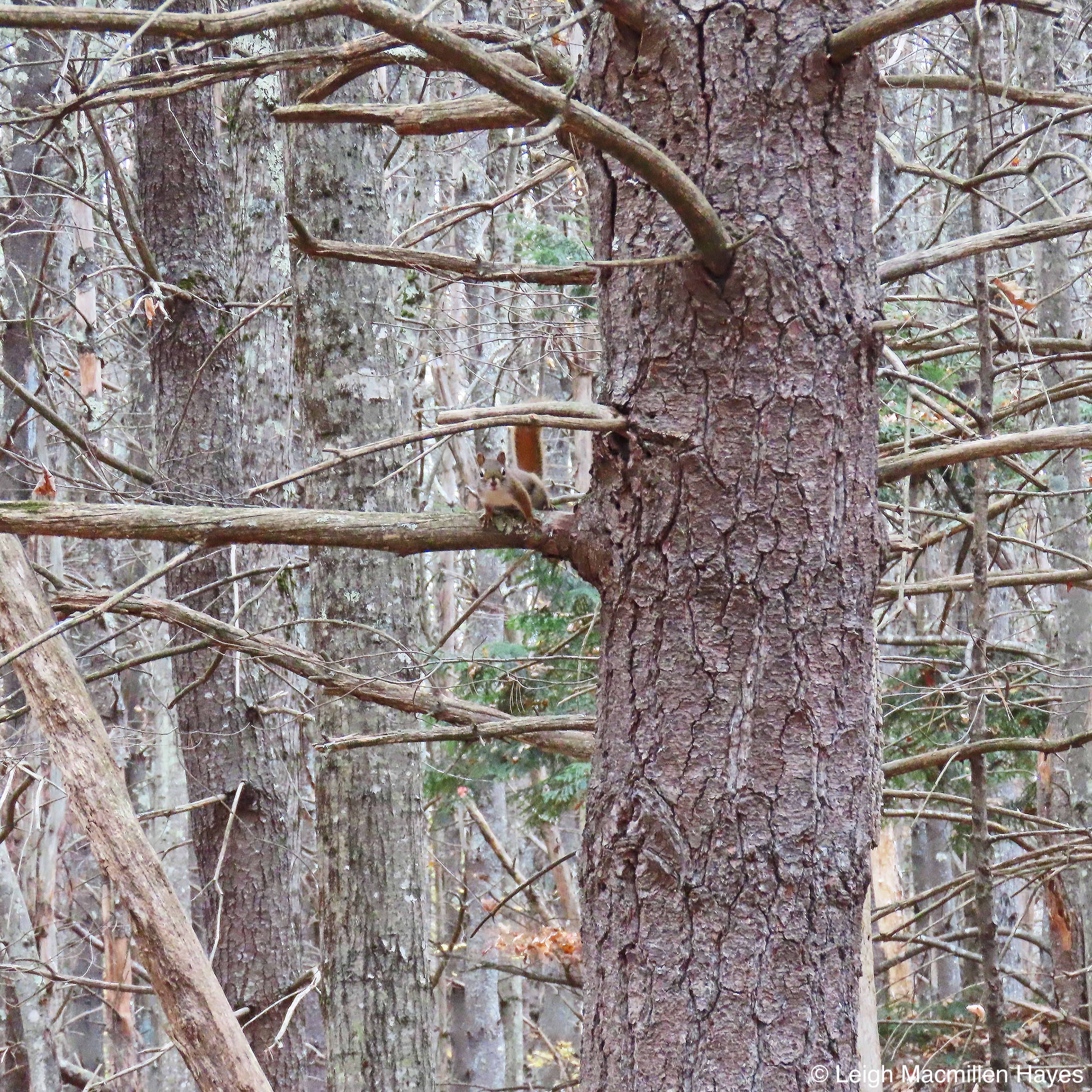
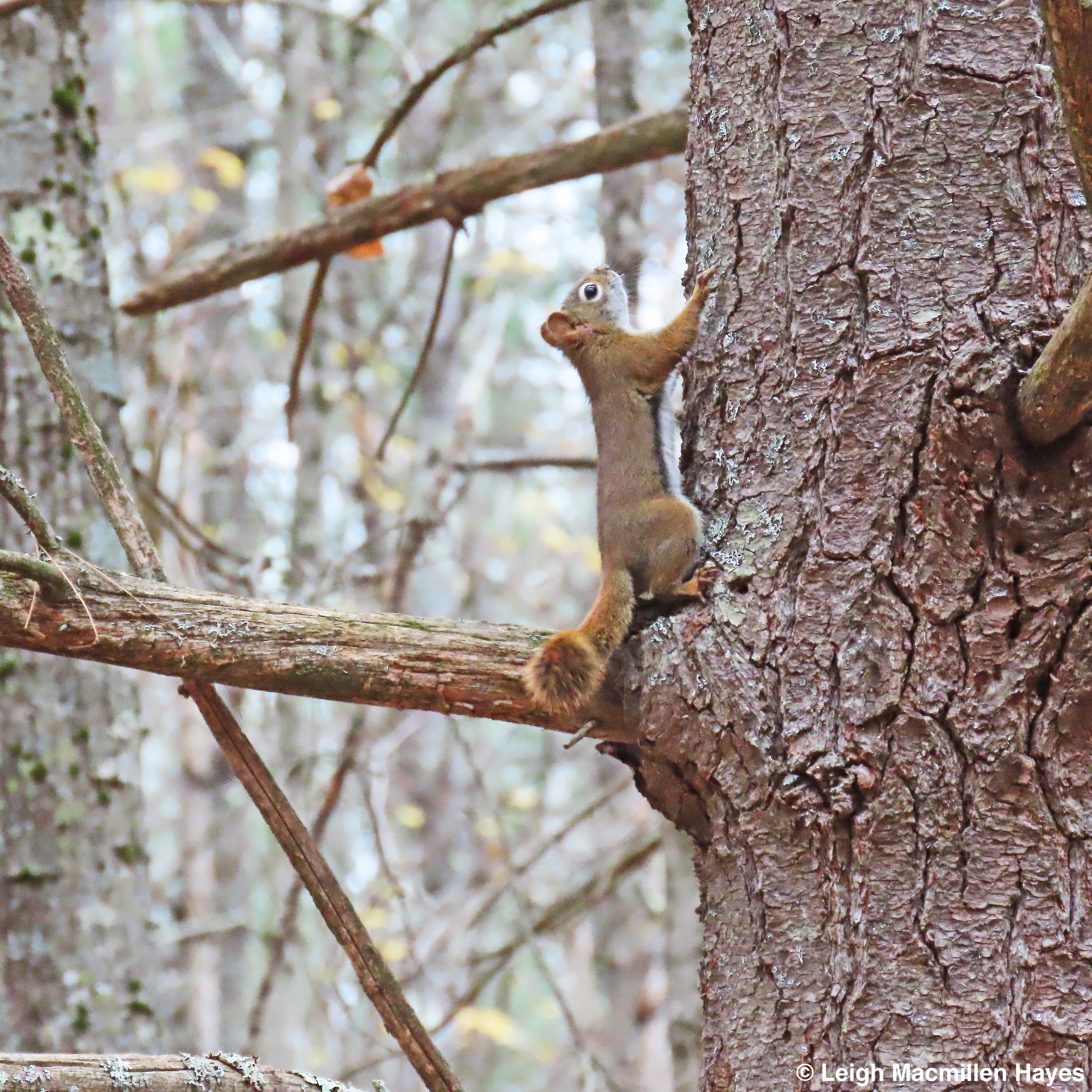
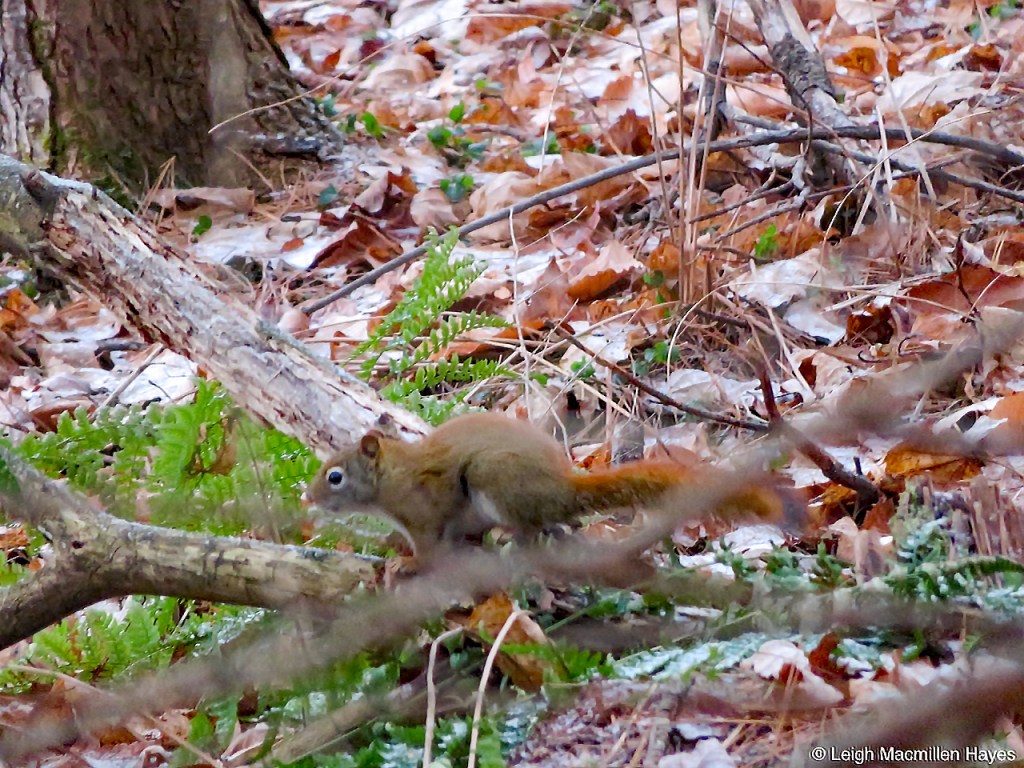
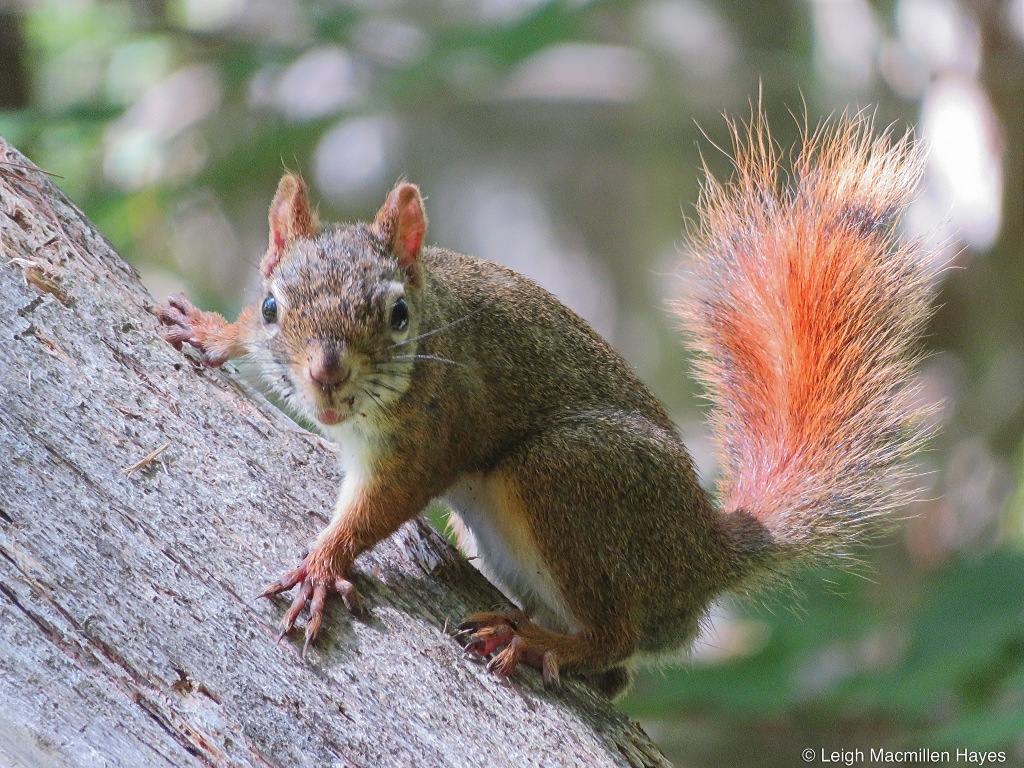
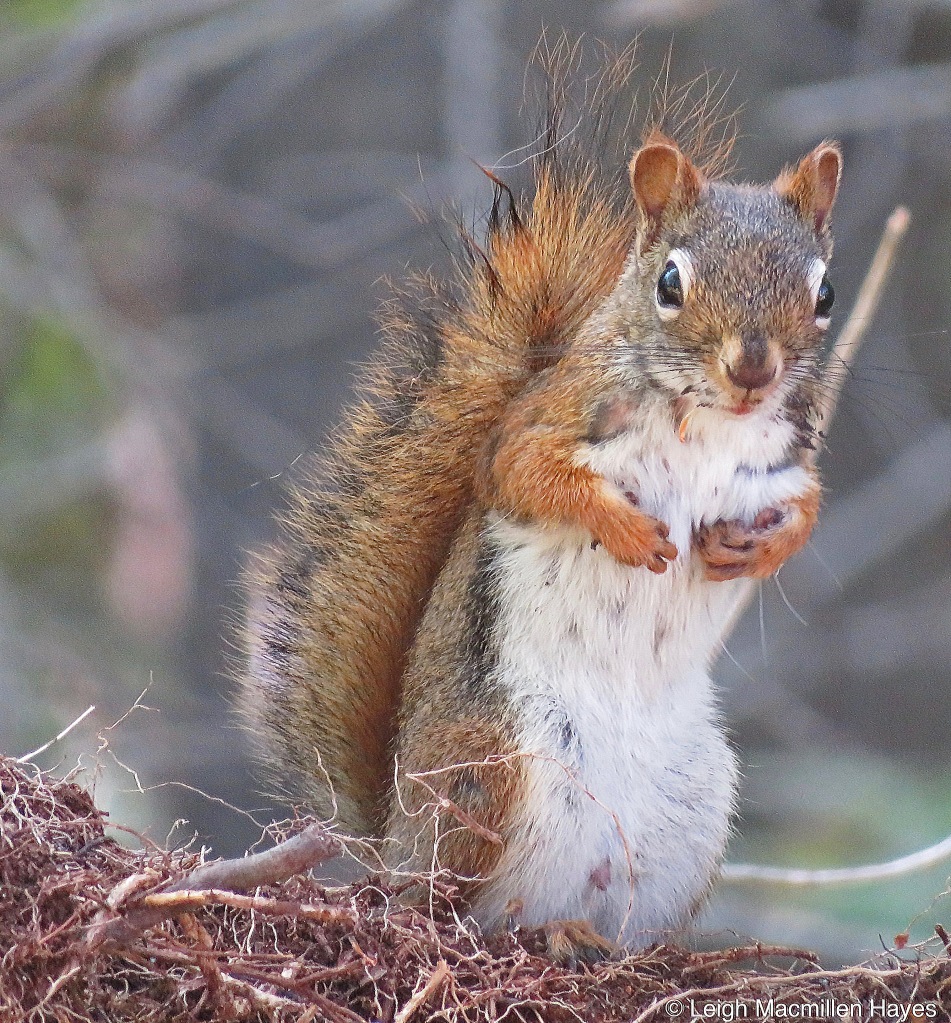
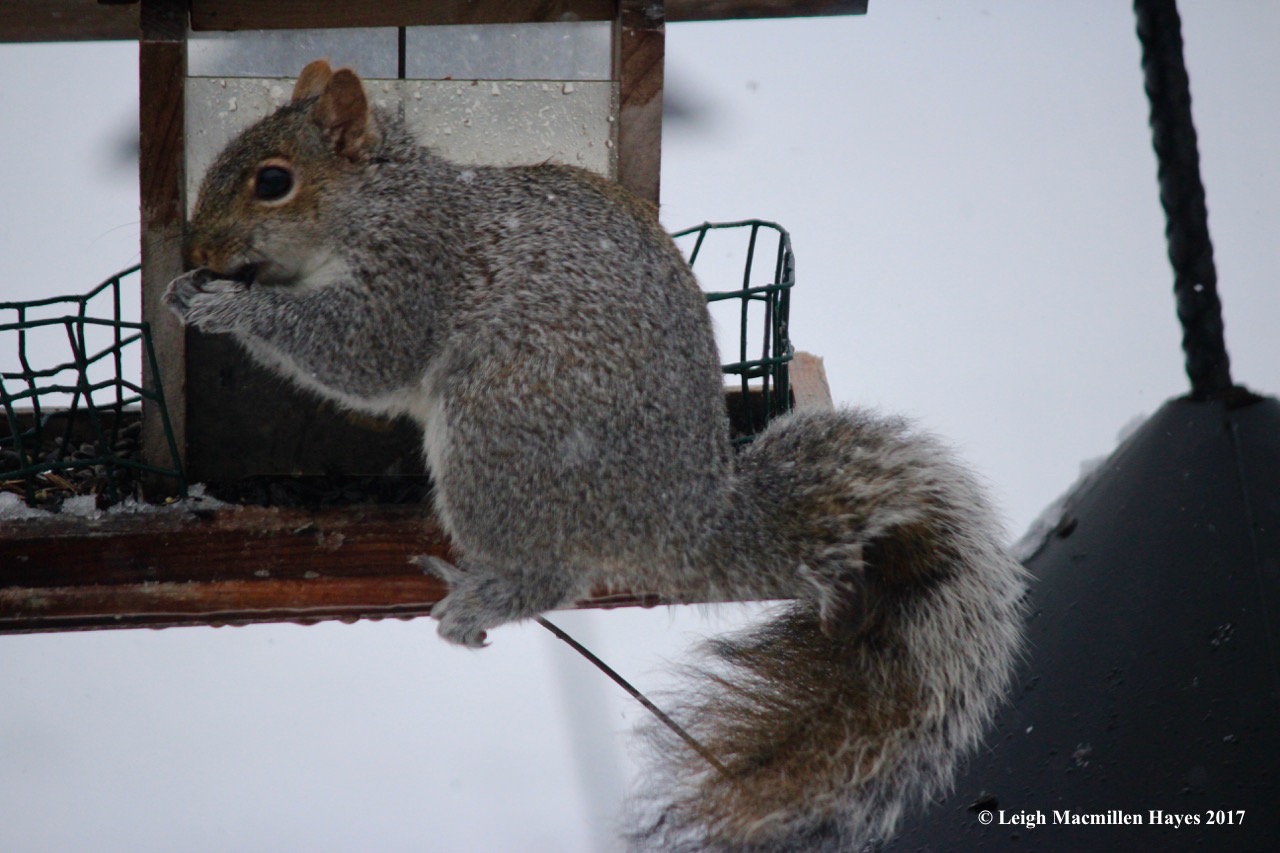
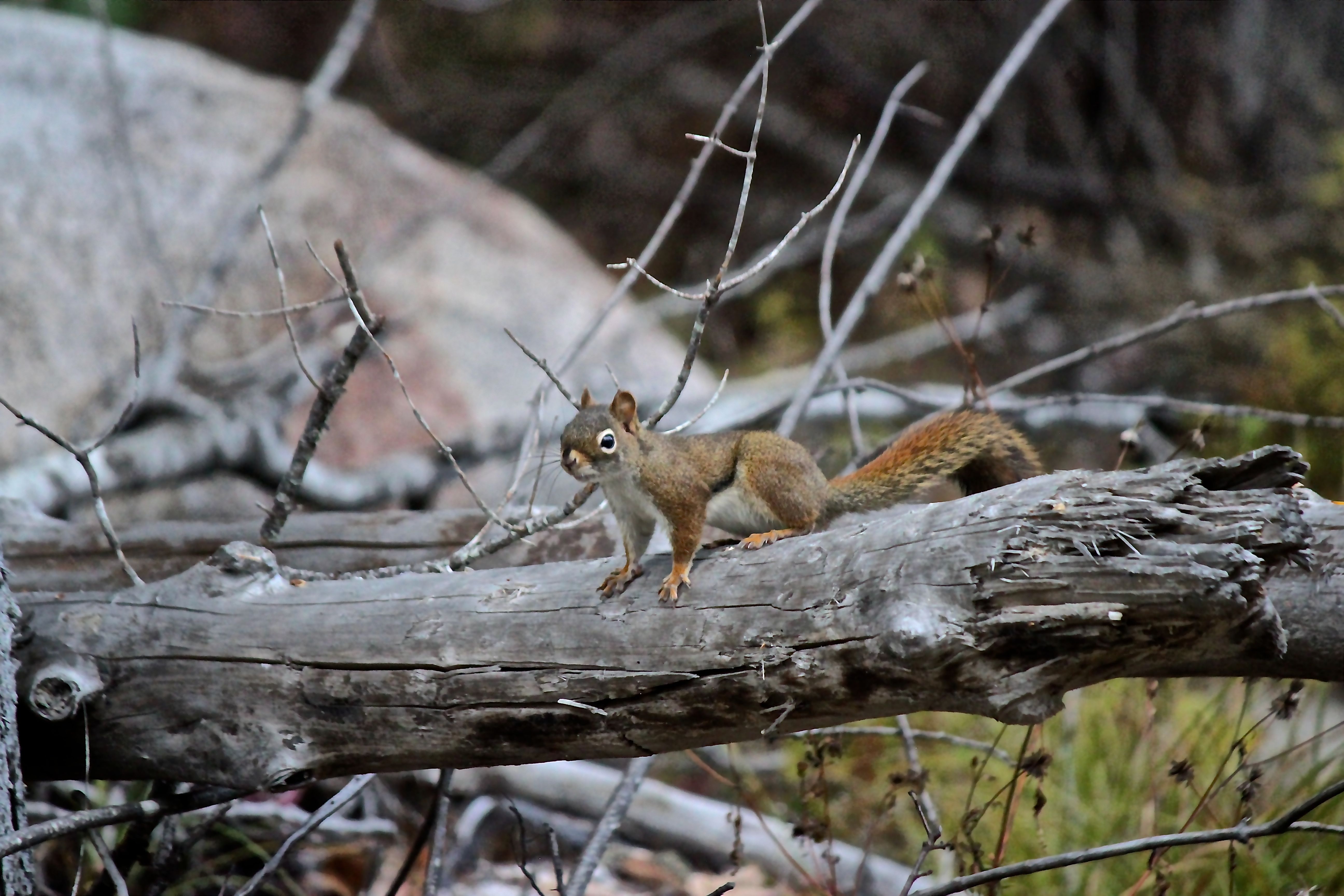
This week it was my friend Red who led the class. If you were down the hall in this outdoor school, you may have heard him, for he tends to be quite loud, and a bit critical, when he’s not dining upon a pinecone that is.

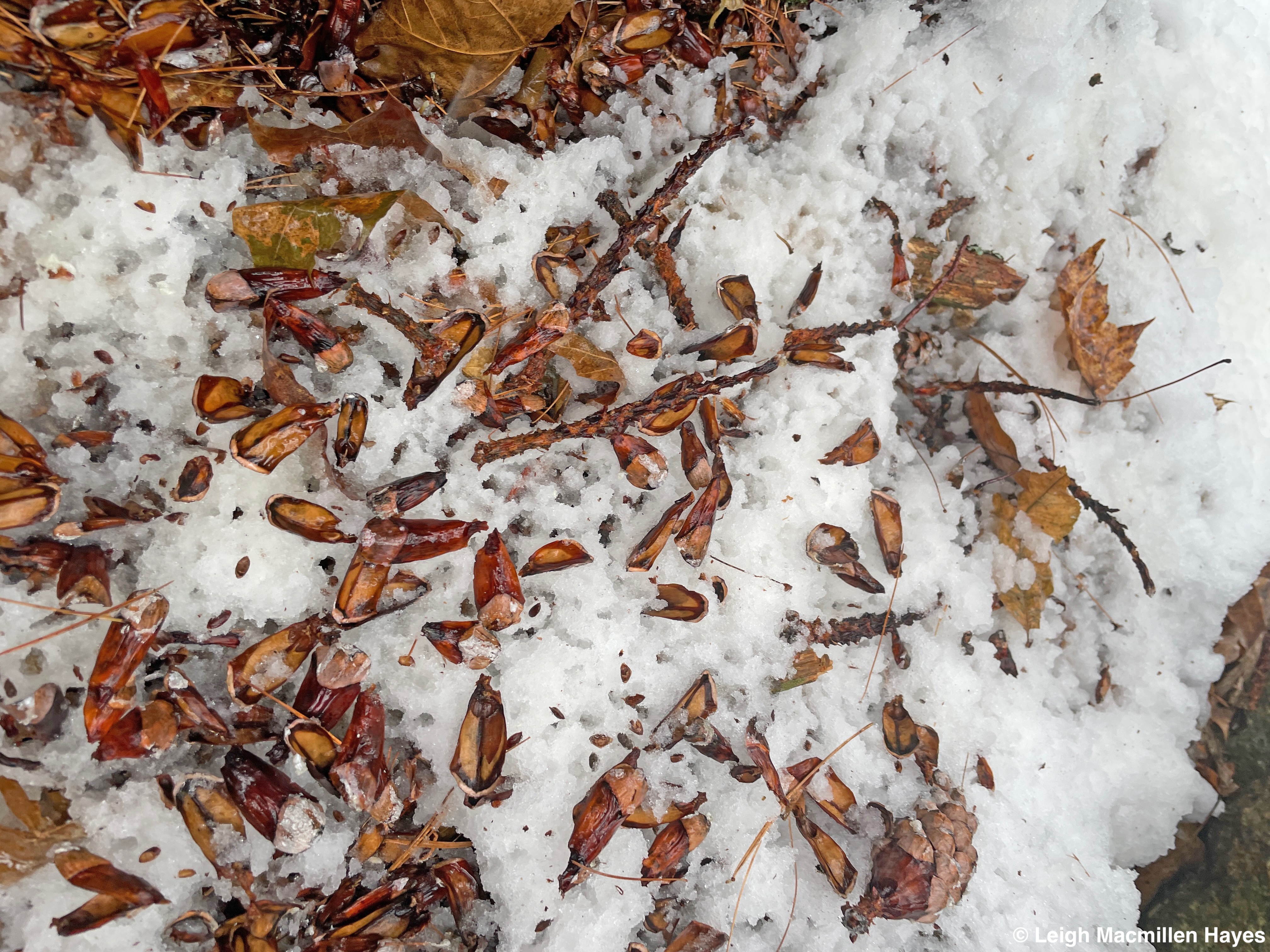
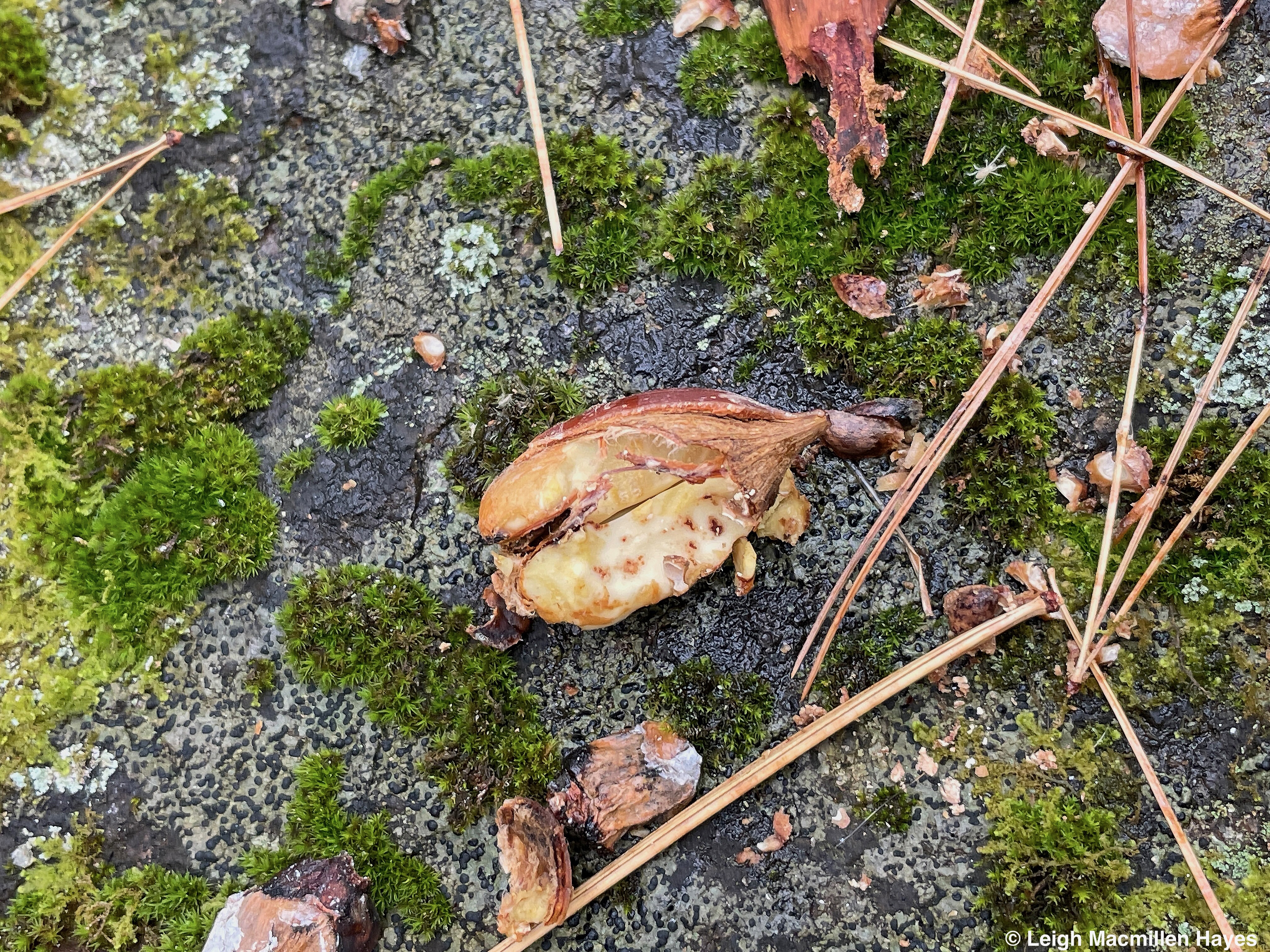
His plan, as it often is, was to strip the cone of its protective scales and seek the tiny seeds tucked in by the core or cob of the cone. Each scale contains two winged (think samara that help the seeds flutter toward the earth when its warm enough for the scales to open on their own) seeds and to me it seems like a lot of work for a little gain.

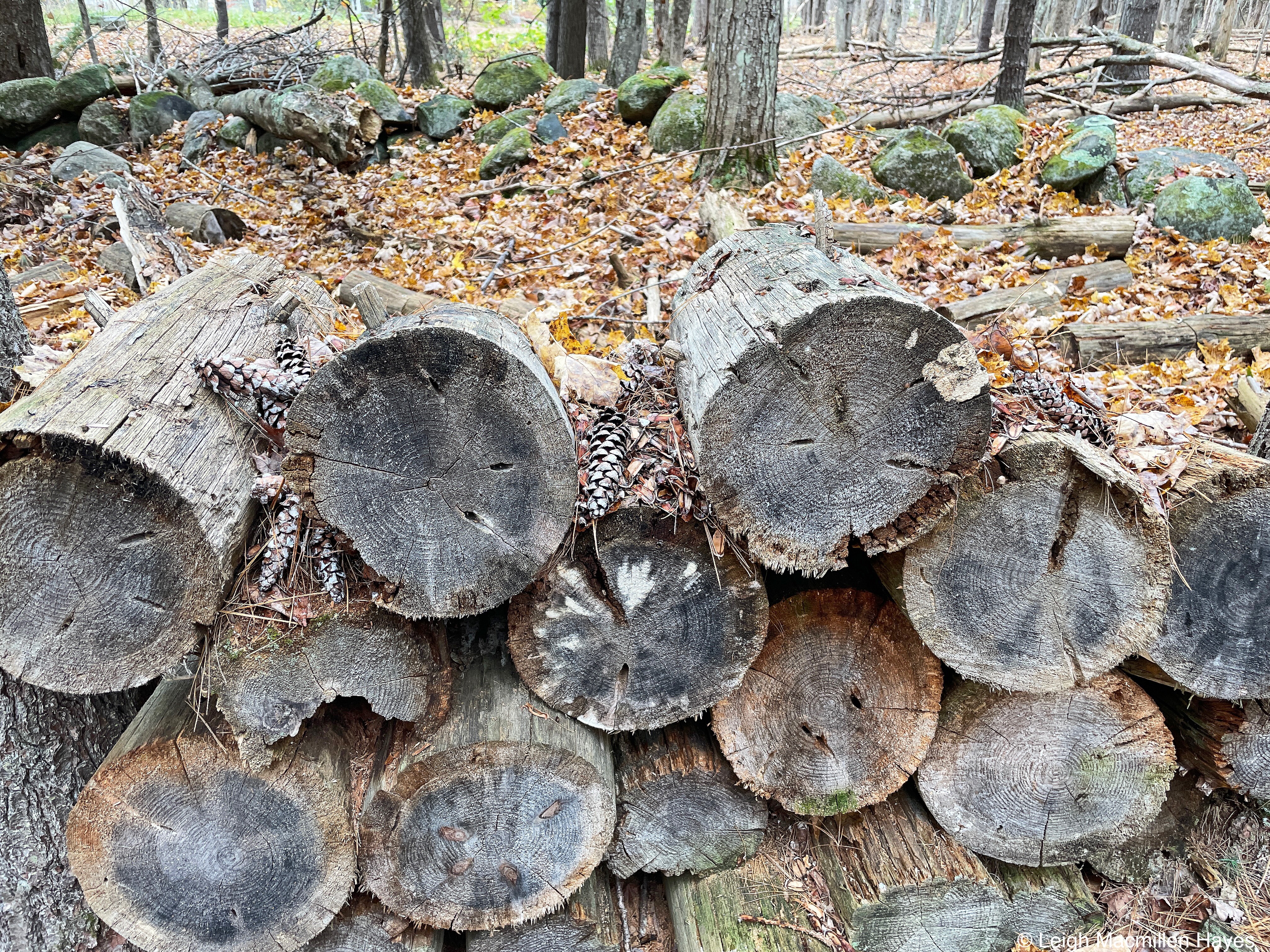
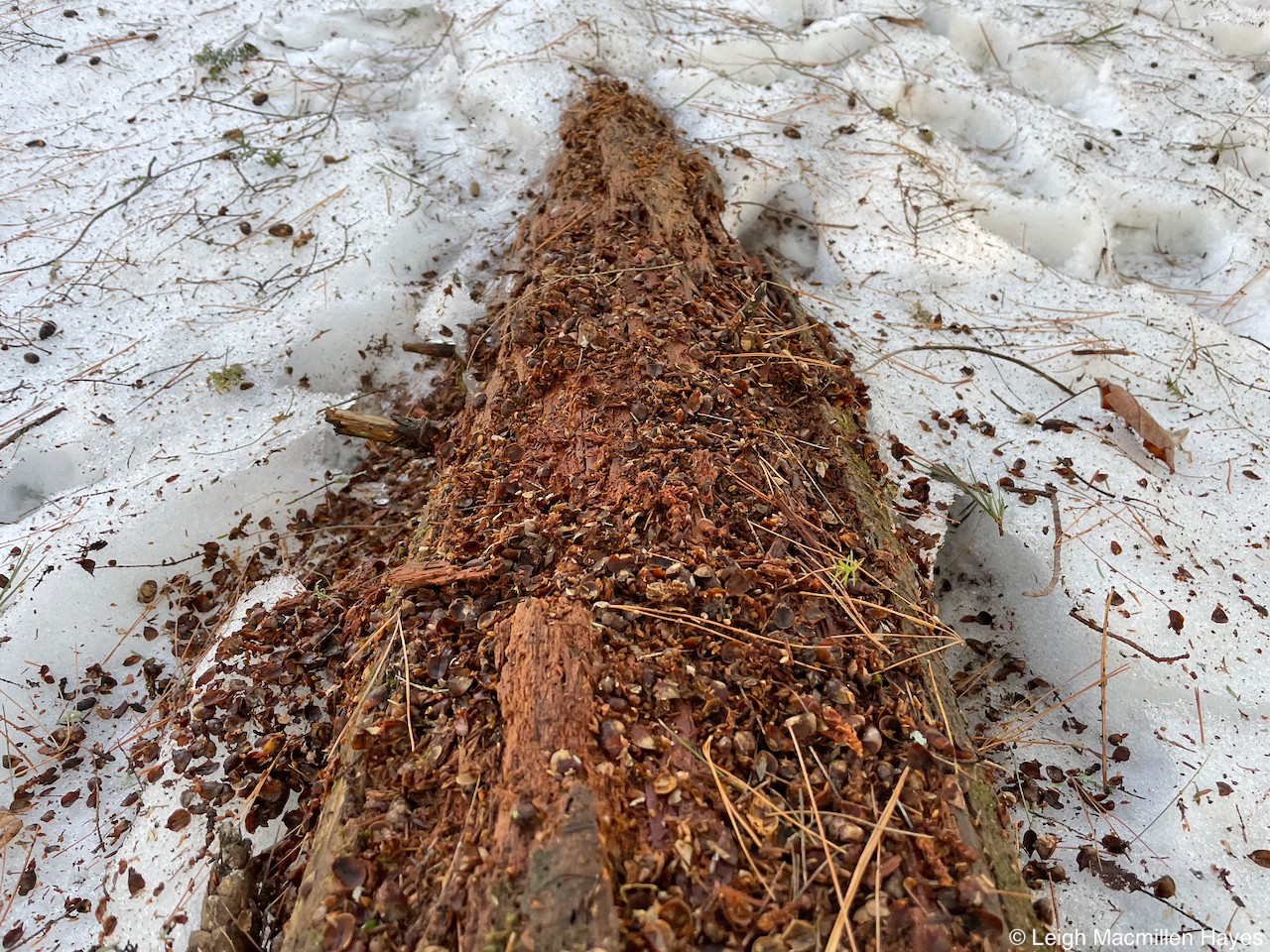
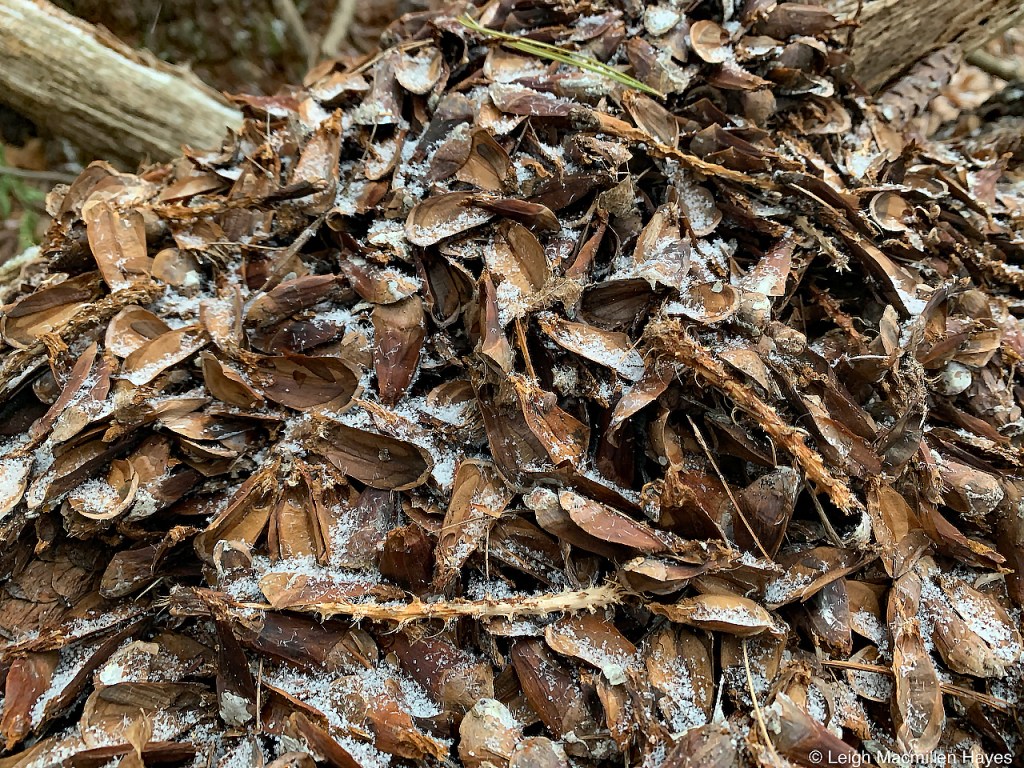
But if you’ve ever watched a Red Squirrel at work, you’ve noticed they are quick and can zip through one cone in mere minutes. Of course, it helps that they don’t worry about the “trash” and just let the scales and discarded seed coverings or pods, and even half consumed cones and cobs pile up in a garbage pile known as a midden. Spotting one of these is a sure sign you’ve entered Red’s classroom. And if you pause and look around, surely you’ll find many more middens. After all, Red Squirrels are voracious consumers. But again, given the size of the seeds, they need to be.

So here’s lesson #1: Leave the scraps. Oh wait, not on our indoor dining tables, but in the woods. And not our food in the woods, unless you are composting. But downed trees and snags and leaves and all that will replenish the earth, just as my squirrel’s garbage will do.

I should clarify that Red shares the school with many others who have their own classrooms and I’m sure when I finish my latest assignments I’ll have more to learn from the porcupines and deer and hare and coyotes and foxes and bobcats and yada, yada, yada who live under the mixed forest canopy.

The sight of so many Eastern Hemlock twigs on the forest floor told me I’d stepped into Porky’s room so I looked for evidence, wondering if he was at his desk or not.

Lesson #2: Slow down and observe.
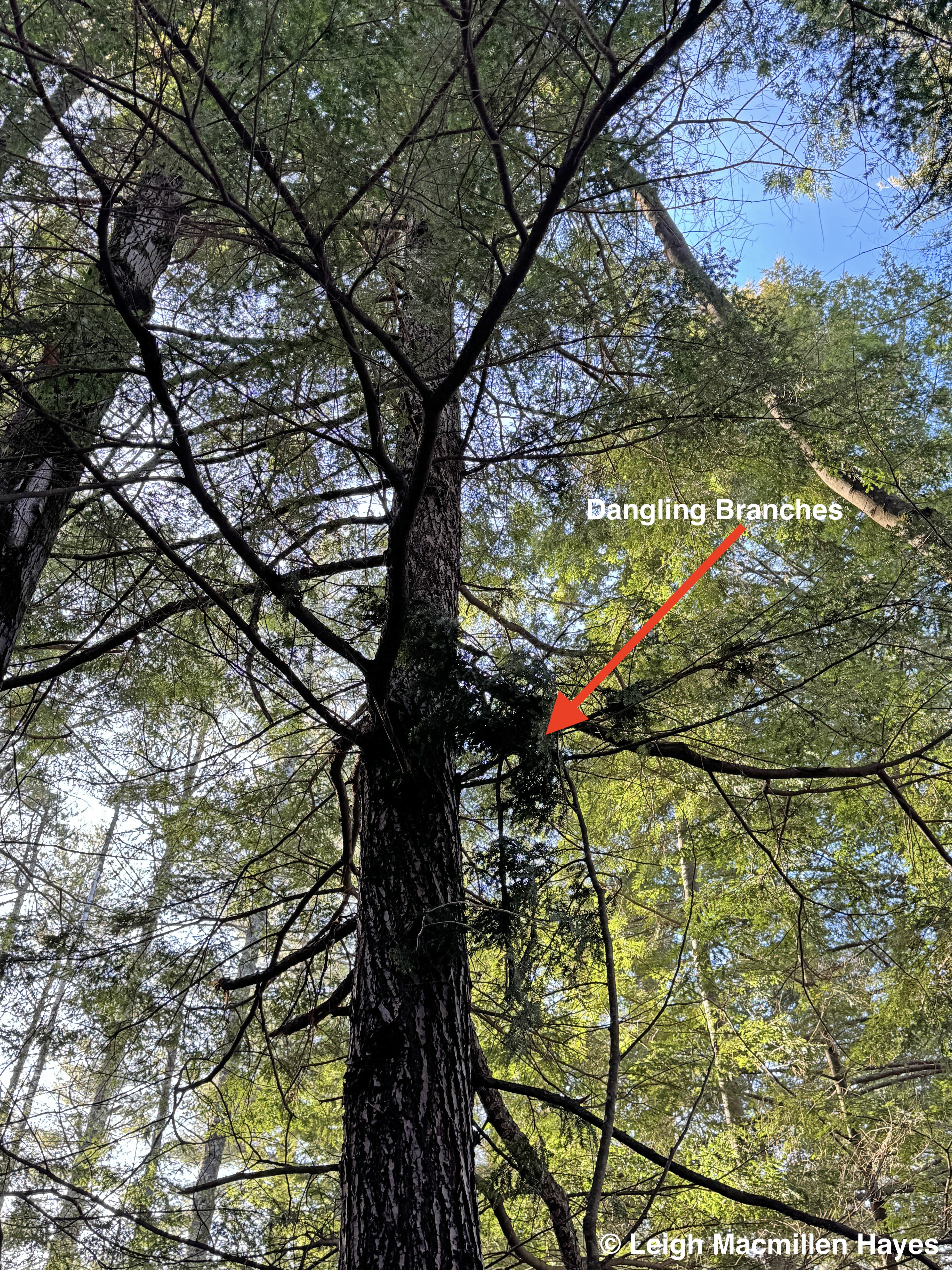
The answer was no, but he’d left his calling card on a dangling twig and so I know where I might find him should a prickly question enter my mind.
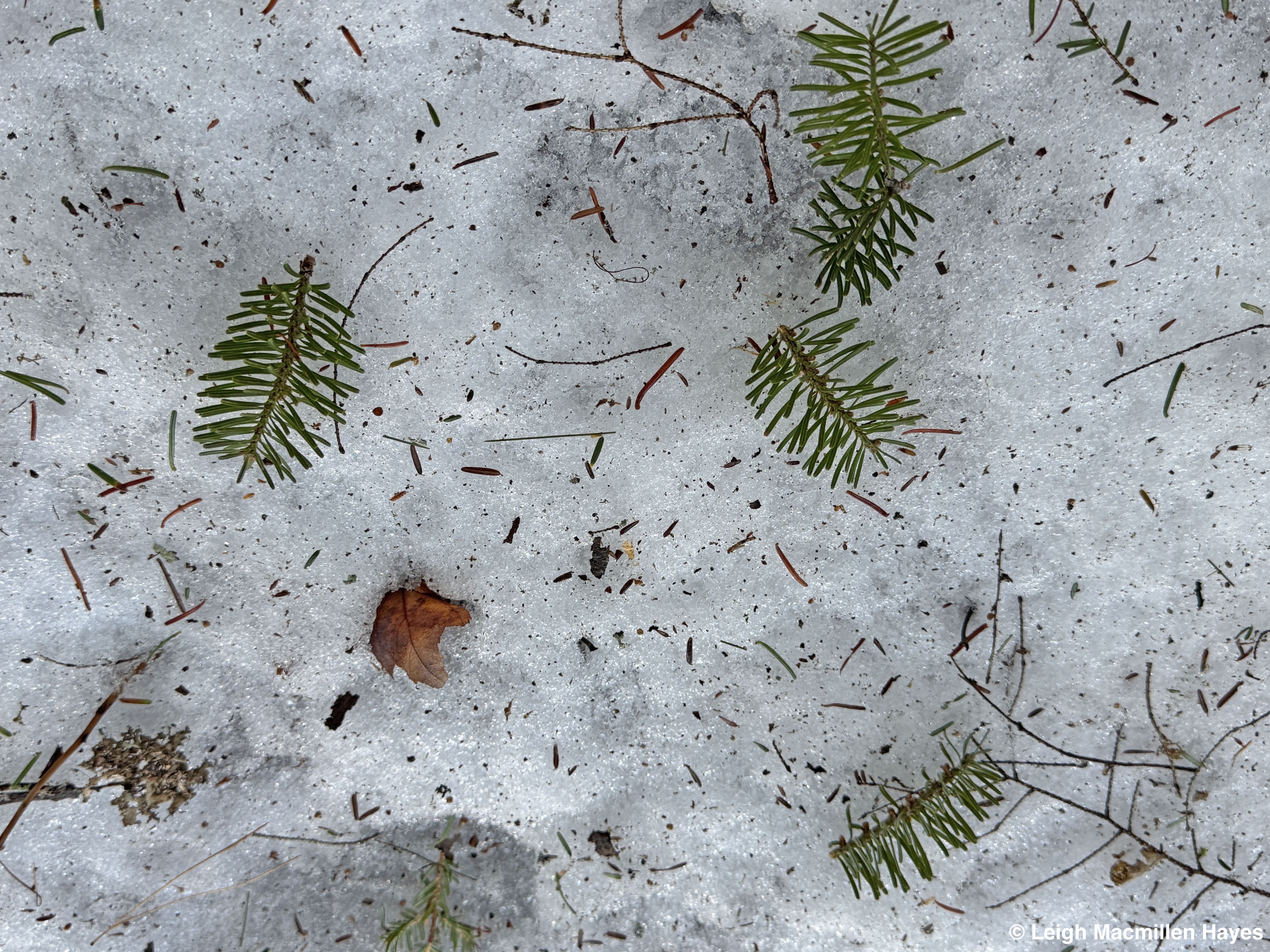
Because I was told by Red to slow down and observe, I noticed another spot where he’d visited and this time his midden was of a different sort in the form of snipped twigs. Much smaller snips than Porky drops, which is a good way to tell the two critter’s food source apart.

Just as Porky’s twigs had been cut with the rodent diagonal, so were Red’s.

I noted that he hadn’t eaten the buds at the tip of the twig, but once I flipped one over I discovered numerous buds or seed pods had been dined upon.

Lesson #3: Check twigs more often. And remember, this year was not a mast year for Eastern White Pines, so Red has to supplement with hemlock buds and cones. (And also remember, cones on hemlocks are not called pinecones because they don’t grow on pine trees. Conifer refers to cone-bearing, so both pines and hemlocks are coniferous trees.)
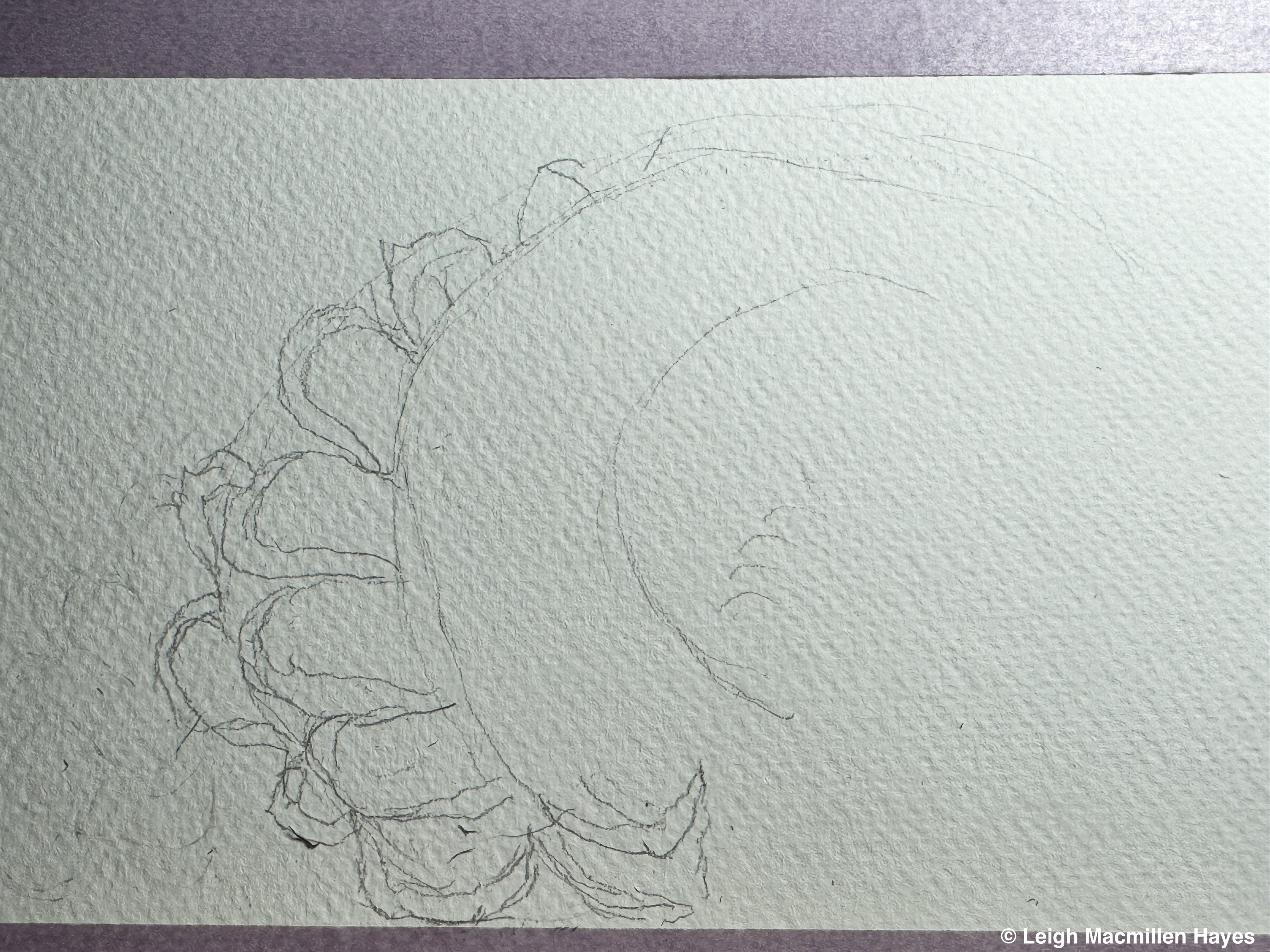
Back inside I decide to sketch a pinecone. It was a sketch I’d started months ago, but abandoned because it seemed to difficult to draw.

But then, thanks to Red, a realization came to mind.

Lesson #4: Pinecones have overlapping bracts or scales that protect those seeds developing inside of them. They close in the dark and open in light, especially on sunny days and it is then that the seeds become airborne on their samaras. And the bracts or scales grow in spirals around the core or what I think of as a cob. I knew that, but had forgotten it until I decided to sketch.

And so I drew some guidelines to aid me as I tried to recreate the cone’s spiral staircase.
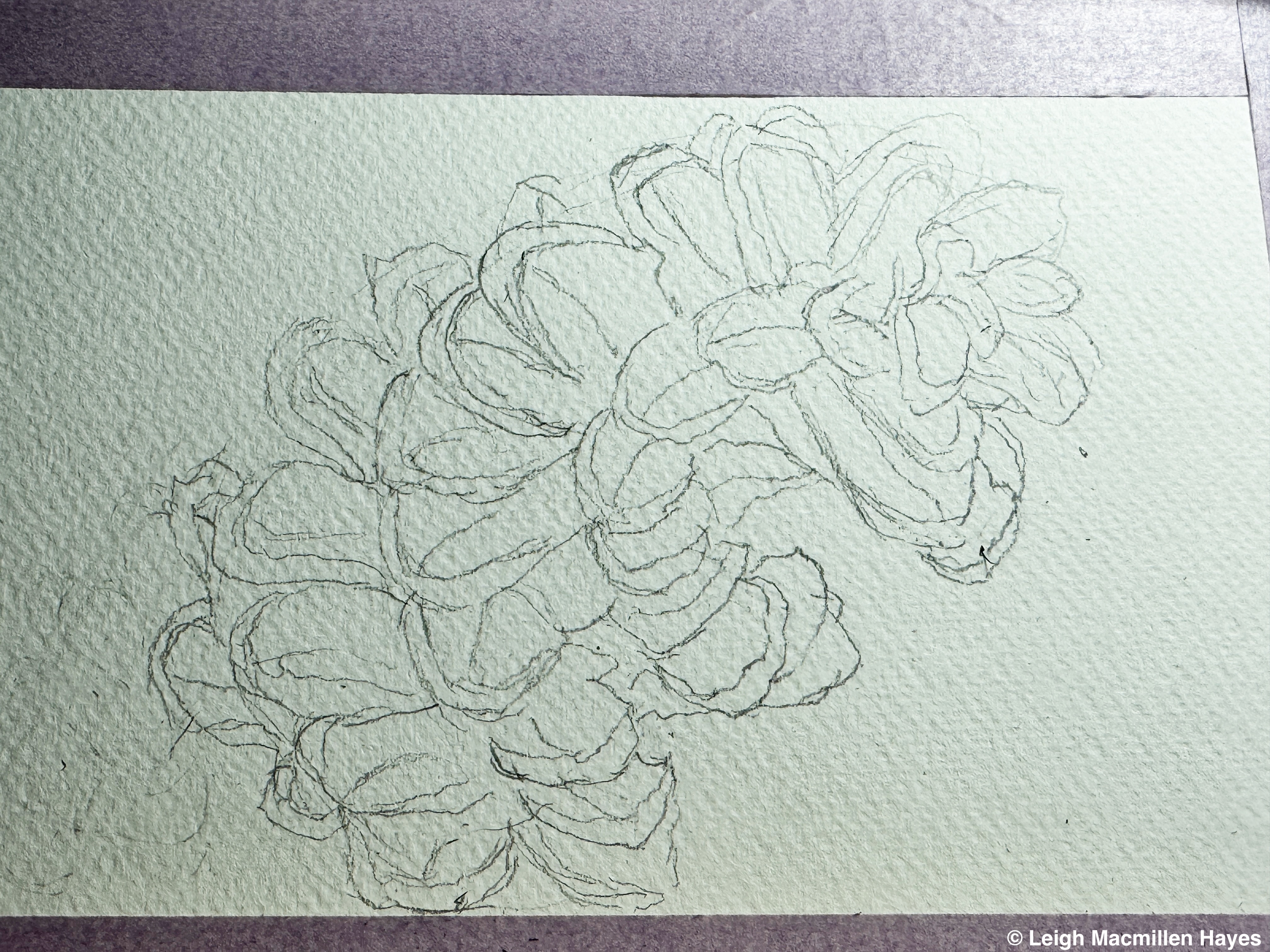
It was fun to watch it grow and realize each cone actually fans out in a Fibonacci spiral sequence. It’s an amazing wonder of nature.

Feeling my drawing was complete, I began to add color in the form of gouache paint, scale by scale.

And slowly, the painting began to represent a cone . . . at least in my mind’s eye.

A dash more color and voila–my amateur attempt at painting a pinecone. I have to admit, I was rather tickled because I really didn’t think I could pull this one off. But I have my art teacher, the talented Jessie Lozanski, to thank for giving me the confidence to try.

And I have Red, my other teacher, to thank for the lessons because it was in watching him turn the cob ever so effortlessly that I was reminded about the cone’s spiral.
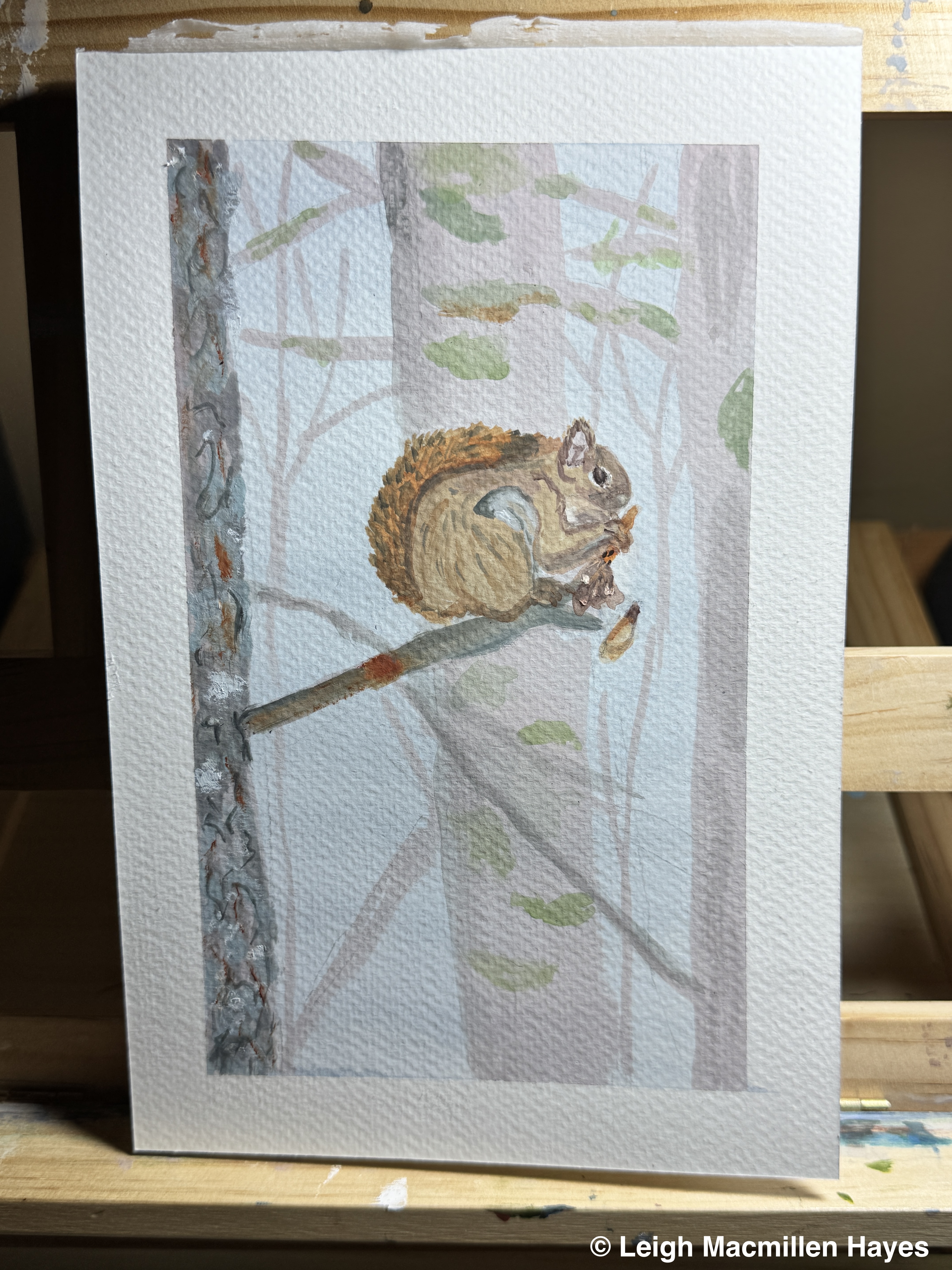
And so I tried to honor him as well. I may be a teacher, but I’ll always be a student.

Lesson #5: As we head into this new year, I hope you’ll join me in slowing down and noticing and honoring. Especially outdoors. Or even out your window.

I’m forever grateful to Red and all the other teachers who come in many forms, not just as mammals, for the amazing lessons I’ve learned and can’t wait for the next class.

A Squirrel’s Garden

A lot has happened this week on many different fronts, both personal and public, both positive and not so, some comical (like the porcupine that awoke me one morning because it had managed to climb to the second floor of the barn and toppled our sons’ many “earned” trophies) and others more serious, with some in between thrown into the mix, cuze life happens.

To that end, some of my best moments were spent looking and wondering. In the woods. Of course. In our woods, in particular.

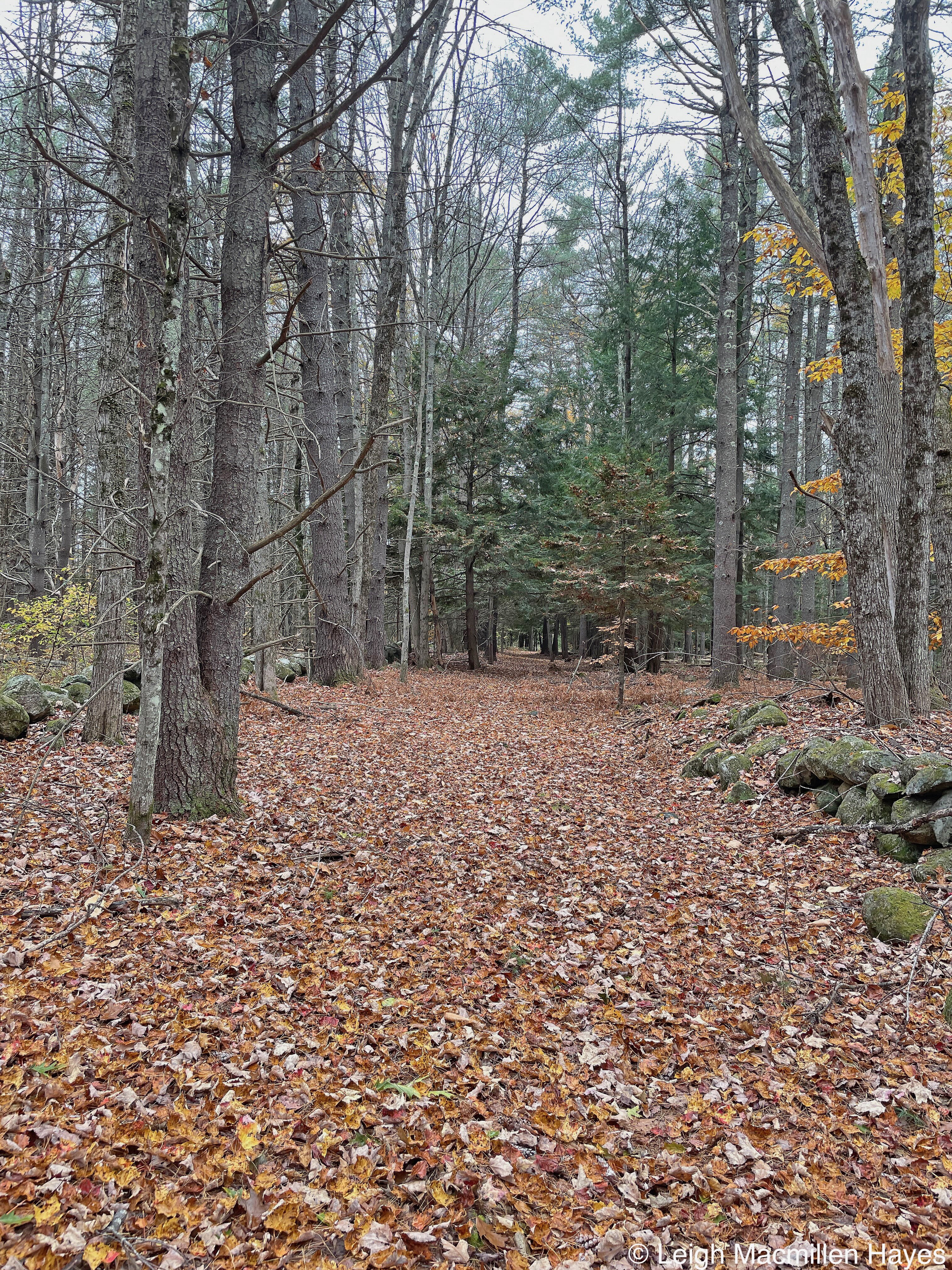
I headed out onto the old cowpath in search of a dear friend, not certain if I’d meet him or at least spot signs of his passing. And it wasn’t a deer I was looking for–although, in a way it was because I haven’t seen a single one in several months and any scat along this trail is from last winter and spring and at that time it was so prevalent that with every step I took, it was there.

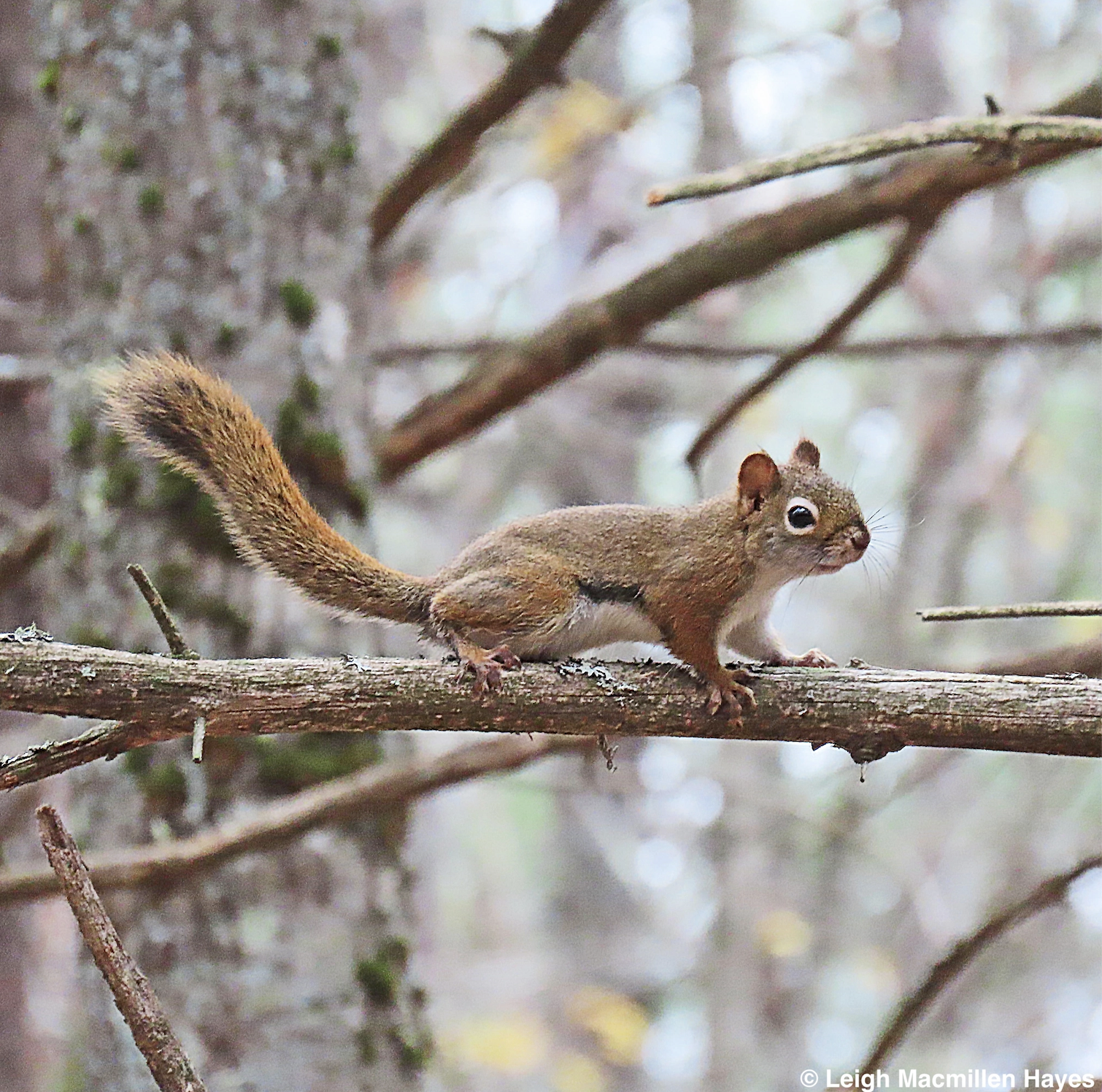
No, it was this little guy that I sought. This photo is from last winter when he and I spent hours eyeing each other.

Though his territory could have been several acres and there’s plenty of land out there to inhabit, he, like me, preferred the cowpath, and especially the stone walls since they served as perfect spots to cache his immense supply of pine cones, and as dining room tables, the better to see any approaching predators.

What he sought were the tiny winged seeds, tucked into each protective scale by the twos. If you’ve ever had the joy of watching him munch, you’ll know it’s fast paced as he deftly pulls the seeds out and discards the scales, getting right down to the “cob” of the cone.

The result is a pile of half consumed scales and a few uneaten seeds and cones not quite yet opened and some scat and its all known as a midden (by us humans anyway) or the trash barrel.

Actually, any high place will do and if it has nooks and crannies to serve as storage shelves all the better. Last year was a mast year for the White Pines in our woods. It takes two years for a pine cone of this species to reach maturity.

This year, there are only remnants of Red’s garbage pails and even they are almost hidden by twigs and leaves and needles.

But, while I was exploring his old neighborhood, I discovered something else in this pile that he had used for refrigeration and dining purposes.

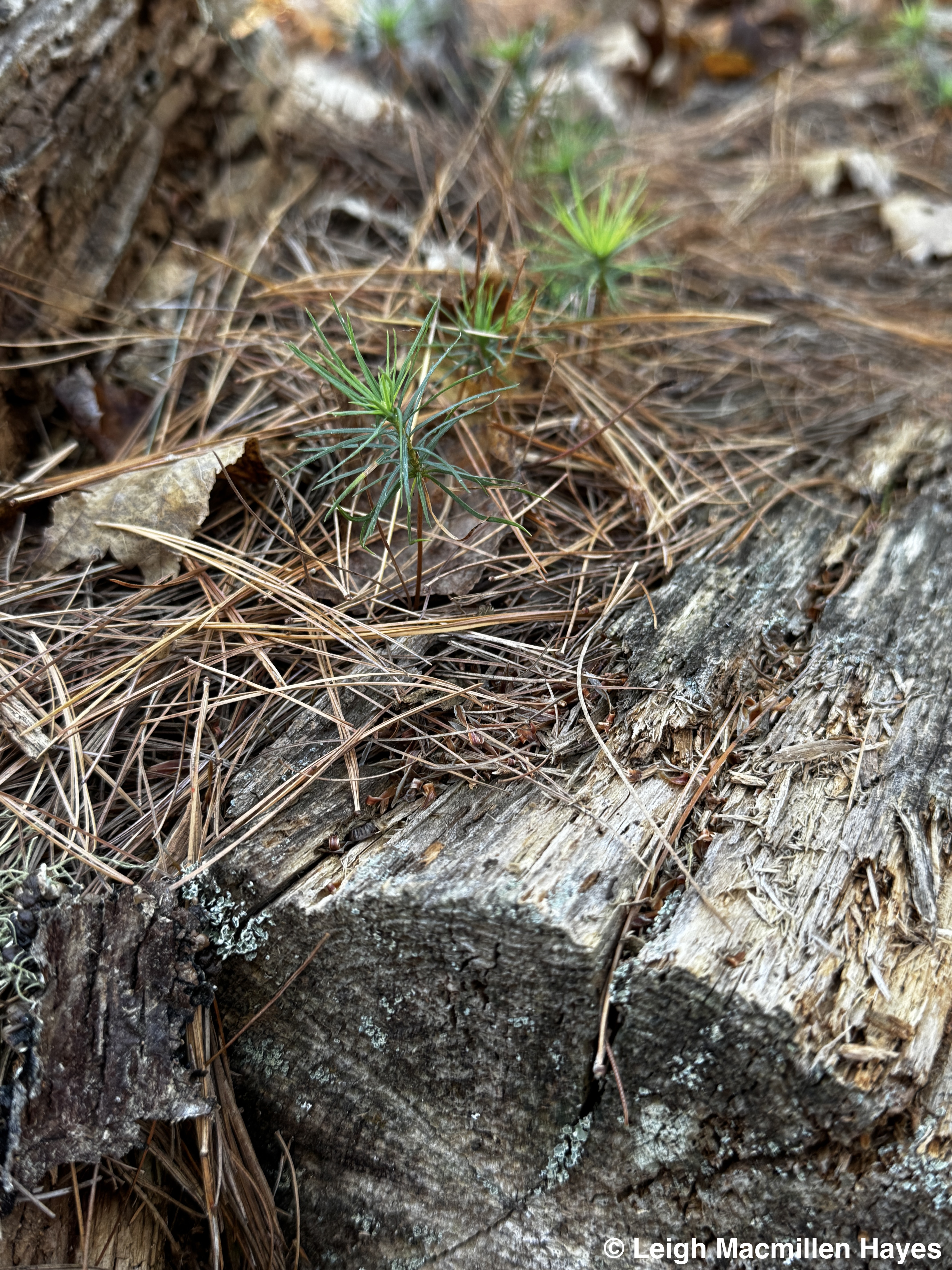
Do you see what I spotted? Babies! No, not squirrel babies. But rather: Miniature White Pines.

Once I saw those, I checked every stack that we’d cut years ago and found the same story written upon them. The seeds Red had left uneaten found conditions were right on the rotten logs. Will they survive? Maybe a few, but there are plenty more tiny saplings on the forest floor.

The thing is that I found no evidence of Red and not once did he squawk at me, so I suspect either he moved on to a better food source or became a meal for another, passing all of that energy and sunshine he’d consumed on to the next.

This year, it’s the Northern Red Oaks that have produced a mast crop–of acorns. Actually, they did so last year, and the year before as well. For those of us who frequent Red Oak woods, it’s like walking on ball bearings–and can be a wee bit treacherous as they roll under our boots.

Red Oak acorns are filled with tannins and so, unlike their White brethren which are gobbled up almost immediately by rodents and birds and deer among their consumers, it seems a little of this one is nibbled, and then a little of that one initially. Eventually, the tannins leach out, especially if the acorn has been buried for future consumption, and then the entire nut within may be eaten.

As I looked for Red this past week, I found instead his cousins, the Gray Squirrels in action. Where Red Squirrels are very territorial, Grays tend to have overlapping habitats, and there are at least three on our six acre plot of land.

Burying acorns is their way of caching and it’s possible that what I observed was this squirrel leaving a scent mark with its nose so that come snowfall (and I have faith that it will fall–and can only hope abundantly), it can relocate the food supply. What this squirrel misses, another will find. And those that no one finds might turn into oak trees that will feed future generations, just as the pine saplings may someday do.

It’s for these critters and so many more that we ask that no motorized vehicles pass along the cow path, no matter how tempting it may be. (Thank you, Marguerite, for creating this sign for me.)

And if you are in there, you might happen along the rather rough labyrinth I created, a place that like the squirrels, I return to often.

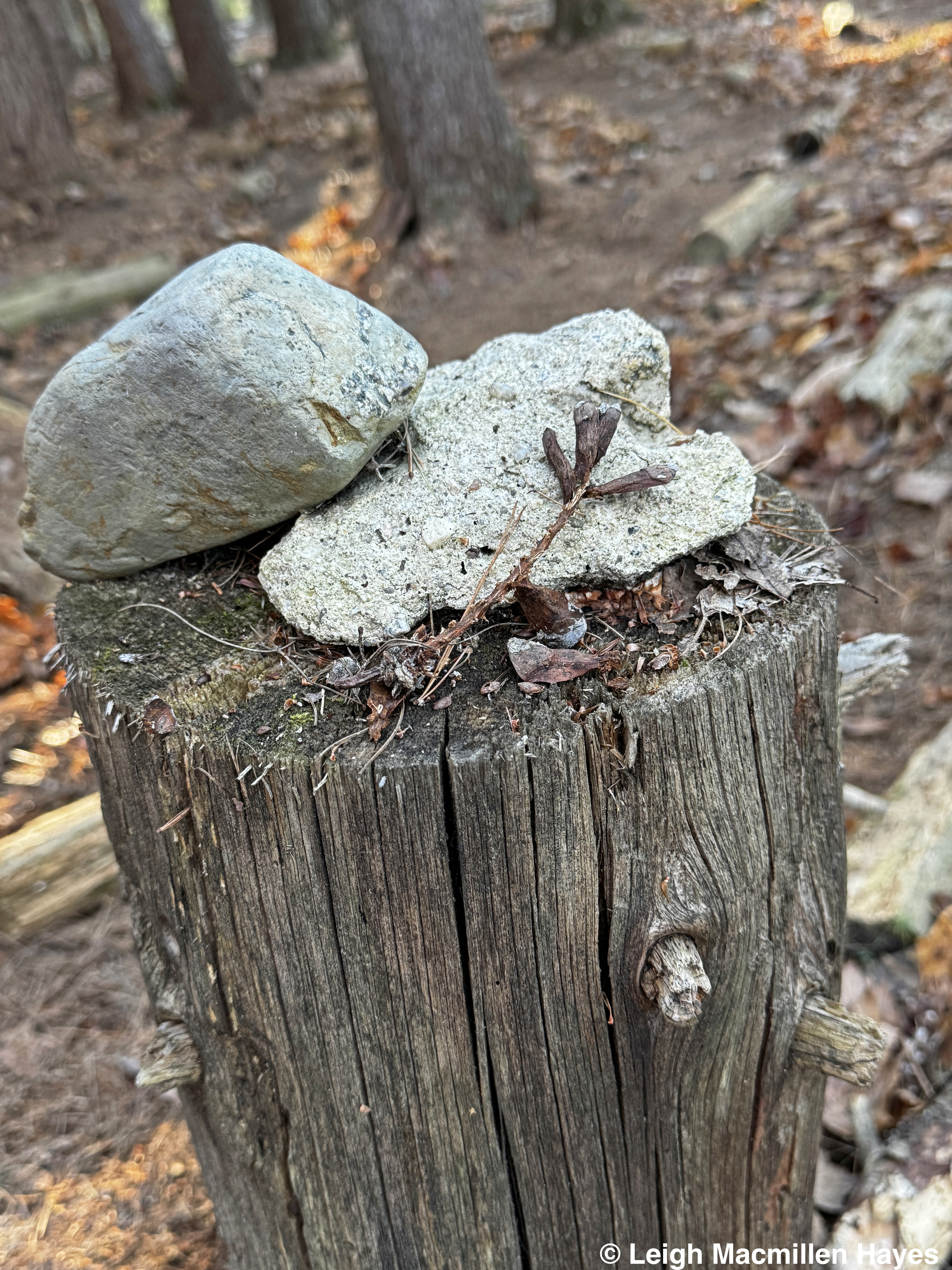
It’s at the start of the labyrinth that brings a smile to my face each time, for Red had visited and his calling card is still there.

Thank you, Red, for planting your Squirrel Garden. And for capturing my mind and heart and soul this week.

Winter Inventory

We live on the edge. The edge of a small town in western Maine. The edge of a neighbor’s field. The edge of a vast forest.

Our property only encompasses six acres, but it’s six acres that I love to explore and it’s been my outdoor classroom for a long time.

And so today, I invite you along to take a look; if you are a regular, you may have already met the friends I’m about to introduce, but their actions keep me on my toes, much like the deer who crisscross our yard on a regular basis.

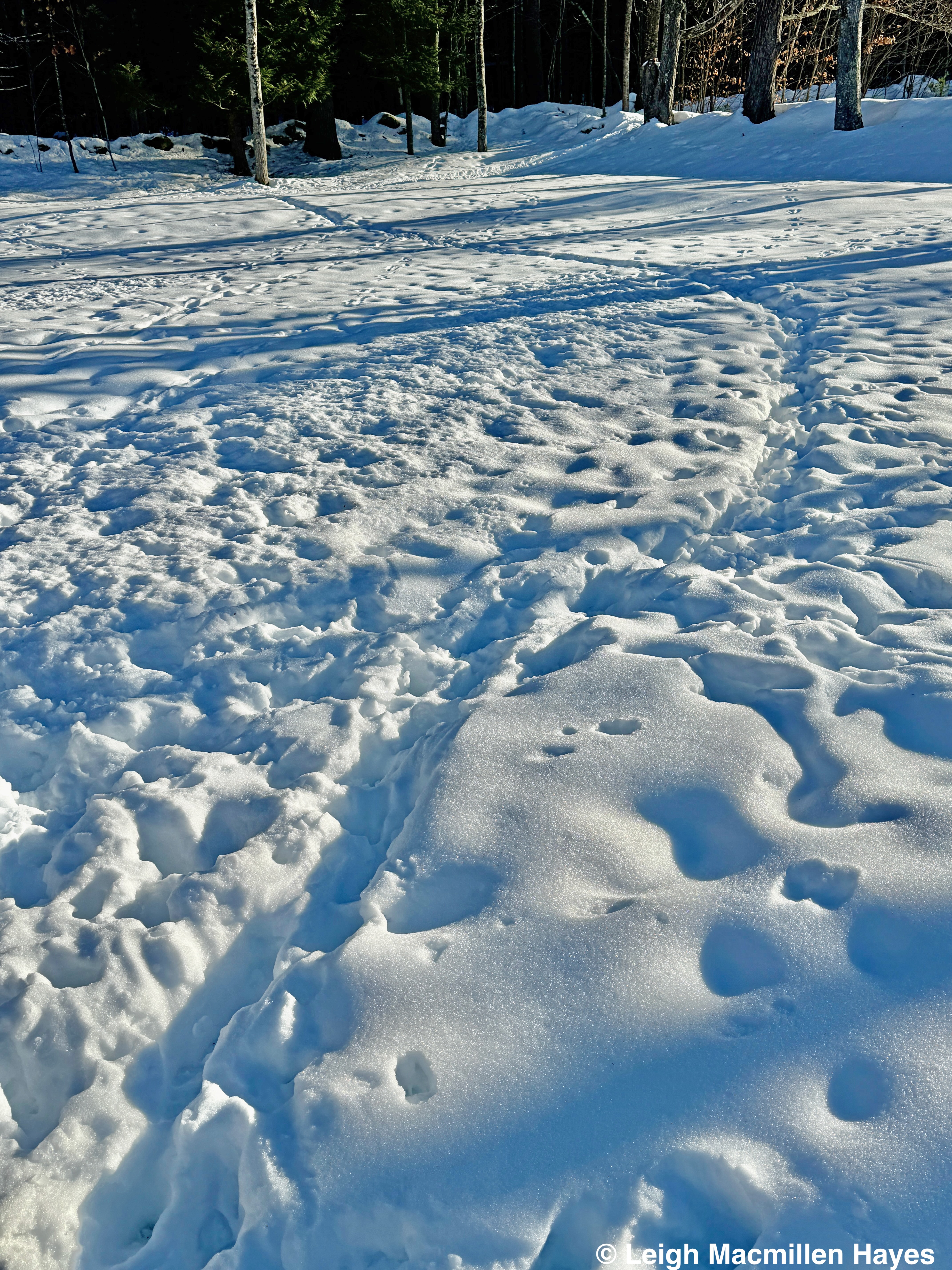
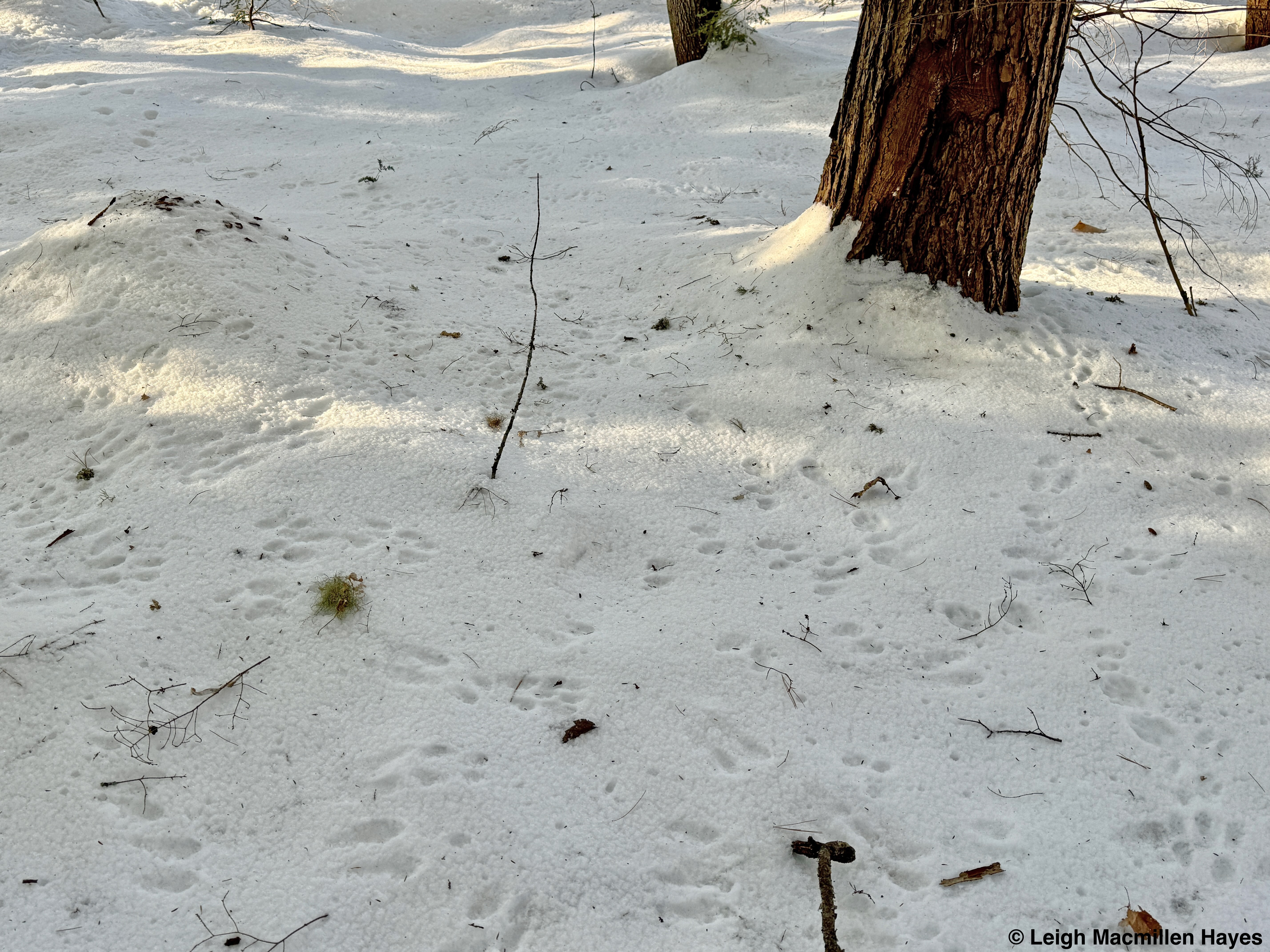
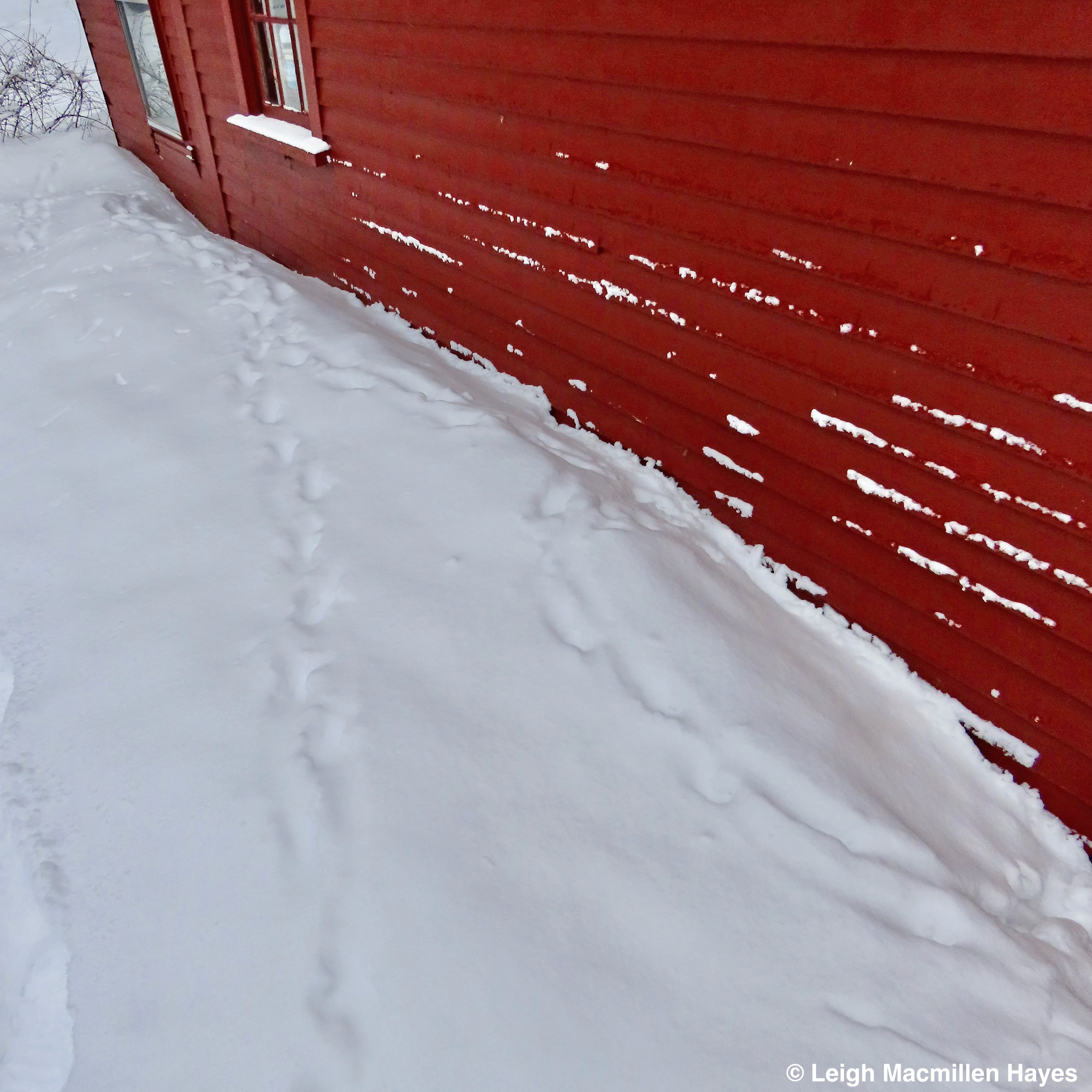
Though the acorn crop was abundant in our area, the deer make several trips day and night to consume sunflower seeds and corn and they’ve worn a path (deer run) making it easier to travel. They don’t always follow it, as you can see, but do so enough that it’s much like my snowshoe trails.

The yard is full of tracks, for besides the deer, there are gray and red squirrels who also frequent the feeders, an occasional red fox that I’ve yet to see this winter, and our neighbors’ dogs and cats. Everyone has a place at this table.

Of course, the deer run does lead to another species they love to munch on, the needles of a Balsam Fir. They frequently pause here before climbing over the stone wall into our wood lot.

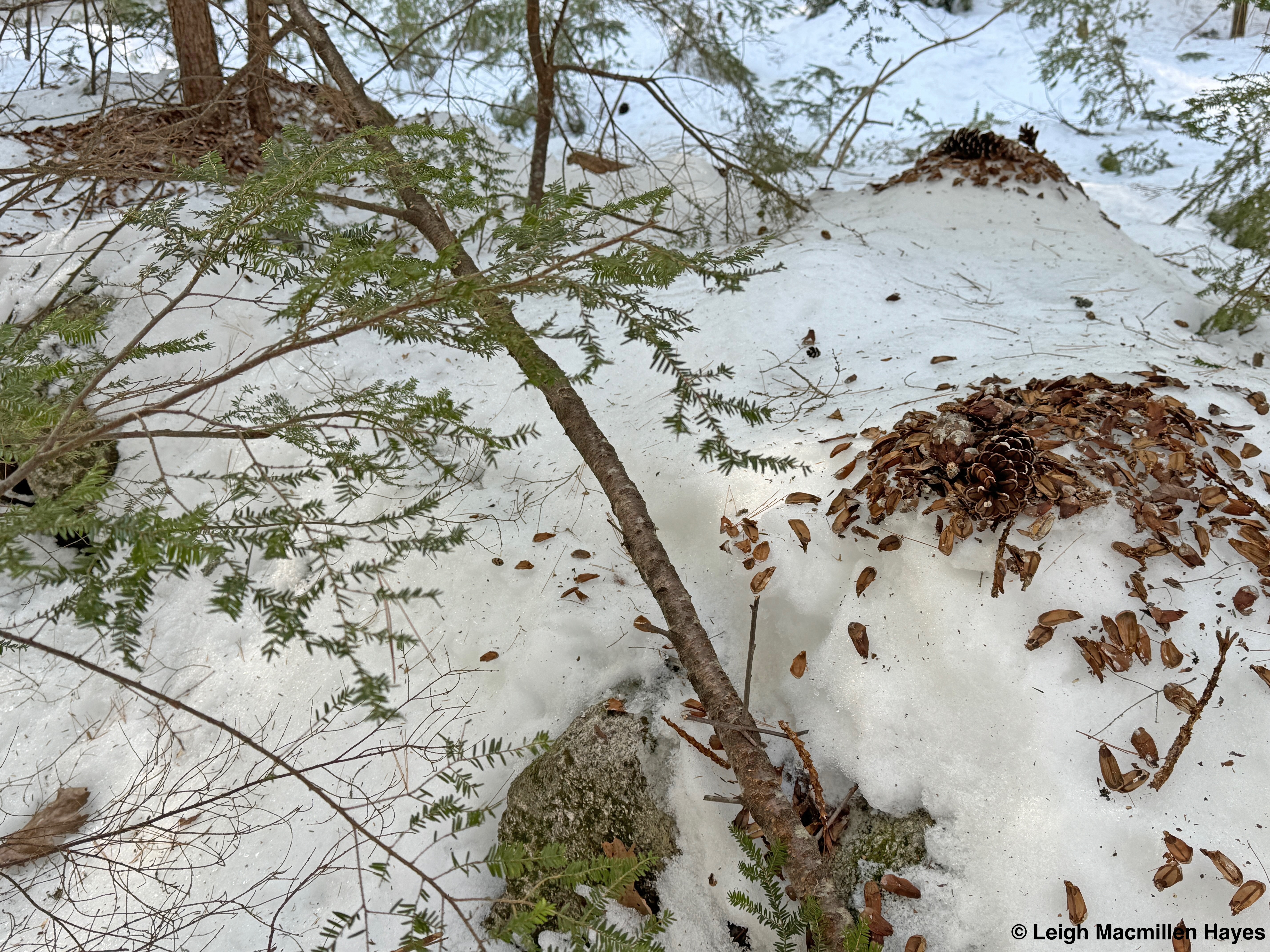
And so I paused too. And discovered yet another cache and midden created by one of our local Red Squirrels. I’m in awe because until yesterday, I wasn’t aware of this one and I can see it from the desk where I’m writing right now. And to top it off, yesterday was the first day since I filled the feeders at the beginning of December that I saw a Red Squirrel chasing the Gray Squirrels away.

I, too, climbed over the wall and look who I met. Always on alert and often either skittering along the ground or a stone wall, or chastising me from its branch of choice, Red doesn’t realize that I’m a fan.

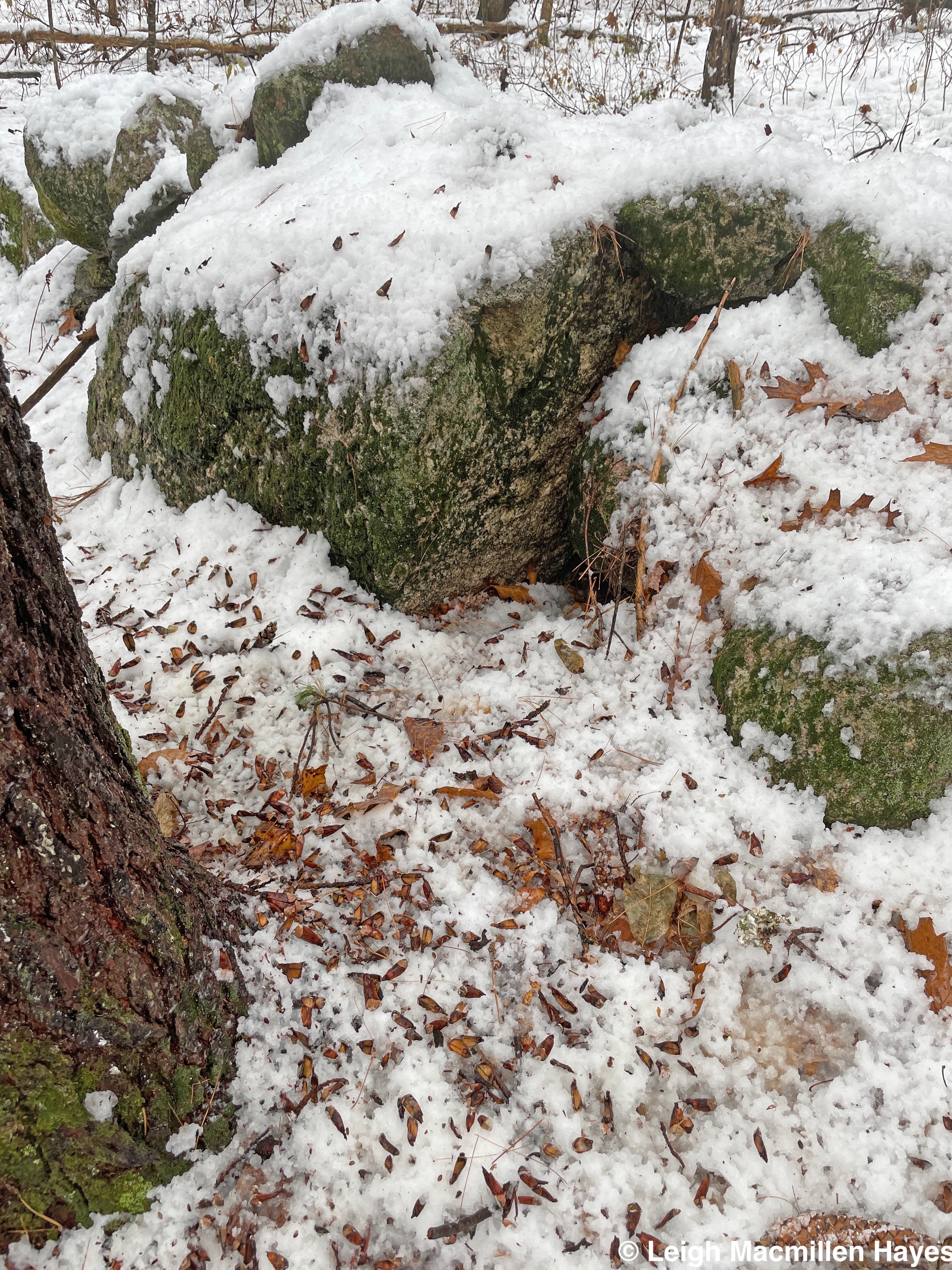
Next, I ventured over to the old cow path, bordered as it is by two walls, and checked on the cache and midden situation that’s become so familiar to me.

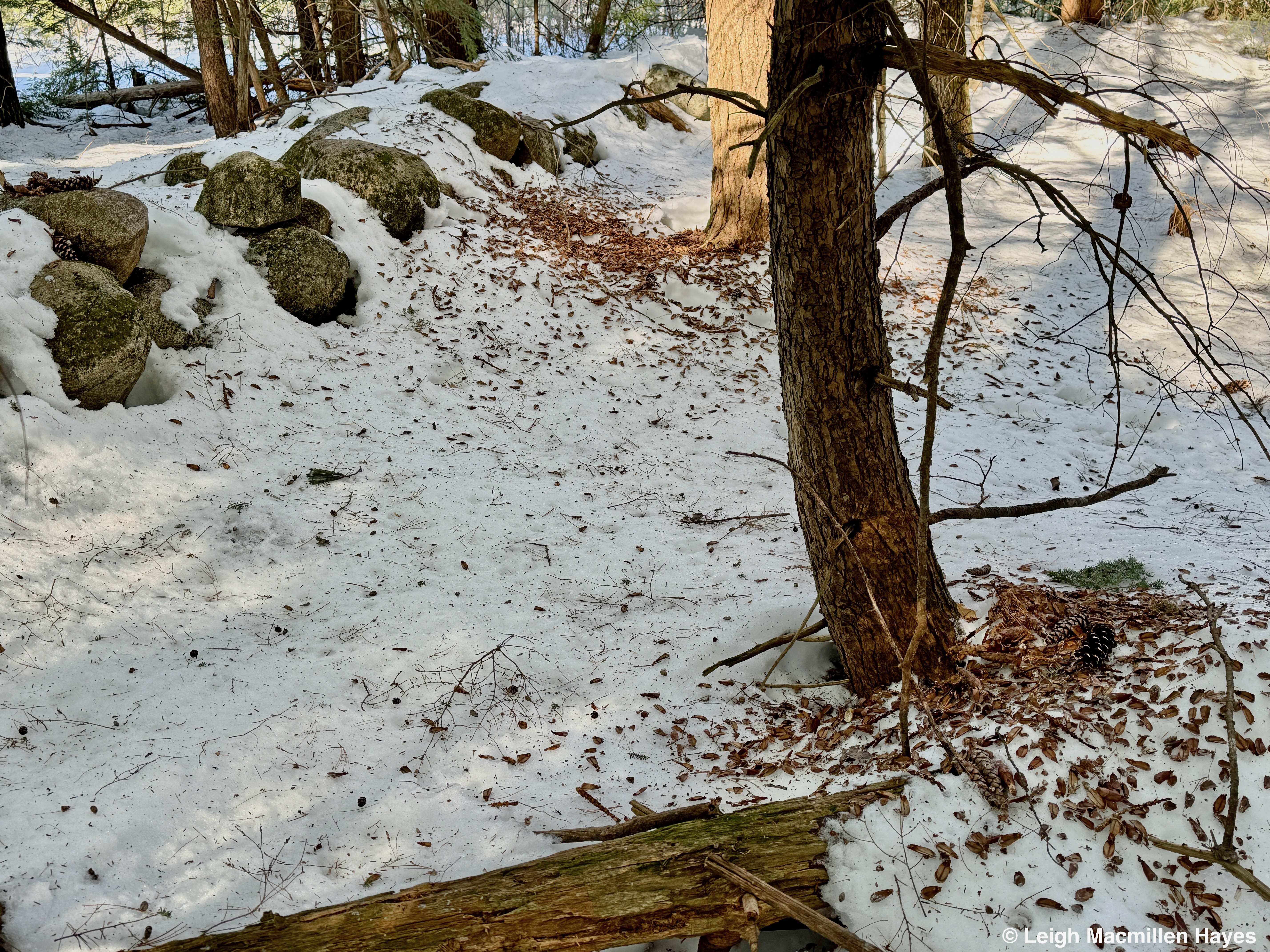
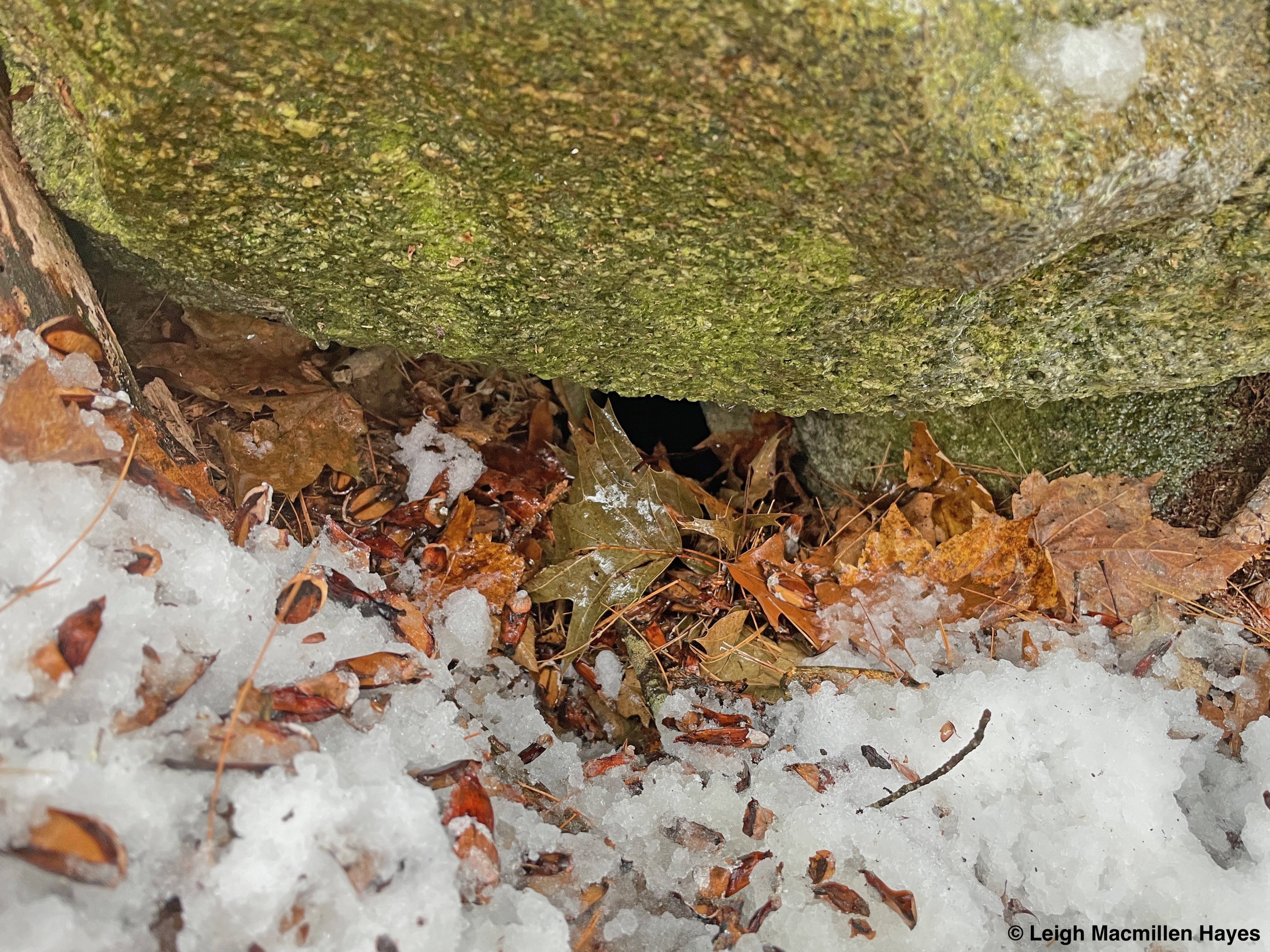
The cache or storage pantry of pine cones is located under the mound of snow the black arrow points toward. At last measurement as recordered in The Forever Student, Naturally, the pile was a foot high. As you can see if you look closely at the tops of the stones behind the snow-covered pile, you’ll spy several middens. So my question is this and I’ll have to wait until the snow melts to answer it: Are all of the cones the squirrel is consuming (well, seeds actually, for the midden is the pile of discarded scales that protect the seeds, plus the cob or core left at the end) coming from under the rocks, where I’m sure there was more storage space, or the bottom of the pile, because Red Squirrels do tunnel? I can’t wait to realize the answer in another month or so.

The pine tree beside the cache also provides a grand dining spot.

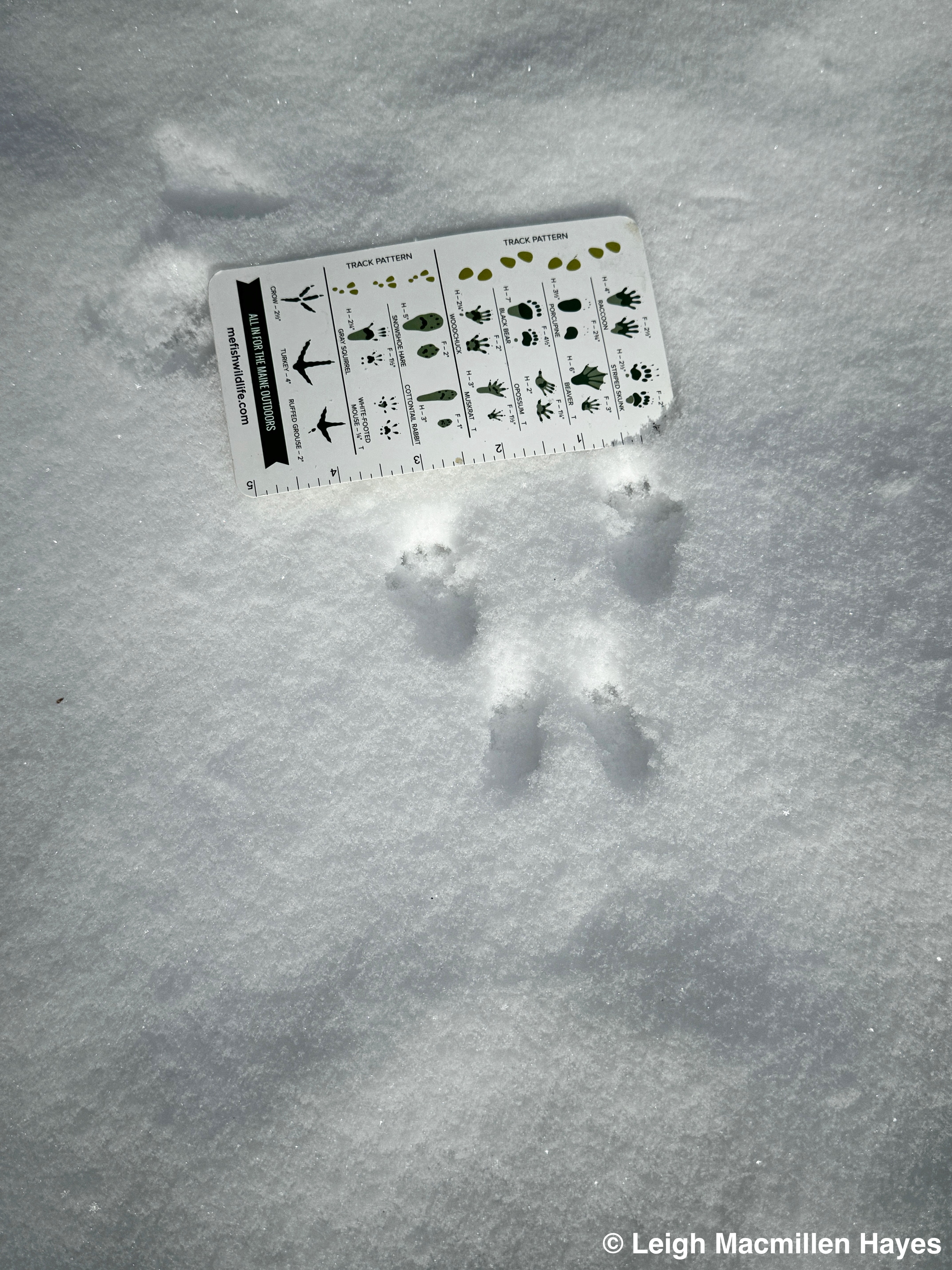
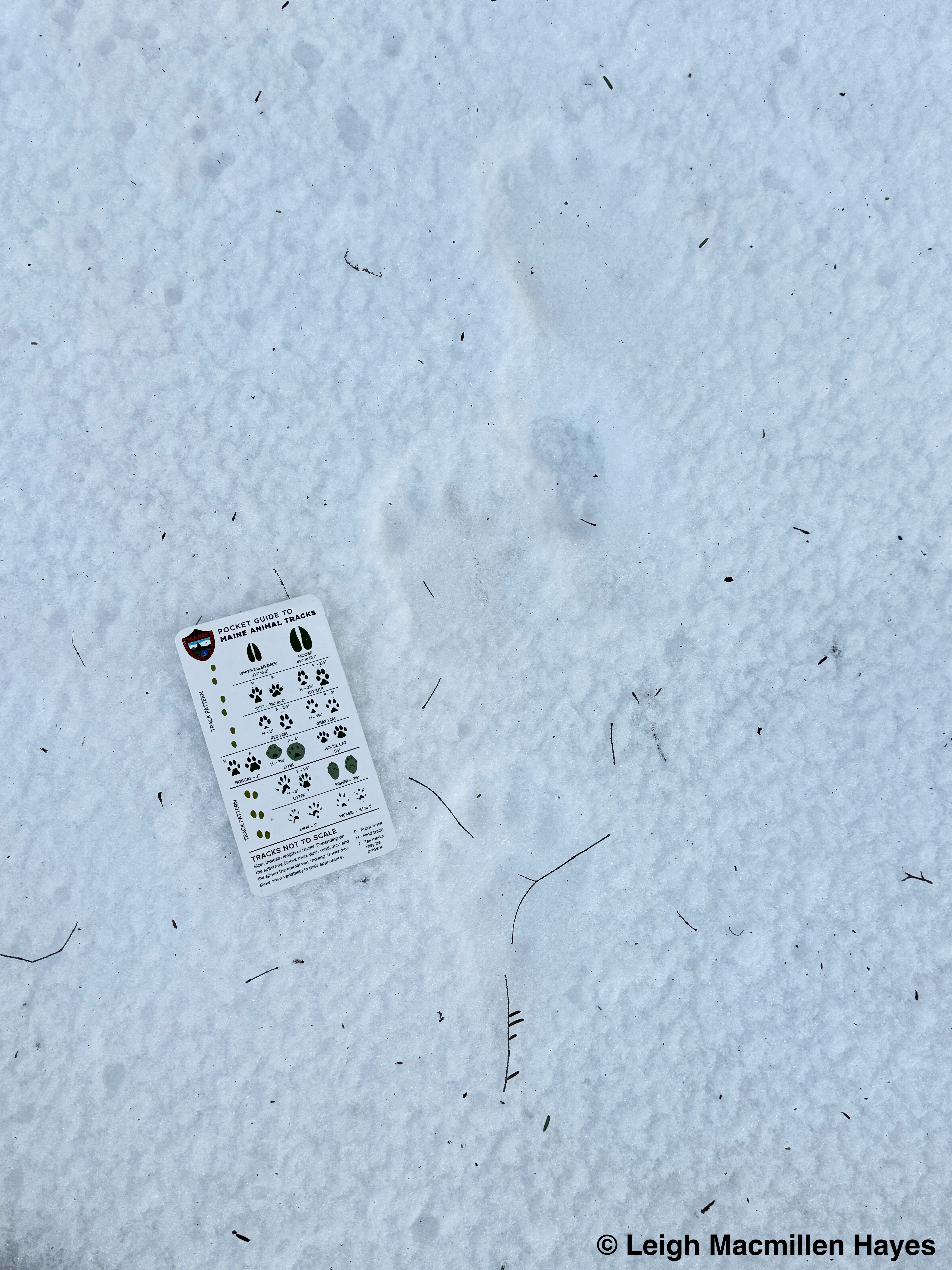
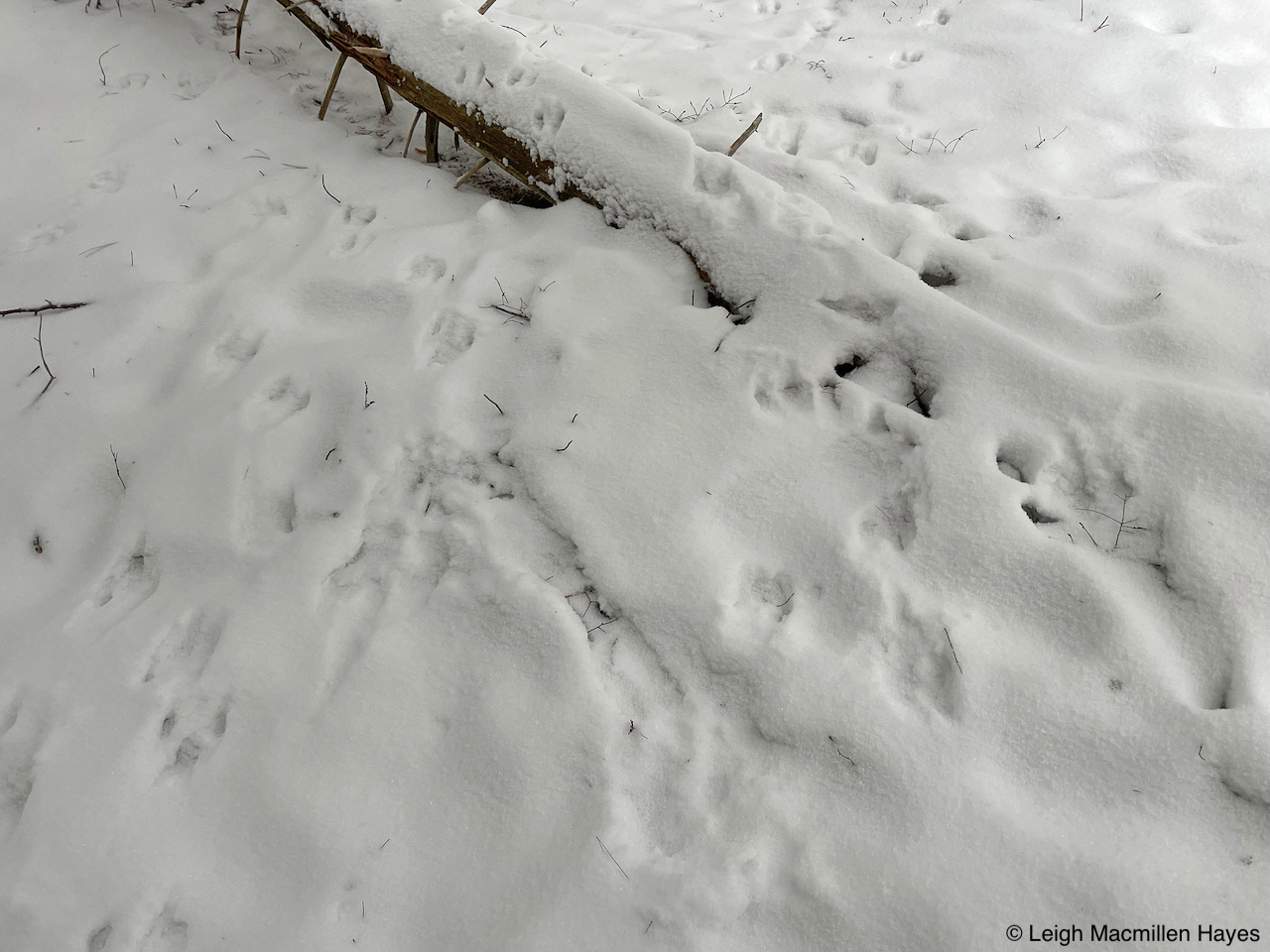
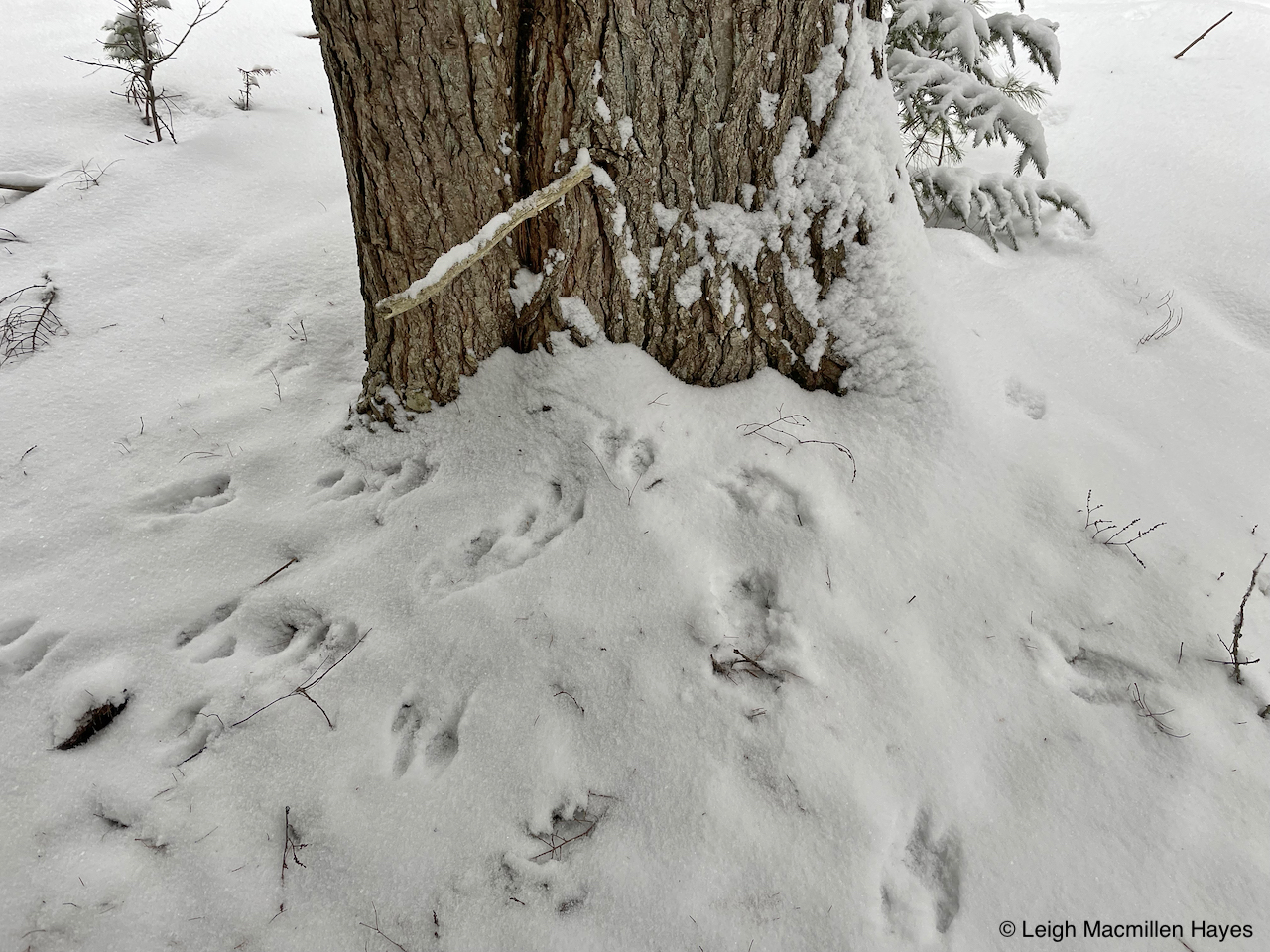
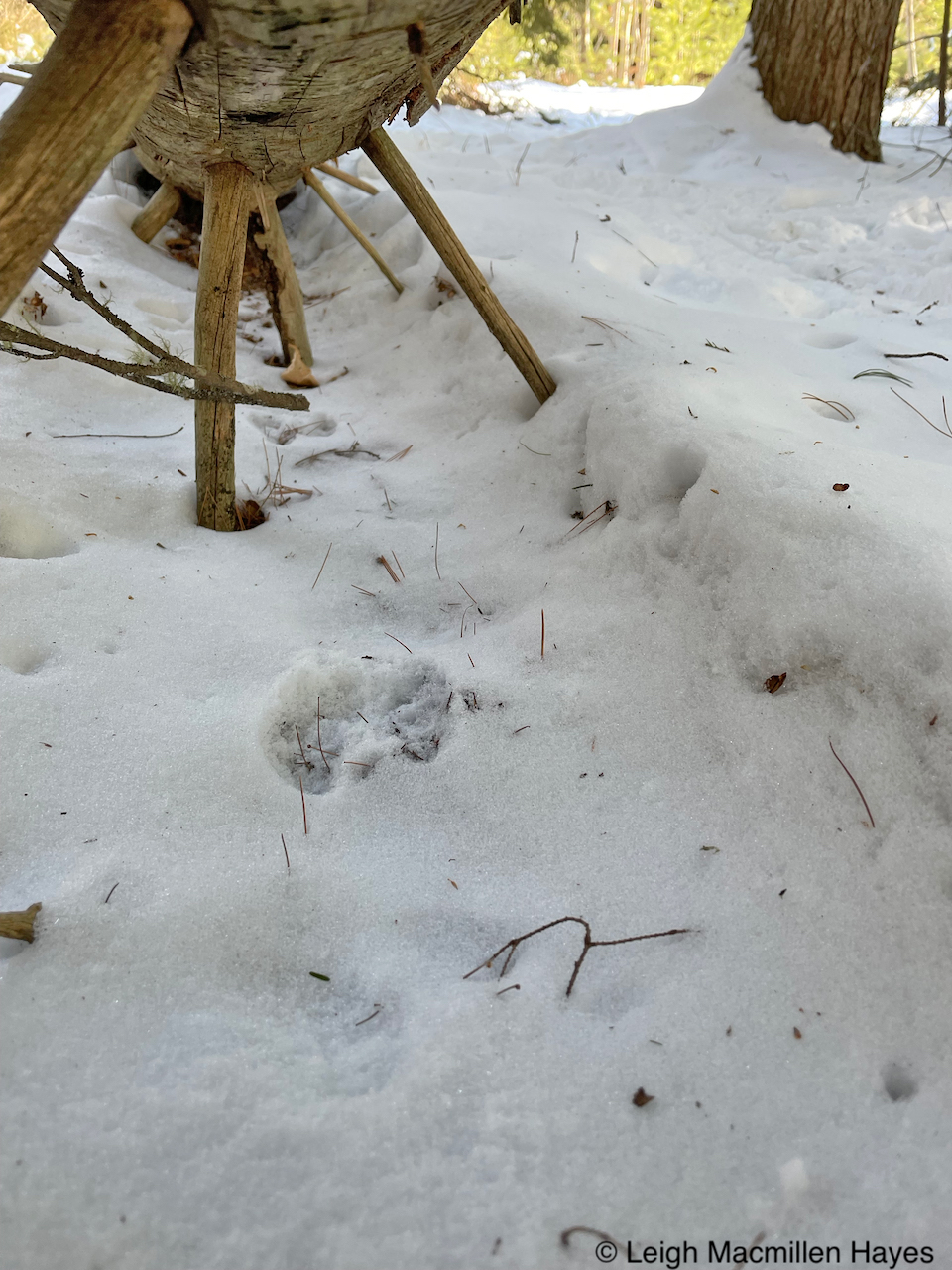
About an inch of snow fell overnight, so when I went into the woods this morning, I found fresh Red Squirrel prints, with the straddle or track width being the typical three inches. It was a bit nippy with the wind chill, so I didn’t get the card placed exactly as it should have been, but you get the idea. Its big feet in front are actually this hopper/leaper’s hind feet.

Okay, so I did risk the freeze for a minute because I spotted the set of four prints behind the first set I’d photographed and realized not only how close together the four were, but also the length of the leap from one spot to the next: My mitten and wrist holder are 19.5 inches in length and they didn’t cover the length of this motion–perhaps an attempt to quickly reach safety in the other wall or up a tree.

That action was on the eastern end of the path, but there’s more to see as I head west.

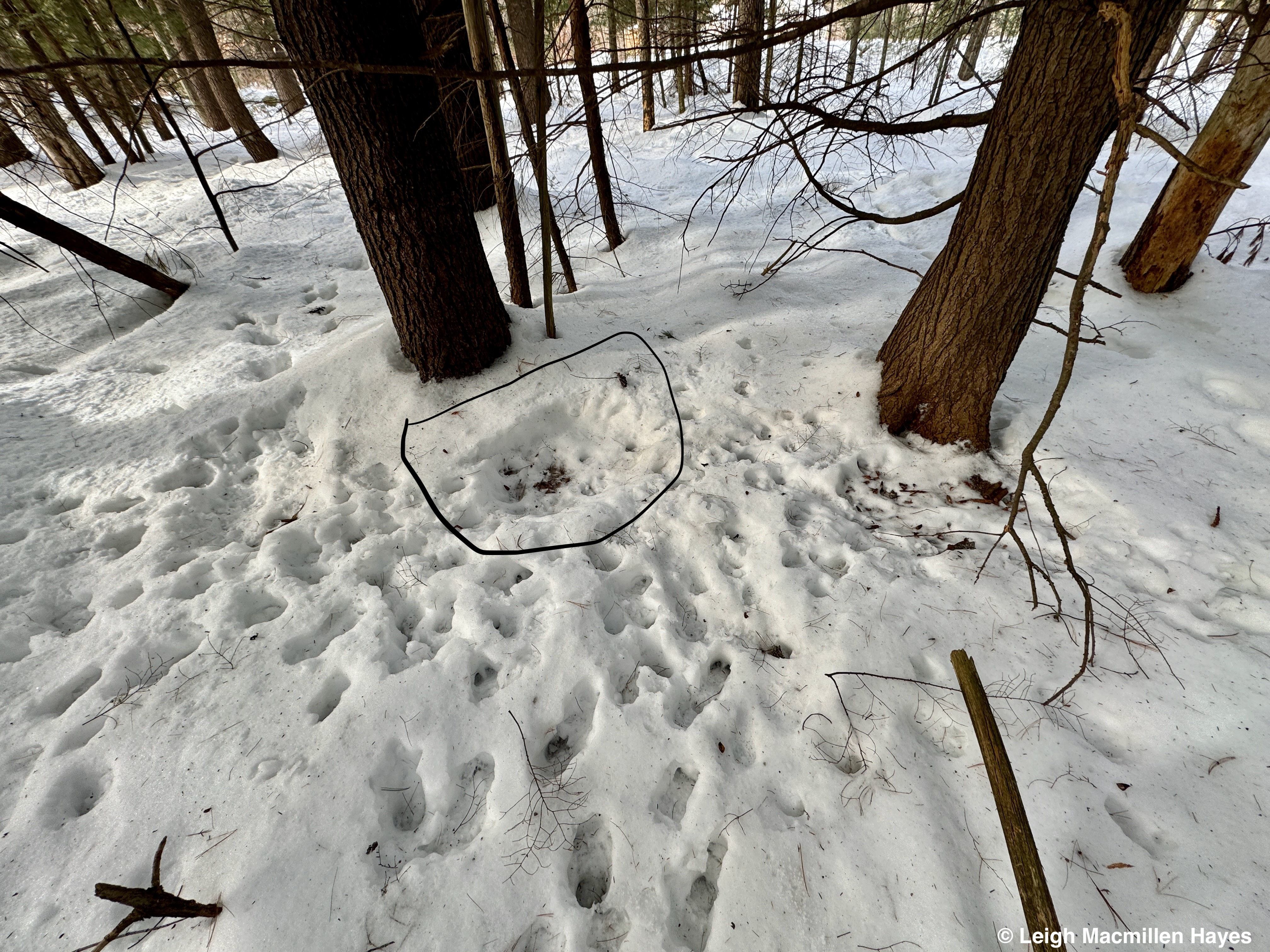
A few days ago, and probably because the night temperatures were more moderate, a family of rascals crossed from the other side of the wall and onto the path. By the baby fingers of the front foot, I know they were Raccoons.

As waddlers, Raccoons have their own pattern that is easy to recognize once you get it into your head. They don’t travel this way all the time, but most often I find their prints, with a front foot (baby hand) of one side and hind foot (a bit longer print) of the other side juxtaposed on opposite diagonals. If you look at the black lines I placed before each set of two prints I hope you’ll see what I mean. And notice the keys. It’s all I had in my pocket that day and I wanted something for perspective. I really didn’t expect to find the raccoon tracks.

I went back home and grabbed a tracking card to set on the ground. If you’ll look closely, you’ll note that it’s more than one animal, but all the same family. I followed them across the wood lot, over another stone wall, and into the field where they split up into four individuals before heading off in to the neighbor’s woods on the far side.

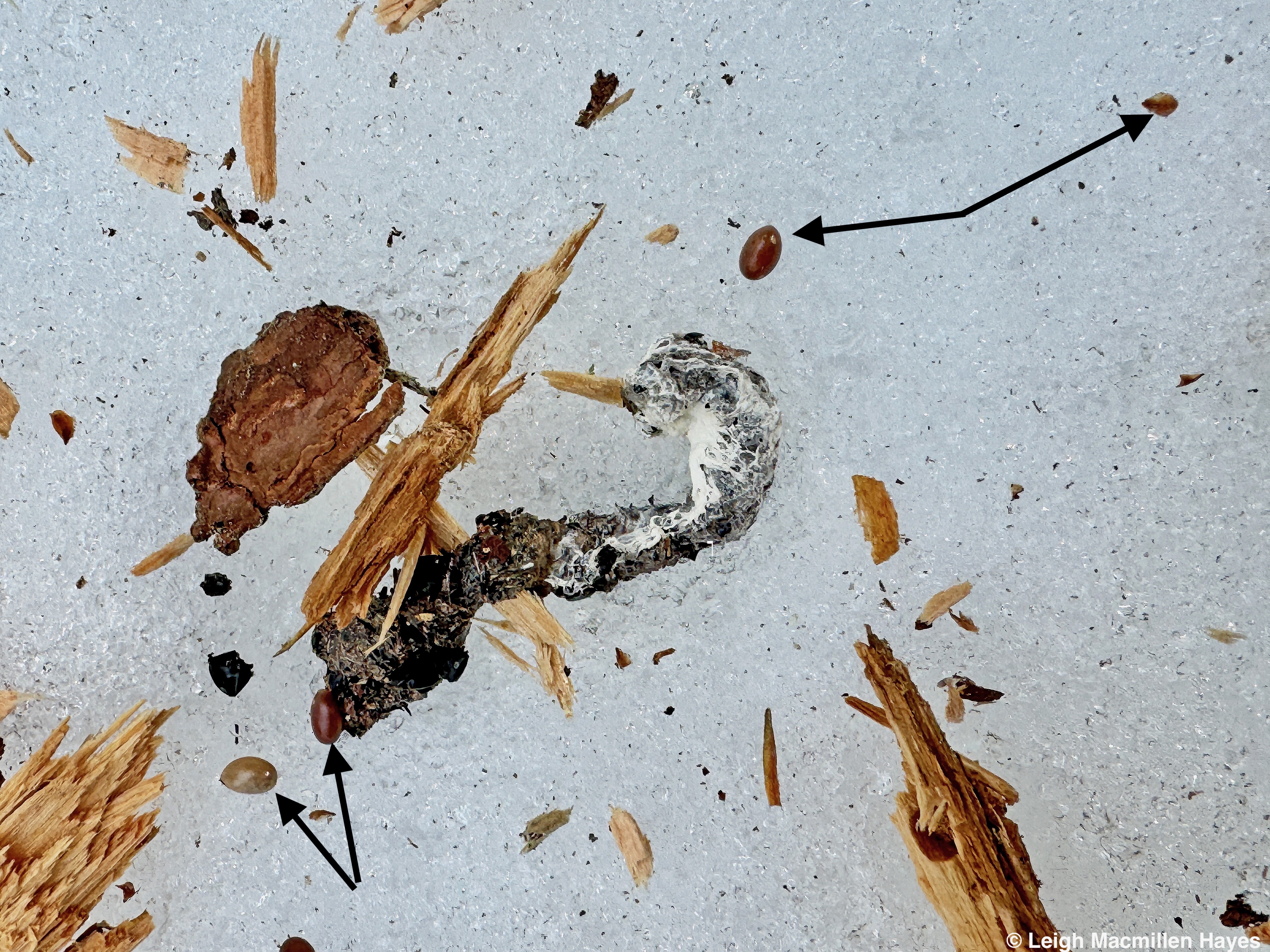
Back to the cow path I did return and this time it was a scene just off the path that drew my attention. Our Pileated Woodpecker has been active as evidenced by all the wood chips on the ground. That means one thing to me. Time to look for scat.

And I wasn’t disappointed. Check out that cornucopia stuffed chock full with insect body parts that the bird couldn’t digest.

Finding this is always like opening a Christmas present. The thrill never ends. But, curious spot here. Seeds. Staghorn Sumac seeds.

And on the pine tree and at its base, I found more of the Staghorn Sumac in bird droppings, a completely different form from the Carpenter Ant droppings.

Both followed me home! The Carpenter Ant scat is very fragile.

The sumac, being fleshier, held together better. Under the microscope I noted that there were some ant body parts mixed in with the sumac.

Here’s a closer look at one of the legs of a Carpenter Ant–notice the long “thorny” thing, which is the tibial spur located at the base of the tibia.

And an exoskeleton plus another leg. With lots of wood fiber in the mix. Lots of nutrients and fibers mean scat findings for me.

A power line bisects our property and I have a love/hate relationship with it. I do love that it looks like we could walk north to Mount Washington. But my destination was to the trees on the western (left-hand side), where we own at least one more acre enclosed by stone walls.

About half of that acreage is a combo of hemlocks and firs fighting for sun. In the end, the hemlocks will rule the world, but the firs are trying to compete.

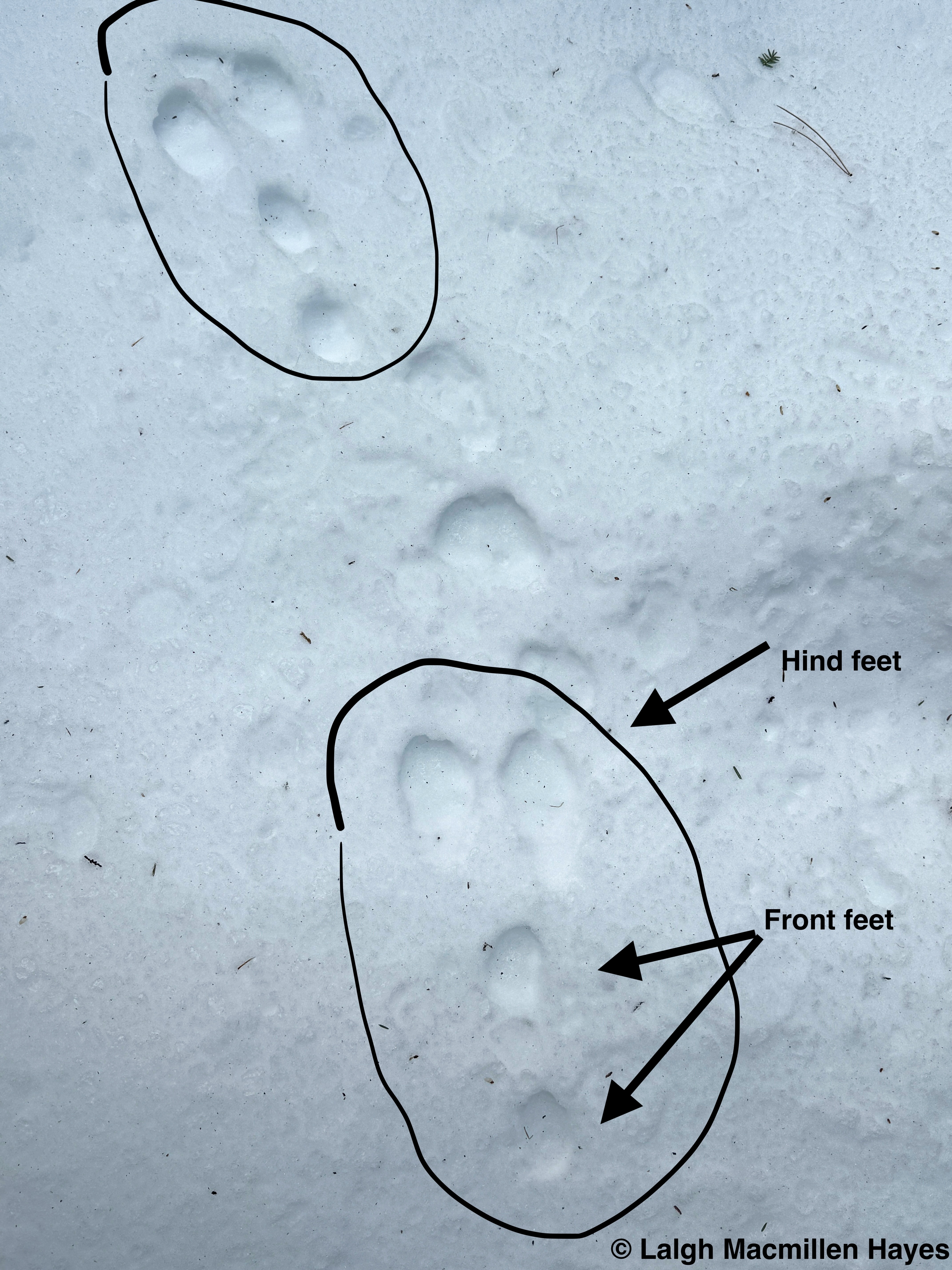
It is here that I discovered Snowshoe Hare tracks and my heart smiled again. There’s not much on this portion of our land for the hares to dine upon, such is the landscape when the trees block undergrowth. But on either side of the walls, there’s plenty available to them in areas that have seen timber cuts within the last twenty years.

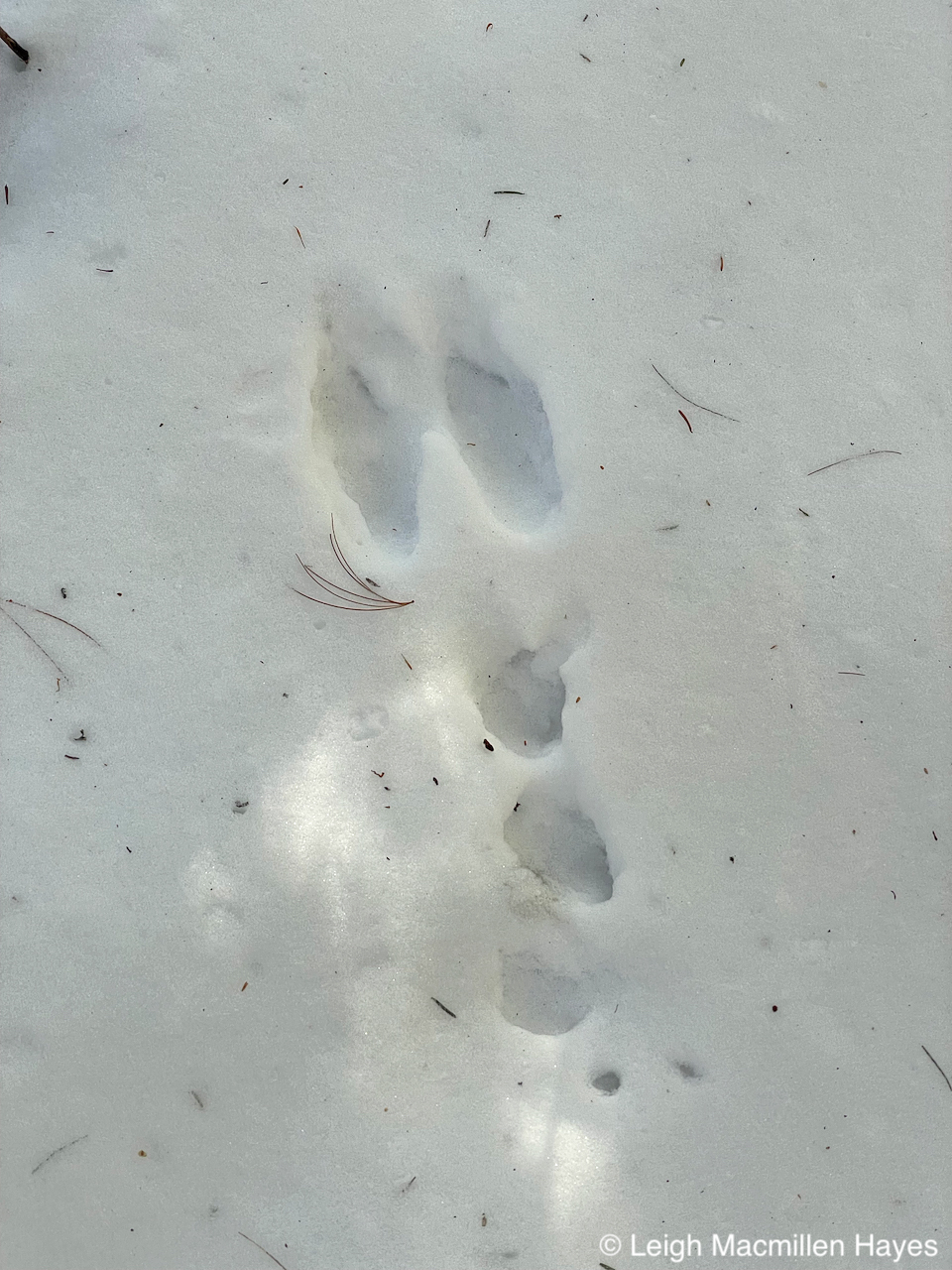
Here’s the thing about hare prints–as hoppers, the smaller front feet land first and often, but not always, on a diagonal. The much larger hind feet swing past where the front feet had been as the mammal moves forward, and thus appear to land in front when you look at the overall pattern. And my favorite part of this set of four footprints: the overall shape, which to me looks like a snow lobster with the front feet forming the tail and hind feet the claws. Do you see it?

This neighborhood on the other side of the power line also supports a Red Squirrel who in true squirrel tradition travels this way and that.

And like its relative on the other side, it took time to cache a bunch of cones and now feasts upon its supply.

And leaves its garbage for nature to recycle. Notice how the middens are often located on high spots such as the rocks along the wall–the better to be in a spot where you can see who or what might be approaching. Even those on the ground below trees mean that the squirrel probably did most of its dining from a branch above, and then let the trash fall.

What could a squirrel possibly fear in these woods? Besides coyotes and foxes and bobcats, oh my, think Fisher such as the one that left these tracks in the squirrel’s territory. As far as I could tell, the Fisher (and it’s not a cat, it’s a member of the weasel family) was only passing through, probably on its way to hunt down the hare. Though a squirrel would make a fine meal, as well.

Heading back across the power line, cases stood out on the White Pine saplings at the start of the cow path. The cases consisted of clusters of needles bound together. This is the work of the larval form of a Pine Tube Moth, Argyrotaenia pinatubana. What typically happens is that the caterpillar uses between ten and twenty needles to form a tube or hollow tunnel.

The caterpillars move up and down their silk-lined tunnels to feed on needles at the tip until they are ready to overwinter.

The moth will emerge in April, when I’ll need to pay attention again. Two generations occur each year and those that overwinter are the second generation.

Walking home via a different path in our woods, I spot deer beds. At least a half dozen spread out under the pines and hemlocks, the spot where the evergreens keep heavy amounts of snow from reaching the forest floor, thus making it easier for the animals to move.

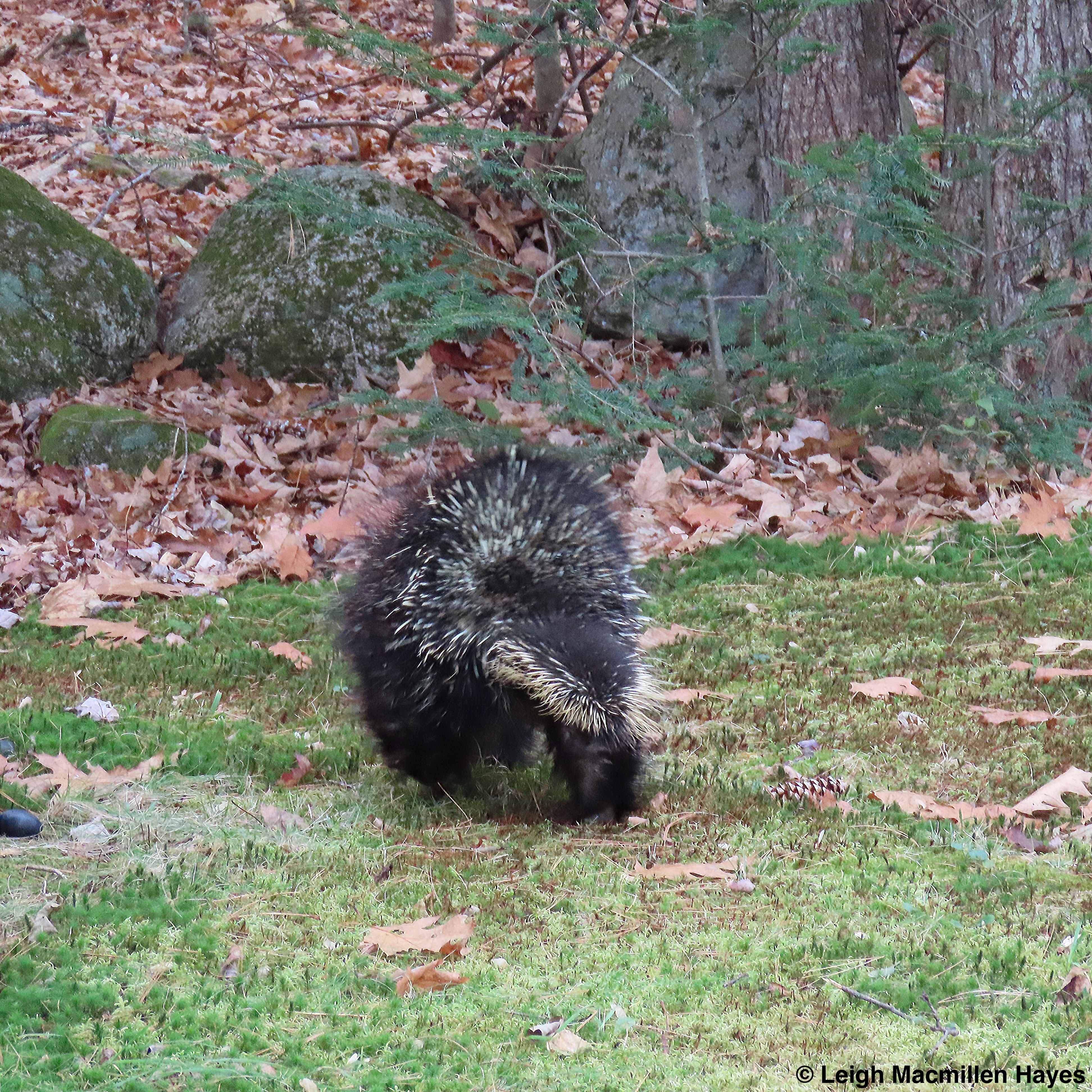
Finally back home, there’s one more member of our family to mention–a porcupine. This may be my friend Bandit, but I haven’t actually seen him in a while so I can’t be certain.

The porcupine did check out a tiny hole under the barn, but we don’t think it actually stayed there. Will it return. Probably, as the barn has long hosted this species; along with other small critters.

That’s a lot for now and at last I’m done counting the stock for our winter inventory. There’s more out there, but this is certainly enough to make me realize that they don’t live in our woods, but rather, we humbly reside in theirs.

Wednesday Wanders

Today’s wander begins at the end because it can in my book of life. And by the end, I think you’ll understand why I made that choice. But don’t scroll ahead cuze then you’ll ruin the surprise.

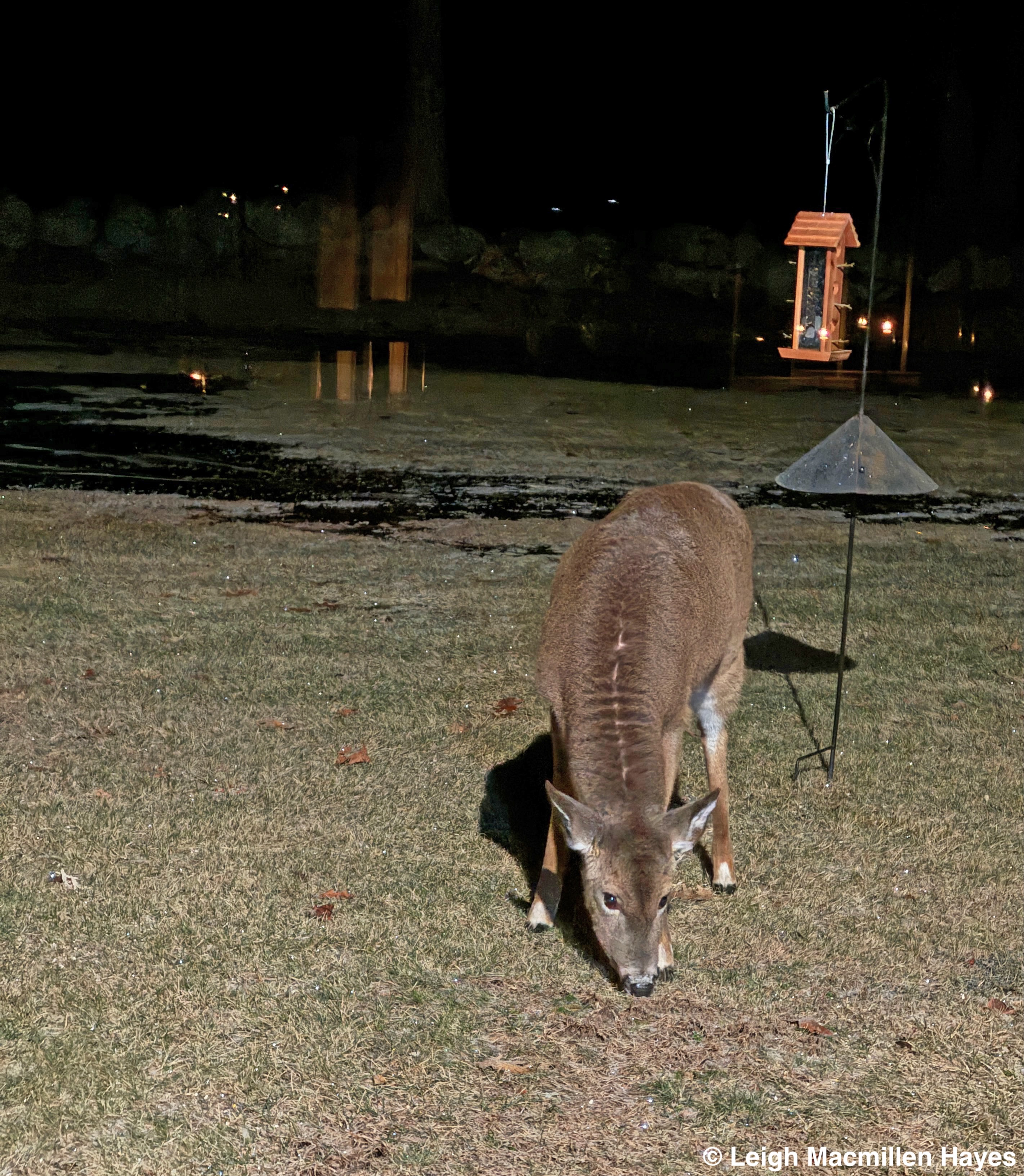
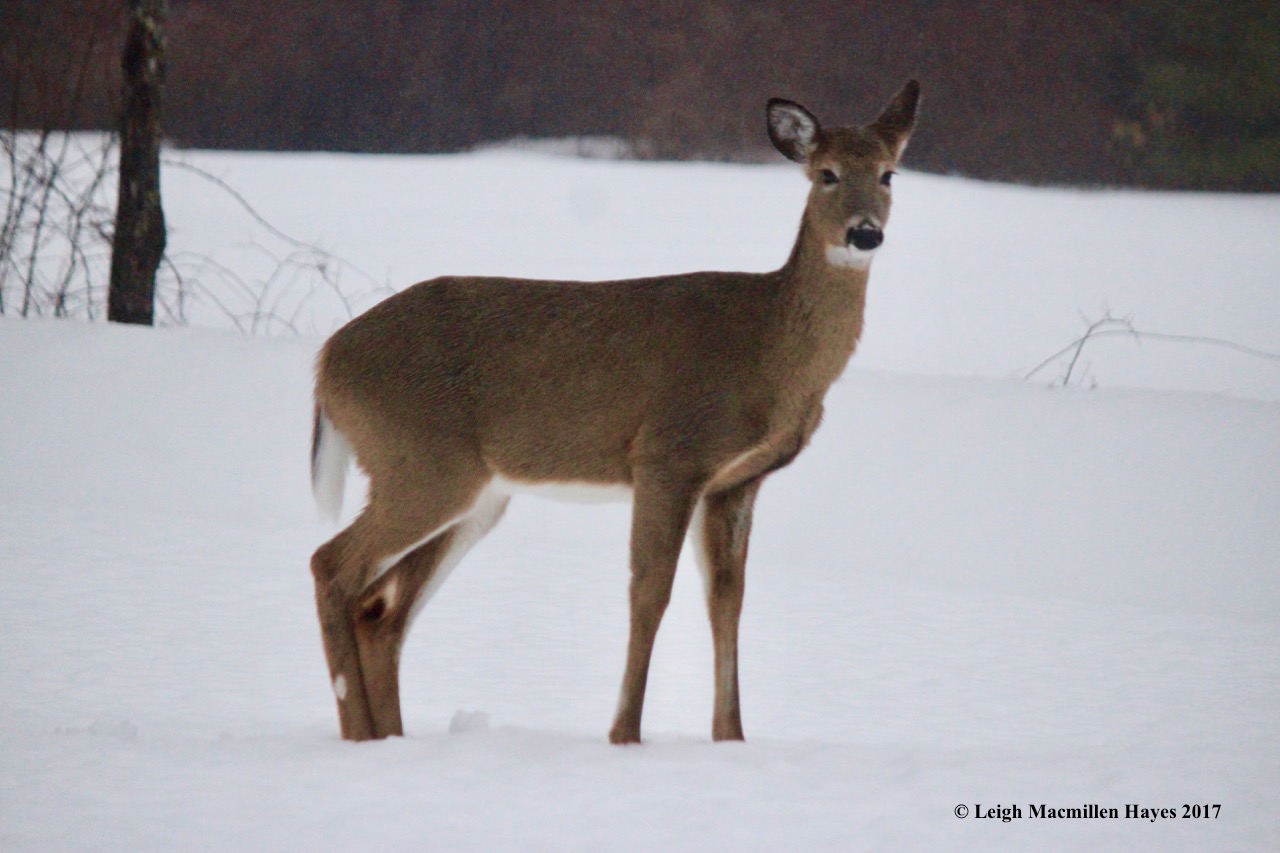
Our deer friends are feeding on bird seed and corn right now about ten feet from the back door. Meanwhile, the fairies are flittering about behind this doe. Do you see their twinkling wands at work?

Actually, all the lights are kitchen reflections on the door window.

This, of course, has nothing to do with the rest of the day, but I do love our deer friends and like to honor them when I can.

Now on to the nitty gritty of the rest of the story. My friend Dawn and I are Maine Master Naturalists as you may know. And because of that, we must volunteer time to teach others about the natural world. An unpaid job that is hardly a hardship because it’s so much fun.

Right now, we are in the midst of offering a program every other week for Loon Echo Land Trust in Bridgton. And the winter focus is tracking. Not easy to do without snow or mud. Wait a second. The animals are always on the move, and without the snow, we must look for signs. And so we did.

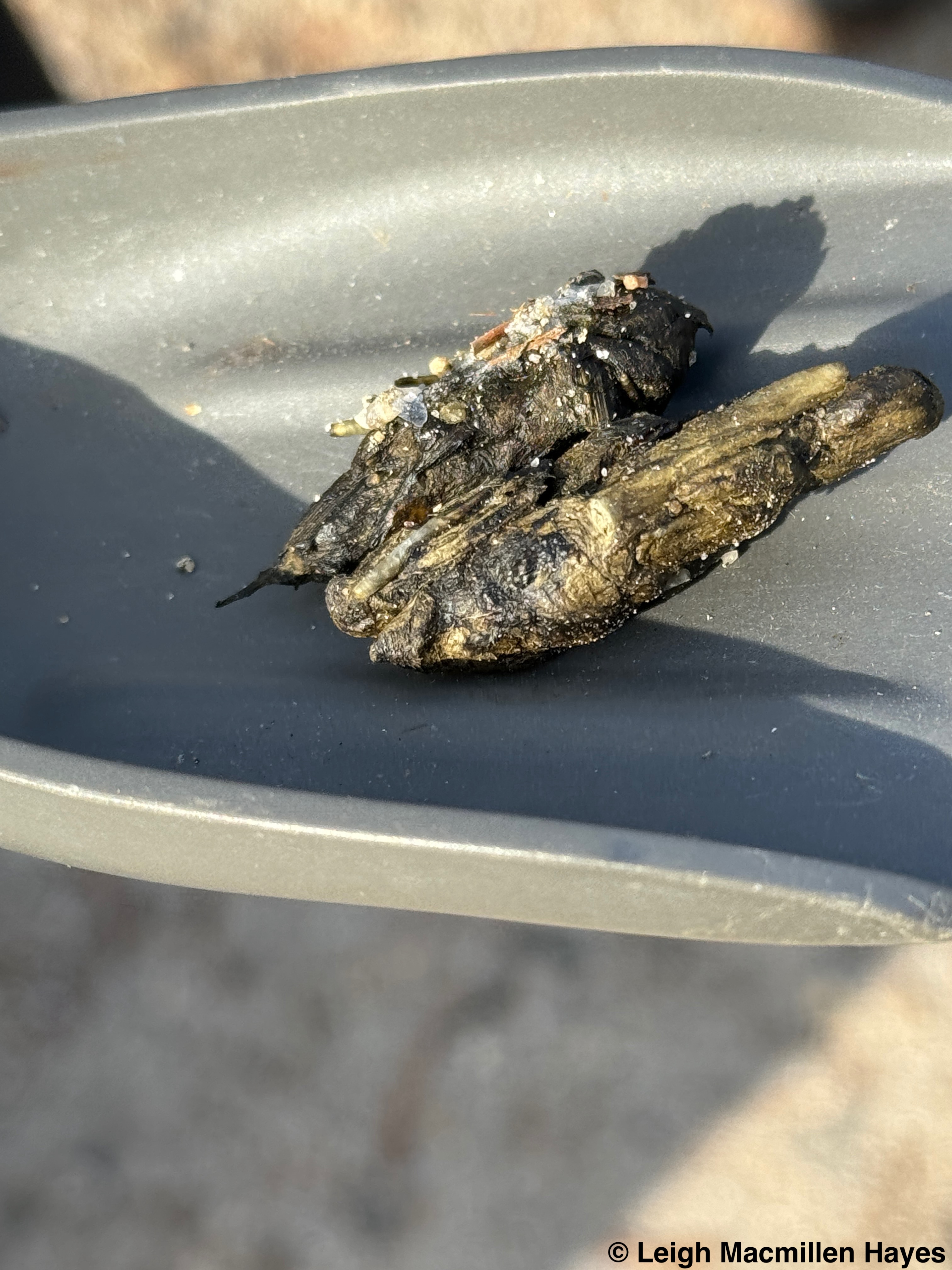
The first, a special offering left on top of a rock that Dawn actually noticed this past weekend when her son and daughter-in-law were visiting, and which she complety embarrassed him by taking photographs of it.

Out came my scat shovel today and everyone took a look. By its form, size, and location, we determined Red Fox.

Our real mission today, however, was to explore the territory of a Red Squirrel. No, this is not my friend Red, but another who has established a territory in a different space that’s also been blessed with an abundant amount of pine cones this year.

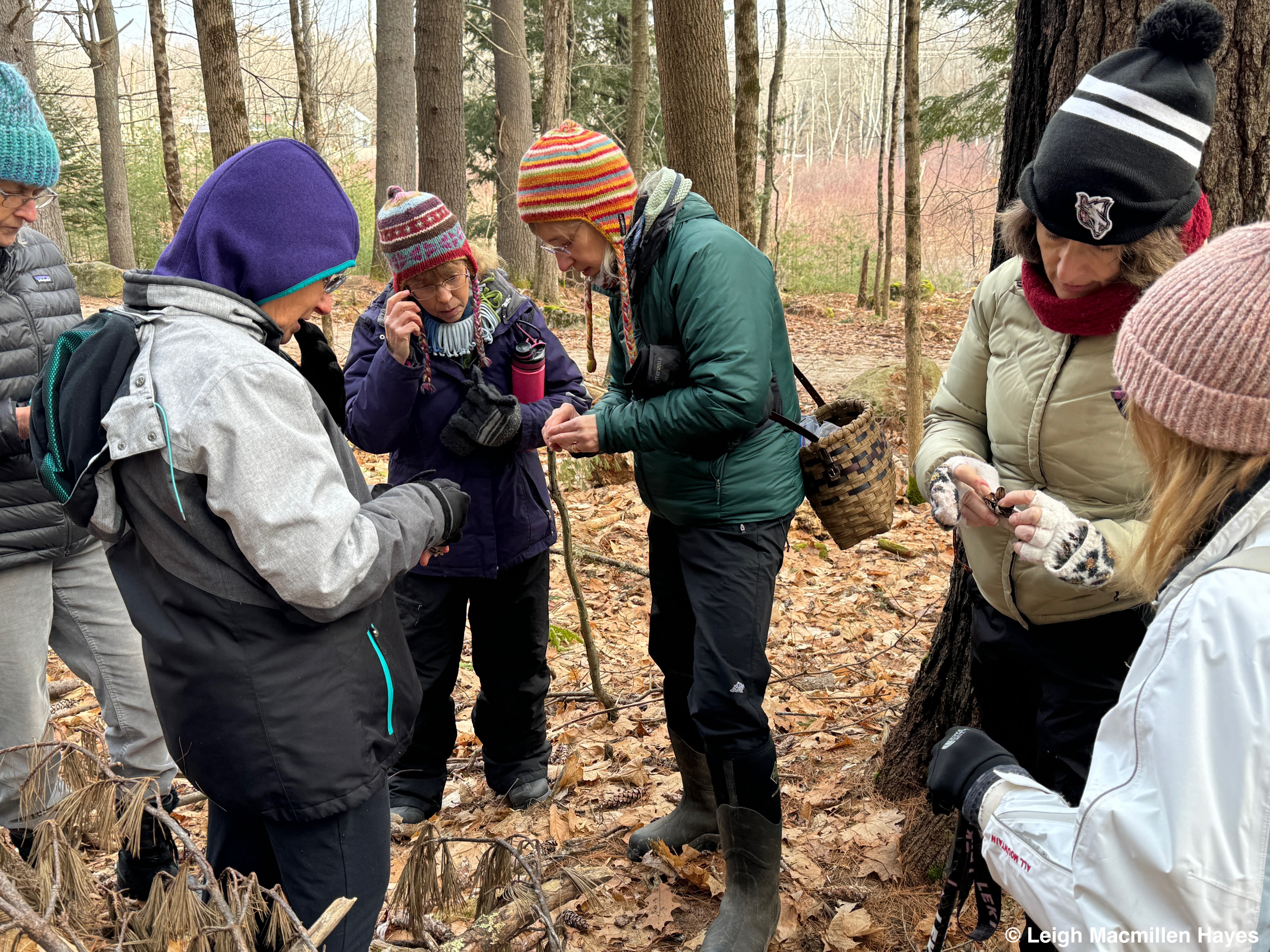
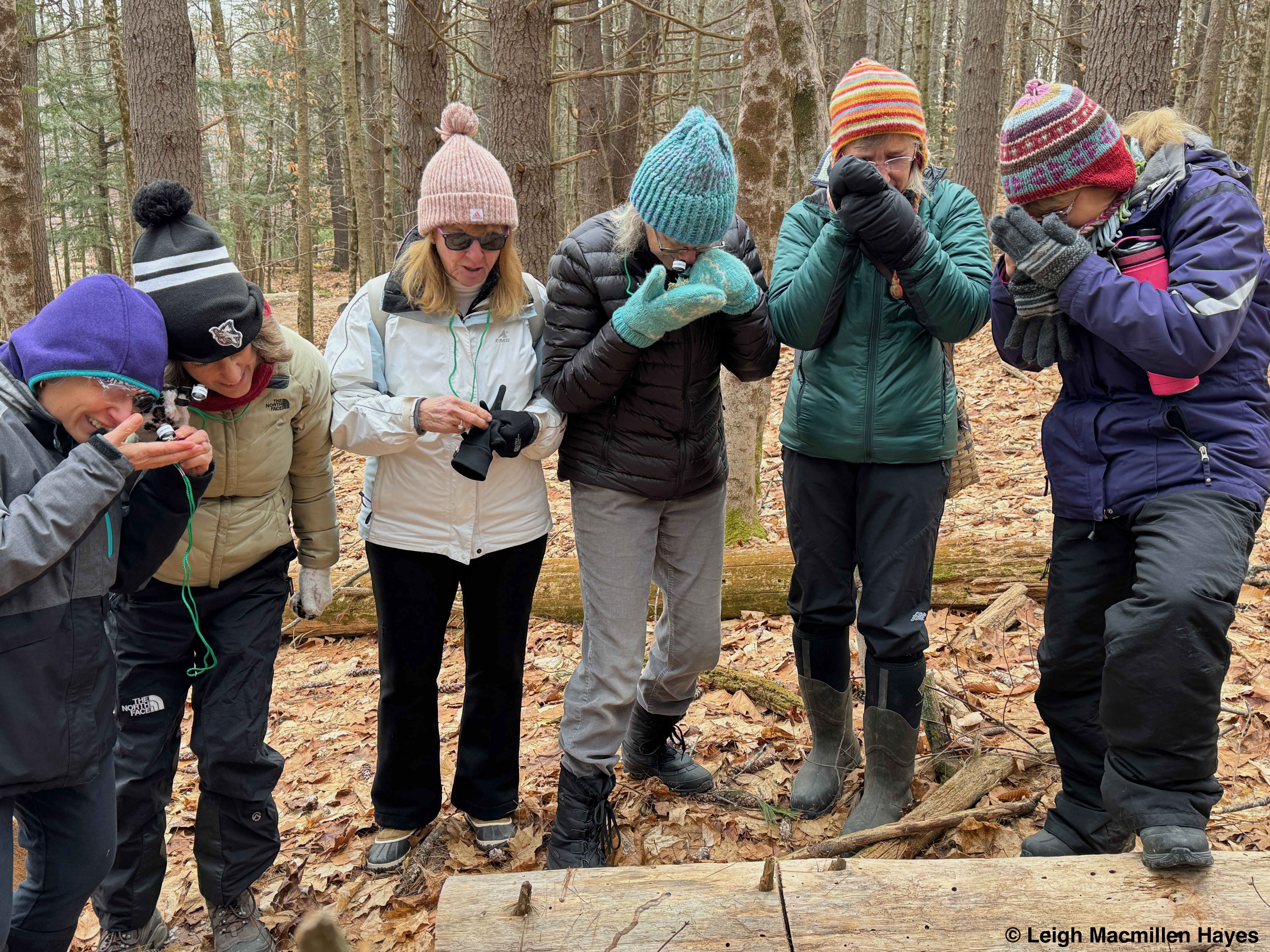
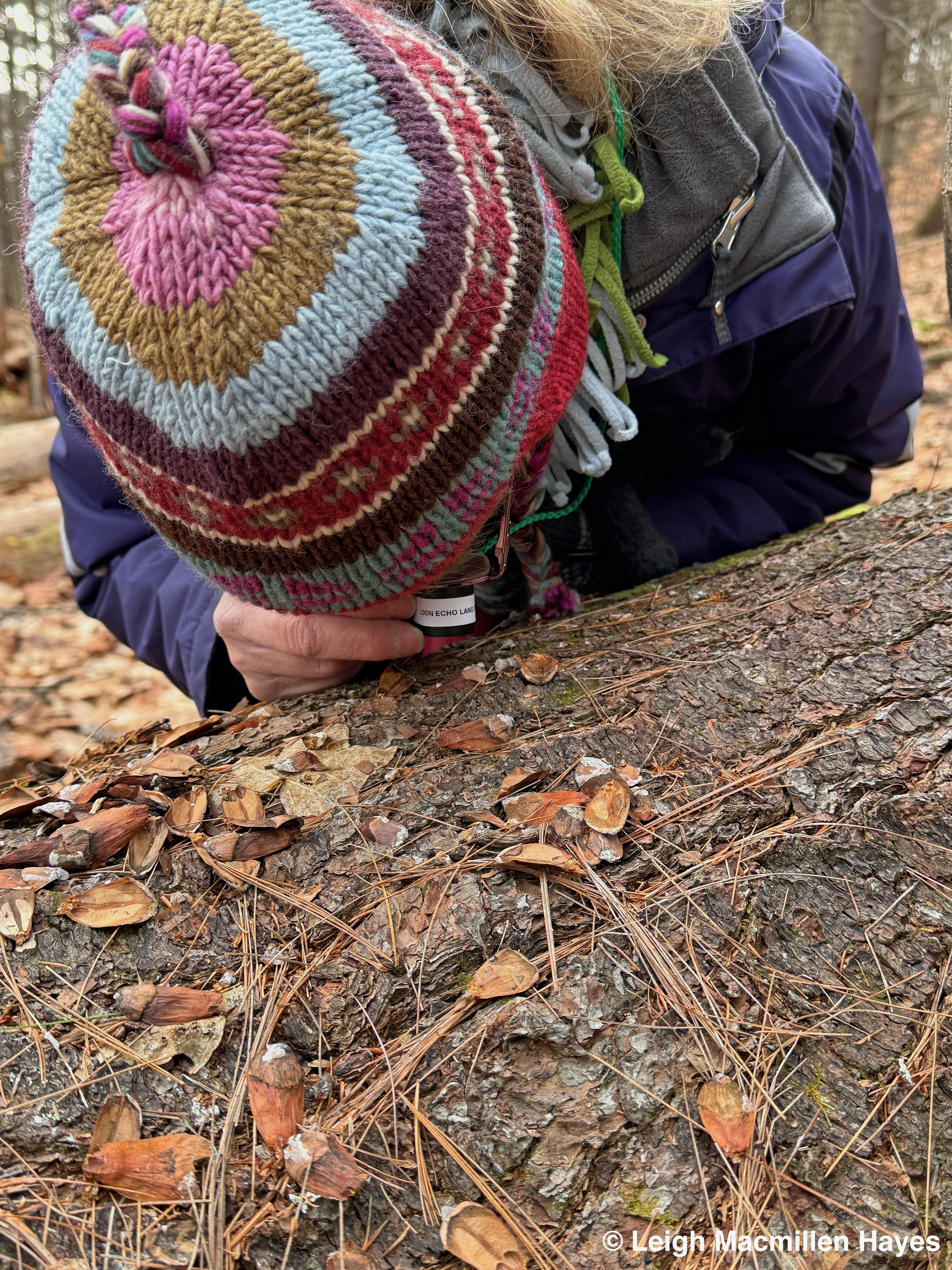
We wanted the partipants to take a close look at the scales where the seeds the squirrel sought had been stored. They got right into it.

After locating caches and middens created by said squirrel, we taught the ladies how to use a loupe, aka hand lens, by holding it close to their noses and bringing the object closer until they could focus on it.

To say it opened up a whole new world is possibly an understatement.

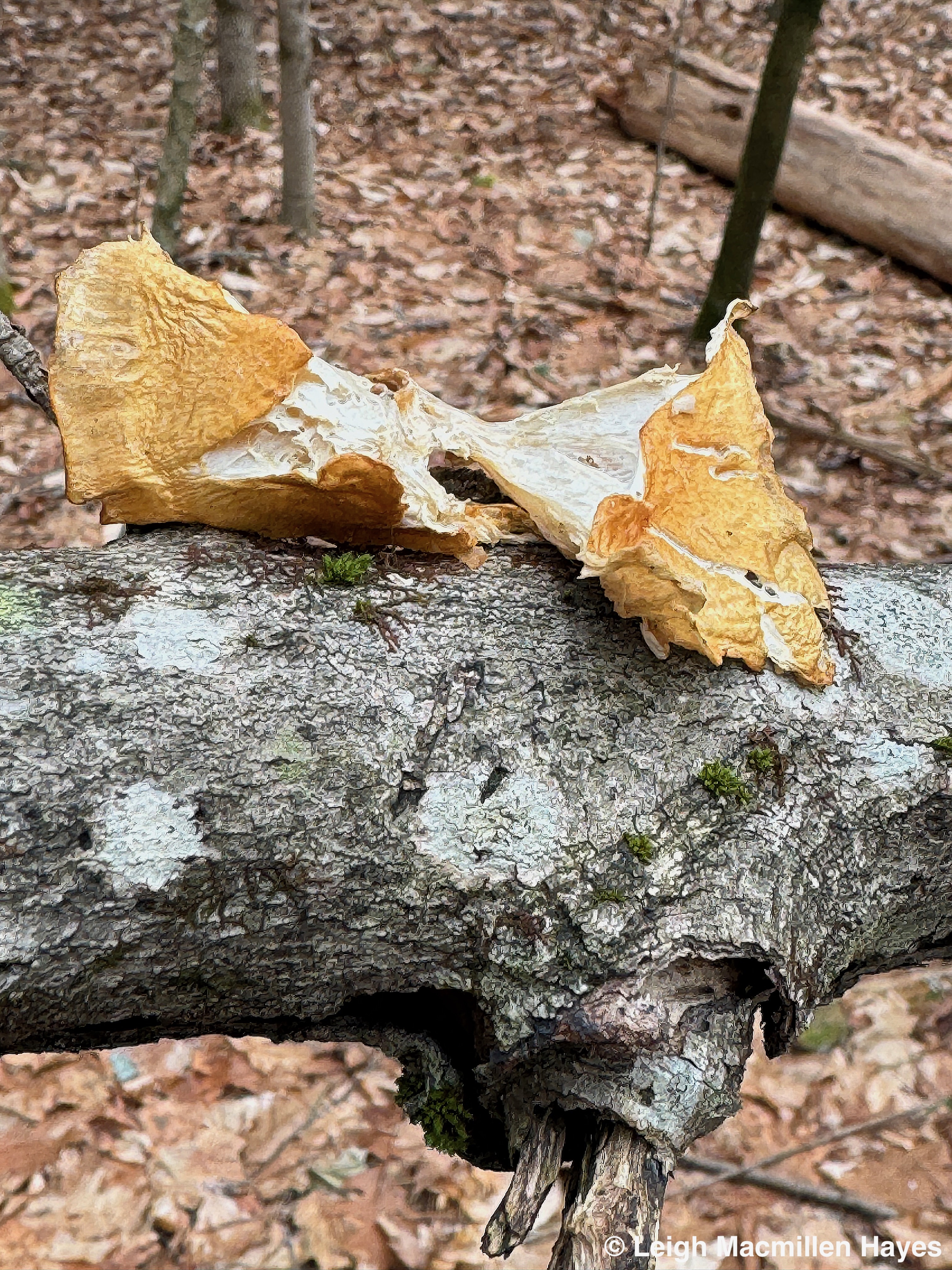
Discovering the tiny seeds the squirrel consumes would have been enough, but there was more. In one section of this squirrel’s habitat we found numerous mushrooms upon branches, placed there by the rodent to dry. Talk about being in a food pantry.

And then . . . and then . . . we spotted hoar frost between a couple of stacked logs . . . and surmised that our little friend was living in the space below. How cool is that? Wicked, in these parts of the woods.

What we learned is that this particular squirrel’s territory is located between two downed trees and a wetland, about the size of half a football field.

At the edge of the wetland, it was time to turn our attention from the squirrel to another rodent.

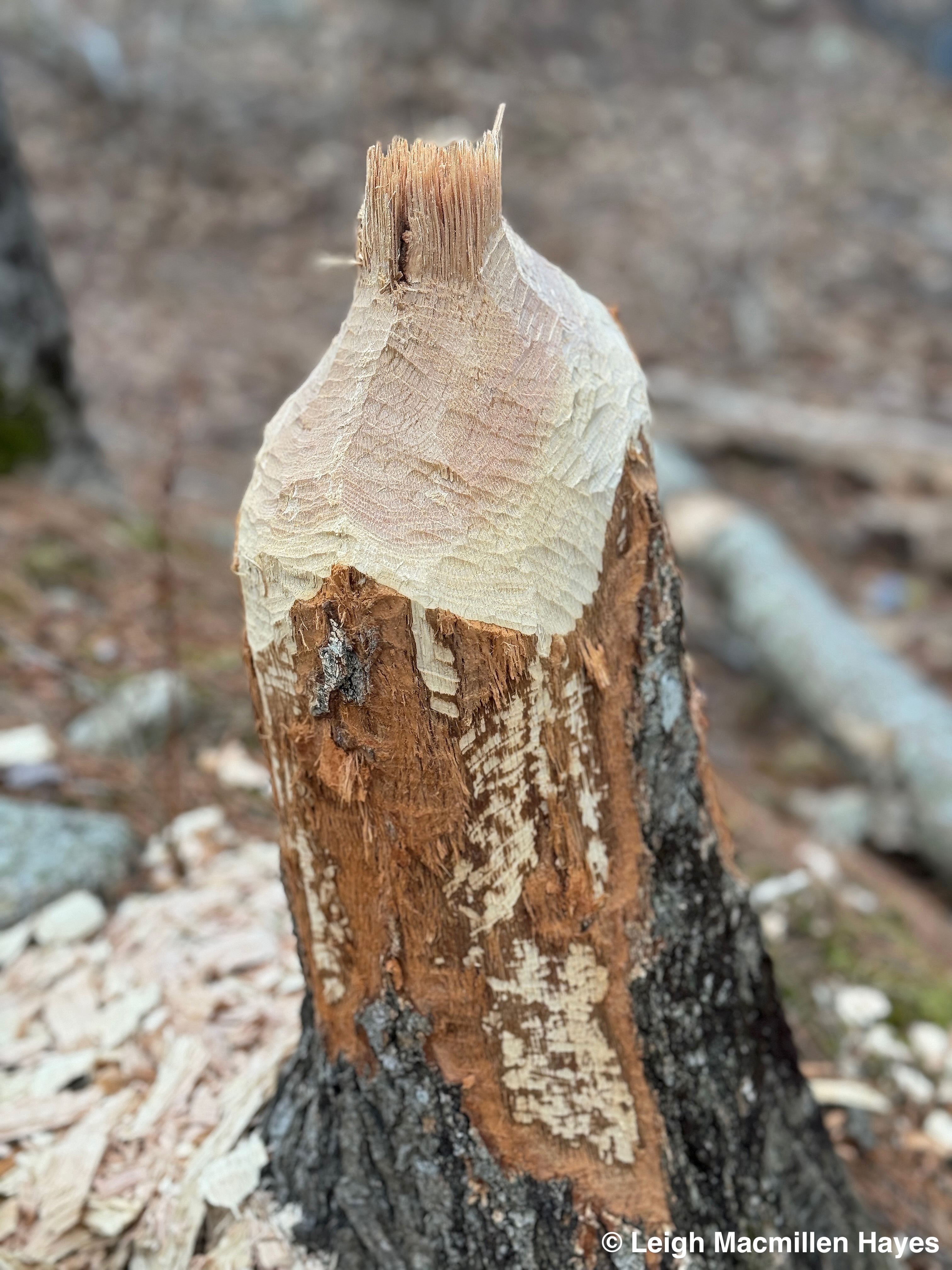
Yes, a Beaver. Once our eyes cued in, just like spotting the squirrel’s mushrooms, beaverworks made themselves known.

And so we encouraged partipants to channel their inner Beaver and try to chop down carrot trees.

Like any Beaver, they were eager to shout, “TIMBER.”

And rejoiced when their tree stumps matched the Beaver’s sculptures.

Finally, we took them along a path that led to more Beaver works, where we noted how its the cambium layer that this rodent seeks for its nutritional value. The rest is left behind, rather like a squirrel’s midden.

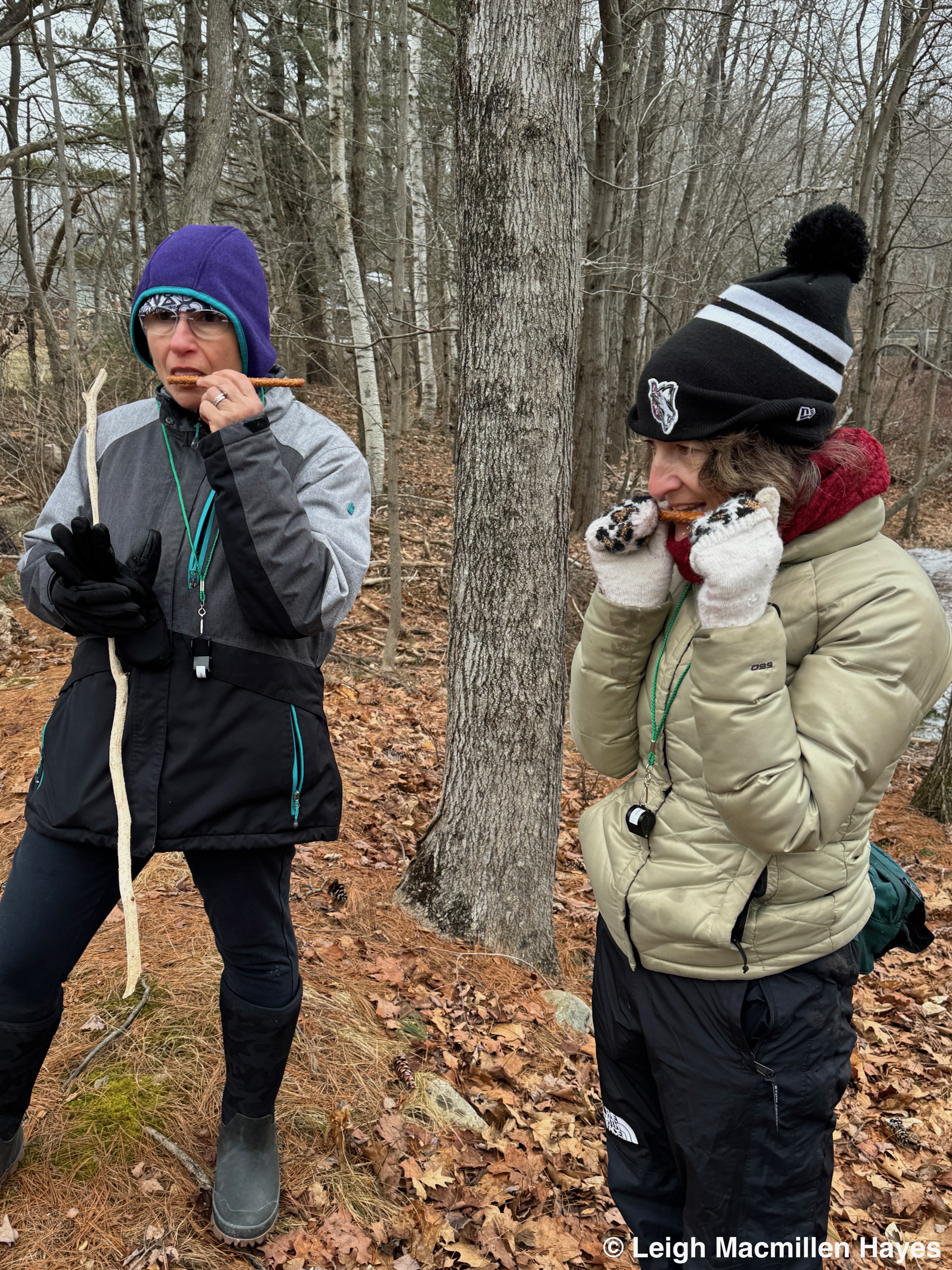
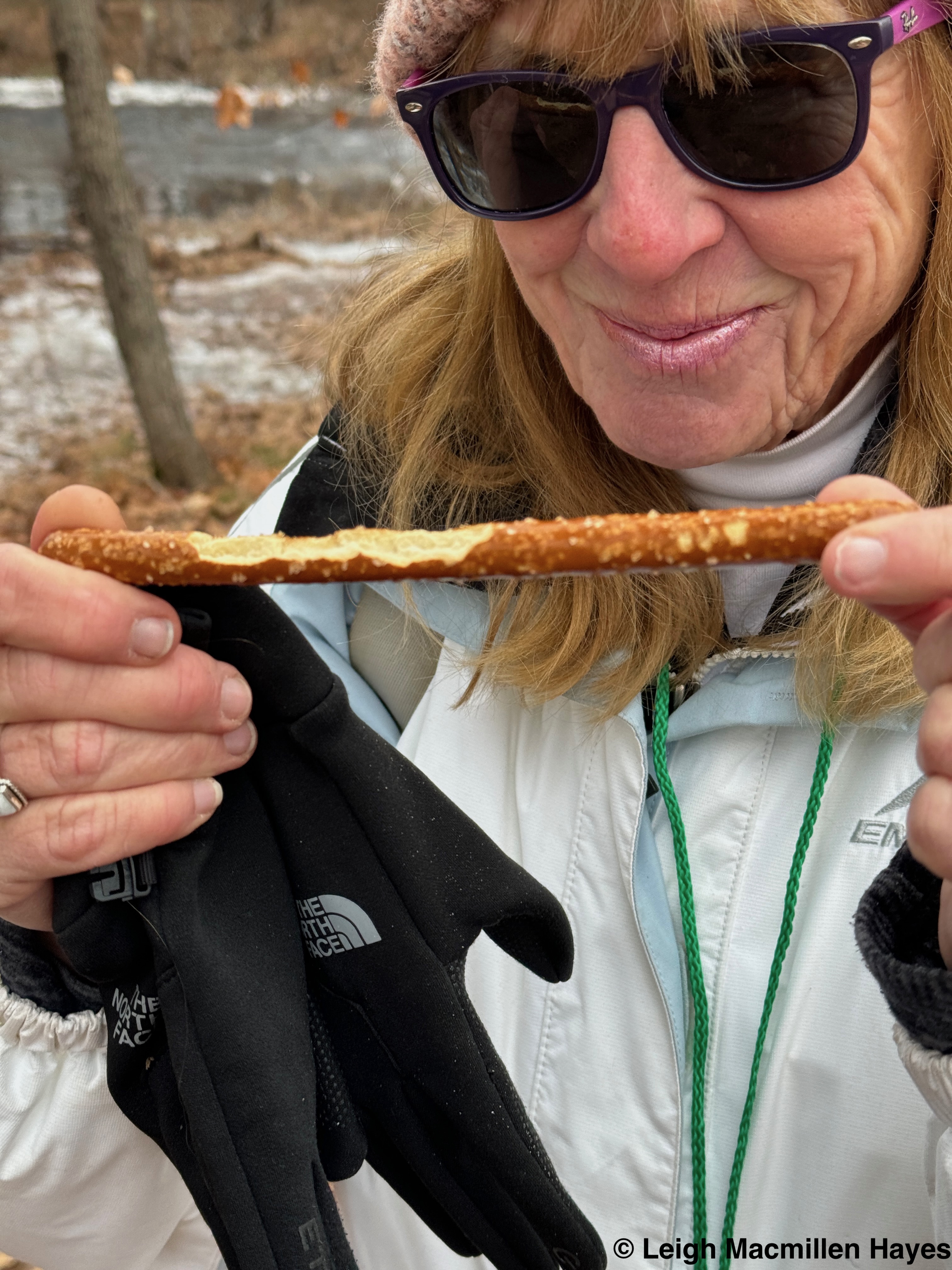
And so the inner Beaver channeling continued, this time with pretzel sticks and they were challenged to only remove the outer layer.

The competition was stiff, and a couple of Beavers broke their sticks so we’re not sure they’ll survive the winter.

But at least one was super successful.

While only one Beaver fells a tree, the family may help to break that downed tree into smaller pieces and there are at least three sections like this indicating that they’ve worked on it–maybe one at each spot. We don’t know for sure, but that’s the picture we like to imagine.

Below where we stood, we spotted the dam and talked about construction.

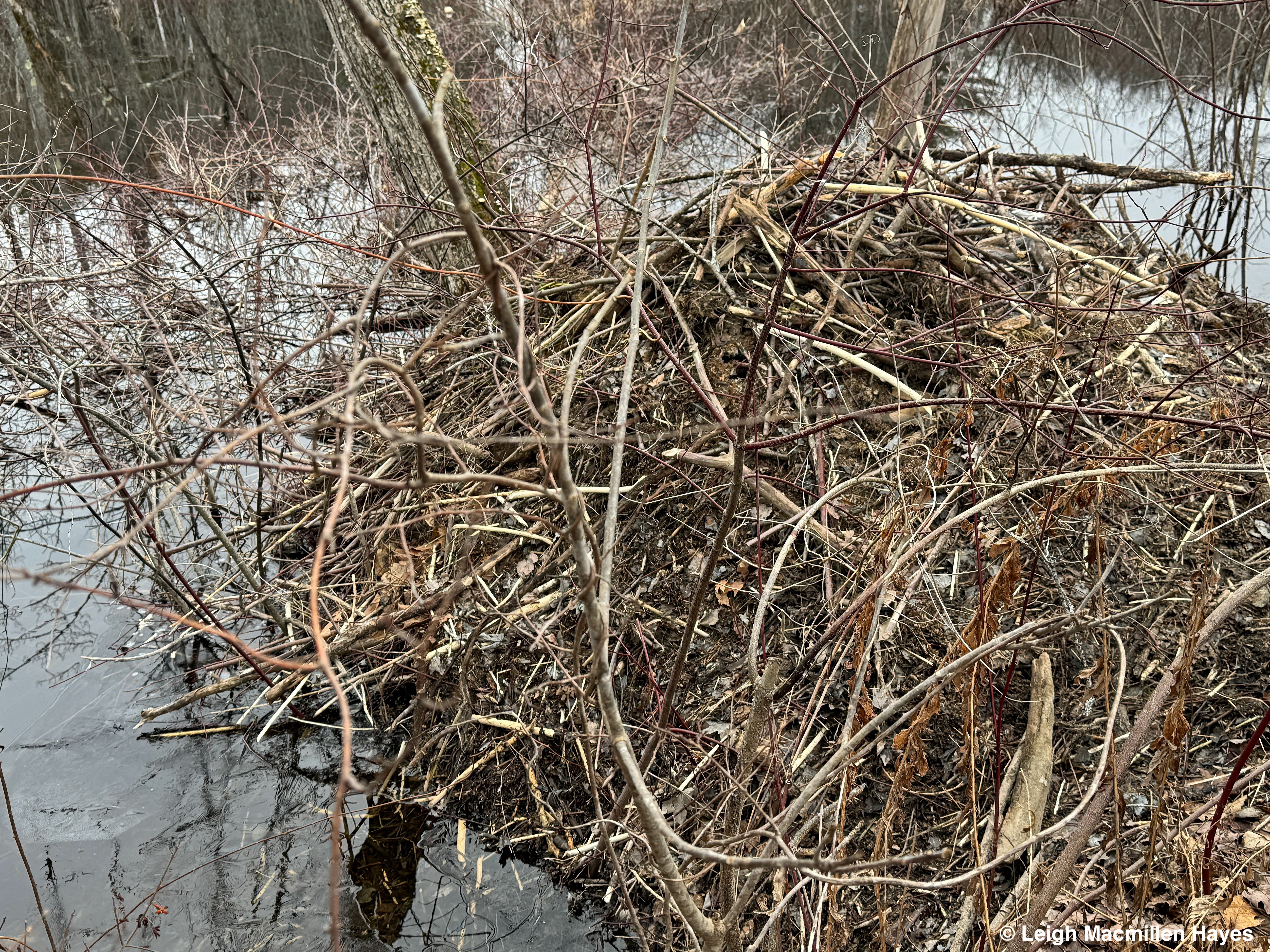
And then located the lodge. Another cool thing–more hoar frost at the top where a vent hole exists and is not covered with the mud that insulates the rest of the structure.

By evidence of the frost, we suspected the family was gathered within, probably consisting of mom and dad, at least two two-year-olds who will move on in the spring, and maybe a few youngsters.

As we walked beside a trail on our way to check out another lodge we determined wasn’t active, one among us discovered a kill site. So here’s the thing. When we first met in the parking lot, that same participant pointed to a Bald Eagle that flew just above the trees.

Could the eagle be the predator of what had been a duck? We suspected so.

The blood was fresh.

Nearby a Mallard had been quaking and we thought it was laughing at us and our enthusiasm and inquisitiveness. But perhaps it was lamenting the loss of a mate. Or at least trying to locate the mate that had become a meal–providing energy for another to carry on.

Yes, it’s sad. But this is nature. This is how it works.

After two delightful hours of discovery and learning, we said goodbye to everyone, dropped in at Loon Echo Land Trust’s office, and then went on a reconnaissance mission at another local spot, trying to determine if we should use it for a class we’ll teach for Lake Region Lifelong Learning, another volunteer venture.

And it was there, that just after we’d talked about being in hare territory and knowing that the lack of snow meant that a hare would stand out amongst the leaves, that . . . Dawn spotted a Snowshoe Hare.

We were so excited about how the morning had unfolded and spying the hare was a grand reward.

Can you track mammals without any snow. YES!

Wednesday Wanders, oh my! So much to learn. So much to share.

Giving Thanks for Being Present

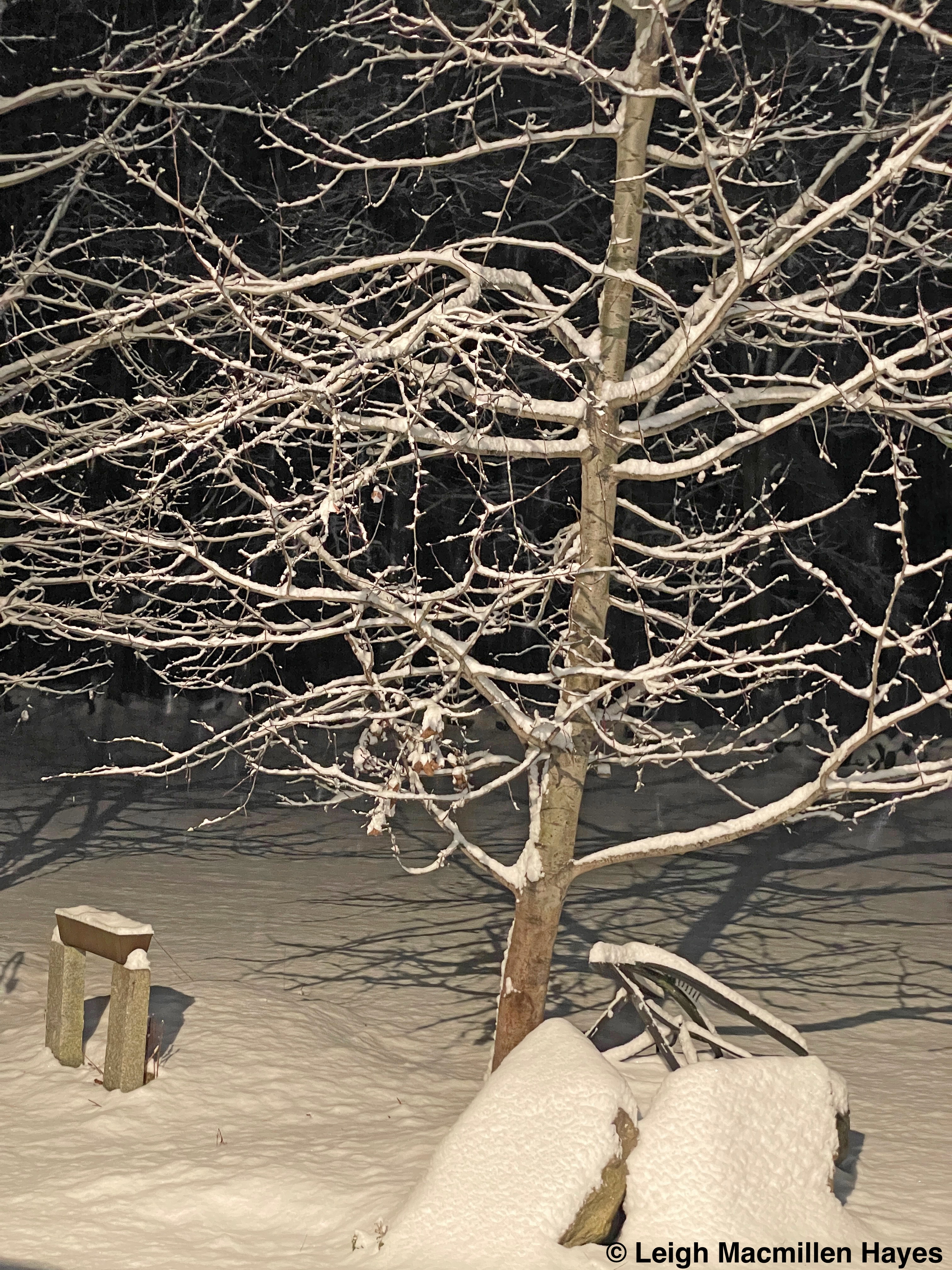
Those who know me know how excited I was to wake to snow. So excited in fact, that I awoke early, saw that certain glow in the sky through the window above our bed, and jumped up, not wanting to miss the day dawning.

At just before 6am, I turned on an outside light for a minute and opened the door to receive the quiet that the flakes created.

It snowed for a couple more hours before turning to rain and by the time I shoveled the driveway it was heavy cement.

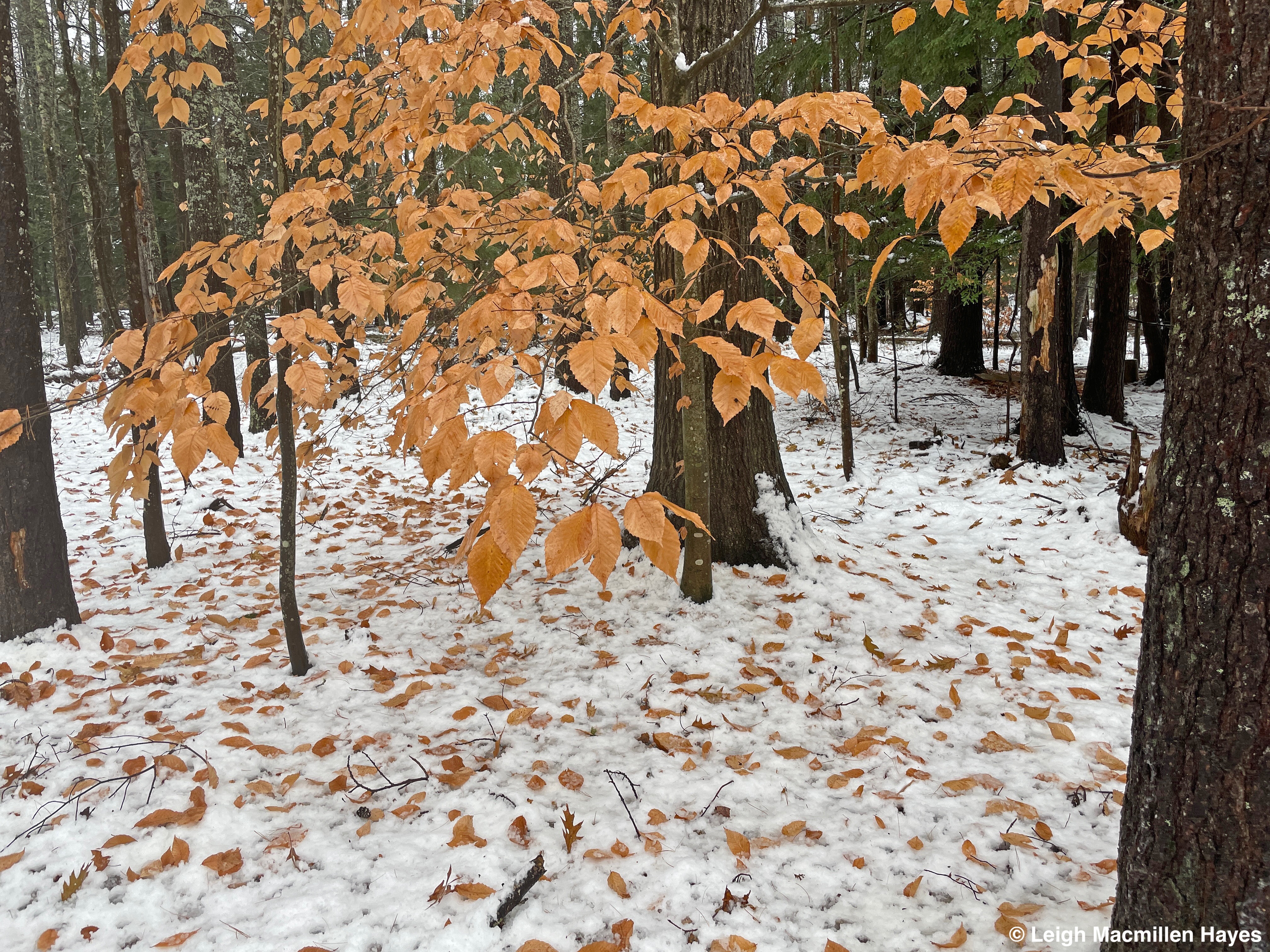
But still the world glowed. Especially the beech trees that are like spots of sunlight on a gloomy gray day.

Into the woods, I trudged, though I didn’t plan to go far because I suspected hunters would be as excited since they could more easily track deer, so decked out in blaze orange as I was, I stayed in our woodlot, with the intention of checking on my friend, Red. His caches have grown this past week, so I knew he had food in the pantry.

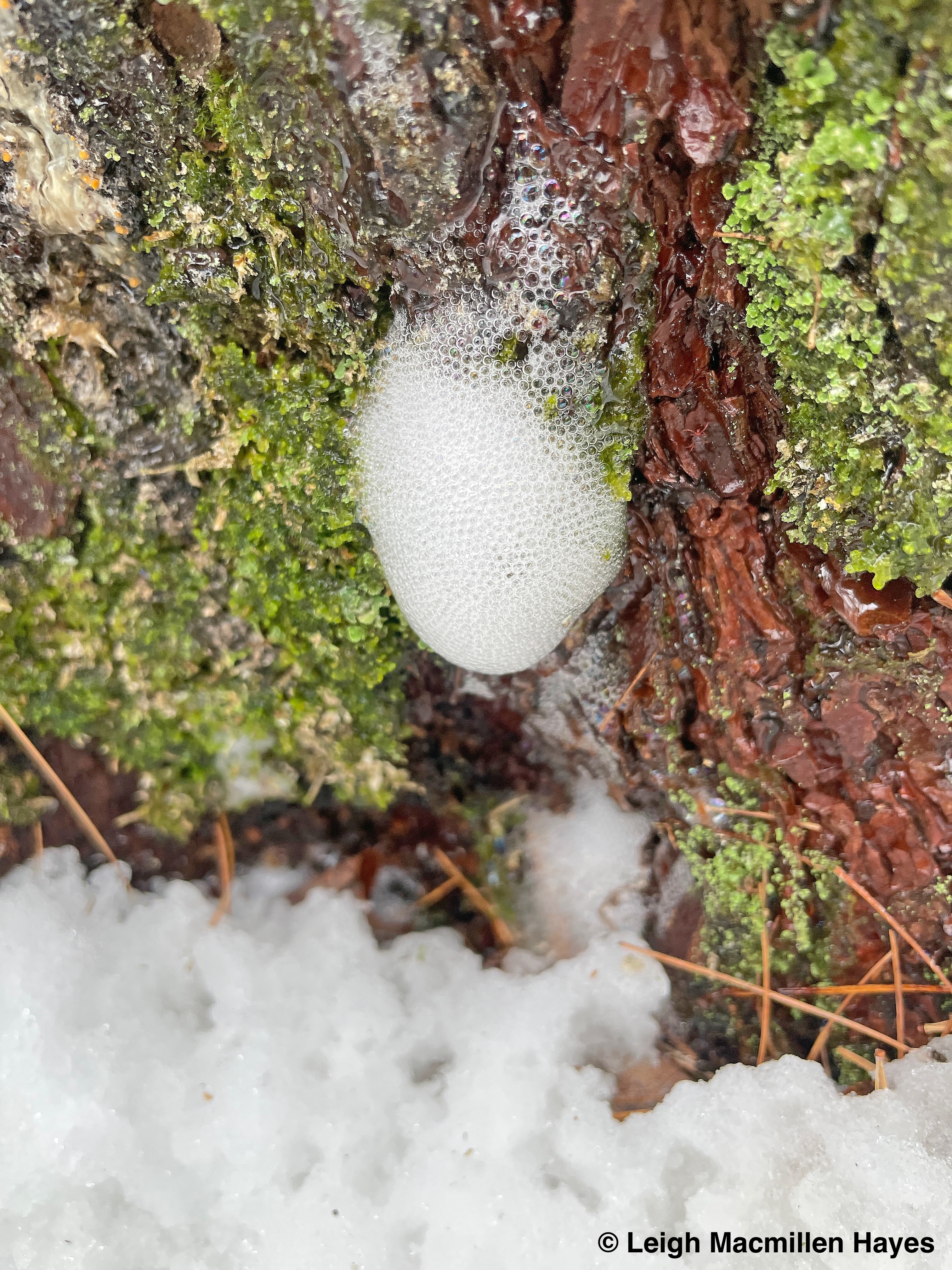
What I didn’t expect to spy along the way was this: White Pines foaming at the mouth! What really occurred: sap salts and acids that had accumulated on the bark’s surface mixed together in the dripping snow and formed soapy suds or pine soap.

Pine soap on the tree and snow disturbed by plops of falling snow at the base of the tree offered a contrast of textures.

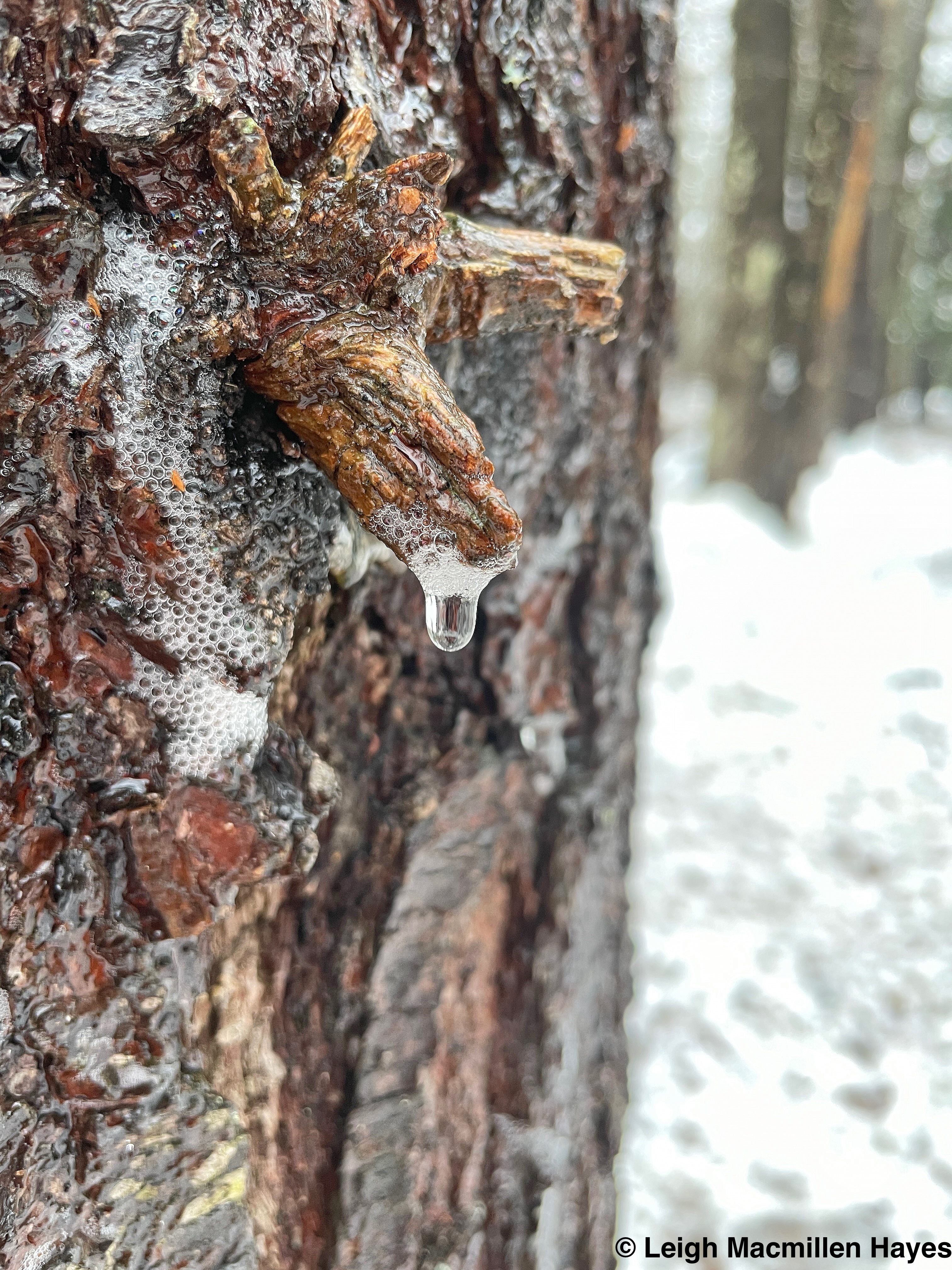
Much as I’m mesmerized by fire, I’m equally mesmerized by water, and especially in the form of droplets. I’m actually surprised I eventually dragged myself home.

But first, I had to watch the droplet elongate.

And eventually (which was only seconds later), fall free. Although, was it really a free fall?

I suppose it was, but it landed on another section of the bark and continued the process of mixing with the sap salts and acids.

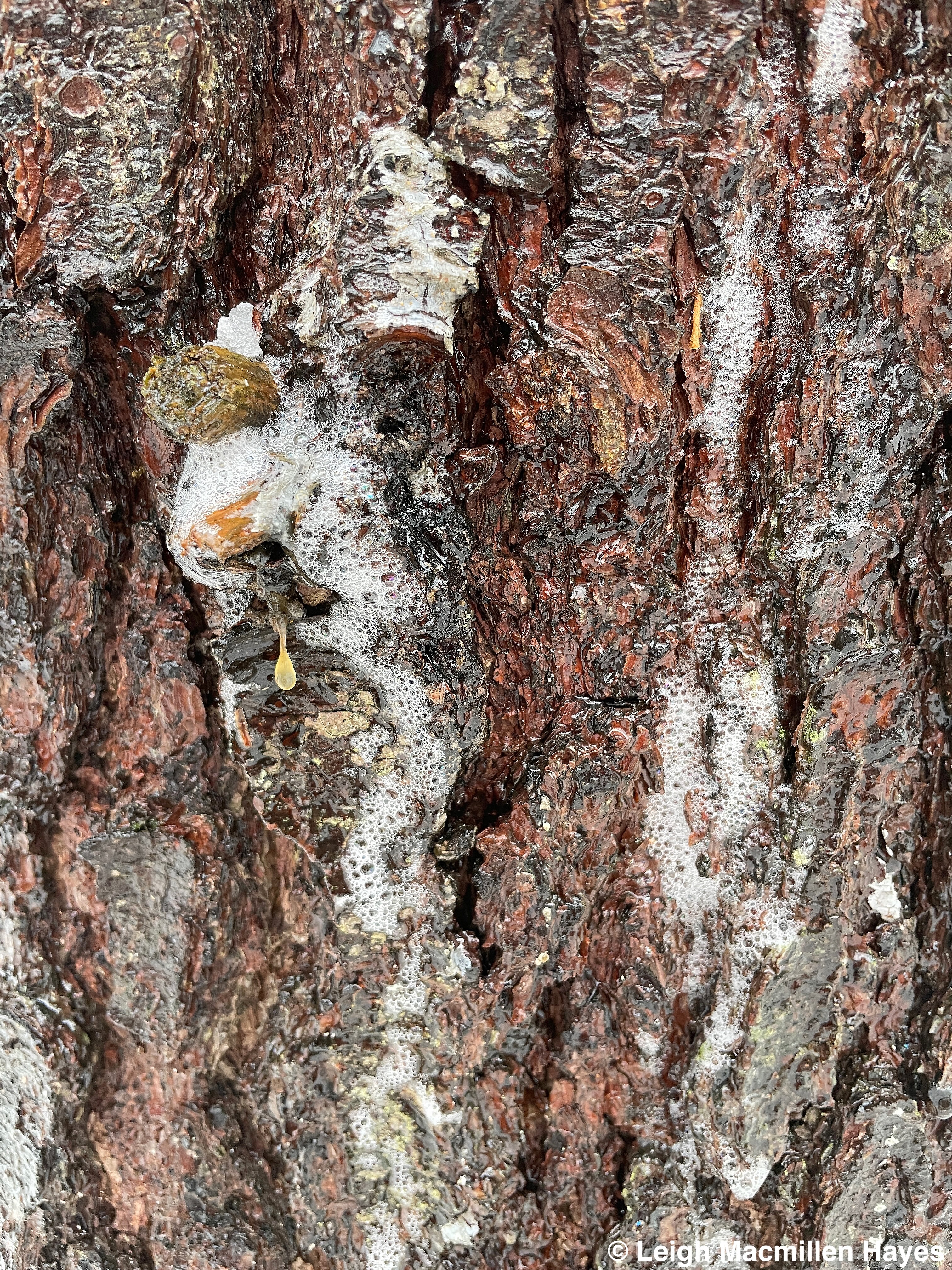
The other cool thing about the pine soap–its hexagonal forms–worth a natural engineering wonder.

As it turned out, it wasn’t just the pine soap that was flowing down the bark. Some trees had started peeing. Do trees really pee? It’s actually sap and I think given the temp, that rather matched a March day, sap was flowing, giving the melting snow a yellowish tint.

Eventually I reached my friend Red’s favorite hangouts and though the snow conditions had deteriorated from the point of view of a mammal tracker, he’d left plenty of sign on top of the white surface to tell me he had dined.

A lot. But then again, every scale on the cone protects two tiny seeds and one needs to eat a lot to attain nourishment from them. That’s why he has to create caches or piles of cones to last throughout the winter.

I didn’t actually see Red today, and surmised that he’d decided to make an early day of it and was probably snuggled in somewhere under the wall, using the snow and leaves as insulation. I know from watching 315 15-second game camera videos a few Christmases ago, that Red Squirrels rise with the sun, follow much the same routine all day long, eating pine seeds, dropping scales, leaving behind the cobs, dashing along to the next cache, returning to the first, dining again and repeating this activity over and over again during the course of the day, before disappearing about a half hour before sunset. Each day. Every day.

On this eve of Thanksgiving 2023, I recall some sketches I did in 2019 at a workshop at Hewnoaks Artist Residency in Lovell, Maine. The presenter offered us a variety of materials to work with as we saw fit. My fascination with squirrels and pine cones is not new and that day I chose to sketch one in three stages and then highlight the scales of the opened cone with pieces of mica.

In the end, I give thanks for being present for today’s discoveries of pine soap inspired by snow, and tree pee (that reminded me of yellow topaz), knowing full well that not every moment is as bright and shiny as muscovite mica. And snow does melt. But here’s hoping more will fall. And I’ll head out the door and be present again. And again.

May you also have plenty of reasons to give thanks.

Porcupine as Teacher

I walked up two stone steps beside one of our pollinator gardens this afternoon and when I looked up, which wasn’t really up, but rather a few feet ahead instead of at my feet, I was startled.

“Whoa!” I exclaimed.

My sudden companion didn’t even make a peep, which in hindsight is surprising, because its brethren are known to make some various squeaks in different occasions, but it did turn quickly so that its back was facing me, such is its defense weapon.

Yes, in the middle of the day I met a porcupine. If you are a frequent flyer on wondermyway.com, you know that I’m fascinated by these large quilled rodents. And their quills. And especially their scat!

By turning its tail toward me, my friend was ready to go on the defense should I try to get too close. Notice how the 30,000 quills on its back side were raised–a message to me that I should beware.

No, a Porcupine cannot send its quills aflying, but if I nudged it, which I chose not to do, the barbed hairs would have detached easily and I would have been screaming for help.

Instead, my friend decided to move away from me. And I decided to follow at a reasonable distance, giving it some space.

Our property is bordered again and again by stonewalls, some once used to mark boundaries, others to keep animals in or out, and still others served as garden walls, their double-wide structures the garbage pail for small stones that popped up each year during the spring thaw.

My friend had a single wall to conquer and that’s when today’s lesson began.

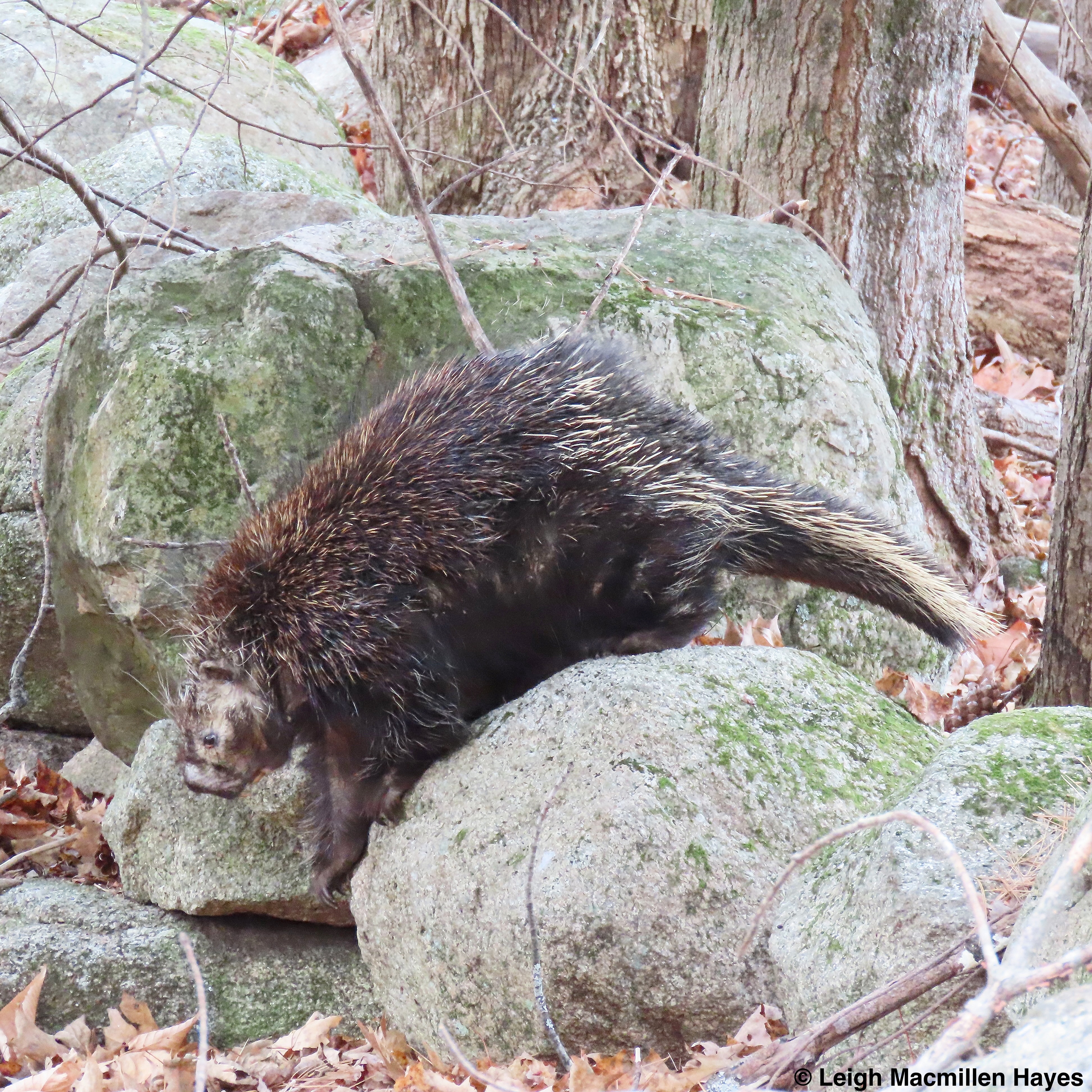
Actually, it was a few lessons. Maybe the first was noting the coloration of my buddy. We are used to variation in colors of our local Porcupines, but typically they are either black, or black with a lot of white, or brown. This guy seemed to bear the “coat of many colors,” embracing all of the above.

Not only that, he donned a white mask, the opposite of a Raccoon’s black mask. Today that mask earned him a name. From this day forward, he shall be known as Bandit.

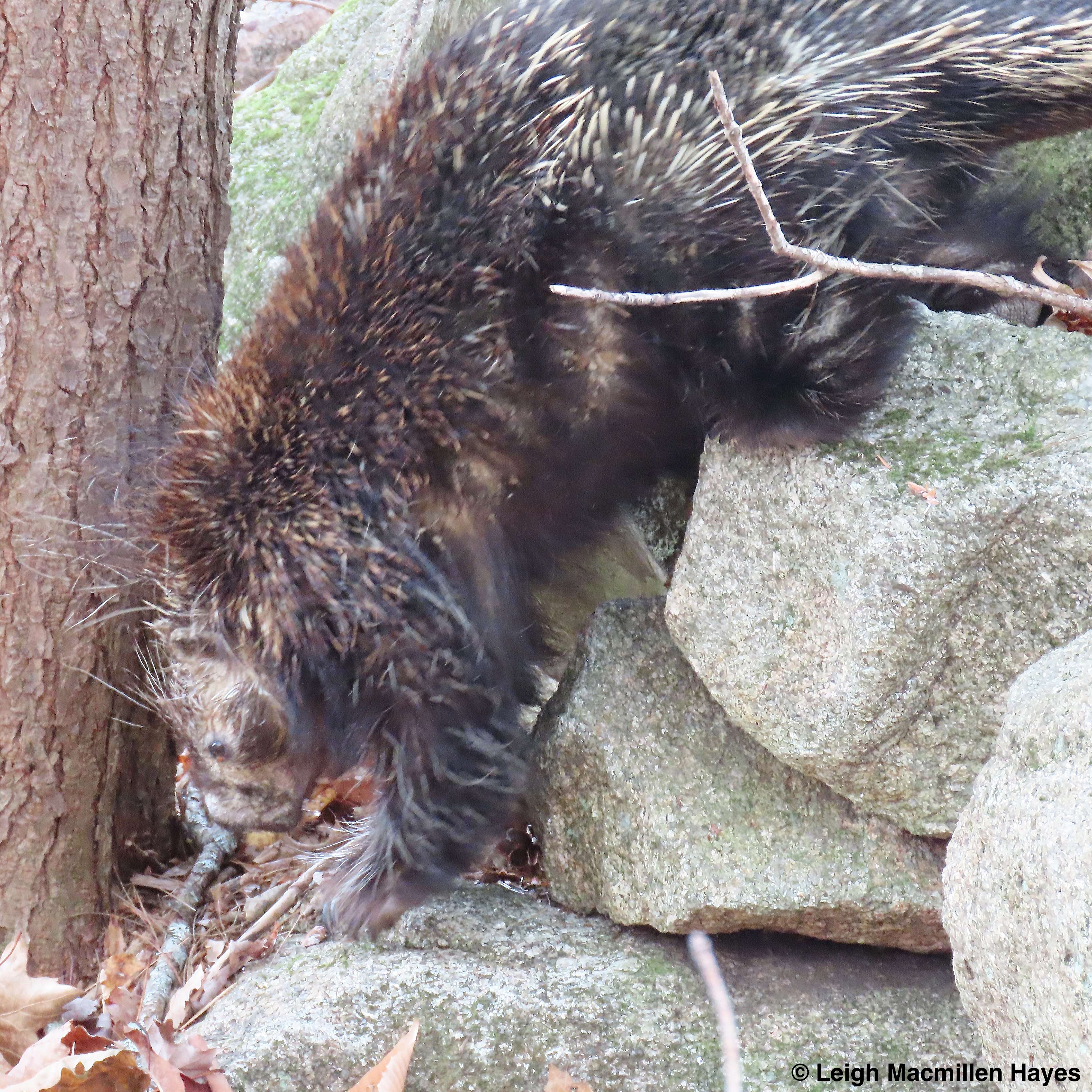
The second lesson Bandit taught me is that because his sense of sight is not as prime as his sense of smell, once he was on the stonewall, he had a difficult time making the move down to the next stone.

I moved to the other side of the wall, and watched in awe as he raised his front legs in the air and stood upon his hind legs, rather bear-like in stance it seemed. Okay, so he even looks like a mini bear.

I began to realize that I sometimes channel my inner porky when I’m hiking down a trail. Going up is rather easy, despite the increase in elevation and sweat effort. But coming down. That’s a different story and I need to know where to place each foot. Especially in this autumn season when American Beech and Northern Red Oak leaves are slippery and hide obstacles.

Bandit continued to test his next move for a few minutes. Of course, some of that may have included my presence, and perhaps he was also sensing my odorous being. I have to admit that I hadn’t showered this morning, and for one who has a keen sense of smell, I was probably a bit of a mystery since I didn’t smell like a Fisher or a Bobcat. Those are a Porcupines finest predators–going for the soft hairs on his face or stomach.

Eventually Bandit took a step of faith. I know the feeling because I’ve done the same frequently on a hike and it brought to mind descending South Baldface in Evans Notch, and thinking that I couldn’t possibly lower my body from one ledge to the next, especially given that I couldn’t see a safe spot to place my foot. Or any spot, for that matter. I thought that perhaps I should just wait for a rescue mission, but My Guy did what he does and patiently waited and then talked me over the edge. Bandit talked himself over the edge and that worked for him.

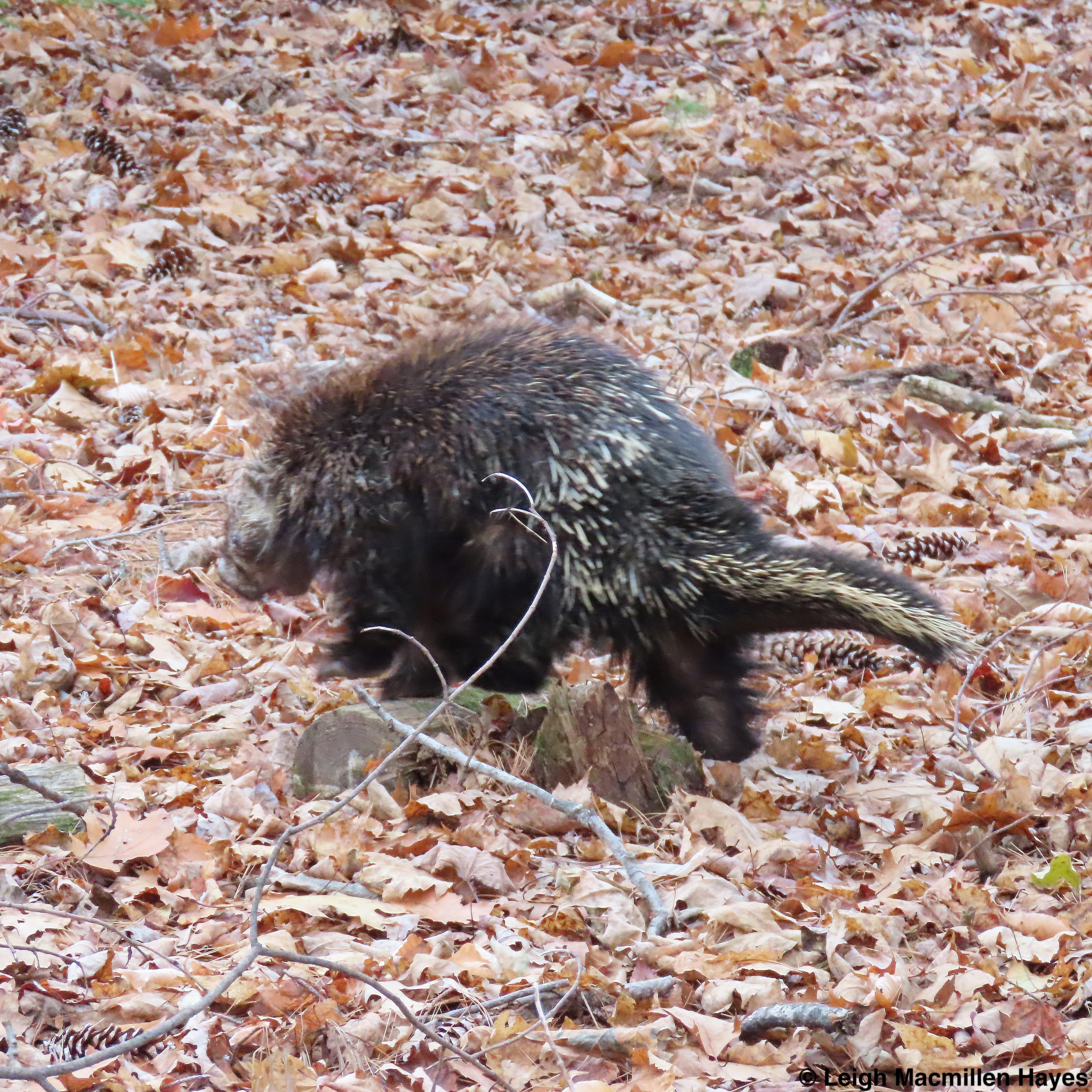
And then I watched him waddle through our woodlot, lifting first the legs on his left side, and then his right.

He traveled close to the stone wall that borders our land and our neighbor’s field and I worried he’d cross over and she’d let her dogs out and quills would fly. Well, not really fly, but you know what I mean.

Thankfully, she wasn’t home yet. And . . .

Bandit had a different idea. He started to climb an Eastern Hemlock on our side of the wall.

Higher and higher he climbed and I noted that like me, he much prefers going up to coming down.

Knowing that he was going up the trunk and would be looking for a place to settle down, and probably wouldn’t go anywhere else for the time being, I decided to leave him be for a bit and check on my friend Red.

I’ve actually been checking on Red frequently these past few weeks and today I noted that he’d finally started to really build up his caches in several places. Cold temperatures have triggered his need to grow the pantry.

And in the meantime, he needed to eat to maintain his stamina.

I also checked on the Northern Red Oak beside another stonewall behind our barn. I suspected that prior to our meeting, Bandit had been feasting upon the abundant acorn crop the tree had produced.

I scanned the acorns for scat, but haven’t turned up any sightings yet. That said, I’m sure it’s there and don’t worry. I’ll continue to search, because, after all, scat happens.

I also intend to keep an eye on a hollow within the tree, which in the past has served as a Raccoon’s retreat. Maybe this year Bandit will do some housekeeping in this place. Or under our barn. Or somewhere else, for the options are endless in our neck of the woods.

Finally, I headed out to the field on our neighbor’s side of the wall and up in the Eastern Hemlock spotted Bandit. Do you see him? I say “him” because males typically are the ones we spot during the day.

I’ve been waiting for such a sighting because it is the time for Porcupines to switch from a summer diet in a field or orchard to a winter diet of acorns and hemlock cones and buds.

Today I give great thanks once again for living in a place where I can spy wildlife frequently and always there is a lesson to be learned. Porcupine as teacher, as it should be.

My Friend Red

It’s been two years since we’ve spent time together, and to be honest, I kind of doubt this is my friend from 2021, but perhaps an offspring. Anyway, what I do know is that last year was not a mast year in my woods and so there wasn’t much food available–the type my friend prefers to survive the winter months. But this year–pine cones and acorns abound.

As I headed down the cowpath that marks one of the boundaries of our property here in western Maine, I knew instantly by the chortling that greeted my ears that things had changed for the better.

You see, my friend is a Red Squirrel. And he spotted me before I spotted him. And then he let me know in no uncertain terms that I was not welcome. What kind of friend is that?

As I looked at the rocks along the inside path of the cowpath, I began to notice garbage piles Red had created, or middens as we prefer to call them, full of cone scales and the inner core or cob.

They were located in high places where Red could sit and eat in peace . . . that is until someone like me comes along, or worse . . . a neighboring squirrel, or even worse, . . . a predator. Given that a cone on this rock was only partially eaten indicated he’d been interrupted mid meal.

Maybe that’s why he continued to chastise me as he climbed higher up the tree.

It takes at least two years for an Eastern White Pine cone to mature. And once they do, Red has a habit of squirreling his way out to the tips of twigs, gnawing the cone stem and letting it fall to the ground. If you spot a pine cone with closed scales such as this, count the number of scales and then multiply that number by 2. That’s the number of pine nuts the cone offers.

And trust that all are still tucked inside.

Pine cones are in a way like Common Polypody ferns and Rhododendrons in that they predict the weather. If it’s dry, the scales on cones will open. If rain and humidity are in the air, the former being today’s weather, the scales will close tightly, overlapping and sealing the seeds from the outside world.

While wet weather dampens seed dispersal, dry windy days are best and that allows the seeds to be carried away from the mother tree.

In the photo above, you can see where the two seeds had been tucked in, close to the the cob, while the lighter shade of brown indicates where the wings or samaras that help carry the seeds were attached to the outer scale.

And I can attest that the sap on the scales is still sticky even though this cone no longer had any seeds stored inside. The sap coats the cones because its the tree’s reaction of placing a bandaid on a wound when its been injured or in this case had a fruit gnawed free.

One would think that Red’s face and whiskers would be covered in sap, and that does happen, but just as it stuck to my fingers initially, eventually it wore off. And Red is much better at grooming than I’ll ever be.

To get to the seeds, Red begins by holding the cone with both front paws, and turns it in a spiral, tearing off one scale at a time. Quickly! And gnawing each tiny seed packet open. The seeds may be small, but they are highly nutritious.

He continued to watch, vocalizing constantly, as I explored his territory below.

Upon every high spot, including tree stumps, there was at least a midden, but also a few cones for possible future consumption, though I did have to wonder if some went uneaten because he realized they were open and thus not viable.

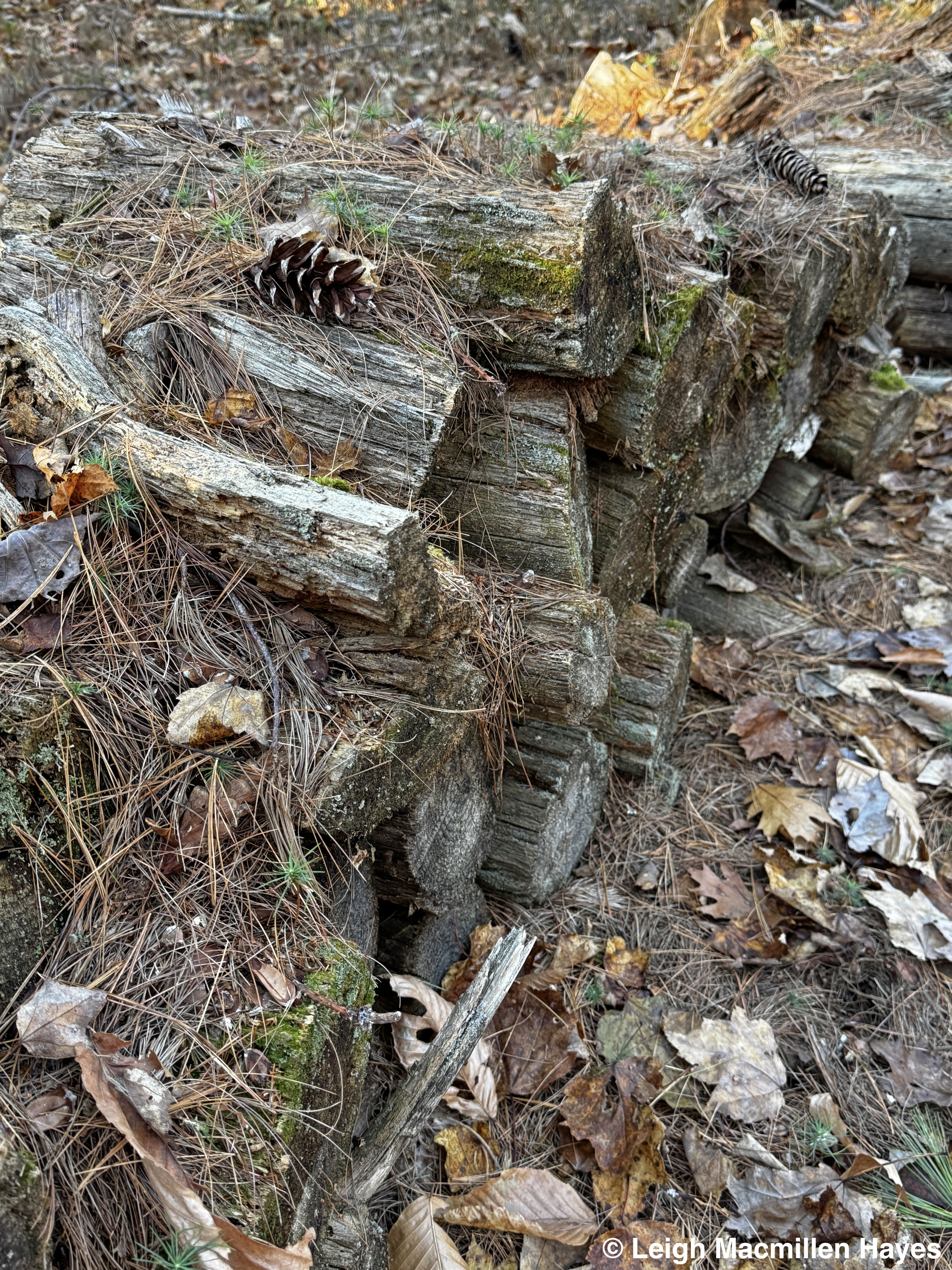
More of the same I found upon some of the cut pine stacks we created long ago that serve as shelter and . . .

Storage! I’ve been looking for a cache for the past few weeks, a squirrel’s food pantry, and today I located a few small ones that I know will grow in the coming weeks. Cool. moist locations like among the logs, but also in the stone wall, offer the best places to keep the cones from drying out.

As he backed up but still chattered at me, one thing I noticed about Red, which will help me to locate him in the future, is that he not only has a reddish gray coat, but between his back and white belly there is a black stripe. Maybe he’s disguising himself so he can go trick-or-treating this week and his neighbors won’t recognize him.

So here’s the thing. Red is an omnivore. And though we associate him with pine cones, especially in the winter, he also eats flowers and insects and fungi and even smaller mammals if given the chance. And acorns. And this year is also a mast year for acorns in our neck of the woods.

He’d peeled the outer woody structure away and had started to dine, but again, something or someone, and possibly I was the culprit, had interrupted his feeding frenzy.

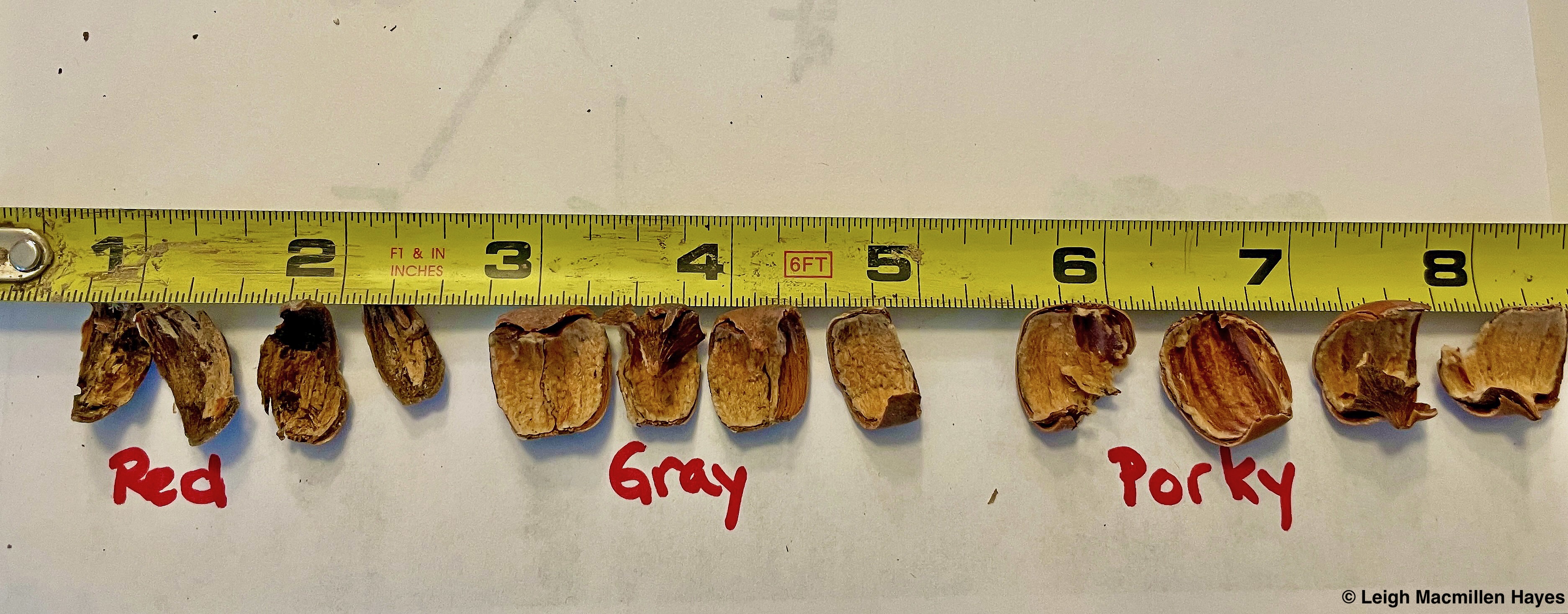
That said, I was delighted to find the acorn shell fragments because already in my collection I had samples from a Gray Squirrel and a Porcupine. Now I have all three and you can see by the tape measure how they compare in size, as well as the manner of stripping. As you can see, Red’s fragments are about a quarter inch in size, while Gray’s a half inch or so, and Porky’s are about three quarters of an inch. And the latter are much more ragged in shape.

Red. My Squirrel Friend. He just doesn’t know it. Maybe by the end of the winter he will because I intend to call upon him frequently to see what else he might teach me.

The Tale of the Squirrel’s Tail?

The forest behind our home has long served as my classroom and this past week has been no different.

Upon several occasions, through the doorway I stepped. My intention initially was to stalk some porcupines I’d tracked previously in hopes of finding at least one of them in a tree. But the three dens that had been active two weeks ago were empty.

Near one located almost a mile from home, however, I spied squirrel middens dotting the landscape. This was in the late afternoon of Wednesday, February 23, a day when the high temperature broke records and reached 62˚ in western Maine.

For a brief second I spied the squirrel responsible for the middens, but then it scrambled up a hemlock and disappeared from my sight.

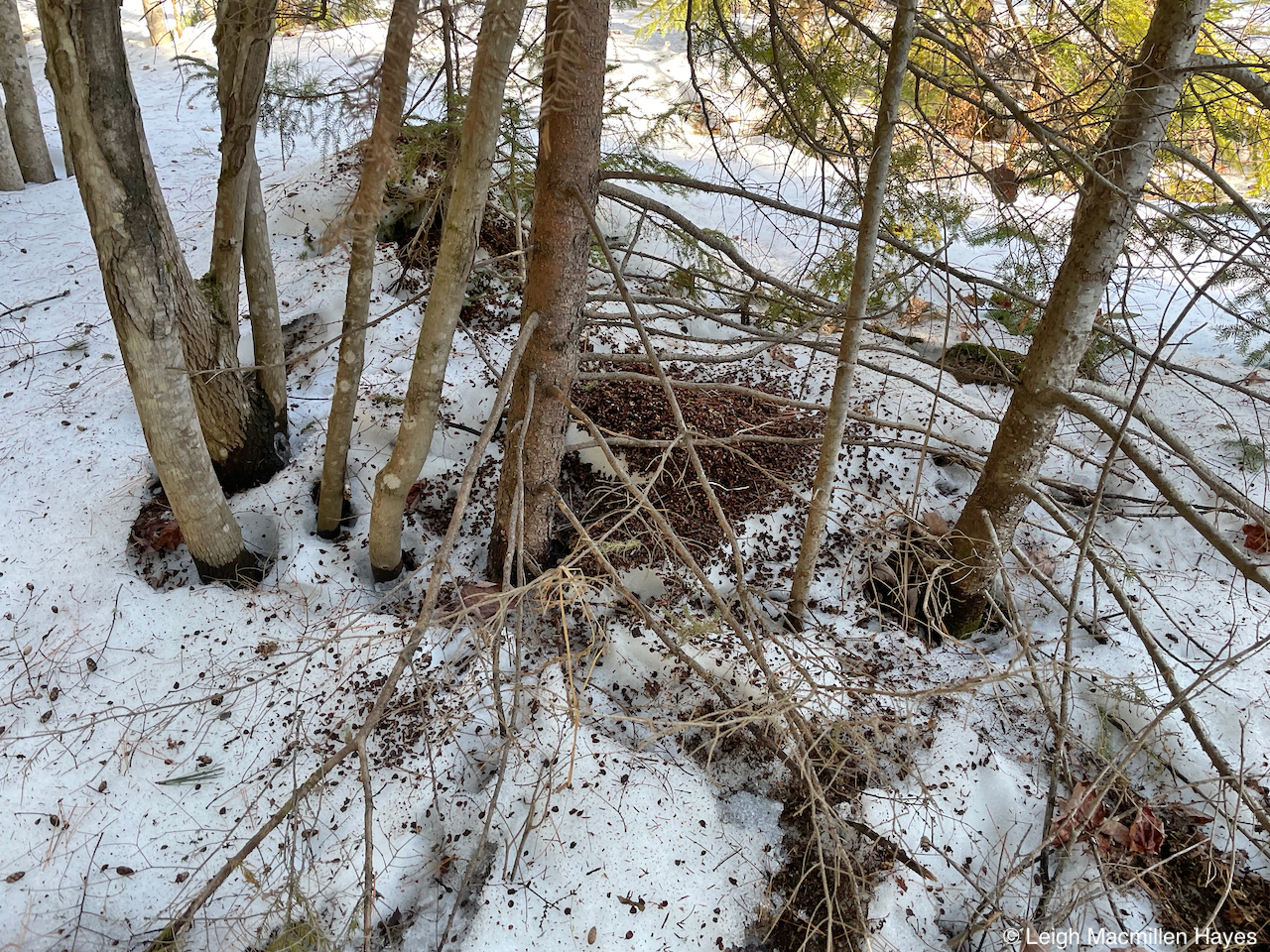
And so I . . . I decided to try to examine its territory and exclaimed when I realized that because of the warm temperature, its tunnels had been exposed. This particular one led to one of its food storage units, a cache of hemlock cones stored under a downed tree.

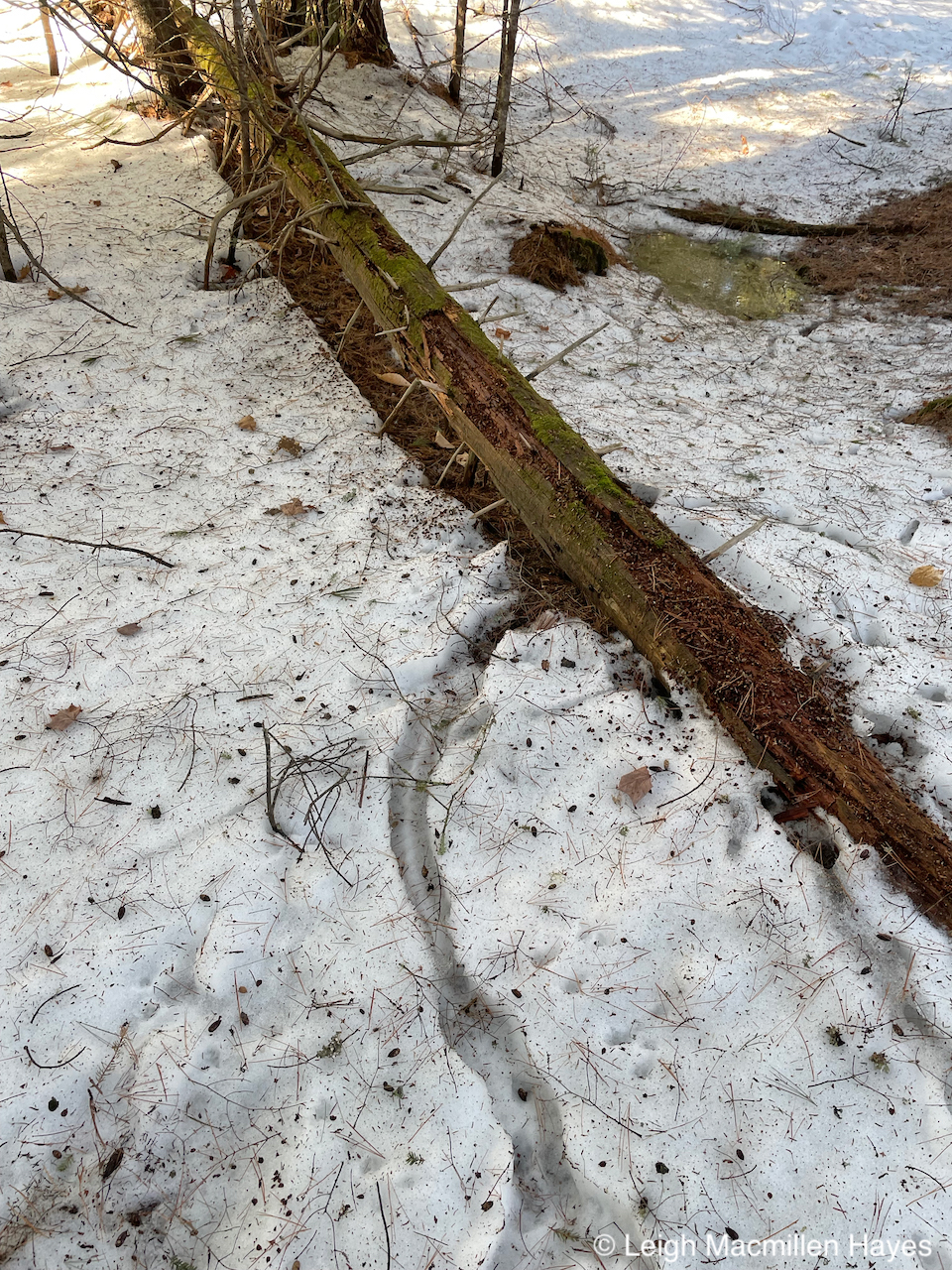
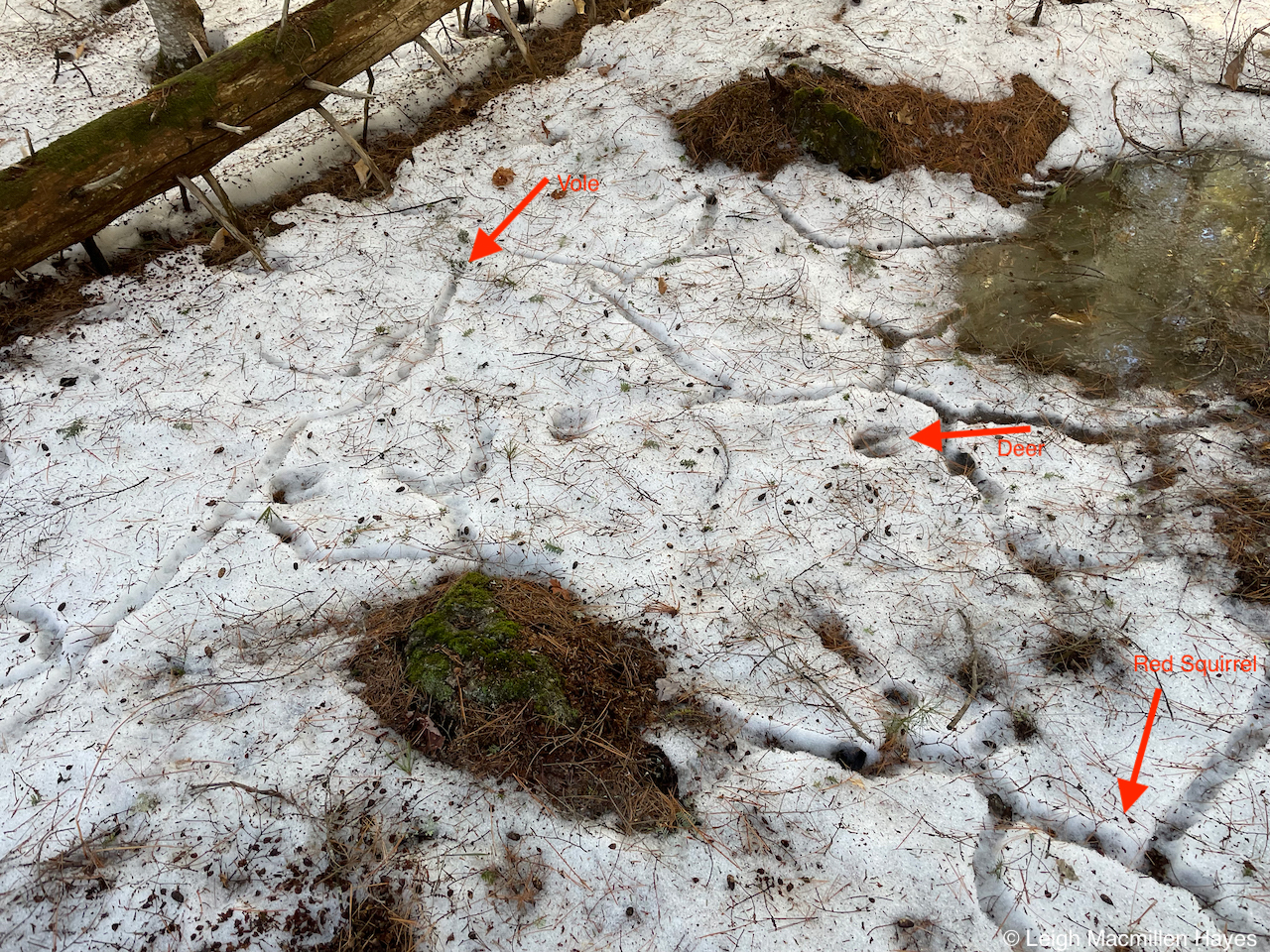
Into the mix it was more than the squirrel, for I spied vole tunnels and deer prints. So here’s the thing, red squirrels tunnel through the deep snow to get to their caches. Of course, they also leap across the snow. Voles, on the other hand, are much shier of sky space because they are everyone’s favorite food. They tunnel between the ground and the snow in what’s technically called the subnivean zone and typically we don’t see their exposed runways until spring. But 62˚is like an early summer day ’round these parts. Oh, and do you see that same downed tree from the last photo? Keep it in mind, for it plays an important role in this story.

A vole’s tunnel is about an inch across and the only thing I had for a reference point was a set of keys. I was traveling light that day.

Likewise, the squirrel’s tunnel was about three inches in width.

My next move was to walk the perimeter of the squirrel activity in order to gain a better understanding of its territory. All told, it is about 30′ x 50′, and located under several tall pines and hemlocks that create a substantial canopy. On the fringe of this particular neighborhood live a few red maple and balsam fir saplings.

I had to wonder if the squirrel was still in the hemlock or had moved to a different location via its tree limb highway while I was looking down and all around.

Having figured that out, I returned to the downed tree, for not only did it serve as a food storage or cache below, but the top side was the dining table/refuse pile, aka midden. Obviously the hemlock had provided a great source of food–a good thing given that it seemed to be the only hard mast available this year.

There were other middens scattered about, but I really liked this one upon a stump, which showed the pines had at least offered a few treats not yet devoured. The thing is, red squirrels like to dine on high places, whether it be upon a downed tree, stump, or even up on a limb. That way they can see their predators approach and make a mad dash to a tunnel or up a tree trunk.

Two days later, on Friday, February 25, seven or eight inches of snow fell and again in the later afternoon I ventured into the woods to check on the squirrel’s activity. Sometimes during storms mammals hunker down but by the number of prints visible, I knew that this one hadn’t. Its tunnels had some snow in them, but the boughs above kept much of the snow from landing on the ground.

The curious thing for me was that though there was a lot of activity by the downed tree, I couldn’t locate a single midden. Even if the squirrel had been dining on a tree limb, surely some cone scales and cobs would have fallen.

It had also climbed its favorite tree, the one where I spied it on Wednesday, but again, no sign of food devoured.

After my guy and I spent the morning and early afternoon tramping four miles from home to a swamp and back, I decided to head back out to check on the squirrel while my guy went for a run. Speaking of running, as I approached the squirrel’s territory, I watched it run across the snow and zoom up the hemlock and never spied it again.

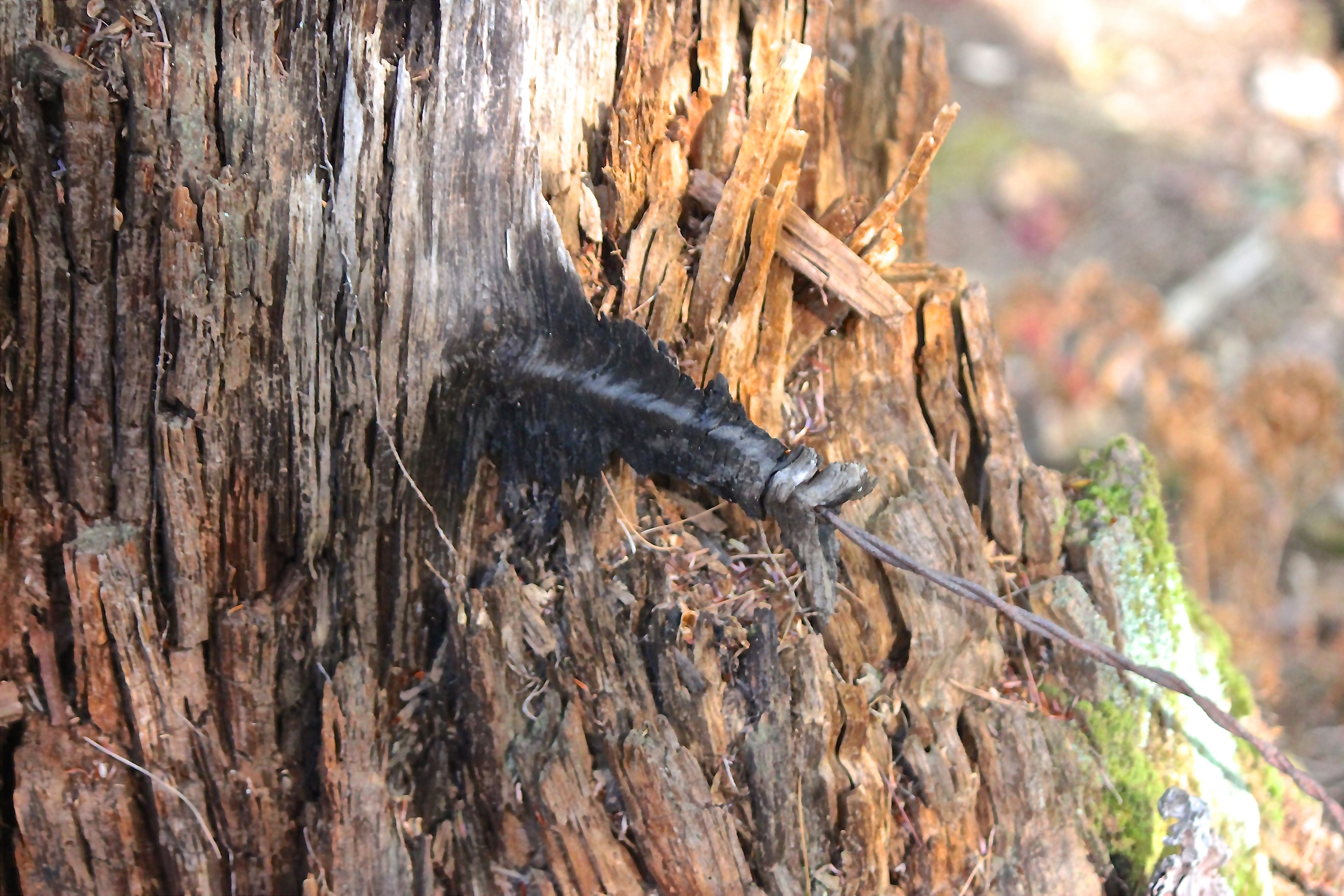
So I turned to the tree stump–it was covered with Friday’s snow, though there were tracks around the base of it. What I loved is what I’d missed on Friday–barbed wire. This was all once farmland and obviously I was standing on a boundary. It was actually a boundary for the squirrel as well, since this marked an edge of its territory.

Near the red maple saplings I found evidence of some fresh tunneling, albeit not under the snow, but through it, which is also typical. Perhaps the squirrel was dining within and had hidden its middens.

I stepped over to the downed tree and looked under in a southerly direction, curious to see barely a sign of the cache that had been so evident on the first day.

Looking north, it was more of the same.

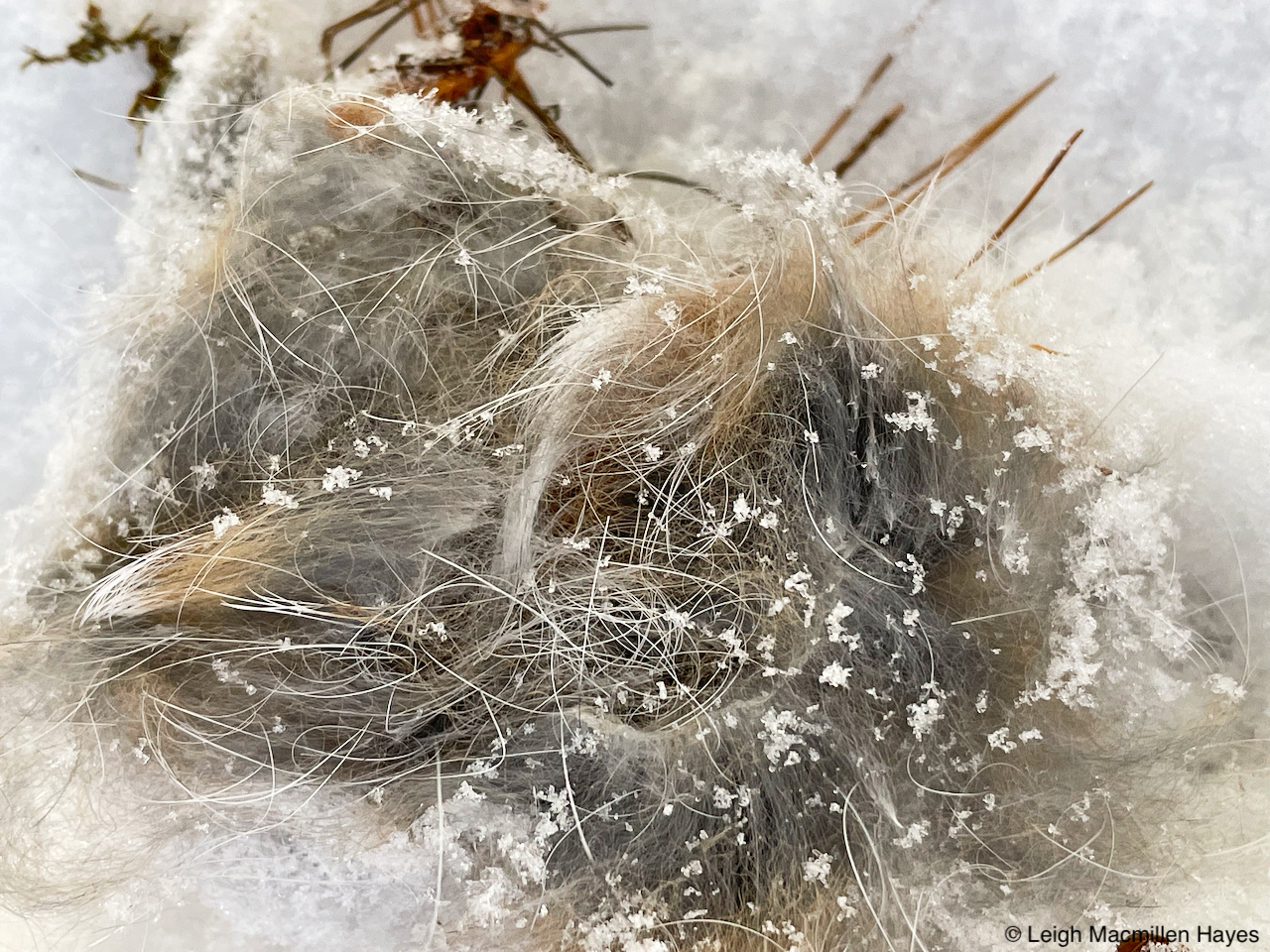
That is . . . until it wasn’t. A hint of color captured my attention. Feathers?

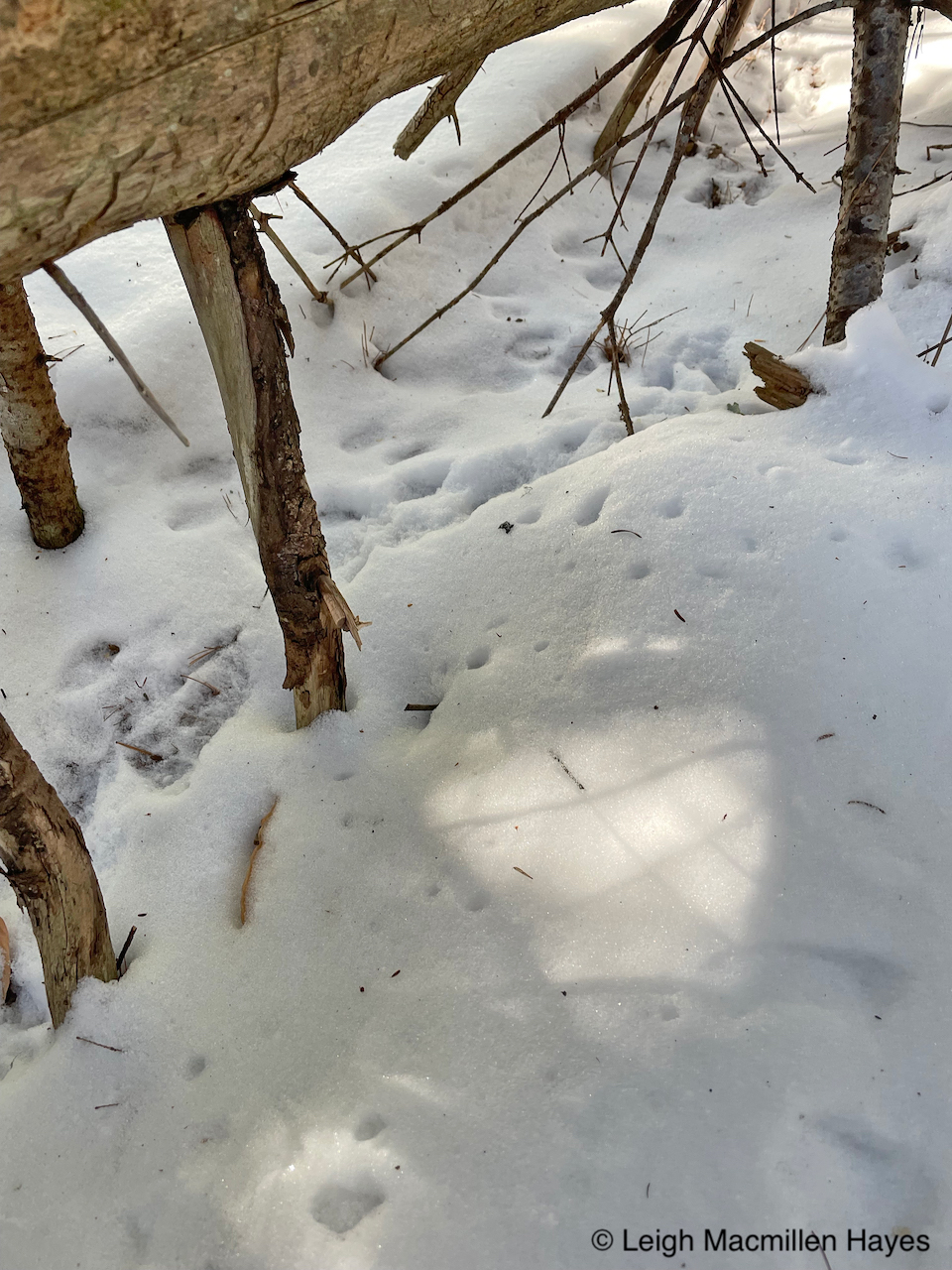
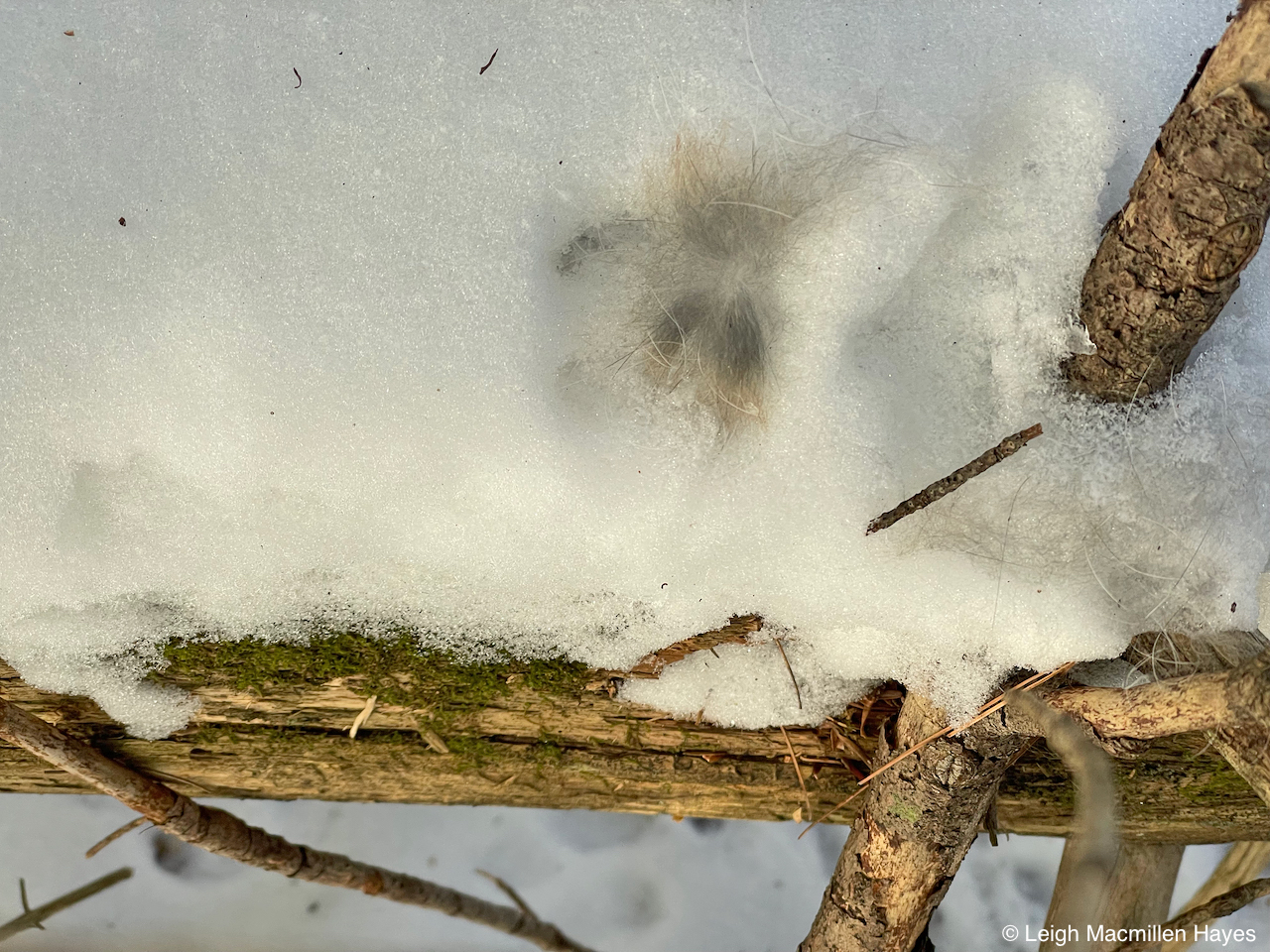
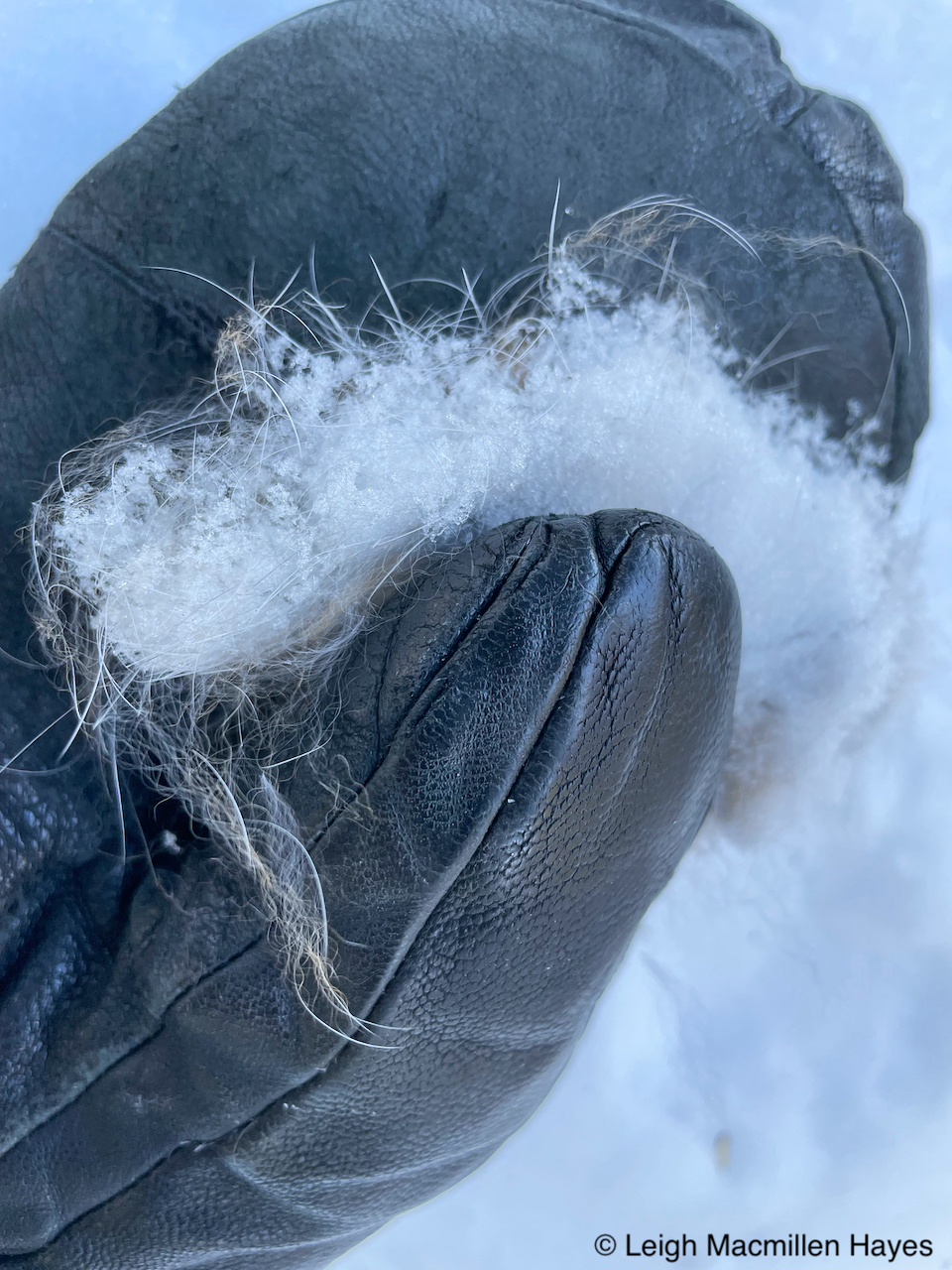
No. Hair. From a red squirrel, whose hair hues can range from gray to brown to red. A fluffy tail no more. The thing is that squirrels sometimes loose their tails to predators, or even parts of the tail from a fracas during a territorial fight with one of its own. Another cause may be a tree trying to snag the tail just as speckled alder and winterberries and balsam fir tried to snag my hat repeatedly on our tramp this morning.

Even upon the downed tree . . . a little tuft. No tracks atop the tree. And no signs of feeding.

I looked around, searching for predator tracks and instead found the snow lobster instead. This was a place of squirrel and vole and deer and hare. But not a predator in sight.

And so I looked up, thinking that the hair was the result of an avian predator. My hope was to find a few strands dangling from a tree. Or some other evidence. Nothing. Oh, how I wished GLLT’s Tuesday Trackers were with me, for they are an inquisitive group and ask great questions and process the whole picture in a complete manner. Together we share a brain and I needed that sharing.

Alas, they were not, but I snatched some of the hair and will certainly share it with them in the morn.

In the meantime, that’s my tale of the squirrel’s tail. And if you have ideas or considerations, please let me know.

Cached In My Heart

I knew it was going to be a great day when snowflakes began to fall. And when asked the day before how I intended to spend yesterday, I said I’d probably read, bake, and knit. But . . . those plans were postponed for a few hours because that white stuff was falling and I heard it calling my name.

Thankfully, it was only my name that it called and for the first time since March, I stepped back into Pondicherry Park, a place that I love, but have intentionally avoided because so many others have discovered it as a tonic to the worries of the pandemic and I wanted to give them space, knowing I could find plenty of other places to explore with the same quest in mind. But . . . it was snowing, and I suspected that others might be home reading and baking and, well, maybe even knitting, and I would have the place to myself.

Soon, however, I discovered that I wasn’t really alone for even though the snow wasn’t piling up, tiny tracks on boardwalks indicated others were scampering about.

A few minutes into the hike, bright green moss invited me off trail to examine the base of pine where a hole beneath the tree . . .

and a cone still intact made me wonder: If this was the home of a little scamperer, what might it be eating other than this cone?

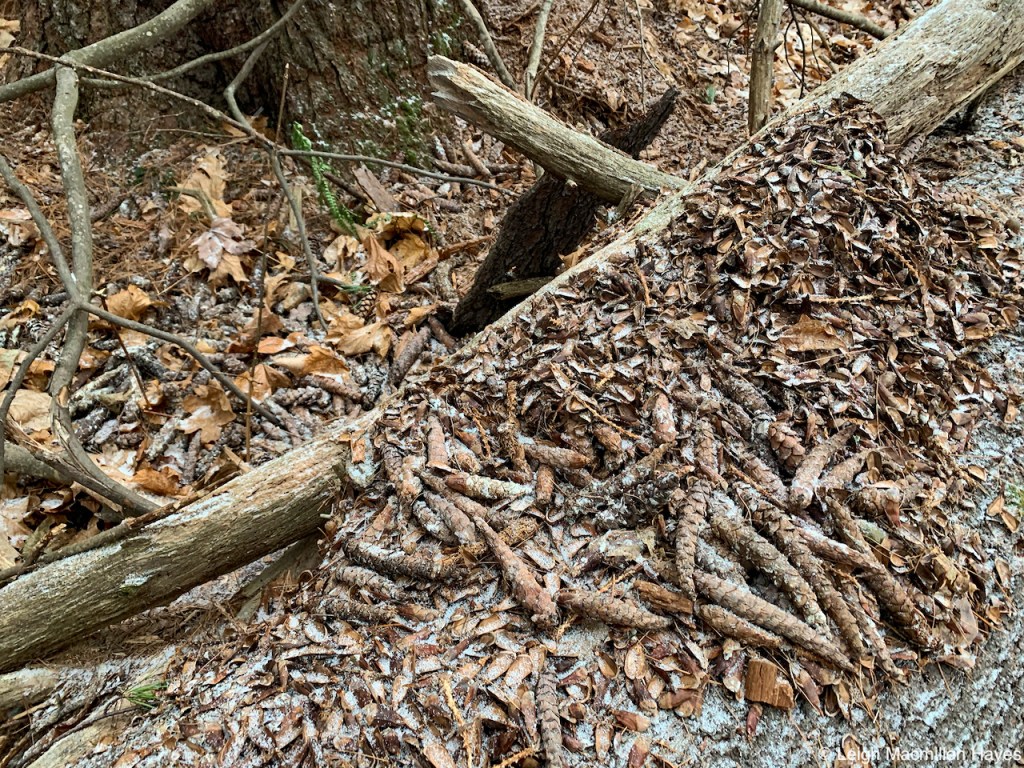
And then I twisted right–in more ways than one. And spread out along a downed pine and all around the base of another–a huge cache/midden: the cache being a collection of cones gathered and stored; and the midden being the refuse pile of scales and cobs left behind after the seeds were consumed.

I’ve been looking for one of these for a few weeks as the air temperature has dropped and wondered when the little guys would get their acts together and gather a supply to see them through winter.

One among them had, indeed, been busy, not only gathering, but dining, and with today being Thanksgiving, you might think this critter had the longest dining room table because it intended to invite everyone over for a meal.

But, its a feisty diner, and each meal is consumed quickly, with some chits and chats warning others to stay away–social distancing naturally.

Peeking under the dinner table, I discovered some cones tucked away in the pantry . . .

others in the fridge, with the door left open, thus exposing them to the elements . . .

and a few in cold storage.

On the other side of the pine table, holes in the midden showed the downstairs and upstairs doorways: all leading to Rome–or rather, the cache that must have been huge based on the size of the midden left behind. I did feel concern that so much had been consumed and there might not be enough for winter survival.

No need to worry. On the backside of the tree, three were tucked into furrows–making me think of a $20 bill stored away in a wallet, just in case.

My journey through the park eventually continued and meant a few pauses at favorite haunts, including one where the reflection nourishes my little friends . . . and me.

Occasionally more boardwalks curve through the landscape offering their own reflection–of this past year, which has taught us all that when there are curves in the road, we should follow and embrace them.

And if a hemlock grows beside a pine, it’s okay to cache your pinecone supply atop the former’s roots. You don’t always have do what the rest of us expect you to do.

Especially if you are the creator of the caches–a feisty Red Squirrel, ever ready to give chase to your siblings and chitter at any intruders such as me.

Of course, if you are a Gray Squirrel, you’ll take a different approach to winter preparations and store one acorn at a time and hope you remember where you left each one.

Three hours later, I finally found my way home, grateful that the stars had aligned, it had snowed, and I had the trails to myself. And then I began to bake, but never got around to reading or knitting or even writing this post for the phone kept ringing and there were envelopes and gifts to open, messages and emails galore to read, and cake to consume, and though we can’t be with our family or friends today, I gave thanks that on my birthday the squirrels let me share their world for a wee bit and I was showered with so much love–that I’ve cached in my heart.

Summer Falls

Today dawned the chilliest in a while with 29˚ registering on the thermometer at 6am. But as these September days do, it warmed up a bit and I didn’t need my gauntlet mittens, aka hand-made wrist warmers, for long.

As I ventured forth, I noticed, however, that the fairies had worked like crazy and prepared for the temperature and their beds were well covered.

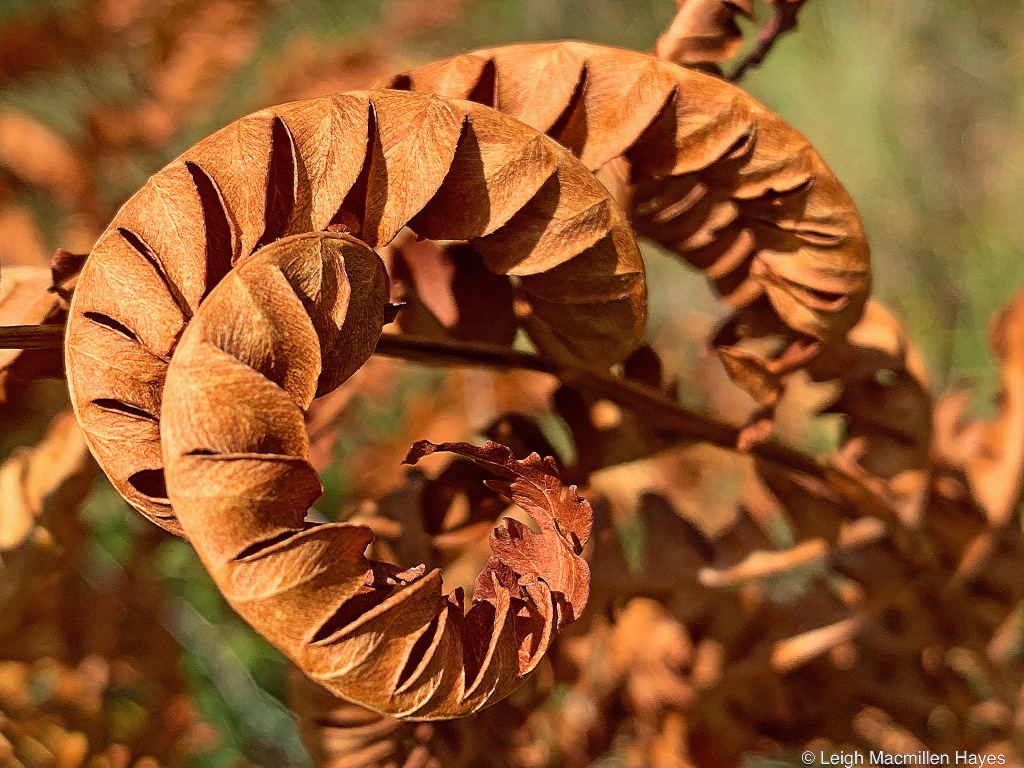
Further along, Cinnamon fern fronds curled into themselves as is their manner at this time of year, but really, it looked like they had donned caterpillar coats in an attempt to stay cozy. So named cinnamon for the color of their separate fertile frond in the spring, the late season hue also sings their common name.

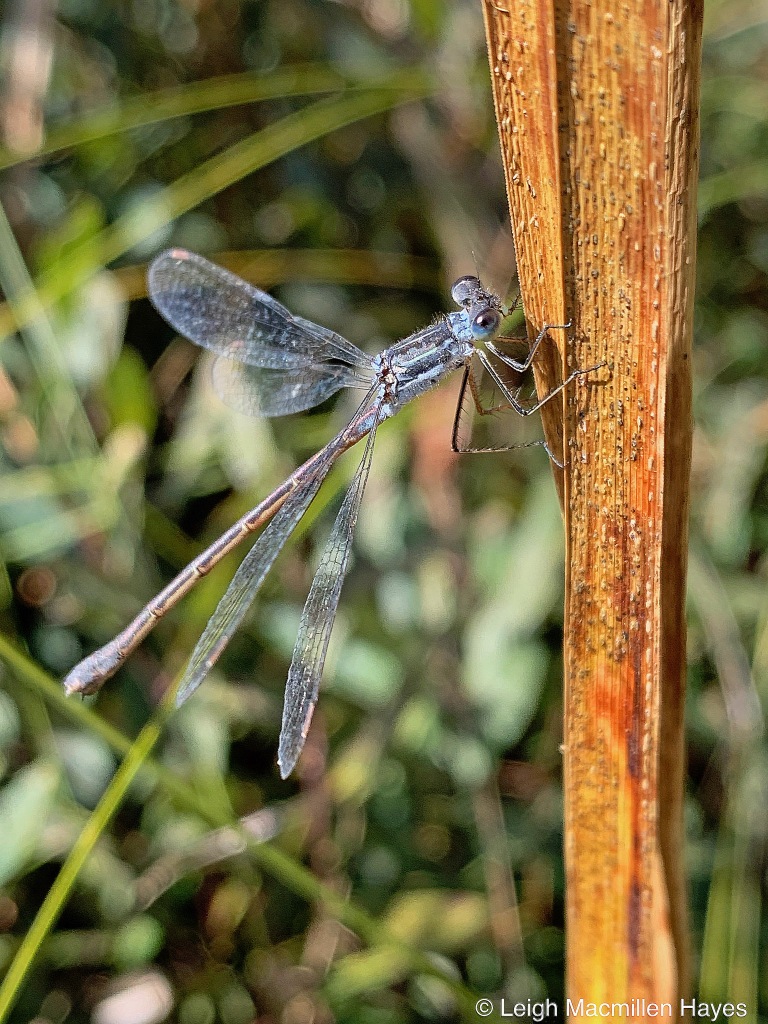
Upon another stalk that also appeared cinnamon in color, paused a Swamp Spreadwing Damselfly, its days diminishing as its a summer flyer.

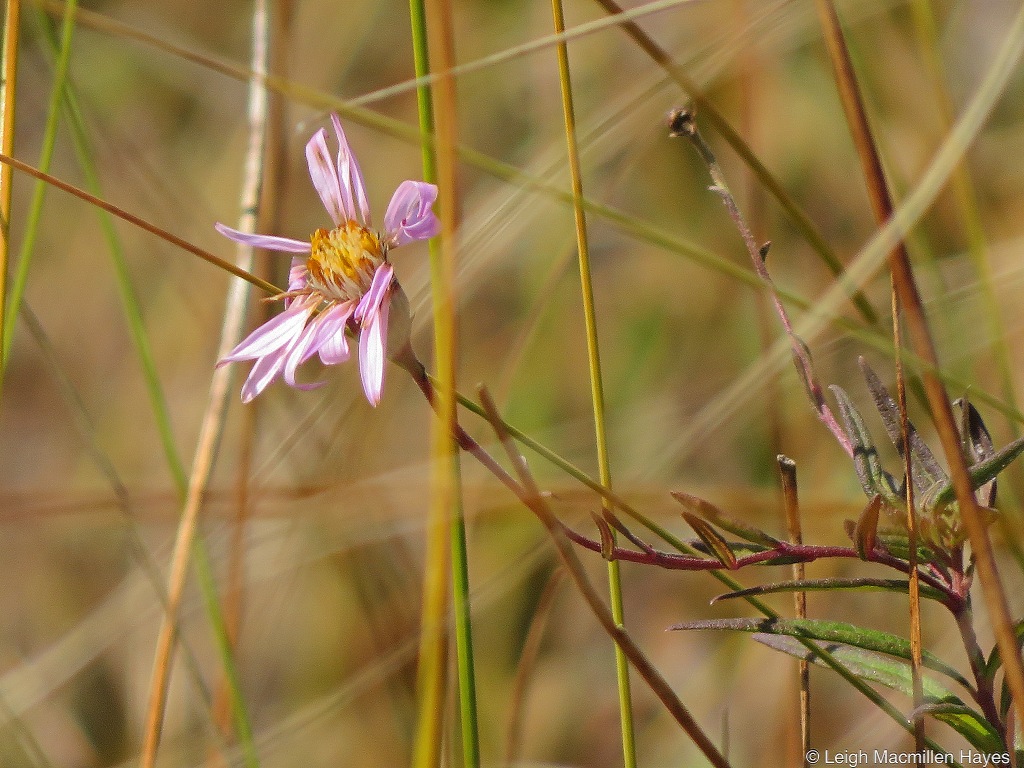
For a while, I stood in an area where Bog Rosemary and Cotton Grass grow among a variety of others. One of those others blooms late in the season and added a tad bit of color to the display.

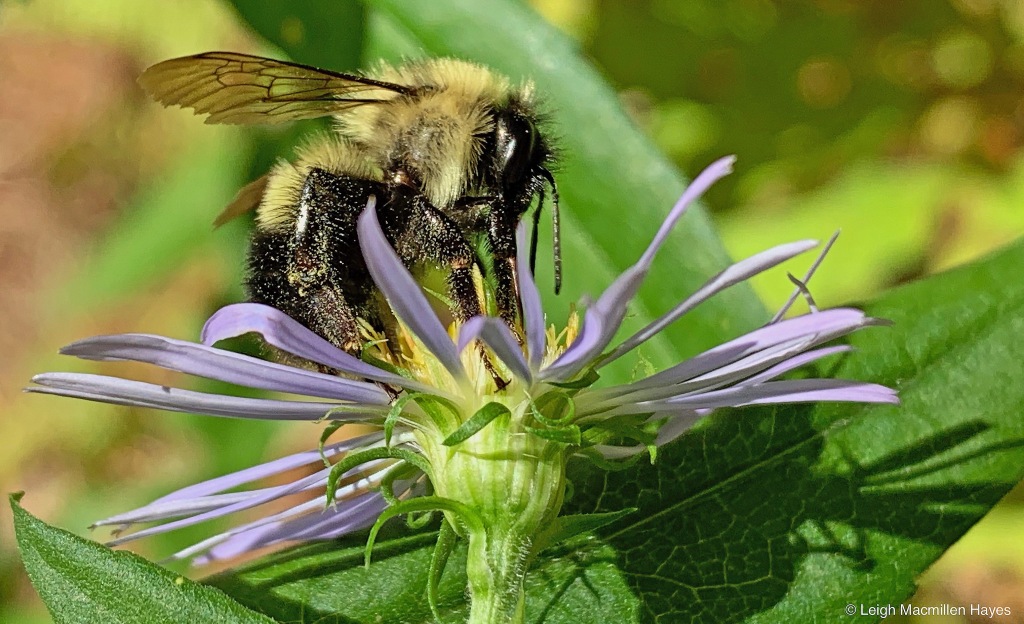
As I wandered, I wondered. Where are the pollinators? For the early hours I suspected they were tucked under the flowers, but eventually the day warmed enough and the action began and no one was busier than this Bumblebee.

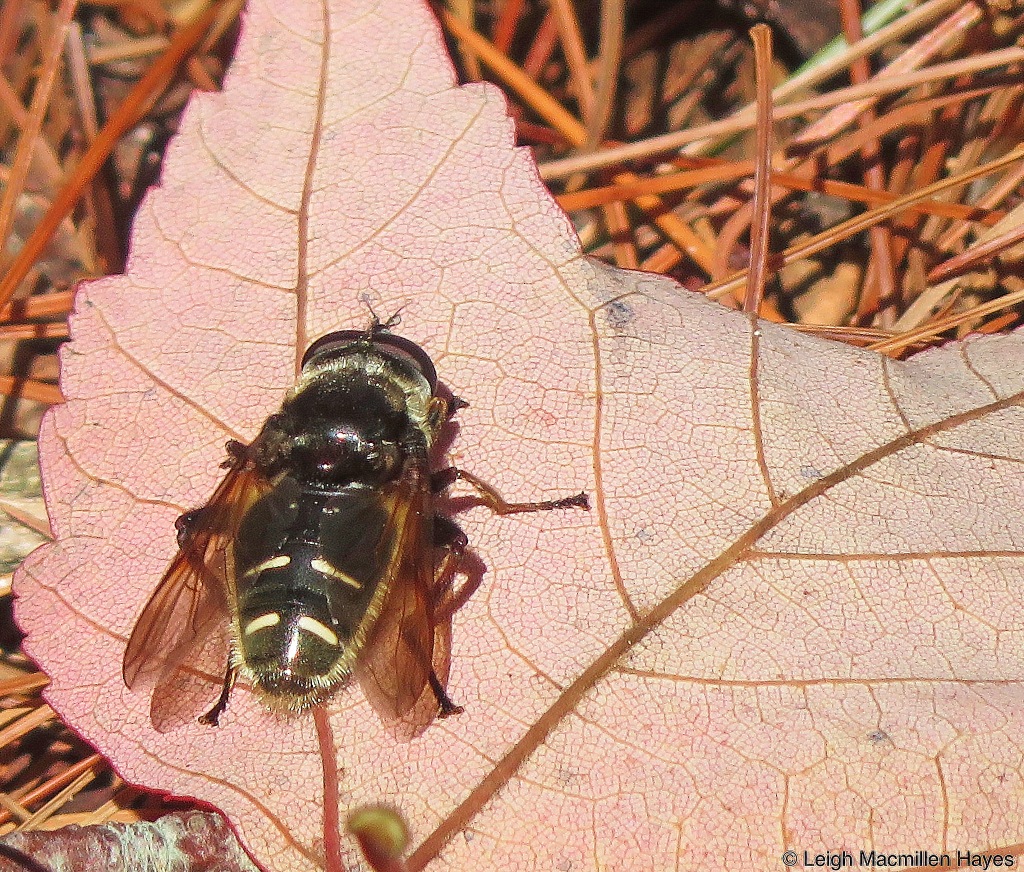
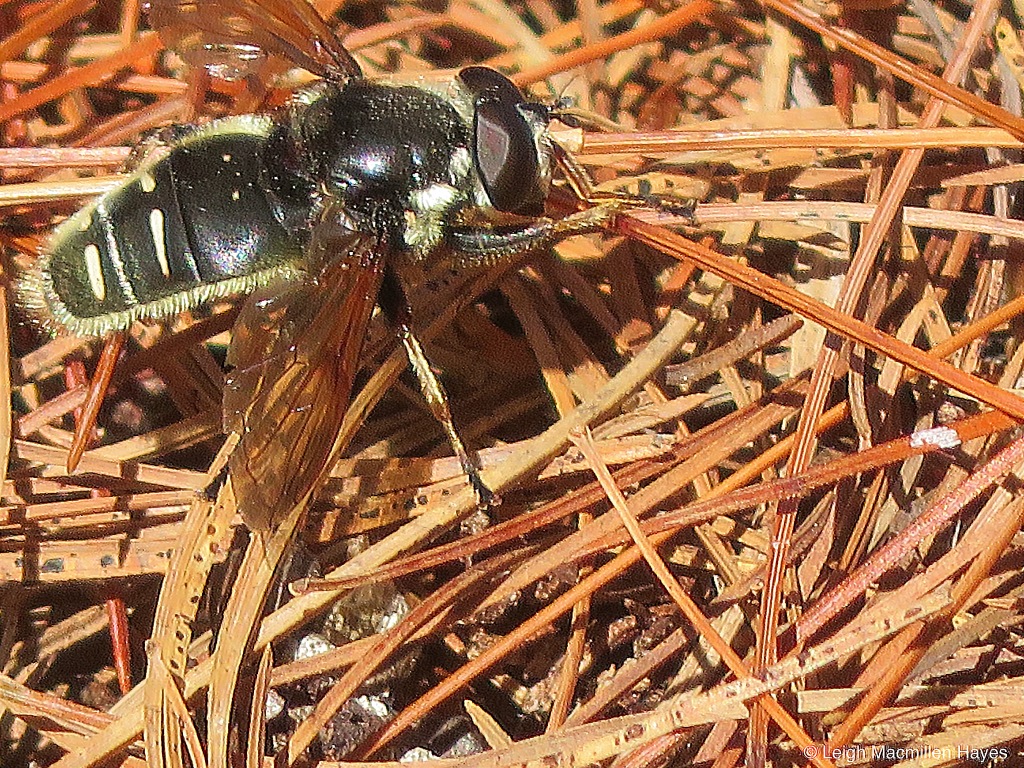
Maybe that’s not entirely true, for Hover Flies did what they do: hovered. And occasionally landed.

Notice the hairy fringe? Hover or Drone Flies as they are also known, mimic bees in an attempt to keep predators at bay. Perhaps the hair also keeps the cold temp from tamping down their efforts?

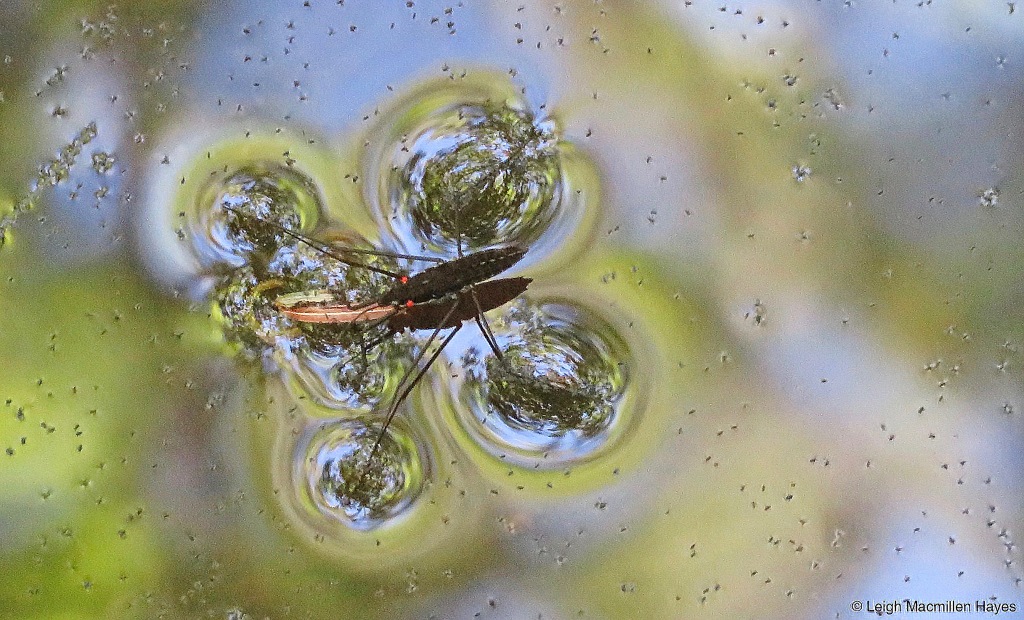
Crossing streams more than several times, Water Striders skated while the tension between feet and water created reflections of the still green canopy and blue sky. And do you notice the tiny red water mites that had hitched a ride on the strider?

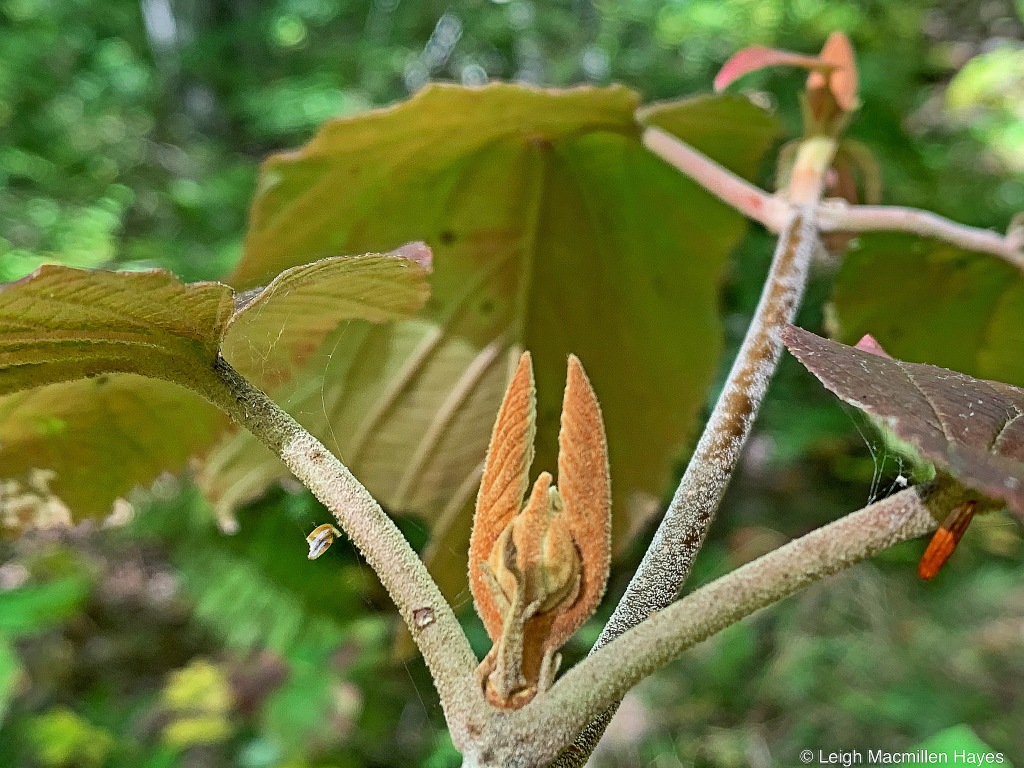
Meandering along, the natural community kept changing and so did the plant life. One of my favorites, Hobblebush, spoke of three seasons to come: autumn’s colorful foliage, winter’s naked buds a bit hairy in presentation, and spring’s global promise of a floral display forming between the buds.

One might think this was a serene hike in the woods and through the wetlands. One would be slightly wrong. Ah, there were not man-made sounds interrupting the peace, but the grasshoppers and cicadas did sing, birds did forage and scatter and forage some more, and red squirrels did cackle. A. Lot.

Perhaps their dirty faces indicated the source of their current food source: white pine seeds. It certainly looked like sap dripped from facial hairs.

And I’m pretty sure I heard a request for sunflower seeds and peanuts to be on the menu soon.

I wandered today beside a muddy river,

through a Red Maple swamp,

and into a quaking bog.

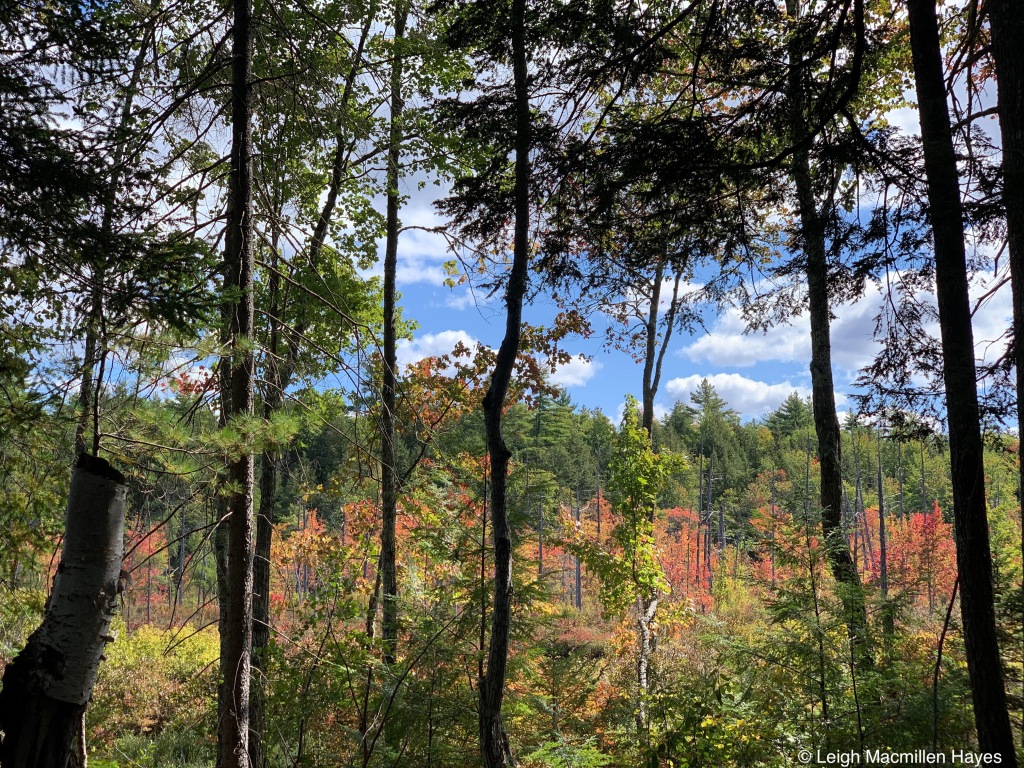
In each instance it was obvious: Summer falls . . . into autumn. It’s on the horizon.

Myrtle’s Morning

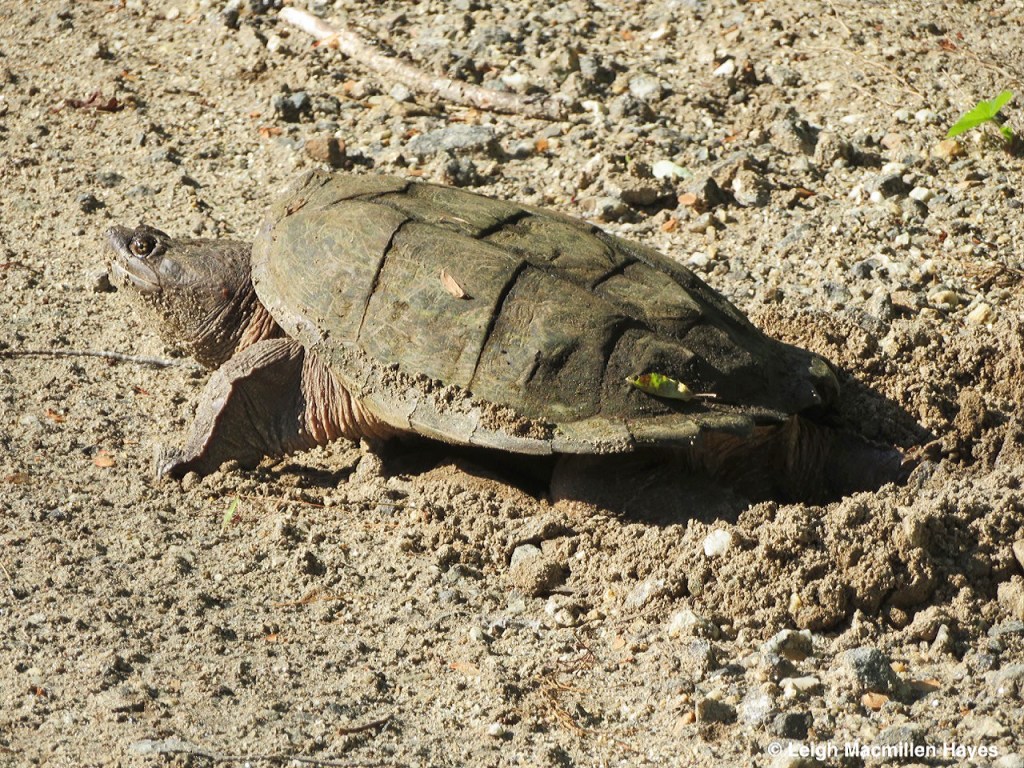
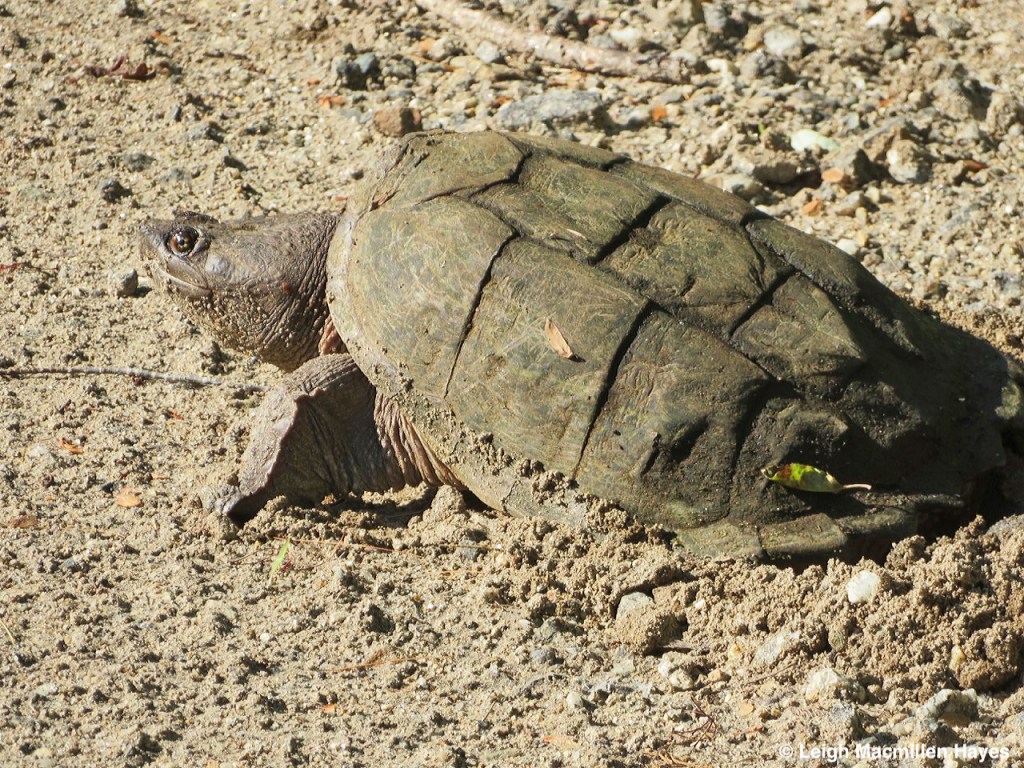
Meet Myrtle. Yes, she’s a turtle.

A Snapping Turtle to be exact. Chelydra serpentina is her scientific name: Chelydra meaning “tortoise” and serpentina deriving from the Latin word serpentis, which means “snake,” in reference to her long tail.

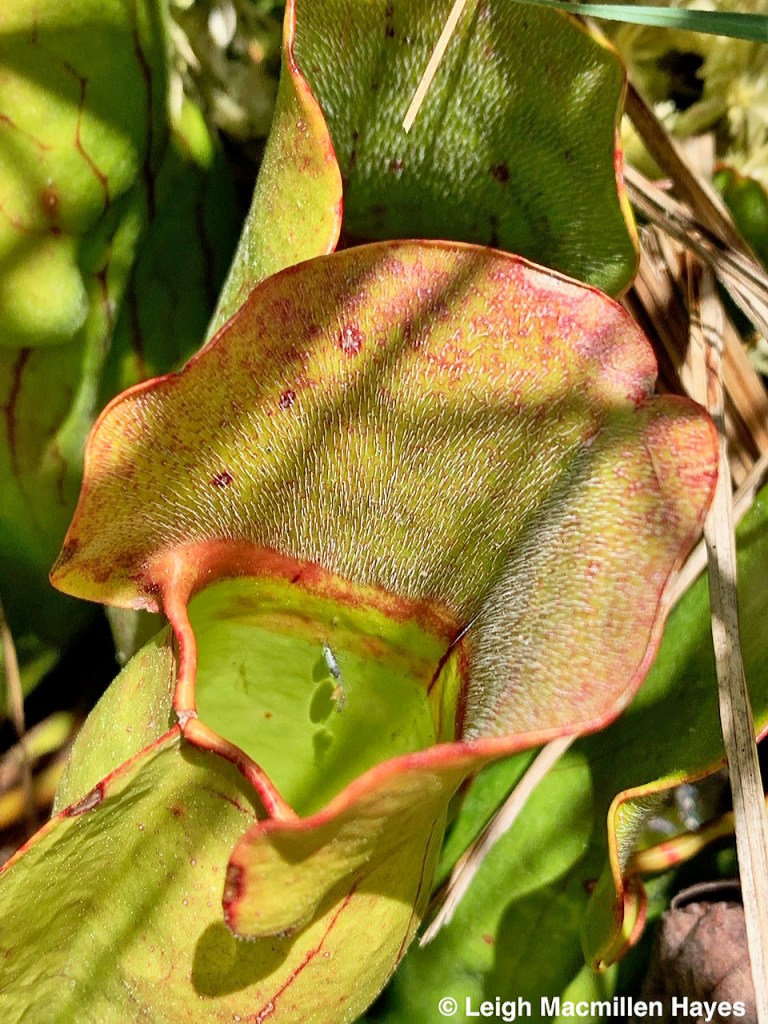
Myrtle’s neighborhood is one where carnivorous plants grow in abundance and right now show off their parasol-like flowers.

I spend some time with the old girl who certainly deserves a parasol to shield her from the sun. Turtles of her type don’t reach sexual maturity until their carapace, or upper shell, measures about eight inches in length and that doesn’t typically happen until they are at least seven. Myrtle’s is at least eight inches, maybe even longer, but I didn’t dare get too close and risk disturbing her. Nor do I ask her her age, cuze after all, we women stand together on such issues.

Below her Pitcher Plant bouquet grow its leaves shaped like . . . pitchers and filled with water and digestive juices. Downward facing hairs attract insects into the trap, and once within the pitfall, there is no escape. The prey drowns in the nectar and body gradually dissolves, providing the plant with nutrition it can’t possibly get from the acidic soil in the community.

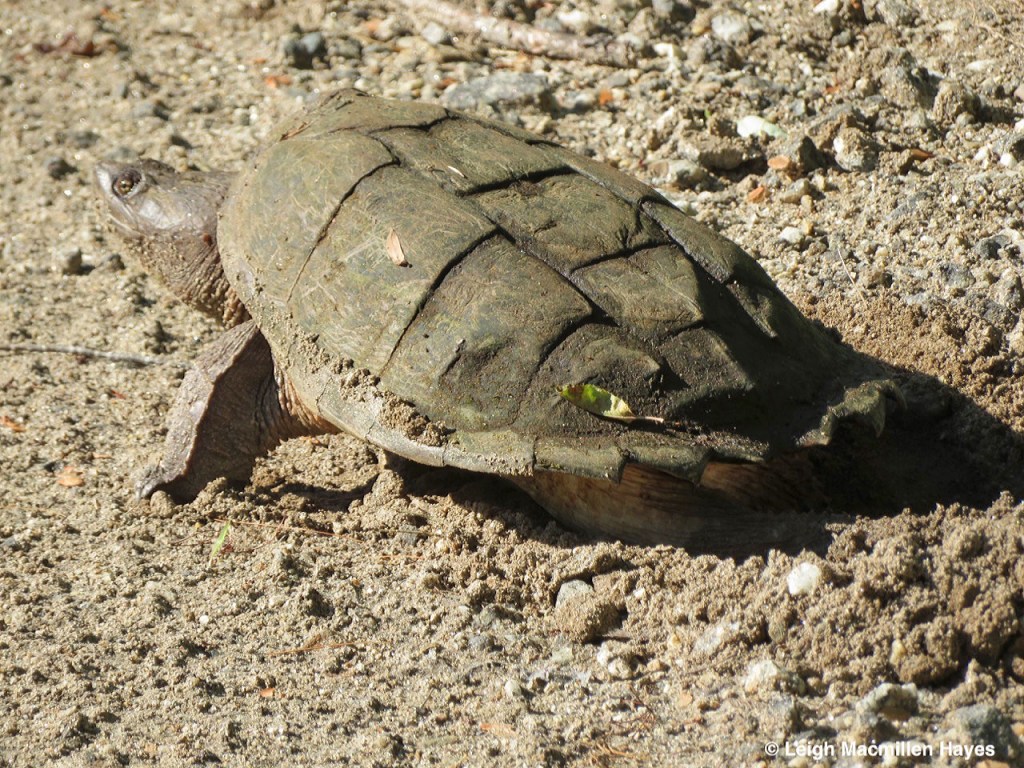
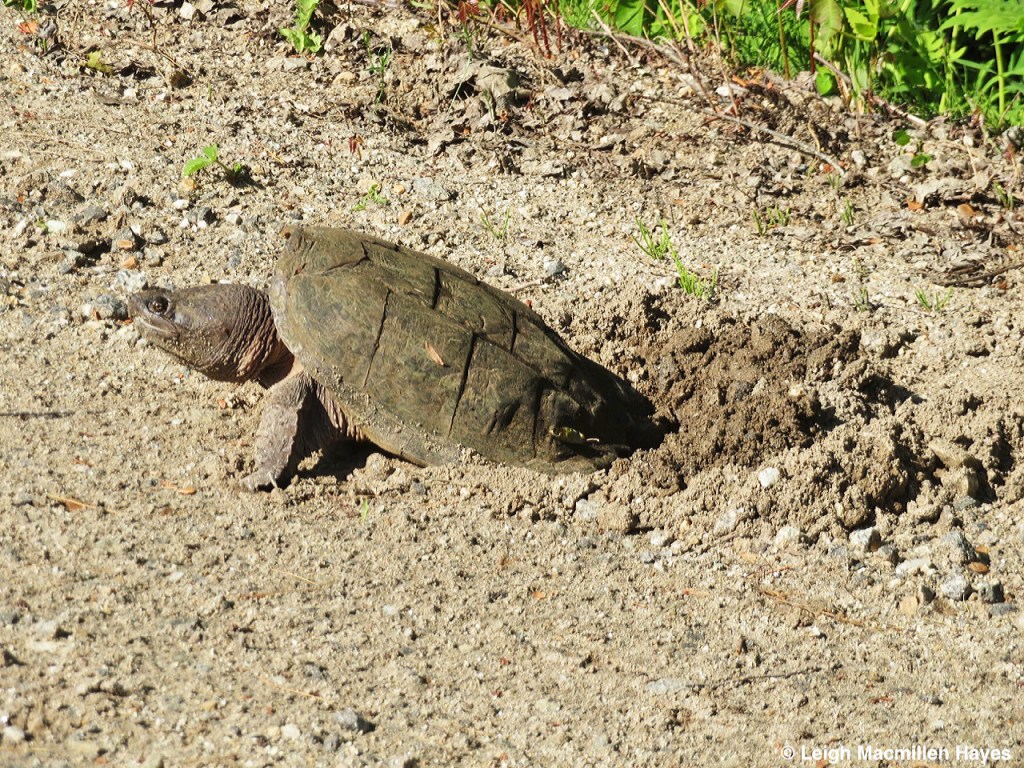
Myrtle doesn’t really care. Her back legs are busy digging in the sand and it isn’t to plant a garden full of Pitcher Plants.

Also at home in Myrtle’s neighborhood are Crimson-ringed Whiteface dragonflies, the male showing off a brilliant red thorax.

While the dragonfly poses, waiting for a moment before taking flight to defend its territory or find a gal, Myrtle begins to press her front toes down while simultaneously lowering the back end of her carapace.

Within minutes, the male Crimson finds a date and the two become one, so engrossed in each other as such that they don’t really notice what Myrtle might be up to today.

In a form all her species’ own, Myrtle stands up on her tippy toes and moves that carapace up like the bed of a dump truck ready to make a deposit.

All the while, songs birds ring forth their joyous sounds accompanied by the strums of Green Frogs.

Sometimes Myrtle winks or perhaps its a grimace and other times she smiles with absolute glee. That or she captures a fly or a breath.

Another neighbor also uses its mouth for more than just its usual chitter. Despite the acorn in its mouth, Red Squirrel speaks around the edges and greets Myrtle without dropping its great find.

Meanwhile, Myrtle’s back end dips lower and lower.

I offer her a word of warning for I notice that there’s evidence of some neighbors she may not appreciate–raccoons to be exact based on their tracks.

In that moment, however, Myrtle doesn’t give a hoot about who might be lurking in the shadows waiting to dig up the contents of her hole during the dark of night that will fall hours and hours later.

She’s spent over an hour digging a hole with her hind feet and depositing eggs as evidenced by the plop, plop that I hear. Even though I cannot see them, I trust that more than 40 have filled the hole as she continues to dig and tamp, dig and tamp. It will be several months before they hatch and then, even another week at least before the wee ones slip into the water, and the fact that she lays so many is important because truly predators such as raccoons and skunks and foxes and coyotes may help themselves to Eggs Myrtle.

But for today, Myrtle’s morning was the most important thing on her mind and I delighted in being able to share it with her and her neighbors.

Fair-feathered Friends

Thankfully, the prediction for 8-12 inches of snow for today didn’t come true. But it did snow, rain and sleet. And the birds were on the move.

b-red-winged 2

The moment I stepped out the door to fill the feeders and spread seed and peanuts on the ground I was greeted by the kon-ka-reeee of the red-winged blackbirds who stopped by for a few hours. Their songs filled the air with the promise of spring.

b-cowbirds

And with them came a few friends. Or were they? It seemed the cowbirds may have been scheming.

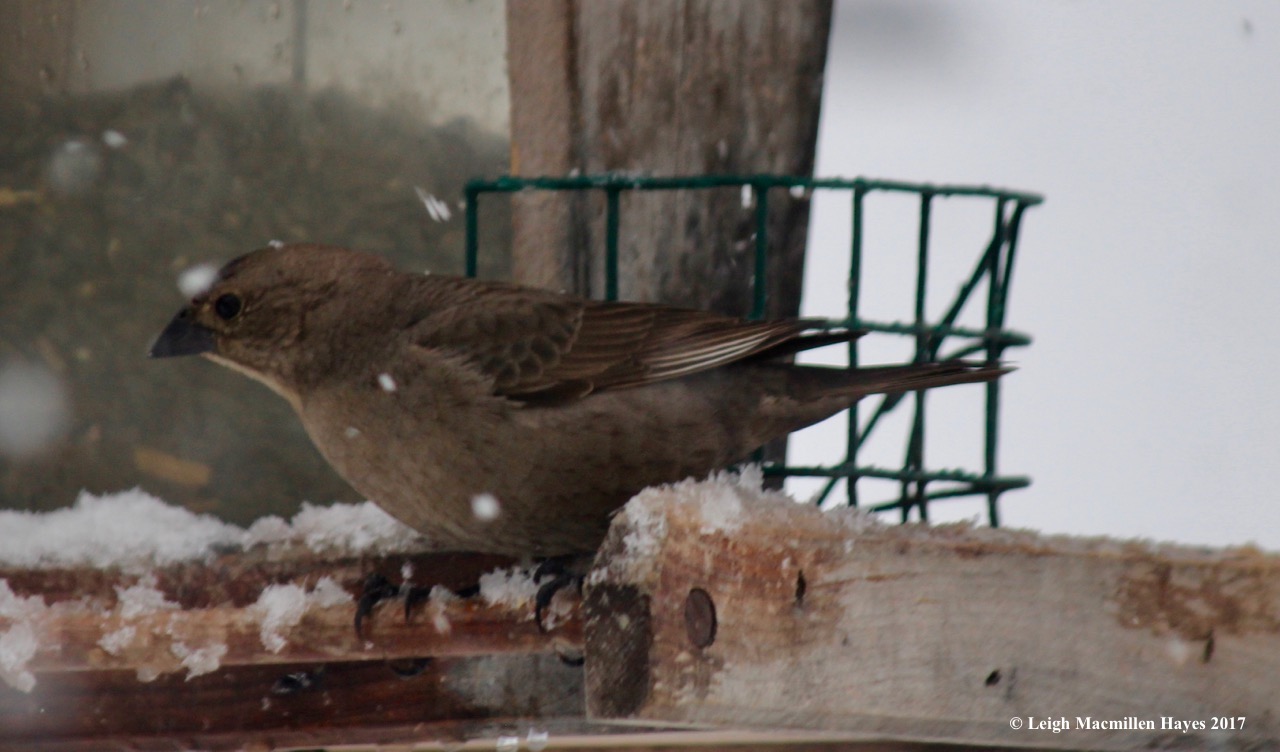
b-cowbird female

Mrs. Cow perhaps choosing others who might raise her young one day soon.

b-song sparrow

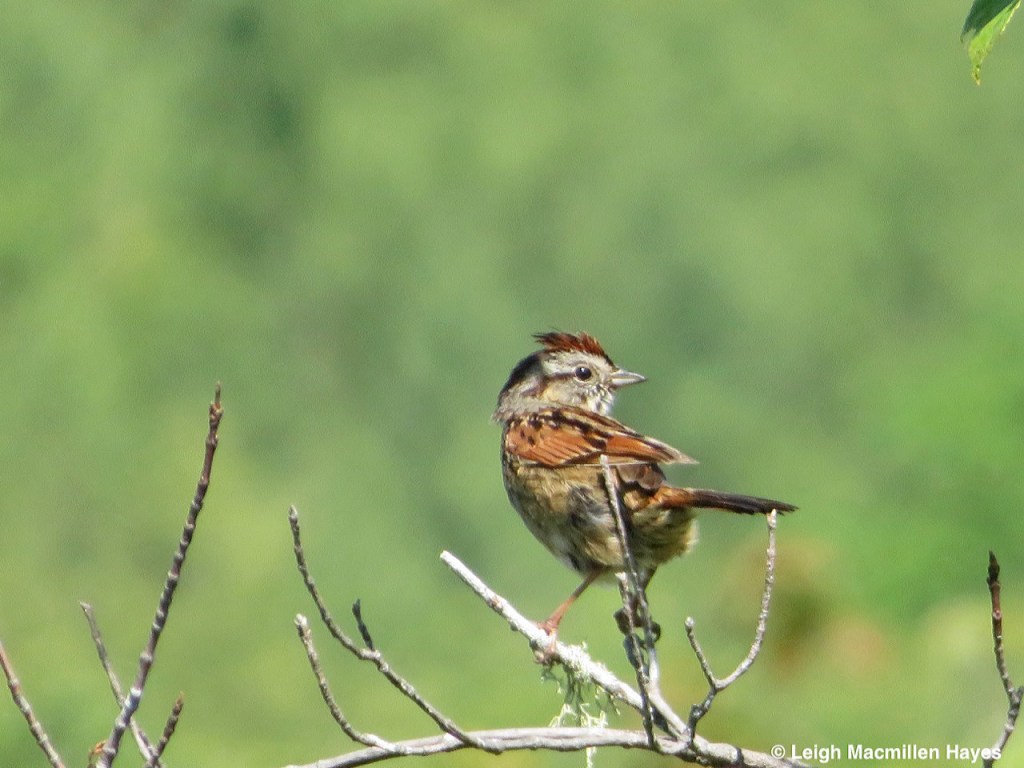
Another recent visitor also added its song to the chorus and its streaked breast to the landscape–such is the manner of the song sparrow.

b-tree sparrow1

American tree sparrows, on the other hand, have been frequent flyers all winter. This one paused long enough to show off its bicolored bill and white wing bars.

b-robins

And then there were those who chose to visit from a distance–the American robins appeared as ornaments in the oak and maple trees.

b-crow sentry

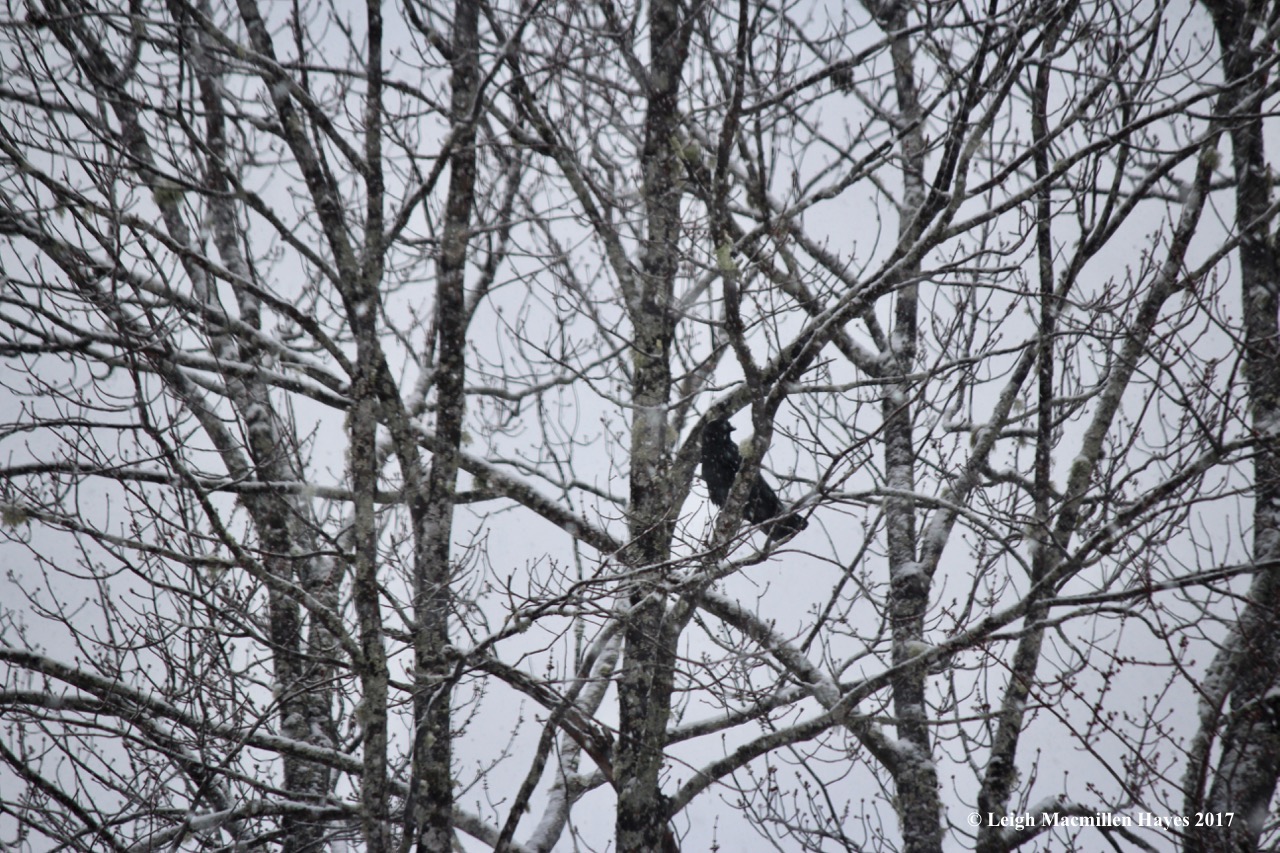
Meanwhile, a crow stood sentry–allowing all to eat in peace as it was ever ready to announce any intruders.

b-white-breasted nuthatch

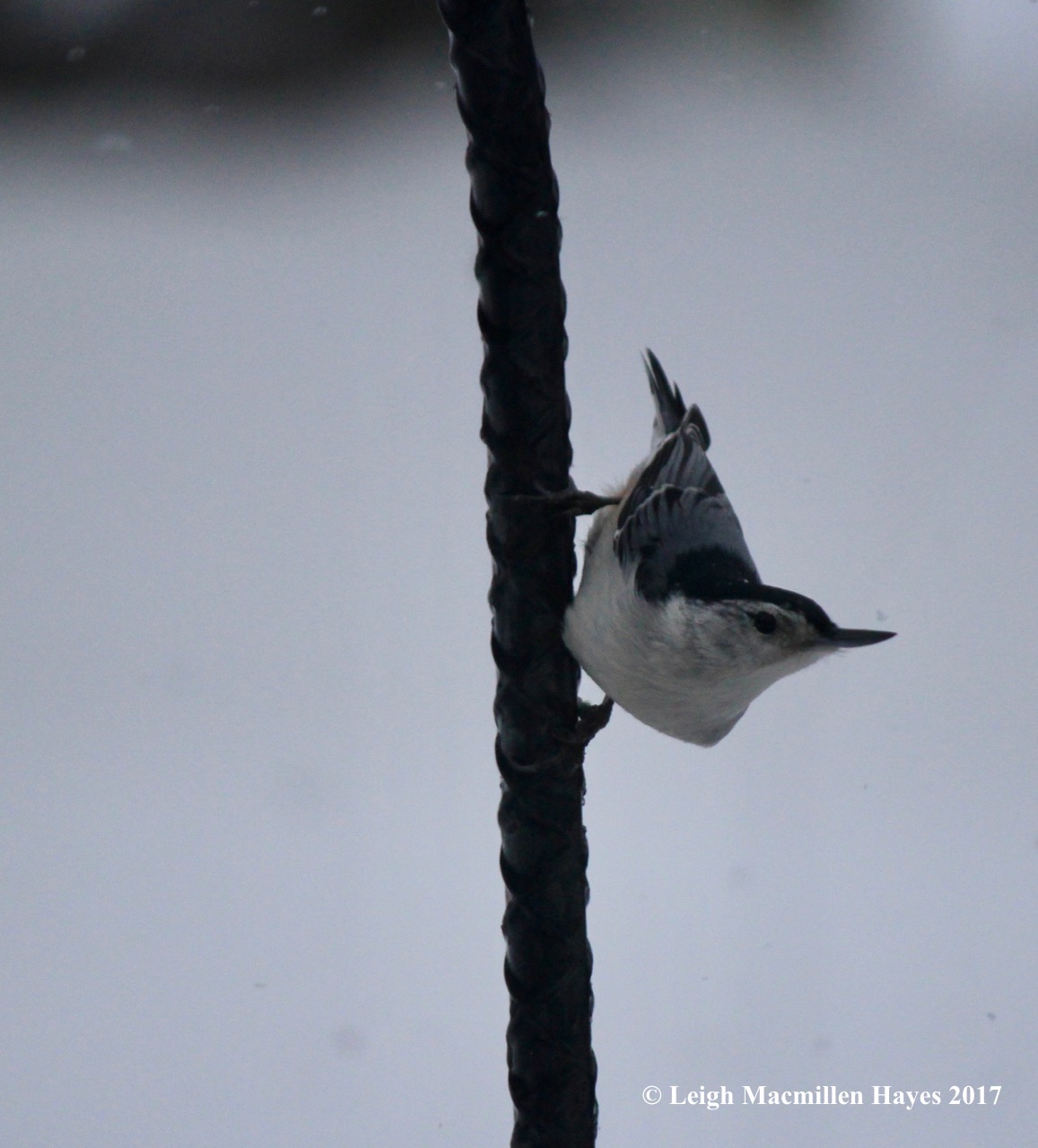
And so they came and went–some upside down like the white-breasted nuthatch.

b-chickadee waiting

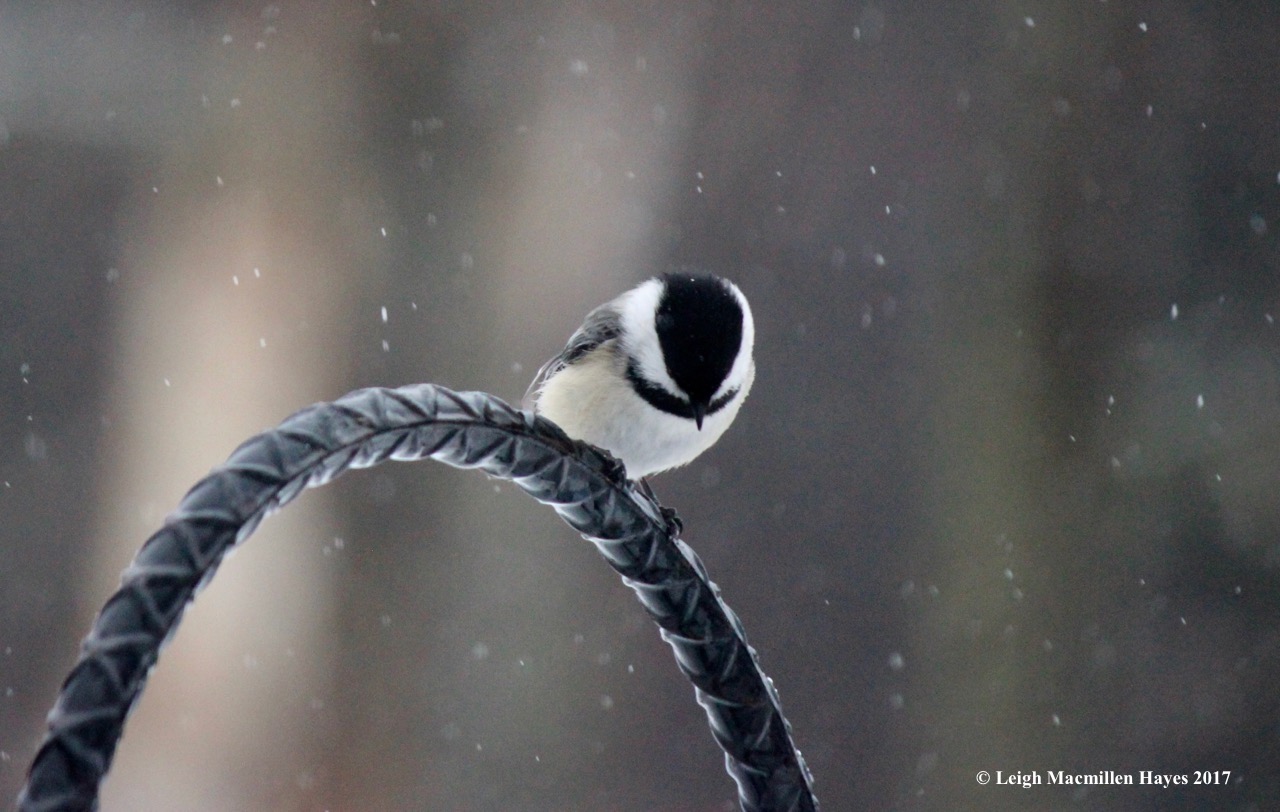
Others waiting patiently for a turn,

b-chickadee at feeder

confident in the knowledge that the wait was worth the reward.

b-chick and junco

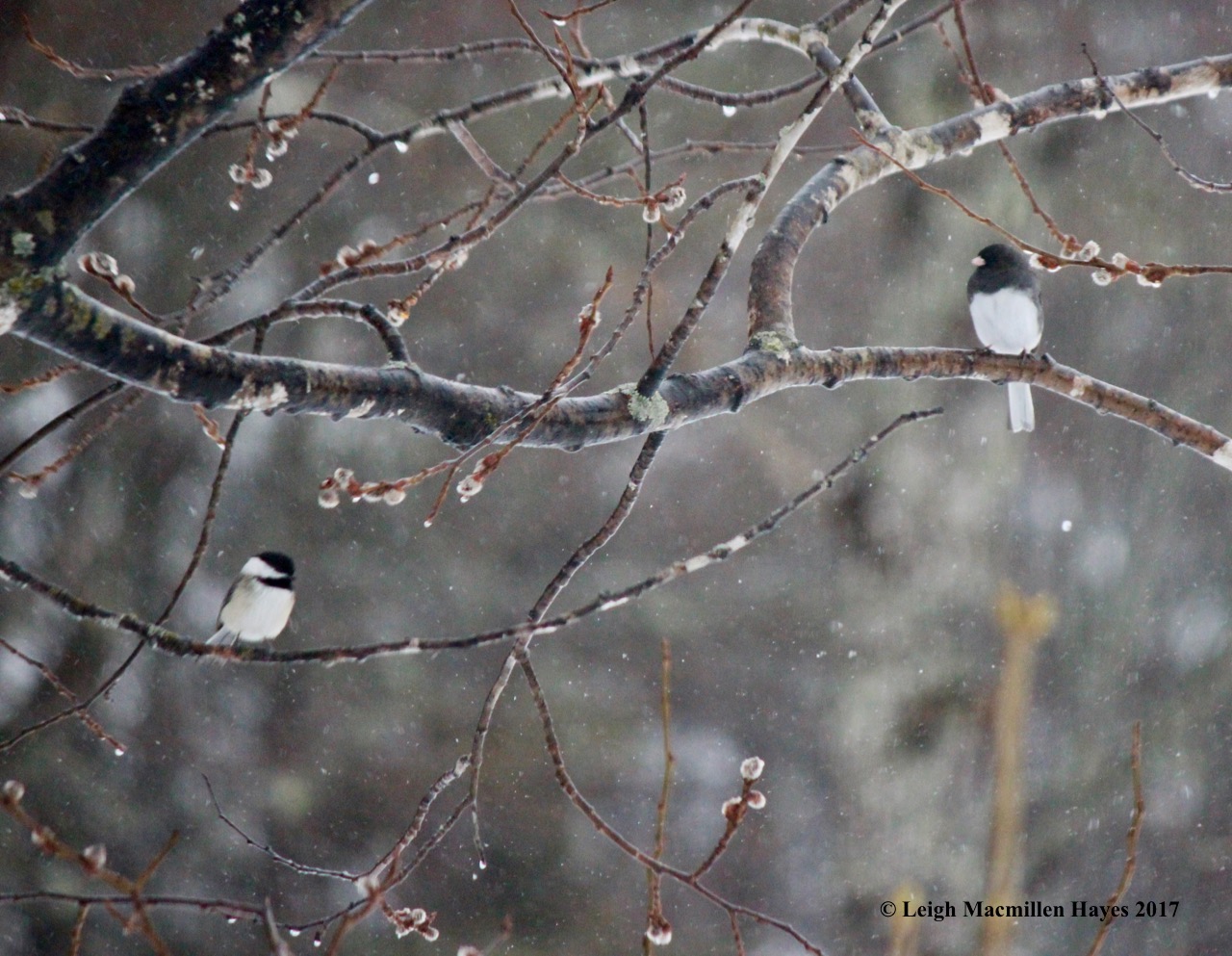
But not all . . .

b-junco in lilac

that waited . . .

b-junco waiting

remained patient.

b-junco--cigar?

The juncos gobbled the seeds . . .

b-junco with peanut

and the peanuts.

b-junco fight 1a

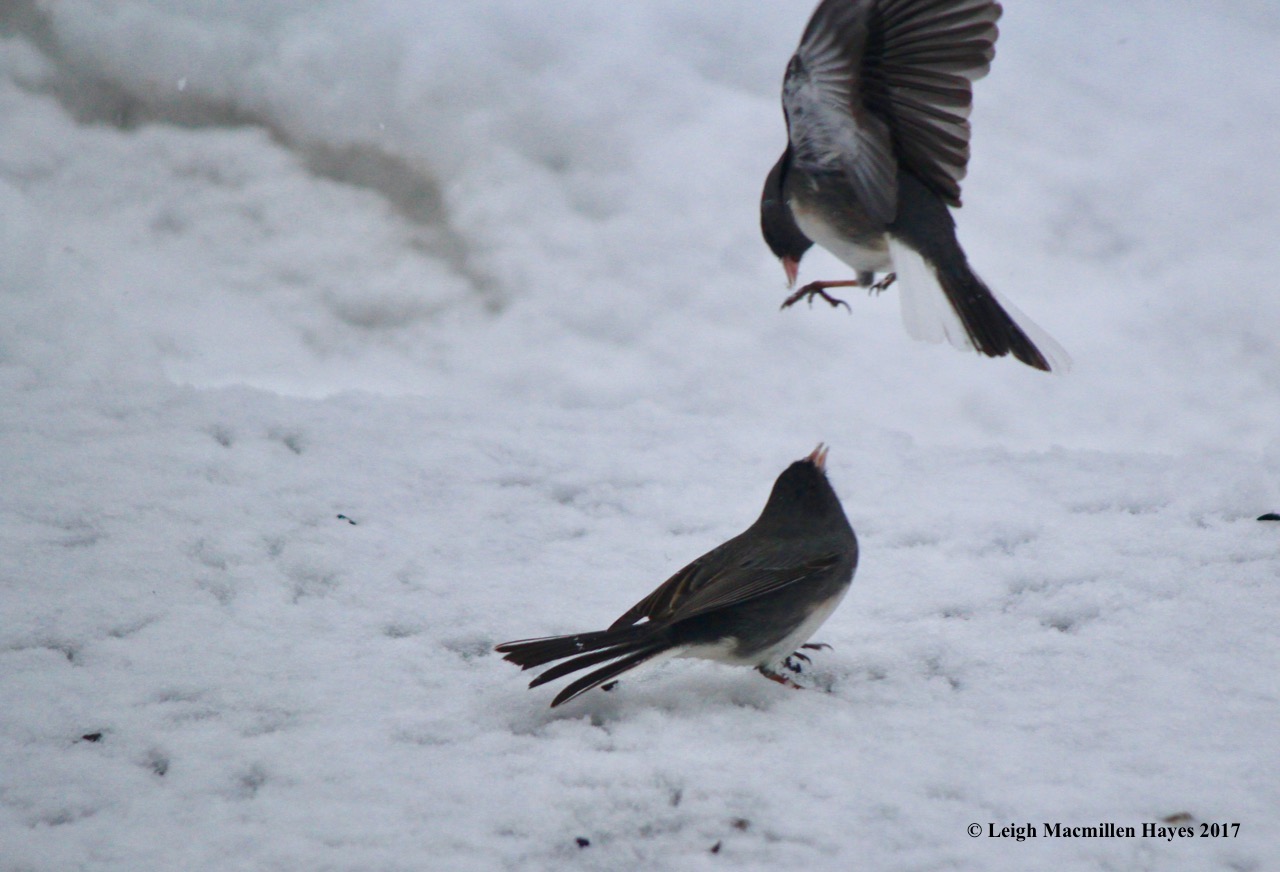
And like siblings, they squabbled . . .

b-junco fight 1

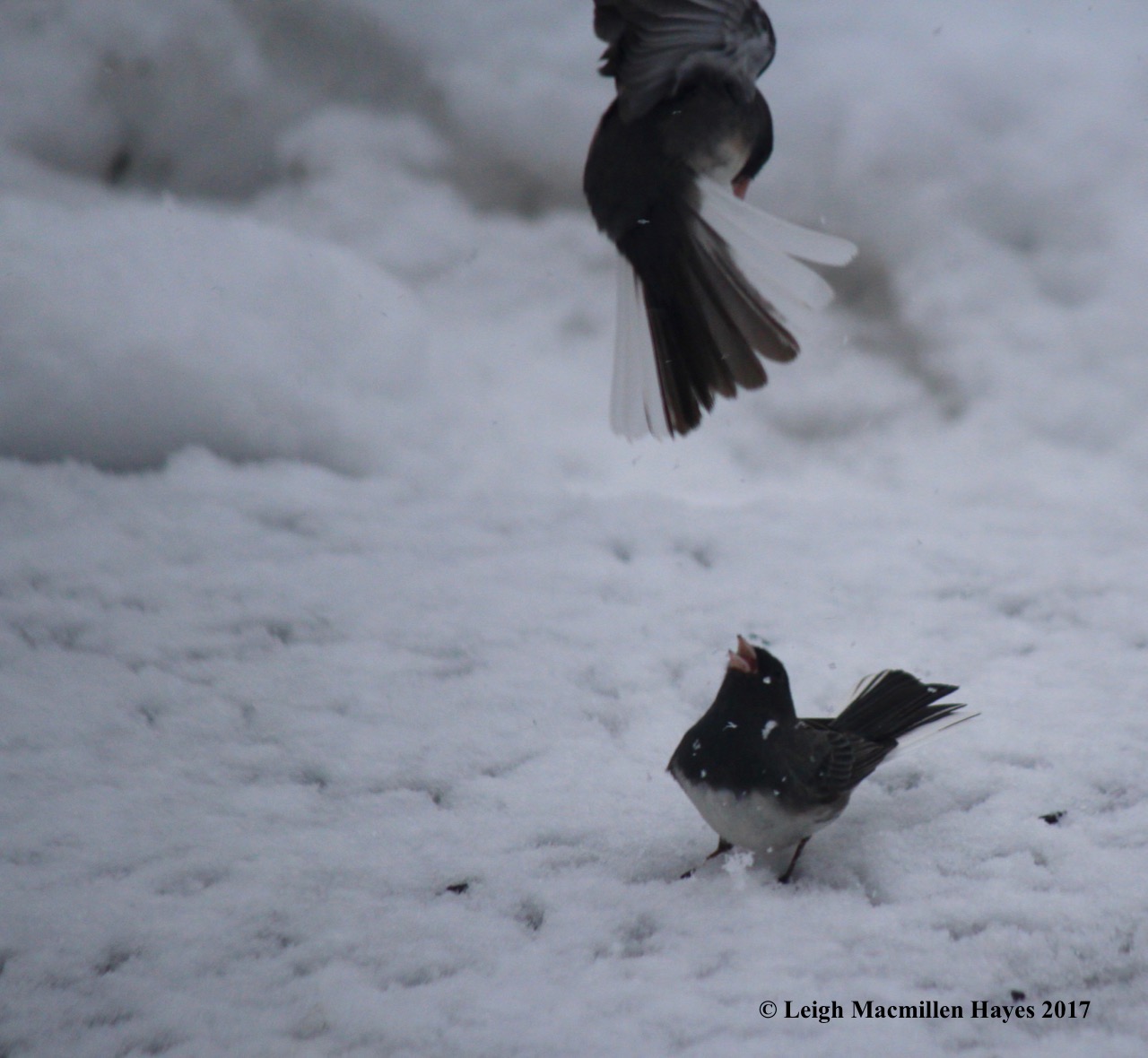
with attitude . . .

b-junco fight 2

and insistence.

b-junco fight 3

Of course, there was always a winner.

b-junco up close

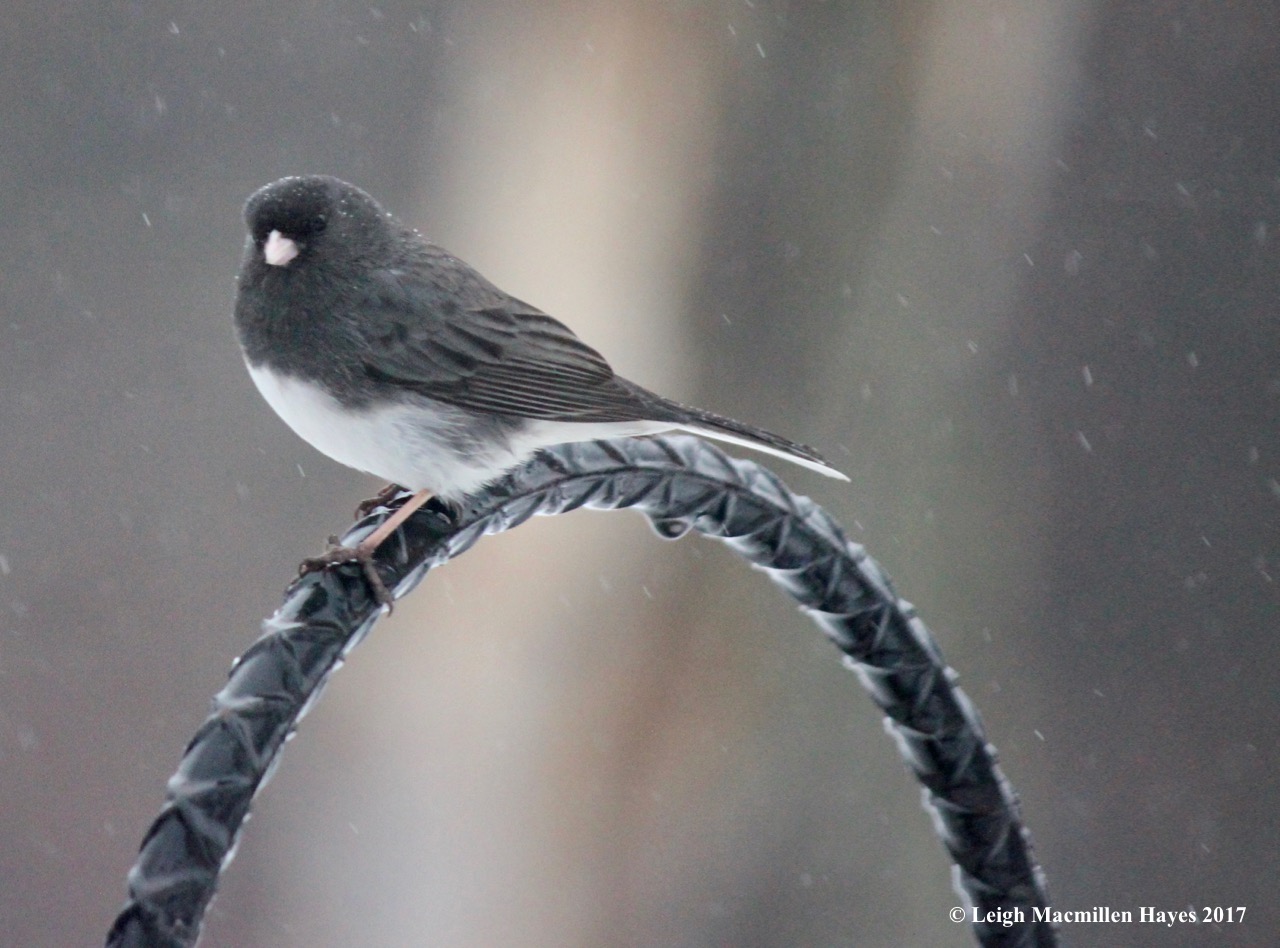
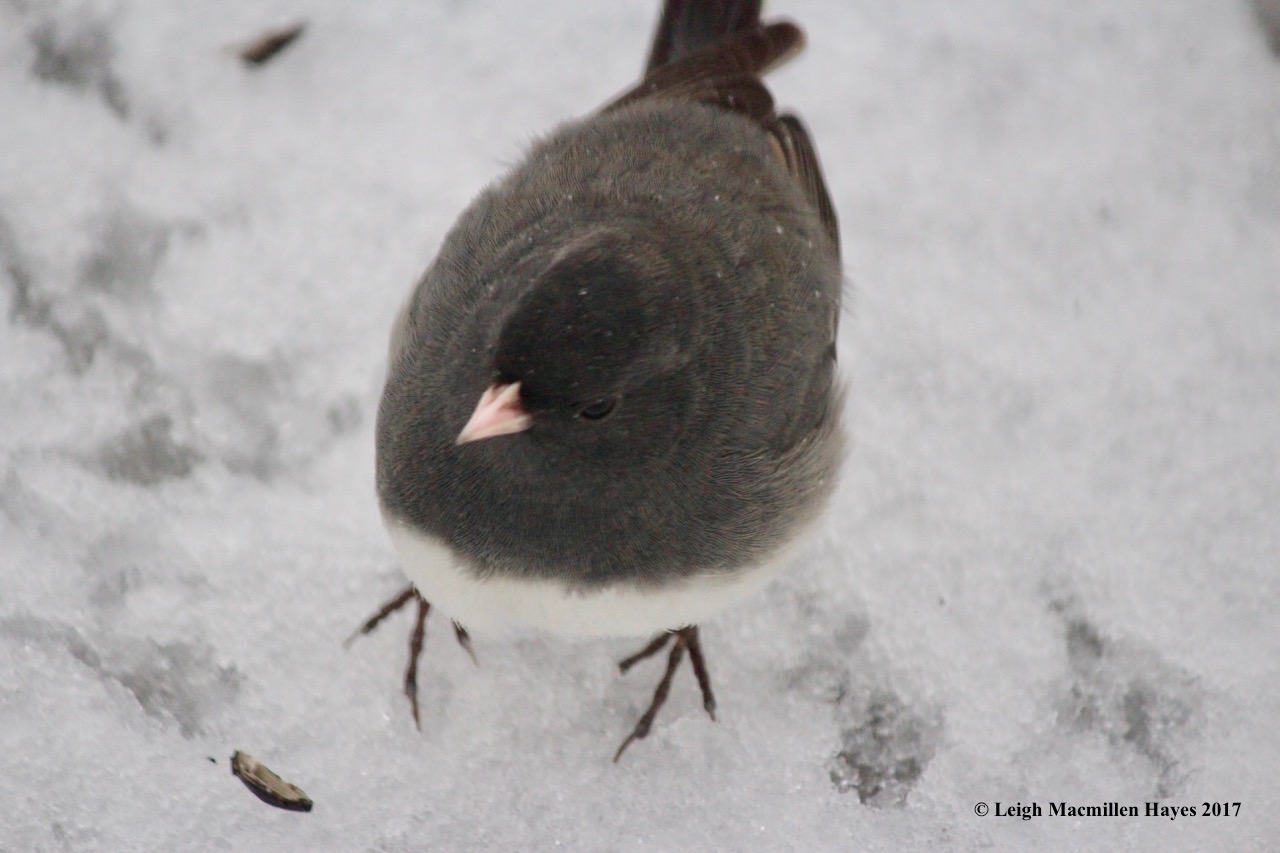
I love these plump winter visitors with their head and flanks completely gray, contrasting white  breasts and pale pink bills–making the junco an easy ID.

b-gray squirrel

They weren’t the only gray birds to visit the feeders. Oh, you mean a gray squirrel isn’t a bird?

b-squirrel in its tracks

Nor is the red. Don’t tell them that.

b-deer in yard

The same is true of this dear friend, who first spied some action in the distance . . .

b-deer looking at me

and then turned its eyes on the bird seed and me. But with one periscope ear, it still listened to the action to my right.

b-deer flying away

And then as fast as the birds that feed here all day, but flit in and out when they hear the slightest noise or sense a motion, the deer turned and flew off as a car drove up the road.

I played the role of a fair-weather naturalist today as I watched my feathered friends from indoors.

With friends in mind, I dedicate this post to my mom’s dear friend, Ella, who passed peacefully in her sleep the other day. I trust Mom has put the coffee pot on and she, Aunt Ella and Aunt Ruth are watching the birds out the kitchen window. 


What’s Next?

I chose to walk intentionally today, pausing every few moments to look and wonder. I didn’t want to rush, always seeking the next best thing.

And so I began with a stop to admire the great lobelia that continues to bloom  despite the frost we’ve had this past week.

Great lobelia

But it was at a former log landing we can see from the kitchen window, that “what’s next” kicked into gear.

log landing 10+ years ago

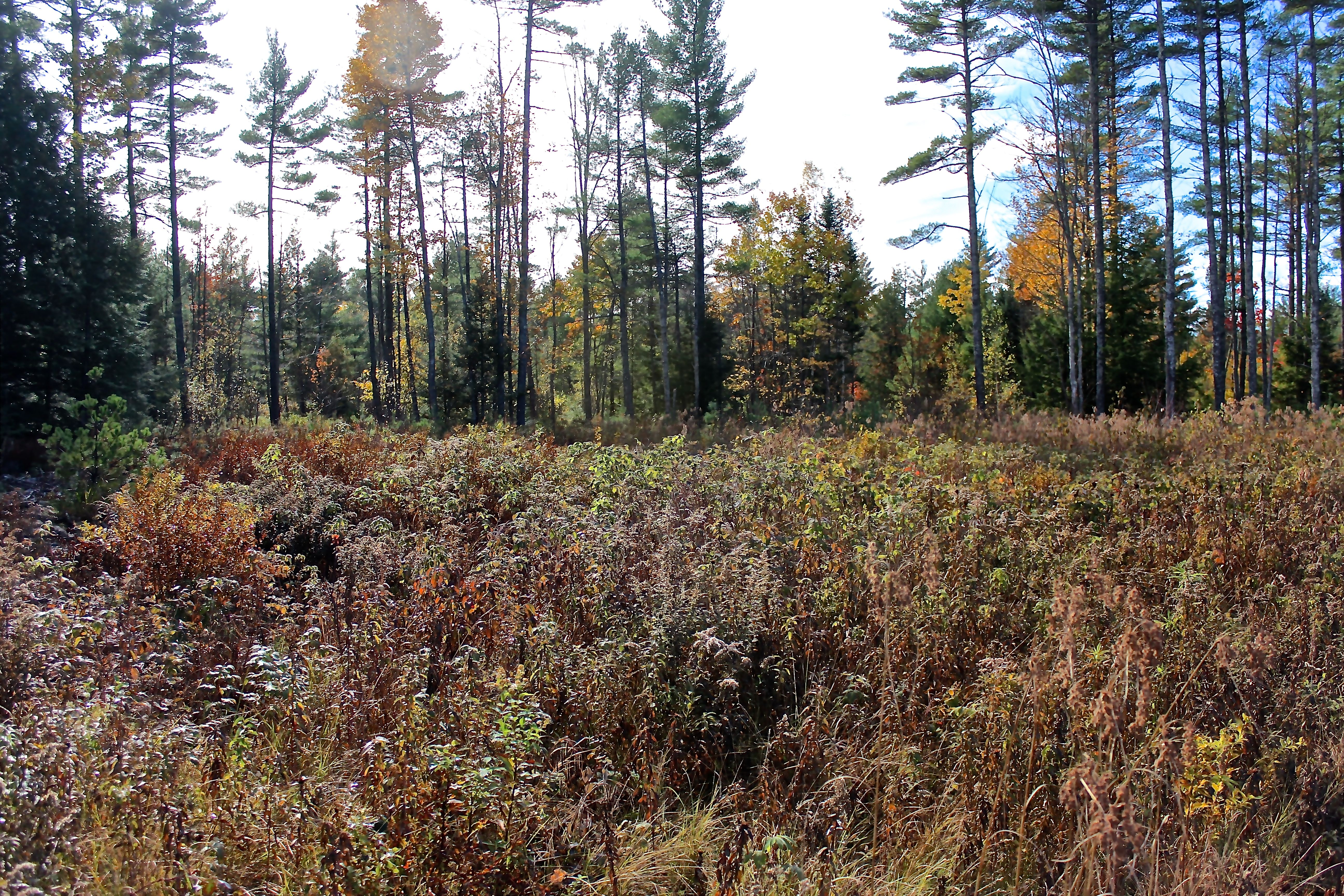
While the field beyond our stone wall is mowed once a year, this area has been allowed to follow the order of succession for cleared land. Goldenrod, asters, meadowsweet, grasses and raspberries have filled this space. What will follow?

deer print

Further along, the deer and

moose prints

the antelope, I mean, moose play. No fresh bobcat or coyote prints after this morning’s rain, but I saw some scat from both. And I had to remind myself not to have expectations. That’s the thing. It’s so easy to get caught up in looking for the next best thing and forgetting to focus on the moment, the beauty and the complexity that surrounds us.

water droplets on big-tooth aspen

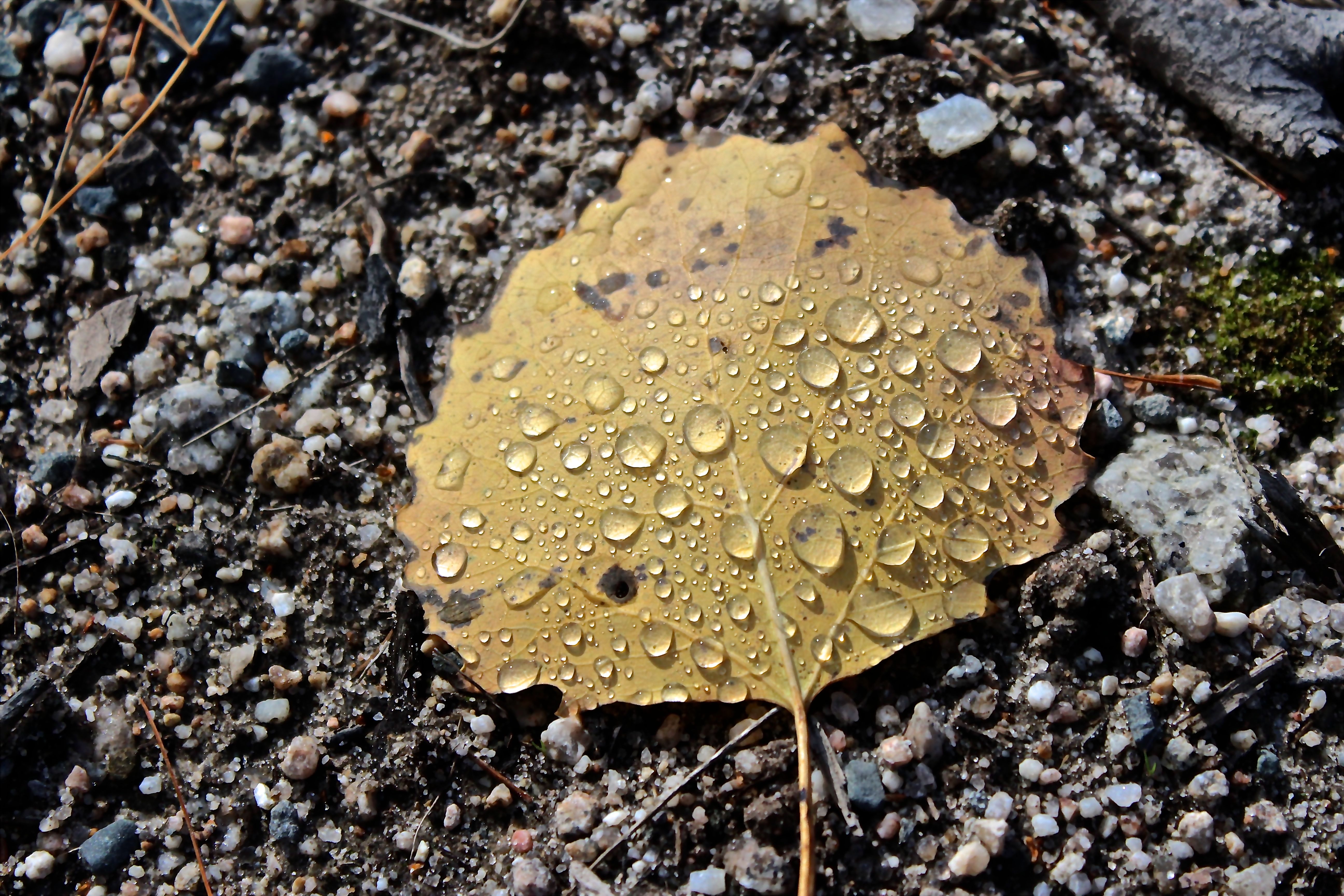
So I did–focus that is. On the big tooth aspen leaf decorated with rain droplets,

asters gone to seed

aster seeds waiting for their moment of dispersal,

barbed wire

a hemlock that long ago knew this forest as farmland,

autumn meadowhawk

 an autumn meadow hawk soaking up the late afternoon sun,

life on a stump

the variety of life growing on a stump,

hemlock saplings on stump

and hemlock saplings taking root.life on a tree 2

life on a tree 3

life on tree 5life on tree 7

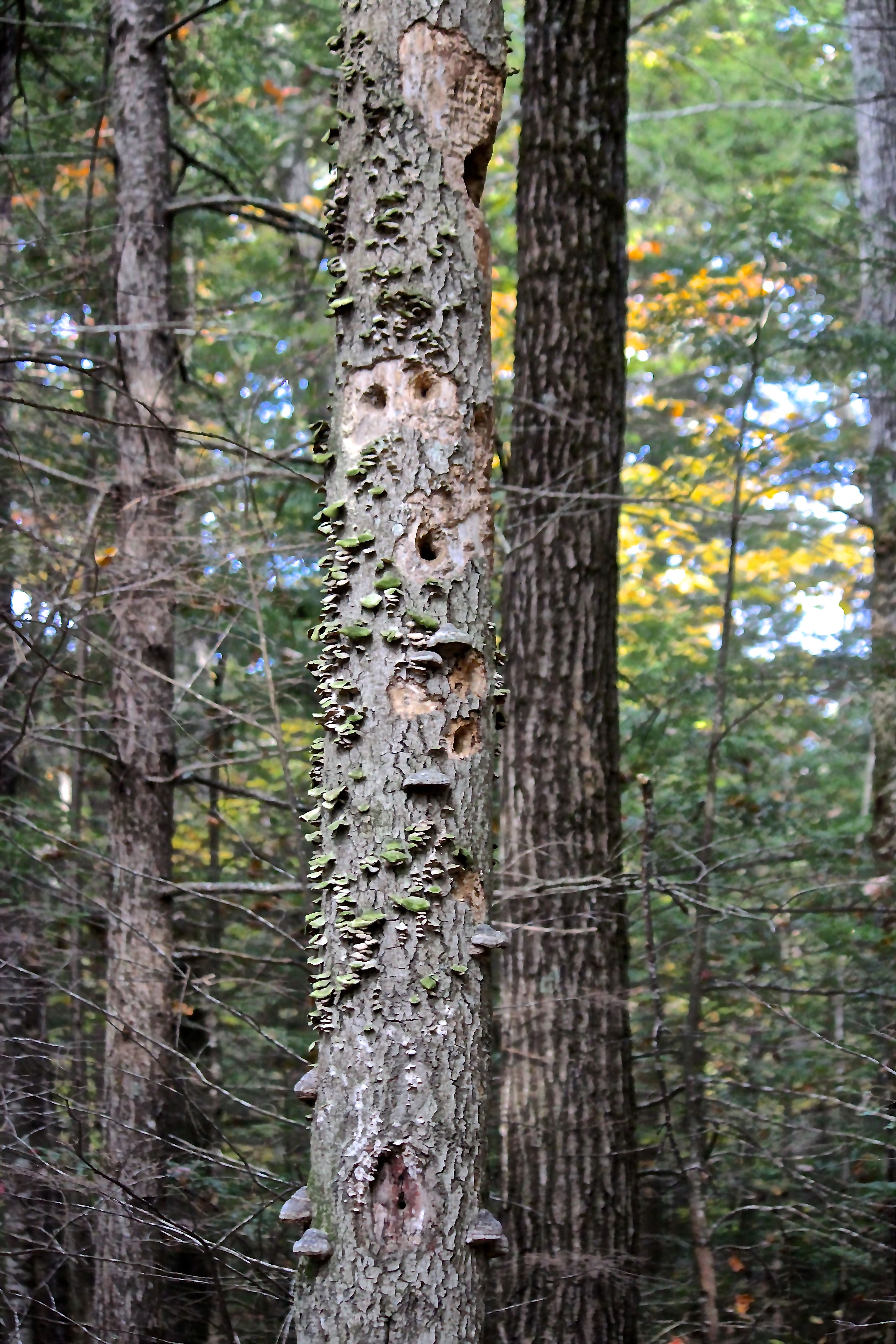
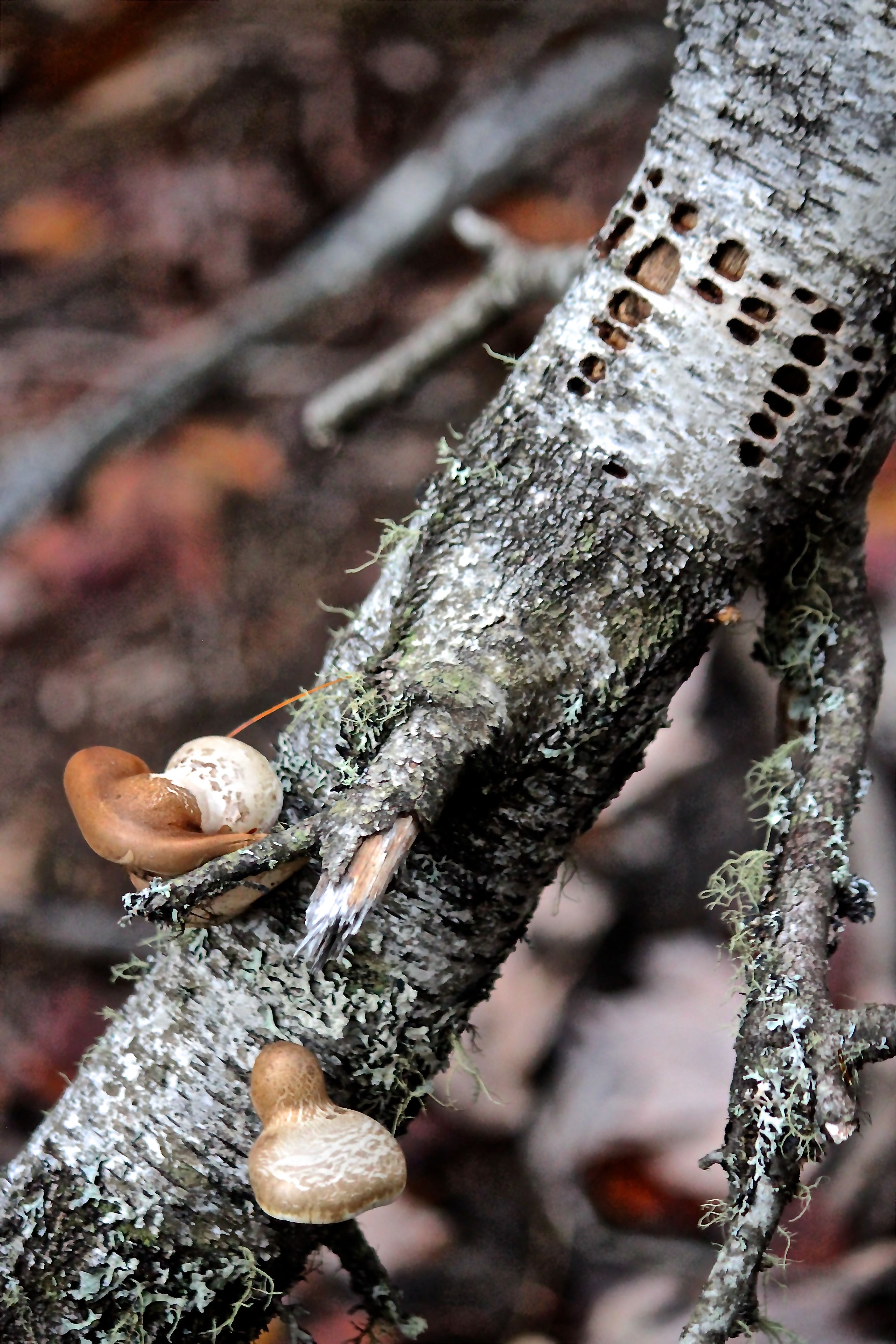
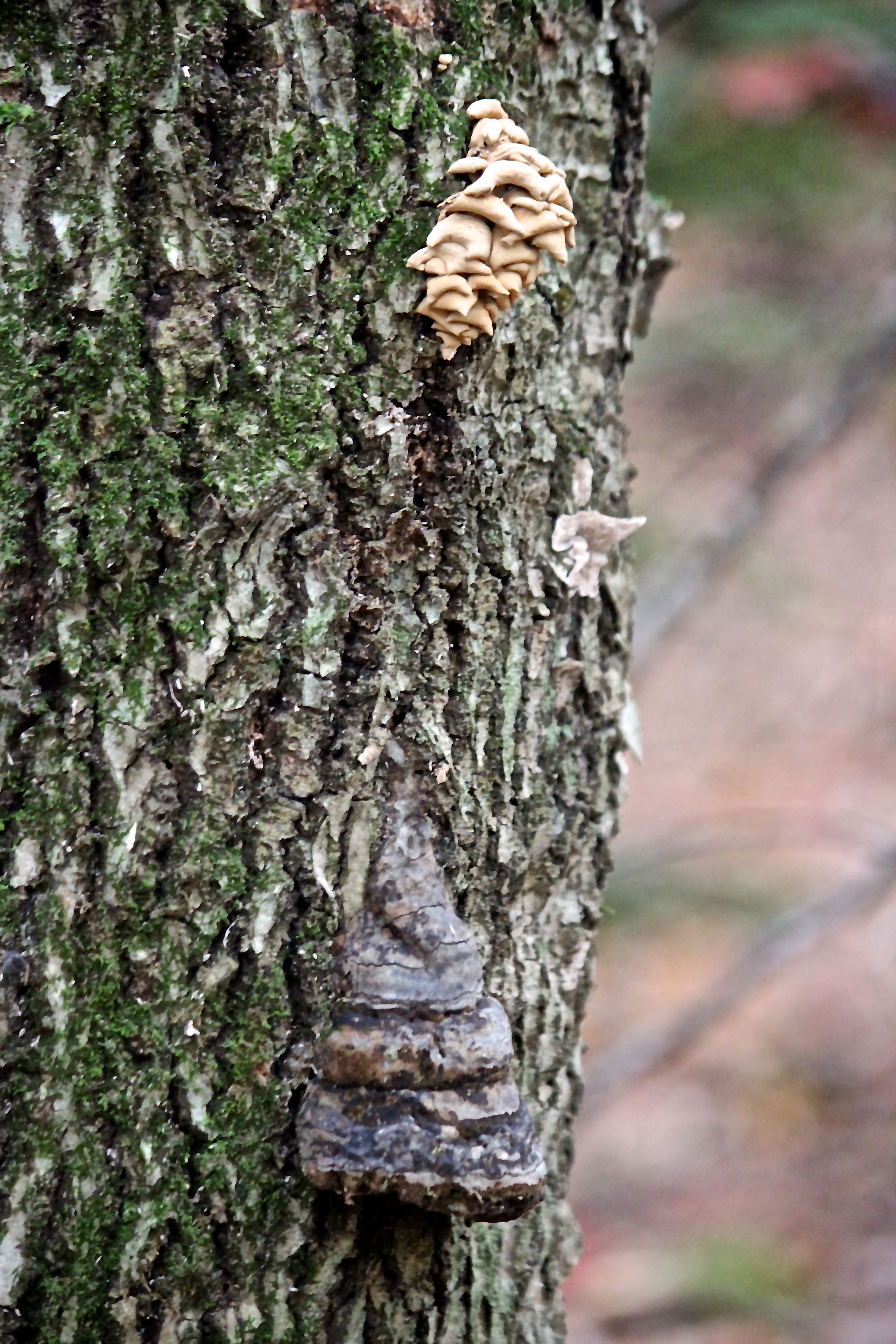
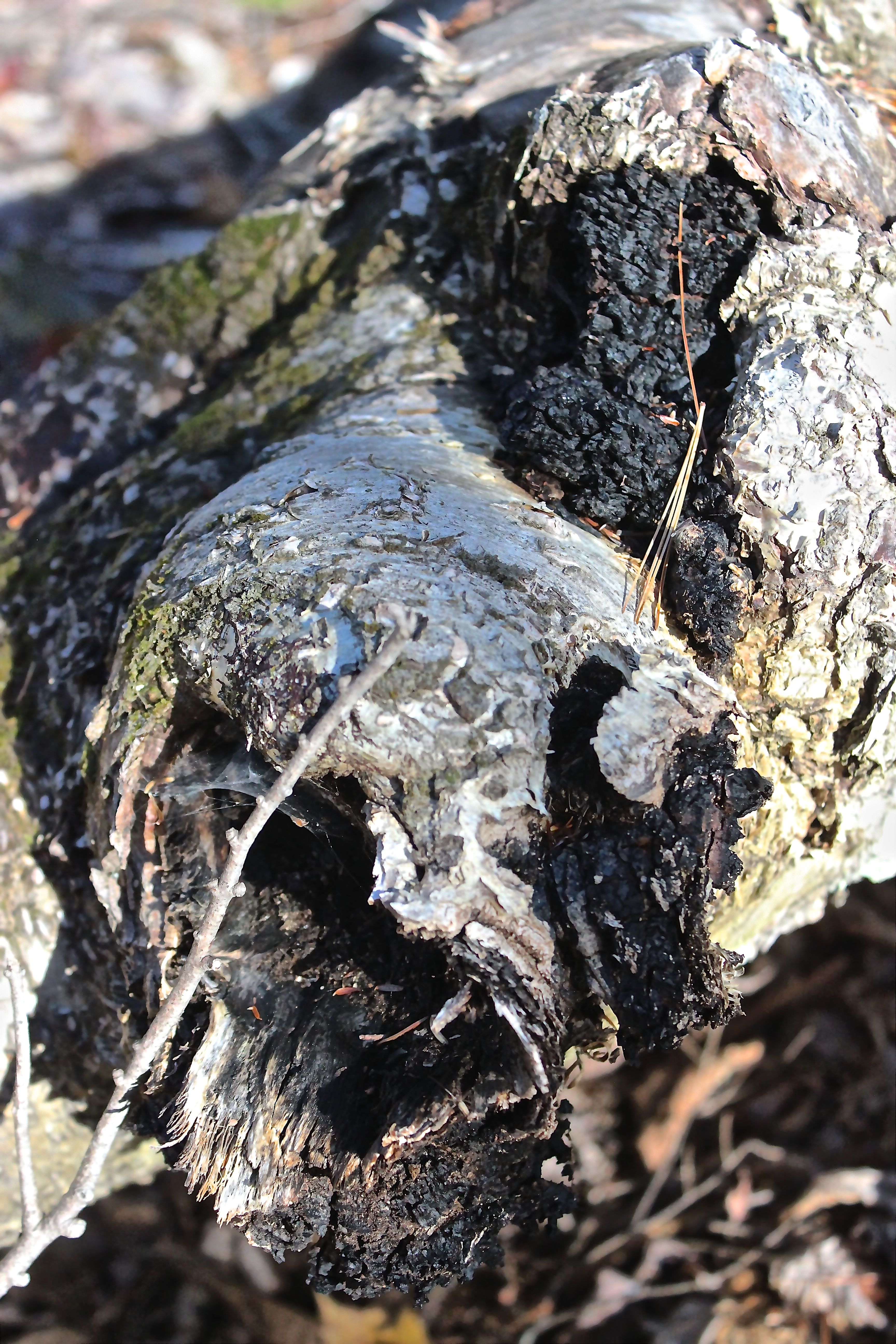
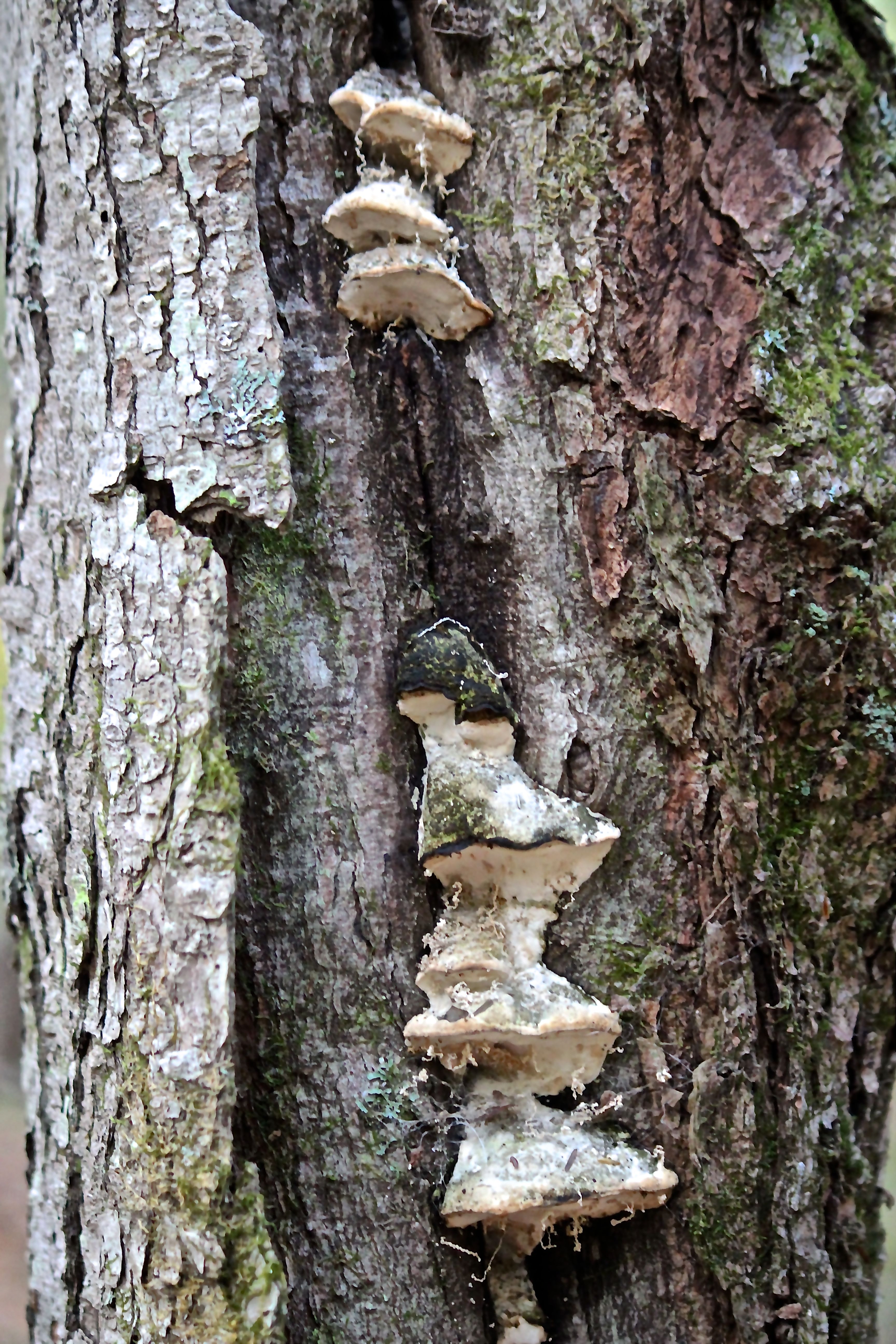
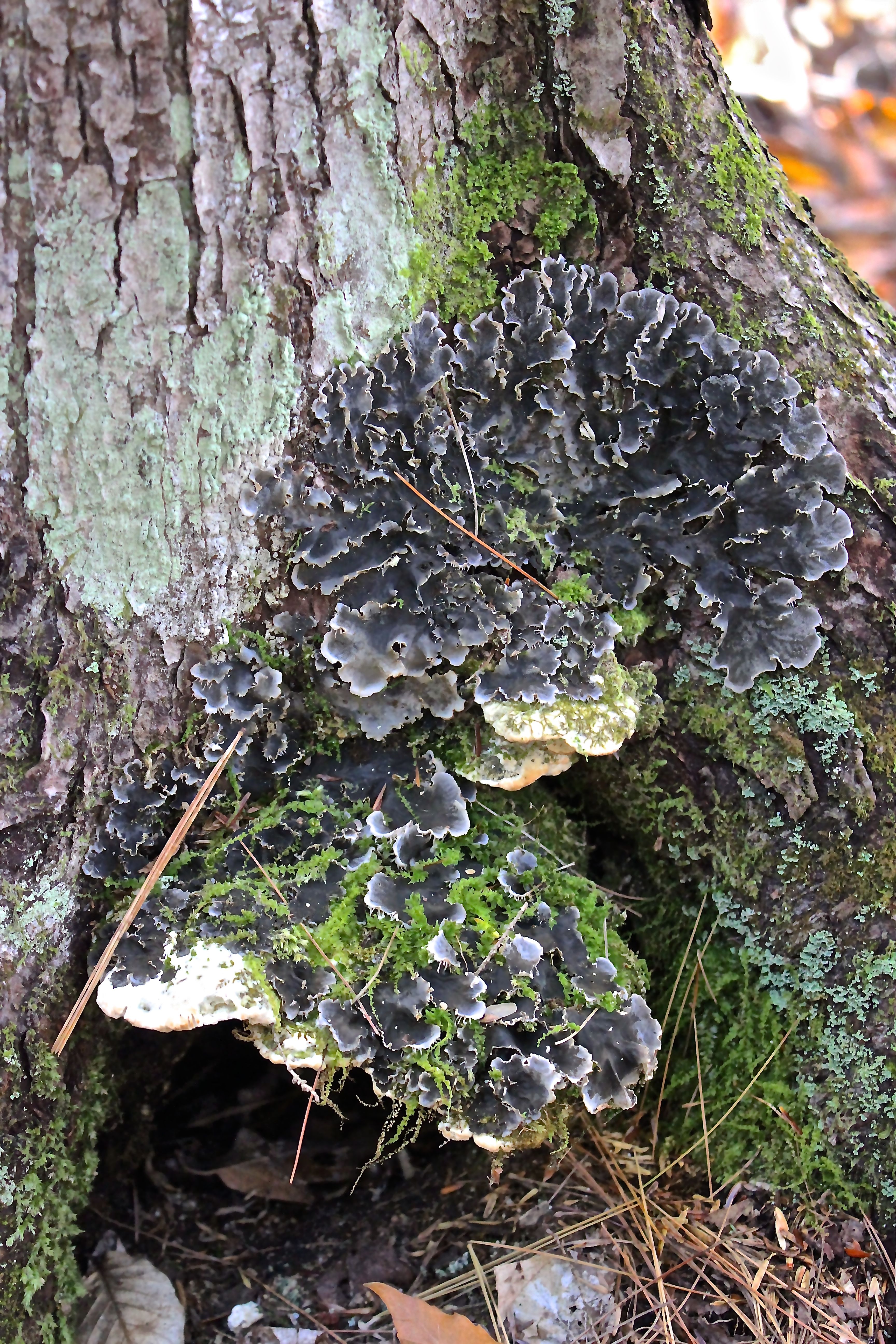
My eyes were drawn to all manner of life growing on trees that are past their prime, from woodpeckers and sapsuckers to mosses and fungi, including violet-toothed, birch and tinder polypores, plus Jack O-Lanterns that glow in the night.

old tinder conk

I found an older tinder conk springing forth with life as it gleans sustenance from its host,

chaga

chaga, that hardened mass of hyphae that is proclaimed to be life-giving,

mossy maple

mossy maple polypores growing in a wound, as is their preference,

mossy maple mushroom:field dog lichen

and more mossy maple, this time covered with the brownish-gray lobes of field dog lichen, which typically grows on the ground. Huh?  Creation at work. Soil forming on top of the moss covered fungi–certainly a fertile ground.

quartz

I found quartz where I expected to find only granite,

royal fern

a small royal fern holding court on its own,

sensitive fern

and the bead-like fruiting stalk of the sensitive fern.

 red squirrel

I saw plenty of birds, including a few ruffed grouse that I startled as they startled me. This and other red squirrels chatted insistently whenever I was near.

beech tree captures late afternoon rays

And I saw the sun’s rays reflected by the beech leaves.

trail 1

Sometimes following trails, other times bushwhacking, I wondered what will become of this forest.

tree opening

Open spaces invite pioneers to settle down.

Pleasant Mtn

In other places, those that long ago gained a foothold continue to enjoy the view–of Pleasant Mountain.

4 birches

Making my way homeward, I found myself in the presence of the birch clan–paper, yellow, black and gray–how sweet it is.

fleeting moments of fall foliage

As the foliage enjoys its final fleeting moments, I intentionally move from wondering what’s next to enjoying what’s now.