Unexpected Finds On The Trail

Being an overcast morning, it was rather dark as we hiked up a mountain through a hemlock forest, but that was fine for we began our journey on a trail new to us and it was on the cool side and best of all, not buggy.

And then, we reached the ridge and found ourselves on another trail we had hiked only once before in early spring. Suddenly we could see the sky. It was what was at our feet, however, that mattered most to My Guy.

His beloved blueberries were ripening. And tasted like sunshine despite the clouds above.

For Lowbush Blueberries, they were quite plump and oh, so plentiful. But we hadn’t come prepared to pick. And so we decided we’d move on. That is, until My Guy looked at his watch and realized it was noon, and wondered if we might want to find a spot in that vicinity to eat our sandwiches.

It was then that we both knew our lunch bag would become his blueberry bag.

Did I mind, he asked. Not at all. It meant I could wander and wonder and take in all that surrounded us.
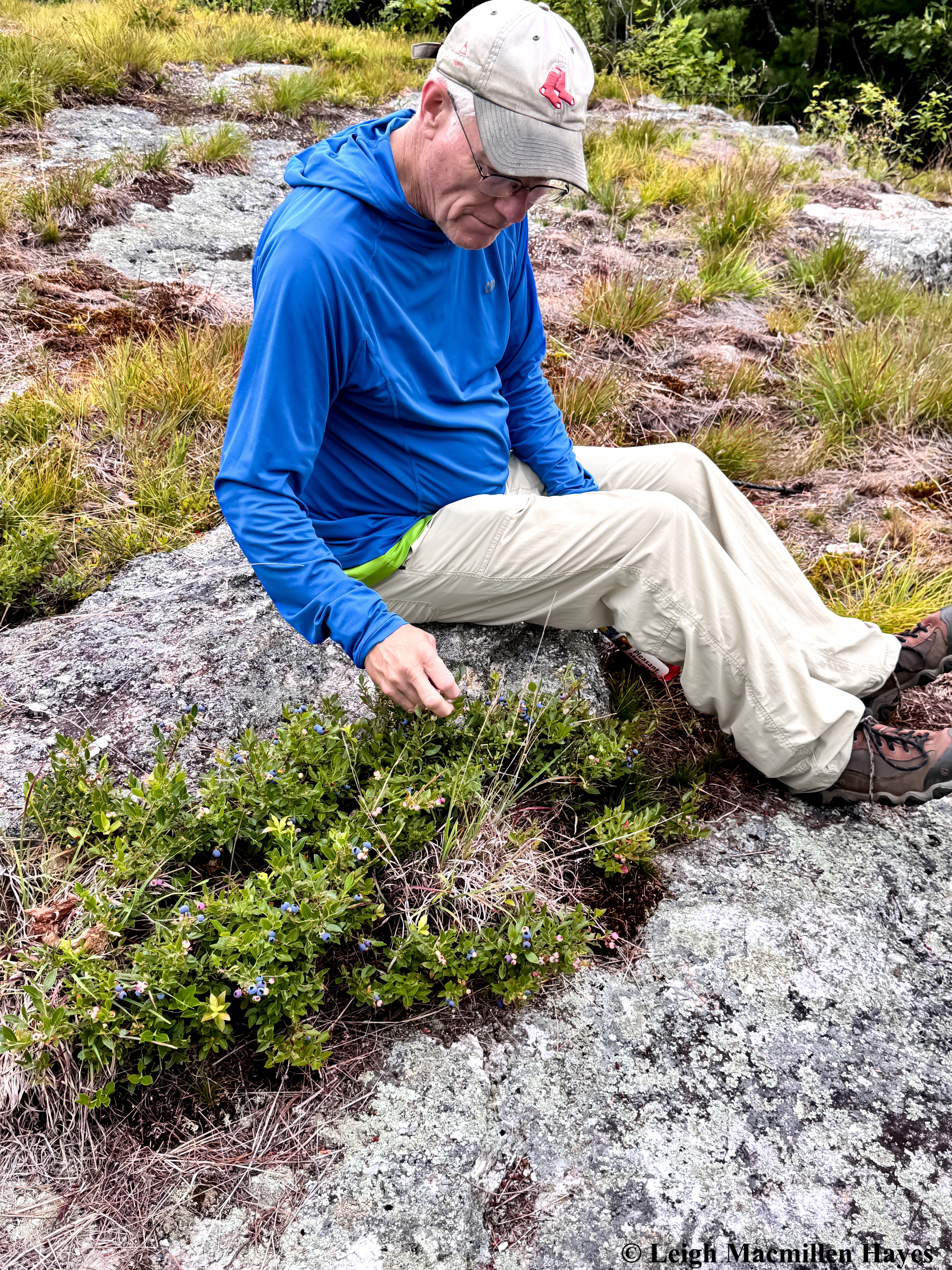
And so he found lunch rock, chosen supposedly for the view in front of us, which included the Saco River, but also for the treats by his feet–an appetizer for sure.

After we finished our sandwiches, he took the bag and let the picking begin. I took my camera and let the sightseeing begin.

Pixie Cups and British Soldiers and so many more lichens grew among the mosses by my feet and I could have spent hours taking inventory.

I also found a sample of aged Red Fox scat that thrilled my soul. Back at home, my neighbor and I have watched our resident foxes pass through our yards and woods frequently, but being able to identify others who had previously traveled the route we chose today made me happy. My Guy was rather nonchalant about it, but I really wanted to add this specimen to my collection. He, however, had beat me to the bag and didn’t think adding scat to blueberries was such a keen idea. Oh bother.
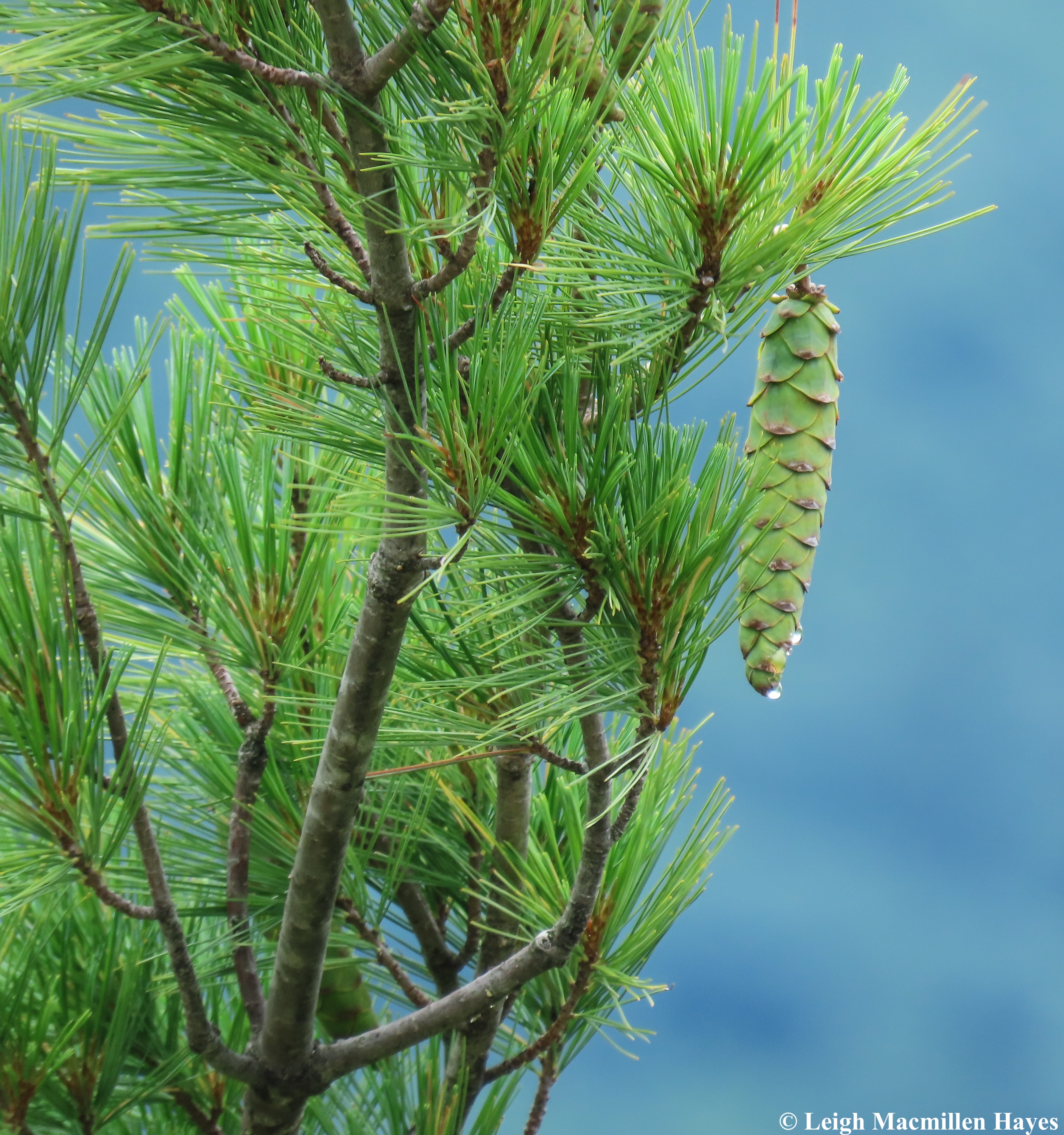
There were White Pine pinecones to admire as well. It takes these cones two years to mature, thus reminding me that this will be a mast year, which the Squirrels and other Rodents will appreciate as they develop caches in their pantries.

I also watched Turkey Vultures ride the thermals, their wings raised in that telltale V as they teetered about in the sky.

And then My Guy called me over for he had made a friend. A small grasshopper hung out on his leg for a few minutes while he continued to pick berries.

But it was the call of another bird, that drew me away again, back to the edge of the ledges.

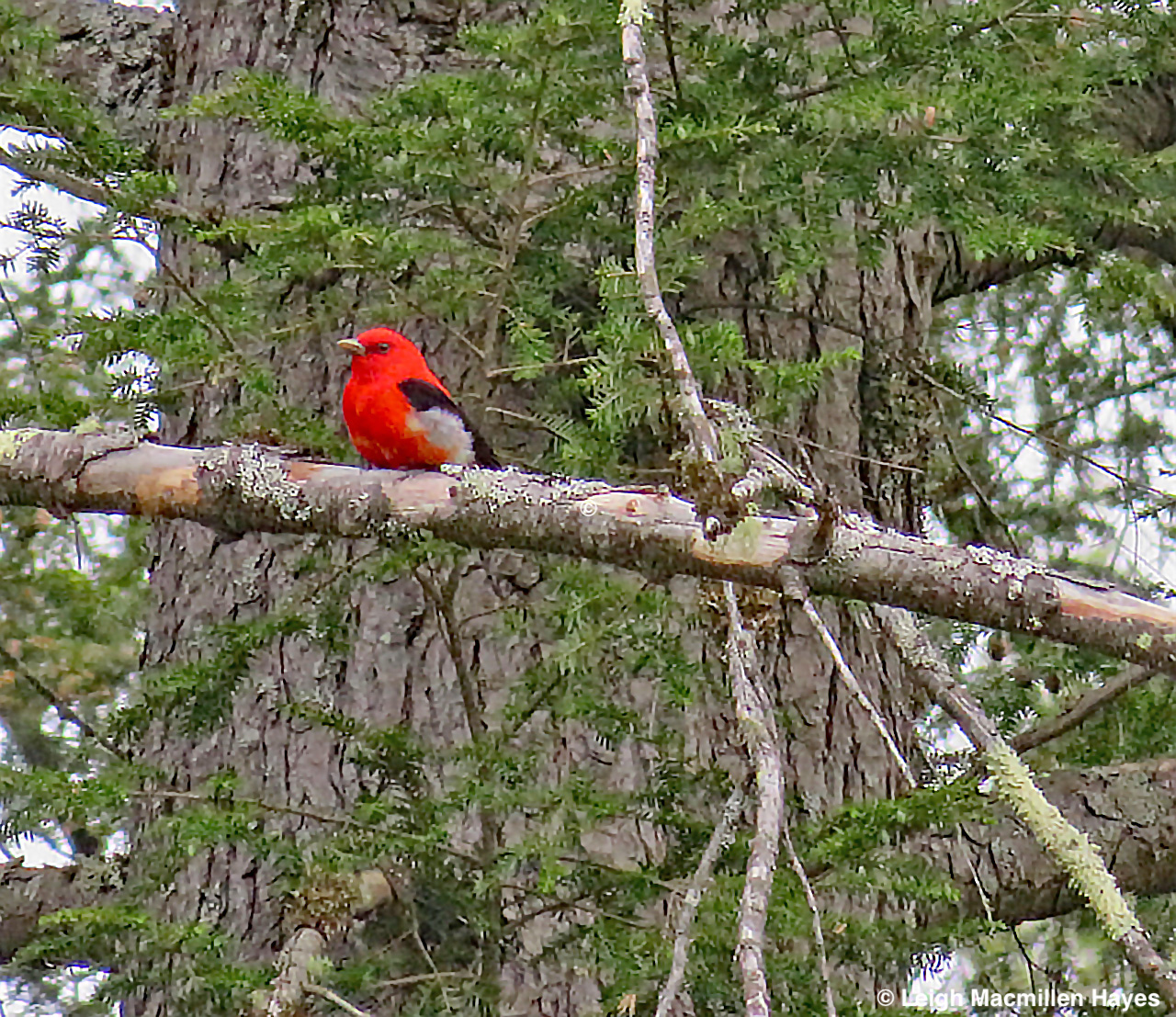
When we’d first started today’s hike, I heard the chick-burr call note of the Scarlet Tanager, but never expected to spot it a couple of miles later.

And tada, there is was, posing and calling in front of me.

As much as I wanted to call My Guy over to see, I didn’t want the bird to fly, so I took a hundred photos. Well, maybe not quite that many, but you know what I mean.
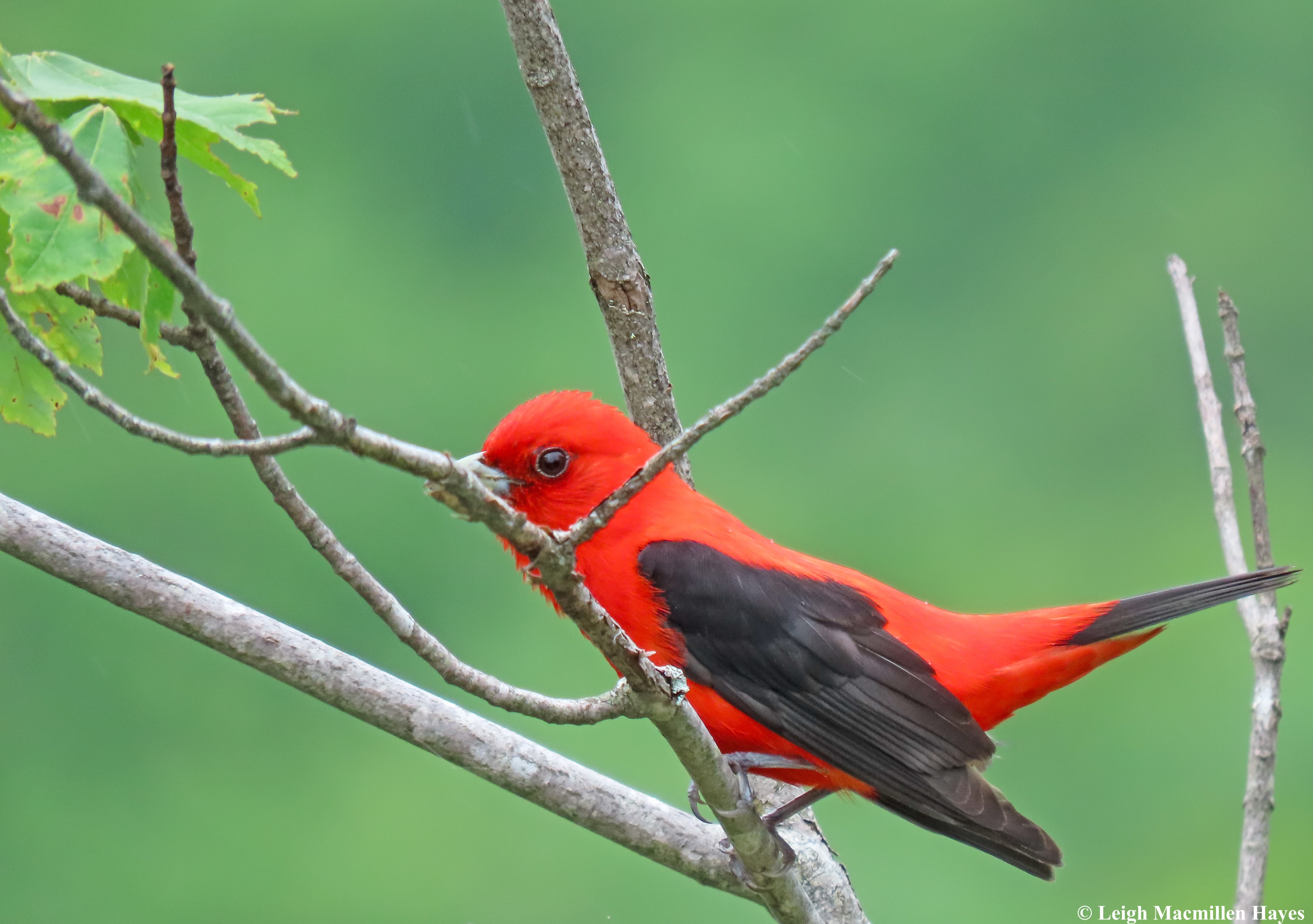
That beak–what a chomper. And that scarlet body. Those jet-black wings and tail. It was as if he was dressed to impress. I was impressed.

And only wish he’d brought his bride out to say hello. But . . . perhaps she was somewhere on a nest. Or tending their young, though we didn’t hear any sounds that would indicate there were hungry mouths to feed.

Still, he was sooooo handsome.

When the bird finally disappeared from my sight, I showed My Guy what he had missed. He was also in awe.

He picked for a little bit longer and I continued to wander, but the rain we knew to expect and had seen in a distance finally found us, so we eventually headed back into the woods to finish our hike, but first I stopped to admire a St. John’s Wort bejeweled with raindrops.

When we got back to the truck, it had stopped raining. I suggested that we had two choices for a late dessert–the brownies we had packed or a stop at Sweetie Pies Ice Cream. He agreed that the latter sounded ideal.

At the end of the day, he had his blueberries.
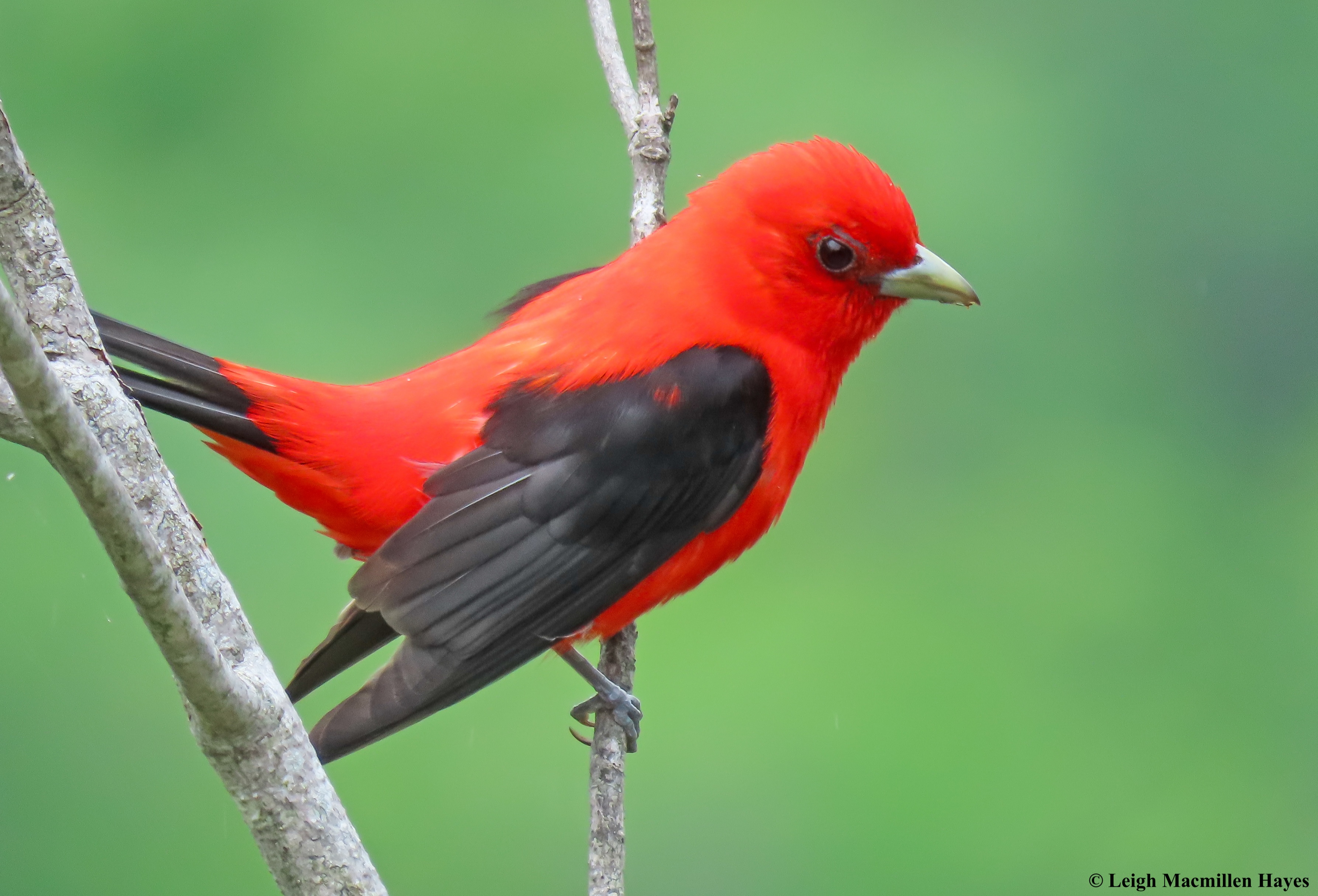
I had my time with the Scarlet Tanager. (Plus the fox scat that he pooh-poohed.)
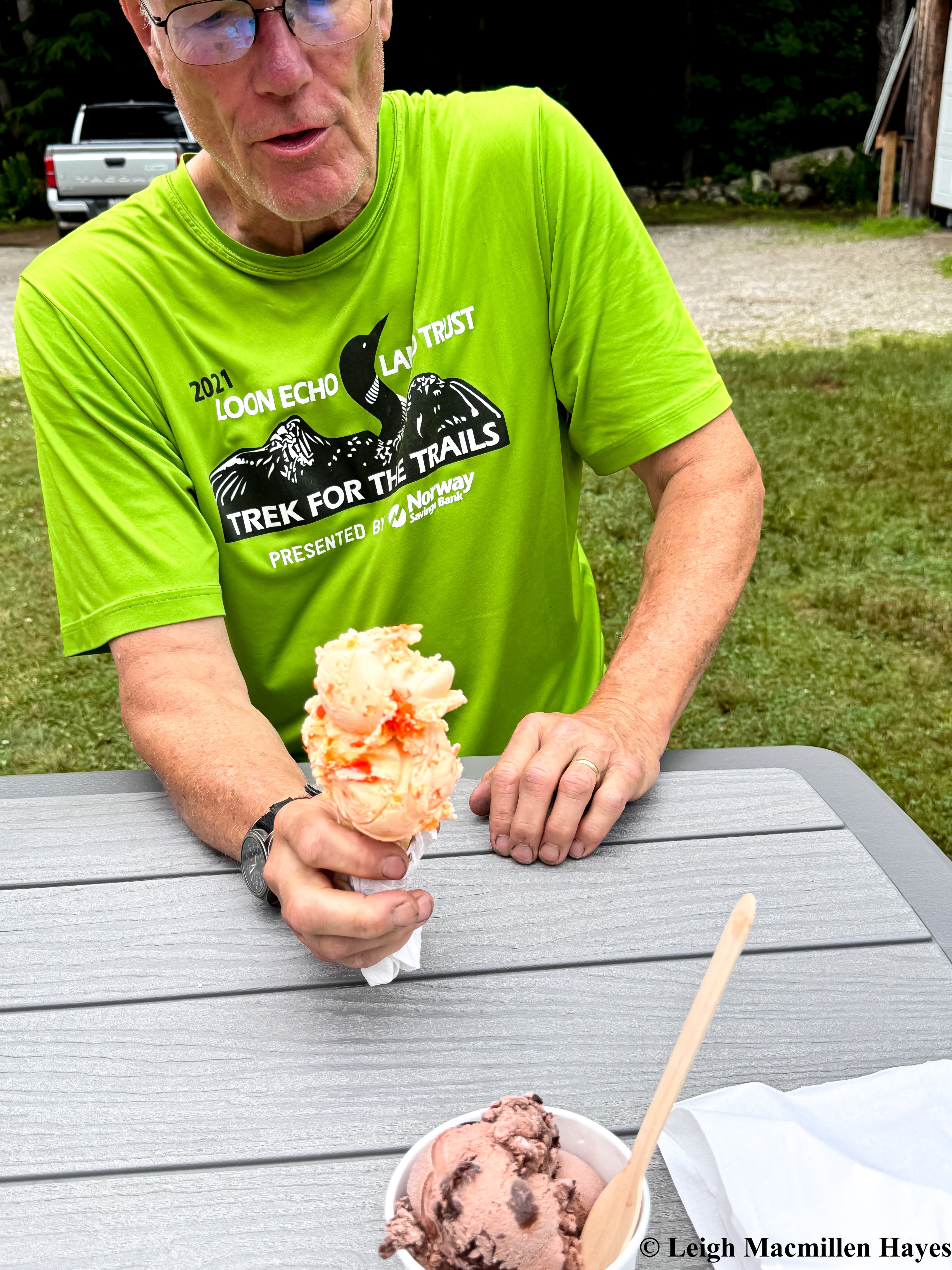
And we both had ice cream to celebrate our unexpected finds.

Pineapple Orange for him. Death by Chocolate for me.

With Focused Attention

Someone recently commented that I am so fortunate to have a job that I thoroughly enjoy and she was right. I am extremely grateful and love that once again I can share the outdoor world with others who have the same sense of wonder . . . as well as questions. And eyes to see and brains to share.

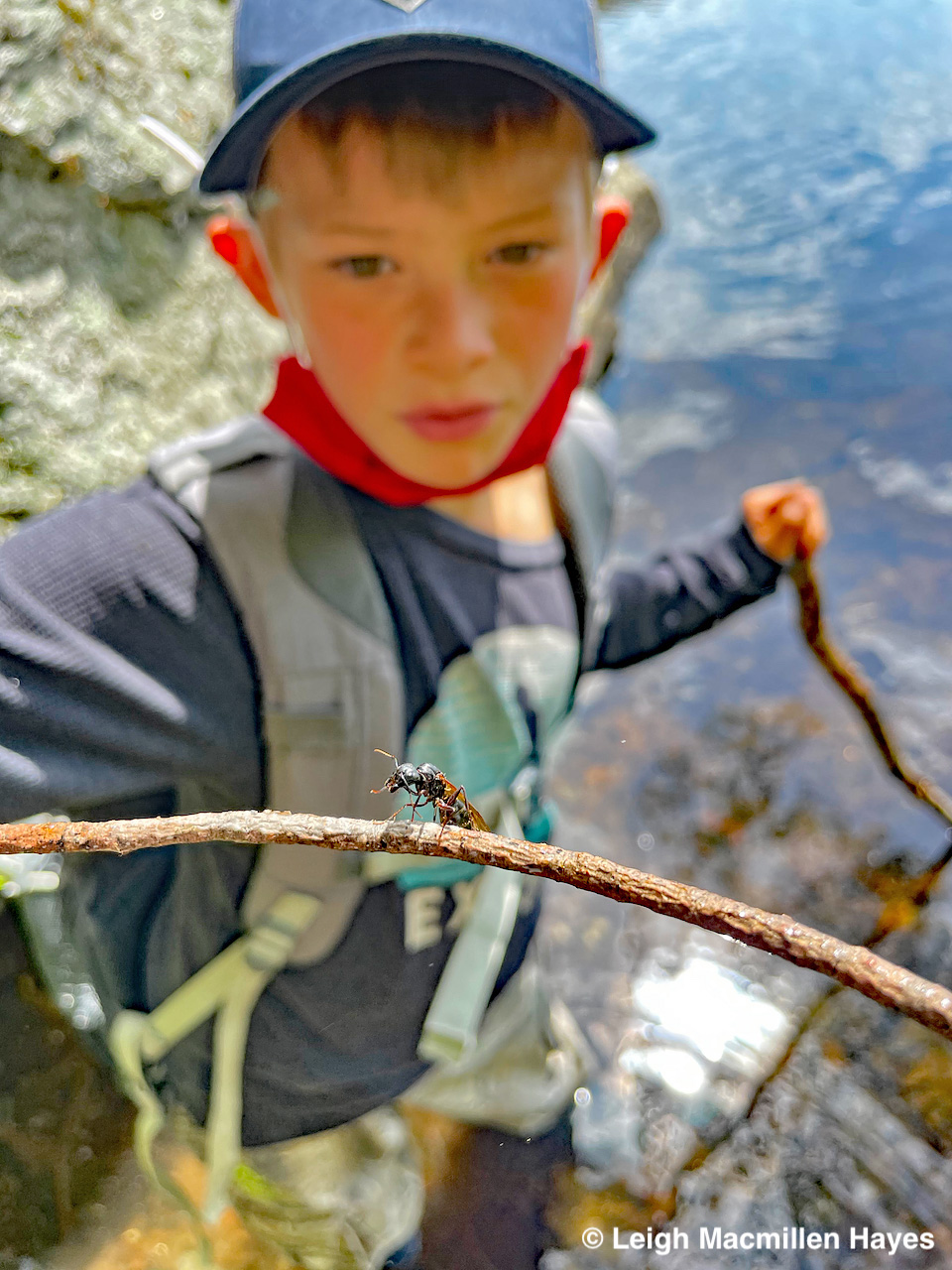
And so it was that this week began with an attempt to watch dragonflies transform from aquatic swimmers to aerial fliers. I was so certain. Twice. Yes, twice I dragged people to a spot where a friend and I had had the honor of watching such an emergence exactly one year ago. And twice I was foiled. We all were. But . . . no one complained because there were other things to observe. And this young man is one fantastic observer. He has eagle eyes, for sure. As he peered into the water, he spied a winged ant walking along a stick.

Pulling the stick up, he took a closer look and though at first I thought it was an Alderfly, he was indeed correct in calling it an ant.

Notice the elbowed antennae? And those mandibles?

Unlike termites, Carpenter Ants don’t eat wood, but they do damage it as they excavate to make room for more ants. So what do they eat? Scavenged insects (sometimes you might see them dragging an insect home), and honeydew secreted by aphids feeding on vegetation.

Black Carpenters, such as this one, occur in forested areas like we were in, and nest in dead wood of standing trees, fallen longs, and stumps. Though no one wants them in a home, they do play an important role in the ecosystem as they help decompose wood back into soil. Plus they consume many forest pests.

Enough ant love, I suppose. Why this one was walking along a twig in the water we’ll never know. Unless one of us accidentally kicked it in as we looked for dragonfly nymphs. If that was the case, the ant was rescued thanks to the one with the eagle eyes.

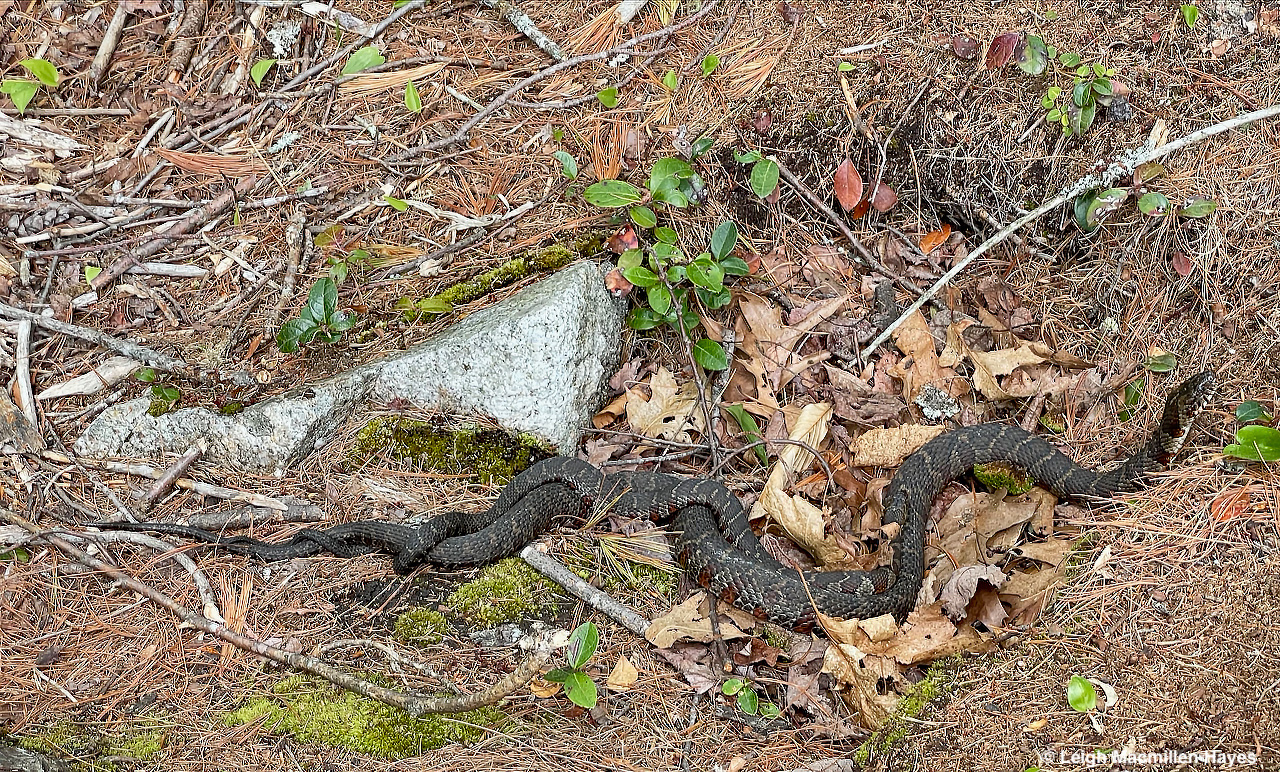
Our attention then shifted right, where we’d spent a couple of days observing one or two small water snakes basking on logs. Each time, we were certain they were young snakes. Until they weren’t.

Suddenly, one larger snake came onto the land and as we watched it met the smaller snake.

And then the smaller climbed atop the larger and we thought perhaps it was a mother/child relationship. None of us had ever witnessed it before and so it was most definitely a learning.

Together, they twisted and turned as the smaller snake’s tail wrapped around the larger body.

Every once in a while their heads would twitch.

Upon doing some research at home, we all learned that indeed we’d been watching the canoodling behavior of Northern Water Snakes. She is the larger and would have reached maturity at three years of age; while smaller males do so by twenty-one months. It is his great hope that she’ll produce live young by the end of the summer. I suppose it’s her hope as well.

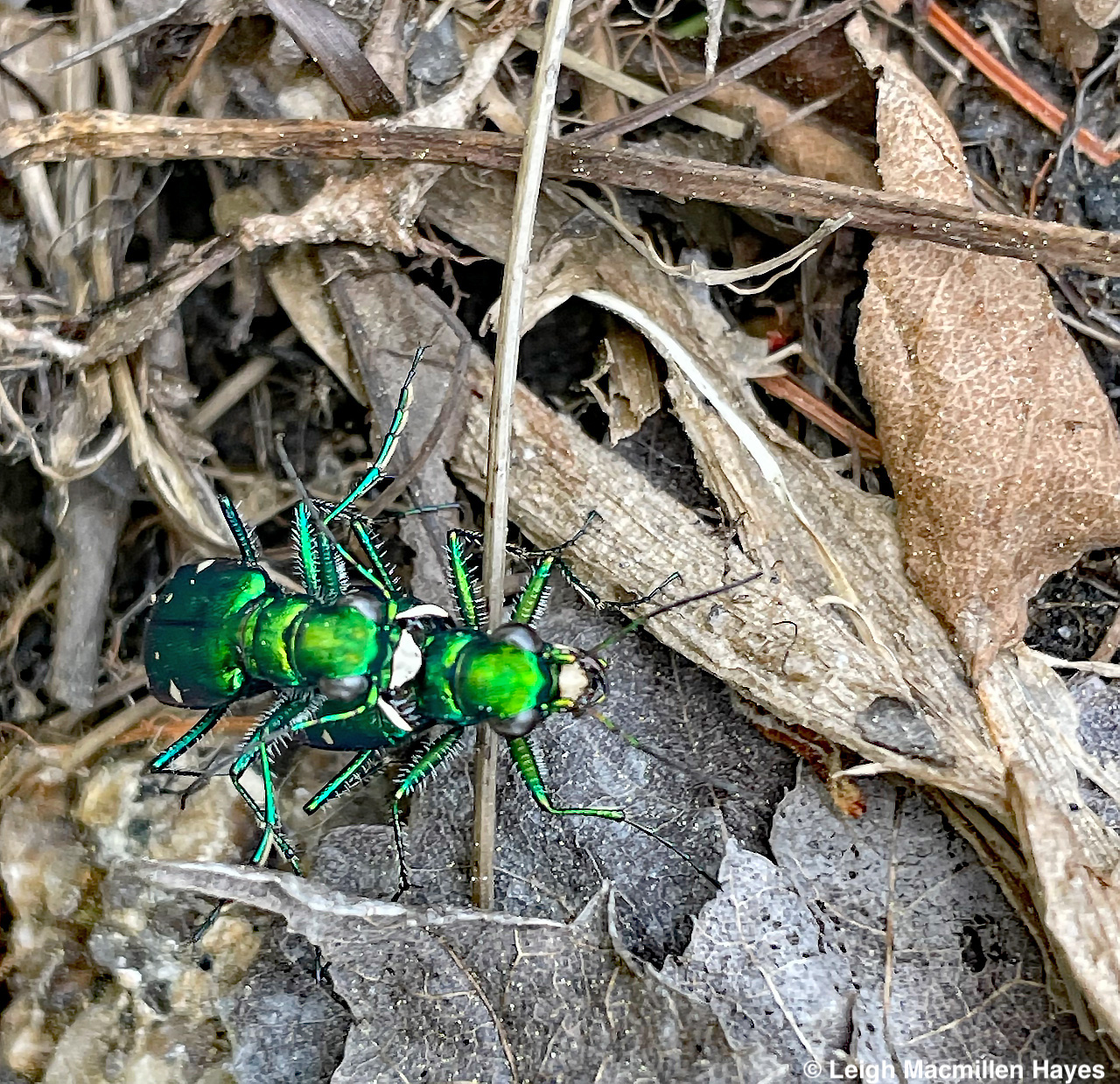
Another day and another shift in attention, again beside water where while still searching for emerging dragonflies, a spot of metallic green that moved quickly across the ground turned out to be two more canoodlers, this time in the form of Six-spotted Tiger Beetles. Typically, these beetles fly off as we approach, but their passion for each other slowed them down a wee bit. The white at the front of their faces–their mandibles. They’re beneficial because their diet consists of yummy delights like ants, aphids, fleas, other insects, caterpillars and spiders, which they consume with those formidable sickle-like jaws.

Shifting our attention to the left, we found what we sought. Or so we thought. Yes, an emerging dragonfly, this one in the skimmer family. You can imagine our excitement and we felt like expectant mothers. Or at least midwives as we offered encouraging words.

But all the while as we stood or sat and watched, we had questions. We knew that the conditions had been right for the larva to crawl out of the water and onto a piece of grass.

The adult form had begun to emerge through a split in the thorax.

But what stymied us: By the clearness of the wings and colors becoming more defined on the body, this insect had been trying to emerge for longer than the usual couple of hours it takes. The abdomen should have been completely out of the exuvia, and wings still cloudy. Why was the abdomen stuck?

Every time the dragonfly moved its legs, we were certain the moment was upon us when we would finally see it pull the rest of its abdomen out of the shed skin.

Sadly, two hours later, no progress had been made and we had to take our leave. I returned the next day to find the same dragonfly had given up the struggle. What went wrong? Oh, we knew it would become bird food, but still . . . it left us wondering and in a way we felt bad that we hadn’t intervened and tried to help it.

Shifting locations and attention once again, at the end of the week a bunch of us met at 6:30am and it took a while to get out of the parking lot (I can hear your guffaws!) because high up in hemlock a dash of brilliant red meant we were in the presence of a Scarlet Tanager. For the next three hours, we birded, and in the end saw or heard 34 species. All are recorded here: https://ebird.org/atlasme/checklist/S88671412

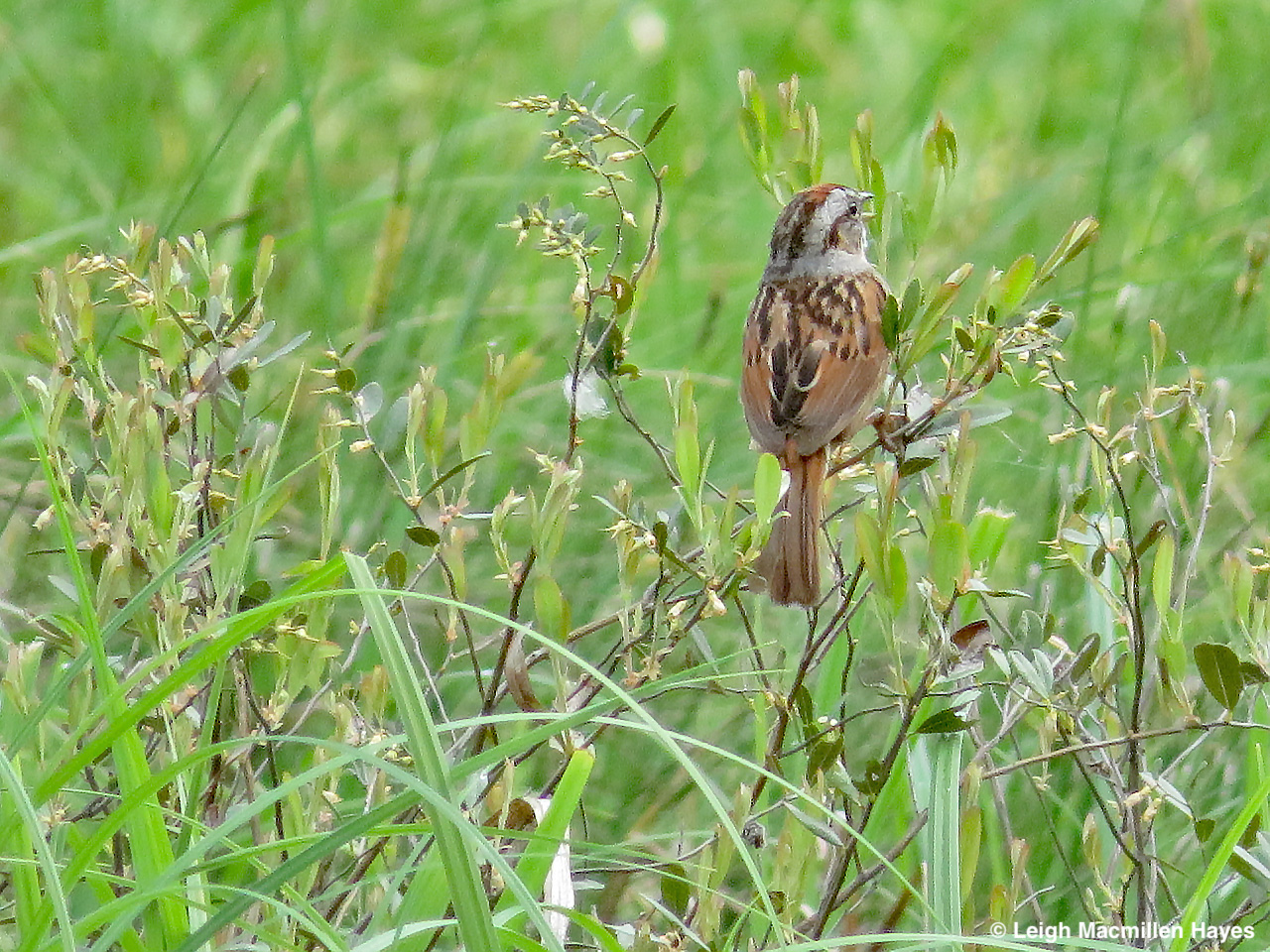
In the same place, but down by the brook, for eventually we did leave the parking lot, a Swamp Sparrow entertained us for quite a while. We felt honored, for often we might not see them as they like to forage among the aquatic plants, but given it is nesting season, we were treated to a song.

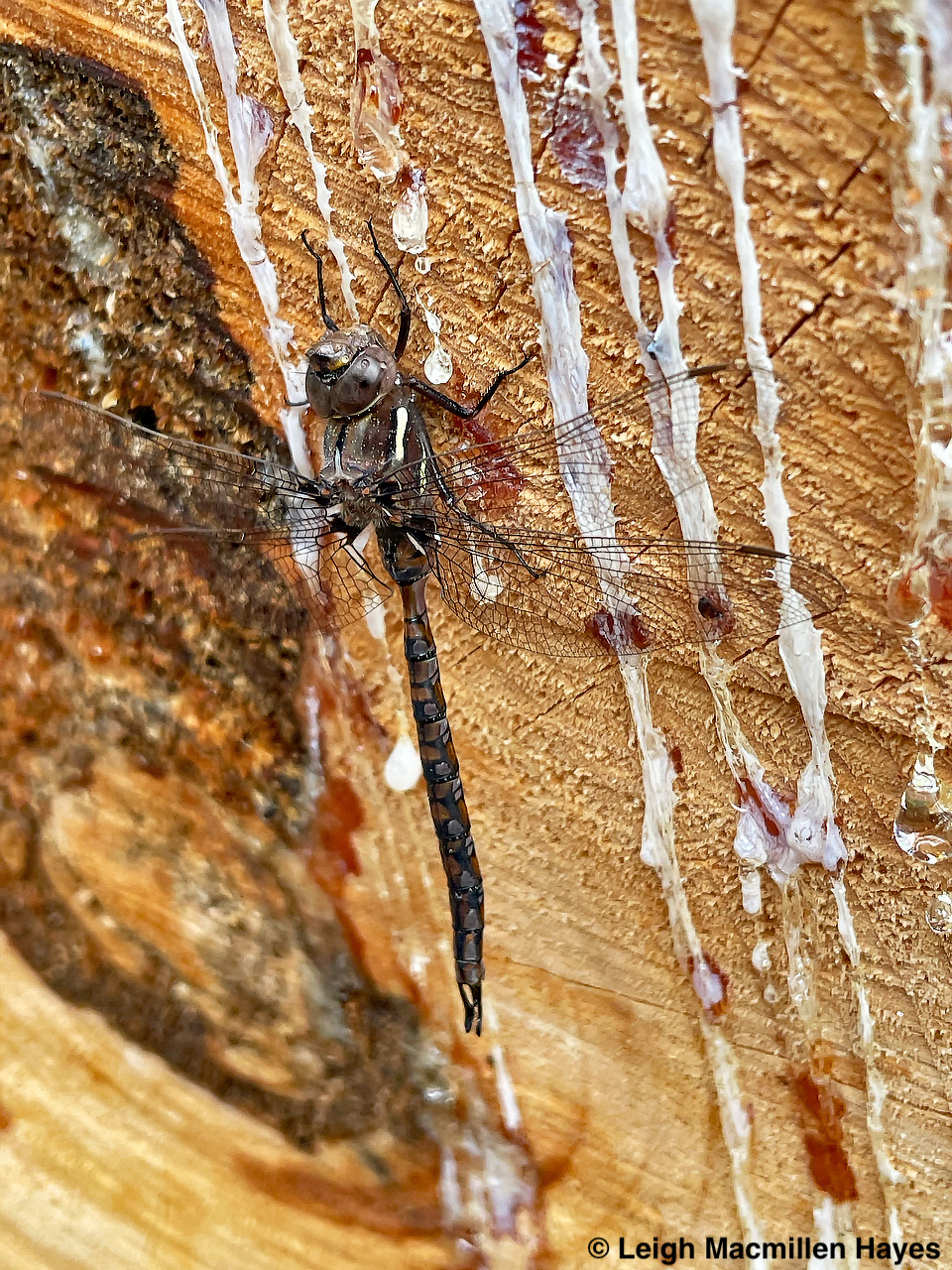
Though we tried not to shift our attention too much from the birds, occasionally our Nature Distraction Disorder bubbled up, and how could we resist the sight of a Stream Cruiser upon a tree oozing with sap. It wasn’t seeking the sap, but rather, we may have discovered the spot where it had spent the night, given that it was early morning, and damp at that.

One more shift, this last at the end of the day at the end of the work week. This time a co-worker and I were at a sandbar by the outlet of a river into a pond, and a Greater Yellowlegs Sandpiper had great reason to stare with concern.

Not far above, atop a Silver Maple snag, one with intense focus watched.

Yeah, I love my job and the people I get to share it with and all that we learn along the way. This was only a brief smattering of this week’s wonders and all that we saw.

I do think in the end, however, that my young friend’s eagle eyes that spotted the Carpenter Ant in the water at the start of the week were the most focused of all.