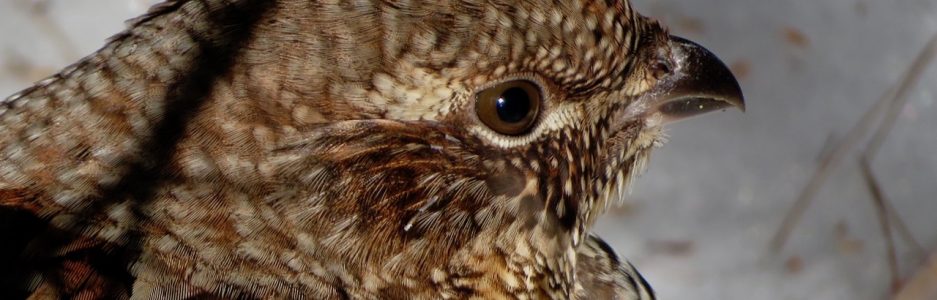
In case you are missing snow, I thought I’d bring you some today. But only because about a month ago, the day after Palm Sunday and a major snowstorm here in the north country, My Guy and I went to Diana’s Baths in Bartlett, New Hampshire, to hike.
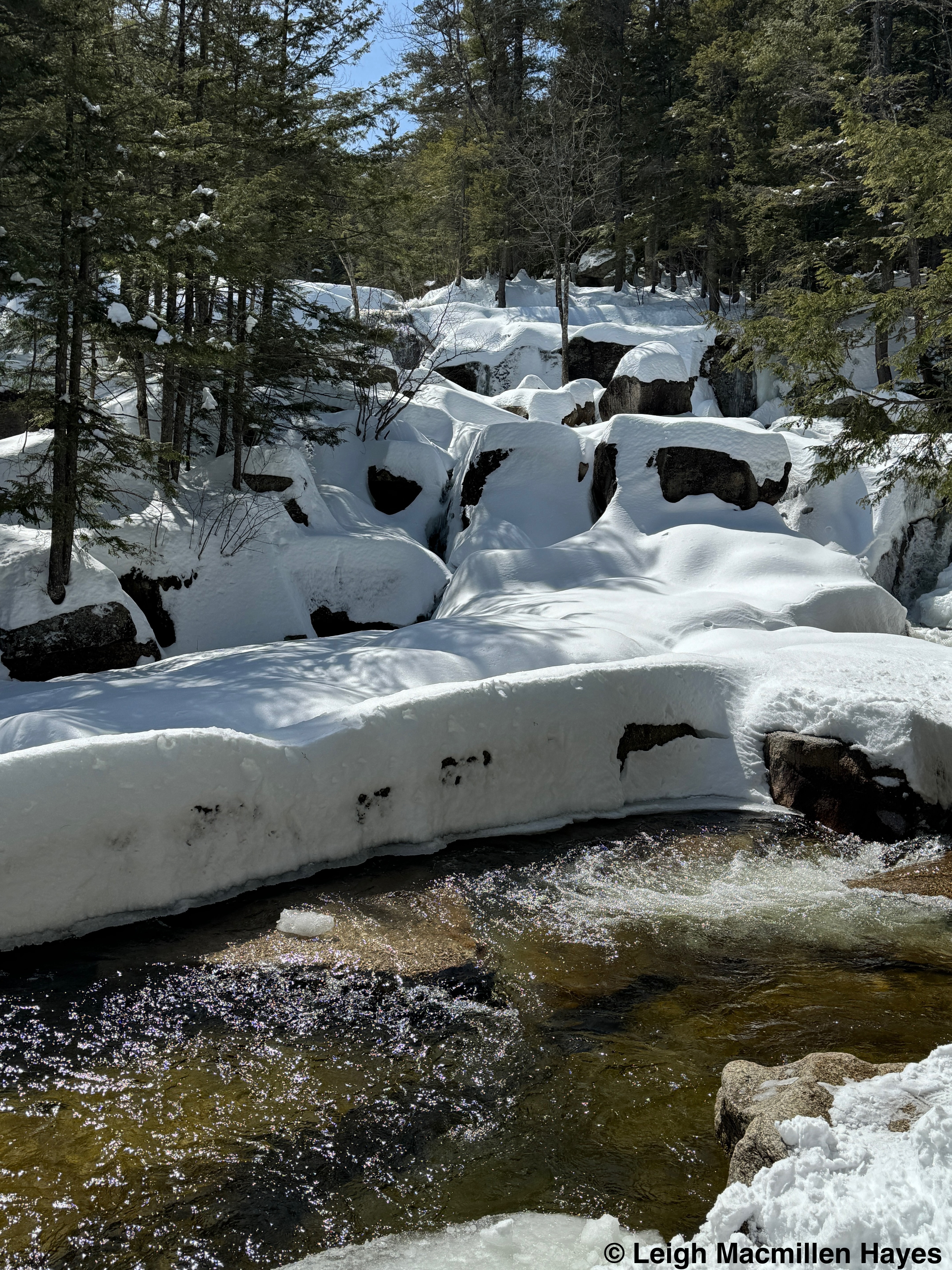
It was the first of two storms in a matter of less than two weeks that dropped almost two feet of snow each and transformed Lucy Brook into a winter wonderland. Here’s a bit of history from northconwaynh.com: In the 1860s, after building a house and barn on the banks of the brook, George Lucy built a water wheel powered sawmill. In the 1890s, George built a 12-room boarding house for tourists to visit the site. In the 1930s Chester Lucy built a concrete dam with a water feed and turbine system to replace the water wheel used to power the sawmill. Both the rooming house and sawmill were eventually sold to the US Government and have become part of the National Forest land. Due to the deterioration, the buildings were eventually removed from the site in the 1960s. Remnants of the site can still be seen today including the old cellar holes and parts of the dam system, feed tube and turbine gears used to power the sawmill.

Today, it looked much more summer-like in appearance, but still so much water flows due to snow melt in the surrounding mountains, and it’s BRRRRR.
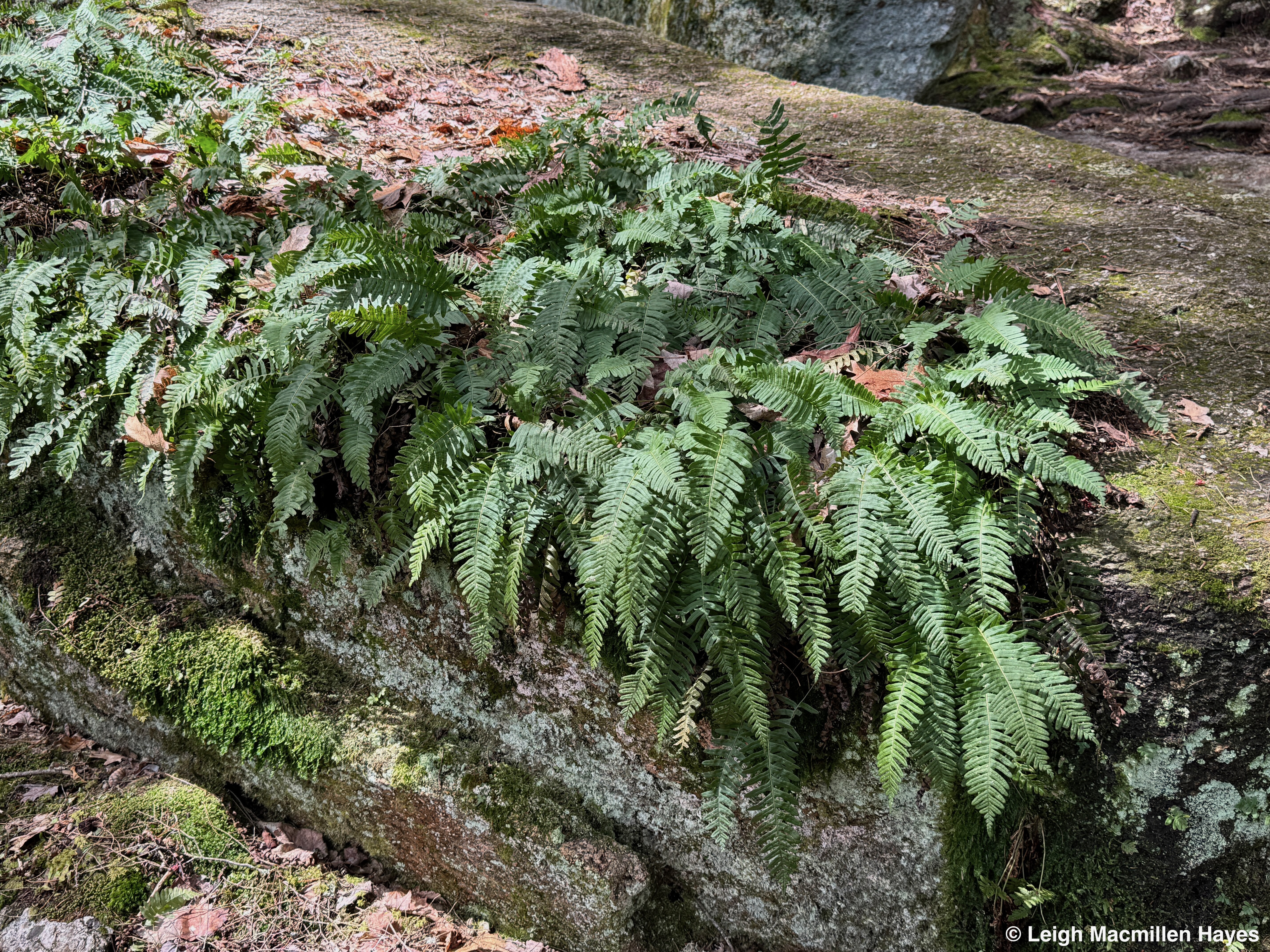
As we ventured forth, I spotted many a boulder experiencing the bad hair day of Common Polypody Fern and every once in a while try to teach My Guy a wee bit about a species. I tell him that someday he can co-lead a nature walk with me. He, of course, guffaws. But ask him what poly and pody mean and he may remember many and feet, for the fern fronds grow from creeping rhizomes.

Last year’s sori (group of spores) were still visible on the underside of some leaves. The sori located in rows on each side of the mid-vein, are circular, orangish brown and not covered by tissue (indusium).

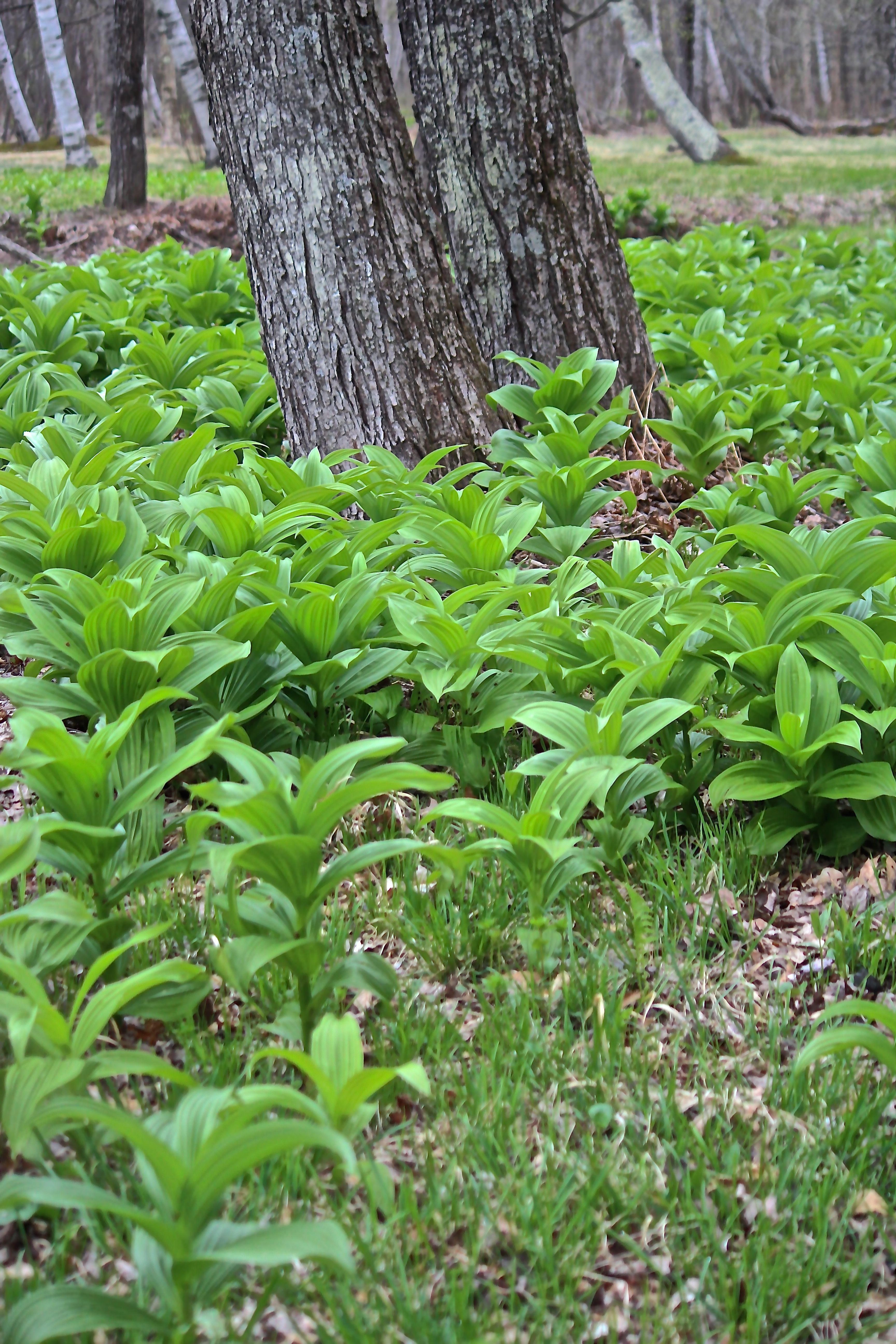
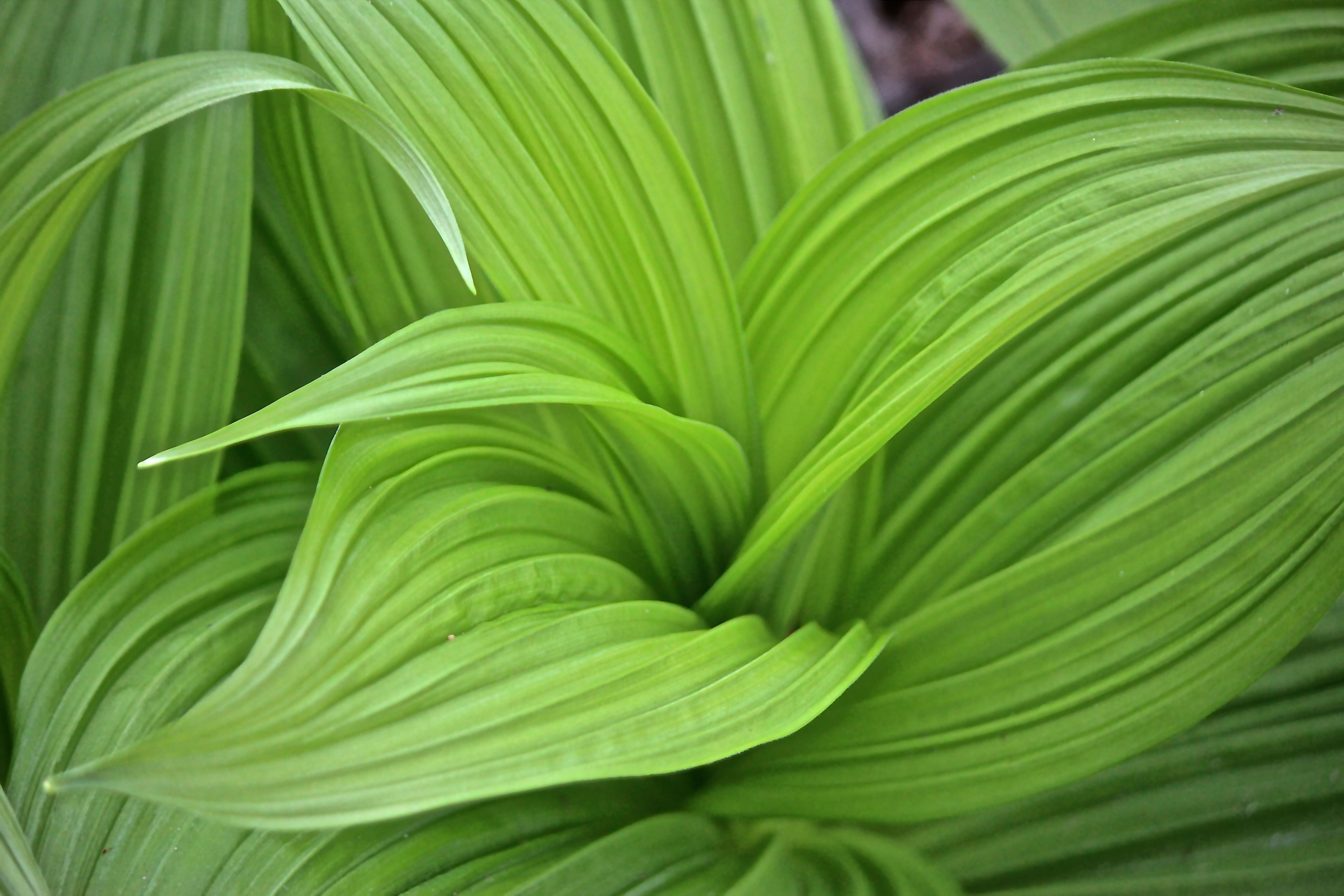
Because we were in a damp environment beside the brook, False Hellebore leaves, with their pleated presentation, brightened the morning. And held raindrops signifying yesterday’s weather.
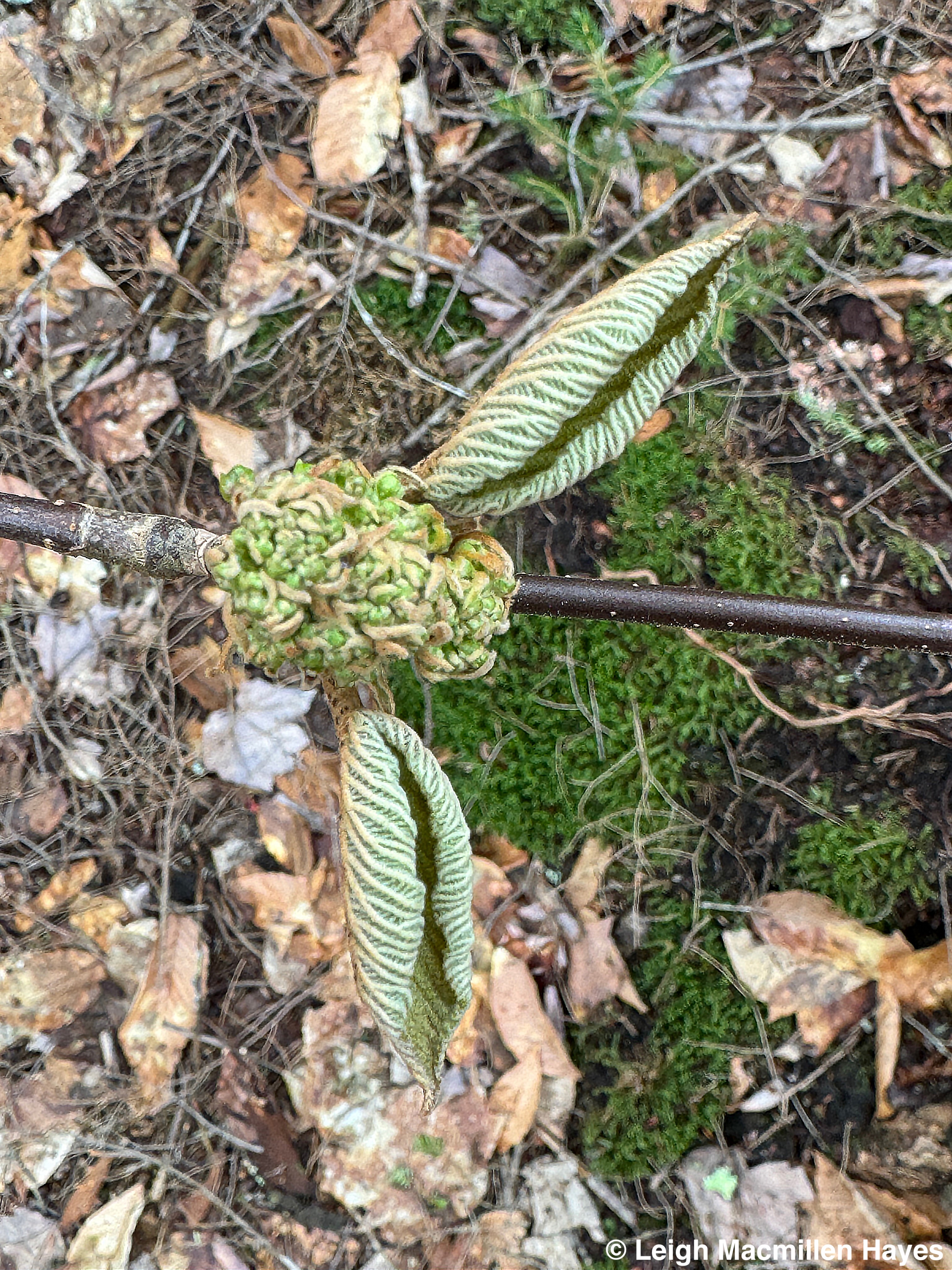
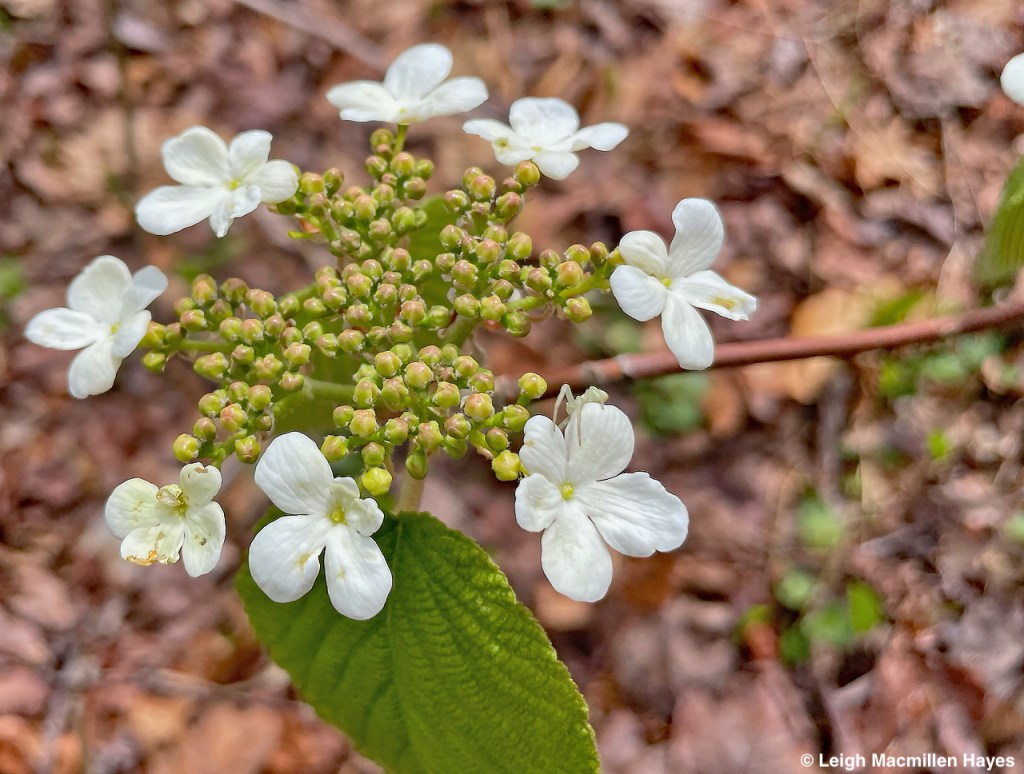
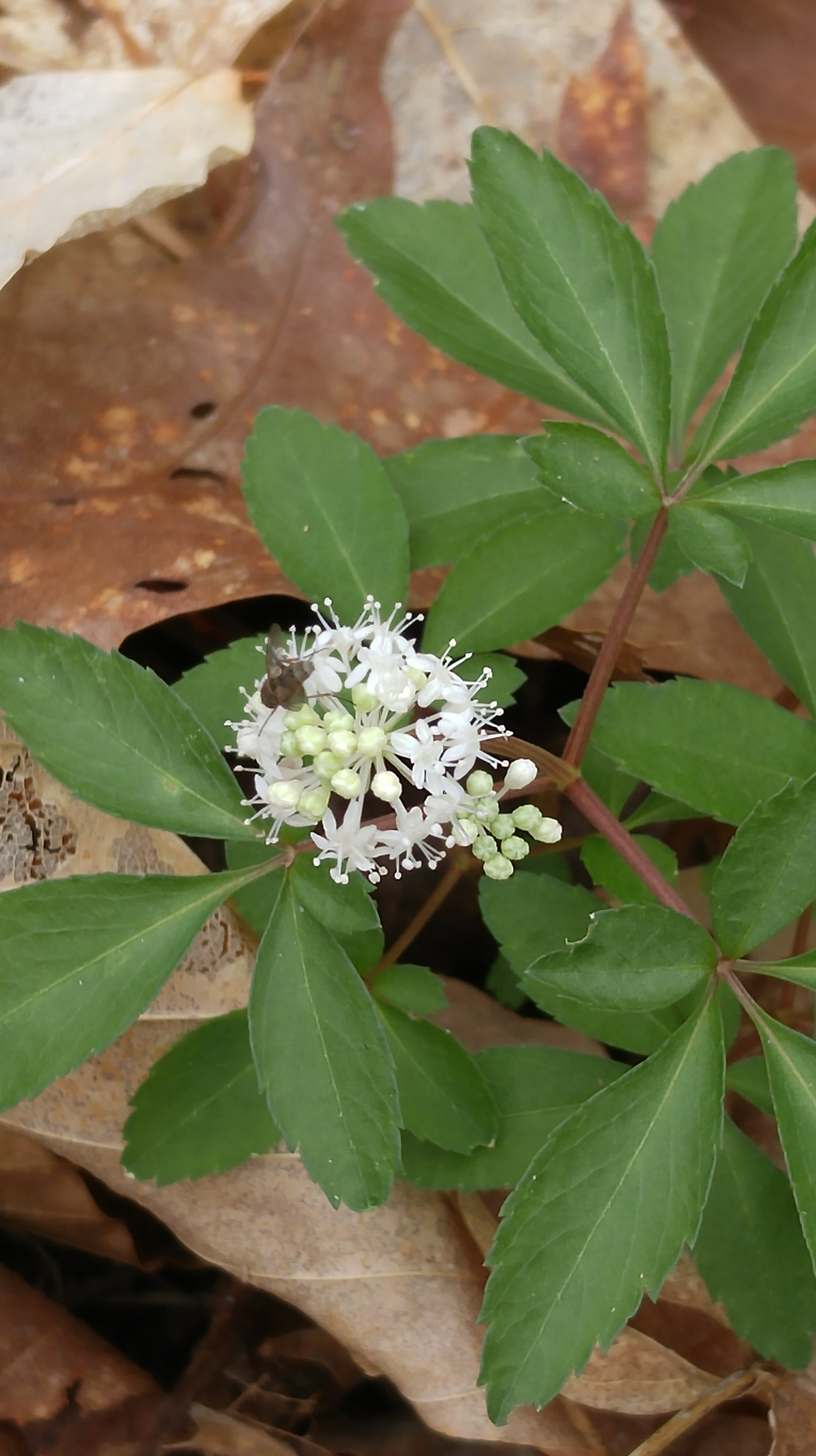
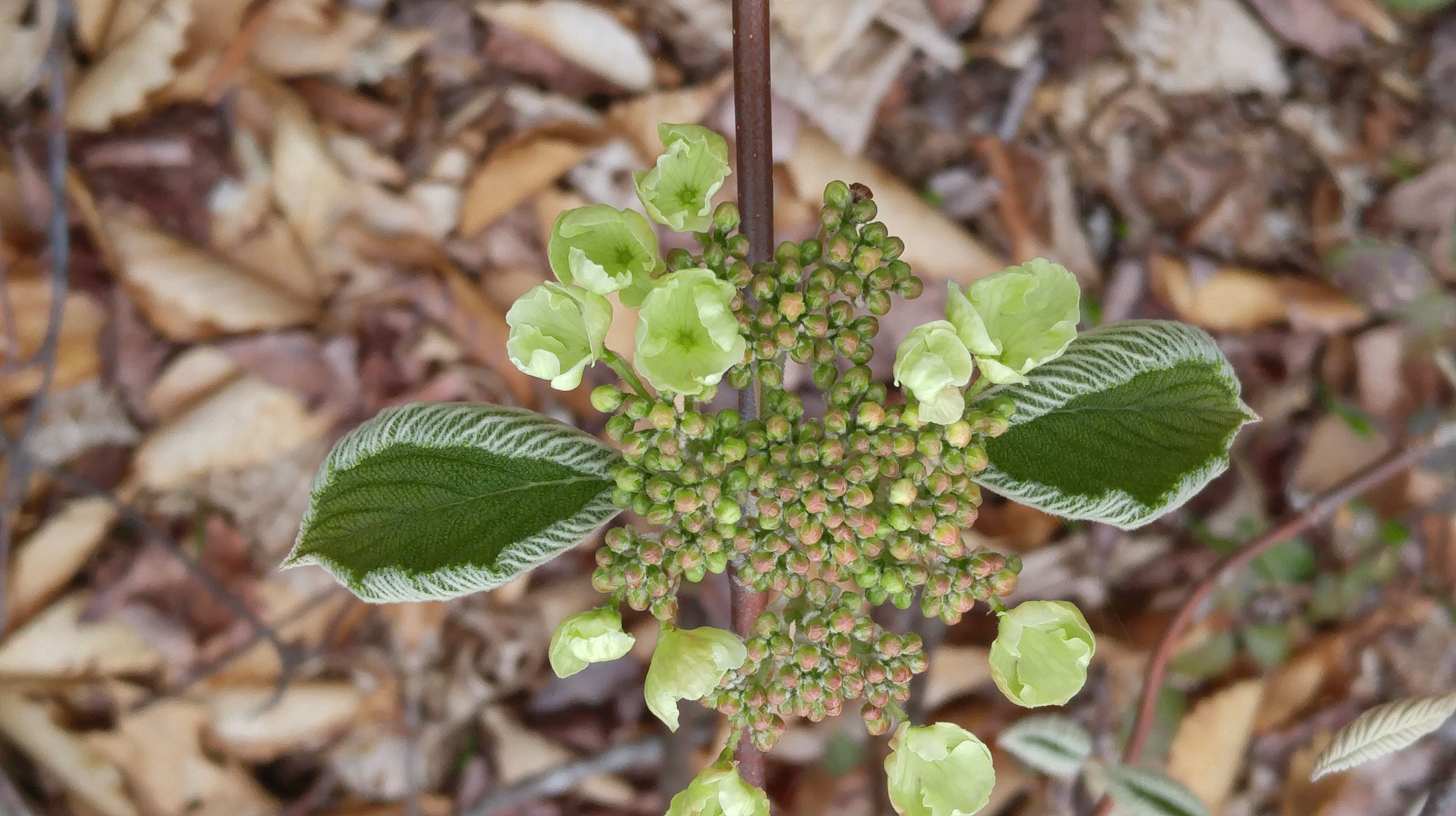
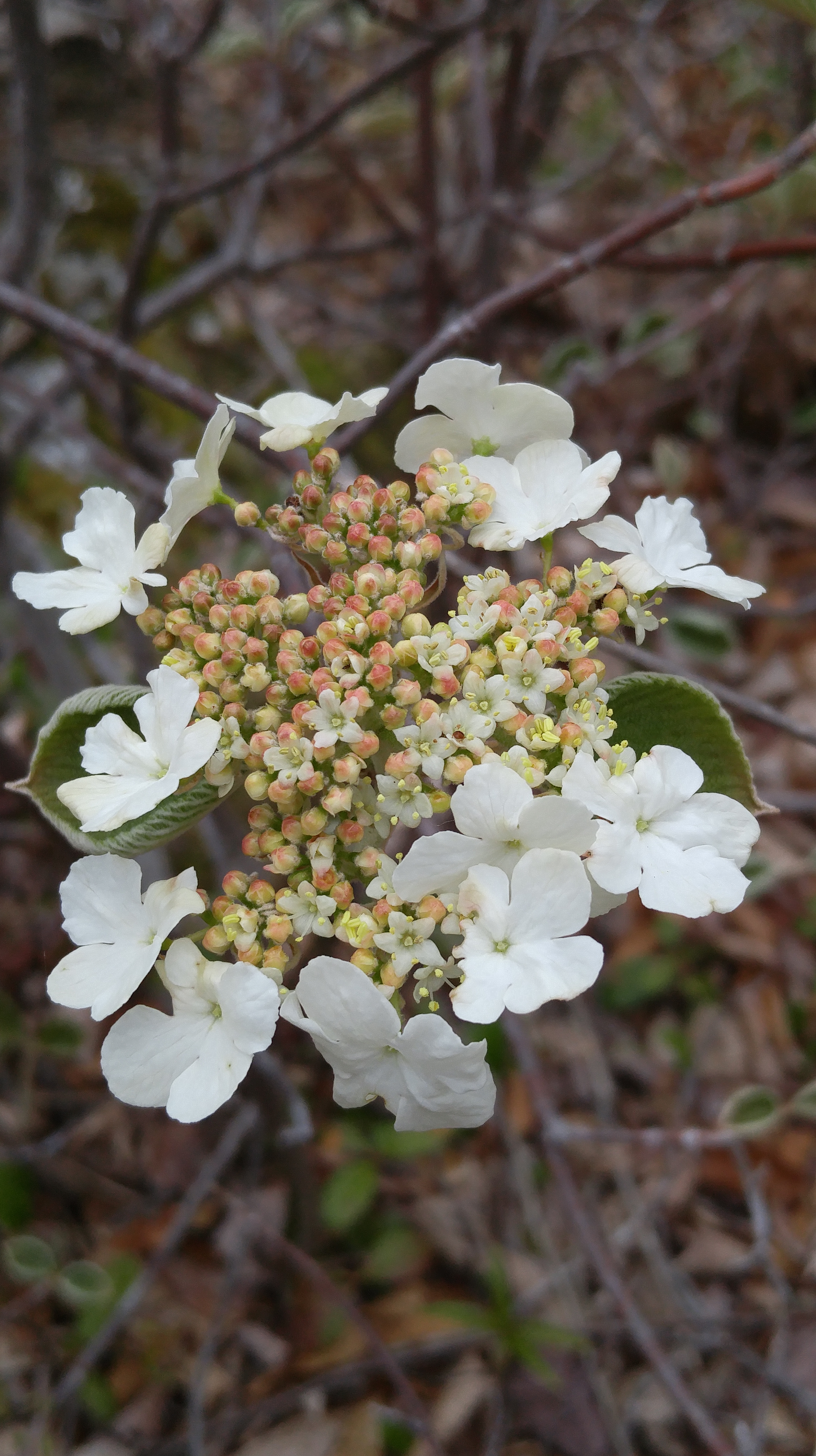
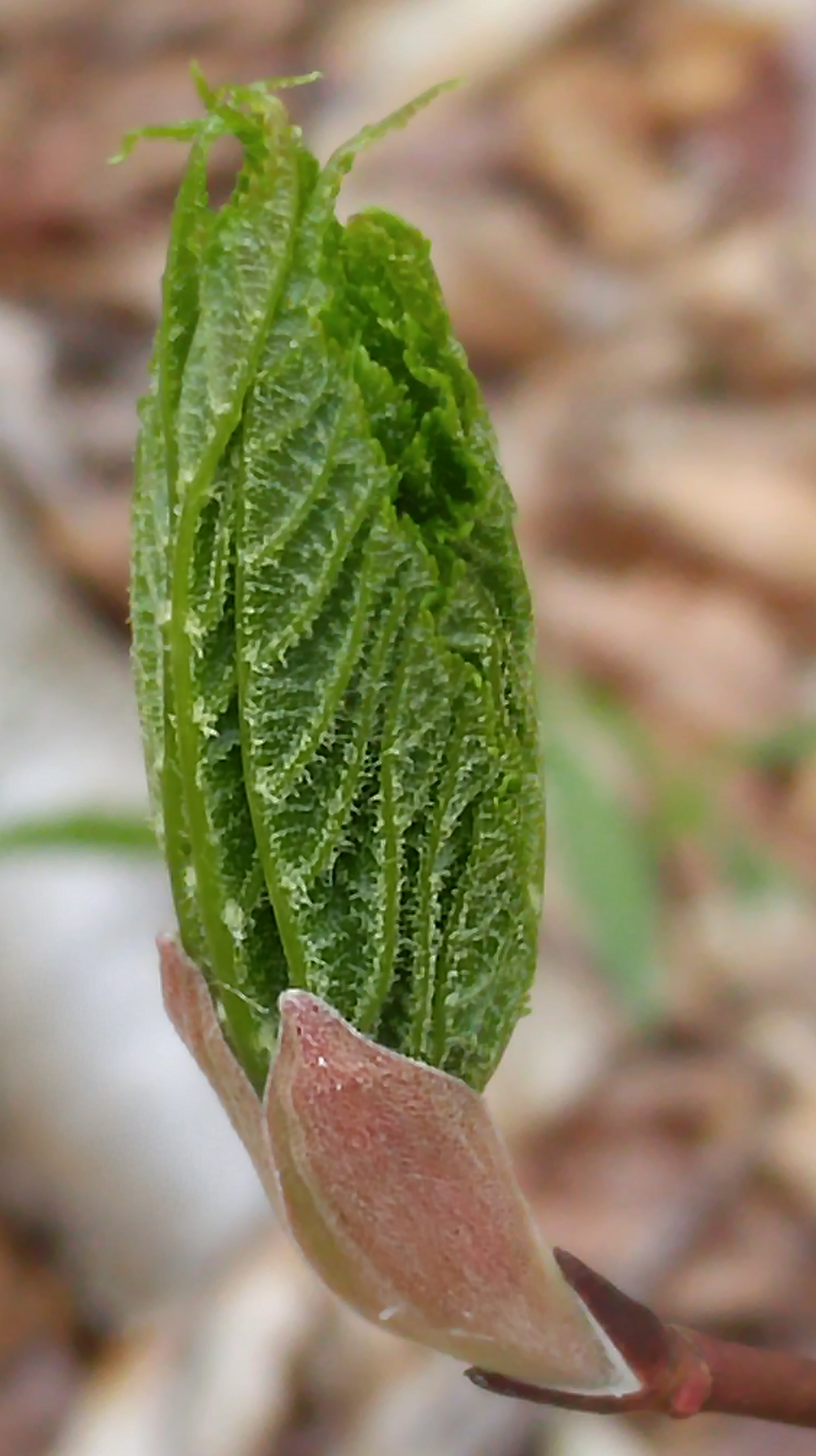
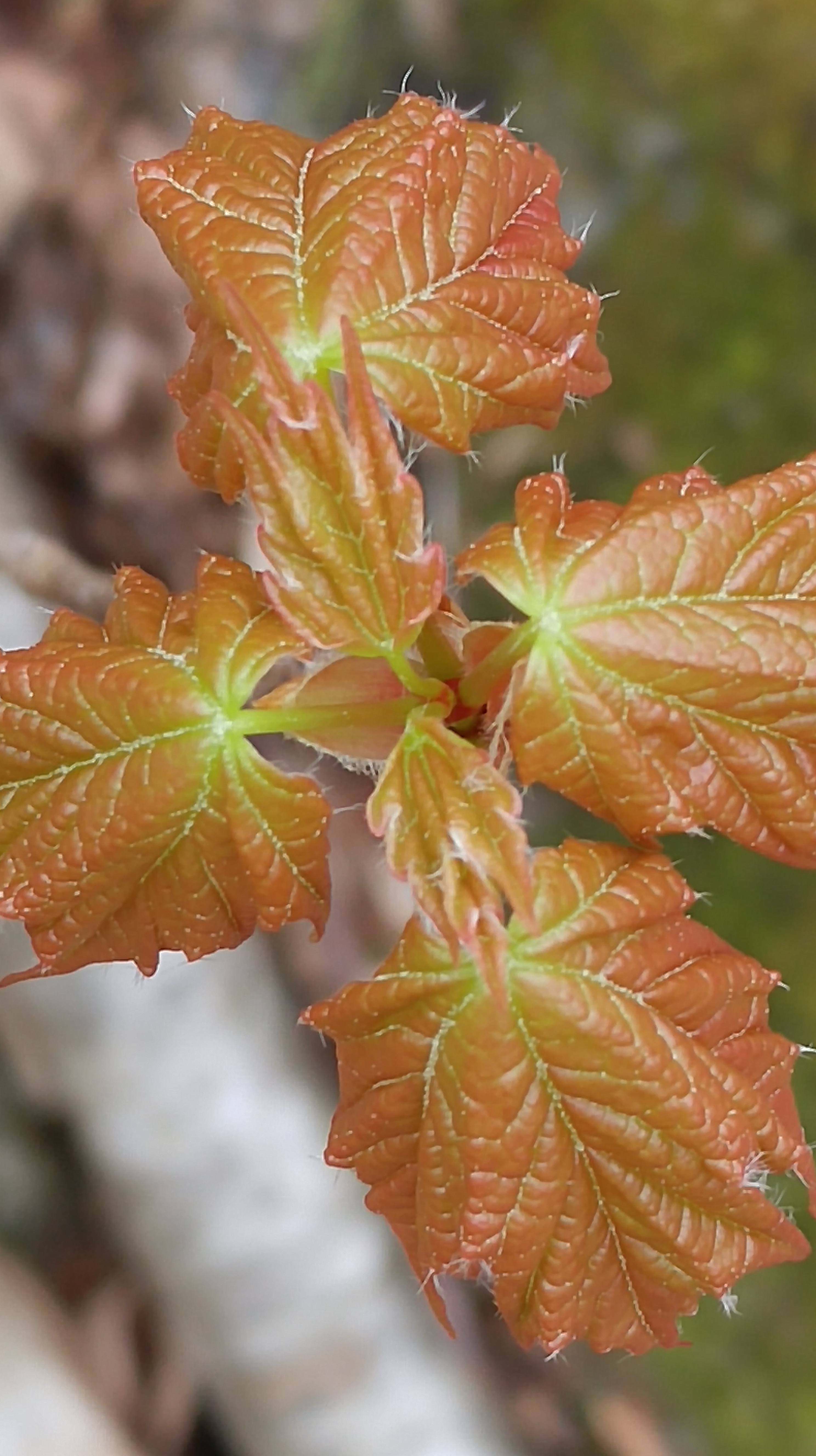
We also encountered numerous Hobblebush shrubs, some even featuring flowers preparing to open into what will be a fantastic display on another day. On this day, it was enough to see their accordion leaves beginning to unfurl, and those flowers presenting like a bunch of worms crawling over each other as if to say, “Me first. Me first.”

We crossed tributaries several times though we didn’t actually cross Lucy Brook as originally intended for the water was still too high for us to manage safely. But . . . we bushwhacked for a bit before sitting upon some tree roots to take a lunch break.

It was while My Guy sat there, that I poked around and discovered this–Wall Scalewort, a leafy liverwort. Liverworts differ from mosses in that the leaves are typically arranged in rows of two with a possible third row below, while moss leaves whorl around the stem. And most mosses have mid-ribs, which liverworts lack.

That said, the Wall Scalewort closely resembles Shingle Moss, which I spotted along this same tributary in March.

But a closer look today made me realize that I could see the leaf arrangement was succubous where the bottom edge was visible, as opposed to incubous. Succubous arrangement is like roof shingles that don’t let the rain in, while incubous leaves are arranged so the top edge is visible and do let the rain in. Thank you Sue Alix Williams in Mosses & Common Liverworts of the Northeast for that explanation.
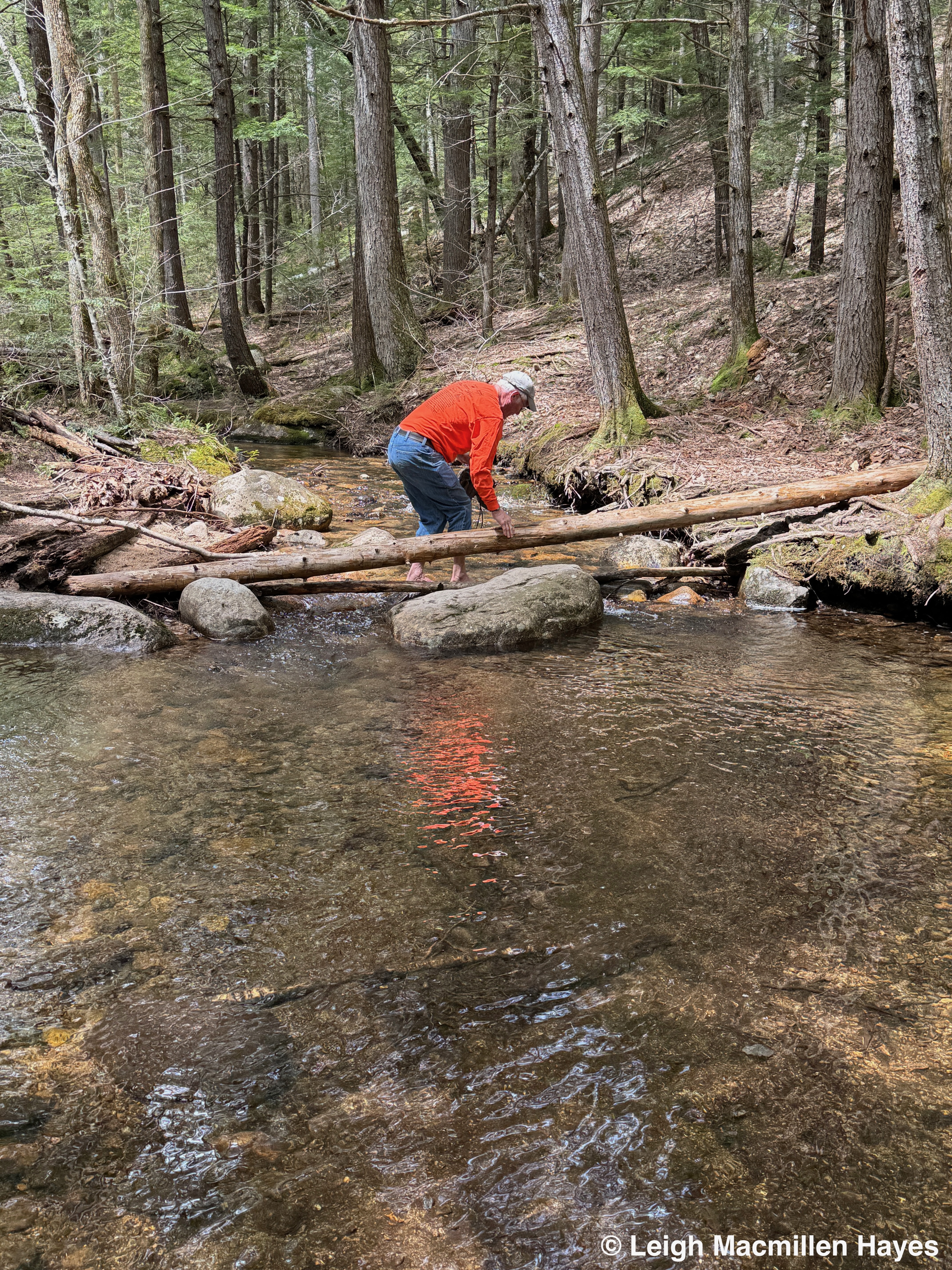
Eventually we reached a turn-around point and came up with Plan B for the rest of today’s hike as we made our way out. While I was able to cross with my high leather hiking boots, My Guy chose to take his boots and socks off and watch his feet turn red from the chill. Thankfully, his better half, ahem, that would be me, had packed a towel because we suspected this could be the case.

Now you might find this as odd, but since our discovery of the new privies last month, we’ve been quite taken with the artwork completed by Kennett High School art students in 2023.

Unbeknownst to us at the time, the paintings were a perfect segue from one trail to another.
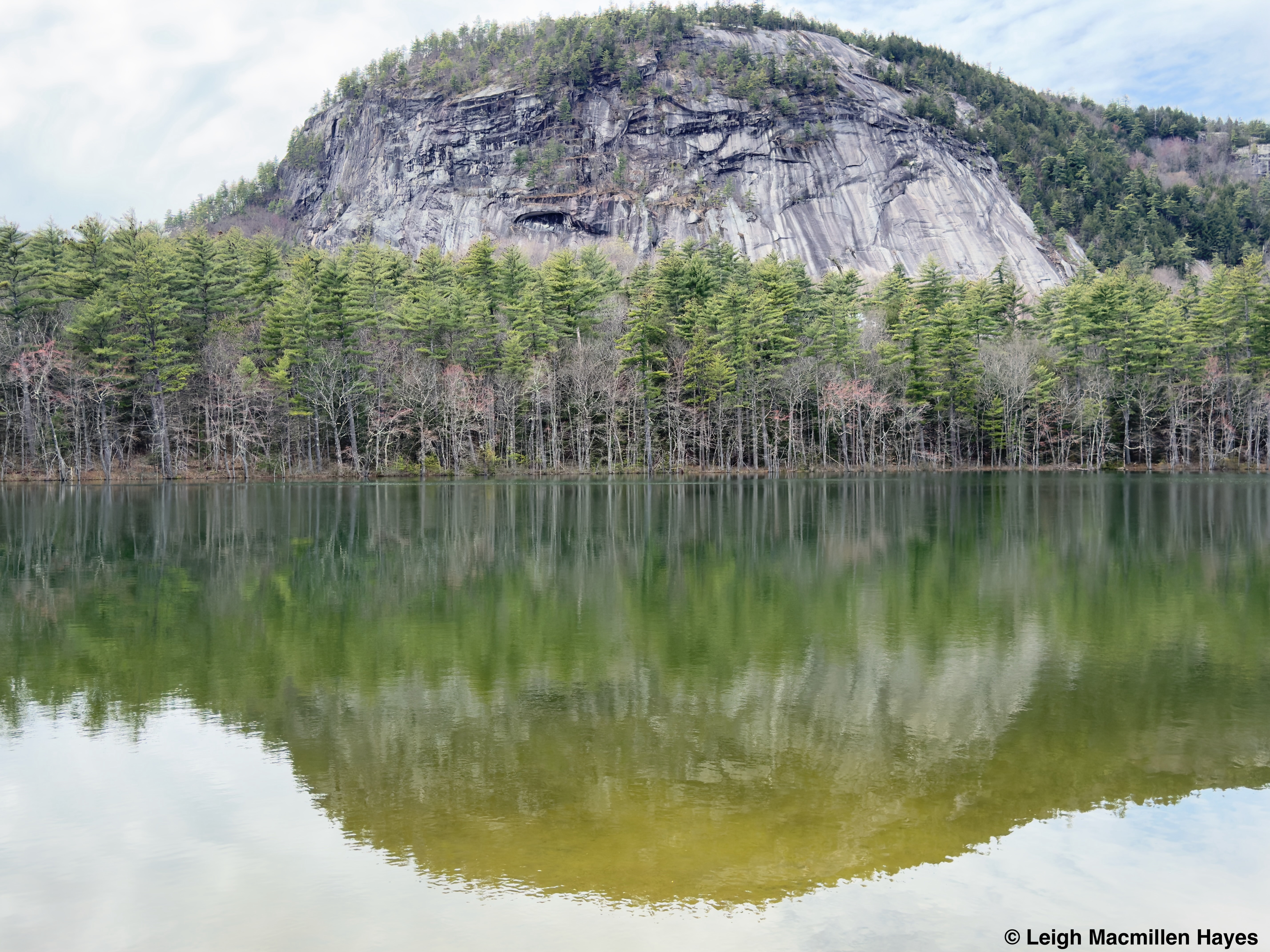
And so we drove down the road to Echo Lake State Park and tried to convince the warden that even though we live in Maine, our hometown is just over the border and we should be able to hike the trails for free as New Hampshire Seniors don’t have to pay. He kindly informed us that the park isn’t officially open yet, as so it was free, but if we return in a couple of weeks, it will cost us $4 each. Not bad in the scheme of things.
Before us stood White Horse Ledge, one of the trails we had considered if we’d been able to cross Lucy Brook from our earlier destination. We were green with envy as we looked across at it.

But about half way around the lake, we found a different trail to the summit and decided to follow it. That said, we found several trails to the summit and the first we chose led us astray as it eventually petered out.
Despite that, we were thrilled. Okay, maybe it was me rather than we. Semantics.
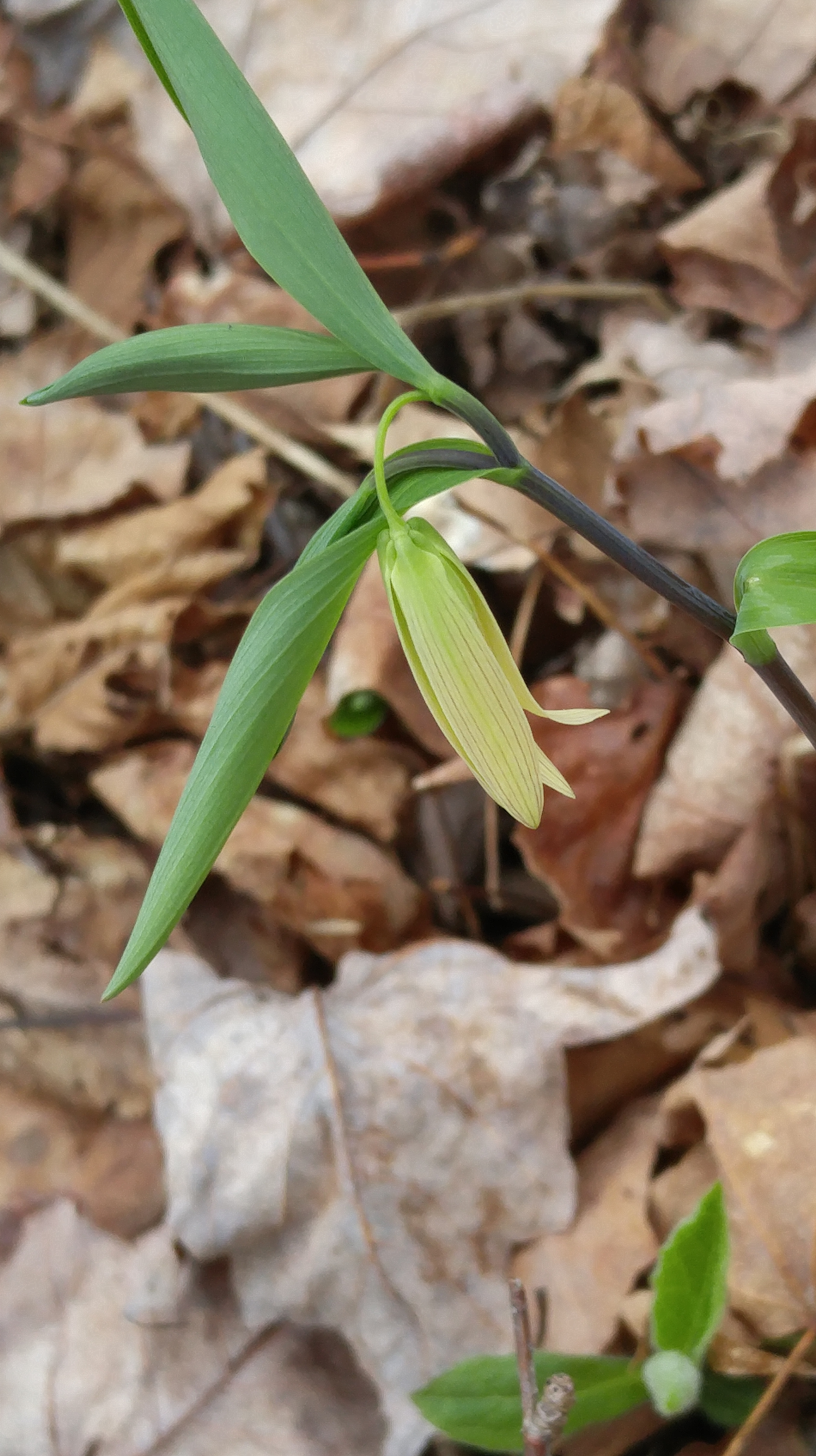
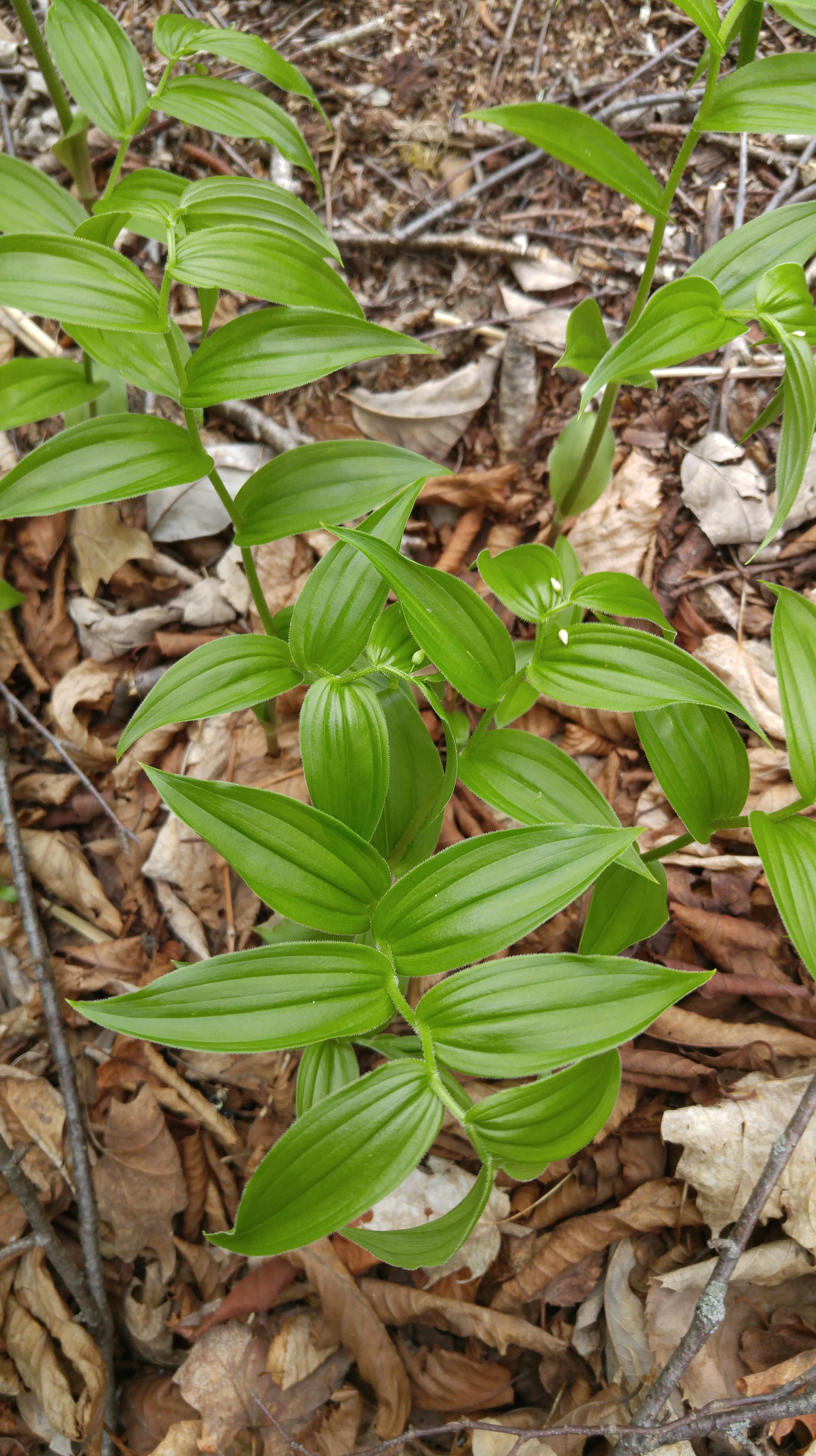
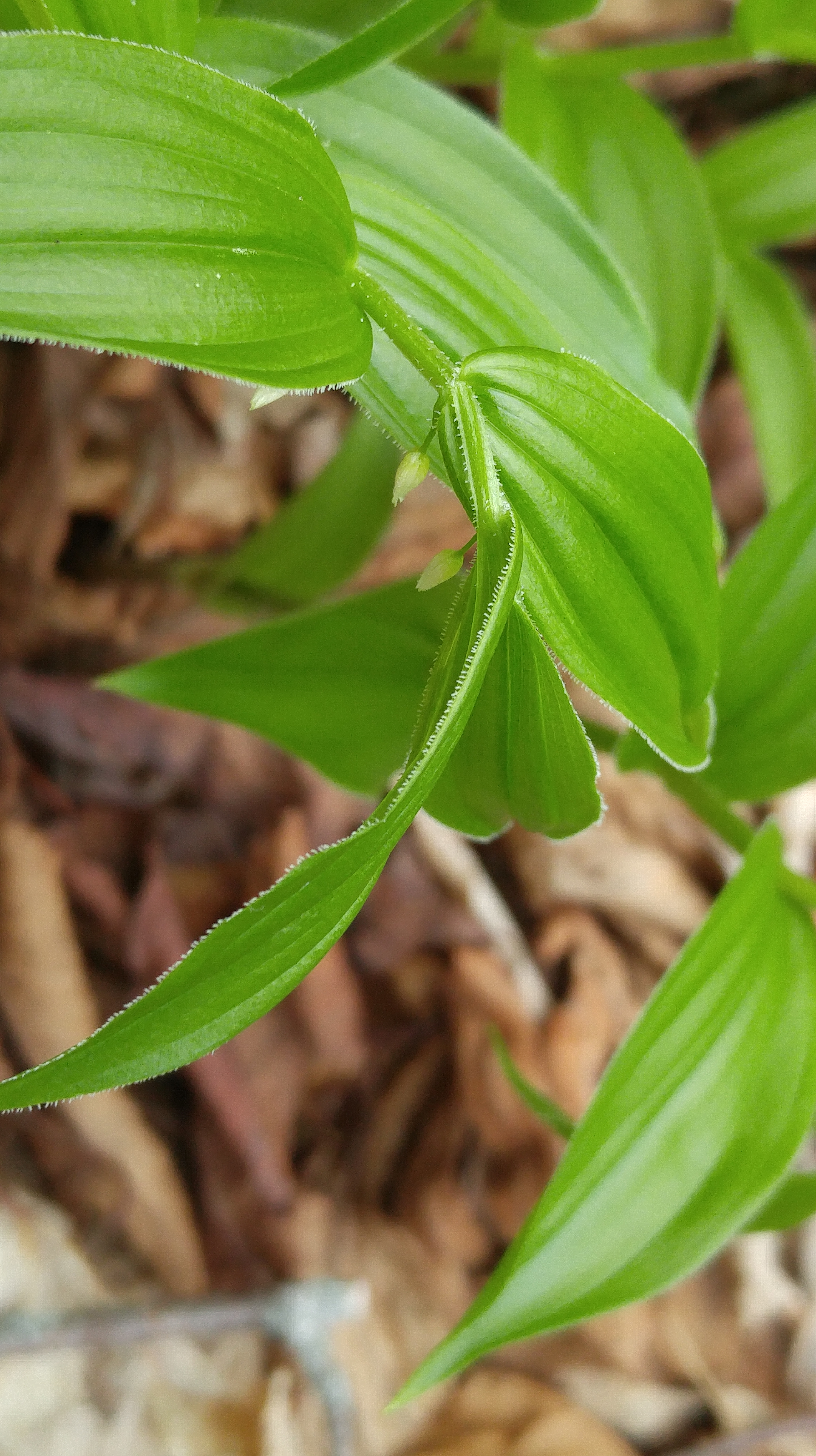
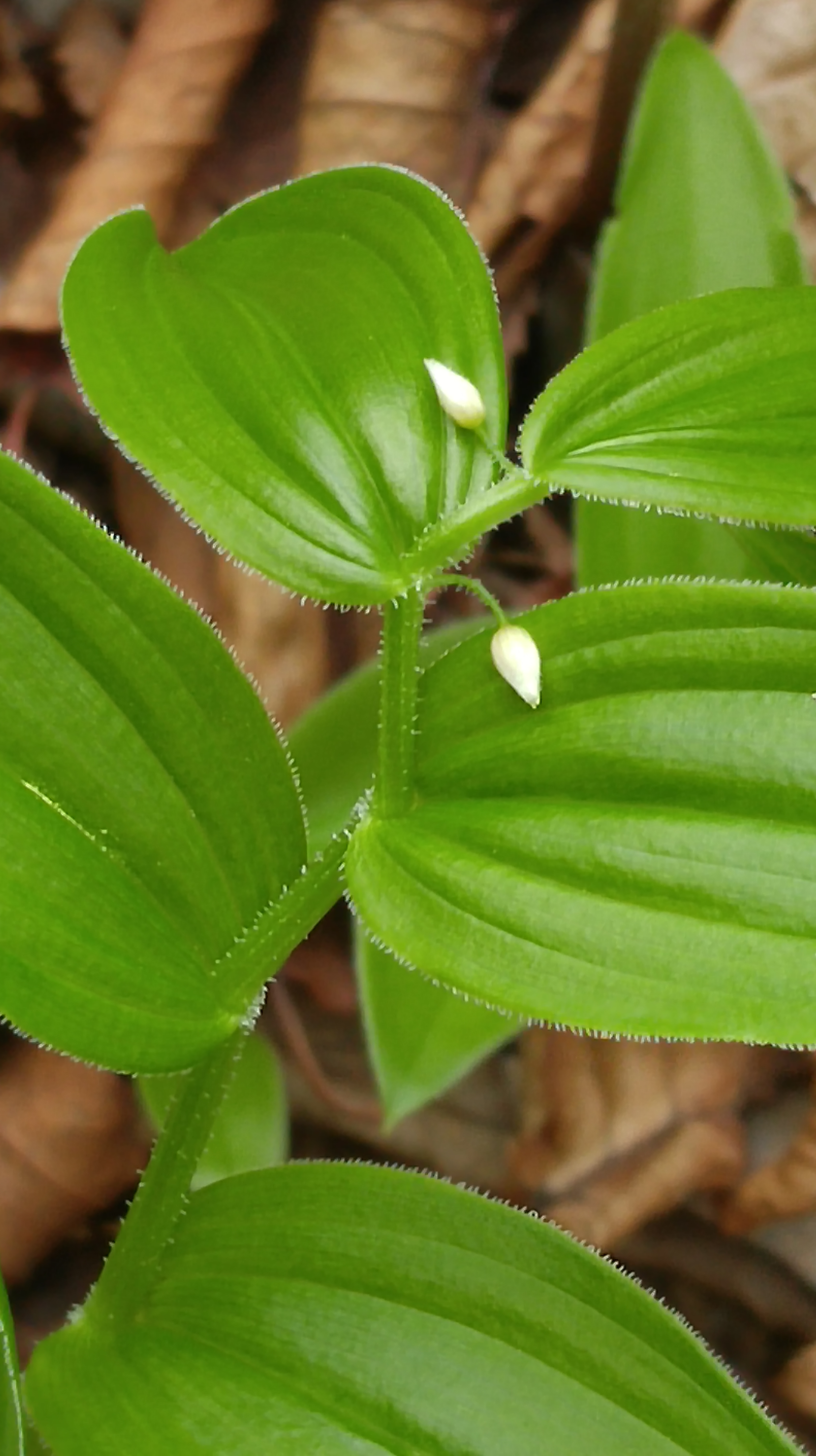
And so today I celebrated my first meeting of 2024 with Sessile-leaf Bellwort, aka Wild Oat. And where there was one, there were a million, the subtle yellow bell dangling quietly below.
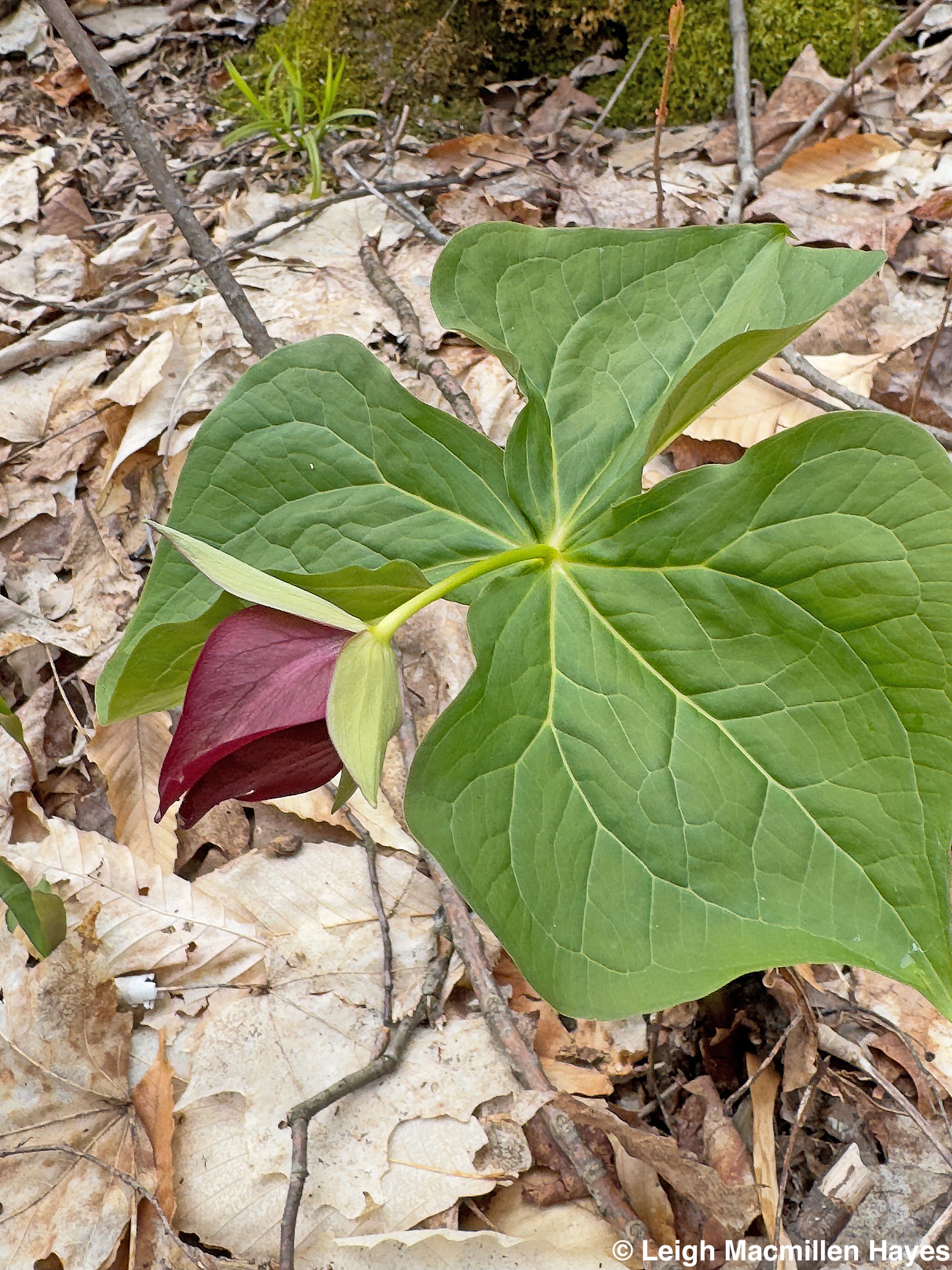
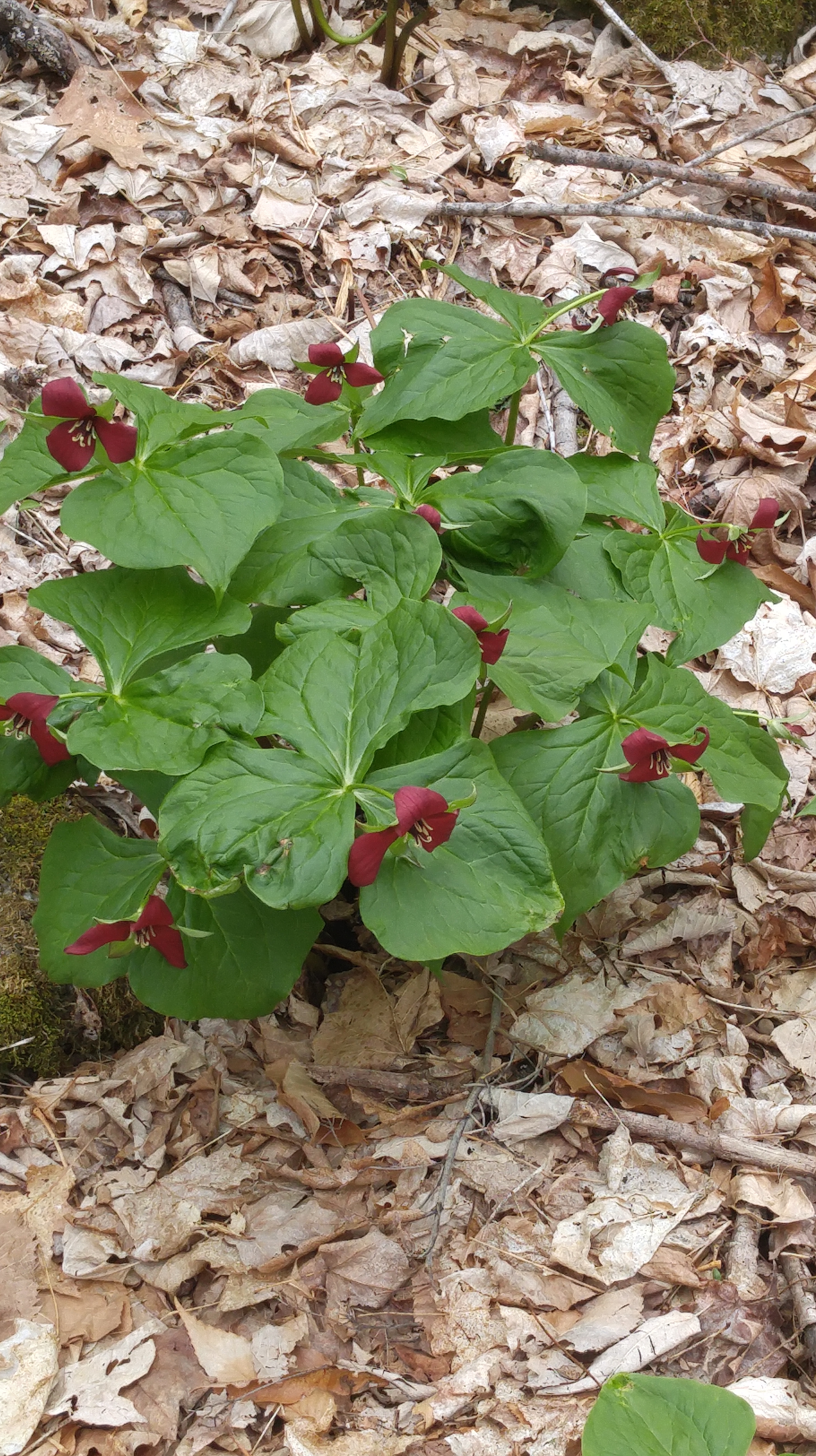
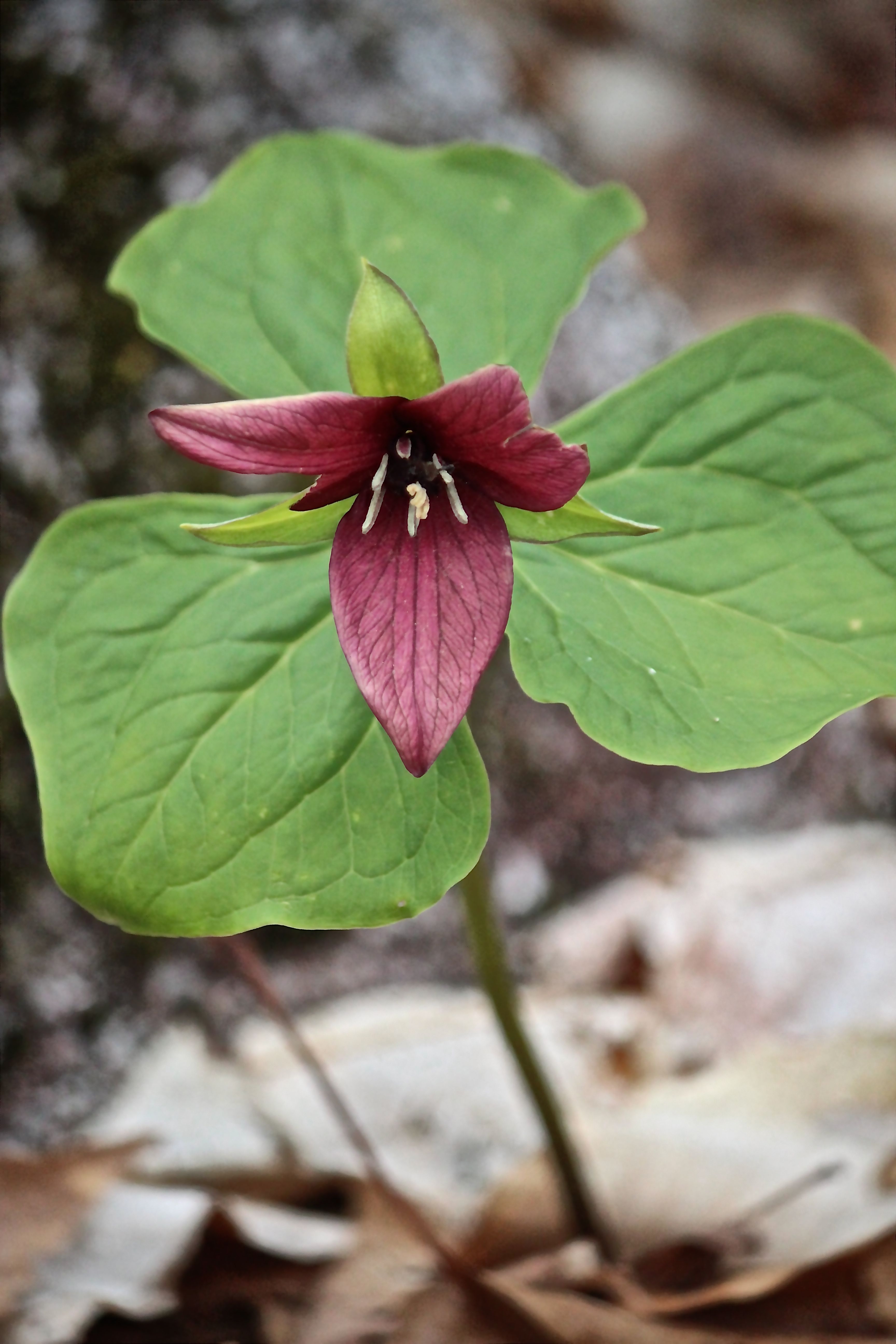
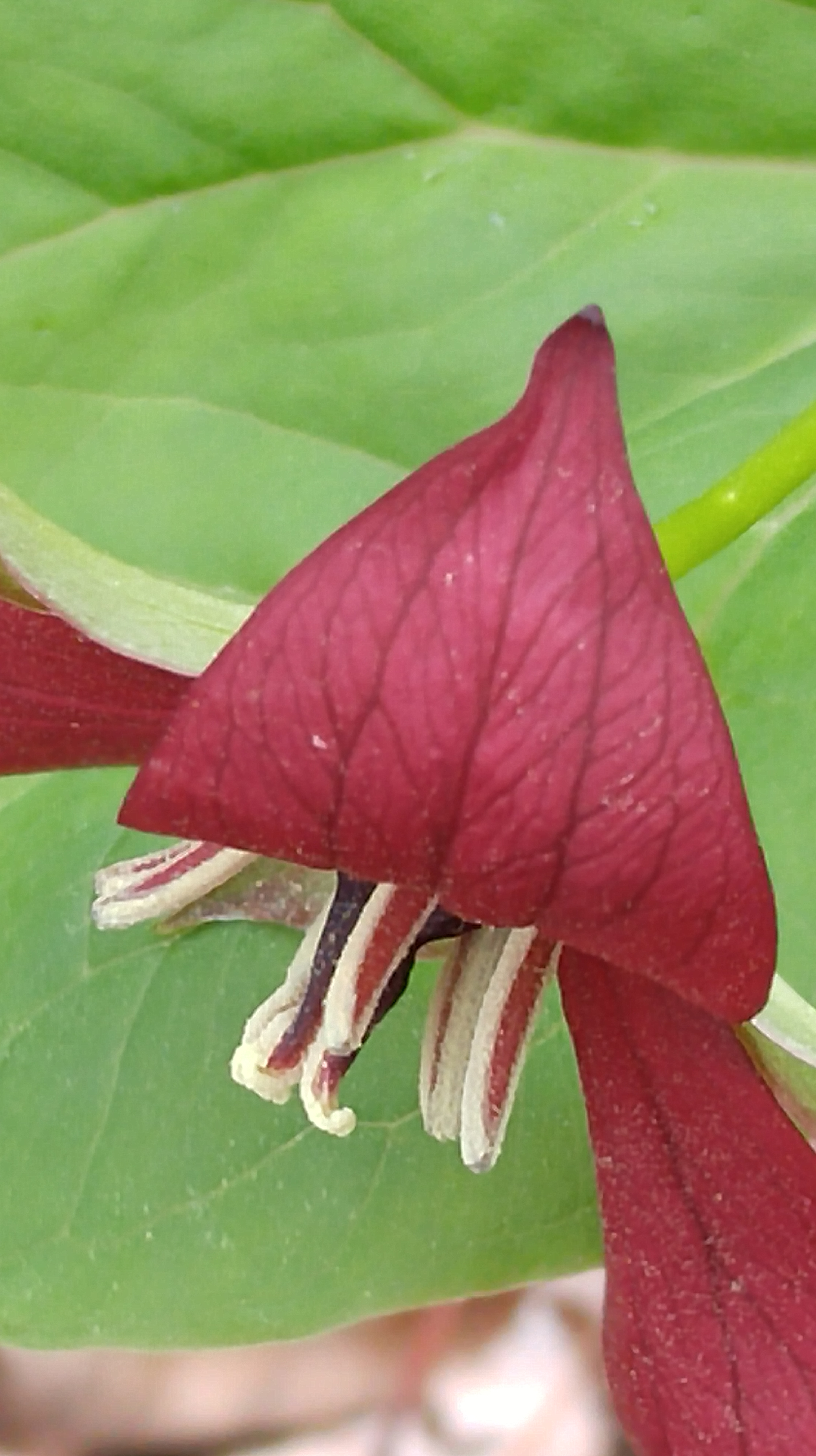
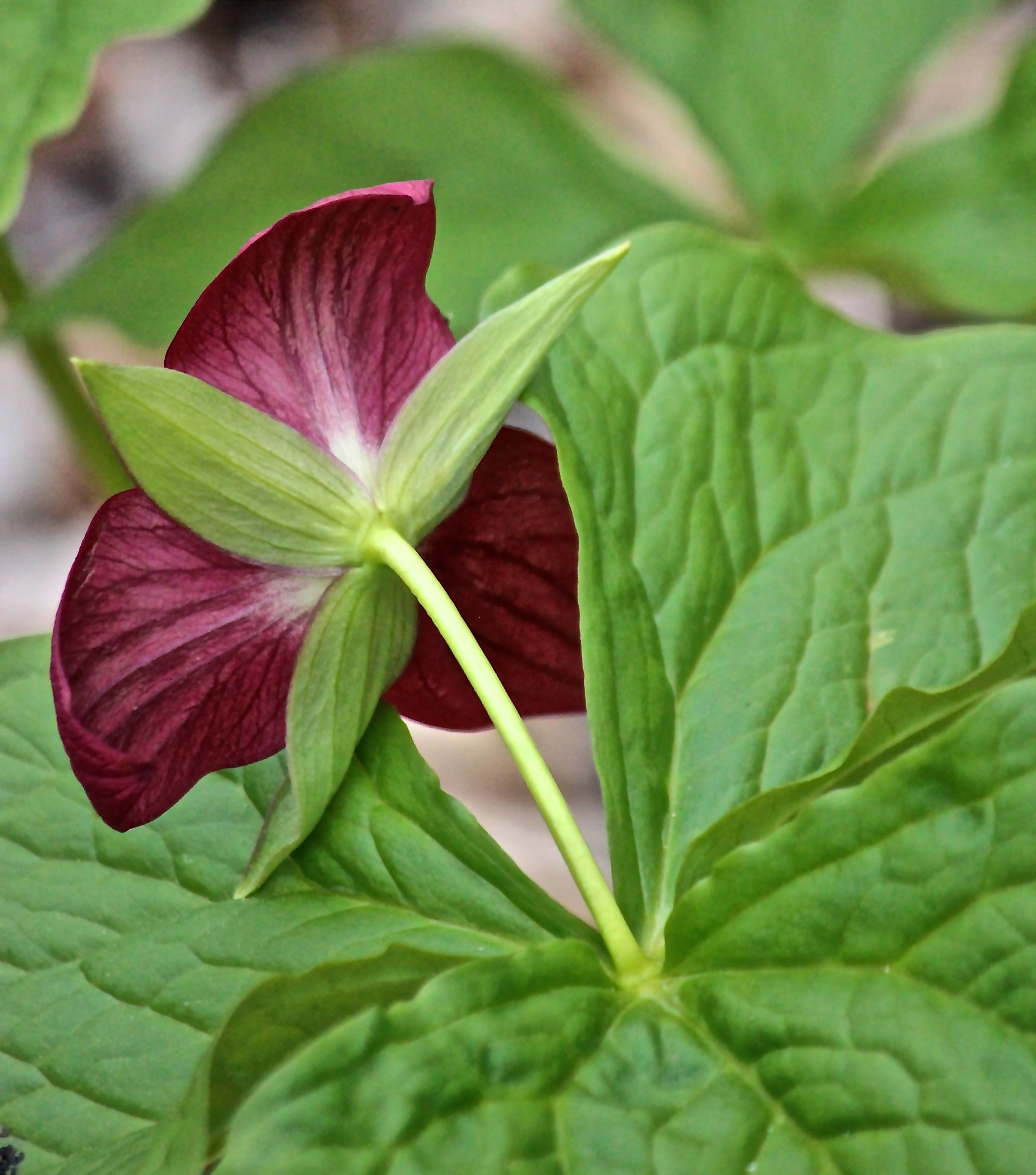
And then . . . and then, I spotted a Stinking Benjamin, or Red Trillium almost in flower.

And a few steps away . . . full flower mode. Trillium is a reference to the fact that the floral parts of the plant occur in threes: three leaves, three petals, three sepals.
Going forth, I’m sure I’ll honor a trillion trilliums, but these were the first and therefore the most special.

As we made our way back to a better trail, the leaves of Trout Lily caught my attention and then much to my delight I found two in flower. The leaves are maroon-mottled and the nodding flower features petals and sepals bent backwards to expose six brown stamens. This one is such a treat for me because I only meet it when I least expect to do so.

Once on the actual trail upon which we had to scramble to climb toward the ledgy summit, I spotted another that only grows in such habitats.
Take a look at the black arrow in the photo. That is one hairy stalk rising from a rosette of basal leaves.

This native perennial wildflower, Virginia Saxifrage, grows out of cracks in rock, and has been known as a rock breaker even though it doesn’t actually break rocks, but rather, likes to grow in those fractures. It’s such a sweet little flower that is easy to overlook.

From the ledges above, we had a great view of Echo Lake, and the mountains beyond, with Cranmore’s Ski Area showing the last of the melting snow.

That brings me back to the snow of a month ago. I took it upon myself to figure out a way to make people smile.
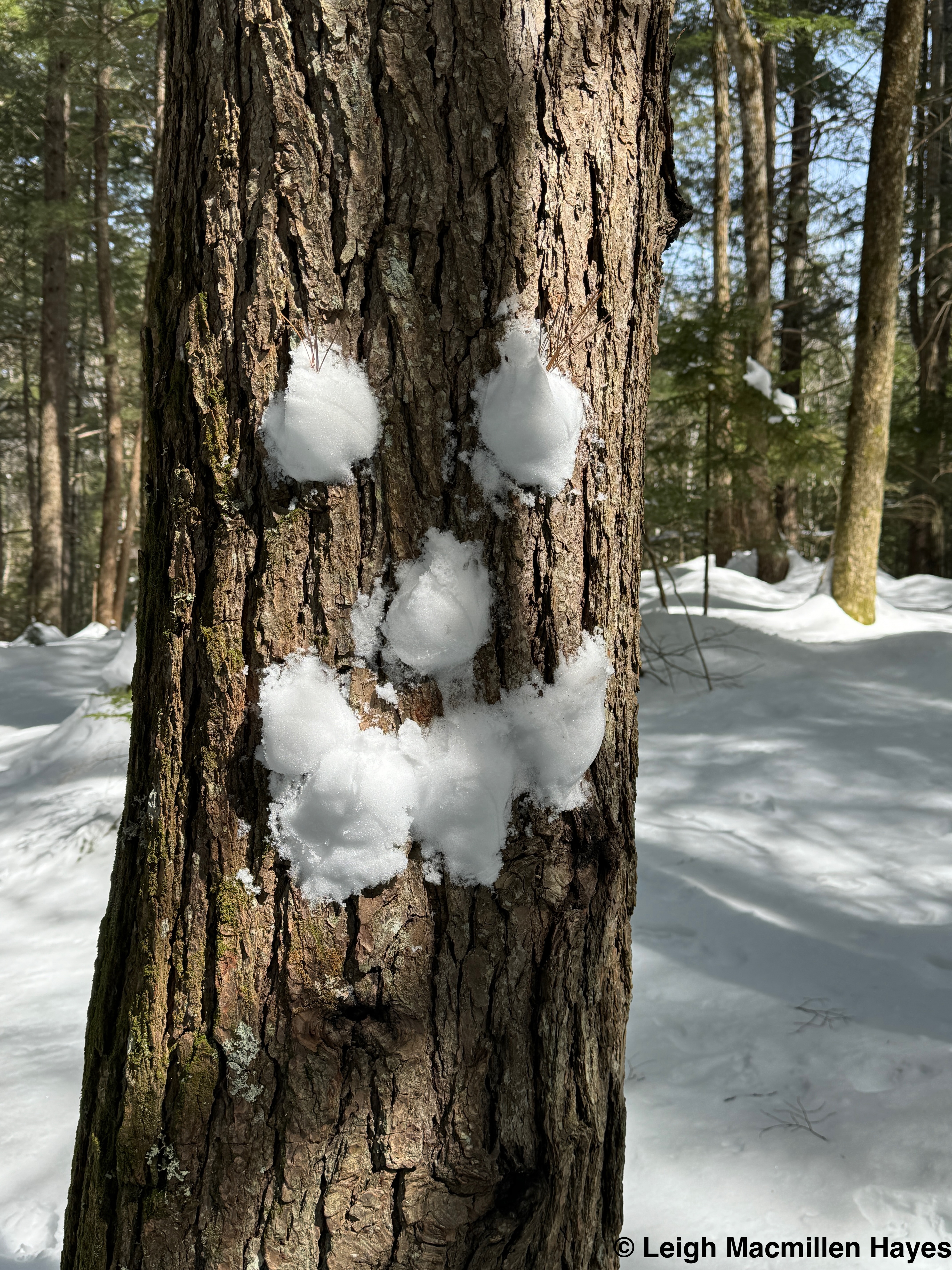
And today, we did the same, though not with snow like this. But rather, with our actual smiles and friendly hellos as we greeted each hiker we met. Even if they weren’t smiling or making eye contact with us at first, we got them all to return the greeting and had some nice chats with a few.
I told My Guy that it kinda reminded me of our New York adventure last weekend, when I made it a point to try to make eye contact with each person we passed on the sidewalk or trail and to always leave them with a smile. A few actually looked at me and turned on a smile, which seemed to surprise them.
This was indeed a smile of a Mondate . . . on so many levels.






 wondermyway