My Guy, The Giant Butterfly Whisperer

It’s Monday. And that typically means a Mondate for My Guy and me. Especially if he’s worked all weekend. And a Mondate most often means a hike. So, that being that, we headed off to conquer two trails today. Neither was overly long, and one was rather easy, while the other was moderately difficult. But both offered sightings that have us still smiling.

I’ll start with the second hike of the day because this is my blog and I can do that sort of thing. We were in Shelburne, New Hampshire, and so on our way back to Maine, we stopped at the Shelburne Forest, a trail we tried to hike a year or two ago, only the Mosquitoes or Black Flies or both were so thick, that after about a quarter mile we turned around and raced out–treating ourselves to ice cream sundaes in Bethel, Maine, instead.

Today was different. Blue Sky. Slight Breeze. 75˚.

We soon began to notice a theme along the River Trail. First we encountered several Fox scats, indicating this spot may have marked a territory. It seemed like it was important enough to return and leave a sign again, and again, and again.

A wee bit farther and more Fox scat.
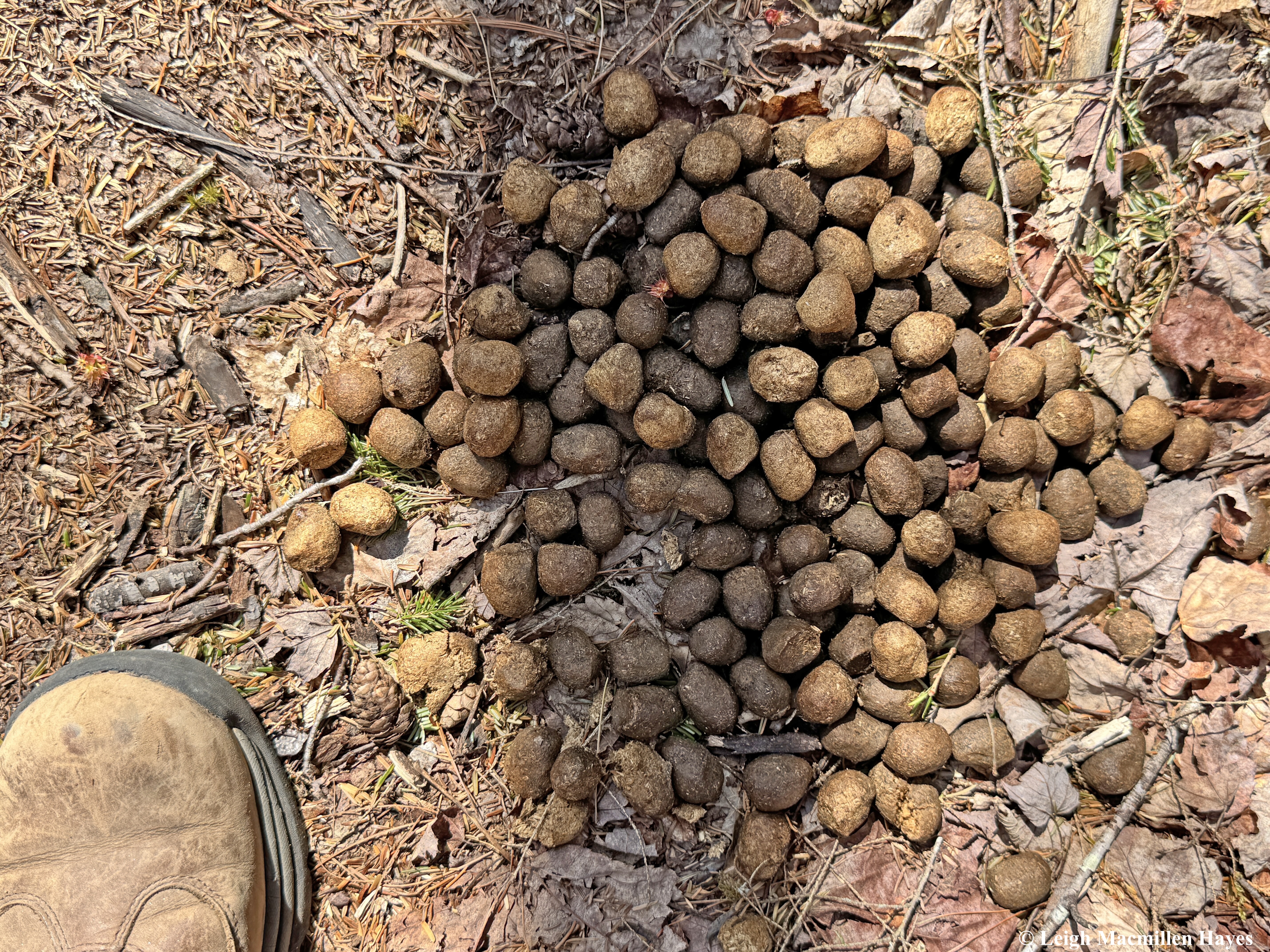
And several displays of Moose scat, this one being from this past winter, while another had more debris on it and was starting to break down, indicating a previous winter.

We also noted Beaver works in the form of a dam, plus some cut trees on the trail beside a steep embankment to the river. And deer prints and scat. And coyote scat.

I mentioned that I’d like to come back in the winter to see who spends time here.

My Guy’s response, “Anyone else might think you were talking about people, but I know you are not.”

He gets me!

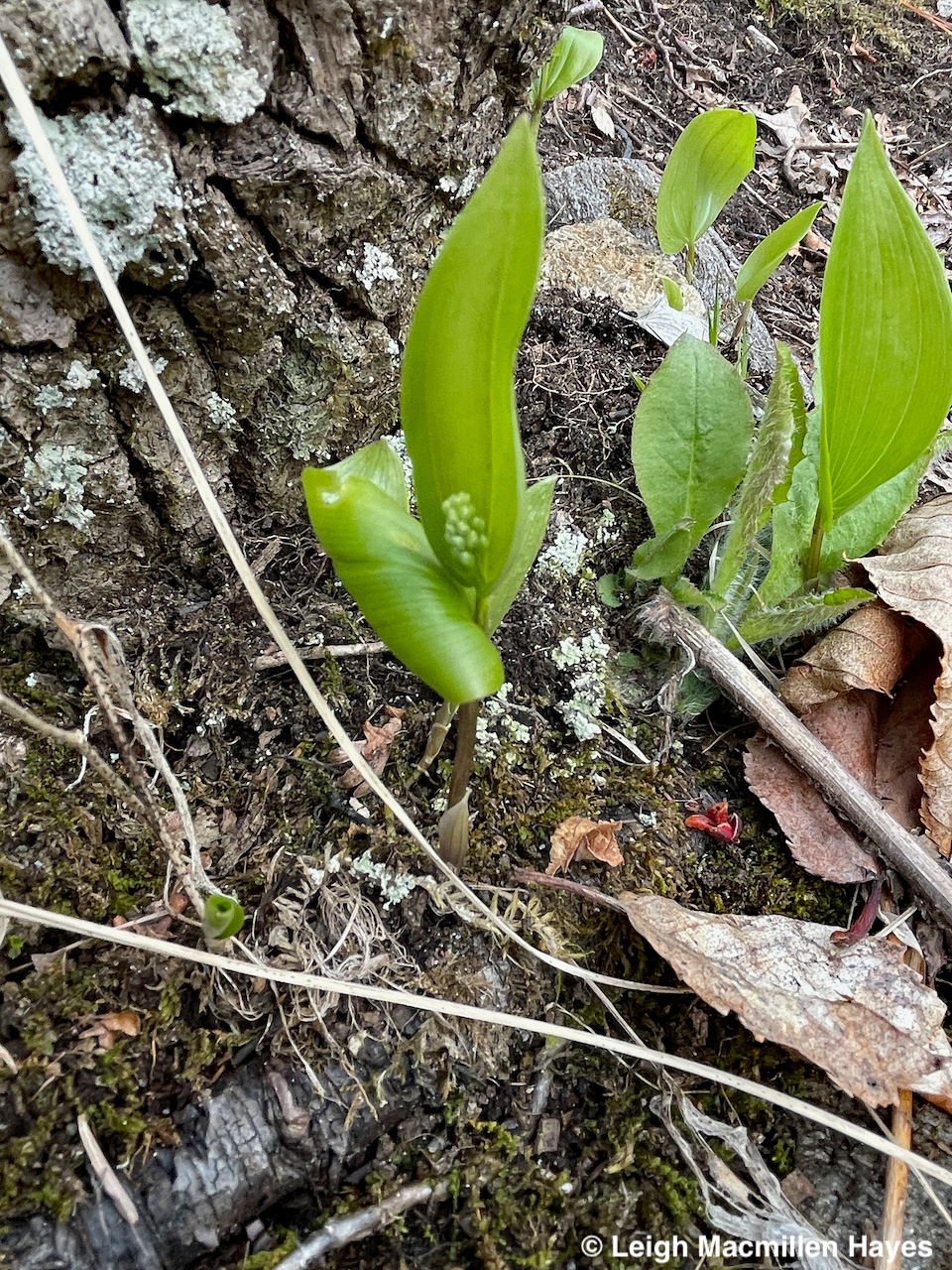
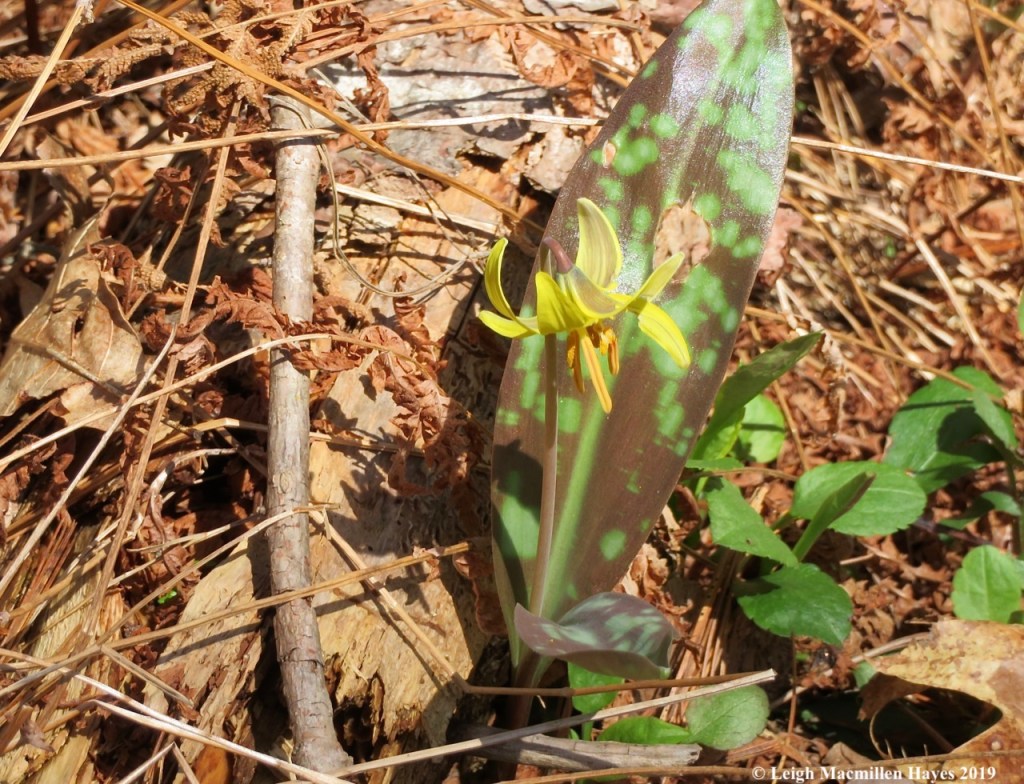
I had two other favorite sightings along this “Scat” trail. The first being the leaves of Trout Lilies. NUMEROUS leaves of Trout Lilies. So now I know I need to return soon to see the flowers, rather than just wait until winter.

And a Garter Snake that surprised My Guy because it was in the middle of the Forest Trail as we completed a loop, but quickly slithered away.
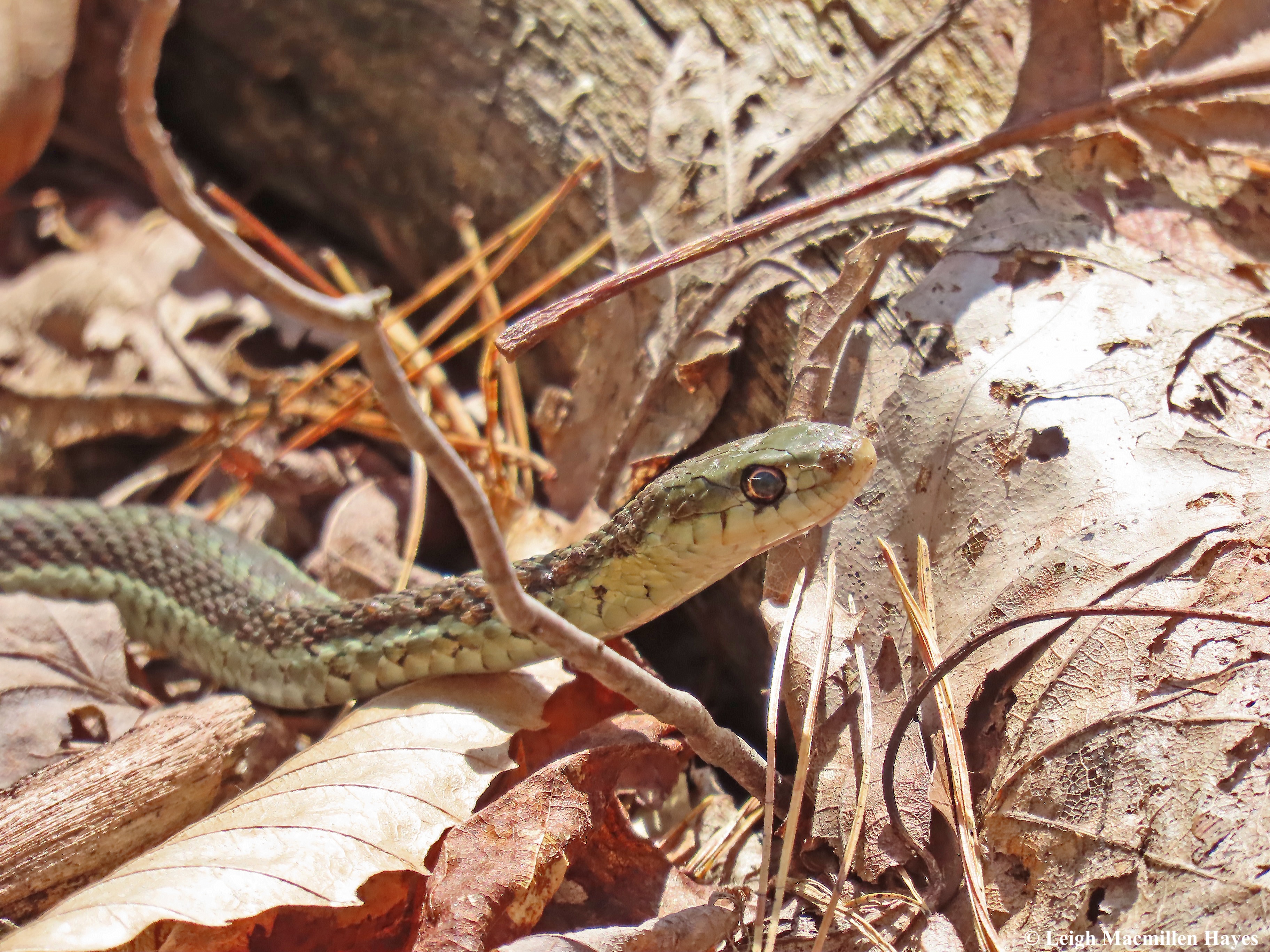
I kept hoping it would stick its tongue out to get a sense of its surroundings, but for some reason it didn’t honor us with such.
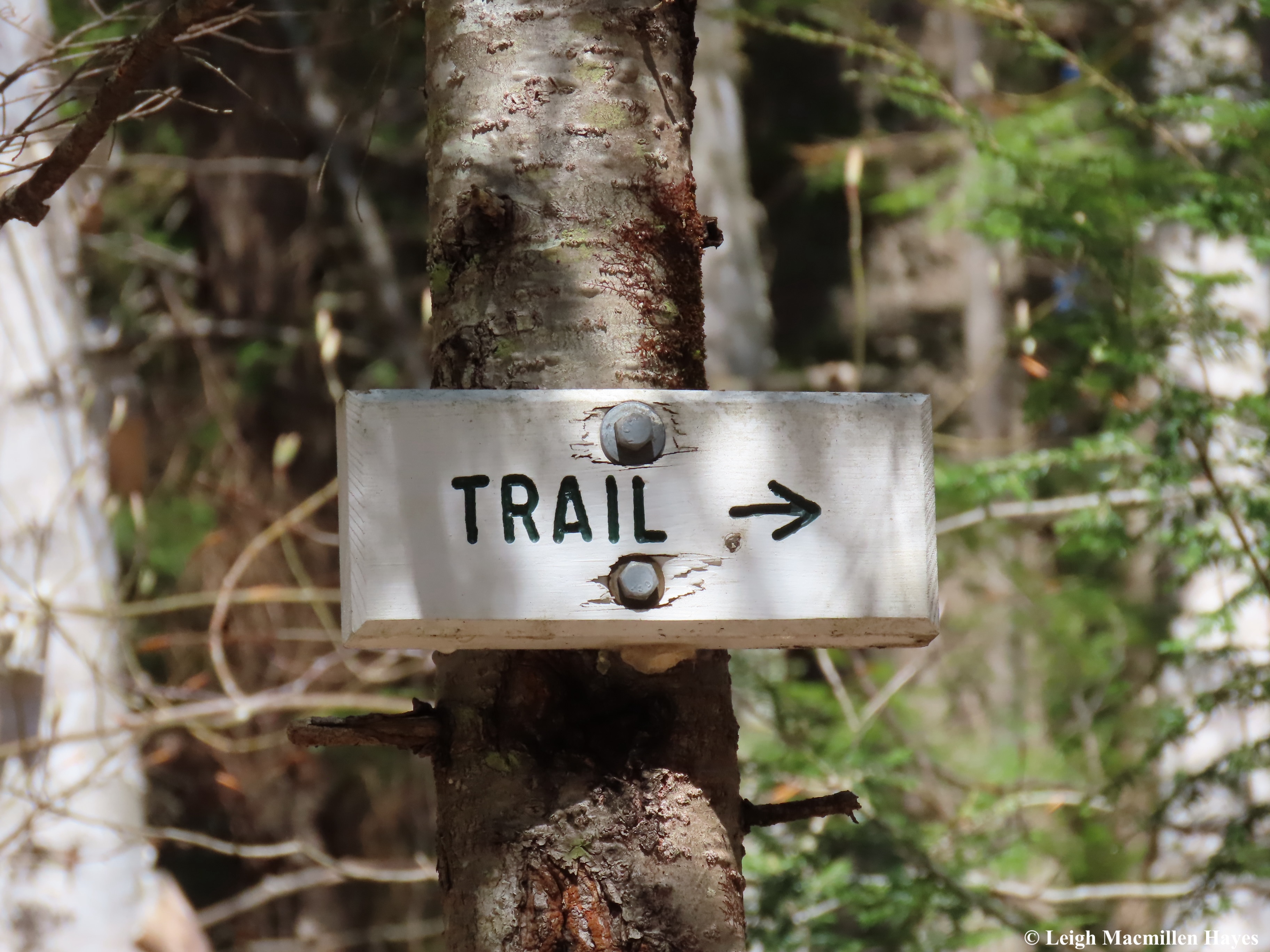
Now it’s time to turn back the clock and head off on the Peabody Brook Trail, which was our late morning hiking spot, the first hike of the dat. We were grateful for signs like this when the trail crossed a logging road.
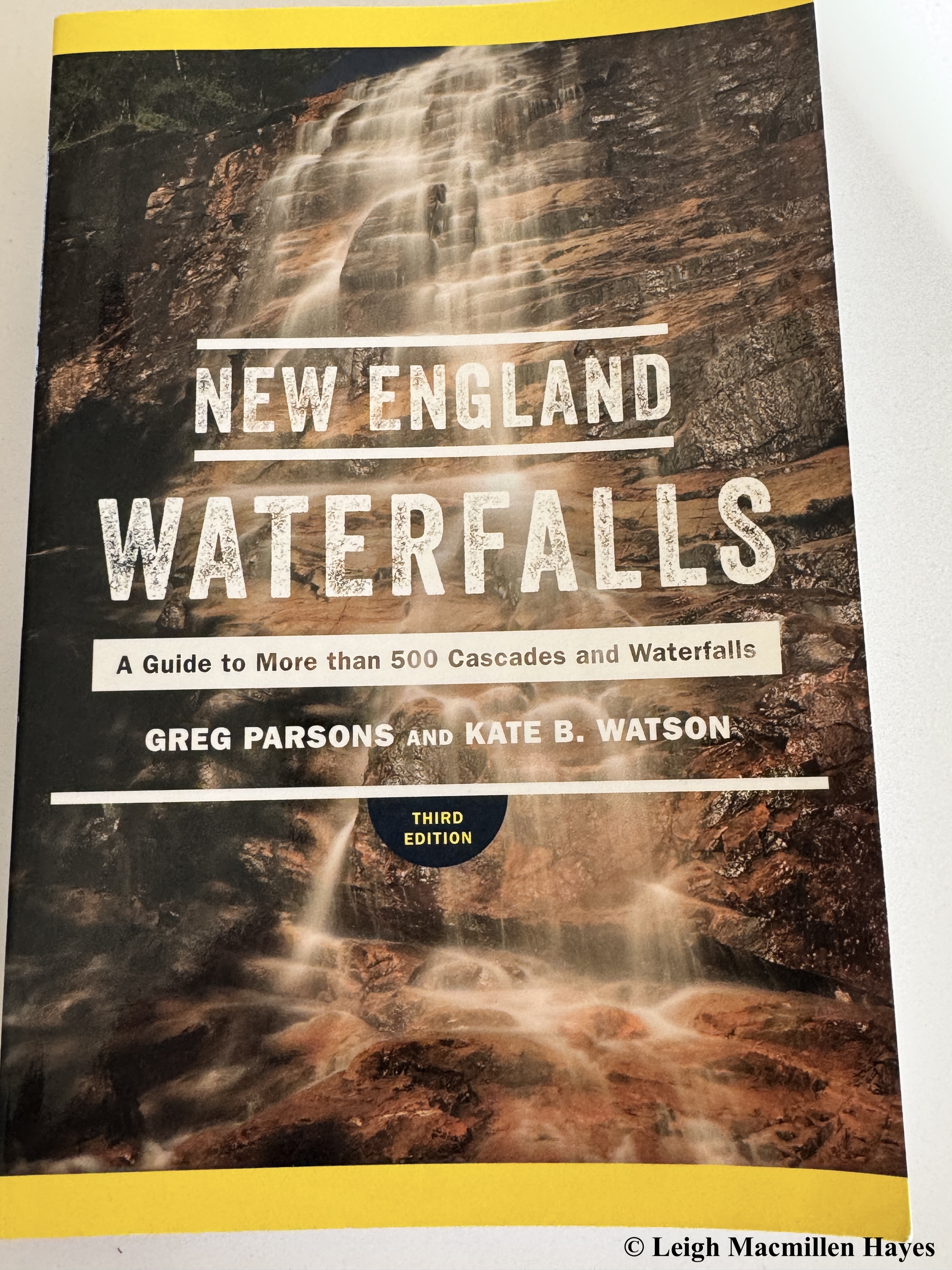
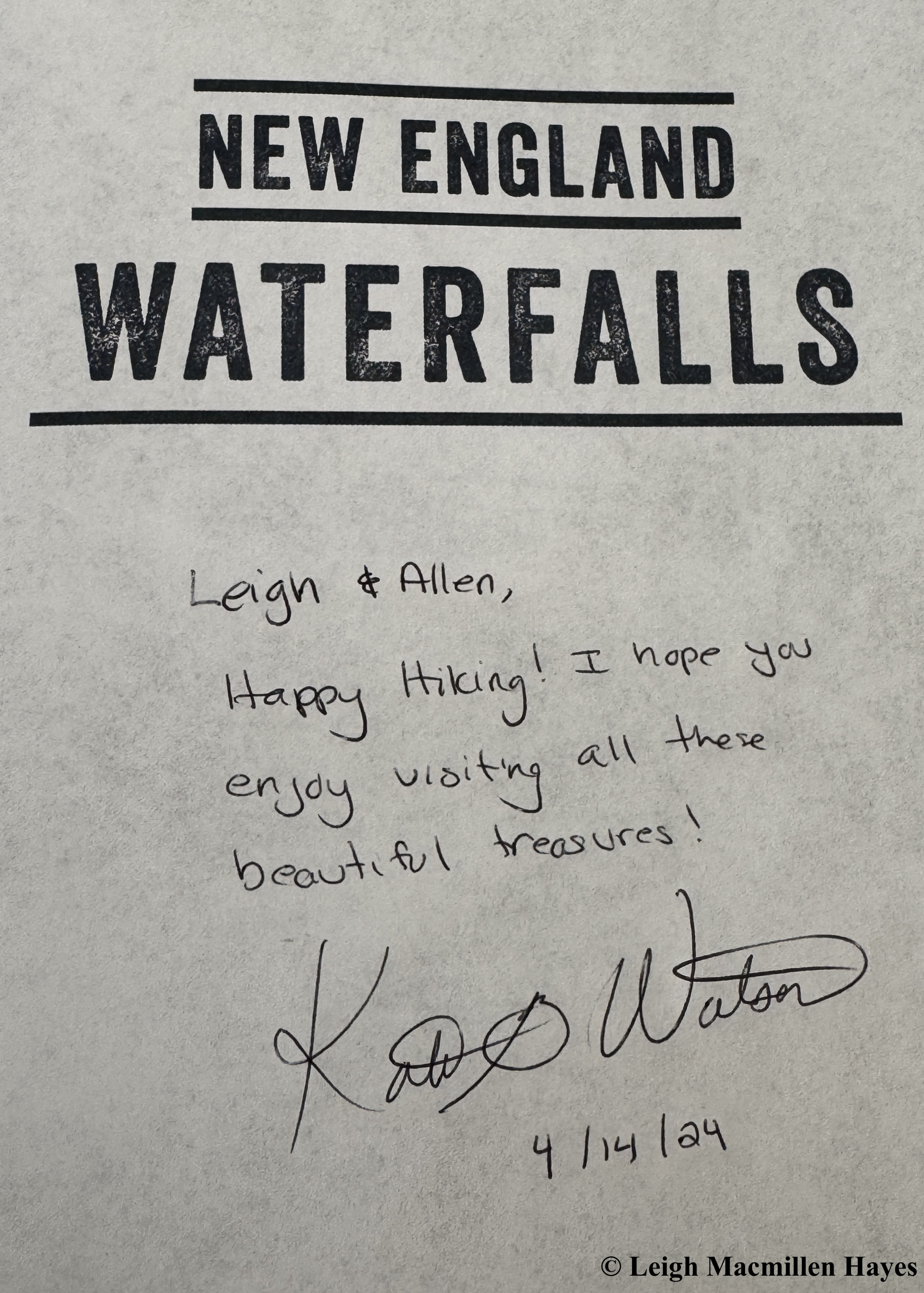
We chose this trail because we’d read about it in New England Waterfalls, by Greg Parsons and Kate B. Watson. I know Kate from church and love that these two visited waterfalls throughout New England to include in their comprehensive guide. We’ve visited some, but have so many more to do.

At the beginning, the Peabody Brook flows through a ravine and due to a rainy weekend, it cascaded over, around, and under the boulders, and was an ever-present companion for much of the trail.

Other companions included several Anglewing Butterfies, that I couldn’t identify until I saw their underwings, as the markings indicate either a Comma or a Question Mark.
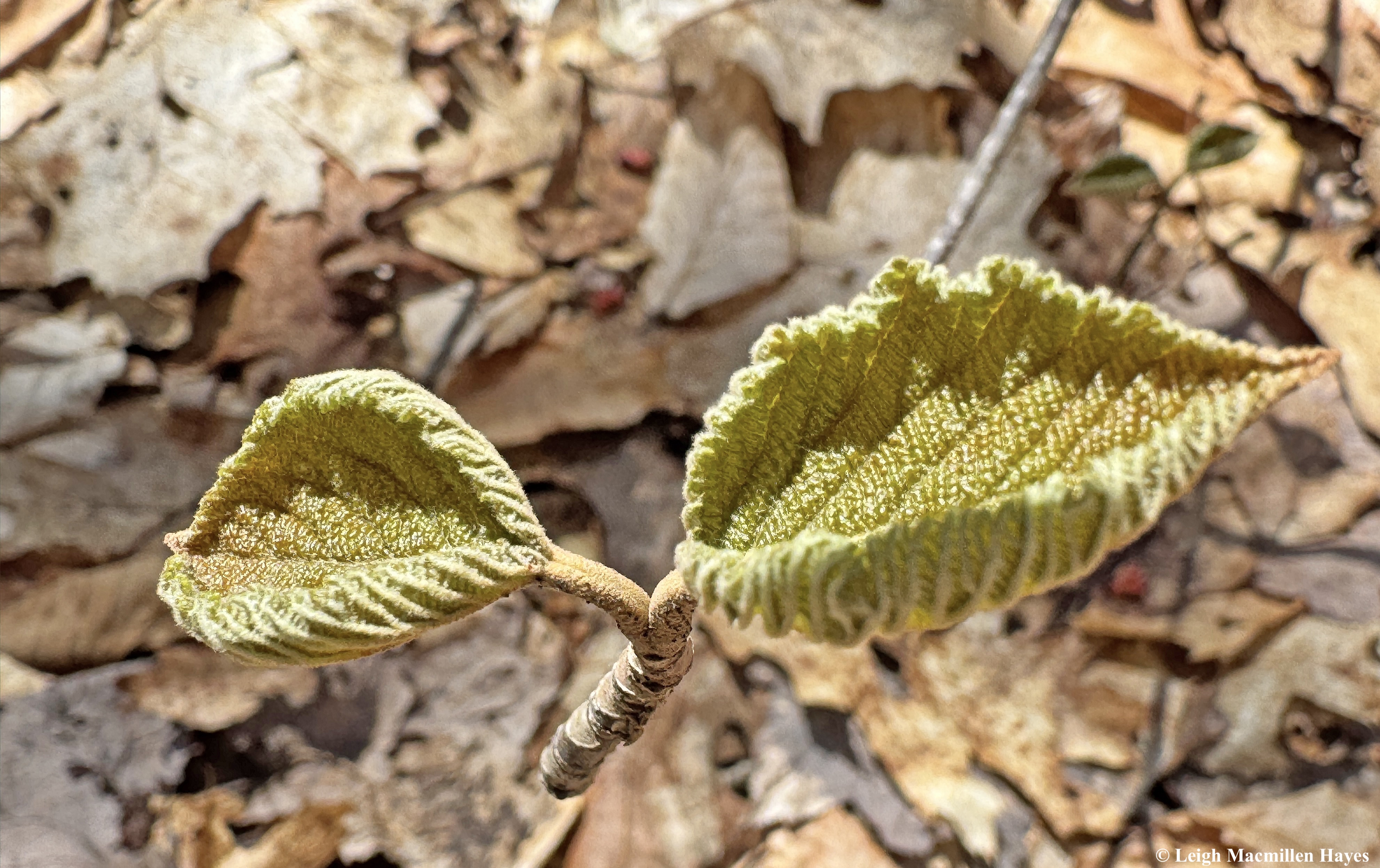
And there were Hobblebush leaves, with their corrugated presentation, beginning to unfurl.
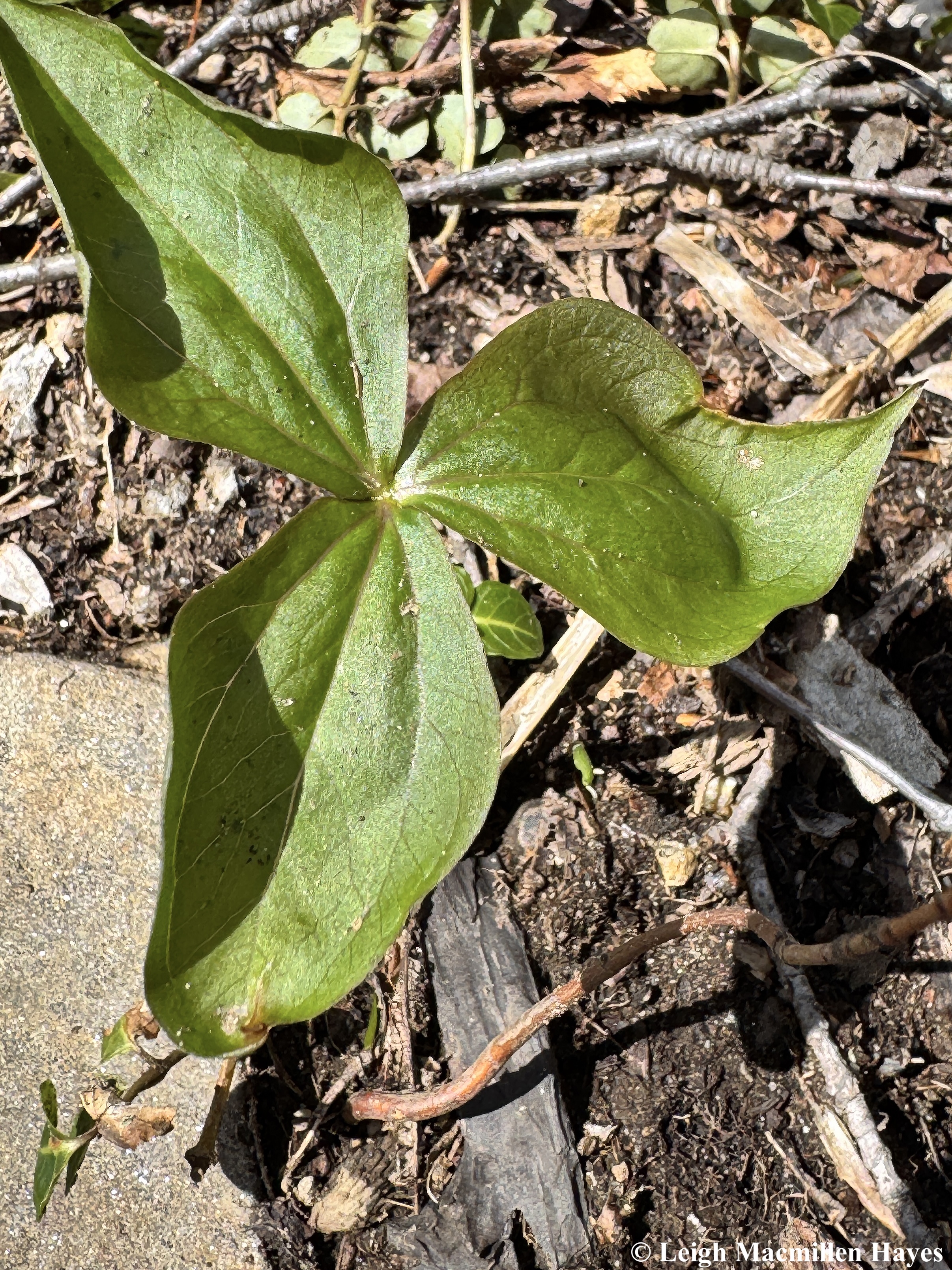
Plus a few Painted Trillium plants showing off their leaves of three, though no flowers yet, and causing My Guy to comment, “You’ll probably take a trillion Trillium photos again this year.” Did I say he knows me well?
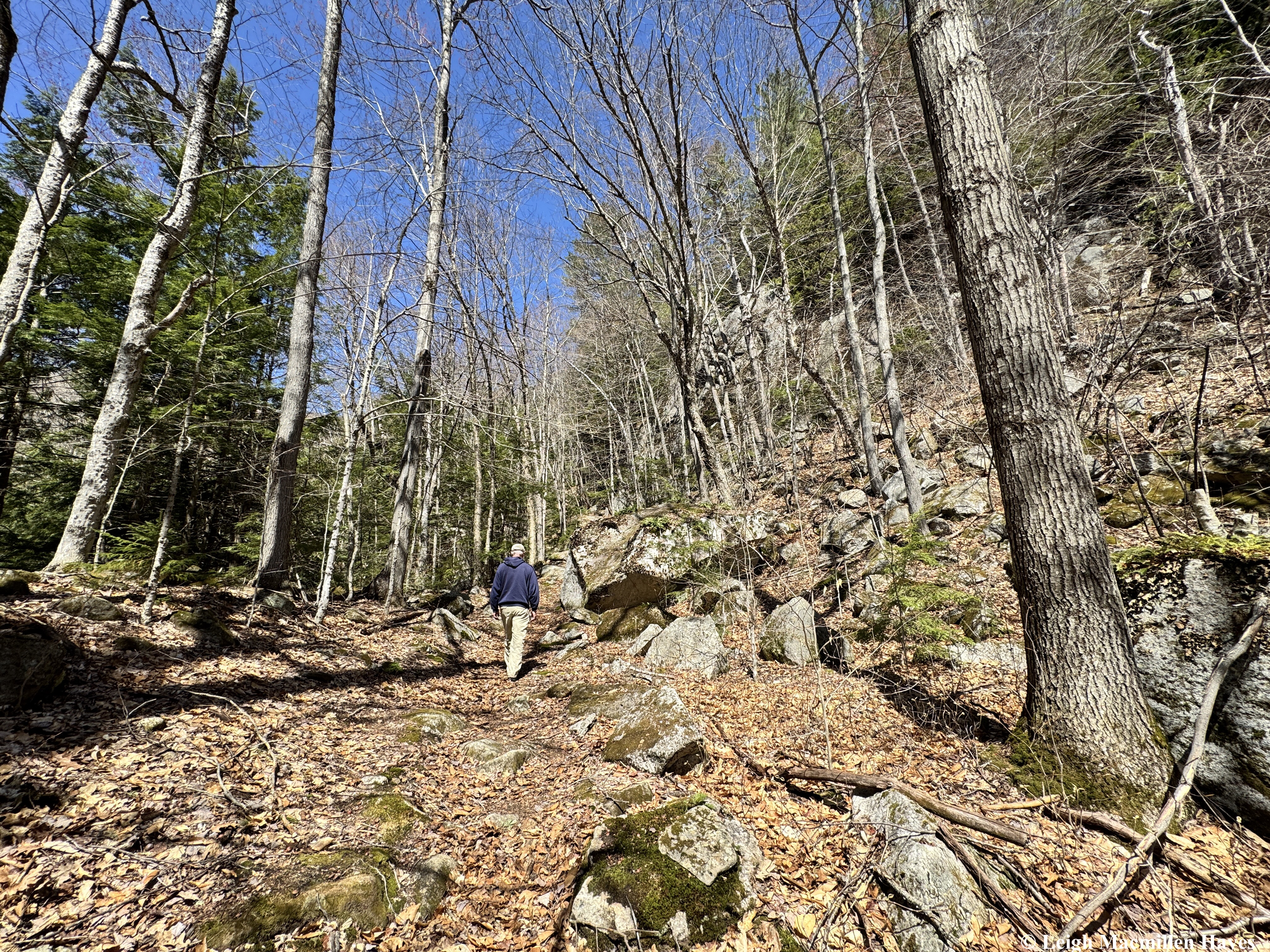
Upward we climbed into the great blue beyond, for so it seemed on this gorgeous day.
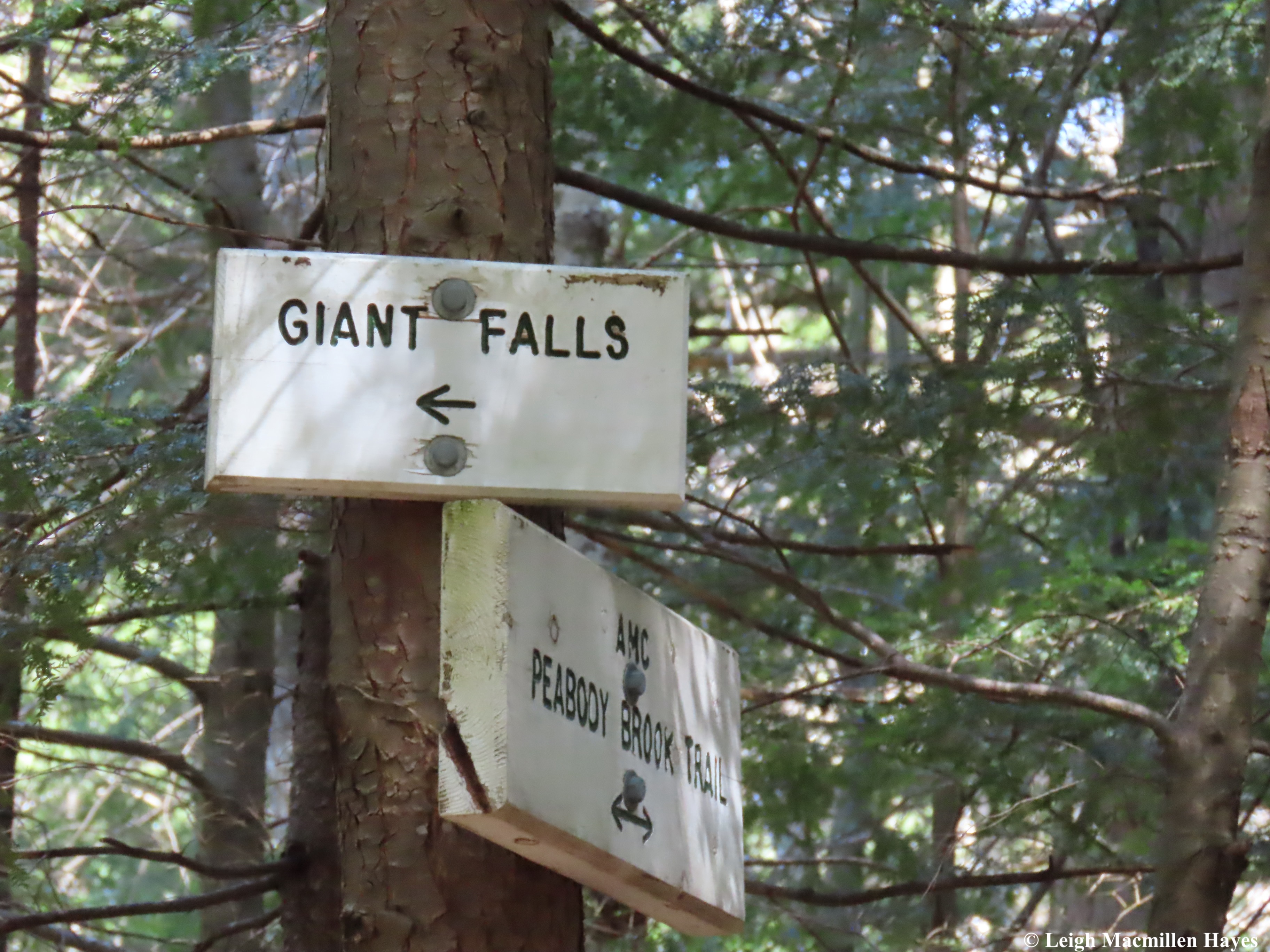
And then we reached a junction, and I, for one, was excited about what might be ahead.

Would we meet Devlin, the giant in my fairy tale, The Giant’s Shower? After all, he lives only a giant step away at Arethusa Falls.

I also thought we might see a few fairies, including Devlin’s favorite, Falda, for such was the neighborhood, with lots of mossy areas among the Hemlocks.

And then My Guy got excited when he spotted something? A giant? Maybe, but in the form of Giant Falls, and if you allow your eye to move a wee bit to the right of his pointer finger, you’ll see the white water through the trees.
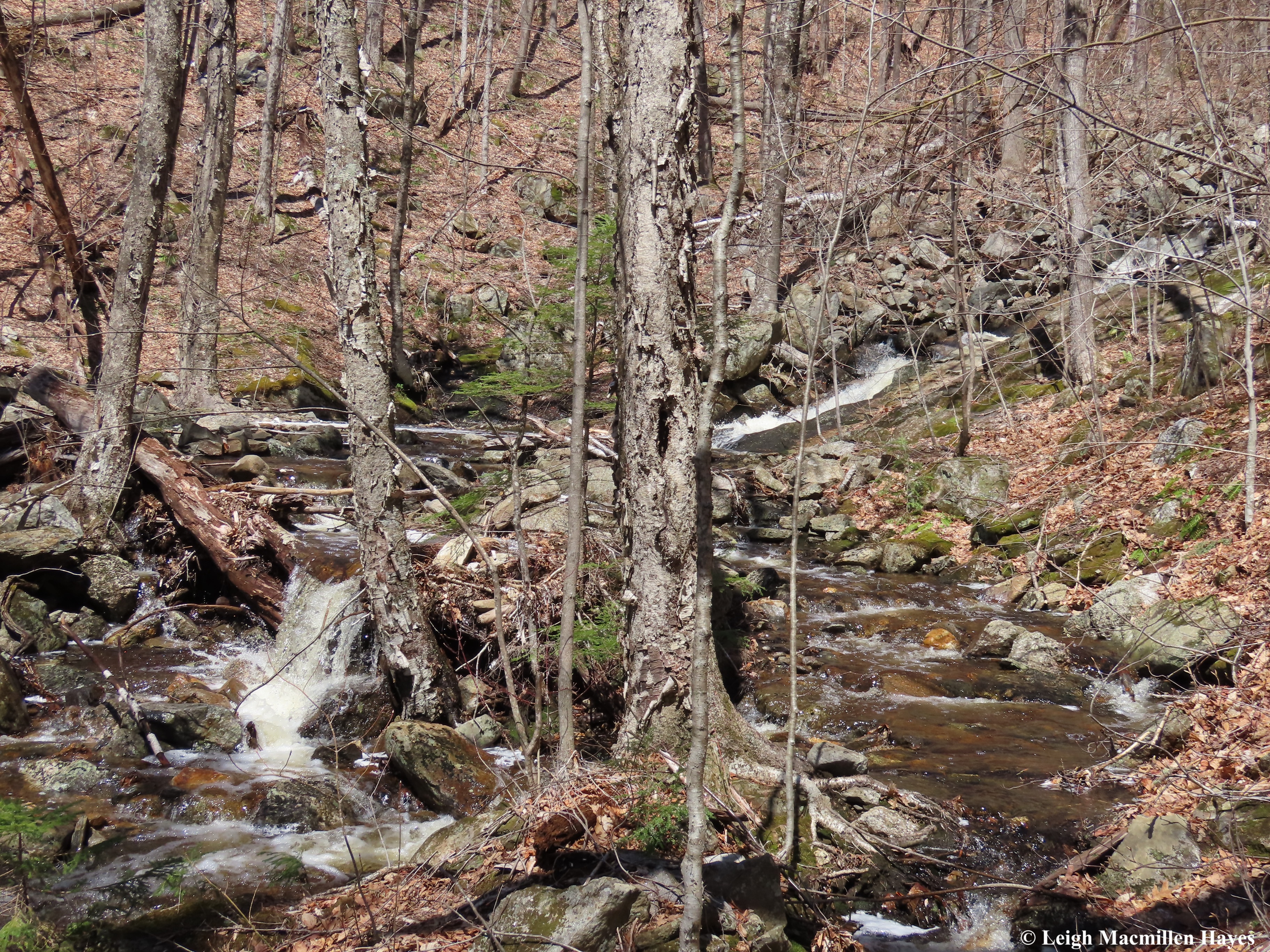
Where we’d left the brook for a bit as we climbed up, the spur trail led us back down and suddenly there was fall after fall after fall beside us.
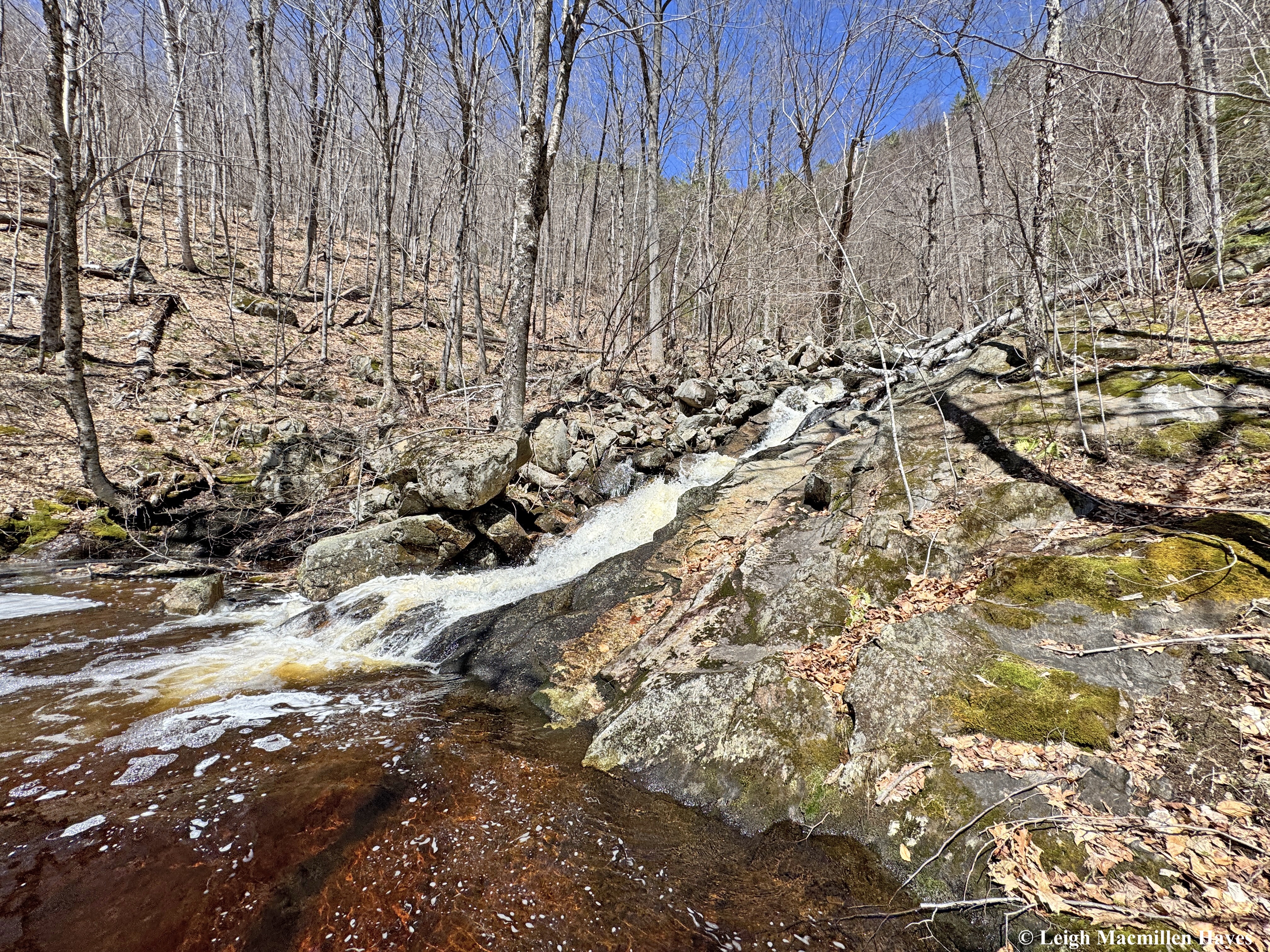
We considered eating lunch beside a large pool. But then reconsidered, but not before I noted some features of the brook that I’ve been sharing with a homeschool family this year. A POOL.

And EDDIES. And FLOWS.

And FOAM. And that very foam was being picked up by the breeze and “snowing.” Oh how my ten-year-old friend would love that.

Do you see the little white dots above the water and rocks?

We decided to hike farther up the steep trail to reach lunch rock so we could enjoy the power of the falls fanning over the boulders.

Take a moment to listen to this incredible force of nature.

After taking in the scene around us, it was time for lunch. And that’s when the magic began to happen.

A fairy flew in. I kid you not.

That’s just a butterfly, you might think. “Just”? No, no, no. I’m sure it was a fairy disguised as a butterfly, because the fairies don’t want us to know that they are present.

And . . . it landed on My Guy’s right leg.

As we both watched quietly, it walked down his pants to his hiking shoe.

And then it began to puddle. PUDDLE. ON. HIS. SHOE. LACE.

Puddling is a butterfly act intended to seek minerals and other nutrients from things such as scat, carrion, puddles, etc., but a shoe lace? And on My Guy’s shoe lace? What, indeed, could the lure be?

We’ll never know. But what we do know is that the Anglewing Butterfly was an Eastern Comma, based on the white comma shape on its underwing.

Spectacular.

The butterfly spent at least five minutes with My Guy: who seemed to appreciate that he had suddenly turned into a Whisperer. I don’t know that he’s ever held that status before.

When we finally departed, we had to hike back out along the same trail upon which we’d journeyed in, and . . . cross a bridge that bowed in the middle. Certainly the sign that a giant frequented it.

My Guy: The Giant Falls Butterfly Whisperer.

Worth a wonder.

P.S. No, there will not be a sequel to The Giant’s Shower. Self-publishing is expensive and I still have a bunch of books left from the second printing because I’m terrible at promoting it. It’s easy to do here on the blog, but not in real life.
A Smile of a Mondate

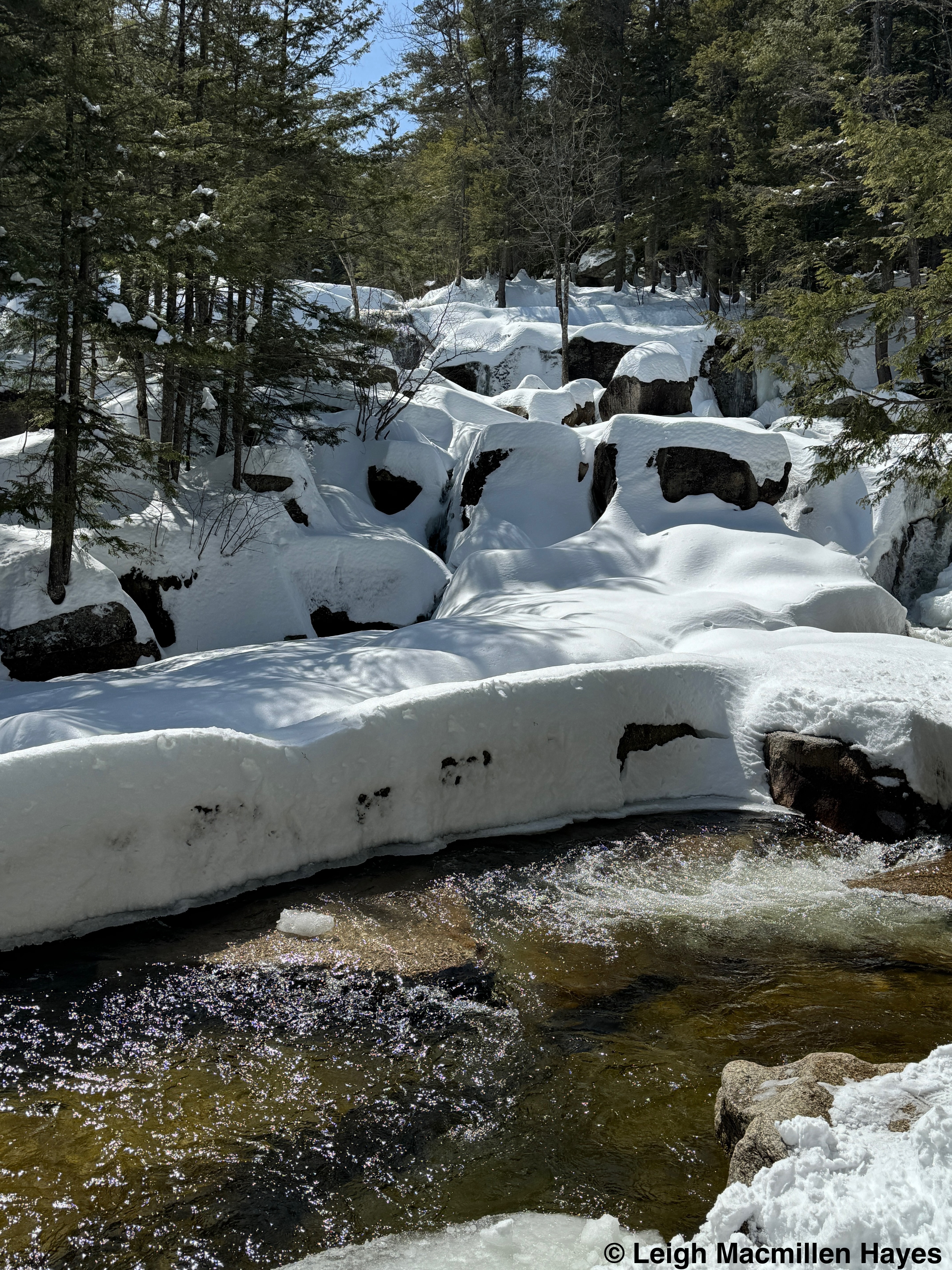
In case you are missing snow, I thought I’d bring you some today. But only because about a month ago, the day after Palm Sunday and a major snowstorm here in the north country, My Guy and I went to Diana’s Baths in Bartlett, New Hampshire, to hike.

It was the first of two storms in a matter of less than two weeks that dropped almost two feet of snow each and transformed Lucy Brook into a winter wonderland. Here’s a bit of history from northconwaynh.com: In the 1860s, after building a house and barn on the banks of the brook, George Lucy built a water wheel powered sawmill. In the 1890s, George built a 12-room boarding house for tourists to visit the site. In the 1930s Chester Lucy built a concrete dam with a water feed and turbine system to replace the water wheel used to power the sawmill. Both the rooming house and sawmill were eventually sold to the US Government and have become part of the National Forest land. Due to the deterioration, the buildings were eventually removed from the site in the 1960s. Remnants of the site can still be seen today including the old cellar holes and parts of the dam system, feed tube and turbine gears used to power the sawmill.

Today, it looked much more summer-like in appearance, but still so much water flows due to snow melt in the surrounding mountains, and it’s BRRRRR.

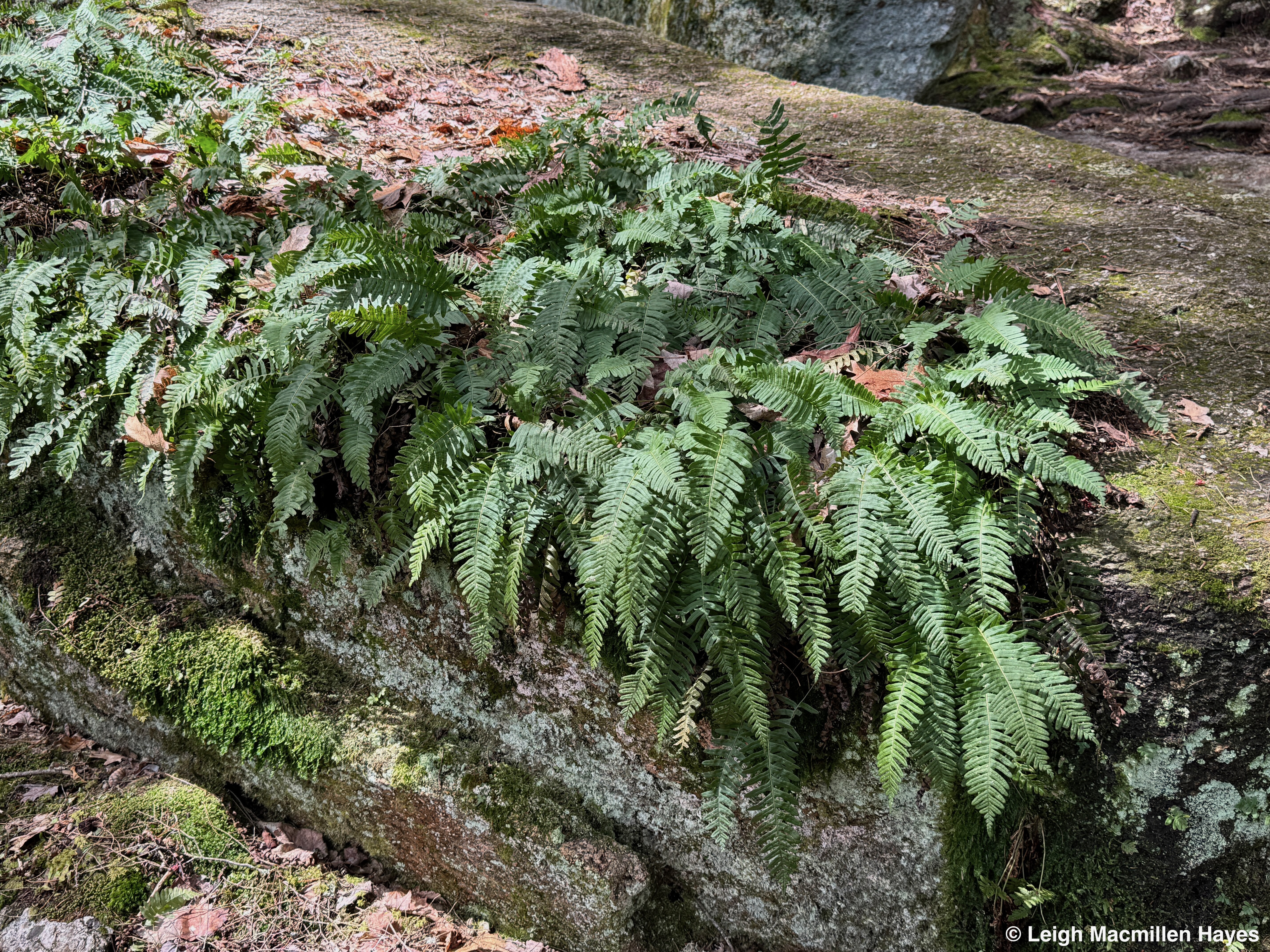
As we ventured forth, I spotted many a boulder experiencing the bad hair day of Common Polypody Fern and every once in a while try to teach My Guy a wee bit about a species. I tell him that someday he can co-lead a nature walk with me. He, of course, guffaws. But ask him what poly and pody mean and he may remember many and feet, for the fern fronds grow from creeping rhizomes.

Last year’s sori (group of spores) were still visible on the underside of some leaves. The sori located in rows on each side of the mid-vein, are circular, orangish brown and not covered by tissue (indusium).

Because we were in a damp environment beside the brook, False Hellebore leaves, with their pleated presentation, brightened the morning. And held raindrops signifying yesterday’s weather.

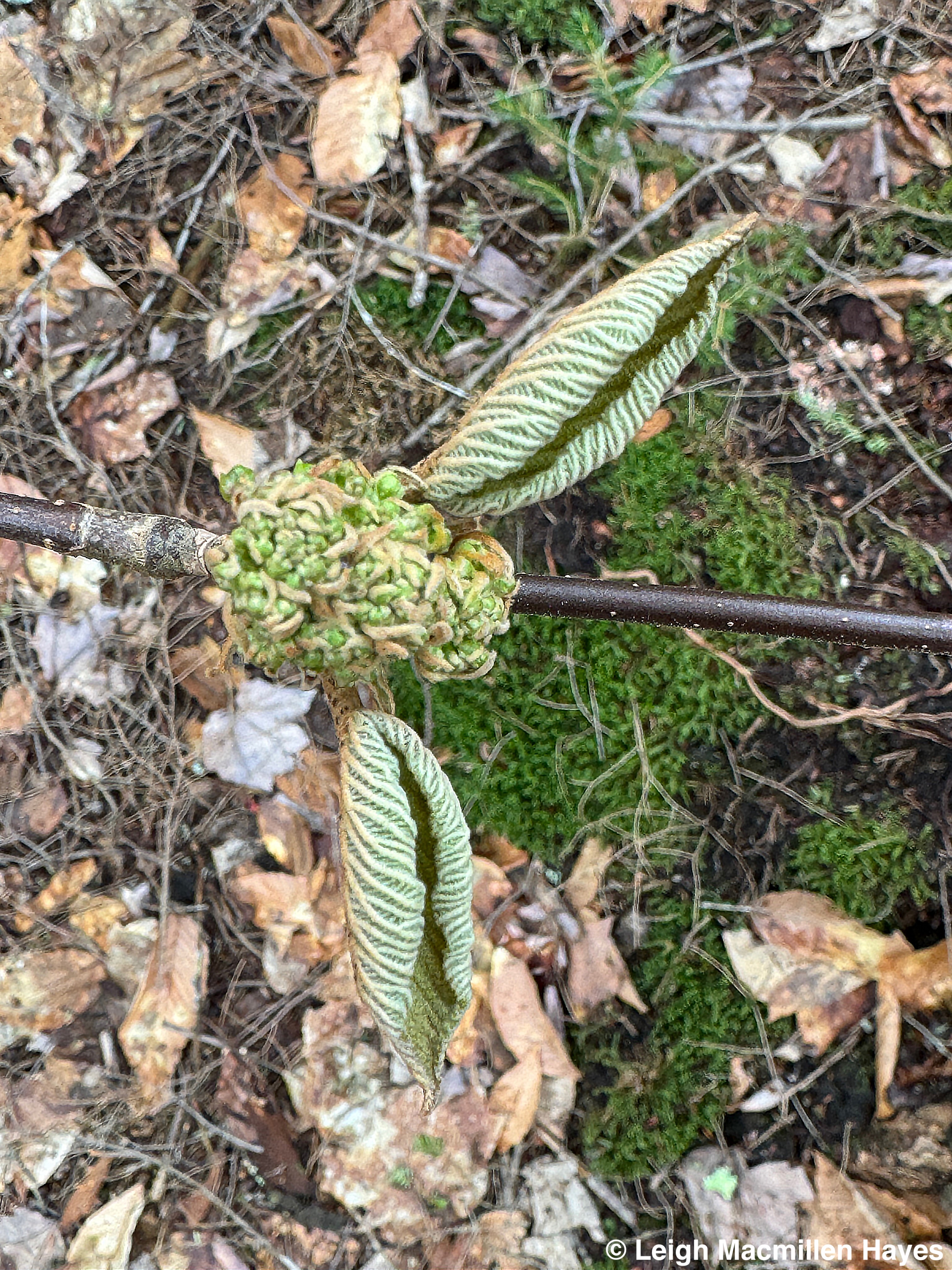
We also encountered numerous Hobblebush shrubs, some even featuring flowers preparing to open into what will be a fantastic display on another day. On this day, it was enough to see their accordion leaves beginning to unfurl, and those flowers presenting like a bunch of worms crawling over each other as if to say, “Me first. Me first.”

We crossed tributaries several times though we didn’t actually cross Lucy Brook as originally intended for the water was still too high for us to manage safely. But . . . we bushwhacked for a bit before sitting upon some tree roots to take a lunch break.

It was while My Guy sat there, that I poked around and discovered this–Wall Scalewort, a leafy liverwort. Liverworts differ from mosses in that the leaves are typically arranged in rows of two with a possible third row below, while moss leaves whorl around the stem. And most mosses have mid-ribs, which liverworts lack.

That said, the Wall Scalewort closely resembles Shingle Moss, which I spotted along this same tributary in March.

But a closer look today made me realize that I could see the leaf arrangement was succubous where the bottom edge was visible, as opposed to incubous. Succubous arrangement is like roof shingles that don’t let the rain in, while incubous leaves are arranged so the top edge is visible and do let the rain in. Thank you Sue Alix Williams in Mosses & Common Liverworts of the Northeast for that explanation.

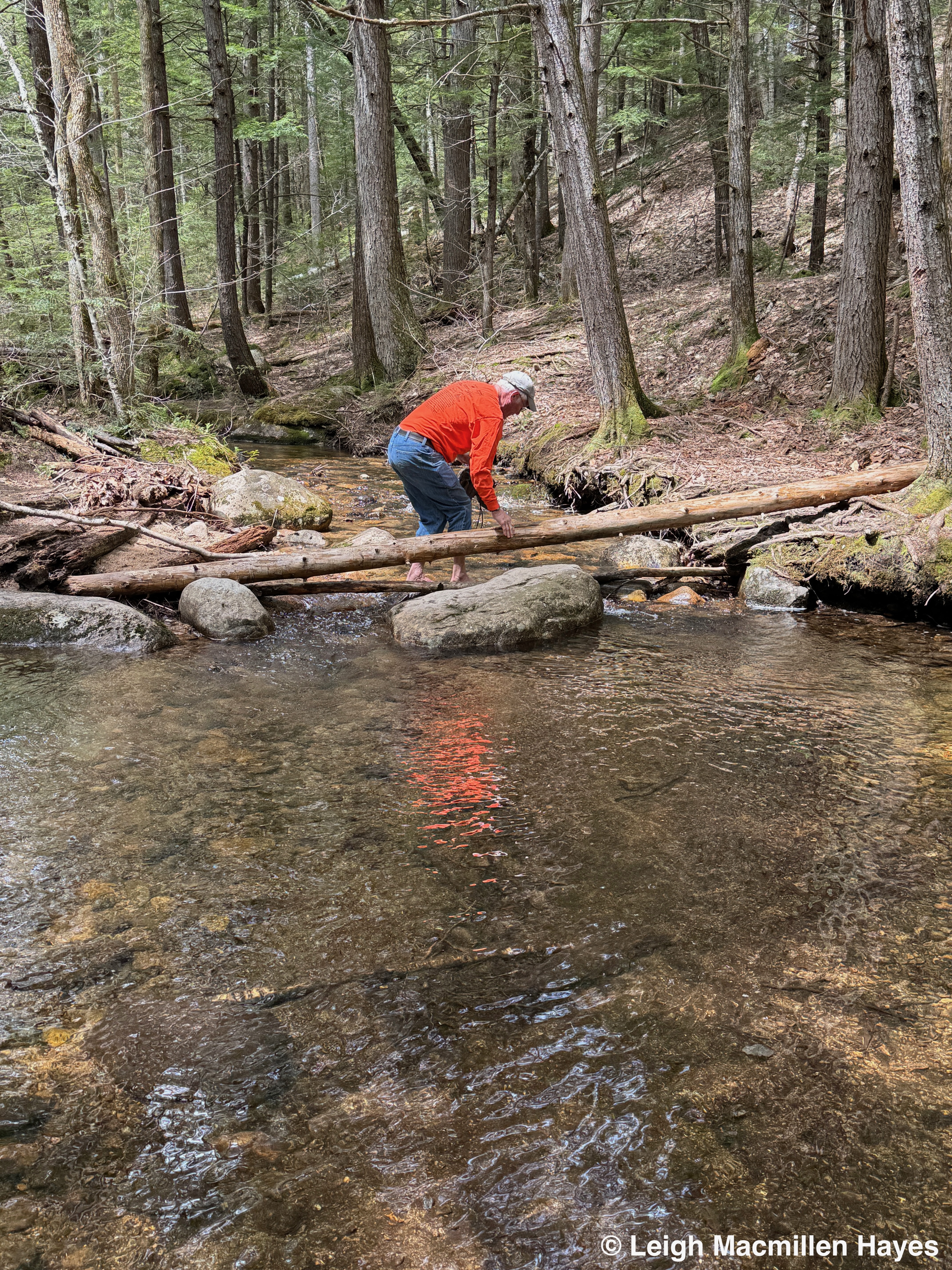
Eventually we reached a turn-around point and came up with Plan B for the rest of today’s hike as we made our way out. While I was able to cross with my high leather hiking boots, My Guy chose to take his boots and socks off and watch his feet turn red from the chill. Thankfully, his better half, ahem, that would be me, had packed a towel because we suspected this could be the case.

Now you might find this as odd, but since our discovery of the new privies last month, we’ve been quite taken with the artwork completed by Kennett High School art students in 2023.

Unbeknownst to us at the time, the paintings were a perfect segue from one trail to another.

And so we drove down the road to Echo Lake State Park and tried to convince the warden that even though we live in Maine, our hometown is just over the border and we should be able to hike the trails for free as New Hampshire Seniors don’t have to pay. He kindly informed us that the park isn’t officially open yet, as so it was free, but if we return in a couple of weeks, it will cost us $4 each. Not bad in the scheme of things.

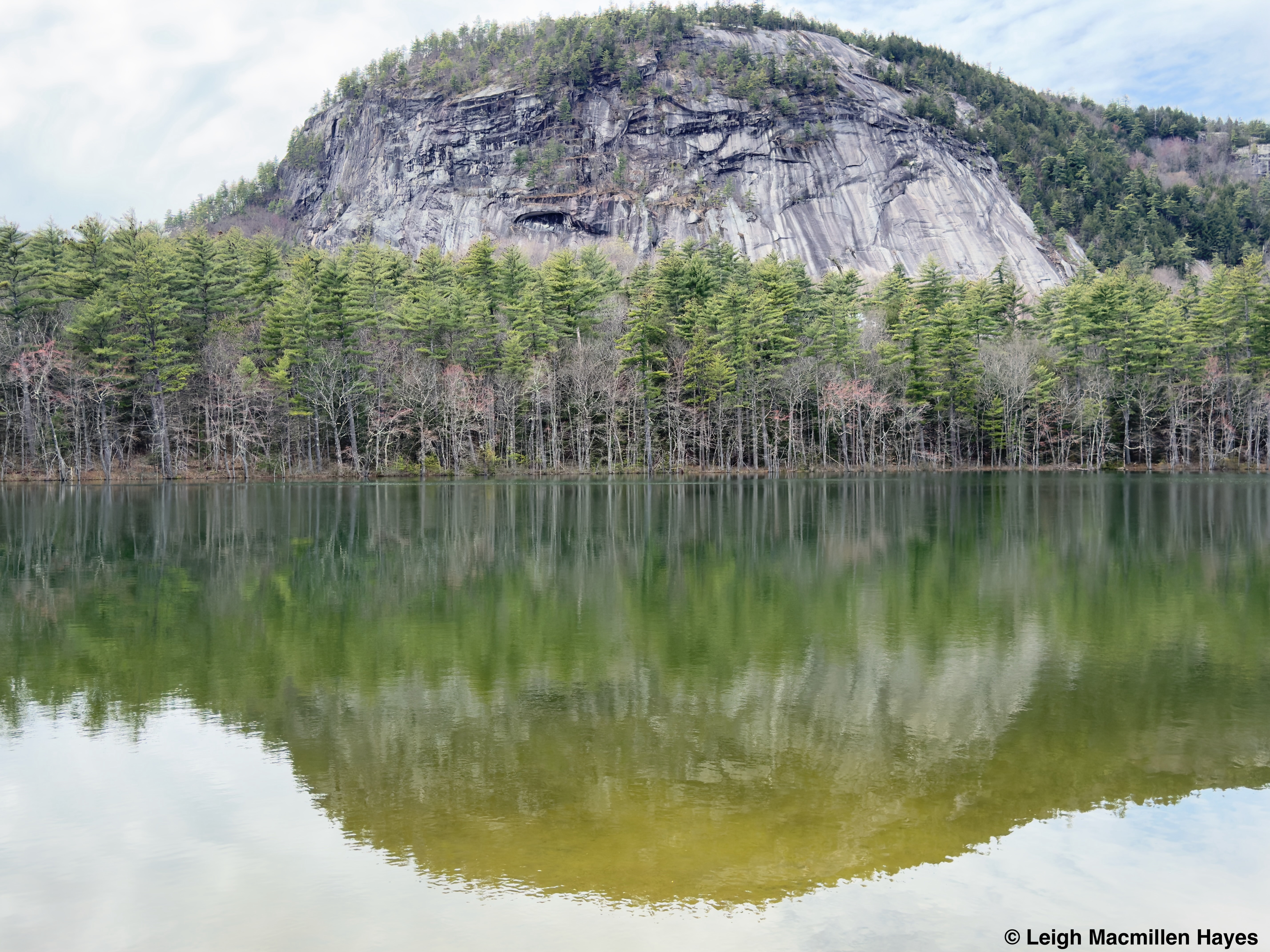
Before us stood White Horse Ledge, one of the trails we had considered if we’d been able to cross Lucy Brook from our earlier destination. We were green with envy as we looked across at it.

But about half way around the lake, we found a different trail to the summit and decided to follow it. That said, we found several trails to the summit and the first we chose led us astray as it eventually petered out.

Despite that, we were thrilled. Okay, maybe it was me rather than we. Semantics.

And so today I celebrated my first meeting of 2024 with Sessile-leaf Bellwort, aka Wild Oat. And where there was one, there were a million, the subtle yellow bell dangling quietly below.

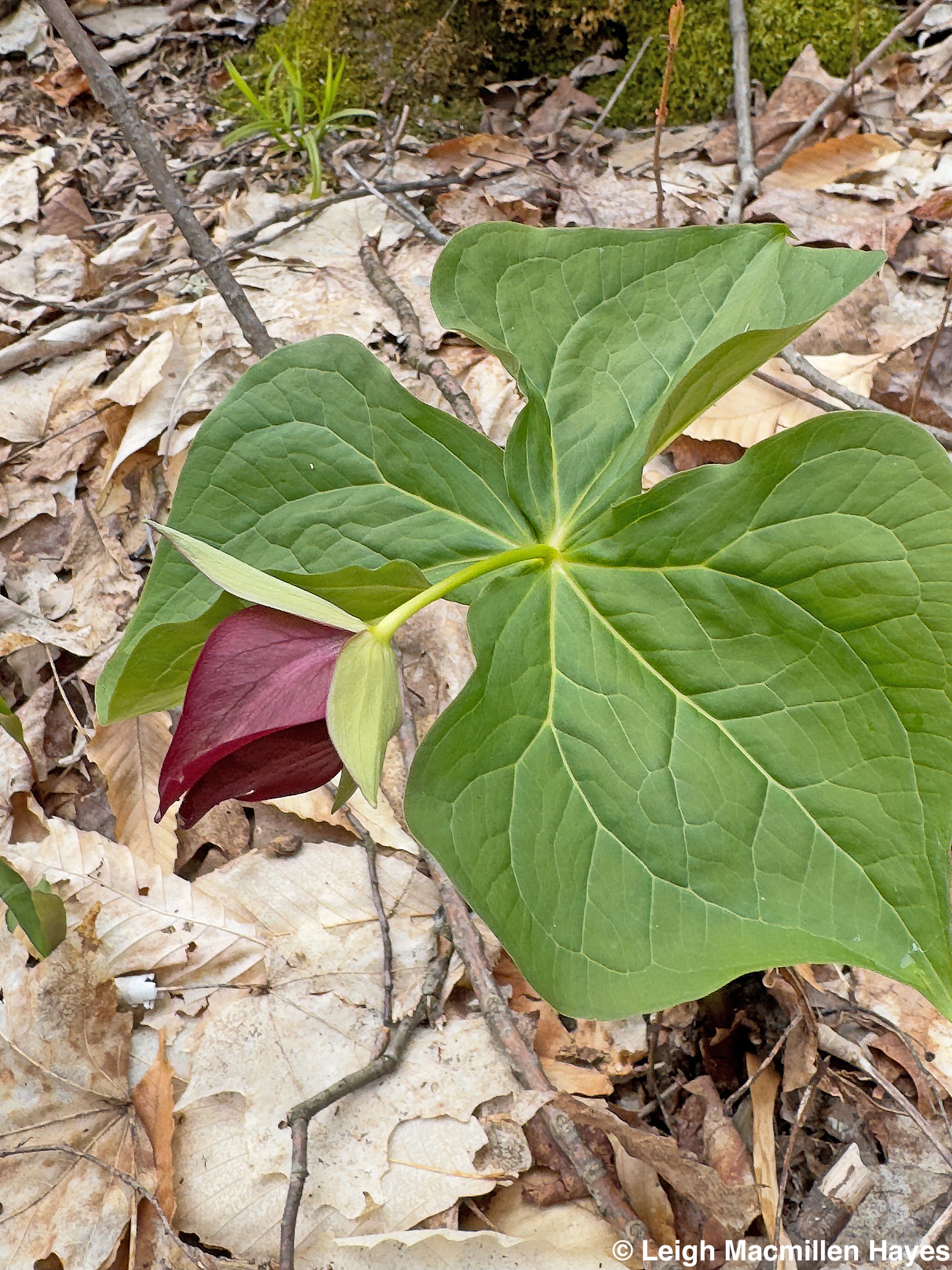
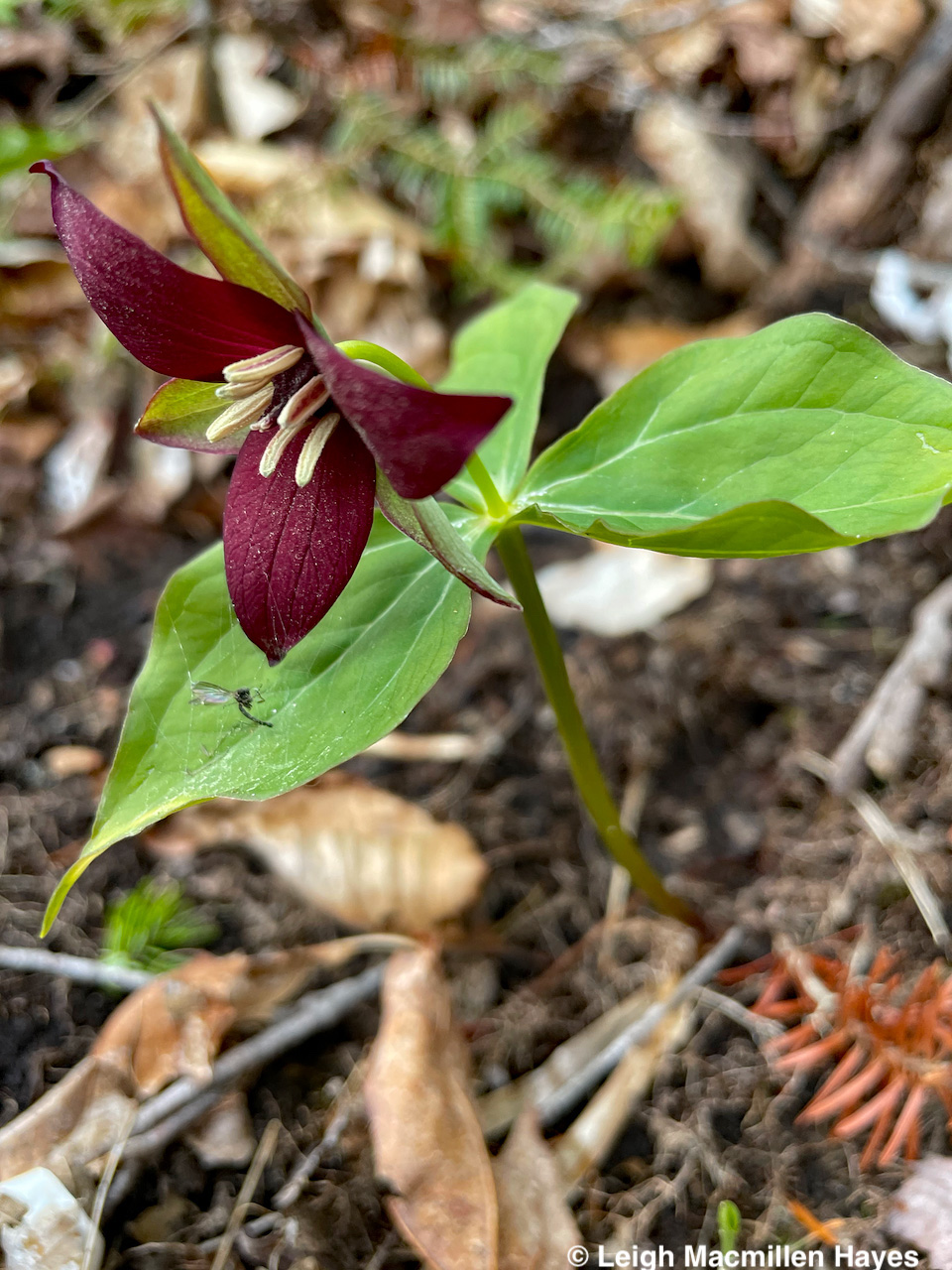
And then . . . and then, I spotted a Stinking Benjamin, or Red Trillium almost in flower.

And a few steps away . . . full flower mode. Trillium is a reference to the fact that the floral parts of the plant occur in threes: three leaves, three petals, three sepals.

Going forth, I’m sure I’ll honor a trillion trilliums, but these were the first and therefore the most special.

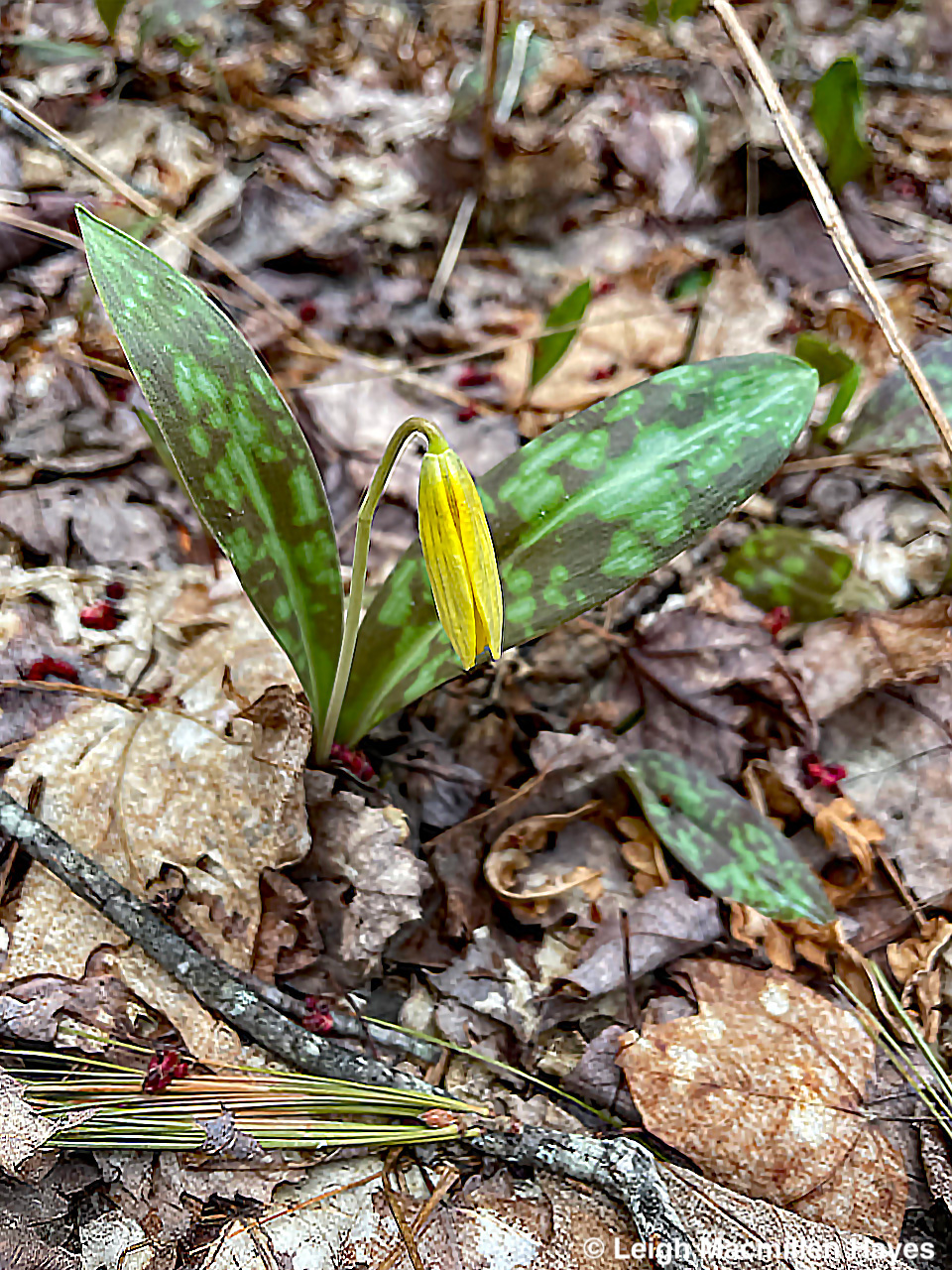
As we made our way back to a better trail, the leaves of Trout Lily caught my attention and then much to my delight I found two in flower. The leaves are maroon-mottled and the nodding flower features petals and sepals bent backwards to expose six brown stamens. This one is such a treat for me because I only meet it when I least expect to do so.

Once on the actual trail upon which we had to scramble to climb toward the ledgy summit, I spotted another that only grows in such habitats.

Take a look at the black arrow in the photo.  That is one hairy stalk rising from a rosette of basal leaves.

This native perennial wildflower, Virginia Saxifrage, grows out of cracks in rock, and has been known as a rock breaker even though it doesn’t actually break rocks, but rather, likes to grow in those fractures. It’s such a sweet little flower that is easy to overlook.

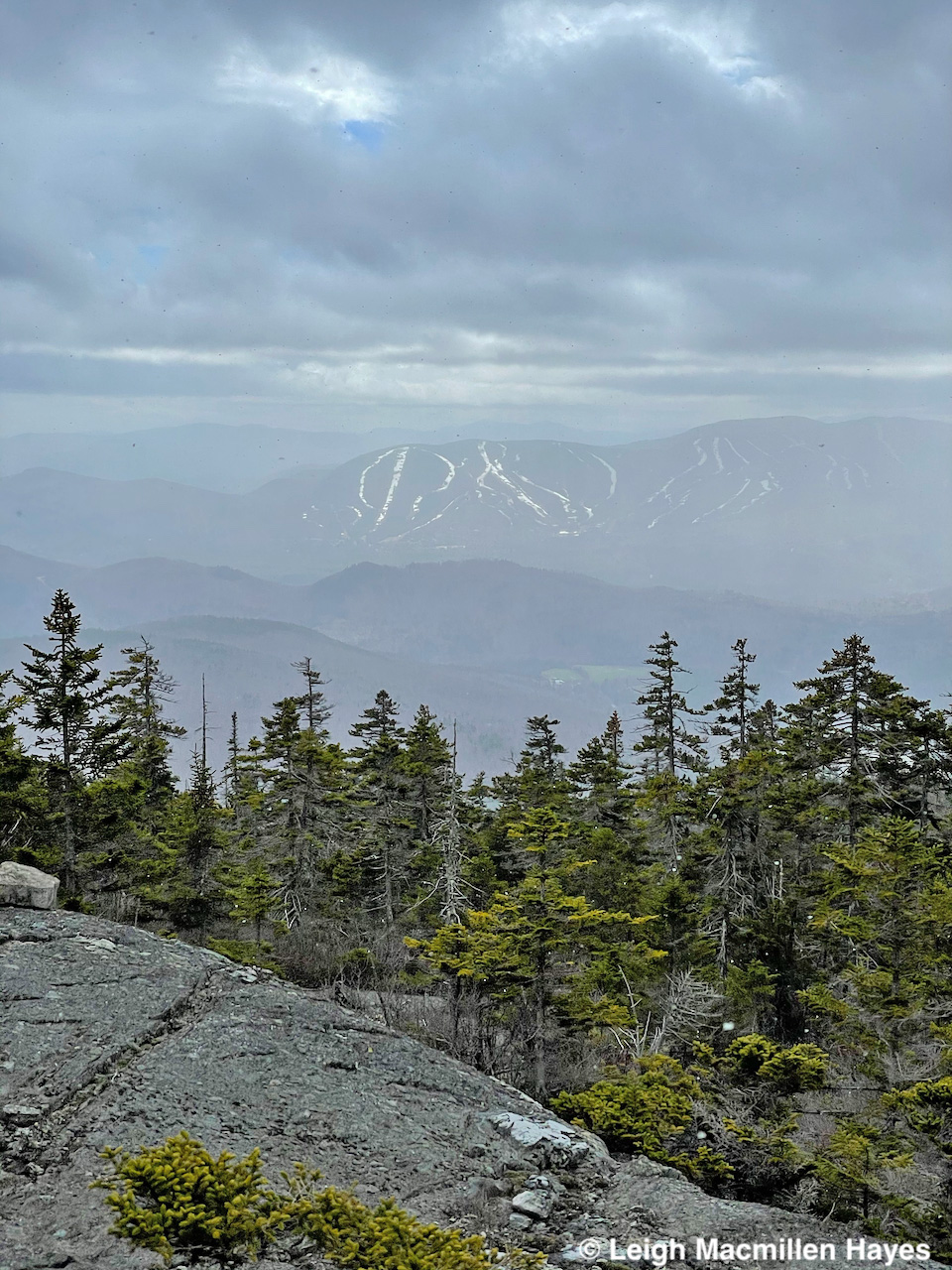
From the ledges above, we had a great view of Echo Lake, and the mountains beyond, with Cranmore’s Ski Area showing the last of the melting snow.

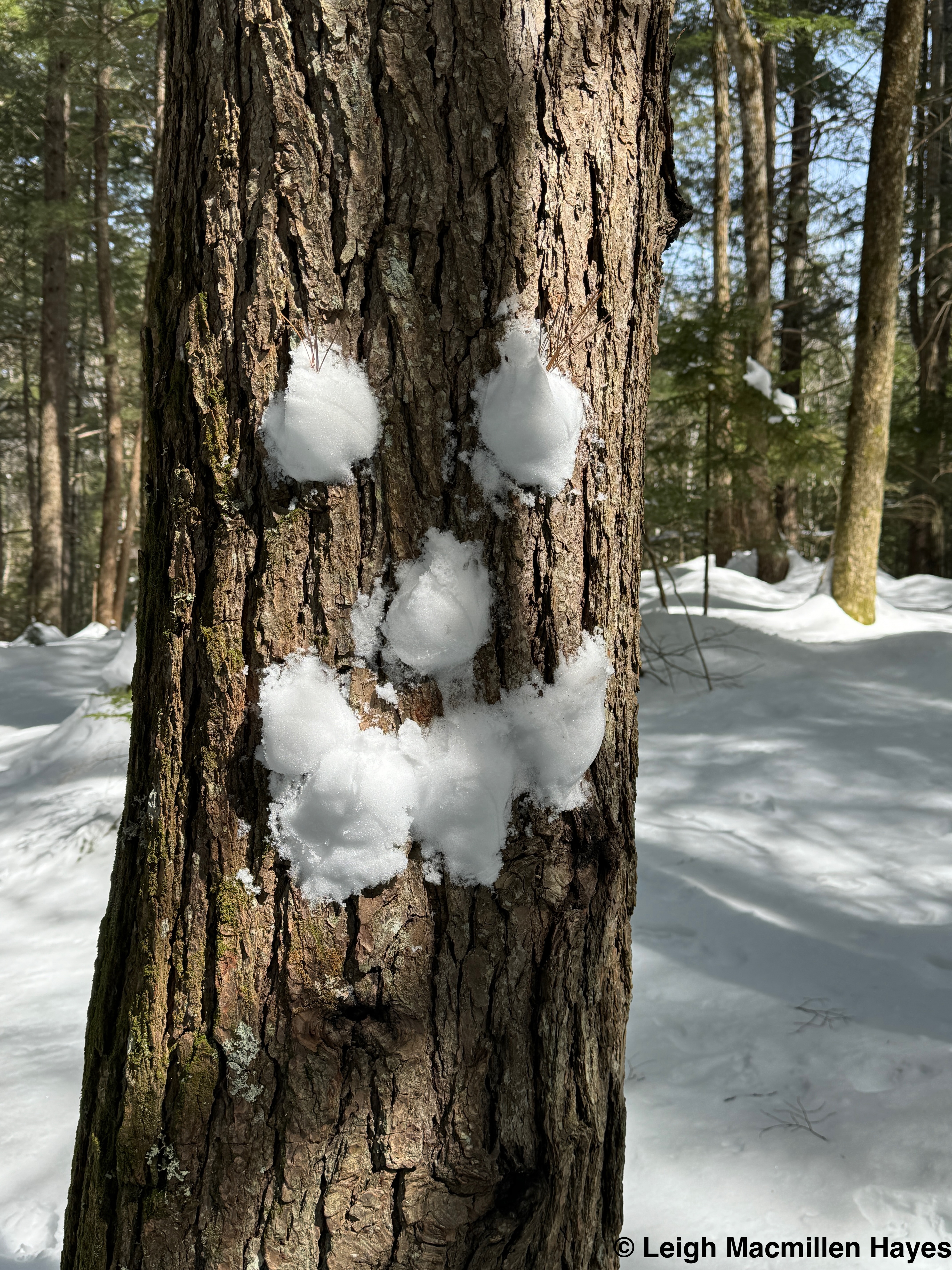
That brings me back to the snow of a month ago. I took it upon myself to figure out a way to make people smile.

And today, we did the same, though not with snow like this. But rather, with our actual smiles and friendly hellos as we greeted each hiker we met. Even if they weren’t smiling or making eye contact with us at first, we got them all to return the greeting and had some nice chats with a few.

I told My Guy that it kinda reminded me of our New York adventure last weekend, when I made it a point to try to make eye contact with each person we passed on the sidewalk or trail and to always leave them with a smile. A few actually looked at me and turned on a smile, which seemed to surprise them.

This was indeed a smile of a Mondate . . . on so many levels.

Solving the Puzzle Mondate

What season is it exactly? That was today’s puzzlement as we headed up a trail in Newry, Maine.

The temperature was in the 20˚s at best and wind gusted to at least 25 miles per hour as we hiked along the forest trail, but my heart sang with the sight of a field of Trout Lilies, a plant that I sadly seldom encounter. We’ve hiked this trail a bunch of times and never could I recall seeing these delightful spring ephemerals so named because the maroon markings on the leaves resemble a brown or brook trout. And then it occurred to me: being ephemerals, they bloom early when the canopy isn’t yet closed in with leaves and then disappear into the landscape as so many other flowers and ferns fill the space. Though the yellow nodding flowers hadn’t yet opened completely, it was enough to see into the future.

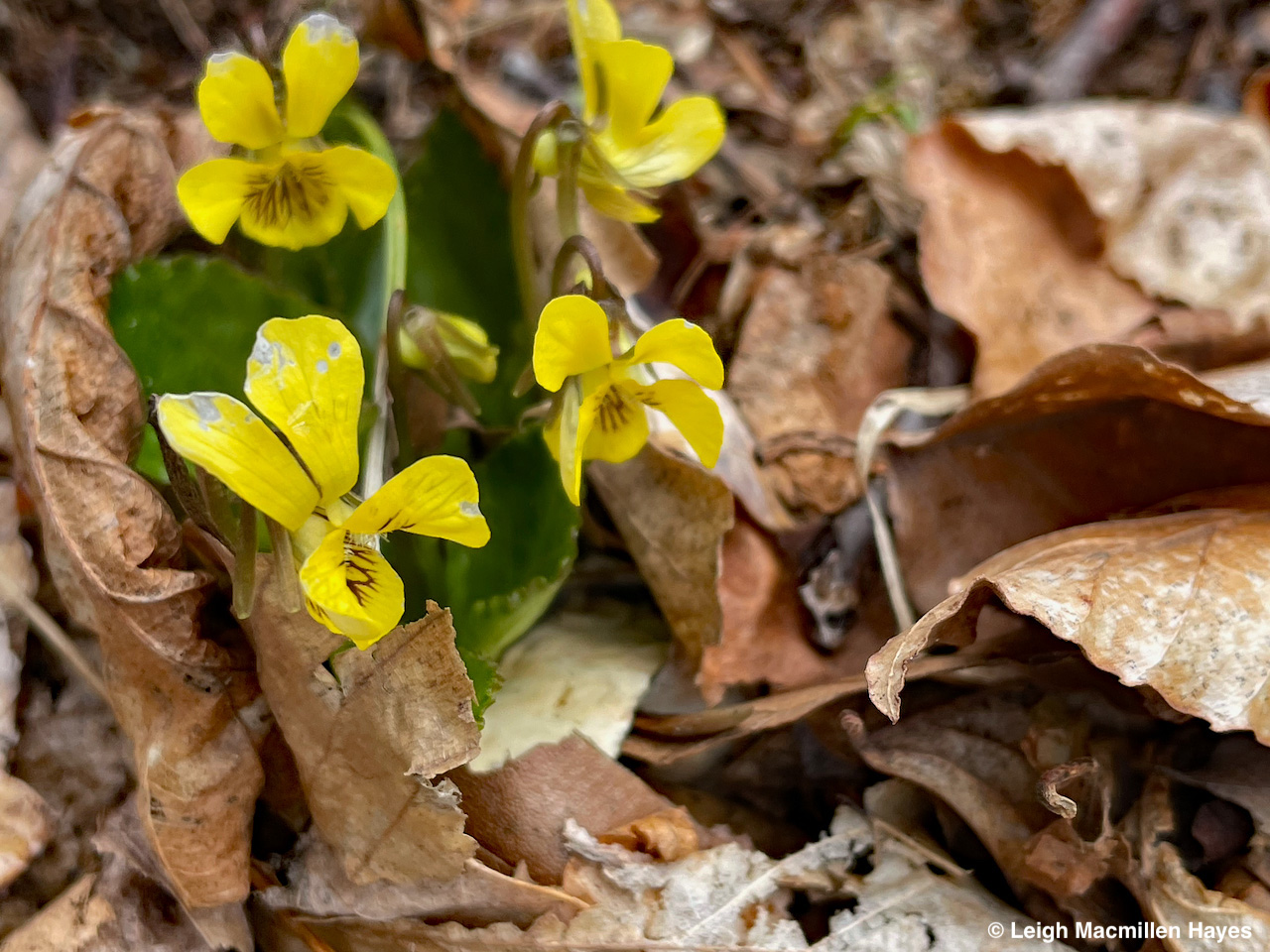
Similar in color were the Forest Yellow Violets, their tiny flowers offering teeny rays of sunshine beside the trail like runway lights at an airport. Their purple veins served as runways all their own and despite today’s brisk weather, the translucent coloring of the flower’s tips indicated that insects had done their duty and pollenated the plants.

And then, my heart be still, a Red Trillium waiting to blossom. That, of course, brought out a comment from my guy about a trillion trilliums because he knows well that I find it difficult not to honor each one.

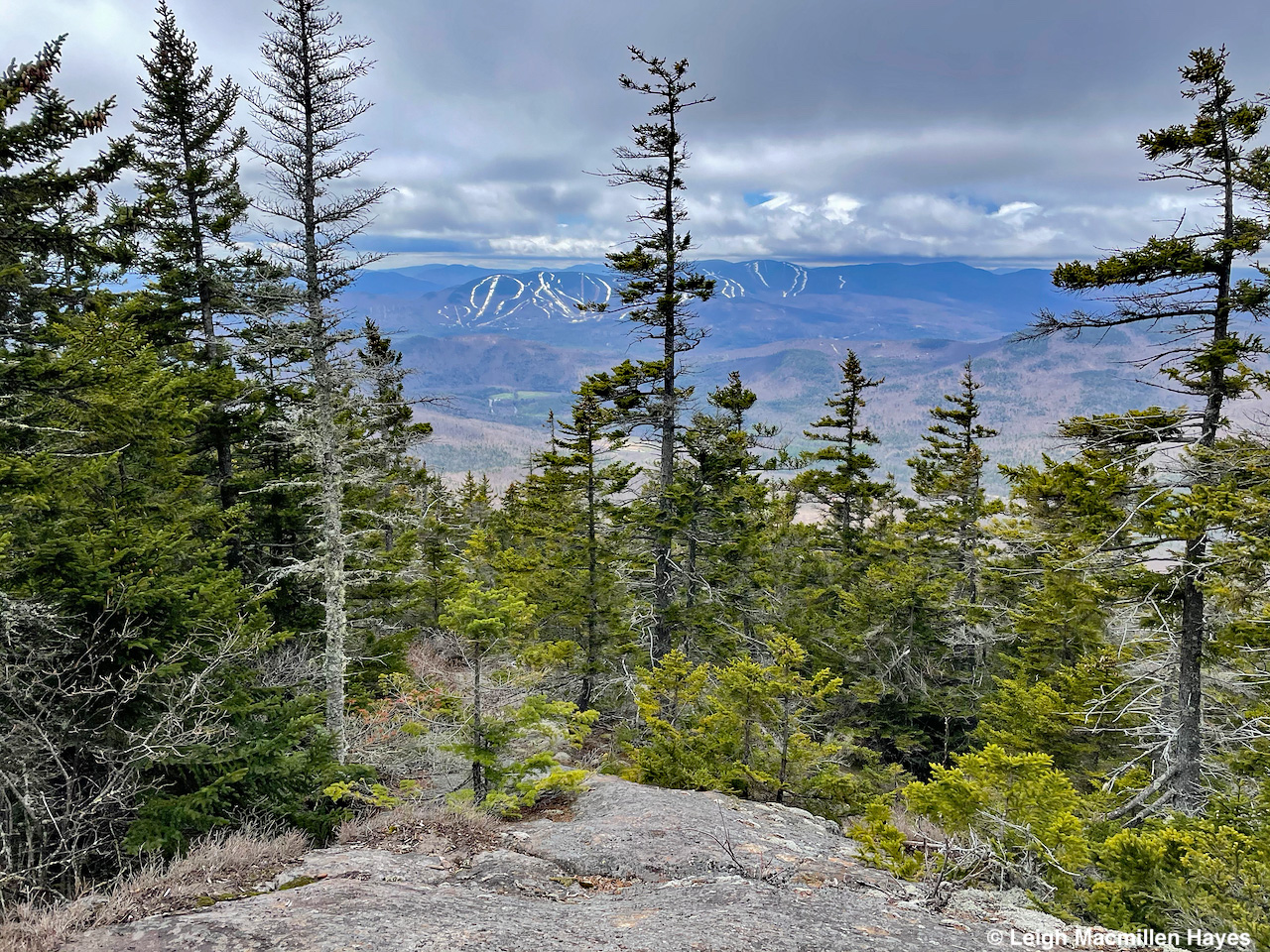
Through a deciduous wood we climbed for two miles and then decided to find lunch rock. It happened to be beside a stream and so we sat, ate our PB&J sandwiches, topped off with cookies from Fly Away Farm, all the while enjoying the water’s babble and view beyond with Sunday River Ski Area in the offing.

If I had to say exactly where lunch rock was located it would be this: where X marks the spot.

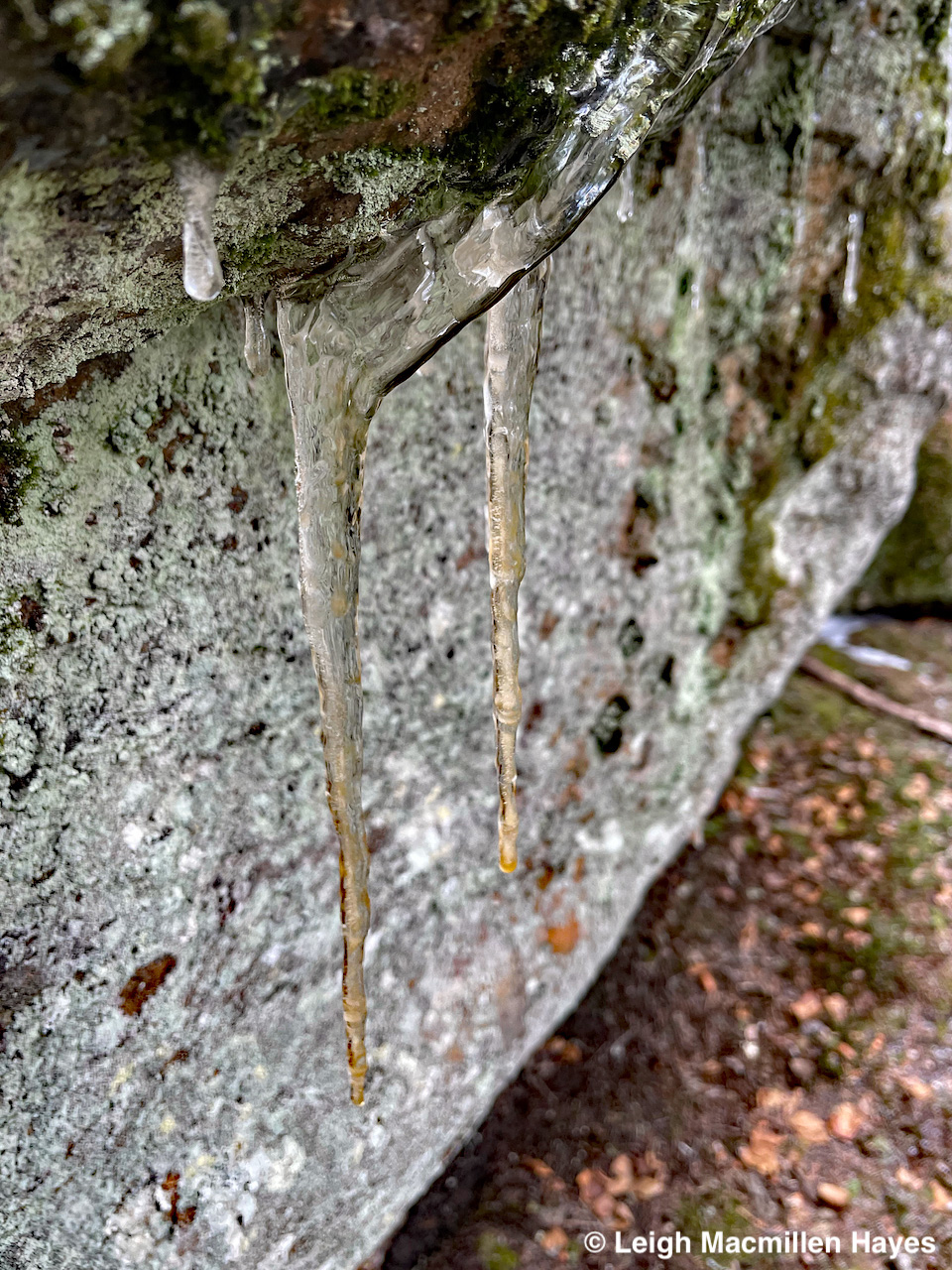
Ah, but notice the icicles. Can you feel the chill of the day?

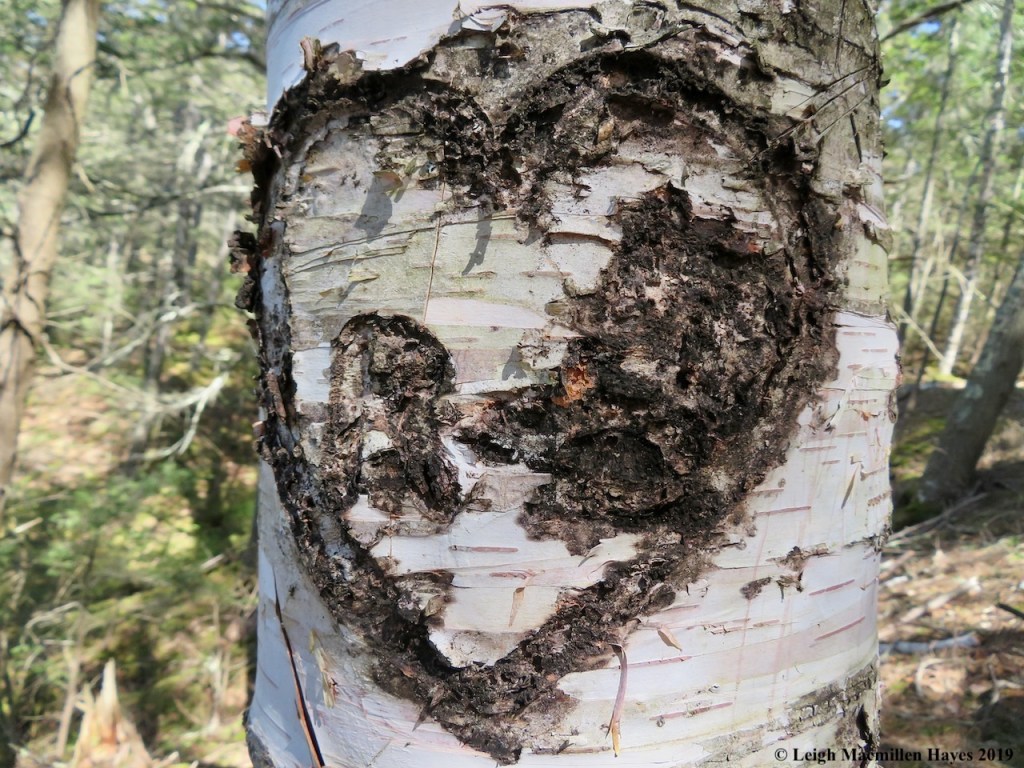
And then it was onward and upward, with a brief stop at the infamous trail sign where many have carved their names in a proclamation of love or at least acknowledged ascent of the trail.

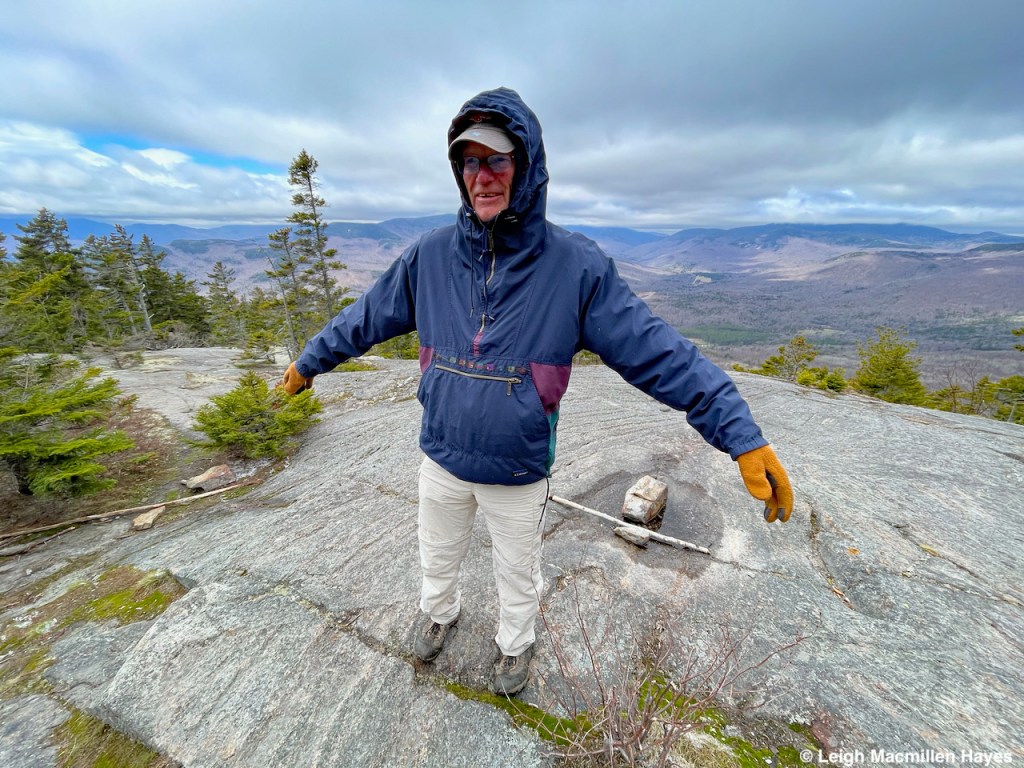
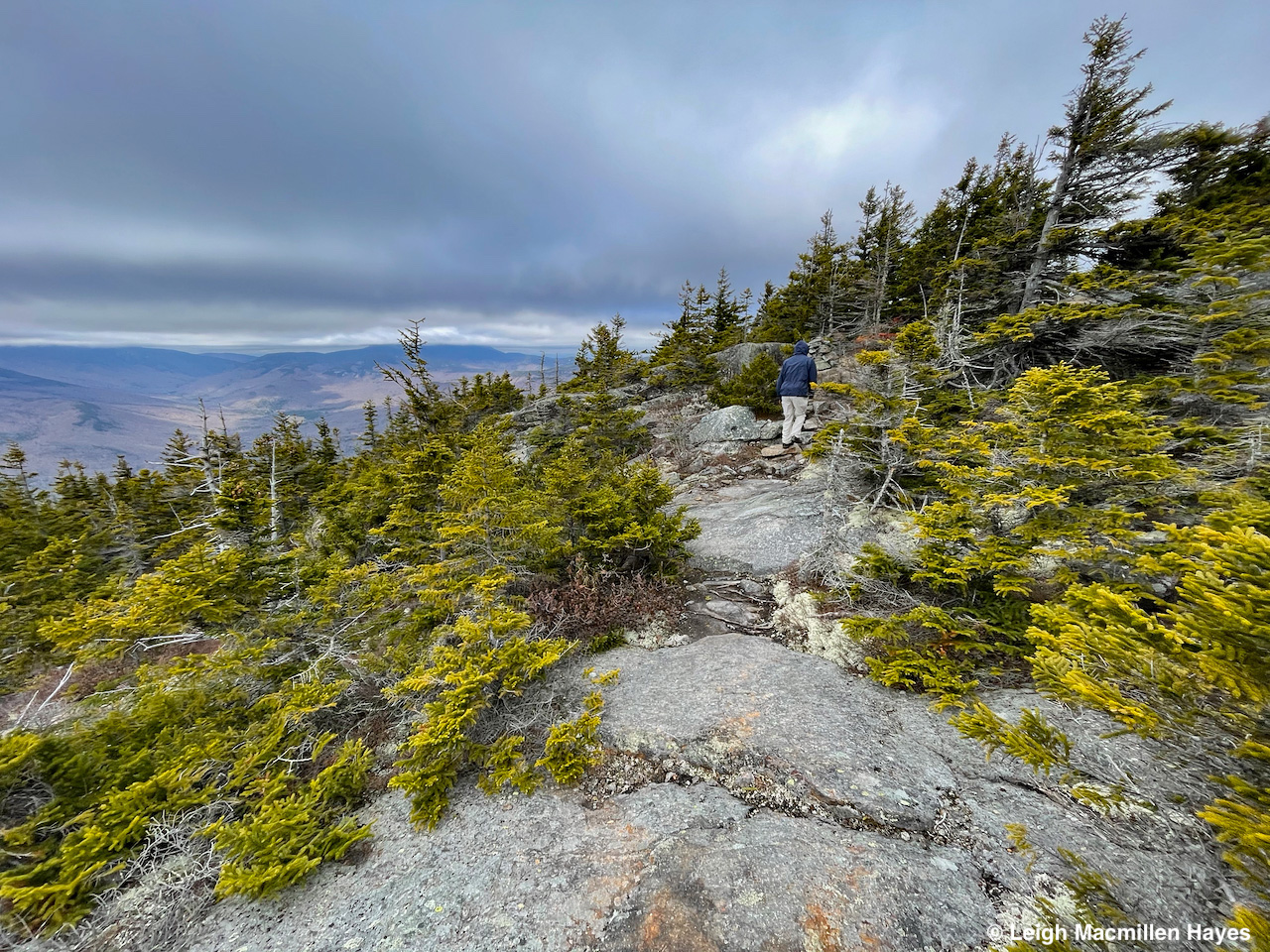
Eventually we emerged onto the start of the ledges where we met the wind head on and it grabbed our bodies in an attempt to whip us off the mountain. Did I mention that for the first mile we wondered about our choice of trail given the day’s conditions and considered other possibilities for today’s hike, but neither wanted to give in and so the wind was ours and likewise we belonged to it.

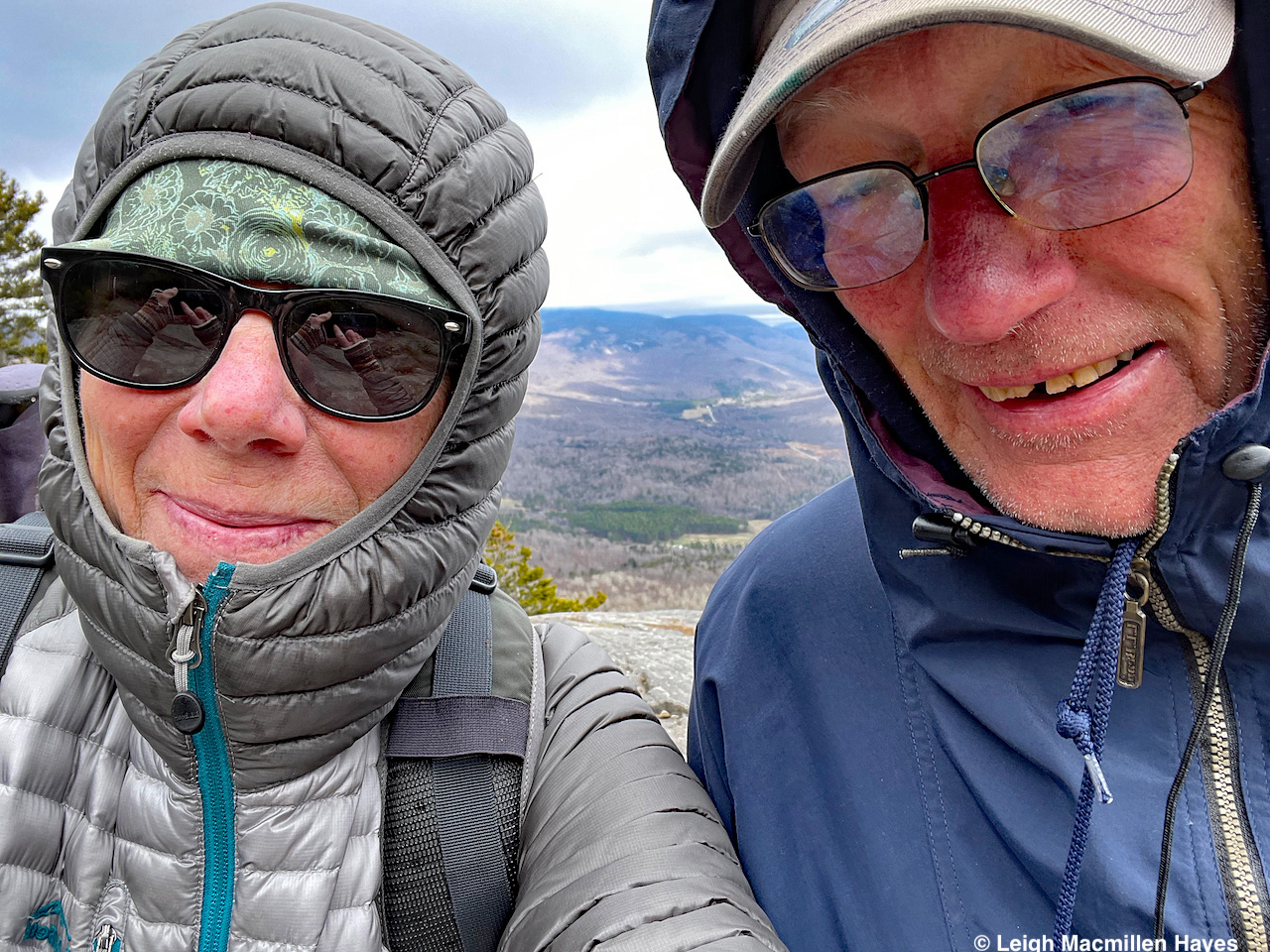
That said, rosy-cheeked as we were, we posed for a selfie and wondered it might be the highest height we’d reach. And then upward we continued to hike, uncertain about the future.

Over and over again, Sunday River Ski Area became our focal point as we viewed it from a variety of vantage points.

With a half mile to go before reaching the 3000+ foot summit, we peered into boulder caves and wondered if anyone was home.

Our best finds: more icicles.

And so onward and upward we continued, our hoods helping to keep the wind at bay.

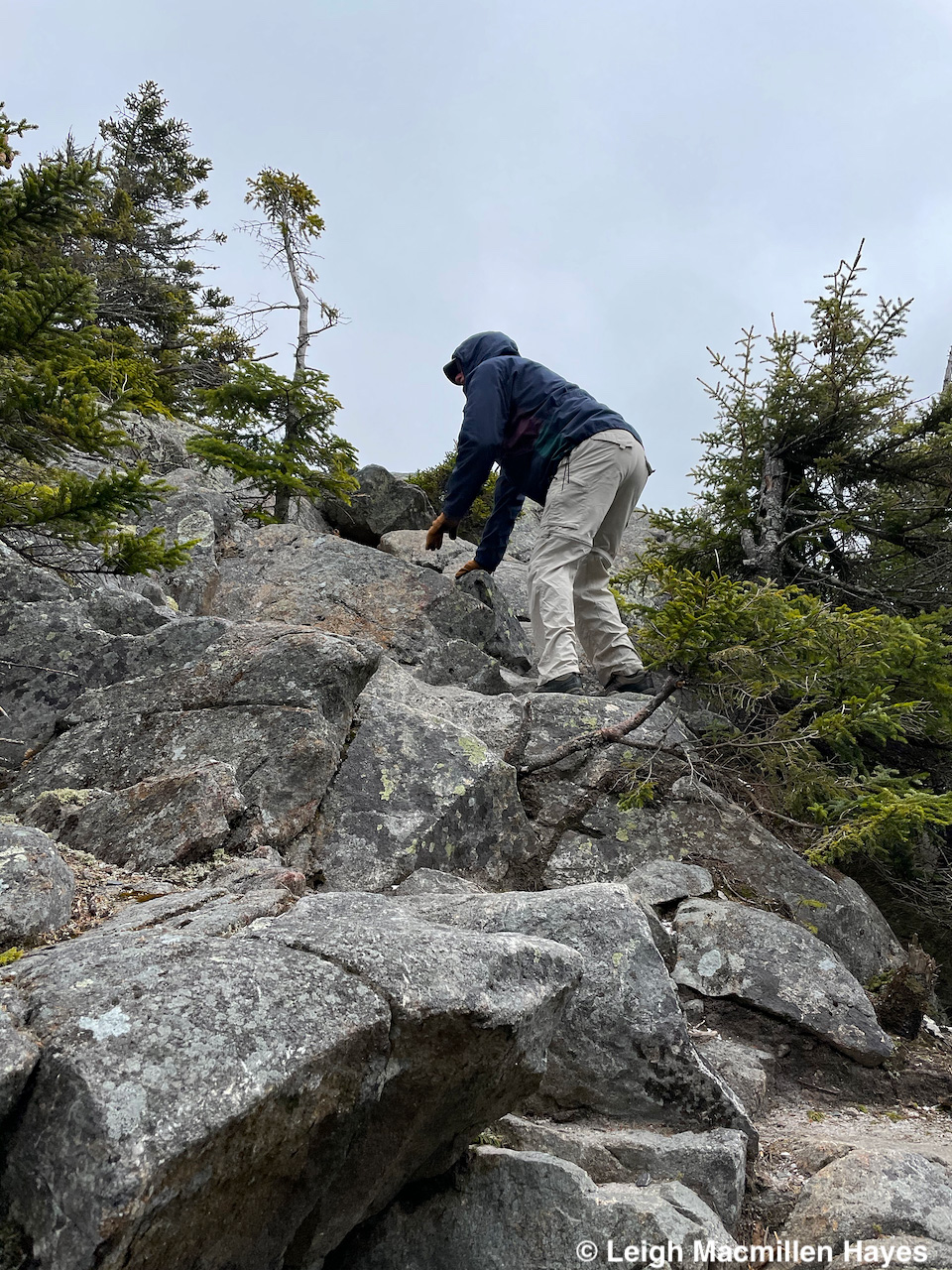
Suddenly, only a few boulders stood between us and the summit. Tackle them and we’d arrive.

Which we did, the cairn at the top the first recipient of our honor.

One of three survey markers our second focus.

And a quick pause to mark the fact that we were actually there, and then we found the trail down the backside that led toward a spur that circles below the summit.

It was there that we climbed down into winter.

Or perhaps it was late, late fall that met us along the trail.

As we followed the spur, snowflakes flew sideways in front of us and started to blur Sunday River’s face.

My guy, the naturalist :-) in his own right, did what he often does and pointed out things of interest to me, like the #4 tree. So, what created the 4? I had ideas; he’d already moved on.

We eventually found our way back to the main trail and continued the descent. It was rather quick as is my guys’ custom, but I know a few tricks to slow him down and one is to mention the potential for bear paw trees.

Bingo! He found one we’ve missed on previous journeys.

Eventually we left late fall/winter behind and upon the descent met spring again, this time in the form of Canada Mayflower making preparations to bloom.

And then . . . a first bloom of one of the trillion Trillium.

With that the puzzle was solved. Even if it feels like a cooler season on Puzzle Mountain in Newry, Maine, blossoms like that of a Stinking Benjamin (Red Trillium) tell the truth. It is spring after all.

LOVE ME, love me: Wolfe’s Neck Woods State Park

It had been four years since we last visited Wolfe’s Neck Woods State Park and that venture took place at the end of November. We must have been Christmas shopping. Today, we were in search of a bug-repellant shirt for me (Spring shopping) and so our journey took us to Freeport. Not being a shopper, it was a quick in and out of the store and then onto Wolfe’s Neck Road.

There’s a 4.4 mile network of trails in this 200-acre park gifted to the State in 1969 by Mr. and Mrs. Lawrence M.C. Smith of Freeport. One of the stand-out features is Googins Island where Osprey have been entertaining visitors for years as they raise their young on a huge platform nest they’ve built high up in a pine. Can you see it?

Here’s a closer view–and I assume (never assume) that Momma was the one sitting on eggs. The nest has been added to each year and though I have no idea of its actual size, Osprey nests can reach 10–13 feet in depth and 3–6 feet in diameter. The depth of this one appeared to be a few feet, but the diameter was substantial.

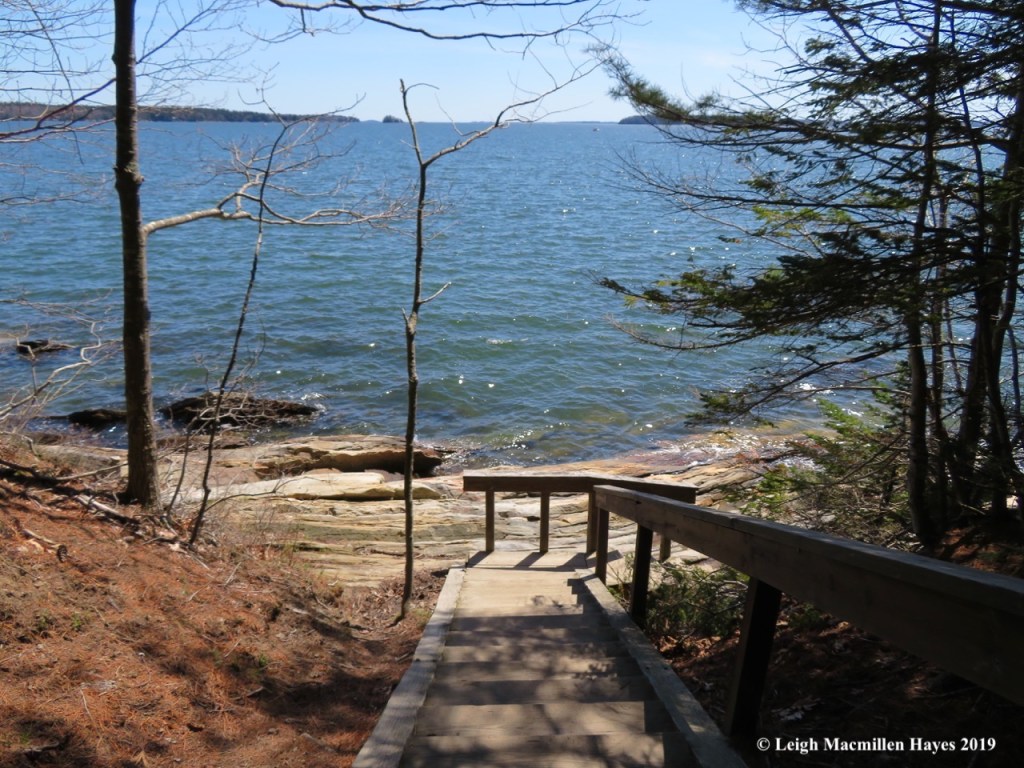
We followed the trails and enjoyed journeys to the water where we could take in the views of Casco Bay and its islands.

And before our feet, the mix of granite pegmatite and metamorphic rock. As much as my mom always loved to walk along a beach, she was equally enchanted by the rocky coast of Maine and whenever I encounter it, I feel her presence.

I know mom would have appreciated the artistic rendition of waves created by the water and mimicked by the rock.

Again and then again, the trail was interrupted by a set of wooden steps that led us back to the water’s edge.

It was there that we spied the Common Eiders as they floated and fished.

And . . . the first Dandelion blossom of the season–for us, at least. In my modest opinion, Dandelions are under-appreciated and that fact was driven home when my guy asked, “You’re photographing a dandelion?” Yep. Check out each golden ray of sunshine with its five “teeth” representing a petal that forms a single floret. Yes, each petal is a floret. Therefore, the bloom is a composite of numerous florets. And notice how each stigma splits in two and curls. What’s not to love. Oh yeah, and though we didn’t witness it today, the pollinators love them. (SO don’t pull up the dandelions in your yard!)

The thing about Dandelions is that they leaf out first and then flower, while their cousins, Coltsfoot, which we also found along the trail, flower first and leaf out later. The wonder of it all.

Our journey took us across stepping stones,

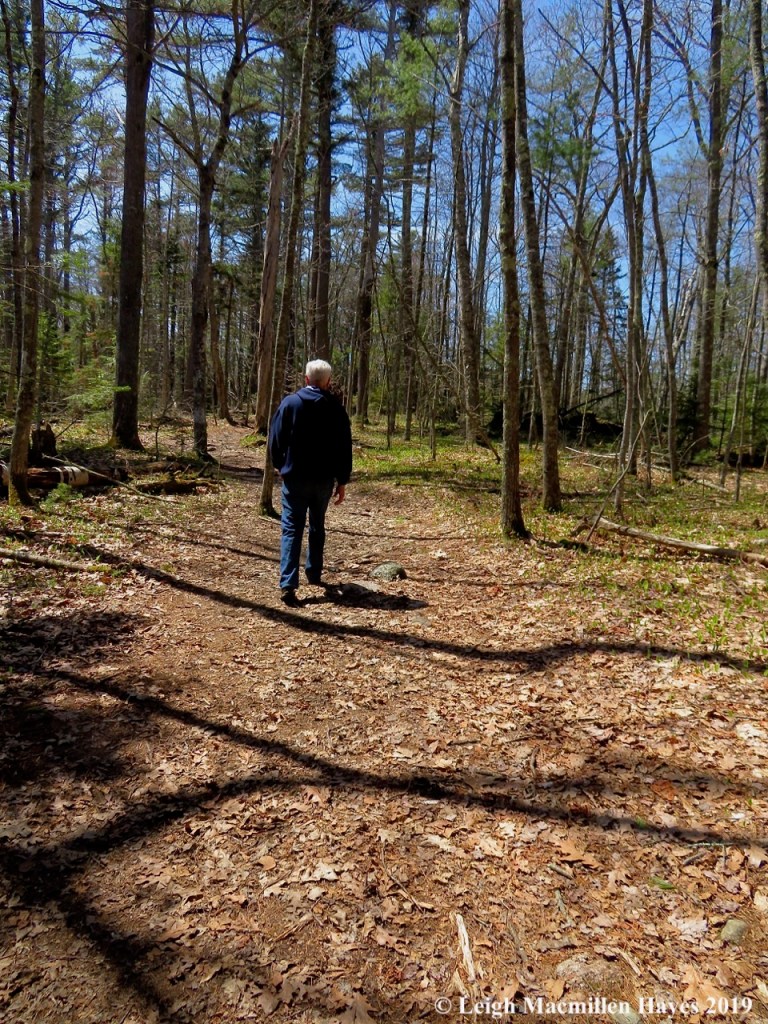
along park-like paths (because we were in a park, after all), over roots and rocks, with ups and downs, and even a couple of bog bridges.

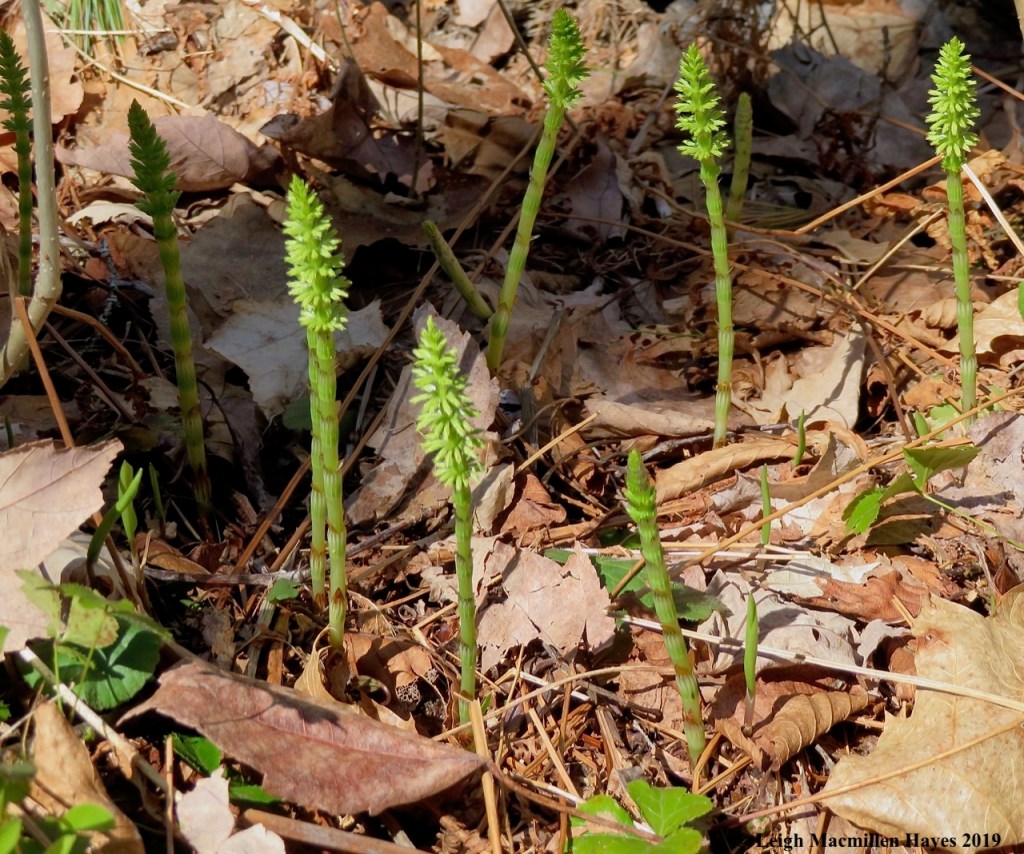
The sights along the way included patches of Equisetum, a living fossil. These vascular plants reproduce by spores rather than seeds and dominated the understory of late Paleozoic forests. Just imagine.

While that was a treat, one of my favorite surprises was the patch of Trout Lilies that decorated the forest floor. It’s one I don’t encounter often, but because of its maroon-mottled leaves that remind some of brown or brook trout, I’ve remembered it each time we’ve met.

The nodding flower that could have been a lantern in the forest with its petals and sepals bent backward, exposed six brown stamens hanging low.

And then, and then, one of my all-time favorites in any season, a Hobblebush, showed off its May glory in new leaves and flowers. Those in our western Maine woods aren’t as advanced yet, but trust that I am watching.

Our journey was quick for we had another commitment, but still . . . we made some wonderful discoveries and especially loved the opportunity to see the Osprey on its nest.

The second in our LOVE ME, love me series had come to an end. Wolfe’s Neck Woods State Park. ✓ Two down, 32 to go!