My Flame for Black and Yellow Garden Spiders: a fire story

I’m back in the meadowy-field because, well, because of the Black and Yellow Garden Spiders and because of a brush fire on an extremely hot day last week.

Looking back toward our house, with our neighbors’ woods to the left and ours to the right, it looks as though the Goldenrod goes on forever. Actually, there’s some Meadowsweet and a few Steeplebushes, and some other flowers in the mix, and ferns including Sensitive and Marsh and Royal and Interrupted, and mosses galore. But right now it’s the Goldenrod and Spirea (Meadowsweet and Steeplebush) that are attracting the pollinators.
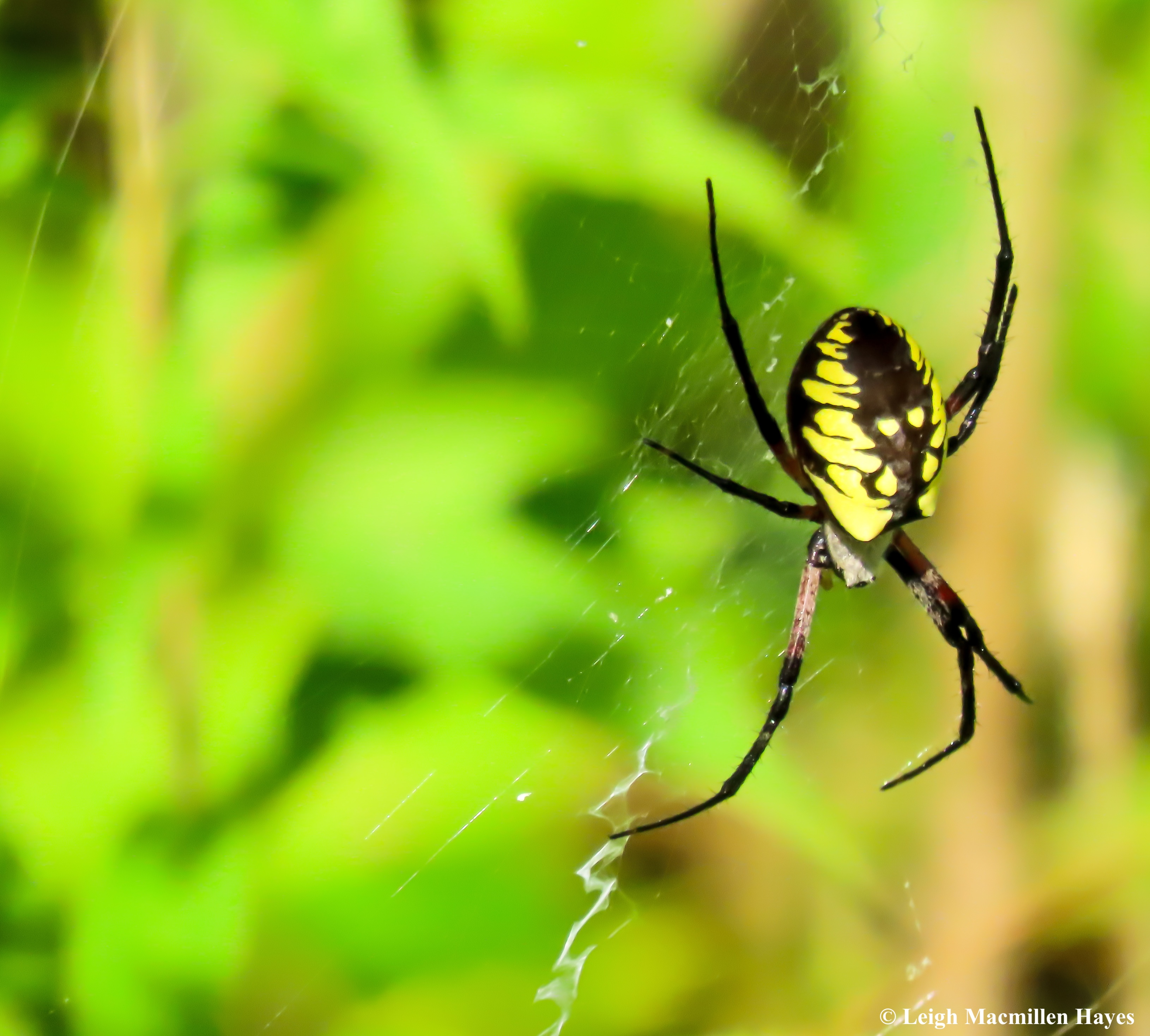
And since the beginning of August, the Black and Yellow Garden Spiders have made a return and as I slowly walk along the path my neighbor keeps mowed, I’ve been noticing more and more of them every day and wonder how many more I don’t see or are deeper in middle the field where I dare not venture . . . because I know there are Black and Yellow Garden Spiders in there.

One extremely hot afternoon last week, I noticed a few of the spiders hiding in the shade. I circled the field twice and then headed indoors to get out of the heat, rather like them. But before going in, I grabbed the SD card from my game camera.

A couple of hours later, actually about 5:30ish, I headed back out to relocate the game camera in our woods. My neighbor saw me and we waved before I disappeared.

Camera relocated, I decided to circle around the trail I’d created in our woods years ago because in the shade of the Pines and Hemlocks, and with a breeze, it was rather pleasant despite the temp being about 97˚.

I was almost to the power lines that cross both of our properties when she texted me: “Do you smell smoke?”

I sniffed and did not, which I told her.

“I’m really smelling it now,” she wrote a minute later.

“Oh boy,” I responded. “I’m just about to the power line. I’ll head home via the field.” Which meant I’d walk under the power lines toward her field, thinking that by walking north, I might be able to figure out where the smell was coming from.

And then I stepped out of the woods and onto the actual power line. “The minute I hit the powerline,” I wrote, “it is strong. Yikes.”

“I’m going to walk up the field,” she replied.

I could see haze toward the north and told her that.

And then, I heard a crackling sound near me that didn’t make sense.

The crackling was the fire.

“I see it,” I wrote. “It’s behind us Calk 911.” Yes, Calk cuze I was in a panic.

And if you look closely at the photo, you’ll see two spots of orange which were the flames.

“Behind where,” she asked because she had called 911, but she wasn’t sure where exactly I was.

And then in my panic I realized that I needed to call 911 and did so. “I’m on the phone with them,” I wrote. “Thank goodness you smelled it.”

Actually, we were both on the phone with the Dispatcher, who was incredibly calm as she asked me to describe what I could see. The fire was on land belonging to another abutter to our south and about thirty feet in from the power line. From where I stood, it was difficult to get a sense of how large it was, but no way was I going in there to give a more accurate account.

Thankfully, the cool, calm, and collected Dispatcher asked me the best way to the location, which she knew via e911, and for which I am grateful, and the fire department was in the midst of their weekly meeting, so within minutes, with the Dispatcher still on the line, I heard the sirens and ran to the field to meet them.

Because the power line is also part of the snowmobile trail, the trucks could follow the path up through the field, and then cross over and drive between the breaks in the two stonewalls that define our boundaries.

Once they were at the location, I ran down the field trail to meet my neighbors and My Guy.

A little while later, three of us decided to head up and take a peek from our land on the other side of the power line.

Ten men and one woman were in there spraying the area with foam and cutting trees, many of which I think were snags or broken from snow weight as they were Gray and Paper Birch.

Another firefighter sent a drone up to check the entire area. He also saw the haze to the north that I’d seen at first, and sent the drone that way, but thankfully found nothing.

They came back the next day to try to determine the cause, but we haven’t heard what it might have been, which is disconcerting because given how dry and crisp everything is right now, I live in fear of this happening again. (We hiked a local mountain today and the top is crisp and dry and fall foliage will not be so great this year because everything is brown)

This morning I was checking on my spider friends and others in the field and My Guy, who had been on an errand, found me out there and asked if I wanted to show him where the fire had been since he’d had to go back to his store when it actually was happening.

He didn’t realize how big of an area it was, probably 30 or 40 feet by 20, and the potential danger it could have caused if my neighbor hadn’t smelled the smoke and she and I hadn’t gone looking for the source.

But I’m trying not to focus on that and instead spend my time observing all that happens just over the stone wall from our house. Check out the size of that pollen sac!

And look at the hairy scales on this dainty Common Ringlet butterfly.

Though I occasionally meet a Katy-did around here, I think this past week was the first time I’d encountered a Broad-tipped Conehead! What a conehead it is!

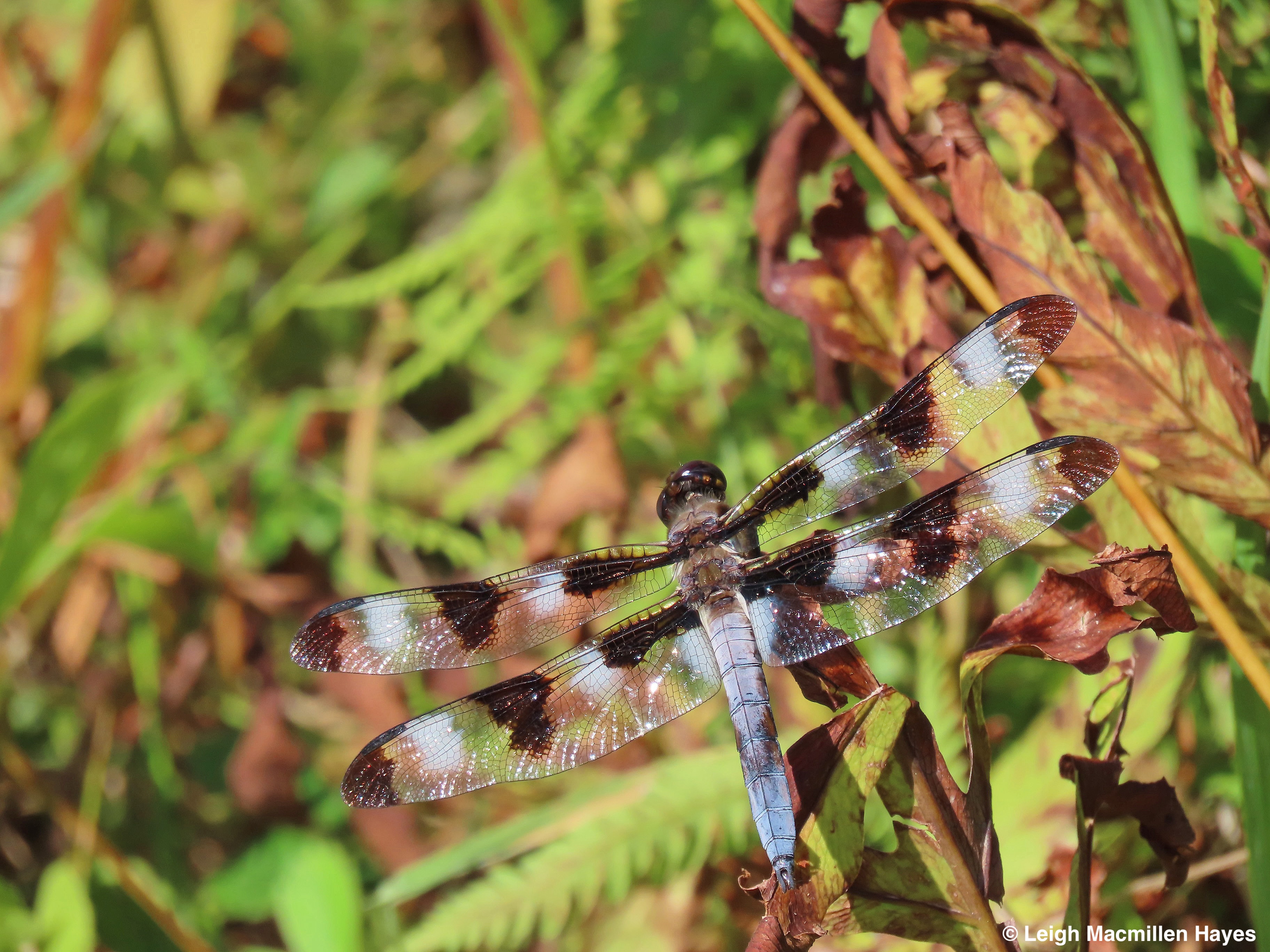
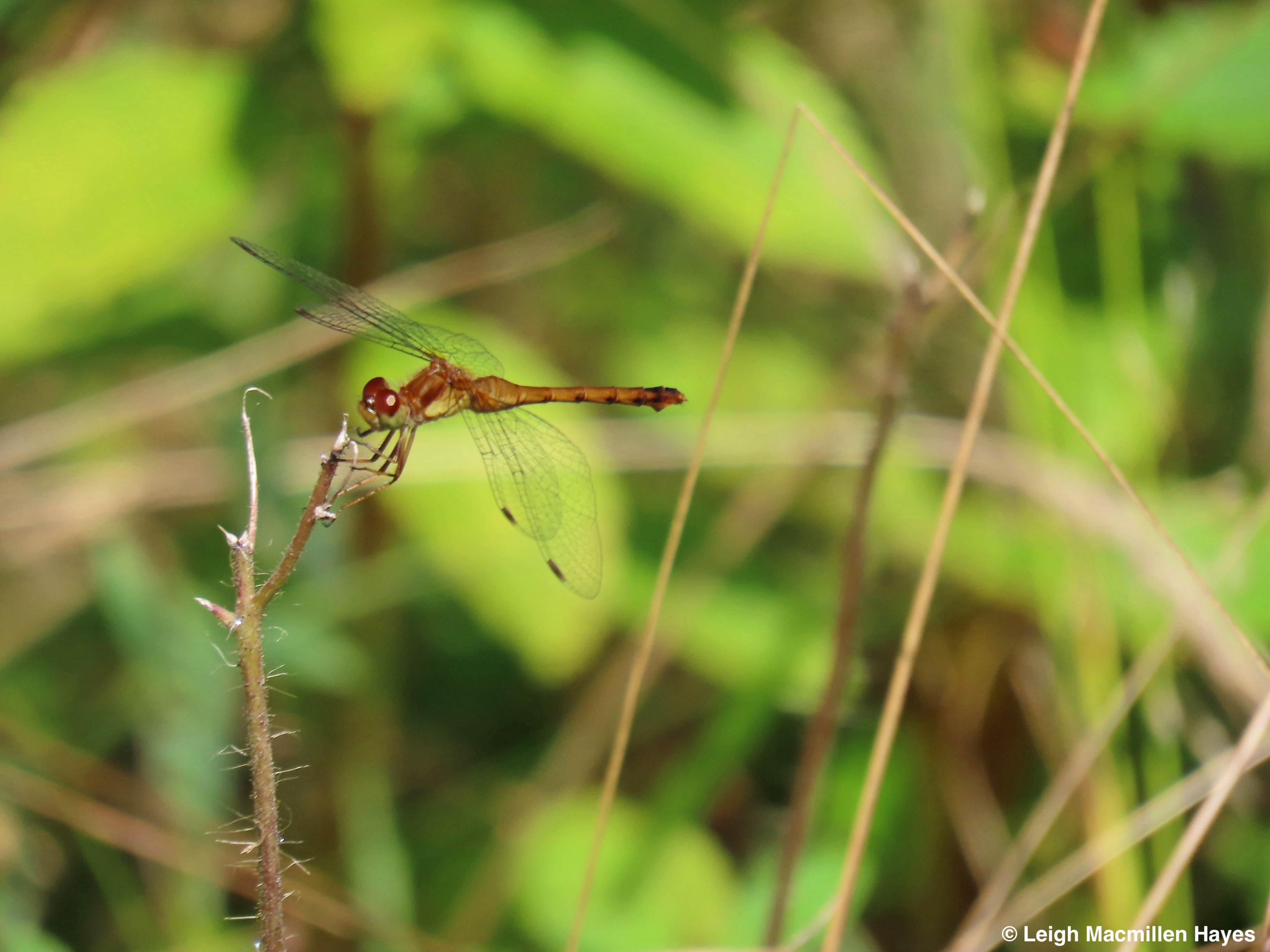
There have been a variety of dragonflies over the course of the summer, and just this morning it was this male Twelve-spotted Skimmer who stopped by. Each evening, there are a bunch of Darners, but they won’t slow down enough for me to make a positive ID. I do positively give thanks for them because all are helping to keep the Gnat and Mosquito populations low. Of course, they also eat some of my other favorites, but I remind myself that that is nature at work.

I did worry that as the fire trucks were driving up through the field last week, especially when they cut across to get to my location, they were destroying the spider webs. And they probably did. But what they were doing was way more important in that moment. And . . . the spiders have found some new locations in the spaces where the tires flattened plants.
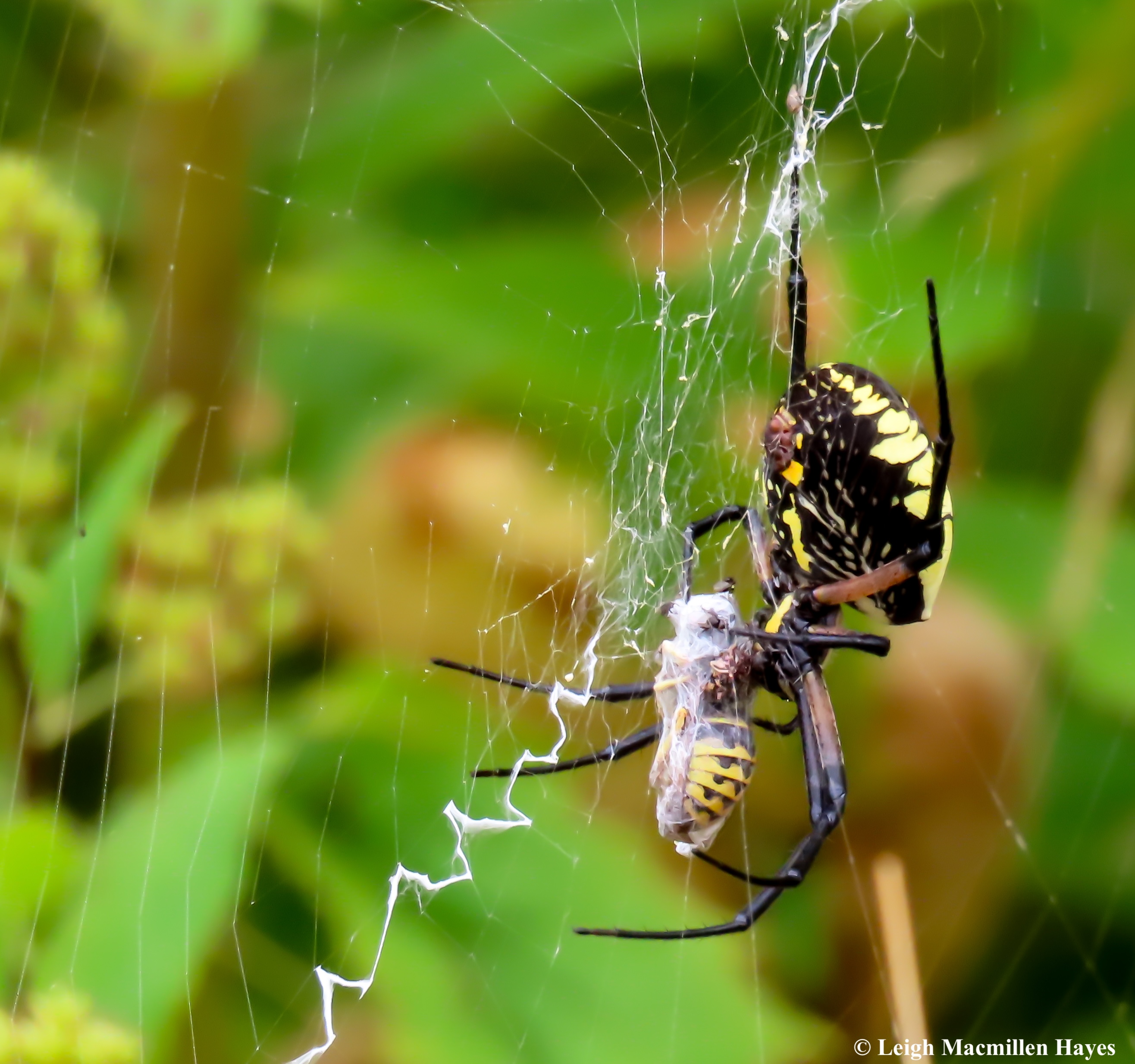
It seems every summer I learn something new from these spiders, and this year I’ve had some time to watch them wrapping their prey on more than one occasion. I’ve also watched as one Bumbler somehow managed to bounce off the web . . . one strand at a time, and fly off. But not all are successful and the spiders need to eat too.
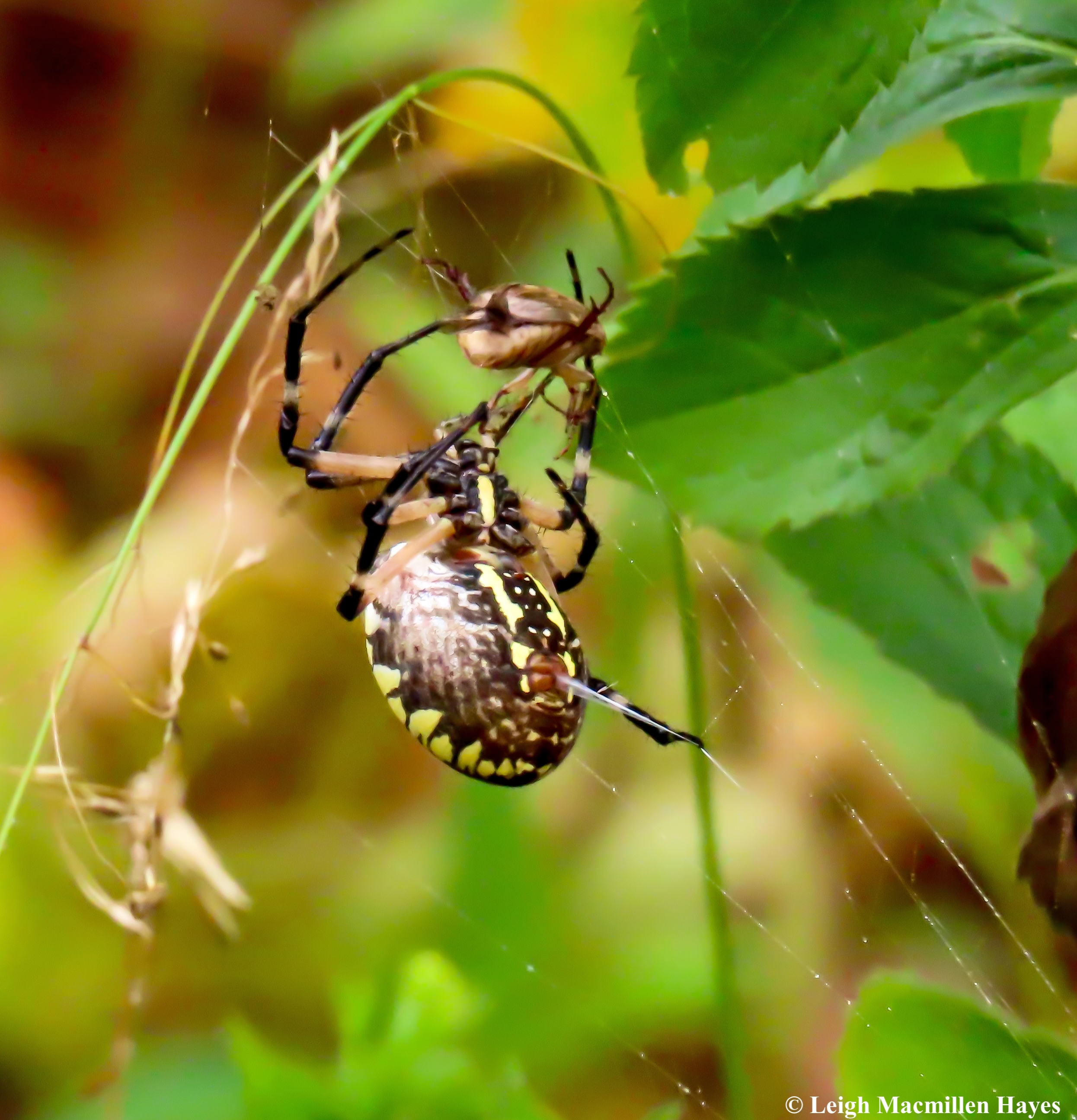
Though they occasionally eat the pollinators, they also help keep the population of some not-so-beneficial insects down, such as this Oriental Beetle. It’s warp-speed work when an unsuspecting guest visits the web.
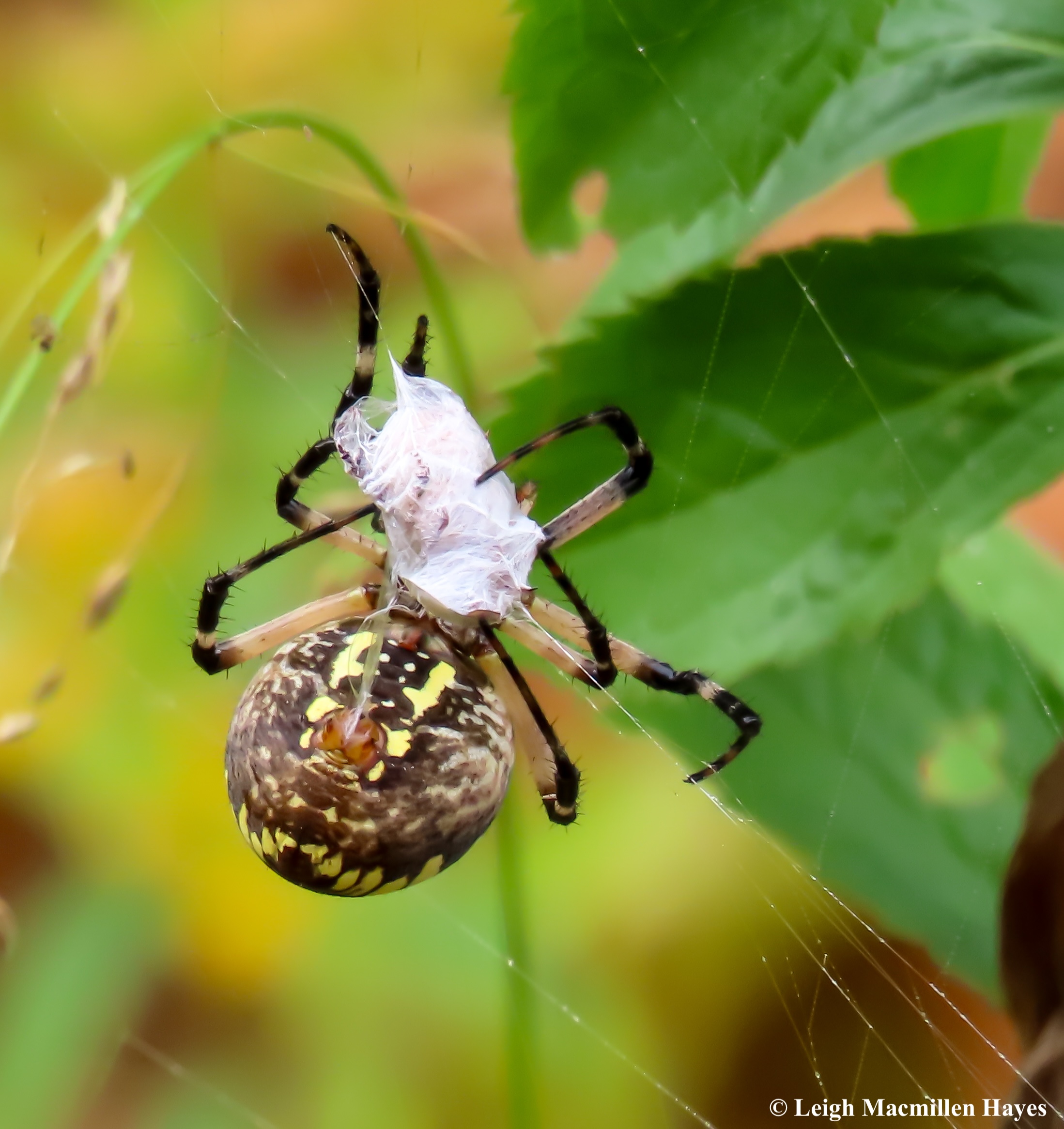
Silk flows from the spinneret and the victim is quickly wrapped up as the spider turns it over . . .

and over again.

Click on the arrow and you can watch this ten-second video of the action.
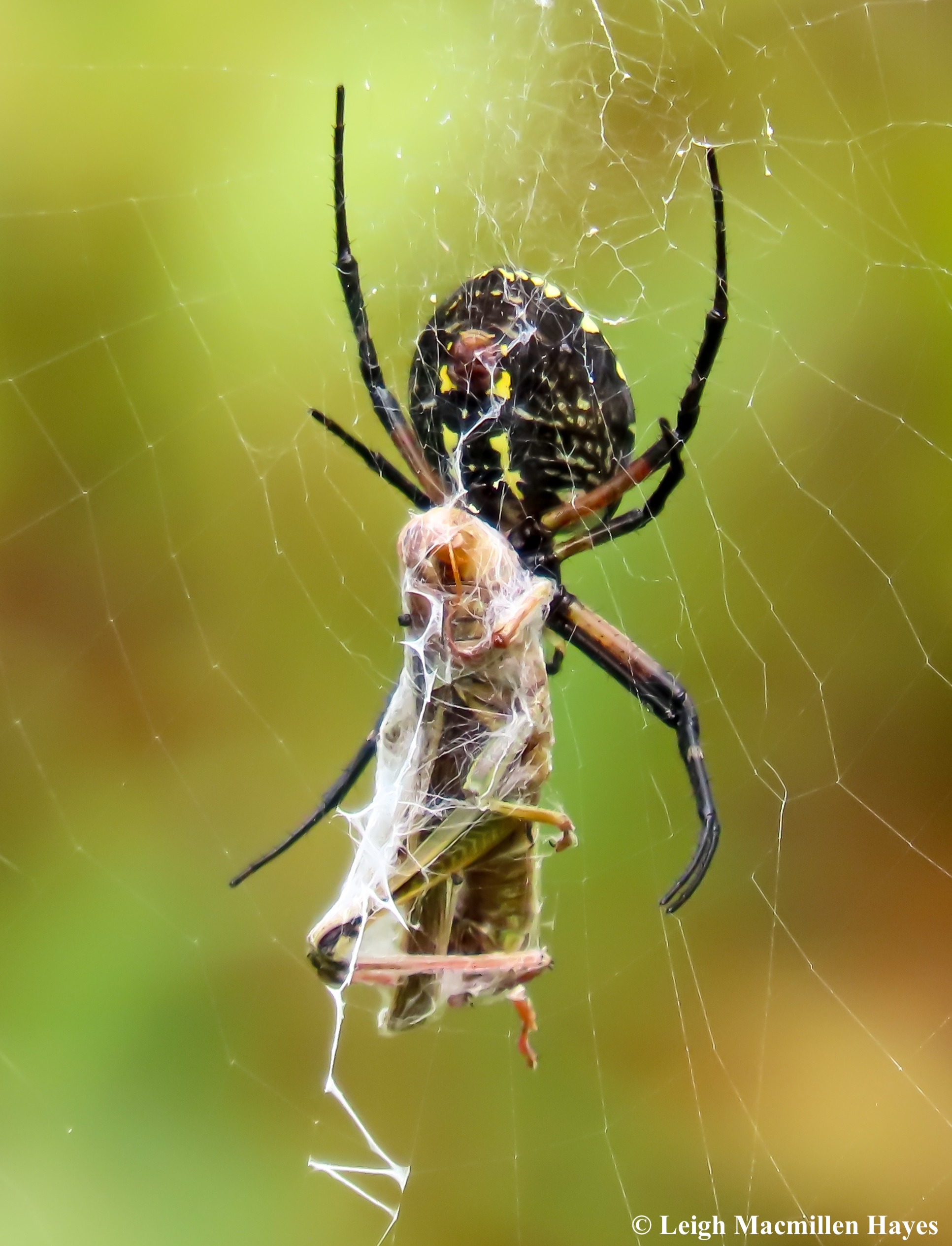
Their meals come in all shapes and sizes and there are plenty of grasshoppers to meet the spiders’ feeding needs.

What I found curious is that not everything gets wrapped in quite a neat package, and I’m not sure why . . . yet.
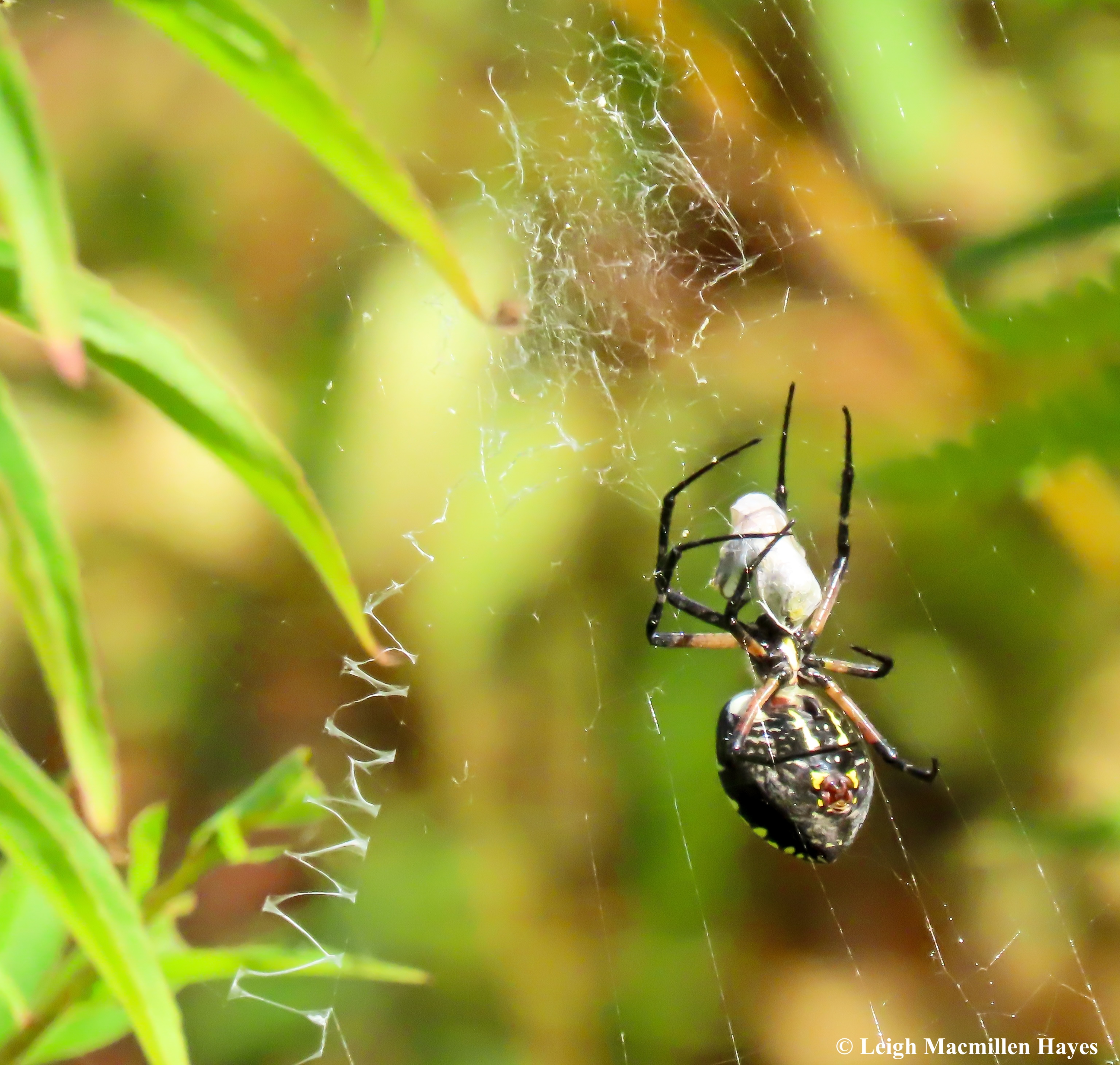
I also had the chance to watch as a meal package was moved from a lower part of the web.

And brought up to the central station, which is a rather cobweby creation in the center of the orb.
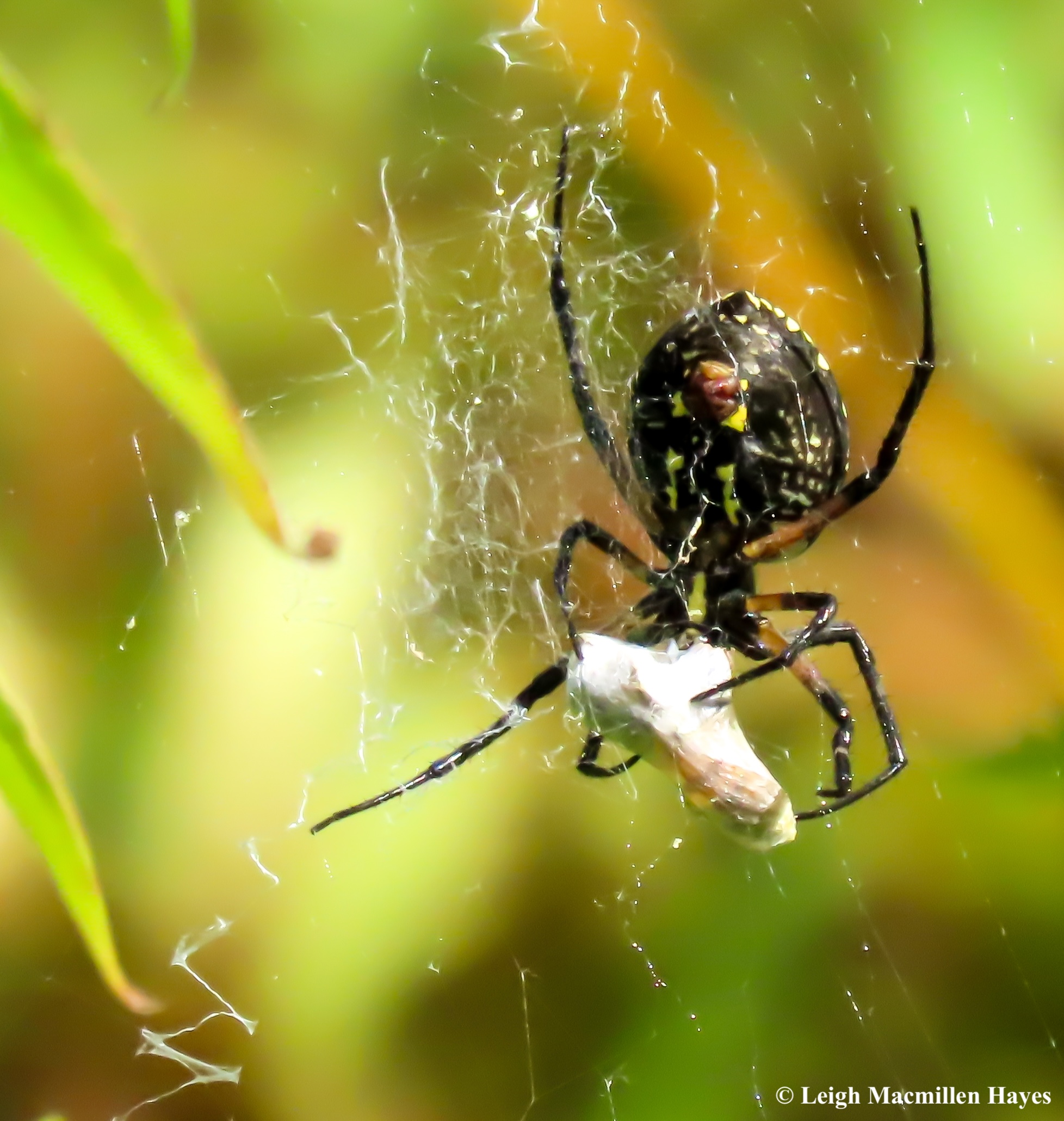
And then the spider went into its traditional upside-down manner in this home base as it continued to wrap the captured insect.

As I draw this blog post to a close, I want to note that most of the spiders (at least a dozen on any given day) I spot are located in an East/West orientation, their upper dorsal carapace or their underside facing in these directions.

And even when a Black and Yellow Garden Spider abandons a web site, the drag lines remain, for such is their strength.

Those drag lines are super thick and if we were to walk through them, heaven forbid, we’d bounce off of them. It’s an amazing wonder.

What happened to the resident spider of the web above? I don’t know. I did spot a male hanging out with the female a couple of weeks ago, so maybe they mated and were done. Or . . . she moved on to a different location.

At the end of the day and the end of the web and the end of this post, I will be forever in awe of these Black and Yellow Garden Spiders, and grateful for what they and all the insects teach me.

I am also incredibly grateful to my neighbors for their awe of the natural world as it plays out in our neighborhood. And for her nose! Which smelled that fire that could have set all of this aflame.

And I’m thankful for the calm woman at Dispatch and brave first responders who put out the brushfire on an extremely hot day.

My Flame for Black and Yellow Garden Spiders is best ignited by awe and not by real fire.

Taking Stock . . . Naturally

As locals know, My Guy owns a hardware store and I often say I am married to the store. It’s true because it is a constant in our lives and follows us on walks and hikes even on his days off. And though our oldest son has taken over the reins in the past two years, My Guy still cannot completely let go.

I’ve come to realize, however, that that is okay because it means I can tend my own shop. Of course, while he owns the land and the building, I need to rent space, but it’s well worth the priceless price.

Step through the open-air doorway, and you’ll find right now I’ve got proboscis-style straws on display. They are especially beneficial when sipping from Red Clover, a member of the legume family.

And for safe storage, the Peck’s Skipper likes to show how to curl the straw up when not in use.

If you are an introvert, like me and the Common Ringlet Butterfly, you might prefer to flit from flower to flower, but then hide in the vegetation after spending so much time demonstrating for the public how to use your straw.

Common Wood-Nymphs are equally inclined to hide, but still available on the shelf for you to choose, and you can decide if this stored straw appeals to you, or not.

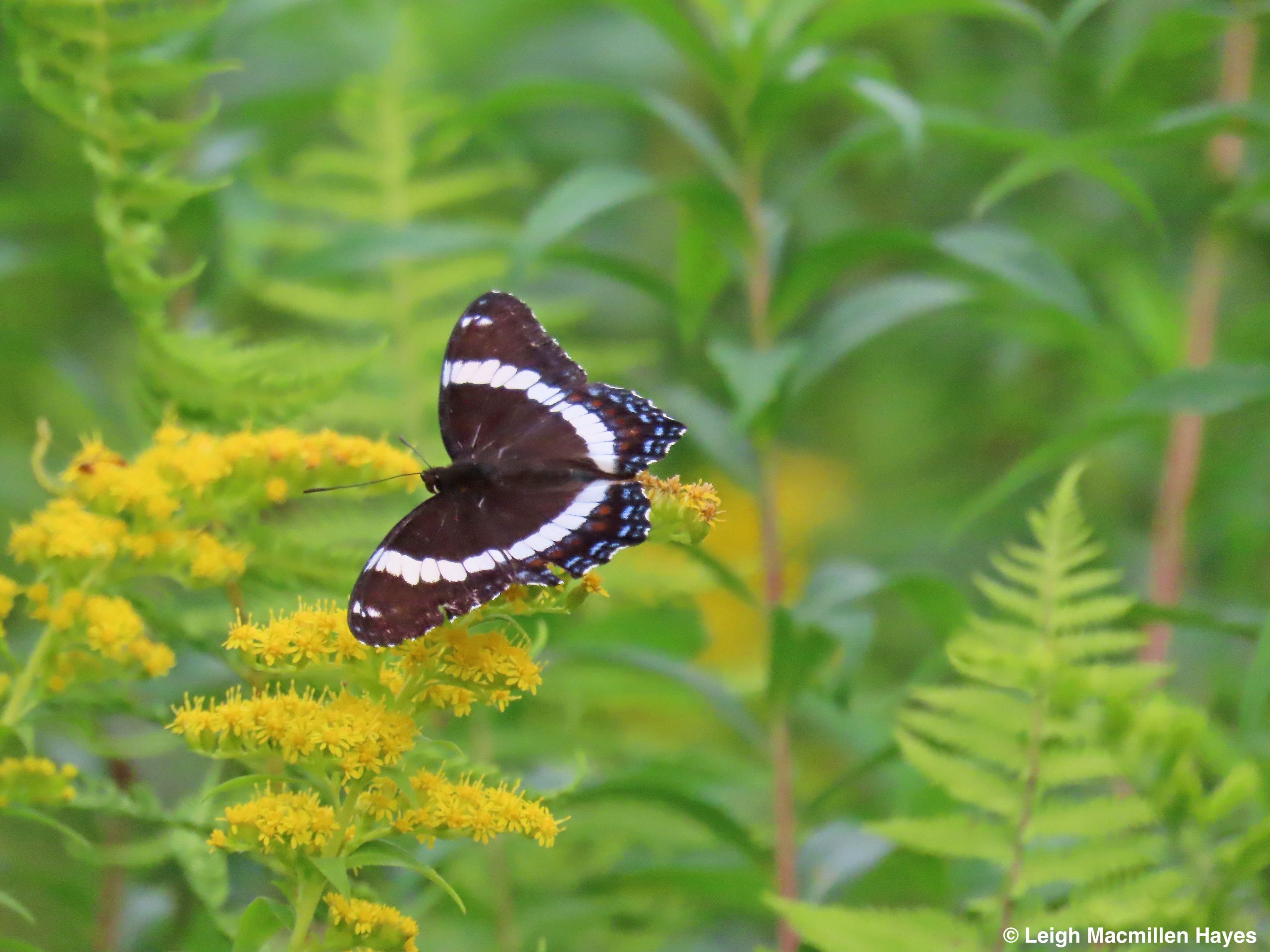
White Admirals are especially plentiful right now, and want you to know that whether hanging upside down,

or right side up, their straws always work, so it might be a good one to think about purchasing.

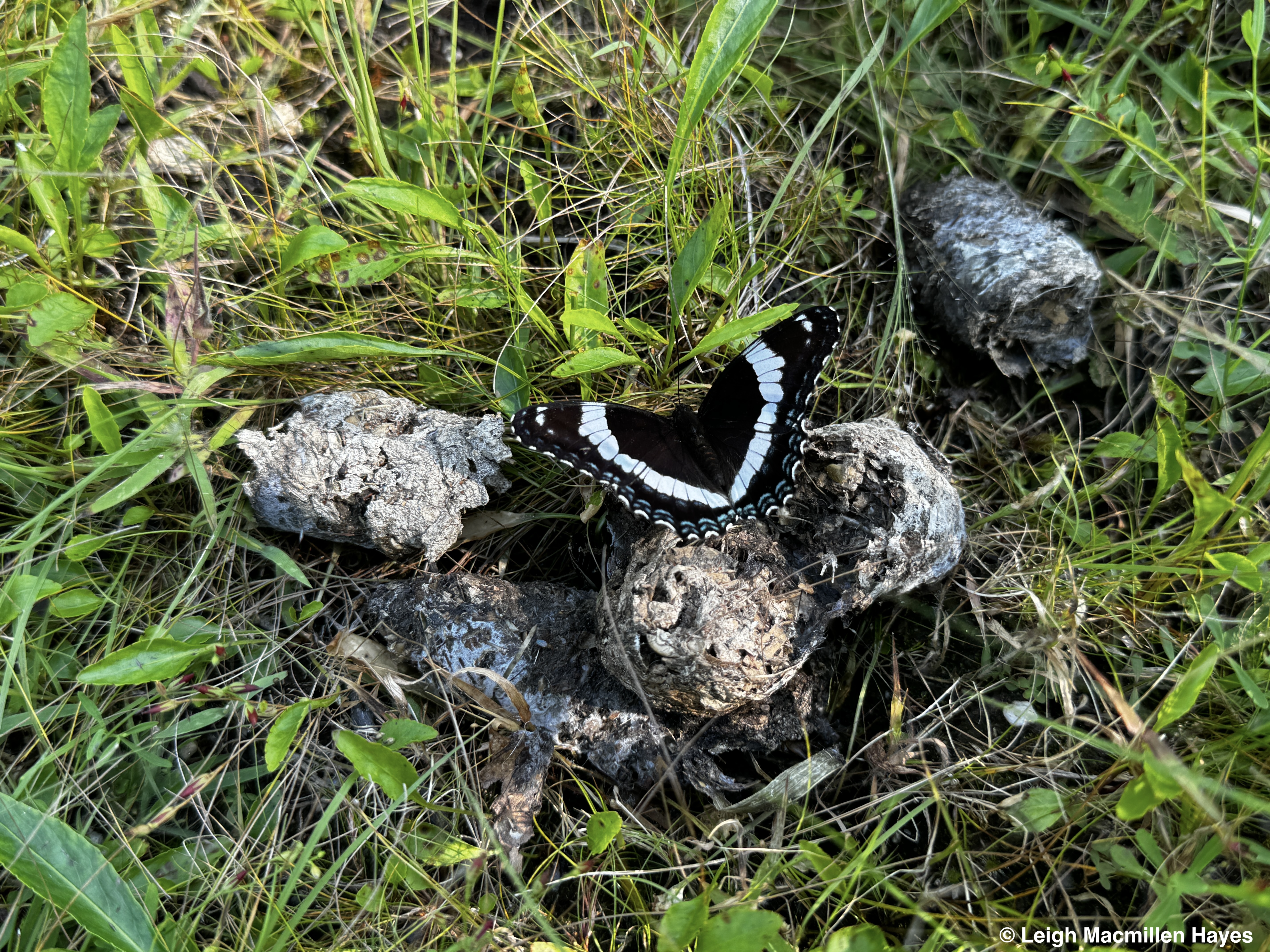
Especially if you like to get some of your nutrients from scat. We can throw in some scat for you, if you’d like–at no extra charge!

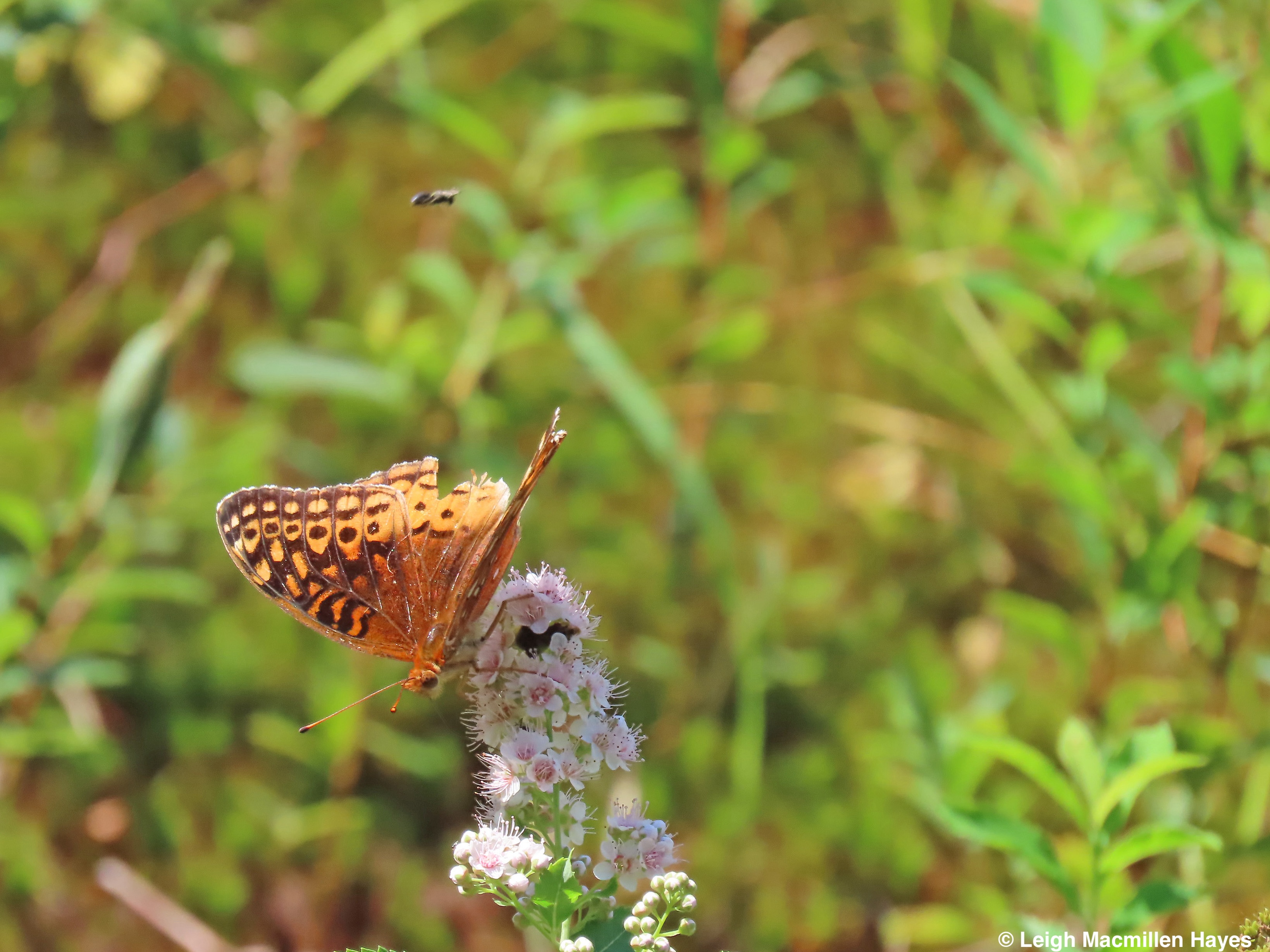
Sometimes it’s the packaging that makes all the difference, so we’ve got several orange choices for you to consider, this being the Fritillary style. Make me an offer I can’t resist, and this straw is yours due to the fact that it has been used previously, as evidenced by the tattered wing.

If you prefer something a bit bigger and brighter, there’s the Viceroy, with that dark band crossing its wings.

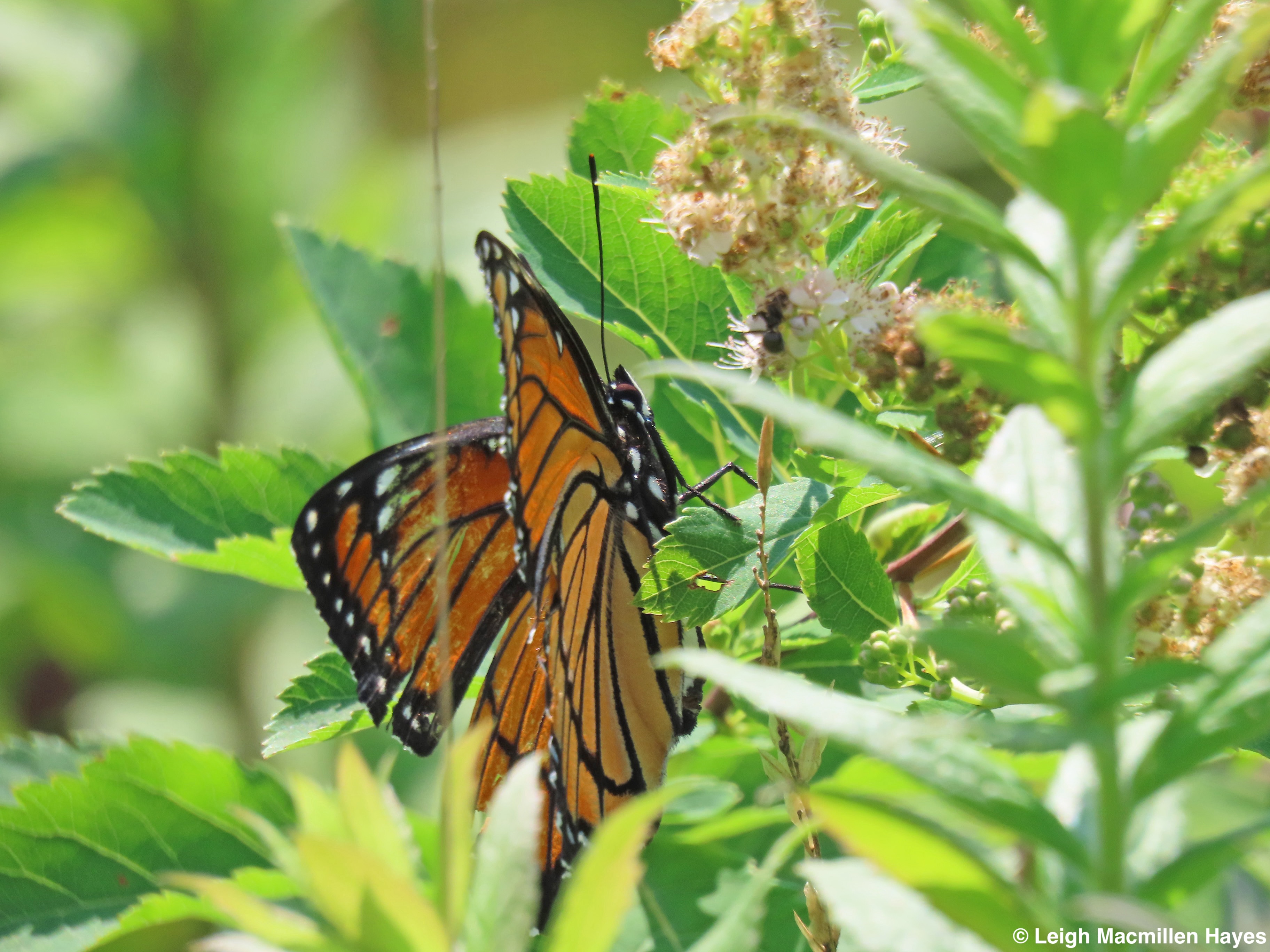
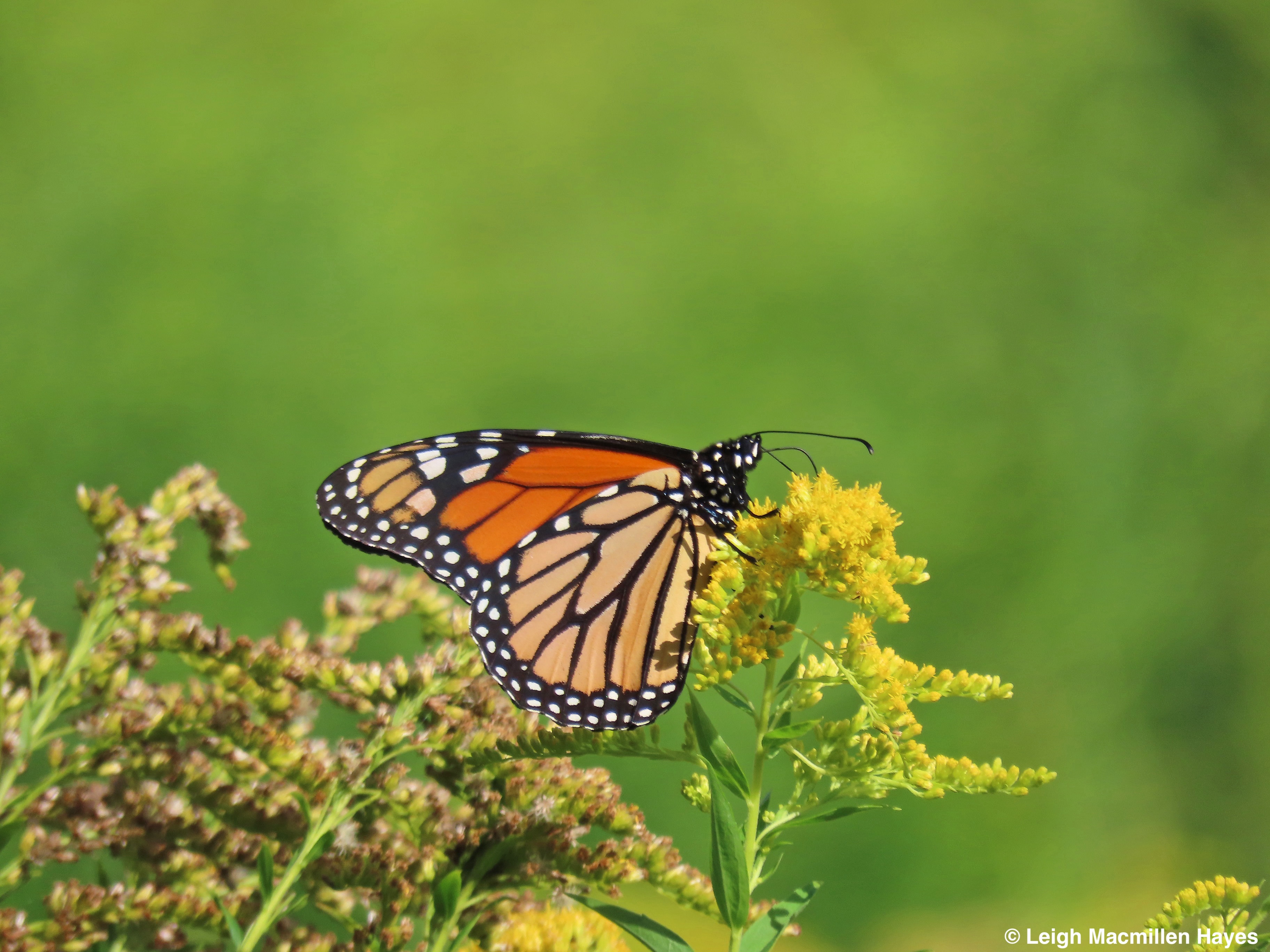
Or the biggest of all, the Monarch, who lacks the black band that is part of the Viceroy packaging.

For the tykes in your life, we also have Pearl Crescents and Northern Crescents in stock. The former is slightly smaller than the latter for the youngest in your gang.

Those are all great, but I have two that I much prefer, the first being this Clouded Sulpher that comes in pastel colors only, which contrast with the darker-colored straw.

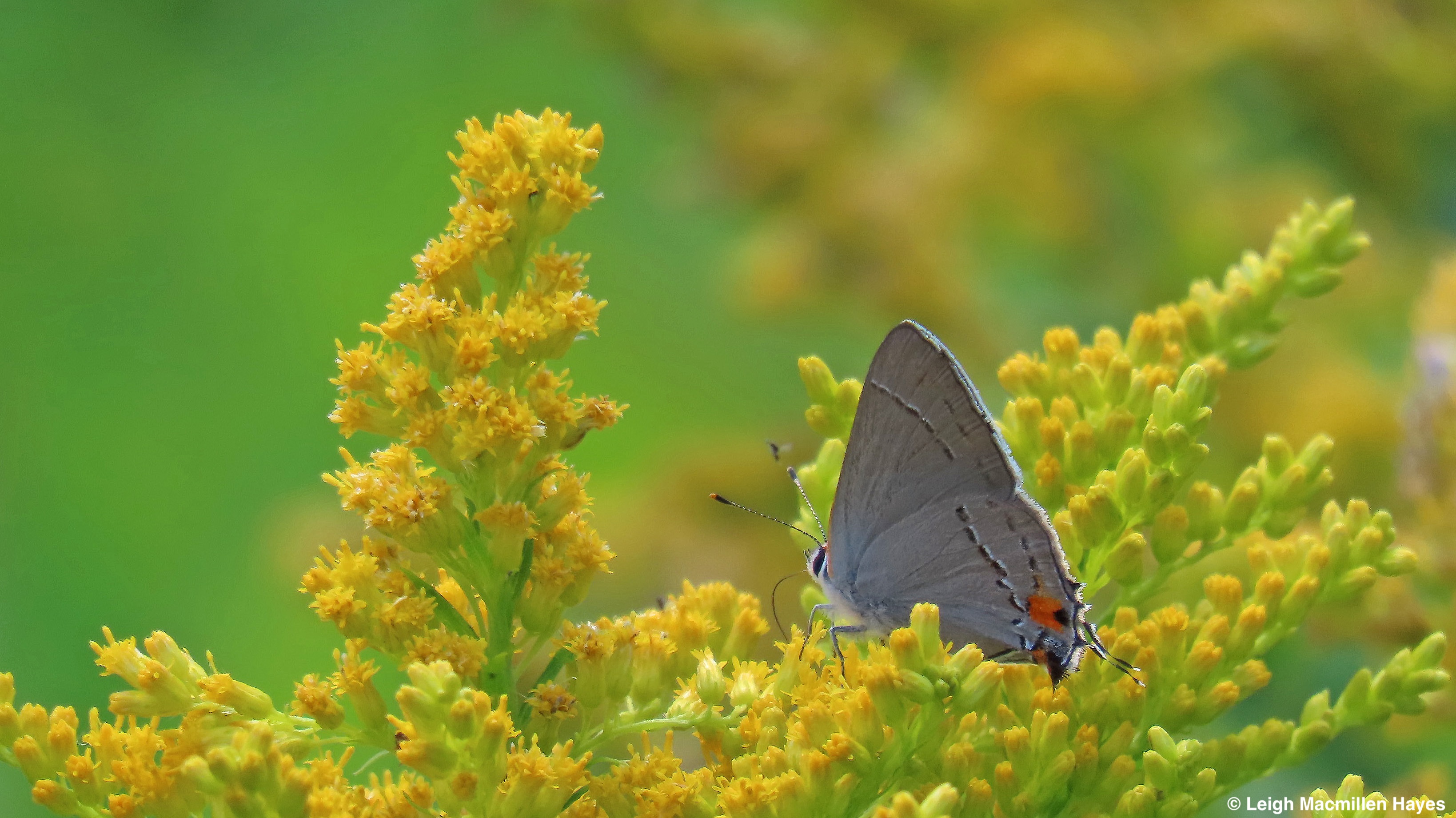
And the creme de la creme has to be the White M Hairstreak, a rare species that I was able to special source a few weeks ago, and every once in a blue moon (such as this August is), I can find another to offer you. That is the case right now, but hurry because I don’t know how long this butterfly will remain on the shelf.

Over in the natural pesticide control aisle, I’ve a few options for you to consider, such as this handsome male Twelve-spotted Skimmer. Unfortunately, I just discovered these are on backorder, so you’ll probably need to wait until June if this is the style you prefer.

The same is true of the Eastern Pondhawk–in fact, I was totally surprised that I was able to snag this species, but suspect it has something to do with the store’s location between two ponds, and so close to a wetland and swamp.

Right now, the most abundant pesticides I can offer are in the form of Meadowhawk dragonflies like this Autumn Meadowhawk, a small skimmer with tan colored legs.

If you prefer something larger . . .

you might like the darners that keep flying off the shelf. That said, there are plenty more where this guy came from, so if you can’t find one in the shop, give me a shout, and I’ll check the backroom.

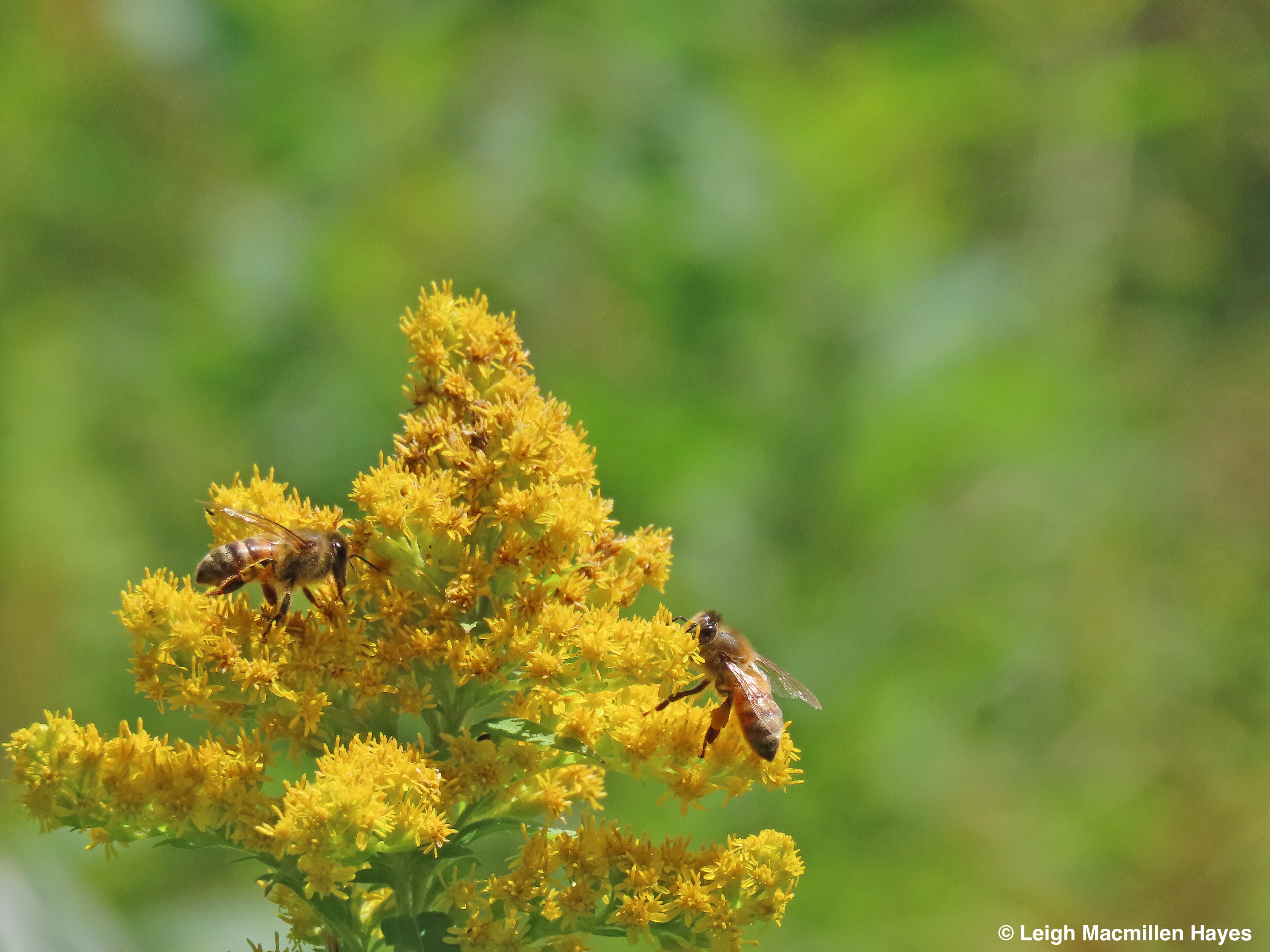
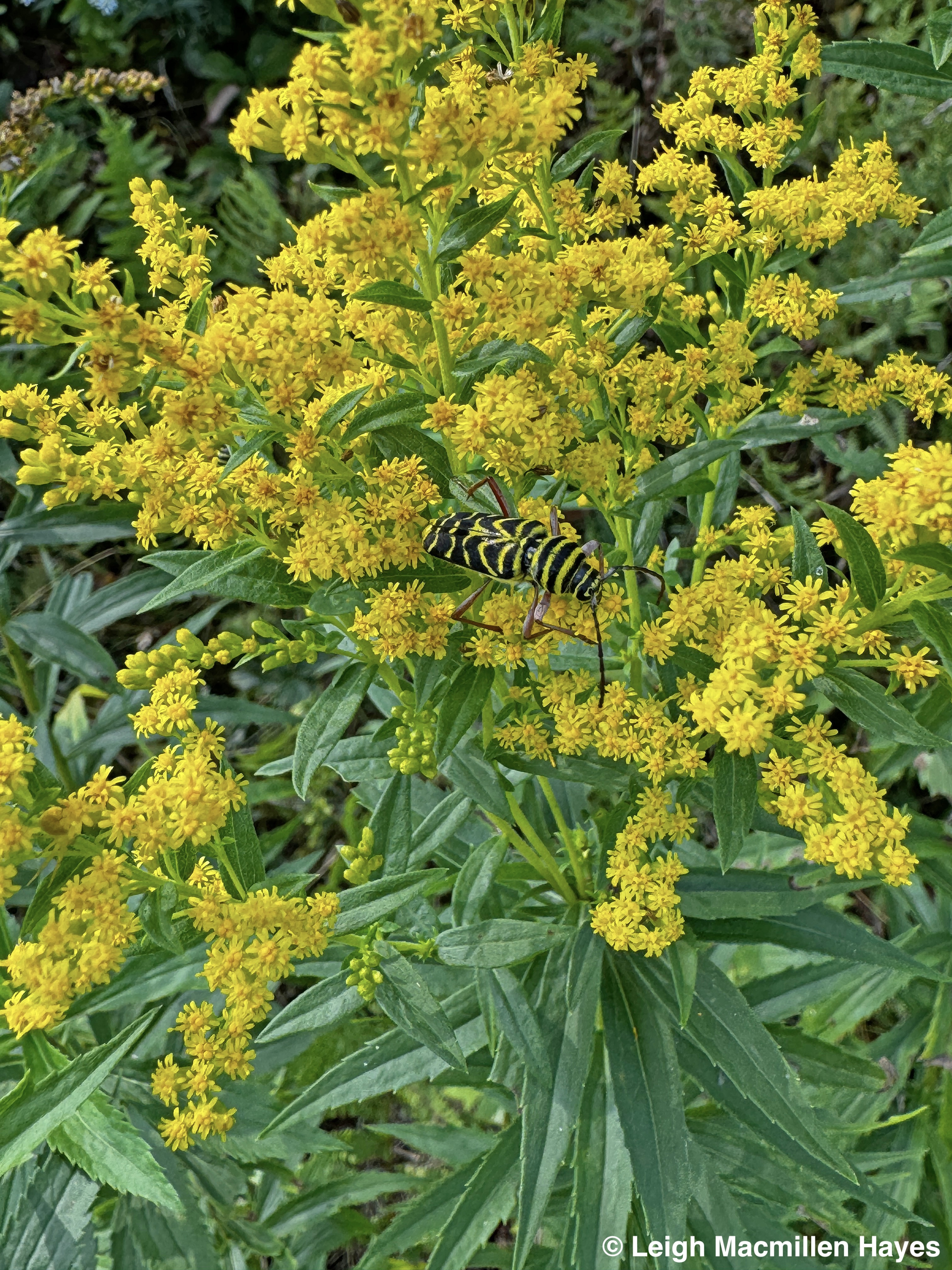
Summer is not over yet, despite what everyone has been saying lately, and so if it’s pollinators you are looking for, I’m afraid I overstocked. Well, there’s nothing to be afraid of, actually. Being overstocked on these is a great thing. And you can mix and match if you’d like, perhaps choosing these European Paper Wasps,

a few Honey Bees,

and some Locust Borers, all lovers of Goldenrod as you can see. I’ve also got Great Black Wasps, with their iridescent blue wings, and Paper Wasps, and Bumblebees, and . . . and . . . and so many to fill your reusable bag.

In the Fly By Day aisle, there are a few special selections, the first being this Lacewing that could be featured in a “Where’s Waldo” picture, so well camouflaged it is.

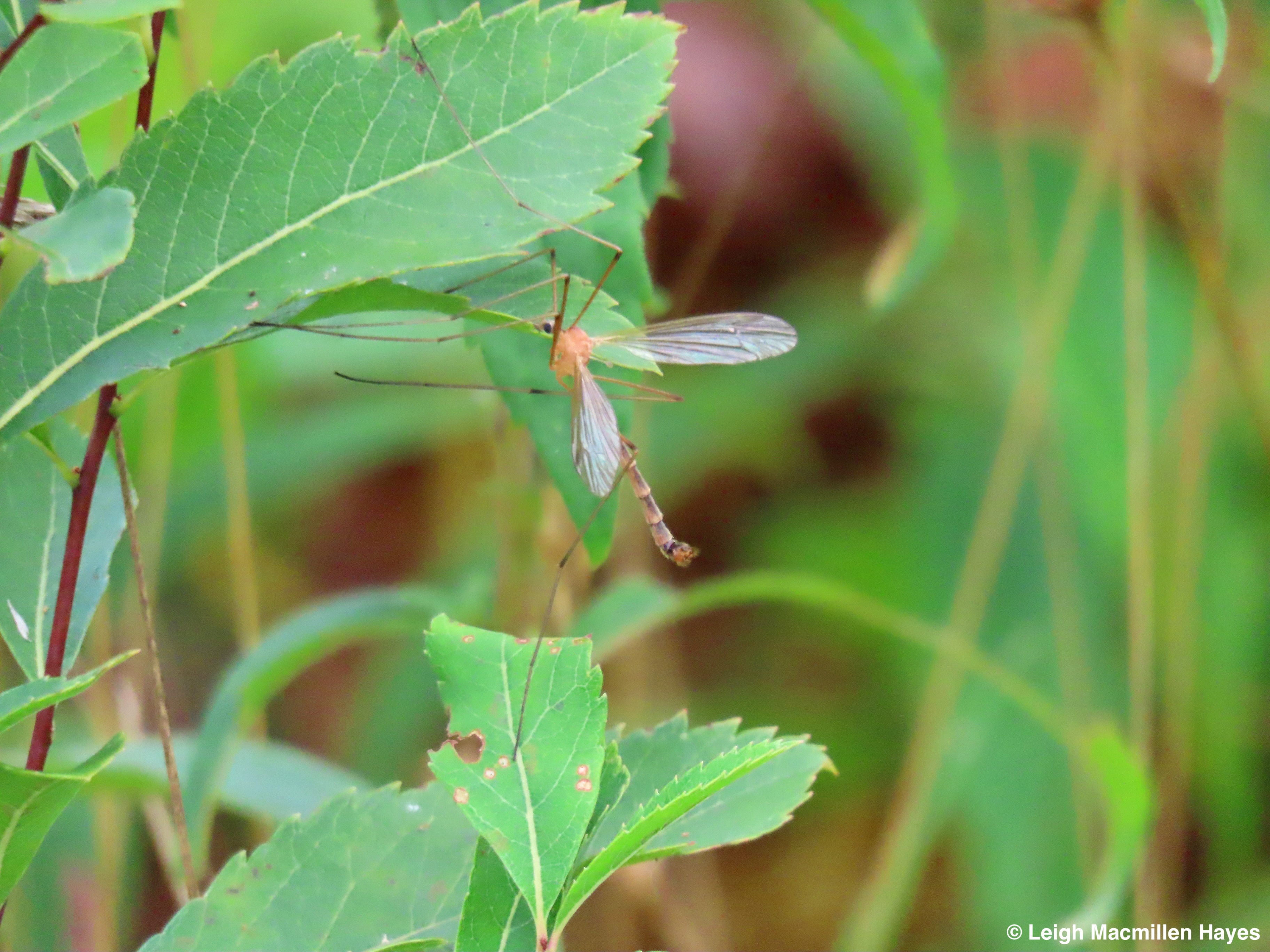
And a Crane Fly that you can scare people with and pretend it’s a giant mosquito. The thing is . . . they don’t bite. In fact, during their short lifespans, they don’t typically eat. So . . . little maintenance if you decide to put this one in your cart.

I’d be lax if I didn’t mention the employees such as this teenaged Ambush Bug who is very good at hanging out on Goldenrod plants near Black and Yellow Garden Spider webs, without getting tangled in all the drama.

But, being teenagers, sometimes two decide to tango in the breakroom under the Goldenrod, and these two canoodlers just had to have a bite to eat while they were so engaged. I’m sure the Sweat Bee never saw this coming.

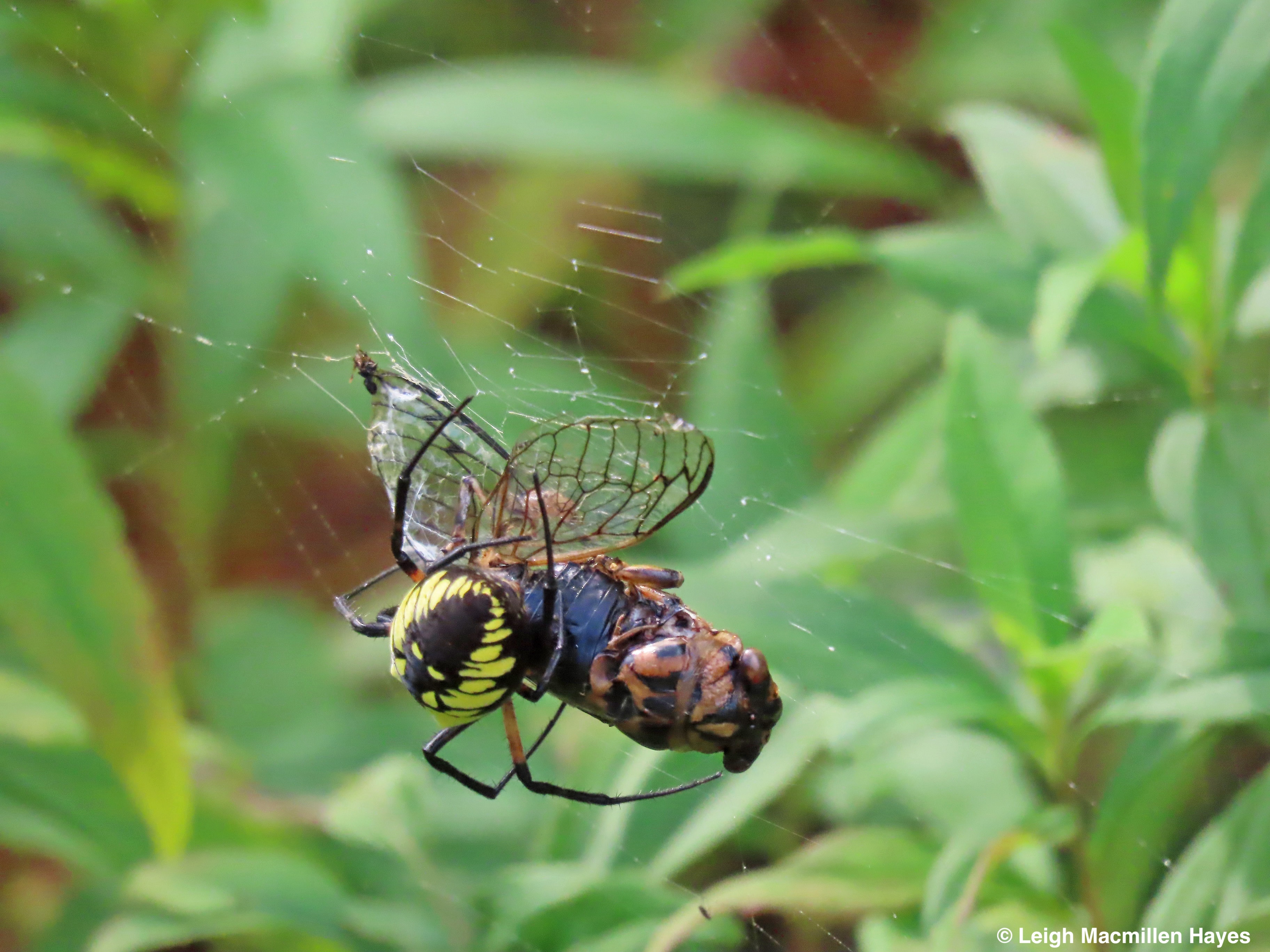
If you do decide to stop by the shop, the Black and Yellow Spiders are the chefs and they’re happy to provide you with a Dog-Day Cicada meal all wrapped up and ready to eat on the road. They have other items on the menu as well.

That said, this coming weekend, I do believe that the hardware store will have some items on the grill. So stop by and sample whatever delectable they prepare.

Food is actually a part of all our lives (haha, as it should be) and our youngest son is fortunate to work at a company in Manhattan that has a personal chef who prepares breakfast and lunch each day, mostly with locally-sourced food such as what is available at my store.

If you do come to the my shop, know that you’ll probably have to wait in line behind the Eastern Phoebes, who perch at roof-height and swoop in and out . . . often helping themselves and then zooming to the self-serve checkout line.

The guard doe keeps an eye on everyone passing through the door, so I don’t have to worry.

Occasionally, all four of us take a break from our respective jobs and come together to share a locally-sourced meal of our own–a la Fly Away Farm. Oh, and the kid (young man!) in glasses is holding his Lacy Blue pup who is sure that everyone who visits the hardware store comes just to greet and pet her.

As My Guy and I went for a long walk today, and hiked a mountain yesterday, we tried not to talk shop, but it occurred to me that while my eyes glaze over when he starts telling tales about hardware happenings, so do his when I point out the wonders of the natural world.

And so, I try not to tell him how to run his business (“try not to” being the operative phrase), and he lets me operate my own shop in my own way–even if it is all in my imagination.

I suppose you could say that while I’m married to a hardware store, he’s married to a . . . I’ll let you finish the line.

In the end, we both take stock . . . naturally.

Drawn by the Sapsuckers

This morning’s tramp found me checking on a couple of bird nests. The first, which belonged to a Phoebe family, was empty.

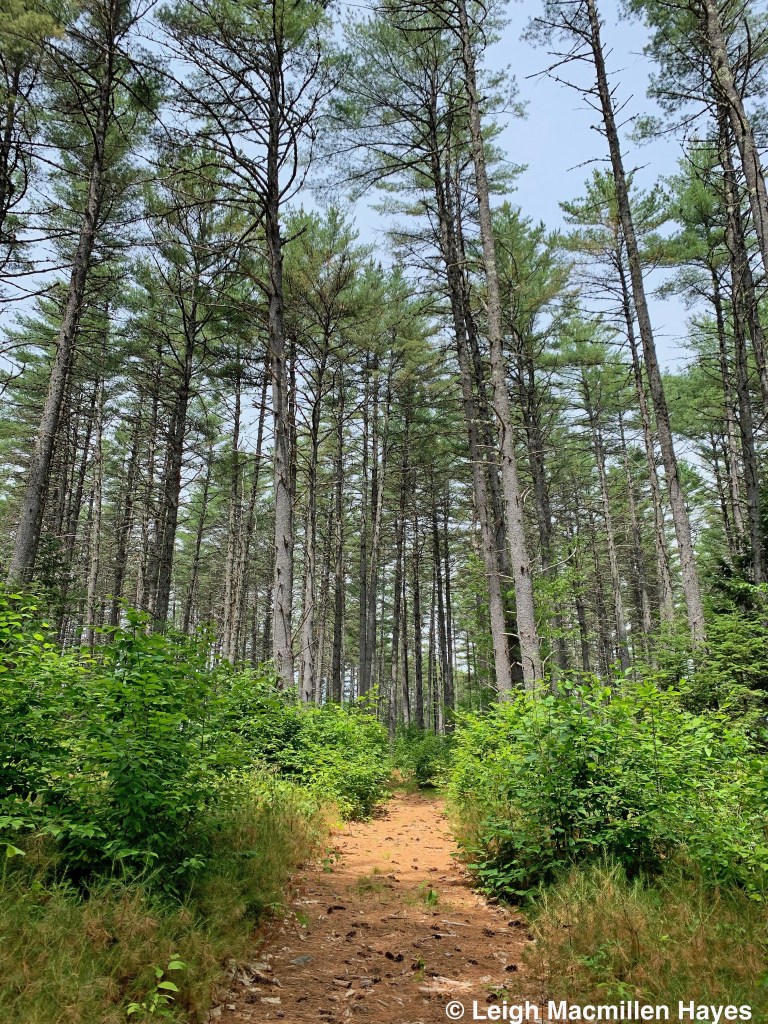
And so I wandered along a path through a cathedral in the pines.

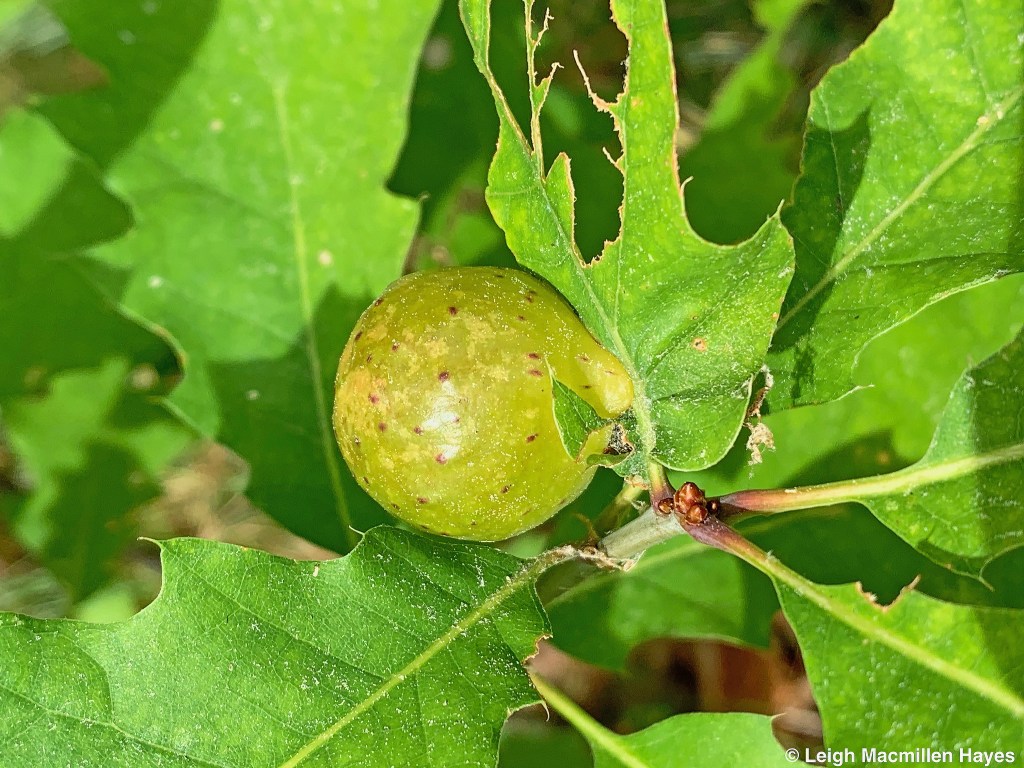
It seemed apropos that I should spy the works of an Oak Apple Gall wasp in such a place for it is believed that circa 800 A.D., monks from a Columban monastery created the Book of Kells and used such galls for their green colorant. The wasp uses it as a place for a larva to pupate.

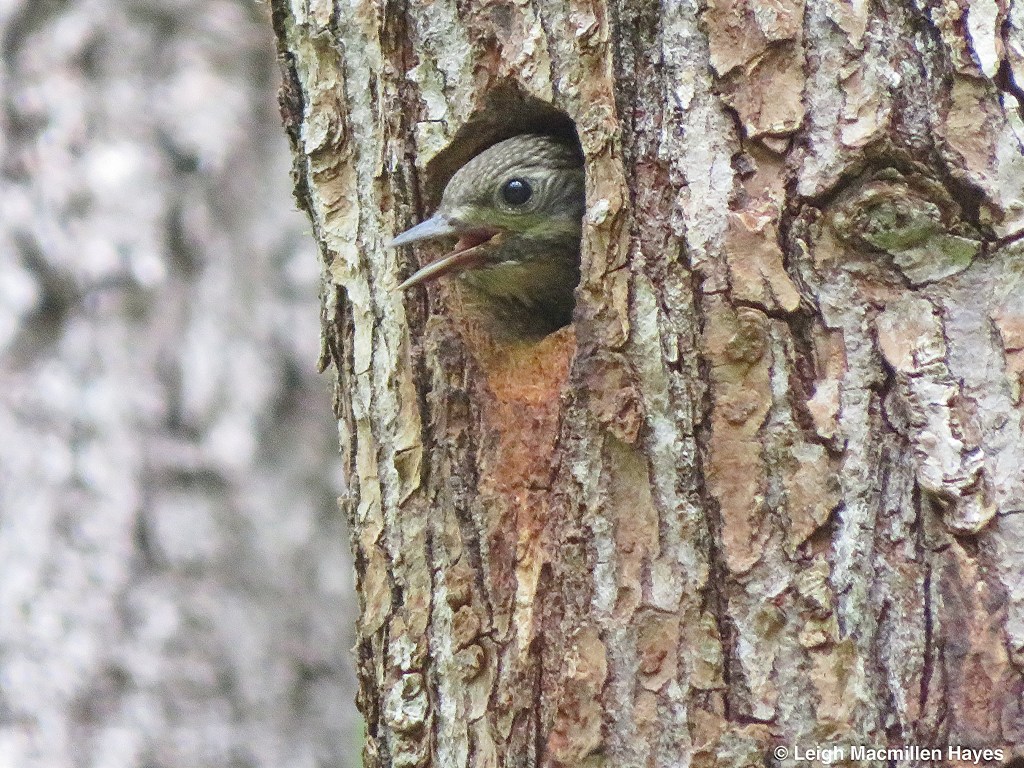
I knew I’d reached the second nest I wanted to check on because from about twenty feet away I could hear the peeps of the babes within. Their father tossed in a meal, much differently than how he was feeding them only a week or two ago when he entered the nest hole every few minutes.

Today, no sooner did he leave when a nestling popped out and begged for more. I watched for a bit and then gravity pulled me in a different direction.

And so I trespassed onto a neighboring property. Well, I don’t think of it as actually trespassing since it’s not posted and I know the owners who have invited me to visit on numerous occasions. They just didn’t know today would be one of those; nor did I until it was. The deer flies buzzed all about my head, but thankfully some old friends in the form of dragonflies (uh oh, here I go again) snatched the pesky insects and then dined.

It took a few minutes, but eventually Slaty Blue gobbled every bit of the fly. One down; a gazillion to go.

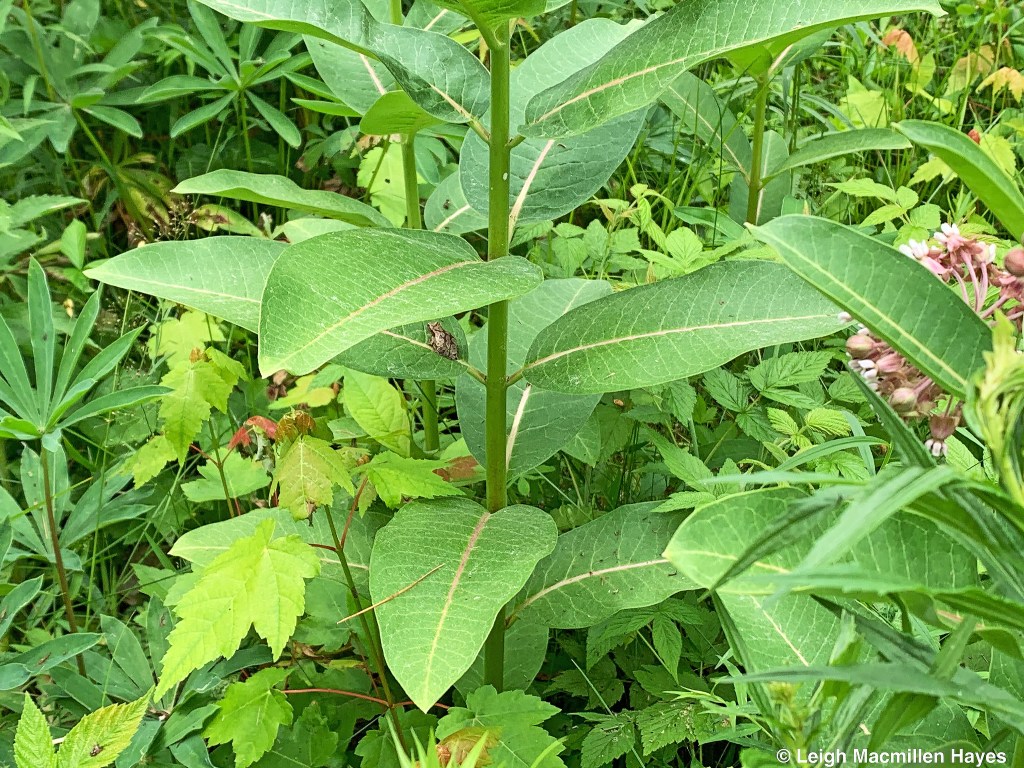
While the lupines had been in full bloom the last time I visited, today’s flowers of joy were the Milkweeds. Even the ants agreed.

On a leaf below one flowerhead, I noticed something tiny and by the pattern on its back, knew who I was spying.

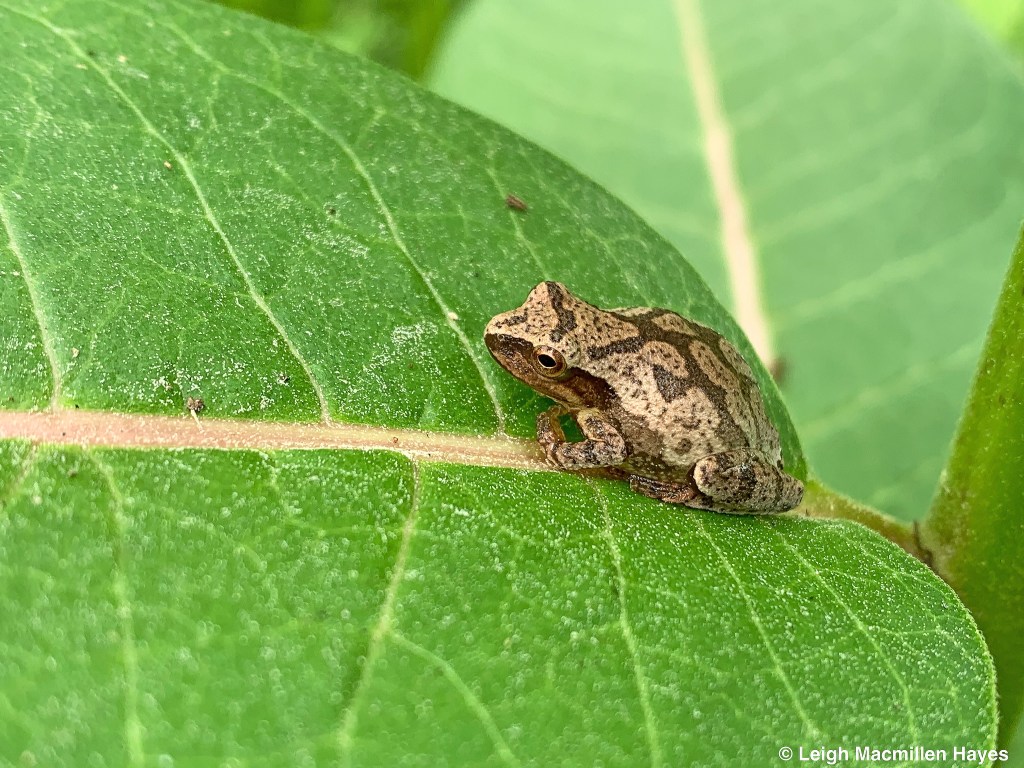
About the size of a nickel, it was a Spring Peeper. Located about two feet above ground, this little frog could hide from predators all day, waiting to munch on insects and spiders at night. Do you see the X on its back? Its scientific name–Pseudacris crucifer–breaks down to Pseudo (false), acris (locust) and crucifer (cross bearer).

While I continued to admire him, a dash of color brightened the background and then flew down onto the path.

Bedecked in orange and black, it was a Fritillary butterfly. There were actually two today and where the colors of the lupines had passed, the butterflies contributed greatly with their hues.

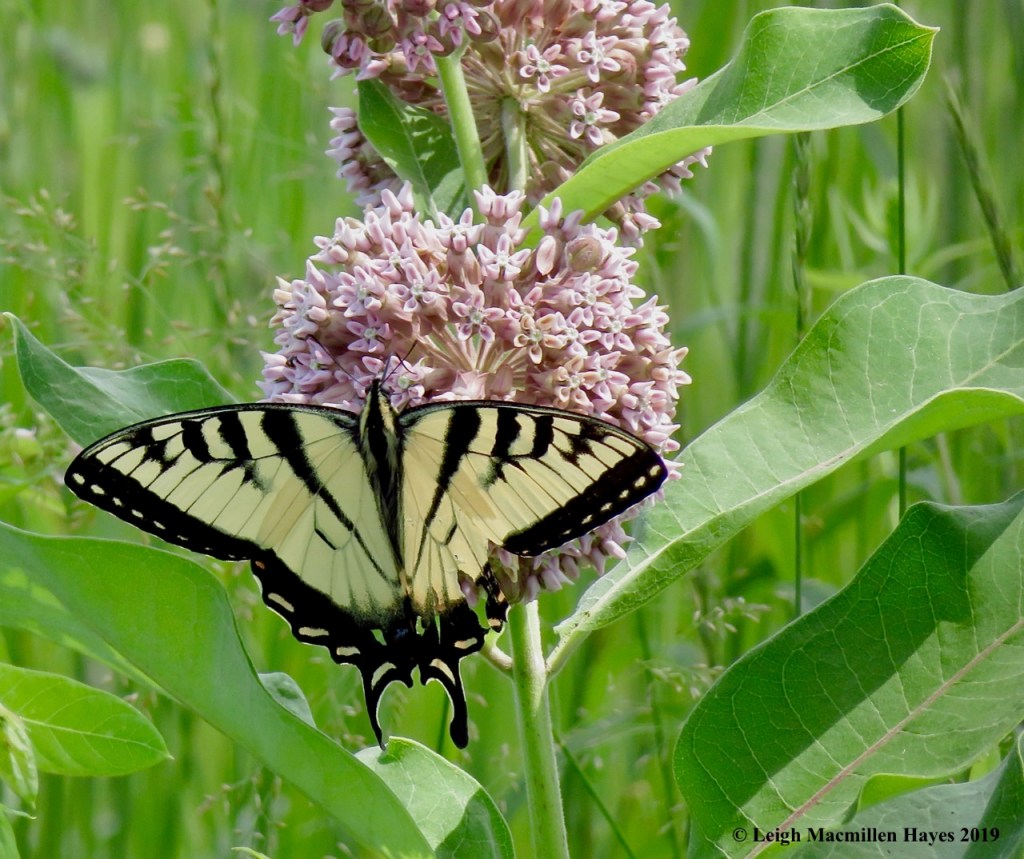
The Fritillaries weren’t the only adding a dash of color for Eastern Tiger Swallowtails also pollinated the meadow flowers.

Canada Tiger Swallowtails also fly in this part of Maine and so I’m forever trying to remember how to tell the two apart besides size, which doesn’t help when you only see one. The trick, however, is to look at the yellow line on the underside of the forewing. If it isn’t one continuous line as this one wasn’t, then it is the Eastern variety.

I’ve probably completely confused you, but the next will be easy:

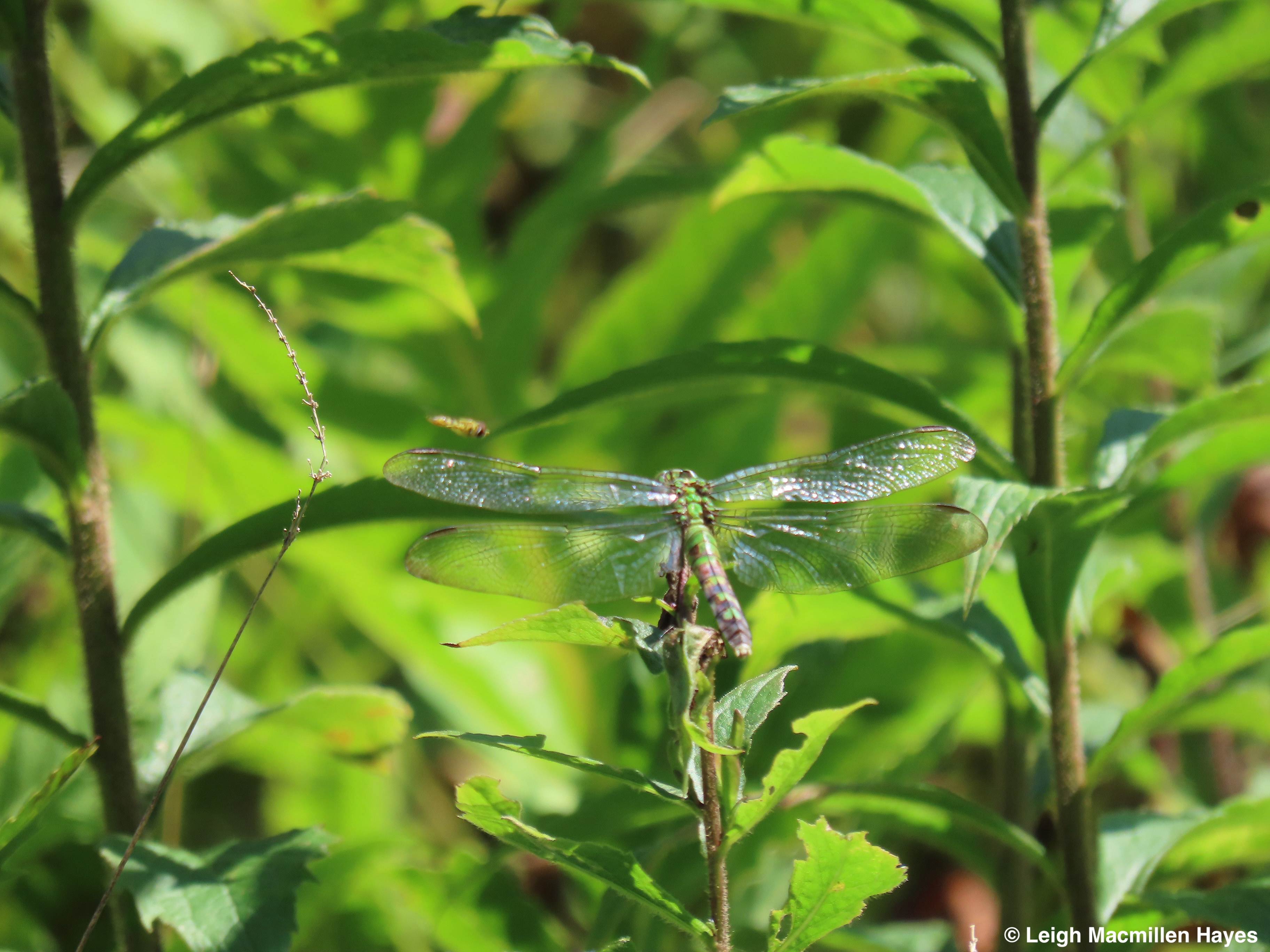
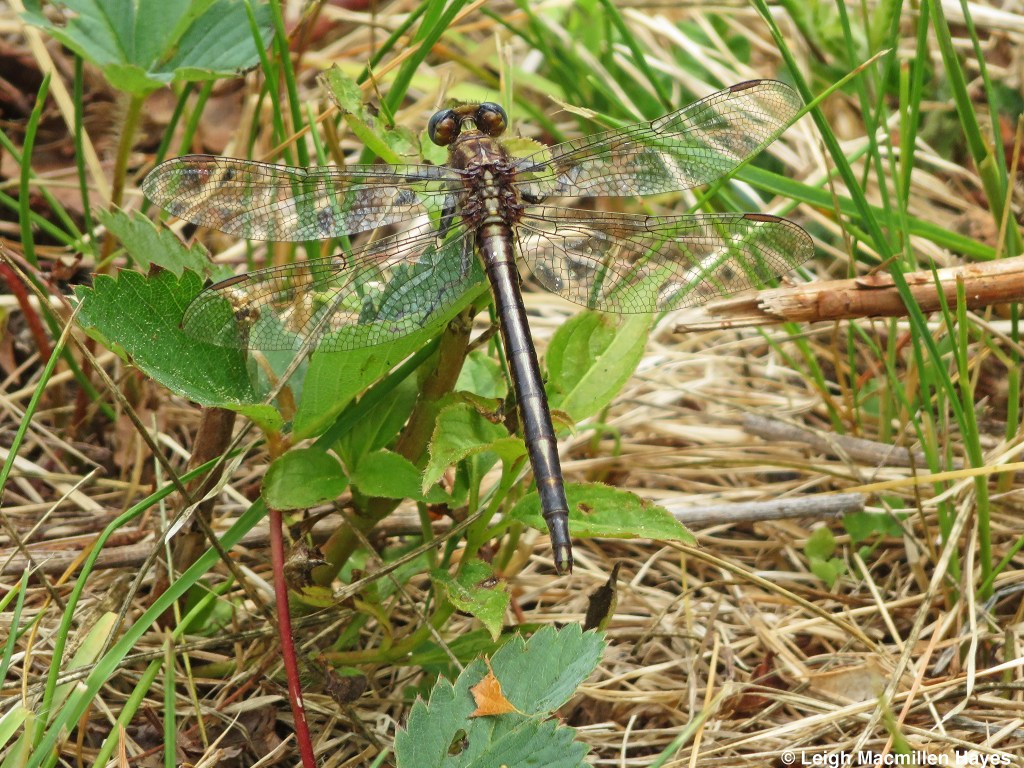
A pop quiz: 1. Who is this? You tell me. (Hint: Emerald family)

2. Who is this? (Hint: Clubtail family)

3. Who is this? (Hint: Skimmer family)

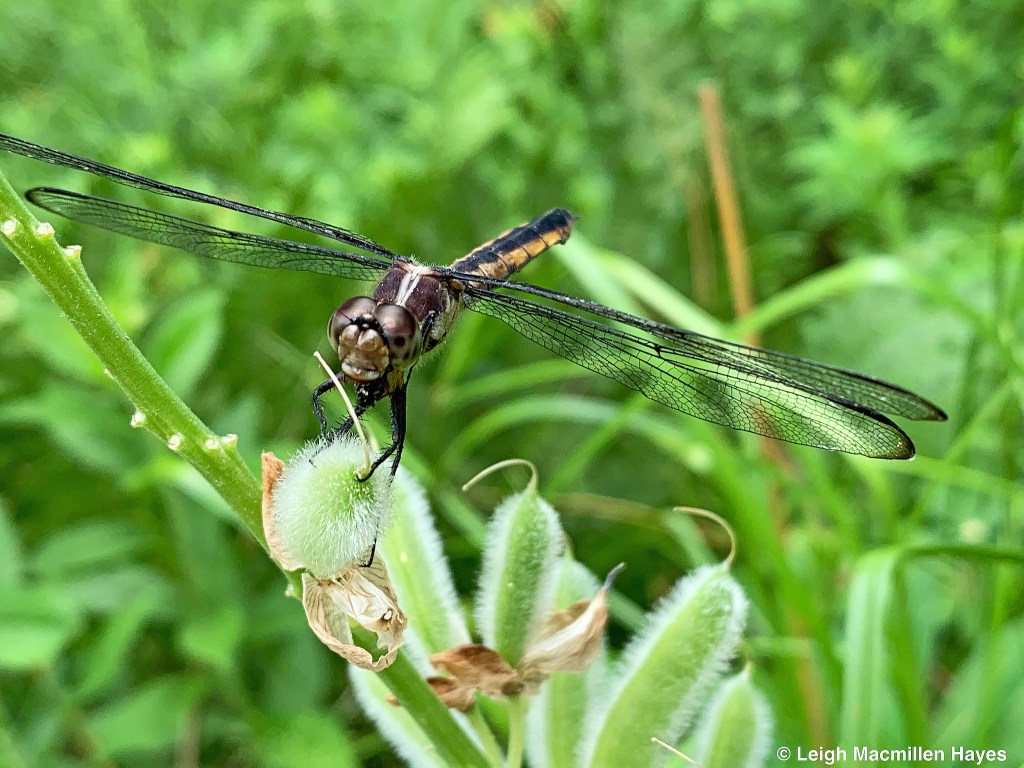
4. Who is this? (Hint: Skimmer family)

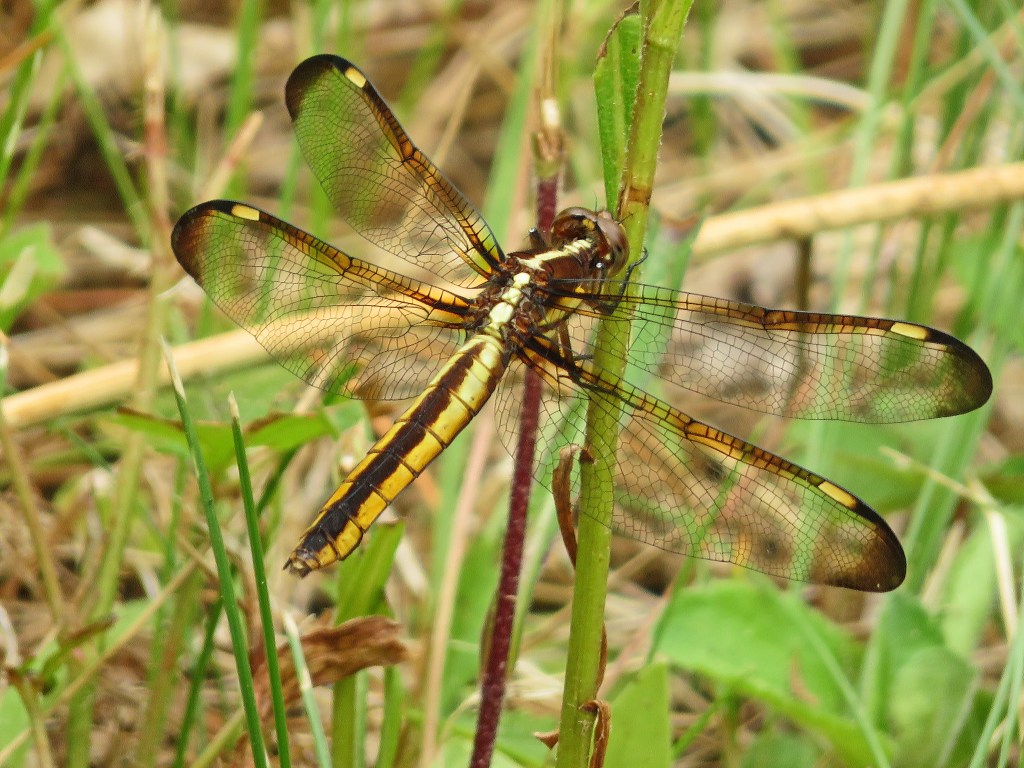
Extra credit if you can identify this lady. (Hint: Skimmer family)

The skimmers are many and each has something unique and lovely to offer. But my greatest thrill today was to encounter this delightful specimen just before I was about to depart the meadow. For those who joined me yesterday as I hunted for the Common Whitetail Skimmer, you may have noted the zigzag pattern on her abdomen. Take a look at the pattern along the abdomen of this beauty. The side spots form a smooth stripe. Her honey, whom I have yet to see, has not only the black patches on the wings, but also white. Who might this be? A Twelve-spotted Skimmer.

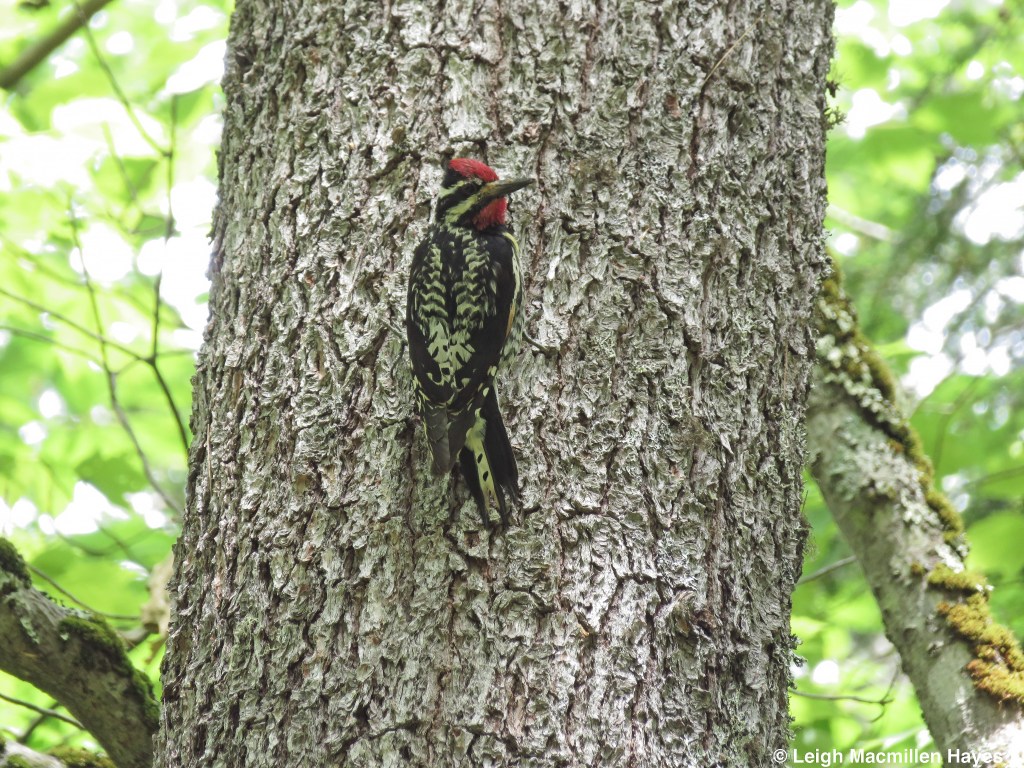
Before departing, I checked back on the sapsucker nestlings. Papa was doing the same from a tree about ten feet away. I got the sense he wanted to tell them to be patient and stop begging.

But how can you resist such a baby face? I know I couldn’t.

I gave great thanks to the Yellow-bellied Sapsuckers for drawing me into this place and to Linda and Heinrich Wurm for allowing me to trespass and spy their meadow once again and all that it has to offer.

P.S. Quiz answers: 1. Racket-tailed Emerald; 2. Ashy Clubtail; 3. Spangled Skimmer; 4. Dot-tailed Whiteface; Bonus: female Great Blue Skimmer (a first for me) How did you do?

Because of the Monarchs

There’s a place here in western Maine that I frequent on hot summer days. Oh heck, there are many places I frequent, but this one is extra special and it doesn’t involve a hike. In fact, from my perspective, there’s only a short distance of a road that consumes hour after hour of my time. But always, it’s time well spent.

The road is dirt and crosses through a hay field that has yet to be cut. Smack dab in the center stands a beautiful Elm and though I’m not sure the Bluebirds nest there, I do know that they at least rest upon its mighty branches for I watched them fly down and disappear into the wildflowers and grasses below and then zoom back up into the tree a few minutes later, their wings of iridescent blue mesmerizing me during flight.

As the Bluebirds flew back and forth to the tree, so I walked back and forth below it. And back and forth again. And again. I have no idea how many times I turned or how often I muttered, “One more time and then I’ll leave.”

But . . . because I stayed I had the good fortune to spend some time admiring a Twelve-spotted Skimmer Dragonfly. In true character, it paused for long periods of time, flew off for a moment or two, and then returned to the same perch. And I gave thanks.

The only other dragonfly I saw was also a skimmer, but about half the size of the Twelve-spotted. At about one inch in length, the female White-faced Meadowhawk also paused for long breaks. And I was equally grateful.

With each step, grasshoppers did what they do–scattered from the dirt road to nearby stems. By the dozens. Providing constant motion and sound.

But then . . . I found two who chose a different activity to entertain themselves and ensure that there will be future generations of grasshoppers in the field.

Aren’t they amazing? And I don’t mean in their canoodling, but rather their design.

My pacing included frequent stops to check out the visitors upon the flowers as well. The Steeplebush appeared to offer a feast to any who chose to stop by.

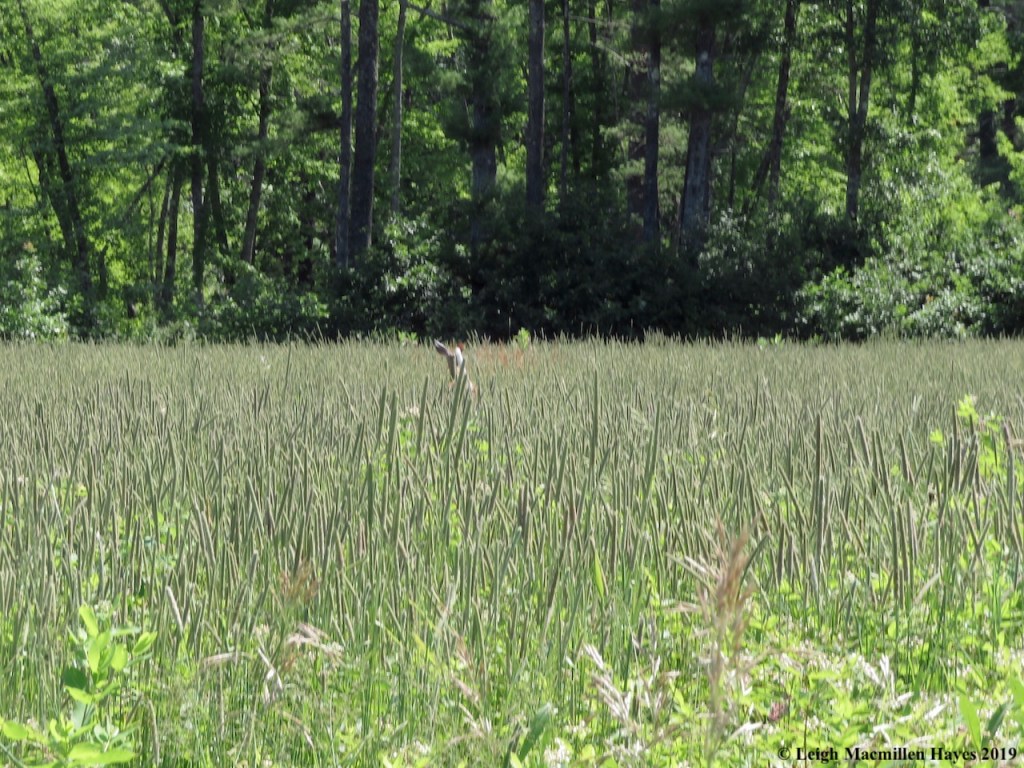
Because the grass was so high beyond the flowers at the edge of the road, I didn’t realize at first that I wasn’t alone. Twice I was startled because I’d startled another. Both times it was a deer that I didn’t see until they ran off. Do you see the white flag of the tail as one bounded toward the woods?

There was more movement in the grasses and among the flowers. It was accompanied by sound. Looking for stalks moving at odds with the slight breeze, I finally spied the creator of the “Cheap” that resounded almost constantly. A Common Yellowthroat Warbler hopped from one plant to another, possibly seeking a meal to share with youngsters relaxing in a distant tree.

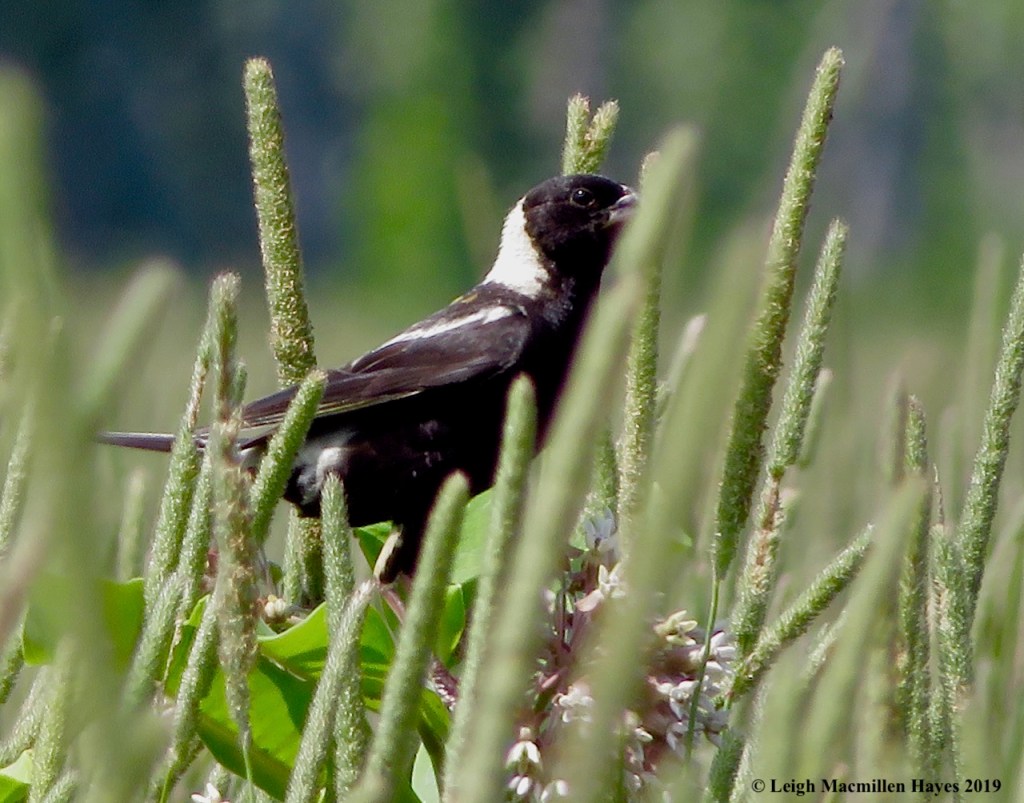
Curiously, a different sound could be heard from the other side of the road, where a male and female frequently took flight before settling down for a bit.

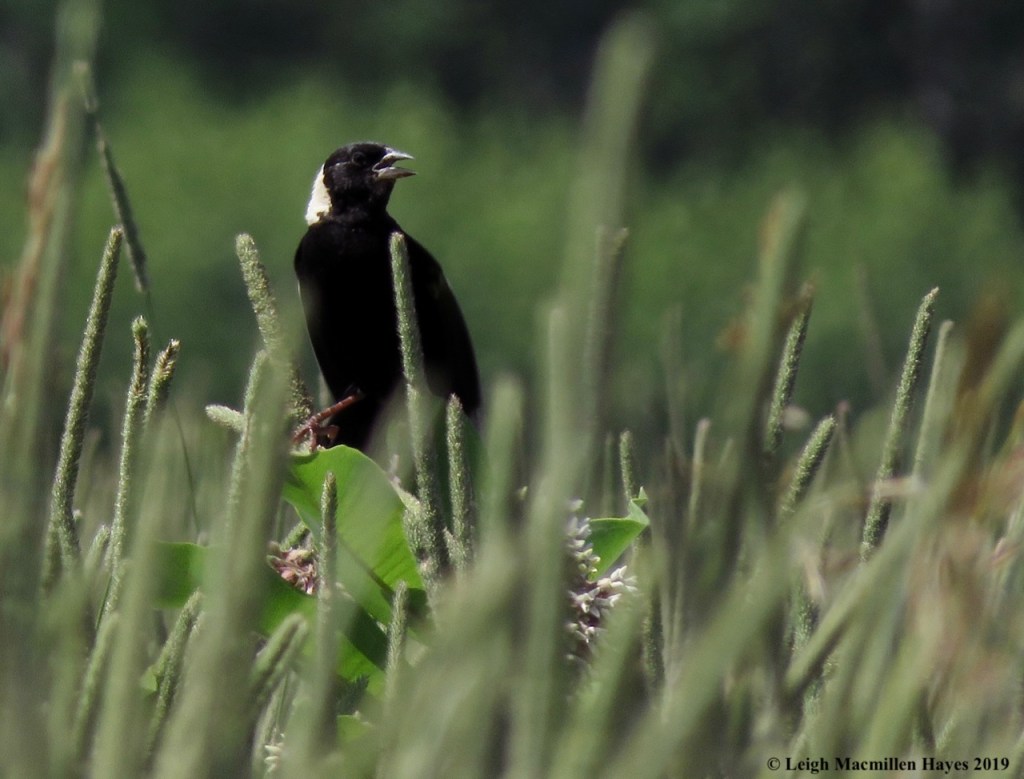
The Bobolink’s song hit notes both low and high, offering a serenade that bubbled forth in a rather bouncy and most pleasant warble.

Every which way I looked, something different presented itself. Some I knew, but others I met for perhaps the first time, such as this large bee fly. I’ve since learned that they are also commonly known as humbleflies, and I found that curious given that with the banded abdomen and patterned wings and overall large size, it hardly seemed humble.

What I’d really gone to check on, however, were the Milkweed plants and their visitors. I wasn’t disappointed for there were both big and little Milkweed beetles.

And Tiger Swallowtails seeking nourishment. This one needed all the nourishment it could get to continue its flight and avoid the birds and other predators. Do you see its tattered wing?

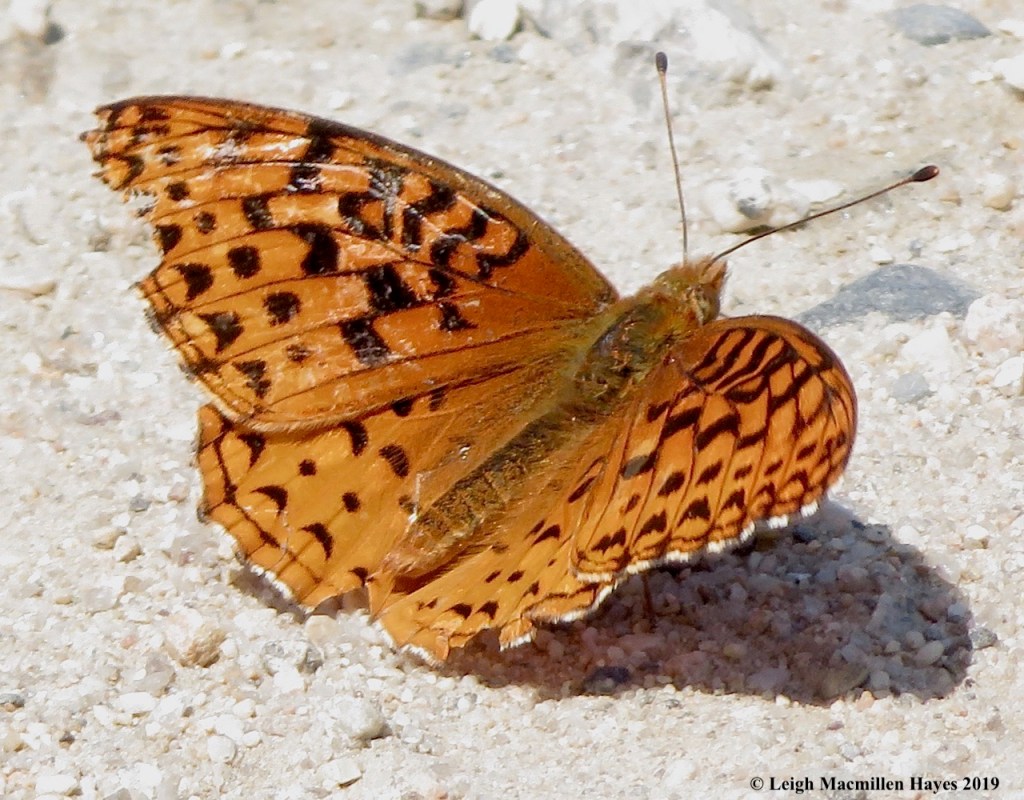
Some, like the Fritillary, chose the road for nutrition and did what butterflies often do.

It puddled. To puddle means to extend your mouthparts and probe the dusty road in search of nutrients. There is no actual puddle involved, but there may be raindrops or in this case, morning dew that help the butterflies extract minerals to share with their gals.

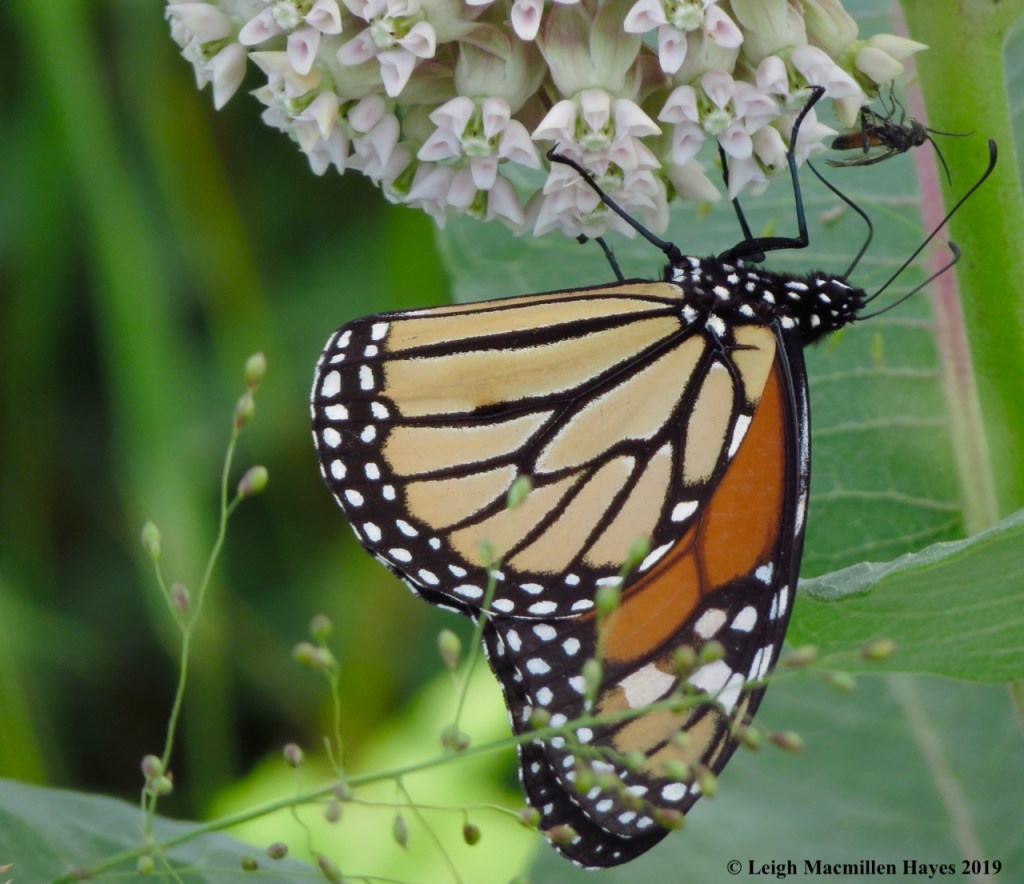
What I’d really gone to see, however, were the Monarchs. And I wasn’t disappointed for a few fluttered about and occasionally landed, much to my delight.

At last, my “One more time and then I’ll leave” utterance became reality and I drove off. And then . . . there was one more sight to behold. I stopped the truck and watched as a fawn bounded in its awkward fawn manner.

Because of the Monarchs . . . I experienced a wonder-filled morning.