The Long Farewell

Saying goodbye is so hard to do, yet at some point we all must. These last few days I’ve been trying to wrap my brain around how best to do that and not feel melancholy.

But then again, maybe the future isn’t all that far off. Wait a minute. Blueberries in flower? Yes! Sadly so. Over the past week or so friends, relatives, and I have noticed various species flowering due to warmer than normal autumn temperatures. These of the low-bush variety are along the path that my neighbor mowed through the field where I’ve spent many a glorious hour observing.

It’s in the same field where I delight in spotting bowl and doily spider webs and this one, a funnel web with the funnel weaver sitting inside waiting for a meal to arrive.

Orb weavers have also been mighty abundant this year and at first I assumed this was Ye Olde Black and Yellow Garden Spider that I love to watch at work–usually wrapping its prey as this one was doing.

Before I say more, take a look at the silk coming out of its spinnerets. I like this explanation by Naturalist R.J. Adams about spider silk: “Within each spider’s abdomen are a variety of silk glands which can vary in number depending on the species. Some of the oldest lineages, including relatives of California’s tarantulas and trapdoor spiders, have only a single type of silk gland, while some orb weavers can have up to eight different kinds. Each gland produces a protein-rich liquid which connects to numerous minute spigots at the tip of the spider’s spinnerets. When silk is needed, tiny valves behind each spigot control its release, and as the fluid is compressed through the spigot’s openings, tension orients the molecules into a solid, thread-like structure.”

Liquid. Spigots. Thread. What an amazing invention!
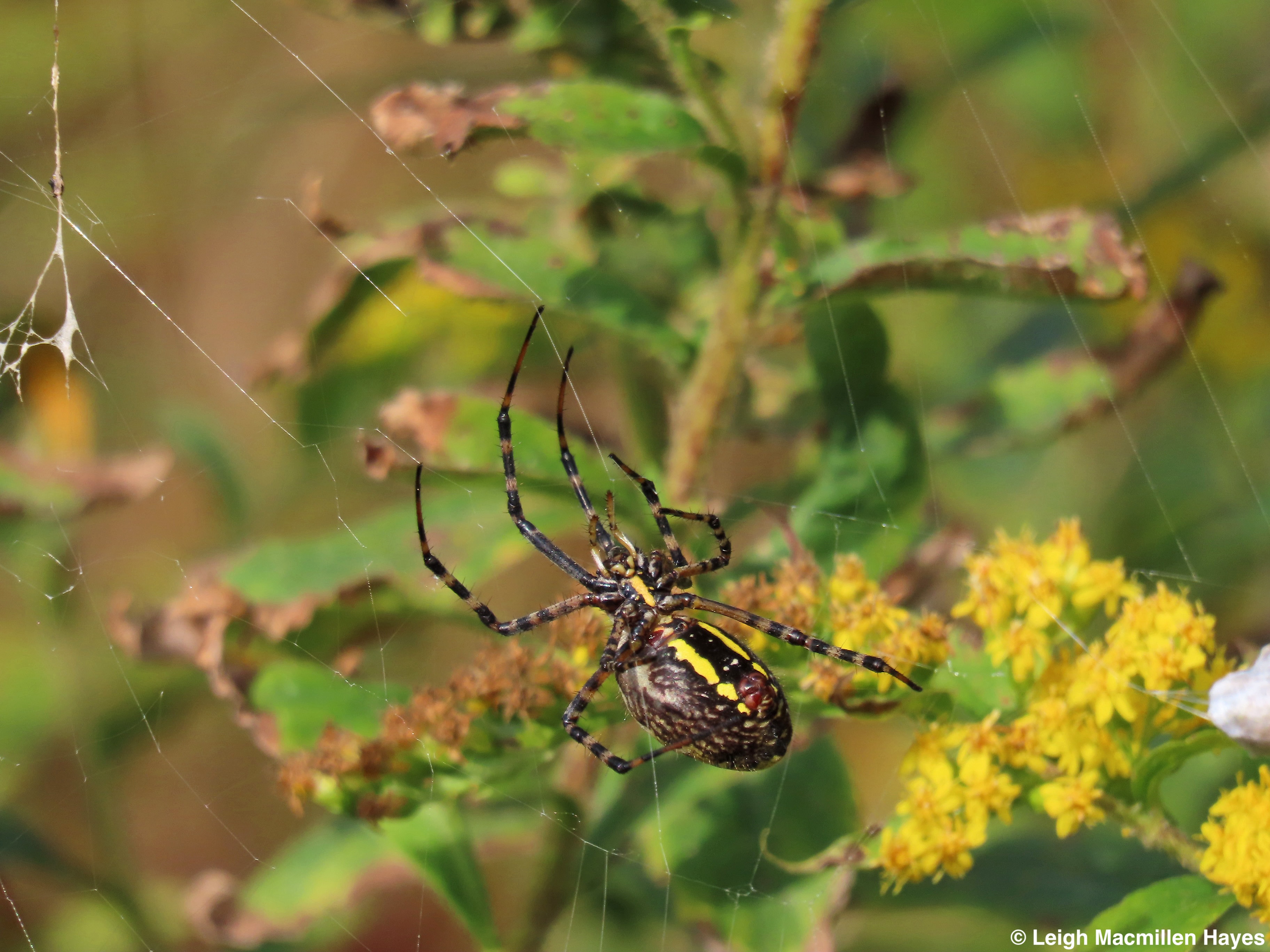
As I watched the spider move away from its packaged meal, walking so confidently on those guide lines, I realized its coloration was a wee bit different than that of the Black and Yellow Garden Spider.
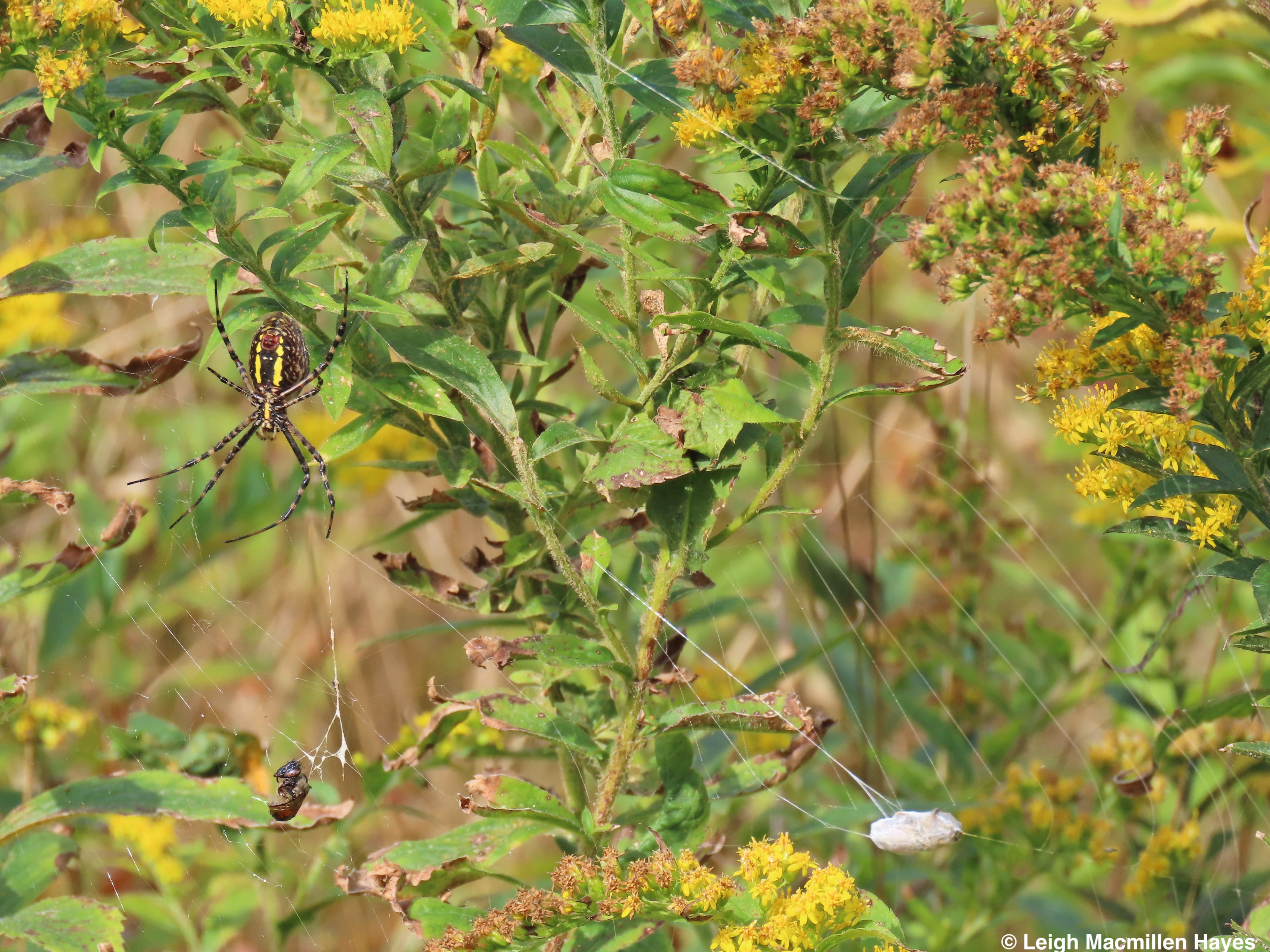
Not only was the design/coloration different, but also the fact that there was no Zig-zaggy stabilimentum, an ultraviolet runway of multiple threads which perhaps provides stability or attracts prey or tells others to stay away, a trademark of the Black and Yellow.

That’s because this was a Banded Orb Weaver with a different pattern. And now I can’t wait to look for these again next year.
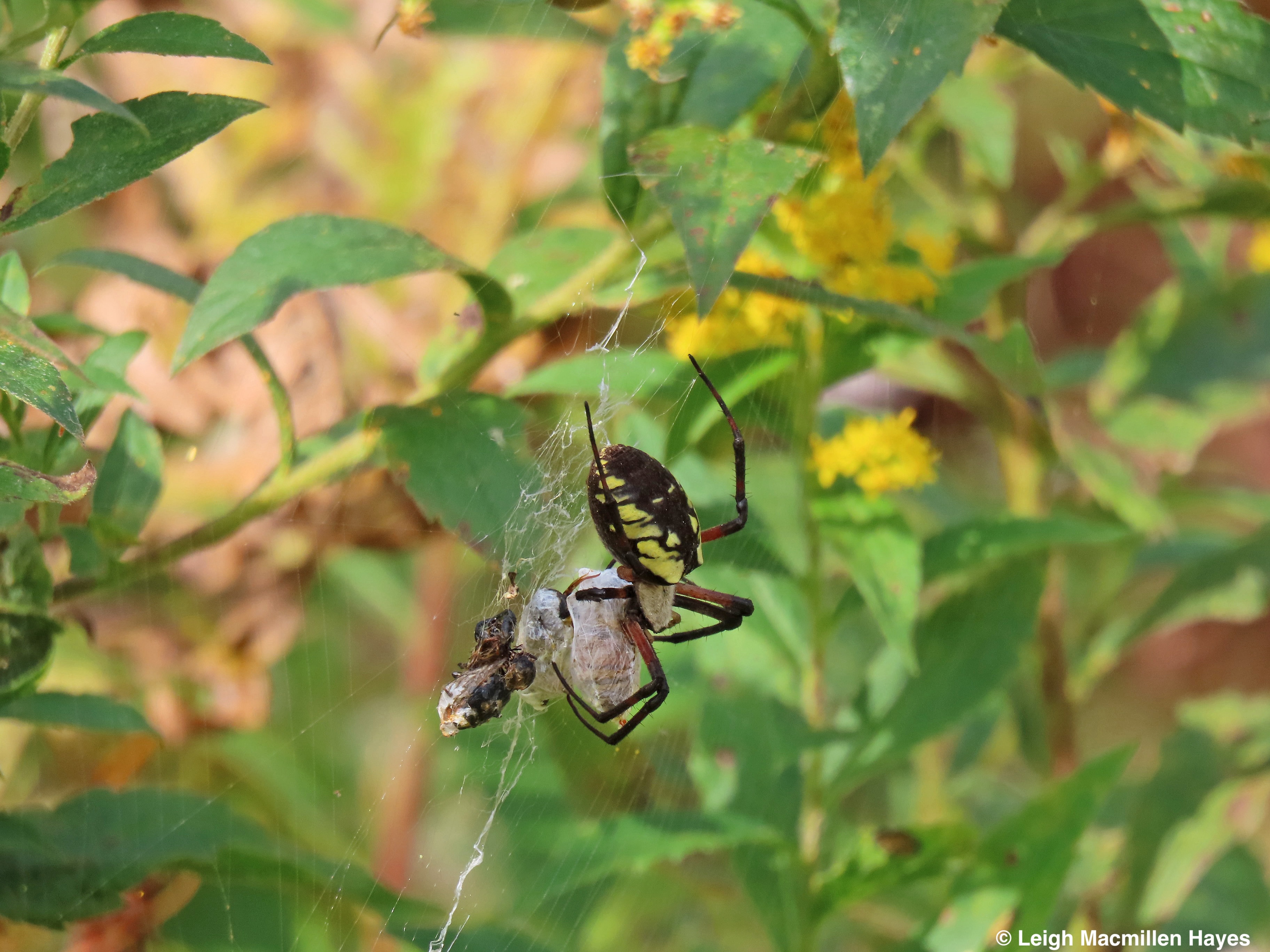
Until a couple of days ago, I was still seeing Black and Yellows, but not as frequently as I had all summer long. It seemed like this gal had stocked her pantry, perhaps knowing her days were coming to an end.
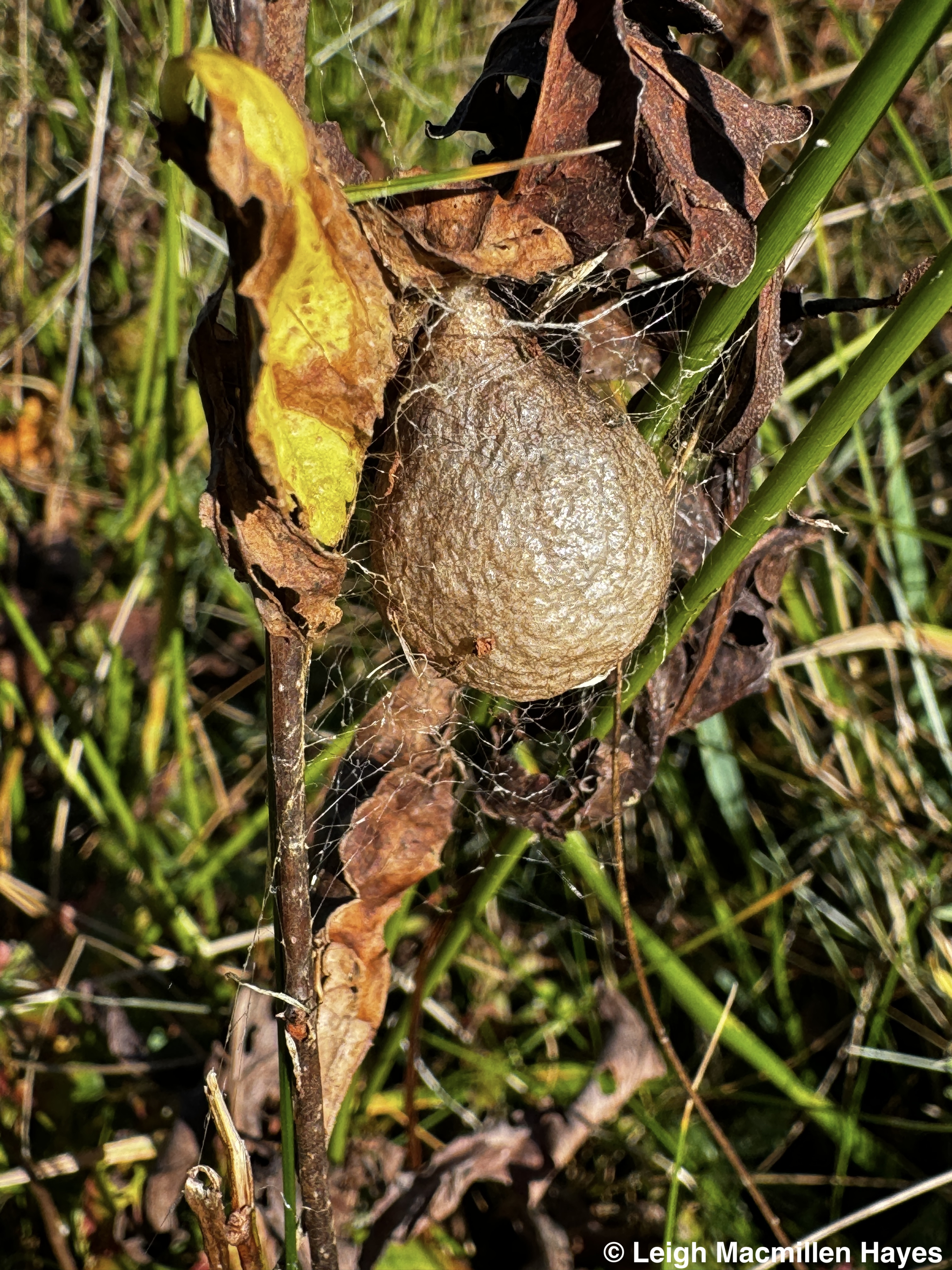
The good news is this sac, soft on the inside and parchment-like on the outside, was created by a Black and Yellow, and within her eggs will survive the winter months. Where there is one sac, I suspect there are dozens more.

Do you see them? The egg sacs I mean? No, I don’t either. Camouflage is the name of the game as the goldenrods and asters go to seed.
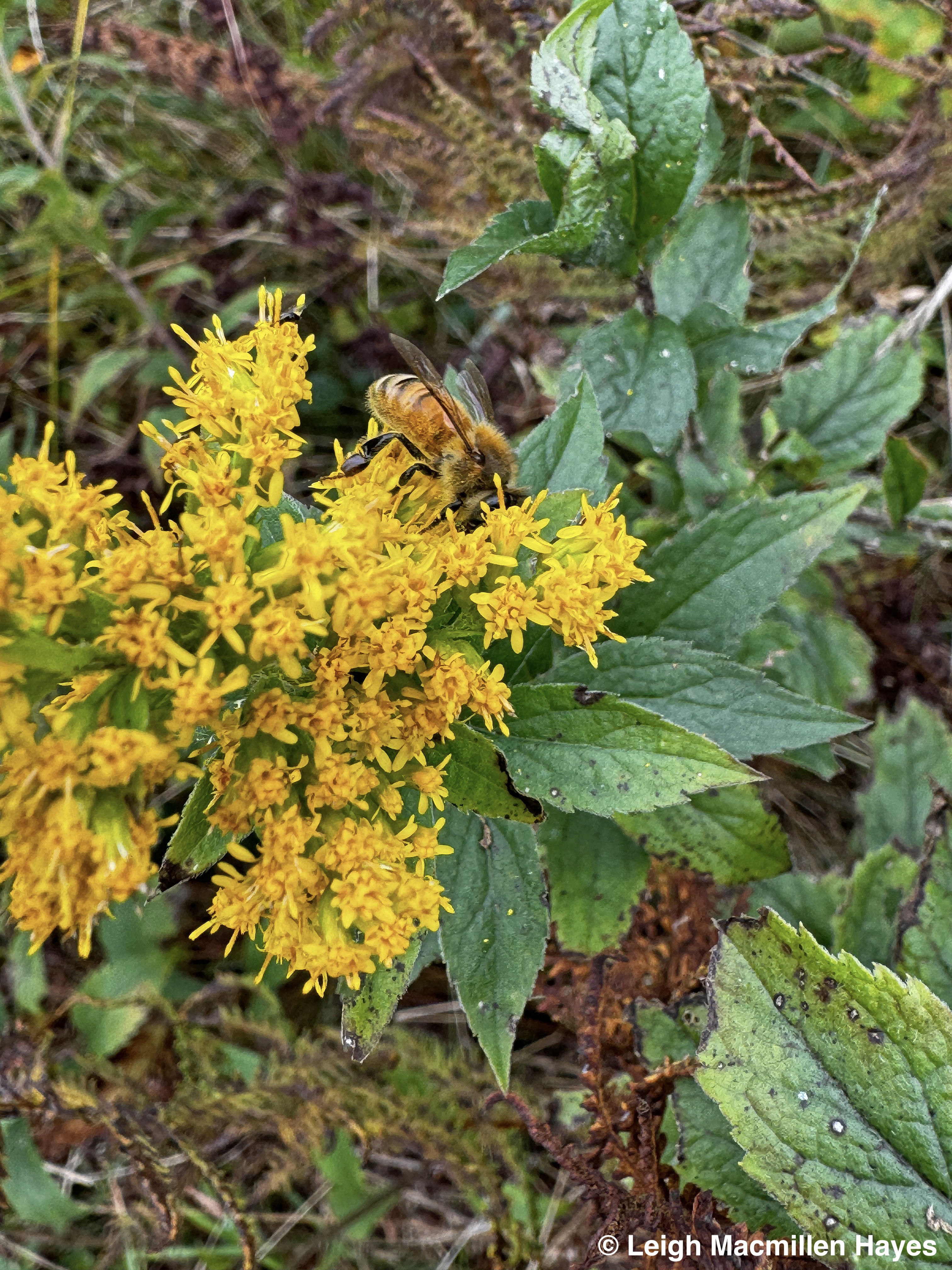
Despite or because most of the flowers have gone to seed, those that still thrive are the subject of heavy pollination activity. Frenzied in fact. From Honey Bees to . . .
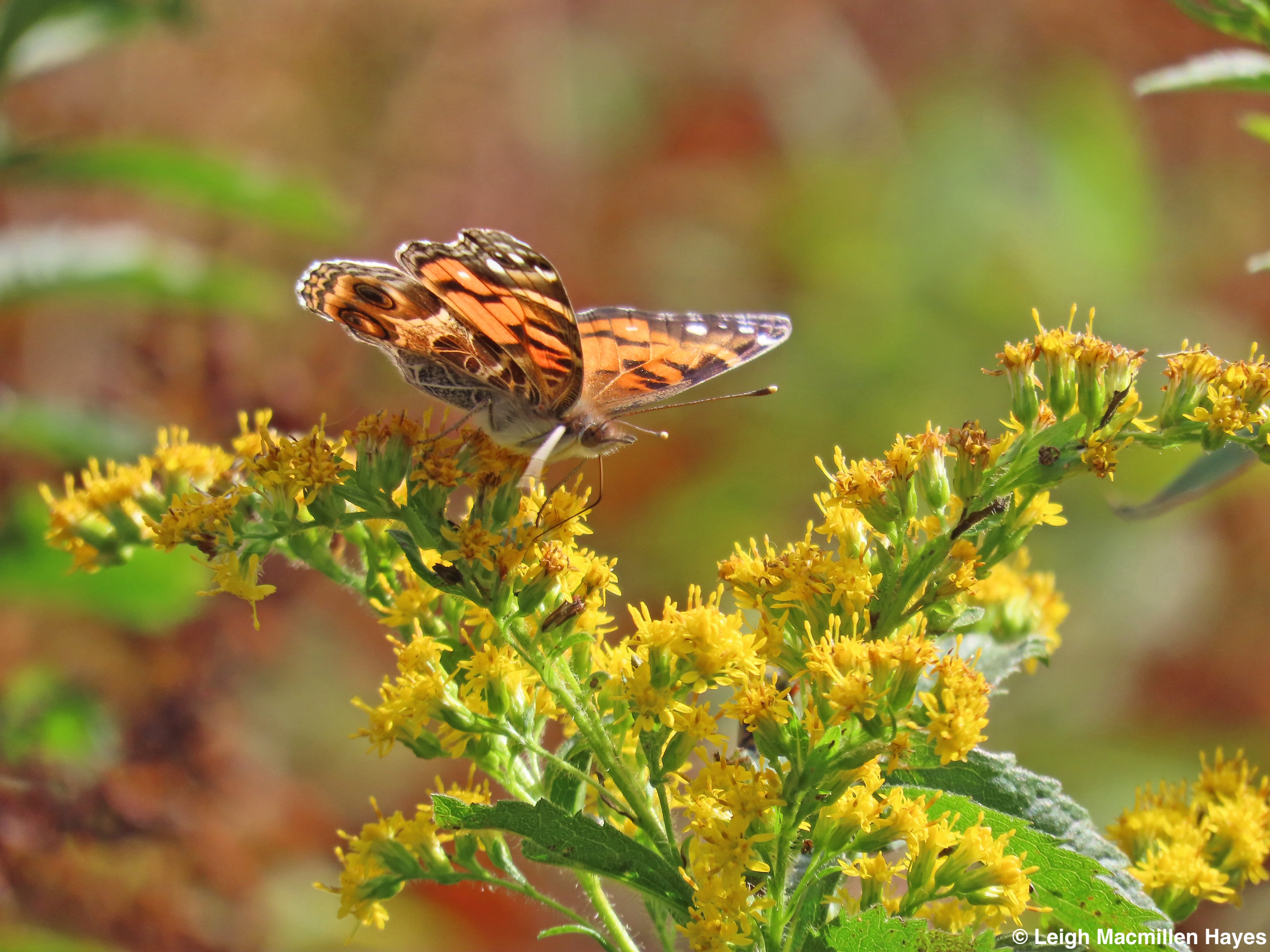
an American Lady, to . . .

Female Pearl Crescents (gender ID based on orange color of antennal clubs versus dark colors for males) and their counterparts who all greet me each day, to . . .
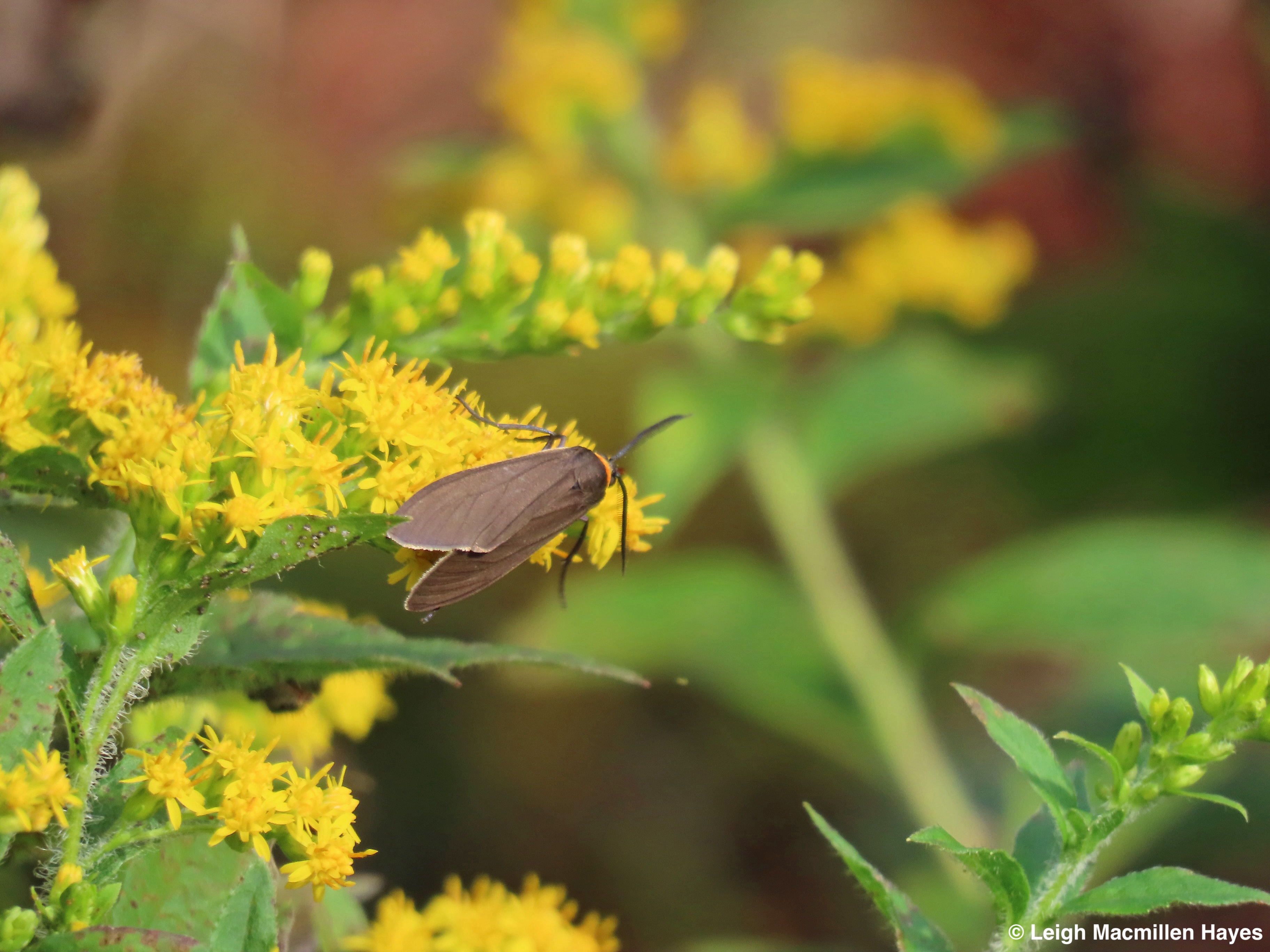
Yellow-collared Scape Moths, to . . .

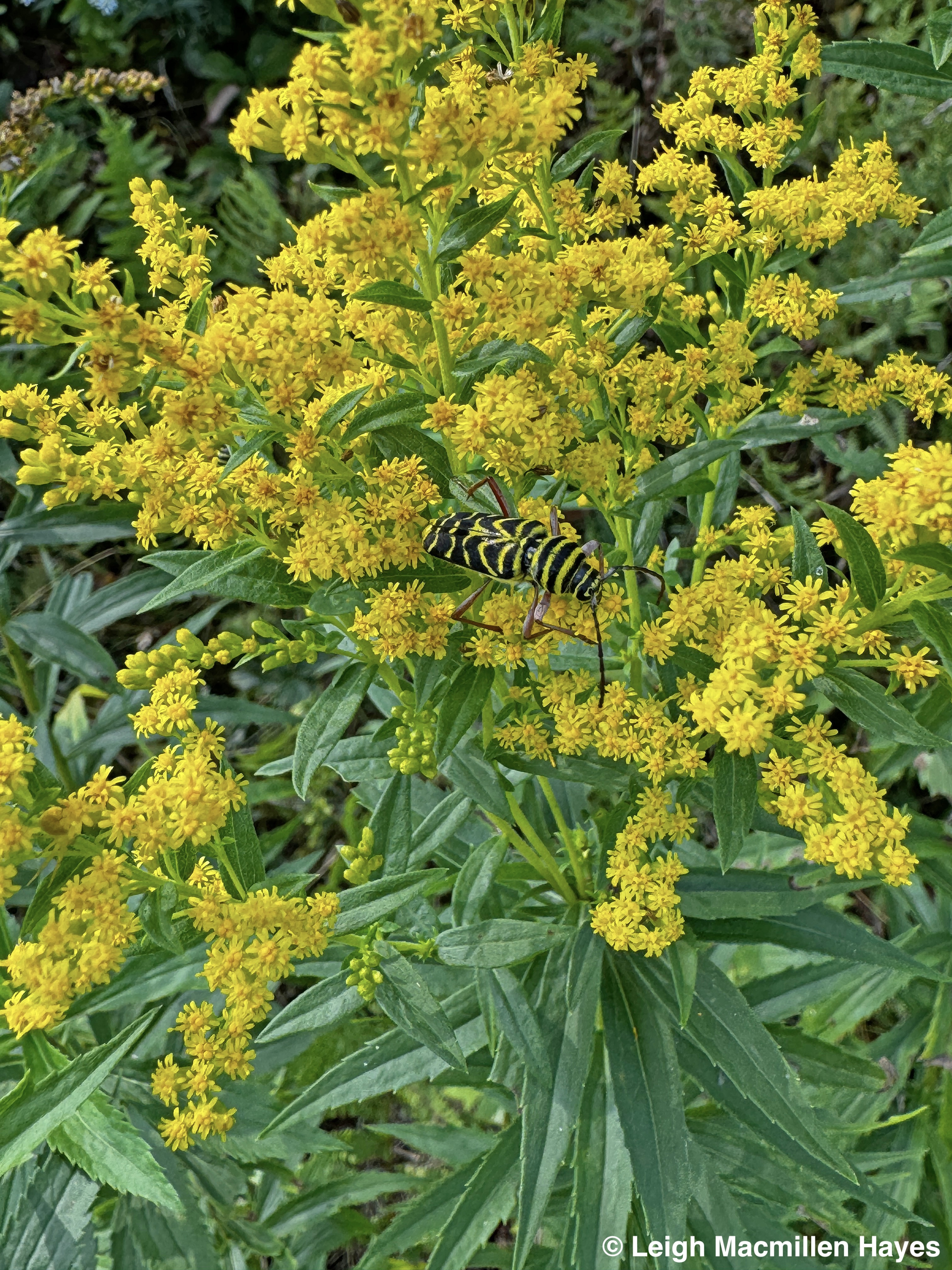
Locust Borers, to . . .

long-bodied Sweetfern Underwing Moths, to . . .

Paper Wasps, to . . .

Bumblebees, this one special because it showed me that its proboscis is orangey-reddish, to . . .

Flower Flies with big eyes.

The plants literally tremble with all the activity so it’s easy to figure out where the insects are located.

The best part of greeting so many is that occasionally a tiny new visitor enters the scene and I have to watch for a few minutes to get a good read on who it might be as it flits and flutters and finally lands.

It wasn’t the diminutive size that made my heart skip a few beats, but rather the color when the Eastern Tailed-Blue Butterfly opened its wings–a mixture of blue and pink that made me think of skyblue-pink we often see at sunset.

And then another sighting stopped me in my boots. It’s camo is incredible and it could simply be another goldenrod leaf.
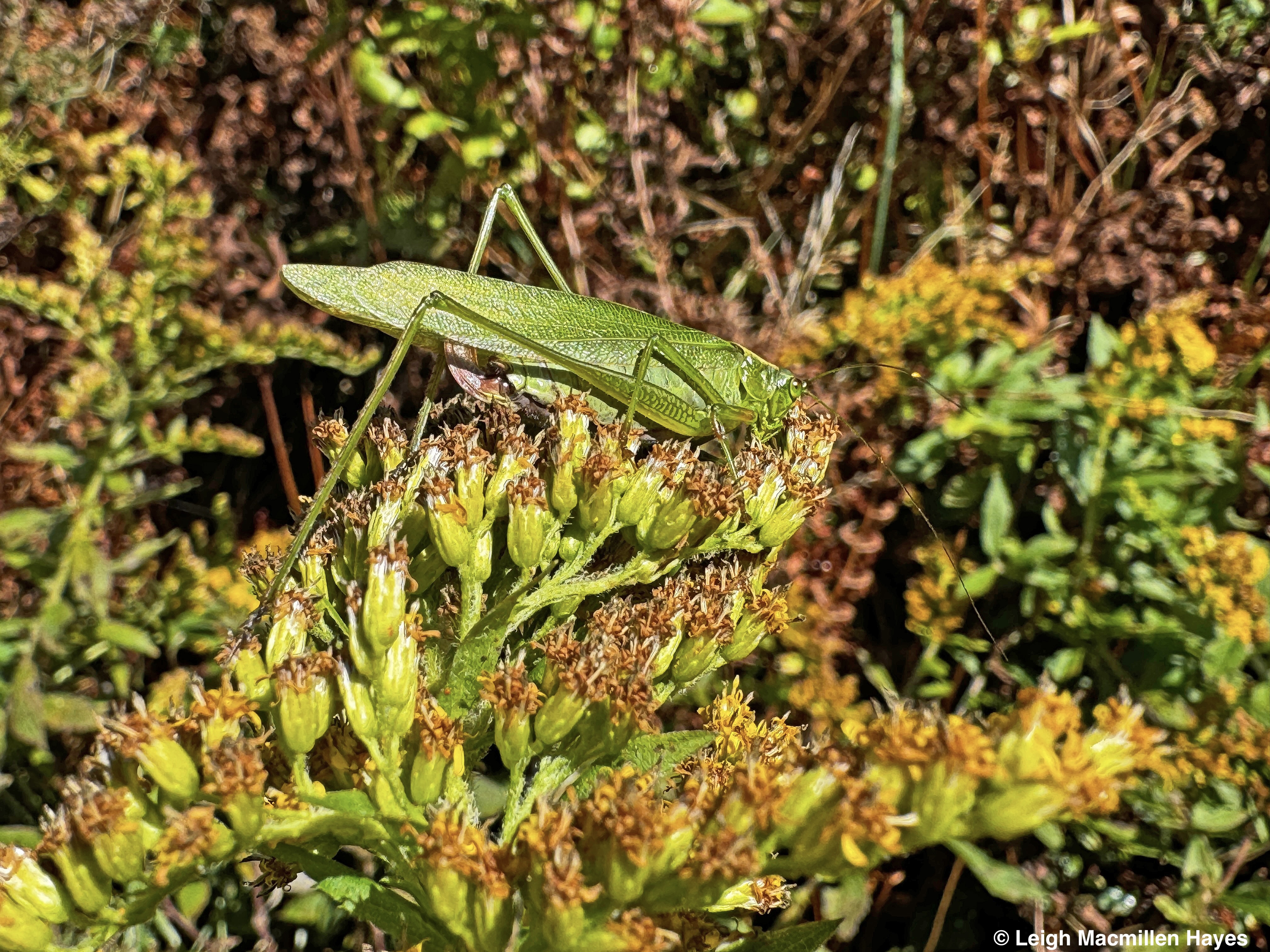
But rather, it is a Katydid, only the second I’ve spotted this year. Katydids always make me happy because they remind me of my forever-since-birth friend and at about the same time that I spotted this insect she just happened to comment on a photo I’d taken during a hike this past week–of a mountain stream–because it reminded her of our “fishing” adventures as children, sticks being our poles and leaves our fish. Katydid. Of course she did.

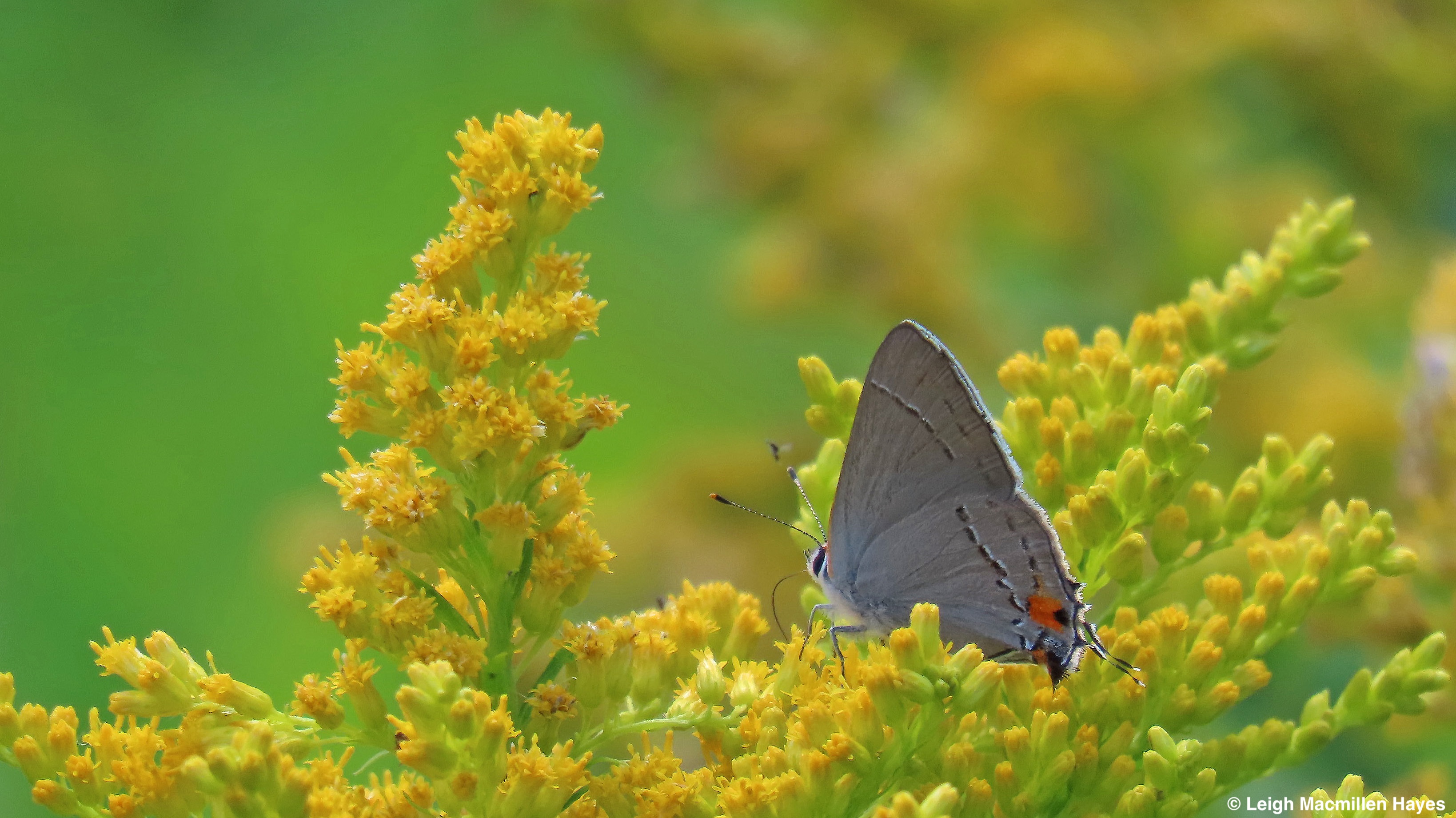
But of all my finds, my heart was the stillest for this magnificent creature, also a gossamer-winged butterfly. I noted it first on August 3, 2024, and again on August 26. But to see one on October 4, 2024 . . .

Incredible. And RARE! I contacted Dr. Ron Butler once again as he’s one of the co-authors of Butterflies of Maine and the Canadian Maritime Provinces.

Different Bat Time, but same Bat Place for this sighting.

Ron’s reply, “Lucky you. I’ve only seen them in more southern states. I’ll add this to the database.”

Lucky me indeed. According to the book, White M Hairstreaks have only been spotted in our region four times (prior to the three I’ve now noted) and they were seen from late July to late August. So, um, that can now be updated to early October.

BUT . . . what does that mean? Ron has only seen them in more southern states. Blueberries are flowering in October. My nephew shared a photo with me this past week of a Lilac blooming in New Hampshire.

Climate change.

All that said, saying goodbye to all that the field has offered this summer and early fall is not easy. I’m going to miss the spiders and butterflies I had the honor of greeting each day. Oh, I know there’s so much more to come as the days grow shorter and temperatures drop and my favorite season arrives. I live where I do because of the change of seasons.

Still, it’s a long farewell as we transition from one season to the next and for that I’m grateful.

Taking Stock . . . Naturally

As locals know, My Guy owns a hardware store and I often say I am married to the store. It’s true because it is a constant in our lives and follows us on walks and hikes even on his days off. And though our oldest son has taken over the reins in the past two years, My Guy still cannot completely let go.

I’ve come to realize, however, that that is okay because it means I can tend my own shop. Of course, while he owns the land and the building, I need to rent space, but it’s well worth the priceless price.

Step through the open-air doorway, and you’ll find right now I’ve got proboscis-style straws on display. They are especially beneficial when sipping from Red Clover, a member of the legume family.

And for safe storage, the Peck’s Skipper likes to show how to curl the straw up when not in use.

If you are an introvert, like me and the Common Ringlet Butterfly, you might prefer to flit from flower to flower, but then hide in the vegetation after spending so much time demonstrating for the public how to use your straw.

Common Wood-Nymphs are equally inclined to hide, but still available on the shelf for you to choose, and you can decide if this stored straw appeals to you, or not.

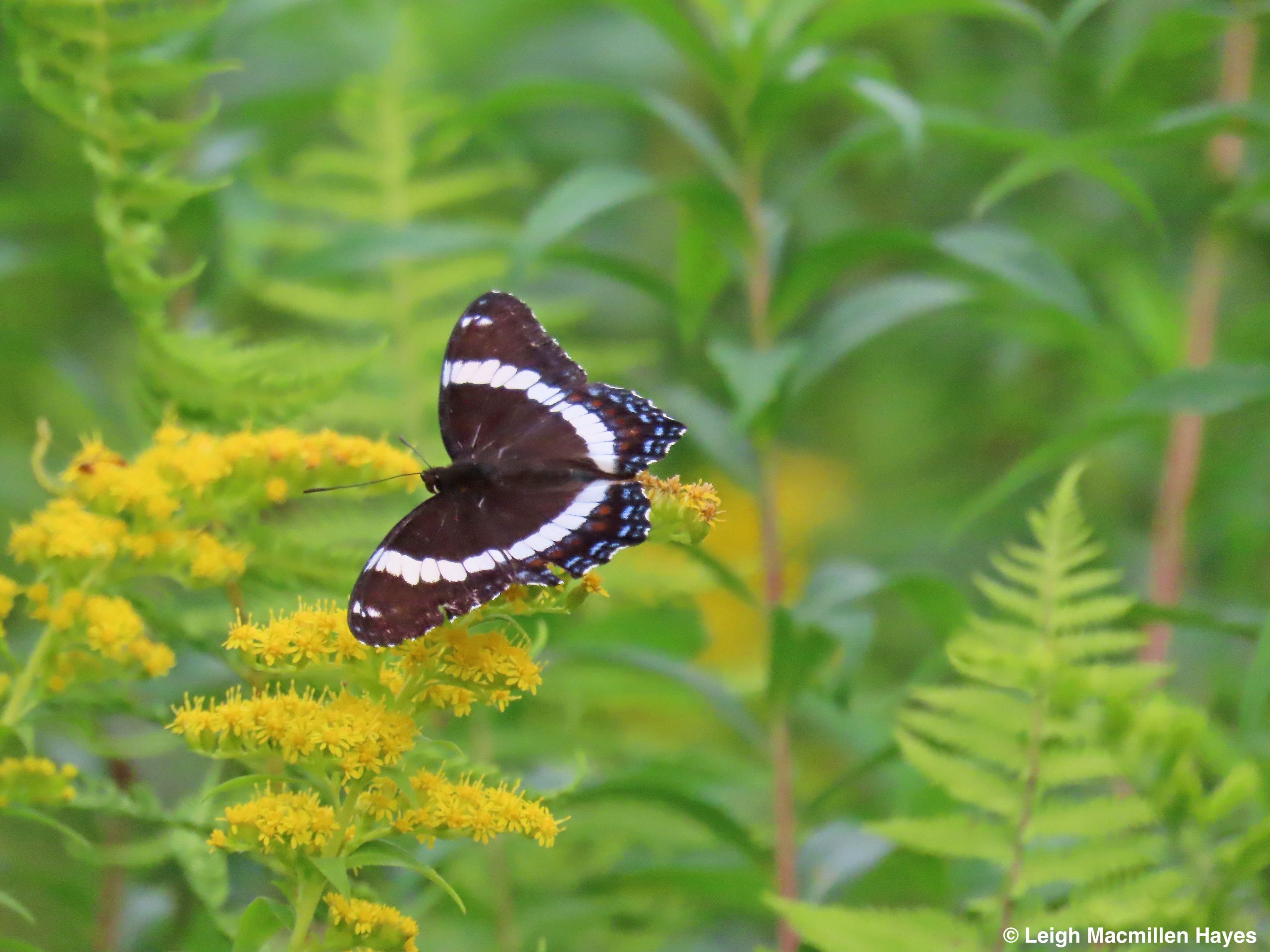
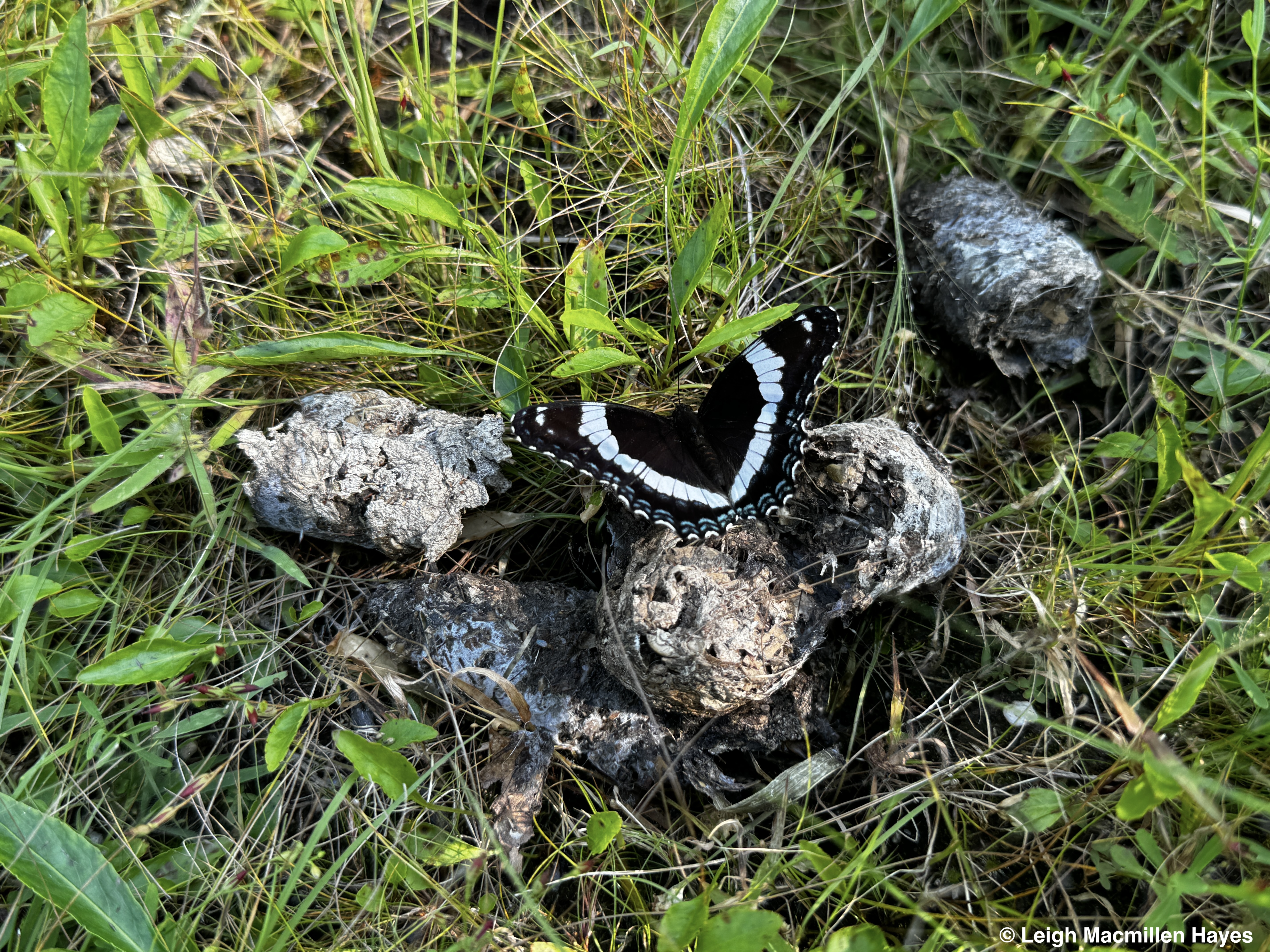
White Admirals are especially plentiful right now, and want you to know that whether hanging upside down,

or right side up, their straws always work, so it might be a good one to think about purchasing.

Especially if you like to get some of your nutrients from scat. We can throw in some scat for you, if you’d like–at no extra charge!

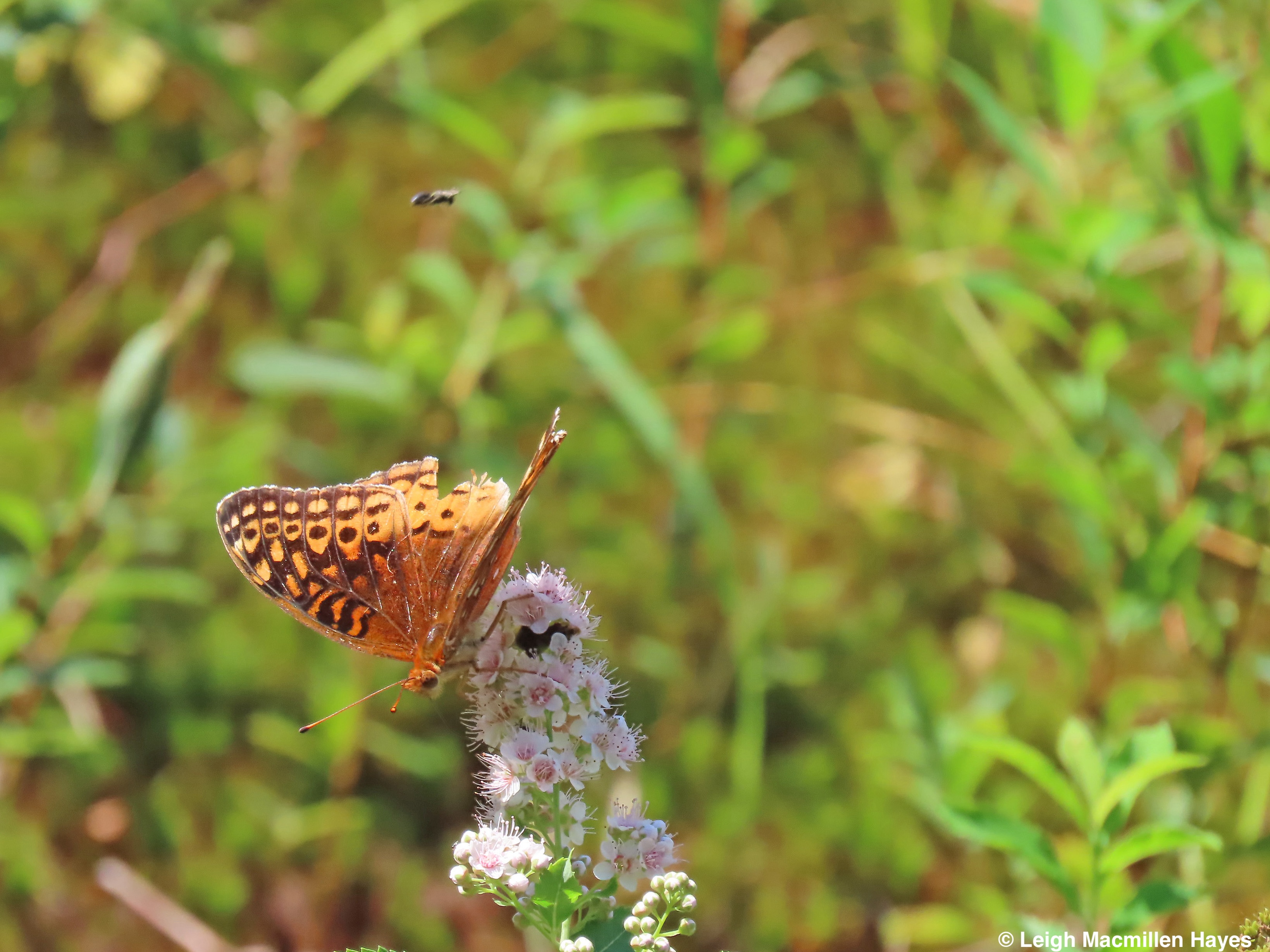
Sometimes it’s the packaging that makes all the difference, so we’ve got several orange choices for you to consider, this being the Fritillary style. Make me an offer I can’t resist, and this straw is yours due to the fact that it has been used previously, as evidenced by the tattered wing.

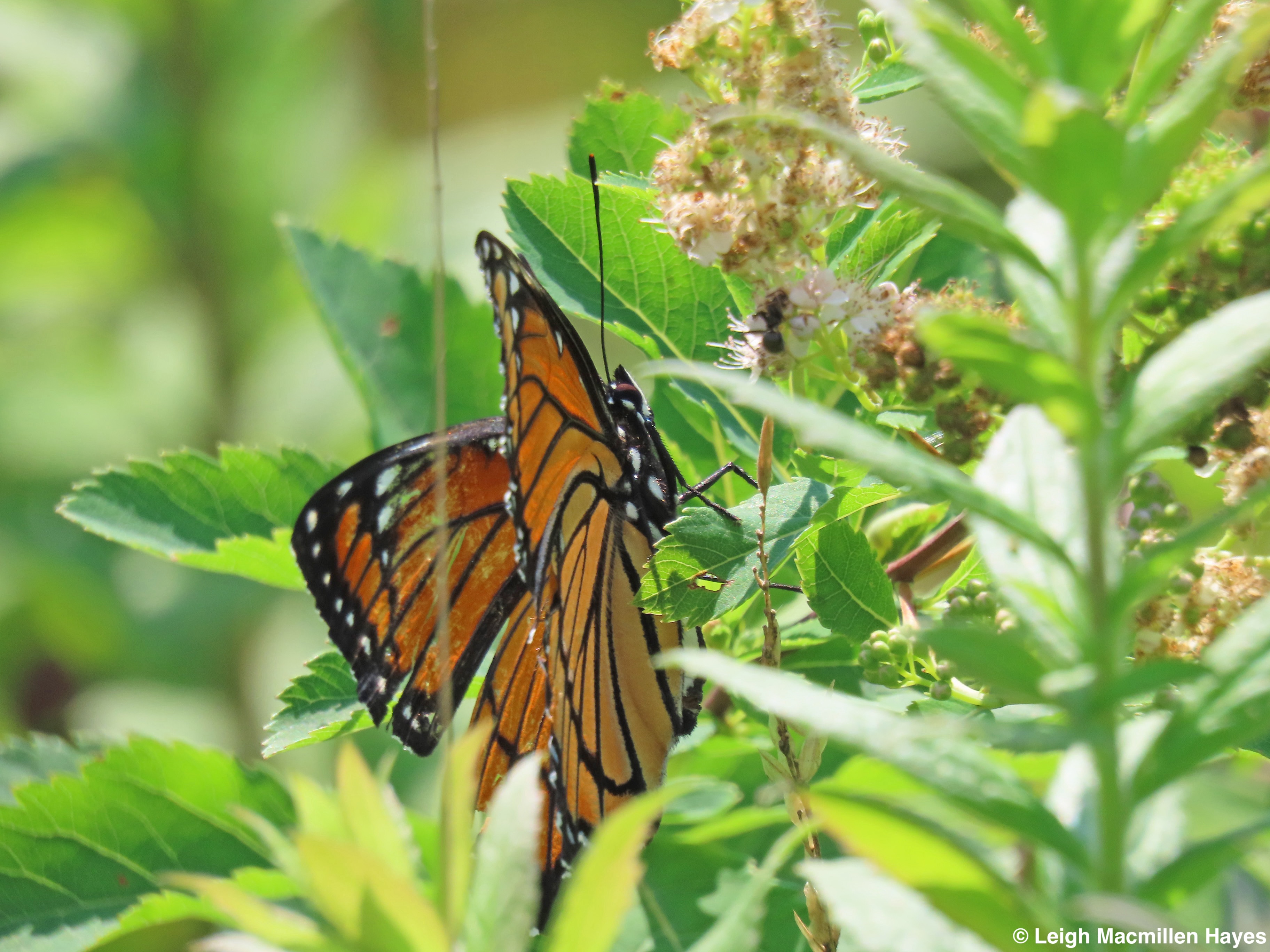
If you prefer something a bit bigger and brighter, there’s the Viceroy, with that dark band crossing its wings.

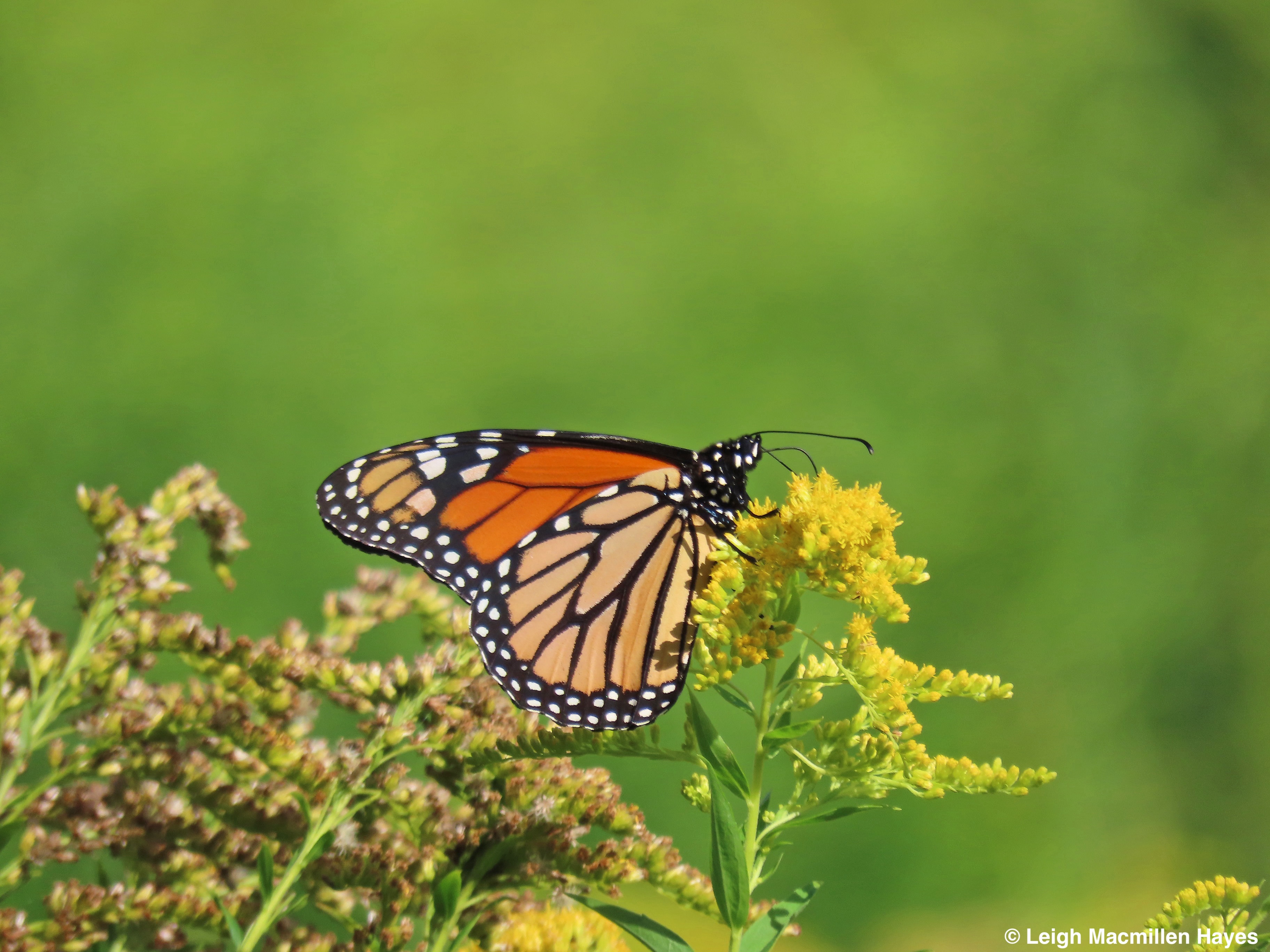
Or the biggest of all, the Monarch, who lacks the black band that is part of the Viceroy packaging.

For the tykes in your life, we also have Pearl Crescents and Northern Crescents in stock. The former is slightly smaller than the latter for the youngest in your gang.

Those are all great, but I have two that I much prefer, the first being this Clouded Sulpher that comes in pastel colors only, which contrast with the darker-colored straw.

And the creme de la creme has to be the White M Hairstreak, a rare species that I was able to special source a few weeks ago, and every once in a blue moon (such as this August is), I can find another to offer you. That is the case right now, but hurry because I don’t know how long this butterfly will remain on the shelf.

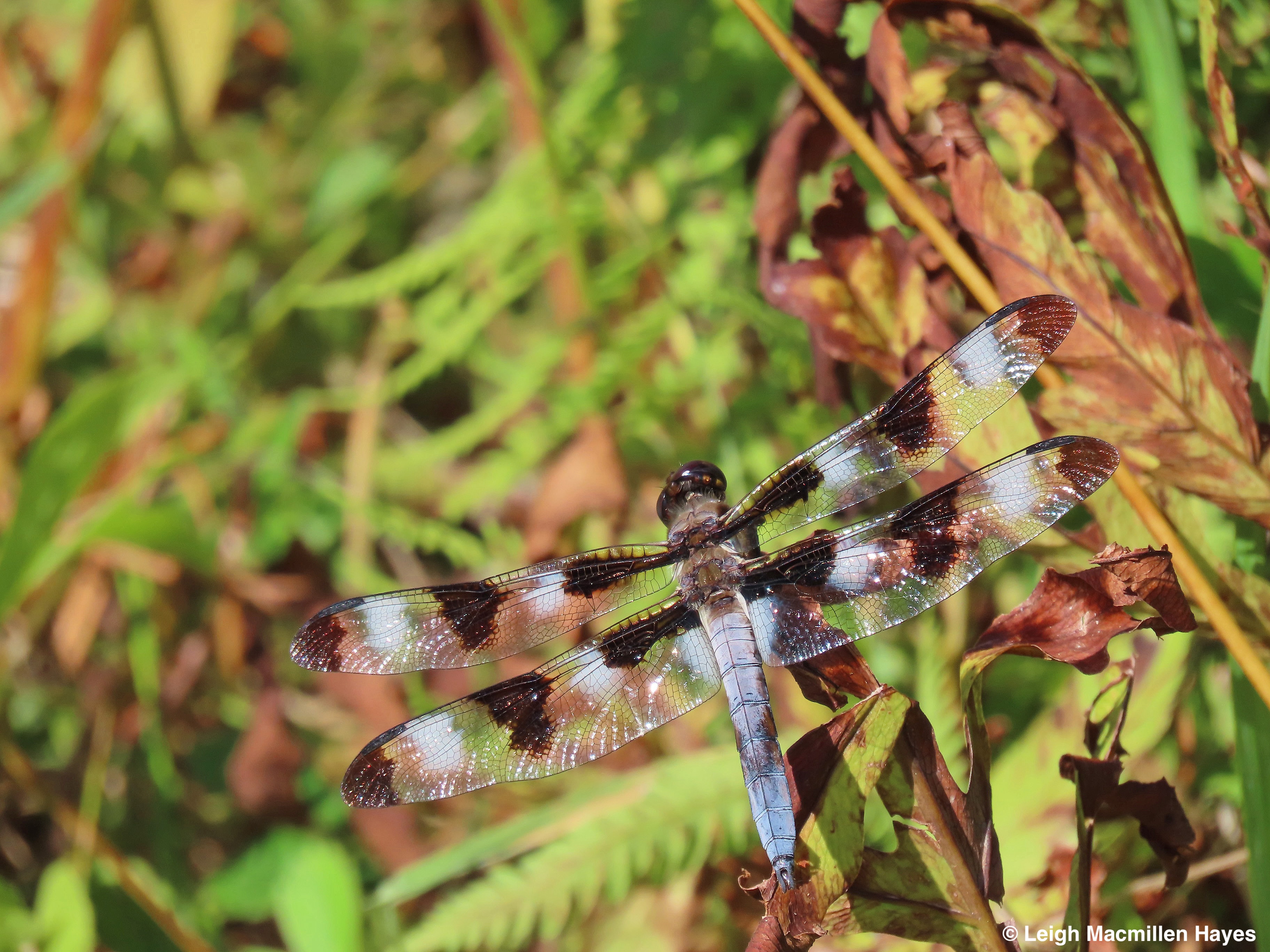
Over in the natural pesticide control aisle, I’ve a few options for you to consider, such as this handsome male Twelve-spotted Skimmer. Unfortunately, I just discovered these are on backorder, so you’ll probably need to wait until June if this is the style you prefer.

The same is true of the Eastern Pondhawk–in fact, I was totally surprised that I was able to snag this species, but suspect it has something to do with the store’s location between two ponds, and so close to a wetland and swamp.

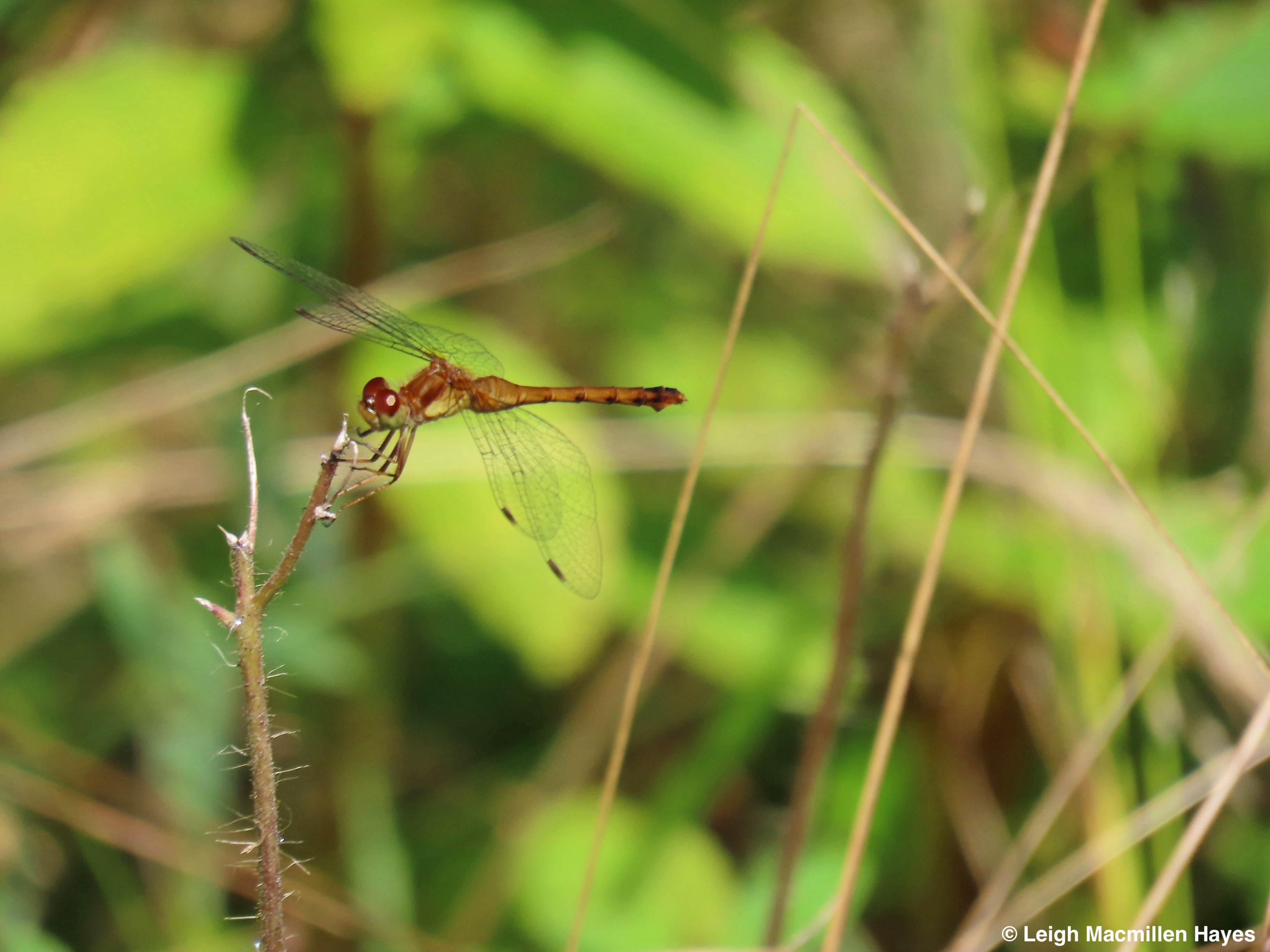
Right now, the most abundant pesticides I can offer are in the form of Meadowhawk dragonflies like this Autumn Meadowhawk, a small skimmer with tan colored legs.

If you prefer something larger . . .

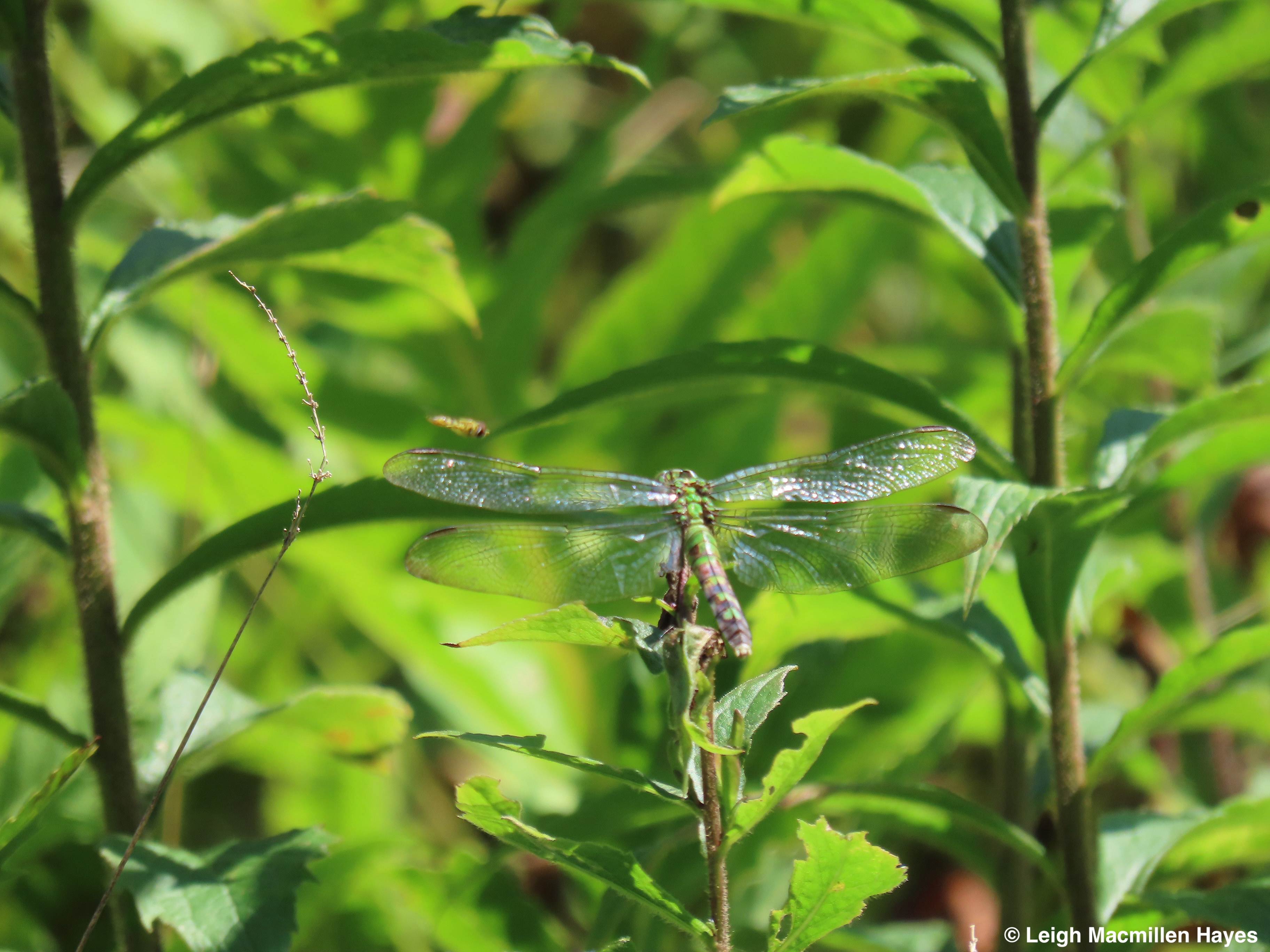
you might like the darners that keep flying off the shelf. That said, there are plenty more where this guy came from, so if you can’t find one in the shop, give me a shout, and I’ll check the backroom.

Summer is not over yet, despite what everyone has been saying lately, and so if it’s pollinators you are looking for, I’m afraid I overstocked. Well, there’s nothing to be afraid of, actually. Being overstocked on these is a great thing. And you can mix and match if you’d like, perhaps choosing these European Paper Wasps,

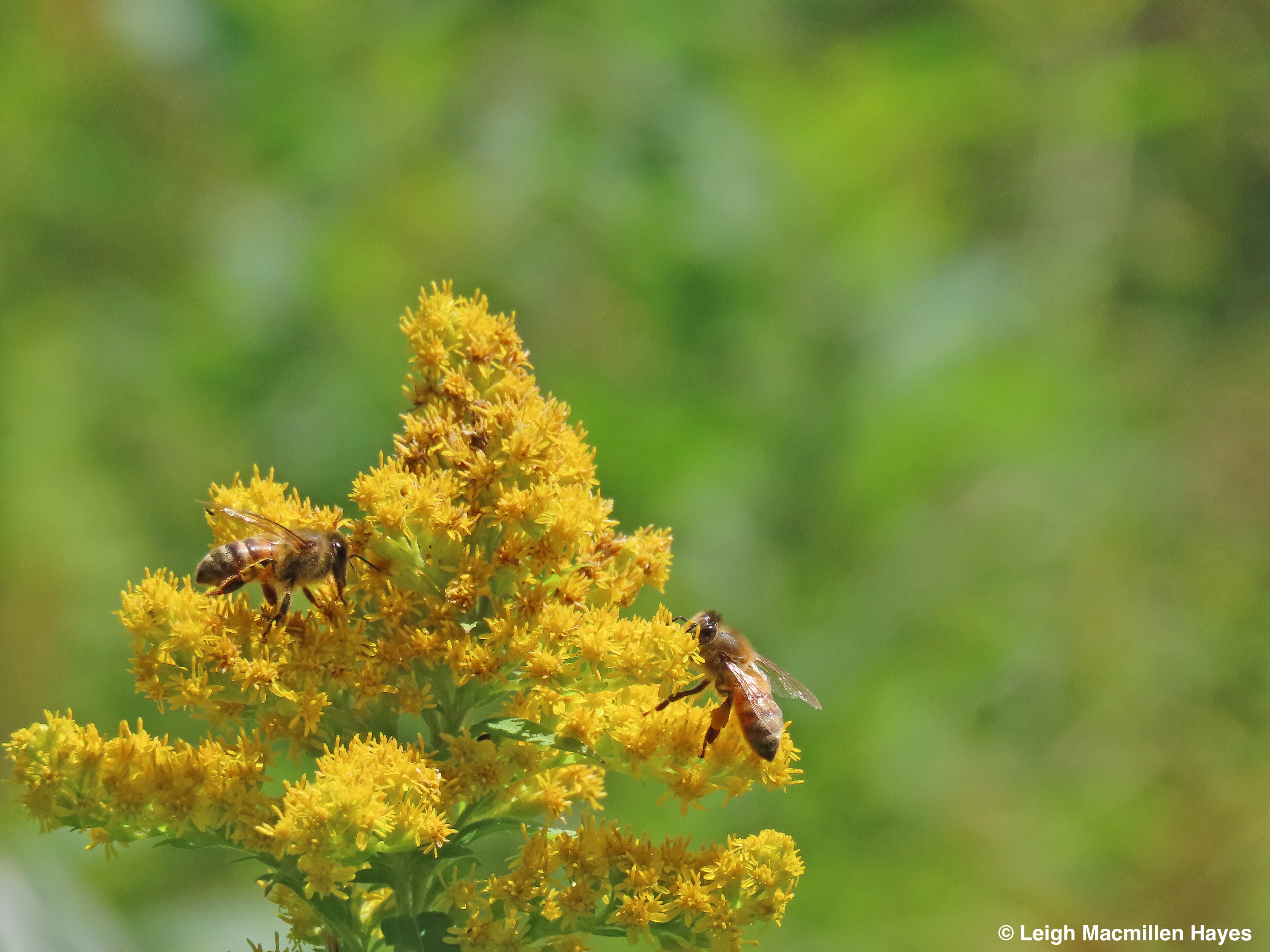
a few Honey Bees,

and some Locust Borers, all lovers of Goldenrod as you can see. I’ve also got Great Black Wasps, with their iridescent blue wings, and Paper Wasps, and Bumblebees, and . . . and . . . and so many to fill your reusable bag.

In the Fly By Day aisle, there are a few special selections, the first being this Lacewing that could be featured in a “Where’s Waldo” picture, so well camouflaged it is.

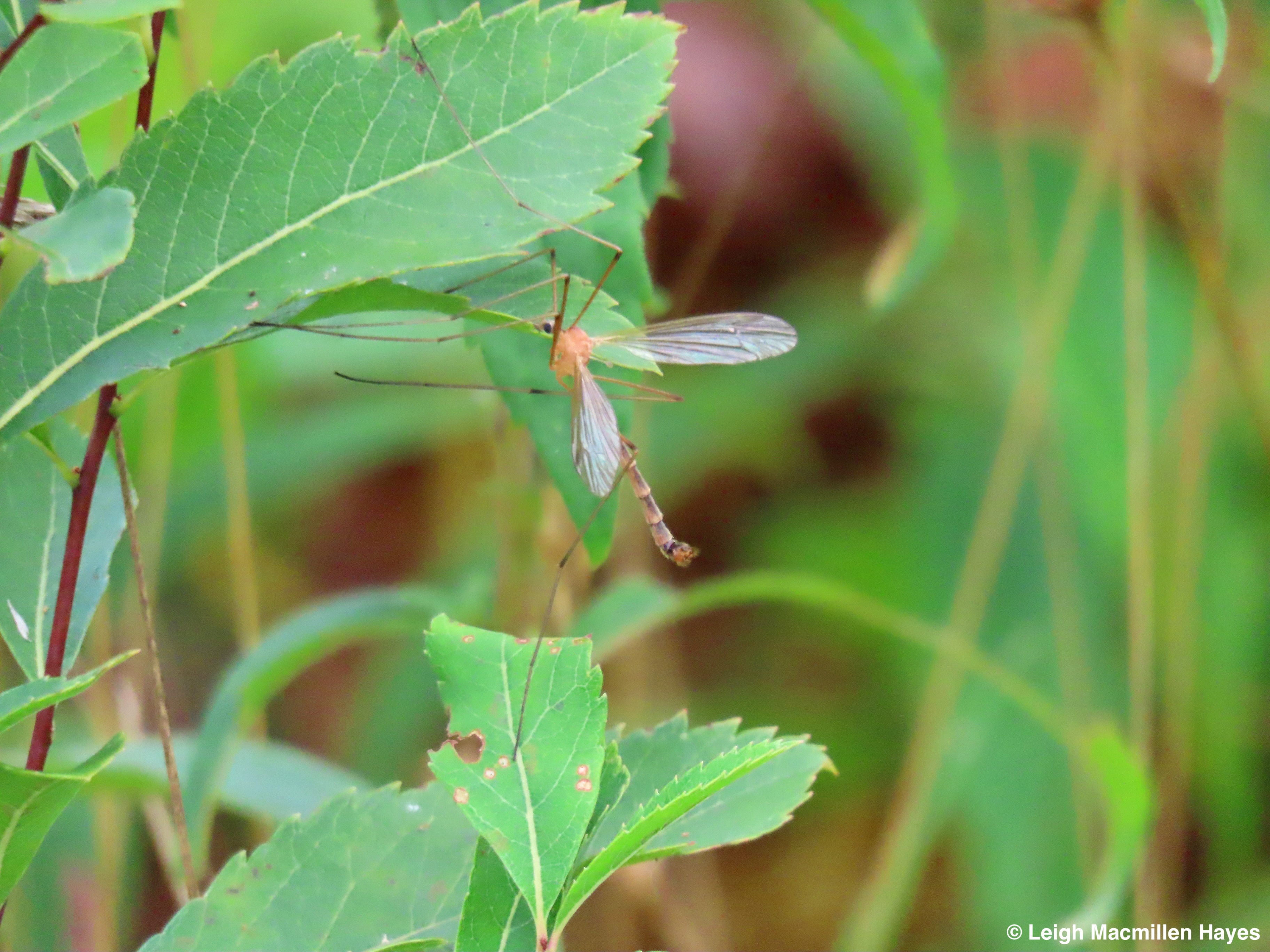
And a Crane Fly that you can scare people with and pretend it’s a giant mosquito. The thing is . . . they don’t bite. In fact, during their short lifespans, they don’t typically eat. So . . . little maintenance if you decide to put this one in your cart.

I’d be lax if I didn’t mention the employees such as this teenaged Ambush Bug who is very good at hanging out on Goldenrod plants near Black and Yellow Garden Spider webs, without getting tangled in all the drama.

But, being teenagers, sometimes two decide to tango in the breakroom under the Goldenrod, and these two canoodlers just had to have a bite to eat while they were so engaged. I’m sure the Sweat Bee never saw this coming.

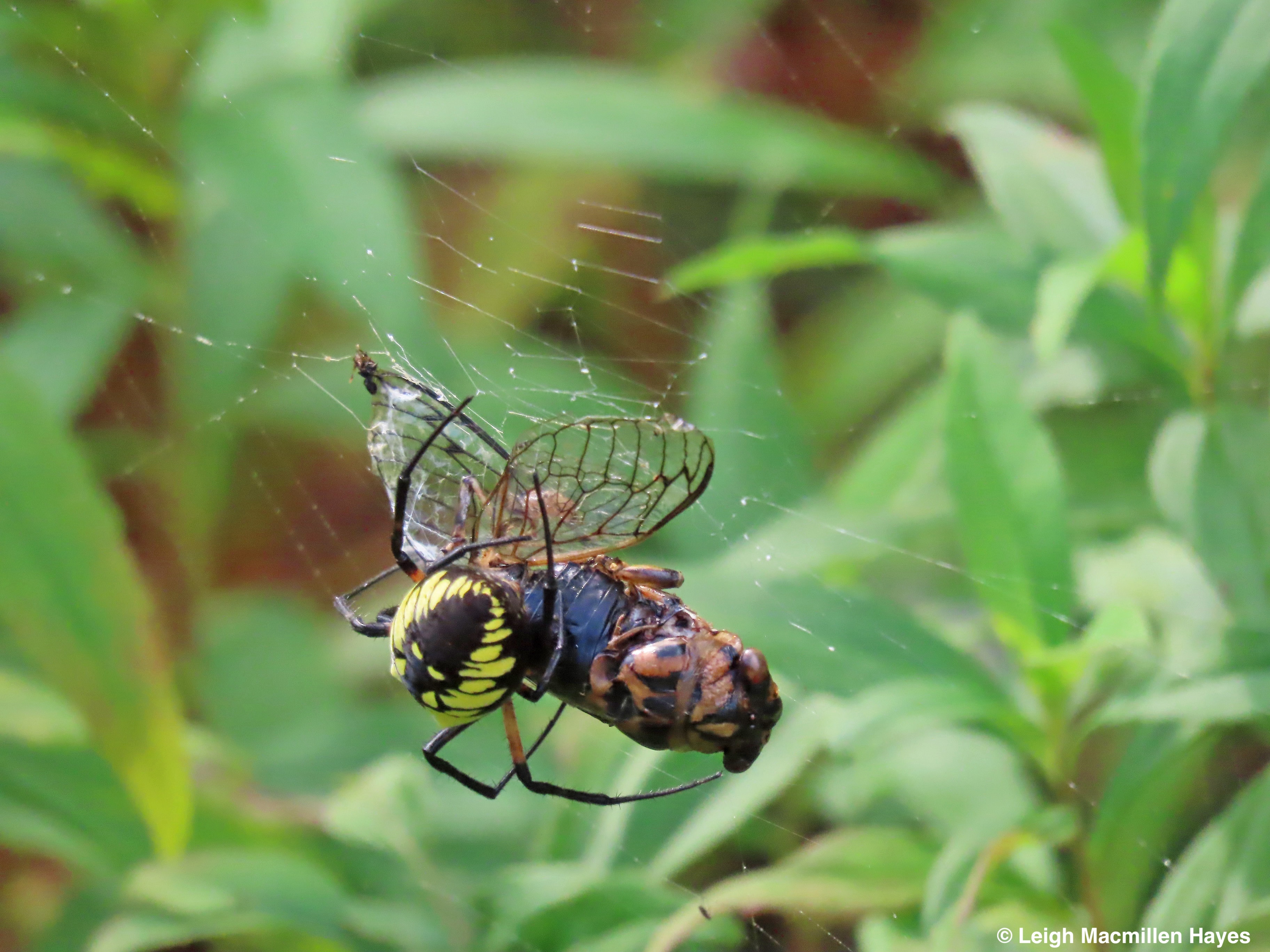
If you do decide to stop by the shop, the Black and Yellow Spiders are the chefs and they’re happy to provide you with a Dog-Day Cicada meal all wrapped up and ready to eat on the road. They have other items on the menu as well.

That said, this coming weekend, I do believe that the hardware store will have some items on the grill. So stop by and sample whatever delectable they prepare.

Food is actually a part of all our lives (haha, as it should be) and our youngest son is fortunate to work at a company in Manhattan that has a personal chef who prepares breakfast and lunch each day, mostly with locally-sourced food such as what is available at my store.

If you do come to the my shop, know that you’ll probably have to wait in line behind the Eastern Phoebes, who perch at roof-height and swoop in and out . . . often helping themselves and then zooming to the self-serve checkout line.

The guard doe keeps an eye on everyone passing through the door, so I don’t have to worry.

Occasionally, all four of us take a break from our respective jobs and come together to share a locally-sourced meal of our own–a la Fly Away Farm. Oh, and the kid (young man!) in glasses is holding his Lacy Blue pup who is sure that everyone who visits the hardware store comes just to greet and pet her.

As My Guy and I went for a long walk today, and hiked a mountain yesterday, we tried not to talk shop, but it occurred to me that while my eyes glaze over when he starts telling tales about hardware happenings, so do his when I point out the wonders of the natural world.

And so, I try not to tell him how to run his business (“try not to” being the operative phrase), and he lets me operate my own shop in my own way–even if it is all in my imagination.

I suppose you could say that while I’m married to a hardware store, he’s married to a . . . I’ll let you finish the line.

In the end, we both take stock . . . naturally.