Part of the Neighborhood

The text arrived from one of my first playmates on Wednesday. “Good morning,” she wrote, “Just wanted to give you a heads up my fat and sassy Juncos are headed your way. Only had a couple yesterday and none this morning. Hope they had a safe trip! Blow them a kiss for me. Hugs.”

A few hours letter I wrote back that I’d let her know when they arrived.

And a few minutes, voilà! My second text to Kate: “No sooner said than BINGO! I looked out the back door and there were three!”

On Thursday afternoon, the Bluebirds arrived. Kate told me she’d had three couples all winter in Connecticut. “They are so stunning! They seem to be the kindest of breeds. They don’t squabble as much as others and share better.”

After that, it was a Tree Sparrow. And many more Juncos each day.

And today, the Chickadees and Tufted Titmice and Bluejays, of course, but also Goldfinches, and one Tree Sparrow, and Mourning Doves, and Red-breasted and White-breasted Nuthatches, and Downy and Hairy Woodpeckers, and I’m sure others that I’m missing, and suddenly, the feeders were busy. Toss into the mix Red and Gray Squirrels, and Crows, though the latter stayed about ten feet away from the action, while the former got right into it, and it was a full house.
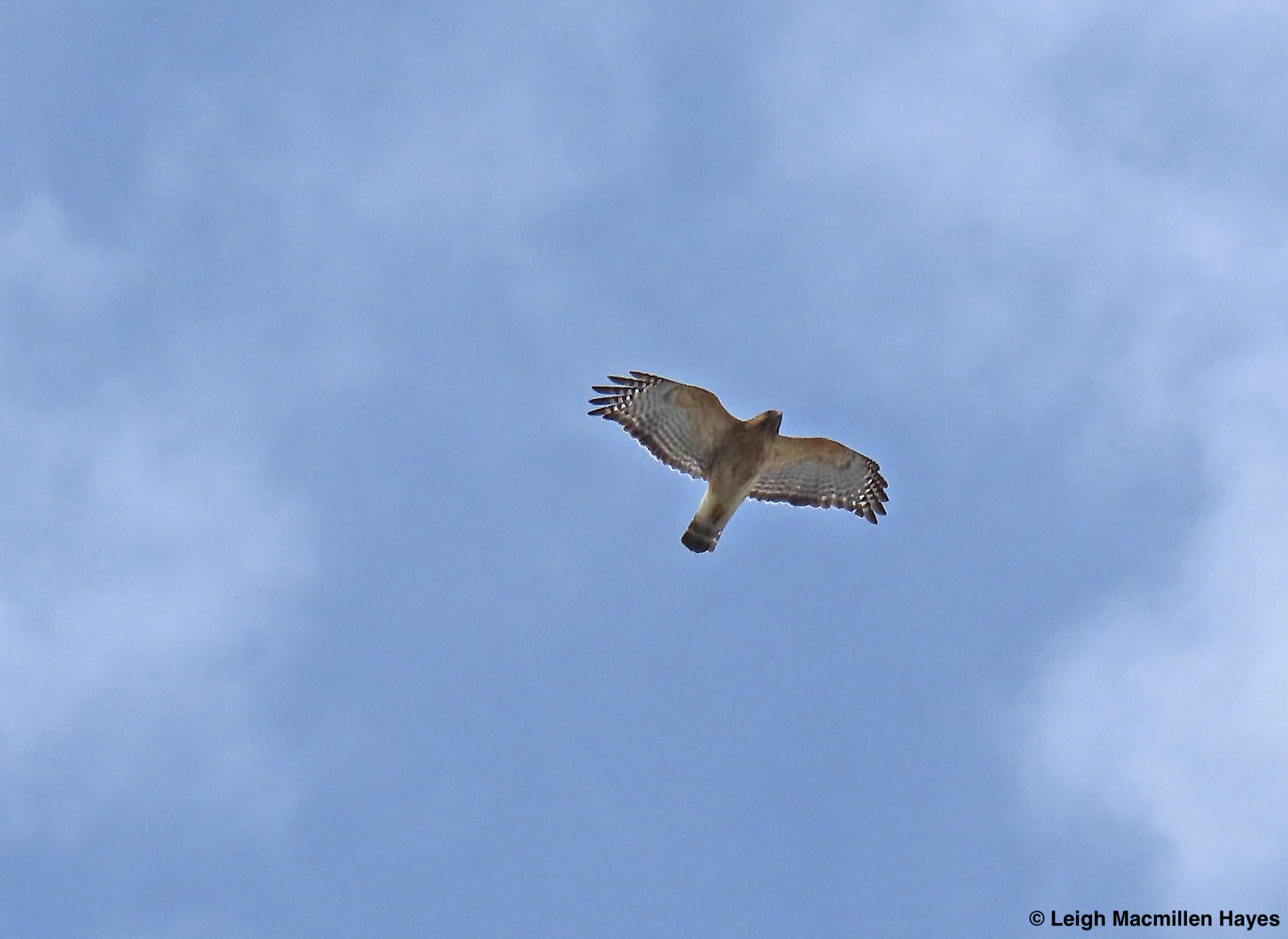
This afternoon, I interrupted the action for a few minutes when I headed out the back door to go for a tramp in the woods and had just reached an opening when I heard, then saw this guy and knew that our resident Red-shouldered Hawk had returned.

According to Stan Tekiela’s Birds of Prey of the Northeast, “Adults return to the same nest and territory for many years; the young also return.”

Welcome home!

I had no sooner lost sight of the hawk, when movement from another source caught my eye.

Flying from the ground up to a tree limb was a Barred Owl. And my heart was even happier than it had been.

We spent a few minutes together and I gave great thanks also that the vernal pool over which the owl perched is still rather frozen. No frogs or salamanders would be on the menu yet. I did, however, worry about the birds in my yard, but there was nothing I could do.

Except, that is, watch my friend for a few more minutes before waving goodbye to him and moving on.

And that’s when I heard a song, or rather many songs, that took me back to a summer morning and realized that as much as I don’t want winter to come to an end this week, the time has come because there is so much more to see and welcome and wonder about. The Red-winged Blackbirds were in a large flock with Grackles, and Robins, and more Crows. And the chorus was most delightful.
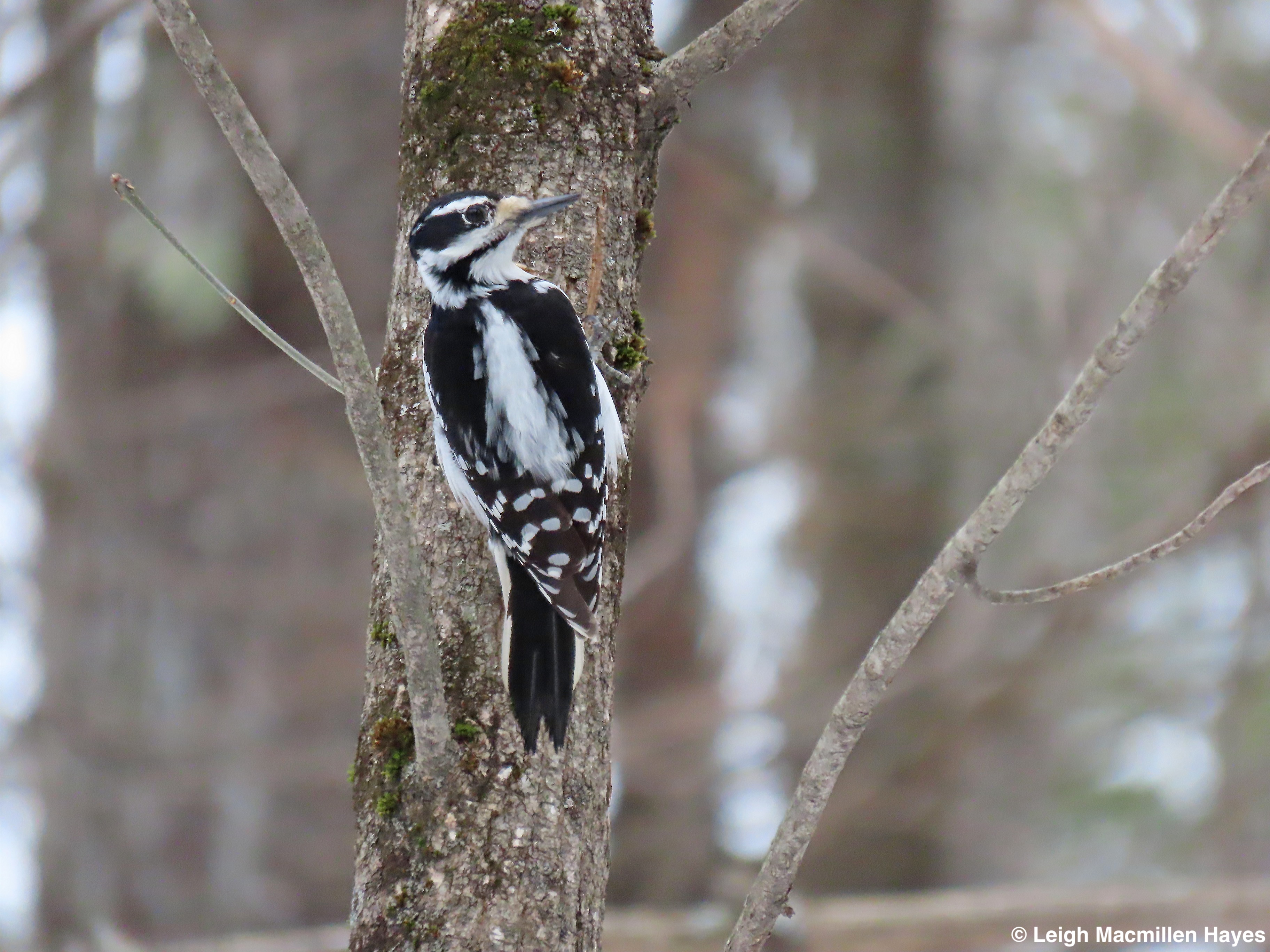
I’d say the female Hairy Woodpecker was much quieter than the others, but it was her inflight song that encouraged me to look for her.

I just hope it wasn’t Emerald Ash Borers she was seeking as she drilled a few test holes in the tree. Of course, if she can help control them, then that’s a good thing.

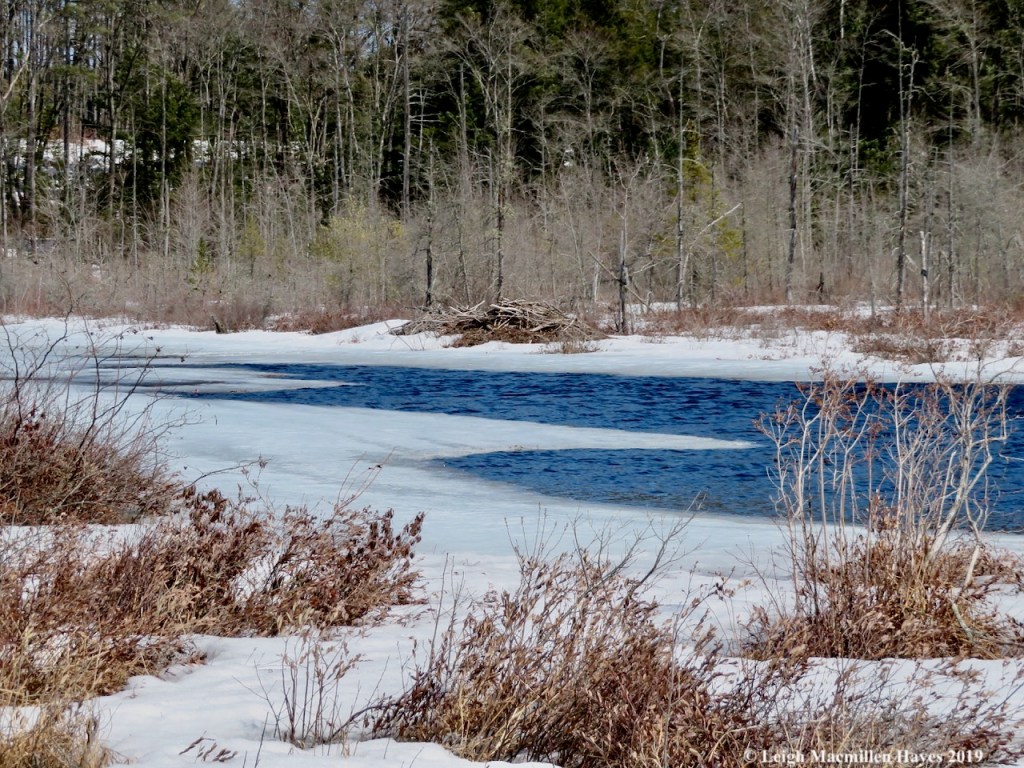
My journey led me to a local brook where the Mallard flock is spreading out more as the ice is receding quickly during these suddenly 50˚ days.

That said, they are still there.

He preened . . .
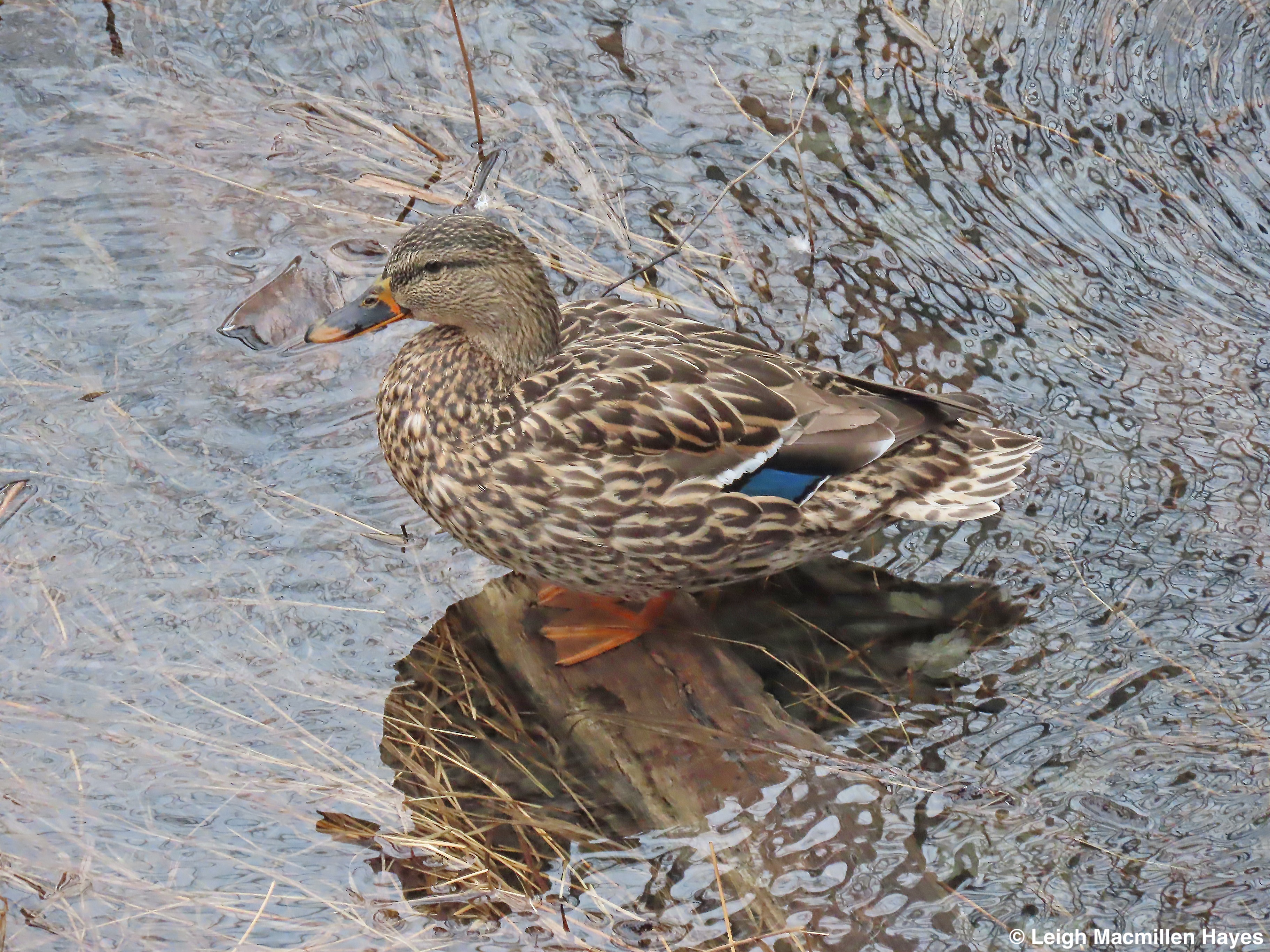
as she looked on.
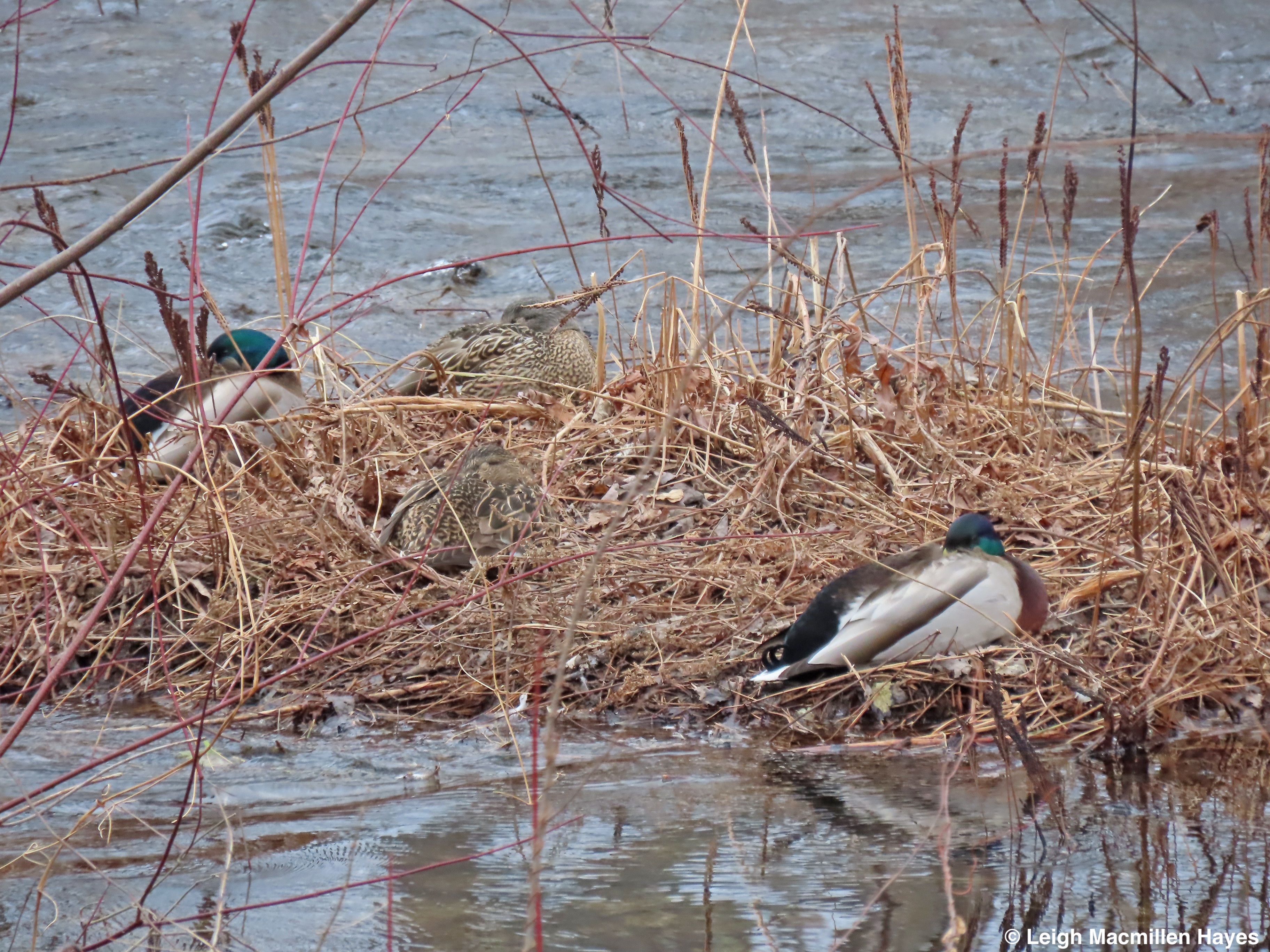
Others did what we should all consider doing on a Sunday afternoon: stick our heads under our wings and take a nap.

But I didn’t. How about you?

Upon a second brook that flows into the first, another species caught me by surprise as I rarely see it in this place. A female Common Goldeneye. I’ve always had a problem with the descriptor “common.” That prominent golden eye is hardly common in my book.

Moseying along, I realized it wasn’t just birds who were greeting the day. Chipmunks have been dashing about on the snow for the last week or two, taking advantage of any acorns the squirrels may have hoarded. (And birdseed–as I watched one stuff its cheeks the other day.)

One critter that surprised me was a Carpenter Ant making its way toward a boulder rather than a tree. Though I see the exoskeletons of these ants in Pileated Woodpecker scat all the time and even found some fine specimens in our woods today, I don’t recall ever spotting one on snow before.
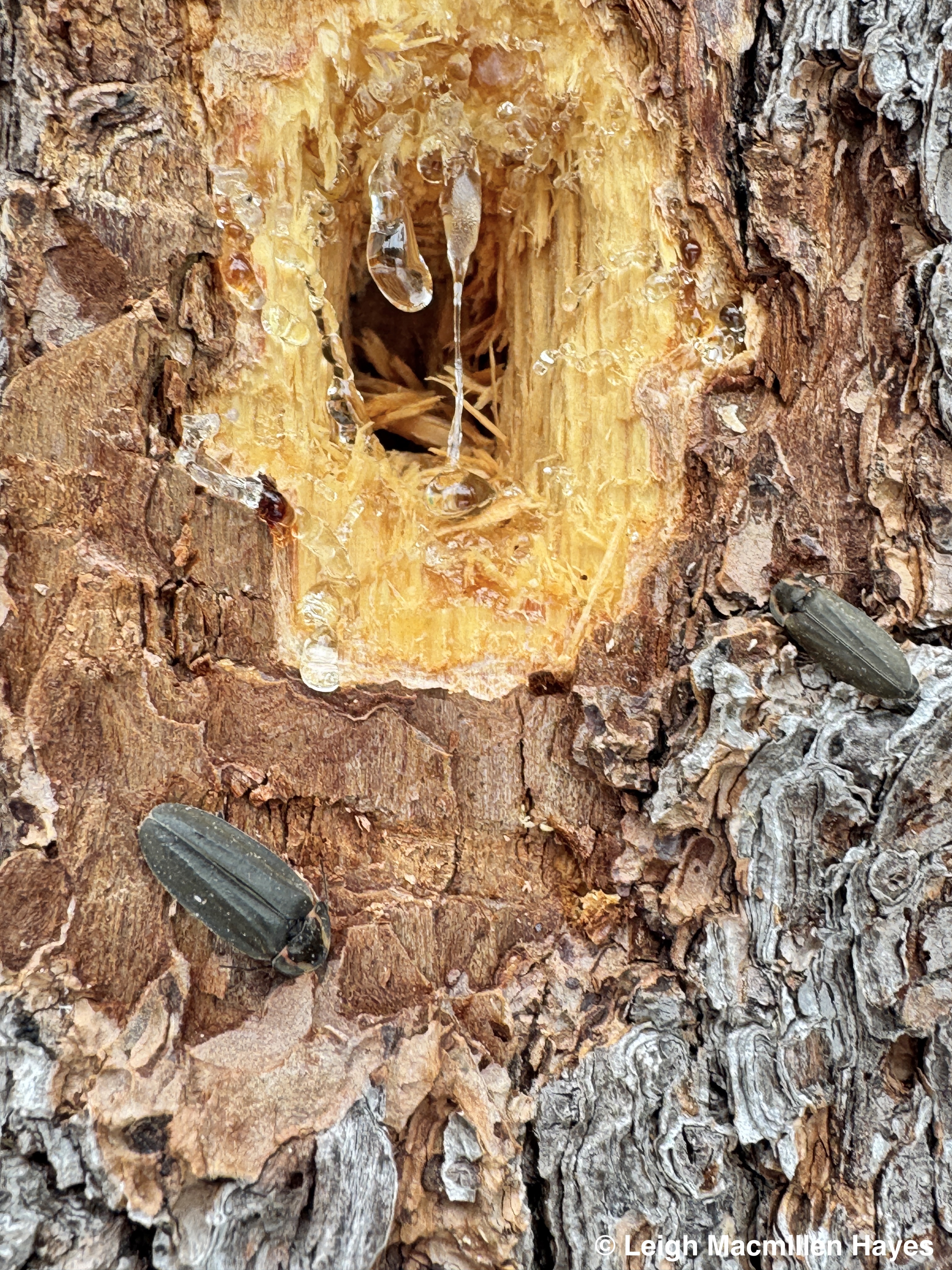
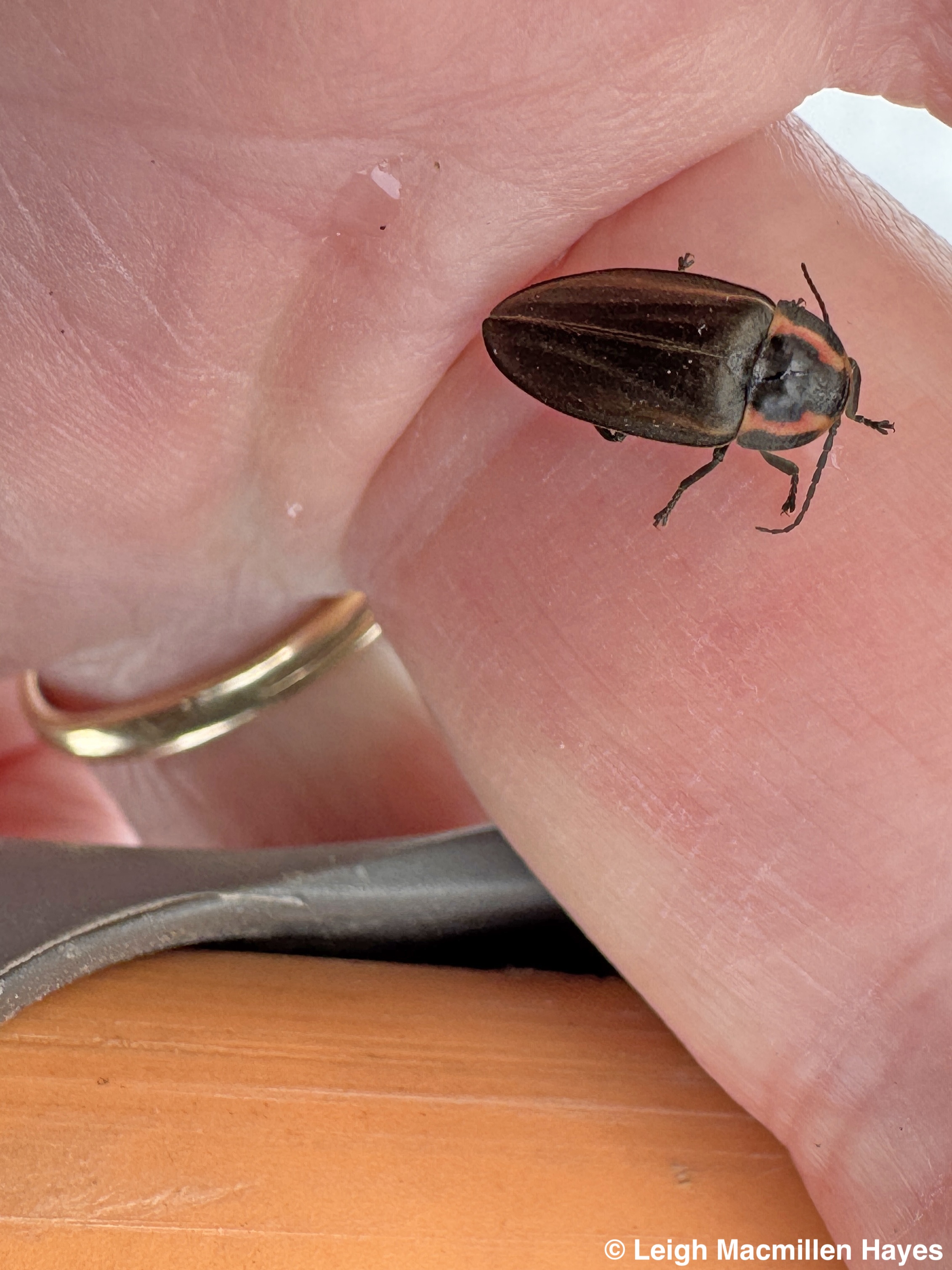
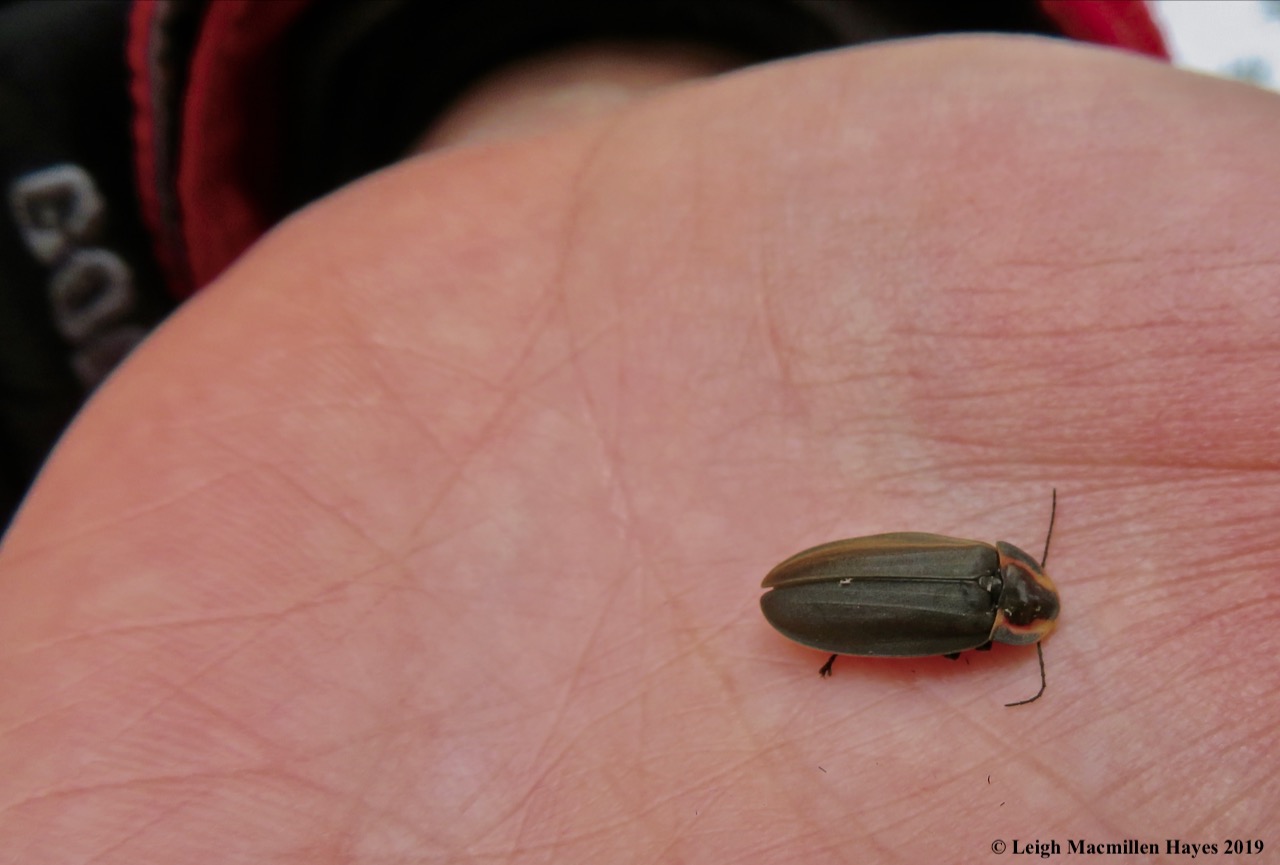
Speaking of Pileated Woodpeckers, their freshly excavated holes are dripping with sap and by this hole I found a couple of Winter Fireflies. So, um, Winter Fireflies are fond of Maple Sap. In fact, some call them Sap-bucket Beetles. But White Pine sap? Do you know how sticky it is? As in, you can practically glue =-your-fingers-together sticky.

When I first spotted these two, I wondered if the sap might have given them pause. Were they stuck?
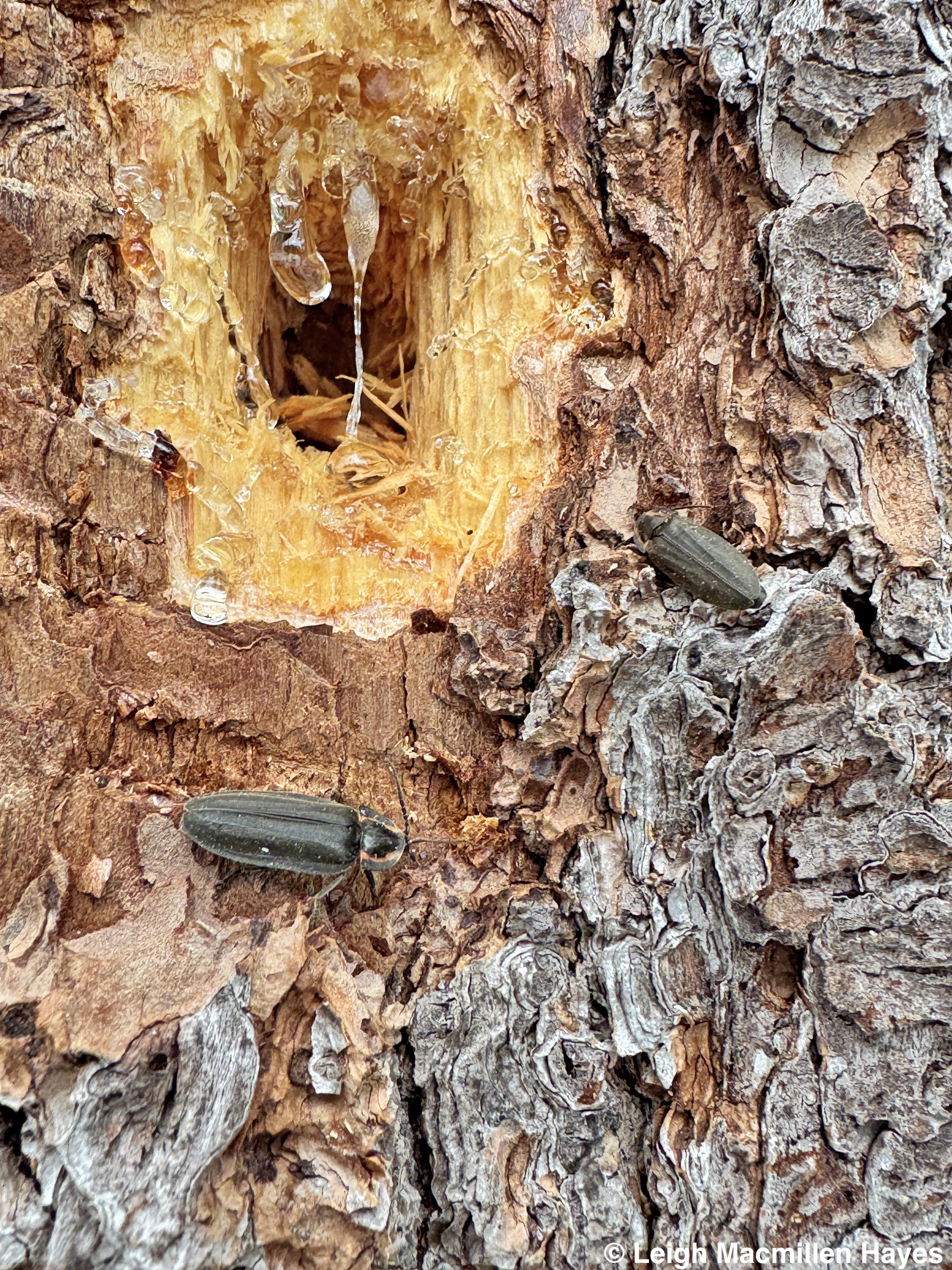
But then there was movement and in that moment, all was good with the world.
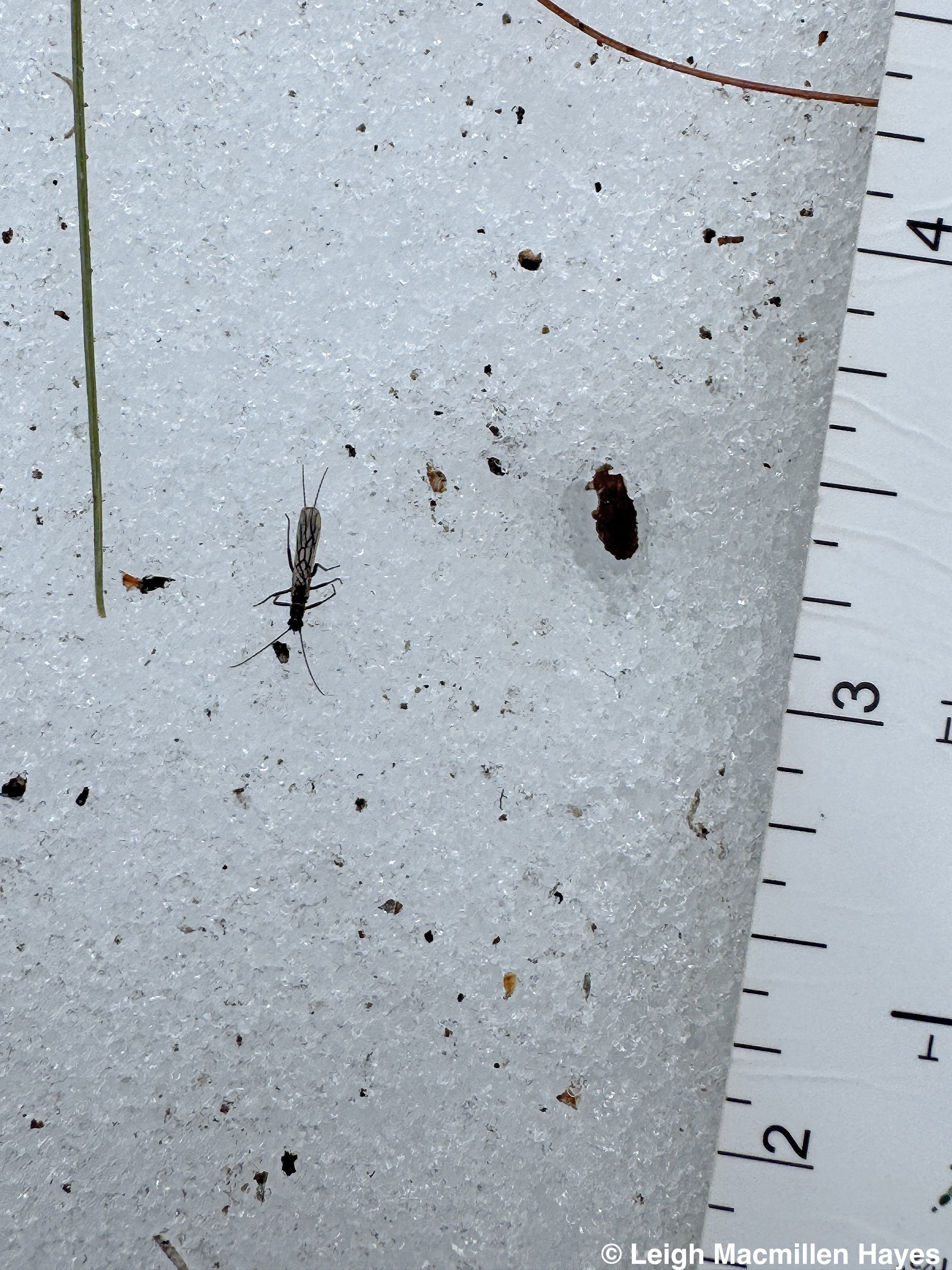
I had one more discovery to make–actually, it’s been my quest this year to find this species and its relative who is only about a half inch longer.

But I must have missed the mass emergence of Small Winter Stoneflies, and their cousins, Winter Stoneflies, for like today, I’ve only seen one or three or maybe five on any particular occasion near these brooks, when in the past there were so many more. Might last summer’s drought and water conditions be the reason for so few? After all, these species are highly sensitive to pollution and thus, are indicators of excellent water quality. I have to hope that I just missed the right day.

After the Stonefly discovery, I did find one more thing that always brings me around to the cycle of life. A small bird was plucked and became the meal of a larger predator.

Curiously, some feathers were stuck to the bark of the tree . . .

My thought was that the predator sat high above, and let the plucked feathers drop and being a pine, a few stuck to the sap, or maybe just to the rough bark. Or maybe the bird was consumed right there on the side of the trunk.

I don’t know and I don’t know who the predator was, but energy was offered and sunshine turned into seeds and insects that fattened up the smaller bird were passed on to the bigger critter.
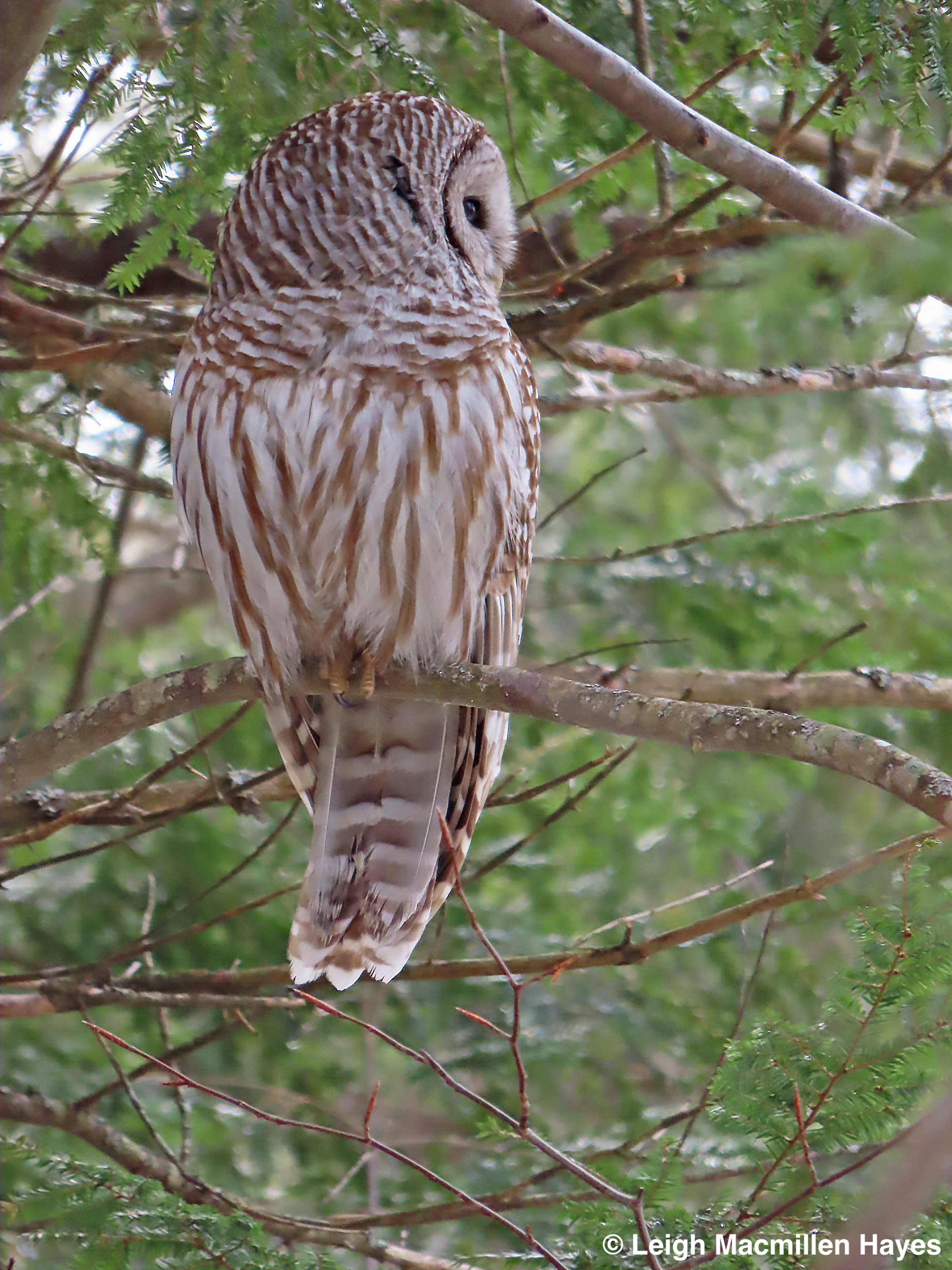
Perhaps the Barred Owl knows the whole story. Or the Red-shouldered Hawk.

All I know is that I gave thanks for this day to wander and wonder and be greeted by so many who are all a part of my neighborhood. Well, really, I’m a part of their neighborhood, and I appreciate that they share it with me.

The Tale of Two Tails

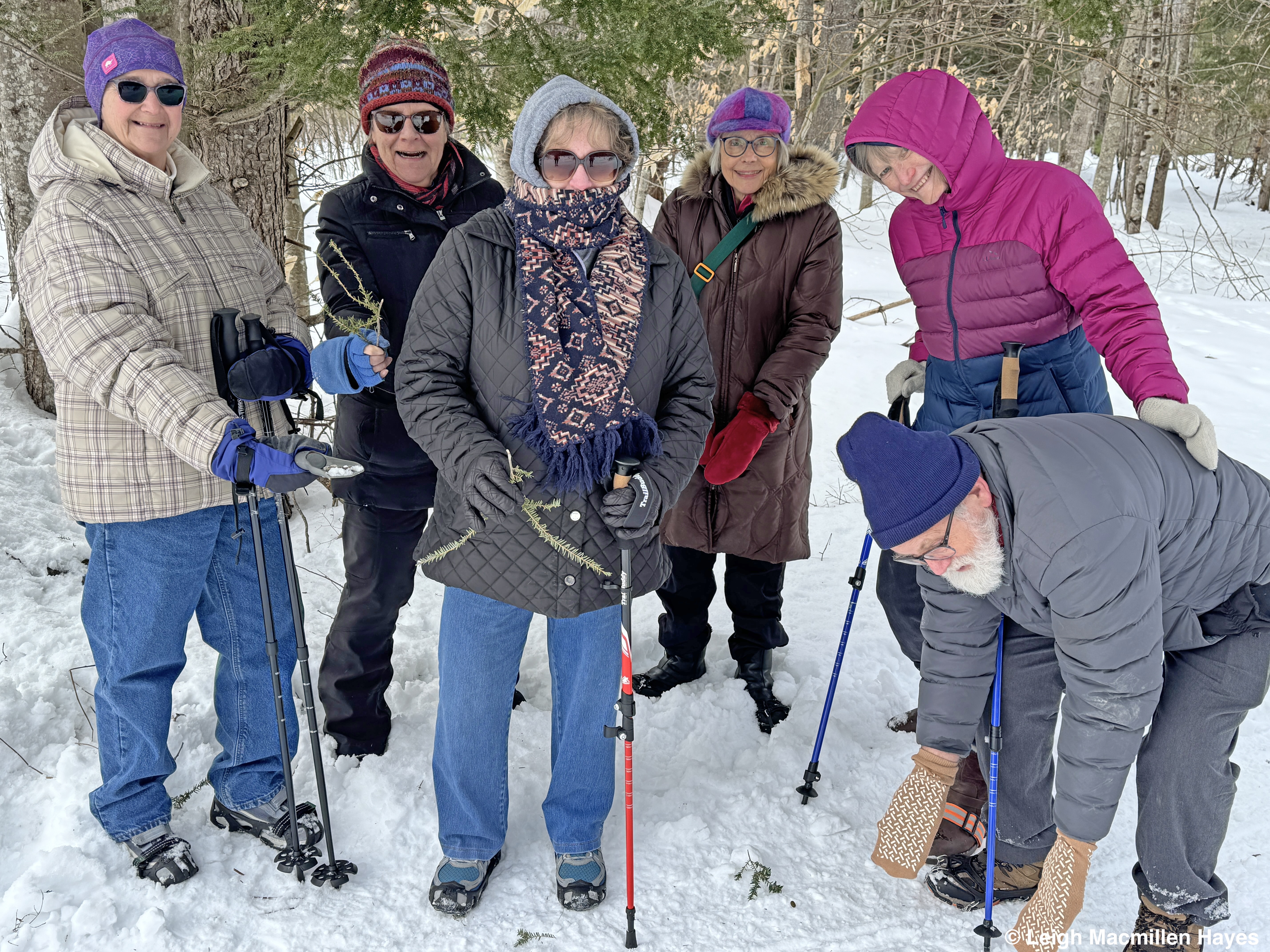
We call ourselves the Trail Snails–a group of St. Peter’s Episcopal Church parishioners always accompanied by various non-parishioners who like to crawl at a snail’s pace.

Each week I try to find a different location, thinking fairly flat for locomotion and with natural elements that will bring out their sense of wonder. The first isn’t always easy, especially given the amount of snow and ice we’ve had this winter; but the second is a cinch since there’s so much to wonder about in our little corner of the world. When we started these walks in the fall, I did not expect that we’d continue weekly throughout the winter. But we have.

And so today six people (parishioners and non) joined me at my house to head out to the well-packed snowmobile trail. Of course, it wasn’t as well packed for the first thirty feet and that proved a bit challenging because we all wore some variation of micro-spikes rather than snowshoes, but they all persevered.

Once on the main trail, I showed them Porcupine tracks and then asked them to find the next set of such. It only took a minute for one to spot the pattern. While we looked at them and I shared some fun facts, I looked around and realized I was standing in the middle of recent Porky activity. Not only were there fresh tracks, but also scat and twigs cut at the traditional 45˚ angle, with buds and needles missing. We looked up into the tree, but fortunately no one was at home.

I think I know this Porcupine because he’s a frequent visitor to the Hemlocks in our woods and the neighbors’.

When I asked the group to share the findings and become a Porcupine, they did so, though I think they think I’m a wee bit crazy. Maybe I am. Anyway, Left to right: Nancy holding some scat on my scat shovel, Marion and another Nancy with twigs, Marcia smiling about it all, and Gary wearing my Porcupine socks to show how the feet are like sandpaper to gripe a tree as they climb, while his wife Julia was there for moral support and to help him up if need be.

We paused at many other spots along the way, including looking at the silk a Pine Tube Caterpillar uses to construct its tube.

And admire a perfectly round display of Lungwort, a foliose lichen consisting of a fungus and a green algal partner living together in a symbiotic relationship with a cyanobacterium.

Had I brought water, I would have poured some on it to show off how green it quickly gets since the alga would have kicked into action to provide food for the fungal structure.

Lungwort is sensitive to air pollution and habitat loss, so spotting it is always a treat and reminds us of why we love living here in western Maine.

We also looked at buds on an Ash to figure out which species and I told them about the Emerald Ash Borer and showed photos of what blonding looks like.

It turns out what we were looking at was a White Ash–hairless buds that dip into the upside-down, C-shaped leaf scar.

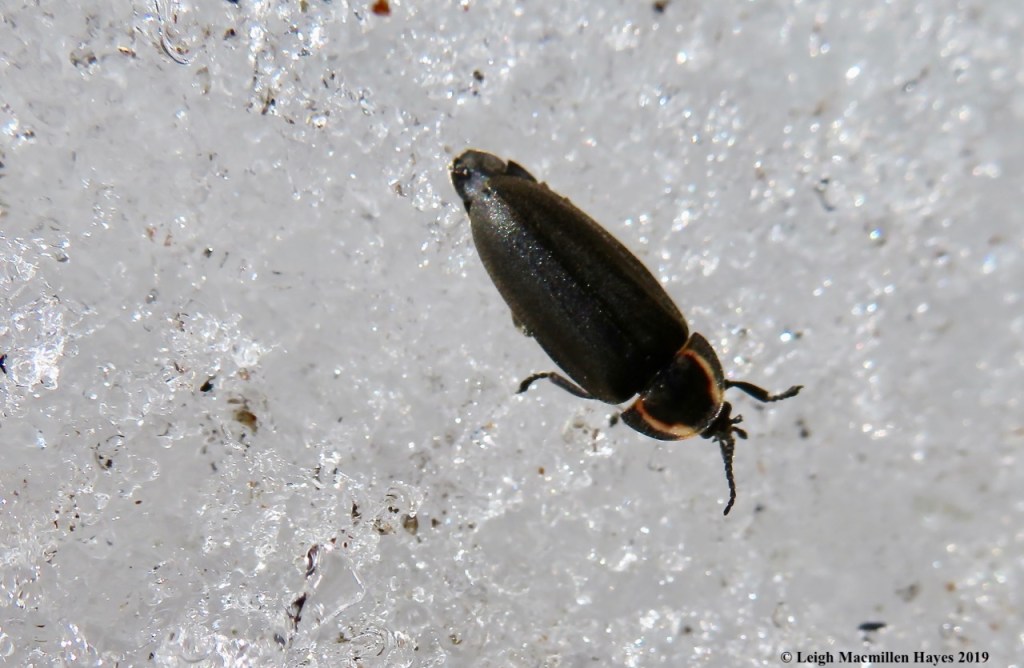
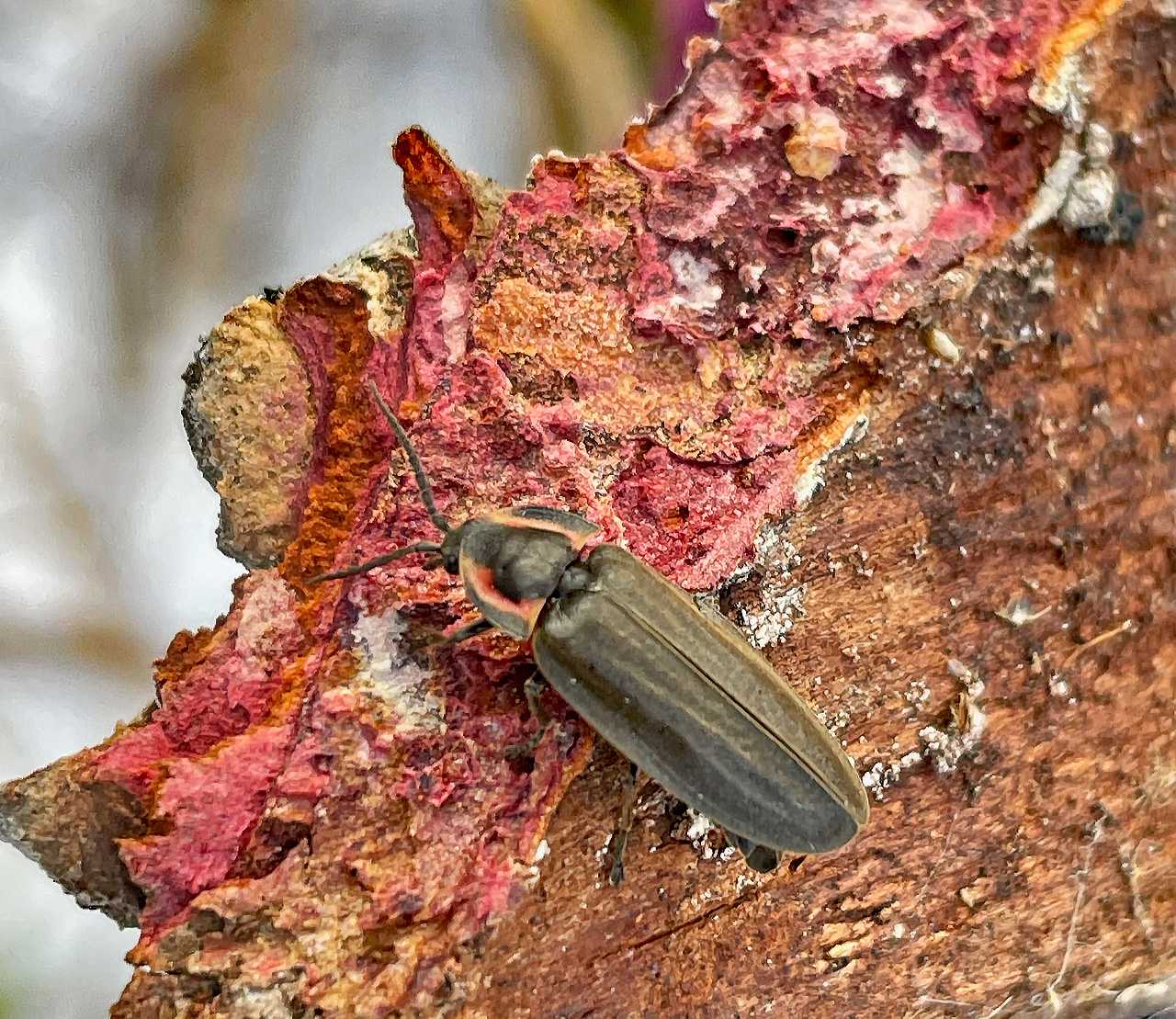
And then there were the Winter Fireflies that we found still as could be on the snow. I picked one up in the scat shovel and thought it must be dead.

That is . . . until we noticed its antennae began to move.

And then it started to walk. Last we knew, I’d left it and its kin on their favorite tree, a Sugar Maple, with hopes that as the temps warmed today and will continue to do so going forward, the insects will survive.

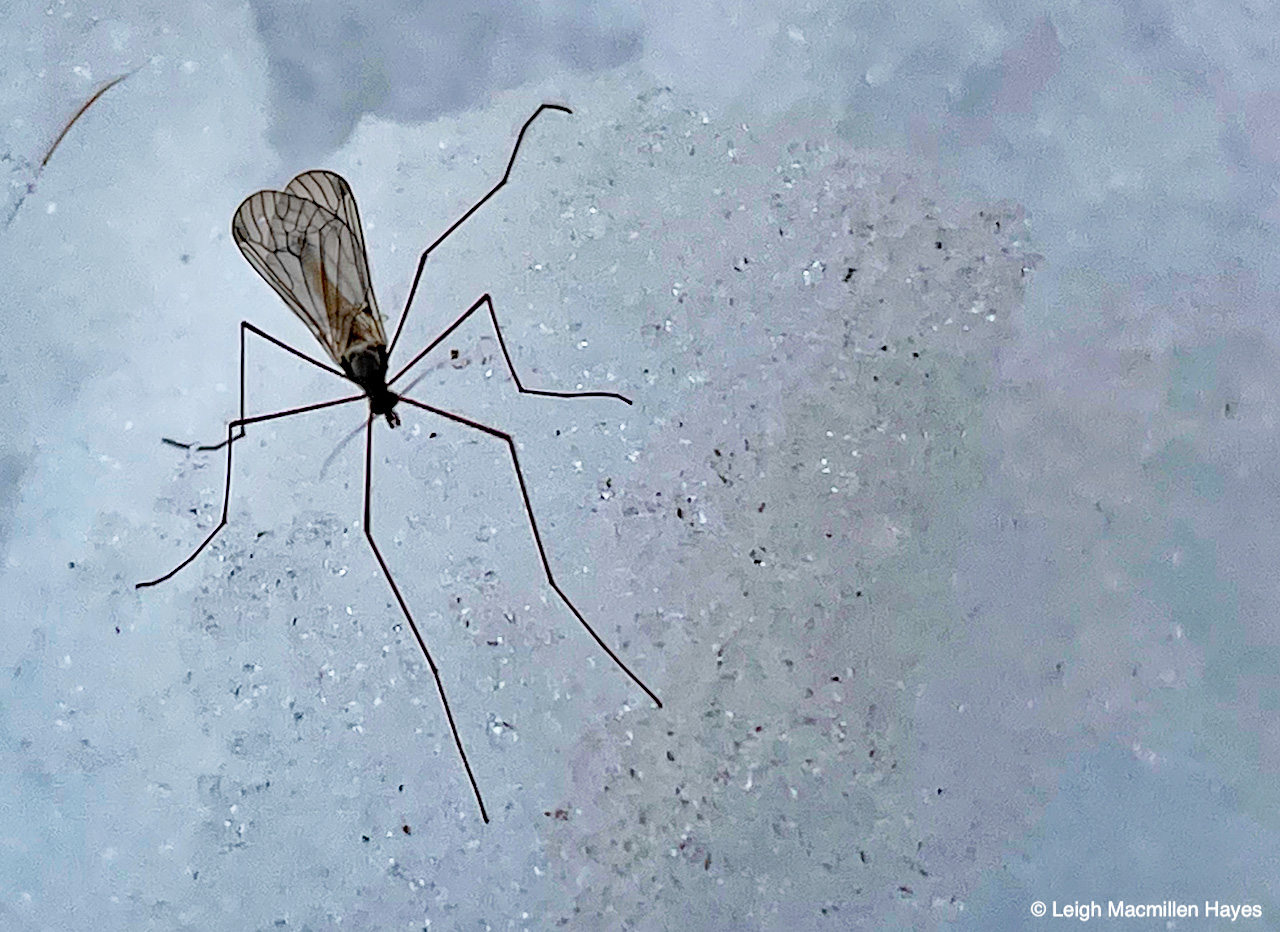
Just before reaching our driveway at the end of our walk, we also saw a Winter Cranefly, but moments after I scooped it up in my scat shovel, it flew. At least most everyone got to see it.

As Trail Snails, we walked not quite a mile and a half in two hours, but saw so much, and I was especially jazzed by the new Porcupine evidence. I think they were as well. Maybe not jazzed, but curious.

And in our time together we saw only three snowmobiles. While it was brought up that those on the machines miss all that we were seeing, I did explain that My Guy often comes back from a ride and tells me of the wildlife he and friends sighted. There I am being so quiet and not seeing any, but somehow despite the machine he spies so much more.

And then this afternoon, I picked up a friend and drove to another section of the local snowmobile system. We walked and talked and talked and talked some more, catching up because despite retirement we are both incredibly busy. In a good way. Doing things we love to do.

As we walked, I kept pointing out Porcupine tracks and if we’d had snowshoes on, I might have convinced her to look for the feeding trees and den sights, but we chose to begin with micro-spikes and quickly ditched those since the snow conditions on the well-packed trail were just right.

We also paused to listen to a Barred Owl and tried to spot it to no avail.

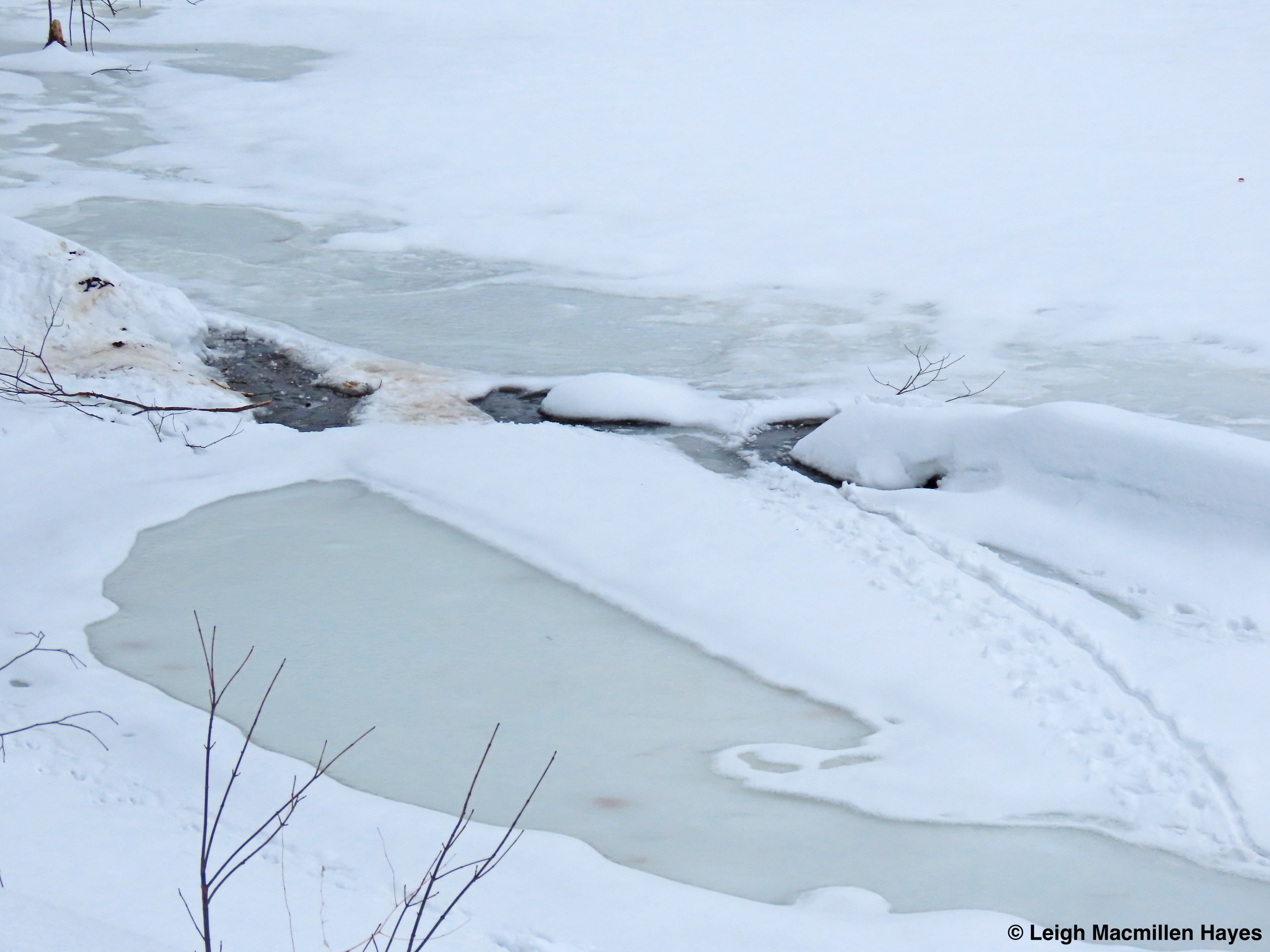
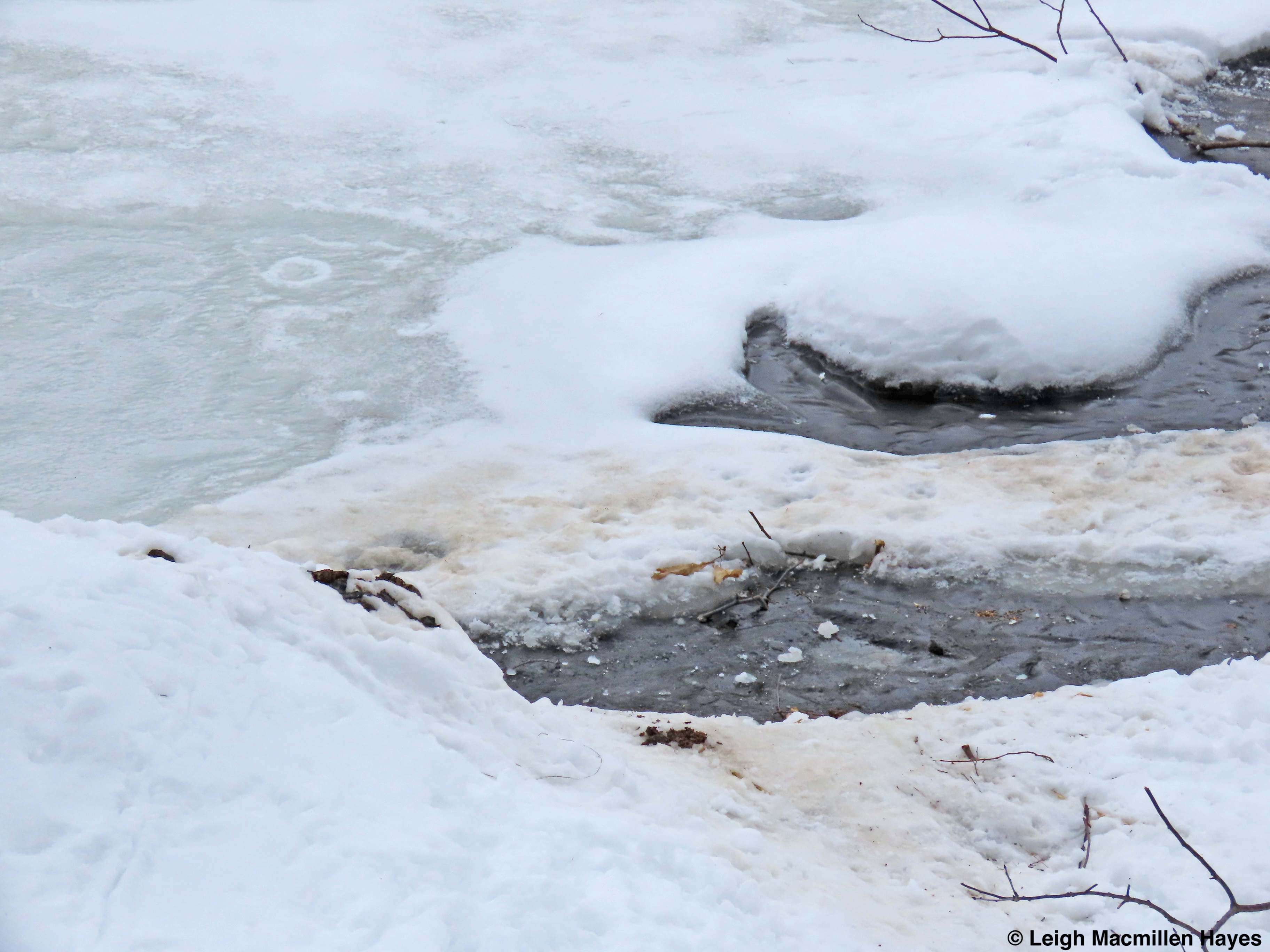
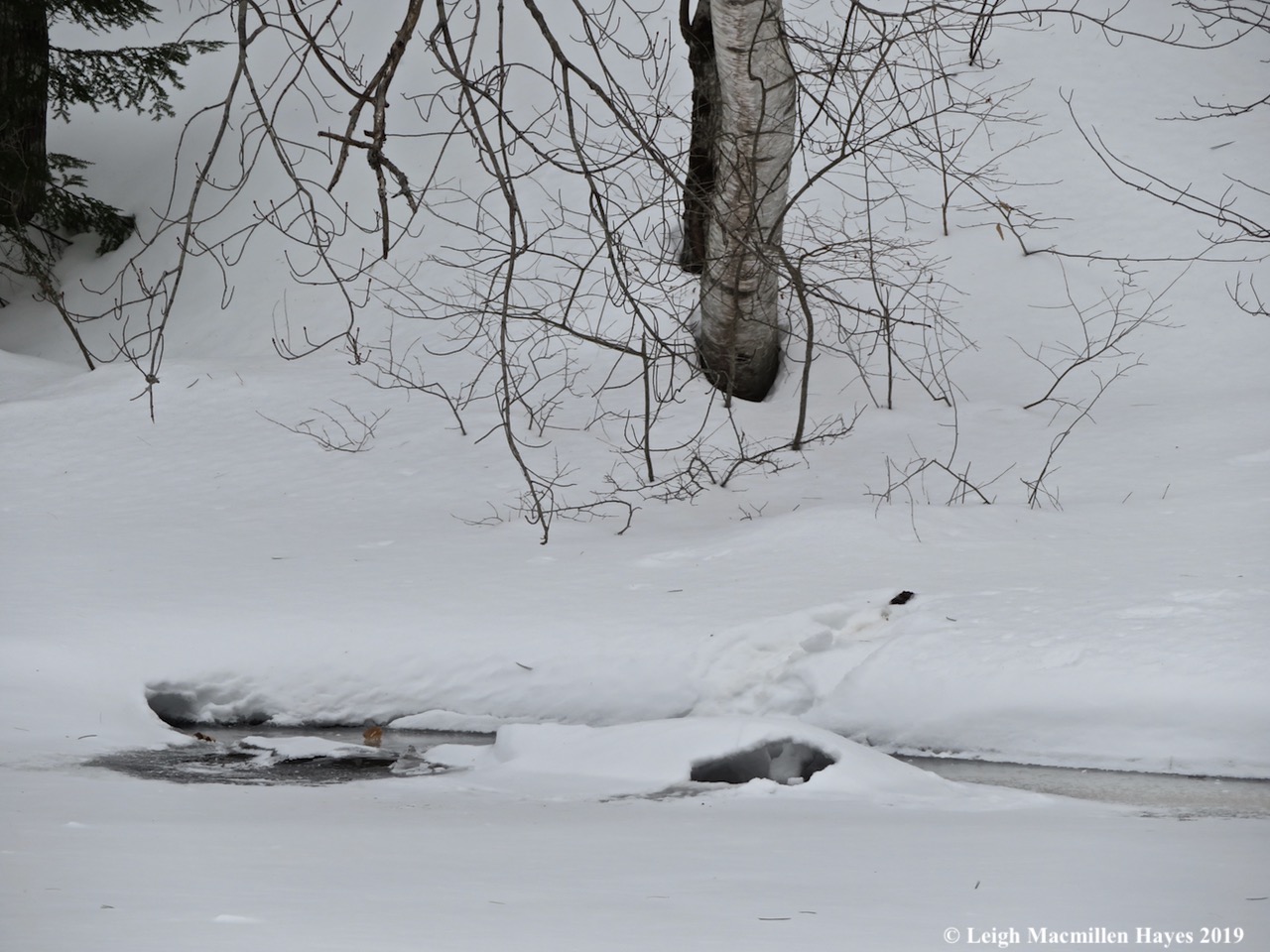
And then, near water, we spied tracks of a different sort. And scat. And mud. And not quite open water.

The scat was from Otters. And I really wanted to take a closer look, but didn’t trust the trail down, despite it being well traveled.

What I now realize I didn’t take a photo of were tree marks in the snow, which in the moment I surmised were twigs blowing down toward the water.

I noted that the track continued across the road upon which we walked and so I suggested we take a look and see if we could note anything about the Otters’ behavior.

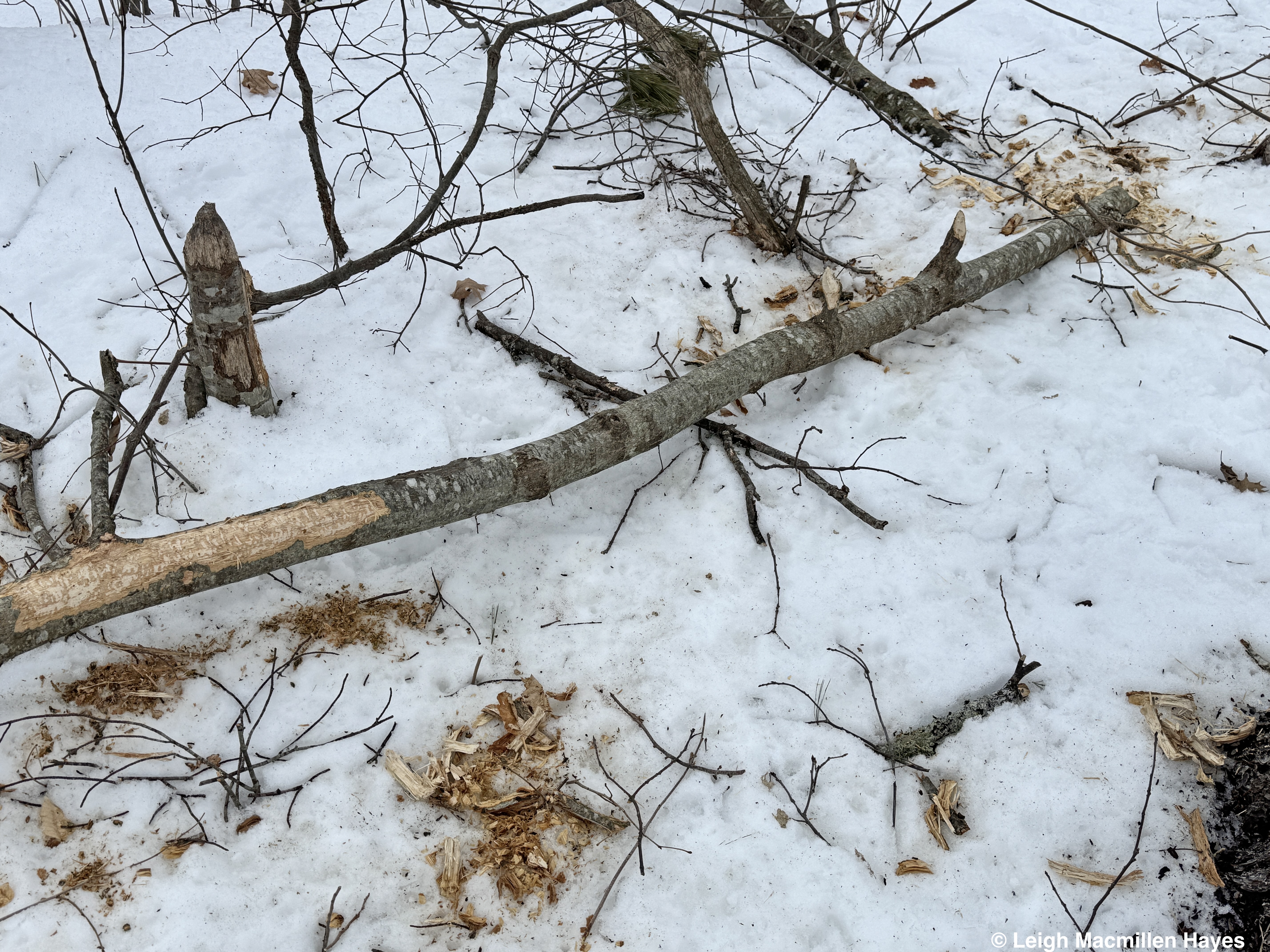
We certainly did not note anything about such, but instead discovered fresh Beaver works. And suddenly the indentations left by the twigs made sense–Beavers dragging tree branches down to the water to take back to their lodge or winter food raft.

Maybe like some people that I’ve heard are looking for more firewood right now to stay warm the rest of the winter, the Beavers didn’t realize everything would stay frozen as long as it has and so they needed to replenish the pantry.

Shortly after that, at about the 2.5 mile mark from our journey’s beginning, we turned around and started to walk back. And then something stopped us in our tracks. It took me a few moments to say, “Look,” and grab my camera and I feared this something would slip out of sight before I did so.

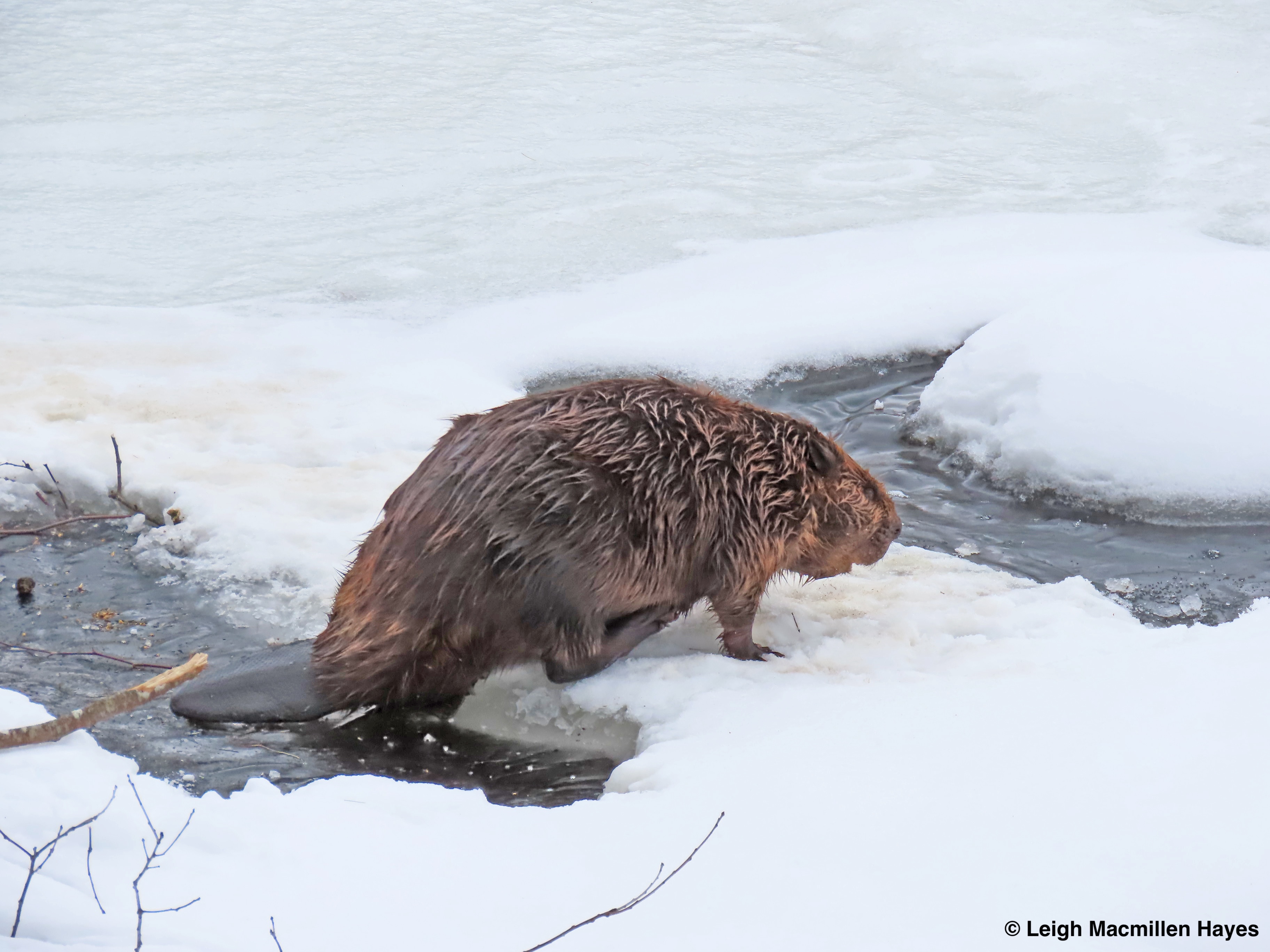
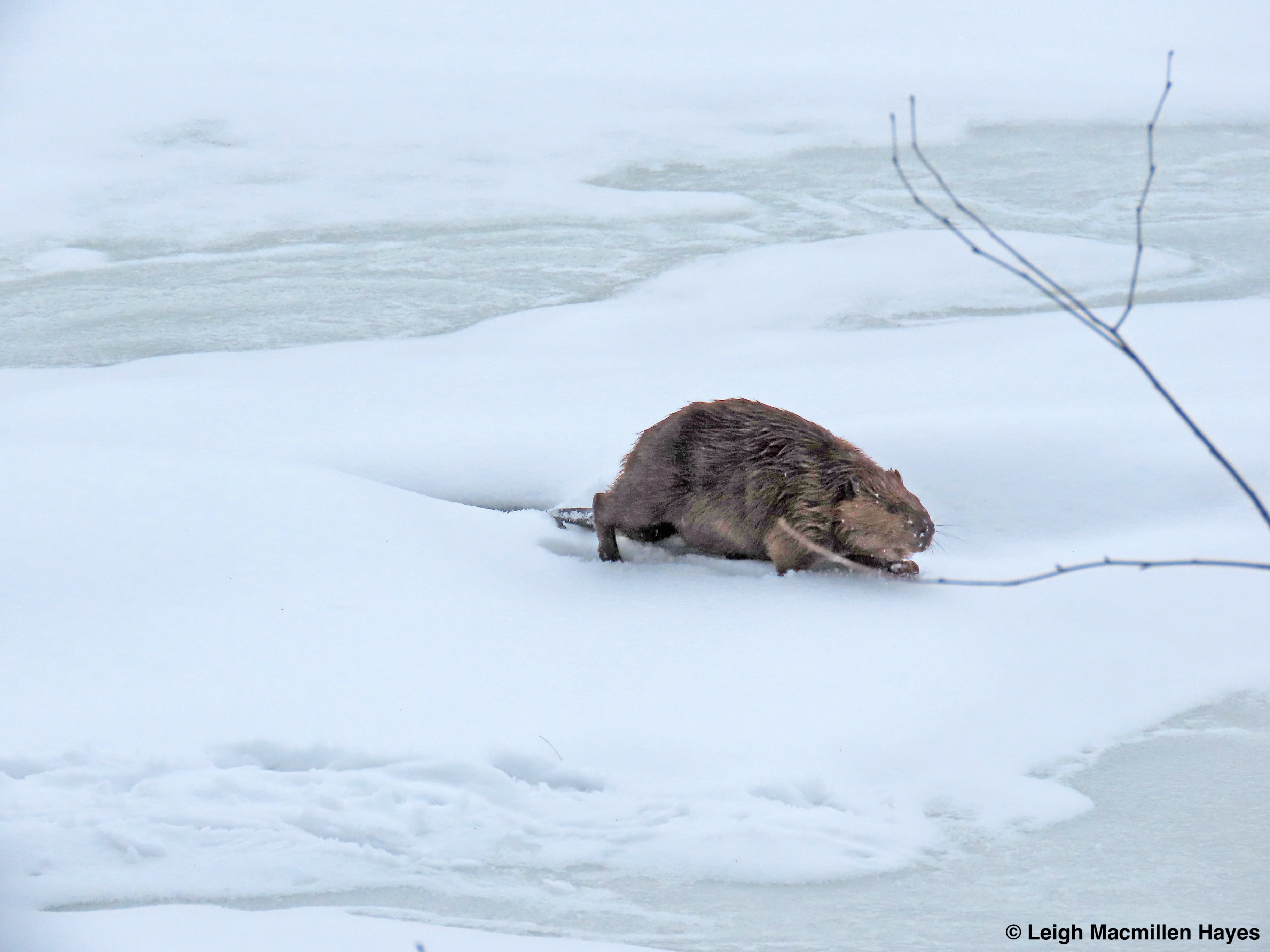
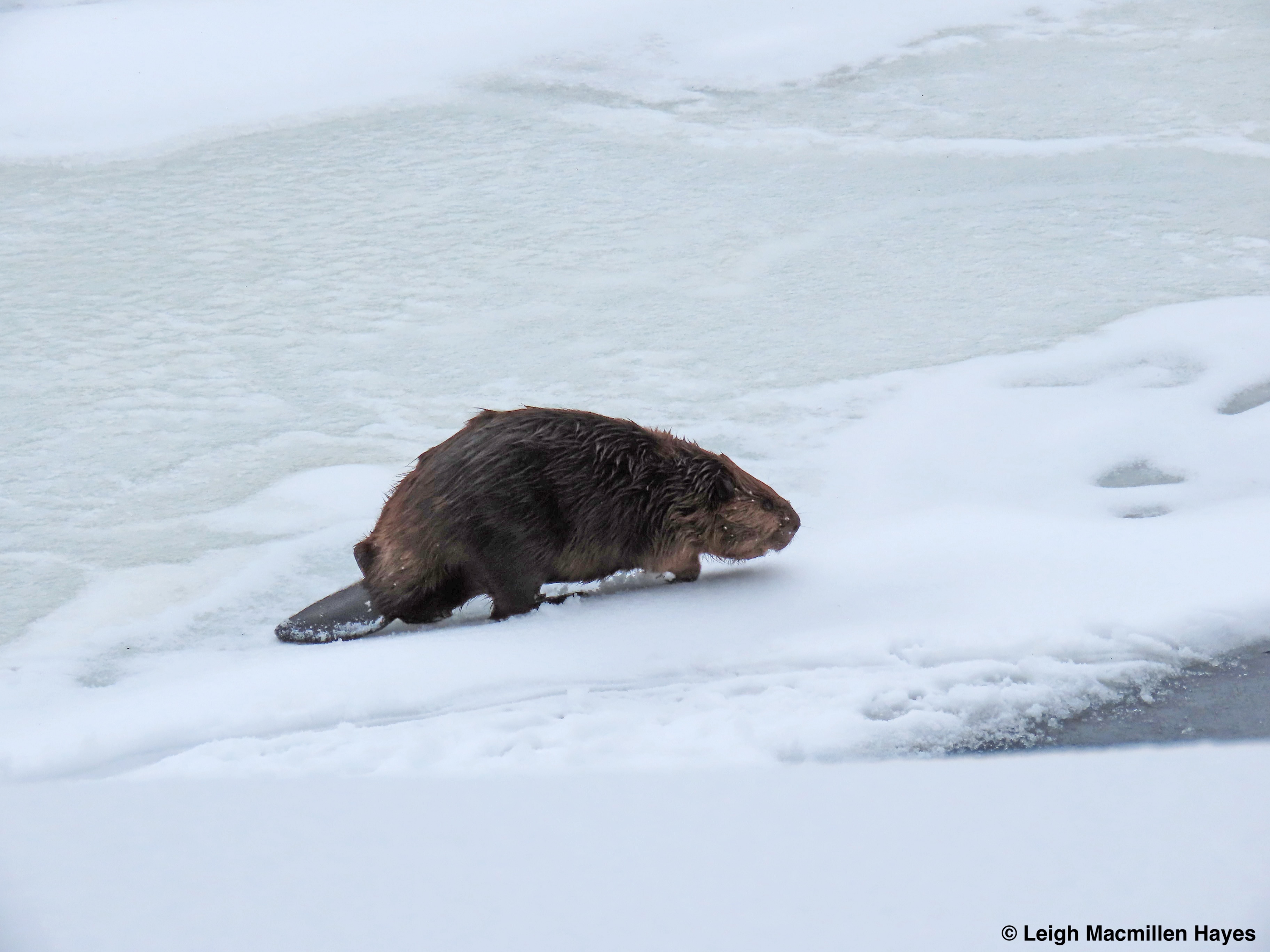
The Beaver must have come up the hill to cross the road to go grocery shopping by the trees he’d previously cut down, and then spotted us and we watched it waddle down its well packed trail toward the ice.

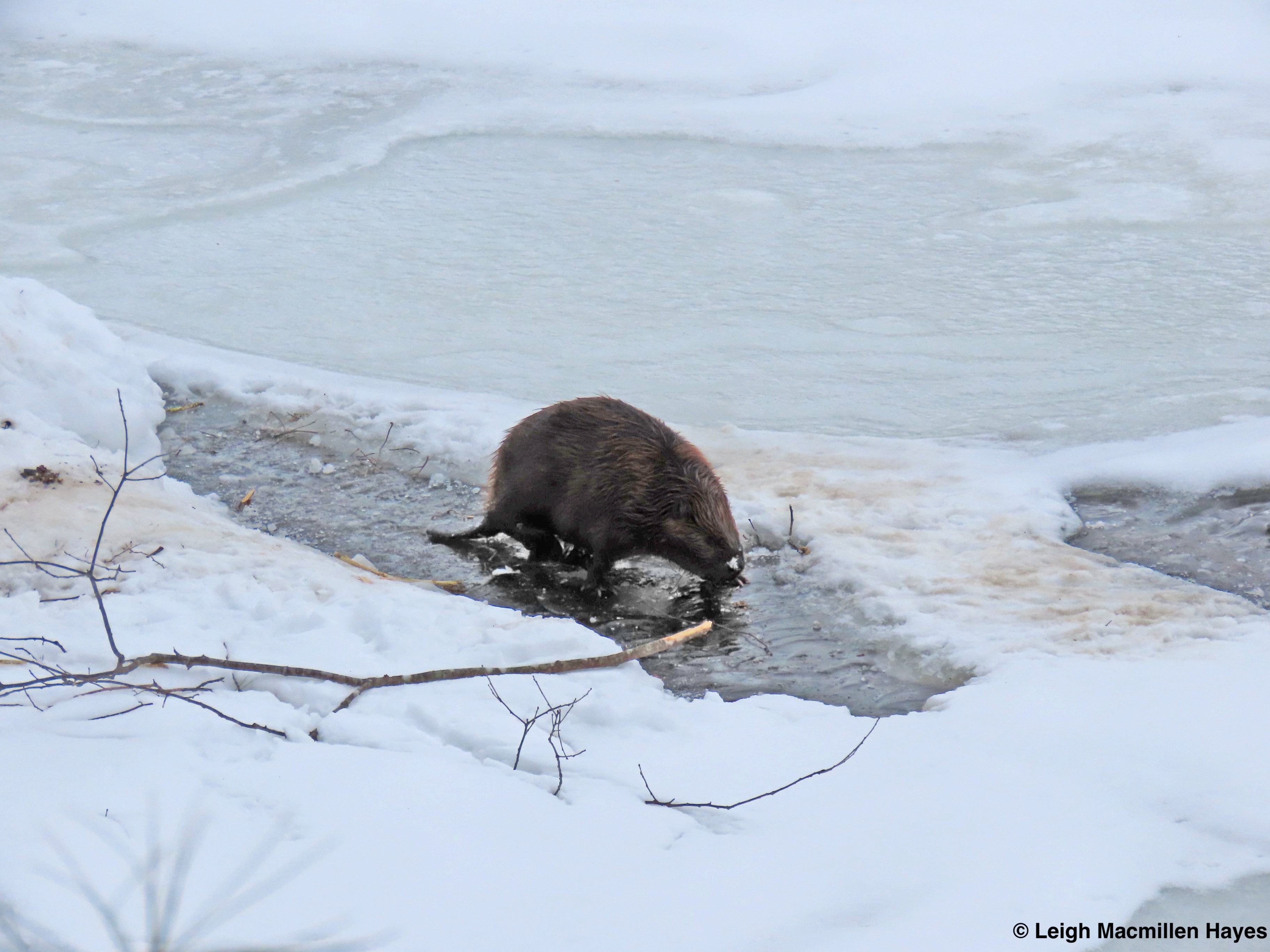
We thought our time together would end in a second as it slipped into the water, but then we realized it was looking for an open hole.

And scratching the snow and ice, even to the point of getting snow on its face.

It kept trying and we kept watching.

Still no luck for the Beaver, while we felt we were having all the luck in the world.

Traveling on land is such a vulnerable activity for Beavers and I could only hope that the Otter scat in this very spot where we stood above the water was the result of the Otter eating something else and not making a meal of a Beaver kit. Because really, they both can take advantage of the same hole in the ice.

We also wondered where the lodge might be but the bank’s edge was too steep for us to note if it was nearby.

And then, just like that, the Beaver found open water and this was the last we saw of it before it made its escape.

We knew we were blessed, Marita and I. And gave great thanks for hearing the Barred Owl, spying Otter Scat, and spending a few minutes with a Beaver.

What a day, from a Porcupine’s Tale to a Beaver’s, two mammals with tails of grand importance–the former being for defense and stability on a tree limb, and the latter for a rudder, as well as stability like a tripod when cutting down a tree, and fat storage as well.

Winter Bug Safari

I’m a winter gal and snow and tracks and scat and bark and buds all pull me out the door on a daily basis as I try to understand who has traveled where and why, and through what natural community the journey has been made.

But now . . . I have another reason to slip outside: Bugs. And how they overwinter. And where.

On one tramp through the woods this past week, with eyes peeled for the tiniest movement on the snow or twigs or tree trunks, I spotted the fresh work of a Pileated Woodpecker. Though I would have loved to see the bird, I was equally thrilled to see the pile of debris below the hemlock tree. (And that gorgeous magenta-colored inner bark, of course.)

The fresh wood chips on the snow invited a closer examination. And you thought this post would be about bugs. But indeed it is for it’s Carpenter Ants that the bird sought. By the two clumps of bird scat that I found, it was obvious the woodpecker had been successful.

For you see, within the cylindrical casing coated with uric acid were body parts.

Ant body parts. Now, here’s the thing that I need to learn more about. I’ve watched Pileated Woodpeckers land on trees and pause, sometimes deciding to excavate, but other times moving on. And I’ve been told that they test the tree out and listen for the ants. I’ve never been able to prove that. But here’s the thing: what I learned today is that Carpenter Ants not insulated by snow or the warmth of your home enter diapause, a low-energy state that allows them to survive the cold and go for long periods without eating. So the question remains, how does the woodpecker know which tree to pick on, or is it a lucky strike?

Further along that same trail, I came upon the prints of a horse that had stymied me a few weeks ago when I tried to mentally turn its track pattern into either a bear or a moose, knowing full well that what I was seeing didn’t quite fit what I knew to be true of those species. Horse manure would have helped, but there was none to be seen . . . until the other day when a fresh plop in the middle of the trail offered an invite to look for insects seeking minerals upon it. I saw one small fly that I couldn’t identify, but beside the manure was this Winter Cranefly. It was a brisk day and today I learned that this species is only active when the temperature is below freezing. My kind of bug, indeed.

On another day and another trail, it was a Winter Firefly that drew attention. First, fireflies are not flies; they are beetles.

Second, unlike many beetles, Winter Fireflies overwinter as adults.

Third, Winter Fireflies are diurnal and don’t have lanterns to light up the night sky.

And fourth, though I find most tucked into the bark of maple trees, the first one this week was on a hemlock. After that, it seemed to be maples upon which I found others.

As the temperatures rise bit in the next month, they’ll become more active and will be visible crawling up the tree trunks and eventually flying. By summer, you’ll see not a one but their nocturnal cousins will light up the night.

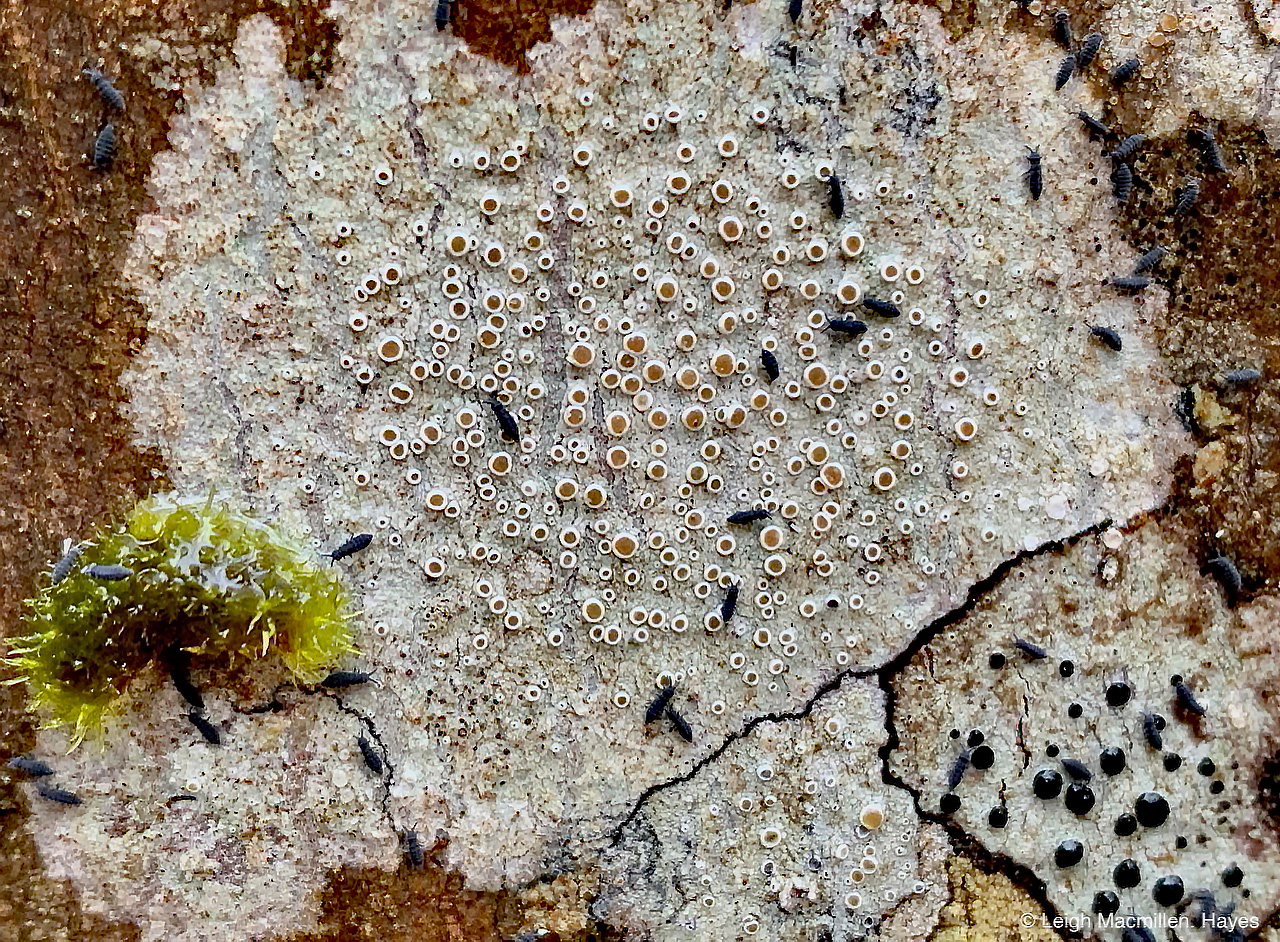
One day, it was Snow Fleas, aka Spring Tails upon lichenized bark that garned a look.

And another day, upon another crustose lichen on a maple tree, shed larval skins of possibly Twice-Stabbed Lady Beetles were visible. Kinda creepy, especially when you are looking up-close and personal with a hand lens, but oh, so cool.

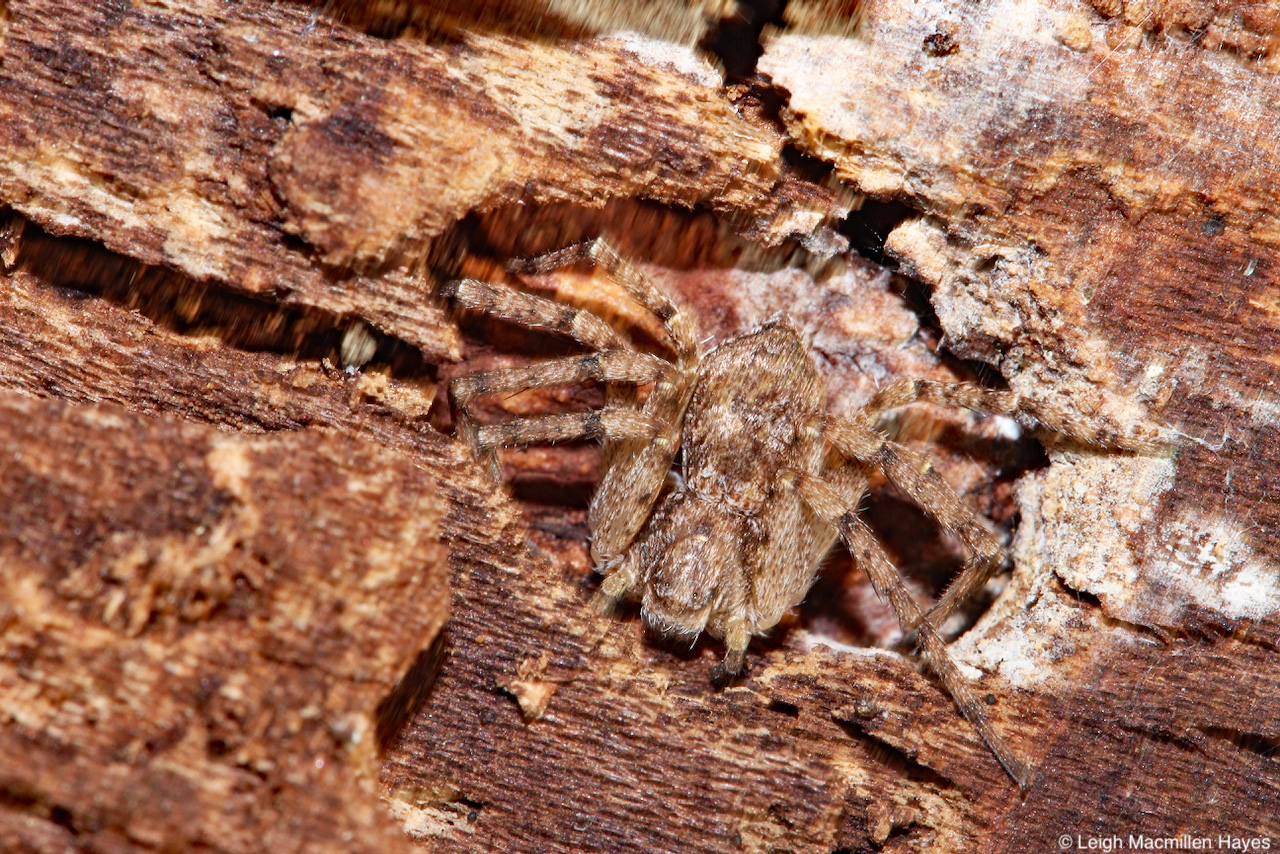
And then there were the spiders, thus the reason this isn’t just an Insect Safari. This minute eight-legged creature that practically ran across the bark must have had antifreeze in its blood.

Behind another piece of bark was this slightly active crab spider . . .

and its more dormant relatives hunkered down who had probably supercooled through the process of accumulating glycols in their blood (antifreeze again). Apparently, despite the below freezing temps, their tissues remained unfrozen and they won’t become spidercicles. How in the world did spiders and other critters physiologically adapt via the antifreeze compounds so that they won’t turn to ice?

It’s all a wonder to me.

Before I finish, let me leave you with one last image. It’s some sort of beetle, I know not what. And I don’t know what is on its wings–perhaps some sort of mite or parasite? When class reconvenes again, I will ask the instructor.

I am so excited to be taking Bugs In Winter, taught by Charley Eiseman, author of Tracks and Sign of Insects and Other Invertebrates: a Guide to North American Species. Thank you to Maine Master Naturalist Anthony Underwood for suggesting it to me (perhaps so I’d stop sending him photos of mystery bugs and asking his advice).

The course has only just begun and a few naturalist friends are taking it with me. We have tons to learn and so I invite you to tag along cuze for the next two months I’m going to be on a Winter Bug Safari, which will then turn into Spring Bug Safari, and after that . . . you get the picture.
Beaver Caper

Our interest was piqued a couple of weeks ago and we promised each other we’d return to learn more–thus today was the day that Alanna Doughty, education director of Lakes Environmental Association, and I ventured to the Muddy River at Holt Pond Preserve.

Crossing the Emerald Field at the corner of Grist Mill and Chaplins Mill Roads, we found our way to the trail, passed into the woods and immediately noticed some fresh works created by Castor canadensis.

Please take note of the small portion of a sapling trunk in the bottom of this photo, for I promise that you’ll see it again. And again. And . . .

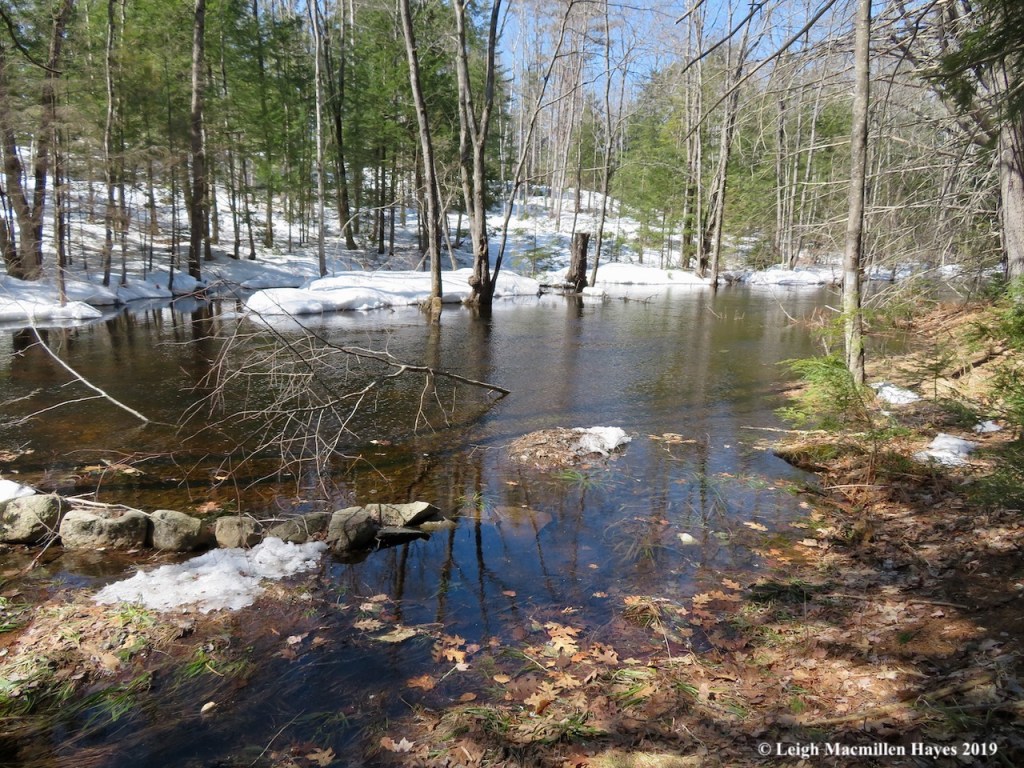
But in the meantime, we slipped, slid, and postholed our way to the brook, and noted where water flowed over an old dam so it was obvious this wasn’t the spot to which the beavers had dragged their sawn logs.

Also notice the “Posted” signs on the trees. Can beavers read? It did seem that they stayed away from the far shore. Maybe they can read ;-)

We looked upstream, but decided to turn around and follow the river down, ever curious about what we might find.

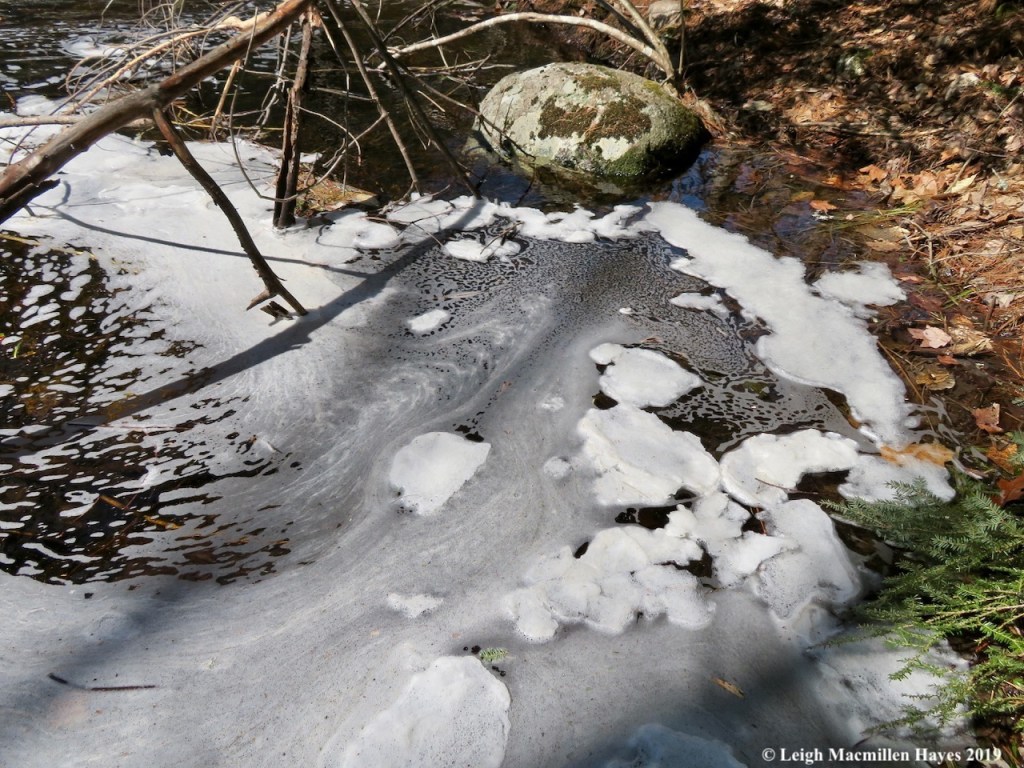
First, however, we did pause to admire the ice sculptures where the water rushed and gurgled and bubbled over the old dam. Soon, these will be a thing of the past and we’ll miss their varied forms frozen in time only momentarily.

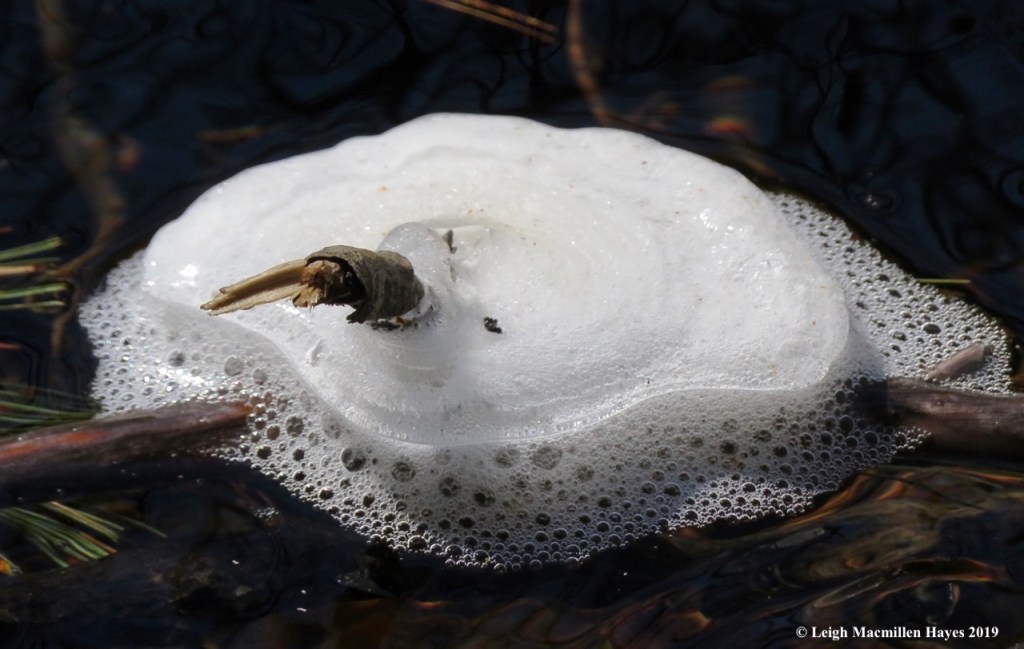
And then, as we started to walk south, the foamy water drew our attention.

Where Alanna saw frozen froth of rootbeer floats . . .

I saw mini ice discs in their final form.

And one that created a tree skirt with a lacy slip below.

Just beyond we spied the largest of all the sculptures and gave thanks for its existence. In our minds’ eyes we could see the upper part of the sculpture taking shape when the snow was deeper beside the brook. And the lowest part a more recent attempt of the chiseling artist.

The artwork was enhanced by the chips splayed about as if creating a textured pedestal for the display.

Just beyond that spot, we looked further south and scanned the shoreline, not noting any further work of the sculptor. The water didn’t seem particularly backed up so we figured there wasn’t a dam below. What did it all mean? We knew from our previous visit that there was more work north of our location, but had so hoped to find something new to the south.

The only thing visible, a few old beaver stumps such as this one. Given that, we did a 180˚ turn and made our way north.

First, however, we had to walk through the water and gave thanks for our boots, before passing “the” tree one more time.
Alanna, being much younger and far more agile than me, was kind enough to lead and wait, lead and wait. And because she was ahead, she went shopping when I wasn’t looking. I don’t remember what we were talking about when it suddenly occurred to me that she held a piece of the sapling trunk we’d spied earlier. This is a woman who loves to laugh and so she did when I commented on the specimen tucked under her arm.

Notice how snug she held it as she walked with intention across one of the stream bridges.

We walked for another bit before we found more beaver works, including a cache of debarked twigs–beaver chews. They seemed so fresh, and some were actually green, that we got to thinking. Winter food stash? We know that in the fall they gather saplings and branches, anchor them in the mud and when the ice covers the river, they slip out of the underwater tunnel in their lodge and chew off a stick from the stockpile to bring into the feeding compartment for a meal, thus keeping themselves safe from winter predators. But . . . these weren’t near a lodge and seemed like the result of a fresh logging operation and so we wondered, did they have a new lodge in mind? Are they planning to build a new dam?

We also had to wonder about their debarkation–so smooth were the sticks.

As we continued on, our nature distraction disorder kicked in periodically, as it should, and we rejoiced in the sight of buds on Trailing Arbutus, aka Mayflower.

But still, it was more beaver works that kept calling our names and we tried to pay homage to all of them.

The last fresh one we saw was on a beech and we knew by the height that the cuts had been made when the snow was deeper. So . . . were the beavers still around?

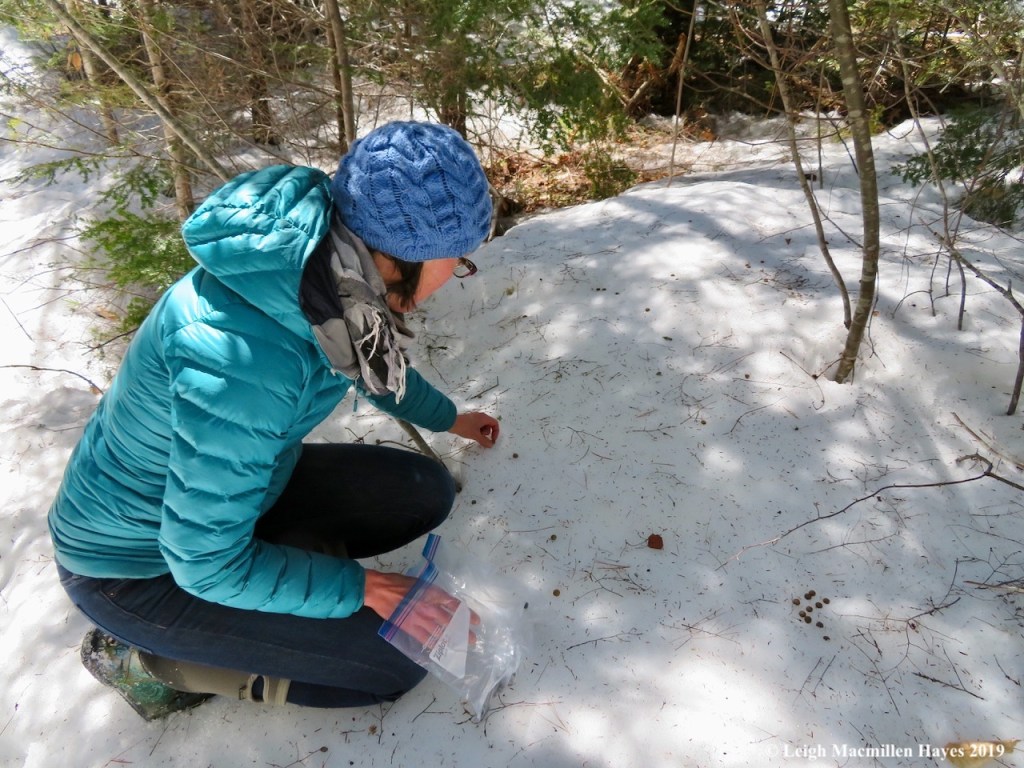
Oh, wait. While we wondered, Alanna also had deer scat to collect.

And just beyond that–weasel scat found its way into her bag.

And then a winter firefly crossed our path as seems to happen frequently of late.

Onward we continued for we wanted to check on a couple of lodges we knew existed. Do you notice that the art work remained tucked safely under her arm?

For a little bit our trail took us away from the Muddy River, but when we returned to it, we focused on old beaver works–a fallen tree and a girdled hemlock. That got us thinking about the fact that they do girdle trees–often, in our experience, it’s hemlocks that they seem to debark in a band that encircles the tree, thus killing it. These they don’t drop to use for building or feeding. So why go to all that effort? We’ve heard different theories, including that once the tree dies, a species more to their liking will grow? True? Maybe.

We continued to look for more recent works, but found none. Until . . . we spotted some brown snow.

Leaves and river muck had been pulled up and distributed over the snowy surface beside the water. We stepped closer and saw footprints that were indecipherable, but knew by the pile of gunk that we’d discovered the makings of a beaver scent mound. Had the two-year-olds left the lodge and set out to claim their own territory? We suspected such.

Atop it all, we noted where a scent mark had been left behind. Of course, we both had to get down on all fours and sniff. I thought it smelled a bit like wintergreen, perhaps an indication of a meal consumed. Most often it smells more vanilla in nature. We found the starts of another scent mound a bit further along that emitted a muskier scent and we thought of the beaver marking its territory with castoreum.

Oh, and then there was some more scat to collect for Alanna spied the round nuggets or malt balls of a snowshoe hare.

At last we reached the board walk that leads back out to the Muddy River, some of it under water and again we gave thanks for our boots–hers Boggs and mine Mucks. Both perfect for our adventure.

From the board walk we could see the twin lodges on the river, but neither had any fresh logs atop and so we still didn’t know from whence the beavers came. It appeared they hadn’t used the old lodges, but we never found any new ones. Or a dam. But the scent mounds were super fresh. And so, we concluded that we’ll have to revisit the area either early in the morning or later in the day in hopes of spying the industrious builders in action.
In the meantime, we left with new findings, new questions, and for Alanna, some new scat and new beaver works–the one tucked under her arm a reminder of our Beaver Caper.

Otter Delight

Once upon a time in a land close, close at hand, there lived a family of Otters who were mothered by a Snowshoe Hare.
They spent most of their days and nights exploding through the ice and sliding up and down the mill pond’s edge.

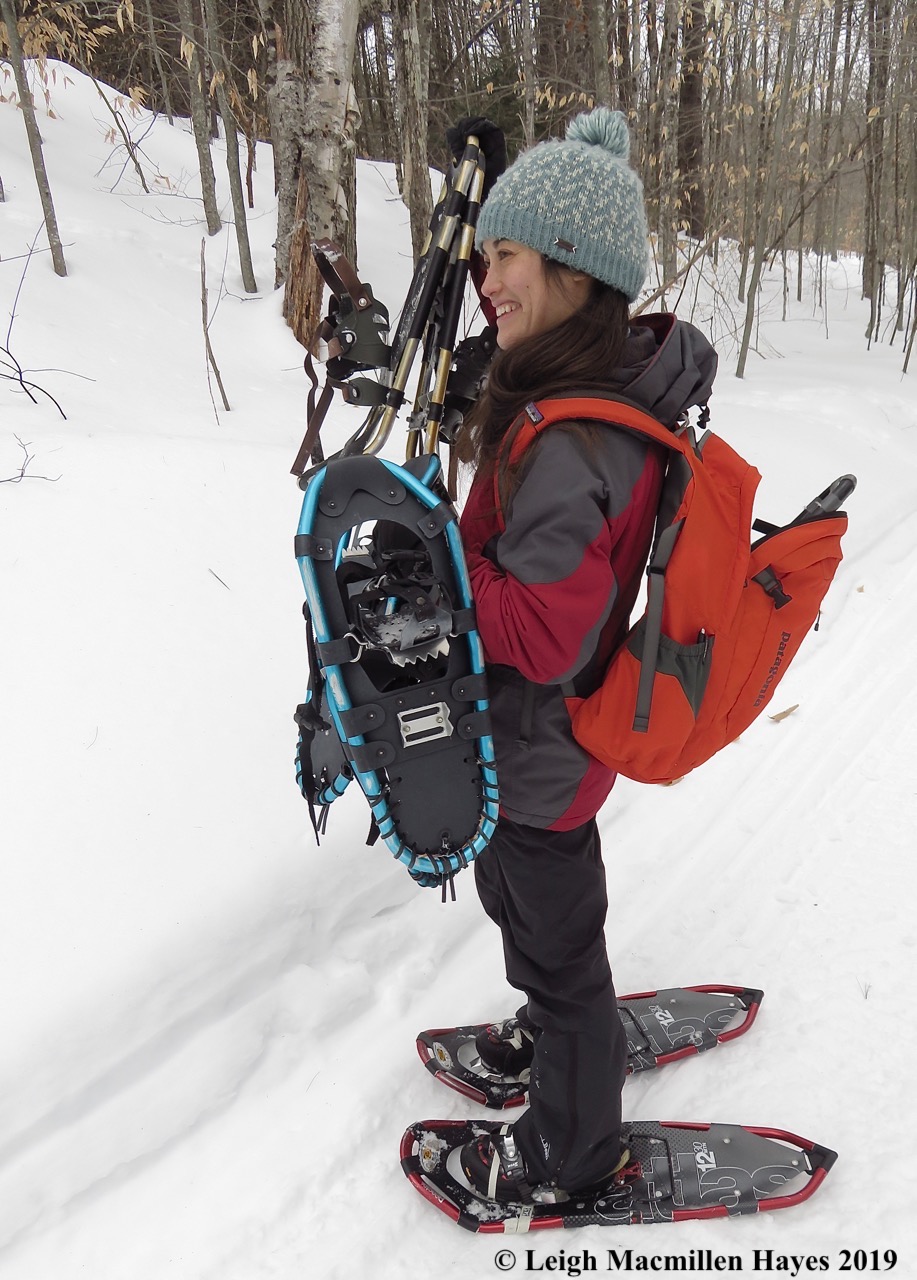
But one day their momma rounded up some snowshoes large and small and strapped them on to all.

The family headed off through the woods where moments of wonder captured their attention.

It wasn’t long into their journey when a winter firefly upon the snowy surface stopped them in their tracks.

E. Otter took the firefly that overwinters as an adult and looked for a safe place to deposit it.

She found such in an old beetle hole upon a dead snag and wished it well before she hopped away.

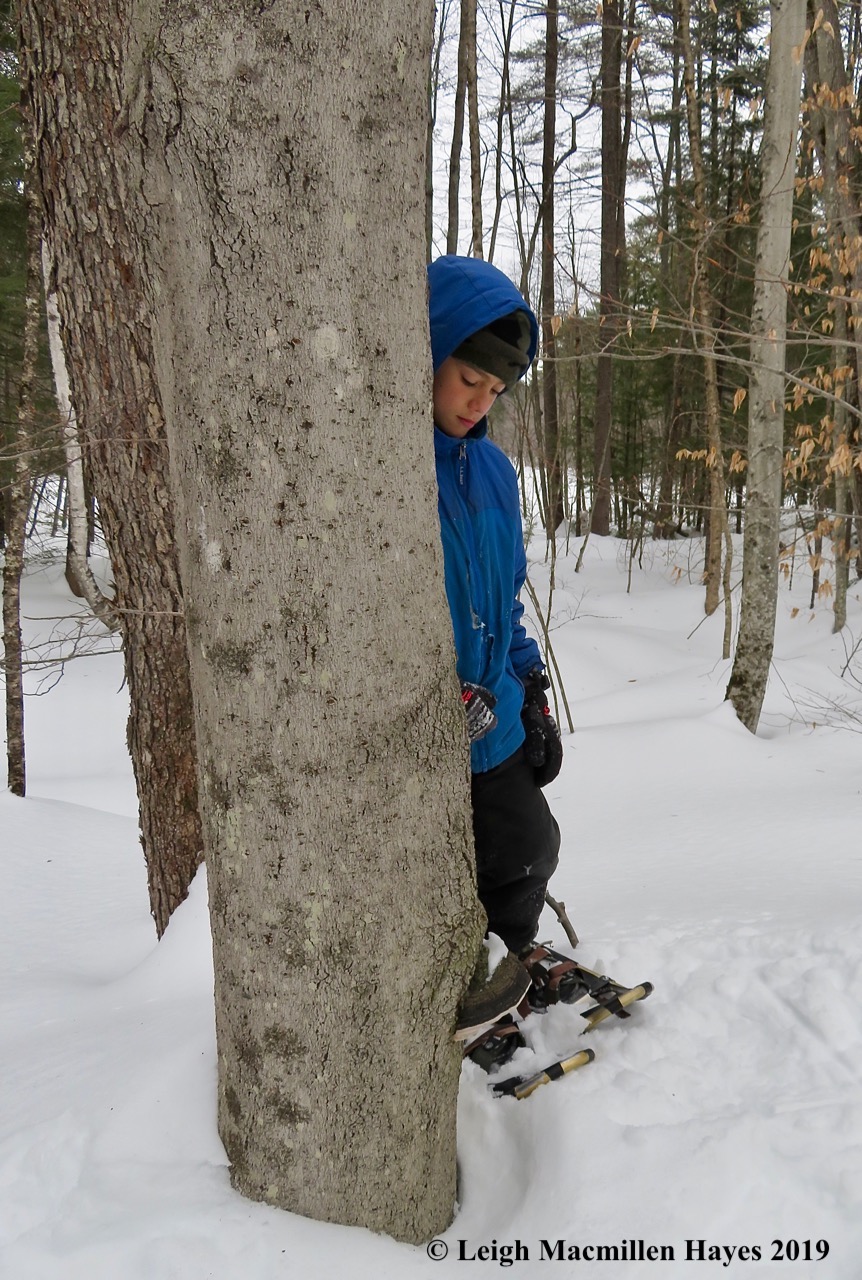
W. Otter found another tree that he quickly identified as a yellow birch and then honored with a hug.

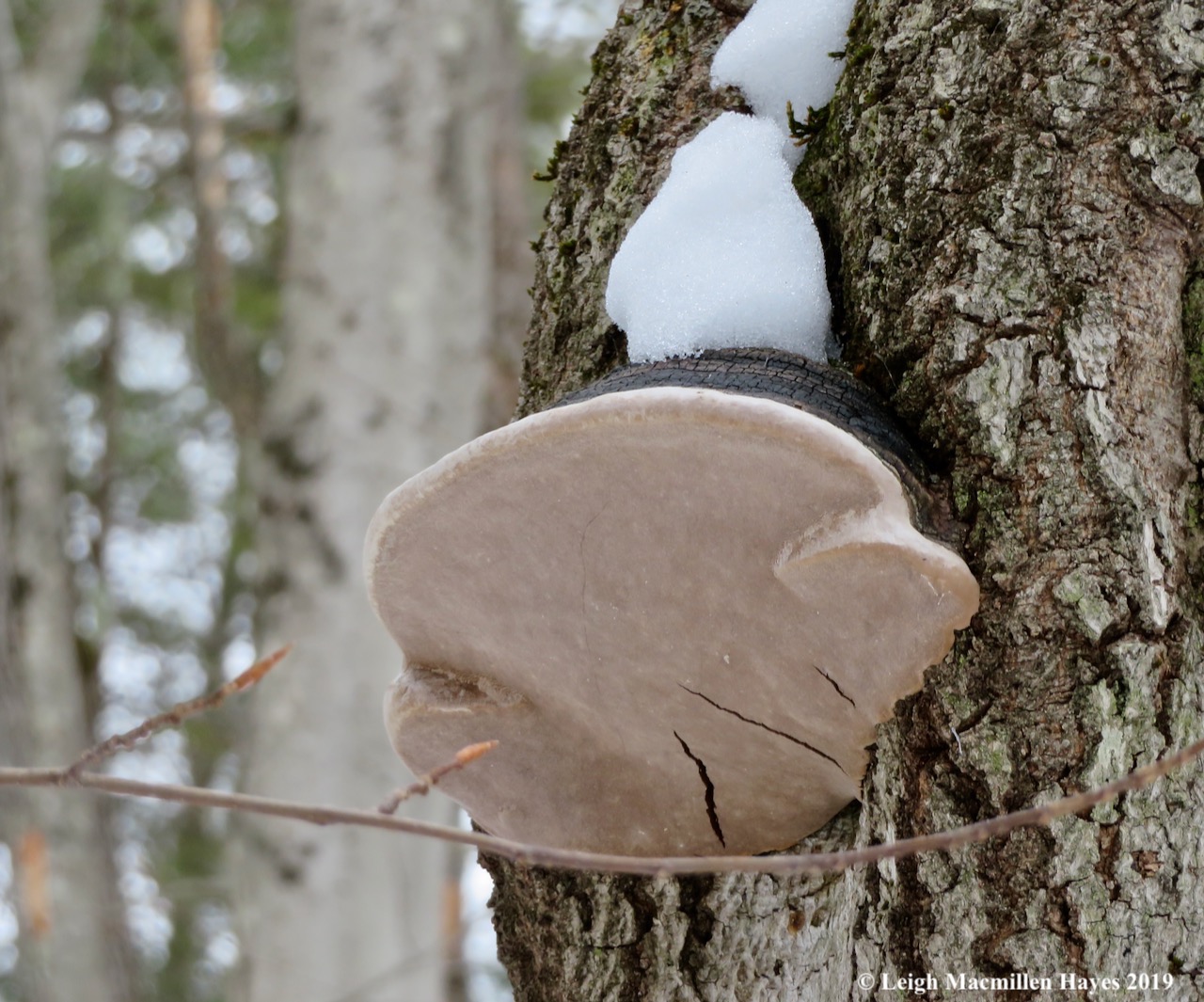
C. Otter looked upon the bark of a beech tree and was thrilled to spy a fungi.

On the tree’s back side he spied another and posed above the false tinder conk.

Soon, the little Otters convinced their momma that they didn’t want to try to be hares any more and so they shed their snowshoes.

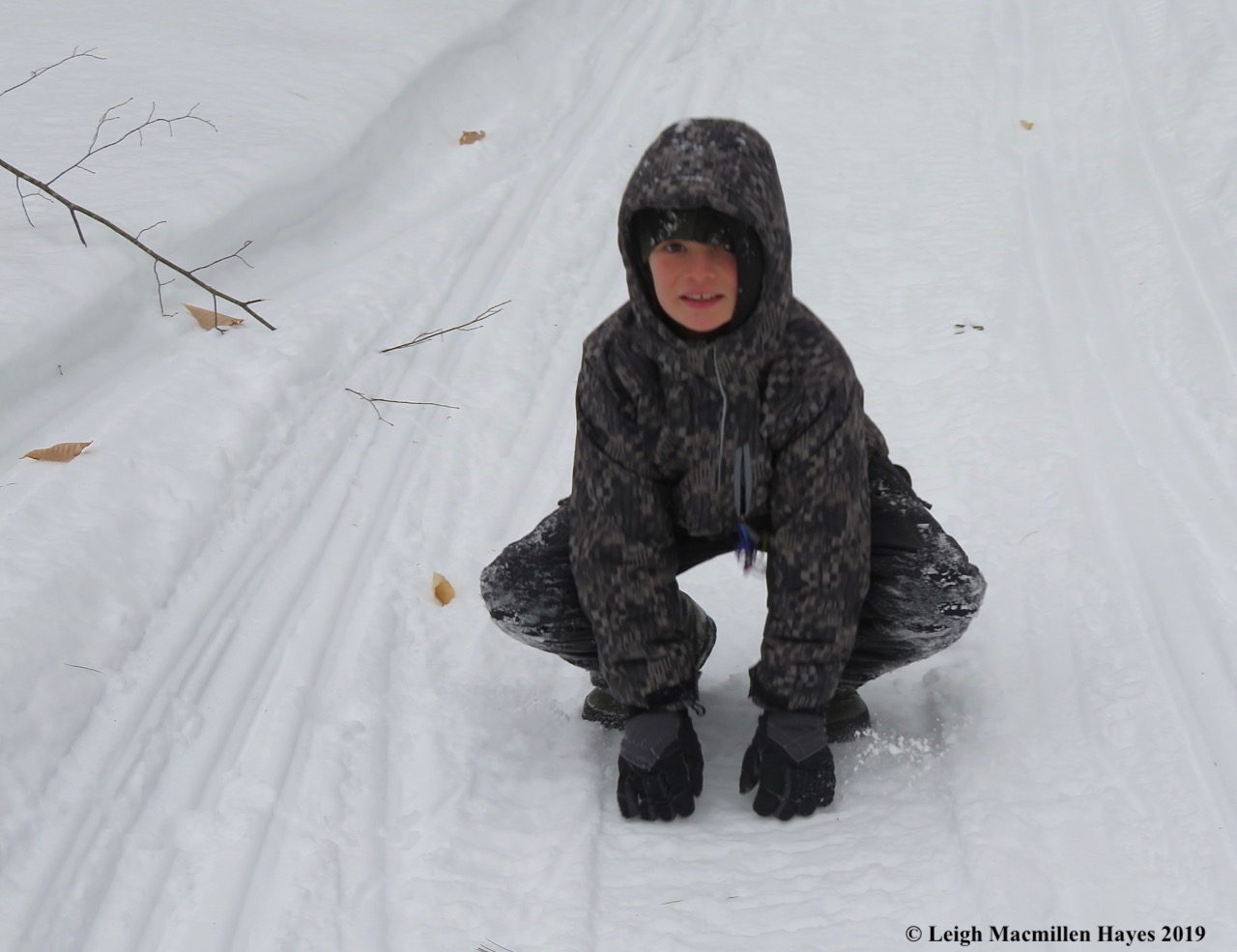
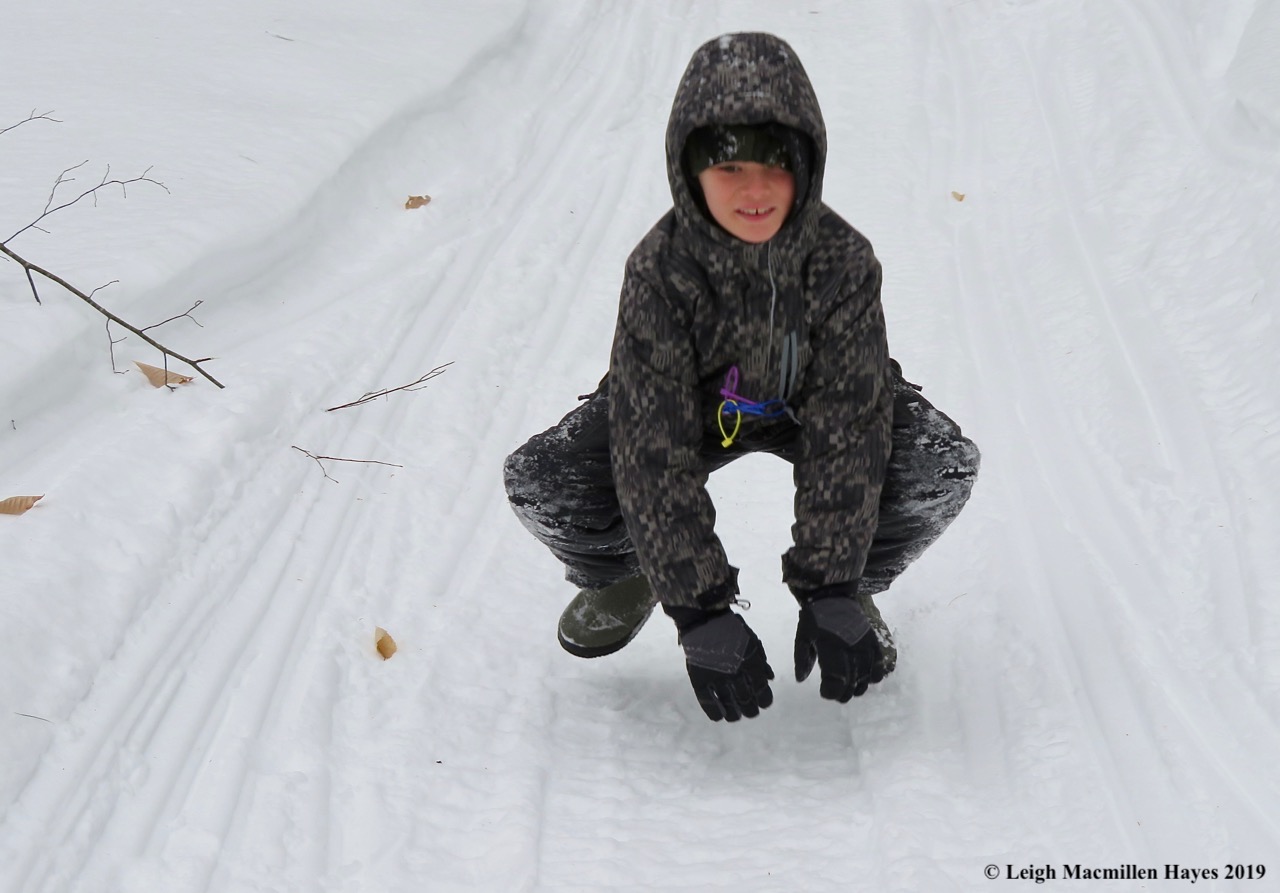
Within moments, A. Otter decided to instead try his feet at being a frog.

Catching some air, he leapt up the trail.

By a vernal pool he revealed his true identity–a tree frog.

Soon, his siblings joined him as they channeled their inner tree frogs.

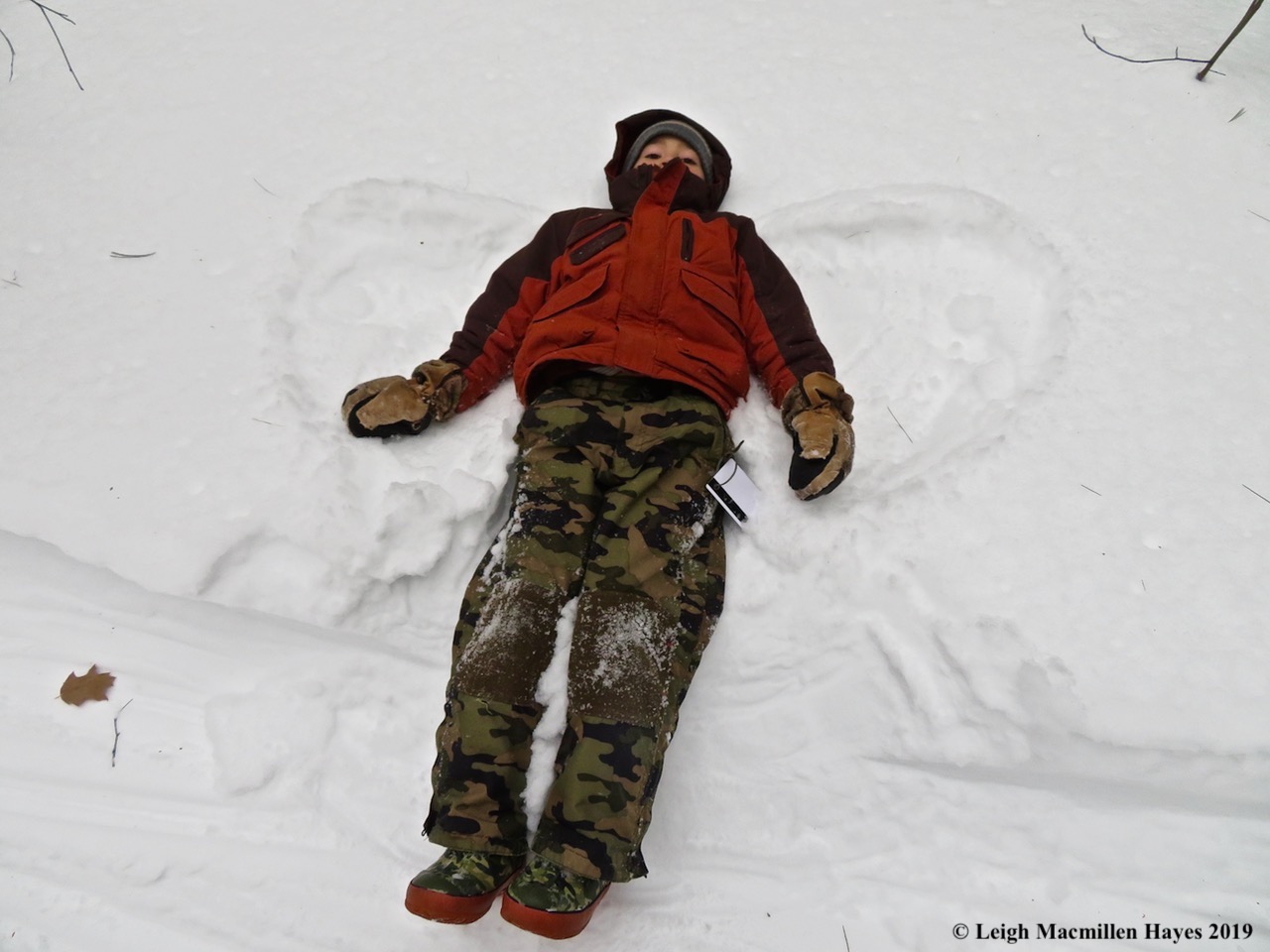
A short distance later, momma couldn’t help but smile when her young’uns displayed their angelic nature.

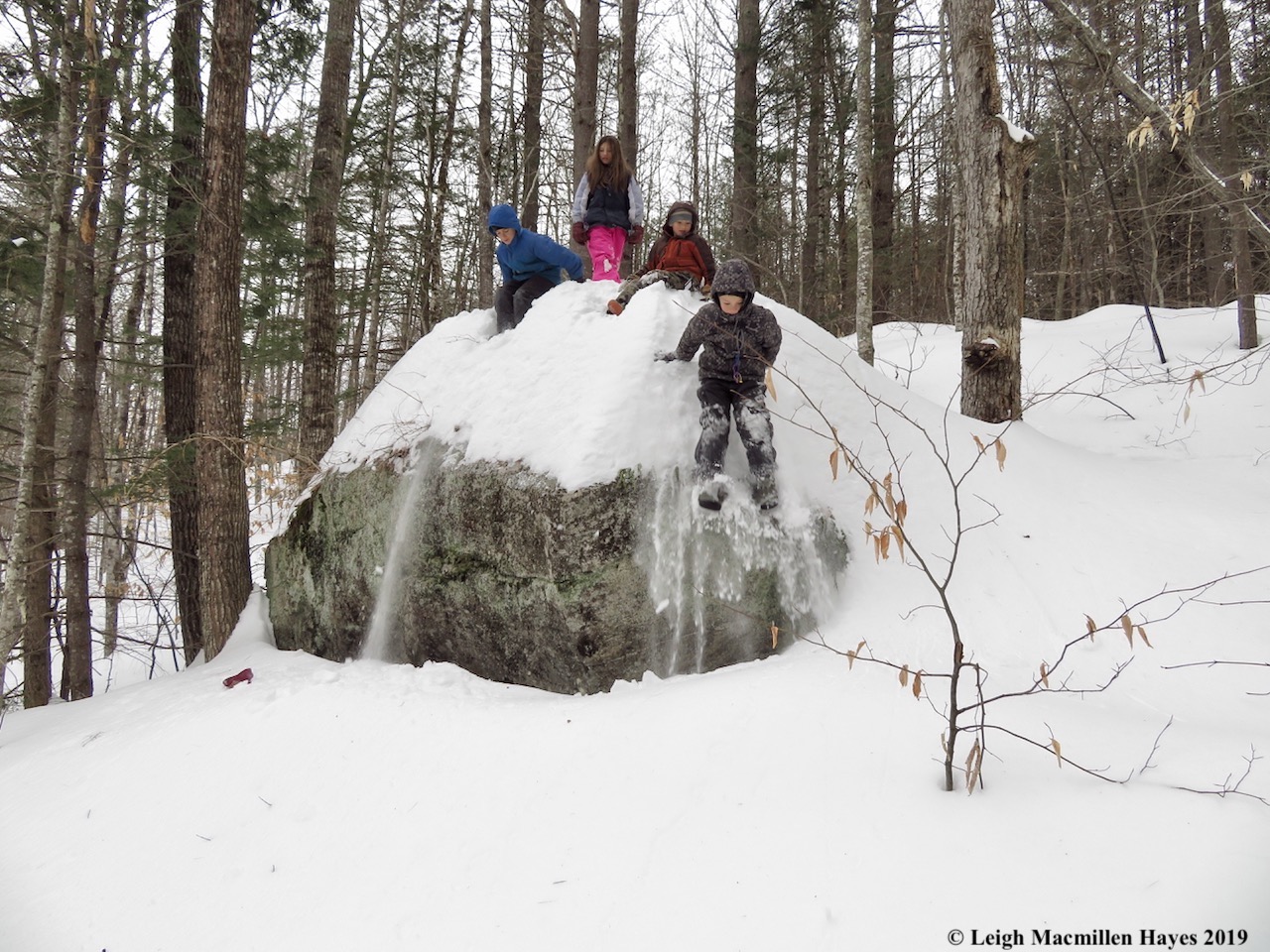
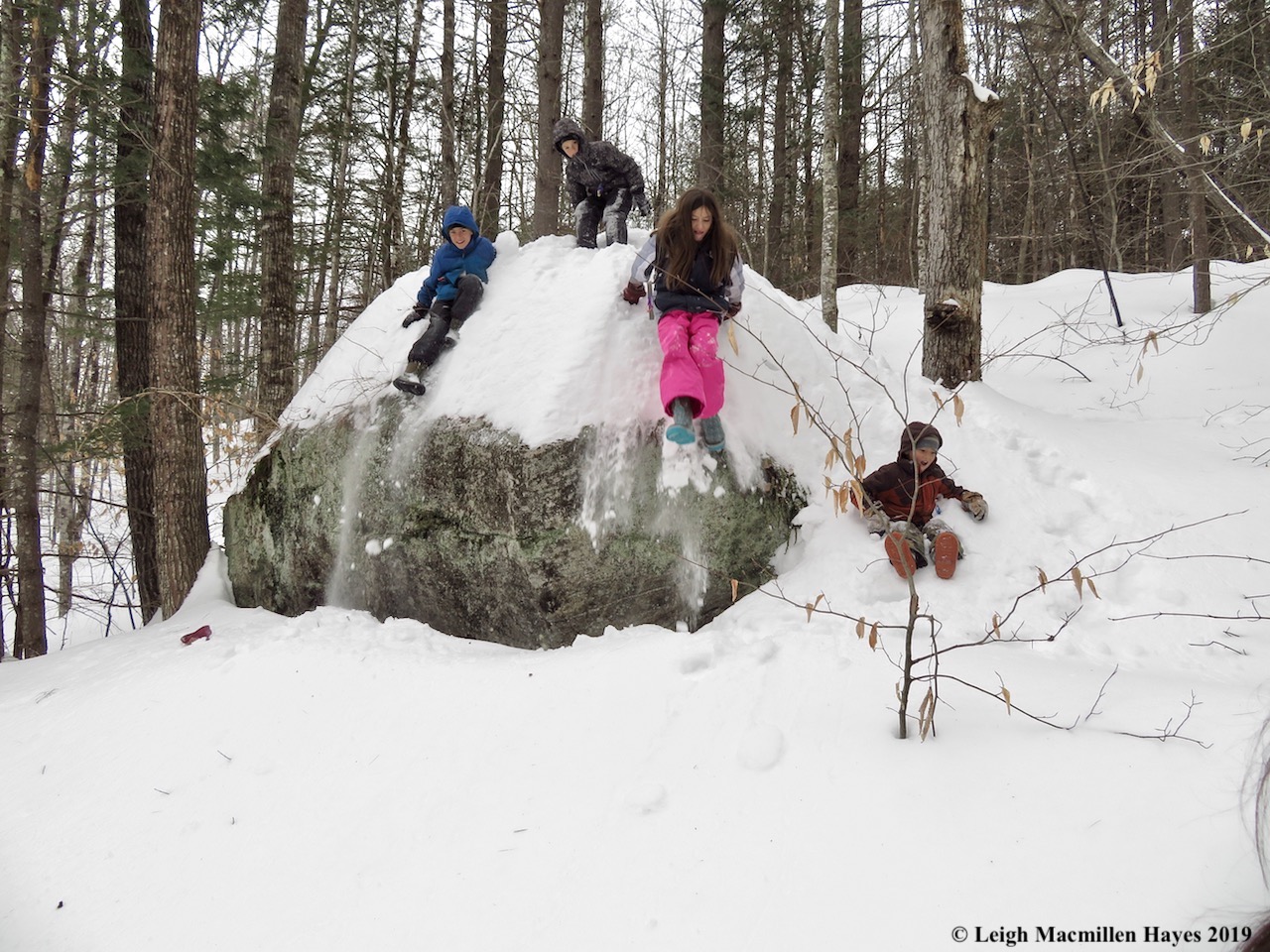
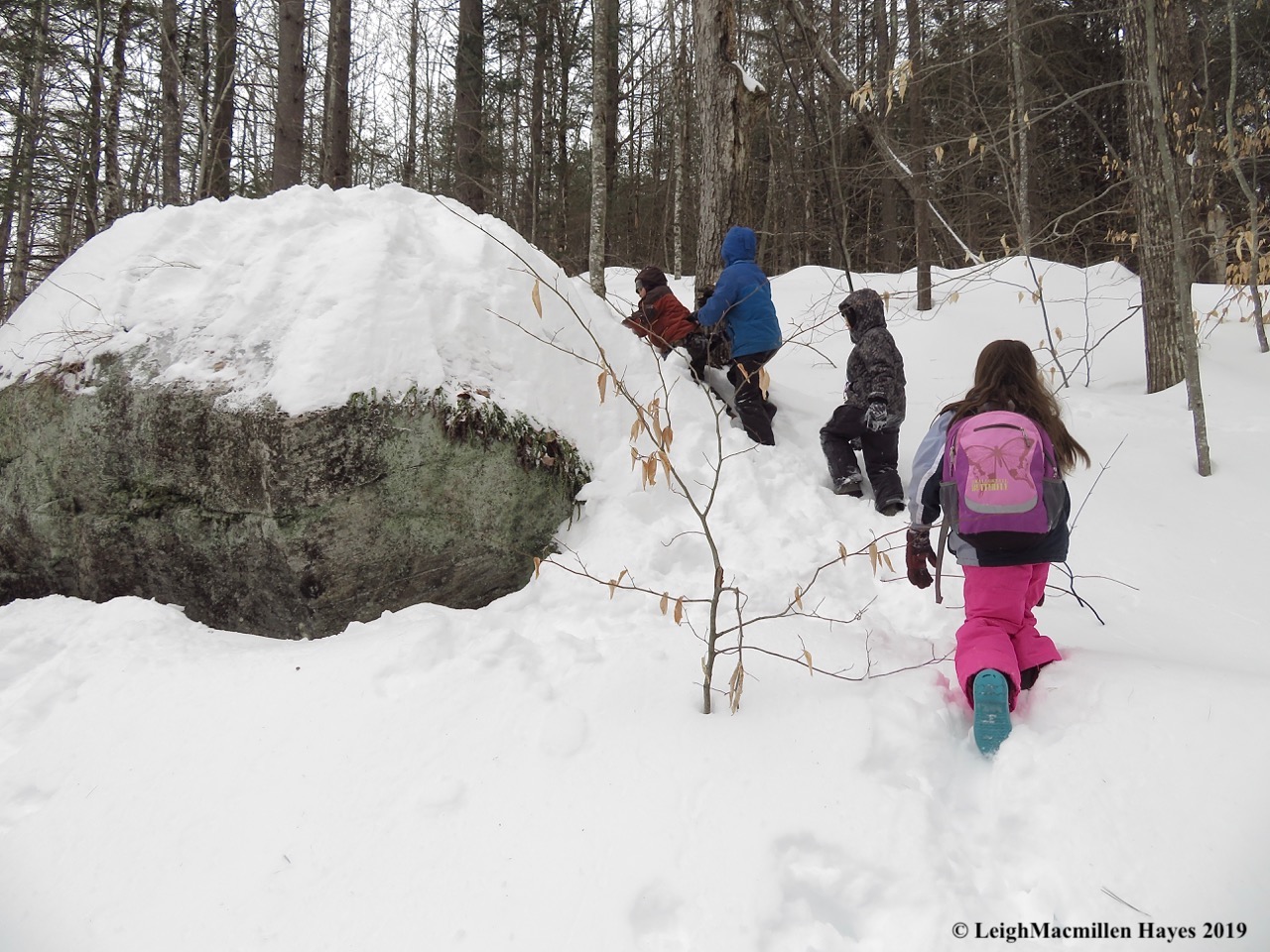
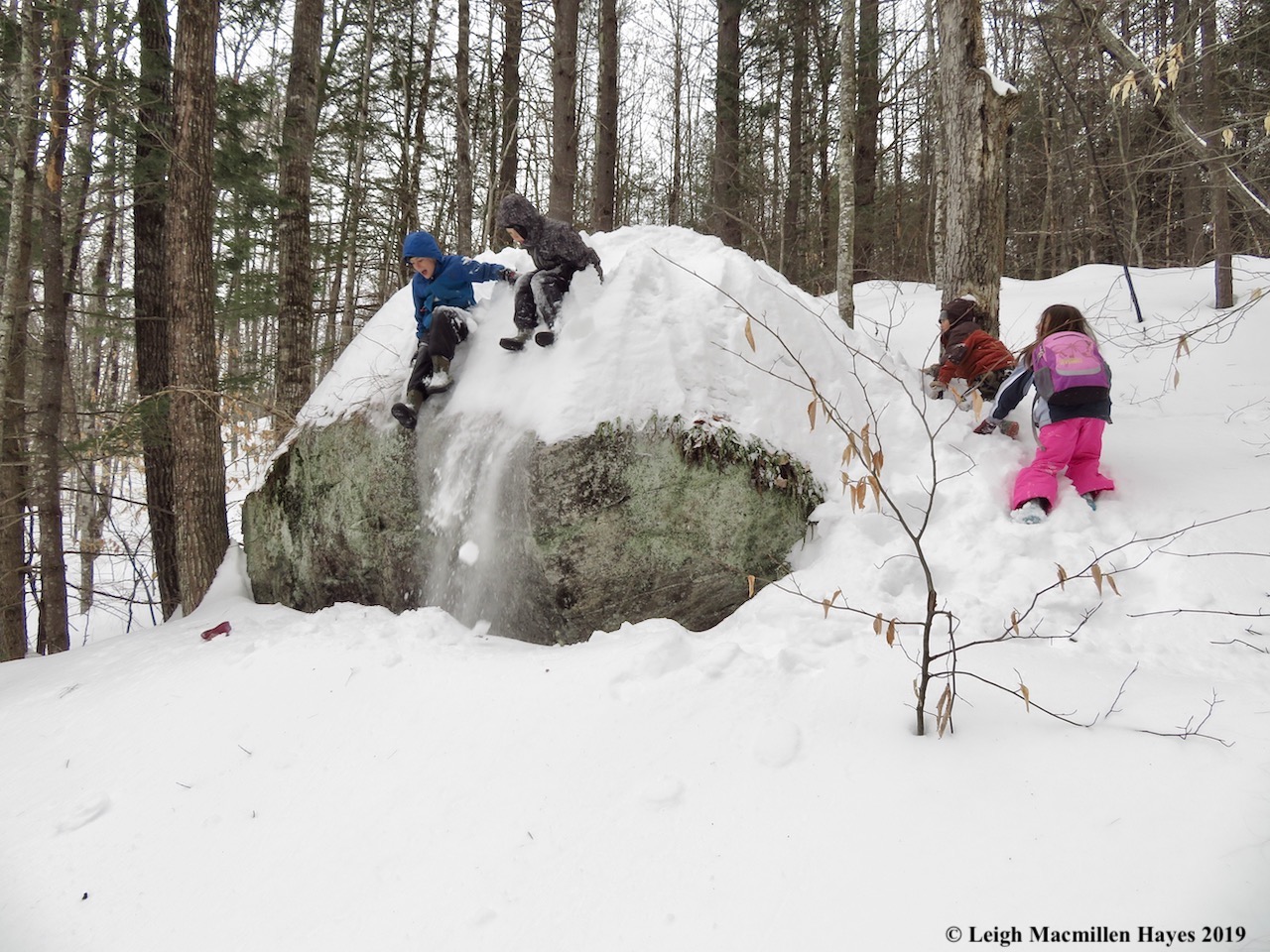
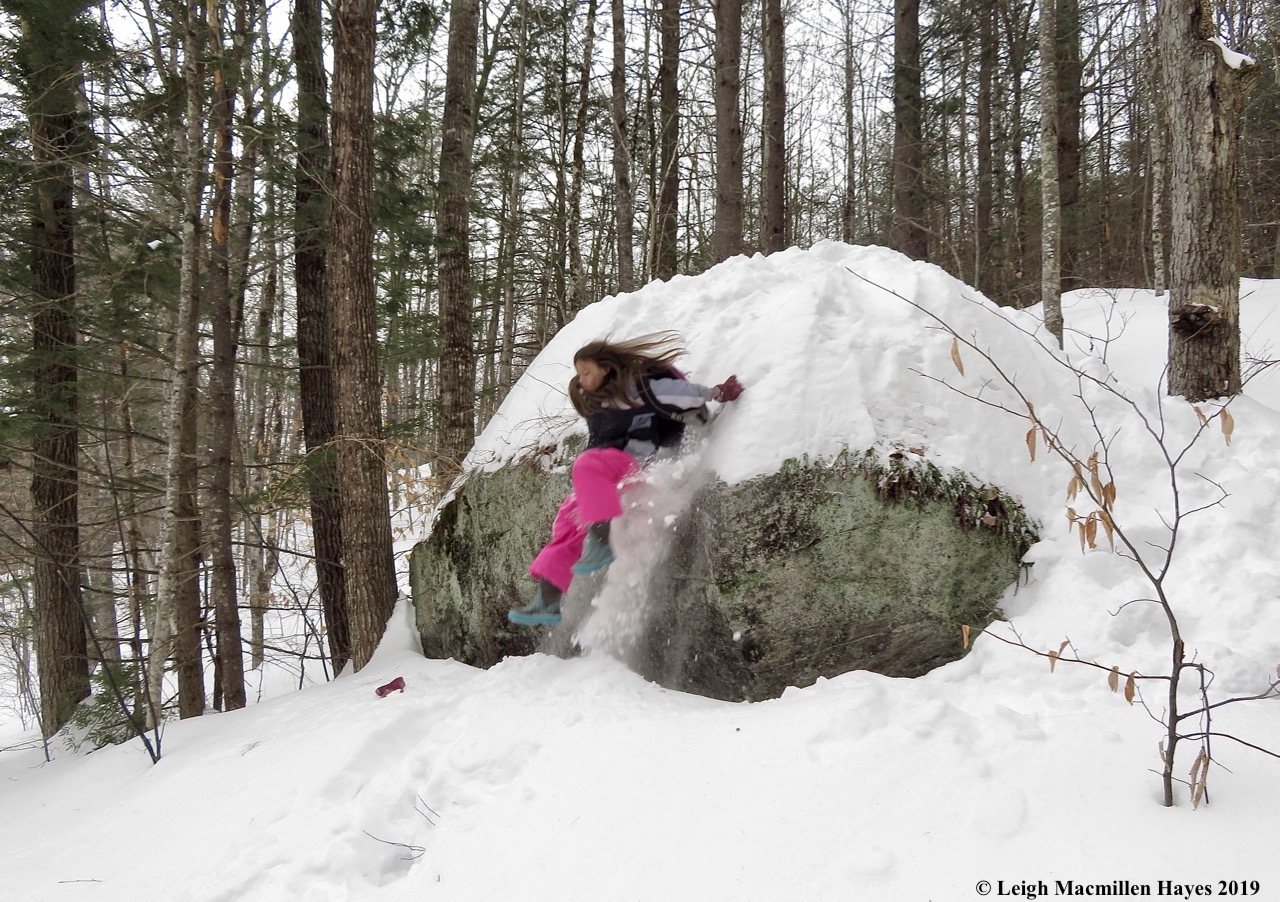
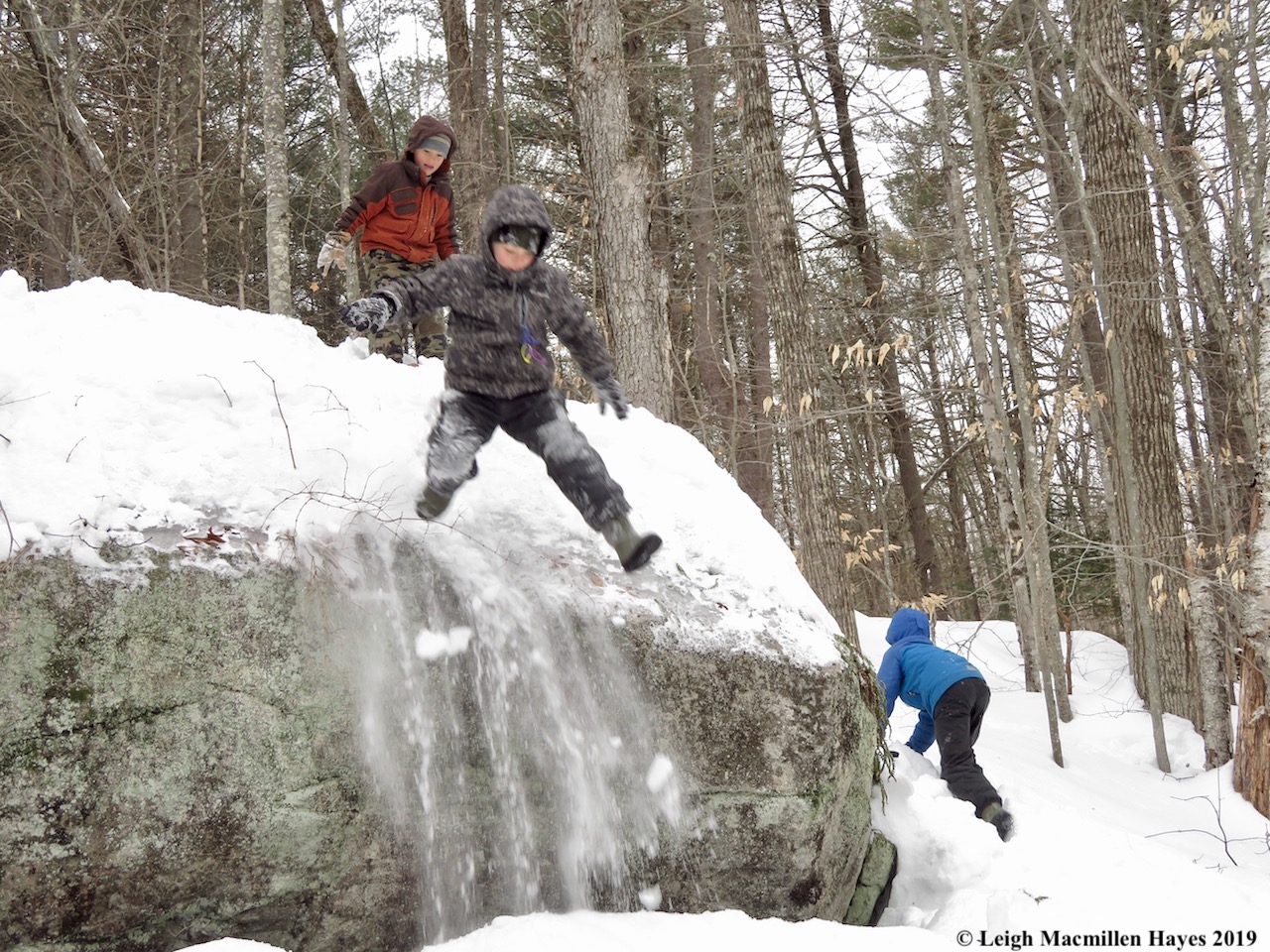
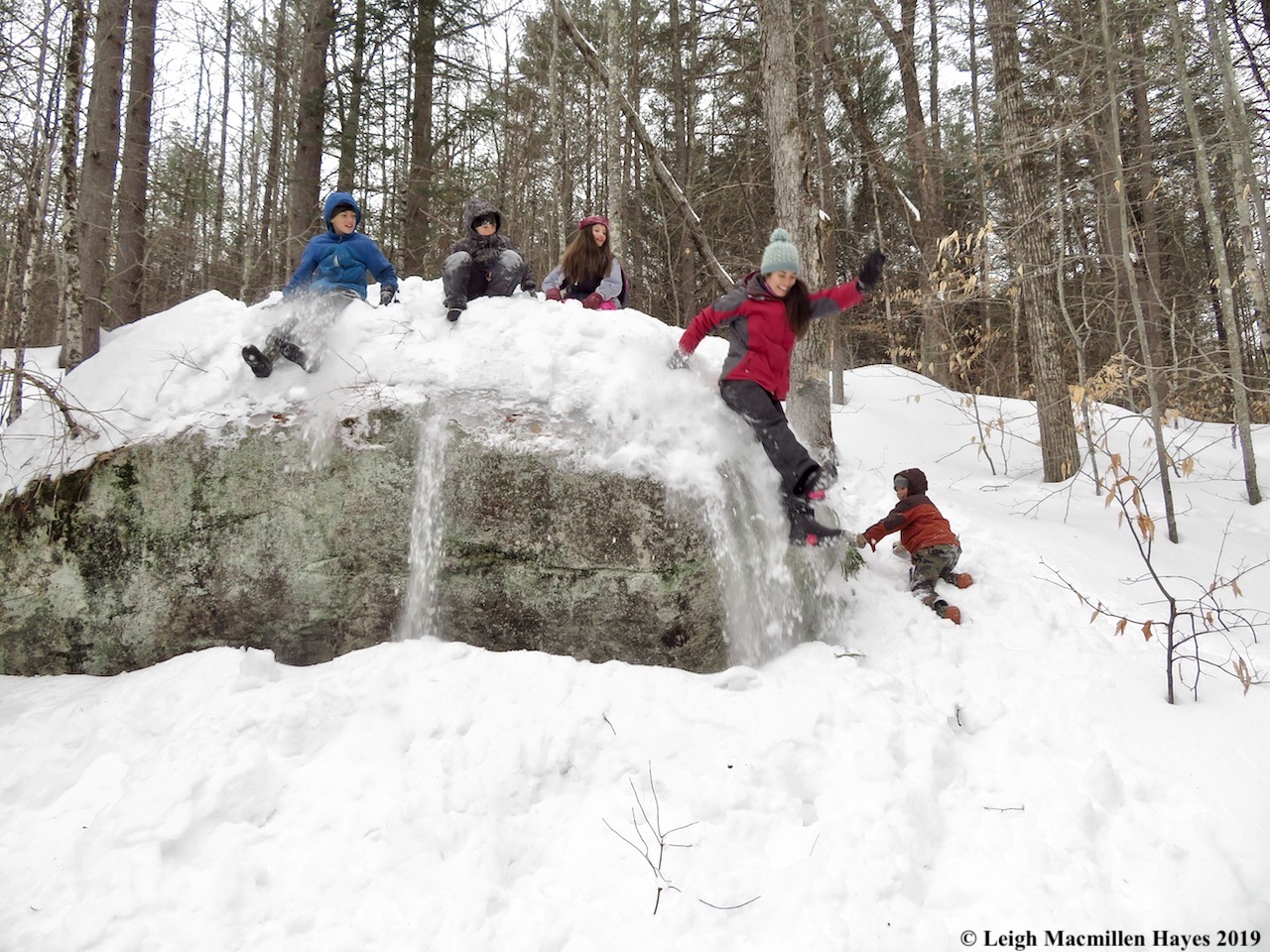
Those angelic Otters eventually found their way to the top of a huge boulder.

And then they began to do what Otters do.

They slid.

And climbed back up.

To slide some more.

Sometimes, it seemed as if they flew down the boulder’s face.

Other times they bounded.

In true Otter rhythm, one foot landed diagonally in front of the other.

After creating a series of troughs in the snow, they begged their momma to join them.

Being a Snowshoe Hare, she wasn’t sure she would be able to slide quite the way they did.

But she shed her inhibitions and climbed up to join her children.

After noting how scary it was, she smiled and slid down in one of the troughs the children had created.

Once was not enough and up and down she went again.

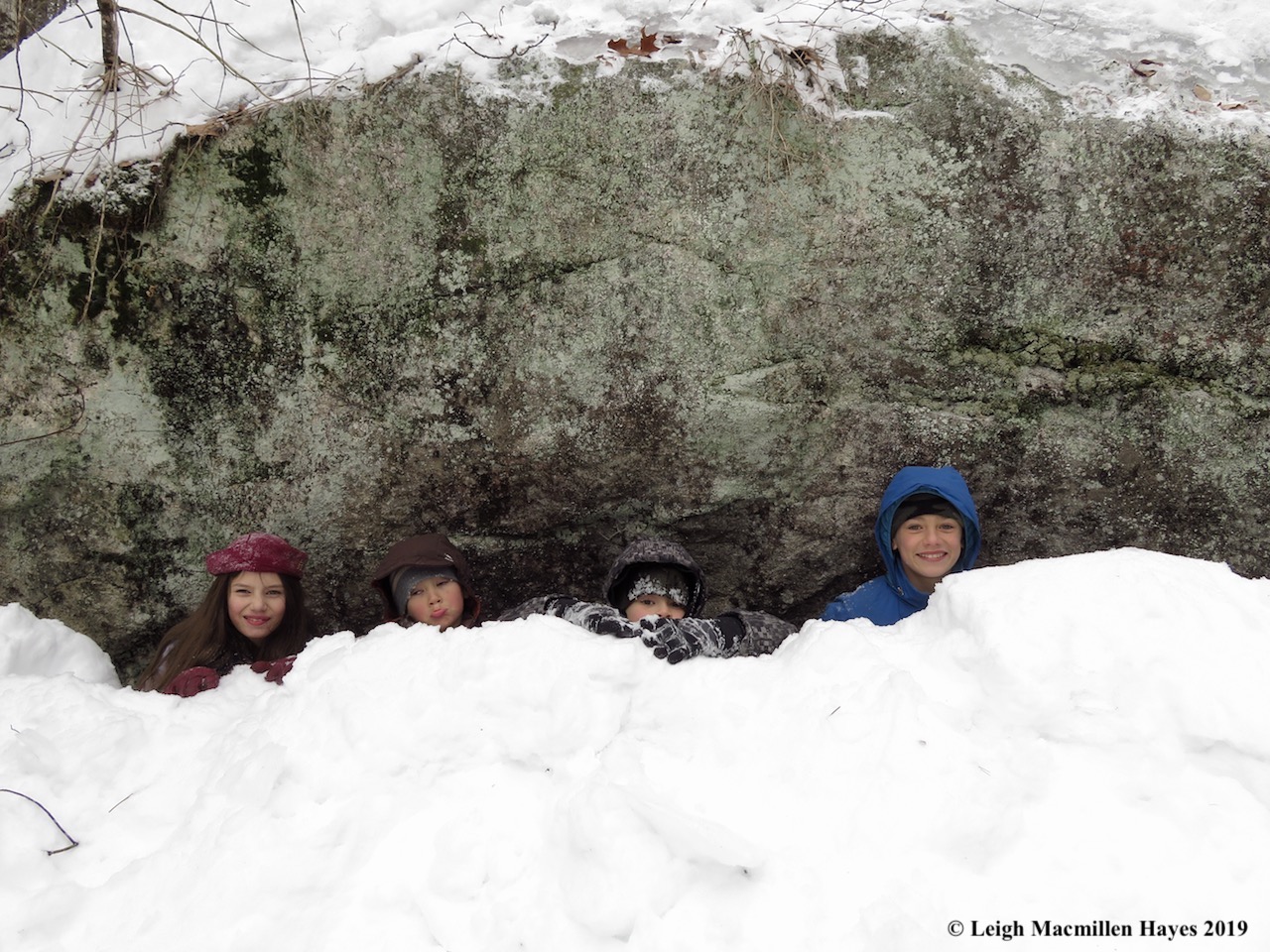
At last it was time to head for home. Being Otters, the children thought they might just den up below their favorite boulder. The youngest, of course, pouted for he wanted to slide some more.

But moments later, he showed his momma how much he loved her by presenting her with a snowheart.

What an otterly delightful family and equally otterly delightful way to spend the day!