Marching into the Vernal Pool

I’ve lived in Maine for just shy of 40 years and can barely recall the month of March going out like a lamb, as the saying goes.

It’s certainly true that once again this year the ending of the month is more lion-like with an overnight and morning snowstorm, with freezing rain on the horizon for tonight and tomorrow, followed by a warm-up and rain on Monday.

That all said, March snow doesn’t last long.

But still . . . it has me dreaming. Remember, I LOVE winter, but am as ready for spring as the next person.
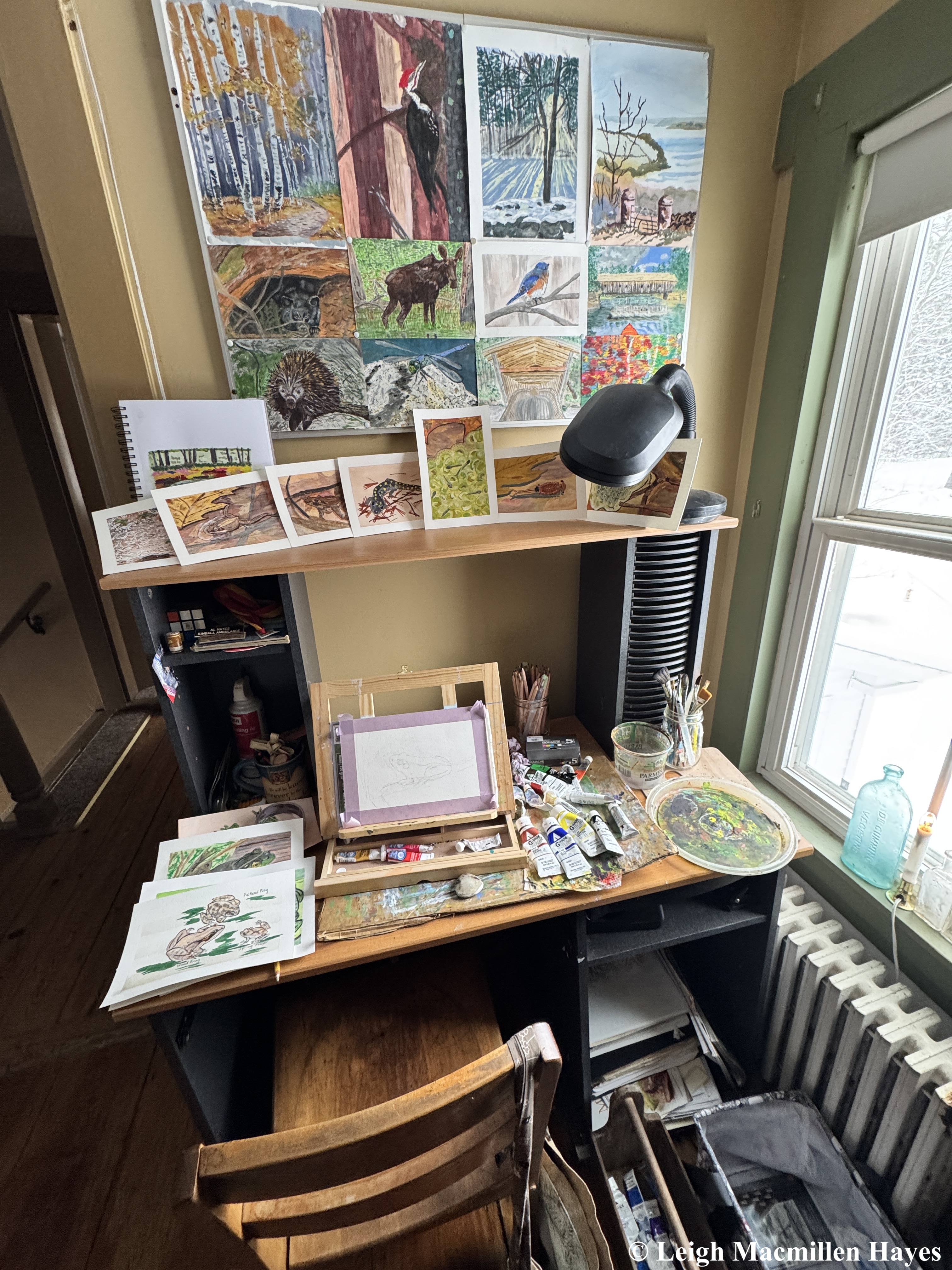
And so I spent much of today (when not shoveling, which really didn’t take long) holed up in my wee studio where I’ve been working on a vernal pool series of paintings.

The idea for this post actually came to me in a dream last night–why not turn those paintings into a blog post. Why not?

Because, it’s scary to share creative works with the world. But, I am probably my own worst critic. My instructor, Jessie, always reminds me to put my inner critic into a box, place the cover on top, and get to work. And besides, by sharing here, I can hide behind the screen. She wants those of us in her class to host an art show, but I refuse to do that. It’s much more comfortable for me this way.

I’ve only been painting since last May, but let’s not let that be an excuse. The thing is, working with gouache paints means I can easily edit, much like writing. And believe me, I have. My motto has always been that there’s no such thing as a final draft–whether it be an article for a magazine or a work of art.

Have you noticed that I’m procrastinating? And putting all of my excuses out there.

It’s snowing again.

All right, I’m almost ready. But here’s the other thing–in sharing these with you, may you be inspired to do something you never imagined and discover that the time you spend doing such is most enjoyable and it’s easy to get “lost” and just plain have fun and decide that even though the “end product” isn’t exactly what you first set out to create, it’s still half decent and you had the most delightful time sitting quietly as is my custom, doing just that: creating.

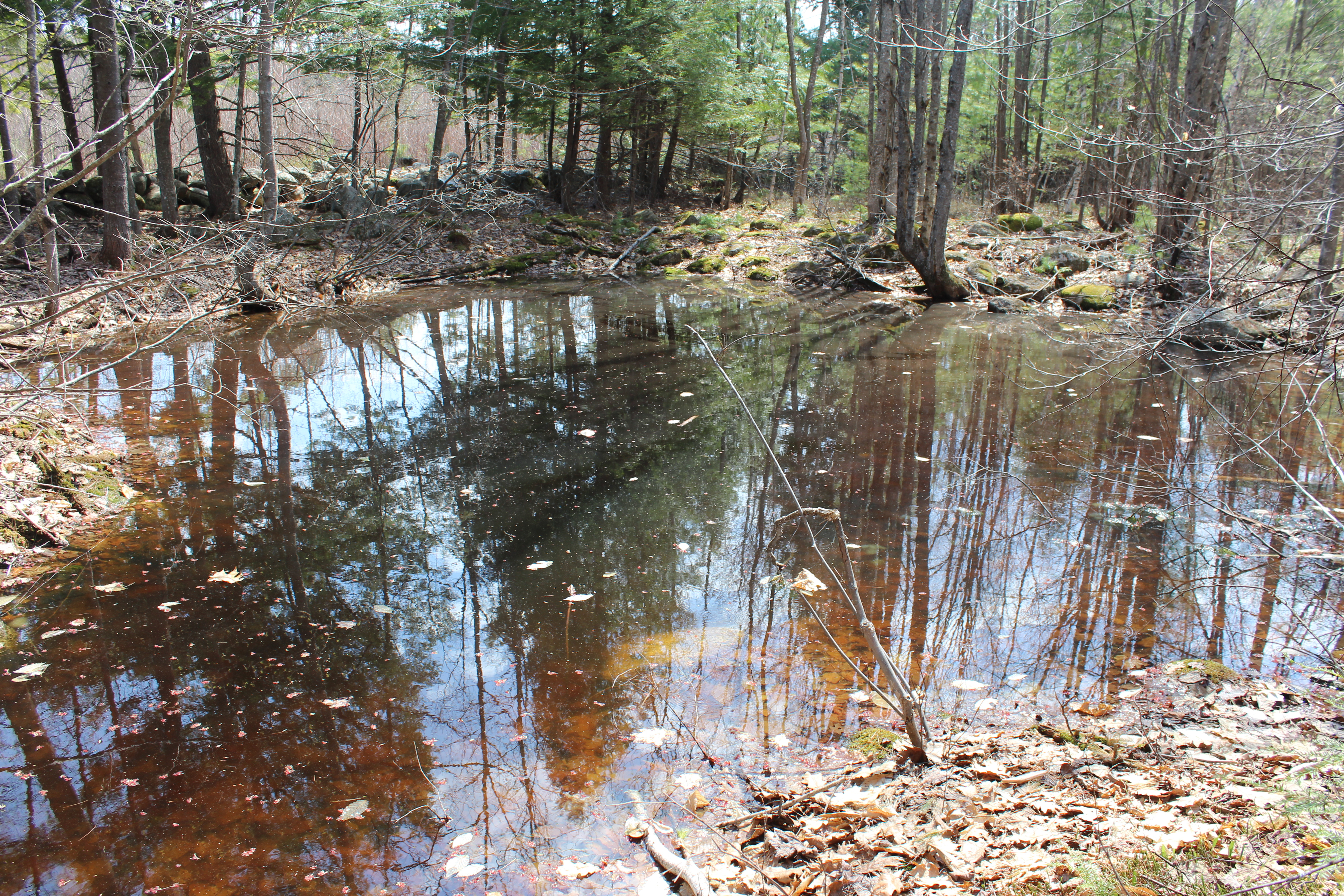
And now . . . for a look back as a way to look forward to a vernal pool as it emerges from winter or early spring, or mud season, or almost spring but still winter, or whatever season this is.
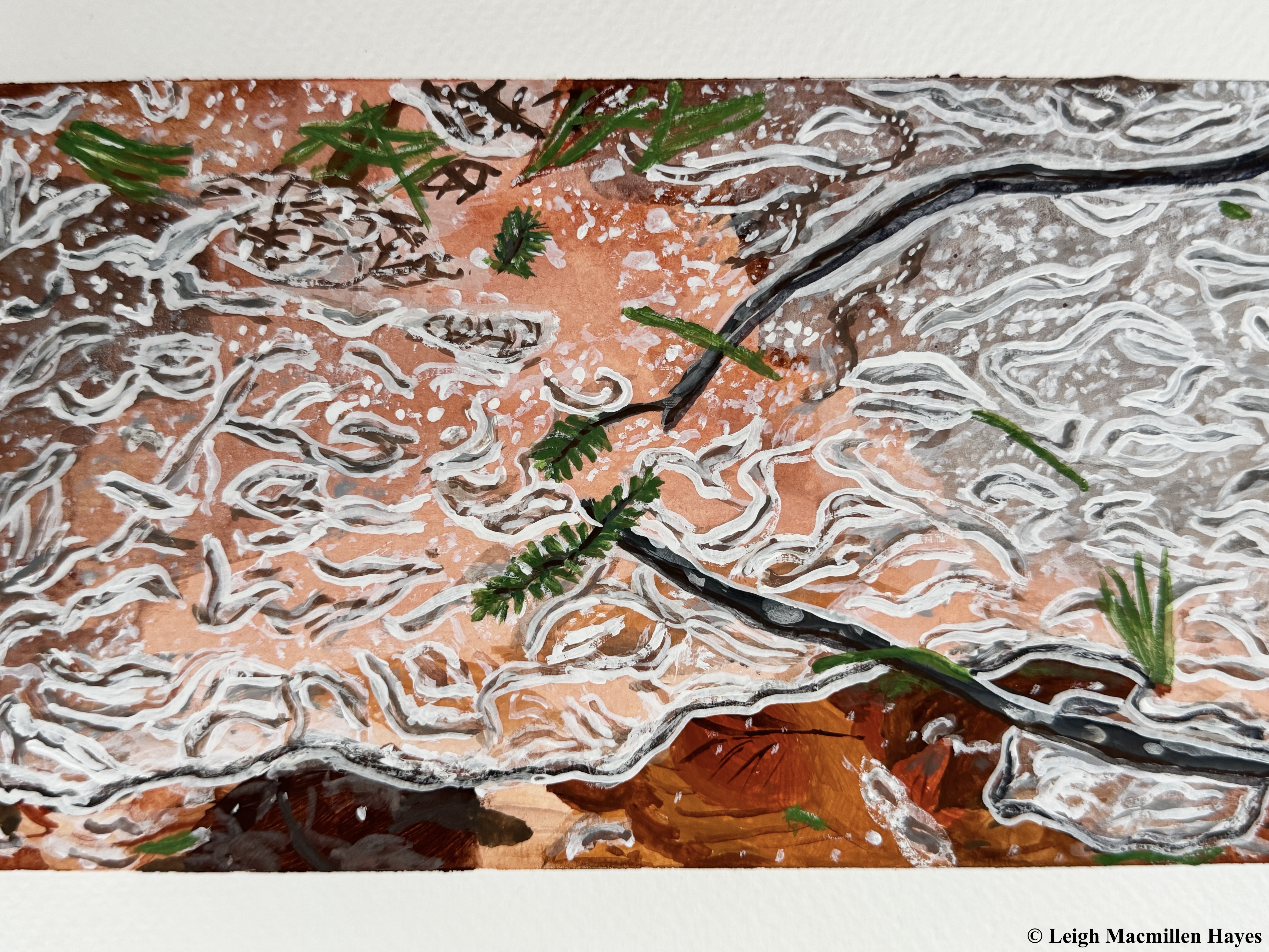
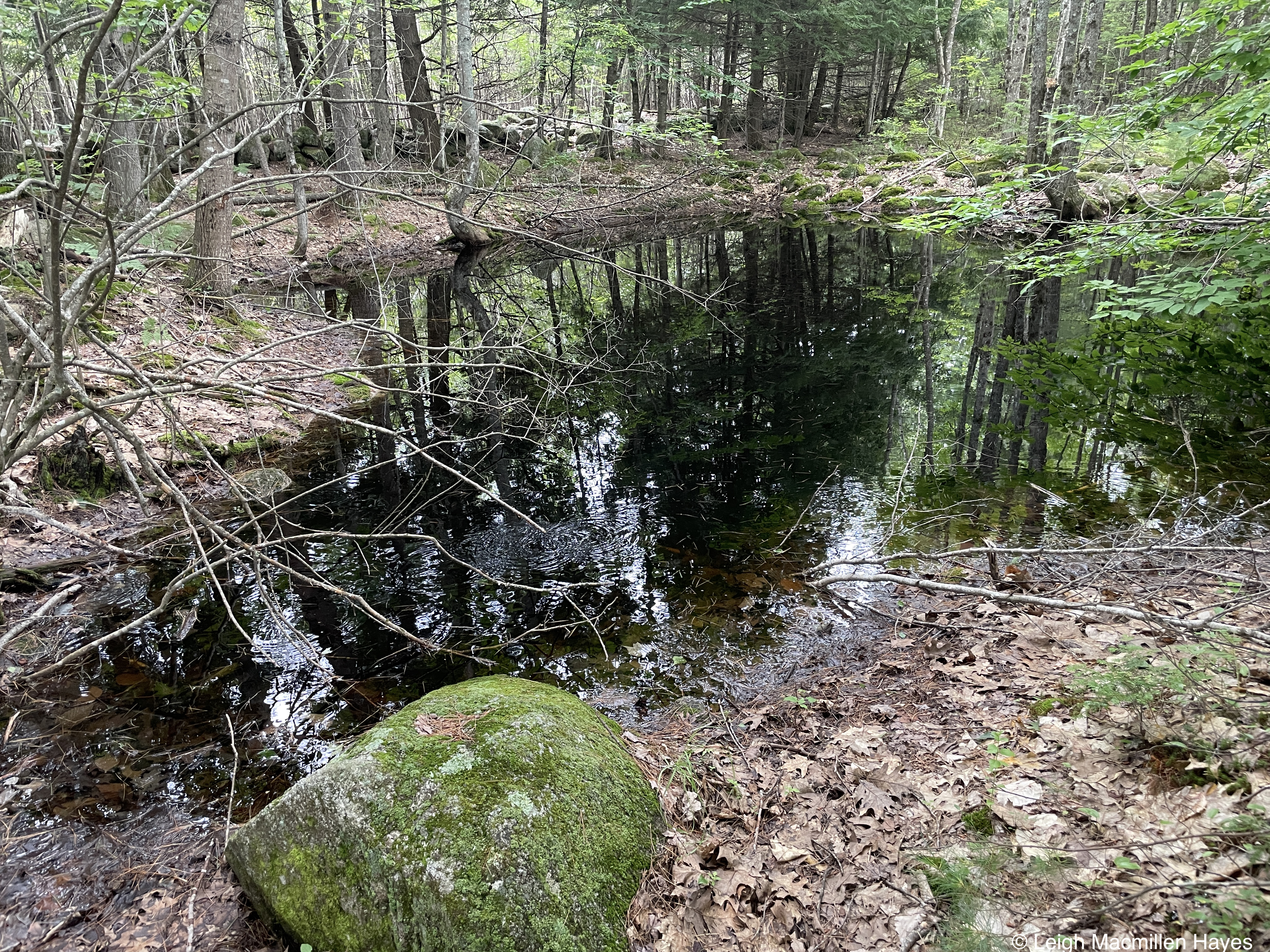
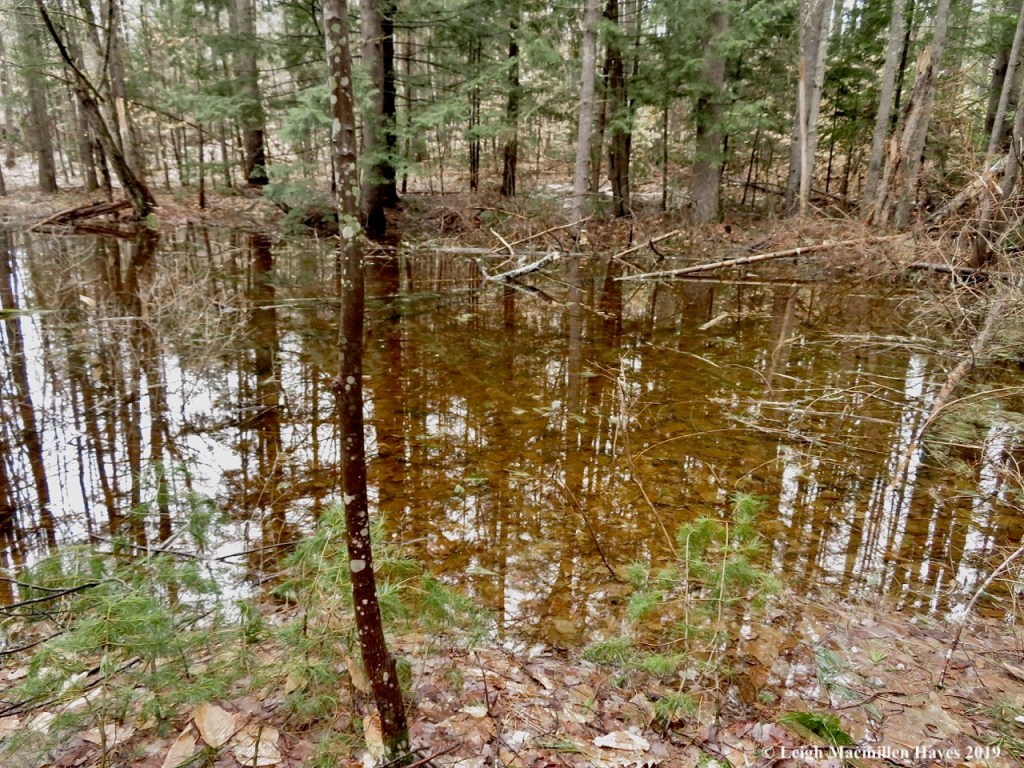
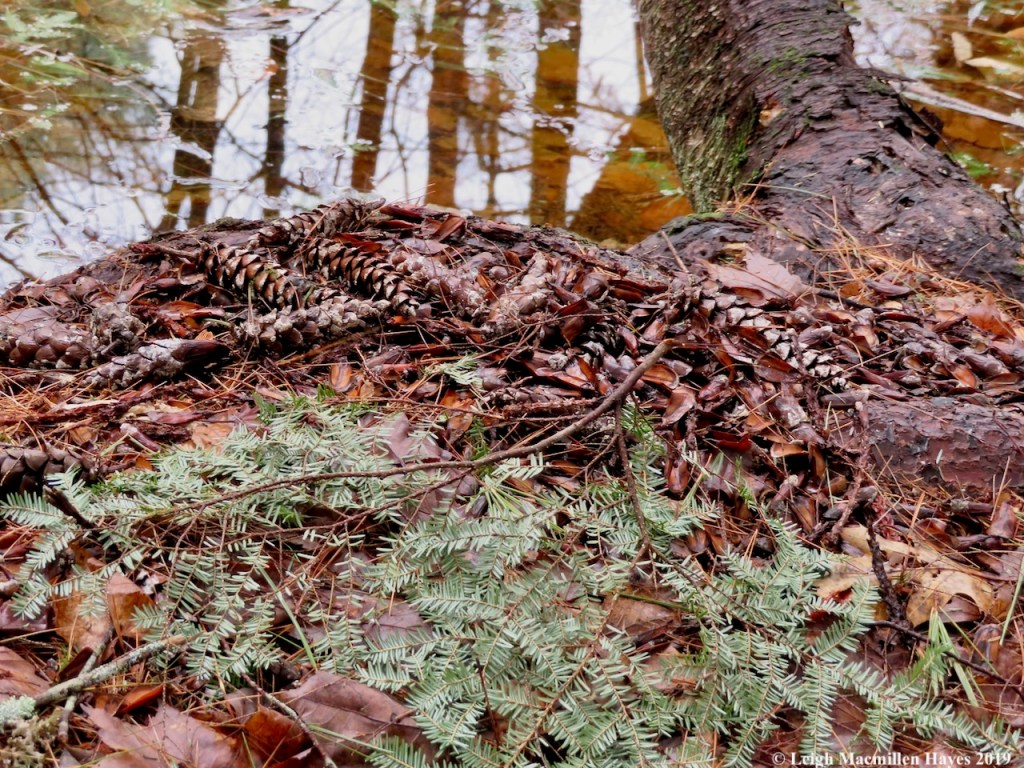
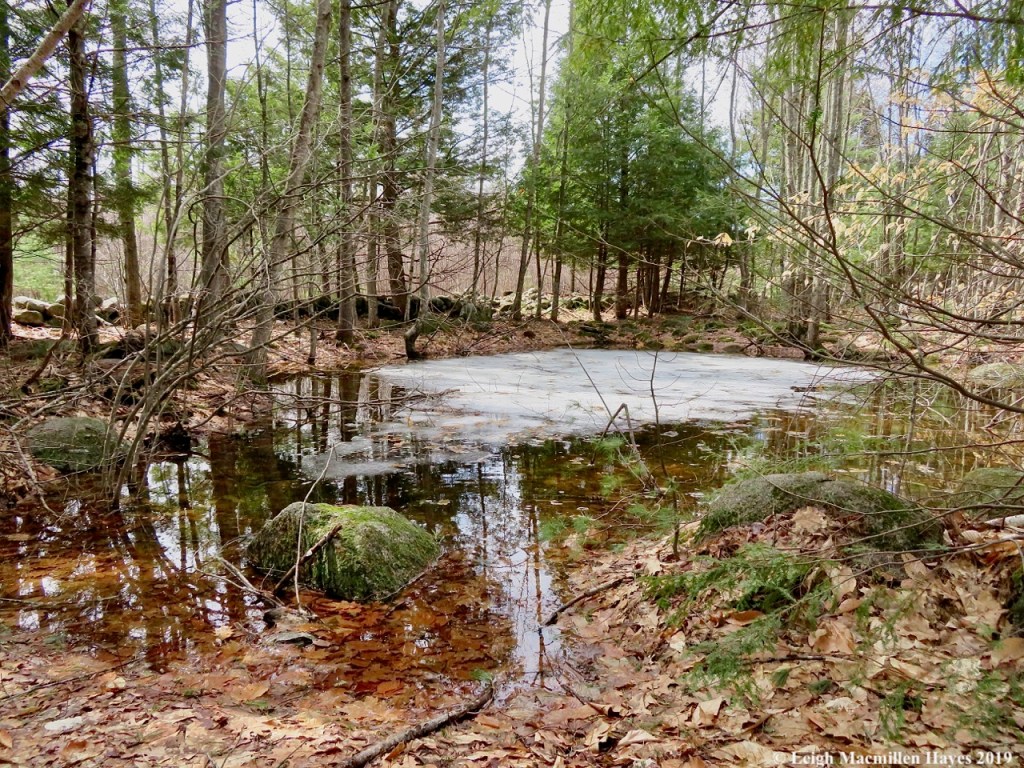
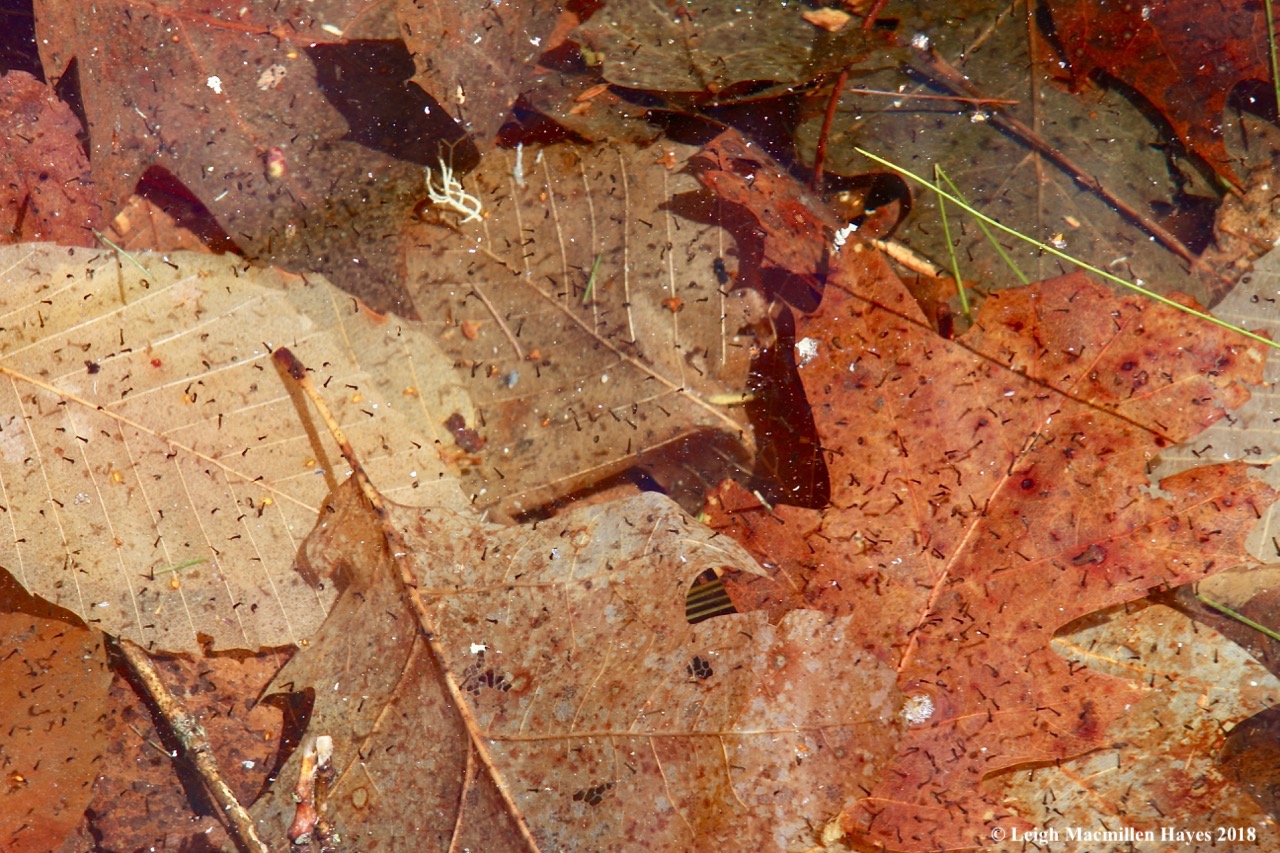
Pine and hemlock needles and branches from winter storms coat the ice as it slowly begins to melt along the edge of the pool, providing a glimpse of the sunken leaves below, where life awaits.

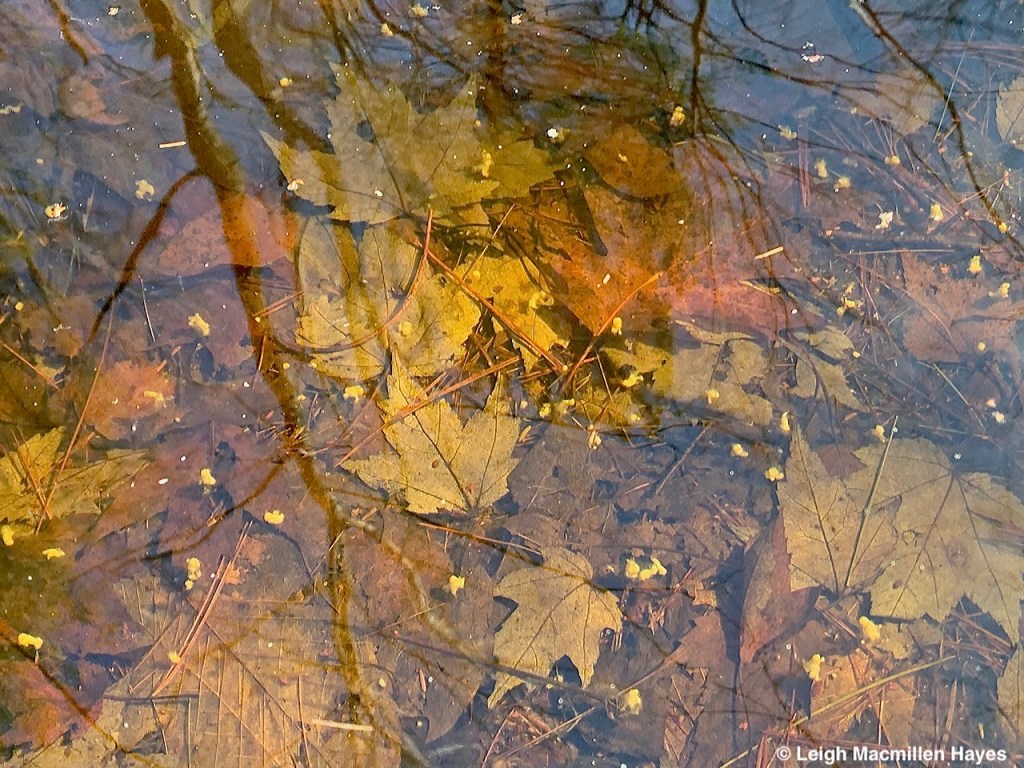
Once the ice finally melts, barren trees offer a reflection that speaks to winter, but there’s hope in their buds.

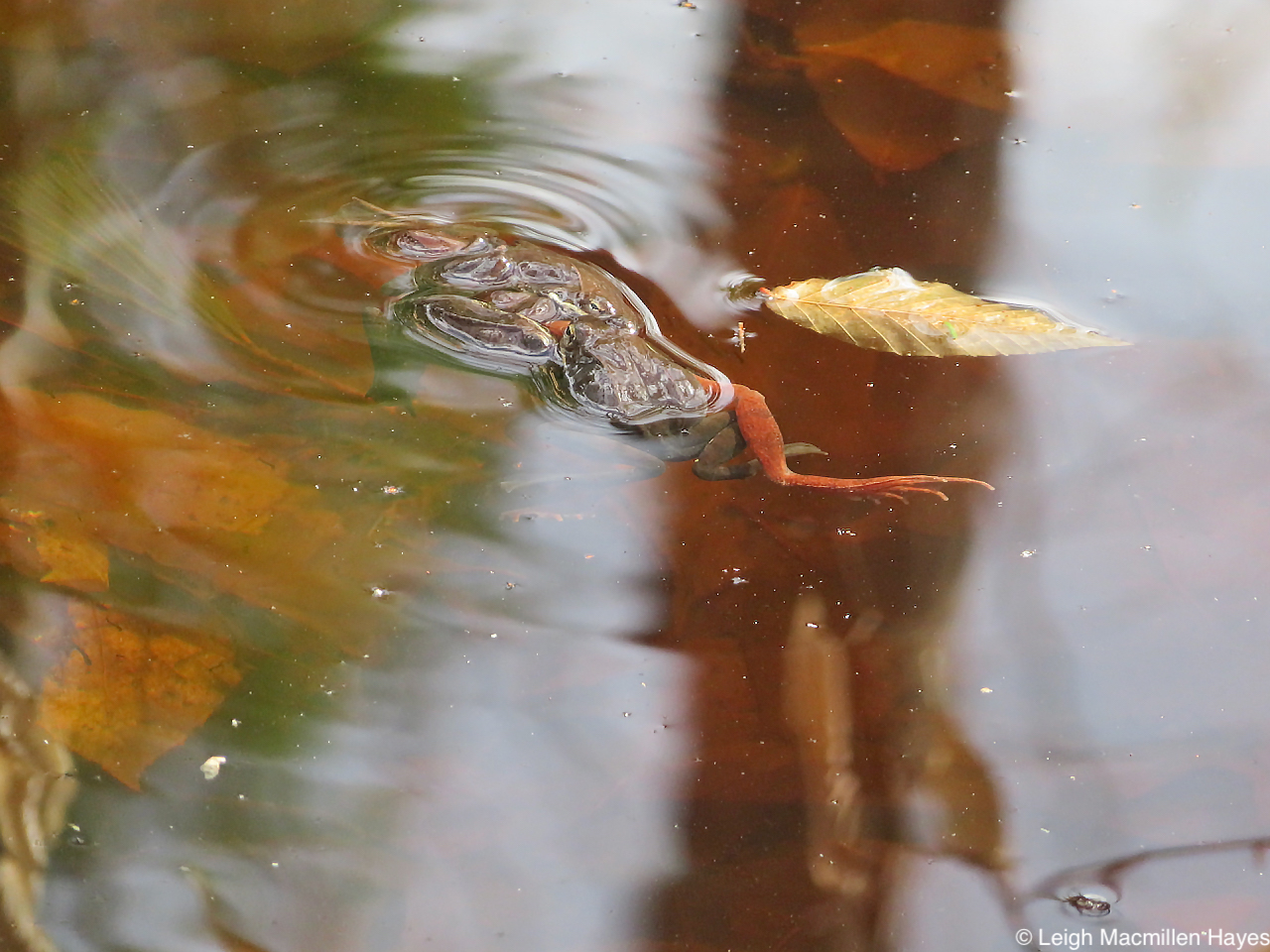
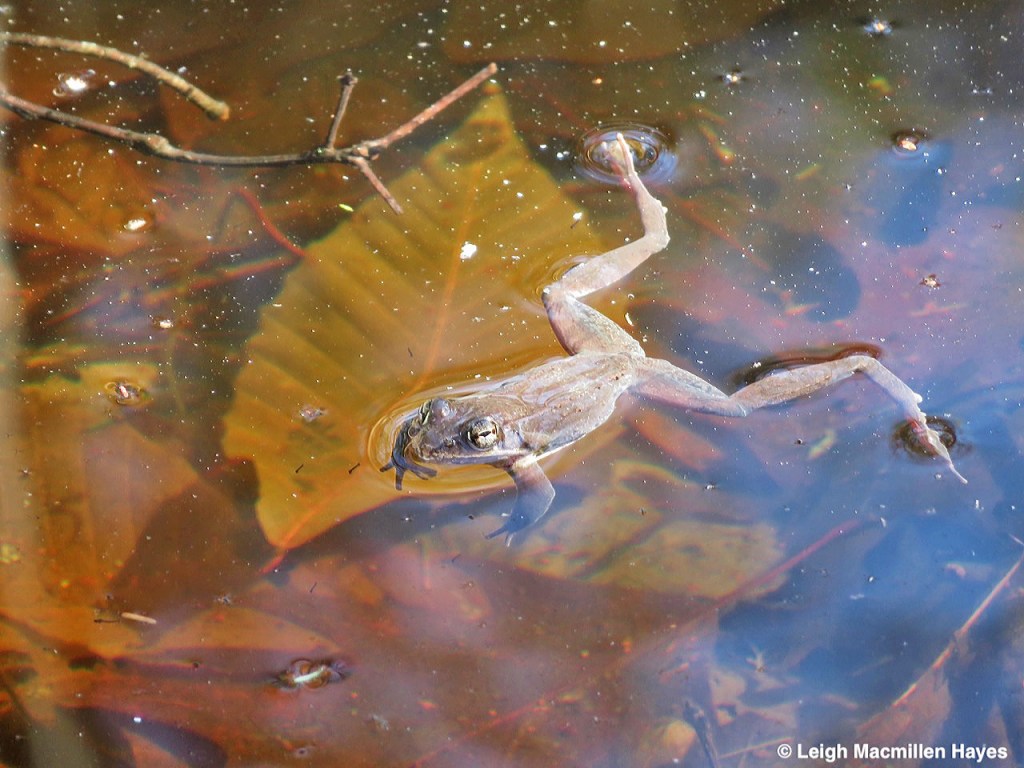
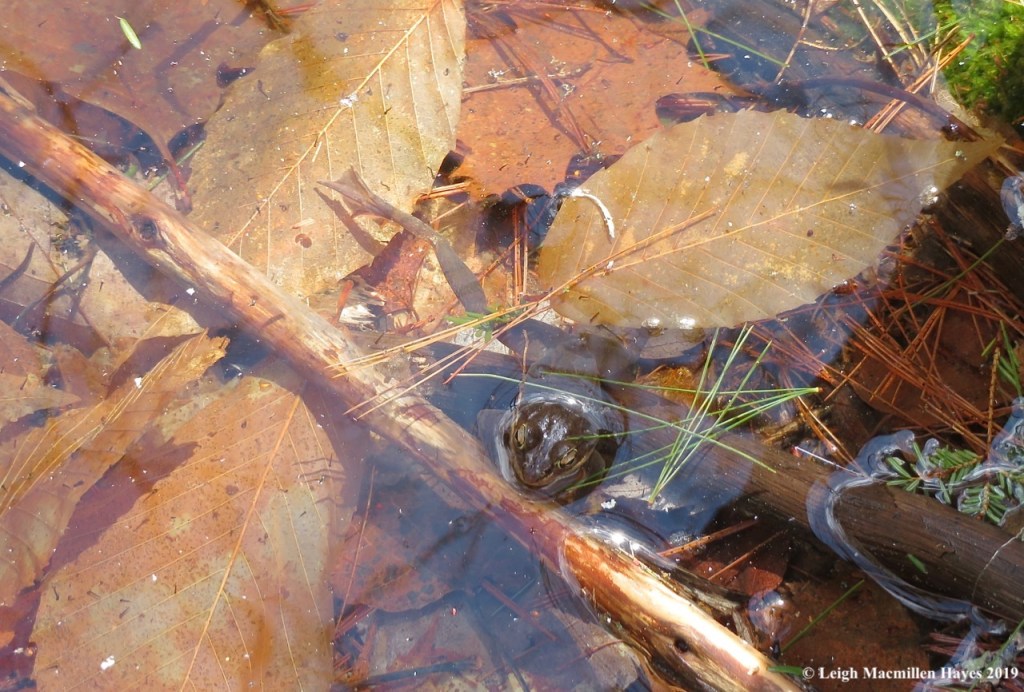
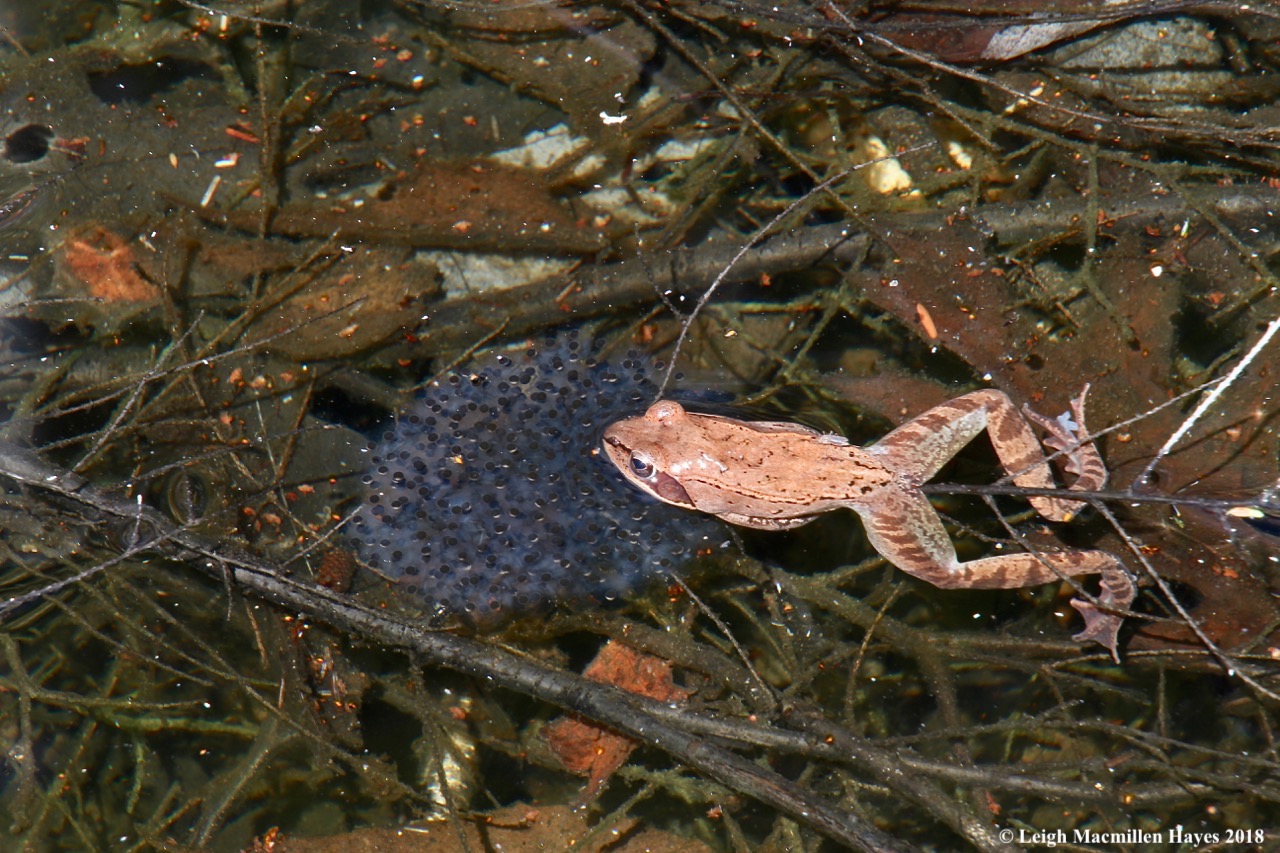
And no sooner has the ice gone out, when upon my approach I hear “Wruck, wruck,” and know that the Wood Frogs have returned to their natal breeding grounds. At first, they dive as soon as they hear me approach. But I stand still, sometimes for up to fifteen minutes, and ever so slowly, one by one, they rise to the surface and float.

It’s the lucky male who has the best “Wruck, wruck,” that finds a mate. He clasps her with his forelegs and as she begins to deposit eggs, he fertilizes them externally.
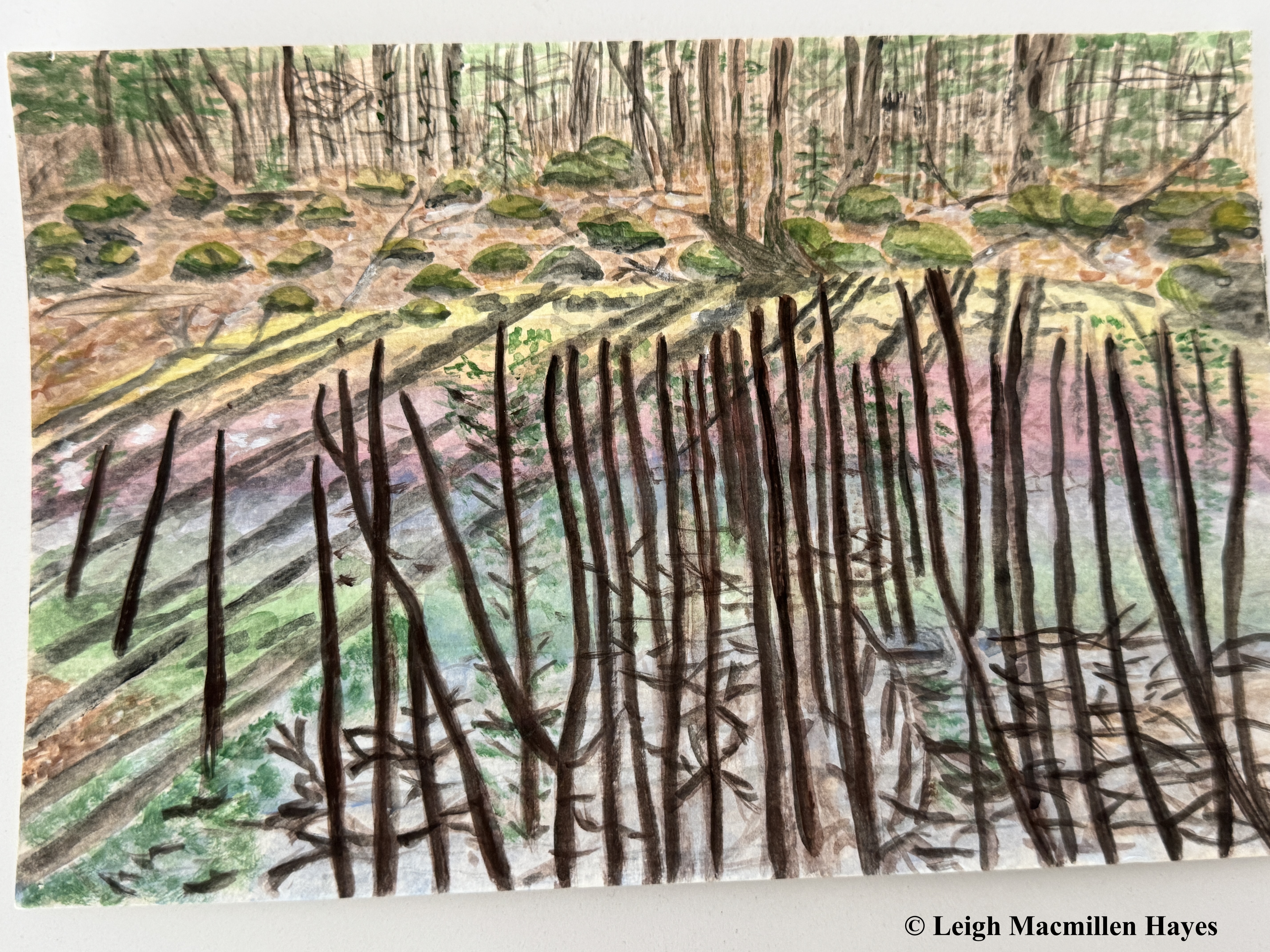
I return a couple of days later, in the late afternoon, and can’t believe my good luck. The pool is coated in pollen and the sun hits it in such a way that I see a rainbow of colors and love how the tree reflections are in two orientations upon still water.

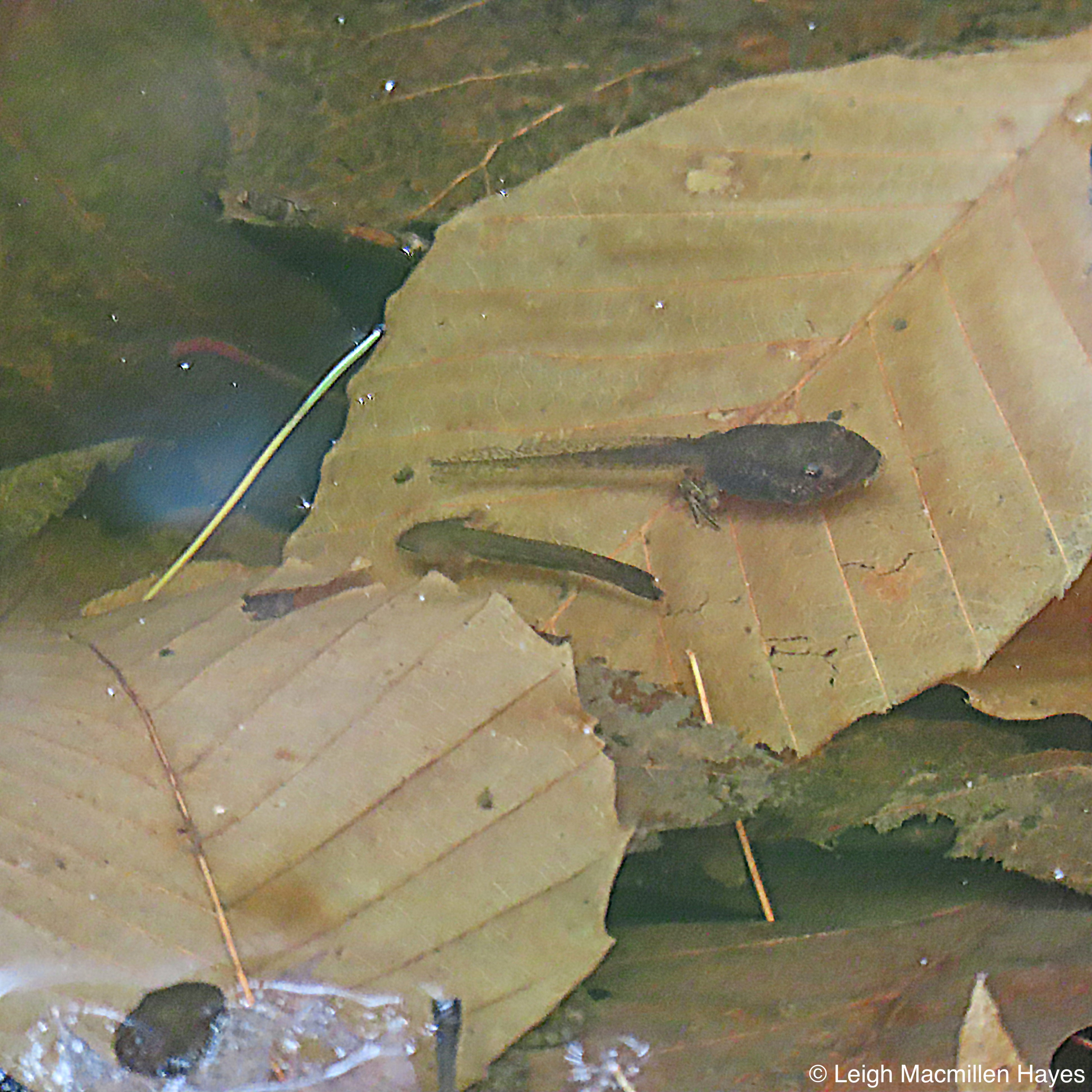
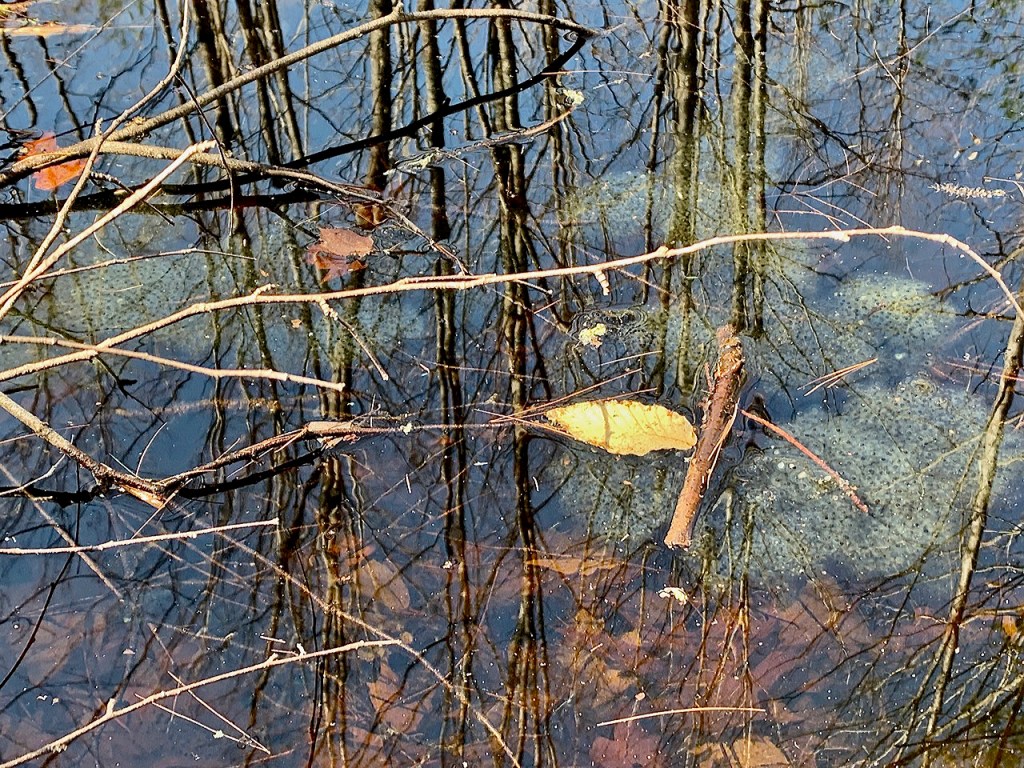
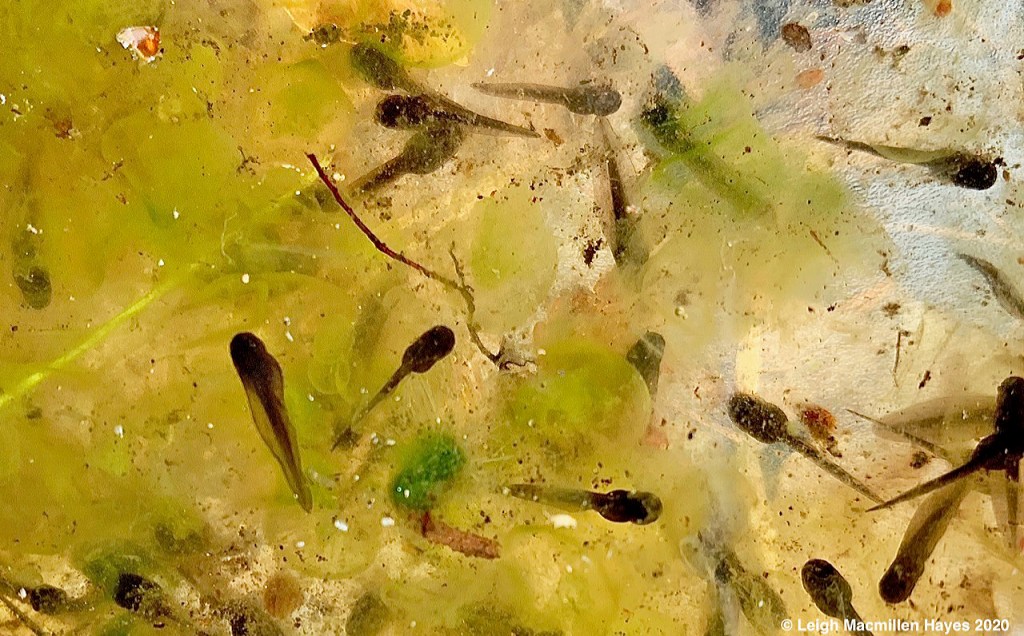
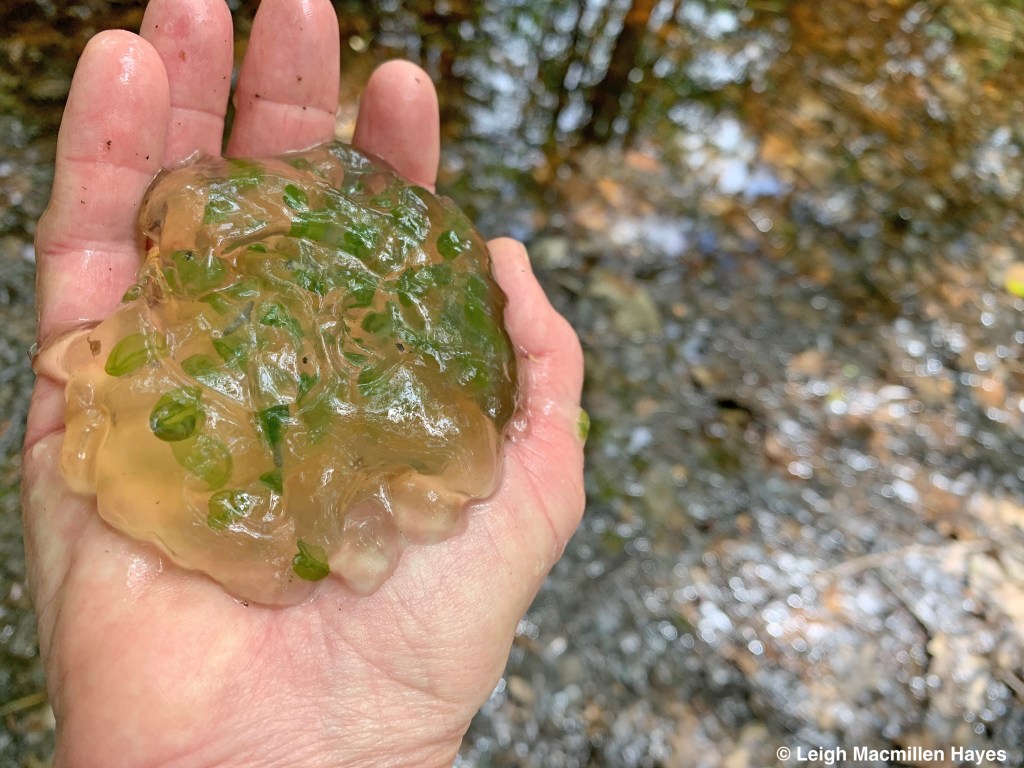
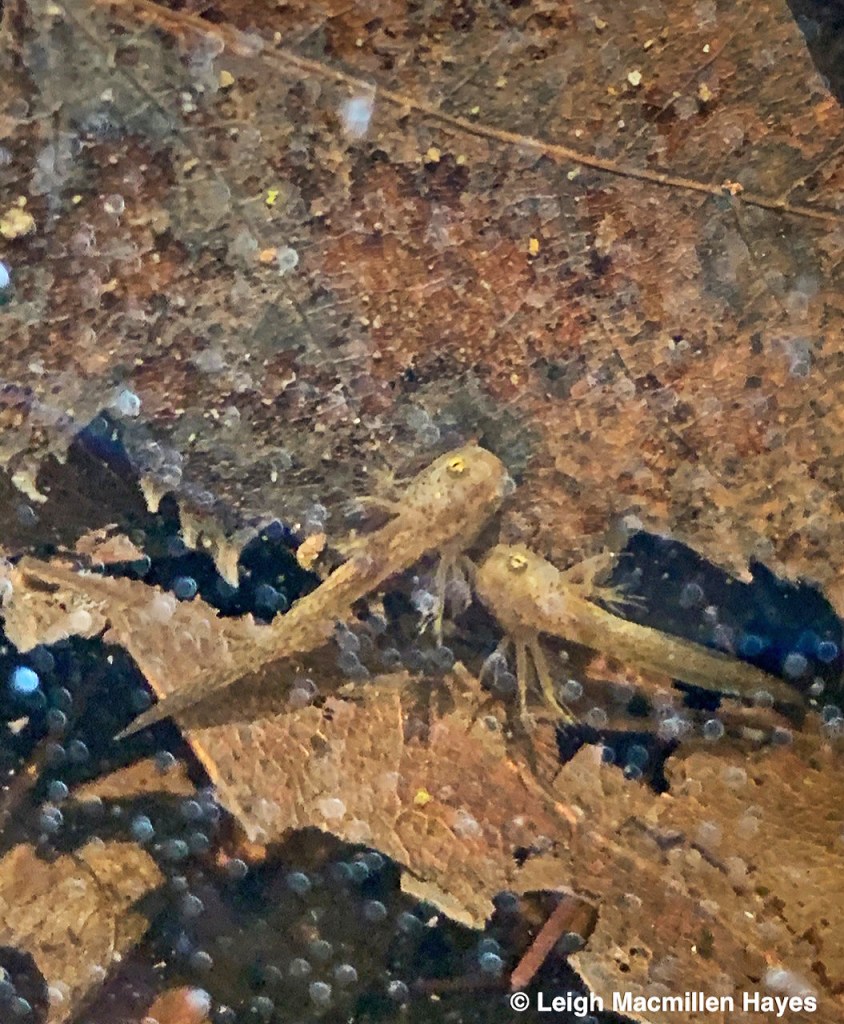
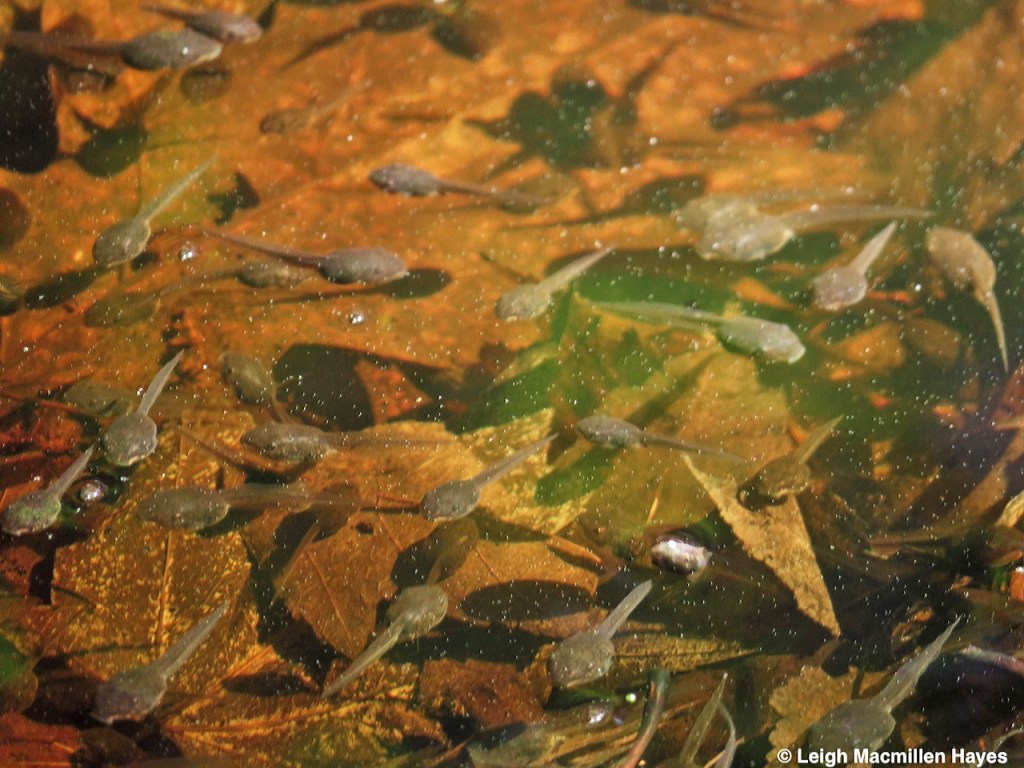
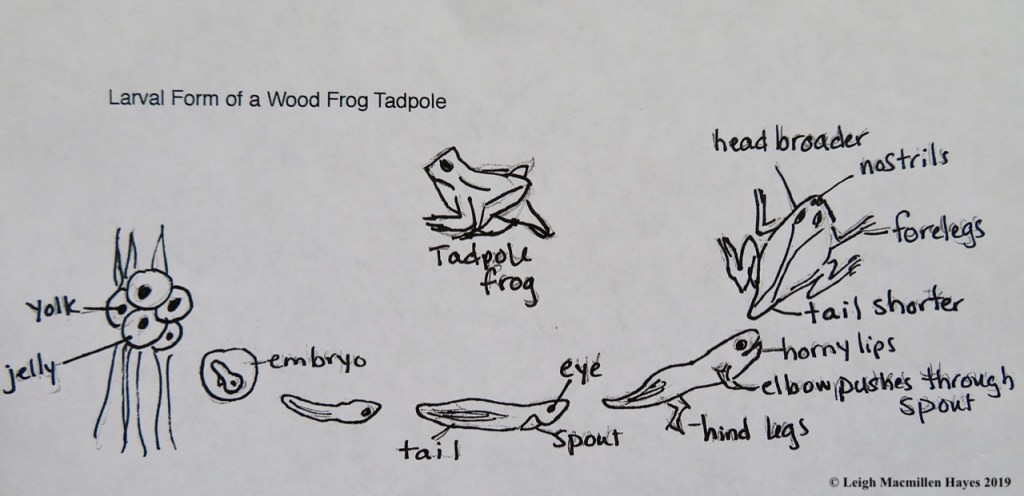
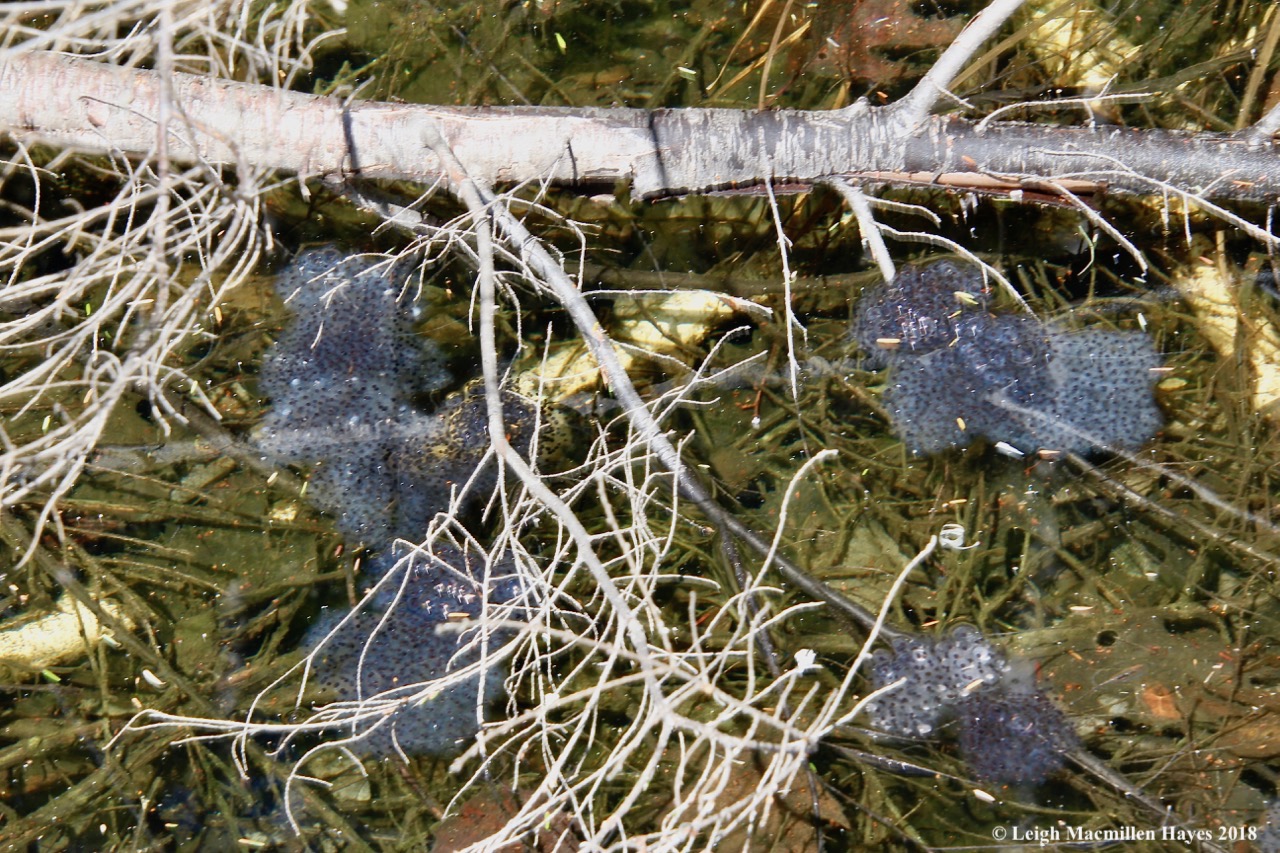
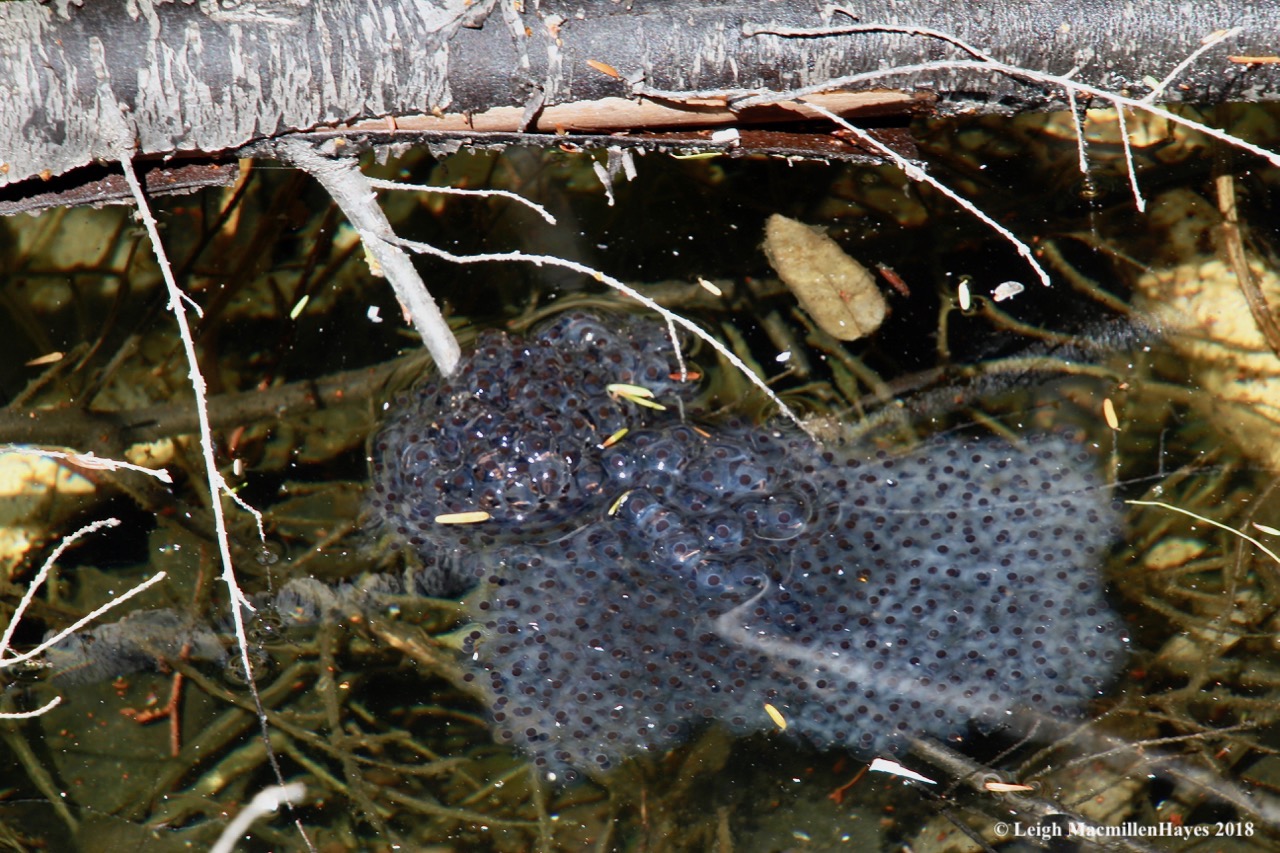
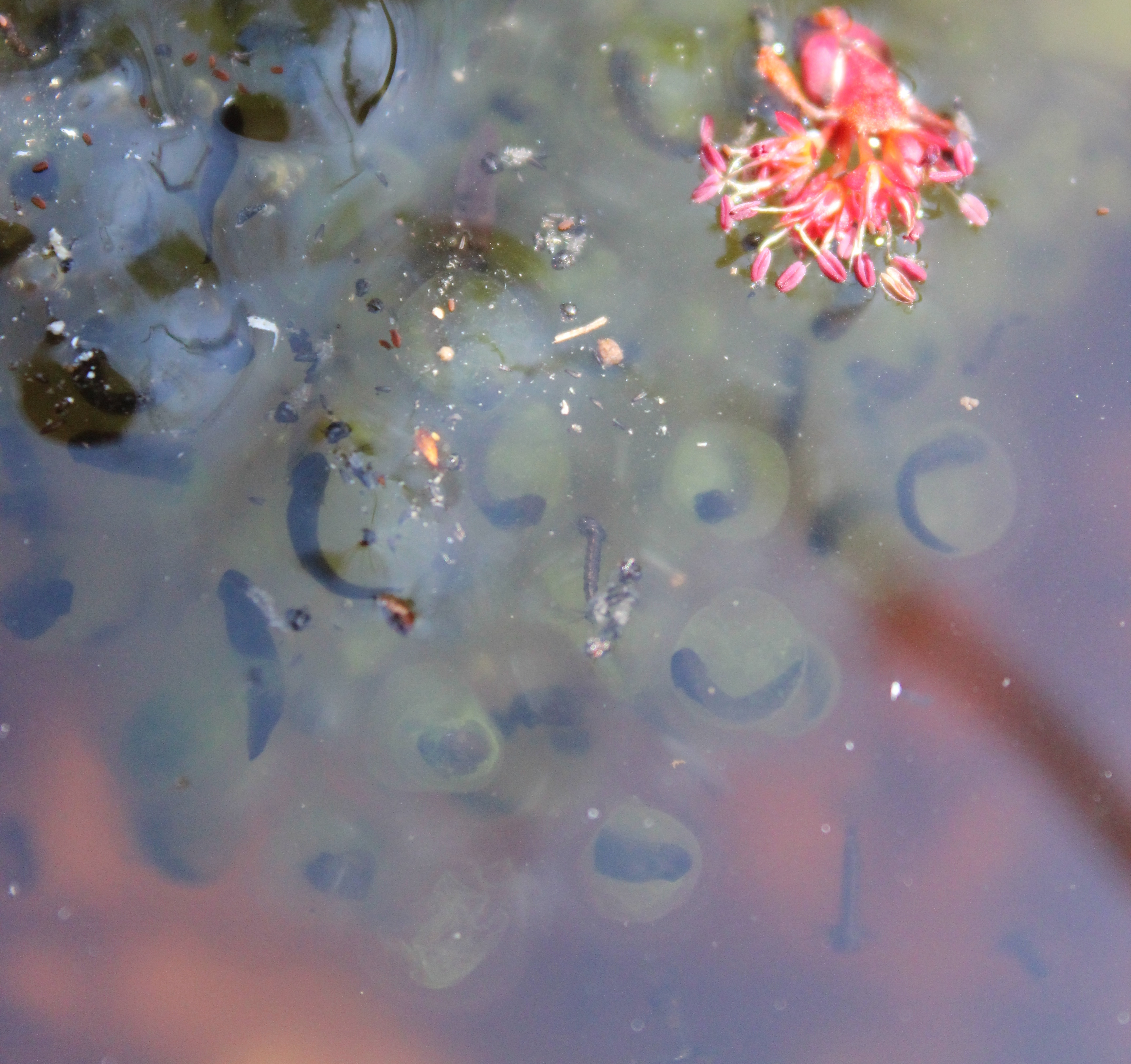
A few weeks later, looking deep into the pool, which isn’t really all that deep, I notice blobs of eggs clustered together in a mass that has a tapioca-like shape to it and notice little life forms moving about in the shape of tadpoles. I feel like a proud momma. The thing is, the Wood Frogs mate, she lays eggs he’s fertilized and within two weeks, the parents are long gone, back to their woodland setting. And so I do feel protective parent–or maybe foster parent–keeping watch and celebrating achievements.
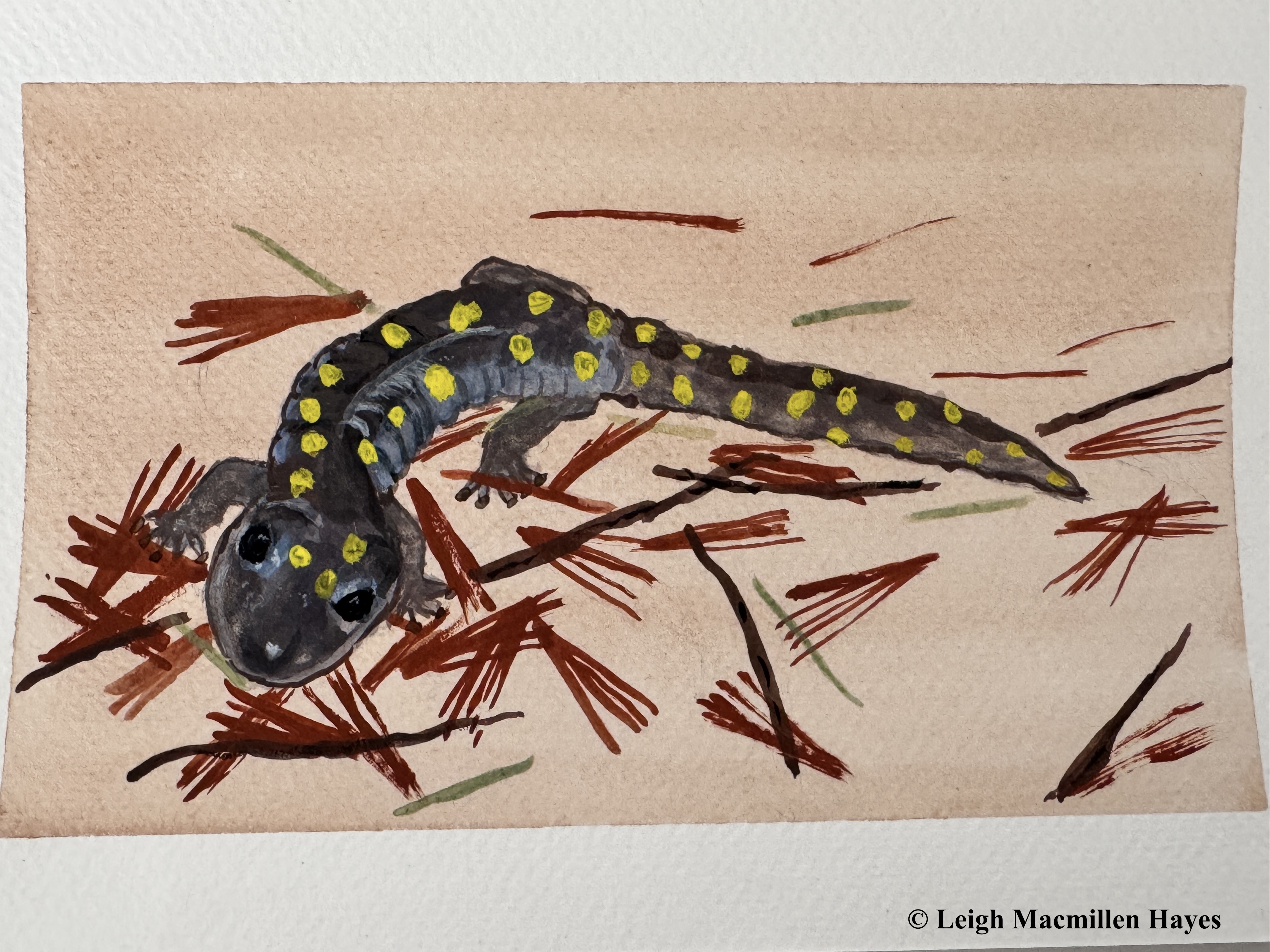
Another life form who uses the pool as a natal breeding spot is the spotted salamander and though I tend to mostly spy them on Big Night, I can tell by egg masses left behind that they have visited.

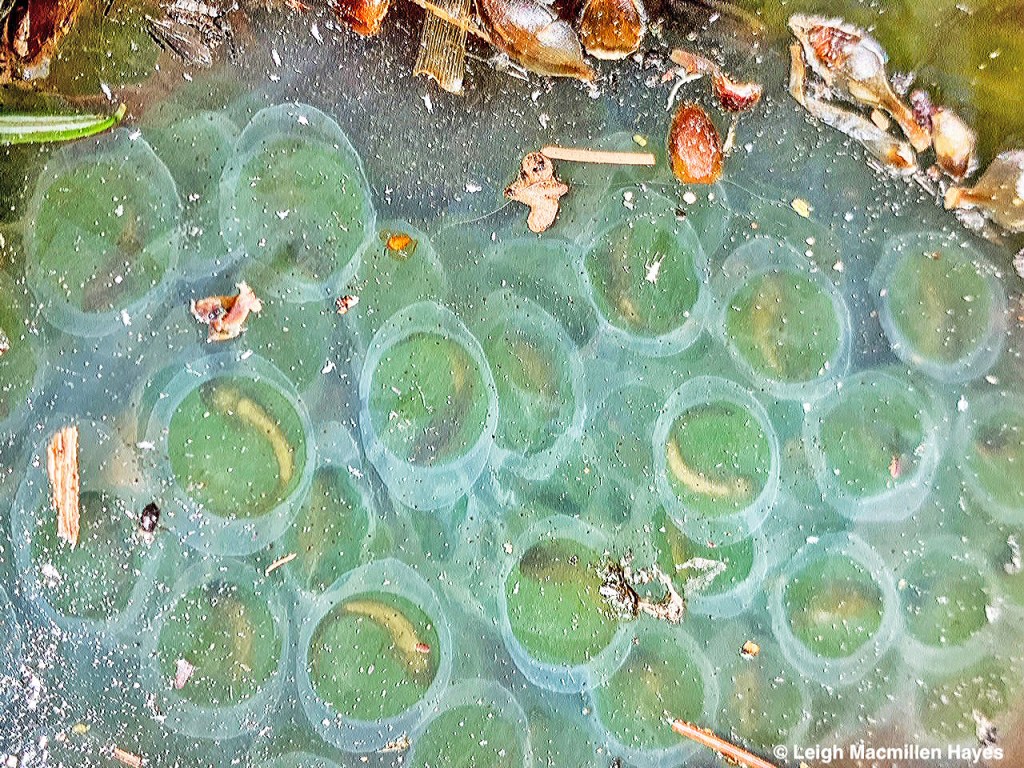
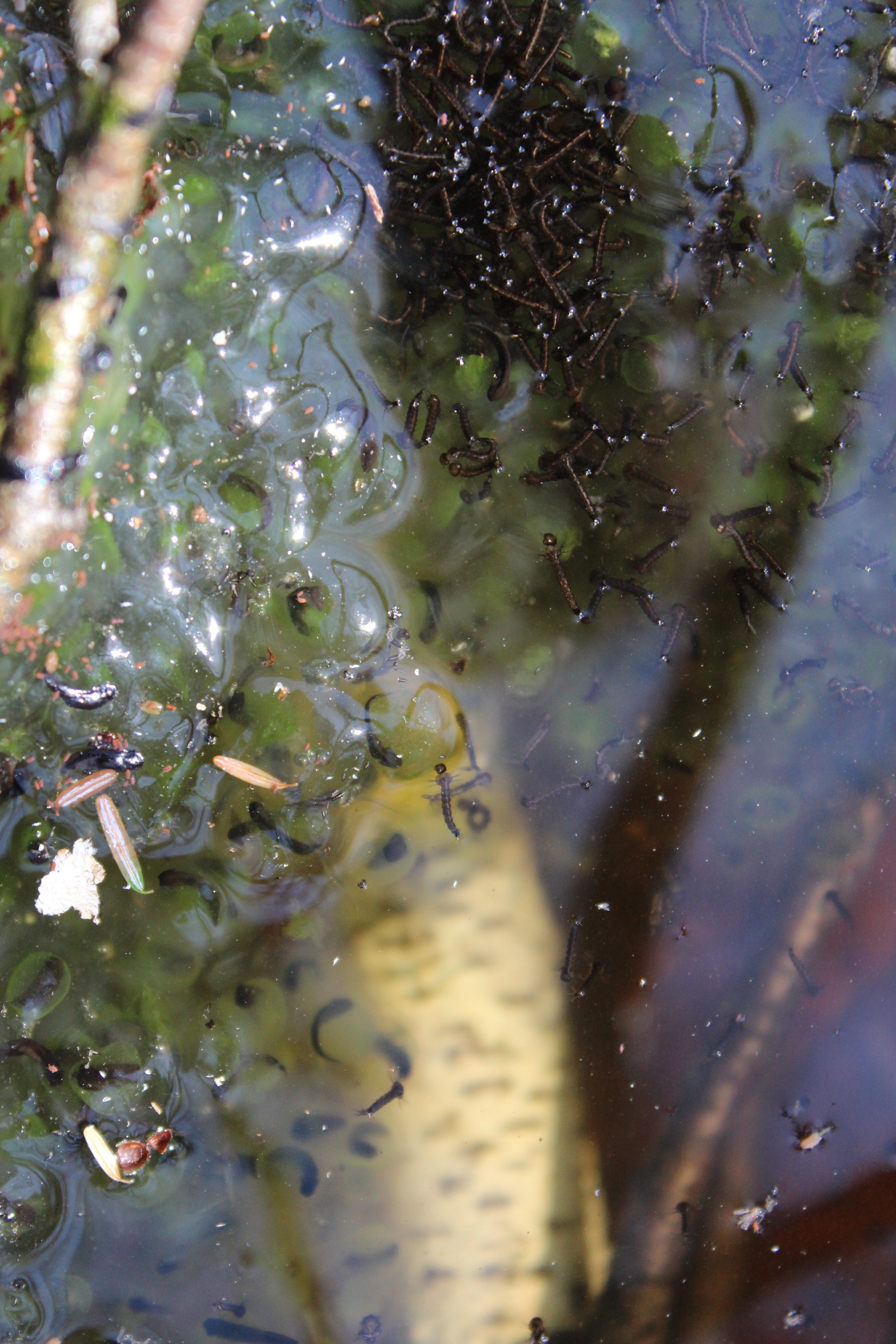
Their egg masses are a wee bit different from the Wood Frog masses, in that they have a gelatinous coating around the entire grouping, so they don’t look so tapioca-like. Mosquito larvae, tumblers at this stage, also wiggle about in the water.

And if I’m lucky, though this has never happened at the pool behind our house, I might see a fairy shrimp or dozens.

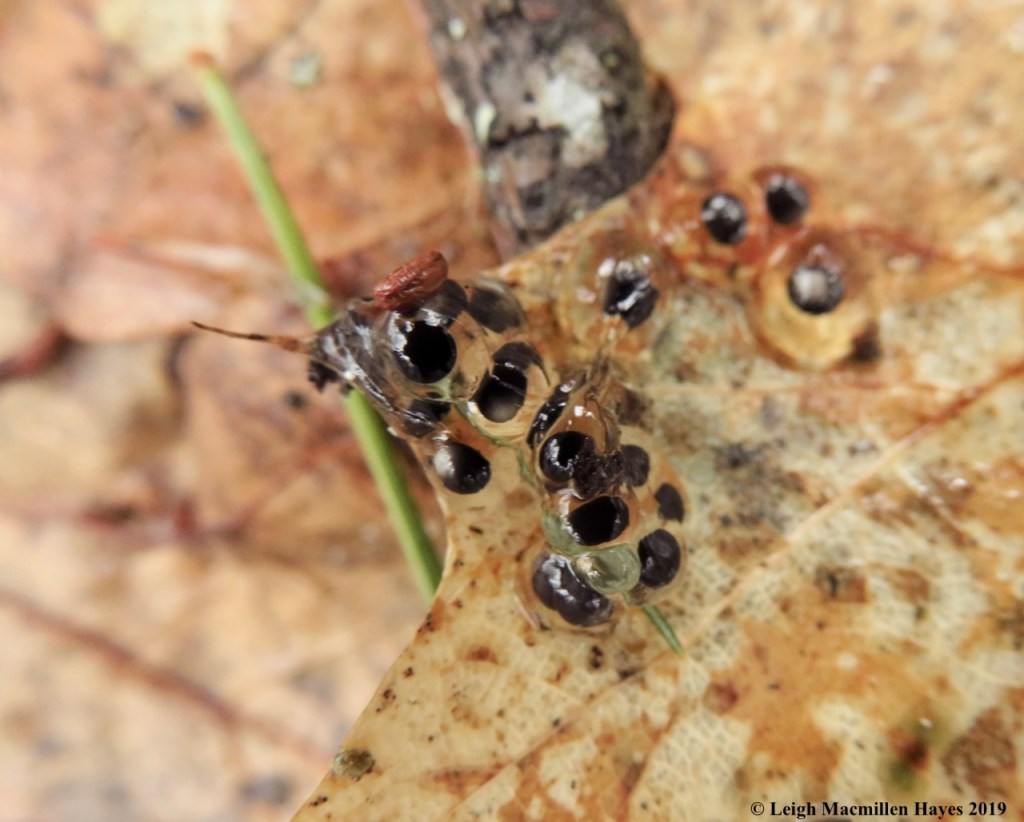
So here’s the thing: 40 Wood Frog egg masses make a pool significant; OR 20 Spotted Salamander egg masses; OR 10 Blue Spotted or Jefferson Salamander egg masses; OR a single, yes one, Fairy Shrimp. And this one is a female, as noted by the sac of dark eggs she carries.

Fairy Shrimp are cool because in order for eggs to be viable, the pool must dry out. And they can survive being dry for multiple years. And in any given year, not all eggs will hatch, thus saving some in the bank for another year or ten.
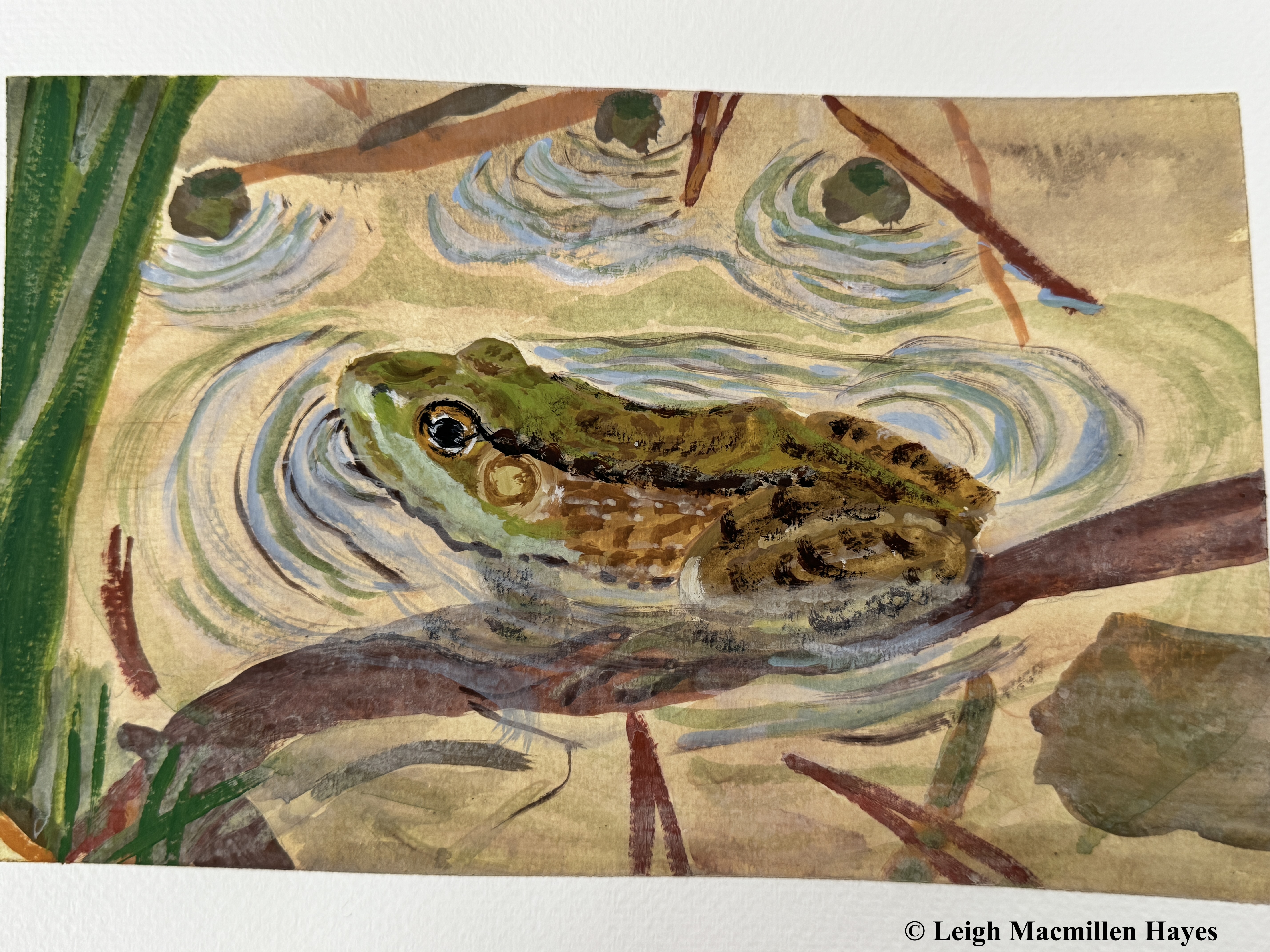
Hanging out by the pool, Green Frogs are always willing to dine on whatever is available. So the Green Frog has dorsal lateral folds (or bumps) along either side of its back that start behind the eyes.

The Bullfrog differs in that the line behind the eye circles around the tympanum (ear drum) and ends.

Here’s the other thing to remember: Males have tympanums larger than their eyes; females are smaller or equal to eye size.

And I like to think of this painting as a Frog-ersation.

This week I actually framed two paintings to send to friends, the Bullfrog being one of them.

There. I did it. Survived the art show.

As I bring this to a close, I realize there’s one more painting I should add to the collection, but I’ll save it to paint another day.

Thank you for marching into the vernal pool with me. I hope you are glad you did.

One Night, Two Nights, Three Nights…

It was a dark and dreary night. Repeat. It was a dark and dreary night. Repeat. It was a dark and dreary night.

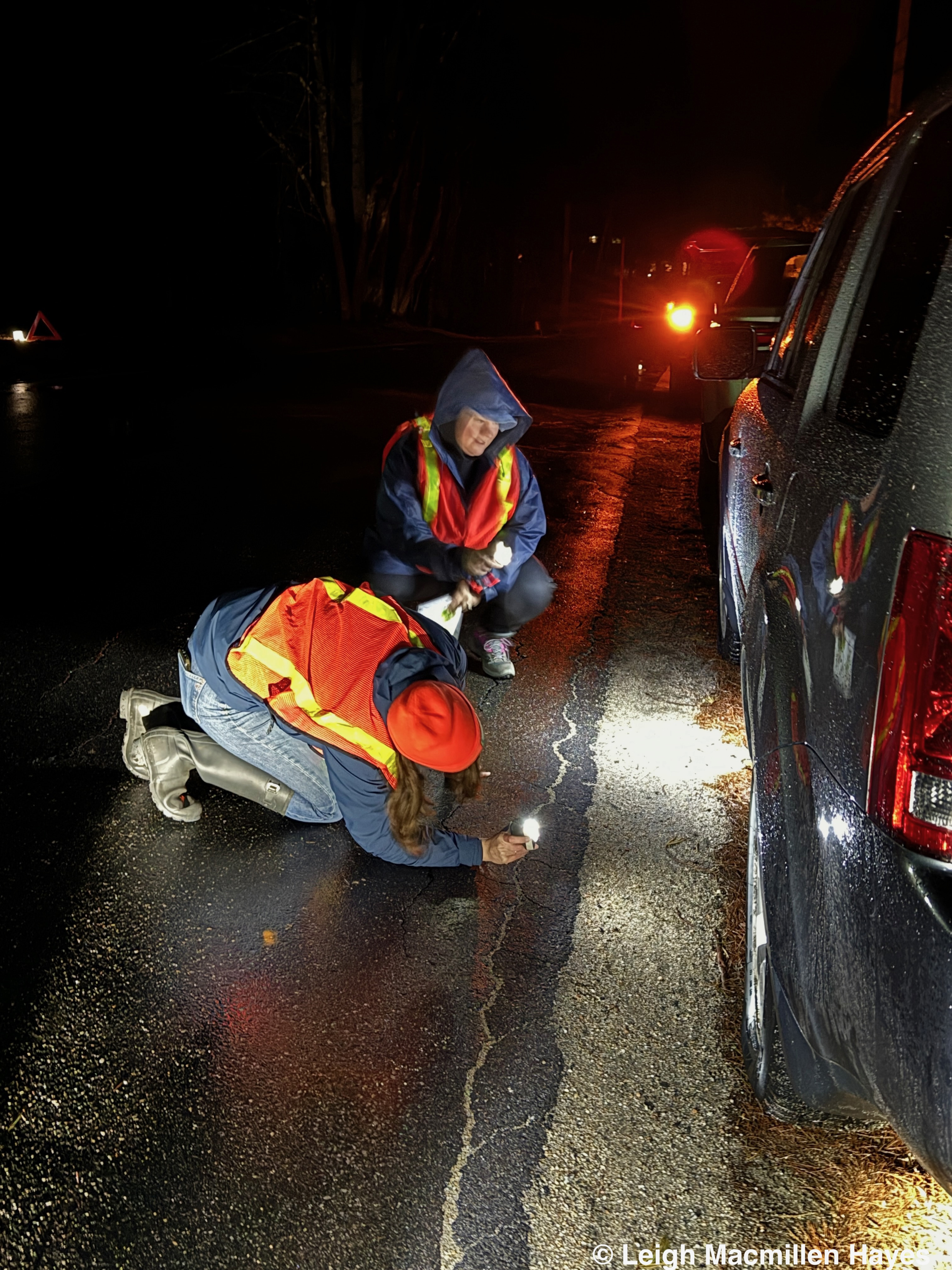
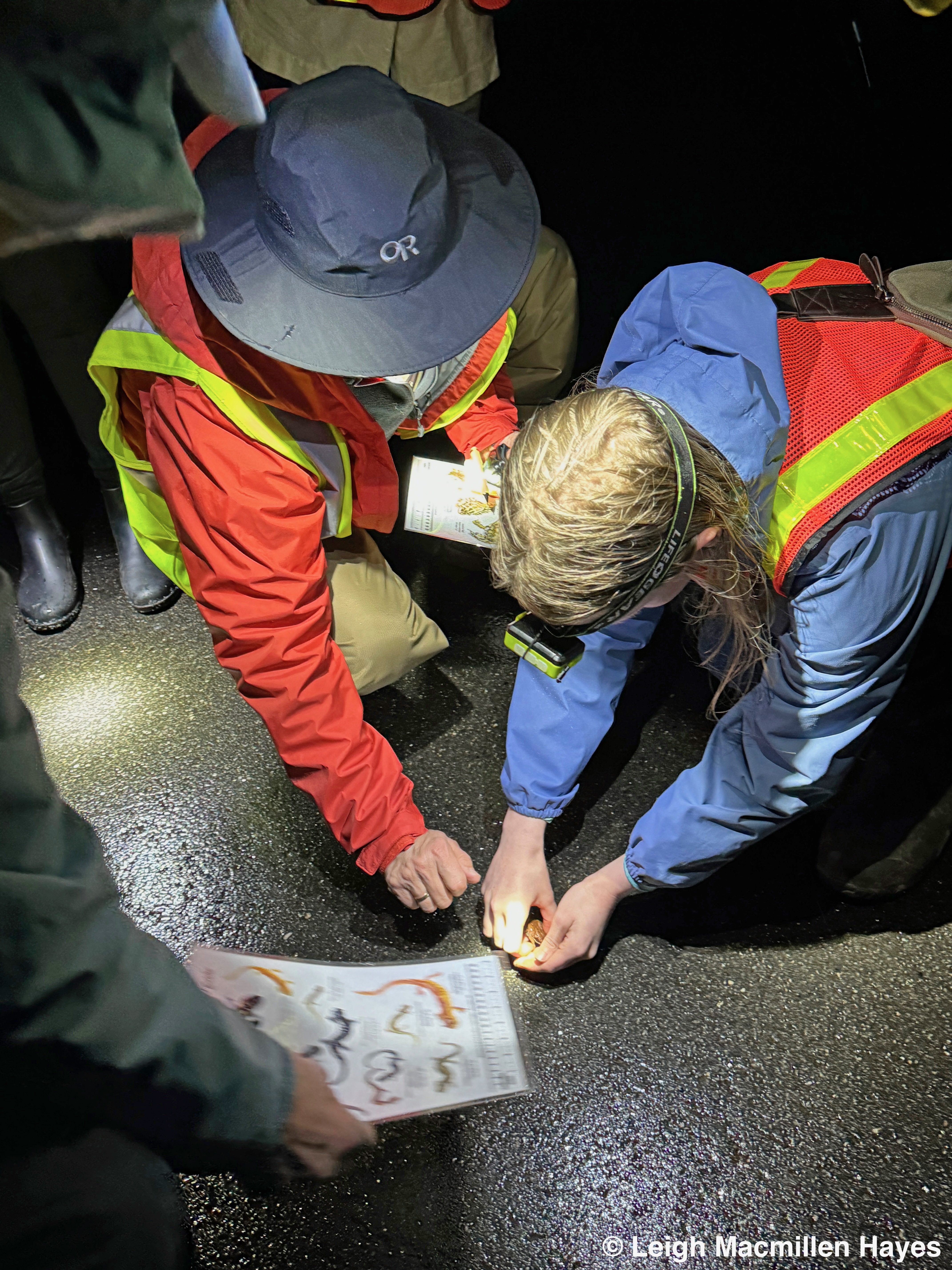
While most folks would choose to stay inside curled up by the fire while drinking a hot toddy, a number of intrepid community scientists ranging in age from 3 to 70+, donned rain gear (even waders) and reflective vests, cleansed hands of soap and moisturizer, grabbed flashlights and headlamps, and met at 7:30pm in the pre-determined locations.

Their mission each night was the same: Help us help frogs and salamanders cross the road to avoid getting squished by vehicles.

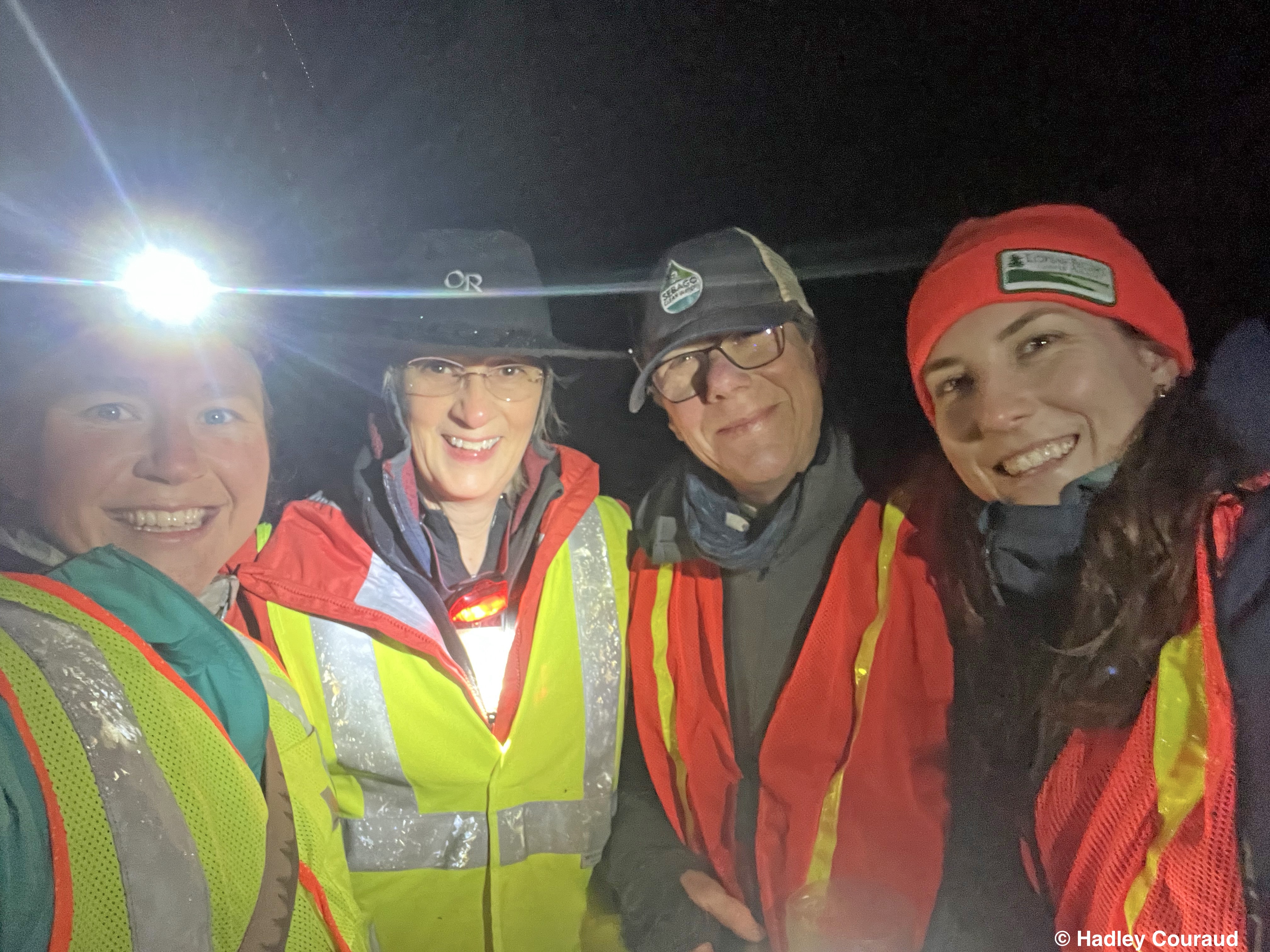
The names and ages of participants changed each night, but the leadership remained the same. As Maine Master Naturalists, Dawn Wood (who took the lead on organizing these events and recording data–a daunting task in the rain and dark and with people spread out and shouting numbers and species at her), Hadley Couraud, and I led the way, all three of us providing information about the different critters and their behavior as the evening progressed. All of this was under the umbrella (pun intended–though no one actually had an umbrella) of Loon Echo Land Trust in Bridgton, Maine. Thank you to Maggie Lynn for creating the sign-up forms, advertising the events, and keeping us posted.

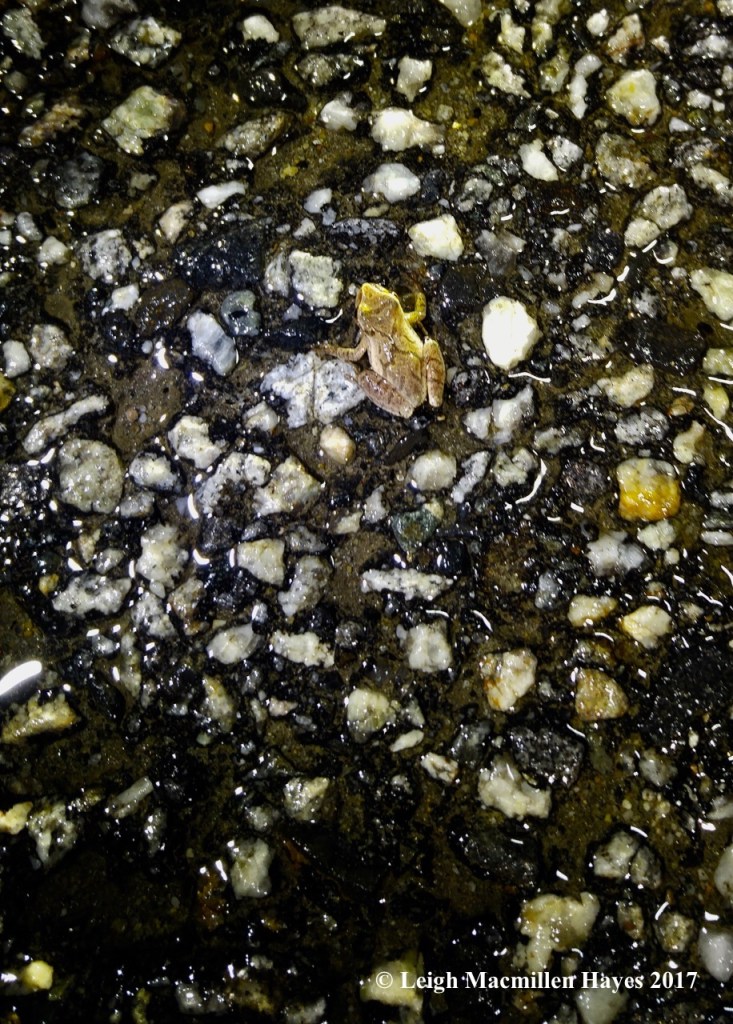
The technique was easy. Once we reached the location of the vernal pool, to which amphibians return each year from their upland habitat, we started scanning the road with our lights. It’s amazing how the mica, small rocks, sticks, and lichens can fool us.

It’s equally amazing how much tiny Spring Peepers resemble small rocks. And how stone cold they are when we lift them up. And how they’d rather stay in our hands than return to the cold earth.

We always noted the direction in which they were headed and that’s the side of the road we took them to, even if it didn’t make sense to us. They knew what they were up to and we were there only to try to keep them alive so they could canoodle for a few nights before heading out of the pools and back to the forest.

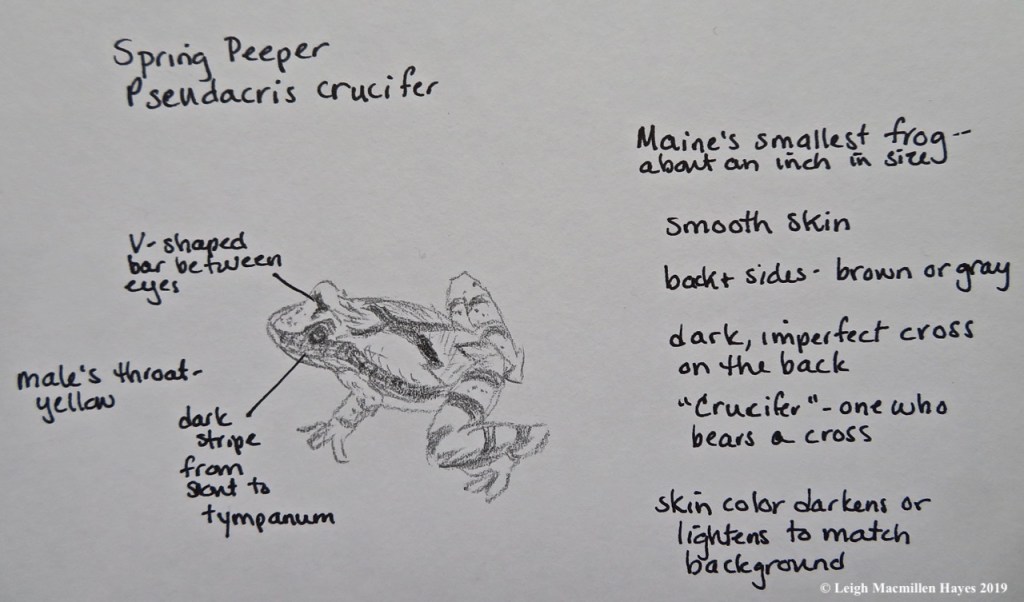
Meet a Spring Peeper up close and personal. Note those little toes, which are actually suction cups of a sort, the better to climb vegetation, especially at the edge of or in a wetland, and then to sing their high-pitched songs that announce the males intention of finding a date. Because of the toe pads, peepers were originally thought to be closely related to Tree Frogs but they have since been reassigned as chorus frogs in the genus Pseudacris, which comes from the Greek pseudes (false) and akris (locust) (think of our Dog Day Cicadas and their raspy love songs in the summer).

The species name, crucifer comes from the Latin cruces, meaning “cross,” so named for the dark X or cross on the frog’s back.

A really cool thing happened that first night. A teenager who lived in the neighborhood where we were scanning the road came out to ask what we were doing. And then he joined us, eager to learn as his family had recently moved here from out of state.

After a Spotted Salamander was saved, he ran home to get his camera and stayed until we finally departed. We had hoped he’d join us the next night at a different location, but wonder if he stayed home to help those on his road instead. Whether or not he did that, we loved his enthusiasm and desire to learn.

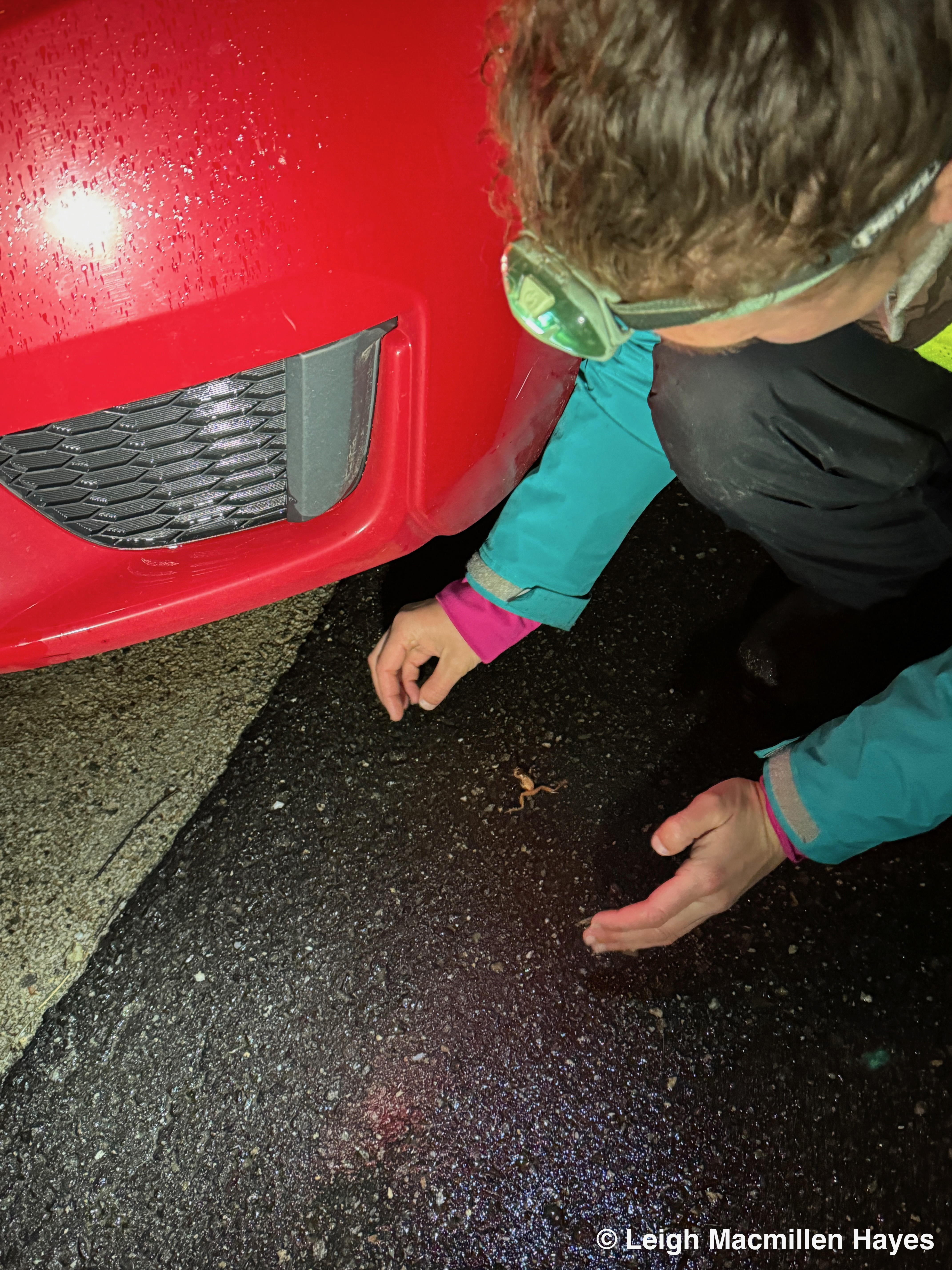
It soon became clear on the first night that we’d parked in the wrong spot, however right it may have seemed because we could get our vehicles off the road. As people started to leave, we all did a check underneath from all angles to make sure tires would not run over any critters by accident.

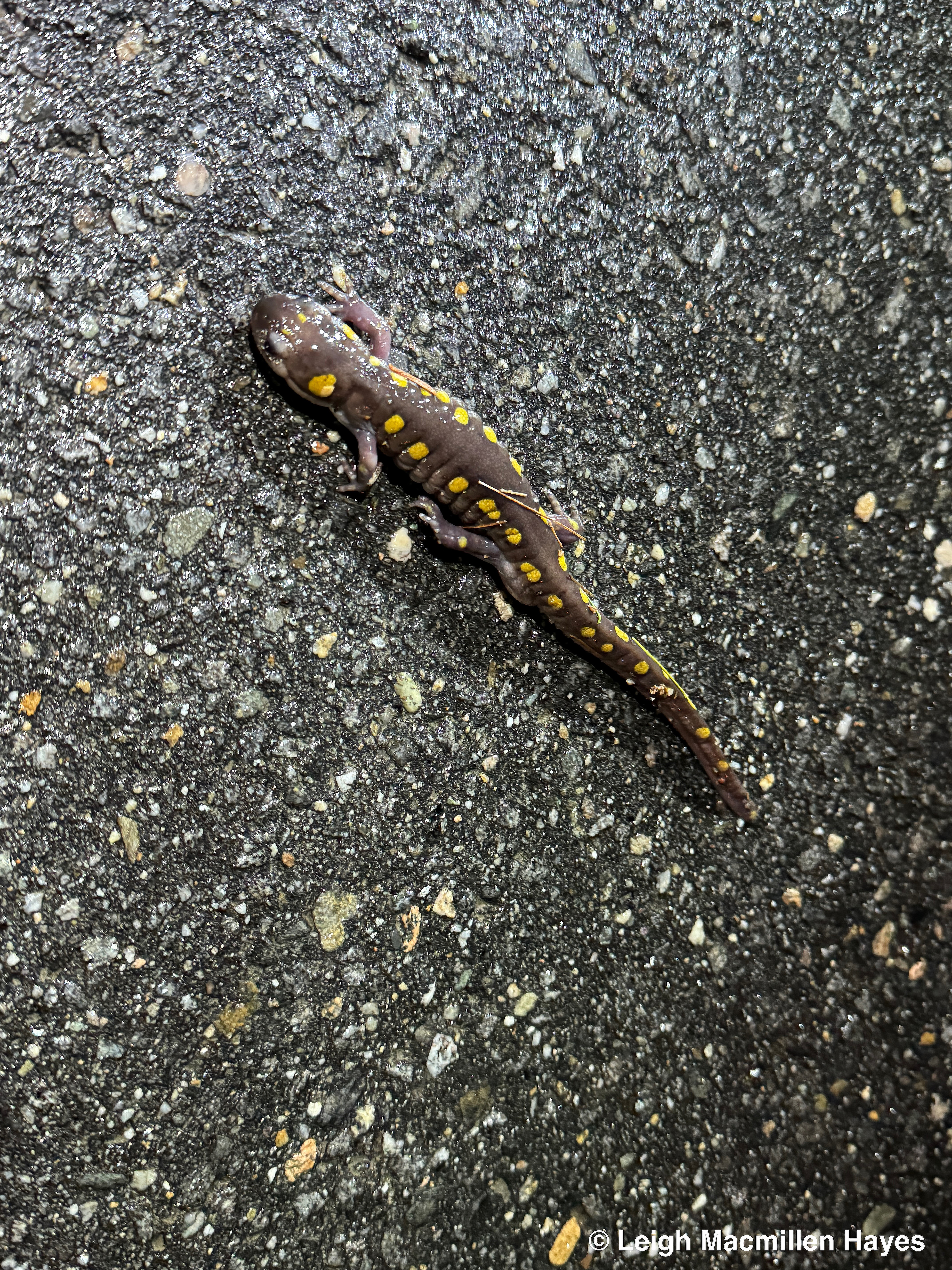
And sure enough . . . out crawled a Spotted Salamander. Of course, photo calls came first, and then help was offered to get to the other side.

Even teeny, tiny Spring Peepers had to be saved. And we all commented that we didn’t want to know if we did happen to drive over something. Added to that, we noted most of the vehicles only made it a few feet down the road, before the driver stopped and another amphibian was saved. That and the driving was rather erratic since everyone had gained a new understanding of how much action there is on a rainy night.

The second night found us in a different location that we actually walked about three quarters of a mile to reach, thus lowering our chances of hitting the critters right near the pool which is located directly beside the road, with a vast wetland on the other side of the street.

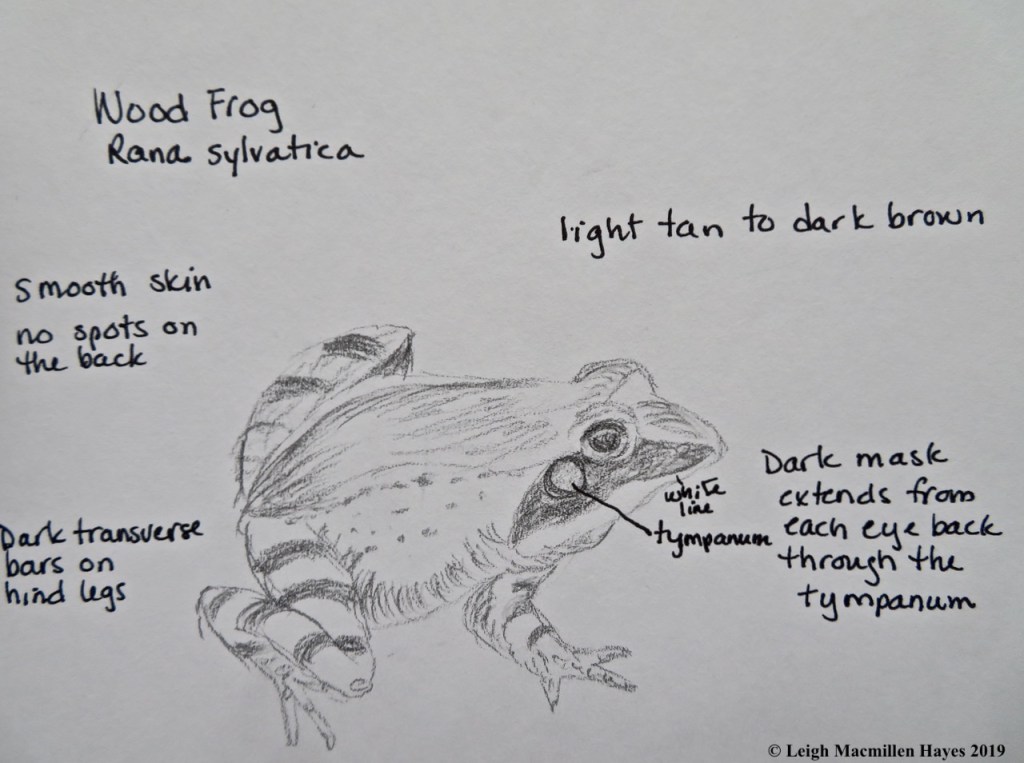
Wood Frogs, with their dark masks, typically headed toward the pool, where they’ll spend the next two weeks or so, singing for a mate, embracing her in a technique called amplexus, fertilizing her eggs, and trying again and again, until it’s time to hop out and head into the forest for the next 50 weeks.

Because it was dark, the Wood Frogs didn’t seem to mind our presence too much. Some still sang, or rather “wruck, wrucked” their love songs, and others floated in anticipation or chased each other in hopes of finding a female. We even noted a few egg masses clinging to branches, telling us this pool had been busy for a few days already.

Part of the fun in hosting such an event is sharing it with other people who might not typically head out the door after dark. And then seeing smiles on faces as they encountered the critters for the first time.

A cool find on this night was an Eastern Newt crawling across the road. Perhaps because the pool dries up each summer, this one had overwintered either in the wetland or even the upland before returning on this particular night. It felt like an unusual find on the road, though from what I’ve read, it’s not rare. I have seen many Red Efts, the juveniles of this species, their bodies squished by vehicle tires, on this very road in the fall.

Yet again, it was the Spring Peepers who garnered much of our attention.

And some Spotted Salamanders, though not as many as on the first night.

That said, we were thrilled with each find. And found an easy way to help them was to place the laminated ID card created by Maine Master Naturalist Michael Boardman under their bodies. Now don’t you think this guy is crawling onto the card in search of his ID?

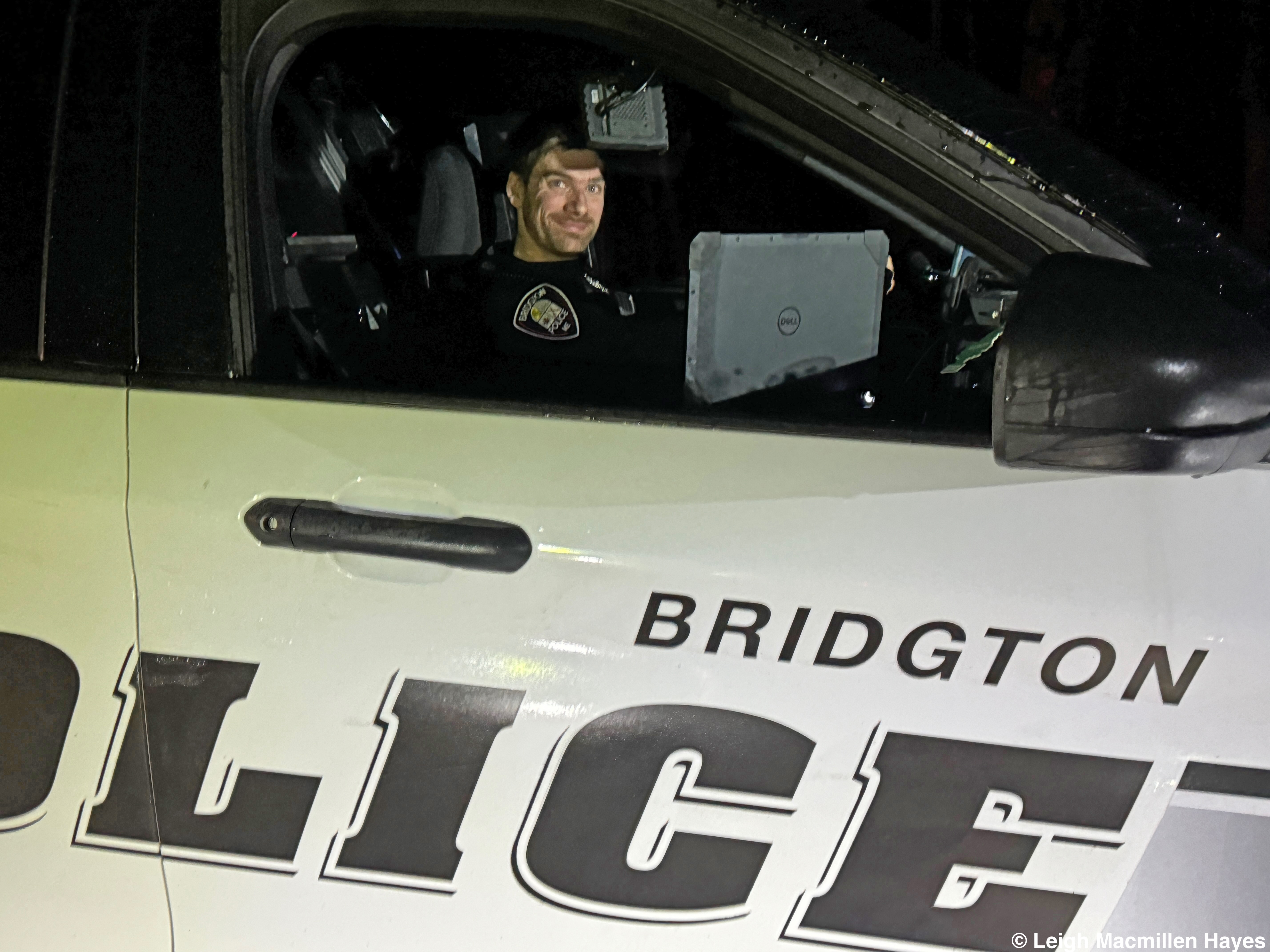
As we prepared to walk back to our vehicles that night, Officer Hammond of the Bridgton Police Department happened along. No, he wasn’t going to arrest us for J-walking, though that’s essentially what we did. He was just stopping by because we’d ask Maggie to let the department know of our whereabouts in case anyone wondered what we were doing, but didn’t slow down to ask us. Traffic was high each of the nights. I’ve been doing this for about 22 years, and this year I felt like we had the most traffic. Most drivers were considerate when they saw the cones (courtesy of Hayes Ace Hardware) and vehicle flashers, plus our headlamps and flashlights. And we were all good at yelling “CAR” each time we saw approaching lights, but there were a few who were annoyed and one even had to lean on the horn after passing through the section of road we walked upon.

Night three was the warmest, with temps in the 50˚s and little to no rain. In fact, by the time we were heading home, the moon and stars were visible.

But still, the critters crossed and once again we showed new participants of all ages how to ID them and then help them cross the road.

On this final night, we had several teenagers along for the journey. Two of them had actually driven past us on the first night, slowed down, rolled down the window, and asked if we were okay. When we showed them a photo of a Spotted Salamander, they went home and signed up for a chance to help. Their enthusiasm was incredible.

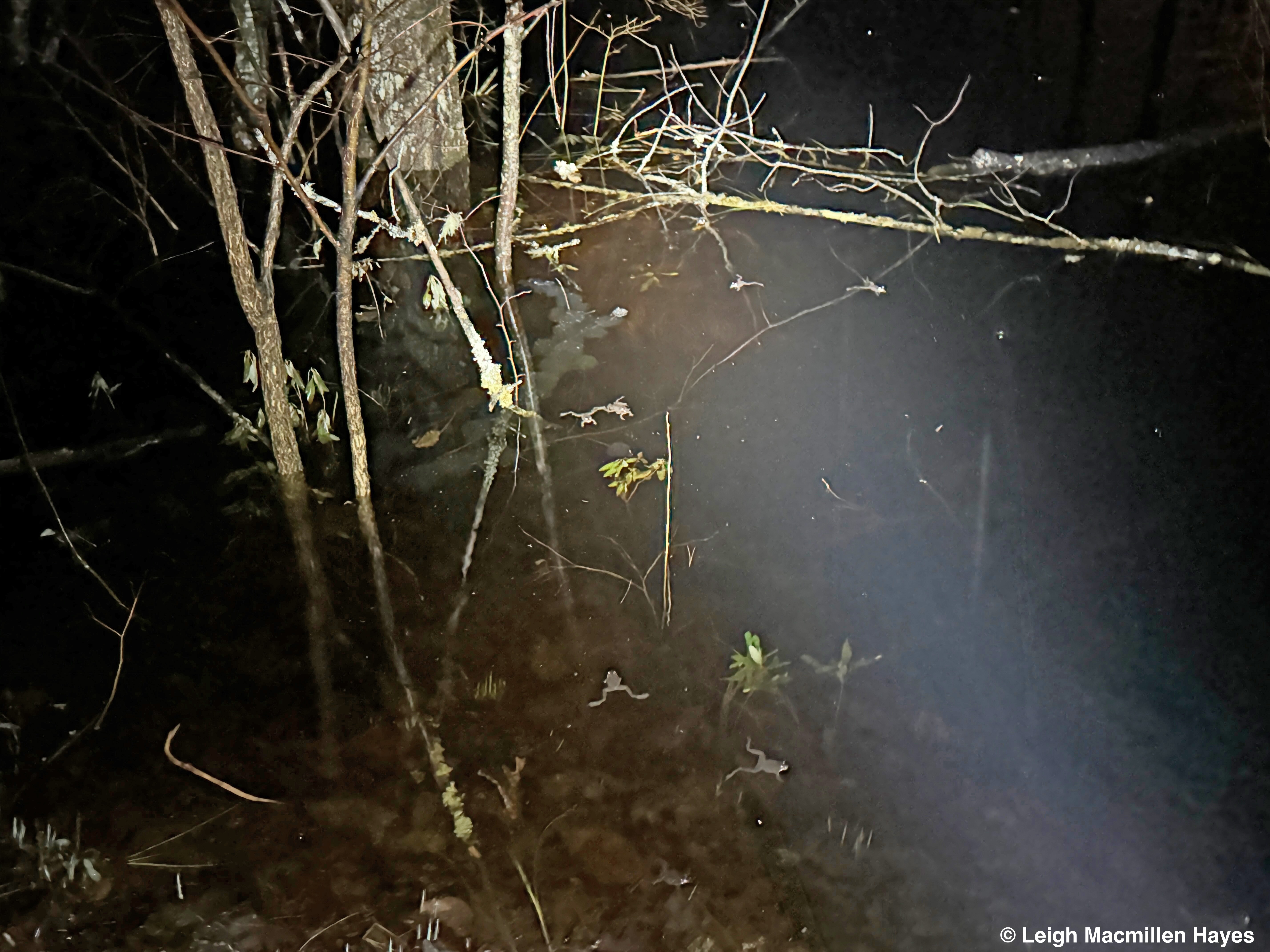
We peered into the pool again and were amazed at the number of swelled Wood Frog egg masses in their communal cluster–as is the Wood Frog fashion. perhaps to take advantage of being warmer when crowded together, and thus evolve quicker. It’s the swelling that told us they’d been laid a few days before as initially their egg masses are maybe the size of a golf ball, but swell as they absorb water over the days to come.

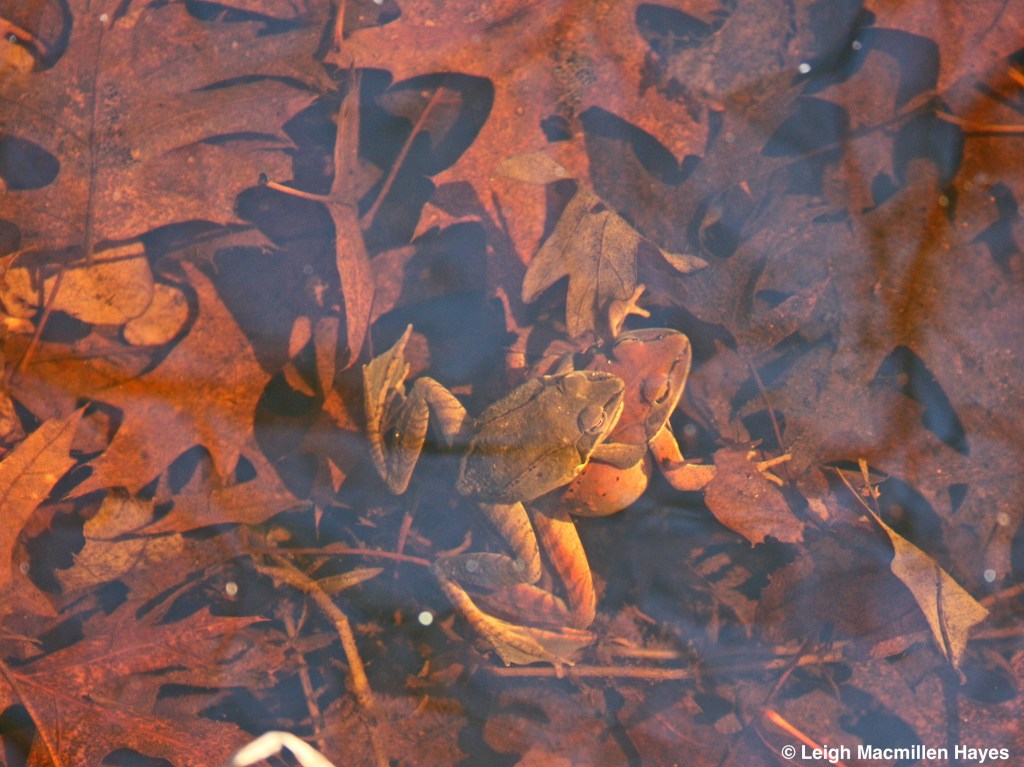
The action was constant and I encourage you to see how many frogs you can find in this photo. It’s almost like the Hidden Picture of Highlights magazine, or Where’s Waldo?

And twice we spotted Spotted Salamanders swimming in the pool, though I really wanted to see a “congress” of salamanders conducting their mating dance. One of these nights.

As we walked out on the third night, about ten feet from each other we spotted two sets of Wood Frogs in amplexus! They couldn’t even wait to find a room, or pool, for that matter!

We quickly, if awkwardly, helped them off the road because we heard that familiar “CAR!”

One night, two nights, three nights . . . turned into one incredible and extended BIG NIGHT migration.

Our results:

April 10, 2024
21 Spotted Salamanders
40 Spring Peepers

April 11, 2024
7 Spotted Salamanders
102 Spring Peepers
75 Wood Frogs
3 Red-backed Salamanders
1 Eastern Newt

April 12, 2024
13 Spotted Salamanders
268 Spring Peepers
62 Wood Frogs
4 Red-backed Salamanders
2 Green Frogs
1 Eastern Newt

For a grand total of 599 critters helped to the other side of the road. We saw a number of squished ones and had to constantly remind ourselves that they will become food for others.

Thank you to the 39 people who joined us during these three nights--you were incredible and we loved hearing stories of how you want to share this with other members of your family and you are already planning to join us next year.

To go out on a rainy night and help amphibians cross the road is special–for the critters and for us. Thank you to Hadley, Dawn, and Maggie–for being the cool swamp critters that you are! And for letting me be part of the club.

BIG NIGHT 2024–one for the books.

My Reawakening

In any given year, 
I've said good-bye
to you, 
my dear vernal pool 
in late May 
or early June. 
But this year 
of Twenty-twenty-three
has been like no other
as you've retained water
beyond your ephemeral season.
When upon July 14
I peered into 
your shallow depth,
I was greeted
with frog legs
growing upon tadpole bodies,
a sight not witnessed
in your waters 
ever before. 
In years past
miniature amphibians
had to mature quickly
or become scavenged tidbits
supplying energy
to insects and birds,
but this year, 
the Wood Frogs 
and Spotted Salamanders
who share birthrights
of your pool
took their time 
to metamorph.
As I stood quietly
beside you,
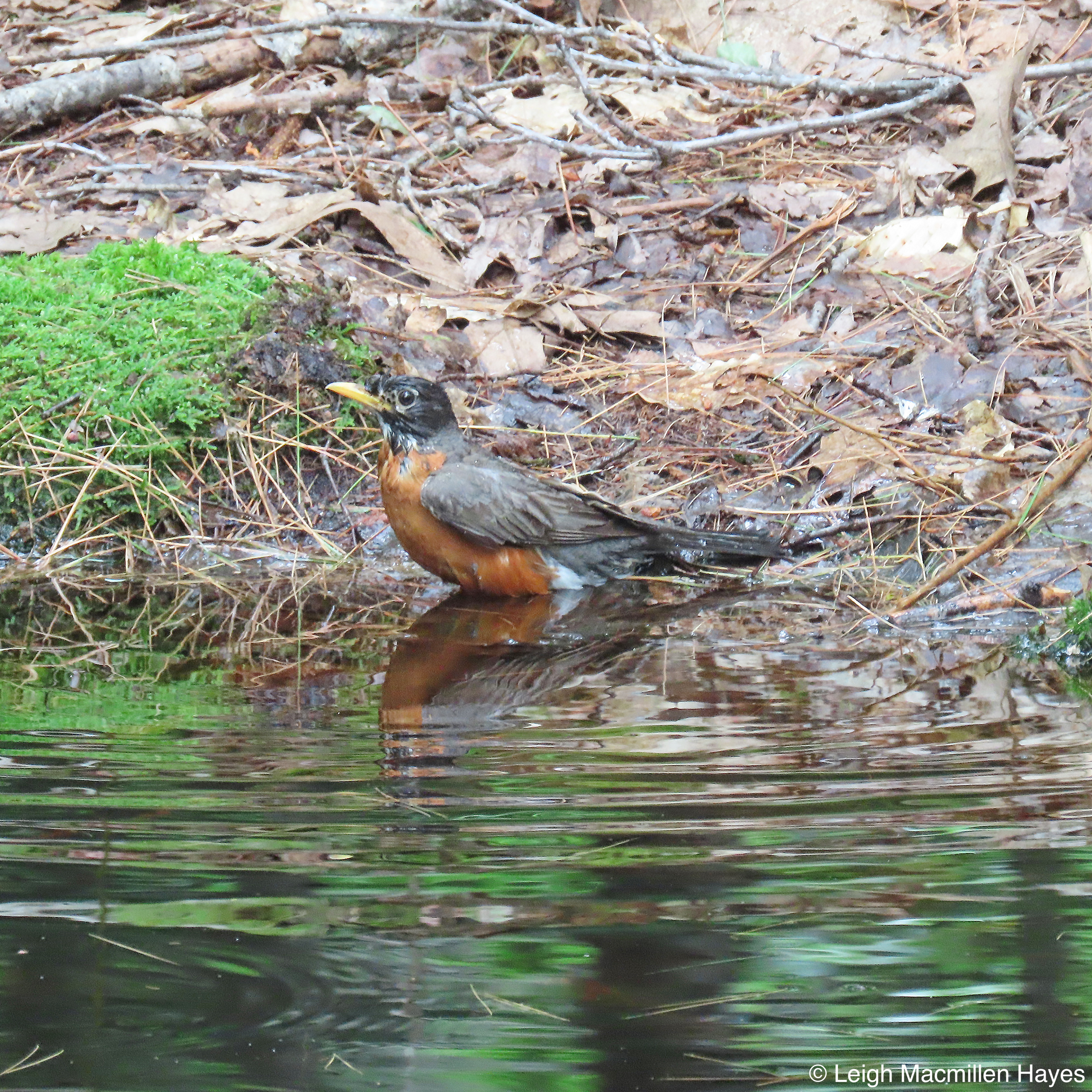
you invited an American Robin
to land on the opposite shore
and I could not believe
my good fortune 
to watch its behavior. 
Much to my amazement,
and despite my presence, 
for no matter how still 
I tried to be 
I still made noise,
the Robin
splished and splashed
in frantic birdbath form. 
It paused
and looked about . . . 
Then jumped in again
for a final rinse 
from your warm waters
before taking time 
to preen. 
Finally cleansed,
the bird posed
upon a moss carpet
and then 
we both took our leave
fully sated from your offerings
of that day. 
When next I visited you
on August 9,
wonder accompanied 
my approach
and I knew 
sudden movements
and resulting ripples
meant I would not be
disappointed. 
Below your surface,
I spied a live frog,
its hind legs formed 
and front feet developing. 
And there was another,
and another, 
and more legs,
and sometimes even
the tiny suction-cuppy toes
and my heart was full again.
I last made my way
down the cow path
to the trail
leading to you
on August 18
and again
the amount of water
you held in your grip
far exceeded
my expectations,
but other than 
Mosquitoes,
all was quiet. 
And then today dawned,
 and after listening 
to this morning's homily
about Celtic Thin Places
offered by Ev Lennon, 
I felt compelled
to pay you a visit again. 
On the way
I slowed my brain
by intentionally stepping
along the labyrinth path
I created a few years ago. 
And then . . . and then . . . 
as I approached you, 
my dear pool, 
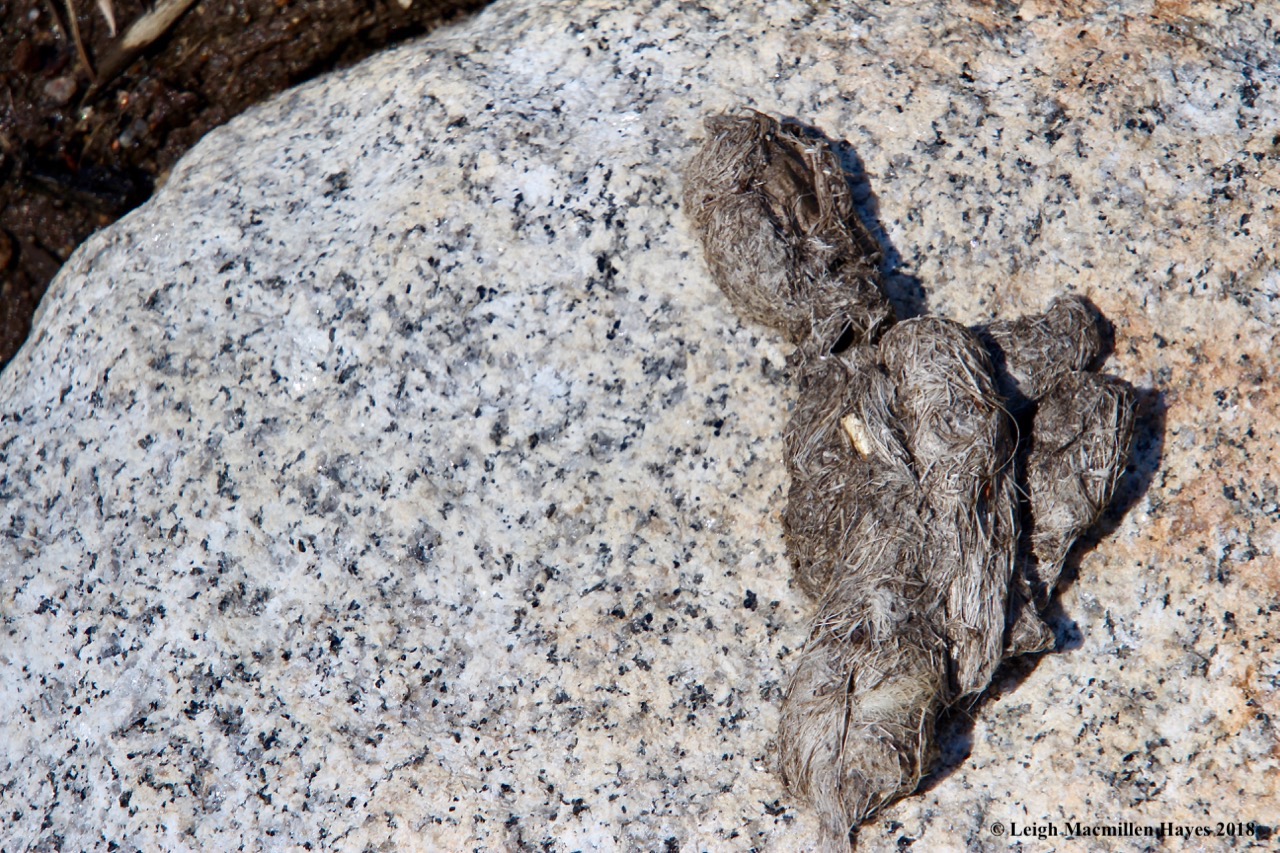
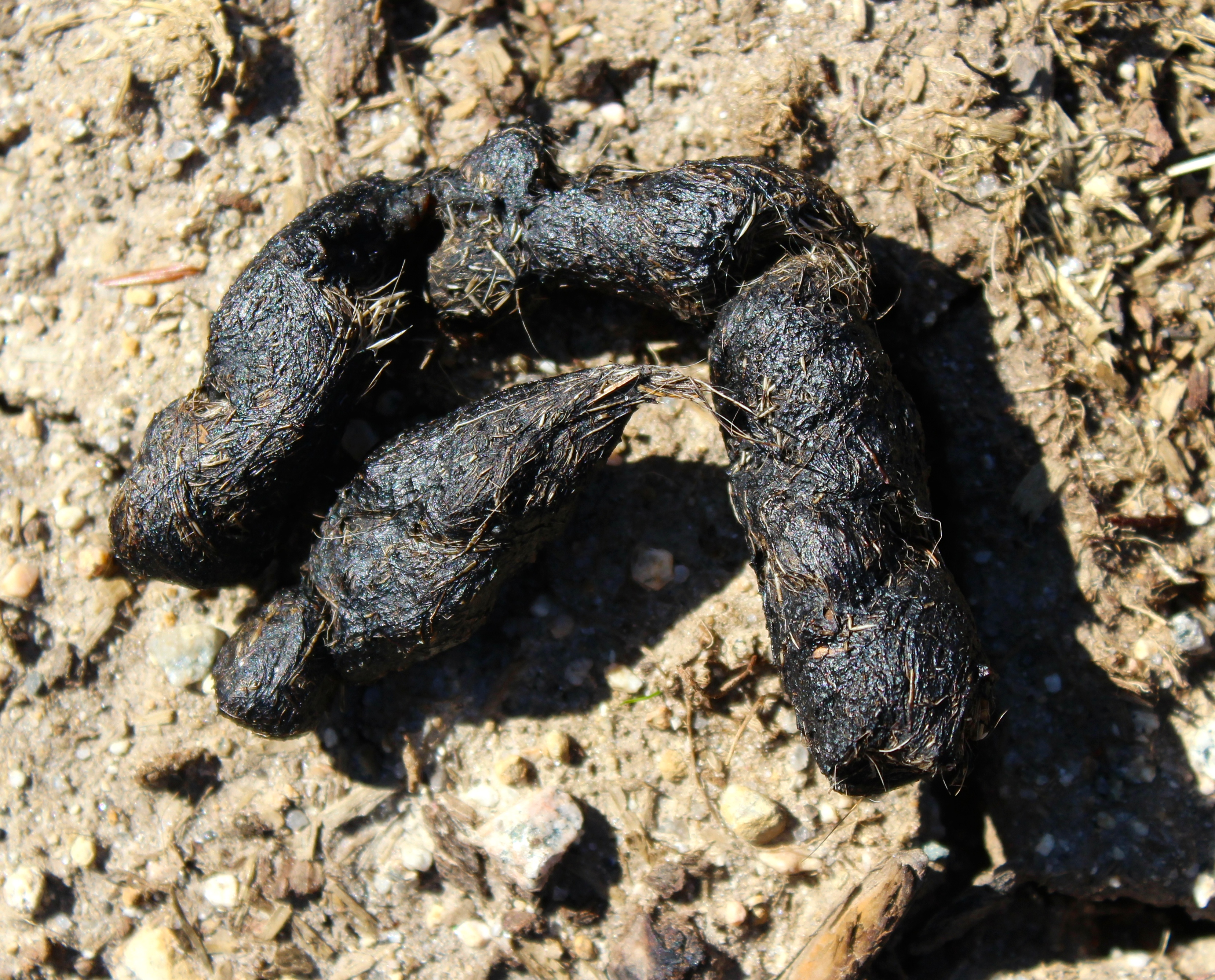
a pile of Black Bear scat,
full of acorn and apple pieces
from a neighborhood forage,
sat smack dab 
in the middle of the trail. 
And so it was 
that as I reached you, 
surprise again overcame me,
for though you are shrinking
to your traditional 
early June size, 
you still exist
on this day, September 3. 
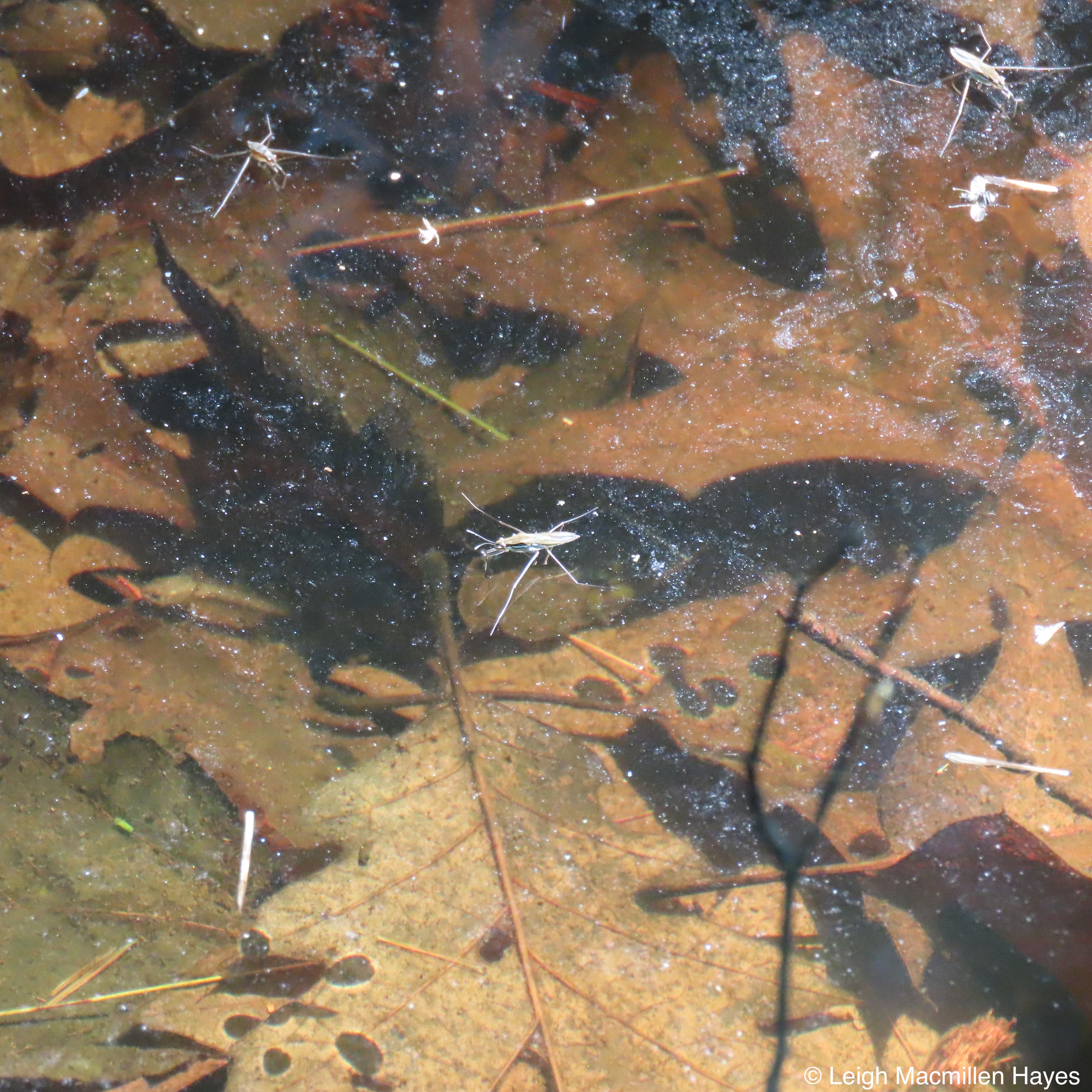
Small Water Striders skated
across your surface,
sometimes approaching others
who quickly
escaped any chance
for an embrace. 
As has been
my experience 
for the last month
you offered no evidence 
of Wood Frog or Spotted Salamanders
and I trust many 
hopped or crawled out
as is their manner. 
Green Frogs, however, 
squealed to announce 
their presence
before diving under 
the leafy bottom you offer, 
which makes a perfect hideout. 
When one frog resurfaced, 
we carried on a starring contest, 
until my attention
was drawn away. 
Ten feet from 
where I stood 
American Goldfinches 
poked the ground, 
foraging in the duff. 
Then one took a bath, 
and suddenly it 
occurred to me
that this was 
the third time this summer
I've had the honor 
of watching birds 
make use of the watery offering
your pool provides,
even as it is now
a not-so-vernal puddle. 

Before I finally
pulled myself
away from you, 
I offered great thanks 
for all the lessons 
of life and love and even loss
that you have
taught me all these years. 

And thank you,
Ev, 
for being today's inspiration
and for reawakening 
my wonder, 
which occasionally goes dormant,
as the pool will soon do as well. 

May the Best Wruck Win

Rainy days that turn into sunny days are the best days of spring. And today was one such. That meant, of course, that I needed to visit one of my favorite wet spots.

Along the way, because it was raining, I noticed the White Pines were foaming at the mouth! What really occurred: sap salts and acids that had accumulated on the bark’s surface mixed together in the rain and formed soapy suds. The rainbow colors and hexagonal forms–worth a natural engineering wonder.

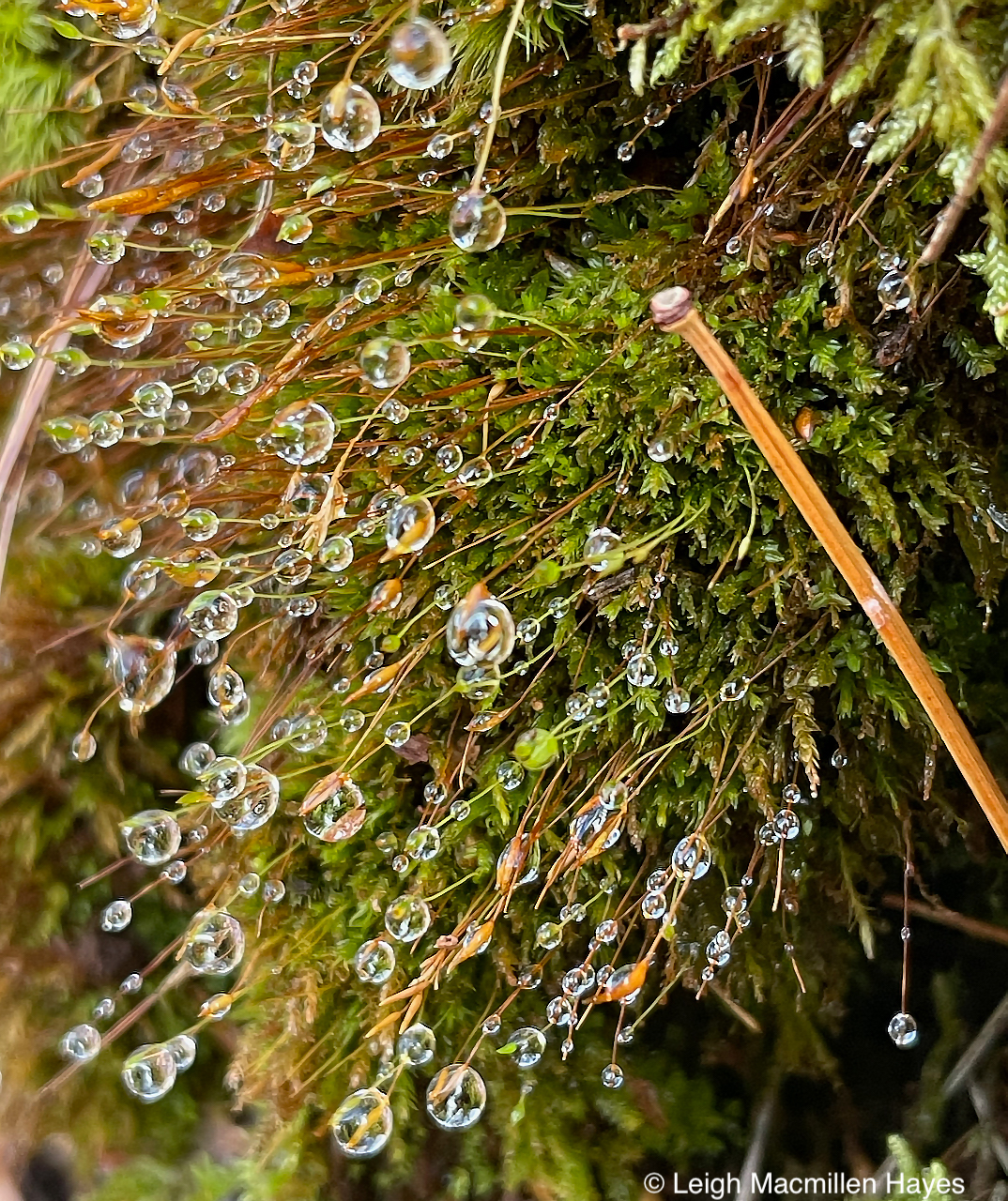
And upon a moss covered tree stump . . . a million more tiny bubbles dangling from reproductive capsules creating a hint of the future.

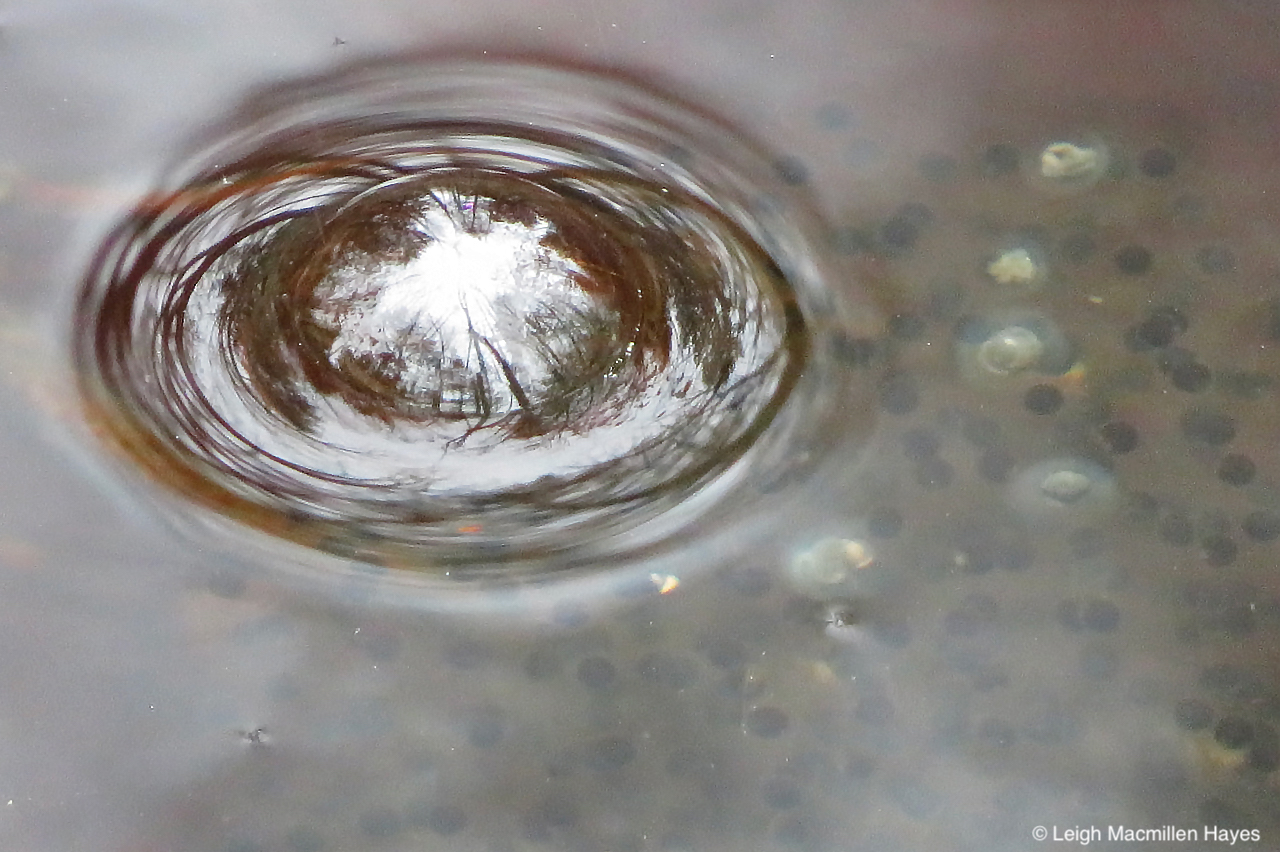
At the pool, one might say raindrops distorted the reflections captured on the surface. Or perhaps they enhanced it with a design that was ever evolving.

Bubbles kept forming as the raindrops fell . . . and then they’d burst. Just prior to their disappearance, however, they mirrored the canopy above the pool.

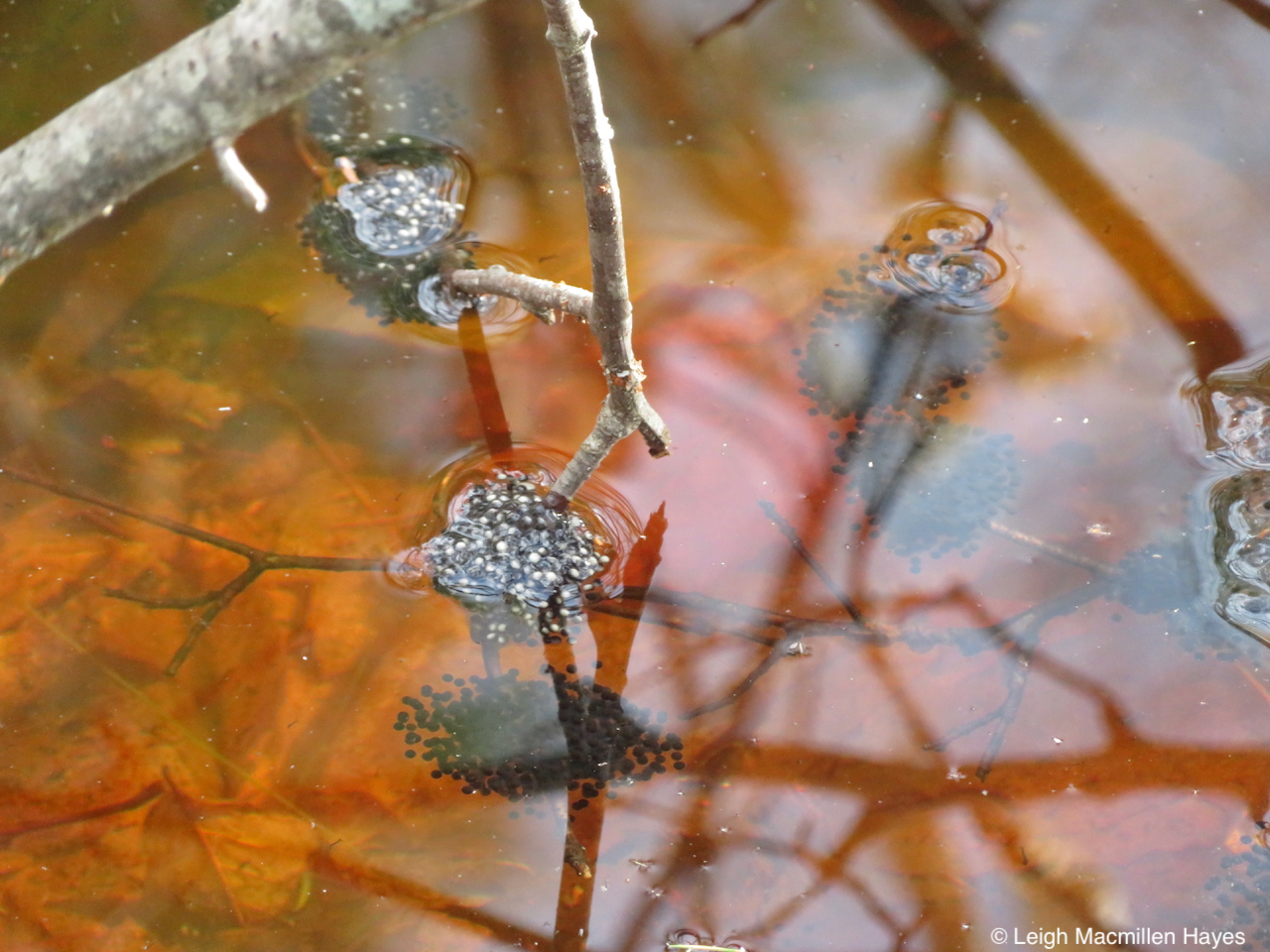
Oh, and do you spy what I spied? Wood Frog eggs . . . tadpoles in the making. But all the while that I stood there, and it was a while as the rain fell, not a frog did I spot.

As the skies cleared late in the afternoon, again I headed to the pool. Click on the arrow above and you should hear what I heard. A chorus of wrucks.

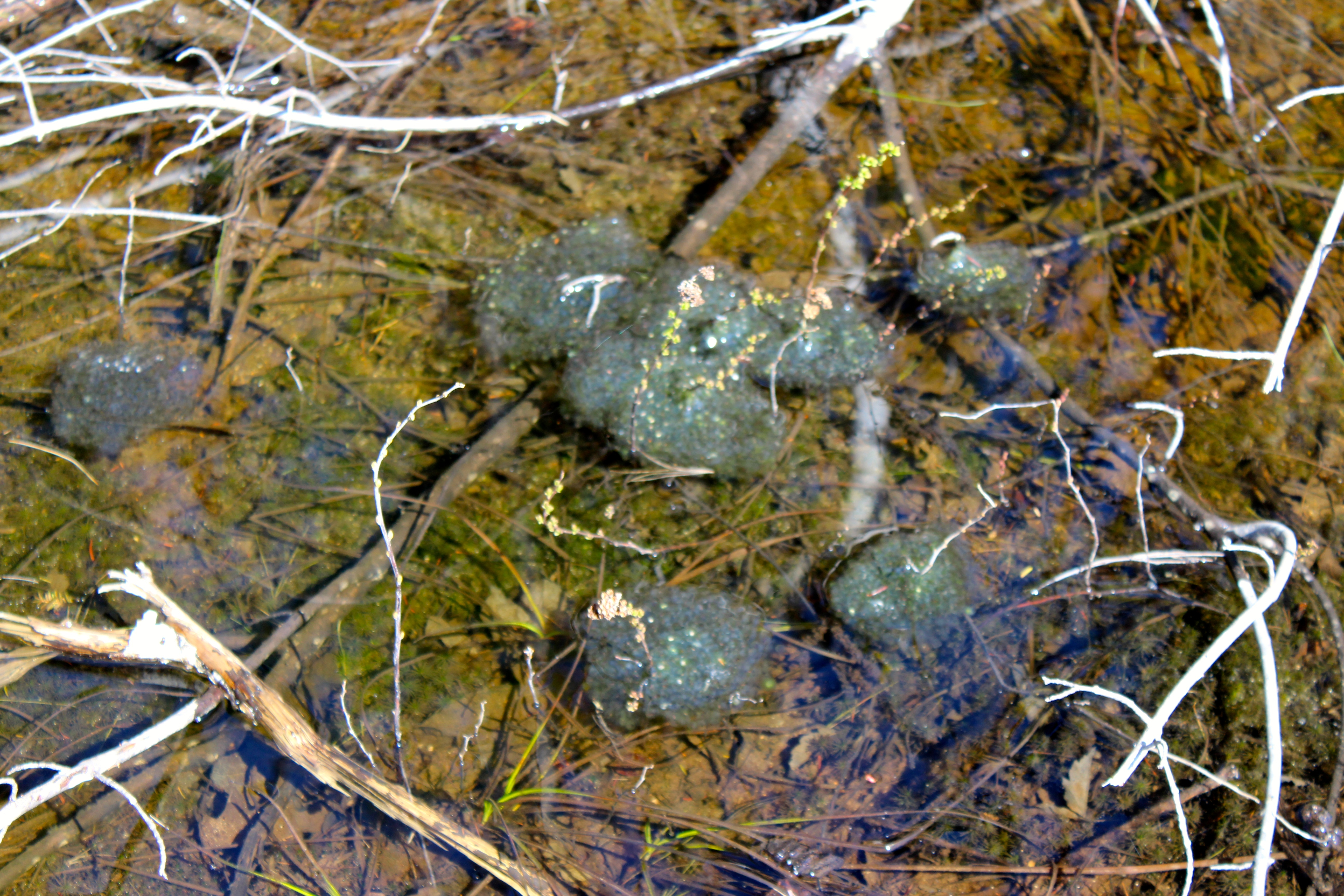
Of course, once I stood beside the pool, the frogs had all disappeared. But, with a bit of sun shining, I suddenly could see that in the last week numerous egg masses had been laid in communal style, as is the Wood Frog manner.

Some even exhibited the green hue indicating that mutualistic symbiosis, or a relationship between algae and developing embryos, was already underway. Shallow, ephemeral ponds such as this one, experience severe oxygen depletion during periods of high sunlight and warmth. The algae provides oxygen for the tadpoles, allowing them to survive longer and grow larger before metamorphosis, while the algae receive carbon dioxide from the tadpoles, which aids algal growth.

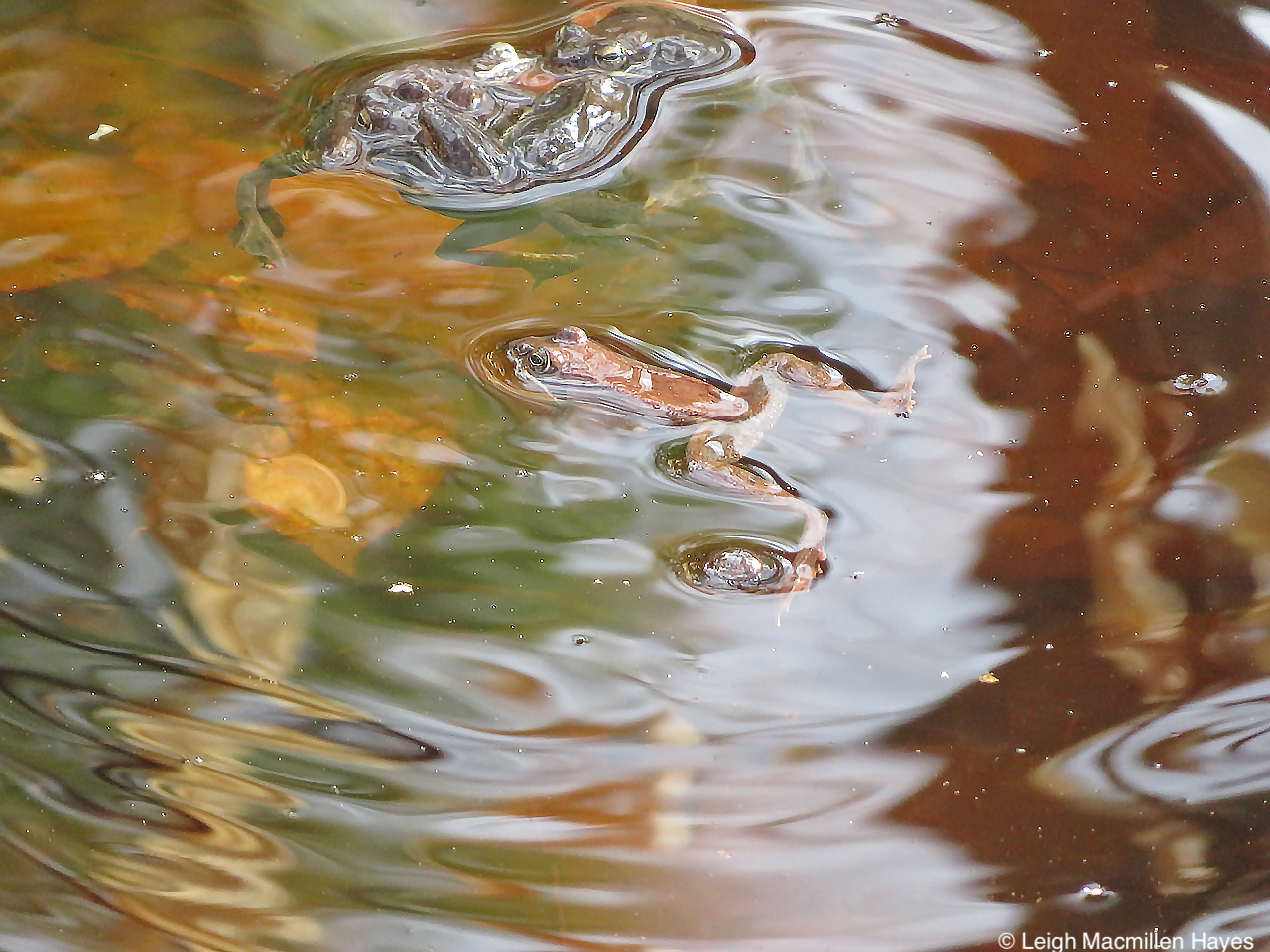
And then, ever so slowly, frogs silently floated to the surface, and waited . . . for that special woman to happen along. The fact that I had happened along, didn’t turn out to be special enough and so most were silent rather than wrucking as they waited . . . for me to disappear.

And then . . . and then the water began to boil. It took me a moment to realize what I was witnessing.

That moment expanded into about ten minutes as several male frogs tried to outwit each other and grab one female in amplexus.

She occasionally chirped her discontent, but that didn’t stop the good old boys from trying to do their thing.

Around and around they went, this threesome or foursome or fivesome, for it seemed to be an ever evolving grouping.

Her swollen belly betold the fact that she had eggs that needed to be fertilized, but which of these Romeos would win the right to externally fertilize her bounty?

They tumbled and tussled. She chirped. They tumbled and tussled some more.

They calmed down for a moment, but still no decision had been made.

And then, if you click on the arrow above and listen, you’ll hear what the frogs and I heard . . . as a Barred Owl called its “Who Cooks For You?” phrase several times. The frogs split up and I’ll never know which of the best wrucks one, but I suspect one of them finally succeeded in its quest to sire the next generation.

Dedication: This post is for Patti and Kate and Billy and Rob (Howie) and Johnny, in honor of your mom, Bobbie, who passed from this world to the next today. At the sight of each bubble that the day offered, it seemed another memory popped up. And I’m pretty sure we are all living proof that eating her raw Congo Bar dough adds years to ones life. Virtual hugs to all of you. And Tommy too.

As the VP Turns

This drama began in April when the ice started to go out. As always seems to be the case, it’s there one day and buddaboom, gone the next.

Official ice out is considered to be when you can navigate unimpeded from one end of a water body to the other. For this particular pool and its amphibian visitors that day was April 5 of this year.

Those who determined such were the wood frogs for on April 6, their “wruck, wruck” voices chorused . . .

until that is, I approached and then all went silent. This year, for the first in many, the W.F. Chorale had more voices than in the past for so many more had returned to the natal breeding ground than I can previously recall.

According to plan, dance cards were filled out and he, being much smaller than she, climbed atop to grasp her in what was known as amplexus.

By the next morning egg masses had been attached to vegetation and bubbled forth at the surface much like a bowl of tapioca. Slowly they began to absorb water, expanding in size day by day.

As is their custom, the egg masses created a hub about the size of an extra large truck tire for such is the frogs habit of laying and attaching these in the same area, colonial in nature.

Within each orb, life began to take form.

Their life was constantly at risk for other hungry beings knew of their location and paused pool side to consider the choicest treat.

Thrown into the mix were rainy days, which occurred with more frequency at the start of the season, thus providing hope that the water level would remain high for the duration of the story.

Almost two weeks after the adult wood frogs had finished calling and exited the pool to return to their upland habitat, where they spend fifty weeks each year, spotted salamanders paid a visit and the males deposited cauliflower-shaped spermatophores upon which they encouraged their lady friends to dance.

As is their custom, he led her to one of these sperm packets and she picked it up through her cloaca, the opening amphibians use for breeding, egg-laying and waste. She then fertilized the eggs internally.

Where the wood frog egg masses consist of a bunch of individual eggs all gathered together in a bumpy matrix numbering up to 1,500/group, salamander masses are enclosed in a gelatinous coating and consist of 50 to 250 individual eggs.

By the next week, tadpoles began to emerge and really it’s all about timing for a larval spotted salamander might feed on the larval frog, thus the latter are granted a brief reprieve in which to develop.

In the midst of it all, others also experience life in their larval form including mosquitoes who first wriggle through the water column and later tumble in their pupal form before hatching into their biting selves.

As the spotted salamander embryos grew . . .

so did the tadpoles.

Within two weeks, the salamanders bodies begin to take shape in their individual homes.

And then a week later, they began to emerge much like their frog counterparts.

Seven weeks after the ice officially went out, the pond teemed with life of those hoping to mature into the future.

Metamorphosis continued as young ones began to take on their adult forms.

But still, there were those with whom which to contend . . . including the larval form of predacious diving beetles.

It’s not just the predators, either, that need to be acknowledged for once the April rains ended, the dry season started and the water level drastically declined leaving stranded egg masses on the edge.

As a hope-filled human, I tried to intervene and moved some to deeper water.

Meanwhile, there were no signs of any salamanders, but the wood frogs did grow.

And fed voraciously upon the green alga that has a symbiotic relationship with developing eggs in one of those “I’ll feed your stomach if you’ll feed mine” manners.

With each new day, the tadpoles took on their adult features. But . . . where were the salamanders?

By today, June 12, despite yesterday’s downpour, the water had diminished significantly and still I hadn’t spotted any of the gilled beings.

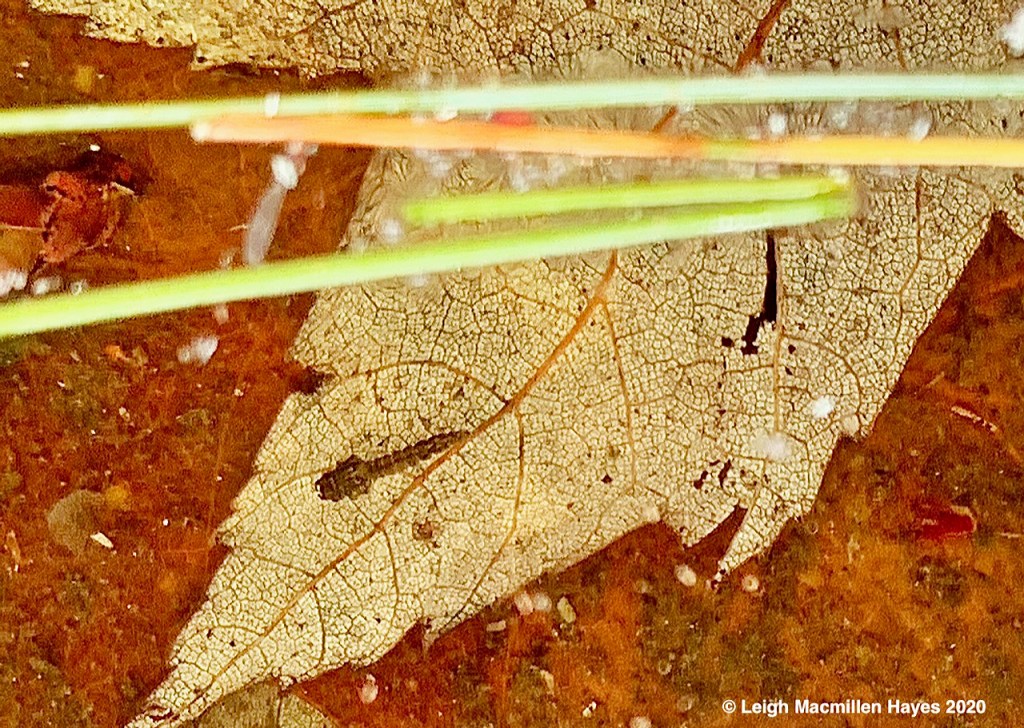
And then, I did. They were more leaf-like in color and thus harder to see, but they were there, though hardly as abundant as the tadpoles.

It finally began to make sense, the number of eggs within a mass and the number of egg masses. Really, this pool could be considered significant by state standards for there were more than 40 wood frog masses and more than 20 spotted salamander egg masses, either of those a number to be considered in its own right, but . . . the pool isn’t natural. It was dug long ago to serve the purposes of the farm that once was.

To produce so many progeny makes sense for despite the fact that it seemed to be teeming with life, its own life is short lived. How many will actually hop or crawl out before the pool dries up?

I suppose to that end, it also made sense that some resorted to cannibalism.

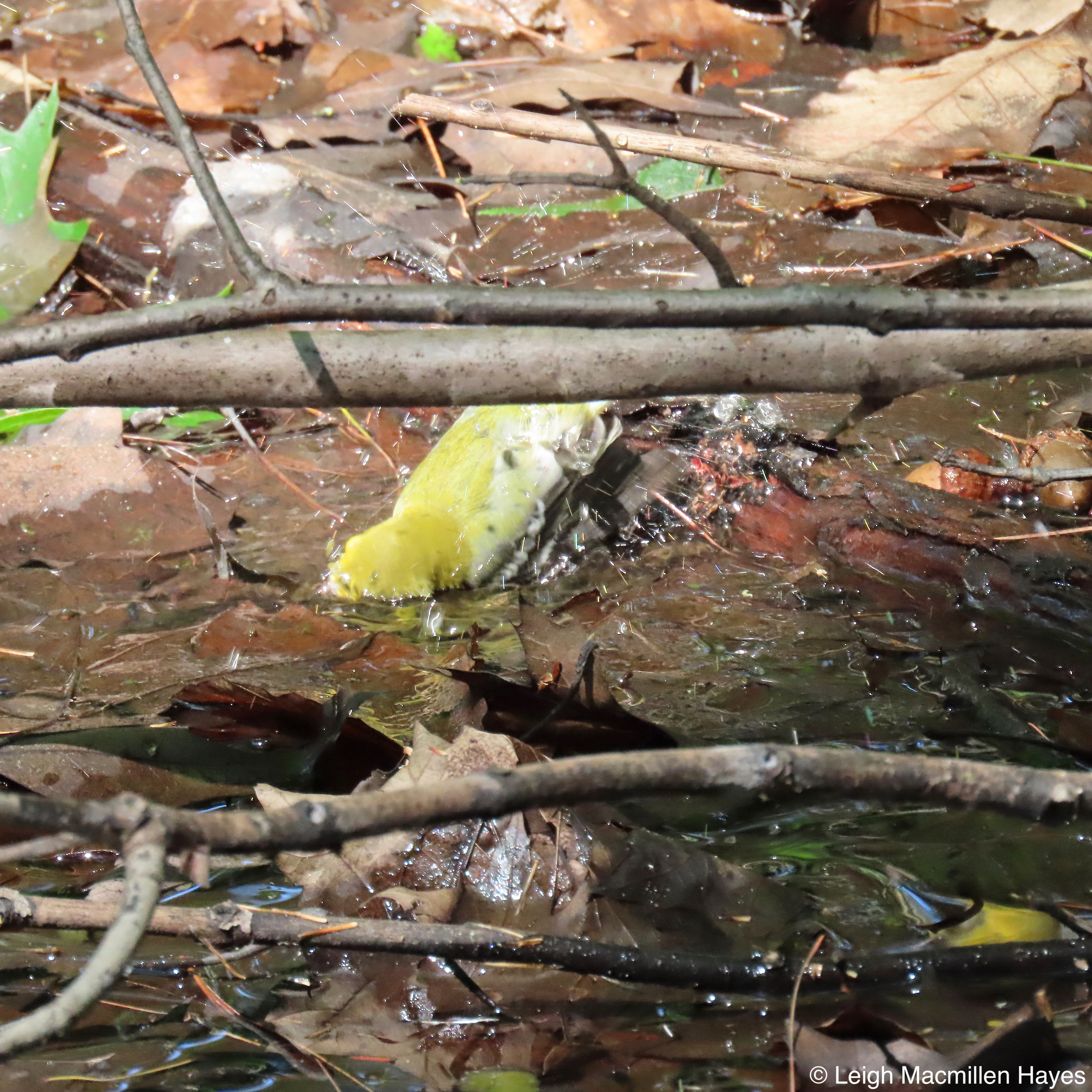
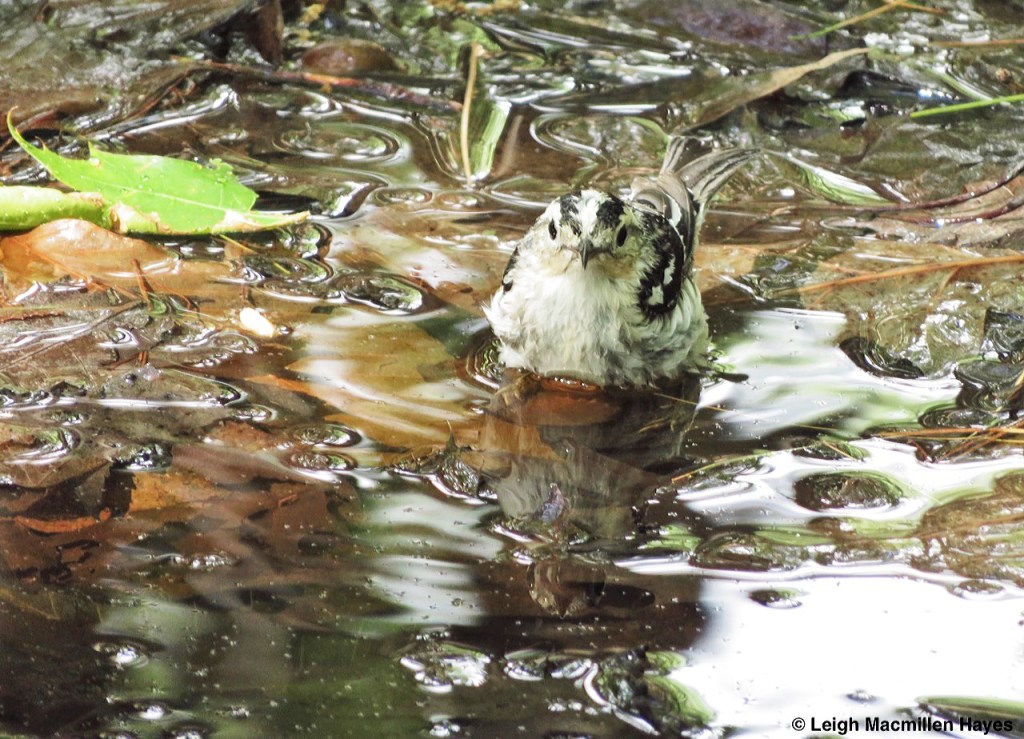
What lightened the moment was when a Black and White Warbler stopped by to take a bath.

Drama plays out constantly and I’ve only covered a few snapshots of it . . . as the vernal pool turns.

I’m in Frog Heaven

The ice went out on the vernal pool in our woods on April 5th and by the 6th the wood frogs were singing their love songs and egg masses had already been attached to fallen branches.

Once I spy such I become addicted to visiting the pool on a regular basis to keep an eye on the activity. As much as I’d love to bring some home, I know that that would interrupt the natural process and so I do the best I can by peering into the water.

One of my great finds early on turned out not to be as extraordinary as I first thought. What I thought were blue spotted salamander egg masses slowly morphed into wood frog masses. They were laid out like sheets on the floor of the pool rather than attached to sticks as is normally the case. But it didn’t all make sense as up to the point that I spotted those masses, I hadn’t seen any salamander spermatophores.

Daily visits to the pool garnered a better understanding and about two weeks later not only had the spotted salamanders left their deposits on the pool floor . . .

and the next day their eggs on sticks . . .

but the so-called blue-spotted suddenly began to look more like wood frog masses with tadpoles developing inside. Perhaps they were laid at the very edge of the pool by young wood frogs just getting the hang of the annual ritual.

With the help of my son who works for a film editing house in Manhattan, I’ve pulled all of this together into a video so even if you can’t get to a vernal pool, perhaps you can enjoy the magic of this place for a few minutes by clicking on the link and watching: Are You in Frog Heaven?

There’s so much more to come and I’ll do my best to keep an eye on the action.

In the meantime, why not create a Frog and Toad Chorus as you stay at home.

In the amphibian world, males sing as a means of attracting a mate and defending a territory.

Here’s how to conduct your own chorus: Assign a species to various family members who will imitate the sound as best they can. Have fun leading your gang as you control who “sings.” And then head outdoors to see if you can identify the species based on your knowledge of the songs they create.

Wood Frog: quacking duck or wruck, wruck in early spring

Spring Peeper: high-pitched peep-peep in early spring

American Toad: sustained trill lasting up to 30 seconds (from your lips or throat), early to late spring

Green Frog: throaty gunk! like banjo strings, late spring – early summer

American Bullfrog: deep, resonant rr-uum, or jug-o-rum, late spring – early summer

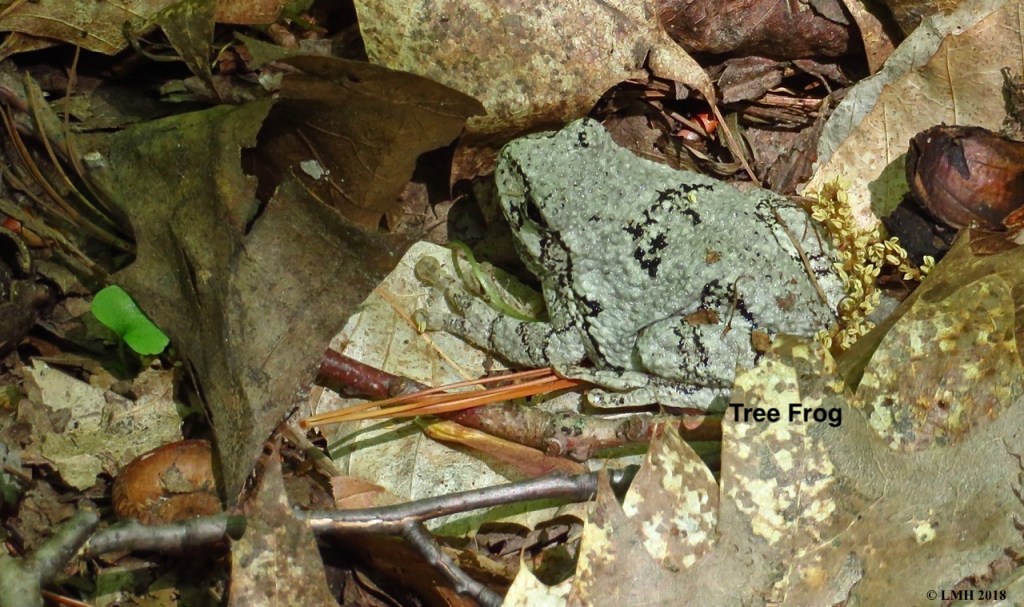
Gray Tree Frog: slow, musical bird-like trill lasting 2 or 3 seconds (use your lips or tongue), late spring – early summer

Are you in Frog Heaven? I know I am.

This Wild Place

There’s no music quite like the Wood Frog’s defiant chorus, sung when the ice is barely off the vernal pool and the ground still covered with patches of snow. Singing together, they sound like dozens of quaking ducks. Wood Frogs are often the first Maine frogs to break winter’s quiet, beating Spring Peepers by a few days or even a week.

Their vocal prowess extends to silence. Once we approach a vernal pool and they sense danger (perhaps through vibrations), they cut off their song altogether, as though timed by some unseen conductor. The purpose of all this calling is finding a mate, of course. Male Wood Frogs, once they’ve called in some unwitting females, can be tenacious in the extreme–even if their suitor happens to be the wrong species.

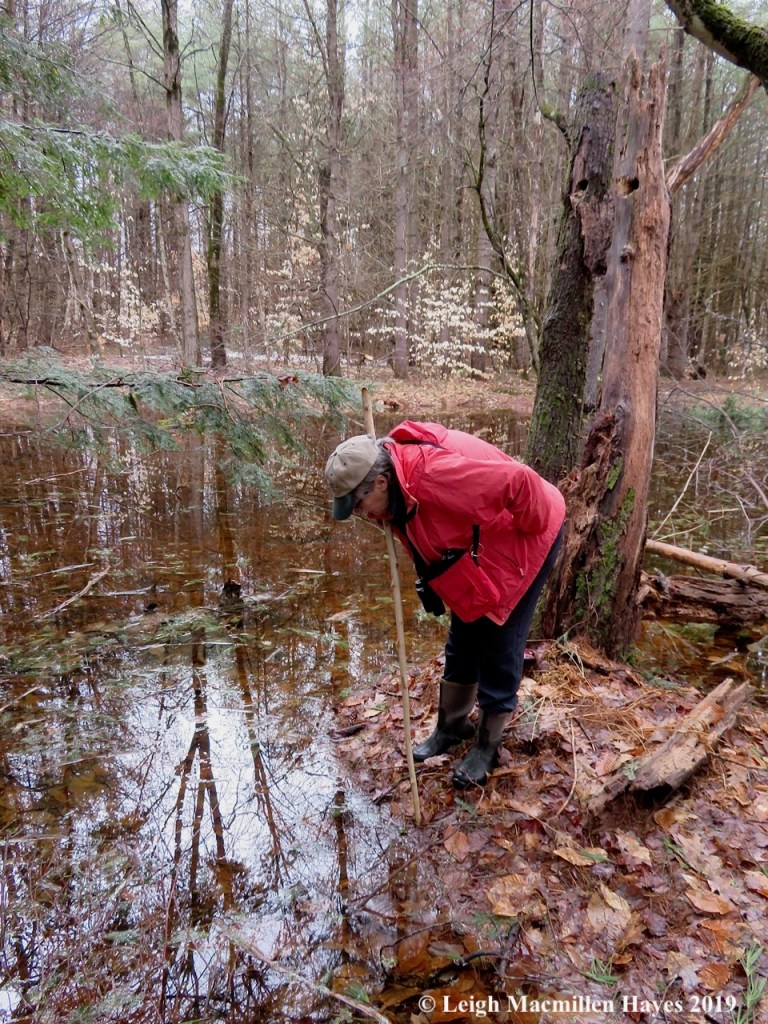
This morning, as Greater Lovell Land Trust Docent Linda Wurm and I approached a pool on the Heald and Bradley Ponds Reserve, the symphony was eerily still.

And so we began to circle around, our eyes scanning the watery surface for clumps of eggs. Our hope was to either see a male hug a female in an iron-lock grasp, forming the mating embrace called amplexus, or evidence of their date.

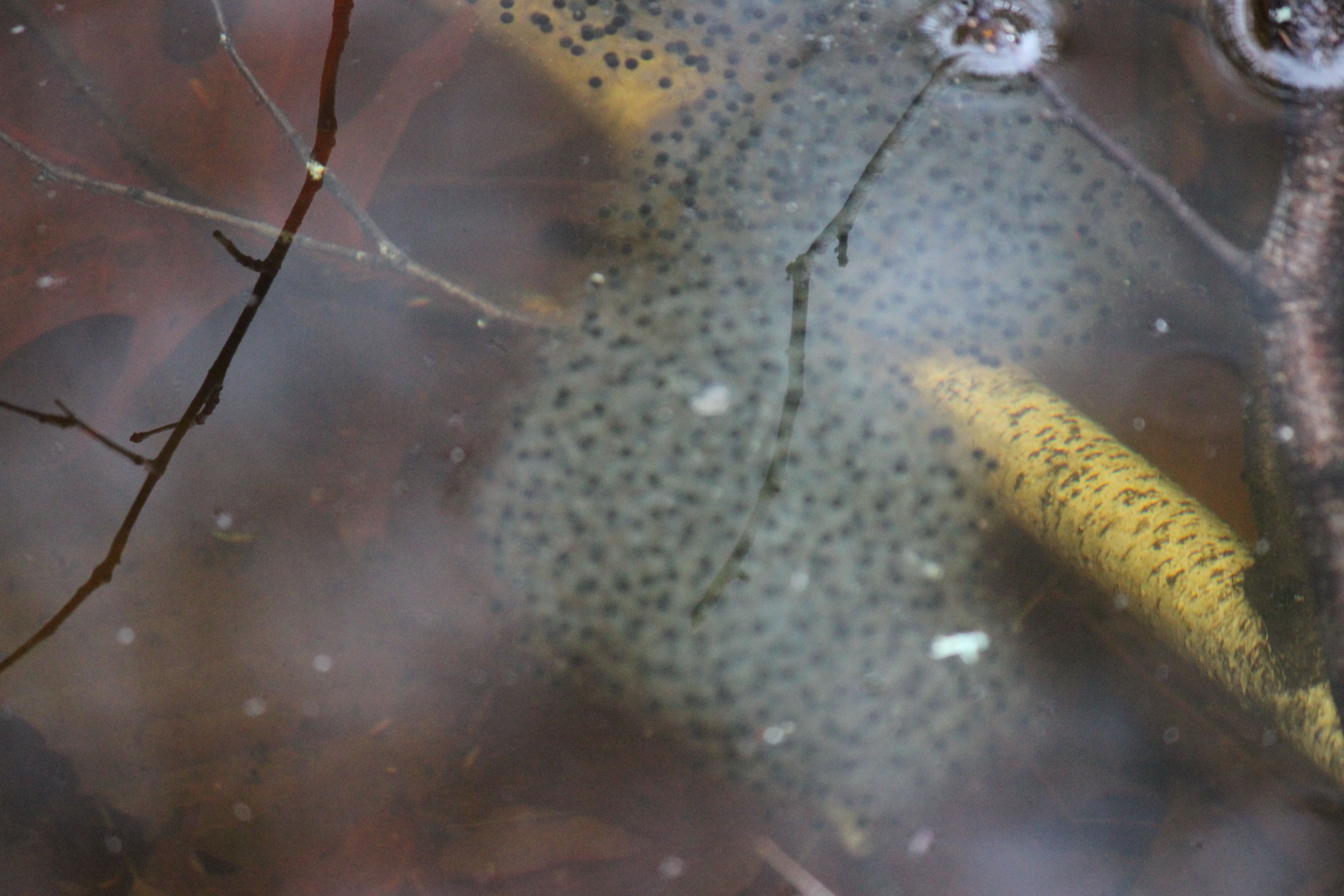
And we were rewarded. At least one female had laid eggs fertilized by a male. As is their habit, the female attached the mass to a twig and the tiny black embryo of each egg was surrounded by a perfectly round, clear envelope about one-third inch in diameter. These gelatinous blobs can consist of up to 1,500 individual eggs. Egg-mazing indeed.

The embryos will hatch into small brownish-black tadpoles in a week or two, or longer given how chilly the water was today. As they grow, their rounded tail fins will become translucent–almost mottled with gold and blackish flecks.

Wood Frog tadpoles grow at varying rates depending on water temperature, tadpole density, and available food resources, but tend to develop within about two months to become adults. Unfortunately for them, but in the web of life good for others, tadpoles often succumb to cannibalism, especially to their larger relatives. They are also eaten by predacious diving beetles, salamanders, turtles, and birds.

We only found one, maybe two egg masses, but this pool isn’t known for many. What it is known for is its Fairy Shrimp population and I’m sorry to report that we found not a one. But, we did spy a few handsome hemlock varnish shelf fungi.

And by them some red squirrel middens that made us happy for we saw few of these all winter.

Right behind the fungi and midden, something else in the water caught our attention and Linda focused with a keen eye.

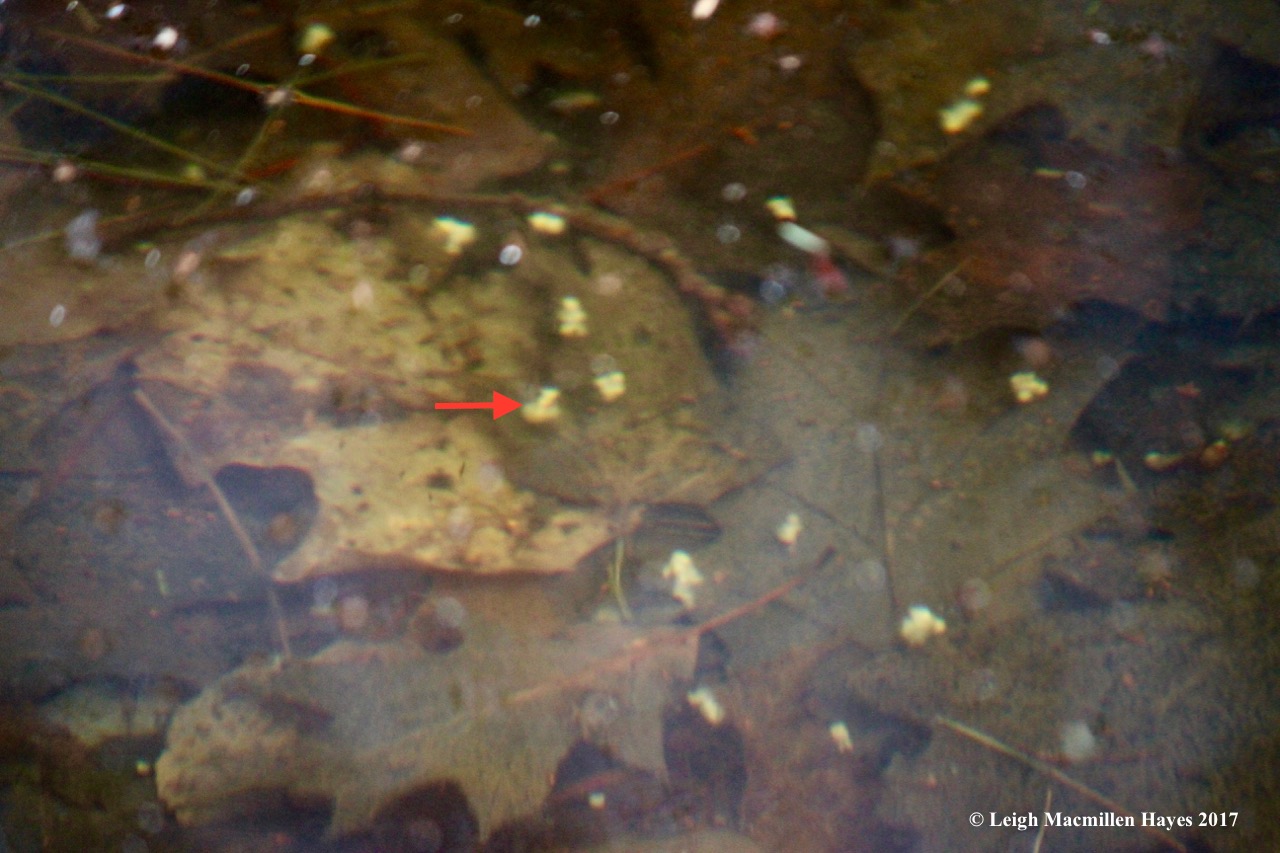
My photo wasn’t the clearest, but upon some leaves and twigs we spotted spermatophores left behind by male Spotted Salamanders. They remind me of cauliflower, their structures consisting of pedestals topped with sperm. Though we couldn’t see any milky masses of salamander eggs, we hope that on future visits we will.

Spotting a Spotted Salamander is a rare treat. With their bright yellow spots on a sleek, shiny black back, they are even more nocturnal and elusive than the Wood Frogs. They are actually mole salamanders and spend most of their time burrowed underground.

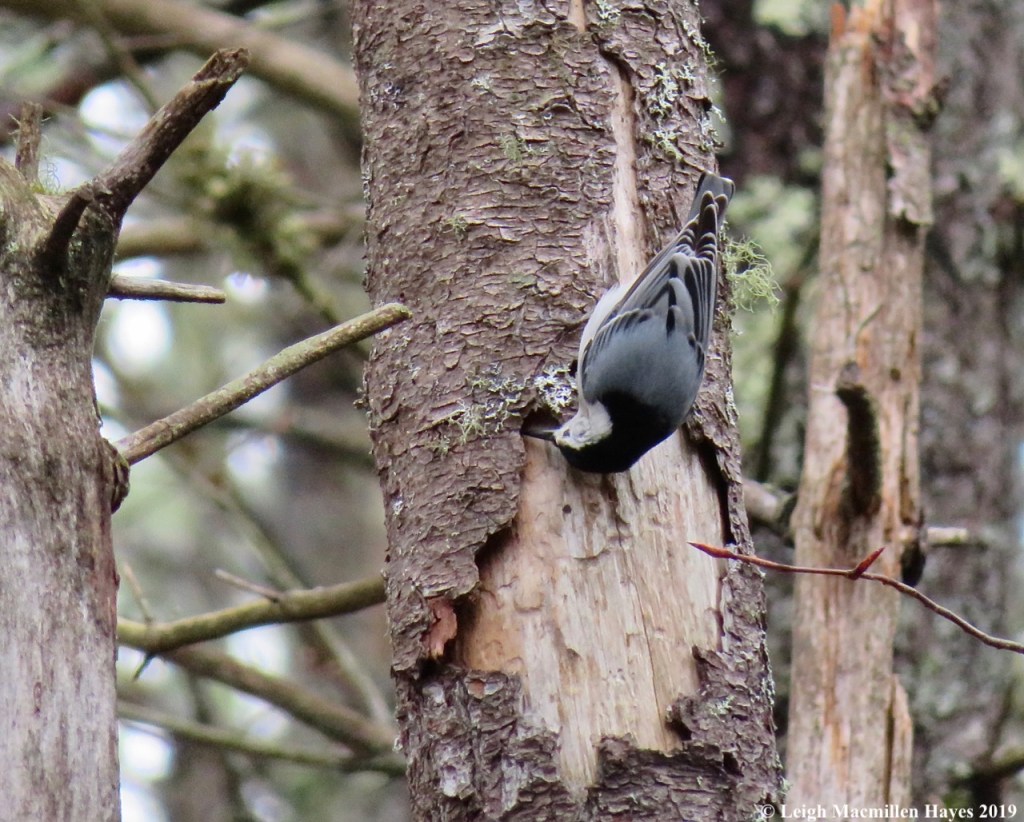
As we circled back around the pool, a White-breasted Nuthatch mimicked our searching eyes and probed under some bark, its long narrow beak seeking beetles.

Every few seconds it took a break and surveyed the world that included us.

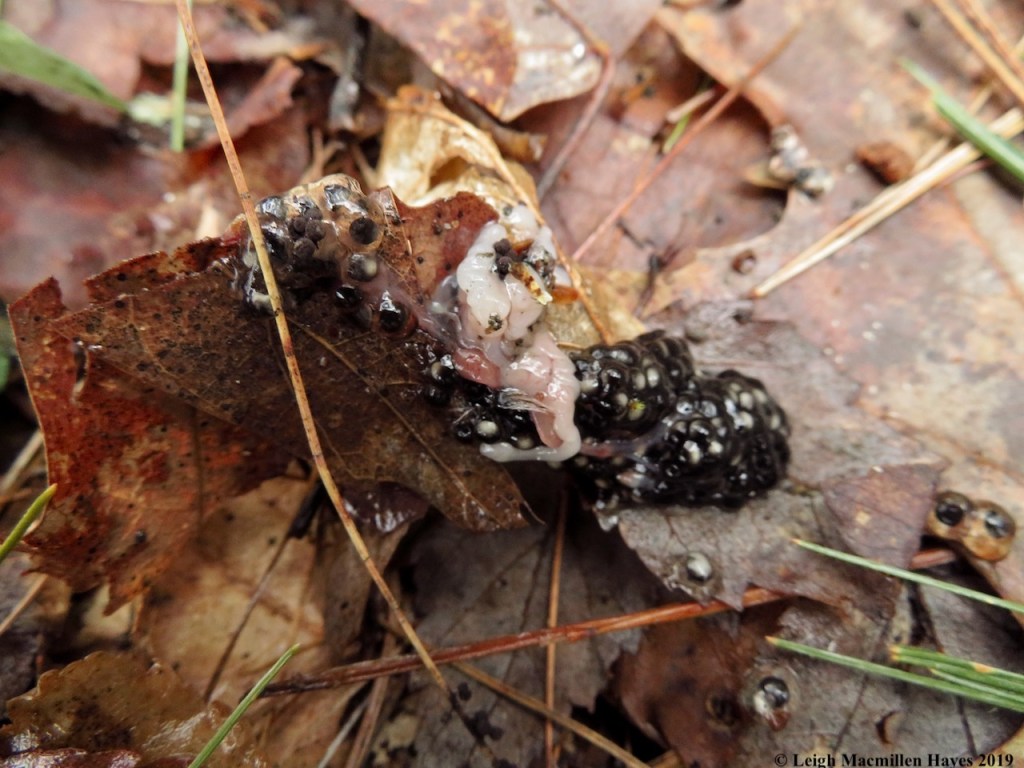
We, too, surveyed the world, and suddenly at our feet we discovered eggs we’d not seen previously. What were they doing about a foot out of the water?

And to whom did they belong? At first I considered Pickerel Frog, but on closer examination I thought they might be Wood Frog.

And then Linda shifted one clump a wee bit with a stick and we found what may have been the entrails. Life happens in vernal pools and this one was no different. Had a predator stopped by? Perhaps a raccoon or skunk or chipmunk or raccoon? But, why didn’t it eat the eggs? Again, so many questions.

With the field microscope, we looked at the eggs again and were almost one hundred percent certain that they were Wood Frog.* We did place some of them back in the water, but wondered if they were viable.

For all the eggs that are laid, it’s hard to believe that only 10% will survive. But the truth is that most die before transforming into adults and leaving their pools. The reasons are varied: the ponds dry up; or they are hunted down by predators: or they die of diseases.

After a few hours, we pull ourselves away, grateful for the time to explore this wild place–full of life . . . and death.

*I’ve reached out to Dr. Rick Van de Poll about the eggs out of water–if, by chance, he responds, I’ll update this post so stay tuned.

And now from Rick:

Hi Leigh!

Fascinating find! Having just seen a few predated egg masses today I can definitively say they are spotted salamander eggs. The blackish coloration is likely imparted by the stomach acids of a raccoon, who apparently gorged and threw them back up, along with a few frog parts. Again, while its not too common to see this kind of things around vernal pools, it does make for for a pretty good ‘who-dunnit’!

Rick

Lessons from the Earth

Dear Earth,

This year found me once again staying in my home territory to honor you and so while my guy did some yard chores, I chose to visit a few of your vernal pools.

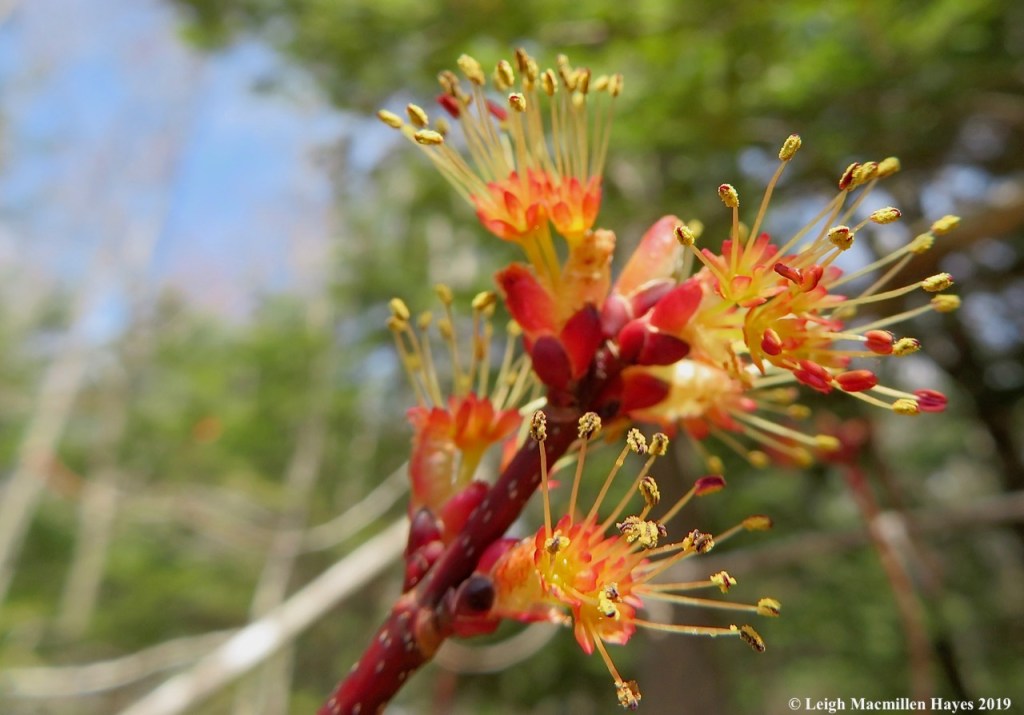
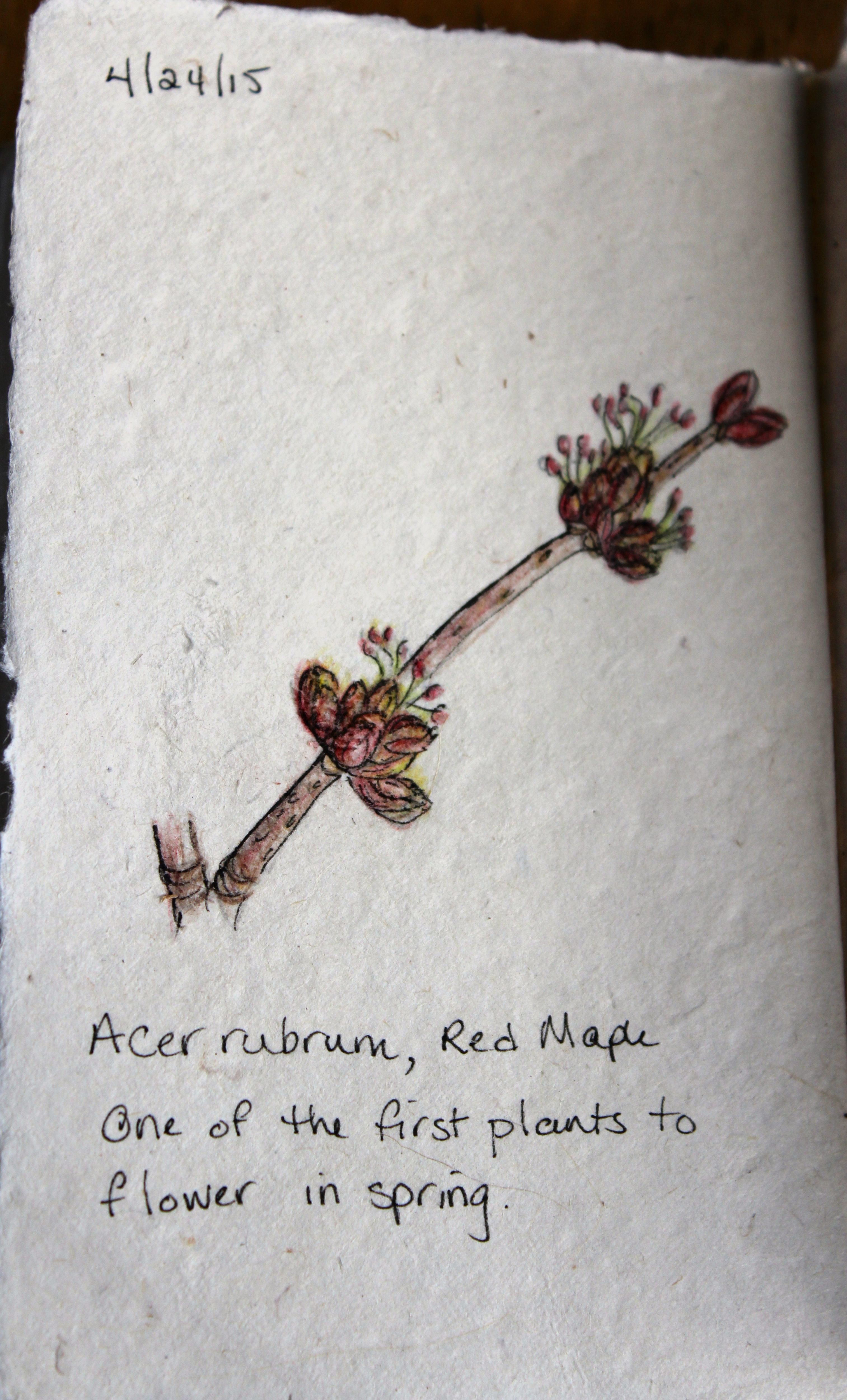
Along the way, I stopped to smell the roses! Opps, I mean admire the flowers of the Red Maples, their pistils and stamen all aglow.

As I approached the first and nearest pool, I new love was in the air for I heard the deep wrucks of the Wood Frogs. That is, until I got to within about ten feet, and then the only sounds were small splashes that barely created ripples as the frogs sought cover under the leafy pool lining.

But, as you’ve taught me in the past, I stood as still as possible and waited patiently. It was then that my eyes began to focus on the pool’s tenants. And I realized that the usual population of larval mosquitoes, aka “wrigglers” already somersaulting their way through the water. That may be bad news for me, but it’s certainly good news for the birds and dragonflies of the neighborhood. While I try to practice mind over matter when I’m stung by a mosquito, I have to remember that your plan to offer “Meals on the Fly” sustains so many others.

And then, and then I spied something disturbing. Actually it was two somethings. Frog legs of two frogs. And even a head. Dinner? For whom? Typically, I rejoice at a kill site for I realize that one species feeds another, but this one disturbed me. Perhaps, dear Earth, it was because I think of this pool as mine even though it’s located on a neighbor’s land, and I want to protect it and all that live within, as well as all who venture to it for nourishment. Eventually, I realized that perhaps someone had been nourished by the frogs, but why didn’t they consume the entire beings? Could it be one of their own species who went into attack mode? I don’t have the answer–but once again you’ve given me more to question. And so in the end I realized I should be grateful for having the opportunity to wonder.

The good news–right behind the two dead frogs was a recently deposited egg mass. Its form made me think Spring Peepers, but I’ll need to watch them develop.

Death. Life. The cycle plays out as if a best seller in this dramatic genre.

I circled the pool looking for any other unusual sights or clues, but found none. Eventually I stood on my favorite rock and appreciated that you finally rewarded me, dear Earth. A Wood Frog appeared by my feet and we both remained as still as possible–that is until my feet began to fall asleep and I needed to move on.

As you know, dear Earth, I located several more pools, their wruck choruses giving them away. And within one, it was obvious by the egg masses that the lover frogs had found their mates.

Walking back toward home, I got a bit nosey, as you know, and turned over some bark that had fallen from dead trees. To my delight: millipedes, earth worms, bark beetles, slugs, and . . .

At least five Red-backed Salamanders. That reminded me, dear Earth, that though I wasn’t able to join Lakes Environmental Association for Big Night on Saturday, that rainy night when the temperature ranges about 40˚ and the amphibians decide to return to their vernal pools to mate and folks try to help them cross our roadways to do so, I trust that you made sure the Red-backed Sallies and worms made their presence known in the grass behind the Masonic Hall. Did you?

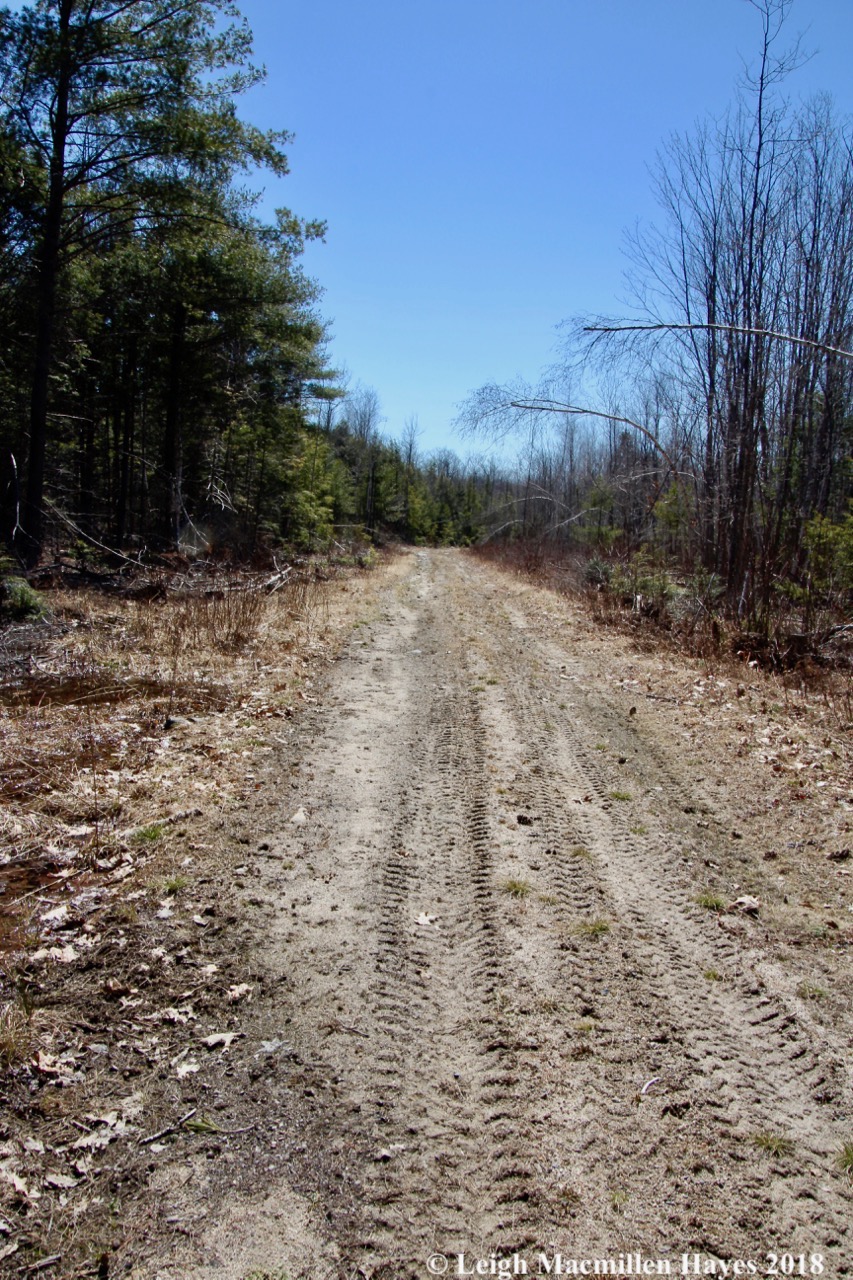
As for my walk today, I followed our trails and then an old logging road, where the deer and moose and coyotes and foxes and turkeys also roam.

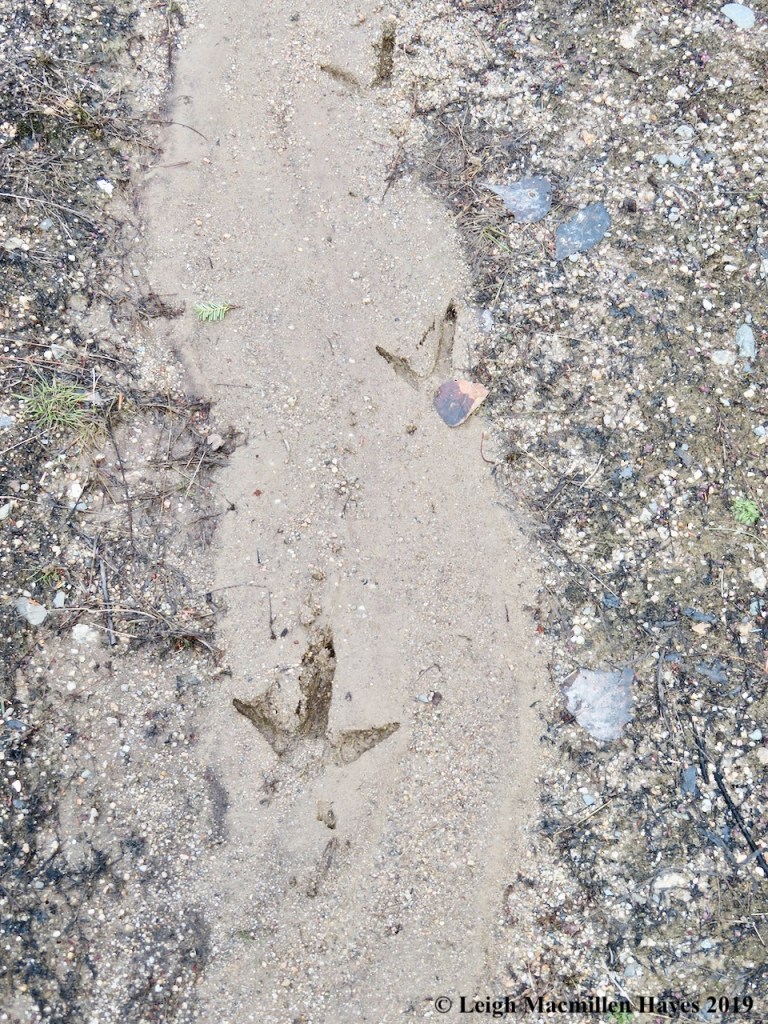
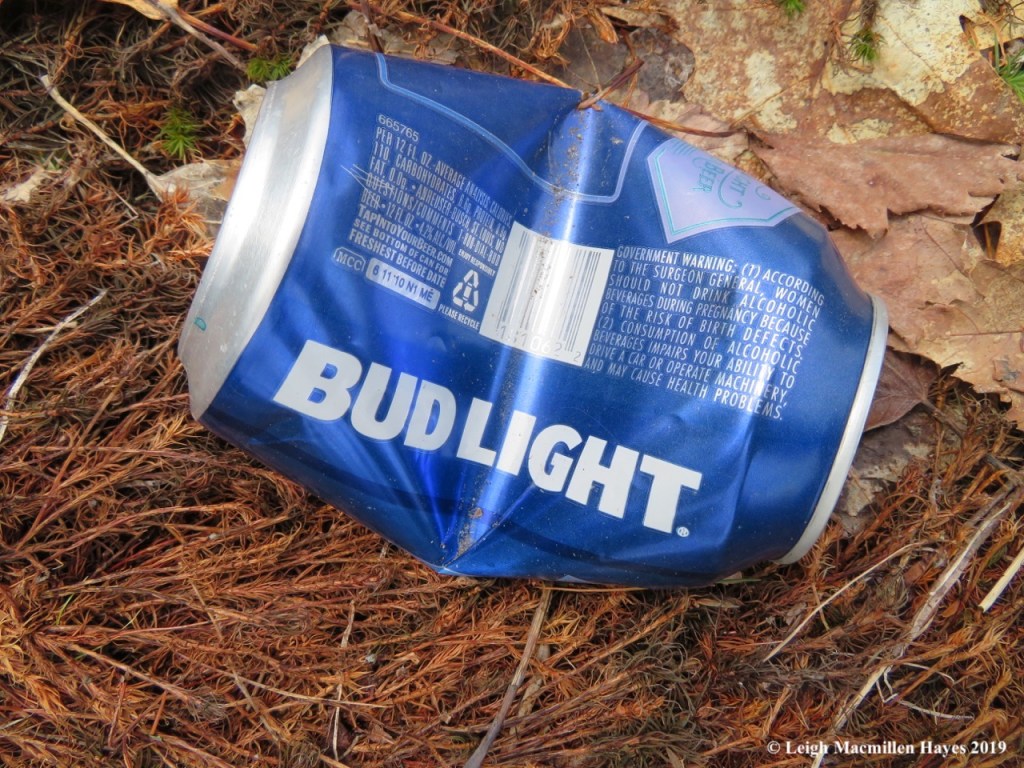
And because part of my journey took me along the snowmobile trail, I picked up some empties and realized that not all turkeys are created equal.

But you don’t judge, do you dear Earth. Nor do you pretend that the world is perfect.

That being said, the sight of my first butterfly of the season, the pastel colored Clouded Sulphur, was rather perfect in my book.

Thanks for once again taking the time to teach me a few lessons . . . lessons from the Earth on this, your day, Earth Day 2019.

Dear Earth

Dear Earth,

In your honor, I decided that on this Earth Day I would head out the back door and travel by foot, rather than vehicle.

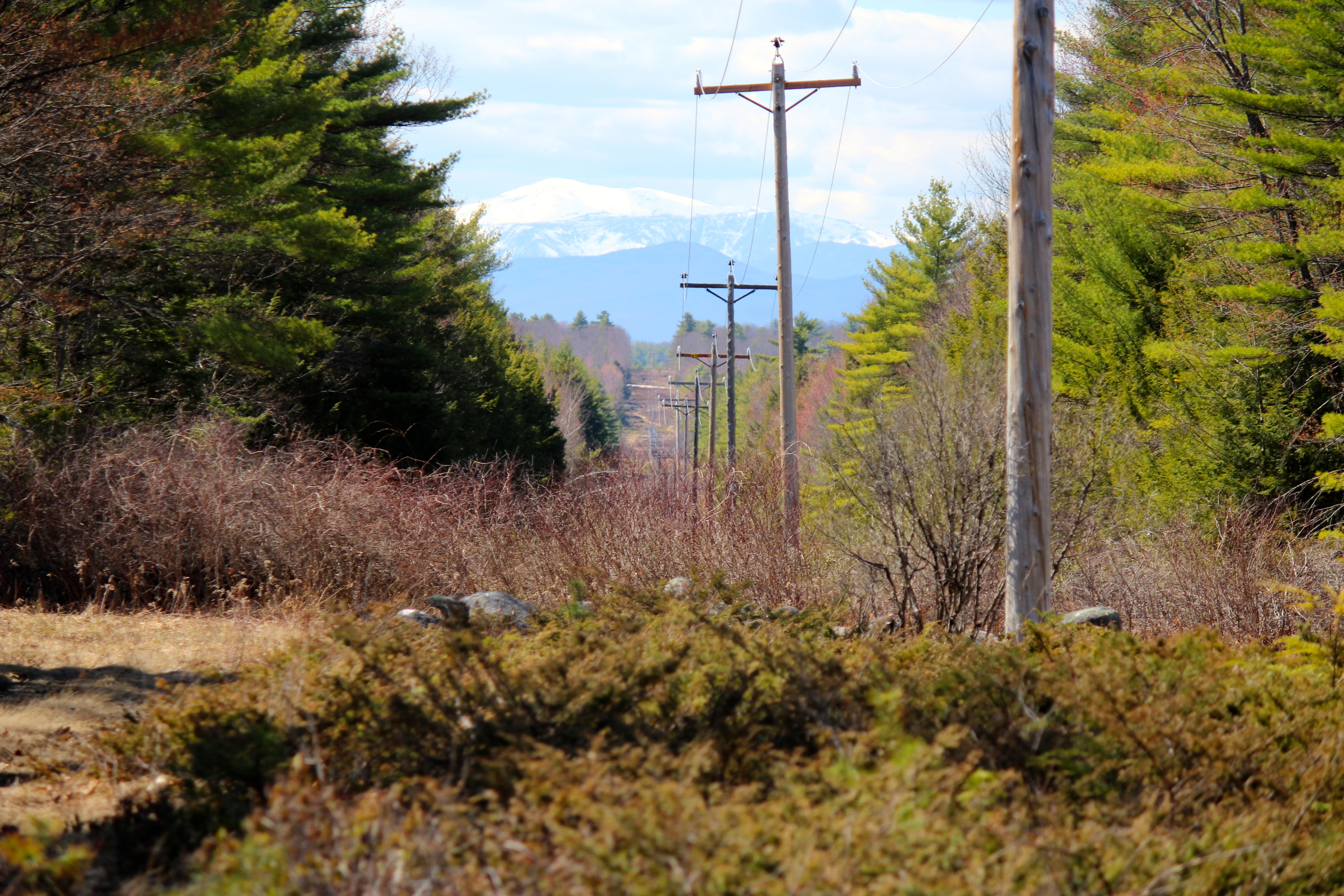
e1-Mount Washington

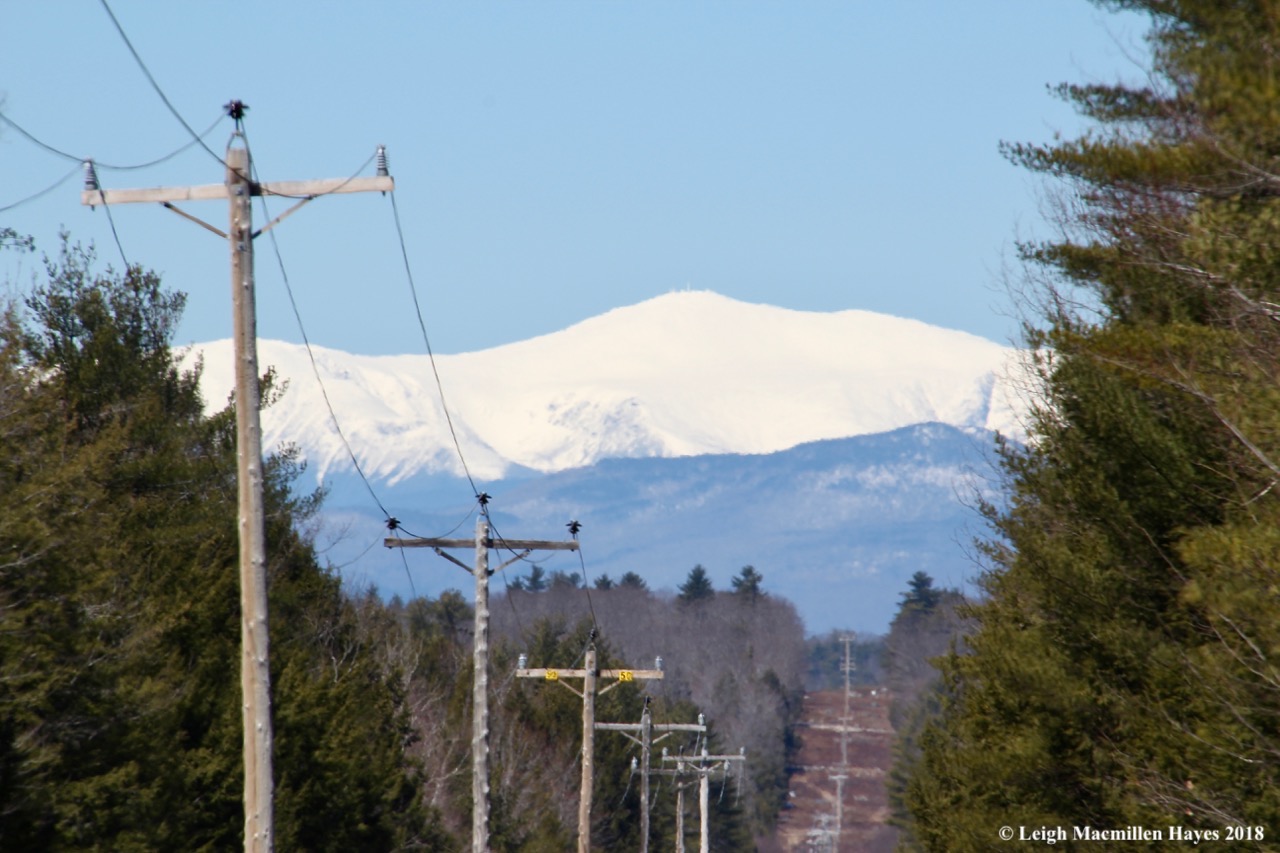
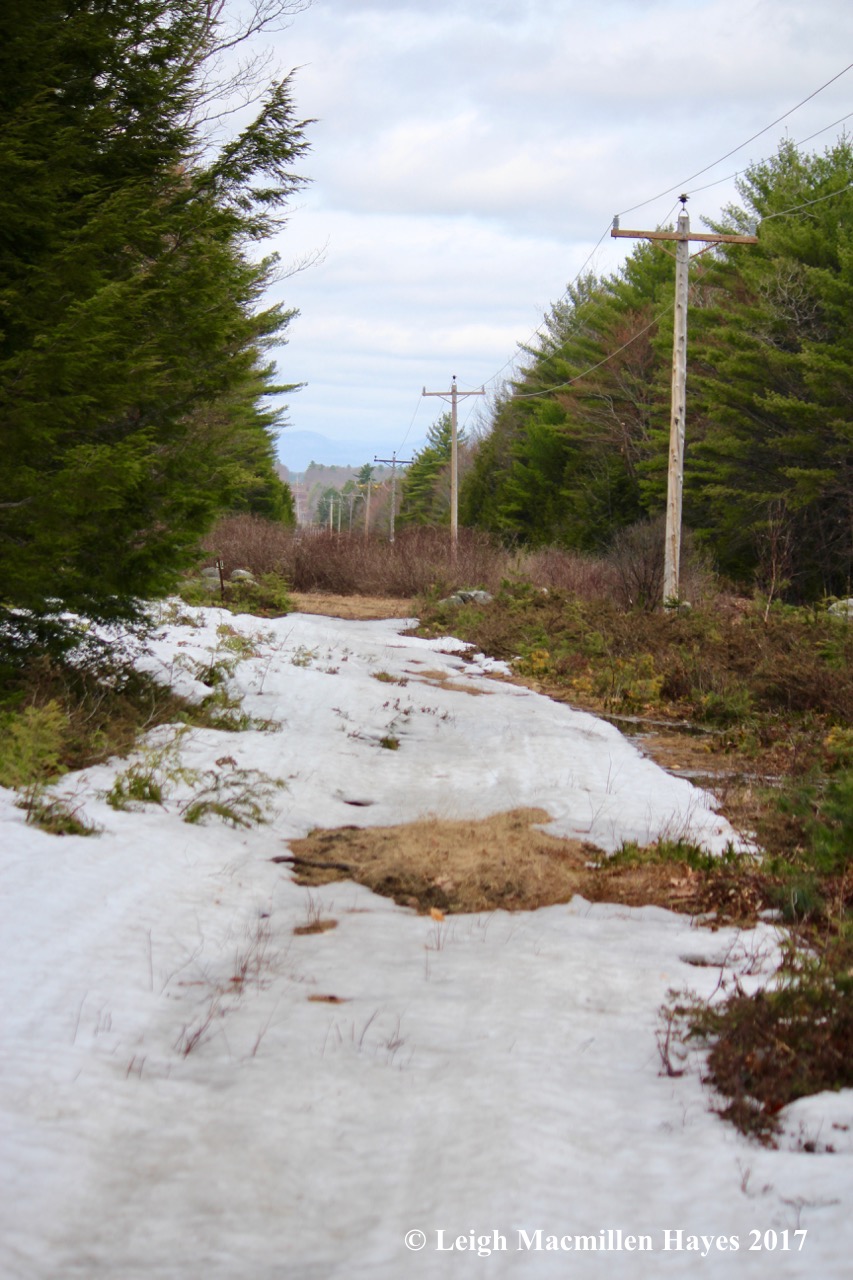
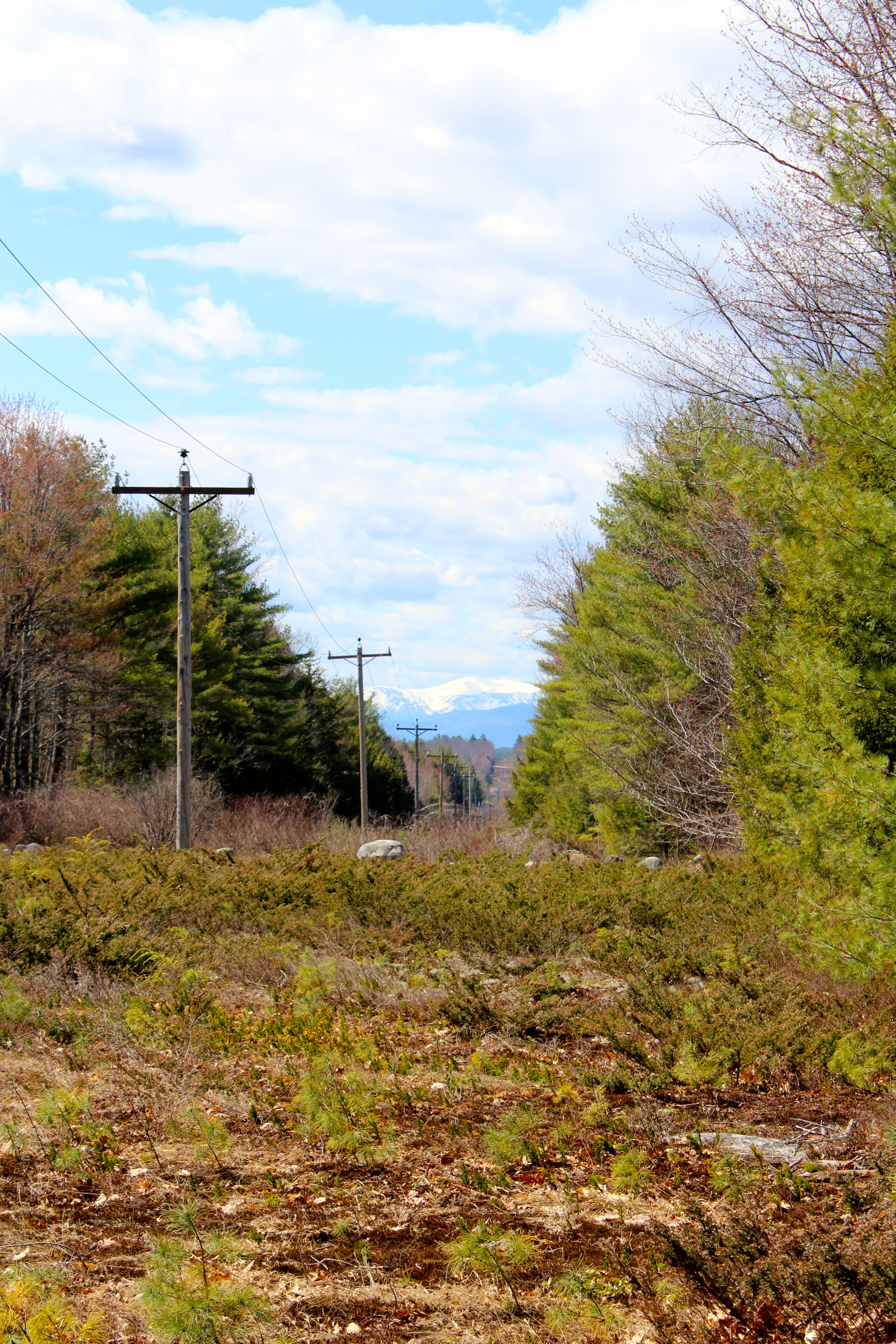
My journey led me down the old cow path to the power line right-of-way and much to my delightful surprise, Mount Washington was on display. It was so clear, that I could even see the outline of buildings and towers at the summit. Thank you for providing such clarity.

e2-vernal pool

Rather than walk to the mountain, I turned in the opposite direction and found my way to the vernal pool, where ice still covered a good portion. You know, Earth, as much as I want this to be a significant vernal pool because it does usually have two qualifiers (and only needs one): more than forty wood frog egg masses or more than twenty spotted salamander egg masses, I know that it is not. I believe it was created as part of the farm based on the rocks at the far end, not exactly forming a retaining wall, but still situated so close together in a way that I haven’t found anywhere else in my extensive journeys of the hundreds of acres behind our house. Plus, it dries up much too quickly to be a natural pool. And each year I’m surprised to find wood frogs, their egg masses, spotted salamander spermatophores, and their egg masses, given that the water evaporates before the tadpoles finish forming. If these species return to their natal vernal pool, Earth, then how can that be since no one actually hopped or walked out as a recently matured adult? Or were these frogs on their way to another pool and they happened upon this one? You know me, Earth–lots of questions as I try to understand you better.

e4-dorsal amplexus

Whatever the answer is, each year you work your magic and on a visit yesterday afternoon, I spied a male wood frog atop a female in what’s known as amplexus, aka, mating. According to Maine Amphibians and Reptiles, edited by Malcolm L. Hunter, Aram J.K. Calhoun, and Mark McCollough, “When mating, the male clings tightly to the females back. Visible contractions of the female’s body signal the onset of oviposition, at which time the male’s hind feet are drawn up close to the female’s vent. As the eggs are expelled, the male releases sperm into the water and strokes the egg mass with his hind feet, which presumably aids in distributing the sperm more evenly.” I looked this morning, but didn’t find any sign of eggs. Don’t worry, Earth, I’ll keep looking because perhaps they were there but hadn’t absorbed water yet.

e5-dead frog

One other thing I saw yesterday that greatly disturbed me was a dead frog in the water. Last year I also found such. My concern is that it was caused by a virus, but perhaps it was old age. Or some other factor. I do have to confess, though, Earth, I intervened and removed the body from the pond. I know, I know, it’s all part of the cycle of life, and I should leave nature to its own devices, but disease was on my mind and I didn’t want others to be affected. I may have been too late. Only time will tell.

e7-leaf variety

When I arrived this morning, I’m happy to report that I didn’t see any dead frogs. For the longest time I stood upon a rock–you know the one I mean, Earth, for you’ve invited me to stand there before. It’s sunny in that spot and the frogs know it well, for that is where they’ll eventually deposit their eggs. As I waited, I looked down at the leaves on the pool’s bottom and noticed how they offered a reflection of the trees above, beech and oak and maple and pine and hemlock. All still displayed their winter colors, but when the pool does dry up, they’ll turn dark brown and form a mat that will provide nutrients for the plants that colonize the area. You’ve got a system, don’t you Earth.

e8-frog 1

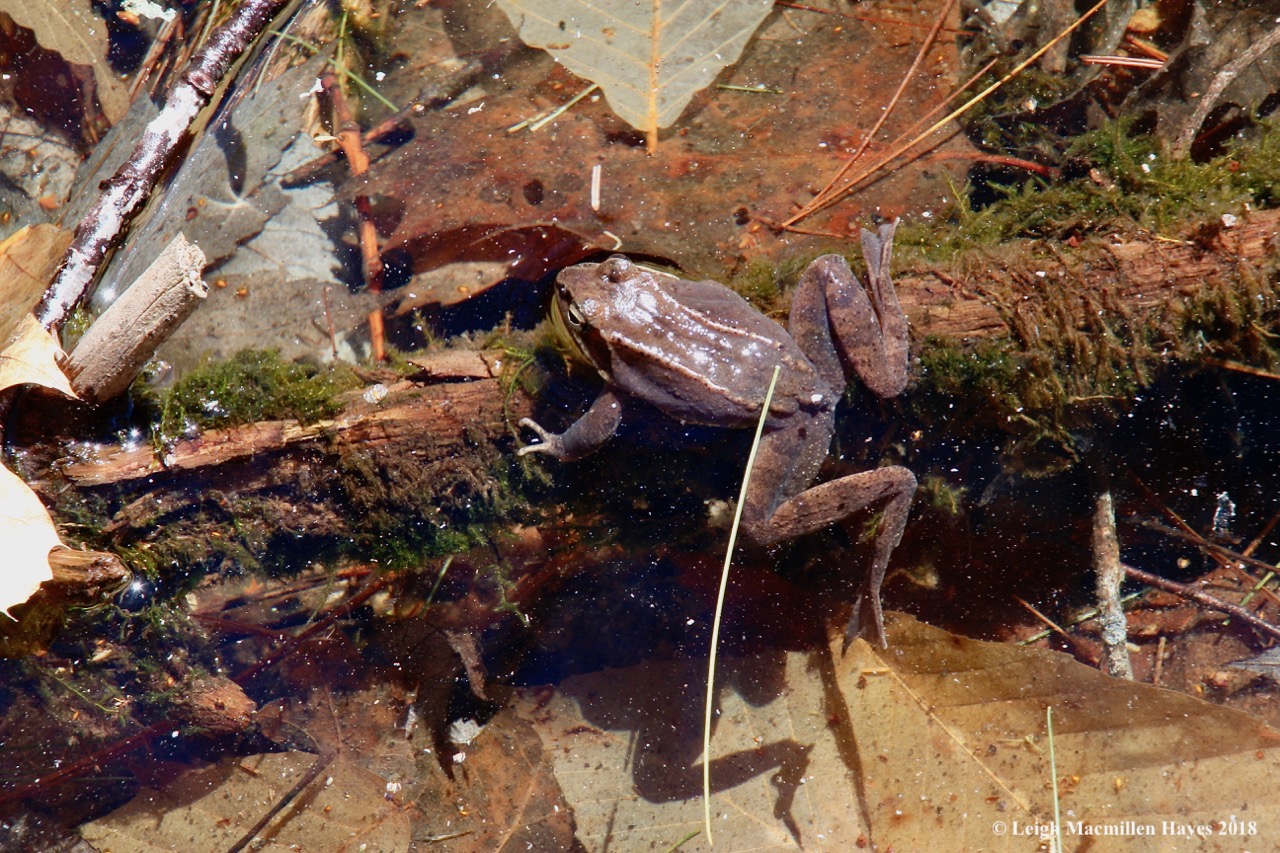
I knew if I stood as still as I could, I would be rewarded. While beech and oak leaves, the last to fall from their trees, danced somersaults across those already on the ground and matted by the past winter’s snow, red and gray squirrels chatted and squawked, and chickadees sold cheeseburgers in their songs, my eyes constantly scanned the pool. And in a flash, a frog emerged from under those leaves.

e8-wood frog 1a

For a while he floated, allowing the breeze to push him to and fro within a two square-foot space. But then he decided to climb atop a downed branch. Perhaps he was trying out a calling sight to use once I left.

e9a--wood frog 3

And then, there was another. And after that another. Yesterday I saw a total of six. Today only four. But that doesn’t mean the others weren’t hiding until I left, right Earth? I hope that’s what it meant. One thing you have taught me via the frogs is patience. If I stand still long enough at least one will swim to the surface. And they, too, are patient as they wait: for me to leave; for the gals to come. Well, maybe when the gals do come they aren’t all that patient.

e10-mosquito larvae

I actually returned to the pool a second time today and more of the ice had melted. While in the late morning I couldn’t see any insects on the move, in the early afternoon I eyed thousands of mosquito larvae. Everyone moans about mosquito larvae, Earth, but . . . they provide food for salamanders and the adult form for birds. I’m just trying to look on the bright side.

e11- snowmobile trail

This afternoon, I waited and waited for the frogs to emerge, but either my eyes didn’t key in on them or they decided to wait until I left. So . . . I finally did just that, and did head toward Mount Washington after all, following the snowmobile trail. As you well know, Earth, it was a bit tricky between the snow, soft mud, ruts and rocks exploding from your earth.

e11a-boots

My right foot managed to fall through the icy snow into a hidden rut filled with water that covered my Bog boots. And then my left foot found some mud that squelched with glee. Or was that you squealing with delight, Earth? I had one wet sock, but ventured on.

e11b-Mansion Road

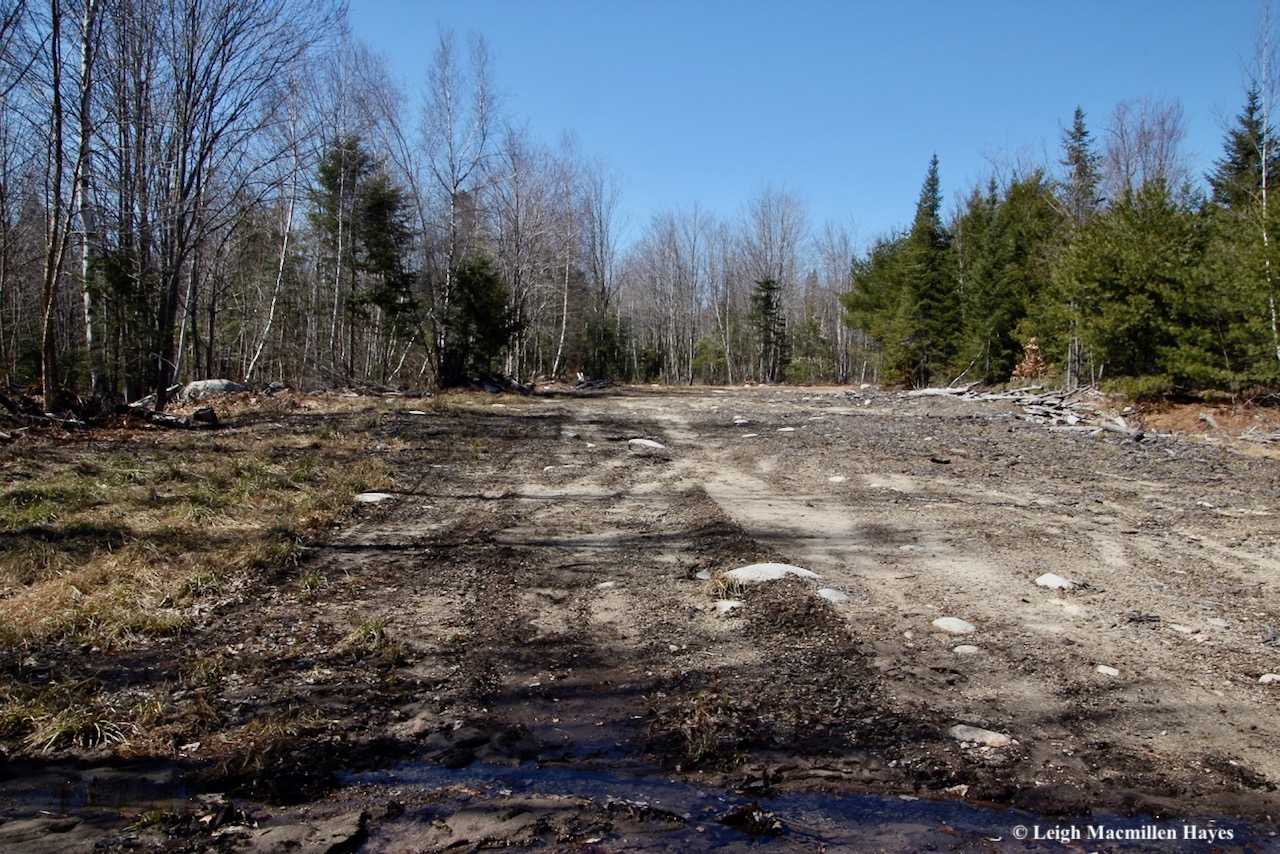
At the junction, I turned to the west, following the log road and remembering the days of yore when my guy and I, as well as neighbor Dick Bennett, used to work up a sweat on a winter day following a snow storm, for it was our duty to you, Earth, to release the snow from your arched gray birch trees. And then, a few years ago, the road became the main route to the timber landing/staging area again, and all of those trees we’d worked so hard to protect year after year were cut to make way for machinery. As much as my heart broke, it does give me time to watch forest succession in action, and I gave thanks that you have such a plan in mind.

e14-deer dance

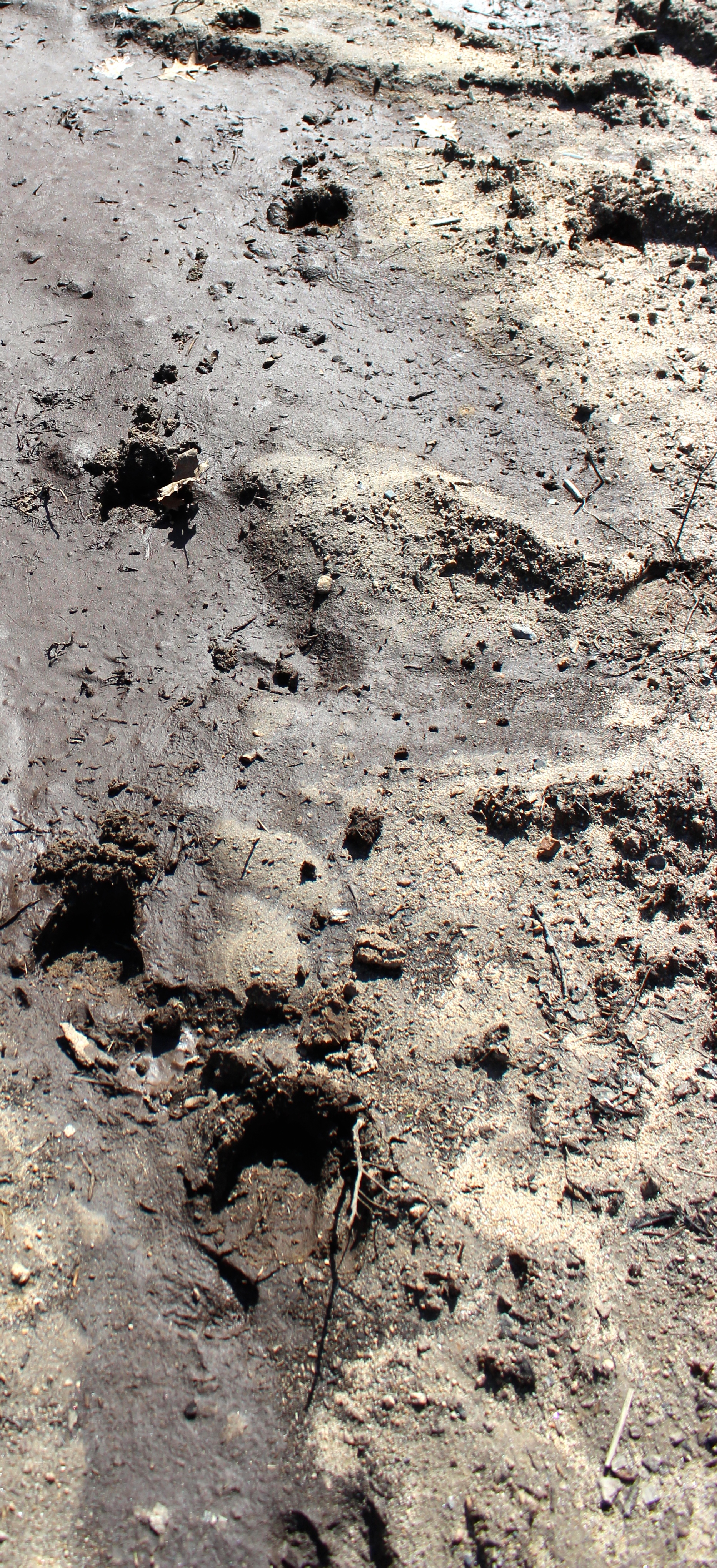
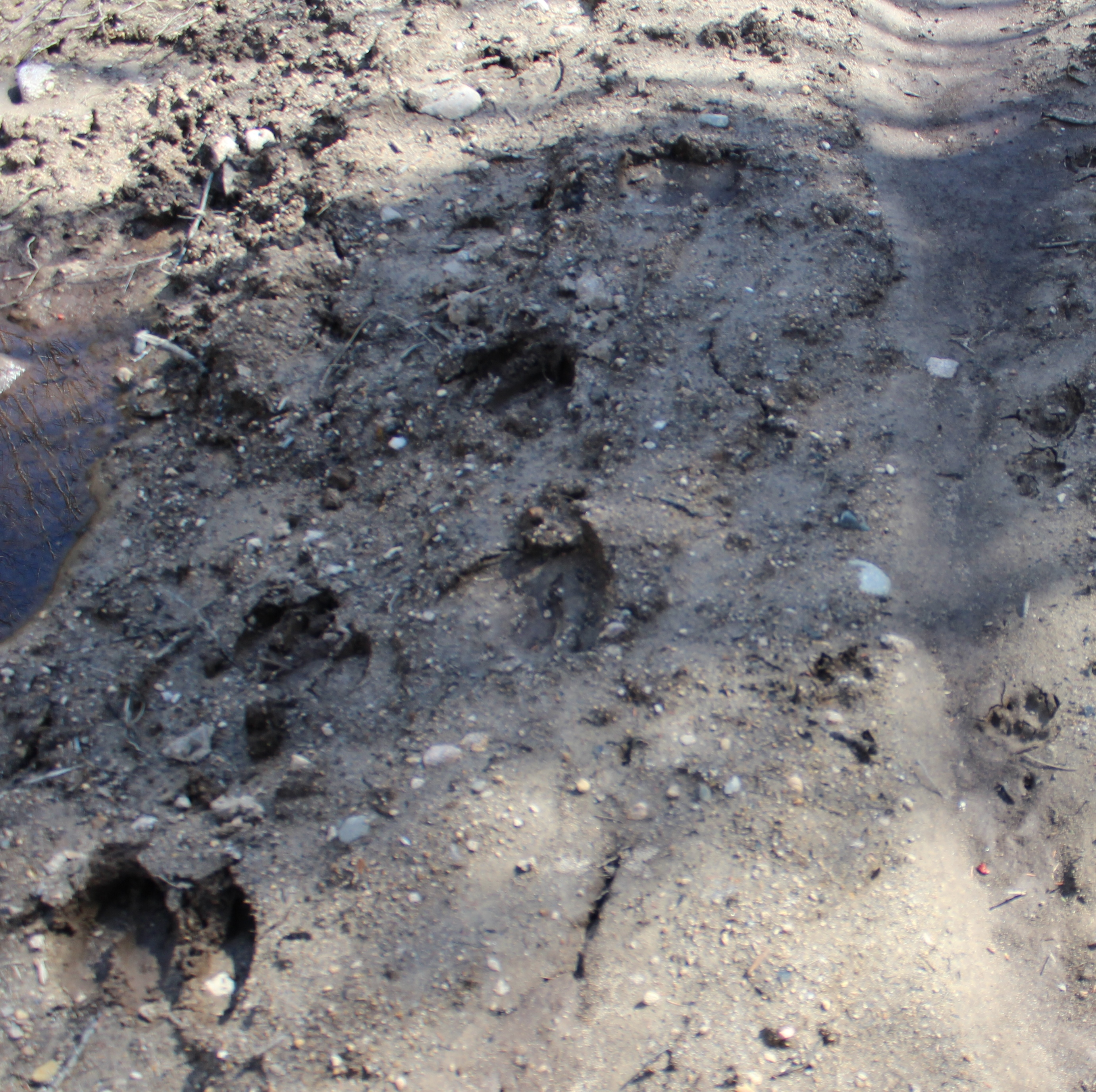
It also provided a blank stage upon which the does danced and left behind their calling cards.

e12-buck

And Buck sashayed each partner across the floor. The deep dew claw marks and cloven toes indicated he’d made quite an impression.

e11c-coyote scat

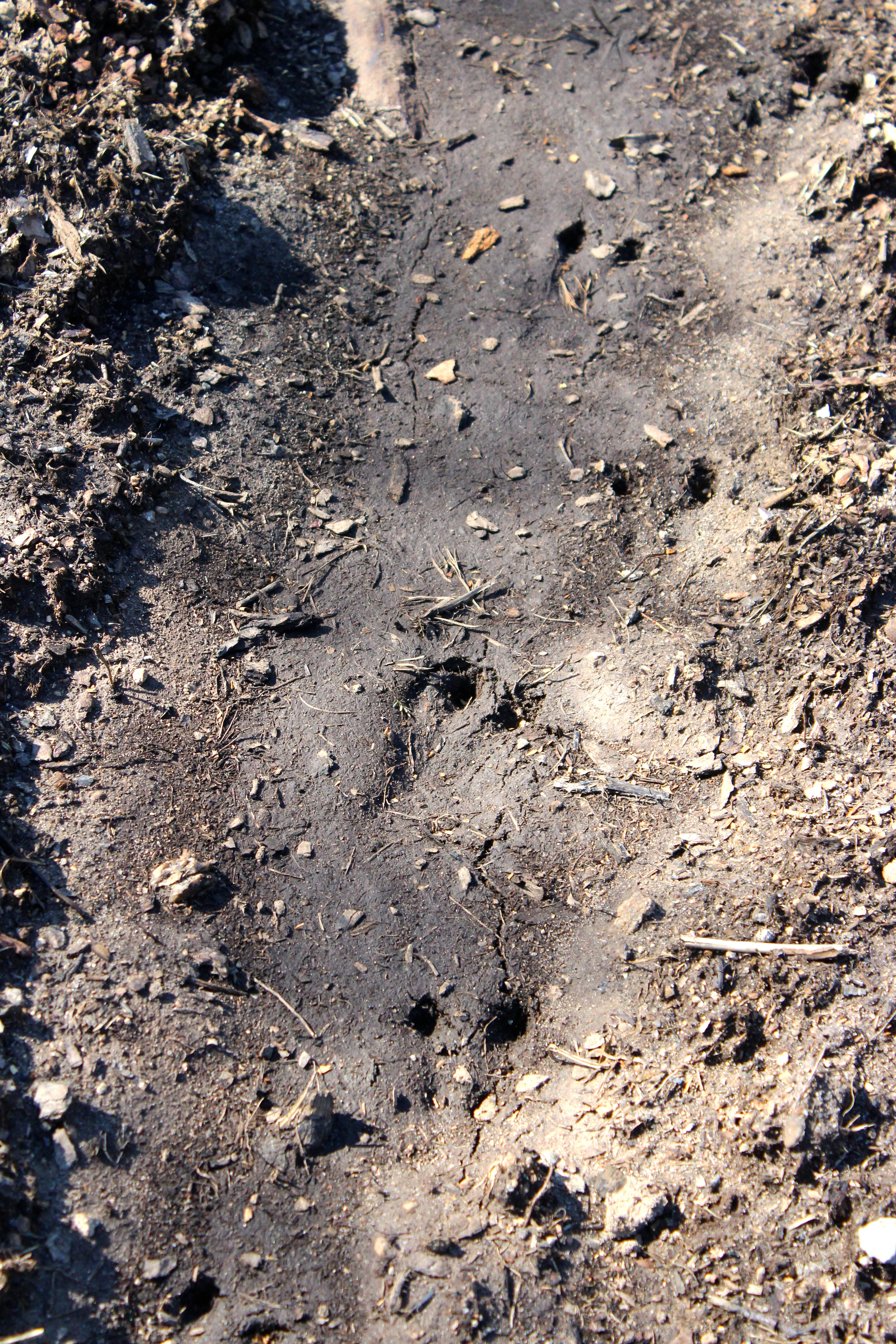
All along the way, upon raised rocks in the middle of the “road,” coyote and fox scat was prominent and in the sandy surface I also found their prints.

e18-vernal pool near landing

At the left-hand turn that led to the landing, I was surprised when I shouldn’t have been, for suddenly a million “wrucks” filled the air. I knew the water was there but it had slipped my mind. Thank you for the song of many more wood frogs. Thanks for filling my ears with joy.

e15-wood frog egg masses

And the chance to spy their good works. Thankfully, you make sure that life continues. At least in the form of wood frog egg masses.

e17-wood frog egg mass

I loved their gelatinous blob-like structure, all bumpy on the outside they were. Actually, I believe what looked like one mass, was several, but I didn’t dare step in to check and disturb the frogs that hid below.

e16-wood frog 5

Again I stood as still as possible, and again I was rewarded. For a bit I thought that the frog before me had no arms, but then I realized that they were just plastered to its sides.

e19-wood frog under log

A squirrel sounding bigger than itself caught my attention briefly and I turned unexpectedly. When I turned back, the frog was no longer at the water’s surface, but appeared below a downed gray birch. For a while the two of us remained still. I hoped another frog or two or three or three thousand would pop up, but that wasn’t your plan, was it? It’s okay. One was enough.

e21-log landing

I finally left my one, oops, I mean your one frog alone and continued on to the log landing, noting all the mammal tracks and looking for other signs. There was more scat, but I was disappointed not to find bobcat or moose prints. Where were you hiding them? I suspect the moose had moved to the swamp below.

Rather than go much further, for major ruts from the logging equipment were filled with water, I turned around just beyond the landing and headed back across it. Twenty-five years ago it was a much smaller clearing with a few pine trees. Over the years, I’ve watched it change and the mammal activity as well. And then, about five years ago it was converted back to a landing and I can’t wait for it to fill in again, but my desire and your plan are not necessarily the same, are they?

It all seemed like so much destruction, but I had to remind myself that I am part of the equation, with my own needs for power and wood and food and everything that you provide. And cuts do bring about a change, sometimes for the better, for the trees and the mammals and the birds and the plants and the decomposers and the consumers and all who call this place home. Am I convincing you, Earth? Am I convincing myself?

e22-frog 7

As I passed by the lengthy vernal pool again I decided to revisit the egg masses. I stood on the rock and slowly scanned the area. No frogs. On second glance, there was one right beside the rock on which I stood. And it looked like the same one I’d seen previously. I wondered why. Why didn’t I scare it? Was that you, Earth, taking a peek at me?

e23-Mourning Cloak butterfly

I had one more surprise on my journey–the first butterfly of the season, a mourning cloak. With its wings closed, it wasn’t all that attractive.

e24-mourning cloak

But upon opening them, I saw its beauty hidden within–another lesson, eh Earth? Oh, and your sense of humor. For yes, that was coyote scat on which the butterfly sucked as it sought amino acids and other nutrients. A fly also dined. Yum.

What a day, Earth. Your day. Dear Earth Day. May I remember to treat you so dearly every day.

Sincerely,

wondermyway


May I Have This Dance?

Haha. If you know me well, you know I’d rather be a wall flower than step onto the dance floor. I easily managed to avoid all high school dances, except one prom. And then, barely danced at that, probably much to my date’s dismay. After that, so many moons ago, I don’t think I danced again until my wedding–at which time any dear friends in attendance watched with humor at my awkward movements. But today, I felt the rhythm surging through my body.

v-snow on trail

It all began on my way to the vernal pool. Perhaps it was really just a shiver as the breeze blew across the last of the snow, hard packed still along the snowmobile trail.

v-springtails 1

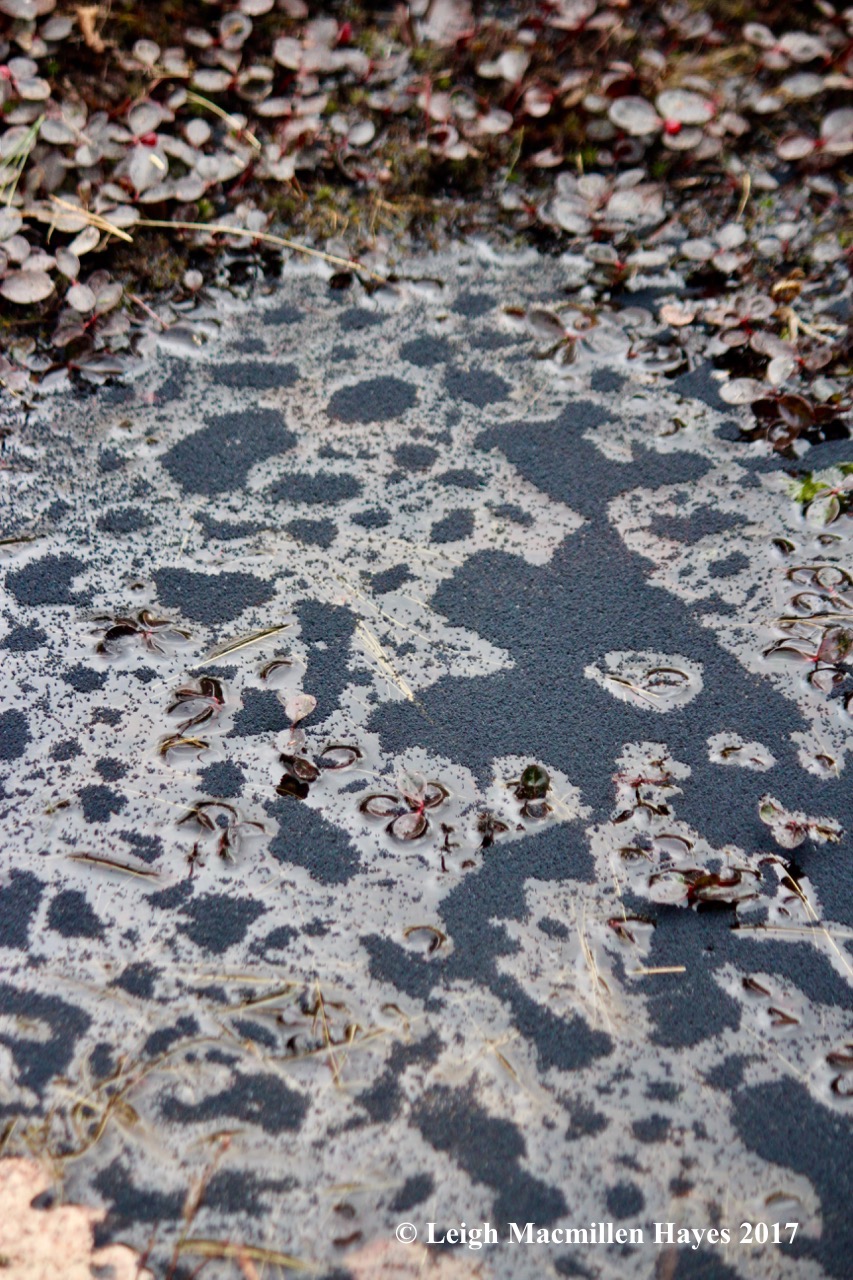
Or maybe it was the depression that held the snowmelt and was covered with an oil slick of sorts . . .

v-springtails 2

which turned out to be a million springtails bopping to their own tunes.

v-trailing arbutus 1

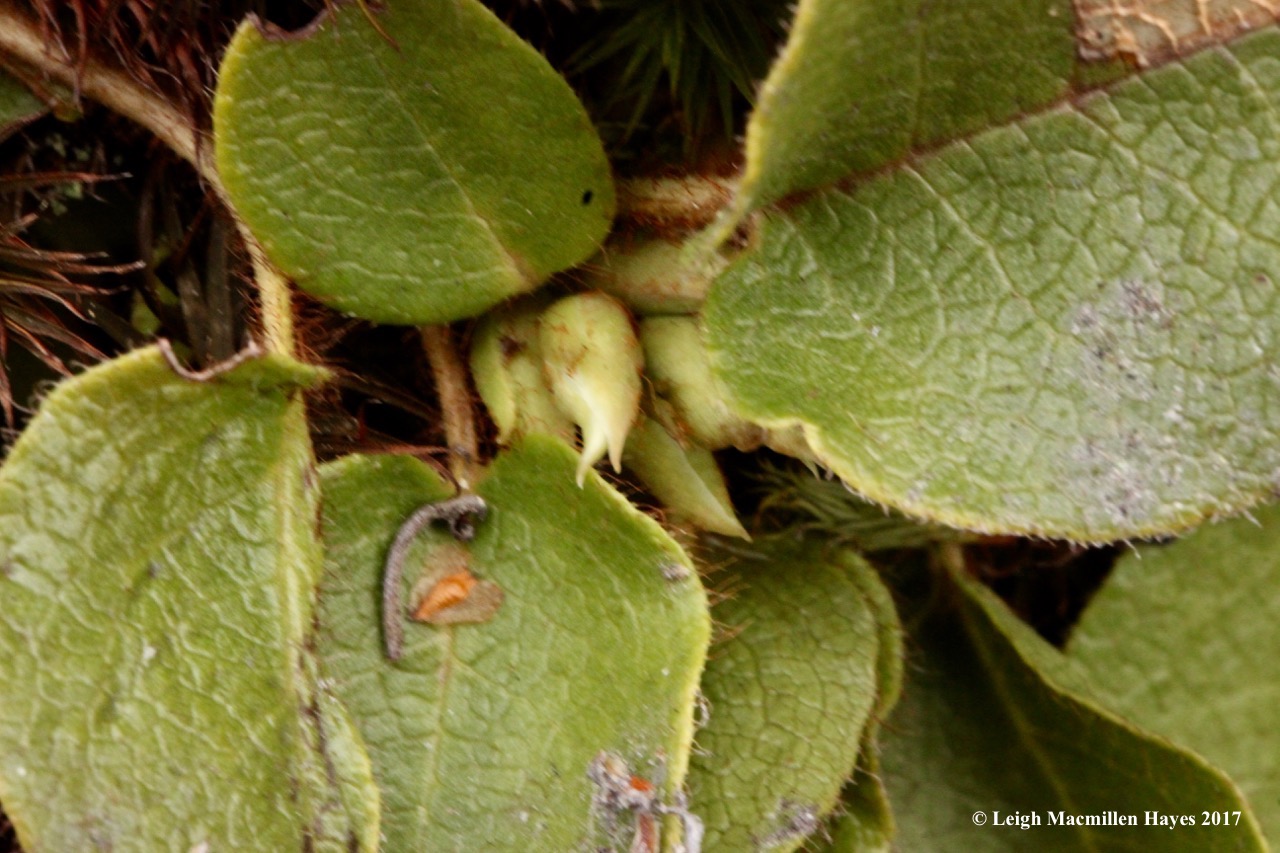
It could have been the sudden sight of so many trailing arbutus plants that got me going.

v-trailing arbutus 2

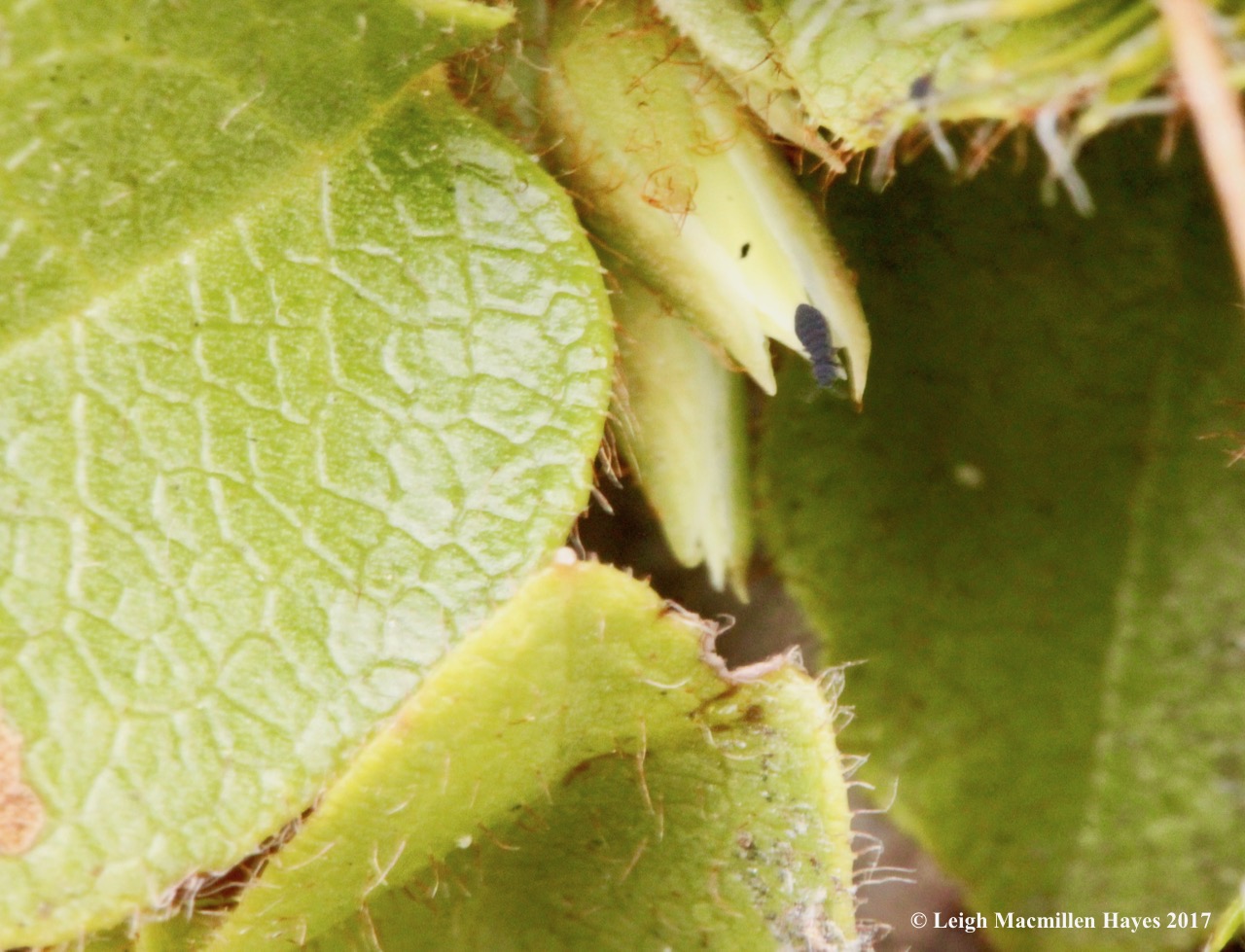
Certainly I wasn’t the only one excited by those flowers yet to be. (Do you see the springtail on the tip of the bud?)

v-vernal pool

Or it might have been the ever shrinking ice cover at the pool that made my feet tap.

v-vp edge opening

Perhaps it was the fallen beech leaves atop tree reflections that forced me to sway.

v-leaf offerings

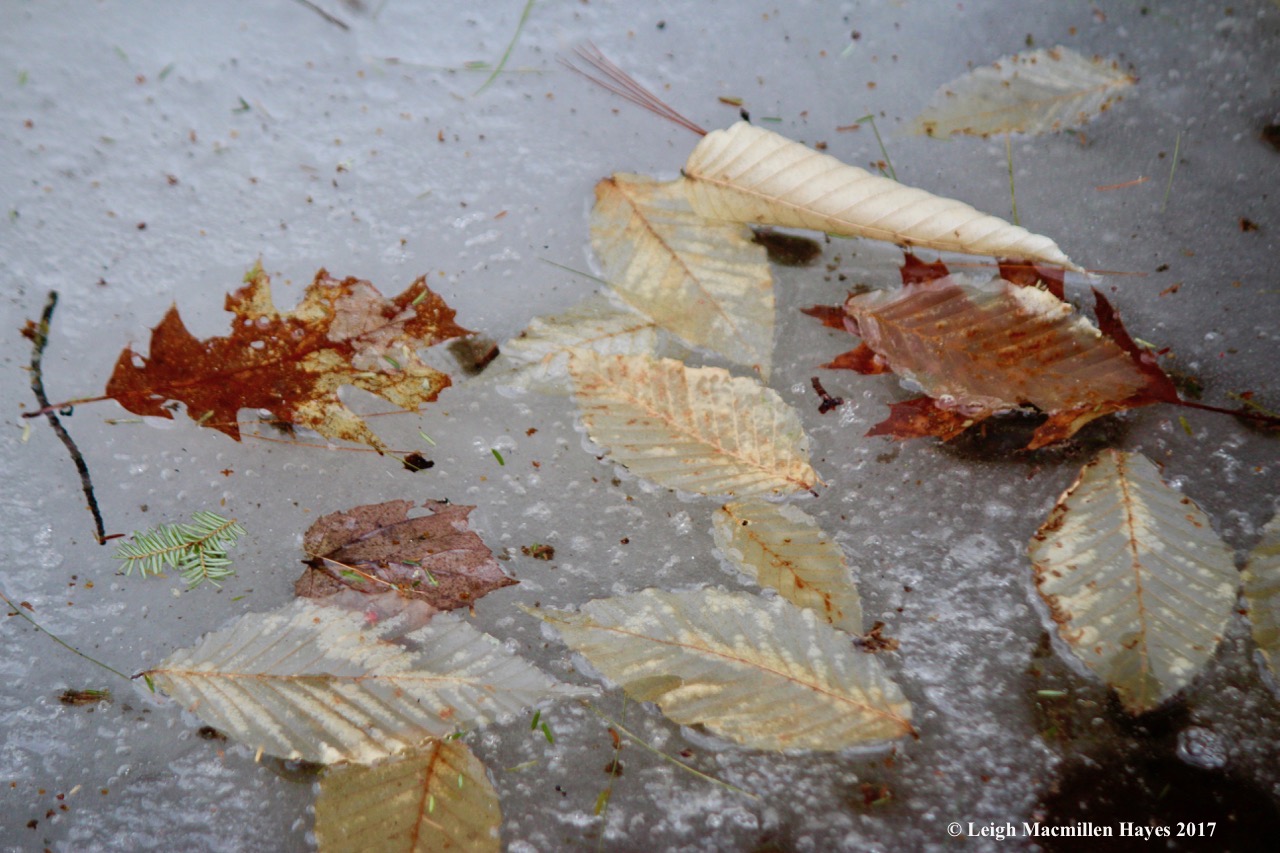
Or the way the hemlock, oak, maple and beech leaves intermingled.

v-spermatophores

What I do know is that there was no stopping me once I spotted spotted salamander spermatophores atop leaves in several open sections–the sperm being located at the top of the cauliflower-shaped platforms.

v-frog 1

And then I saw something swim under some leaves that really got me rocking. Do you see the face of the wood frog, hiding as best it could?

v-fox scat beside vernal pool

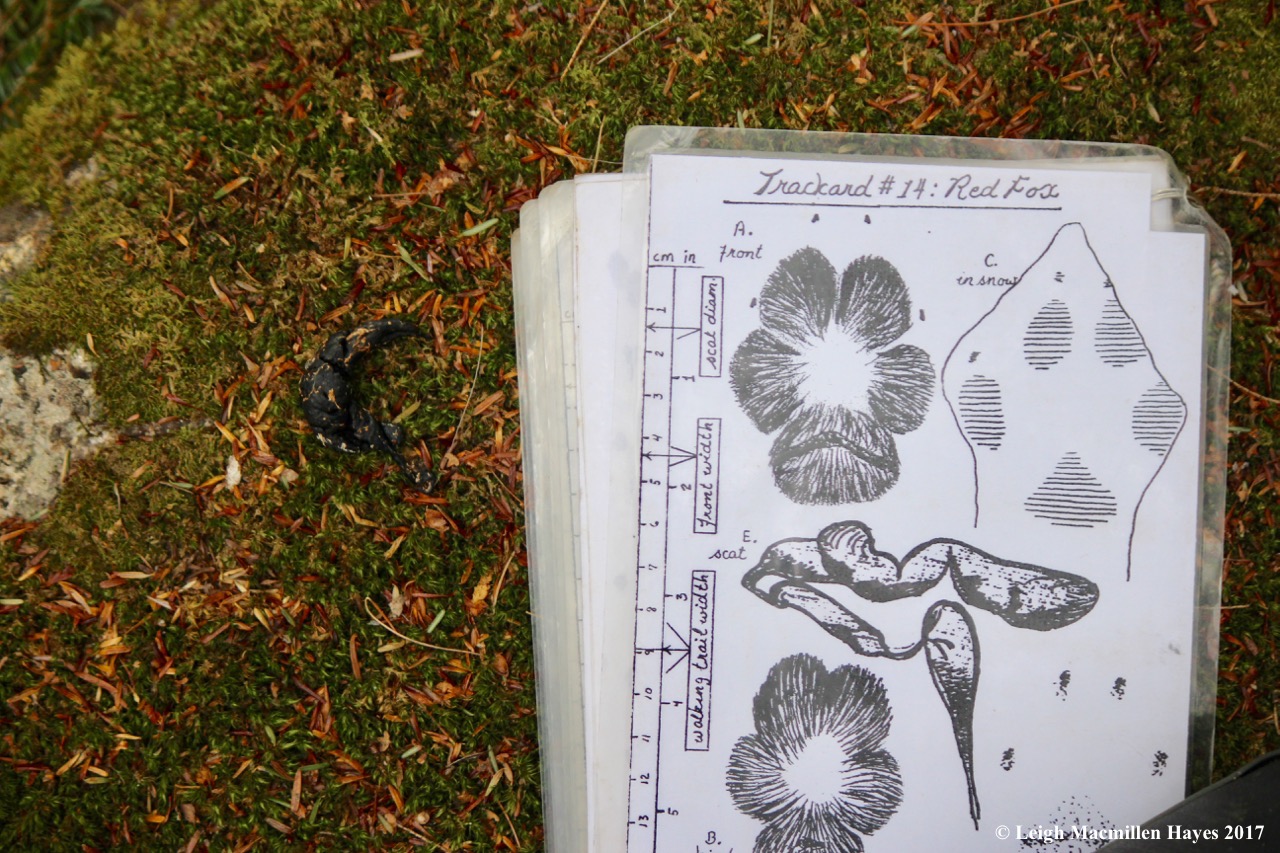
As I began to circle around the dance floor, I noticed an offering of scat that made me think a red fox had sashayed beside the pool.

v-sharp-shinned hawk feather?

On my own sashay home, I discovered that there were other dancers in the midst–this one possibly a sharp-shinned hawk.

v-woodpecker feather

And after that a woodpecker.

v-junco feather?

And then a junco.

v-red maple flowers 1

Along the cowpath, the red maple flowers blushed as I might were I to get all gussied up in a flowing dress.

v-red maple flowers 2

Much the way a suitor might wink, so much has happened so quickly. Within the past week the snow melted almost entirely away and winter released its hold on me. Now I’m ready to groove with the choreography of spring’s rhythm. I hope you’ll join me on the dance floor.

May I have this dance?


The Big and the Small of the Hundred Acre Wood

As my friends know, I’m not one to say no to an invite to explore their land. And so this afternoon’s adventure found me spending time with Beth on the 100 plus-acre property she, her husband and parents call home in Oxford County.

b-view 2

Their sense of place begins with a field of wildflowers yet to come, the entry to their wood lot and a view of Ragged Jack Mountain. My sense of excitement to explore their place was heightened by this jumping off point.

b-Maine trail

Trails loop throughout the property and the family has taken the time to name and label all of them.

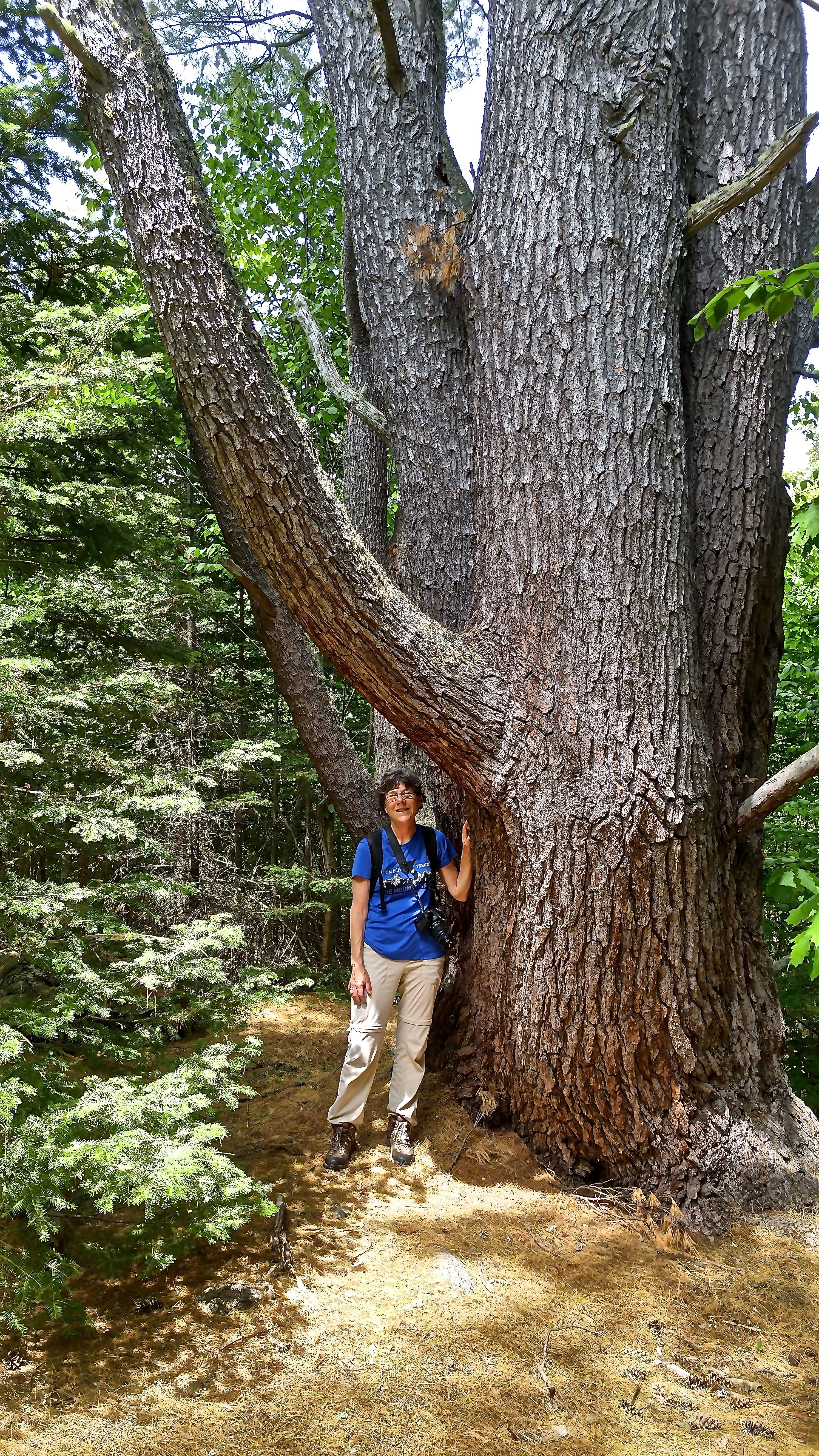
b-pine 4

We wandered along and suddenly Beth noted that we’d reached their champion pine. I looked at a small spruce before us and wondered what all the fuss was about. Then she pointed to my left.

b-pine 2

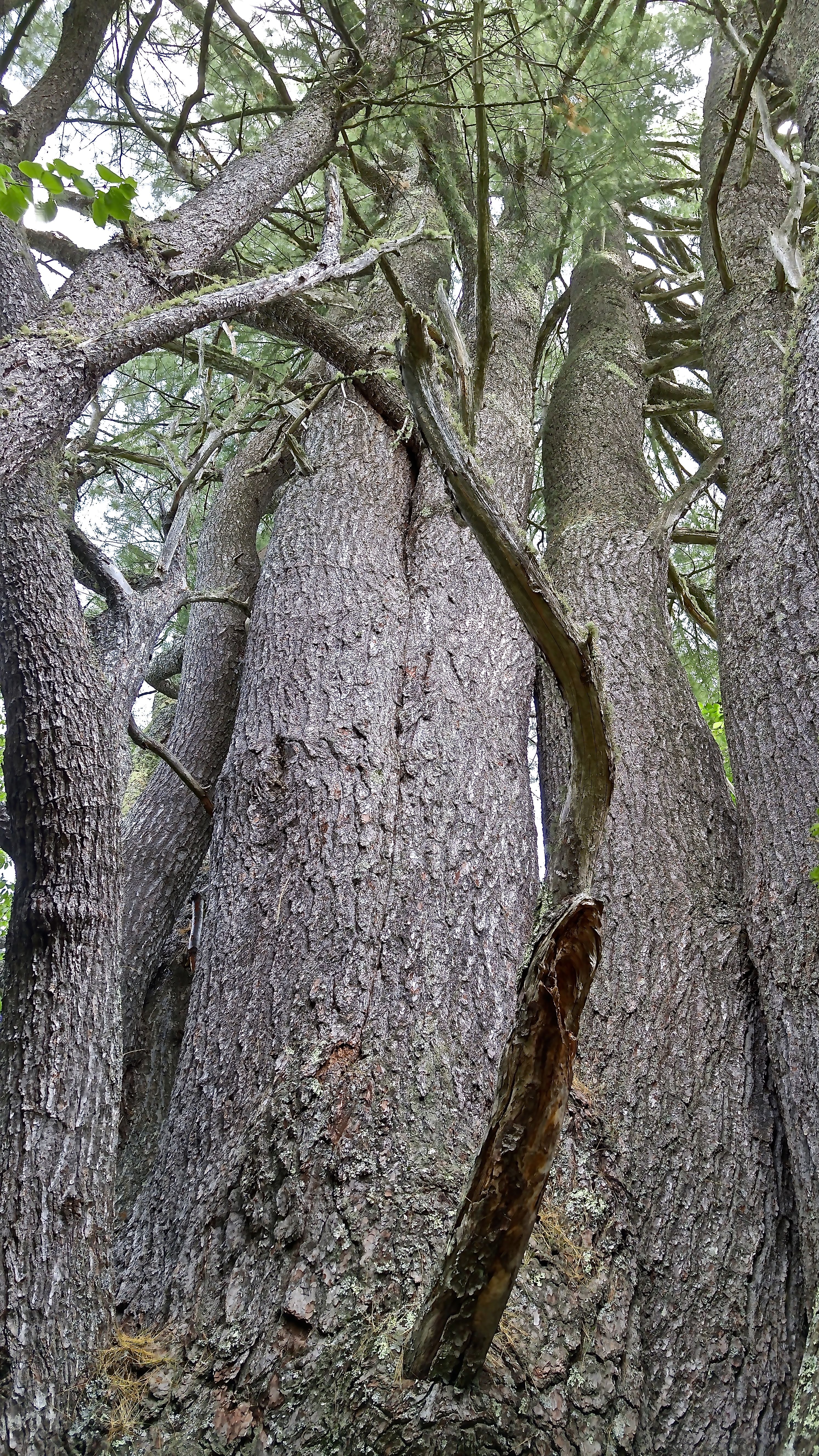
One massive Eastern white pine gallantly towered over us. At some point in its early life the terminal leader was injured–perhaps by a weevil or weather. But . . . this tree carried on and continues to do so. I felt like we were standing below a giant in the woods.

b-pine bark

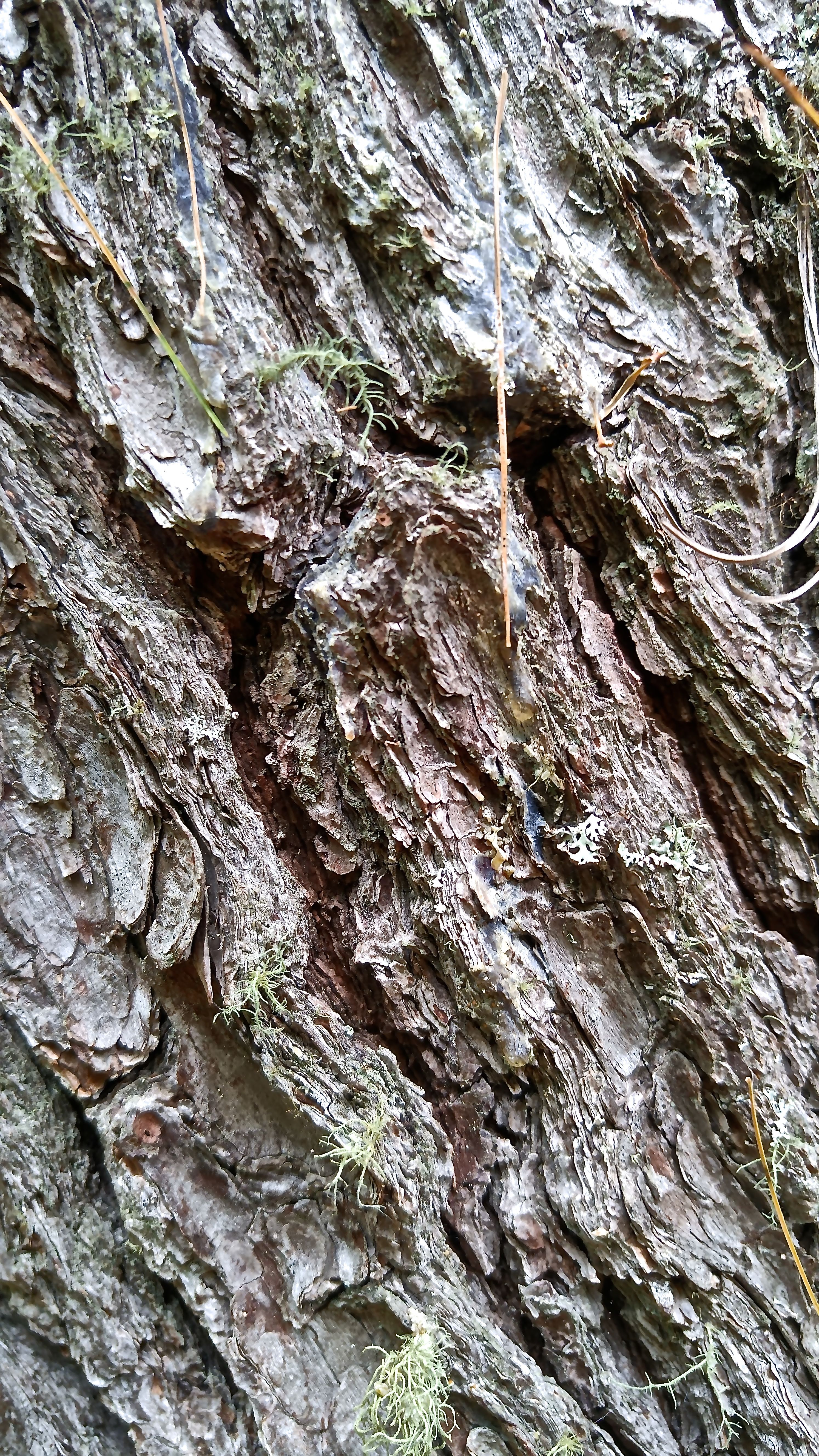
It’s characterized by layers upon layers of bark.

b-pine 3

And it’s wider than any tree I’ve ever seen. Here are the stats on this champion: According to Beth, it towers 108 feet tall, is 256 inches in circumference (21.3 feet) and has a crown of 15.75.

b-pine 1

Yup. It’s big. Or rather, BIG!

b-dam:lodge2

We weaved our way along the trails and Beth shared favorite spots with me as she told tales of her experiences with this land and water.

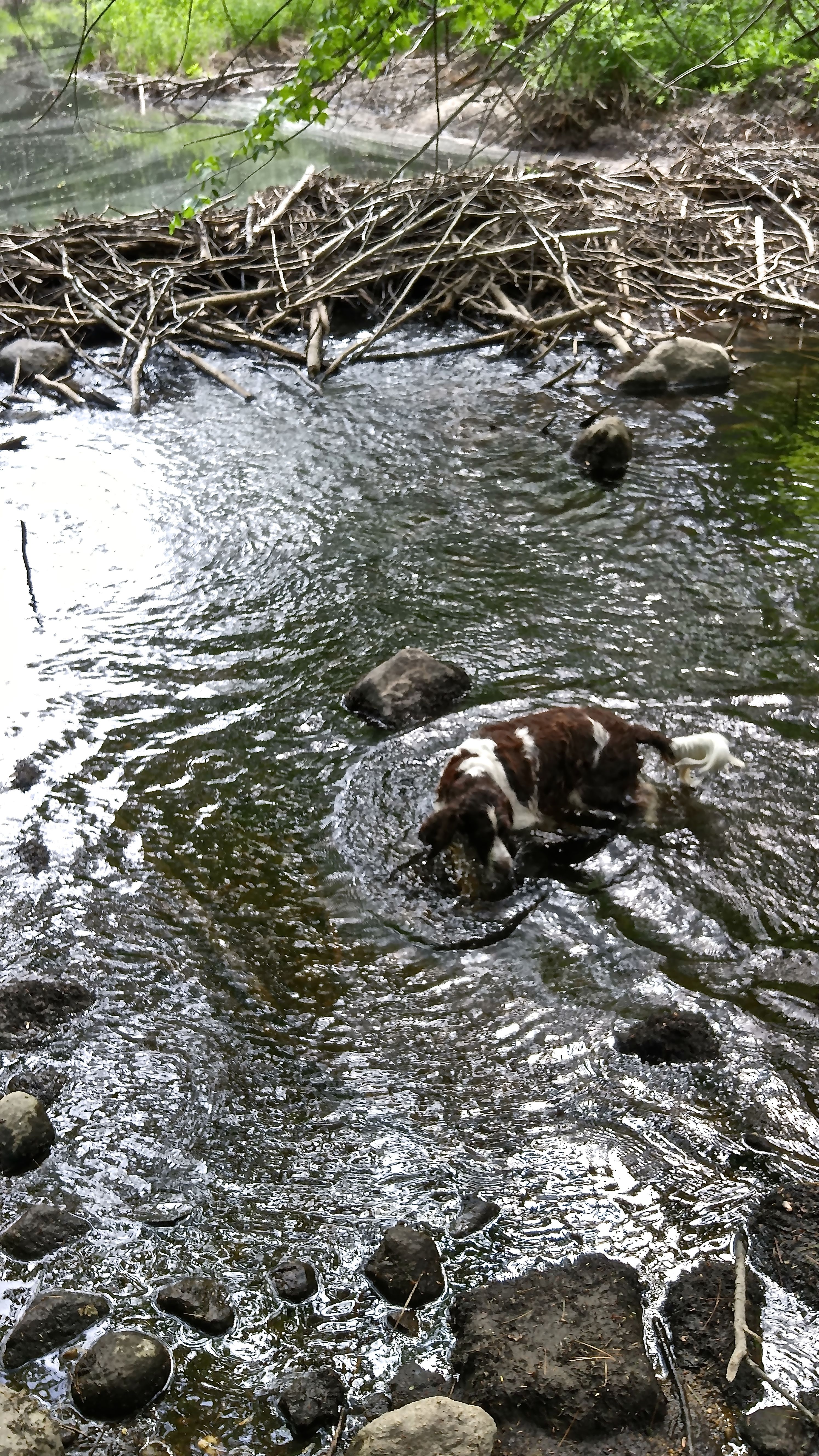
b-mora 1

Mara, Beth’s springer spaniel, shared her own tail. She was happiest when mud and water provided opportunities to play. We had to wonder other times when she cowered behind us or tried to hide between Beth’s legs. What did she sense that we weren’t aware of? We did hear a few critters, including baby grouse that Mara visited, and saw the tracks of moose and deer, plus coyote and fox scat, and maybe even bobcat scat, but our only official mammal sightings were red squirrels.

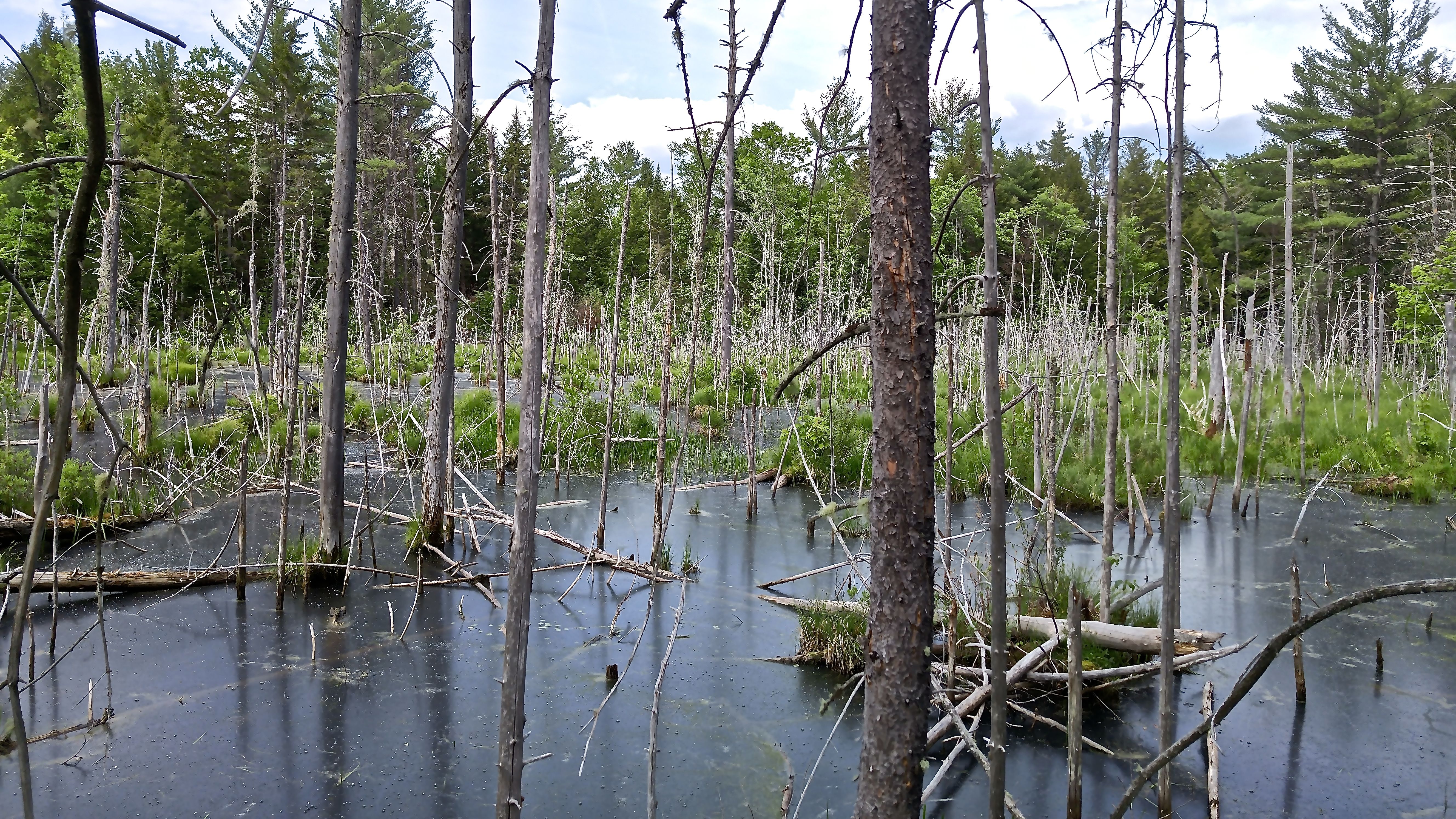
b-pond

Among Beth’s sharings was this spot she refers to as the Accidental Pond. Accident or not–it’s enchanted.

b-split granite

Here and there throughout the woods, she pointed out glacial erratics. This one we particularly wondered about. What came first? The rock split on its own or the hemlock caused the split?

b-bracken 1

Those were the big things, but we were equally wowed by all the small stuff we saw along the way, like this bracken fern just beginning to unfurl.

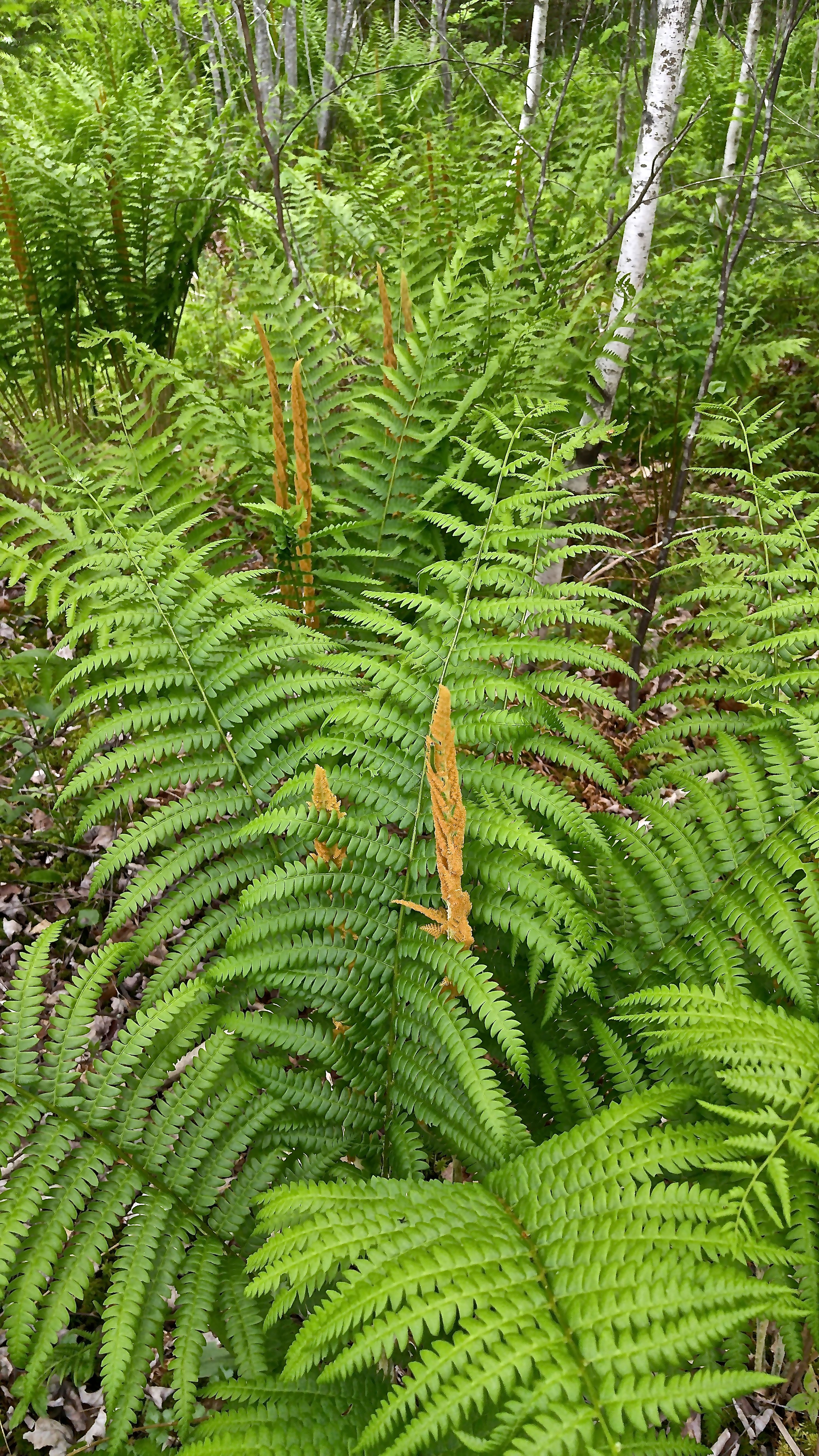
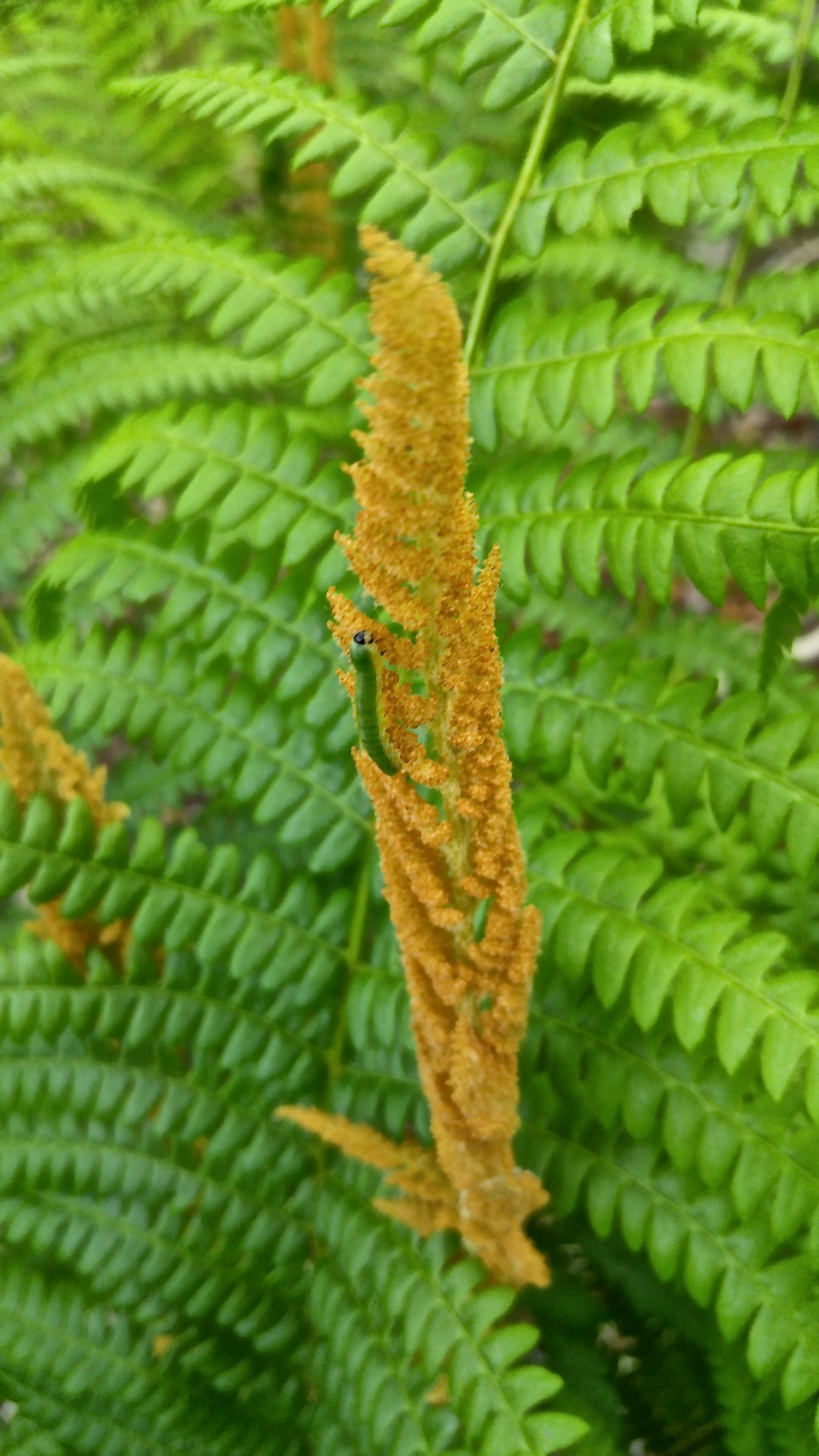
b-cinnamon ferns

Several times we wandered in the land of the cinnamon fern, where the separate fertile fronds sport the cinnamon color for which they are named. It won’t be long before those fertile fronds bow down to the earth and the large, arching sterile fronds are all that will remain.

b-caterpillar 2

And then something else caught our attention–a green caterpillar on the fertile frond.

b-caterpillar 1

We weren’t sure who it was, but we saw it on several stalks. Always something to wonder about.

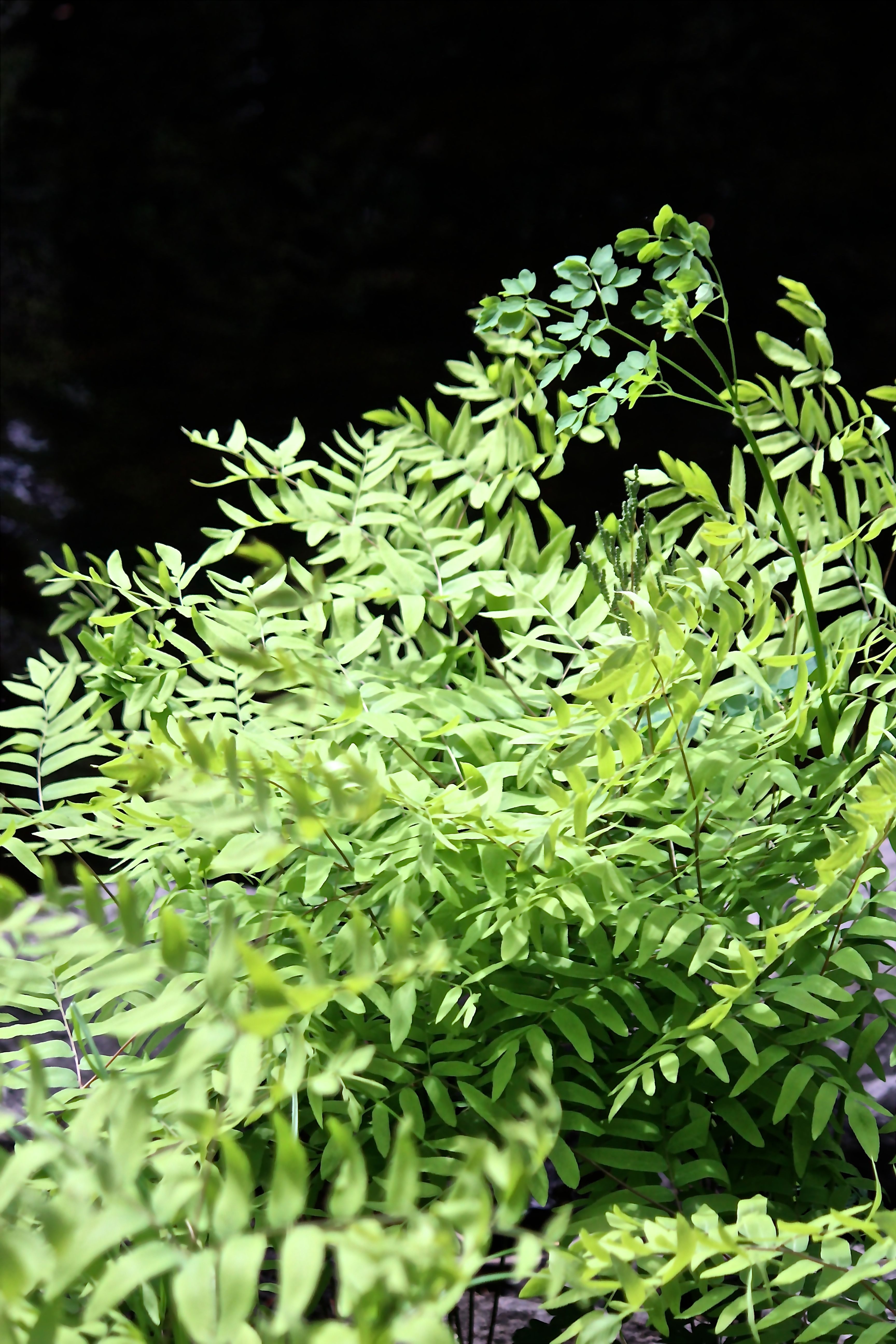
b-royal

Royal fern also offered a display, especially beside the brook. Look closely and you might find the fertile frond “crown” on this one. It’s a rather “Where’s Waldo” presentation, but it’s there.

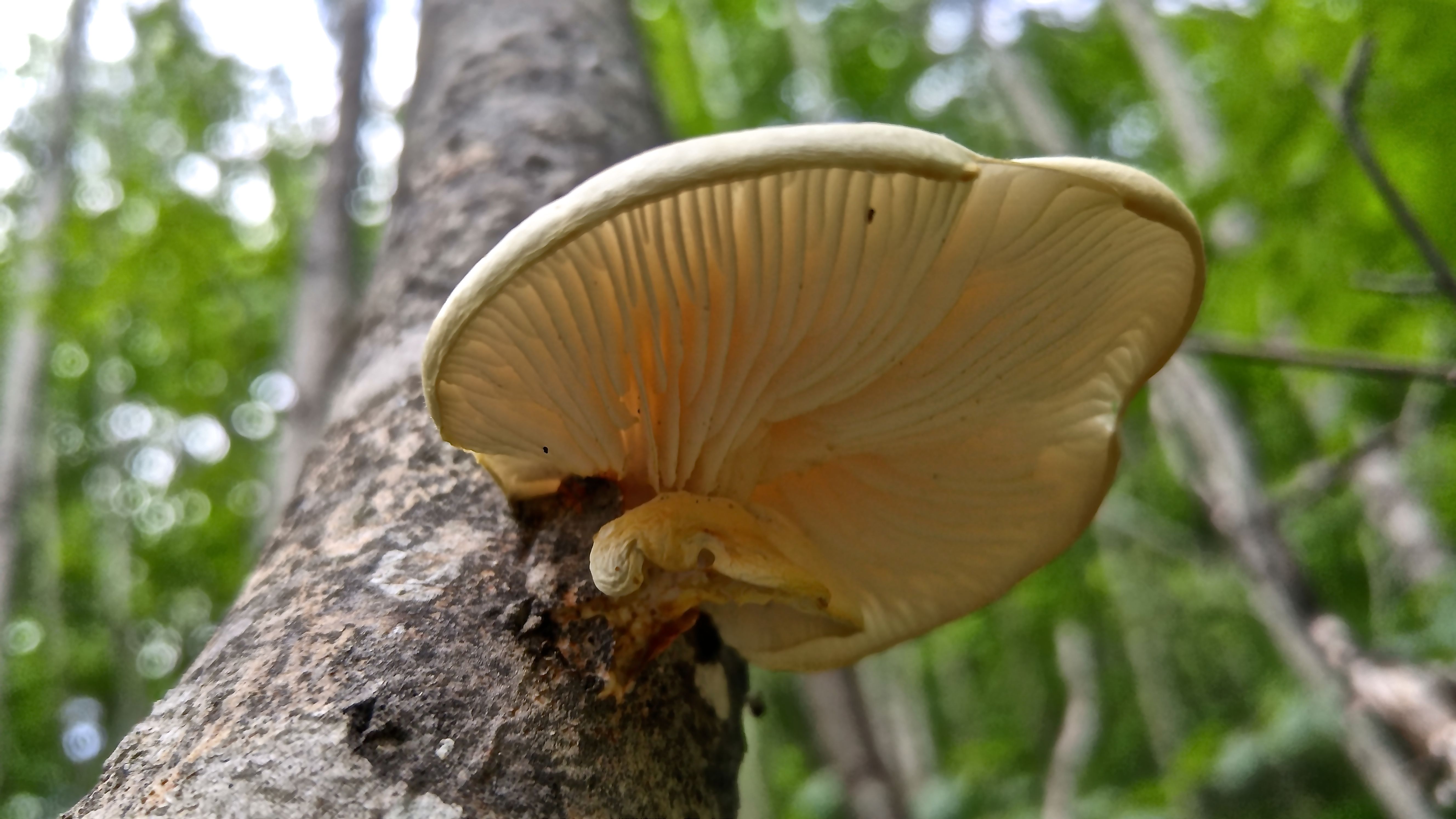
b-gilled 1

We found some gilled mushrooms we also couldn’t identify, but appreciated their existence.

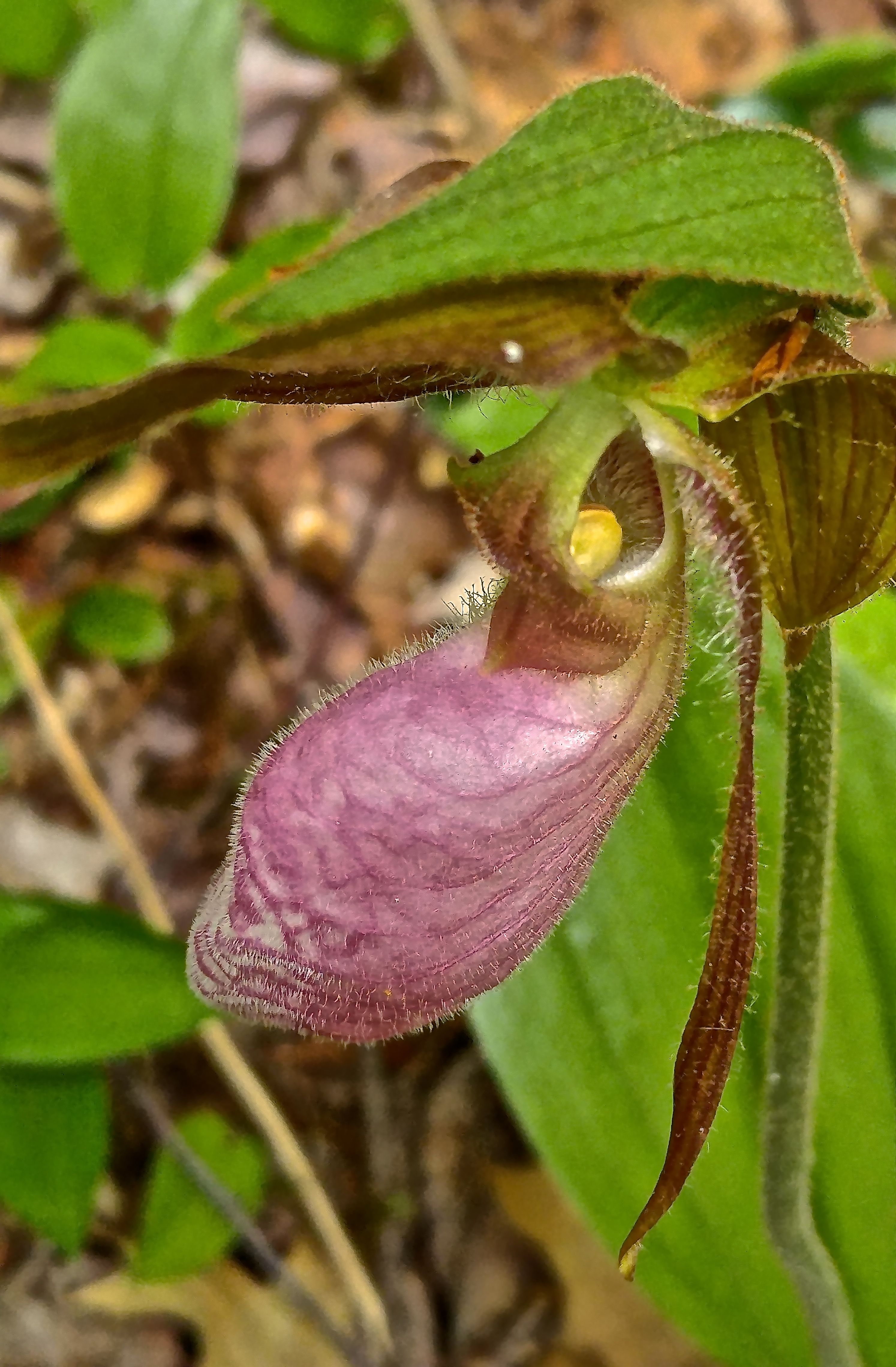
b-lady 3

The lady’s were in bloom.

b-lady's slipper

Take a look at those hairs.

b-web 3

And it’s spider web season so we paused and admired the work of an orb weaver who built a spiral wheel-shaped web.

b-spider web

Also among our sightings, a well-built high-rise structure woven among the remains of winter weeds.

b-toad 3

Camouflage is everything. Just ask the American toad.

b-wood frog 1

We found the wood frog easier to spot.

b-blue-eyed grass1

But I had my eye on the blue-eyed grass.

b-blue 5

These are the shy ones. They only keep their eyes open if the sun is shining. On a cloudy day it’s almost impossible to recognize them.  And they love damp open woods, slopes and stream banks so it’s no wonder we found them today.

The big and the small . . . Beth’s property has it all. And this was only a sampling from her hundred acre wood. Winnie the Pooh and his friends–they too, would love this place.


One Step at a Time

The past few weeks I’ve felt like an expectant mother. Remember that 70’s Heinz Ketchup commercial? “Anticipation, anticipa-a-a-tion, it’s making me wait.” First it was the Red Maples. Look at them now.

red maple

Tender and colorful, their leaves begin to unfurl.

rm1

vp 5:4

And then there is the vernal pool where the rhythm of life changes with each day.

mosquitoes

Larval mosquitoes wiggle and waggle and somersault through the water.

beetle

Predacious beetles paddle along in this fertile hunting pool.

vp 1 5:5

Sunshine envelopes the wood frog and spotted salamander nursery

eggs 5:4

with a blanket of warmth for the growing embryos.

eggs formed

Their due date fast approaches.

teeming

The pond reverberates with each tiny step.

teem 3 5:4

Tadpoles, at last.

teem 2 5:4

The quarter-inch tadpoles feed on the green algae that has colonized the eggs. In their symbiotic relationship, the algae feed on the embryos’ waste and produce oxygen.

tad poles 1

I’m mesmerized.

drying up 5:5

And curious. The water level has dropped several inches already. The question is, will the gelatinous mass be enough to keep these embryos alive?

Canada mayflower

I turn away and by my feet, a Canada Mayflower about to bloom. Yet another step taken.

So much is going on in this place. I look around at the hardwoods and softwoods that hang over the pool and drop their flowers, leaves, needles, cones and sometimes branches. Moss and lichen cover the rocks. Plants are just emerging. And I’ve seen evidence that mammals stop here for water or food.

I want to protect the wood frog tadpoles so that in time they can hop away into the upland habitat as their parents did. They are my pride and joy. But only for a moment. They are not mine.

The web of life plays out right here and pulls me along one step at a time.

Thanks for stopping by to wonder as I wander.

Signs of Life

I headed up to the vernal pool this afternoon with every intention of pausing along the way to sketch.

Mt Wash

The only snow left is atop Mount Washington.

vp1

Egg masses continue to accumulate. Blue sky with a few cumulous clouds, warm sunshine (almost too warm, but I’m not complaining), a gentle breeze, white-throated sparrows singing to each other–signs of life were everywhere.

FROG

Including this secretive wood frog. From above, his coloration matched the leaves beside and below.

frog2

We eyed each other as he floated near a large mass of eggs that have turned green with envy, I mean algae, in the past few days.  Their egg masses can include 500-1,500 eggs. Yooza!

sally eggs

Salamander eggs are either clear or opaque, like these two masses. They usually contain anywhere from 30 to 250 eggs.

at mansion road

My guy was sanding the dock at camp and I had finished several writing projects this morning, so I decided that rather than sit and sketch, I’d walk out to the log landing. Walking along the snowmobile trail was like walking in Clinton Harbor at low tide. The mud squelched underfoot, sucking in my boots. Rocks underneath felt like clams–maybe I was just hungry.trail

I headed down the logging road with mixed emotions. My heart cried, but my head knew better. Like other paths that I’ve frequented over the years, I loved this one and knew its quirky features well enough that I recognized the slightest change. Yup, that’s change you see in front of you. This logging operation has been going on for two years. Prior to that, the gray birches, paper birches and speckled alders, plus hemlock and white pine saplings bordered the old road. It was last logged about thirty years ago so those species grew in first. They’ve all been hacked down to make room for the equipment and trucks.
gray birch

I went in search of beauty and life among the destruction. Sometimes, you just have to look for it.

moose

One of the good things about such an operation is that it provides easy vegetation for wildlife, like the moose that are frequenting the trail.

moose bobcat

The herbivores, like moose and deer, love the easy feeding. And the bobcats like that the herbivores are easy feeding.

bobcat

A closer look at the bobcat tracks.

bobcat1

And even closer. I don’t often see bobcat claw marks, but muddy conditions warranted their use. In the back of the foot pad, you might see the imprint of hair.

bob scat

I was bound to find this. Bobcat scat–filled with dark organ meat and lots of hair. Bobcats, being carnivores, grind their prey right up with their sharp-pointed molars.

coyote scat

Coyotes, on the other hand, are omnivores and their molars are flatter, thus big bone chips pass through. The funny thing (to me anyway) about this scat, is that it looks exactly like some I found near the beaver lodge pond that I shared in yesterday’s May Day Celebration. Both were filled with extra large bone chips and hair. I took some of the scat I found yesterday. Today, I left it all.

Yes, my fetish for scat continues, but I only take a sample that will be an effective teaching tool. Really. And, I need to keep in mind that scat is a sign for other mammals–health, wealth and status quo are all wrapped up in it. If I take it, they have to work harder (or scat more) to get the word out about who and where they are. So, the next time you wander with me and we see some scat and I get all buggy-eyed over it, give me a nudge. OK, enough about scat.

weaselsquirrel

Dinner anyone?

Weasel and squirrel.

turkey

And the ubiquitous turkey.

landing

This is the second of two landing areas. When the job is completed, we’ll have new trails to explore via snowshoe–it’s rather wet and the trails are currently covered in a lot of slash.

The logging operation is a one-man job and he’s been selective. The end result, as ugly as it may look now, is that the ecosystem will be healthier because of this project. Grasses, wildflowers, shrubs and tree saplings will grow in–early succession. And the fauna will follow.

eggs at landing

The vernal pools associated with the area are still here for the most part–and show signs of life. I found wood frog and salamander egg masses. Even startled a couple of frogs, including a bull frog.

single

And just when you think that wood frogs only return to their natal vernal pools . . . here is proof they’ll take advantage of any water.

eggs

An opportunist recently used a wet depression in the landing.

Signs of life. No matter how devastated an area may look, they’re there.

Thanks for joining me on today’s wonder-filled wander.

Who Done It?

tree activity

The first mystery I encountered when I slipped out the door and away from some writing and editing assignments today (yes JVP, I’m working on a rough draft), was this ground disturbance around the base of a dead snag. The pileated woodpeckers have worked on this tree for many years, and I’m not sure why it’s still standing. Actually, there are several of these dead pines in one area and they all look like they’re ready to fall over. But what interested me today was that the pine needles and leaves had been raked back all the way around the tree trunk. Only at this one spot. Who done it? And why? There were some pine cone scales and a cob, evidence of a red squirrel feasting here at some point. But was this ground work done by a squirrel? I’ve never seen that before. I looked for scat. Nada. Scratch marks? Not visible. Would a turkey do this? Or another bird?

Don’t you just love a mystery?

cowpath

The leaves were a bit disturbed all along the cowpath, but that could have been because of today’s wind, or turkeys, or deer.

eggs

I headed over to the vernal pool. Since the wind was blowing yet again, I didn’t see any action, but the wood frog egg masses look healthy.

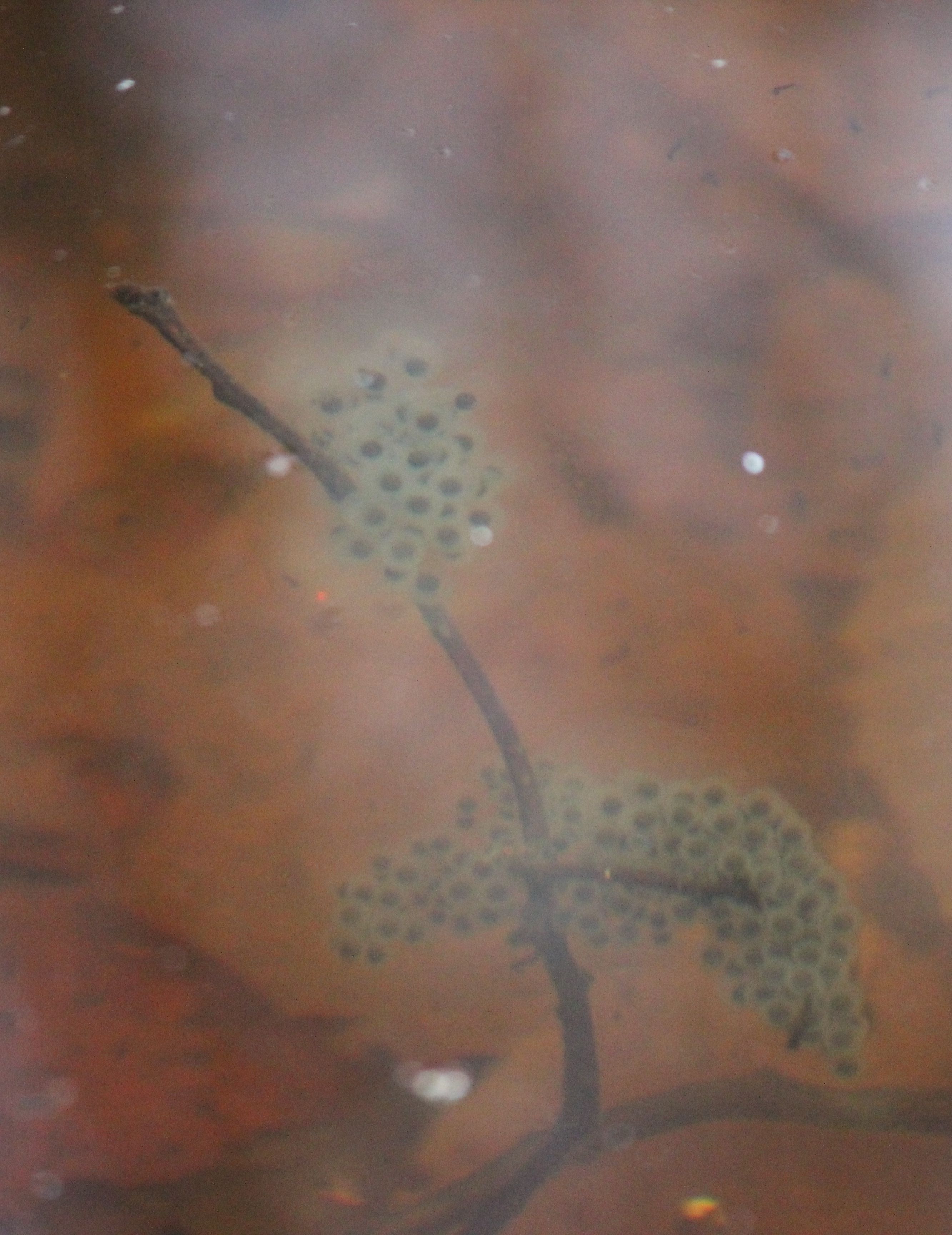
eggs 4

And plentiful. As is their custom, the masses are attached to branches and clustered together. Maybe there’s warmth in communal living. It’s certainly a bit chilly today, and yesterday we had hail, snow and rain.

eggs 2

I felt like a million little eyes were looking up at me.

eggs 3

This mass didn’t get the memo about community living.

Usually I see a few salamander masses in this pool as well, but maybe it’s early yet. The ice only melted a week ago.

I walked around the perimeter, noting that as usual, there are no masses on the southern side of the pool. They tend to be clustered on the northeastern side, where perhaps they capture the most warmth of the sun.

msyteryt hole

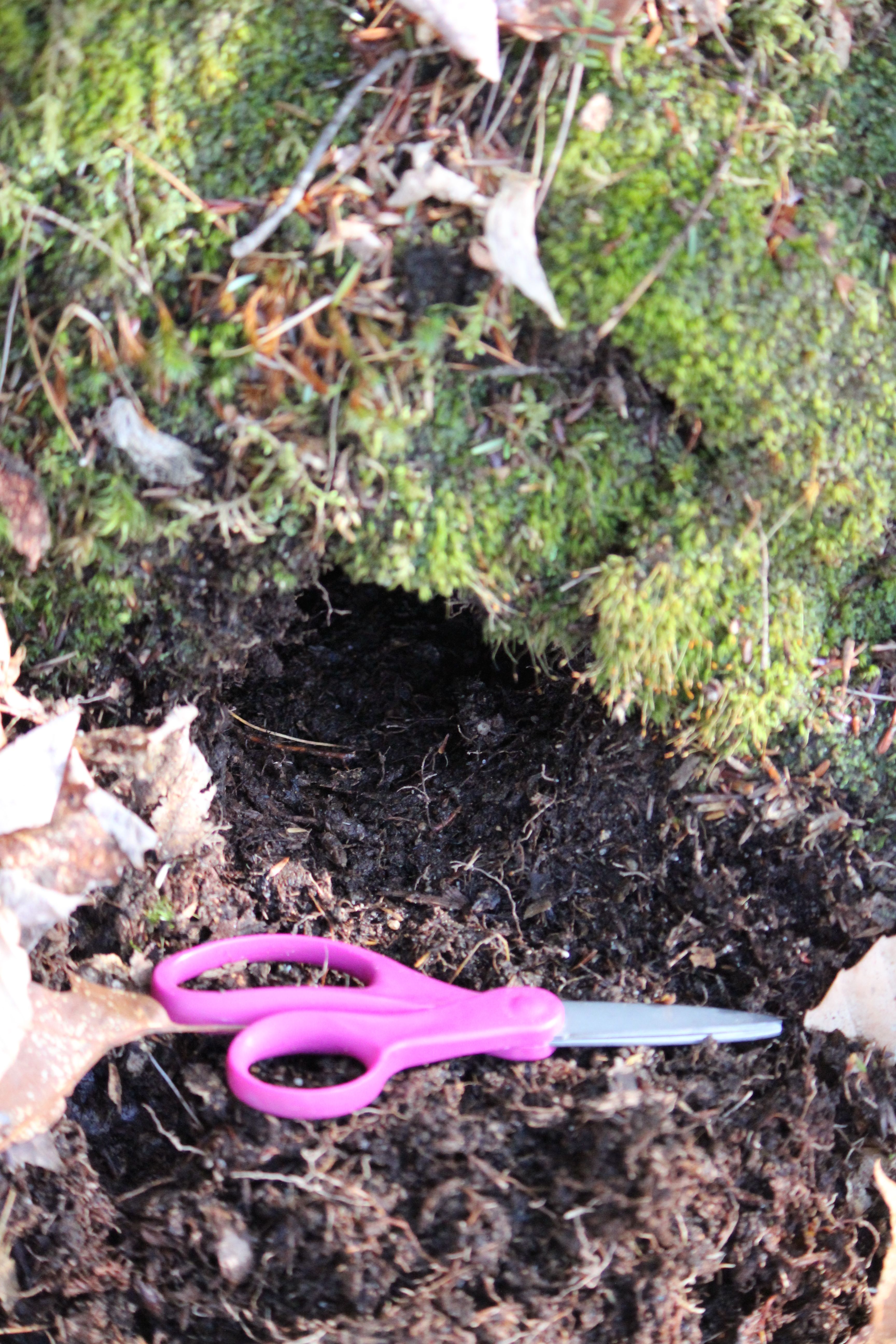
What I did find, though, was a hole about a foot from the pool. The only reference item I had was a pair of kid scissors in my pocket. They are five inches long. That’s about how far back the debris was thrown. A messy dooryard.
mh2

The pink handle is three inches, about the size of the opening. I stuck a stick in and it seemed to end at about a foot, maybe a bit more. Another who done it? Decent size hole; beside pool, but dry; messy door yard; recently dug; no one home. I looked through Mark Elbroch’s book Mammal Tracks and Sign because he has a section devoted to burrows and dens, but so far I don’t have the answer. Will the maker of the hole affect the egg masses? Another good question that remains to be answered.
red maple 2

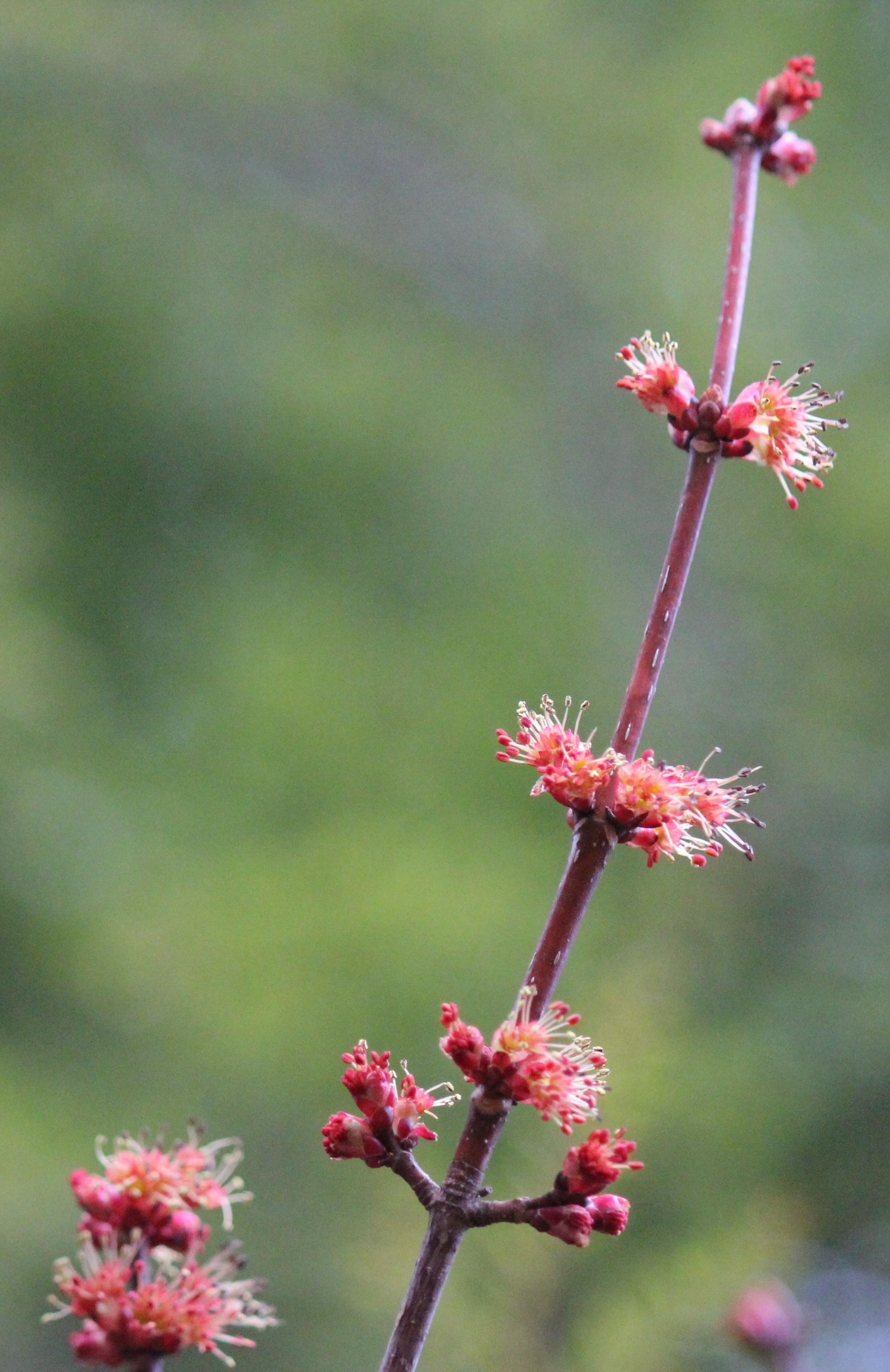
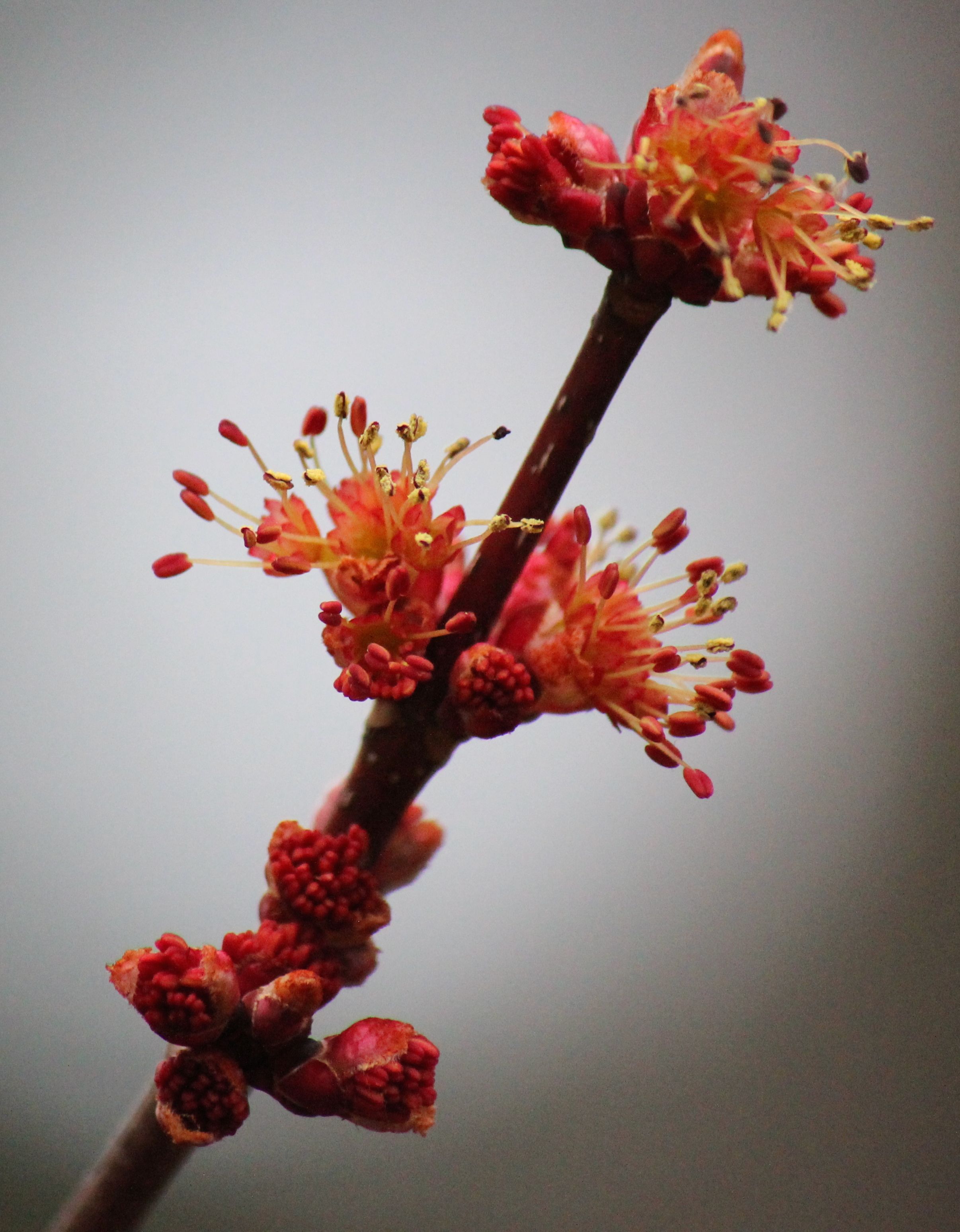
And then it was time to visit another harbinger of spring, the Red Maple flowers. They are bursting with joy . . . and love.

red maple 3

rm 4

rm5

Stamens and pistils in all their glory.

sketch 1

It was nippy, but I took a moment to sketch.

As I wander along the path, I’m thankful for the mysteries and beauty that draw me out and continue to provide moments of wonder.

And I’m thankful for my sister and brother-in-law who encourage me along the way. Happy Anniversary to you!