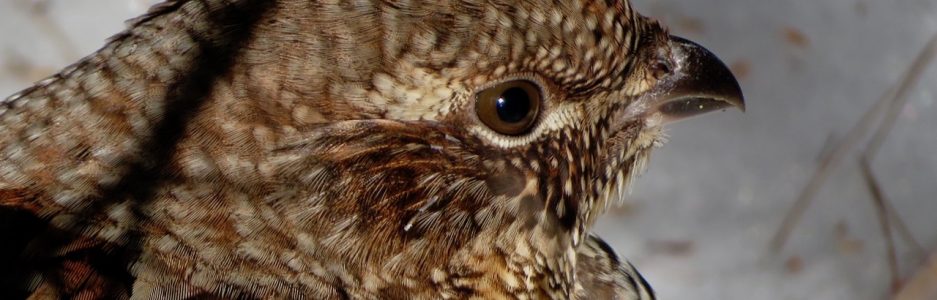
You know when you start something and you have no idea of what the future will hold and yet, you forge ahead cuze that’s what you naturally do? Well, that’s been the experience fellow Master Naturalist Dawn and I have had since I retired in October 2023.
At the time, I knew I would deeply miss outings with the Greater Lovell Land Trust docents, a group of dedicated volunteers who love to learn and then share that knowledge with the public. But, I’d made a promise to step away so the new person could have some space.
I’m a teacher at heart, however, and needed to continue down that path. So, prior to retiring I had approached Loon Echo Land Trust and asked if I could lead some winter walks for them, sharing the art of tracking and other winter wonders with their participants. That idea was well received and I invited Dawn to help. We began in November 2023 and when March 2024 arrived, and we should have been winding down, I realized we were having so much fun that the program needed to continue and so it did until last July. And then we took a brief hiatus.

The hiatus ended in September 2024, and on our first outing among our finds were a few Brown Hooded Owlet larvae, with their striking colors and pattern.
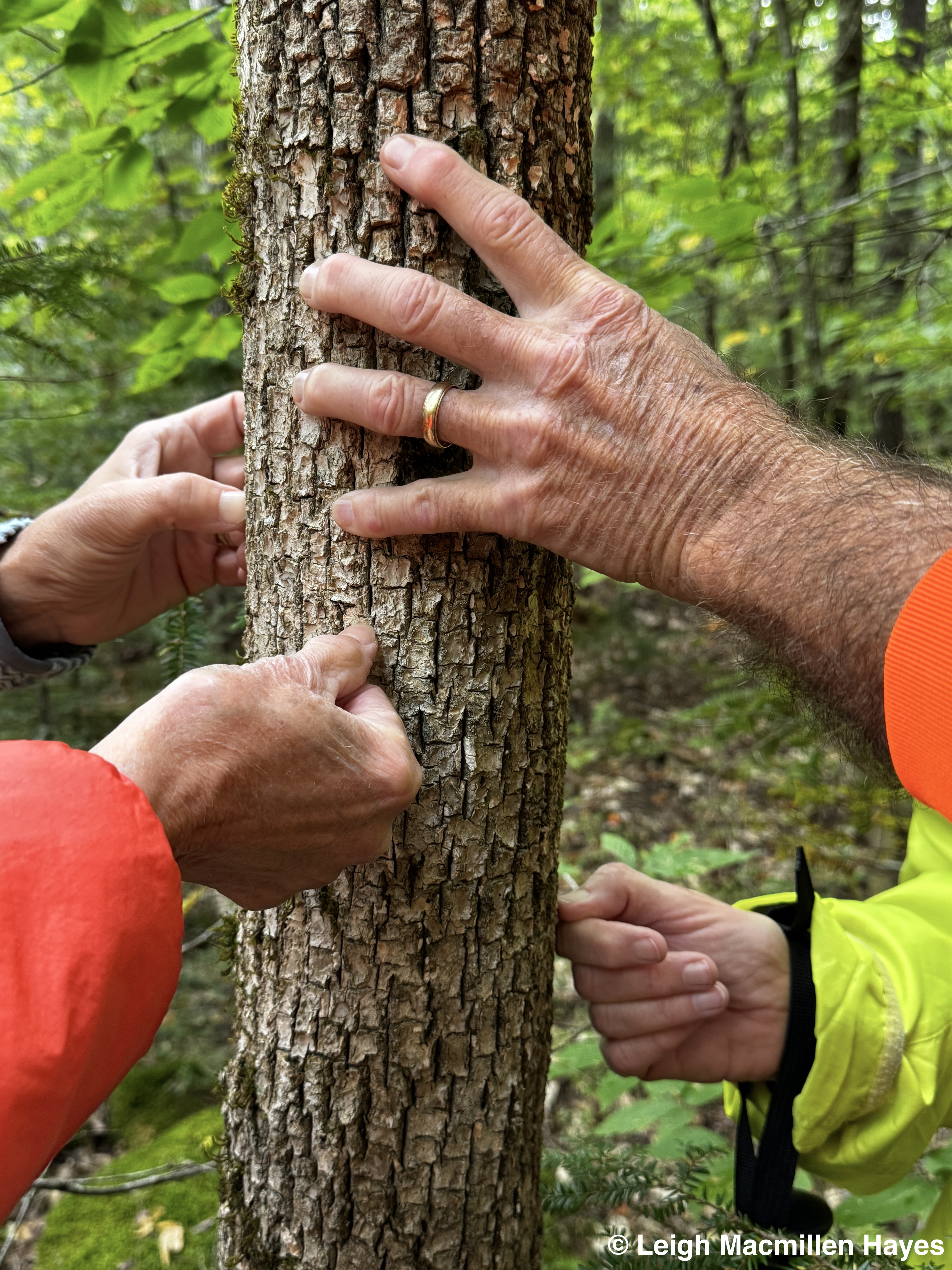
On that same journey, we reached a wetland where Black Ash grow, and encouraged participants to poke their thumb nails into the bark. I love it when people are willing to try and in this case, they realized the bark is corky. Especially after it has rained.
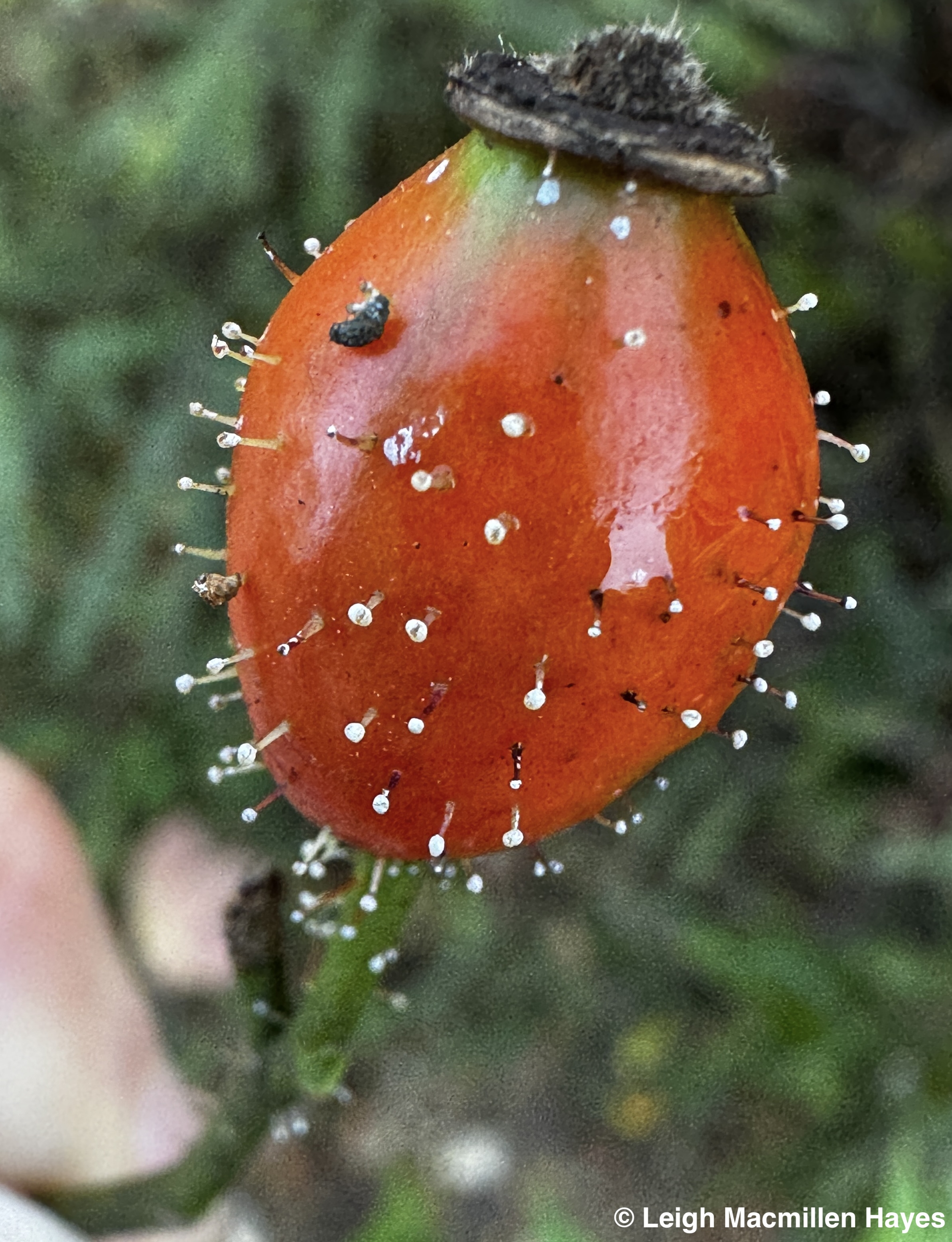
October found us being wowed by rose hips. Because–look at those spikes. We thought maybe a slime mold, but instead discovered it’s the gland-tipped hairs on the hips of Ground Rose. Otherworldy indeed.
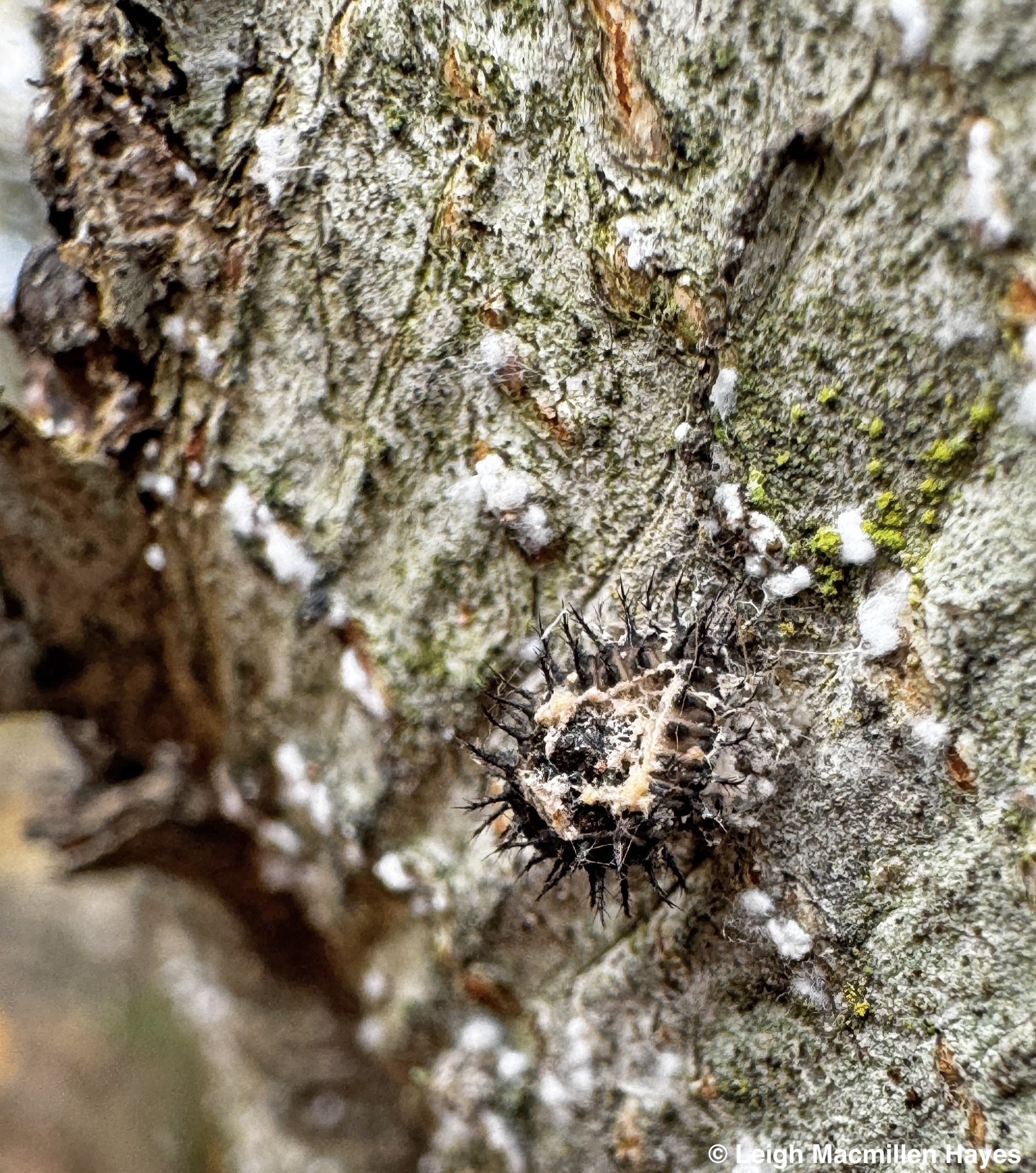
And speaking of otherworldly, the larval form of Lady Beetles also caught our attention, this one having been predated. So spiky as well, and especially when you think of what an adult Lady Beetle looks like–it doesn’t seem to match up. But . . . that’s how the natural world works.
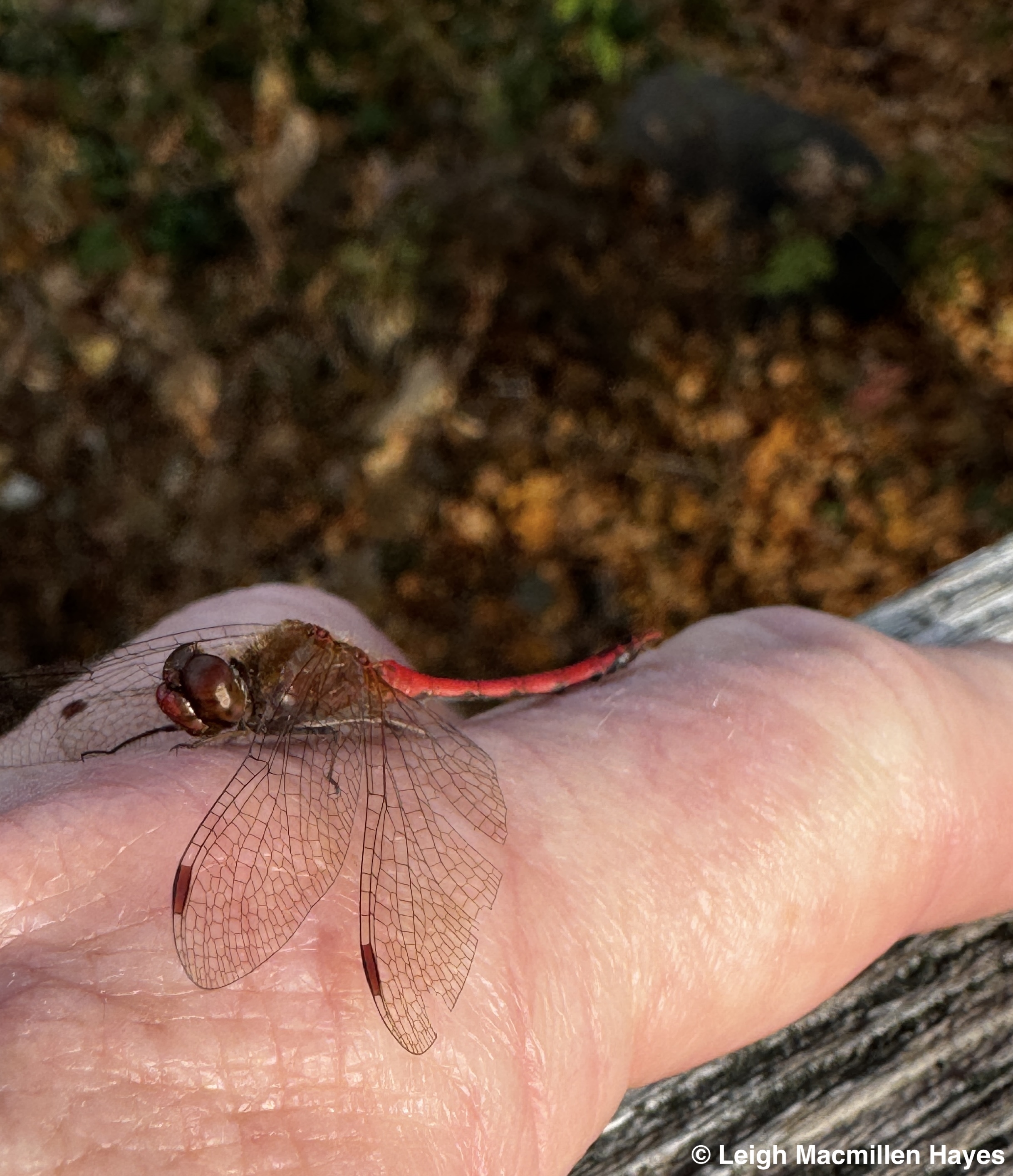
In November, we were only a wee bit surprised to still be greeting Meadowhawk Dragonflies. Notice the tattered hind wing–this one had met with some difficulties we could only imagine.
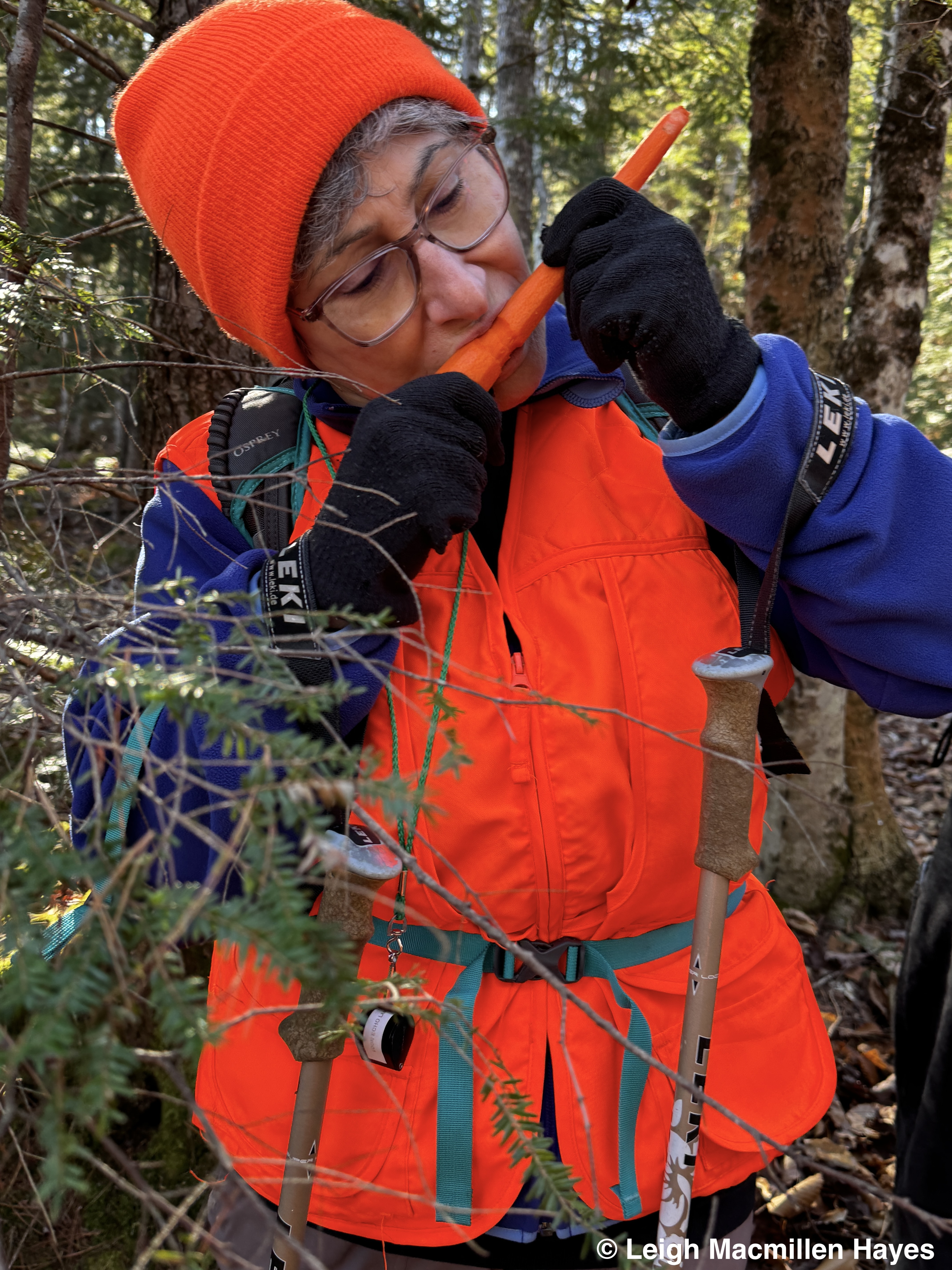
On another November expedition, while exploring an area where Beavers were quite active and had been busy mudding/insulating the outside of a lodge, plus gathering their winter food supply, we asked participants to become the critters and cut down their own trees. But . . . they had to hold the tree trunk as upright as possible and turn it, because certainly they couldn’t walk around it like a Beaver can.

Timber!
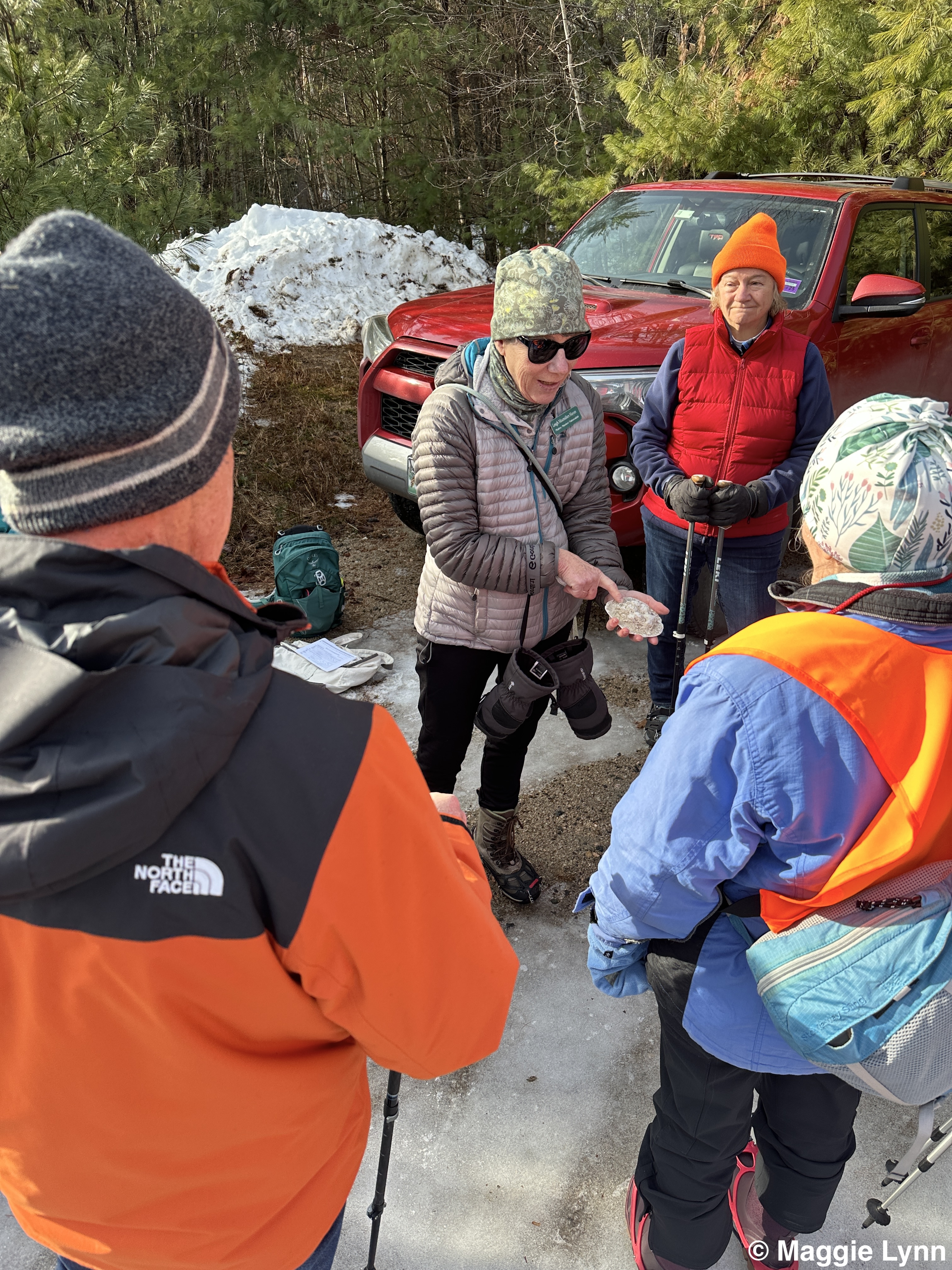
With a bit of snow in December (actually on Thanksgiving Day we had a lot of snow, but then the amount dwindled daily), we started tracking in earnest, spending the start of each walk with a brief explanation of how mammals move and clues to the prints they leave behind.

Measuring took on new meaning as stride (length from the front of one foot to the front of the next in a track) and straddle (length between the outside of one track and the outside of the next in the pattern, for example, put your feet together and measure from the outside of the left foot to the outside of the right and you have determined your trail width or straddle, which is key for some mammal print ID) were taken into consideration.

On a cold winter day in January, you would have thought that we’d bring hot cocoa. We had the cups. And we had the thermos. BUT . . . inside the thermos we had what we call mammal blood (red gelatin), and the group split into pairs and went off to find just the right spot to protect their “mammal’s blood” so we could check its temperature about twenty minutes or more later. It actually turned out to be later because we got caught up with tracking an actual critter in the meantime.
When we did check, it was the pair with the highest temperature that won bragging rights. They had found a suitable protected spot for their critter to survive.
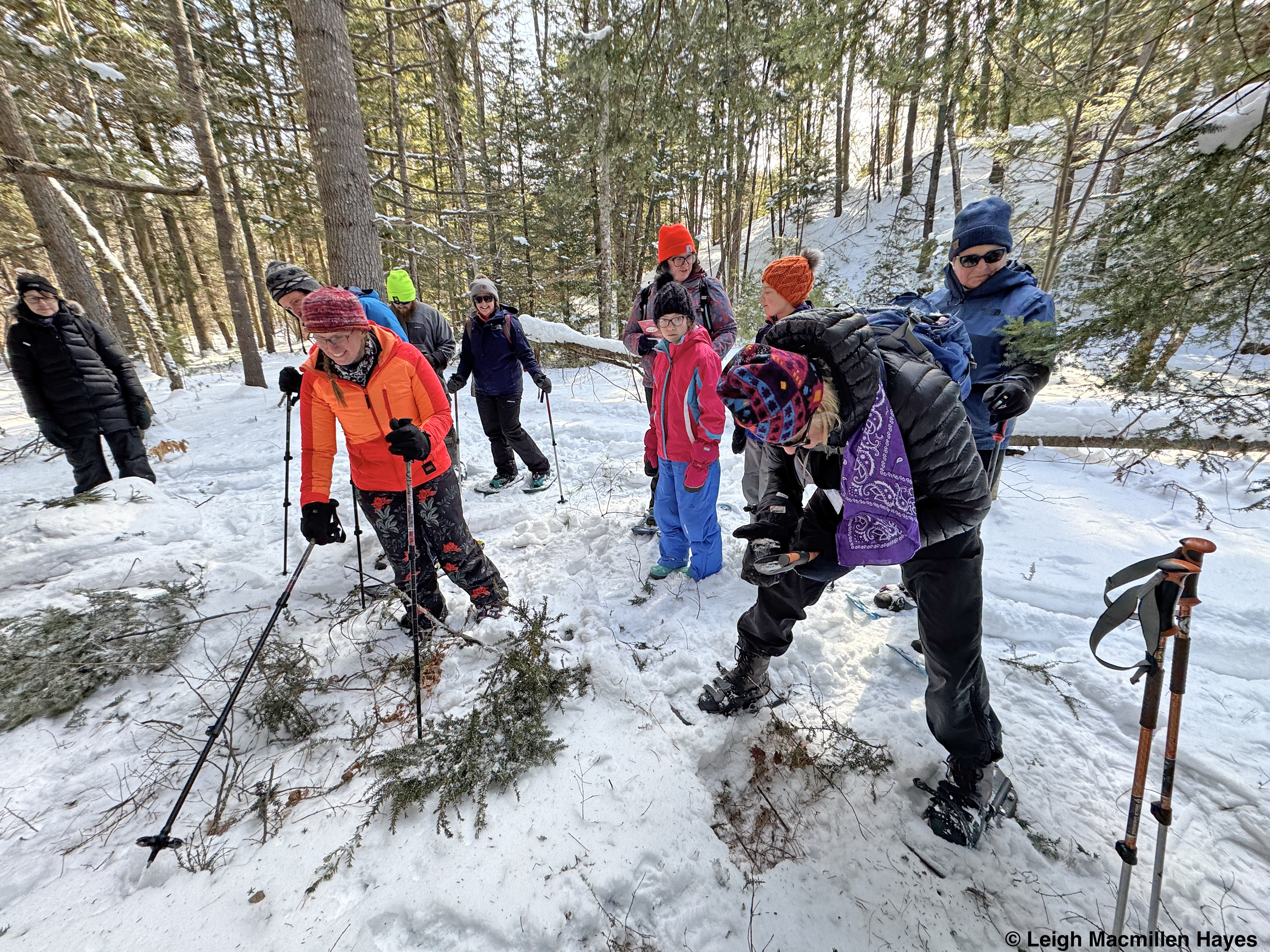
We were still tracking in February, and were excited to follow a Porcupine to its den, and then backtrack to its feeding trees, where Eastern Hemlock branches minus buds and some needles, decorated the ground.

And though we had to dig to find, Porcupine scat in its typical comma shape, did happen.
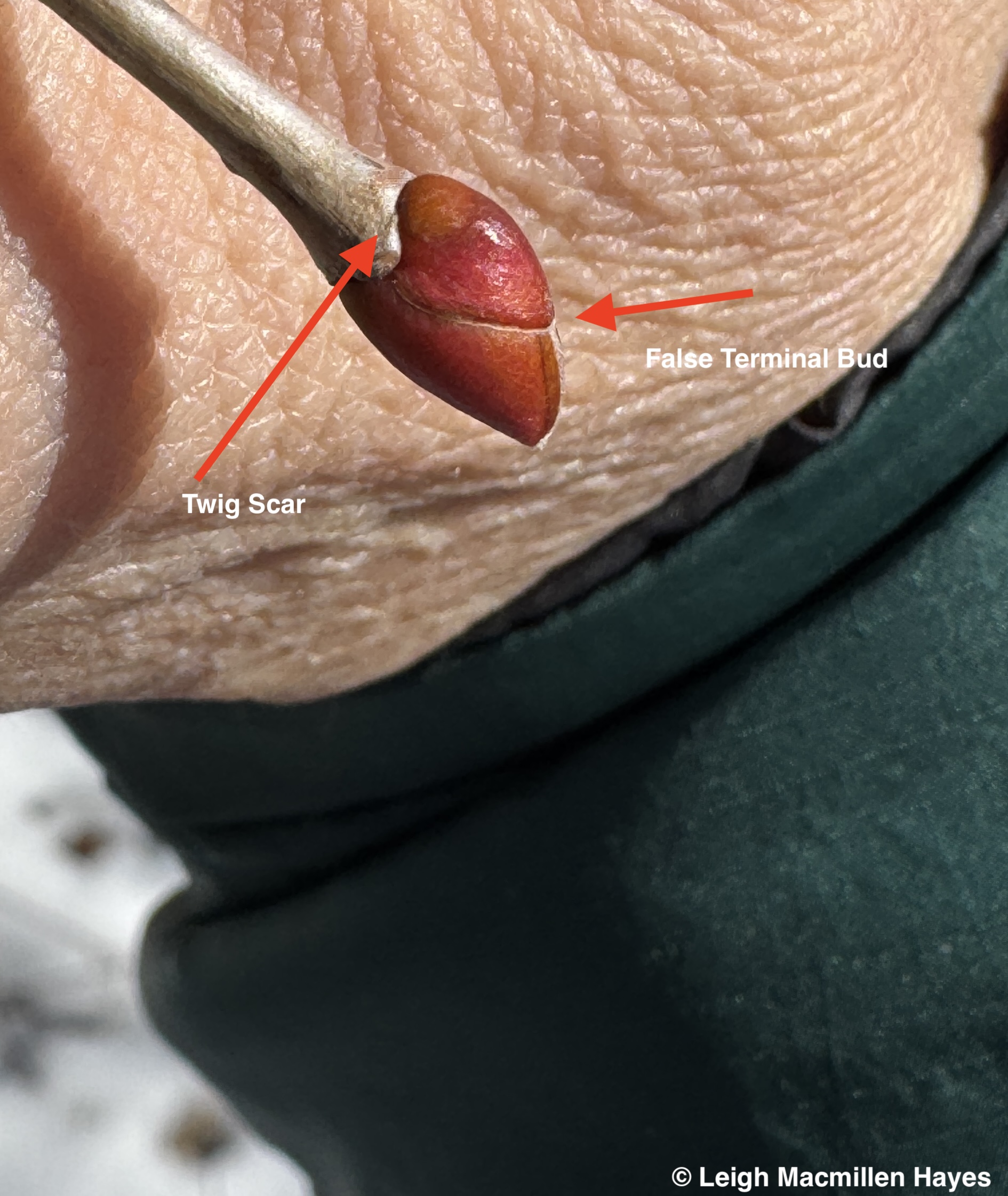
In March, it was the large red buds of Basswood that garnered our attention. And after posting photos of these, an arborist friend commented that the buds look like a mouse wearing a helmet and I’ll never unsee that going forward. Thank you, Eli!

As the temperature began to rise with the March sun, we also spotted deer beds such as this one and knew to look for deer hair! The red arrows point to some as it was time for them to shed their winter coat and with their body heat melting the snow, some stuck to the edges.
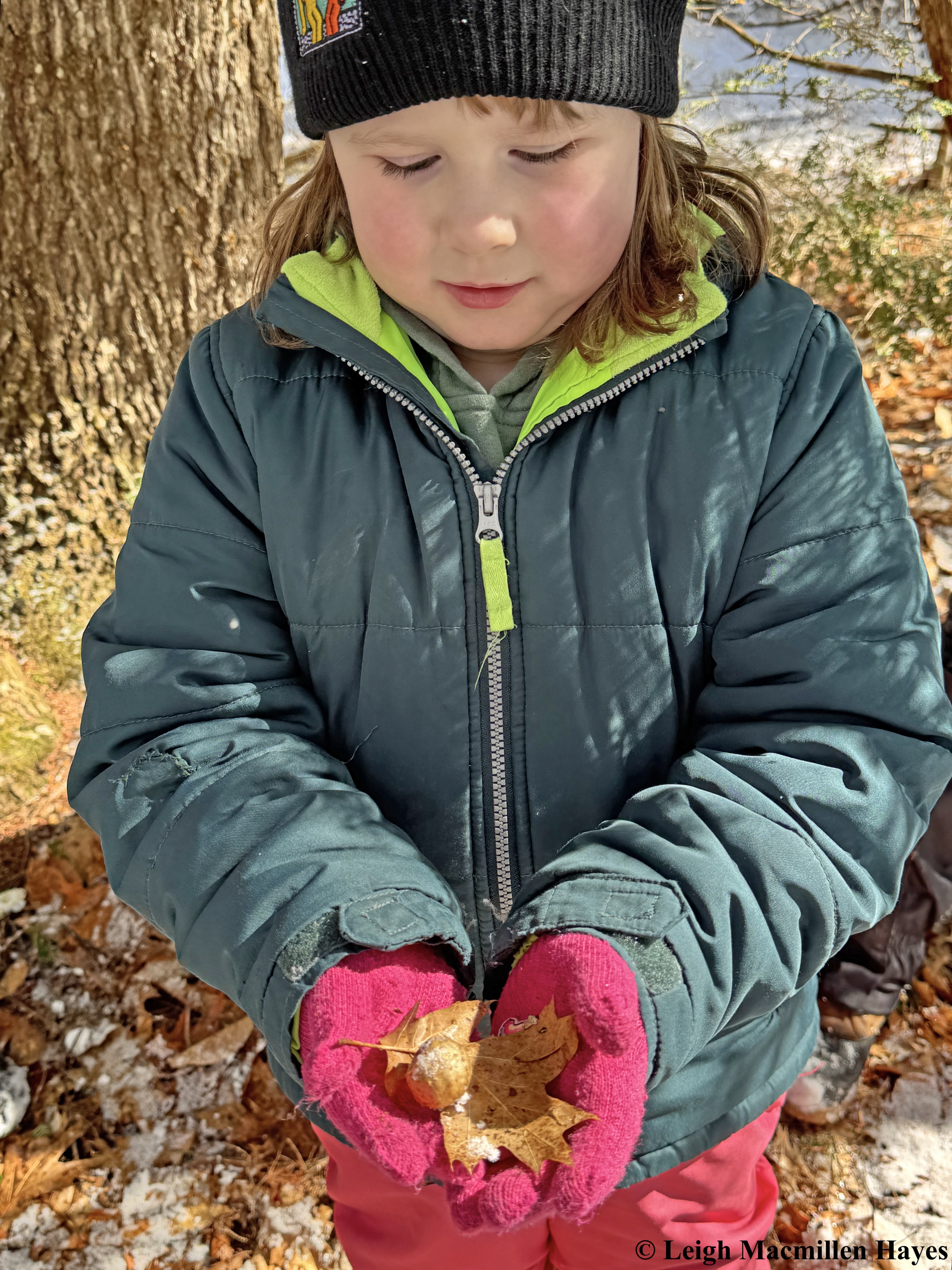
In April, on our way to a vernal pool, one of the many curious naturalists among us found an Oak Apple Gall, that would have been bright green when first formed last spring/summer.

Though it had snowed the day before, we did find Fairy Shrimp in the pool, and rejoiced as always because finding just one of this species makes the pool significant by Maine standards.
As I mentioned in a previous post, there are four species, each with a different count, that help determine if the pool is significant, but any pool that dries up in the summer and then fills up again in the fall is considered ephemeral or vernal.

When the calendar turned to May, we turned our attention to dipping in rivers and streams, curious to see what macro-invertebrates we might meet in those spaces. Out came the D-nets, which we don’t use in vernal pools, because we don’t want to disturb the egg masses of Wood Frogs and Salamanders.
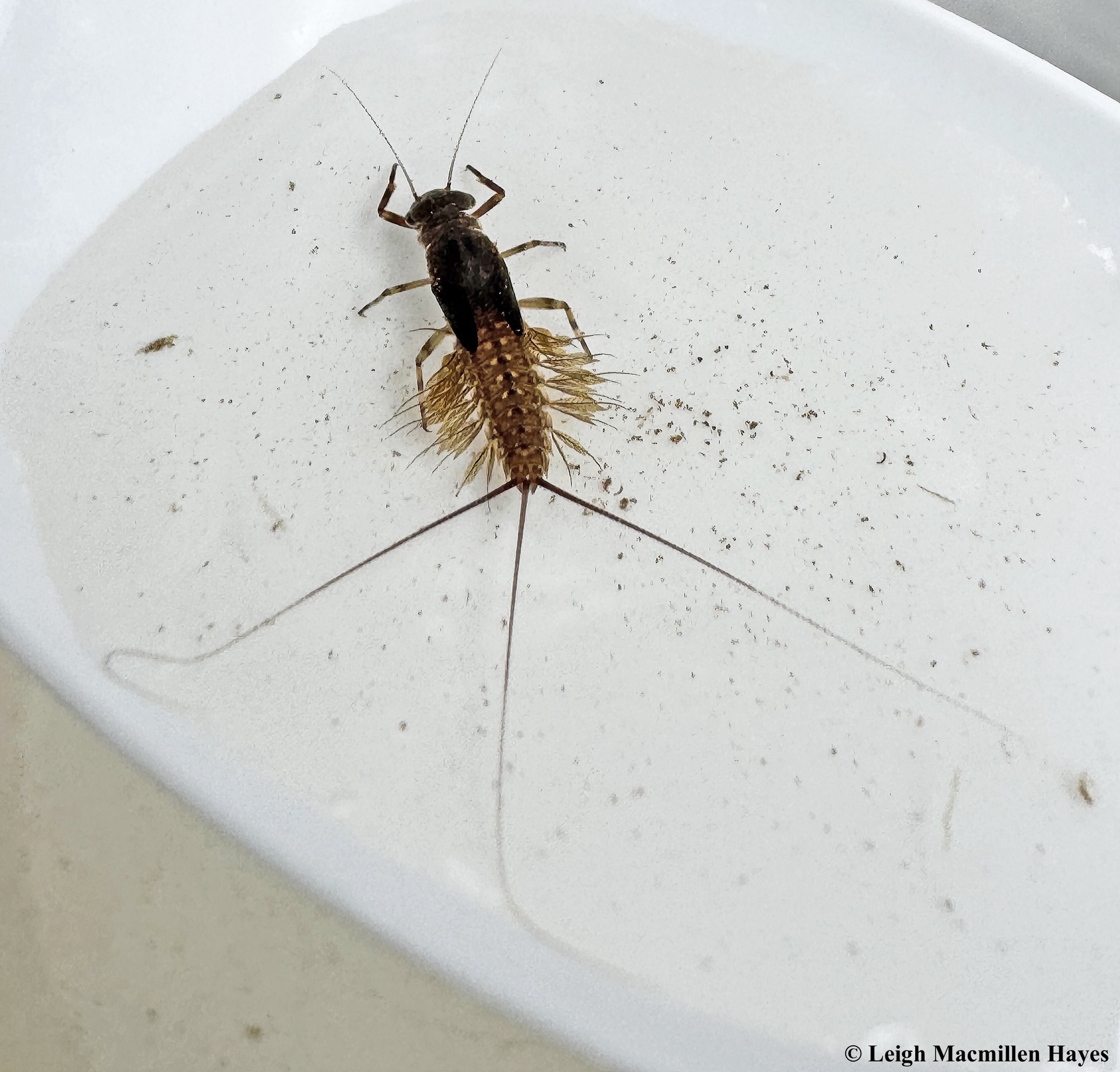
It’s always fun to meet the different species, including a variety of Mayflies in their larval form, with gills along their abdomens and three tails. Long tails quite often. And all that come out of the water, including Mosquito and Black Fly larvae, must go back in.

All of this brings me to this morning, when our group was quite small because some had apparently cancelled for various reasons and others were no-shows. That said, we had the best time, as we always do. But today felt extra special. You see, we had a plan to walk down an old trail, but since we were waiting for the no-shows, we thought we’d give them some time to locate us if we first visited a pond located about a hundred feet from the parking area and in the opposite direction of our intentions.
It was while squatting there that we realized miracles were taking place. But . . . we still wanted to share the trail with the participants, so we promised we’d return to the edge before it was time to depart. (As for the no-shows–we’re bummed they missed out.)
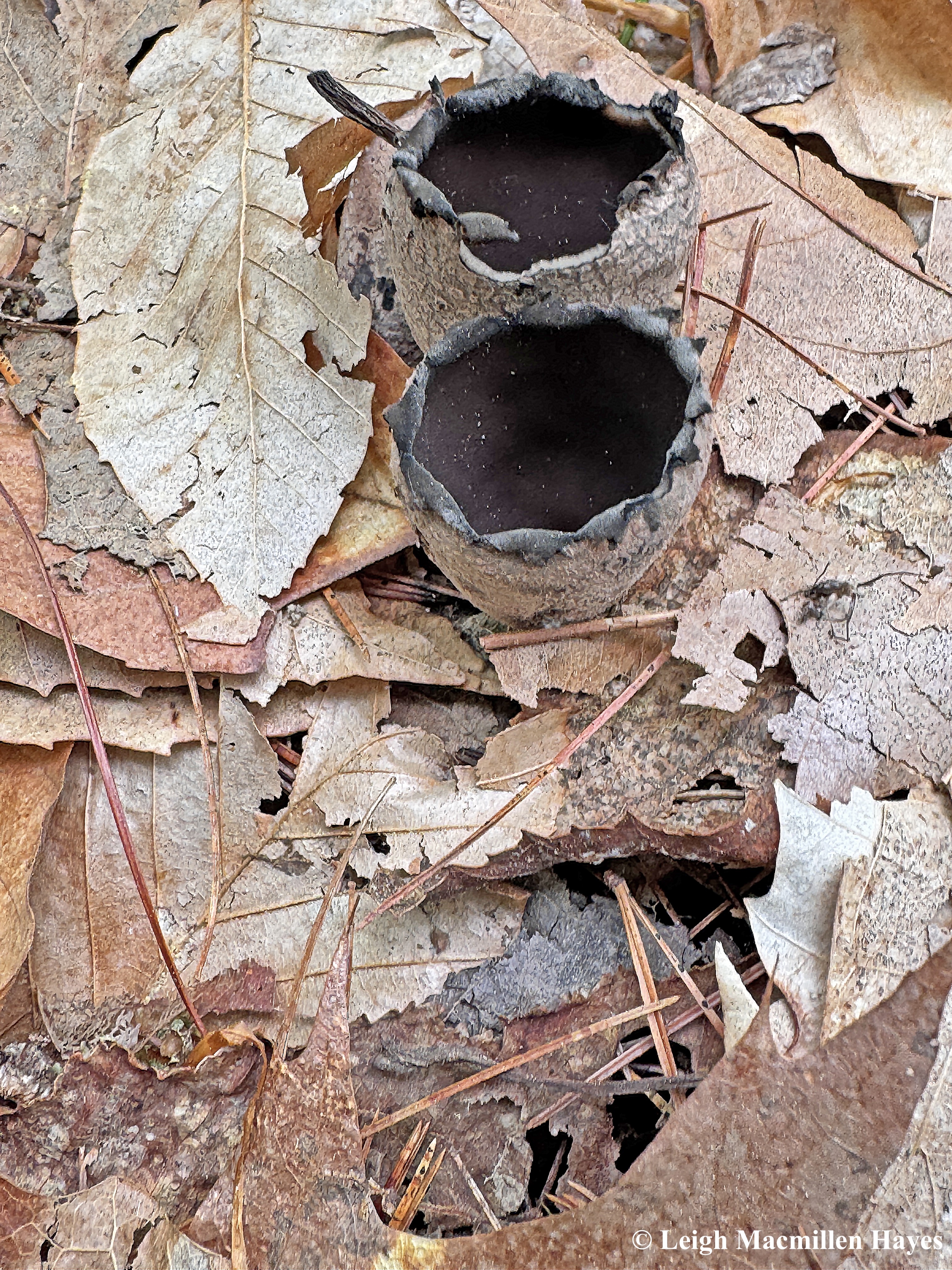
One of the participants who is a fungi enthusiast, and has eagle eyes, somehow spotted these mushrooms. None of us knew what they were, but iNaturalist’s SEEK app identified them as Devil’s Urns.
When I arrived home, I looked them up my Audubon Field Guide, and bingo: “Large, leathery brown, urn-shaped cup; Season: March-May; Habitat: Clustered on fallen deciduous wood, especially oak; Comments: This is one of the first mushrooms to appear in the spring in the East.”
Well done, Julie.
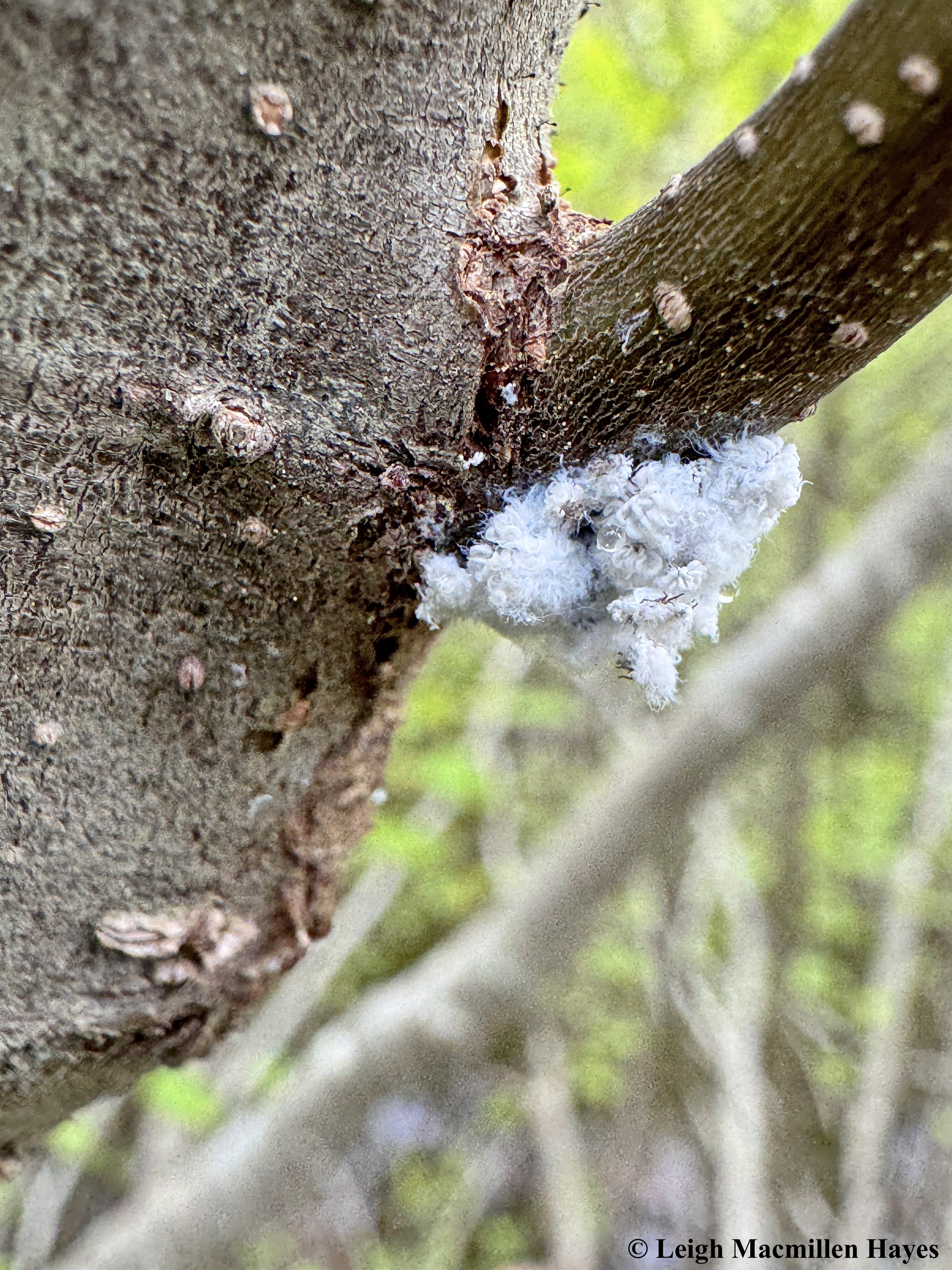
Woolly Alder Aphids were also visible, and once we saw one clump, we began to notice several. As we described how ants “farm” or seemingly tickle them to get them to secrete honeydew, one participant saw an ant and another saw drops of said liquid. Can you see it?
Well done, Marie.

And remember the little girl who found last year’s Oak Apple Gall on the way to the vernal pool in April? Well, another among us today found this year’s galls on newly emerged Oak leaves. It got us all thinking about leaves and insects and how mature insects lay or inject eggs into buds when they first form in late summer and so the moment the leaves begin to unfurl the following spring, larval forms jump into action and leaf miners and rollers and gall makers and everyone else have a heyday.
Well done, Heidi.
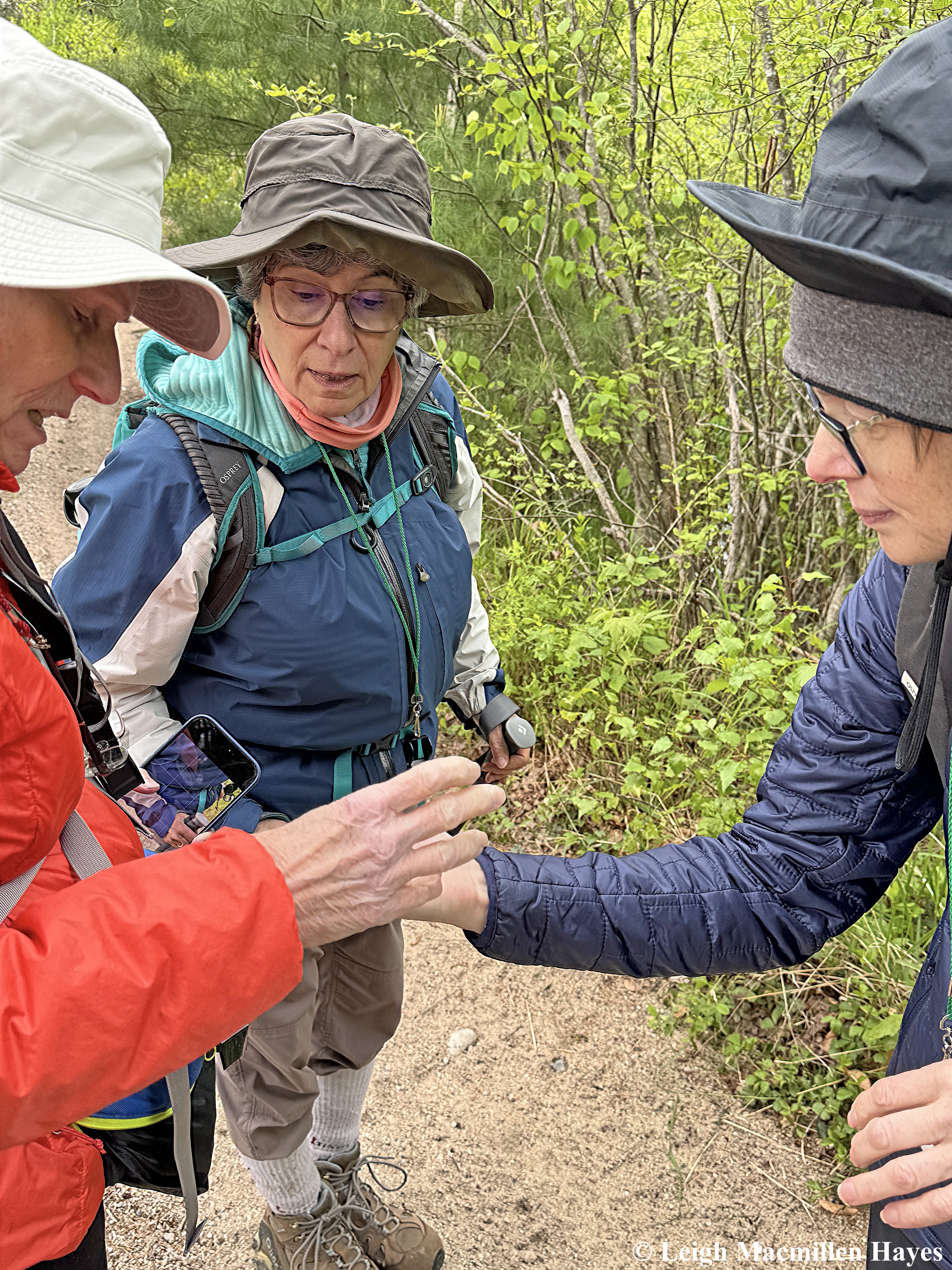
Marie, Julie, and Heidi also took an up-close look at last year’s Speckled Alder cones and we noted that the male catkins have already fallen to the ground for this year, their pollination duty now completed.
Lady’s Slippers, and Wild Sarsaparilla, and Star Flowers, and Canada Mayflowers, and Rhodora, and Dewberry, and Bastard Toadflax, and even Poison Ivy were admired and noted.
But, we all had a mission that we wanted to fulfill, so with about a half hour left, we retraced our steps rather quickly.

And into the plants at the pond’s edge we peered. Do you see it? A dragonfly naiad (nymph or larval form) upon a broken branch, with the adult form starting to split through the exoskeleton at the point between the wing pads. How could this be? Yes, we’ve seen dragonflies for the last week or two, but it was cold this morning. Raw. Breezy. Seemingly inhospitable for these summer fliers.

Apparently not, for once we looked around, we began to notice them everywhere. The dark naiad climbing up the rock was in search of the perfect spot. And if you look below the rock, you’ll see two naiads, one that is grayer in color, because its adult form had already eclosed or emerged; and the other browner one with the adult starting to pull out of the aquatic skin.

Here’s a closer look at the ones under the rock. Notice the eye placement. That is key to Identification according to family. In this case, with the eyes spaced far apart, it could be either a Petaltail or a Clubtail.

As I said, they were everywhere, and we felt it our duty to watch over them. To protect them from being predated, which is actually kinda funny, given that they are predators. But predators of the best kind because they feast upon Mosquitoes and Black Flies and Deer Flies, and others, of course, but it’s for those first three that we appreciate them.
Can you see how the adult is pulling out of the skin?
And do you see thin white strings extending from the exuviae to the back of the dragonfly? Those were the spiracles or underwater breathing tubes, which are no longer needed by the adult.

A few minutes later it is further out–can you see that? Once it gets its abdomen all the way out, it typically holds onto its shed skin and then pumps its insect blood into its wings so that they expand, before drawing that blood back into its body, allowing its coloration to eventually take true form.
Look for the white strings again.
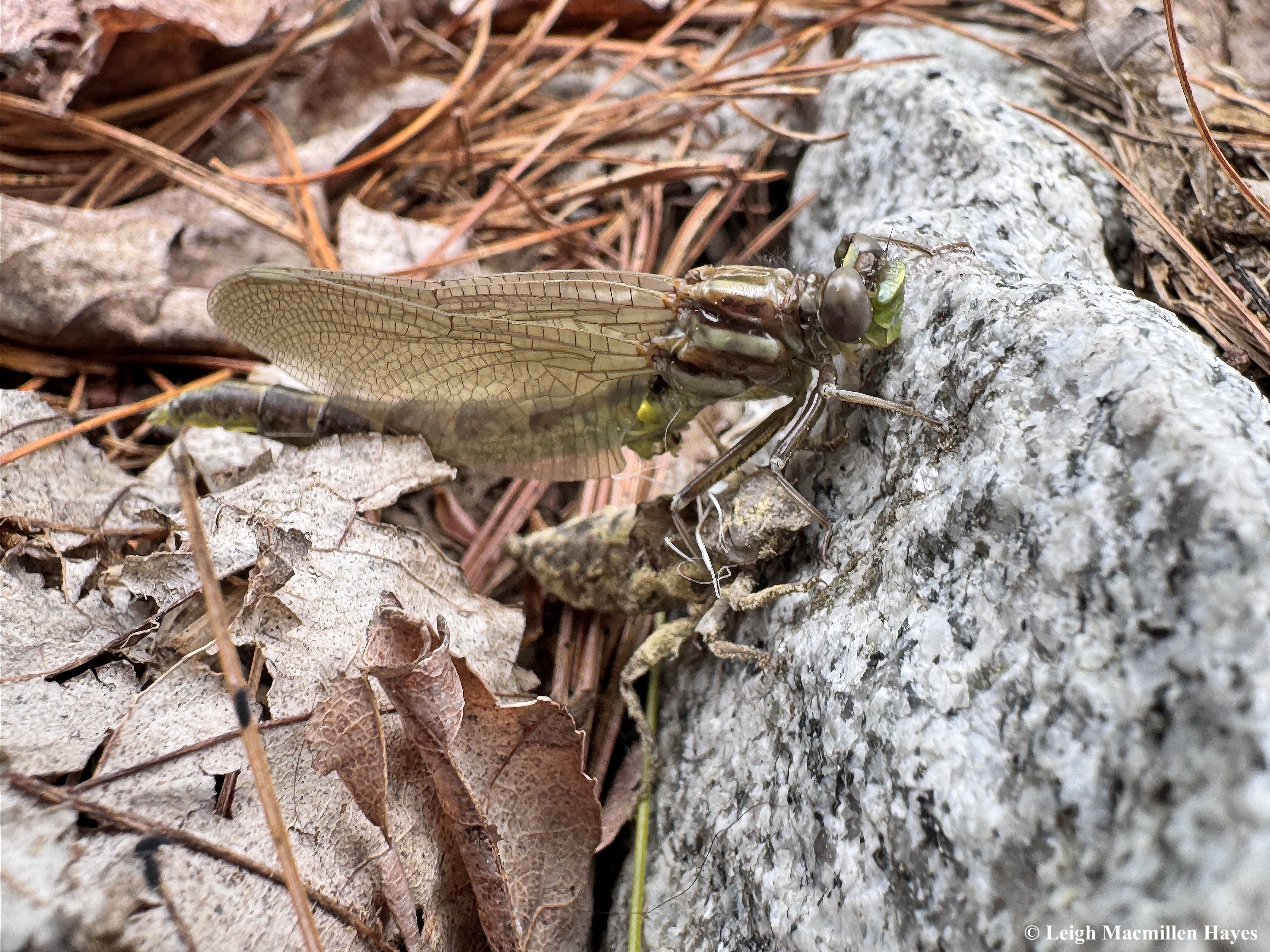
Do you see them now? Completely unnecessary and therefore left behind.
When the wings are at full length, they are held over the back and cloudy in color until it’s time to spread them and let them dry before first flight.
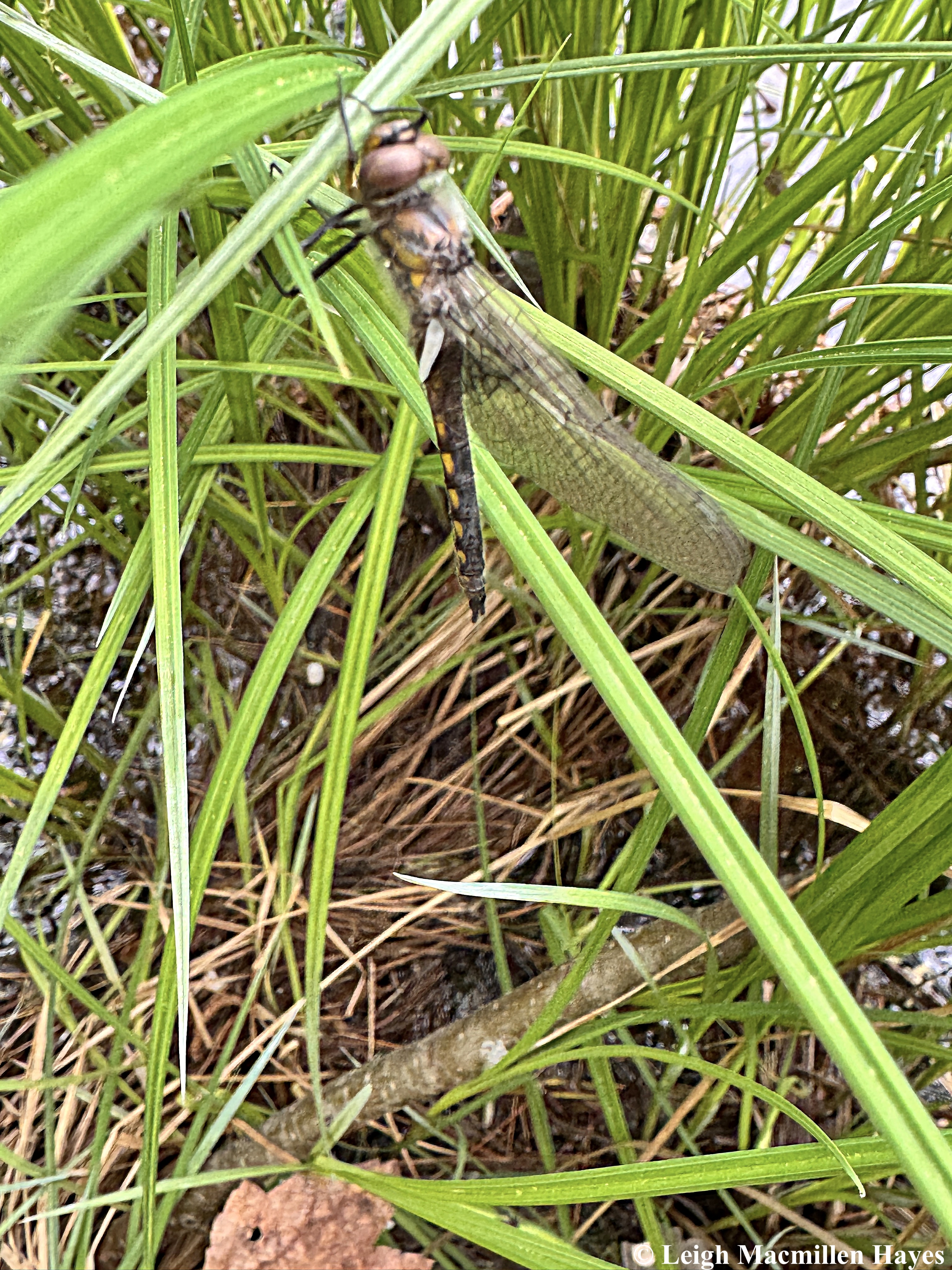
The eyes on this newly emerged dragonfly, along with its abdomen markings and cerci or claspers at the tip of the abdomen, tell us its in the Emerald family, and I suspect a Common Baskettail.

As we watched, we noticed some had wings that were stuck together, and this one with a curved abdomen. It was curious that it had left its exuviae before its wings emerged and so I wondered if they would unfurl.
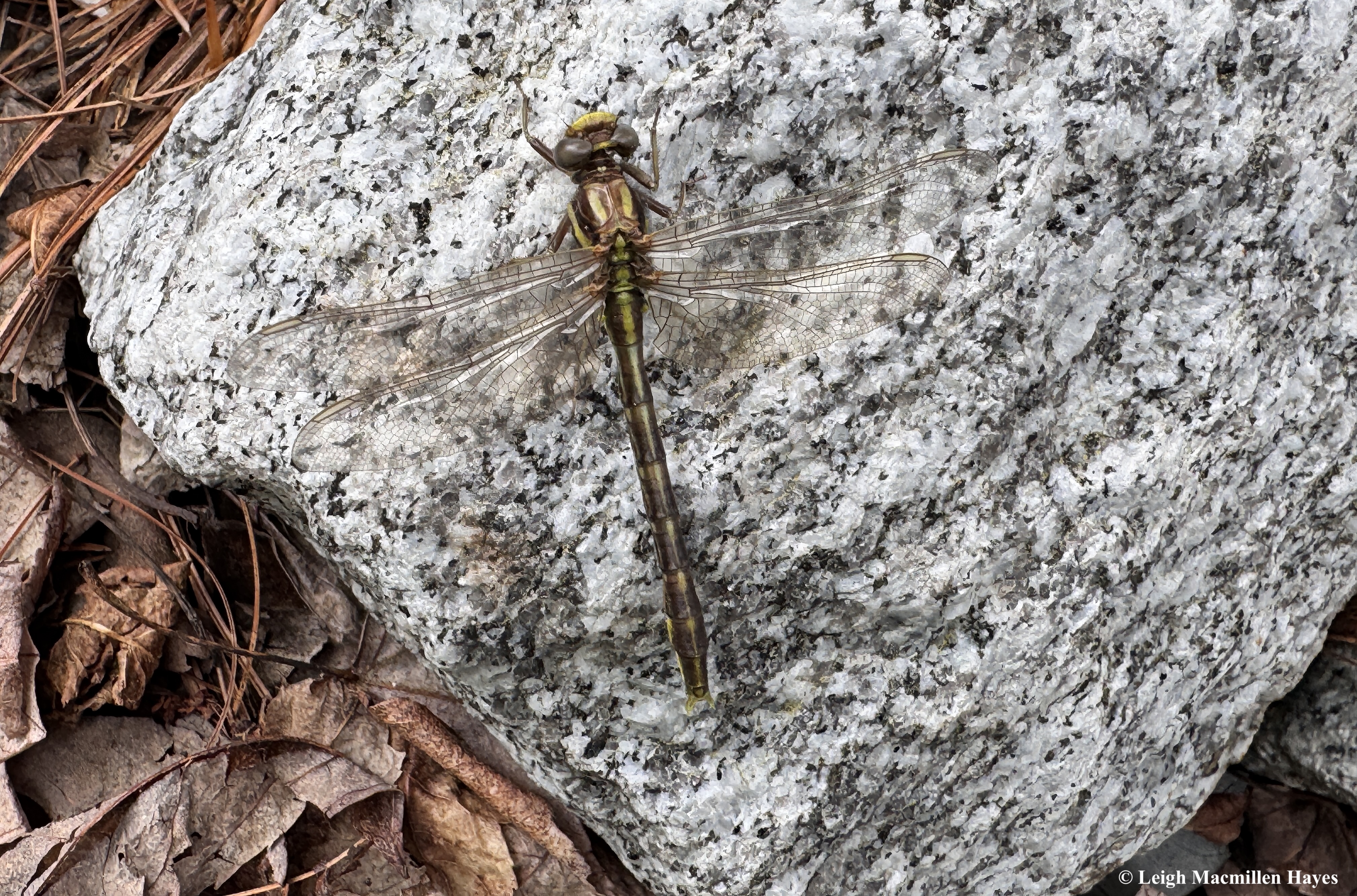
A few delighted us because we got to watch them spread their wings apart–translucent and shiny as they dried.
By the eye placement and beginnings of the markings, my identification stab is for Lancet Clubtail–one of the friendliest dragonflies who likes to land on us when kayaking. Or even on the dock.
As you can imagine, we had to pull ourselves away. The walk was supposed to end at noon, but it was 12:40pm when we finally finished–and honestly, I think we could have stayed a few more hours if we had food and other necessities.
All of our Wednesday Wanders for Loon Echo Land Trust are incredible because each one offers its own moments of awe.
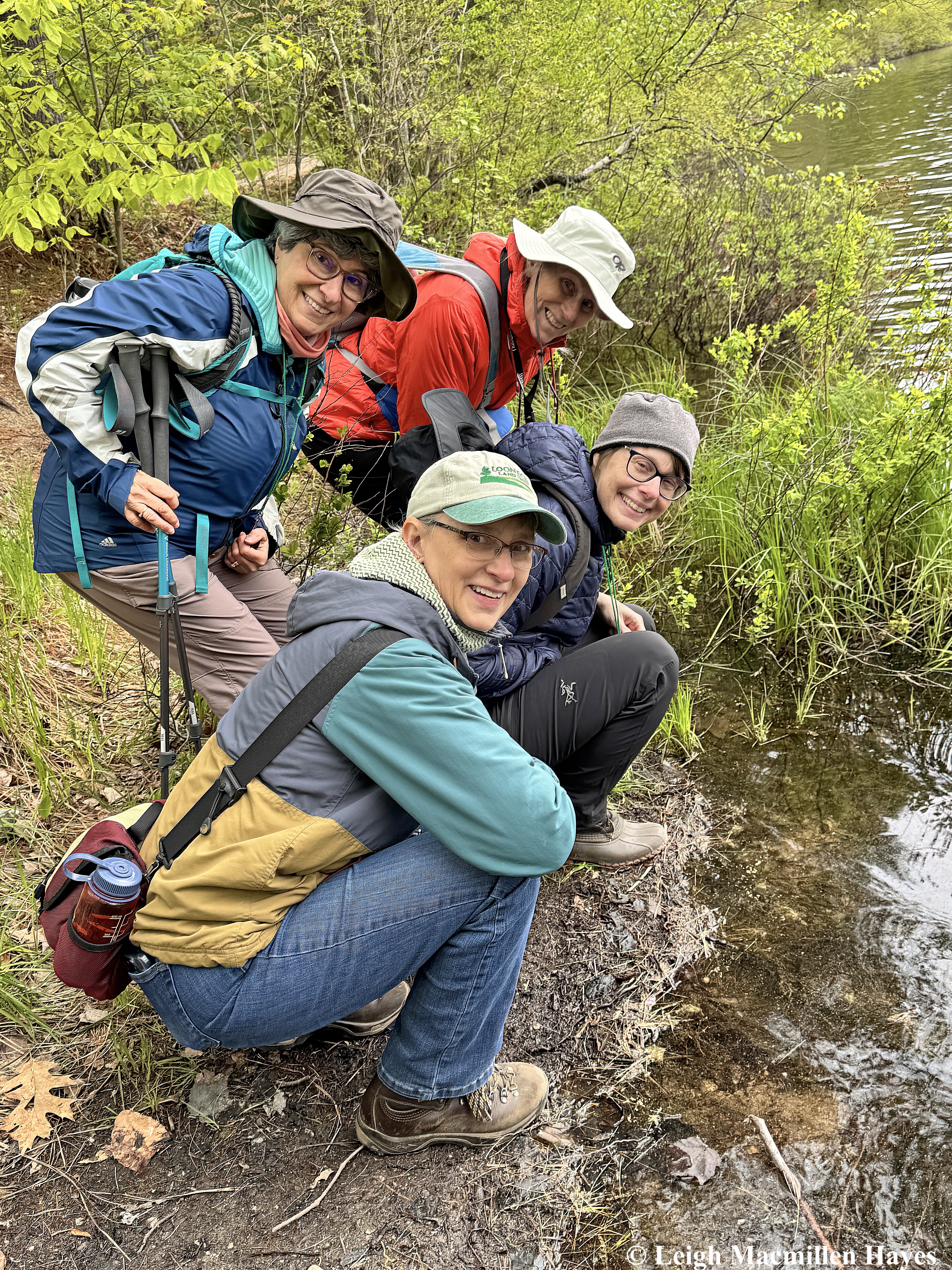
Being honored, however, to share the emergence of dragonflies from their aquatic forms to terrestrial–and helping the ladies to understand that it takes hours for this process, and being surprised that so many had chosen what we considered to be a chilly spring day . . . it was beyond wonder-filled. As every Wednesday Wander is. But today, today was over the top.
 wondermyway