From Sheep to Dinosaurs, Oh My!

After leaving a truck at the base of the Ledges Trail on Pleasant Mountain, my guy and I drove to Denmark Village to attend an annual celebration of fiber: the Denmark Sheepfest.
s-sheep 1

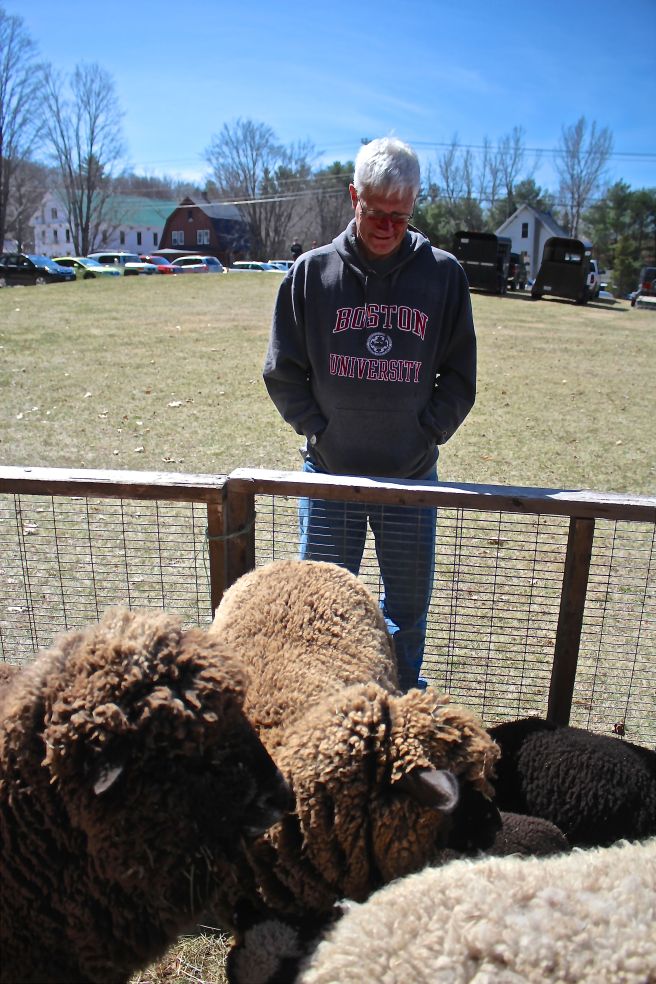
Like us, local sheep were ready to shed their winter coats.

s-sheepish look

Waiting their turn, they offered sheepish looks.
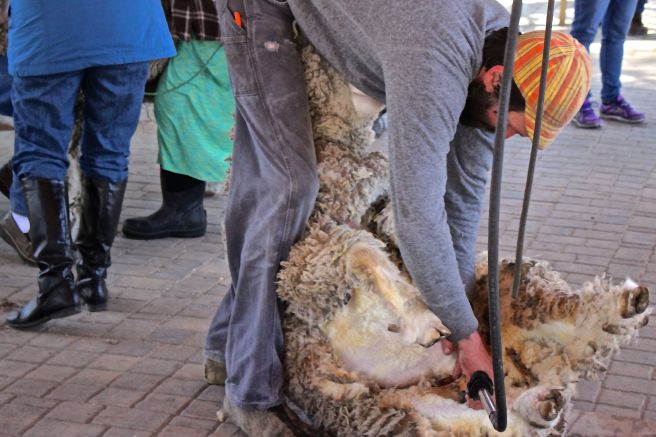
s-sheep shearing

But we heard no complaints as the shearing began.
s-MacKay 1

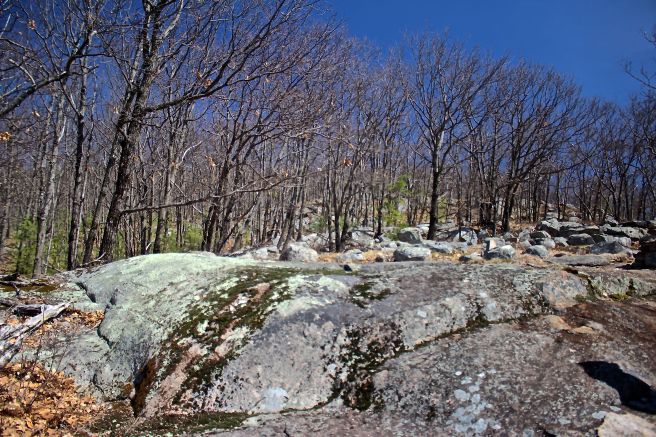
From there, we continued on to the Southwest Ridge Trail of Pleasant Mountain. As we climbed, we thought about the former name of the trail: MacKay’s Pasture Trail.

s-Mac 2

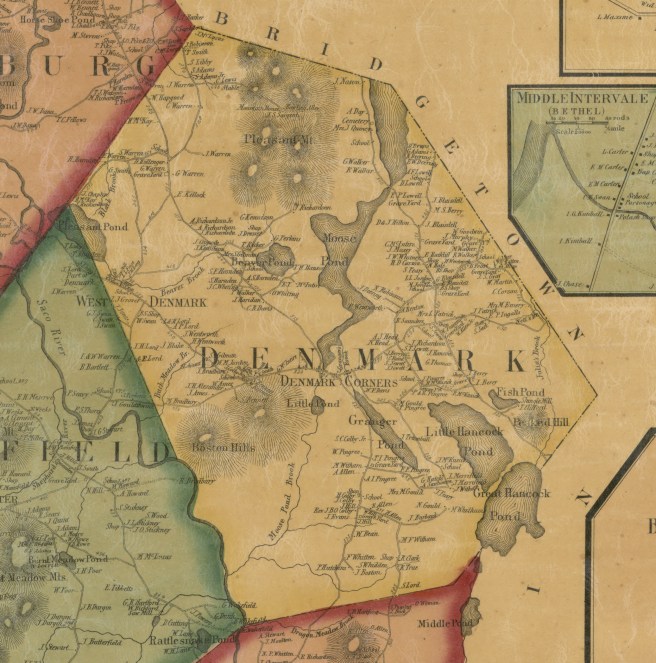
Between the rock outcrops and slope we decided that in the 1800s sheep probably roamed this side of the mountain. I found an 1858 map on the Denmark Historical Society’s Web site, but it’s too small to check names.
s-Denmark_1858

(Thanks to Jinny Mae for sending me a better copy of the map–the McKay’s property is located near the base of the trail on the Denmark/Fryeburg line–makes perfect sense that the side of the mountain served as pastureland for their farm.) Sheep and shepherds–We feel a certain affinity to shepherds/shephards because it’s a family name and were saddened to learn yesterday of the death of one relative we met this past fall in New Brunswick, Canada. Our acquaintance was short, but relationship long. As the Irish say, “May the light of heaven shine upon your grave.” Rest in peace, Ellis Shephard.

s-hiking

We love climbing up this trail and pausing . . .

s-mac 3

to take in the views behind us–Brownfield Bog, Lovewell Pond, Eastern Slopes Airport in Fryeburg, Maine, and White Mountains of New Hampshire in the distance.

s-lunch

In no time, or so it seemed, we reached lunch rock by the teepee. The teepee was constructed by the late George Sudduth, director/owner of Wyonegonic Camps , the oldest camp for girls in America. His wife, Carol, whom I’ve had the pleasure of hiking with, and family still run the camp, located below on Moose Pond.
s-lunch view

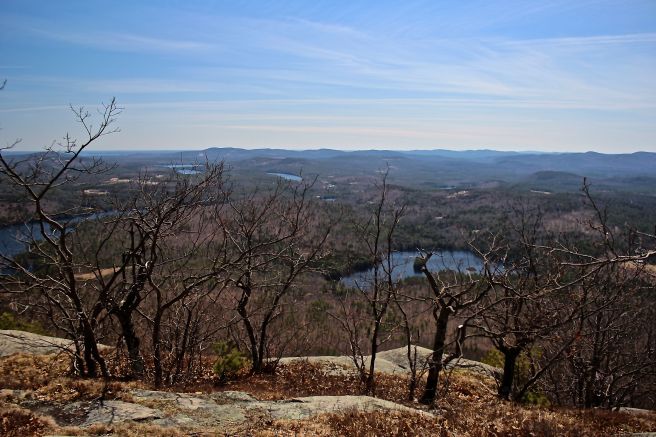
Our view as we appreciated fine dining–ham and swiss instead of PB&J–Moose Pond’s lower basin to the left, Sand (aka Walden) Pond with Hancock Pond behind it, Granger Pond and Beaver Pond directly below us. Actually, if you look closely, you might see Long Lake between Moose and Hancock. This is the Lakes Region of Maine.
s-fire tower 1

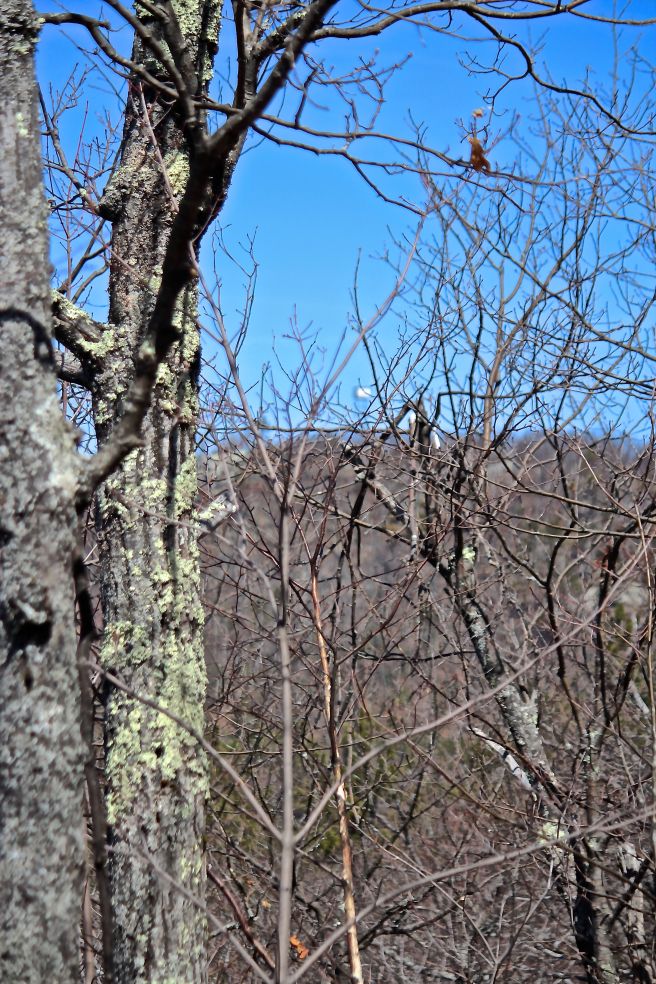
We continued along the ridge and the fire tower came into view. Once the leaves pop, this view will disappear until fall.

s-vp

At the vernal pool between knobs, we only saw one large egg mass–I had to wonder if the number is related to the amount of human and dog traffic.
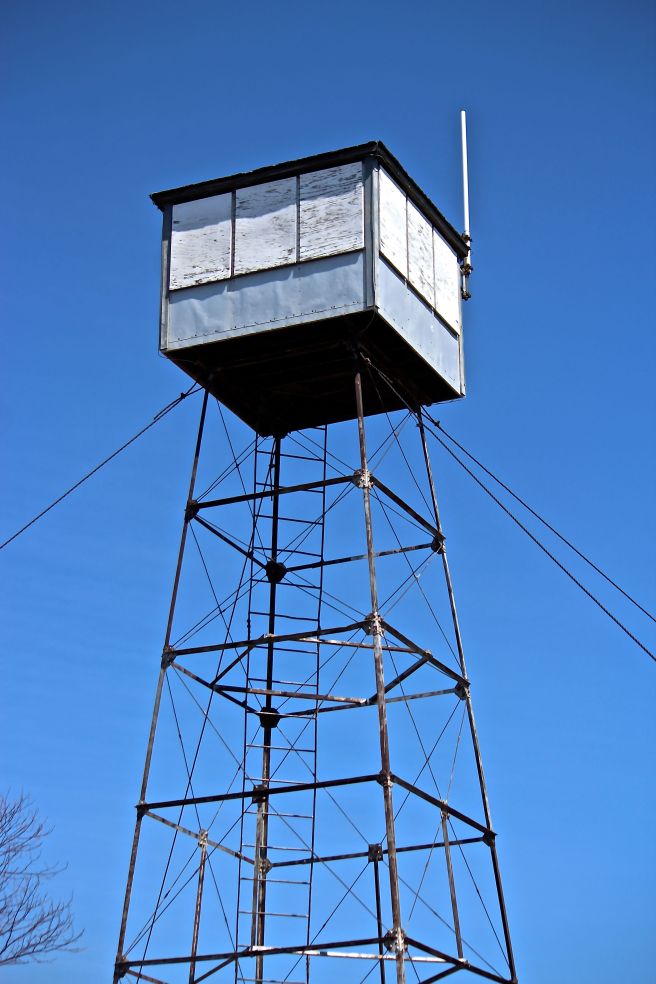
s-ft2

And then . . . we were there. At the summit of Pleasant Mountain. With a kazillion other people and dogs.

s-summit 3

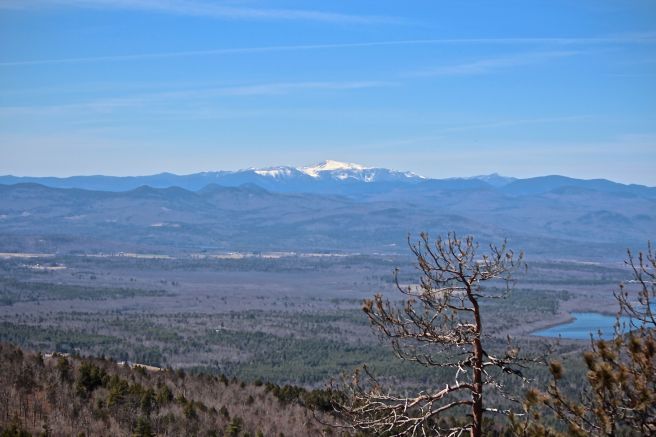
Again, we could see the bog and Lovewell Pond behind it,
s-summit view

plus Kezar Pond in Fryeburg and Mount Washington beyond.

s-summit 2

No matter how often I gaze upon this view, I’m always awestruck.
s-trail sign

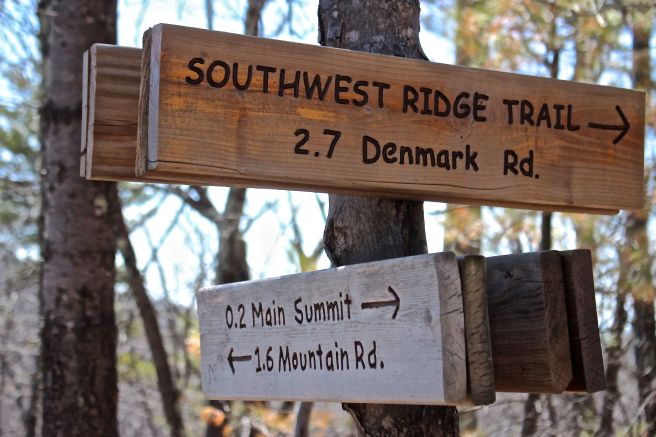
We had two options because we’d left two trucks, and decided to follow the Ledges Trail to Mountain Road.
s-toadskin

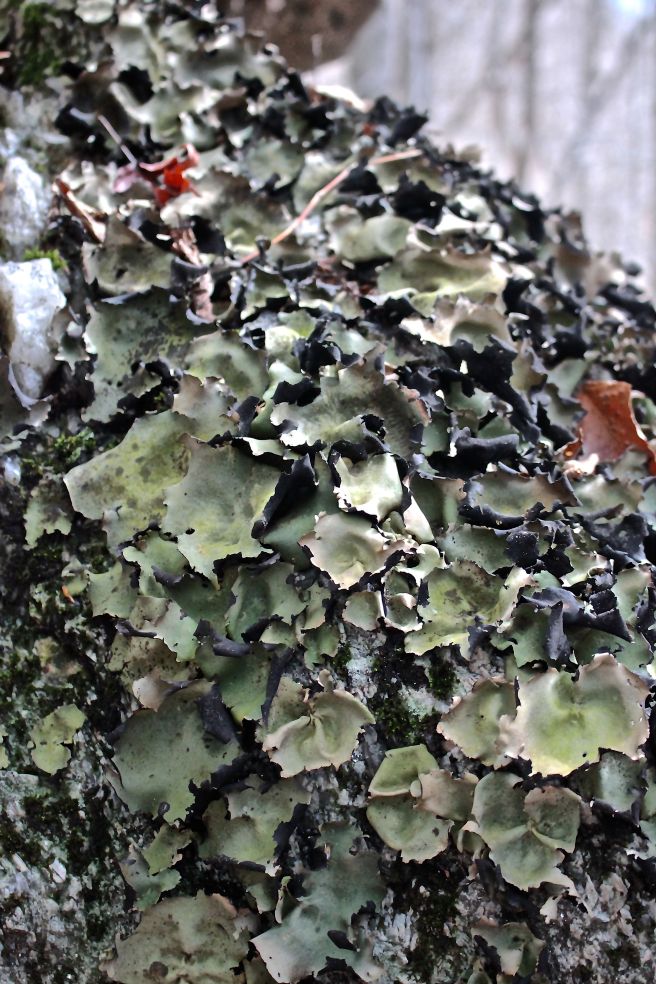
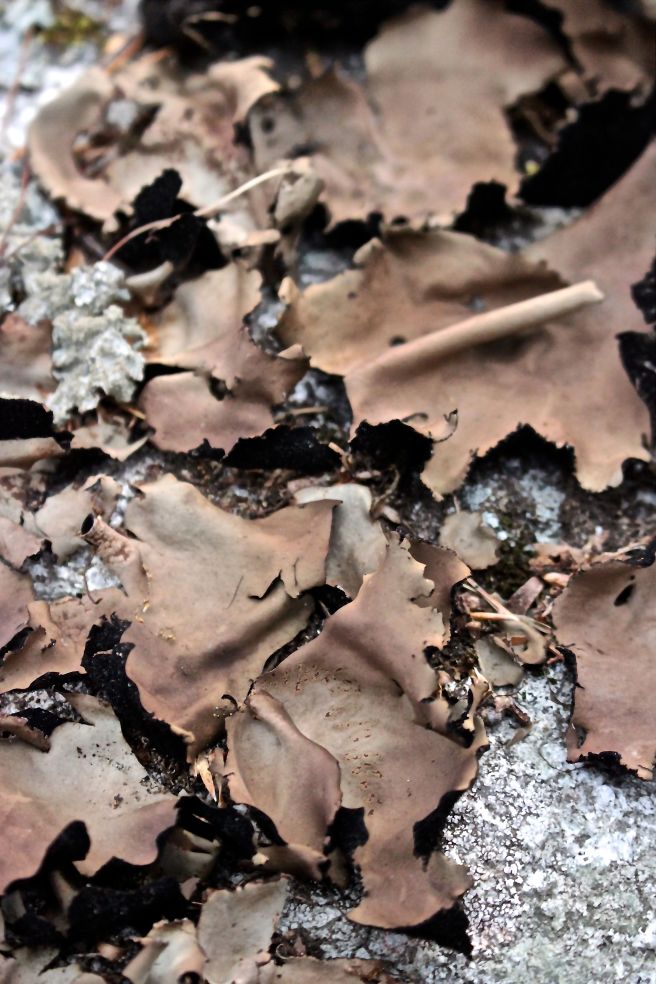
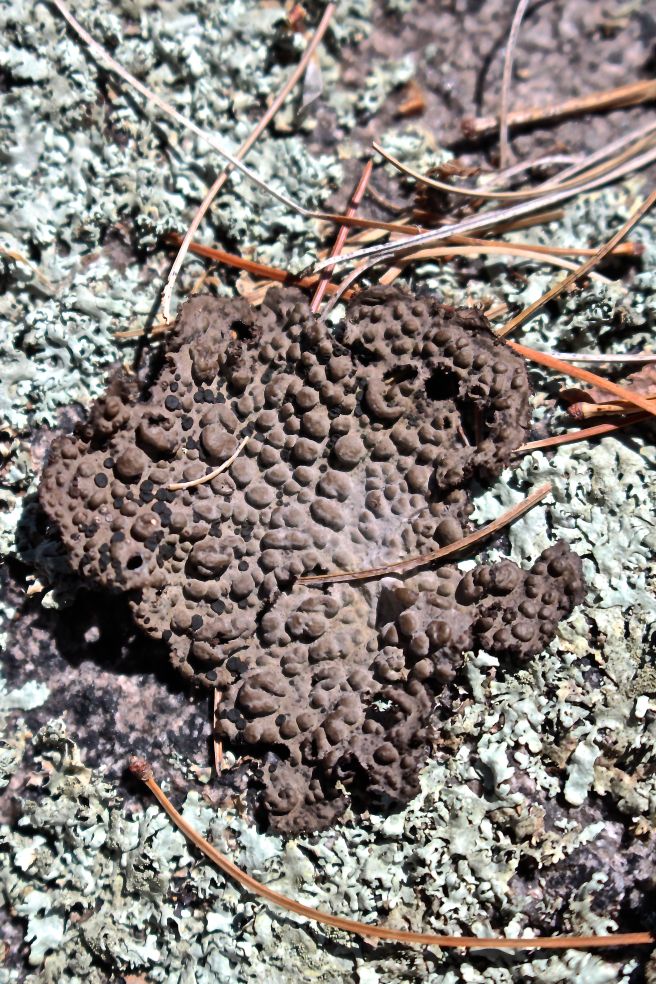
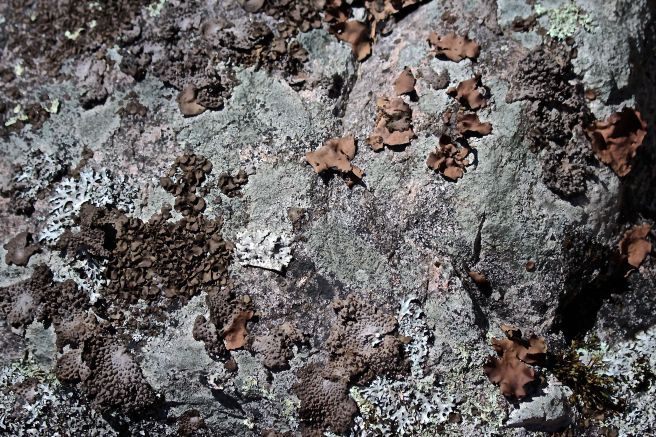
Though I was with my guy, Mr. Destinationitis, I did stop long enough to admire the common toadskin lichen with its warty pustules.
s-toadskin and tripe

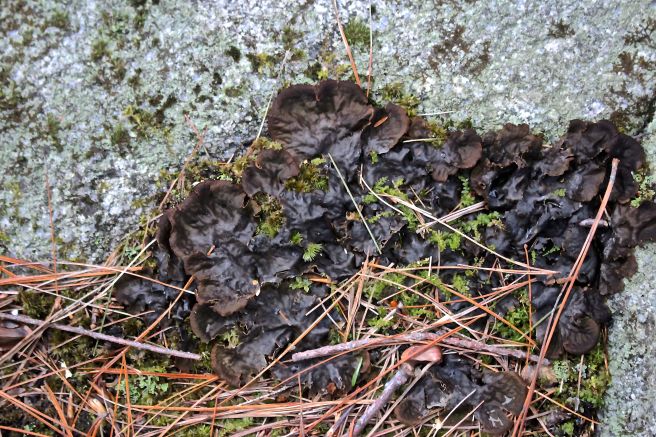
Had this been a teaching moment, the lesson plan was laid out in front of me–toadskin versus common rock tripe. Warty versus smooth. A difference in color. Both umbilicate lichens–attached to the rock substrate at a single point. OK, so maybe it was a teachable moment.

s-rest

But one of us didn’t give two hoots. He tolerated me . . . while he rested. ;-)

s-ledges 1

For the most part, we hiked within feet of each other, but I can never resist stopping at this point as we come upon the beginning of the ledges that gave this trail its name.

s-trees

Continuing down, I frequently grasped trees and thought about how many handprints are imbedded in the history of this land–from Native Americans to surveyors to shepherds to trail blazers and hikers. On this made-in-Maine type of day, we encountered many people of all ages and abilities–and were glad to share the trail with them.

s-dino1

It’s not only people and sheep who have moved across Pleasant Mountain. Even today, dinosaurs made their presence known.


So Many Quacks

Stepping as quietly as possible through the woodland, my heart quickened when I heard a particular chorus vibrating from the vernal pool.

v-ice 2

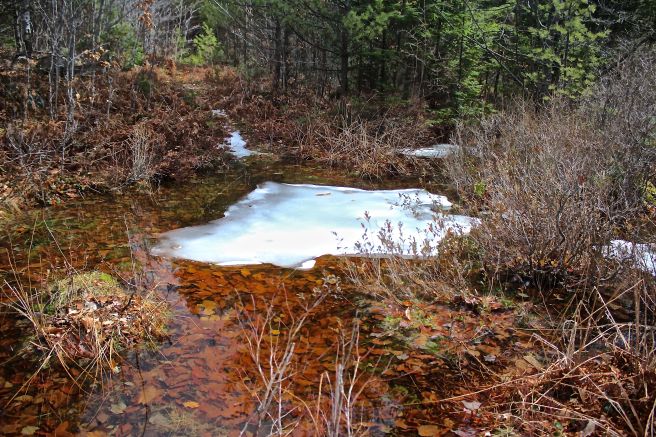
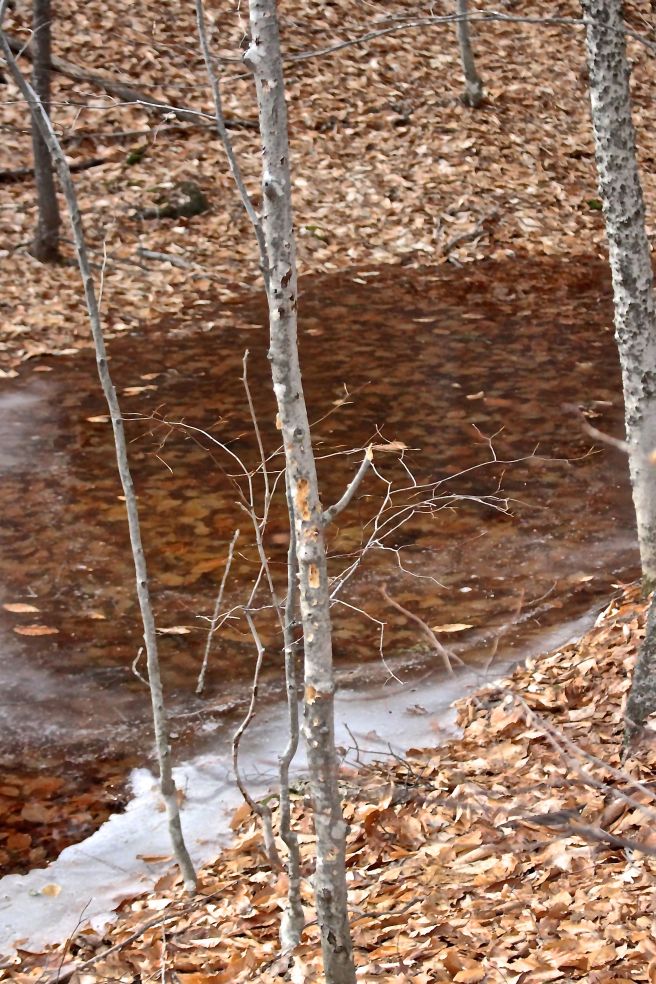
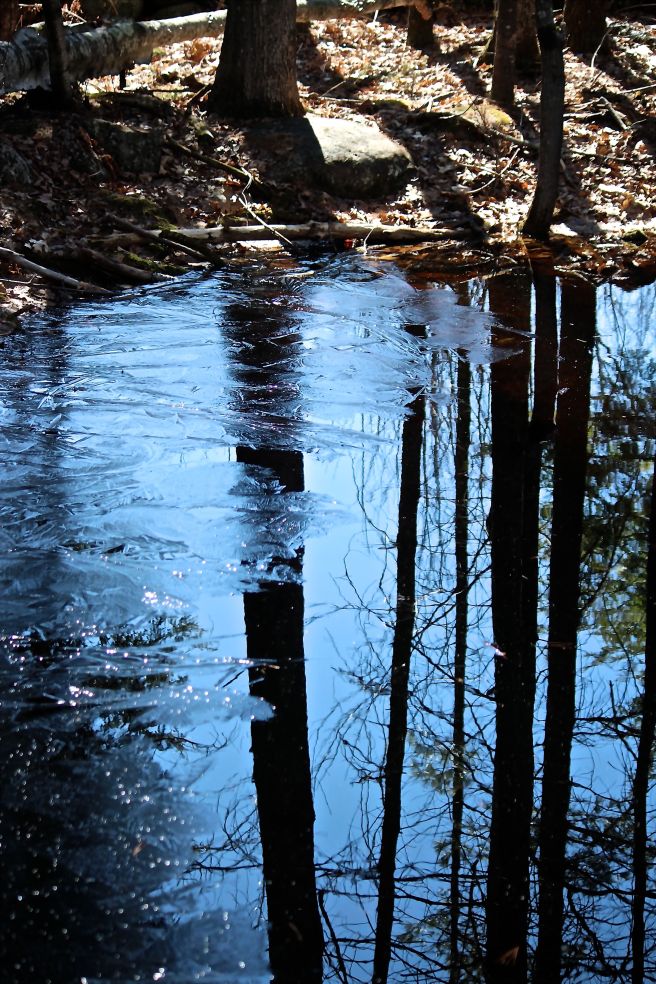
Three days ago a thin layer of ice still covered half of it.

v-ice 3

But I was happy to note that despite last week’s frigid nighttime temperatures, the wood frogs had been active.

v-many heads

While I stood and waited on Sunday, there’d been no movement or sound and I thought that the frogs had already moved on–mission accomplished. My ears and then my eyes knew differently today. I heard the quack of the males and then saw a number of heads on the water’s surface. Quickly, I snapped a photo–the little balls of light represent those precious heads.

v-ripples

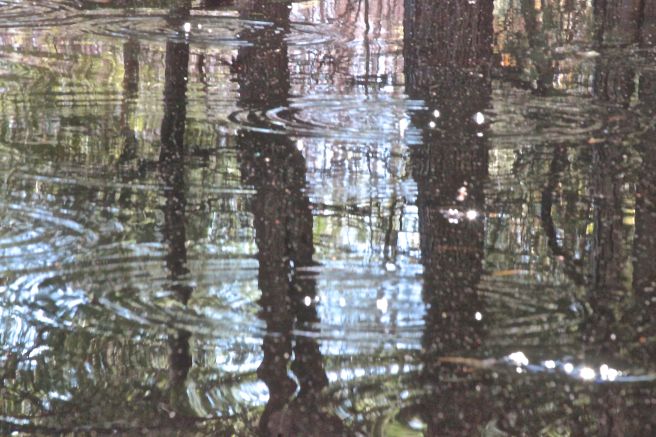
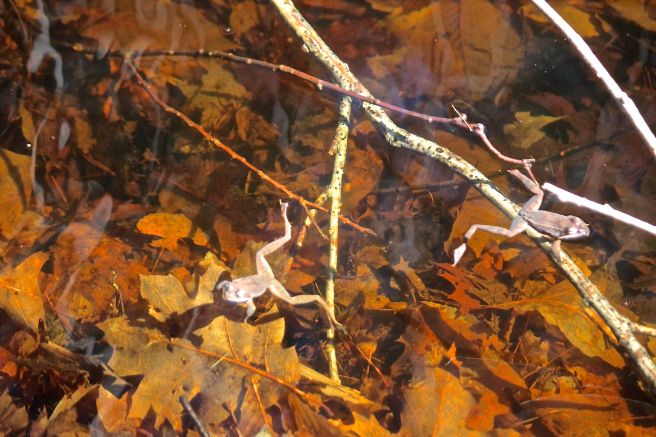
They sensed my approach and began to make waves. Water rippled as they dove under the leaf cover below. And all was silent.

v-eggs 3

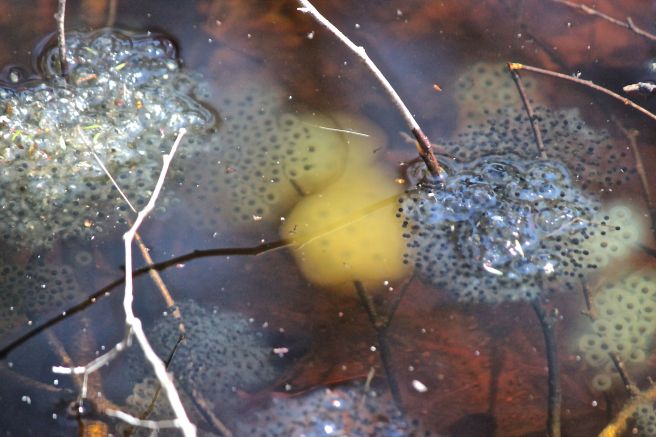
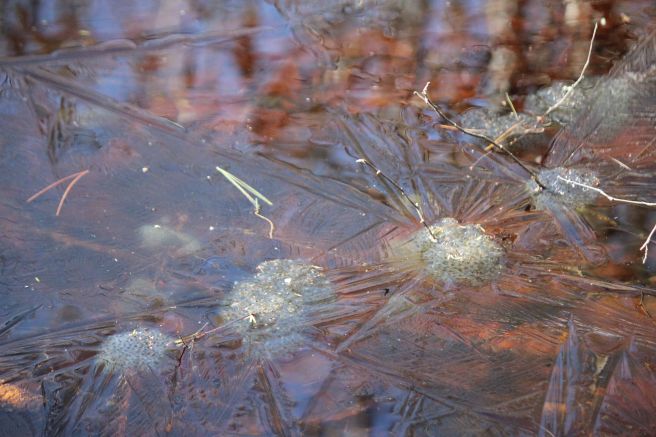
The community of egg masses, however, showed that their efforts continued to be fruitful.

v-egg masses 2

In general, each mass laid by different females is attached to a twig or branch. They tend to take advantage of the same site for attachment and usually in a sunny, warm spot. Already, some floated to the surface. Eventually, they’ll gain a greenish tinge from algae, which actually helps to camouflage them. One of the many wonders is that any given mass may contain up to 1,000 eggs–from a two-to-three-inch frog.

v-egg mass 1

A couple of masses were positioned independent of the rest, like this one–embraced in oak and maple leaves. It’s almost out of the water, though yesterday’s rain helped, but I questioned whether or not it will be viable.

v-frog and sally eggs

Then again, will any of them? Last year, the pool dried up before the tadpoles reached maturity. And it isn’t just tadpoles that begin life in this pond. Notice the white, gelatinous masses below those of the wood frogs? Spotted salamanders had also returned to this small body of water.

v-sally 3

They, too, attached clusters to vegetation. Smaller in number of individual eggs, salamanders lay 30-250 within each clear or opaque white mass. As they absorb water, the masses enlarge.

I walked around the pool looking for spermatophores produced by males and left on the leafy bottom, but saw none. Earlier today, my friend, JVP, and I walked along the Narrow Gauge trail and saw them in several pools. Unfortunately, though I had my camera in tow, I’d left the battery at home–still sitting on the charger. Oy vey!

v-beech leaves

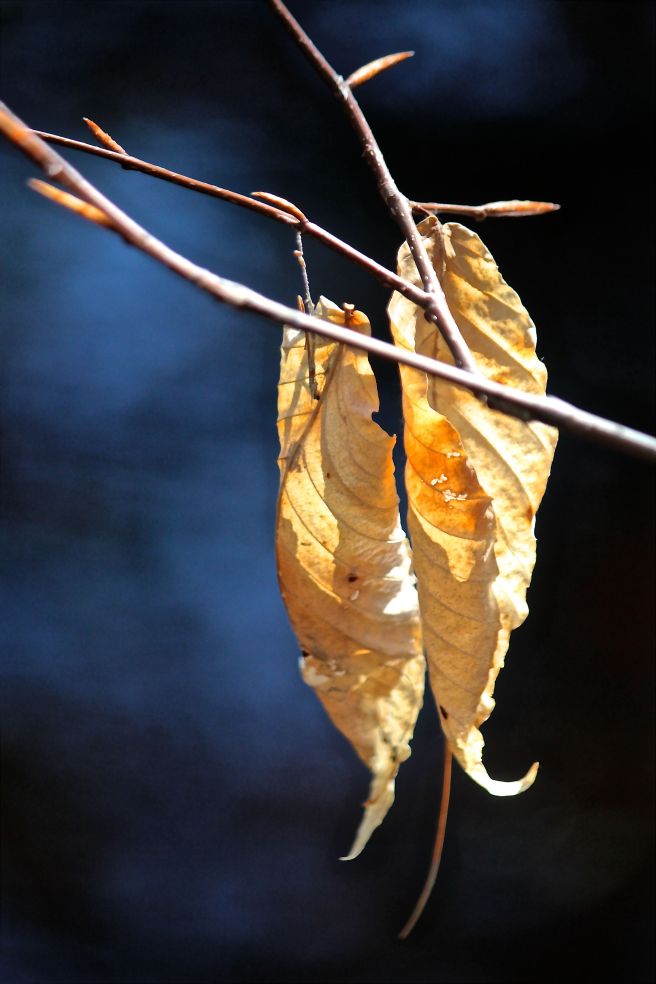
As beech leaves continued to cling and blow in the slight breeze over the pool, I finally settled down at the edge and waited for action.

v-diving beetle

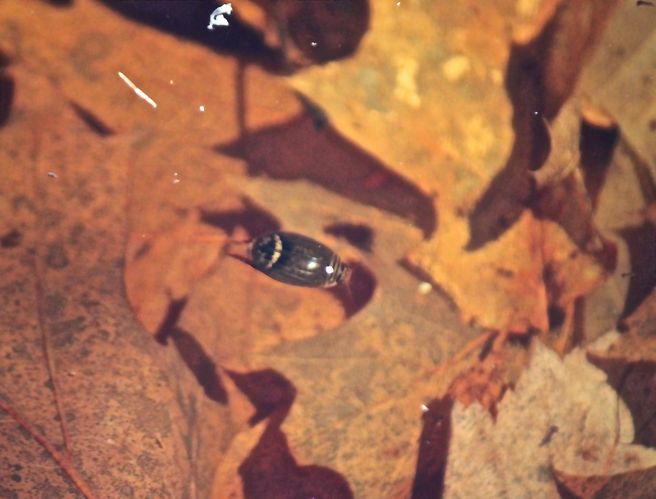
Moving with aquatic beetle speed, predaceous diving bugs swam about in constant motion.

v-water boatman

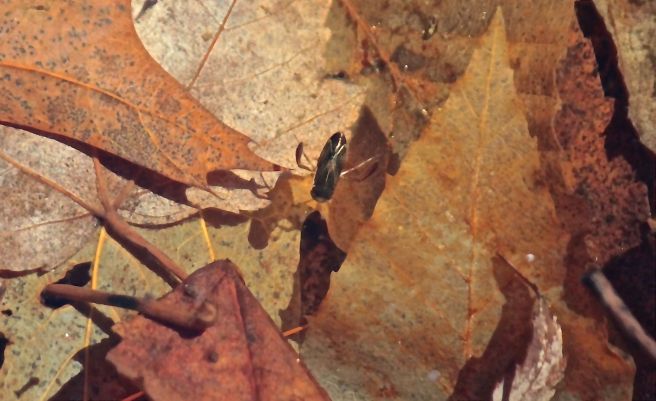
Also calling this small pool home were numerous water boatmen.

v-peaking out:blending in

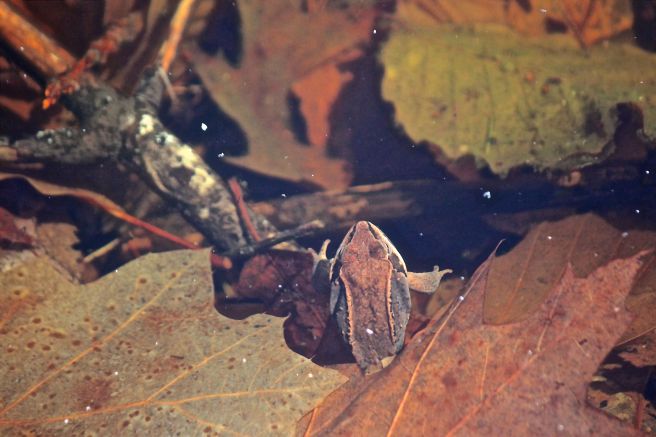
But what I most wanted to see–the wood frogs themselves. Ever so slowly, they began to emerge from the leaf cover.

v-frog 1

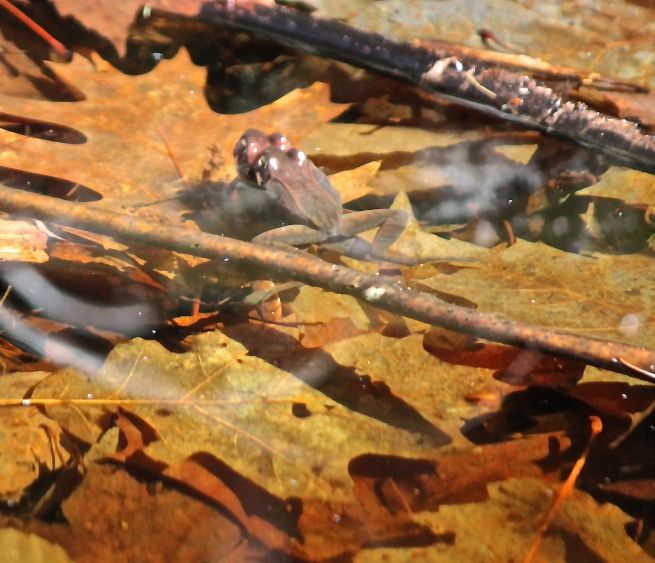
Once by the surface, they floated.

v-frog 5

As long as I didn’t make any sudden moves, they stayed–showing off the dorsolateral ridges that run from the back of their eyes toward their hind legs.

v-frog 4

Color variation was evident–from rusty browns to gray and tan.

v-frogs hanging

Sometimes, several floated near each other–probably wishing I would leave so they could continue their serenade.

v-2 frogs

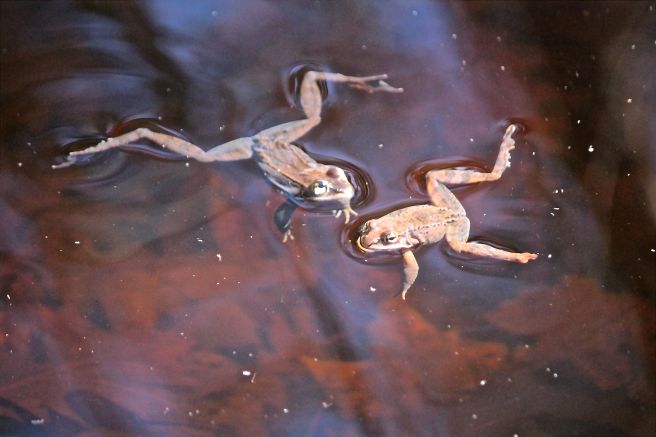
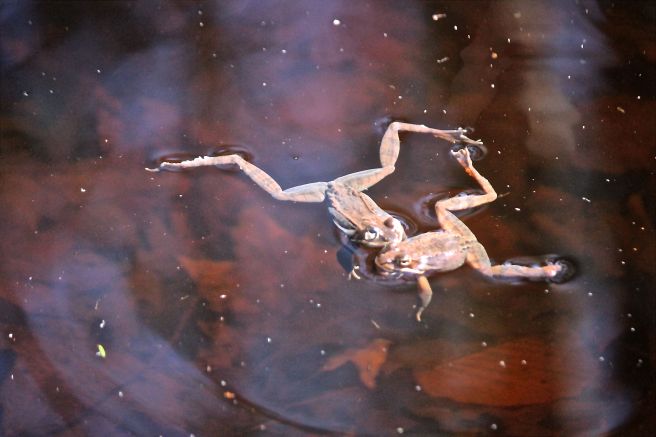
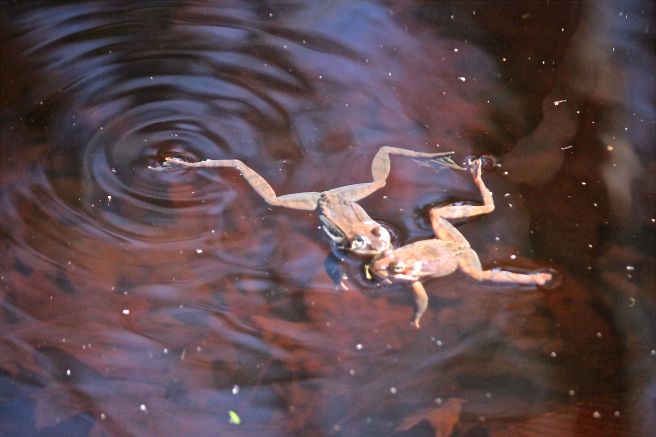
And then there were two that seemed intent upon one another.

v-2 frogs 3

I’m sure they spoke–probably cursing my presence.

v-2 frogs 1

With the flick of a frog leg . . .

v-2 frogs depart

they suddenly went their separate ways.

v-love 1

One couple, however, did hug. So that brings up another curious thing about wood frogs. Males cannot identify females by sight or sound, so he has to clasp the other frog. If the frog is thin, it’s either  another male or a female that has already released her eggs–thus he’ll release it quickly. Yup–females are generally fatter because they carry eggs.

My eyes were as wide as the frogs I watched–I’ve never had the pleasure of seeing so many in this particular pool. And I was sure that due to the ice, all the action was completed a few days ago. But the multiple chortles I heard upon my initial approach created a racket today–and sounded, of course, like a bunch of mallards. I rejoiced over the sound of so many quacks.


Learning from the Master

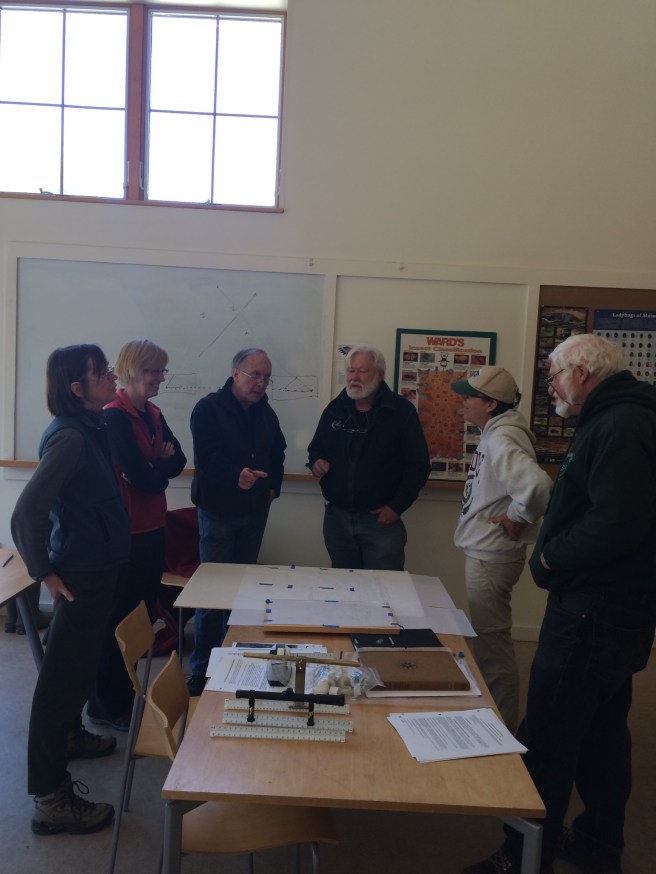
Through the Maine Master Naturalist Program I’ve become acquainted with the most fabulous people from across the state. And today I had the pleasure of sharing time with a few of them as we participated in a seminar entitled “Down to Earth: Elementary Mapping and Surveying for the Naturalist.”

Our instructor was the one and only Fred Cichocki, MMNP Science Advisor and one of the MMNP founders. In less than five minutes of being in Fred’s presence, one realizes he/she will come away with a variety of ways to create tools of the trade AND more knowledge than anyone can possibly retain.

Today’s mission: learning to map the land on a small scale–in this case by using a planetable survey method.

c-tools of the trade

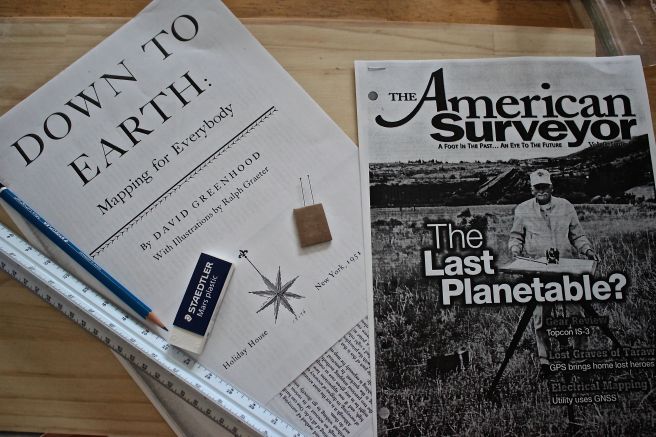
After an indoor introduction to the idea of simple map making, Fred gave us some literature and supplies.

c-threaded socket

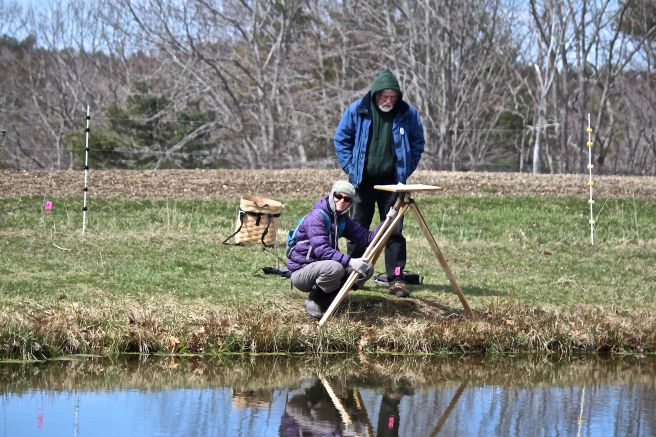
We all felt official when we received our own drawing boards with a threaded socket on the back side so we could attach them to a camera tripod.

c-pond1

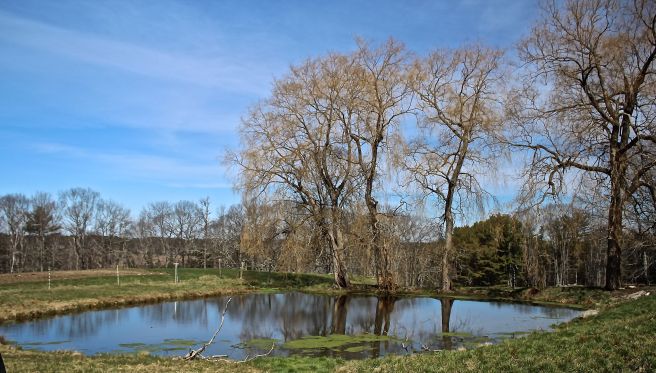
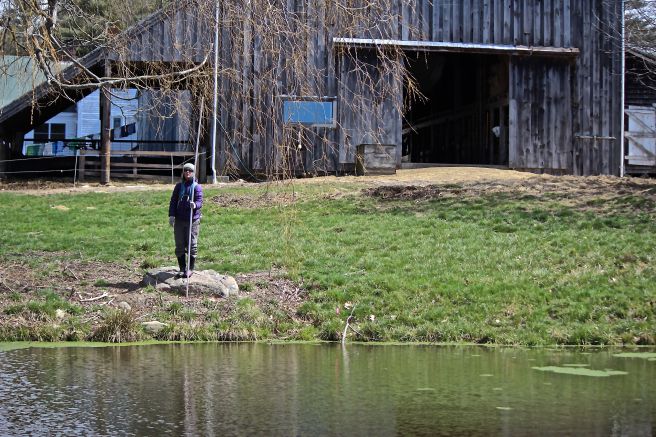
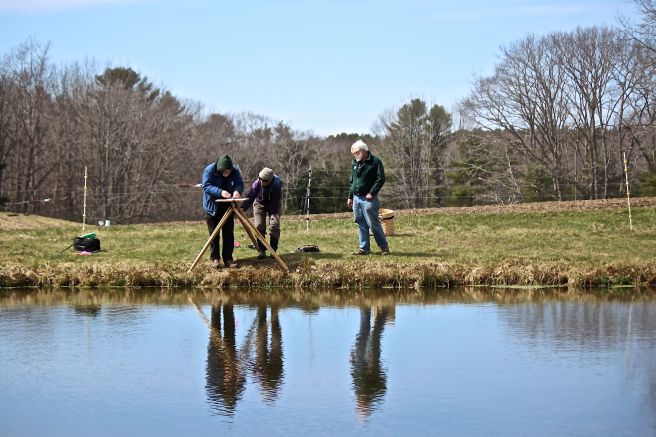
With gear in hand, we walked to the farm pond at Chewonki.

c-woodfrog eggs1

Of course, we were instantly distracted.

c-wood 3

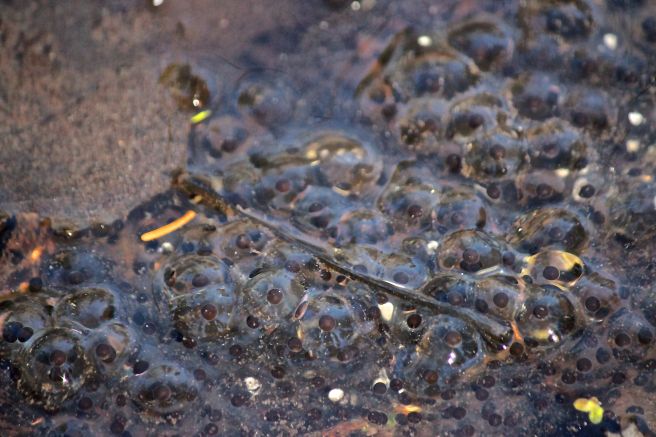
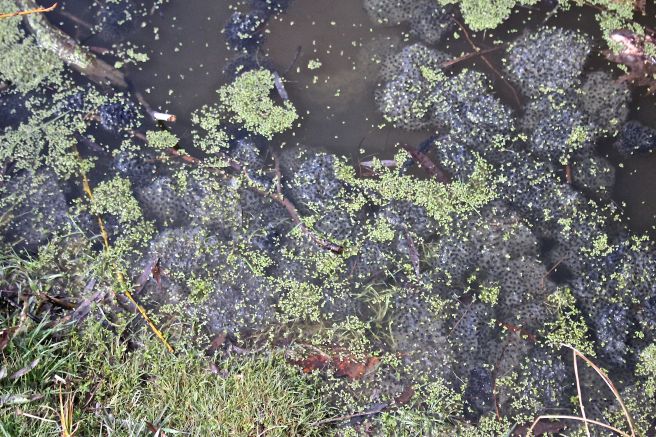
Wood frog egg masses begged for our attention.

c-spotted eggs

Spotted salamander masses also warranted a notice.

c-duck 2

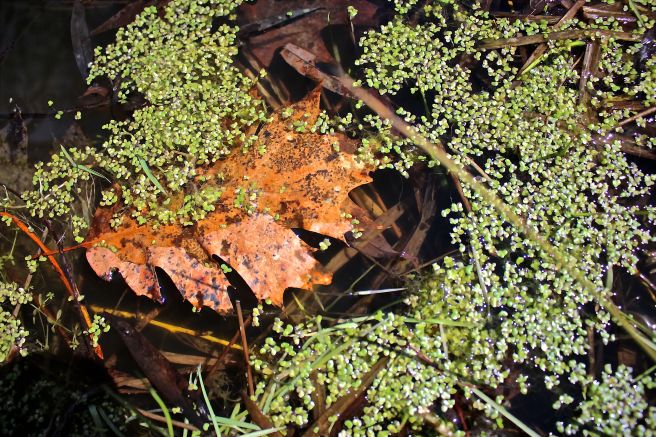
And I learned about something else–duckweed. This tiny aquatic plant floats on or just beneath the surface. When I first saw it, I thought it was some sort of feed that had flowed into the water after the recent rain events.

c-duck weed and egg masses

It seemed invasive, but did create a rather pretty mosaic mixed in with the egg masses.

c-gordon pole

Before we started our mapping task, as a group we walked around the pond and decided where to place pin flags–to indicate a change in the shoreline or a key feature such as a rock or tree. Each flag was marked with a number.

c-denise, rod

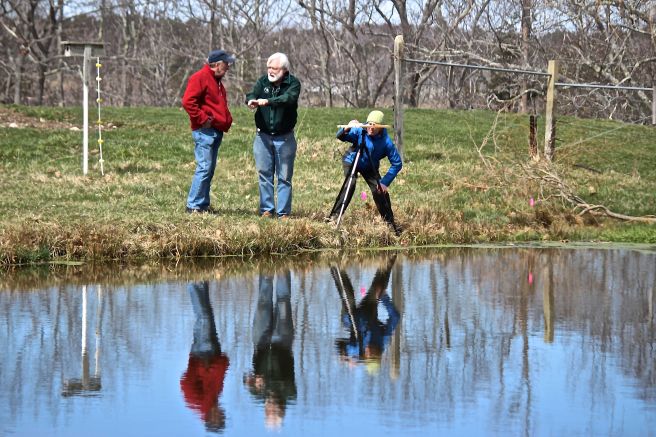
Then we split into two teams and took turns with the various tasks, including holding the range pole by each pin flag.

c-adjusting the tripod

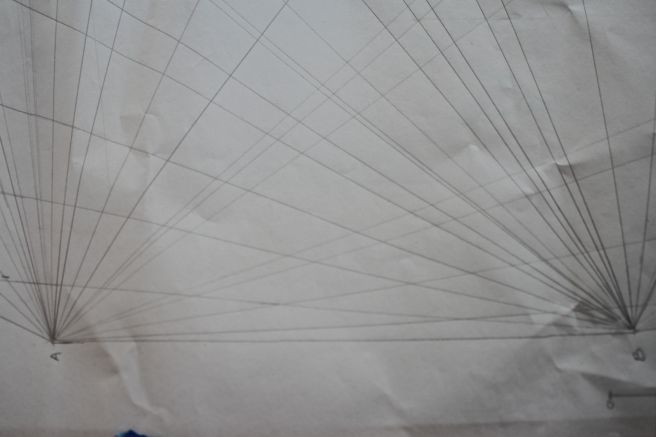
Meanwhile, across the pond we set our drawing boards on tripods and spent some time adjusting them to be level. We also measured out our first two points–A to B.

c-Cathie casting an eye

With Fred’s guidance, we used our triangular engineering rulers as alidades–straight-edged sighting devices, and a straight pin as a turn point.

c-dick drawing lines

Once we had the range pole in sight, we drew lines on our map sheets.

c-point a to b

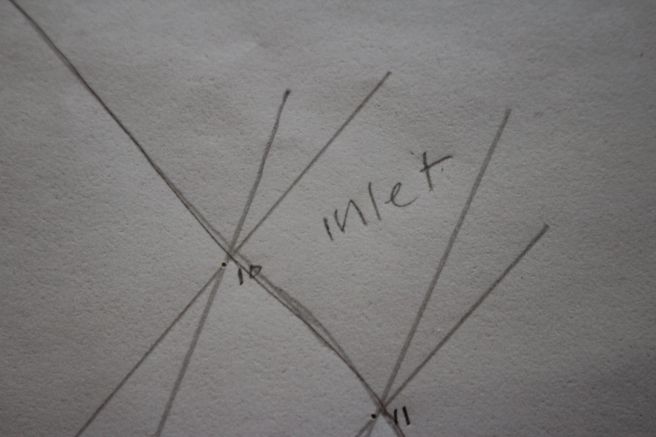
From Point A and Point B, two spots we’d all agreed from the start marked a straight edge on the pond, we took sight of each pin flag, drew the related line, and labeled it.

c-thistle weed

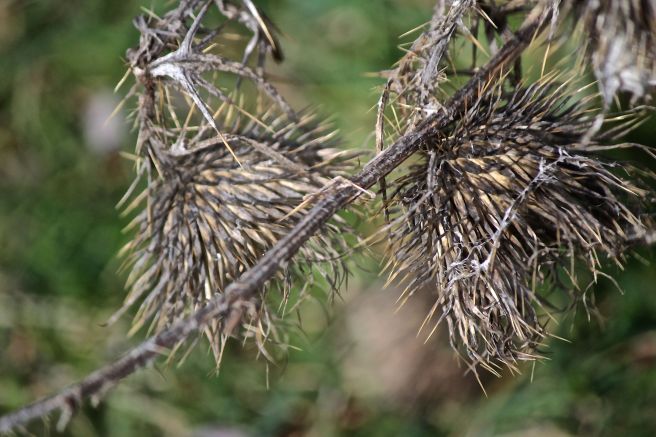
Before we went in to do some more work, a few things caught our eyes–our NDD (Nature Distraction Disorder) was acting up again with the sight of these thistles displaying their winter form.

c-thistle leaves

Nearby, the prickly-leafed rosettes speak to the plant’s future.

c-bald eagles

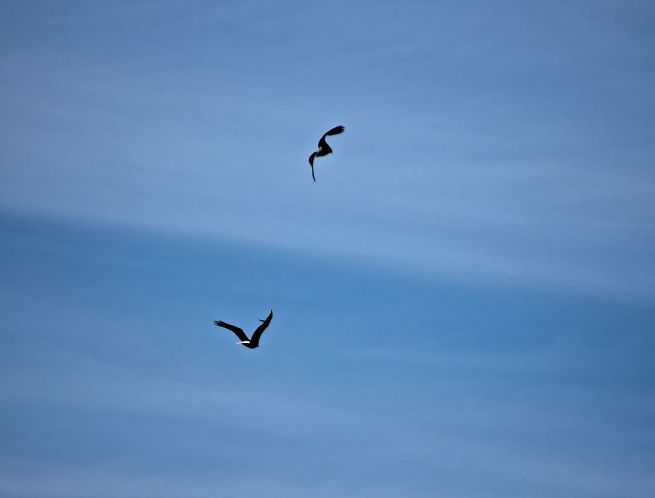
And overhead, two bald eagles played in the wind.

c-points intersect

Back inside, we followed the two sets of lines out and noted their intersection.

c-points 2

Then we connected the intersections with a line that indicated the perimeter of the pond–in theory. Um, in reality, my team was admittedly off. Our beginning scale was longer than it should have been and our table not always level so the pond’s shape was not quite accurate. But just the same, the process had us all jazzed to try again.

the process

We learned from each other and considered future tweaks. (Thanks to Denise for the photo)

c-smiles 2

At the end of the day, we were all smiles because we’d spent time learning from the master. Thank you, Fred.


On The Verge Of Change

Change is in the air. Stepping out the door this morning, I was immediately treated to the sight of wet mammal tracks on the deck.

b-raccoon tracks

The hand-like shape was hardly a surprise since at least two raccoons visit the bird feeders on their nightly rounds.

b-wintergreen

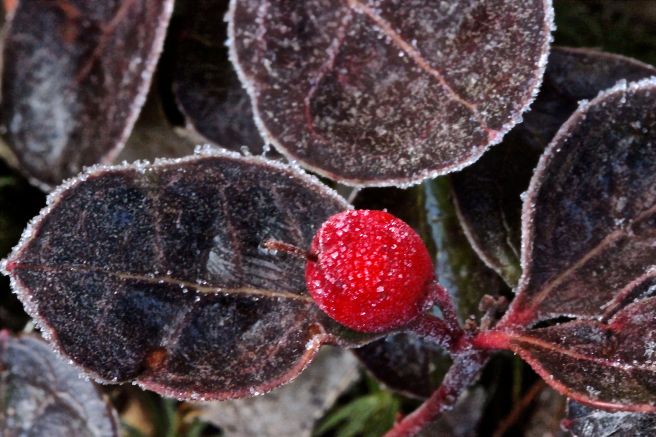
My next source of delight–frost embracing wintergreen berries and leaves.

vp1

And then I paid my respects to the vernal pool. While there, I spent some time reflecting on Bridie McGreavy, who celebrates her birth this day, and many moons ago introduced me to the sacredness of place–especially this delicate space.

Vp2

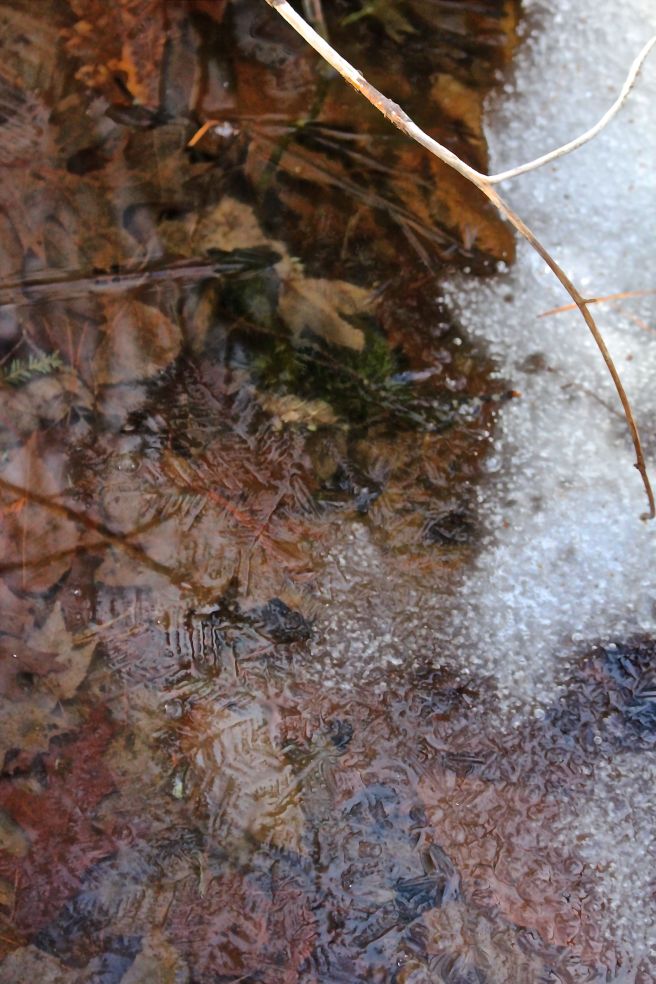
Feather ice formed after yesterday’s melt and last night’s cooler temps.

As I did last year, I intend to document the pool on a regular basis–noting its evolution over time. This year’s big question: Will Big Night happen earlier than normal? I’m already receiving reports from others of spring peepers singing their songs.

b-brook 2

And then I was off to the GLLT’s Back Pond Reserve in Stoneham. My friend, Parker, and I were on a quest to locate species that would be good indicators of rich soils. He’s much better at knowing about this than I am, so I tagged along–thankful for the opportunity to bushwhack beside the stream that eventually flows into Back Pond while learning from him.

b-bass 2

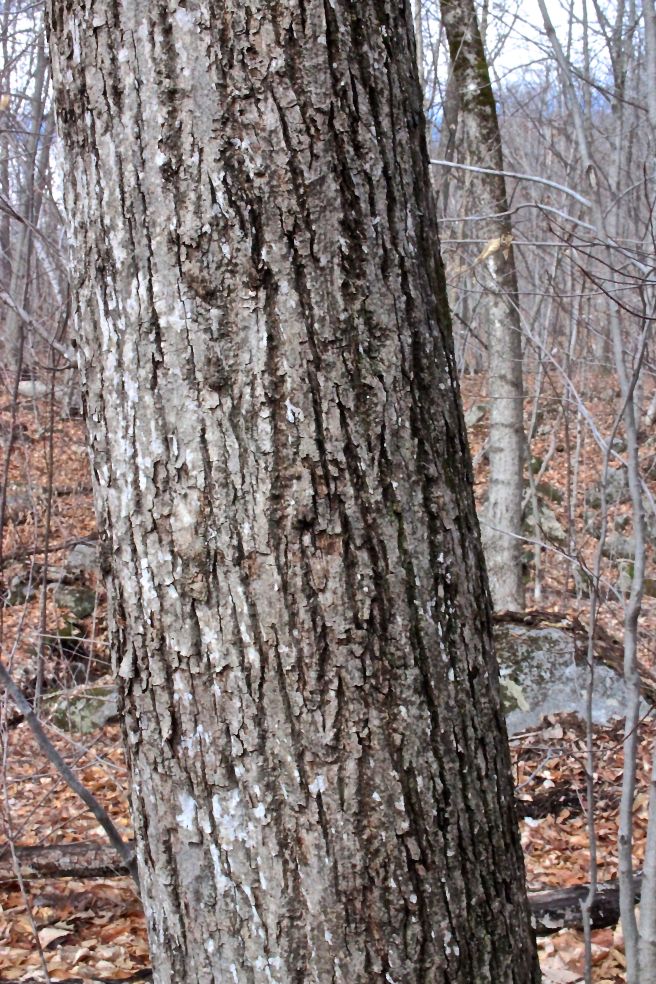
We found a dead tree that stymied us for a few minutes, but though it has some ash-like tendencies, we came to the conclusion that it was a basswood–one of those indicators we were seeking.

b-basswood bark

Only thing–during our entire search, we only found two.

b-bear tree

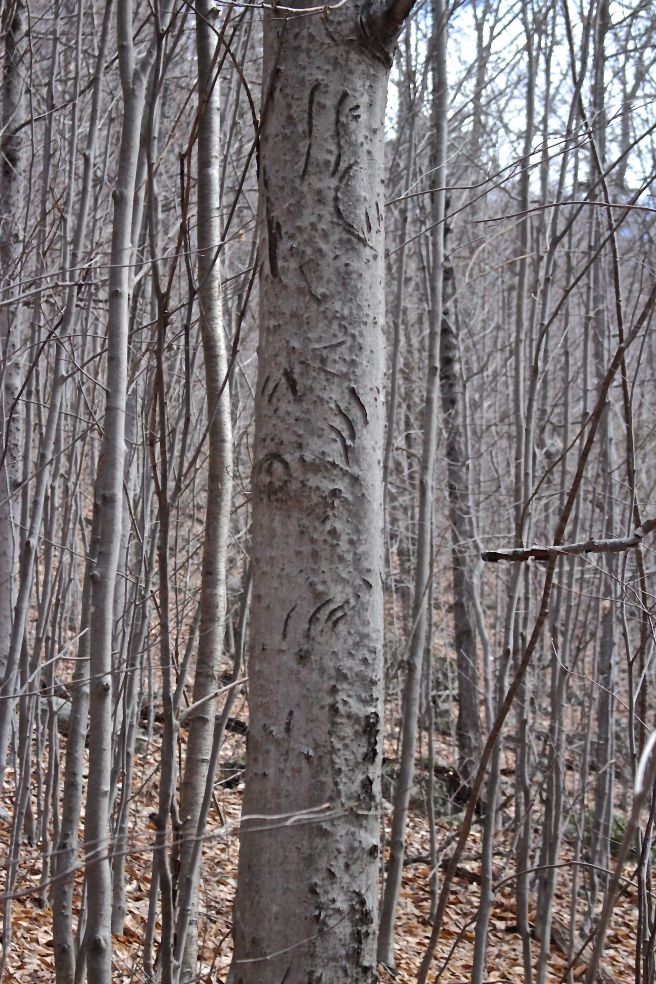
But that’s OK because there was so much more to see. Though I’ve spotted other bear trees in these woods, this one features the best sign. My guy will be jealous that he wasn’t with us to find this one.

b-crowded parchment

For many of us, Parker is our fungi guru. He and his brother became interested in mushrooms at a young age and have studied them extensively. They know only Latin, I speak only common. And so, I present to you crowded parchment (Stereum rameale). 

b-hemlock varnish shelf

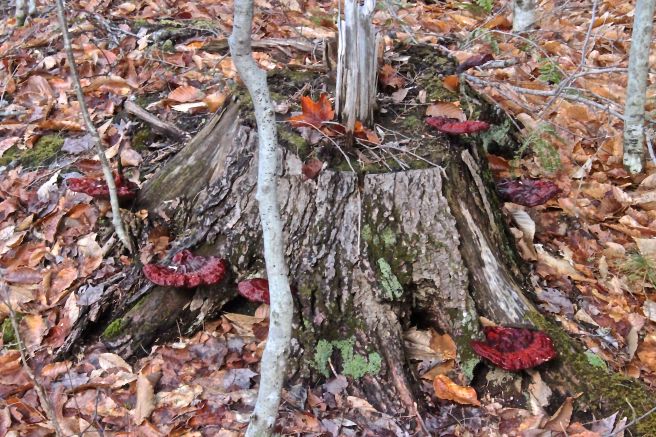
Hemlock varnish shelf (Ganoderma tsugae) grows prolifically in these woods. These old fruiting bodies are still beautiful in their offering.

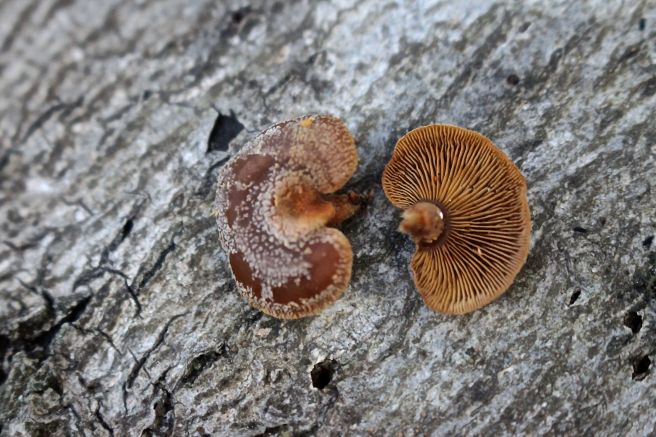
b-panellus stipticus?

And though it didn’t get dark while we were there, Parker found Panellus stipticus, a bioluminescent species. Check out those gills on the underside. According to Lawrence Millman in his book Fascinating Fungi of New England, ” . . . specimens in the Northeast glow more obviously than specimens in other parts of North America.” So  if you are ever in these woods late at night, don’t be freaked out by a light greenish glow. It just might be nature’s night light.

b-magenta fungi

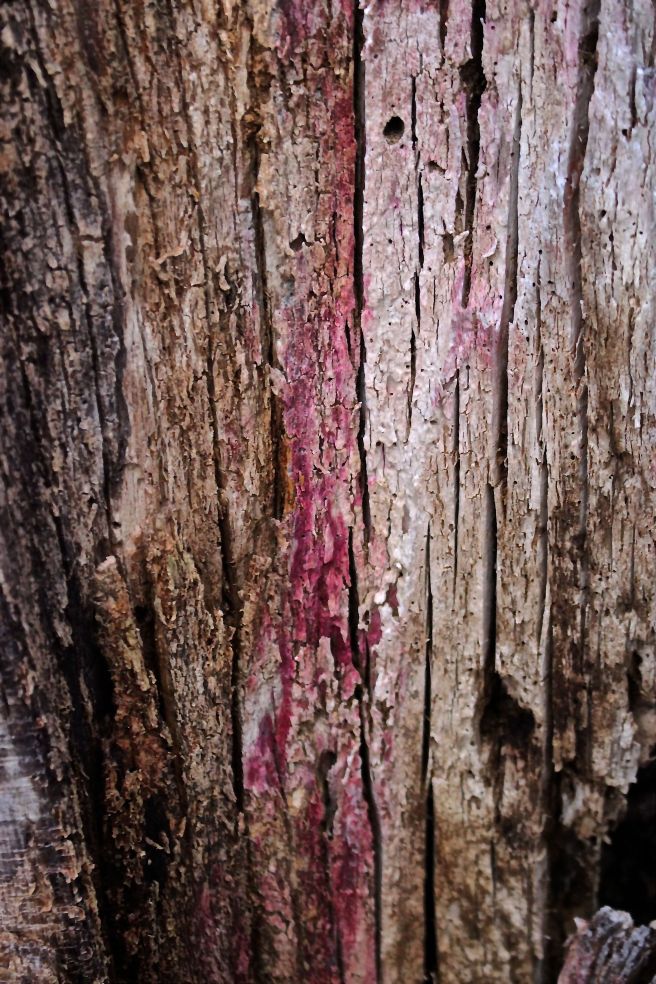
The fun thing about exploring with Parker is that he’s not afraid to say, “I don’t know.” Such was the case with this magenta fungus we found on the inner bark of a rotting stump.

b-hemlock:hop hornbeam 2

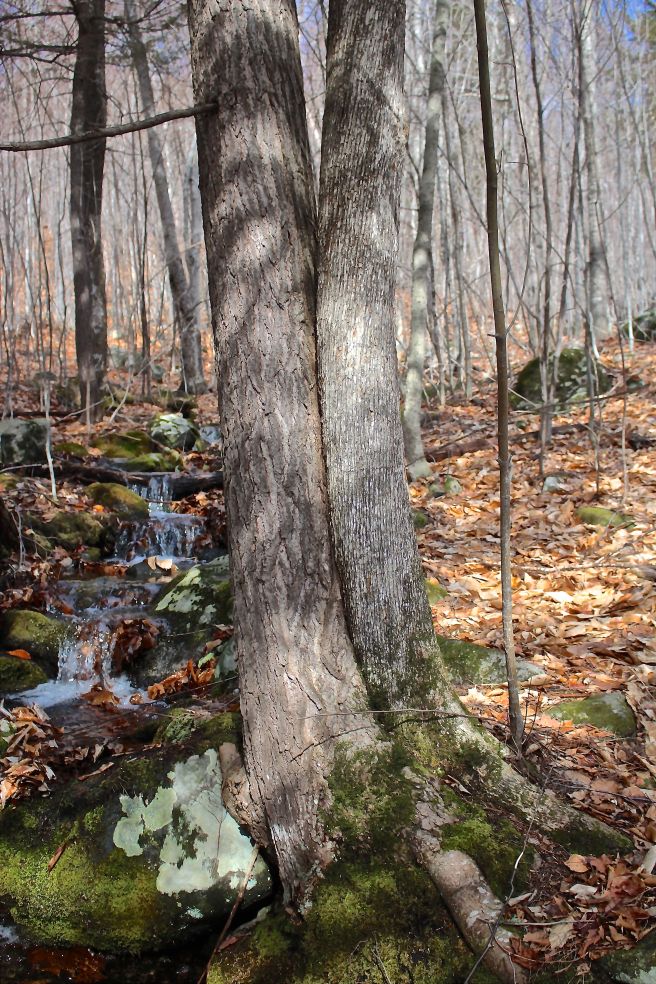
I don’t know why I’m surprised every time I see two trees sharing a space,but I am–this time hemlock and hop hornbeam.

b-brook sans ice

We continued beside the stream for most of our climb and eventually came upon the trail that connects Ron’s Loop to The Mountain.

b-lichen on tree

A few things stopped us along the way, including this lichen that neither of us could conclusively identify,

b-rock lichen

what I believe is peppered rock tripe,

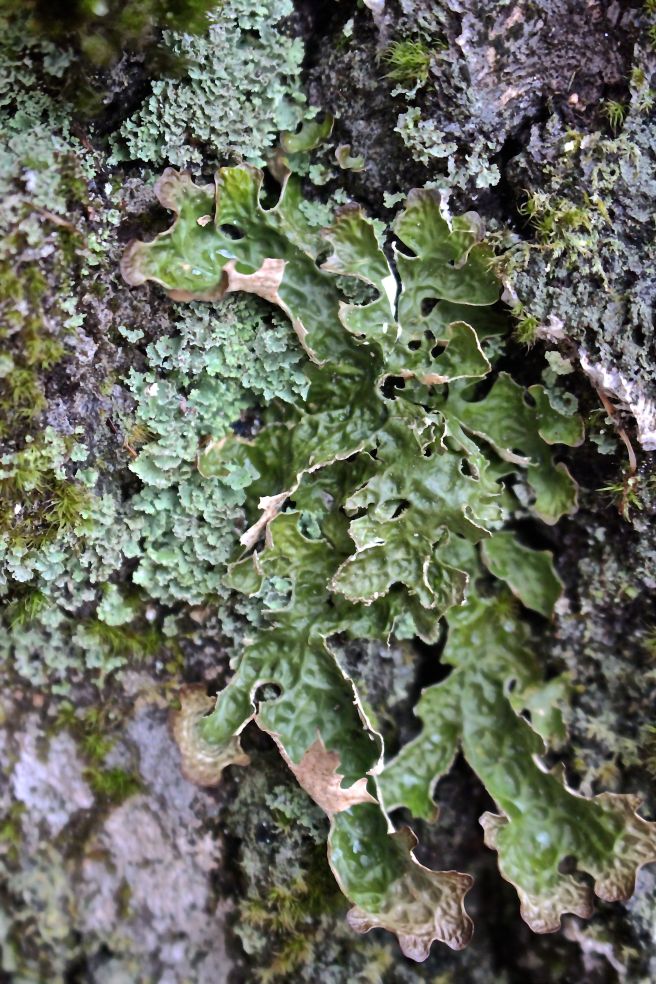
b-lungwort, lichens

and the glorious bright green state of lungwort. The thing that gave us pause about the lungwort wasn’t so much the lungwort as the lichen and moss garden that also decorated this tree.

b-mtn bog

And then we were literally stopped by water. Our intention to reach the scenic view over the Five Kezars was prevented by this boggy area. A vernal pool?

b-mtn bog 2

Certainly a wetland. We explored for a few minutes and wondered about the species that will appear here in the next few months.

b-boulder field

Then we returned to the stream, crossed over and paid a visit to the boulder field for a closer examination.

b-rock tripe 1

Like the lungwort, much of the rock tripe was also green today–a testimony to recent rain and yesterday’s hail.

b-tripe center

Two things to note–how it grows from the center umbilicus, like an umbilical cord, thus its Latin name: Umbilicaria mammulata; and the fact that it’s creating a garden on the up-rock side, where mosses and humus and seeds gather.

b-rock tripe water 2

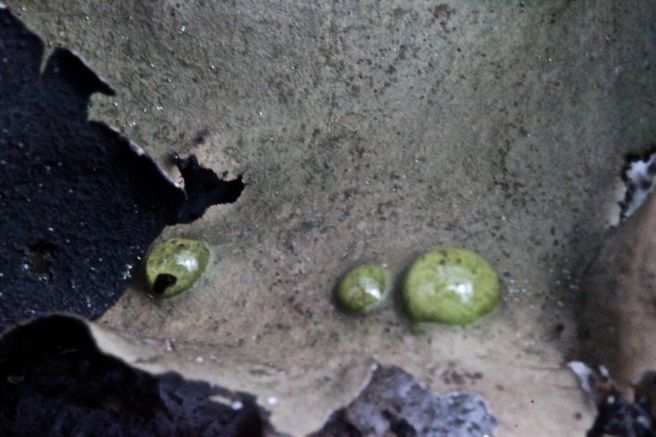
I found a drier brown specimen that had captured several drops of water and held them still.

b-redbacked

Upon our decent, we stumbled upon a redback salamander–the first of the season for both of us. It seemed rather lethargic so we covered it with leaves and wished it a safe life. Redbacks are terrestrial and don’t have an association with vernal pools, though they are sometimes spotted on Big Night as we help the salamanders cross the road.

b-rose moss 1

A mossy display on several rocks in a seepage meant we had to pause again.

b-rose 2

We believe this is rose moss (Rhodobryum ontariense), but our ID was quick.

b-rose 3

Based on the description in  Common Mosses of the Northeast and Appalachians, “the shield-shaped leaves are widest above mid leaf and end in needle point.” Yup.

b-wood sorrell

And then we realized we have to get our wildflower eyes back on. The wood sorrel (Oxalis montana) leaves stumped us initially, but what else could it be?

b-wood sorrel 2

Other than a luna moth, that is! Doesn’t it remind you of one?

b-foamflower?

Without a flower, it’s difficult to ID a plant. My first choice: Foamflower or False Miterwort (Tiarella cordifolia), but my second choice based on the blunt-toothed leaves: Naked Miterwort (Mitella nuda). Time . . . and blossoms will tell.

b-orchid?

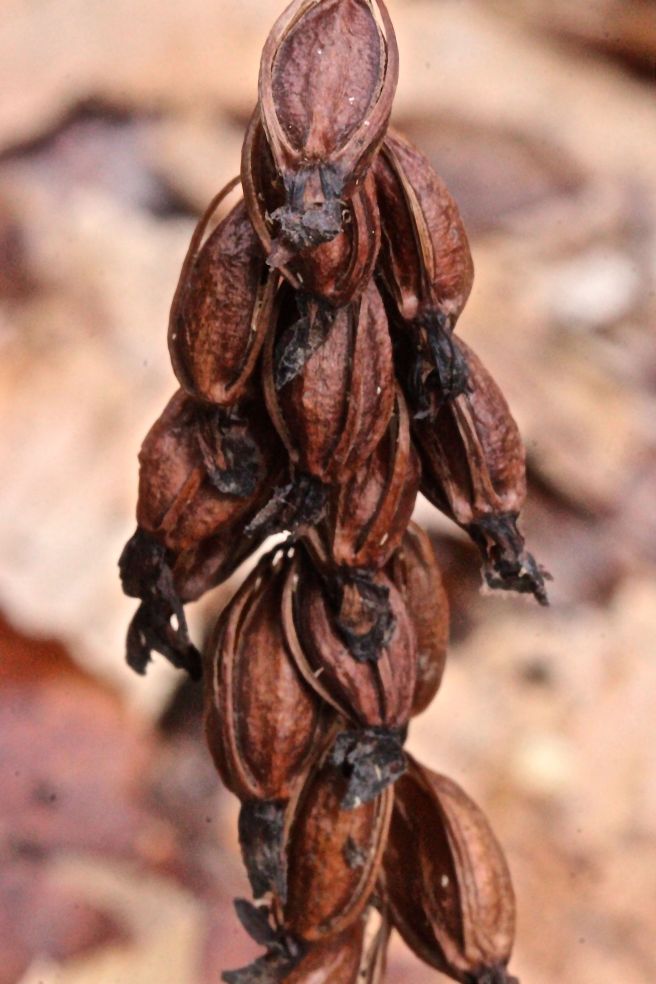
Our final find of the day left us with differing opinions. I said shinleaf (Pyrola elliptic). Parker said Corallorhiza maculate, which is a coralroot. A friend of his who is an orchid expert agreed. I guess we’ll have to revisit this place to confirm.

We’re on the verge of change and the seasons may collide with a Nor’easter in the offing.


Sharing Our Mondate

My guy and I spent this morning roaming about the woods in Lovell with several friends who are docents for the Greater Lovell Land Trust. We had been invited to explore a 20-acre property and the owners, Barb and Bruce, were in hopes that we’d discover interesting things.

As it turned out we explored much more than their property because we got a bit mixed up with boundary lines, and came away with some questions to ponder about the lay of the land as well as a scavenger hunt for their grandchildren to conquer.

b-red pines

Before we headed off into the woods, Barb wanted us to see a neighbor’s off-the-grid tiny cabin. To get there, we passed through a red pine grove that immediately put me into question mode. Why a grove here? Who planted them? When? I know that the Civilian Conservation Corp did this sort of thing in the 1930s and had been in the area–Stoneham and Bridgton, Maine, as well as Chatham, New Hampshire. But my research didn’t indicate that they’d done any projects in Lovell.

What I did learn, however, is that the farmer who once owned this hilly land may have received a subsidy to plant the trees in order to control soil erosion and turn them into a cash crop. An article in Northern Woodlands states the following: “The government further subsidized red pine seedlings throughout the twentieth century as a way of providing hill farmers with a future cash crop that would grow on otherwise played-out soil. Red pine seemed the perfect candidate for this, as it’s fast growing and susceptible to fewer serious enemies than most pine species. (White pine can be bedeviled by white pine weevil and white pine blister rust – neither of which affect red pine.)

From their size and close proximity to each other, its apparent that the “cash crop” never paid off. Instead, Barb and her husband have a stately cathedral overlooking the mountains and a quiet passageway to visit their neighbor.

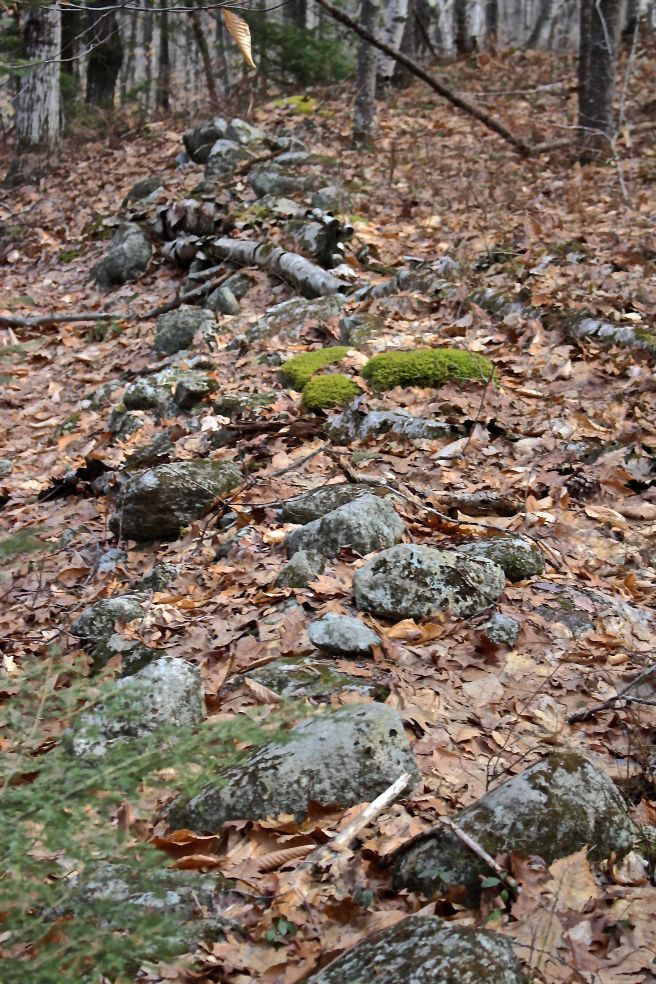
We returned from our quick house tour and followed a double-wide stone wall to an opening. Again, we questioned the wall’s purpose. A way to get rid of stones? Did they use the bottom portion of the land below the wall for agriculture and let cows or sheep roam above? We didn’t come up with the answers, but continued on.

b-rock tripe colony

It was time for us to find some treasures that the grandkids can seek. Rock tripe is first on the list.

b-rock tripe

It’s gray-brown upper surface turns dark green when moist–so be sure to bring along some water to pour on this lichen. Then watch the transformation.

Though edible in a last ditch effort by someone who doesn’t mind chewing and chewing and chewing some more, rock tripe is neither delicious nor nutritious. Some Native peoples used it as a soup thickener and others as a last resort tidbit. If you soak it for a while it will soften up.

b-vernal pool

The temperature was cooler this morning than the last few so a skim of ice covered the surface of this vernal pool. I’m not sure how long it will last, but if it’s still there, dip a pail in and look at the assortment of species that swim about. Maybe you’ll even see some frog or salamander egg masses if you visit in the spring.

b-Indian pipe

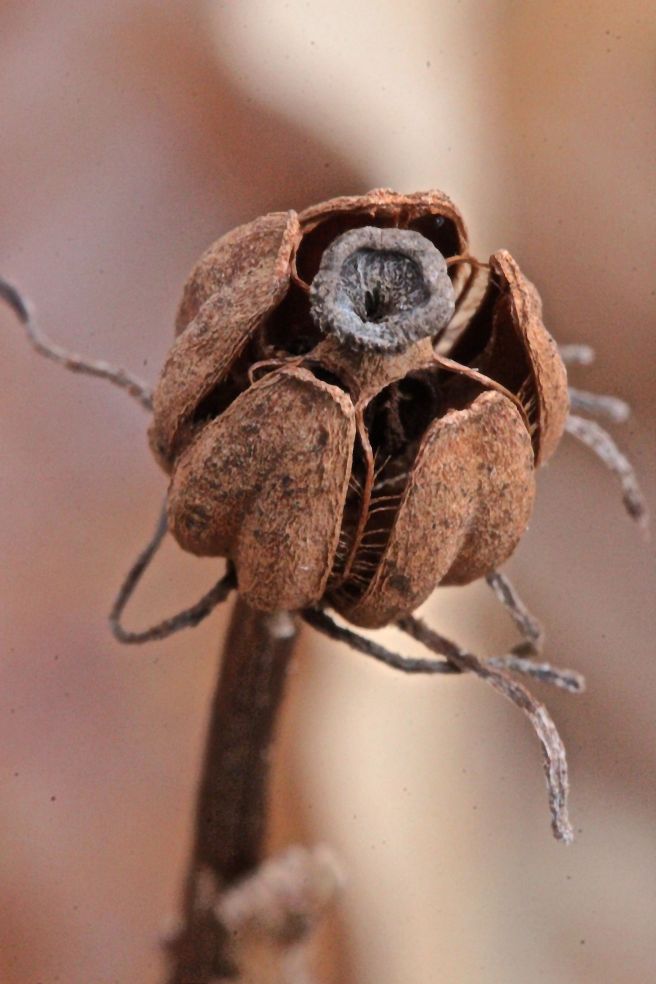
Here and there we found the pods of Indian pipes. In the summer, look for their ghostly white form–they look like their name, with the flower part hanging down. If it’s turned upright like this one, it has been fertilized.
b-puff balls

Though long since spent, puff balls are another fun find. Poke them and watch the spores float out like smoke from a chimney.

b-wood chips

The pileated woodpeckers love this mixed hardwood forest, so you might find evidence of their work on the floor. And then look up into the tree to locate the cavity they’ve excavated.

b-bird nest 1

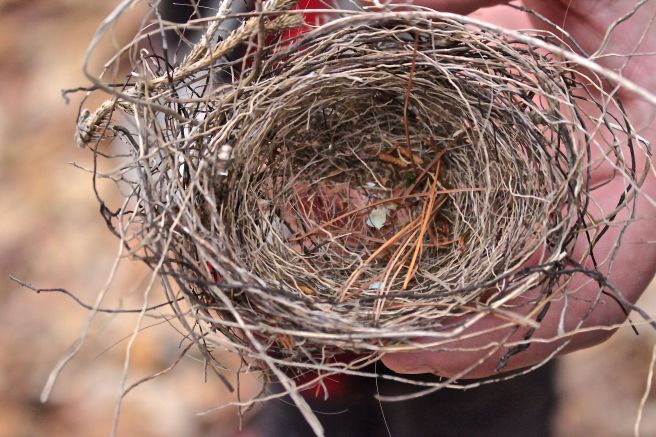
We found several bird nests, including this one made of grasses and wiry stems.  A fraction of a blue egg shell sits inside.

b-nest 2, downy feather

Wait until late winter/early spring to search for these, when the wind has blown them to the ground. But leave them be. According to the Migratory Bird Treaty Act of 1918, “It is  illegal to collect or have in your possession live native birds (adults or young), bird feathers, nests or eggs, to try to incubate wild bird eggs, to keep nests or eggs even for “show and tell” educational purposes, or to have road-killed birds in your possession without a permit.” Do you know why? Do some research to find the answer.

b-mock orange

There’s a variety of fungi growing on the trees right now, and come summer, you’ll find more on the ground. We had our favorite mushroom guru with us, who helped us ID this species as mock oyster.

b-tinder conk

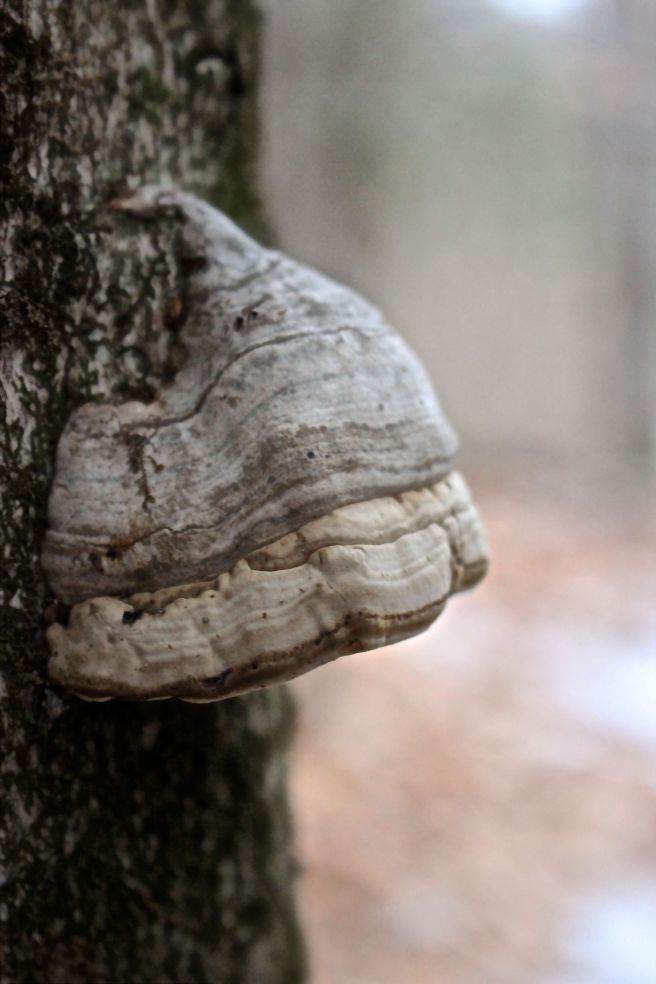
Tinder polypore is one of my favorites because it looks like a horse’s hoof. Another research project for you–why did the Ice Man carry a sample of this?

b-nurse log

There are numerous nurse logs, but this one struck me as especially beautiful. Mosses and liverworts grow abundantly along its upper surface and provide a place for all kinds of action to happen. Look for small saplings taking hold. Can you find the shelled remains of an acorn or the scales of a hemlock cone? Who do you think left those? Any small, twisted scat?
b-owl pellet

Or how about something that looks like this–lots of hair and bones matted together? This is an owl pellet and with the help of your adults, you can actually pull the bones out and reconstruct the skeleton(s) of the prey–be it vole or shrew or even red squirrel. Sometimes the pellets contain the skeletons of more than one critter.

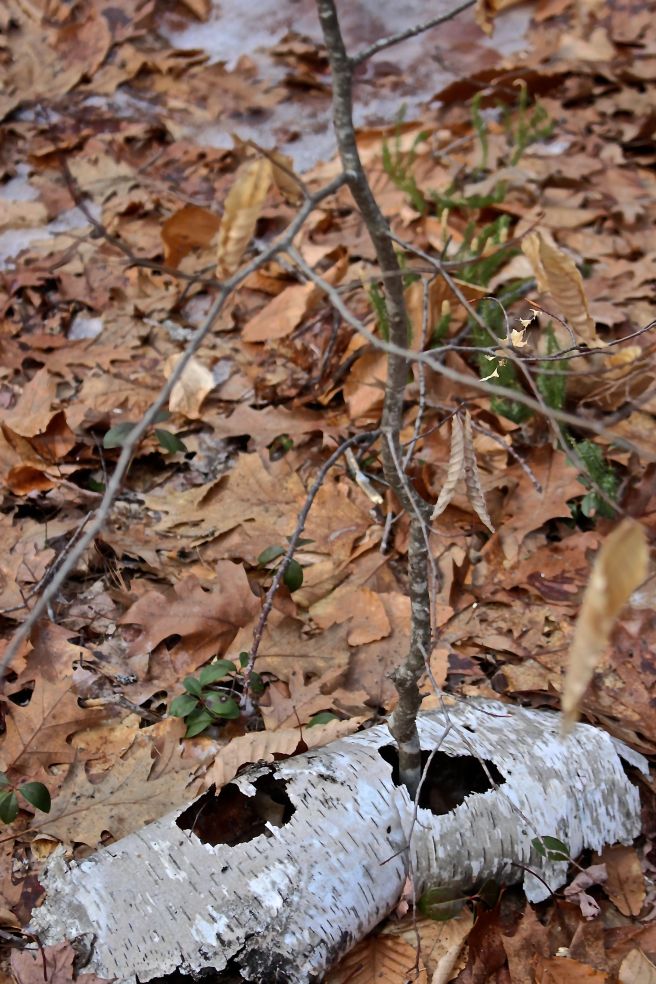
b-beech growing through paper birch bark

I would love to learn that you found this–a young beech tree growing through paper birch bark. Which came first? And why?

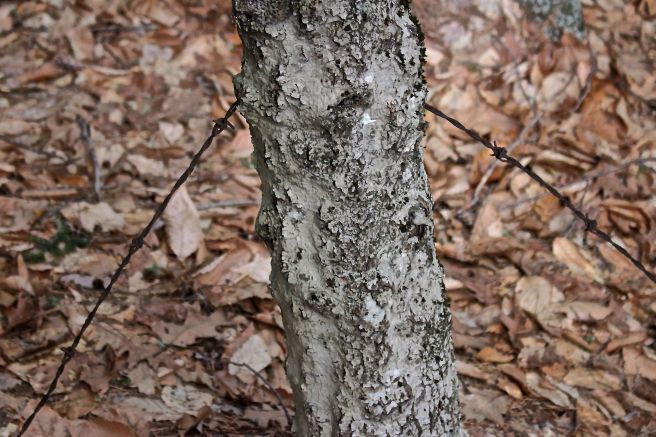
b-barbed3

Another sight for you, and one to certainly watch out for–barbed wire. We found it all along the back boundary, where it grows through the trees. This is rough country and there are no stone walls. The wire probably dates to the 1880s or later. Be careful.

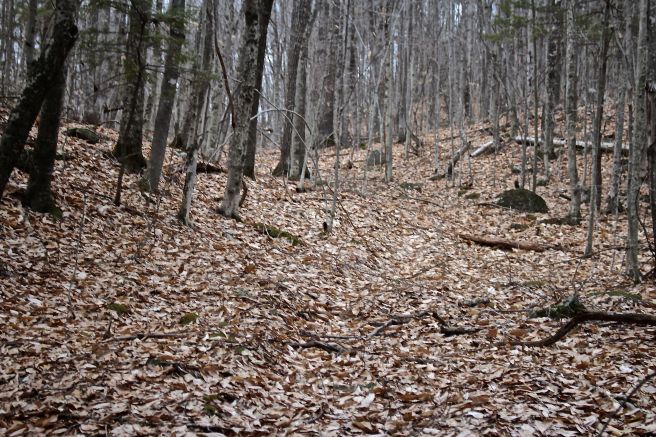
b-dip between eskers?

The land had us wondering about esker ridges as it dipped and rose. We’ll try to ask those who know more about local geology to help us gain a better understanding.

b-gps 2

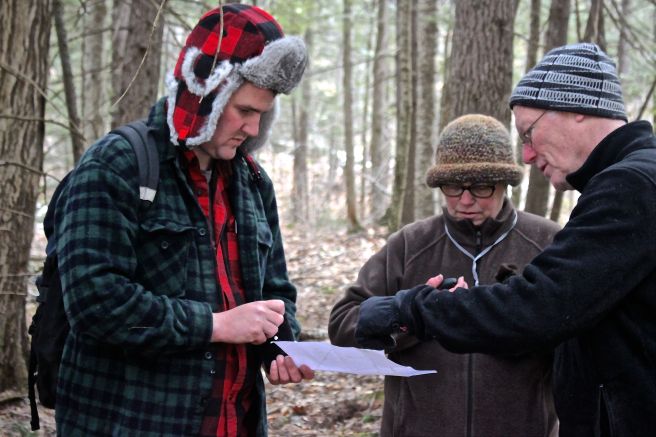
We realized we’d zigged where we should have zagged, but didn’t care because we share a passion for the exploration.

b-garden wall

As we headed down, we stumbled across another garden wall and

b-stone pile.jpg

small rock piles like this one. My first thought–a well. That was until we found several others. Maybe just rock piles.
b-shinleaf, pyrola eliptica

Our final find as we stepped through a wetland making our way from a neighbor’s property to the road–the winter look of shinleaf (Pyrola elliptic).

I’d promised everyone a two hour tour, but those who know me best know better. Three hours later we knocked on the door to thank Barb and Bruce for the opportunity–for sharing their land with us and giving us the opportunity to share our Mondate with others.


Great Maine Outdoor Weekend

Every weekend in Maine should be named the Great Maine Outdoor Weekend. Especially when the weather cooperates.

morning fog 1

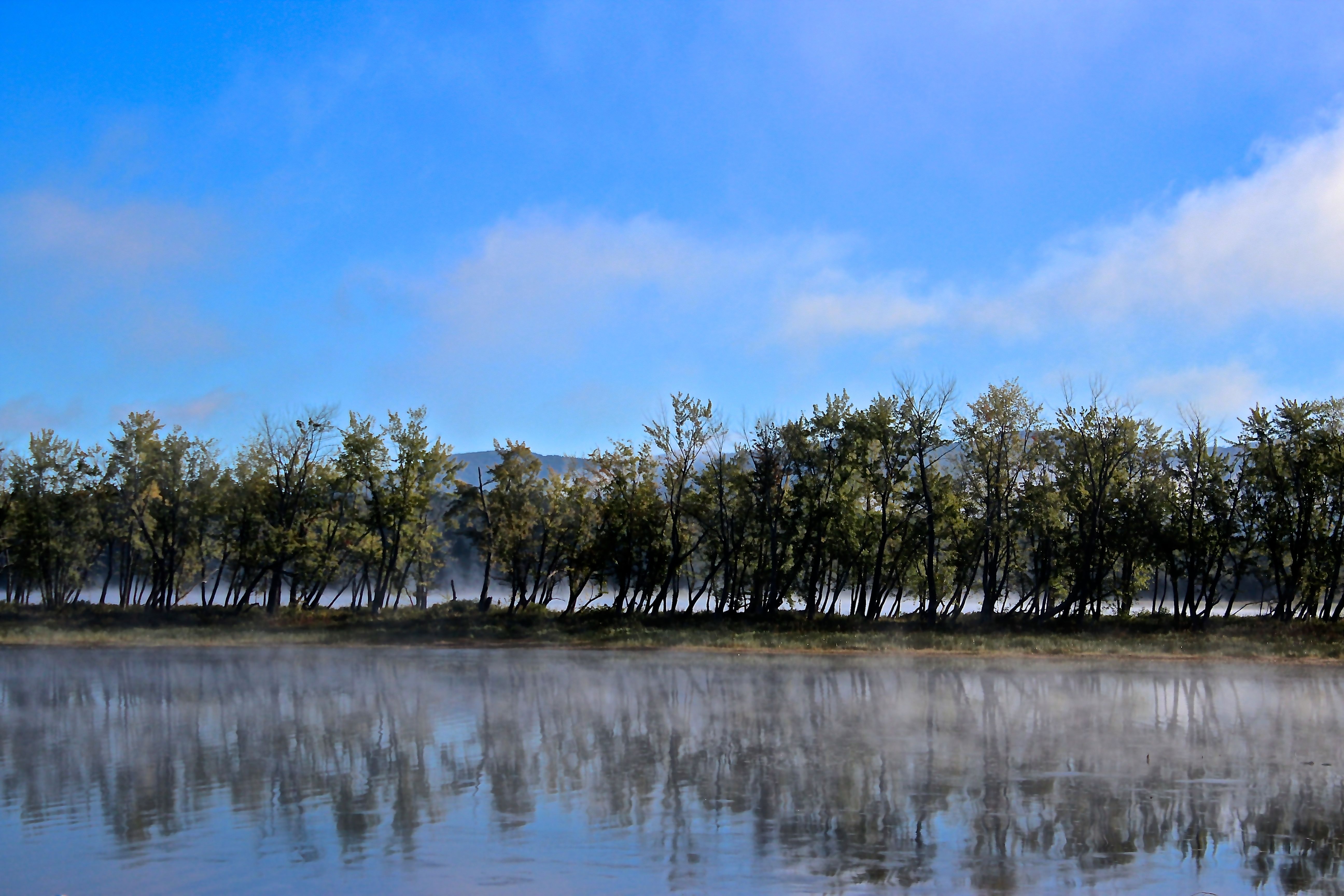
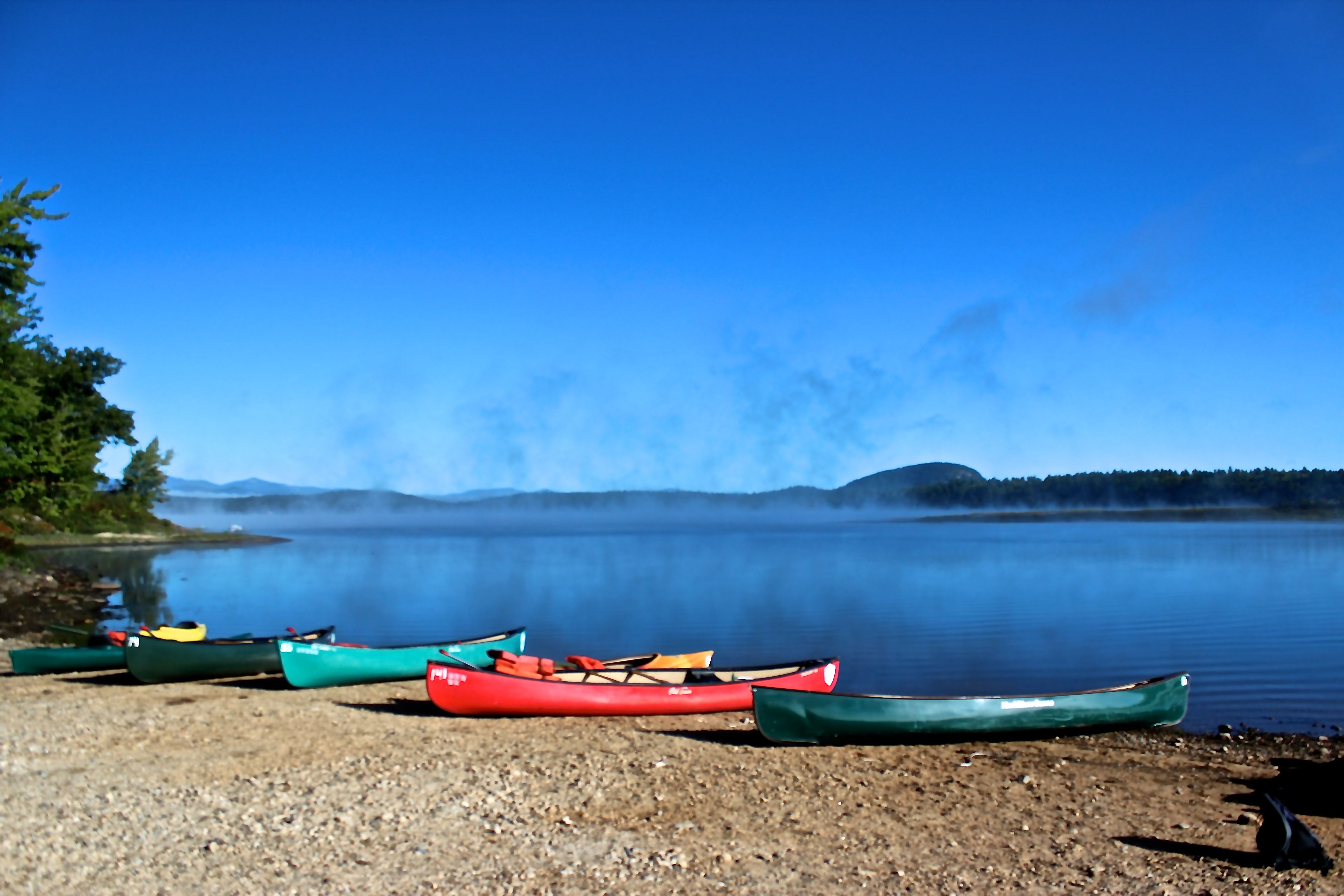
This morning’s fog didn’t daunt the crowd of 20+ that gathered for the Upper Saco Valley Land Trust’s paddle to celebrate being outdoors in Maine.

morning fog 2

When we arrived at the boat launch on Lovewell Pond in Fryeburg, we could barely see the trees that line the access route to the Saco River.

fog lifting2

Ever so slowly, the sun burned through.

fog lifting 2

It was a tad bit chilly–think 29˚.

from the beach

But the sun felt heavenly.

baby garter

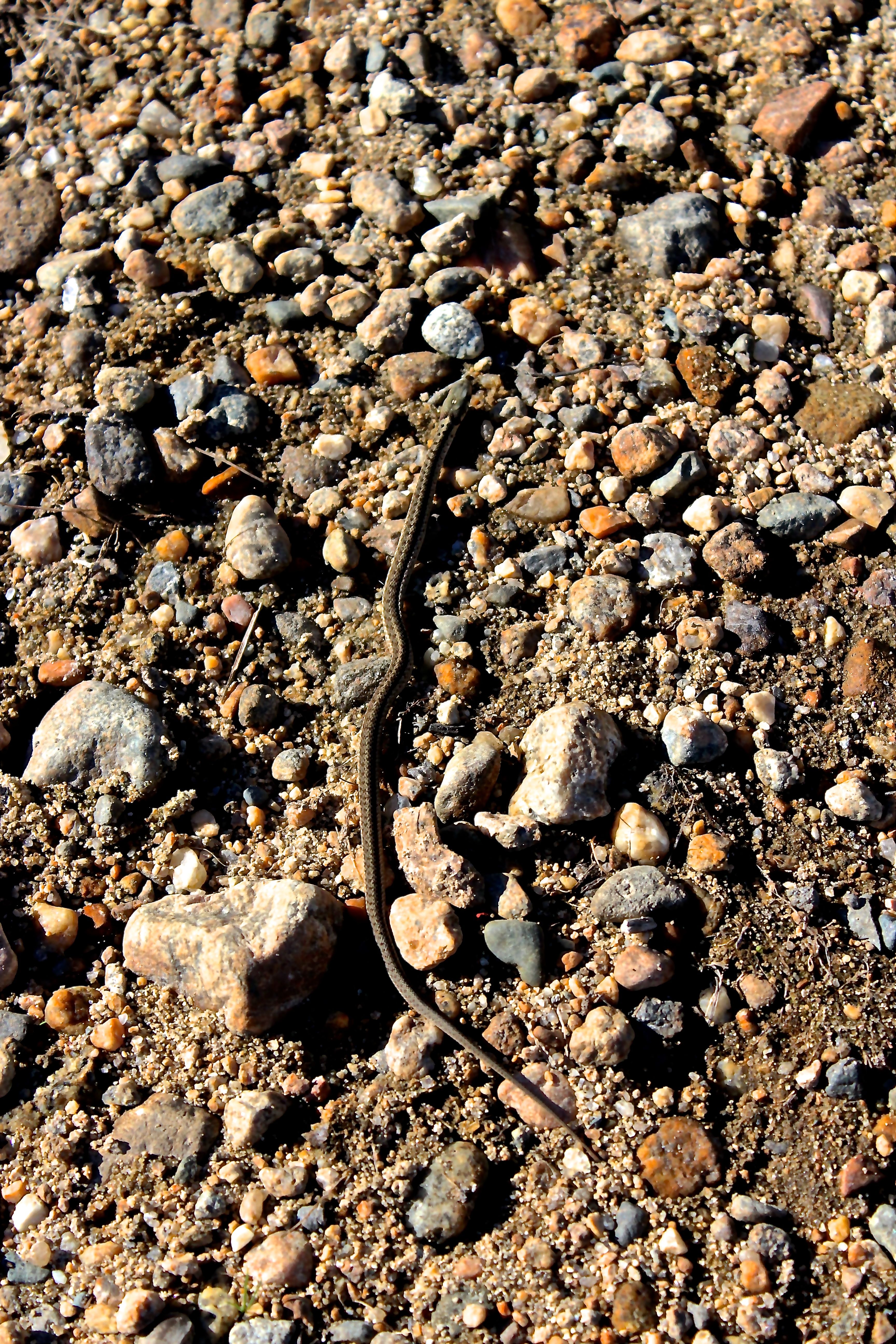
I think this guy felt the same. We were about to shove off when a member of the group found this baby garter snake in his canoe. I let it go on the shore and it quickly slithered away.

Lovewell Pond

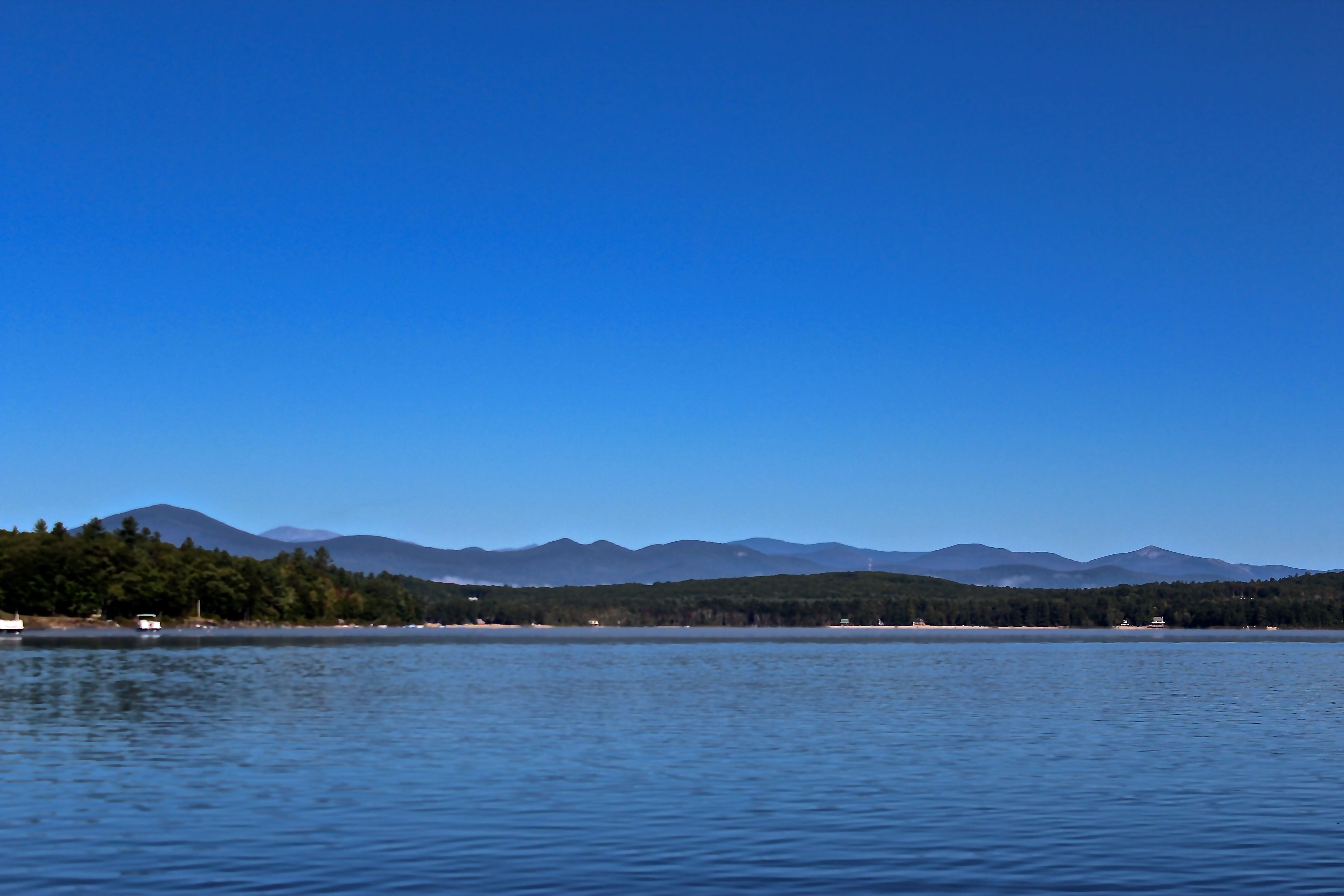
By the time we paddled onto the pond, the mountains were in full view, bookmarked by Kearsarge and Washington on the left and the Baldfaces on the right.

heading to the access channel

The water was shallow on the access route so twice we got out and walked. As you would expect, the water was warmer than the air, though the air temp continued to rise.

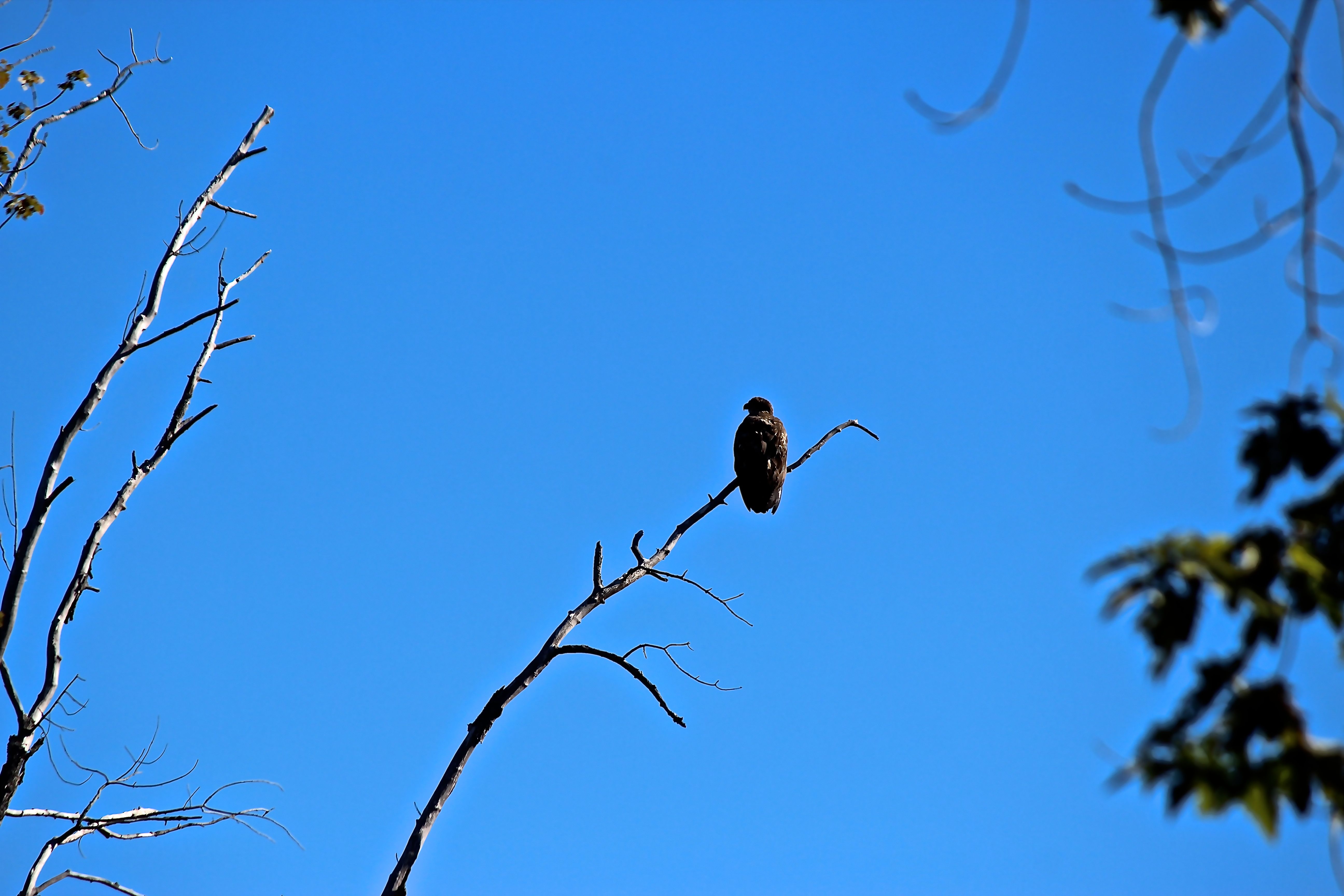
immature bald

A few fun finds along the way included four bald eagles. This was one of three immatures that we spotted. Our bird count included a great blue heron, cormorant, ravens, blue jays and cat birds.

network of roots

We were in the silver maple floodplain where these magnificent trees hang low over the river. Their network of roots are equally beautiful.

peeking into brownfield bog

For the better part of our trip, the river bisects Brownfield Bog (Major Gregory Sanborn Wildlife Management Area), so we decided to jump ship, climb up the muddy bank and take a peek. Even the poison ivy didn’t deter us.

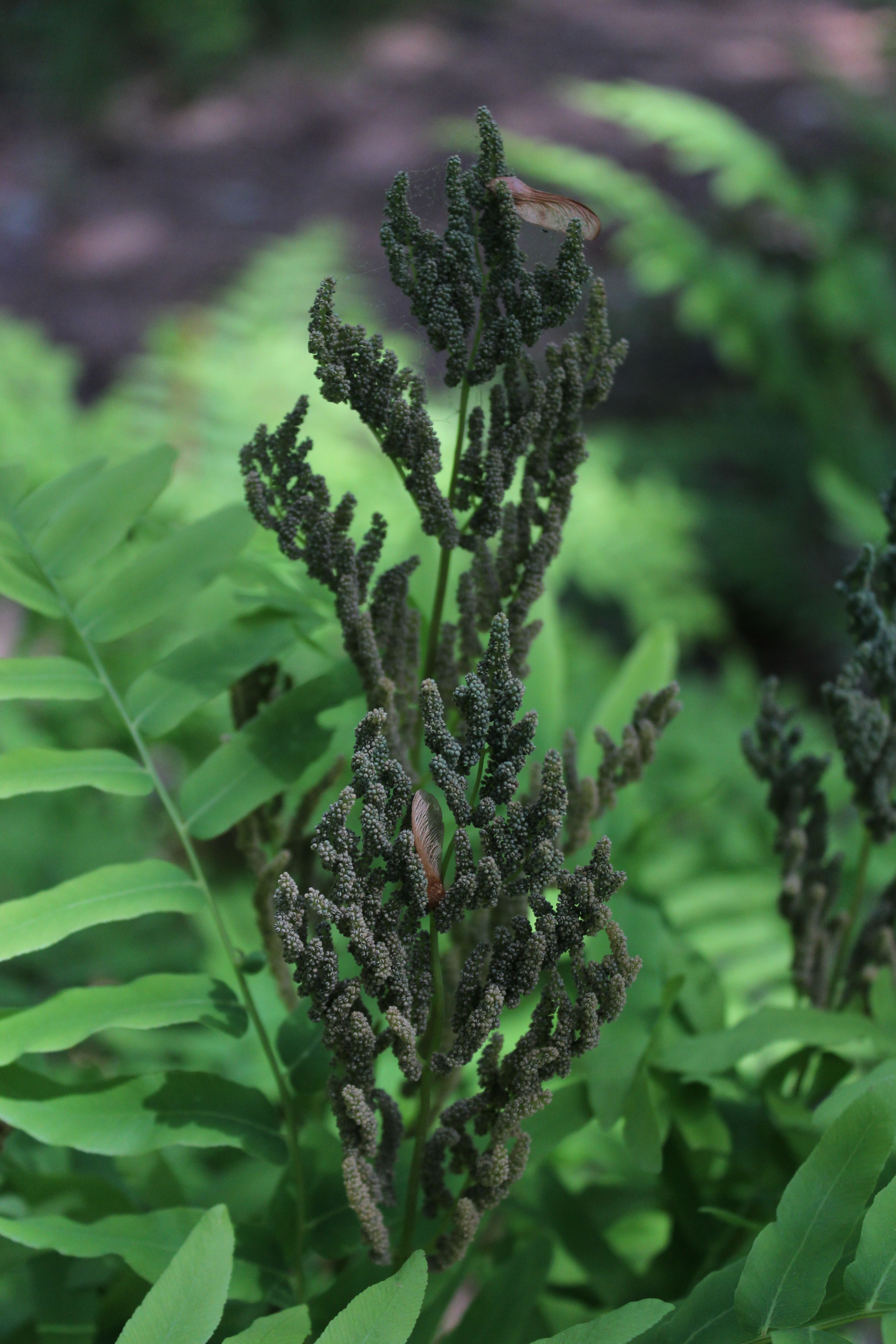
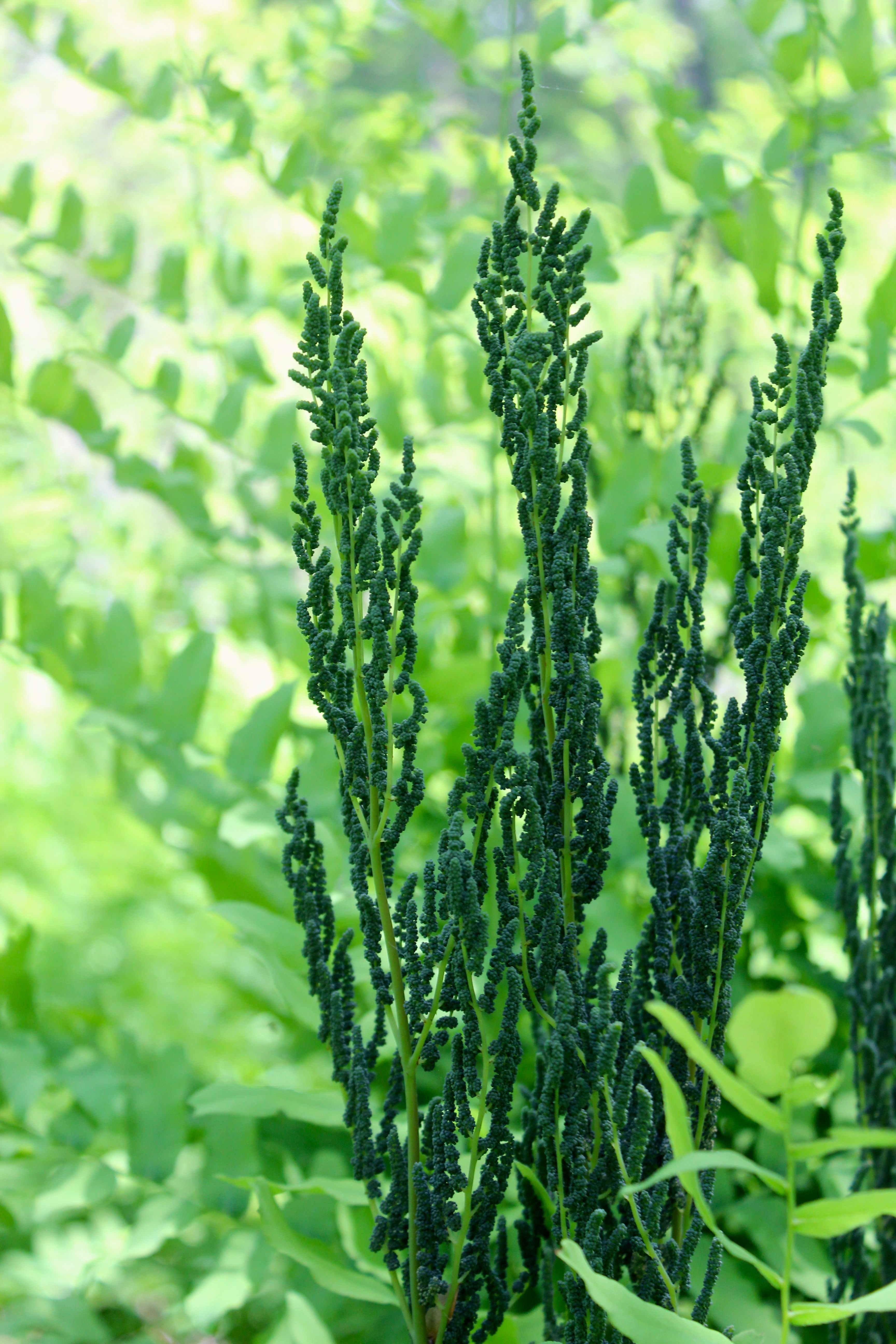
royal fern

A common herbal feature of a silver maple floodplain community is royal fern. At the point where we stood to admire the bog, the fern grew abundantly in front of us. Its spore stalks are now dried up.

royal fern 2royal fern 3

In early June, they would have stood tall, looking like the royal crown for which this fern was named.

touch of color

It is fall. The days are obviously getting shorter and we are just beginning to experience cool nights when the temperature is below 45˚. Any sugar made in the leaves during the day can no longer move to the trees. When the sugar becomes trapped in the leaves, the red pigment called anthocyanin forms and the green pigment (chlorophyll) disappears. The leaves are beginning to turn along the river, but this one was especially colorful.

Fall splendor on the Saco River. Another Great Maine Outdoor Weekend.

Giving thanks post 9/11

As I was wandering about today, memories of 9/11 passed through my mind. Sadly, it’s one of those days that will forever mark time.

I was at work when a friend called and told us to turn on the TV. We spent the rest of the day shaking, crying and watching in horror as the events unfolded. In the afternoon, I sat on the couch with our young sons and tried to explain what had happened. How were they to comprehend something I didn’t get?

And then, we headed to soccer practice. I remember feeling angry that practice hadn’t been cancelled, but in reality, it was probably the best thing for all of us. It gave us a sense of normalcy and a chance to gather in community.

I also remember the first time I heard an airplane fly when the skyway was finally reopened. I had just opened the door to step outside and actually ducked under the awning at the sound of the plane, not aware in that moment of what I was doing.

My world view changed that day. But, thankfully, I live in a place where I can step outside and walk freely.

female Ichneumon Wasp

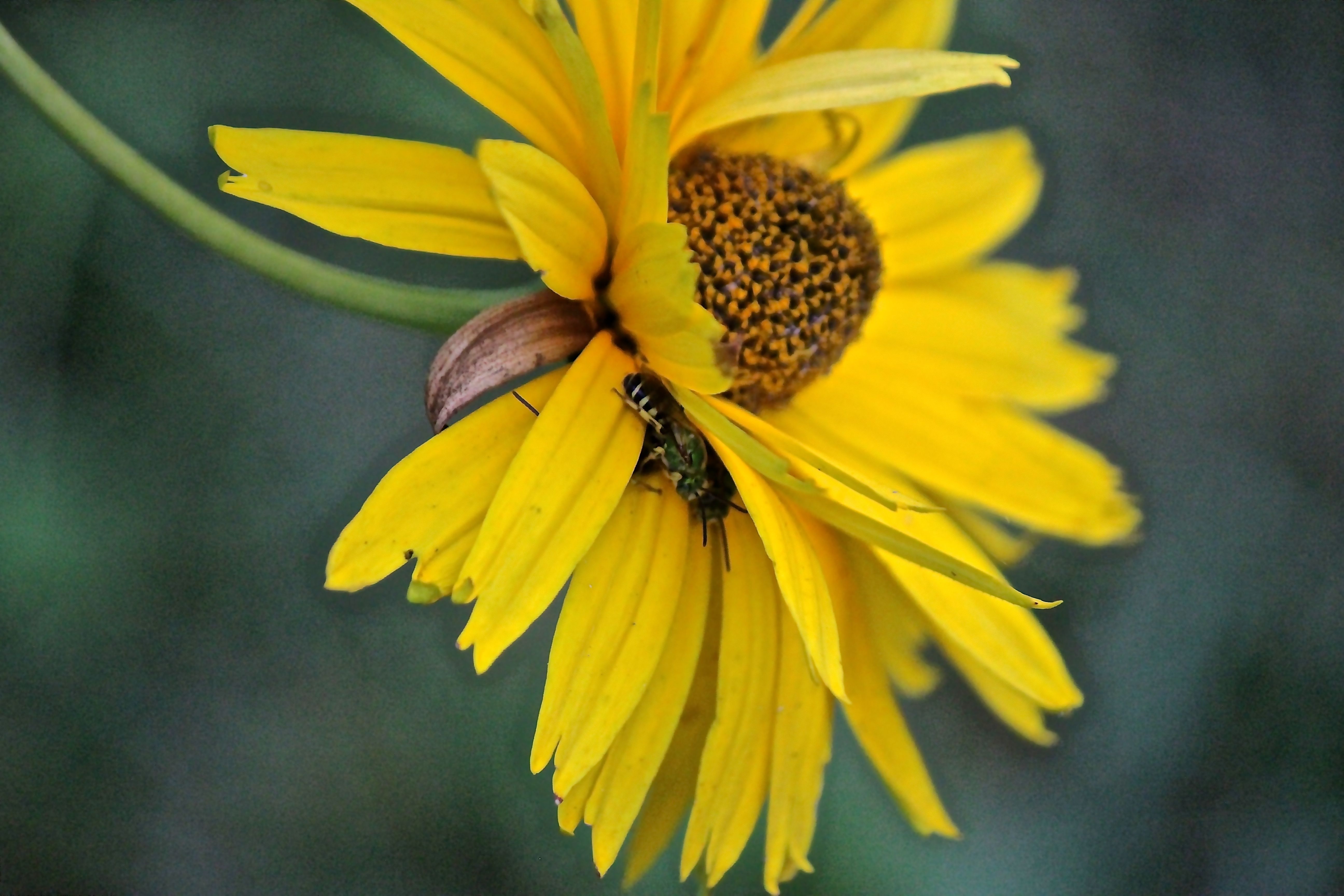
 I pay attention to what is underfoot, like this female ichneumon wasp,

green cicada

green cicada,

green frog

green frog and

toad

American toad.

chippy

I notice those who try to hide, like this chipmunk,

grasshopper in fern

grasshopper,

yellowjackets 2

and sleeping yellowjackets.

lady beetle

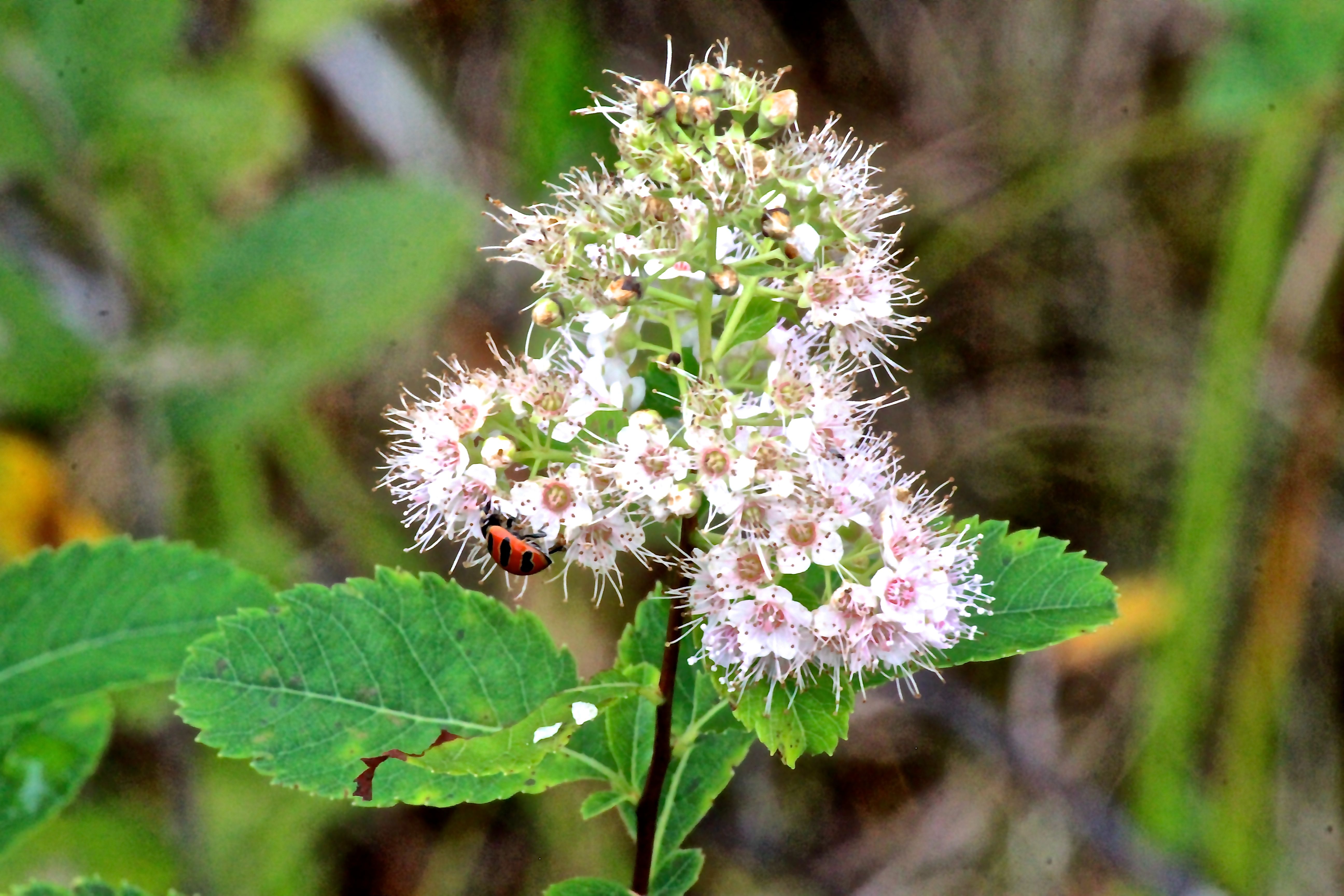
I observe the eating habits of a lady beetle,

sawfly caterpillars on quaking aspen

sawfly caterpillars,

horned caterpillar

 and a horned caterpillar.

bluejay, fall webworm

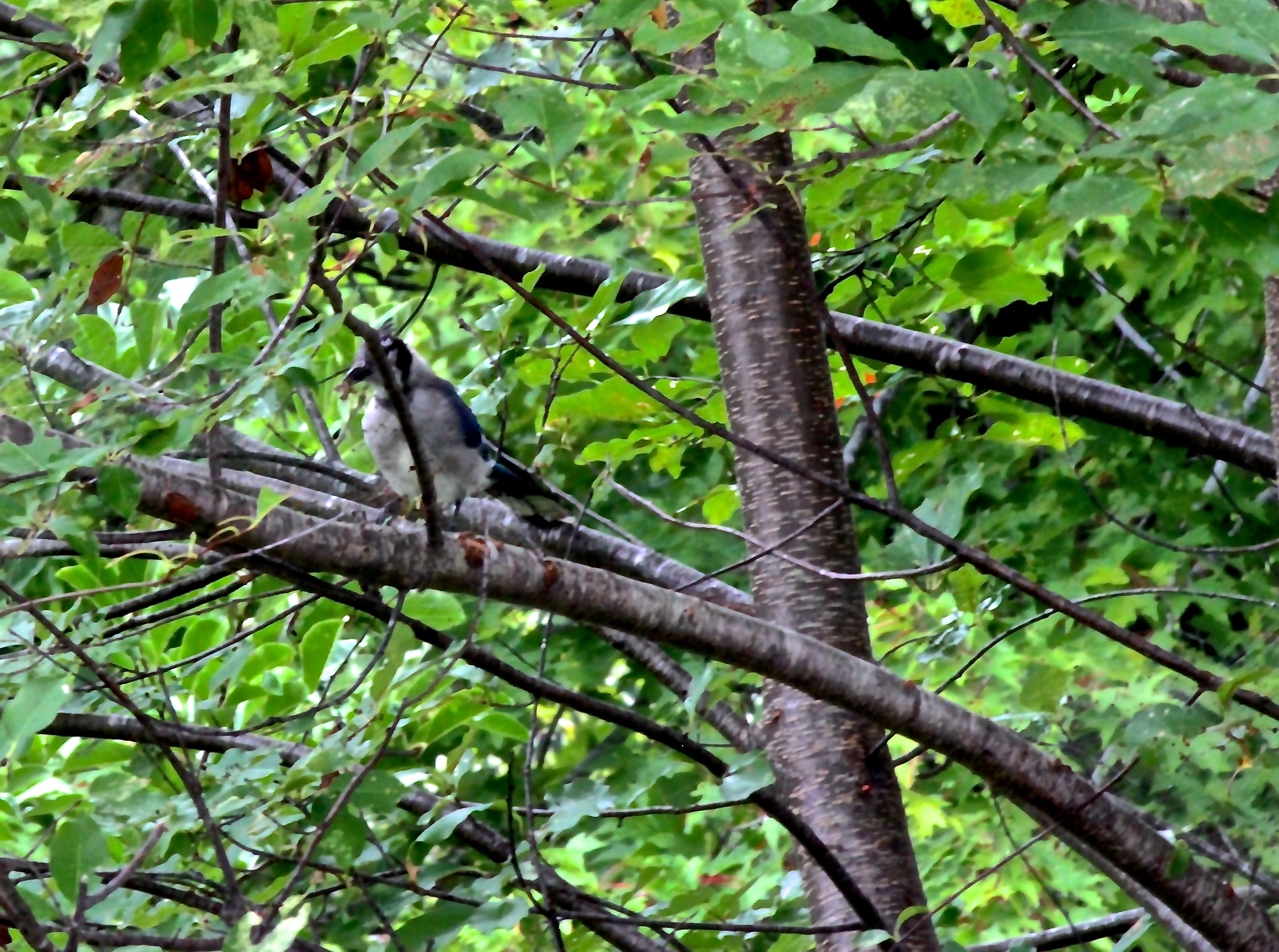
I watch a blue jay in the cherry tree and

bluejay and cat.

notice how he thrashes the fall webworm caterpillars against the bark before eating them. I assume he’s trying to get the hair off their bodies.

r e nest caught eye

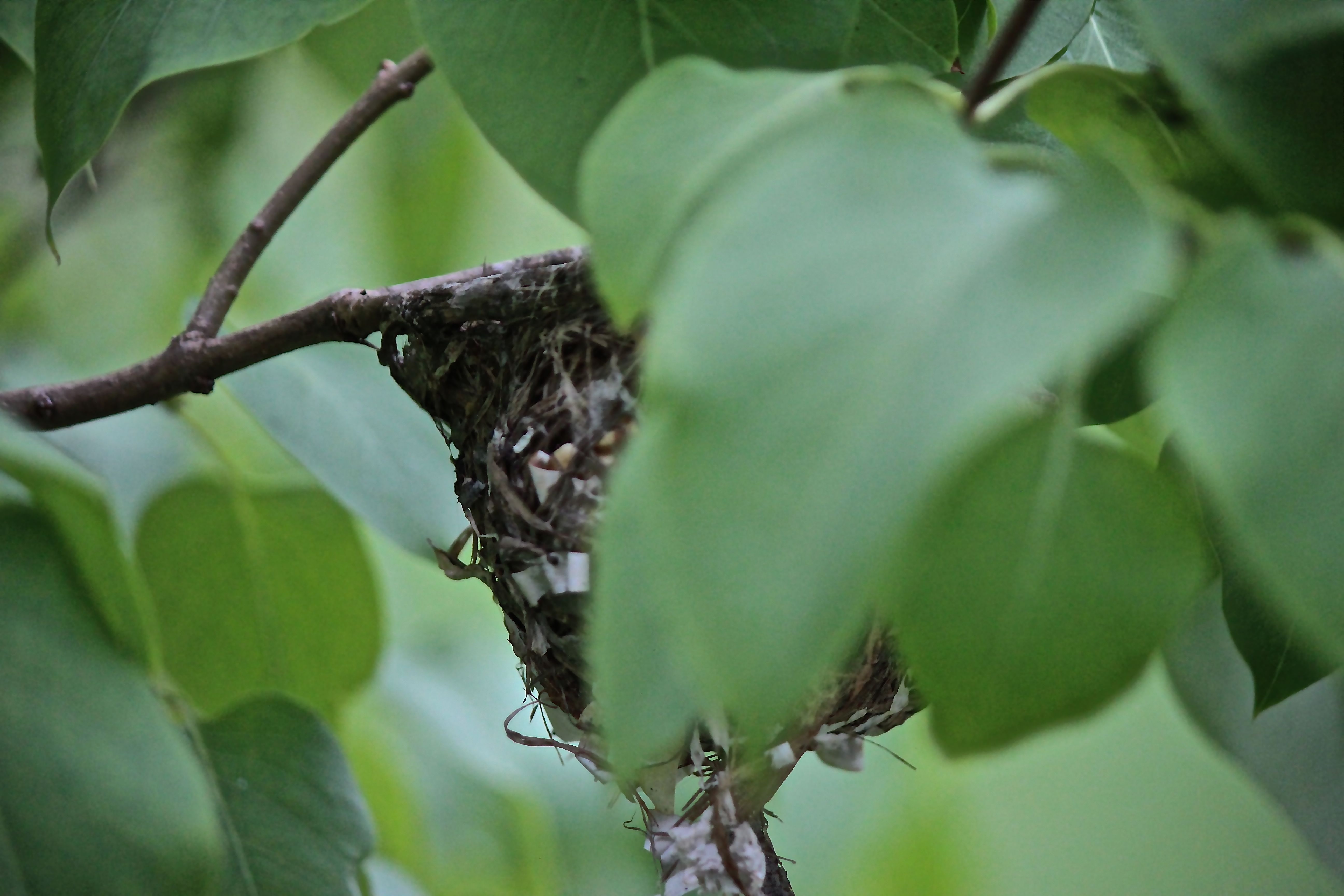
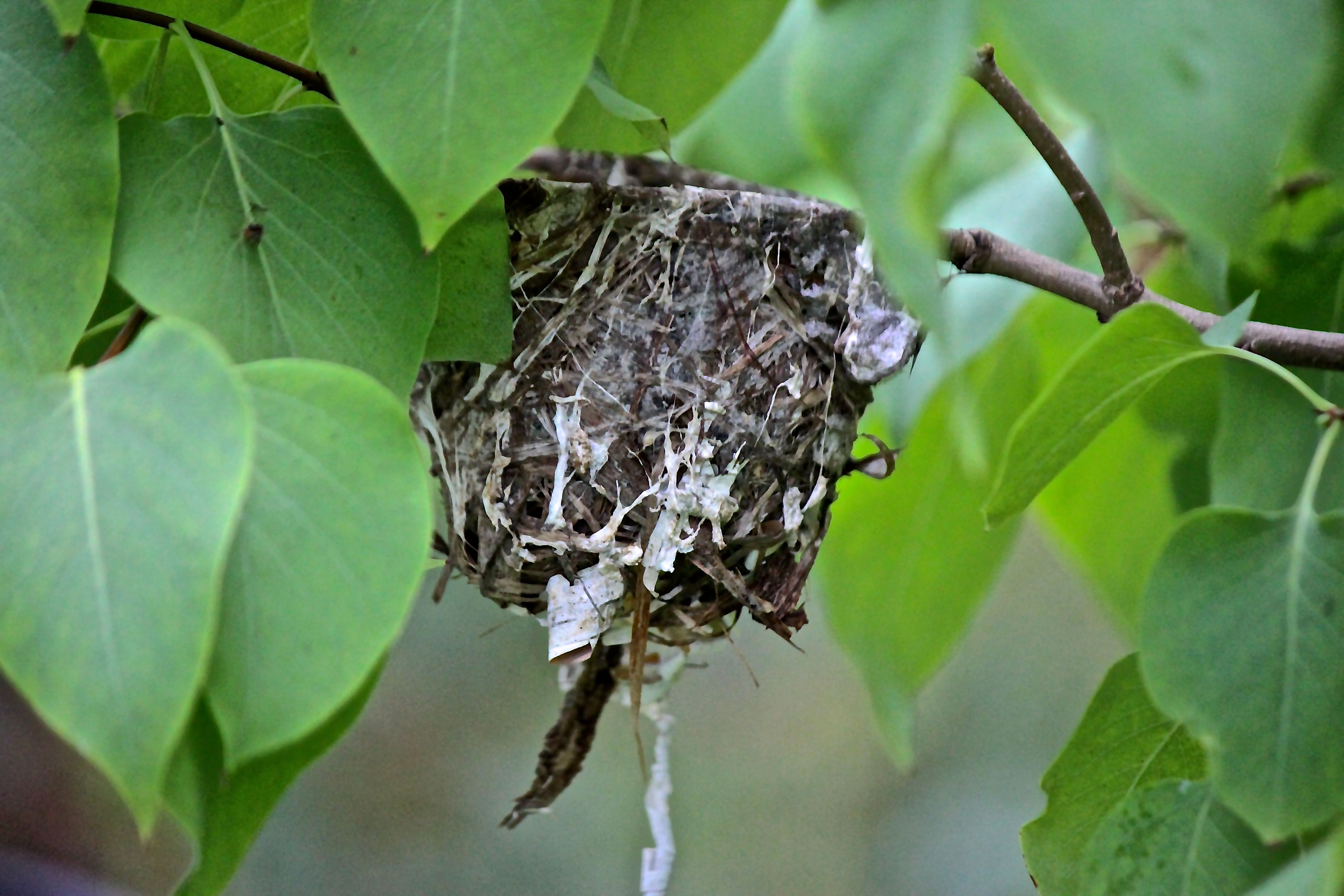
I make new discoveries, like this cupped nest in the lilac bush right off the deck.

nest 3

I think it was created by a red-eyed vireo, but I could be wrong.

sawfly caterpillars ?

 I will forever question what I see and how it works, but I’m thankful that I am able to do that.

To think for myself. To wander and wonder.

Thank you to all who lost their lives that fateful day, to their families and to all who worked so hard in the days that followed and those who continue to protect us all.