Book of August: Braiding Sweetgrass

Braiding

Book of August

Dr. Robin Wall Kimmerer is a botanist by training. She’s a member of the Citizen Potawatomi Nation by birth. And she’s a gifted writer.

In her latest book, Braiding Sweetgrass, she once again interweaves her scientific knowledge with indigenous wisdom.

By design, Kimmerer has divided the book into sections, like one might divide a braid of hair, or in her case, sweetgrass, into different strands. Within a section, each chapter could be a stand-alone essay, but it is more than that. It’s part of the layering experience; the wisdom the reader gains from each intertwines with the teachings of the next.

As a storyteller at heart, Kimmerer wants us to listen—to understand the science; to respect the traditional ways; to pull the strands taut so they will remain strong. I smell the wild strawberries growing in the fields. I struggle with her to construct a basket from black ash. I kneel beside her graduate student, Laurie, as she labels and harvests sweetgrass, and ultimately produces a thesis based on scientific knowledge that honors what the basket makers knew from experience. I’m at first disappointed with her as she learns why her father poured the first sip of coffee on the ground in his daily thanksgiving offering. I’m frustrated with the work she does to clean a pond on her land. And through her, I gain a better understanding of and appreciation for the Ancients who were deeply connected to this land we call our own.

Through plant wisdom learned from her Native American heritage, scientific experiments and personal experience, she pulls us in—body, mind and spirit. Through her narrative voice, she plants the seed in hopes we will renew our relationship with nature and begin to develop a reciprocity with the land that sustains us. She reminds us that gifts are meant to be shared again and again.

braiding 2

With each new chapter, I’m sure I’ve found my favorite. Sometimes I underline words or sentences in a book, or jot notes in the margin. But with this one, I find myself turning up the bottom corner of pages so I remember to go back and reread them—I don’t want my eyes to focus on only one thing, but rather to take it all in. If I discover something on the next page, I fold the corner back again.

Such is the case in “The Three Sisters,” where she describes the story of the small packet she received years ago from Awiakta, a Cherokee writer. Awiakta warned Kimmerer to not open the pouch until spring. “In May, I untie the packet and there is the gift: three seeds. One is a golden triangle, a kernel of corn with a broadly dimpled top that narrows to a hard white tip. The glossy bean is speckled brown, curved and sleek, its inner belly marked with a white eye—the hilum. It slides like a polished stone between my thumb and forefinger, but this is no stone. And there is a pumpkin seed like an oval china dish, its edge crimped shut like a piecrust bulging with filling. I hold in my hand the genius of indigenous agriculture, the Three Sisters. Together these plants—corn, beans and squash—feed the people, feed the land, and feed our imaginations, telling us how we might live.”

From a botanist’s point of view, Kimmerer describes how the plants grow together, supporting each other on several levels. And then she tugs on our hearts again. “It’s tempting to imagine that these three are deliberate in working together, and perhaps they are. But the beauty of this partnership is that each plant does what it does in order to increase its own growth. But as it happens, when the individuals flourish, so does the whole. The way of the Three Sisters reminds me of one of the basic teachings of our people. The most important thing each of us can know is our unique gift and how to use it in the world. Individuality is cherished and nurtured, because, in order for the whole to flourish, each of us has to be strong in who we are and carry our gifts with conviction, so they can be shared with others. Being among the sisters provides a visible manifestation of what a community can become when its members understand and share their gifts. In reciprocity, we fill our spirits, as well as our bellies.”

I am thankful for the gift of Kimmerer’s writing and teaching.

I’m thankful for each little nugget of information, observation and tradition that is woven together like a braid of sweetgrass.

I’m thankful for the opportunities I have to pay attention—the realization that place matters.

Braiding Sweetgrass by Robin Wall Kimmerer, published 2013, Milkweed Editions

A Little of This and a Little of That

As I sit here listening to the undelightful sound of an artesian well being drilled on a neighboring property, I have to wonder how deep they must go. After all, we’re beside a lake.

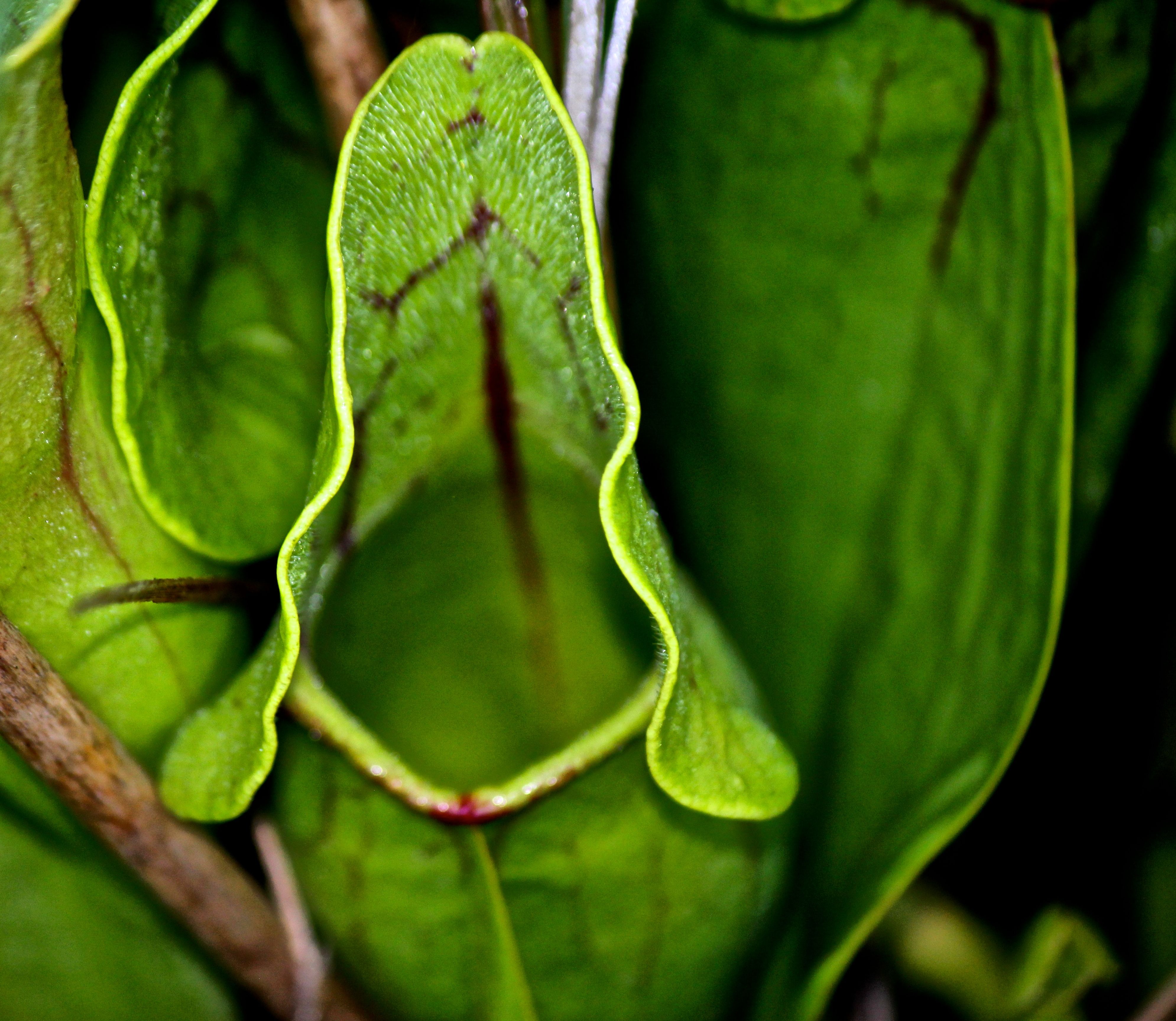
To distract myself, I wandered about our lot, wondering what I might see. I’d also wandered at Holt Pond early this morning, sharing the pitcher plants and some other great finds with K. So . . . here’s a little of this and a little of that.

Muddy River

Morning has broken . . . on the Muddy River.

HP boardwalk

And the quaking bog at Holt Pond.

pp2

Home of the pitcher plants and the reason for our visit.

Horned Bladderwort

A new find for me: Horned bladderwort. It’s growing at the edge of the pond. The stalk is erect and there are no apparent leaves–because . . .  “tiny leaves grow beneath the soil” according to Newcomb’s Wildflower Guide.

Indian pipe

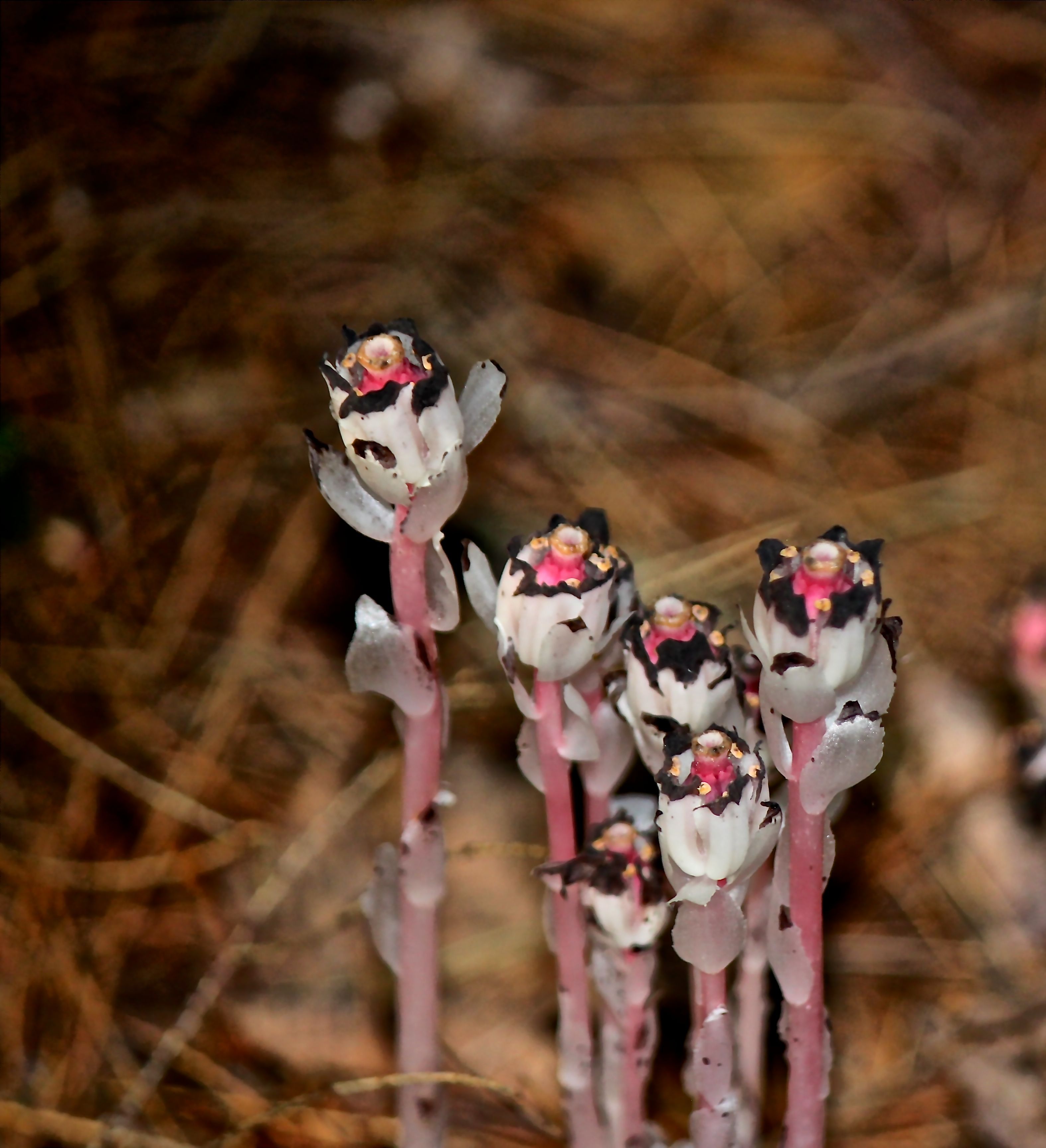
Check out this Indian Pipe. Usually we see the ghostly white version, but Newcomb states that occasionally the plants are pink. This is one of those occasions. And these flowers have been fertilized–therefore, they are standing upright, rather than nodding.

Staghorn sumac

On my way home, I stopped by the side of the road to admire the staghorn sumac. The cluster of upright flowers reminded me a wee bit of the sundews we’d been admiring at Holt Pond. Color and hairiness–similar but entirely different.

rose

Back at camp and by the water’s edge, a single swamp rose bush.

serviceberry

The berries of a shadbush dangle like ornaments.

exoskeleton

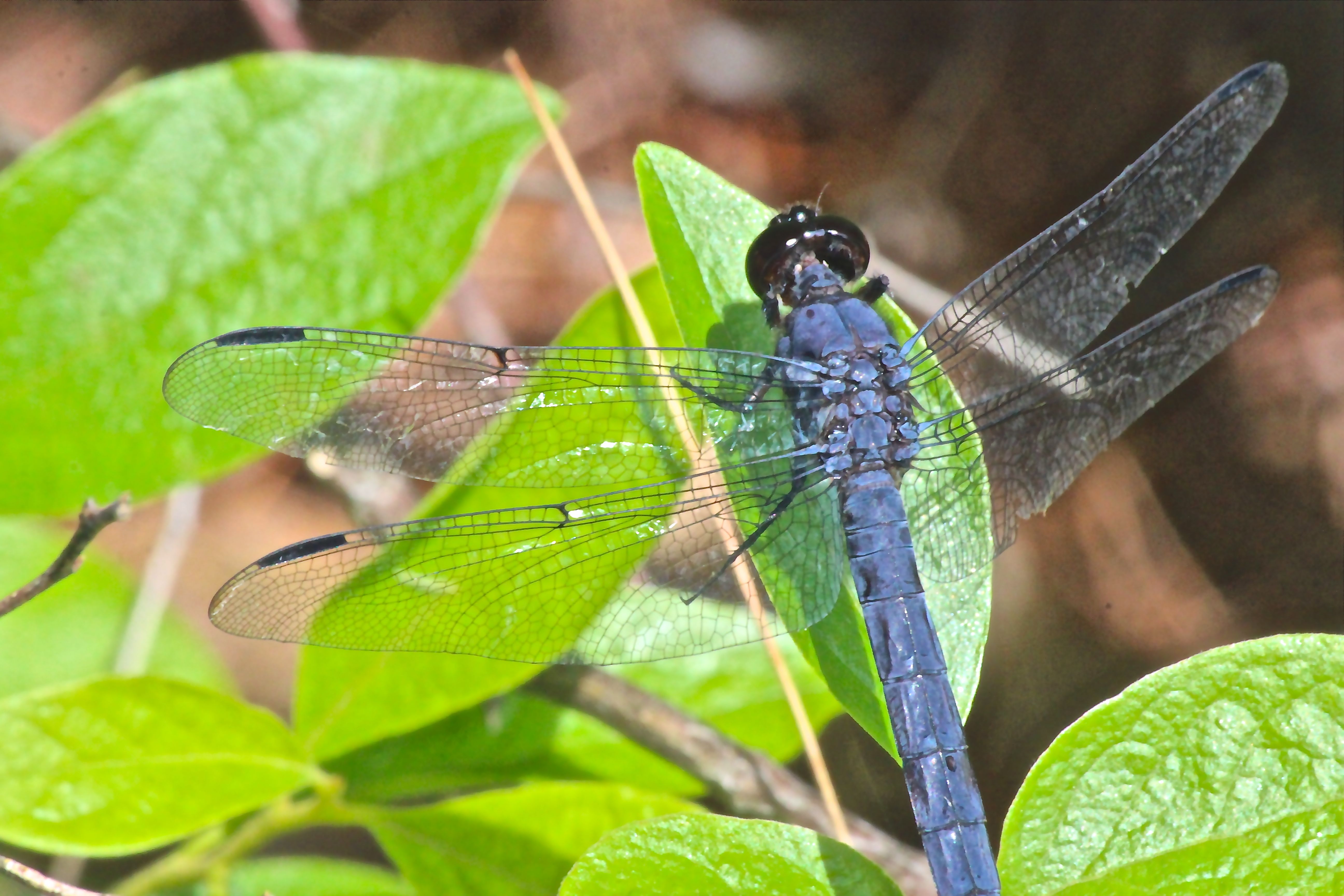
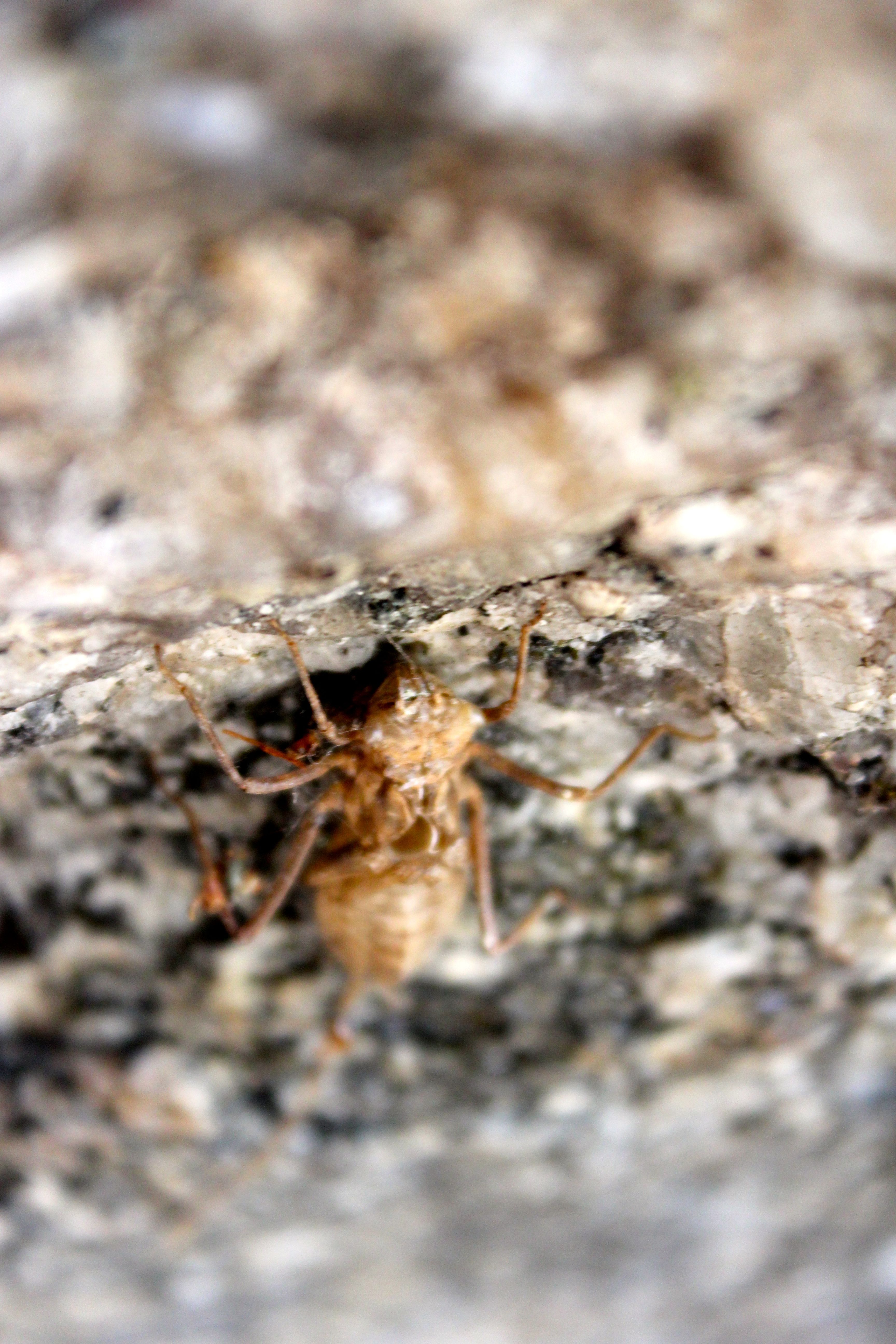
Under a porch floorboard, the exoskeleton of a dragonfly.

blue dasher dragonfly

Perhaps it previously protected this one–a blue dasher.

thistle

And finally, a field thistle on our neighbor’s side of the driveway. Such a suit of armor.

There’s more, but that was enough this and that for the day. And besides, the well folks are finally departing. Let there be silence.

Book of July: A Snowshoeing Winter Walk–Where Am I?

cover

Book of July

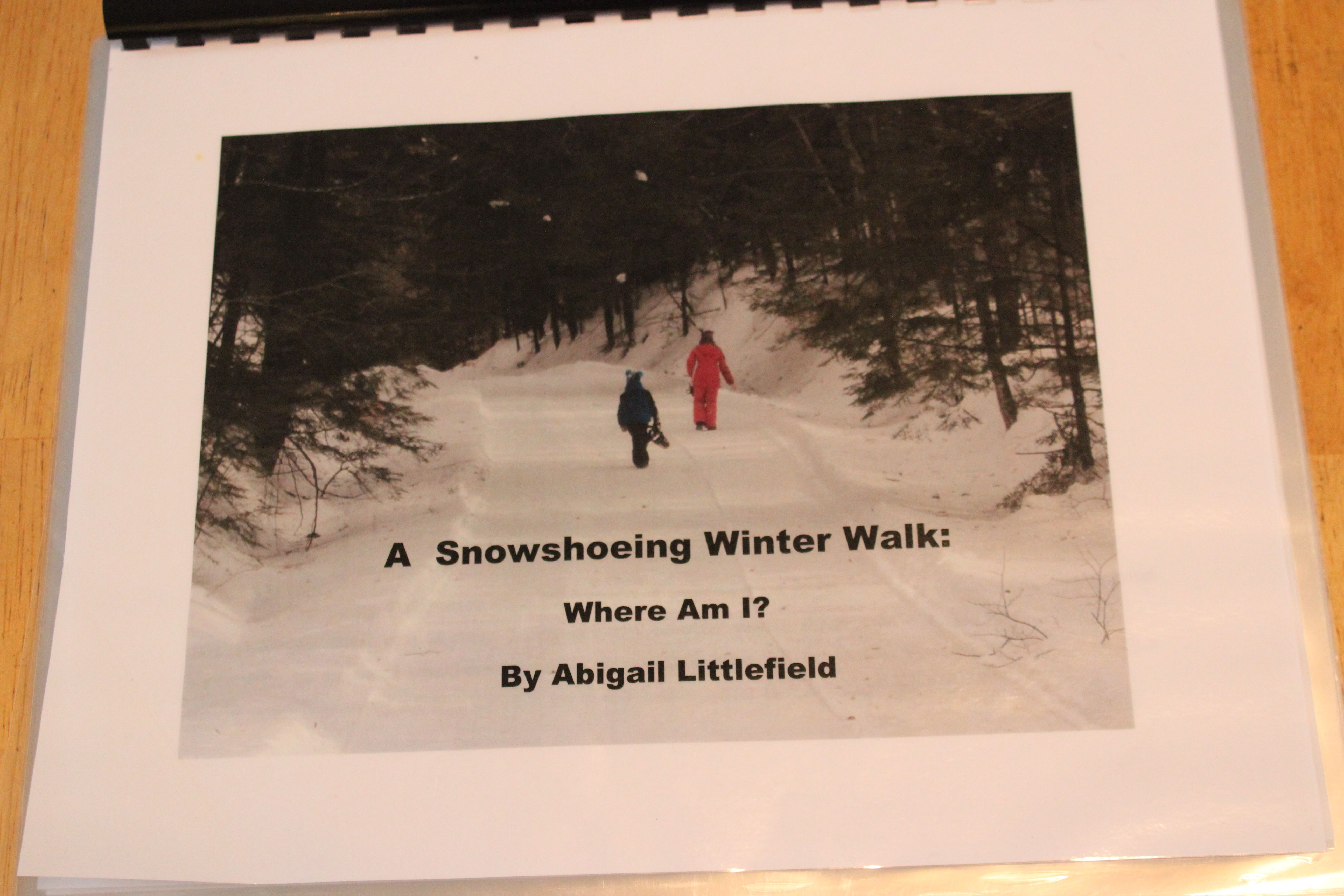
Summer may be in full swing, but I just received a copy of a special book created by a young friend and I wanted to feature it this month. The photos will cool you down on a steamy day.

This past February, Abby Littlefield, her younger brother and their mom, invited me to snowshoe with them at Holt Pond Preserve in South Bridgton. Abby was in fourth grade and needed to complete a project based on an ecosystem. She chose wetlands and wanted to learn more about the flora and fauna of the preserve.

I was thrilled to receive a copy of the book Abby made about our journey and delighted to discover how much she remembered from our trek. She and her family were real troopers that day–the temp was quite low, snowshoeing was a new experience for them and we spent about three hours on the trails. She reminded me of myself as she jotted down notes and we examined everything closely.

I did notice that her story doesn’t include the pileated woodpecker scat–not her favorite find. (Her brother thought it was rather special. :-))

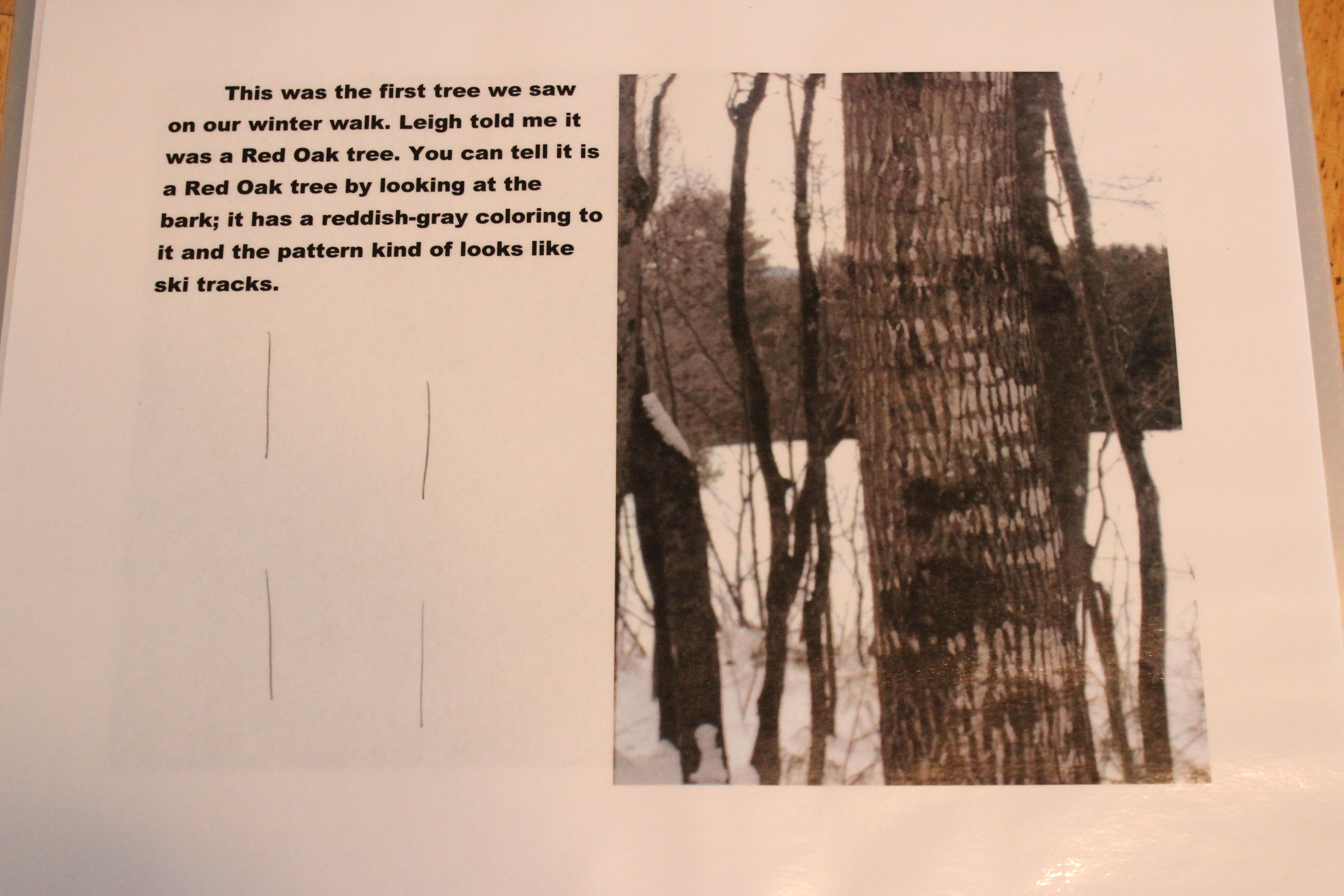
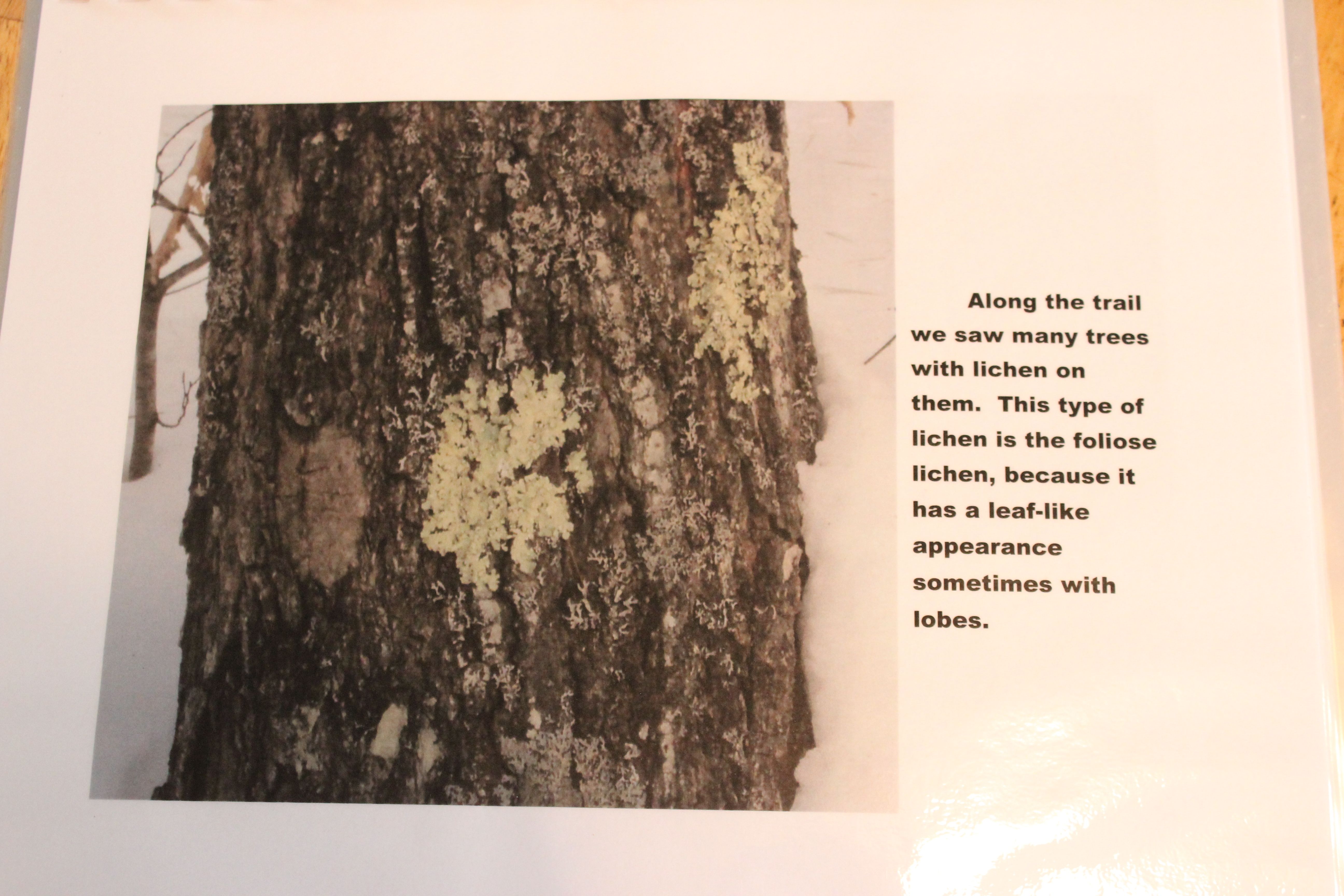
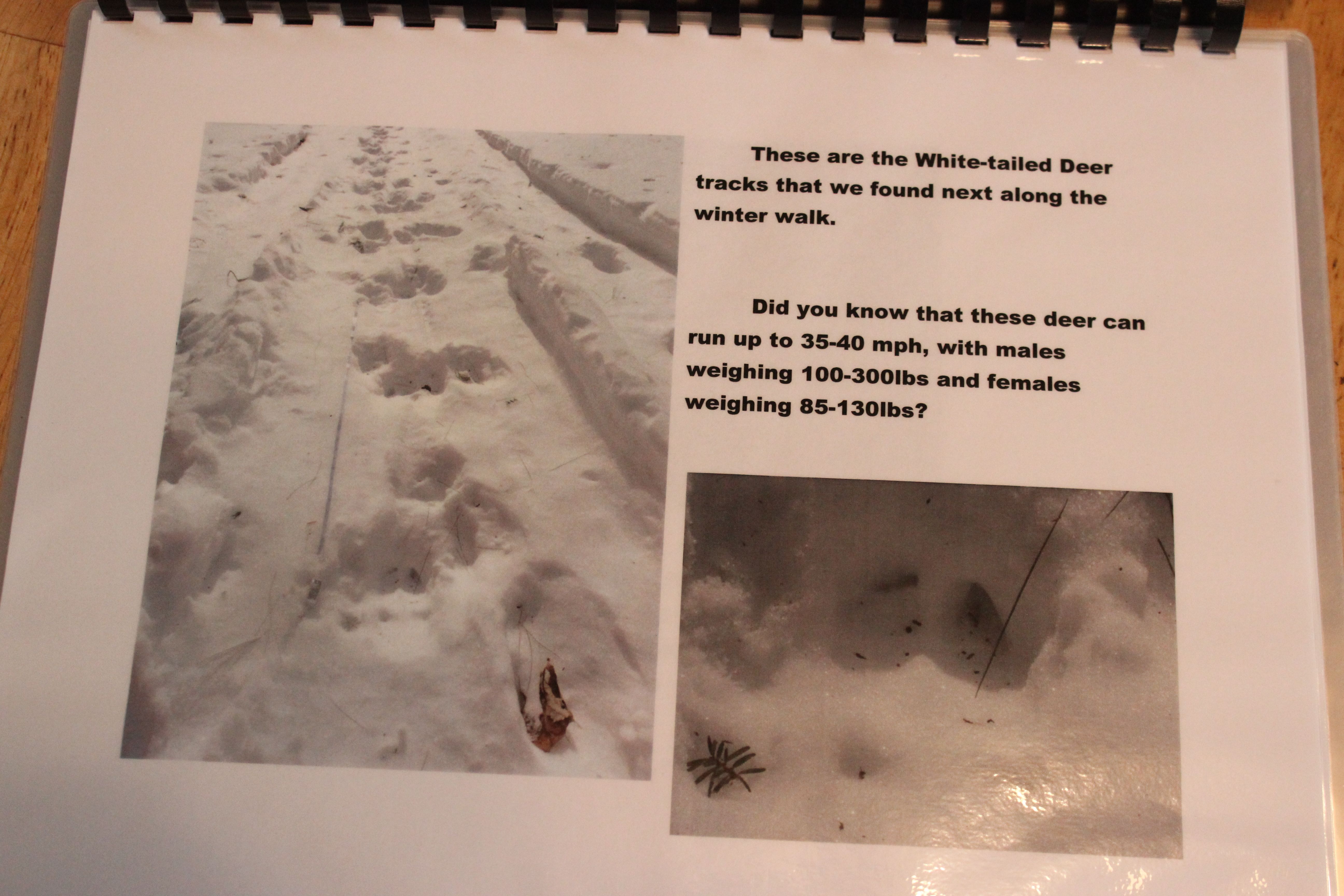
Here are some pages from Abby’s book:

red oak

lichen

paper birch

deer tracks

where are you?

fun facts

bibliography

Mighty impressive for a fourth grader. Congratulations, Abby, on a job well done. And thank you for letting me wander along with you and your family. It was a pleasure and I look forward to future expeditions.

Sweet Treat Mondate

My guy and I have been overdue for our favorite kind of Mondate, so today we rose to the task. Our intention had been to depart at 7:30, but it was closer to 8am before we were out the door.

notch

Following Route 302 through Crawford Notch, the clouds were rather ominous.

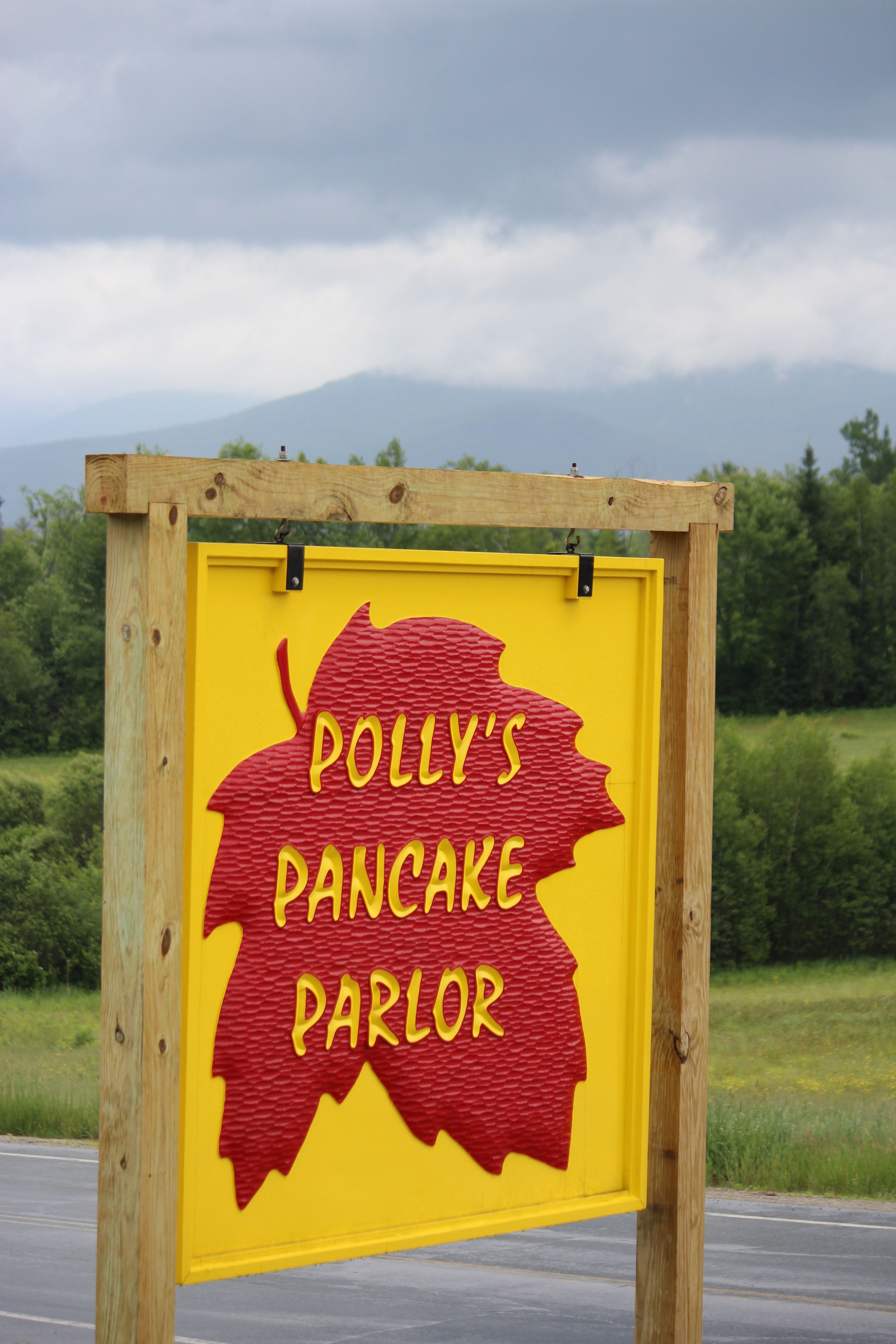
Polly's

But that didn’t matter because our first stop was Polly’s Pancake Parlor in Sugar Hill, New Hampshire, where we each enjoyed the sampler combo–six three-inch pancakes and we split our servings of sausage and bacon. I tried buckwheat with walnuts, oatmeal buttermilk with chocolate chips and plain with blueberries. The latter were my favorite. Topped with butter and their own maple syrup, of course. By pancake number 4, I had to force myself to continue . . . and I did.

trot trot

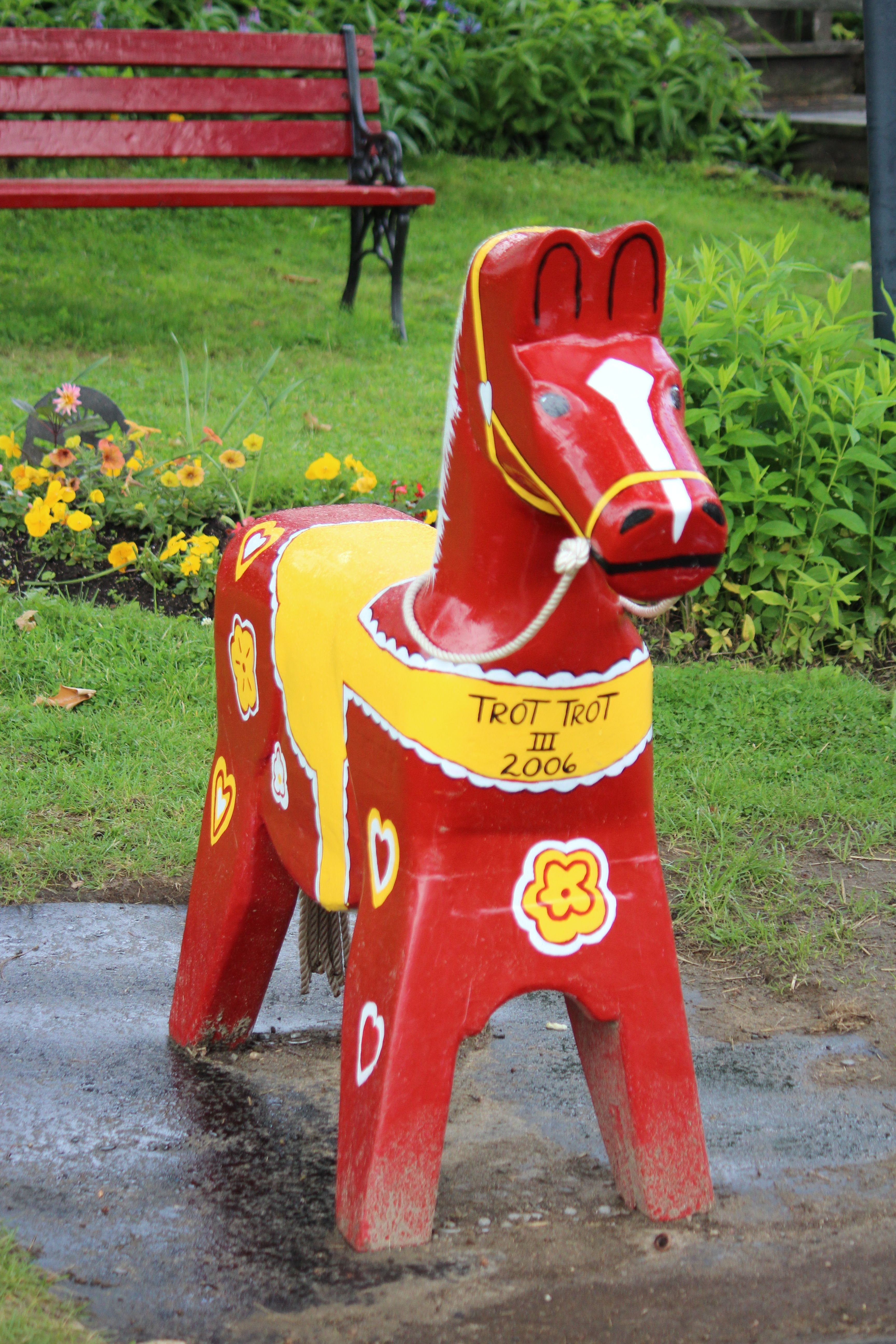
When at Polly’s, one must say hello to Trot Trot, or in this case, Trot Trot III.

lupine 1

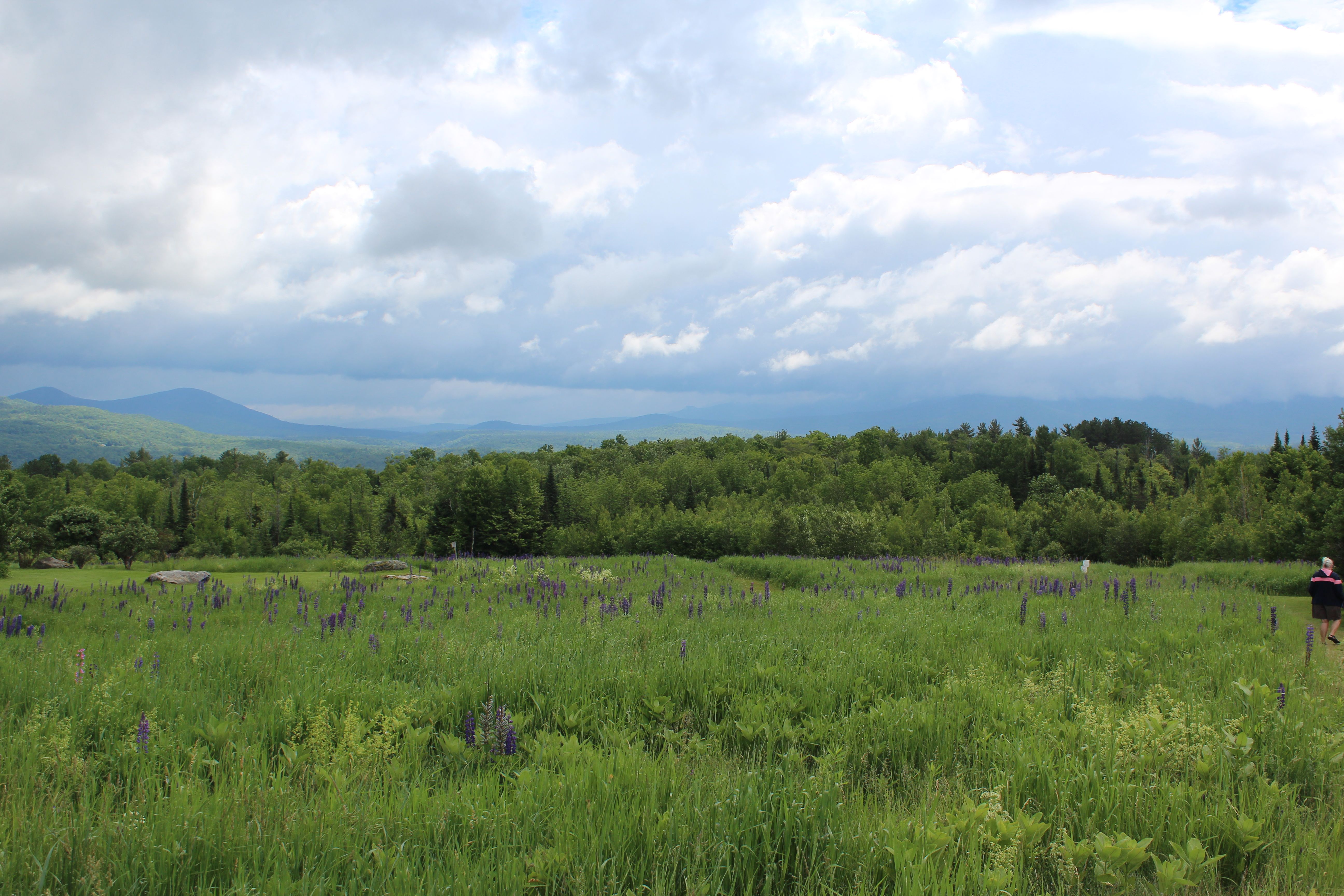
Because our timing was near perfect, the lupines were in bloom. You may want to skip down a few photos–I got carried away as usual.

lupine 2

lupine field

lupines forever

lupine purplelupine white

lupine looking down

oh  beautiful

emerson quote

Yes, indeed!

church

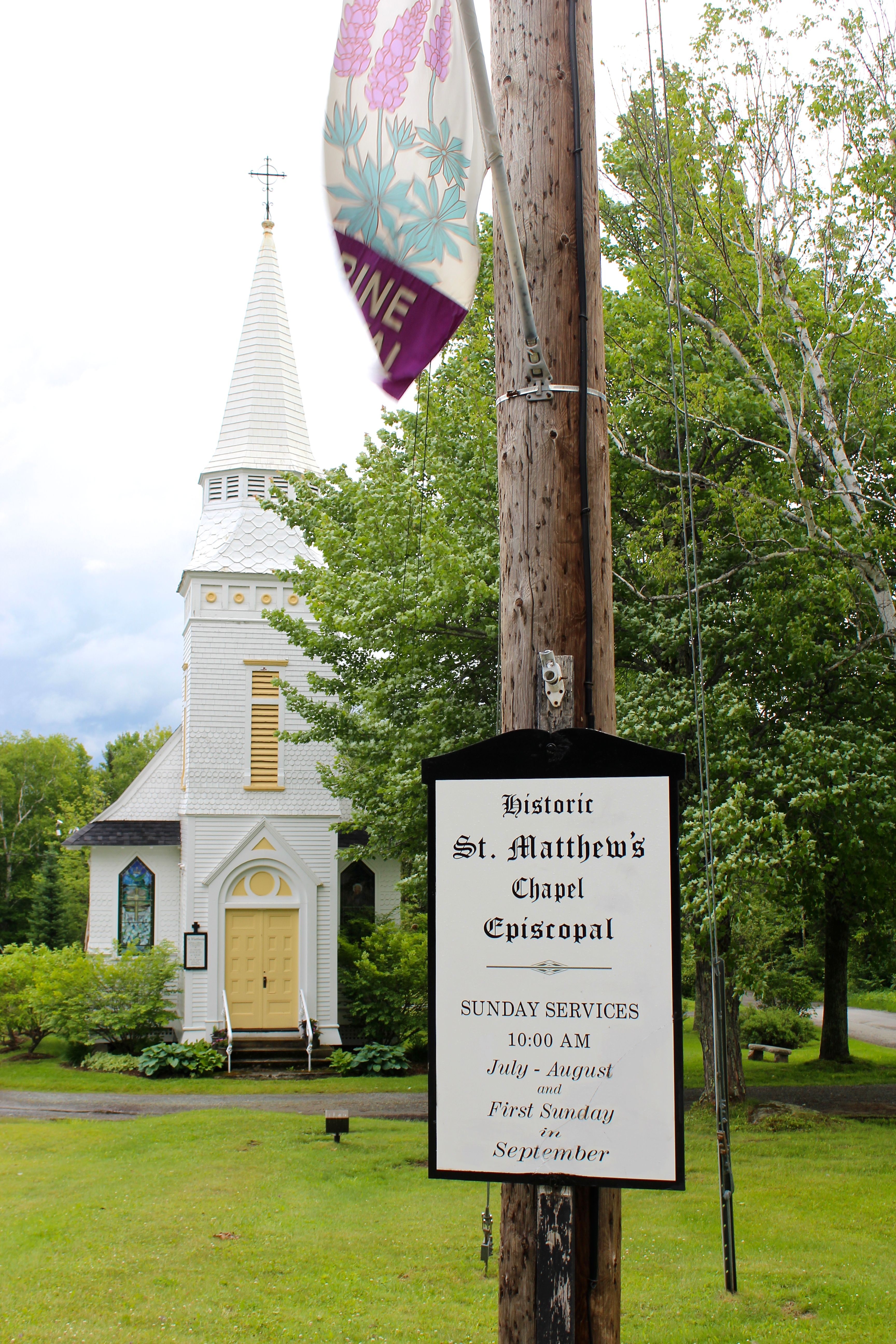
For me, no visit to Sugar Hill is complete without pausing at St. Matthew’s Episcopal Church. My guy knows that my dream had been to get married there and have the invitations read “First Sunday in September.” So, that didn’t happen, but we still like to stop by.

iron furnace 2

Another quick stop was at the stone iron furnace built after the Revolutionary War for smelting local iron ore. It’s in Franconia–think Franconia Stoves.

Coppermine Trail

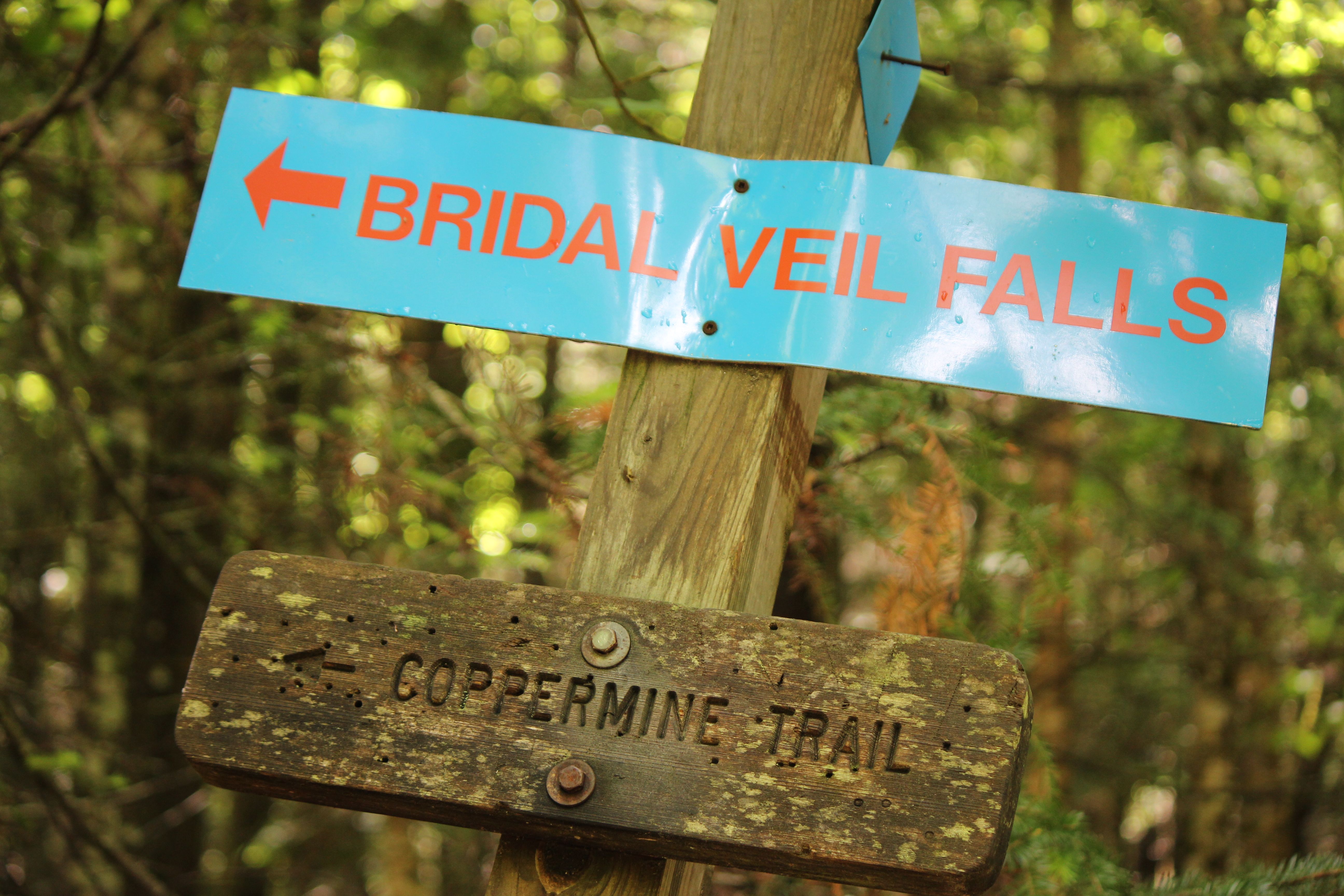
Finally, we reached the trail head.

bridal veil sign

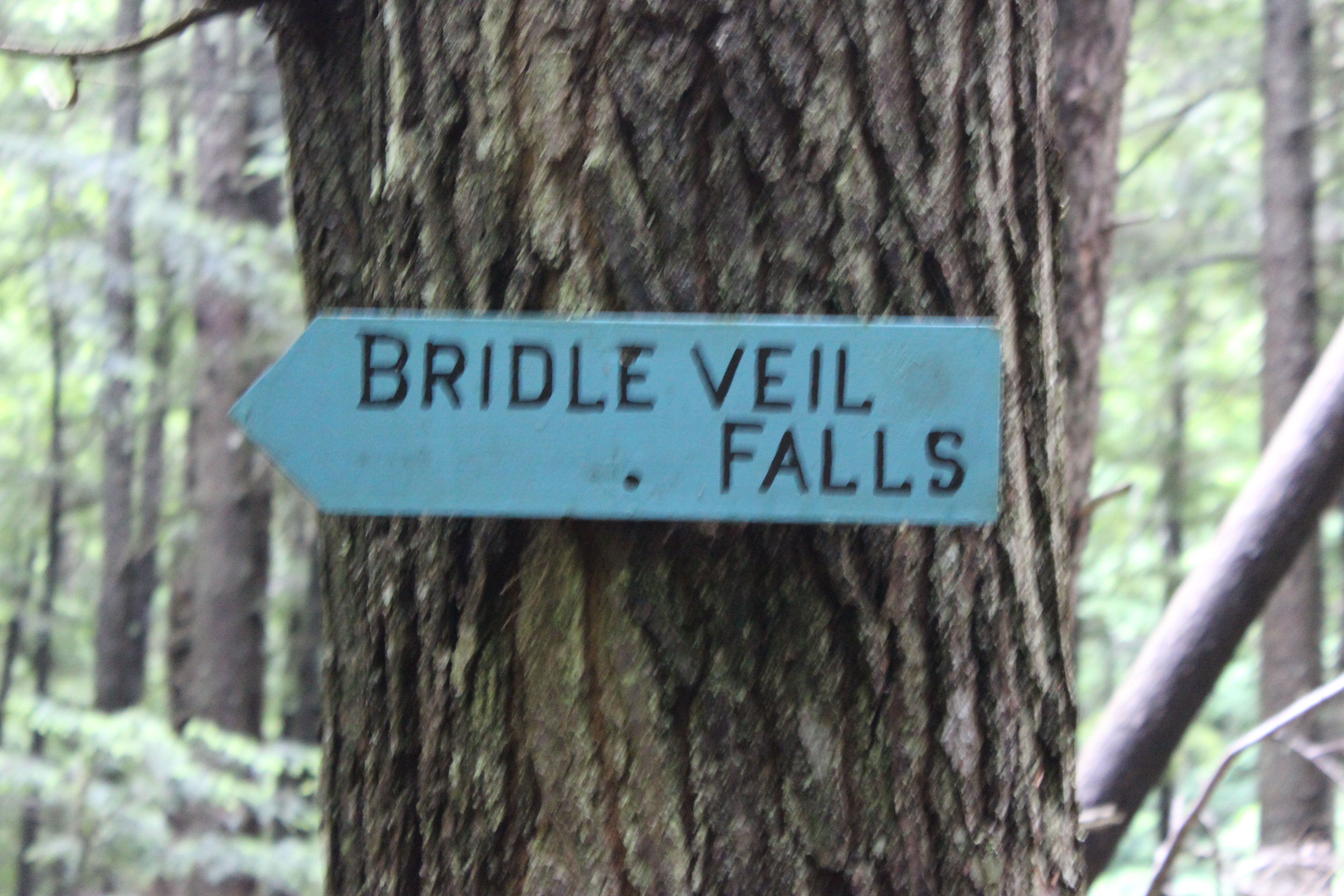
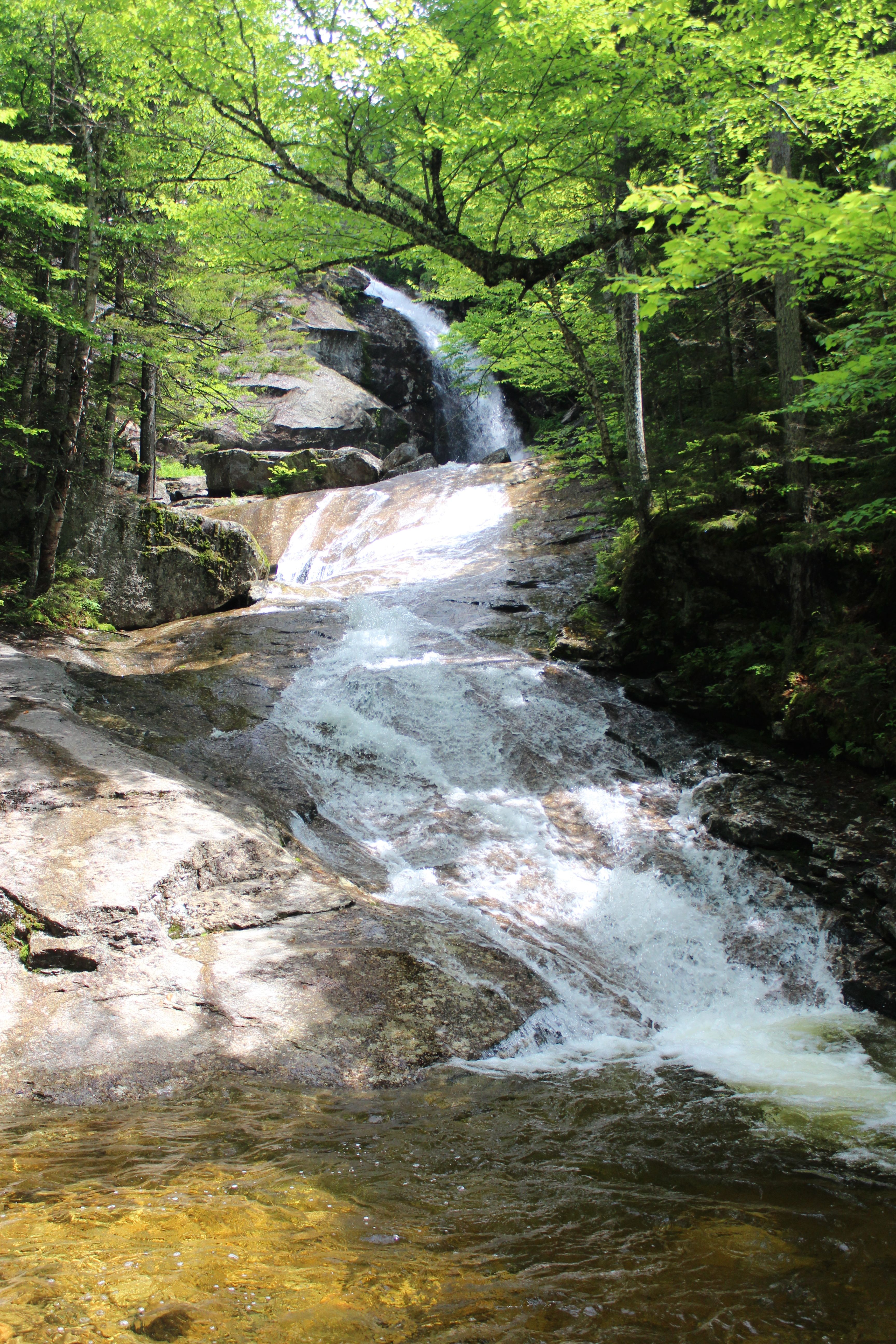
Our destination–Bridal Veil Falls on the back side of Cannon Mountain.

bridle

So, this photo is a bit fuzzy, but do you see what I see? Maybe it’s both. Maybe it doesn’t matter.

water

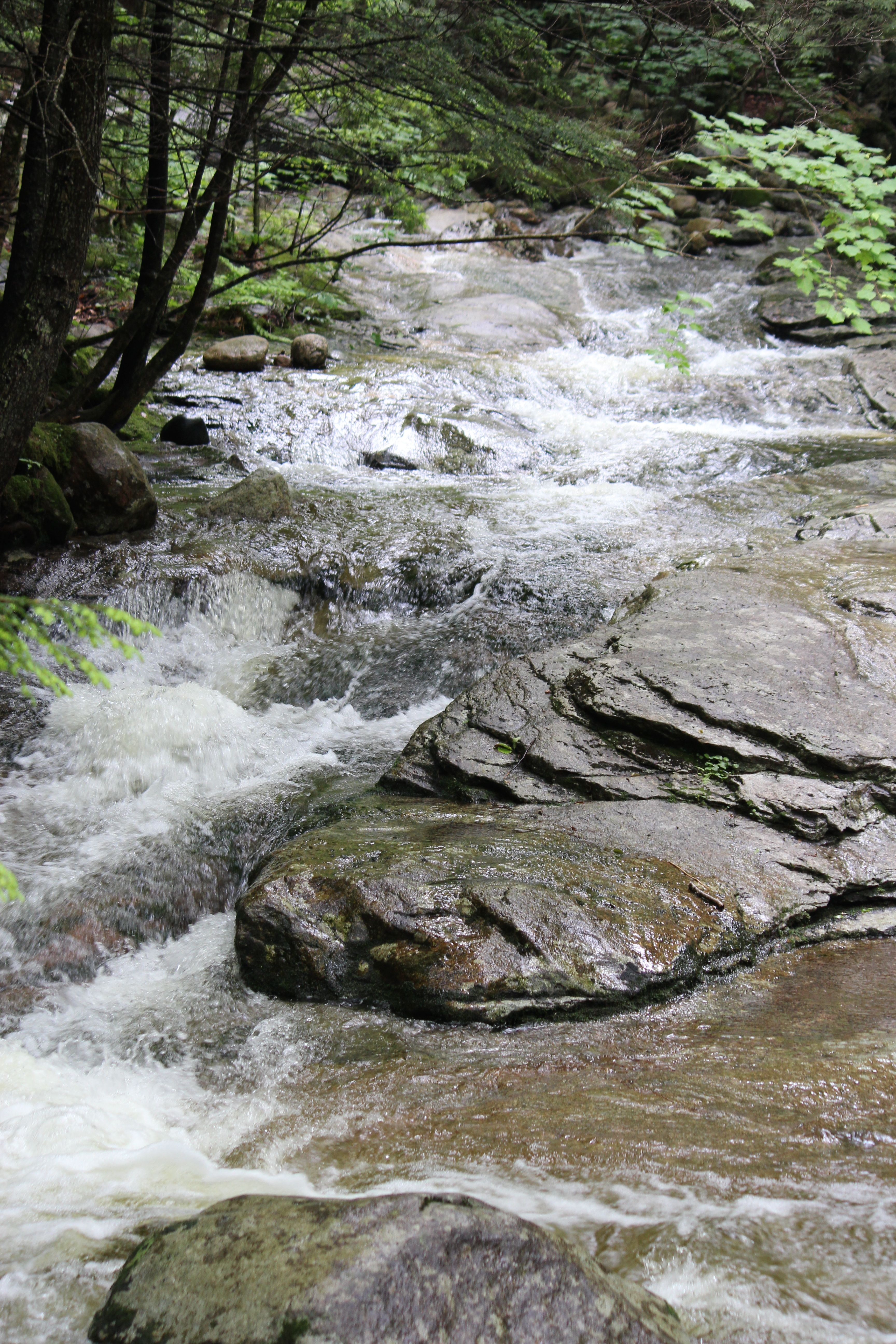
For much of the trail, we walked beside Coppermine Brook or could hear it coursing over the rocks. At times, we walked on rocks–reminded me of climbing on jettys in Connecticut when I was a kid.

lemonade stand

I’m pretty sure this must have been the former site of a lemonade stand. What?

sign on rock

So, you may be wondering if he was heading into the water–a tad bit chilly. Actually, he found the plaque Bette Davis, yes, THE Bette Davis, had placed on a rock in memory of Arthur Farnsworth, a local man she married. Here’s the story according to White Mountains Map Book:  “The great actress BETTE DAVIS summered in this area. In a famous 1939 episode, she lost her way on what is now Coppermine Trail and was rescued by local worker Arthur Farnsworth. Romance blossomed and the couple married in 1940. Farnsworth died tragically in 1943. Davis had a memorial plaque placed on a rock in the brook near where she was rescued.” As my guy can attest, the plaque has Farnsworth’s name and is dedicated to the “Keeper of Stray Ladies.”

foam flower

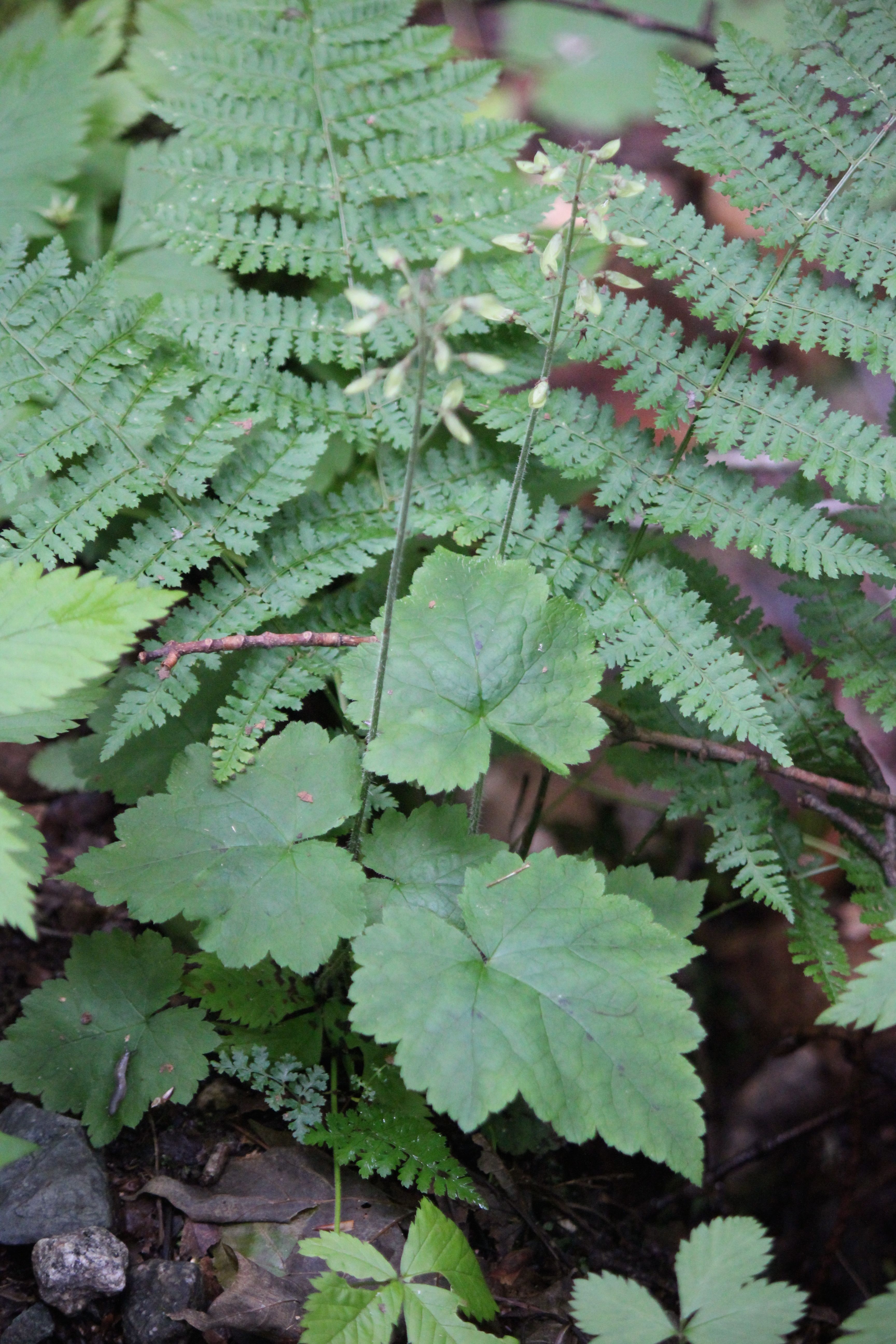
Foamflower or Tiarella was beginning to bloom.

wood sorrel

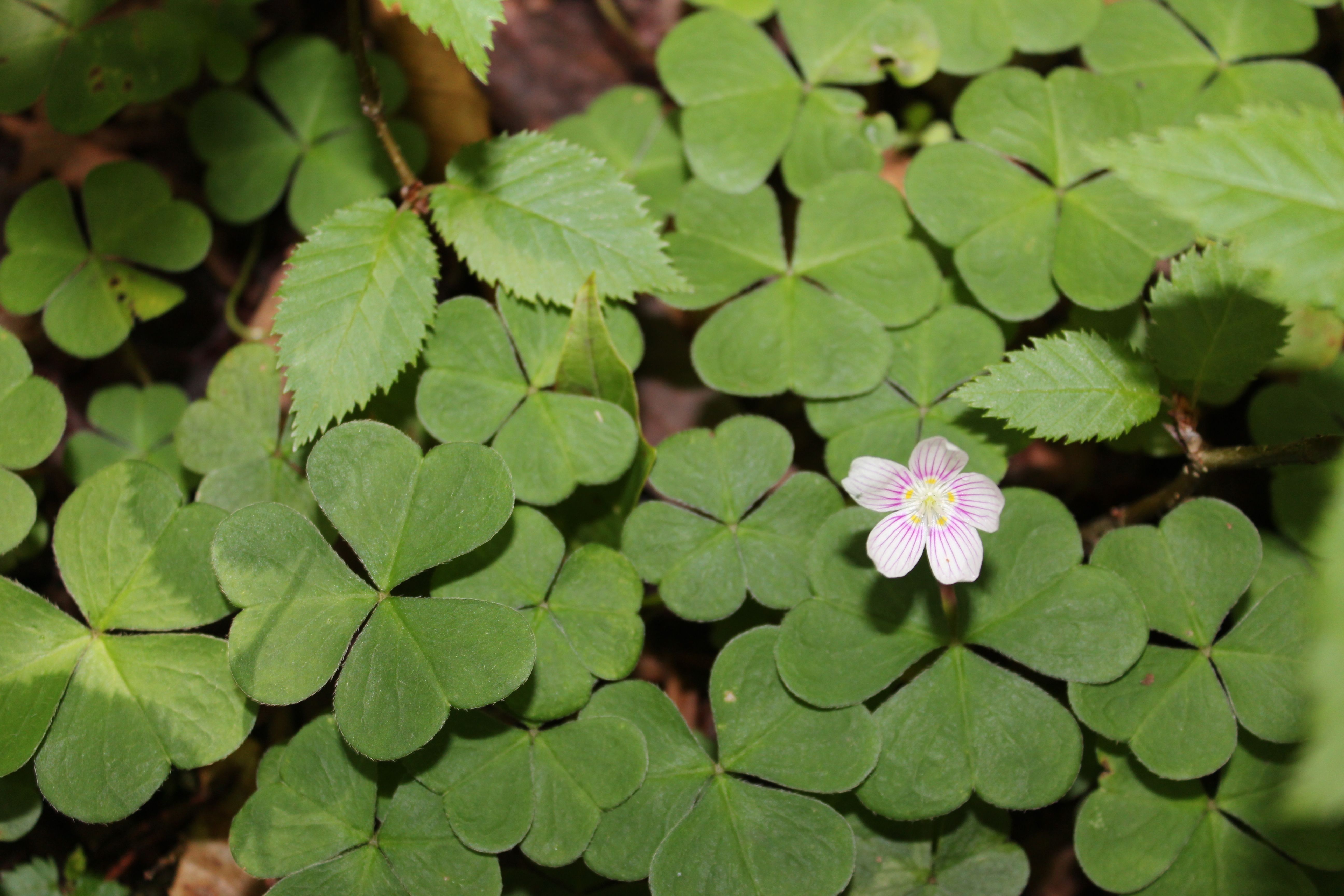
And the wood sorrel. I love its candy-striped petals.

stack of mushrooms

The lush woods are loaded with mushrooms, including these hemlock varnish shelves–stacked up like pancakes.

rock island 2

There are many rock islands like this one beside the path. Yellow Clintonia or Bluebead Lily is one of the inhabitants. I was thinking as I walked about all of the spring ephemerals and how they have to flower before the trees leaf out. They are abundant along the trail. And their fruits will be equally beautiful. But their timing must be amazing. Their challenges include not only the leaves of the canopy closing out the sun, but also the timing of the snow melt and subsequent run-off. No wonder they are so quick.

 shelter

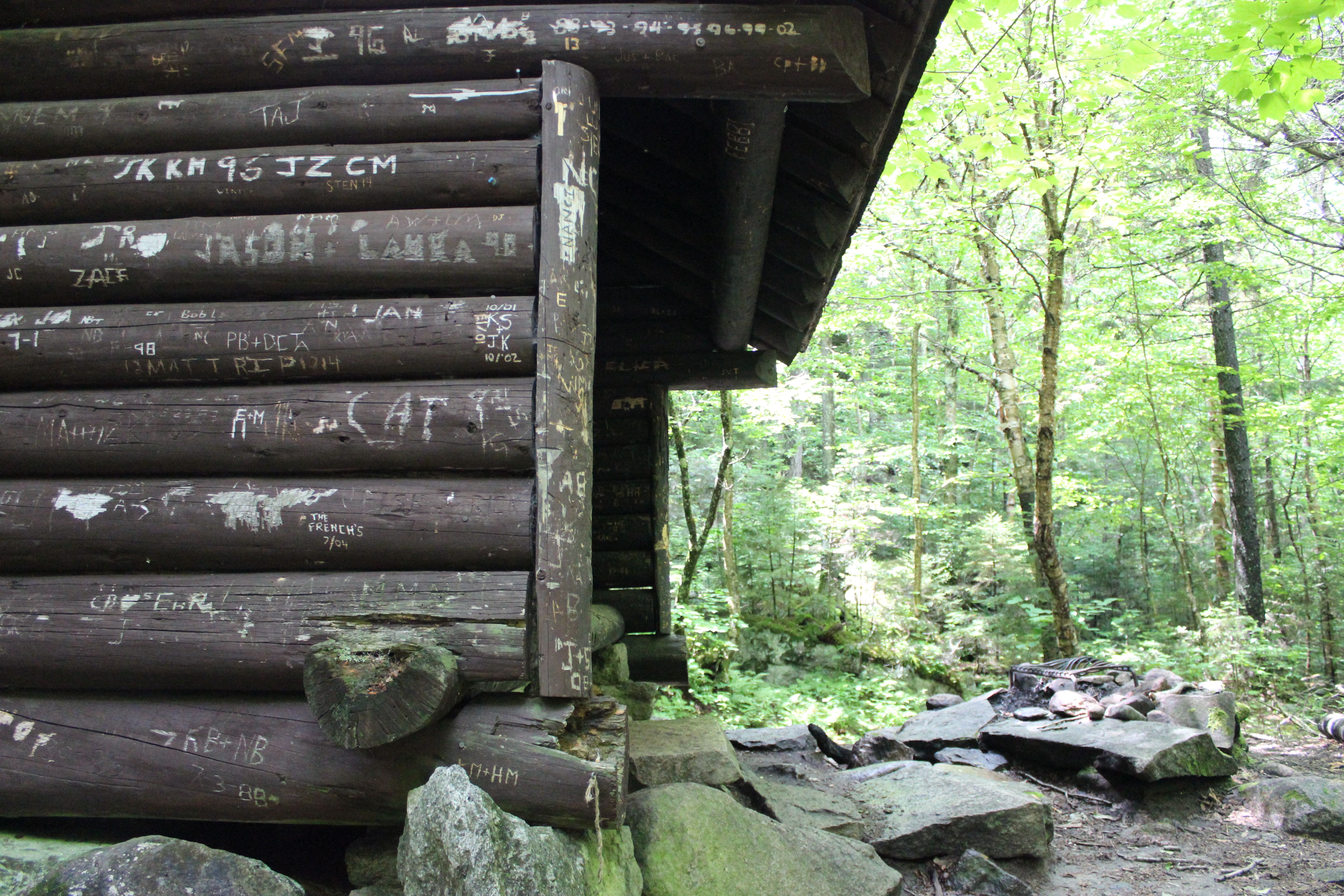
Just before reaching the falls, we came upon the shelter filled with the stories of many who have spent a moment or night here.

the falls 2

Bridal Veil Falls. Bridle Veil Falls. Whatever your pleasure. Certainly, beauty in motion.

Before we drove home via the Kanc, we stopped in Lincoln for ice cream. An extra sweet Mondate topped with hot fudge sauce.

Window on the World

Friends and I explored a property that the Chebeague and Cumberland Land Trust is trying to purchase. Though in many ways it is similar to the natural communities of western Maine, there are some noted differences. And now that I’m home and can reflect upon it and check my reference books for more information, it’s all beginning to make sense. With every walk in the woods, the vision before me becomes clearer.

white oak leaf

I’m always happy to encounter these round-lobed leaves because I don’t see them often. White Oak abounds at the 215-acre Knights Pond & Blueberry Hill property in Cumberland and North Yarmouth.

white oak crown

The crown of a parent White Oak presents itself with joy.

shag leaf

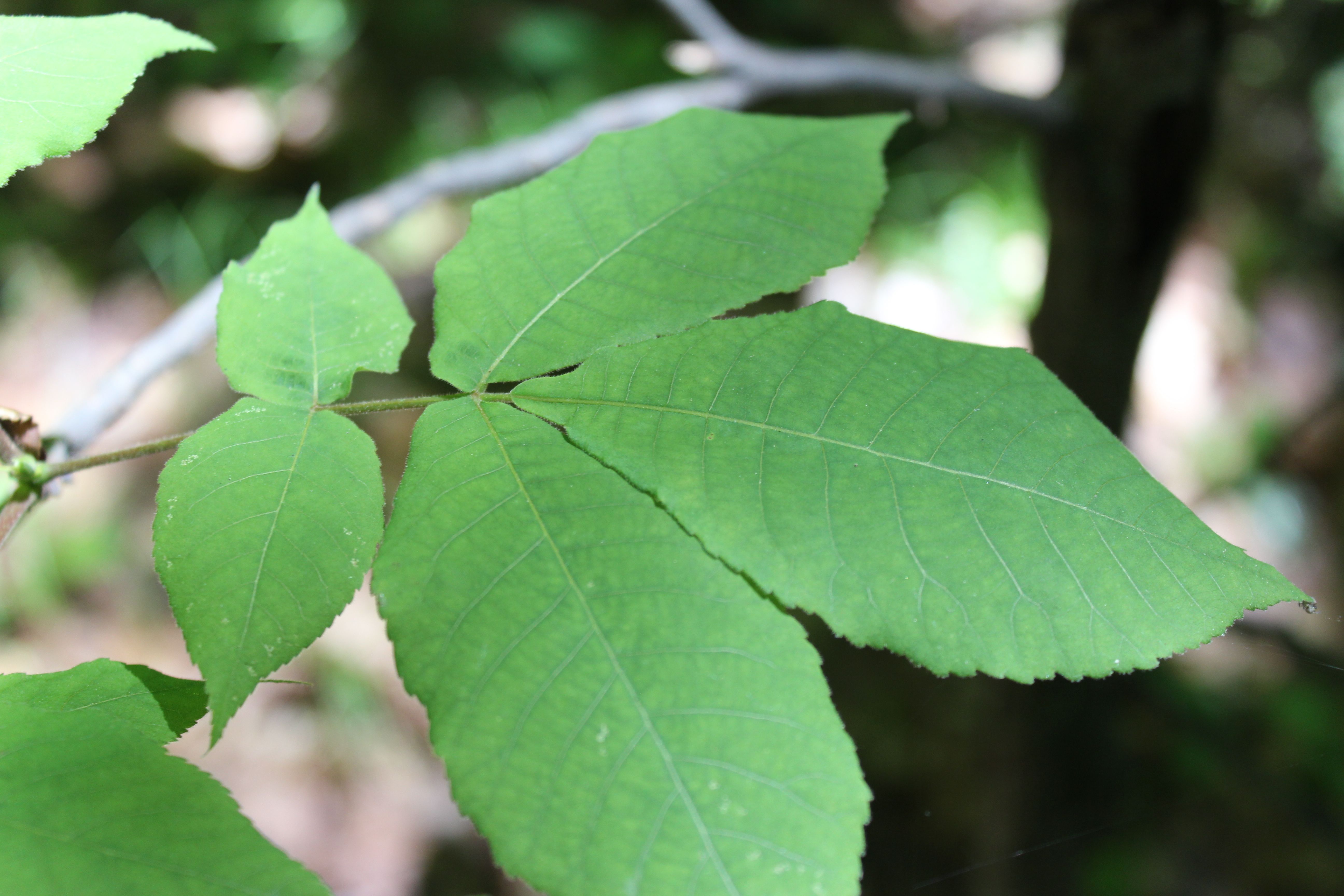
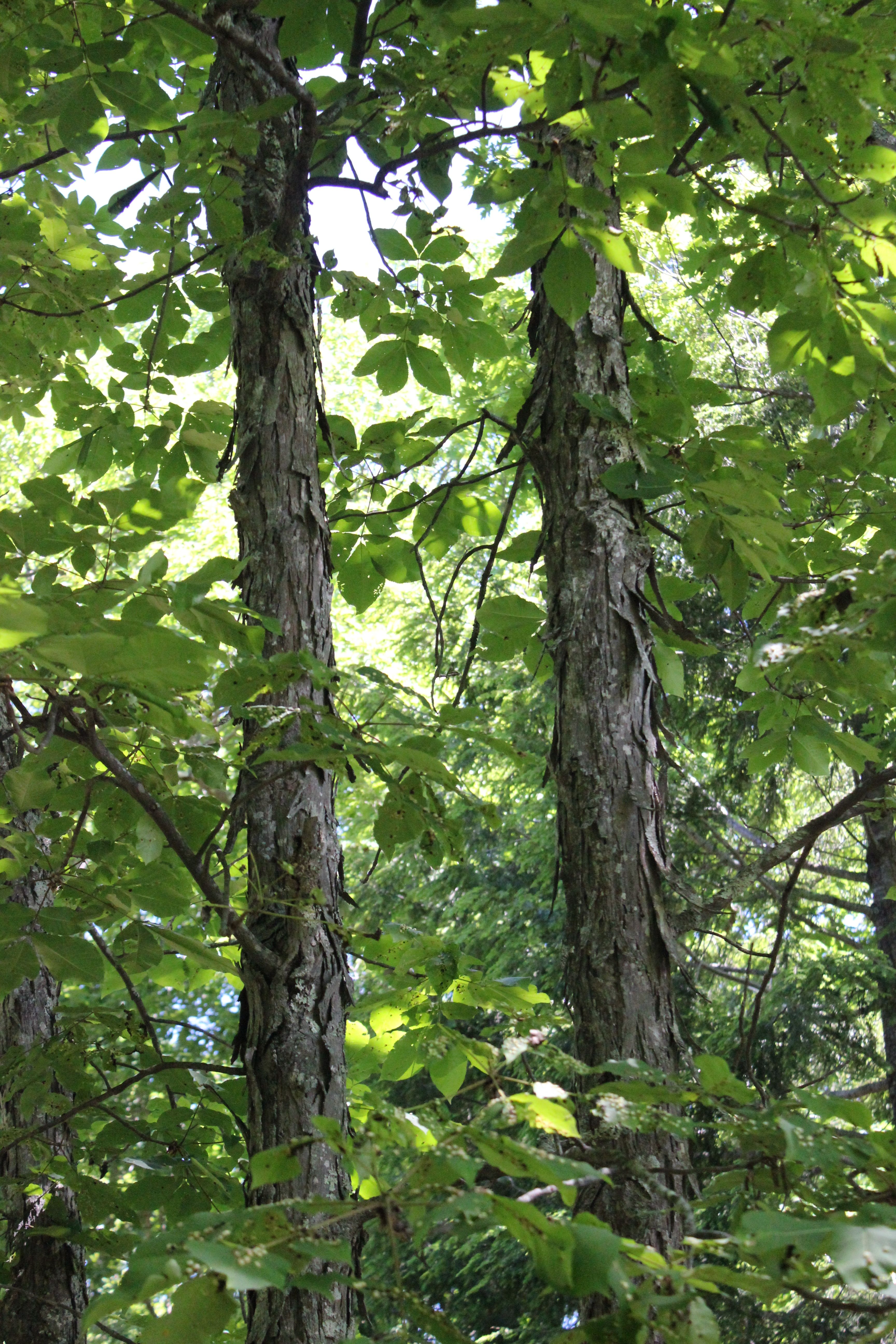
Another species I don’t get to see every day–Shagbark Hickory with its compound leaves. Actually, they are pinnately compound. Hmmm, you say. Compound in that the blade consists of 5 leaflets  and pinnately because the leaflets form in a row on either side of the common axis–think feather-like formation.

shagbark hickory leaf and galls

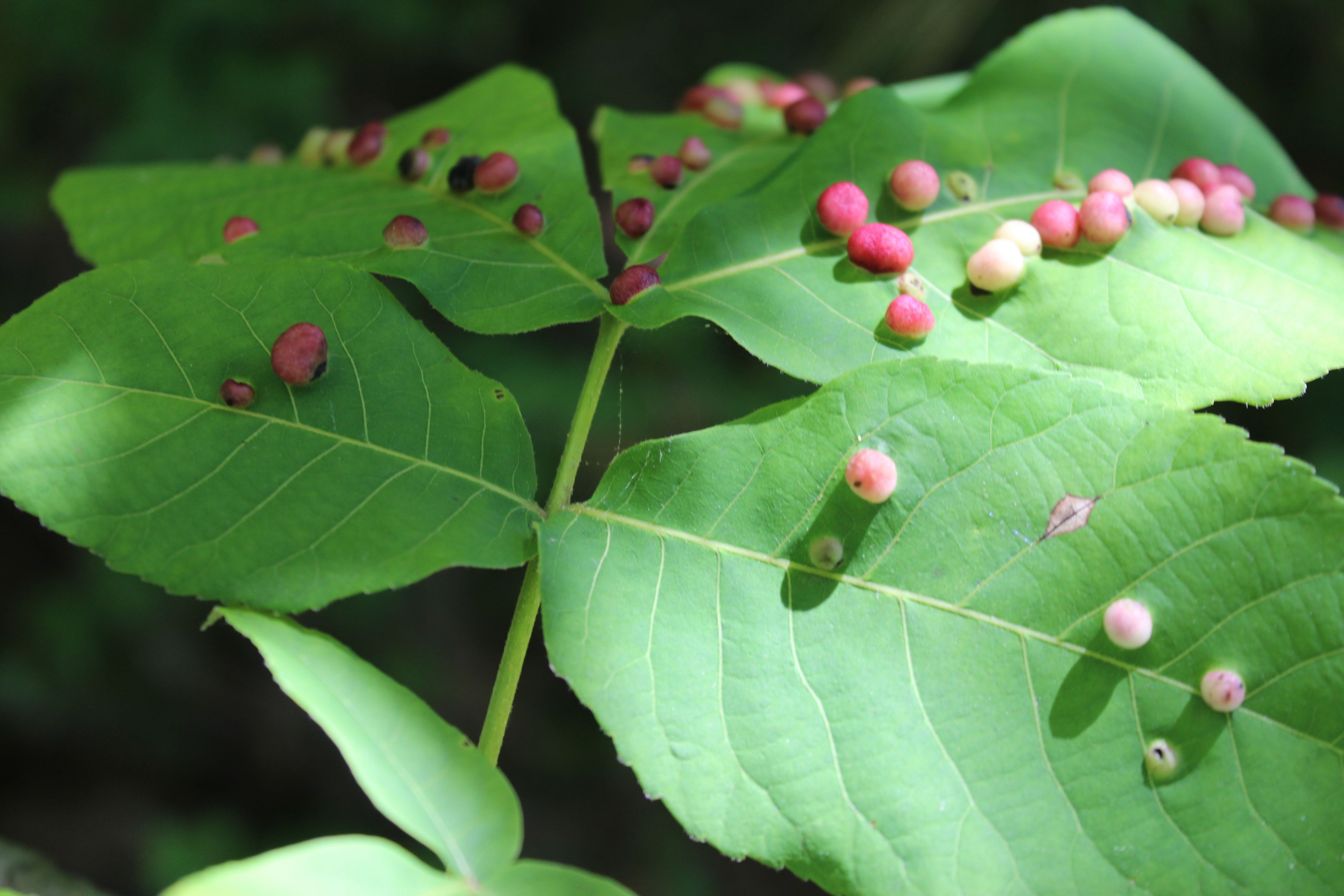
Interestingly, some hickory leaflets were covered with galls, giving them a warty appearance–in a miniature candy-apple kind of way. I was thinking they might be caused by a mite, but turns out it may be either a midge or fly that makes these little balls.

shagbark hickory

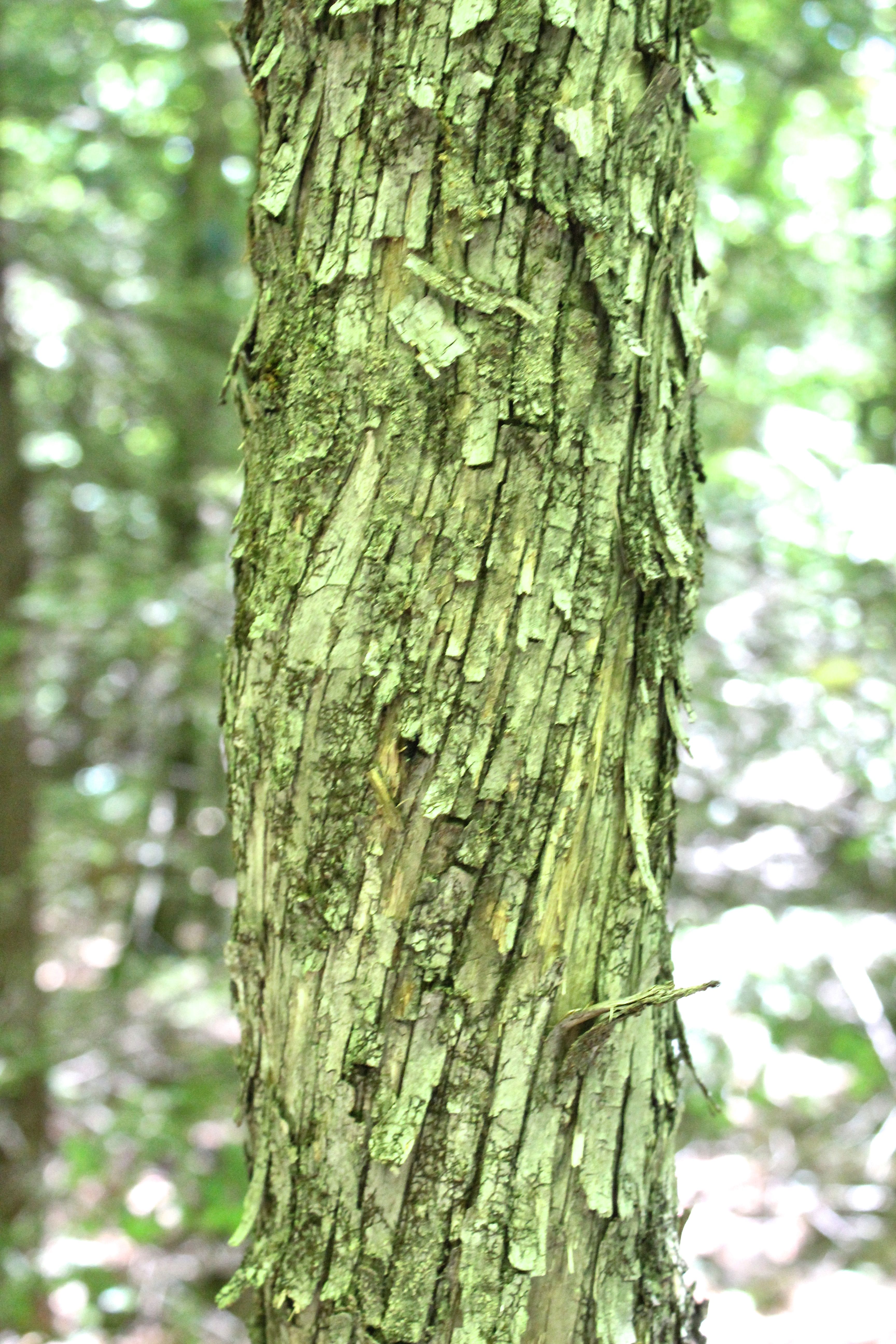
Shagbark Hickory certainly is a shaggy looking tree, with gray-brown bark that curls away from the trunk in long, thin strips.

hop hornbeam

Near the hickory trees are numerous Hop Hornbeams with their flaky bark.

shag and hop

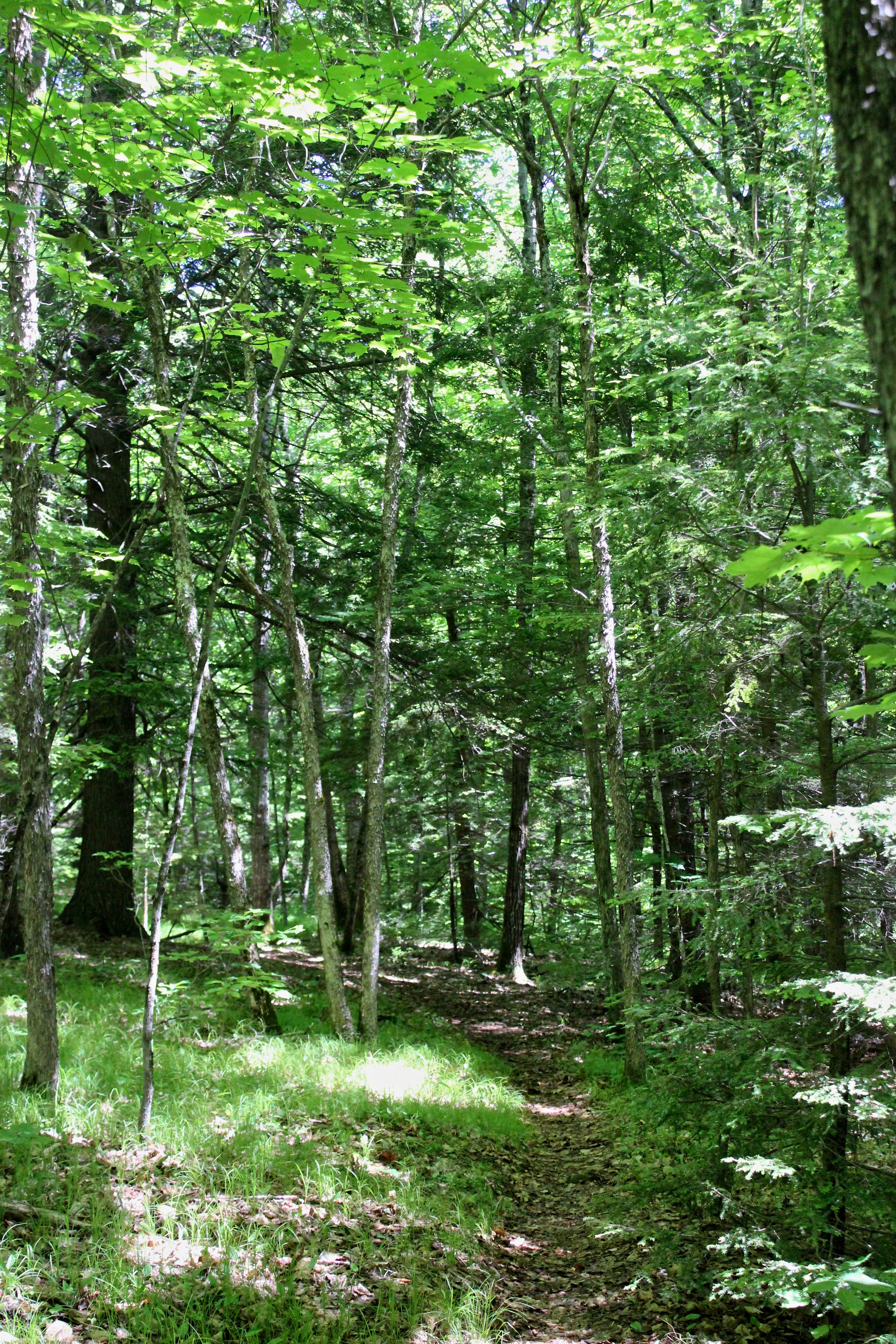
In the grassy glade, they grow together. I love it when trees stand together, making it easy to compare and contrast their features.

In Natural Landscapes of Maine: A Guide to Natural Communities and Ecosystems, authors Gawler and Cutko rank the Oak-Hickory Forest as S1–the rarest of communities.

“This dry forest type, characteristic of the Central Appalachian Mountains, occurs in small patches or as inclusions within broader expanses of oak-pine forest.”  Yikes, I think the authors may have been walking with us today.

“It is dominated by a mixture of shagbark hickory and oaks (white, black, red or chestnut) over park-like sedge lawn. Sugar maple, white pine or white ash may be canopy associates, and hop-hornbeam is a characteristic sub-canopy species.” Bingo.

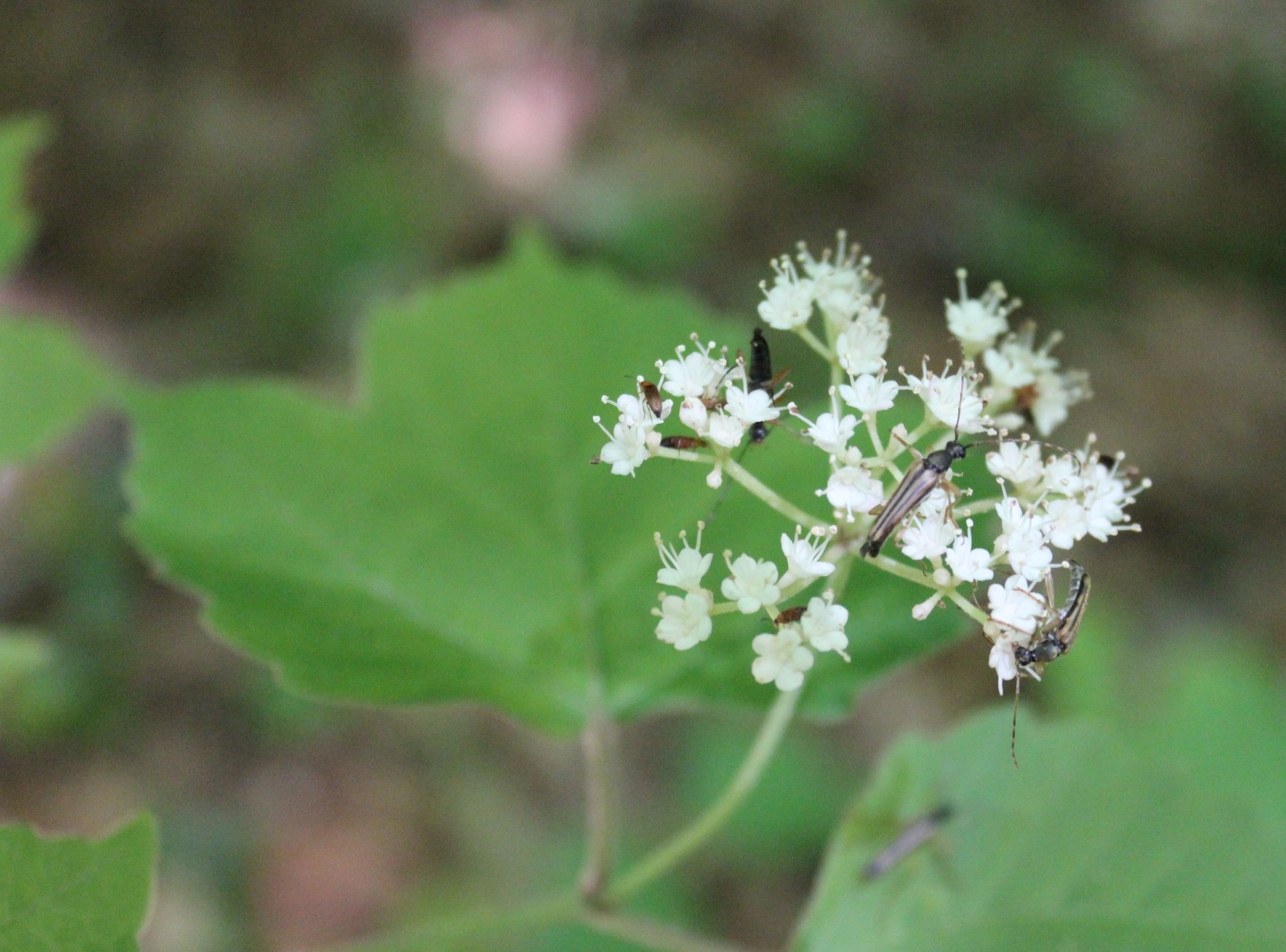
Other associated species that we saw included Witch Hazel, Maple-Leaf Viburnum and Striped Maple, Low-bush Blueberry, Asters, Canada Mayflowers, Sarsaparilla, Wild Oats and probably more that we didn’t note.

trail

As usual, it took us forever, but occasionally we continued down the trail.

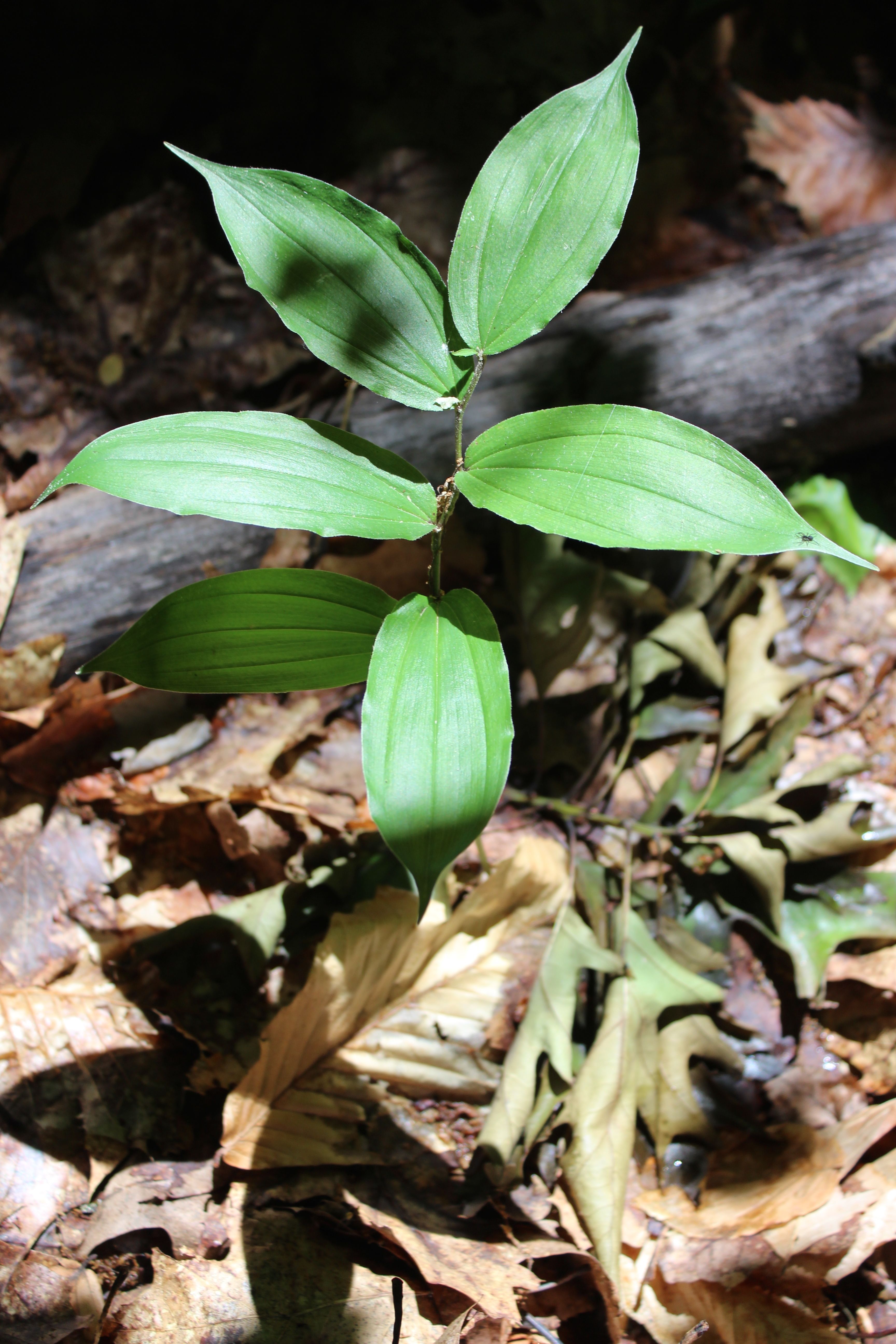
Indian Cucumber Root

Our frequent pauses included stops at Indian Cucumber Root,

maple leaf vibur2

Maple-Leaf Viburnum,

New York fern

New York Fern,

lady fern

Lady Fern

hairy solomon's seal

and Hairy Solomon’s Seal.

stone wall

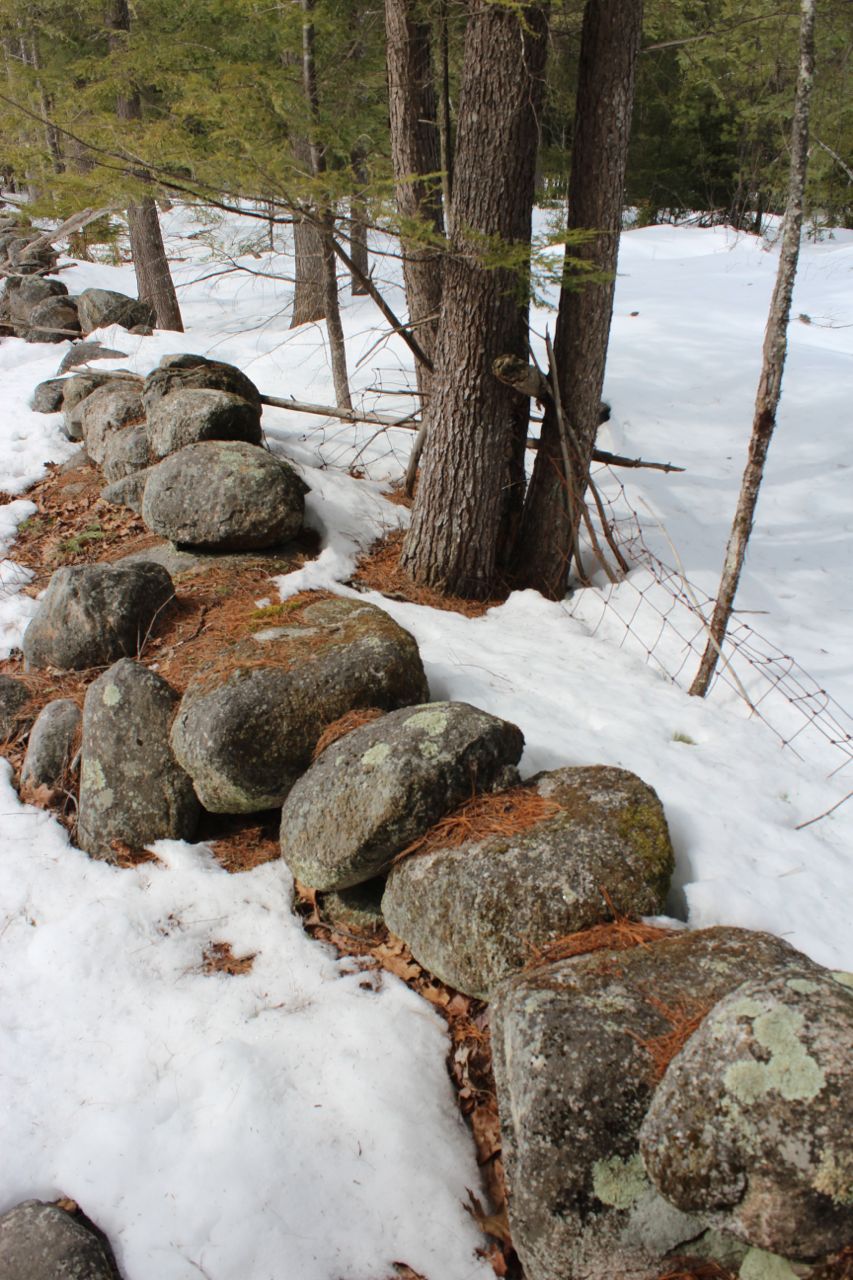
Stonewalls crossed in a couple of places, making us reflect on their construction and purpose.

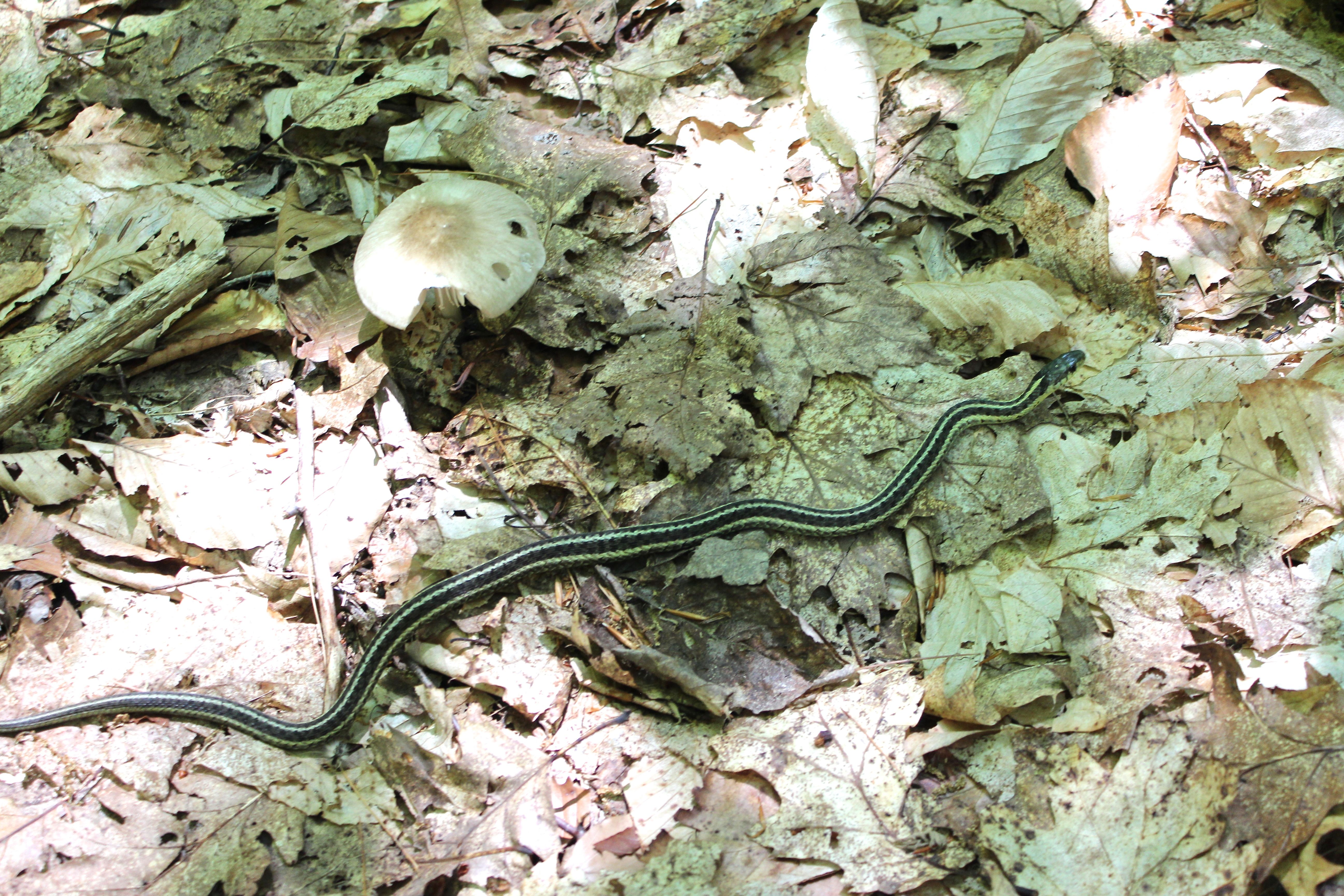
snake

And a snake paused for a photo shoot.

bog 1

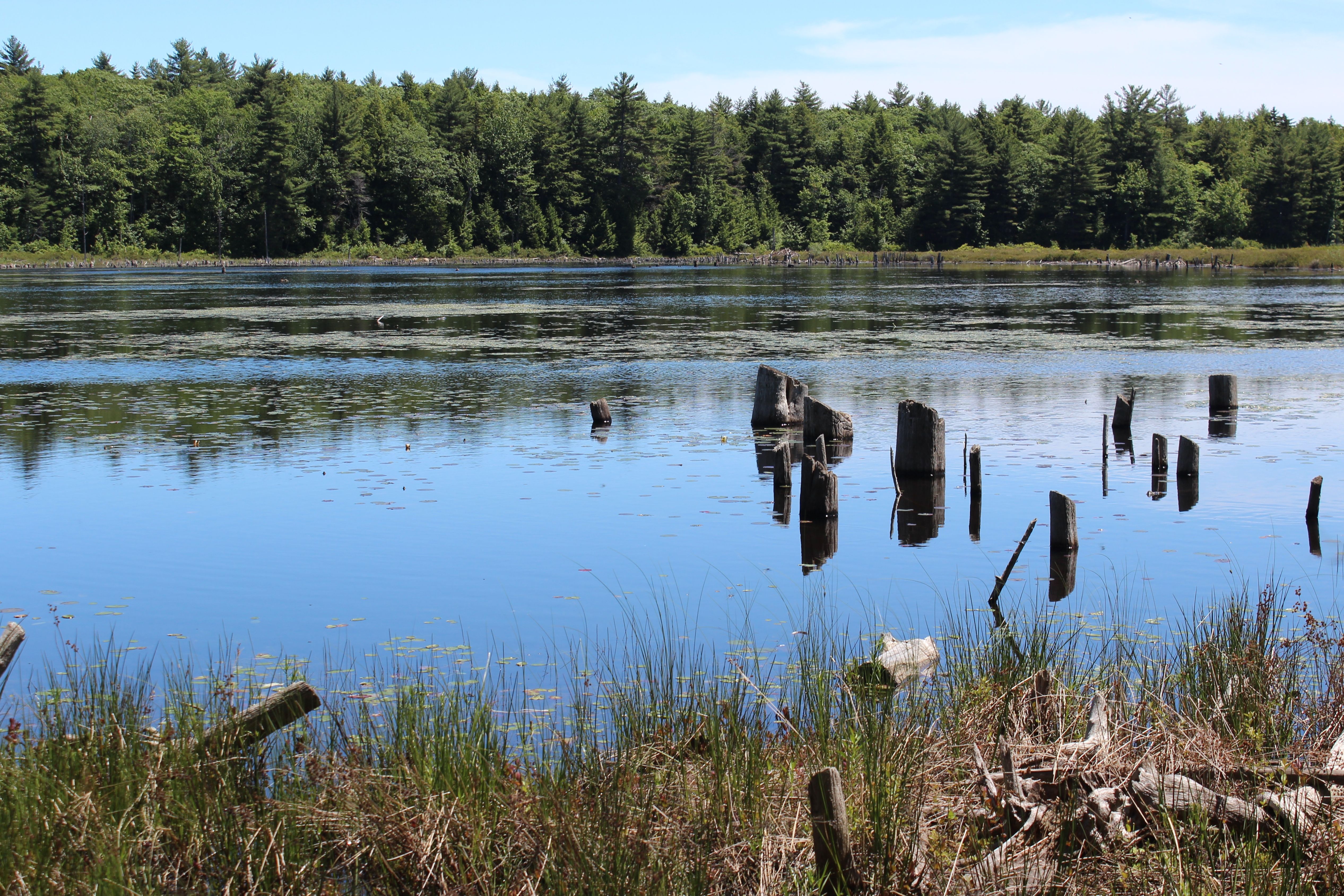
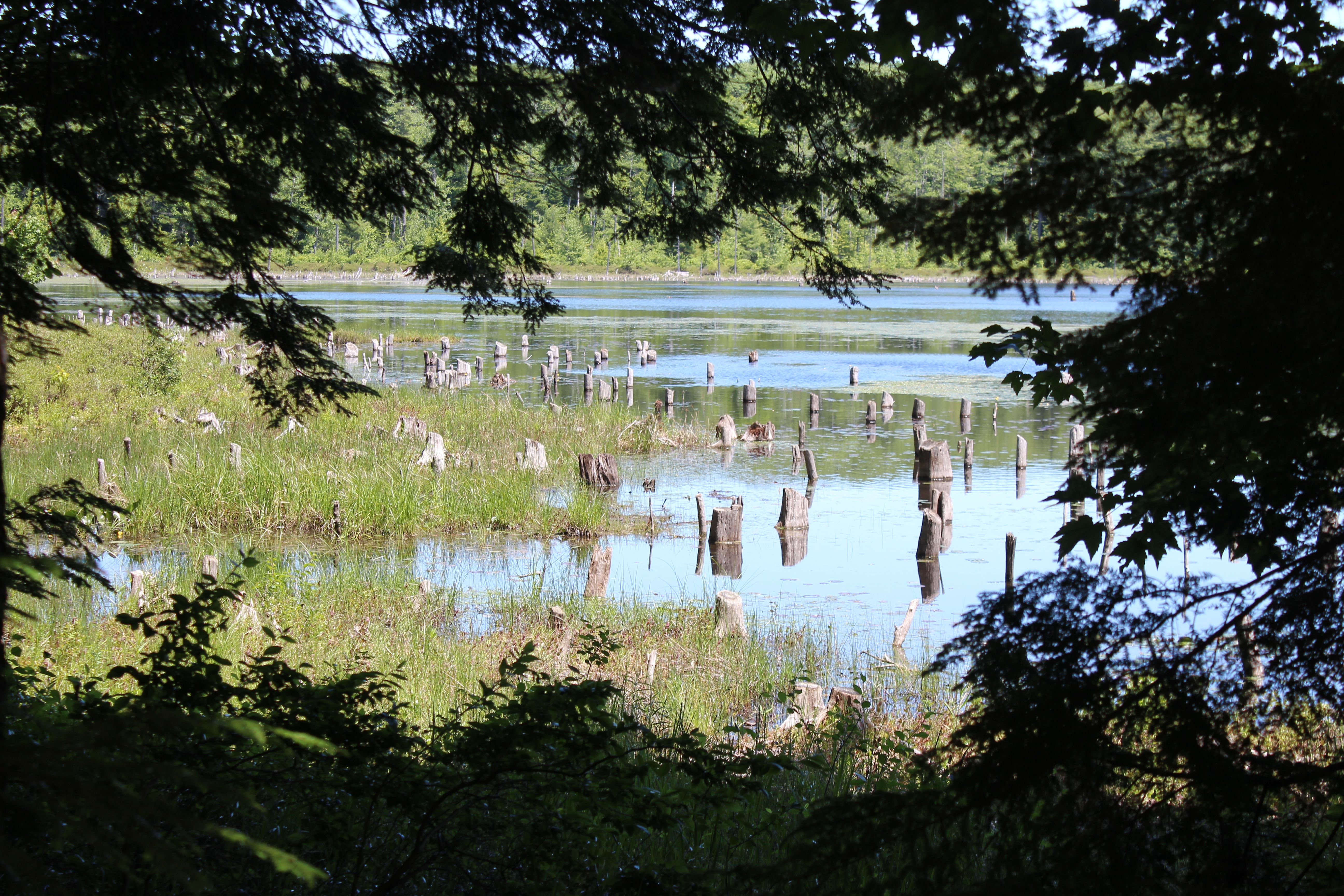
Suddenly, the trail opened to Knight’s Pond, a 45-acre, dammed pond. According to the brochure, “The pond is a significant breeding ground for waterfowl and wading birds and is an important refueling spot during migration.”

sundews

Among the life at the pond, a zillion carnivorous Sundews, with their nectar-tipped tentacles waiting to trap insects.

dragonfly

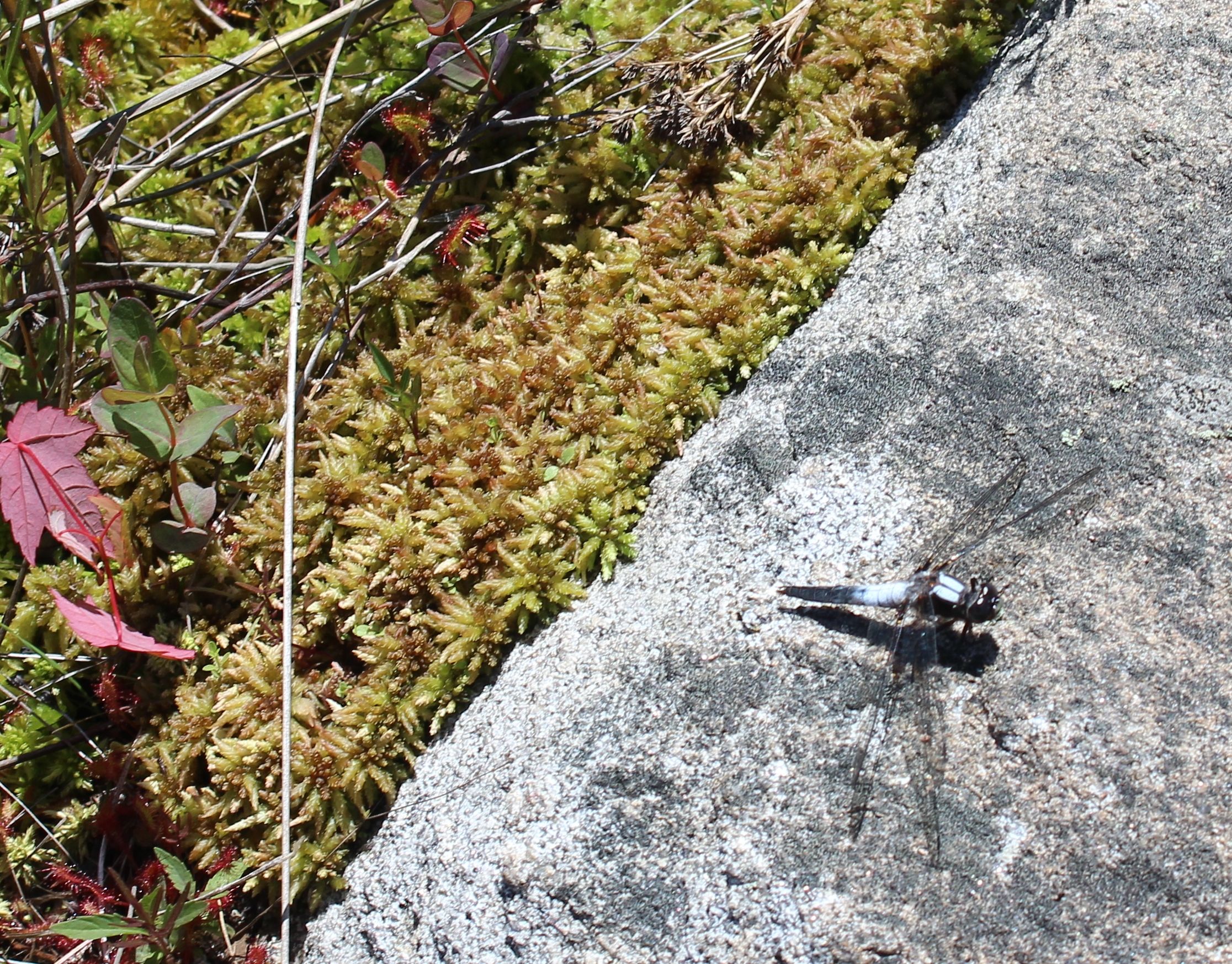
Dragonflies and damselflies were also on the hunt for prey.

 window on the world

We had stopped frequently along the way to key out species or share our stories related to them. By the end of our wander, I was in awe of the beauty and thankful for the opportunity to glance through this window on the natural world.

Thanks be to The Trust for Public Land, Chebeague & Cumberland Land Trust, the Royal River Conservation Trust, all of those individuals who have contributed to the purchase, and my friend, K.H., for sharing it with us today. May you receive the Land for Maine’s Future funding soon.

Painting Naturally

It finally rained in Maine–for several days. But today featured sunlight, clouds and cool temps–just the right conditions to join my friend, Marita Wiser, (author of  Hikes and Woodland Walks in and around Maine’s LAKES REGION) for a climb up Pleasant Mountain.

LELT sign

Loon Echo Land Trust owns 1,859 acres on the mountain, including the Ledges Trail, which was our choice.

steps

Thanks to the efforts of Loon Echo’s volunteer base and the help of the Appalachian Mountain Club, the trail is well maintained. (AMC actually happened to be working down the road at the Bald Peak trail)

view from ledges

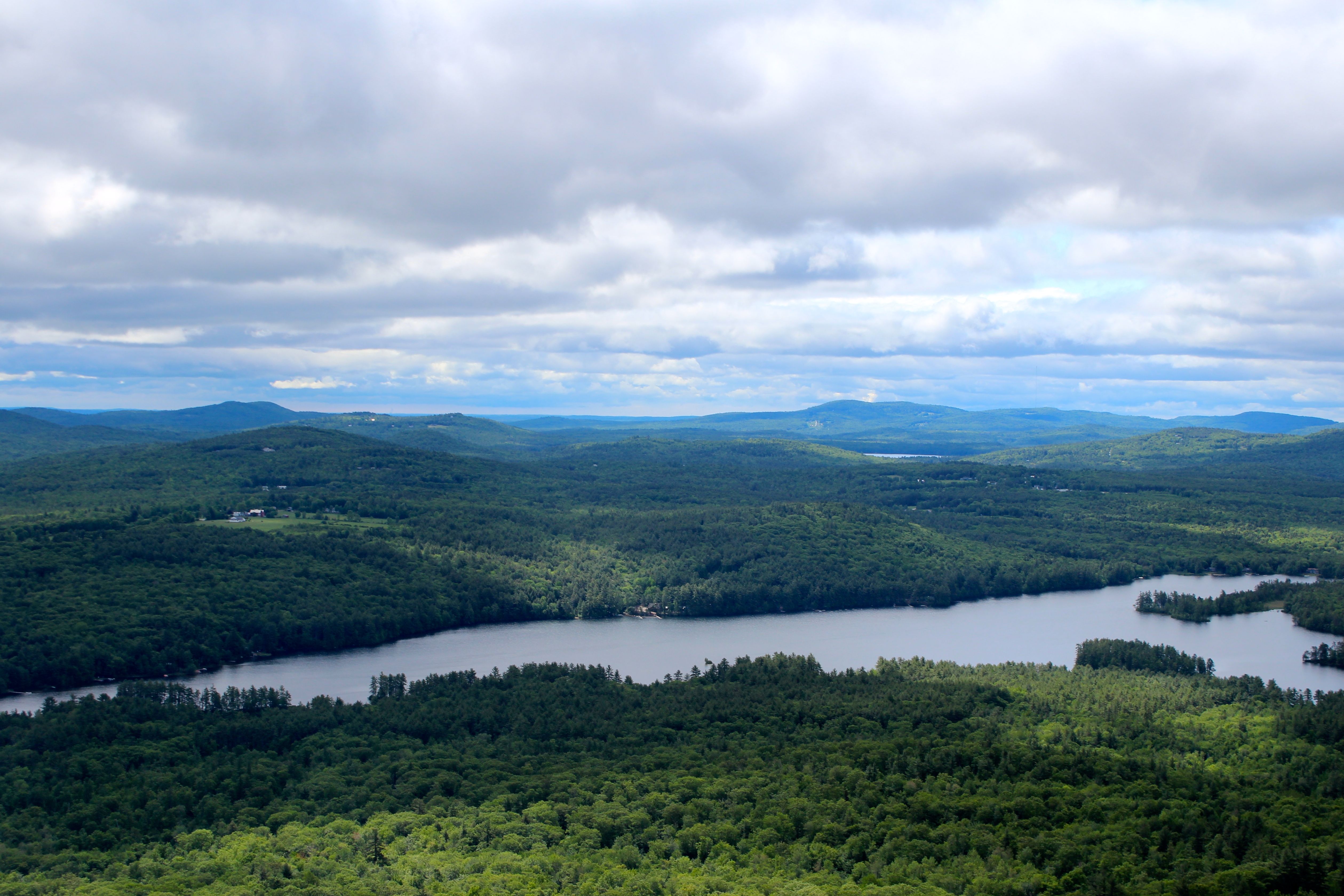
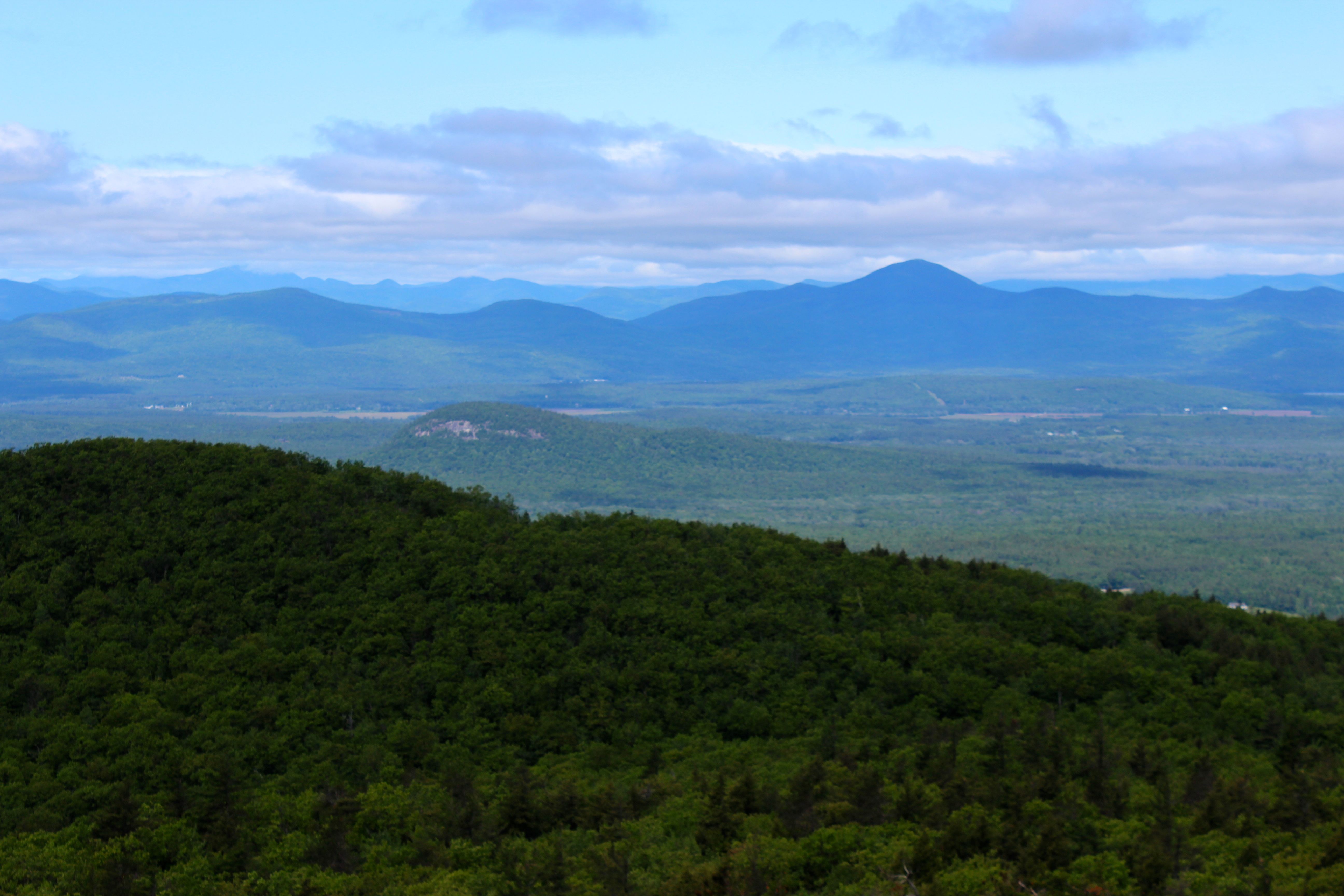
About halfway up, the view from the ledges includes the Denmark end of Moose Pond.

rock tripe

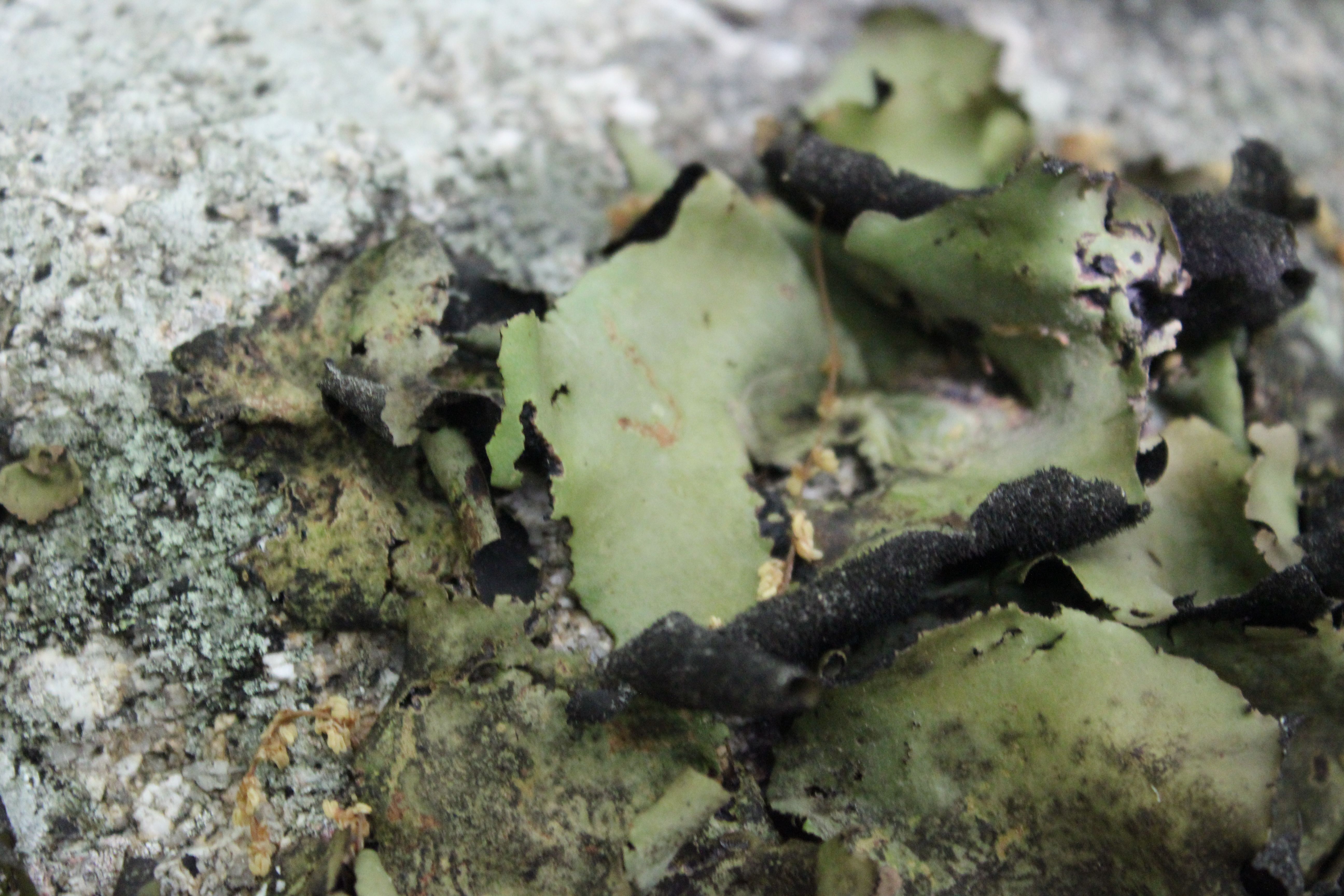
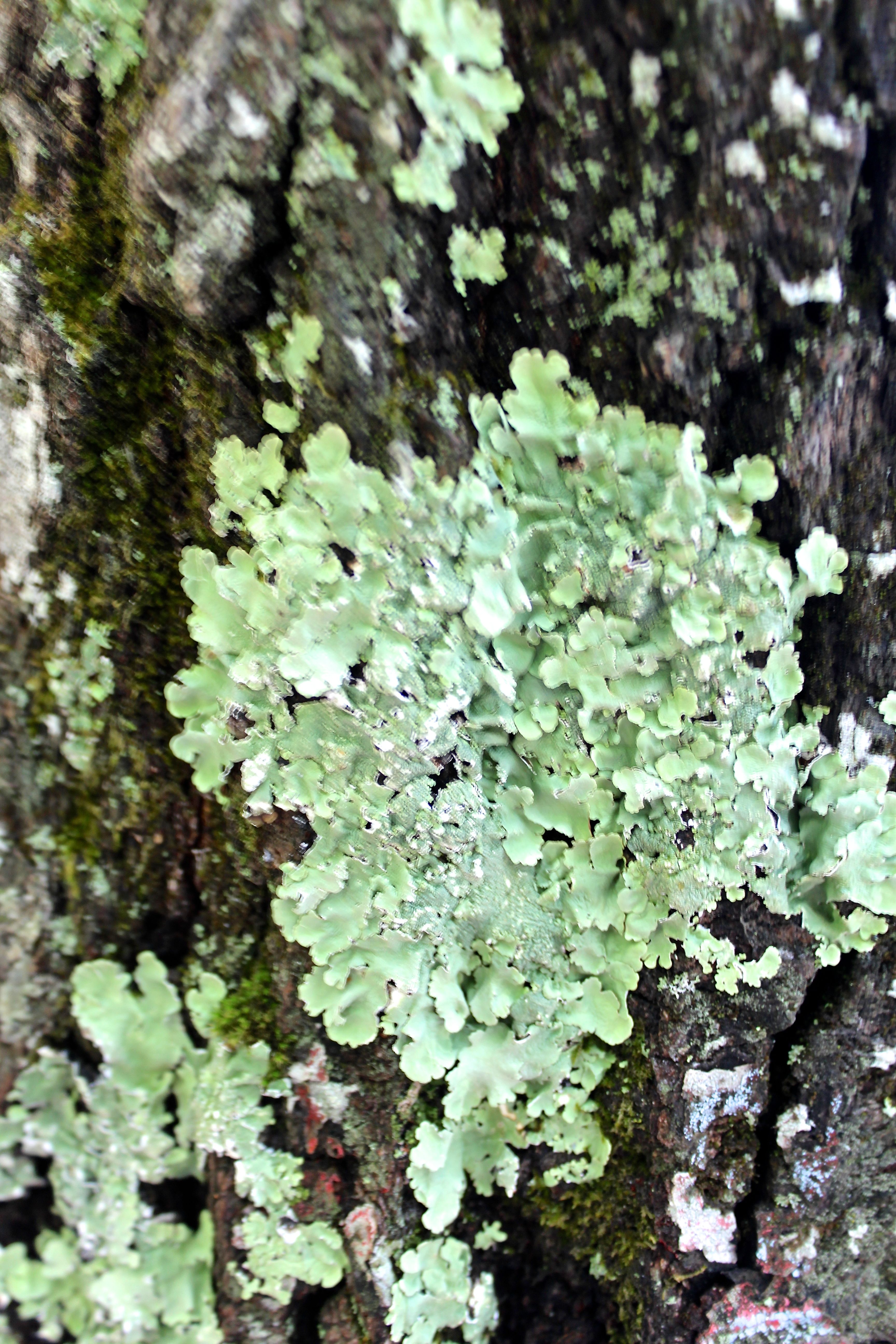
Marita was kind enough to endure my photography stops. Here, the greenish hue of rock tripe, that turns brown when dry and can survive for a long time without water.

pink lady's slipper

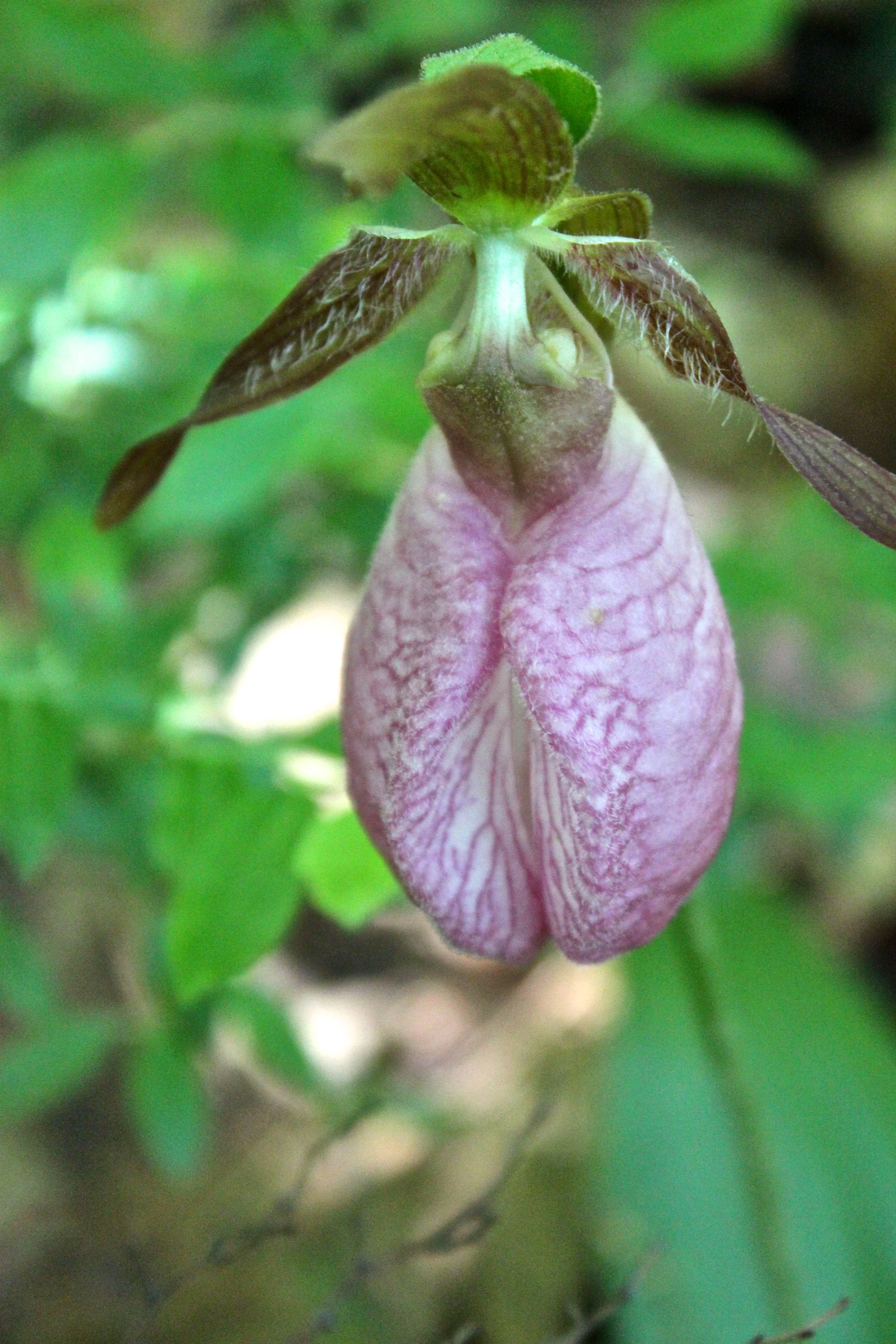
Pink Lady’s Slippers decorate the path.

footprint

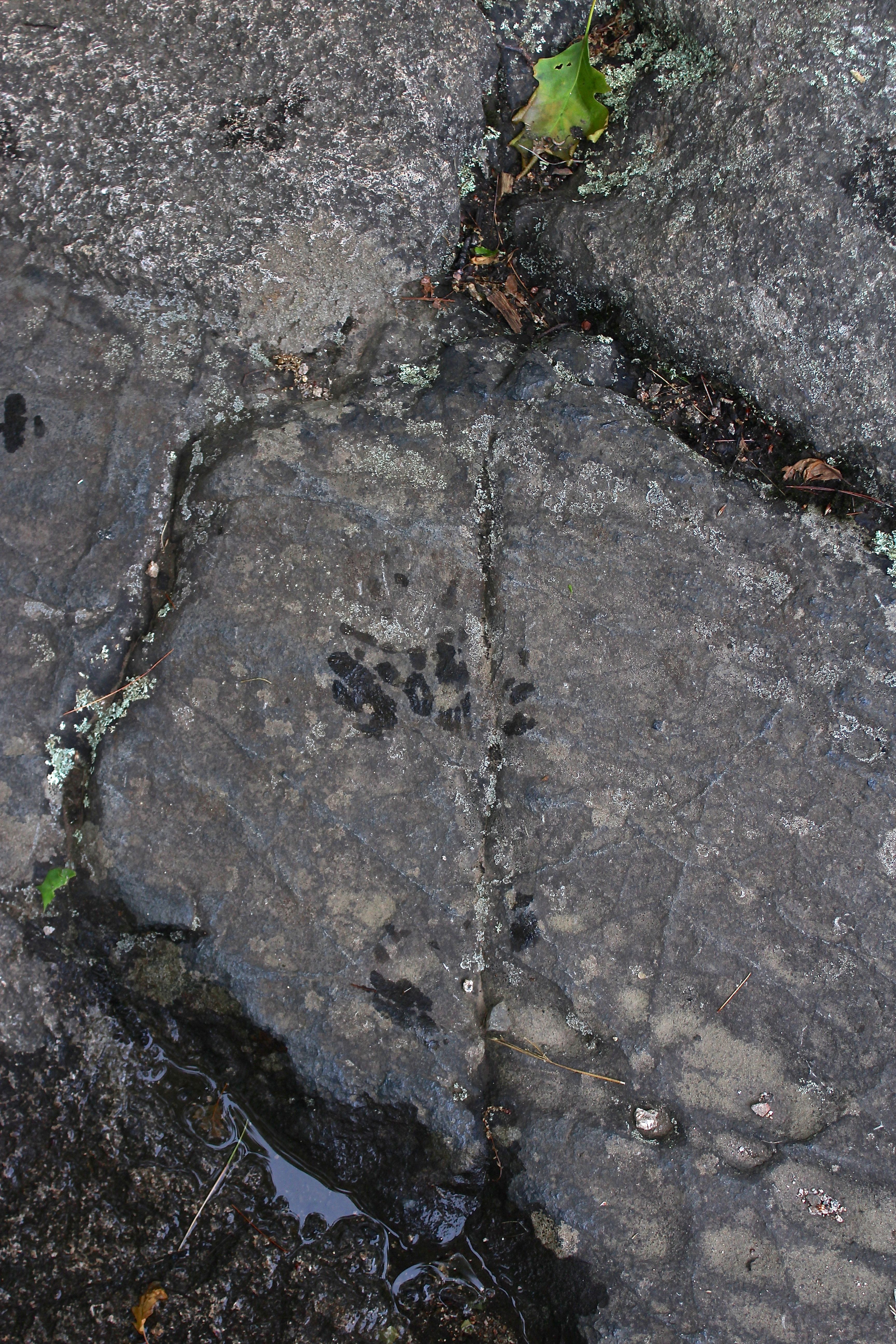
A few wet spots meant we occasionally left tracks.

summit sign

At the summit, we paused for a while.

ft 1

Here stands the 48-foot fire tower, erected in 1920 and manned until 1992 (I know this because Marita wrote about it). We chatted about The Pleasant Mountain House, a hotel that was built on the summit in the late 1800s and was torn down in 1908. It’s difficult to envision people coming to town via the Cumberland and Oxford Canal, then riding in a stage coach from the boat landing on Long Lake to the mountain. But they did.

summit view w: tree

We spent most of our time in awe of the colors.

summit view

view 2

view 3

Marita

I wasn’t the only one taking photos. By her sweater, you can see that it was just a tad nippy, though we both wore short-sleeved shirts and only an extra layer at the summit.

green shield

On the way down, the common green shield lichen was also brighter because of the rain.

ss 2

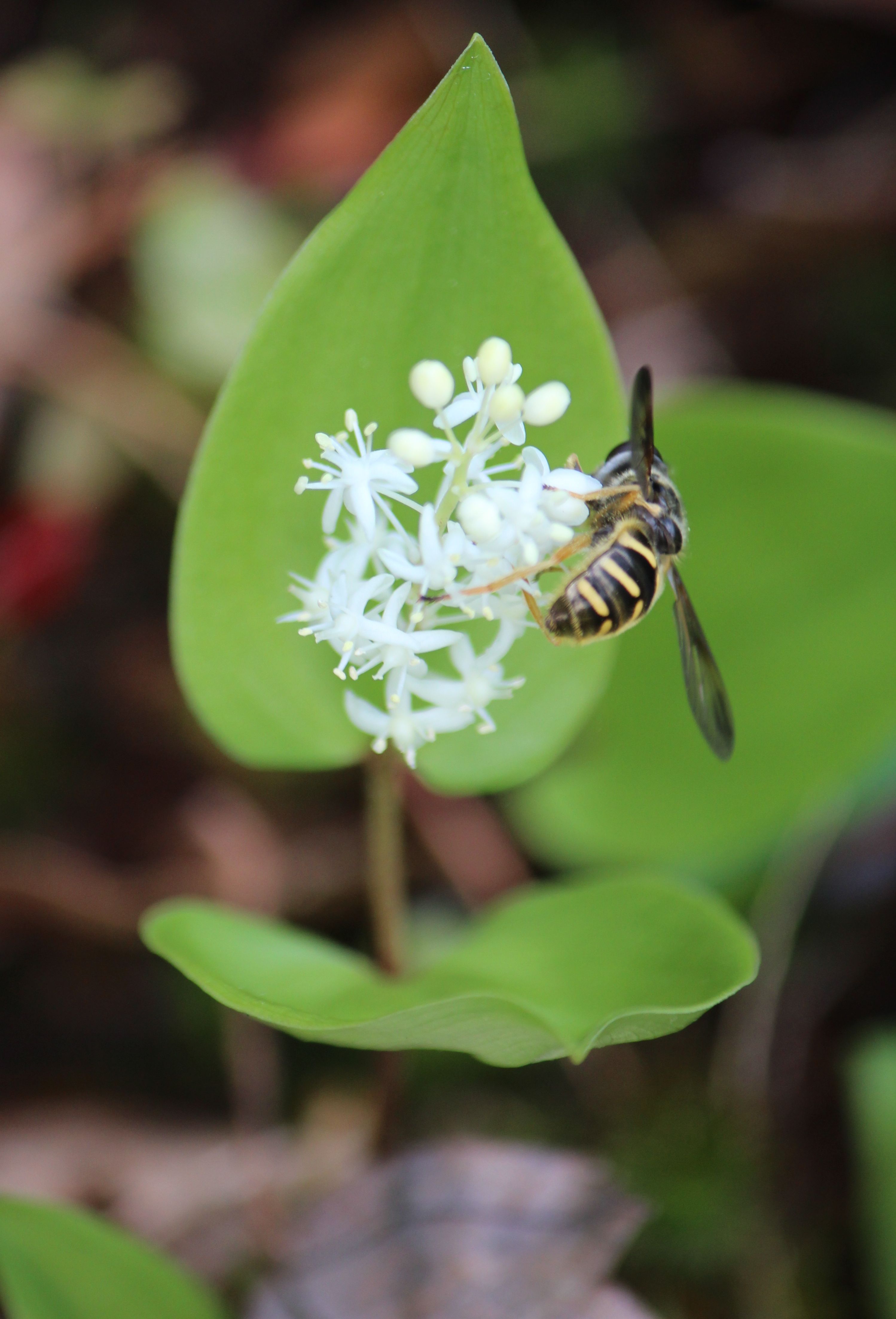
The dainty greenish-yellow flowers of Solomon’s Seal tried to hide, but we knew to look underneath.

false ss

False Solomon’s Seal, with its flowers at the tip of the stem, also grows along the trail.

water flowing

Where a few days ago, the few streams that cross the trail were dry, today they bubbled.

And so, upon my return home, it seemed only natural that I should head out to the vernal pool. Its story isn’t exactly over yet.

 bunchberry

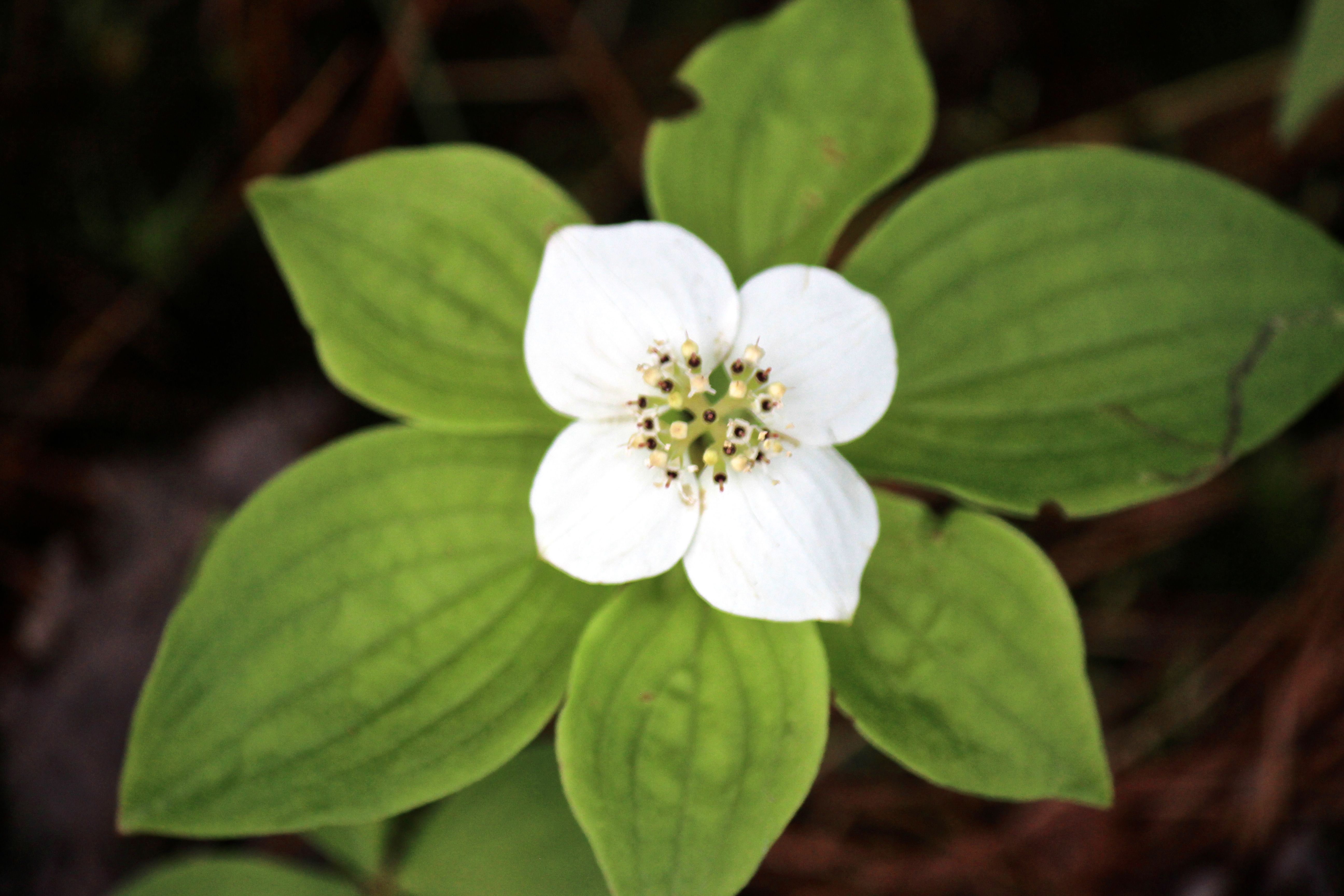
On the way, patches of Bunchberries are in full bloom.

bb 5

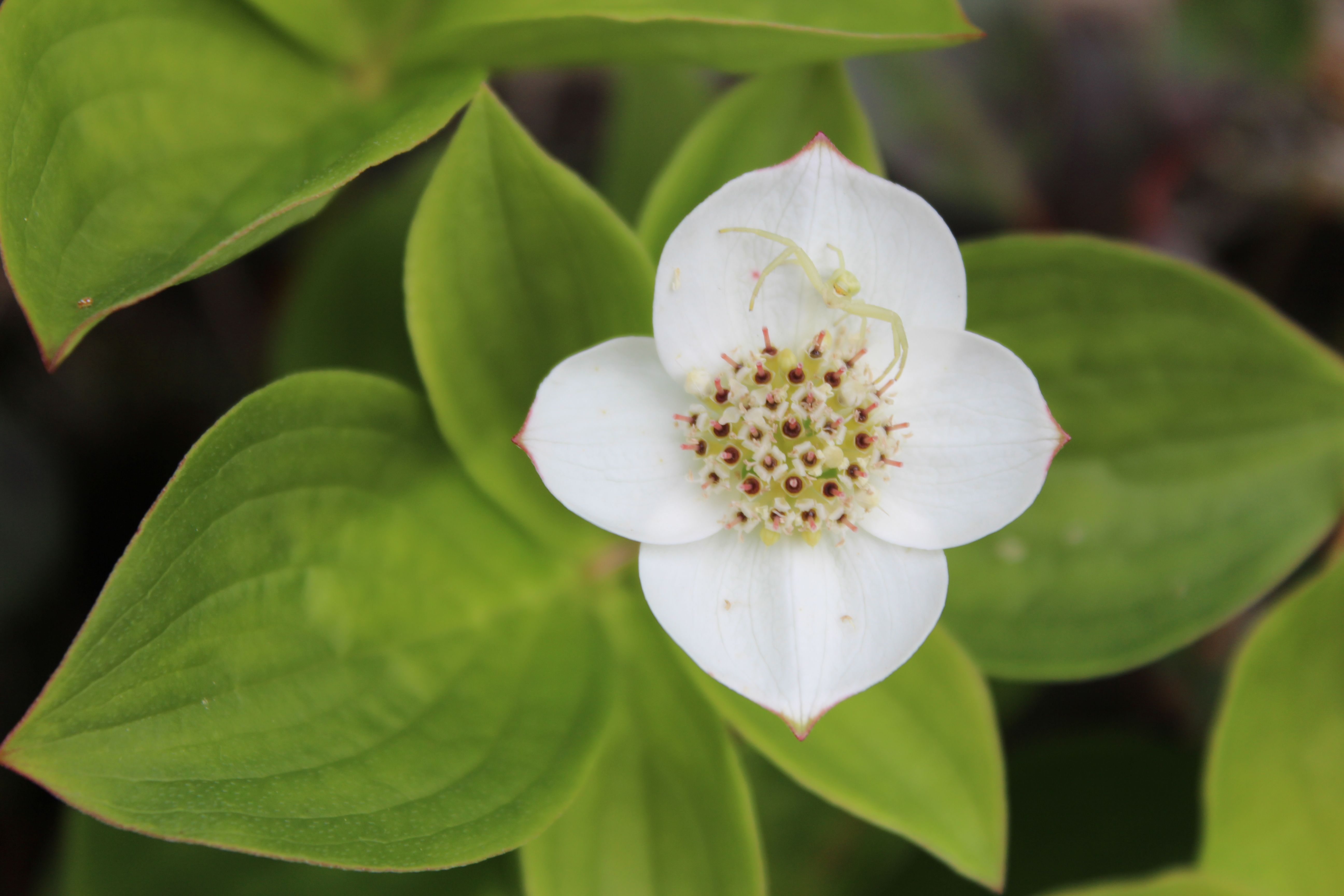
Like so many flowers, this one also has its own story to tell. Though it looks like it’s a plant with four white petals, those are actually bracts, the leaf-like structure located below the flowers.

bb & spider

The tiny flowers are in the center of the white bracts.

BB 4 leaves, 6 leaves

And here’s another thing to notice. Plants with four leaves do not have flowers, while plants with six leaves do have them. Reminds me of the Canada Mayflower, Wild Oats and Indian Cucumber Root–another case of a plant needing the extra energy from additional leaves in order to produce flowers.

Canada Mayflower

Not to be left out, the Canada Mayflowers are still in bloom.

Okey dokey–I’m finally getting to the vernal pool.

sallies

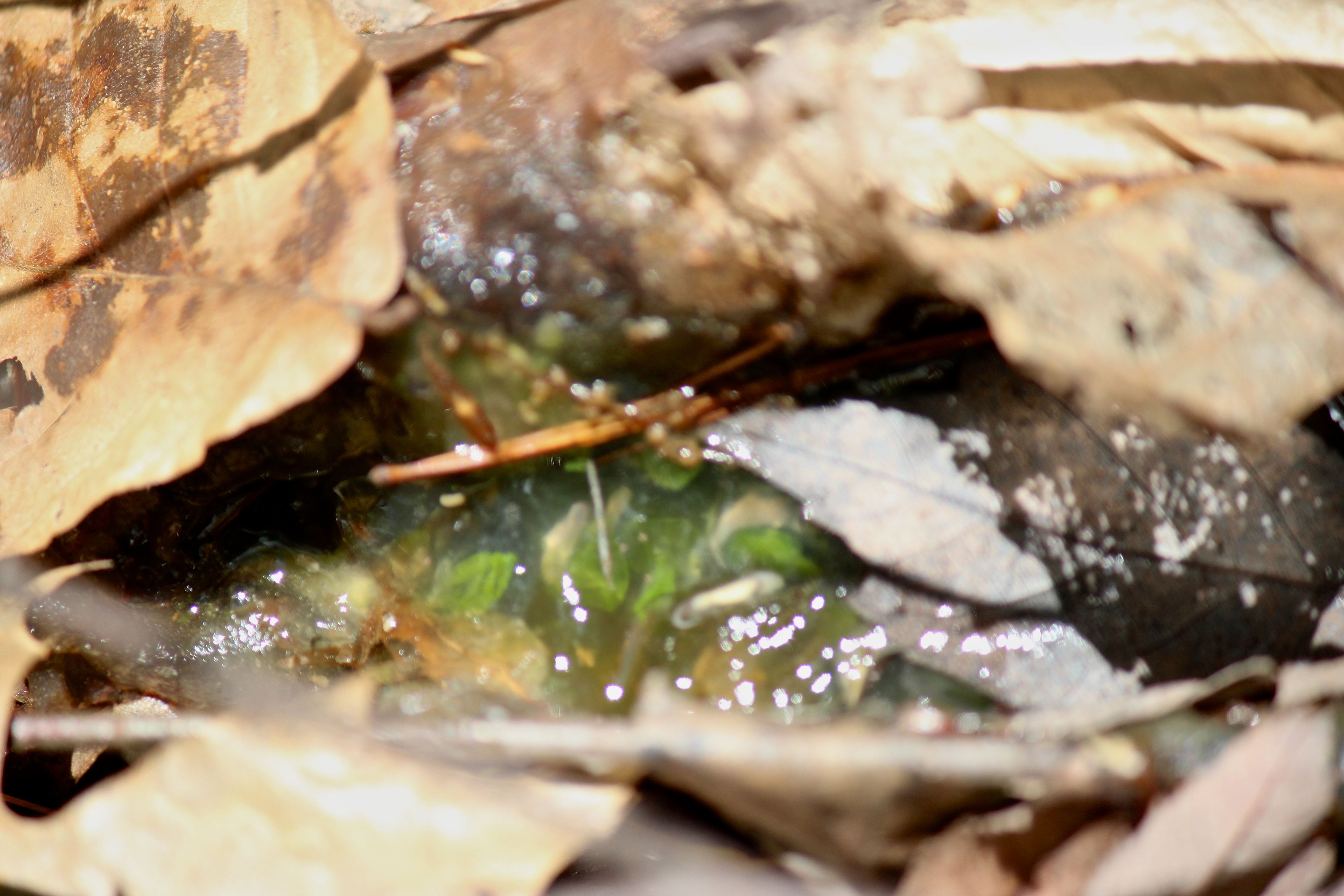
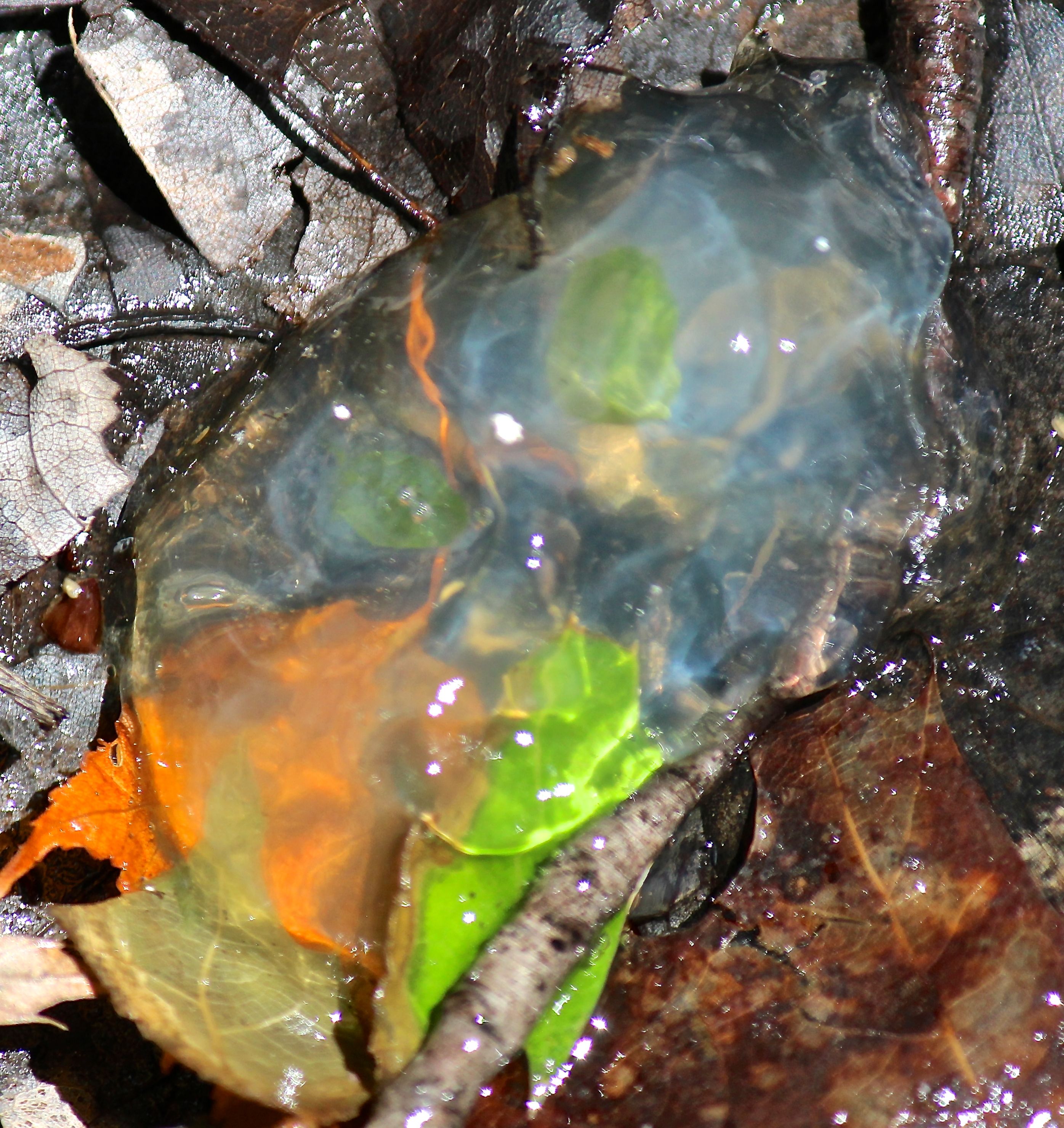
There was a bit of water in the depression, and I hoped that I might find wood frog tadpoles swimming about. Not to be. I didn’t even see any of those that died the other day. Nor did it smell so bad and there were only a couple of flies. The salamander eggs, however, were in different places than where they had started life. The sticks they were attached to have moved. Yet, the eggs were still there and except for being in different locations, they seemed okay.

sally 2

Will they survive with only a bit of dampness?

sally 4

True Confession: I did something I shouldn’t have done. I interfered with nature and put some of them into the wee bit of water. The jelly masses were warm to touch. Something will probably eat them soon, but I had to give them a chance.

butterfly 1

It was time to head home and get some work done. But . . . in the herb garden just outside the kitchen door–a Painted Lady.

Nature’s colors–a painting worth viewing each and every day.

Thanks for joining me for today’s wonder.

Reaping Rewards

How did I not know this was here? It’s in an old garden bed about twenty feet from the barn. Because of my green pinky, I haven’t been faithful in taking care of this particular garden and in recent years the blackberries have taken over. I reap the reward of blackberries so that’s not a bad thing. But until they’re in season, I don’t pay much attention.

Aha, therein lies the problem. Not paying attention. Not taking the time to notice what is in front of me. But that’s OK, because when I do notice, I love the surprise.

leaf

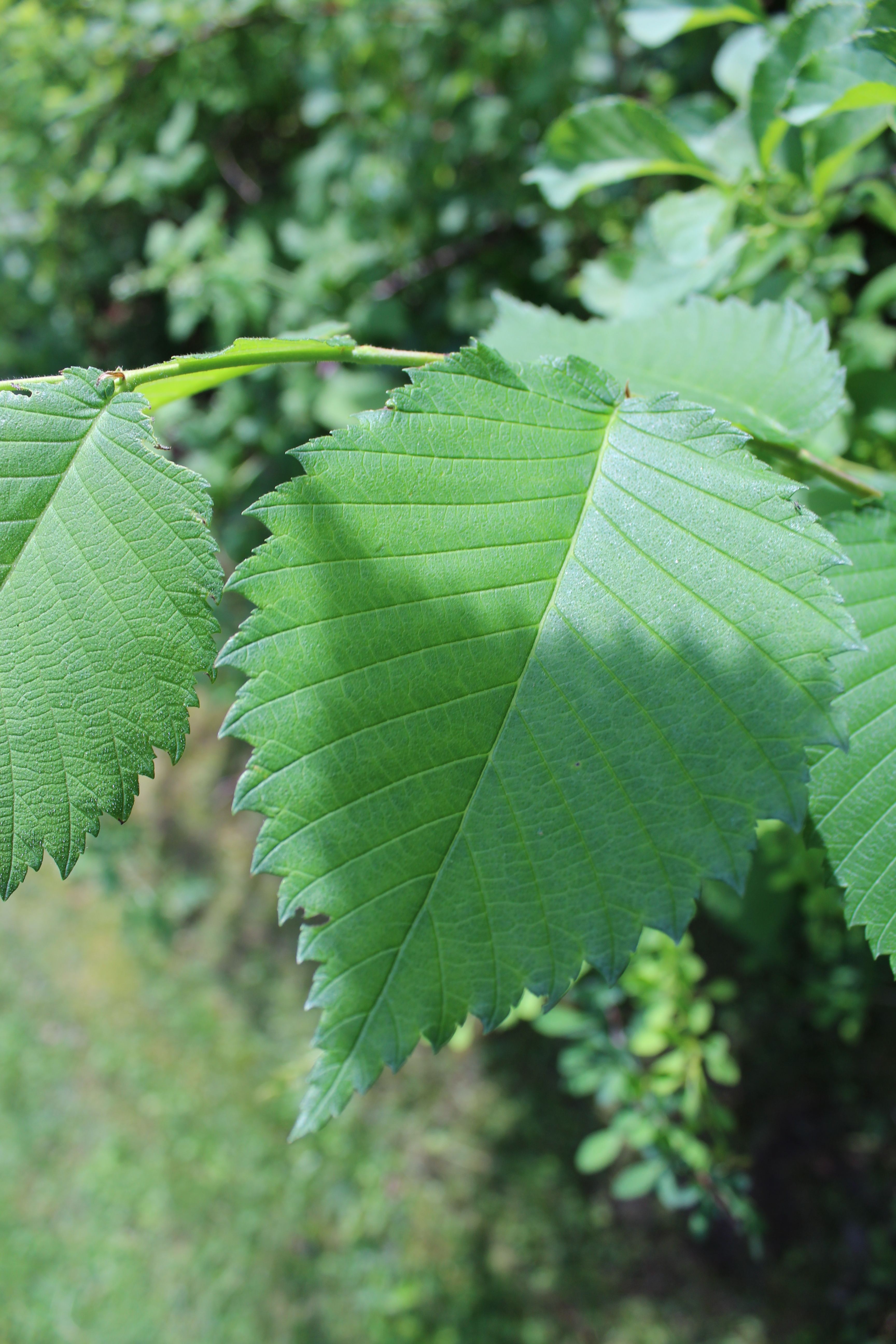
This leaf is what made my heart beat with joy.

On first glance, you may think it is this:

beech teeth

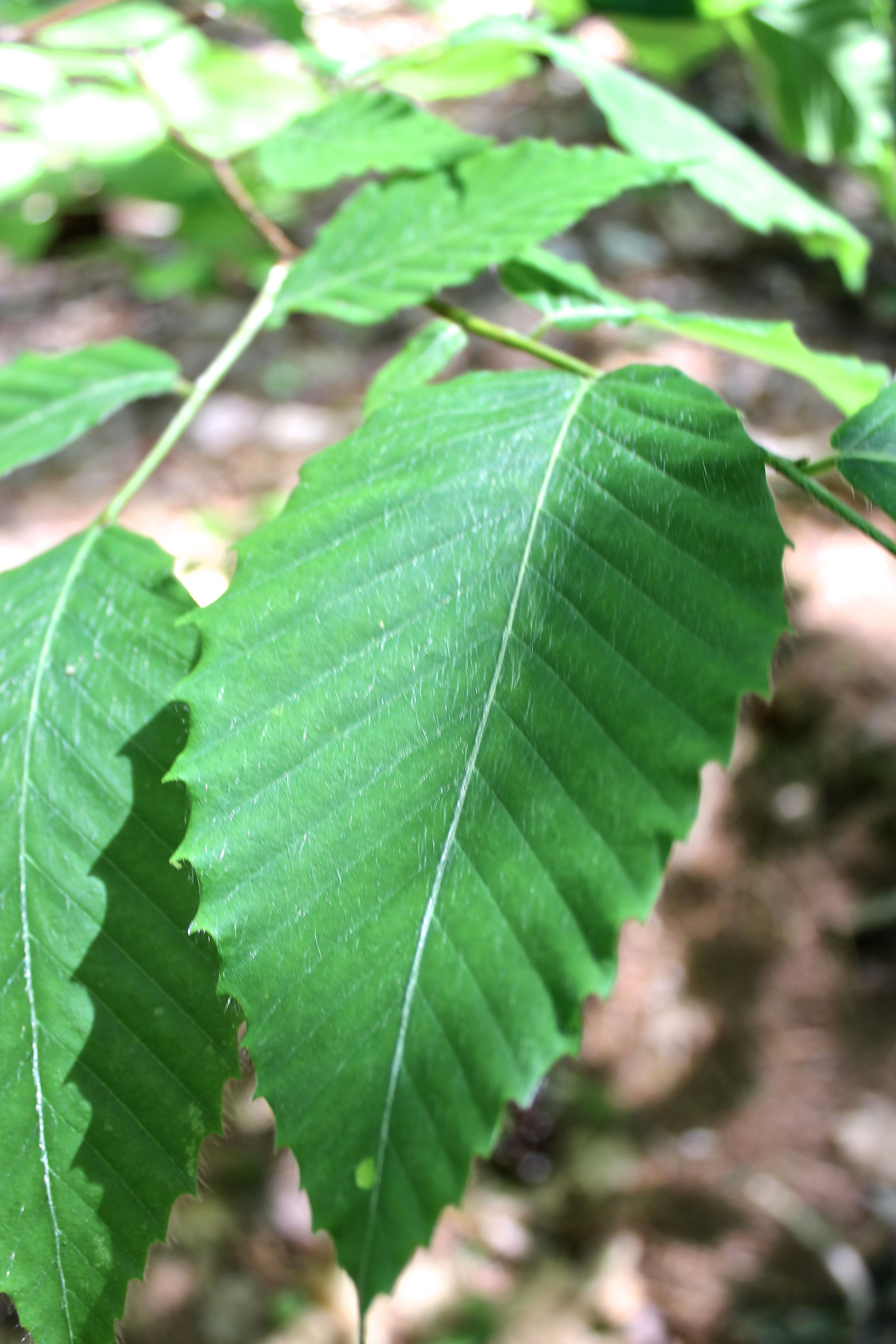
Yes, the ribs extend from the main vein to each tooth. But notice the large dips between teeth in the above example.

double toothed

Back to Exhibit A: While the ribs also extend from the main vein to each tooth;  the difference is in the teeth. In this case, there is a smaller tooth beside each bigger tooth along the leaf’s outer edge (aka double-toothed).

beech teeth and hair

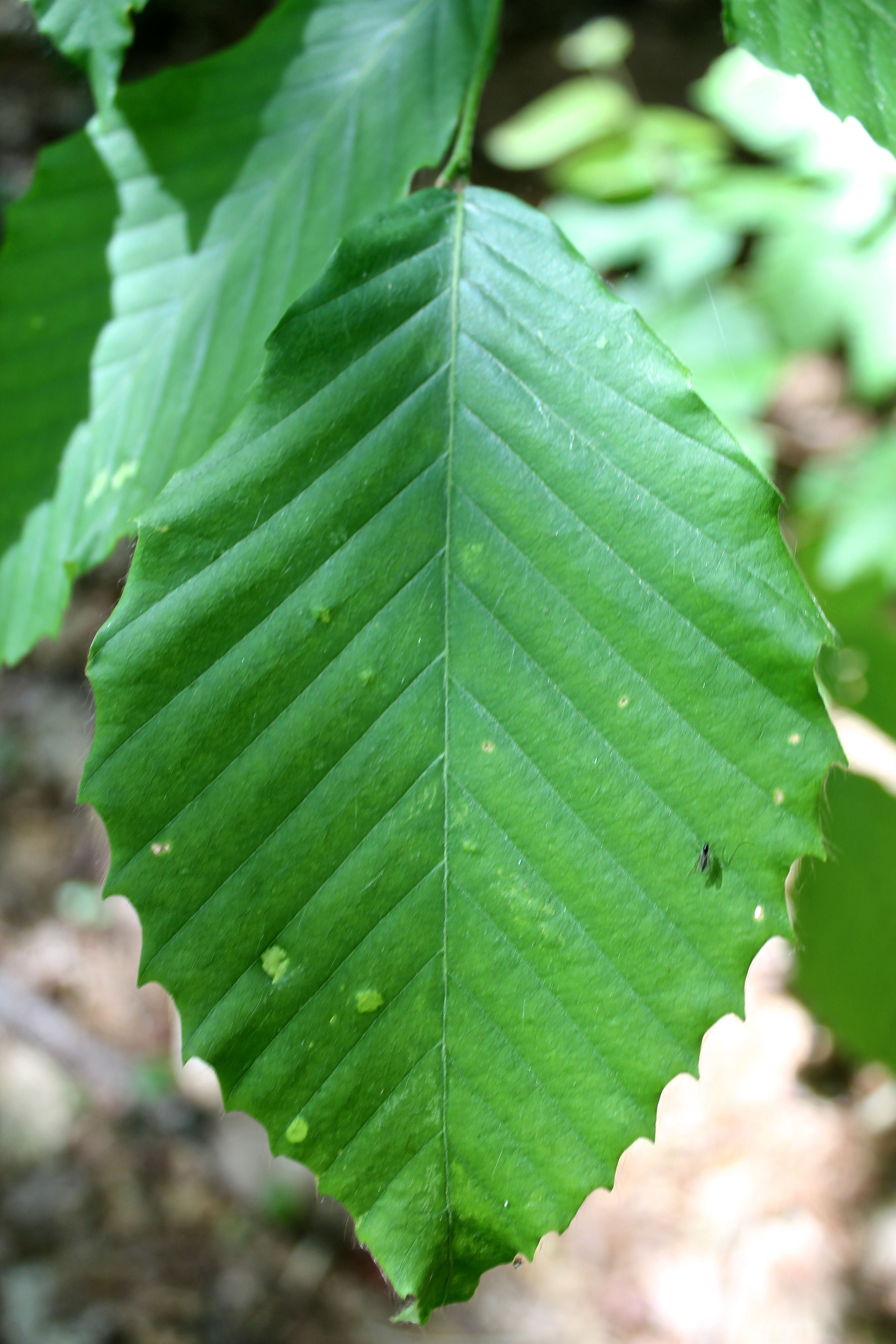
Exhibit B: Not the case.

teeth and assymetrical base

Exhibit A: Do you see the asymmetrical base where the leaf stem (petiole) attaches to the tree?

beech symmetrical

Exhibit B: Symmetrical at the base.

hairyunderside

Exhibit A: While both trees have alternate branching and hairy leaves with teeth, another distinguishing factor is that the leaves of Exhibit A are sandpaper coarse.

Those are just a few of the key features to look at when distinguishing between a beech and an elm. I’m not a forester, but this tree appears to be an American Elm. I’m so glad that my green pinky has kept me from managing the garden where it grows.

I grew up just outside the Elm City of New Haven, Connecticut. Today, it is the Elm City in name only as Dutch elm disease played havoc with the beautiful old shade trees that lined the city streets.  It didn’t just happen in CT either.

In Forest Trees of Maine, published in 2008 by the forest service, I read that American Elms occur throughout the state, but good old Dutch elm disease severely reduced the number. We have one. Right here in our yard. :-)

I’m so glad that I opened my eyes. I’m so glad that I touched the leaf. I’m so glad I reaped another reward this week. 1. Pink Lady’s Slipper in the backyard. 2. American Elm in the side yard. I can’t wait to make another discovery.

I hope you take time to wander about your yard and wonder.

life IS good, but we NEED rain

Logger PHil 2

“Einstein said ‘The difference between stupidity and genius,” quoted Maine logger Phil Dow, “is that genius has its limits.'” Whether or not Einstein actually made that statement doesn’t matter. What’s matter is that on a beautiful day in May, Mr. Dow stood beside the reading tree at China Schools Forest in China, Maine, and in his soft-spoken way he informed the students sitting on picnic tables in front of him about Maine’s history and the logging industry. They were mesmerized. So was I. Life IS good. And check out his beard and that reading tree platform. Wow!

China Schools Forest

A friend and I had journeyed to China this morning to observe Forest Days in the 50-acre forest abutting the China Primary and Middle Schools. Six hundred, yes, you read that correctly, 600 kids participated in the program. With their teachers and parent volunteers, they moved from station to station, learning about forest management, pond critters, soil composition, tree id, flower dissection, and so much more from over 30 presenters. They were engaged, happy, polite . . .  and not in school. 600 kids roaming about. We loved hearing their voices wafting through the woodland.

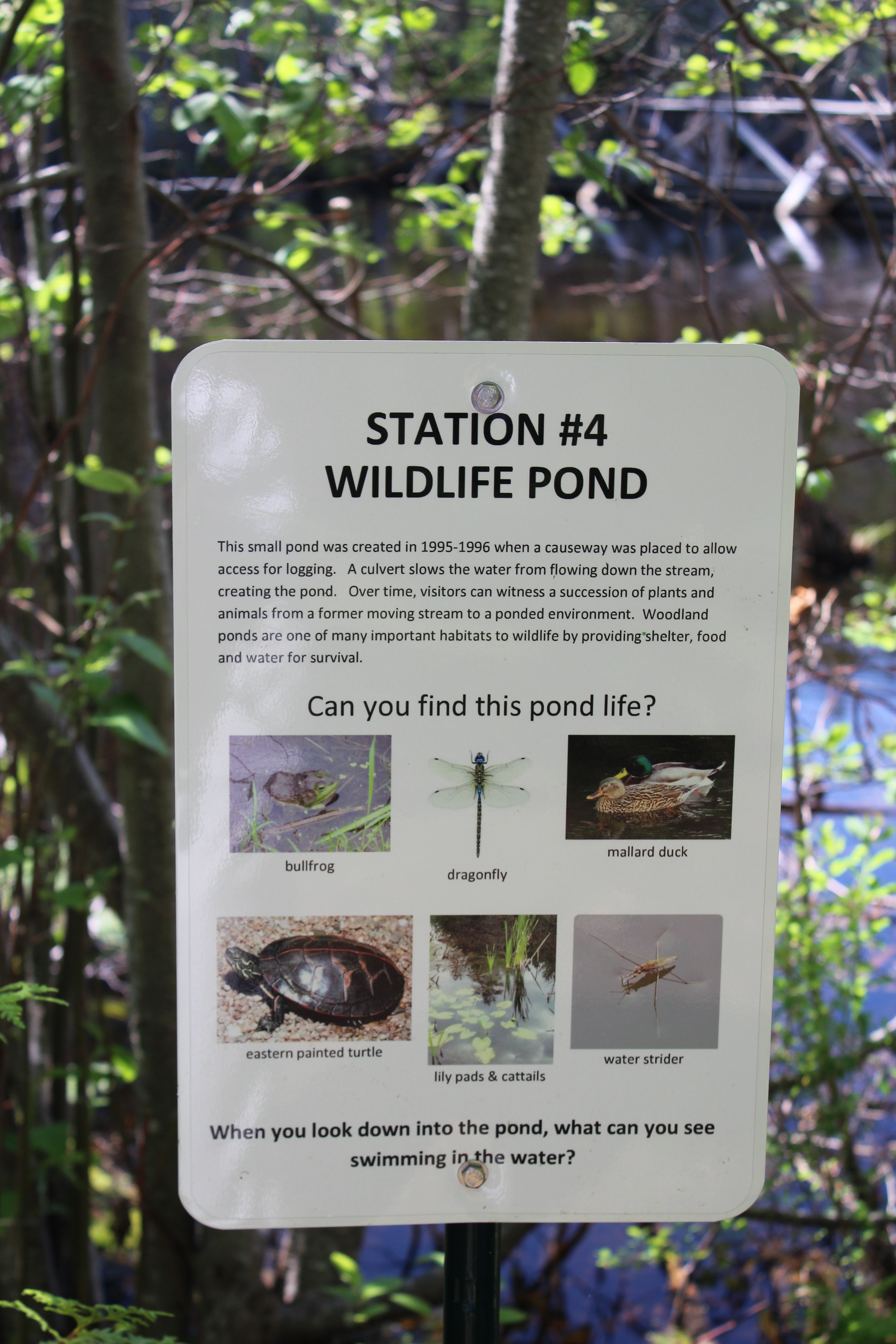
station 4, wildlife pond

We not only wanted to see how the program worked, but also to take a look at the outside classrooms. Created in the 1990s, this demonstration forest is an on-going project. To date, there are seventeen classrooms. At each, an interpretive sign explains what you should notice. (Disclaimer: the signs were created by Anita Smith, a former teacher at the schools and a Maine Master Naturalist graduate, who served as our most gracious guide today. Anita and a colleague have spent the last year developing today’s program. They offer Forest Day every other year, but the outdoor classrooms are always available.)

kids on bridge

There’s a silviculture classroom, a red pine plantation, a tracking pit, den tree and more. And across the man-made pond, is a bridge that expands at the center, creating plenty of room for an entire class of students. Today, they used nets to explore pond life from the bridge.

leach

My friend and I explored pond life as well. Check out this leach.

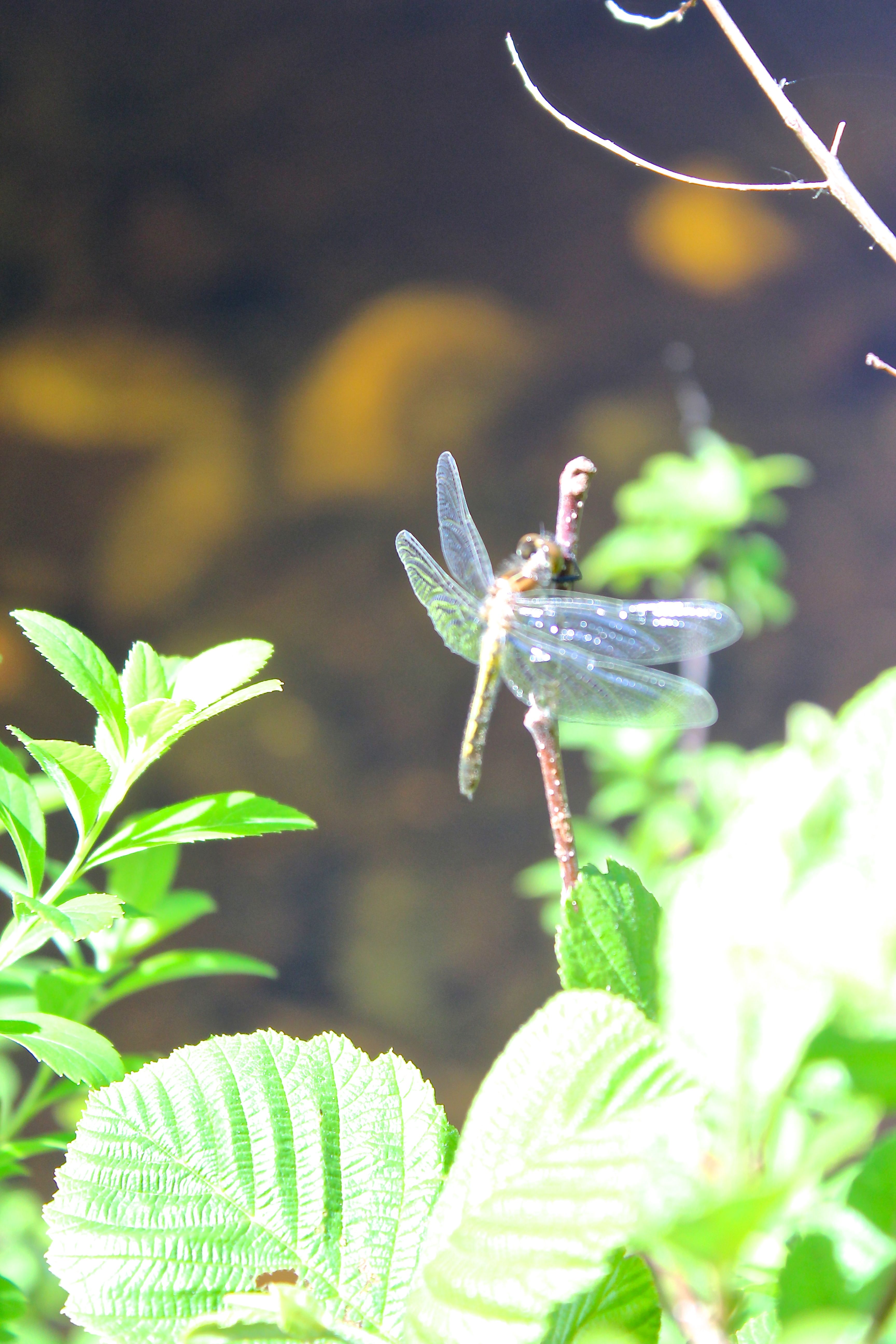
dragonfly

And a dragonfly. Dragonfly sitings–always worthy of a celebration.

measuring-wood-300x200

Though I didn’t see them work with this today, at the Forest Measurement classroom, they learn how to measure a cord of wood and board feet. And about the clinometer, a hand-held instrument used to measure ground slope, road grade and tree height, plus a biltmore or woodland stick used to estimate tree height and diameter. When we paused today, a local forester had middle school students simulate best forest management practices.

white lady's slipper

As we walked along part of the 1.4-mile path, we also noticed the flora–a White Lady’s Slipper. In Newcomb’s Wildflower Guide, this is listed as very rare.

pink

Pink Lady’s Slippers grow abundantly in these woods.

False Solomon's Seal

We also saw False Solomon’s Seal or Wild Spikenard.

job-started-300x200

I have a lot of favorite things about this place, but the two that top my list are the reading tree where Logger Phil spoke and the signs above the pavilion–especially this one: “Congratulations on a job well started.” Indeed.

The driving was a cinch because we chatted non-stop and two hours later, I was home again, home again, jiggity jig.

If you read my post yesterday about the vernal pool, you won’t necessarily want to read any further. The life cycle is complete. Less than 24 hours after my visit yesterday afternoon, the pool has dried up.

VP 1

And, I’m afraid the tadpoles have succumbed.

dead tadpoles

To the earth they shall return in one form or another.

flies galore

The place was buzzing with flies.

Moose Pond

So on a brighter note, I visited my third “pond” of the day–Moose Pond. It was the perfect setting for a late afternoon interview.

life IS good, but we do NEED rain.

Never Call It Just A Dandelion

I lent out my copy of a book by a similar title: Never Say It’s Just A Dandelion by Hilary Hopkins so I don’t have it in front of me to check her notes.

IMG_1966

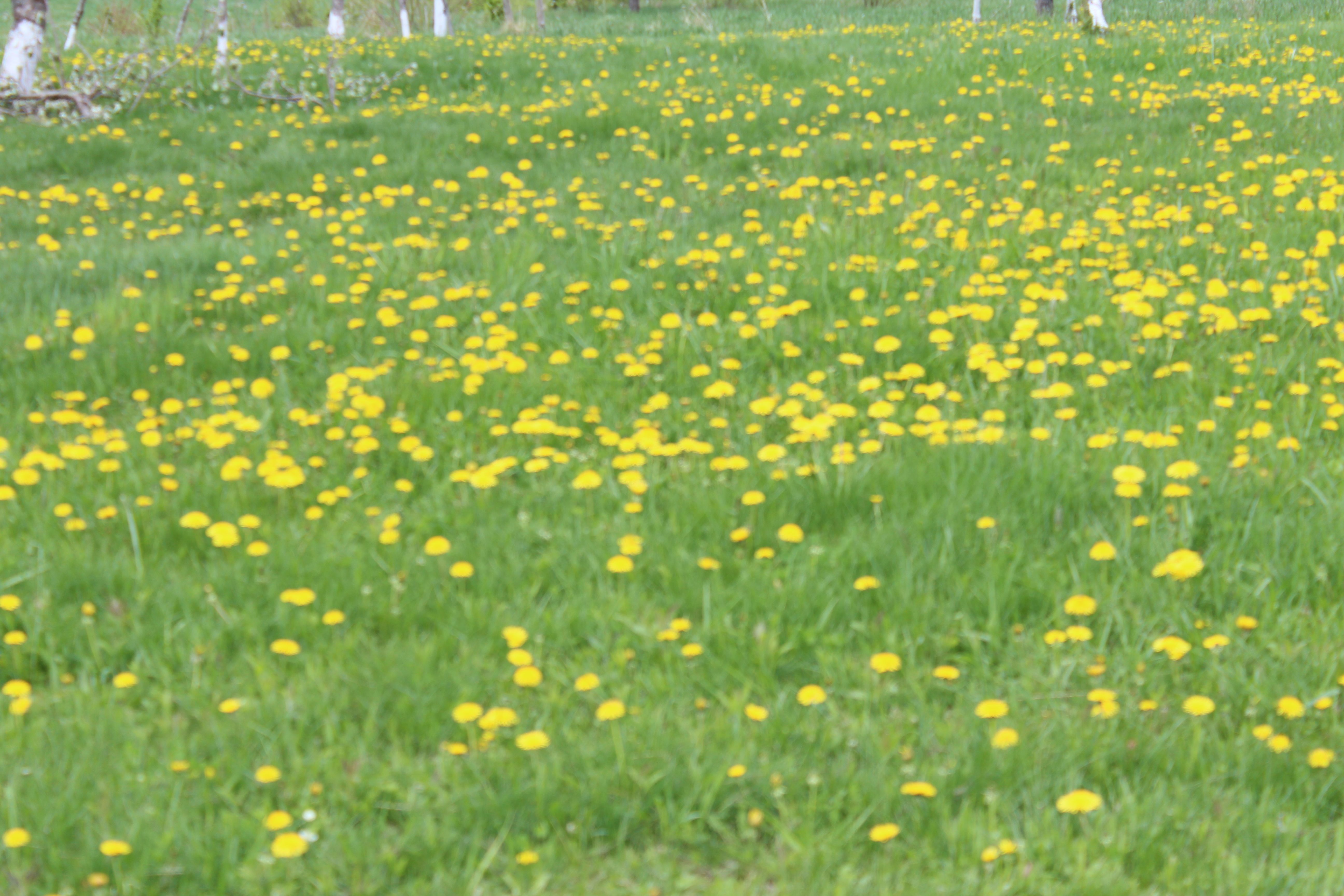
field

This field of dandelions that I saw at Viles Arboretum in Augusta during a Maine Master Naturalist field trip yesterday inspired me to take a closer look at the species that brightens our backyard.

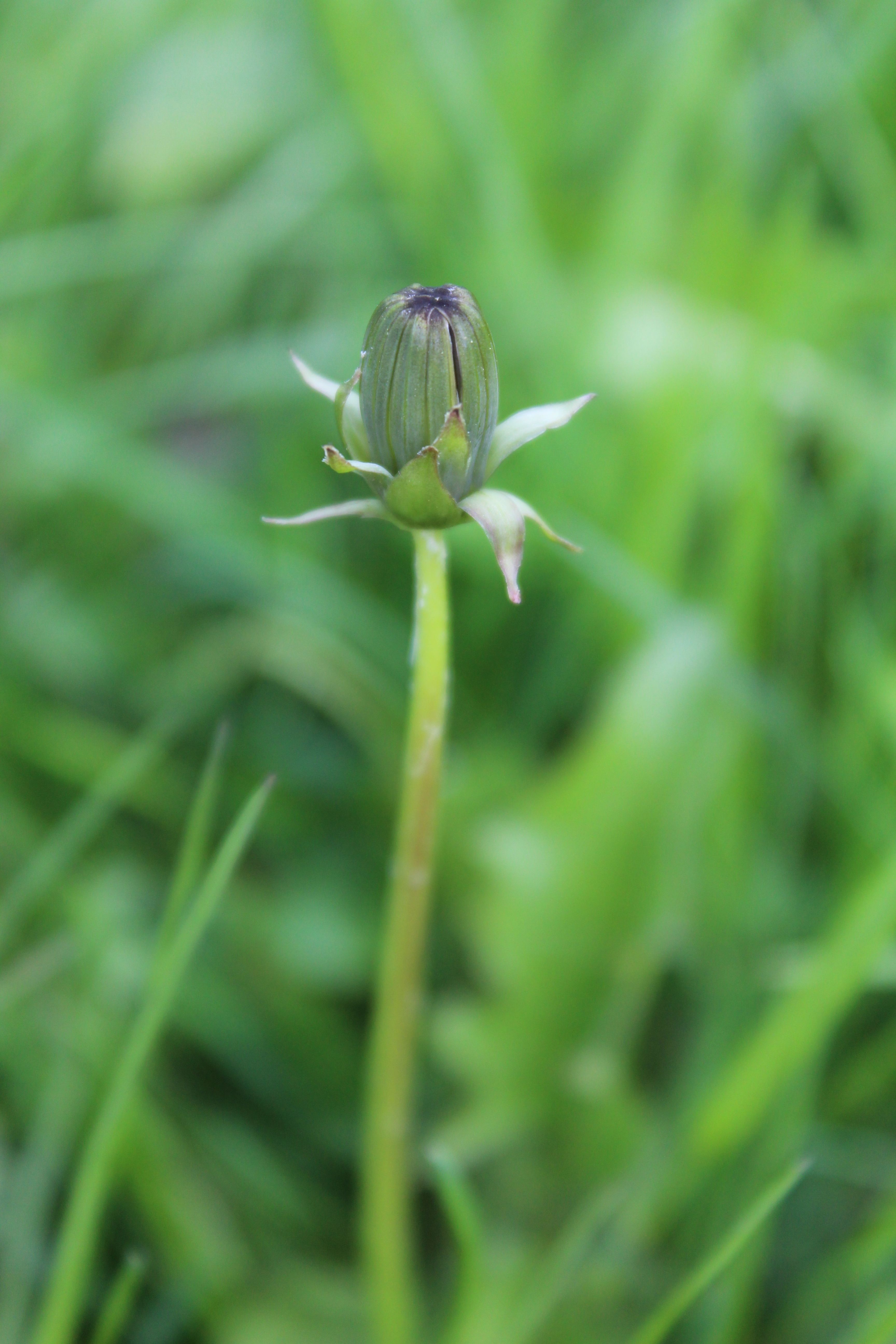
1

While some green bracts turn downward to keep insects at bay, others protect the developing flower.

2

One ray at a time

3

it begins to open.

4

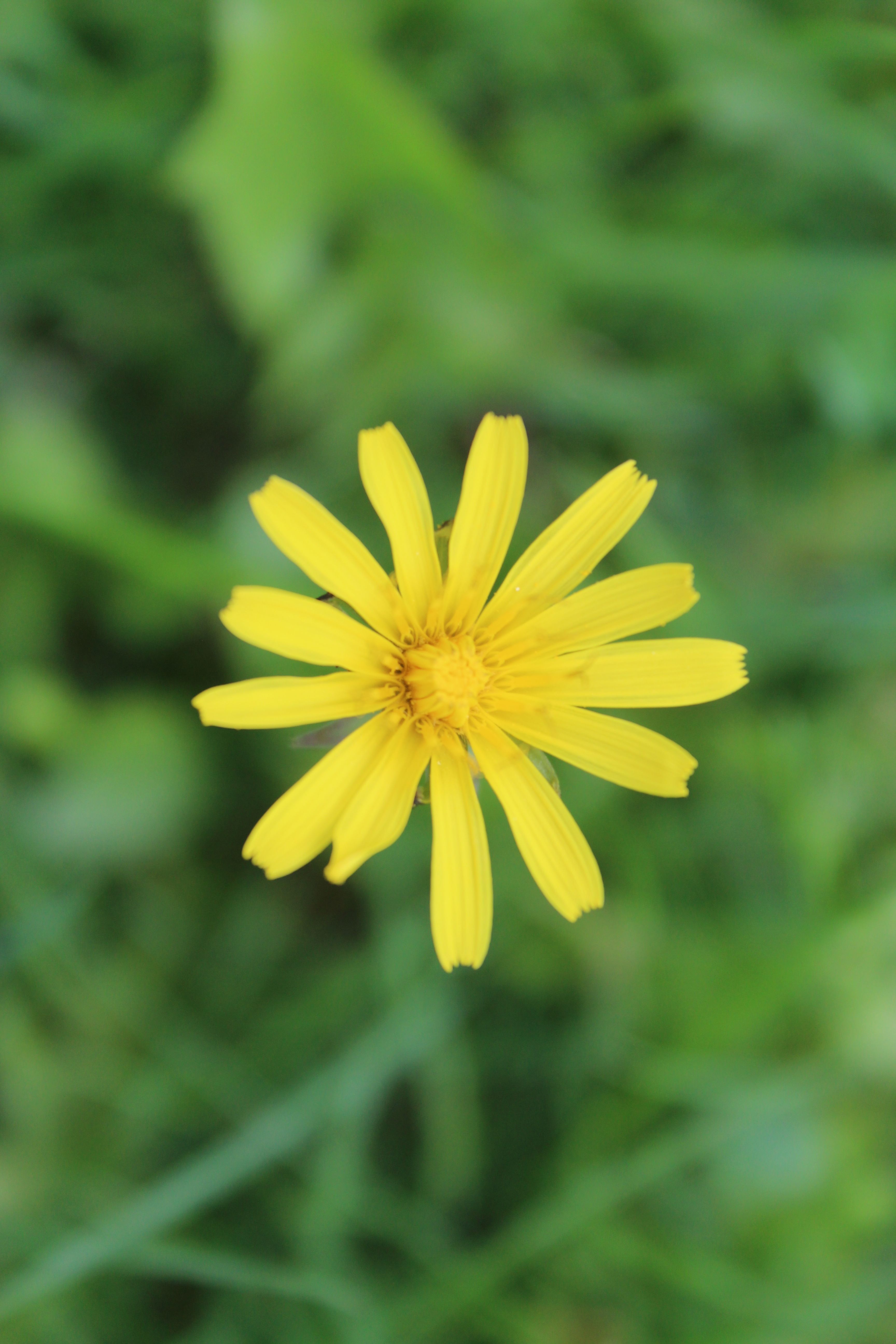
Notice how every ray is notched.

teeth

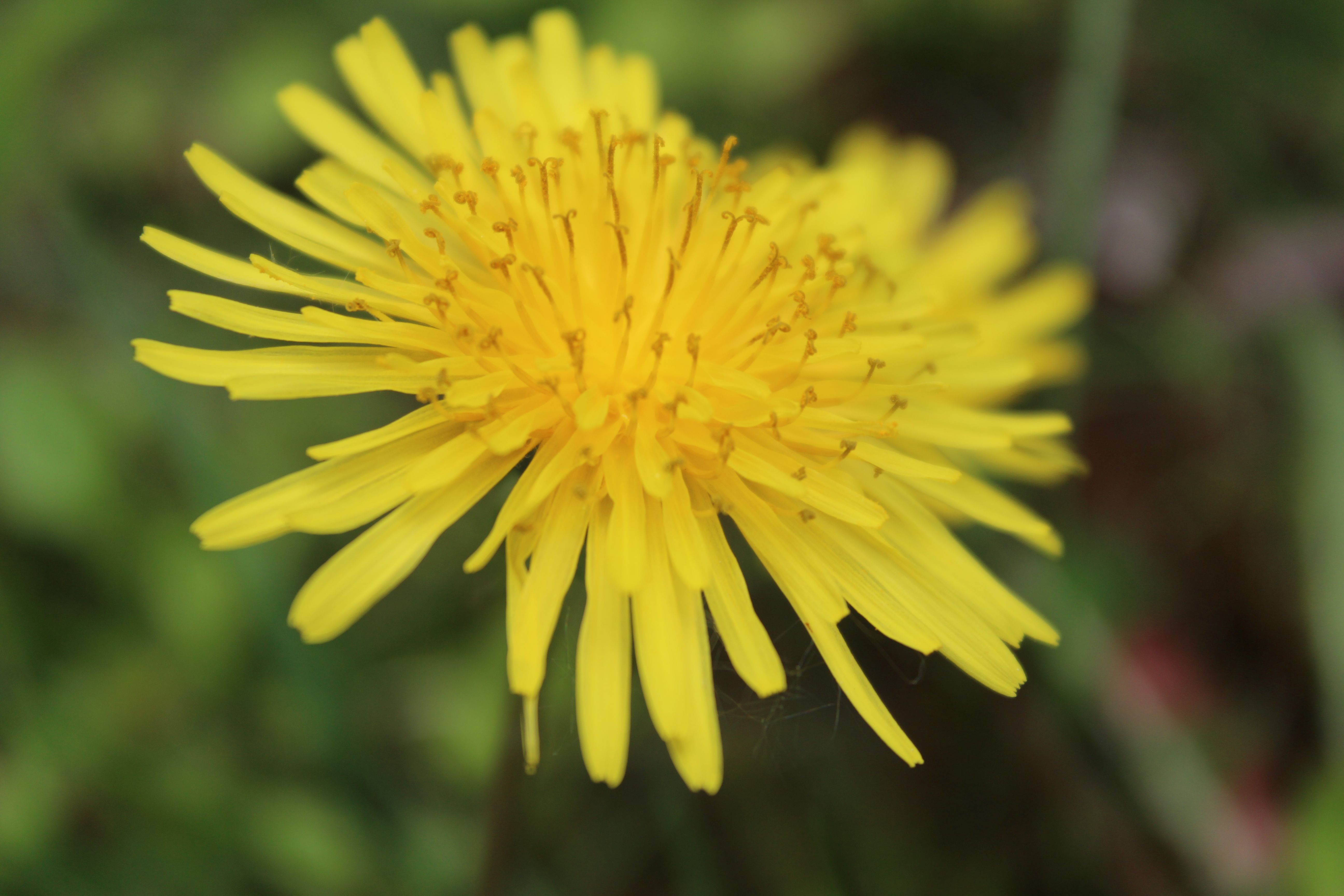
I brought one in to take a closer look at the notches. Each has five “teeth” representing a petal and forms a single floret.

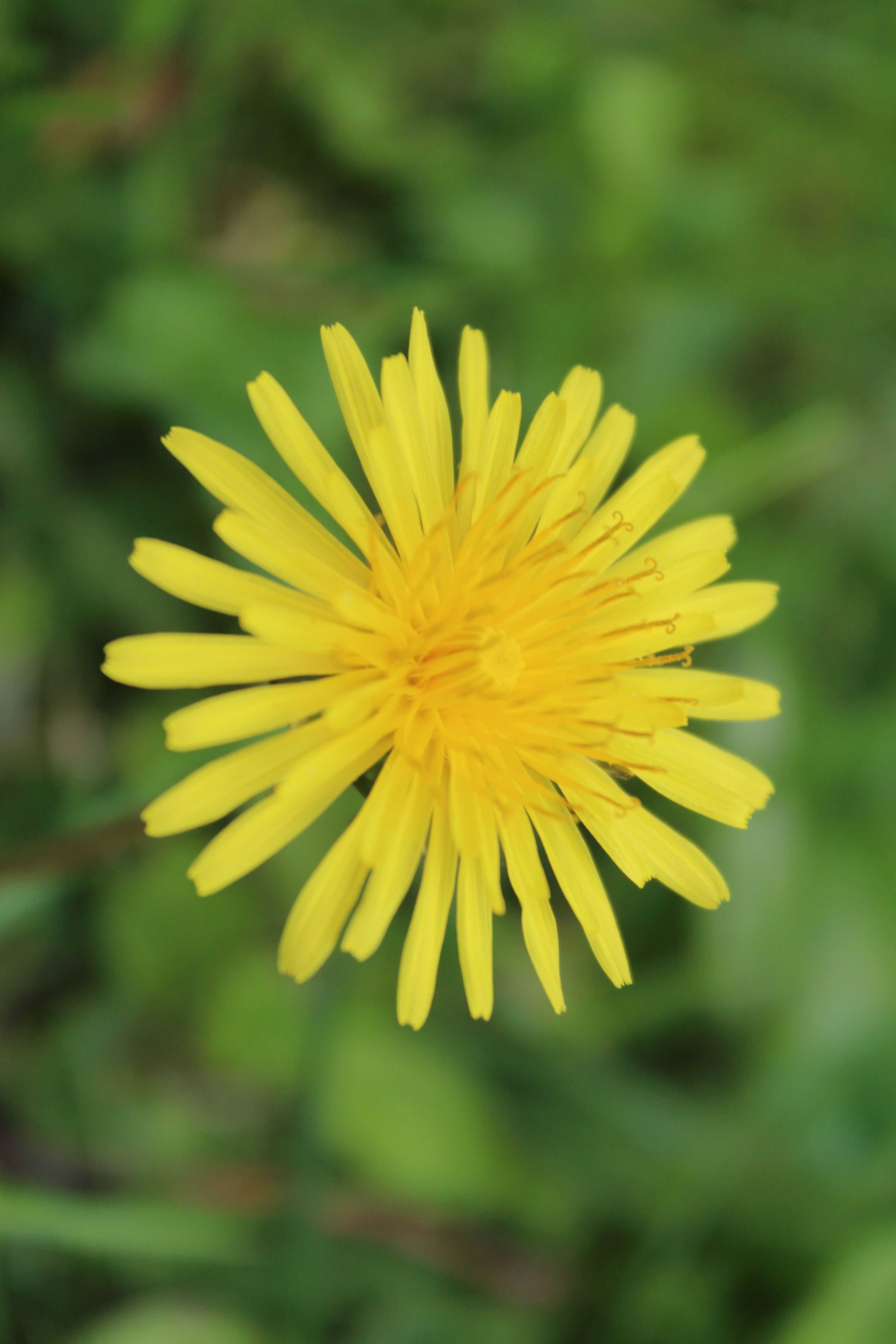
5

Fully open, the bloom is a composite of numerous florets.

6

Each stigma splits in two and curls.

6a6b

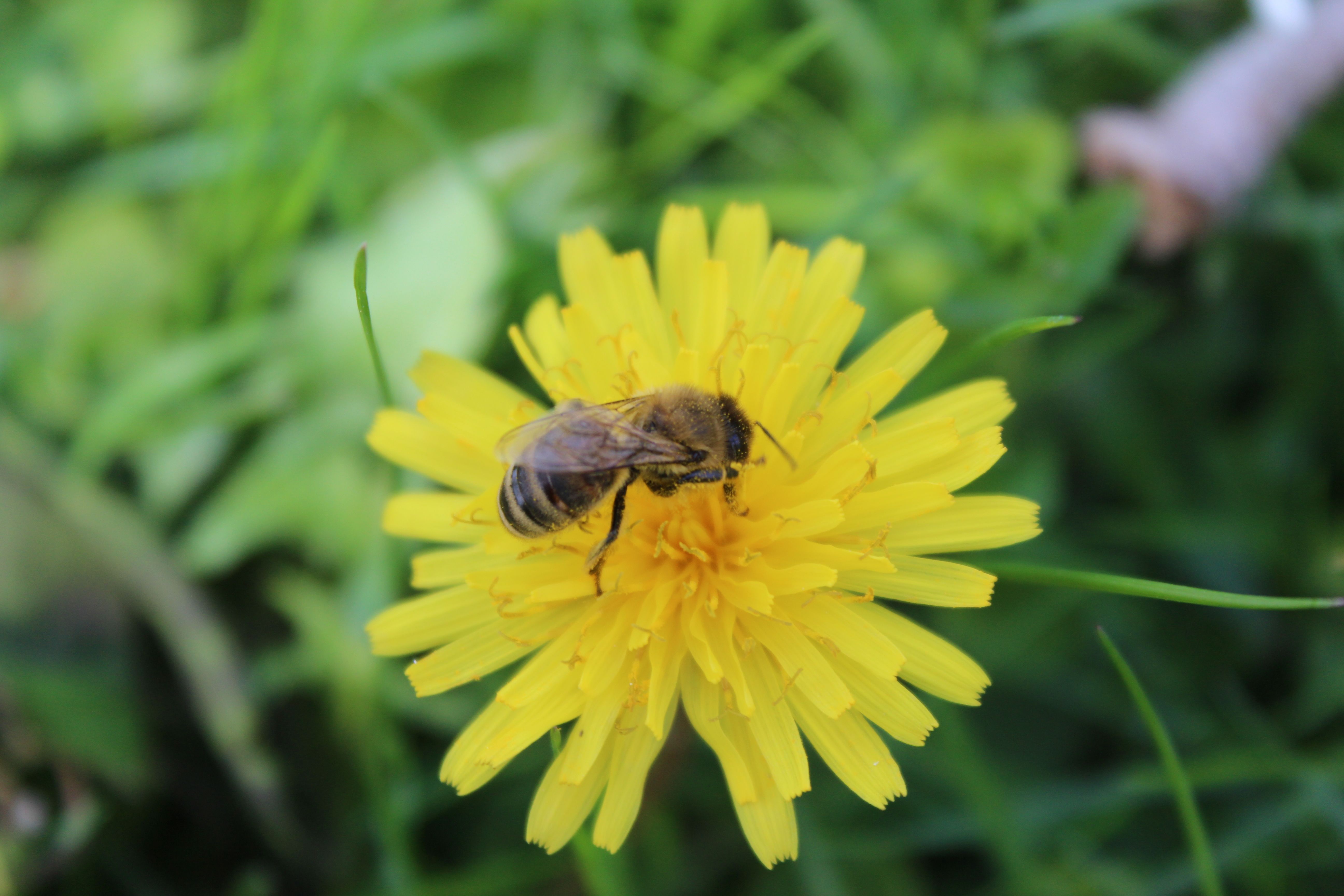
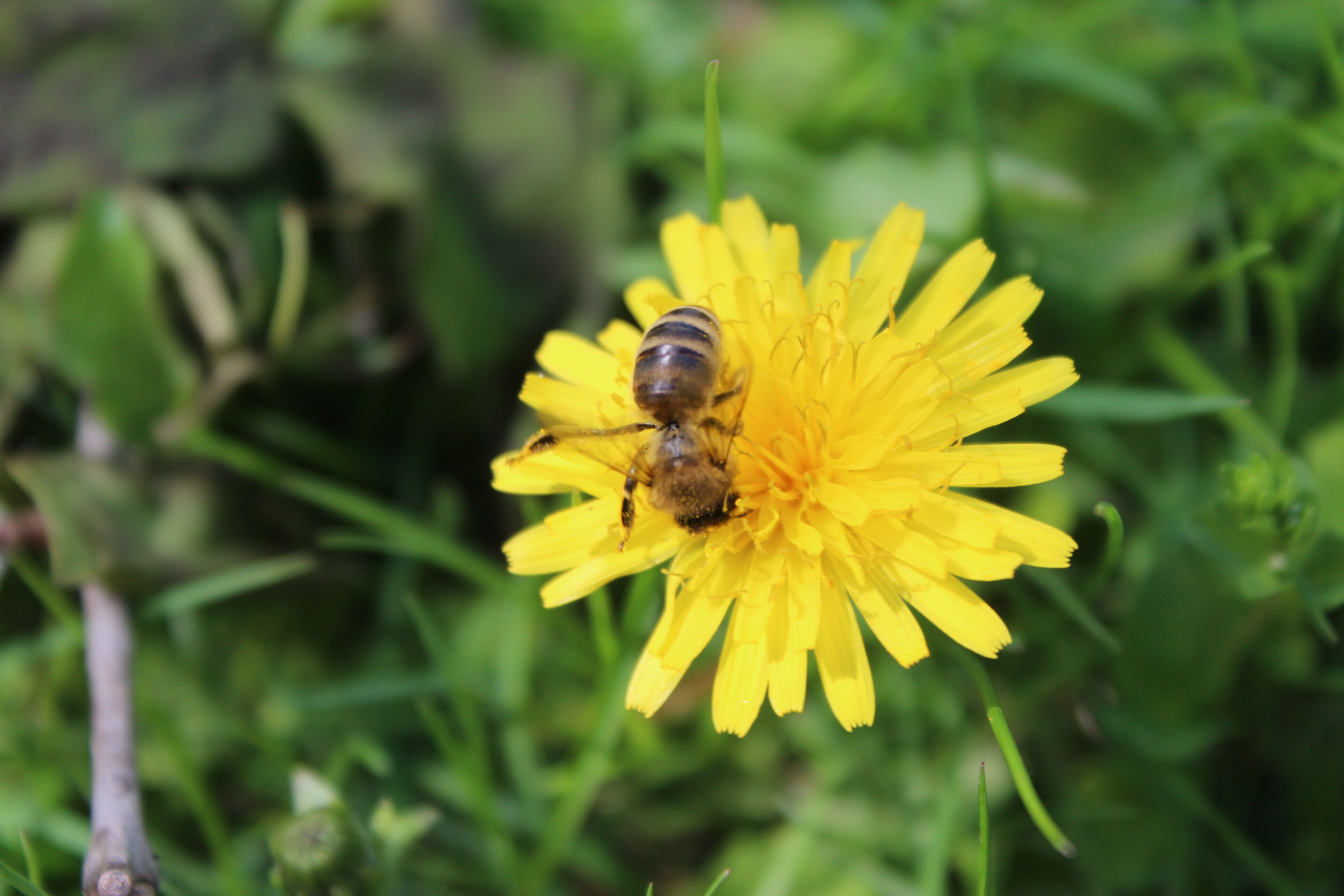
Bees and other insects seek the nectar.

seed

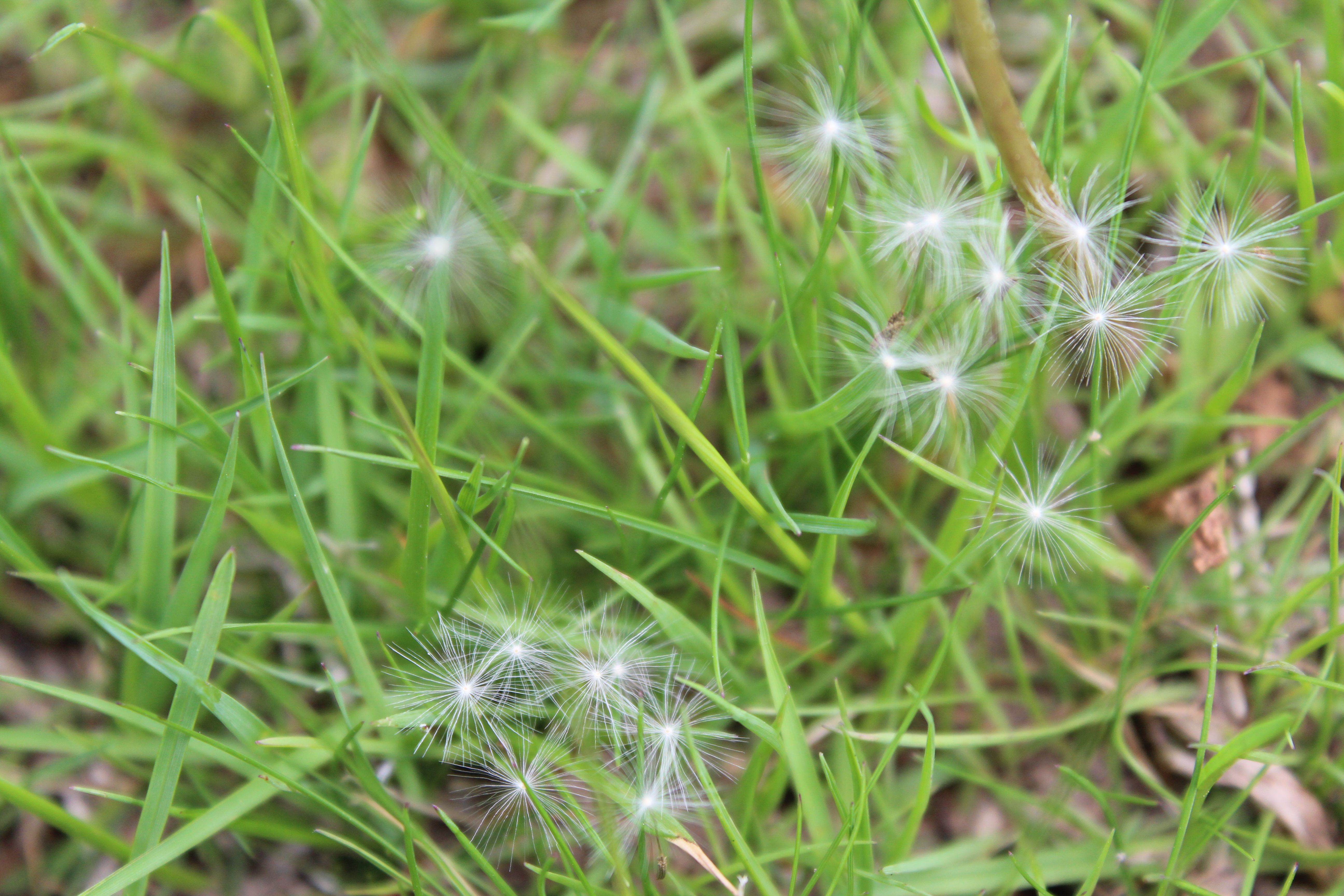
A seed grows at the base and fine hairs form a parachute.

7

In time, the bloom closes up and then turns into a fluffy ball of seeds waiting for you or the wind to disperse them.

8

Though you may not be able to see it here, each seed is covered with tiny spikes that probably help it stick to the soil when it lands.

9

The yellow carpet will continue to change in our backyard

10

one seed at a time.

Who knew a Common Dandelion (Taraxacum officinal) could be something to wonder about? Emily Dickinson did:

The Dandelion’s pallid tube

Astonishes the Grass,
And Winter instantly becomes
An infinite Alas-

The tube uplifts a signal Bud
And then a shouting Flower,-
The Proclamation of the Suns
That sepulture is o’er.

Emily Dickinson

This Lady’s Delight

There’s something about the Chip Stockford Reserve on Ladies Delight Road in Lovell that keeps pulling me back. I think it’s the history associated with this property that fascinates me. And the questions it raises.

From the start, there is a cellar hole and barn foundation. foundtion 1

About seven years ago, during a visit to the Lovell Historical Society, I learned that  Eldridge Gerry Kimball had purchased 200 acres on January 31, 1880 from Abraham E. Gray.

Various journals from that time period include entries about driving cattle over to the Ladies Delight pasture, picking cranberries over by The Pond, as they called Kezar Lake, picking apples, driving sheep to pasture, picking pears, mowing oats and trimming pines.

large pines

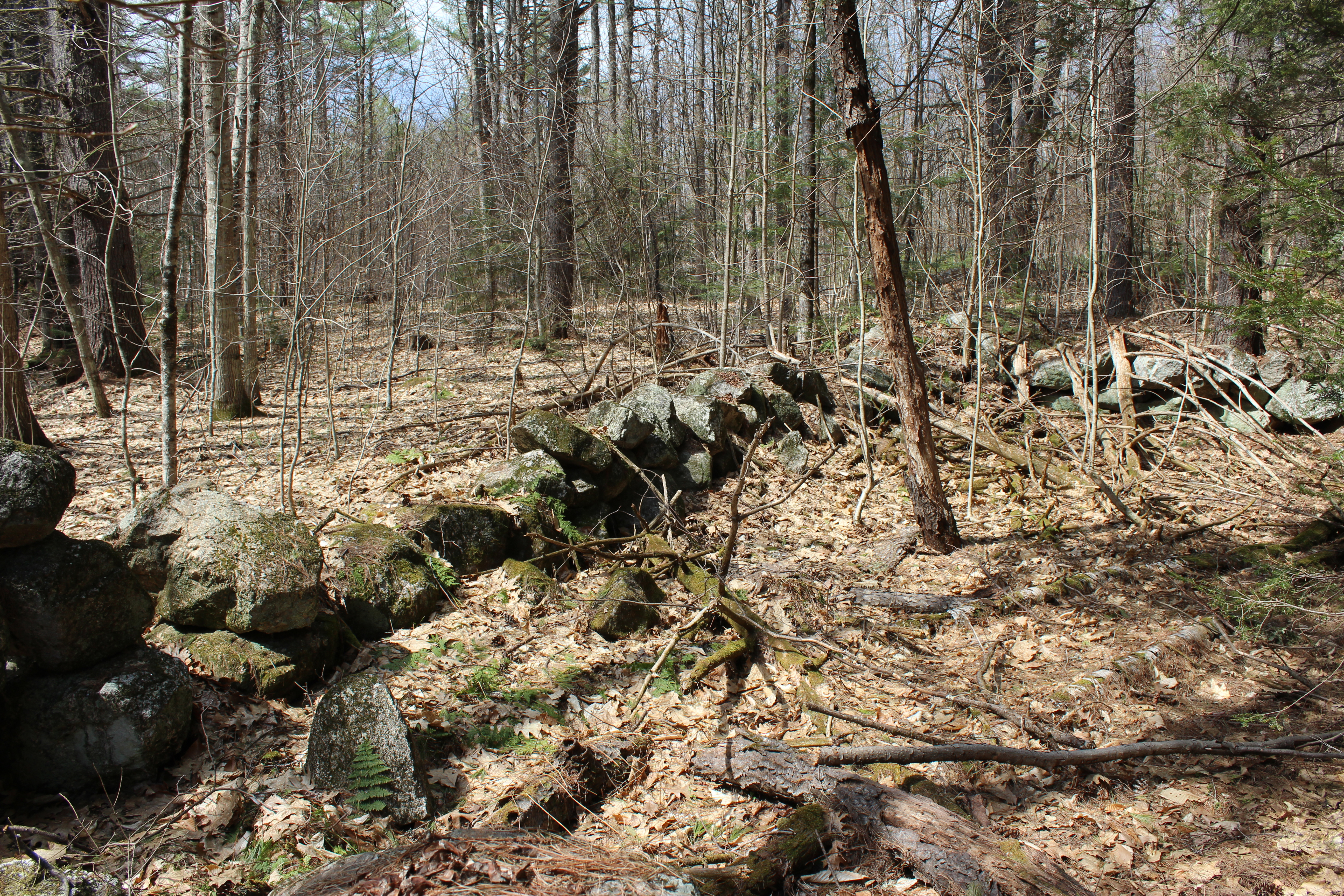
Today, it’s the huge pasture pines, stonewalls and a couple of foundations that tell part of the story. I’ve also heard that this area was used as a cattle infirmary. According to local lore, diseased cattle were brought to Ladies Delight to roam and die, thus preventing disease from spreading to healthy cattle.

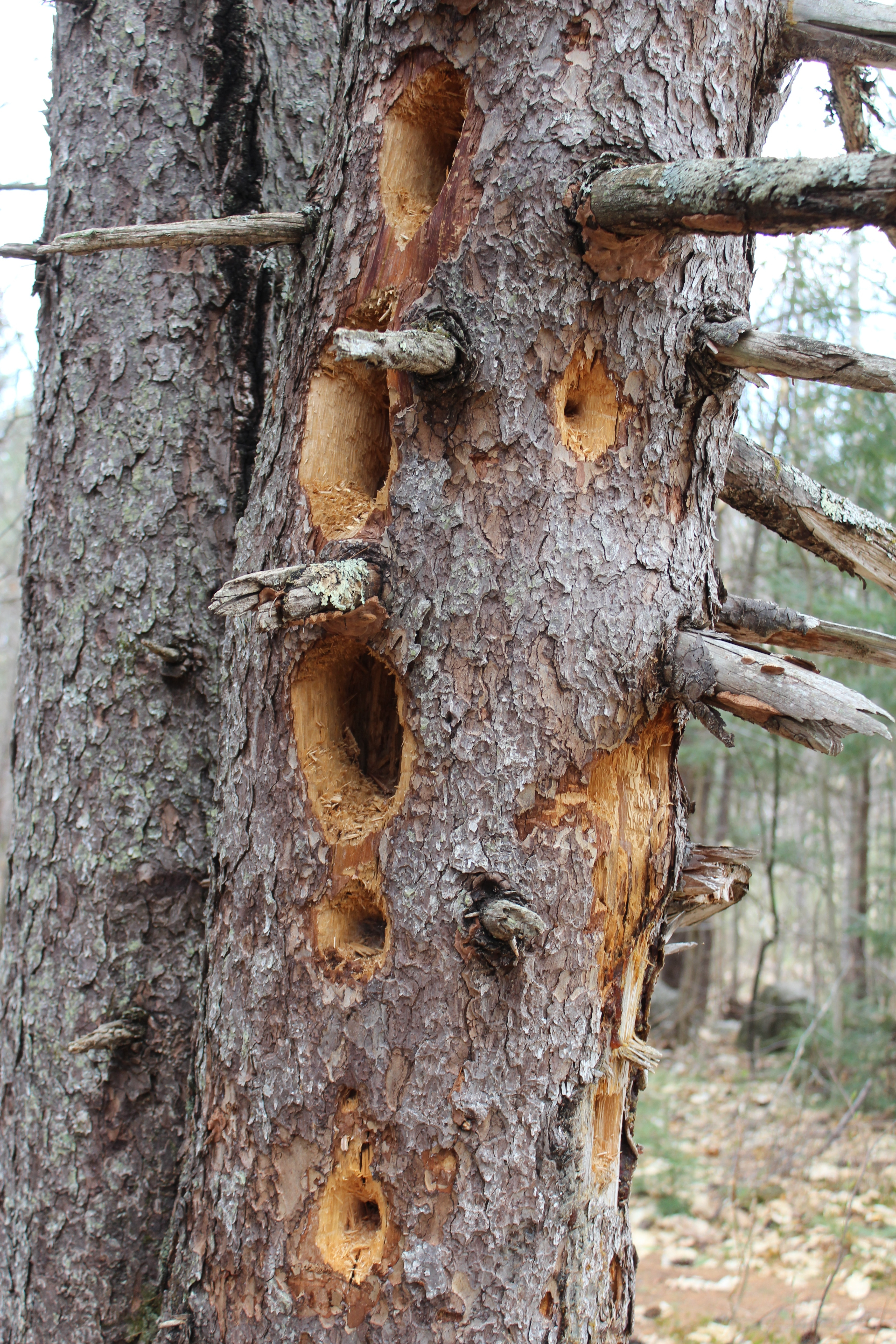
pileated condo

The big old pines provide investigation for others.

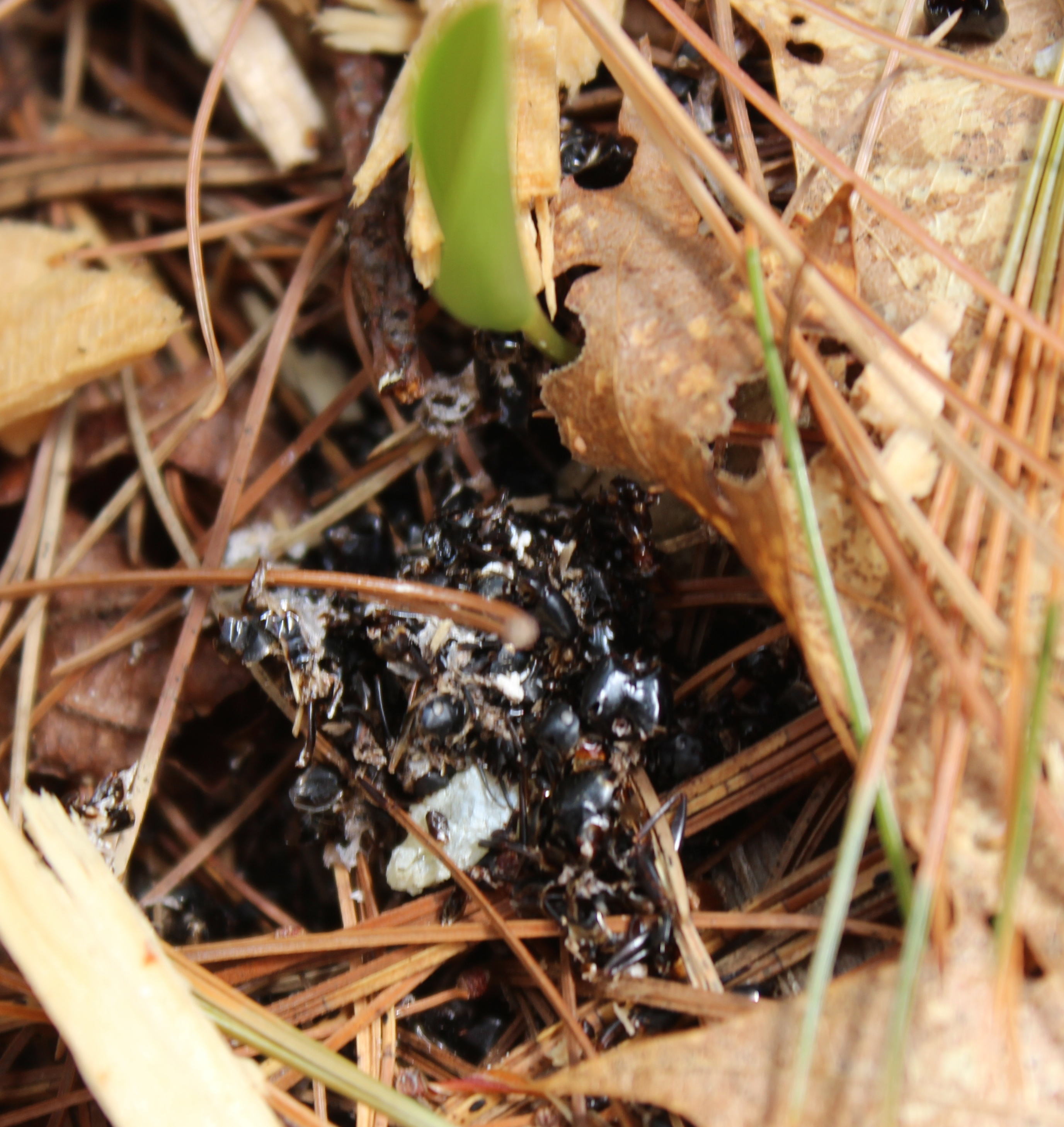
p scat

Who sometimes leave presents. Can you see the ant bodies?

cs

Yup, that’s snow. I took this photo in December because I was impressed with the stock pile of cones a red squirrel had made.

midden

It took me a few minutes to locate the tree today. I wanted to see what the midden looked like and wasn’t disappointed.  In trying to find the tree, however, I developed an appreciation for the red and gray squirrels who cache their food and then return to it. Of course, if a gray squirrel doesn’t remember where it stored an acorn, then a turkey or deer may find a treat, or a tree may grow. No matter how you look at it, it’s all good. As for me, I need to learn how to use our GPS.

Another story about Ladies Delight hill is that this is the place where people would come to picnic in the 1800s. Did the women get dressed up to enjoy a day out, a break from their farming duties? I have visions of them wearing long dresses and bonnets and carrying picnic baskets. But could they really afford a day away from their chores?

red spur

The blue trail loops around the 155-acre reserve, and a spur trail (red) leads to the vantage point–a view of Lower Bay on Kezar Lake and the White Mountains.

chip stockford

A bench at the outlook was placed in memory of Chapman “Chip” Stockford, a founding officer of the GLLT who lived in the neighborhood.

view

Spring color–more subtle than fall foliage.

white pine

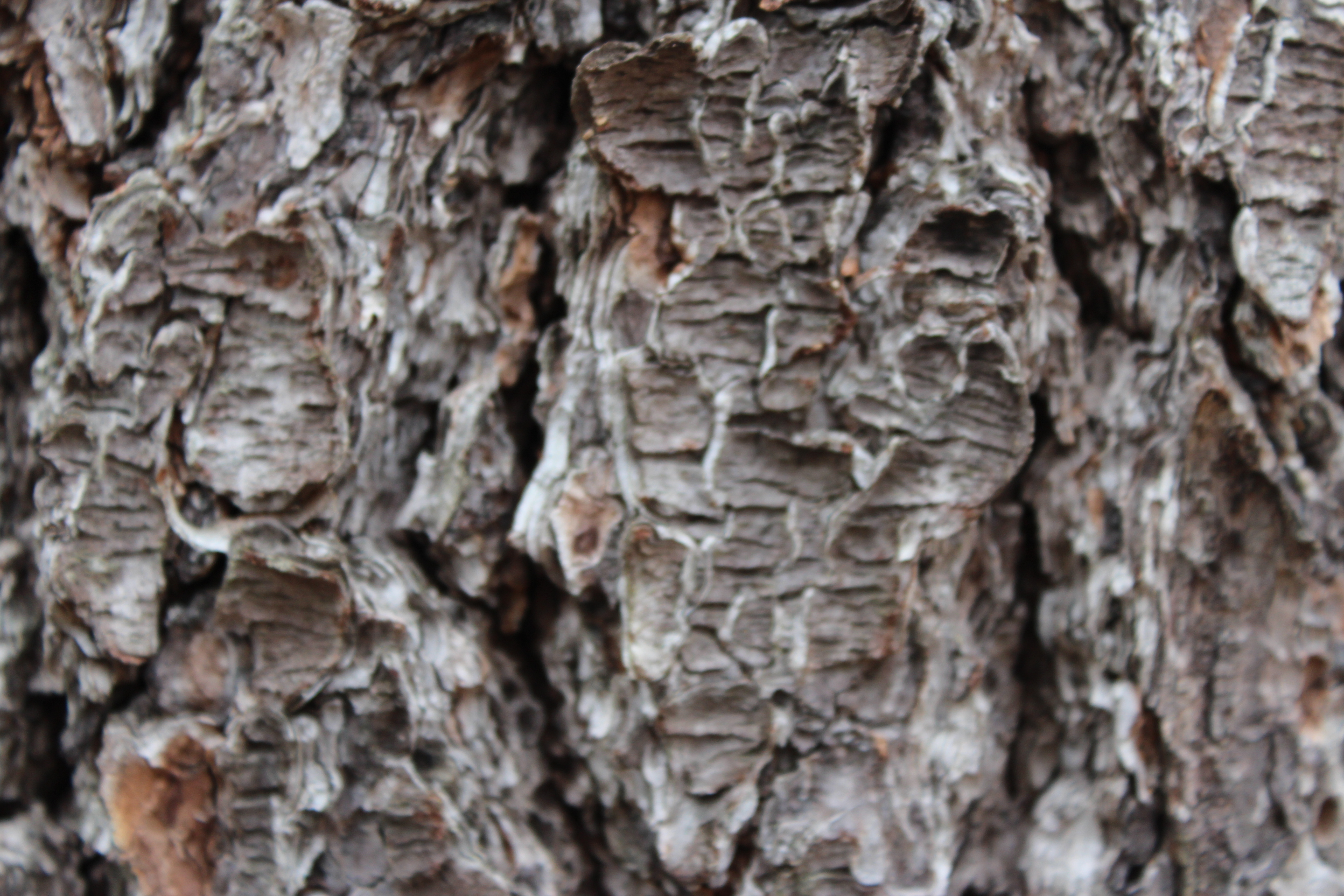
On the short spur between the red arrow and the outlook, the variety of trees offers a study in bark. Eastern White Pine–with horizontal lines on the scales.

hemlock

Flaky, cinnamony-gray (is that a word?) scales of Eastern Hemlock.

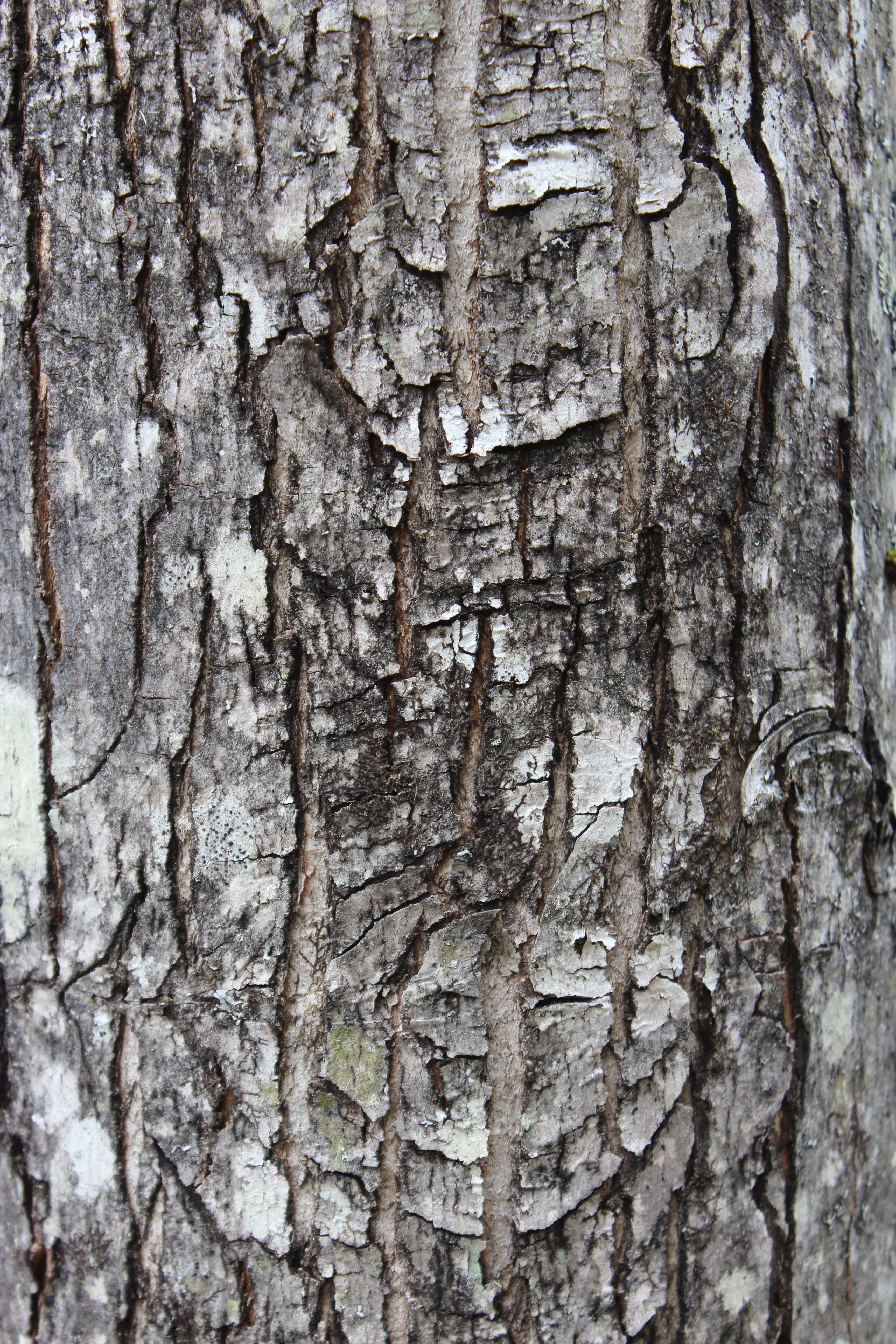
ash

Ash’s diamond-shaped furrows.

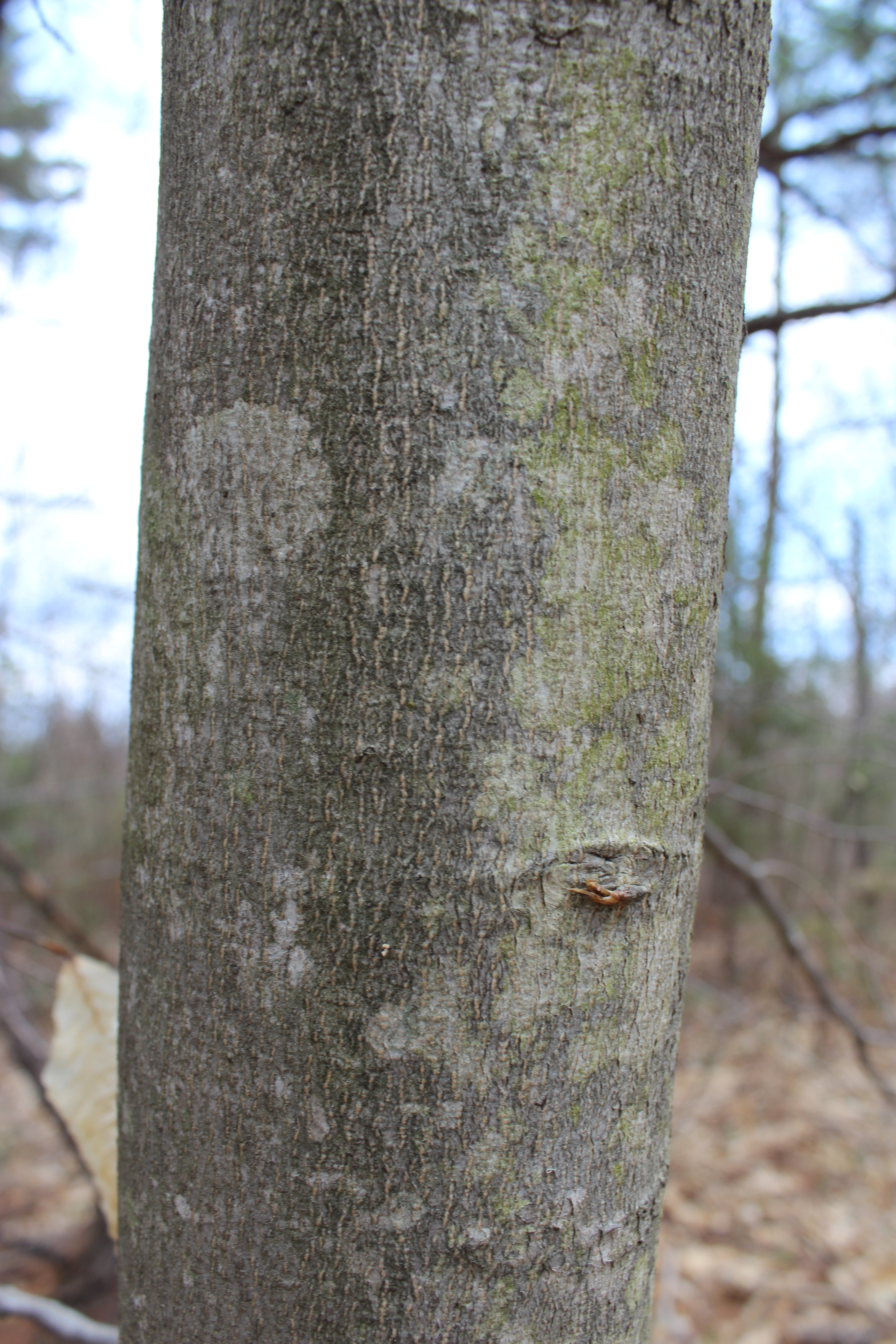
beech

And the smooth, silvery-gray American Beech–with some blotches of lichen adding a dash of green and white.

hop hornbeam

Hop Hornbeam’s shaggy strips.

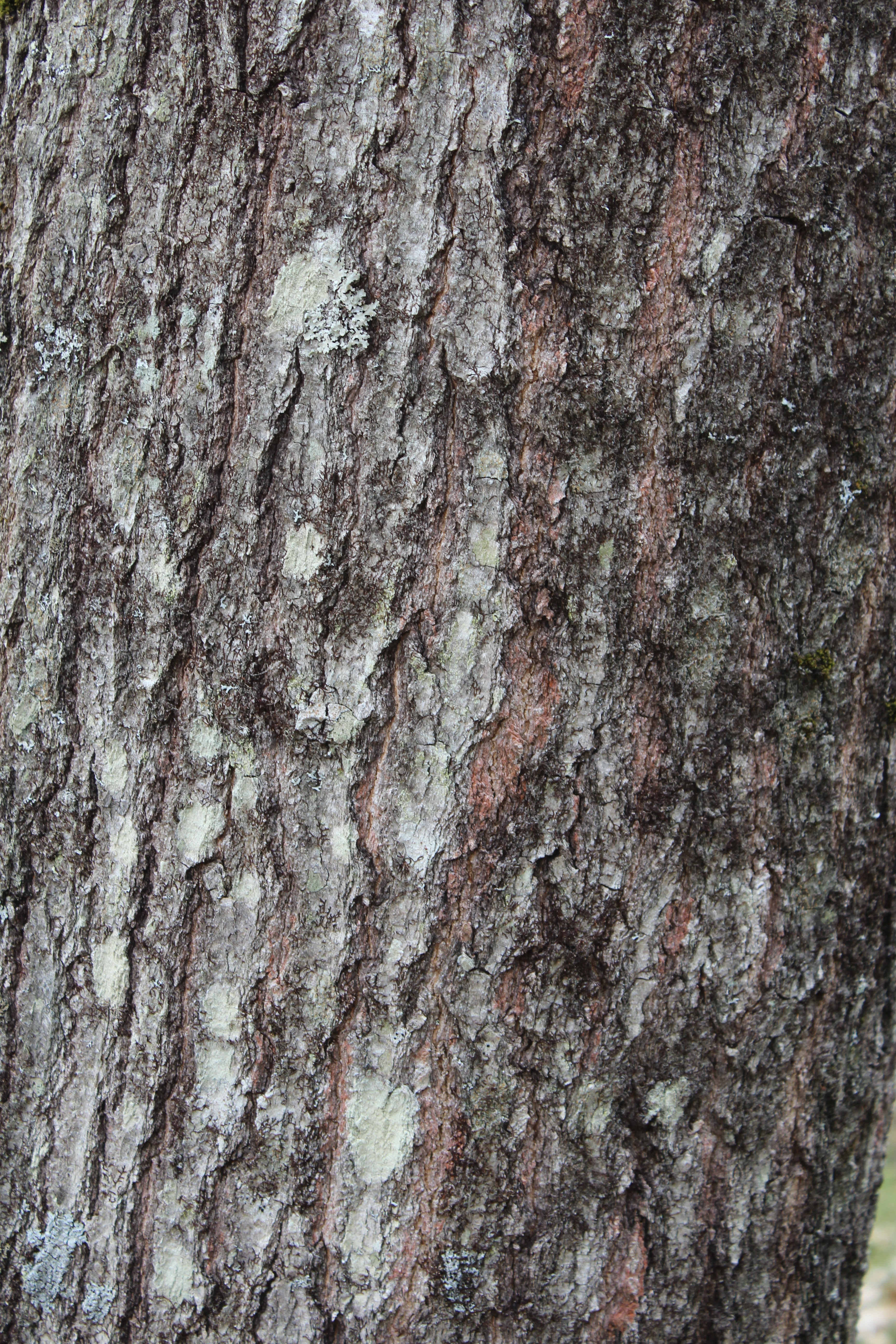
red maple

And the bull’s eye target on Red Maple.

red oak

Finally, the flattened ridges of ski tracks that run down a Northern Red Oak.

pine age

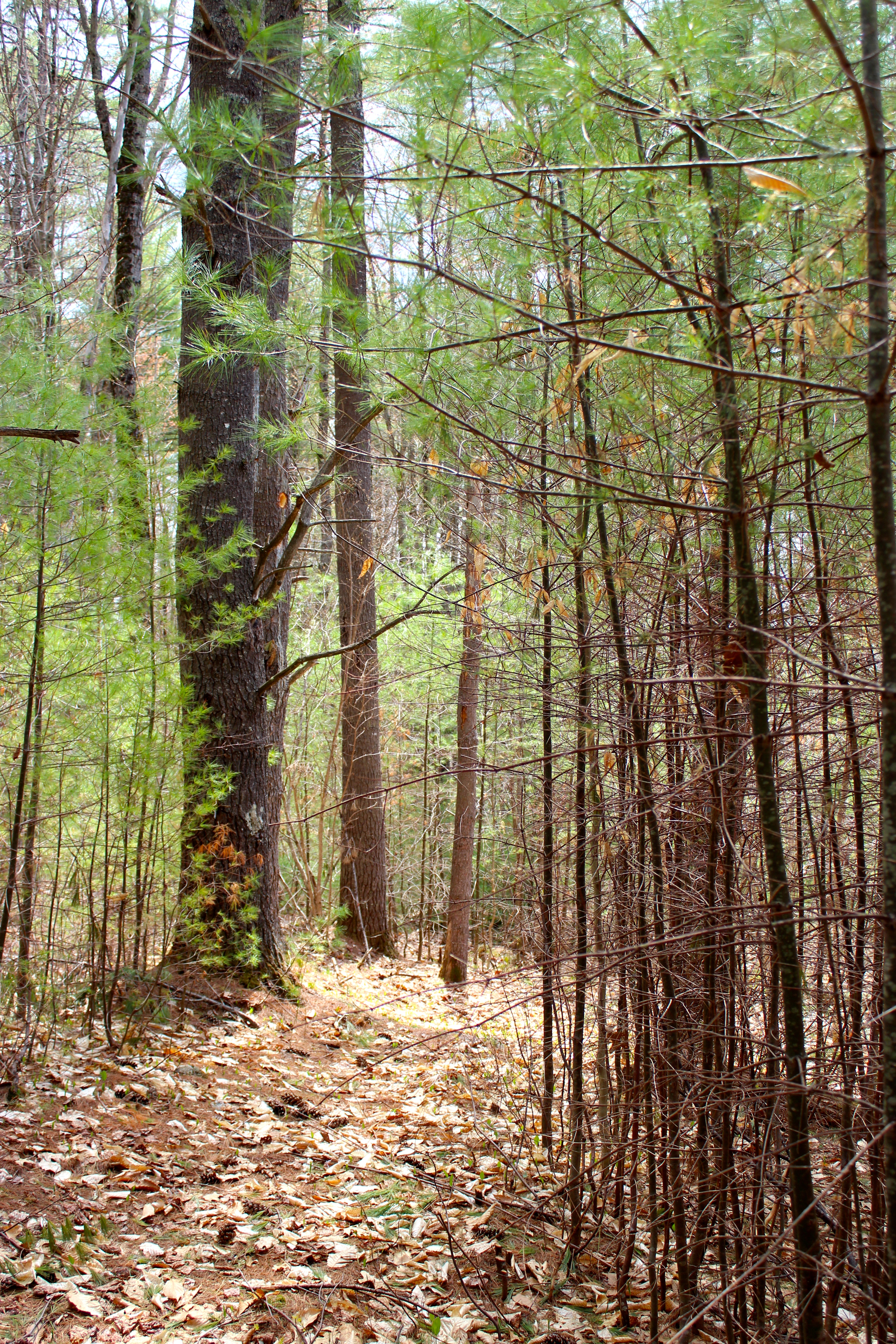
Back on the blue trail, the sun poked through the clouds, shining on pines that represent a variety of ages.

found 2

I’m not sure who lived in the house above this cellar hole, but it’s always fun to visit and wonder.

In her book, Blueberries and Pusley Weed: The Story of Lovell, Maine, Pauline W. Moore wrote that Ladies Delight, “was not named for the view. Nor because it made a delightful walk for ladies to take on a Sunday afternoon or because it was covered with wonderful blueberries . . . (It was) named in sarcasm because women who tried to live in two houses built there could not endure the loneliness and isolation.”

Was this one of the houses?

found 3

It’s been a long time since any vegetables were stored in this cellar.

As I was told at the historical society,  the bridge across The Narrows wasn’t yet built when the ladies lived there, so the only way to get to the other side was walking across the ice.

the rock

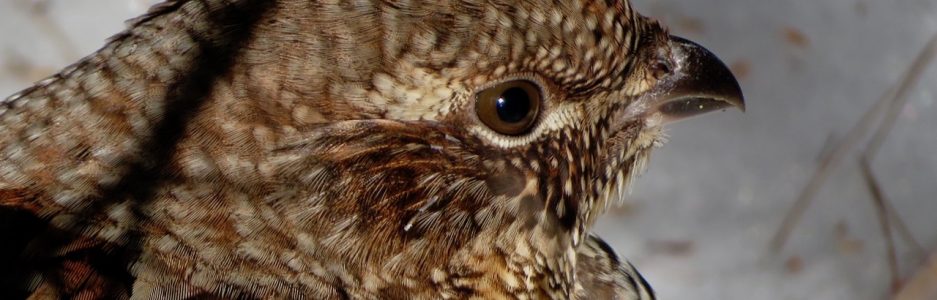
No visit to Chip Stockford is complete without a visit to The Rock. Today, I startled two grouse that flew up from behind it.

grouse dust

Dust bath? Nest site?

sweet fern

A few more things to see as I headed out. Sweet fern, which is really a shrub.

baubles

Baubles on pine saplings.

paper birch bark

Young Paper Birch bark.

striped maple

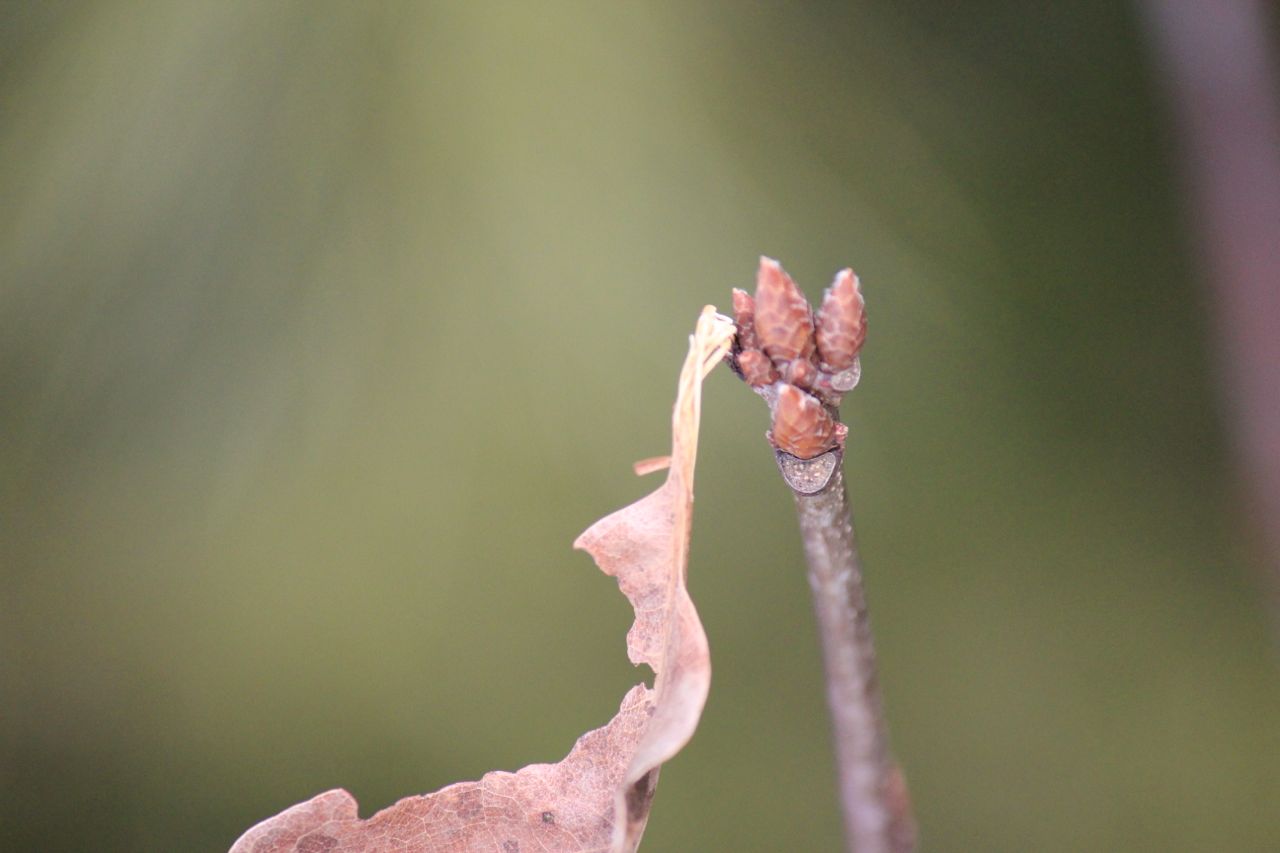
Swollen Striped Maple buds.

phoebe nest

And a phoebe nest under construction.

This lady was delighted to have time to wonder and wander. Thanks for taking a look.

Who Done It?

tree activity

The first mystery I encountered when I slipped out the door and away from some writing and editing assignments today (yes JVP, I’m working on a rough draft), was this ground disturbance around the base of a dead snag. The pileated woodpeckers have worked on this tree for many years, and I’m not sure why it’s still standing. Actually, there are several of these dead pines in one area and they all look like they’re ready to fall over. But what interested me today was that the pine needles and leaves had been raked back all the way around the tree trunk. Only at this one spot. Who done it? And why? There were some pine cone scales and a cob, evidence of a red squirrel feasting here at some point. But was this ground work done by a squirrel? I’ve never seen that before. I looked for scat. Nada. Scratch marks? Not visible. Would a turkey do this? Or another bird?

Don’t you just love a mystery?

cowpath

The leaves were a bit disturbed all along the cowpath, but that could have been because of today’s wind, or turkeys, or deer.

eggs

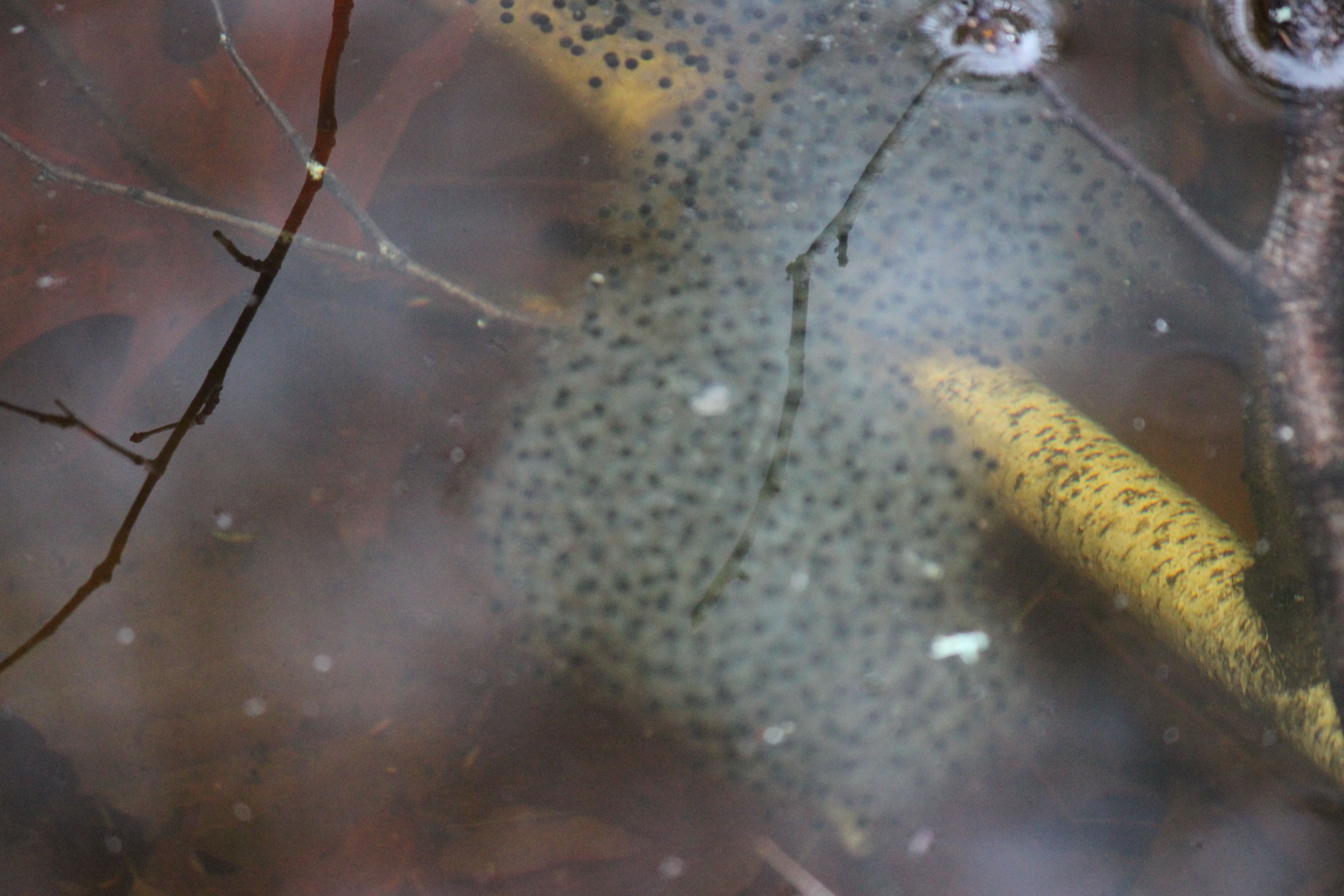
I headed over to the vernal pool. Since the wind was blowing yet again, I didn’t see any action, but the wood frog egg masses look healthy.

eggs 4

And plentiful. As is their custom, the masses are attached to branches and clustered together. Maybe there’s warmth in communal living. It’s certainly a bit chilly today, and yesterday we had hail, snow and rain.

eggs 2

I felt like a million little eyes were looking up at me.

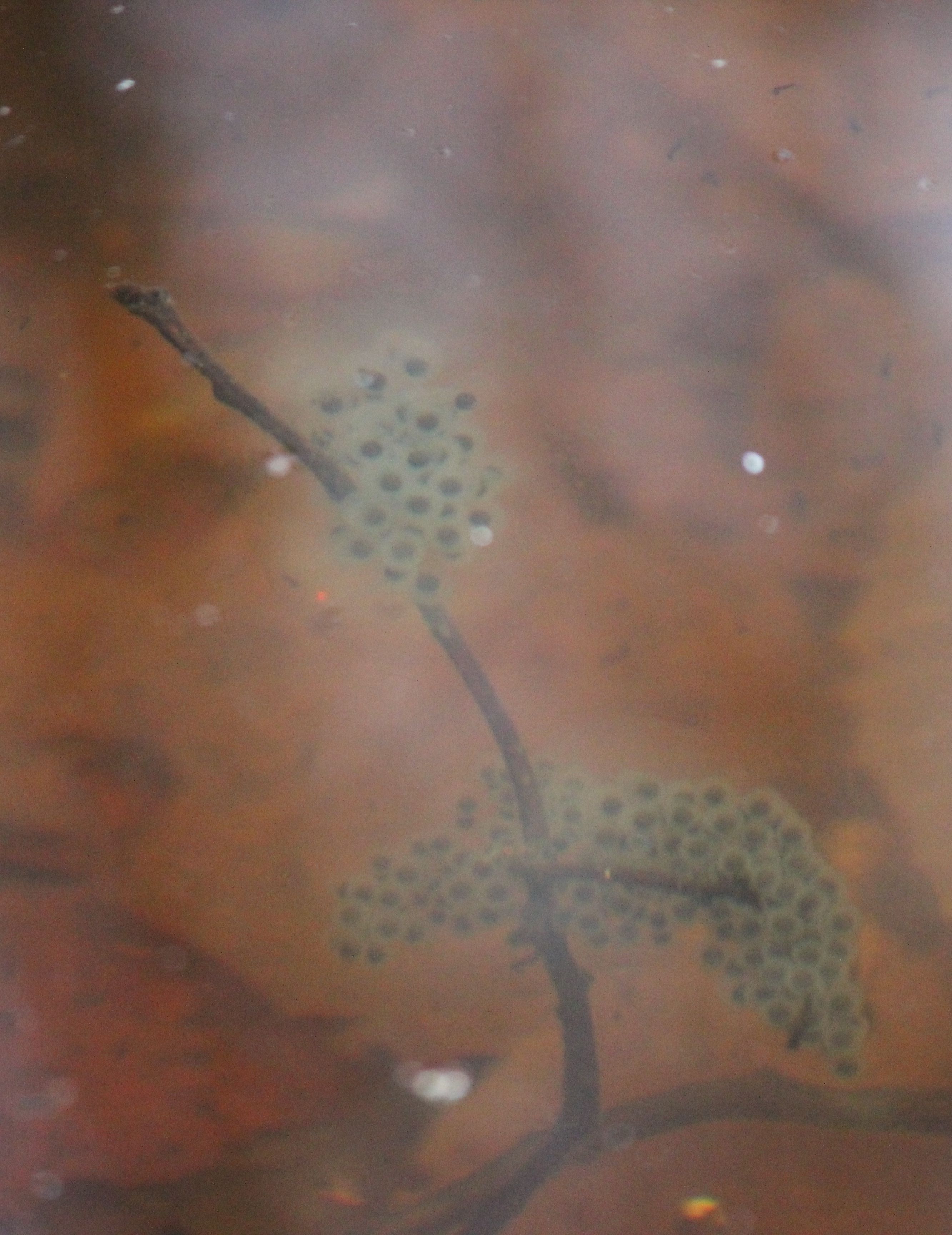
eggs 3

This mass didn’t get the memo about community living.

Usually I see a few salamander masses in this pool as well, but maybe it’s early yet. The ice only melted a week ago.

I walked around the perimeter, noting that as usual, there are no masses on the southern side of the pool. They tend to be clustered on the northeastern side, where perhaps they capture the most warmth of the sun.

msyteryt hole

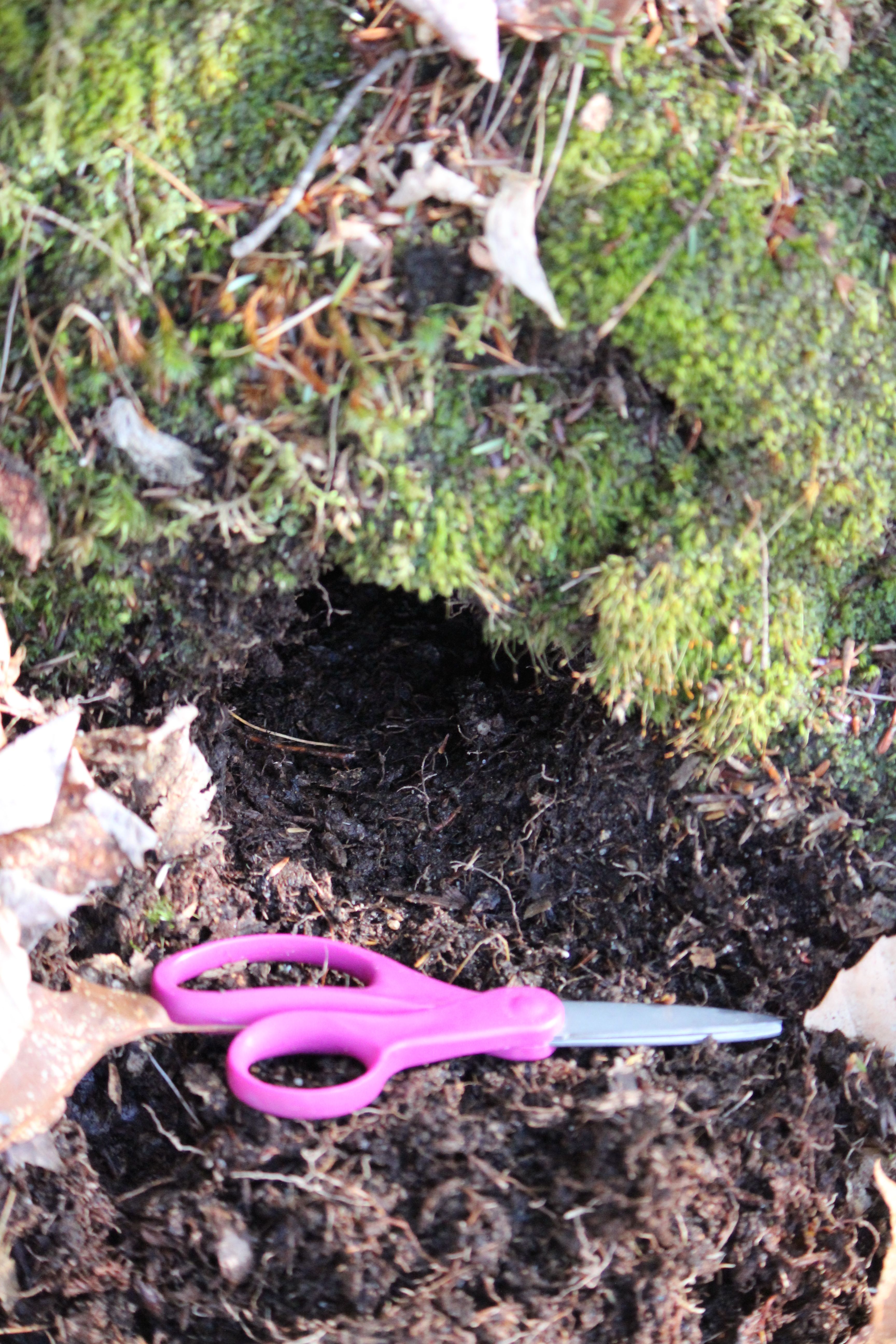
What I did find, though, was a hole about a foot from the pool. The only reference item I had was a pair of kid scissors in my pocket. They are five inches long. That’s about how far back the debris was thrown. A messy dooryard.

mh2

The pink handle is three inches, about the size of the opening. I stuck a stick in and it seemed to end at about a foot, maybe a bit more. Another who done it? Decent size hole; beside pool, but dry; messy door yard; recently dug; no one home. I looked through Mark Elbroch’s book Mammal Tracks and Sign because he has a section devoted to burrows and dens, but so far I don’t have the answer. Will the maker of the hole affect the egg masses? Another good question that remains to be answered.

red maple 2

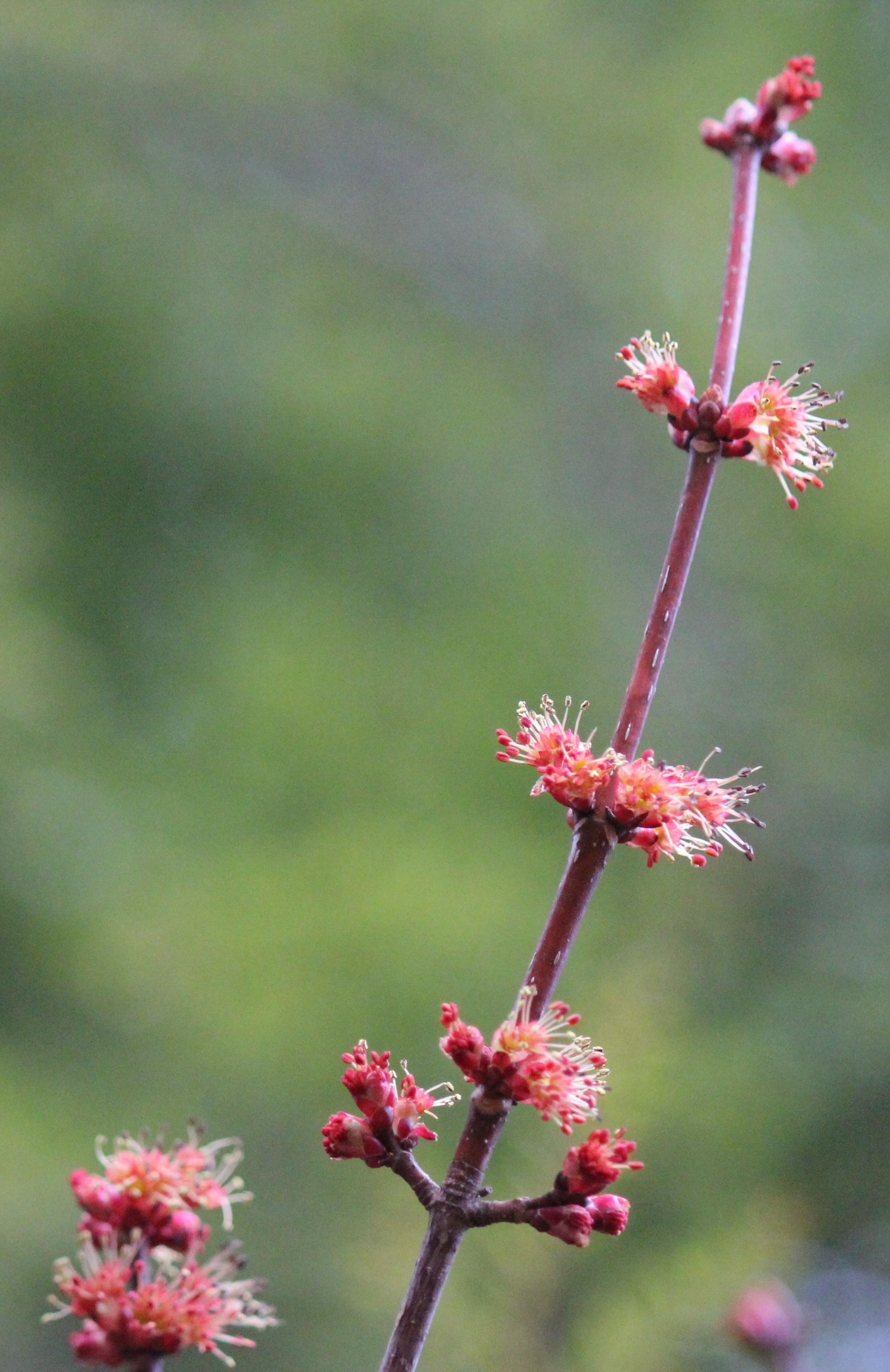
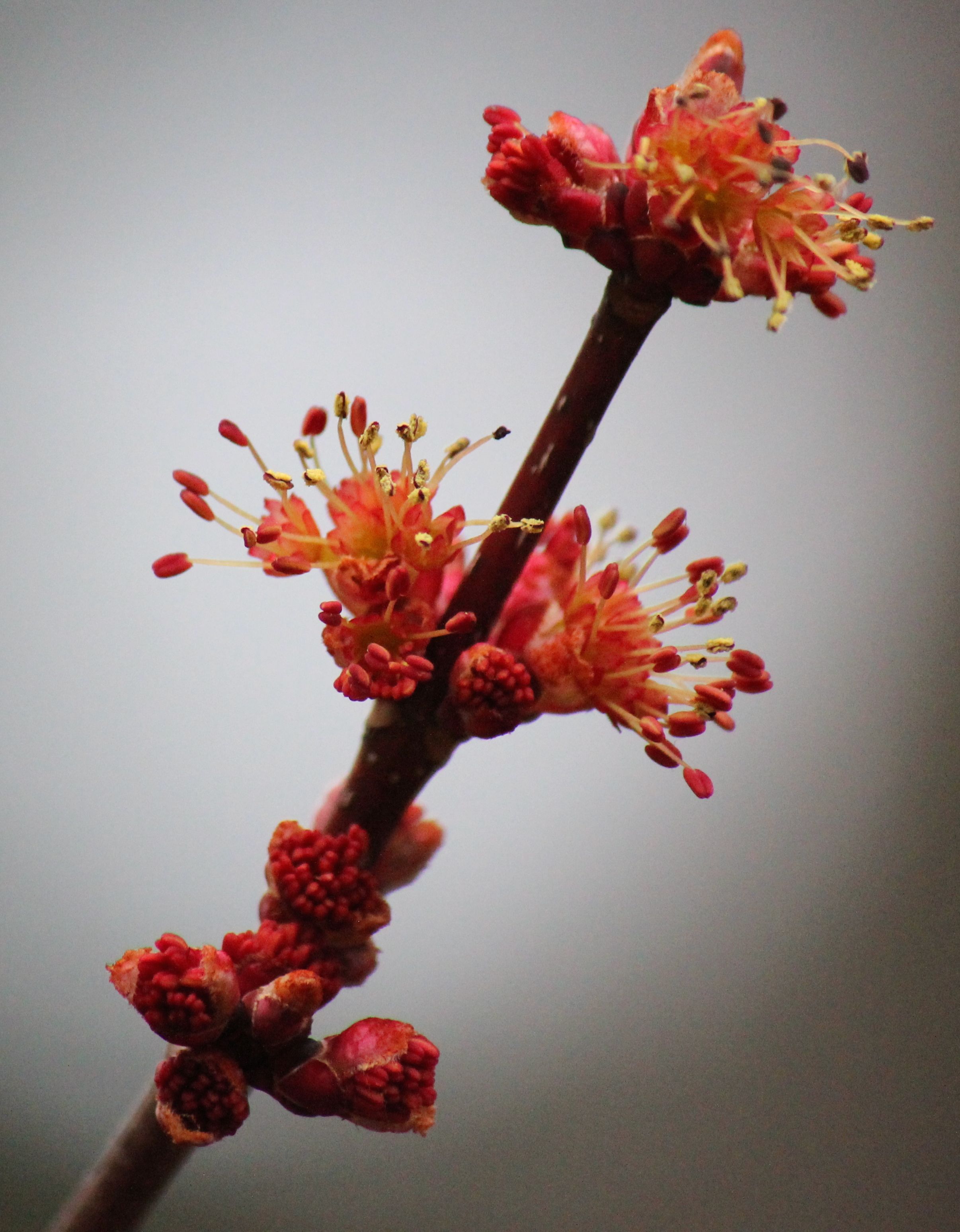
And then it was time to visit another harbinger of spring, the Red Maple flowers. They are bursting with joy . . . and love.

red maple 3

rm 4

rm5

Stamens and pistils in all their glory.

sketch 1

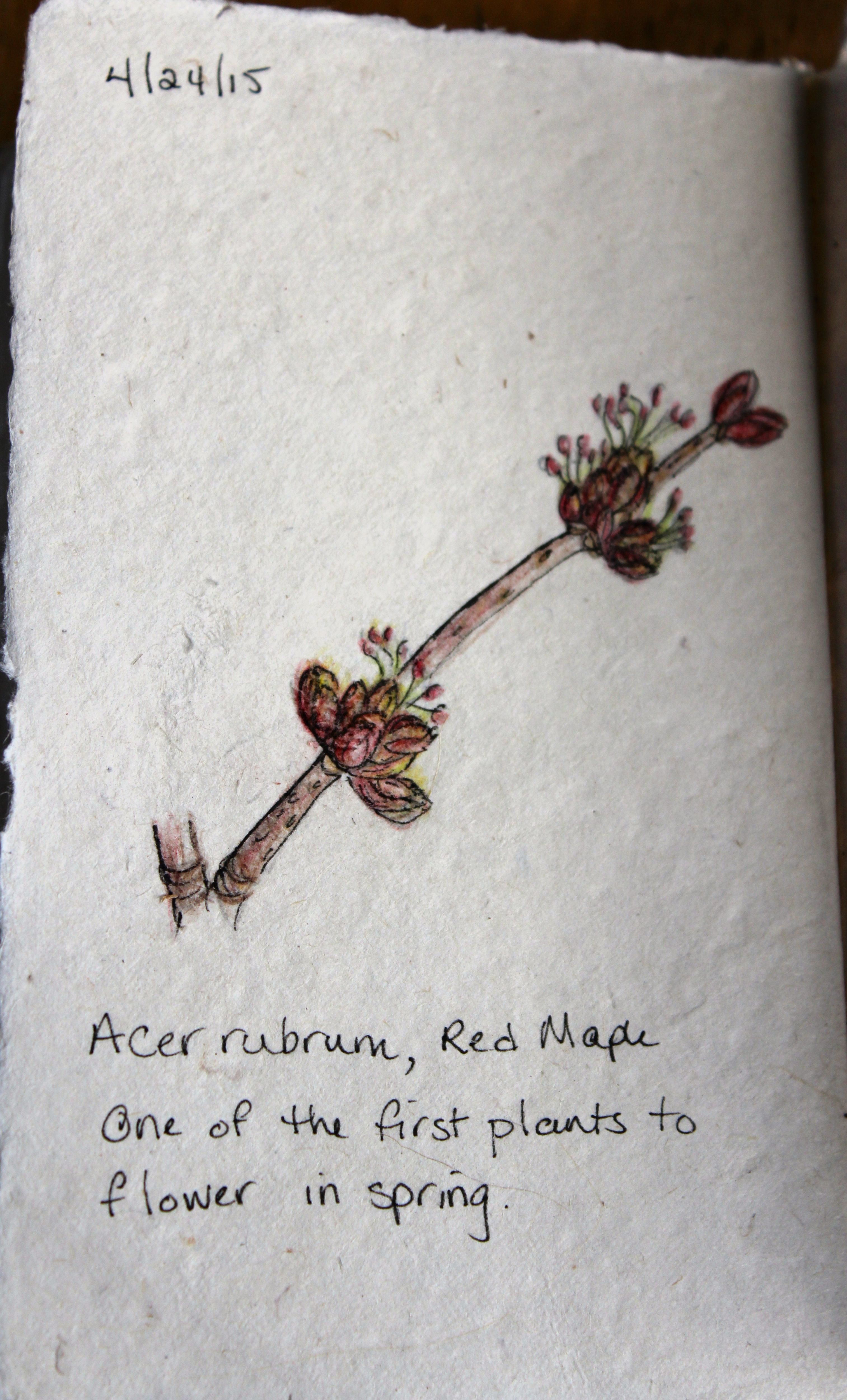
It was nippy, but I took a moment to sketch.

As I wander along the path, I’m thankful for the mysteries and beauty that draw me out and continue to provide moments of wonder.

And I’m thankful for my sister and brother-in-law who encourage me along the way. Happy Anniversary to you!

Gifts from the Land

B & H sign

A friend and I met at the Heald and Bradley Ponds Reserve in Lovell this morning. I only just noticed that this sign places Bradley Pond first–I’ve always heard it the other way. Funny how your mind reads what it thinks is there. At least mine does. Makes the job of editing a slow process–for good reason.

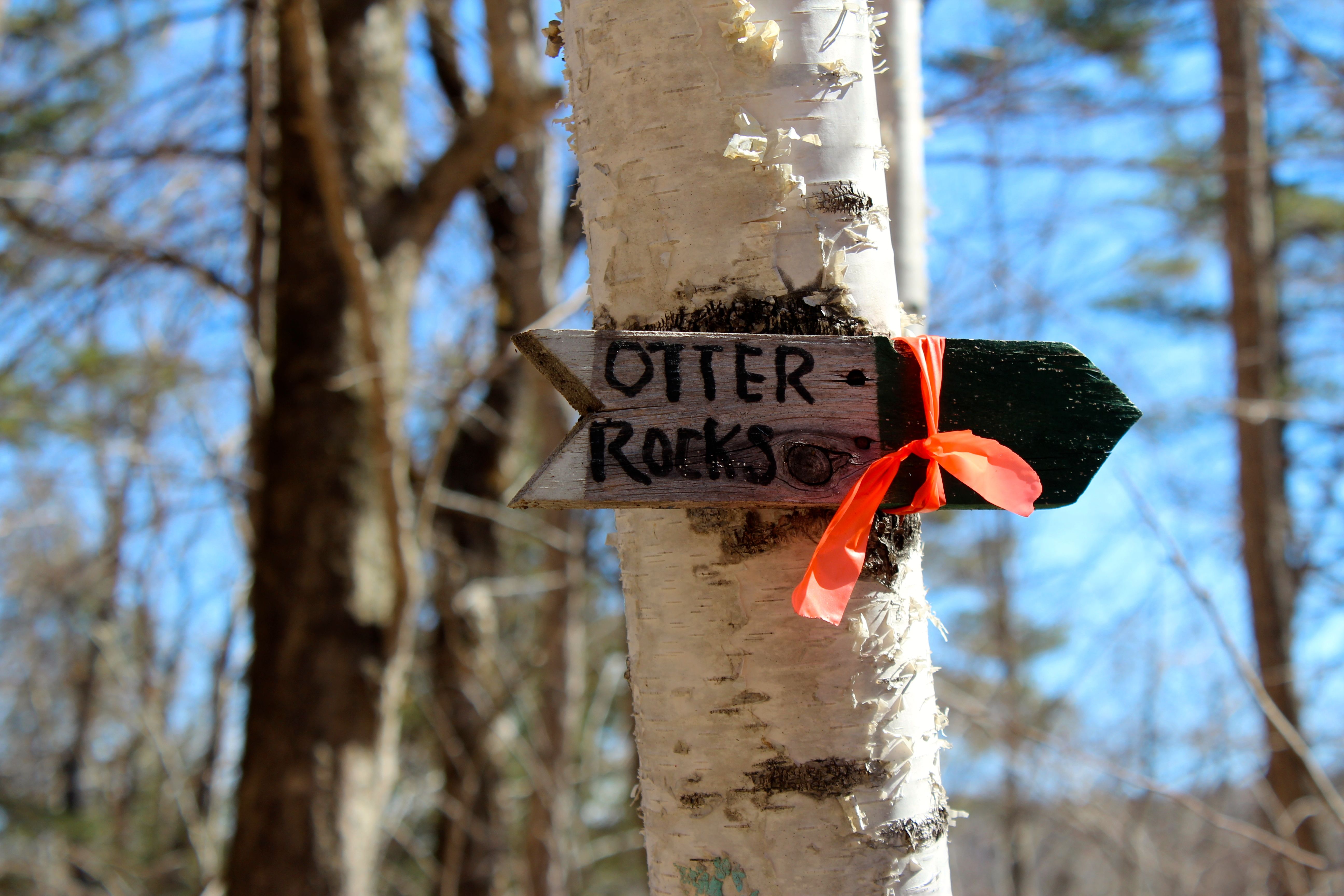
I love that the sign shows three peaks, as there are three peaks here–Whiting Hill, Flat Hill and Amos Mountain. Our mission today, however, was to check out the saw mill site off Slab City Road and walk to Otter Rocks.

We completed said mission and chuckled that it took us less than three hours to walk the short distance out and back. But the gifts we received along the way were many.

To begin with, it was an absolutely gorgeous spring morning.

mill 2

Water raced over the dam at the mill site. Timber long played an important role in Lovell, as in other towns throughout New England.  And water provided the power at the saw and grist mills before steam engines were put to use.

In her book, Blueberries and Pusley Weed, The Story of Lovell, Pauline W. Moore wrote: “Slab City (so named because when the mills were running, the slab or outside of the logs was piled high on either side of the road), had two cooper shops and two stave mills as late as 1881, representing the period when one mill produced the staves and a cooper put the barrels together.”

Robert C. Williams, author of Lovewell’s Town, adds, “In 1840, Benjamin Heald built a sawmill in the area east of Kezar Lake known locally as Slab City–a common New England term for the lumbering area of a town–in order to produce shook, the thin boards used to make barrel staves. Slab referred to the outside cuts of logs with bark that piled up unused by the roadside. Shook mills soon abounded in Lovell, and barrel staves went off to the Caribbean, especially Havana, Cuba, to produce barrels that could be filled with molasses and rum.”

Mill 4

This mill site features a combination of quarried stone and cement. On the Lovell Historical Society’s Web site, there are several photos of mills in the Slab City area.

 cherry tree

I wonder about the efforts to quarry the stone, move it to the brook, and build the dam. I also wonder about other things–like this cherry tree that grows out of the sloped land, dips down toward the water and then reaches skyward. Enviable perseverance.

mill pond

Here’s a look at the mill pond above the dam.

bird 2

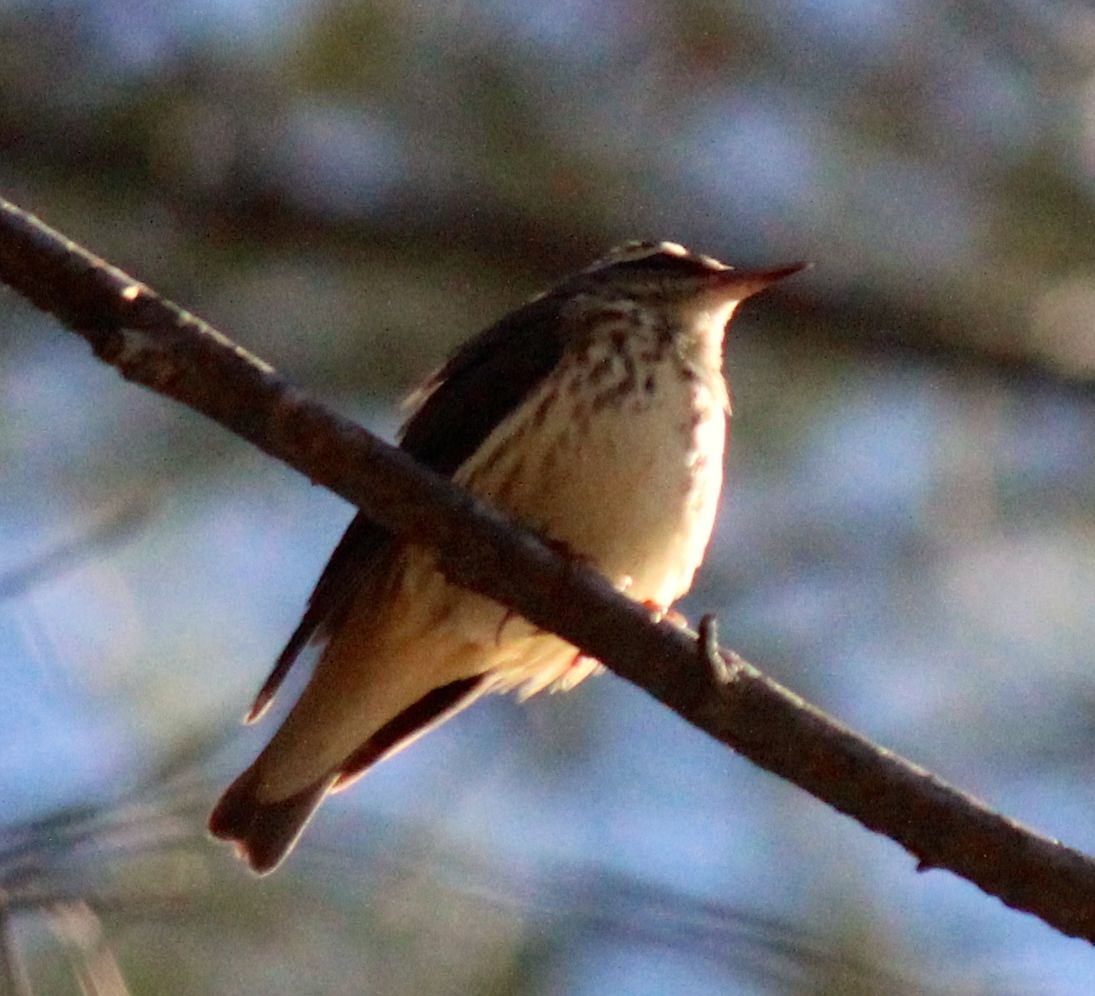
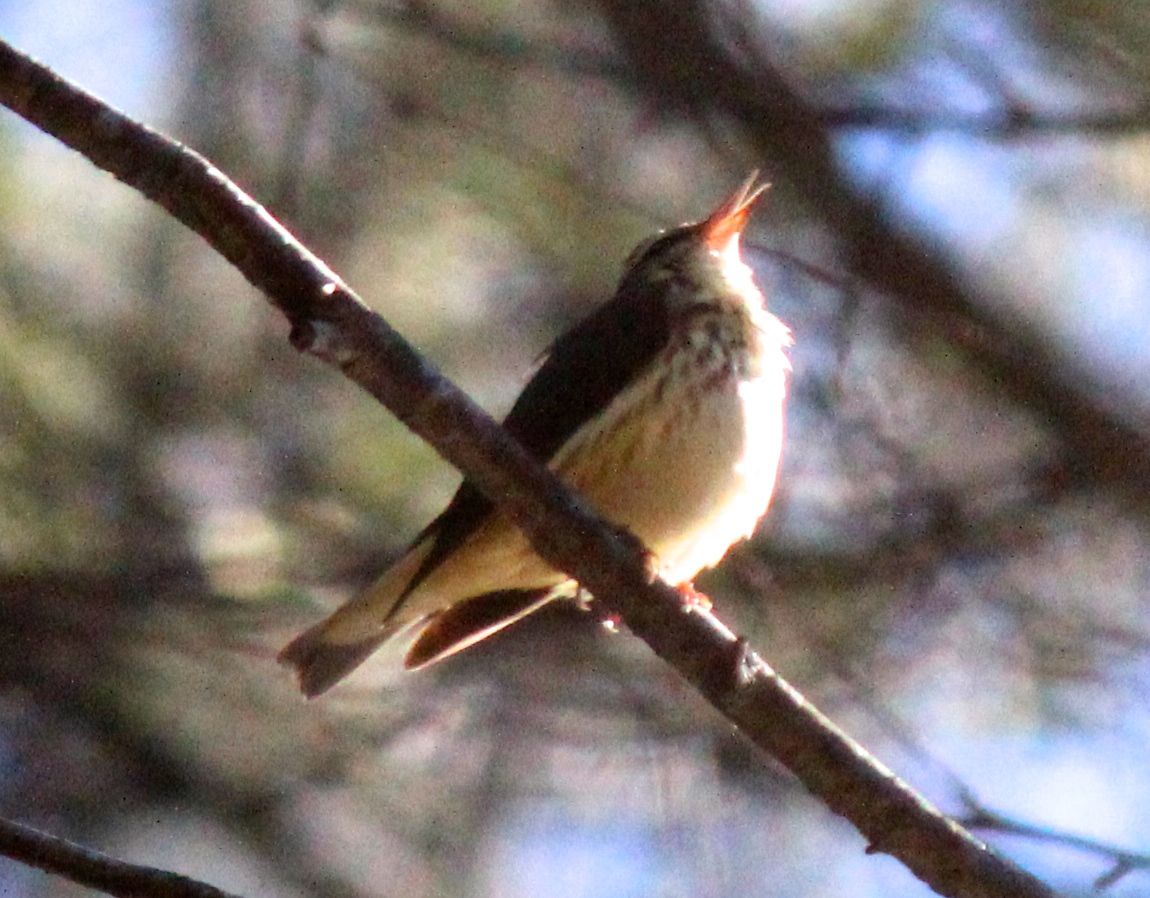
And then there was the gift of song as this warbler sang to us from a branch above. Or is it a Louisiana Waterthrush?

bird

lady ferns

And an evergreen fern, matted from a long winter’s rest.

grape fern and frond

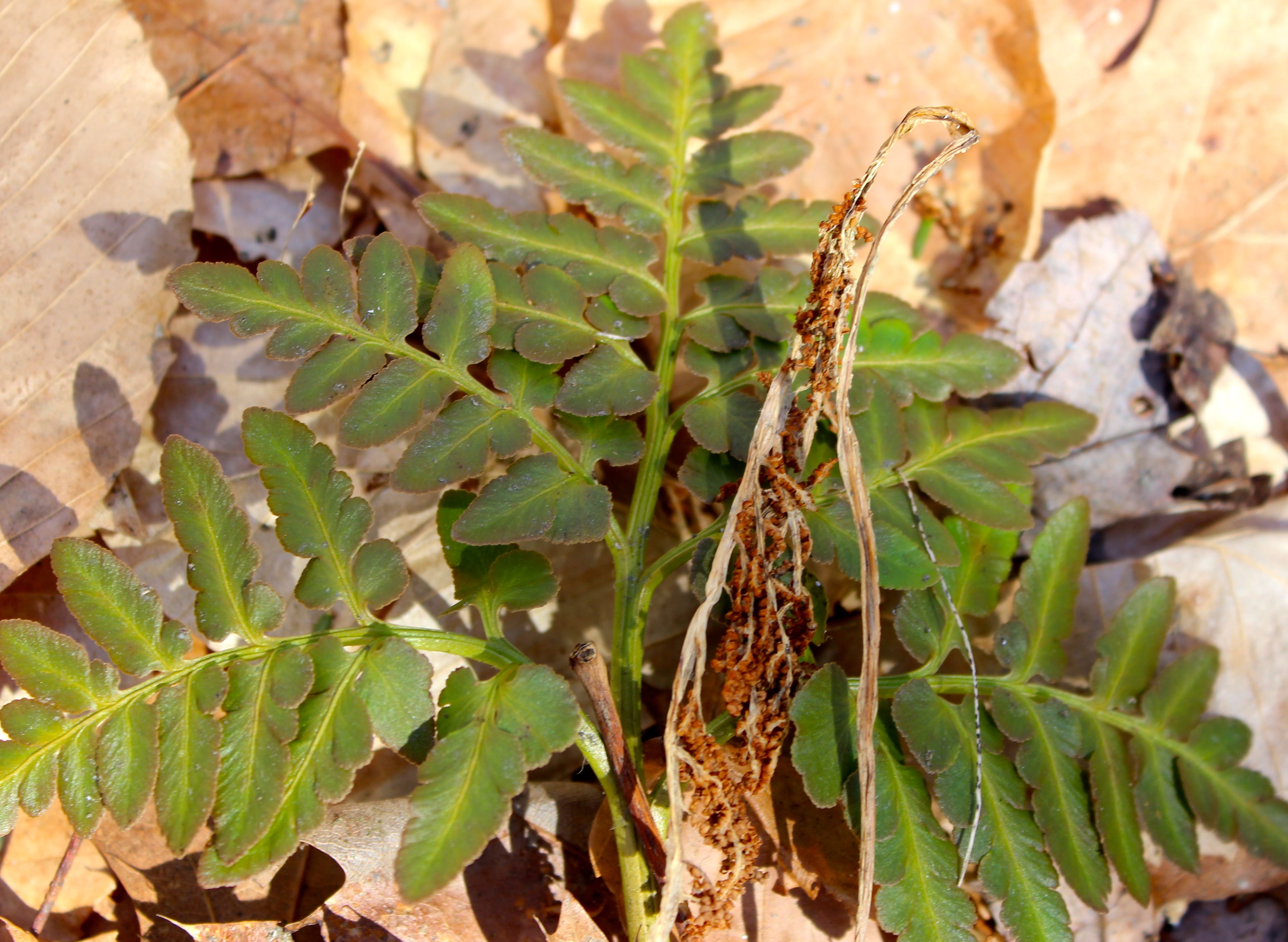
Plus grape fern and its old fertile frond, for which it derives its name because the sporangia have a grape-like appearance when they are fresh.

Christmas fern

The third fern gift of the day–Christmas fern, so named because each leaflet looks like a Christmas stocking or Santa in a sleigh behind his reindeer.

Christmas 2

I didn’t notice any fern fiddleheads, but the snow only melted this past week. There’s still so much to look forward to.

beech leaf

I’ve been watching beech tree buds for at least a month. What I noticed today is that most buds are still wrapped up in scales and retain their cigar shape. On saplings, however, it’s a different story. Along the path, several were unfurling. Perhaps because of their smaller size, they want to be first to leaf out, thus taking advantage of any available sunlight before the larger trees form a canopy above them. Just a thought.

otter rocks sign

Our destination–Otter Rocks.

Otter rock

I’ve not had the privilege of seeing otters here, but plenty of other things revealed themselves today.

ice:eggs look alike

The melting ice fooled us only momentarily. On first glance, it looked like egg masses, but proved to be small masses of ice floating on the surface.

macro

Though you can’t see it here, we watched a kazillion aquatic macro invertebrates swim about.

Mayfly_rs

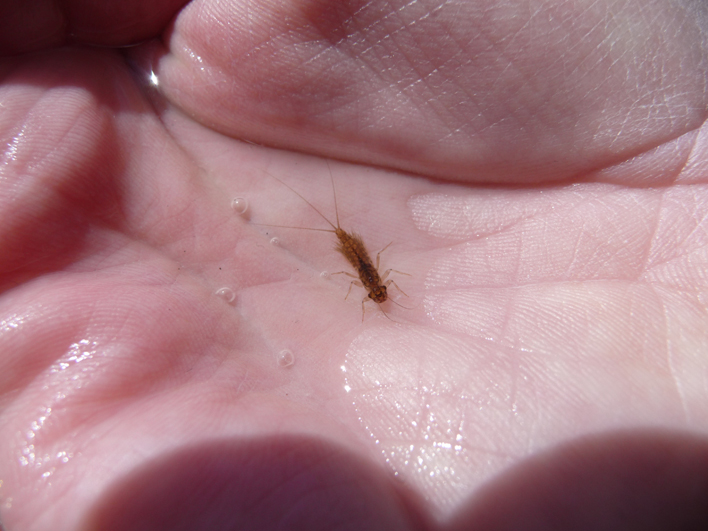
I scooped a few into my hand and my friend, Jinny, snapped this photo of a Mayfly nymph with three cerci or tails. (Thanks J.M.)

exoskeleton

On otter rock itself, there are exoskeletons from hatchings that occurred in previous years.

Heald Pond

It was difficult to pull ourselves away and we have plans to return with sketch books and food and cameras and maybe even some wine–to spend some time taking in all that this lovely spot has to offer.

For today, we needed to wend our way back up the trail. There were still a few more moments of wonder to be had.

partridge berry

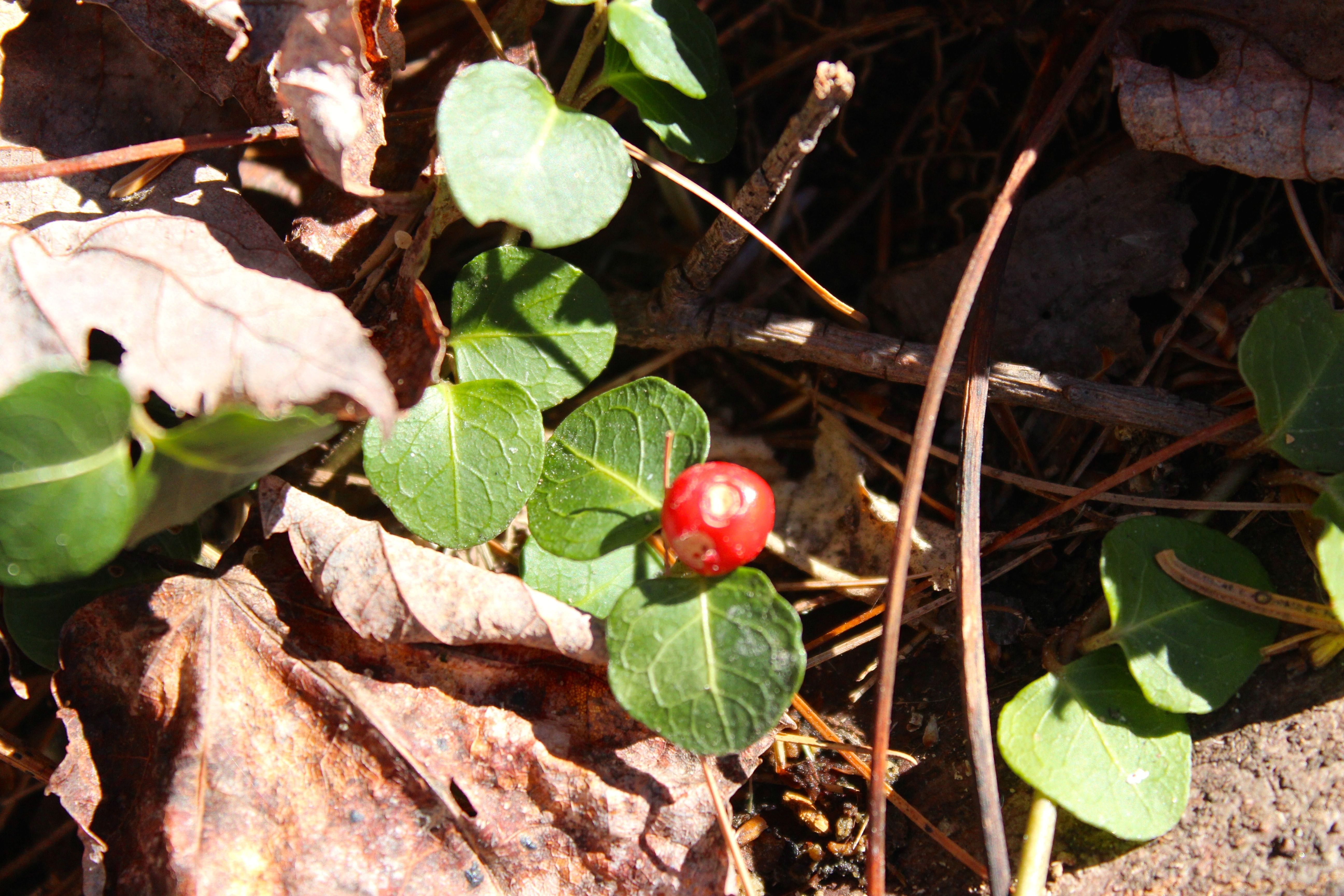
Take, for instance,  the partridge berry with its opposite evergreen leaves and berries with two spots on the surface, a result of the fusion of two ovaries. This plant produces two white flowers, one with short pistils and long stamens and the second just the opposite. In order for a berry to form, both flowers have to be pollinated. Nature has it all figured out. Why don’t I?

cm2

A princess pine club moss shows off its upright spore-producing candelabra or strobili. Funny thing about club mosses–they aren’t mosses. I guess they were considered moss-like when named. Just as the mills take us back in time, so do these–only much further back when their ancestors grew to 100 feet tall during the Devonian Period. They make me feel so small and insignificant. And yet, I’m thankful for the opportunity to be in awe of them.

tinder conks and bird holes

Again the insignificance makes itself known–as this tree dies, it provides life–for carpenter ants, pileated woodpeckers, mosses, lichens and  tinder polypore or hoof fungus. And probably so many more species.

hoof 2

On a nearby tree, the  fruiting bodies of the tinder conks  grow at the base, giving them a true hoof-like appearance. Giddy-up.

sumac

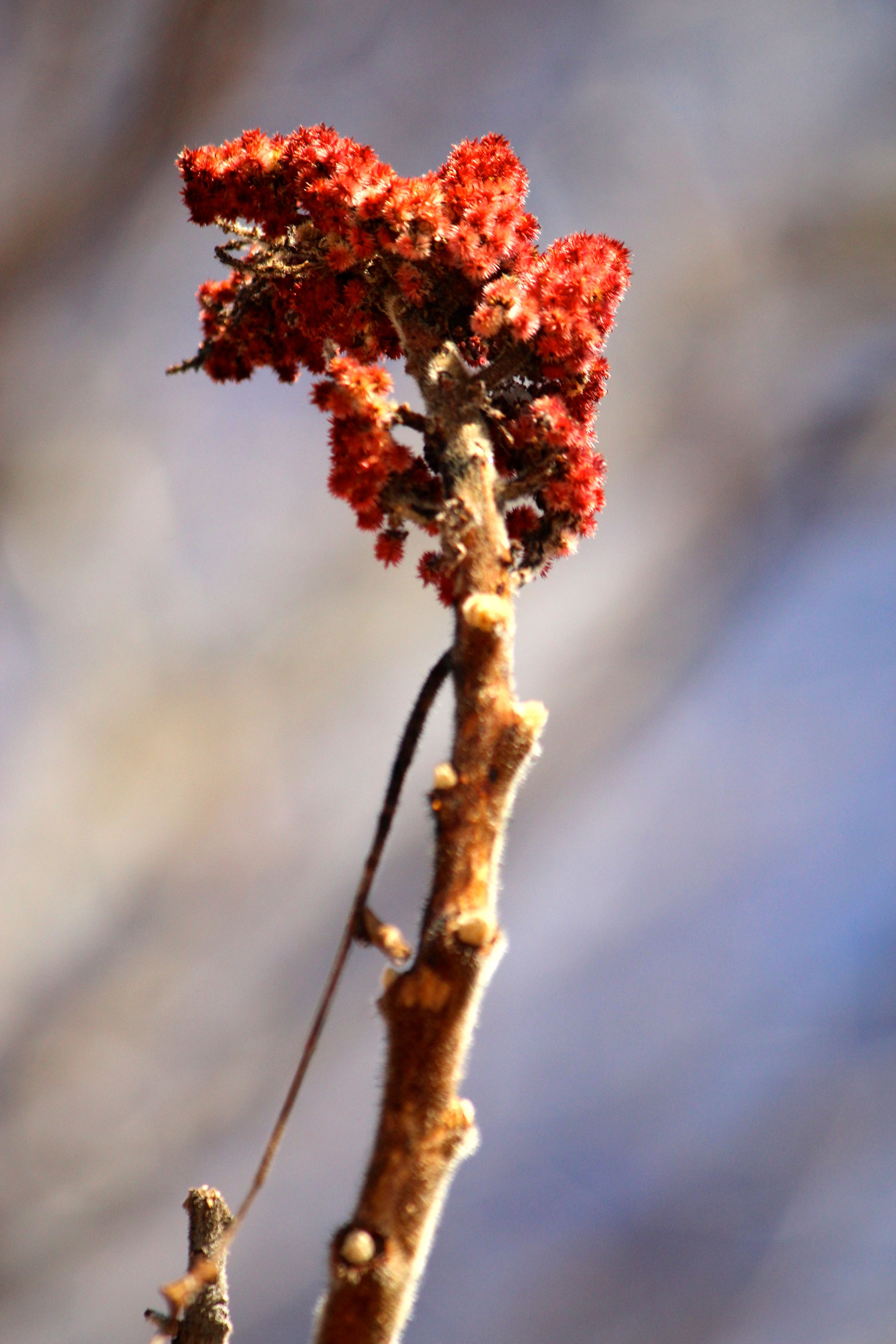
We were almost back to my truck when we saw a clump of staghorn sumac shrubs. I grew up in the land of poison sumac, so it’s taken me a while to warm up to this species. But the hairy red fruits are a work of art in their own right. Plus, they provide food to wild turkeys, ruffed grouse and others.

sumac 2

Some people make tea from the summer berries. I, um, can’t bring myself to try it.

 sumac 3

Check out the hairy antler-like growth pattern. So maybe I won’t seep the fruits for tea, but I can certainly enjoy the other features staghorn sumac offers up.

cedar bark

And though not all of my posts include tree bark, I like it when they do. In this case, Northern White Cedar (Thuja occidentals). The lines of the bark follow the shape of the tree.

cedar leaves

And its leaves are flat and scaly–reminiscent of princess pine.

My friend, Jinny, and her husband Will, are forever naturalists. He wasn’t with us today, and doesn’t often trek with us, but I suspect that he was channeling our adventure. They own many acres and know their land intimately. Sometimes they invite me along to walk their trails and wonder with them. Together, we learn.

And they get me. I know this because every so often they give me gifts from their land.

Today, I was the recipient of two gifts.

green stain

Trail blaze on a downed tree? No, Green Stain (Chlorociboria aeruginascens). In his book, Fascinating Fungi of New England, Lawrence Millman writes, “The stain was once used for Tunbridge ware–decorative wooden objects inlaid with strips of colored veneer.” I’d much rather have this piece of wood.

 bark 2

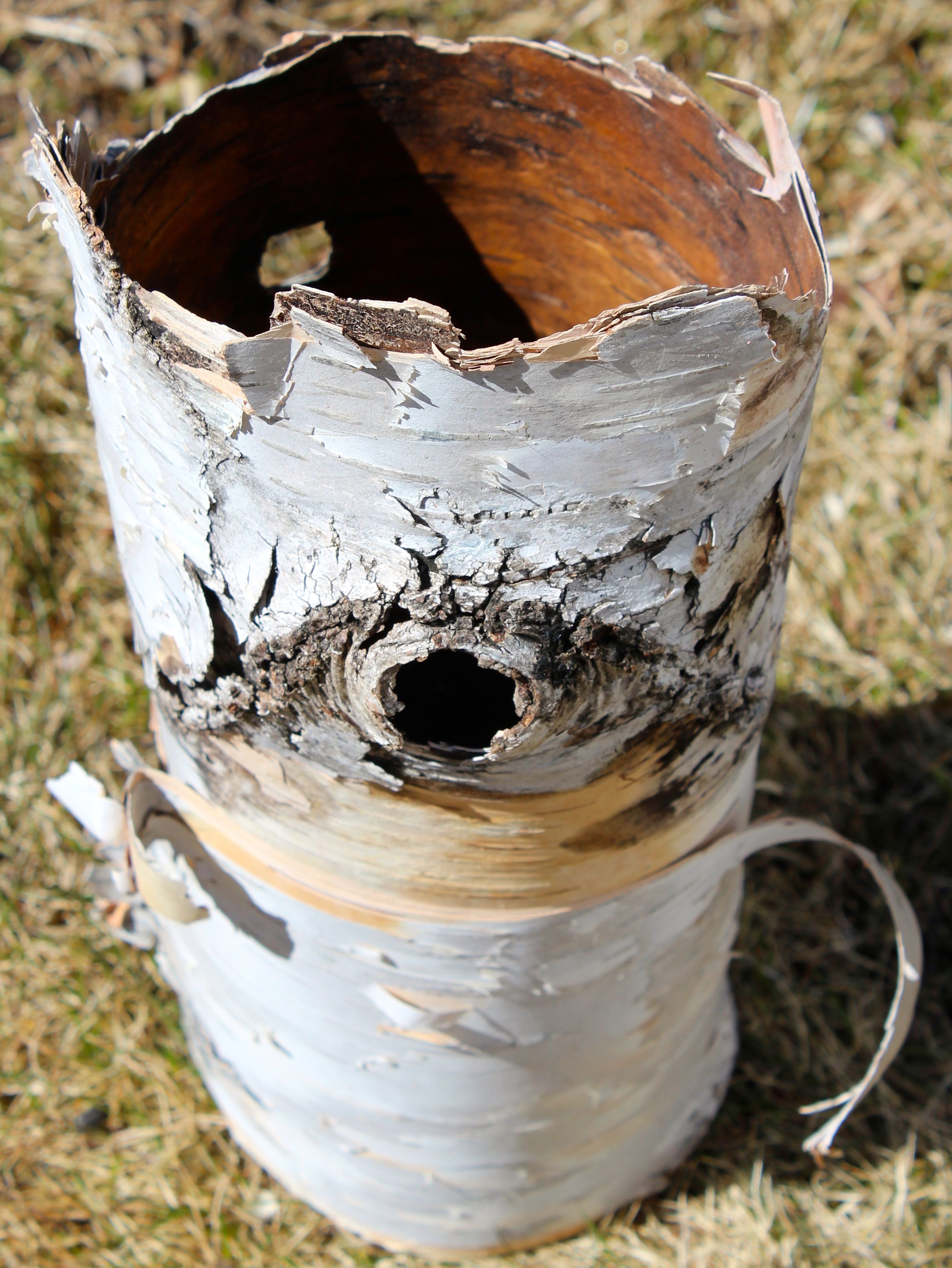
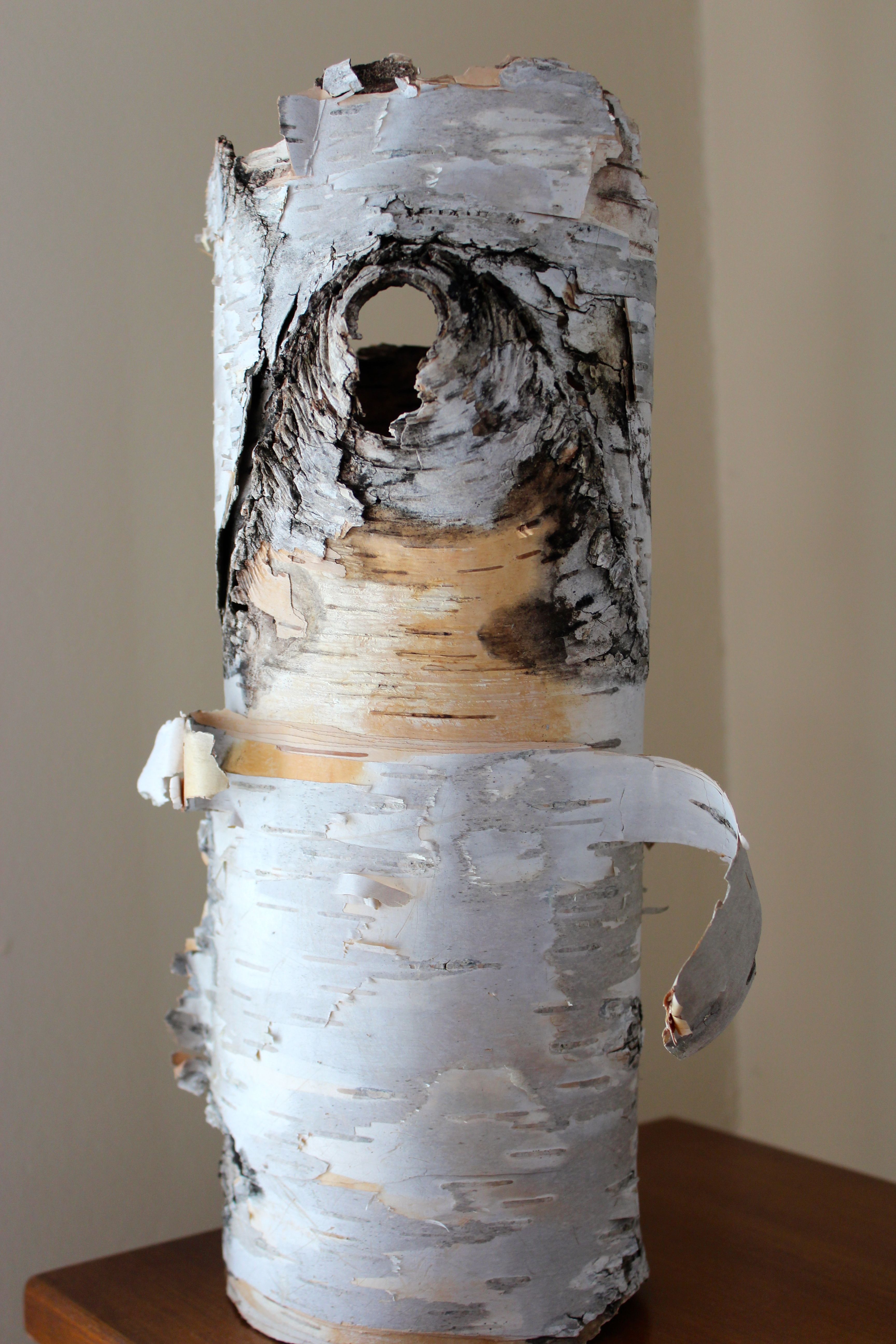
The other present is an intact piece of paper birch bark–peeling, chalky white outer bark, orangey inner bark, a hole where the branch was and a fu manchu over the branch hole. Perfection.

sculpture

It will certainly be a useful teaching tool, but in the meantime, it’s earned a spot on top of the bookcase in the summer kitchen.

One last gift from the land.

matted ferns

These evergreen ferns, matted from a winter under snow, invoke a touch of spring fever.

It was a short wander with a lot of wonder. Thanks for joining me.

Eagle Eyes

CL market

Today’s Mondate began with the ritual PB&J creation at home. Our destination was a hiking trail in New Hampshire, but on the way, we realized the need for gas. So . . . a jig here and a jag there over the bumpy backroads and we landed at Center Lovell Market. While my guy was inside paying for the gas and chatting with a friend who works there, he was handed a slice of blueberry cake just out of the oven. He brought it out to share with me–and I sent him back in, hoping he’d buy the whole thing. Such self-restraint. He only purchased one piece–a good decision, certainly. But really?

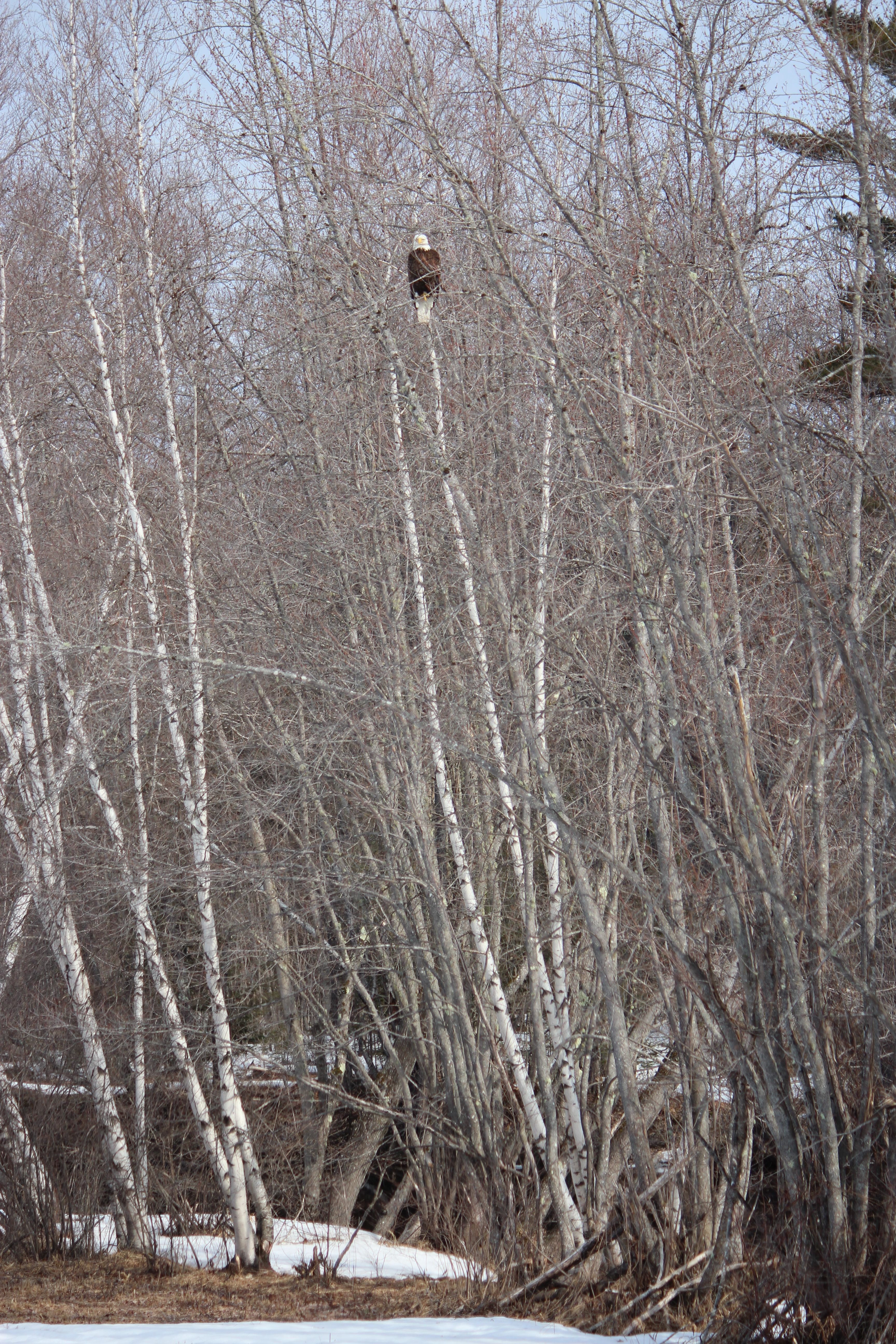
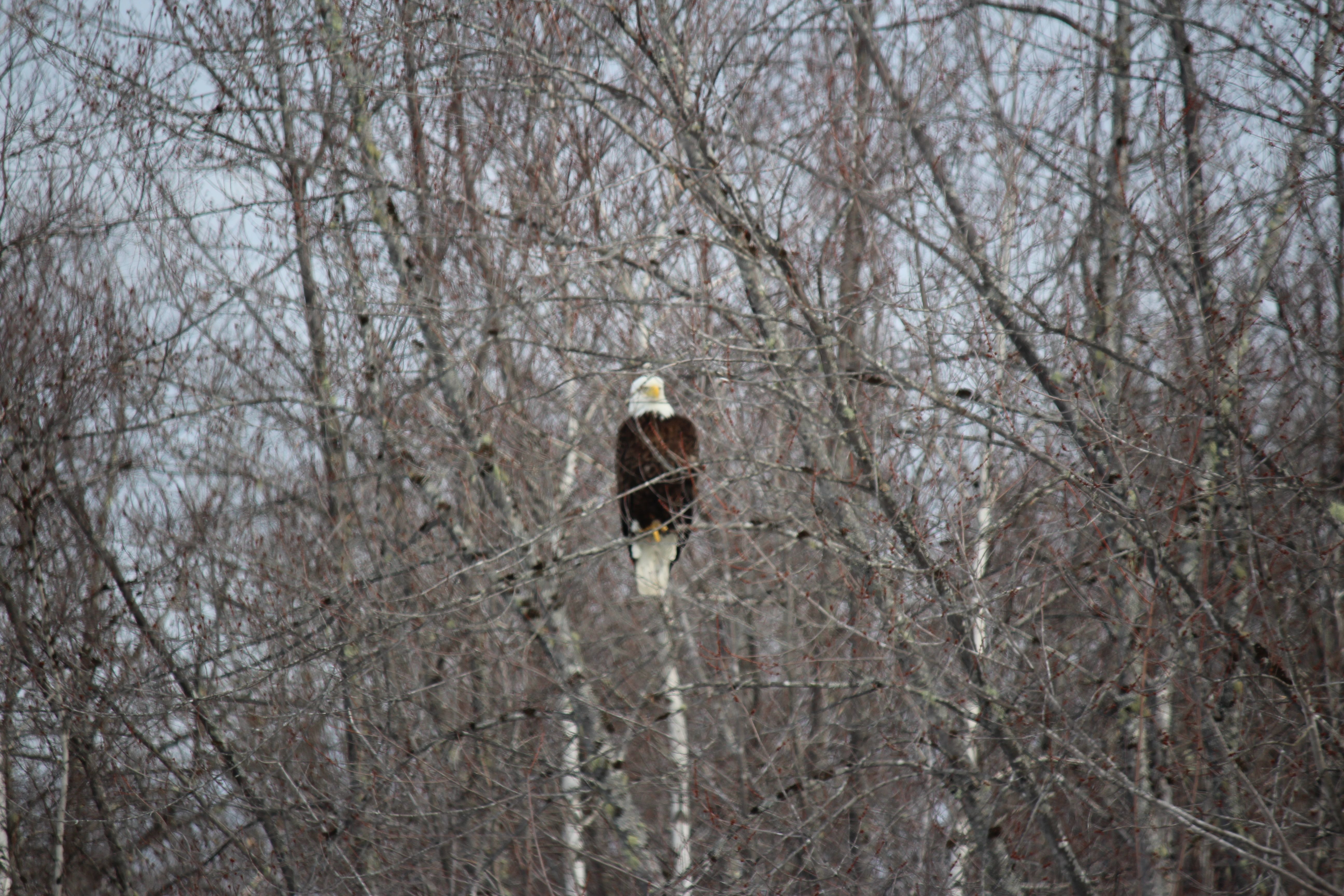
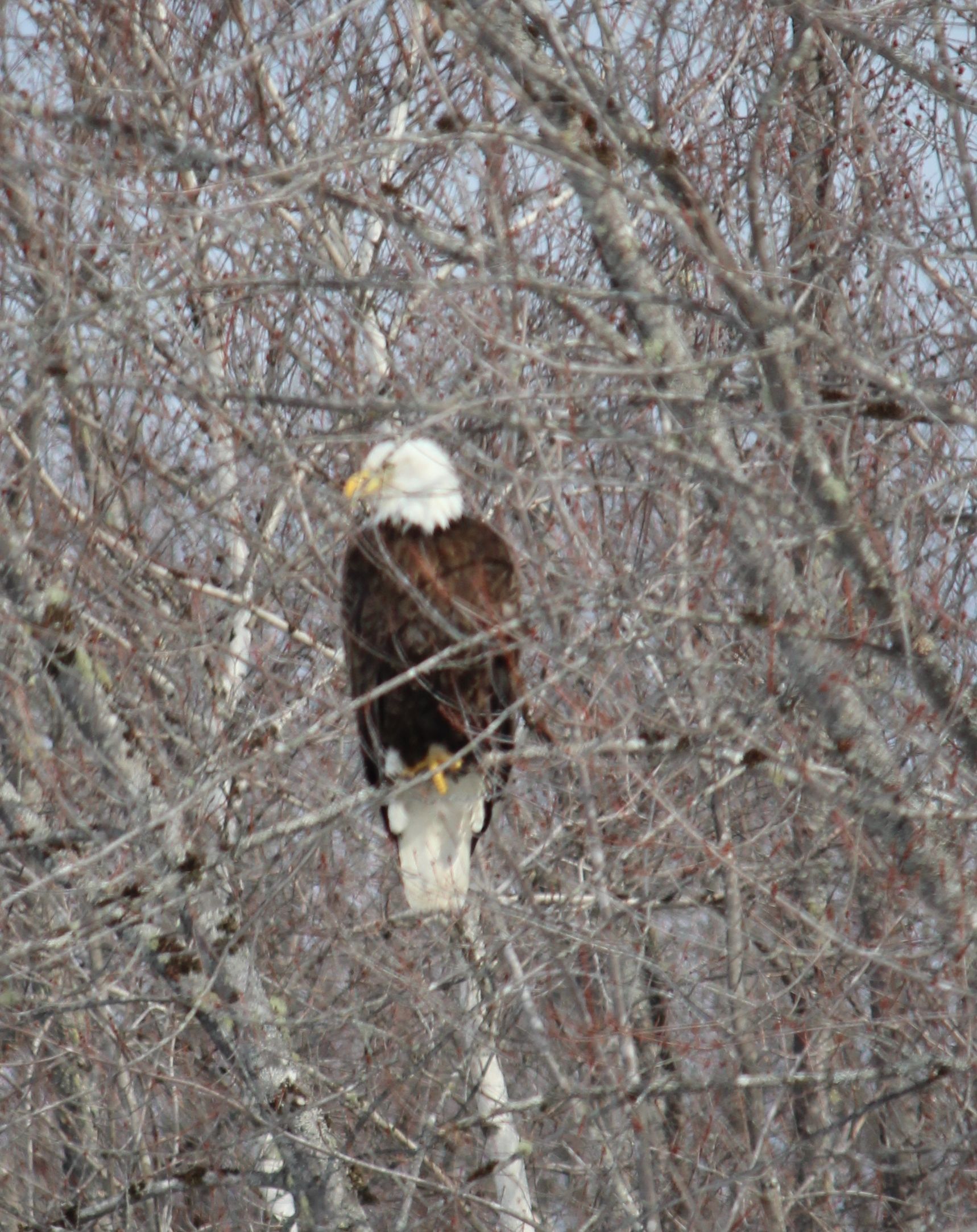
Eagle 1

We made our way back to Harbor Road in North Fryeburg, where something in the landscape caught my eye.

Eagle 1a

Always an impressive sight.

Eagle 2

A mature Bald Eagle checking out the area around Charles River, near the old course of the Saco River.

trail parking sign

Our destination–Province Brook Trail. This hike is for my friend, P.K., who first introduced me to this trail in her summer backyard a few years ago. While she winters in Florida, I hope she’ll enjoy today’s view.

We had to park on South Chatham Road, in South ChatHAM, New Hampshire. I once interviewed Frank Eastman, a South Chatham native, who informed me that it’s pronounced ChatHAM, not Chat’em, because H-A-M spells ham. A lesson I’ll never forget.

trail men

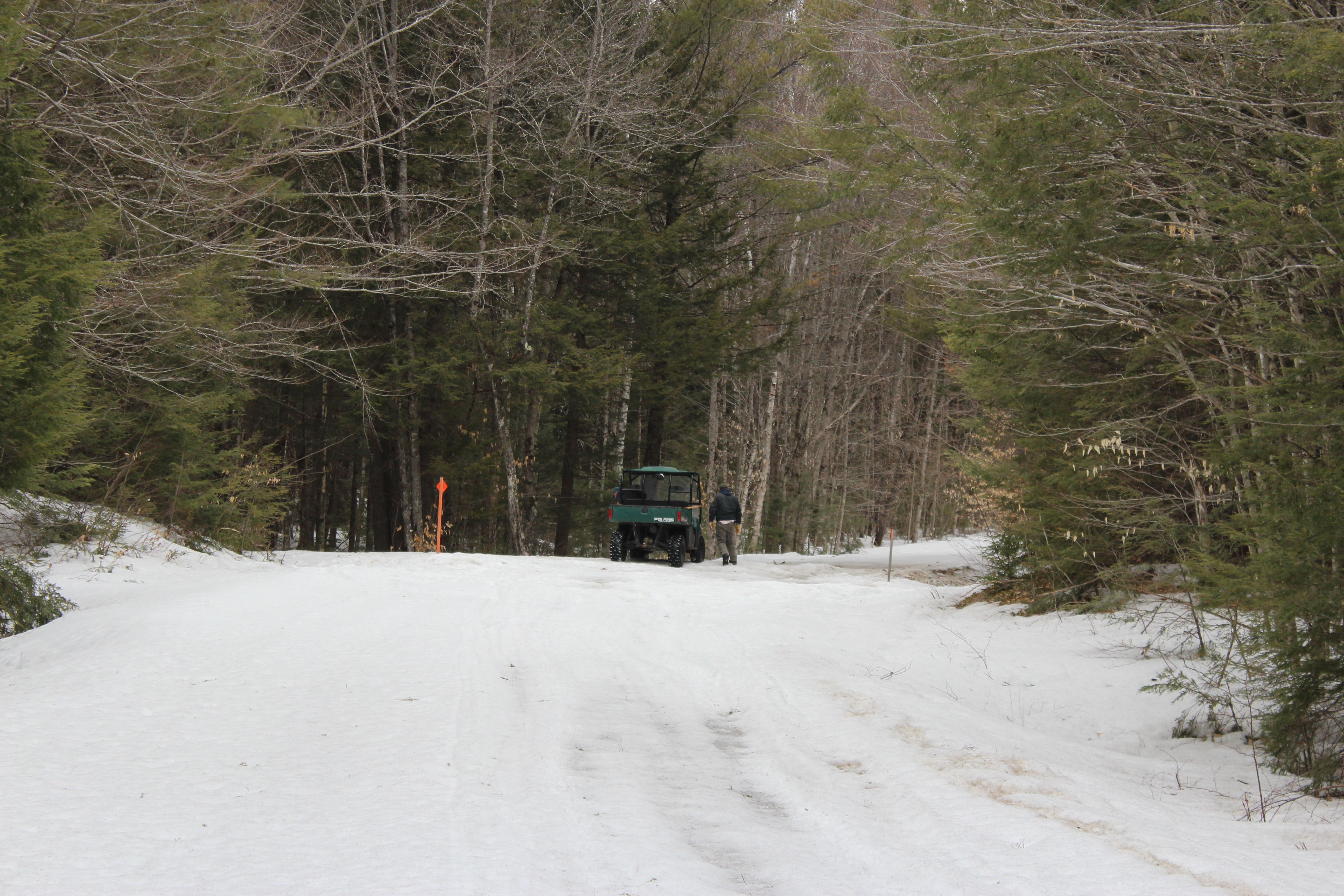
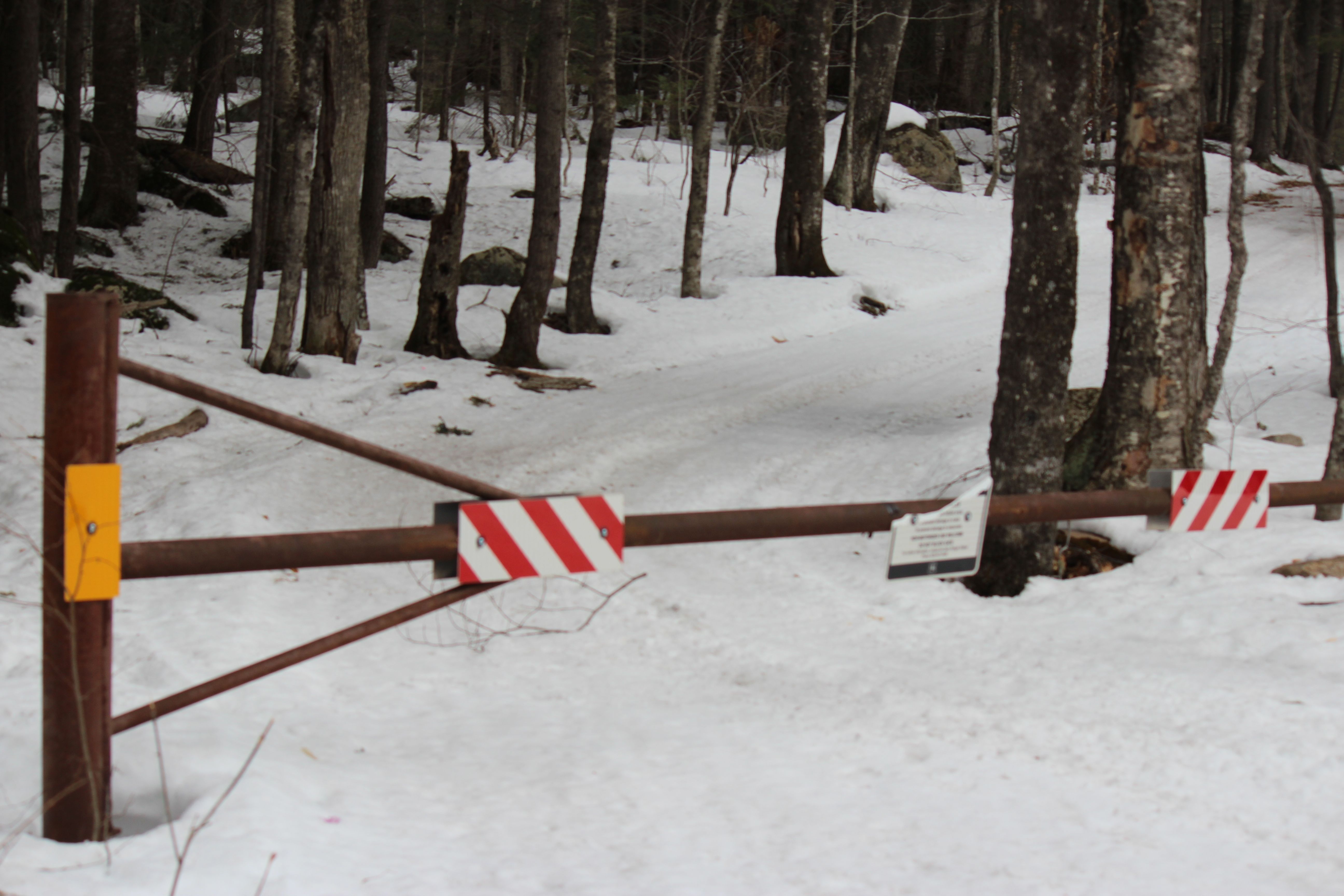
While we walked along the snowmobile trail, aka 2.5-mile Peaked Hill Road or Forest Service Road 450, two members of the White Mountain National Forest trail crew came along to close gates–a sure sign of spring.

pot hole

Seeing a few potholes like this one, we could understand why.

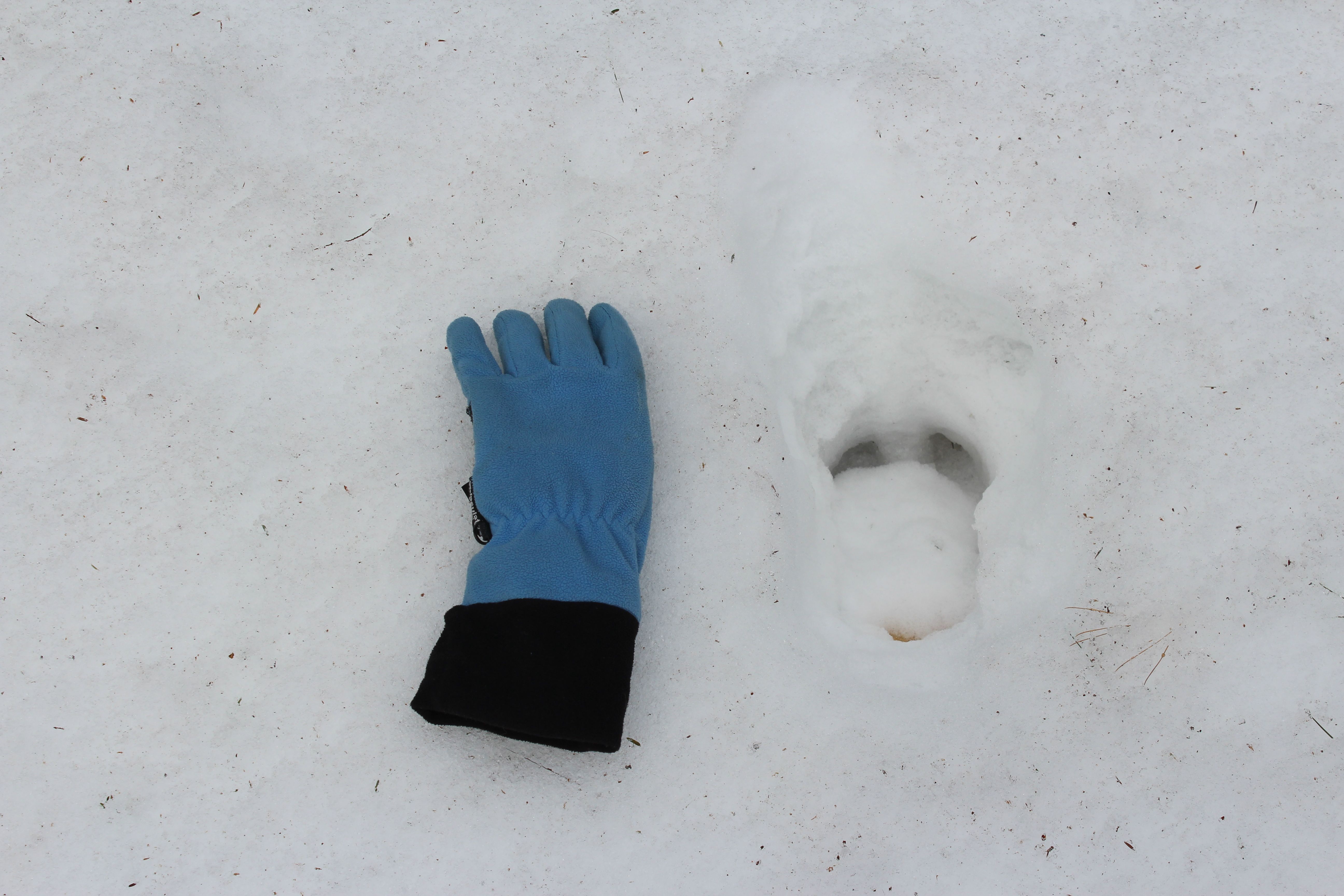
moose printmoose

We opened our eagle eyes and things began to appear.

Moose 3

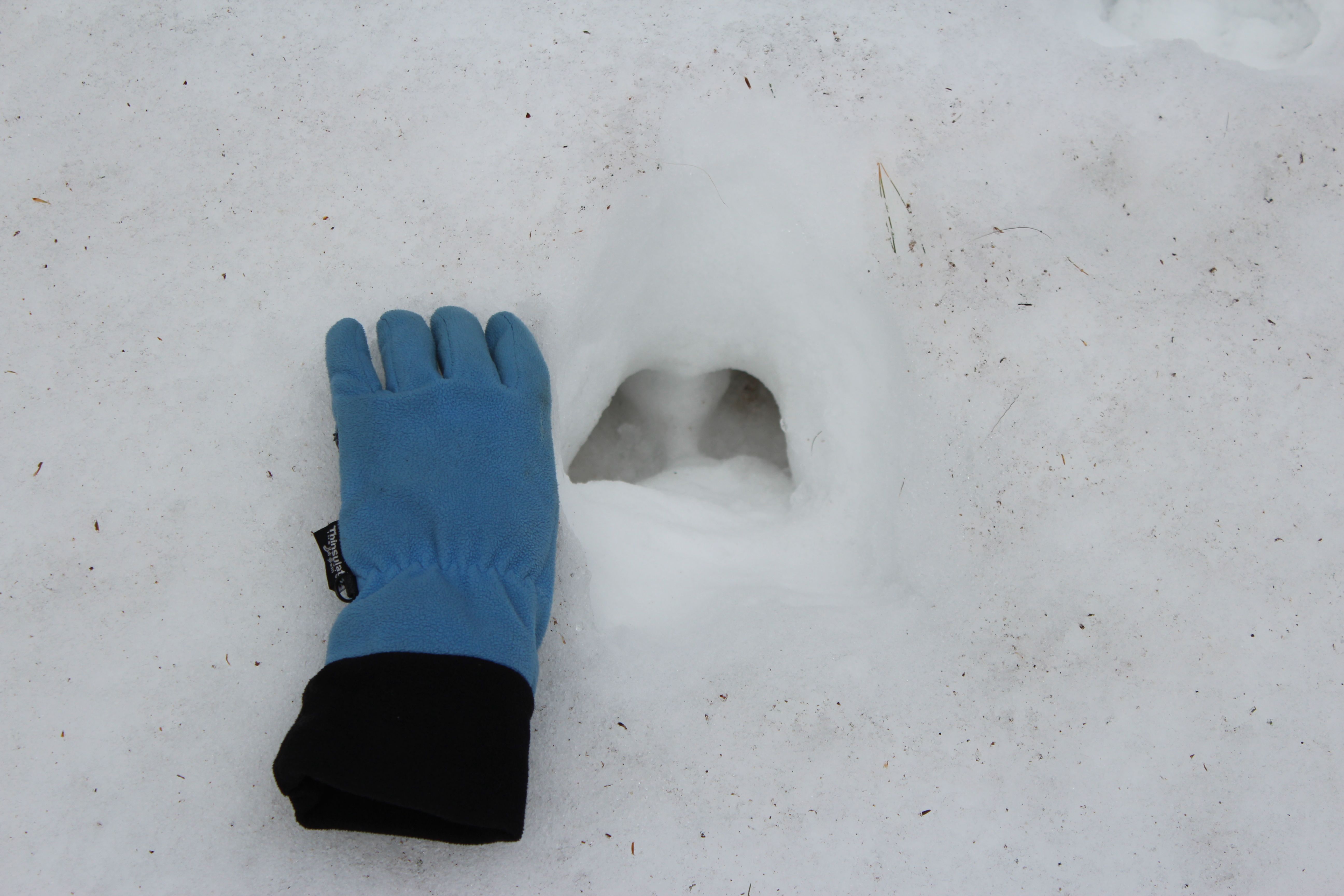
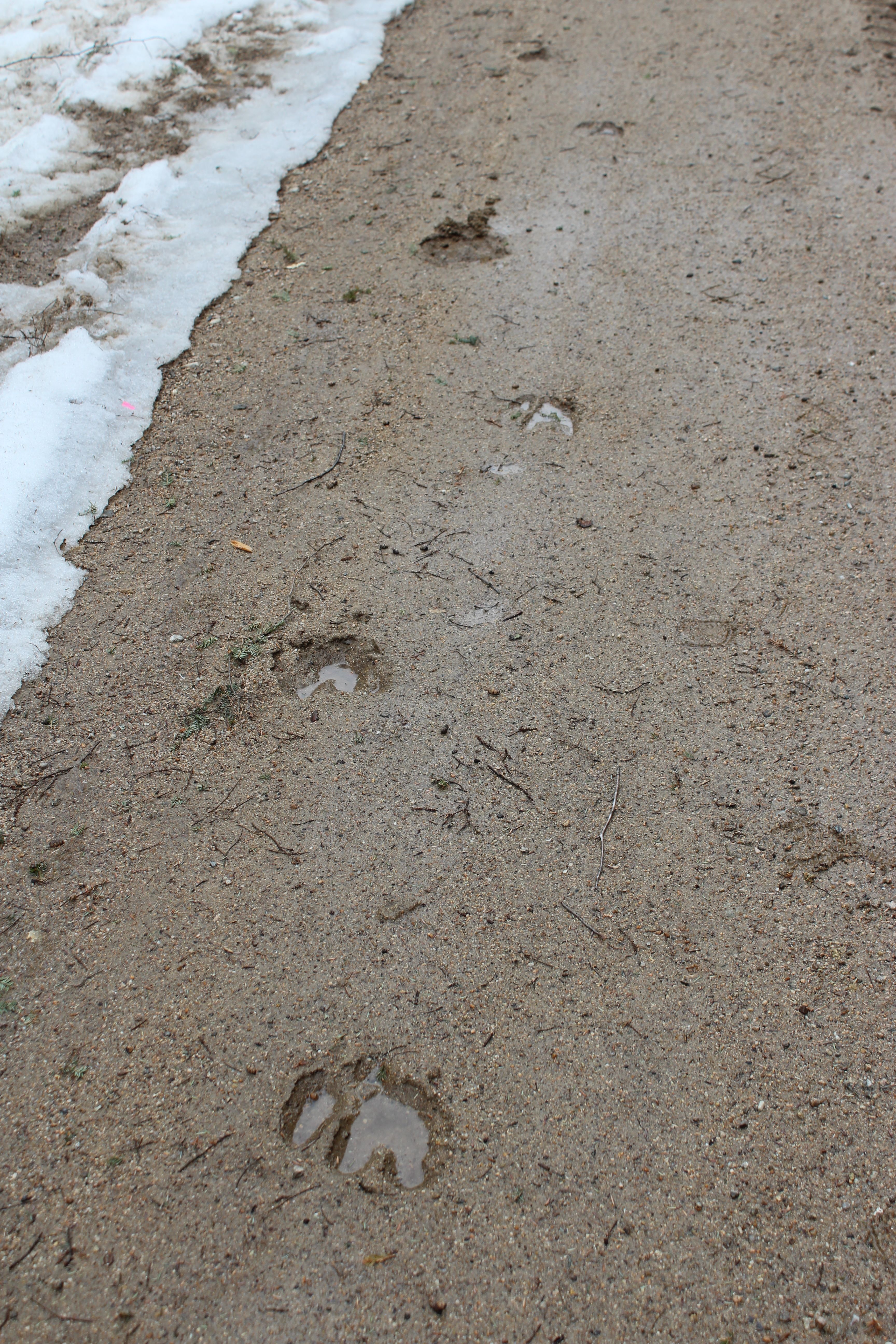
Criss-crossing the trail, through snow and mud, moose prints.

bearbear 1

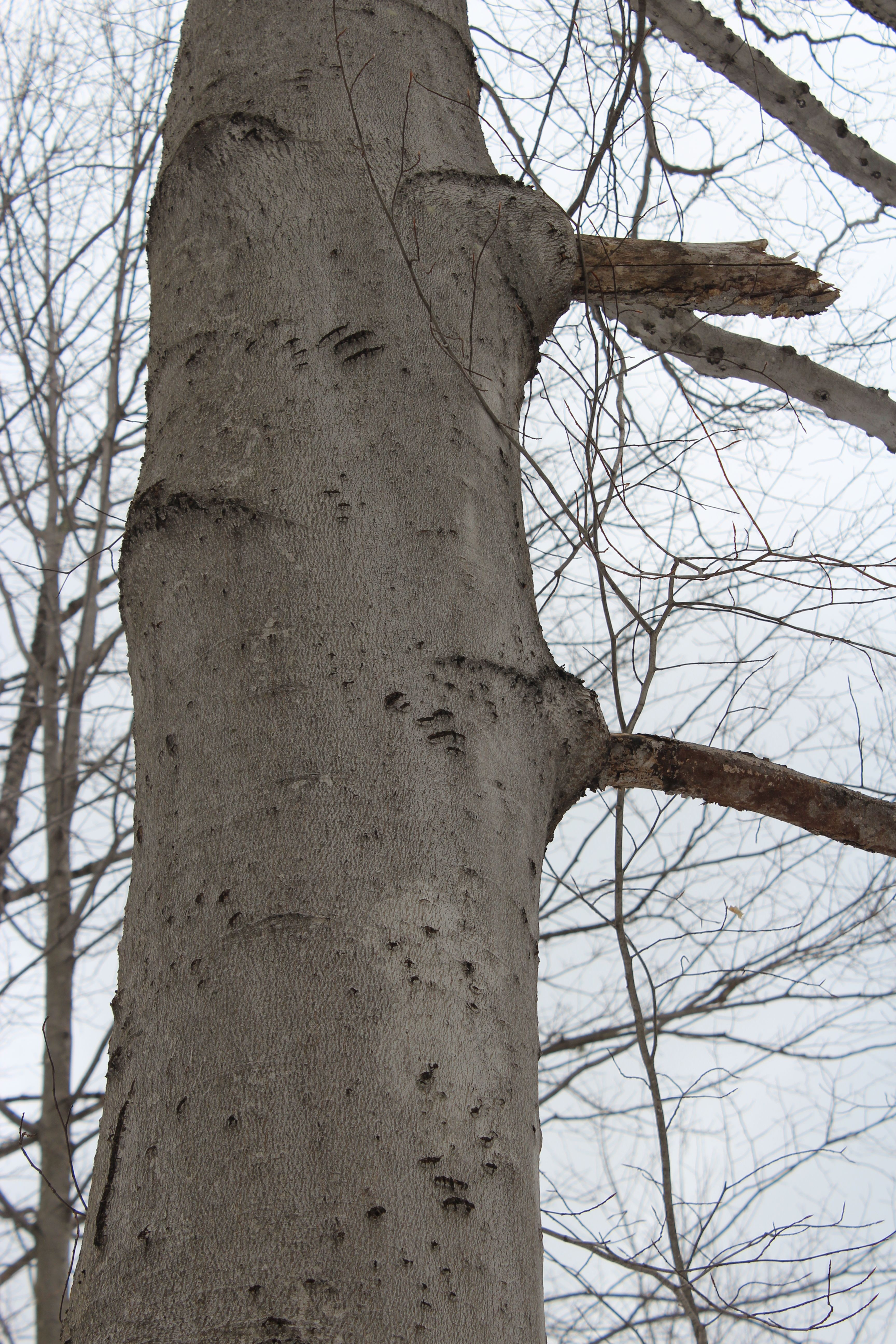
Our eyes are forever scanning beech trees–on the lookout for bear claw marks. We weren’t disappointed.

hairy scat

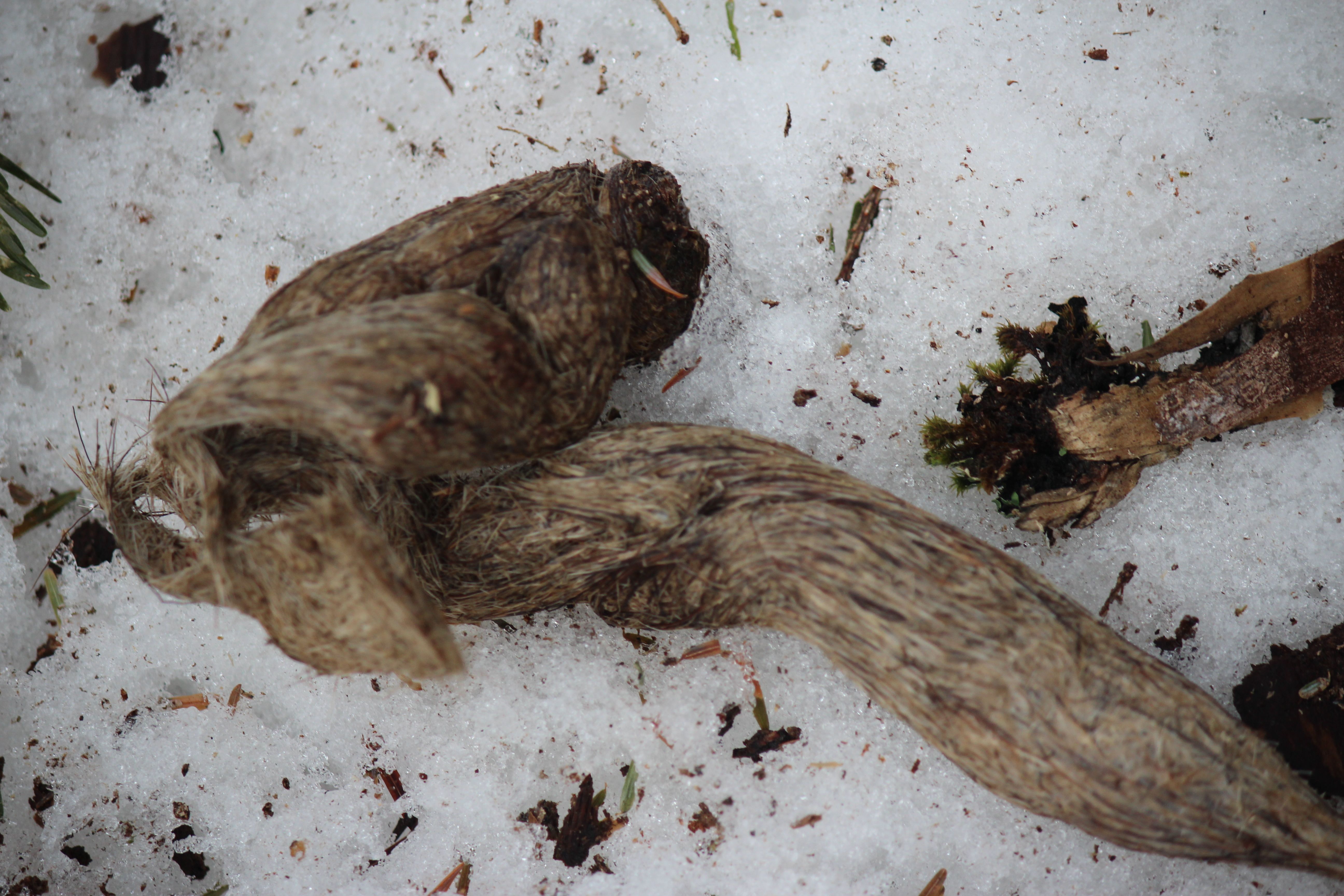
On the trail, we saw several old scat samples. Coyote or bobcat. This one is all hair. I’m leaning toward bobcat–but am open to other conclusions. There were no obvious tracks to make a certain id.

yellow birch

And here–one very large Yellow Birch growing on granite.

yb2

Yellow Birch seeds find optimum growing conditions on moss-covered rocks, stumps and logs. Once the tree establishes itself, it clings to the rock and sends its roots in search of the soil below. Hemlocks do the same.

trail head

Finally, we reached the trail head. Oops, I lopped off the head of the hiker on the sign.

trail closed

Province Brook Trail is currently closed to snowmobiles and ATVs, but we walked around the gate and continued on.

ice

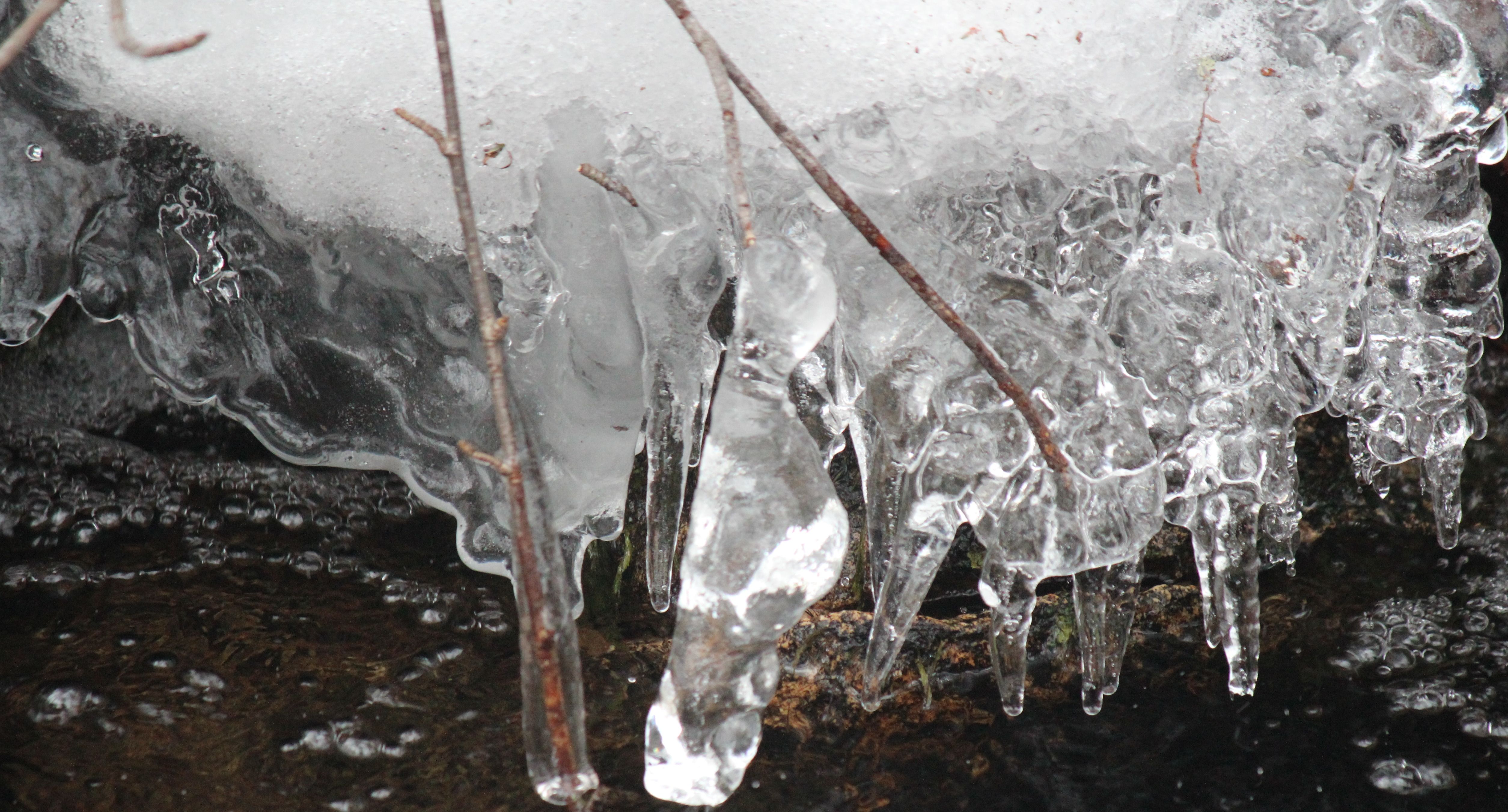
Still plenty of ice in the streams beside the trail.

snow:brook

And lots of snow.

polypody fern

Polypody Fern peeking out from under a snow-covered rock.

hobblebush

And Hobblebush preparing to bloom.

glacial erratics

Lots of glacial erratics along the way. This one supports an entire community.

mushrooms

The tree in the center invited a closer look.

mush 1

Fan-shaped Artist’s Conks.

mush 2

Their white pore surface.

mush 3

Looking skyward.

mush 4

And a sense of perspective.

 pond1

At last, we reached Province Pond.

shaw mtn

Shaw Mountain is in the background–we’re saving it for another day.

Allen-snow

On our way to a forest service shelter that was built in the 1930s (I know this because I read it in Hikes & Woodland Walks in and around Maine’s LAKES REGION written by my friend, Marita Wiser), the deep snow caught us a few times. My guy is knee-deep.

brook crossing

It pays to let him go first. I can then figure out where not to step. Here, he’s contemplating the brook crossing to the shelter. It was actually quite easy.

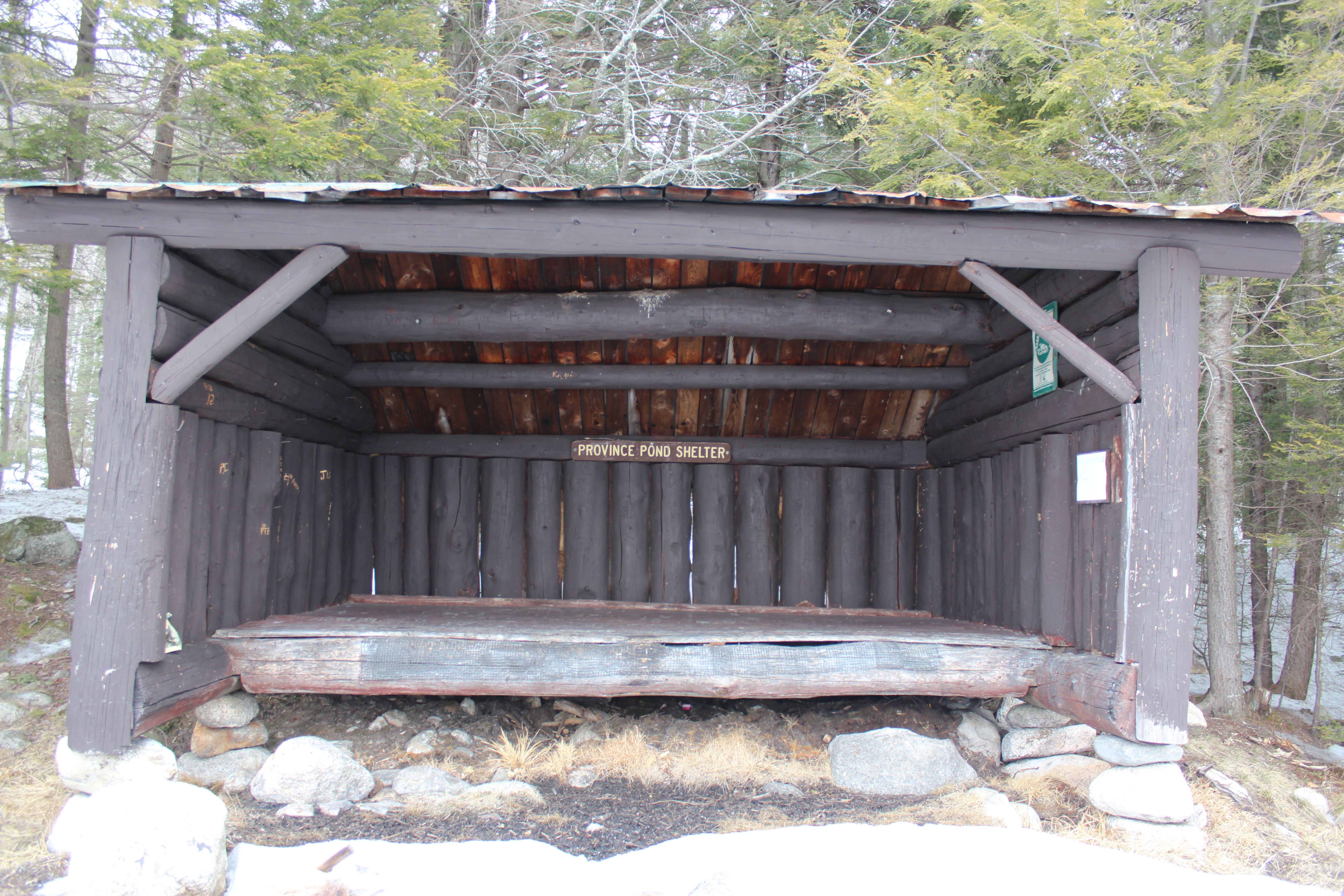
Shelter

A sheltered lunch locale–just right for those PB&J sandwiches.

lunch viewlunch 2

Best view in the house.

initials

I’ve a feeling these walls could tell many tales.

snowing

It was snowing as we headed back down the trail. Yet another wintery-spring day.

Eight miles later, we were thankful for the opportunity to stretch our legs and use our eagle eyes.

Thanks for wandering by to wonder.

My Native Land

stonewall

As winter draws to a close, I head out to capture its fleeting moments. The snow is here today, and will be tomorrow, but it’s changing in texture and amount. And all that has been covered and protected is slowly emerging.

vernal pool

It won’t be long before the vernal pool teems with life. Already, deer and skunks have stopped by.

bobcat

I ventured deeper into the woods behind us, into my smiling place, without snowshoes. That meant I had to follow my old tracks, which deer and a coyote had also used. And then I saw signs of commotion on the snow and some tracks that crossed my trail. Drats–without snowshoes, I couldn’t follow it. Will I ever learn? I certainly wouldn’t make a good Boy Scout! “Be, be, be prepared, the motto of the Boy Scouts.”
Anyway, bobcat tracks always make my heart jump with joy. I’m not sure why. Perhaps it’s their wildness. Or beauty. The fact that they are solitary, elusive and oh, so clever. Coyotes are cool too, in their own way, but they are loud and gregarious.

old beech

As I walked back, I paused by this old beech. Mr. Cretella, my high school Spanish and Latin teacher, popped into my head. No, not because he’s old now, if he’s still living. It actually had nothing to do with the tree and everything to do with the tree. In my yearbook, Mr. C. wrote, “Never lose your desire to learn.” Those words have reverberated with me over the years. I don’t remember what anyone else wrote, but his sentiment struck a cord. Pretty amazing, given that when I took Latin I my senior year, I was forever substituting Spanish words if I didn’t know the answer on a quiz or test.

Back to the old beech tree. I guess it was the realization that this tree is in the process of breaking down and giving back and I never would have understood this before I took the Maine Master Naturalist class. Tomorrow I’m going to attend an MMNP advanced seminar and learn about bone biology. Huh? Me? Don’t worry–I won’t be able to astound you with my knowledge after a three hour class. But it’s that desire to learn that Mr. Cretella encouraged all those years ago. Thank you, Mr. C., wherever you are.

beech life

One more thing about the old beech. It still has signs of life as evidenced by the twigs with buds.

red maple

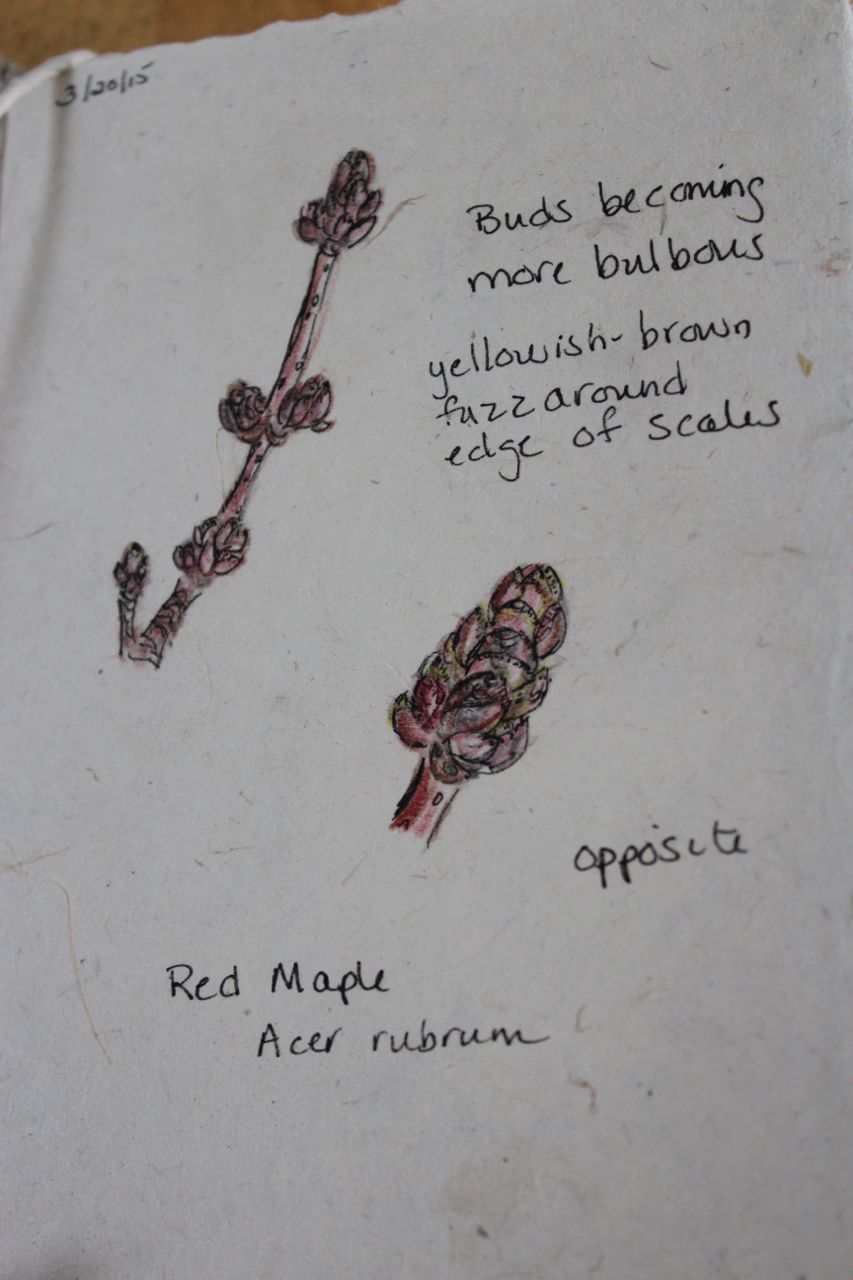
Finally, I settled down at the edge by the cow path and did some sketching because I don’t want to miss the grand moments in the lives of these trees.

red maple 1

Red Maple, Acer rubrum

red oak

red oak1

Northern Red Oak, Quercus rubra (oops, I forgot the “s” in the sketch)

beech

beech 1

American beech, Fagus grandifolia

Winter will draw to an end in an hour and 30 minutes (6:45pm). To celebrate spring, I’ve started reading a new/old/used book: Springtime in Britain by Edwin Way Teale. On page 2 (so I haven’t read much yet, but it isn’t spring yet), he writes, “Three centuries ago, an old English writer admonished the prospective traveler: ‘Know most of the rooms of thy native land before thou goest over the threshold thereof.'”

I’m still learning those rooms of my native land. I’m thankful for the opportunity and glad that you joined me on today’s wonder-filled wander.

P.S. Lake Living magazine is now being distributed throughout the Lakes Region of Maine. I’ll let you know when the Web site has been updated.