Sometimes we follow familiar trails and other times we go off the beaten path. Well, sometimes we go off the beaten path along familiar trails. And other times, we just plain go off the beaten path because we’ve never explored an area before, and even then, we don’t exactly follow the intended route and part of that might not have been our fault for perhaps maps and blazes didn’t correspond. But in the end . . .
Wait. Let’s start at the beginning. We drove across the border into neighboring New Hampshire for a hike and though we’d never been to this spot before, I suspected when I spotted the fruits upon the Mapleleaf Viburnum, that we’d made the right choice. Usually it’s the colors of the leaves that tug at my heart strings, for there is no other tree, or shrub in this case, that exhibits these colors in combination: pinkish-red, purple, magenta, and burgundy.
But the dark blue fruits have disappeared on most that I’ve seen this fall and so I was thrilled to discover so many upon several of this species.
We followed the trail, and then went off trail, of course, for about 2.5 miles, but noted that the description of wetlands was rather deceiving. Oh, they were there, but not clearly visible from the trail and even when we did get to the edges, we could barely see the water for buffer vegetation was so dense. That said, I’m sure the water quality was good. That said, we were in an area with some warning signs about a mining operation years ago, and so the water quality must have been compromised and we can only hope is recovering.
As we circled our way out, we noted that we could have been anywhere in northern New England for we were familiar with all the plants and trees we met. And then My Guy, who does not like mushrooms as part of a meal, spotted a bunch of Red-belted Polypores, which we both admired for a few moments.
Our first leg of the journey completed, we ate lunch and then drove down the road and wandered into the woods again to locate the site of an open pit that was last mined in the early to mid 1900s.
Since then, others have tried their hand at prospecting and if you are a “Where’s Waldo” fan, I encourage you to try to locate a trowel in the photo above.
Among the waste rock dump, I was amazed to see a Marginal Wood Fern with its bluish-green leaves and loaded with sori (groups of spores) lining the edges of each leaflet. Their dark color indicates the spores had ripened, but still visible was the whitish, translucent tissue (indusium) that is kidney-shaped, and partly covered the spores.
We left that trail behind and headed off to complete one more loop. Well, we thought it was a loop. Turns out we followed two different trails that did not meet.
But, along the way, we discovered this huge bird box, a nesting box meant to encourage Barred Owls. I’ve since read that these should be in a mature hardwood forest near water. This one was located on a conifer at the edge of an old log landing. There was water nearby, though it took us some a while to locate it. Has the nest ever been used, we wondered. The Barred Owls in our neck of the woods seem to find tree hollows in which to set up housekeeping and the fact that I hear them most nights and occasionally spot one during the day, and have for several decades means they are quite happy living here, and don’t need a box.
But I digress and return home in that last thought and we hadn’t returned home yet for we had two more discoveries to make on our rather off-course trek, the latter one being the most significant.
As I said, we eventually located a wetland after bushwhacking once we reached a dead end on the trail. We would have explored it more, but had just realized that what we thought was a loop wasn’t and we wanted to know where another trail might lead in the time we had left before heading home.
Take note of the water level. Not too low. Curious.
In trying the connect dots, we returned to our starting point of this third leg of the journey and then hiked in the opposite direction. Again we reached a dead end. And again, we bushwhacked from there and came to one rather dried up wetland. Why?
Perhaps there was a beaver upstream? We don’t know. But we did spend some time exploring it.
At first glance, it was so barren and my heart was saddened for the loss of life. Obviously, this used to be part of the forest as evidenced by the tree trunks. And then it was flooded. And now it isn’t. Since the drought? Since before that? Answers we don’t have.
My Guy explored in one direction and I moved across the mud in another and met a stump garden.
In its own dried-up way, it was a thing of beauty with lichens and mosses and plants and grasses and trees all finding their niche in the midst of such apparent devastation.
On the barkless outside, I discovered a myriad of lichens from Pixie Cups to Powderhorn (now apparently called Wands) to Red-fruited Pixie Cups.
Not to be confused with British Soldiers, which do not have cups, the Red-fruited Pixie Cups brought a smile to my face due to their goblet formation topped with those outlandish caps along the margins. The red is actually the apothecia or reproductive structures where spores develop.
Beyond the garden stump was another and even another, their roots wrapped in a forever embrace.
But the show stopper was what I spotted in the mud. A track. There were deer tracks galore. But . . . another mammal or two or three had also passed this way. Note the details.
I present to you, my dear readers, a bear print. Black Bear in this neck of the woods. The smaller toe is on the left, which means this is a right front foot–their big toes are on the outside of their feet rather than the inside like ours; better for climbing trees.
Do my arrows help you to see the parts of the foot?
Bears are waddlers, which means they have wide hips and their pattern tends to be a bit of a zig zag, with a hind foot landing near where a front foot had been. Oh, let the tracking season begin.
With two white lines, I’ve tried to trace two bear tracks that My Guy is studying.
Suddenly this desolate, dried-up space, wasn’t so bad after all.
It’s been a while since I’ve written about a Mondate, and believe me, we’ve had numerous. And other dates during the week as well, but today found us exploring a new-to-us property that’s just too special not to share. And I think the owners would appreciate it. I know that we appreciate that M suggested this to us. She was spot-on correct that we’d like it.
We’d been by a trail sign on the road a bunch of times to hike other trails in Greenwood, but until M mentioned it, we hadn’t really paid much attention. Until today. The kiosk is about .2 in from the road and I loved that there were pumpkins and a ghost to decorate it. And all the information hikers need to enjoy the area. Though My Guy goes without, I highly recommend trekking poles should you go forth on the well-marked trails. They are steep in places. And rocky in others. But that all adds to the fun.
For me, the fun was enhanced by spotting examples of this pleurocarpous moss. It took me a while to learn that pleuro refers to side and carpous means fruit, thus they have a side fruit. They are low, tangled mats with branches that rise from the main stem.
This particular moss is the Stair-step Moss or Hylocomium splendens. It prefers deep shade and damp conditions. Due to the dry conditions we’ve been experiencing, this year’s growth of a new step rising from last year’s stem probably didn’t occur until recently.
There were other mosses, giving the trail a fairy-land look at times, but also abundant were the Christmas Ferns, which decorated long stretches of our route.
And not to be left out were the Common Polypody that always give boulders a bad-hair day look.
Those items would have been enough, but we realized from the start that we were in Hop-Hornbeam territory, and several surprised us. Typically, this is a tree that stands straight and tall, but a few must have been hit by other trees during storms perhaps, and their trunks had turned. Despite that, other branches took over and reached for the sun.
The other day some of us were looking at a sample of this tree and I asked them what they noticed about the bark. Their responses: shaggy and vertical lines. Spot on. Sometimes the bark is a bit tighter to the tree than this one we saw today, but it’s a great example of how this bark behaves. If you rub your hand on it, some pieces will flake off.
What I really wanted to see since we were in the presence of so many Hop-Hornbeams, were the hops for which it was named and BINGO! They were scattered along the trail, so I picked one up and slit the inflated paper-thin casing open and pulled out a seed. Such a small nutlet compared to the bouyant sac it was borne in.
The leaves are double-toothed and just as these emerged in the spring, male and female flowers would have developed. Being a member of the Birch family, the flowers are in the form of catkins, the male being longer and reddish-brown, while the female would have been shorter and green. Pollen is dispersed by the wind.
During the summer, the fertilized females form into cone-like structures, or strobiles, and their shape gives them their name for they look like hops.
I challenged My Guy to find some of these, which he’d never seen before. Knowing he likes a challenge, like counting Lady’s Slippers and looking for Bear Claw trees, I knew he’d pull through, and he did. But, he also developed Warbler Neck, for so high up in the tree does one need to look in order to spy the hops.
And so to counteract that, I suggested he look down. Success again. This guy is good!
At lunch log, we had a chance to enjoy the view and realized we were looking at Noyes Mountain, which we had hiked about a month ago.
With the camera, I could pull in the rocks on Noyes where we ate lunch before descending into an old mine below.
After circling around the summit of Far Winde-a-Way, where the views may be better in the winter, but we didn’t mind because that’s where we found some of the hops, we began our descent and noted a few artifacts, which got My Guy talking about the fact that metal cans for motor oil were replaced by plastic in the 1980s. He is Mr. Hardware, after all.
And I found a stone that had split naturally in quarters.
Well, maybe they weren’t exact quarters, but still it was worth a wonder to notice.
Another tree that we noticed as we descended was an American Basswood. The bark is similar to Northern Red Oak, but without the red in the furrows between the ridges, and the ridges are flat, almost brushed. Again, I rubbed my hand along the almost smooth surface.
I kick myself now, because I didn’t think to look for their fruits, but I did spot leaves on the forest floor. They are typically quite large, and have an assymetrical base, so if you fold a leaf in half, one base will be shorter than the other. The only other trees in our woods with this feature are the American Elm and Witch Hazel.
Next we reached a brook, where I’m sure the water cascaded over the moss-covered rocks in the spring when we experienced about fourteen rainy weekends, but today it was almost all dry, except for a few pools.
Creating a spider-web appearance on the pool’s surface were about a dozen Water Striders, so speedy in their dance routines.
And hiding at the edge, perhaps in hopes of capturing a Water Strider for a meal, was a Green Frog, with its dorsal lateral folds beginning behind its eyes and continuing down the edges of its back.
At the Cakewalk, for so a trail closer to Mud Pond is named, we met Mouth Rock. We’re pretty sure this wide-mouthed boulder ate all the cake because we never found any.
But our finds did include a champion! Co-champion actually–for the largest Eastern Hemlock in Oxford County according to Far Winde-A-Way Nature Preserve‘s website.
And I quote: The tree is: 10 feet in circumference, 90 feet tall, with a crown spread of 60 feet.
We also found this great specimen. Rock or tree? Tree or Rock? Rock and tree! Tree and rock!
Where does one end and the other begin for they looked like twins. Maybe that’s what happens when you spend so much time together. Kinda like some people looking like their dogs (we had a neighbor when I was growing up who always had beagles and he really did look like a beagle himself. Of course, we never told him that.)
Anyway, this is a Yellow Birch that got its start in the moist soil that probably formed on the moss atop the rock and then sent its roots downward and trunk upward, but really, the two could have been one.
One of our last views before heading back up to the kiosk, was of Noyes Mountain again, only this time it included Mud Pond. And our early fall foliage season. Foliage reflections are among my favorite.
I’ll close this Far Winde-a-Way Mondate by giving thanks not only for My Guy and his love of new adventures, but also for the family that made these hiking trails available so that all of us could enjoy them: The husband and daughter of the late Pam Nelson. “This preserve is dedicated to the memory of Pamela (Roots) Nelson. For more than 30 years, Pam lived her dream to protect, conserve and enjoy these woods and waters. She roamed this rugged hillside and developed a trail system steeped in the natural wonders of the Maine foothills. Today you can enjoy some of the beauty she discovered.”
Pam passed away in 2022, but her family carries on her tradition, and this poem at the kiosk was written by her sister.
Thank you to M for suggesting Far Winde to us, and to the Nelsons for sharing it with all of us.
I am so thankful that I was born with a desire to learn and somehow landed in at a most pleasant neighborhood school. Of course, the classrooms vary depending upon the season. These past two days, and actually these past few weeks, I’ve been majoring in field and yard lessons.
Oh, don’t get me wrong–that doesn’t mean field and yard work, though I did help mow the lawn today.
Let’s begin, however, with the class in the field, which is really more of a meadow given how wet it can be and some of the species who call it home attest to that, including this Marsh Fern.
At first glimpse, I thought it was a Lady Fern, but there was something different about the leaflets–they seemed to present as three-dimensional.
When I turned the blade over, I saw why. On fertile leaflets, such as these, the subleaflets curl around the kidney-shaped indusia which cover the sori, or spore cases.
There are lots of other ferns out there including Interrupted and Sensitive, but Marsh is one I don’t often see, so to have it on display in the school hallway is exciting to me.
Meadowsweet, or Spirea, is another plant that doesn’t mind wet feet, also indicating that this class leans toward being a wet meadow.
And today, I met a new-to-me insect species with a funny name.
Tumbling Ragdoll, aka Mordella marginata, is a Tumbling Flower Beetle. I love the name, and am reminded that as a child I loved my Raggedy Andy doll made by an “aunt” who wasn’t actually related to our family; my sister received Raggedy Ann. Years later, my sister also later created Andy and Ann for me, so I have a complete set, plus one from “Aunt” Betsy.
Anyway, from Tom Murray’s Insects of New England & New York, I discover that these beetles are so named because “When threatened their escape method is to jump and tumble about wildly.”
For science lab, I will attempt a mere scare in the future to see if that is true; but today approached with care so as not to disturb them.
When I got up from my chair to sharpen my pencil, I spotted what my friend Amanda calls a B-52 Bomber Bumblebee. It was large and fast. But that didn’t disturb the Banded Longhorn Beetles at the top of the Meadowsweet.
They were mid-canoodle, and nothing was going to pause their intense interest in each other.
Upon another Meadowsweet, it was as if the whole community had shown up to pollinate the flowers, and miraculously, they all got along. At least while I watched. I love that the teacher had lined up this subtle lesson–about putting aside differences to work for the common good.
She reiterated it more than once.
Over by the window, there was another new-to-me species to meet. By their tiny, yet robust bodies, and long snouts that seemed to grow right out of their heads, I knew they were Weevils. If I got the answer correct on the homework, these are Rugged Flower Weevils, aka Odontocorynus salebrosus.
Ragged. Rugged. Interesting choices for today.
In the midst of it all, some old friends stopped by to visit, including a slew of male and female Calico Pennant Skimmer Dragonflies and this sole female Common Whitetail Skimmer.
I asked the teacher what is so common about this dragonfly that instead seems quite exotic with black splotches on the wings and a two-toned abdomen. I also inquired about the name Whitetail. She said she’d get back to me. Later, in the classroom next door, I saw a single male Common Whitetail, and its abdomen is much whiter (a light blue actually), so I know why that part of the name, but the female certainly wasn’t taken into account when naming occurred several hundred years ago.
And much to my surprise and delight, a male Spangled Skimmer stalked the halls, another indicator in my mind, that this is more of a meadow than a field.
Look at those white stigmas on the wings. It’s the only Skimmer I know of with such markings, thus making it easy to ID on the spot.
After recess, I crossed back over the wall to the classroom in the yard. Judolia cordifera is one of the Flower Longhorn Beetles, and those long horns were so obvious.
But that face. If I have nightmares tonight, I hope my mom will understand why. And my teacher won’t mind when I take a nap during class tomorrow.
Sweat Bees were also busy pollinating, especially the composite flowers, but its the Crab Spider who presented today’s challenge as the teacher wondered if I saw it. Camouflaged as it was, its duty is to mimic the daisy petals. For the moment the Sweat Bee survived, but the spider often wins in the end.
During lunch, this Gray Catbird landed about ten feet from the table where I sat with my classmates. As a person who dabbles in art, and loved Painting 101 with Miss Jessie, the many shades of gray stood out to me. But I was reminded that a Catbird is more than just a gray bird. First, there’s the small black cap, dark tail, and the rufous-rusty patch under the tail. Sometimes its hard to see the patch, but from my spot at the cafeteria table, I had a spot-on view.
And just before class let out, our school mascot flew in. Or rather, the child of our school mascot. Being so young, it was only an arm’s length away from me, but being the mascot, it seemed not to mind my presence.
Then again, maybe it did for the immature Red-breasted Nuthatch looke around, perhaps for back-up. I know it has several siblings, but the others weren’t feeling so brave as to stand so close to me.
At the end of the day, before the last bell rang, I realized that I was the student teacher–always learning something new and finding joy in sharing those learnings.
Today’s lessons were brought to you from the Field and Yard Classrooms. Stay tuned for more lessons.
Okay, so “Vermonting” is not a word. But we did go. And came home richer for the experience.
It takes us forever to plan a vacation, even a mini-one. Well, actually, it only takes a few minutes once we put our minds to it, but prior to that it’s a lot of “We should go to . . .” or “We need to get away,” or any of a myriad of other comments, and we do nothing.
So about a week ago we cleared our calendars. We knew kinda sorta where we wanted to go, but didn’t know where we might stay, until we discovered The Barn in Peacham. We have a red barn attached to our 1870s farmhouse and long ago turned the upstairs into a movie theater/rec room for our sons, all that being a rather rough rendition of either–the movie seats were from an actual theater in our hometown, which was the best part. The seats are still all up there. And there’s a pingpong table and an air hockey table and trophies (remember the Porcupine Invasion last November?) and various other things, plus now a Yoga area for My Guy, but it’s hardly like the space we rented for the weekend as pictured above.
Cozy, roomy, tons of natural light, everything we needed, even eggs and English muffins if we came up short for our first morning.
I think one of my favorite things, and I had lots of favorites, were the little windows that lined the floor in all four rooms. And above these in the kitchen, a Fannie Farmer Cookbook on a shelf. It was touches like this that enhanced the already perfect space.
And our host and hostess, Chuck and Mercy, were equally delightful, and full of information. Thanks to them we discovered Three Ponds Sandwich Kitchen in Danville our first night and marveled in the deliciousness.
But what we were really there for was to hike. And so Saturday morning we went in search of the trailhead to Peacham Bog. If you happen to see My Guy this week, ask him how that search went. We’re still laughing.
We did find the trailhead, but obviously not where we expected it to be. And at the recommendation of Brian at the Groton State Forest Nature Center, we decided to hike the two miles in to the Bog and then continue along a multi-use trail before reaching Devil’s Hill, circling back along the same route.
The natural communities along the way made us feel as at home as the barn, for we (read “I”) felt like we were walking among old friends such as the Mountain Woodsorrel. I love its peppermint ice cream presentation.
And then, in a damp spot Swamp Beacons lit the way and I was drawn back in time to my first encounter with them while tramping through the woods in Lovell with friends Parker, Joan, and Dave. RIP Parker–please know that you accompany me on and off many a trail and I know that you would be happy that I actually remember some of what you taught me.
Vowing not to count Lady’s Slippers, we didn’t. But they were there, though most waning.
At last we reached the coveted bog, where a boardwalk was long ago placed to keep hikers like us from stepping onto the fragile environment.
It was at this point that another funny story evolved, but again, you’ll have to visit My Guy at his store to get the rest of the story.
At last reaching the platform with a bench at the end of the boardwalk, we sat down to eat sandwiches and take in the scene and sounds that surrounded us.
Sphagnum mosses formed the peat base and laurels and Tamaracks and Firs and flowers and insects all expressed themselves.
I, of course, can never see too many Pitcher Plants and be forever wowed by those downward facing hairs that entice insects in to the pitcher-shaped leaves where the end-of-life lurks.
And the otherworldly flowers were in full bloom, including this one that hosted a long-horned insect and a sub-imago Mayfly (read: Dun).
I’ve been wowed by these for a long time and years ago drew this rendition as a teaching tool that now is the background for my iPhone.
There were Unadorned Bog Flies pollinating Bog Labrador Tea.
And Cotton Sedge showing off their hairy tufts.
Our next leg took us from the Bog to the Groton multi-use trail, being used mainly by horse riders and moose. We saw neither, but their tracks were evident in the mud.
What we did spot was this Aurora Damselfly being wrapped up by an Orb Weaver Spider. I knew the damselfly immediately because of the uneven stripe on the sides of the thorax.
And had recently tried to paint a mature form of the same species.
We also met a couple of Red Efts, the teenag and terrestrial stage of the Eastern Newt. The red spots act as a warning to predators because if consumed, they secrete poison toxins from their skins. As humans, we can touch them and live, but to ingest one would be harmful. So don’t try that.
A couple of miles later we reached the trailhead for Devil’s Hill and snaked our way up the switchbacks to the summit, where this view of the rolling hills and iconic geography of Vermont stood out before us.
On the way down, a male Luna Moth presented itself, hiding as it was under a Striped Maple leaf.
I love these leaves and their twigs, especially the growth rings that stand out so predominately, and My Guy appreciates that the leaves serve as Nature’s Toilet Paper. TMI? But really, they are easy to identify and they are soft.
Returning on the multi-use trail before retracing our steps on the Peacham Bog Loop, we had to walk through tall grasses and sedges, which did not make my heart so glad because this was heavy tick territory. I had on tick gaiters and repellant. We took at least five off My Guy.
But, this pair of Craneflies did share a canoodle moment with us, so that won me over for a second.
All in all, we hiked over eleven miles that day, and were too beat to go out to dinner, so instead drove to the West Barnet Quick Stop, about 1.5 miles from our weekend home. There we ordered Chicken Cordon Bleu Paninis with Pesto, and a salad to share. And while we waited for our meal to be created, noticed Shain’s of Maine Ice Cream in the freezer, which made us chuckle. Wait a minute. We were in Ben & Jerry Country. Never fear–they had a much better presentation in another freezer.
And, while we waited, I asked the woman who was creating our salad if she lived in the area. “All my life,” she said, and added, “So far.” We chuckled, but then I asked if she knew so and so, a couple I know from church who had lived just down the road for many years (a fact I’d only learned days earlier).
Her face lit up with a smile as she recalled them and said they used to frequent her other store and that their daughter had worked for her. As tired as I was, that smile of hers was the perfect ending to a great day.
Well, it wasn’t quite over yet. For there was no TV at our weekend digs. And so I taught My Guy to play Parcheesi, and then I beat him.
The next morning we drove north to Orleans to meet my first college roommate and her husband, Bev and Bill, at the Carriage House for breakfast. Funny thing–as I drove up Route 91, there was one car in front of us and approaching it, with its Maine license plate, I spotted Lakes Environmental Association and a Loon Echo Land Trust stickers on the rear window. It had to be someone from our hometown. Sure enough, as I passed it, I recognized the mother of one of my former students. And a wondermyway follower.
Betty, if you are reading this, that was us on the highway with you on Sunday morning at 8:30 or so.
We spent two hours talking and eating and talking and talking some more over omelets and coffee and Bev and Bill suggested that we hike Mount Hor, which overlooks Willoughby Lake. I’d been to Willoughby before with Bev and two other dear friends, but never hiked in that area. And so we did. They gave us easy to follow directions and we parked and then walked almost two miles up the CCC Trail. I love that this was another project meant to keep people working when times were tough.
Though the hard packed surface we walked on was not the original road, we kept spotting these posts and my theory is that they were original and held cables that connected one post to another and kept vehicles from catapulting down the steep embankment.
When we finally reached the actual trailhead for Mount Hor, I met a new flower. Canada Violet. It made sense since we were probably about ten miles from the Canadian border. Delicate. Pure white. A well-defined runway to the nectar. And leaves offering a different take on the violet theme.
What we soon realized was that it not only grew tall, but also in large clumps.
Oh my gosh, our next find–Maidenhair Fern. Such a unique presentation and color and, oh my gosh!
At the summit, we had three choices. First we headed to the Summit Vista, where the view included Cedar trees in the foreground and two delightful couples who were enjoying GORP and blueberries but when they heard that we had homemade Peanut Butter Chocolate Chip granola bars a la The Stow Away Baker in our backpack, they wanted to chase us down the mountain.
From there, we hiked another mile across the ridge line to the East View, overlooking Lake Willoughby.
While there, we spotted a Peregrine Falcon soaring on the thermals, but neither of us got a good shot of it. Still. Forever in our minds eye. And sometimes, those are the most memorable moments.
From the North Vista we looked across at the cliffs of Mount Pisgah and wondered how many more falcons we weren’t seeing.
Back down the CCC Road we did walk once we stepped off the mountain trail and my favorite find was a Mountain Maple, that stopped me in my steps for a few minutes as I had to remember who it was that I was meeting.
Back at Lake Willoughby North Beach, Mount Hor is on the right and Mount Pisgah on the left, creating a fjord-like presentation.
From there, we drove south to South Barton as I let my nose lead the way and found a cemetery I’ve visited in the past for some of my ancestors are buried here.
Recognizing family names is always a treasure. And actually, within the post railings of this place I noted at least three different families that have contributed to my DNA. I’m pretty sure my love of the north country, be it Northern New England or Canada, comes from these folks.
On the way back to our home base, we grabbed sandwiches to go from Three Ponds and gave thanks for their goodness.
And then this morning, after packing and cleaning and chatting briefly with Chuck, we had one more place to explore–Kettle Pond State Park within Groton State Forest.
So here’s the thing. My understanding of a kettle bog is that it’s kettle or bowl shaped. And has an outer layer of herbs, with the next layer surrounding it of taller herbs, and then a third layer of shrubs encircling the kettle, and finally, trees who like wet feet, like Red Maples, forming the final ridge around the pond.
None of this was present. Well, there were shrubs and trees, but not in layers like I’m used to seeing. And the shape of the pond was more north-to-south glacial-related than kettle-related. Hmmm?
Still, some great finds like this Spotted Salamander egg mass along with four others in a deep puddle along the trail. Can you see the embryos forming?
And a Garter Snake that had been basking on a rock in the trail until we happened along.
And Twin Flowers, each sharing a petiole, growing like a mat along a glacial erratic.
And Stair-Step Moss growing abundantly like a set of stairs here and there and even over there.
And a warning, which was more of an invitation at the only private cabin along the way, a route which offers lean-to shelters for groups to rent. I love this sign. We looked forward to meeting said dog, but sadly, no one was home.
Flat-fruited Pelt Lichen also lined the trail. So much to see. So much more to learn.
Oh, and an Eastern Newt in the water. It was like the Newt brought the trail to a full circle beginning with the Red Eft on our first hike of the weekend and ending with this adult form.
Our time Vermonting came to an end this afternoon, but oh, what a wonder-filled time we had. We hiked so many miles while meeting old and new friends, dined with dear old friends, met friends of friends who were old friends to each other and new friends to us, and just plain had fun making new memories.
Thank you Chuck and Mercy, and Bev and Bill, and Debbie and those at Three Ponds, and Brian at the Nature Center, and to all the others we met along the way for making our experience such a rich one.
Vermonting we did go. Word or no word, it was exactly what we needed.
On my way down the cowpath to retrieve our game camera, I heard among other bird songs, the “Teacha, Teacha, Teacha” of the Ovenbirds. But it wasn’t until I was headed back home a little while later that I actually spied them, which for me is a rare treat–maybe because I don’t spend enough time trying.
In the past, however, it’s always seemed like the minute I get anywhere near them, they stop singing and I can’t find them.
Today, that was different. And I did get to watch. BUT . . . there’s always a BUT in my posts, or so it seems. Anyway, but . . . then I spotted something else.
A beautiful pink Lady’s Slipper. And the leaves of four others–that I hope in future years will bloom.
With fingers frozen because it was raining and the temp was only in the 40˚s on this May day, I headed back to the house, pleased with my finds.
All the while, however, I kept wondering if there are other orchids on our land and so after lunch I donned my rain gear again and headed back into the woods.
First, I stumbled upon this fern, which grows in a vase-shaped form. There’s plenty of it along our stonewalls and at the edge of the field beyond, but while hiking with My Guy yesterday, I pointed some out and called it Interrupted and he wondered why such a name.
Because, I explained, ferns have sterile fronds for photosynthesis and fertile fronds for reproduction and in this case its fertile fronds have interruptions of spore cases in the middle of the blade upon which they grow, while most ferns carry their spores on separate stems or on the undersides of leaflets.
After the spore clusters ripen and drop away, the mid-section of the frond will be “interrupted,” leaving bare space between the leaflets, further reminding us of its name.
And where there is Interrupted Fern, there is often another member of its family, the Osmundas that is, this being a Cinnamon Fern. One of the differences is that the fertile frond is more like a wand that rises from the center.
There are no leaflets on these fertile fronds, and again, the sporangia are like tiny beads that will turn a warm cinnamon brown when the spores mature. And then, it really will look as if the frond is covered in cinnamon.
While the Interrupted will grow in forests and wetlands, the Cinnamon prefer wetlands, which tells you something about our land. Another that also grows here, though I forgot to photograph it, is their second cousin, the Royal Fern.
If an Interrupted Fern doesn’t have fertile fronds, it looks very much like a Cinnamon, but one of the key characteristics to tell them apart is that Cinnamons have hairy (wooly) armpits like this one above where you can see the wool on the underside where the leaflet meets the rachis or main stem. And Interrupteds don’t.
Being a bit of a wetland, I shouldn’t have been surprised by my next find, but I was. Jill-in-the-Pulpit! You may think it’s Jack, but like some other plants, including the Canada Mayflower that grows beside these, in order to flower the plant needs the additional energy stores of a second leaf (with three leaflets).
Once I spotted one, I began to notice they were everywhere in one spot on and near the cowpath, but the curious thing–the leaves had been devoured on some. By whom?
And do the leaves also contain Calcium oxalate, which this plant like some others stores in the roots and can cause blisters and other medical problems if consumed? Is that only in humans? So many questions.
That said, my quest now was to seek not only any other Lady’s Slippers, but also Jack-or-Jill in the Pulpits. All told on the latter, I did spot about twenty, but didn’t take time to differentiate how many of each gender.
At last, I reached the powerline that crosses our property and it was there that some feathers decorating a pine sapling surprised me.
A closer look and I found a slew of feathers, all plucked. By one of our predatory birds–we do have Sharp-shinned and Broad-winged Hawks in the neighborhood. Or by another?
We also have a neighborhood Red Fox who passes through our yard and over the stonewall or up the cowpath on a regular basis. Plus Coyotes and Bobcats.
Mr. Fox needs to eat too. And in this case, he marked his territory–right at the end of the ten-second clip.
The question remains–who made a meal of the Turkey?
Again, I do not know, but as I searched for evidence or more remains, look what I found–another Lady’s Slipper hiding among some Low-bush Blueberries.
And so back to my original quest did I return.
And smack dab beside that orchid, another plant that I love, but didn’t realize we hosted–Indian Cucumber Root, with a root that is edible and delicious. And a flower or in this case, flowers, that will delight my soul in a week or less. And yes, this too, is a plant that needs an extra layer of leaves in order to produce a flower. So do we call this a female plant and all plants that only have one level or tier of leaves males?
I don’t know. But I had circled around, zigzagging actually, through the five acres of woods that we own beside our one-acre house lot, and landed back at the first Lady’s Slipper, delightfully decorated with the rain of the day.
Across the way, right where I’d first spotted him, an Ovenbird paused and called. I tried to capture both in a shot, but they are scurry-ers, if that’s a word for scurry they both did as if they were in a hurry and perhaps a wee bit confused. Maybe they were trying to distract me from finding their nest?
I didn’t look for it, but have an idea at least of its whereabouts. And I can only hope that any offspring they produce are well protected cause this is a wild place.
With fingers once again numb, I finally headed home, but first I stopped to check on these Jack-in-the-Pulpits that were the only ones I thought we had, growing as they do by a split-granite bench we made. I remember seeing Jack standing tall in the pulpit one spring as I headed out to the vernal pool, and upon my return someone had nibbled him. Whodunnit?
That said, I decided to place the game camera by all the other Jacks and Jills that I’d found earlier today and I’m curious to see if anymore get nibbled.
All of this because the Ovenbird called. It felt like Thanksgiving. Complete with a Turkey dinner. (Sorry, but I had to say that.)
And to think I thought I knew our land. There’s always something to learn. Or some things!
I was asked to give the homily at church this morning and have spent the past month or more reflecting on what to say. Of course, it was to my blog that I turned for inspiration for I knew that parts of the story were tucked within these posts.
Driving home from a recent Trail Snails walk, I spotted this statement on a roadside sign: “There is no Planet B.” And I thought it was an apropos title for what I want to share with you this morning.
On Sunday, March 23, in Forward Day by Day, Tyler Richards, a priest serving St. Anne’s Episcopal Church in De Pere, Wisconsin, responded to Exodus 3:vs 3-4: Then Moses said, “I must turn aside and look at this great sight, and see why the bush is not burned up.” When the Lord saw that he had turned aside to see, God called to him out of the bush, “Moses, Moses!” And he said, “Here I am.”
Reverend Richards commented, “I do not have an accurate account of the things that have caused me to stop and look again. Solar eclipses, northern lights, sunrises, and sunsets are a few of these.”
He continued, “God asks us to turn aside and experience wonder. God’s creation is a source of endless contemplation, and, at times, so is human ingenuity. But these great wonders that take our breath away prompt me to ask: What are they for? Are they an end to themselves, or are they there to remind us that God is even more incredible? Indeed, God is so great that God inspires and colors the very creation itself. It might not always be a burning bush that causes us to gasp at God’s greatness.”
In response to that I invite all of you to join me as I share a few of the thin places I have visited, where I see the light more on this side than the other. These are not burning bushes, but they do make me gasp at God’s greatness. The first I call “Emergence.”
Emergence

Oh dragonfly, oh dragonfly.
In your infancy,
You laboriously
Climbed upon a slender stem.
Ever
So
Slowly,
Seams split.
Soft and squishy,
You spilled forth
Into this sunlit world.
Perched upon your former self,
Wispy strings recalled
Aquatic breaths.
Moments slipped
Into an hour.
Your body of velvet pulsed
As blood pumped
Into cloudy wings.
Standing guard watching you,
I noted preparations
For first flight.
Eyes bulging,
You chose a spot
Of viewpoint advantage.
Colors changing,
You gained the markings
Of generations past.
Wings drying,
You offered a reflection
Of stained glass.
Beyond understanding,
You flew,
A dance of darting restlessness.
Odonata, Odonata,
You have known both worlds.
First playing beneath the watery surface.
Then in a manner so brave,
Climbing skyward
To ride summer breezes
On gossamer wings.
Forever in awe
Of your transformation
From aquatic naiad
To winged adult,
I can only imagine
The wonder of emergence.

******

Drawn by the Sapsuckers is next.
Along a path
Through a cathedral in the pines,
It seemed apropos
That I should spy
The works of
An Oak Apple Gall wasp.
For it is believed
That circa 800AD
Irish monks used such galls
To create the green colorant
Of their artwork
As displayed
In the Book of Kells.
My first intention of wander
Upon this special day
Was soon verified when I was
About twenty feet
From a maple tree
For I could hear peeps
From the ever hungry
Babes within.

Only two weeks prior
Father Sapsucker entered
The nest hole every few minutes
To nurture his offspring, but today
Things had changed.
No sooner did he toss in a meal
When a nestling popped its head out
And begged for more.
Finally, with the urging
Of the ever present deer flies,
I moved on
To the neighboring meadow
And gave thanks when
A Slaty Blue Skimmer Dragonfly
Snatched a pesky insect
From my head
And settled upon a stem to dine.
Nearby on a milkweed leaf
I spied something tiny.
By the X-shaped pattern
On its back,
I knew it was
A Spring Peeper.
Sitting two feet
Above the ground,
This little frog
Hid from predators
During the day
As it waited for dusk
To crawl down
The plant's stem
And munch a meal
Of its choice.
Behind the wee frog
A dash of color
Brightened the background.
Bedecked in orange and black,
This being a Fritillary butterfly,
It flew
Down the path
And out of my vision.
In this same place,
Tiger Swallowtail butterflies
Added their yellow wings
To the tapestry.
Plentiful in number,
Skimmer dragonflies,
Each with a uniqueness
All its own
From Spangled to
Dot-tailed and Great Blue
Chased down meals
And hunted for mates.
Before departing
I checked
On the nestlings
In the Red Maple trunk,
While their papa
Did the same
From a tree
Ten feet away.
Was he teaching them patience?
Perhaps.
Sensing our time together
Was waning,
I gave thanks
That it was the Yellow-bellied Sapsuckers
Who drew me to this place.

******

Finally,

"The way to be heard isn't to shout," said the Reverend Sam Wells of St. Martins in the Fields, London. "It's to whisper."

But, I ask you, who are the whisperers?

As you go forth this spring . . .
Listen for the slightest murmur
 Of Beaked Hazelnut
Sharing its most
Beautiful, yet minute
Magenta blossoms
That so many never see.
Hear also
The soft words
Of Trailing Arbutus
Hiding its delicate flowers
Beneath leathery leaves.
Be attentive to Hobblebush
No matter how much
It makes you stumble,
For it always
Has more to offer
Including corrugated leaves unfurling
And a flowerhead silently forming.
Give audience
To Rhodora's woody seed structure
Of last year
Before her brilliant pink flowers
Soon distract.
Pay attention
To the male Hairy Woodpecker
Who speaks
In hushed pecks
As two females
Squabble for his attention.
Focus on
The soft cheers
Of Female Red Maple flowers
waiving their pompom stigmas
in hopes of meeting . . .
Male pollen
Blowing in the wind.
Remember to
Keep your voice low
As you spy
The first crosiers
Of the most Sensitive Ferns.
Heed the inner voice
Of Mystery
And Be Present
With your heart and soul.

I invite you
To walk in silence
Throughout the forest and wetlands
While listening intently
To all
Who whisper along the trail.

******
I’ll end with part of an entry from Creation Justice Ministries’ Seeking Creation: Lent 2025 Devotional.
Referencing Ezekiel 37:21-28, the authors wrote, “God’s goal is not to abandon Creation that God has made. It is to live with us among that Creation. A theology that suggests that God’s good Creation was made solely for us to deplete it and hoard resources from one another ignores the long line of biblical witness that cast a vision of a united humanity where the Creator lives among the creatures, us included.
That God would want to live among Creation should tell us something of Creation’s Worth to God. It is not disposable. It is not replaceable. It is not profane. The dream of a Holy God is to live among Holy people within the holiness of Creation. May it be so.”
And remember: There is no Planet B. This is all we have.
May hushed voices shout from every corner of the Planet AND as those voices uplift your spirits, may you realize God’s greatness and never lose your sense of wonder. ~Amen.
When asked the other day if I am enjoying spring, I responded, “I’m still loving winter.”
So is My Guy.
And so today, we took to a beloved mountain trail and reveled in the sights and sounds.
Beside a brook, our journey began, where as the water flowed, nature’s artistic hand created a magnificent display of ice sculptures.
On the way up the loop trail, and again on the way down the other side, the golden carpet was set before us, for into the warn pathway do leaves settle after a wind event.
Because we were hiking in a deciduous forest to begin, our eyes kept scanning the tree trunks, and tada, we were rewarded. Well rewarded.
It seemed like everywhere we looked, we spotted American Beech trees with bear claw marks indicating multiple visits to feast upon the beech nuts.
We suspected some of these trees we were meeting again as if for the first time, but though we lost track of how many we spied, we knew it was more than we’d seen in the past and gave thanks to the trail conditions that allowed us to move without caution, and the fact that it is still winter and there were no leaves to hinder such views.
While studying almost every tree for a while, I kept noting the trunks of another species, this the two-toned aspen that looks like an oak toward its base, but morphs into a birch toward the top.
There was no question whether Quaking or Big-Toothed for leaves upon the snow told the species name: My, what big ____ you have!
As we continued to climb, the neighborhood changed and so did the forest floor–of course, still upon firm snow, for suddenly, we walked upon a green carpet.
It was in this section of forest that I began to spot Common Polypody ferns predicting the temperature, for they were still a tad bit curled indicating it wasn’t exactly warm, but not completely curled telling us it wasn’t freezing cold either. It was just right!
Well, almost just right, for because of recent rain and warmer temps last week, the melt down has begun and ice flows along the trail were frequent in the coniferous forest.
That same flow continued down a crevasse that we admired from the path, but didn’t need to descend. Thankfully.
A short distance later, we reached Lunch Ledge, aka North Ledge, and took in the view toward Mount Washington.
As we ate, we looked at all the Beech trees below (and other species, of course) and wondered how many more Bear Trees there are in these woods since we saw so many just from the trail. And we wondered if there might be a den nearby.
Following lunch, we continued our trek, and then found a spot where another had dined.
By the number of fresh holes in the tree, we knew the Pileated Woodpecker had visited this spot on more than one occasion, rather like the Bears and the Beech trees.
I must confess, I cannot pass up the opportunity to look for scat and so I heeded the invitation to hunt for the treasure. And again was well rewarded.
At this time of year, Pileated Woodpecker scat includes bits of indigestible Carpenter Ant exoskeletons and some wood fiber. The whitewash is uric acid since birds evacuate the acid and feces simultaneously–from an opening just under their tail called the cloaca or vent.
Some of the trees along this part of the trail are Balsam Fir and we kept spotting their cones on the ground.
And then middens or garbage piles of Balsam Fir cone scales started to appear and we knew that a Red Squirrel had been dining. We saw some tracks, but never actually heard a squirrel, red or gray, though a Chipmunk dash across the snow and hid from us.
In one area, there were multiple middens, the one in front being about eight inches high. And that brought us to a discussion about the fact that until about 25 years ago, I had no idea what a midden was. Or a cache.
Nor scat. But oh my. A midden and scat on the same rock!
Which came first? My thought is that a Red Fox deposited its twisted and hairy scat–in typical manner upon a high place by a trail, and that the Red Squirrel came along at a later date to dine upon the same rock. I don’t think the Fox’s meal was this particular squirrel. In fact, by the color of it, I don’t think it was a Red Squirrel at all.
But this brought up an additional comment from My Guy about the fact that I can’t stand to see someone spit (think baseball games), but get all excited over scat. (And kill sites.)
I blame it all on Bridie McGreavey for teaching me about such, and once again rejoiced when I spotted Ruffed Grouse scat in a pile that told me the bird had roosted in this spot along the trail one night this winter.
My Guy claimed that he was going to contact Bridie and tell her that she took a mild-mannered English teacher and turned her into . . . me! (There was a reference to Lois Lane in there;-) )
I might have to mention that I never imagined him practicing Yoga!
At last we reached Dessert Ledge, aka South Ledge, again with Mount Washington in the offing, and the northern slope of Round Mountain in front of us.
From there we began our descent, pausing again to admire the ice and water that were part of the display and the blue hues exhibited.
This one crossing I have to admit I was dreading for I thought it might be under ice, but the rocks, which you can’t see because I was standing on them, were bare, and I felt comfortable pausing to take in the view.
We knew by what we spotted, such as these four slabs of ice somehow caught and wedged by a tree, that the force of the water had been quite strong in the past week, given the weather conditions.
We even spotted an ice berg upon the opposite bank.
Water always soothes my soul, so I thought I’d offer this short video for you to enjoy.
The planet offered us some amazing sites and sounds today, but our favorites were probably the Bear Claw trees.
Yes, we’re still enjoying winter as we did today while we celebrated Creation along the mountain: Long Mountain.
And gave thanks as we always do to Larry and Mary who share this trail and others with so many of us, and Bruce, their trail creator, who does an amazing job.
I can’t believe I missed the date by two days. I’d been planning this for months. Well, in the back of my mind, that is. No actual thoughts were jotted down on paper. I just knew what I wanted to do and when I wanted to do it . . . until I forgot. Or rather, it slipped my mind. Momentarily.
No harm done.
As the saying goes, “There’s no time like the present,” and so my gift to you dear readers will be to give you the present of time by taking you back to the beginning of wondermyway and then making our way to the present. And all of it is because I was given the gift of being present in the moment on so many occasions. Egads. That’s a lot of presents. And presence.
My first blog post was published on February 21, 2015, and entitled Wonder My Way. It began with these paragraphs: Wonder my way as I wander through the Maine woods. So often I see things that make me stop and wonder. Sometimes I figure it out, but other times, I’m just as happy that I don’t. It’s TheSense of Wonder that Rachel Carson wrote about which keeps me going. Do we need to have all the answers? I think not.
So join me for a tramp from our woodlot to the world beyond. I know not where this trail will take us, but I can guarantee that we’ll have fun along the way. Read more . . .
Spring is so fleeting in Maine. Oh, I know, it lasts the usual three months and the beginning and ending overlap with its seasonal partners, but really . . . one must take time to pause and watch or you’ll miss the most amazing action that occurs in slow motion right outside the window–and beyond.
For those who are new to my blog, Jinny Mae, who is featured in this and many blog posts, was a dear friend whose name I turned in to an alias as she faced cancer courageously and rather privately. In the end, the cancer consumed her, but the things we enjoyed along the way were bountiful, including this spring adventure to an incredible space in our little neck of the woods. Read more . . .
I shared a unique experience with five other naturalists, the majority of them in the six to eleven age range. For twenty minutes the six of us watched a Ruffed Grouse at it moved about, overturning leaves and foraging on buds. When we last saw it, the bird headed off in the opposite direction that we intended to journey, and so we moved on with wonder in our eyes and minds.
And then the next day I returned on a mission to study some twigs at the same property. No sooner had I stepped onto the trail when I heard the sound of leaves cracking a wee bit and what to my wondering eyes should appear but the same bird.
The curious thing: the bird followed me, staying about ten feet away as I tramped on. I stopped. Frequently. So did the bird.
And we began to chat. I talked quietly to him (I’m making a gender assumption) and he murmured back sweet nothings. Read more . . .
Okay, so My Guy and I have enjoyed The Amazing Race show over the years and felt like there were some challenges either or both of us could face, but others that neither of us would dare attempt. And so . . . I created our own version.
The thing is that until I take the time to change the order of this post on my website, you’d be best to start at the bottom and read each entry, going up one step at a time. As in, this: Scroll down to February 18 on this link and then after reading that entry, make your way up one episode at a time, until you reach the last recorded on February 2, 2019. Oh heck, read it in any order that pleases you. Just get into the spirit of the race I created cuze I certainly had fun with it. And fooled a few people along the way.
The Amazing Race–Our Style
I’m sure when we said our wedding vows back in 1990, there was something in there about only riding a snowmobile once. And I did that once two years or so ago–mostly because I knew it would please my guy. Certain memories remain from that experience: I felt like a bobblehead inside the helmet; I lacked control as I sat behind him and couldn’t see; when I did peek around, I was sure my head was going to strike a tree so narrow was the trail; and I didn’t like the speed. Oh yeah, and at a road crossing, I do believe I jumped off and walked to the other side. With all of that in mind, I’m not sure what I was thinking when I created a Valentine’s gift for him–our very own Amazing Race. Read more . . .
Five years ago today (ten now!) I turned from taking a hundred million photos on each tramp to taking a hundred million photos and writing about them.
Typically, on the anniversary I scan the past year’s posts and choose one from each month, providing a photo to represent it, with a brief (or not so brief) comment and link to the full read.
But . . . because this is a milestone I never imagined reaching (posts: 733; views: 76,793; visitors: 44371; followers: 578), I thought I’d take the time to thank you, the readers, for wandering through the wonders with me.
We had no intention of eating lunch in this spot today, but while looking for a mountain to climb, we kept encountering full parking lots and so our backroad meander put us beside a bog at lunch time and voilà, we managed to walk all of less than two tenths of a mile. Total.
But in that short distance, our eyes feasted. First it was all the Painted Turtles basking in the sun. Read more . . .
For the past two weeks at Greater Lovell Land Trust we’ve had the good fortune to conduct a wildlife survey in the waters that surround the newly acquired Charles Pond Reserve in Stow, Maine. Our hats are off to Alanna Doughty of Lakes Environmental Association (LEA) for her willingness to be the lead on this project and work in collaboration with us. Alanna, you see, has conducted previous surveys for Maine Inland Wildlife & Fisheries (MDIFW) at LEA properties, and was trained by wildlife biologist Derek Yorks to set these up.
MDIFW maintains a comprehensive database on the distribution of Maine’s amphibians and reptiles, as well as terrestrial and freshwater invertebrates and the data we’ve collected will add to the bigger picture. What we discovered was just as important as what we didn’t find. Read more . . .
Thank you to all who read and comment and share wondermyway.com. Some of you have followed my blog posts since the beginning, February 21, 2015. A few have joined the journey as recently as yesterday. I’m grateful for the presence of all of you in my life.
To mark this occasion, I thought I’d reflect upon those moments when my wonder gave me a glimpse of the “Thin Places” that I’ve experienced either by myself or in the company of others.
To quote my friend, Ev Lennon, “A Thin Place is a spot of beauty, loveliness, space–an example of the wideness and grandeur of Creation.”
I think of them as places that you don’t plan a trip to visit, but rather . . . stumble upon.
And that brings me to this year and this anniversary, belated as it may be. I can’t believe it’s been ten years since I started this endeavor, which has served as my diary and memory, and been a place for me to share so many incredible extraordinary ordinary experiences with all of you. Thank you for being faithful readers.
As I compare the numbers to year five, I haven’t written as often in the last five years, but your support has been incredible.
And since I retired as Education Director for a local land trust just over a year ago, I’ve added some other fun to the mix.
I did a thing. Years ago I wrote a children’s story. Well, a bunch of them actually. And I tried to sell this particular one to publishing houses. No takers. Then, a couple of years ago I purchased a Fairy Coloring Book created by the one and only Solana, teenage daughter of the Fly Away Farm Wards in Lovell and Stow, Maine, and approached her about illustrating my fairy tale. She took on the task and did an amazing job. Then I asked copyeditor Pam Marshall to wave her magic wand over it. And I asked local graphic designer Dianne Lewis to use some fairy dust and turn it into an actual book. I always said I’d never self-publish a book. And tada: I did just that. And now it’s even better because it’s published by http://www.indieauthorbooks.com.
At the end of April I began taking an art class offered by one of my peeps, a young woman who walked into the lives of many of us one day about twenty months ago; a young woman with a million talents to offer. Among those talents, she is a self-taught artist and we’ve been begging her to teach us.
At our first class, we had to draw a small box in the upper left-hand corner of the paper and place the person who has been our biggest art critic into it. That done, the critic was forever boxed–well, until she sneaks out, which she seems to do way too much.
And then we looked at some photographs in magazines and had to sketch them and determine the direction the eye would travel in the picture.
Next we looked at lines and perspective. I’d brought along my favorite colored pencils, but immediately felt my inner critic jump on me because all of my classmates were working with watercolor pencils, watercolor paint or acrylics. And the artist herself, gouache. Until I met her, I’d never even heard of gouache. Or at least never paid attention, if I had.
And we said goodbye to Lake Living magazine, a glossy publication I’ve worked on since 2006.
We are movie stars! Well, maybe not quite. But, many, many thanks to Evan Miller of Lake Region Television for filming and editing Laurie LaMountain, owner and publisher of Lake Living magazine, and me recently as we said, “Fare Thee Well,” to working on this publication.
Up, up, and away, we were this past long weekend, My Guy and I, and New York City was our landing spot. It’s good to get out of our own space occasionally and enter the greater world where we don’t know the place as well.
But, in doing so, we also like to return to spaces we do know a wee bit–there’s comfort in walking into a cathedral such as this where pathways lead wanderers away from city sounds and vistas and into the natural world.
And we discovered new pathways where the sights and sounds of the city co-mingled with nature, albeit upon a raised bed that replaced a now defunct highline rail system.
No matter where we went, there were moments for reflection . . .
of the season passing.
In a way, it was like reliving fall foliage all over again and made me yearn to follow it down the East coast, though that was only a passing yearn for this “four-season worshiper.”
Gardens still proclaimed autumnal colors from the flowering heads of hearty plants growing beside Hudson River, where the north wind did blow.
And a few plants, more protected by buildings on either side of the path, showed off their sunshiny faces, though the petals appeared to make a ragged effort. Still . . . they blossomed.
We had the great fortune to join our hostess for a Victorian Christmas Tour. In reflection, it was not at all what we expected. Somehow, our minds’ eyes had conjured up a vision of entering stately Victorian homes and admiring their Christmas decorations.
This was not that tour at all. This was even better for the tour guide, Rick, was a storyteller who transformed us back in time to help us understand our Christmas traditions long rooted in the past, including Washington Irving’s influence as he told tales of New York’s founding and a Dutch ship wreck and Saint Nicholas riding over the city in a wagon and encouraging the Dutch to settle the land.
As we walked through three neighborhoods with Rick, we learned that O’Henry coined The Gift of the Magi in Pete’s Tavern.
And more about the poor and boisterous Irish who raised havoc on porches such as this at #4 Grammercy Park West belonging to NY Mayor James Harper (founder of Harper and Brothers which we now know as Harper Collins).
While the house next door is a replica of #4, the gaslit lampposts in front of Mayor Harper’s residence were meant to warn the partymakers to not disturb his rest. Or were they actually to help him find his way home? Perhaps both.
One of our stops was outside Lillie’s Victorian Restaurant where Rick shared the story of stockings being filled and the ball ornaments serving as representations of the gold that might have gone into them. And I was immediately transformed into my own story of the Christmas traditions as I’ve recorded in The Secret Giver of Gifts.
For a second, I stepped inside, and would have loved more time to experience this space named for Lillie Langtry, a British actress and late 19th Century Socialite, but we needed to move on.
And so we did, our family, some of our hostess’s family, and their friends, finishing up on a street that was once part of the Moore Estate in Chelsea and Rick recited “Twas the Night Before Christmas,” breaking it down to give us the history behind each stanza and we all gave great thanks for his insights and knowledge.
I hope I haven’t ruined this tour for you and that you will think about signing up for there was so much more. Just be prepared. It lasted about three hours.
Christmas decorations abound throughout the city, including this display at Pier 57. I loved how the fiber and ornaments were so subtly represented and suspect there’s a story behind this artistic installation that I’ve yet to learn.
Nature also showed off its Christmas decor in the form of holly, Ilex cornuta or Chinese Holly, an introduced species. Um, I think we are all an introduced species.
And we spotted Christmas Ferns. Well, I spotted them and tried to explain to My Guy and our youngest that the leaflets are shaped like a Christmas stocking or even Santa in his sleigh, but they weren’t seeing that. I’m not sure they were really looking either.
But I was, and near the Christmas Ferns grew Maidenhair Ferns, like a star radiating off the wiry stem.
We also had the good fortune to meet another movie star, this one at the Museum of Moving Images. It would not have been my first choice of museums, but when your host works for an editing house, you embrace the choice and once we got going, it turned out to be a real treat as we could see behind the scenes of some old favorites including The Muppets.
Being in the city, sometimes we were like the House Sparrows, which didn’t know which way to go, despite what the sign indicated.
Other times it was easy to choose the right path.
And in doing so, we got to meet a small one who is probably low on most New Yorkers’ list of preferences, but which I was thrilled to see honored with a statue.
My Guy dubbed this Pigeon Square. Do you see why?
Thanks to our hostess, or I should say hostesses, we were guests in a small Prescott Park apartment with a view of the Empire State Building, which was lit first to honor Thanksgiving.
And then two nights later for Small Business Saturday, which we appreciated since we own a small business. Well, as I always say, My Guy owns it. I’m just married to it.
The iconic tower soon became our Mount Washington or Pleasant Mountain, for no matter where we were, if we spotted it, we had a sense of our place in this great city.
And I’m here to report that the lights on the Empire State Building eventually go off for the night. The same was true for many of the other skyline buildings.
Before I bring this post to an end, I want to share with you a few of our fellow travelers as we posed beside the Hudson.
These two–our NYC host and one of the hostesses, for whom we are most grateful. He being our youngest.
Our oldest and his gal who made the trip south as well and were able to stay for a couple of days.
And our main hostess posing with us. We give her great thanks for sharing her home and her apartment with us so that we might spend so much time with our family. And treating us to an incredible meal, as well as the Victorian Christmas tour.
We went down to break bread with this crowd on Thanksgiving. And there was lots of bread to break! And good humor shared.
I also loved that I was able to break bread at St. John’s Episcopal Church in the Park Slope section of Brooklyn on the first Sunday of Advent.
And before saying goodbye we broke bread one more time with this young man. We don’t know how he does it, living and working in NYC, oh, and driving. YIKES! But he does it all and he does it well.
Along the way of this five day journey, we discovered we weren’t the only ones breaking bread, though in this case the squirrel’s form of sustenance was acorns, which were plentiful.
Breaking Bread and Acorns in New York City. Not our every day cup of tea, but one which we relish when the opportunity arises.
We went for a walk this morning, My Guy and I, along trails owned by Lakes Environmental Association, particularly their Highland Research Forest, and the network of Highland Ridge Ski Trails. It wasn’t strenuous, it was only slightly buggy, and it was lovely, with so many offerings and here I only captured a few.
Our first stop was beside the wetland that in the past has been home to Beavers and Great Blue Heron and a whole host of others. It’s still home to that whole host of others, but our sightings only included a few of the singing Bullfrogs.
Tree stumps soon garnered my attention, however, first because of this fresh Varnish Shelf Fungi, aka Hemlock Reishi. Sighting these and so many other mushrooms always bring an old soul friend to mind who died too young a few years ago, RIP Parker. You taught me so much and continue to travel the trail with me, and for that I’m grateful to be able to keep you alive . . . in my mind.
I’m not one to recommend foraging mushrooms because my knowledge of such is limited, though Parker always reminded me that there are more poisonous plants than fungi. I do know this one is, but at a certain point in its lifecycle. Obviously, a squirrel had already enjoyed a few bites.
Both My Guy and I were charmed by this stilt-rooted tree and we felt the presence of elves, rather than the fairies that often greet us. Can’t you just imagine entering through those arched doorways and then moving into your workshop to complete a project?
There was another with crazy hair day–so topped off was it with Big Red Stem mosses.
Possibly my second favorite, however, wasn’t so much a stump as an uprooted tree which also abounded with life.
Among the offerings, a cranefly or two or three or a dozen, fluttering in the dark as they do. The arrow points to one and I hope you can see the action of its wings.
And among the Brocade Moss that decorated the uprooted tree trunk, a Green Lacewing, a beneficial insect in the natural world. Do they bite? No. Do they eat aphids and other pests? Yes.
This is also the land of underarm-high Bracken Fern. At least it was as tall as my underarms.
And upon a moss-covered rock, a delightful display of Many-fruited Pelt Lichen with its saddle-like reddish brown projections or apothecia.
The dainty flower of cool, moist woods, Mountain Woodsorrel, also made an appearance in several spots. With shamrock-shaped leaves, the flower color has a strong pink-purple veining and somehow makes me want to gobble it up as if it were peppermint ice cream.
While we walked and occasionally talked and constantly looked, he for the trail because though it’s well-blazed, it’s not all well traveled and so we had to slow ourselves down and pay attention, while I looked for anything that begged a notice. And then we found this most unusual sighting–well, someone’s sighting may be unusual without these glasses. They are still out there, right where you lost them, I think on the Gibbons Trail. Or there abouts.
As always, you-know-who was patient with my periodic stops, usually finding a stump or rock upon which to wait. Sometimes a bridge had to be the resting spot. And this one we love for its construction across Carsley Brook.
His view: the brook as it flowed forth below the bridge. Okay, so the artist may have left a few trees out, but that’s artistic license–the freedom to paint what she/he wishes to portray a scene. And so I did.
We all view things in a different perspective and from a different angle. Thank goodness. This may not have been his perspective, but it was mine.
Our time for a road trip was long overdue. But where to go? We knew we’d begin the week by driving to Lubec, Maine, where we’d enjoyed two days last year, but left knowing there was so much more to explore. And so we booked a room for the first four nights of vacation. After that? The question loomed. The answer eventually presented itself, but first, here’s to Lubec.
We’d barely landed in town after a five hour drive, when a walk down the road found my guy posing before entering Lubec Hardware. Curiously, because the owner had been to Stone Mountain Arts Center in Brownfield, Maine, not far from our hometown, he knew of my guy’s store and they enjoyed a chat. From there we sipped a beer at Lubec Brewery before heading off for our first adventure of the week, along a beach trail within reach from town.
After skipping some stones, we turned around and headed back toward our room, enjoying the cast of our shadows upon sand . . .
and cobbled beaches.
Back in the harbor of Johnson Bay, the setting sun upon moored boats captured our fancy.
And we got our bearings with a view of Mulholland Light on Canada’s Campobello Island located exactly across the Lubec Narrows from our room.
Morning and evening, whenever we were by the Narrows, we watched as the Cormorants preened and flew and swam against the current and preened some more.
On the windiest day, we took to the woods rather than the coast, knowing it would be calmer. And quieter. We weren’t disappointed.
Especially since we found a display of bear scat, this being only one chunk. Berry seeds pass through a bear’s digestive system and exit intact and viable, making bears an important part of nature’s seed distribution system.
We also spotted the largest burl either of us could remember seeing, this at the base of an old Yellow Birch turned silver in age like the rest of us.
We circled through a beaver’s territory, hoping that if we couldn’t catch sight of the bear, we might at least see the beaver, but both alluded us. Fred, the Red Squirrel, however, scolded us at every opportunity.
The next day dawned brisk and chilly, as most did, and found us first finding our way to Reversing Falls, where the incoming tide hit some rocks that splashed the water “backwards.”
Click on the link to catch a brief glimpse of the action.
Over the course of the day, we explored a few trails of Cobscook Shores, including enjoying lunch on a bluff overlooking sandbars at low tide.
Boot Head Preserve along the coast offered a variety of terrains and natural communities, including upland forests, bogs, coastal wetlands, and steep rocky shoreline.
My mom would have loved this–the rocky coast of Maine spoke to her.
We also appreciated all the bog bridging and benches placed to take in the vistas and gave thanks to those who had hustled to create such infrastructure, including my colleague Rhyan, a former intern at Maine Coastal Heritage Trust. The chicken wire along the bridges sang as we trudged, boot tread hitting wire, wire strumming against wood, and song echoing with each step as the wire bounded back off the wood. There was that to be thankful for, as well as the facts that it kept us from slipping, and from stepping upon the fragile environment at our feet.
Despite the daily chill, flower flies such as this bee mimic continued to pollinate asters in a manner hectic as the days grow shorter and temps lower.
Behind the asters we saw plenty of juicy Rose Hips and I thought of my dad who loved to eat these on our beach walks in Connecticut.
Because we followed a smattering of trails, the berry choices changed from Cranberries to . . .
Withe-rod or Wild Raisin,
and Mountain Ash in the shape of a heart.
Those berries fit right in with our daily cobbled beach quest for hearts and we found many, a few which followed us home. But this one, not exactly perfect, as no heart really is, my guy gave a pulse. A pulse with a smile. And then he left it behind.
Our favorite heart selection we did not disturb because it appeared in the midst of a fairy ring created by the tide.
Our adventures found us exploring different areas of the Bold Coast than we’d visited a year ago, but it seemed imperative that we make a quick stop at West Quoddy Head Lighthouse at the end of one day. It’s the easternmost point in the United States, thus bragging rights.
The cool news is that as of our first day of vaca, the border between the USA and Canada opened for travel without pandemic protocol and so we drove across the road bridge located about two minutes from our room, showed our passports, and within two minutes entered one of our favorite countries, this time to a place we’d never been before: Campobello Island. Once there, we drove east to the companion light of West Quoddy–and then climbed up and down two steep sets of stairs and across this wooden bridge, with lots of slippery seaweed in the mix to reach . . .
East Head Quoddy Lighthouse.
Driving back toward trails we wanted to hike, we paused to take in the scene of Head Harbour Public Wharf where lobster boats were docked in the moment.
It struck us as a safe harbor for the effects of the business.
Our next destination was Friar’s Head, where according to interpretive signs, “While occupying Eastport, the British navy was said to have used the stone pillar for target practice, altering its outline to that of a hooded monk or Friar in deep contemplation.
Native American Passamaquoddy legend referred to this rock as the Stone Maiden. “The legend speaks of a young brave leaving on a long journey, telling his lover to sit and wait for his return. Many months passed and the brave did not return. The young maiden was terribly upset and sat on the beach below the head and waited. When the brave finally returned to the village, he found his young maiden turned to stone, forever to wait and watch.”
Finally, it was time for a tour of the cottage of Franklin Delano and Eleanor Roosevelt. It has 34 rooms of which 18 are bedrooms and six bathrooms. Until he was afflicted with polio in 1921, Franklin spent every summer on the island, his parents having owned a property next door. As a belated wedding present, FDR’s mother, Sara, gave the young couple this summer home, which they filled with five children, servants, and guests.
One of my favorite rooms was the site of Eleanor’s desk, where she wrote at least 500 words/day five days a week.
In the backyard stands a reminder that the 2,800-acre Roosevelt Campobello International Park is a US Government Agency and a Canadian Government Corporation, established in 1964.
Next door is the Hubbard Cottage, where the rusticators were known to party–men smoking their cigars as they played pool and women gathering around the grand piano, but . . . it’s the oval window that offers a breathtaking frame on the world beyond, ever changing as the seasons.. Mr. Hubbard was a very successful real estate developer from Chicago and his cottage was the envy of many. The oval window in the main room apparently was imported from France.
Not ready to be done with our Canadian journey, we visited Eagle Hill Bog and then from Raccoon Beach we hiked along a loop path through bogs and fields and forest and along the coast, where we spotted a natural sculpture of faces and wondered if they represented people lost at sea or those looking for loved ones or perhaps those who came to wonder and wander like we did.
At Ragged Point, we followed a short spur to SunSweep, one of three sculptures carved from a slab of Canadian black granite and located strategically at this location in New Brunswick, a second in Minnesota, and a third in Washington. All are aligned to follow the sun’s path from daybreak to nightfall. We were there as evening approached and still had some hiking to do, so onward we journeyed.
But first, we made a quick stop at Sugar Loaf Rock, which reminded me of an iguana, and from this site had the good fortune to watch Minke whales feeding in the distance.
Before leaving Canada, we had one final stop to make–a visit to Mulholland Lighthouse, the oldest lighthouse in the country. It’s a wooden octagonal structure that was erected in 1883 and decommissioned in 1963. During its heyday, it guided ships through the Lubec Narrows, where even FDR, who served as Assistant Secretary of the Navy from 1913 to 1920, once made an inspection trip along the Maine coast aboard the U.S.S. Flusser. On a plaque it states: Taking the helm, the future President captained the vessel through the narrow channel between Lubec and Campobello Island, earning the respect of an initially concerned Lieutenant (later Admiral) William F. “Bull” Halsey. Admiral Halsey later wrote, “As Mr. Roosevelt made his first turn, I saw him look aft and check the swing of our stern. My worries were over; he knew his business.”
Our fascination with the lighthouse was that from our room at Cohill’s Inn we looked straight across to the lighthouse–the room being the double window just above the white door as we took in the opposite view.
But even more fun was spotting Harbor Seals who came snuffuluffing along with the incoming tide. It was a great way to end our Campobello/Lubec leg of the journey.
A few hours drive the next day and we began an exploration of Millinocket. I think in the back of both our minds we expected to end up there, but the plan didn’t fall into place until almost midweek. Thankfully, we found a place to stay and headed off on a trail soon after we pulled into town.
Whereas the colors along the coast were a bit muted, it was peak fall foliage in this neck of the woods, where Mount Katahdin dominates the landscape.
One hike found us making our way to Rainbow Lake, home of Eastern Brook Trout and Blueback Char. Though we didn’t see any fish actually jump there, we saw lots of activity while eating lunch beside Clifford Pond–ask us how high the fish jumped and you’ll get a different answer. Mine is maybe six inches, but according to my guy: two feet. That’s a fish tale if I ever heard one.
At the urging of an article by Carey Kish in the Portland Press Herald published on Oct 2 entitled Hiking in Maine: A hidden gem in the midst of Baxter State Park, we decided to check out the River Pond Nature Trail–and we’re glad we did. If you go from the Golden Road, we suggest following the trail counterclockwise. There are lots of blow downs that are easy to maneuver around or over or under if you begin from the opposite direction, but those might have dissuaded us at the start.
Instead, we enjoyed beautiful vistas before encountering the blowdowns. And always looked forward to the interpretive signs along the way.
I’m pretty sure that just as the moon follows us when we drive at night, so does the mountain when you hike this trail.
We were dazzled by the kaleidoscope of colors no matter where we looked.
It was pure magic enhanced by reflections along the way.
Of course, there were other things to see, like Stairstep Moss, one of my favorites known for producing a new level of growth each year. (And one that will always remind me of my dear friend, Jinnie Mae, RIP, for we discovered this species on a rock on her land.)
We added to our red berry collection when we spotted several Bunchberrys in fruit form.
A Jack Pine was also a welcome surprise, known for its bundles of two short needles: think Jack and Jill.
And then we headed into the land of the Bad Hair Day Giants, for so the Polypody fern covered erratics did seem.
Our destination–ice caves in the Debsconeag Lakes Wilderness Area! The cool environment in a deep hole under a jumble of boulders can retain ice sometimes as late as August (though I doubt that happened this year given how hot it was over the course of the summer). While we didn’t need nature’s air conditioning on this day, it was still a cool opportunity to explore.
One more stop on this day was a visit to The Crib along Penobscot River’s West Branch, where we recalled memories of dining above during a rafting expedition about 35 years ago and then how I ducked into the boat when we later passed this spot. Really though, when we rafted, they’d opened the dam above and there was much more water, but still . . . it was fast and furious. Oh, and do you see that mountain in the background? The Mighty K once again.
Our wildlife sightings on this part of the journey included a couple of startled Ruffed Grouse, a Fred the Red Squirrel who followed us, I swear, for we endured his scolding on every trail in both locations (and we hiked over 70 miles all told) and this Garter Snake. But then, the creme de la creme presented itself across from River Pond where we’d first stopped on the Golden Road to photograph Mount K and actually spotted its tracks in the morning.
Yep. We got us a moose! A male yearling I think.
On the way home a day later, we decided we hadn’t bumped across the Golden Road enough, and so headed west on it toward Greenville. Approaching Greenville, we spotted a sign for the B52 Memorial and made a sudden decision to follow the seven-mile road to the site.
The story is a somber one of a United States Air Force Boeing B-52 Stratofortress on a low level navigation training mission during the Cold War that went awry. After the aircraft encountered turbulence on an extremely cold and windy January 24, 1963, a vertical stabilizer came off and the plane went into a nose dive on Elephant Mountain.
Only the pilot and a navigator survived. Signage explains the experience: “The pilot landed in a tree 30 feet (9.1 m) above the ground. He survived the night, with temperatures reaching almost −30 °F (−34 °C), in his survival-kit sleeping bag atop his life raft. The navigator’s parachute did not deploy upon ejection. He impacted the snow-covered ground before separating from his ejection seat about 2,000 feet (610 m) from the wreckage with an impact estimated at 16 times the force of gravity. He suffered a fractured skull and three broken ribs. The force bent his ejection seat and he could not get his survival kit out. He survived the night by wrapping himself in his parachute.”
Fortunately an operator on a road grater saw the plane turn and the black smoke that followed the crash. Rescuers looked in the wrong area that day. The next day, after plowing ten miles of fifteen foot snowdrifts and snowshoeing the final mile, they reached the site.
Today, pathways lead to the strewn pieces and viewers are asked to remain silent out of reverence. Visiting the site gave us pause and we offered thanks for those who protect us and those who complete rescue missions.
We’re glad we stopped there, just as we’re glad we revisited the two locales we enjoyed last year. Except for this one spot and West Quoddy Lighthouse, it was an entirely different adventure. Oh, and we celebrated my guy’s birthday, while also celebrating our beautiful Maine and Canada.
Make each mind-filled step count as it presents reminders of wonder . . .
whether beside rushing waters that nourish with sight and sound,
or along mountain ledges where one is reminded that gravity holds us down.
Admire first the Trailing Arbutus as you drop to a knee to take in the sweet scent of spring enclosed within its delicate petals.
Don’t overlook the tiny fly seeking nourishment from Coltsfoot, pollinator at work upon a flower whose modified leaves give it an otherworldly appearance.
Notice the wee fiddleheads rising up beside Polypody ferns,
their hairy crosiers so minute that if you don’t search under leaves and moss, you’ll surely miss them.
Let the Eastern Comma Butterfly entertain as it dances up and down a forest trail,
occasionally pausing to allow onlookers to spot the tiny white comma, for which it was given its name, on its hind wing.
Let the past also astound in the form of last year’s Ghost Pipe flower appearing now as an intricate woody capsule.
Consider the American Beech with its canopy a bit askew, especially when compared to its neighbors.
And then gaze down the trunk until claw marks left behind years ago by a very hungry Black Bear make themselves visible.
Look with awe at the granite so evenly and naturally sliced and delight in the hues once hidden within now on view.
Embrace the panorama from a windswept summit where turbines producing energy define a nearby ridge line.
See also the old mill town that continues to produce paper products from its location nestled among mountains.
Note also the bronze geological monument used by surveyors since 1879 for mapping purposes as our forebears laid stake to the land that we can never truly claim.
And on the way home, don’t forget to take a few steps toward the barn that features memories of the past.
Try to make time to be present in the moment and see the wonders of life that surround us. Be awakened by reading the signs and not just whizzing by, no matter how or where you travel across the Earth.
Seven years ago today I gave birth–rather a record at my age. It was February 21, 2015, when I welcomed wondermyway into the world. It’s been quite an adventure that we’ve shared together and one of my favorite things to do each year to celebrate is to take a look back.
As I reviewed this past year, the reality hit home. I’ve written less than half the number of posts of any other year. That all boils down to one thing. Time. There’s never enough. Oh, I’ve taken the photos, and had the adventures, but I haven’t made the time to write about all of them. Sometimes, they sit off to the side in my brain and I think I’ll use some of them together in a cumulative post, and there they sit.
That all said, I’ve had more views and visitors this past year than any other. Views = 24,955; Visitors = 16,994. Followers = 701. And over the course of wondermyway’s lifespan, the blog has received 121,765 hits.
An enormous heart-felt thanks to all who have joined me for any or all of these journeys. I get excited to share with you and love hearing from you.
In case you are wondering, my guy and I did have a Mondate this afternoon–along Bemis River and then up to Arethusa Falls in Crawford Notch, New Hampshire.
It was here at the falls that we celebrated wondermyway.com with a couple of those Bavarian Haus chocolates we purchased last Monday.
And now for a look at a few excerpts from posts I made during the past year, beginning with March 2021. To read or re-read the entire post, click on the link below each photo.
It took me by surprise, this change of seasons. Somehow I was fooled into thinking winter would hold its grasp for a wee bit longer because I don’t like to let it go.
Even Winter Dark Fireflies, who don’t carry lanterns like their summer cousins, and aren’t even flies as their name suggests (they are beetles), knew what was happening before I did for in their adult form they’d been tucked under bark in recent months, but in a flash are now visible on many a tree trunk as they prepare to mate in a few weeks.
But . . . this spring will be different.
How so? And what invitation still stands? Click on the link under the beetle’s photo to find the answers.
“The way to be heard isn’t to shout,” said the Reverend Dr. Sam Wells of St. Martins in the Fields, London. “It’s to whisper.” But who are the whisperers?
Listen for the slightest murmur of Trailing Arbutus’s delicate blossoms beneath its leathery leaves.
Hear also the soft words of a rattlesnake-plantain explaining that its striking veins may suggest “checkered,” but it actually goes by “downy” in common speak.
You’ll have to click on the link under the photo of the Trailing Arbutus flowers to hear what other species had to say.
For the past two weeks at Greater Lovell Land Trust we’ve had the good fortune to conduct a wildlife survey in the waters that surround the newly acquired Charles Pond Reserve in Stow, Maine.
MDIFW maintains a comprehensive database on the distribution of Maine’s amphibians and reptiles, as well as terrestrial and freshwater invertebrates and the data we’ve collected will add to the bigger picture. What we discovered was just as important as what we didn’t find.
The survey began with a day of setting and baiting fifteen traps in the pond and associated rivers. What’s not to love about spending time in this beautiful locale, where on several occasions lenticular clouds that looked like spaceships about to descend greeted us.
Our favorite bird sighting was this bald eagle, who found a silver maple snag at the outlet of Cold River into Charles Pond. I was a wee bit nervous as that was Change The Trap Bait Day, and I had a bag of stinky old sardine cans in my lap as I paddled a kayak.
He was intent, however, on something else and barely gave us a glance.
This story of the survey would not be complete, however, without the absolute best sighting that occurred on the last day. Our mammal observations on almost every trip included a muskrat, plus occasional squirrels, and once a beaver. From our game camera set up at various locations, and from tracks and scat, we also know that coyotes, raccoons, otters, a bobcat and a black bear share this space.
But . . . you’ll have to click on the link under the Bald Eagle photo to figure out what our best sighting was.
Warning: Some may find parts of this post disturbing. But it is, after all, about the circle of life.
A climbing thermometer in March signaled one thing amidst many others: the time had arrived to check the vernal pool.
Completely covered with ice at the start of my explorations, I noted puddling on top and knew it was only a matter of days.
Not wanting to rush the season, though truly I did, I rejoiced when the edges melted because life within would soon be revealed.
And then one day, as if by magic, the ice had completely gone out as we say ‘round these parts. It was early this year–in late March rather than April. That same night I heard the wruck, wrucks of Wood Frogs, always the first to enter the pool.
The next day he had attracted his she, grasping her in amplexus as is his species’ manner.
Ah, but how does the story end? Click on the link under the photo to find out.
I walked into a cemetery, that place of last rites and rest, looking for life. It should have been a short visit, for finding life in such a location hardly seems possible, but . . . for two hours yesterday I stalked the gravestones and today I returned to the same spot where I once again roamed, and then continued up the road to another that surprised me even more.
Upon the granite wall that surrounded the Hutchins plot, two small, but actually rather large in the insect world, nymphs crawled and paused, crawled and paused. And my heart sang as it does when I realize I’m in the right place at the right time.
Click on the link under the photo to see the story of the Cicadas unfold.
Out of curiosity, and because it’s something I do periodically, I’ve spent the last four days stalking our gardens. Mind you, I do not have a green thumb and just about any volunteer is welcome to bloom, especially if it will attract pollinators.
There were millions of other insects, well, maybe not millions, but hundreds at least, flying and sipping and buzzing and hovering and crawling and even canoodling, the latter being mainly Ambush Bugs with the darker and smaller male atop the female.
But why the title, “Not Just An Insect”? Ahhh, you know what you’ll need to do to find the answer.
Every Mondate is different, which goes without saying, and the adventure always begins with a question, “What are we going to do today?”
The answer is frequently this, “I don’t know, you pick.”
The instantaneous reply, “I asked first. You need to figure it out.”
We did figure it out. Over and over again. This collection happens to include places that make us happy and many of our family members and just looking back puts a smile on my face. Oh, and the selfie–taken at the same place where we went today–only in September 2021.
Before today’s deluge began, I slipped into Pondicherry Park in Bridgton, Maine, to fill the innermost recesses of my lungs with November air, and at the same time my brain with memories of so many people who have traveled these trails with me from Ned Allen, former executive director of Bridgton Historical Society, to Loon Echo’s Jon Evans, and Lakes Environmental Association’s Alanna Yanelli and Mary Jewett, and friends and friends and friends, including the late JoAnne Diller, Sue Black, and Jinny Mae. But today’s journey also included memories of one I took two years ago with Becky Cook, who shared her remembrances of growing up along South High Street and romping through these trails as they were part of her backyard. If anyone ever had a sense of this place, it is Becky.
This post is full of information of an historic and natural nature. Go ahead, click on the link above to learn more.
Upon an aimless journey into our neck of the woods a pattern soon emerged, though I didn’t realize it at the time. Sometimes, it’s best that way. To be present is the key.
Click on the link to find out more about the pattern.
The temperature dipped overnight and wind picked up out of the WNW but given the destination we had chosen, we knew if we dressed appropriately we’d be fine because we’d be in the woods most of the time, unlike last week’s walk where we were completely exposed to the elements on Popham Beach. That said, it was cold today.
But what could good hair possibly have to do with this Mondate? You’ll have to read it to find out.
Dear Readers, This post may not be for the faint of heart, but it’s something those of us who track find incredibly exciting as we try to interpret the gory story. Yes, you read that correctly. Blood and guts are to follow. You are now forewarned, and if you decide not to read on, I totally understand.
So how is this stuffed beaver connected to a gory story?
“The way to be heard isn’t to shout,” said the Reverend Dr. Sam Wells of St. Martins in the Fields, London. “It’s to whisper.” But who are the whisperers?
Listen for the slightest murmur of Trailing Arbutus’s delicate blossoms beneath its leathery leaves.
Hear also the soft words of a rattlesnake-plantain explaining that its striking veins may suggest “checkered,” but it actually goes by “downy” in common speak.
Take notice of an old beaver wound upon a hemlock healed in such a way that it could be a snake embracing the trunk.
Be attentive to hobblebush no matter how much it makes you hobble for it always has more to offer including corrugated leaves unfurling and a flowerhead silently forming.
Give audience to Rhodora’s woody structure of last year before her magenta flowers soon distract.
Concentrate on the red back of the Red-backed Salamander before it goes back into hiding beneath a flipped log.
Heed the ruby red lips and hairy lining of a Pitcher Plant’s leaves as they invite all to enter . . . and never leave.
Pay attention to the male Hairy Woodpecker who speaks in hushed pecks as two females squabble for his attention.
Give ear to otter scat full of scales that mutter the name of its last meal.
Tune in to the secret hieroglyphic message a beaver leaves in chew sticks left behind.
Remember to keep your voice low as you spy the first crosiers of those most sensitive.
Walk in silence through the forest and wetlands while listening intently to all who whisper along the trail. May their hushed voices shout from every corner and uplift your spirits now and forever.
Today dawned the chilliest in a while with 29˚ registering on the thermometer at 6am. But as these September days do, it warmed up a bit and I didn’t need my gauntlet mittens, aka hand-made wrist warmers, for long.
As I ventured forth, I noticed, however, that the fairies had worked like crazy and prepared for the temperature and their beds were well covered.
Further along, Cinnamon fern fronds curled into themselves as is their manner at this time of year, but really, it looked like they had donned caterpillar coats in an attempt to stay cozy. So named cinnamon for the color of their separate fertile frond in the spring, the late season hue also sings their common name.
Upon another stalk that also appeared cinnamon in color, paused a Swamp Spreadwing Damselfly, its days diminishing as its a summer flyer.
For a while, I stood in an area where Bog Rosemary and Cotton Grass grow among a variety of others. One of those others blooms late in the season and added a tad bit of color to the display.
As I wandered, I wondered. Where are the pollinators? For the early hours I suspected they were tucked under the flowers, but eventually the day warmed enough and the action began and no one was busier than this Bumblebee.
Maybe that’s not entirely true, for Hover Flies did what they do: hovered. And occasionally landed.
Notice the hairy fringe? Hover or Drone Flies as they are also known, mimic bees in an attempt to keep predators at bay. Perhaps the hair also keeps the cold temp from tamping down their efforts?
Crossing streams more than several times, Water Striders skated while the tension between feet and water created reflections of the still green canopy and blue sky. And do you notice the tiny red water mites that had hitched a ride on the strider?
Meandering along, the natural community kept changing and so did the plant life. One of my favorites, Hobblebush, spoke of three seasons to come: autumn’s colorful foliage, winter’s naked buds a bit hairy in presentation, and spring’s global promise of a floral display forming between the buds.
One might think this was a serene hike in the woods and through the wetlands. One would be slightly wrong. Ah, there were not man-made sounds interrupting the peace, but the grasshoppers and cicadas did sing, birds did forage and scatter and forage some more, and red squirrels did cackle. A. Lot.
Perhaps their dirty faces indicated the source of their current food source: white pine seeds. It certainly looked like sap dripped from facial hairs.
And I’m pretty sure I heard a request for sunflower seeds and peanuts to be on the menu soon.
I wandered today beside a muddy river,
through a Red Maple swamp,
and into a quaking bog.
In each instance it was obvious: Summer falls . . . into autumn. It’s on the horizon.
Oh my goodness, oh my goodness, oh my goodness. Today’s hike found me traveling solo, as is the norm in this current time, but I took each and every one of you along with me because so excited was I by all of our finds.
As I showed you in the parking lot, our plan was to begin on the Roger’s Family Trail and then circle around on the orange Heritage Loop Trail with a side trip to the summit of Amos Mountain in the midst of the journey. You all agreed that it sounded like a great plan.
I had previously warned you that part of the route could be a bit wet and was pleased to see that some of you had remembered to don your rubber boots, but those who forgot managed to find a way around. I trust no one had wet feet by the time we finished. Was my assumption correct?
Of course, I love water and so before we crossed over the bridge, I insisted that we take a look and try to spy tracks in some mud or aquatic insects or plants springing forth.
Bingo on the latter and we all rejoiced at the sight of False Hellebore with its corrugated leaves so green.
Finally, after poking about for a bit, I suggested we move along. It seemed like we managed to walk about five steps and then something would catch our attention and all forward motion came to pause. But that’s the way we like it for we notice so much with such slow movement. Do you remember this spot? Where we paused to look for Trailing Arbutus buds and noticed Downy Rattlesnake Plaintain growing in a colony. And remember how I told you that the only way I can remember the common name of this latter species is because it doesn’t look “downy” to me.
As often happens, the trail enhanced the lesson for not too much further along we practically stepped on another family member, this one bearing the name Checkered. Really, had Mr. Linnaeus asked me, I would have switched it around for the dullness of these leaves seems more downy in my mind and the other more checkered. Alas . . . he didn’t ask.
By this point, we’d hit drier trail conditions, if you recall, as we started climbing uphill. Drier, but rockier, that is. And then upon one, we spied a little package that you knew would delight me. Fox scat, indeed. With a blunt end and even a twist. Classic fox scat.
It took us a while, but we managed to reach the intersection with the orange trail and turned to the left to proceed. It was there that we began to meet common polypody ferns. Some of you explained that you know it as rock cap fern or rock polypody fern. What we all know is that it’s most often found growing on rock surfaces in moist, shady woods.
I did hear the hushed groans when I turned it over, but what could I say? I can’t resist checking to look at the underside. Like little pompoms, the organs or sori that housed the dust-sized spores or sporangia are arranged so neatly in two rows upon each leaflet. In their old age, the sori of these common polypody are orange-brown.
You, however, were eager to move on and so we did. Until we didn’t. For we stopped once again at “El Pupito,” the pulpit rock.
And did what one should do at the pulpit–honor the view through nature’s stained-glass window.
Oh yeah, and on the back of the boulder, you knew the minute you saw it what was going to happen next.
Out came my water bottle as I sacrificed some H20. But really, you are also equally amazed each time the magic happens and the greenish color of algae on rock tripe lichen makes itself known.
I saw a few of you gawk.
With a snap of our fingers and twitch of our noses (no we didn’t touch our fingers to our faces), we soon made it to the summit of Amos.
It was there that while zooming in to note the glorious red maple buds we spied another in the form of a spider. And we all took a closer look, one at a time, of course, allowing for six feet of space.
Then we backtracked down to where the blue trail met the orange trail and continued on the orange. That is . . . until sweet bird songs stopped us in our steps.
The trills lasted a few seconds and began again.
Most of us couldn’t recall who it was and gave great thanks to have Peter and Joe along for a positive ID: Pine Warbler indeed.
At our next stop I was so sure that one of you would provide a definitive answer to the structure’s use and history, but you only asked more questions to which I didn’t have the answers and so it shall remain a mystery. Who built it? Why? What? When? We do know the where and have some ideas about the how, but can’t quite respond to the Five Ws and an H in a complete manner.
And so we left there and moved on to the spot where we chatted about all the ghoulies and ghosties and long-leggity beasties that seemingly followed us through the woods.
Each time we heard a sound from one of the above, if it wasn’t a dried leaf blowing across the forest floor, it turned out to be a chipmunk. Why is it, we wondered together, that they can be so still one moment, but in the next insist upon calling attention to their presence?
Moving along, we eventually crossed over the wall and onto what was once the property of Amos Andrews.
Here, only a few years ago, one among us, yes Alice, that would be you, realized that in this spot grew white oak, a tree that we had previously believed no longer grew in these parts given its use in barrel making and other purposes. That is, until we recognized the chunky blocks of bark that helped to negate that assumption.
The leaves below also defined the new story, with red oak’s bristly pointed lobes on the left and white oak’s rounded lobes to the right.
As it would be, we realized we weren’t the only ones looking. And again, we had to take turns getting close to ohh and ahh at the alternating light and dark markings on the abdomen’s edge, legs and antennae of the Brown Marmorated Stink Bug. Okay, so we know these beasts inflect considerable damage to some fruits and crops, and can be a nuisance when it takes shelter in our homes, but still.
Around the corner from the oak tree we paused beside the homestead of Amos Andrews and wandered about his walled property for a bit, each of us trying to answer the question, “What was Amos thinking?” We haven’t answered it yet, but time will tell as perhaps more understandings will be revealed.
Down the former road we walked, grateful that being two rod wide, (a rod at 16.5 feet), we had plenty of room to spread out.
At the intersection with the Amos Mountain Trail, our route crossed over and we continued on to the lookout point where the Balds to the left, Mount Washington a wee white pyramid in the background, and Kezar Lake below held our focus.
And then we began to retrace our steps, back toward the parking lot where we’d first gathered. But there were two more things to notice, the first being a skeleton of a paper birch, its roots till seemingly intact.
And finally, water striders not doing a very good job of practicing social distancing.
We, on the other hand, had nailed that one, for while you all walked with me, I was alone. And ever so grateful for your company.
As is the custom right now, today’s journey took us over bumpy roads and found us turning right directly across from Notch View Farm where I ventured with friends a few weeks ago. We couldn’t drive in too far, and so parked, donned our Micro-spikes for the walk in and grabbed snowshoes just in case.
I love the winter trek because it forces us to notice offerings beside the dirt road (hidden as it was beneath the snow) that we overlook when we drive in during other seasons. There’s a certain yellow house that has always intrigued us and today was no different because the snow and ice created an awning for the porch.
As I snapped photos of the overhang, my guy redirected my attention to the eaves where bald-faced hornets had created their own abode.
On more than one occasion.
That was all fine, but the real reason I love the journey is because of the telephone poles along the way. At the tip of each arrow I added is a nail. By the top one you should see a wee bit of metal, which once represented that pole’s number. Not any more.
When the metal numbers are a bit astray or downright missing, it can mean only one thing. Time to check for hair. Black bear hair.
Wads of hair greeted us today. Usually we only find a few strands. Bleached out by the sun, I had to wonder if it still told the message originally intended.
Down the entire length we saw more of it and envisioned the bear rubbing its back against the pole as a means of communication.
Sometimes they scratch and other times they turn their heads as they rub, and then bite the pole with their upper and lower incisors, thus leaving the dash and dot horizontal lines. My question remains: did the one for whom this message was intended receive it? We’ll never know, but we are always thrilled to know that Ursus americanus still roams these woods.
What woods exactly are they? We’d walked in from Route 113 to the Stone House Property, where the gate may be closed, but hikers are welcome.
Our plan was to circle around Shell Pond via the trails maintained by the US Forest Service and Chatham Trail Association.
Six hundred acres of the Stone House property is under conservation easement with the Greater Lovell Land Trust thanks to the foresight of the owners.
A few steps beyond the trailhead, we decided it was packed enough that we could stash our snowshoes and pray we’d made the right decision. While doing so, some artist’s conks showed off their beautiful display.
A few more steps and my guy did some trail work. If we can move downed trees and branches, we do. And we did several times. But all in all, the trail was in great shape.
We didn’t mind for they mostly required a hop or giant step. And provided us with the most pleasing of sounds–running water being such a life-giving force.
They also offered icy sculptures.
And given the fact that today’s temp eventually climbed into the 60˚s, we knew that we won’t get to enjoy them much longer.
As Shell Pond came into view, so did the cliffs where peregrine falcons will construct eyries and breed. This is perfect habitat for them, given the cliffs for nesting and perching and keeping them safe from predators, and open water below creating habitat for delicious morsels (think small birds) worth foraging.
And then a rare moment arrived, where I agreed to pose beside a bust of T-Rex, for so did my guy think the burl resembled.
And then another rare moment, when we discovered bear scat upon an icy spot in the trail. It was full of apple chunks and we knew eventually we’d reach the orchard where our friend had dined.
At long last, well, after a few miles anyway, we stopped at lunch bench, which was still rather buried. My guy cleared a spot as best he could and then he sat while I stood and we enjoyed our PB&J sandwiches. Oranges and Thin Mints rounded out the meal. (We did stop at the Stow Corner Store later in the day for an ice cream, but Moe told us she was all out for the rest of the season. We should have grabbed some other goodie but left with ice cream on our minds–a desire we never did fulfill.)
Our lunch view–the spectacular Shell Pond with the Bald Faces forming the background and a bluebird sky topped of with an almost lenticular cloud. Or was that a UFO?
Off to the right-hand side, we needed to check on the beaver lodge to see if anyone was in residence.
From our vantage point, it appeared that someone or two had come calling and there was a lot of activity between a hole in the ice and the upper part of the lodge. But, conditions didn’t allow for a closer look and as warm as it was, we didn’t feel like swimming. Well, we did. But . . .
A wee bit further and we reached Rattlesnake Brook, which feeds the pond.
It’s another of my favorite reasons for hiking the trails in the area, for I love pausing beside it to notice the many gifts it provides, which change with the seasons. Today, those gifts included the feathery winter form of an ostrich fern’s fertile fronds.
And squiggly shadows intercepted by linear reflections.
It was near there that we found rotten apples and the muted tracks of many visitors, one of whom we suspected we knew based on the scat we’d seen.
At last we reached the military airstrip built in the 1940s for training exercises during WWII. As always it was a moment when we were thrilled by the views, but also sad that our journey was coming to an end.
After remembering to snag our snowshoes from behind the tree where we’d stashed them (and gave thanks that we’d made the right decision on footwear), we followed the road back out.
Our only other wish would have been the opportunity to purchase some lemonade on this Mondate around Shell Pond that felt like a summer day. We might have even bought cookies and fish flies, given the opportunity.
At the top of a lane in South Bridgton, Maine, sits the homestead of the Peabody-Fitch family.
A pioneer settler of Bridgton, William Peabody married Sally Stevens on August 14, 1797, in Andover, Massachusetts. She was the daughter of Jacob Stevens, a ranking member of the surveying crew who came to Bridgton in 1766 to survey the plots of land. He returned in 1768, under contract with the proprietors to develop water power along Stevens Brook and make it serve early settlers.
William built this house in 1797, just three years after Bridgton was incorporated. The house was 30 x 45’, 2.5 stories with a center chimney and six fireplaces: 3 up and 3 down. The Peabodys had ten children, though four died at a young age.
Their fourth daughter, Mary, married George Fitch of Sebago on Dec 21, 1823, and in about 1828 the Fitches took over the hilltop farm. At the time of their marriage, William was in his late 50s and Sally not well. That meant that the house needed to accommodate two families: Mary’s parents and three of her younger siblings, plus Mary and George and their growing brood.
George Fitch added an ell with a new kitchen, larder, pantry and two bedrooms. A shed and carriage house were also included.
By 1856, George Fitch owned 80 improved acres and 128 unimproved acres. The farm produced wheat, Indian corn, oats, buckwheat, maple syrup butter and cheese. In addition, he had a stand of mulberry trees for silk worms. The cocoon, when unraveled, can be spun into silk.
A 40 x 60’ barn was built by Mr. Fitch and friends beside an already existing 40 x 40’ barn to help house his two horses, six milk cows, six working oxen, six other cattle, sixteen sheep and one swine. Hay would have been stored there as well.
The lore of what’s always been known as the Temperance Barn, is that it was supposedly constructed during prohibition without the usual swigs of rum for all who helped in the building process. Following a blog post I wrote in December 2018 about this very property, a granddaughter of Margaret Monroe who gifted the property to the historical society in 1987 wrote the following message: “Hi – I am glad you enjoy my grandmother’s property. A heads up that there is no written documentation from the period re: the barn actually being built without alcohol. My grandmother was prone to making up history. I want to give respect to hardy native Mainers: Monroes were largely summer people. My grandmother also said sherry wasn’t alcoholic and would drink a big glass of it every night before dinner, Lark cigarette in her other hand. Rebecca Monroe.”
But it was the granite foundation that drew part of our attention today. Apparently, when Mr. Fitch first built the barn, it sat upon a two-foot foundation, but he later raised it by eight feet, perhaps to store manure below.
To take a look at where the granite came from, I headed up the trail behind the house, which is owned by the Bridgton Historical Society, to Loon Echo Land Trust’s new Peabody-Fitch Woods that surround the farm with companions Marita, Mary and Steve. Along the way, we saw numerous delicate Purple Milkworts still in bloom.
And really, we took a detour because we wanted to first honor another granite structure that has long stood upon Fitch Hill.
According to an August 17, 1963 article in the Bridgton News, “Enoch Perley, early settler of South Bridgton, built his first house in 1777 and brought his bride to their new home in 1778. (Five Fields Farm location)
As Enoch acquired livestock, he was much troubled by depredations from bears. He built a bear trap on the hill back of his first home . . .
Tradition says that four bears were caught in this trap–not enough! So Mr. Perley later had an iron bear trap made which took care of eight bears. Without a doubt, many were disposed of by him personally. A story is told that in an unarmed encounter with a bear and two cubs beside a wood road at dusk, Mr. Perley allegedly strangled the mother bear with his garters . . .”
The article continues, “The bear trap is built of stone. A large stone door is suspended and as the bear takes the bait, he trips the lever and is caught in the stone enclosure.”
Hiking back down the trail to our second destination located along a spur, we were stopped by an anomaly on a White Pine. An individual Pine Tube Moth caterpillars bound together 10 – 20 needles with silk to form a hollow tube. Though we couldn’t see it, we could see by the evidence that it had moved up and down the tube to feed on the tips of the bound needles, which were much shorter than those that were free. Eventually, the caterpillar will eat itself out of house and home, and move to another set of needles to repeat its tube-making, needle-feeding behavior before it pupates within one.
Our second destination was to a quarry we’ve all visited periodically over the years. This was the spot from which the foundations for the barn and other buildings were quarried so long ago.
Spaced about six inches apart are the drill marks made by Mr. Fitch and perhaps hired hands. Today, I asked a hand modeler to kindly provide a sense of depth for the drilled holes.
After a brief pause at what we now think of as Quarry #1, the four of us bushwhacked around the side of the hill, following my nose to the next location recently discovered by Jon Evans of both Loon Echo Land Trust and the Bridgton Historical Society.
Quarry #2 was much bigger and deeper.
We poked around and found old drill marks on slabs still in place.
Perhaps one of our favorite finds was a stone that slightly resembled a keyboard, the holes only two or three inches apart.
At a ninety degree angle, they continued down the side of the same stone. What made us wonder the most was the curve in the rock–usually they follow a straight line in the grain, thus giving the stones a uniform shape. This one did not. Maybe the Temperance story really is a legend.
And then we spotted another beauty.
Again, the hand modeler showed off the depth and width of a much wider hole, created with a much deeper and wider instrument.
Below the quarry, we found two slides of rocks and between, what might have been a “roadway” used by oxen pulling sleds in the winter to haul the stone out. We followed it for a few minutes because we thought we’d spied the Narrow Gauge Train Track below, but realized we were fooled by a few patches of reindeer lichen that were lighter in color than the surrounding woods, thus mimicking an open route. One of these days, we’ll explore further. The question remains: Was the rock quarried here and used to support the rail track at certain points along the way, or was it shipped out via train to other destinations?
We didn’t know the answer, but did spy a few of my pet species, including Rock Polypody Ferns growing upon granite as is its habit.
The underside of its fertile fronds were still decorated with mounds of sporangia. While many other ferns feature a membrane covering the sporangia during development, this one does not. Each tiny bubble within the larger “mound” is packed with spores, waiting their turn to catapult into the air.
After a couple of hours, we returned to the field and my companions, Marita, Mary and Steve, kindly posed with Narramissic in the background.
In the end, we departed knowing that there’s much more to the story of this land that perhaps only the eye of the weathered barn board knows as it peeks out from behind fringed bangs, gray from watching all that has taken place for almost two hundred years. If only it wood share those stories.
I love it when people recommend books to me and even more when I discover the the recommendation is spot on. Thus was the case when at the Maine Master Naturalist Board Retreat last month, Beth Longcope suggested Identifying Ferns the Easy Way by Lynn Levine. She’s also the creator of Mammal Tracks and Scat, a life-size tracking guide that I don’t use as often as David Brown’s Trackards. And she has authored several other books.
Book of May
But it’s this newly-released little guide that will find its way into my pack on a regular basis this spring and summer. Within the 74 pages of the 4.5 x 6.5-inch book are simplified explanations with illustrations.
Levine begins with general information about how to use the guide, general tips, and how to observe ferns. Under general tips, I especially appreciated the second: “Ferns that usually grow in clusters will sometimes grow alone.” The key “read-between-the-lines” takeaway is that if we just go by what most books say or people tell us, we’ll become totally confused when we meet an oddball choosing to strike out on its own. Not all ferns have read the books. And that goes for any and all species. It’s best to familiarize ourselves with the various species so that when one does behave in a different manner, we recognize it for what it is.
I also appreciate tip #4, but you’ll have to purchase the book to understand why. ;-)
Being thorough with her topic in such a short space, she includes information about the ancient history of ferns bringing them from past to present structures. Their unique reproductive system is also discussed with the life cycle illustrated by Briony Morrow-Cribbs.
And then, the nitty gritty part of the book. First, she shows how ferns are grouped as once-cut, twice-cut, thrice-cut (I’ve always loved that word: thrice), three parts, and unique. Another sketch, as you can see, illustrates the parts of the blade and defines the terms. I appreciate that at the bottom of page 9, Levine compares the terms she uses with those used by others, aka Leaflet/Pinna.
For those who are visual learners like me, on pages 11-17 are silhouettes for each group of ferns based on their cut type. That becomes valuable information for once you recognize the type of cut, you can simply go to the group pages devoted to it. For instance, Group 1 covers once-cut ferns on pages 18-27. All are denoted by a staggered black tab on the edge of the page, therefore making each group a quick find.
Group One begins with Christmas Fern. For each fern within a category, the reader will find a two-page description with illustrations. The description includes the Common Name, Scientific Name, Where it Grows, Tips for Identification, species it Can be Confused With, and Interesting Notes.
From these, I noted some different ways to consider the fern and picked up some new ID tips to share with others. I did find it funny that what I long ago learned was either Santa in his sleigh or the toe of a Christmas stocking, Levine refers to as an ear on the leaflet/pinna.
Right now, Christmas Fern fiddleheads have sprung forth in the center of the evergreen blades and they are mighty scaly.
Fiddlehead is the term used to describe the crozier shape (like a Bishop’s crozier) of an emerging frond. And not all fiddleheads are created edible. In fact, I know of only one that is. This is not the one. But do note those mighty hairy scales.
Another Group 1 species, Maidenhair Spleenwort. In her tips for ID, I love this line: “Leaflet pairs are opposite each other (like a bow tie).” This isn’t a species I typically encounter in western Maine. In fact, this photo was taken in the Glendalough monastic settlement founded by St. Kevin in the sixth century–in the Wicklow Mountains of Ireland.
Under “Interesting Notes” for Rock Polypody, Levine clears up the meaning of the name for me, for though I knew that poly means “many” and pod refers to “foot,” I didn’t understand why the fern should be named thus. “Rock Polypody has many ‘feet’ connecting one fern to the next by their roots.” Now I can’t wait to revisit them.
I chuckled when I read under her tips that Sensitive Ferns grow in large colonies. Indeed.
They are so named because with the slightest bit of cold they turn brown. Levine says it’s sensitive to the first frost, but I’ve noticed it turns brown in mid-August if not sooner, when the nights have that wonderful chill, but we haven’t yet had a frost.
Group 2A are those ferns that are twice-cut and form a vase-like cluster. The first in the group, Cinnamon Fern, like all others, is slowly unfurling and if you head outdoors you might see the splendid display.
Soon, the cinnamon-colored fertile stalks will be visible in the center of the plant formation. But, once they have done their duty and dried up for the season, you really have to look to locate the fertile frond. And Cinnamon Fern can be easily mistaken for Interrupted Fern.
But as Levine reminds us, the give-away is on the back of the leaflet/pinna. By the center rachis, that main part of the frond to which all leaflet/pinna are attached, do you see the wooly tufts? In this neck of the woods, those only occur on the backside of Cinnamon Ferns.
Its cousin, Interrupted is best identified also by its fertile fronds, with the interruptions occurring in the middle of the blade. Levine sees them as butterflies when they first emerge and face upward. You’ll hear that pass through my lips going forth.
Here’s the thing with Cinnamon and Interrupted Ferns in their fiddlehead form. They are both covered in a veil of hair. But at least you know it’s one or the other and once they unfurl, the determination becomes easier.
Levine’s tips for IDing Marginal Wood Fern included a note about the subleaflet/pinnule’s wavy appearance making us think it might be thrice-cut. She makes the point, however, that it belongs in Group 2 because they “are not cut deep enough.”
Do note the spores dotting the margin of the backside.
At last, she comes to Ostrich Fern. This is the one edible fiddlehead that I know of in our area. Notice how bright green it is? And the lack of scales? There’s another clue that you may or may not see in this photo, but it’s also important for ID if you plan to dine for the stalk is deeply grooved. Deeply. Always double-check.
The vase-like form of Group 2A is especially evident in this display of Ostrich Fern, but there is an intruder. Can you name it?
Like Levine states, the “fertile frond may remain standing during the winter.” I took this photo last spring.
Group 2A ends with one of my favorites: Royal Fern. She describes it as having an “airy appearance.” I like that. And again, she uses that bow tie description.
It’s the location of the spore cases that give this fern its name. Curiously, though she says the cluster appears at the tip, she doesn’t mention that they are like a crown on top of a head.
I did find it interesting to note in her “Interesting Notes” that “Roots are a source of fiber (osmundine) that is sometimes used as a growing medium for orchids.”
Group 2B are those ferns that are twice-cut but do not grow in vase-like clusters. Such is the case for the Beech Fern, so named according to Levine because it is common where Beech trees grow. Another thing to pay attention to going forward.
All together, there are seven ferns described in this group.
Group 3 are those that are thrice-cut. Did I mention that I’ve always loved that word: thrice. Say it thrice times. Thrice. Thrice. Thrice.
Lady Ferns are part of this group and their scaliness can be referred to as hairy legs. They also have spore cases on the underside of the leaflet/pinna that remind us of eyebrows.
What I liked about Levine’s description is the following: “Fronds grow in asymmetrical clusters, but it sometimes grows in small groups of just 2 or 3 fronds.”
Group 3 includes five different ferns.
Group 4 consists of those ferns with a blade divided into three parts. The tallest among them is Bracken Fern. If you look closely, you may see a young friend of mine hiding under one.
With this species Levine issues a word of caution about the consumption of Bracken Fern fiddleheads: Don’t eat them. Buy her book and on page 62 you can read why.
While the Bracken Fern grows 3 – 5 feet, most of the other members of Group 4 are rather diminutive in stature, such as the grape ferns. I do love that she notes how the sterile blades range from being finely cut to less finely cut. The illustration on page 65 helps clarify that. You’ll have to buy the book. ;-)
A species not included because it’s not all that common in the Northeast, at least in the woods, or rather associated wetlands I frequent, is the Virginia Chain Fern. It looks very similar to Cinnamon Fern, but . . . while Cinnamon has a separate fertile frond that forms in the spring and then withers, Chain Fern’s sporangia are oblong and on the underside. I’ve seen this at Lake Environmental Association’s Highland Research Forest and Holt Pond Preserve. That being said, you do have to get wet feet.
So, I hope I’ve convinced you to buy this book. It includes the twelve most common ferns of Maine: Christmas, Polypody, Sensitive, Cinnamon, Interrupted, Marginal, Royal, Beech, Hayscented, Lady, Evergreen, and Brachen, plus a variety of others, most of which we do stumble upon either often or less frequently depending upon habitat.
My favorite local bookstore, Bridgton Books, was not able to get a copy of the Book of May: Identifying Ferns the Easy Way, so I ordered via Amazon on Tuesday and it arrived today.
Identifying Ferns the Easy Way by Lynn Levine, illustrated by Briony Morrow-Cribbs, Heartwood Press, 2019.
With the most recent snowstorm now history, I strapped on my snowshoes this morning with a sense of eager anticipation about the possibilities. And then it hit me like the snow plops that fell from the trees and landed on my head or slid down my neck: I could do this while others could not and it was for them that I needed to focus.
I hadn’t gone far when my first moment of wonder stood before me. Actually, just prior, I’d been looking at some pileated woodpecker works–ever on the search for the bird’s scat, and in the process had noticed other bird scat soiling the snow. But . . . what was all the amber color?
Had snow collected on mushrooms that decorated the bark? If so, why hadn’t I seen them yesterday or the day before?
Upon a closer look, I realized it was sap. But why the big clumps? And why so much on a dead snag?
I poked it with my finger and found it to be of snow consistency. And so . . . the mystery remained. But it was certainly worth a wonder and I knew that those I was intentionally walking for would appreciate the sight. And yes, I did see plenty of other examples of dripping sap at the base of trees, but nothing like this. As usual, if you know what was going on, please enlighten me.
My next moment of wonder was one that always gives me pause–and again I knew that my friends would feel the same. A miniature evergreen world momentarily encapsulated in a droplet of melting snow.
Everywhere, the meltdown offered a variety of shapes and designs, each worthy of reverence . . . and a photograph, of course.
One of my favorites was plastered to a tree in such a way that it looked like it was flat against the bark until further study revealed otherwise. As it melted before my eyes, its ever changing formation resembled a series of little flowers scattered here and there. Just maybe you have to see that through my eyes.
And then I stumbled upon another mystery–a web of sorts like Charlotte might have woven? I studied the shrub and found numerous examples of a similar pattern, but no arachnids in sight. Besides, the silky lines seemed too thick. But, what could it be? It took me a while as I studied the area and then I remembered. Before the snowstorm, I’d taken some photographs of the winter structure of a thistle. The storm had knocked down the fruiting form, but I think my gaze was upon the filaments that had served as parachutes for the thistle’s seeds.
My journey into the winter wonderland continued, though not all the trees along the way were fortunate to withstand the weight of the snow that was quickly melting. It sounded like a rain storm as I walked under the arched branches.
At the the other end of the snow tunnel, I emerged into a field with its own offerings. Typically, I pass by, but today I was inspired by those who virtually walked with me to explore. And I don’t think they’ll be disappointed by the findings. First there was the Goldenrod Ball Gall. The round gall occurred in the middle of a stem, the top of which had broken off. In the spring, the Goldenrod gall fly laid her eggs on the stem. Hatched larvae chewed their way into the stem and the gall started to develop. And from the looks of the hole on the side, it appeared the creator had chewed its way out and flown off.
Also in the field, a Rose Bedeguar Gall, aka Robin’s Pincushion Gall on Meadowsweet, which happens to be a member of the rose family. Burrowing in to the leaves and stem of the plant was a two-fold offering for the fly larvae it hosted, for the insect benefited from the nutrients while it was simultaneously protected from predators.
There were also numerous examples of a structure that might baffle the onlooker. Beaded formations of the fertile stalk from a Sensitive Fern poked up through the snow. Typically, the beads or capsules remain intact with their brown dust-like spores waiting inside for the structure to break open during the rains of early spring.
I moved on from the field and eventually reached a wetland that I couldn’t cross. But, I could stand and listen and so I did. All around me the forest orchestra performed its Plop, Plop, Swish, Plop, Splash symphony.
At first, it sounded and looked like I was surrounded by a million wild animals, but really . . . all the sound and sights were a result of snow falling, either gently with a whisper of the wind or harshly with a thud and splash.
As I stood there looking for the million wild mammals, my eyes focused on the works of something much smaller. Insect egg tunnels on a dead snag’s trunk read like a story on paper.
The longer tunnels were bored by a female Bark Beetle. From the sides of her tunnels, larval mines radiated outward. The overall design could have been an abstract drawing.
At last I started for home, thankful that I was retracing my steps for often new sights are revealed when one does that. And so, I believe it was a crust fungus and perhaps it was an oak curtain crust fungus, but let it remain that I discovered a fungus I don’t think I’ve seen before, with a warty, rust-colored underside and dark upperside. Suffice it to say, it was a mushroom of some sort.
Along the way was a script lichen, which looked to me like someone had doodled. Commas and apostrophes decorated that page.
And then, and then, Tetragnatha viridis, a green long-jawed orb weaver. I actually saw two of them. Typically, the translucent green color helps them camouflage amongst pine needles, their usual habitat, but they can frequently be seen on snow, especially if the temperature is in the 25˚-35˚ range as it was this morning.
The orb weaver’s characteristics: eight eyes in two parallel sets of four; long chelicerae (jaws); enlarged pedipalps; long legs with spines; and that color–oh my!
It was for eight parallel eyes that I walked today, the eight representing Jinny Mae, Dick, Kate, and Carol.
Where trees didn’t cover the trail the snow was about fourteen inches deep and as you can see I chose the wrong boots and forgot my gators. But that was okay because I knew that I would eventually wander home and change my sopping wet socks. What mattered more was the fact that I was honored to step out for others when they couldn’t necessarily do the same. Here’s to the four of you–thanks for letting me be your eyes.
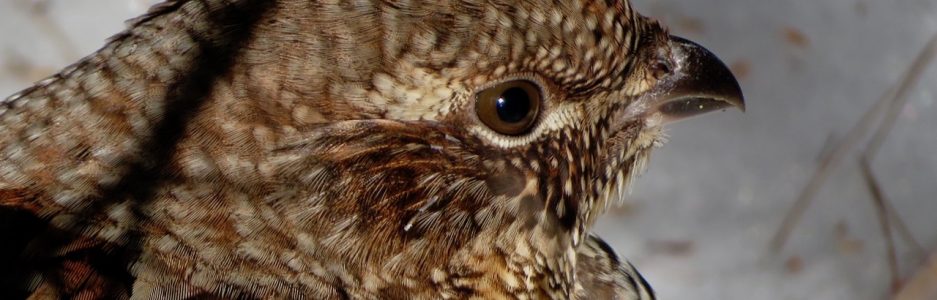


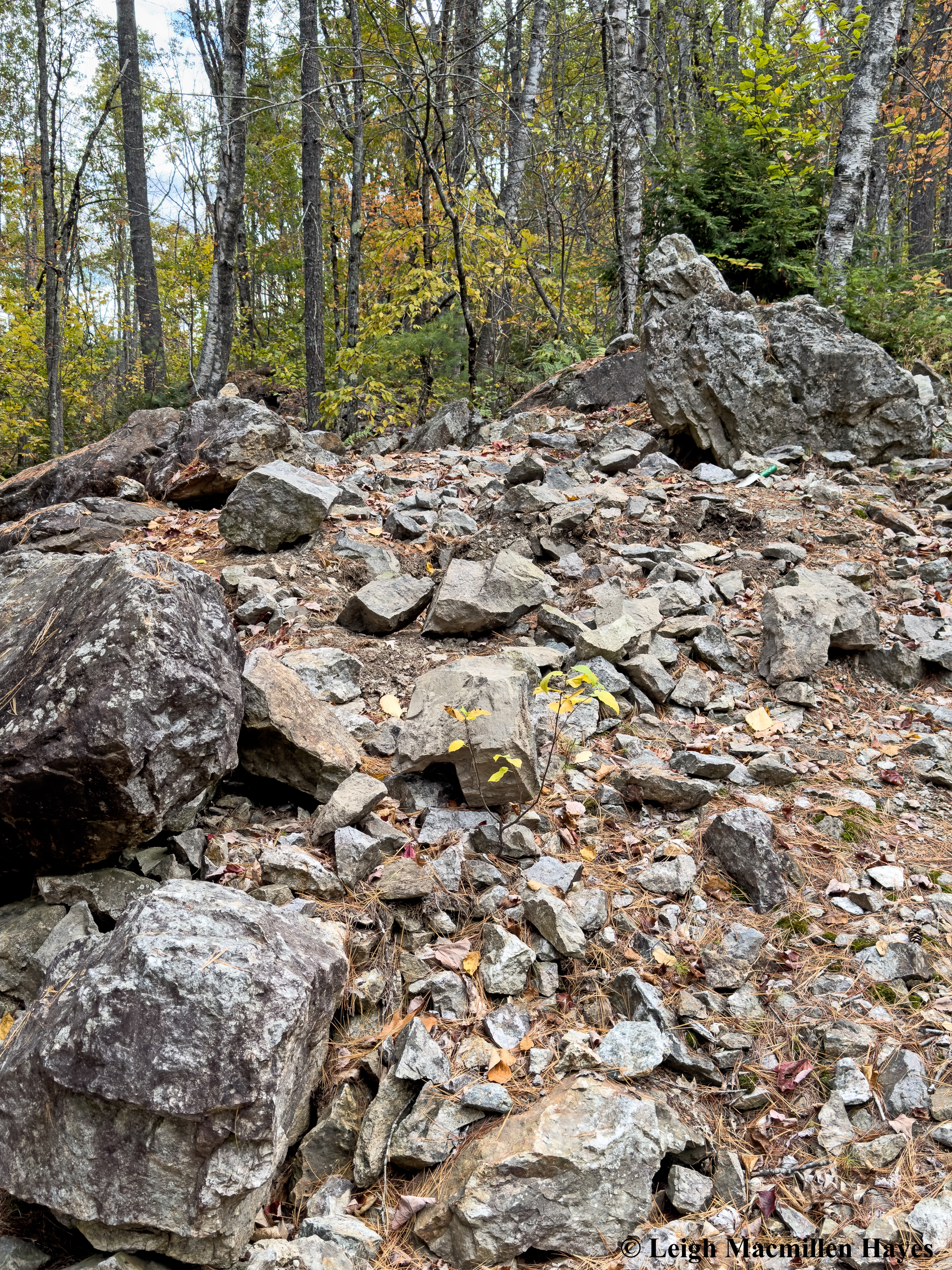
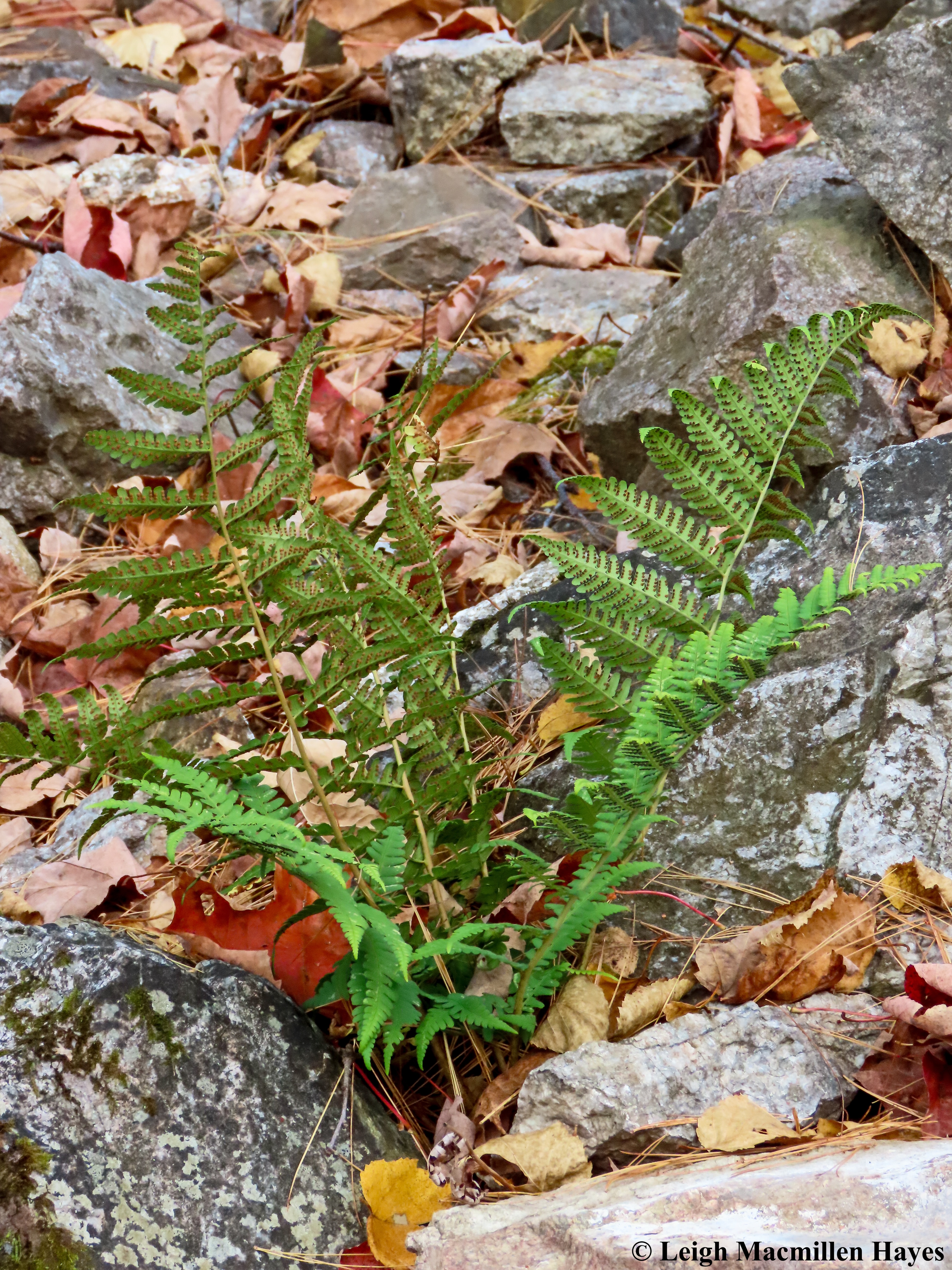
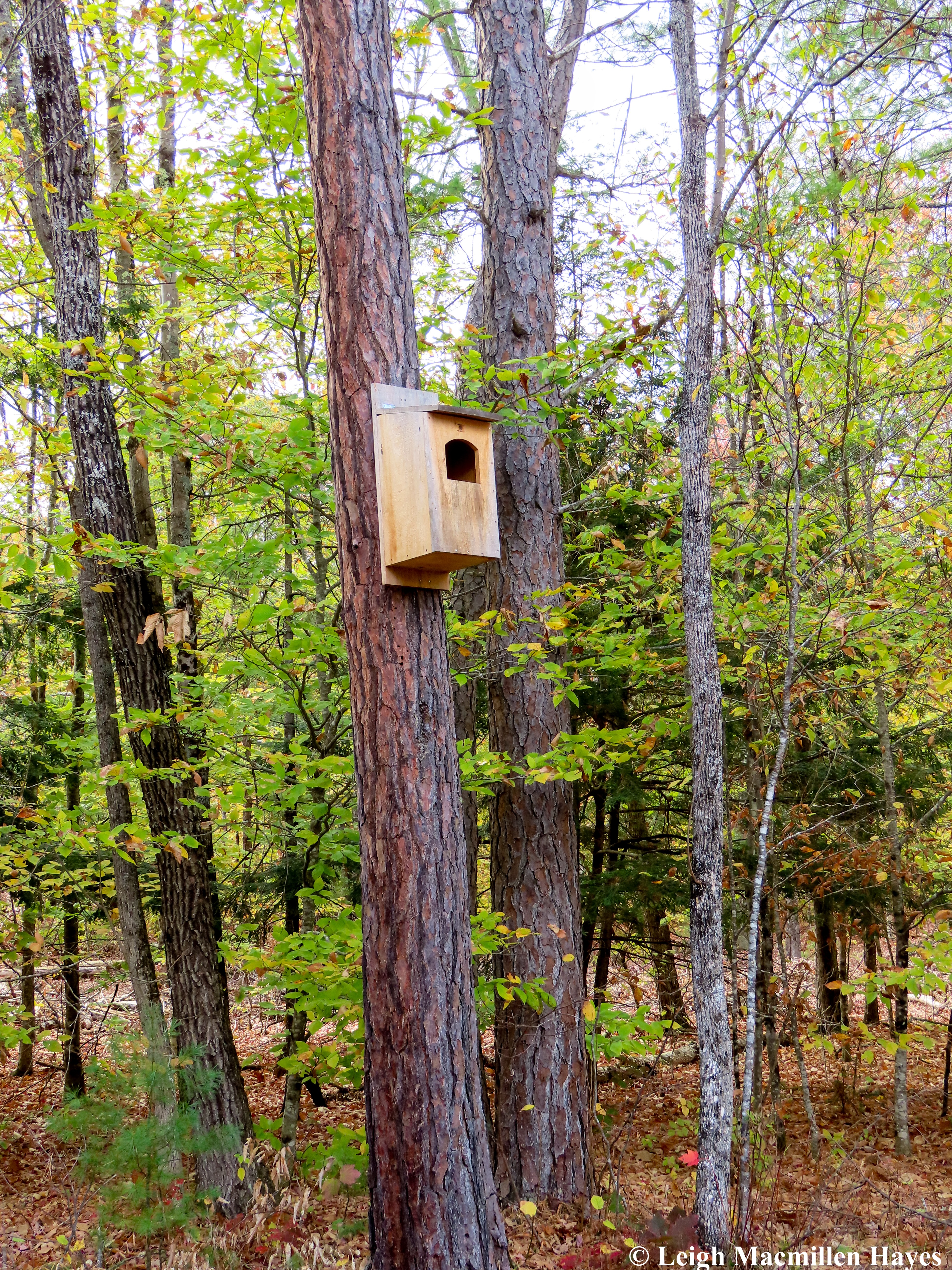

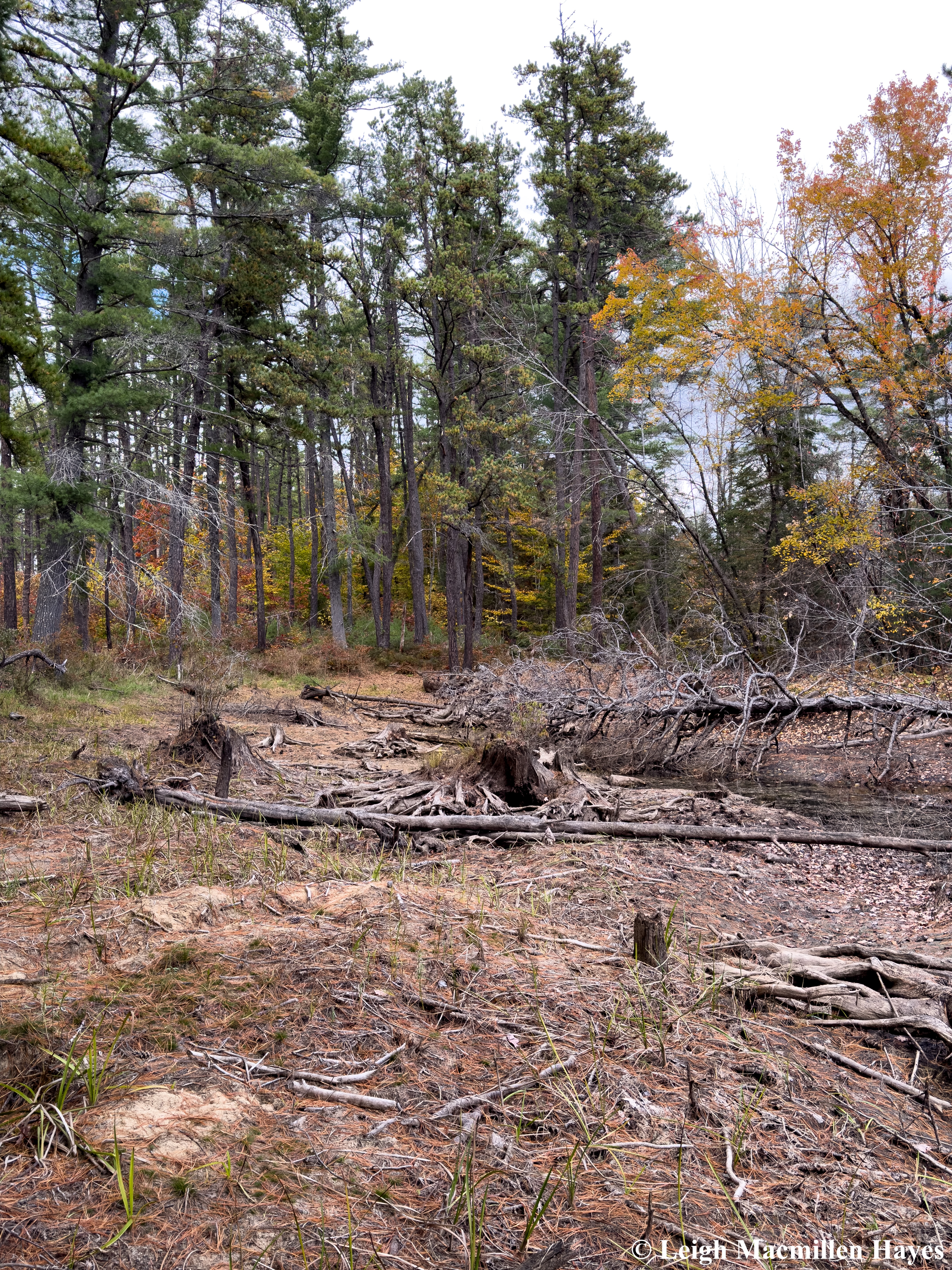
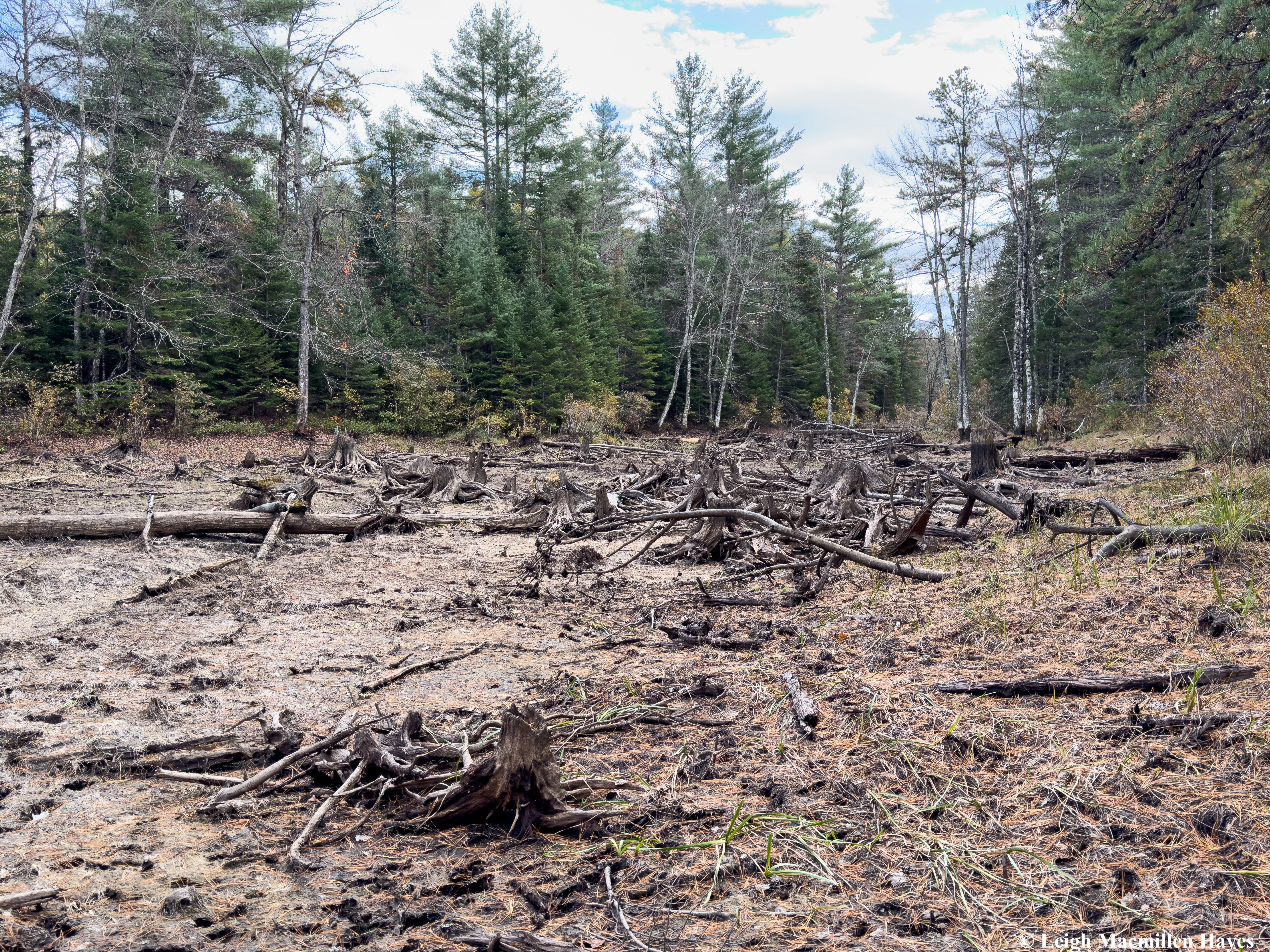
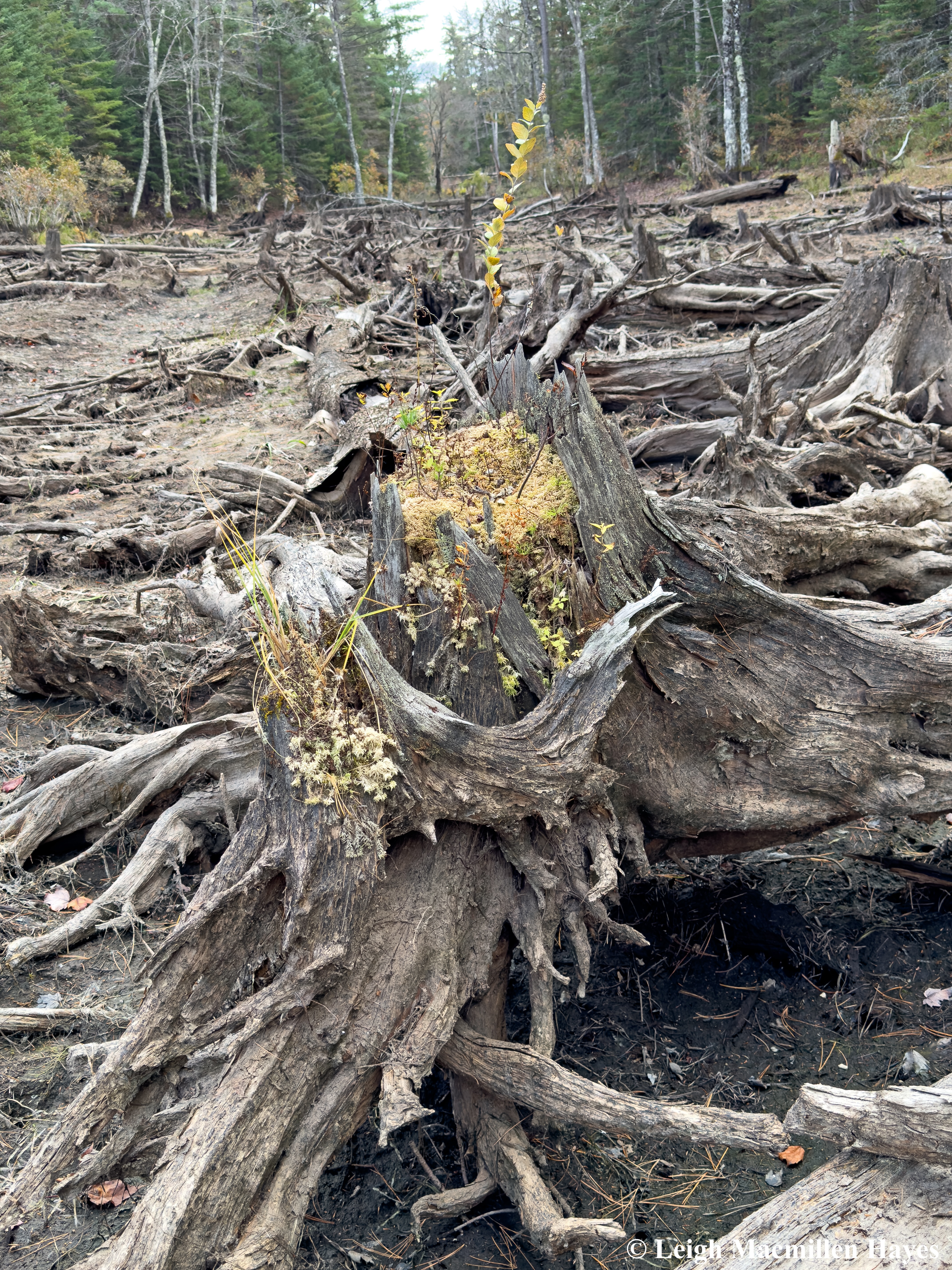

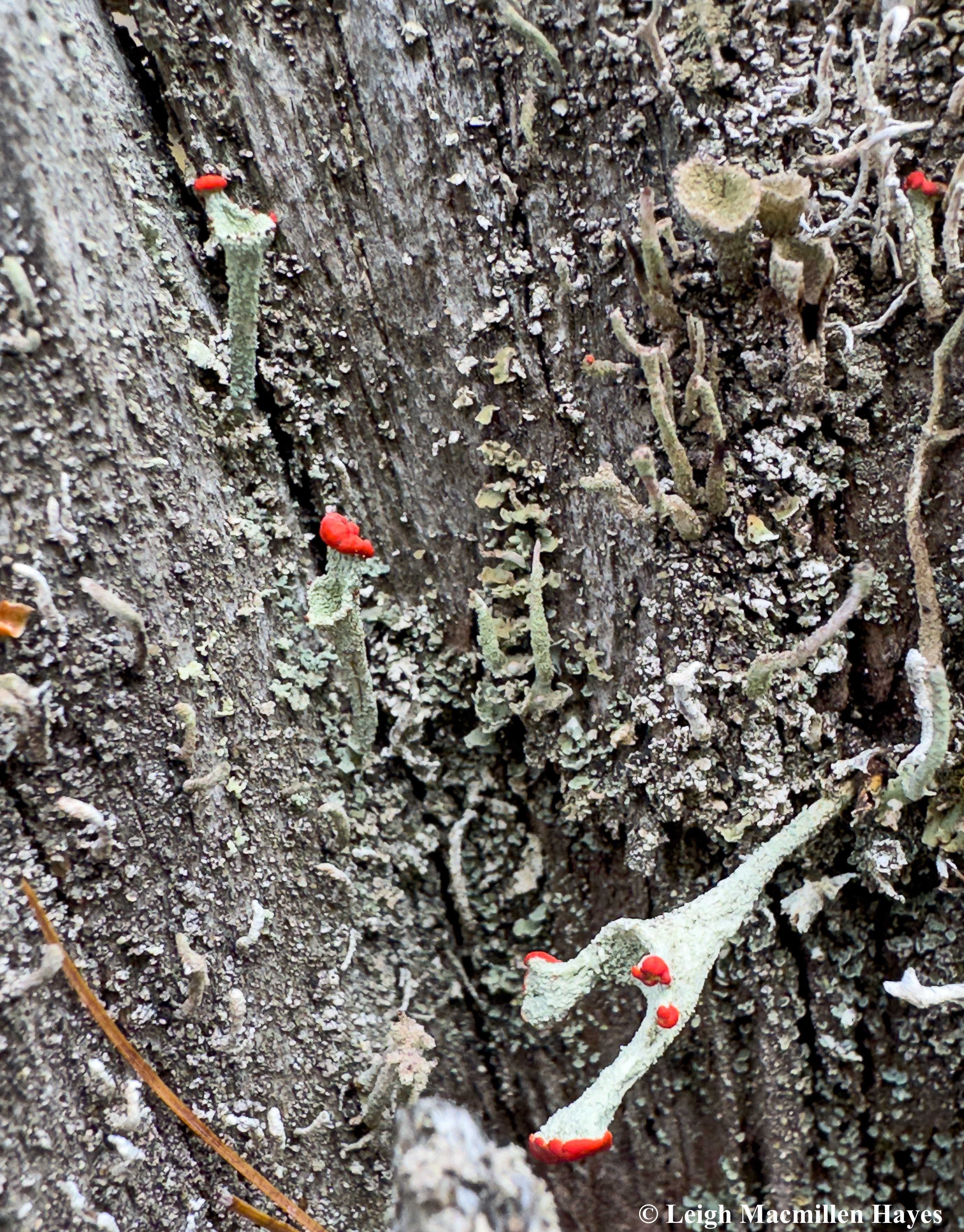


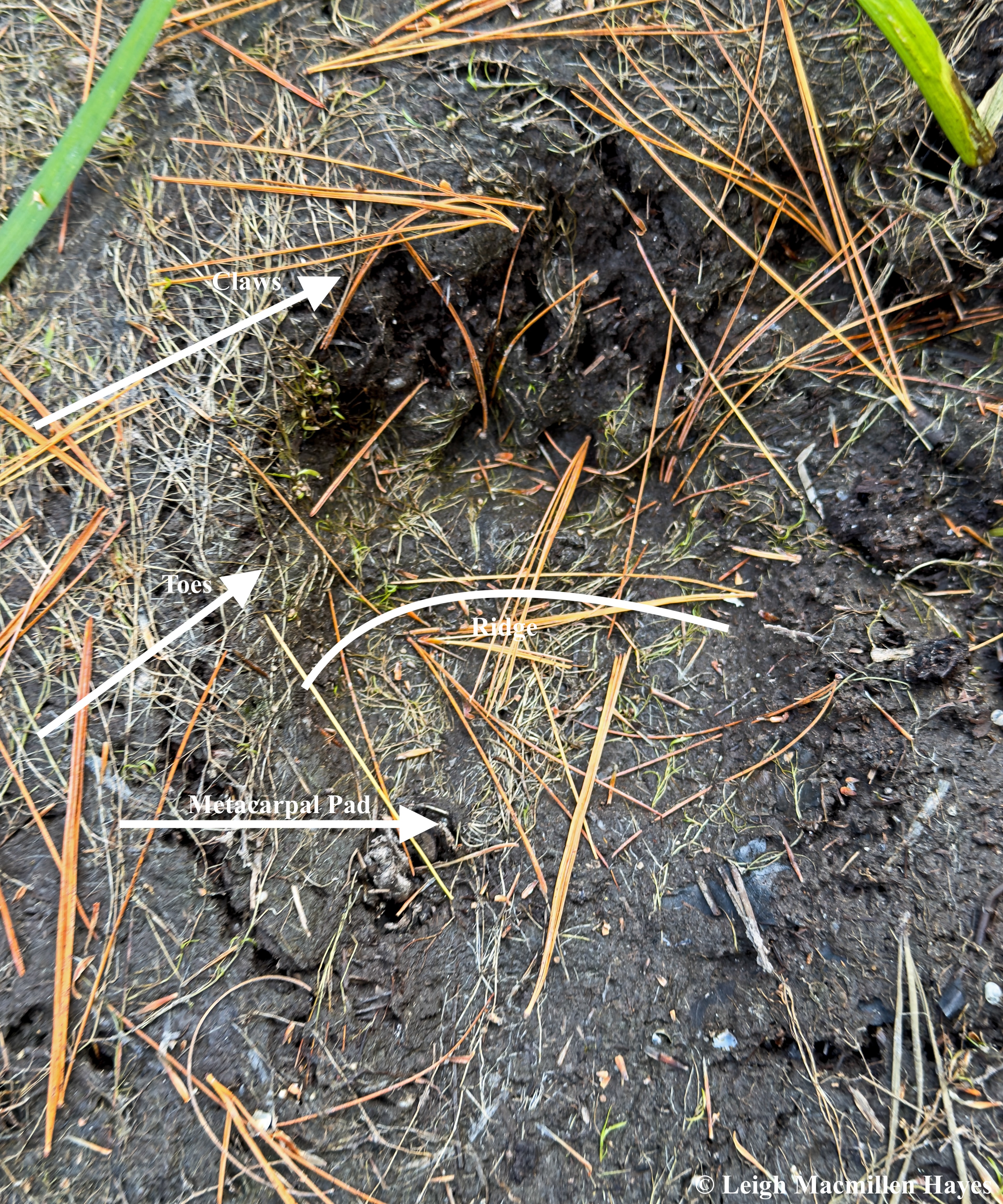
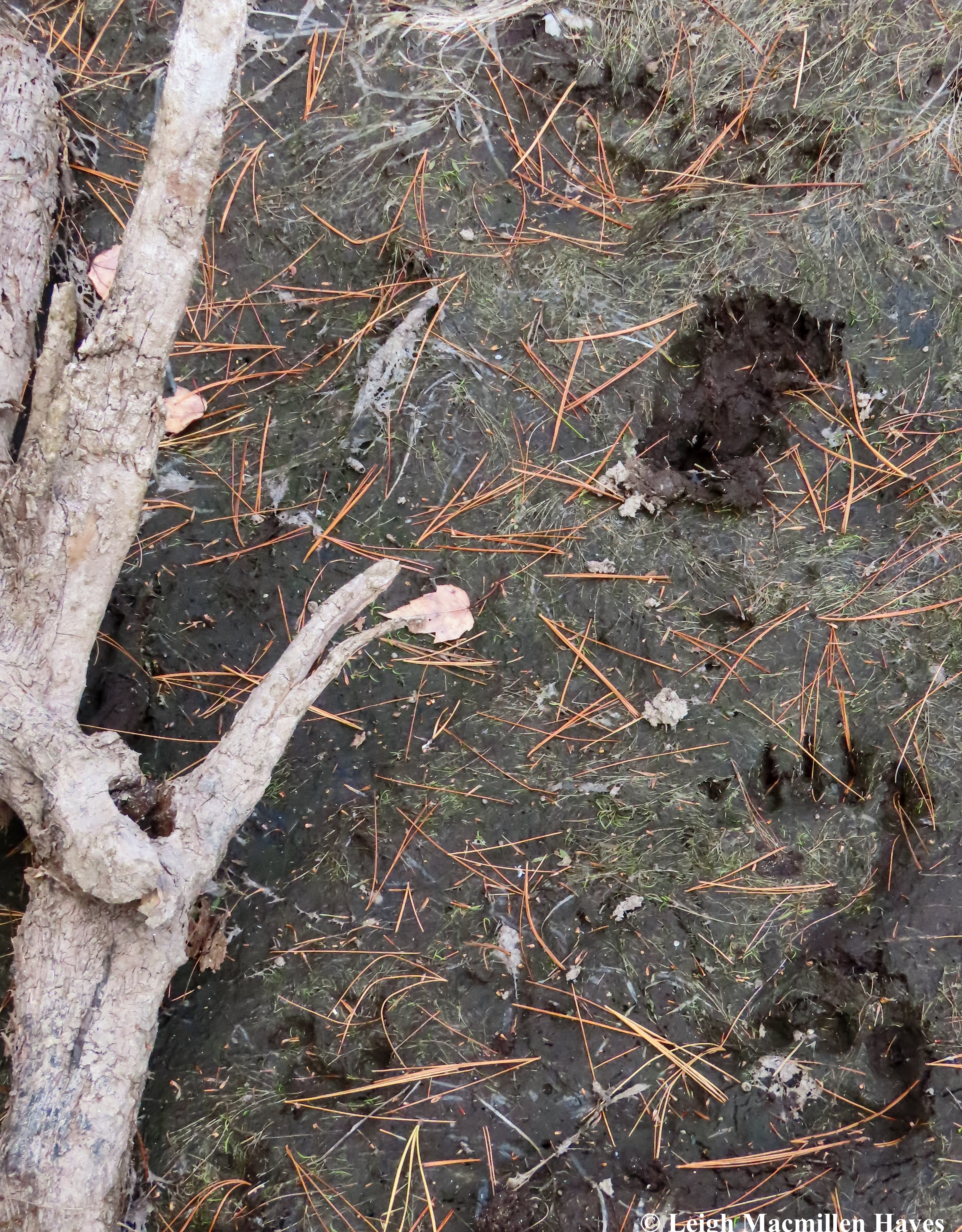

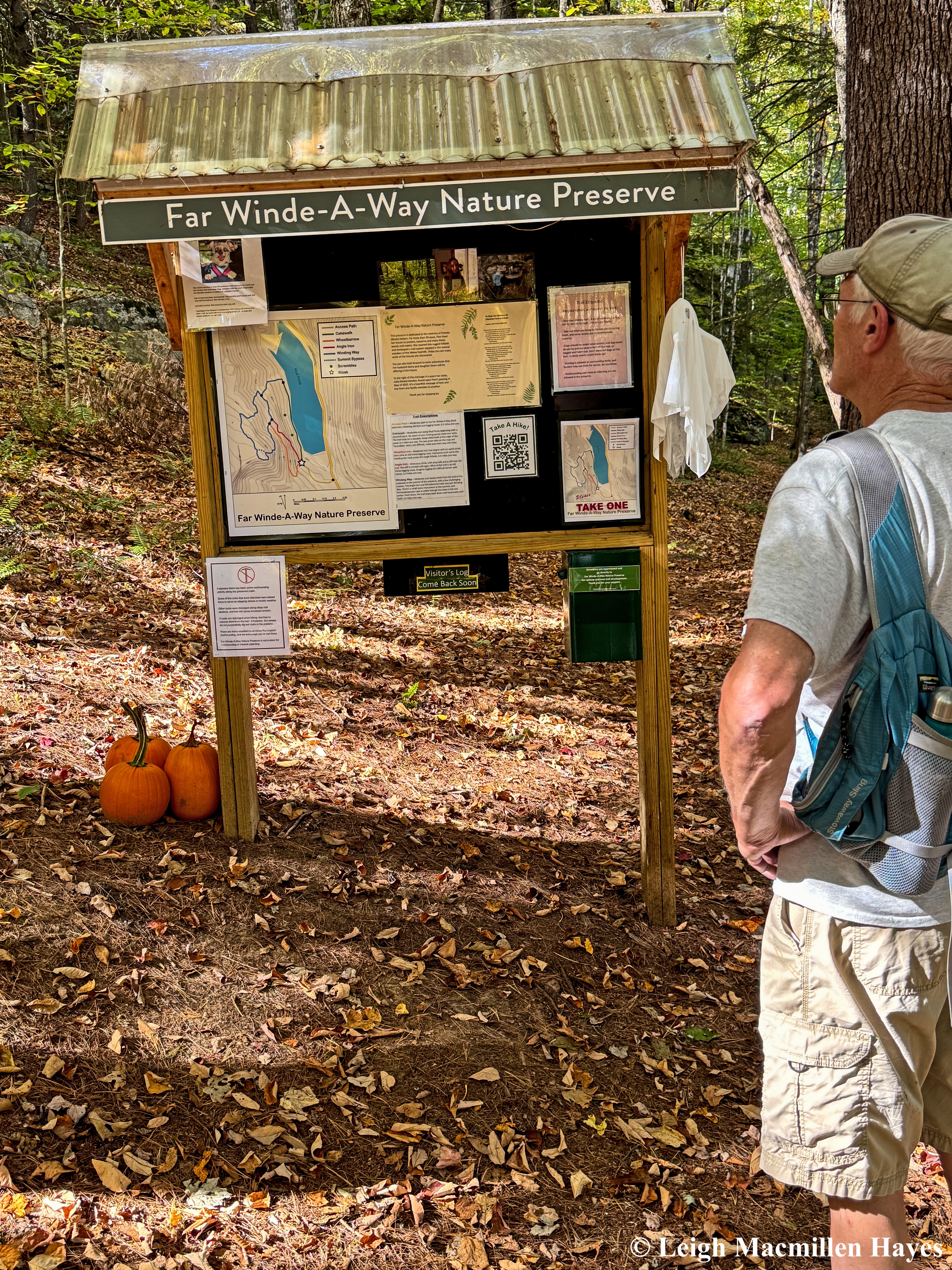

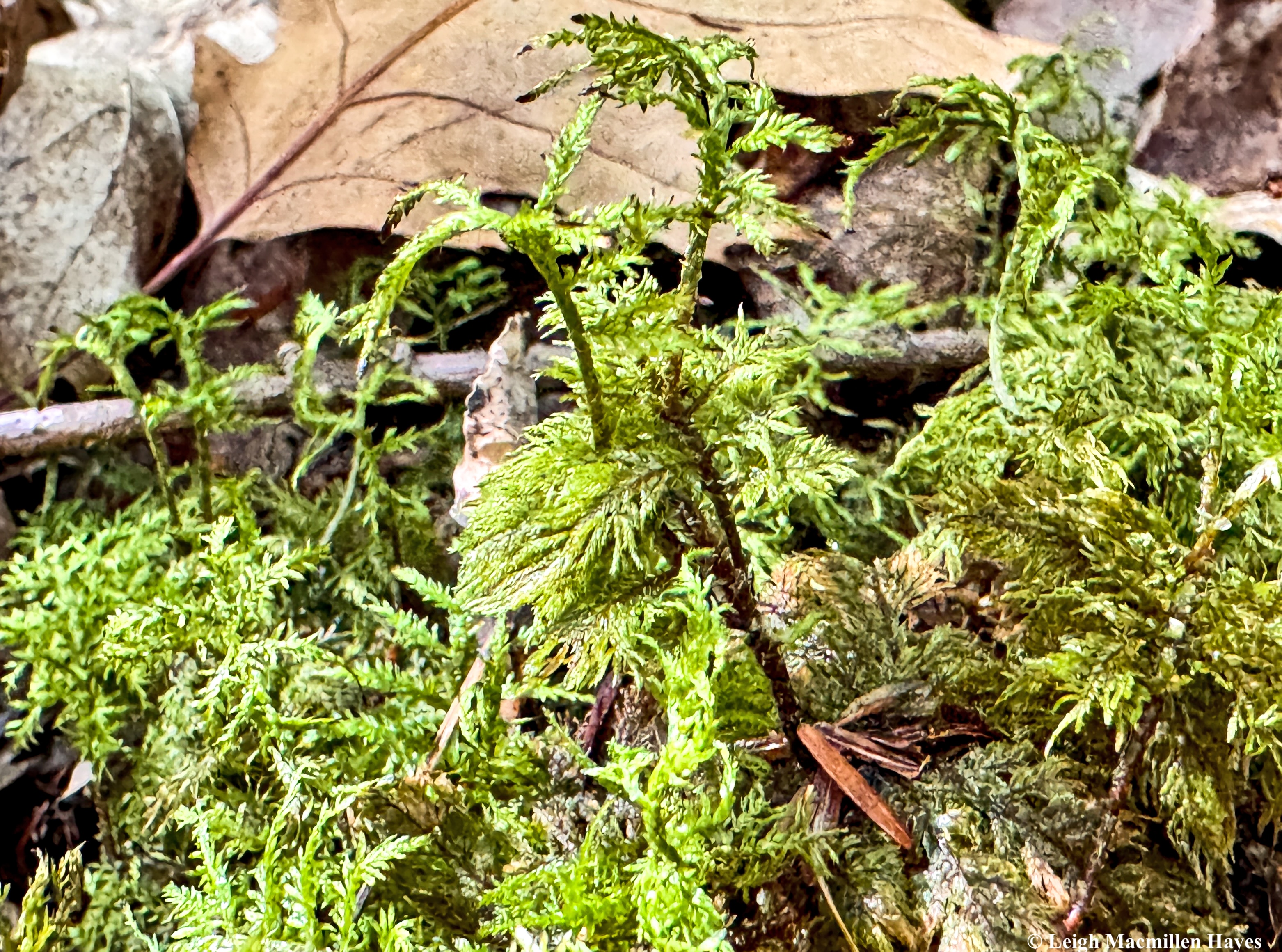


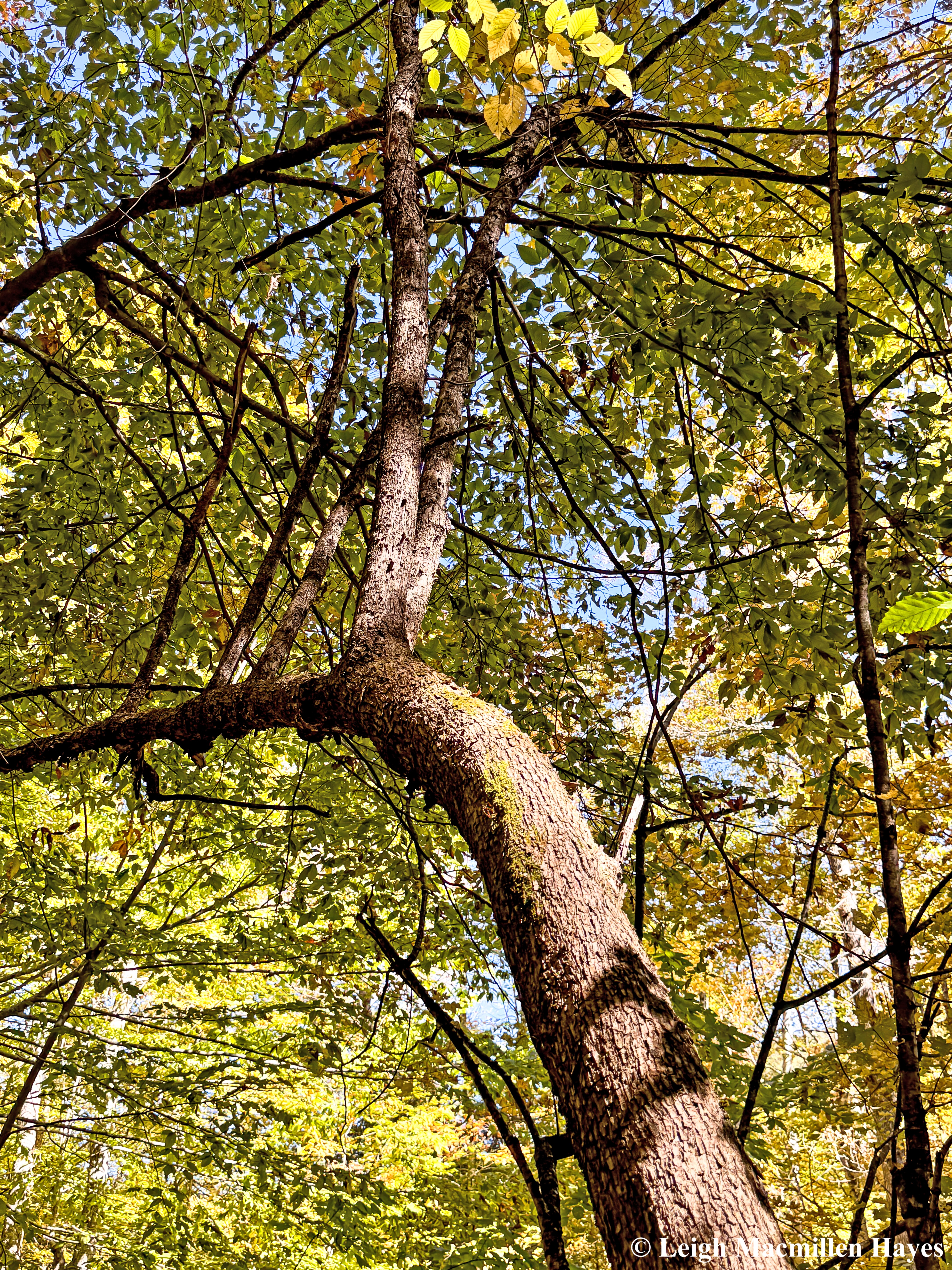

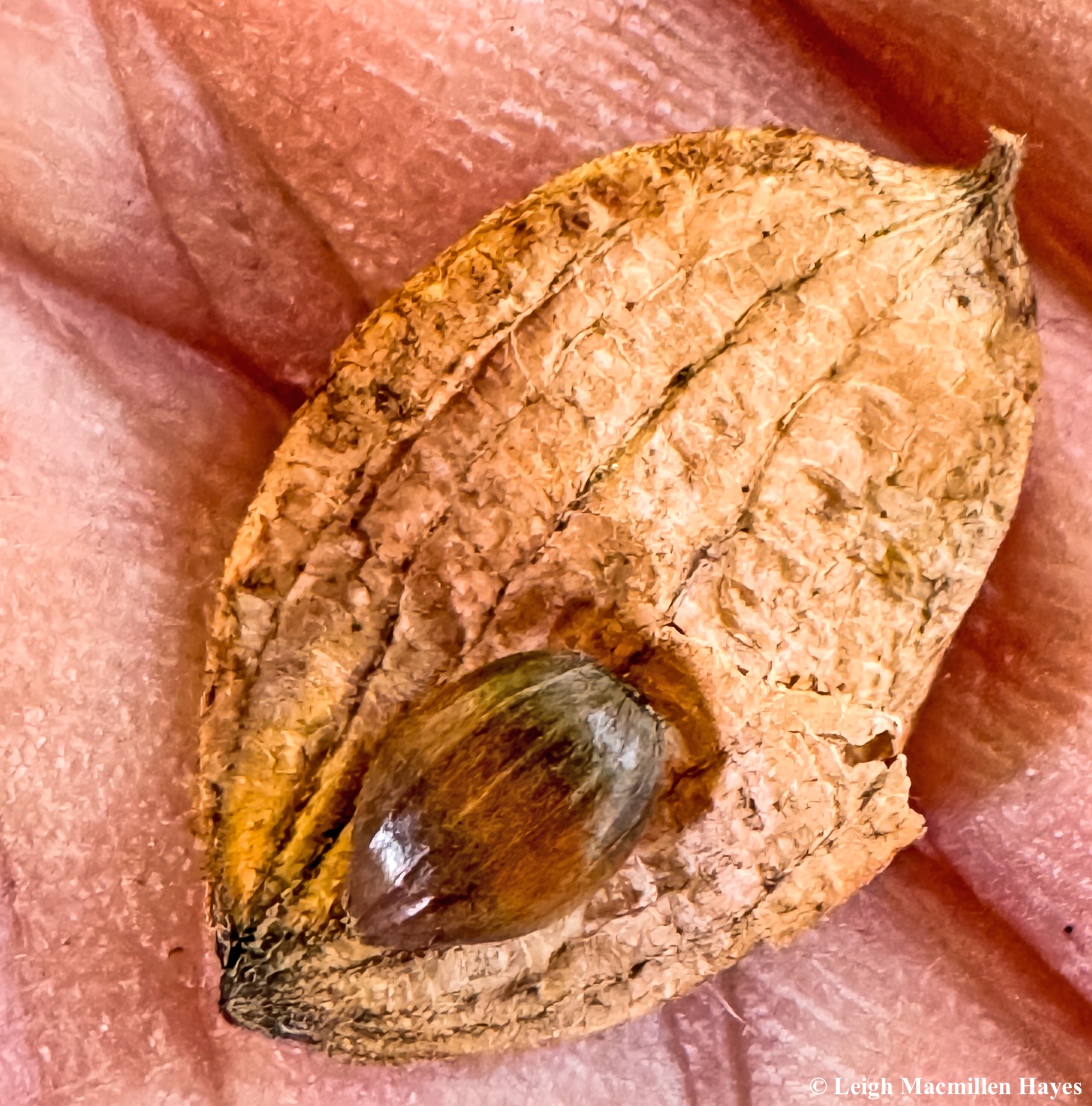


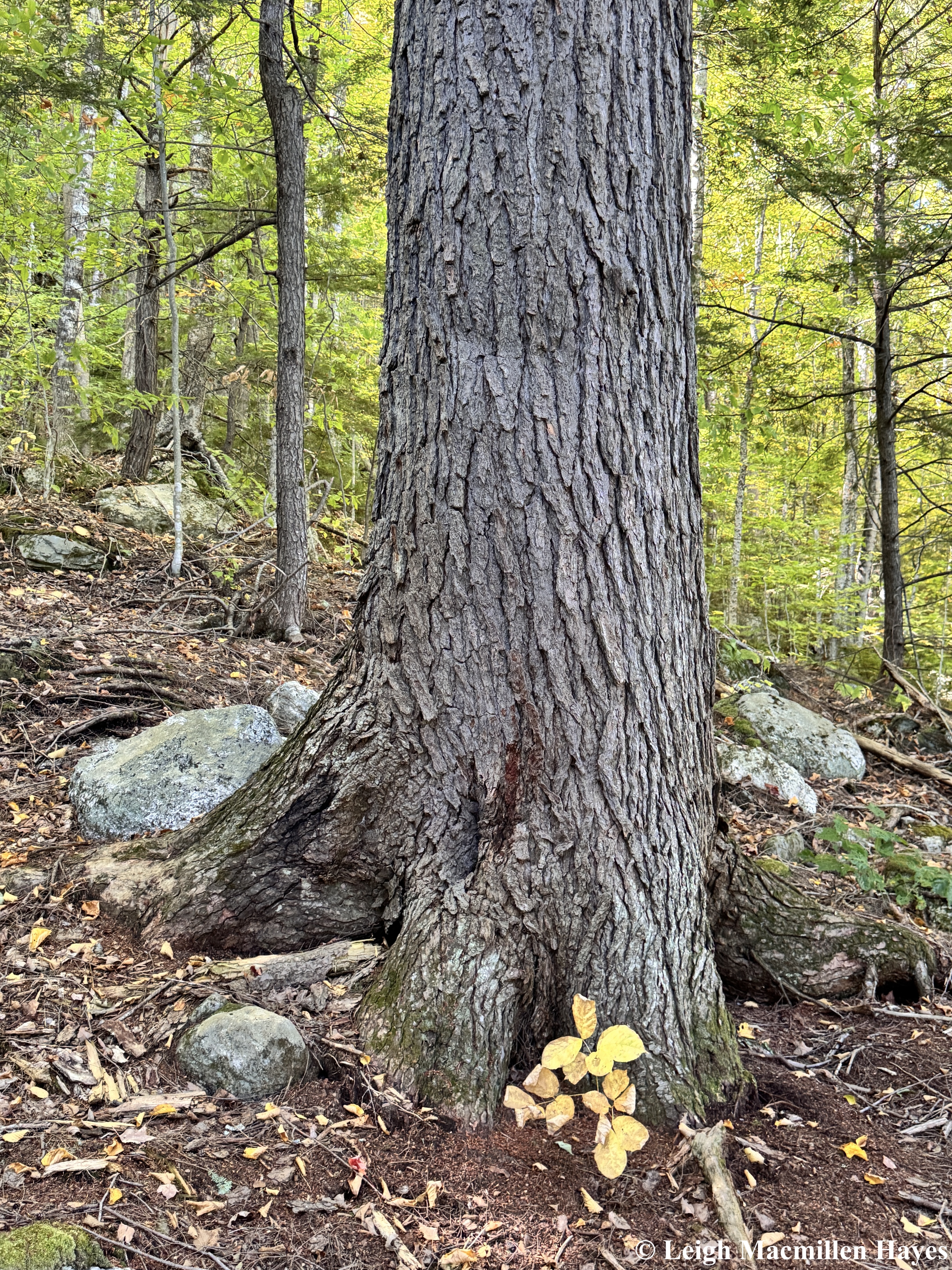
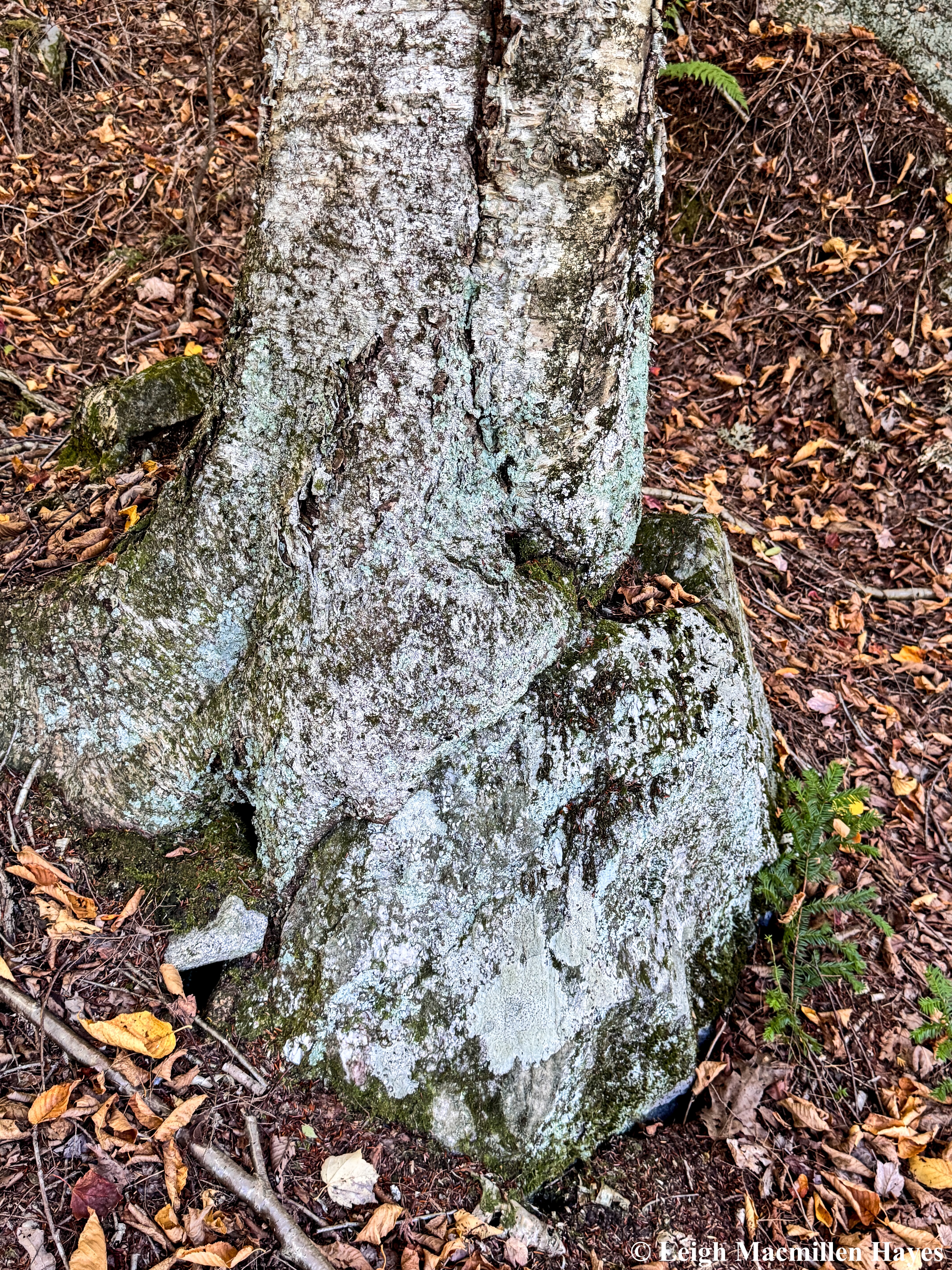
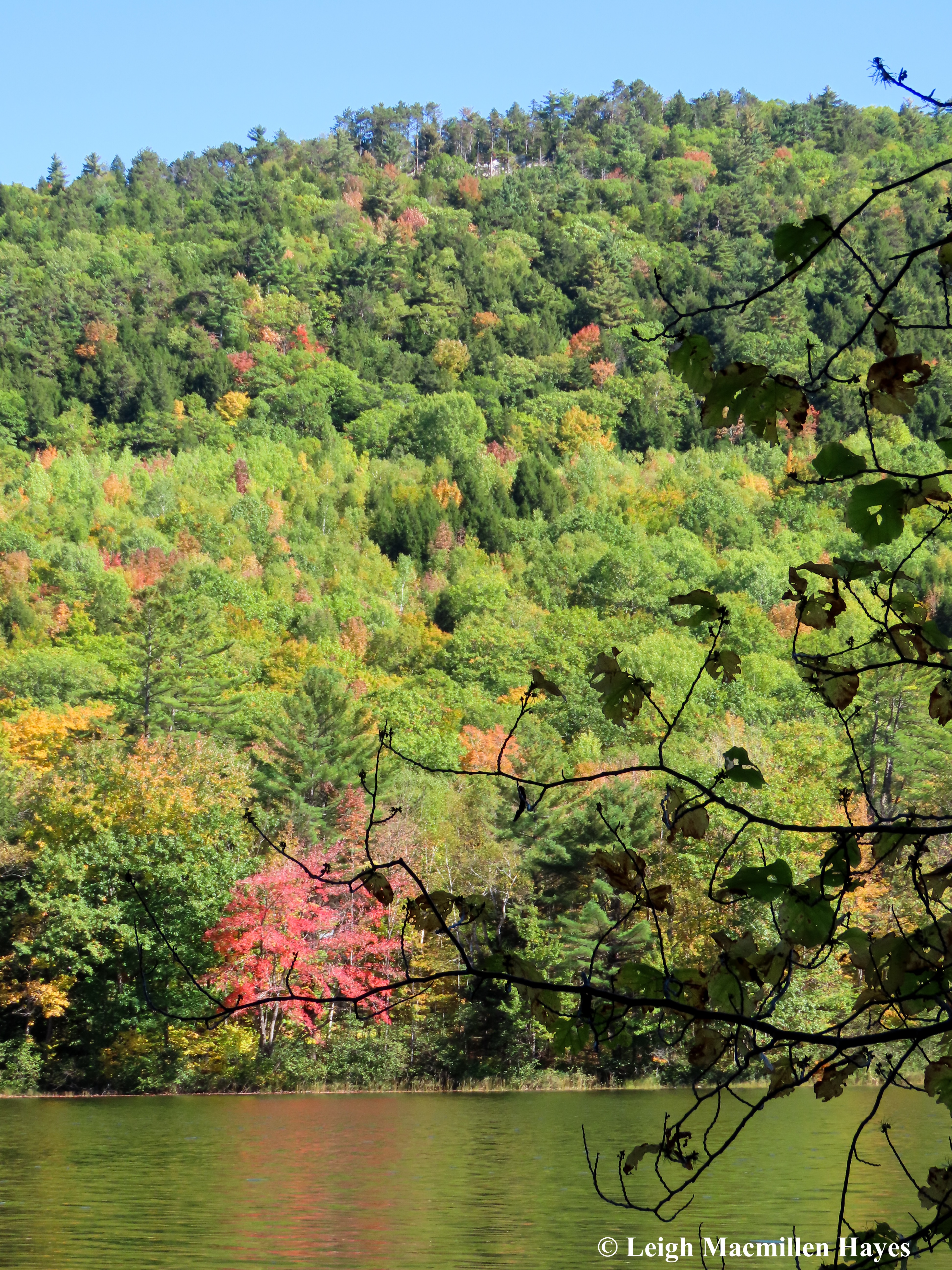


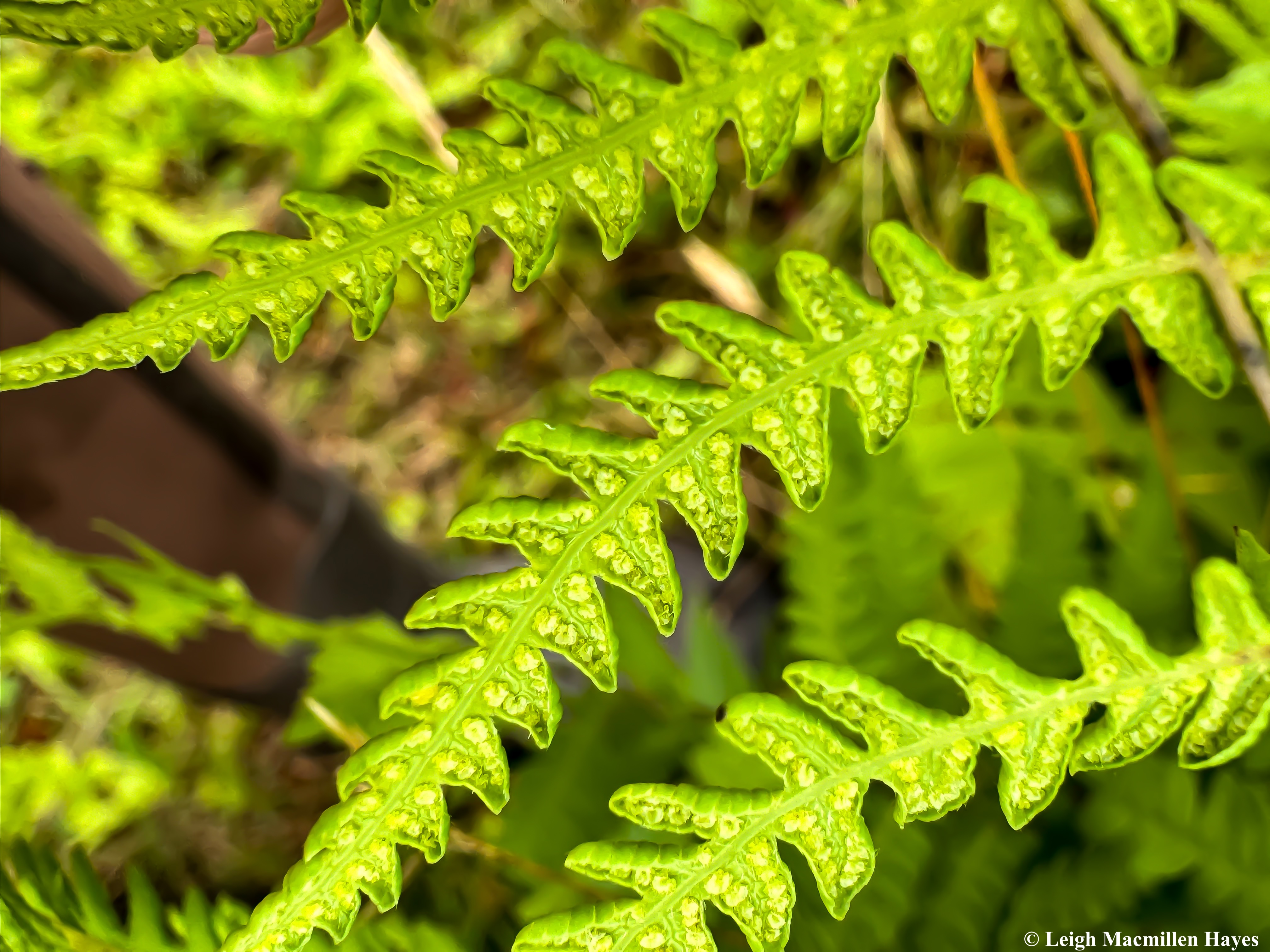

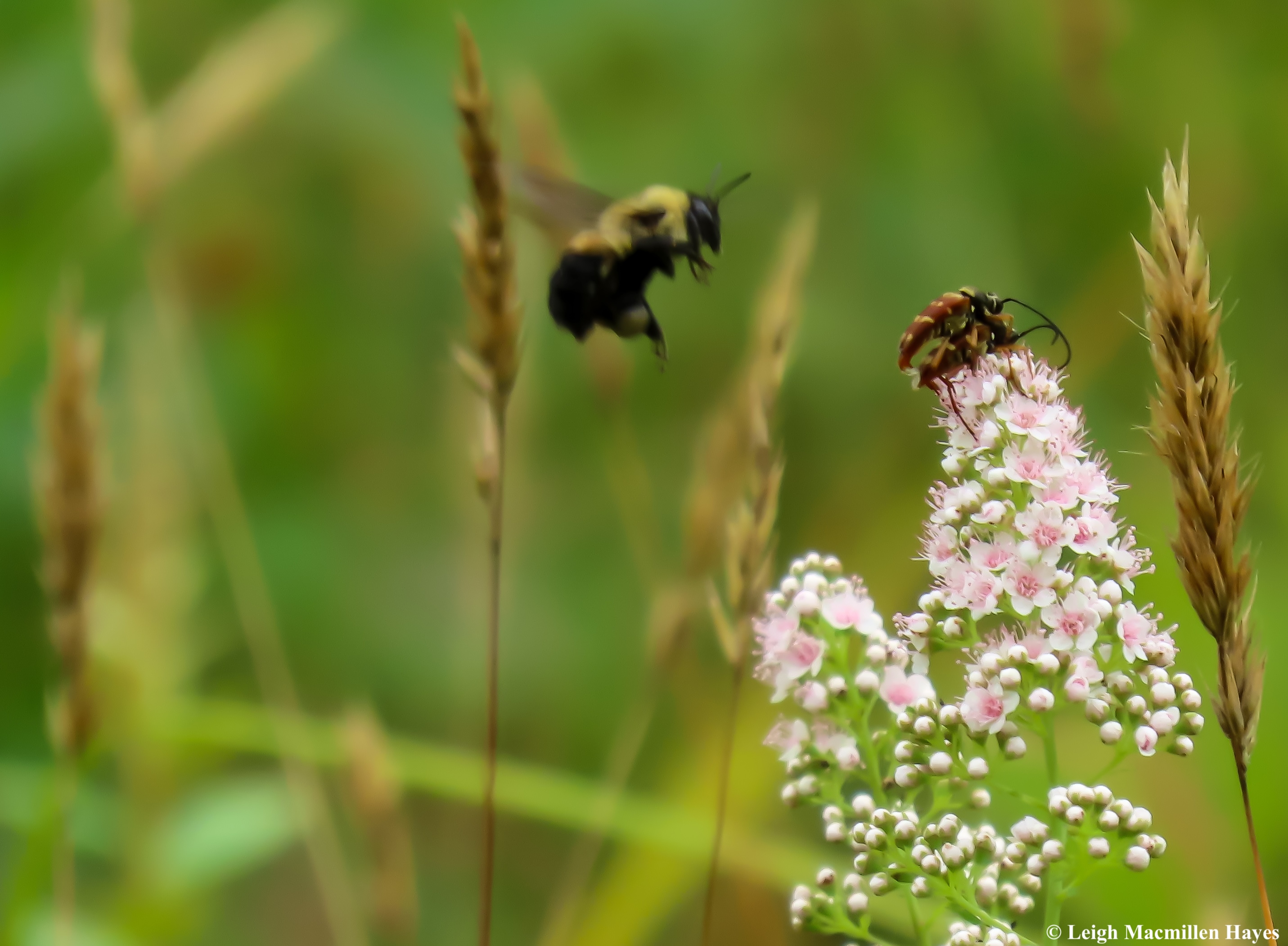
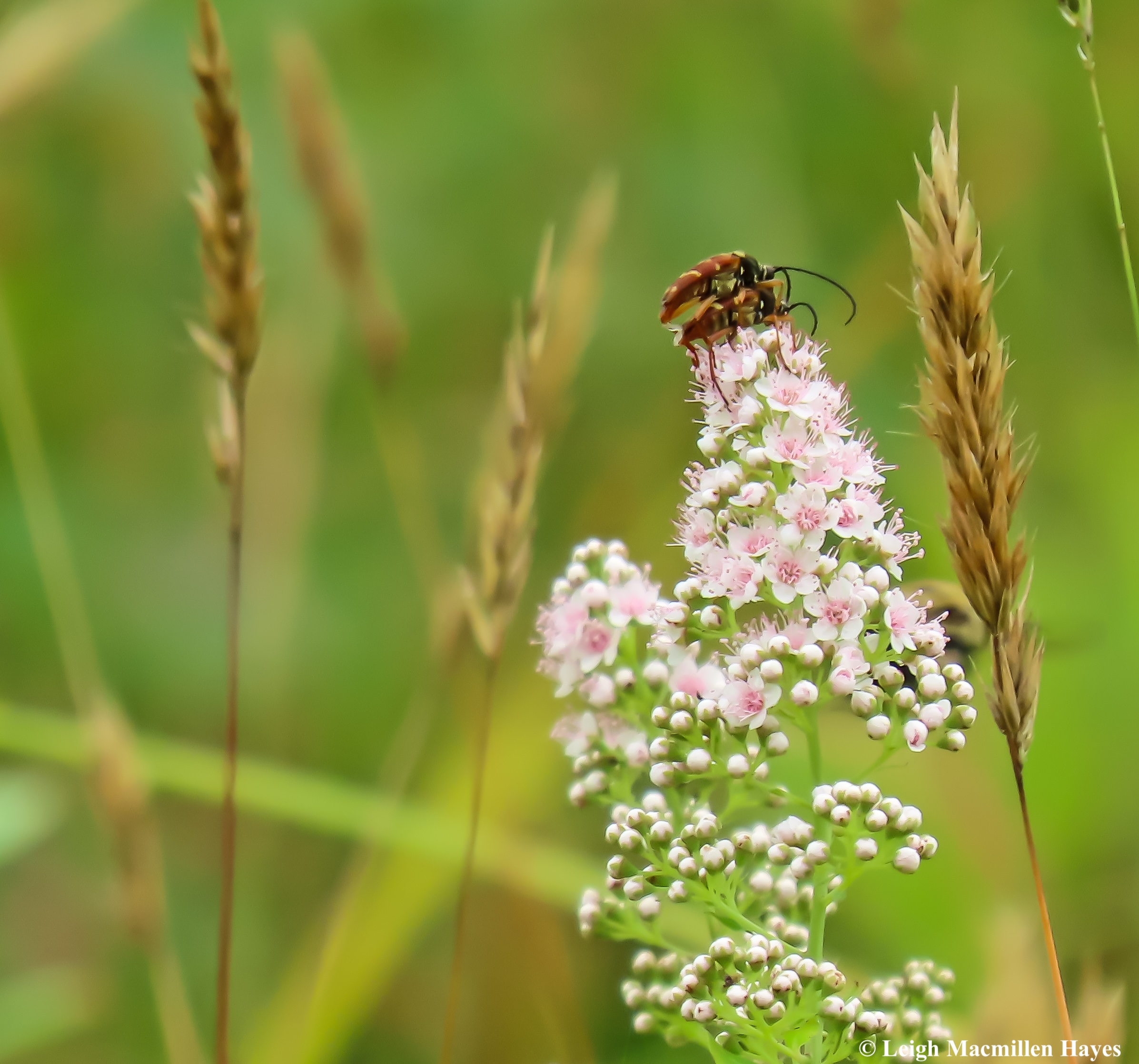
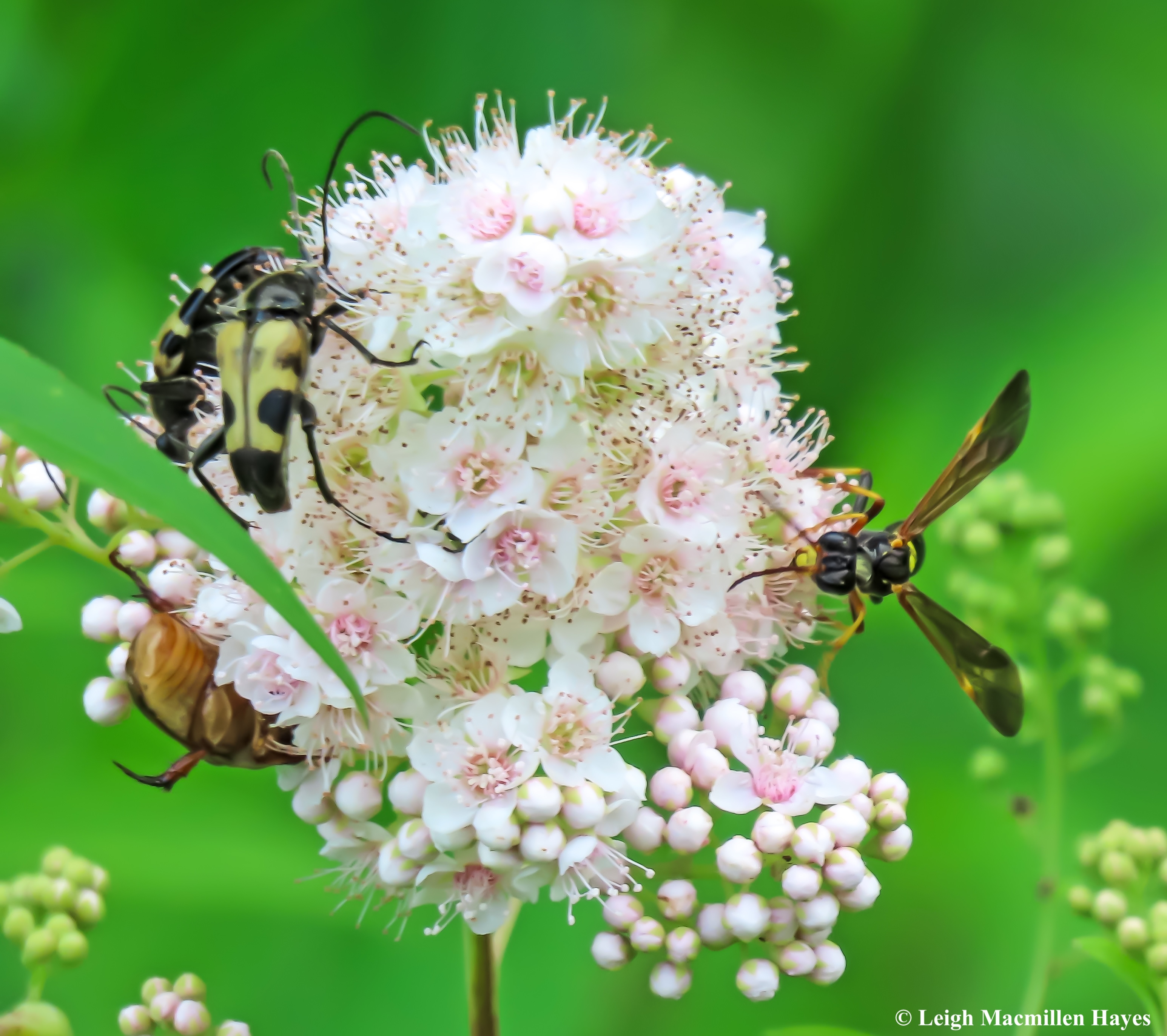
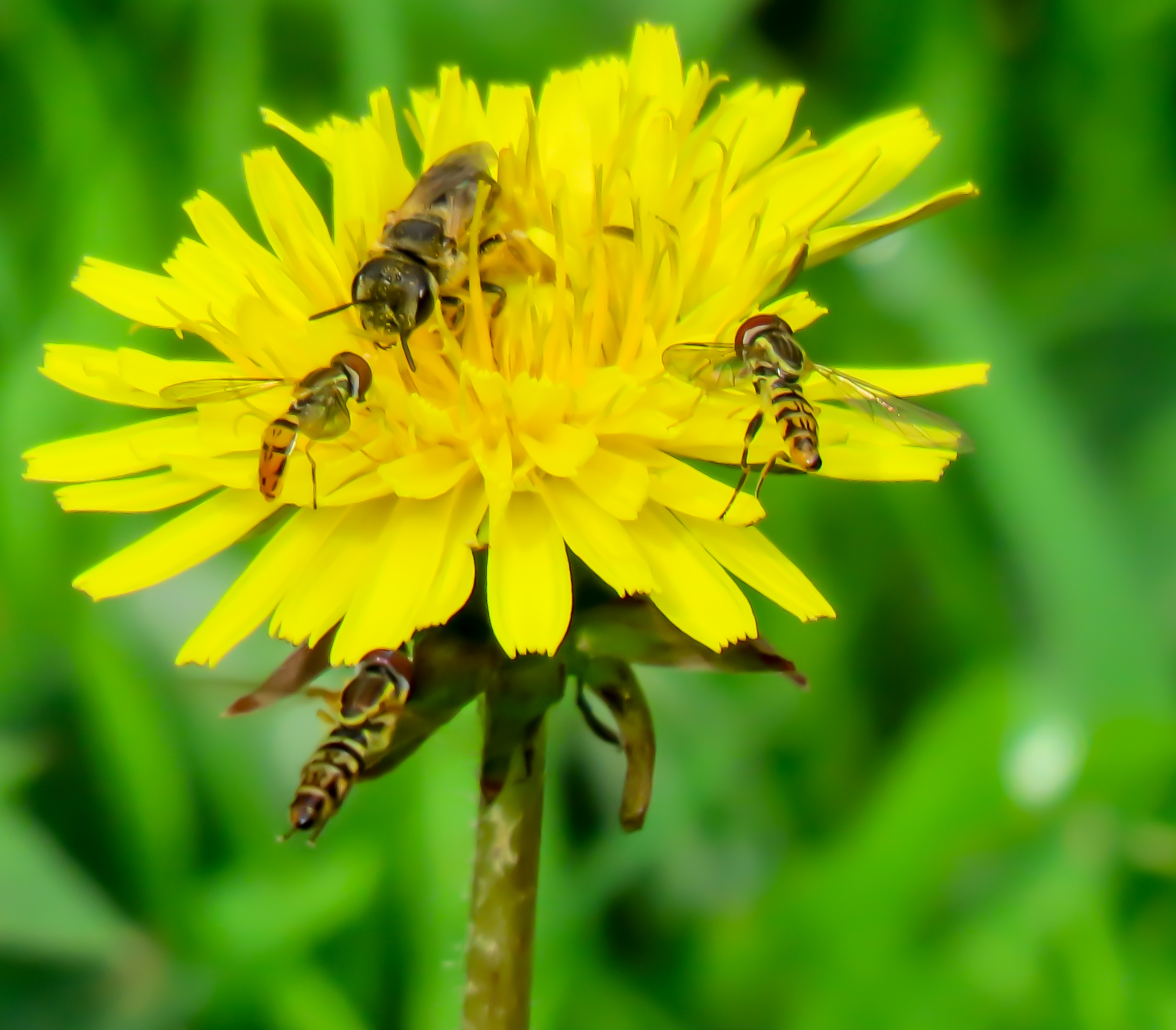
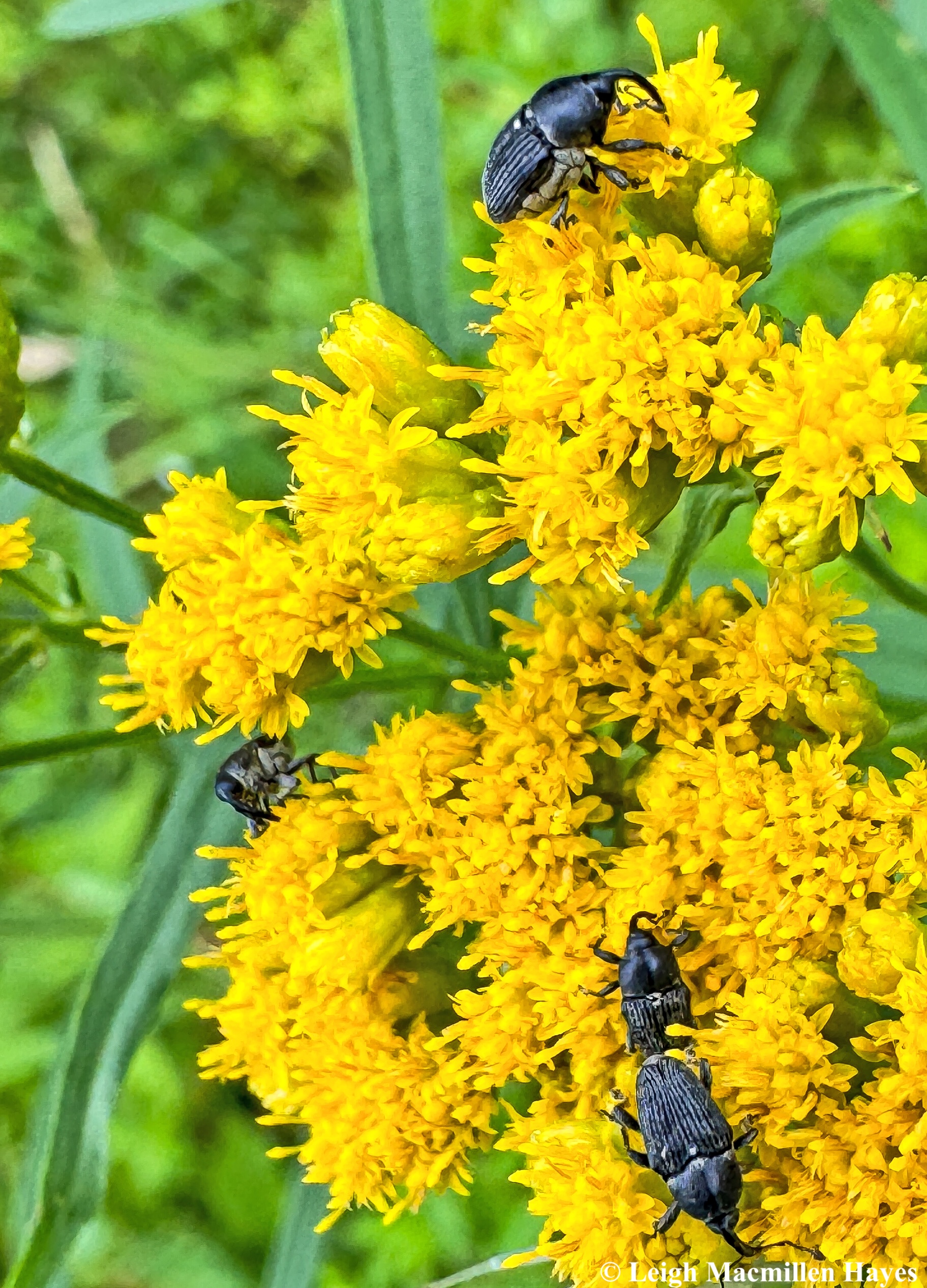
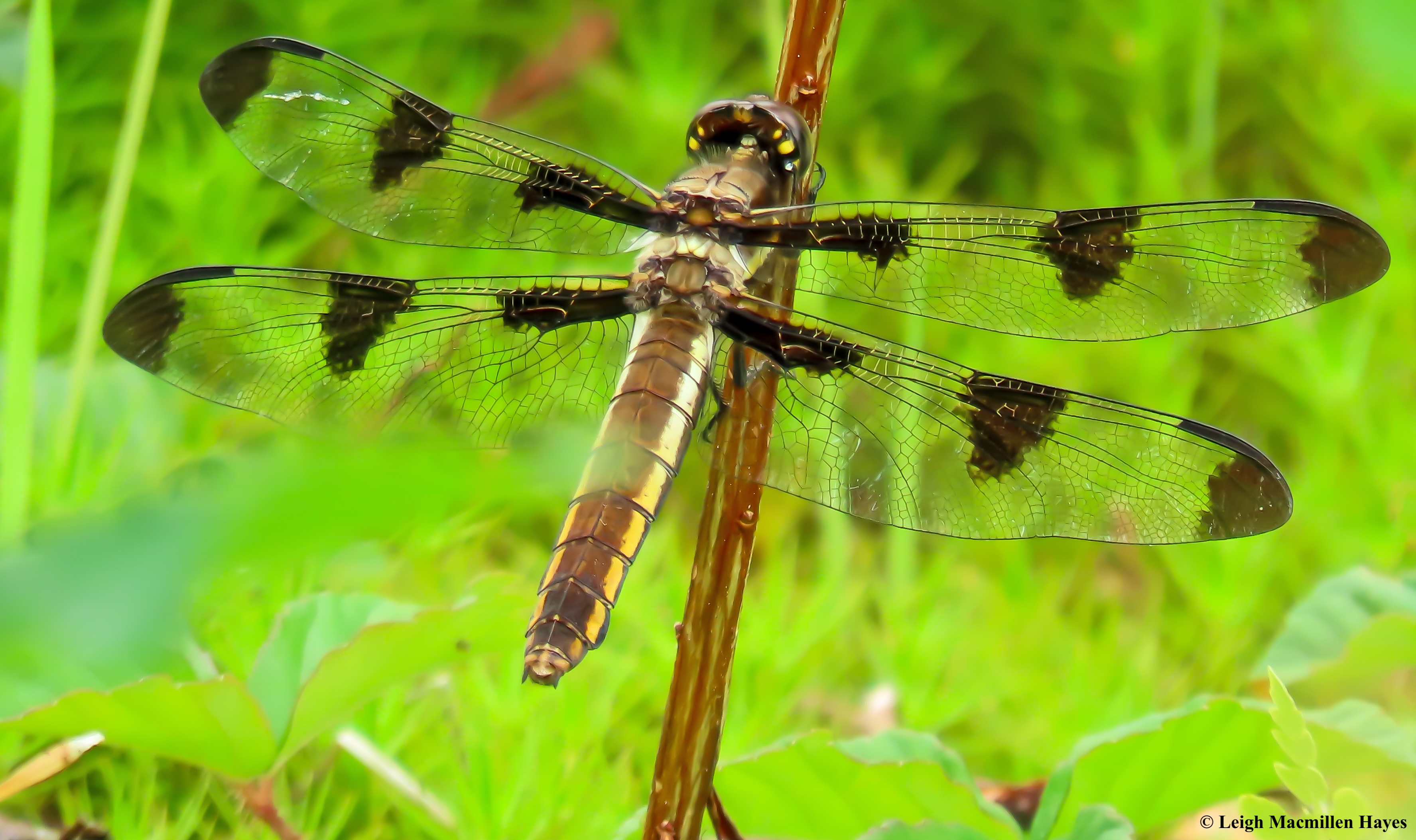


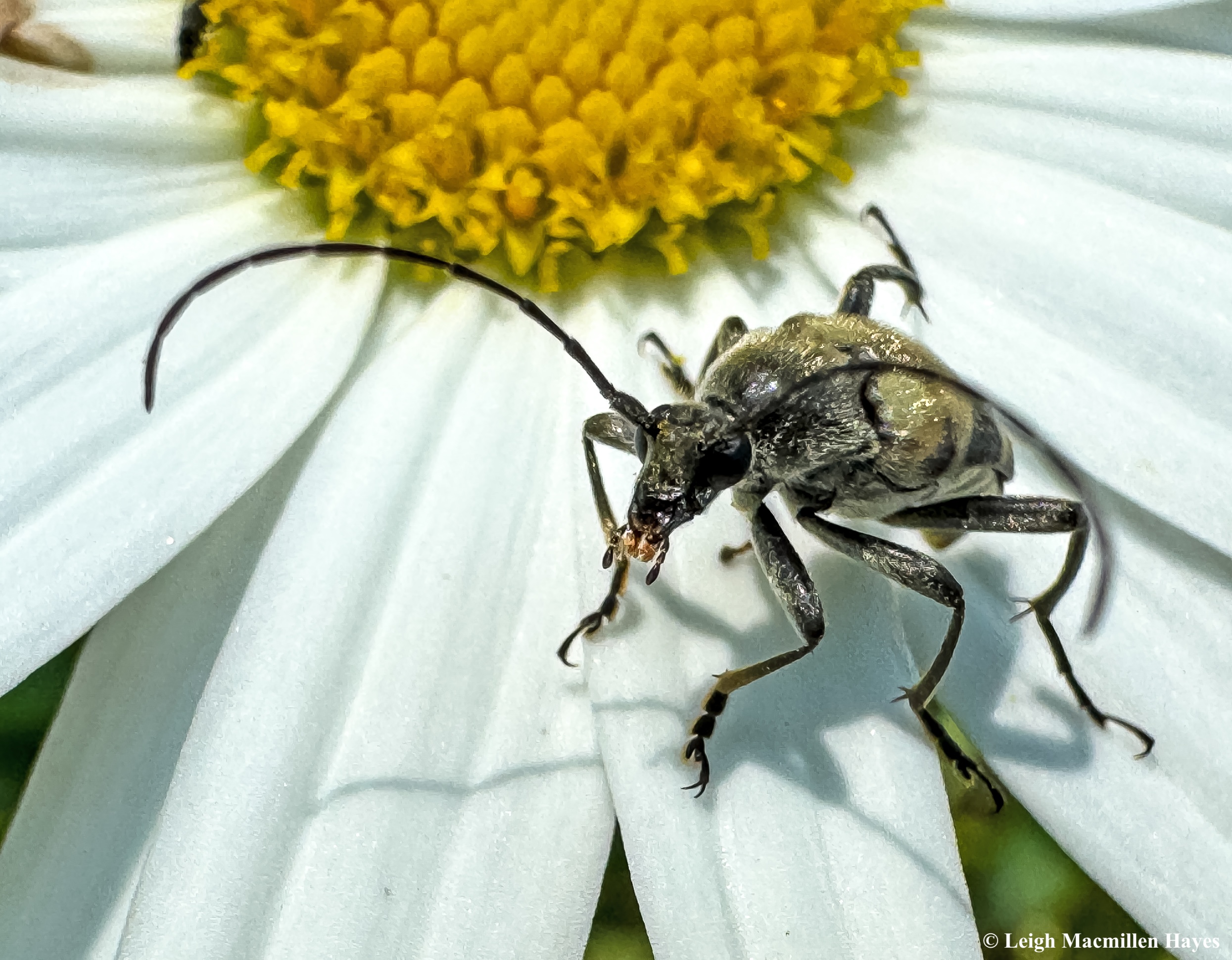


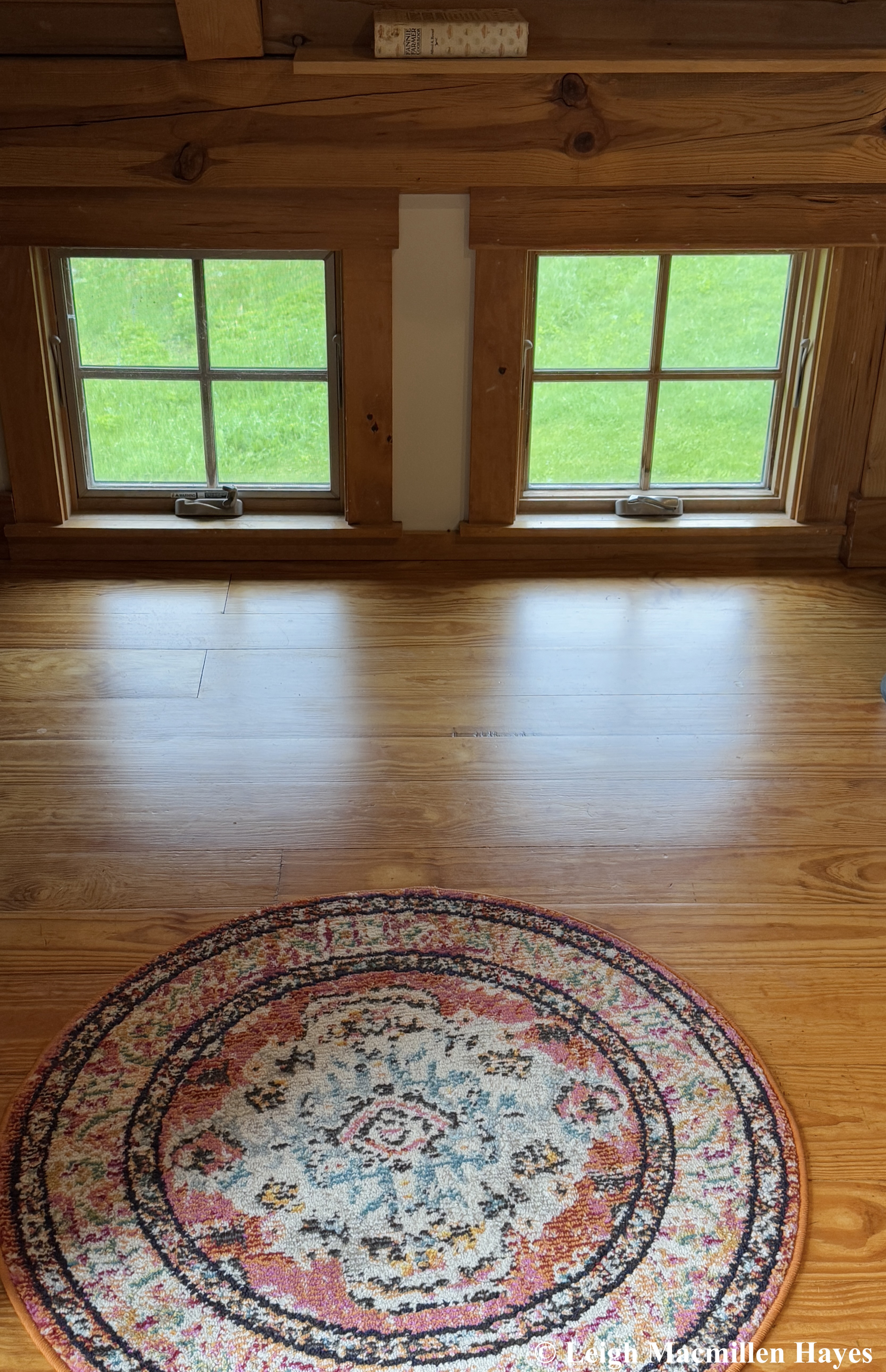


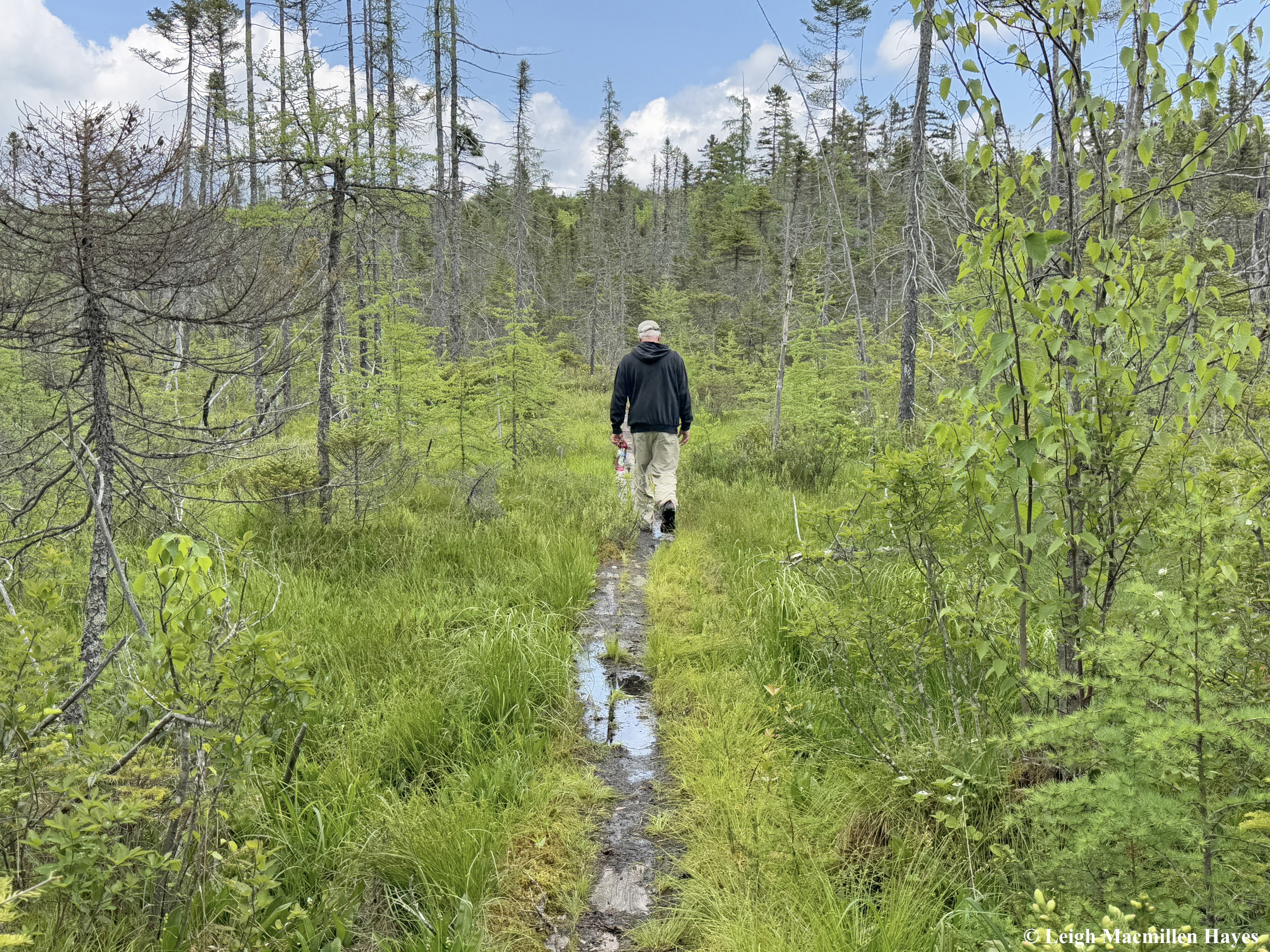


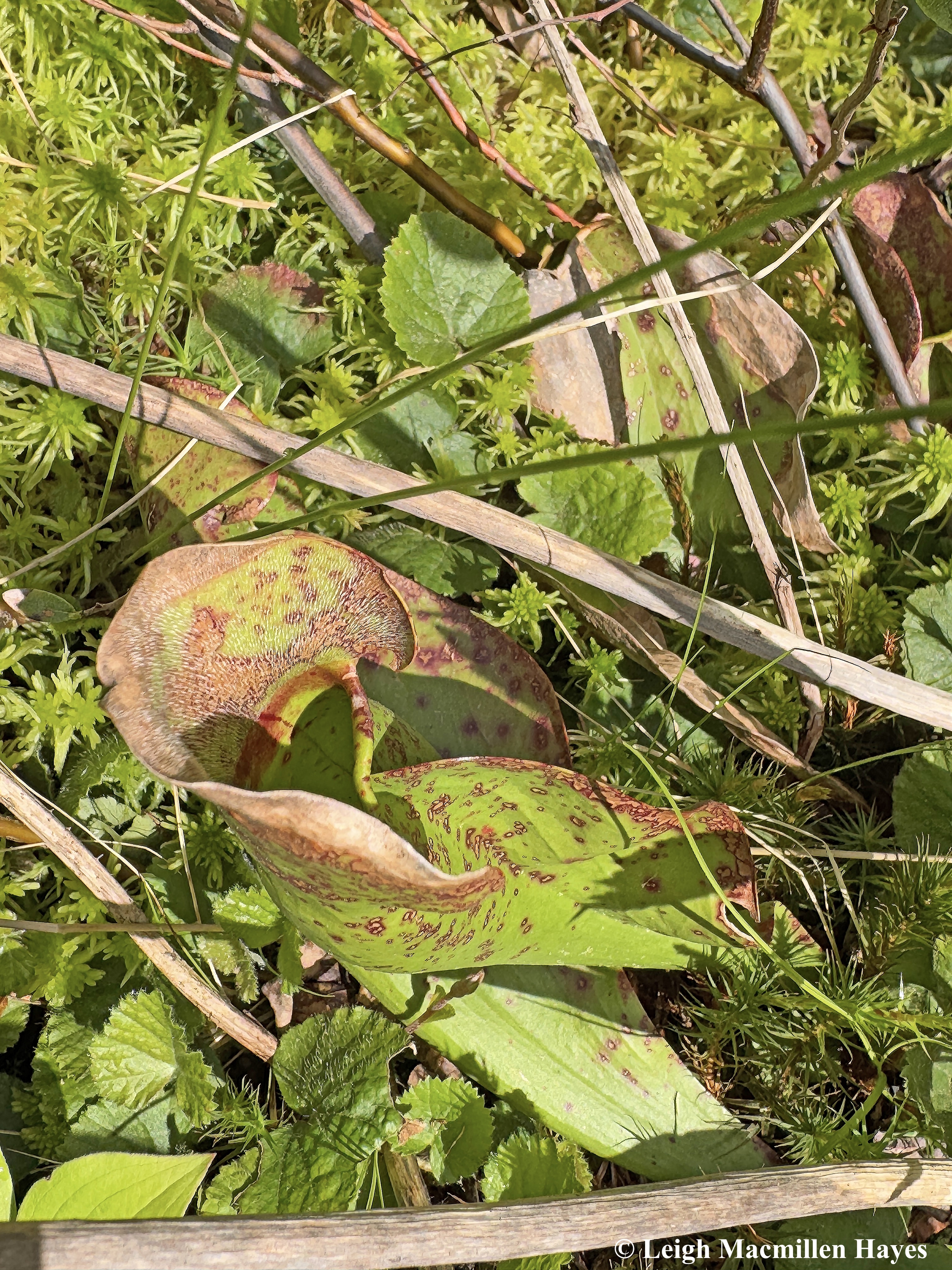
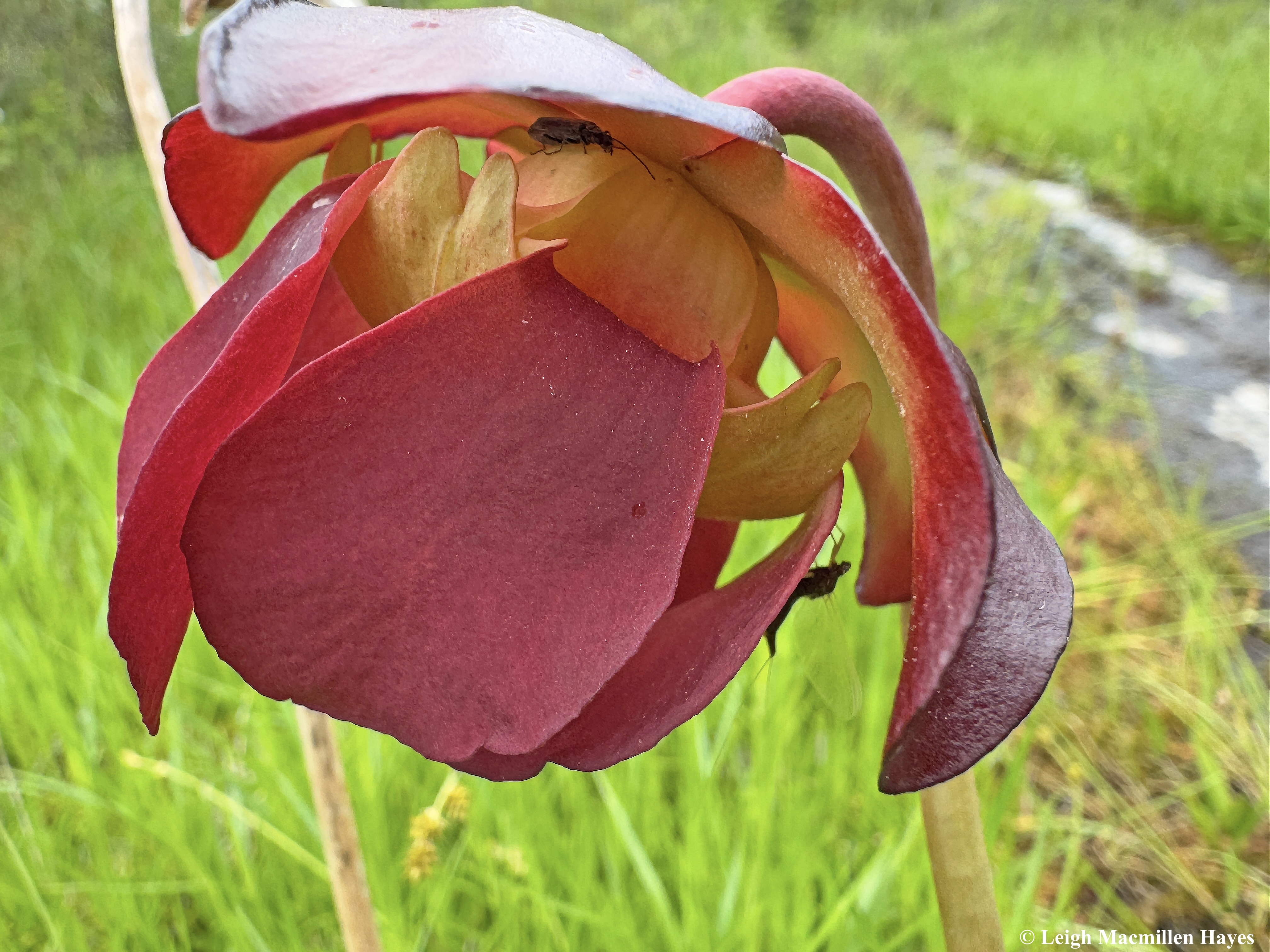



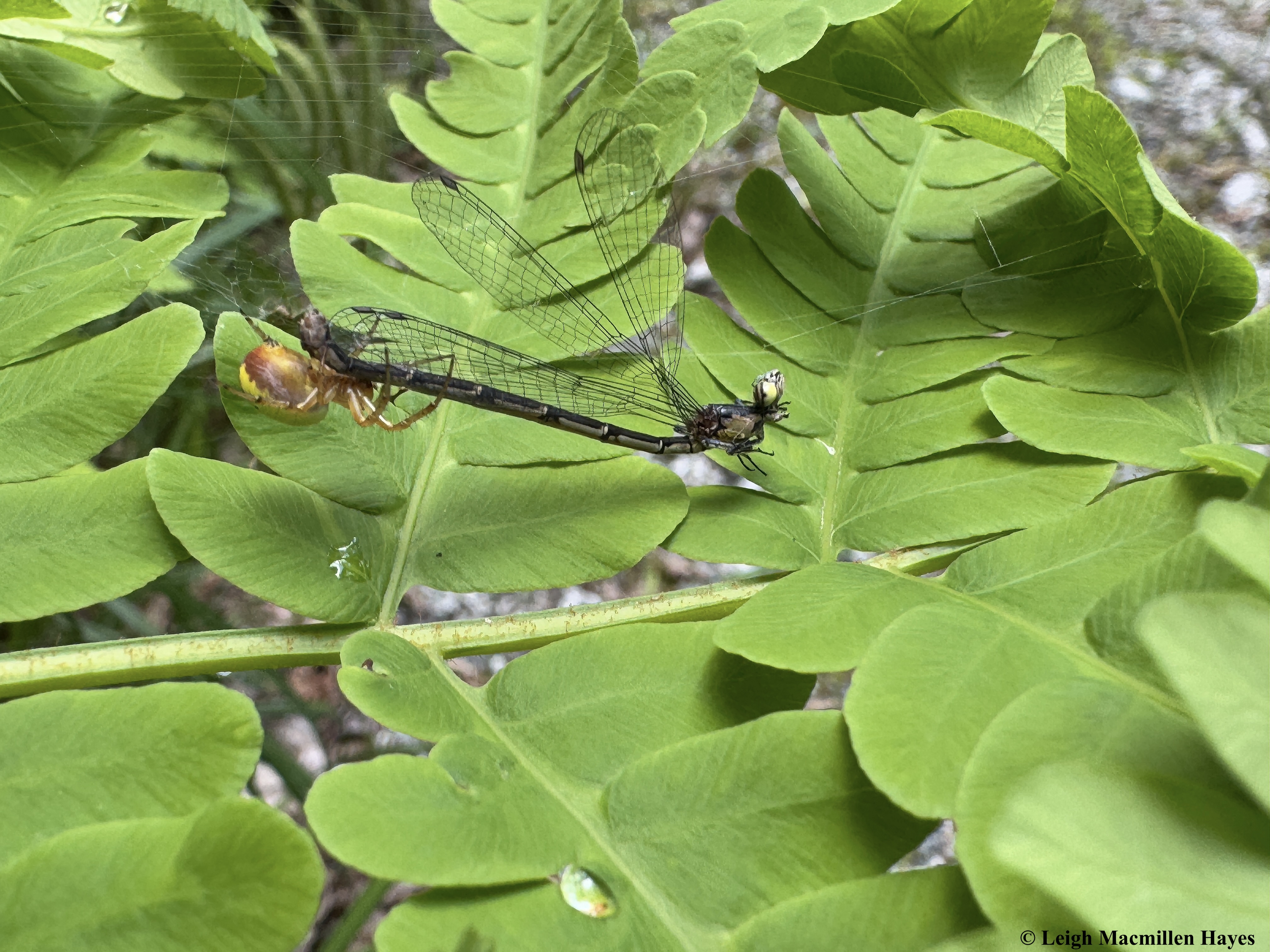

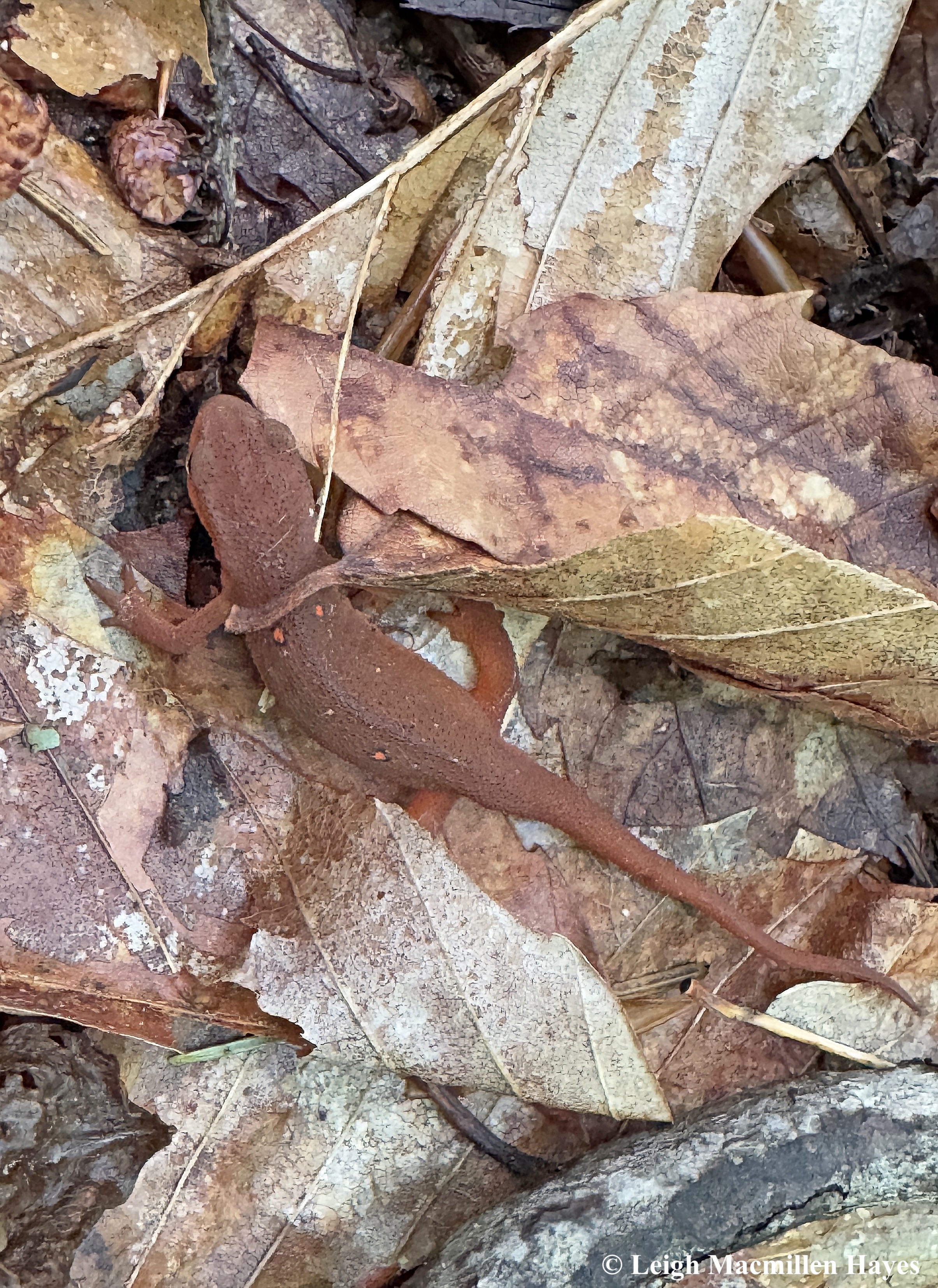
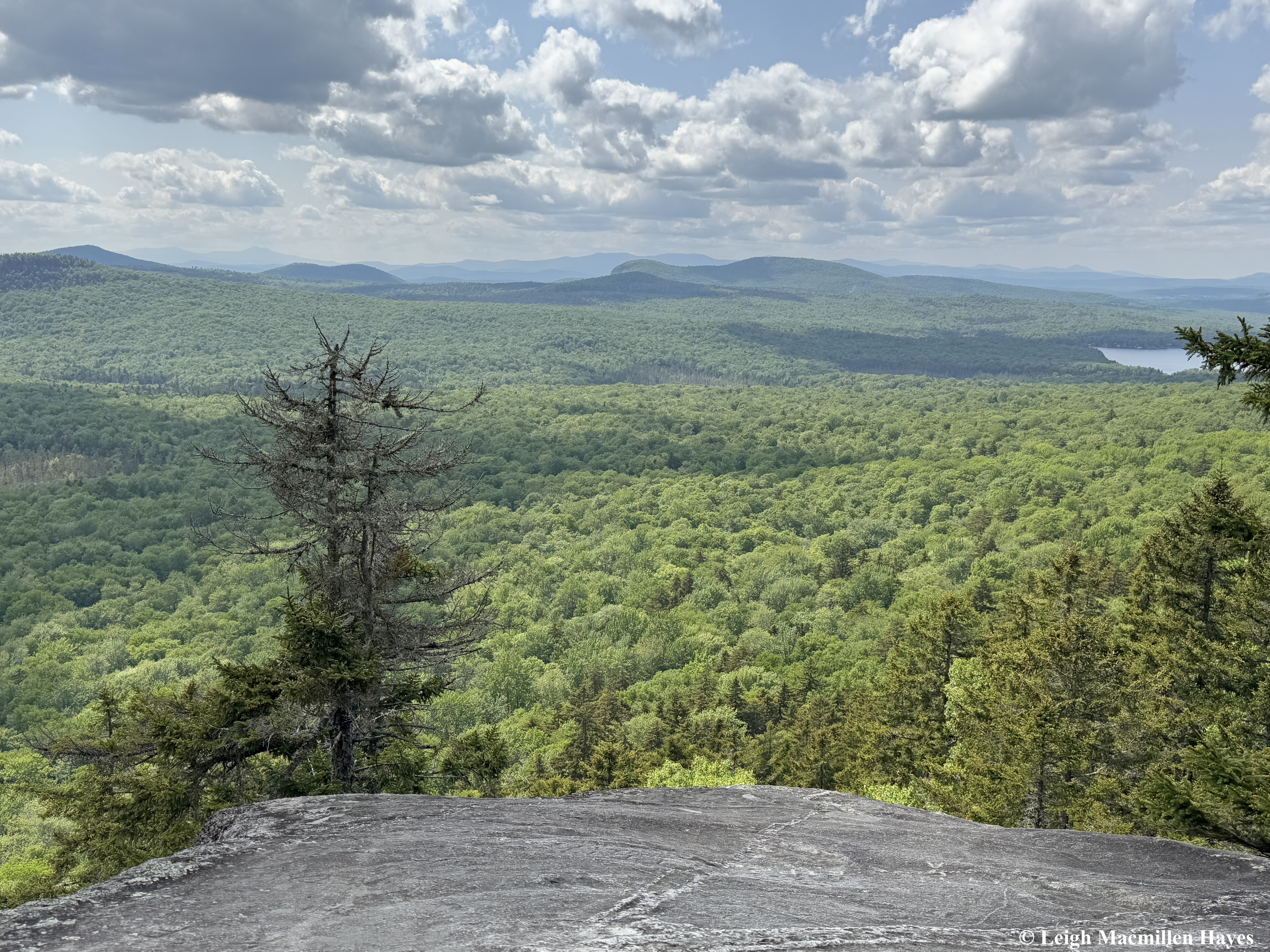





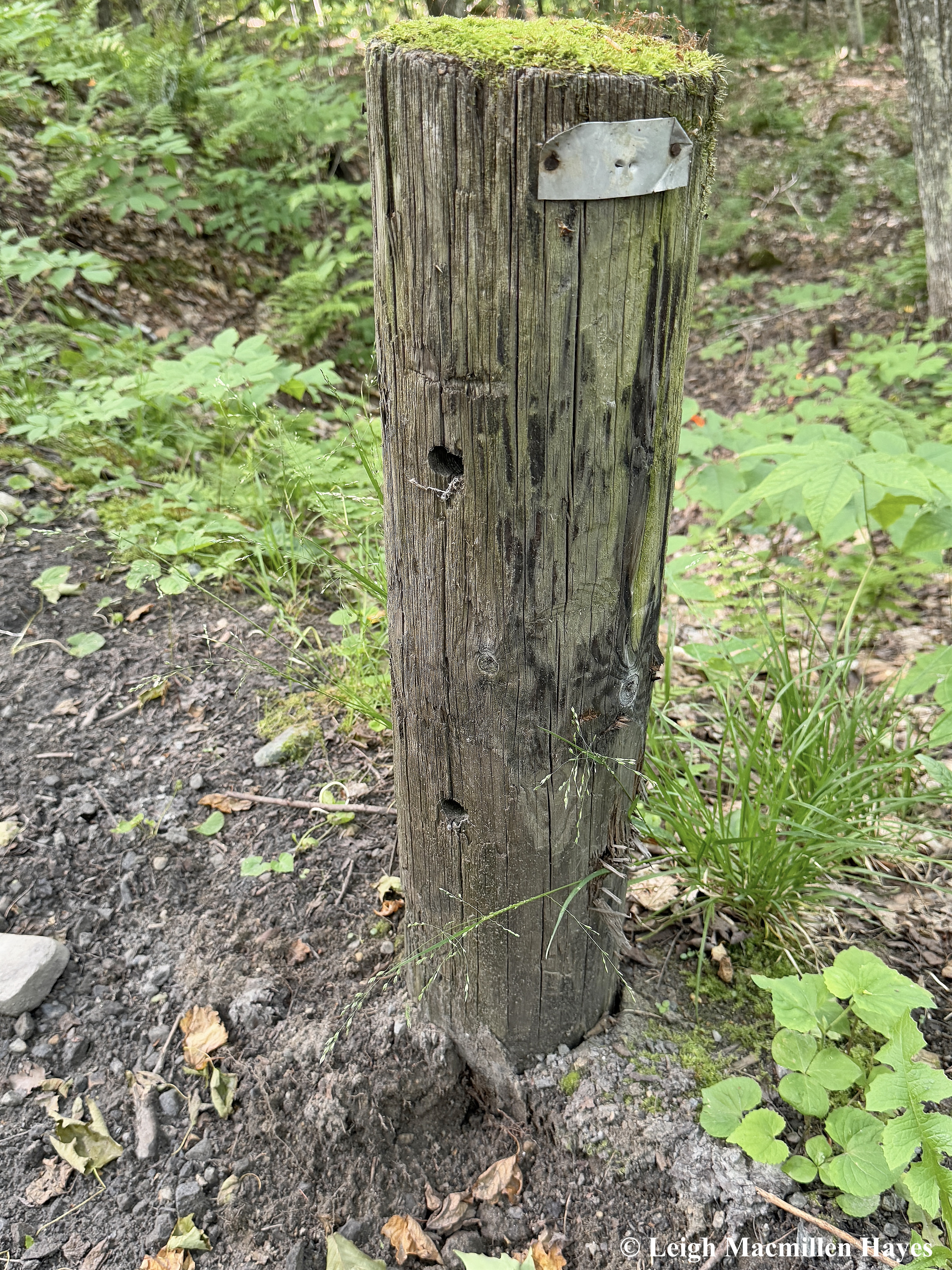
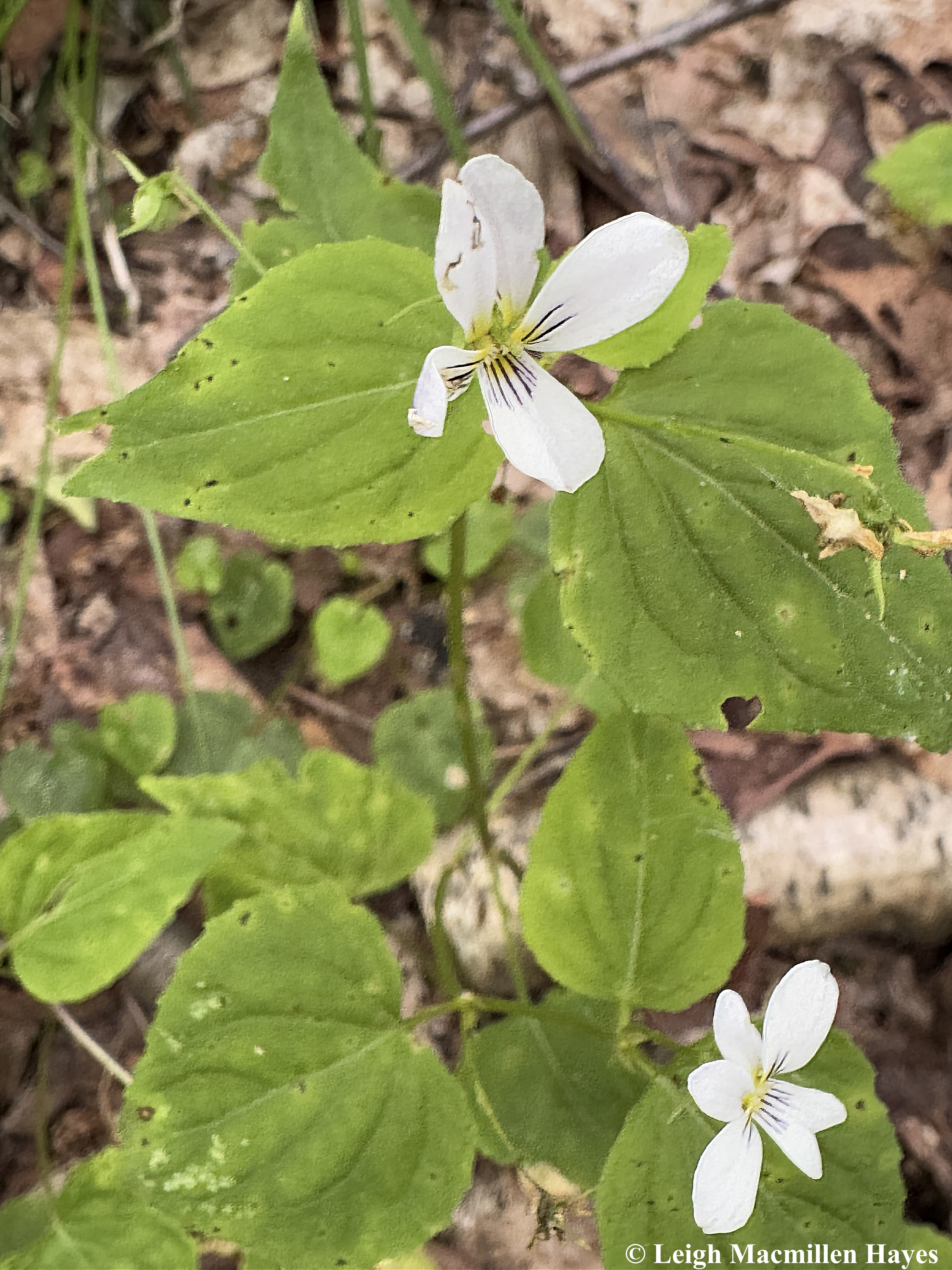
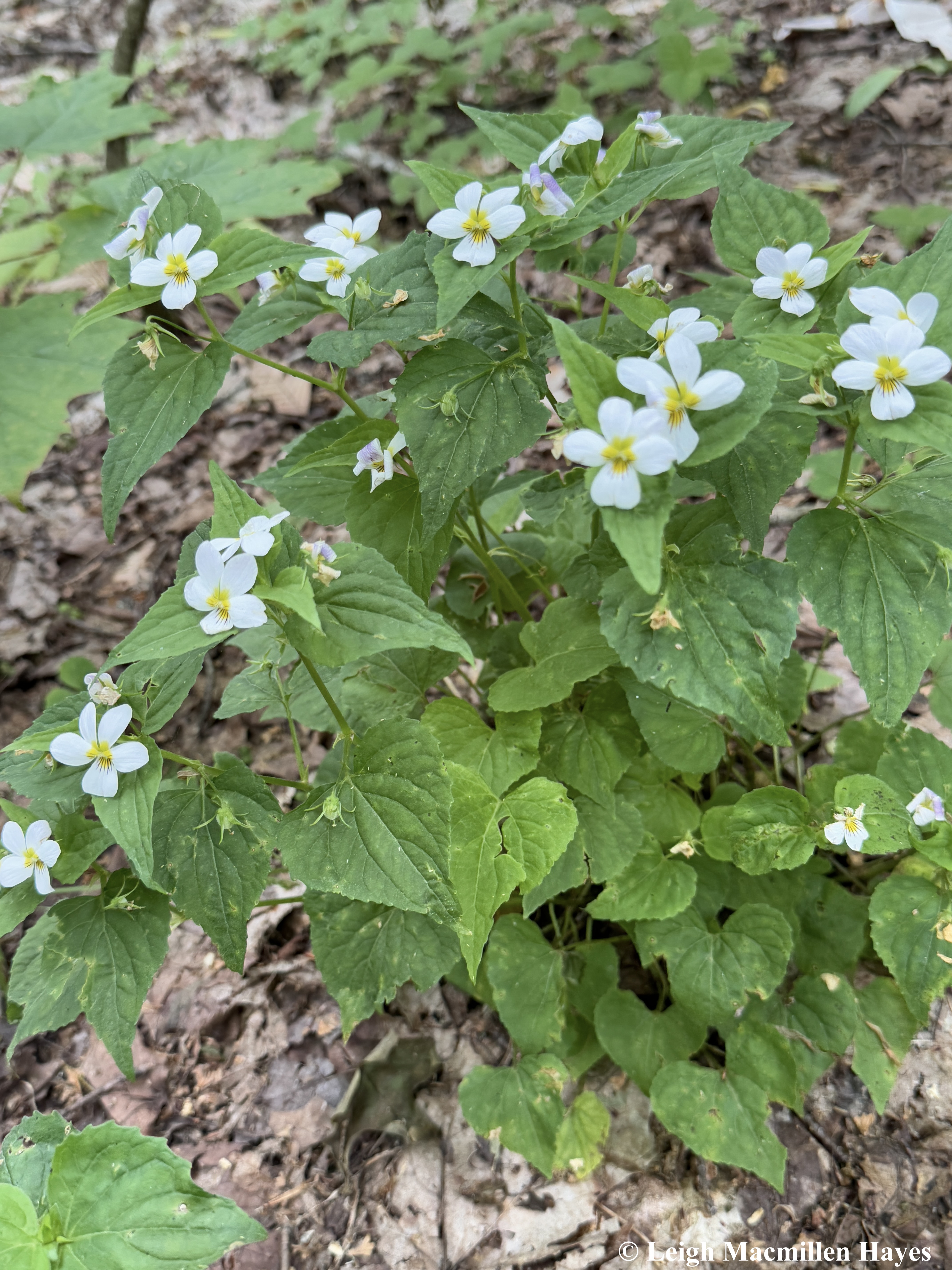

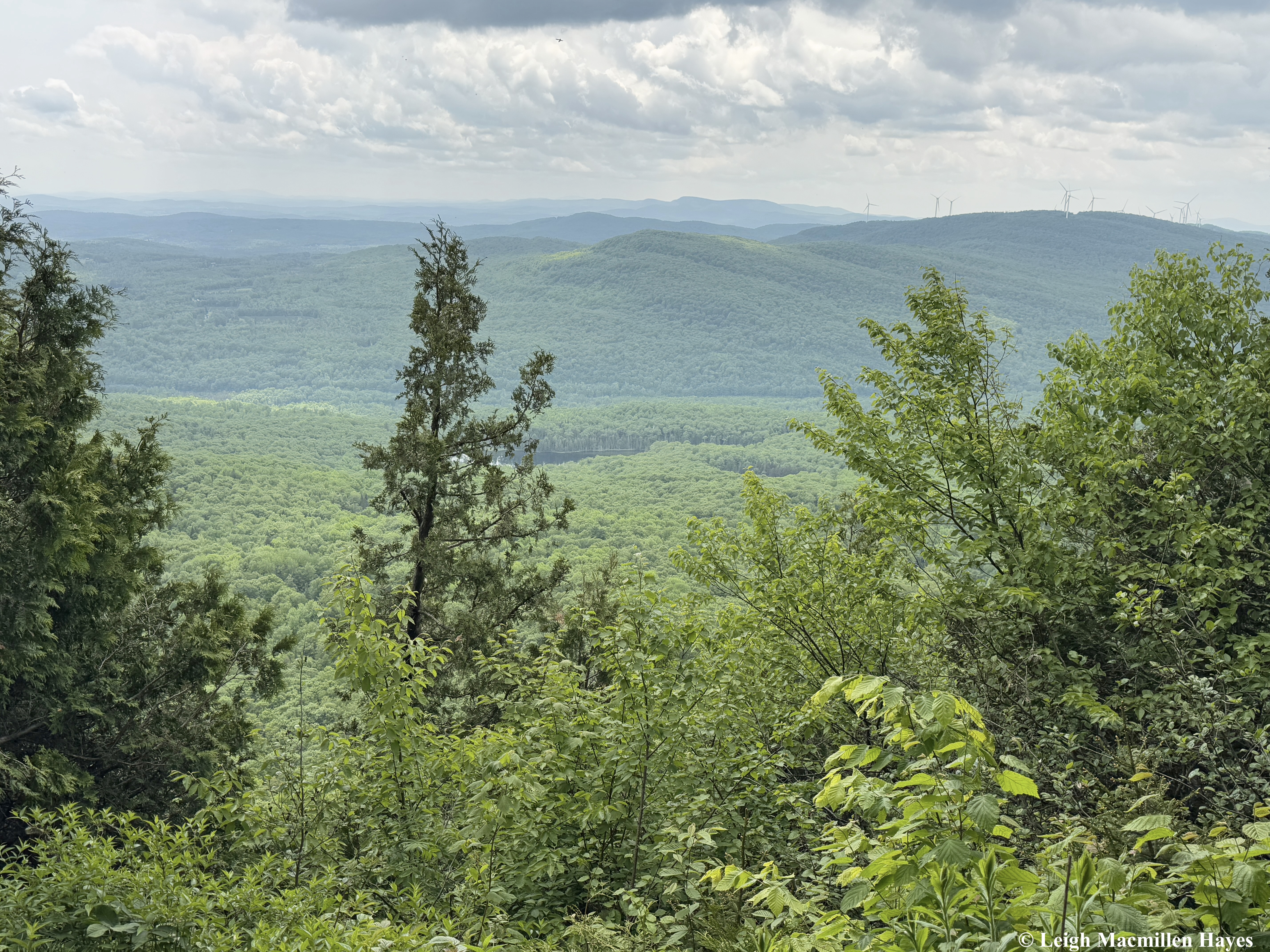


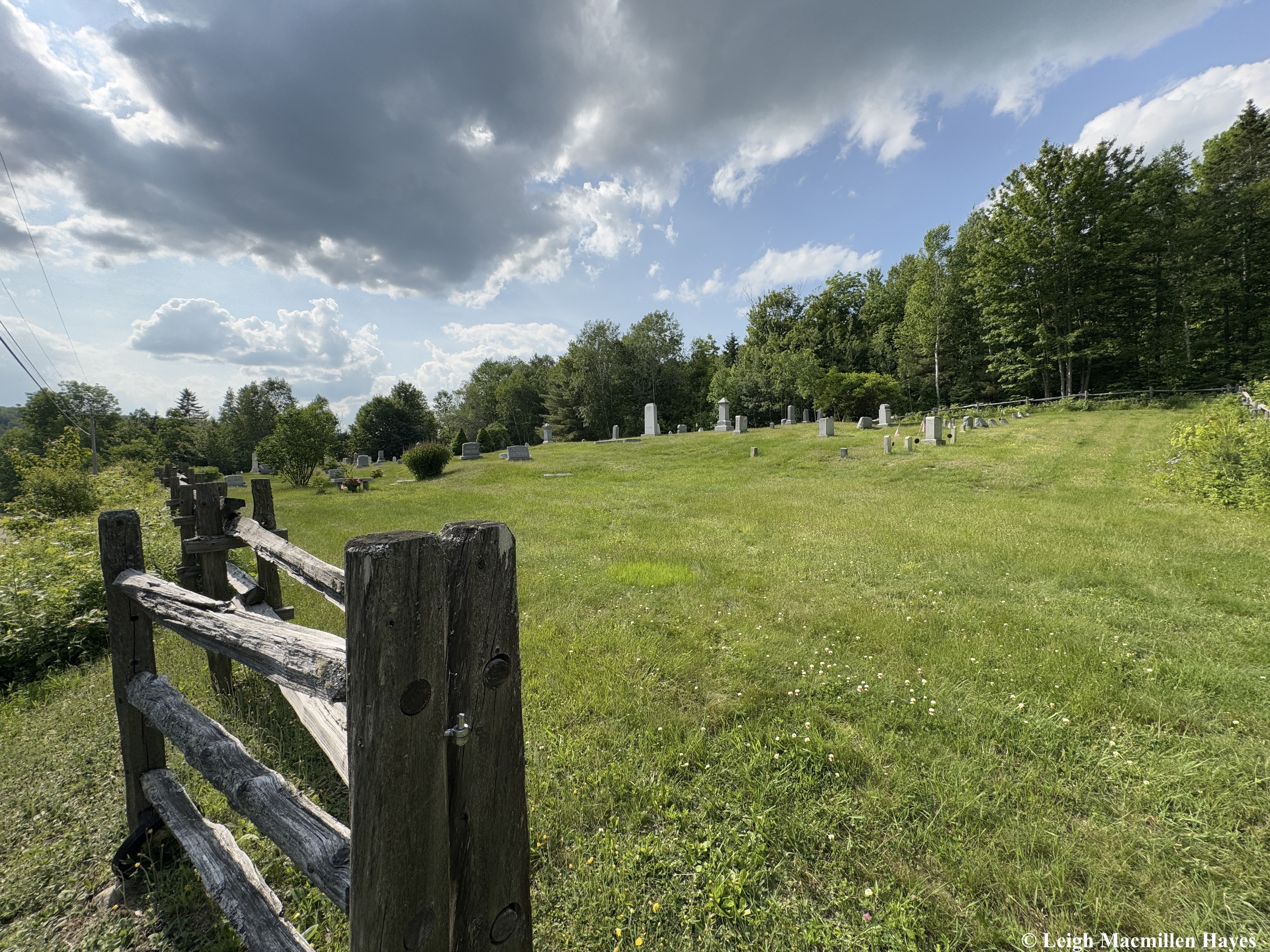


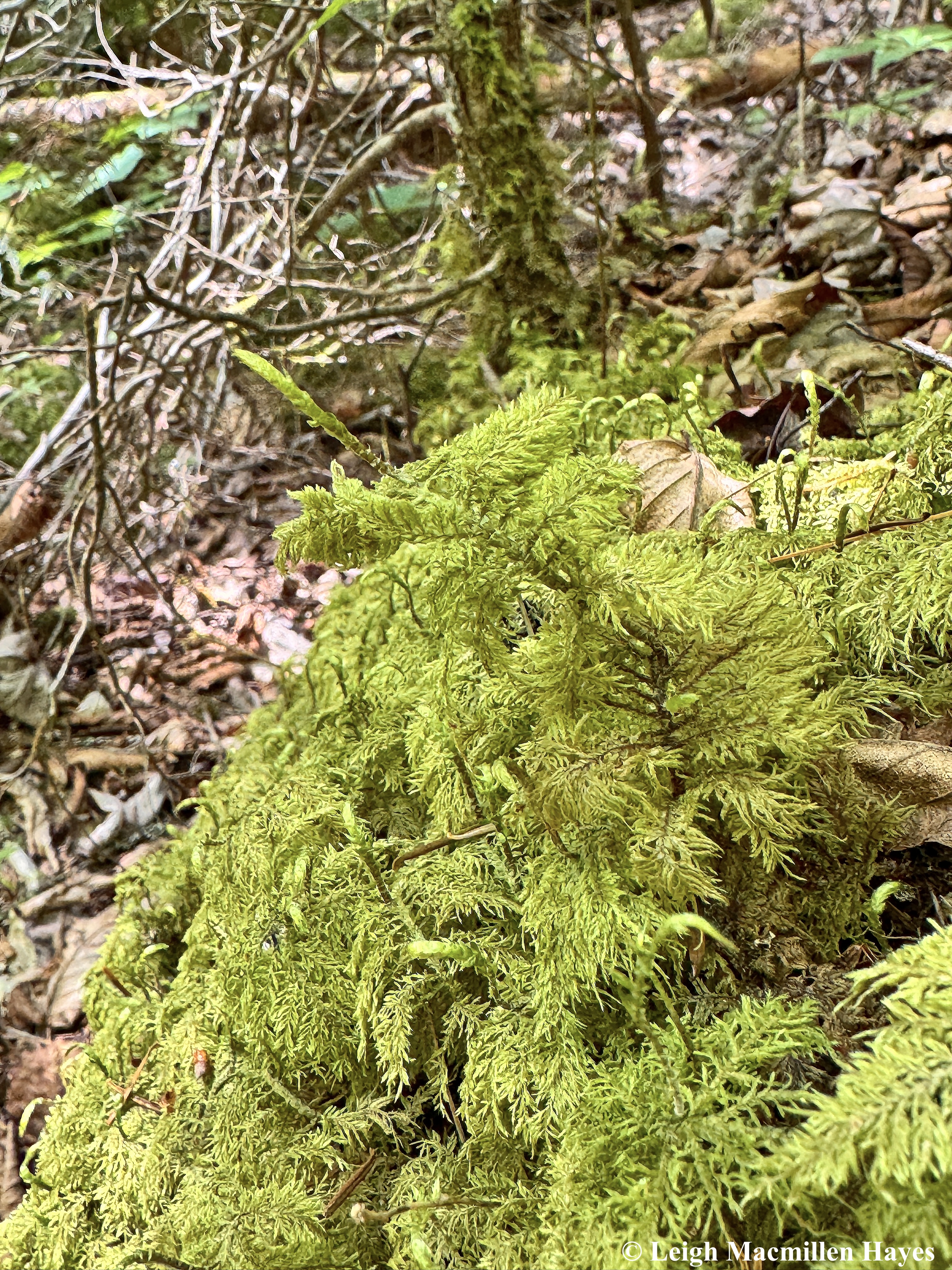
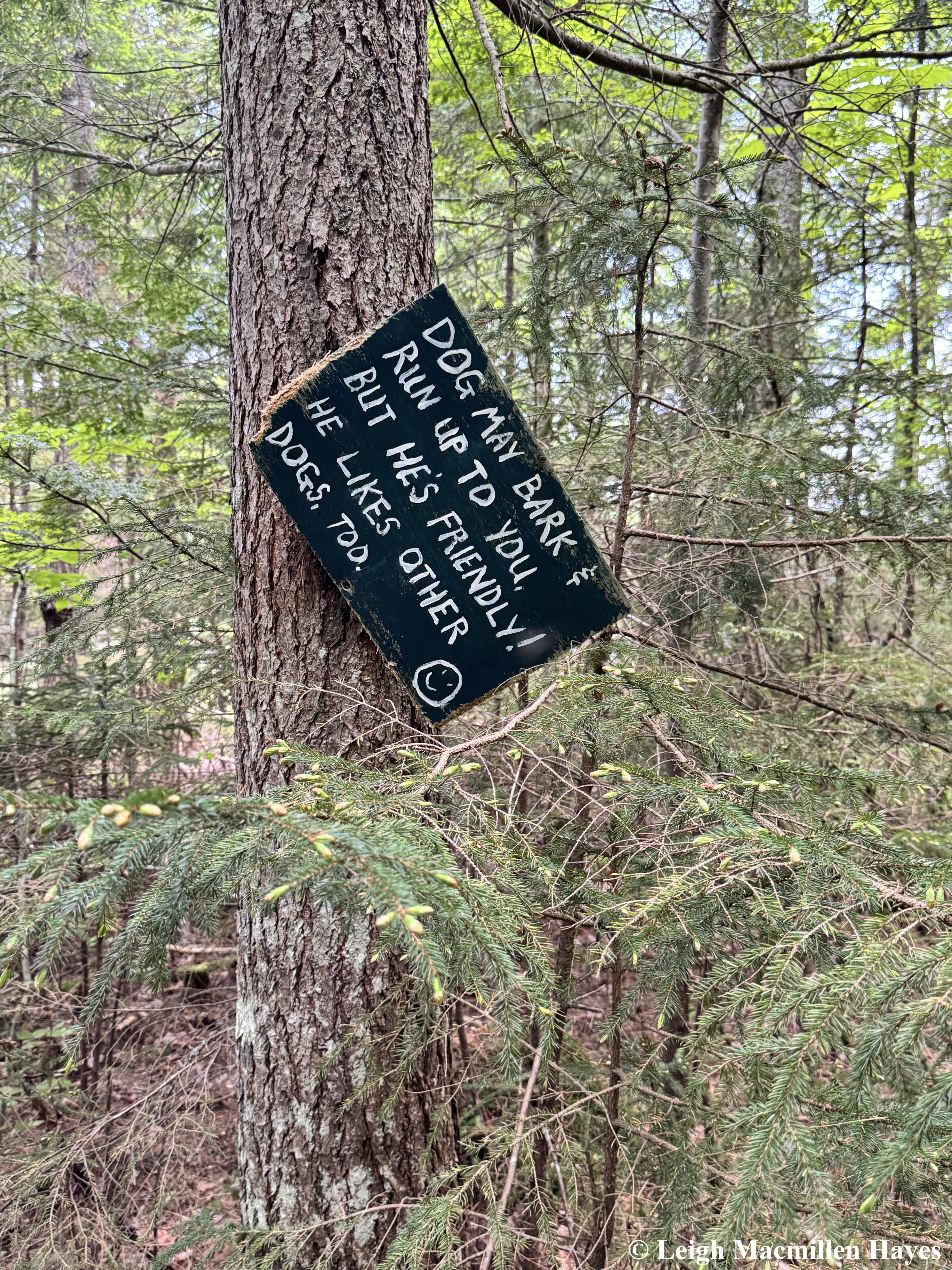


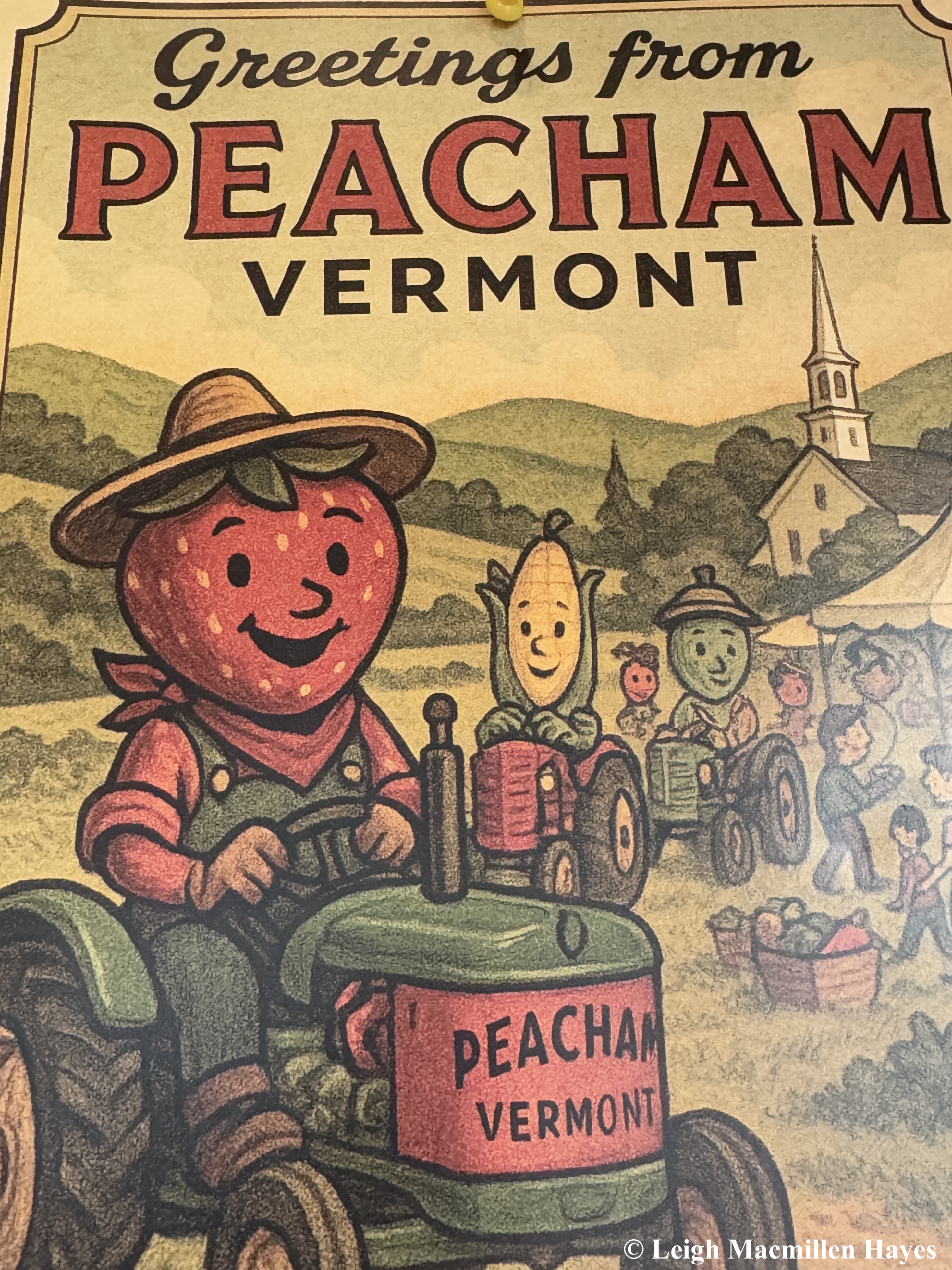


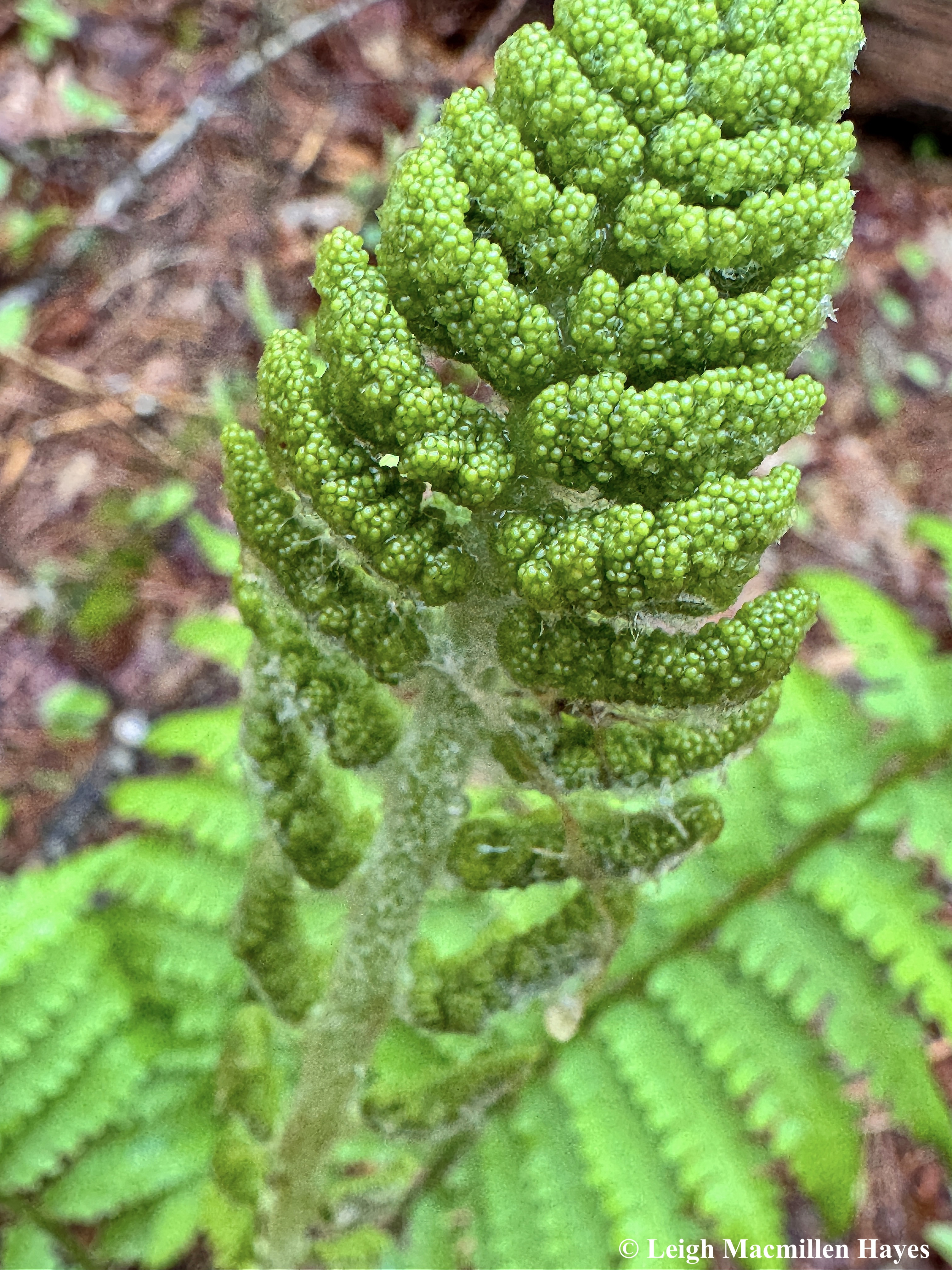

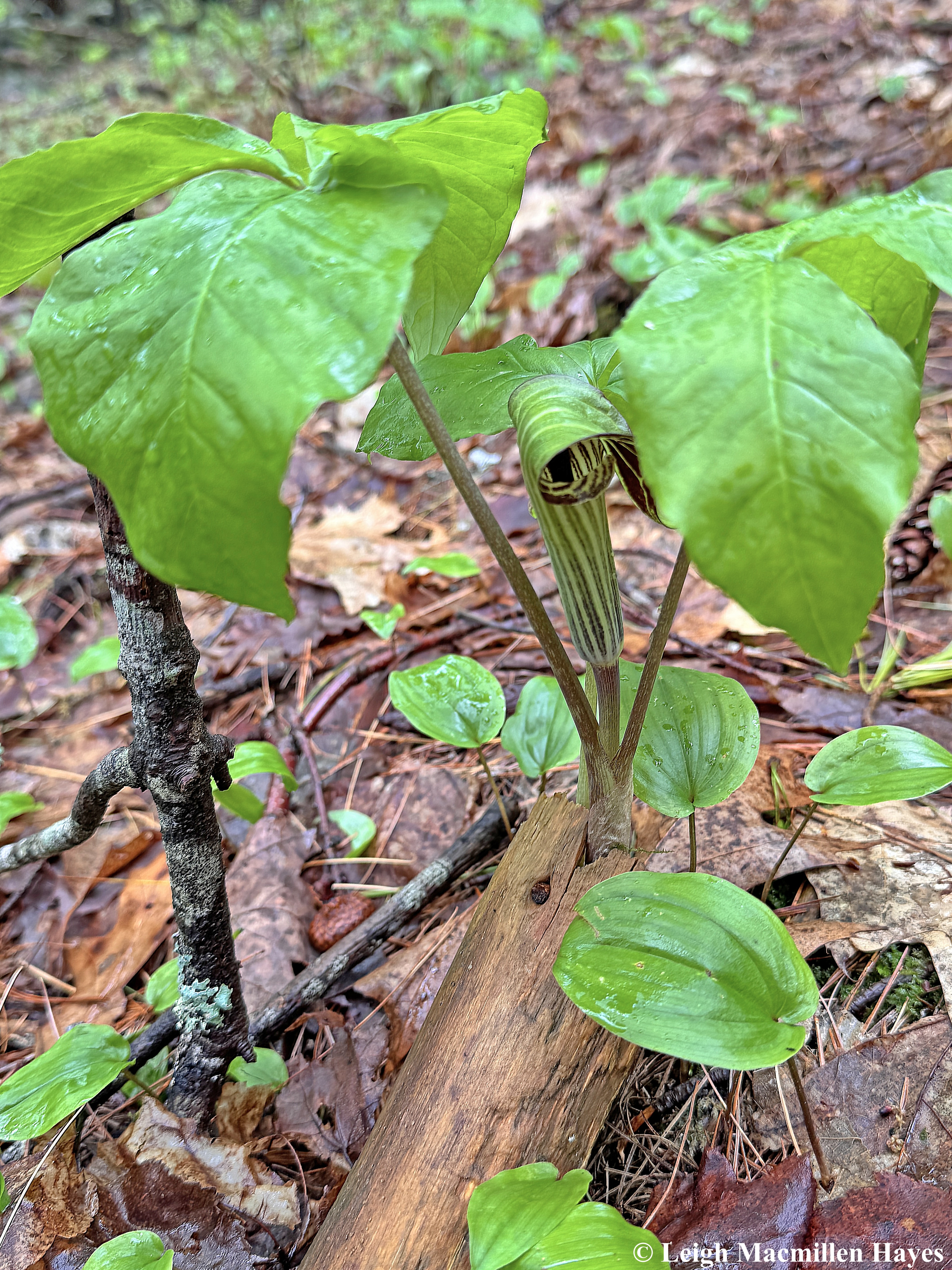

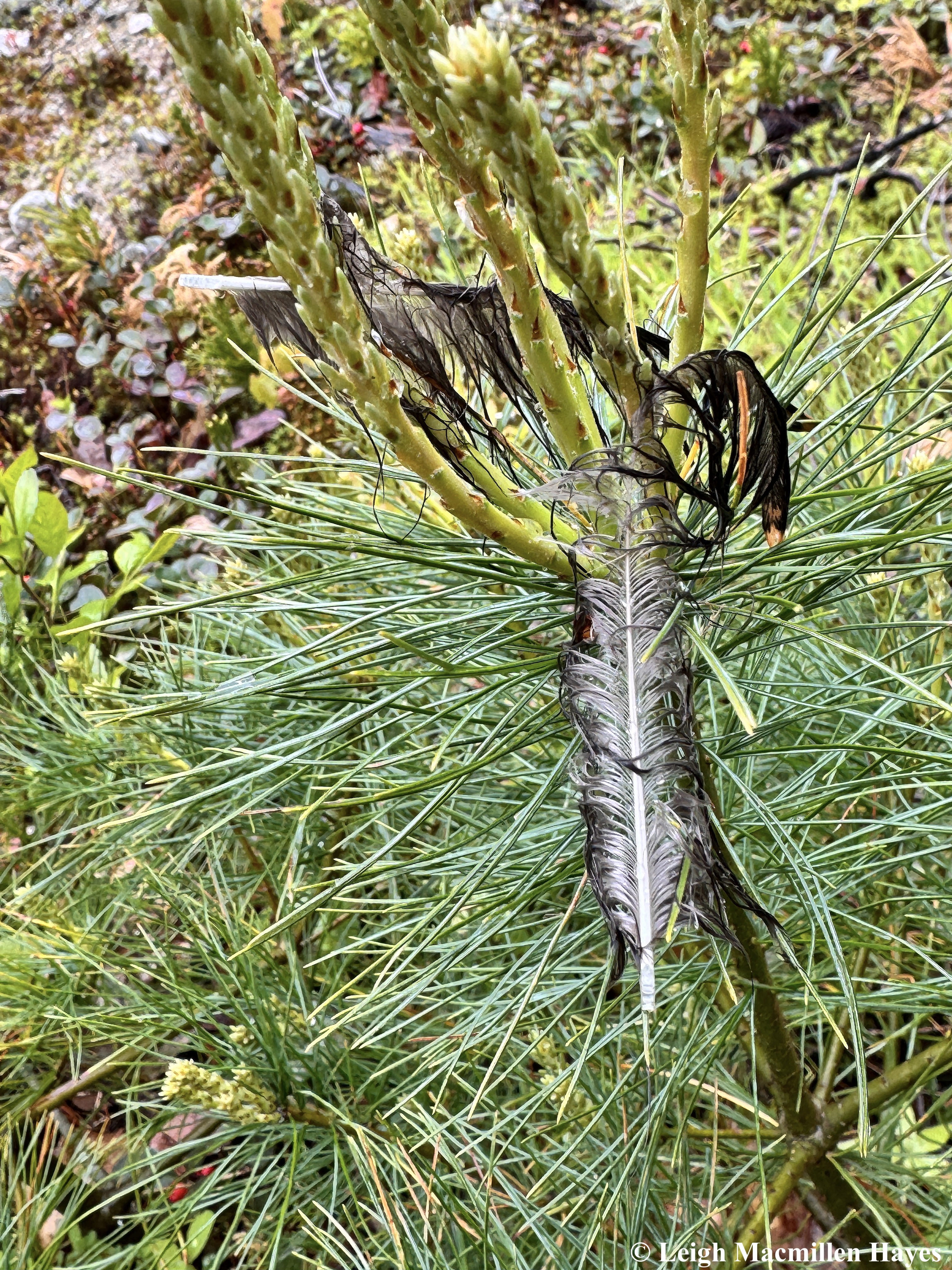


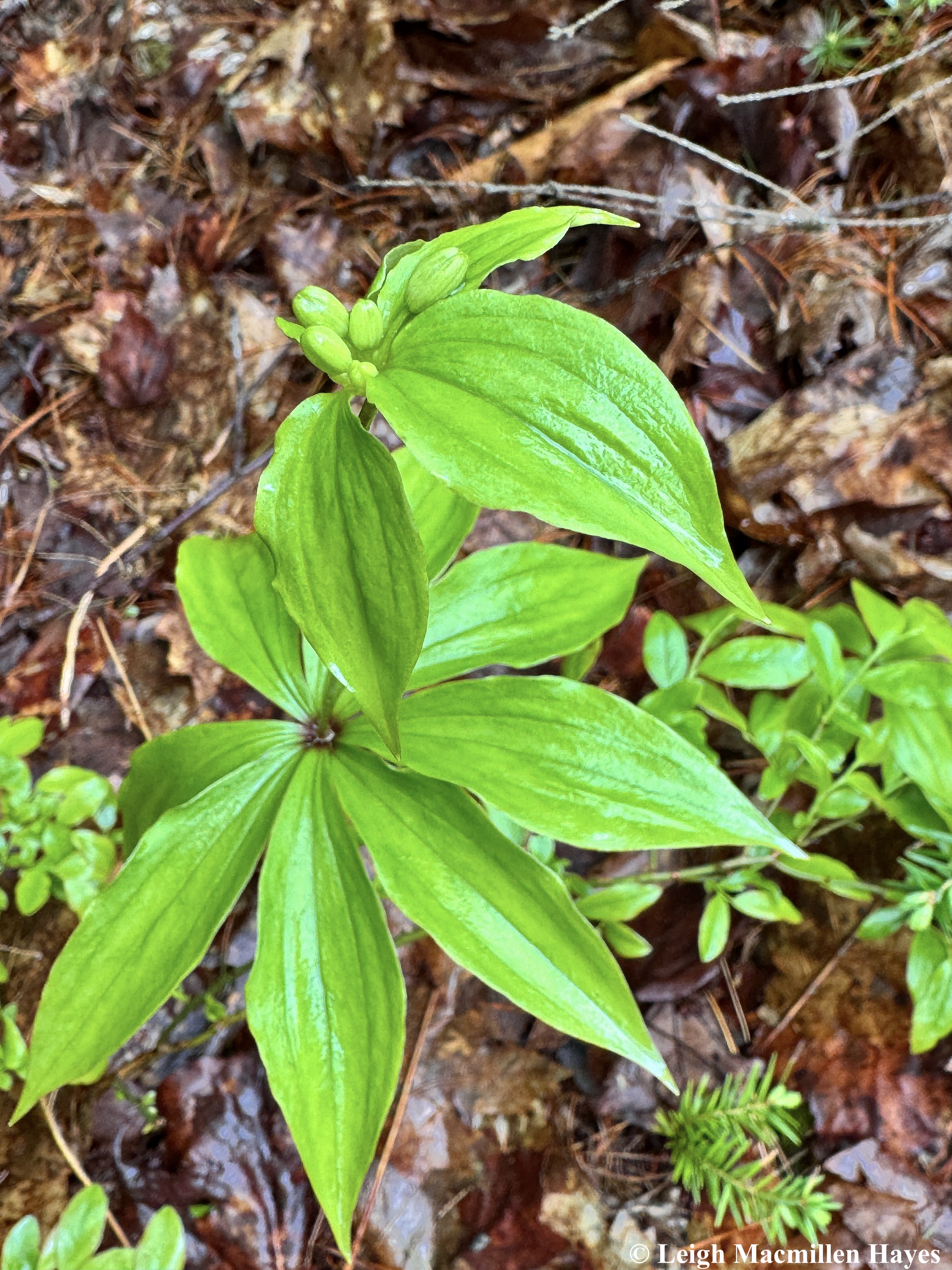
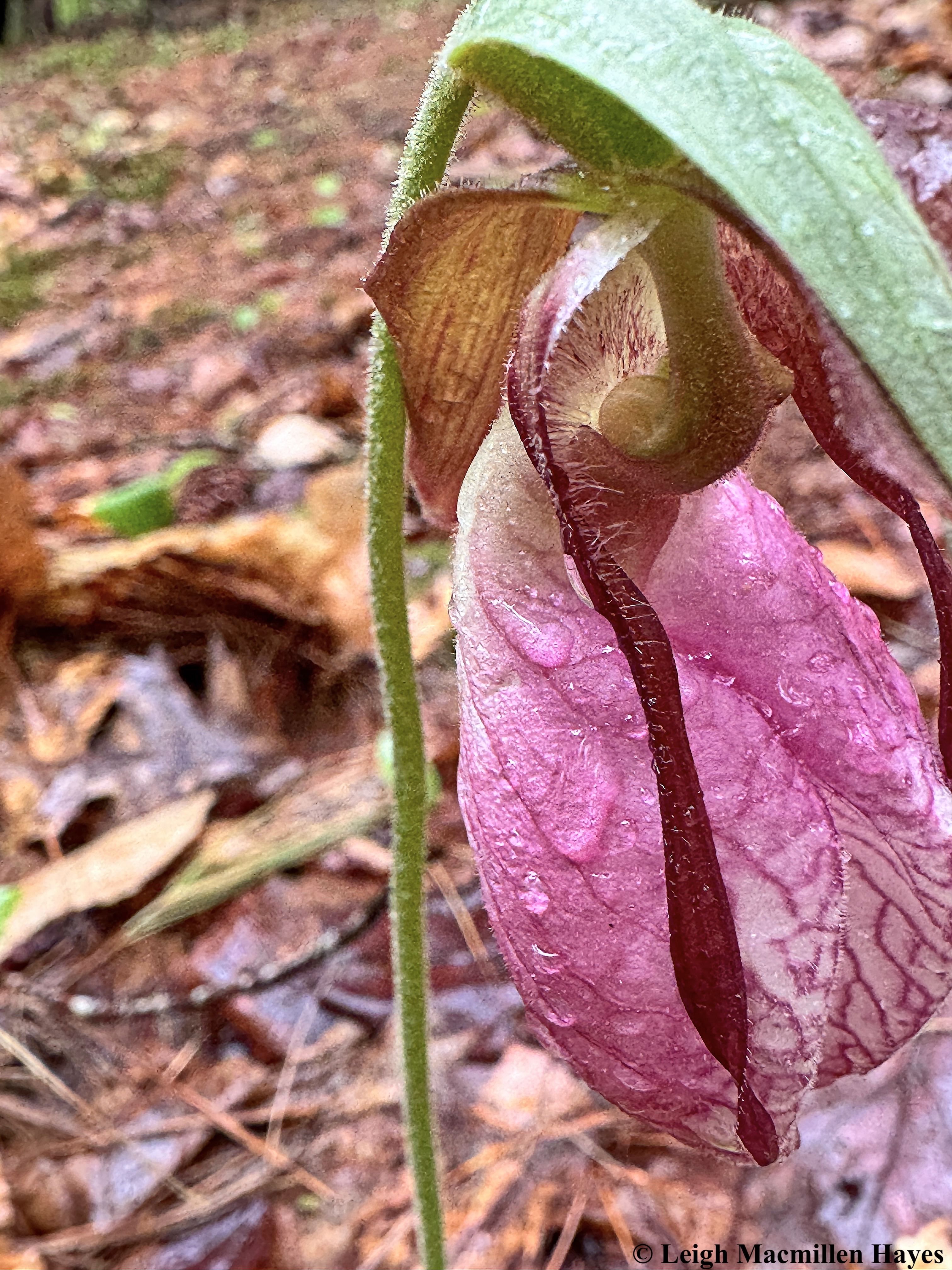


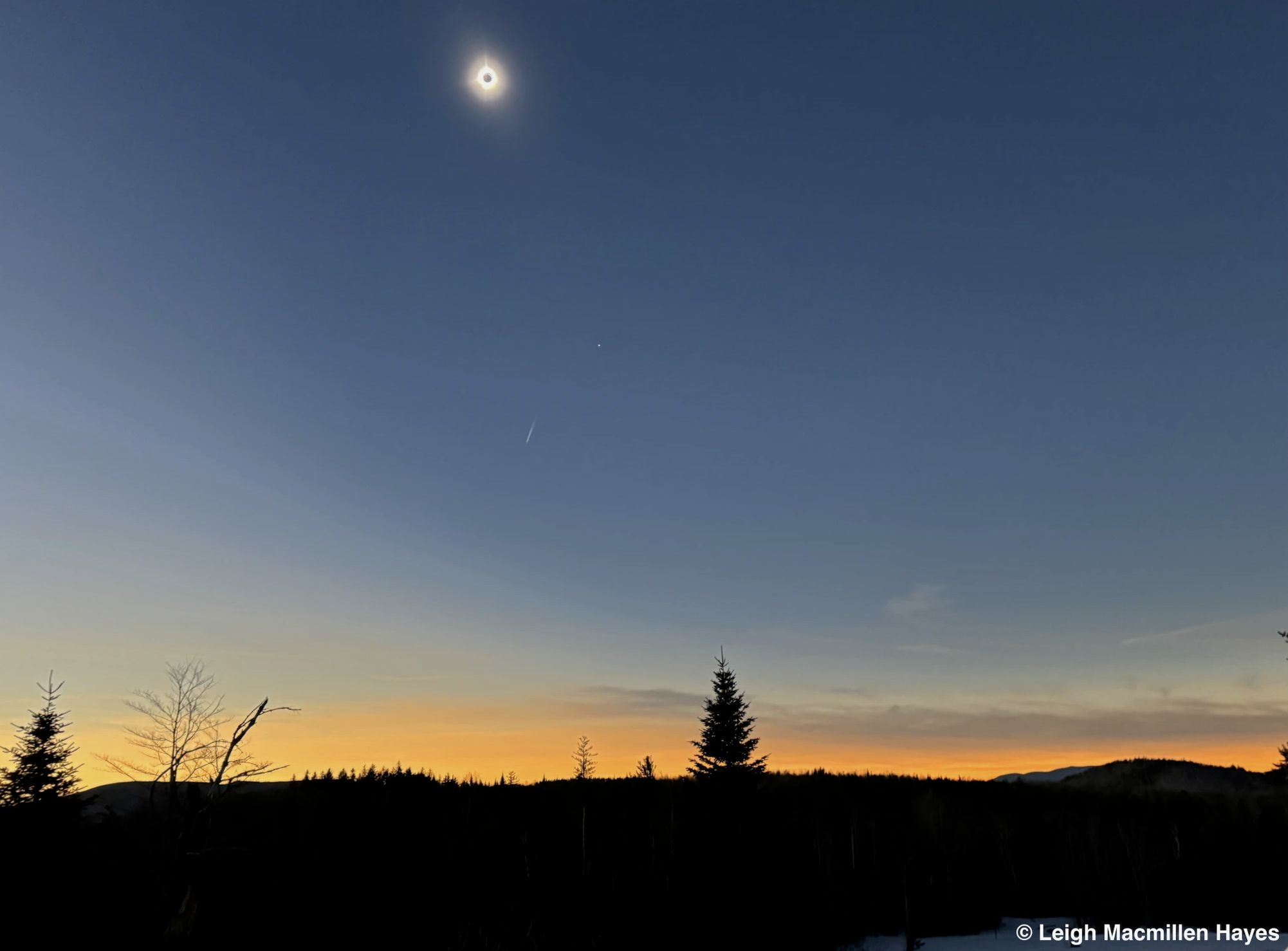
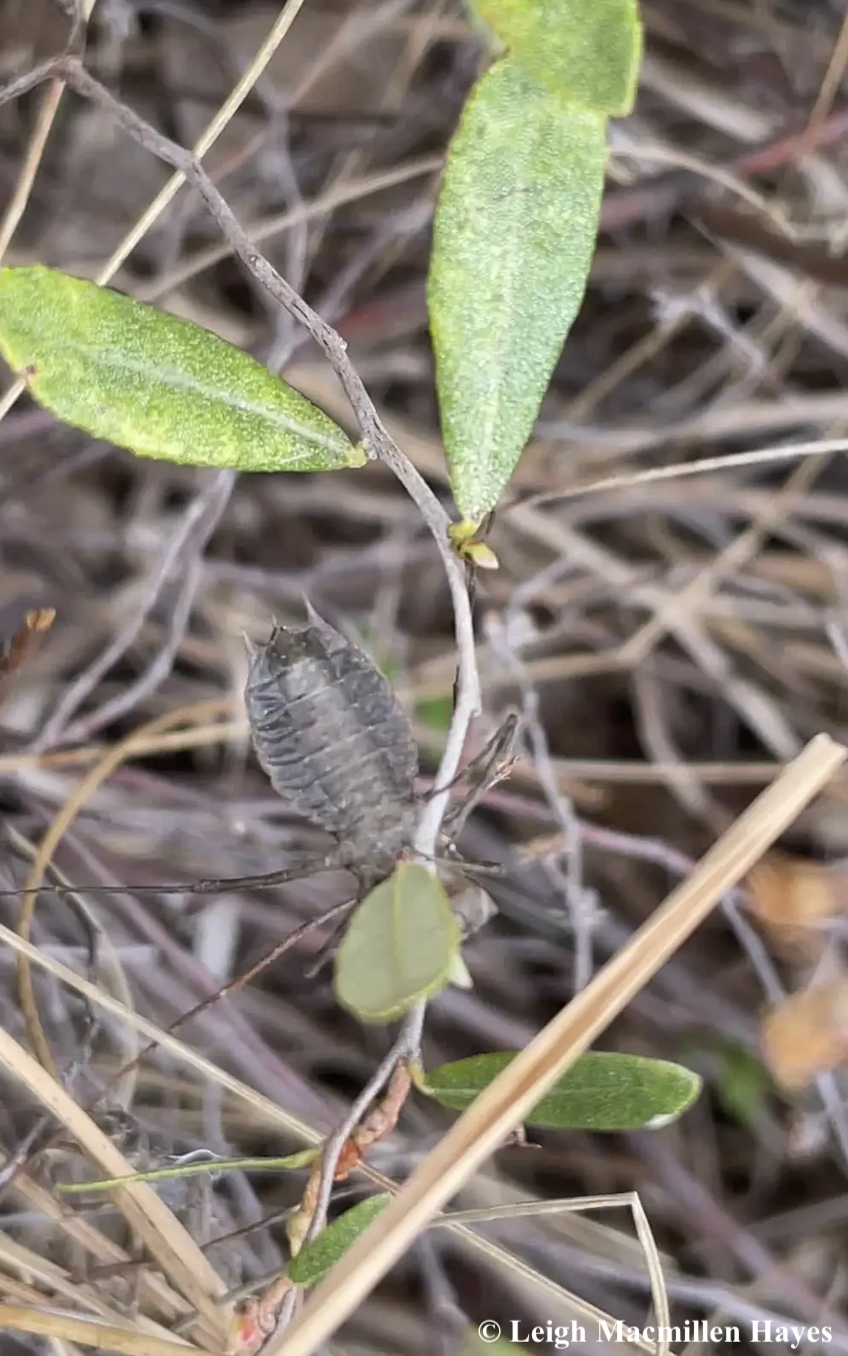


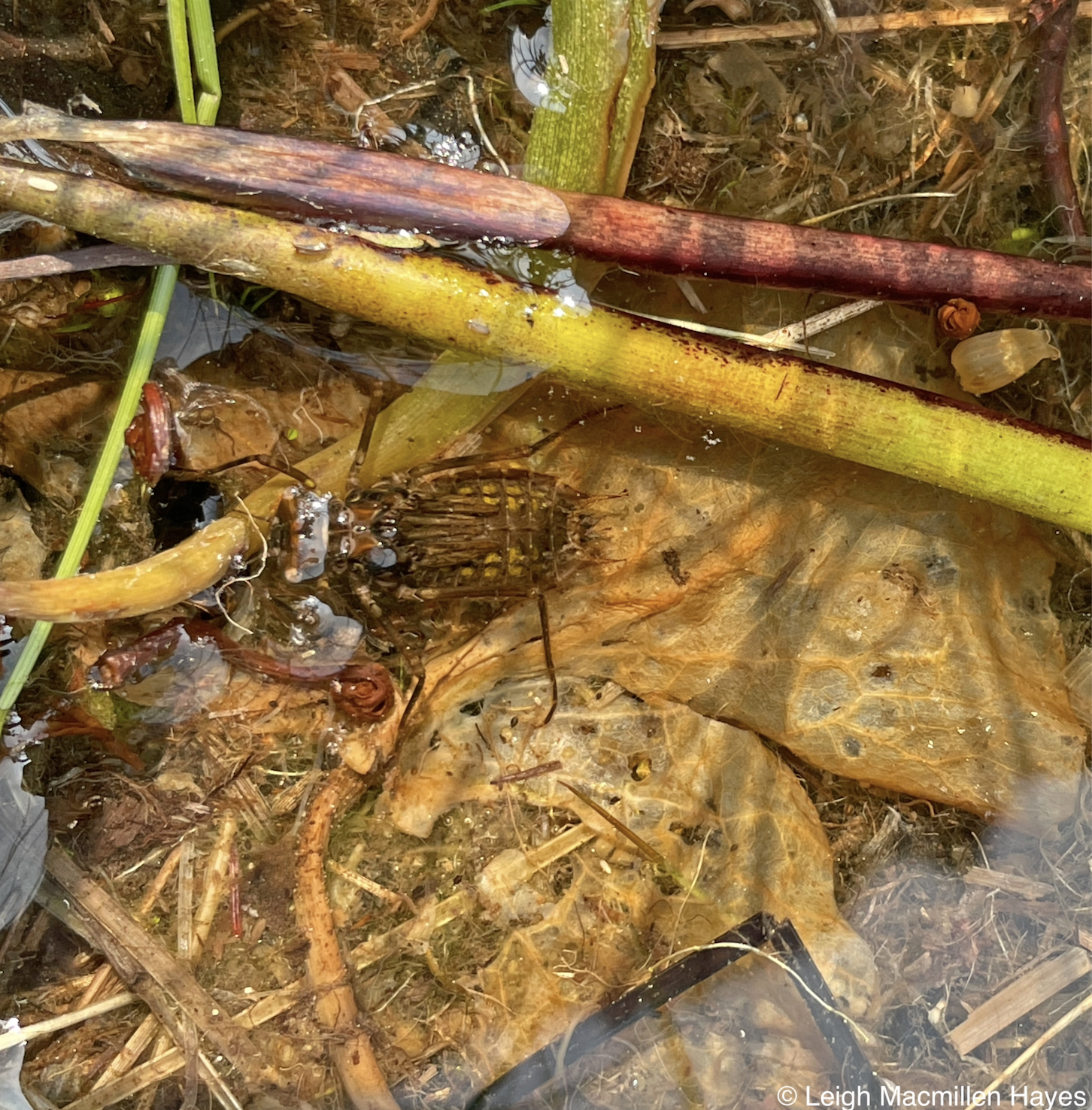


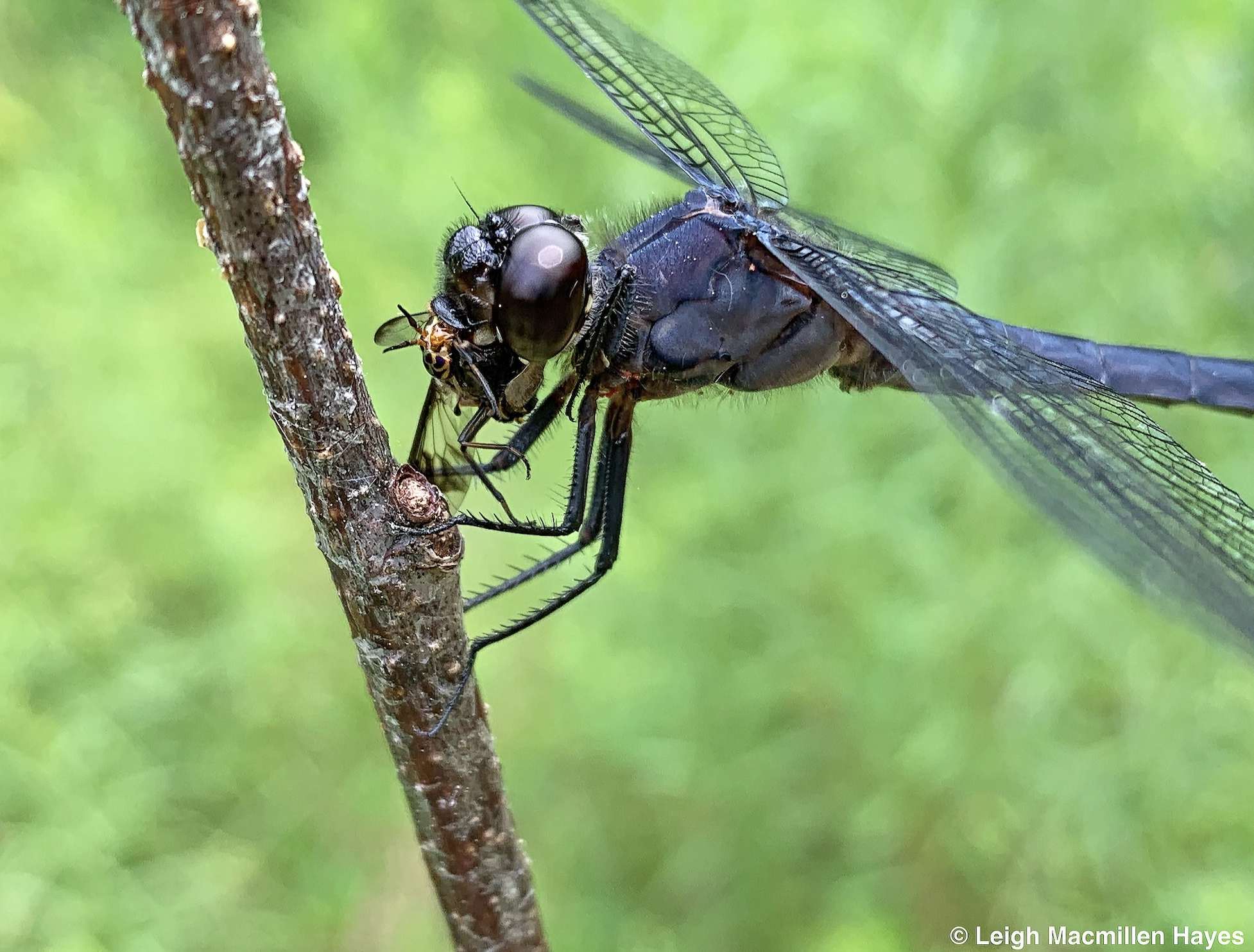
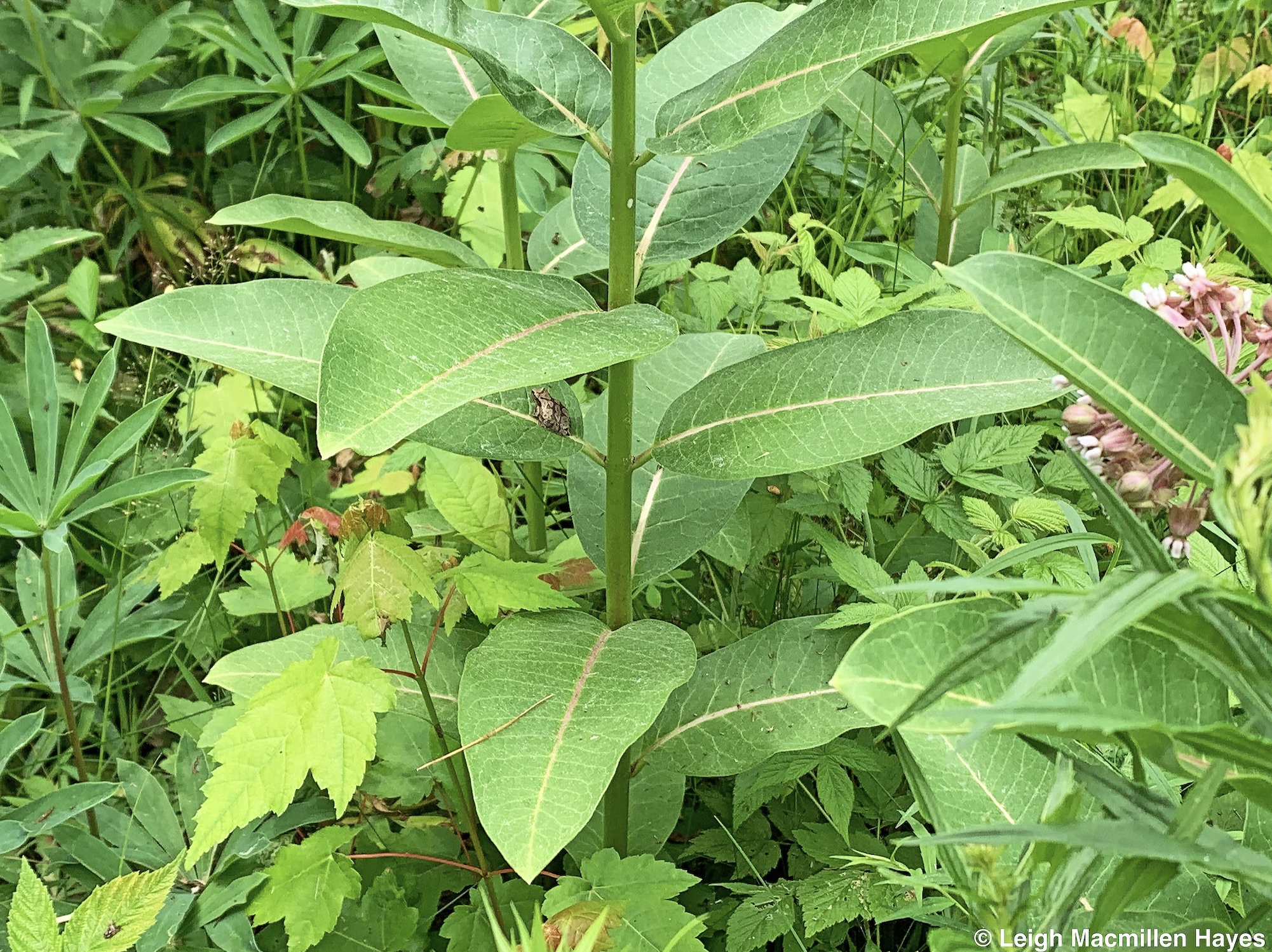
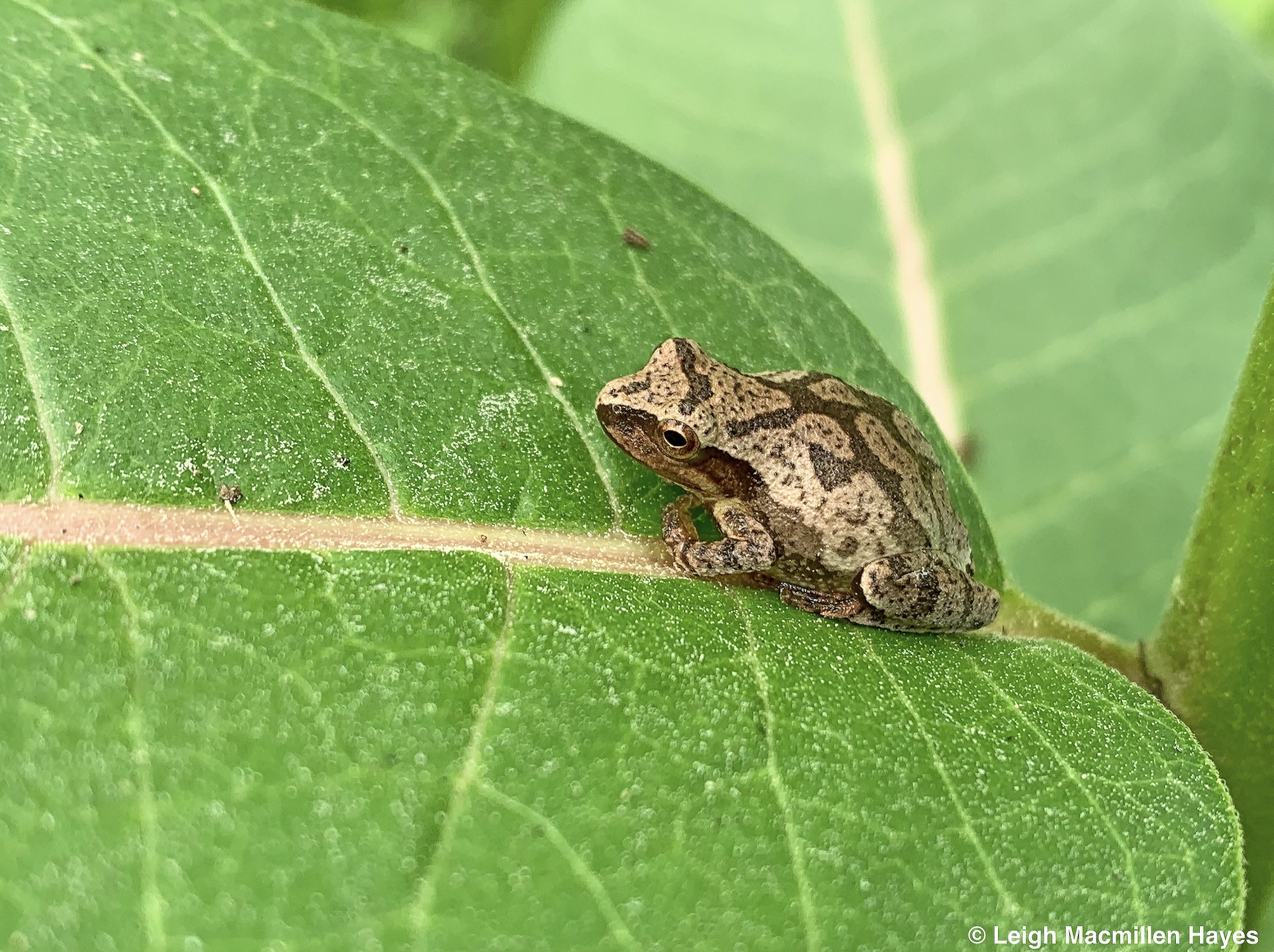


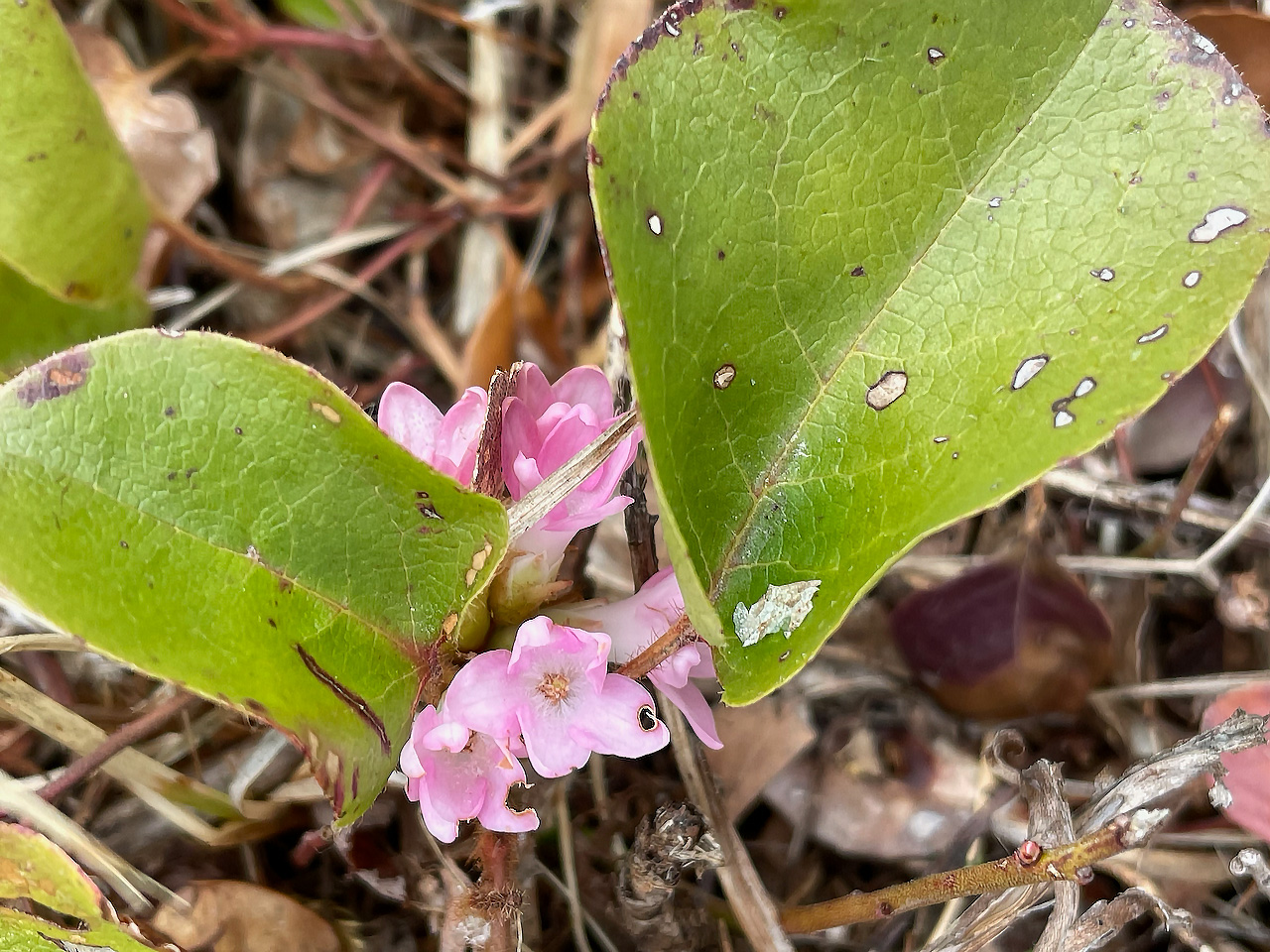


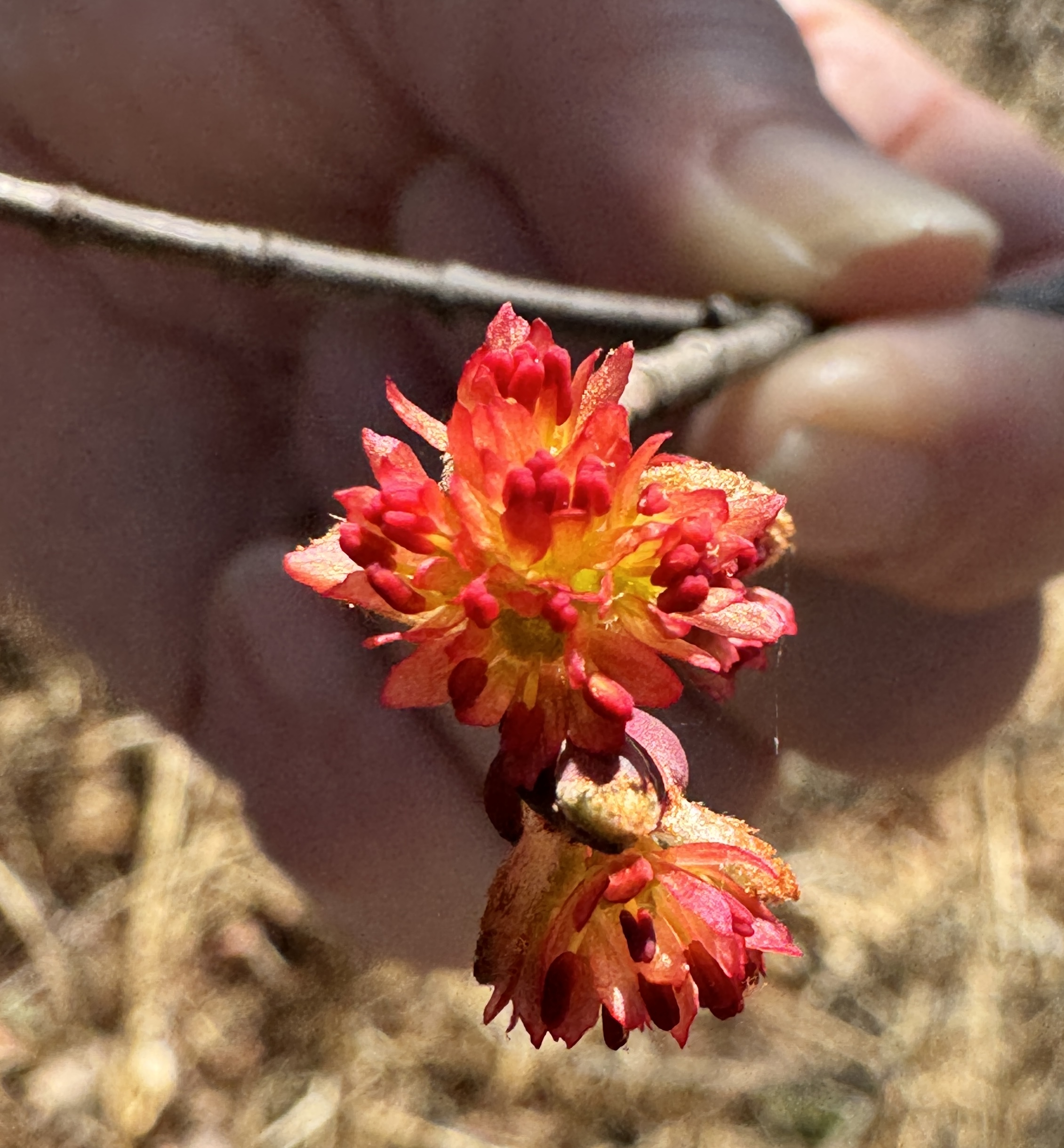
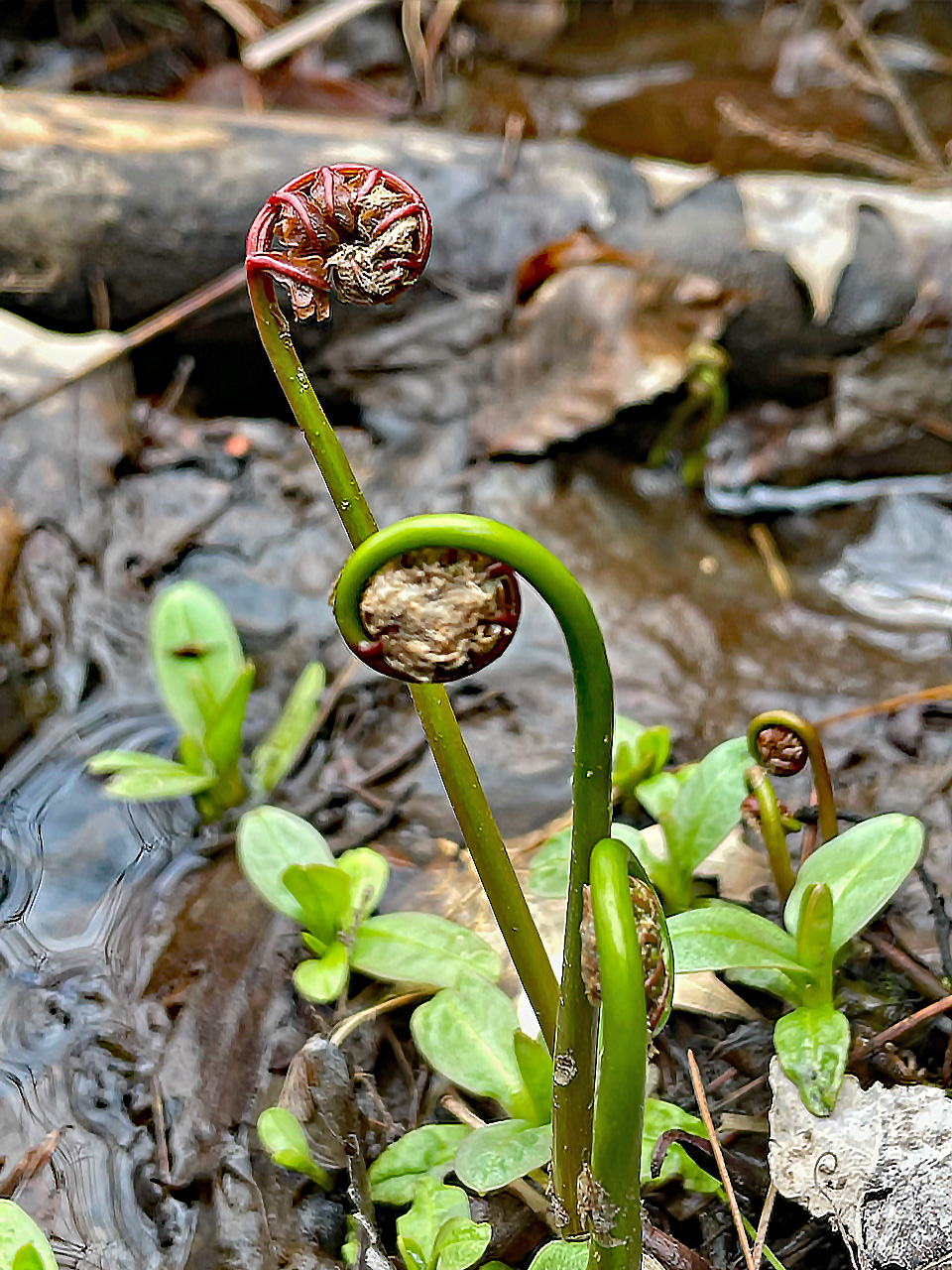
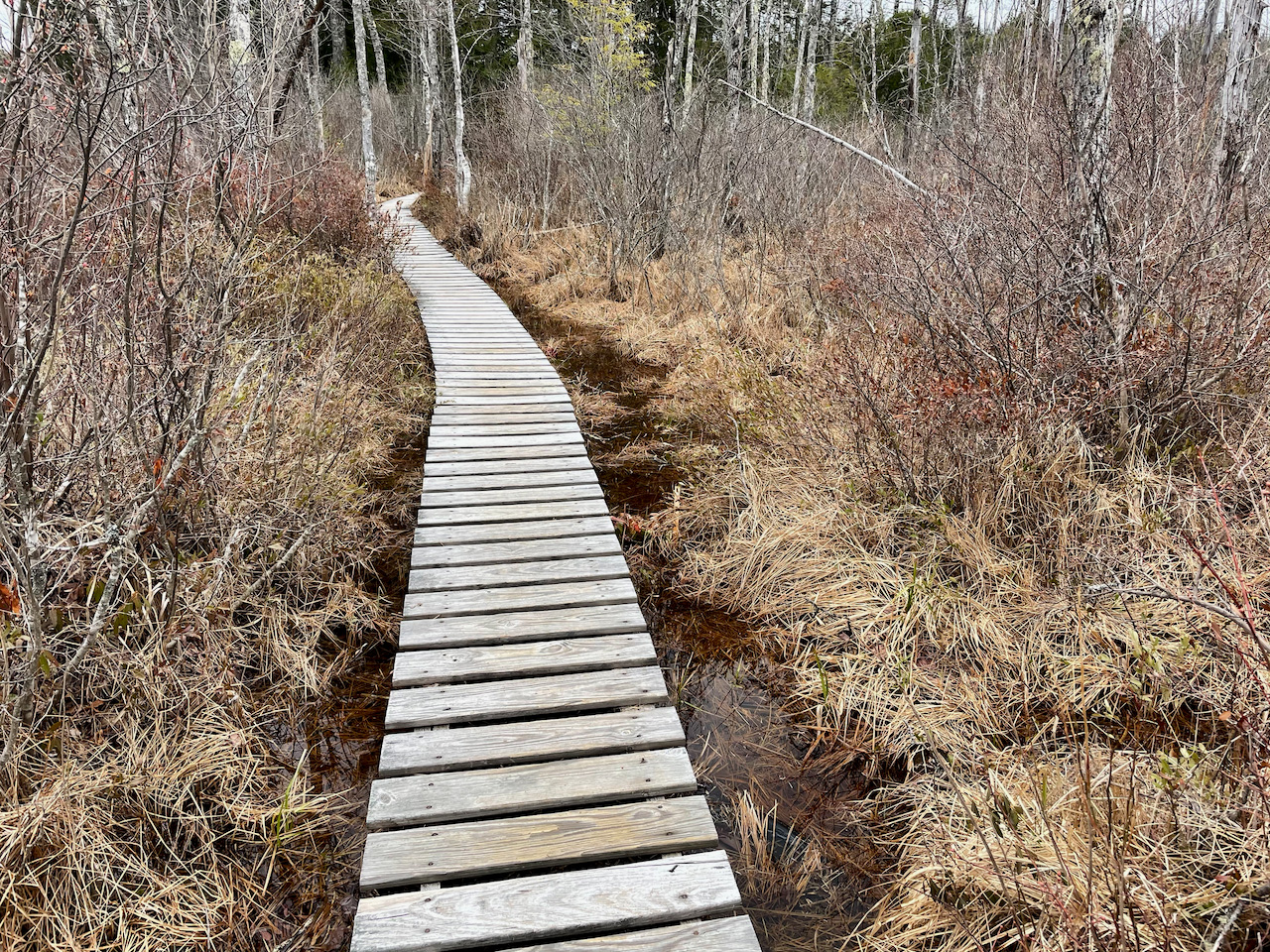


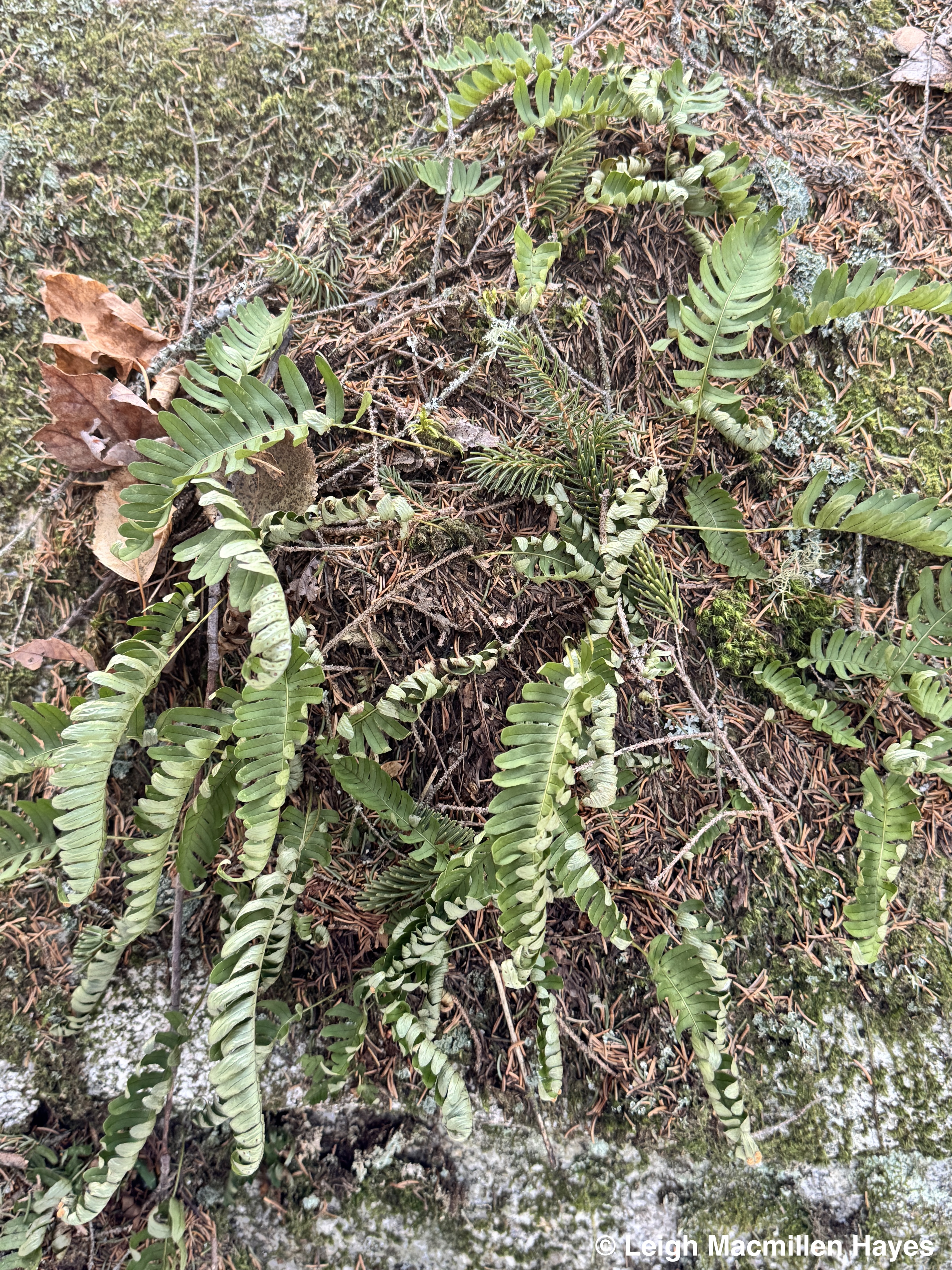


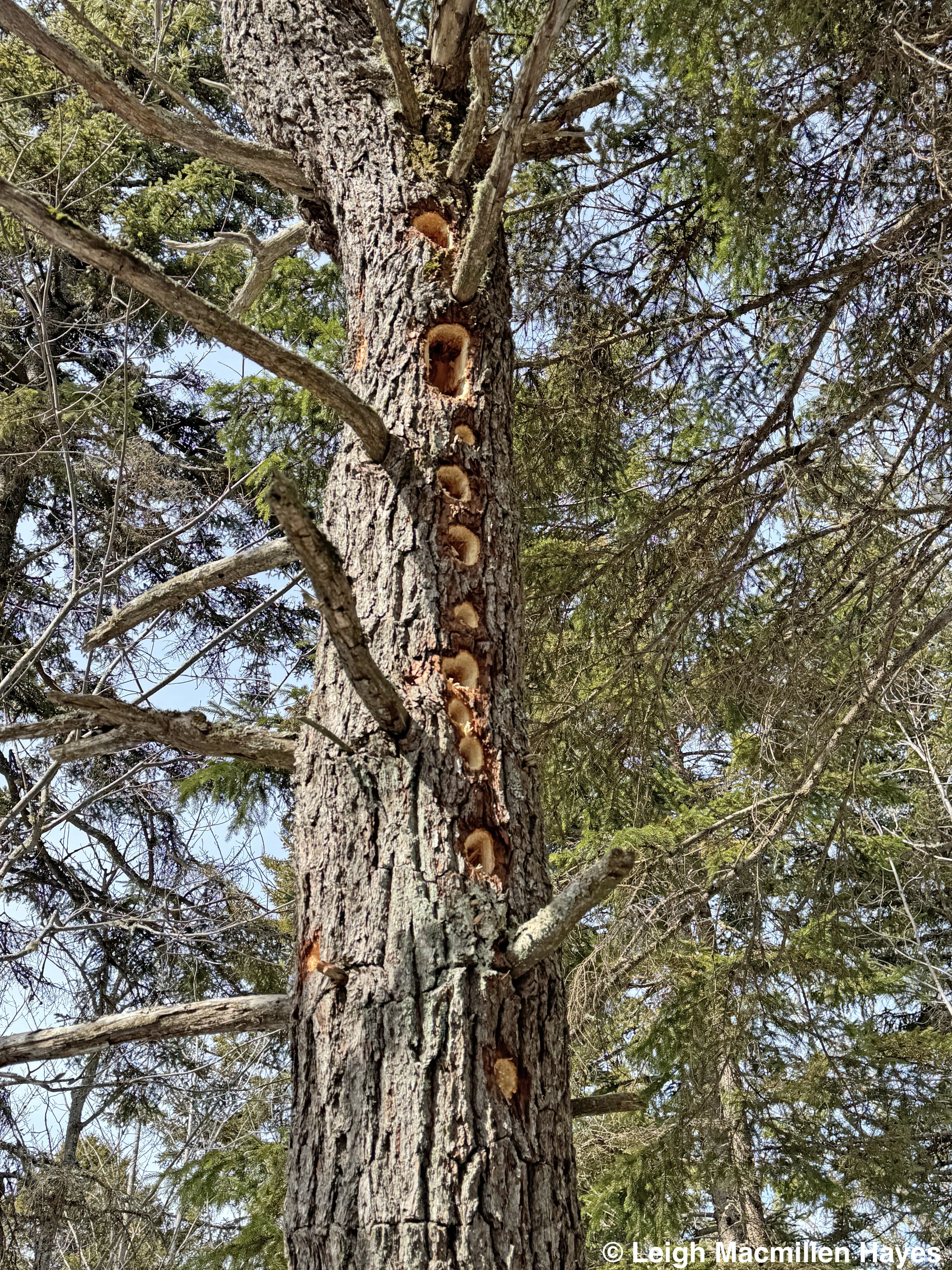
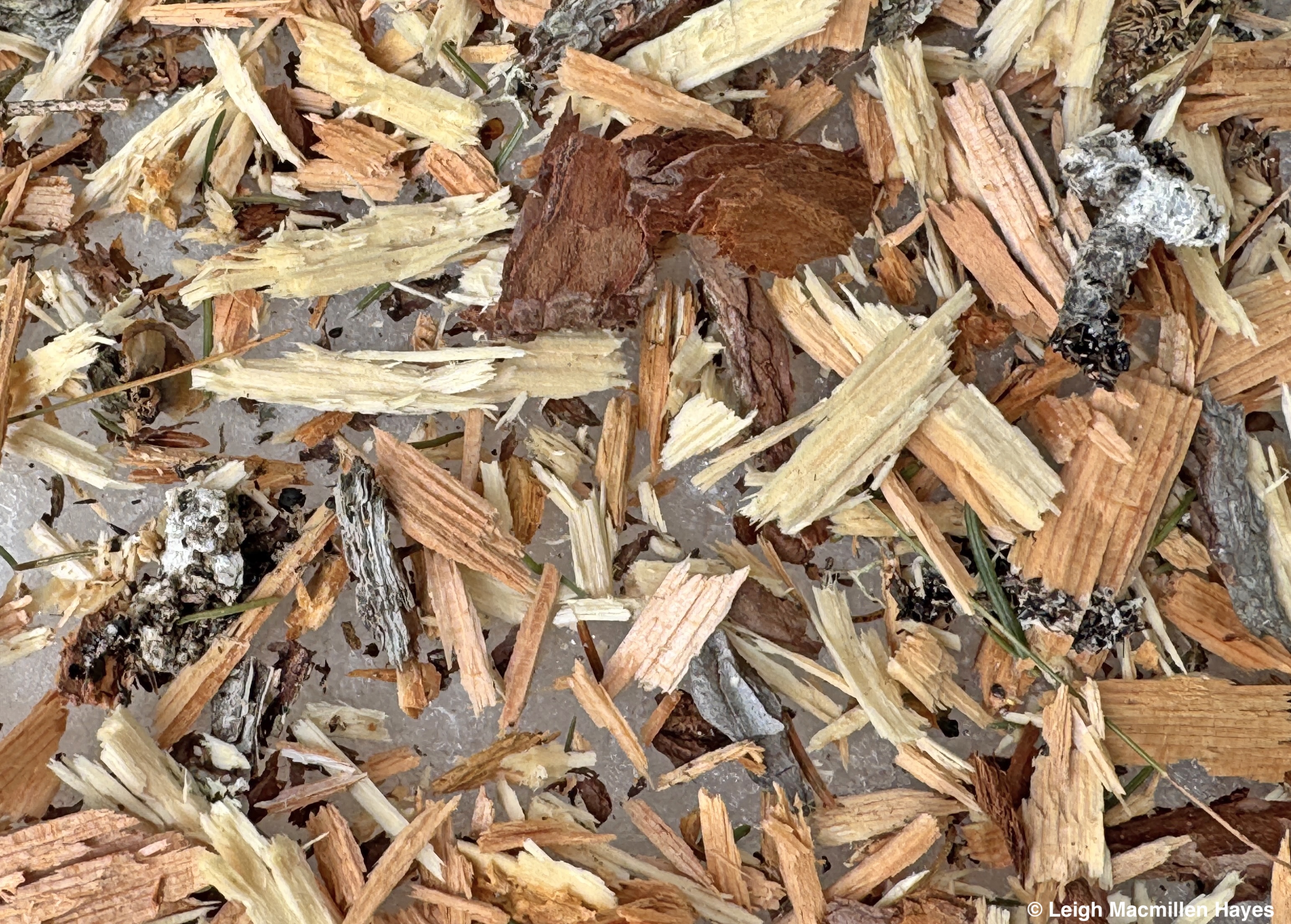


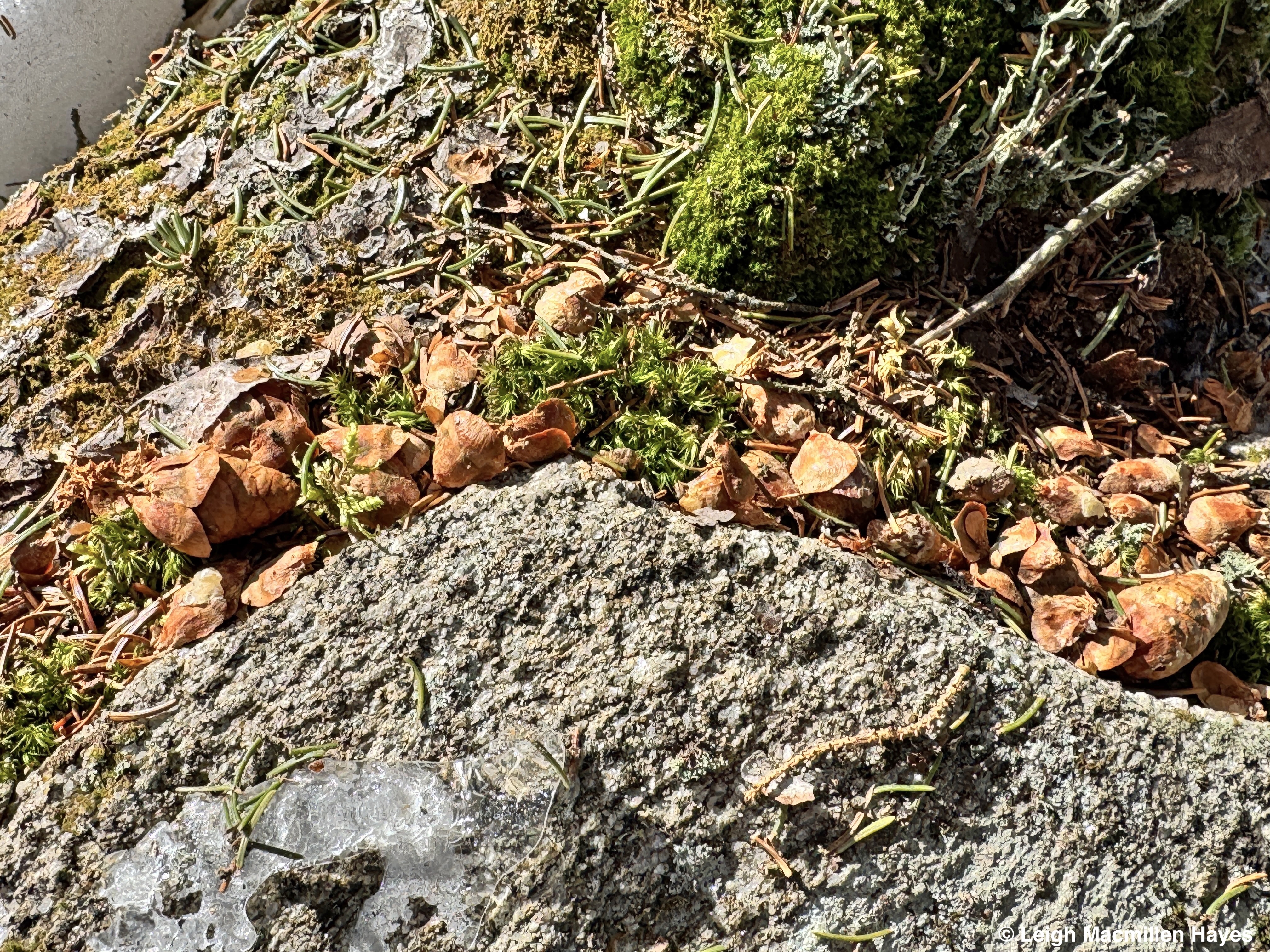


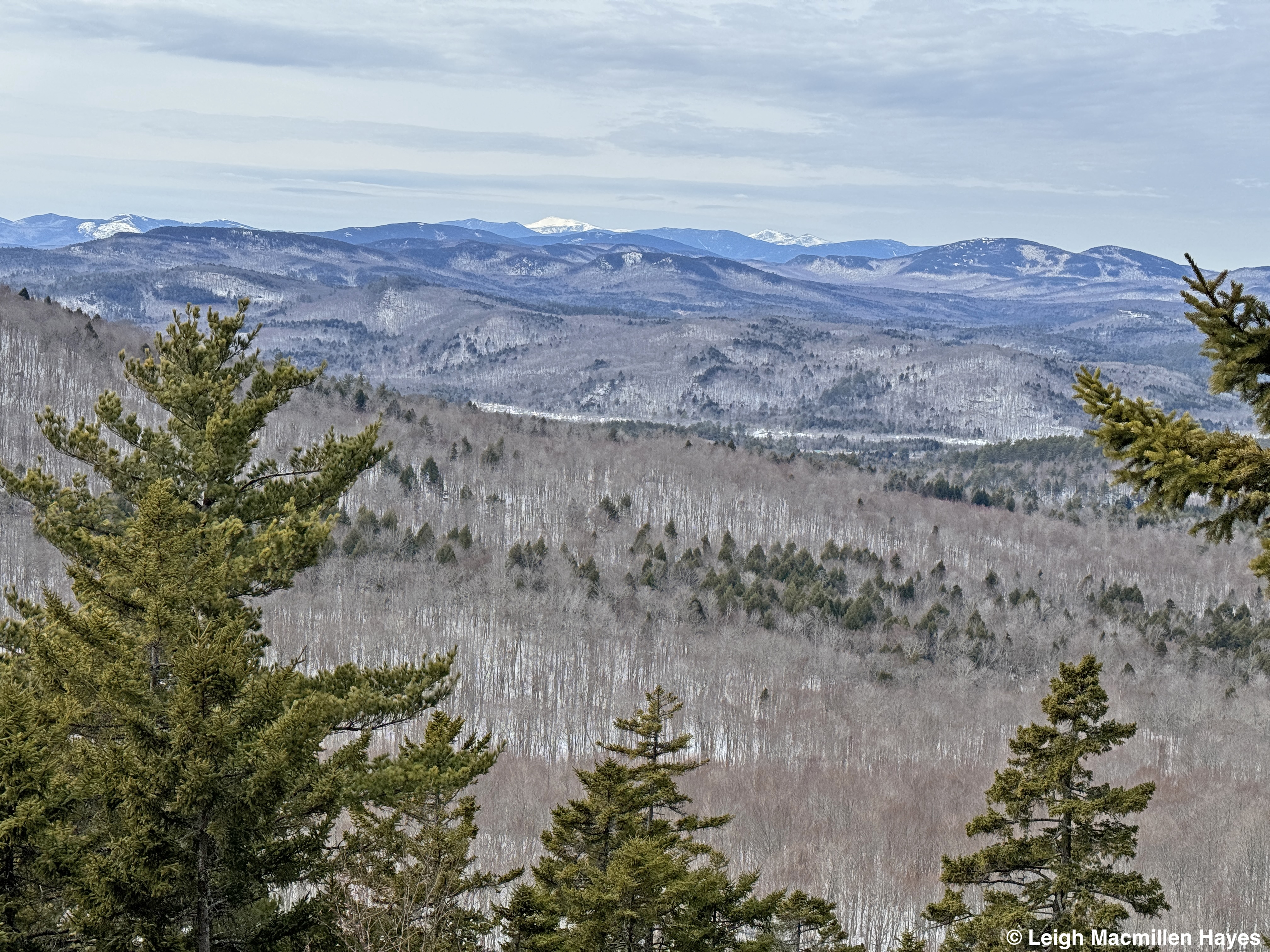
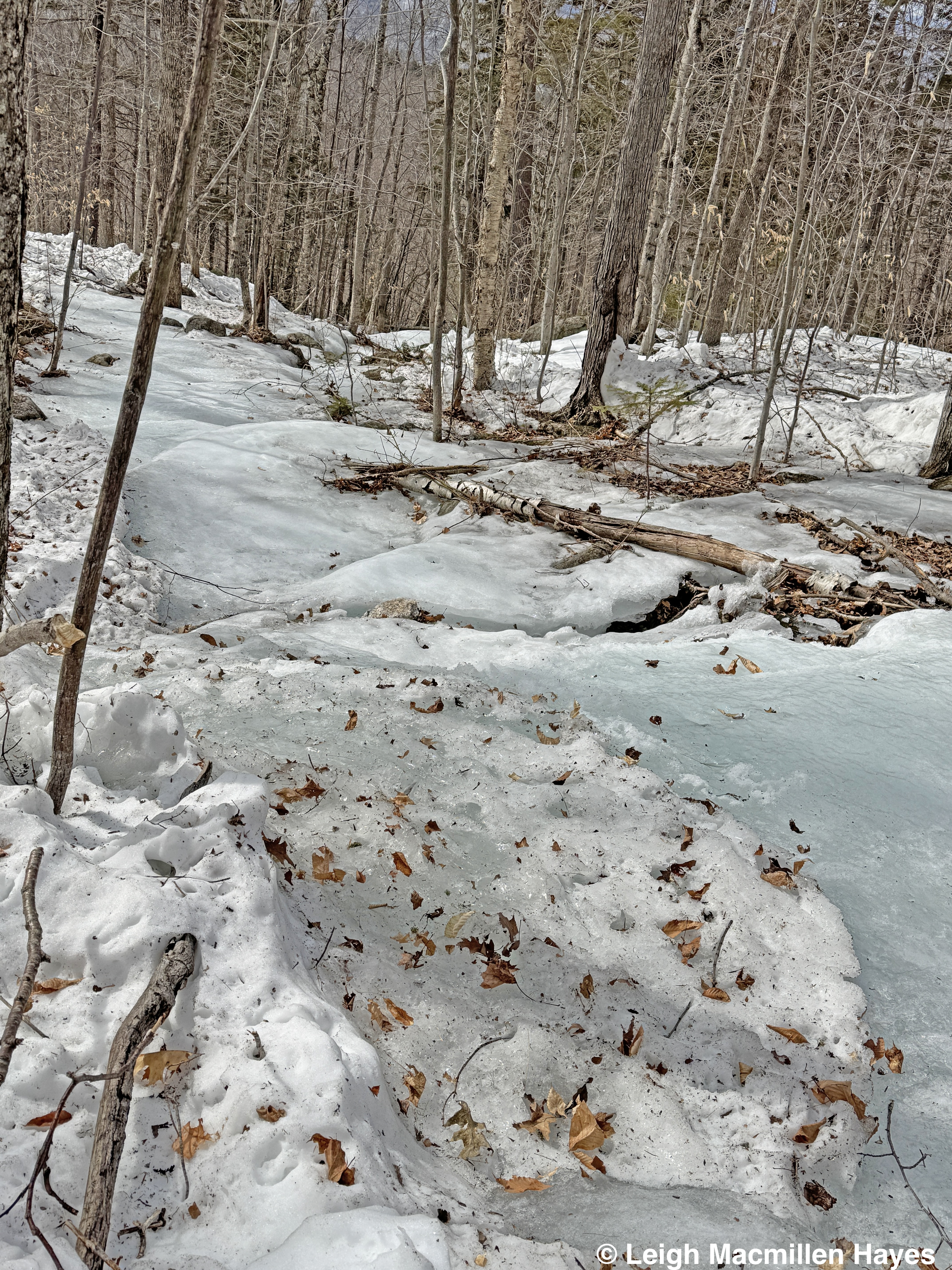
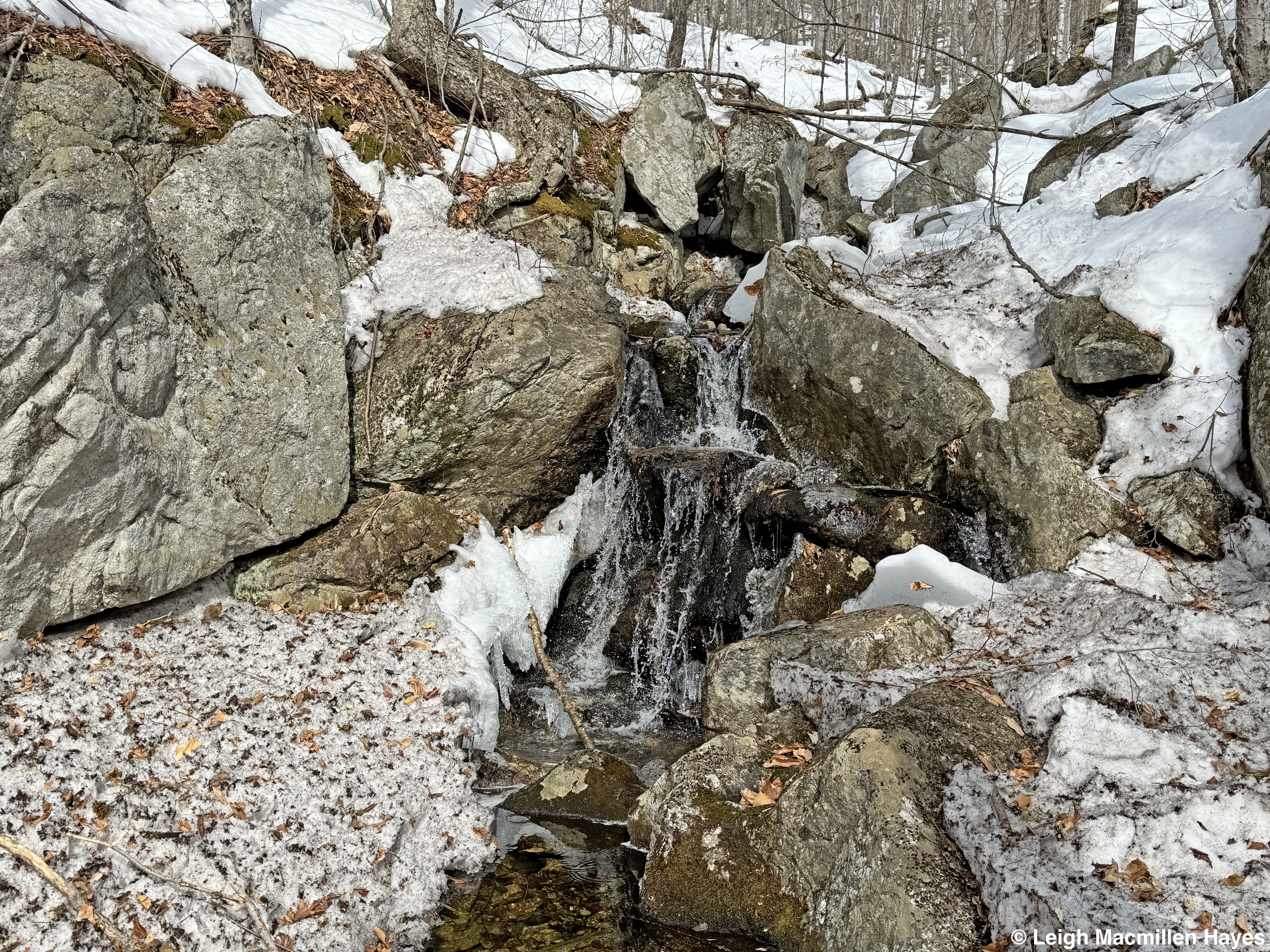
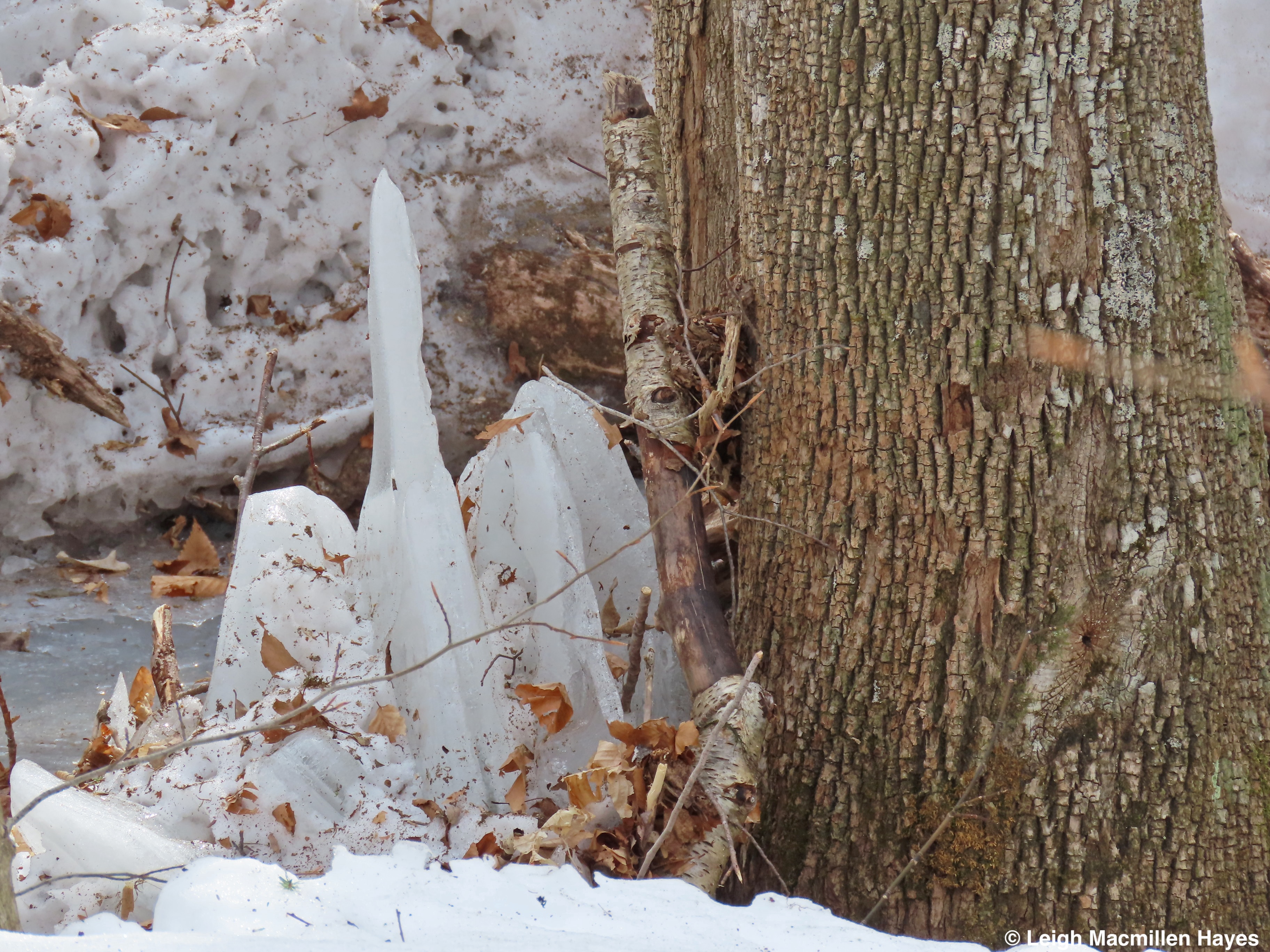


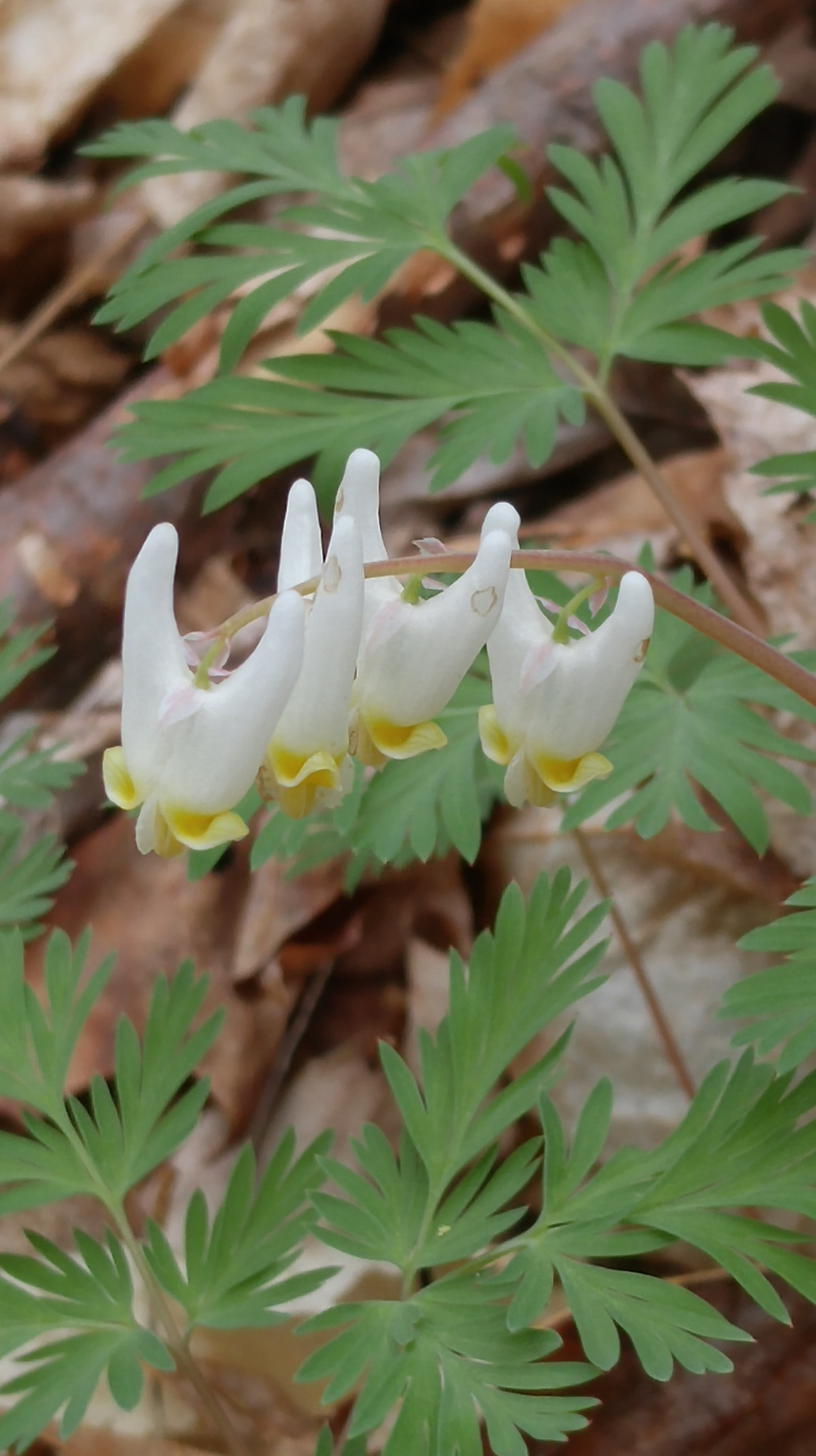


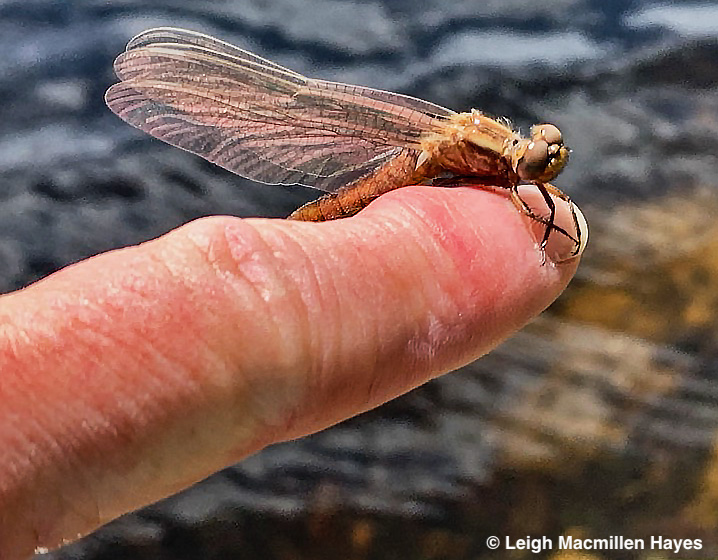
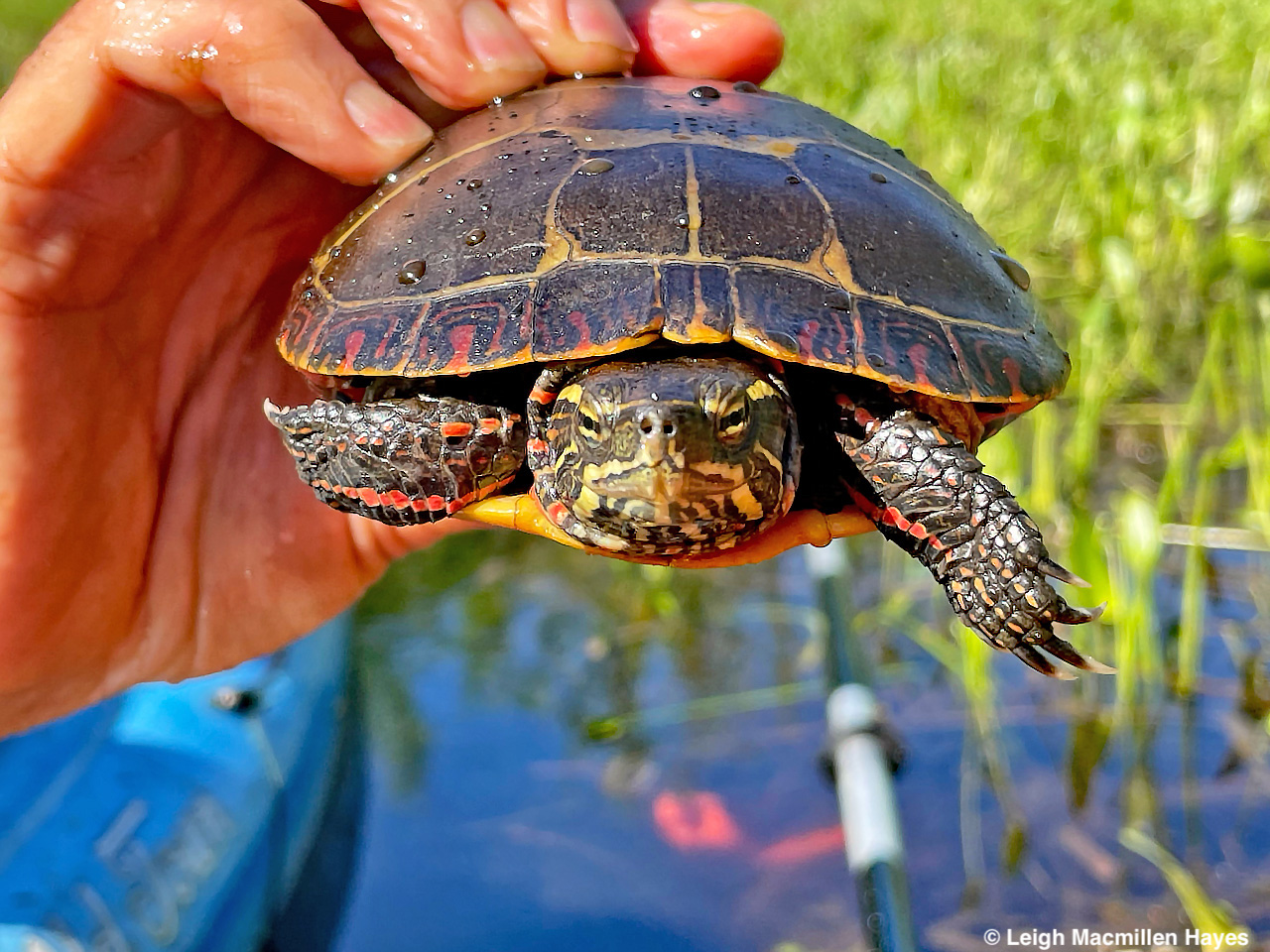
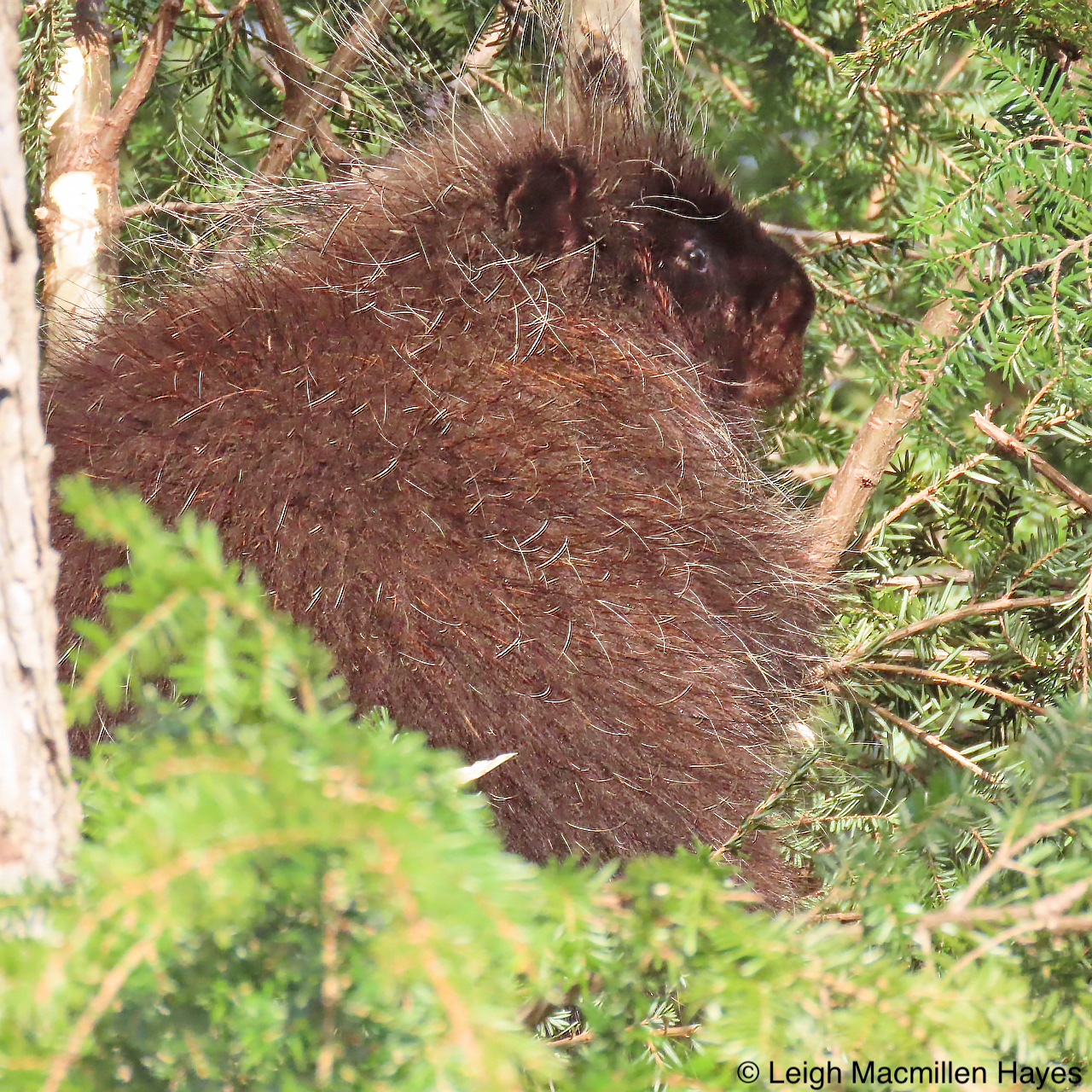
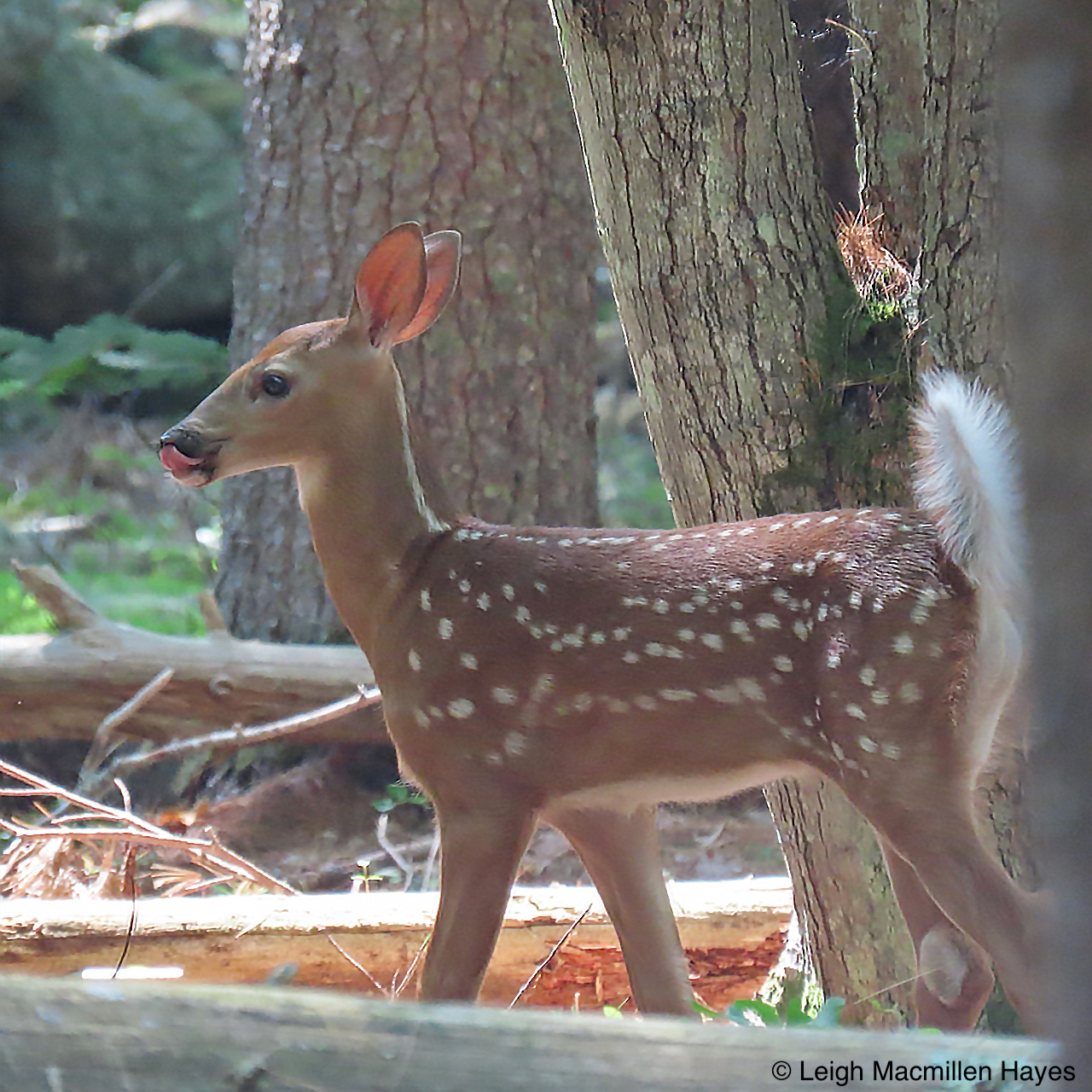

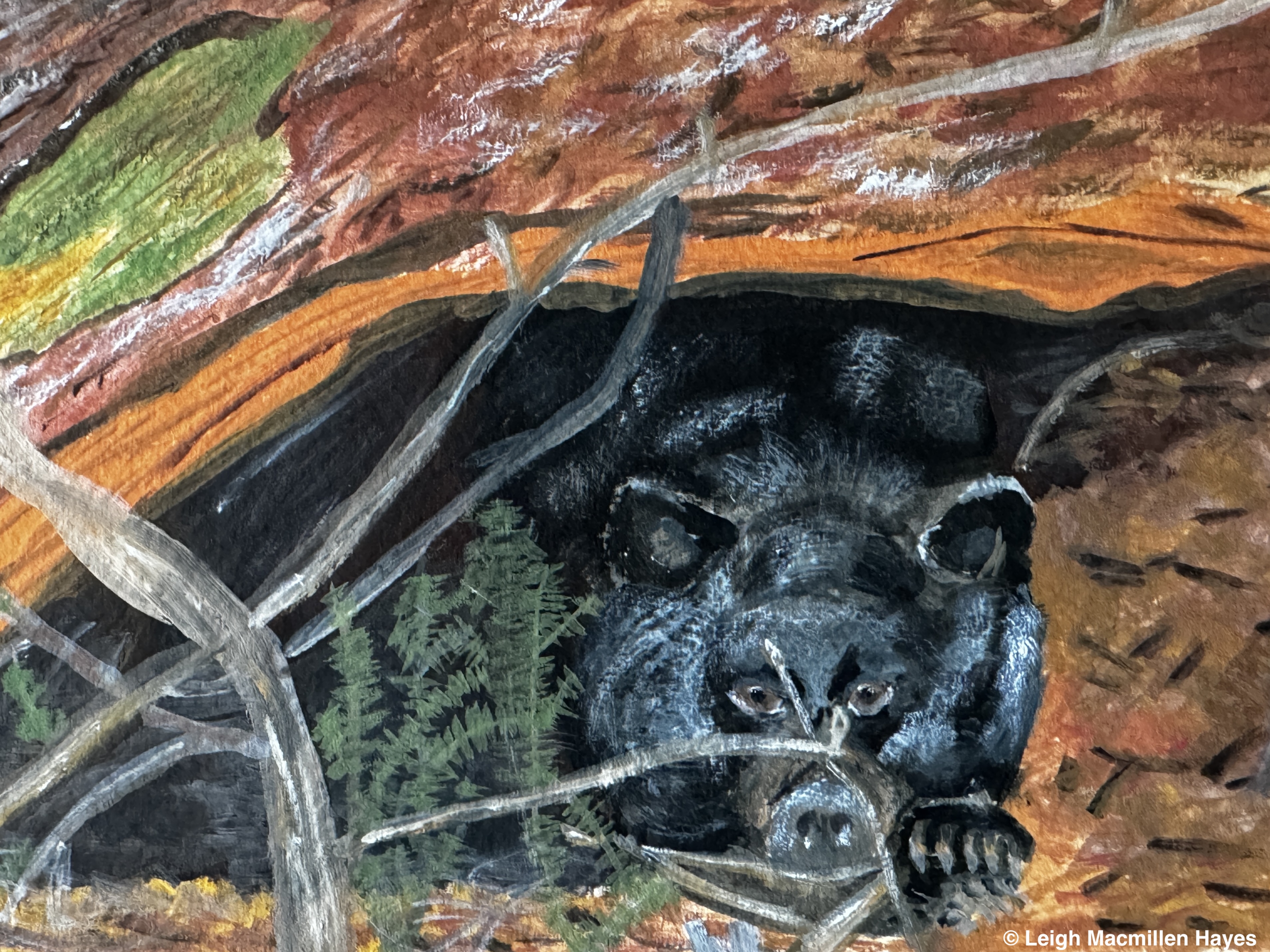



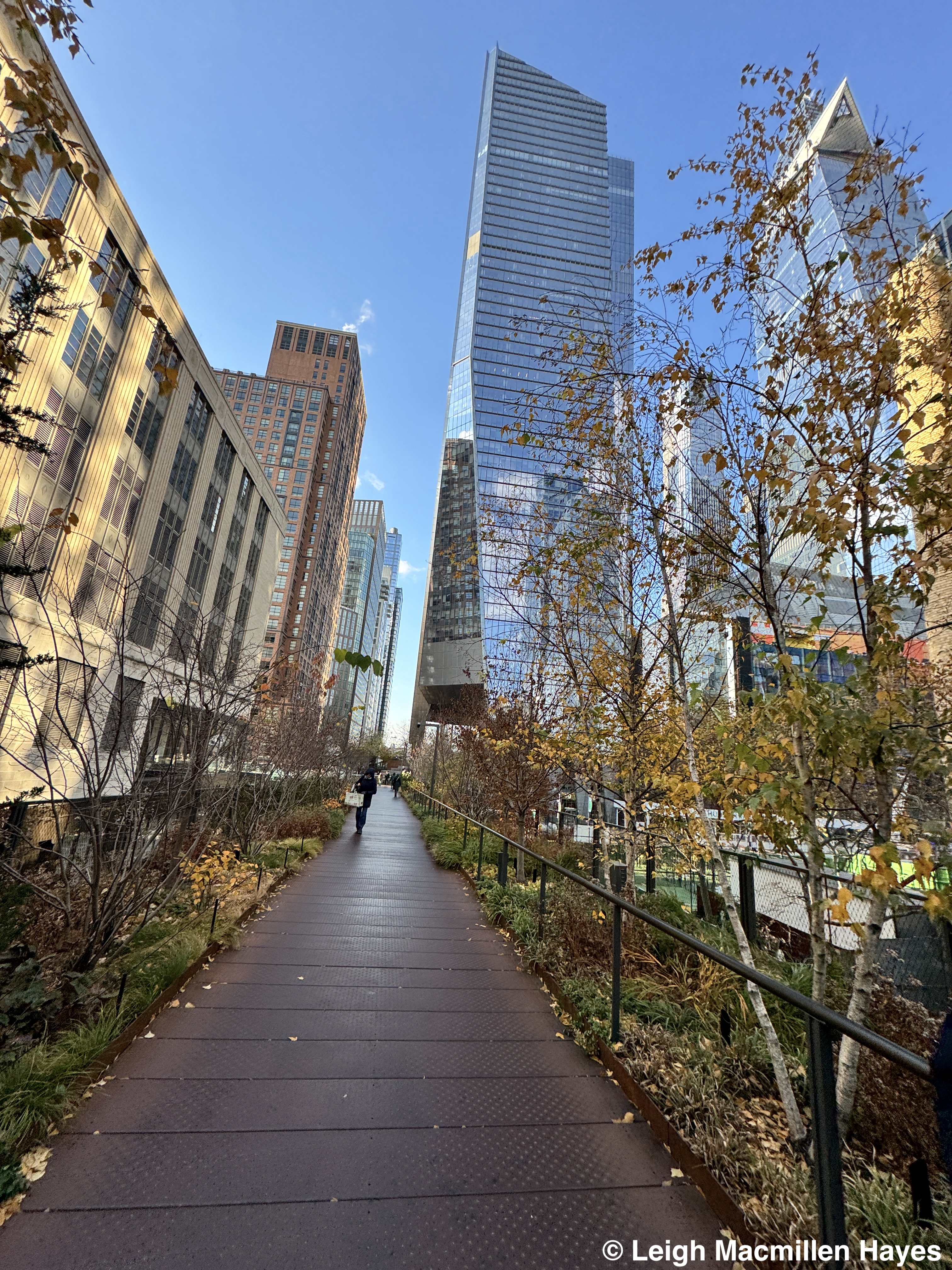


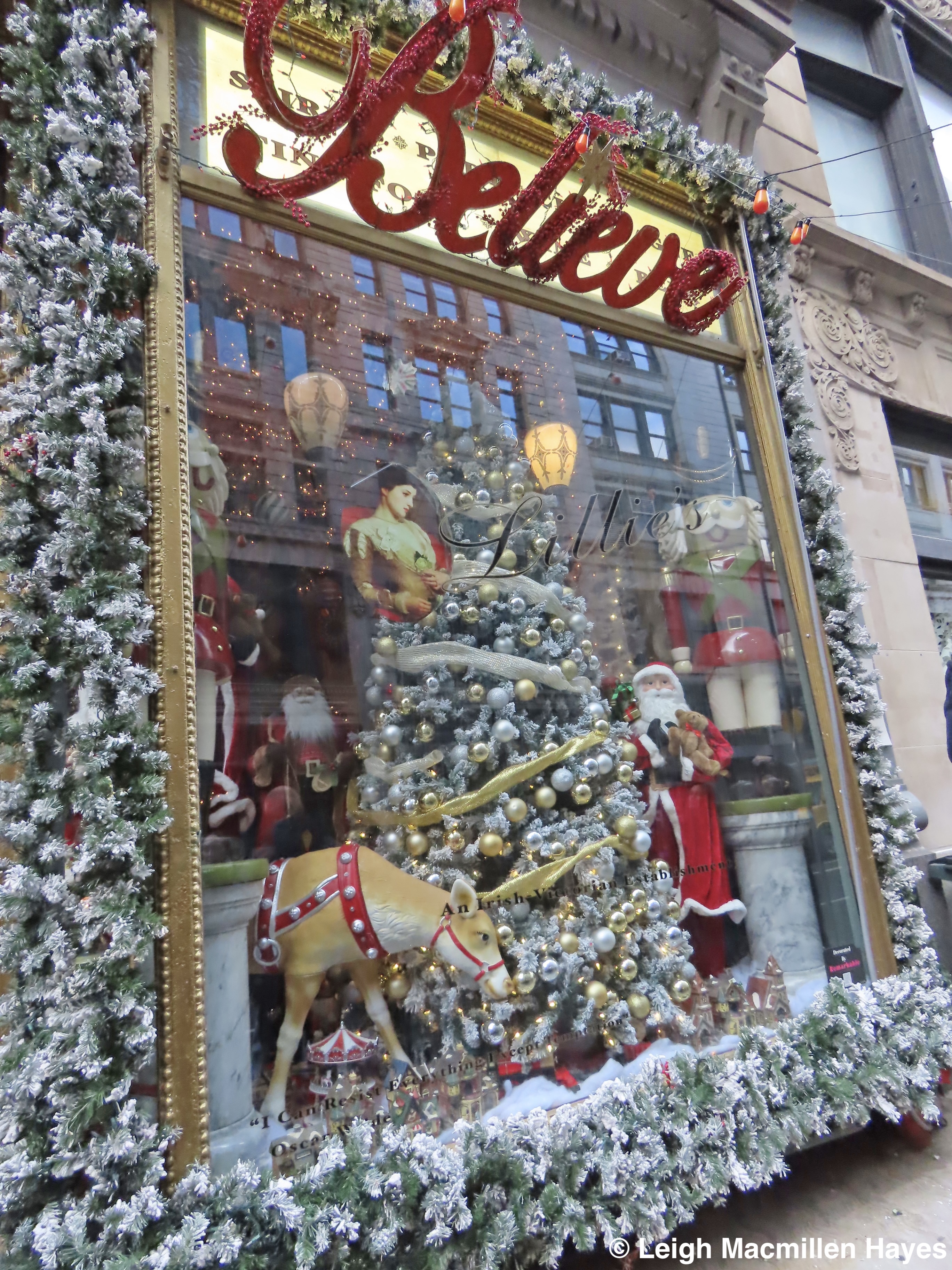


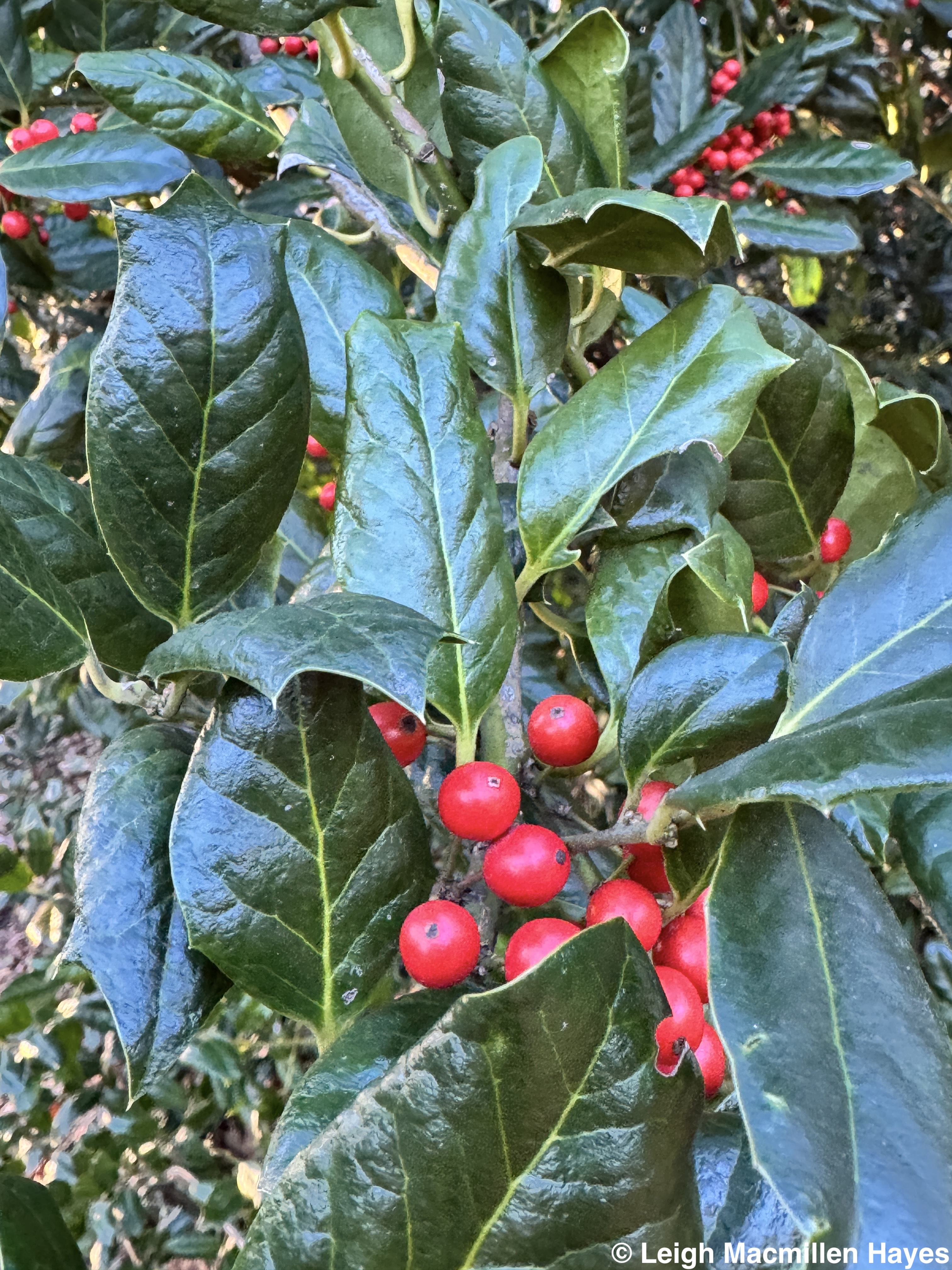


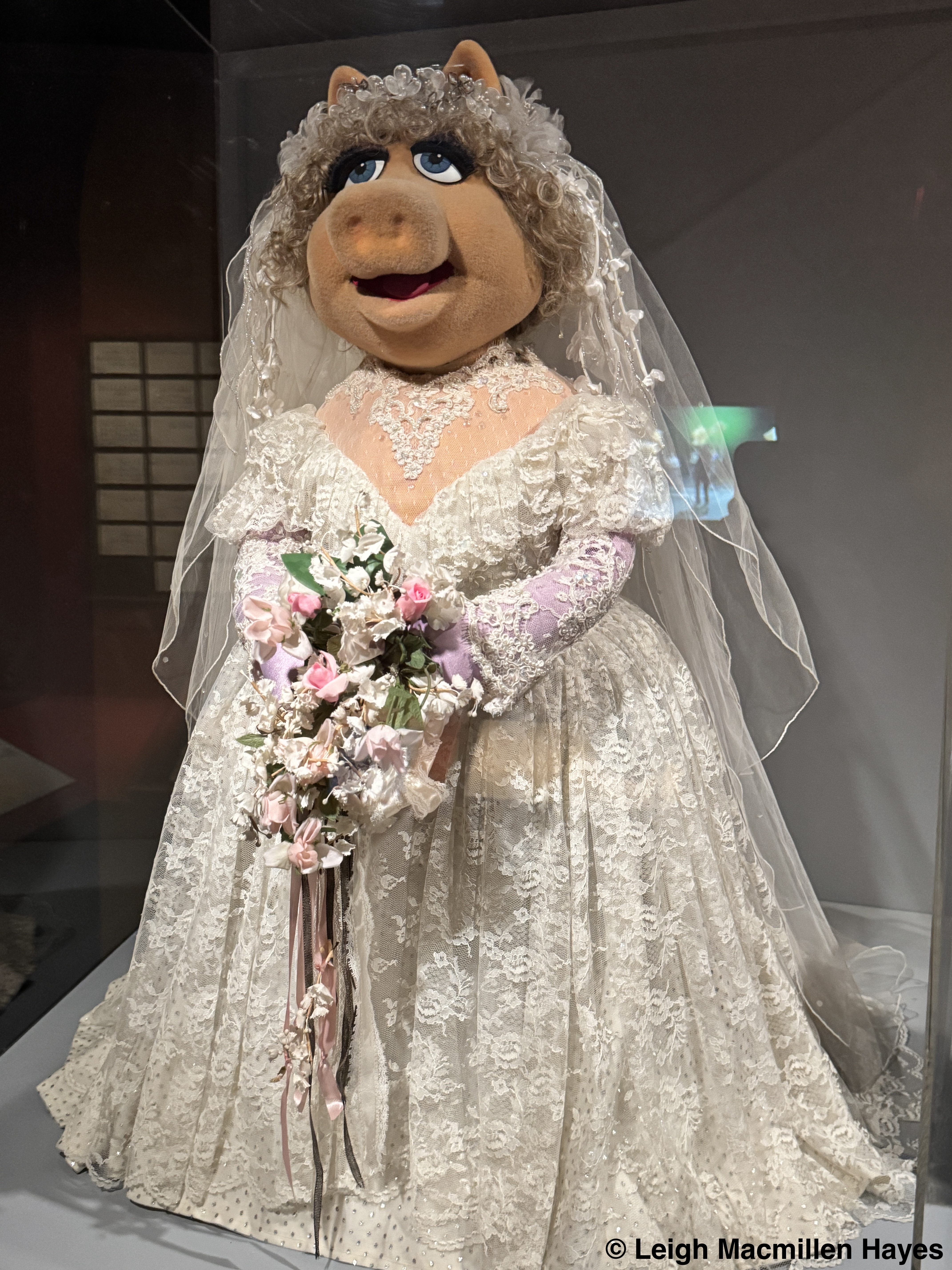
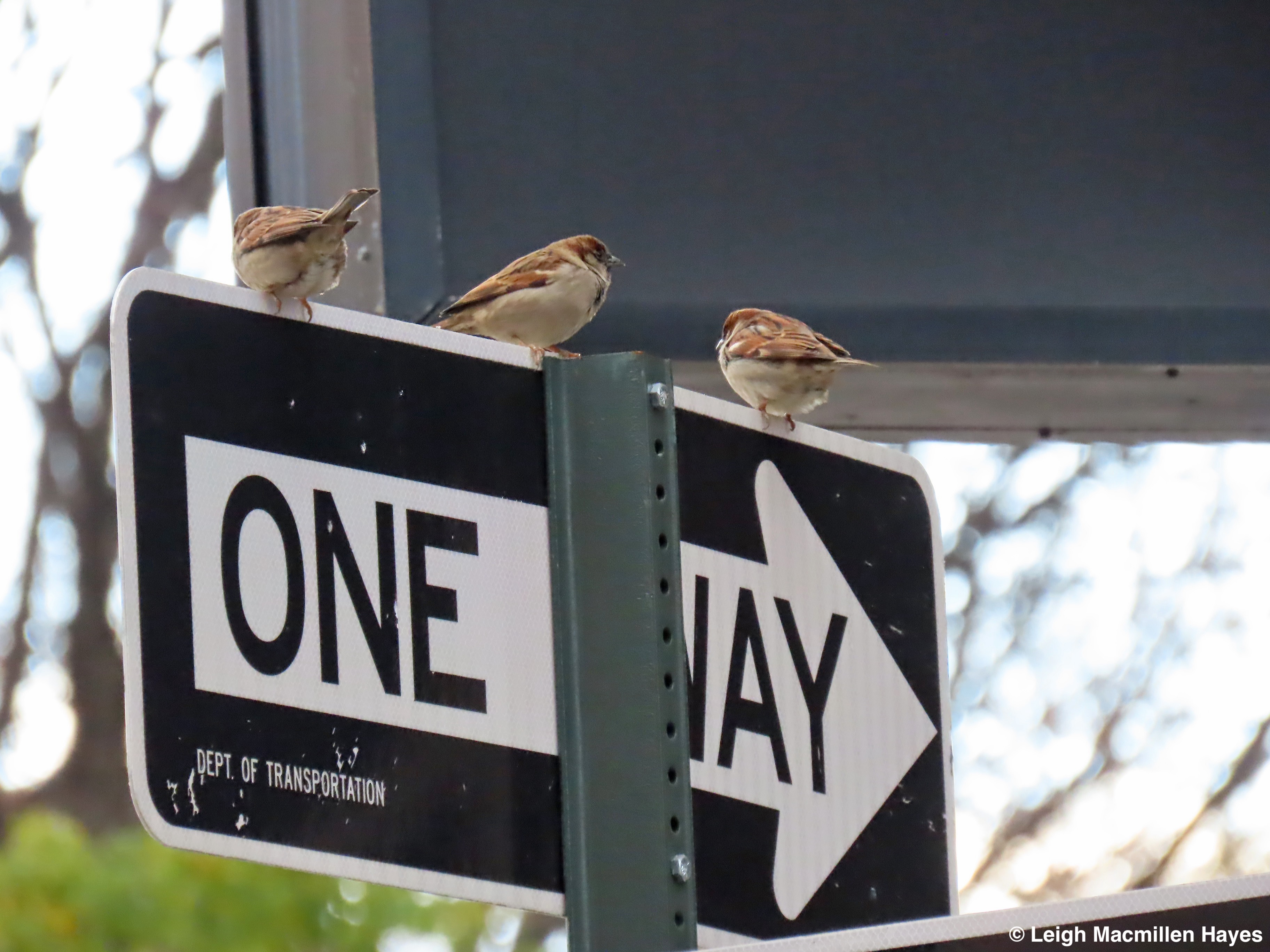
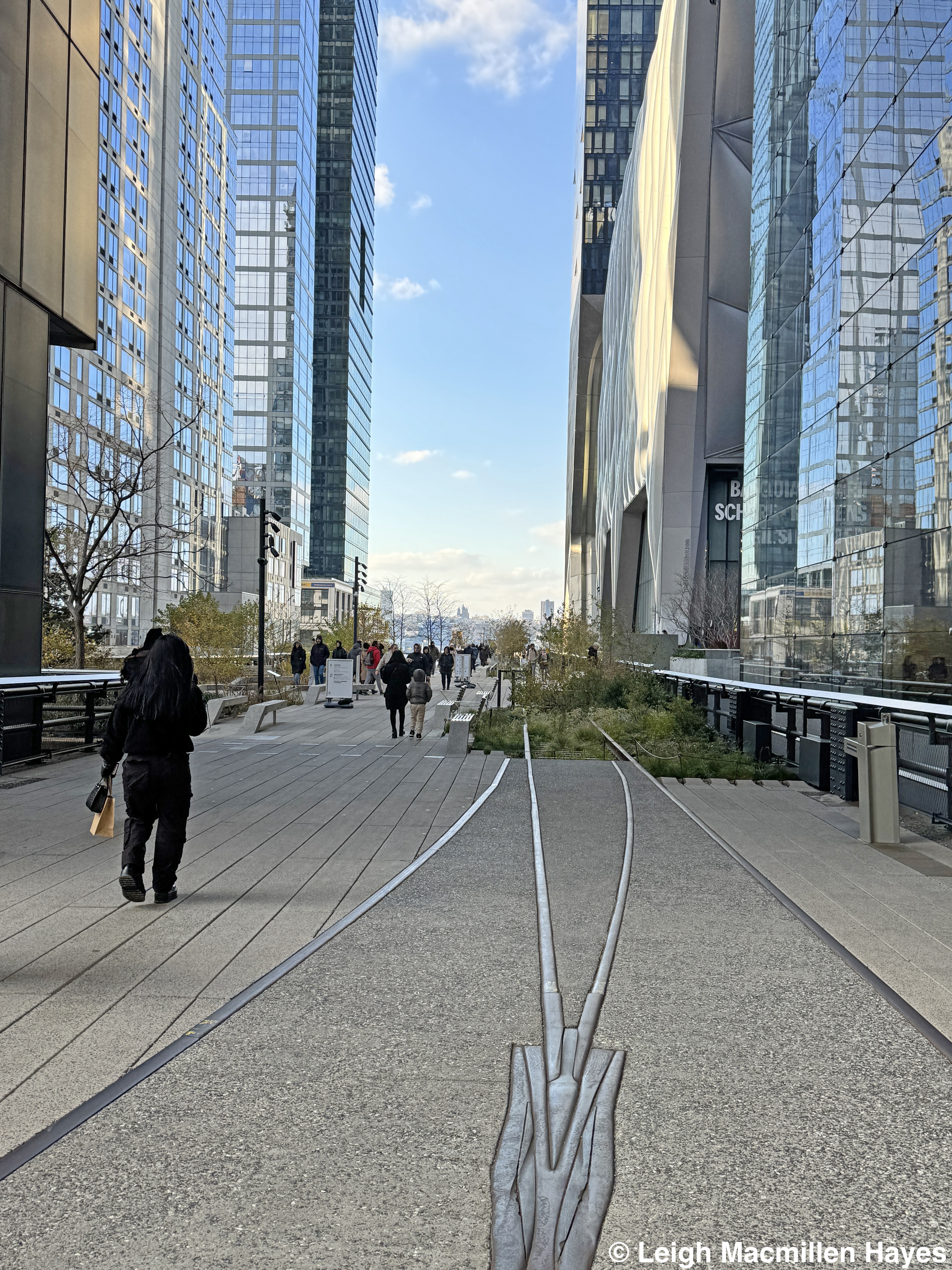

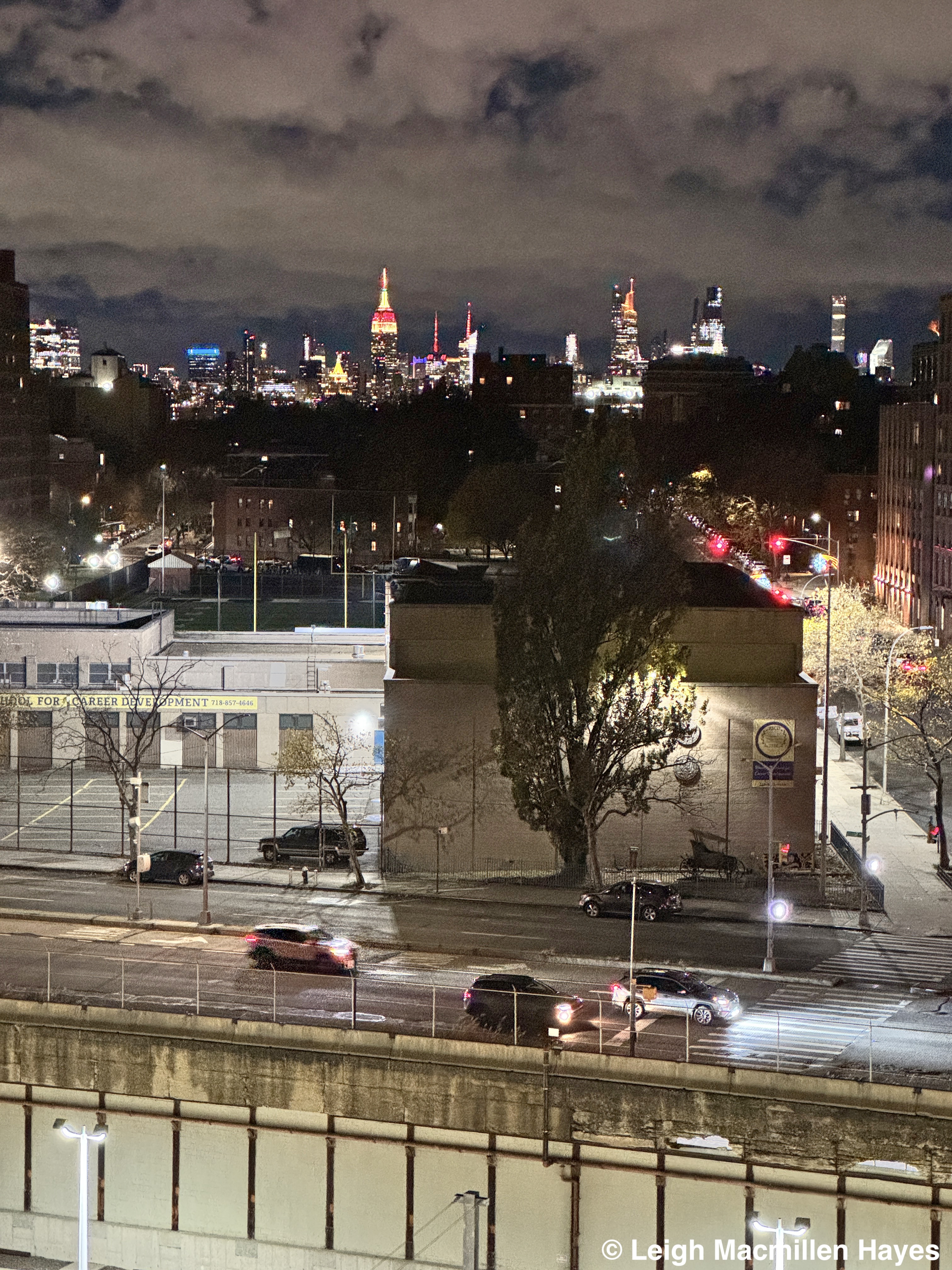




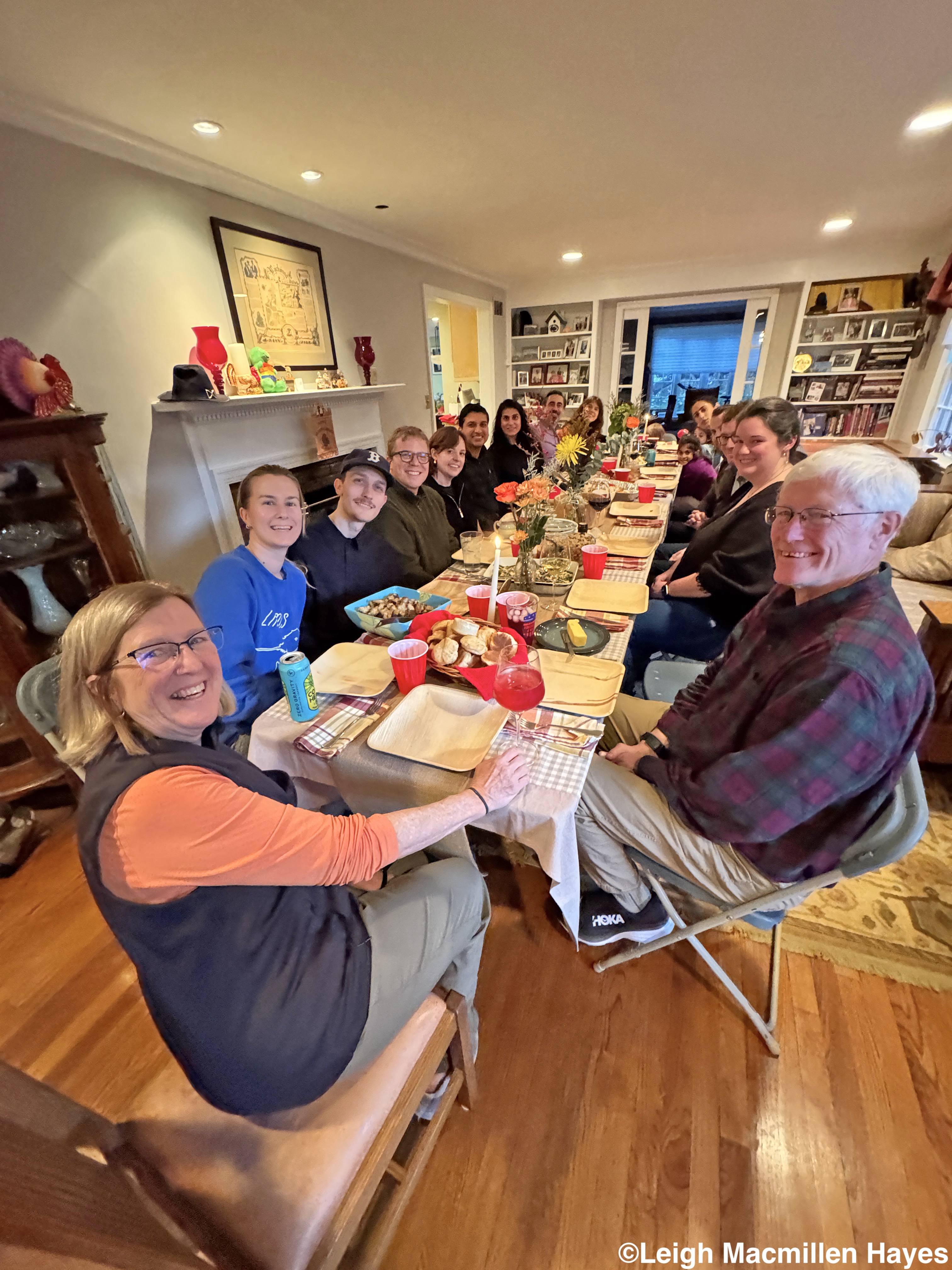
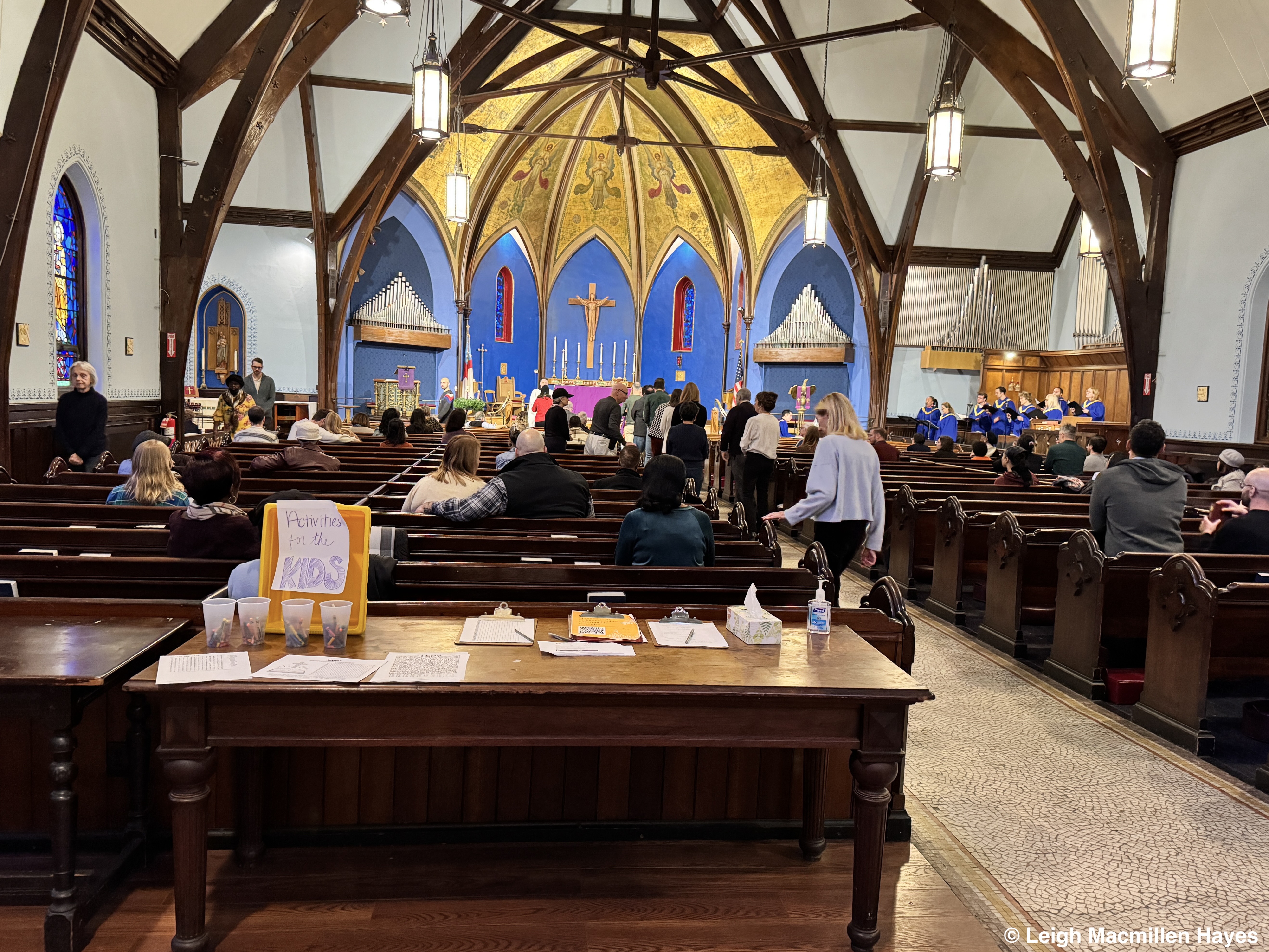
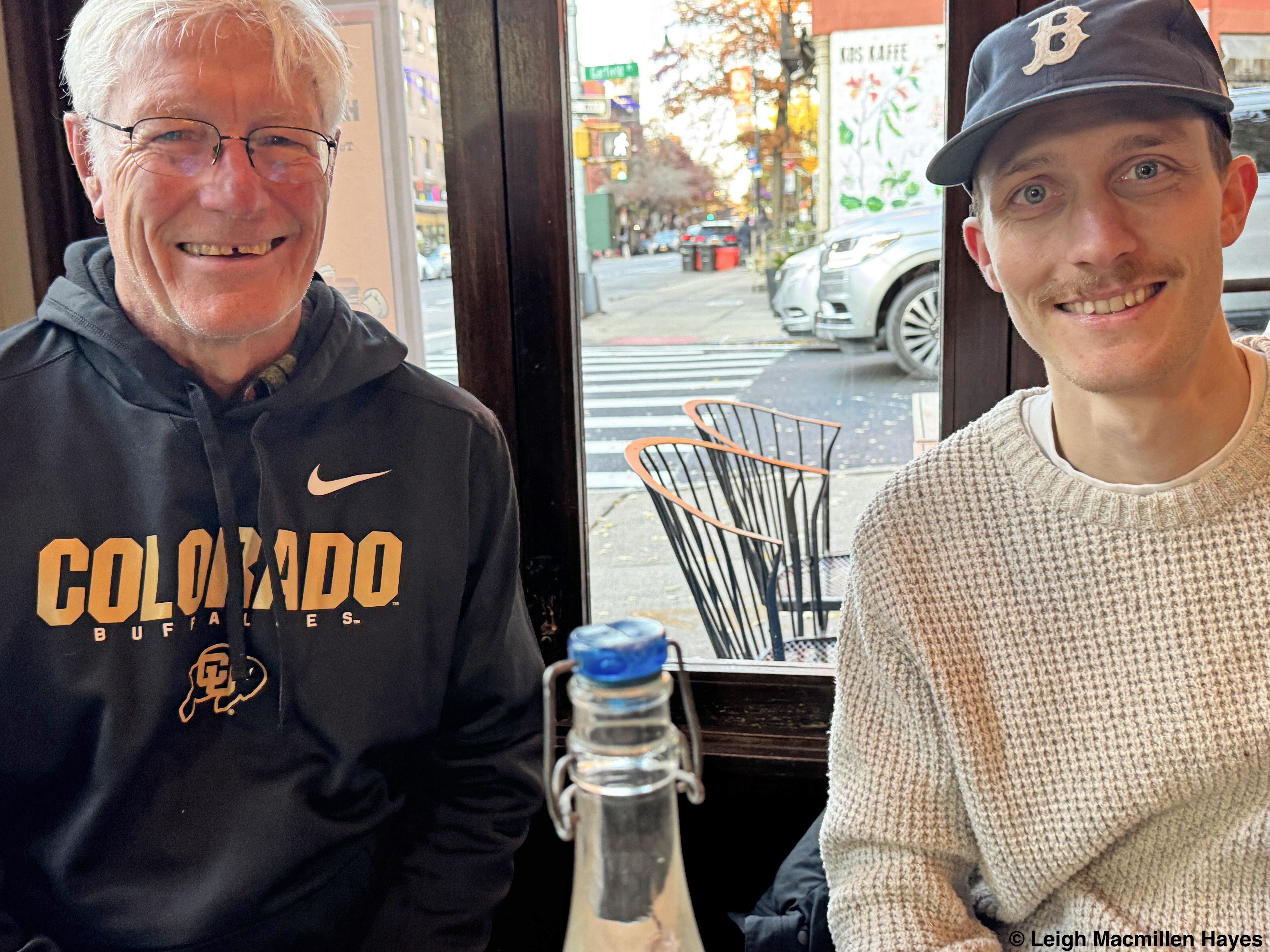


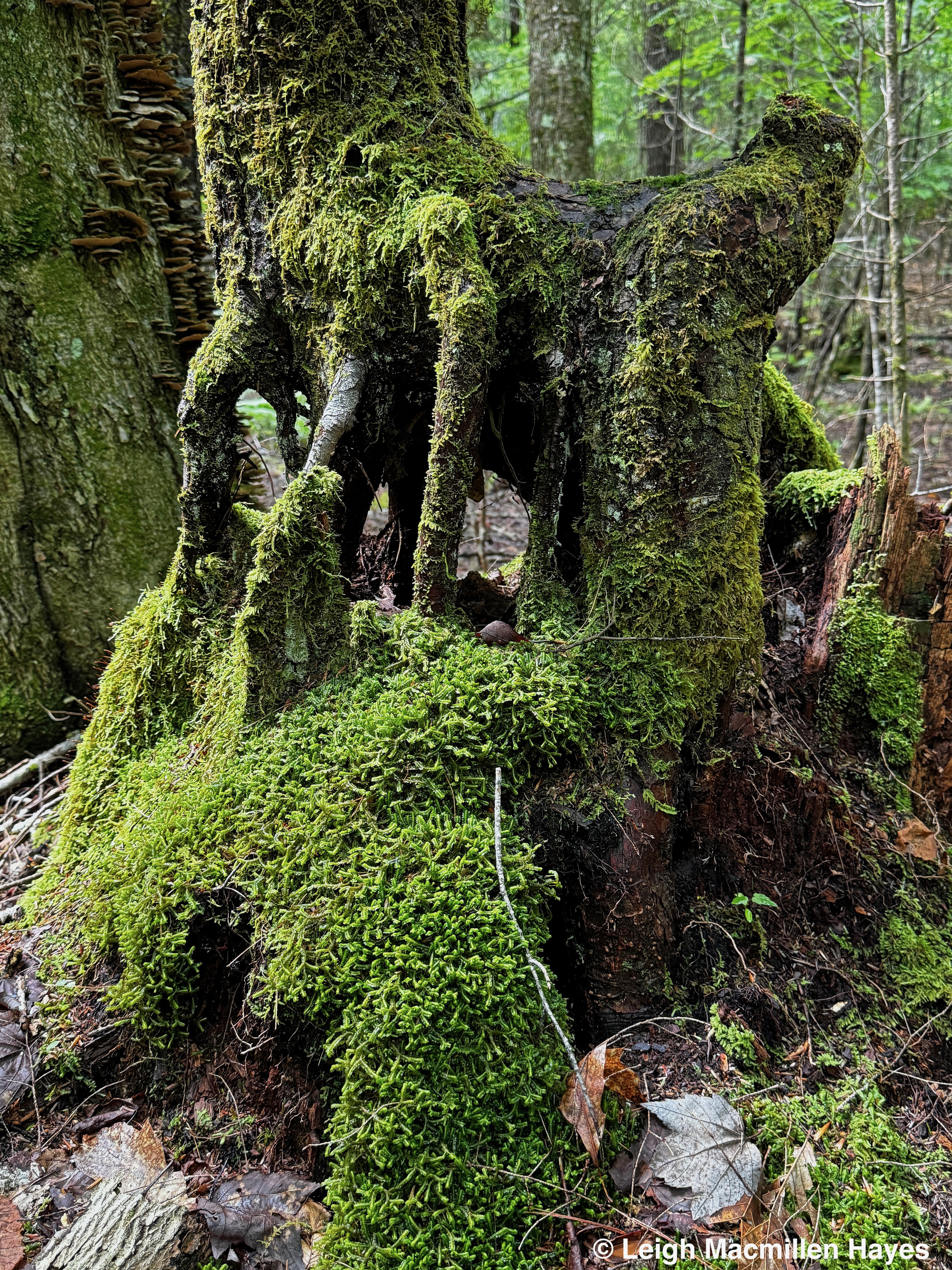

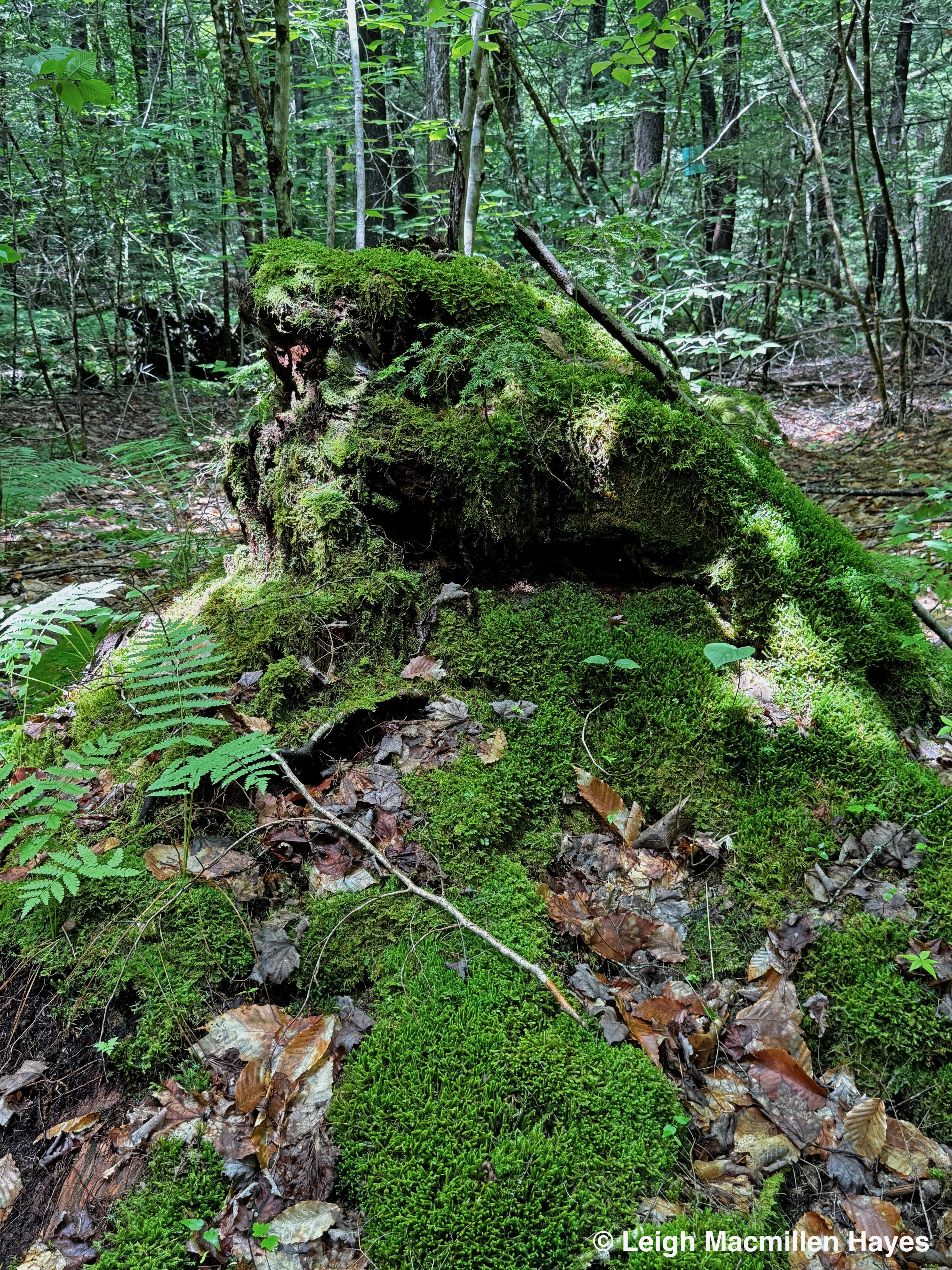
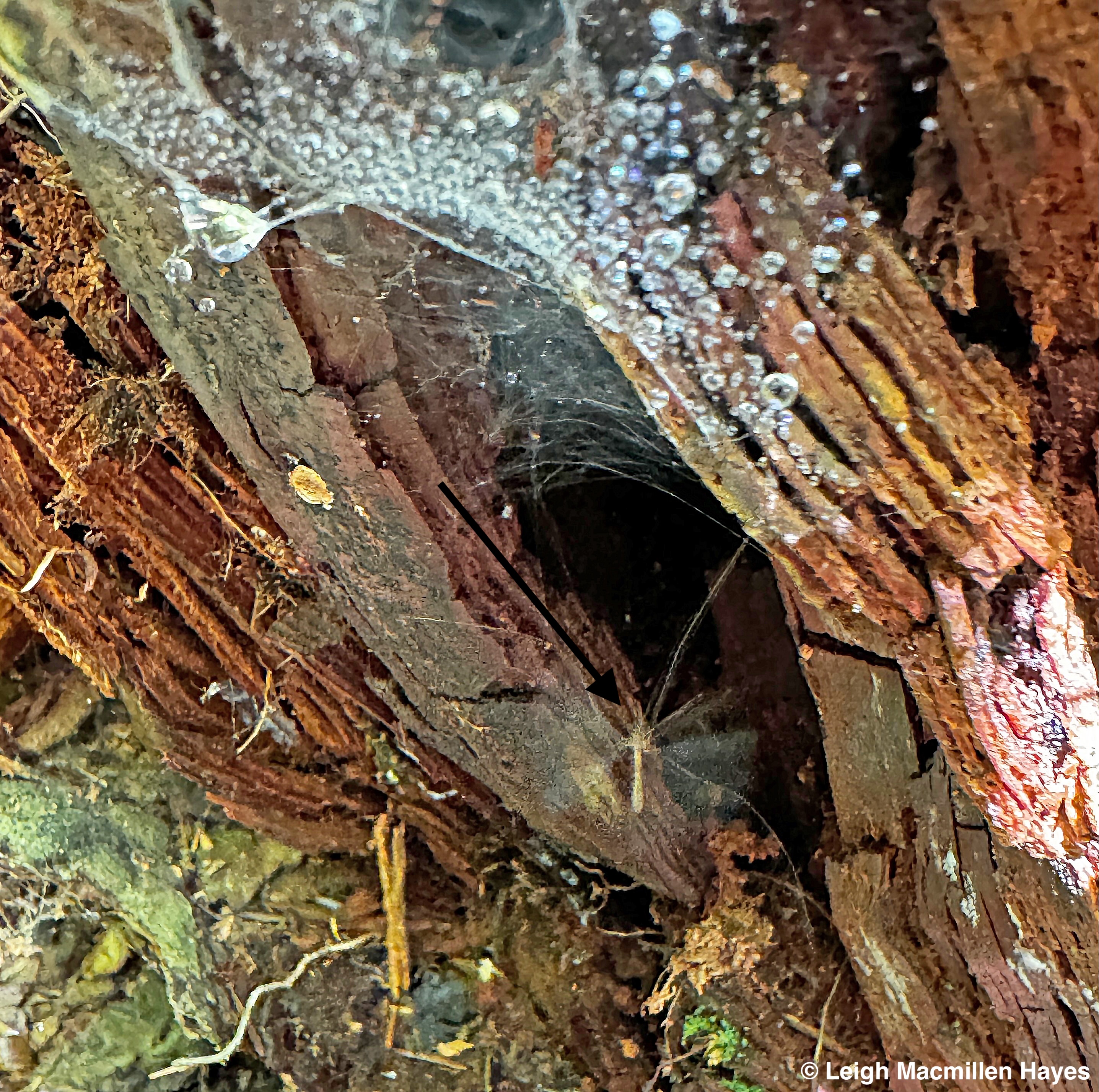
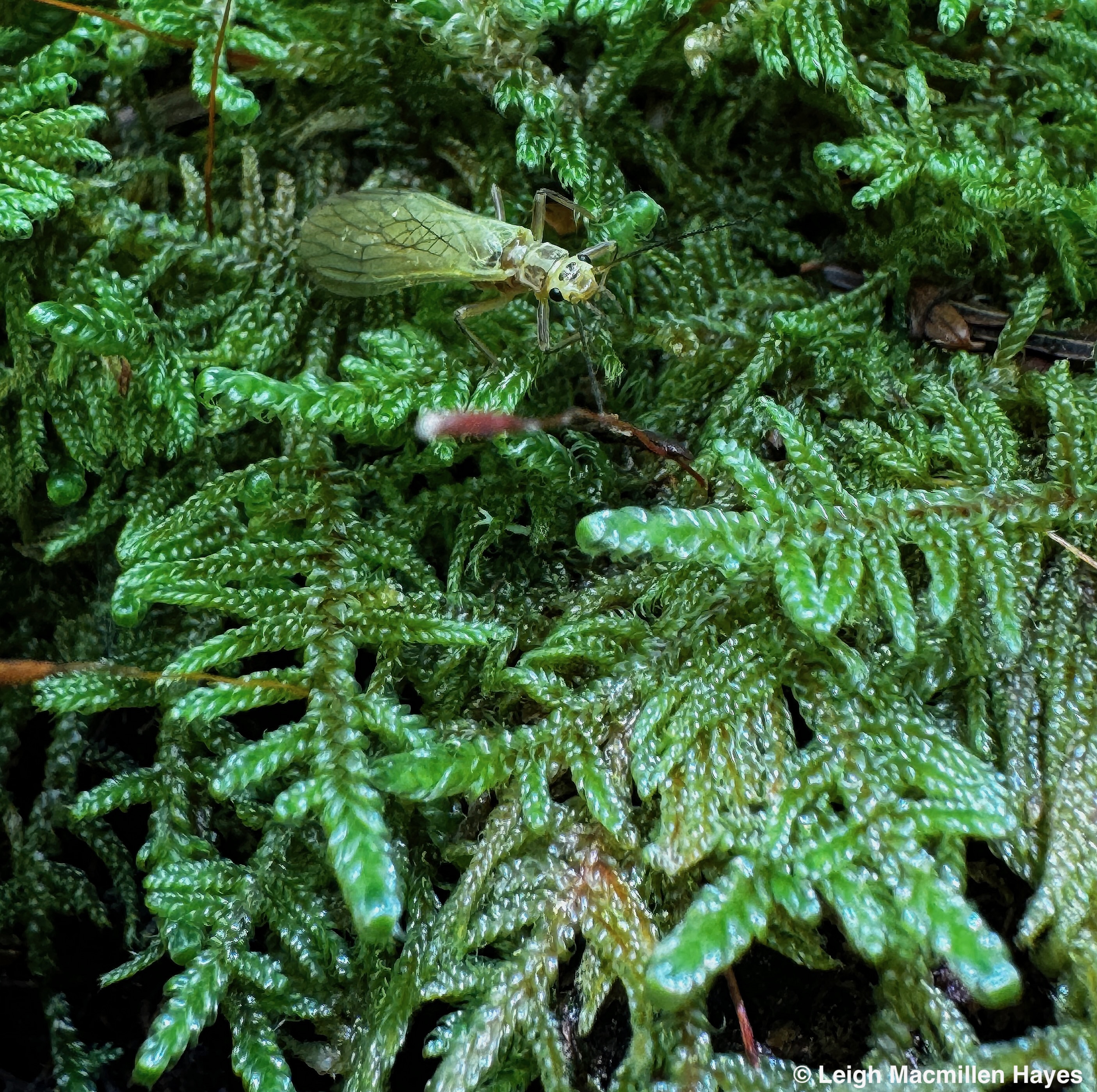


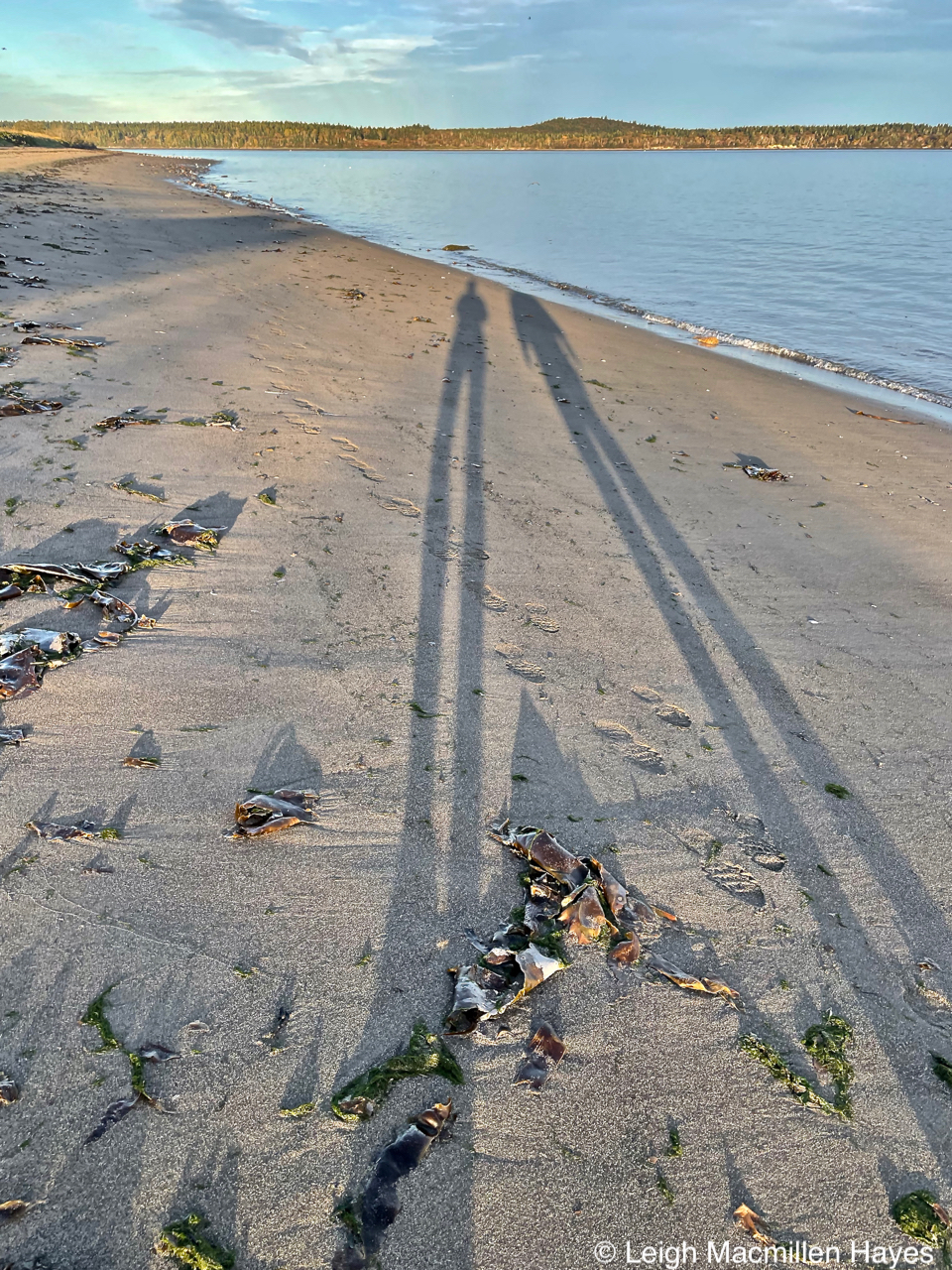

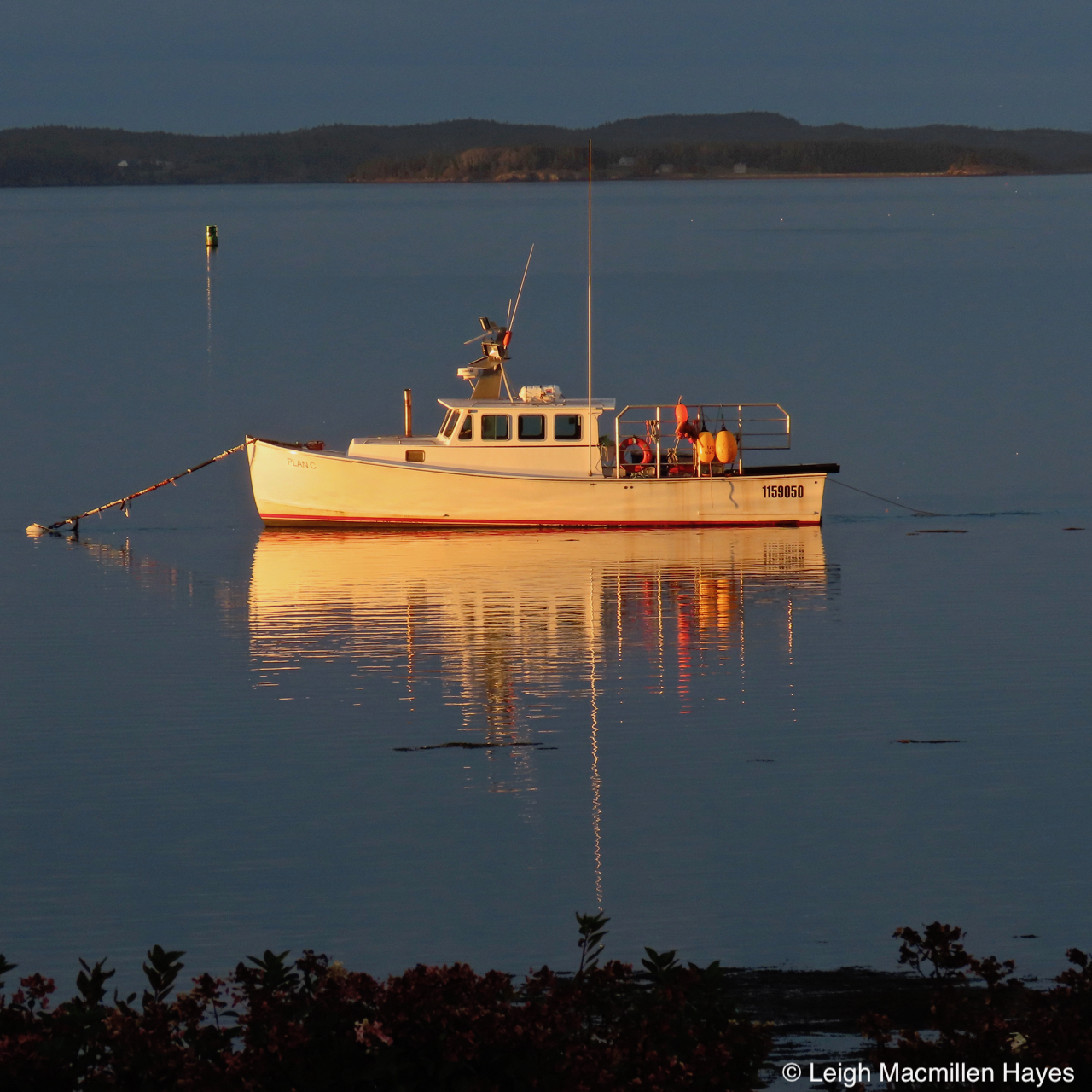


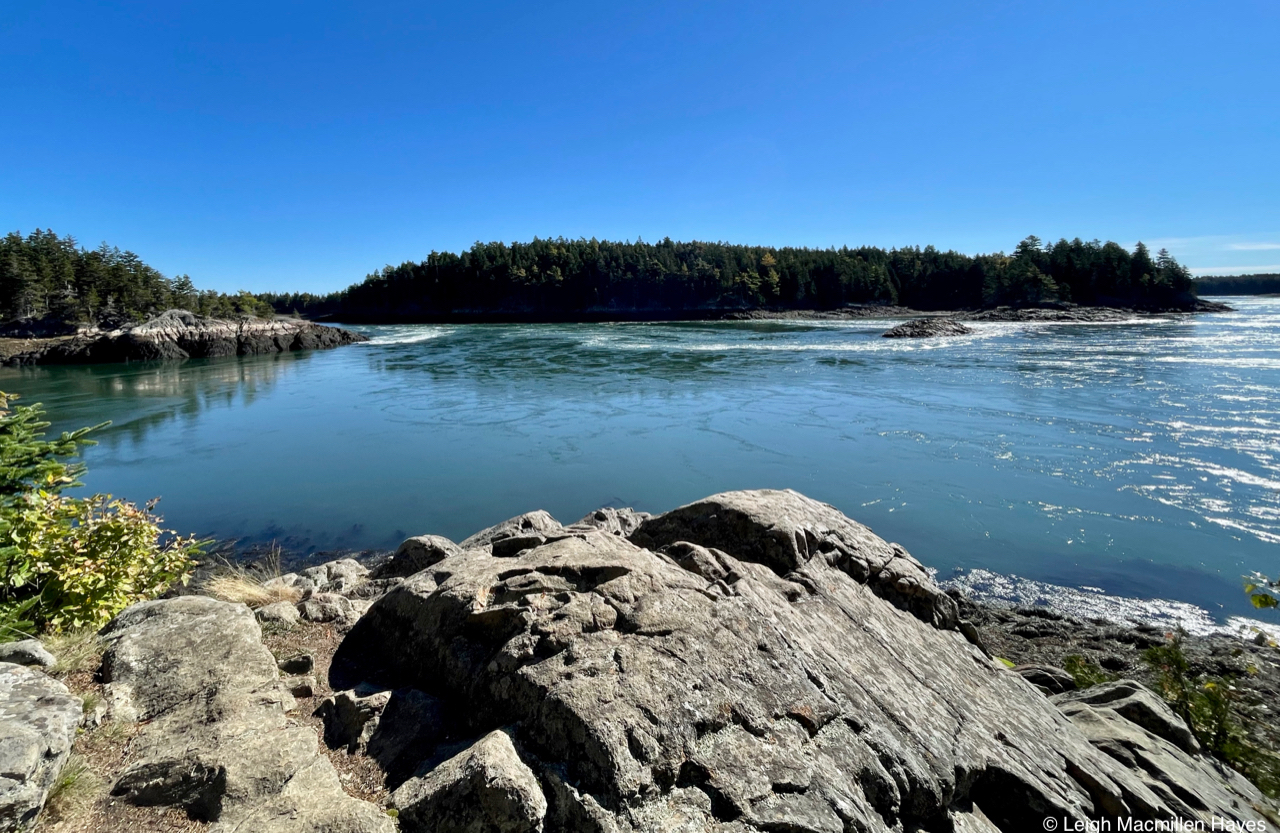

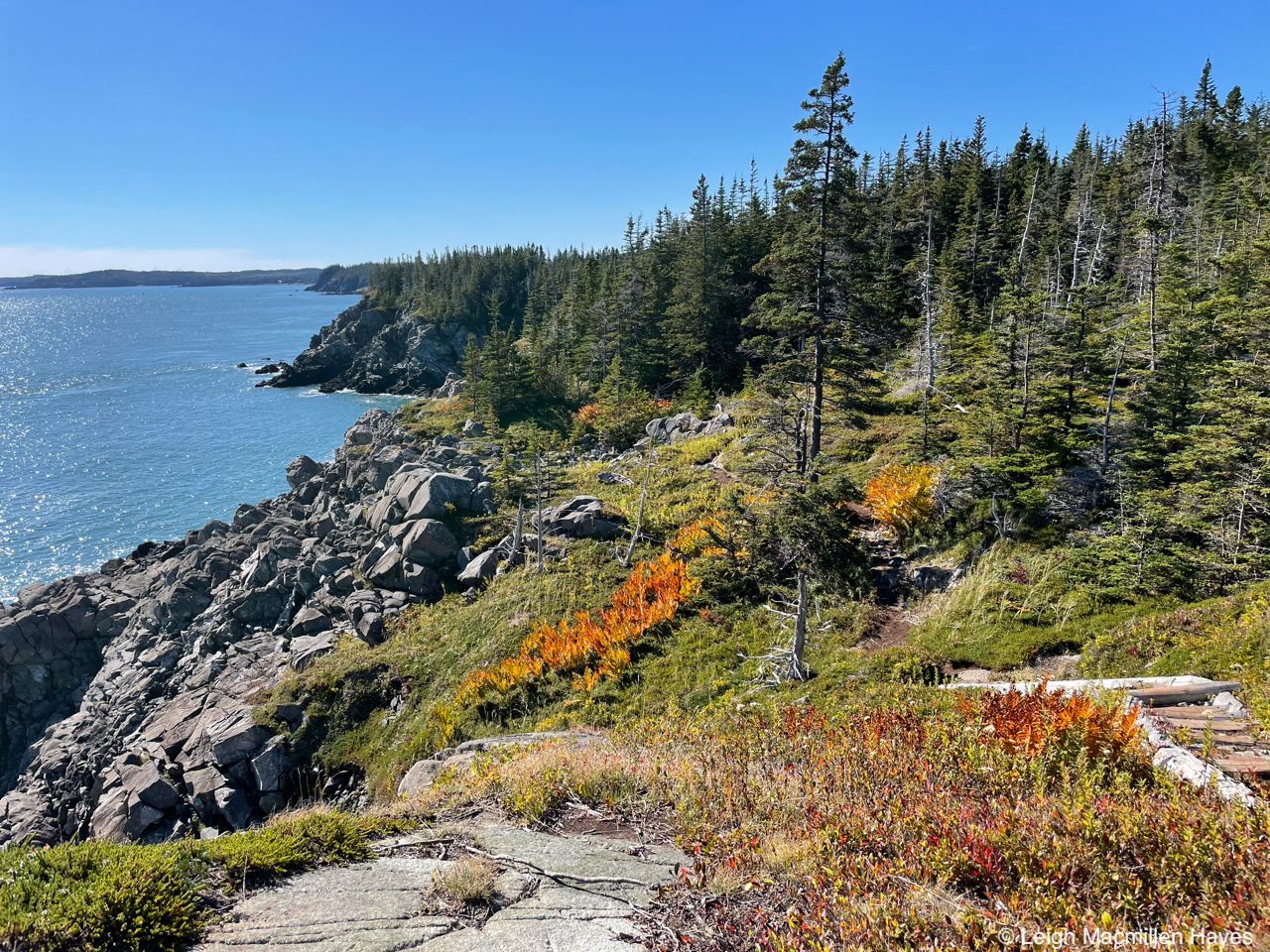


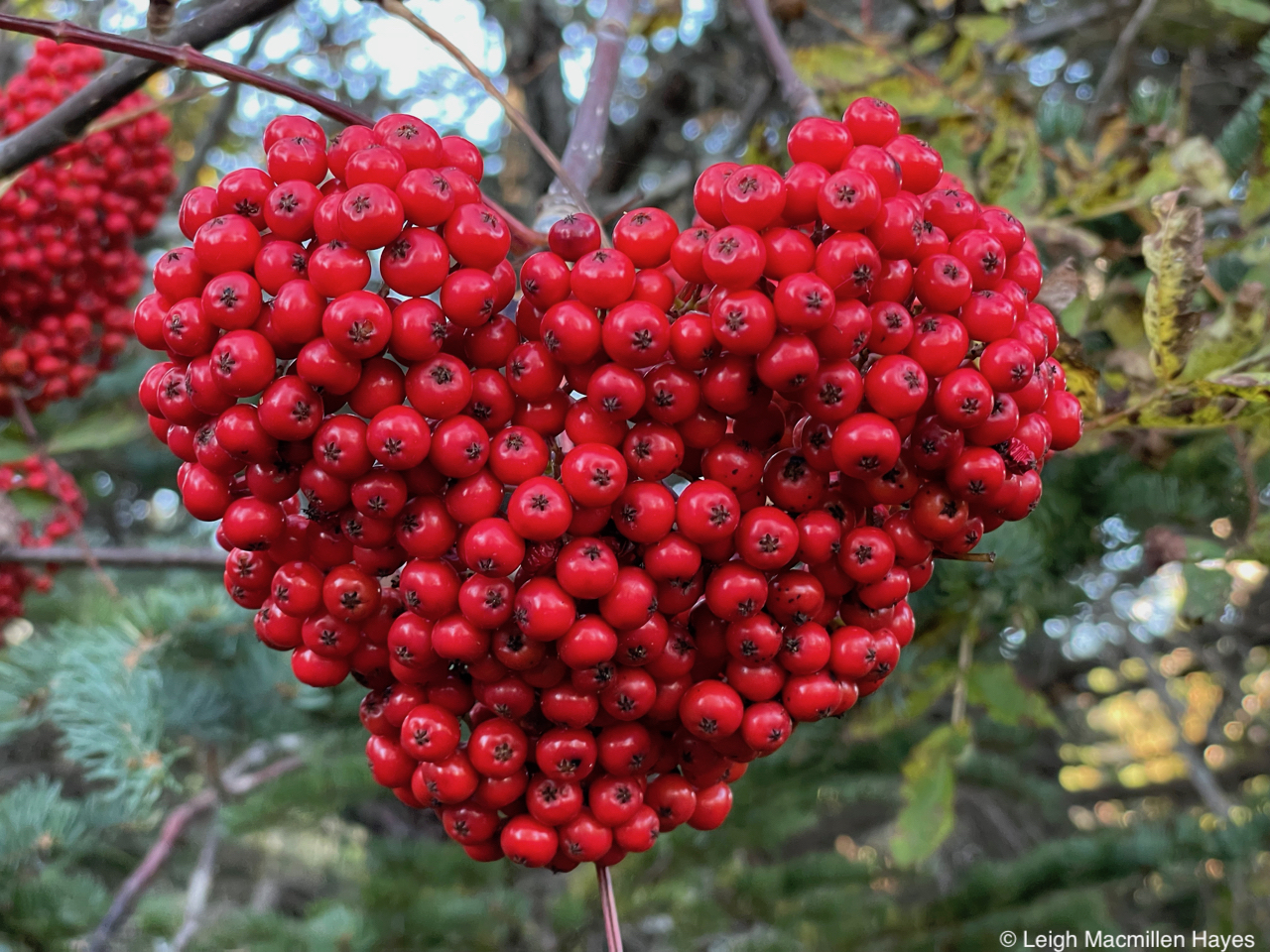
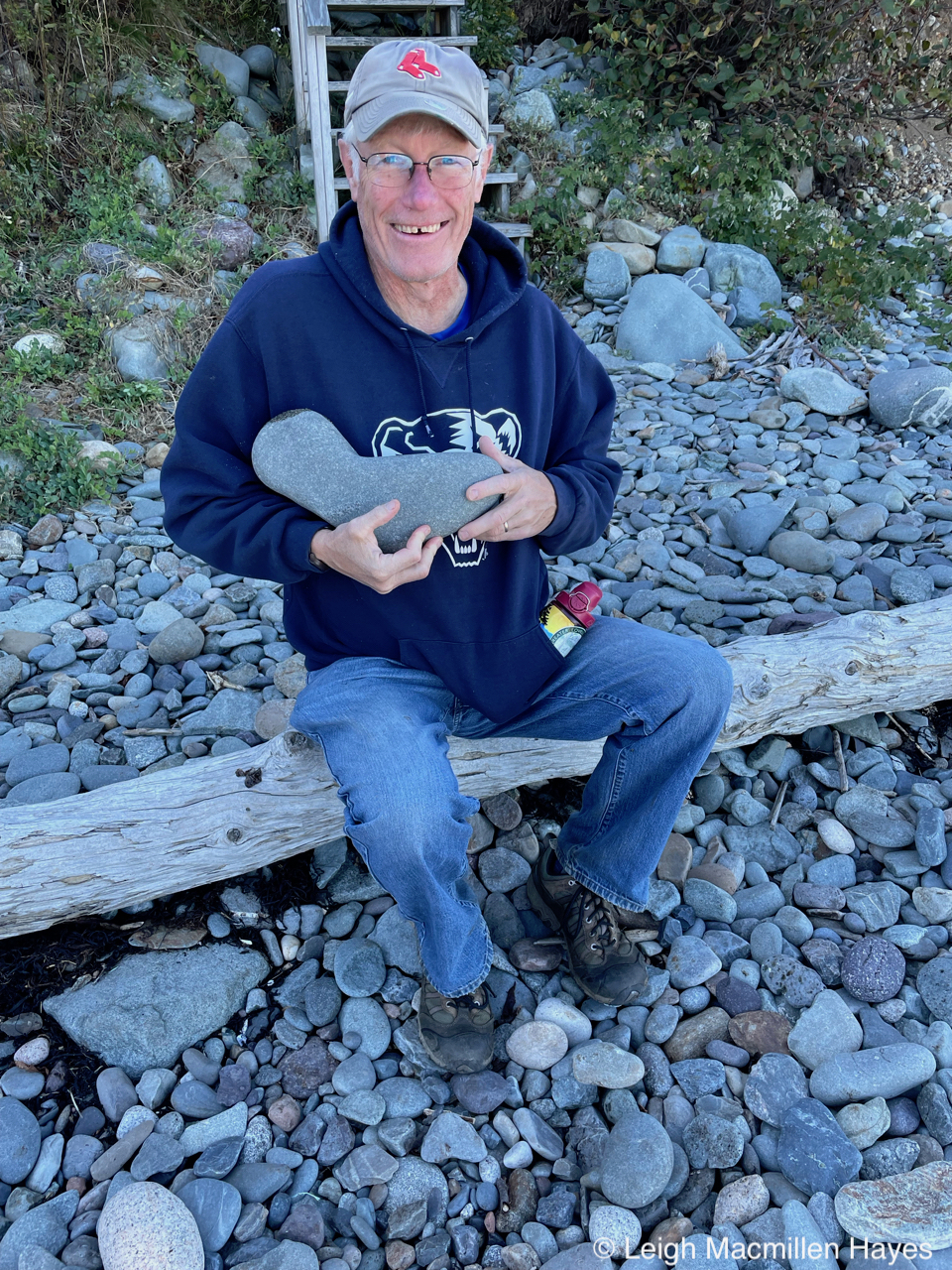


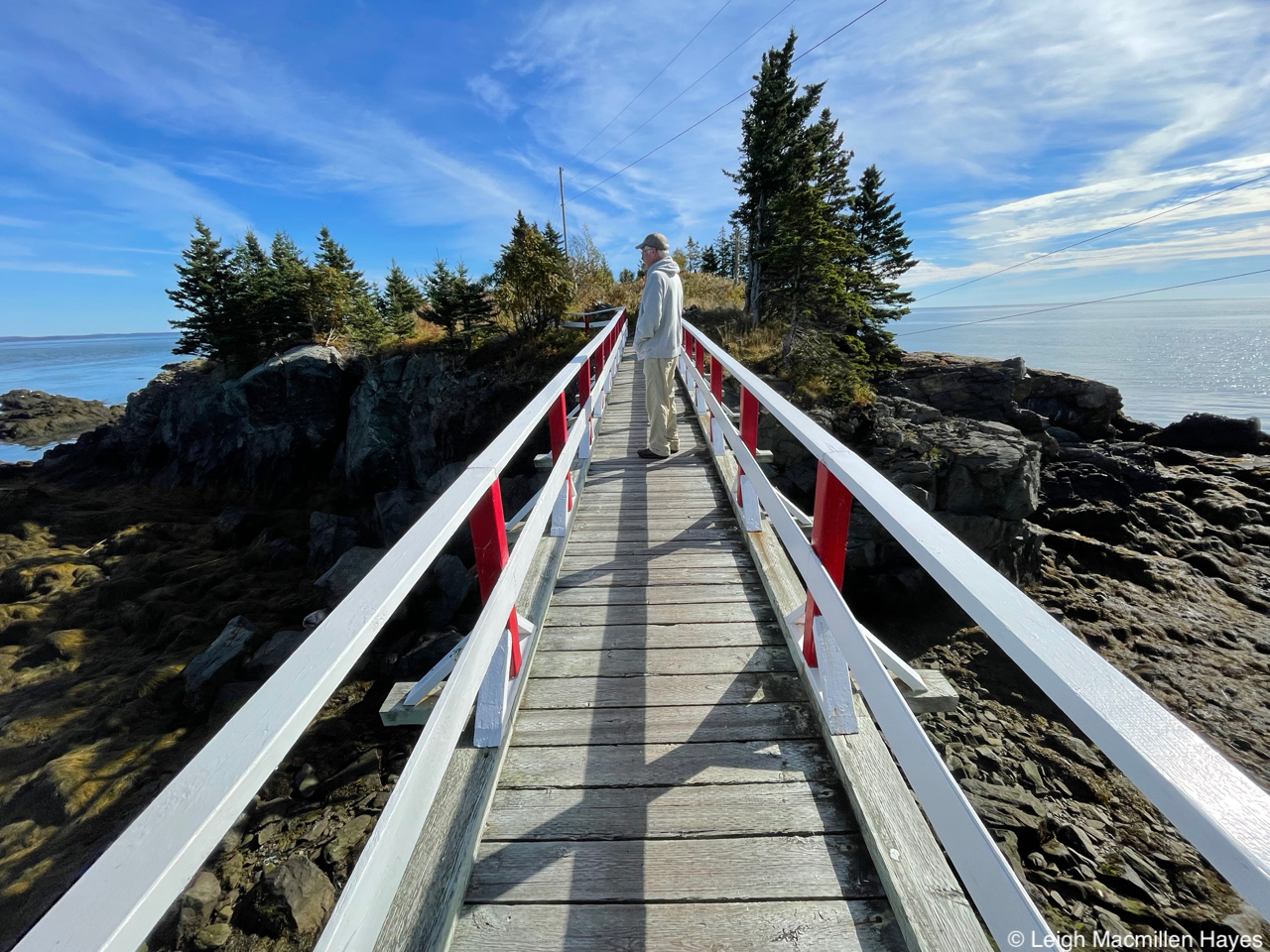


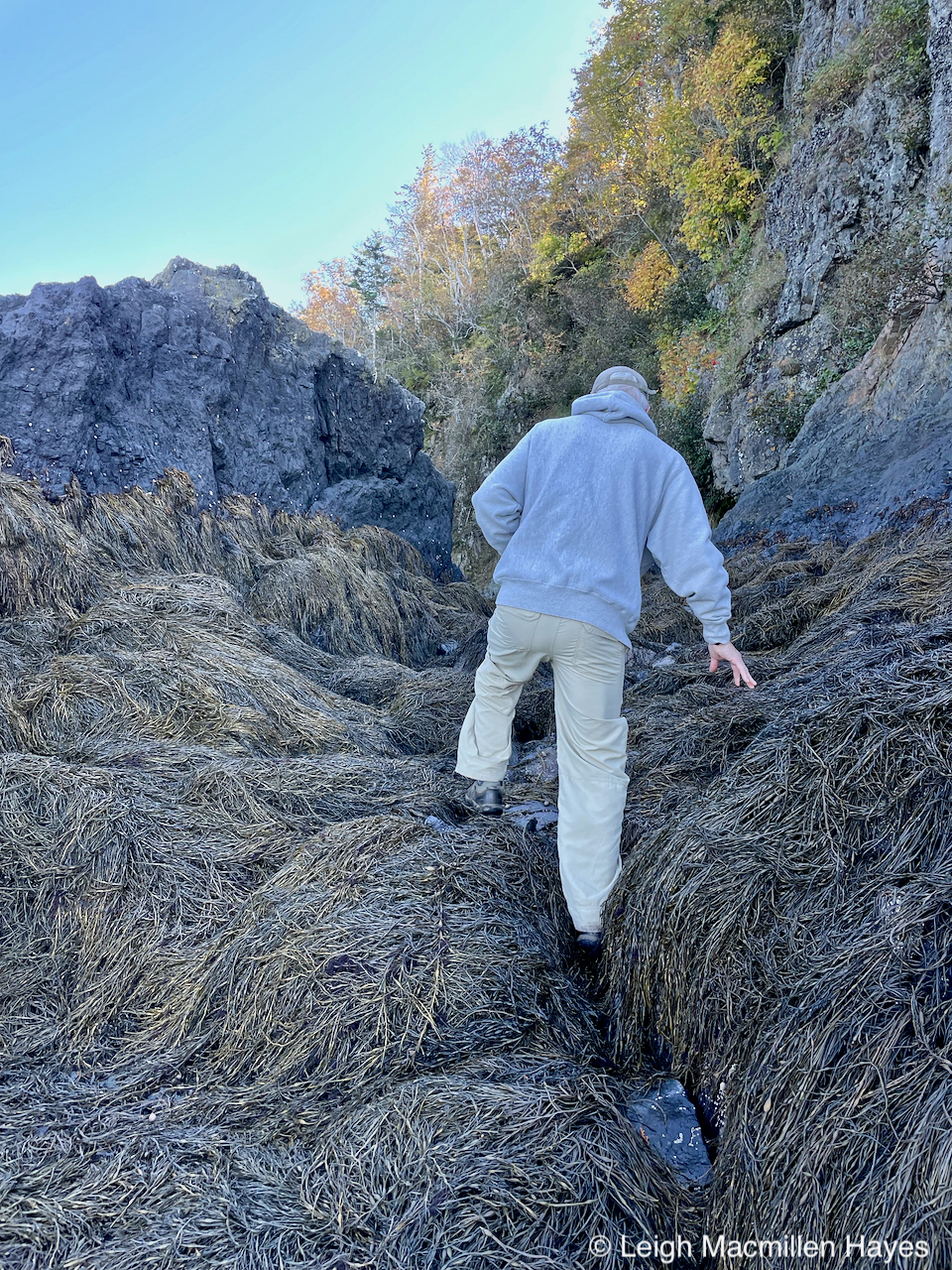



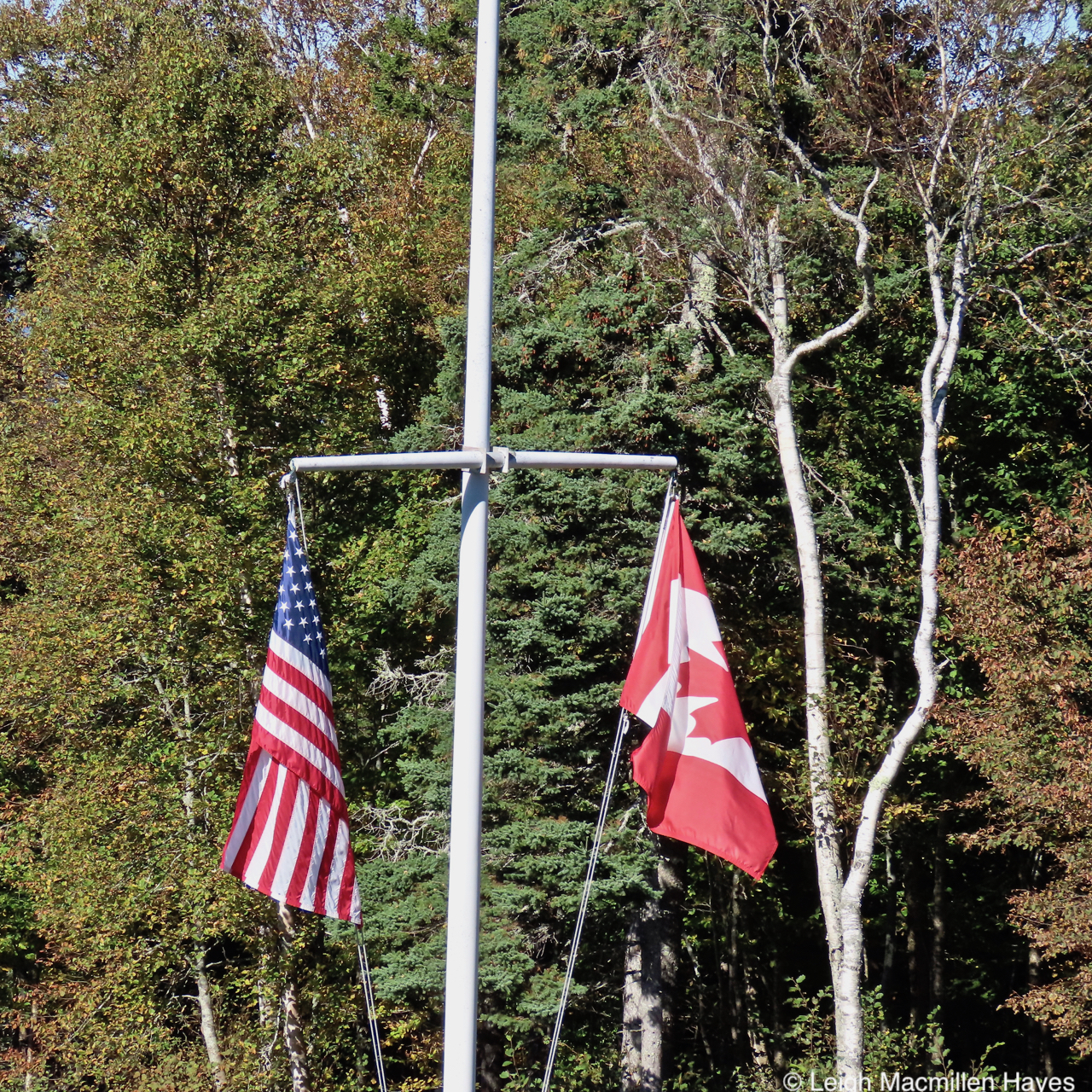

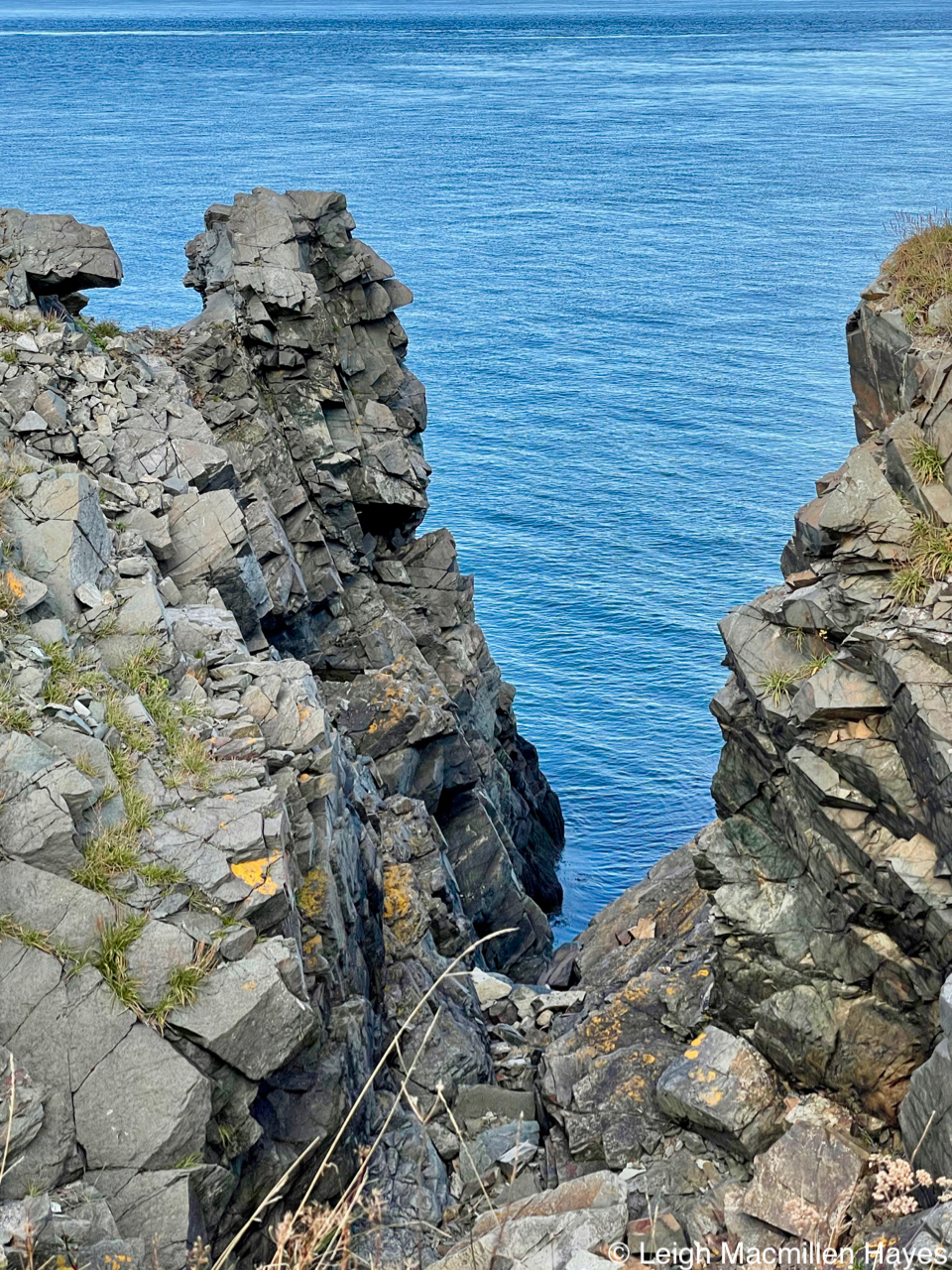

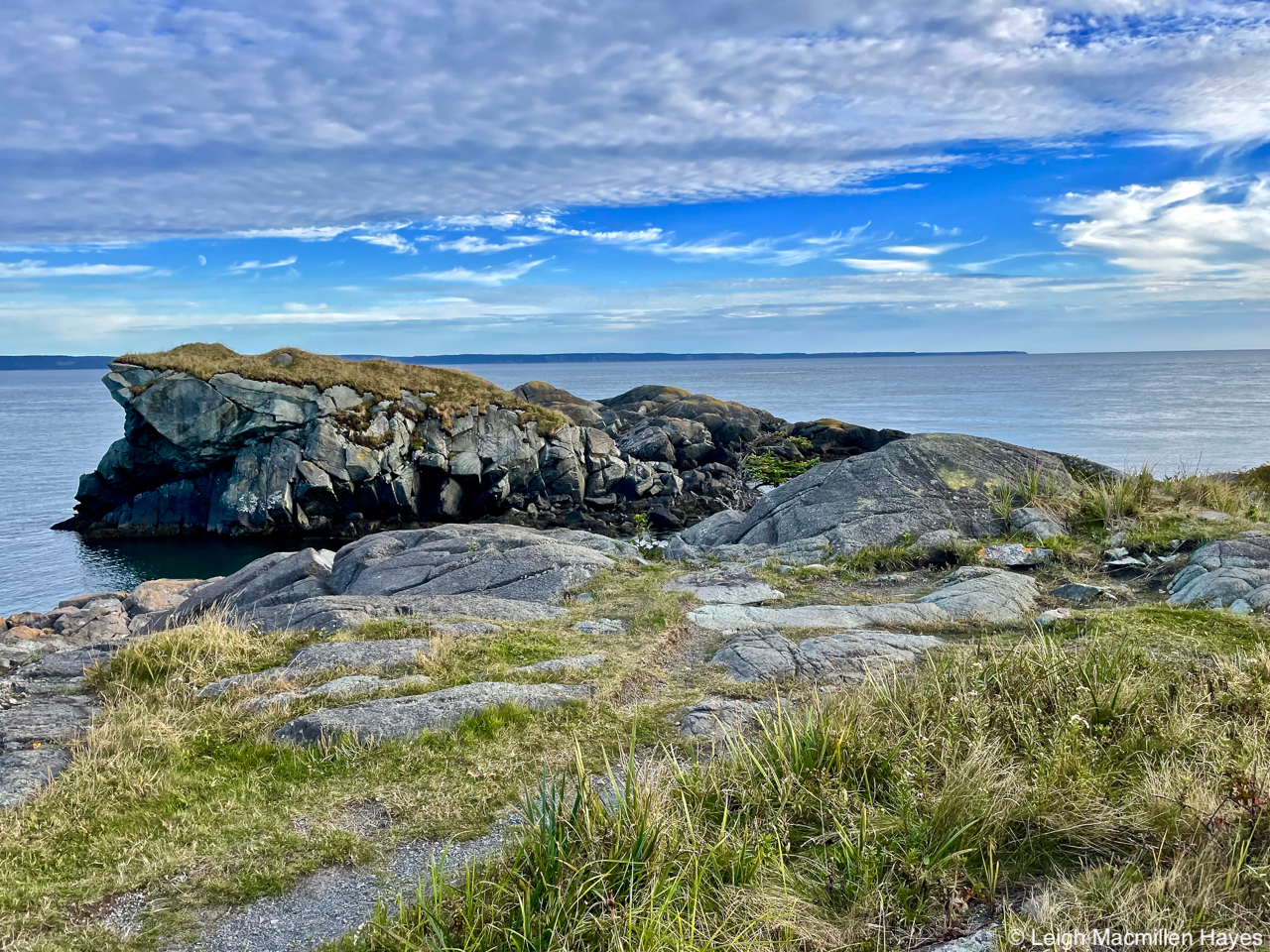

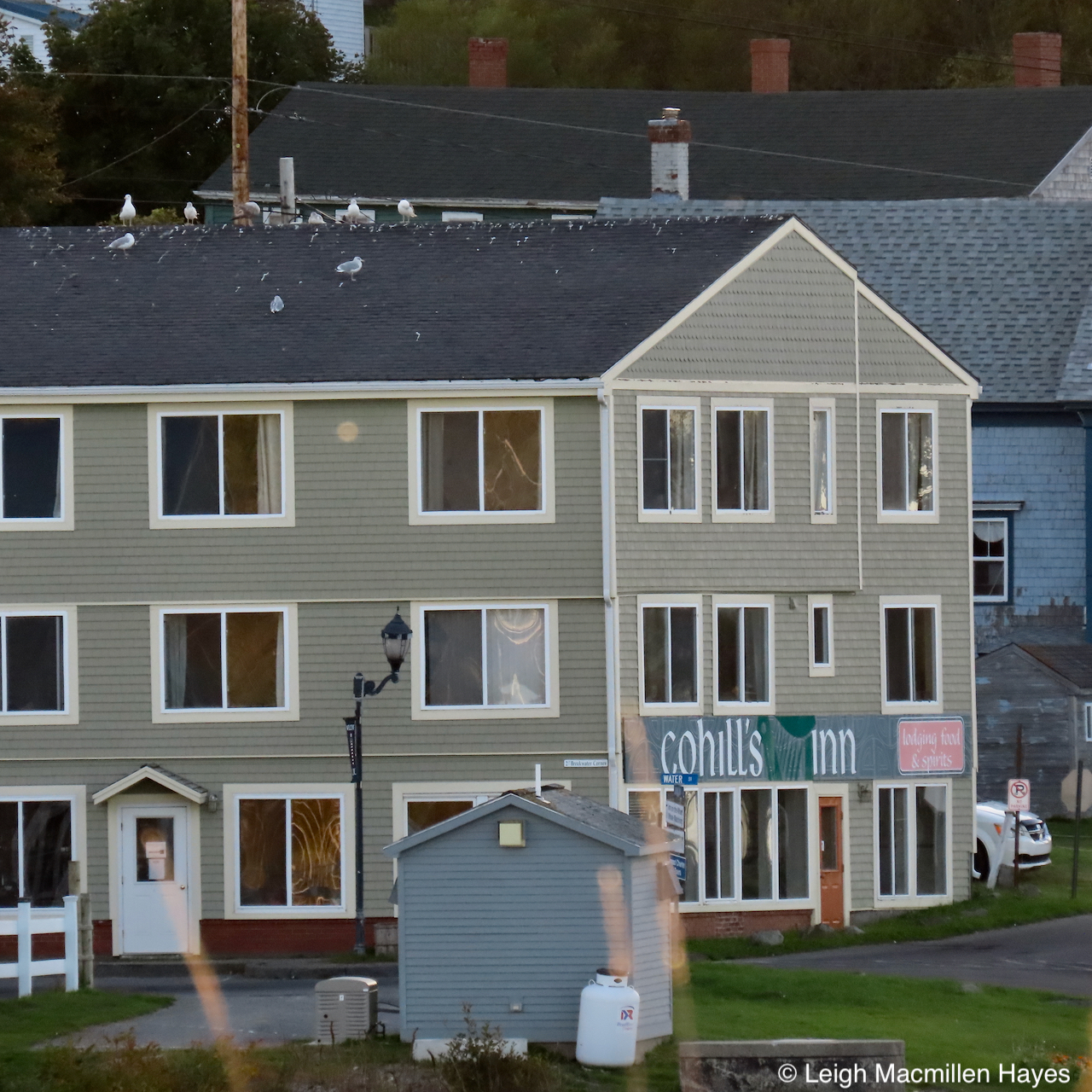
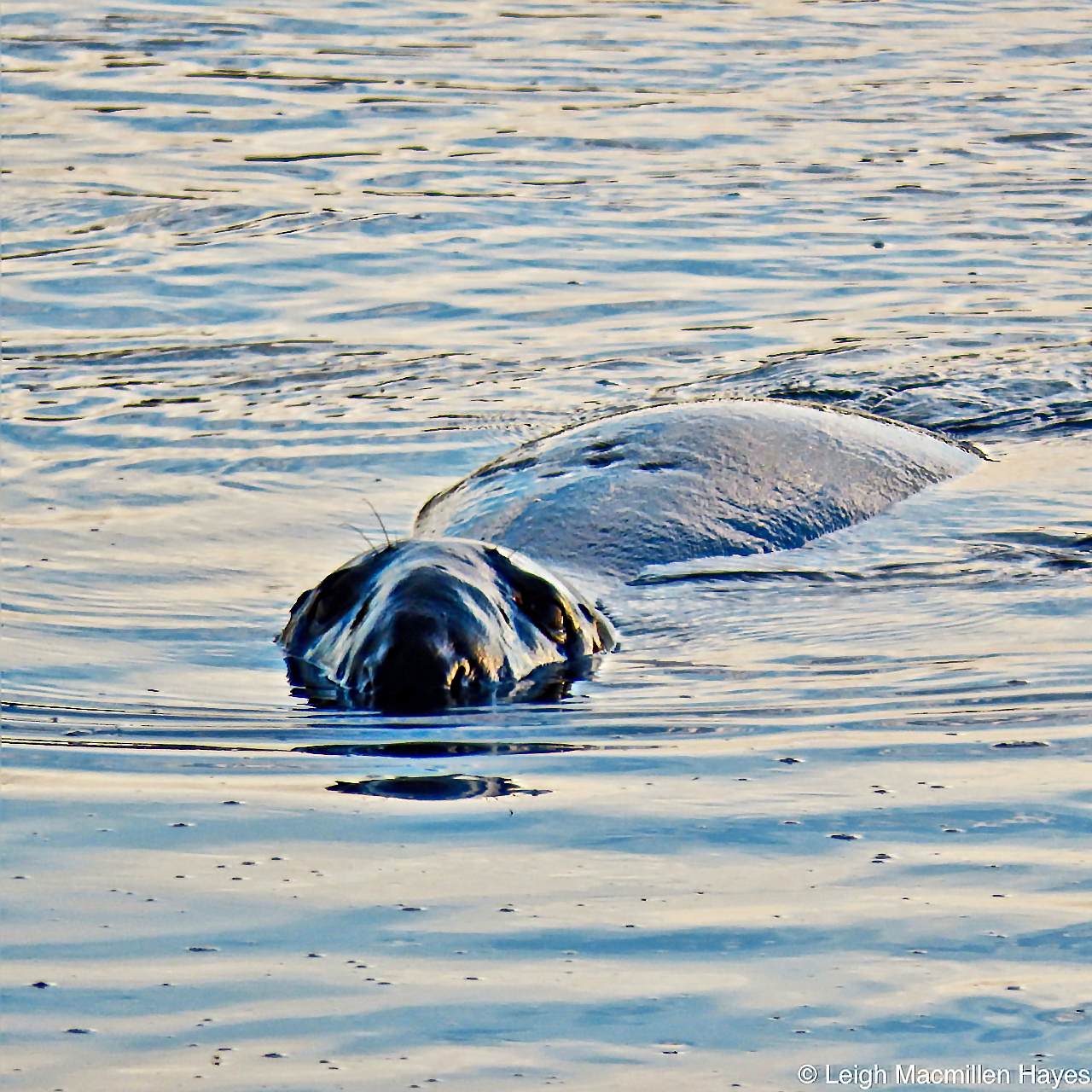


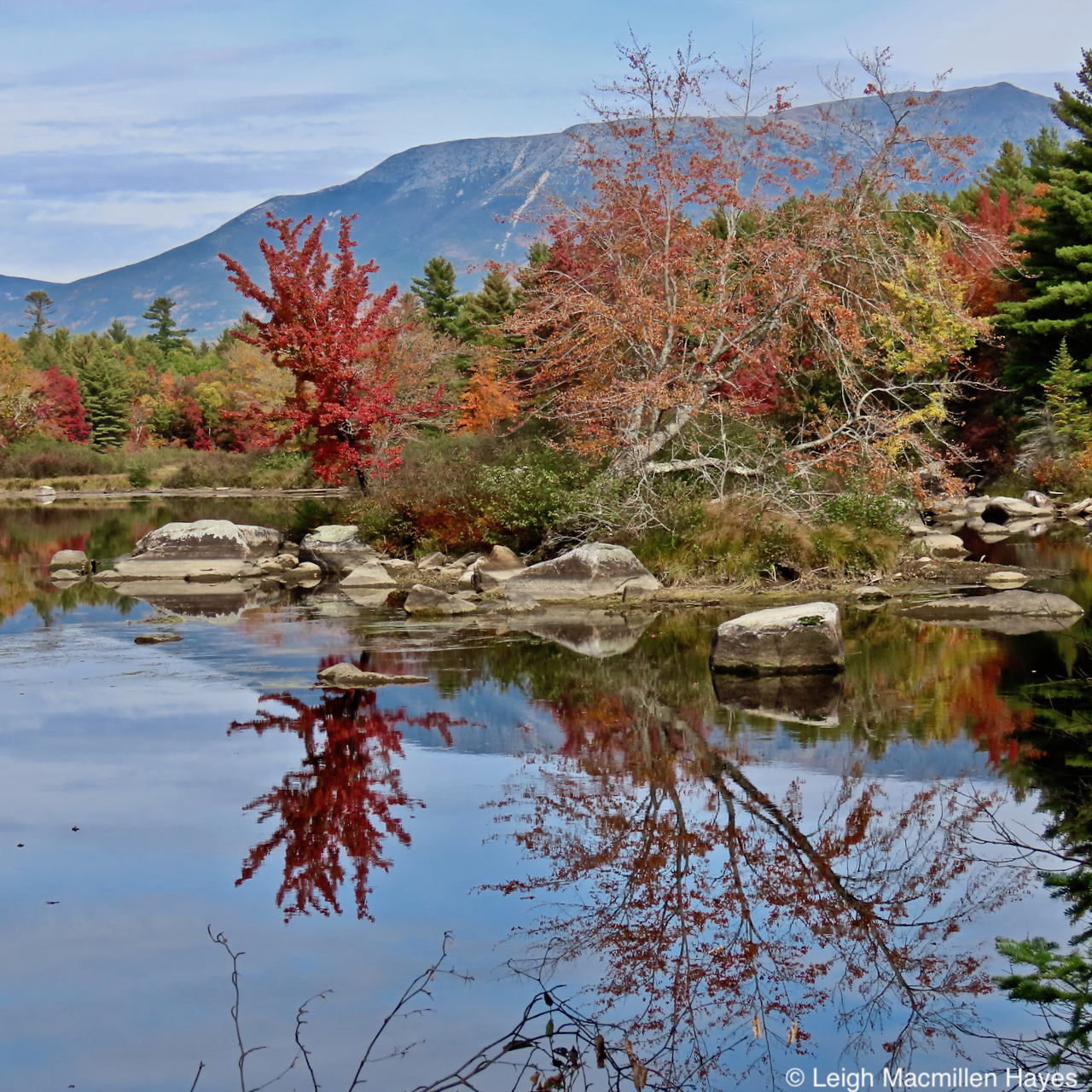
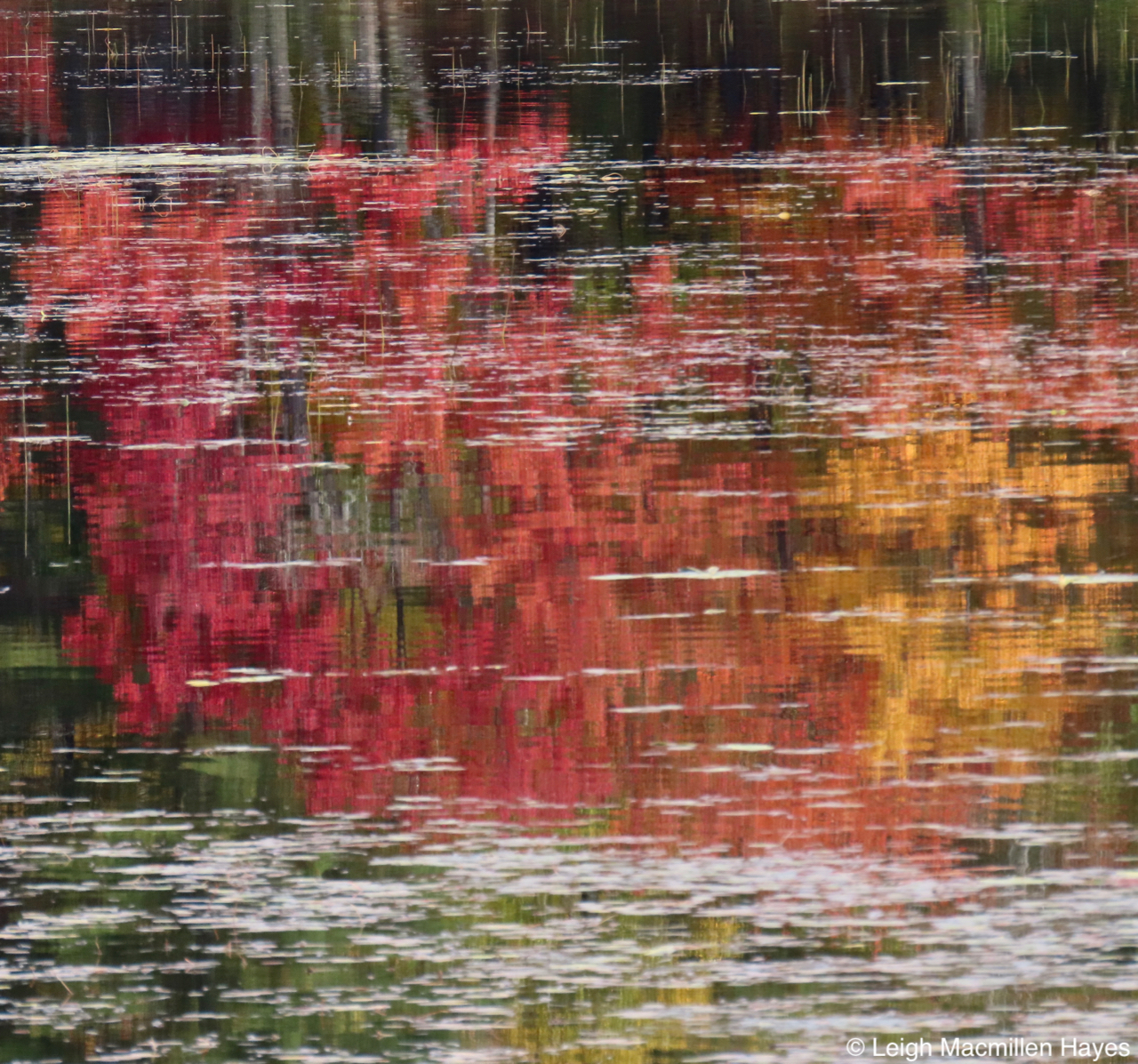
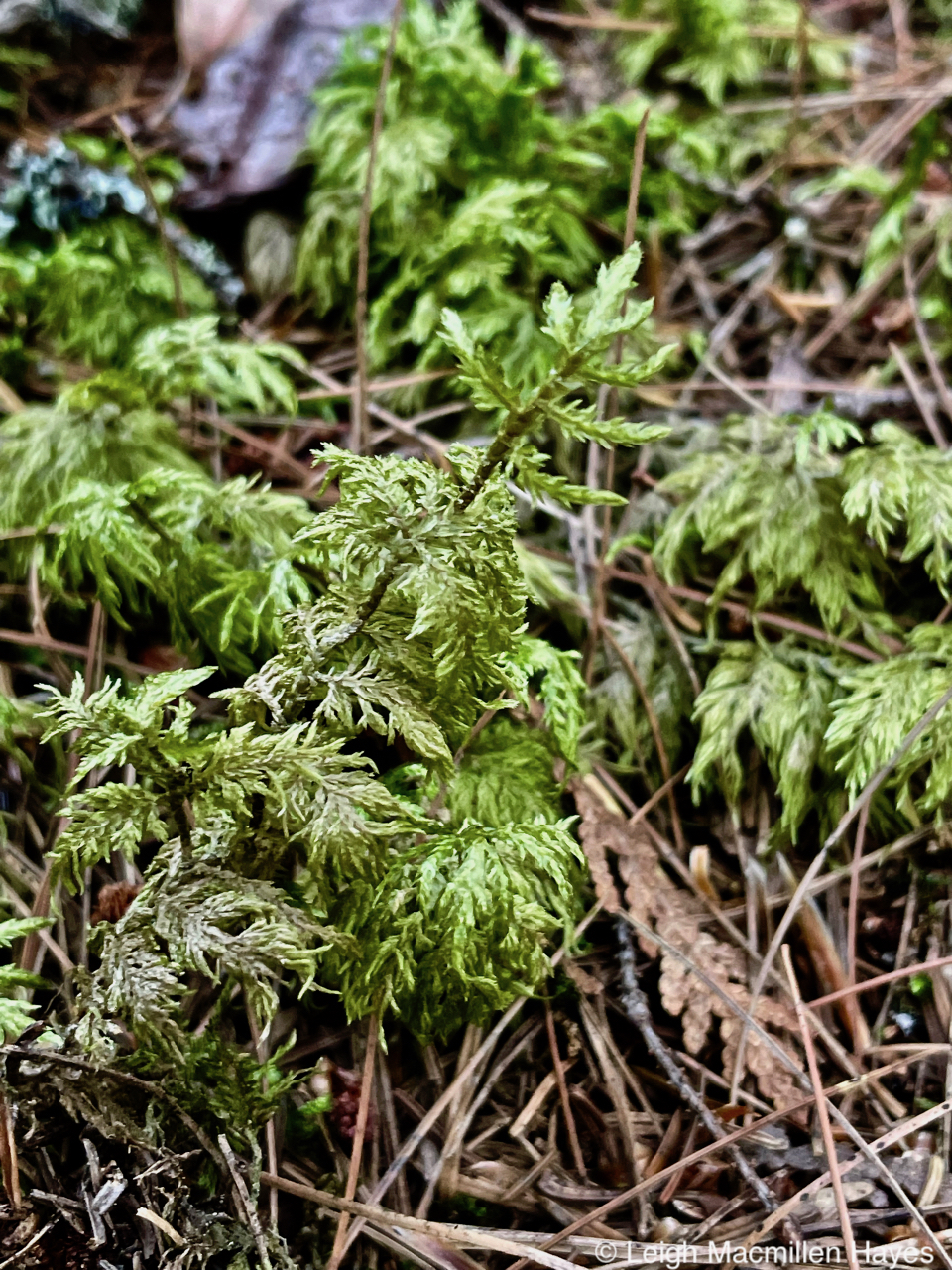


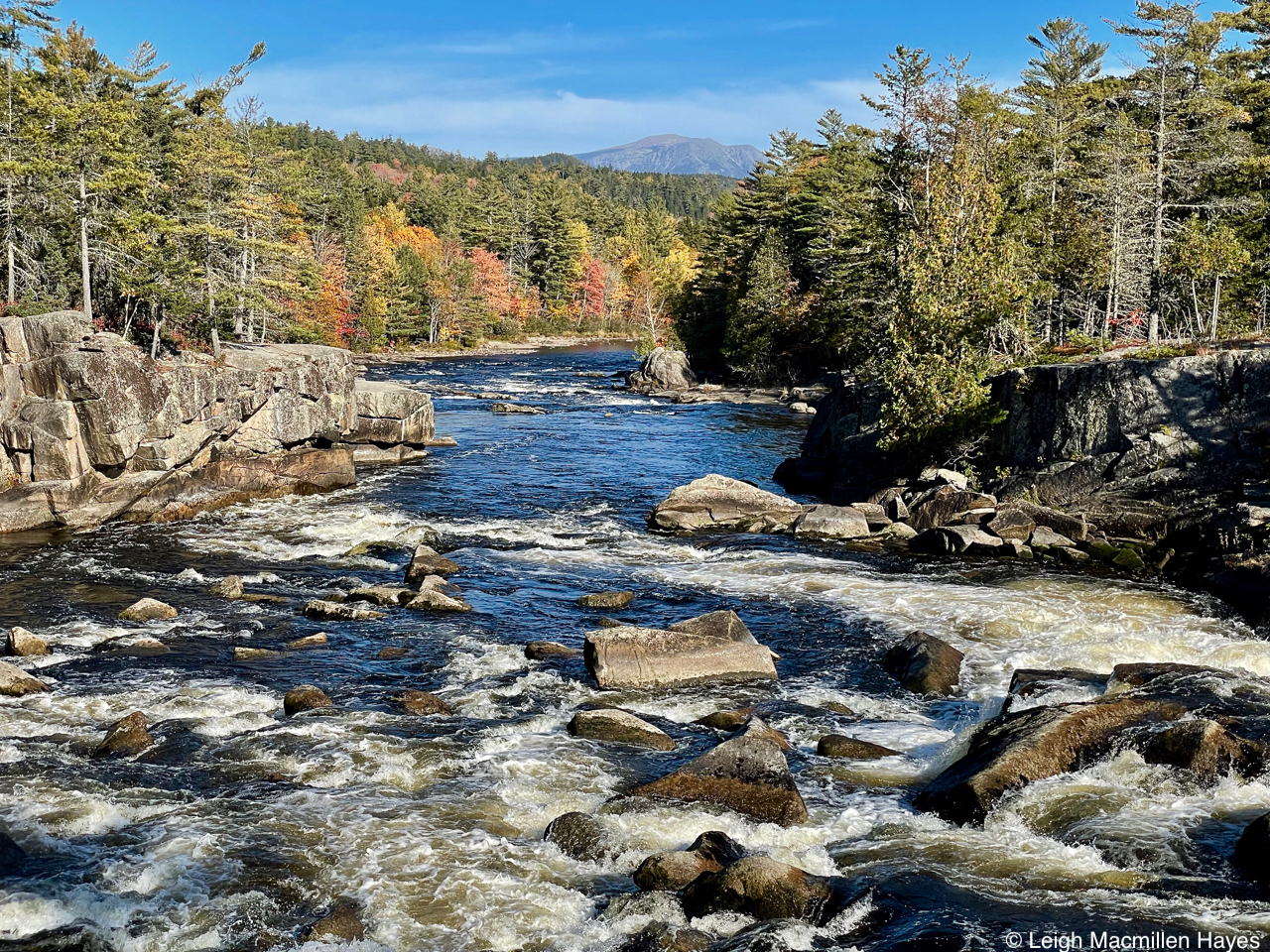

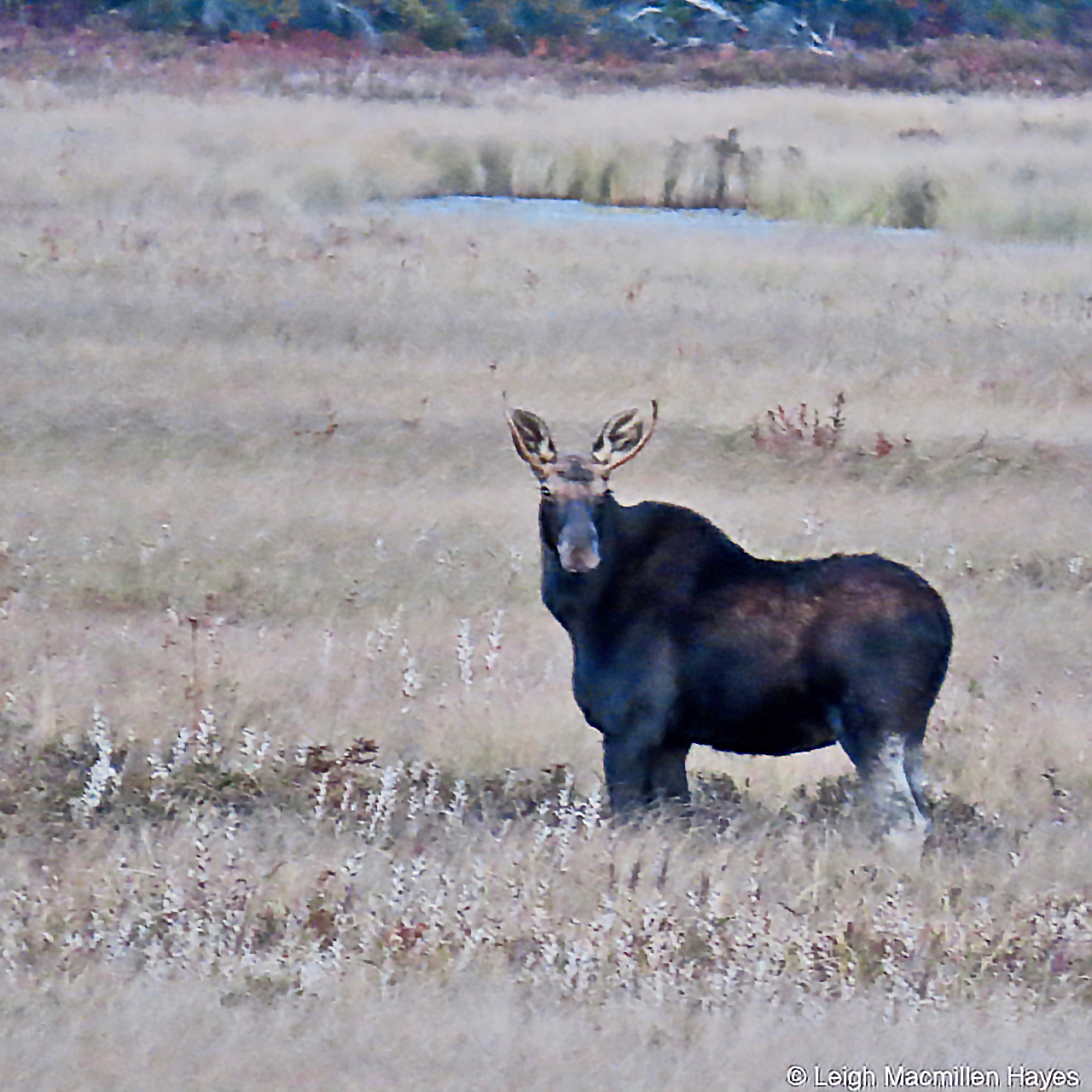
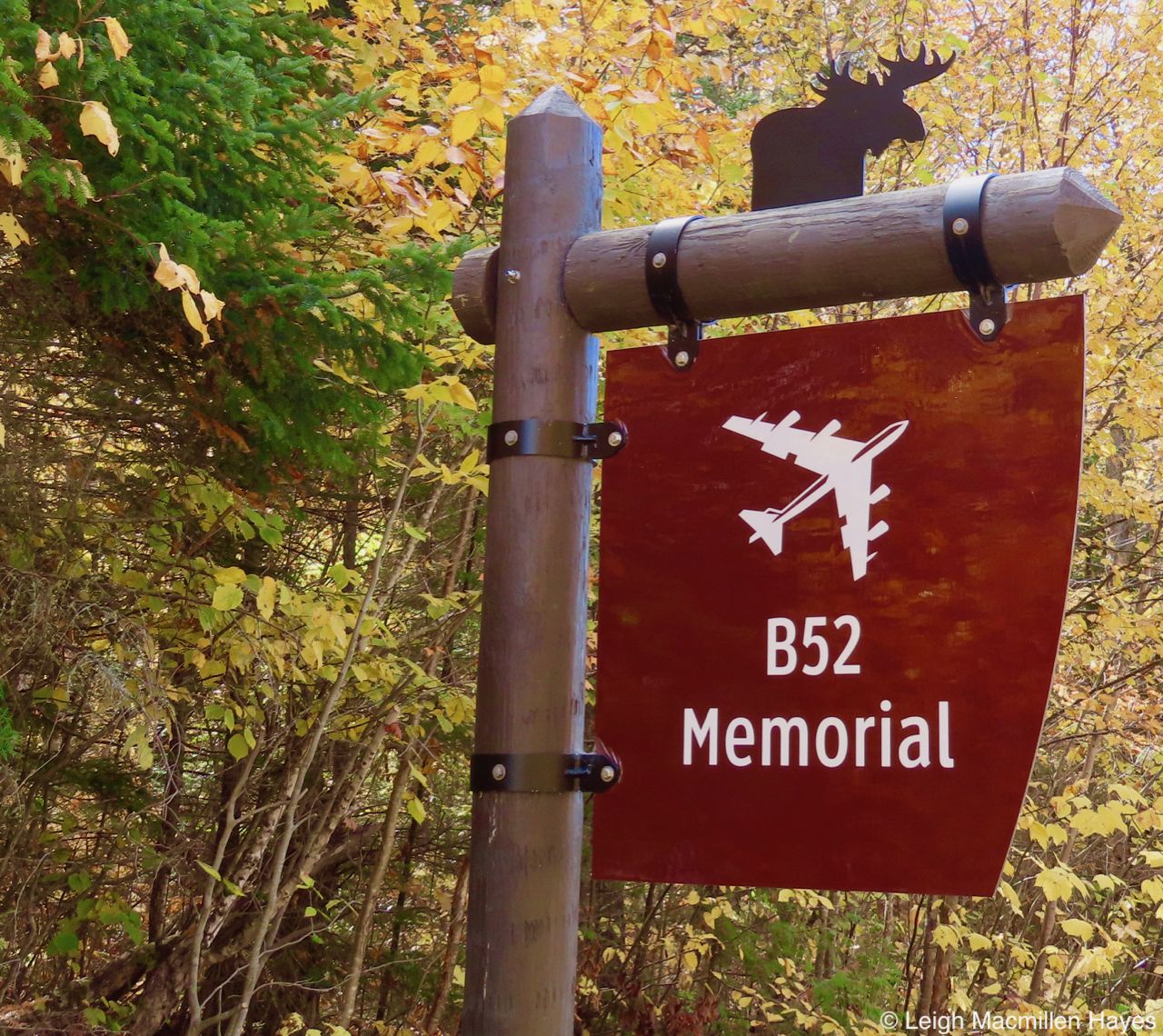


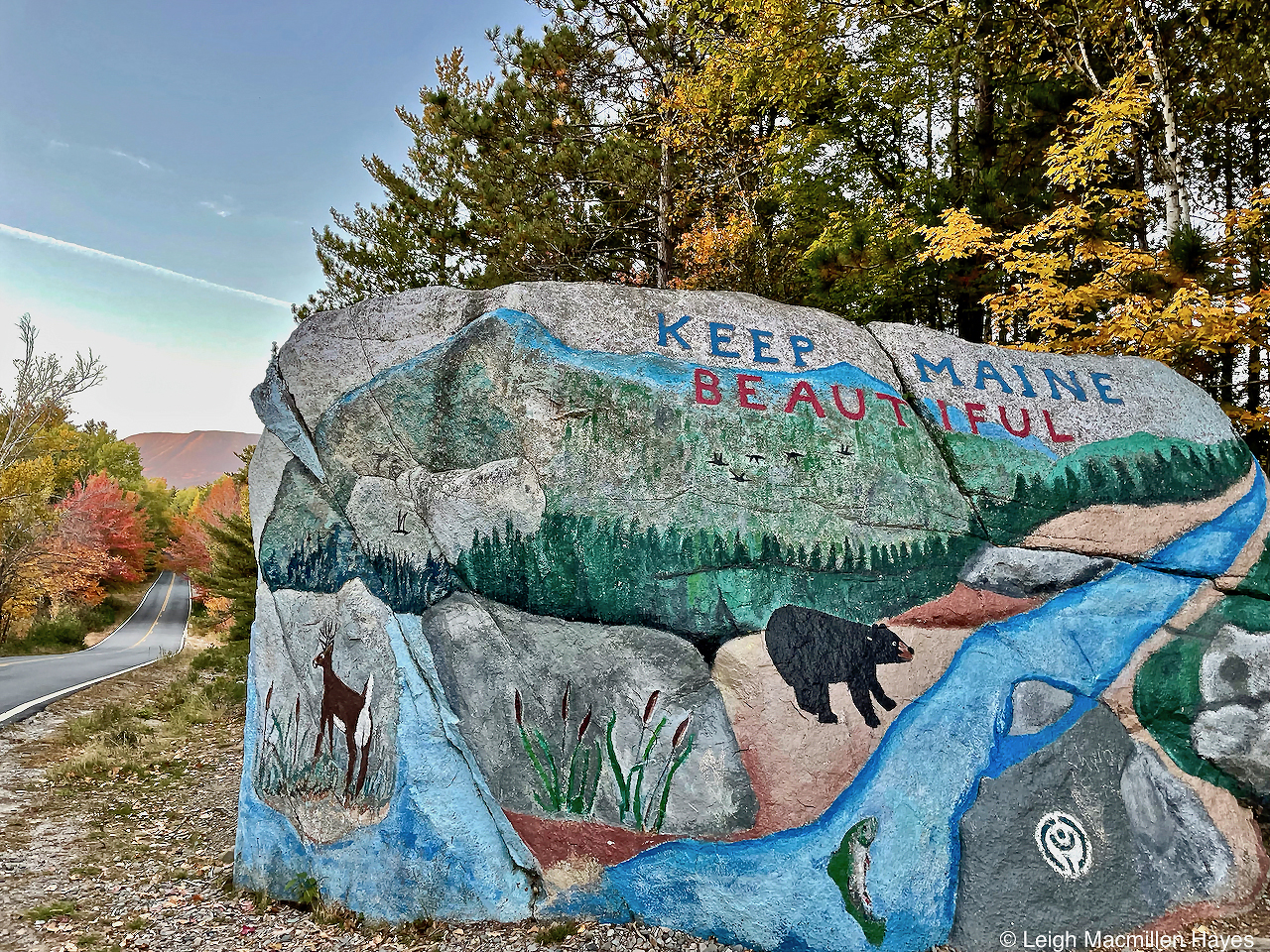

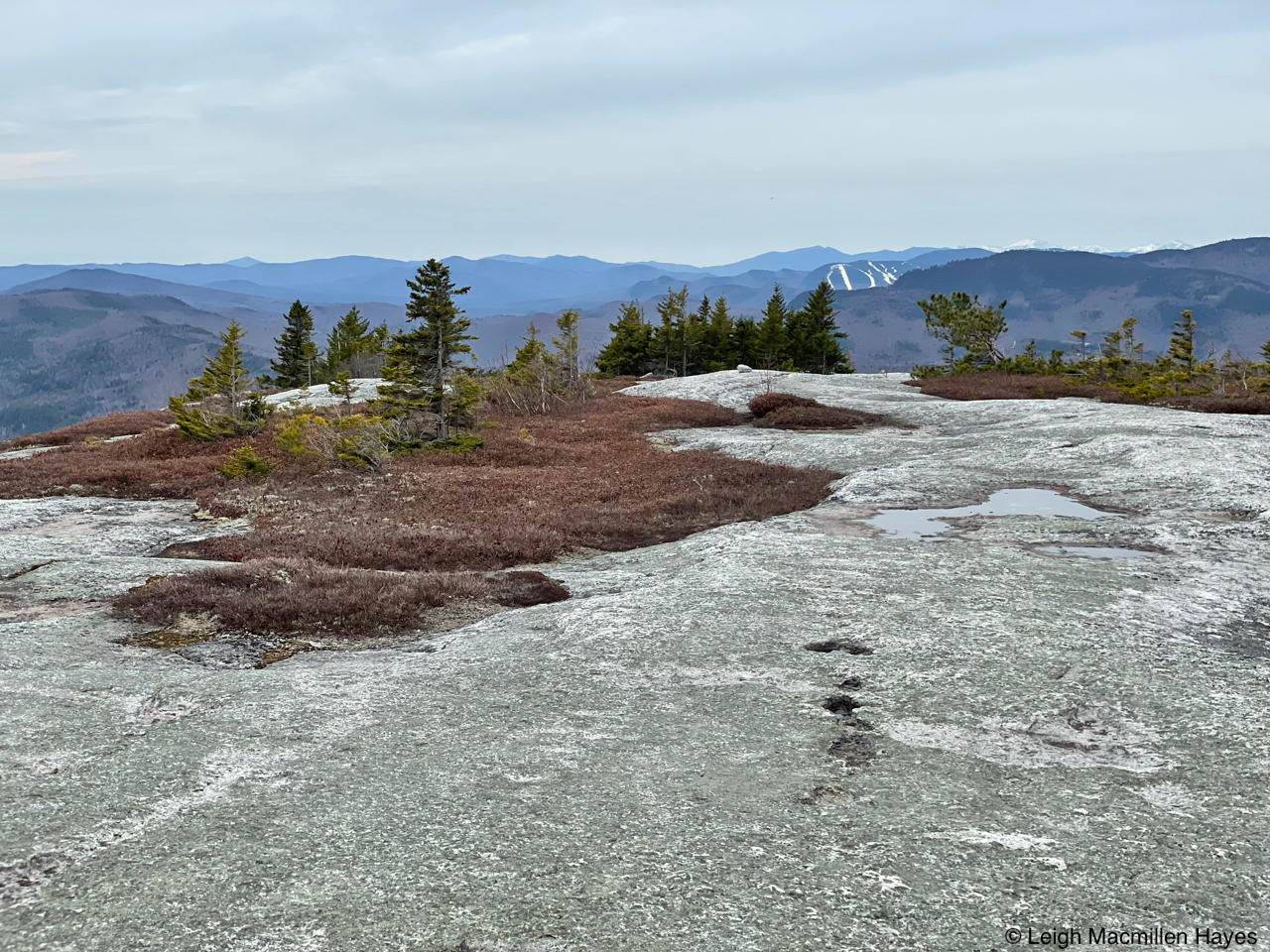
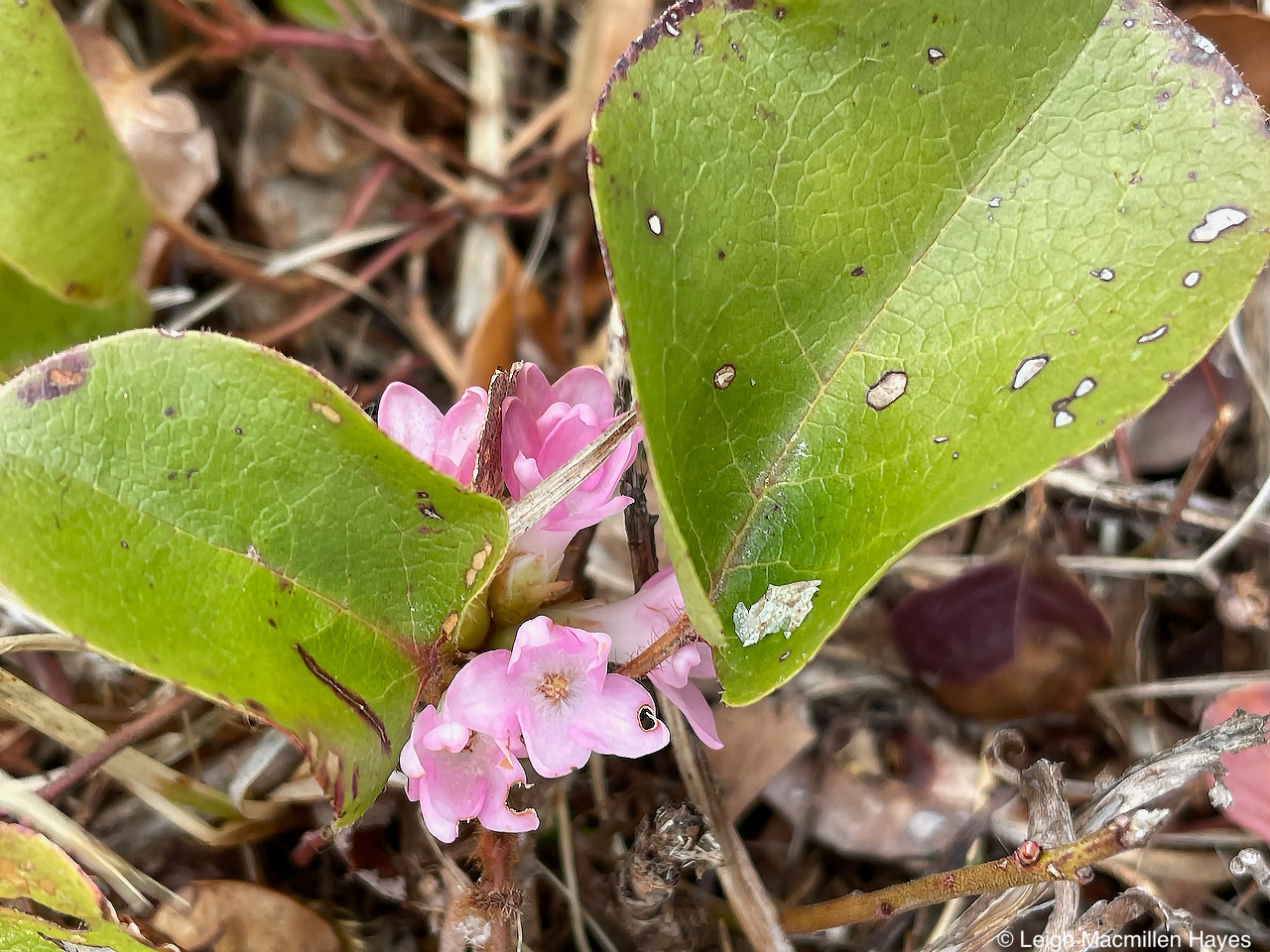
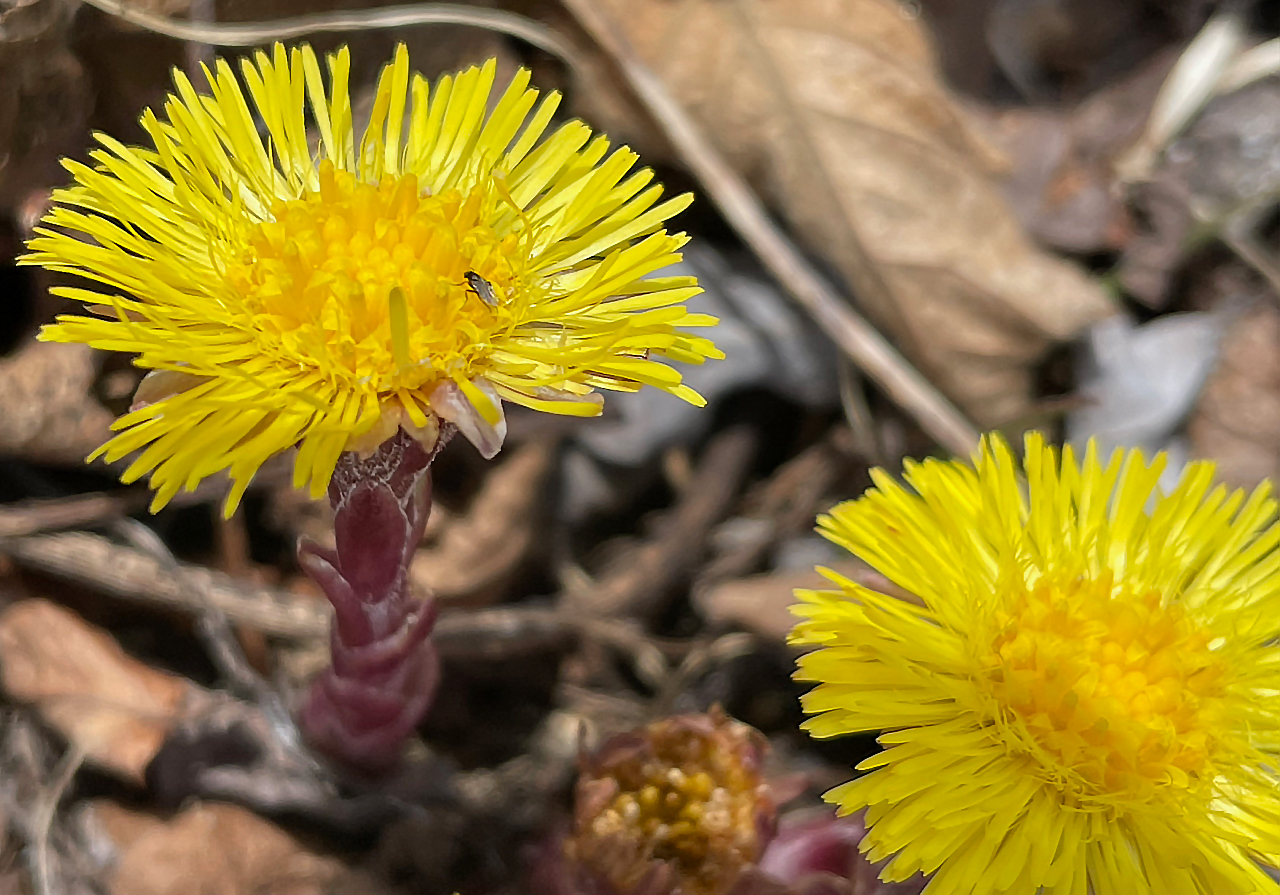
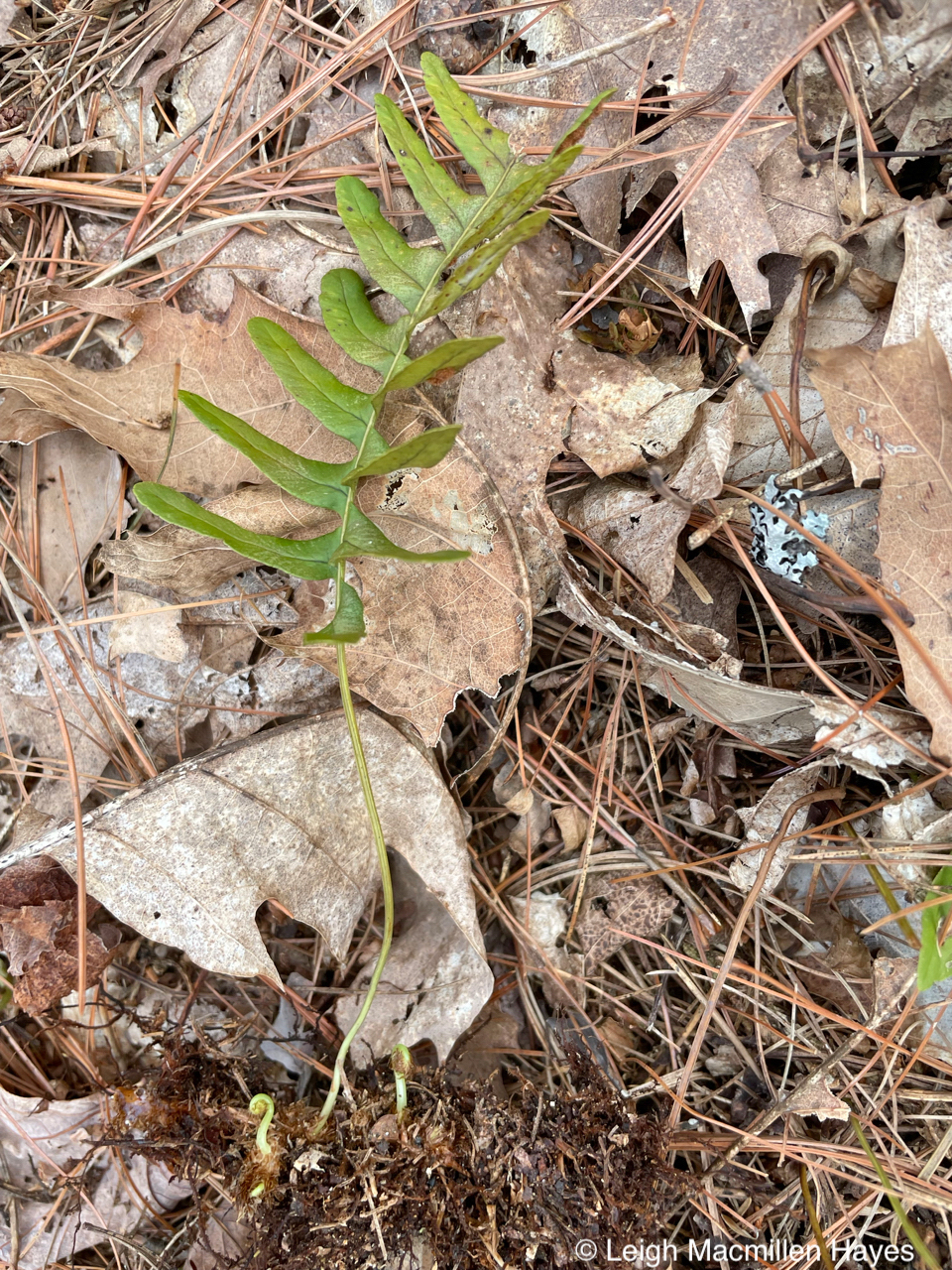


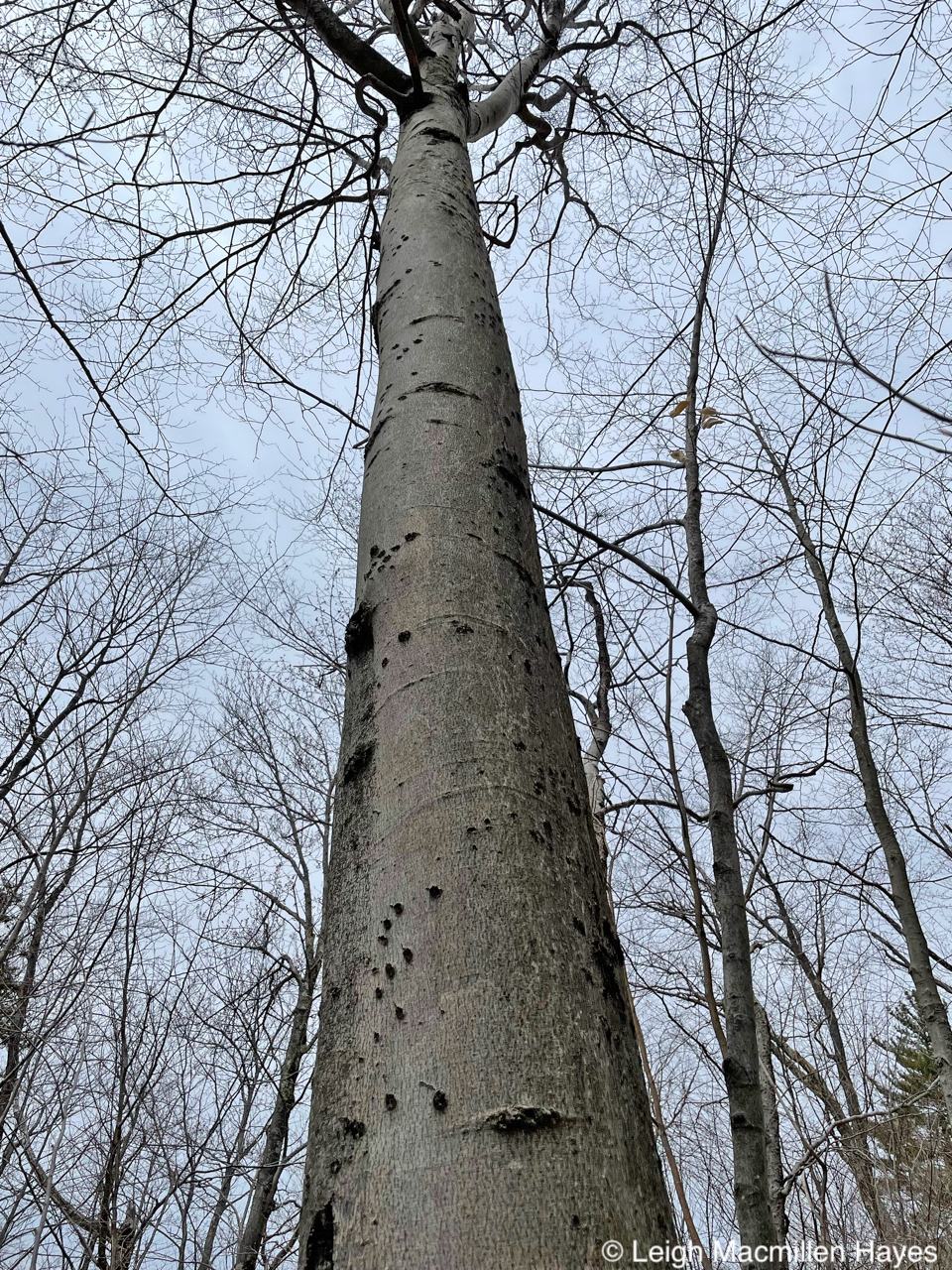


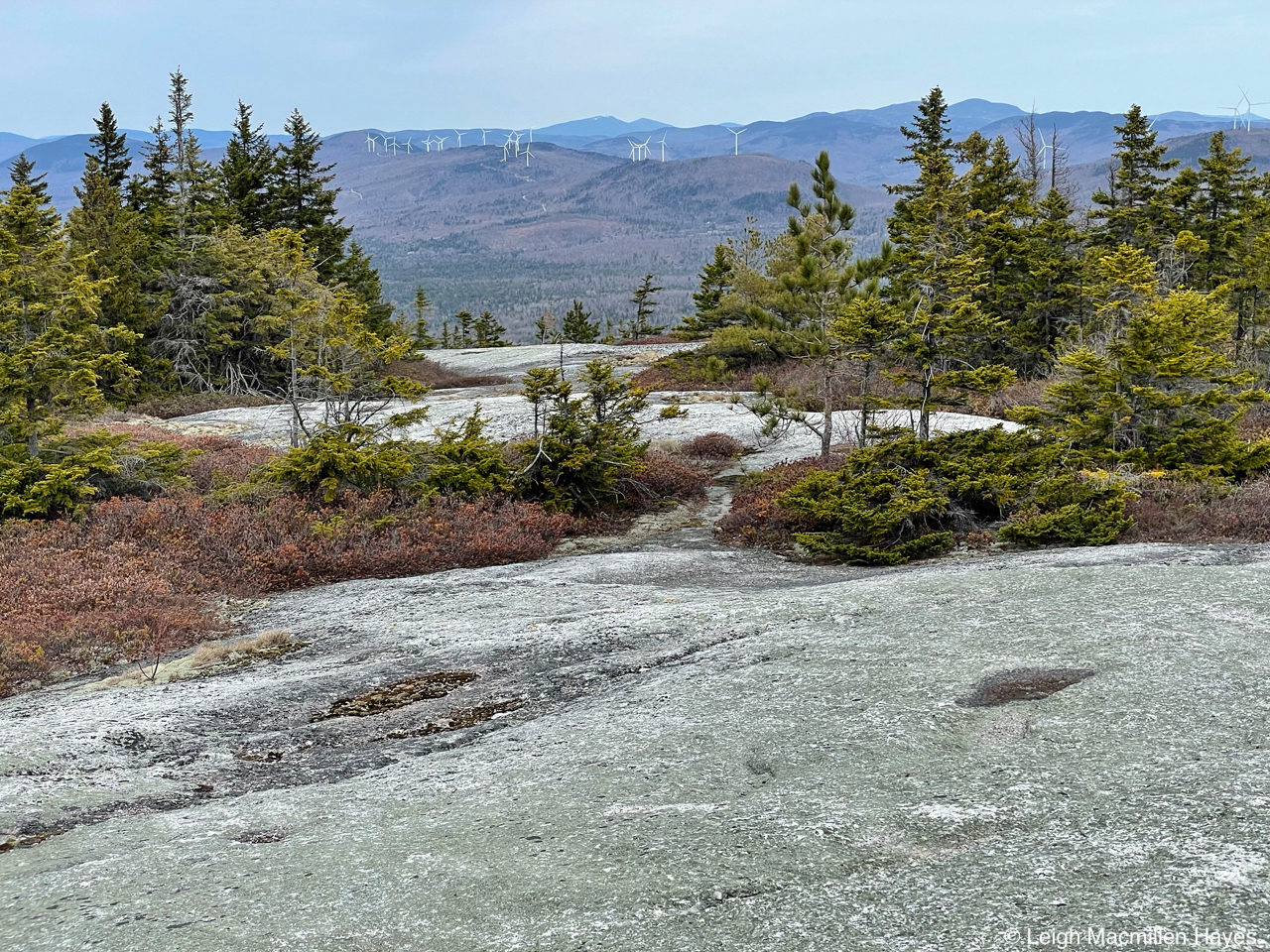

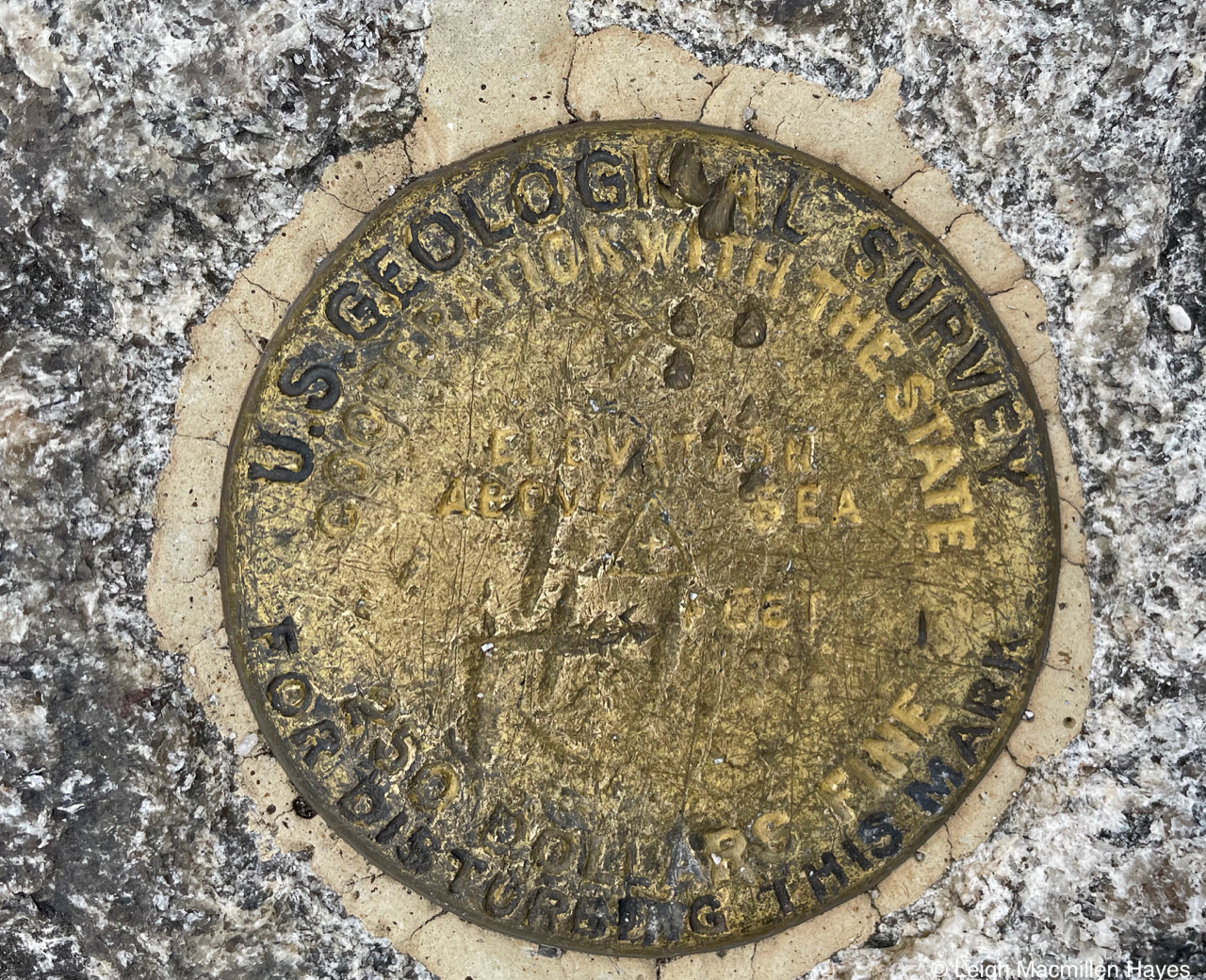


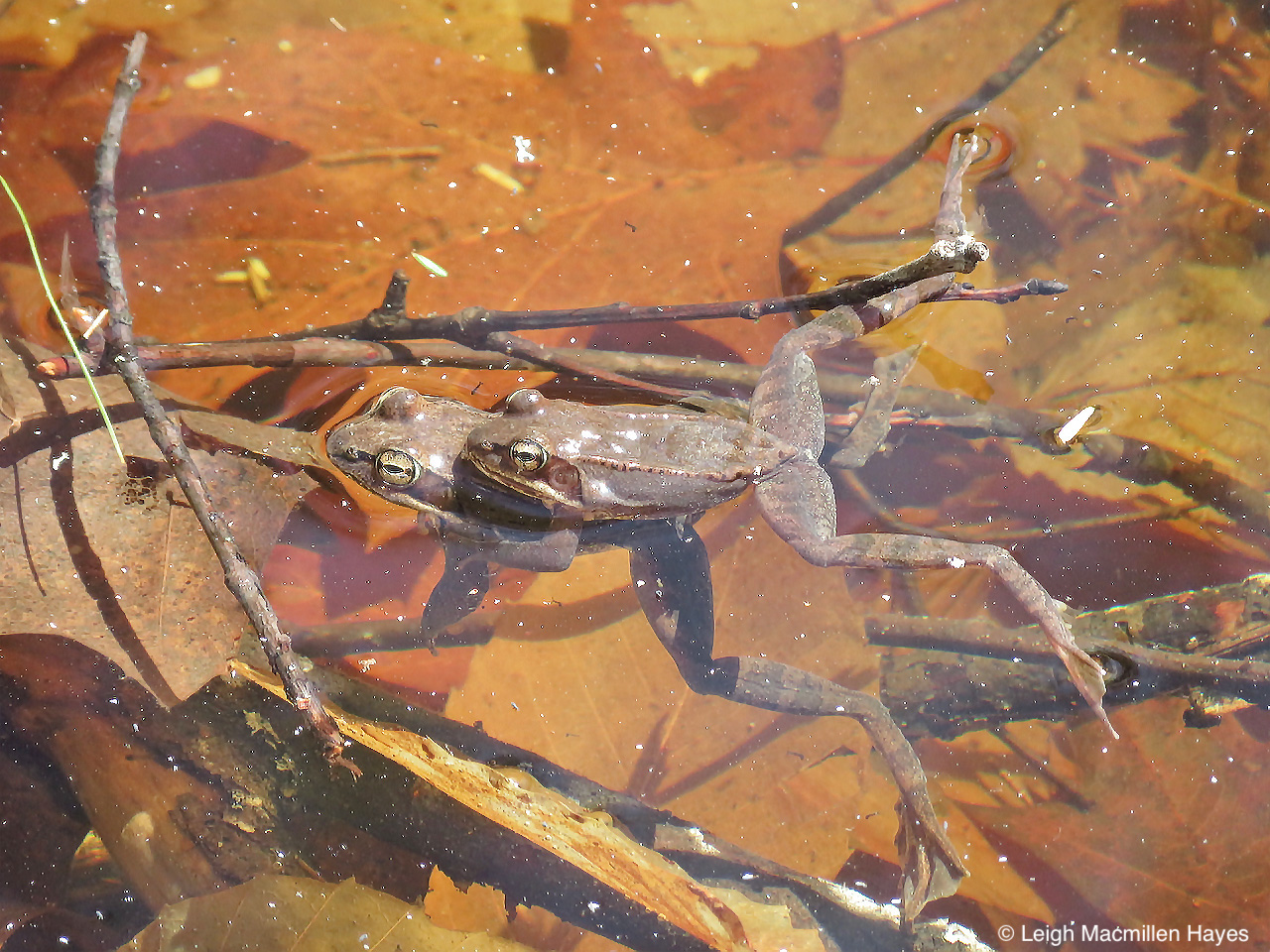


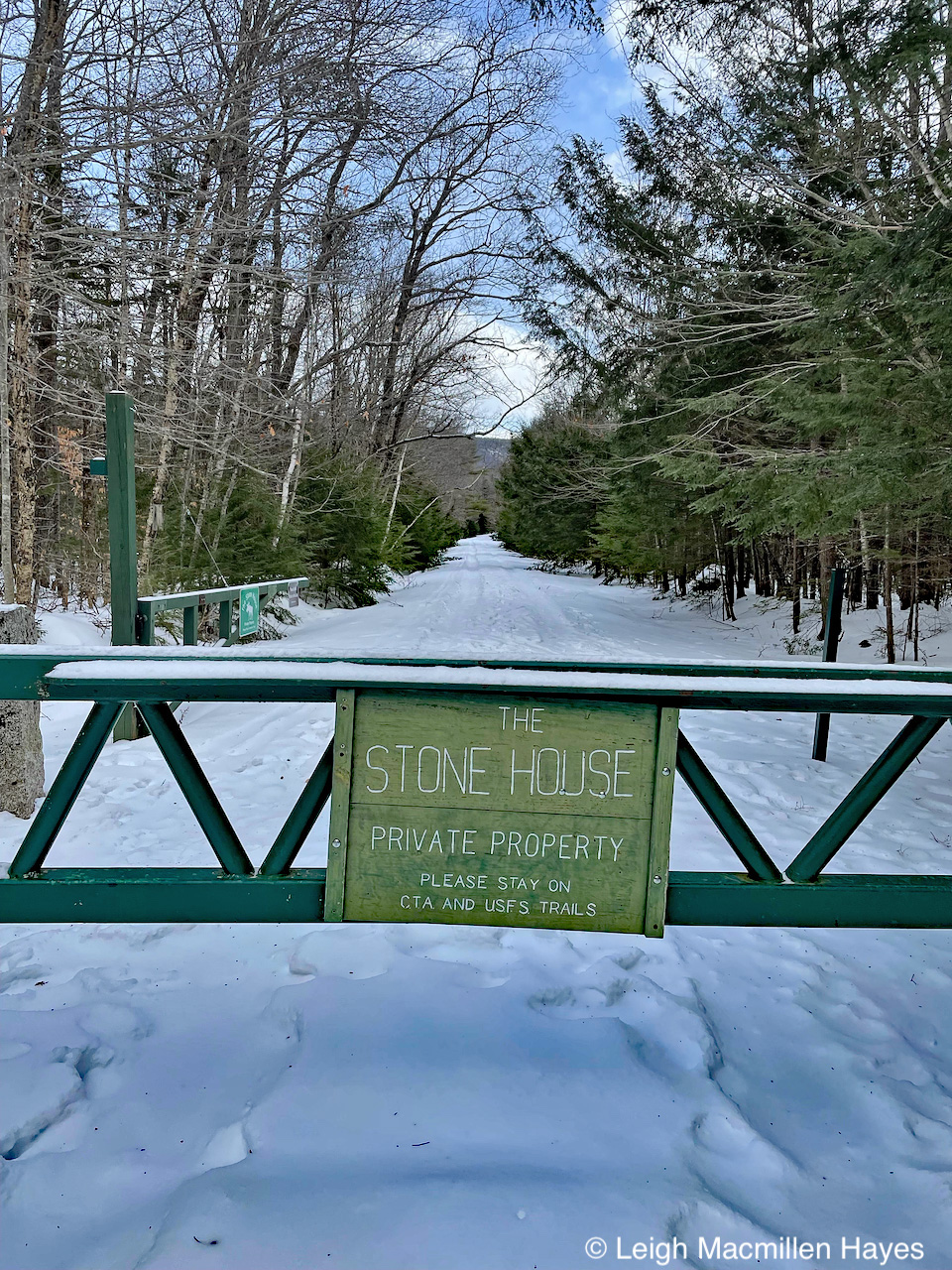

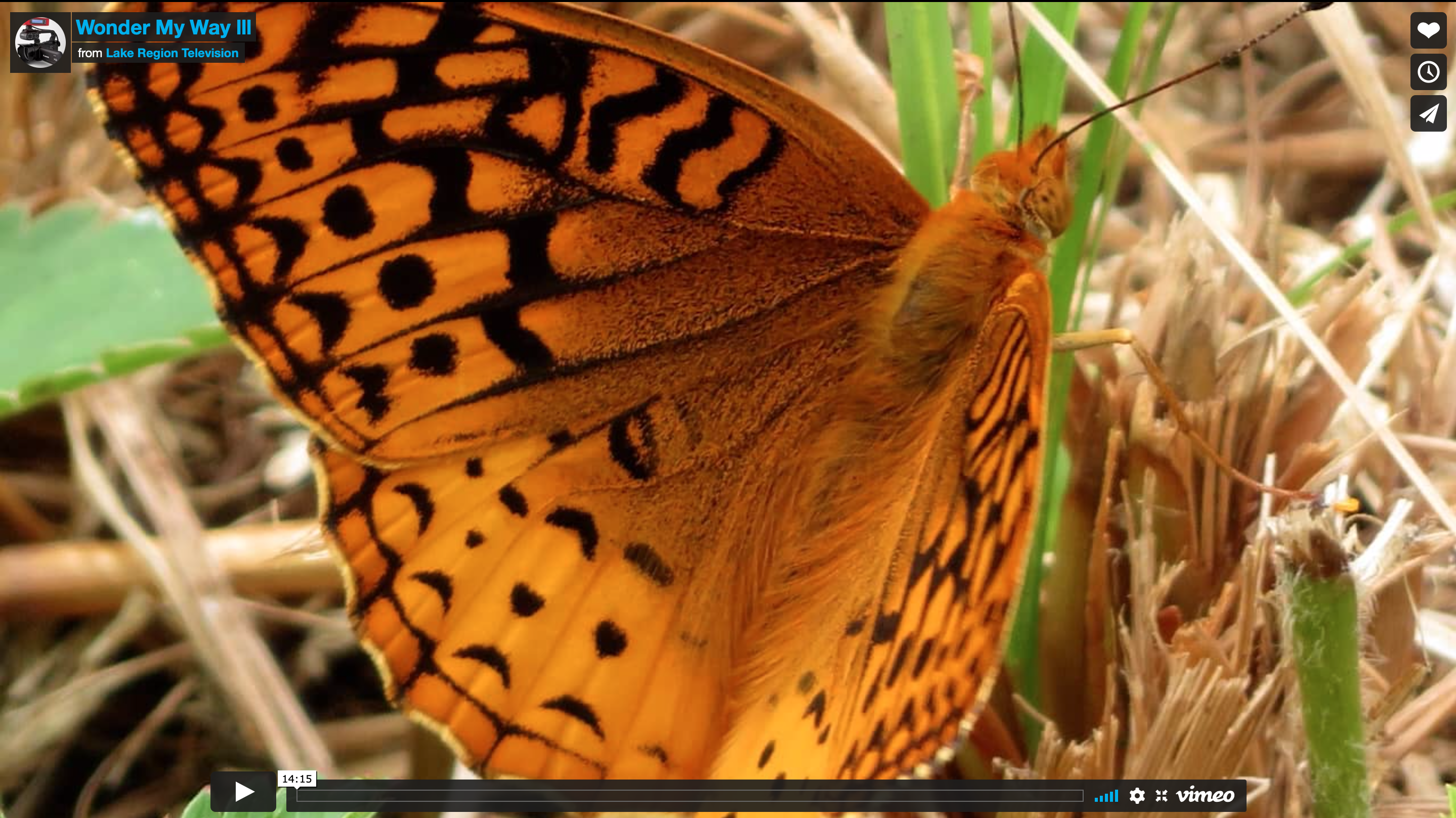

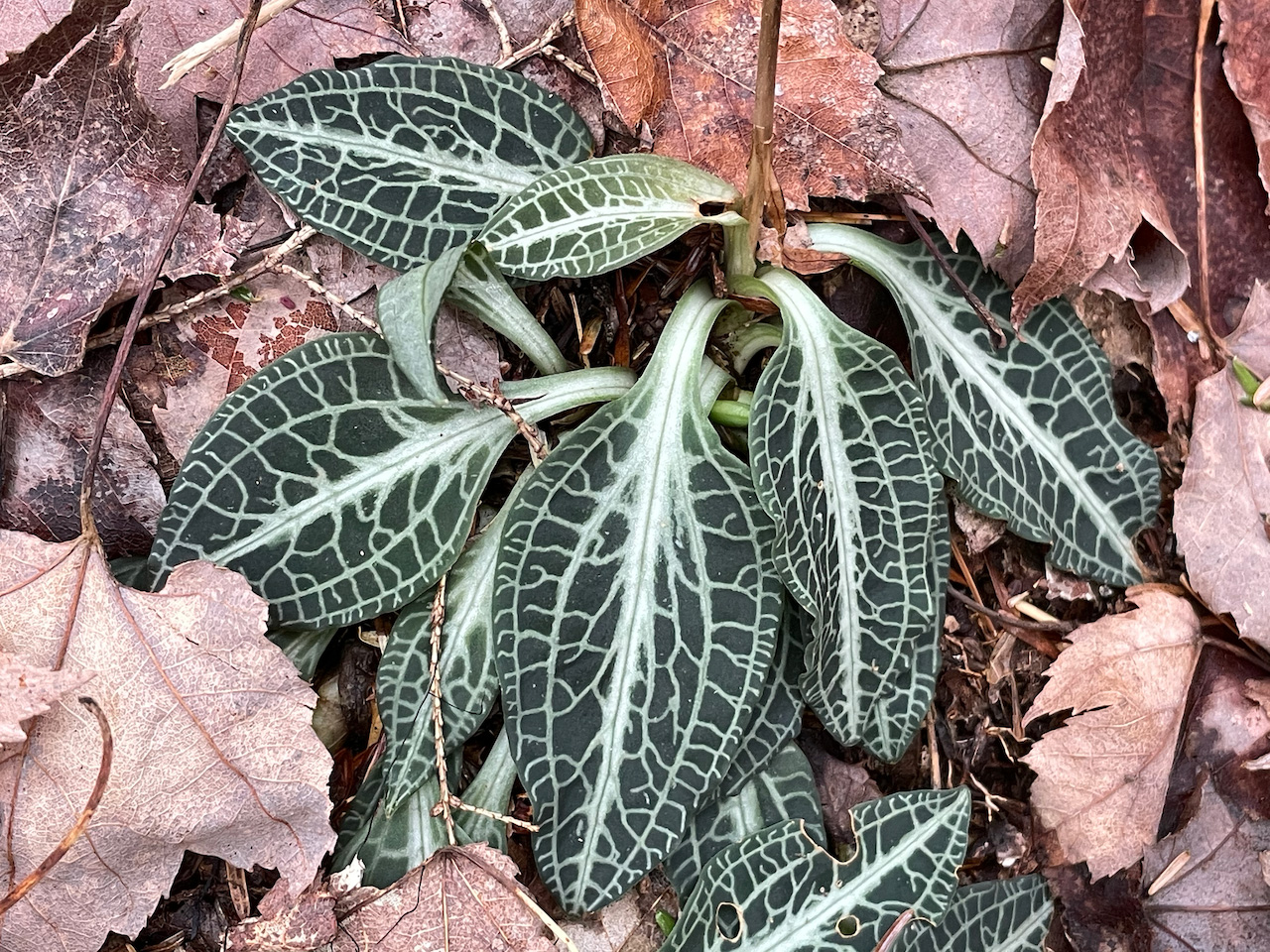

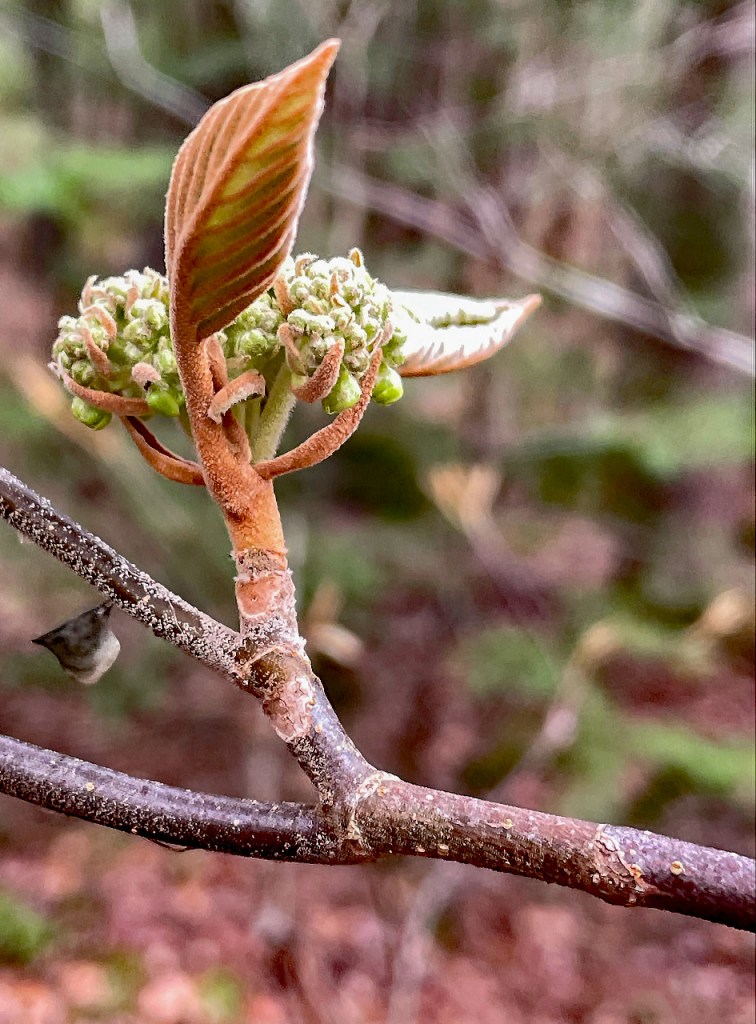
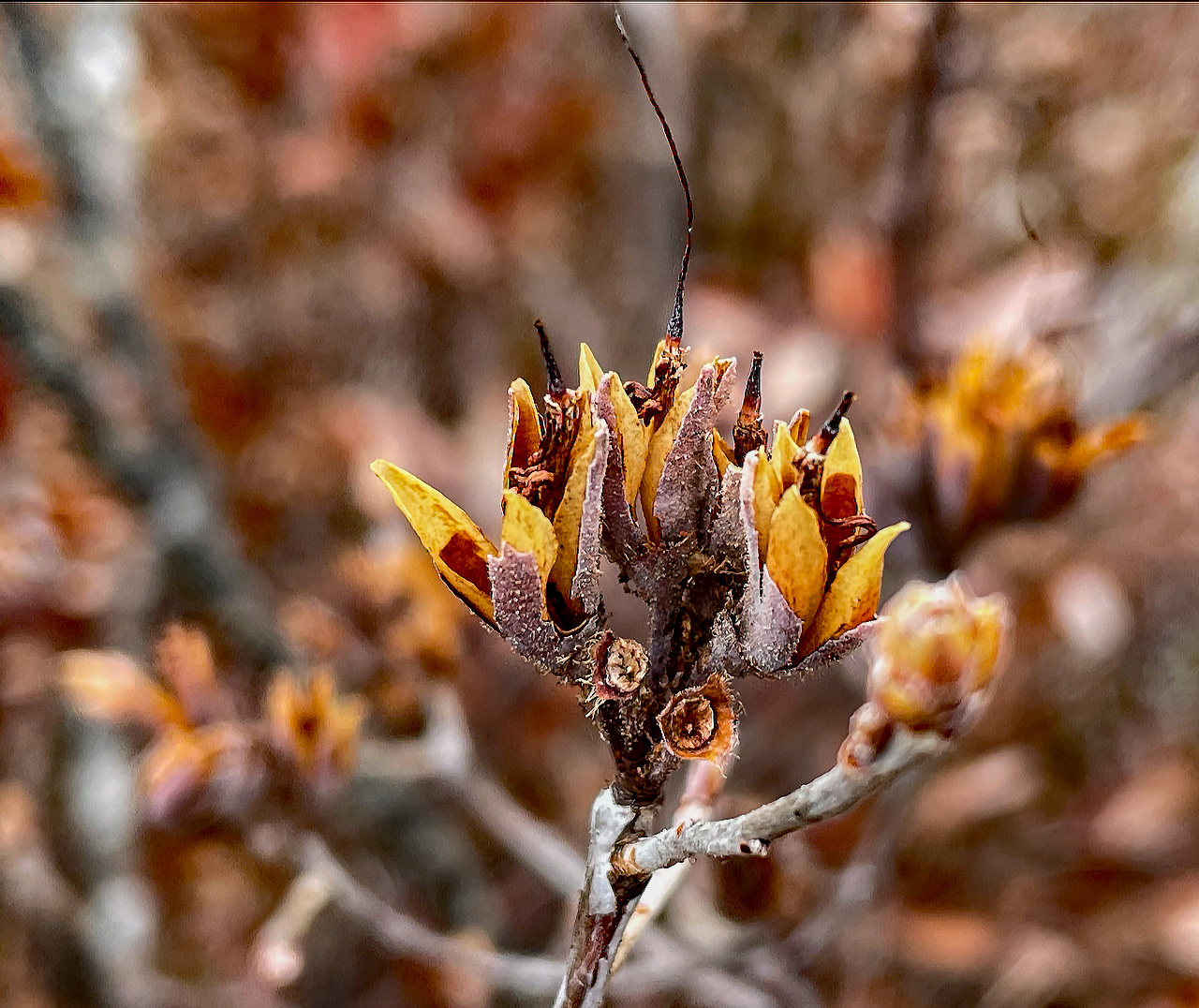


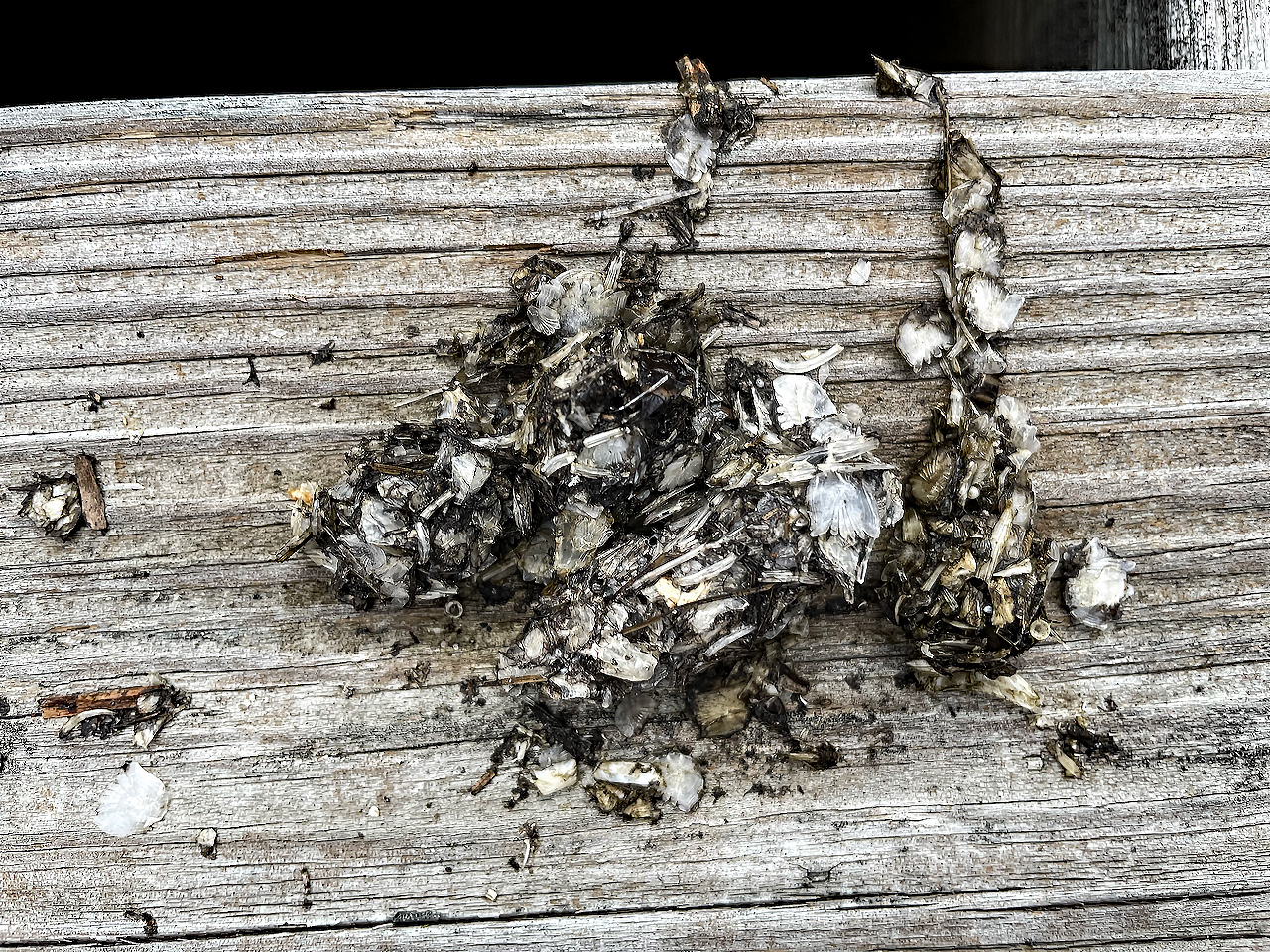


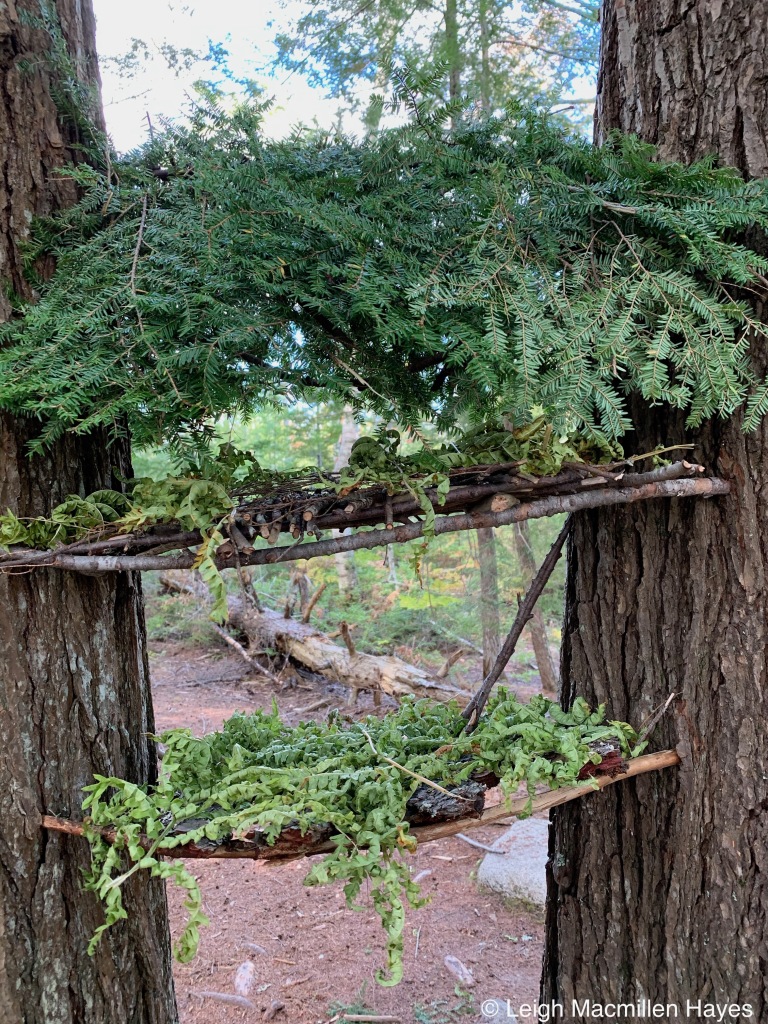
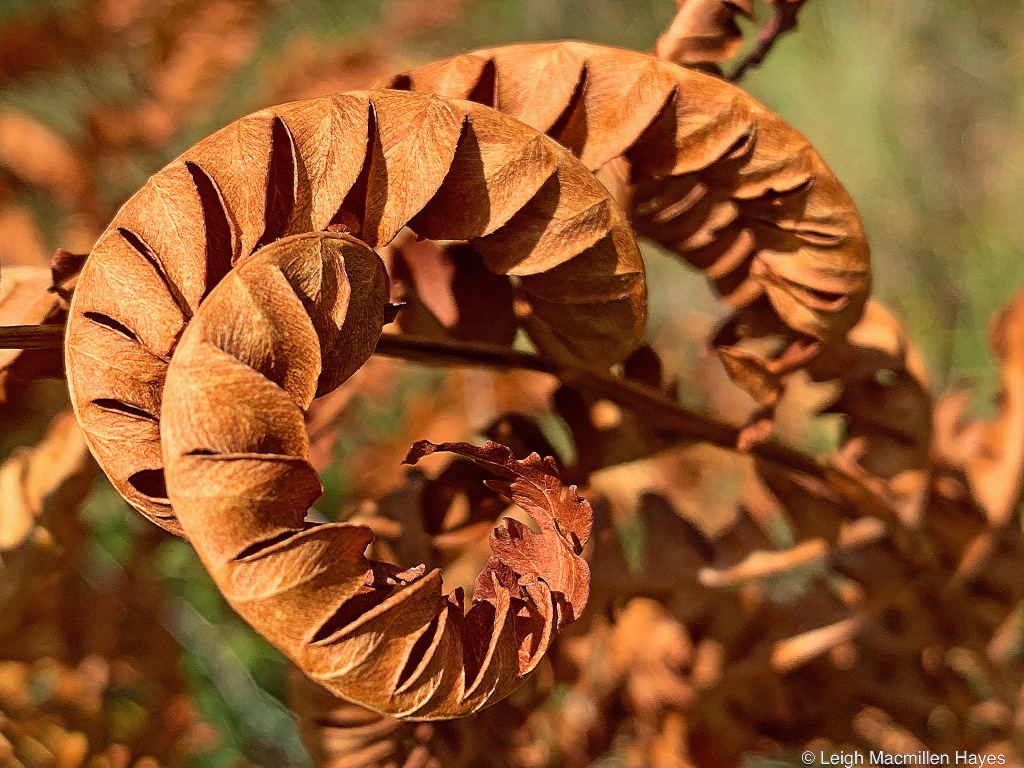
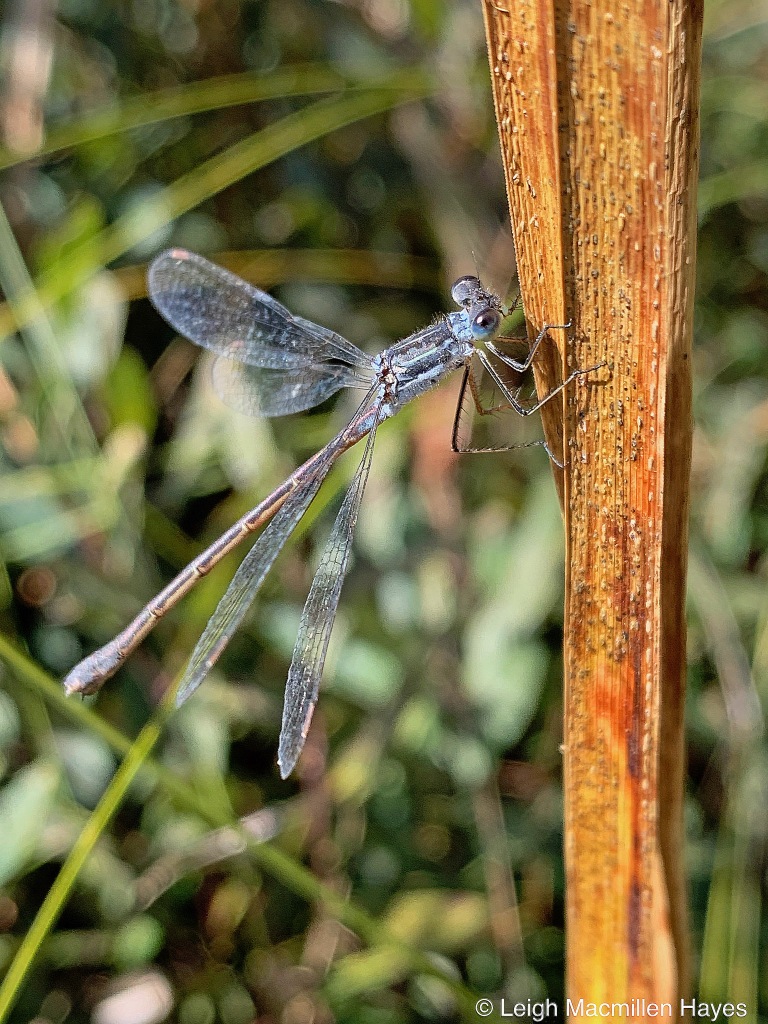
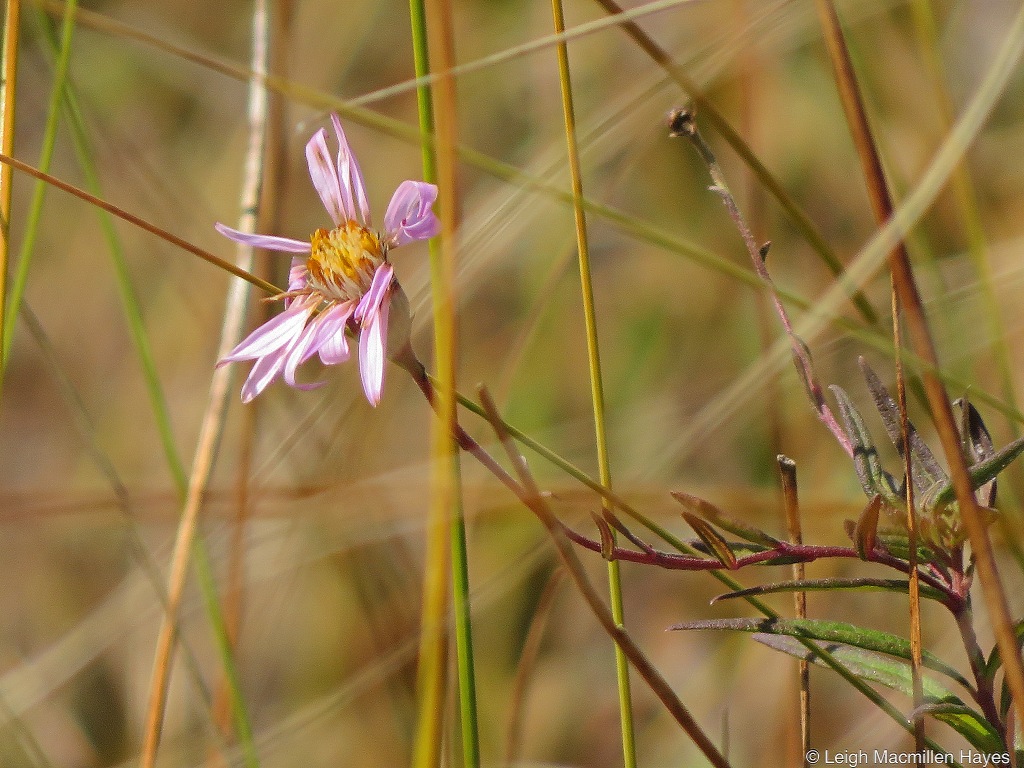
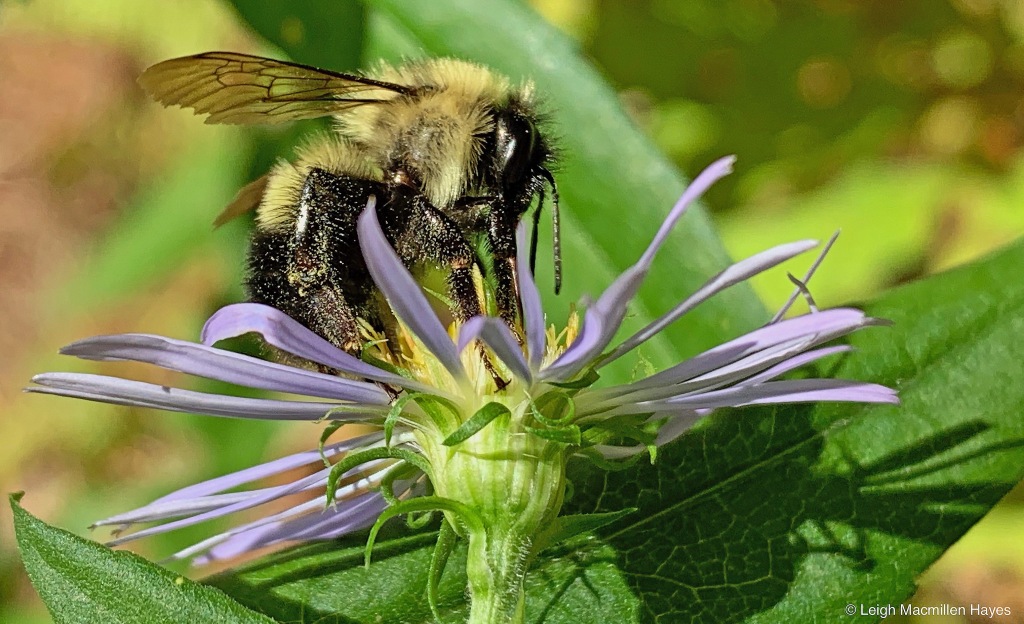
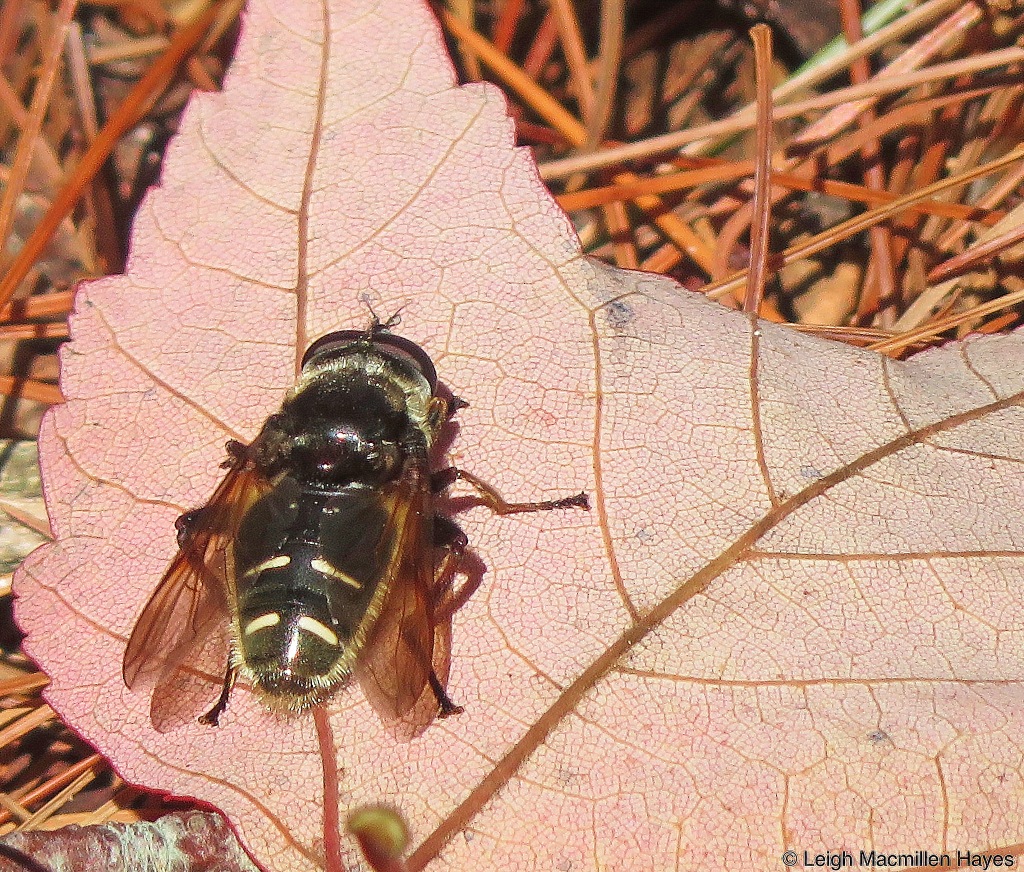
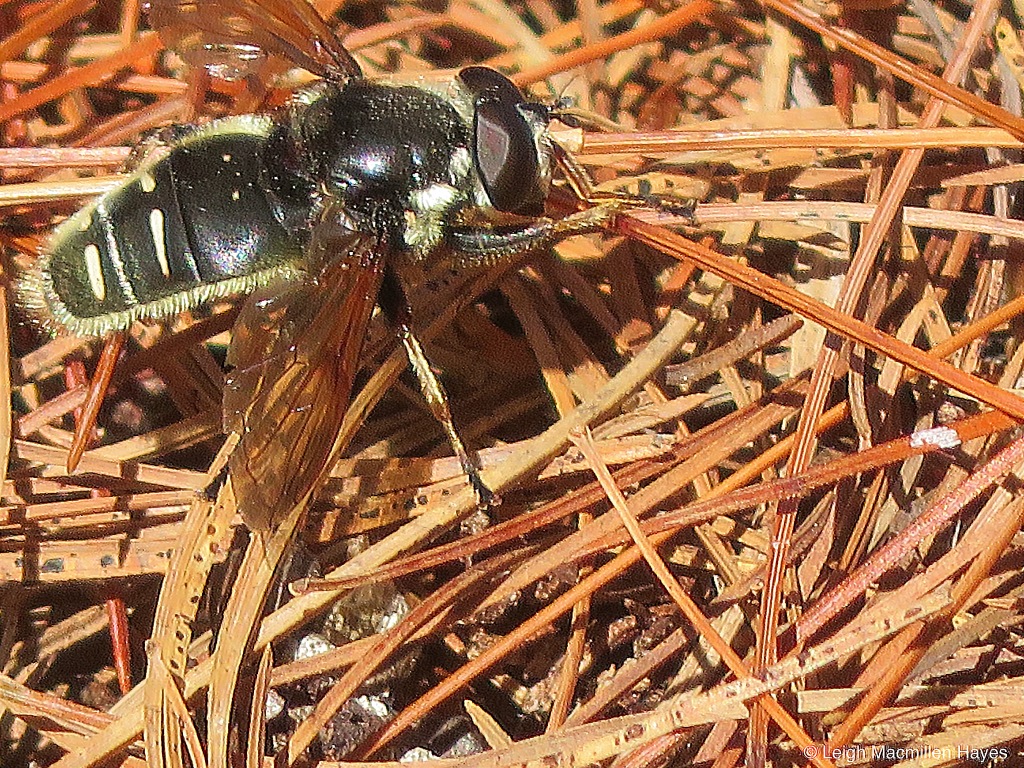
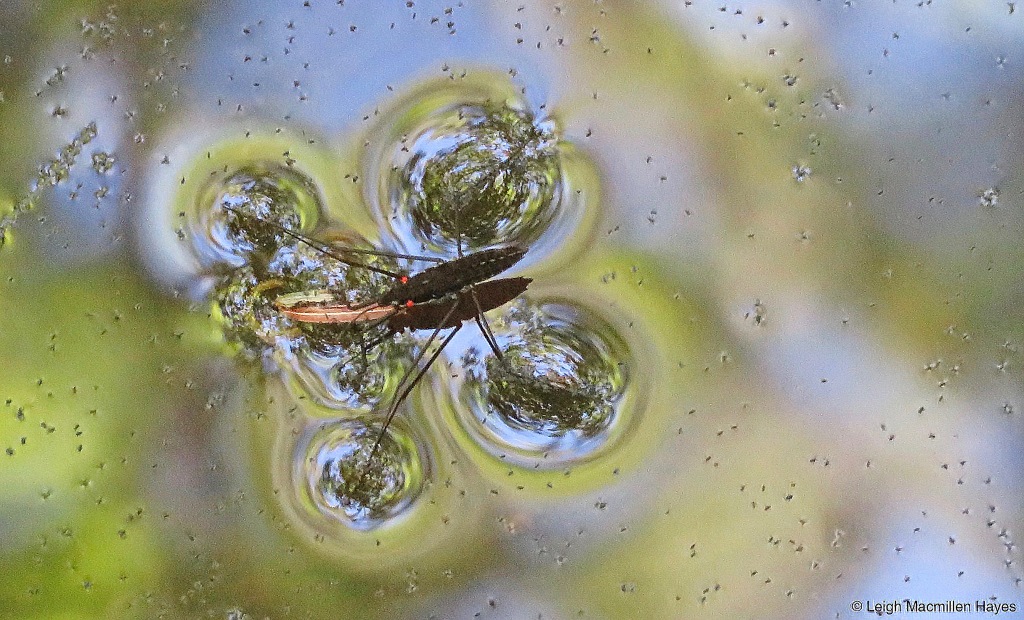
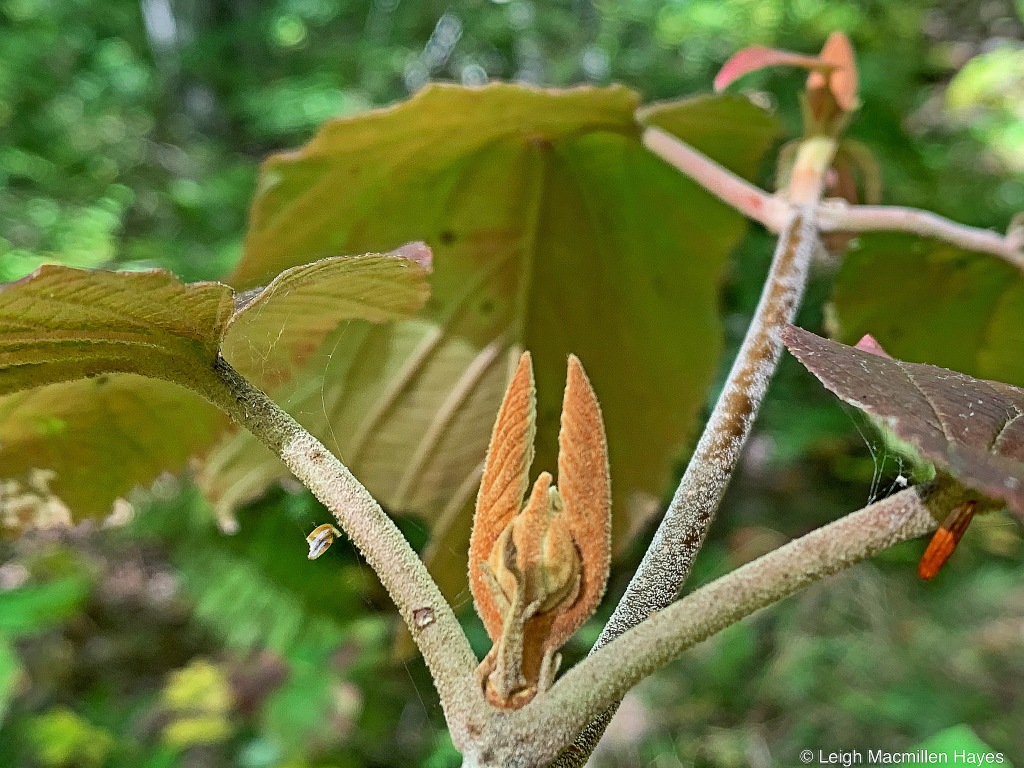
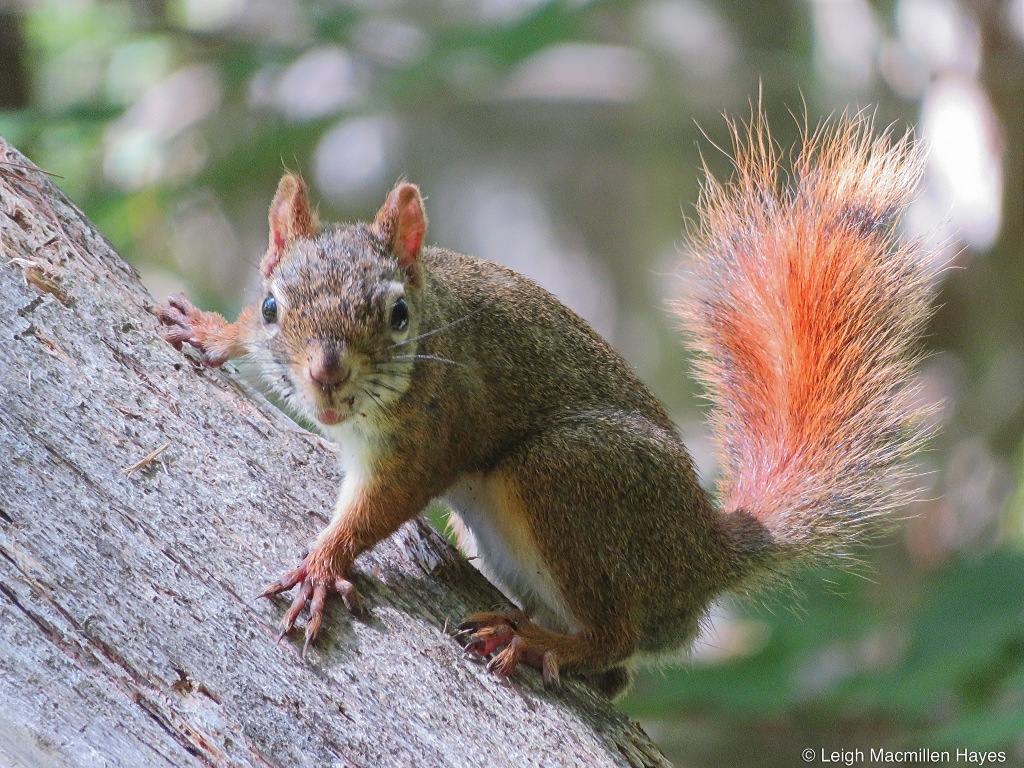
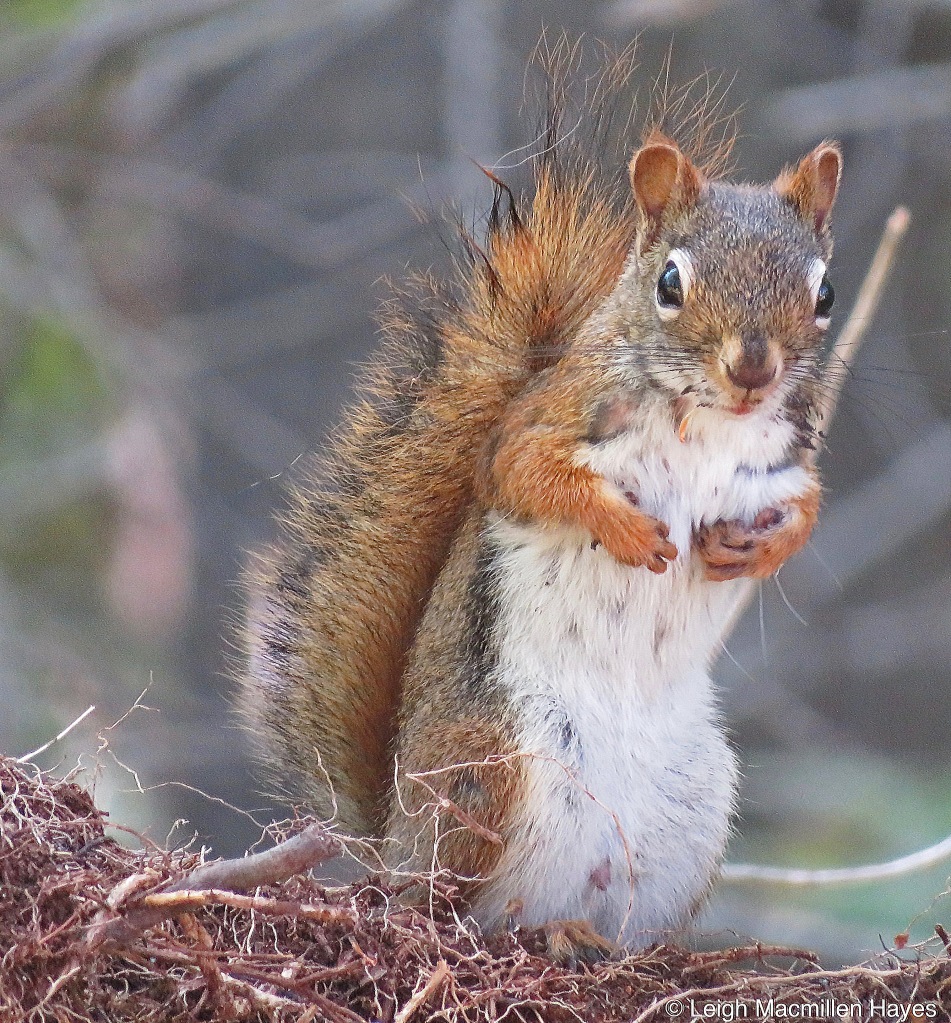

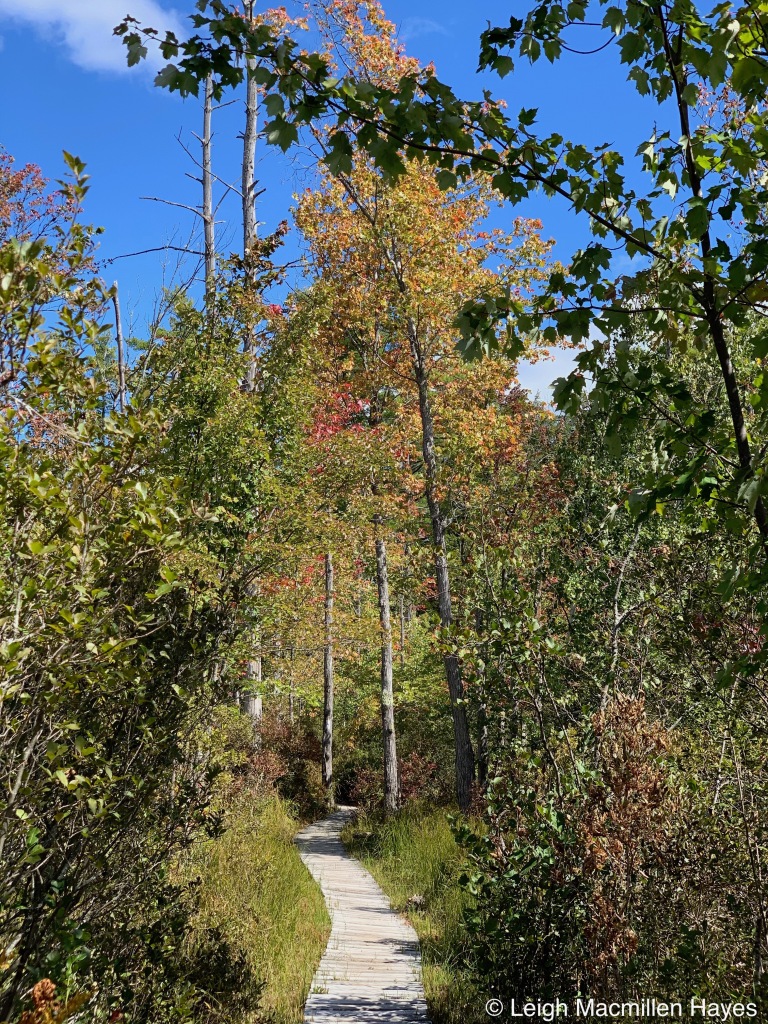
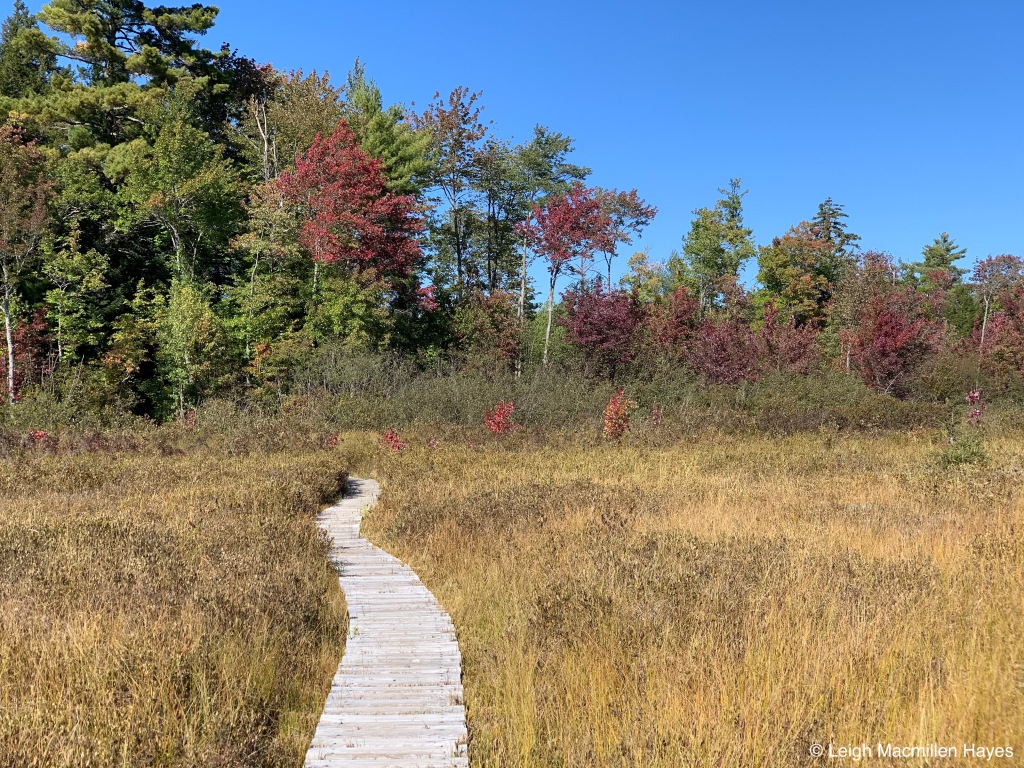
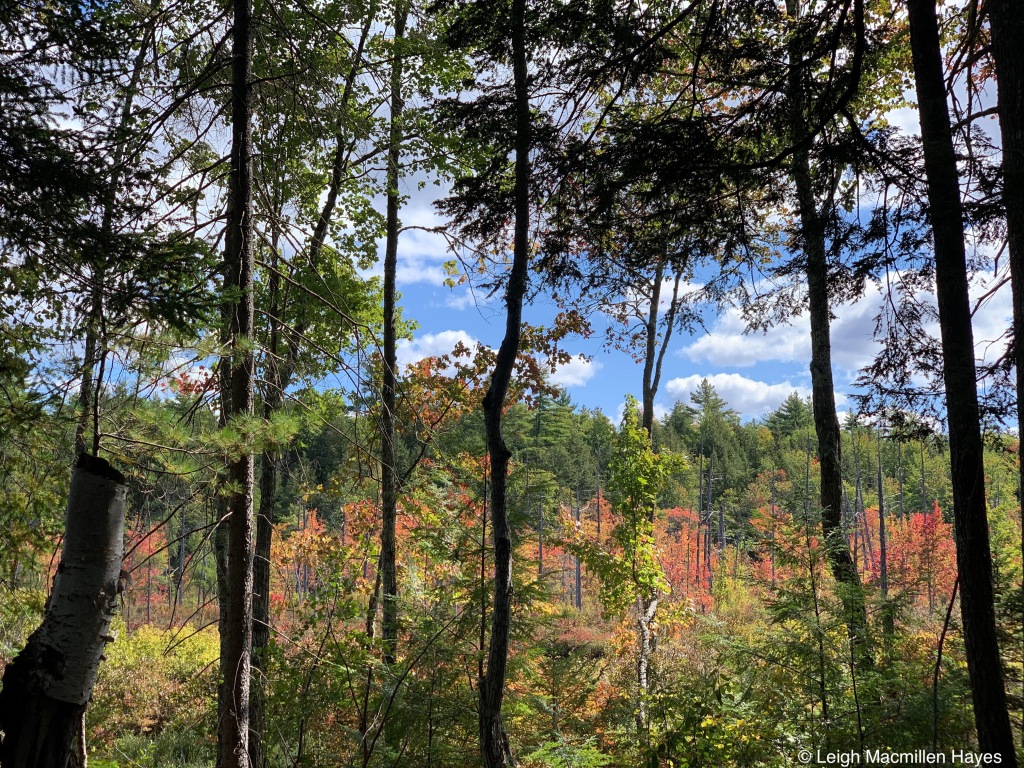
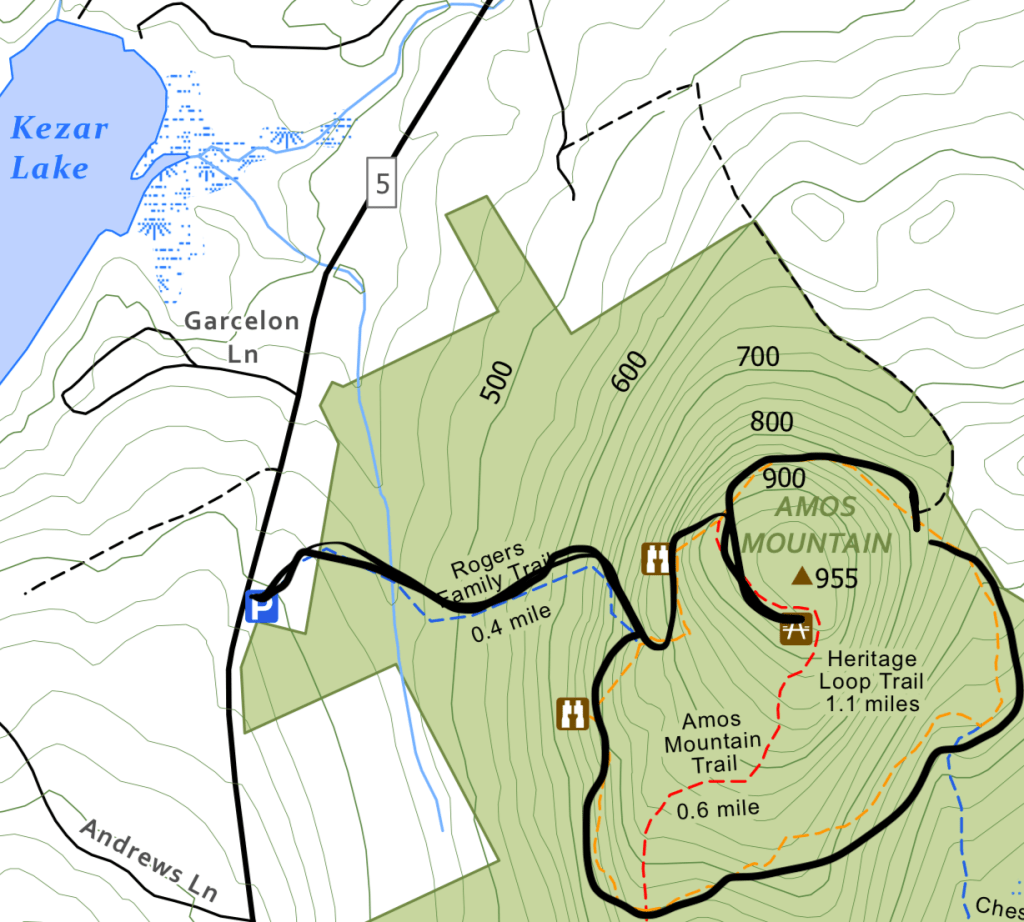
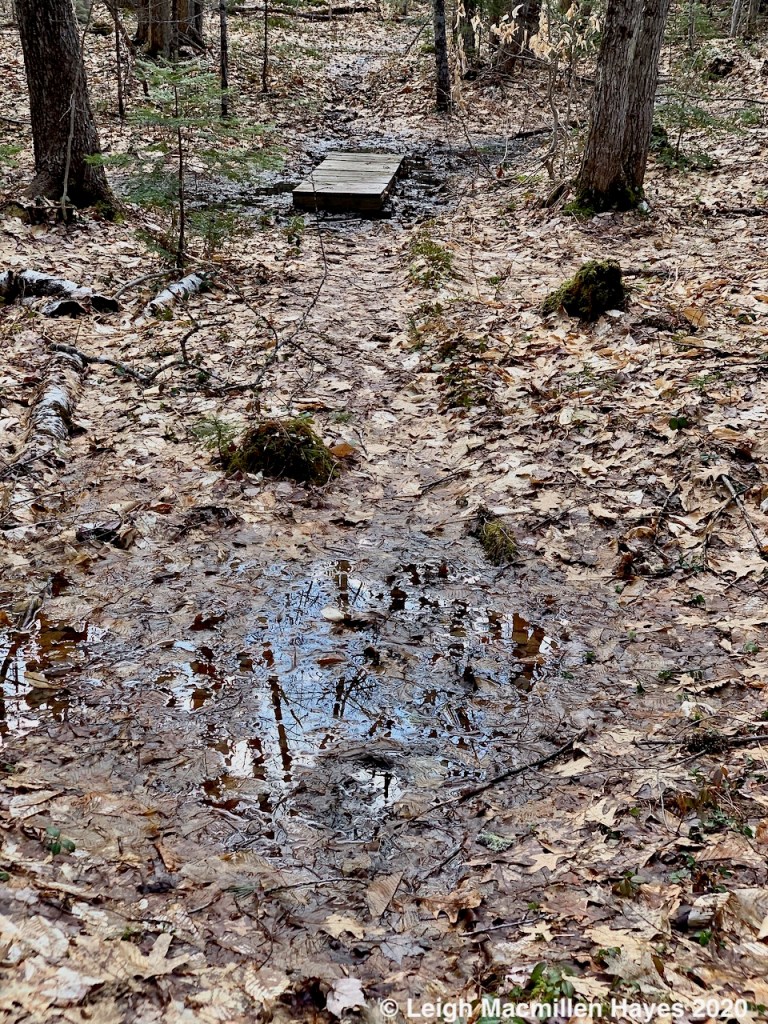
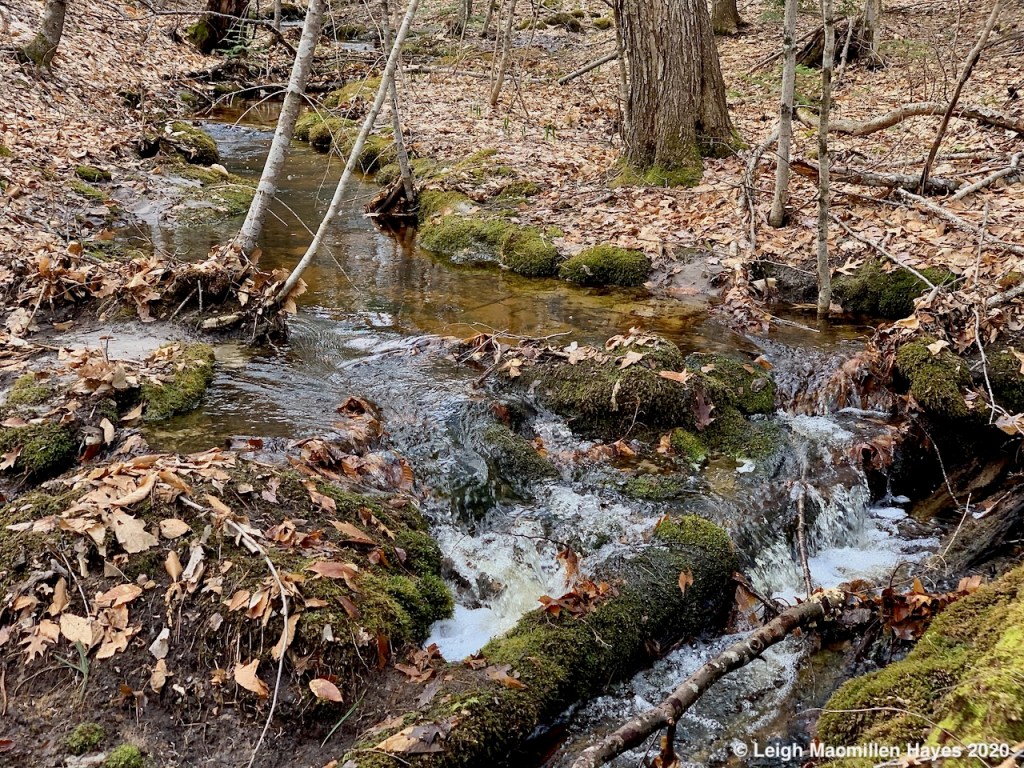
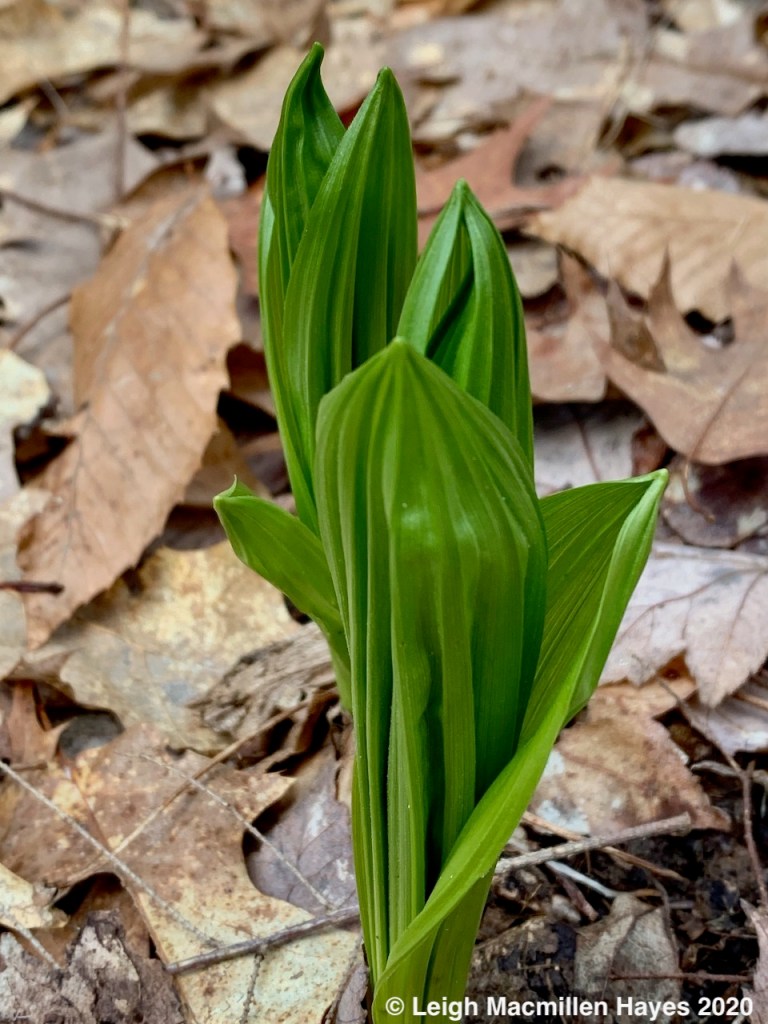


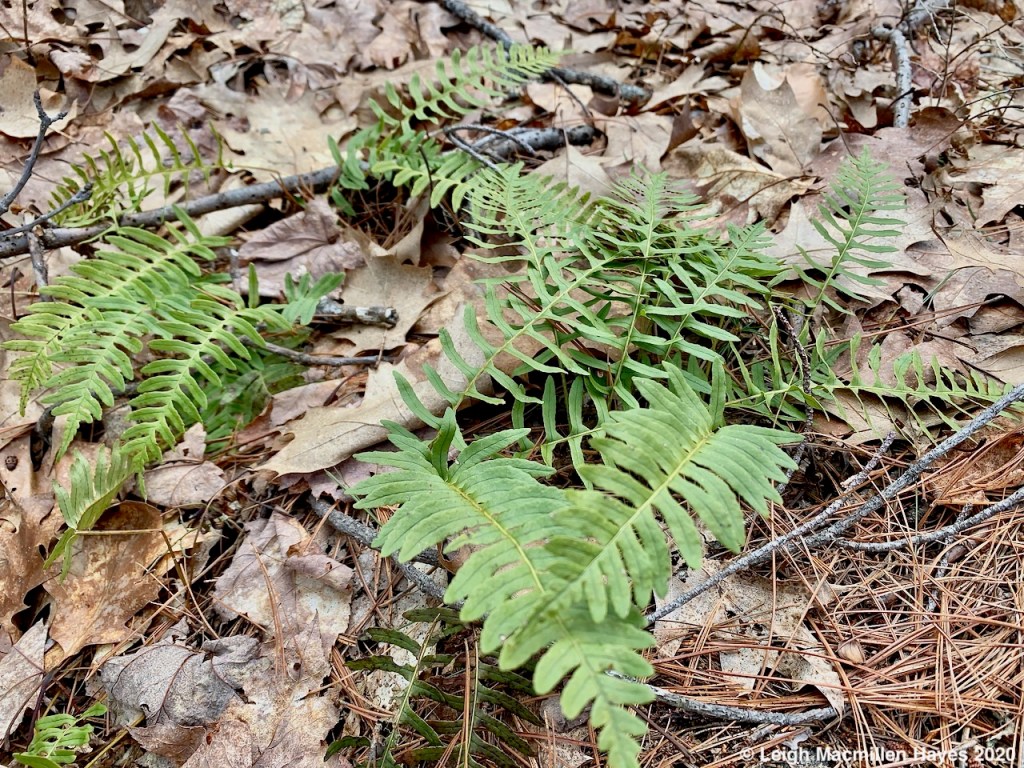
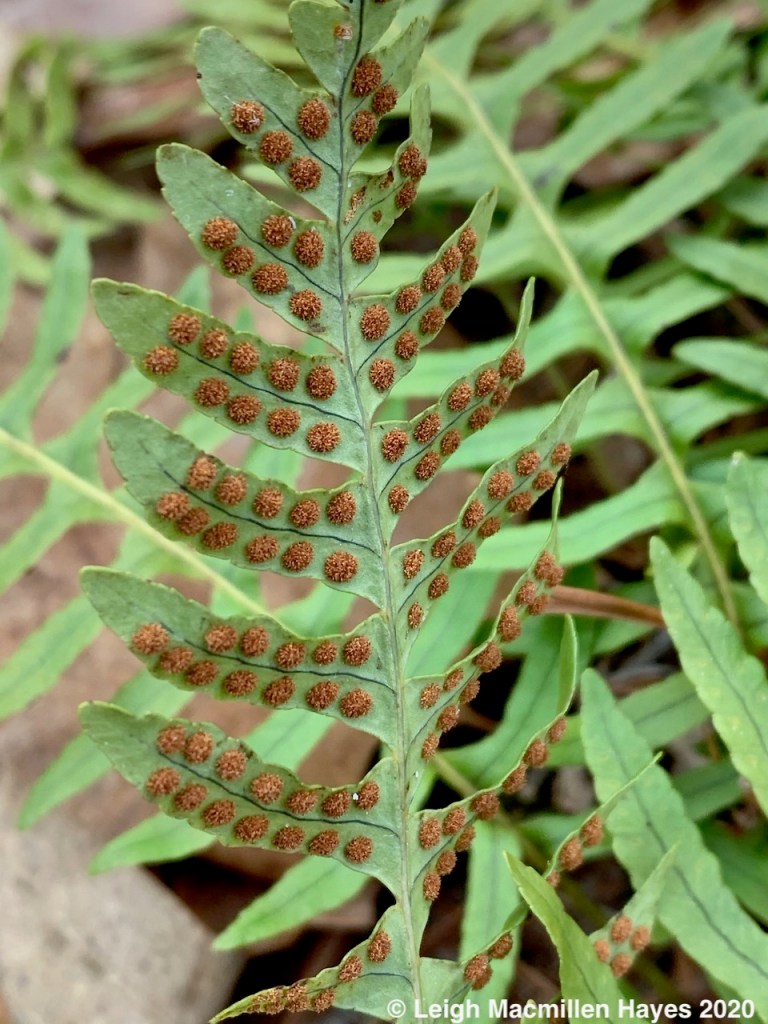

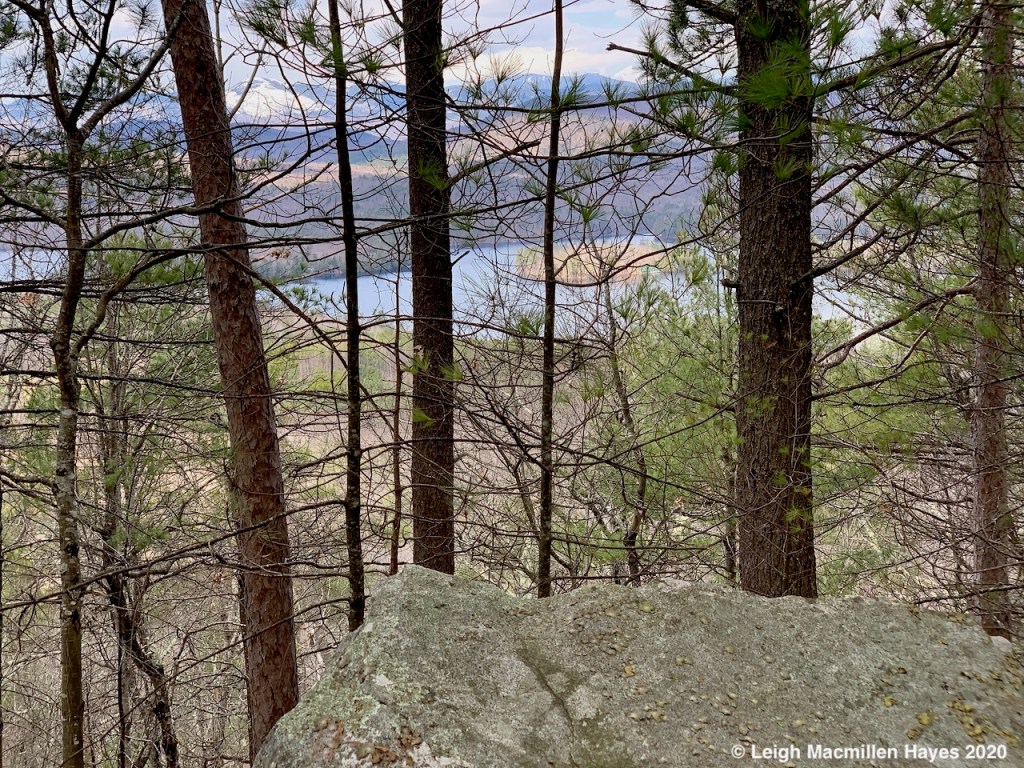
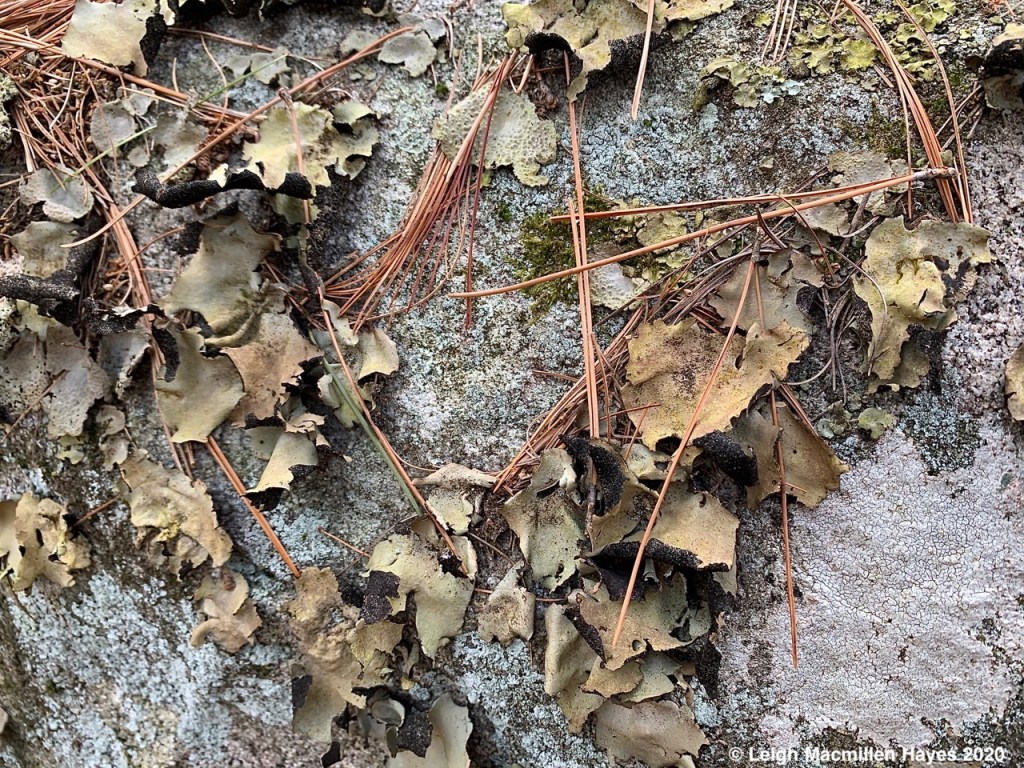


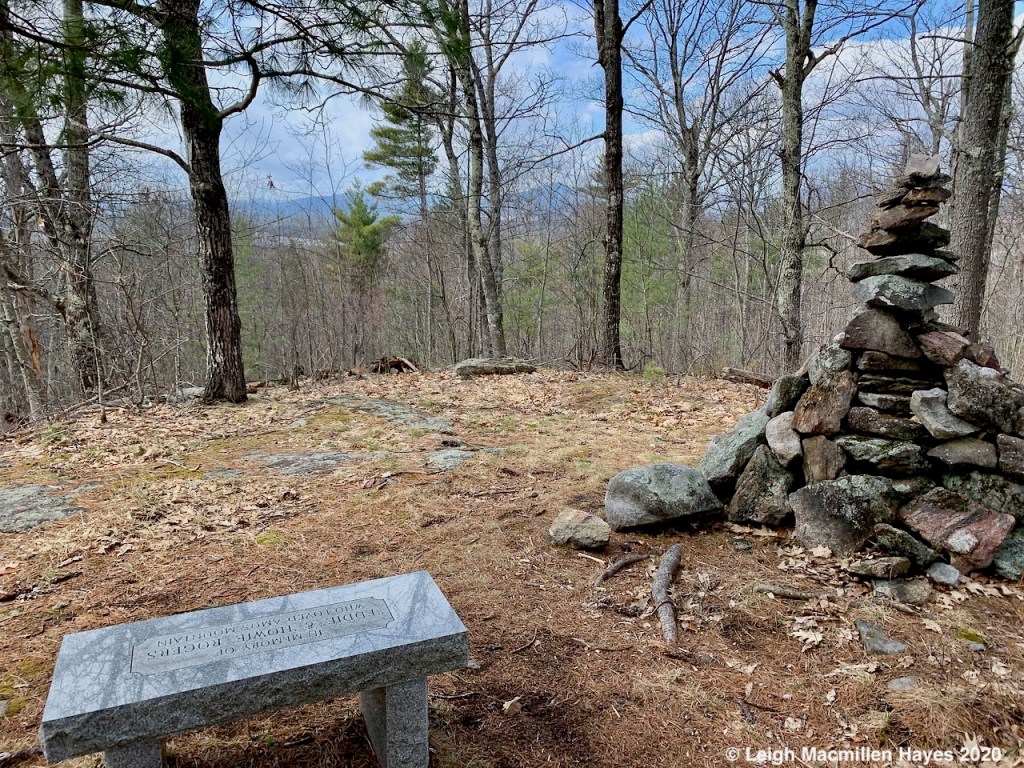


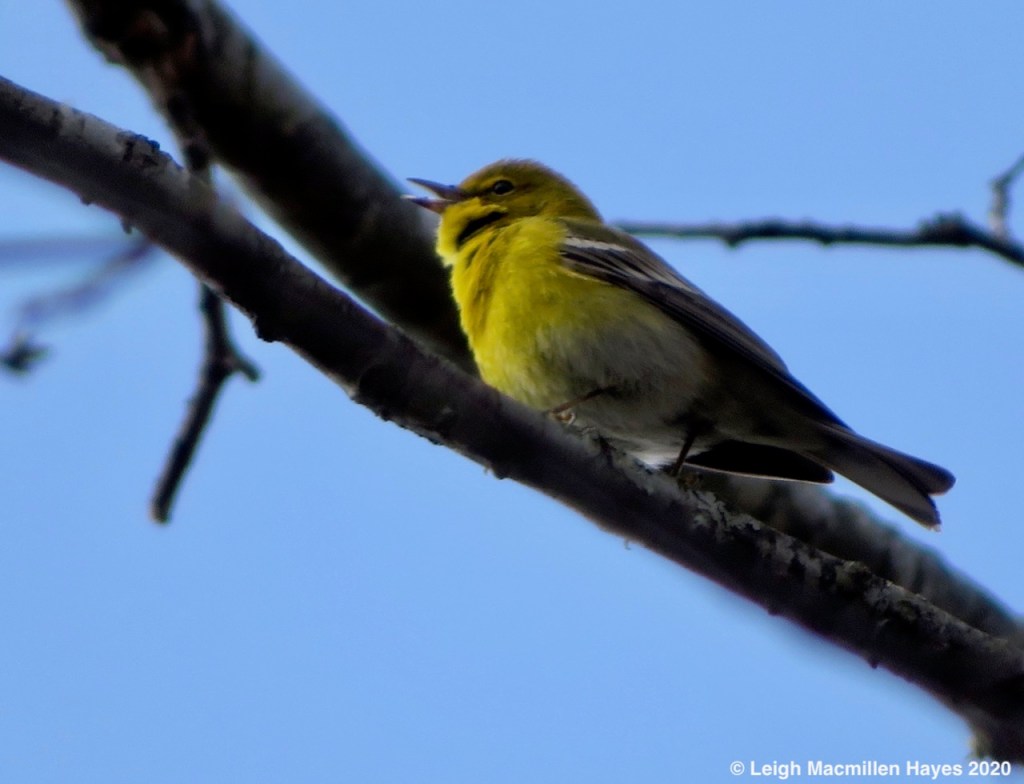
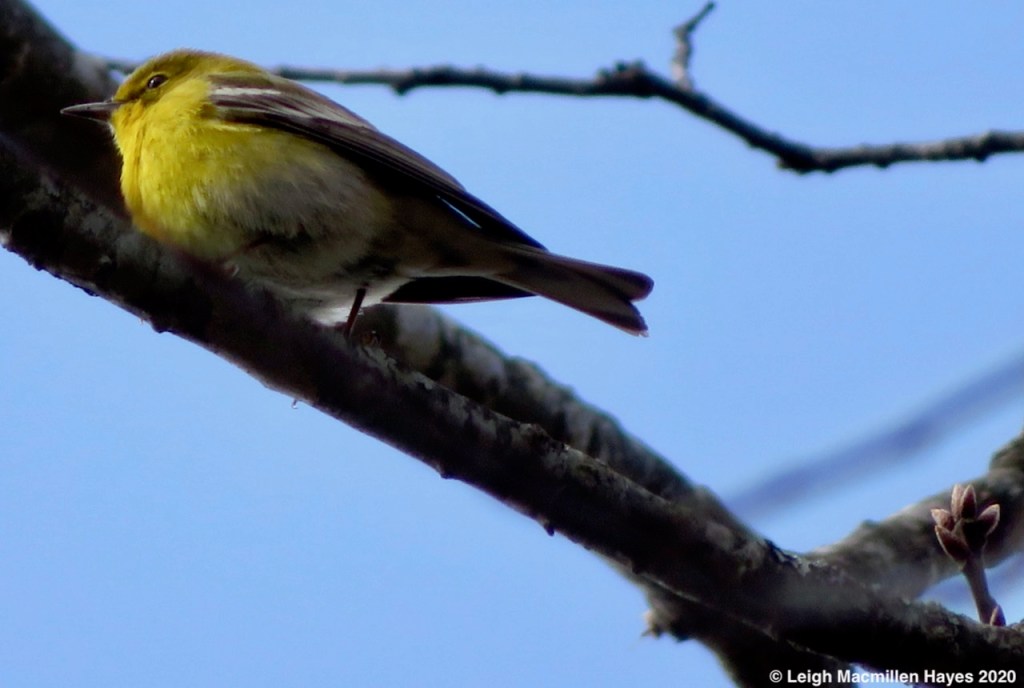
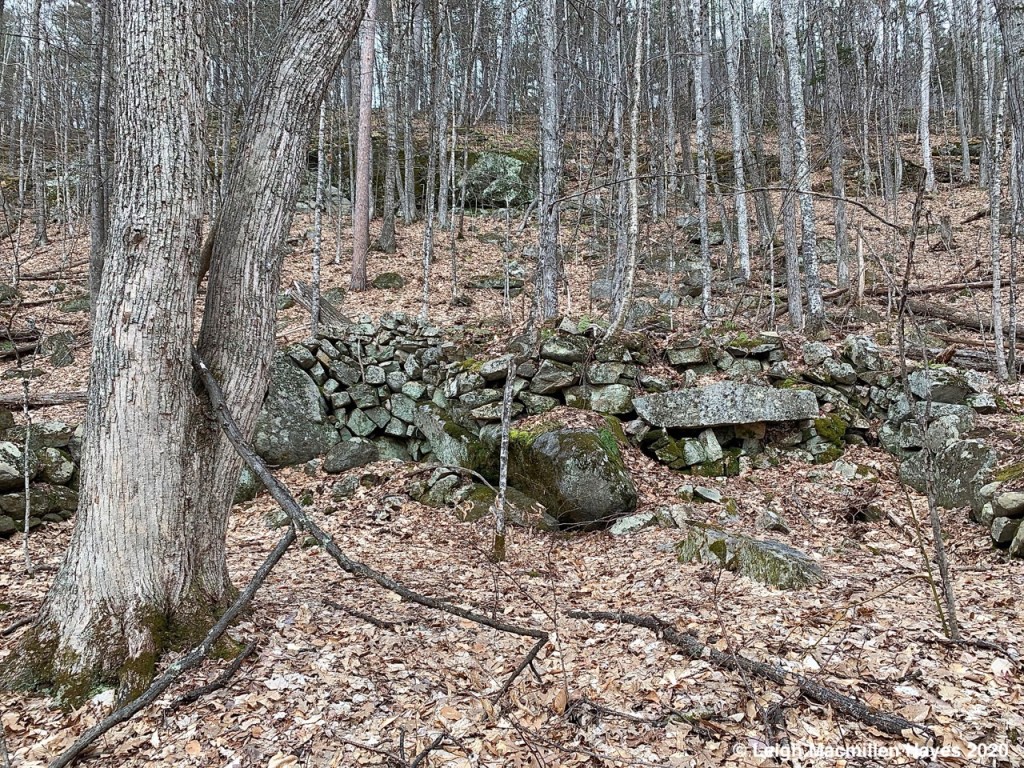

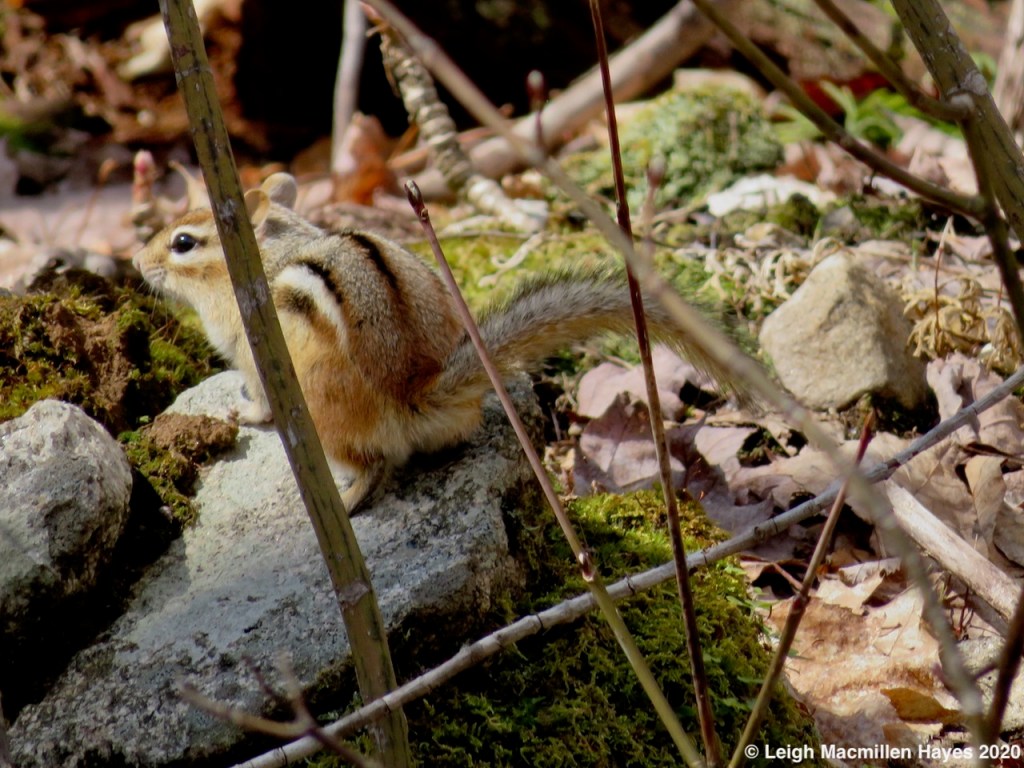

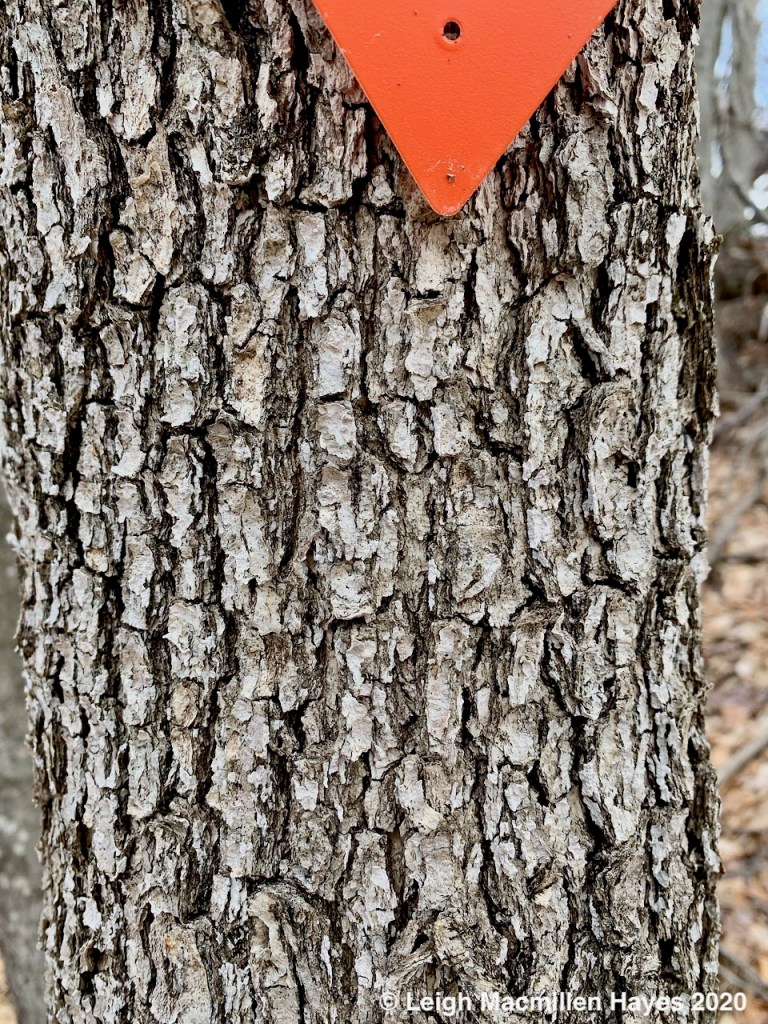

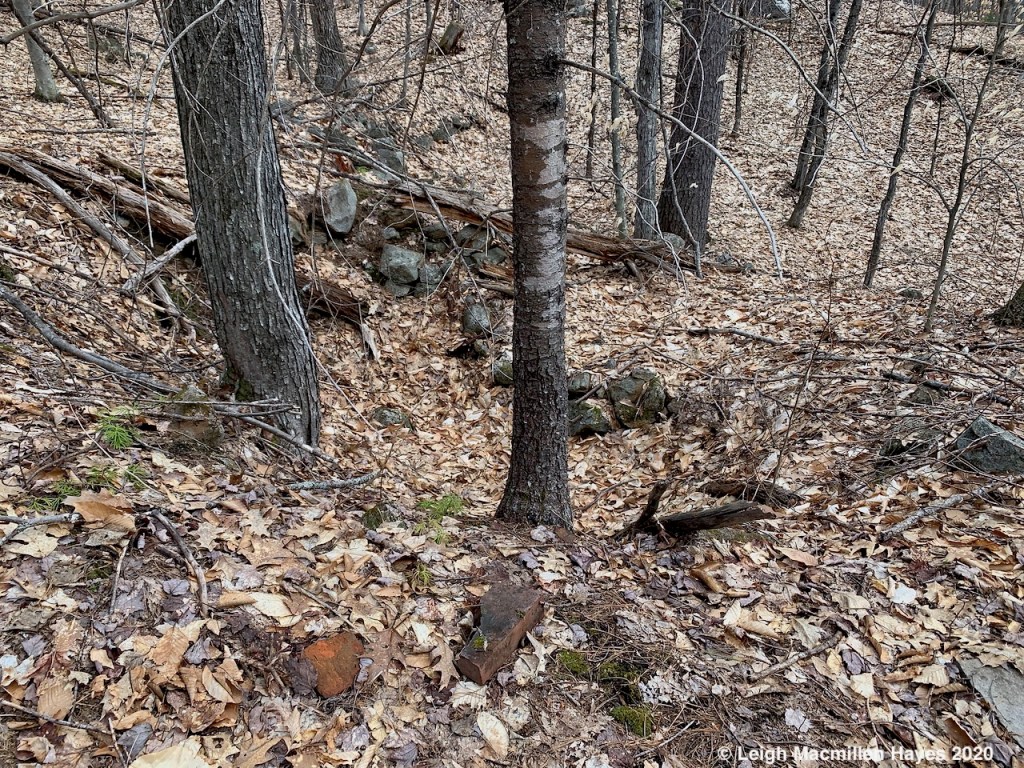
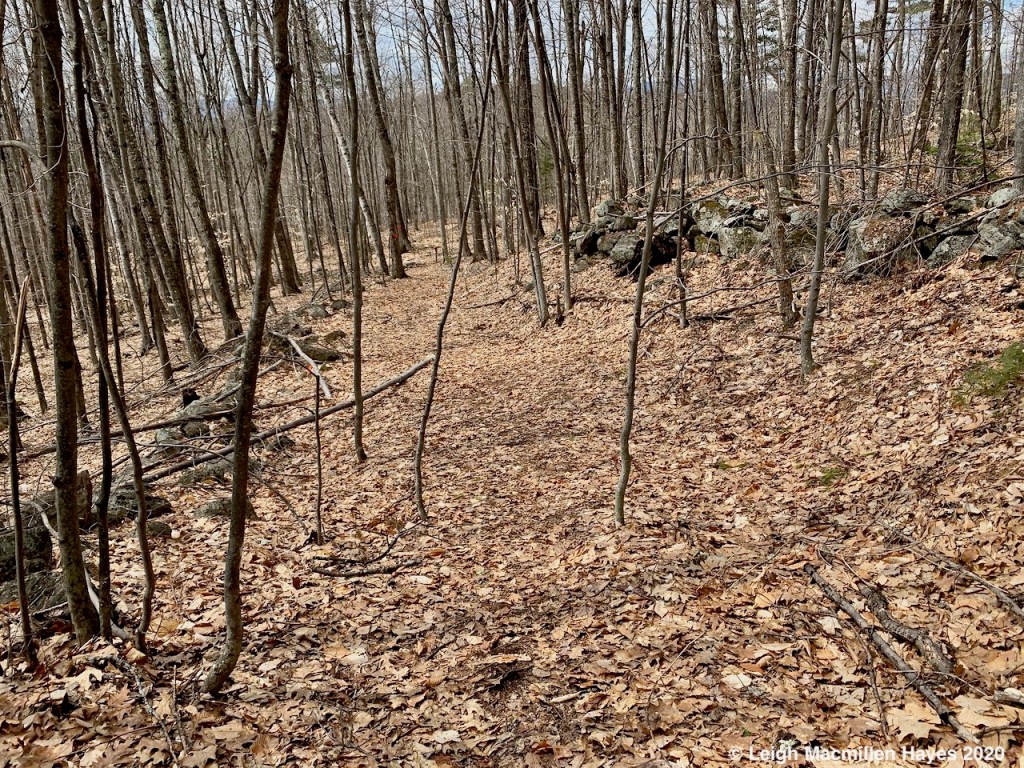
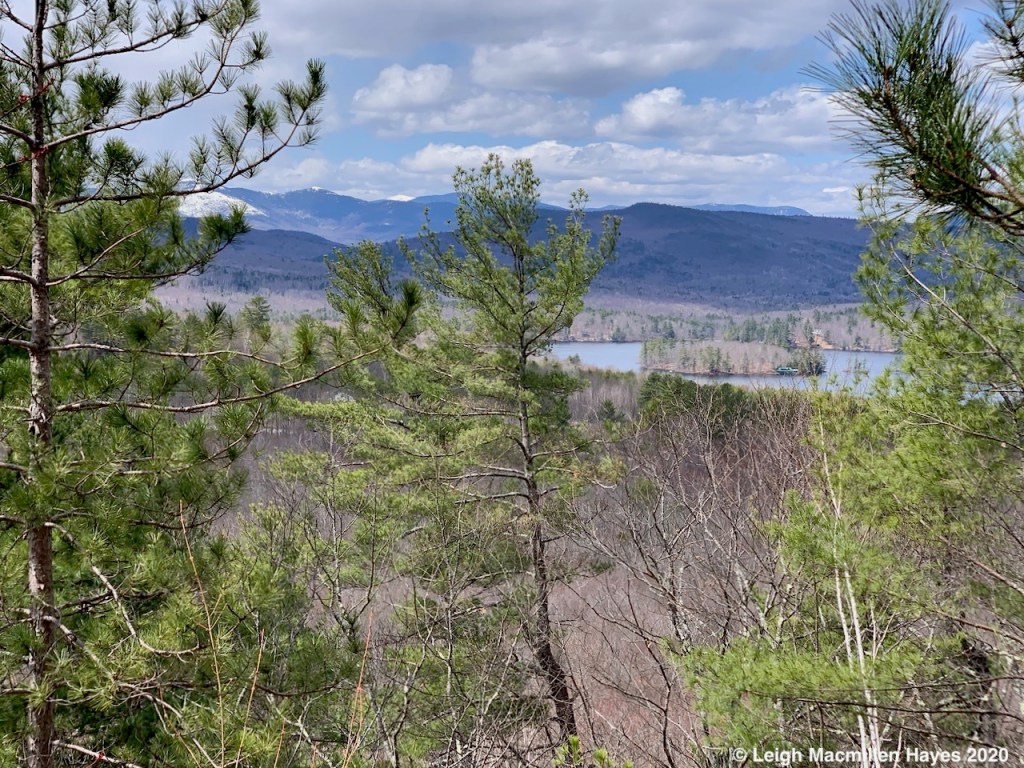


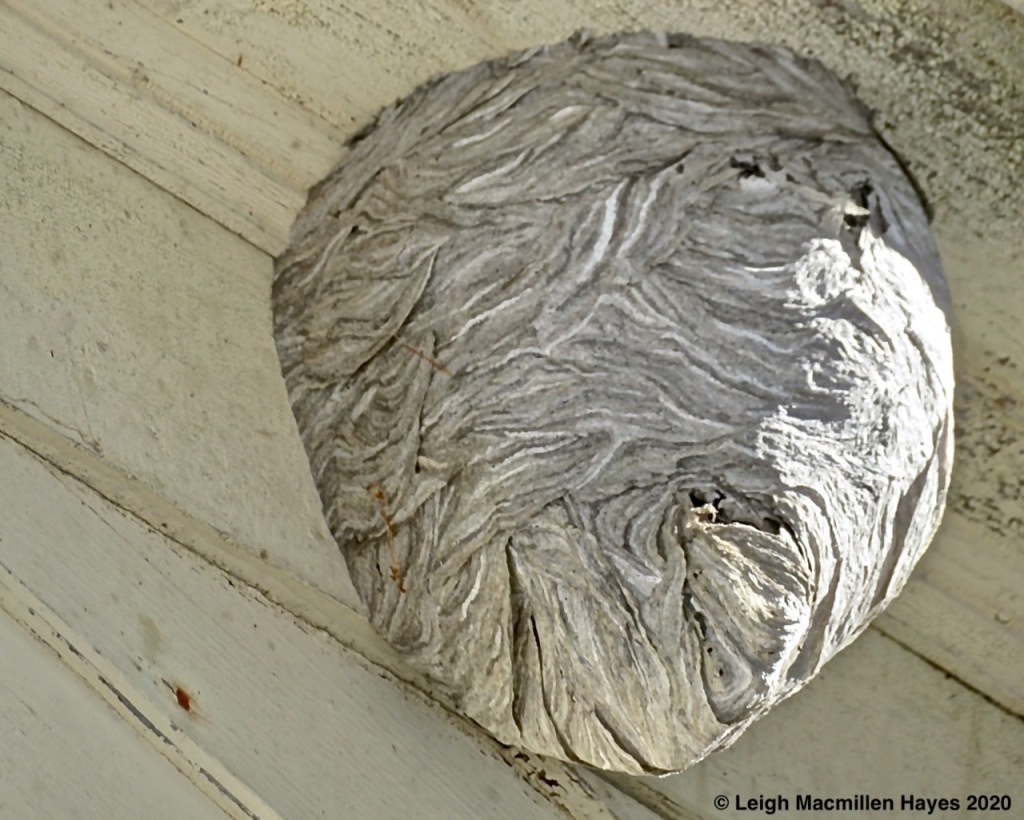

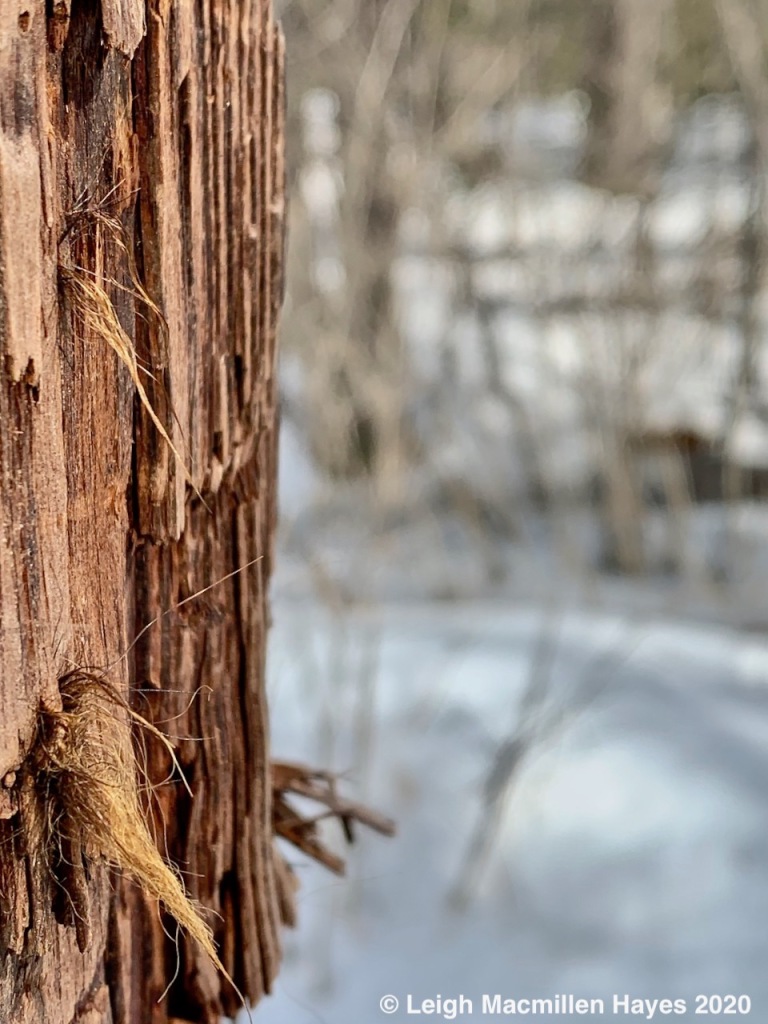

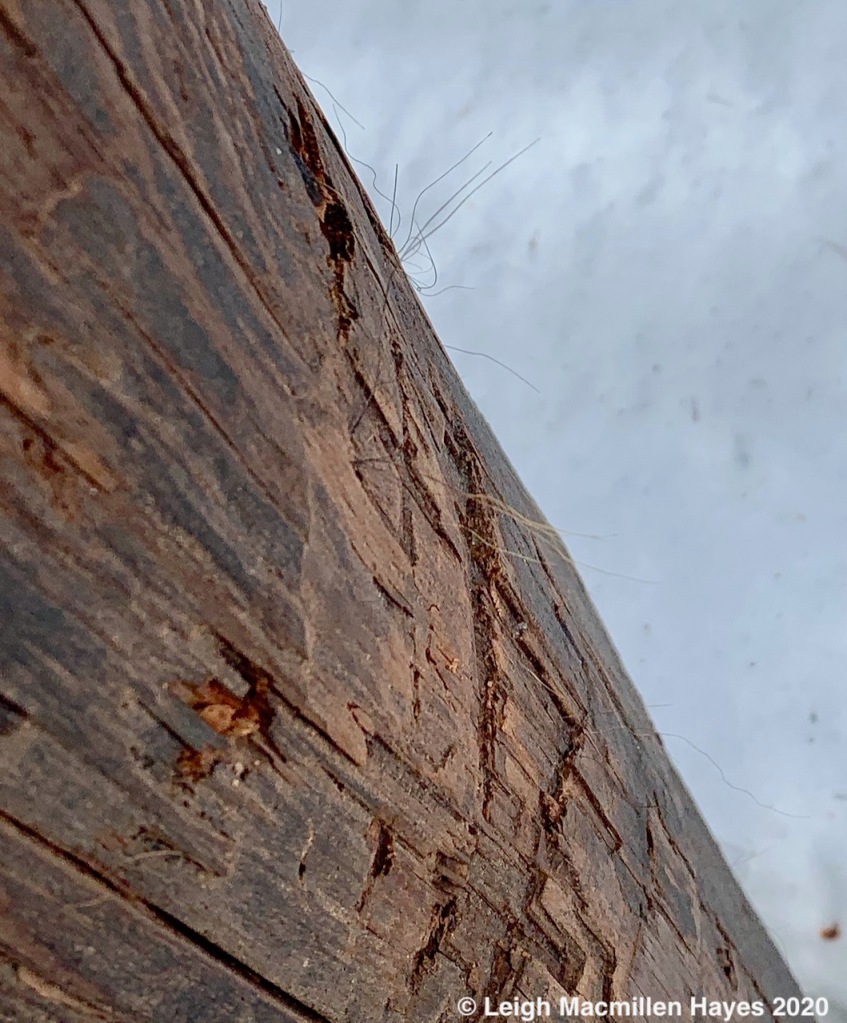






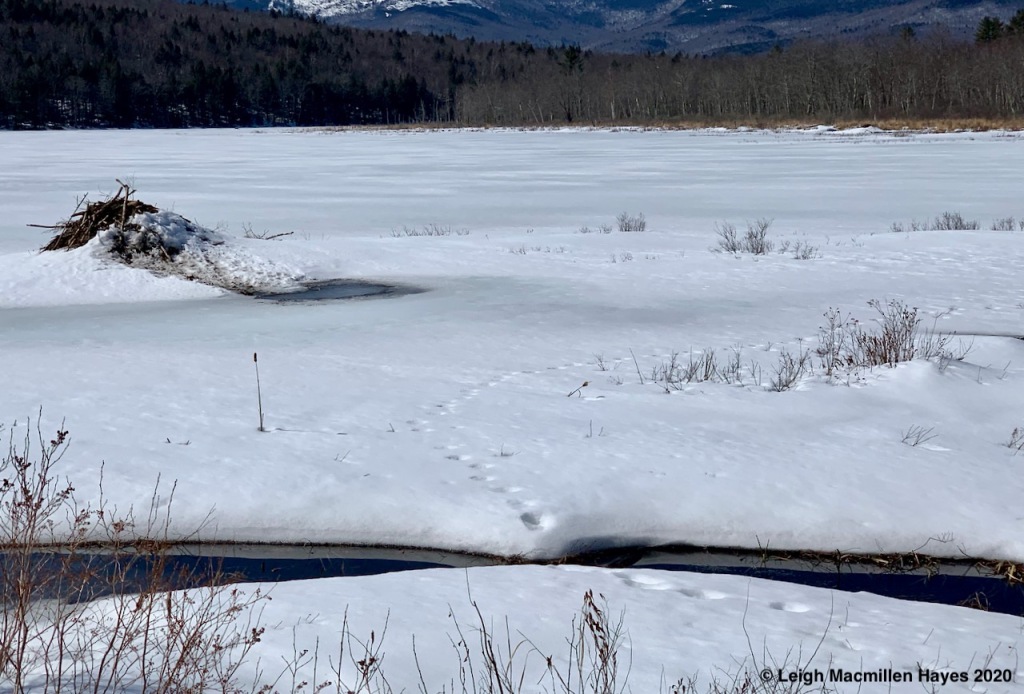

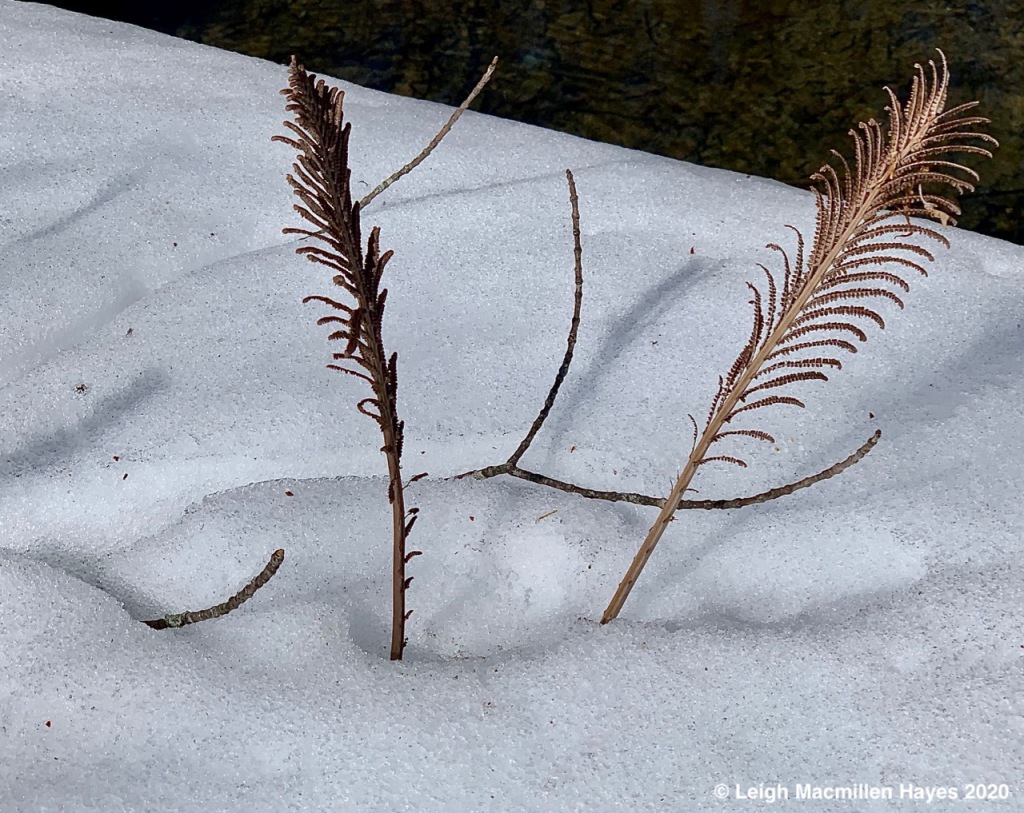


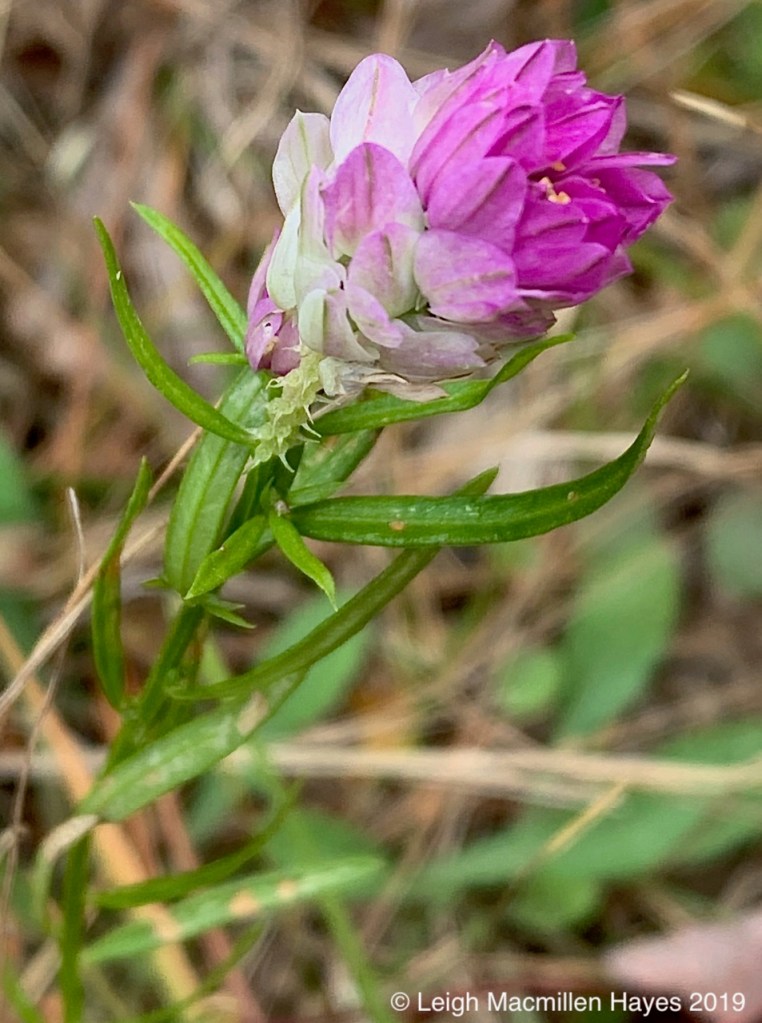
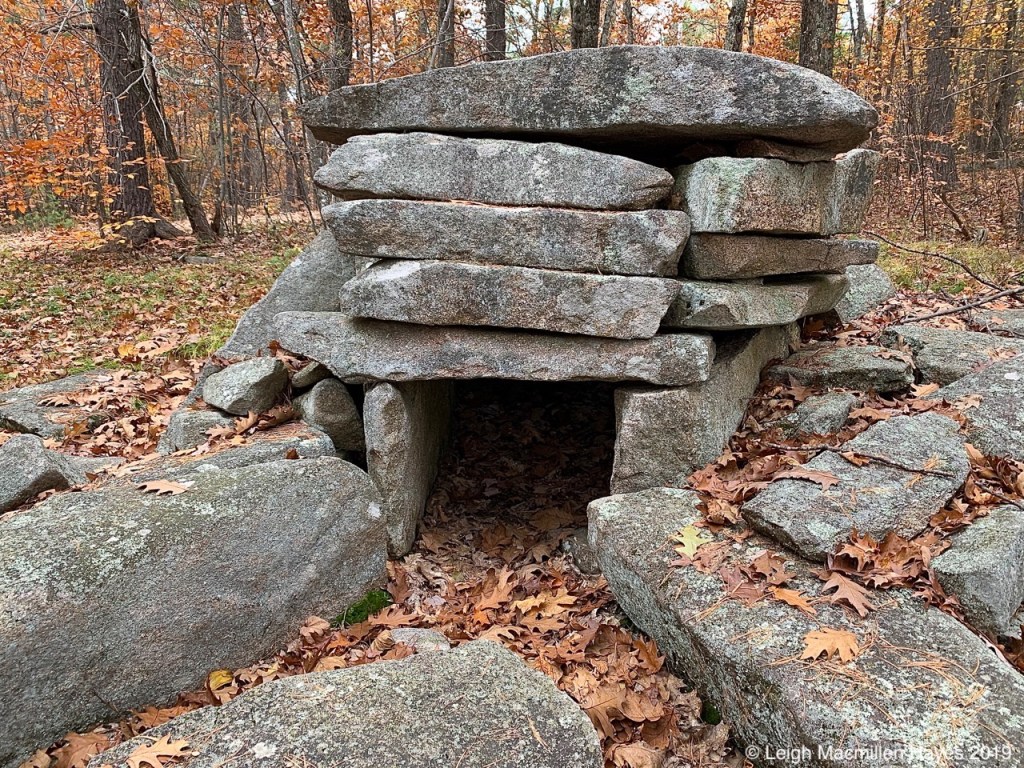
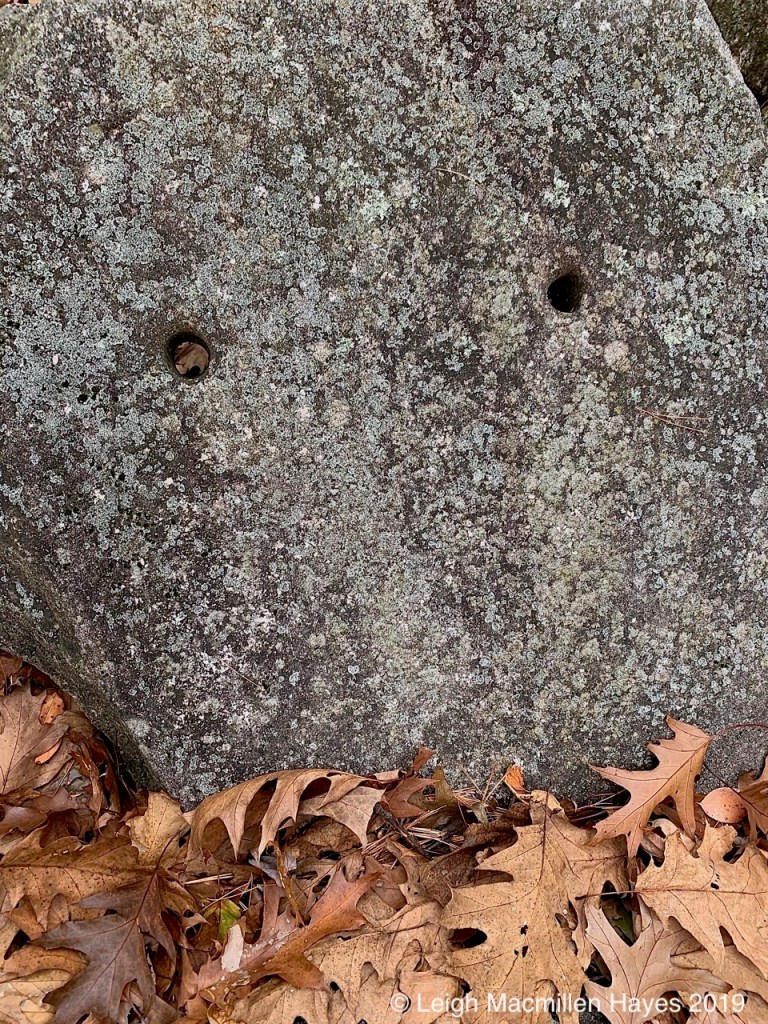
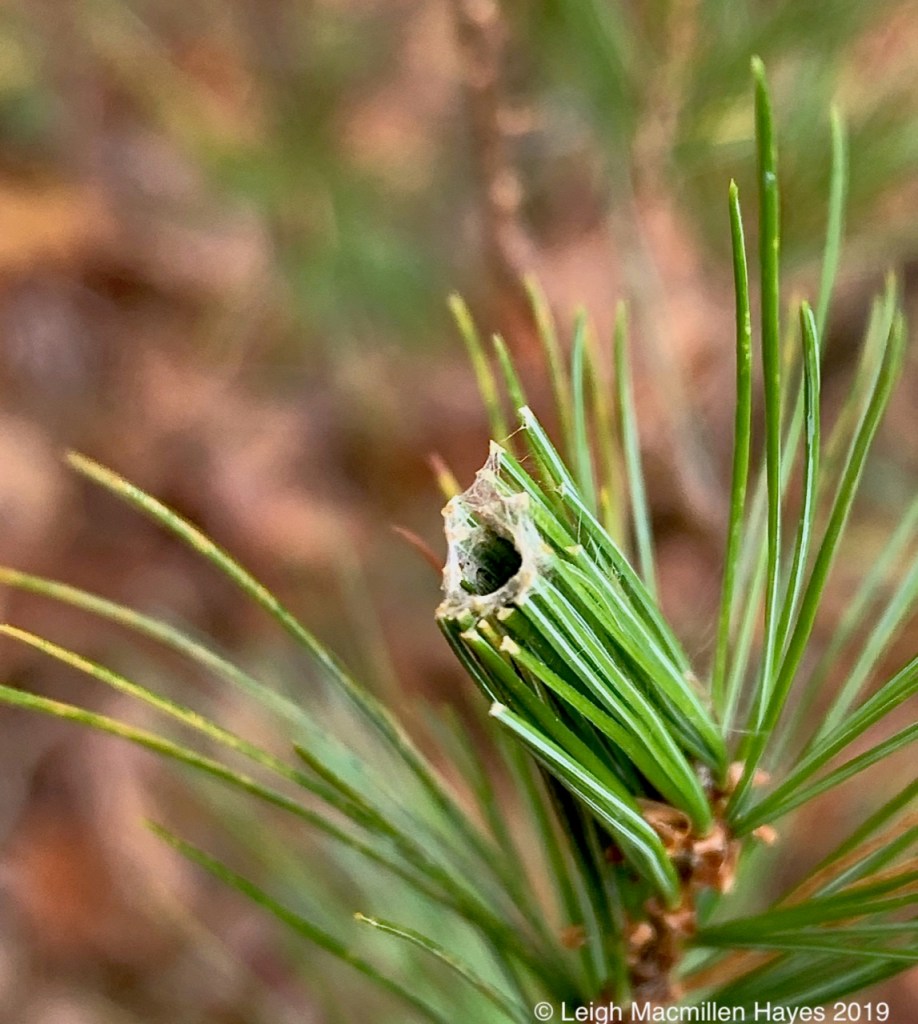
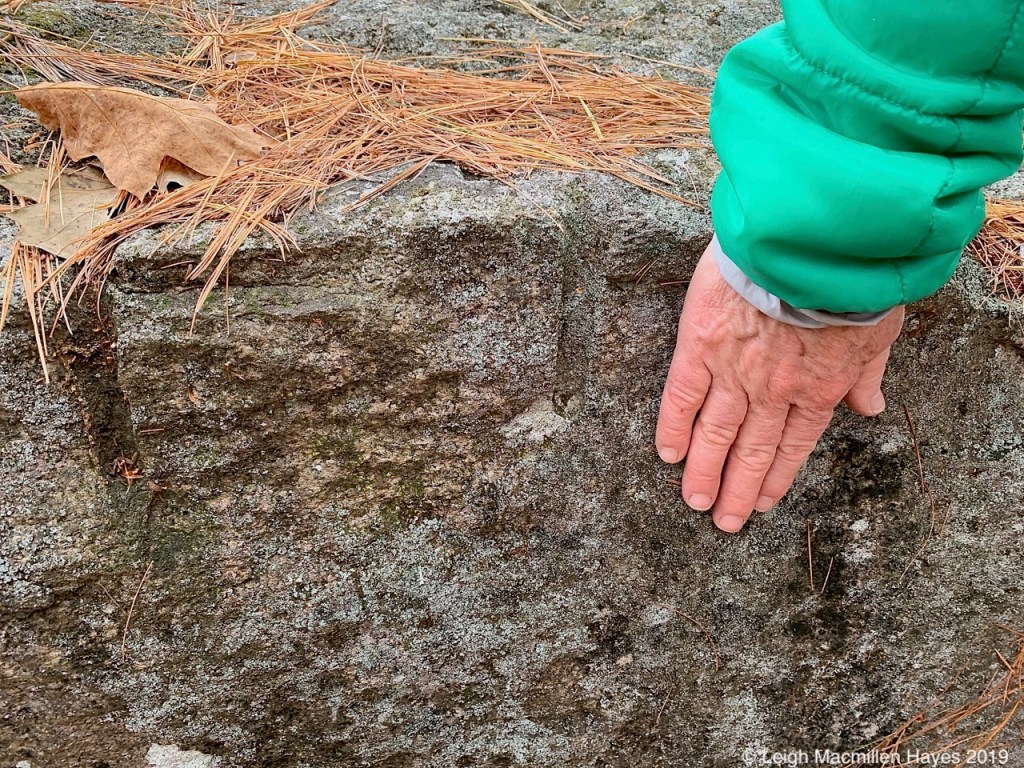

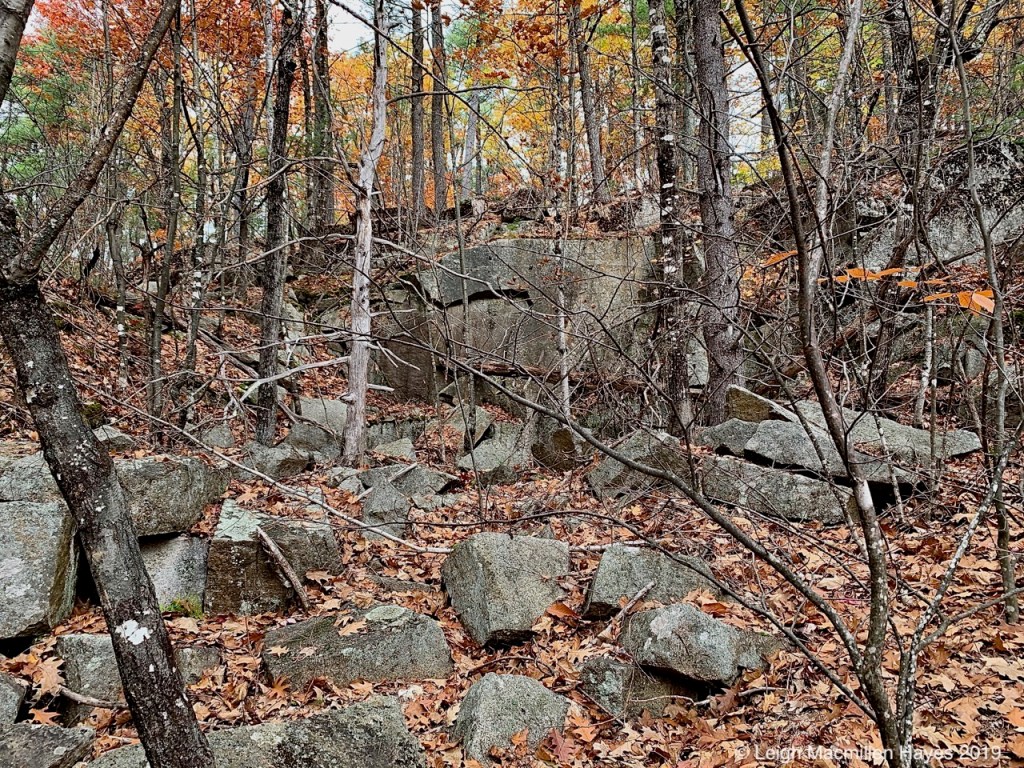


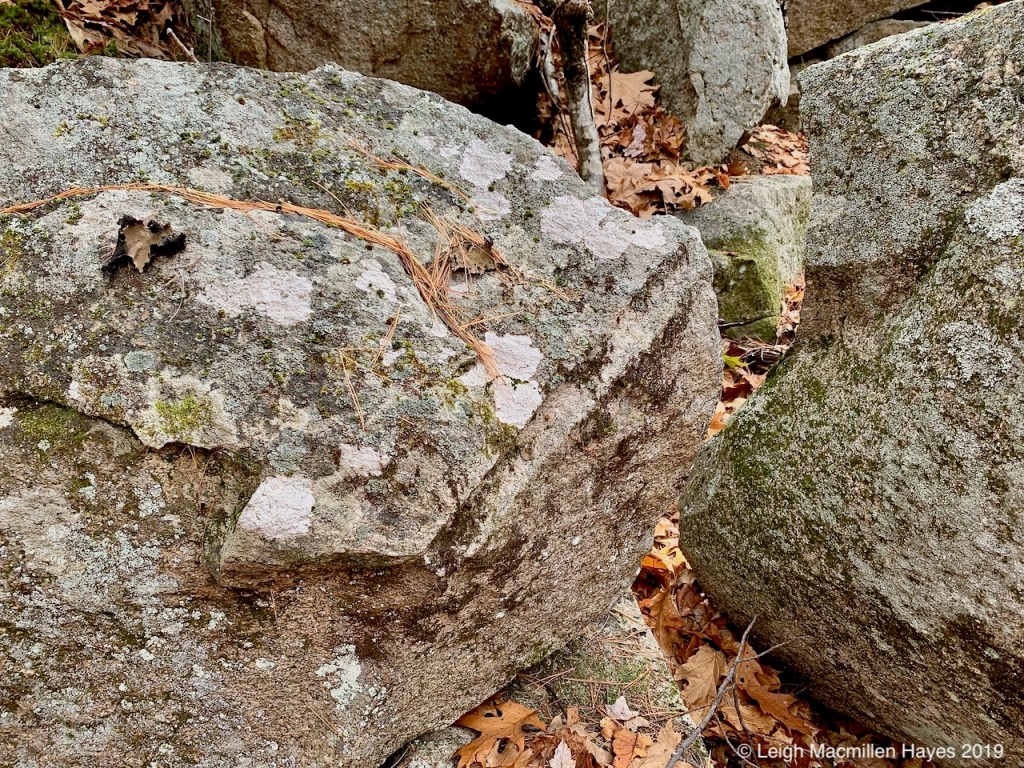
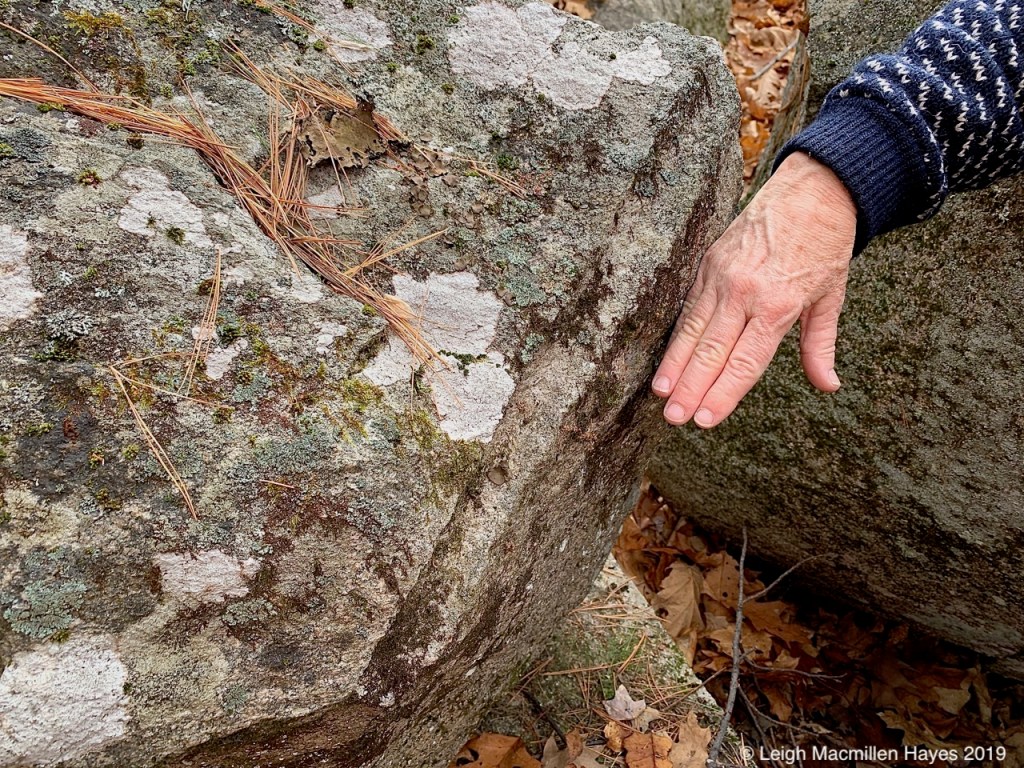

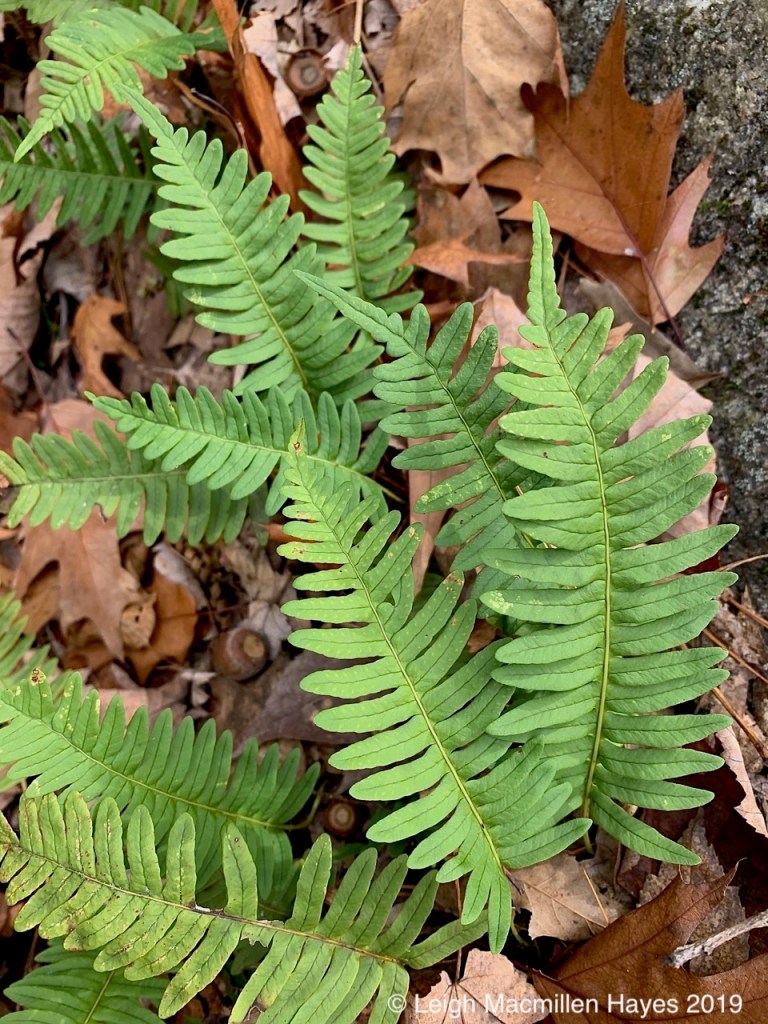


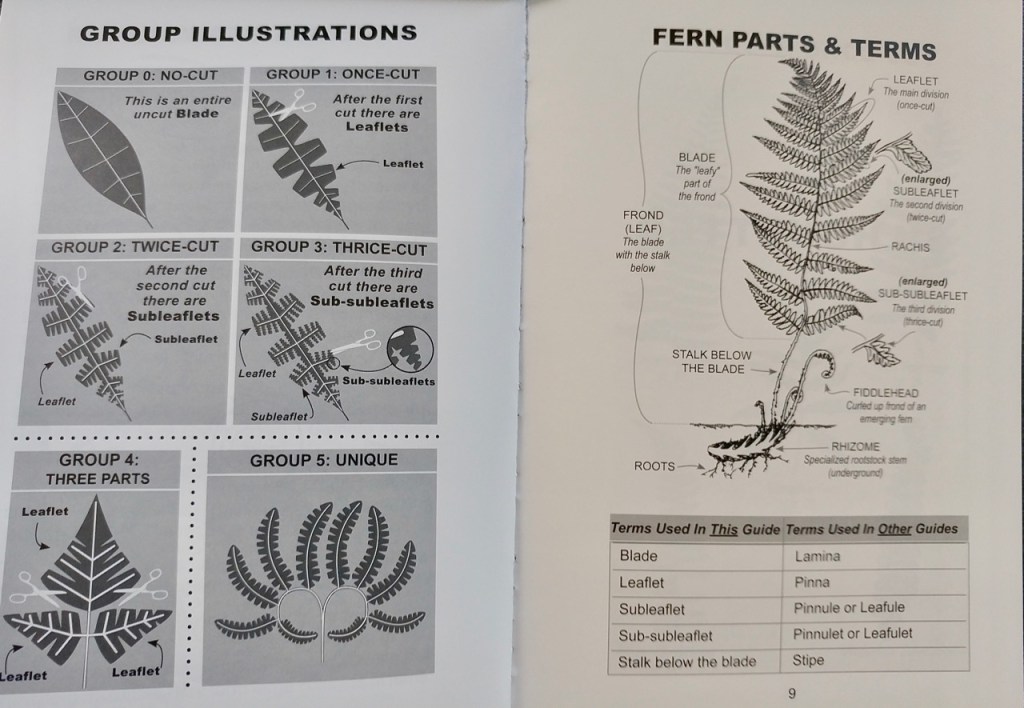
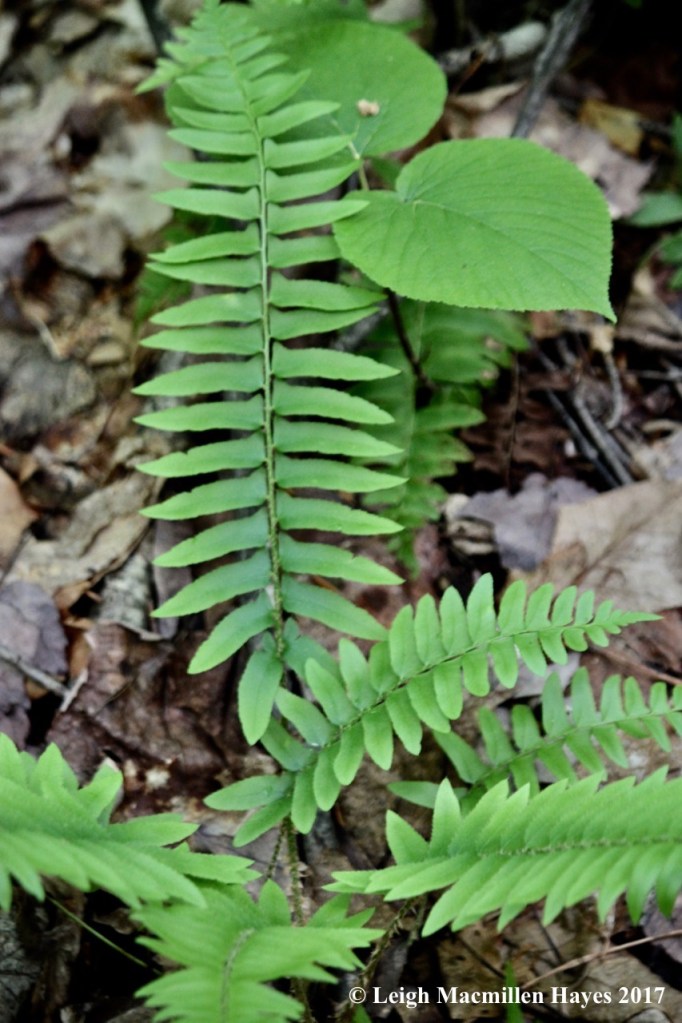
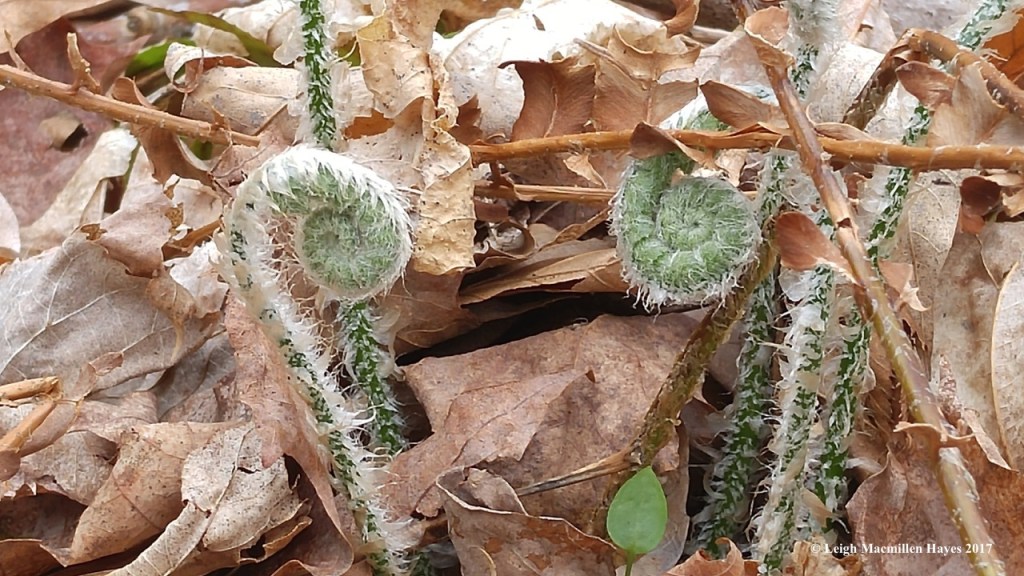


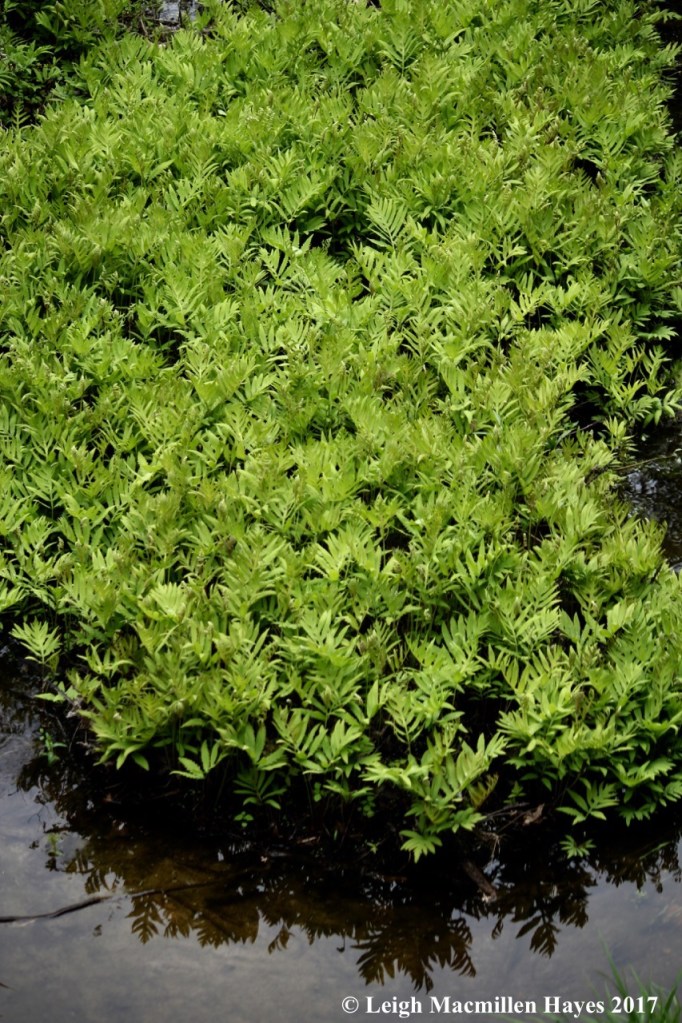


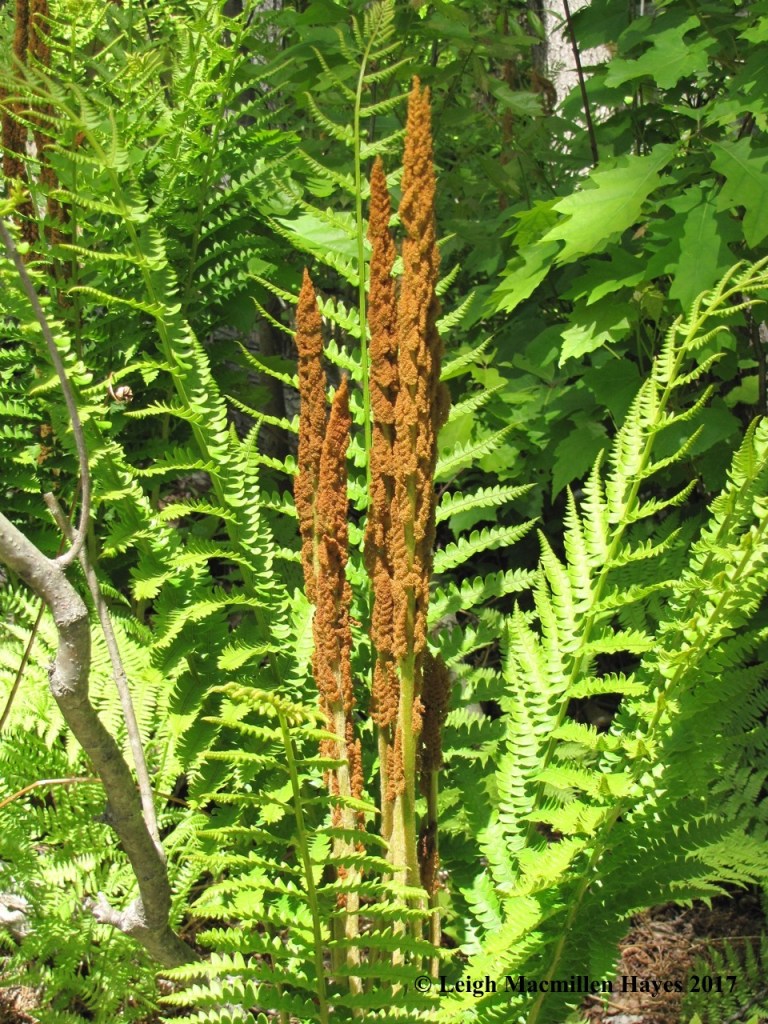


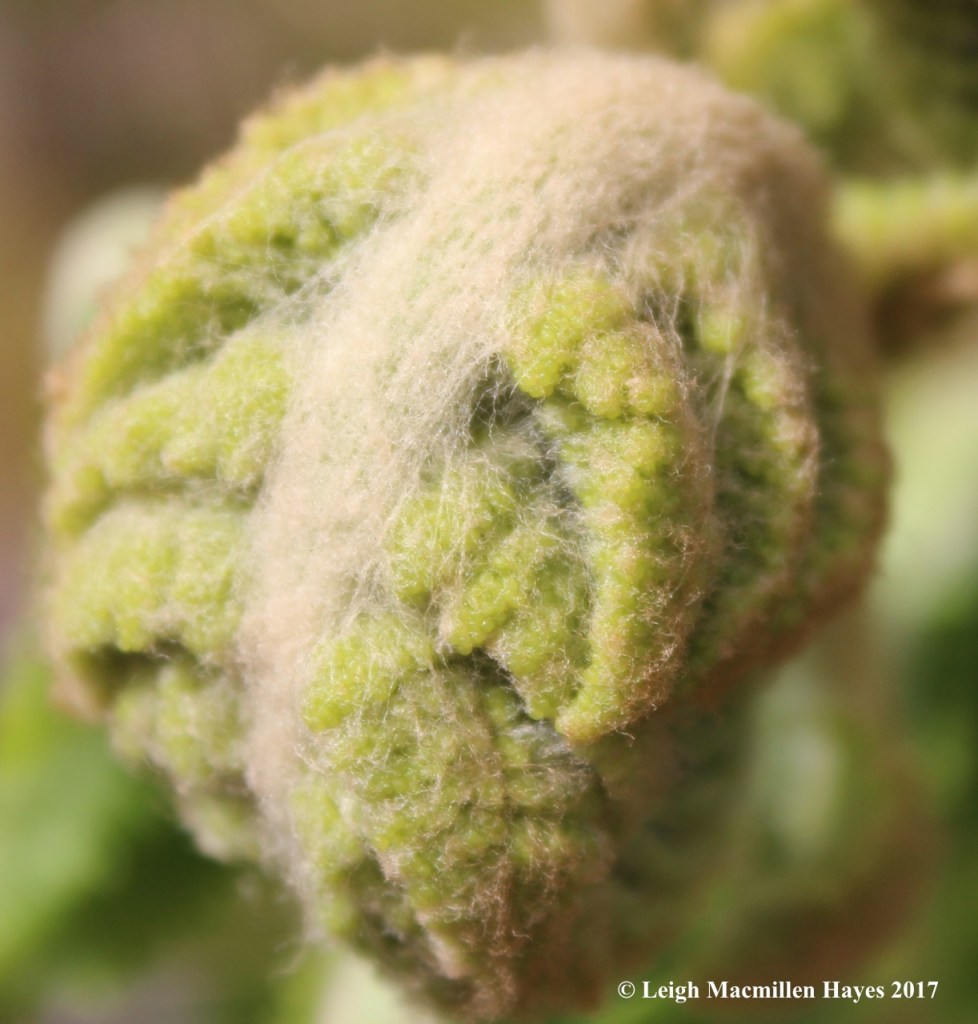


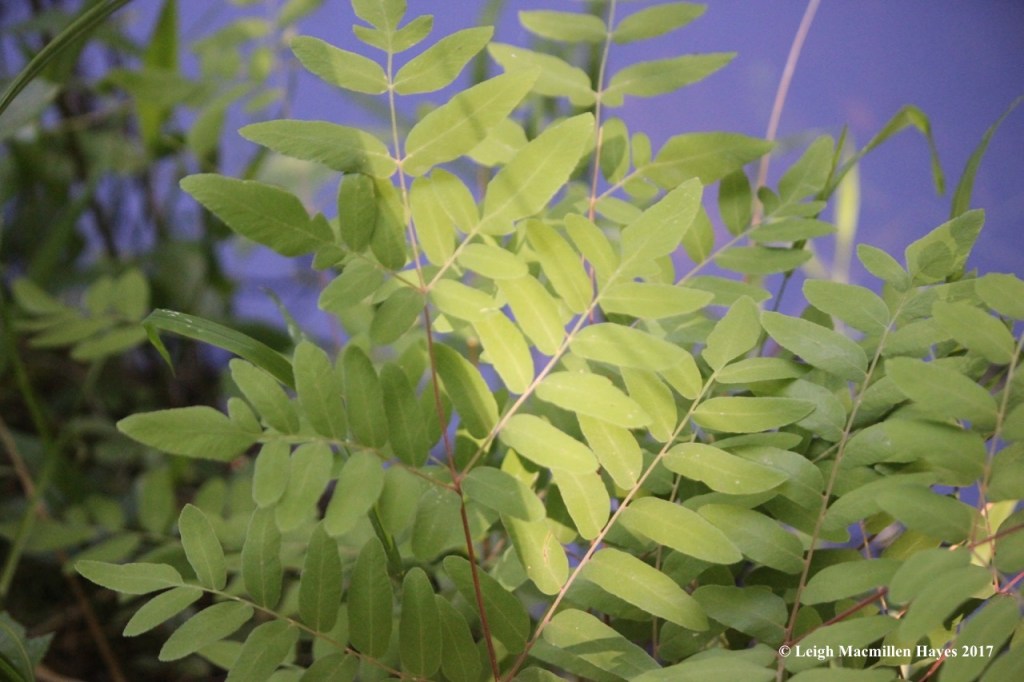


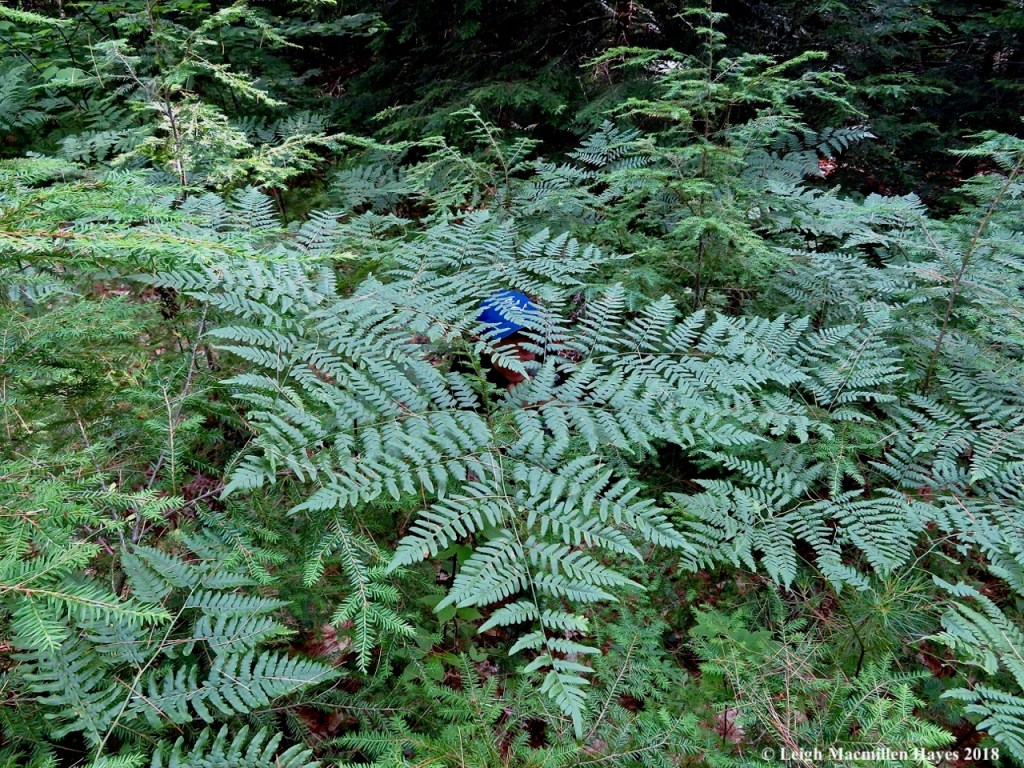
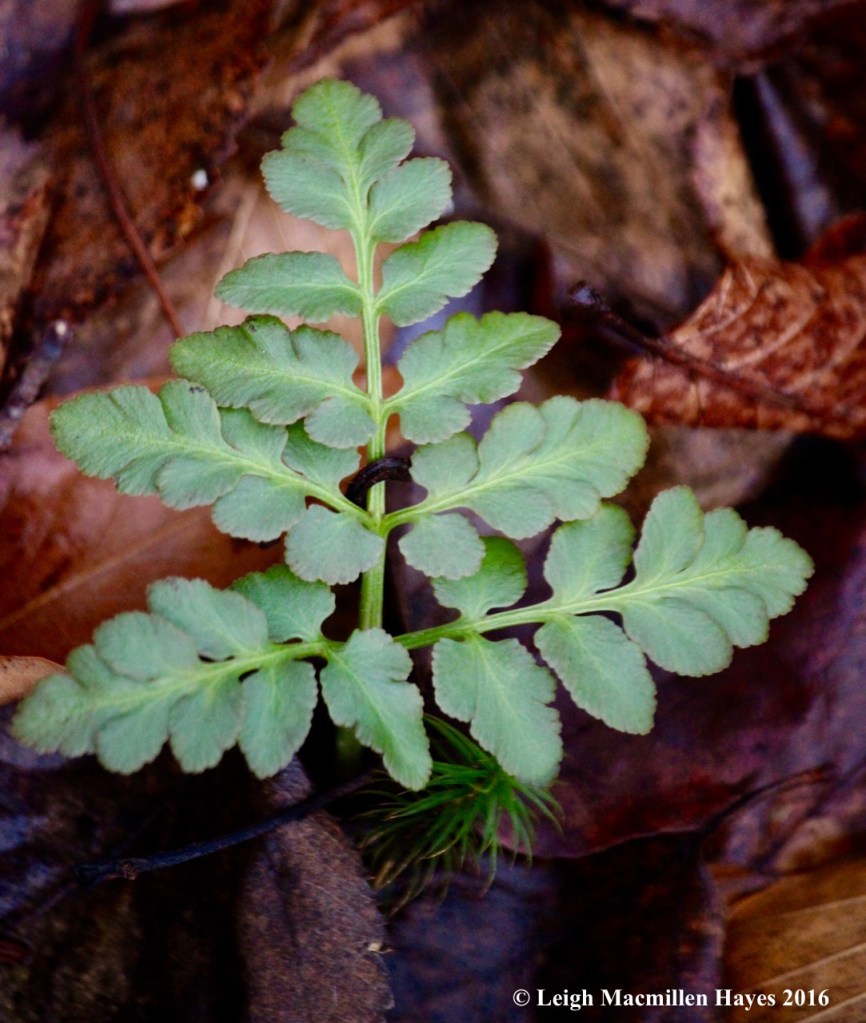
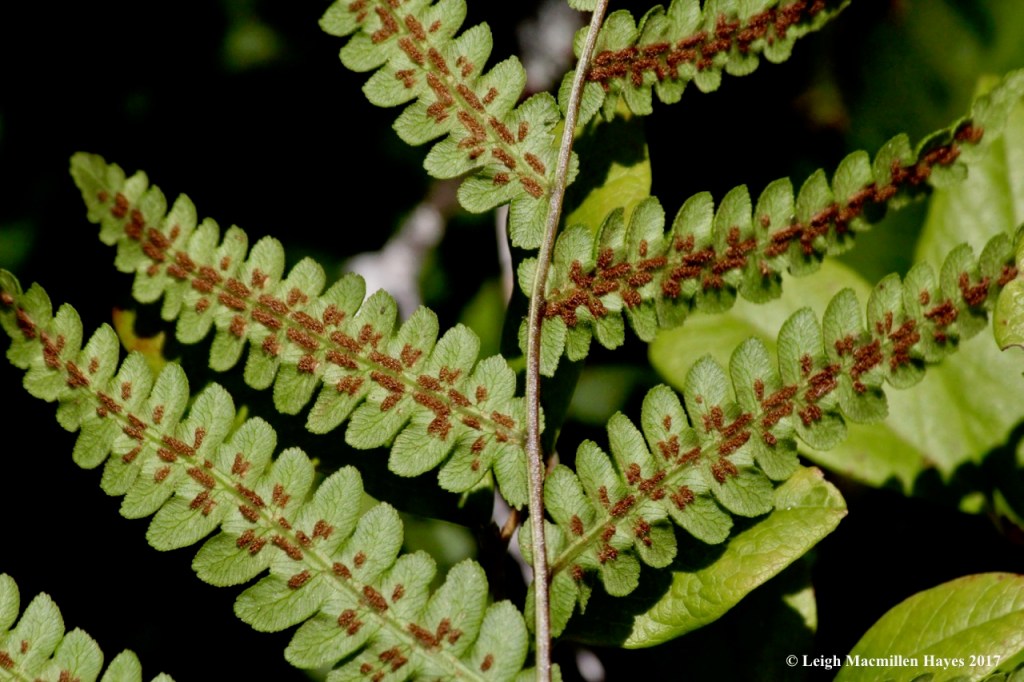

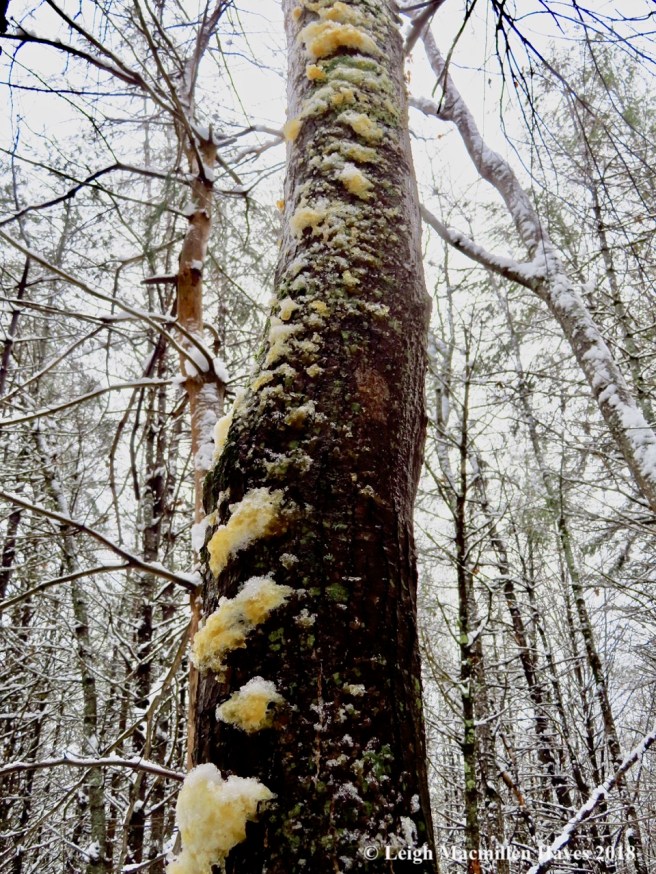


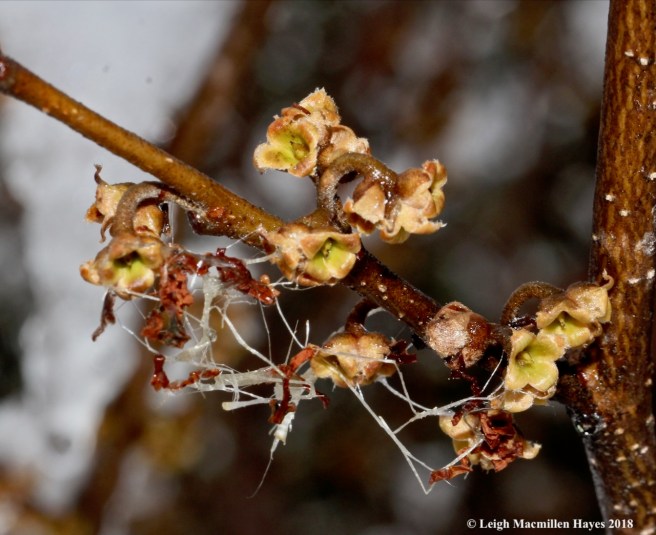


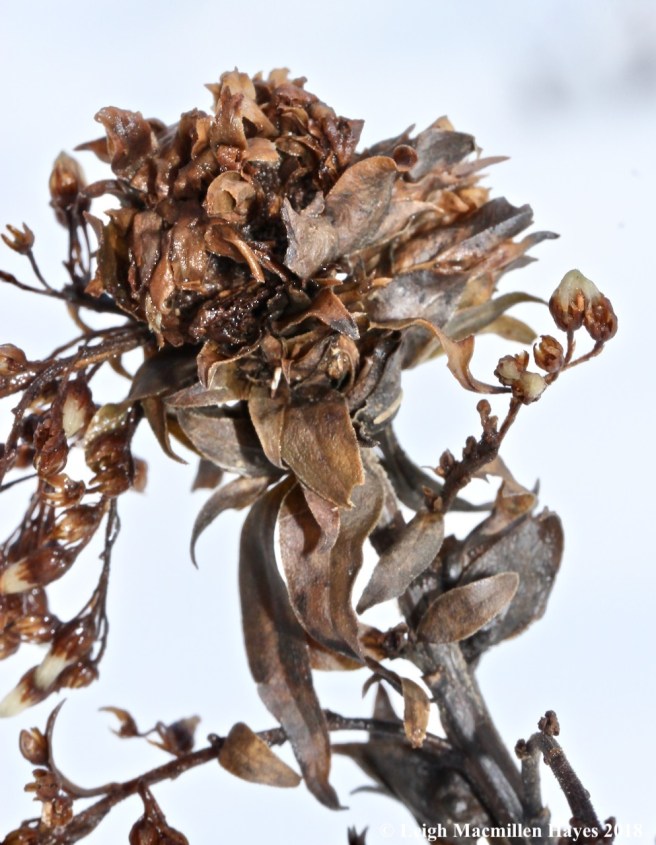


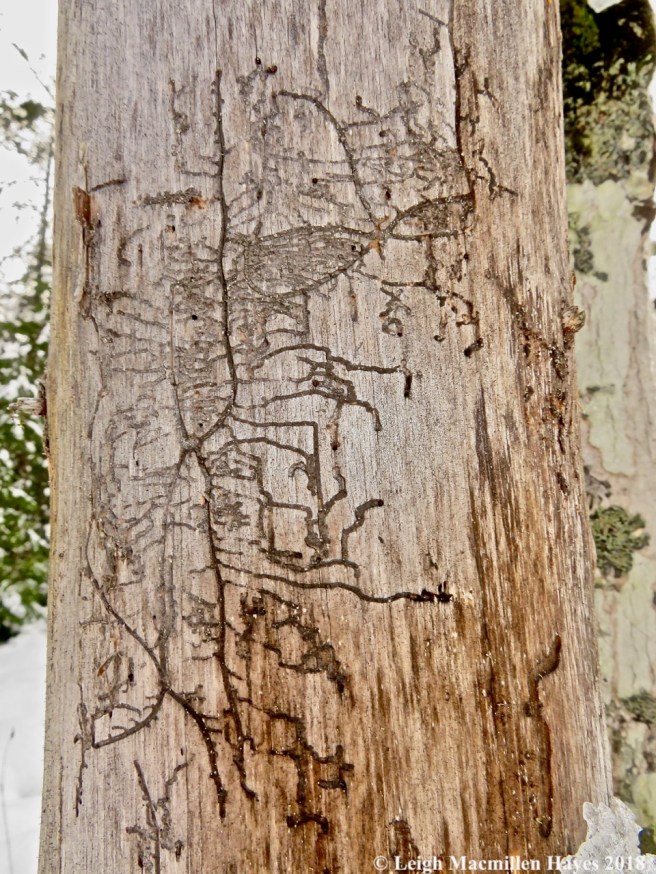

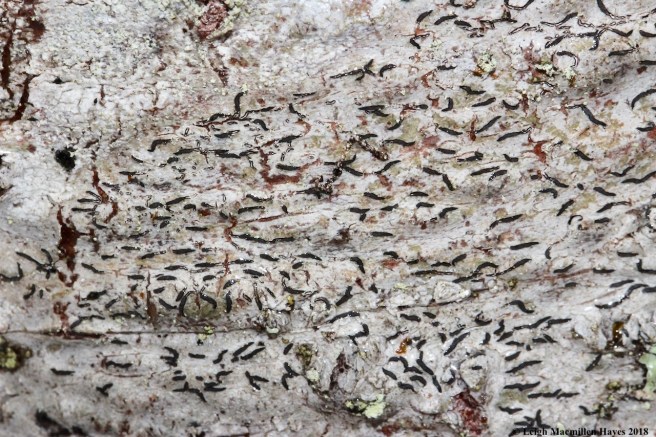
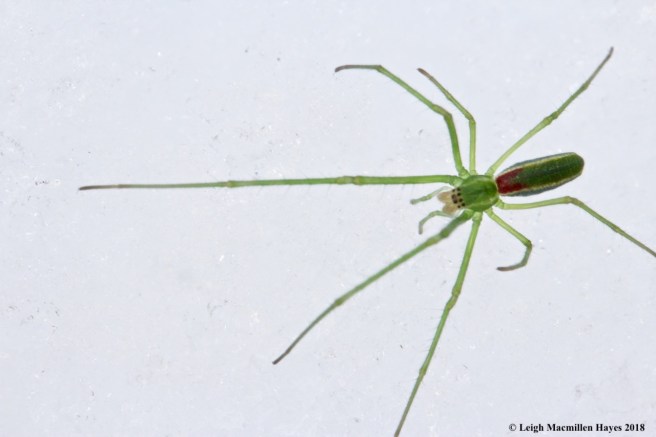
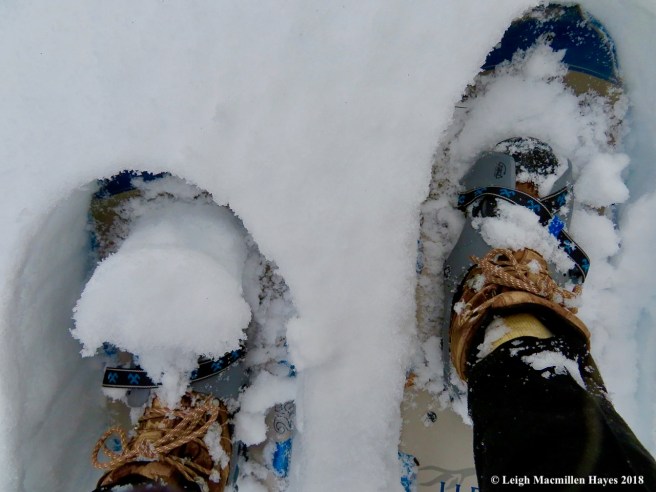
 wondermyway