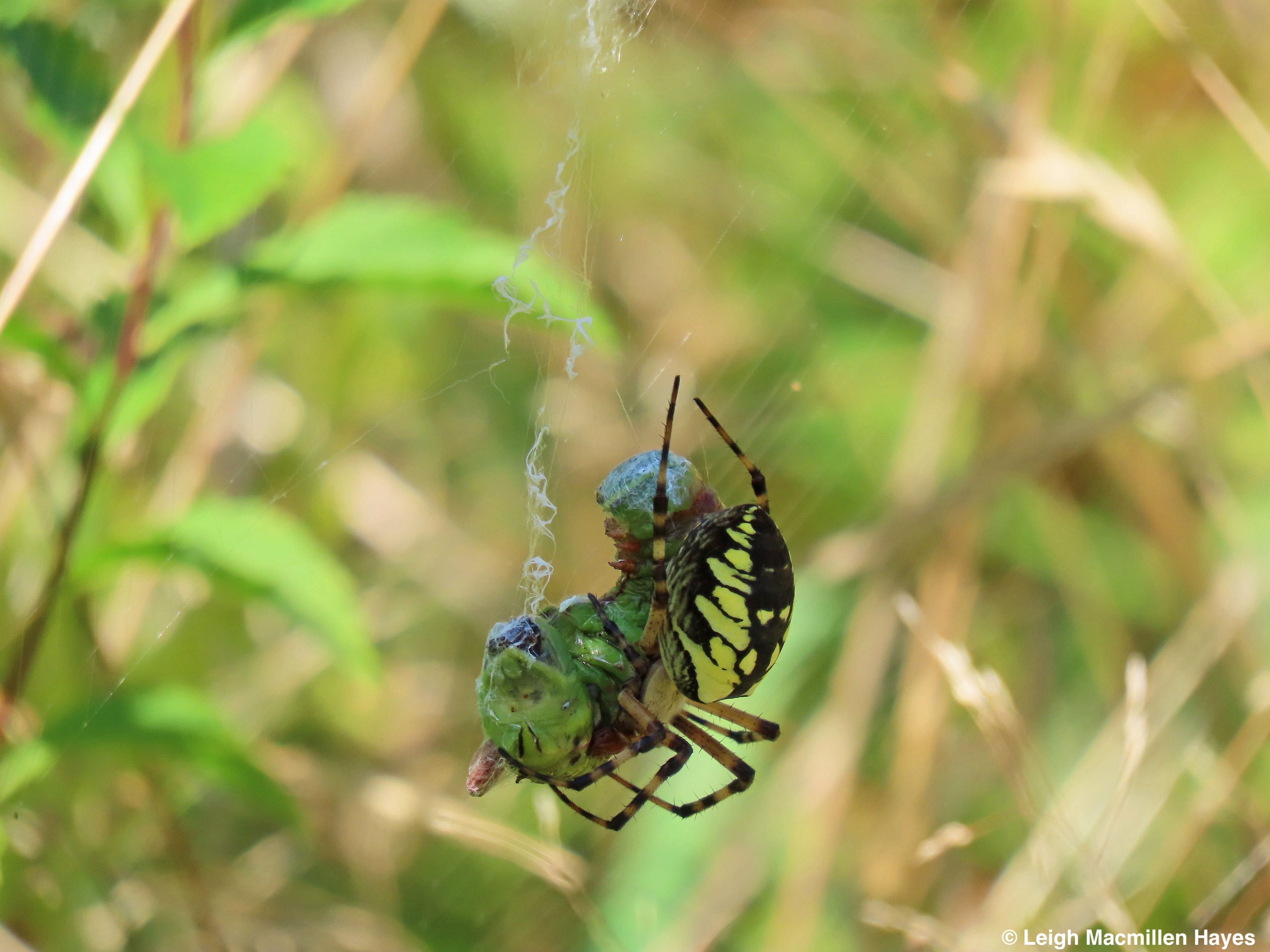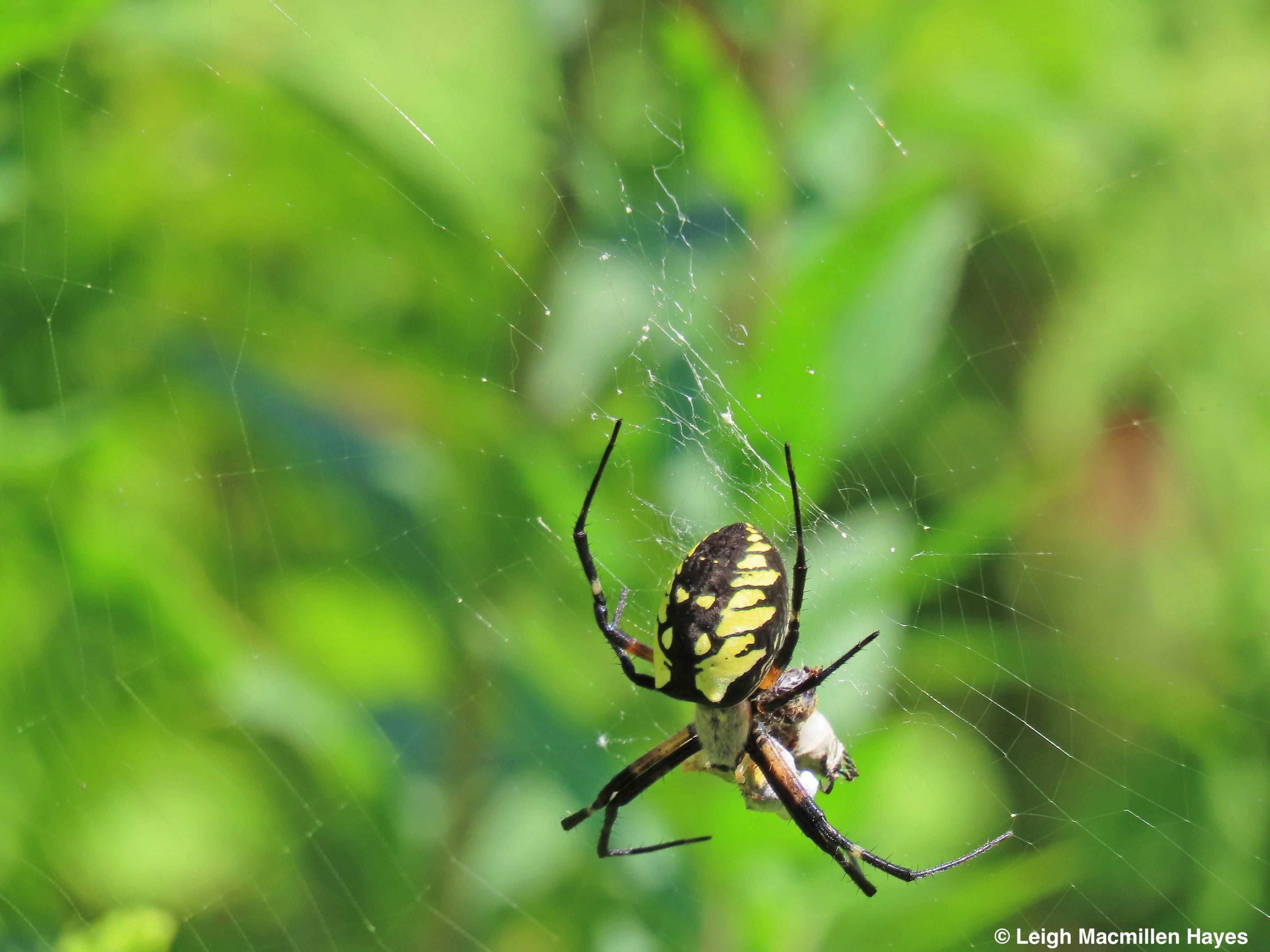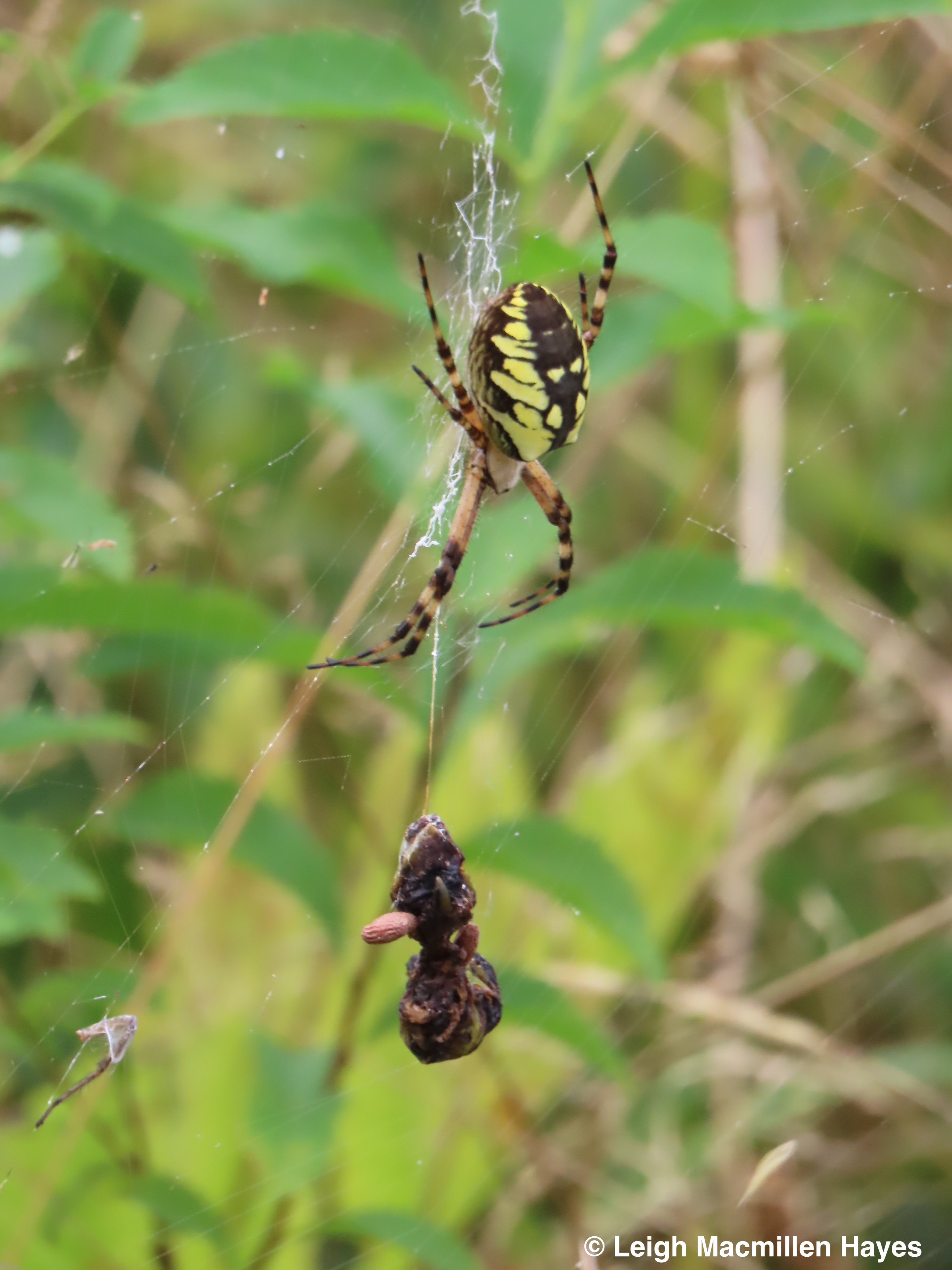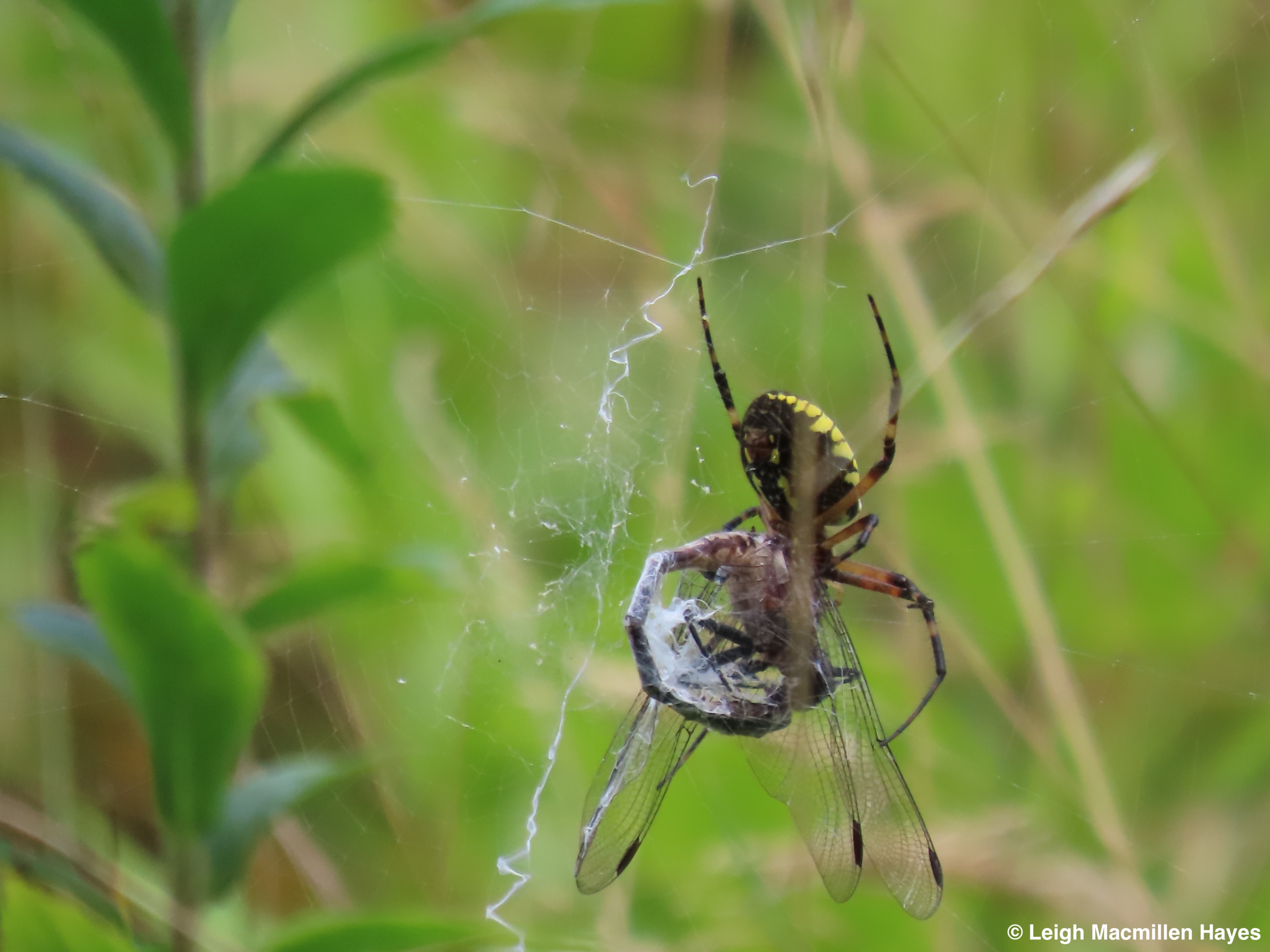
Far Winde-a-Way Mondate

It’s been a while since I’ve written about a Mondate, and believe me, we’ve had numerous. And other dates during the week as well, but today found us exploring a new-to-us property that’s just too special not to share. And I think the owners would appreciate it. I know that we appreciate that M suggested this to us. She was spot-on correct that we’d like it.

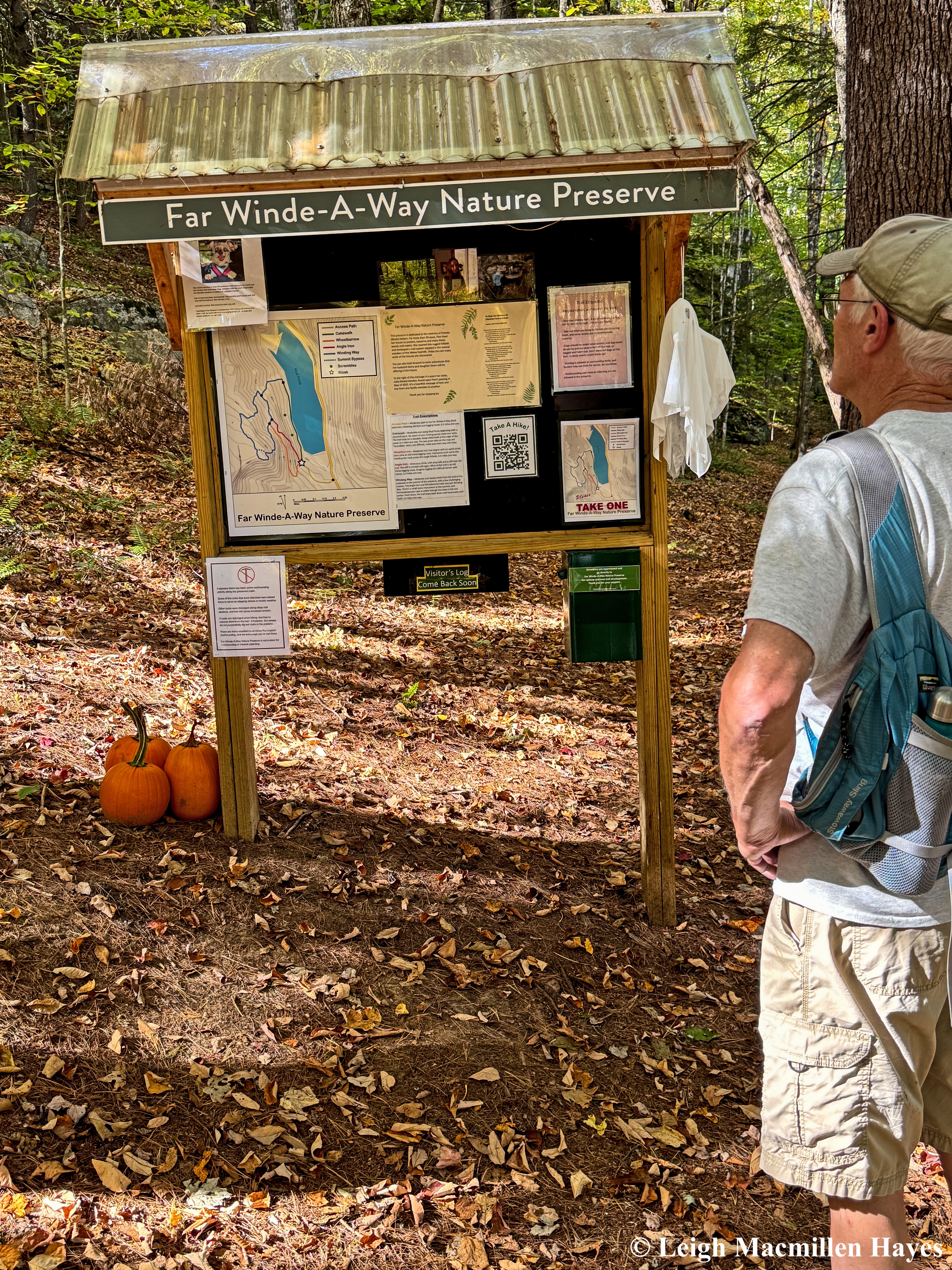
We’d been by a trail sign on the road a bunch of times to hike other trails in Greenwood, but until M mentioned it, we hadn’t really paid much attention. Until today. The kiosk is about .2 in from the road and I loved that there were pumpkins and a ghost to decorate it. And all the information hikers need to enjoy the area. Though My Guy goes without, I highly recommend trekking poles should you go forth on the well-marked trails. They are steep in places. And rocky in others. But that all adds to the fun.

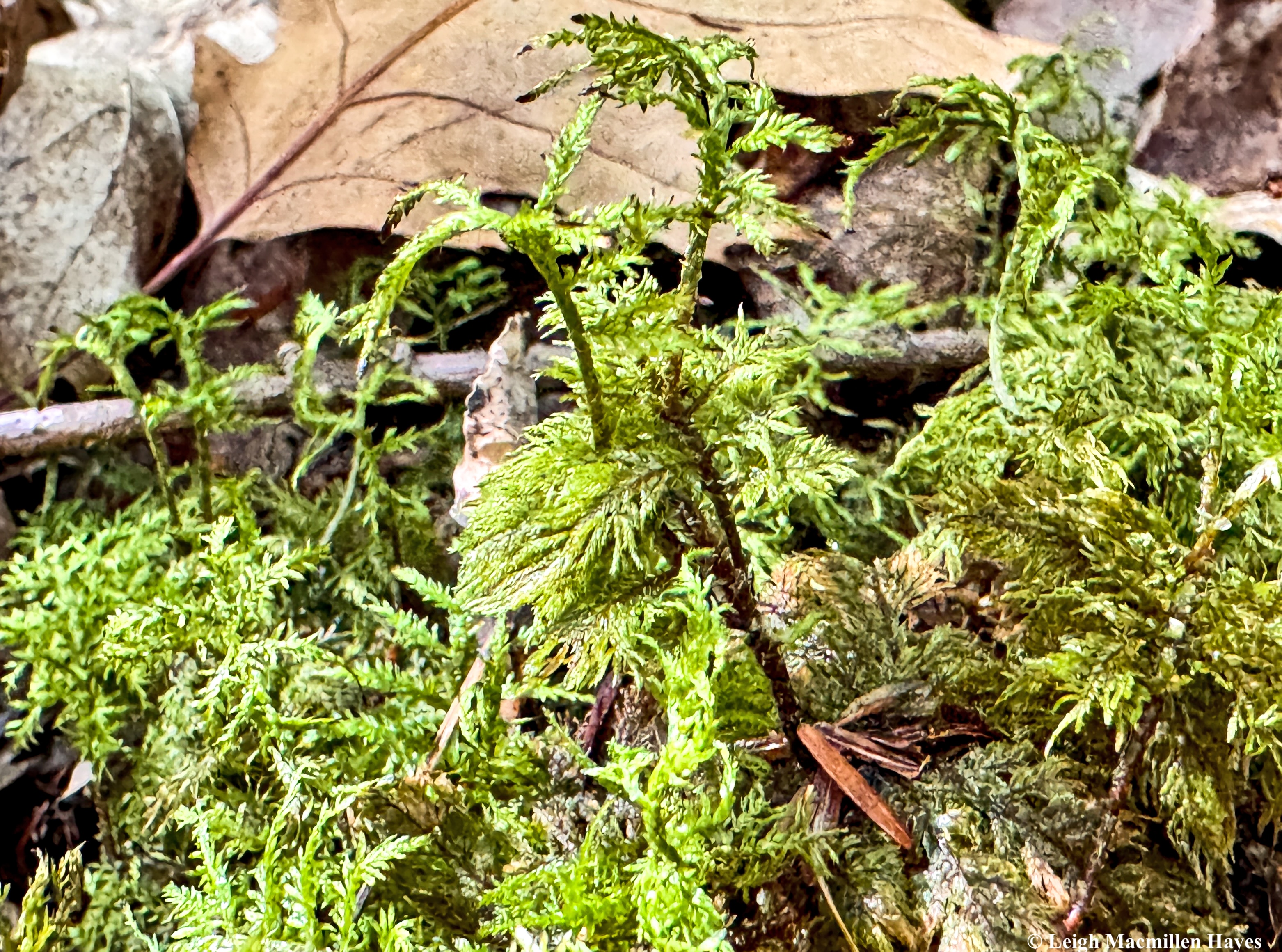
For me, the fun was enhanced by spotting examples of this pleurocarpous moss. It took me a while to learn that pleuro refers to side and carpous means fruit, thus they have a side fruit. They are low, tangled mats with branches that rise from the main stem.

This particular moss is the Stair-step Moss or Hylocomium splendens. It prefers deep shade and damp conditions. Due to the dry conditions we’ve been experiencing, this year’s growth of a new step rising from last year’s stem probably didn’t occur until recently.

There were other mosses, giving the trail a fairy-land look at times, but also abundant were the Christmas Ferns, which decorated long stretches of our route.

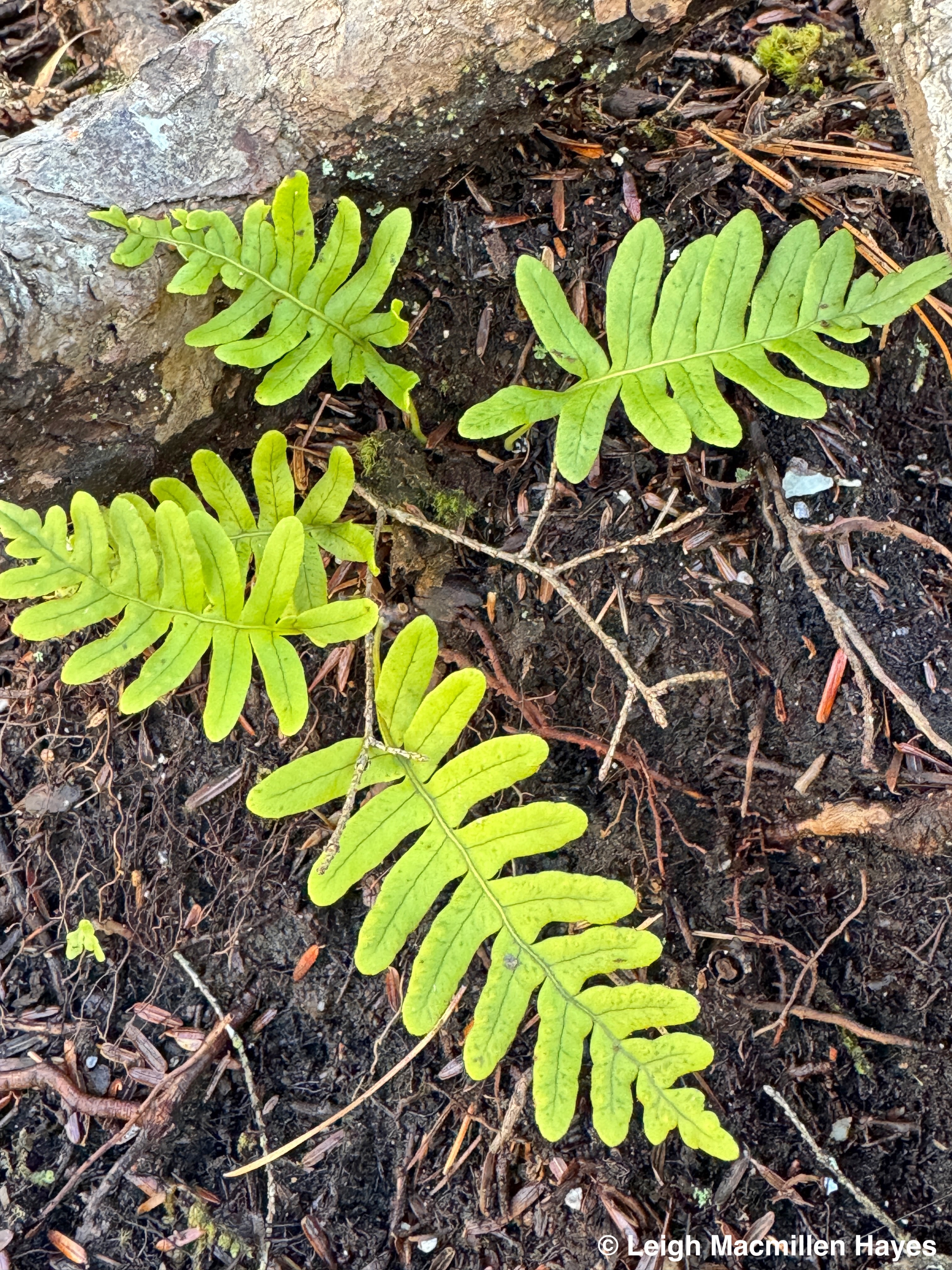
And not to be left out were the Common Polypody that always give boulders a bad-hair day look.

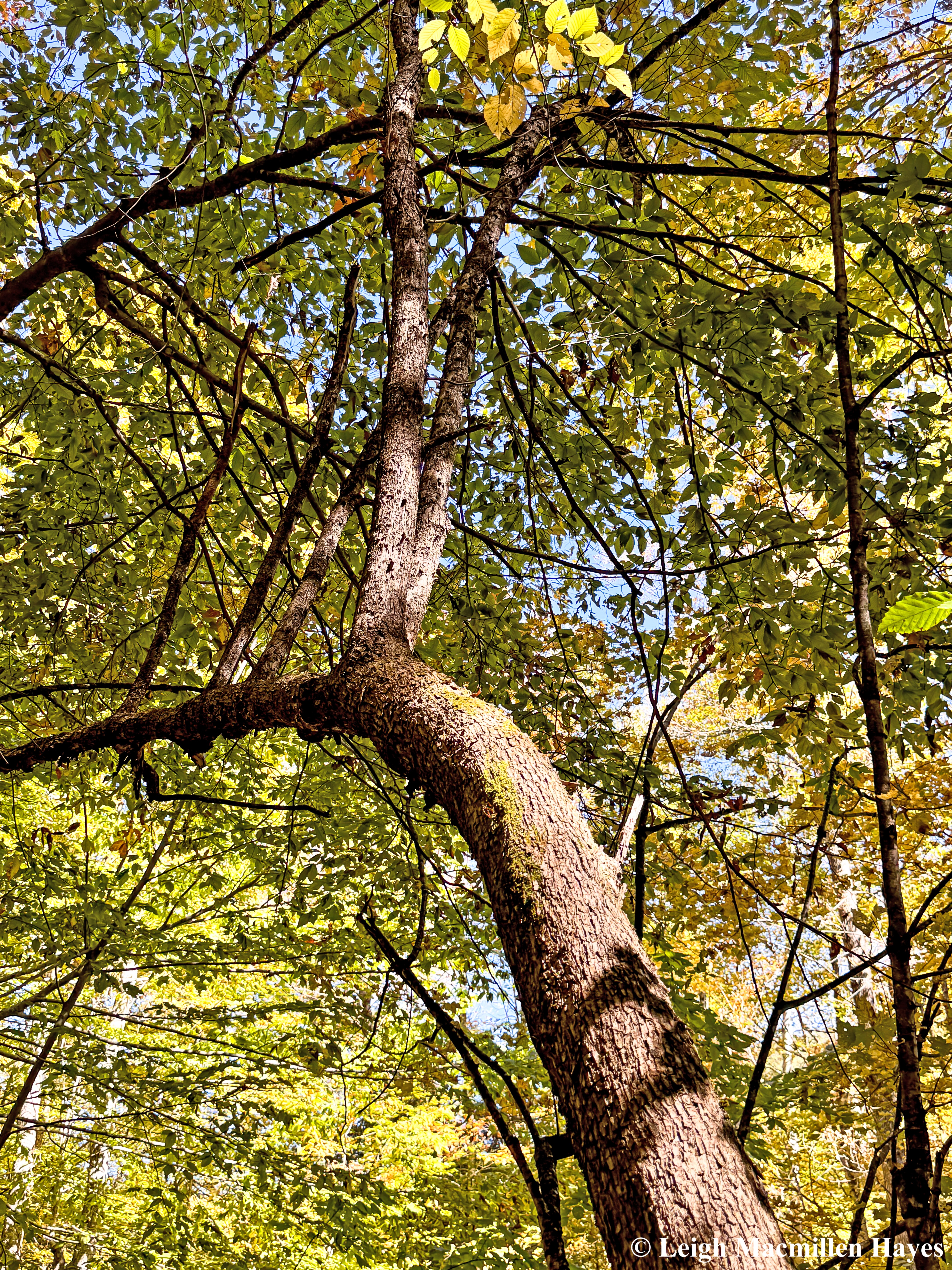
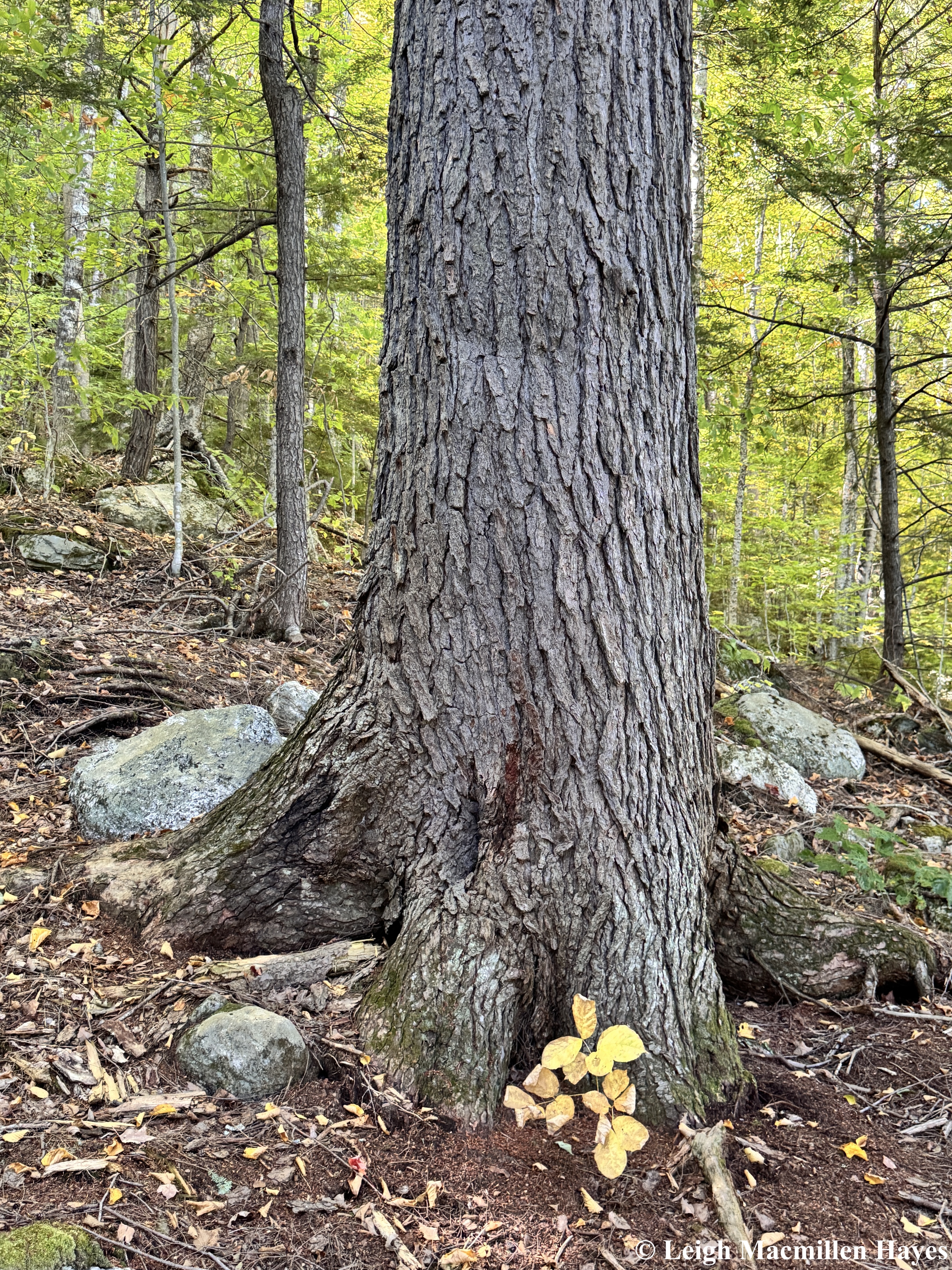
Those items would have been enough, but we realized from the start that we were in Hop-Hornbeam territory, and several surprised us. Typically, this is a tree that stands straight and tall, but a few must have been hit by other trees during storms perhaps, and their trunks had turned. Despite that, other branches took over and reached for the sun.

The other day some of us were looking at a sample of this tree and I asked them what they noticed about the bark. Their responses: shaggy and vertical lines. Spot on. Sometimes the bark is a bit tighter to the tree than this one we saw today, but it’s a great example of how this bark behaves. If you rub your hand on it, some pieces will flake off.

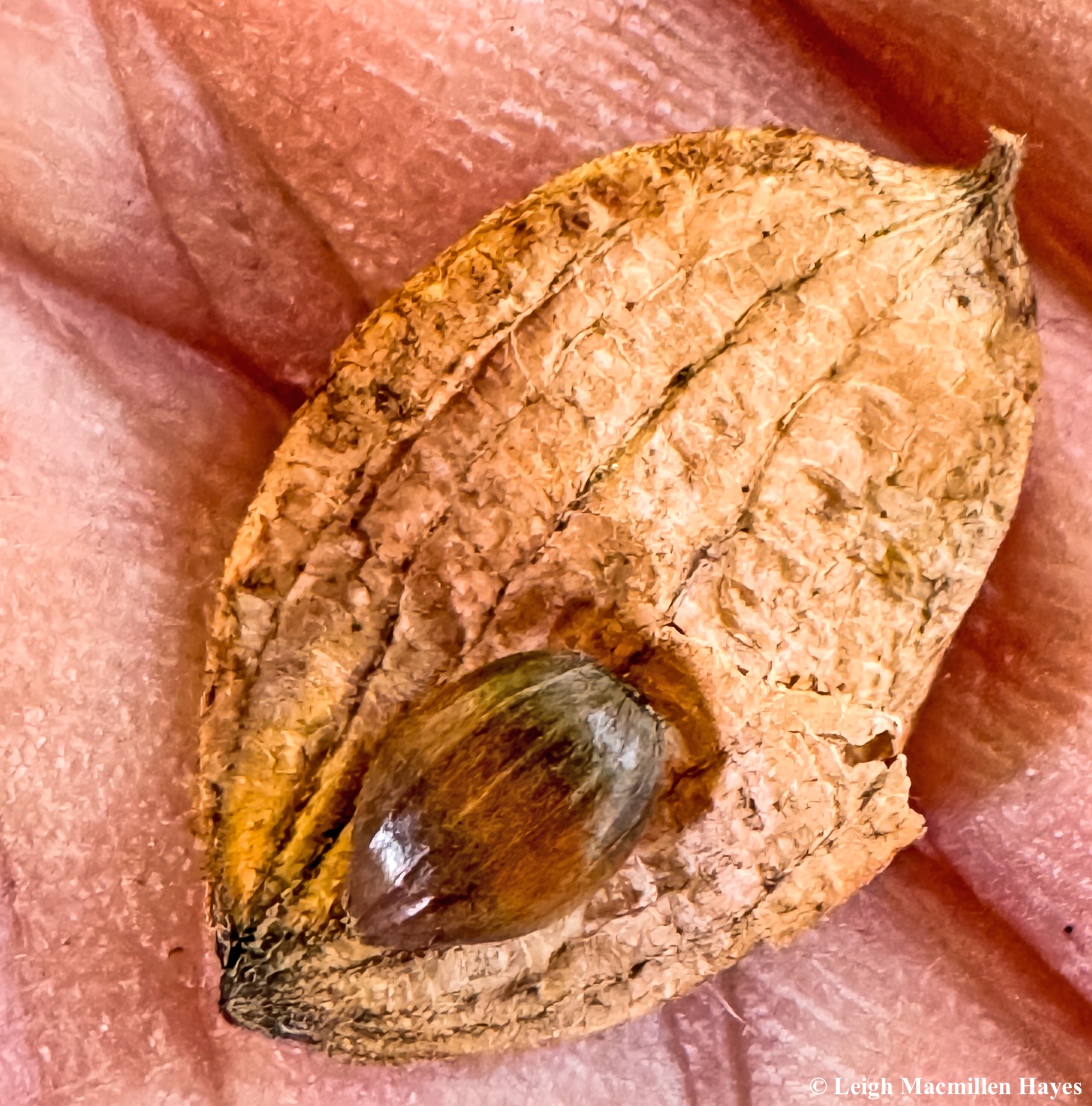
What I really wanted to see since we were in the presence of so many Hop-Hornbeams, were the hops for which it was named and BINGO! They were scattered along the trail, so I picked one up and slit the inflated paper-thin casing open and pulled out a seed. Such a small nutlet compared to the bouyant sac it was borne in.

The leaves are double-toothed and just as these emerged in the spring, male and female flowers would have developed. Being a member of the Birch family, the flowers are in the form of catkins, the male being longer and reddish-brown, while the female would have been shorter and green. Pollen is dispersed by the wind.

During the summer, the fertilized females form into cone-like structures, or strobiles, and their shape gives them their name for they look like hops.

I challenged My Guy to find some of these, which he’d never seen before. Knowing he likes a challenge, like counting Lady’s Slippers and looking for Bear Claw trees, I knew he’d pull through, and he did. But, he also developed Warbler Neck, for so high up in the tree does one need to look in order to spy the hops.

And so to counteract that, I suggested he look down. Success again. This guy is good!

At lunch log, we had a chance to enjoy the view and realized we were looking at Noyes Mountain, which we had hiked about a month ago.

With the camera, I could pull in the rocks on Noyes where we ate lunch before descending into an old mine below.

After circling around the summit of Far Winde-a-Way, where the views may be better in the winter, but we didn’t mind because that’s where we found some of the hops, we began our descent and noted a few artifacts, which got My Guy talking about the fact that metal cans for motor oil were replaced by plastic in the 1980s. He is Mr. Hardware, after all.

And I found a stone that had split naturally in quarters.

Well, maybe they weren’t exact quarters, but still it was worth a wonder to notice.

Another tree that we noticed as we descended was an American Basswood. The bark is similar to Northern Red Oak, but without the red in the furrows between the ridges, and the ridges are flat, almost brushed. Again, I rubbed my hand along the almost smooth surface.

I kick myself now, because I didn’t think to look for their fruits, but I did spot leaves on the forest floor. They are typically quite large, and have an assymetrical base, so if you fold a leaf in half, one base will be shorter than the other. The only other trees in our woods with this feature are the American Elm and Witch Hazel.

Next we reached a brook, where I’m sure the water cascaded over the moss-covered rocks in the spring when we experienced about fourteen rainy weekends, but today it was almost all dry, except for a few pools.

Creating a spider-web appearance on the pool’s surface were about a dozen Water Striders, so speedy in their dance routines.

And hiding at the edge, perhaps in hopes of capturing a Water Strider for a meal, was a Green Frog, with its dorsal lateral folds beginning behind its eyes and continuing down the edges of its back.

At the Cakewalk, for so a trail closer to Mud Pond is named, we met Mouth Rock. We’re pretty sure this wide-mouthed boulder ate all the cake because we never found any.

But our finds did include a champion! Co-champion actually–for the largest Eastern Hemlock in Oxford County according to Far Winde-A-Way Nature Preserve‘s website.

And I quote: The tree is: 10 feet in circumference, 90 feet tall, with a crown spread of 60 feet.

We also found this great specimen. Rock or tree? Tree or Rock? Rock and tree! Tree and rock!

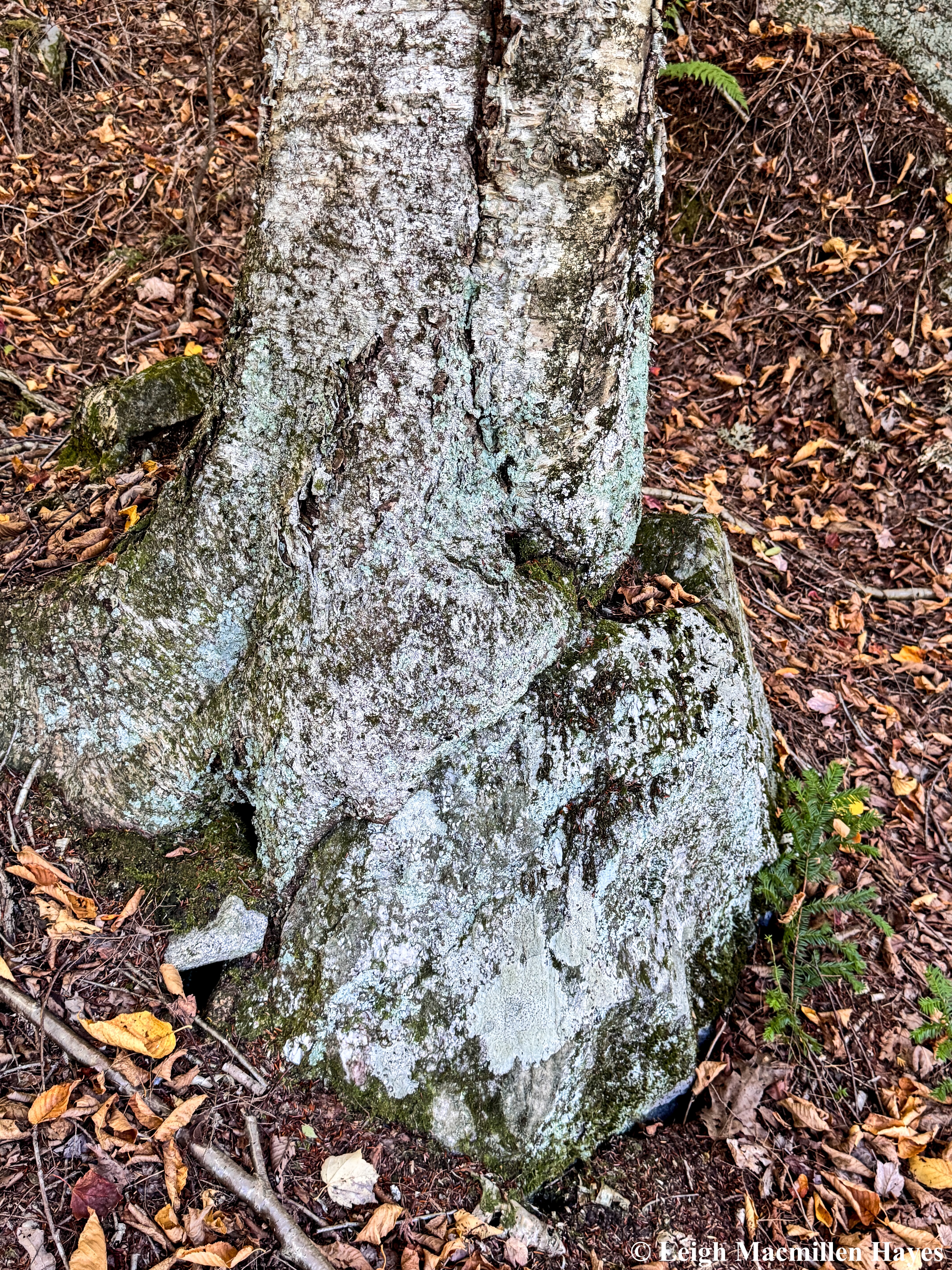
Where does one end and the other begin for they looked like twins. Maybe that’s what happens when you spend so much time together. Kinda like some people looking like their dogs (we had a neighbor when I was growing up who always had beagles and he really did look like a beagle himself. Of course, we never told him that.)

Anyway, this is a Yellow Birch that got its start in the moist soil that probably formed on the moss atop the rock and then sent its roots downward and trunk upward, but really, the two could have been one.

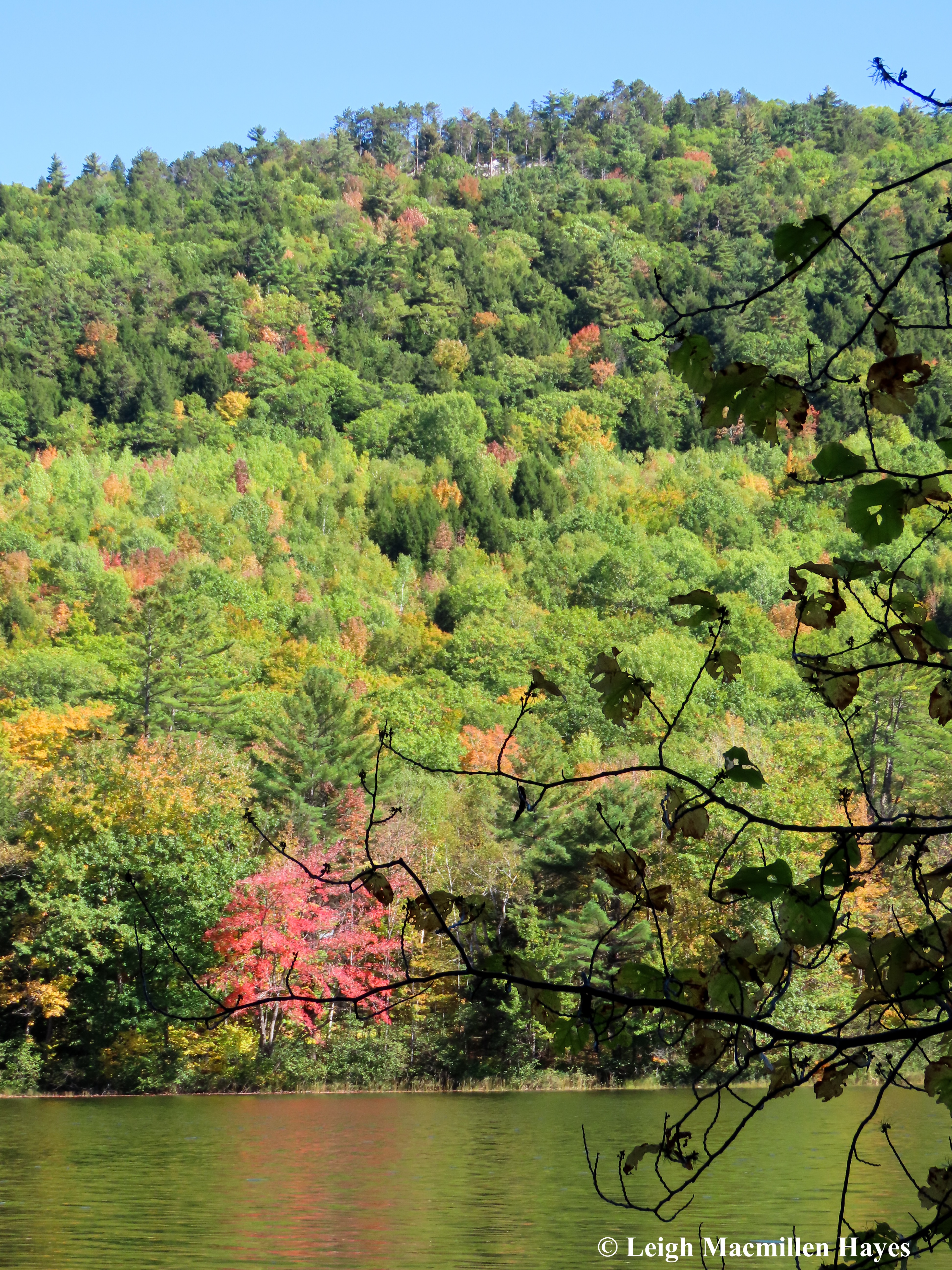
One of our last views before heading back up to the kiosk, was of Noyes Mountain again, only this time it included Mud Pond. And our early fall foliage season. Foliage reflections are among my favorite.

I’ll close this Far Winde-a-Way Mondate by giving thanks not only for My Guy and his love of new adventures, but also for the family that made these hiking trails available so that all of us could enjoy them: The husband and daughter of the late Pam Nelson. “This preserve is dedicated to the memory of Pamela (Roots) Nelson. For more than 30 years, Pam lived her dream to protect, conserve and enjoy these woods and waters. She roamed this rugged hillside and developed a trail system steeped in the natural wonders of the Maine foothills. Today you can enjoy some of the beauty she discovered.”

Pam passed away in 2022, but her family carries on her tradition, and this poem at the kiosk was written by her sister.

Thank you to M for suggesting Far Winde to us, and to the Nelsons for sharing it with all of us.

Ode to the RAIN!

It began in spurts, 
The rain that is.
Starting with some drops on Tuesday,
Followed by a few more on Wednesday.
But today, much to our delight,
we awoke to the drumming of droplets
upon our metal roof,
and I couldn't resist heading into the woods.
One Jack, or rather Jill-in-the-Pulpit,
lay down its sweet head
upon the wet ground
as if to kiss the moisture gathered there.
In a boggy section,
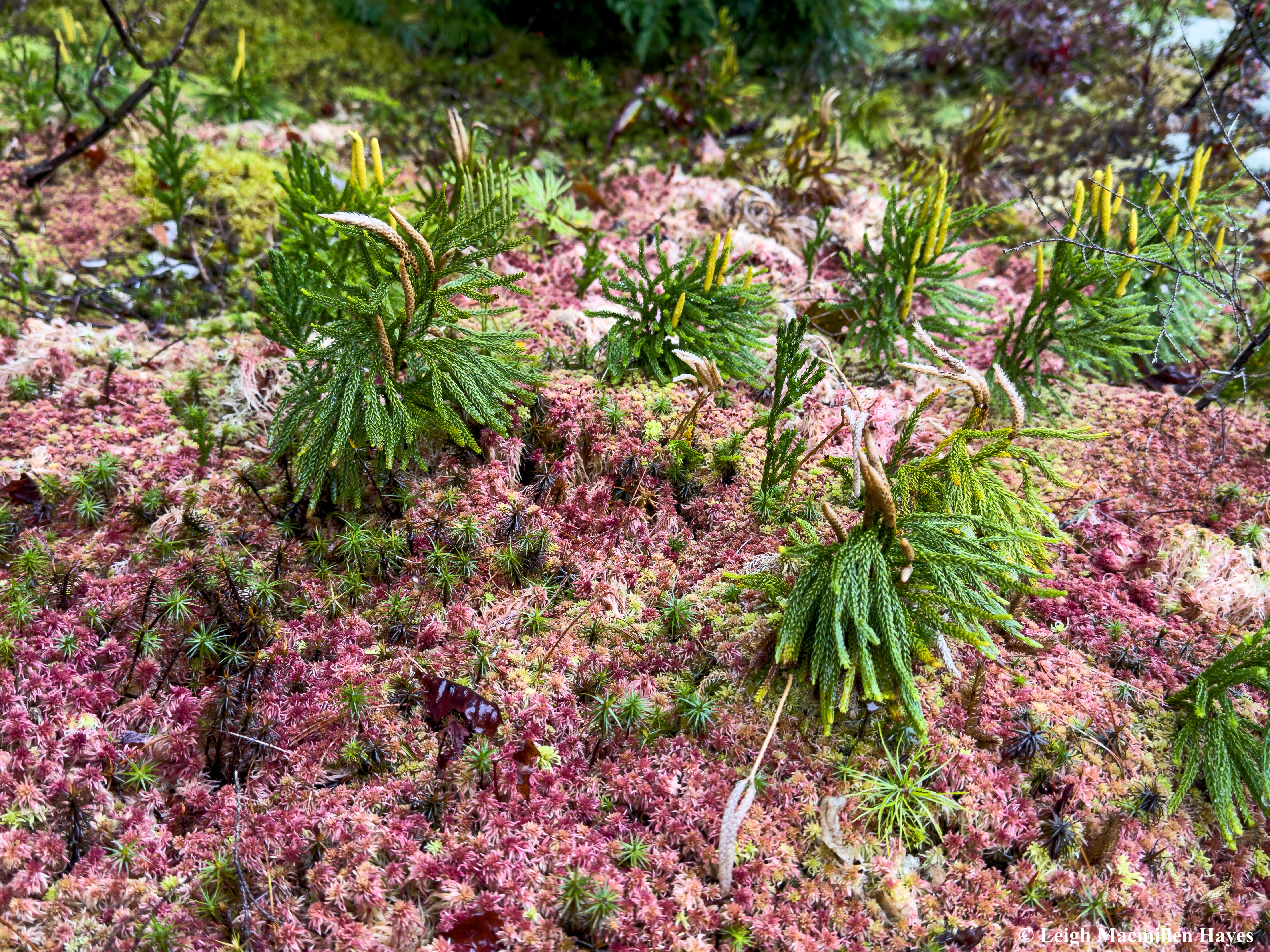
it made the Hickey's Tree Clubmosses
suddenly stand out in contrast
to the pink and green sphagnum below.
And upon every surface,
or so it seemed,
raindrops gathered,
sometimes hesitating for a moment.
Other droplets 
enhanced guidelines
and supporting threads
of a spider's web.
Because it was raining,
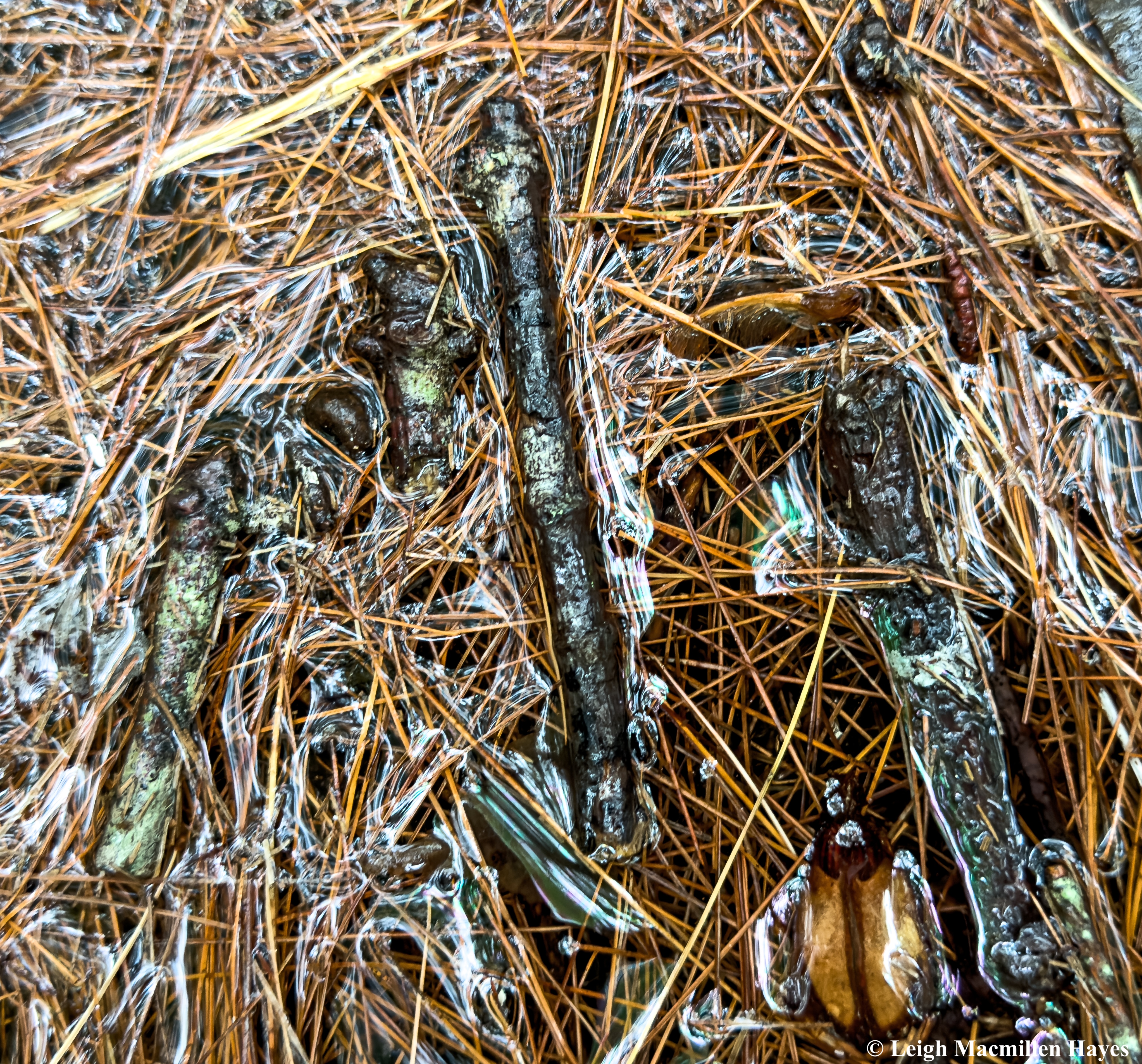
I decided to play and poked a stick
into the resin blister of a Balsam Fir,
then placed it in a tiny puddle.
My sense of wonder
was well rewarded
as the essential oils
created ever-changing rainbows.
But my real intention
for heading outside so early
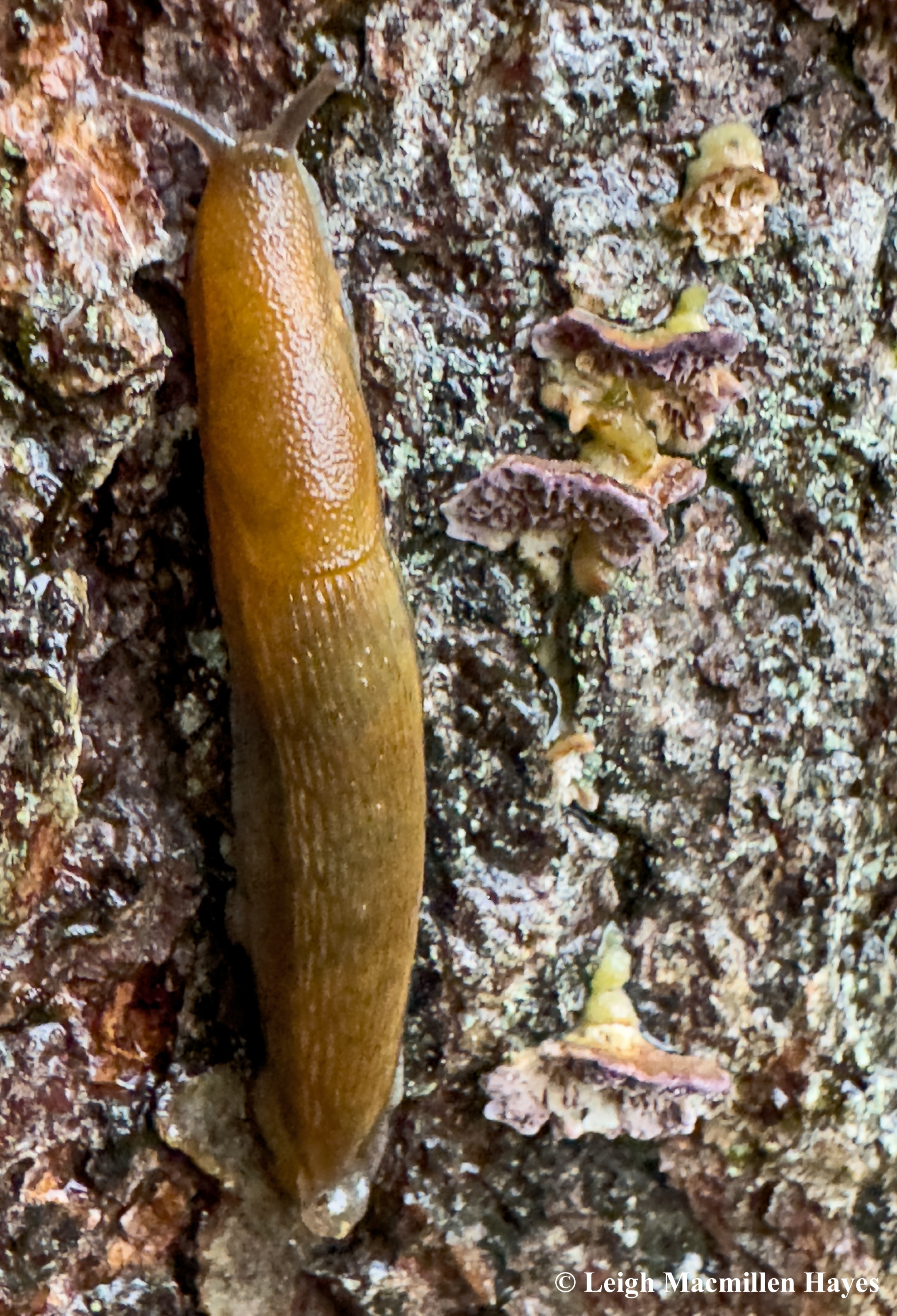
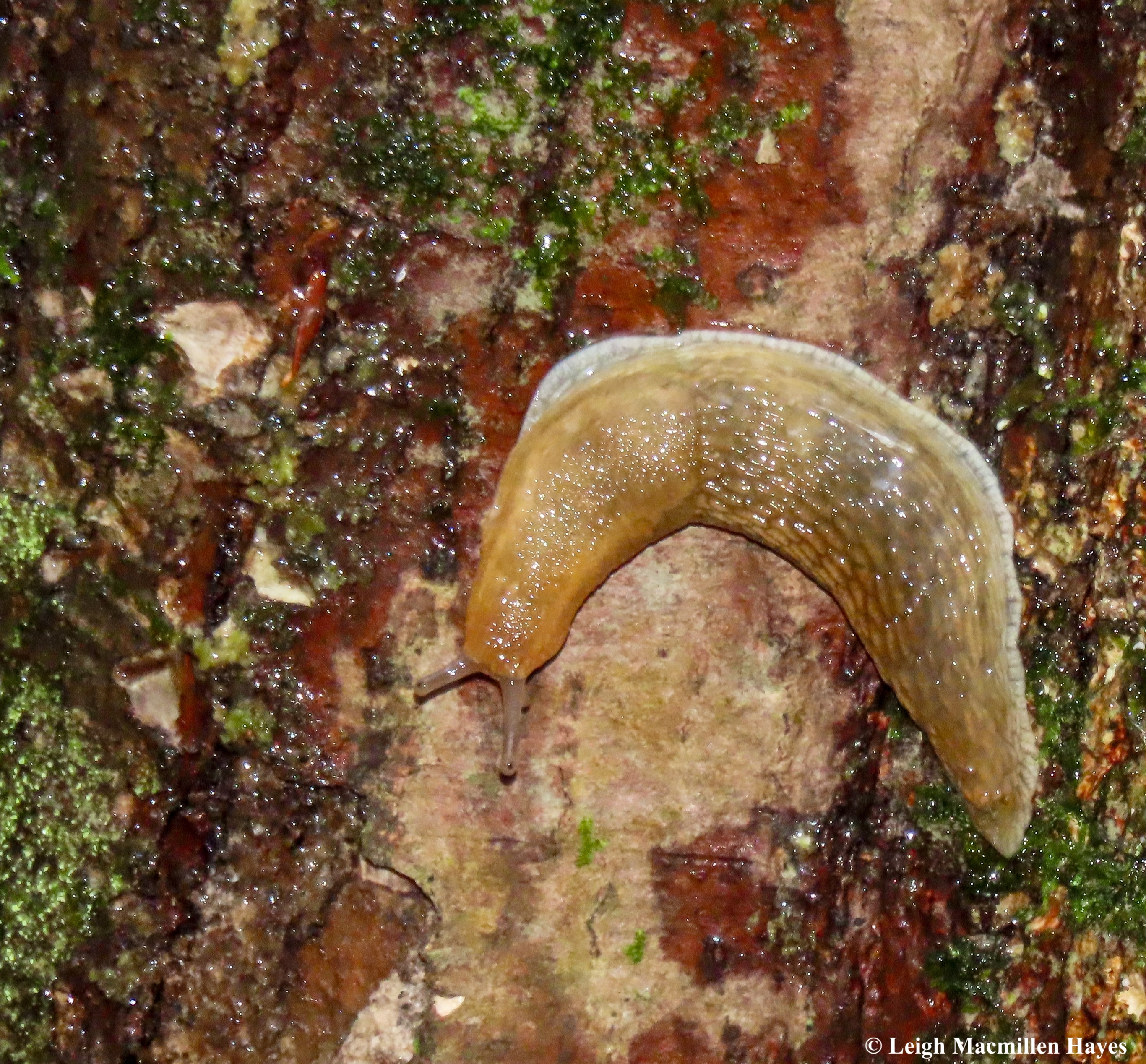
was to search for slugs
who haven't had an easy summer.
I was rewarded 
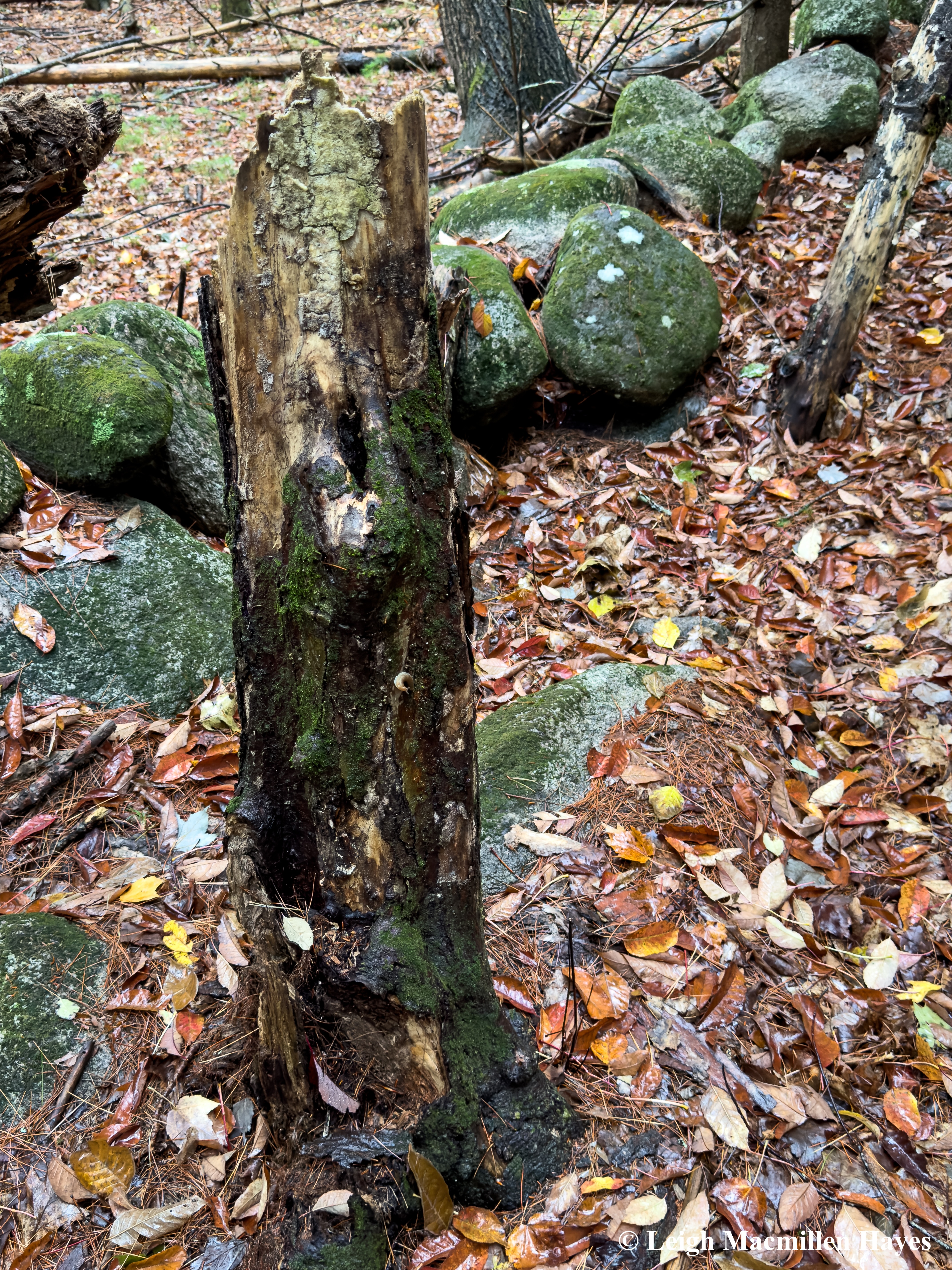
when upon a snag,
I found a Western Dusky
dining on smaller organisms than I could spot.
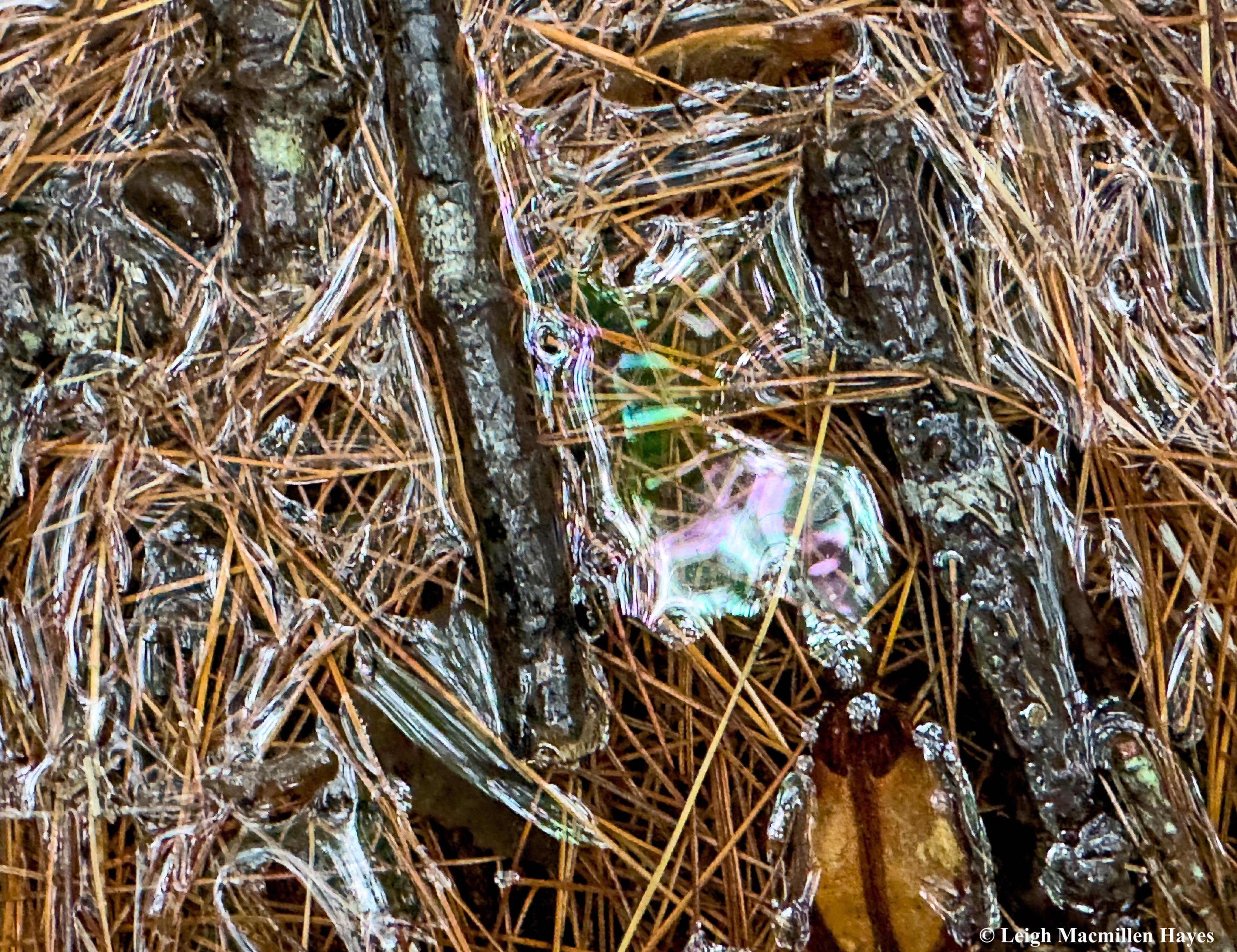
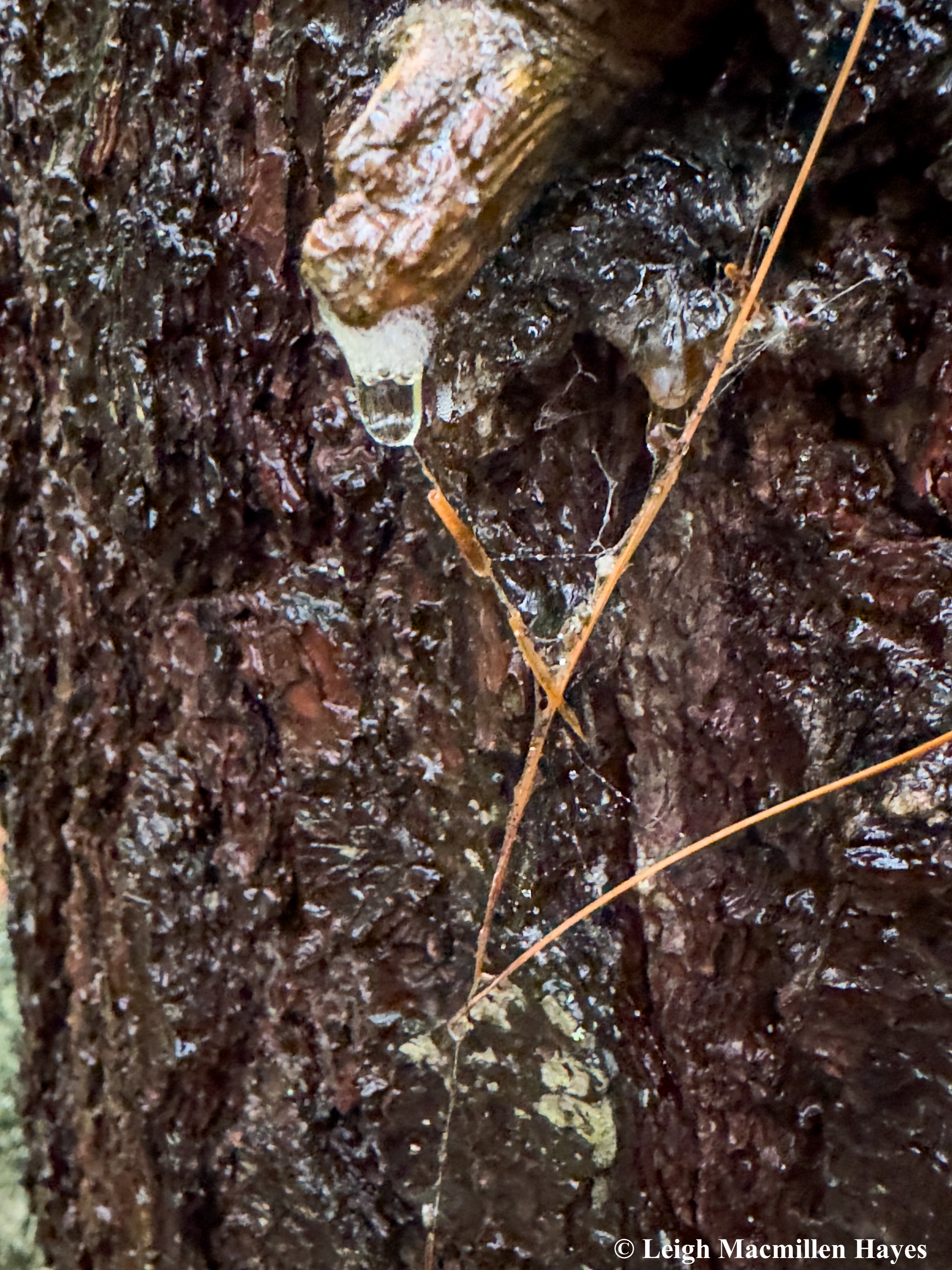
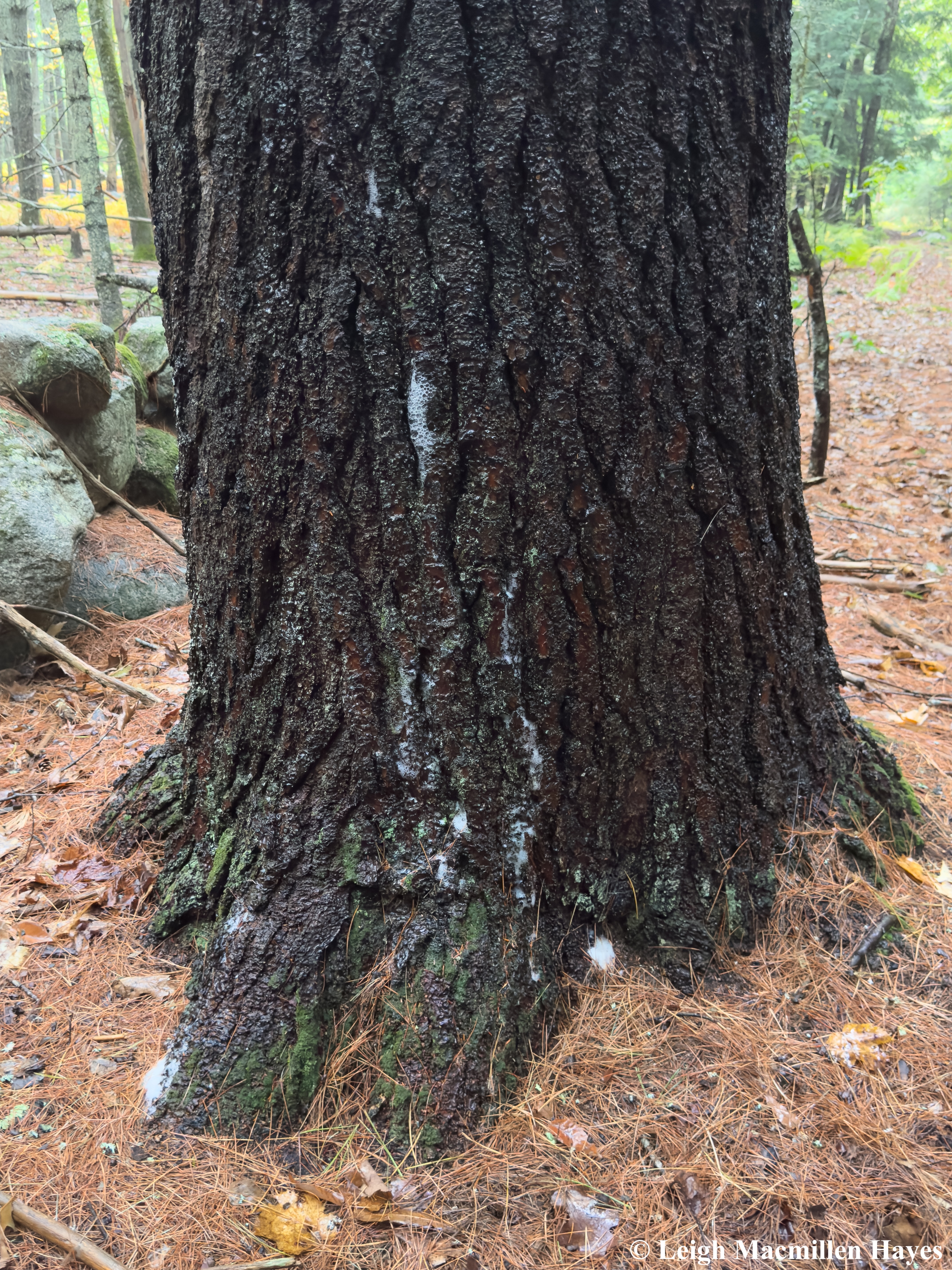
My other intention was to hunt for suds
and though I found some in the morning,
the pounding rather than pitter-pattering rain of the late afternoon
provided many an example.
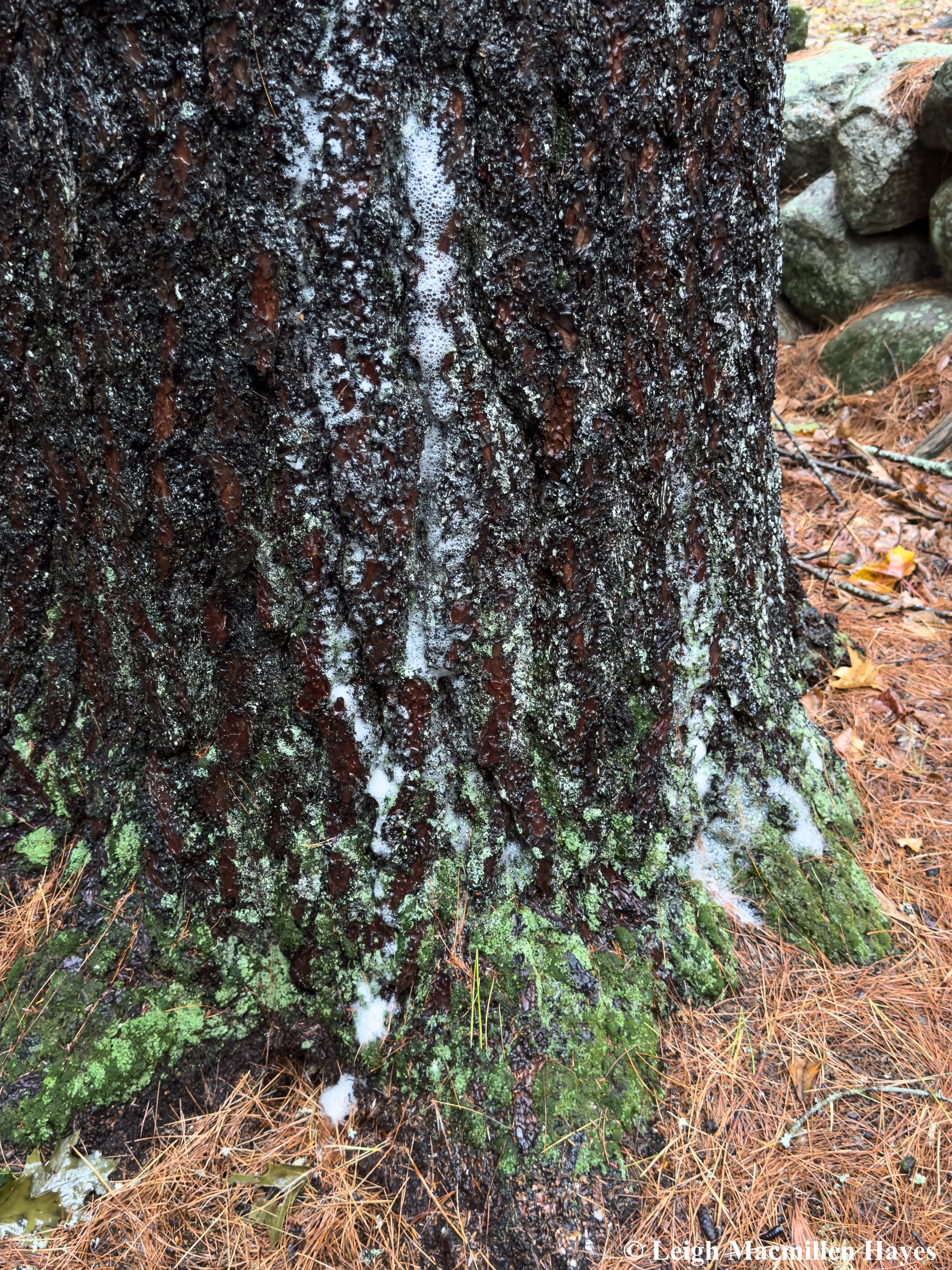
As the droplets dripped toward the base,
dissolving chemicals on the bark,
the surface tension changed,
and with the turbulence came air, thus forming foam.
It's all a matter
of one drop at a time,
but when the rain is heavy,
those drops form and release quickly.
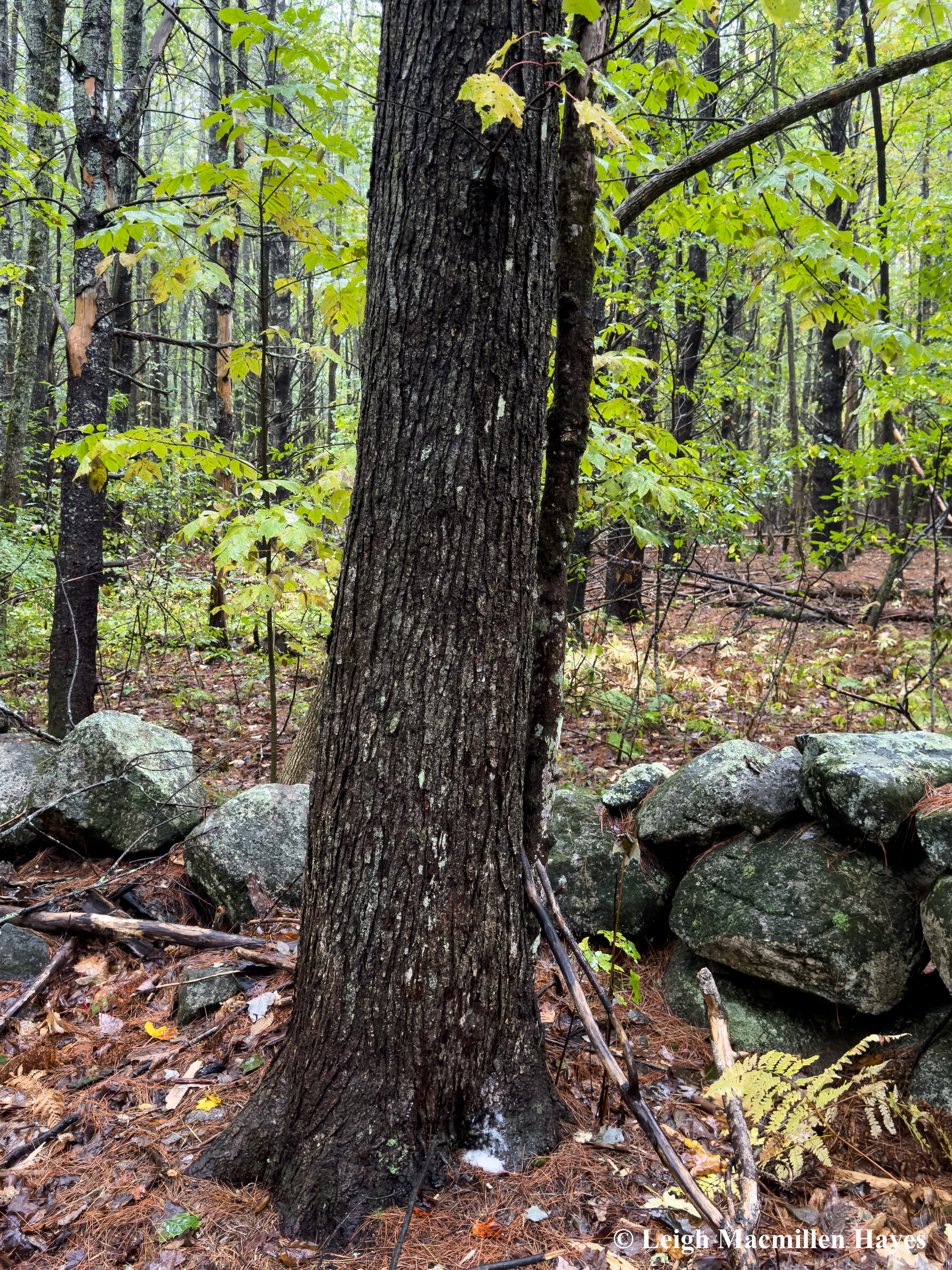
Upon one of the older White Pines
between the stonewall and old cow path,
I found lots of pine soap,
on the eastern side.
The same was true on the western side,
and as I now sit inside all cozy and dry,
it is pouring out there and I suspect almost every tree
has a base like this.
It's easy to think
that only pines offer the suds,
But I've learned from observation,
That others do the same, like this Red Maple.
And much to my pleasant surprise, 
I found a gathering of suds,
within an old Pileated Woodpecker hole,
on one of my favorite trees.
I like to think of it 
as the Stairway to Heaven Tree,
for such do its branches remind me,
as if I could climb them into the sky.
Because I was looking,
I discovered an insect,
this being a Hemlock Looper Moth,
taking refuge upon a trunk.
When I originally headed out the door this morning, 
and told My Guy I was going on a search for Slugs,
he said, "Who is this person I married?"
And we both chuckled.
All told I only found three. 
Nevertheless, I know these three
and many other critters and humans
join me in praising the rain.

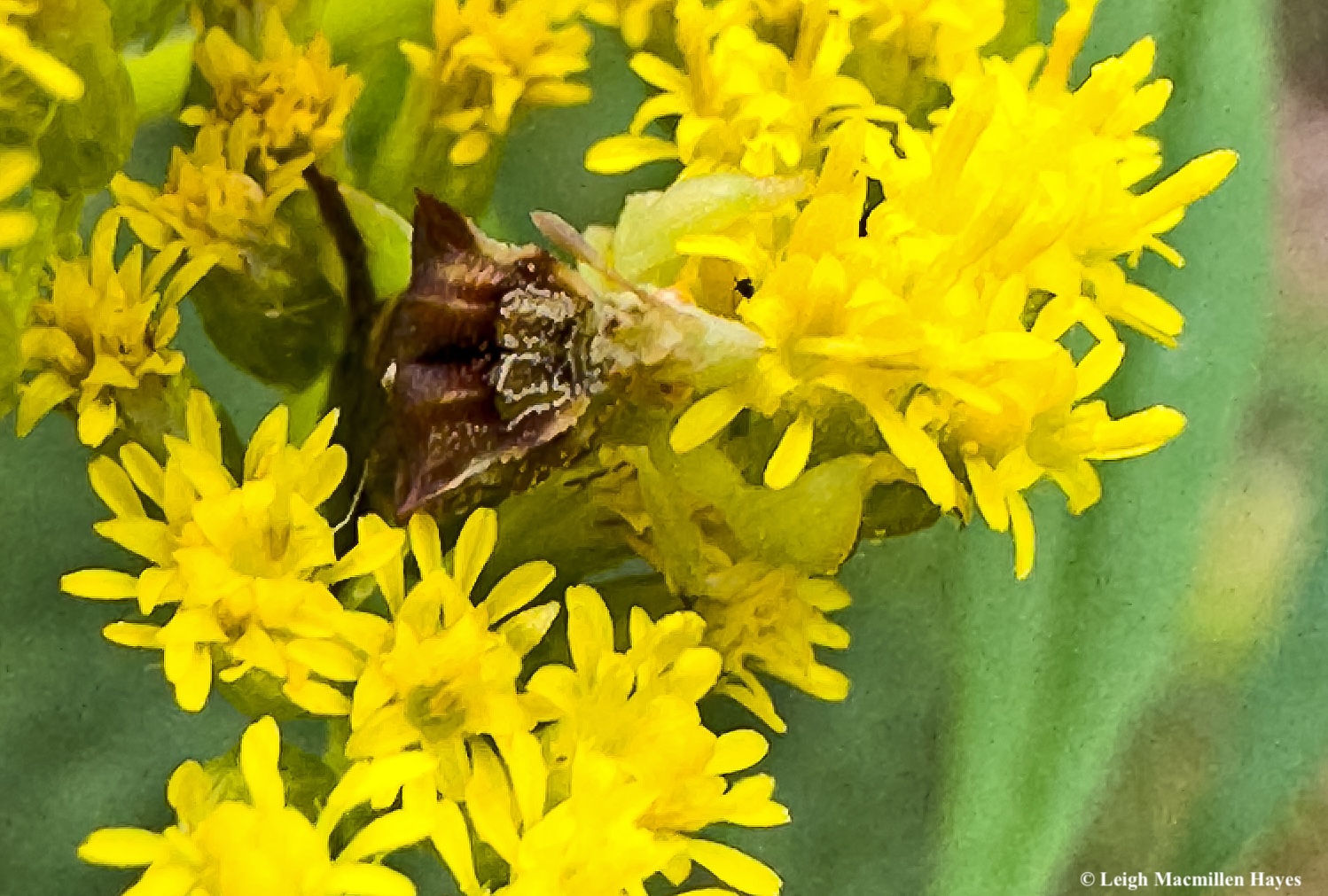
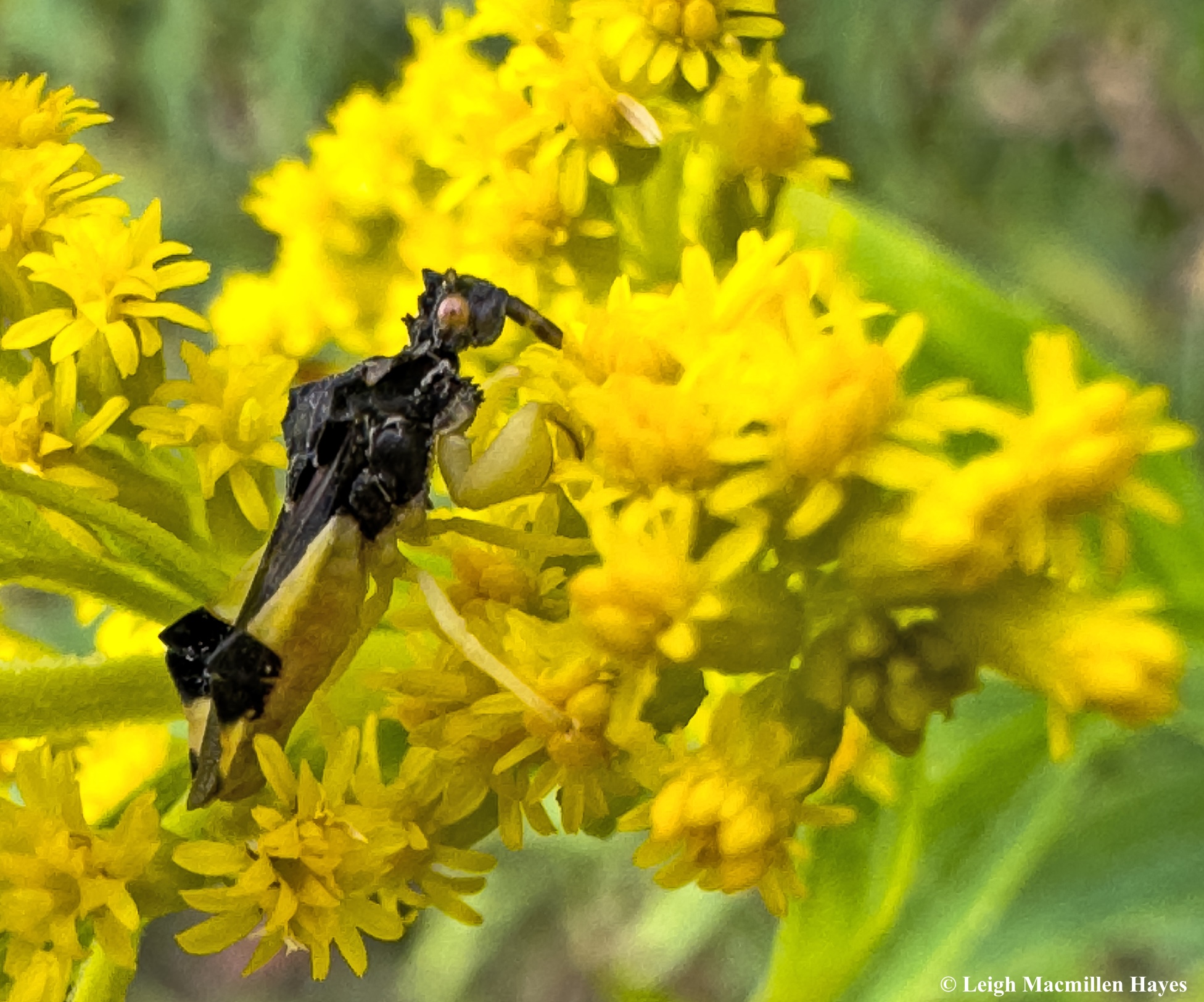
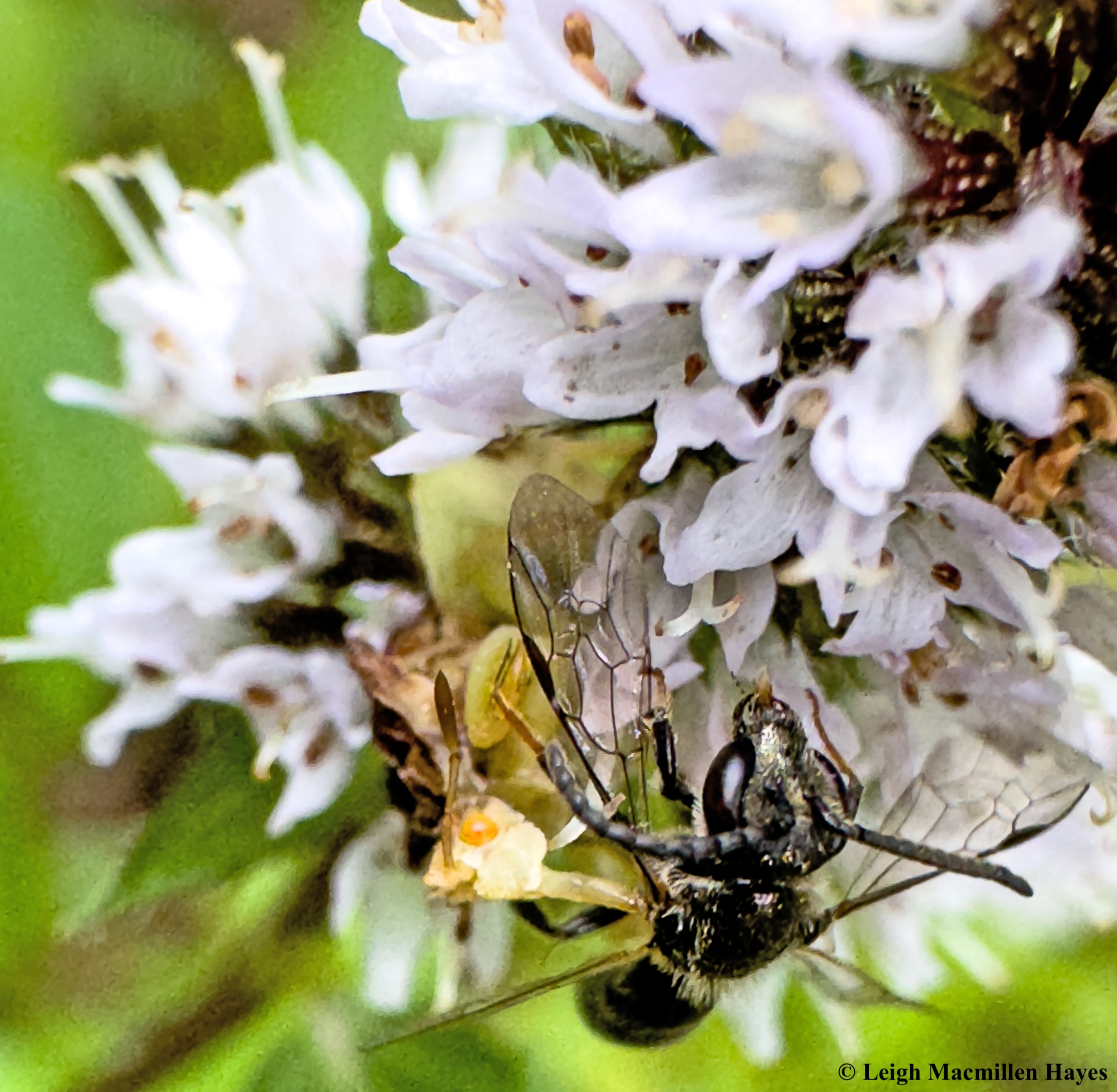
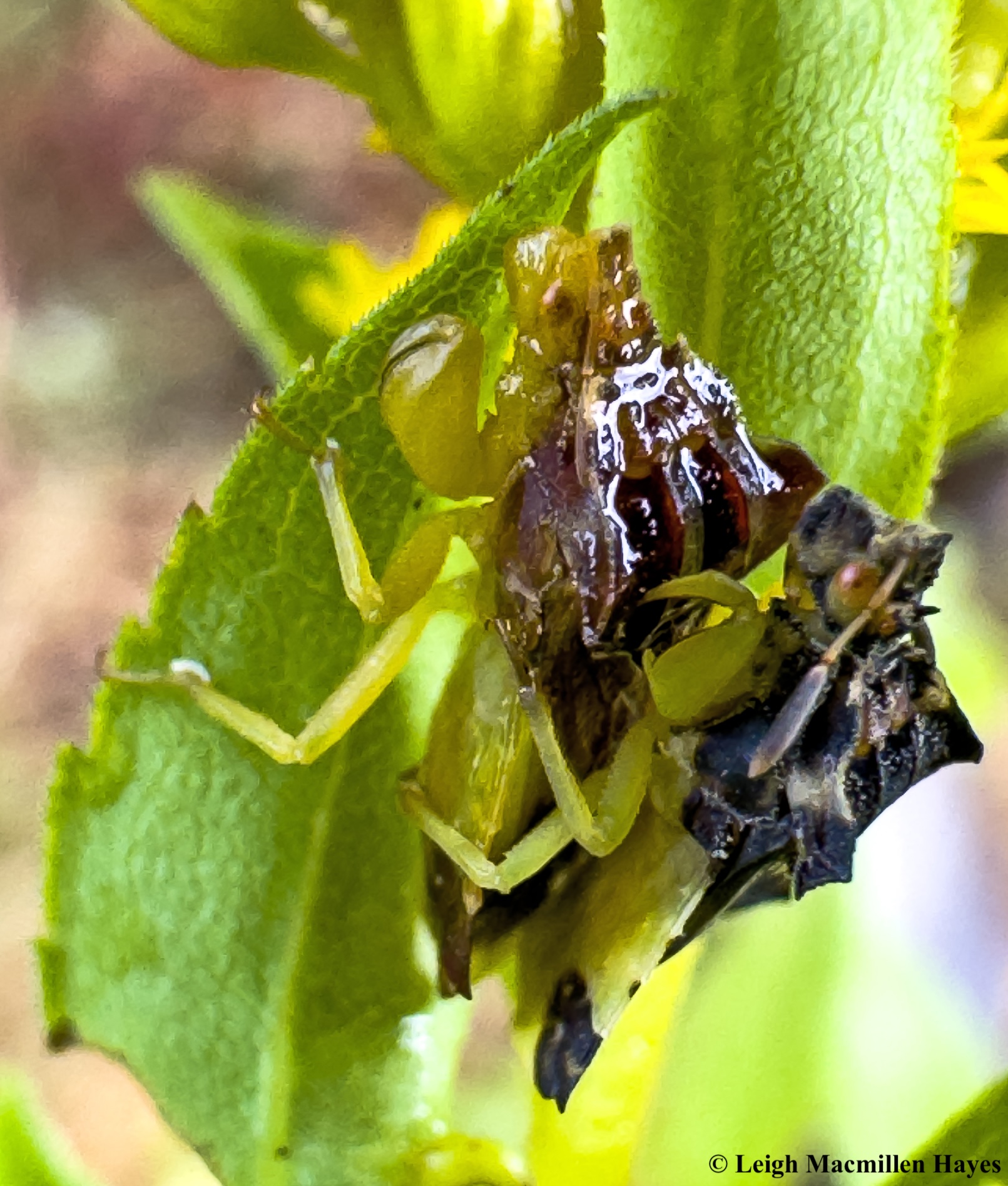
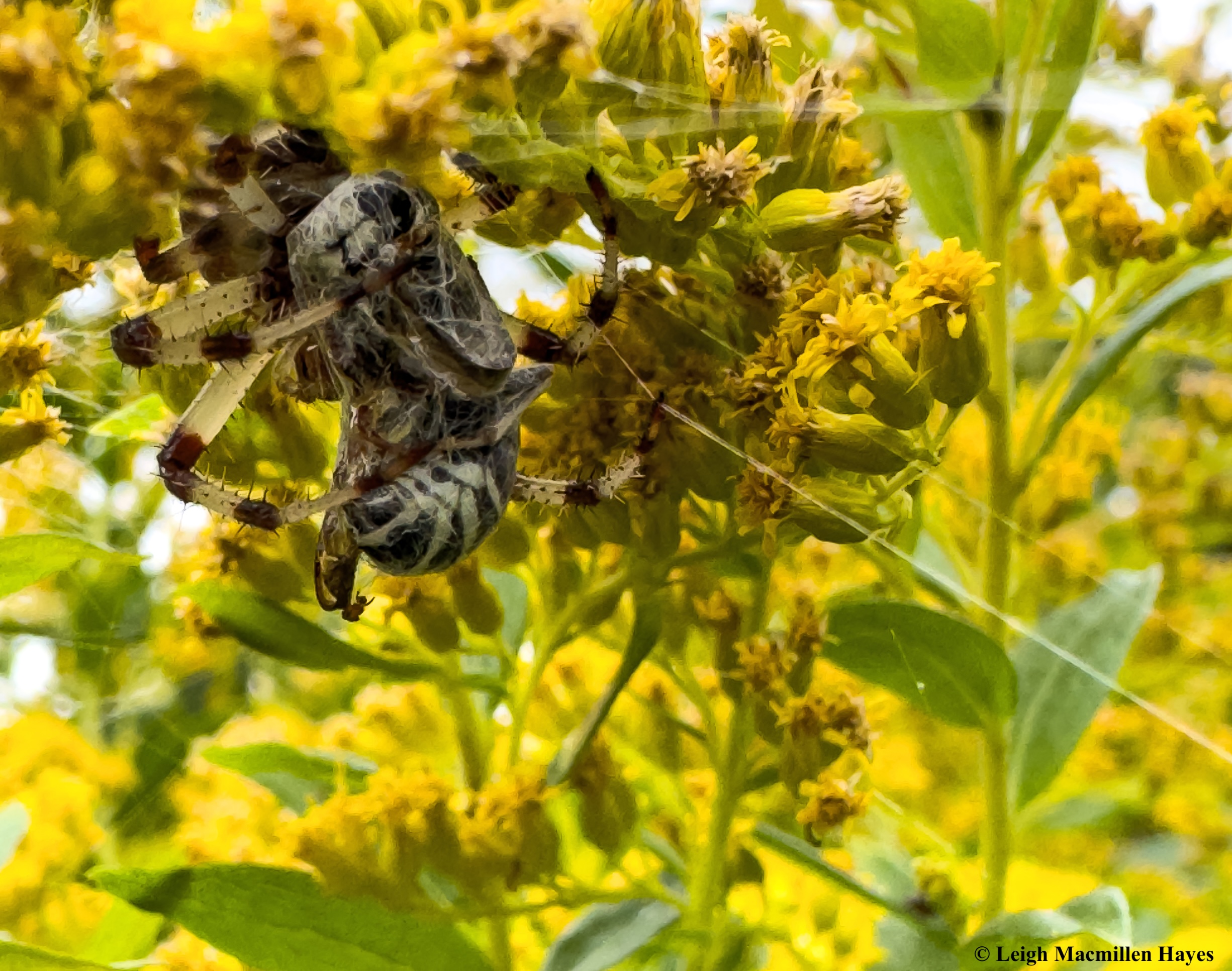
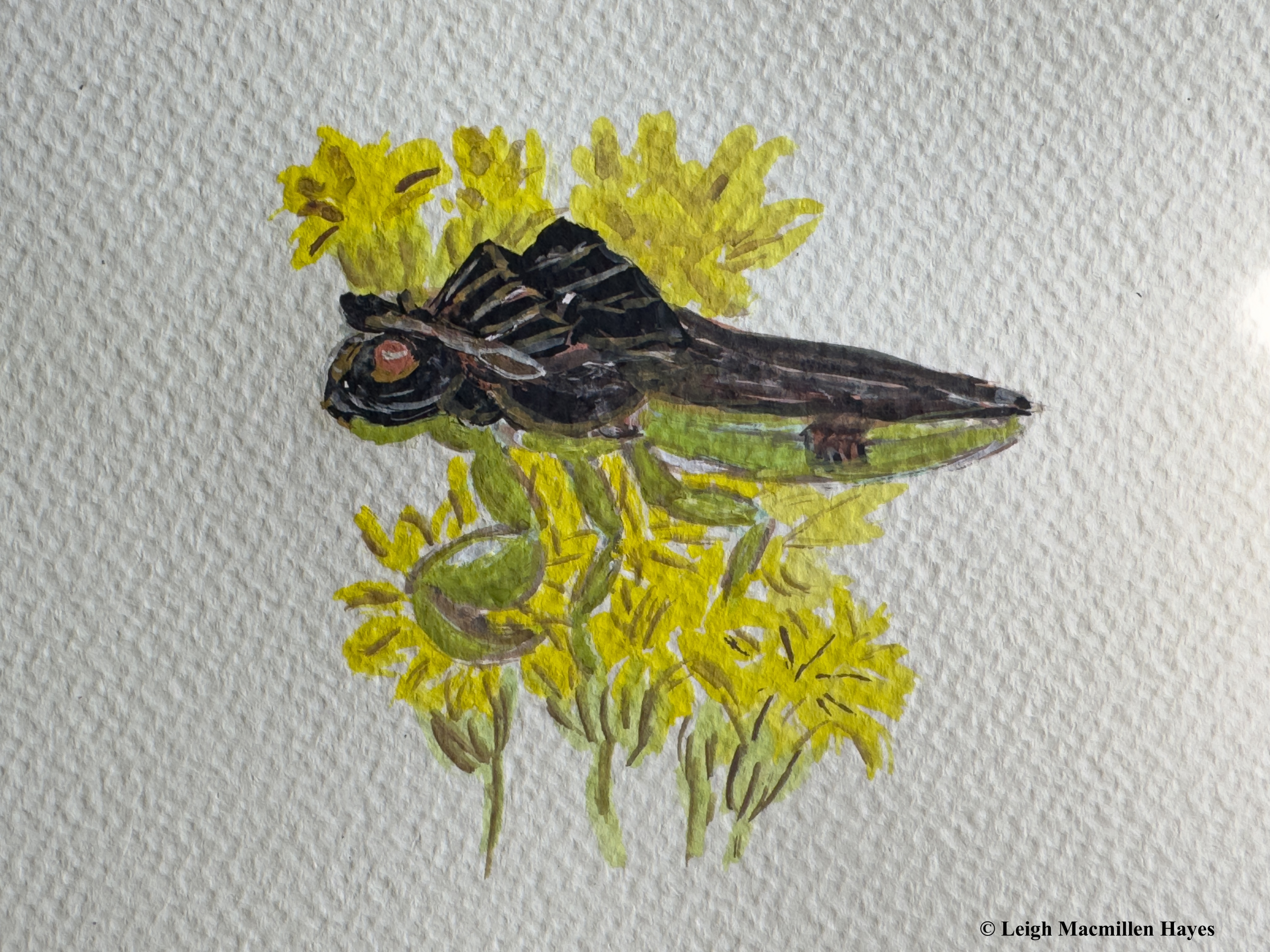
The Phymata Genus: Geniuses

You lurk in the midst 
Of Goldenrod flowers
Seeking the right moment
To earn your given name.
Mixing the color palate
With greenish-yellow,
White and brown hues,
You are well camouflaged.
Small, yet bulbous eyes
Watch with intensity
Waiting for prey
To approach.
Raptorial claws on muscular legs
Grab, and then impale
The victim’s body
With your short beak.
Meal size
Is of no importance
As you’ll take
Anything you can reach.
Once immobilized,
You inject paralyzing saliva
That liquifies its innards
Into nutrients you sip.
Sometimes you attack
When you are
In premarital status,
Which can last forever.
Being the smaller, darker male
You remain on the female’s back,
Guarding in hopes to claim her
When the time is right.
Your antennae twitch
As you tap forelegs,
And finally convince her
To join you in a canoodle dance.
Stealthy are you
With camouflage capabilities
And predatory prowess
That aids a healthy ecosystem.
Your swift hunting technique
Targets a variety
On insects both beneficial
And those that are pests.
As I hunt for you
I realize you are not alone
For others use the same flowers
To hide amongst and wait.
But today, let’s celebrate
You in the Phymata genus,
The Jagged Ambush Bugs,
Geniuses that I think you are.

Resurrecting the Resurrection

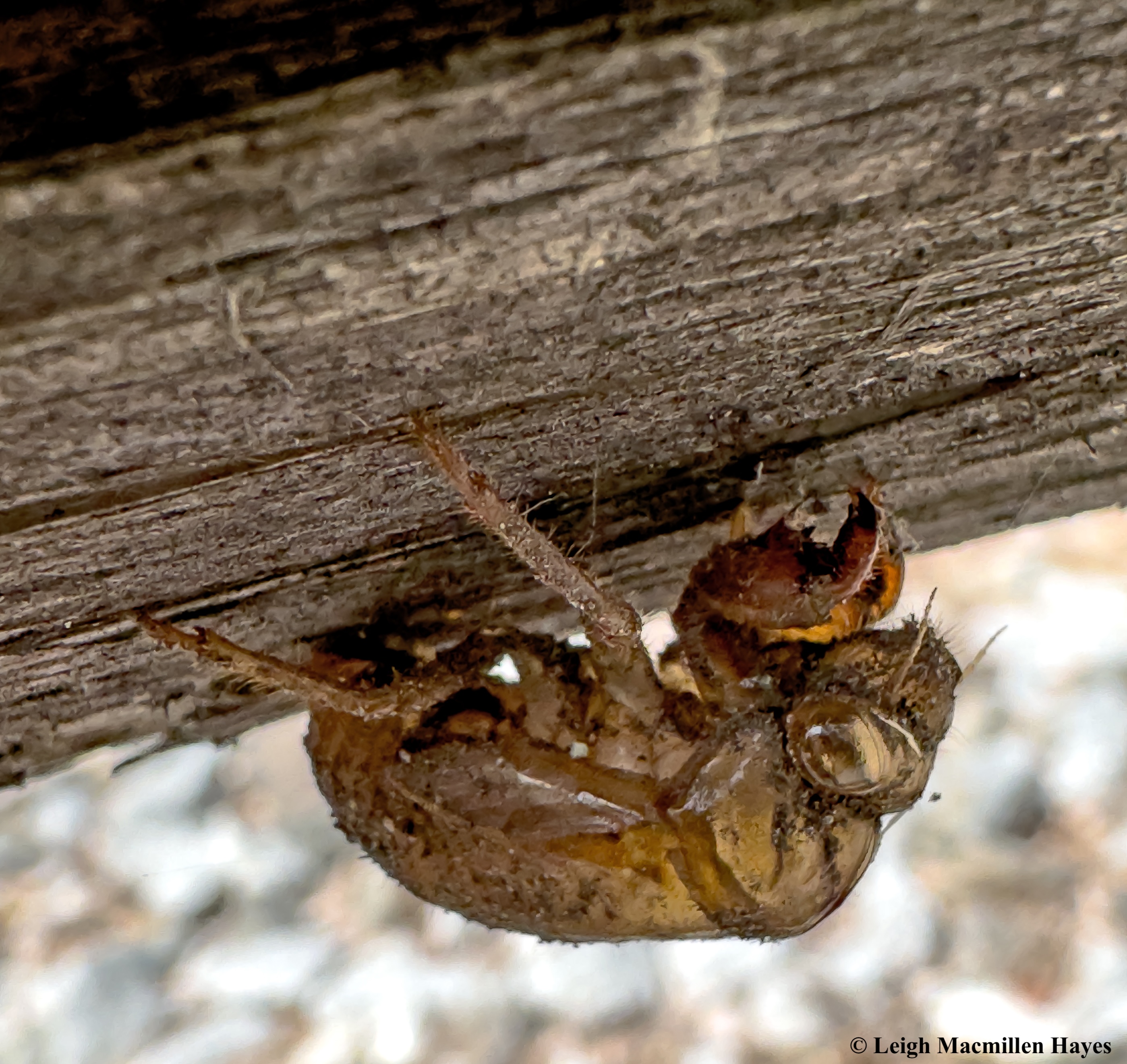
This afternoon I met a young girl, probably about seven years old, who patiently waited as her mother ran some laps on a local trail and because I’d just started to notice the exoskeletons of Dog-day Cicadas, one of my favorite summer insects (besides dragonflies, mind you), I started to point them out.


At first look, she stepped way back, and told me they were too scary. They are. But then I picked one off the fence and she was intrigued but still apprehensive. I explained the life cycle and that this was no longer a living specimen and then I placed it on the ground and told her if she wanted to pick it up or show her mom, I’d leave it for her.

She did show her mom and then she caught up with me again and one by one, started to point out all the specimens along the route.

Eventually the mom joined us and said she’d only heard and seen the Seventeen-year Cicadas and did not know that we have Cicadas in Maine.

They decided they’d go home and look them up and see if they could watch a video of the adults emerging.

And then . . . my little friend found one.

I told her it would take about three hours for the process to be completed. She thought maybe her dad and sister would like to come back to see them, but was sure her sister would be frightened.

Whether they did or not, I’ll never know as I’ll never know her name for we didn’t exchange such. I was just thrilled the she had the chance to see such a miracle, one of the many wonders of the world, take place and that she had spied it before I did.

A few steps later and her mom spotted one that had fully emerged, but wasn’t yet ready to fly to the tree tops to sing its raspy love song.

When we departed I thanked them both for sharing the experience with me and I have a feeling that young girl will be looking in the future. She did tell me that she likes dragonflies and butterflies and grasshoppers, but not other insects. I suspect Dog-Day Cicadas may have been added to her list on the drive home.

And now, because I can, I share with you once again my tribute to these amazing insects. The cemetery referenced is in Lovell, Maine.

Resurrection
By Leigh Macmillen Hayes, 7/19/2020

To walk into a cemetery on a summer day
And find an insect metamorphosing upon a stone
I begin to understand the process of resurrection.

A life well spent questing sap for sustenance
Prepares to crawl free of its past
And reach for heavenly aspirations.

Through a tiny slit, a spirit no longer contained
Emerges head first as a teneral shape develops
with bulging eyes to view a new world.

Gradually, a pale tourmaline-colored body extends outward
With stained-glass wings unfurling
That provide baby steps toward freedom beyond.

I mourn the loss of your former soul
But give thanks for a peek at your upcoming ascension
From this place to the next.

It is not for me to know when you will first use the gift of flight
As I didn’t know when you would shed your old skin,
And I quickly offer a final goodbye when I see your wings spread.

I rejoice that I’ll spend the rest of the summer
Listening to your raspy love songs
Playing nature’s lullabies upon violin strings from above.

On this day, I celebrate the secrets of a cicada’s life,
Dying to the old ways and rising to new,
While I wander among the graves of others who have done the same.

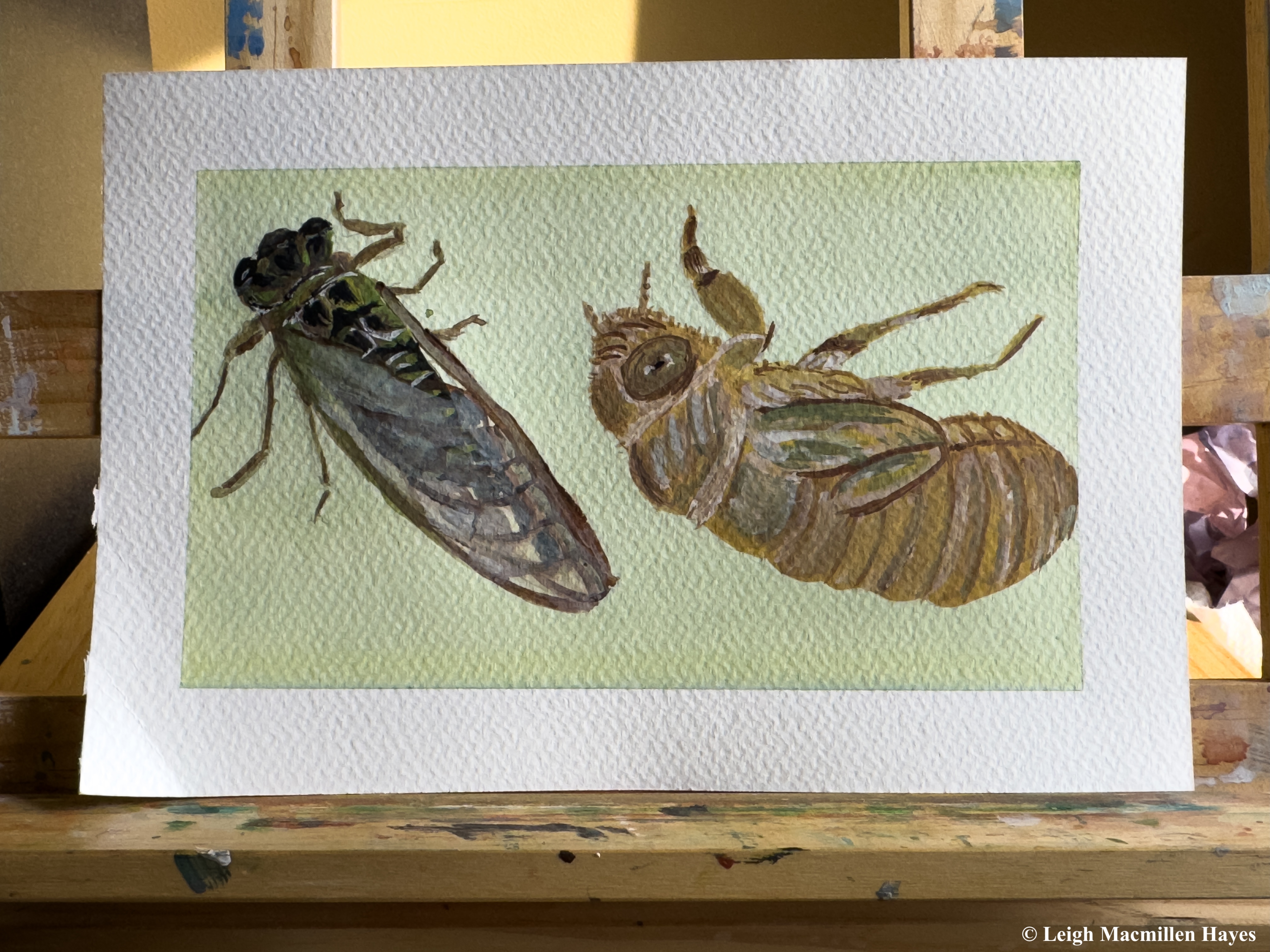
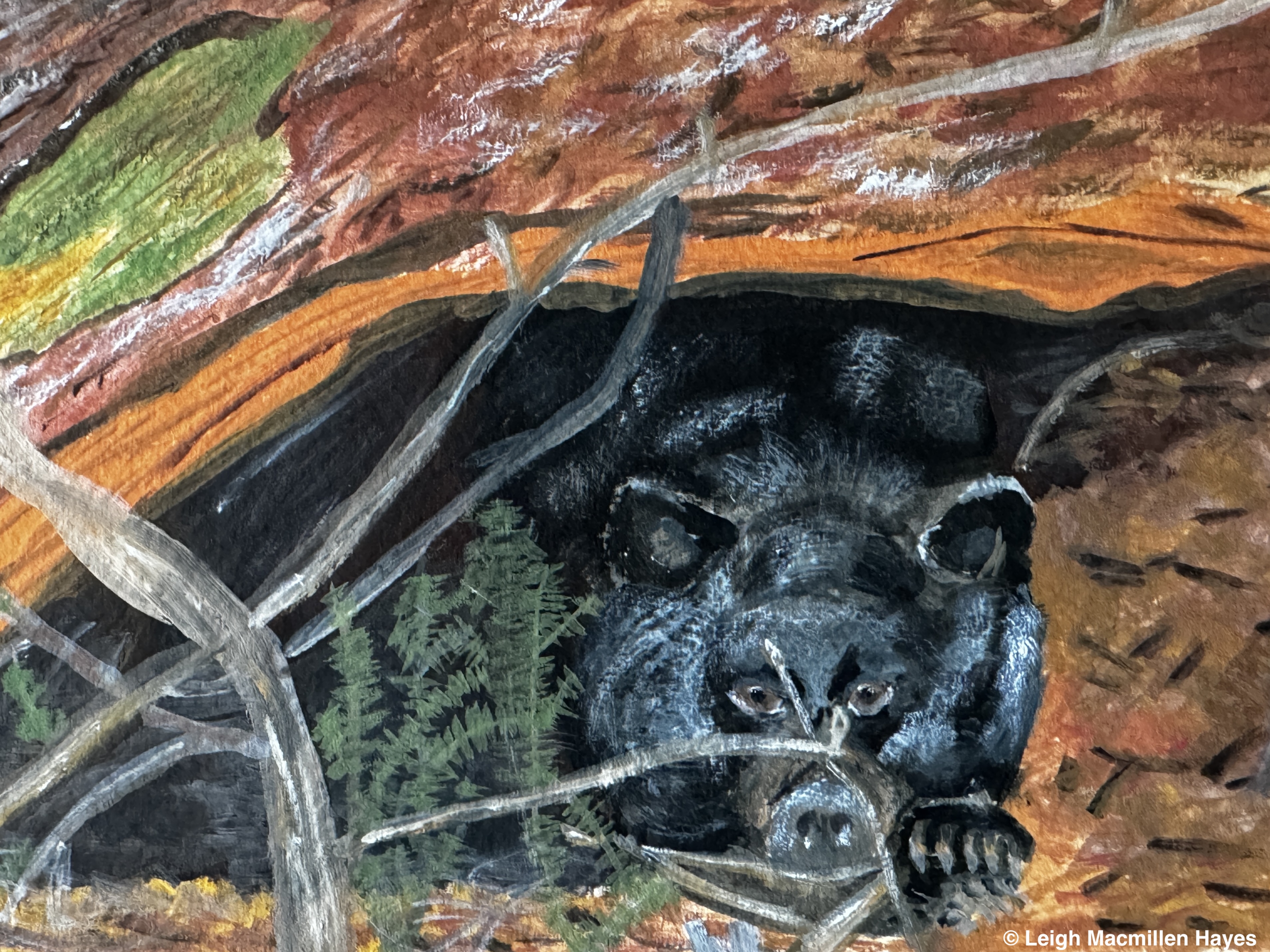
And here’s today’s tribute, which still needs some tweaking, but that’s the beauty of working with gouache paints. I can easily make changes when the mood strikes.

Thanks for stopping by as I resurrected the Resurrection.

Ec-lec-tic

Not one to ever be bored,
I follow my brain
in a million different directions
every day.
Sometimes the thoughts are broad-winged,
and even if I try to hide them,
they catch up
and stare me down.
Other times they are quick
and race through my head
in such a manner
that I can hardly capture them.
And then there are those 
that are as small as a Spittlebug
but still worth considering
because everything counts.
Some moments I get to share with others
and together we wonder
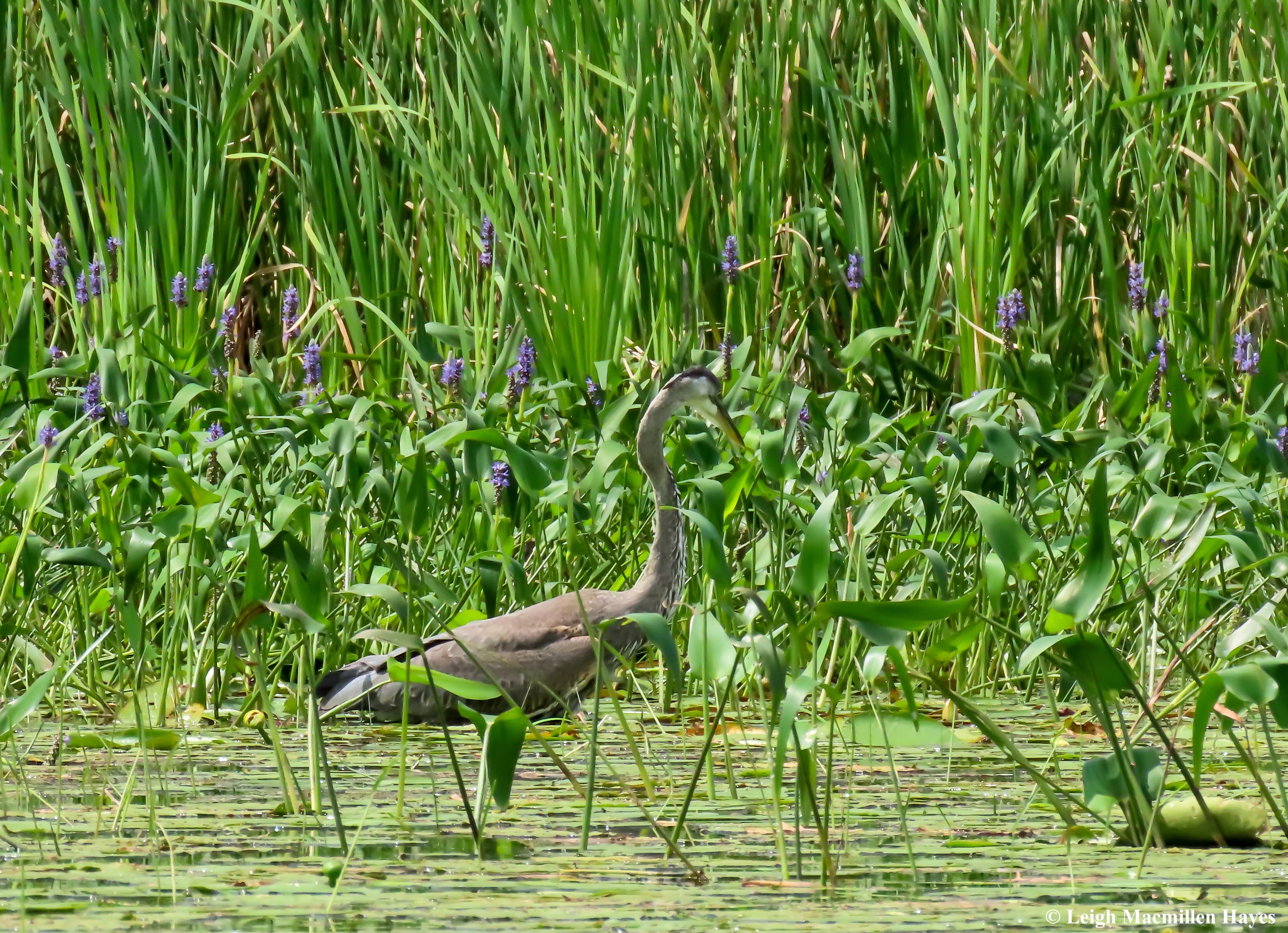
how long the Heron
will wait before taking the next step.
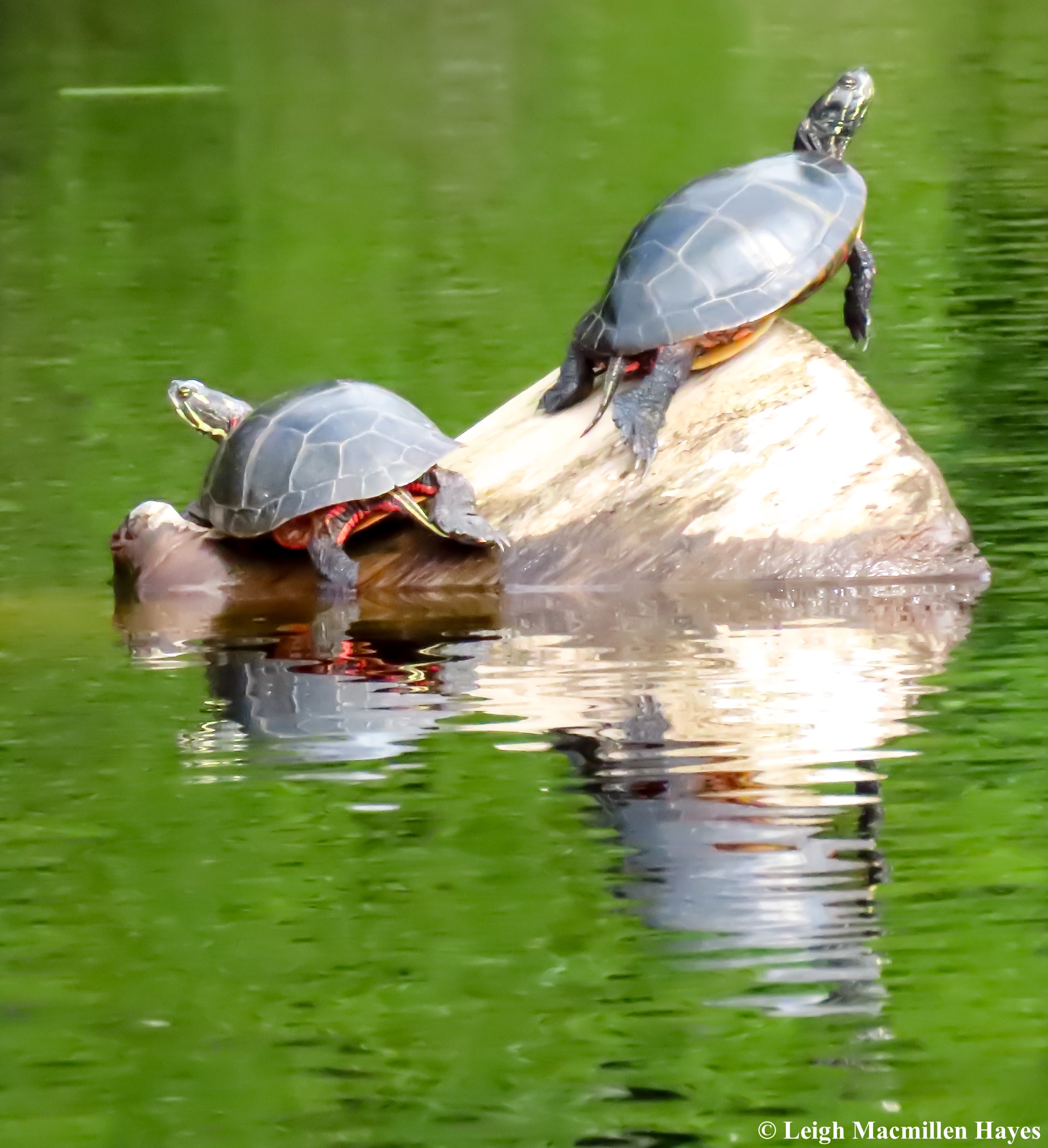
In that same space named for Otters
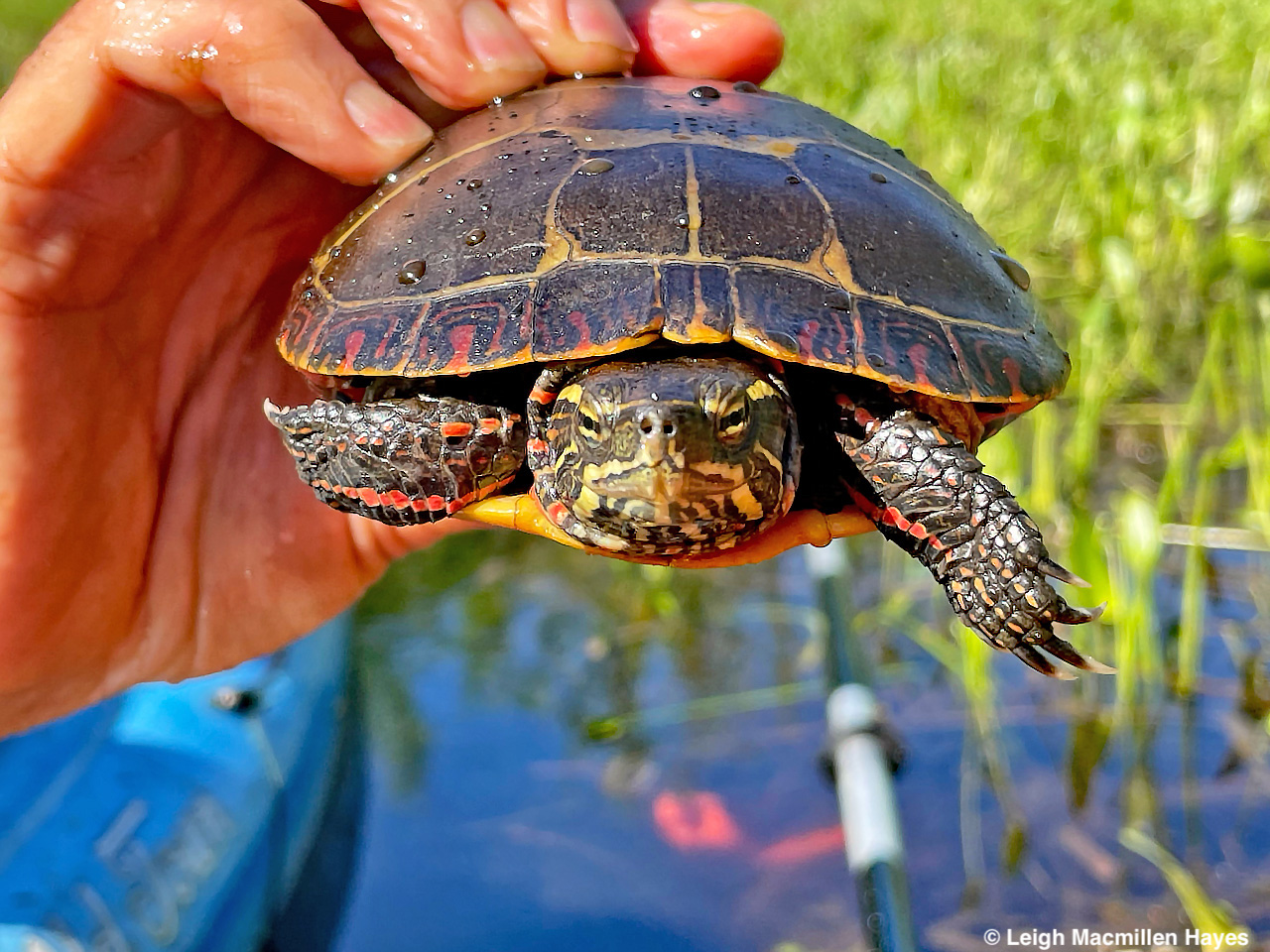
we spy basking Painted Turtles
who remind us we don't always need to
slip into the water and disappear from the scene.
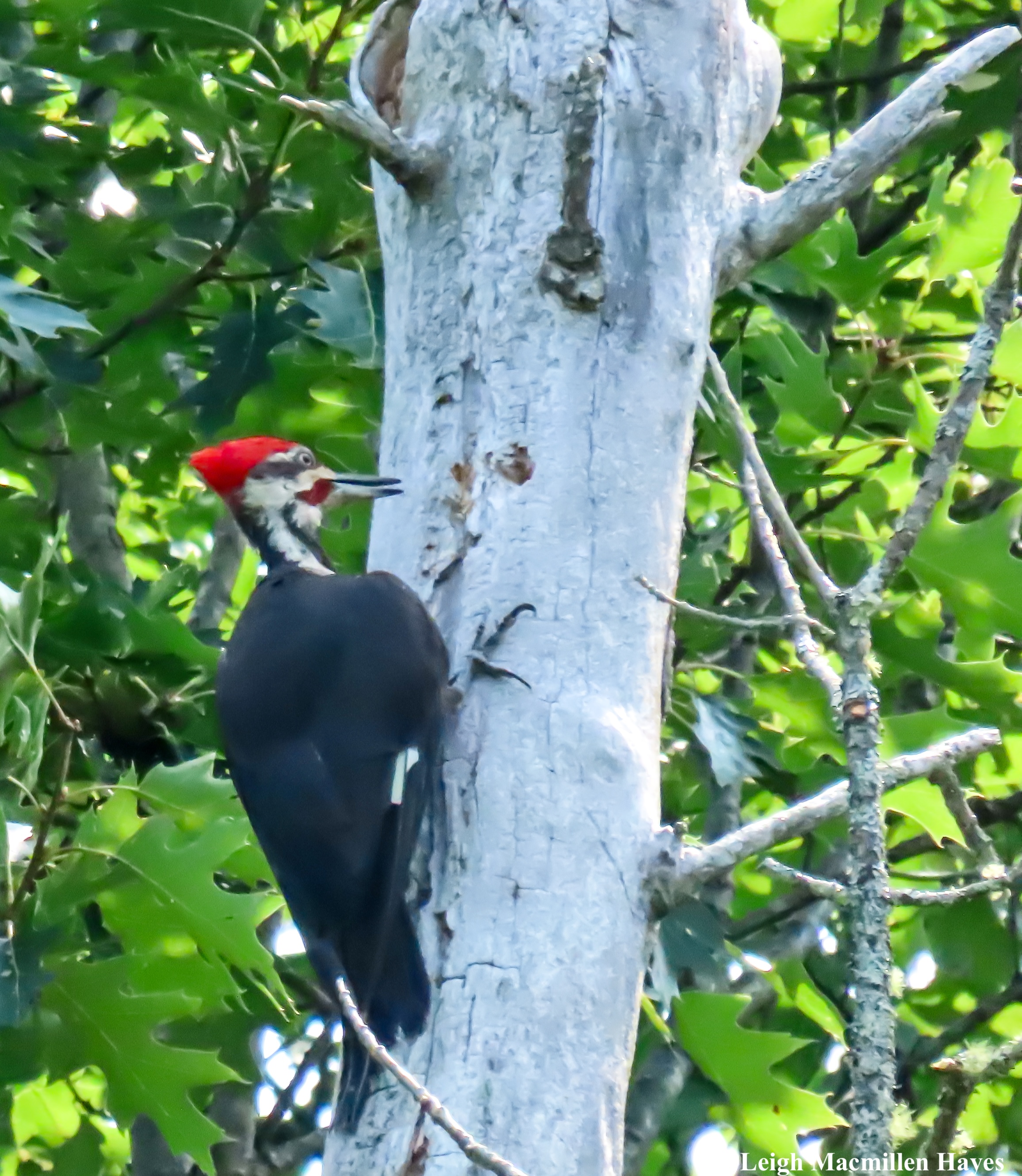
And then the Woody Woodpeckers 
of the North Woods
Rat-a-tat messages
best interpreted by their mates and I can only listen.
They may get a wee bit ruffled
in their Pileated fashion,
but I soon realize
that's because his she was nearby. And then they flew.
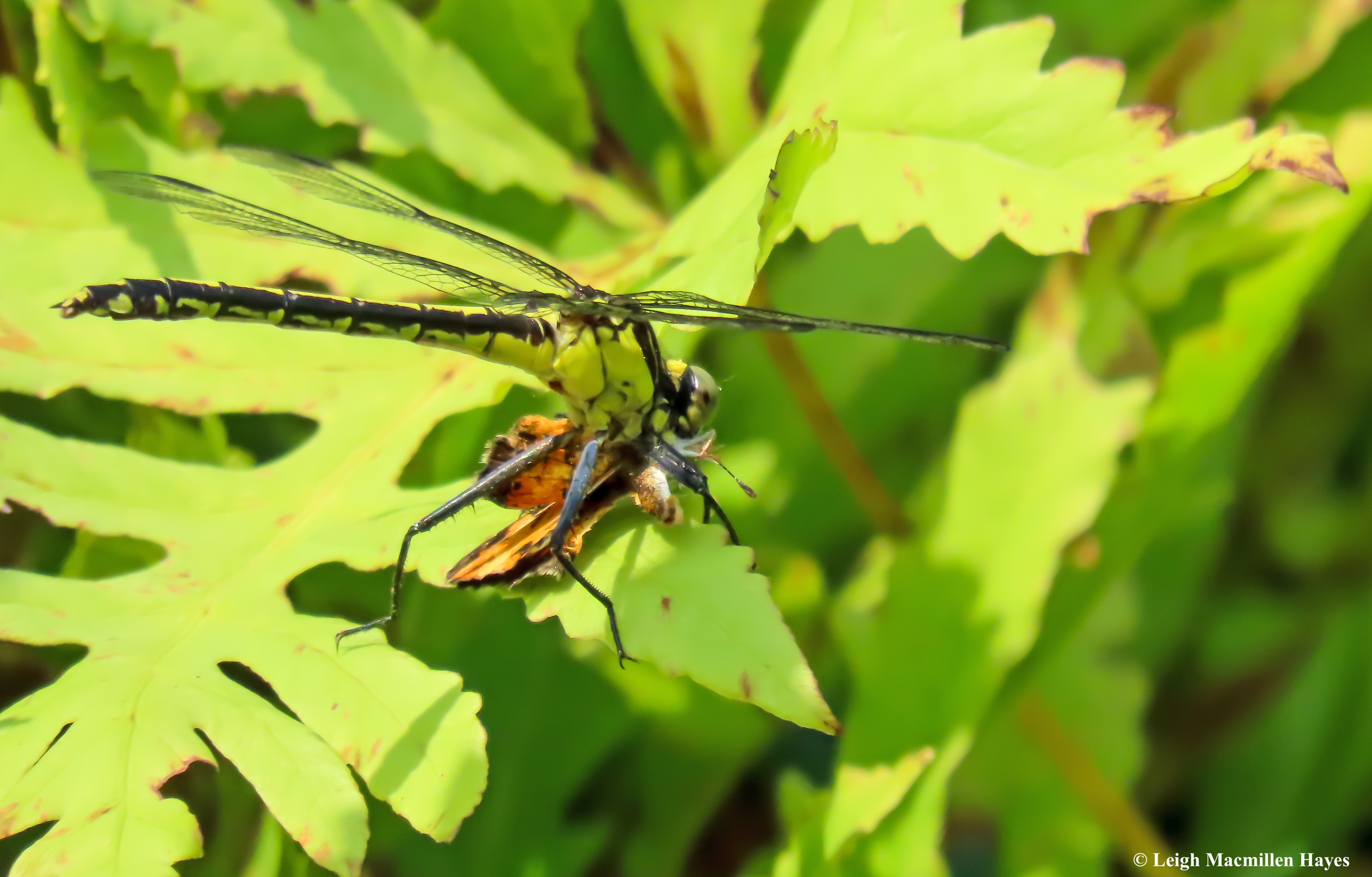
Next, upon a fern so Sensitive,
one with Spiny Legs doth land,
a Northern Crescent in its mouth
meant to provide nourishment.
Meanwhile, strung between other ferns
of the Sensitive sort,
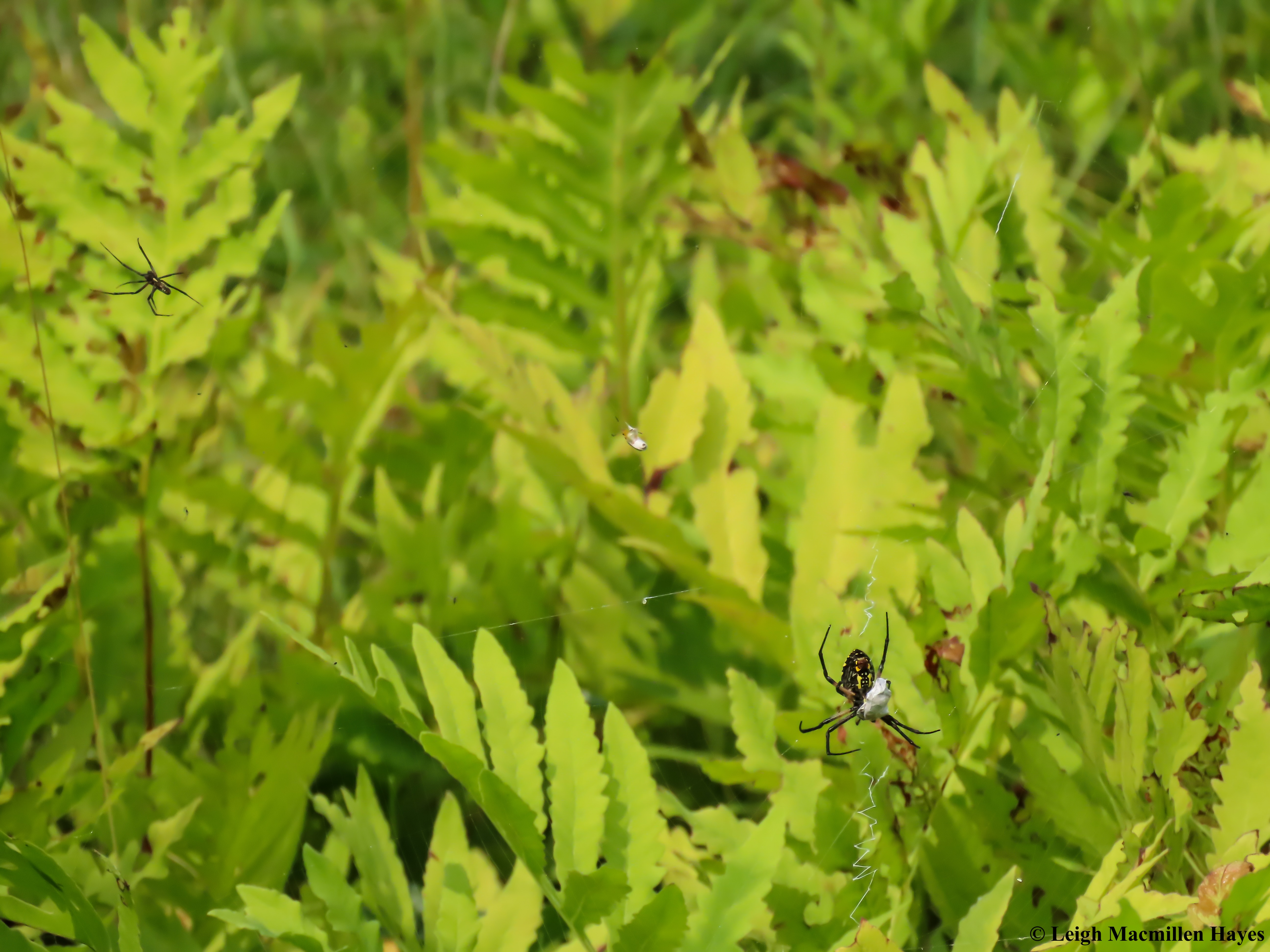
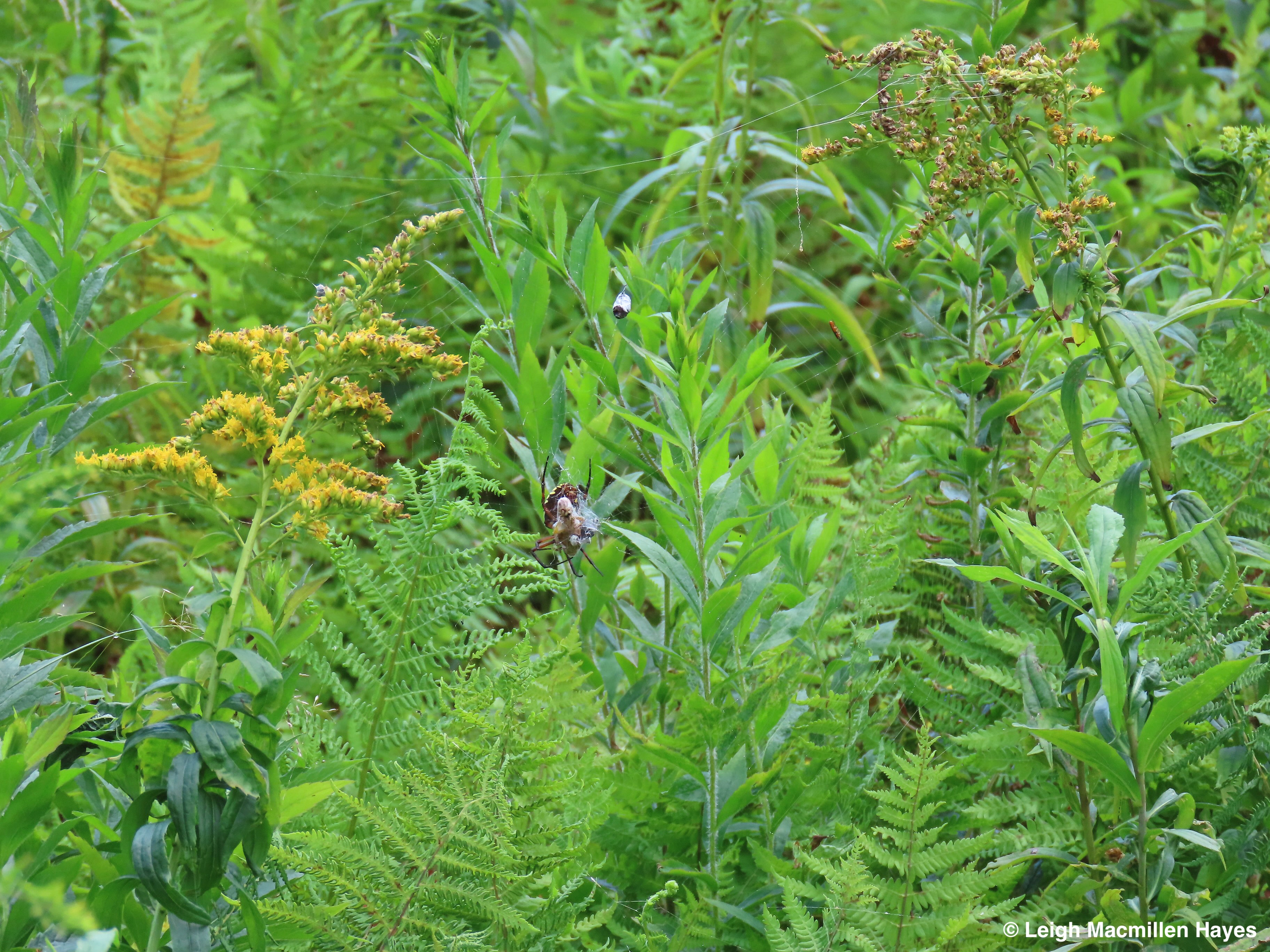
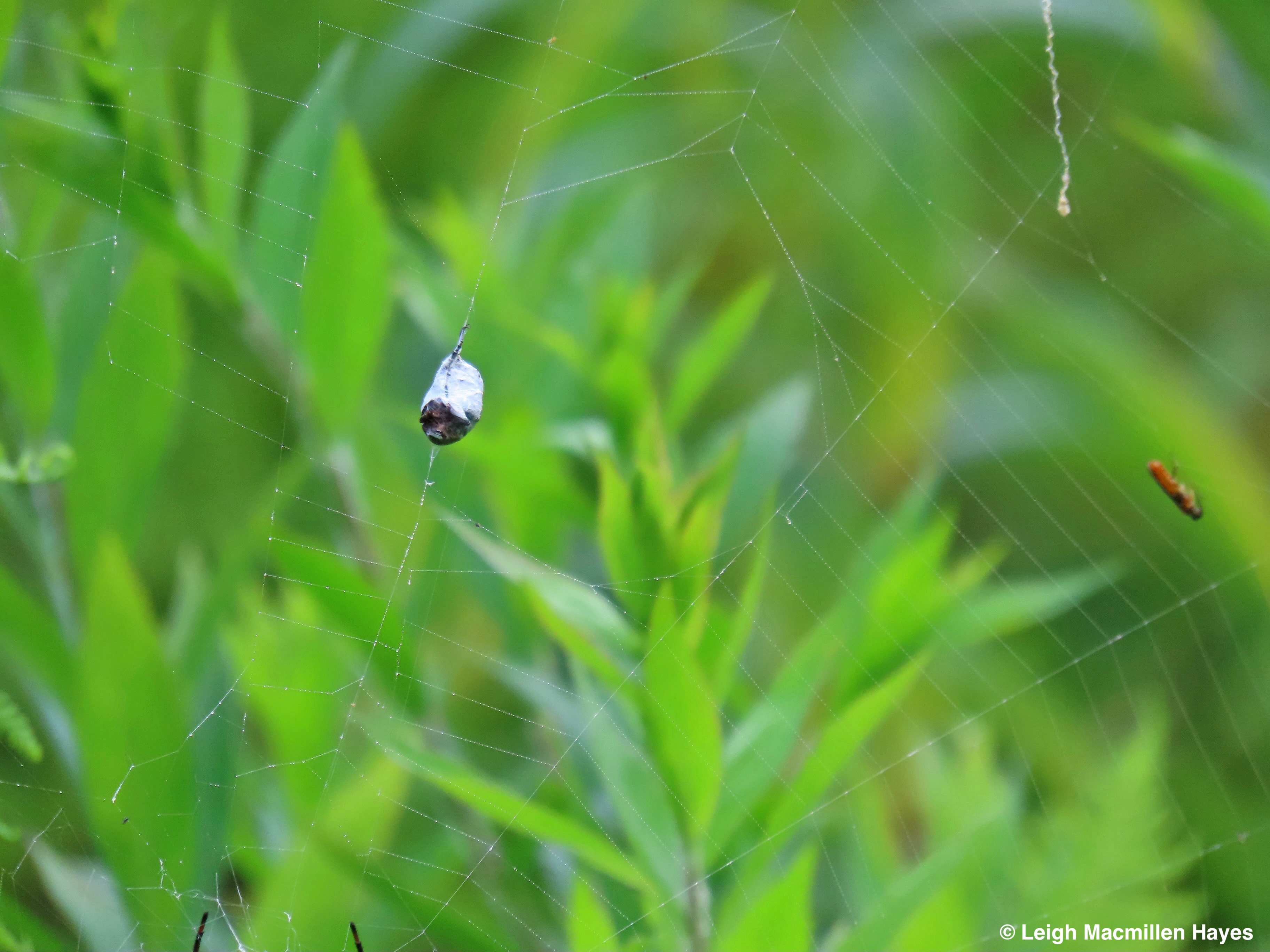
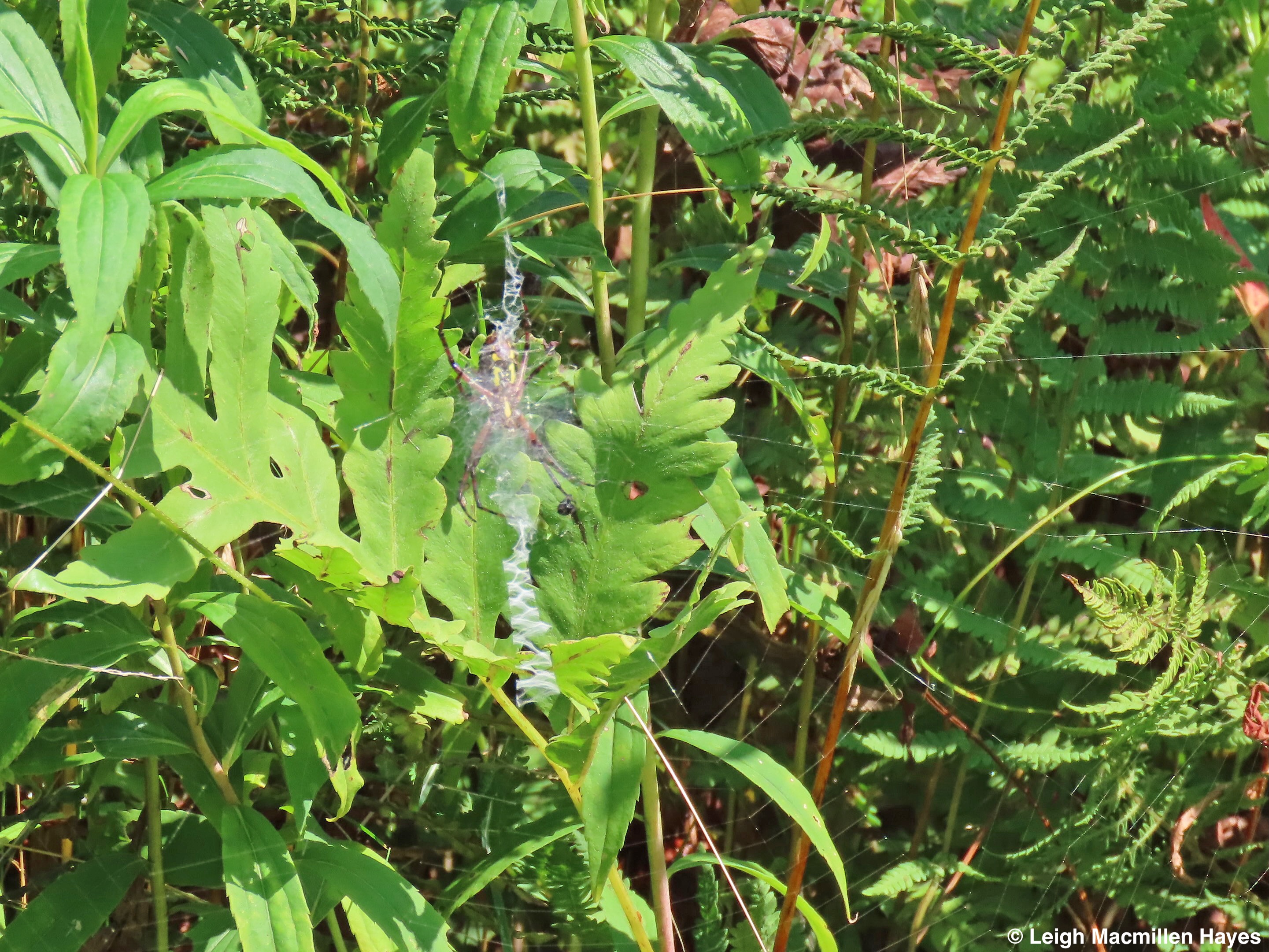
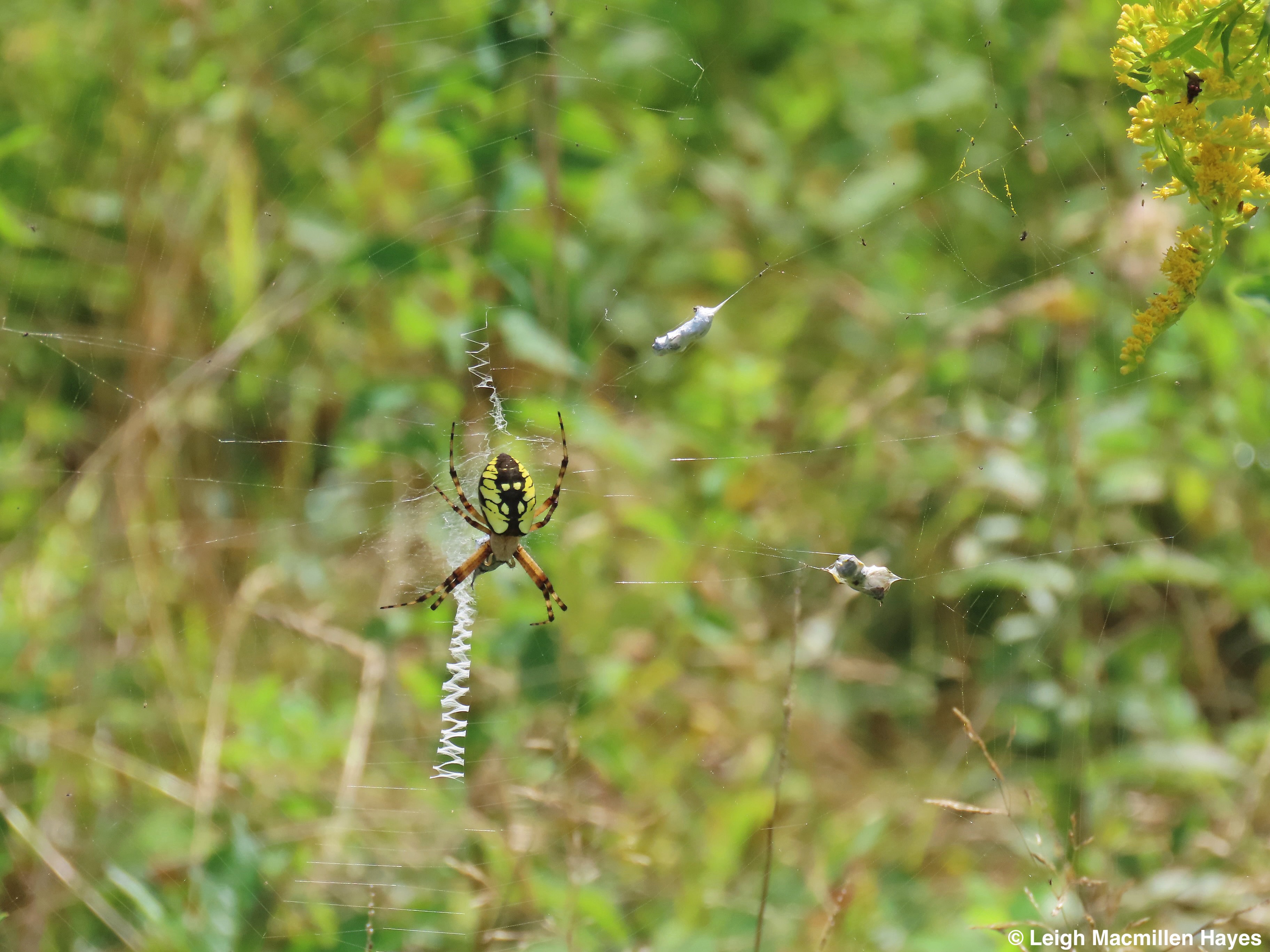
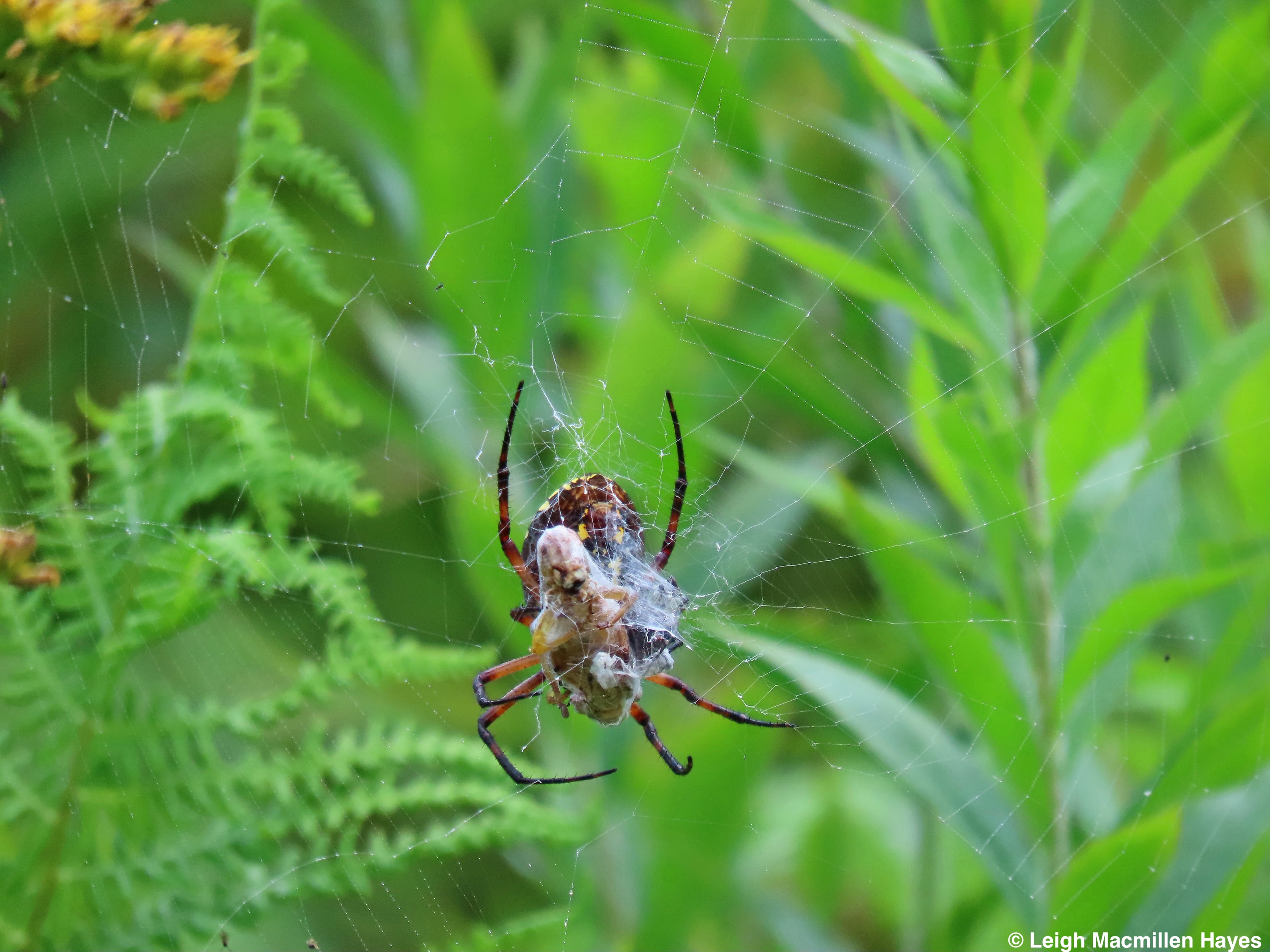
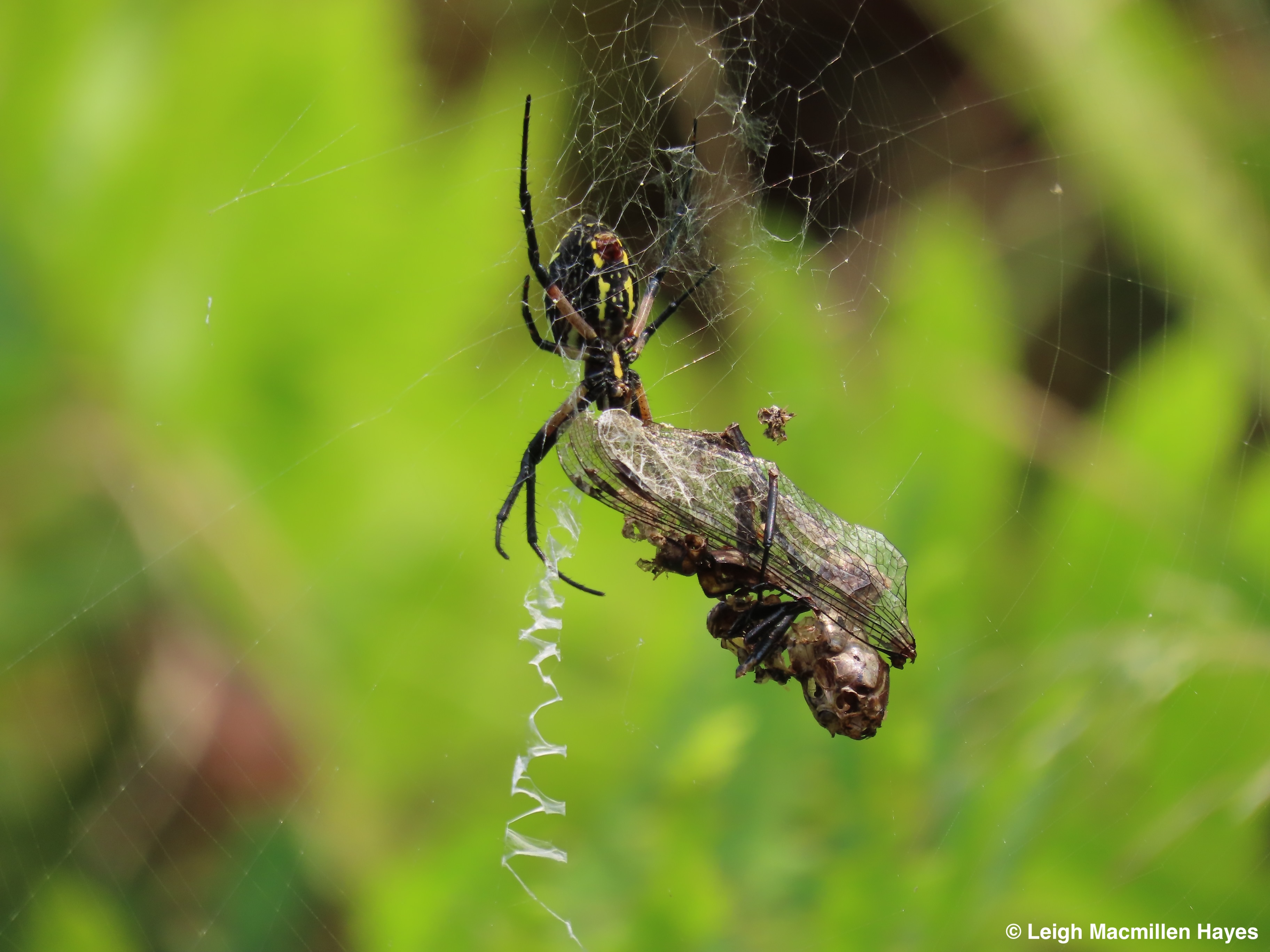
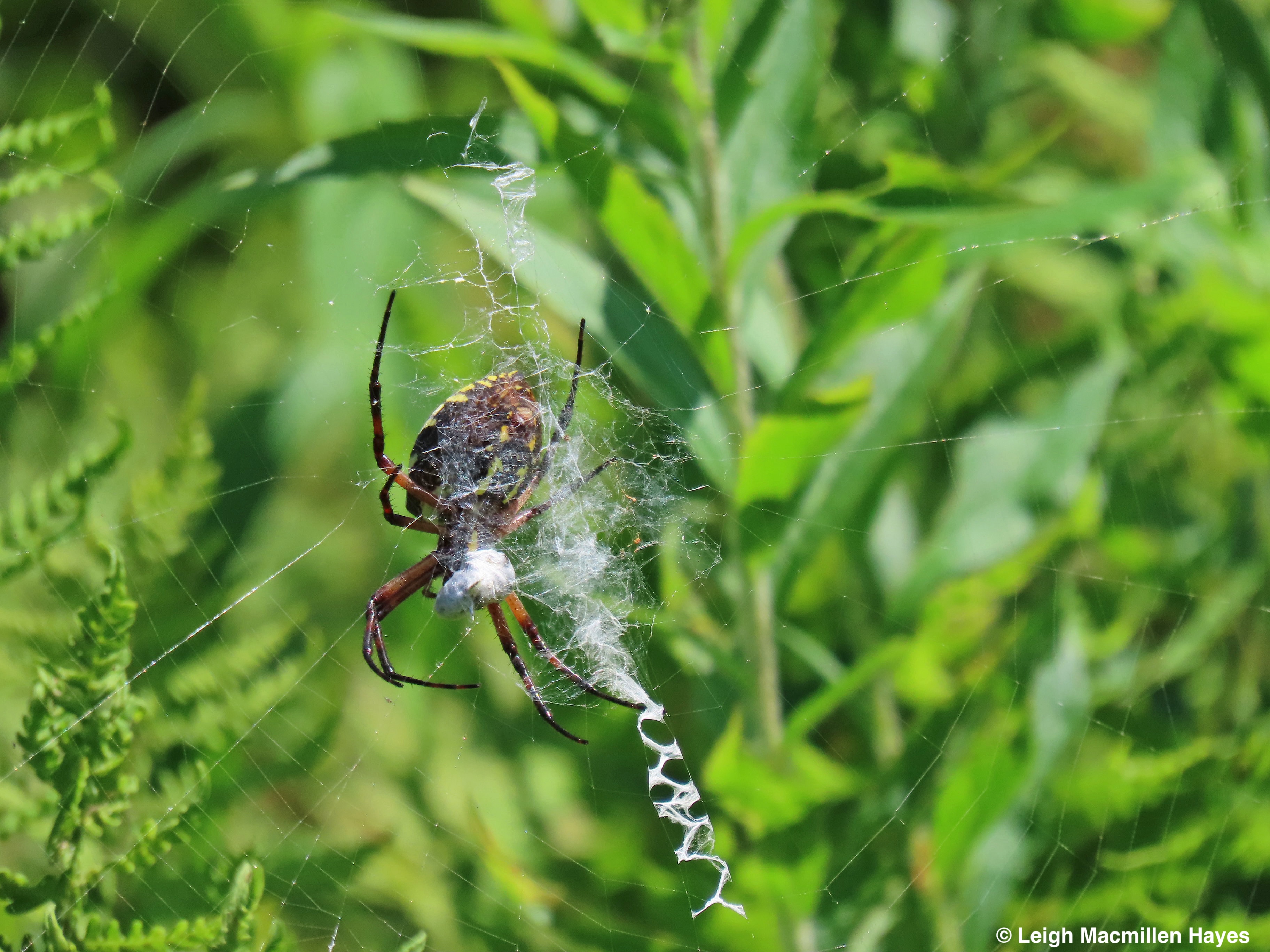
a large Black and Yellow Garden Spider
packages a meal as a smaller one looks on.
And I realize I've never seen 
such a small female
and wonder why she hangs
onto the web of her bigger sister.
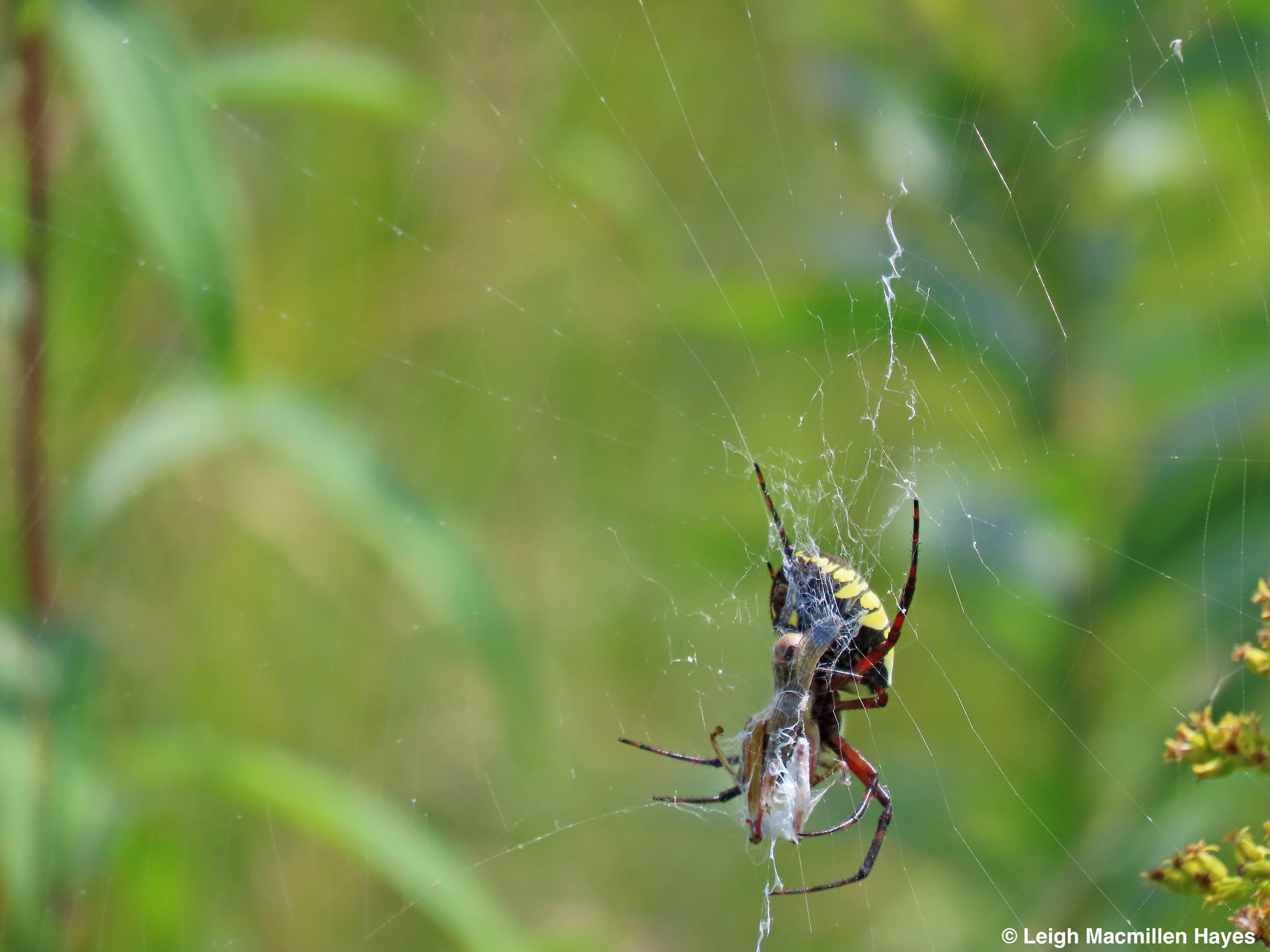
Across the path
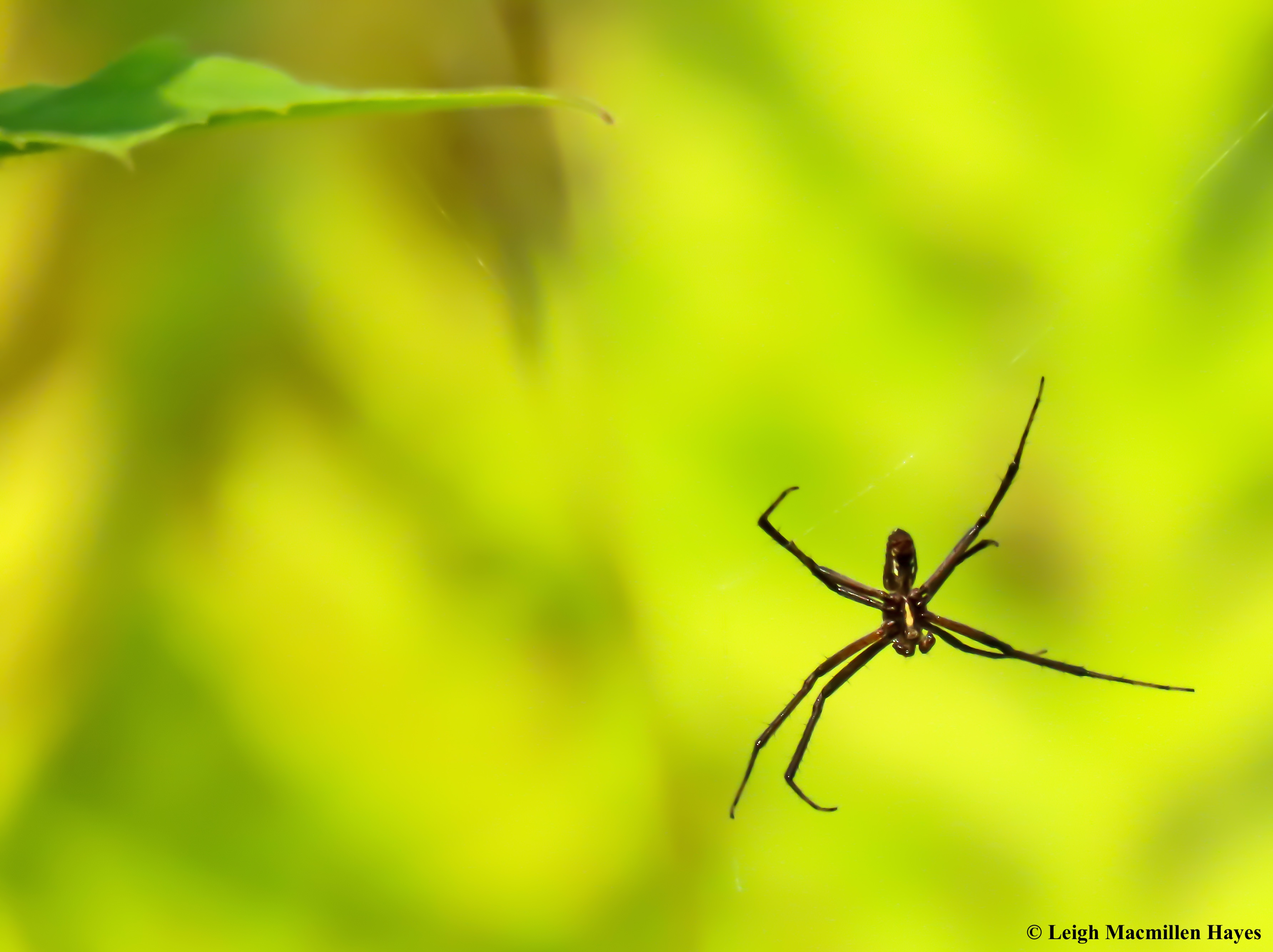
another Black and Yellow has several packaged meals
that may be a betrothal gift
for her Guy dangles above her, he being much smaller and drabber.
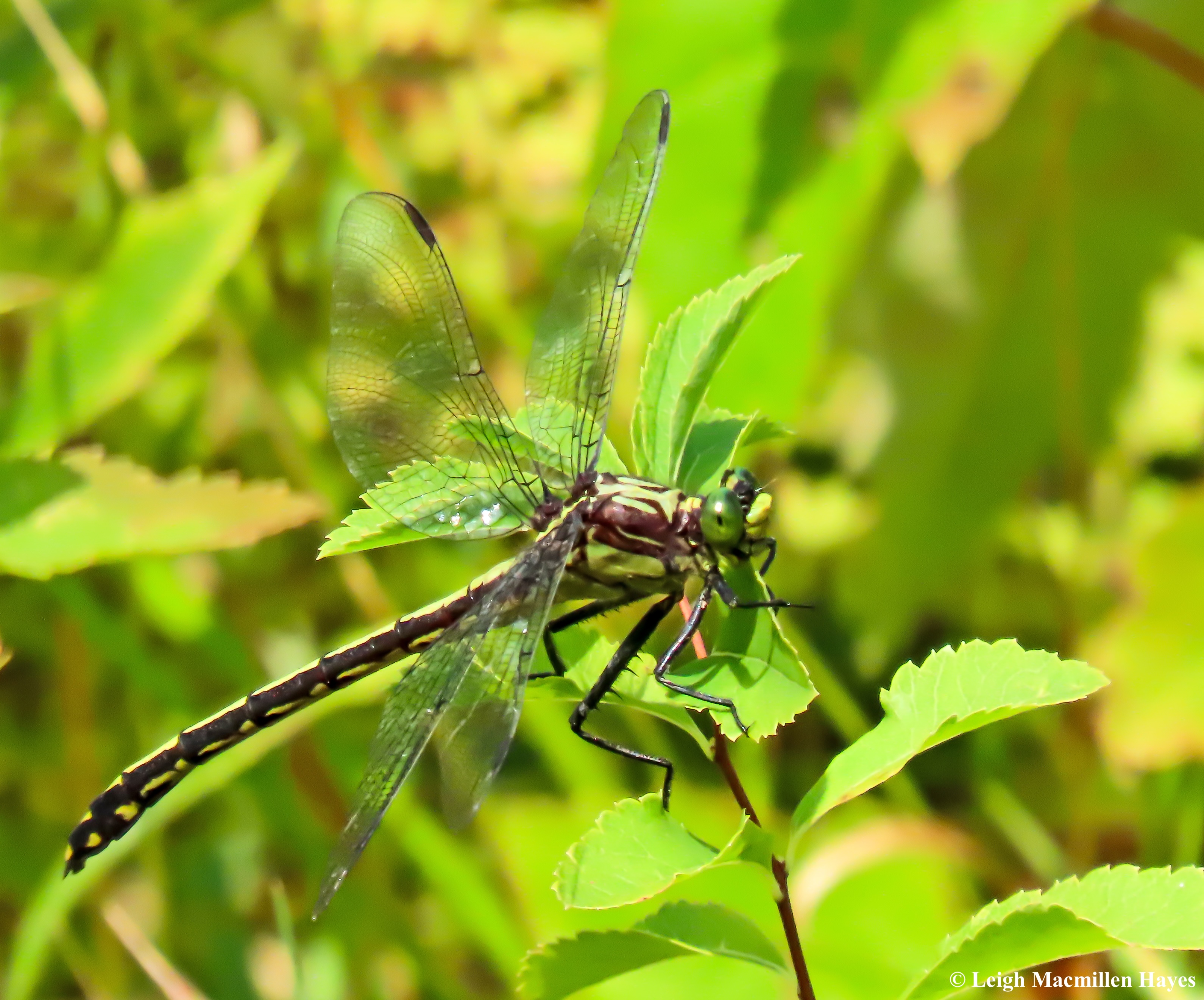
And the Black-shouldered Spinyleg
finds me again
and practically smiles,
if dragonflies can do such a thing.
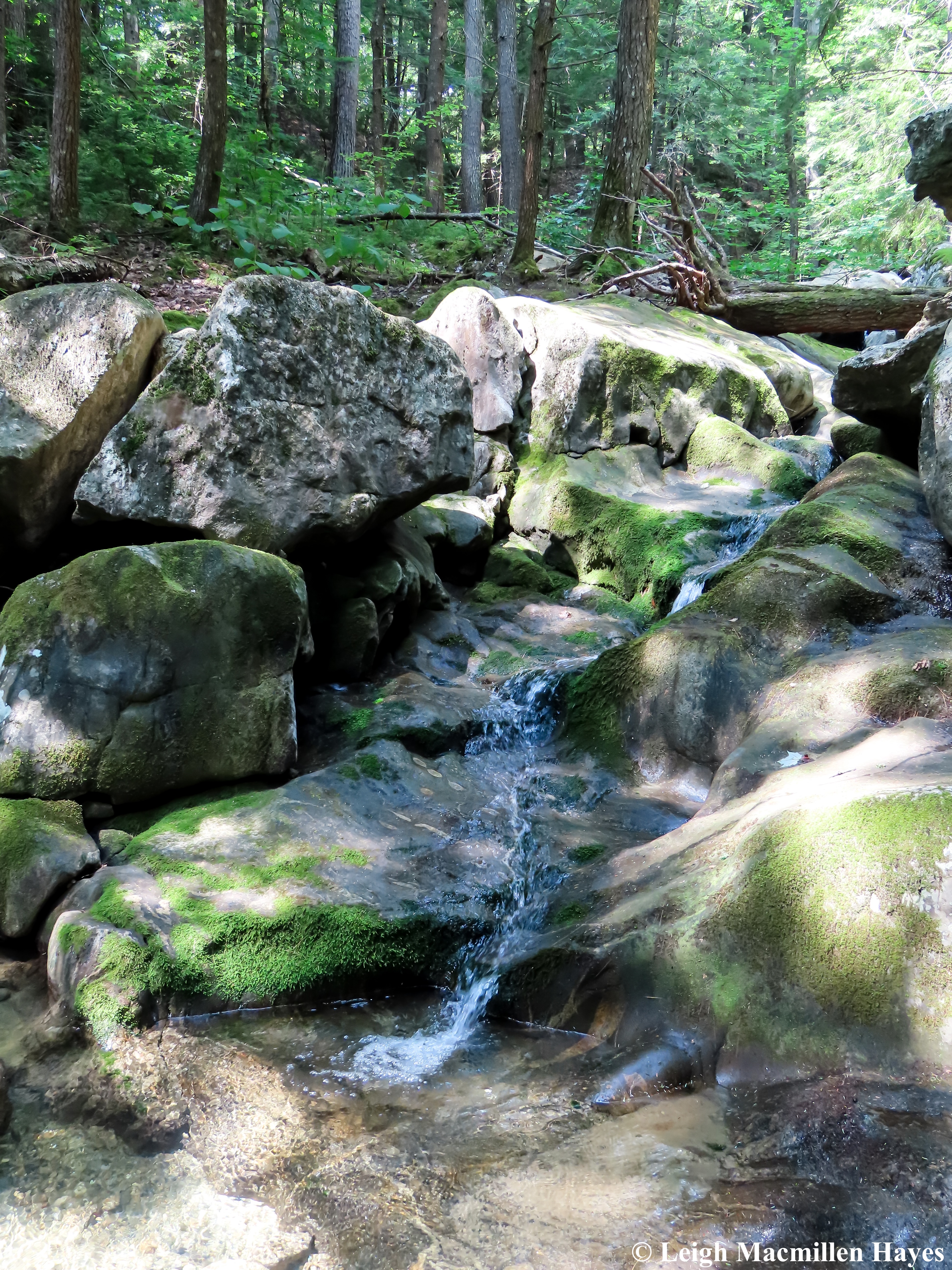
Water also flows into the scene
as it should
for it is life giving
even if its merely a trickle.
But the delightfully curious thing
is that upstream
the mosses imitate
the water's action even where it is practically non-existent.
Upon the ground just above,
the Big-toothed leaf that most recently
gathered energy from on high
chose to shut down and show off its colors before giving back to the earth.
It's in this same place 
that My Guy and I notice a Bear Claw Tree,
the marks located just below a trail blaze
and we wonder if the blazer was aware of the bear sign.
Back to a garden planted for Pollinators
I wander alone
and listen as a million bees buzz
and watch the clear wings of the Hummingbird Moth remain almost stationary.
It's in this same place, 
just above a sign bearing the name of its adult form
that I spot a caterpillar
so many of us revere.
While spotting Monarchs 
has been a bit of a challenge these days,
I rejoice that occasionally
I have the thrill of being in their presence.
All of this
and oh, so much more,
as the hawk shouts that being ec-lec-tic
means deriving a taste from a broad and diverse range of sources.
I'm so grateful 
to enjoy an eclectic view of the world
on so many fronts,
and to share with you just a smattering of what matters.

There Is No Planet B

I was asked to give the homily at church this morning and have spent the past month or more reflecting on what to say. Of course, it was to my blog that I turned for inspiration for I knew that parts of the story were tucked within these posts.

Driving home from a recent Trail Snails walk, I spotted this statement on a roadside sign: “There is no Planet B.” And I thought it was an apropos title for what I want to share with you this morning.

On Sunday, March 23, in Forward Day by Day, Tyler Richards, a priest serving St. Anne’s Episcopal Church in De Pere, Wisconsin, responded to Exodus 3:vs 3-4: Then Moses said, “I must turn aside and look at this great sight, and see why the bush is not burned up.” When the Lord saw that he had turned aside to see, God called to him out of the bush, “Moses, Moses!” And he said, “Here I am.”

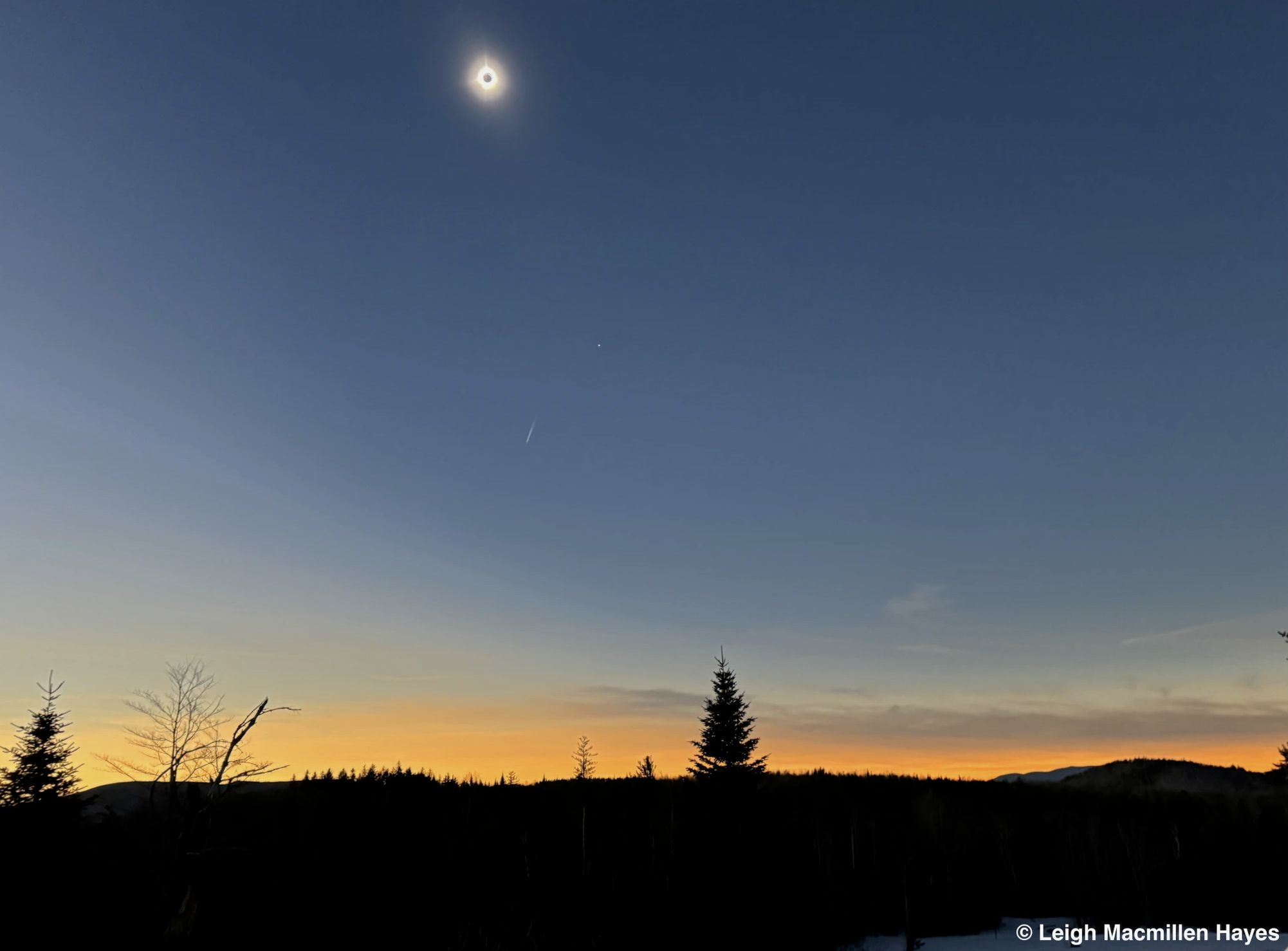
Reverend Richards commented, “I do not have an accurate account of the things that have caused me to stop and look again. Solar eclipses, northern lights, sunrises, and sunsets are a few of these.”

He continued, “God asks us to turn aside and experience wonder. God’s creation is a source of endless contemplation, and, at times, so is human ingenuity. But these great wonders that take our breath away prompt me to ask: What are they for? Are they an end to themselves, or are they there to remind us that God is even more incredible? Indeed, God is so great that God inspires and colors the very creation itself. It might not always be a burning bush that causes us to gasp at God’s greatness.”

In response to that I invite all of you to join me as I share a few of the thin places I have visited, where I see the light more on this side than the other. These are not burning bushes, but they do make me gasp at God’s greatness. The first I call “Emergence.”

Emergence

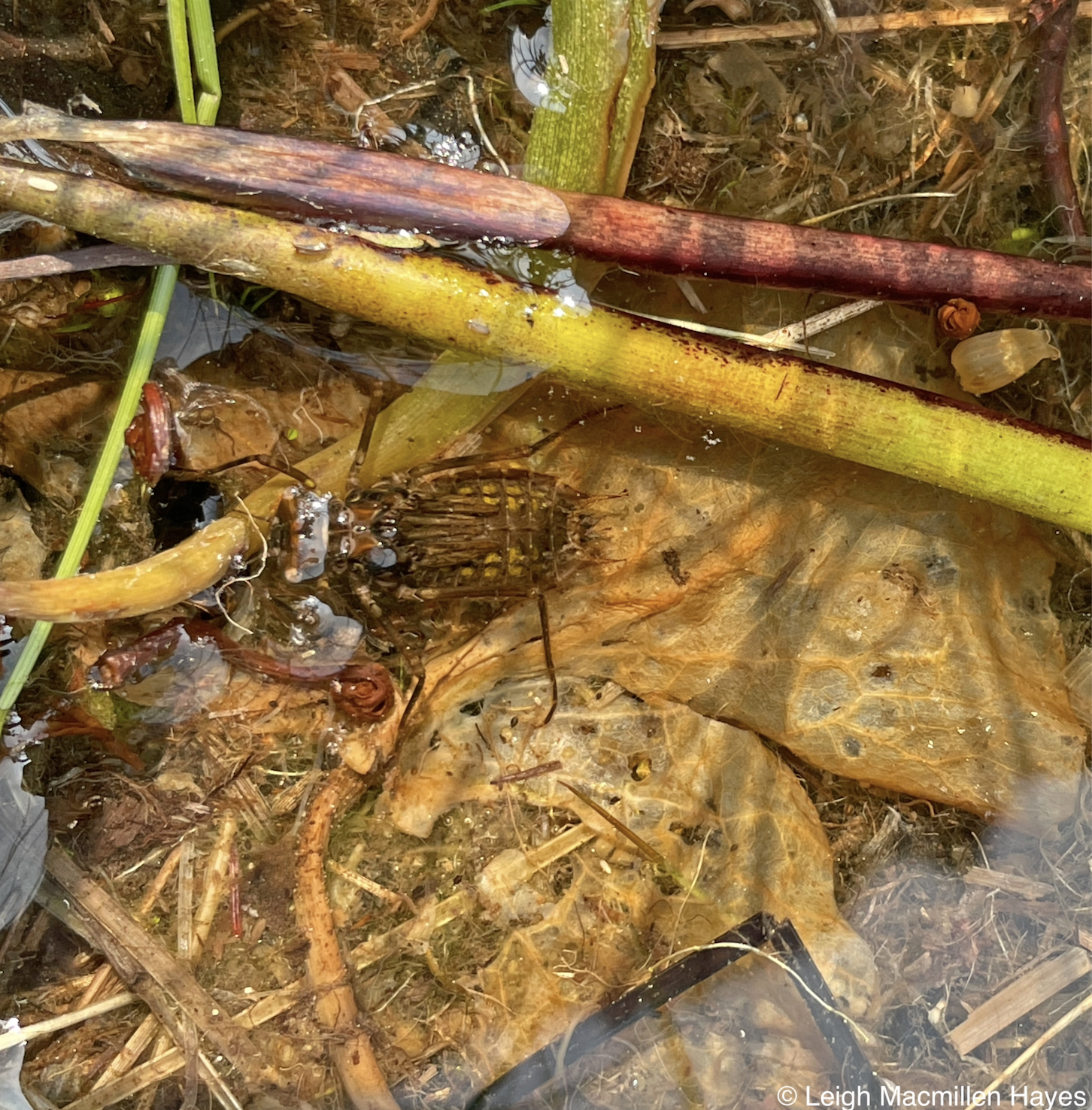
Oh dragonfly, oh dragonfly.
In your infancy,
You laboriously
Climbed upon a slender stem.
Ever
So
Slowly,
Seams split.
Soft and squishy,
You spilled forth
Into this sunlit world.
Perched upon your former self, 
Wispy strings recalled
Aquatic breaths.
Moments slipped
Into an hour.
Your body of velvet pulsed
As blood pumped
Into cloudy wings.
Standing guard watching you,
I noted preparations
For first flight.
Eyes bulging, 
You chose a spot
Of viewpoint advantage.
Colors changing,
You gained the markings
Of generations past.
Wings drying, 
You offered a reflection
Of stained glass.
Beyond understanding,
You flew,
A dance of darting restlessness.
Odonata, Odonata, 
You have known both worlds.
First playing beneath the watery surface.
Then in a manner so brave, 
Climbing skyward
To ride summer breezes
On gossamer wings.
Forever in awe
Of your transformation
From aquatic naiad
To winged adult,
I can only imagine
The wonder of emergence.

******

Drawn by the Sapsuckers is next.
Along a path
Through a cathedral in the pines,
It seemed apropos
That I should spy
The works of
An Oak Apple Gall wasp.
For it is believed
That circa 800AD
Irish monks used such galls
To create the green colorant
Of their artwork
As displayed
In the Book of Kells.
My first intention of wander
Upon this special day
Was soon verified when I was
About twenty feet
From a maple tree
For I could hear peeps
From the ever hungry
Babes within.

Only two weeks prior
Father Sapsucker entered
The nest hole every few minutes
To nurture his offspring, but today
Things had changed.
No sooner did he toss in a meal
When a nestling popped its head out
And begged for more.
Finally, with the urging 
Of the ever present deer flies,
I moved on
To the neighboring meadow
And gave thanks when
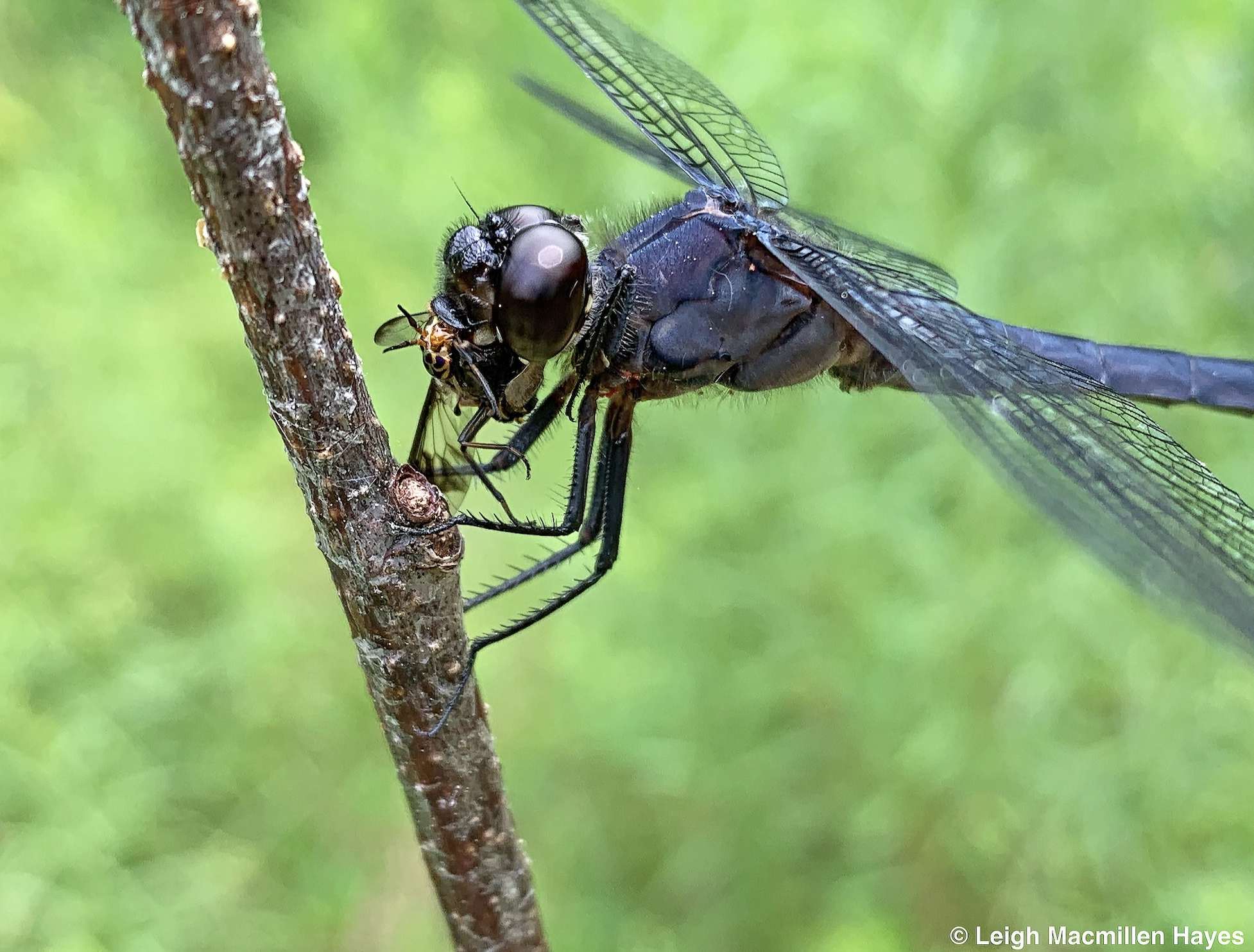
A Slaty Blue Skimmer Dragonfly
Snatched a pesky insect
From my head
And settled upon a stem to dine.
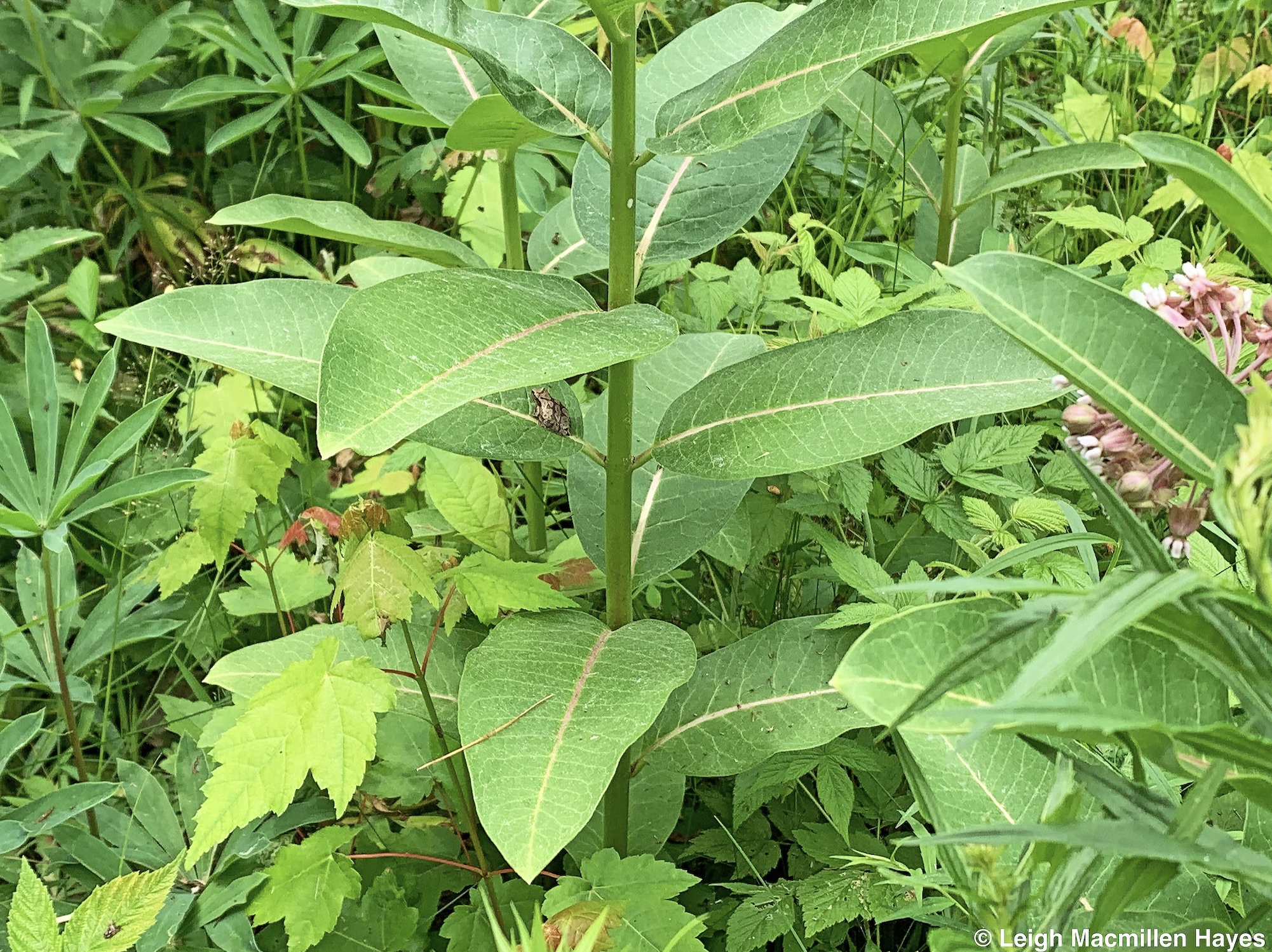
Nearby on a milkweed leaf
I spied something tiny.
By the X-shaped pattern
On its back,
I knew it was
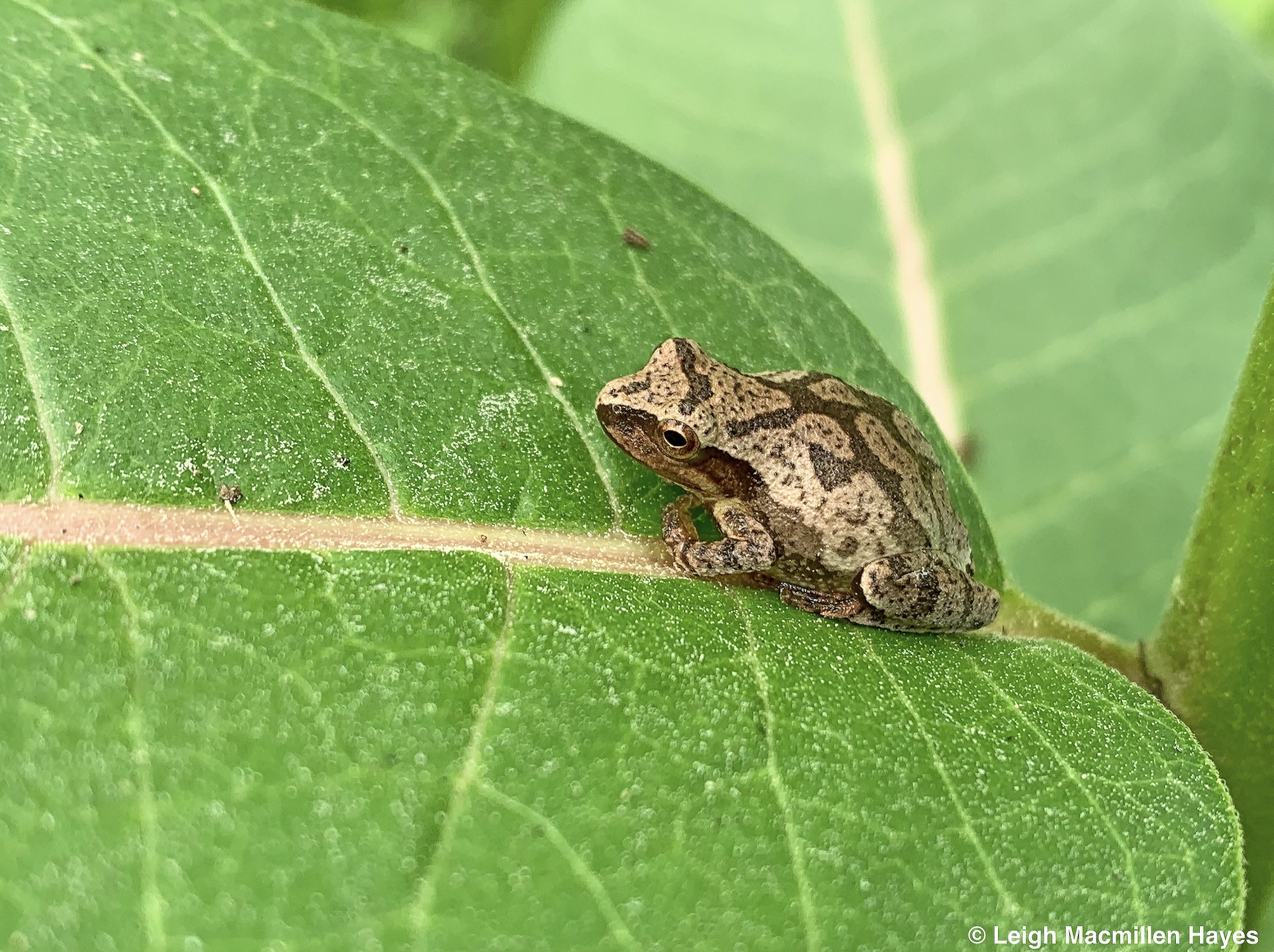
A Spring Peeper.
Sitting two feet
Above the ground,
This little frog
Hid from predators
During the day
As it waited for dusk
To crawl down
The plant's stem
And munch a meal
Of its choice.
Behind the wee frog
A dash of color
Brightened the background.
Bedecked in orange and black,
This being a Fritillary butterfly,
It flew
Down the path
And out of my vision.
In this same place,
Tiger Swallowtail butterflies
Added their yellow wings
To the tapestry.
Plentiful in number, 
Skimmer dragonflies,
Each with a uniqueness
All its own
From Spangled to
Dot-tailed and Great Blue
Chased down meals
And hunted for mates.
Before departing
I checked
On the nestlings
In the Red Maple trunk,
While their papa
Did the same
From a tree
Ten feet away.
Was he teaching them patience? 
Perhaps.
Sensing our time together
Was waning,
I gave thanks
That it was the Yellow-bellied Sapsuckers
Who drew me to this place.

******

Finally,

"The way to be heard isn't to shout," said the Reverend Sam Wells of St. Martins in the Fields, London. "It's to whisper."

But, I ask you, who are the whisperers?

As you go forth this spring . . .
Listen for the slightest murmur
Of Beaked Hazelnut
Sharing its most
Beautiful, yet minute
Magenta blossoms
That so many never see.
Hear also
The soft words
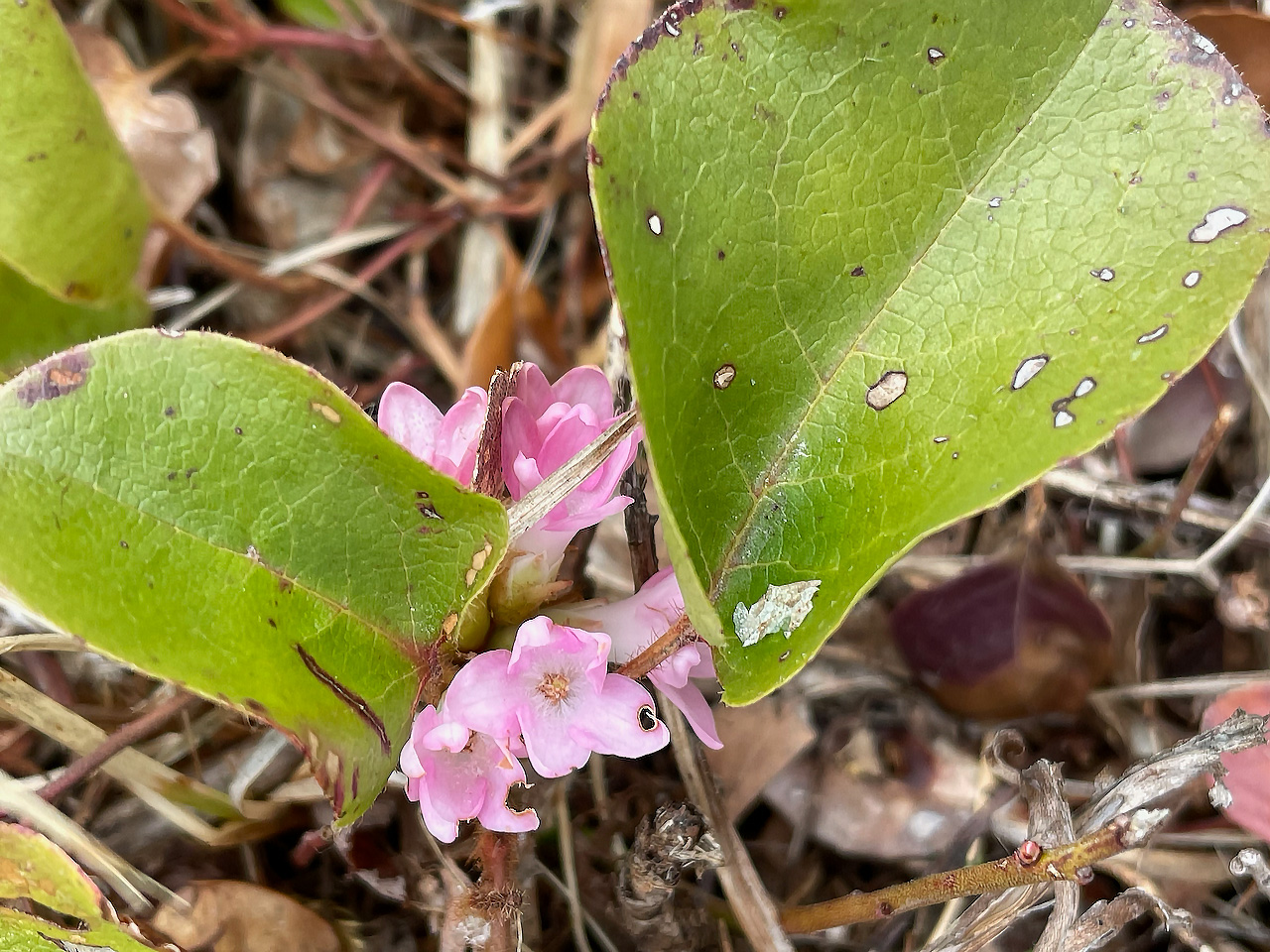
Of Trailing Arbutus
Hiding its delicate flowers
Beneath leathery leaves.
Be attentive to Hobblebush
No matter how much
It makes you stumble,
For it always
Has more to offer
Including corrugated leaves unfurling
And a flowerhead silently forming.
Give audience
To Rhodora's woody seed structure
Of last year
Before her brilliant pink flowers
Soon distract.
Pay attention 
To the male Hairy Woodpecker
Who speaks
In hushed pecks
As two females
Squabble for his attention.
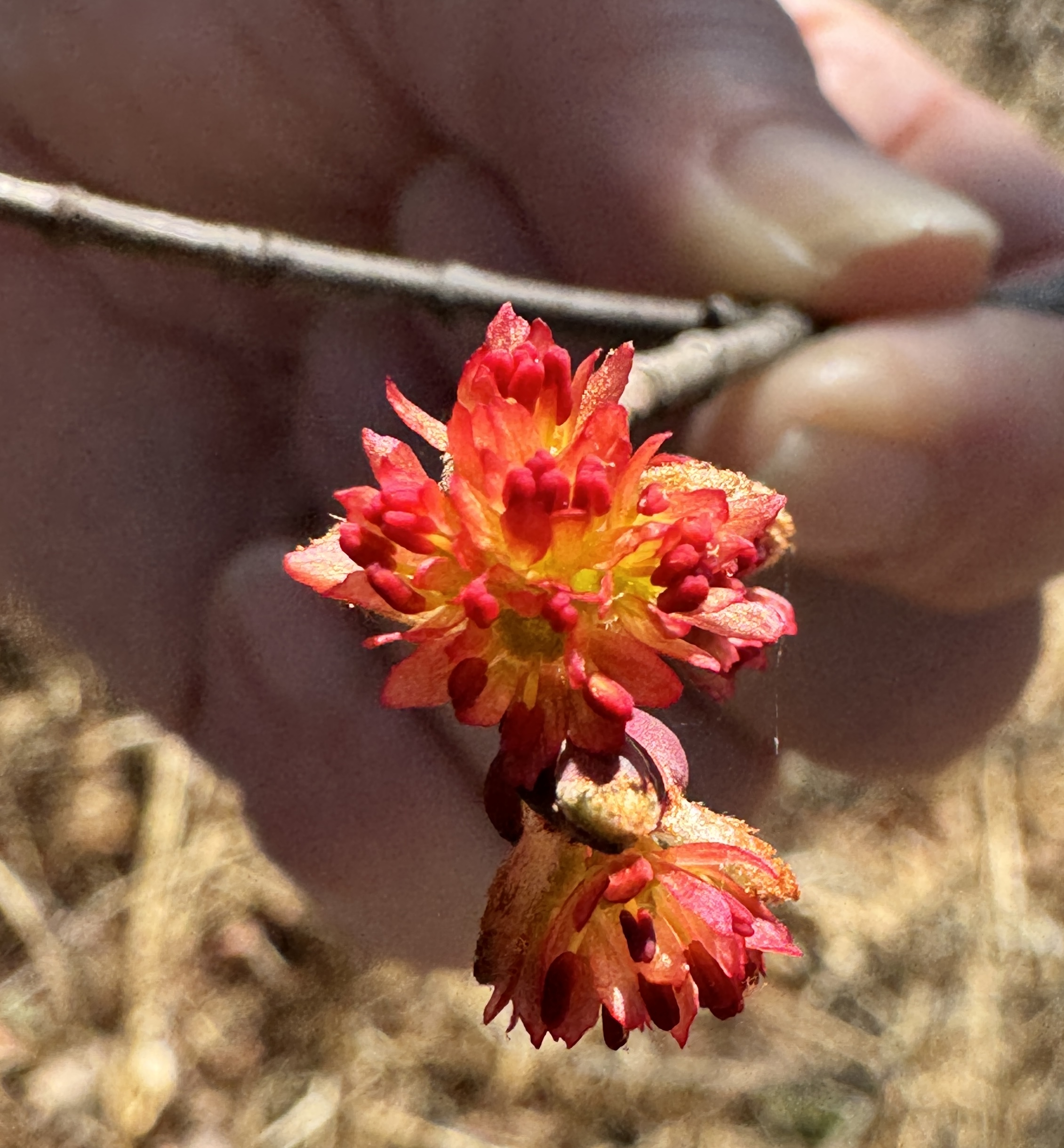
Focus on 
The soft cheers
Of Female Red Maple flowers
waiving their pompom stigmas
in hopes of meeting . . .
Male pollen 
Blowing in the wind.
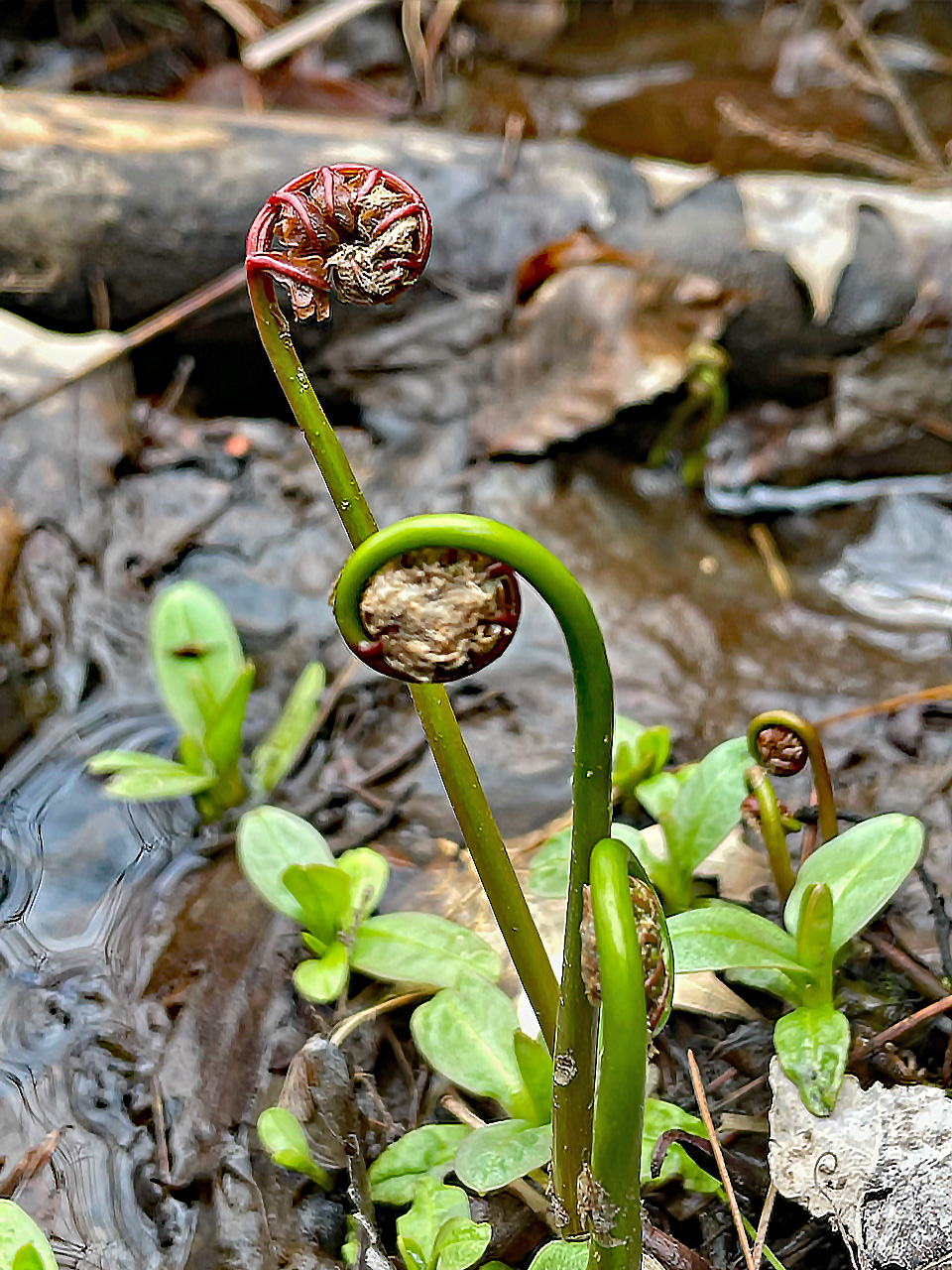
Remember to 
Keep your voice low
As you spy
The first crosiers
Of the most Sensitive Ferns.
Heed the inner voice
Of Mystery
And Be Present
With your heart and soul.

I invite you
To walk in silence
Throughout the forest and wetlands
While listening intently
To all
Who whisper along the trail.

******

I’ll end with part of an entry from Creation Justice Ministries’ Seeking Creation: Lent 2025 Devotional.

Referencing Ezekiel 37:21-28, the authors wrote, “God’s goal is not to abandon Creation that God has made. It is to live with us among that Creation. A theology that suggests that God’s good Creation was made solely for us to deplete it and hoard resources from one another ignores the long line of biblical witness that cast a vision of a united humanity where the Creator lives among the creatures, us included.

That God would want to live among Creation should tell us something of Creation’s Worth to God. It is not disposable. It is not replaceable. It is not profane. The dream of a Holy God is to live among Holy people within the holiness of Creation. May it be so.”

And remember: There is no Planet B. This is all we have.

May hushed voices shout from every corner of the Planet AND as those voices uplift your spirits, may you realize God’s greatness and never lose your sense of wonder. ~Amen.

Happy Belated 10th Anniversary, wondermyway.com

I can’t believe I missed the date by two days. I’d been planning this for months. Well, in the back of my mind, that is. No actual thoughts were jotted down on paper. I just knew what I wanted to do and when I wanted to do it . . . until I forgot. Or rather, it slipped my mind. Momentarily.

No harm done.

As the saying goes, “There’s no time like the present,” and so my gift to you dear readers will be to give you the present of time by taking you back to the beginning of wondermyway and then making our way to the present. And all of it is because I was given the gift of being present in the moment on so many occasions. Egads. That’s a lot of presents. And presence.

Wonder My Way

My first blog post was published on February 21, 2015, and entitled Wonder My Way. It began with these paragraphs: Wonder my way as I wander through the Maine woods. So often I see things that make me stop and wonder. Sometimes I figure it out, but other times, I’m just as happy that I don’t. It’s The Sense of Wonder that Rachel Carson wrote about which keeps me going. Do we need to have all the answers? I think not.

So join me for a tramp from our woodlot to the world beyond. I know not where this trail will take us, but I can guarantee that we’ll have fun along the way. Read more . . .
Spring in Slo-Mo

Spring is so fleeting in Maine. Oh, I know, it lasts the usual three months and the beginning and ending overlap with its seasonal partners, but really . . . one must take time to pause and watch or you’ll miss the most amazing action that occurs in slow motion right outside the window–and beyond.

For those who are new to my blog, Jinny Mae, who is featured in this and many blog posts, was a dear friend whose name I turned in to an alias as she faced cancer courageously and rather privately. In the end, the cancer consumed her, but the things we enjoyed along the way were bountiful, including this spring adventure to an incredible space in our little neck of the woods. Read more . . .

Universal Love

Written on Valentine’s Day, this post was dedicated to My Guy and all who wander and wonder with me.

When I wander, hearts frequently speak to me . . . Read more . . .

Nothing To Grouse About

I shared a unique experience with five other naturalists, the majority of them in the six to eleven age range. For twenty minutes the six of us watched a Ruffed Grouse at it moved about, overturning leaves and foraging on buds. When we last saw it, the bird headed off in the opposite direction that we intended to journey, and so we moved on with wonder in our eyes and minds.

And then the next day I returned on a mission to study some twigs at the same property. No sooner had I stepped onto the trail when I heard the sound of leaves cracking a wee bit and what to my wondering eyes should appear but the same bird.

The curious thing: the bird followed me, staying about ten feet away as I tramped on. I stopped. Frequently. So did the bird.

And we began to chat. I talked quietly to him (I’m making a gender assumption) and he murmured back sweet nothings. Read more . . .

Amazing Race–Our Style

Okay, so My Guy and I have enjoyed The Amazing Race show over the years and felt like there were some challenges either or both of us could face, but others that neither of us would dare attempt. And so . . . I created our own version.

The thing is that until I take the time to change the order of this post on my website, you’d be best to start at the bottom and read each entry, going up one step at a time. As in, this: Scroll down to February 18 on this link and then after reading that entry, make your way up one episode at a time, until you reach the last recorded on February 2, 2019. Oh heck, read it in any order that pleases you. Just get into the spirit of the race I created cuze I certainly had fun with it. And fooled a few people along the way.

The Amazing Race–Our Style

I’m sure when we said our wedding vows back in 1990, there was something in there about only riding a snowmobile once. And I did that once two years or so ago–mostly because I knew it would please my guy. Certain memories remain from that experience: I felt like a bobblehead inside the helmet; I lacked control as I sat behind him and couldn’t see; when I did peek around, I was sure my head was going to strike a tree so narrow was the trail; and I didn’t like the speed. Oh yeah, and at a road crossing, I do believe I jumped off and walked to the other side. With all of that in mind, I’m not sure what I was thinking when I created a Valentine’s gift for him–our very own Amazing Race. Read more . . .

wondermyway turns five

Five years ago today (ten now!) I turned from taking a hundred million photos on each tramp to taking a hundred million photos and writing about them.

Typically, on the anniversary I scan the past year’s posts and choose one from each month, providing a photo to represent it, with a brief (or not so brief) comment and link to the full read.

But . . . because this is a milestone I never imagined reaching (posts: 733; views: 76,793; visitors: 44371; followers: 578), I thought I’d take the time to thank you, the readers, for wandering through the wonders with me.

Thank you! Read more . . .

Dragonfly Whisperer Whispers

We had no intention of eating lunch in this spot today, but while looking for a mountain to climb, we kept encountering full parking lots and so our backroad meander put us beside a bog at lunch time and voilà, we managed to walk all of less than two tenths of a mile. Total.

But in that short distance, our eyes feasted. First it was all the Painted Turtles basking in the sun. Read more . . .

Surveying the Wildlife of Charles Pond

For the past two weeks at Greater Lovell Land Trust we’ve had the good fortune to conduct a wildlife survey in the waters that surround the newly acquired Charles Pond Reserve in Stow, Maine. Our hats are off to Alanna Doughty of Lakes Environmental Association (LEA) for her willingness to be the lead on this project and work in collaboration with us. Alanna, you see, has conducted previous surveys for Maine Inland Wildlife & Fisheries (MDIFW) at LEA properties, and was trained by wildlife biologist Derek Yorks to set these up.

MDIFW maintains a comprehensive database on the distribution of Maine’s amphibians and reptiles, as well as terrestrial and freshwater invertebrates and the data we’ve collected will add to the bigger picture. What we discovered was just as important as what we didn’t find. Read more . . .

Hightailing It Home

Friends,
At the risk
of sounding redundant,
I bring forth
a prickly topic.

A quick glance
while surveying treetops
and suddenly
my heart sang
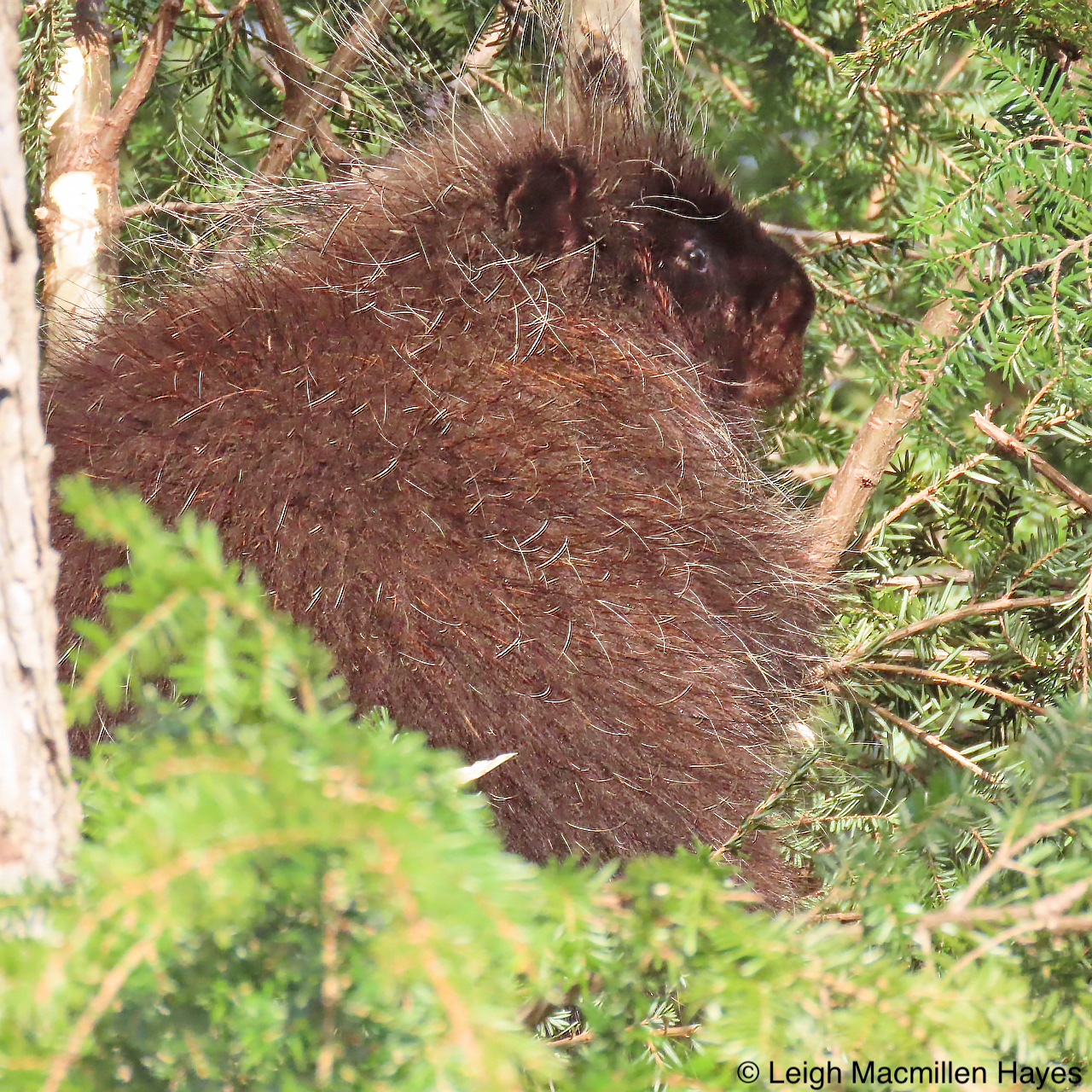
as I spotted
a well-armored back.

Read more . . .

Happy 9th Birthday, wondermyway!

Thank you to all who read and comment and share wondermyway.com. Some of you have followed my blog posts since the beginning, February 21, 2015. A few have joined the journey as recently as yesterday. I’m grateful for the presence of all of you in my life.

To mark this occasion, I thought I’d reflect upon those moments when my wonder gave me a glimpse of the “Thin Places” that I’ve experienced either by myself or in the company of others.

To quote my friend, Ev Lennon, “A Thin Place is a spot of beauty, loveliness, space–an example of the wideness and grandeur of Creation.”

I think of them as places that you don’t plan a trip to visit, but rather . . . stumble upon.

Read more . . .

And that brings me to this year and this anniversary, belated as it may be. I can’t believe it’s been ten years since I started this endeavor, which has served as my diary and memory, and been a place for me to share so many incredible extraordinary ordinary experiences with all of you. Thank you for being faithful readers.

As I compare the numbers to year five, I haven’t written as often in the last five years, but your support has been incredible.

wondermyway.com by the numbers:

Posts: 1,076

Visitors: 135,888

Views: 205,389 and increasing constantly.

The most popular post of this new year was Giving Thanks for the Pileated Woodpecker. So far, anyway.

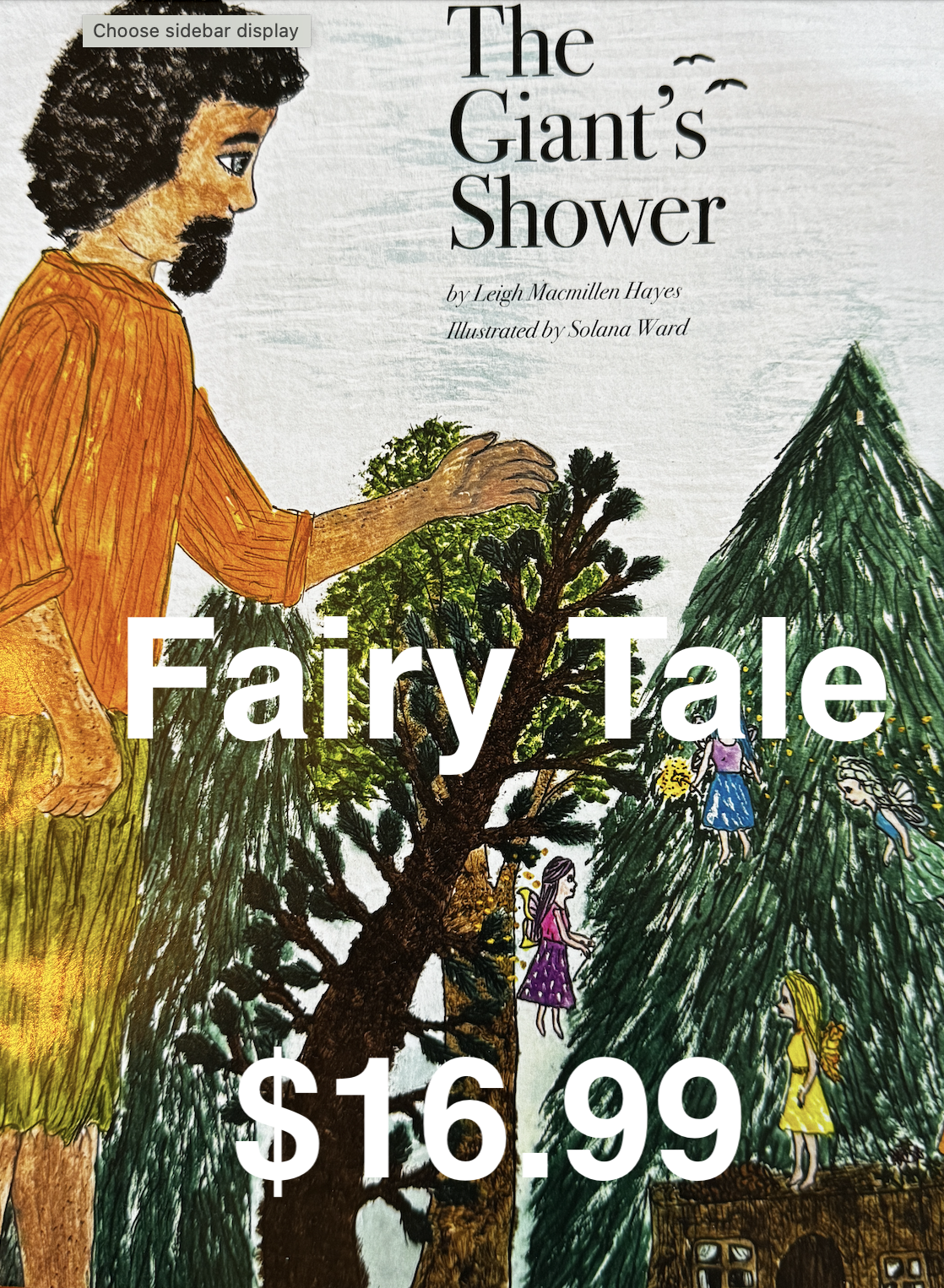
The Giant’s Shower

And since I retired as Education Director for a local land trust just over a year ago, I’ve added some other fun to the mix.

I did a thing. Years ago I wrote a children’s story. Well, a bunch of them actually. And I tried to sell this particular one to publishing houses. No takers. Then, a couple of years ago I purchased a Fairy Coloring Book created by the one and only Solana, teenage daughter of the Fly Away Farm Wards in Lovell and Stow, Maine, and approached her about illustrating my fairy tale. She took on the task and did an amazing job. Then I asked copyeditor Pam Marshall to wave her magic wand over it. And I asked local graphic designer Dianne Lewis to use some fairy dust and turn it into an actual book. I always said I’d never self-publish a book. And tada: I did just that. And now it’s even better because it’s published by http://www.indieauthorbooks.com.

Read more . . .

My Art Gallery

At the end of April I began taking an art class offered by one of my peeps, a young woman who walked into the lives of many of us one day about twenty months ago; a young woman with a million talents to offer. Among those talents, she is a self-taught artist and we’ve been begging her to teach us.

At our first class, we had to draw a small box in the upper left-hand corner of the paper and place the person who has been our biggest art critic into it. That done, the critic was forever boxed–well, until she sneaks out, which she seems to do way too much.

And then we looked at some photographs in magazines and had to sketch them and determine the direction the eye would travel in the picture.

Next we looked at lines and perspective. I’d brought along my favorite colored pencils, but immediately felt my inner critic jump on me because all of my classmates were working with watercolor pencils, watercolor paint or acrylics. And the artist herself, gouache. Until I met her, I’d never even heard of gouache. Or at least never paid attention, if I had.

Read more . . .

Lake Living on Lake Region Television!

And we said goodbye to Lake Living magazine, a glossy publication I’ve worked on since 2006.

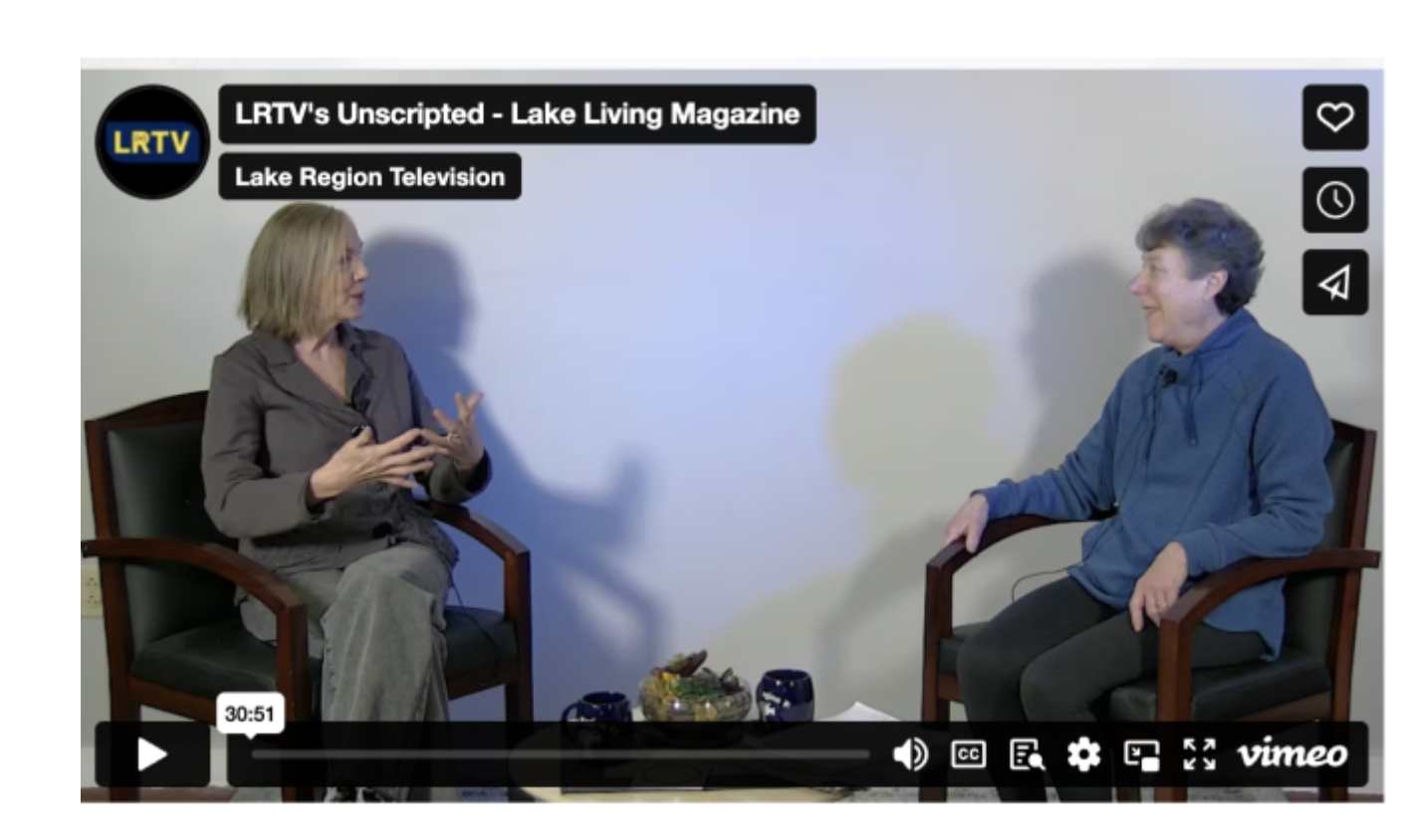
We are movie stars! Well, maybe not quite. But, many, many thanks to Evan Miller of Lake Region Television for filming and editing Laurie LaMountain, owner and publisher of Lake Living magazine, and me recently as we said, “Fare Thee Well,” to working on this publication.

Read more . . .

And in the midst of it all, I still have the good fortune to share the trail with so many others . . .

and especially with My Guy, who is forever patient as I pause to consider the wonder of the moment.

My heart-felt thanks to him and to all of you for joining me so often as I wondermyway.
Wowza–ten years! I never imagined. No time like the present to wish wondermyway.com a belated 10th anniversary.
The Beaver’s Tale

Much to our delight,
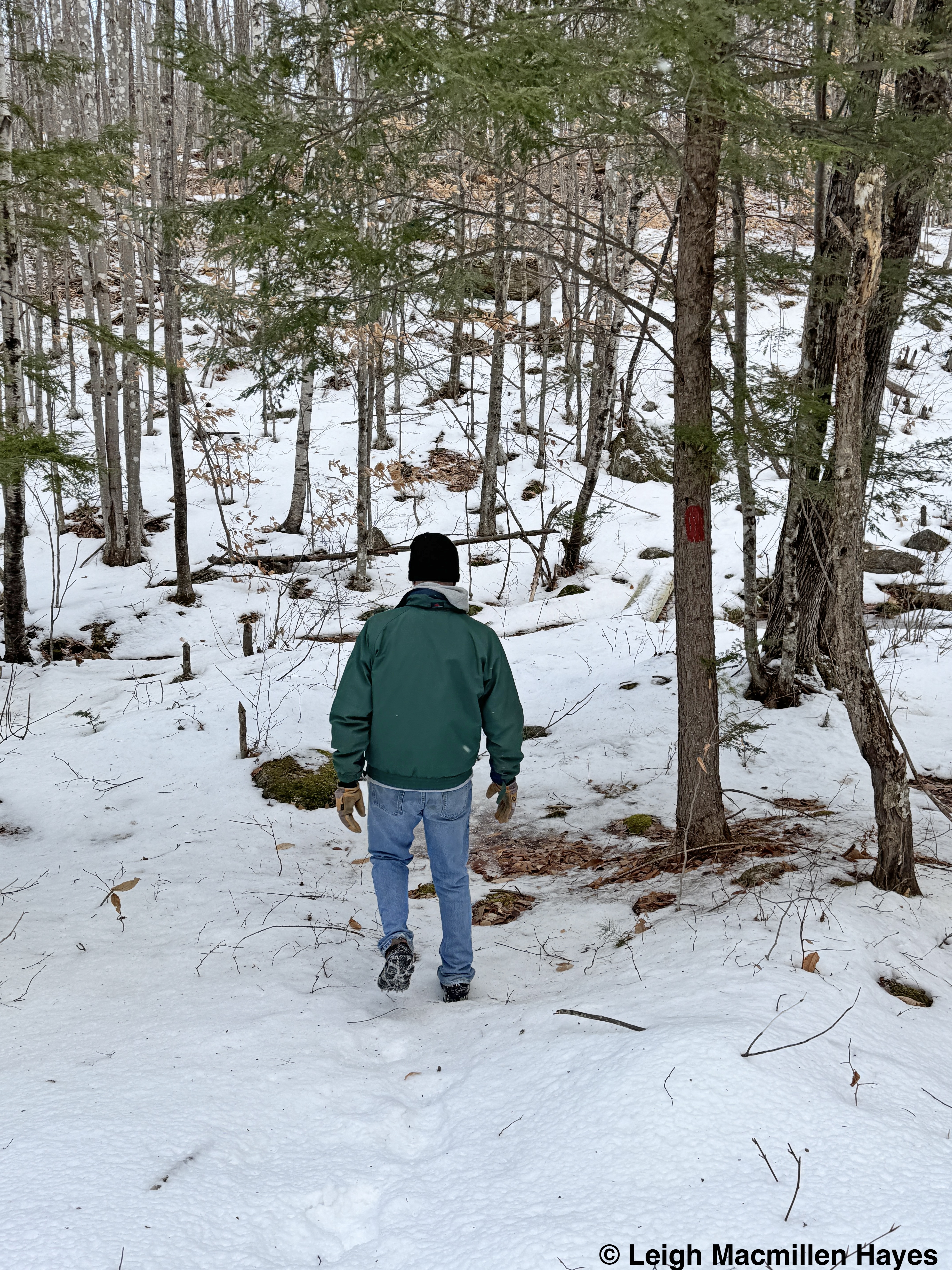
just after parking the truck
at a local trailhead,
the caretaker crossed the road
to bid us hello.
After sharing with us
his plans for an upcoming adventure,
we wished him Bon Voyage,
and started down the trail,
giving thanks that friends
had pre-packed it
with their snowshoes
last week
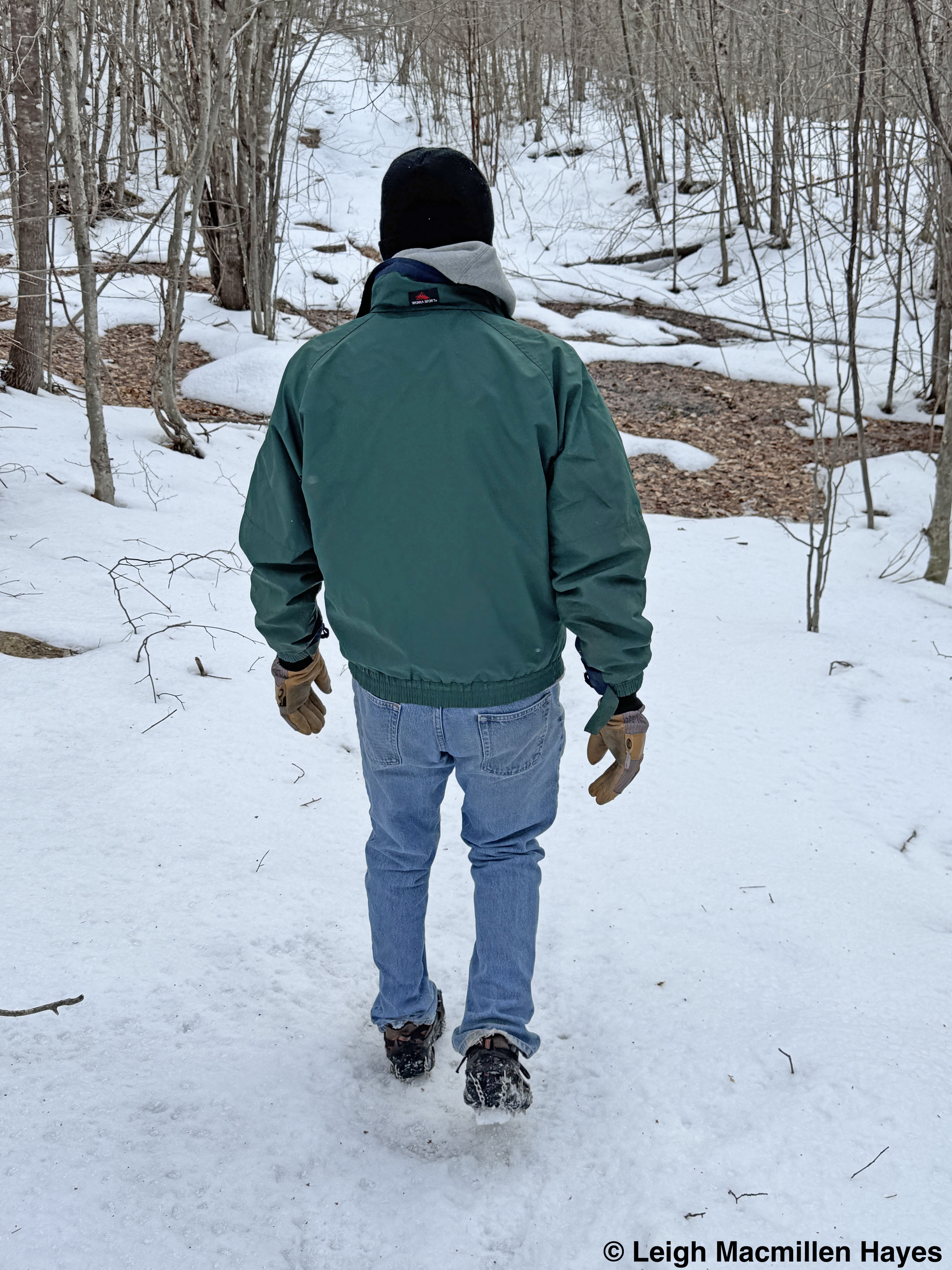
so we only had
to wear micro-spikes.
(Thank you, Sue and Lee)
At last reaching one of two ponds,
around which we planned to tour,
we chuckled at the juxtaposition
of summer and winter,
in the forms of
canoes, snow, and ice.
A few more steps,
and we weren't sure
which season witnessed
what must have been an immense crash
as part of this old hemlock
slammed onto the ground.
Meanwhile, 
the upper most section
of the fallen tree
was caught by friends
who are still doing their best
to hug it
and keep it
from careening
to the forest floor.
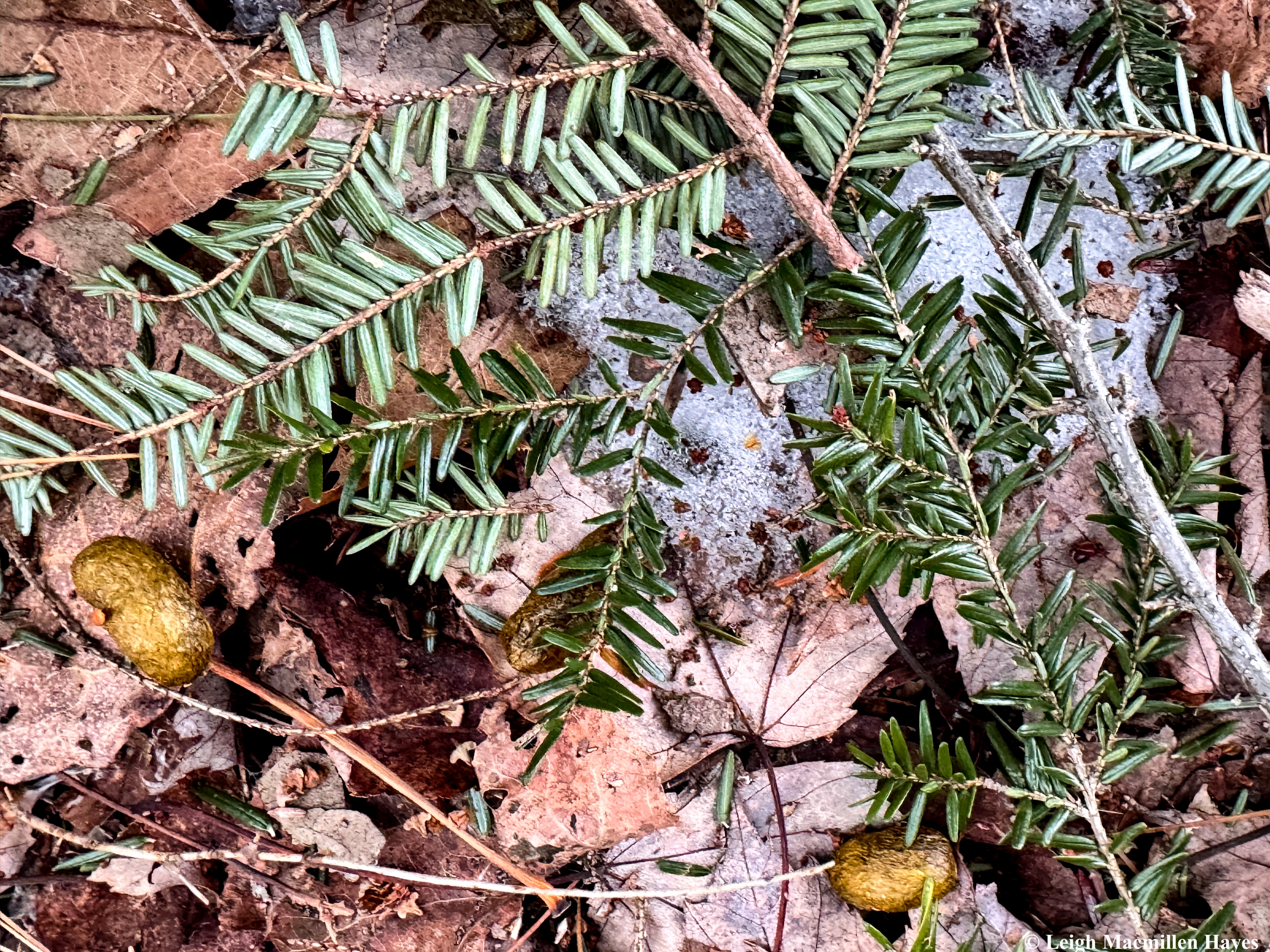
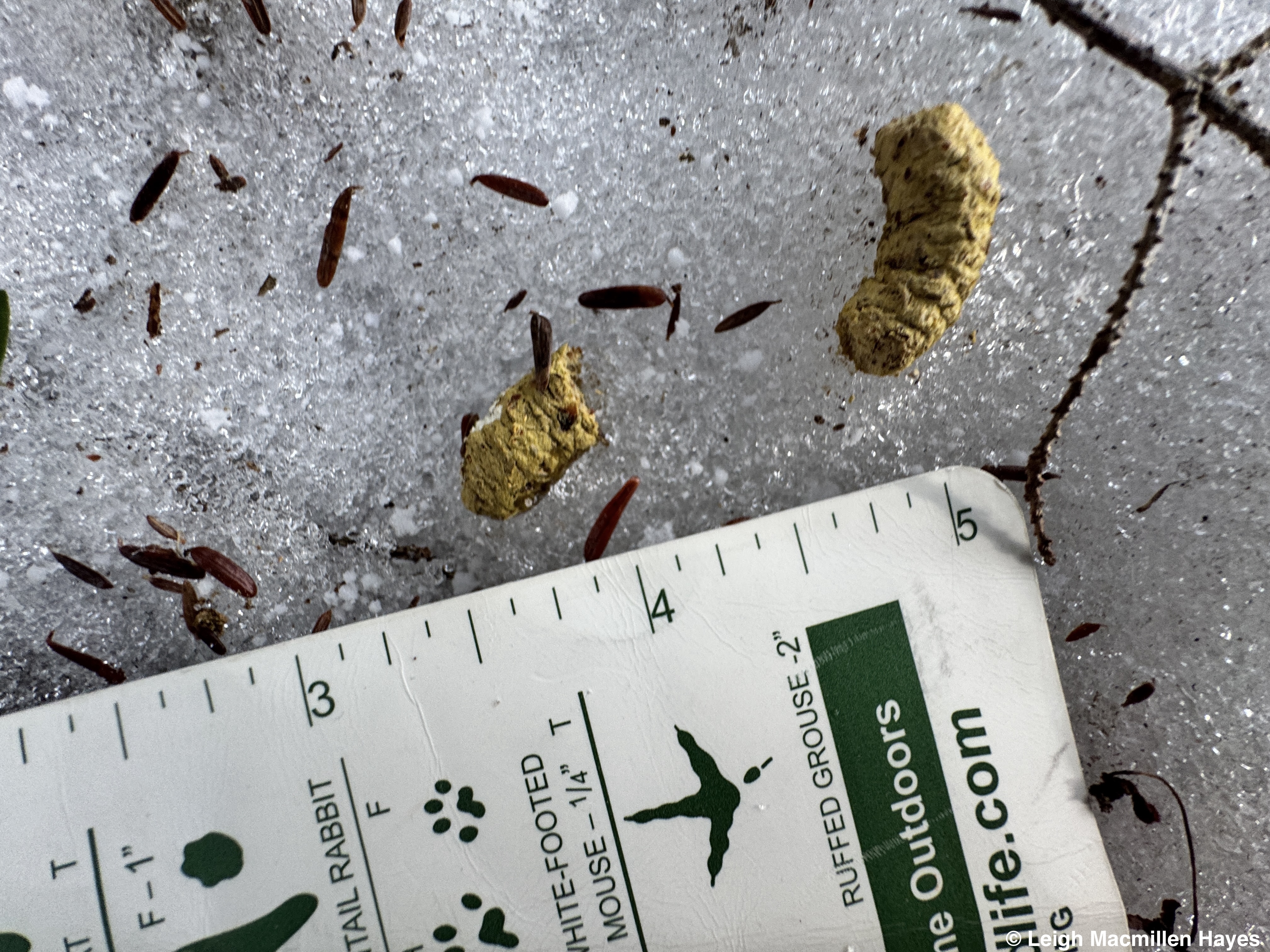
And farther still, 
a bunch of
mustard colored droppings,
aka scat,
bespoke the past presence
of a Ruffed Grouse
who must have dined well.
By the shape of the prints 
in front of him on the trail,
My Guy immediately new the maker,
for one was a wee hand,
and the other a bit longer,
and both were
offered on opposite diagonals,
as is this waddler's presentation,
it being a Raccoon.
When we reached the lifesaver,
we knew we were at the halfway point,
and had to decide
to continue to the next pond,
or only circle this one
because our time was limited.
We chose the latter,
saving the other for another day.
The trail next passed
beside a wetland,
and in the middle
I spotted the Big House, Little House, Back House, Barn,
of a Beaver family,
with fresh wood
indicating someone was probably
in residence.
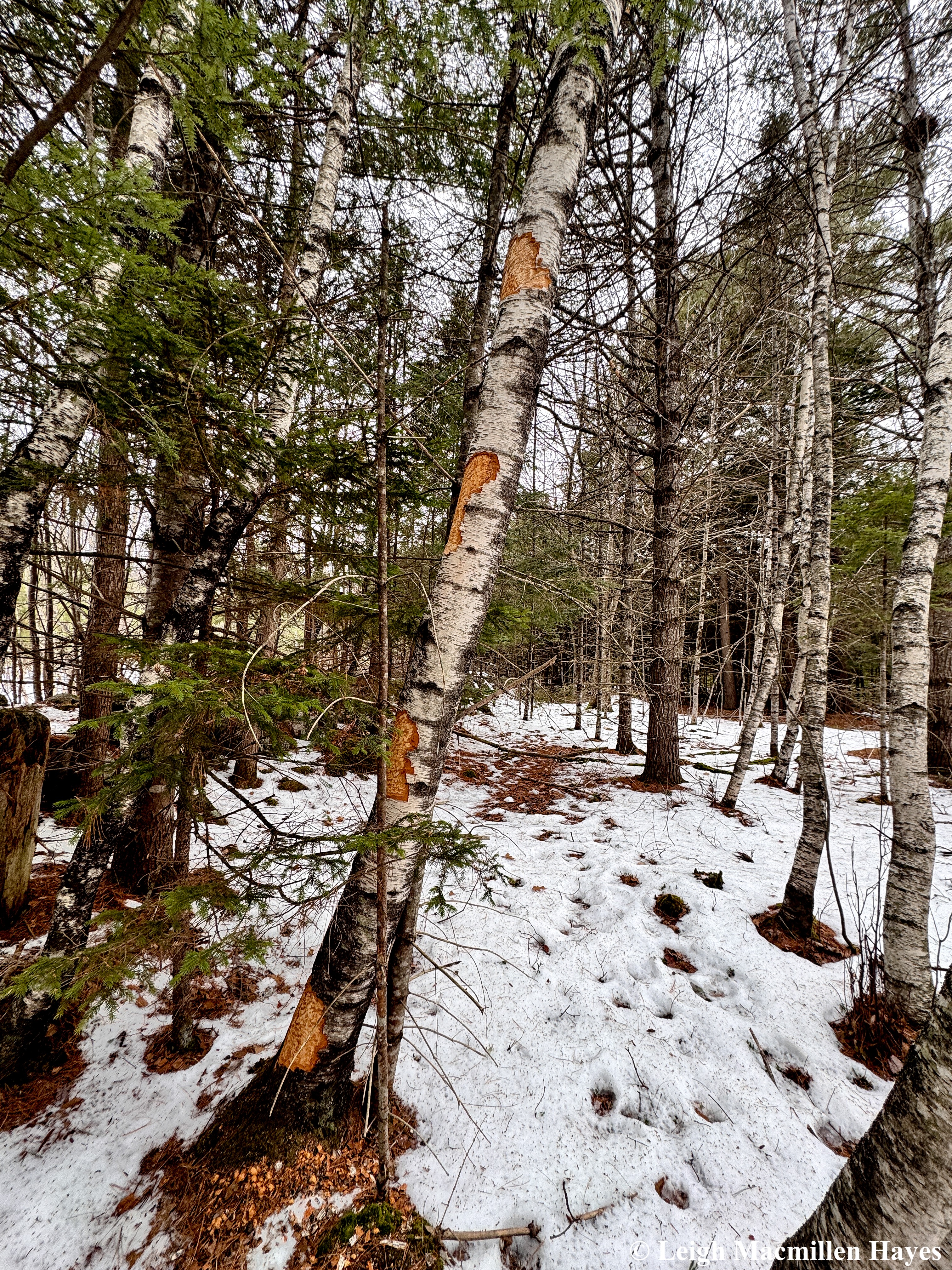
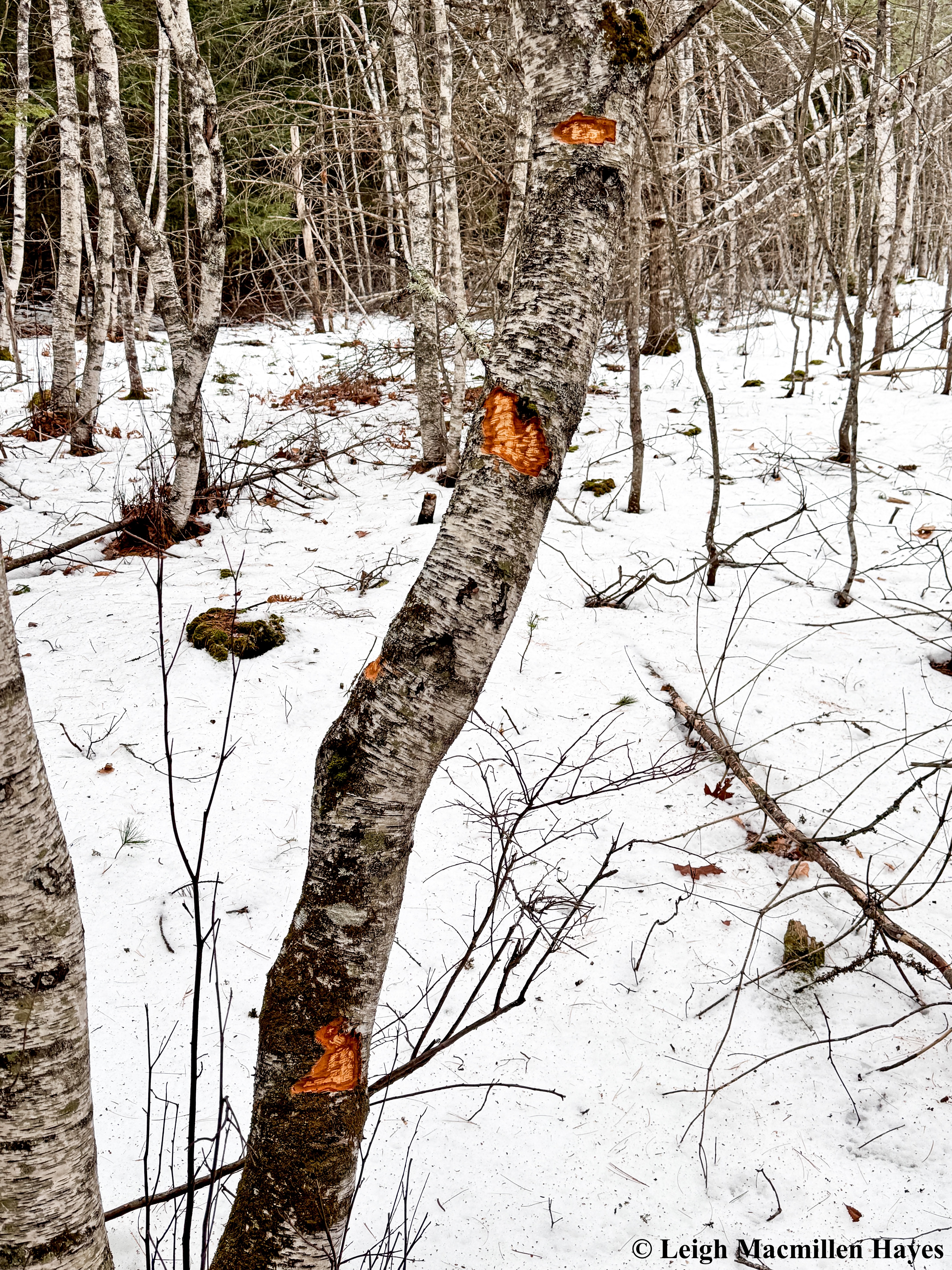
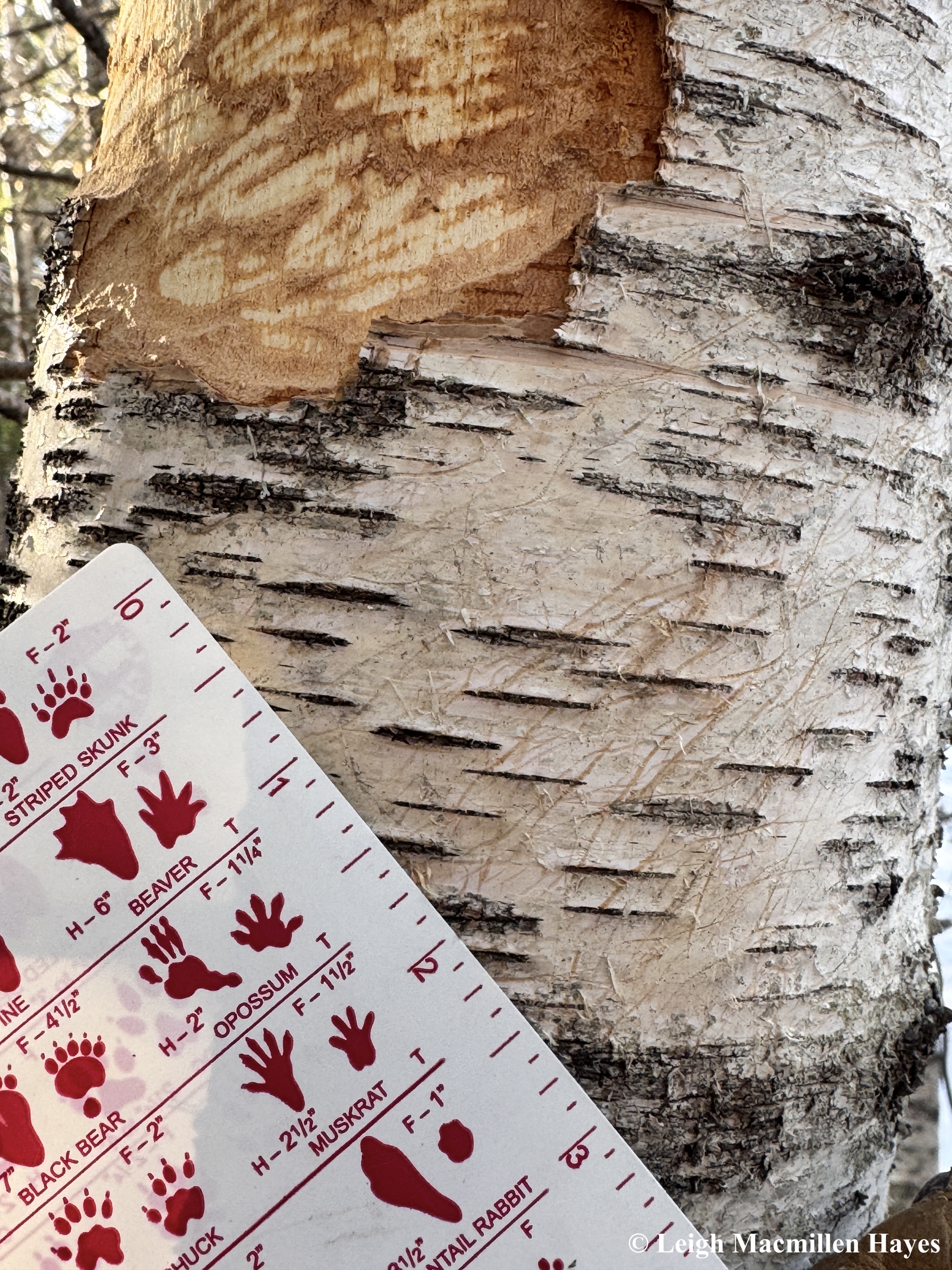
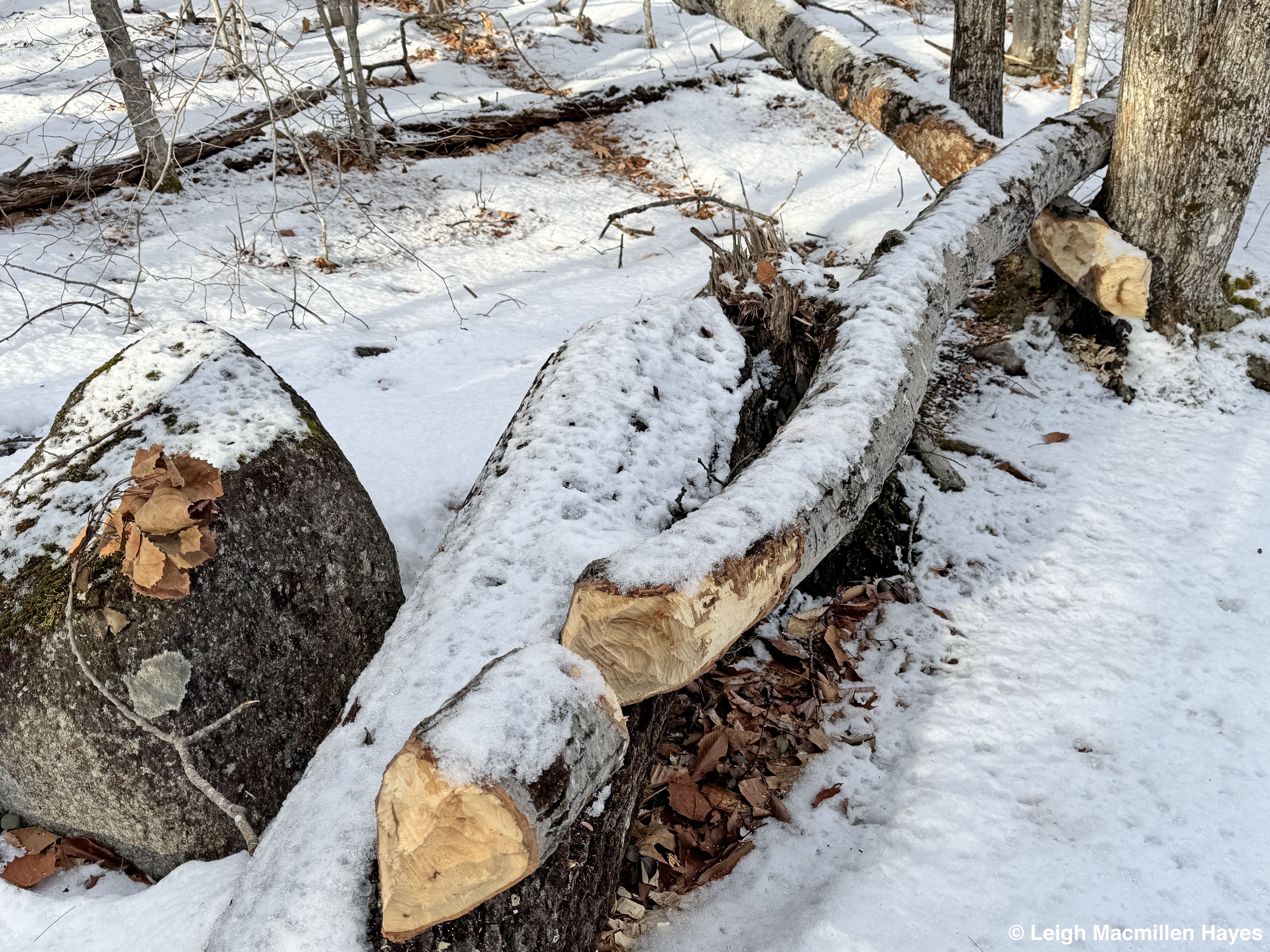
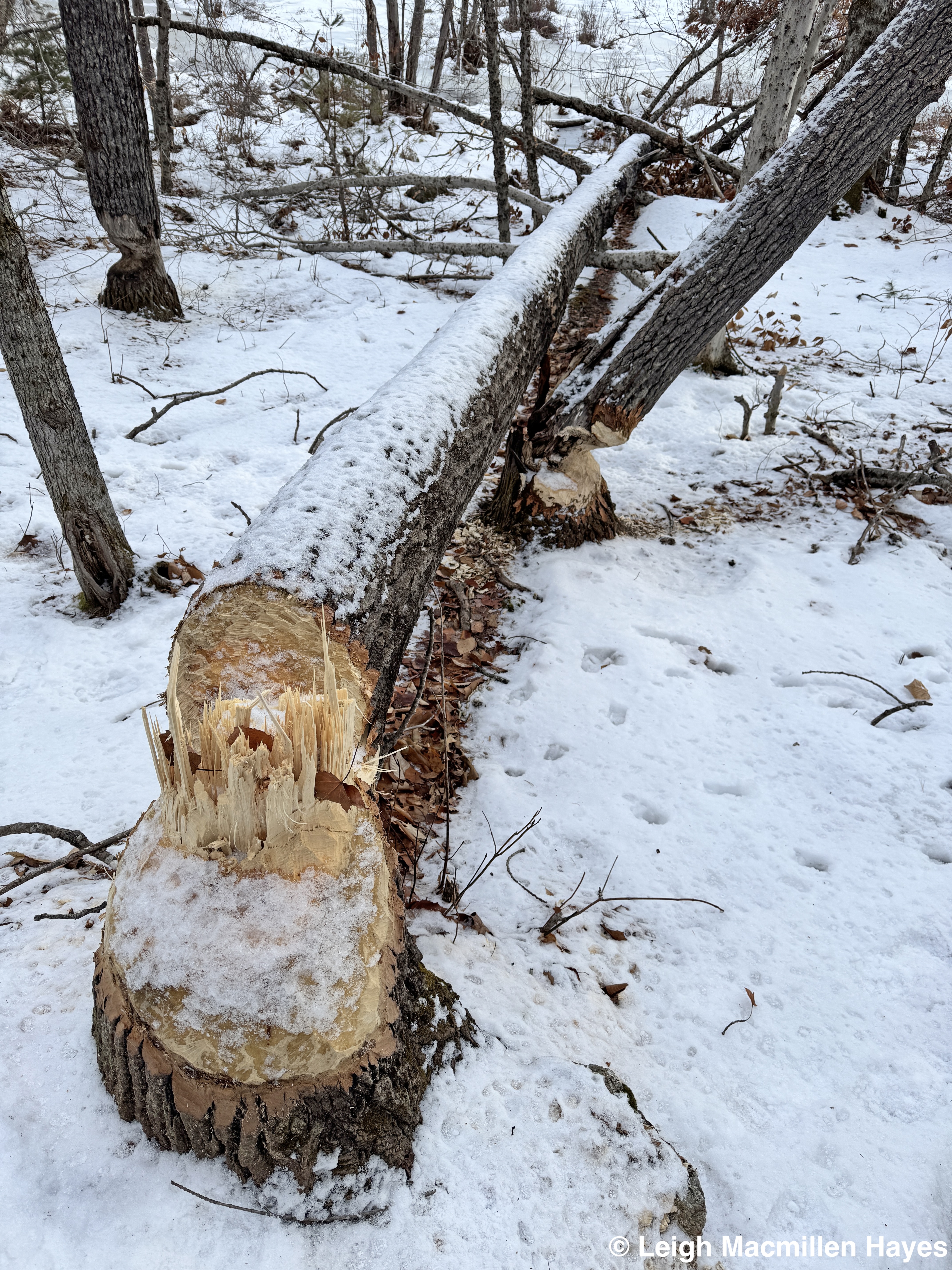
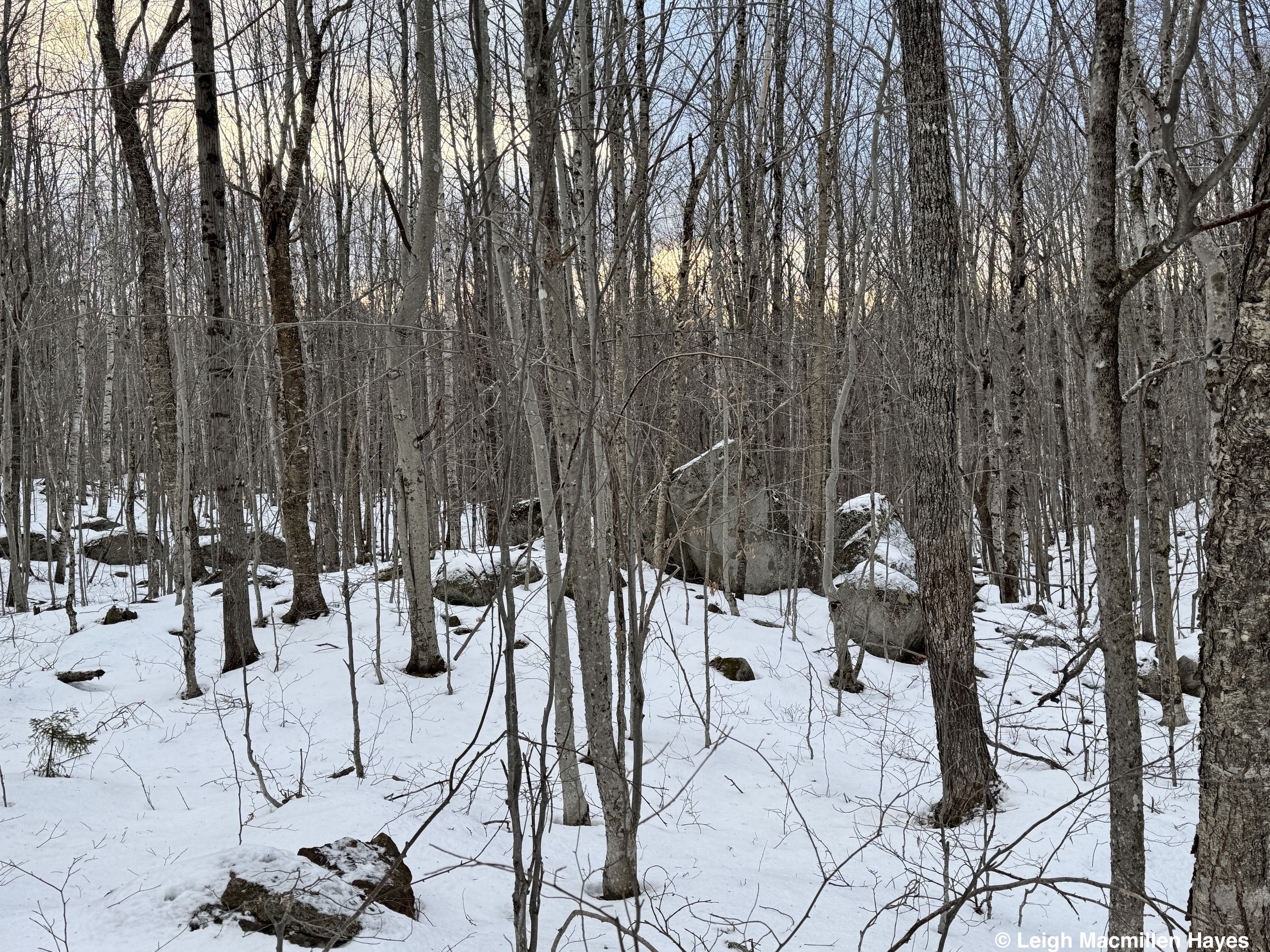
Continuing on, 
it soon became apparent,
that a logging operation,
had taken place,
but the workers
were of the non-human sort,
for such were the toothmarks
of said Beavers.
We found 
example after example
of trees sawed
with their chisel-like teeth,
and some even crossed the trail
we followed
for our route
was of no concern to them.
Upon reaching 
the other side
of the wetland,
I looked at the lodge again,
and found it curious
that there was no open water,
given that up until today's frigid temps,
we had a bit of a melt,
and surely the Beavers
would have been
on the move.
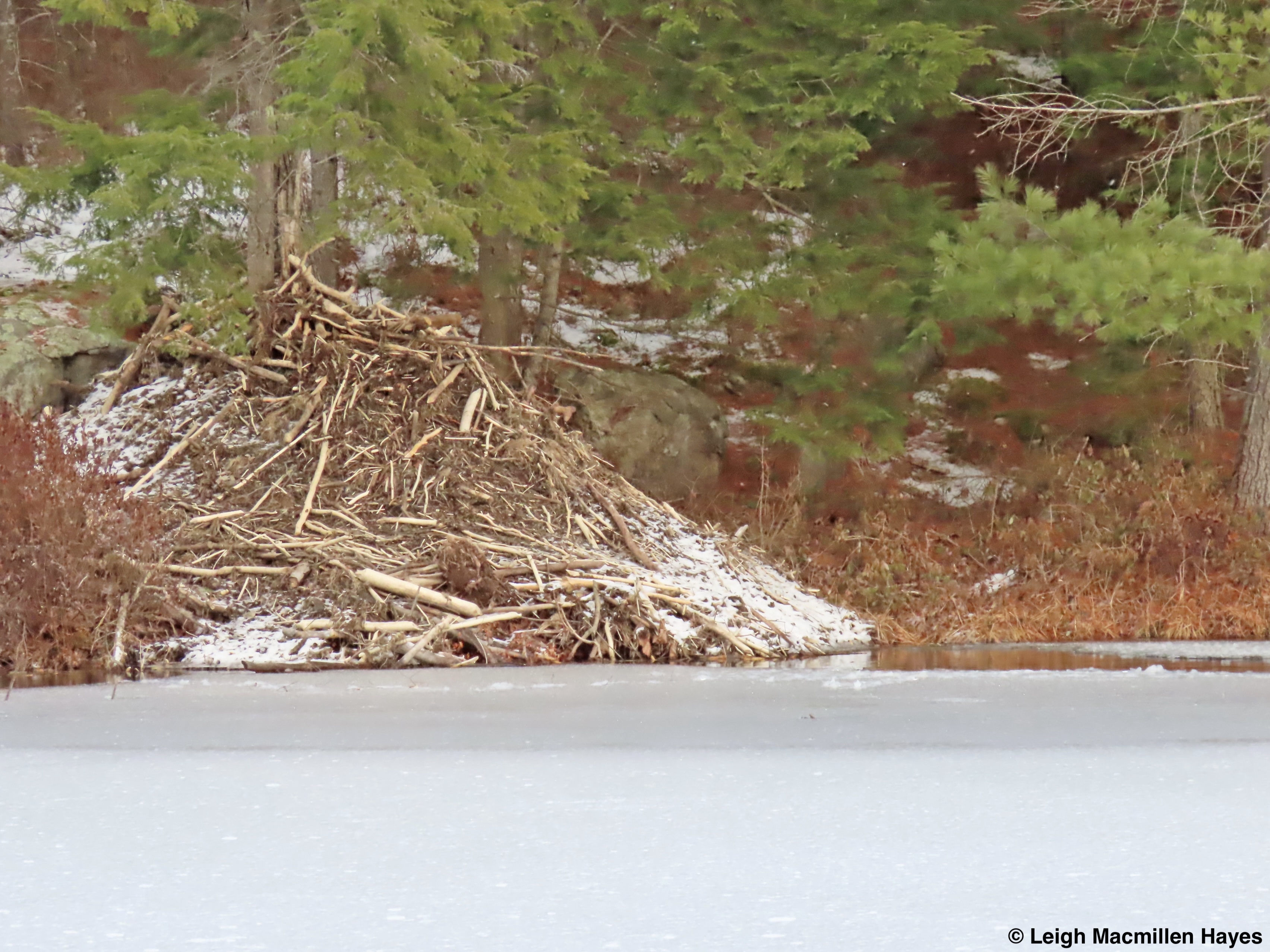
And then mere minutes and steps later,
because there are no leaves on the trees,
I spied across the way,
a huge new lodge
that we somehow missed
as we hiked above it
a half hour earlier.
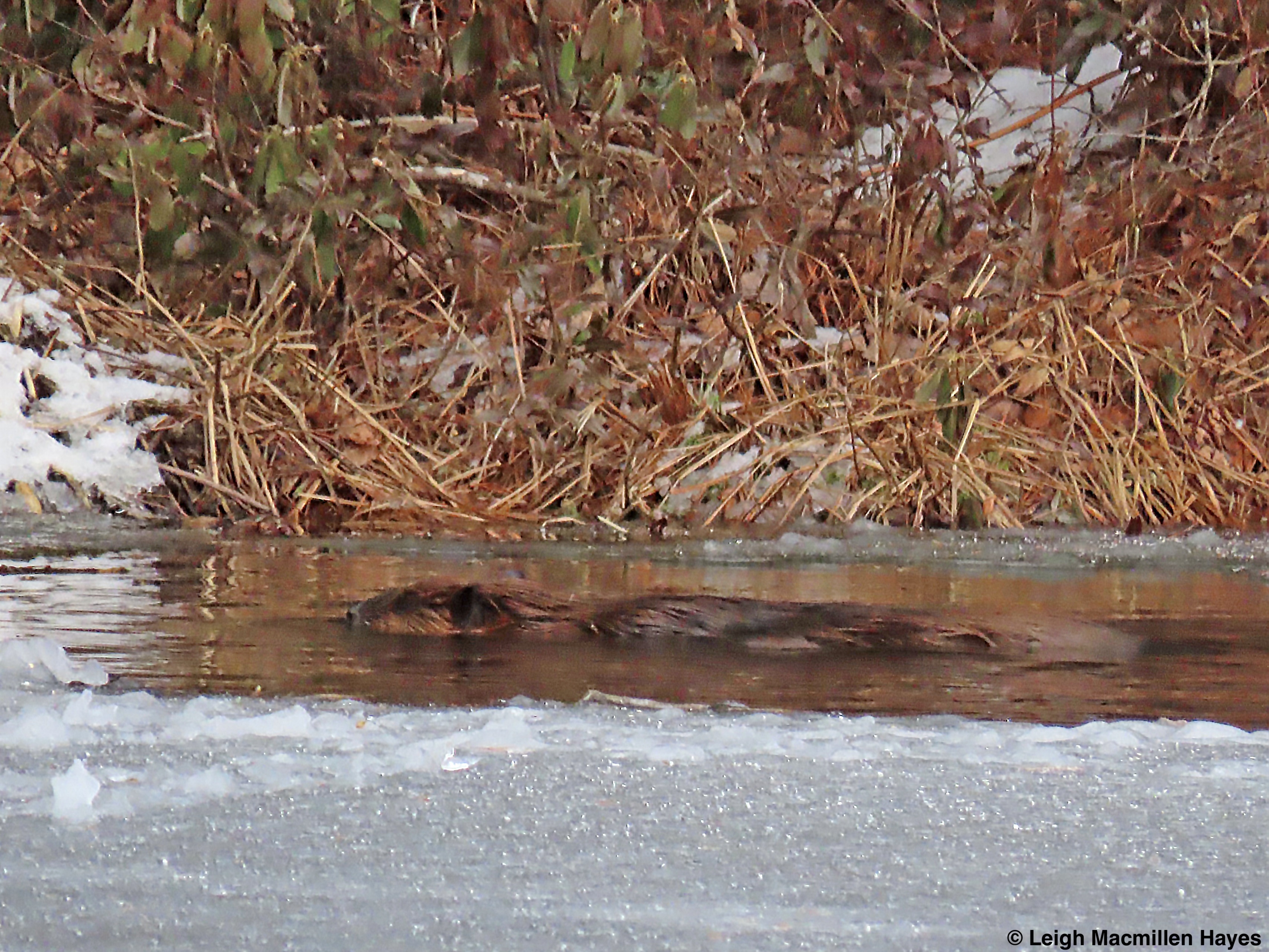
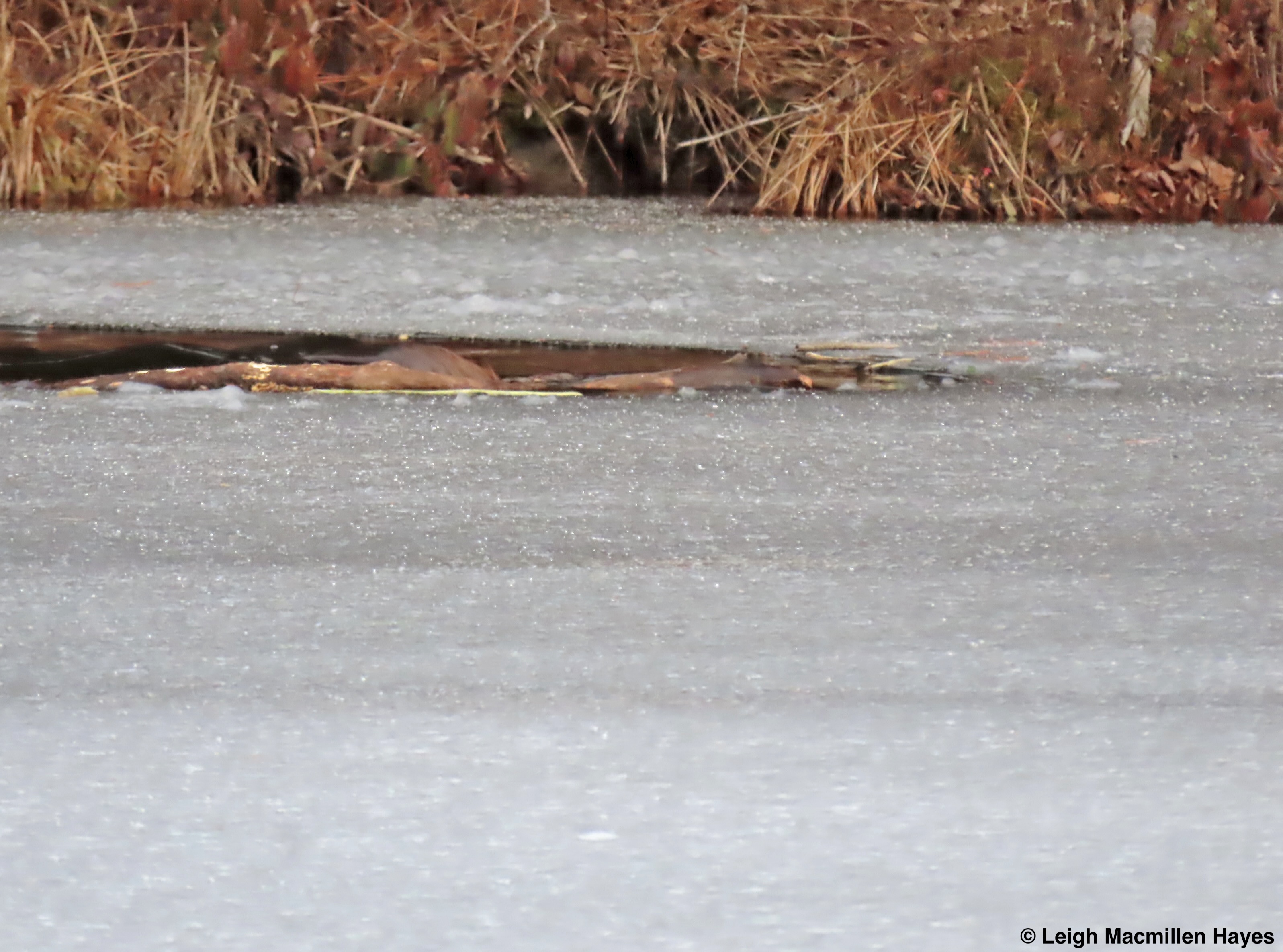
As I zoomed in with the camera,
what should I see,
but a Beaver swimming
in open water,
and my heart was still,
and I wanted to stay
in that spot forever.
For about ten minutes,
that Beaver and I shared the space,
mind you from a distance.
My Guy was just up the trail,
and did not see what
I was focused on.
And this was not the time
to shout,
"Hey look, there's a Beaver!"
because no sooner said,
then there would not
be a Beaver anymore.
Chew sticks were visible
on either side of the pool
he had created
and I suspected he was grabbing a few
from an underground "raft"
of sticks previously stored,
or cached as we say,
and bringing them in
for the rest of the family to dine.
I think my assumption
may have been correct,
for when he reached
the far end of the pool,
he slipped quietly underwater,
rump first rising in the air,
and then whole body disappearing.
It's a funny thing
to realize
that when a Beaver
isn't aware of my presence,
it doesn't need
to slam its tail
and surprise me
or warn its family
that I am there.
Rather, it barely
leaves a ripple
upon the water's surface.
About five minutes later, 
the Beaver appeared again,
and then disappeared under water
beside the lodge
and I again assumed
I was correct
that chew sticks
were on the menu
this night
as they are every night.
With that 
I took my leave
from my lookout spot,
and followed My Guy
toward the conclusion
of our journey,
giving thanks all the way,
for the Beaver
who went about its daily duties
and let me be a witness.
As the sun 
began to set
on this day,
January 2, 2025,
I realized that it
shall be forever more
the day I celebrate
this Beaver's Tale.
Thank you to the owners of the land,
Mary and Larry,
and to their caretaker Bruce,
for conserving this place
so all may live
as nature intended.

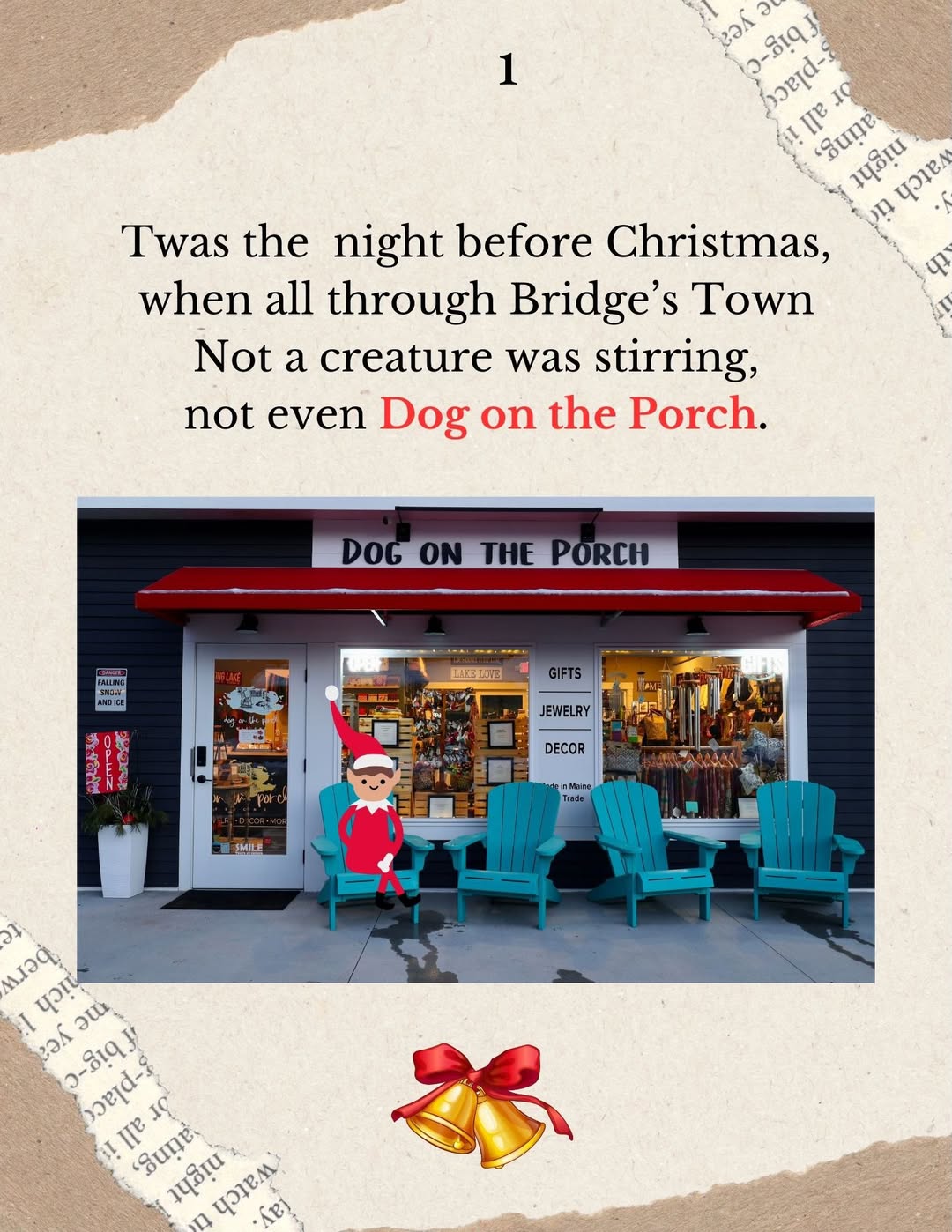
Twas The Night Before with a local twist

Pam Ward and I hope you have enjoyed reading our rendition of “Twas The Night Before Christmas” as much as we enjoyed revising and illustrating it so it encompassed at least a wee bit of our community and the spirit that ties us together.

Pam is a photographer and co-owner with her husband, Justin, of Bridgton Books. Please be sure to step into this wonder-filled independent book store when you are in town. Oh, and you might purchase a copy of The Giant’s Shower, a fairy tale, while you are there.

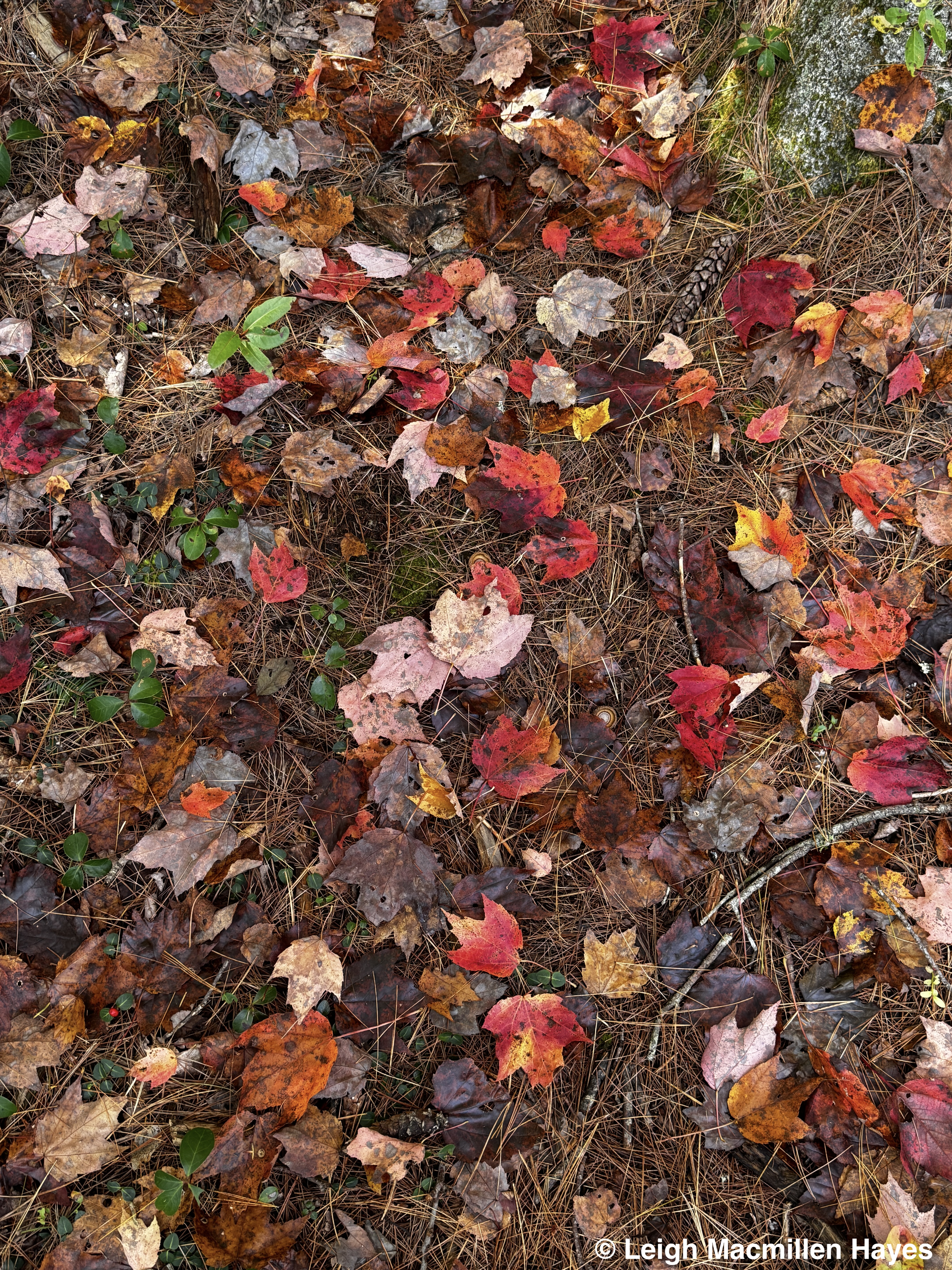
Celebrating the Work of the Leaves

In response to shorter days
and sunshine's declining density,
leaves begin the age old process
leading to their demise.
Like so many others, 
I make time to honor
the tapestry they weave
before they fall.
Chlorophyll, the green pigment
we associate with summer,
and necessary for photosynthesis,
slows and then stops manufacturing food,
and the leaves go on strike.
Veins that carried fluids
via the xylem and phloem close off,
trapping sugars, and promoting the production
of anthocyanin, the red color
we associate with Red Maples and Silver.
Though in the same family, 
Sugar Maple displays
the yellows and oranges
of the ever present Carotenoids,
which had previously been masked
by Chlorophyll.
Stripped Maple knows
only one hue,
making it easy
to spot its large display of brownish yellow.
One of my favorites
is the reddish-pinky-purples
of Maple-leaf Viburnum,
a shrub with maple-shaped leaves.
Ash follows suit,
though its leaves
are the quickest to drop
and disappear into the forest floor.
Big-tooth Aspens turn a golden yellow,
but other colors
have a tendency to seep in
and create a striking picture.
American Beech, 
Paper and Gray Birch
show off a yellow
to golden bronze presentation.
And a little late to the show, 
Northern Red Oaks
put their colors on display
after other species
have already dropped their leaves.
Not really a part of the foliage, 
but still important because it is present,
is the splotchy display caused by Anthracnose fungi,
a result of too much rain stressing trees
and not allowing them to properly respire.
Once connecting tissues 
between leaf petioles and their twigs
form a seal,
the forest floor is colored with gems
that will eventually turn various shades of brown
as they decompose and restock the soil with nutrients,
plus provide food for numerous organisms. And shelter.
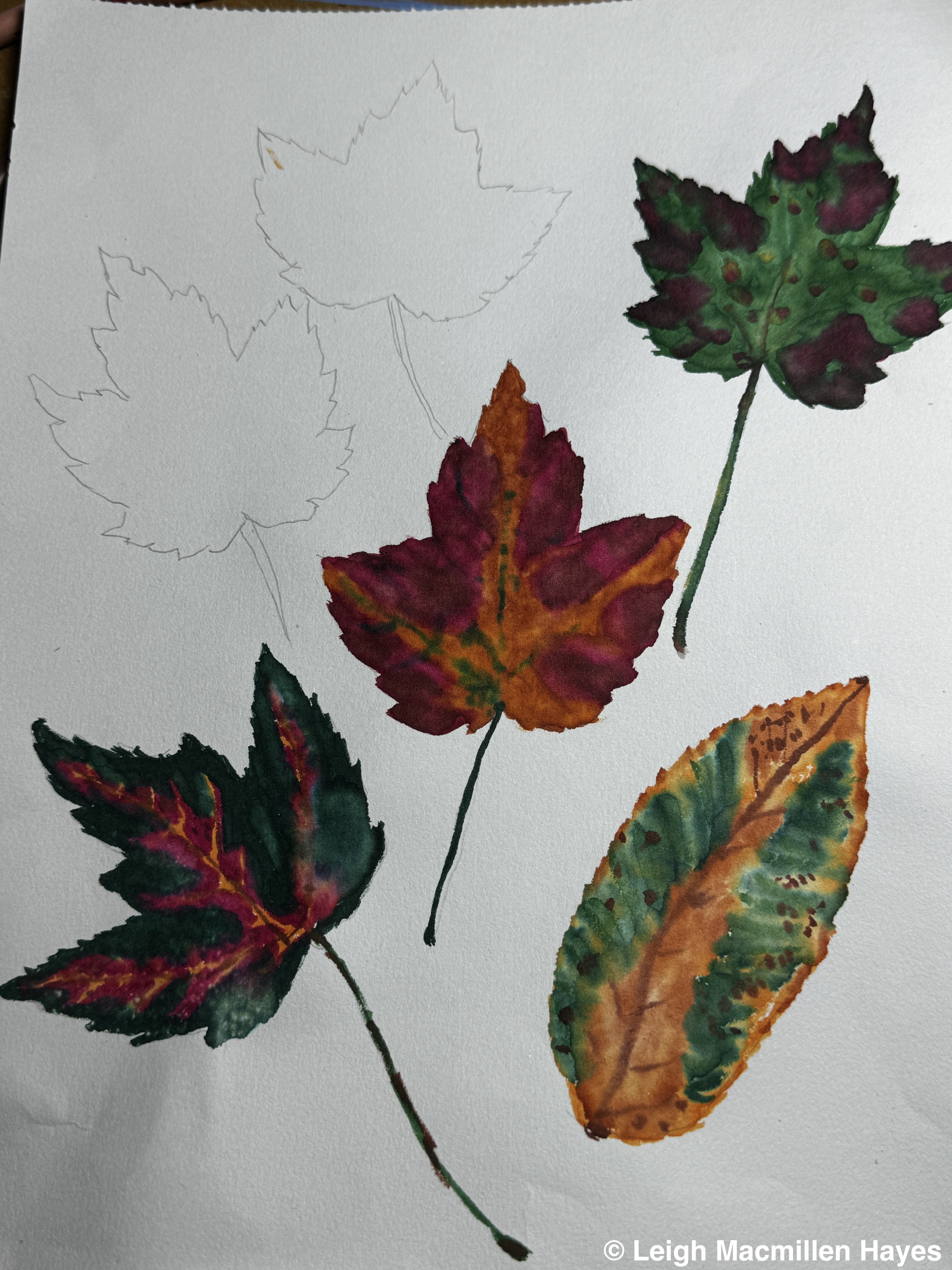
In a Senior College (Lifelong Learning) class
this past week,
I attempted to use watercolor pens
to capture the colors.
And then at home, 
I tried to do the same,
only this time using watercolor pencils
to show off the vibrant variety of hues.
In doing so, 
I was forced to slow down
and notice how the color changes
often followed the veins
in this biochemical process.
Fall foliage is fleeting,
and I give thanks
that every year
we can celebrate the work of the leaves.

My Love Affair . . .

I have no expectations
and only so much time
to take a walk
along a nearby trail.
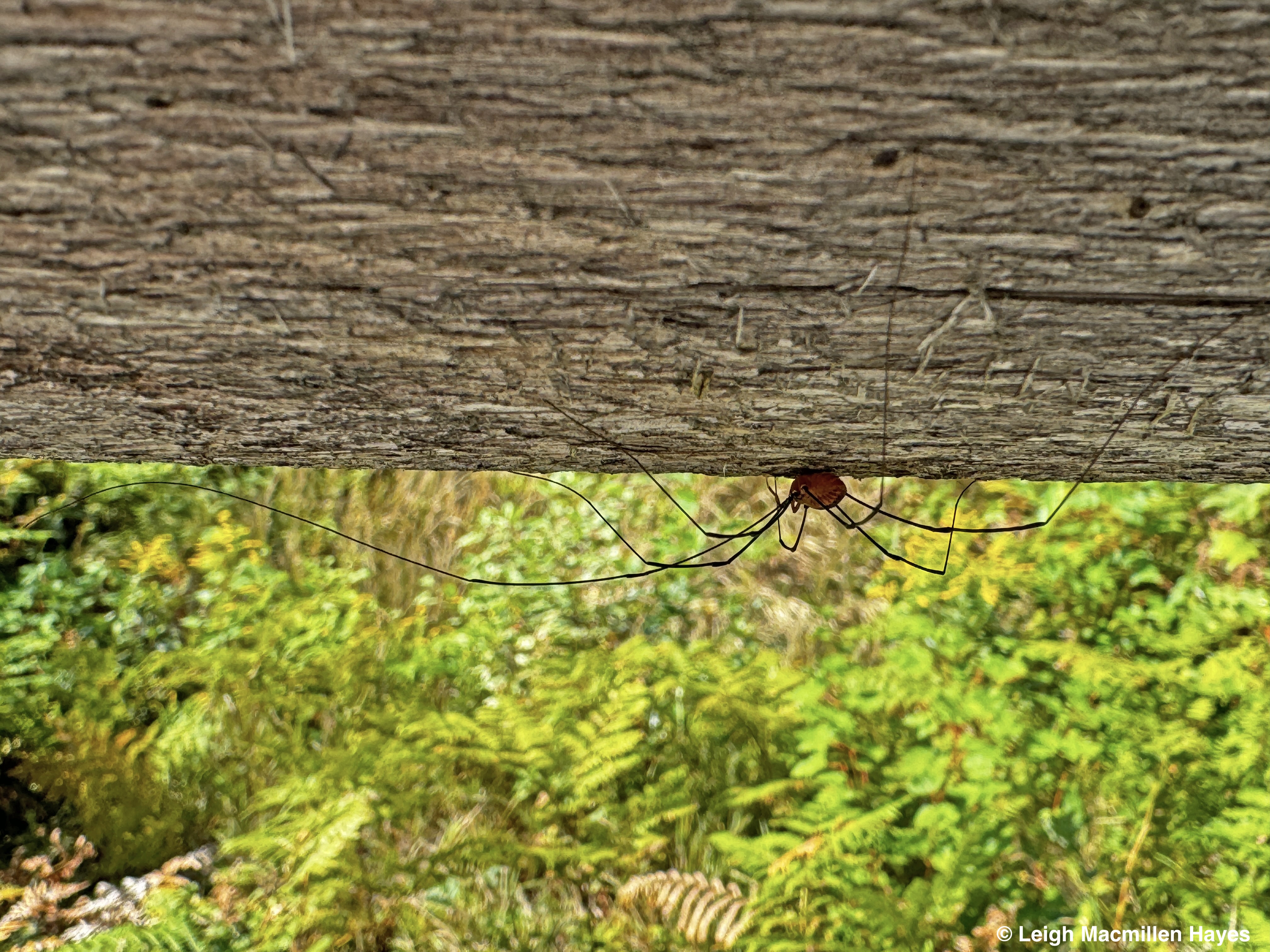
Hiding below a wooden rail,
An arachnid known as a Brown Harvestman rests.
Though spider-like, it's not,
for its body is single segmented.
Curious to see
what else the posts may offer
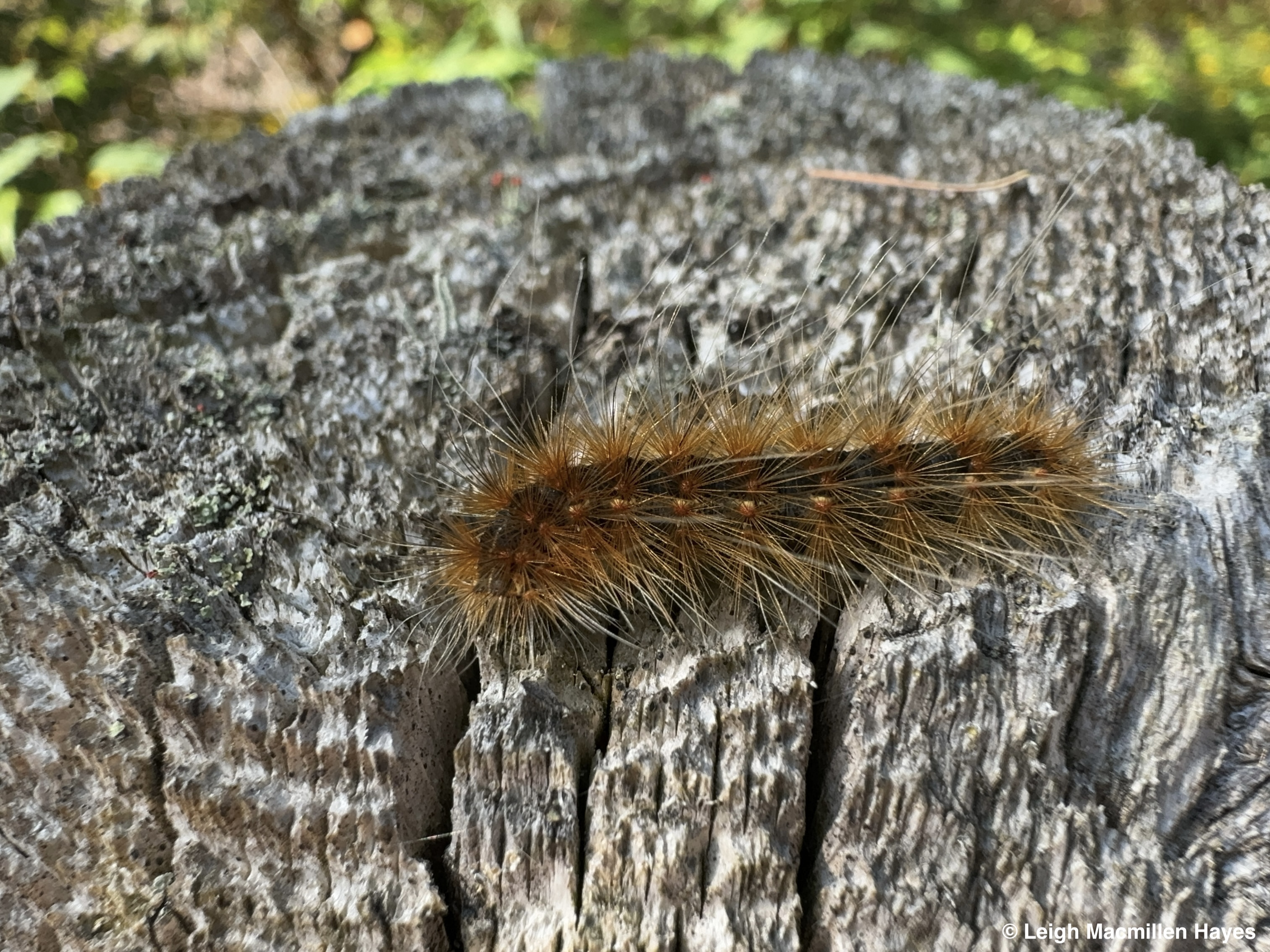
I meet a slow-moving Yellow Bear caterpillar,
It's rusty-brown hairs warning me not to touch.
A few feet away,
Whimsical with its brilliant red caps,
known as the apothecia or fruiting bodies,
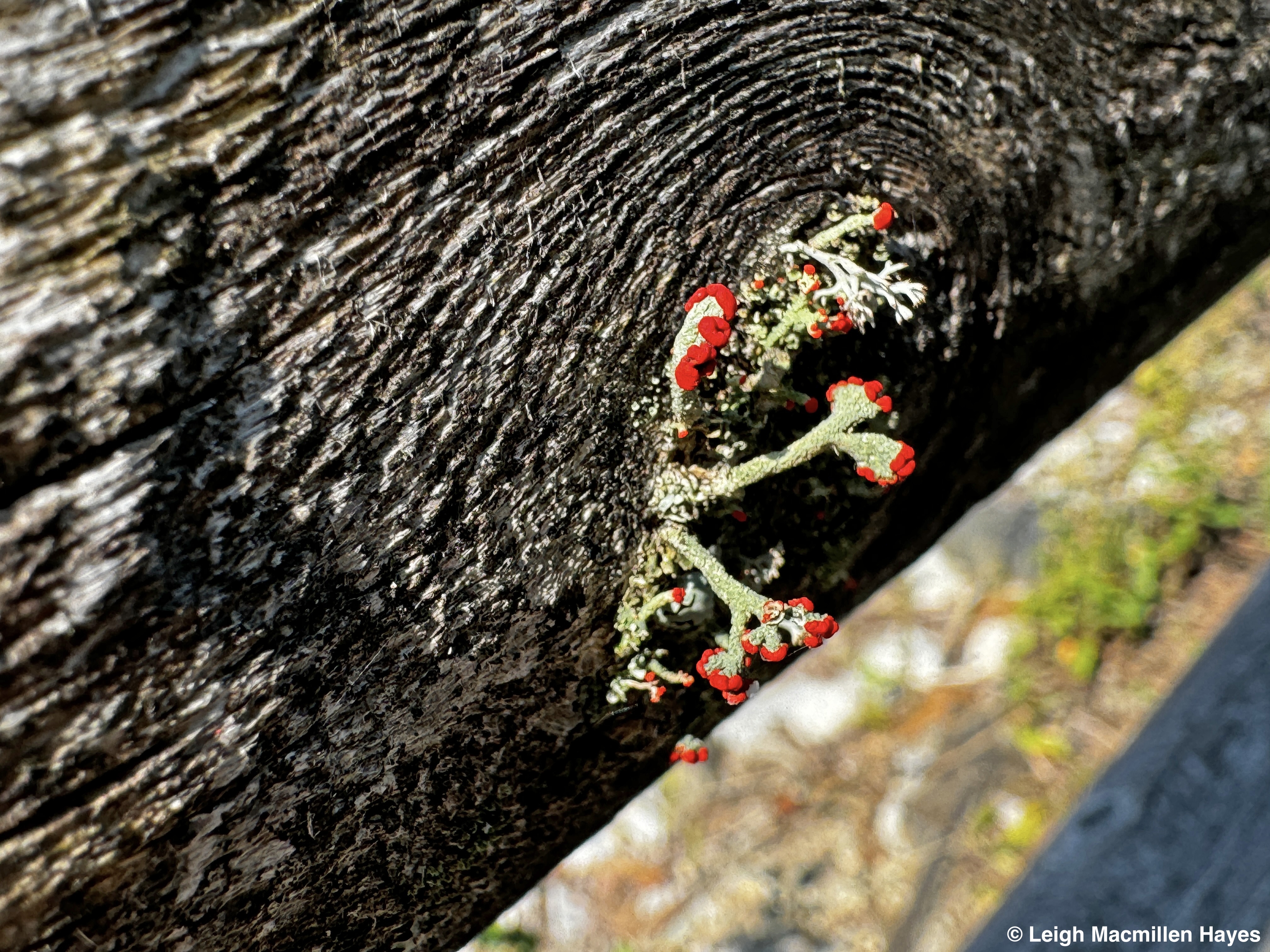
a British Soldier lichen protrudes with a pop of color.
As I continue, one Harvestman 
becomes two, or three, resting below,
and the long legs of these Daddies
is all I can see.
And then by complete surprise,
Hunchbacked in its former nymphal form,
with legs so stout and lobster-like claws,
I find a shed exuvia and my heart skips a beat.
Like the Harvestmen, 
where there is one, there's another,
and I can only imagine
their watermelon tourmaline bodies slowly emerging.
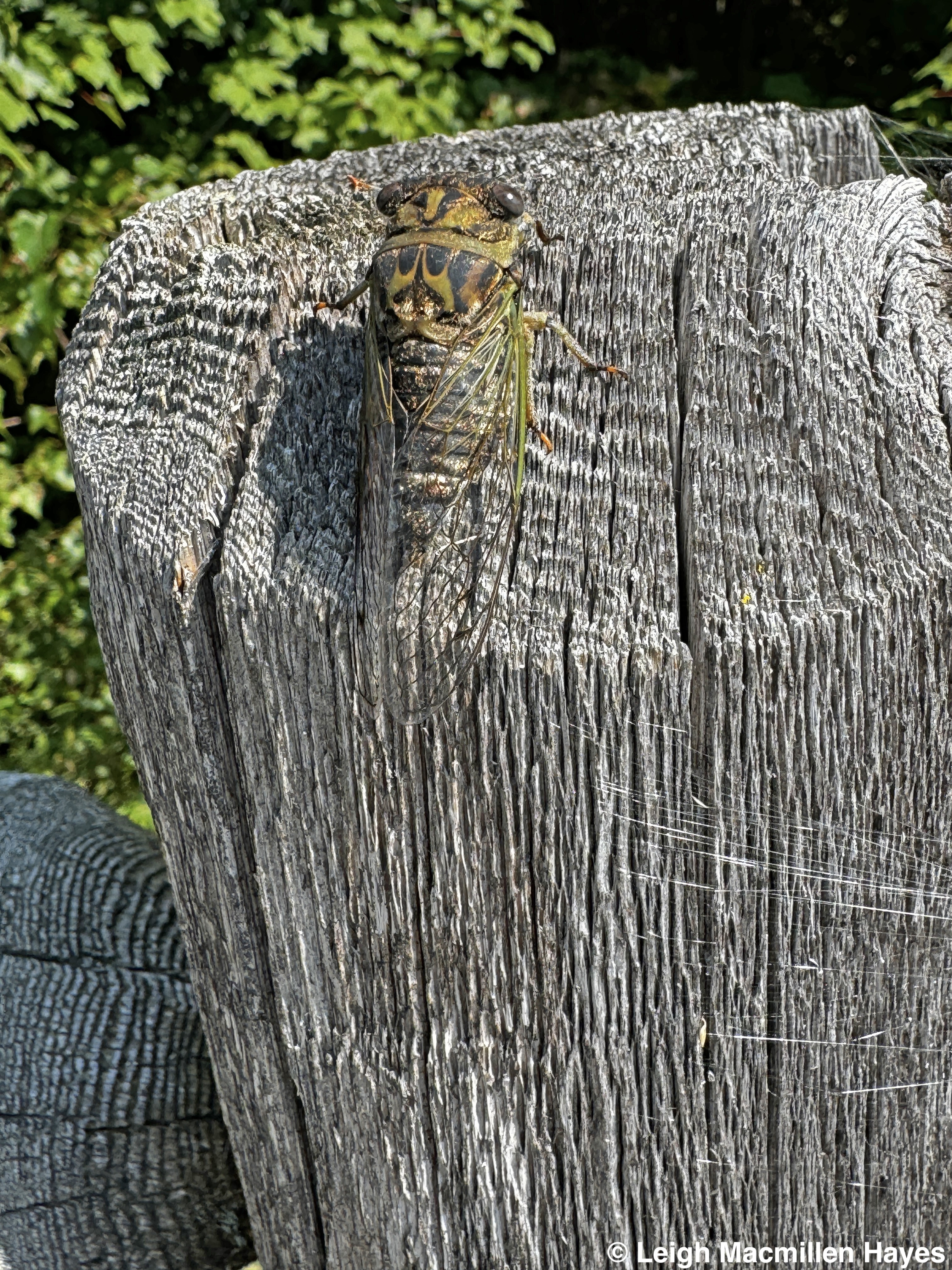
It's when I spot a crawling creature
colored with vivid camouflage
and golden-veined wings,
I realize I've missed one of my favorite views of metamorphosis.
But still I am there to watch 
as the adult form reaches out,
one muscular foot at at time,
as it walks first sideways and then skyward.
I know from experience
its tented wings will soon spread,
but worry it will meet the web beside it,
and rejoice when it instead finally flies into the forest.
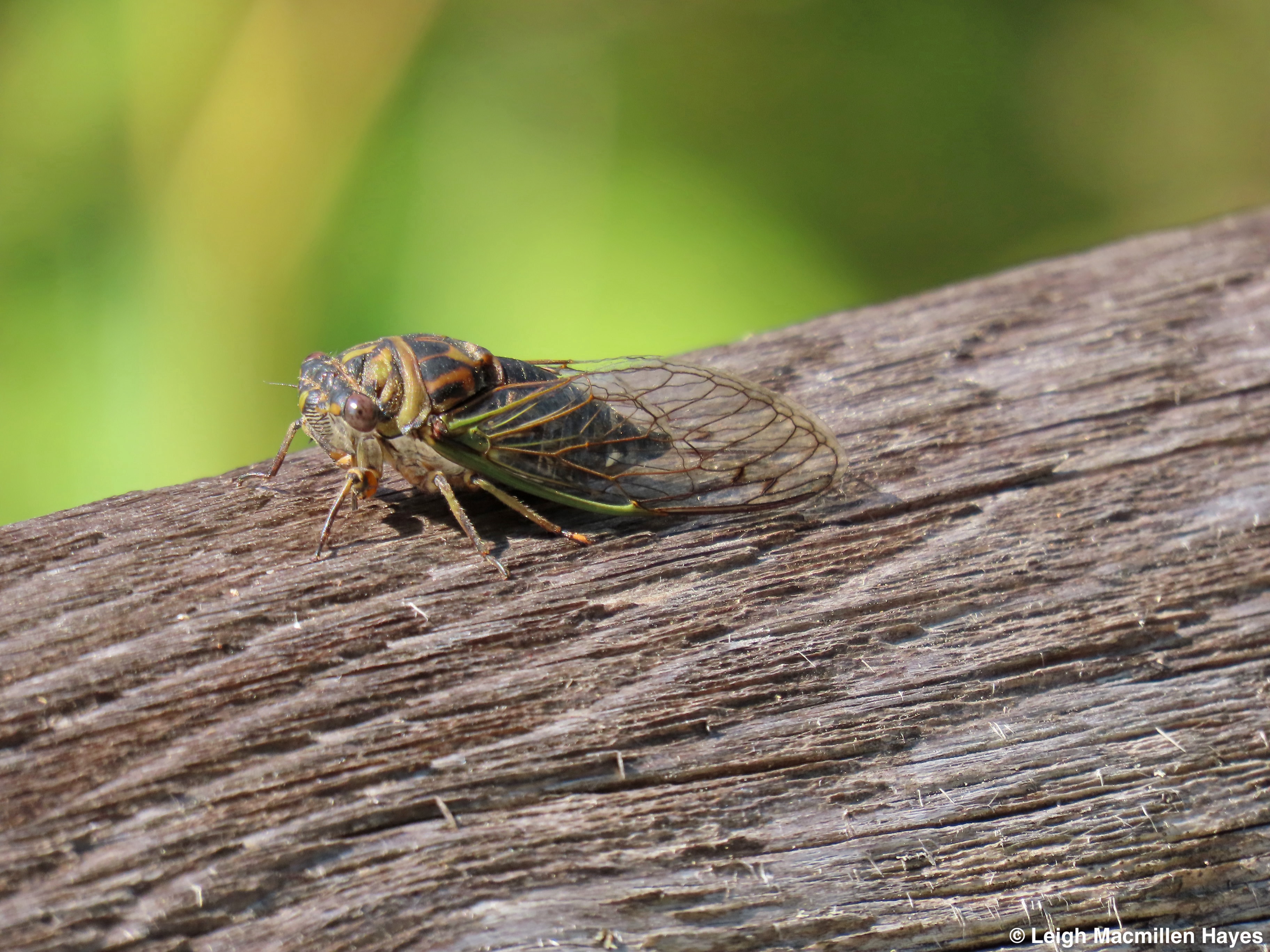
On this late summer day I find another,
and can only hope these Dog-day Cicadas
have time to sing their raspy love songs
that will continue the circle of life as they know it.
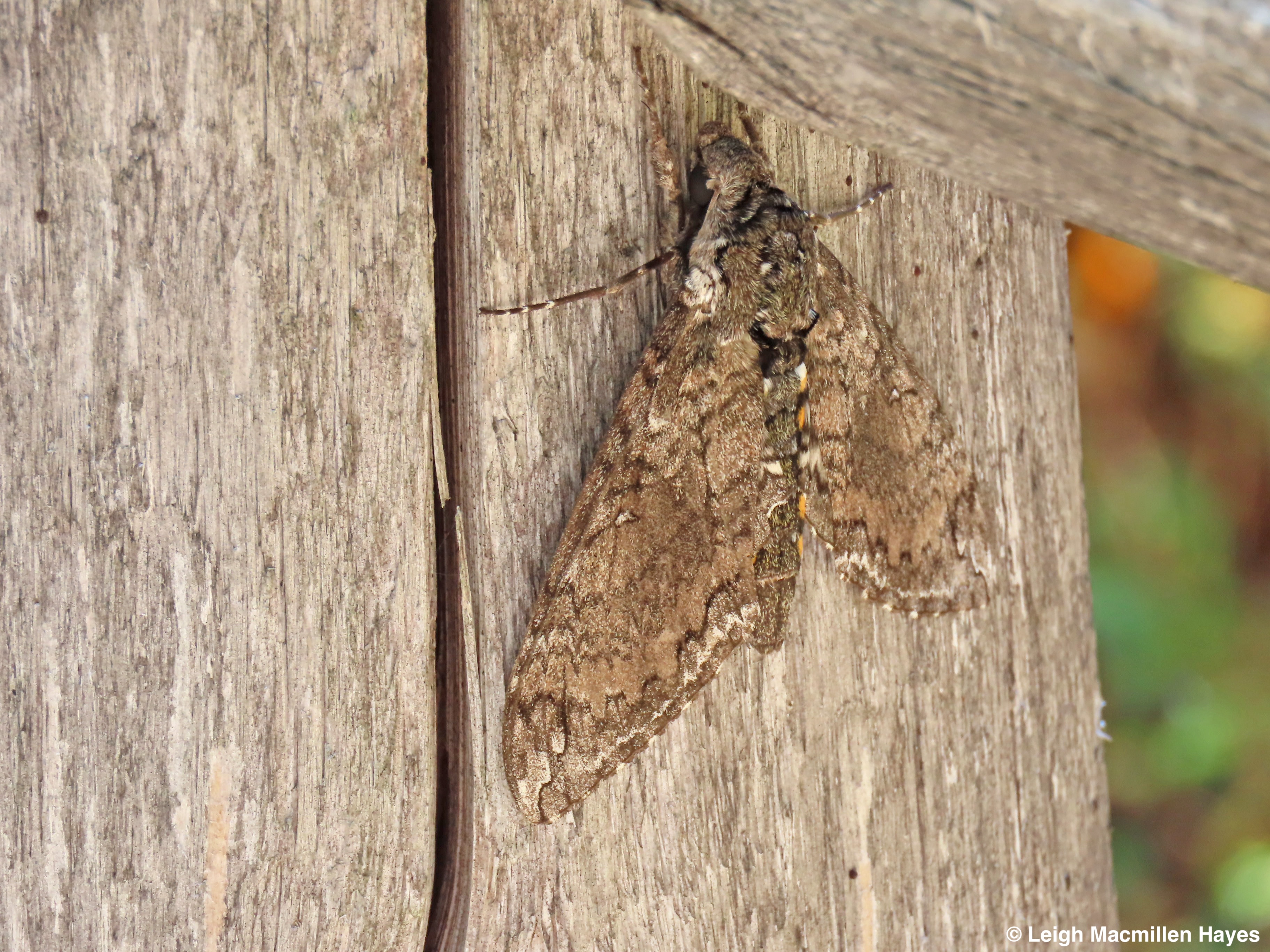
A few more steps and I must backtrack,
for something large garners my attention,
its mottled pattern resembling the post
upon which this Carolina Sphinx moth rests.
A rustle and wing beats cause me to turn my gaze upward,
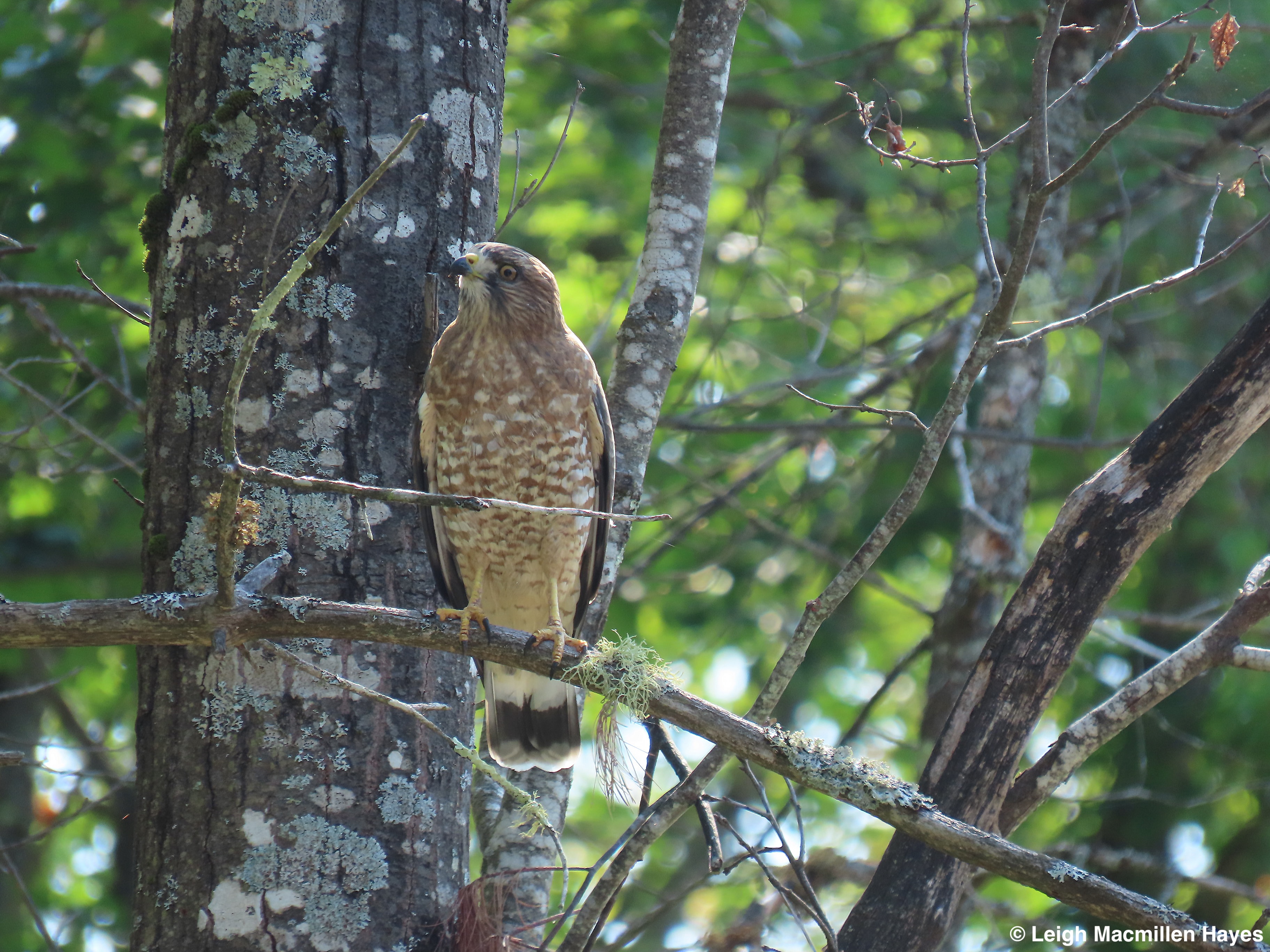
and I spot a Broad-winged Hawk landing,
and surveying the territory
for a consumable meal.
Intently, it looks down,
and all around with ten times the focus of my sight,
those predator eyes fixed as they are,
it must turn its head to see.
As I move the telescopic lens
I begin to wonder if it thinks its a creature
and I must admit that I duck
when it flies off . . . first toward me before swerving.
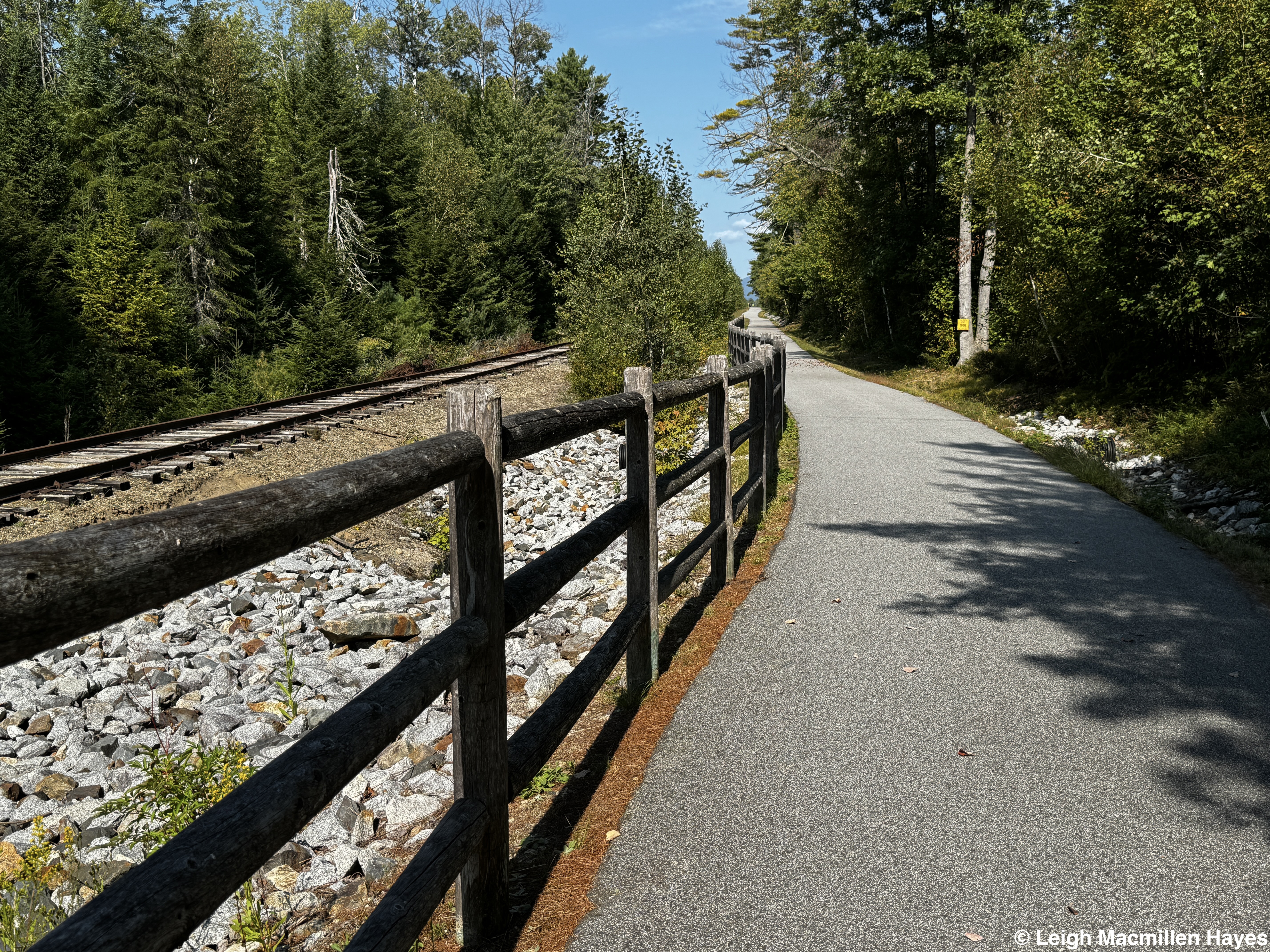
All of these sights I spy
in the course of forty-five minutes
and maybe three quarters of a mile
along the Mountain Division Trail.

On this day,
I develop a love affair
with the fence posts and all who gather there.
Can you imagine if I'd gone any farther?

Ode To A Garden Spider

Oh great orb weaver
Who lives among tall plants
Where you spin
A complex circular web
The size of a large platter
Complete with a hub
And non-sticky spokes
Upon which you walk,
While sticky cross lines
Ensnare your daily meals,
I revere you.
I study the webs
You and all of your sisters create,
But observe holes
In some areas
Where large insects
May have escaped,
Your web so constructed
That they don't break
The entire structure
During their struggle
To freedom.
And other sections
That remind me
Of the Cat's Cradle String Game
We used to play as kids.
Most nights,
As if on cue,
You consume
The entire silk dish,
Snacking on tidbits
Caught in the wheel
And then build
A fresh web
To start
A new day.
Really though, 
It's the bigger insects
You prefer,
And much like
E.B. White's famed Charlotte,
You inscribe
A daily message
Down the center
Of your creation.
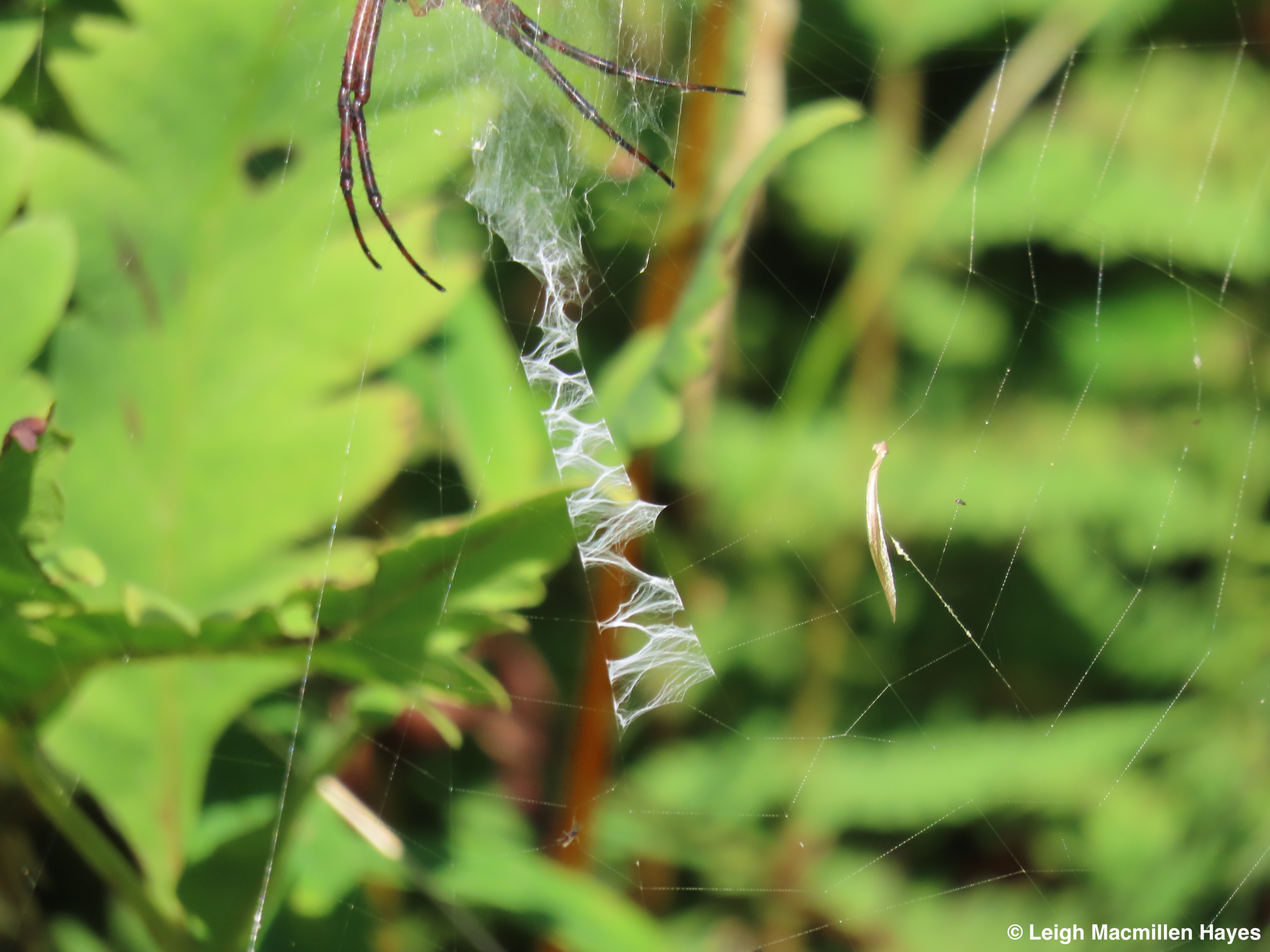
It's upon this
Zig-zaggy stabilimentum,
An ultraviolet runway
Of multiple threads
Perhaps intended
to provide you stability,
Or as a prey attractor,
Or a warning to birds
Not to fly through,
That you hang in suspension
Waiting for the
Dinner bell to ring.
What I realize
While stalking
The neighbor's field,
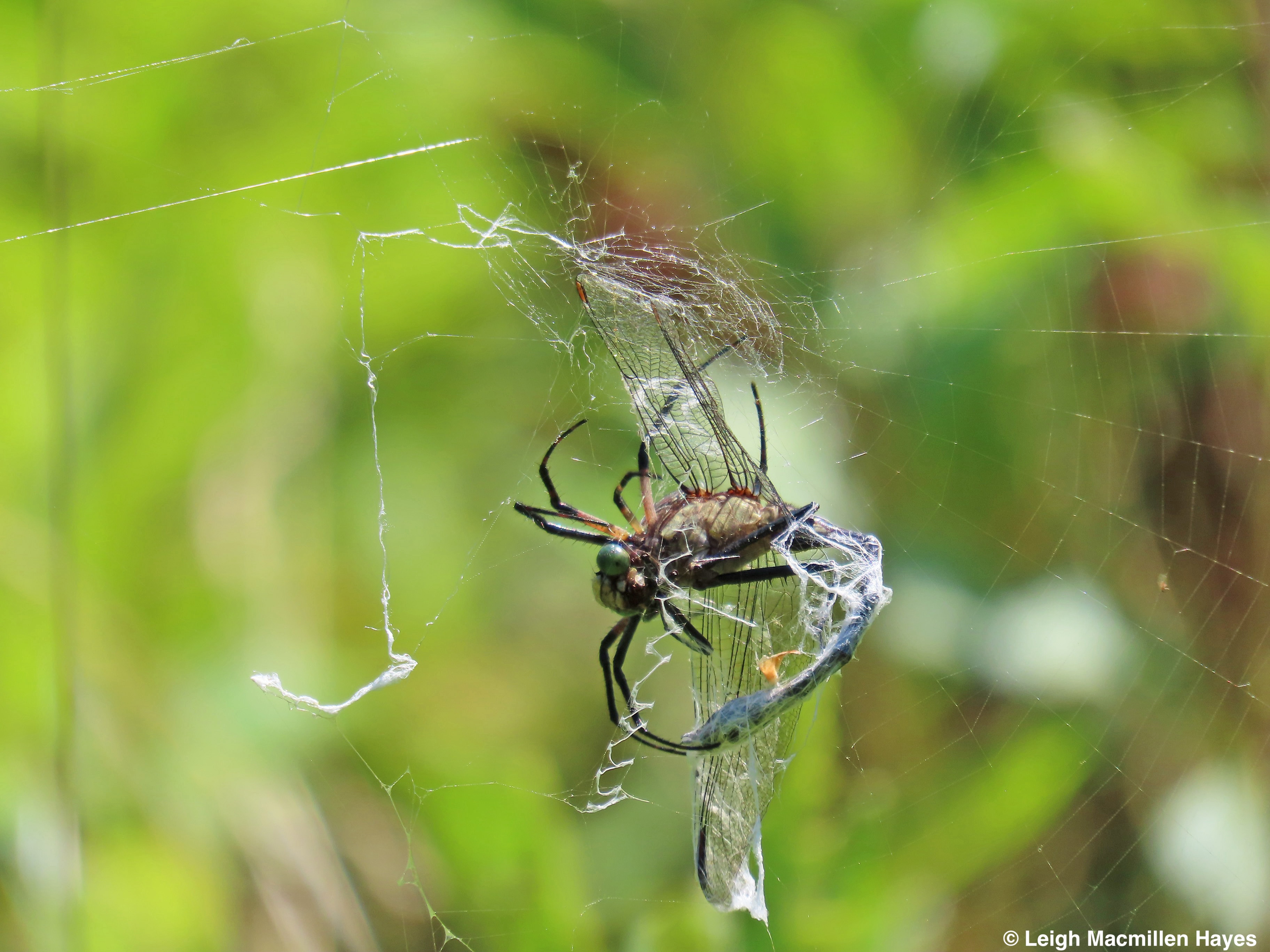
Is that when a large insect,
Such as a grasshopper,
Dragonfly,
Or caterpillar
Gets caught in your web,
It takes you
Two or three days
Or more,
First injecting and paralyzing
with venom,
Then enwrapping with silk,
Before crushing the body
And liquifying the victim
With digestive juices
So it forms
A neat little package
Resembling a cocoon.
And storing it
For later consumption.
Despite eight eyes,
I'm told you have
Poor vision,
But make up for this lack
With hairy legs
That detect the arrival
Of a meal
Perhaps signaling
Sound and smell,
And certainly vibrations.
I'm afforded a look
At your pedipalps,
Those two short,
Hairy appendages,
Sticking out from your head,
That also work
Like sensory organs.
You may appear
Big and scary,
Your egg-shaped abdomen
Covered with asymmetrical marks
Upon the carapace,
Much like a turtle's shell,
And you may be
A carnivore,
But I celebrate you
Because I know
You are beneficial
In a garden or field
Such as this,
Since you control
The insect population,
Including some pests.
You also pollinate plants,
Recycle dead animals
(Well, they may be dead
Because you killed them,
But still . . .),
And serve as a food source
for others.
Oh great orb weaver,
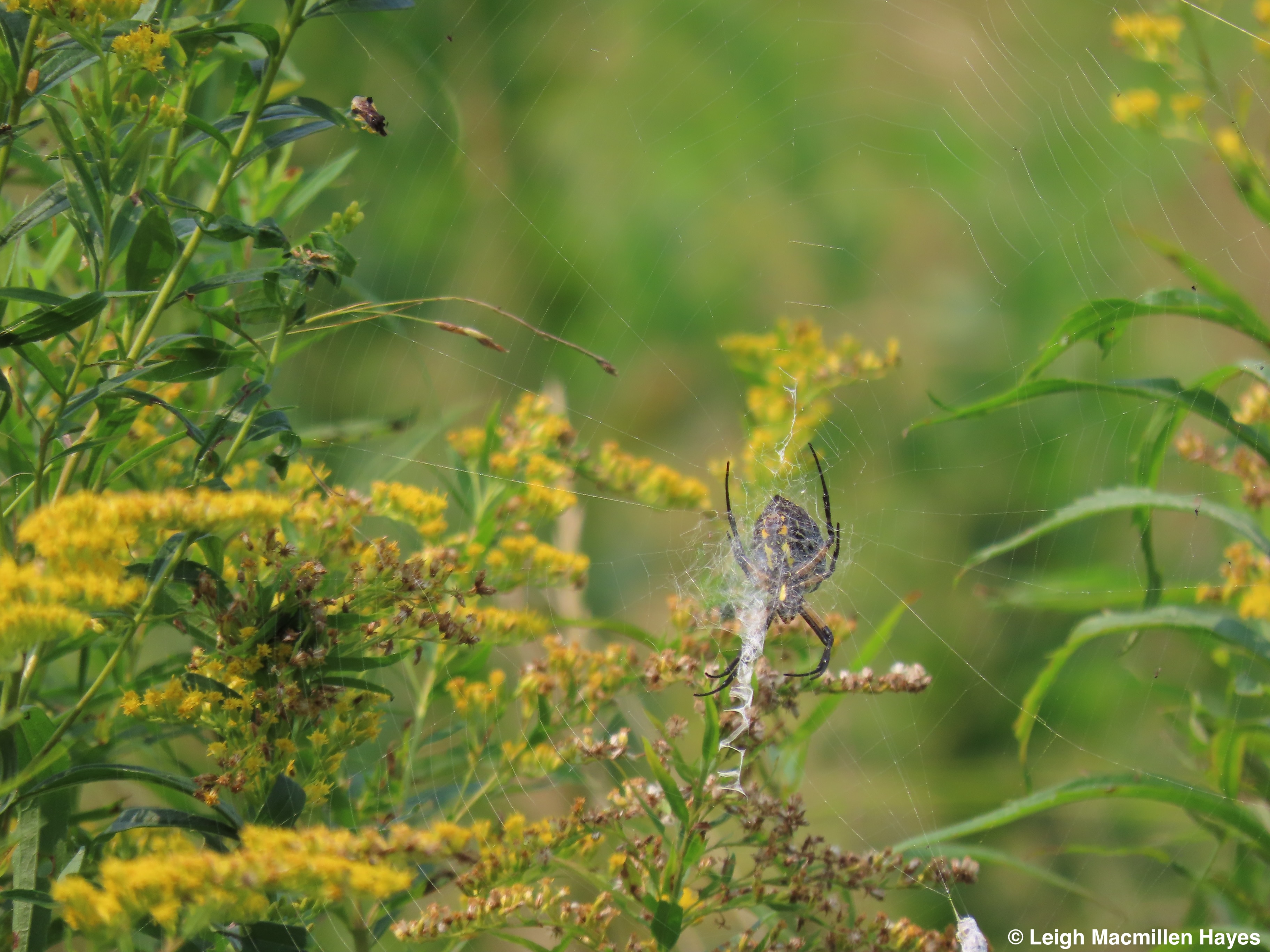
Argiope aurantia,
Or more commonly,
Black and Yellow Garden Spider,
Thank you for affording me
Numerous views
Of you and your sisters
So that I might gain
A better understanding
Of your daily habits.

Until we meet again . . . New York

I remember when we’d take our young sons to cities and I’d hold a tighter than tight grip on their hands, or maybe it was their wrists, as we walked along sidewalks thronging with people. I can’t hold their hands in quite the same way anymore, and in fact, in their presence in a city (the older in Boston and the younger in Brooklyn), since that’s where they’ve both chosen to make their homes at the moment, their confidence and poise and graciousness make me feel comfortable. And they have become incredible tour guides.

And so it was that this past Friday, My Guy and I flew to LaGuardia Airport and began another New York City journey.

We were met at the airport by P, who drove us to the Prospect Heights neighborhood of Brooklyn, where his girlfriend, M, was waiting and had ordered pizza because one of my wishes for the weekend was for a NY-style pie. Well, really, I wanted New Haven style, given my roots, but NY is the next best thing.

The apartment belongs to M’s mother, D, who graciously offered it to us as a home base for our weekend adventure. The view of the Manhattan skyline garnered our attention each morning and night, and we knew the Knicks had won their game Saturday because the Empire State Building showed off their team colors.

For as long as P has lived in Brooklyn, we’ve heard of Prospect Park, which encompasses over 500 acres in the midst of the city and offers habitat and respite for critters of all shapes and forms, including humans.

We had signed up for a two-hour tour with the well-informed Corinne as our guide. Designed in 1865, she explained that the park is considered Frederick Law Olmsted’s and Calvert Vaux’s masterpiece, Olmsted pictured on the left and Vaux on the right. Here, unlike in Central Park, they took advantage of the natural elements, though I was disappointed to learn that they’d filled in kettle holes created by glaciers.

We entered via the Endale Arch, which was built in the 1860s and restored within the last ten years. It was during the restoration when paint and wood panels that had been added because of rain damage were removed, that pine and walnut paneling was discovered.

It’s almost like passing through the welcoming doorway of a church.

I could have spent hours meeting trees in the park, but this was not the time, and so I reveled in the few we did get to know, such as this Camperdown Elm, whose branches grow more or less parallel to the ground giving it a gnarly bonsai appearance. The tree, grown from the Earl of Camperdown’s Scottish estate, was planted here in 1872, but neglected years later until in 1967 Marianne Moore wrote this poem to save it:

I think, in connection with this weeping elm,

of ‘Kindred Spirits’ at the edge of a rockledge

overlooking a stream:

Thanatopsis-invoking tree-loving Bryant

conversing with Thomas Cole

in Asher Durand’s painting of them

under the filigree of an elm overhead.

No doubt they had seen other trees—lindens,

maples and sycamores, oaks and the Paris

street-tree, the horse-chestnut; but imagine

their rapture, had they come on the Camperdown elm’s

massiveness and ‘the intricate pattern of its branches,’

arching high, curving low, in its mist of fine twigs.

The Bartlett tree-cavity specialist saw it

and thrust his arm the whole length of the hollowness

of its torso and there were six small cavities also.

Props are needed and tree-food. It is still leafing;

still there. Mortal though. We must save it. It is

our crowning curio.

Though she passed about fifty years ago, the tree, thanks to Miss Moore, lives on.

Another that struck my fancy was the Osage Orange, though apparently I should be thankful we didn’t visit in the autumn when its softball-sized fruits fall. Then it might not be my fancy that is struck, but rather my head.

Though we only had a moment to glance at tiled ceilings, they were the masterpiece of Spanish engineer Rafael Guastavino. I can only wonder if a sunflower or some other composite flower was the inspiration for this one.

Much to our delight, as we followed the path, a Black Squirrel scampered along the ground and then up a tree. The Black Squirrel is a color phase of the Eastern Gray Squirrel (Sciurus carolinensis), also known as a melanistic variant due to a recessive gene that causes abnormal pigmentation. Do you see it peeking at us?

While our bird sightings were many, especially of Robins and Sparrows, we spotted one male Cardinal, one Mallard, and this one Cormorant swimming in murky water.

The species of the most abundance, however, was the Red-eared Slider Turtle. Though outlawed for sale today, Red-eared Sliders are the most common turtles kept as pets. They live long lives and need ever increasing habitat and food, thus many have been abandoned–their owners slipping them into the waters of the park unceremoniously in a practice that is illegal.

Thanks again to the generosity of our hostess, we also visited Brooklyn Botanical Gardens where Cherry Blossoms and an array of colors wowed us and thousands of others.

It was fun to glimpse over the shoulders of two artists and notice how their work reflected the scene.

Though these tulips each had a name, I would have called this spot the ice cream stand for the flavors seemed to abound.

Beside water, Horsetails or Equisetums did grow.

As did the almost ready to unfurl crosiers of Cinnamon Ferns. I love their woolly coats.

It was here that I had a brief encounter with another tree new to me, a Horned Maple. Acer diabolicum leaves are five lobed and coarsely toothed. The common name comes from paired horn-like projections from the seeds, but we were too early to spy these. We did get to see it in flower, though I think I’m the only one who noticed.

And I kept wondering where all the pollinators were, though we didn’t get too close to the Cherry Blossoms, but the Honeysuckles lived up to their names and were abuzz with activity.

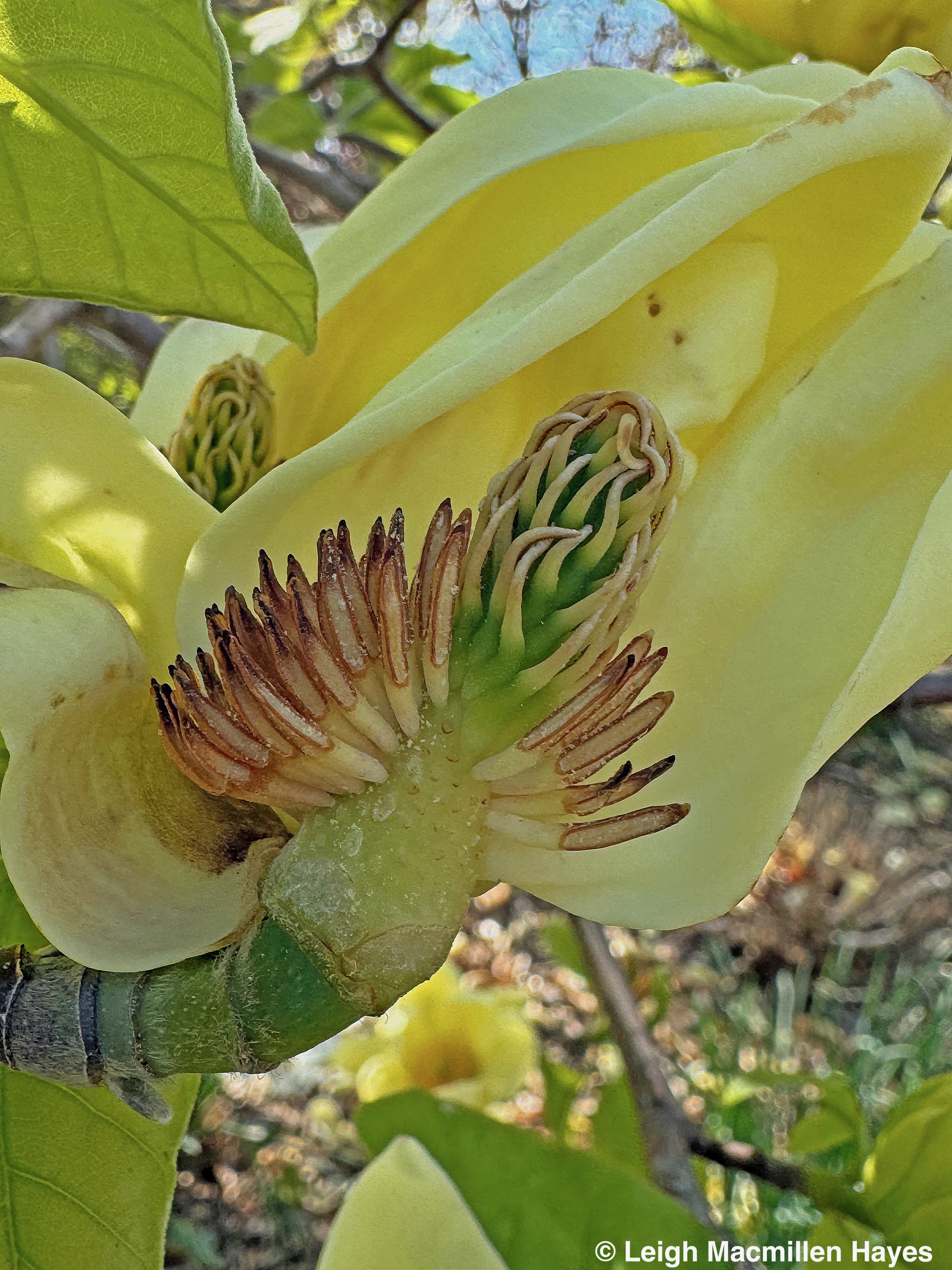
If I had to name a favorite, it would probably be the Hybrid Magnolia based on its color and form. Simply a masterpiece.

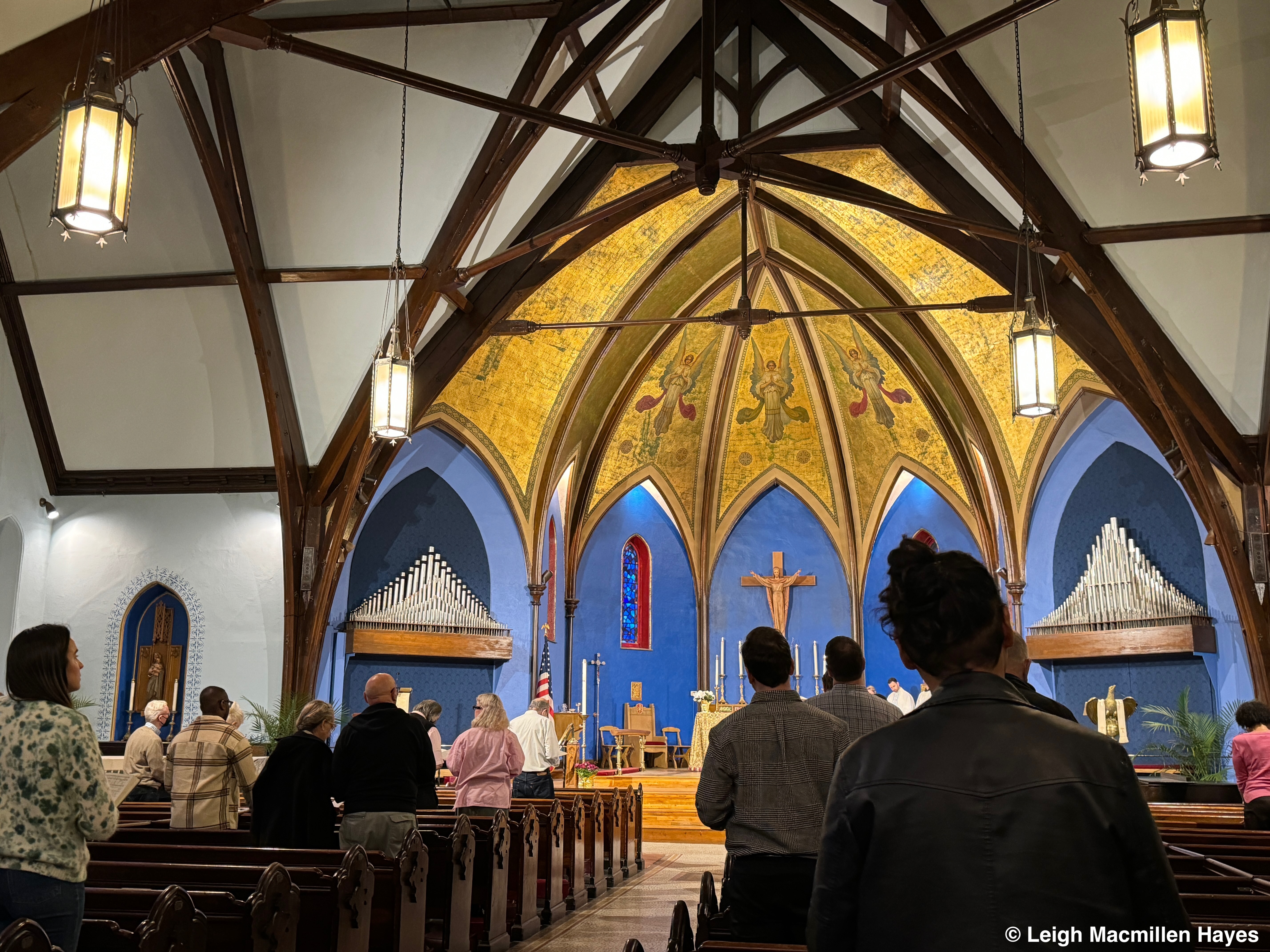
We spent an hour enjoying a masterpiece of another sort, worshiping with others at St. John’s Park Slope, an Episcopal Church with a heavenly choir and an organ that filled the rafters with music both old and new.

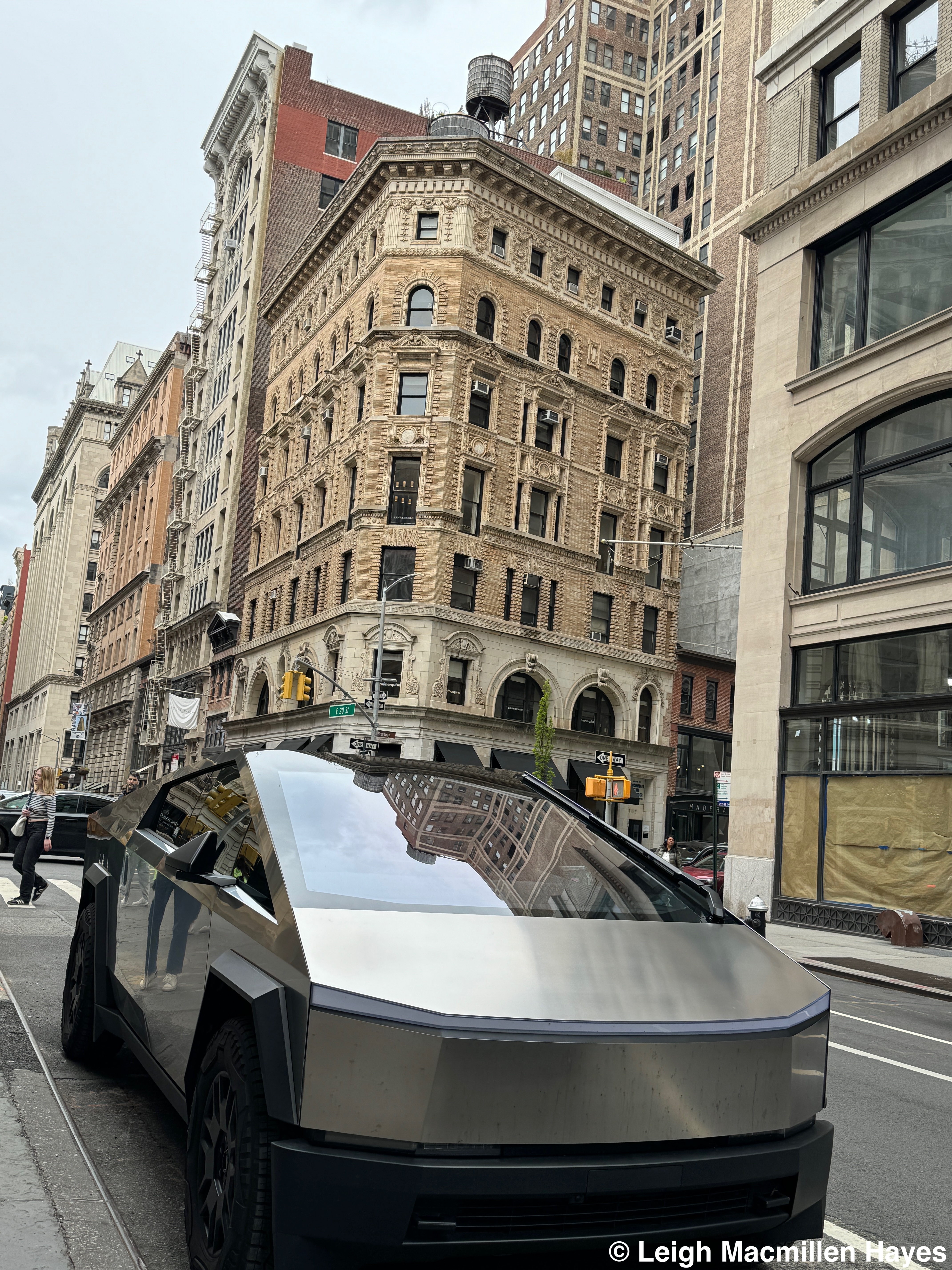
And then we took a trip into Manhattan via P’s new truck. Haha. Yes. That is a Tesla truck. Just not my idea of a truck. And no, we did not travel in it, but rather M’s car.

P showed us the large office he works in where ads and films, but mostly ads these days, are produced and edited. And clients are wined and dined in situ. There’s even a staff chef.

And now, when he says he’s working from the office, we can imagine him in this space.

It’s located two doors away from the birthplace of Teddy Roosevelt.

Not being shoppers, we only stepped into a Yeti store, where of course, My Guy announced that he has the products on his shelves back in Maine. And he peered into a closed hardware store, cuze no trip of ours is ever complete without visiting one or two. But then again, no trip of ours is ever complete without stepping along a wooded pathway and noticing the flora and fauna.

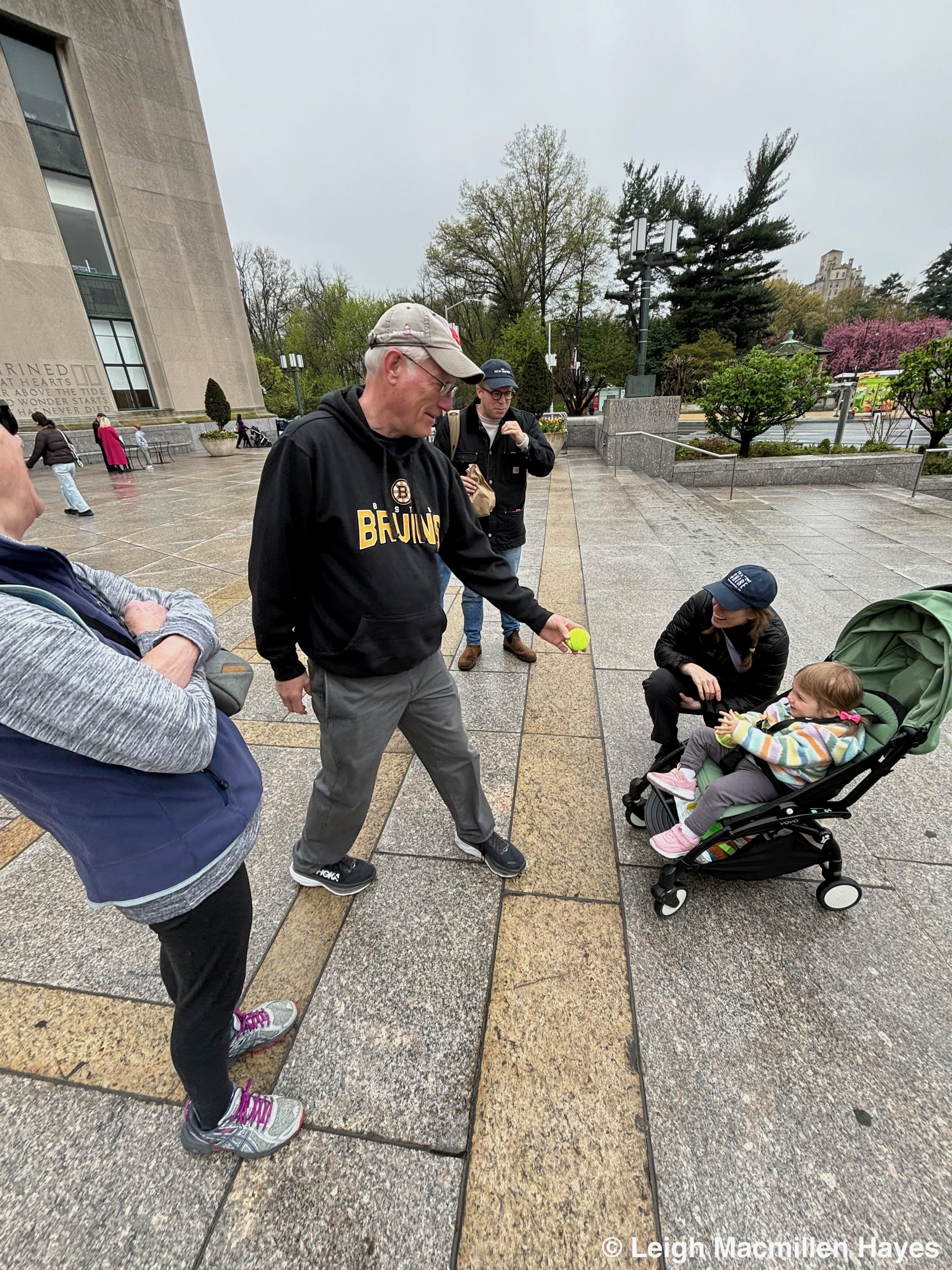
But the main purpose of our trip was to visit. Family. And friends. And meet this little powerhouse who knew how to command the crowd.

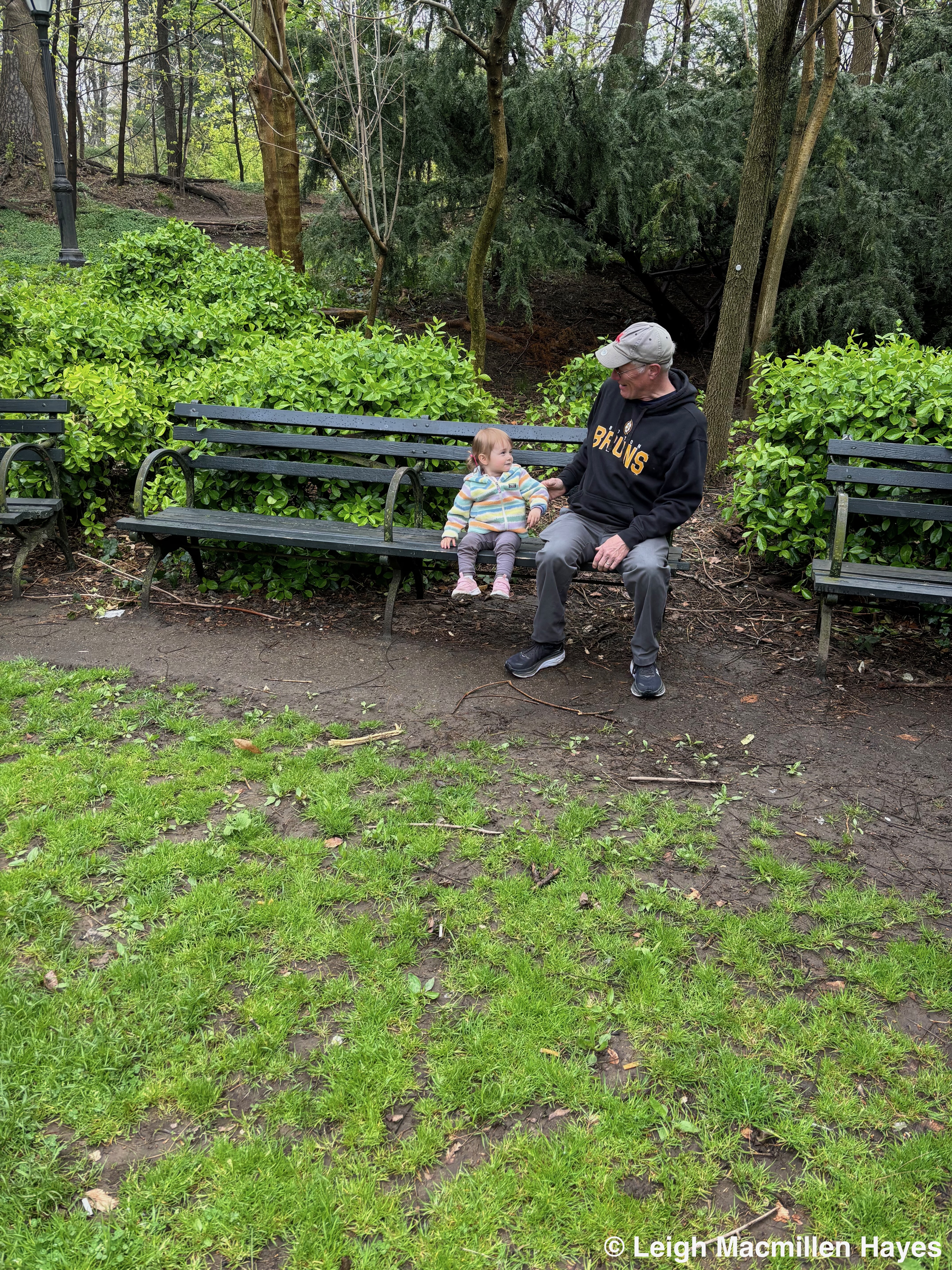
My Guy was in instant love. And she was so chill.

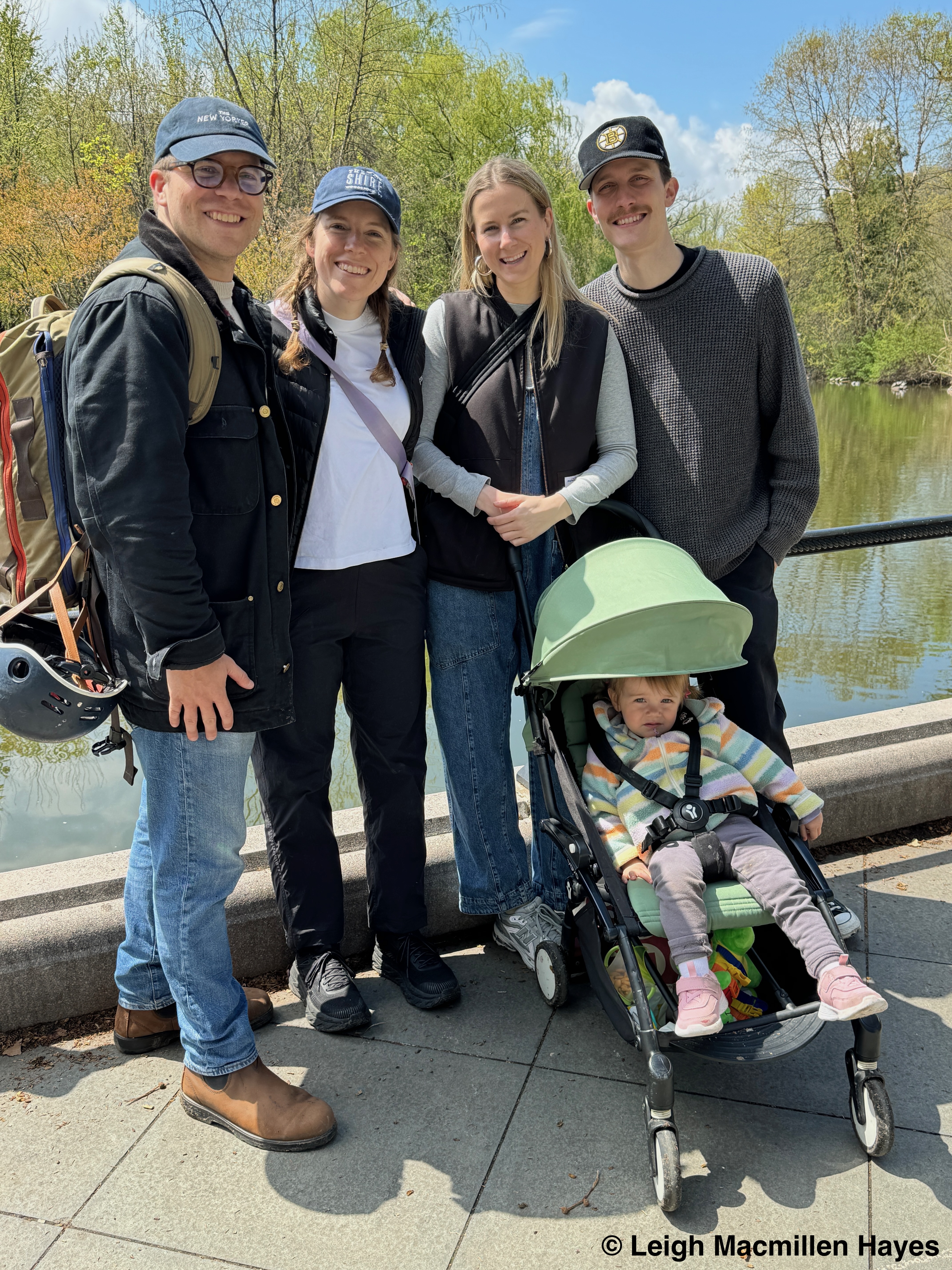
We loved spending time with one of M’s brothers, her sister and niece, plus M and P. of course. We did meet up with M’s other brother, but somehow I neglected to take a photo. Sorry R.

Over the course of the weekend, world problems were solved and sporting events analyzed by these two.

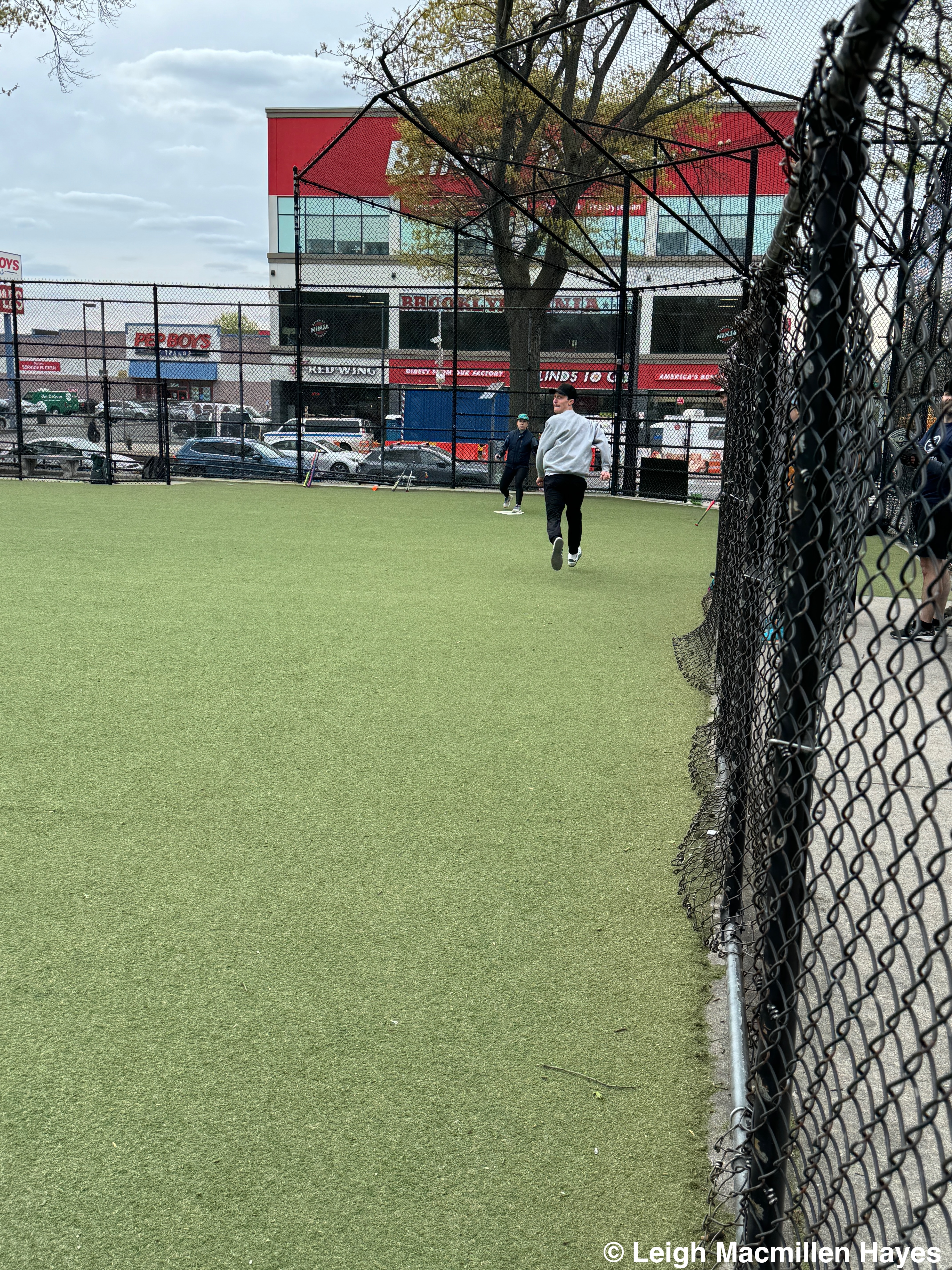
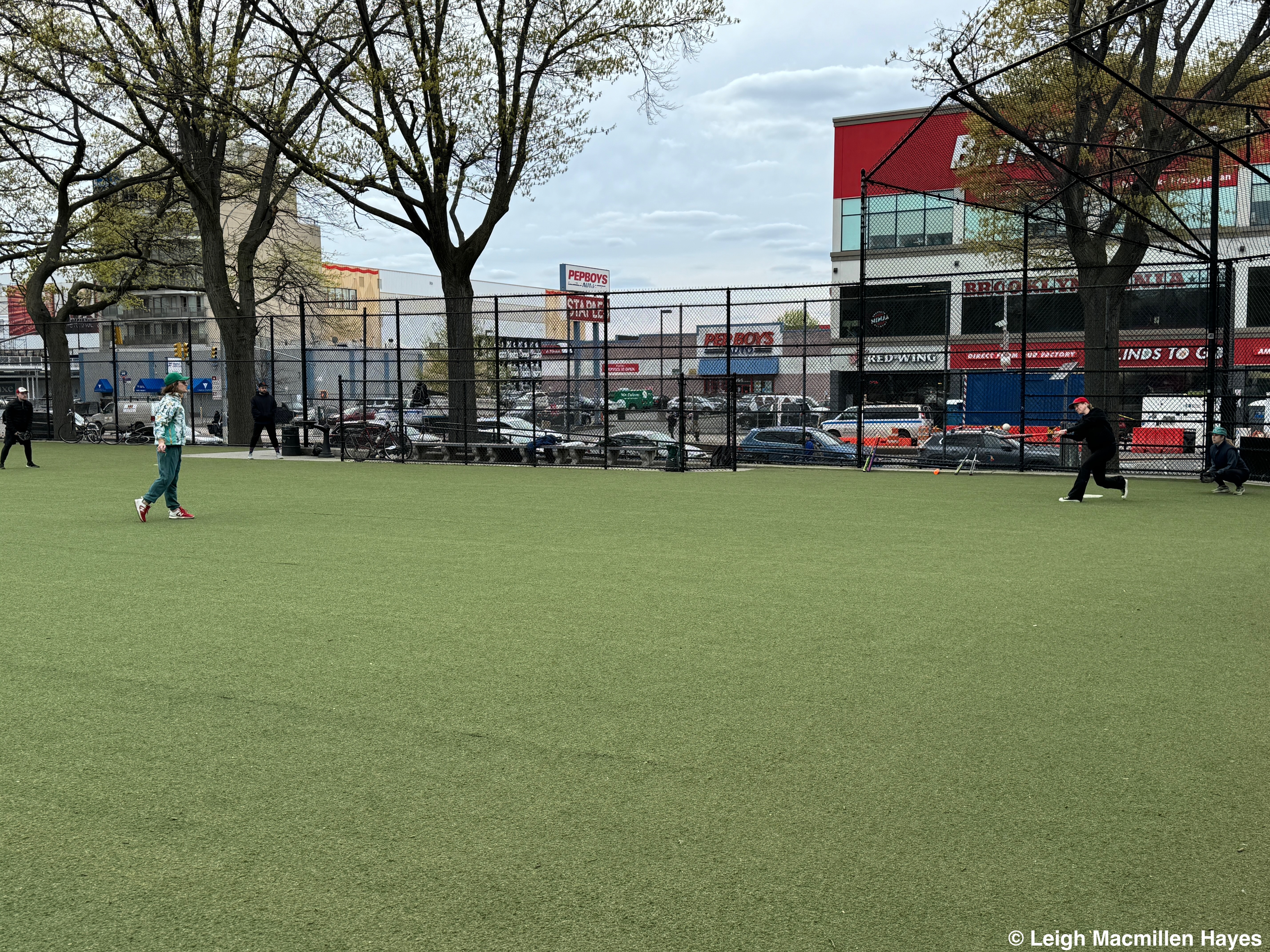
And one of the highlights was our opportunity to attend their softball game, which they won because we were there, the good luck charms that we are.

He scored a home run, another run, and I can’t remember his other stats, though I’m sure My Guy and P have it in their brains.

M also walloped the ball and got on base each time.

And scored as well. We were mighty impressed because we saw the results of a slide she made into a base last week and how she could run this weekend was beyond our understanding.

At last Monday dawned and P stopped by the apartment to pick up laundry and say goodbye.

Until we meet again, thank you M & P, and D, and all the gang, including P’s colleagues who played in the game or came to cheer on the softball team.

We had a fabulous weekend thanks to all of your planning, and I just finished a bagel that followed us home. Family. Food. Oh, I didn’t even mention Frankies Spuntino and the delish eggplant marinara. And fun.

We love New York. Especially through the eyes of P & M. And then we love returning to Maine.

Of Stumps and Snags on this St. Patrick’s Day

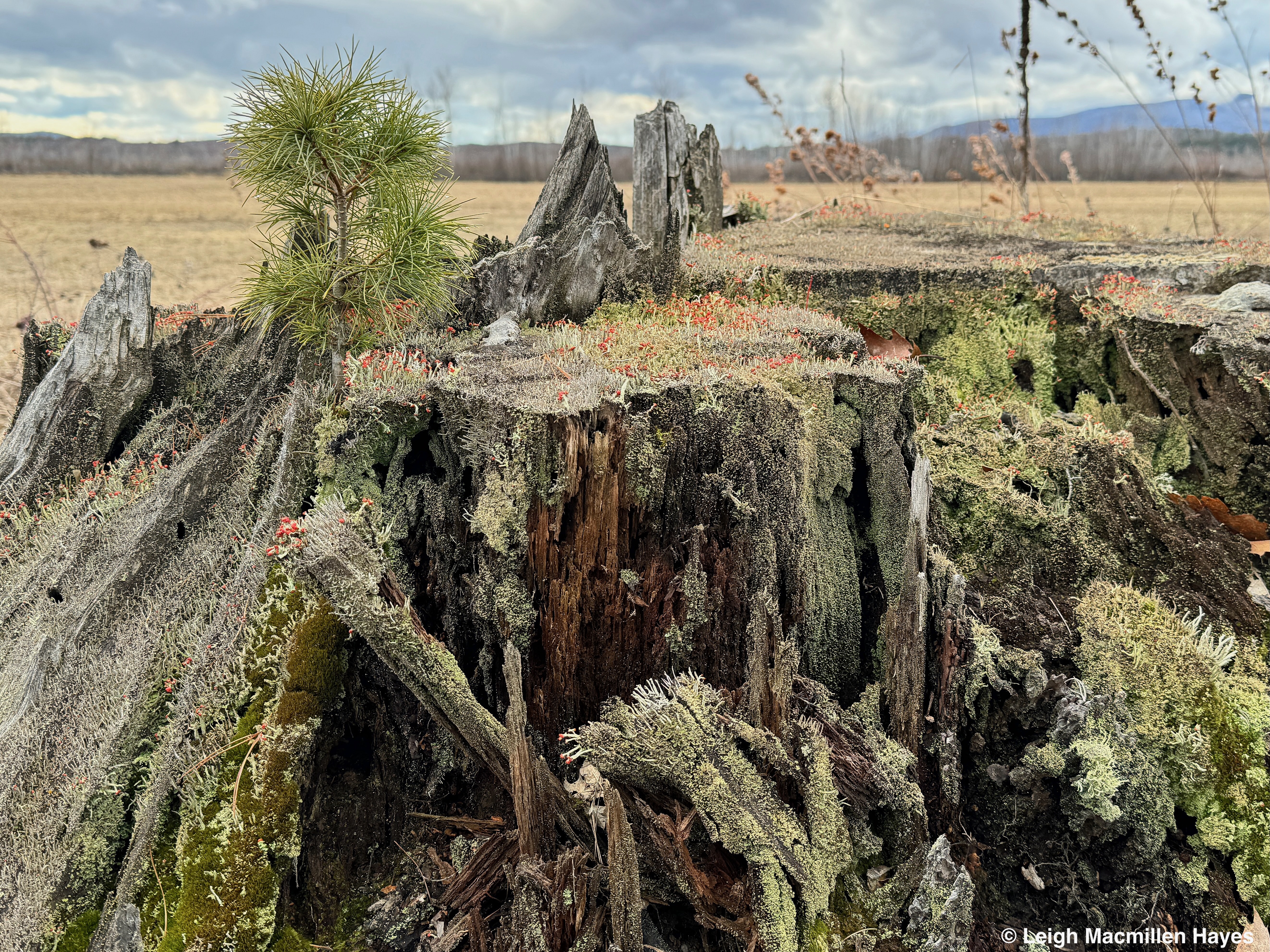
Stump: the base of a tree that has been chopped down or fallen, but is still connected to its roots.

Snag: a standing dead or dying tree; or part of a tree that is dying.

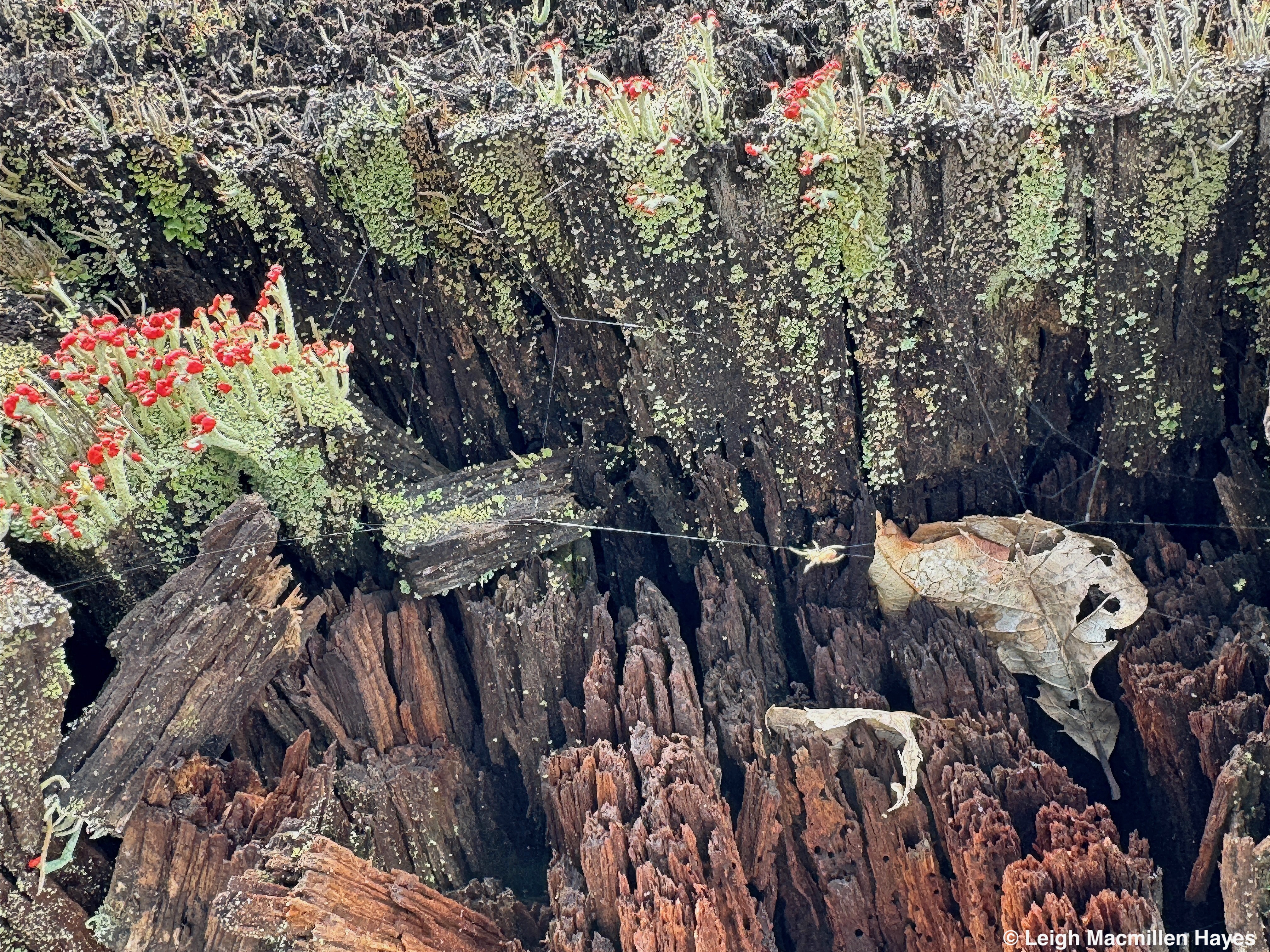
To visit a stump presumed dead
is to find life that comes in many forms.
Mosses and lichens colonize in a manner all their own,
and saplings find a new spot upon which to grow.
British soldiers crowd the scene,
their red caps marching toward the future
with fruiting spores planning to form
more of the same.
In their midst
others who are deflated,
the papery remains of puffball fungi
having already spread their wealth.
And a tiny White Pine
who chose this spot
upon which to germinate
at least seven years ago.
Stopping beside another stump,
it is not the residents who call this home
that attracts my attention,
but rather the sign of another who had paused here.
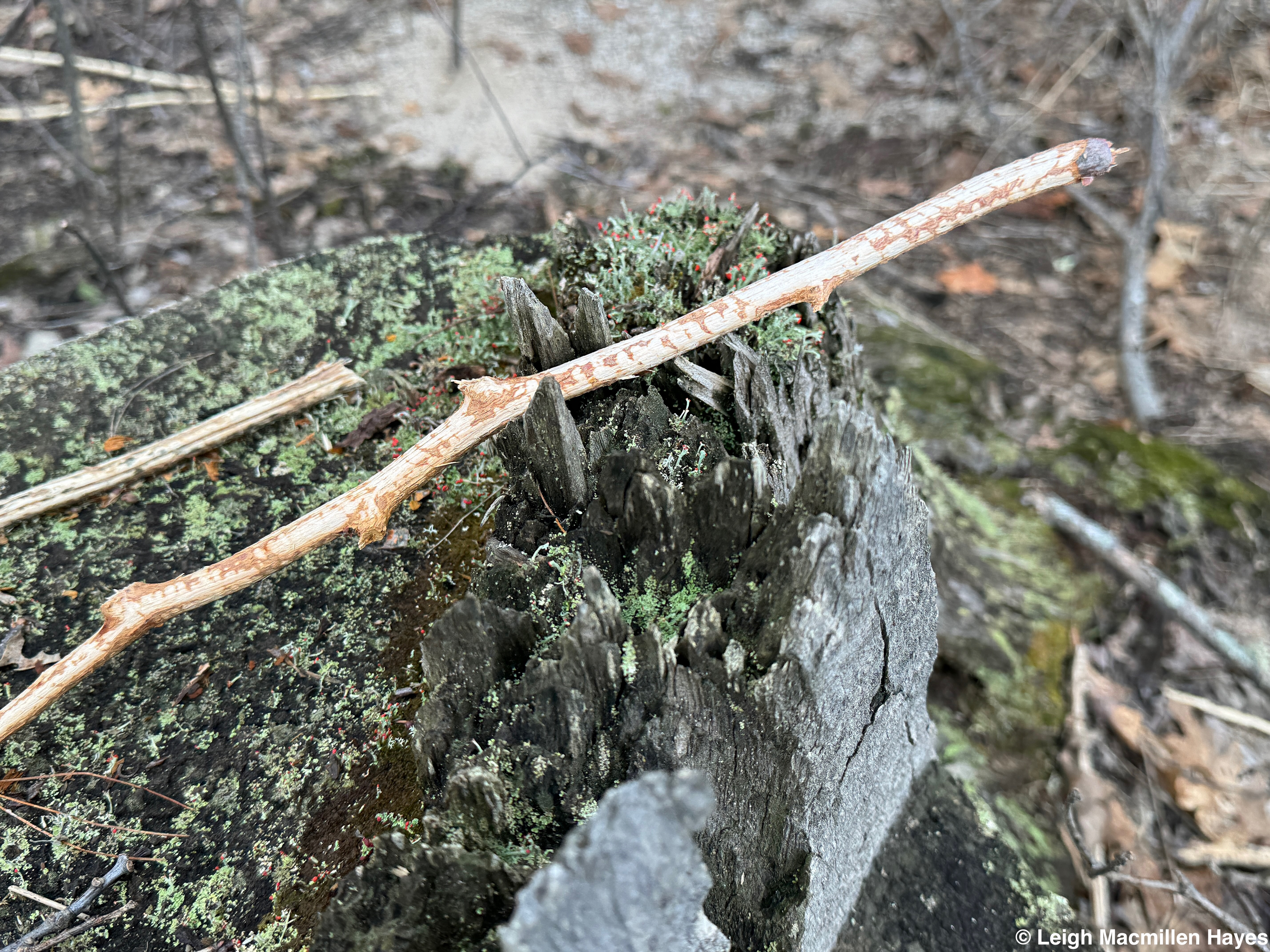
Beaver nip sticks, a source of winter food, 
were on display,
the trees from which they came
now skinny stumps in the background.
And growing on this stump,
scaly-surfaced trumpets
blaring Irish tunes
for all to lichen.
The next stump in my survey
had rotted from the inside out
and humus formed within
its castle-like chambers.
It even had an arched doorway
for leprechauns to enter
or pass into the next world
and the stump itself was leading the way.
There was another, 
which though the wood had already decomposed,
offered a substrate for a few
to set up housekeeping.
I was struck by the contrast
of a small clump of British Soldiers
on this one, whilst its neighbor
supported an entire army.
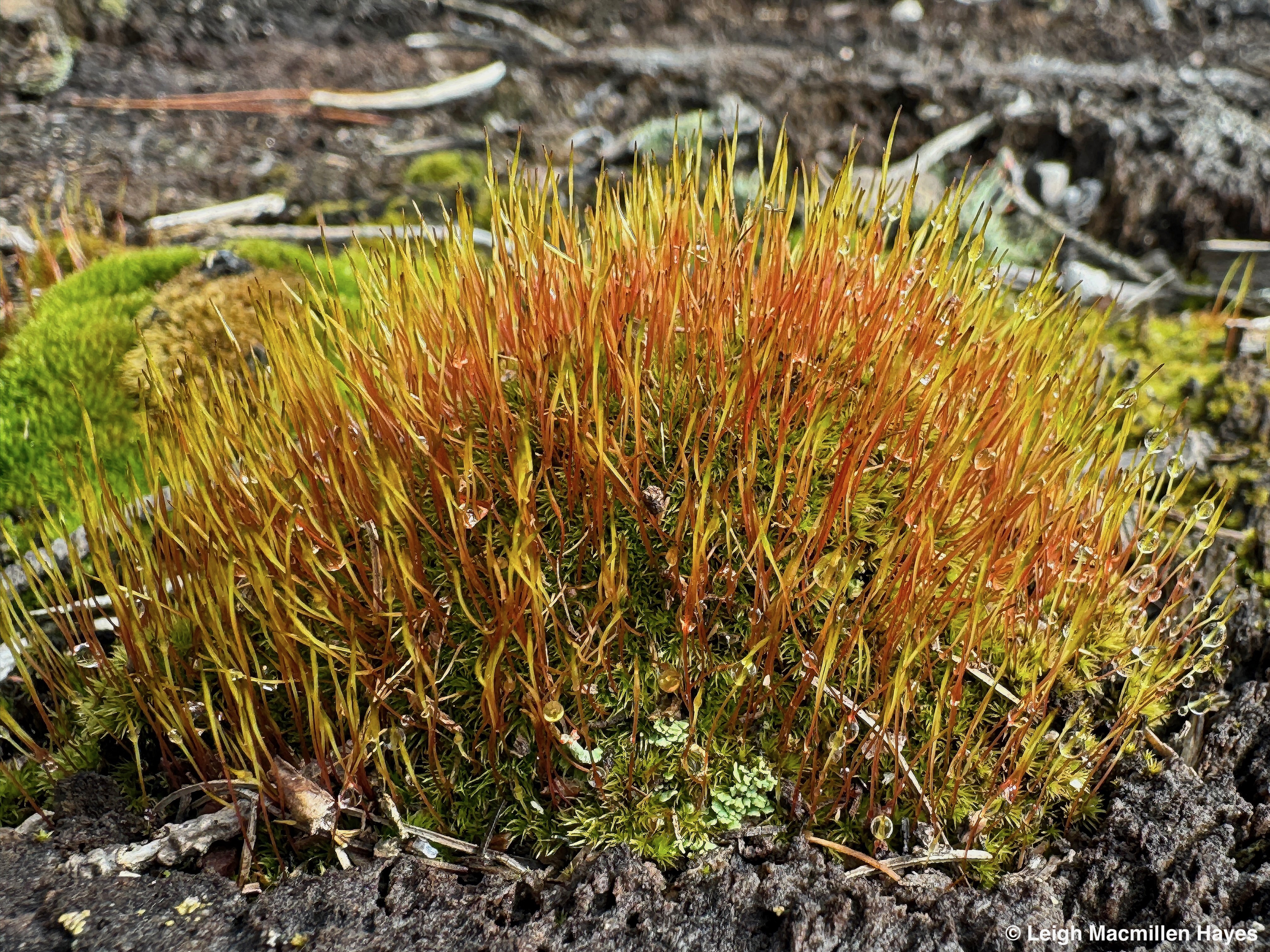
And only one small clump 
of Four-tooth Moss,
decorated with raindrops
in a salute to our March weather.
It's when one takes 
the time to look,
that the tiniest residents
make an appearance.
And so I watched this tiny spider
works its magic
of building guide lines
and creating a snare in hopes of a grand capture.
Not all stumps in this river-side location
were the result of man's intervention,
for old beaver works
highlighted tree spirits in the curvature of the lines.
Switching my attention to snags
brought the vision
of more artwork
upon the skeleton of a tree trunk.
And a display of the (w)holiness of this place,
for such were the portals
carved by beeltes in the past
that had breached the bark.
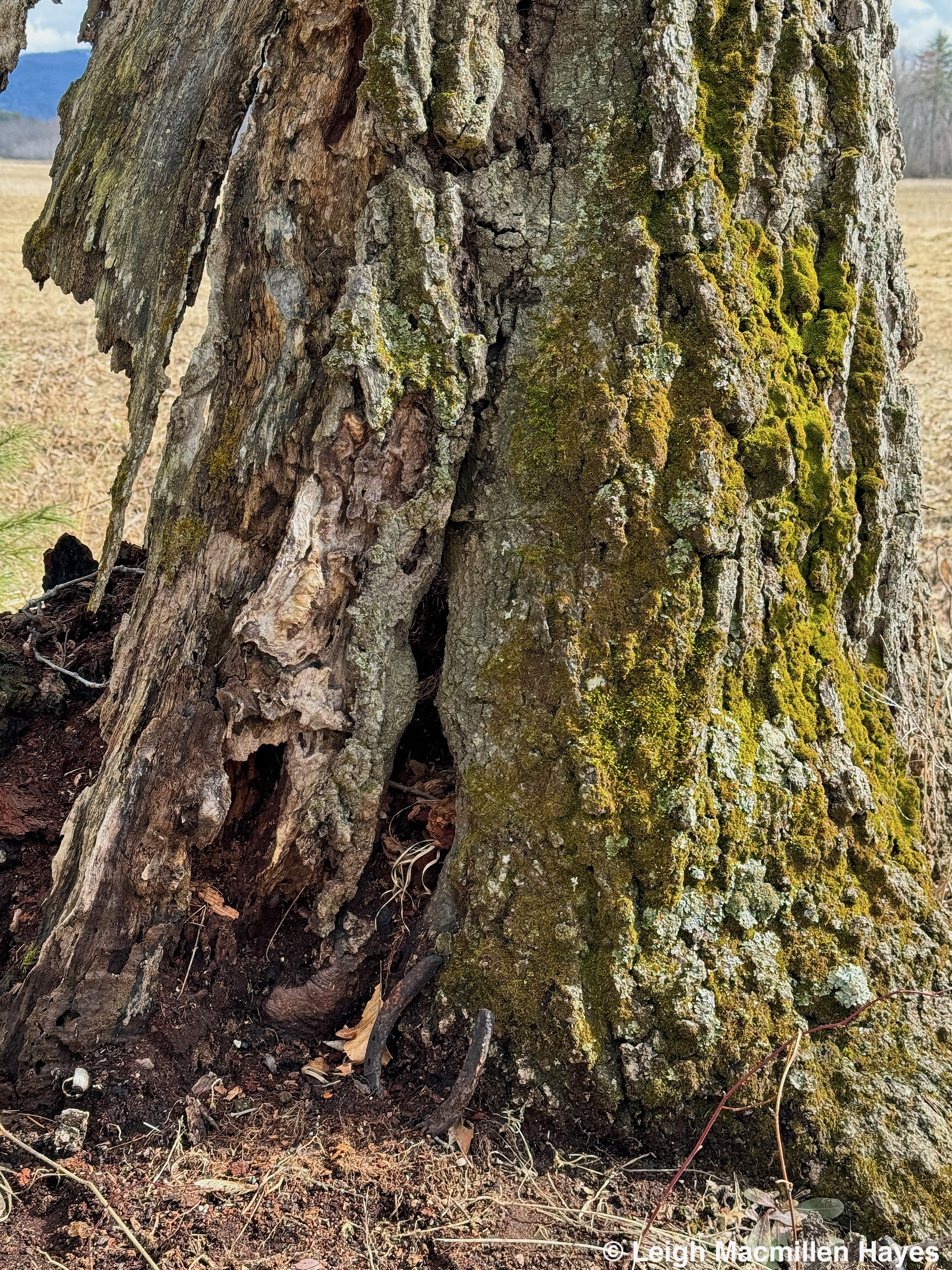
Finally, I stood by one mighty snag
that is a marvel of this natural world,
so much of it decomposed
yet replenishing the soil.
Looking skyward from within,
one can see branches
and marcescent leaves above
speaking to the xylem and phloem still in operation.
What bark is left,
serves as armor for this old oak,
and as scaffolding
upon which mosses and lichens can grasp.
It's what I spy inside,
however, that takes my breath away.
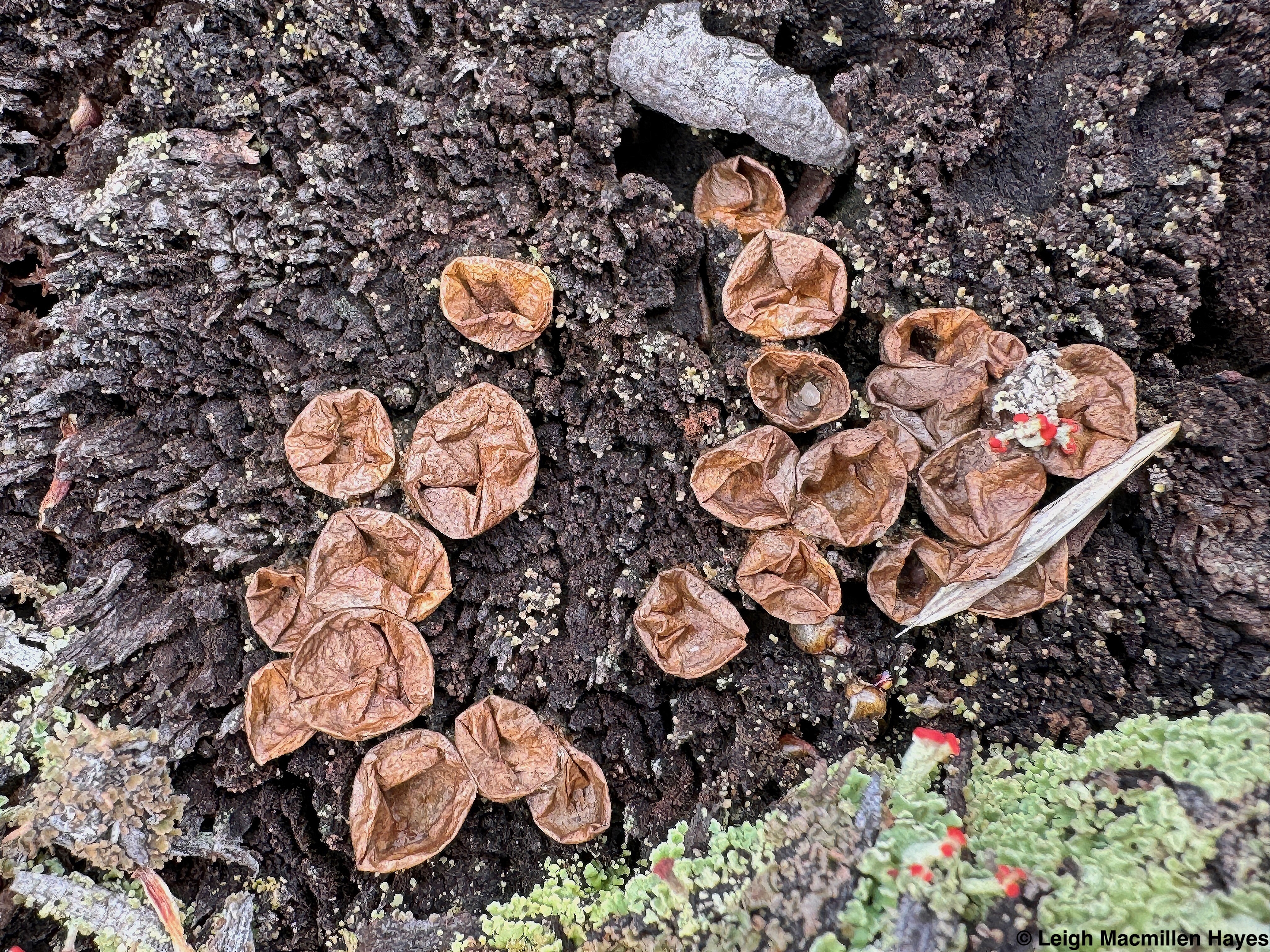
Oddly enough, it is named
for the breathing structure of another.
And when I compare it to 
the nose of my oldest son's furbaby,
I can see the resemblance, sorta.
Dog Nose Fungus.

As for stumps and snags, I must give thanks
for they are hardly useless in the landscape,
but rather hosts of many a forest life,
and I'm sure St. Patrick would approve.

Breaking Up . . .

They say it’s hard to do and usually I feel the same, but this year has been different, and suddenly the time has come. Letting go though, that’s the part that causes me the most struggle.

Then again, six days ago I knew the end was near.

And today, the denouement became clearly obvious.

How things can change in only a matter of time i’ll never understand.

My heart grieved for all that has been lost.

But warmed by what I found instead.

And when I stooped over to peer into the shallow depths, I knew I was going to be okay.

The end had come, but new beginnings awaited.

Goodbye Winter. I’m breaking up with you, though honestly, I think you broke up with me this year. You’ll always hold a place in my heart, but this year you didn’t seem to kindle the usual flame.

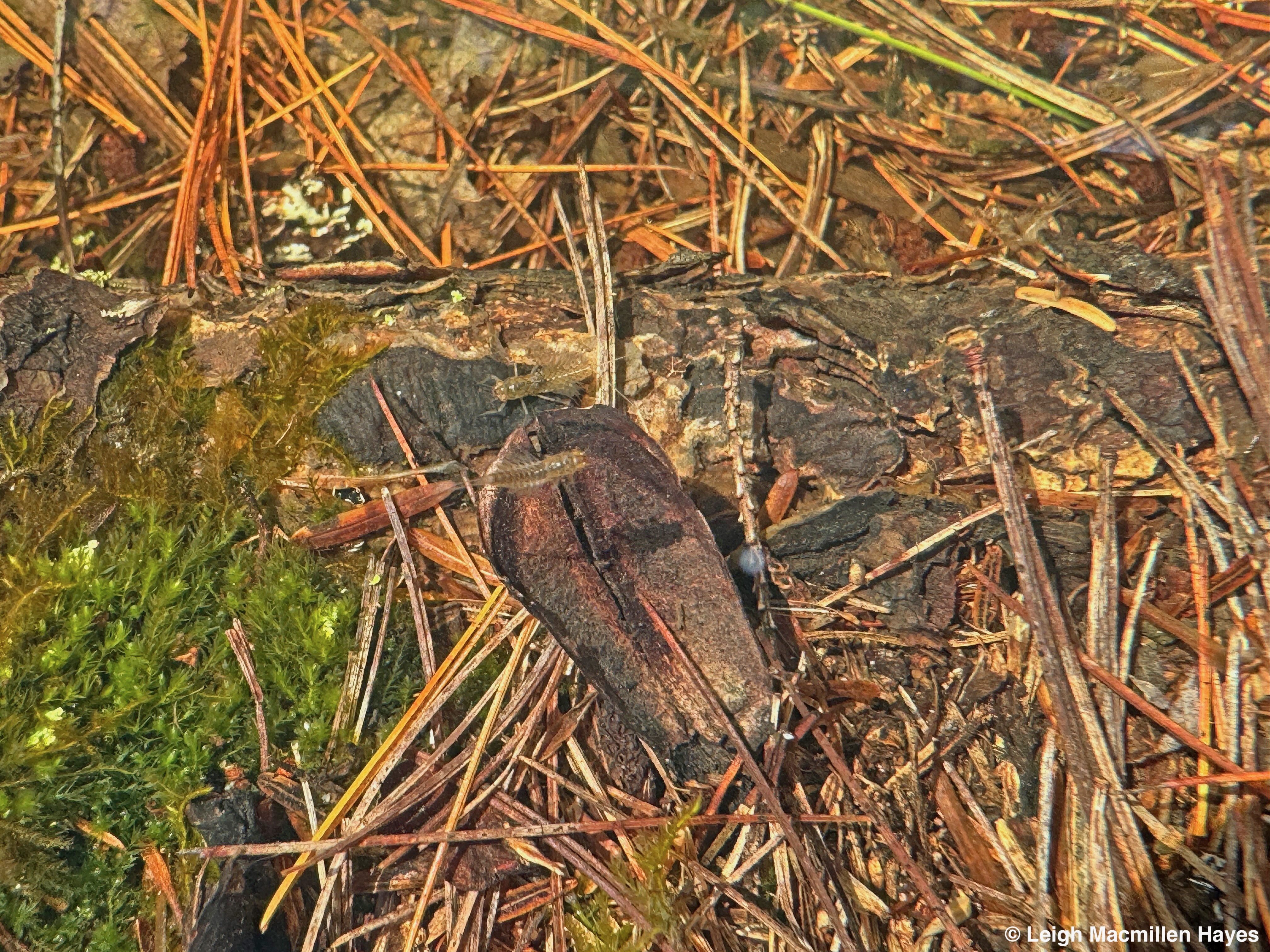
Hello spring! Thanks for reaching out in the form of Common Polypody Ferns, Mayfly Larvae by the hundreds, and even the Woolly Bear caterpillar. By the bits of debris on her bristly hairs, it was obvious that she’d just emerged from under the leaf litter where she’d overwintered and was frantically crawling along the road in search of a place to form a cocoon and metamorph into the Isabella Tiger Moth she’ll soon become.

I’ll always love you, winter. But right now, I’m already smitten with spring.

Happy 9th Birthday, wondermyway!

Thank you to all who read and comment and share wondermyway.com. Some of you have followed my blog posts since the beginning, February 21, 2015. A few have joined the journey as recently as yesterday. I’m grateful for the presence of all of you in my life.

To mark this occasion, I thought I’d reflect upon those moments when my wonder gave me a glimpse of the “Thin Places” that I’ve experienced either by myself or in the company of others.

To quote my friend, Ev Lennon, “A Thin Place is a spot of beauty, loveliness, space–an example of the wideness and grandeur of Creation.”

I think of them as places that you don’t plan a trip to visit, but rather . . . stumble upon.

I had
the track of
a bobcat to thank,
for it showed me the way
to a special friend.
It was without expectation 
that we met
and spent at least
an hour together.
And then I realized
though its sight is not great,
it was aware of my presence
and I hightailed it home,
but I will always
celebrate time spent
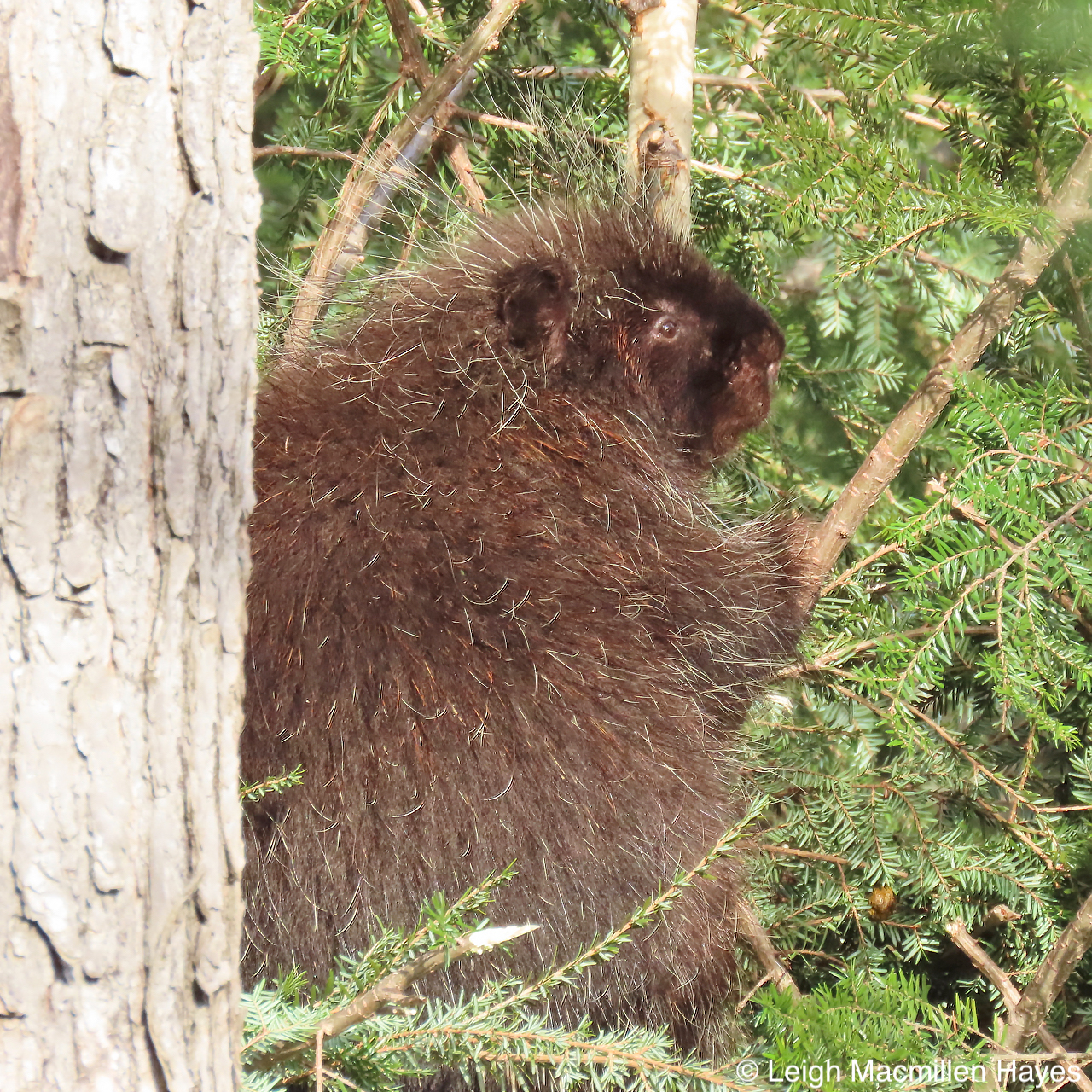
with the Prickly Porcupine.
Something quite small
scurrying across the snow
captured my attention
and suddenly
there was a second
and a third
and then hundreds
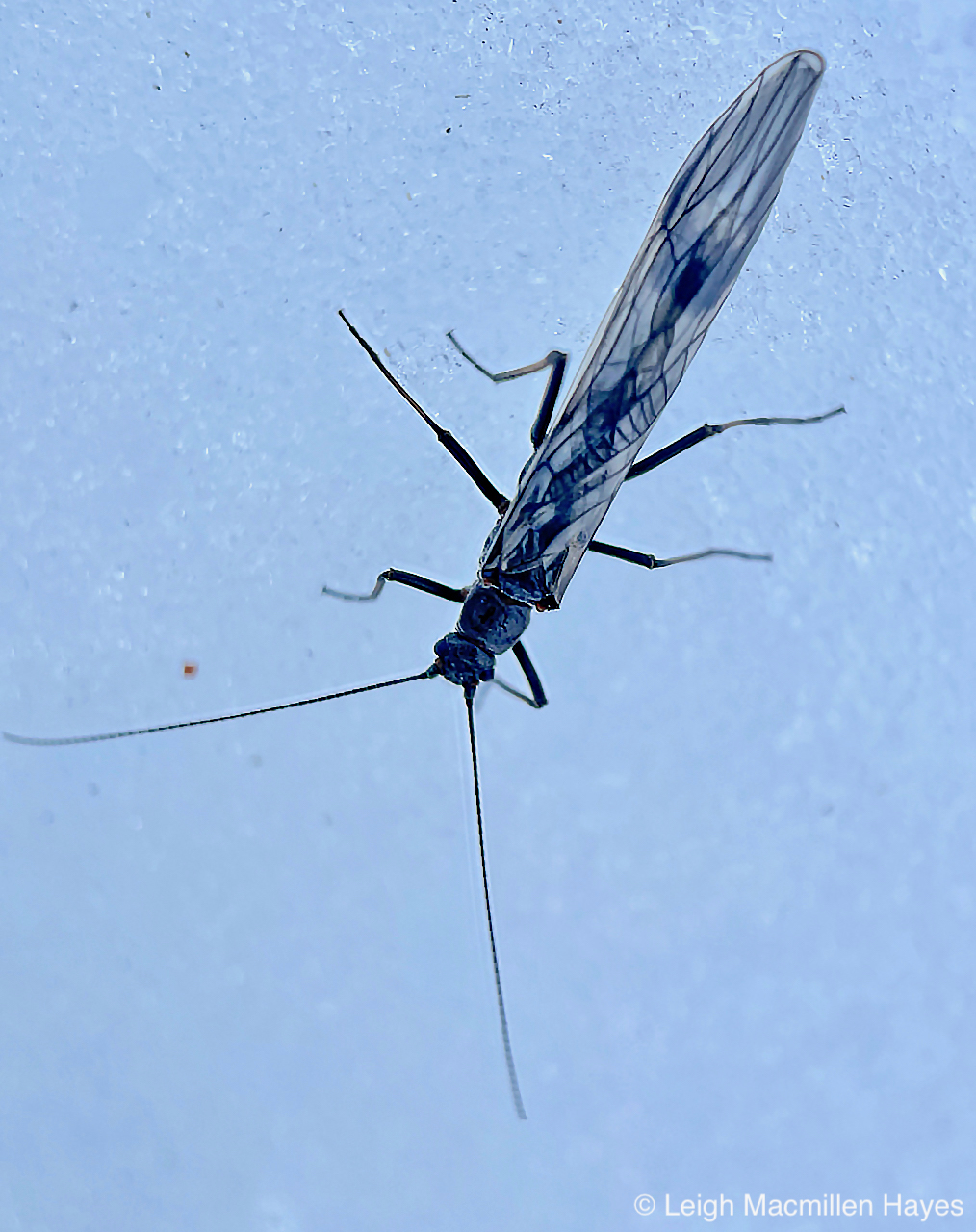
of Winter Stoneflies.
All headed west from the brook
toward mature tree trunks
to beat their drum-like structures
against the bark
and announce their intentions to canoodle.
Though I could not hear
their percussion instruments,
I am grateful
to learn
with those who
march to the beat of a different drummer.
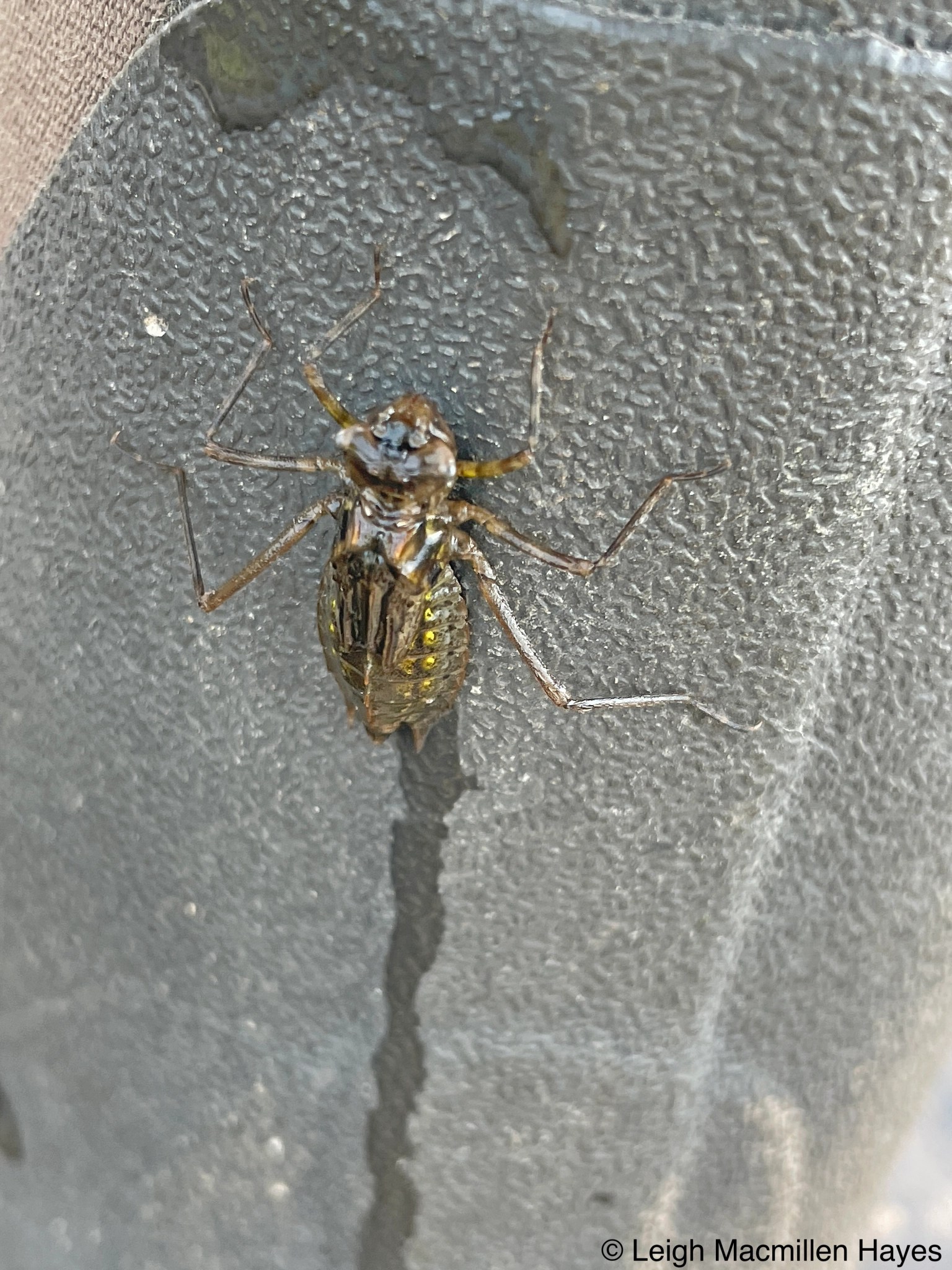
Standing beside quiet water,
I was honored
on more than one occasion
to have my boot and pant legs
considered the right substrate
upon which to transform
from aquatic predator
to teneral land prey
before becoming
a terrestrial flying predator.
It takes hours
for the dragonfly to emerge
and I can't think of a better way
to spend a spring day
than to stand witness
as the mystery unfolds
and I begin to
develop my dragonfly eyes
once again.
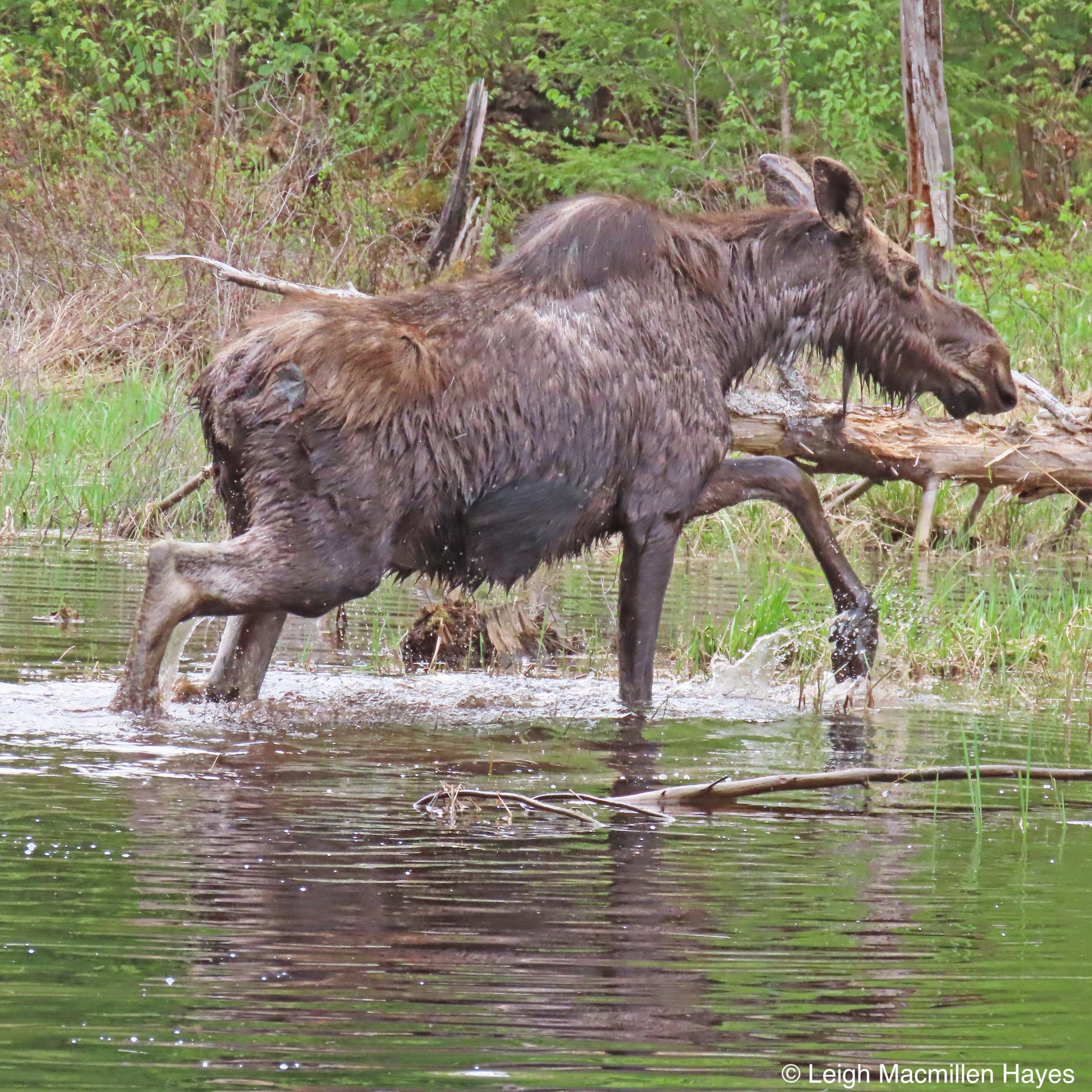
It took me a second 
to realize that I was
staring into the eyes
of a moose,
and another second
to silently alert My Guy
while grabbing my camera.
She tip-toed off
as we relished our time
spent in her presence
and at the end of the day
had this Final Count
on a Moosed-up Mondate:
Painted Trillium 59
Red Trillium 3
Cow Moose 1
One was certainly enough!
Some of the best hours
I spend outdoors
include scanning
Great Blue Heron rookeries
to count adults and chicks
and get lost in the
sights and sounds
of rich and diverse wetlands.
Fluffy little balls
pop up occasionally
in the nests and the
let their presence be known
as they squawk
feverishly for food.
And in the mix of it all
Nature Distraction
causes a diversion of attention
when one swimming by
is first mistaken for a Beaver
but reveals its tail
and morphs into a Muskrat.
I give thanks to the Herons for these moments.
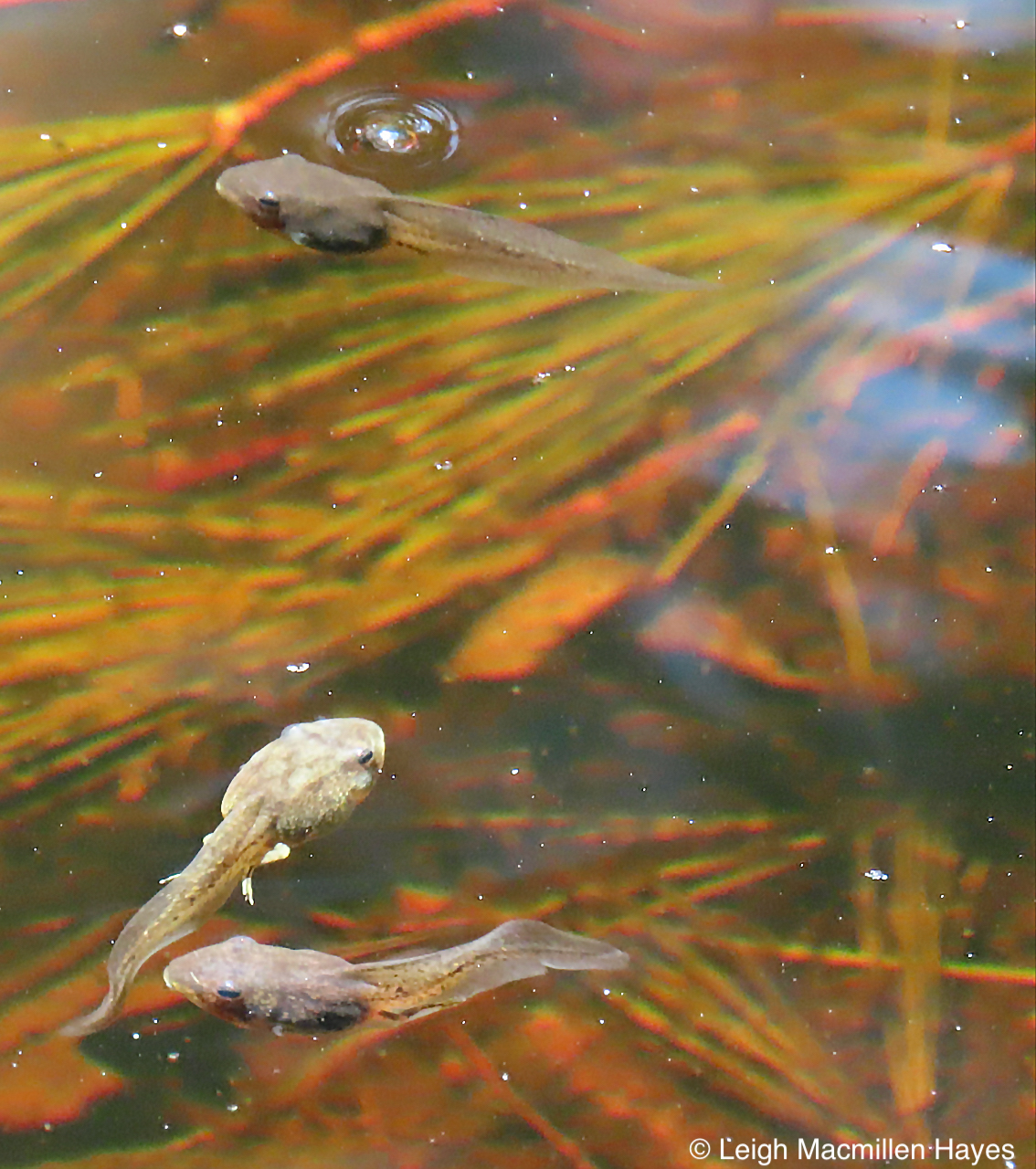
What began as a "Wruck, Wruck" love affair
continued
for longer than usual
and due to
a rainy spring and summer
I was treated to a surprise
in the form of developing frog legs.
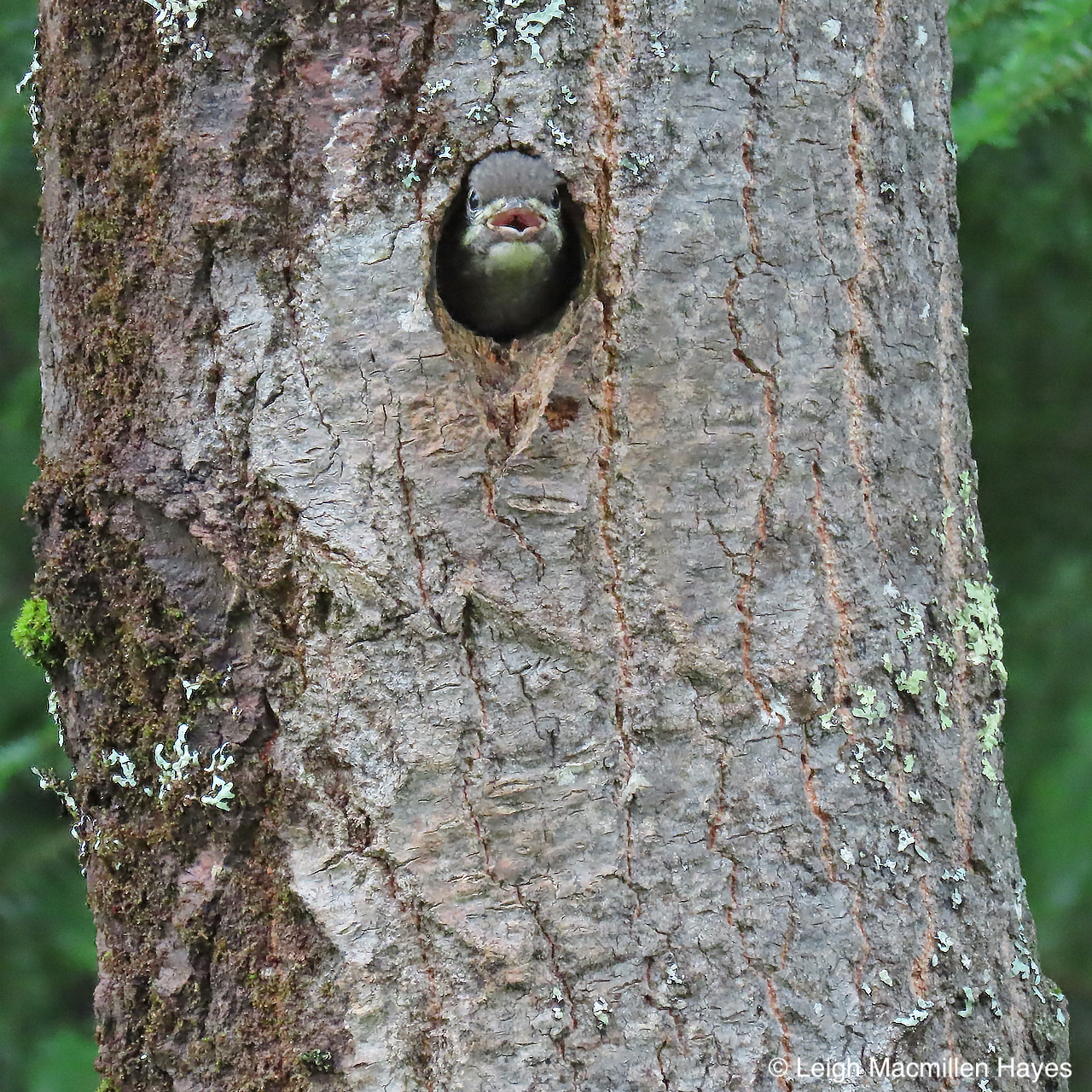
In the midst of my visits
one day I heard
the insistent peeps
of Yellow-bellied Sapsucker chicks
demanding a meal on wings,
which their parents
repeatedly provided.
Walking home 
from the pool
another day,
I was honored
to spend about ten minutes
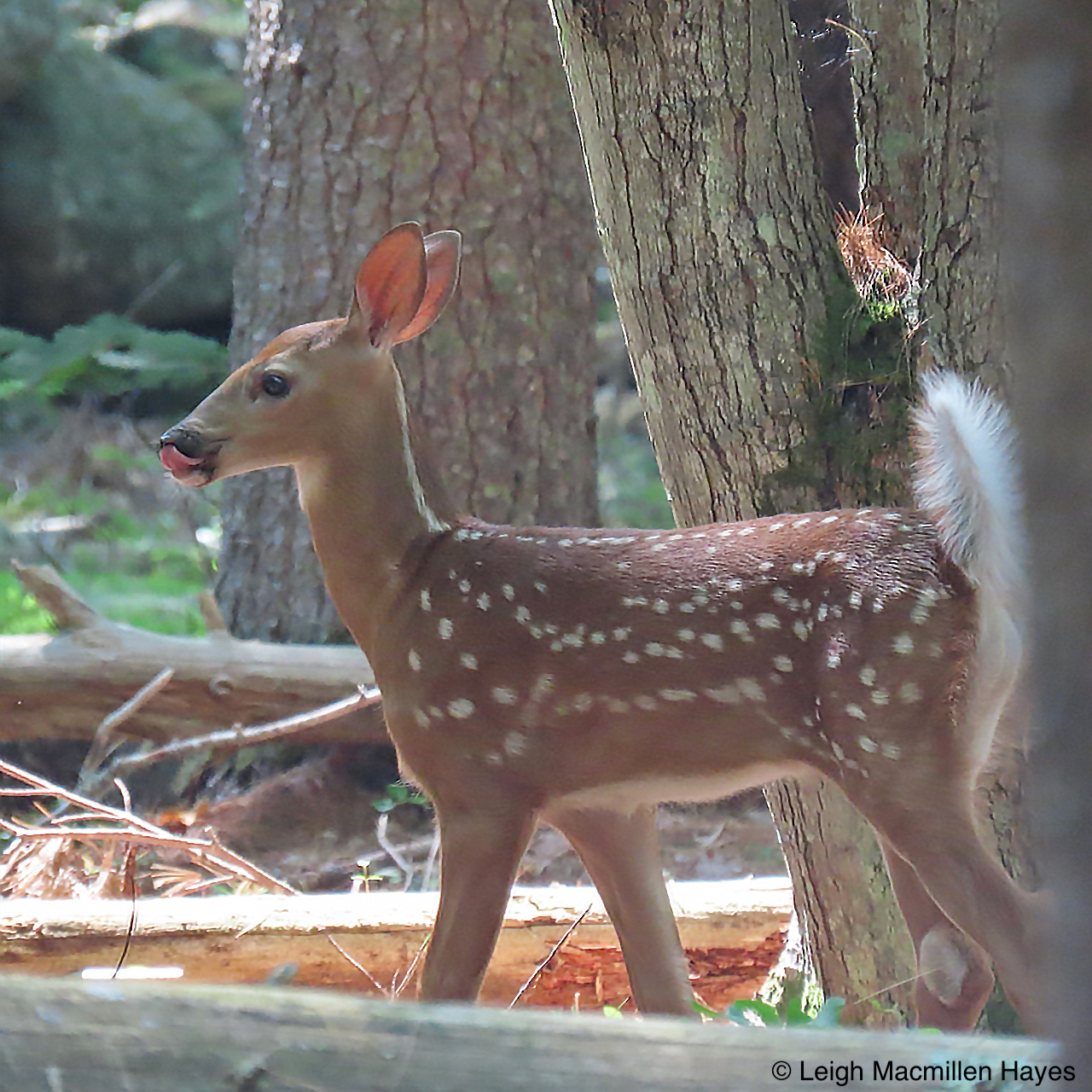
with a fawn,
each of us curious
about the other
until it occurred to me
that its mother
was probably nearby
waiting for me to move on,
so reluctantly I did,
but first gave thanks
that something is always happening
right outside my backdoor.
While admiring shrubs
that love wet feet,
I counted over
one hundred branches
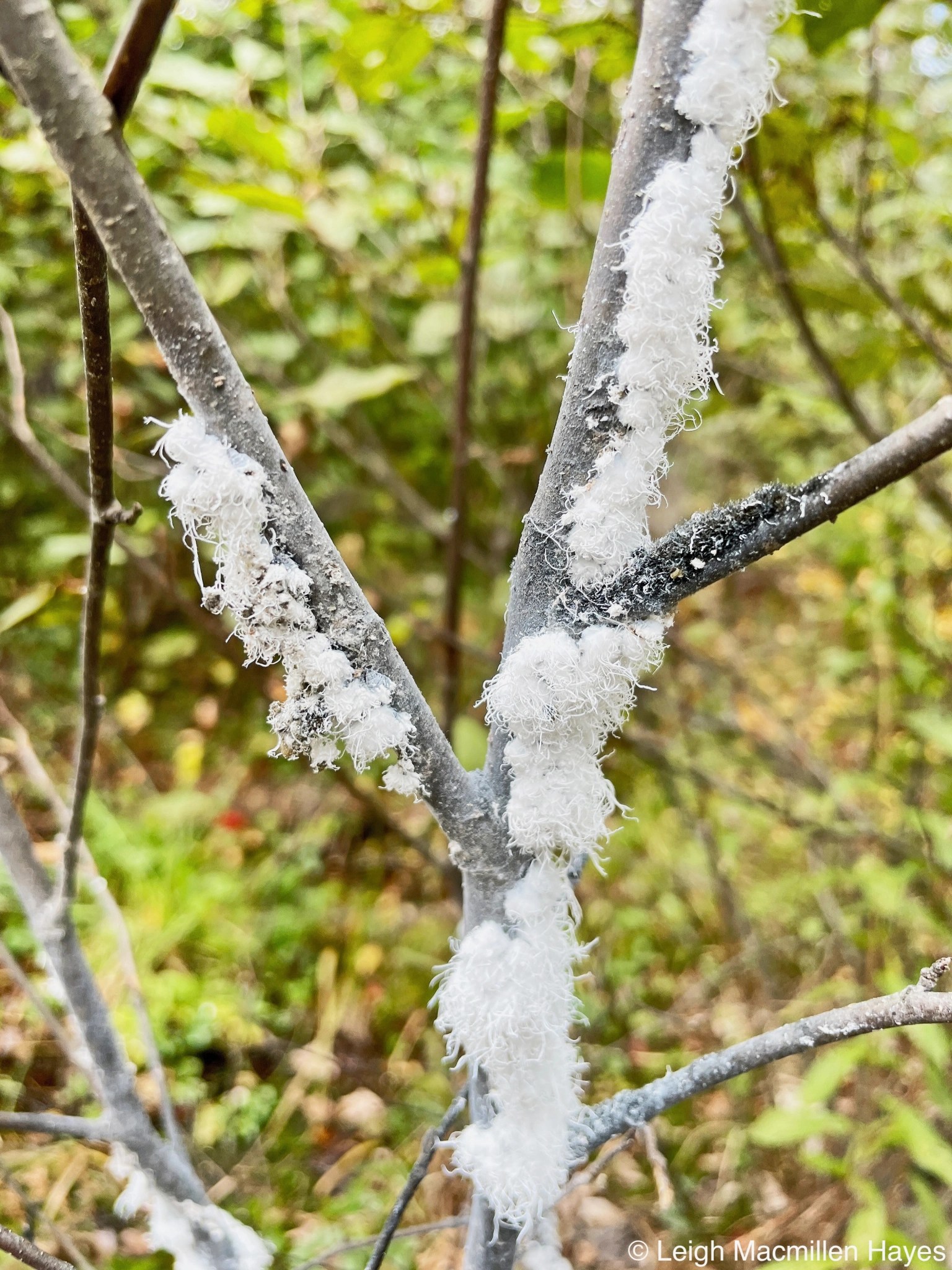
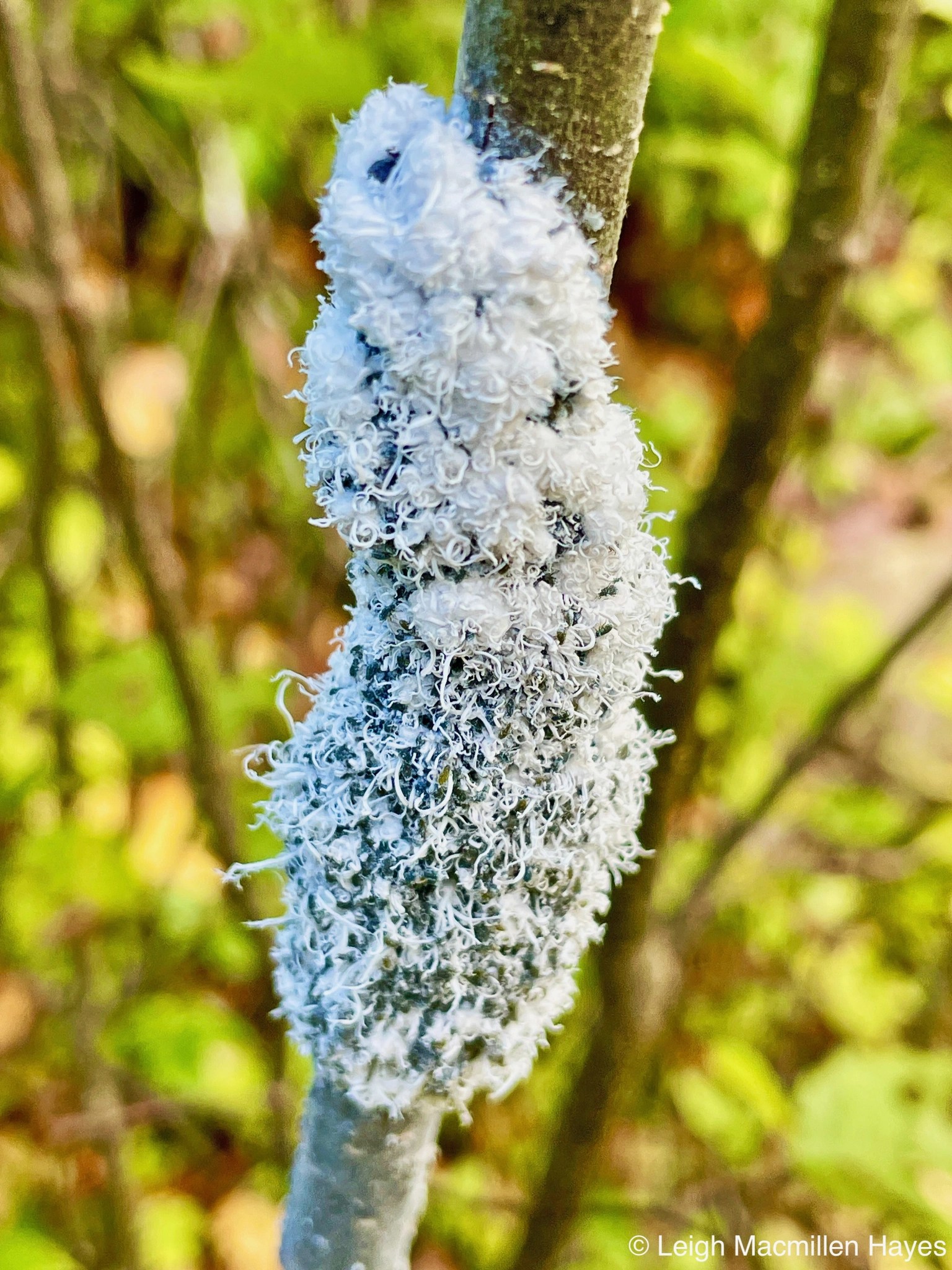
coated with white fluffy,
yet waxy ribbons.
Theirs is a communal yet complex life
as the Woolly Alder Aphids
suck sap from Speckled Alders.
Communal in that
so many clump together
in a great mass.
Complex because
one generation reproduces asexually
and the next sexually,
thus adding diversity
to the gene pool.
Along with the discovery
of coyote scat,
and Beech Aphid Poop Eater,
a fungus that consumes
the frass of the Aphids,
it was an omnivore, herbivore, insectivore kind of day.
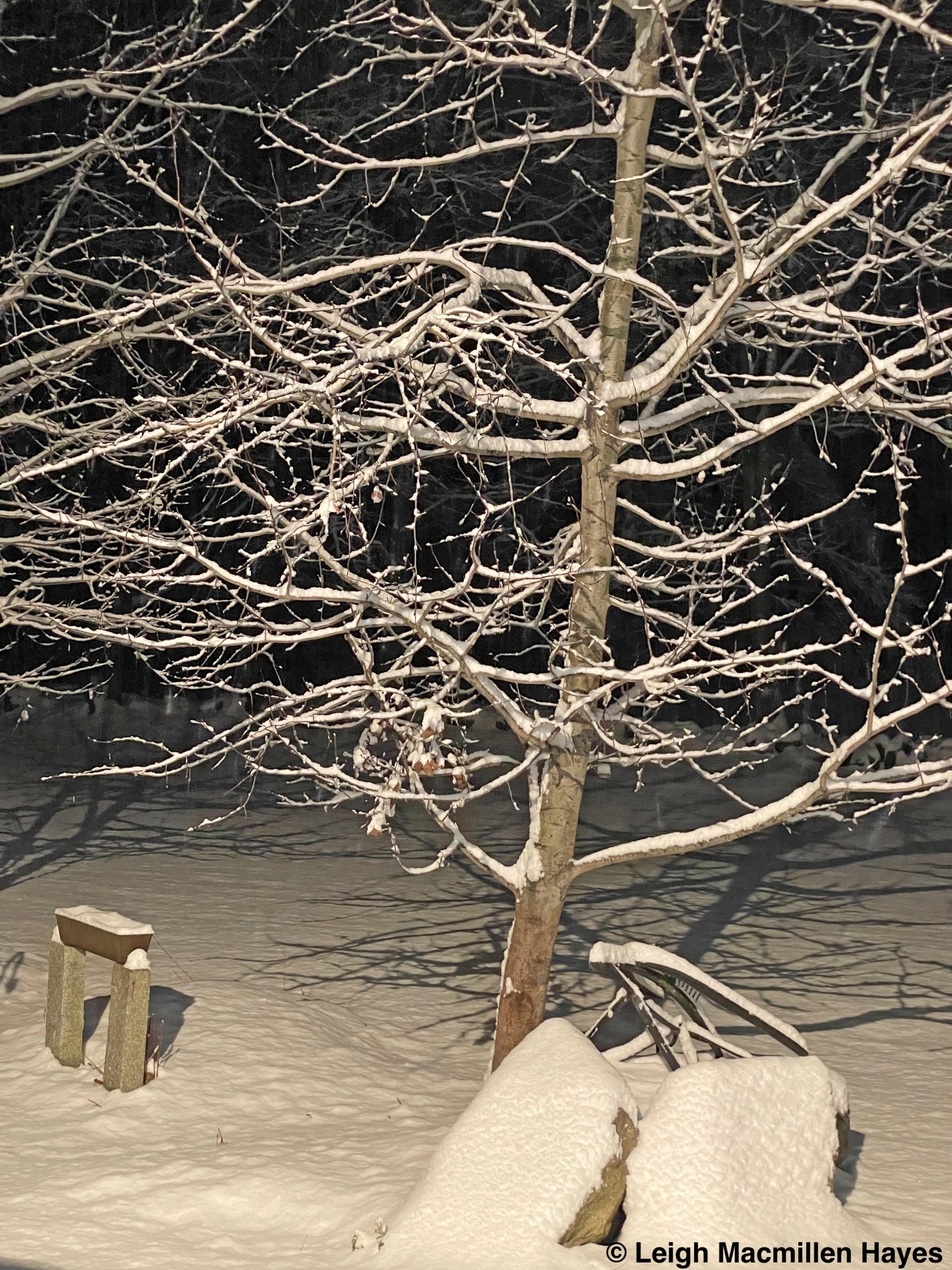
Awakening early, 
a certain glow
in the sky
pulled me from bed
and I raced downstairs
to open the door
and receive the quiet
that snowflakes create.
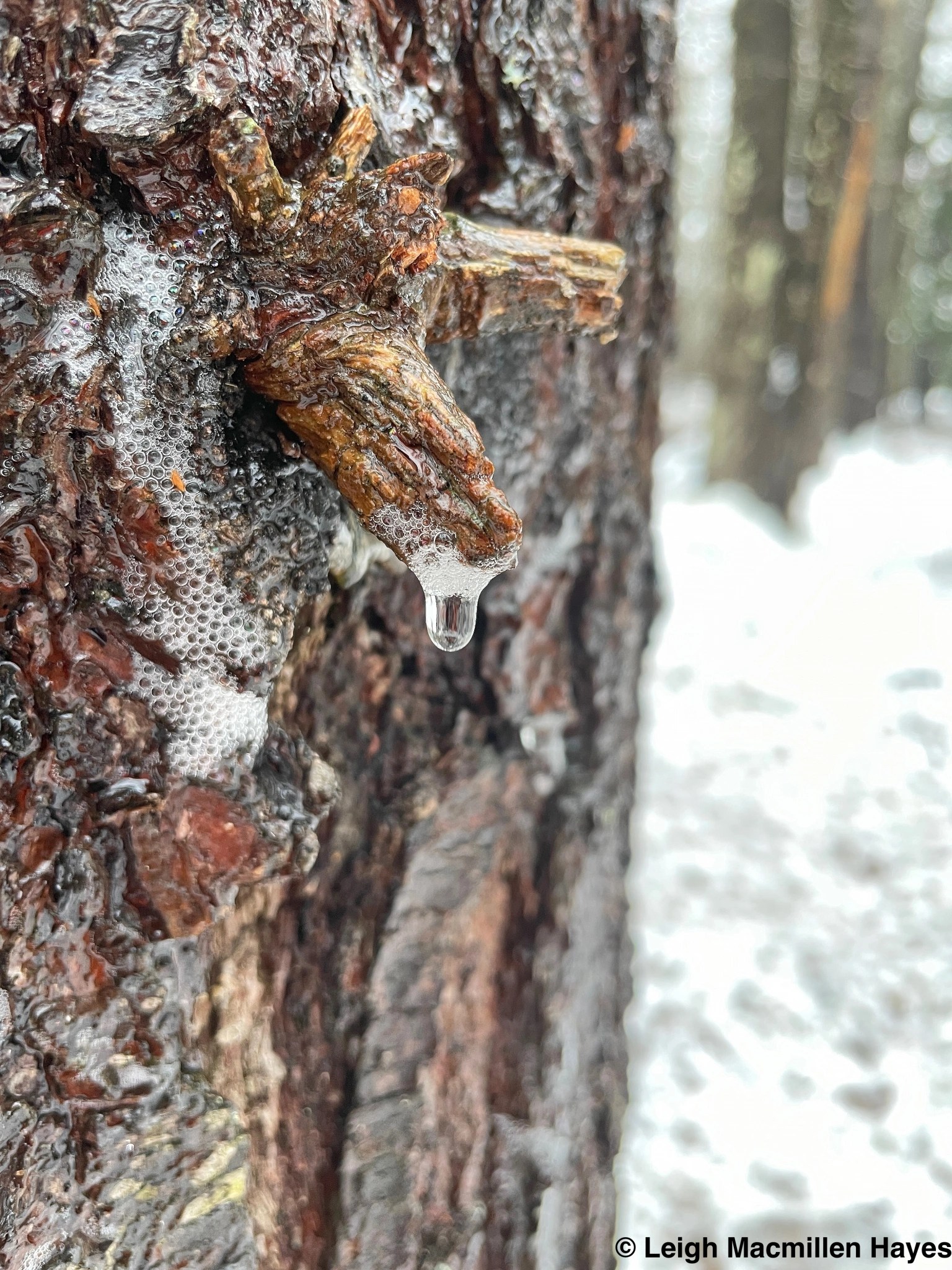
The snow eventually
turned to rain,
which equally mesmerized me
as I watched
droplets elongate
and quickly free fall,
landing on bark below
in such a manner
that caused them
to mix with sap salts and acids.
The result was
White Pines foaming
in the form of
Pine Soap
with its hexagonal shapes:
worth a natural engineering wonder
and I gave thanks for being present.
Occasionally, 
it's the action
outside the backdoor window
that keeps me standing sill
for hours on end,
as a variety of birds fly
in and out
of the feeding station,
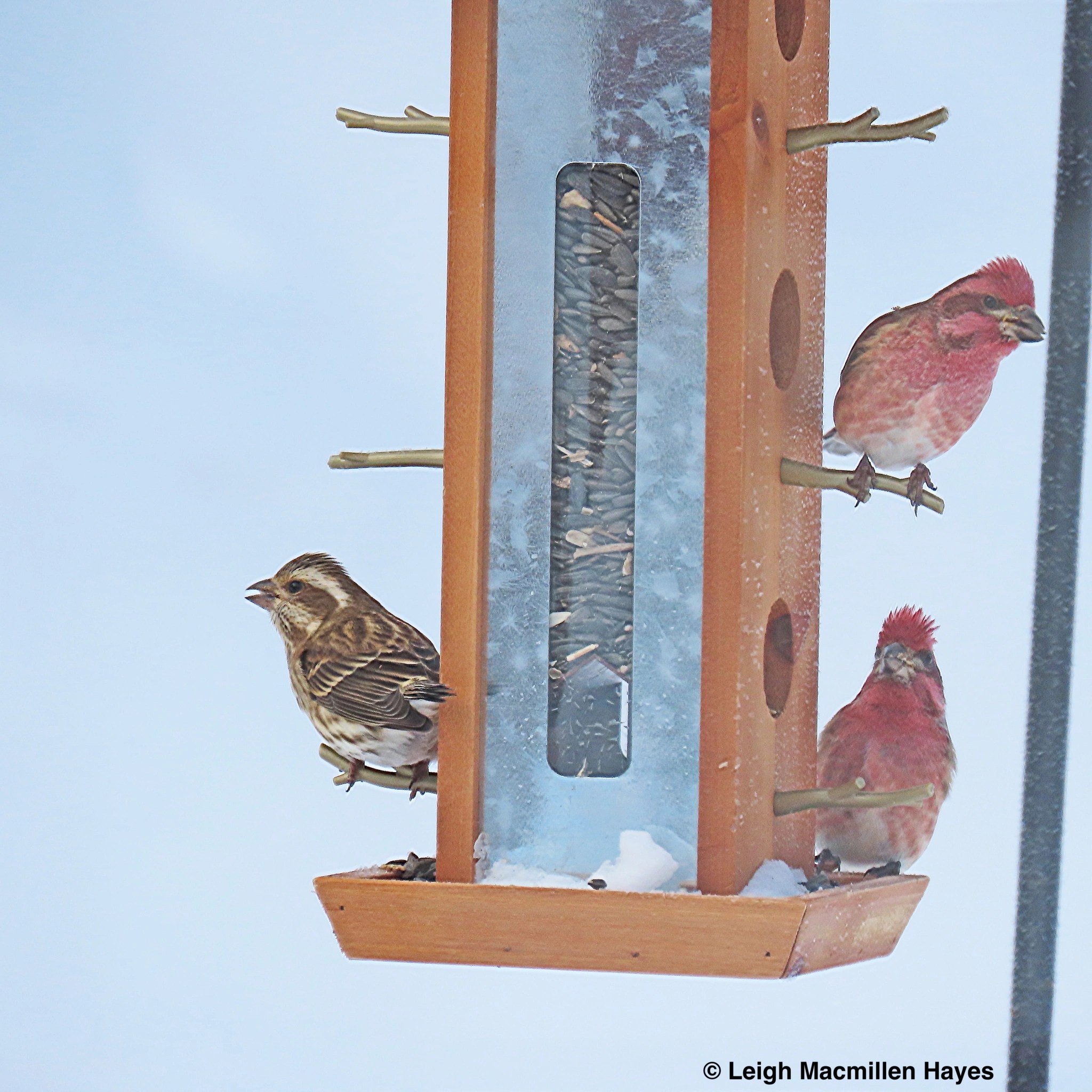
such as these Purple Finches,
the males exhibiting
bad hair days.
Bird seed is not 
just for birds
as the squirrels prove daily.
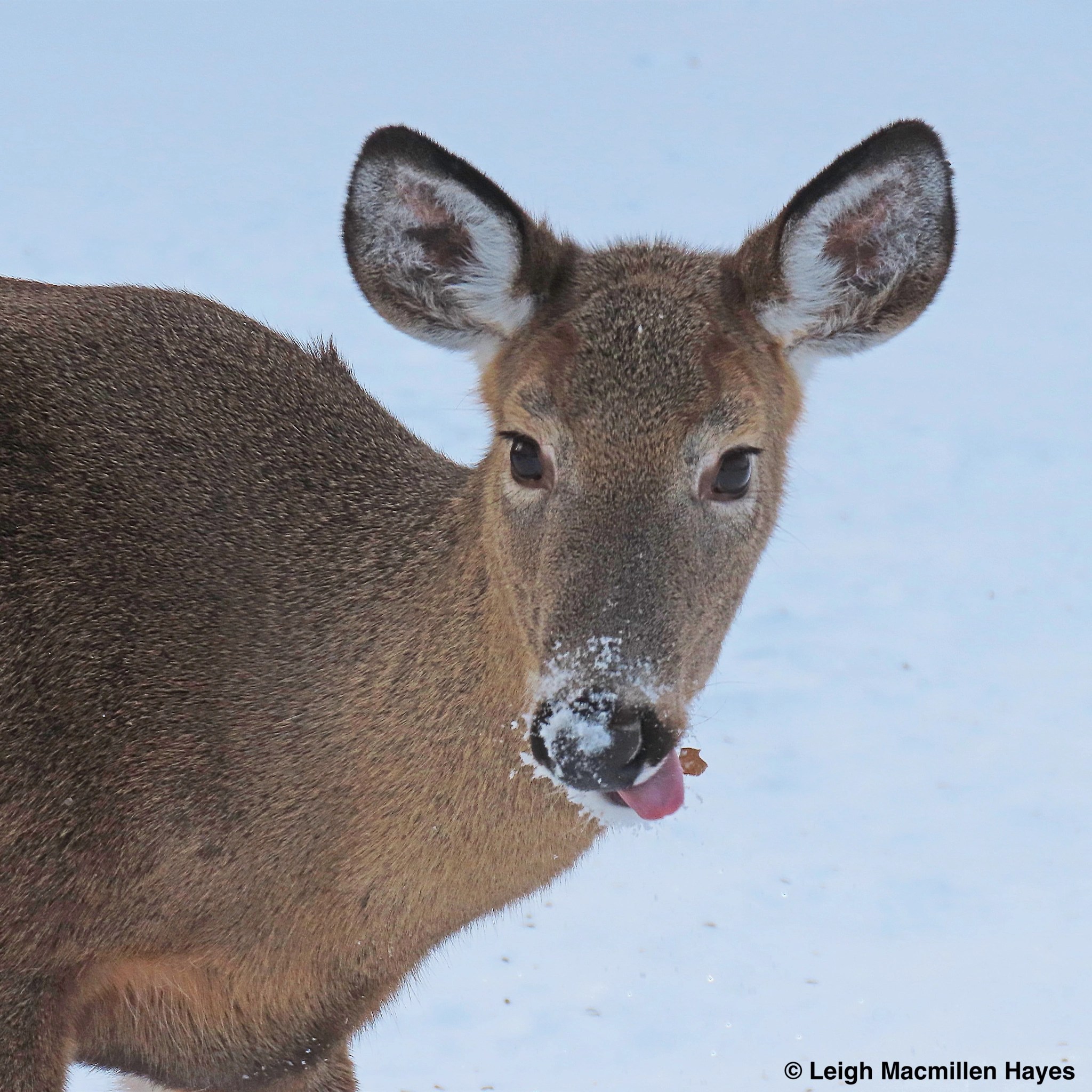
And White-tailed Deer
often make that
statement at night.
But this day was different
and they came
in the morning
using their tongues
to vacuum the seeds all up.
At the end of the day,
my favorite visitors
were the Bluebirds
for it was such a treat
to see them.
But it was the mammals
who made me realize
not every bird has feathers.
These are samples 
of the Thin Places
I've stumbled upon
this past year.

They are a
cause for celebration,
participation,
and possibility.
My mind slows down
and time seems infinite
as I become enveloped
in the mystery.

I give thanks
that each moment
is a gift
and I have witnessed
miracles unfolding
that did not
seek my attention,
but certainly captured it.

And I thank you again
for being
one of the many
to wander and wonder my way.

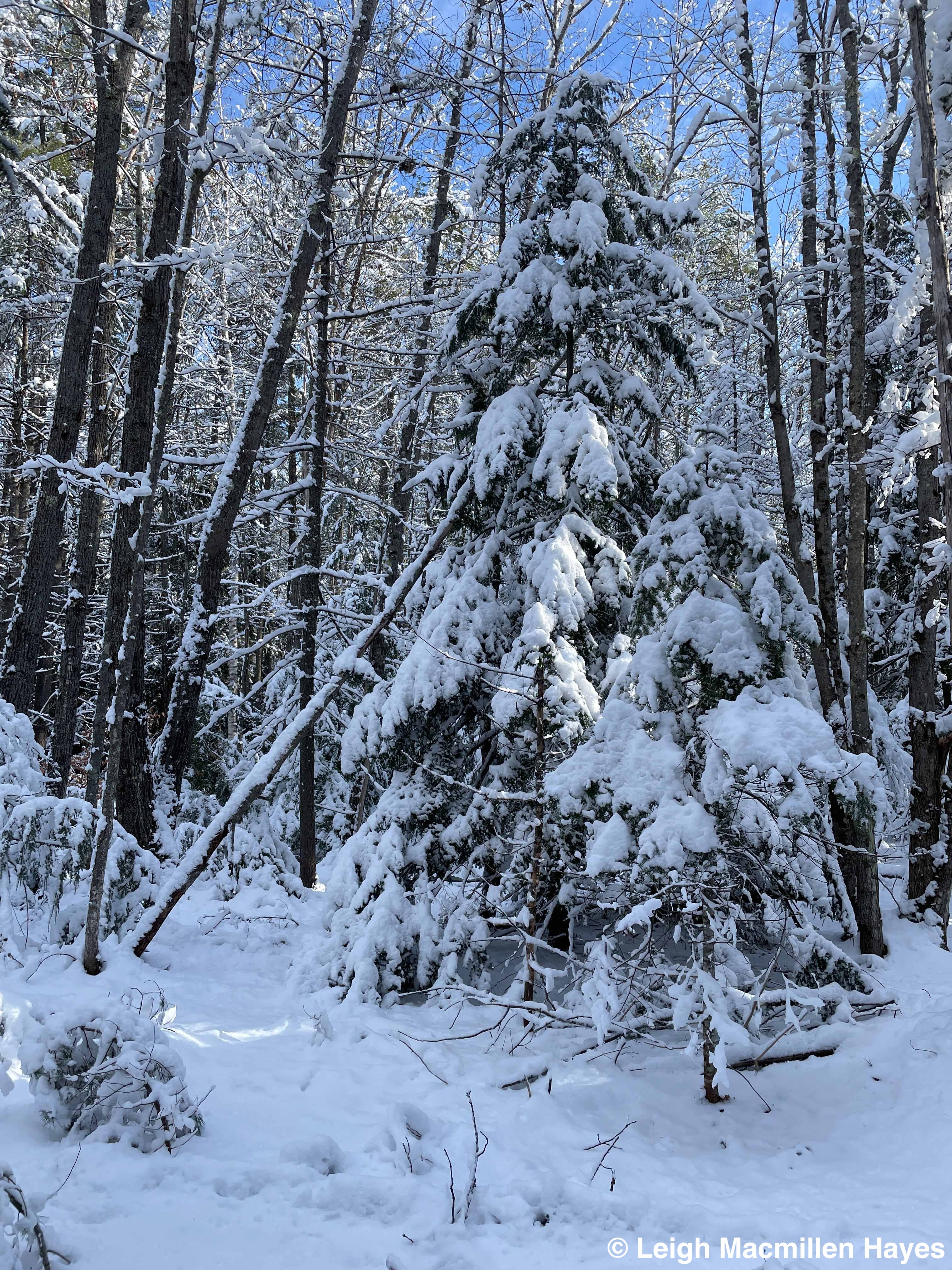
On This Finally Snowy Day

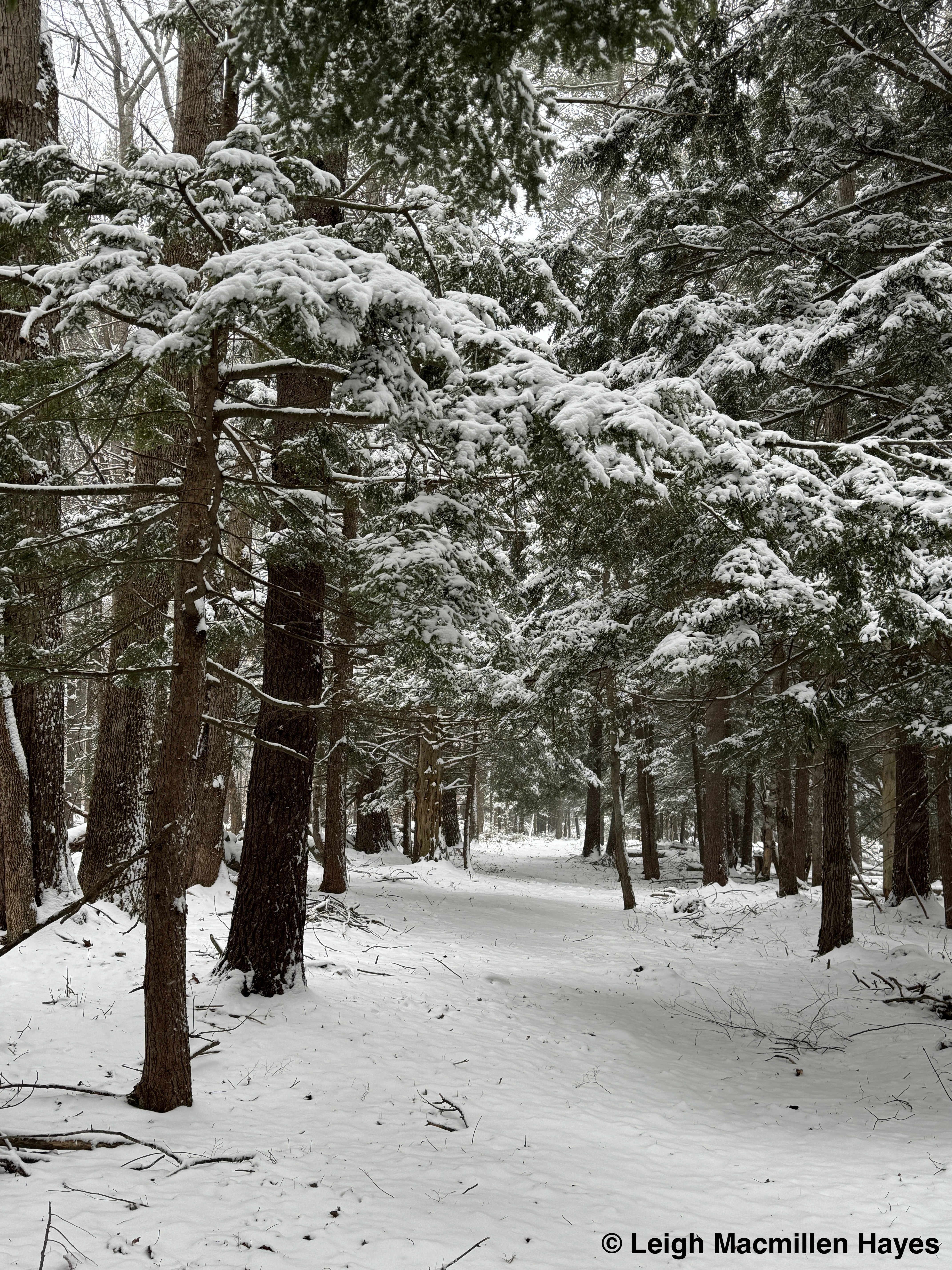
White flakes have a way of quieting the Earth.

All slows down and the world transforms.

Something beyond calls, and despite the wind and frigid temperature, I heed the invite for several hours.

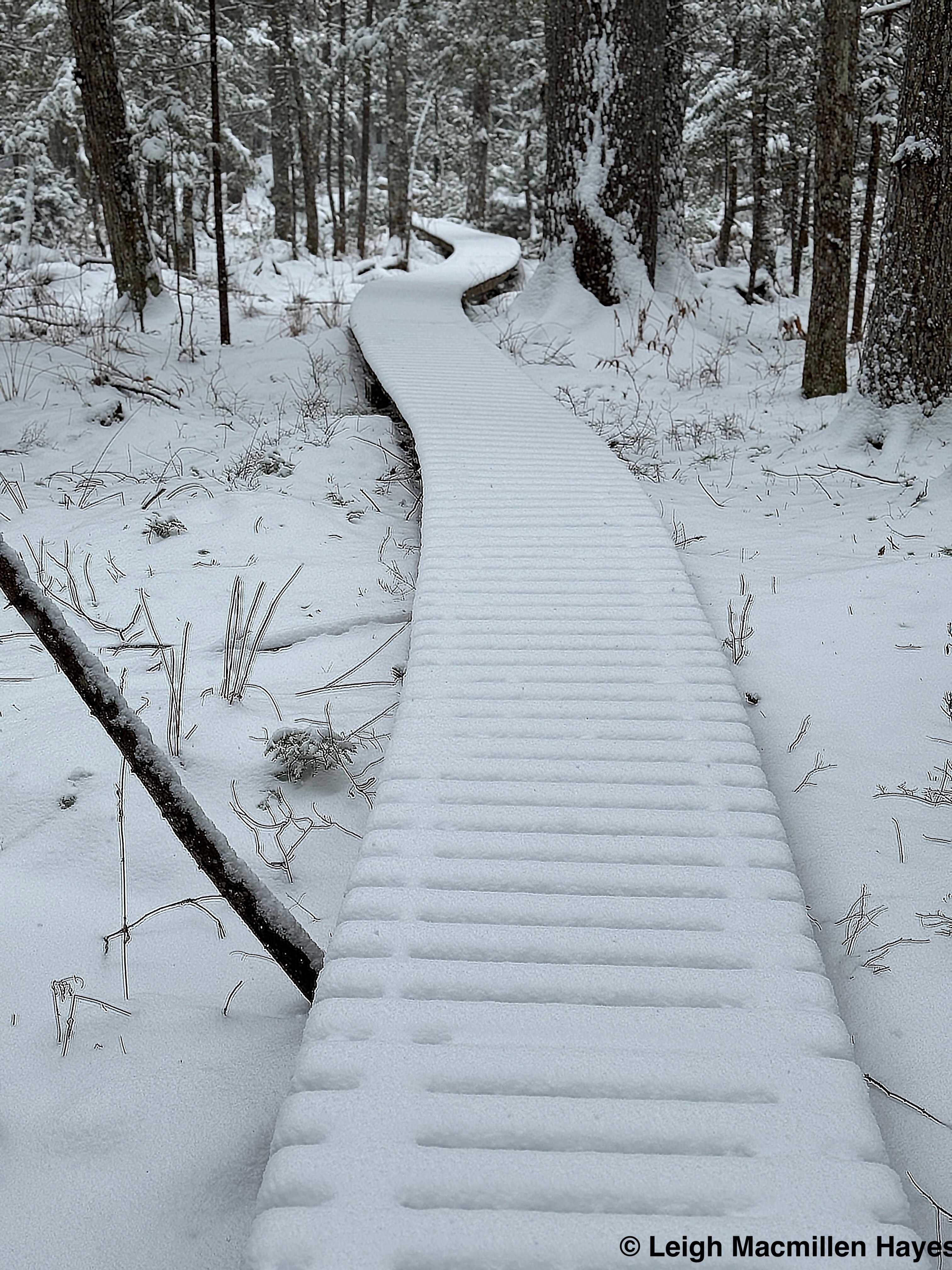
My feet journey along curvy paths.

I spy treasures–gifts tucked into furrows.

Others flowing out of ancient springs.

There’s a staircase to heaven offering a climb.

A long uprooted tree pretending to be a dinosaur.

And tucked away in a spot only a few wanderers know, another dinosaur outlined in white.

The snow coats like a blanket, offering protection going forth.

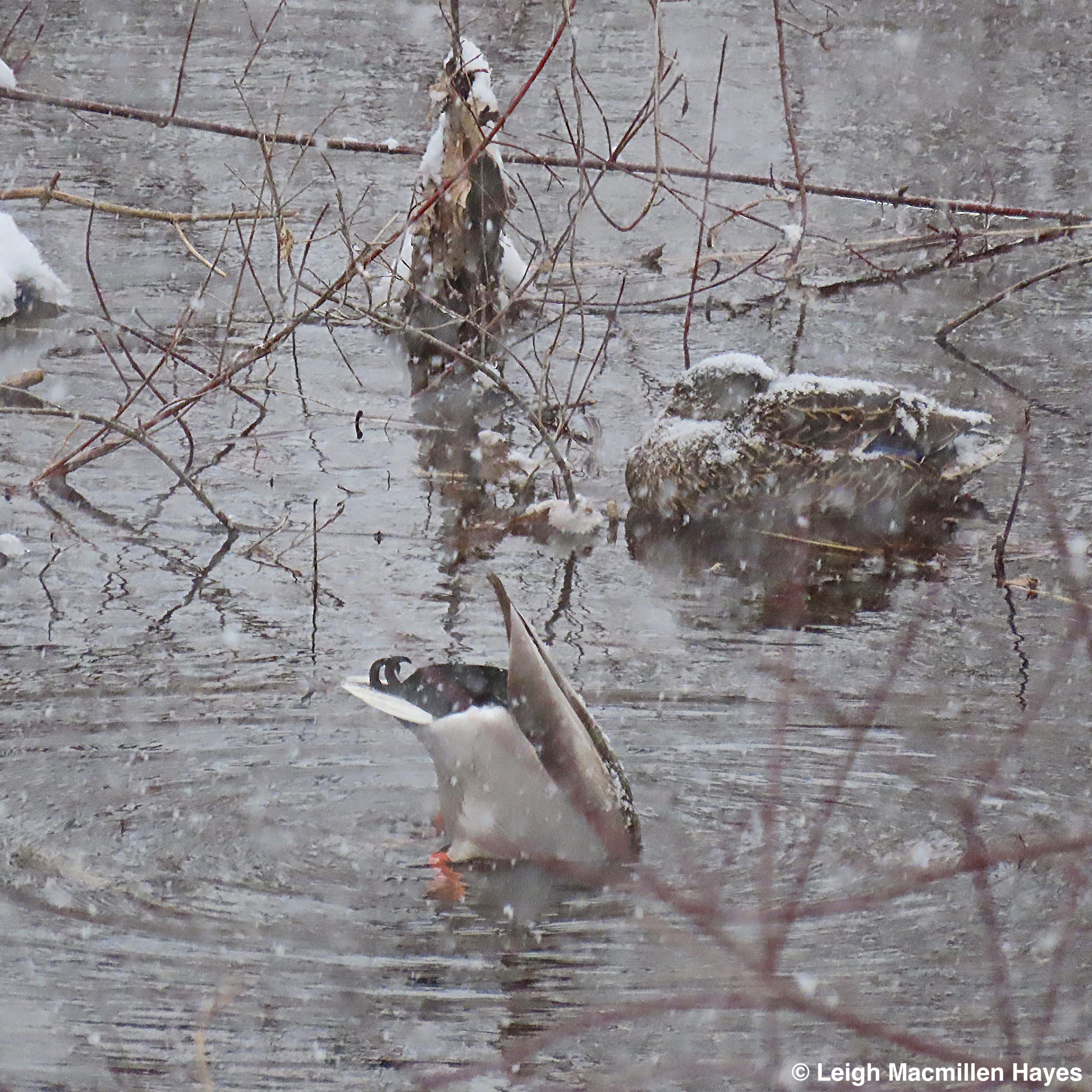
And fills the waters where the ducks take turns sleeping and dabbling.

Back on the homefront, the male Cardinal’s red shouts for joy.

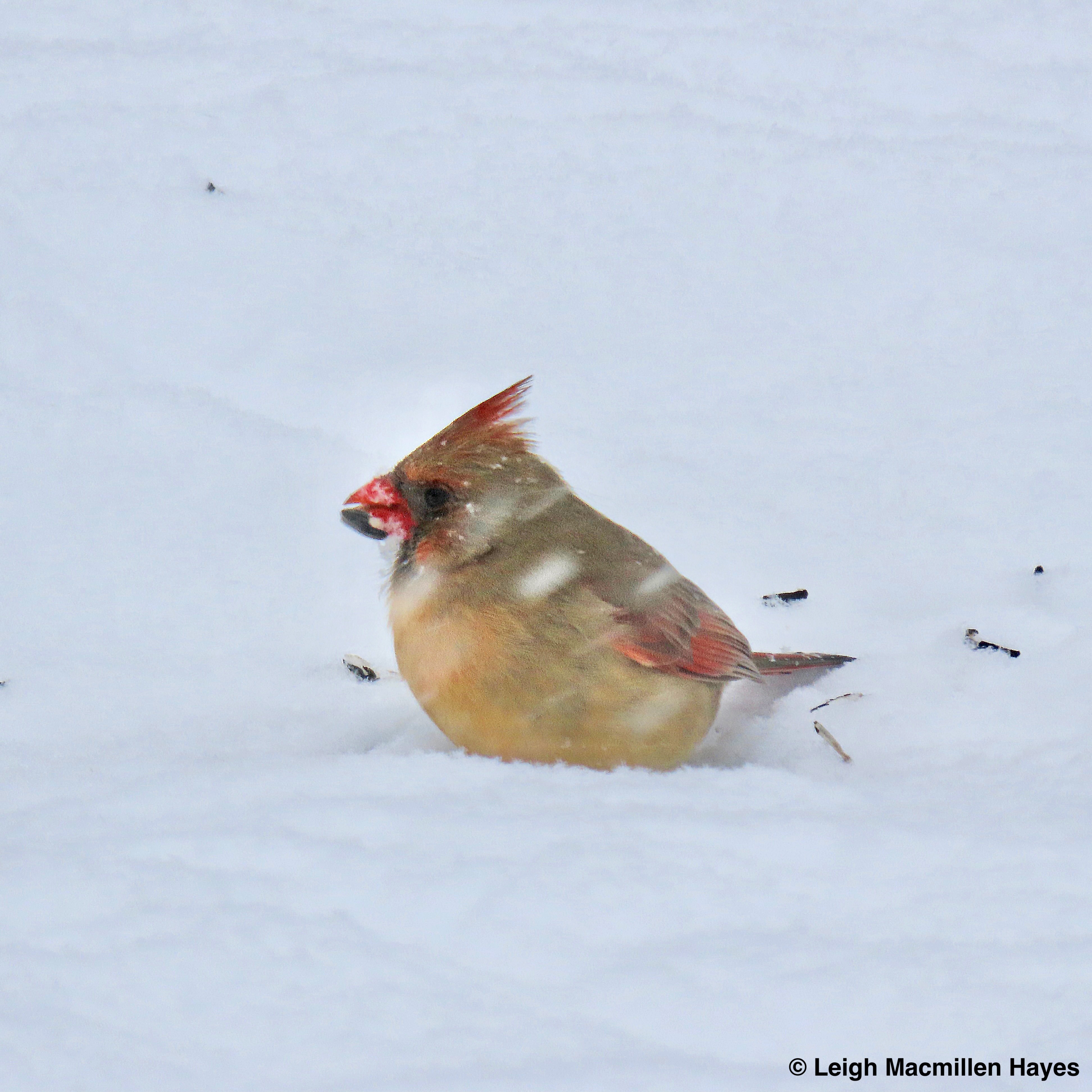
While the female seeks the seeds of hope.

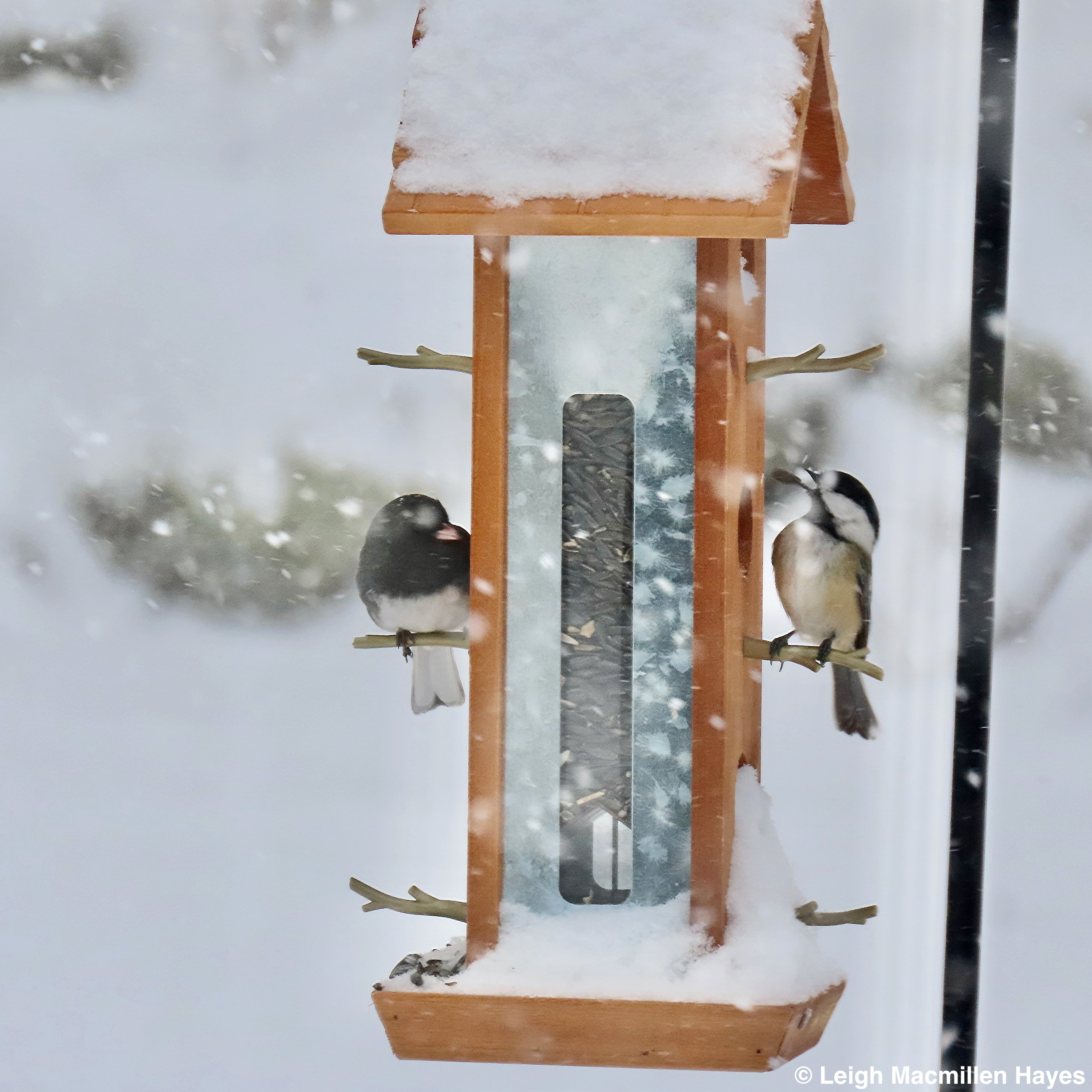
Juncos and Chickadees show courage at sharing a feeder.

And occasionally a Goldfinch flies onto the scene.

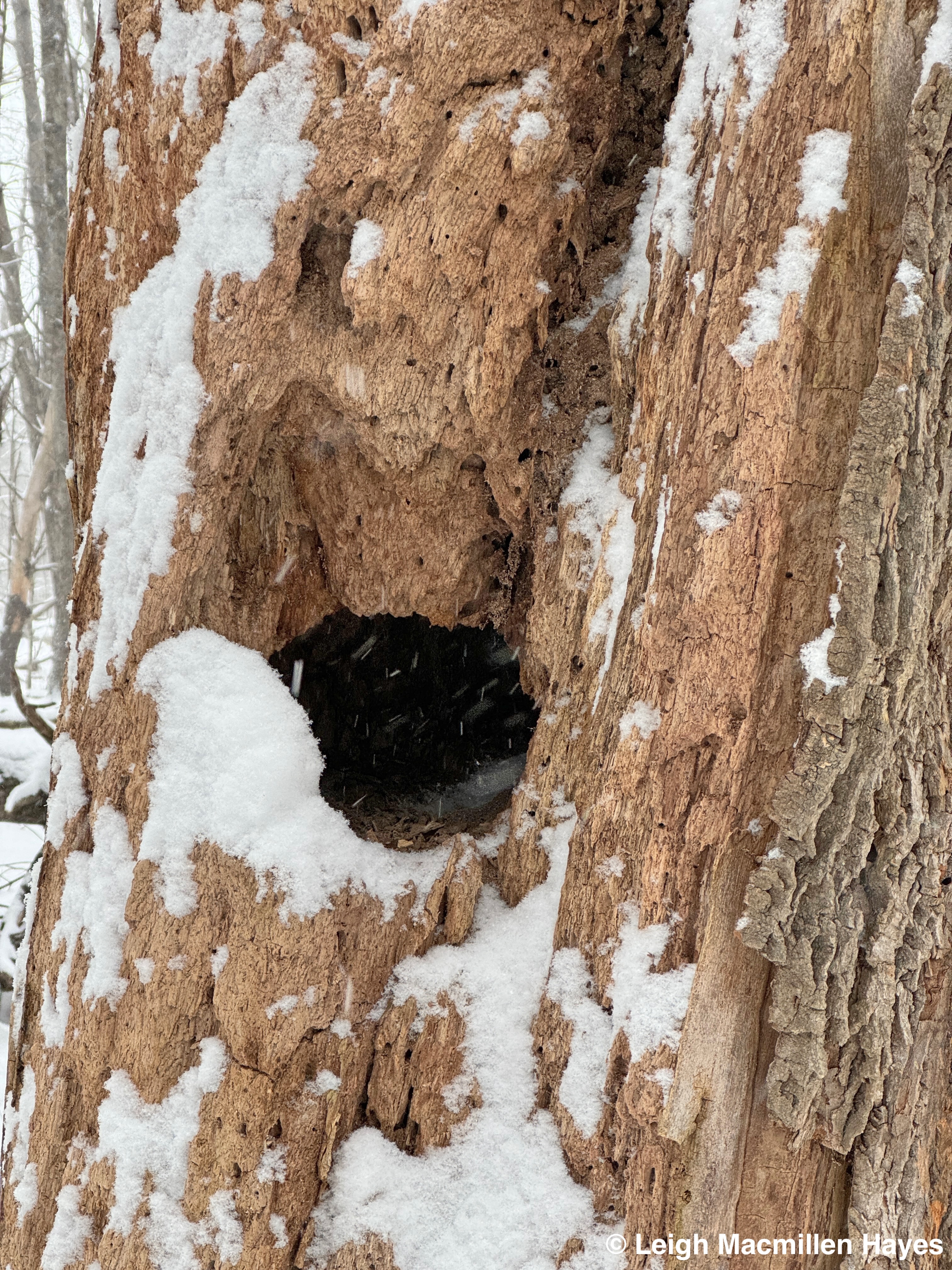
In the midst of it all, a tree spirit guffaws as every element of the universe shines . . .

on this finally snowy day!

Keeping Watch

Settling in 
for a long winter's night,
I know not what happens
beyond the back or barn door.
Until I do
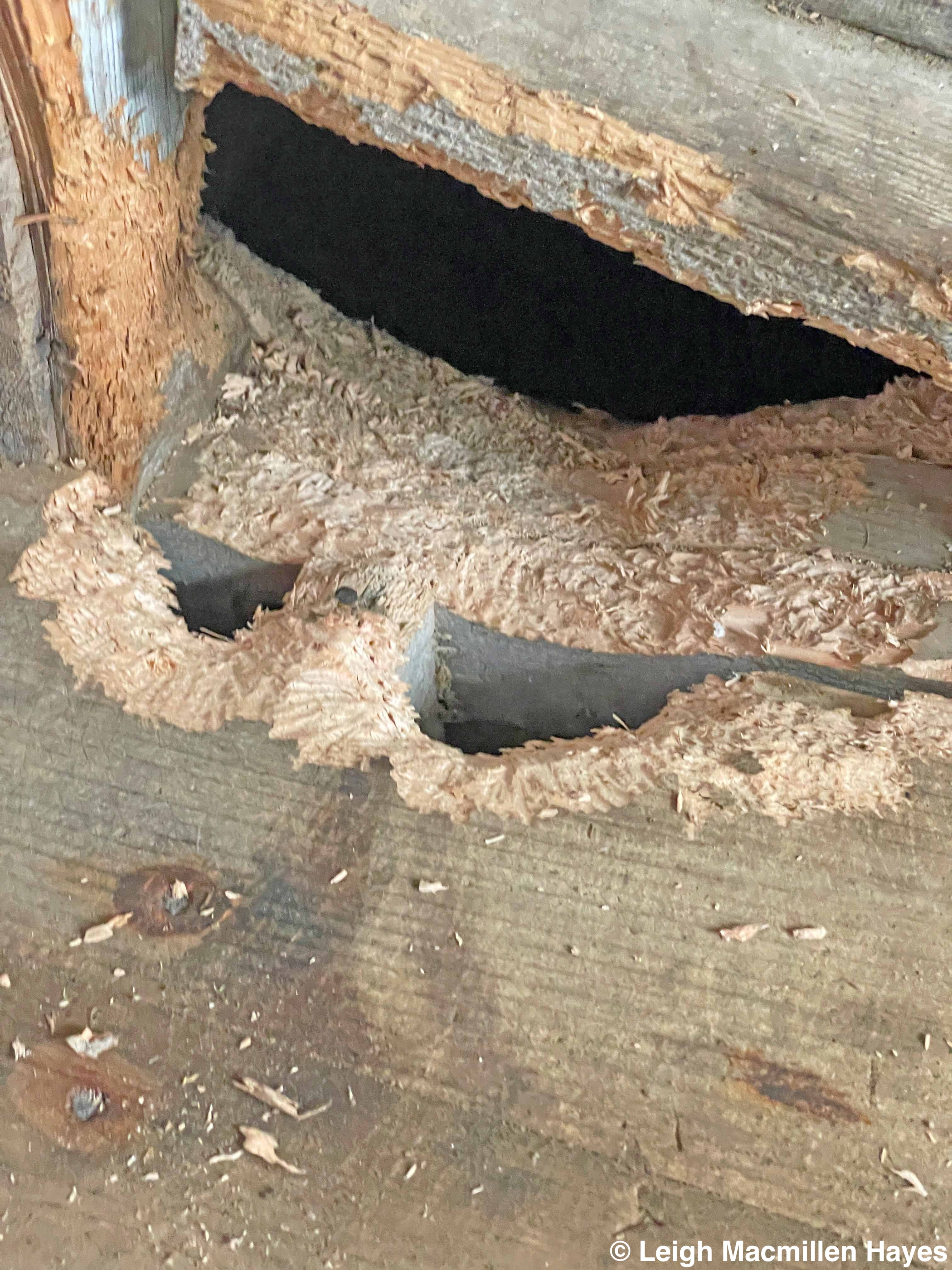
for by the incisor marks
left upon the attached shed floor,
I eye the work of a gnawer.
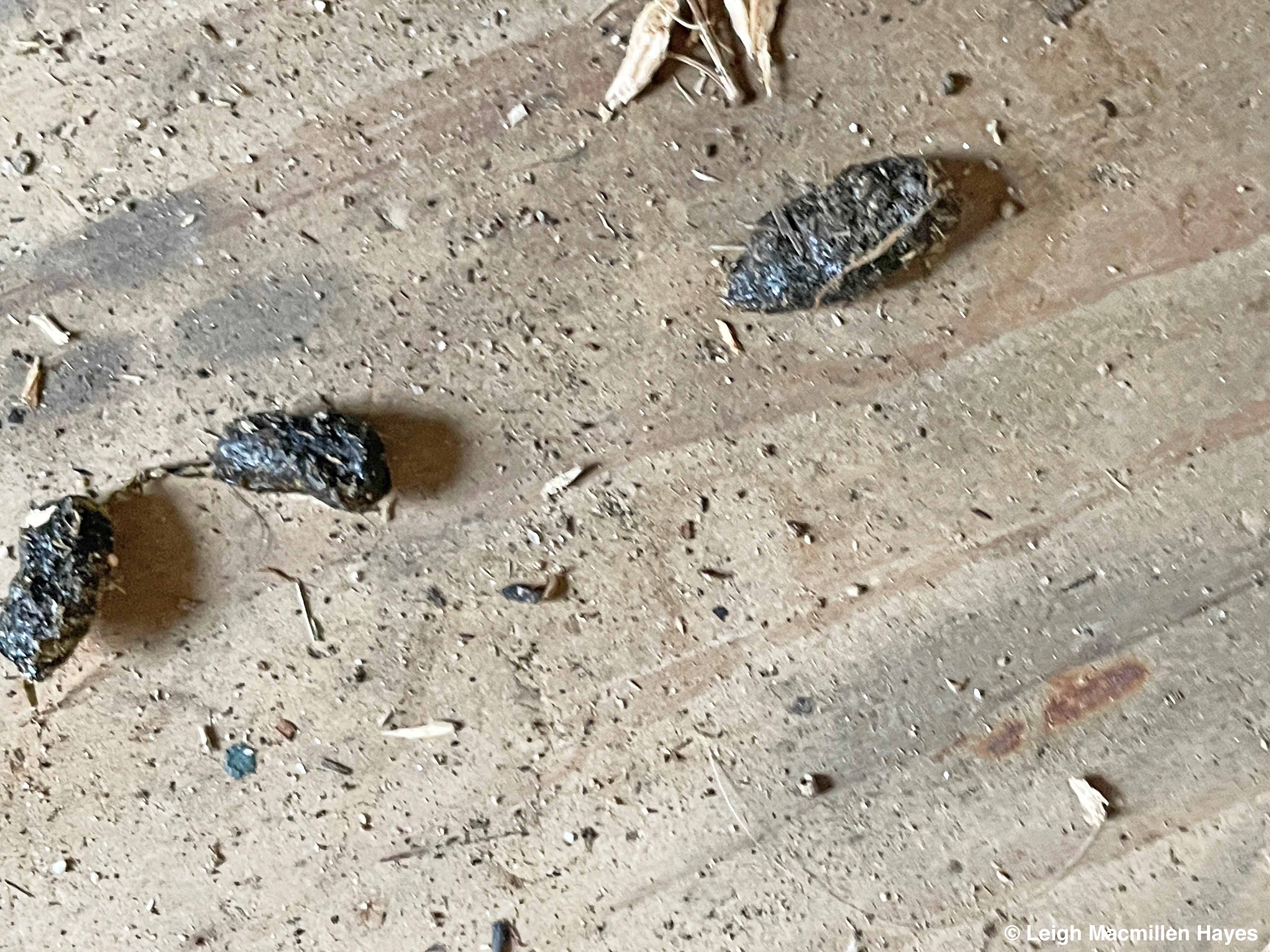
Scat, too, has happened
in this space,
comma shaped
and even a bit of a necklace connection observed.
Out the door 
I tromp through the snow
sighting a pattern
that only a sashayer would know.
And so I follow, 
under branches,
around trees and over stonewalls,
from one neighbor's yard to the next.
Into the woods,
the critter leads the way,
and I go forth,
wondering where we might glimpse each other.
Upon a corner section
of a stone wall,
where rocks are arranged in a triangular fashion,
my heart beats faster when I spy hoar frost.
I observe not 
the works of a porcupine den as I'd hoped,
but rather evidence of another
who shares these woods with us.
And then upon a branch
I behold the other,
creator of the midden,
a Red Squirrel disguised as a gray for such was its coloring.
Because I'd wandered
into our back forty,
others make known their presence,
in the form of mouse and weasel prints.
And back by the barn,
the snow has been tussled,
by not one,
but at least three species: porcupine, squirrel, and deer.
Mostly, it is the deer
who have disturbed the ground,
scratching away as they do,
in search of acorns.
As much as I'm scanning
up and down for mammal sign,
the beauty of these past three days
does not escape me.
I'm grateful for the brisk air,
sunshine and lack of breeze,
and for snowflakes still on display,
and others melting into decorative gems.
I'm grateful
to be one who notices,
trying to discern
what has happened and will happen next.
I'm grateful 
to recognize others
who contemplate as well,
peering upon the world from on high, yet hidden.
And I'm most grateful
for the one who knows more than the rest of us,
the Tree Spirit,
an exemplary at keeping watch.

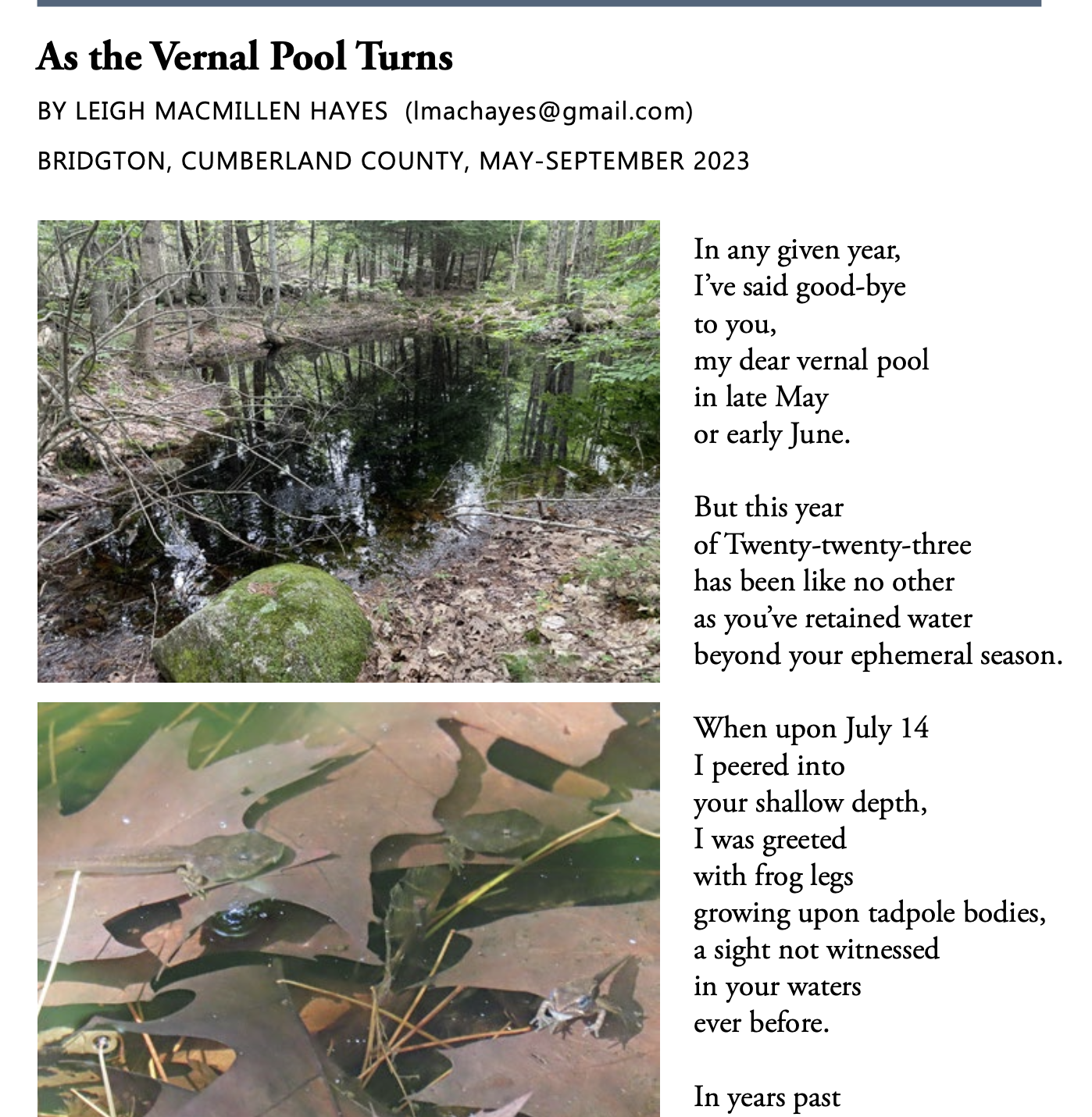
My Reawakening

In any given year, 
I've said good-bye
to you, 
my dear vernal pool 
in late May 
or early June. 
But this year 
of Twenty-twenty-three
has been like no other
as you've retained water
beyond your ephemeral season.
When upon July 14
I peered into 
your shallow depth,
I was greeted
with frog legs
growing upon tadpole bodies,
a sight not witnessed
in your waters 
ever before. 
In years past
miniature amphibians
had to mature quickly
or become scavenged tidbits
supplying energy
to insects and birds,
but this year, 
the Wood Frogs 
and Spotted Salamanders
who share birthrights
of your pool
took their time 
to metamorph.
As I stood quietly
beside you,
you invited an American Robin
to land on the opposite shore
and I could not believe
my good fortune 
to watch its behavior. 
Much to my amazement,
and despite my presence, 
for no matter how still 
I tried to be 
I still made noise,
the Robin
splished and splashed
in frantic birdbath form. 
It paused
and looked about . . . 
Then jumped in again
for a final rinse 
from your warm waters
before taking time 
to preen. 
Finally cleansed,
the bird posed
upon a moss carpet
and then 
we both took our leave
fully sated from your offerings
of that day. 
When next I visited you
on August 9,
wonder accompanied 
my approach
and I knew 
sudden movements
and resulting ripples
meant I would not be
disappointed. 
Below your surface,
I spied a live frog,
its hind legs formed 
and front feet developing. 
And there was another,
and another, 
and more legs,
and sometimes even
the tiny suction-cuppy toes
and my heart was full again.
I last made my way
down the cow path
to the trail
leading to you
on August 18
and again
the amount of water
you held in your grip
far exceeded
my expectations,
but other than 
Mosquitoes,
all was quiet. 
And then today dawned,
 and after listening 
to this morning's homily
about Celtic Thin Places
offered by Ev Lennon, 
I felt compelled
to pay you a visit again. 
On the way
I slowed my brain
by intentionally stepping
along the labyrinth path
I created a few years ago. 
And then . . . and then . . . 
as I approached you, 
my dear pool, 
a pile of Black Bear scat,
full of acorn and apple pieces
from a neighborhood forage,
sat smack dab 
in the middle of the trail. 
And so it was 
that as I reached you, 
surprise again overcame me,
for though you are shrinking
to your traditional 
early June size, 
you still exist
on this day, September 3. 
Small Water Striders skated
across your surface,
sometimes approaching others
who quickly
escaped any chance
for an embrace. 
As has been
my experience 
for the last month
you offered no evidence 
of Wood Frog or Spotted Salamanders
and I trust many 
hopped or crawled out
as is their manner. 
Green Frogs, however, 
squealed to announce 
their presence
before diving under 
the leafy bottom you offer, 
which makes a perfect hideout. 
When one frog resurfaced, 
we carried on a starring contest, 
until my attention
was drawn away. 
Ten feet from 
where I stood 
American Goldfinches 
poked the ground, 
foraging in the duff. 
Then one took a bath, 
and suddenly it 
occurred to me
that this was 
the third time this summer
I've had the honor 
of watching birds 
make use of the watery offering
your pool provides,
even as it is now
a not-so-vernal puddle. 

Before I finally
pulled myself
away from you, 
I offered great thanks 
for all the lessons 
of life and love and even loss
that you have
taught me all these years. 

And thank you,
Ev, 
for being today's inspiration
and for reawakening 
my wonder, 
which occasionally goes dormant,
as the pool will soon do as well.