Celebrating New York Our Way

It probably seems odd that we love to visit the city, being the country-folk that we are who spend so much time wandering in the woods, but we do because there is so much to do and see and taste. And, after all, it’s only for a visit. But the best part–the people waiting for us on the other end, including our youngest and his gal and their friends and her family.

That said, on our first morning, we had some time to ourselves and walked several blocks to Prospect Park, where the Norway Maples have not quite given way to winter and so fall foliage still graced the sky above and pathway below.
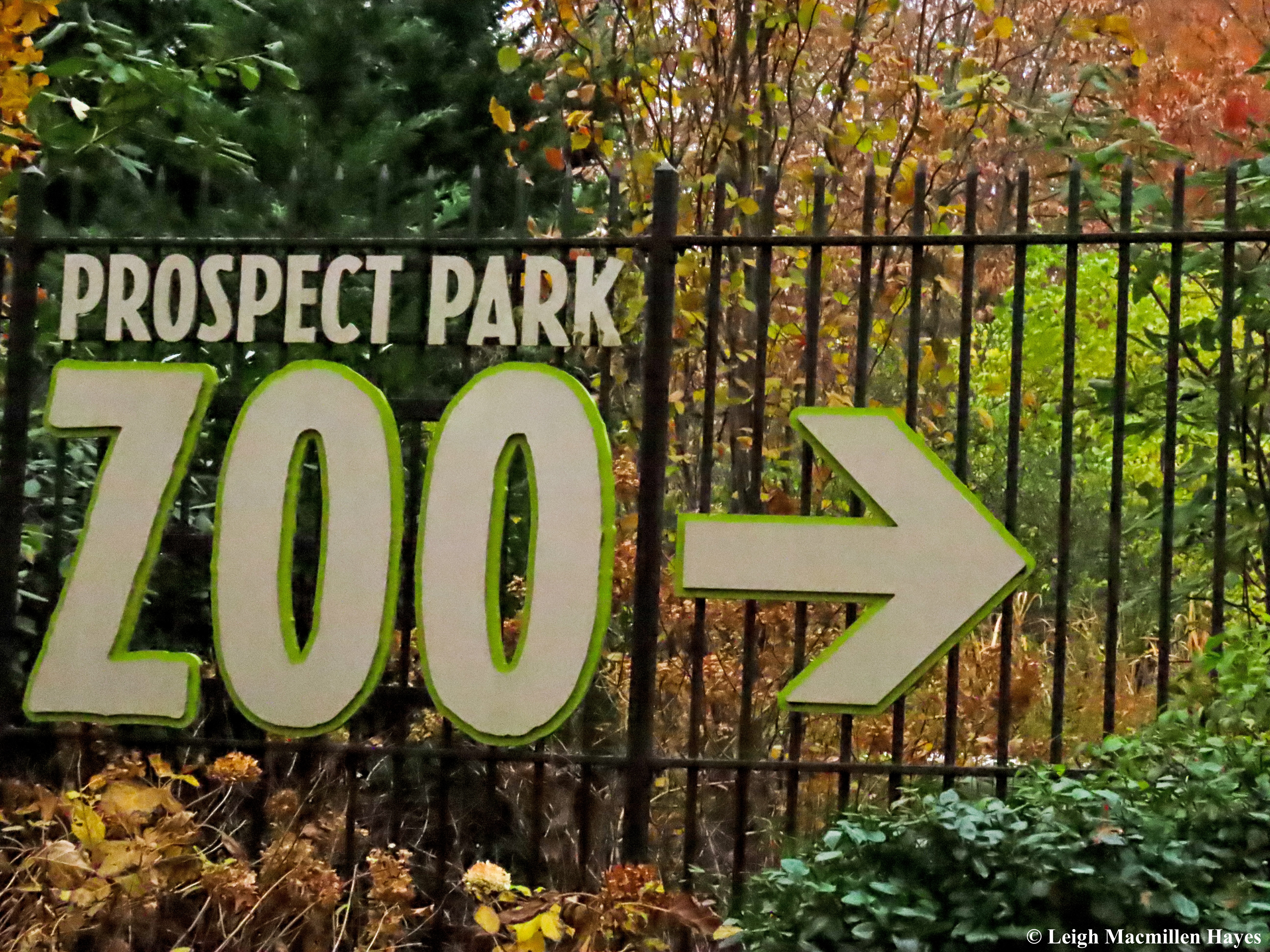
Our intention was to walk the outer perimeter and explore some new areas we hadn’t seen before, which suddenly included Prospect Park Zoo. When in Rome . . . and so we did. We entered the zoo and had the most delightful time.

First, there was the metal artwork that greeted us, including this snake consuming a frog. I have memories of such happenings in the natural world, watching as the frog became a large lump in the snake’s “throat.”
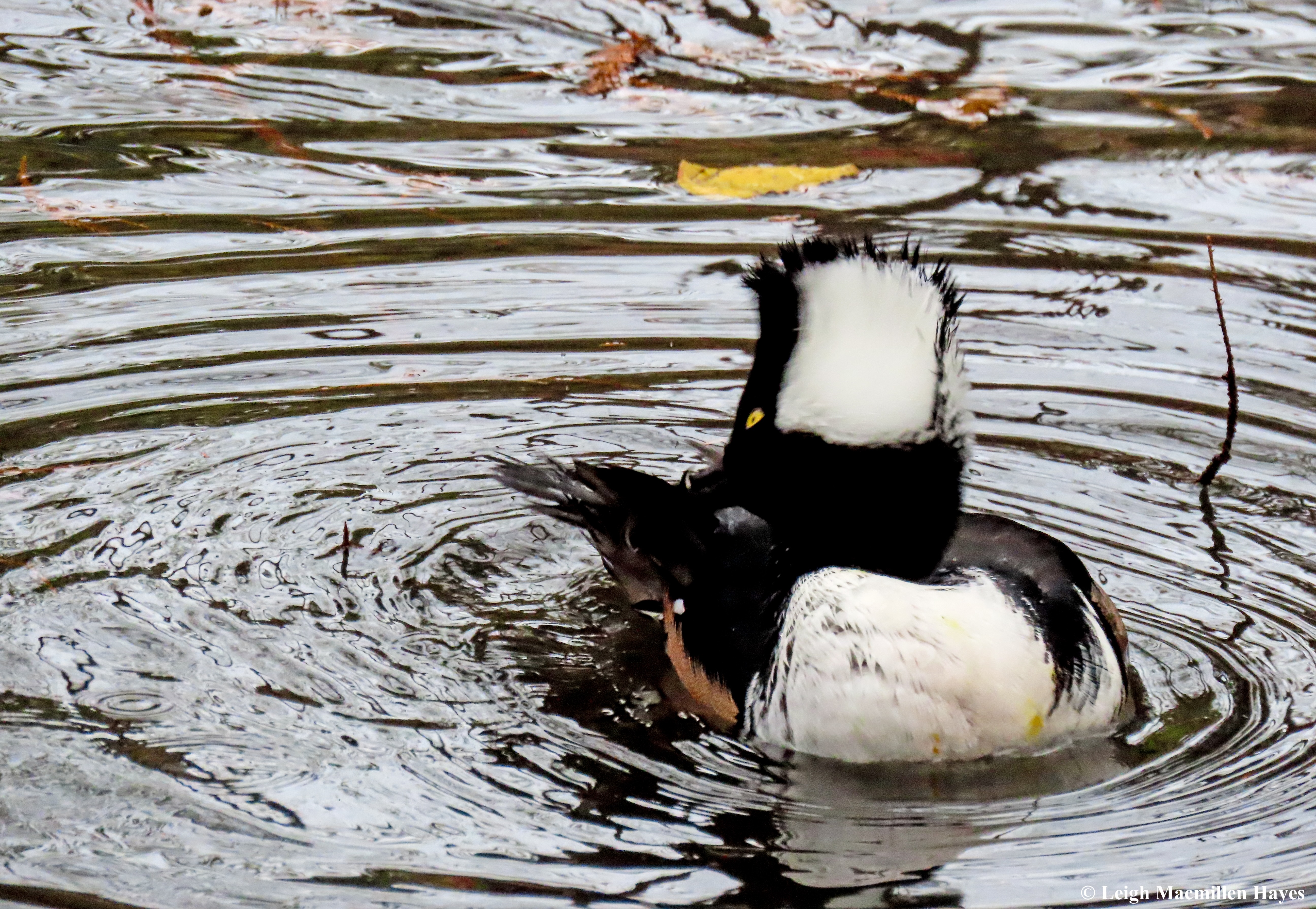
Around every bend there was something different to see and we felt like we were greeting an old friend when we spotted a male Hooded Merganser preening.
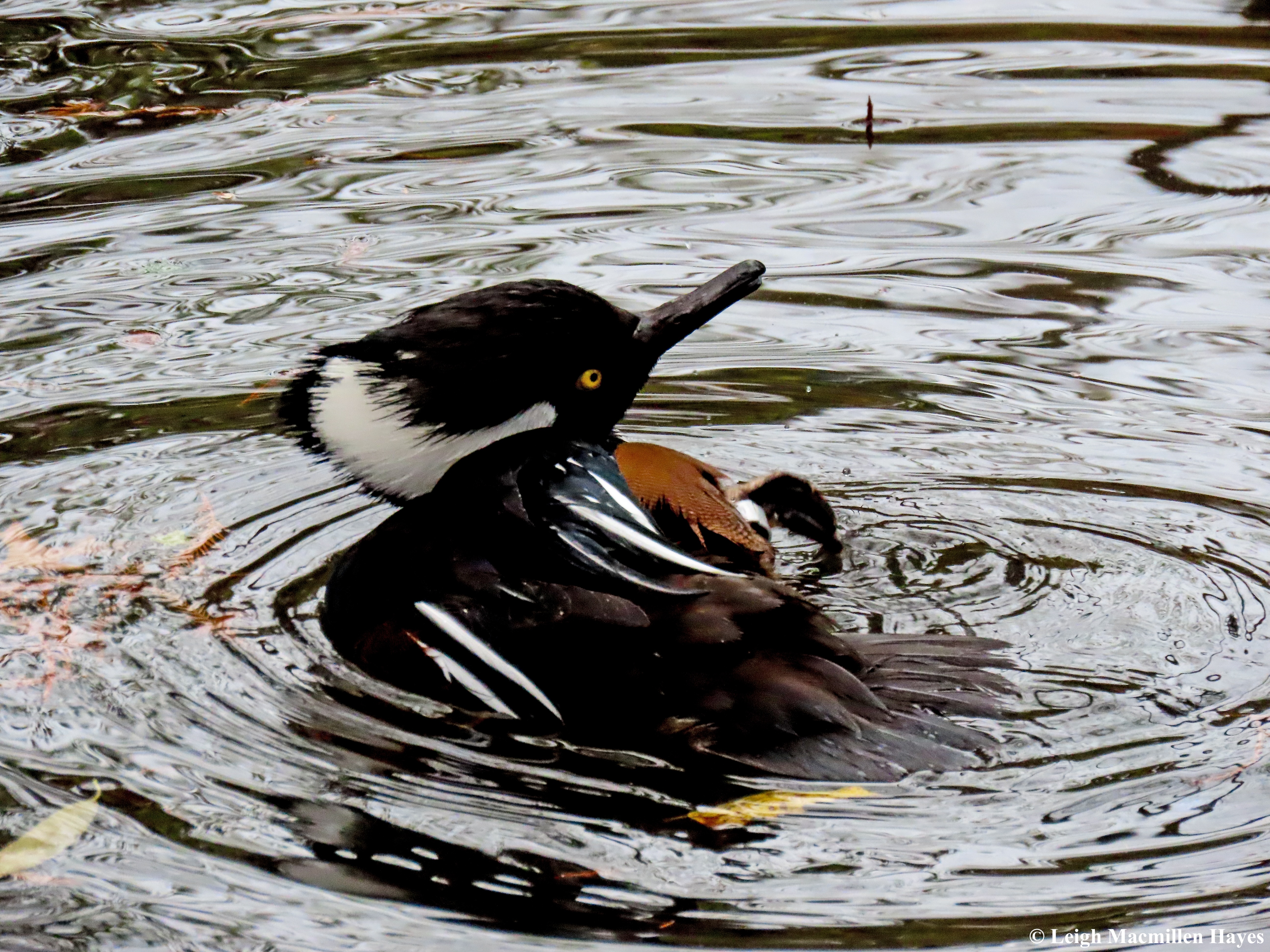
Splishing and splashing, his intention was to waterproof and align his feathers, cleanse them of dirt or parasites, and allow him to spread protective oil from a small gland near the base of his tail, which will keep him warm and buoyant, especially important given the changing weather of the moment.
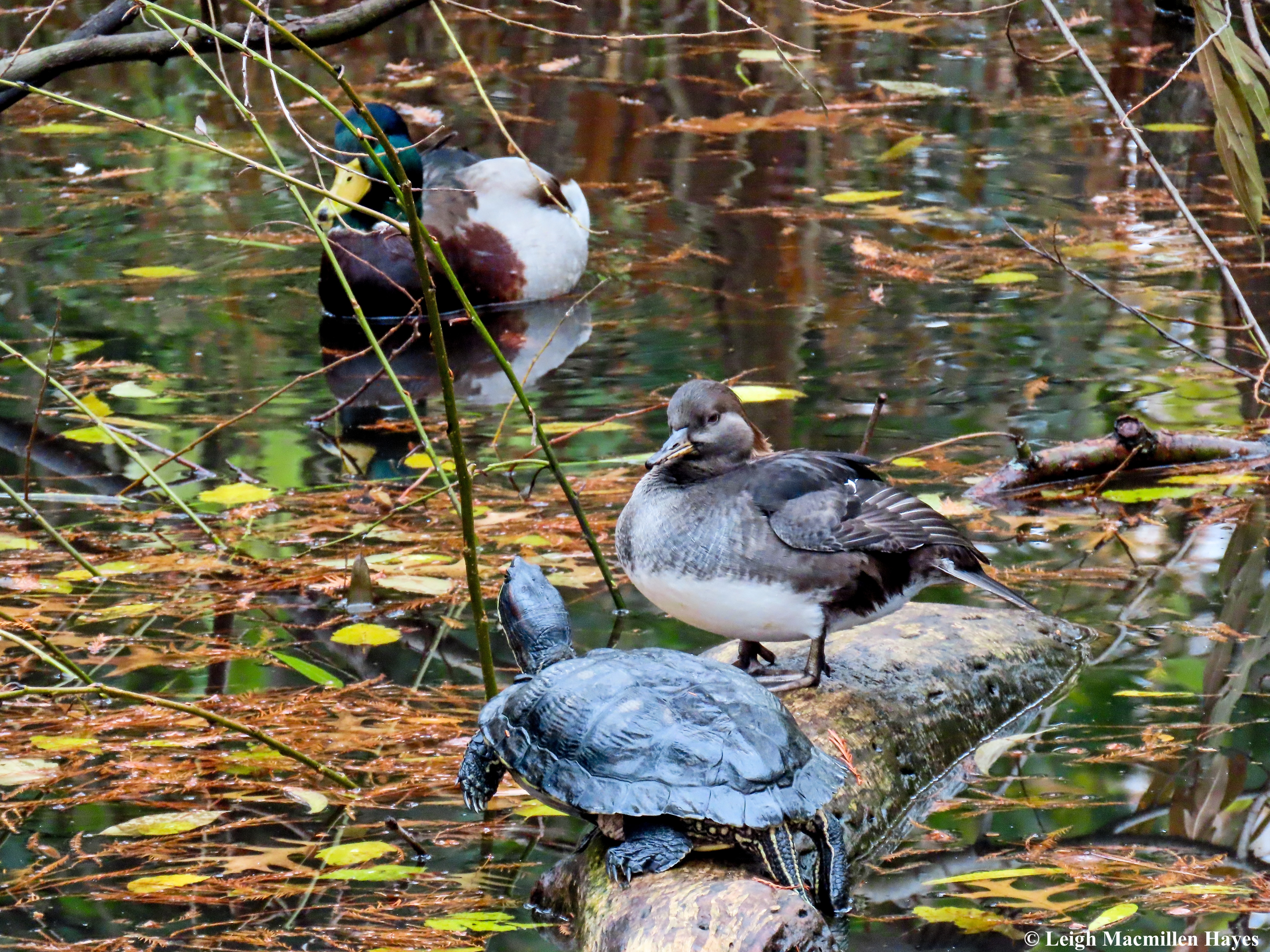
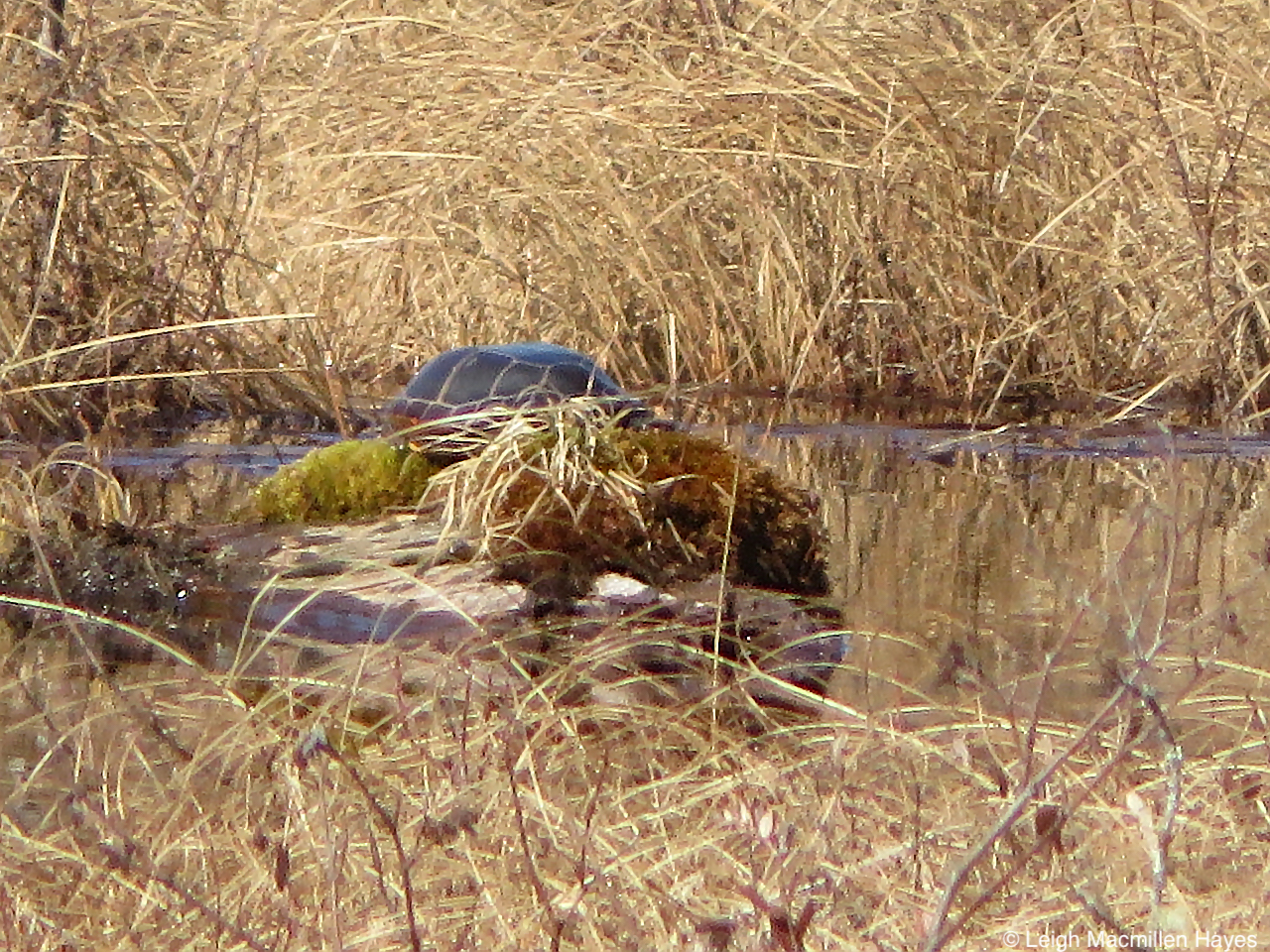
His mate, on the other hand, stood upon a log with a Red-eared Slider and we watched in bewilderment because neither one seemed concerned about the other.

It almost looked like they were two old friends sharing a quiet moment in the midst of a hectic world. And perhaps they were.

For a few minutes, I actually thought the turtle might not be real because there were some small sculpted animals along the zoo path, but then he turned his head ever so slightly.
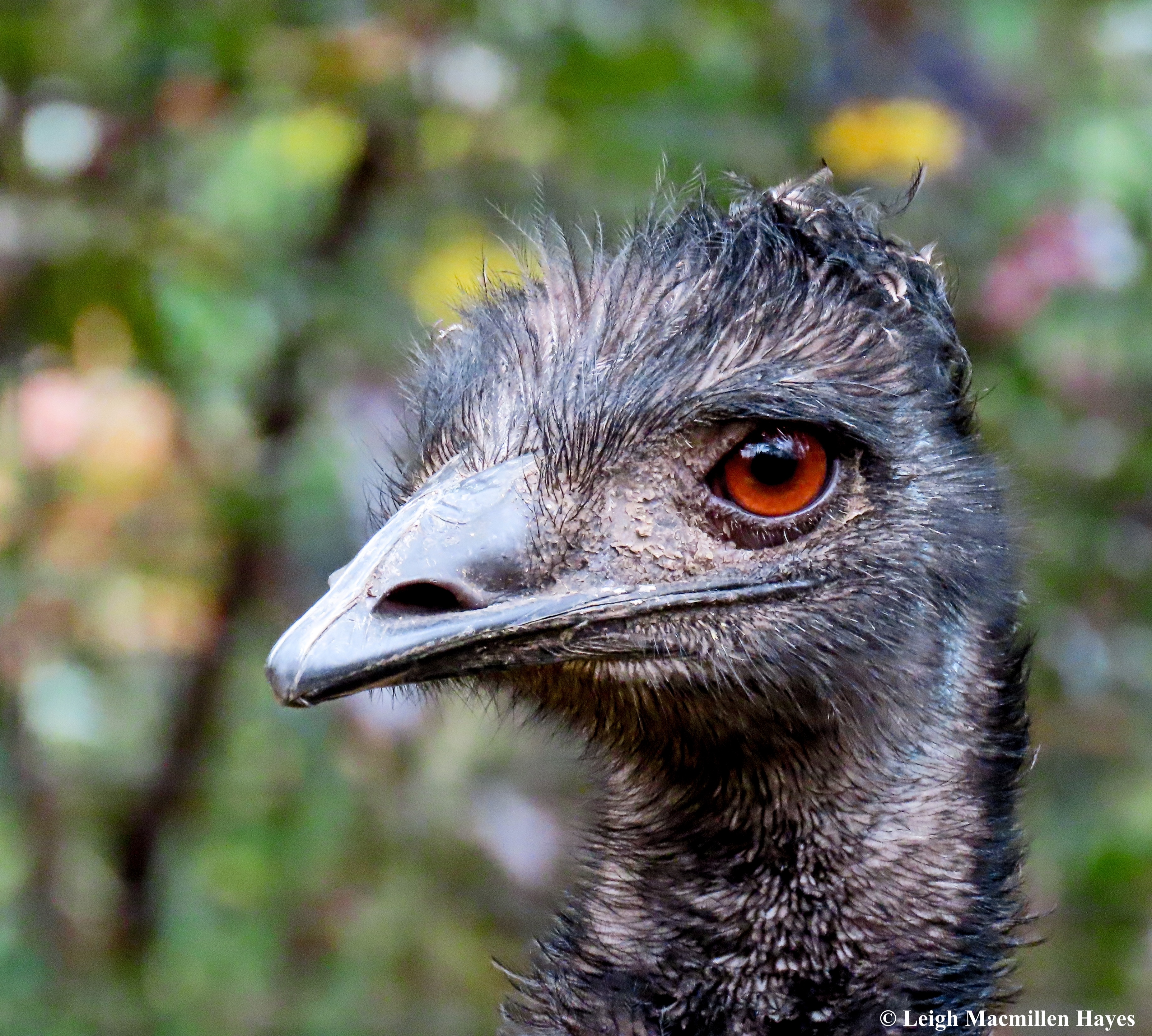
We left them in peace and found the Emus and I immediately fell in love with their orange eyes. And though they don’t look anything like Turkeys, I felt there was a good resemblance, maybe because both have appearances only a mother can love, and this seemed an apropos bird to meet the day before Thanksgiving.

And then, and then, there was a River Otter. Asleep. Who knew River Otters took time to nap? In my book, they are always on the go, swimming and chatting to each other and sliding. Always sliding. But, of course, one needs to take a rest from time to time.

And then slowly lift one’s head up . . .
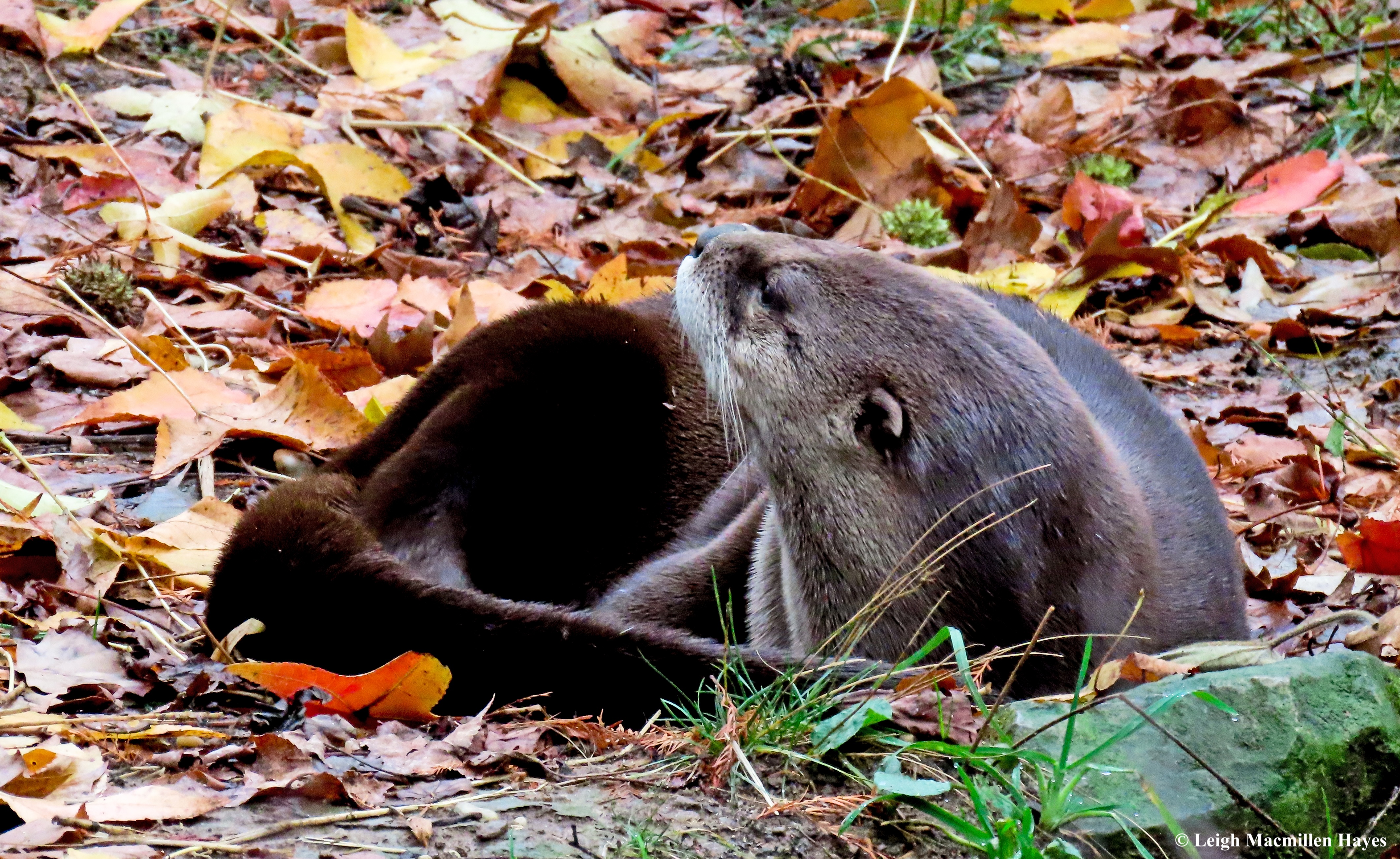
just a tad bit higher . . .

and scratch an itch, . . .

and then do the same as the ducks and preen a bit to spread the protective oils. It’s all in a day’s work schedule.

The ones who were having the most fun at the zoo seemed to be the Sea Lions. And we had arrived moments before a training session, so we stayed to watch and ooh and aah with the small crowd that had gathered that day.
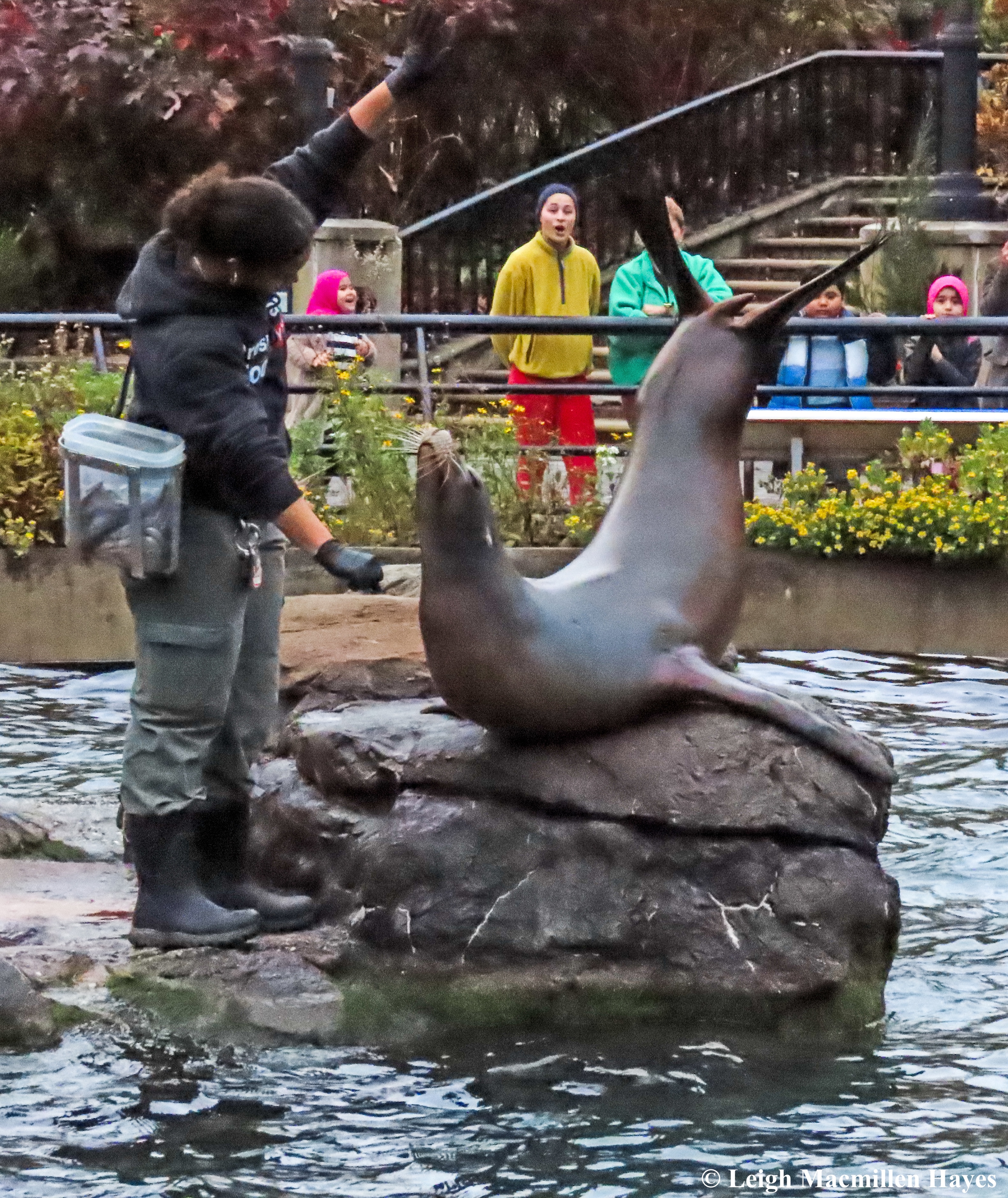
They reacted to hand signals. And fish, of course.

High Fives . . .

and Open Sesames . . .

and Eye Drops . . . were all part of the program.
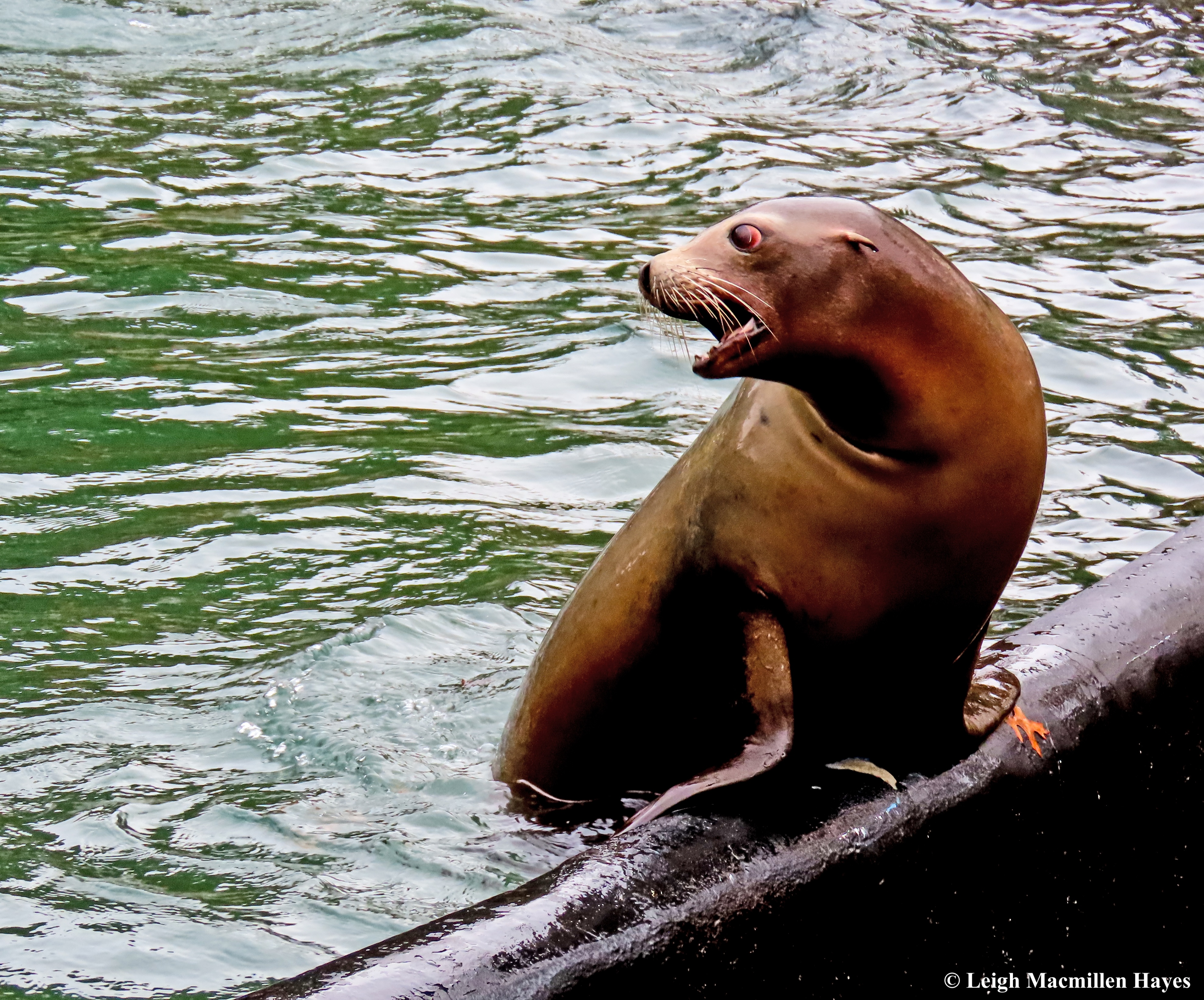
But maybe the best moment was when one swam to the edge, looked back at the trainer, recognized the signal to talk, and let us hear his voice.

Though I love fish, give me dark chocolates, and I might do the same.

Not to give away all that we saw, but there were Red Pandas who looked so cuddly, until I spotted the nails on their toes. They are bears, after all.

And a Pig-snouted Turtle, aka River Fly Turtle. I like the more common name because just look at that snout.

Meanwhile, the Merganser had moved to another part of the pond, but the Red-eared Slider maintained its position and I gave thanks for the opportunity to see it basking, even on a day with the temp in the low 40˚s.
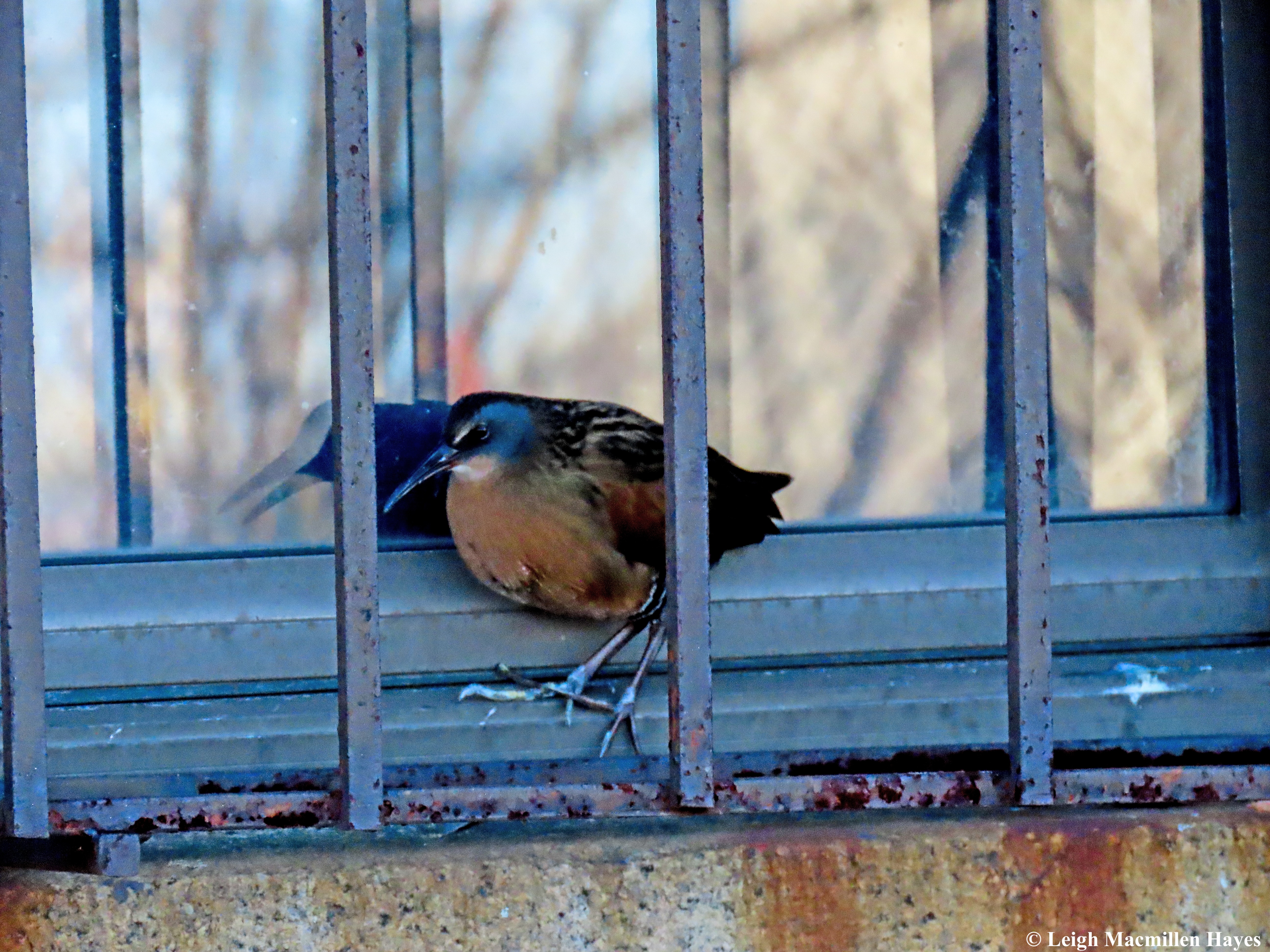
On another day in another place, a place next to where it should have been, we unexpectedly spotted a Virginia Rail. Yes, we were beside the East River in Wallabout Bay, but for some reason this most secretive of birds ended up behind the grates guarding a window.
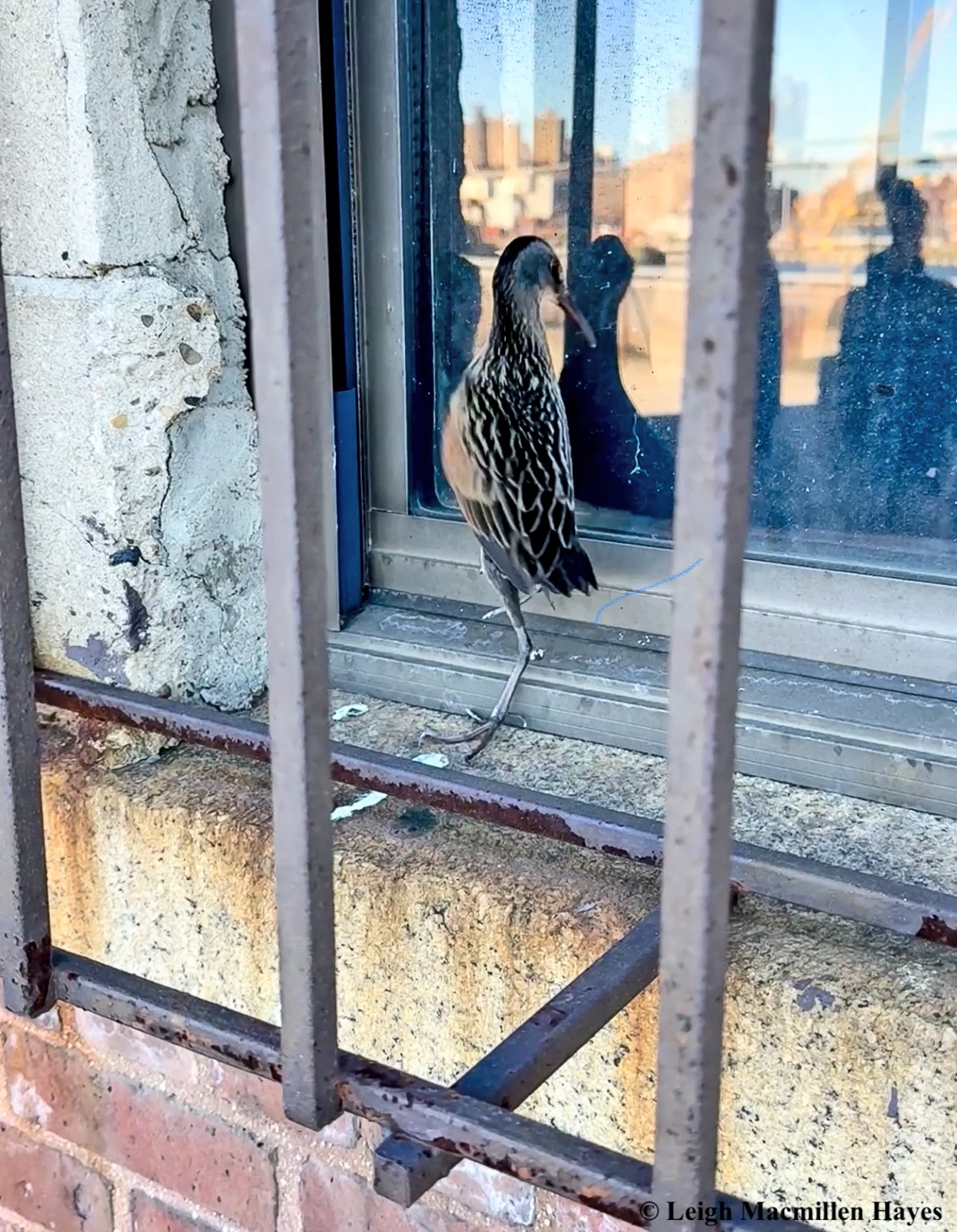
Our companions worried that it couldn’t get out, but I suspected it would as the openings were large, and could only imagine that the wild winds of the previous day had blown it a wee bit off course.

And in another place, Starlings, where I expected to find a more exotic species.

And then, much to my delight, one flew in: a Green Monk Parakeet.
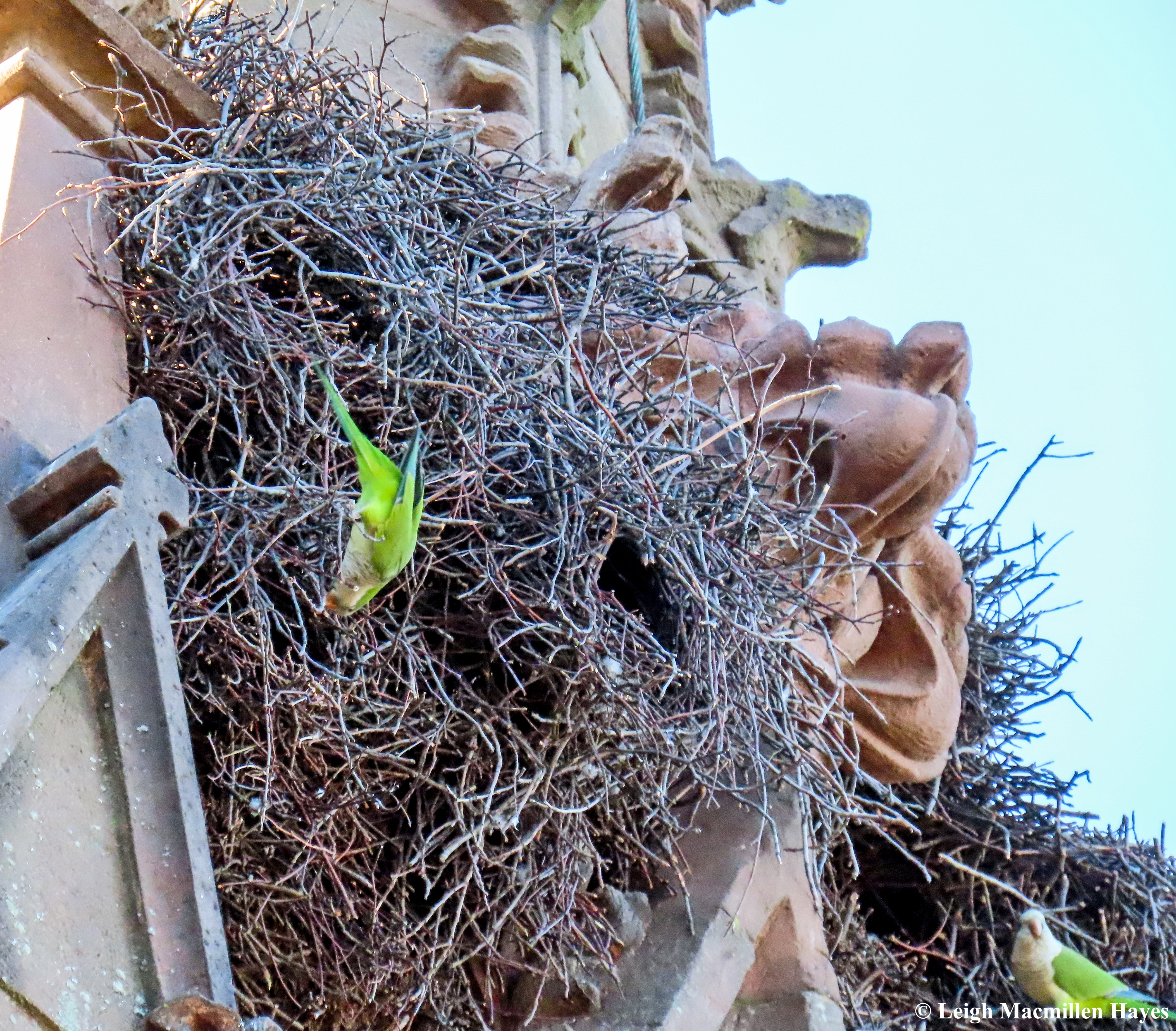
I could have stood watching and photographing for hours in an effort to get to know them better, but there were miles to walk and so I settled for a few quick snaps of the camera and briefly captured their acrobatic movements.

Bringing us back to reality, were the Gray Squirrels dining and creating middens atop tombstones.

But even better than that, a Black Squirrel, the melanistic (dark fur) color variation of the Gray Squirrel. The black coloration is caused by a genetic mutation and perhaps provides advantages in certain environments, like helping them absorb more heat in colder climes.

And finally, much to my utter surprise, we spotted a Queen Bumblebee stumbling along in the crack of a paved pathway, probably seeking a place to overwinter moments before the sun went down.

It wasn’t just the wildlife that we came to see, for we had the profound pleasure of spending time in the company of four young people we are proud to call our own–that being our two sons and their gals. And together one morning, we explored Jumbo and walked below the Brooklyn and Manhattan Bridges.

One fun discovery was this orange cone Christmas Tree that seemed like it would look right at home in our hometown in western Maine, given that we’ve endured several years of sewer construction and road work.
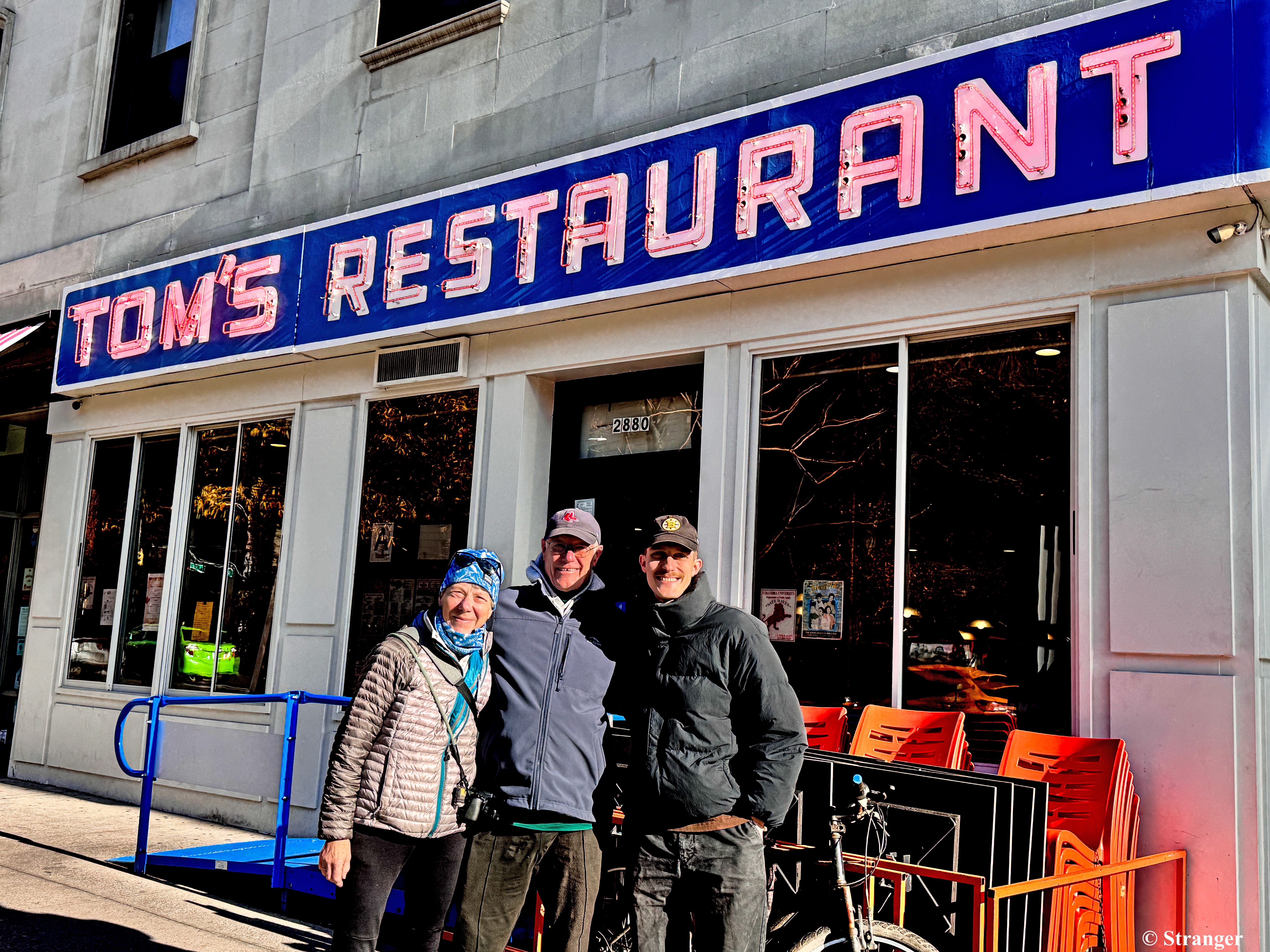
After saying goodbye to our eldest, we ventured to Manhattan with the youngest and found the restaurant that inspired one of our favorite shows.

We sat at the counter where P posed below Kramer and felt like we could hear Jerry and George and Elaine in a nearby booth.
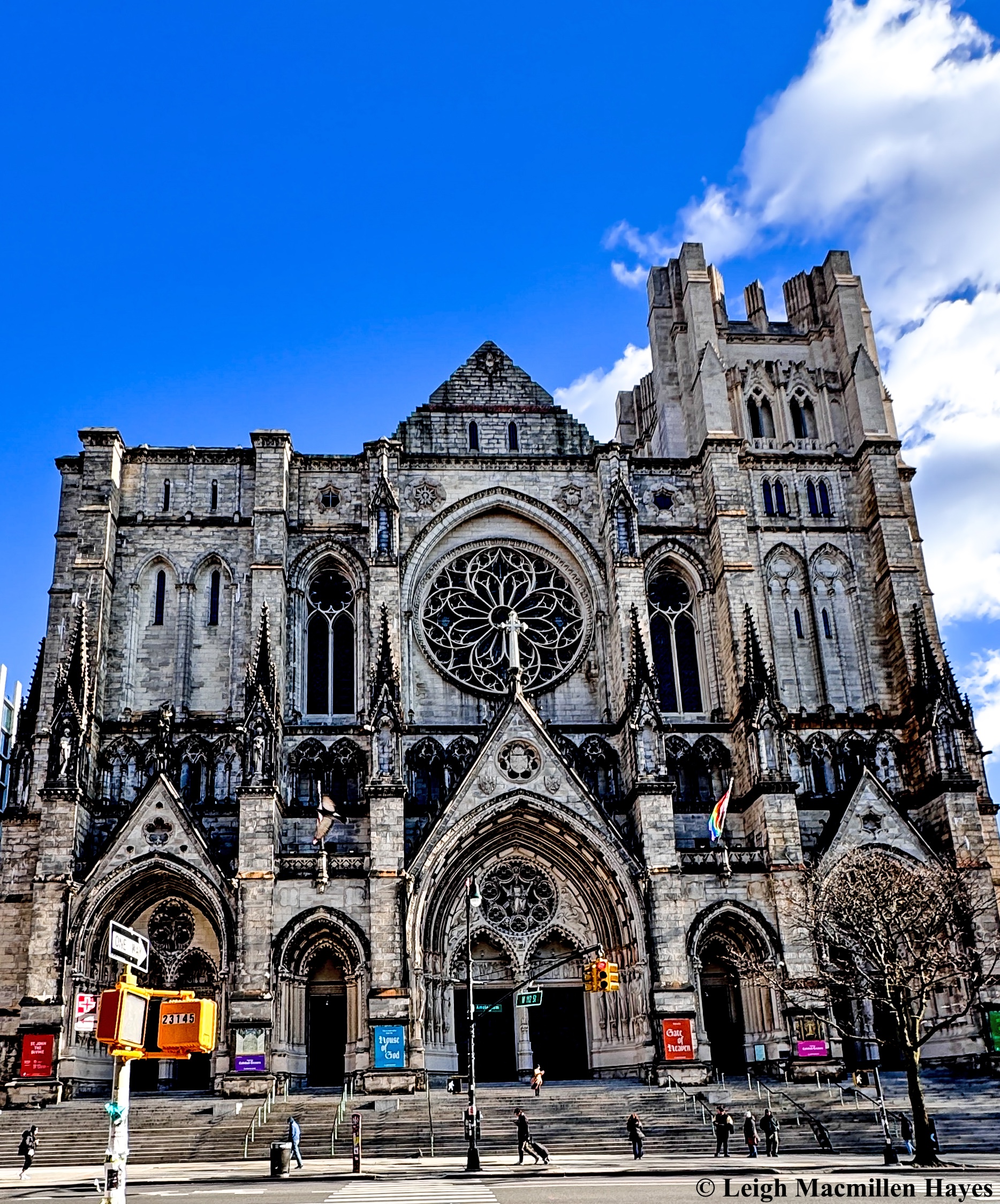
And then we walked to St. John the Divine, an Episcopal Cathedral steeped in history and never finished.

Our tour guide informed us that the original architects, George Lewis Heins and Christopher Grant LaFarge, envisioned a Romanesque-Byzantine style structure, as seen here in the Apse. Notice the rounded arches. They started building the Cathedral in 1891.

The Cathedral was partially finished in 1911, when Heins died. Architect Ralph Adams Cram was then hired to complete the work and the Nave reflects Gothic Revival architecture, his favorite. Notice the pointed arches.

Massive pillars that are 55-feet tall and six-feet across support the building and were constructed from New England granite without steel reinforcement, using techniques borrowed from the Middle Ages.
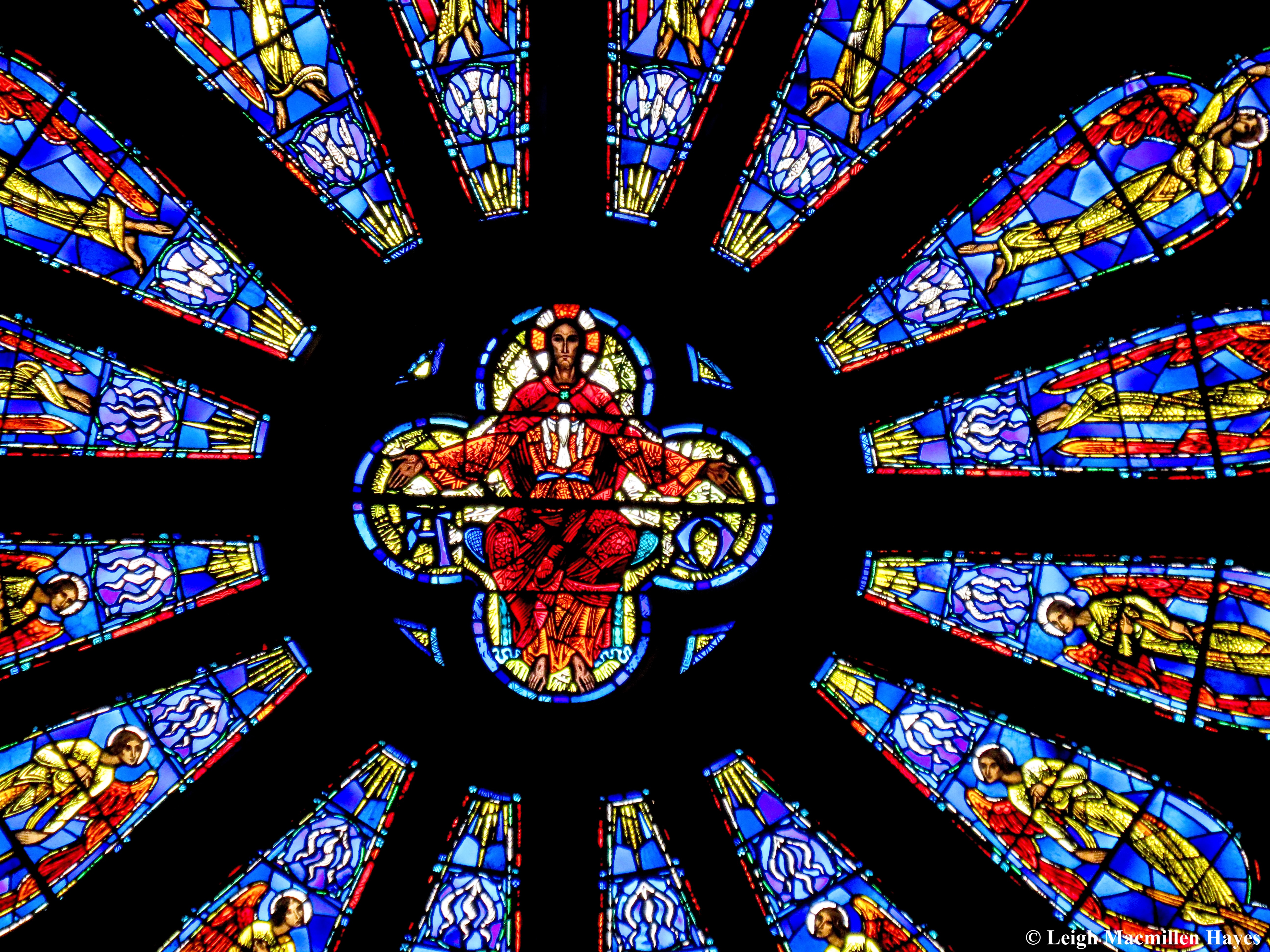
In the back of the Nave, the Great Rose Window is forty feet in diameter, with Jesus being 5.5 feet tall, despite how small he looks from the floor below. It’s the third largest rose window in the world and is made of over ten thousand pieces of glass, mind-boggling as that is.
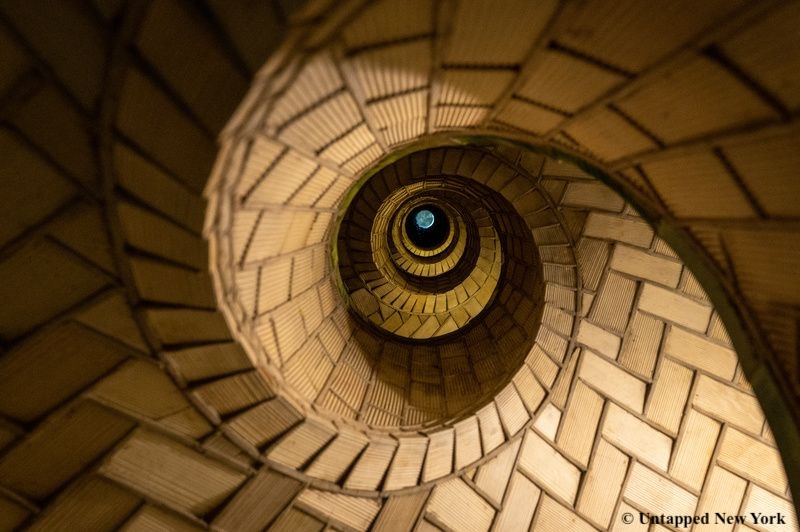
Our youngest had signed us up for a vertical tour, and I have to say climbing up was much easier than climbing down, but I’m so glad we did it.

Each level brought us closer to the stained glass windows, which are dedicated to one of fourteen forms of human endeavor, including Labor, Medicine, Communication, Education, Law, Military, Arts, American, Anglican, Crusaders, Earth, All Saints, Missionary, and Sports.

The windows on the ground level show a variety of historical and scriptural figures engaged in a particular activity, all theme-related.

The higher set of windows show saints associated with the same activity.

Rosettes at the top depict Jesus, crowning each window and completing the progression from the human plane to the sacred and divine. He is always depicted with a cross above his head.

We happened to be there when the late afternoon sun was shining through and creating magical rainbows on the pillars.

From there we went to the MET Cloisters, where we walked the grounds and saved an inside tour for another day.

Each time we visit, we also arrange for a private group tour and this year’s locale was the Brooklyn Navy Yard in Wallabout Bay on the East River.

From the early 1800s through the 1960s, it was an active shipyard, and during World War II was known as the “Can-Do” shipyard, which employed 75,000 workers. In 1966, it was demilitarized.

According to our guide, the facility now houses an industrial and commercial complex for shipping repairs and maintenance, run by the New York City government, and as office and manufacturing space for non-maritime industries. Inside the museum one can view some of the products that call this place home.

One of the things we learned as we toured the shipyard, was that Sweet’N Low, the sugar substitute, was born and raised at a Fort Greene factory just outside the Brooklyn Navy Yard. Though the business has relocated, the iconic sign remains.

Our final tour of the weekend was self-guided, again with our youngest leading the way, and into Green-Wood Cemetery we ventured because it’s located just around the corner from the apartment he shares with his gal.
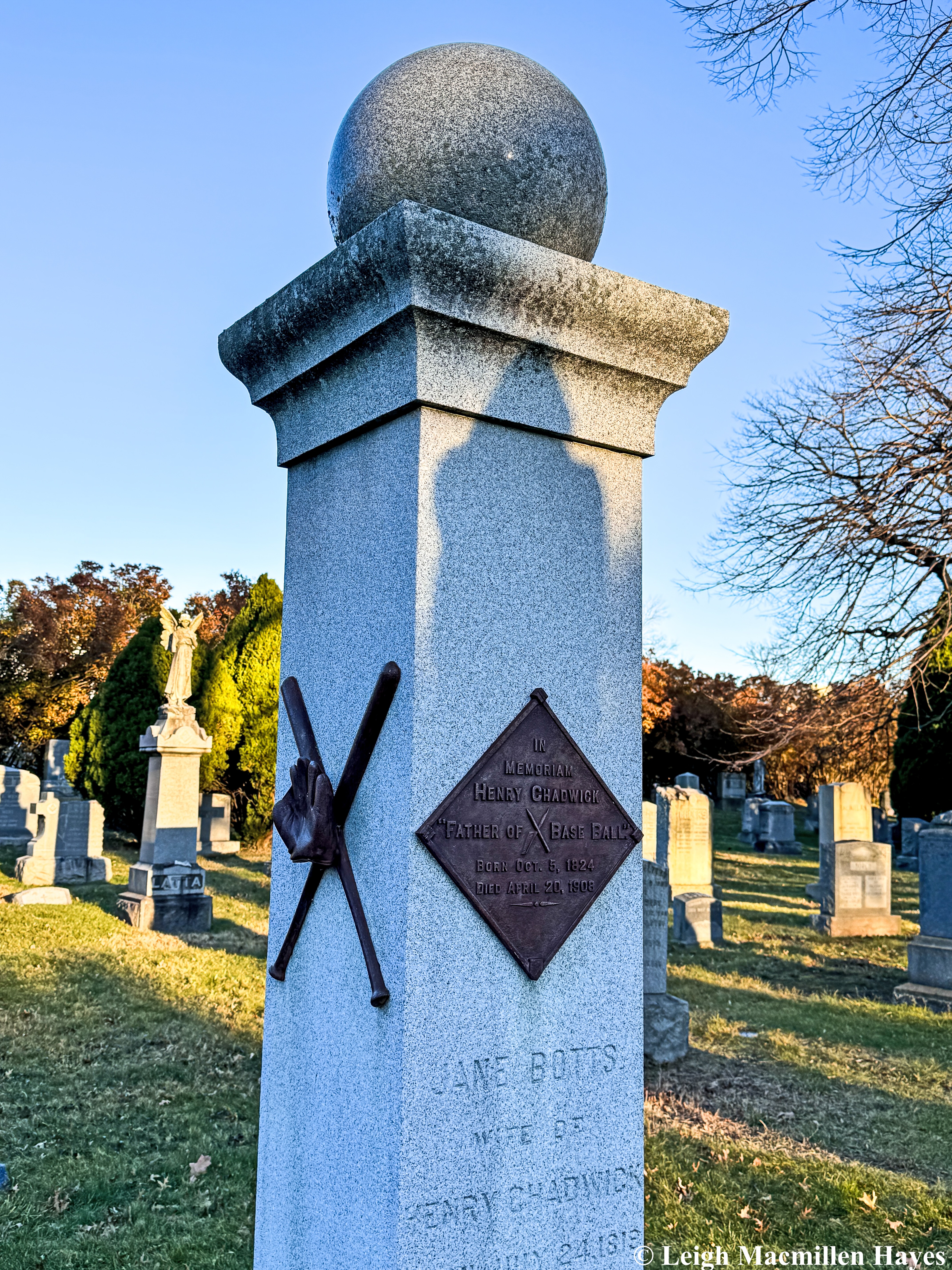
The cemetery contains 600,000 graves and 7,000 trees spread out over 478 acres, with hills and dales and ponds in the mix and as P noted, the city noises disappeared as we explored.

One of our fun finds, the pillar for Henry Chadwick and Jane Botts, he being the father of Baseball.
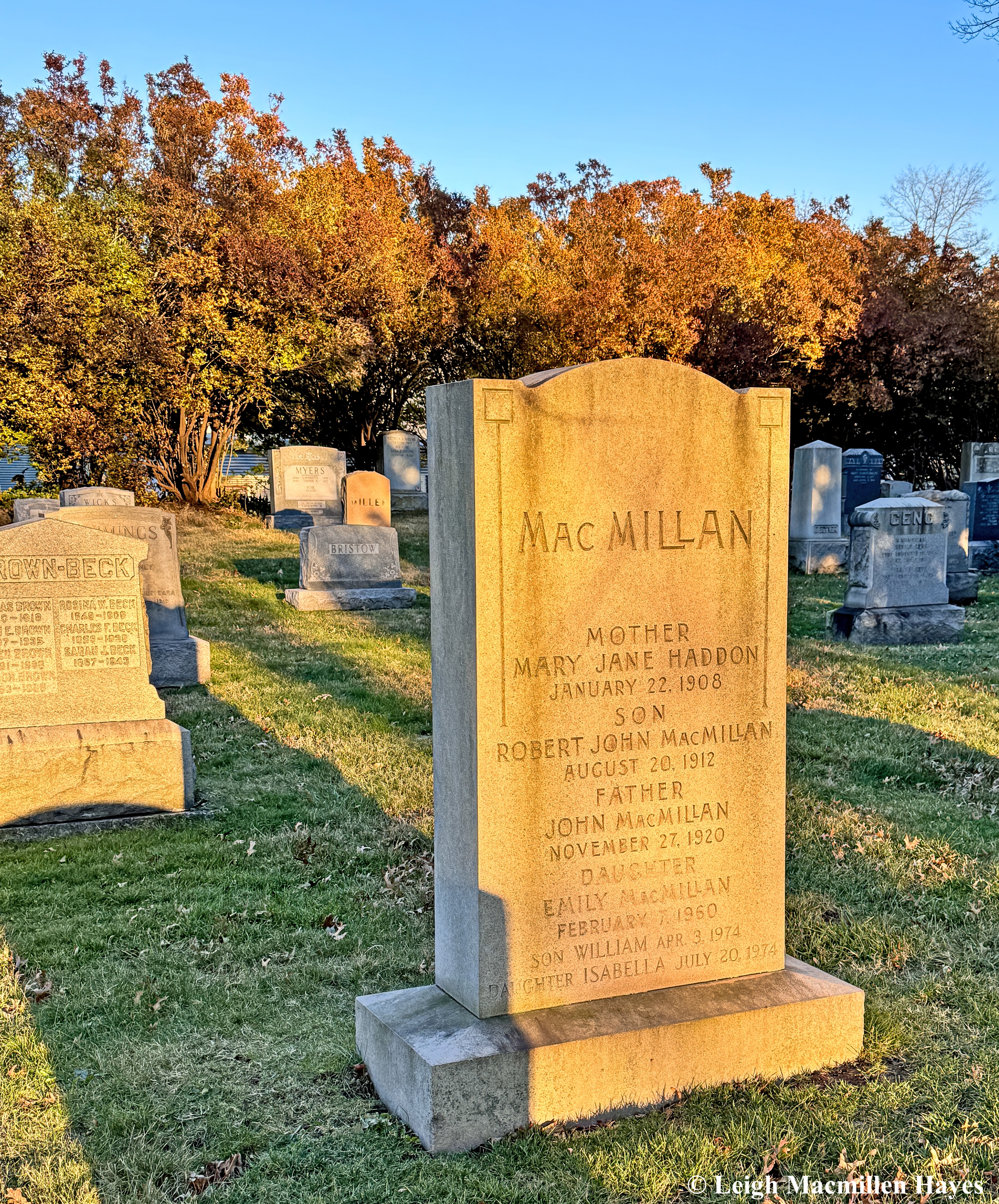
We also looked for familiar names and weren’t disappointed, though we don’t know of any connections at this point.

But what truly struck us is that this cemetery is one for all–for so many were the nationalities and religions depicted.

And while most of the stones looked like they were frequently cleaned, I did locate some with lichens, speaking to the fact that there is life among death. And this shield lichen very much spoke to such life for it featured the fruiting bodies or Apothecia with abundant Soredia, which are tiny, powdery vegetative reproductive bodies that can be carried off by the wind or rain to form new lichens. The Soredia are similar to other vegetative reproductive growths called Isidia, which are stalked growths on the thallus or body of the lichen.

From the cemetery, we could see Lady Liberty standing tall and holding her flame to bring us all together.

And from various vantage points we could see the Empire State Building, standing as a beacon to us . . .

almost like Pleasant Mountain and Mount Washington back home, so that no matter where we were, we knew where our weekend home was located.
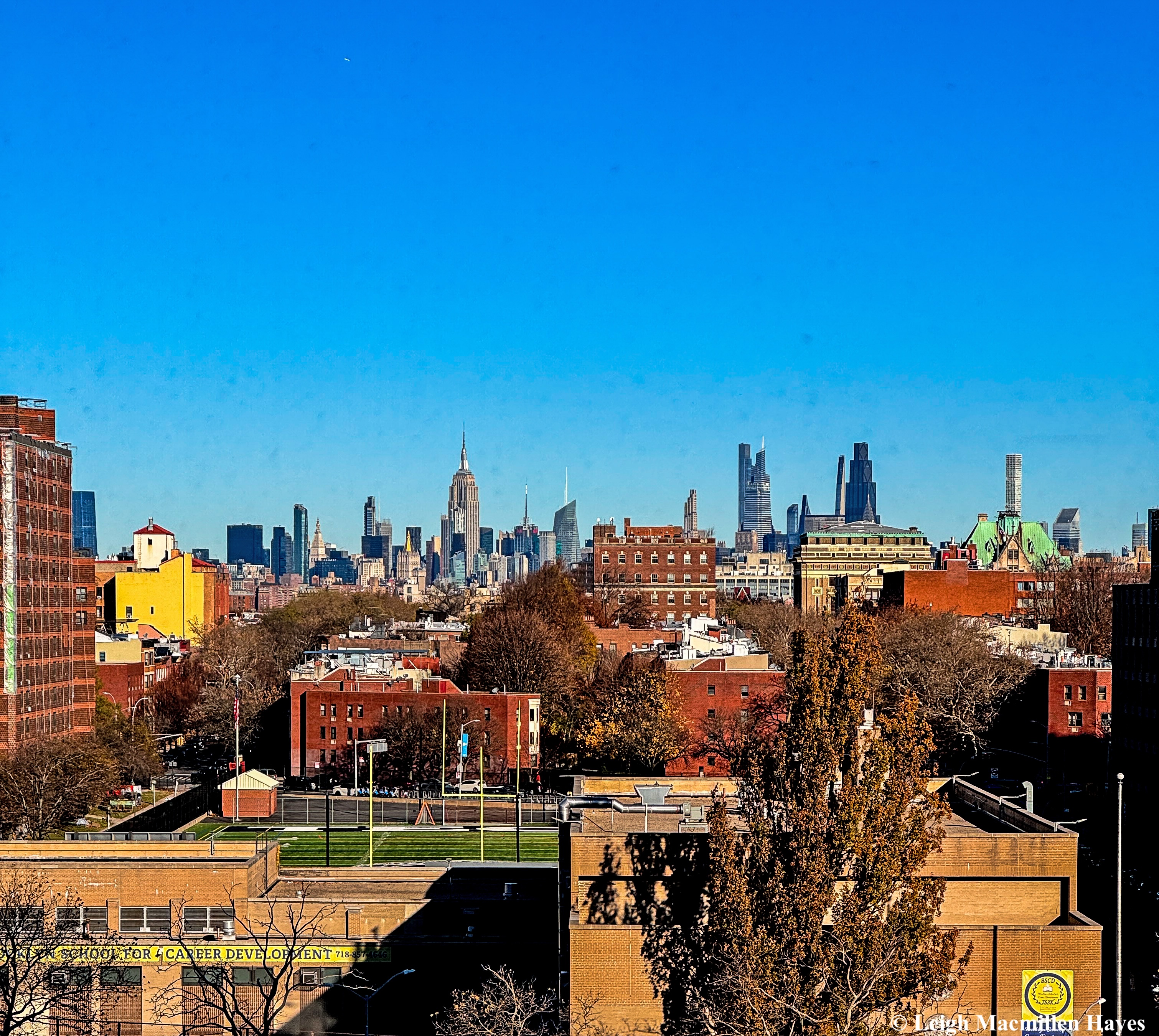
Because this was the view from said “home,” the Brooklyn apartment owned by our Thanksgiving hostess.

And no trip of ours is ever complete without a tour of a hardware store.
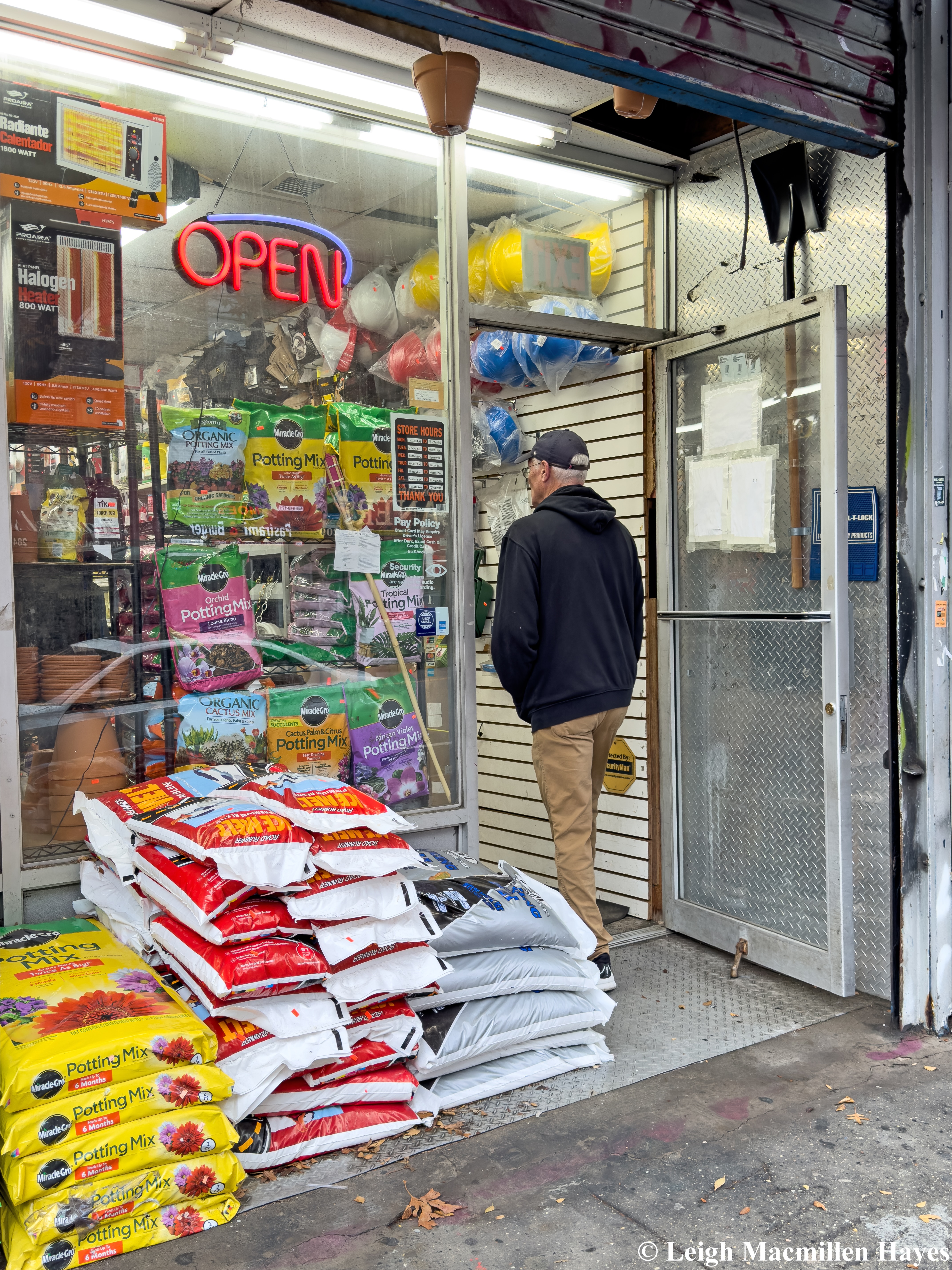
He said he wasn’t going to go in, but you know that he did. It was a quick loop up one aisle and down the other, for so narrow was the store, but oh was it packed with merchandise–every square inch in use as is the city way.

And remember our cemetery trip? Well, I spotted this and My Guy didn’t know what the Old Guard Southern Hardware Salesmen’s Association was all about. Turns out, it has quite a history.

Curiously, I found this explanation on Instagram:

From the American Artisan and Hardware Record, June 1, 1918:

“THE OLD GUARD SOUTHERN HARDWARE SALESMEN KEEPS ALIVE ITS ORIGINAL FIGHTING SPIRIT.

“The original fighting spirit which moved the members of the Old Guard Southern Hardware Salesmen’s Association to organize for carrying on the bloodless battle of commerce was strongly in evidence with new force and application in its annual general meeting held May 29, 1918, at Atlantic City, NJ. These veteran warriors of salesmanship pledged all their energies and experience to the aid of the younger men who are waging the titanic warfare of a free people against the despotism of barbarians who hide their savagery under a guise of mechanical culture.

“Particular significance attaches to the Old Guard by reason of the fact that its ranks represent the ripened wisdom of years of active service in the hardware trade. It was formed ten years ago at the Convention of the Southern Hardware Jobbers’ Association in Hot Springs, Arkansas. The membership of the Old Guard is strictly limited to salesmen and traveling salesmanagers who have sold hardware and kindred commodities to the hardware jobbing trade in five or more Southern and Southwestern states during a continuous period of fifteen or more years. The membership is limited to one hundred.

“The men who have been in charge of the affairs of the Association for the term which ended at the conclusion of this year’s convention have exerted themselves with enthusiasm and persistence to maintain the traditions of the organization and to further the collective interests of the membership…

“Adjournment was taken with a feeling of renewed confidence in the power and purpose of the Association and a determination to use all the influence of the organization in promoting a vigorous Americanism throughout their territory to the end that international justice may be established and lasting victory be won for the hosts of democracy.”

Hardware and Democracy it seems, were both important to Herb.
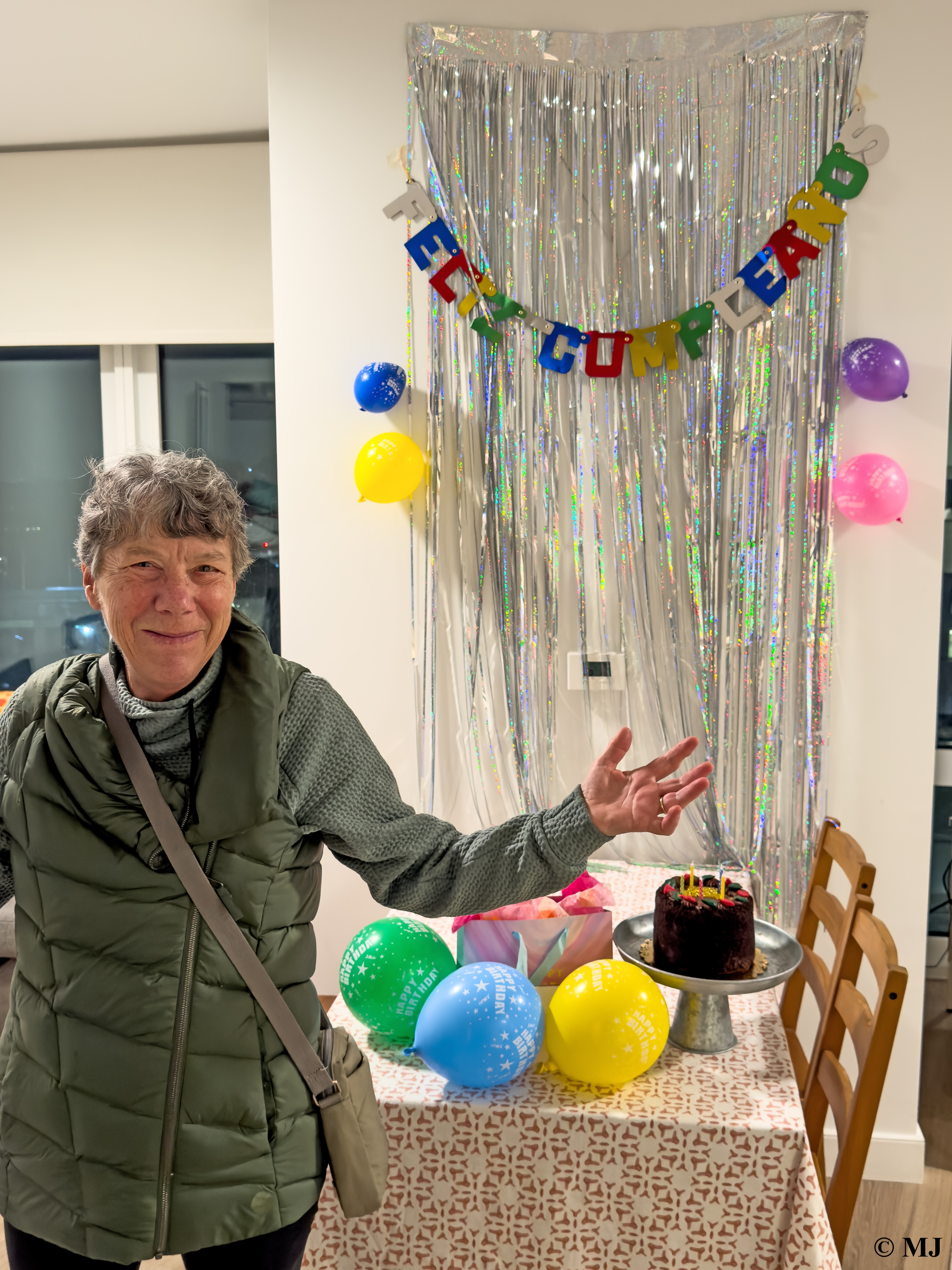
So we arrived in Brooklyn the night of my most recent birthday and were welcomed with a surprise celebration that included New York-style pizza and dark chocolate cake–thanks to M and P.

We were also there to celebrate America’s grand feast with M’s family in New Jersey.
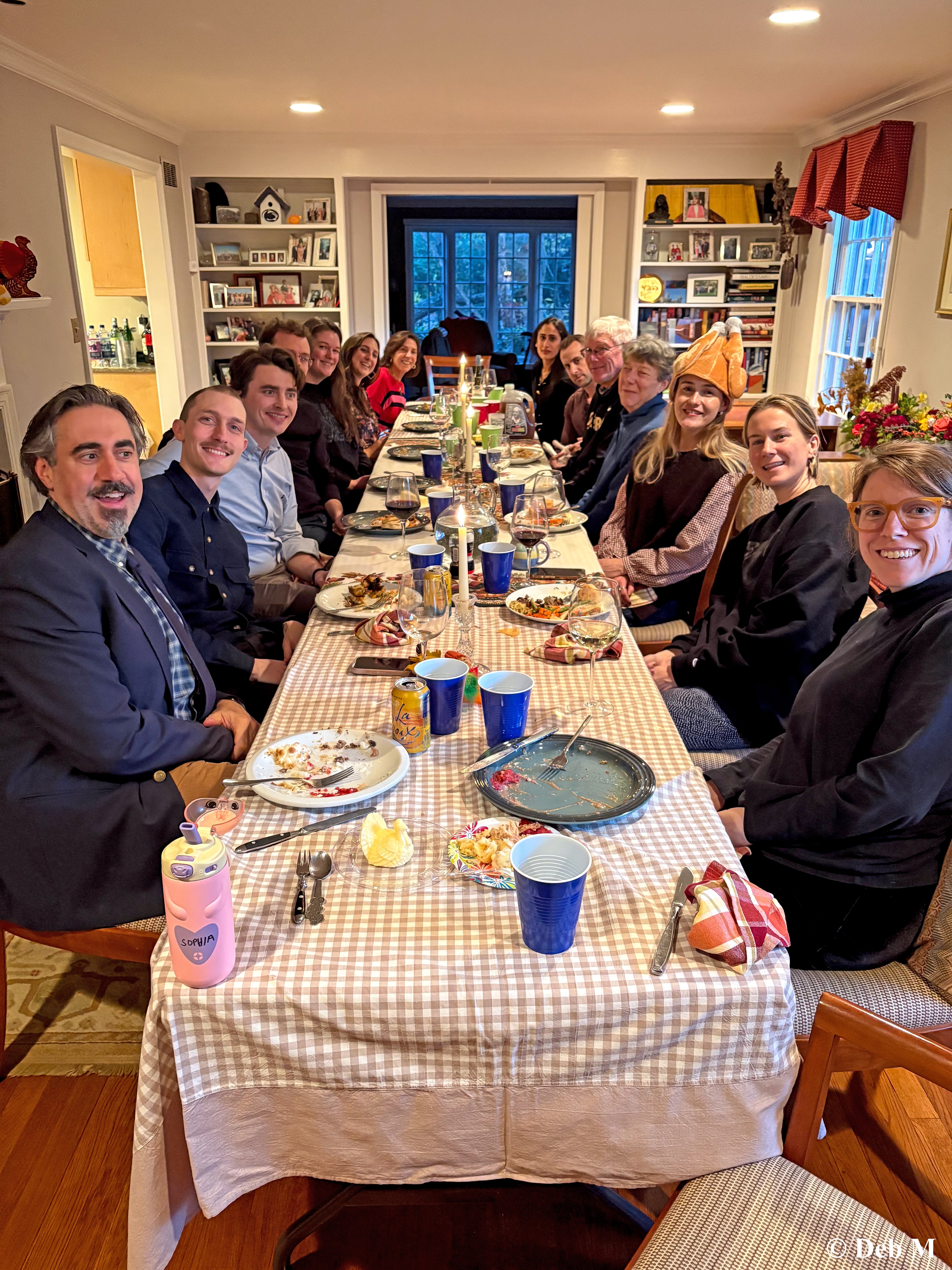
Dinner included a gathering of family and friends, one of whom is a Kiwi and this was her first American Thanksgiving feast, so she graciously wore the turkey hat.

And this little one kept us all in line throughout the day.

At the end of the day and the end of the weekend, our biggest thanks go to these two, daughter and mother, M and D, M being our youngest son’s girlfriend. Their hospitality and generosity never cease to amaze us.

Because of them, we did lots and lots of walking, while it felt like an almost equal amount of dining was thrown into the mix from bagels to farm-to-table to traditional Thanksgiving to diner breakfasts to pub meals, and of course, the iconic New York-style pizza.

Thank you, D and M and P, for inviting us to celebrate New York our way, and to S and H for making the trip from Boston, even if you couldn’t stay the entire weekend.

Bogging in Maine

What is a wetland? Basically, it is wet land! But more specifically, wetlands are often those transition zones between dry land and deep water.

There are four basic types of wetlands, which can be broken into even more types, but let’s stick with the four: marsh, swamp, bog, and fen.

Marshes are typically located along shores of rivers and streams, and even the coastline. Plus they can be found in the shallow water of ponds and lakes. Cattails, Arrowhead and other soft-stemmed emergent plants grow in these areas.

Swamps are found along rivers, streams, and lakes where mainly woody-stemmed plants such as shrubs and trees, like this Tamarack, grow.

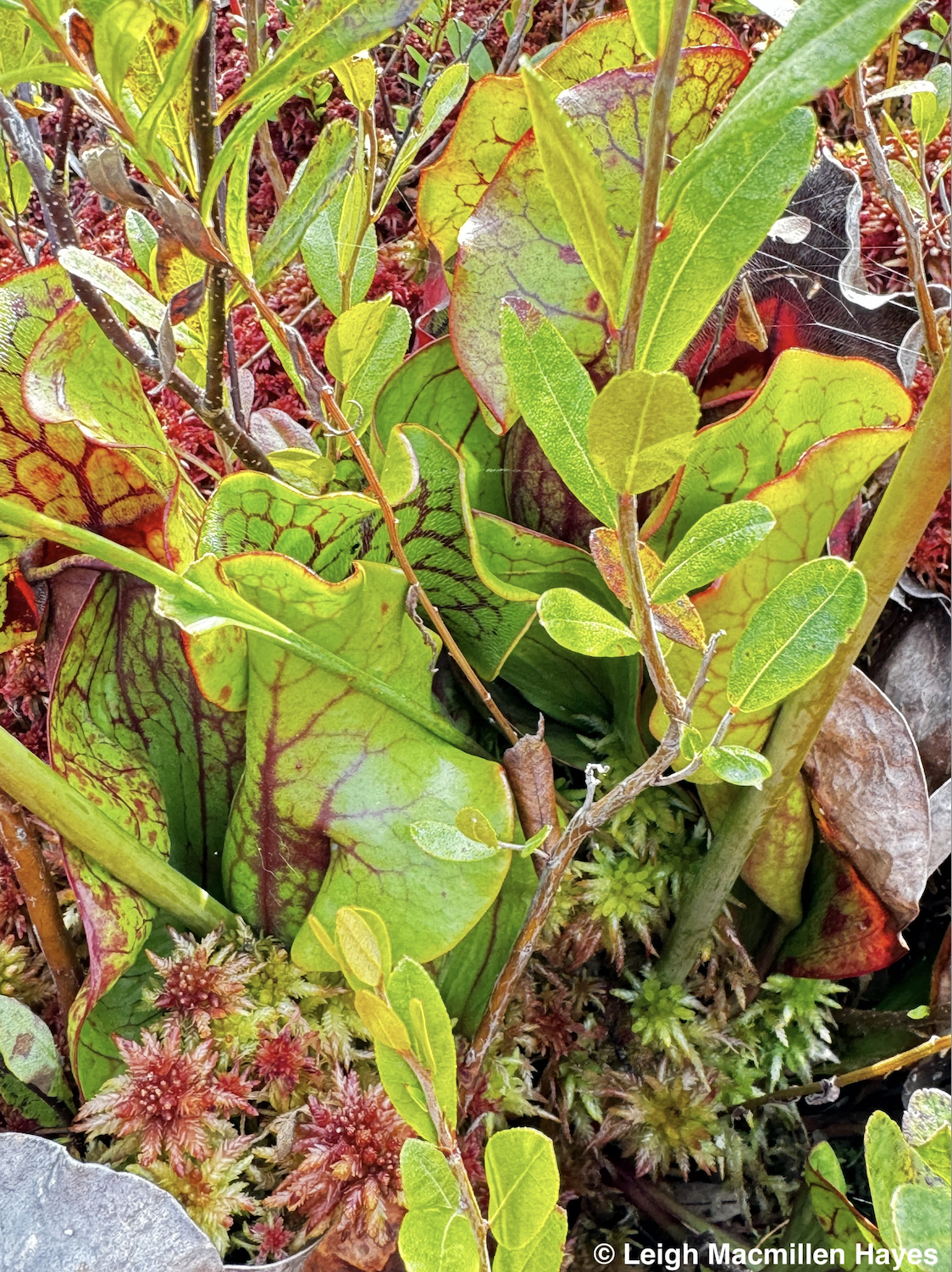
Pitcher Plants and Sphagnum Moss
Round-leaved Sundews

Bogs are found in our northern climate and often are deep depressions that have no drainage. They are covered with a surface carpet of sphagnum moss and insect-eating plants like the Pitcher Plant and Sundews.

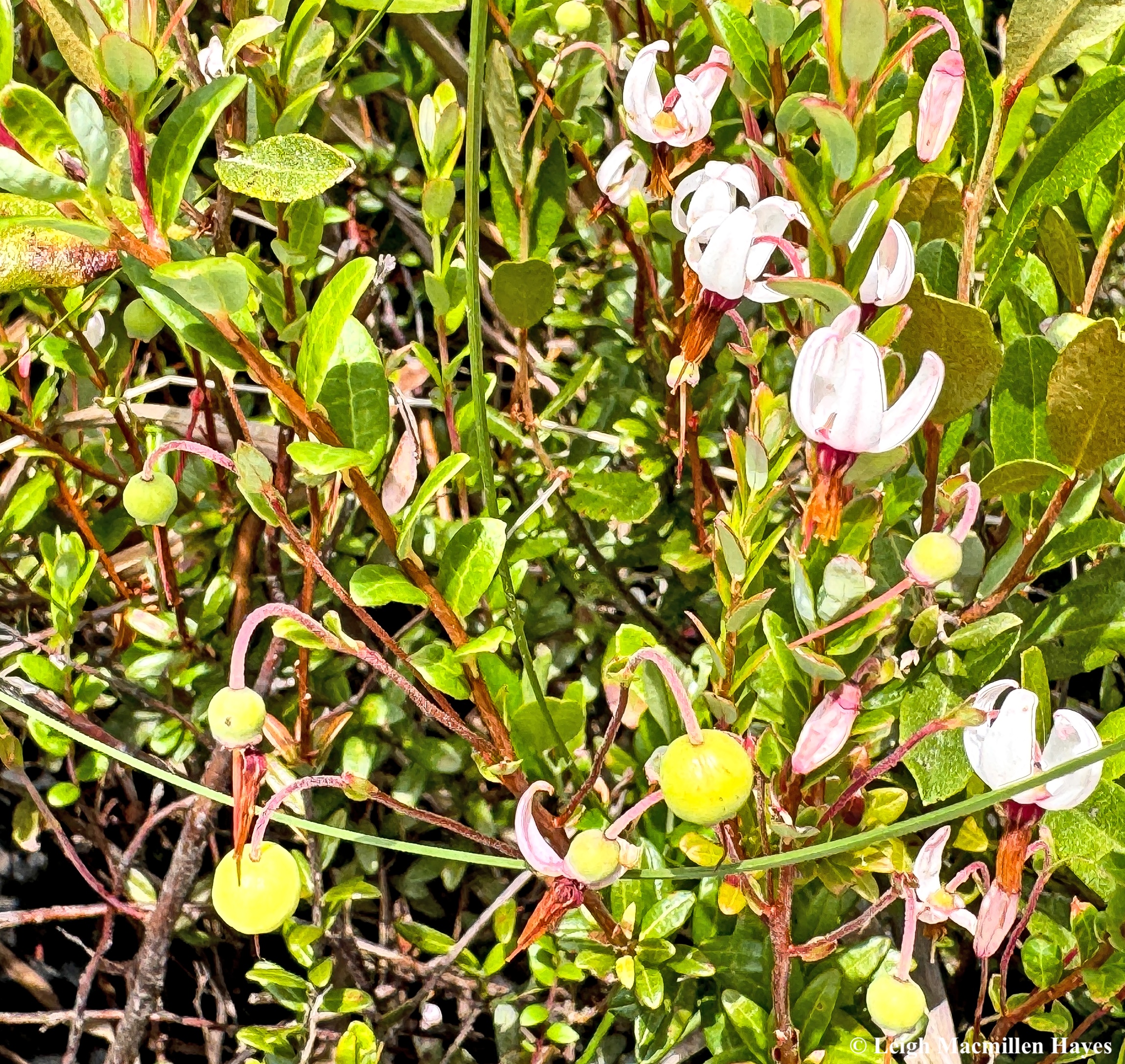
Cranberry flowers and fruits

Native Cranberries also flourish in the stagnant and acidic water of a bog.

Sphagnum Moss
Leatherleaf

Like bogs, Fens are found in northern climes, but the water is slow-moving, and does have some drainage. Layers of peat (sphagnum moss) and sedges and grasses and low shrubs like Leatherleaf may grow in these areas. The carnivorous plants like them as well.

But it’s not just the flora that makes a wetland so special. These places provide habitat for a wide range of insects and animals and birds as well. In fact, they act as nurseries, or places where any of the critters might raise young.

And as soon as the sun warms the air in the spring, friends and I scour the wetlands in hopes of discovering who is emerging on any particular day. One of my favorites to watch is dragonfly emergence (in case you are new to this blog and didn’t already know that. You can learn more here: Developing Dragonfly Eyes, but really, type “dragonfly” into the search button of this blog and a bunch of dragonfly related posts will pop up–all worth a read, I promise you.)

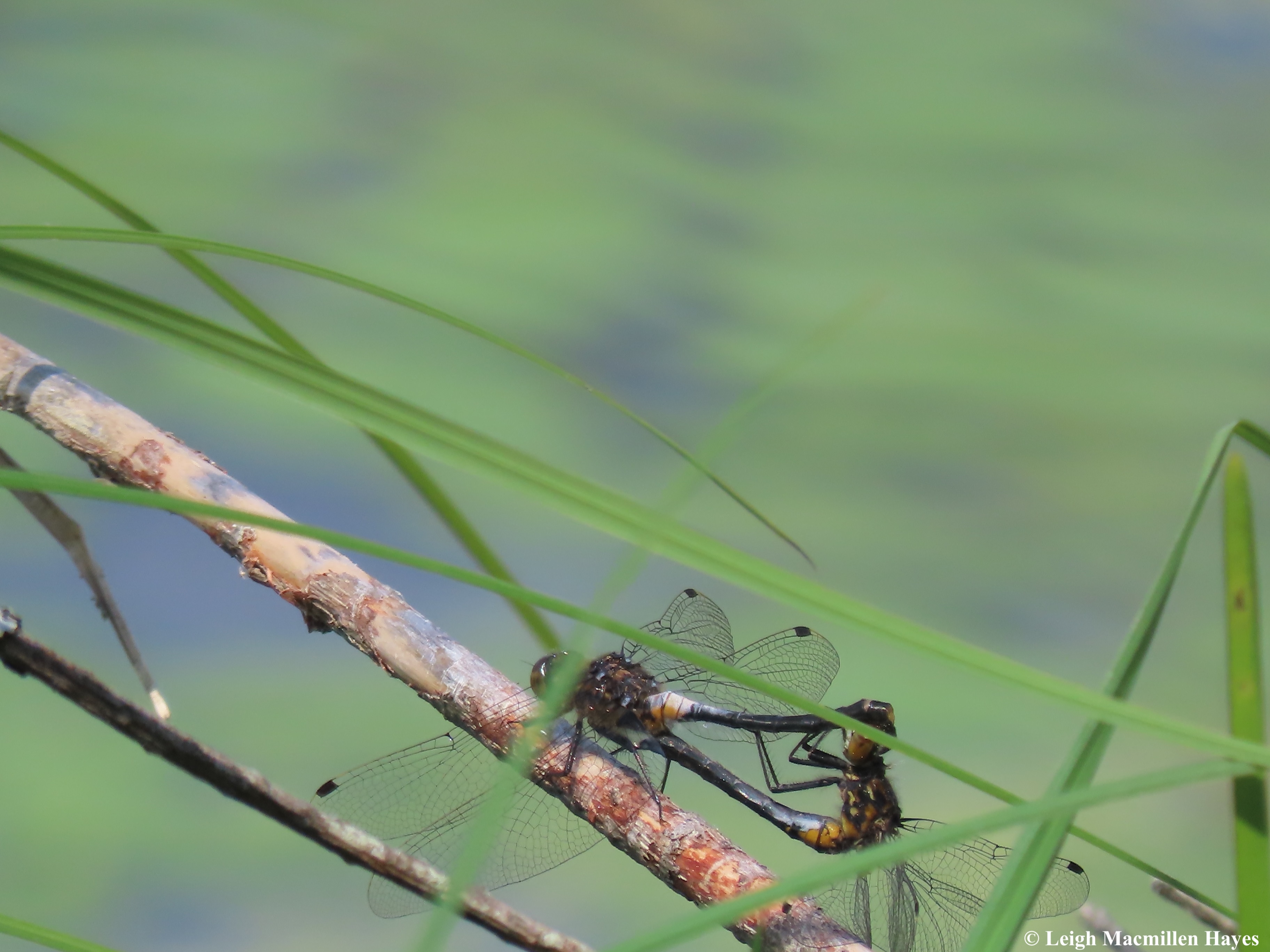
And like other insects, once emerged and a few days old, canoodling commences and dragonflies such as these Belted Whiteface Skimmers find each other and a presumably private place to mate. Private, that is, until I show up!

Eggs are laid in a variety of ways and places depending upon the species and this is a female Eastern Pondhawk taking a break upon a lily pad.

And here is a Forktail Damselfly laying eggs upon vegetation.

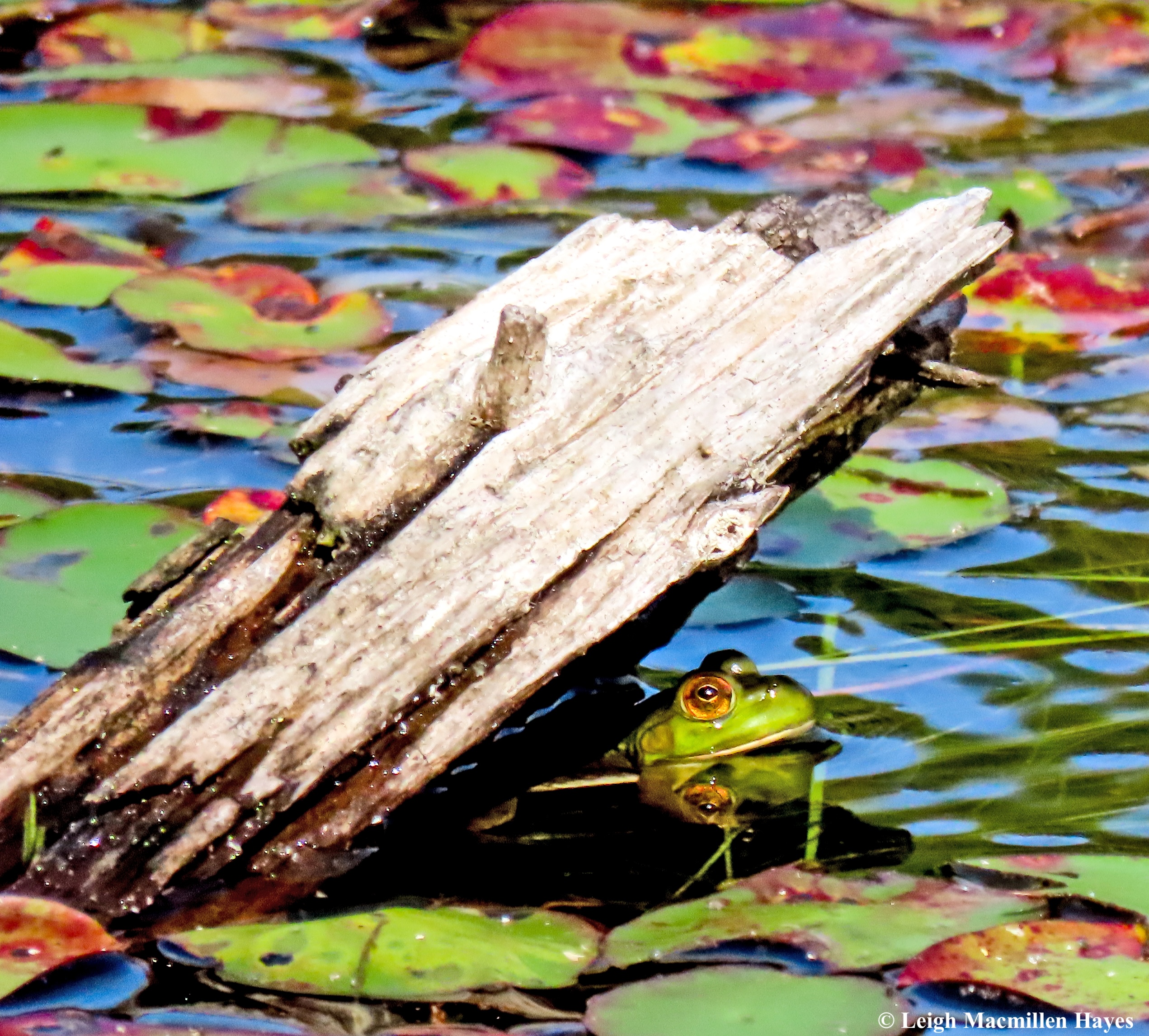
Frogs are also a highlight of a wetland, whether they are hiding in the shade on a hot summer day like this Bullfrog …

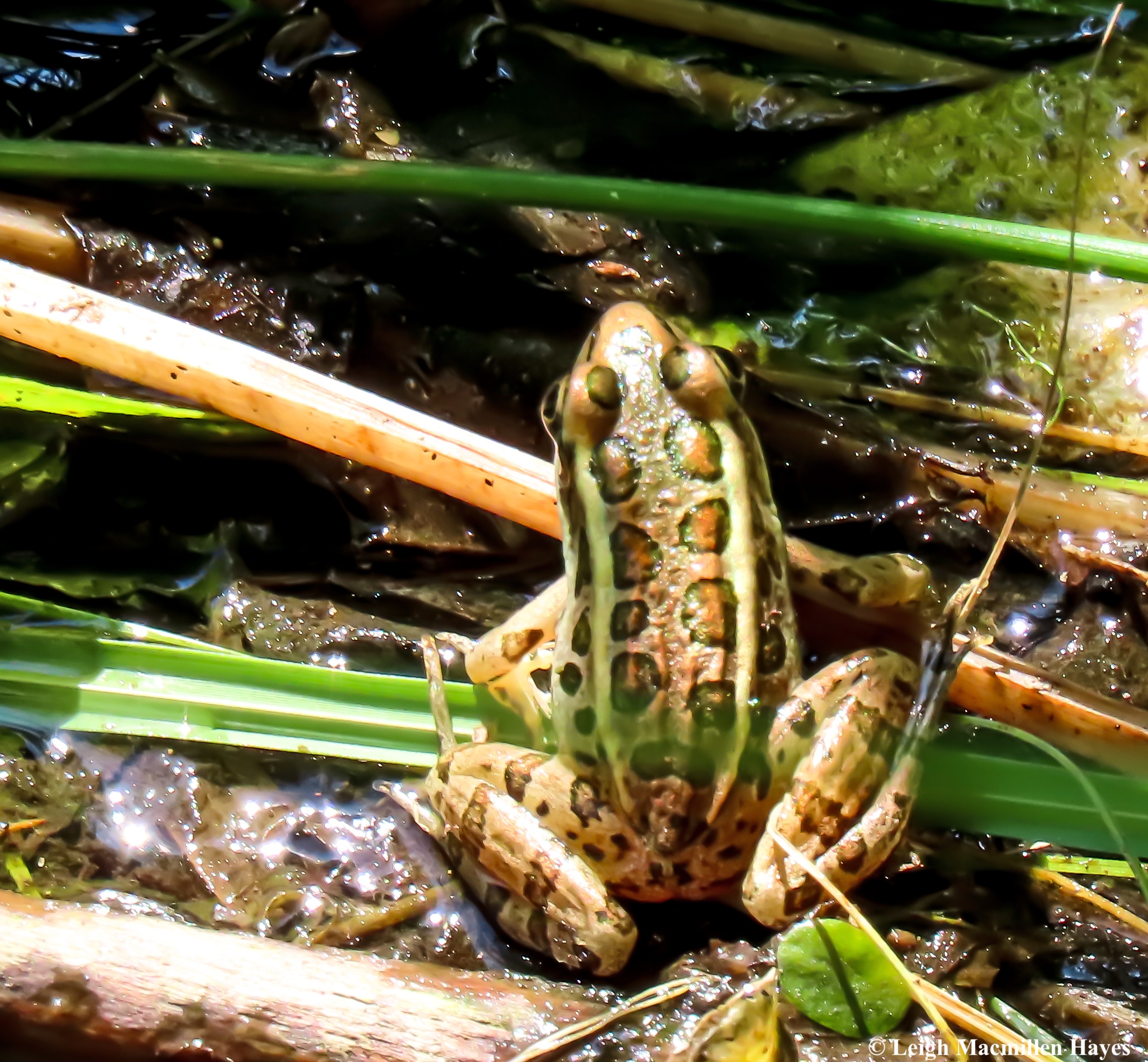
Or pausing briefly in the sun, such as this Pickerel Frog chose to do. Actually, it wasn’t so much basking as trying to remain hidden from my sight by not moving until I passed.

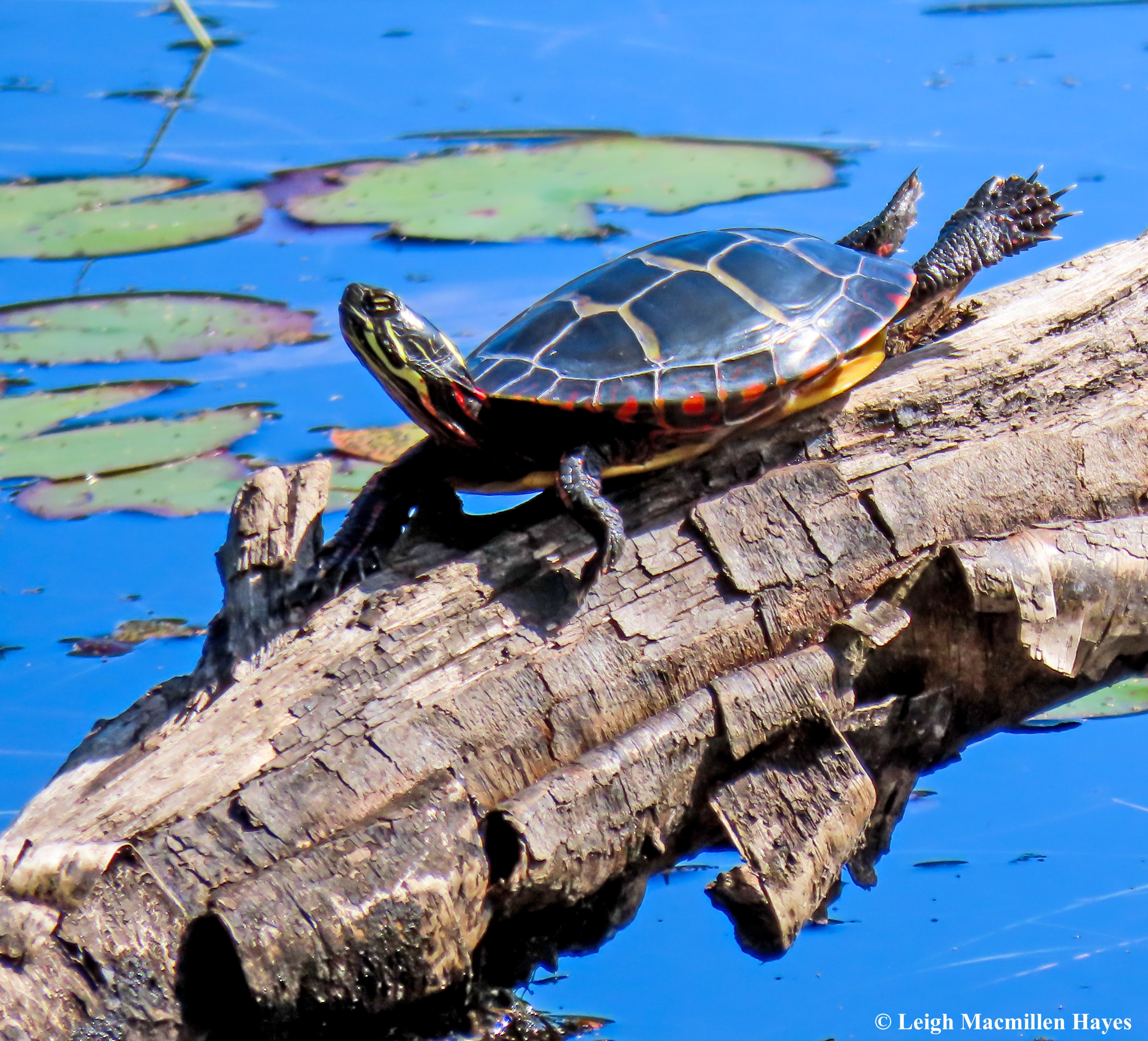
Those who do love to bask, (frogs do this as well) are the Painted Turtles, and the more surface area that is exposed to the sun’s beams, the better. Sometimes I’m surprised when I do capture a photo such as this one, for they are quick to sense my presence or hear me coming, and quickly slip into the water. But if you wait a few minutes, sometimes they’ll reemerge.

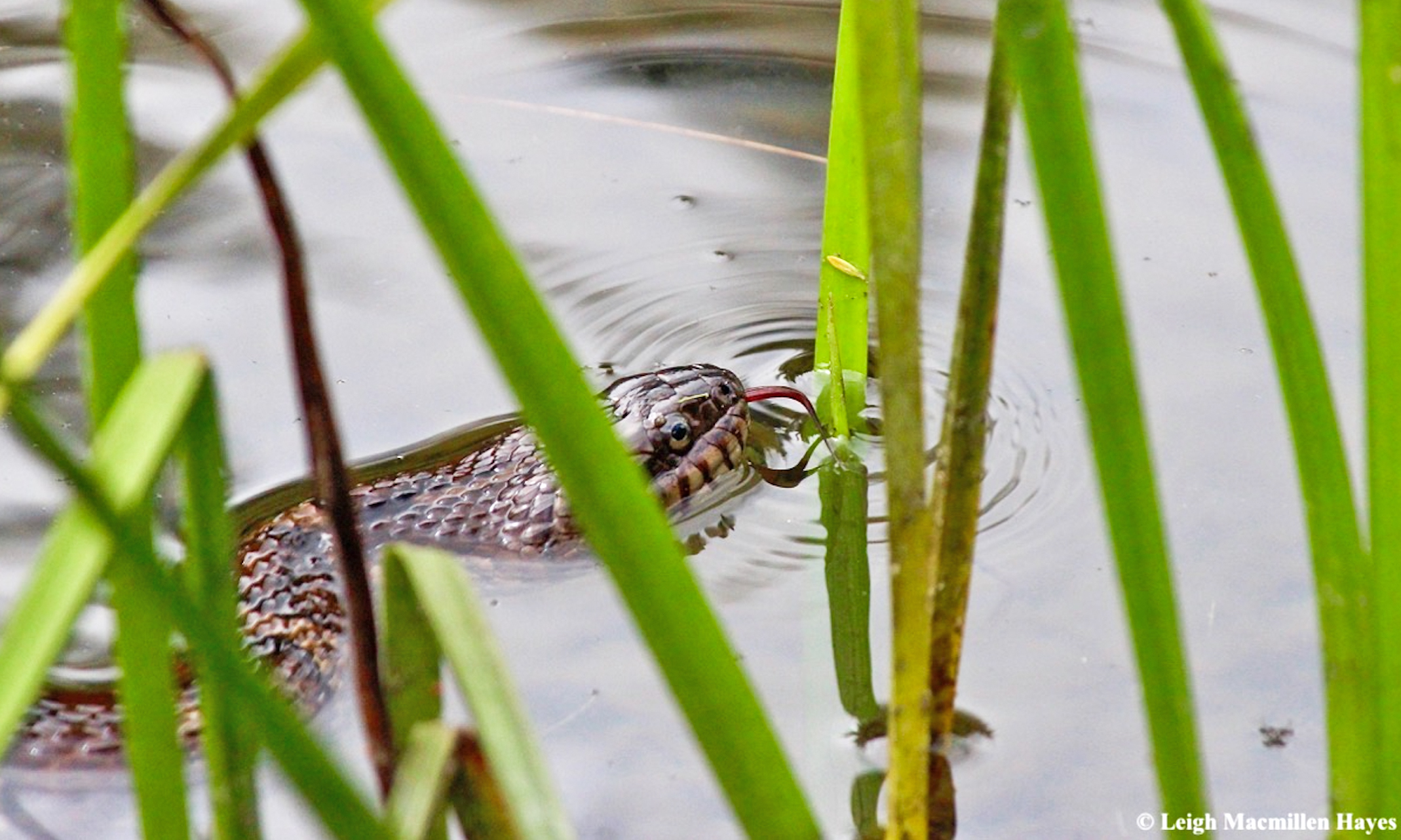
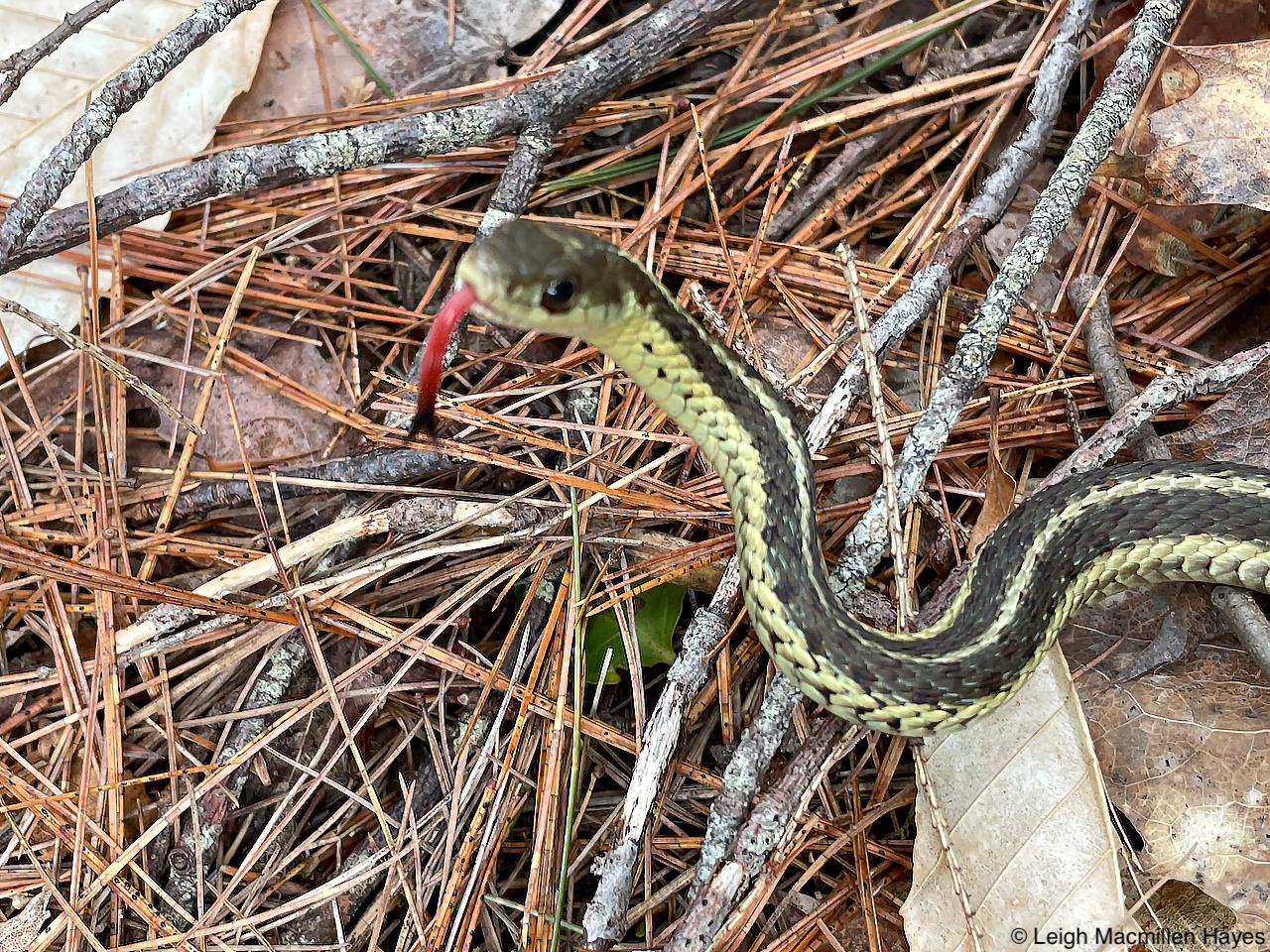
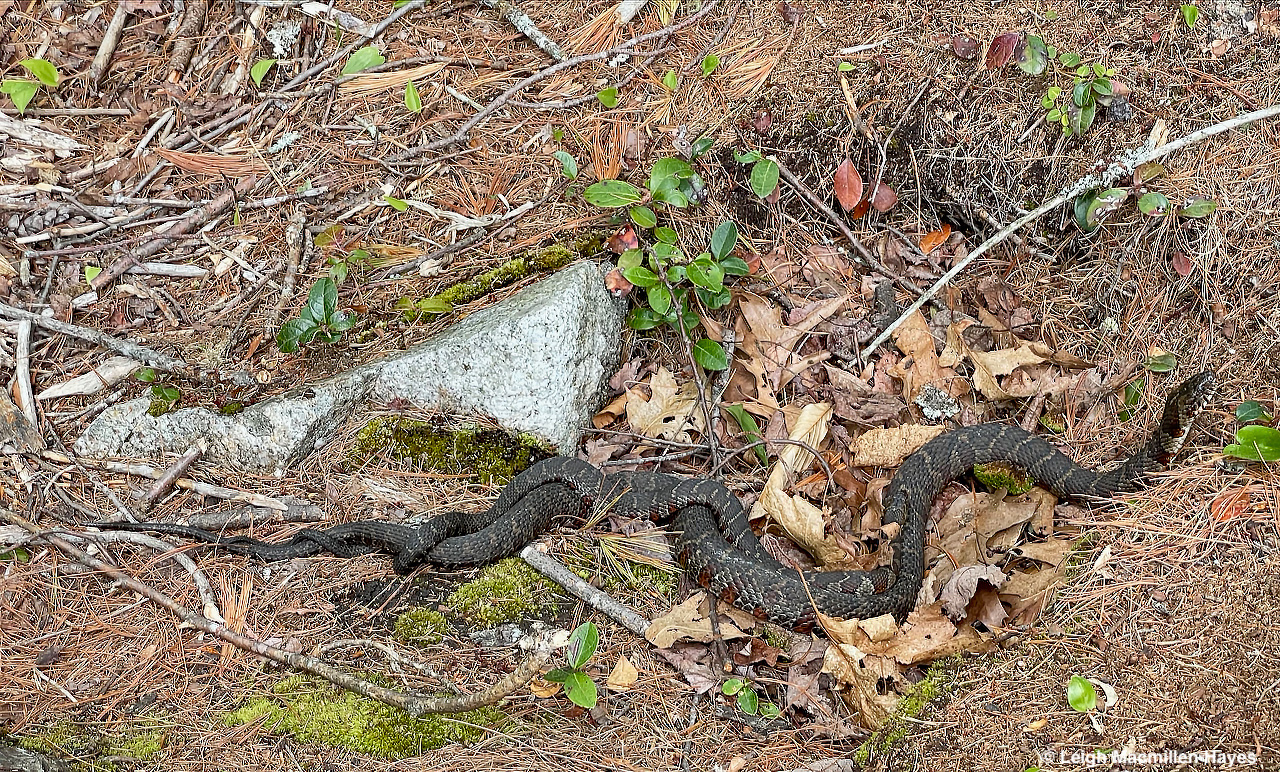
And there are Northern Watersnakes always on the prowl, using their tongues to make sense of their surroundings.

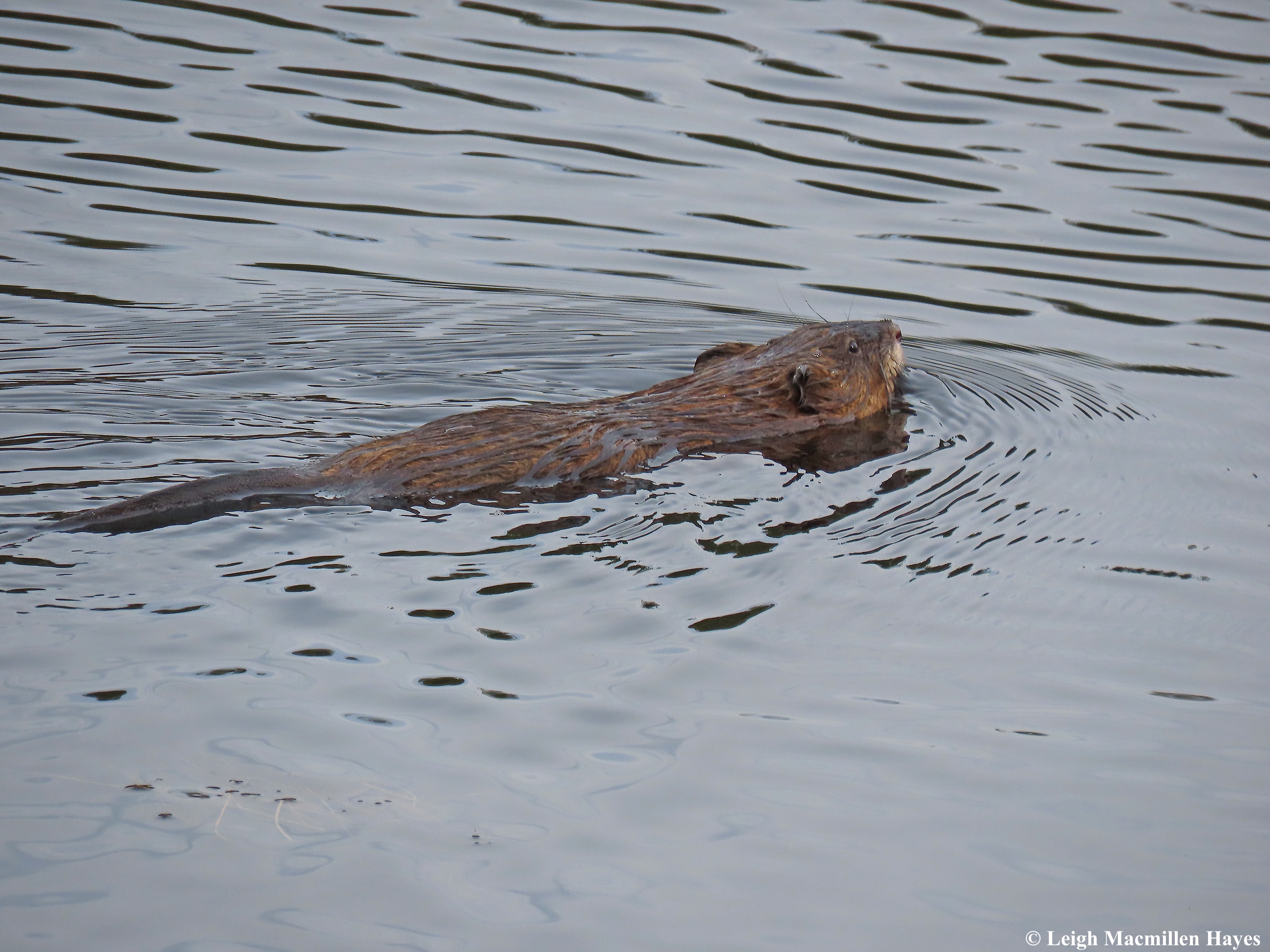
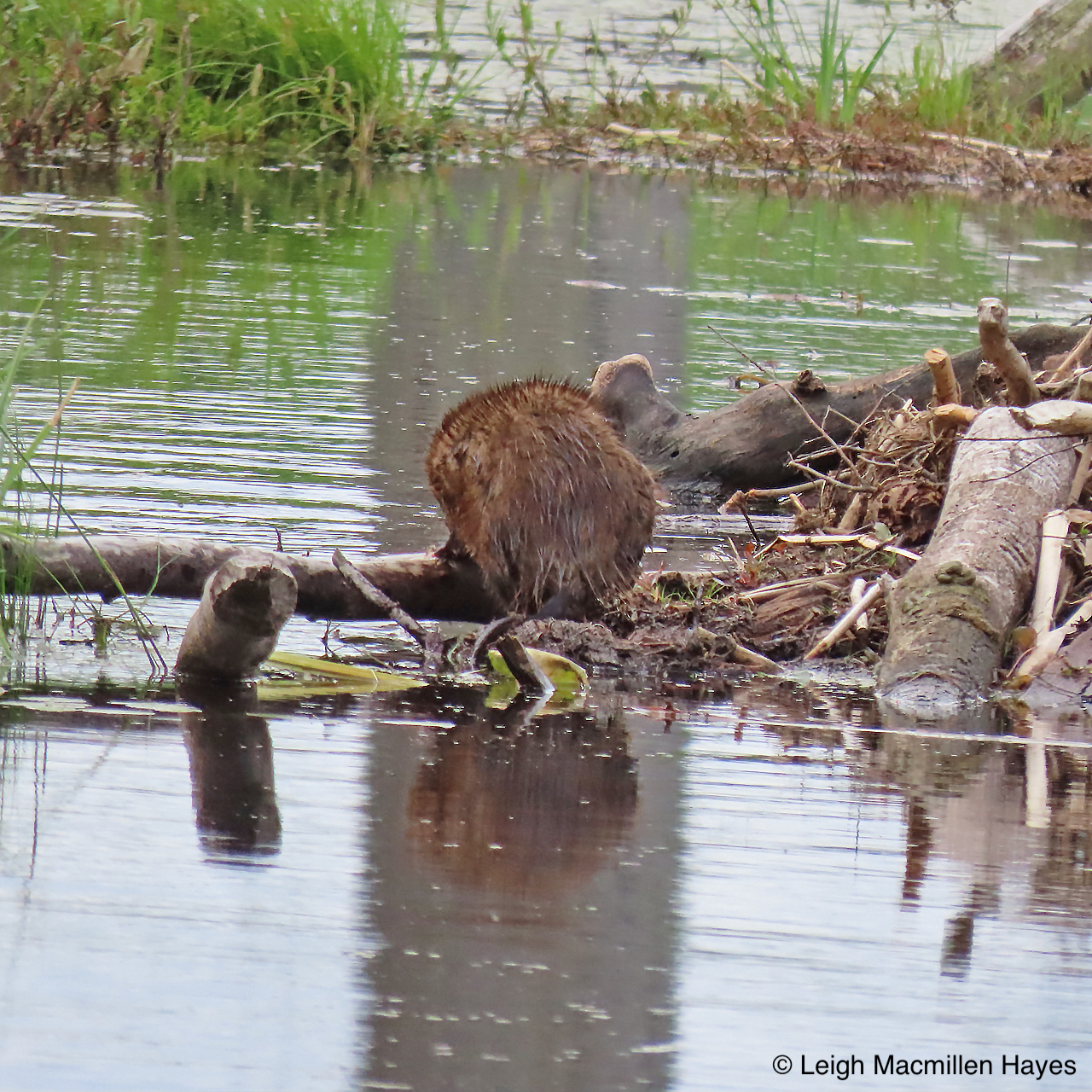
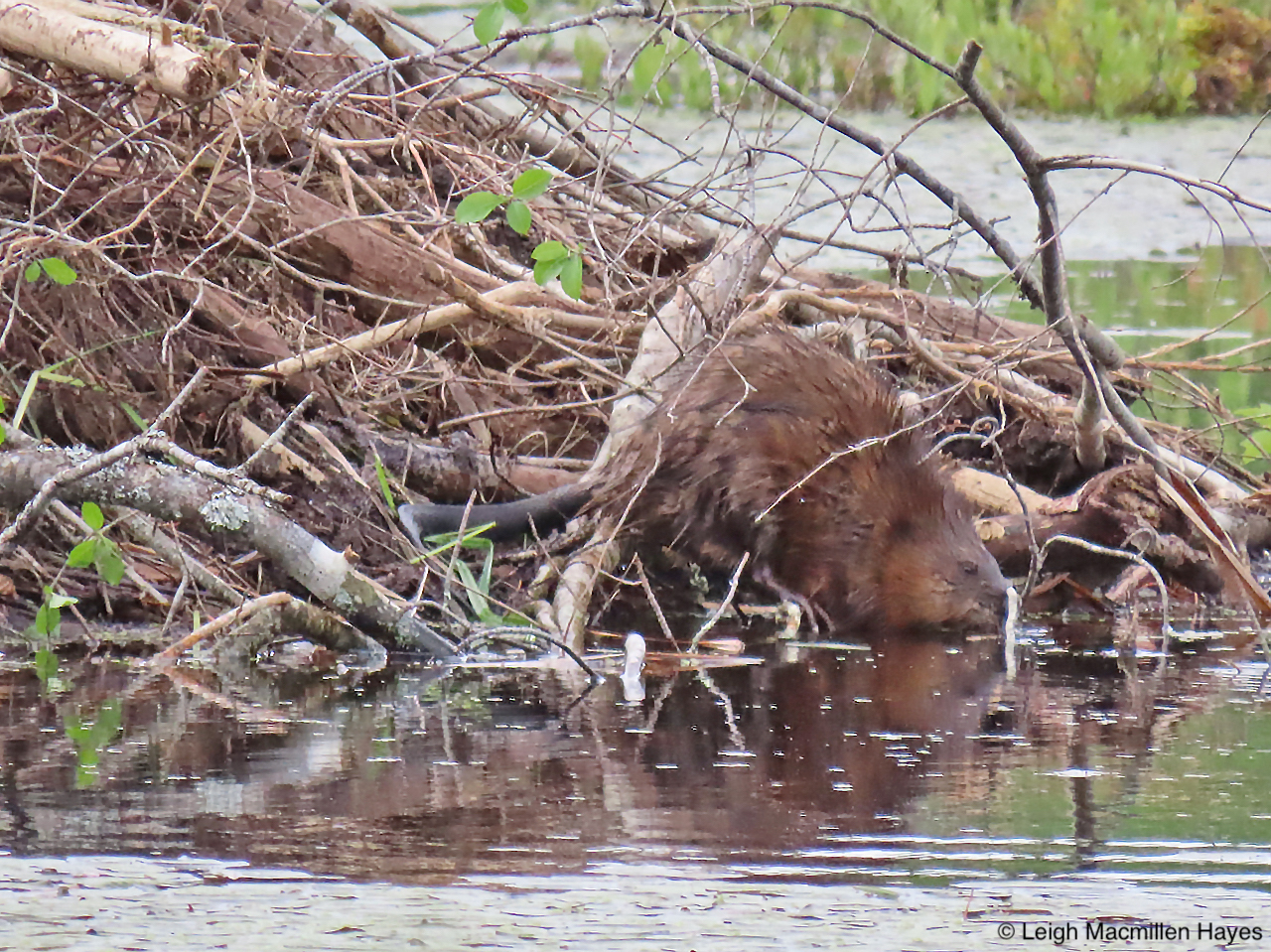
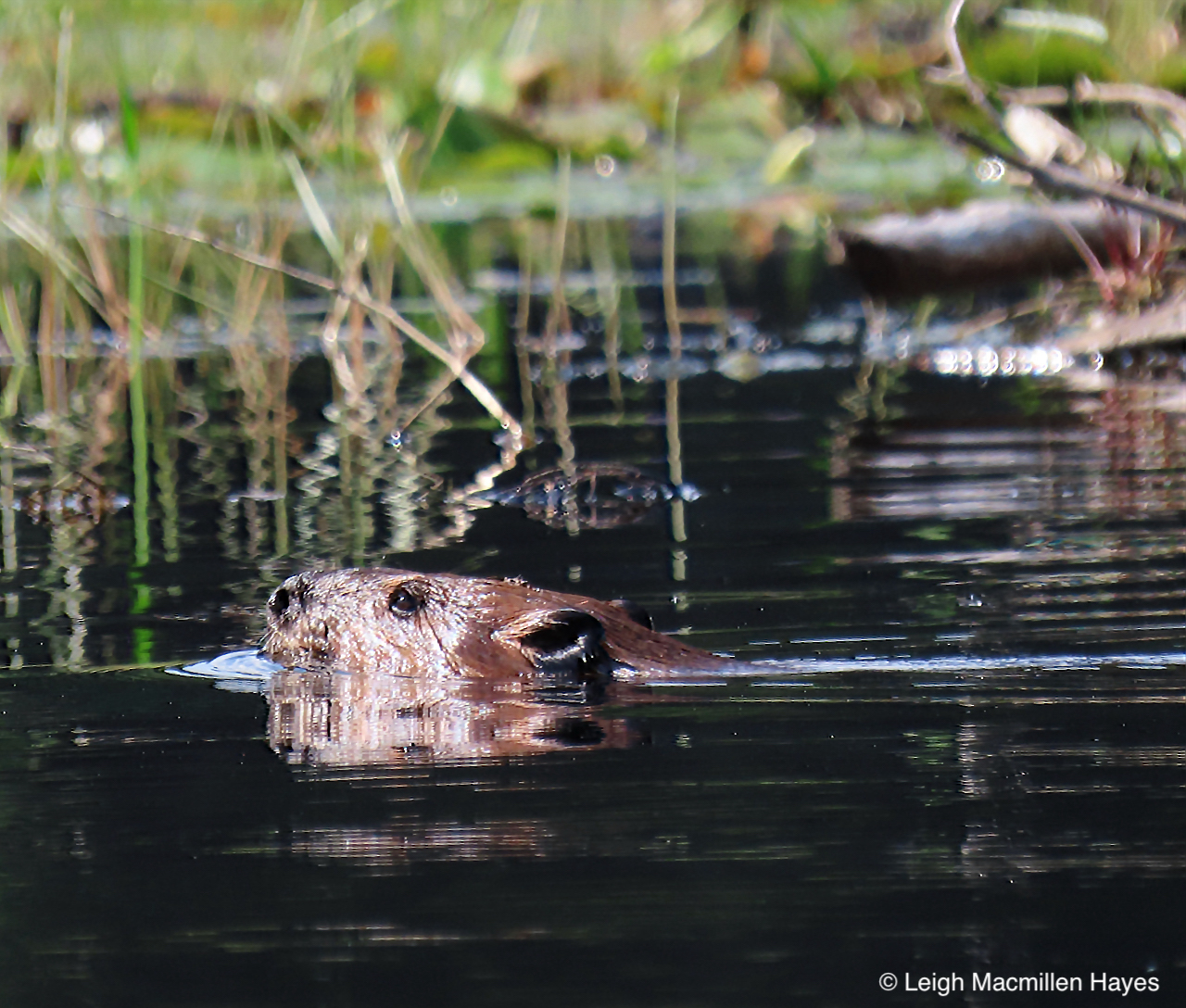
Mammals also use wetlands for forage for food and build homes and one of my favorites is the American Beaver, who knows the value of a wetland, and can create one in a short time by building a dam. Beavers build dams to created a deeper pond through which to navigate, for they are better at swimming than walking. They may alter the wetland to suit their needs for a few years, but then move on and let the dam breach and then a new type of wetland emerges and more critters move in and take advantage of what it has to offer.

That all said, it wasn’t until I spent more time with the animal pictured above that I realized it was actually a Muskrat–look at that thick, rounded tail, unlike the flat paddle of a Beaver’s.

And birds! Oh my. Mergansers . . .

And momma Wood Duck and her offspring . . .

and Papa Woodduck . . .

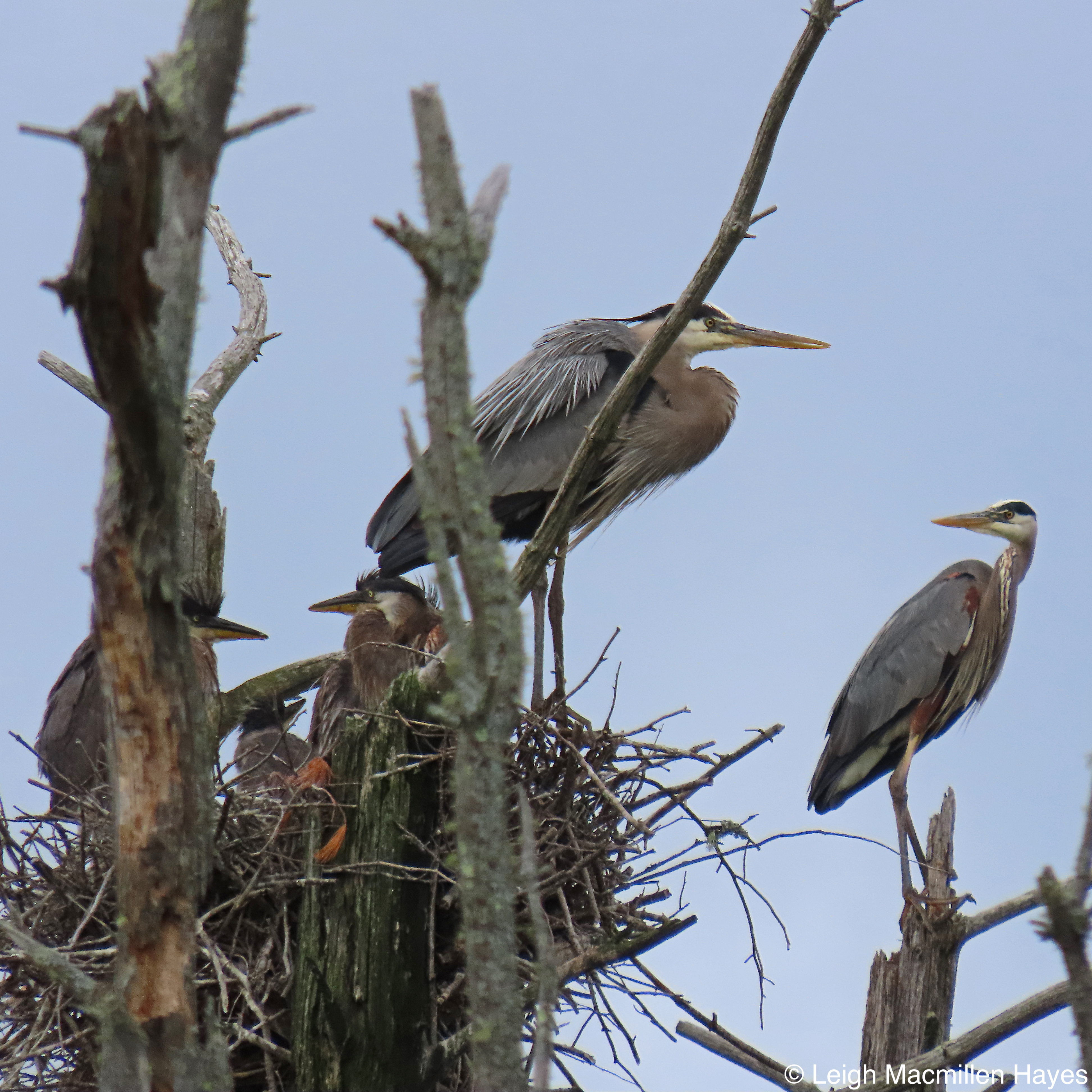
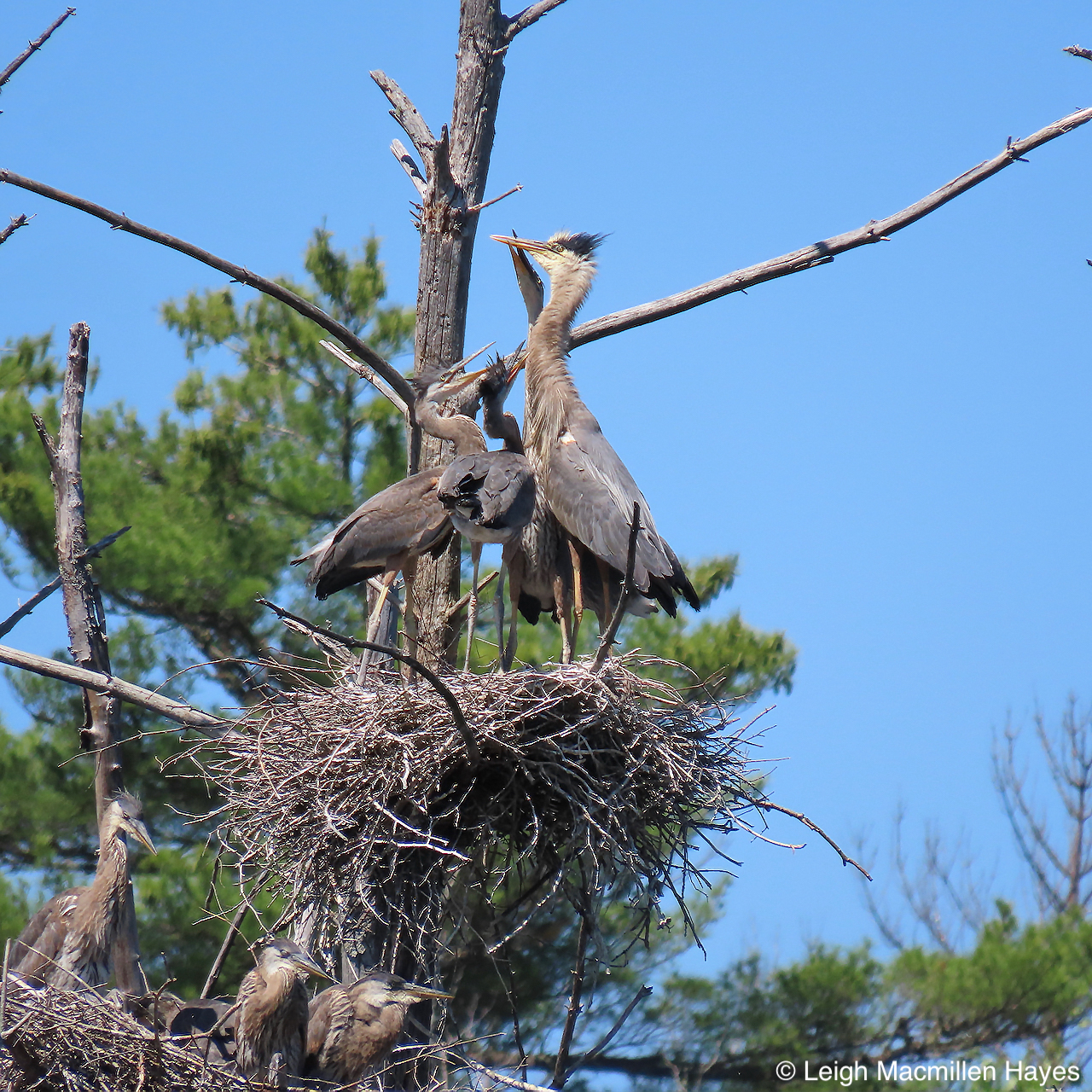
And Great Blue Herons always on the prowl for fish or amphibians know the value of the wetland as a food pantry.

So, this spring and summer and fall, I’ve been following My Guy and our friend, Bruce, beside and into and sometimes, thanks to Bruce’s drone, over a variety of wetlands.

Bruce is an early riser (understatement), and occasionally I’ll meet him at a predetermined location as we did this past weekend–before the sun has risen. Though the thought of staying in dreamland for another hour or so is enticing, I never regret the decision because we get to view the world before it officially wakes up.

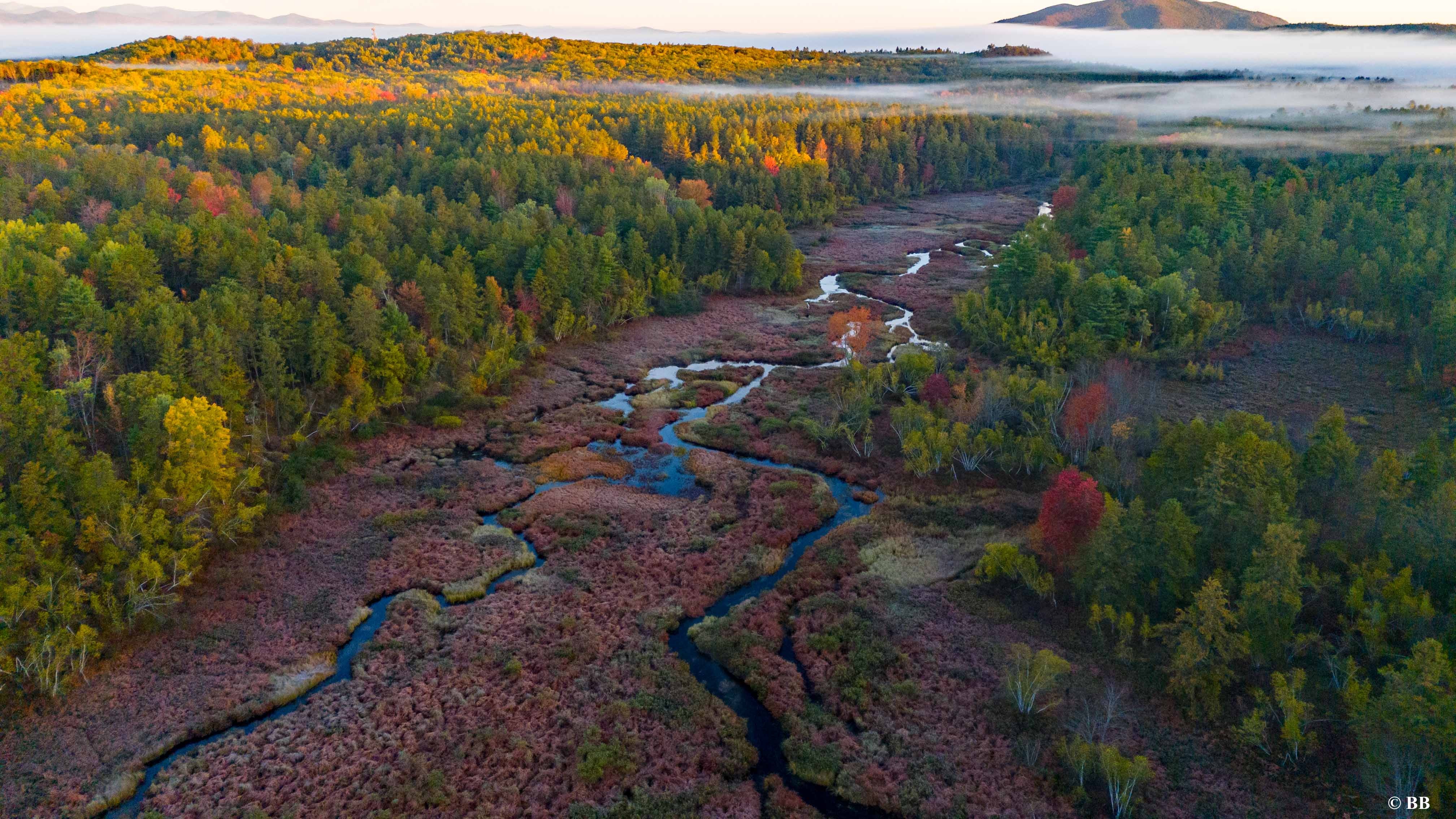
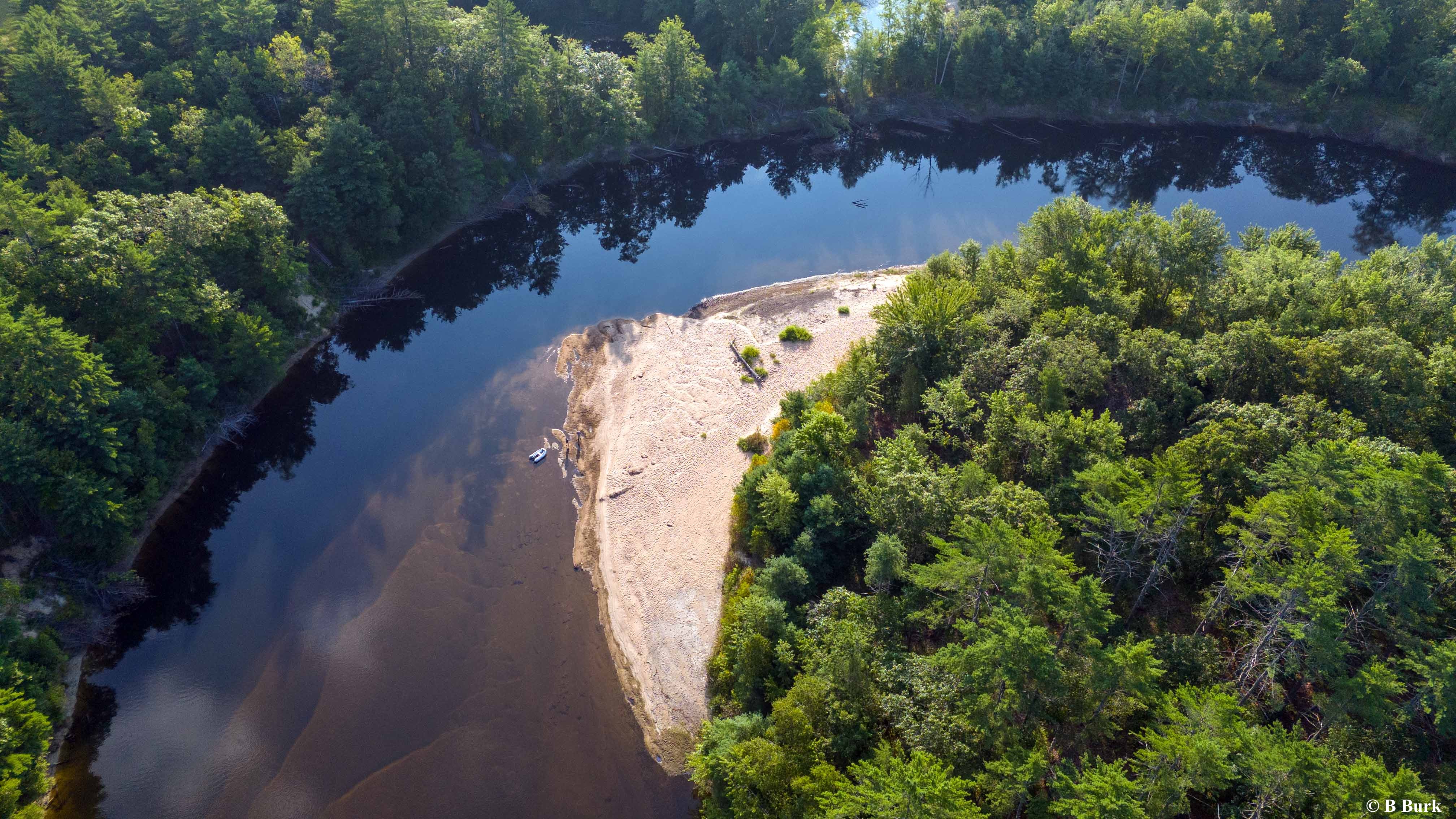
And with his drone we explore these areas we cannot easily access. This is one My Guy and I walked all the way around a few weeks ago without ever spying, though we knew it was there. But Bruce and I bushwhacked through a forest of White Pine Saplings and mature trees and reached the edge before he launched his bird and we were offered a glimpse of this most beautiful wetland with pockets of water connected by meandering rivulets.

The stream turned to forest for the trees told more of the story, as they closed in and I recalled that it wasn’t far from that spot that My Guy and I walked through a damp area where Royal Ferns grew and we found one teeny tiny mushroom fruiting on a hot summer day.

The mushroom was the little Orange Peel Fungus, and its name seemed so obvious. And the soil moist despite the severe drought.

Another day we began our exploration in the afternoon beside a small pond.

And the Droney-bird picked up on the wetland to the south.

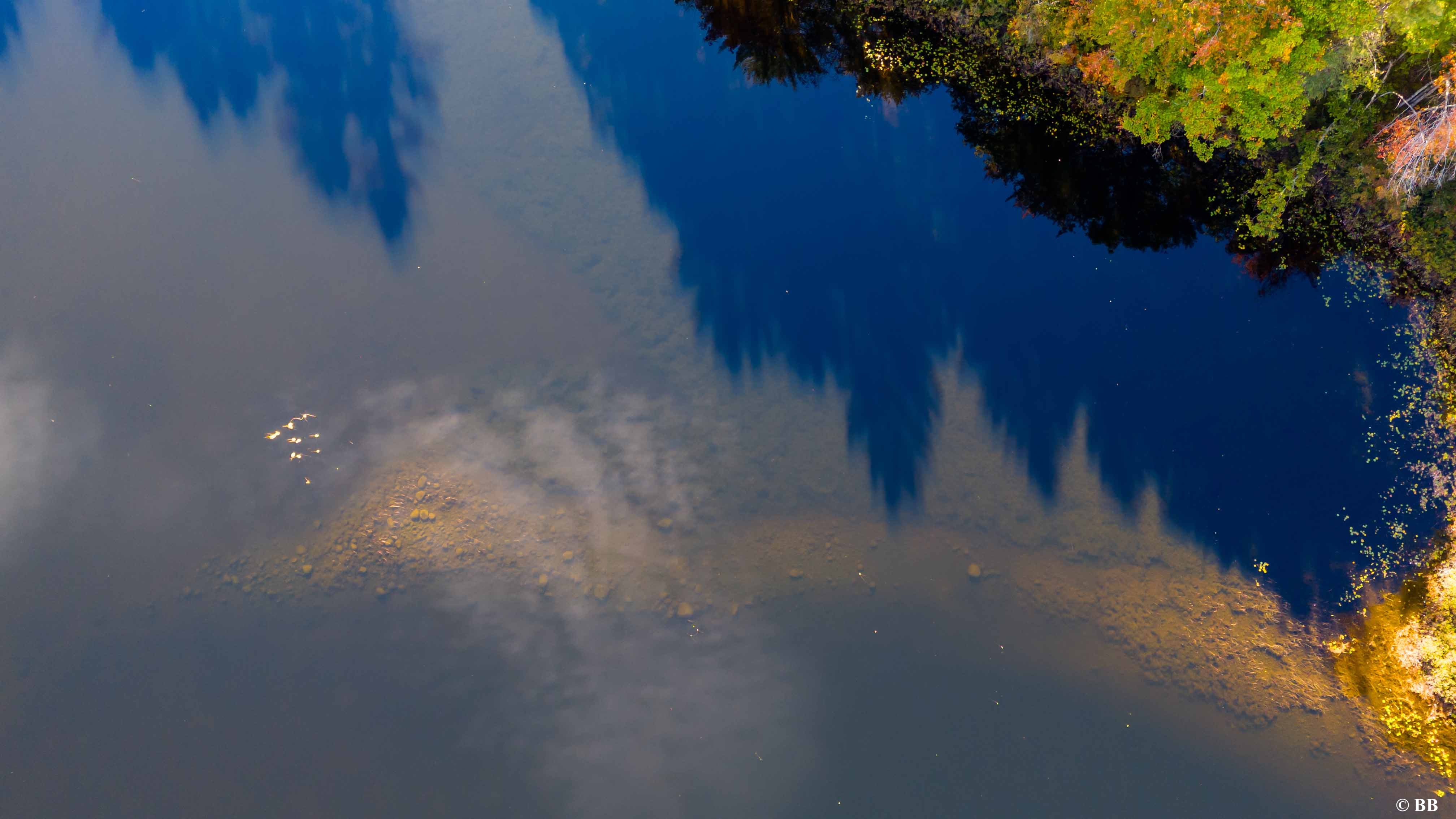
But that day what struck us as being more important was that it also took a clear picture of a sandbar in the water.

And as Bruce navigated it closer to the watery surface, we could see clear to the bottom. Mind you, it’s not a deep lake, but this is the water of Maine. Clean and clear.

And we celebrate wetlands for the critical role they play in maintaining the health of the environment.

When I think about their ability to store and filter water and act as a natural sponge, absorbing and retaining large amounts of water during the heavy rainfalls of spring, and removing pollutants before they enter streams, and rivers, and lakes, it all seems so obvious that they should do this when you have a bird’s eye view.

So here’s the curious thing about this wetland. It is located beside a local dump. And the more I think about that, the more I question those who created the dump, but give thanks for the unwavering workhorse that this wetland is in the ecosystem.

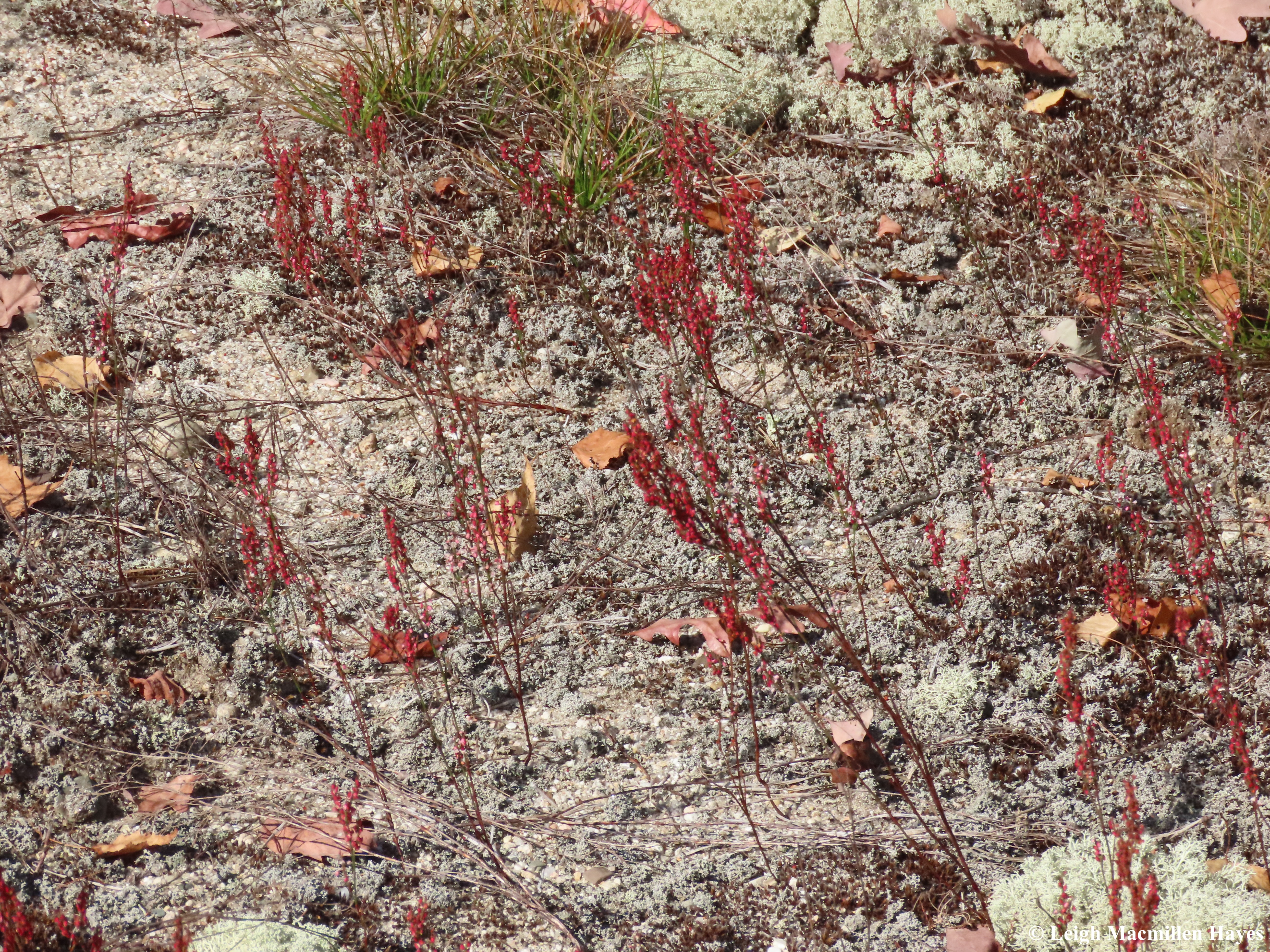
It was on the rise above this particular wetland, in a very sandy spot covered with Reindeer Lichen, that Bruce and I made a discovery. Well, he discovered it first and asked for an opinion. I’m full of those and so I met him and we took a look.

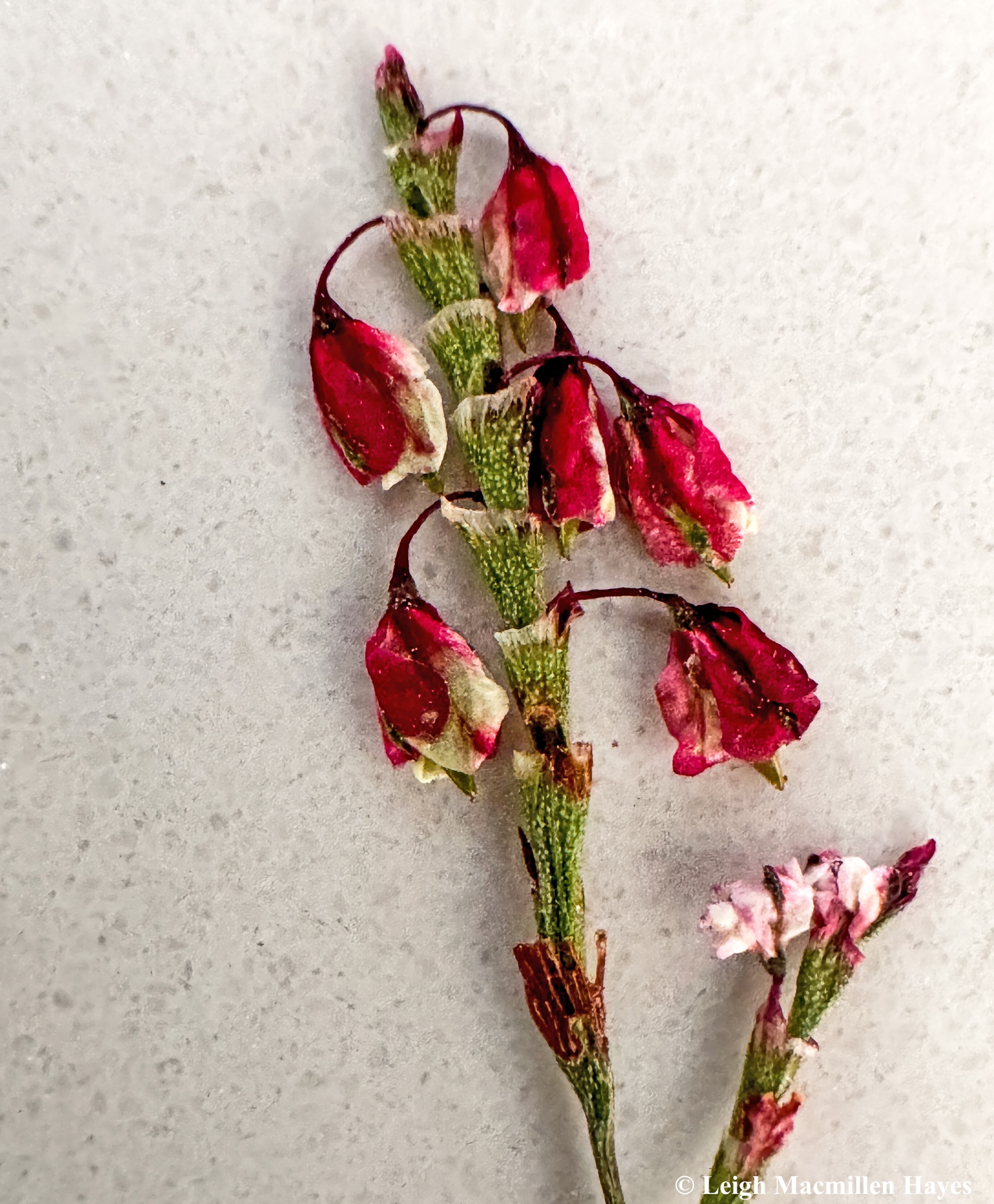
The discovery was a plant new to us both. Sand Jointweed or Polygonum articulatum. As you can see, the flowers are astonishing in their pink and white display.

It was the stems that I found equally fascinating. At the base of the flower stalks there are sheathing bracts, giving it a jointed or segmented appearance. We didn’t see any leaves, but perhaps we need to look again. I think we were just amazed to have discovered a plant neither of us recalled meeting before. Often though, that means we’ll meet it again soon.

The small snippet followed me home, and today I looked at the flowers under the microscope and I was astonished to realize that they look rather like a map of a wetland.

I don’t jump at the invite every time it arrives for an early morning mission to explore a wetland, and one day really regretted it because when My Guy and I finally got to the location, we found a note with Bruce’s observations. We scanned the area with our eyes for about an hour before deciding that we were too late.

But . . . we promised ourselves that we’d pack a picnic supper and try again.

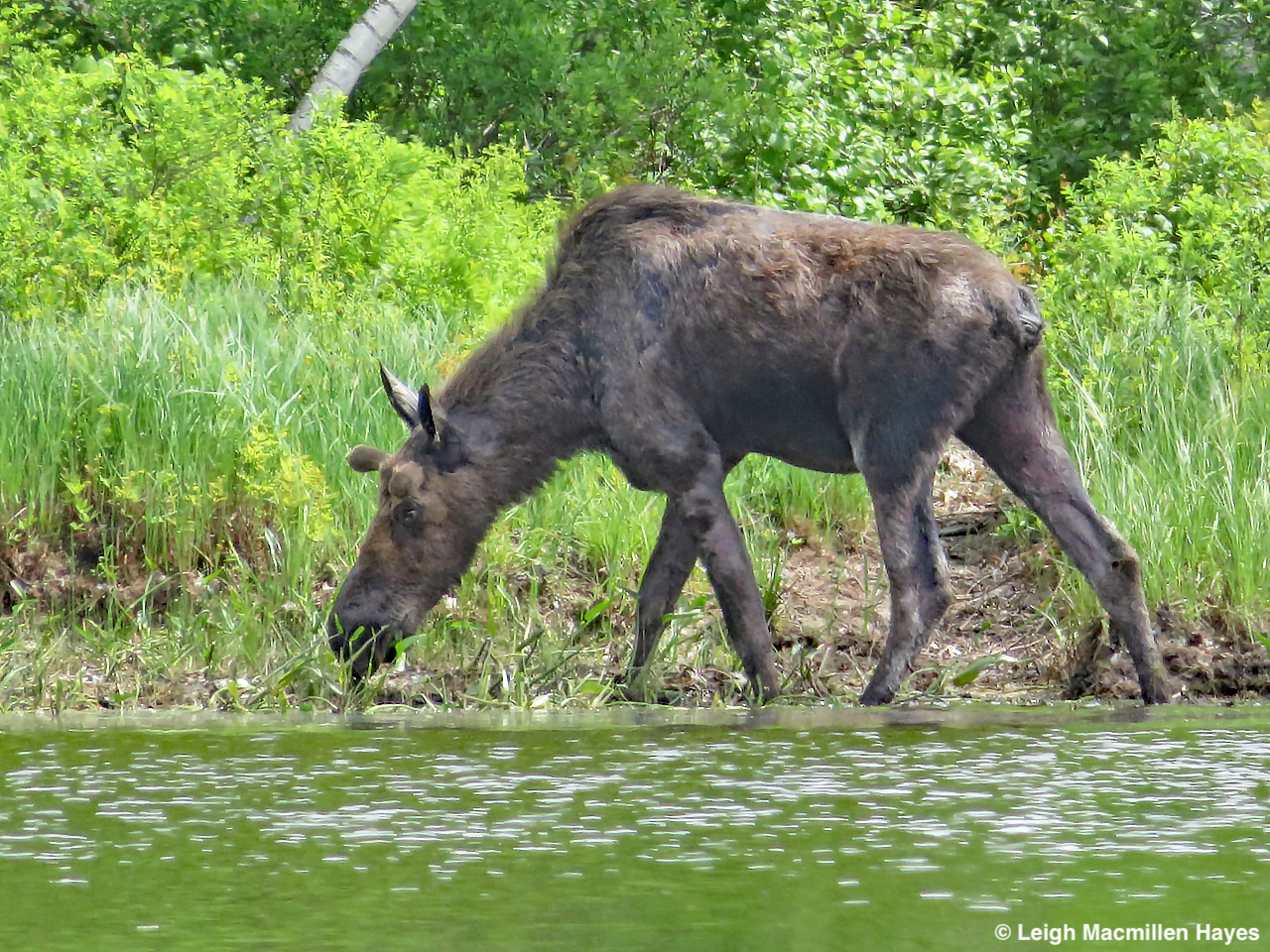
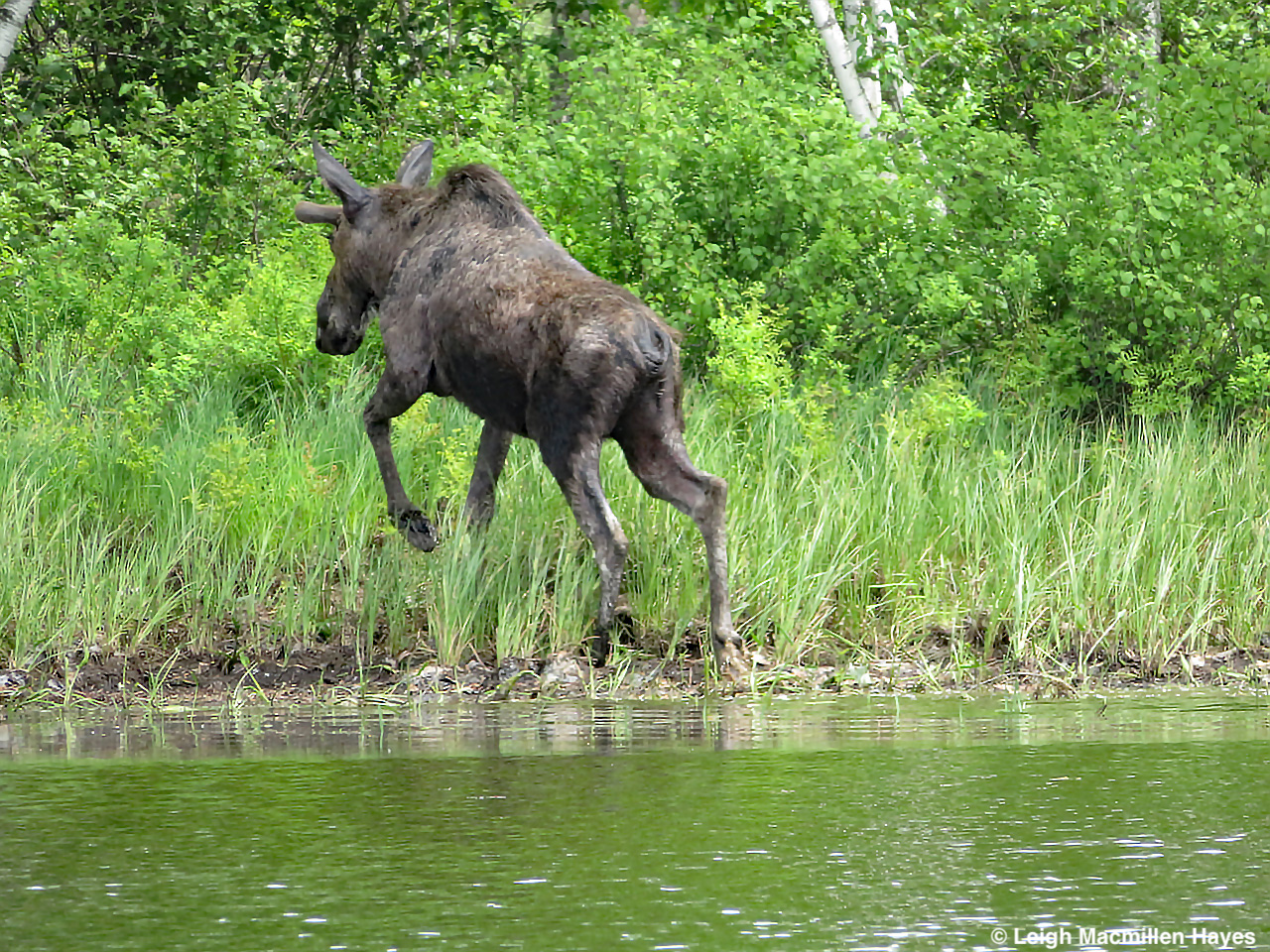
First we spotted one Bull Moose.

And then a second, and had a difficult time deciding that we should head home.

Did you know that 25% of Maine’s land area is wetlands? That’s four times the wetland area of the other New England states combined. The natural buffers they provide sustain the deep clear water we appreciate, and take for granted.

The margins or places where the land and water come together are bridges between two worlds. As many as 90% of all living things in our waters are found in these wetlands, no matter what form they take. I guess that’s why I love exploring them so often, because there’s always something to see. And another lesson to learn.

I leave you with this, a watercolor Bruce’s wife Eileen sent me recently. It was inspired by one of our local wetlands.

Some may see wetlands as dark and shadowy areas, mosquito hatcheries, with an abundance of leeches mixed into the scene, but the rest of us know their true value and I give thanks for living in this place where it’s so easy to go Bogging in Maine. And to share it with others. Thank you MG, BB, and EJB!

Zodiac Three: A Perfect Picture

The message arrived again for a boat trip, but this time the meet-up time was 5:30am, rather than 6. So I set my alarm for 4:00 in order to have an hour of quiet time to greet the day in darkness as I read and meditated and reflected and sipped coffee.

It was still dark when I arrived at the Captain’s home and hopped into his truck, with the boat in the back.

About ten minutes later we were in Hiram, Maine, at a boat launch along the Saco River. It’s been his dream for three years to make this journey and I love that I get invited along for the adventure.

I would have written about Zodiac Two, when we cruised along (with a small electric motor) the Old Course of the Saco in Brownfield Bog, but my photos were all out of focus and so since then he has given me a photography lesson and many tips.

The sun was just brightening the sky as we headed upriver, a smart plan in case the motor’s battery ran out of juice and then we could paddle and float back to the launch site.

I’ve been on the Saco a bunch of times in a variety of boats, but neither of us had ever explored this section below the Brownfield Bridge and I was struck by how calm and clean it was. The water is also quite low–thanks to the drought that we’ve been experiencing again this summer so we had to be aware of sandbars and stumps and logs and rocks. Well, actually, any time you are on the river, you have to be aware of obstacles.

As we started the journey a dragonfly landed on my leg, and she proceeded to try to lay eggs. Have you ever felt the tip of a dragonfly’s abdomen try to pierce your skin? It’s a bit of a prickle. While she was doing that, I tried to snap a photo, but neither she nor I were successful. Still, I counted her as a good omen.

Sometimes, as we gently cruised along, we each took photos of the same scene, so some of these are his used with permission, and others are mine.

The reflection of the shoreline was one that struck both our fancies. We didn’t talk about it, but it was the layers that intrigued me and reminded me of the force of the water in this mighty river that originates in Saco Lake at the top of Crawford Notch in New Hampshire and winds its ways with a million oxbows to North Conway, NH, and then into Fryeburg, Maine, and across the state before it flows into the Atlantic Ocean in Saco.

Sometimes we realized we were looking at Silver Maple floodplains and other times there were steep cliffs. Always, we knew if there was a house or camping trailer near the edge, because they seemed to be located on high ground, but all the trees were cut between their high ground and the river to provide a view, and the result was intense erosion. One person even had several tarps draped over the ground in what we figured was an attempt to stave off the erosion. We think leaving the trees and trimming branches would have been a better choice, but no one asked us.

Another sign of erosion, the visible roots of many, many trees, also created works of art and my brain is already painting this scene in the future . . . maybe.

And then there was this work of art–a Silver Maple Lollipop, its leaves already shutting down chlorophyl production perhaps as a result of the dry spell we’ve been experiencing.

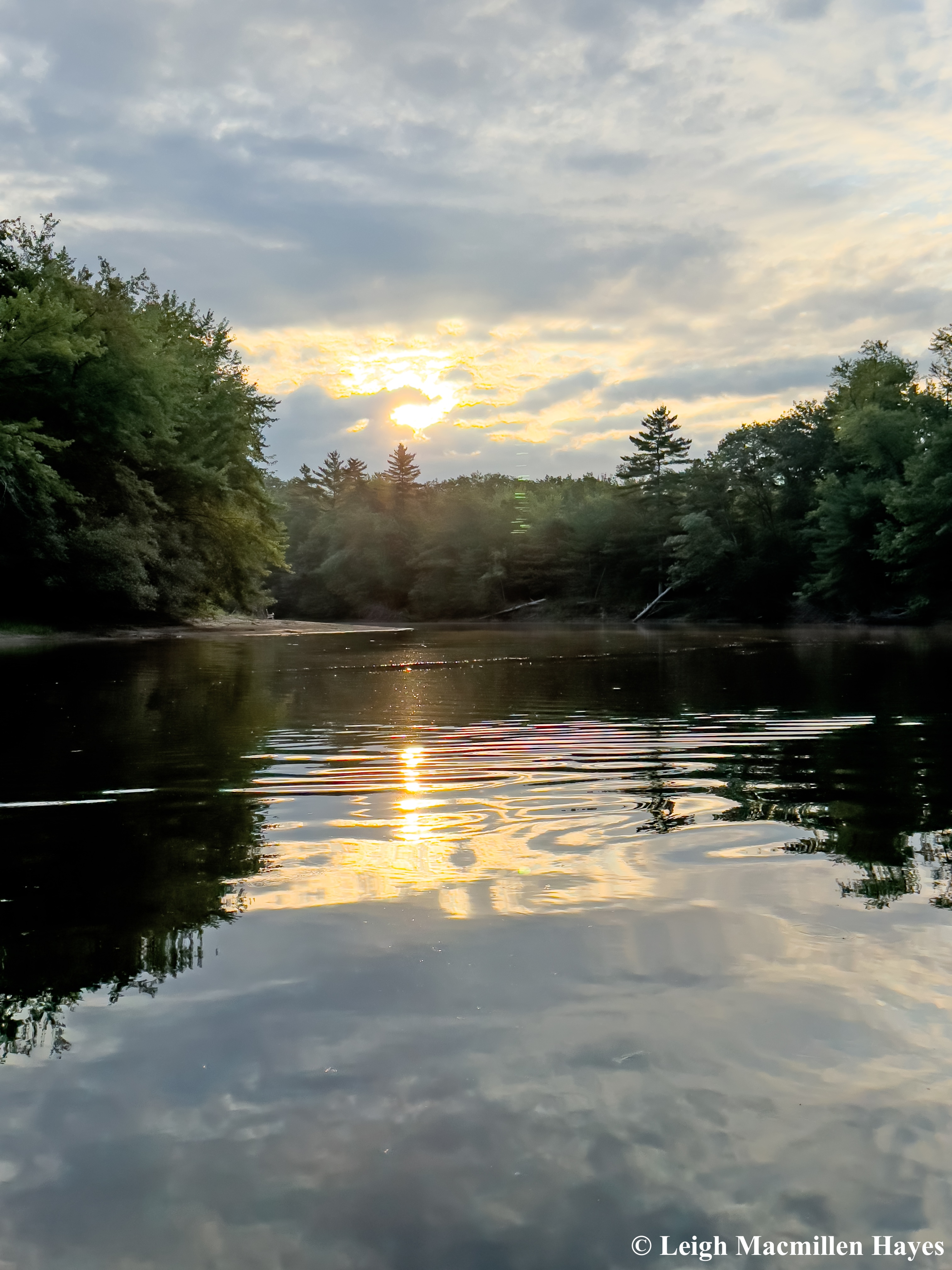
Slowly the sun rose and the water captured the sky in whirls and swirls and rainbows of its own making.

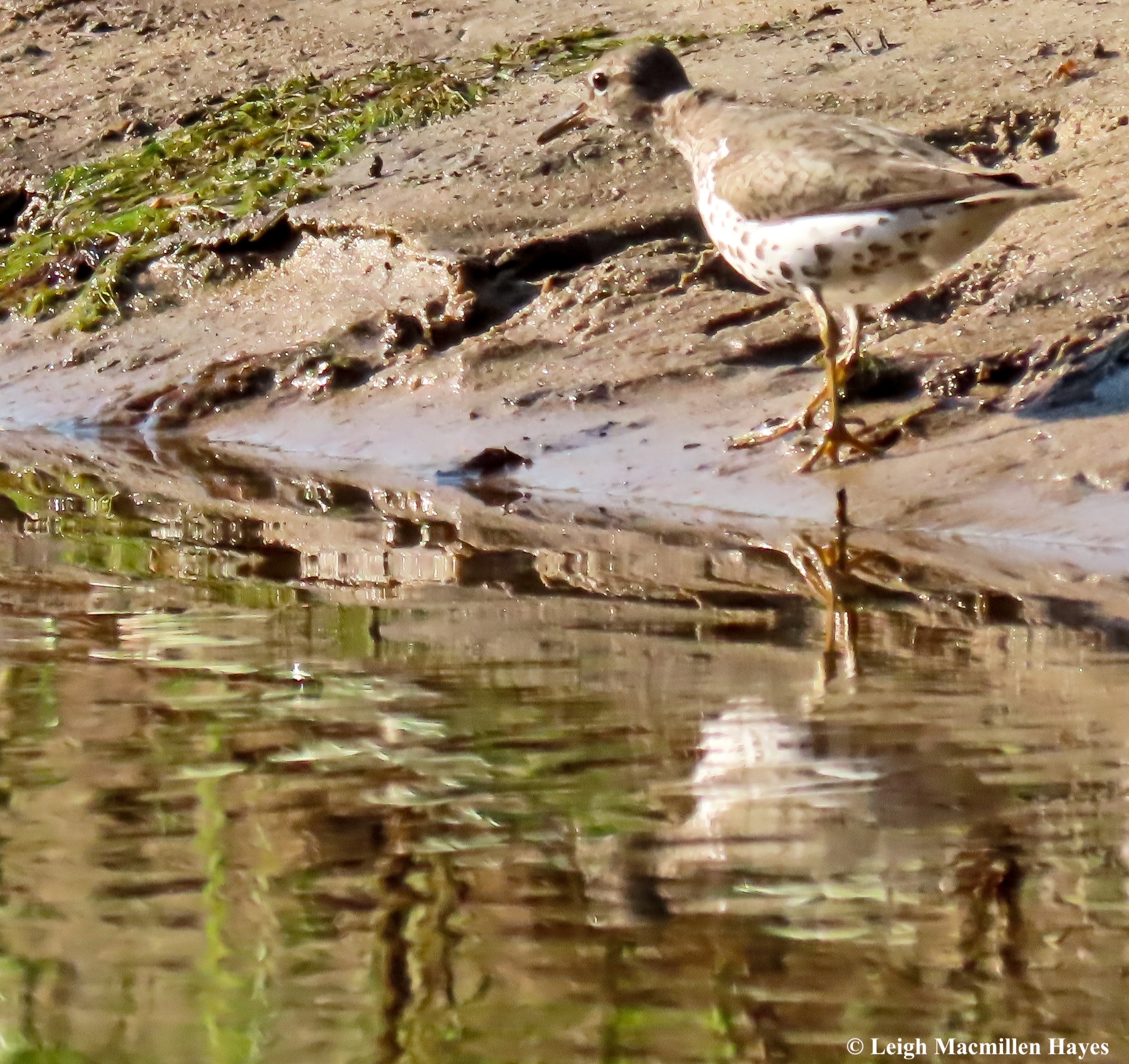
We’d both headed into this boat ride expecting to see birds, which we did, but we really expected Great Blue Herons and Bald Eagles. The drama artists. Our best sighting of the day was this Spotted Sandpiper, who walked along the river’s edge and then flew ahead and landed and did the same thing all over again. Over and over again.

Once the sun was fully up, our day turned into a bright one, and we had a nice breeze to accompany us. Plus tons of dragonflies and a few damsels, all of whom did not wish to let the paparazzi photograph them. Still, we gave thanks for we could see bugs in the air, but nothing attacked us, unlike during our Zodiac One and Two trips.

At what became our turn-around point, we got out of the boat and waded through the water to a beach, where Captain B set up his drone.

Above us, the waning moon stood out in the Bluebird Blue section of the sky.

The drone allowed us to see the lay of the land, and despite the fact that I’ve seen it recently from Mount Cutler while hiking with My Guy and a friend, I was once again reminded just how beautiful this area is and how small we are.

Do you see that beach in the river’s bend? We were standing there.

You might be able to see the Zodiac now.

And the two of us near the boat. Plus the indentations of a million duck and goose footprints. A flock of something skittered and flew off as we approached this spot, but they were too quick for us to identify.

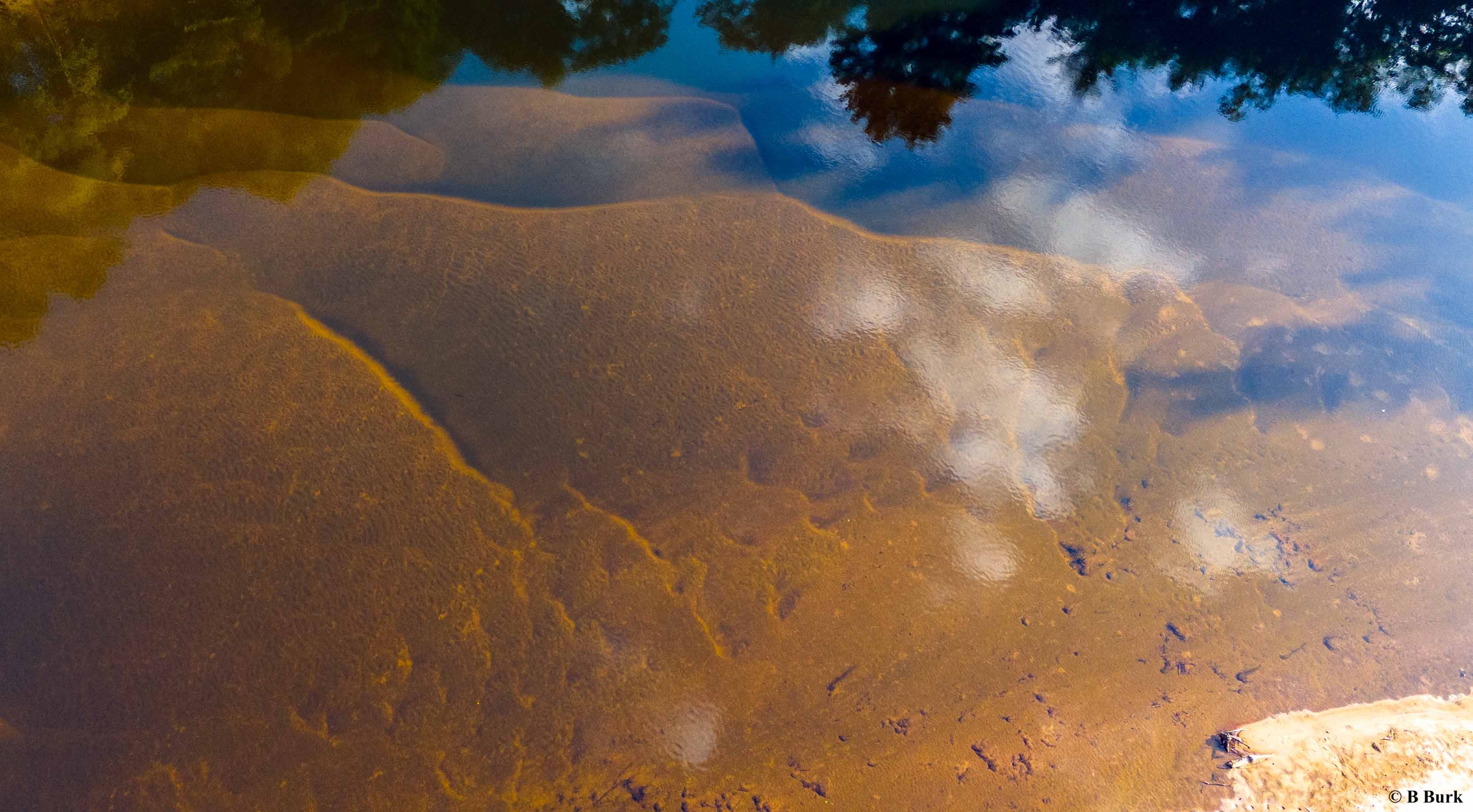
The drone also gathered this shot of the layers of silt in the water. Or maybe we weren’t really on the Saco, and had instead taken a trip to Mars? Oh, but wait, there is a reflection of trees that very much spoke to our being in Maine.

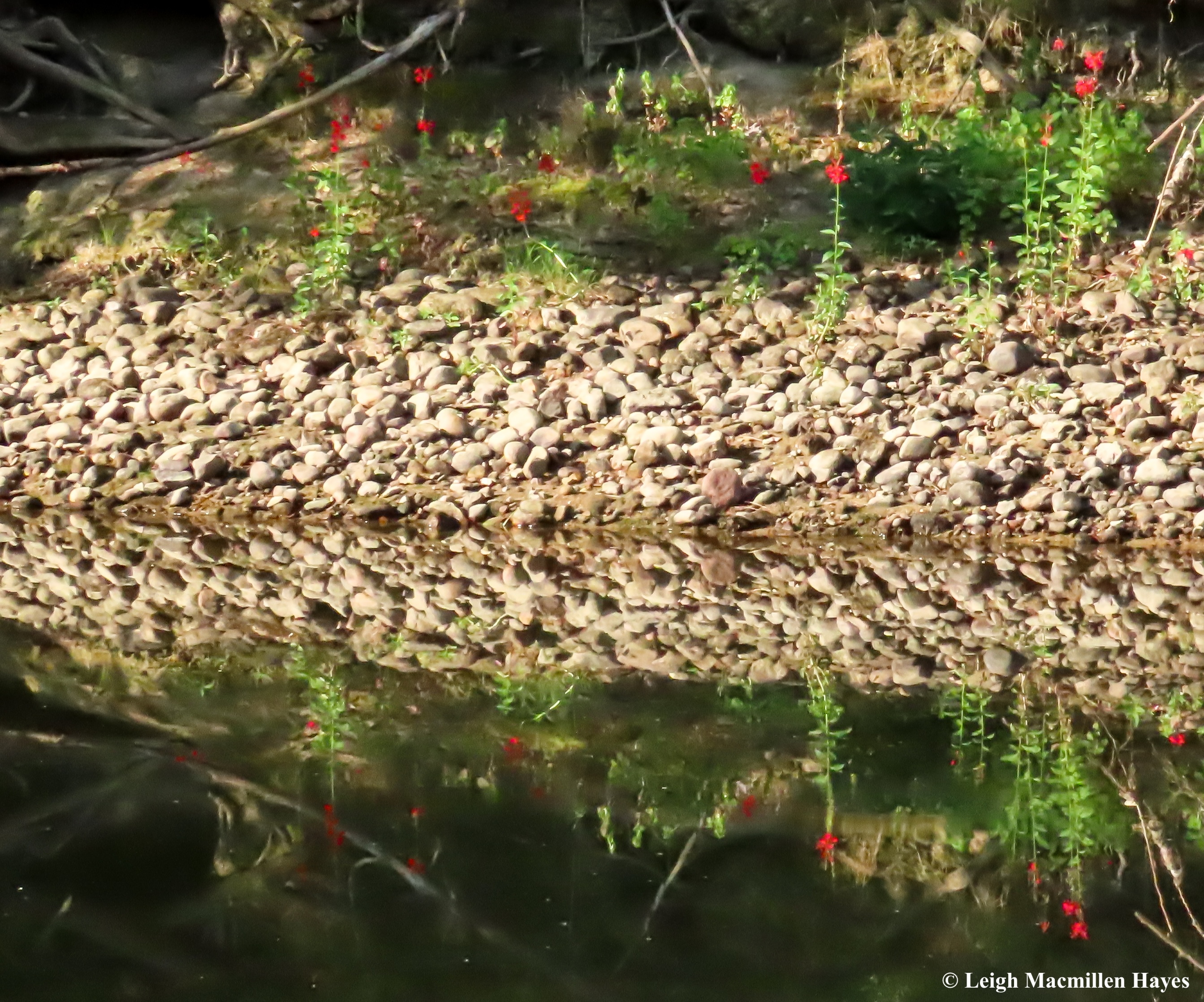
On the way back, we spotted Cardinal flowers that we somehow missed on the first leg of the journey. They decorated a few sections of the shoreline and maybe stood out more because the sun was shining so brilliantly on them.

For Captain B, it was a new flower to add to his list. For me, it was a sign that it is August and we were by water because they do like wet feet.

We also spotted one tiny Painted Turtle that didn’t seem at all bothered by our presence. I’d really wanted to see a turtle, so was thrilled with this finding. But surprised that we only saw one.

According to my GPS, our trip was four miles in each direction, but then I realized that the APP cut some corners, so maybe it was 4.5 miles one way. Plus I forgot to start it until after we’d left the beach.

The length wasn’t really important. It mattered more to have the opportunity to discover this wild and scenic and quiet section of the river (and not have to paddle!).

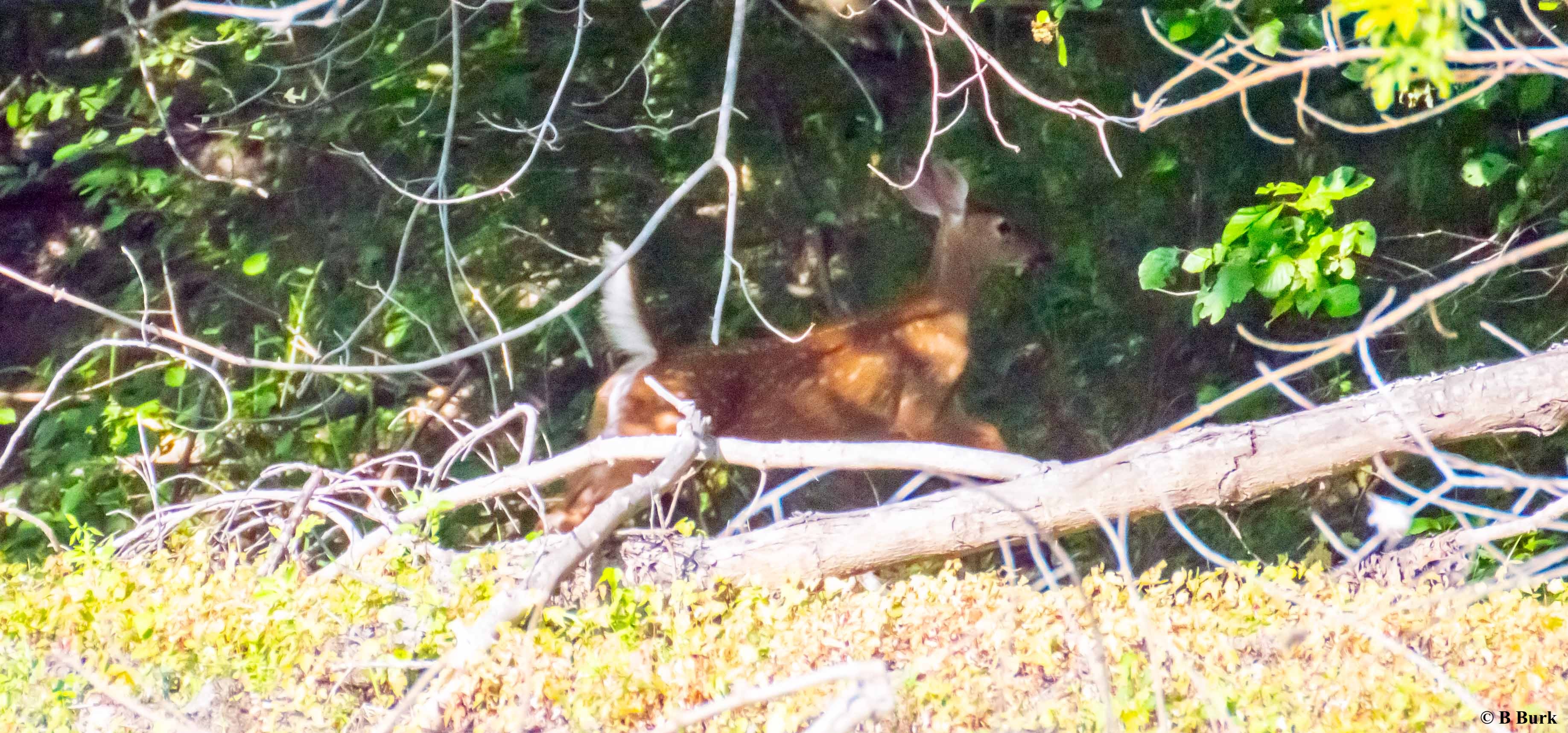
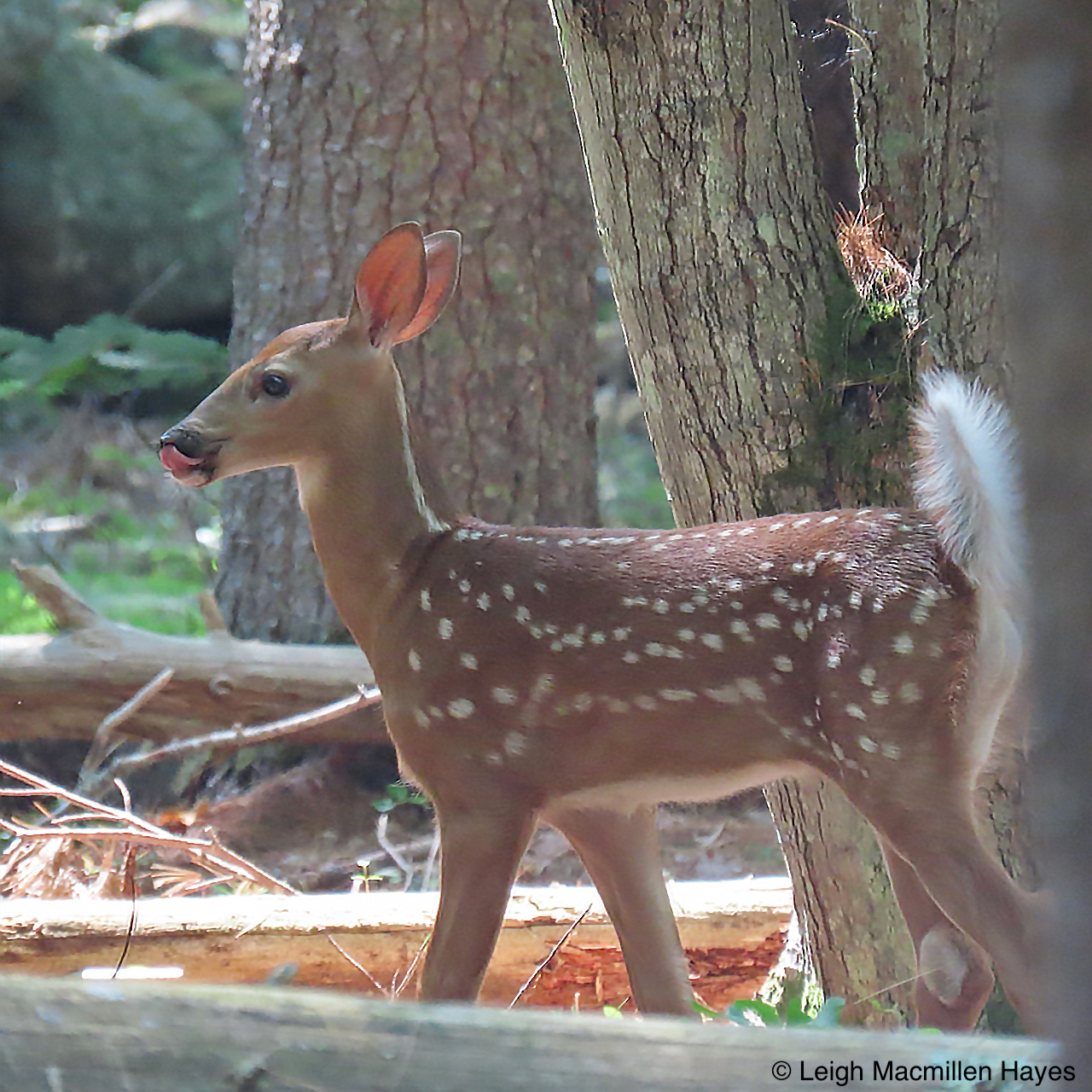
As for the perfect picture, this is one that Captain B snapped and I can’t believe he actually captured the fawn. We were both surprised, even though we’d expected to see deer, when a Doe and her spotted youngster stood by the water’s edge as they nibbled on grasses, but they saw us and quickly dashed into the woods, their white tails on high alert.

The sight of the two of them, however, is what I’ll cherish in my mind’s eye because that’s really where perfect pictures are stored.

Zodiac Three: The Perfect Picture. Thank you again and again, Captain B, for creating the opportunity. And I can’t believe you did get this last photo after all.

In The Heat . . . of the moment

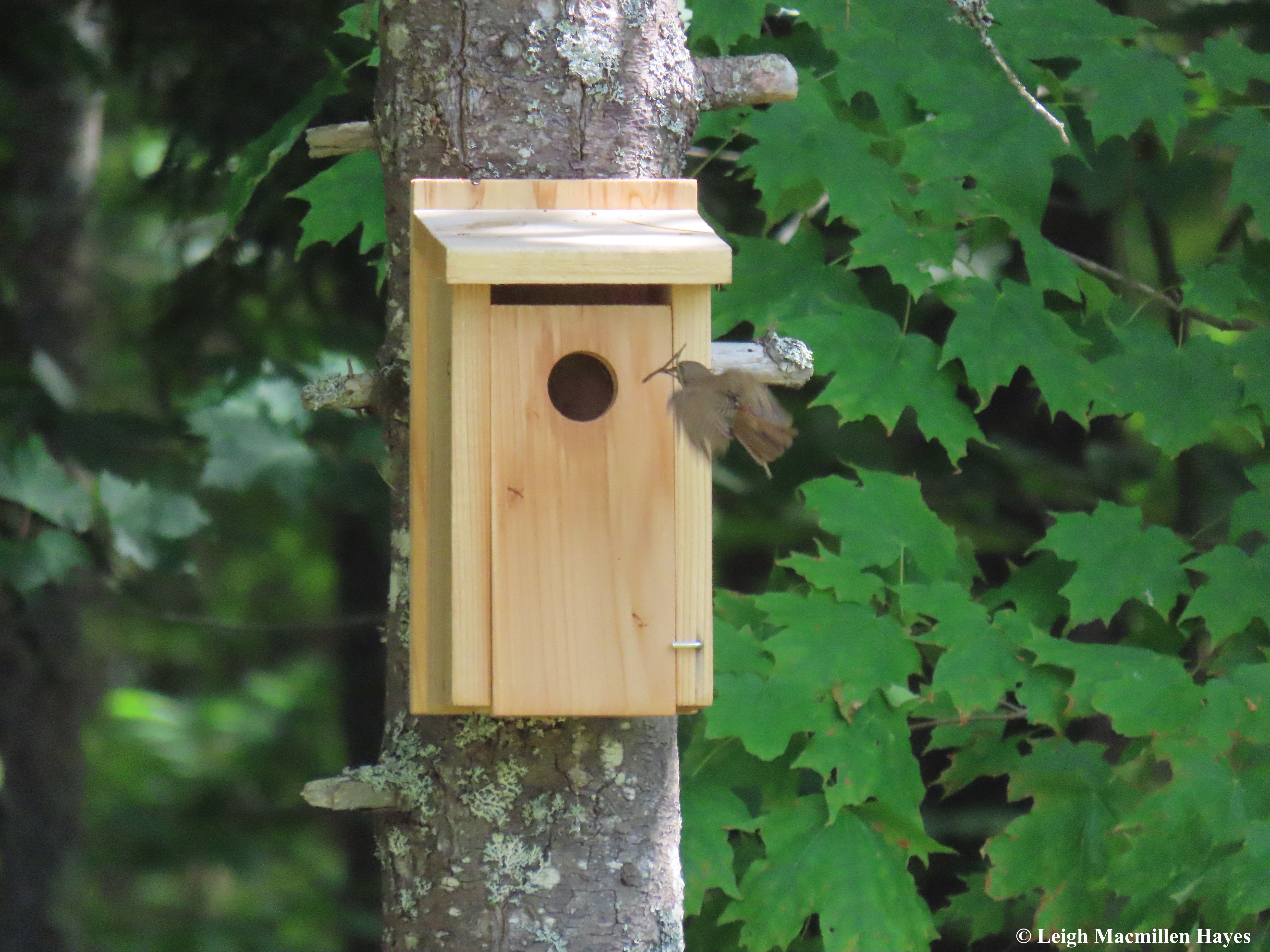
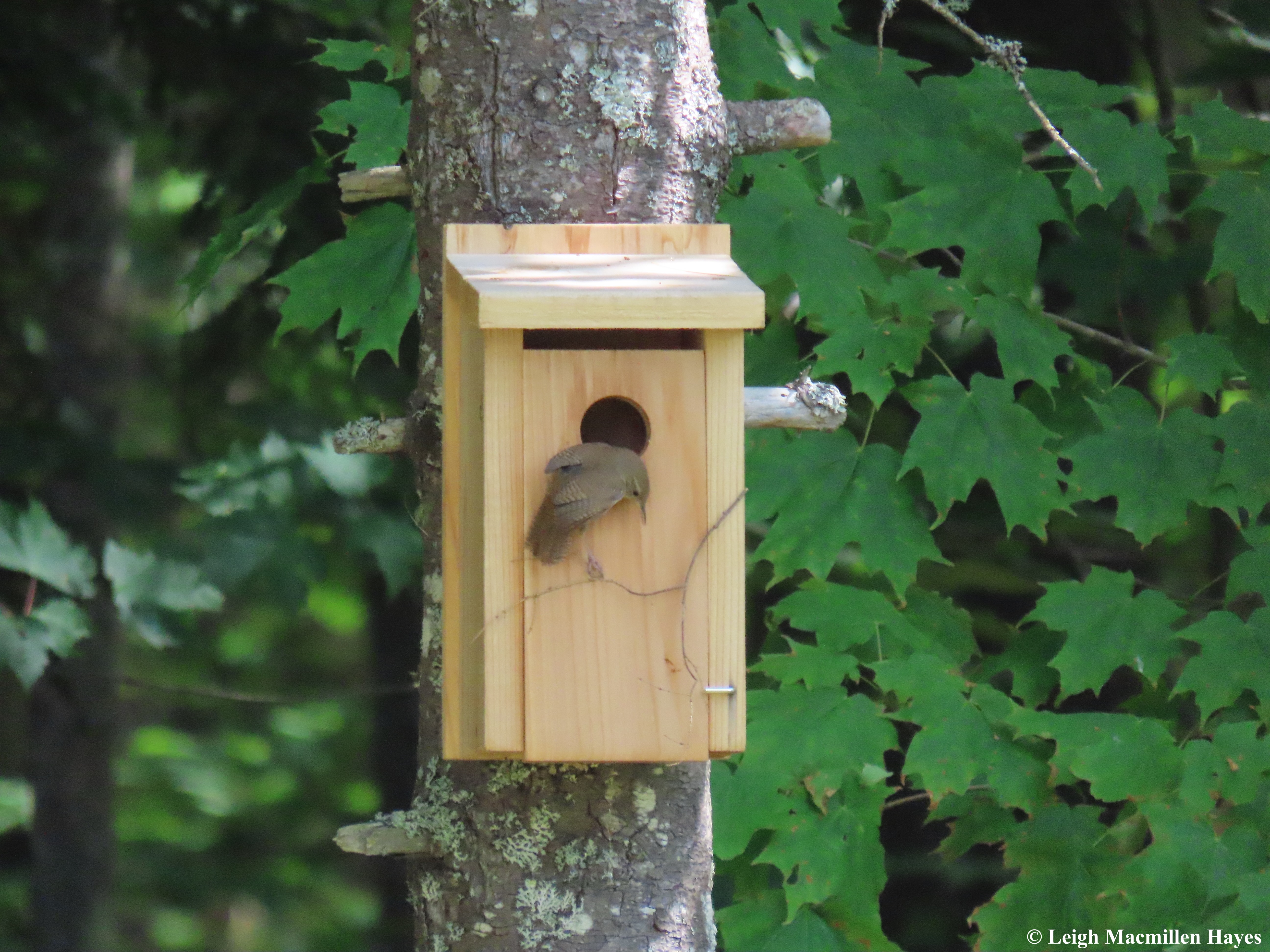
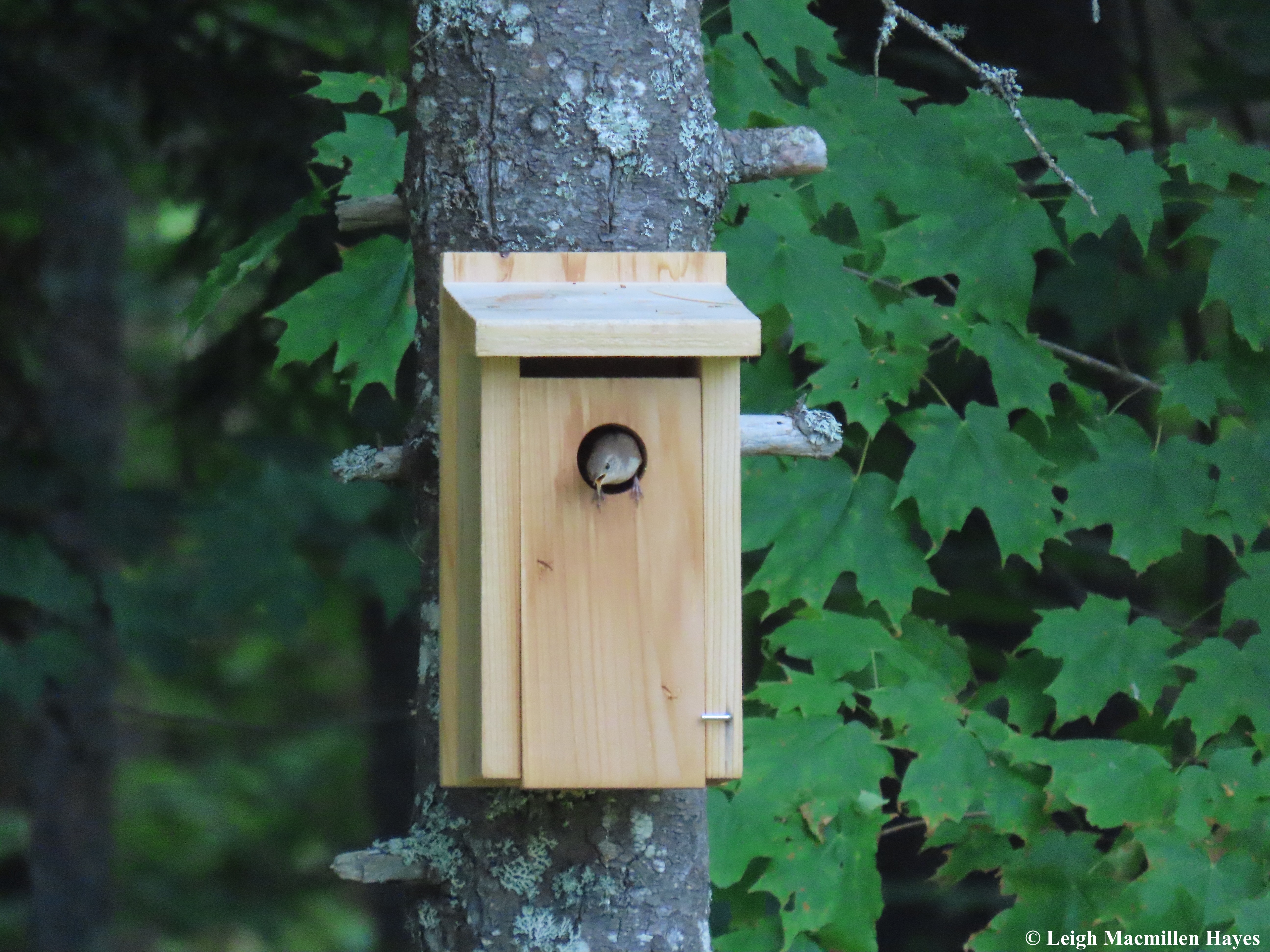
About dinner time yesterday, that is, dinner time for most people, as My Guy and I tend not to eat until about 7:30pm, as we sat on our patio, I suddenly saw action at a Bluebird house we’d nailed to a tree in the yard. After months of seemingly no action, a bird was flying to it and carrying sticks, and I realized that the male House Wren who has been singing from the trees had decided this just might be the place his loved one will want to set up housekeeping.

The action continued for about an hour last night, but then ceased.

And this morning . . . nothing that I could see.

And so deciding I wouldn’t have a chance to watch the fun of moving in today, I decided instead to head to a local wetland where the Painted Turtles taught me a lesson.

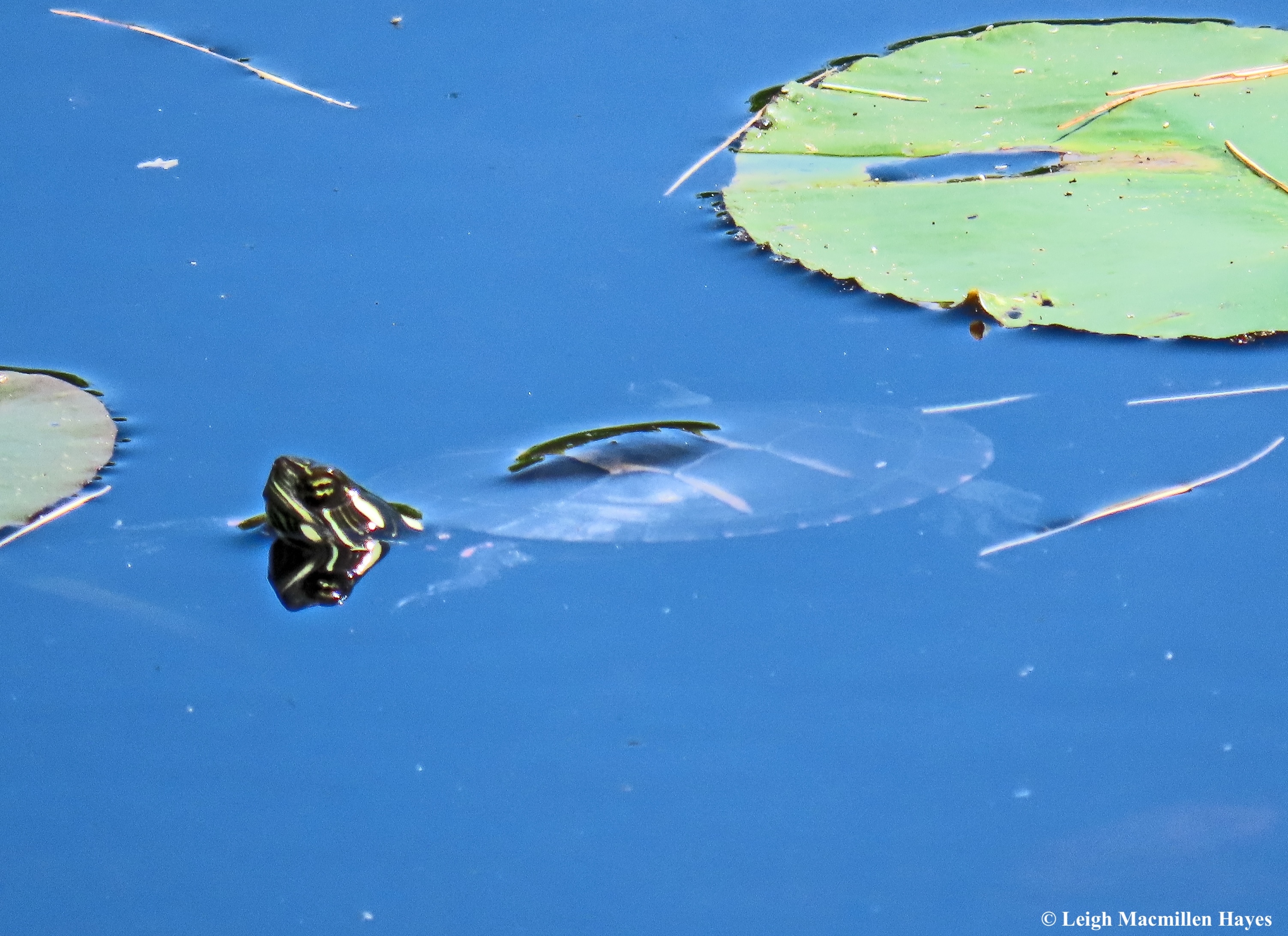
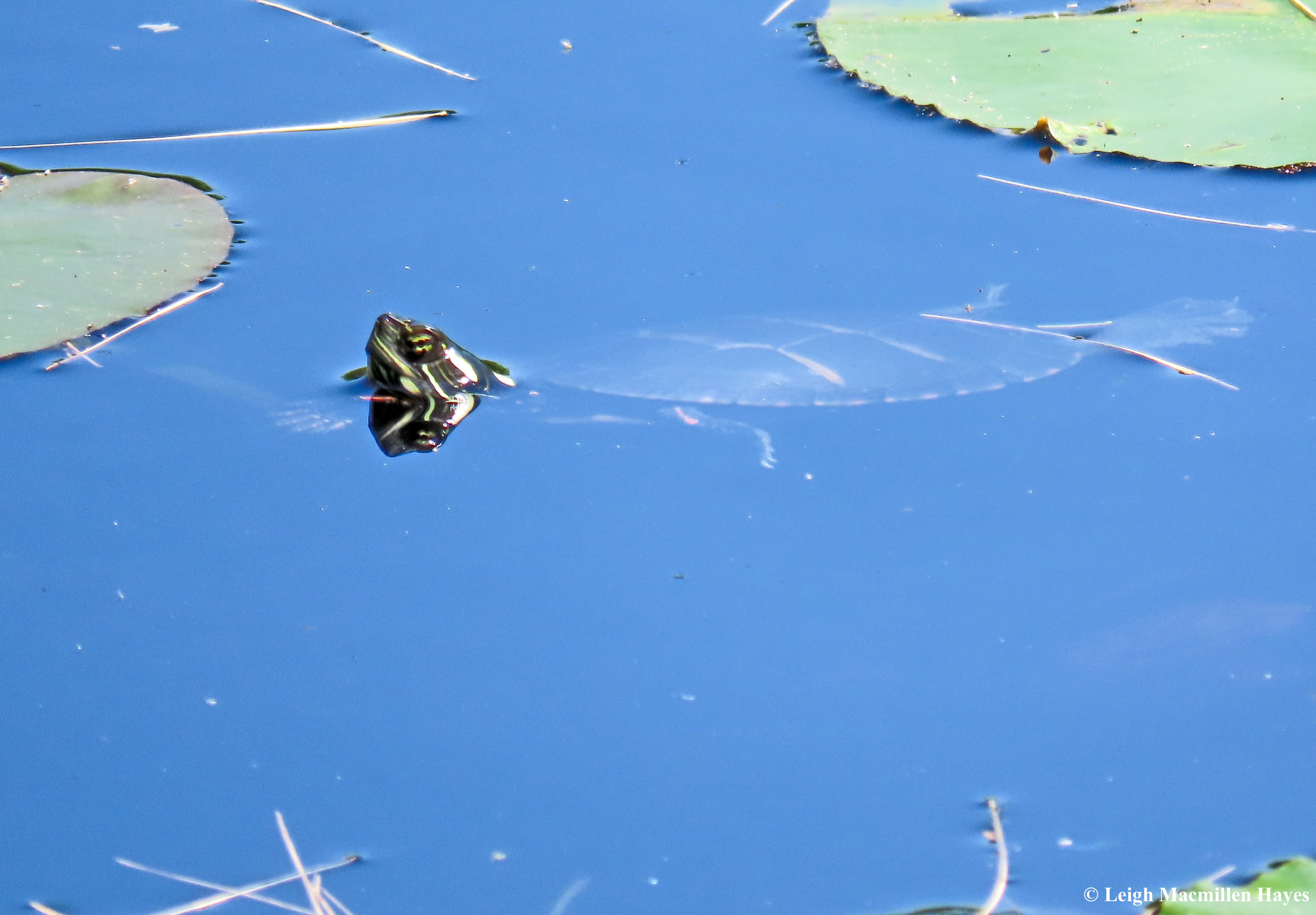
I love seeing turtles basking on logs and rocks in the water, but everywhere I looked today, they were not on any of these raised platforms. Instead, they floated. And it occurred to me that it was a brilliant strategy: stay near the surface of the water, but be a wee bit submerged, and therefore stay cool on the hottest of hot summer days thus far this season. Especially given that Painted Turtles have black carapaces or upper shells which are intended to absorb the heat . . . but extreme heat?

While I watched, I noticed that they all stayed in the same spot. How? By treading water, just like we do. Or so it seemed to me as I watched the feet move, but the head and shell remain still.

In all my years of turtle watching, I have never witnessed this before. Or . . . if I did, failed to take note.

Because I was by water, there were plenty of dragonflies as they defended their territories and ate some bugs on the fly and occasionally paused so I could admire and thank them. There were no Mosquitoes to speak of and only a few pesky Deer Flies.

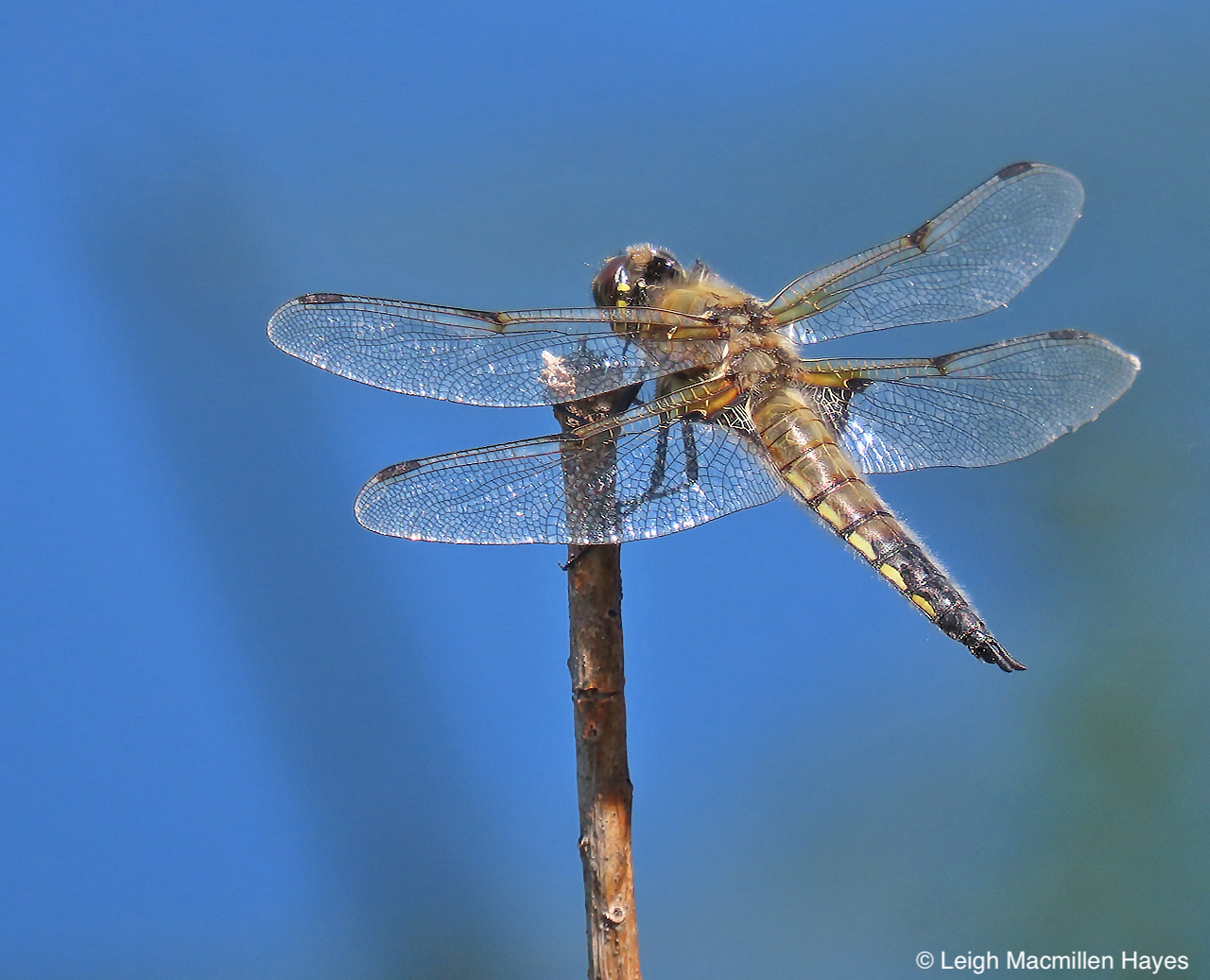
This Four-spotted Skimmer and I spent quite a bit of time together because he was so beautiful and I could have looked at him forever, plus I loved watching him perch, then flight off to chase another dragonfly out of the area, and perch again, over and over.

But there were a few other things to observe. Well, more than a few, but only a couple that I’ll note.

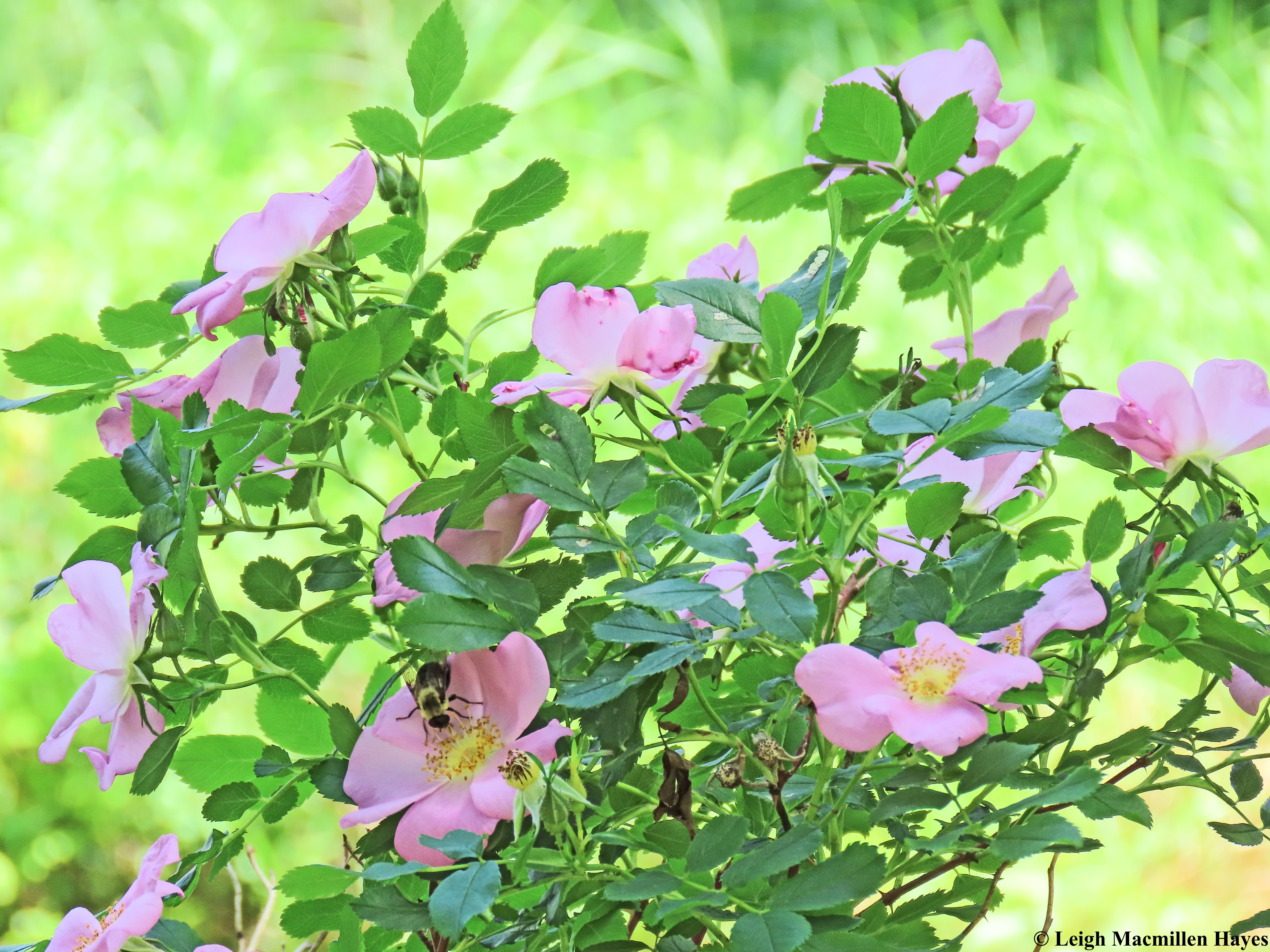
Have you ever noticed how on a hot summer day the smell of fallen pine needles is intensified by the heat? I just love that smell. And where there are Swamp Roses, there is also an aromatic fragrance, and it seemed I wasn’t the only one paying attention.

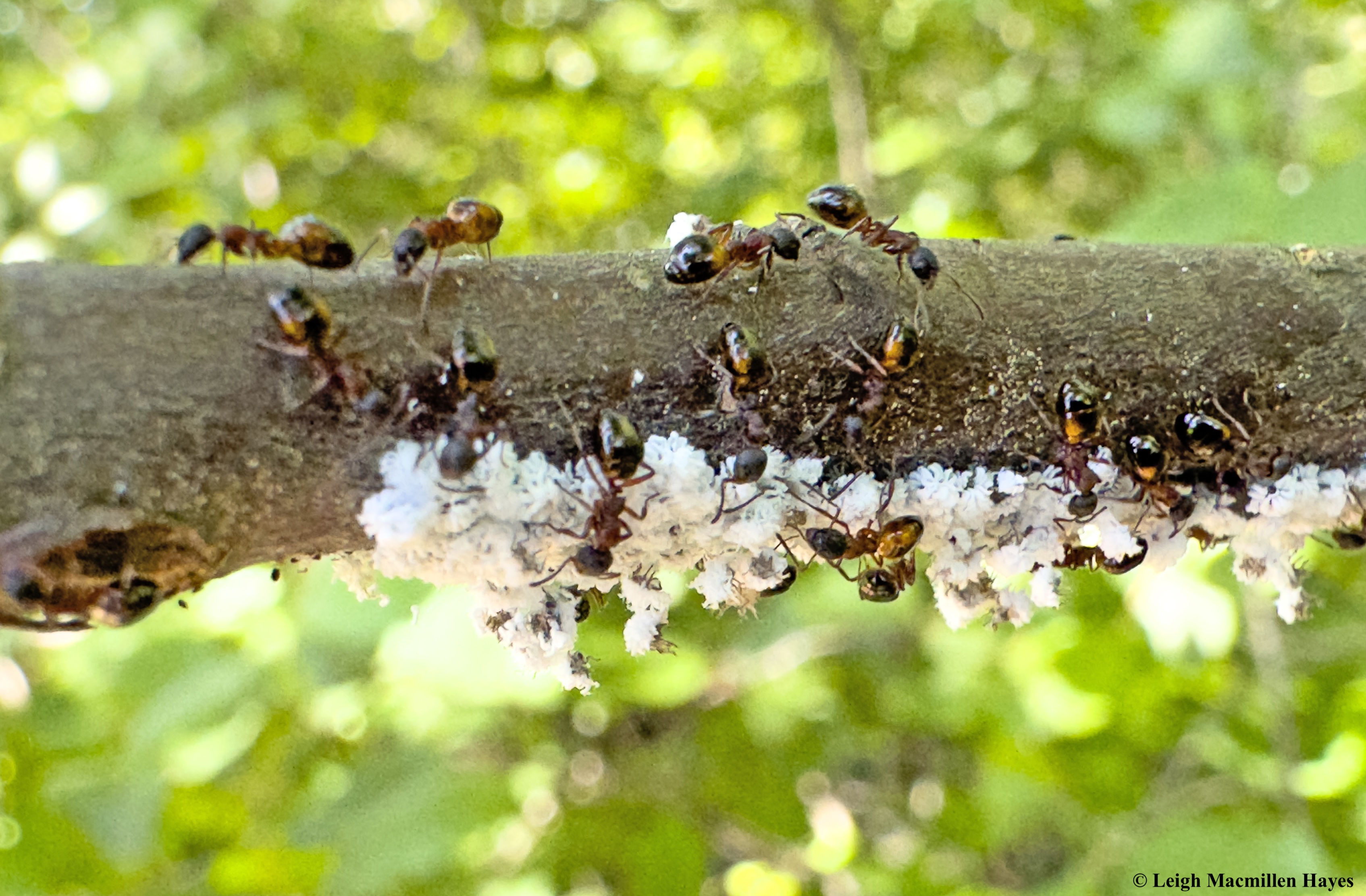
Seeking nectar is the job of bees and wasps and flowerflies and other. Seeking a sugary substance is the job of ants. On Speckled Alders.

Ants “farm” or “milk” or basically tickle Woolly Alder Aphids that feed upon the shrubs’ sap and get the honeydew the tinier insects secrete.

That cotton candy look on the aphids is actually a waxy material they produce from their abdomens, perhaps meant to detract visitors. Or protect them from the weather. 

The relationship between the ants and the aphids is actually a form of mutualism as the ants protect the aphids from predators, while the aphids provide the ants with a food source. Hmmm. Maybe more of us need to pay attention to this way of living together.

At last I pulled myself away from the wetland, saying goodbye to all and thanking the Painted Turtles for today’s lesson.

Back at home, I heard the Wren before I spotted it and sure enough, it was back on the job of setting up living quarters. Male House Wrens fill cavities with a tangle of sticks and then he tries to persuade his betrothed to build a nest, which she does toward the back of the cavity.

He kept gathering sticks from the ground and returning to the box, though getting them through the hole wasn’t always an easy task. I wanted to encourage him to also try the slot at the top of the box, but my encouraging act would have had the opposite effect, and so I kept my distance.

It was rather like watching a gymnastics show, for such an acrobat was he. And like the turtles treading water, I’d never actually seen a House Wren build a nest before–my knowledge all gained from literature.

Smaller sticks worked well, but those larger ones were much more entertaining from my point of view.

And then there was a really complicated one. Such a challenge.

But a little wiggle here and waggle there and voila. The stick was in the hole. So was the bird.

Until the next one. And then more contemplation.

But all things are doable when you persevere, so of course, another lesson learned today.

I’ve read that House Wrens fill several cavities and then let the woman decide. Smart birds. The jury is out in our neighborhood because my neighbor and I know that either he or another Wren keeps visiting a different birdhouse that the Bluebirds have also considered for their digs.

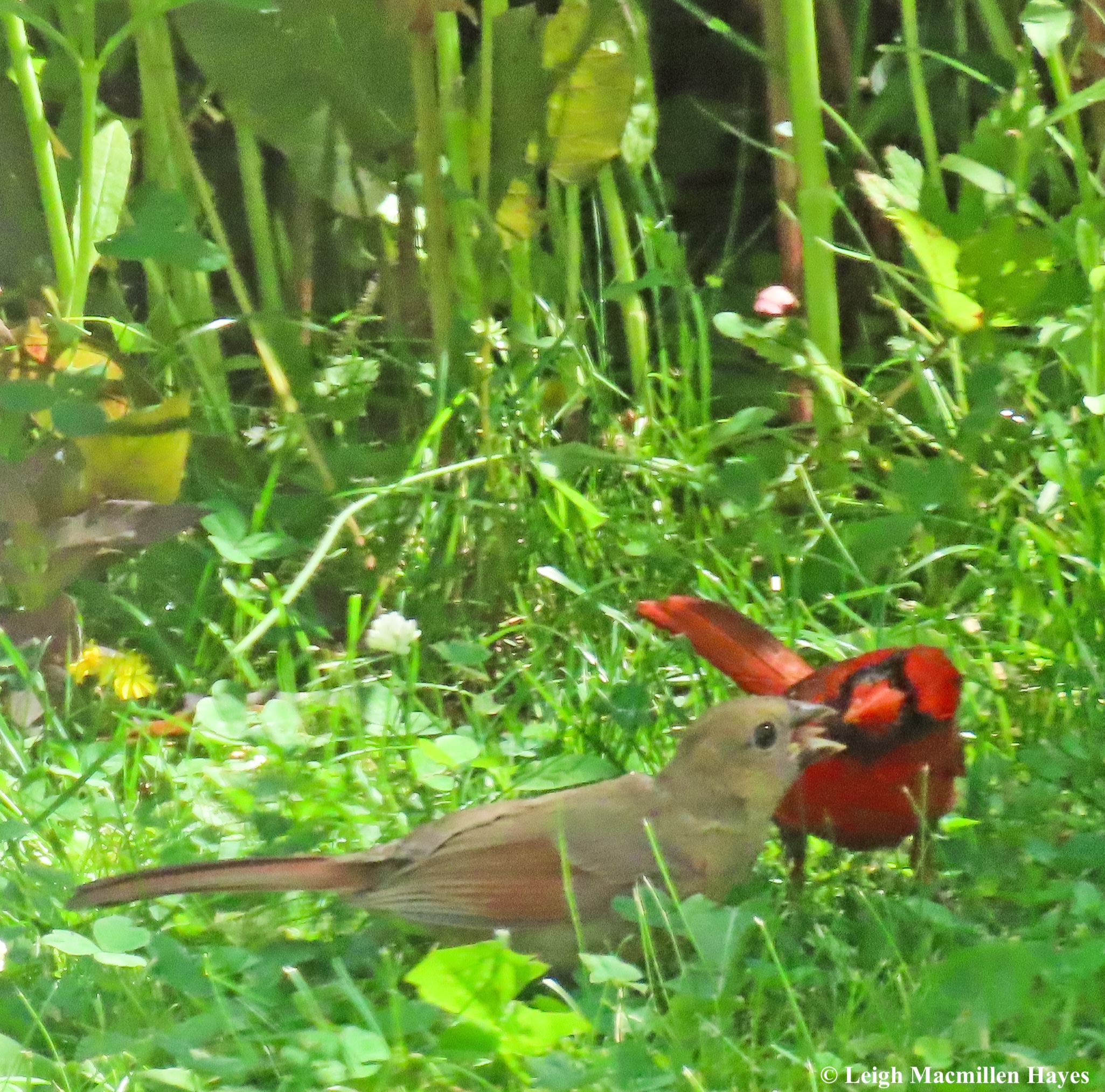
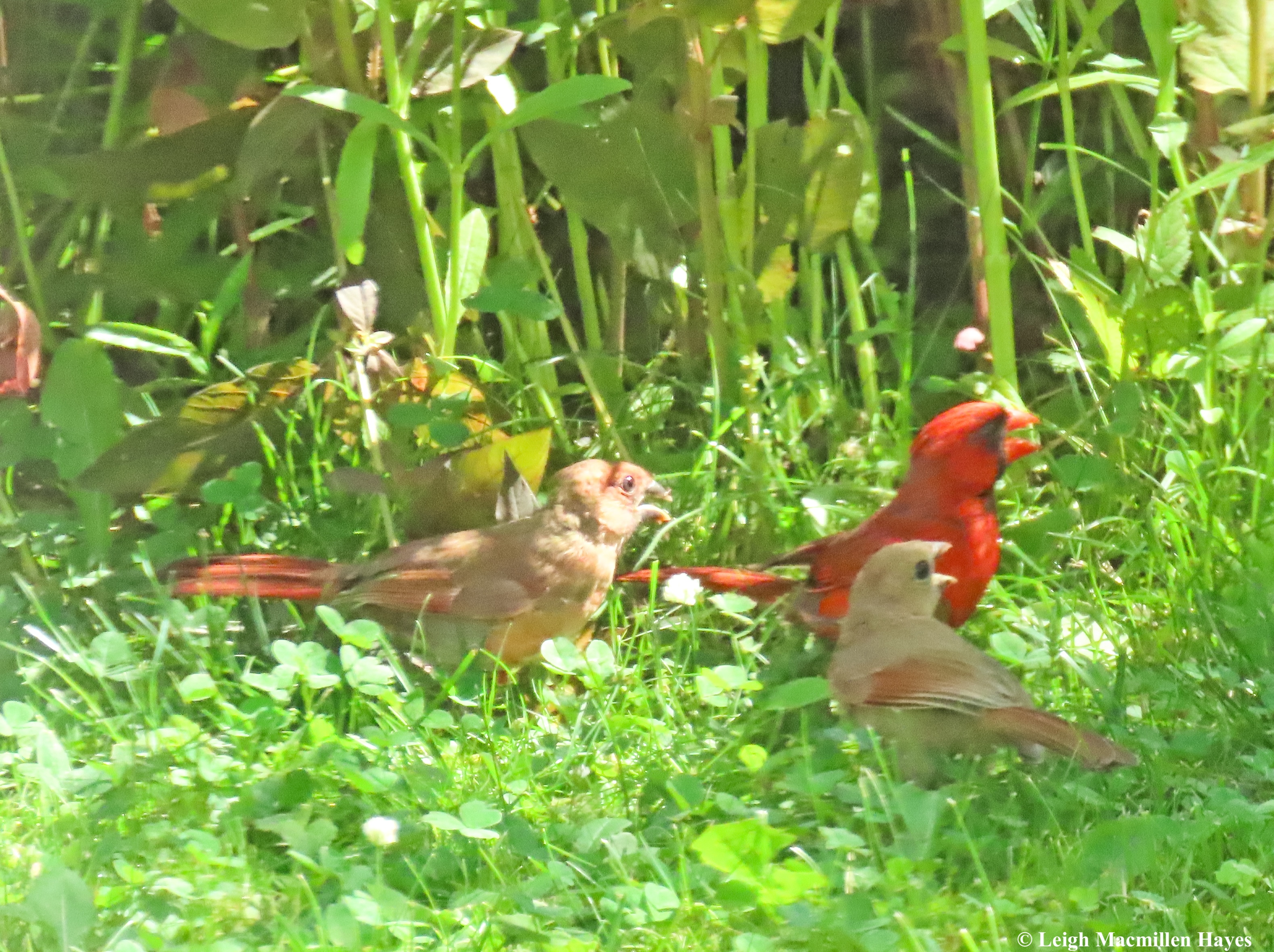
Heading back in, I suddenly heard a Cardinal, and suspected it was the male because I haven’t seen the female in at least a week. Through the glass in the back door, there he was, feeding a chick! We have a baby!

And then I realized he was feeding two babies, and my, were they ever insistent.

I must say, the chicks look much more like their mother than their father. But he did a great job of tending to their needs, ever the nurturing one.

Today has been really hot, and I know you are all aware of that, but in the heat I managed to be present in so many moments and give great thanks for that.

Summer Fauna among the Flora

As spring bid adieu and summer waved hello, I found myself wandering and wondering with others and alone and stopping in my tracks repeatedly, which is kinda what I do all the time I guess you could say, but suddenly this week there were a few special events that called for attention.

The first was Momma Snapping Turtle that I spotted beside a trail as I co-led a walk with Dawn Wood for Loon Echo Land Trust. Thanks to the magic of a camera lens, it may appear that we were close, but believe me, we all realized the sensitivity of the situation as this mother was digging in the dirt and laying eggs right before our eyes and we were transfixed–from a distance. There were fourteen of us and we tried to stand quietly and watch and ask questions and after about ten minutes decided it was time to come up with Plan B and reroute ourselves so that we wouldn’t stress her out.

In another place a day later, it was a Painted Turtle upon which I focused and gave thanks that it didn’t consider plopping back into the water as they often do when we so much as breathe. From the spot where I stood, I think this was also a female, given the shorter nails, but I couldn’t say for sure because tail length and plastron (bottom shell) orientation are also key to ID. The male has a longer tail and a more concave or indented plastron, while the female’s is more convex or flatter.

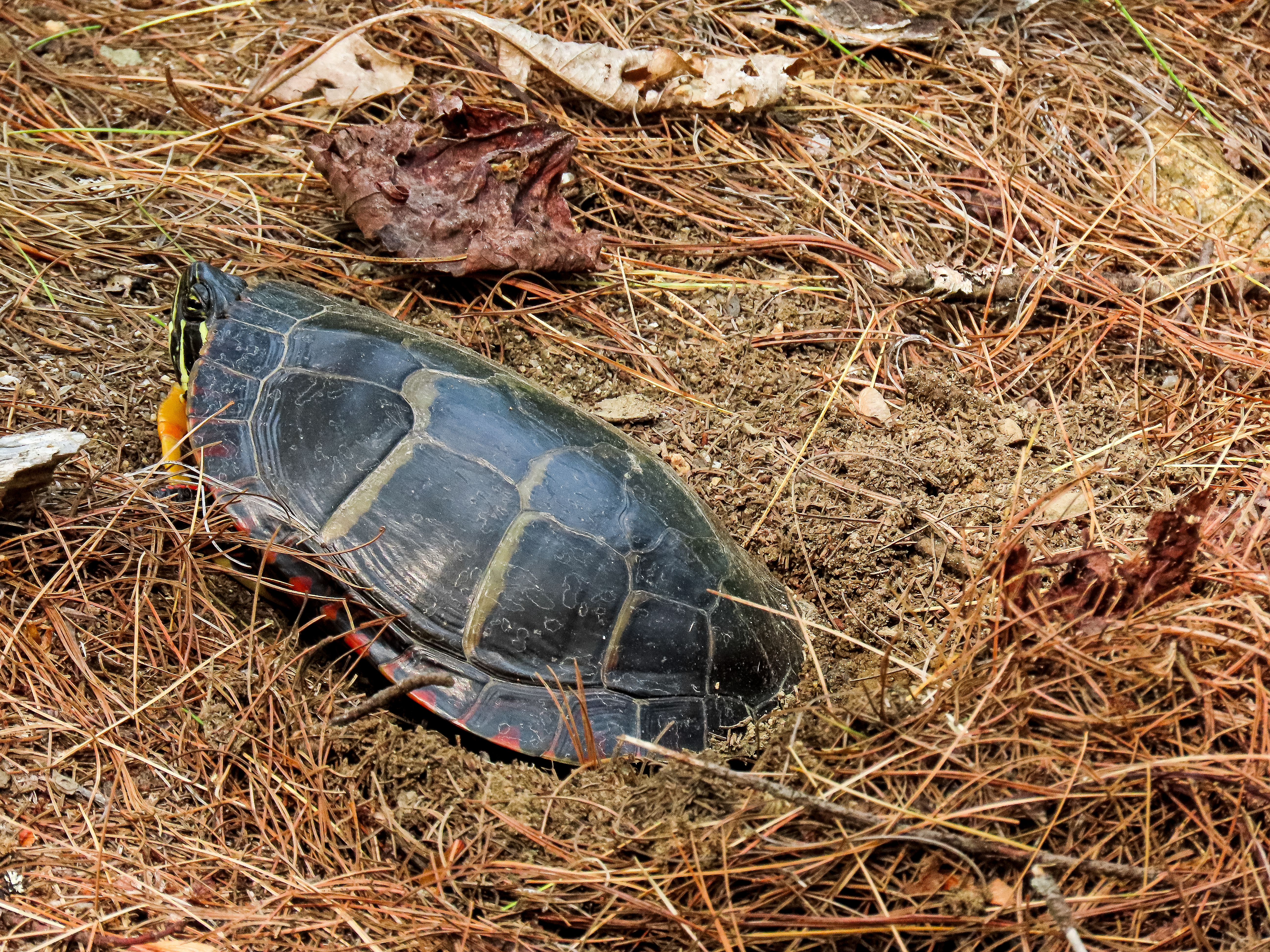
That said, when I spotted this one, I knew its gender immediately, for like the Momma Snapper, this Momma Painted was also in the process of laying eggs. She pulled her head into her shell the moment I spied her.

In the few moments we spent together, however, she ever so gradually extended her head.

But I felt like she was keeping a wary eye on me. And very much wanted me to move along.

And so I did.

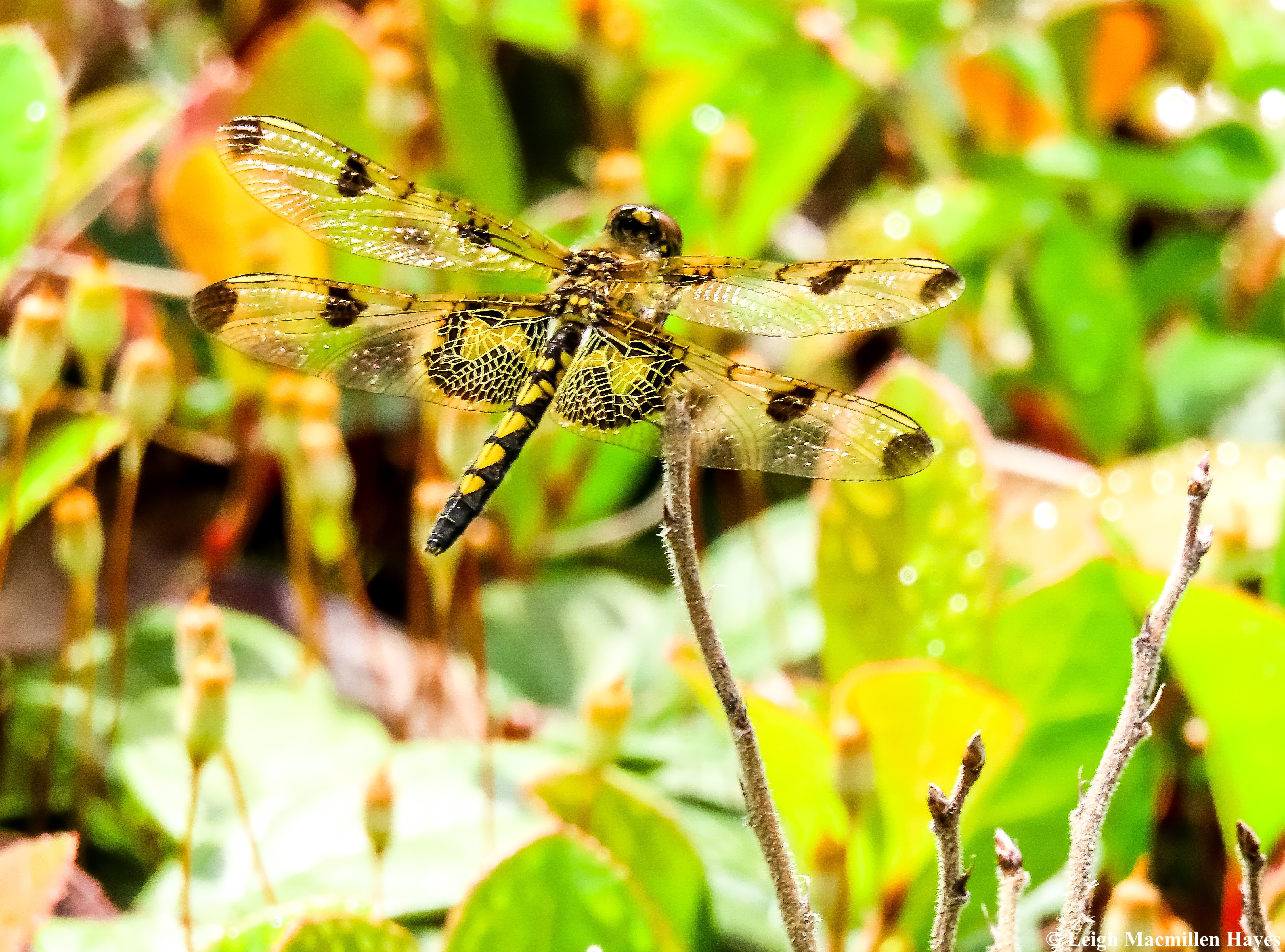
And then it was the insects that begged for attention, this being a female Calico Pennant Skimmer Dragonfly. Her coloration is yellow, while his is red. One of the things I love about perching dragonflies such as the Skimmer family, is that within their territory, they return to the same perches over and over again–flying off to capture food or defend said location, but usually back to the same twig or flower or one close by, making it easy to spend some time with them.

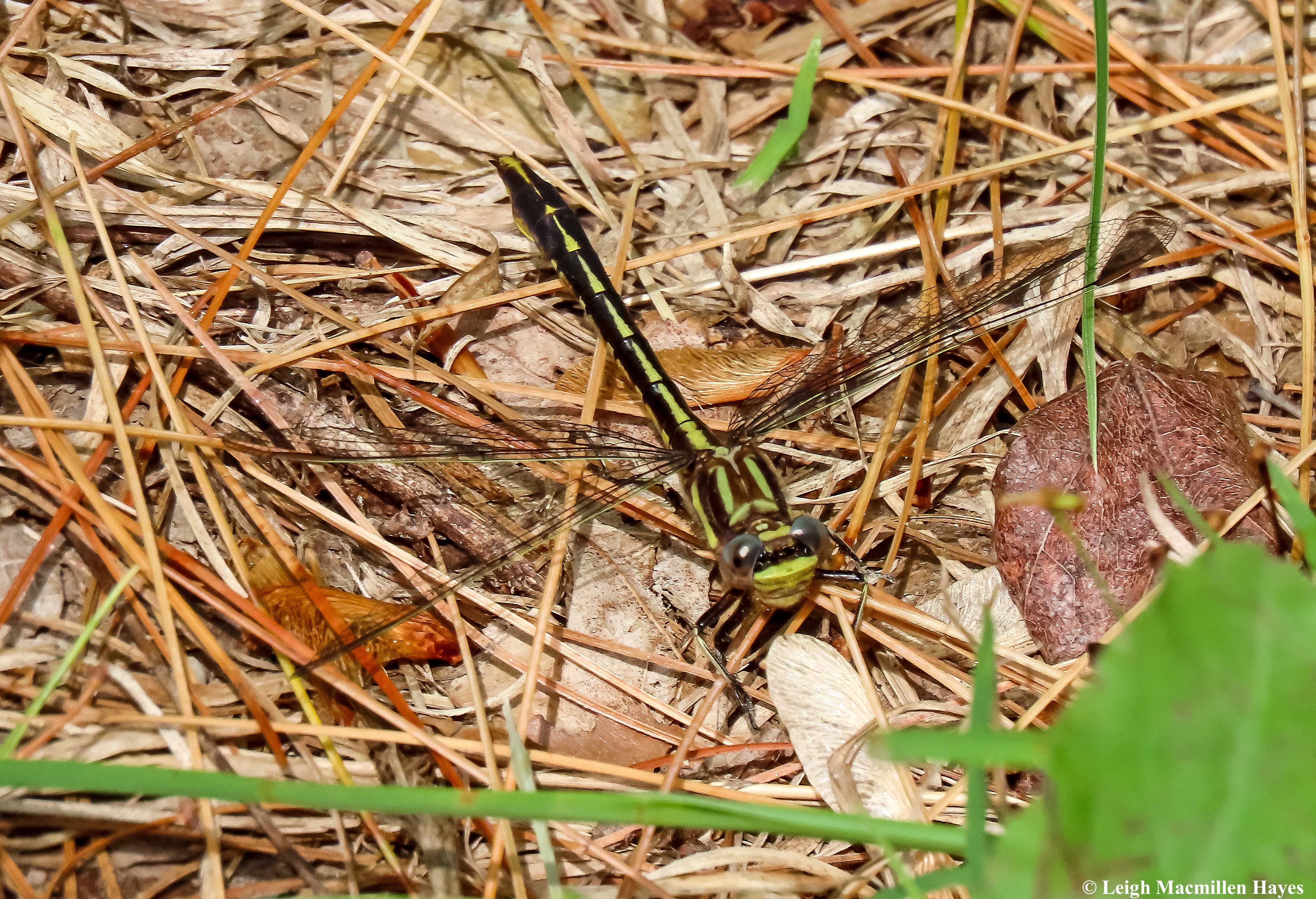
The Clubtail family is the same, this being a Lancet. These dragonflies often land on our dock or our kayaks and spend some time with us.

I swear they are as curious about us as we are about them. But maybe again, they are checking out our predator abilities. I much prefer letting them be the predators as they munch on Mosquitoes and Deer Flies and make time in the woods or on the water so much more comfortable.

And then there are those who seek nectar and Meadow Hawkweeds are a valuable resource right now for Flower Flies and Bees and Wasps and Butterflies like this little Northern Crescent. Last summer I spent a lot of time with this species in my neighbor’s field and was thrilled to realize that as long as there was food available during the fall in the source of Goldenrods and Asters, they were present.

One of the most abundant butterflies this year has to be the Tiger Swallowtail. Canadian and Eastern, and probably hybrids in the mix, they are everywhere. Everywhere. Adding grace in their flutter-bys and color to the landscape. As well as serving as pollinators.

Dropping drastically back down in size, my attention was also drawn to the Long Dash Skipper Butterfly. According to the comprehensive field guide, Butterflies of Maine and the Canadian Maritime Provinces, by PhillipG. deMaynadier et al, “The Long Dash is named for the conspicuous stigma on the male forewing. Found on forewings of most other small, orange and brown skippers in our region, a stigma is a specialized patch of scales that emits pheromones used during courtship. In the Long Dash, the stigma is surrounded by black scales, making it appear larger than it really is.” Thus, this would be a male Long Dash Skipper upon one of its favorite flowers, Red Clover. But from the book, I’ve learned I should also look for it upon Cow Vetch, Common Milkweed, Spreading Dogbane, hawkweeds, Ox-eye Daisy, and knapweeds.

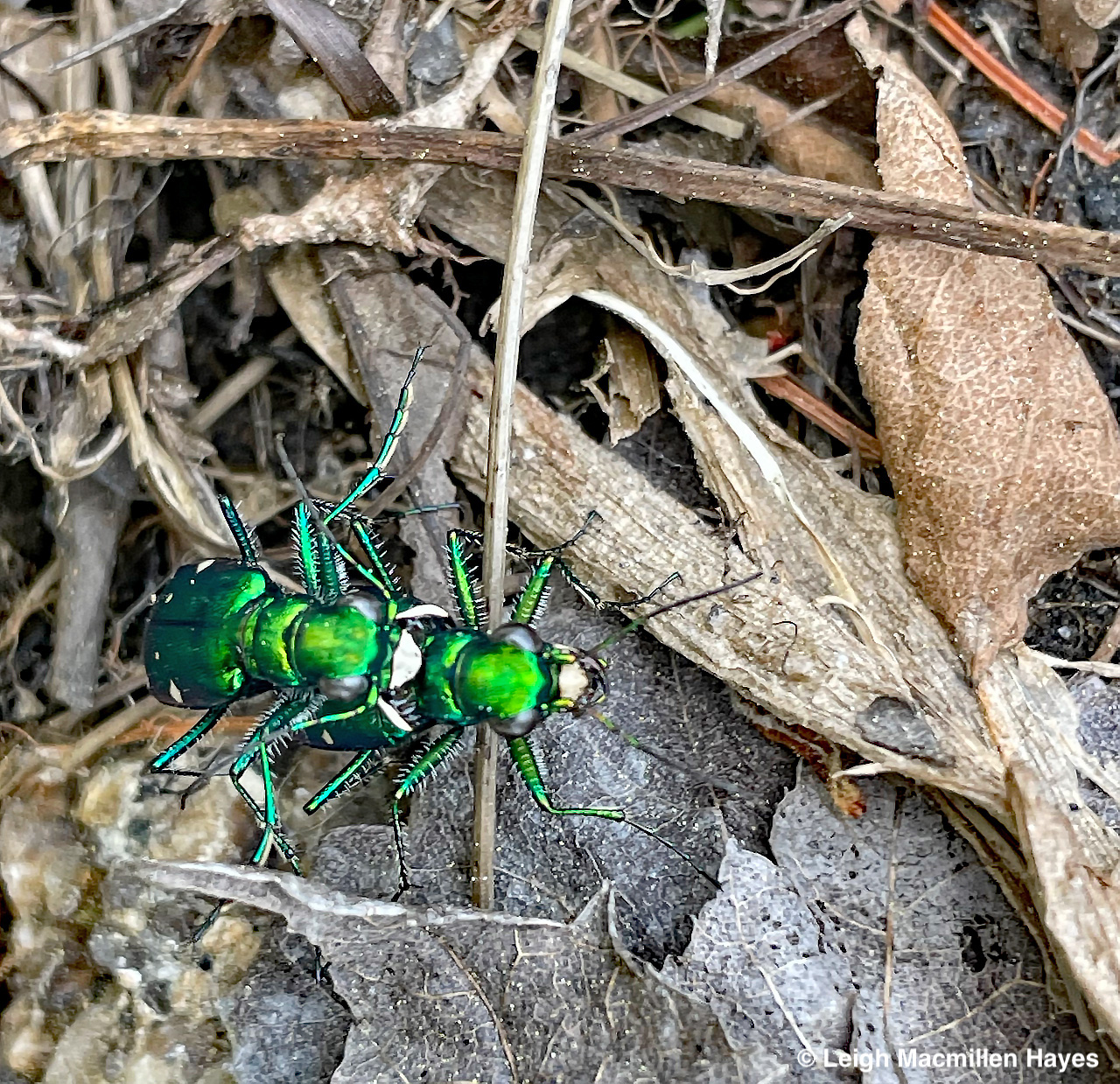
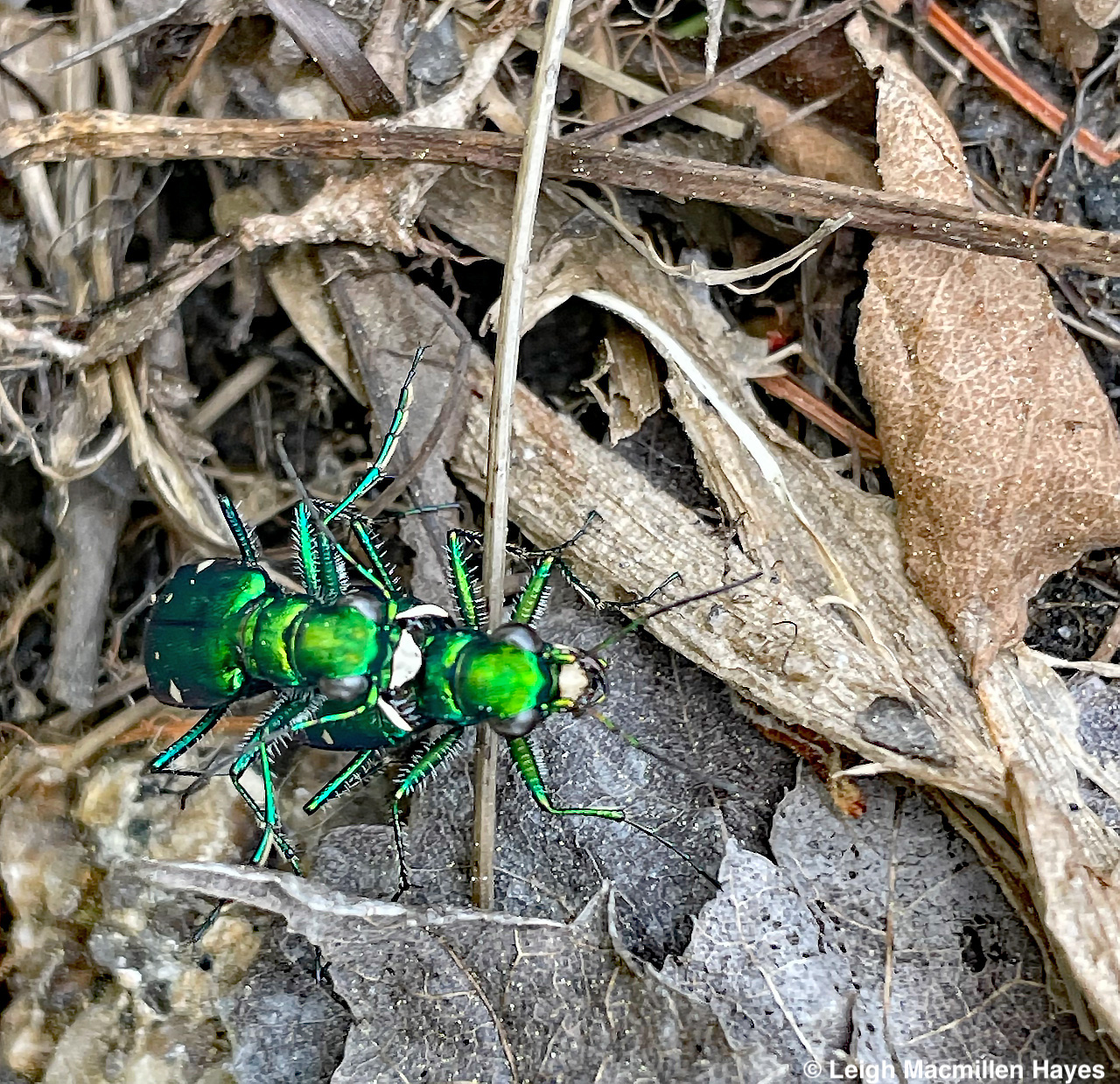
Keeping pace with me despite its much shorter legs, the Six-spotted Tiger Beetles, which I love for the iridescent green, practically ran ahead, reminding of Chalk-fronted Corporal Dragonflies who insist upon flying five feet in front, waiting till I almost catch up, and then flying another five feet ahead, over and over and over again. The only time I’ve seen the Six-spotted Tigers slow down is when they are canoodling. But even then, they are on the move.

Another insect, which is much slower, may have significant value in our landscape. If I’m correct with the ID, and I’m waiting for iNaturalist to confirm, this is Atanycolus cappaerti, a parasitic wasp. I can only hope that my ID is correct, because . . . according to Cornell University’s College of Agriculture and Life Sciences, A.cappaerti “attack [Emerald Ash Borer larvae] at rates high enough to be considered significant for biological control. While studies are still ongoing, the use of the native parasitoid A. cappaerti for augmentative biological control would be desirable from an environmental perspective as it is already established and has a niche in the ecosystem.” That’s in Michigan. But maybe in Maine as well? Please let it be so. This past winter we all noticed that EAB had spread significantly in our area.

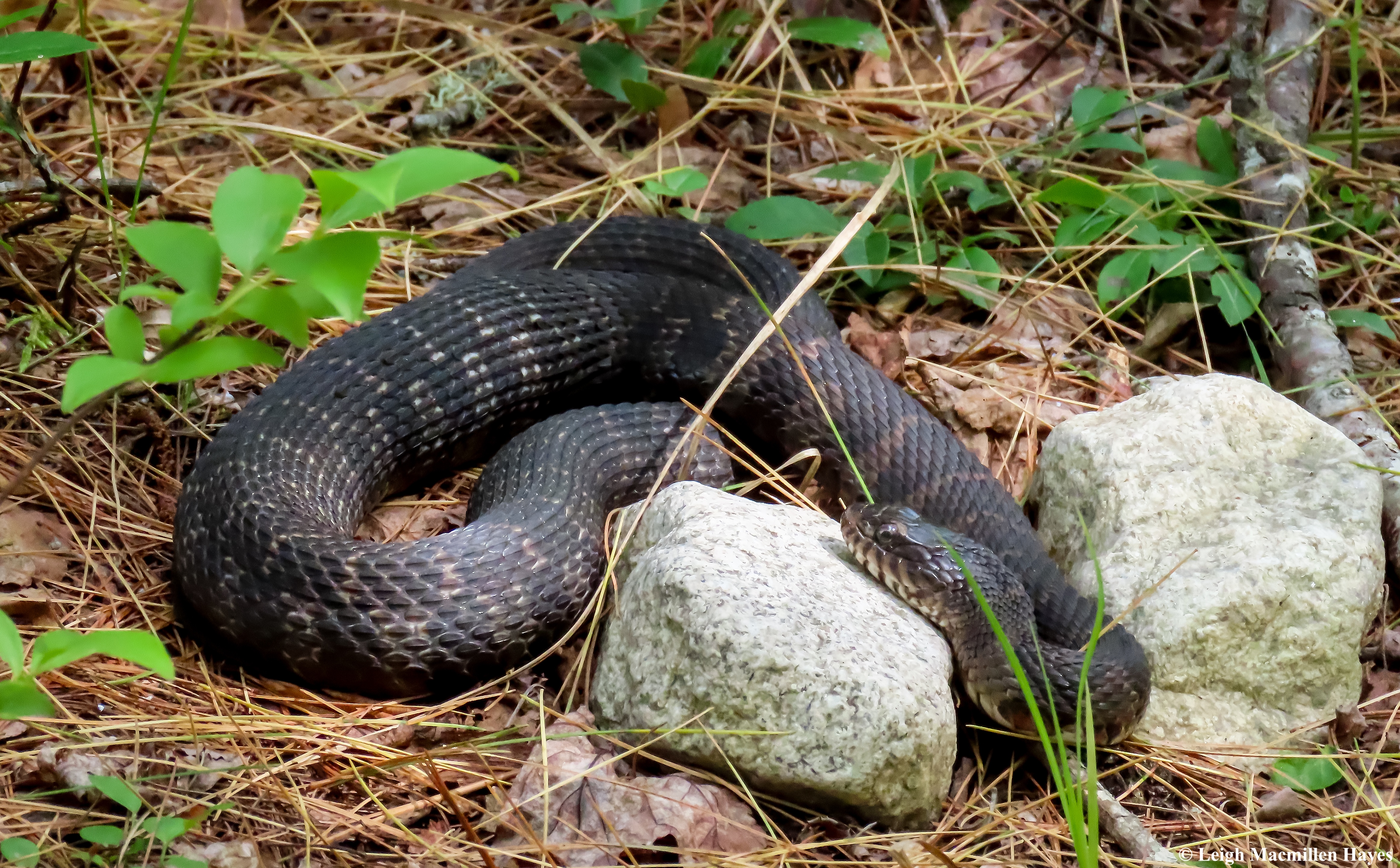
Basking just down the trail from the wasp was a Northern Water Snake who didn’t seem to mind my presence, and I tried not to mind its either.

He was aware of me, and I say he because in the Northern Water Snake world, the male is smaller than the female, and this one wasn’t really all that big, but still . . . a wee bit intimidating. Of course, it did nothing to make me feel that way, so the intimidation was all in my mind. Instead, he let me take a few photos and pass by without a confrontation, as is always the case. I remember once stepping out of a canoe and practically landing on one, who stayed put. And another time, realizing that one was basking in Maleberry shrubs at the edge of a pond as a few of us paddled by within mere inches–or so it seemed.

As spring gave way to summer this past week, I think one of the things that stood out most to me was sighting the turtles laying eggs. Though they don’t hatch at exactly the same time, it will take about two to three months for the eggs to incubate. Of course, temperature has much to do with that. But my experience in the past is that about the autumnal equinox we may see baby turtles crawling out of small holes, if not sooner. And if predators don’t get to them first. There’s always that risk.

I do love winter, but summer fauna among all the flora–so much life happening right before our eyes–its like an explosion of color and form and pattern and texture and sound. And it’s only the beginning. I can’t wait to see what the rest of the season has in store for us.

Happy Belated 10th Anniversary, wondermyway.com

I can’t believe I missed the date by two days. I’d been planning this for months. Well, in the back of my mind, that is. No actual thoughts were jotted down on paper. I just knew what I wanted to do and when I wanted to do it . . . until I forgot. Or rather, it slipped my mind. Momentarily.

No harm done.

As the saying goes, “There’s no time like the present,” and so my gift to you dear readers will be to give you the present of time by taking you back to the beginning of wondermyway and then making our way to the present. And all of it is because I was given the gift of being present in the moment on so many occasions. Egads. That’s a lot of presents. And presence.

Wonder My Way

My first blog post was published on February 21, 2015, and entitled Wonder My Way. It began with these paragraphs: Wonder my way as I wander through the Maine woods. So often I see things that make me stop and wonder. Sometimes I figure it out, but other times, I’m just as happy that I don’t. It’s The Sense of Wonder that Rachel Carson wrote about which keeps me going. Do we need to have all the answers? I think not.

So join me for a tramp from our woodlot to the world beyond. I know not where this trail will take us, but I can guarantee that we’ll have fun along the way. Read more . . .

Spring in Slo-Mo

Spring is so fleeting in Maine. Oh, I know, it lasts the usual three months and the beginning and ending overlap with its seasonal partners, but really . . . one must take time to pause and watch or you’ll miss the most amazing action that occurs in slow motion right outside the window–and beyond.

For those who are new to my blog, Jinny Mae, who is featured in this and many blog posts, was a dear friend whose name I turned in to an alias as she faced cancer courageously and rather privately. In the end, the cancer consumed her, but the things we enjoyed along the way were bountiful, including this spring adventure to an incredible space in our little neck of the woods. Read more . . .

Universal Love

Written on Valentine’s Day, this post was dedicated to My Guy and all who wander and wonder with me.

When I wander, hearts frequently speak to me . . . Read more . . .

Nothing To Grouse About

I shared a unique experience with five other naturalists, the majority of them in the six to eleven age range. For twenty minutes the six of us watched a Ruffed Grouse at it moved about, overturning leaves and foraging on buds. When we last saw it, the bird headed off in the opposite direction that we intended to journey, and so we moved on with wonder in our eyes and minds.

And then the next day I returned on a mission to study some twigs at the same property. No sooner had I stepped onto the trail when I heard the sound of leaves cracking a wee bit and what to my wondering eyes should appear but the same bird.

The curious thing: the bird followed me, staying about ten feet away as I tramped on. I stopped. Frequently. So did the bird.

And we began to chat. I talked quietly to him (I’m making a gender assumption) and he murmured back sweet nothings. Read more . . .

Amazing Race–Our Style

Okay, so My Guy and I have enjoyed The Amazing Race show over the years and felt like there were some challenges either or both of us could face, but others that neither of us would dare attempt. And so . . . I created our own version.

The thing is that until I take the time to change the order of this post on my website, you’d be best to start at the bottom and read each entry, going up one step at a time. As in, this: Scroll down to February 18 on this link and then after reading that entry, make your way up one episode at a time, until you reach the last recorded on February 2, 2019. Oh heck, read it in any order that pleases you. Just get into the spirit of the race I created cuze I certainly had fun with it. And fooled a few people along the way.

The Amazing Race–Our Style

I’m sure when we said our wedding vows back in 1990, there was something in there about only riding a snowmobile once. And I did that once two years or so ago–mostly because I knew it would please my guy. Certain memories remain from that experience: I felt like a bobblehead inside the helmet; I lacked control as I sat behind him and couldn’t see; when I did peek around, I was sure my head was going to strike a tree so narrow was the trail; and I didn’t like the speed. Oh yeah, and at a road crossing, I do believe I jumped off and walked to the other side. With all of that in mind, I’m not sure what I was thinking when I created a Valentine’s gift for him–our very own Amazing Race. Read more . . .

wondermyway turns five

Five years ago today (ten now!) I turned from taking a hundred million photos on each tramp to taking a hundred million photos and writing about them.

Typically, on the anniversary I scan the past year’s posts and choose one from each month, providing a photo to represent it, with a brief (or not so brief) comment and link to the full read.

But . . . because this is a milestone I never imagined reaching (posts: 733; views: 76,793; visitors: 44371; followers: 578), I thought I’d take the time to thank you, the readers, for wandering through the wonders with me.

Thank you! Read more . . .

Dragonfly Whisperer Whispers

We had no intention of eating lunch in this spot today, but while looking for a mountain to climb, we kept encountering full parking lots and so our backroad meander put us beside a bog at lunch time and voilà, we managed to walk all of less than two tenths of a mile. Total.

But in that short distance, our eyes feasted. First it was all the Painted Turtles basking in the sun. Read more . . .

Surveying the Wildlife of Charles Pond

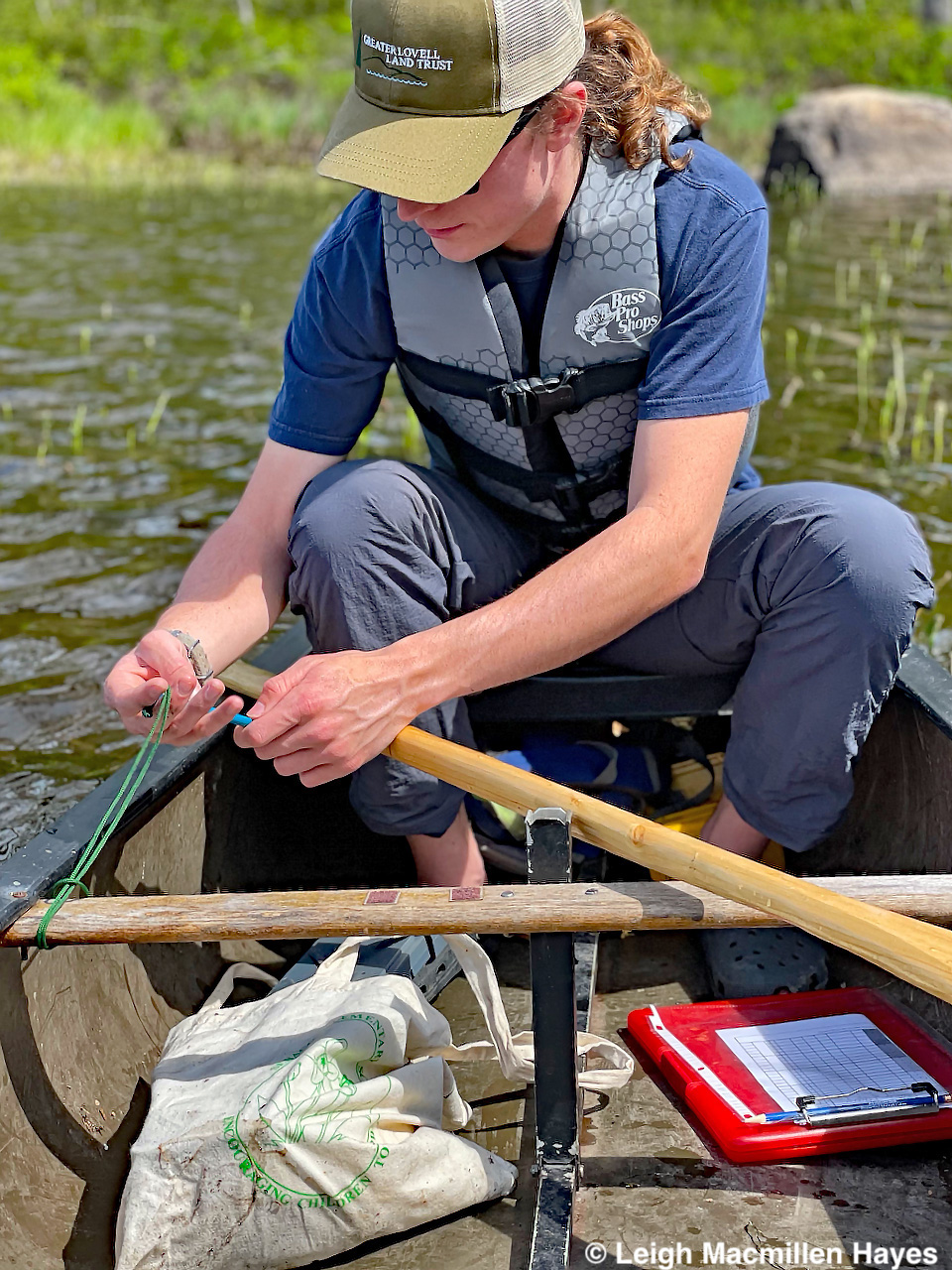
For the past two weeks at Greater Lovell Land Trust we’ve had the good fortune to conduct a wildlife survey in the waters that surround the newly acquired Charles Pond Reserve in Stow, Maine. Our hats are off to Alanna Doughty of Lakes Environmental Association (LEA) for her willingness to be the lead on this project and work in collaboration with us. Alanna, you see, has conducted previous surveys for Maine Inland Wildlife & Fisheries (MDIFW) at LEA properties, and was trained by wildlife biologist Derek Yorks to set these up.

MDIFW maintains a comprehensive database on the distribution of Maine’s amphibians and reptiles, as well as terrestrial and freshwater invertebrates and the data we’ve collected will add to the bigger picture. What we discovered was just as important as what we didn’t find. Read more . . .

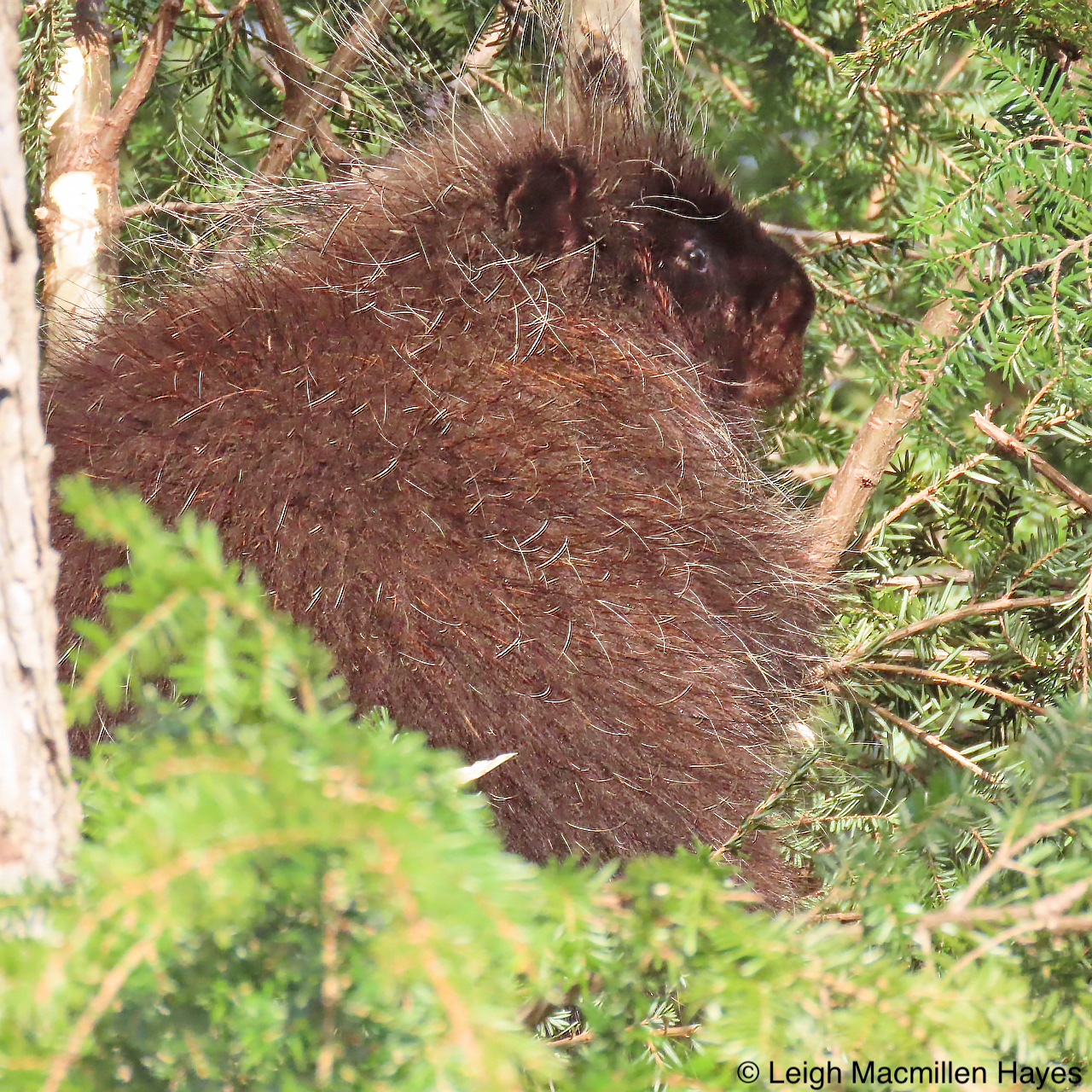
Hightailing It Home

Friends,
At the risk
of sounding redundant,
I bring forth
a prickly topic.

A quick glance
while surveying treetops
and suddenly
my heart sang
as I spotted
a well-armored back.

Read more . . .

Happy 9th Birthday, wondermyway!

Thank you to all who read and comment and share wondermyway.com. Some of you have followed my blog posts since the beginning, February 21, 2015. A few have joined the journey as recently as yesterday. I’m grateful for the presence of all of you in my life.

To mark this occasion, I thought I’d reflect upon those moments when my wonder gave me a glimpse of the “Thin Places” that I’ve experienced either by myself or in the company of others.

To quote my friend, Ev Lennon, “A Thin Place is a spot of beauty, loveliness, space–an example of the wideness and grandeur of Creation.”

I think of them as places that you don’t plan a trip to visit, but rather . . . stumble upon.

Read more . . .

And that brings me to this year and this anniversary, belated as it may be. I can’t believe it’s been ten years since I started this endeavor, which has served as my diary and memory, and been a place for me to share so many incredible extraordinary ordinary experiences with all of you. Thank you for being faithful readers.

As I compare the numbers to year five, I haven’t written as often in the last five years, but your support has been incredible.

wondermyway.com by the numbers:

Posts: 1,076

Visitors: 135,888

Views: 205,389 and increasing constantly.

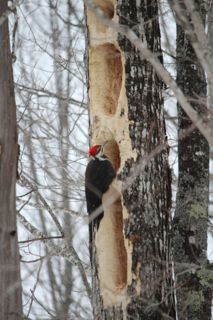
The most popular post of this new year was Giving Thanks for the Pileated Woodpecker. So far, anyway.

The Giant’s Shower

And since I retired as Education Director for a local land trust just over a year ago, I’ve added some other fun to the mix.

I did a thing. Years ago I wrote a children’s story. Well, a bunch of them actually. And I tried to sell this particular one to publishing houses. No takers. Then, a couple of years ago I purchased a Fairy Coloring Book created by the one and only Solana, teenage daughter of the Fly Away Farm Wards in Lovell and Stow, Maine, and approached her about illustrating my fairy tale. She took on the task and did an amazing job. Then I asked copyeditor Pam Marshall to wave her magic wand over it. And I asked local graphic designer Dianne Lewis to use some fairy dust and turn it into an actual book. I always said I’d never self-publish a book. And tada: I did just that. And now it’s even better because it’s published by http://www.indieauthorbooks.com.

Read more . . .

My Art Gallery

At the end of April I began taking an art class offered by one of my peeps, a young woman who walked into the lives of many of us one day about twenty months ago; a young woman with a million talents to offer. Among those talents, she is a self-taught artist and we’ve been begging her to teach us.

At our first class, we had to draw a small box in the upper left-hand corner of the paper and place the person who has been our biggest art critic into it. That done, the critic was forever boxed–well, until she sneaks out, which she seems to do way too much.

And then we looked at some photographs in magazines and had to sketch them and determine the direction the eye would travel in the picture.

Next we looked at lines and perspective. I’d brought along my favorite colored pencils, but immediately felt my inner critic jump on me because all of my classmates were working with watercolor pencils, watercolor paint or acrylics. And the artist herself, gouache. Until I met her, I’d never even heard of gouache. Or at least never paid attention, if I had.

Read more . . .

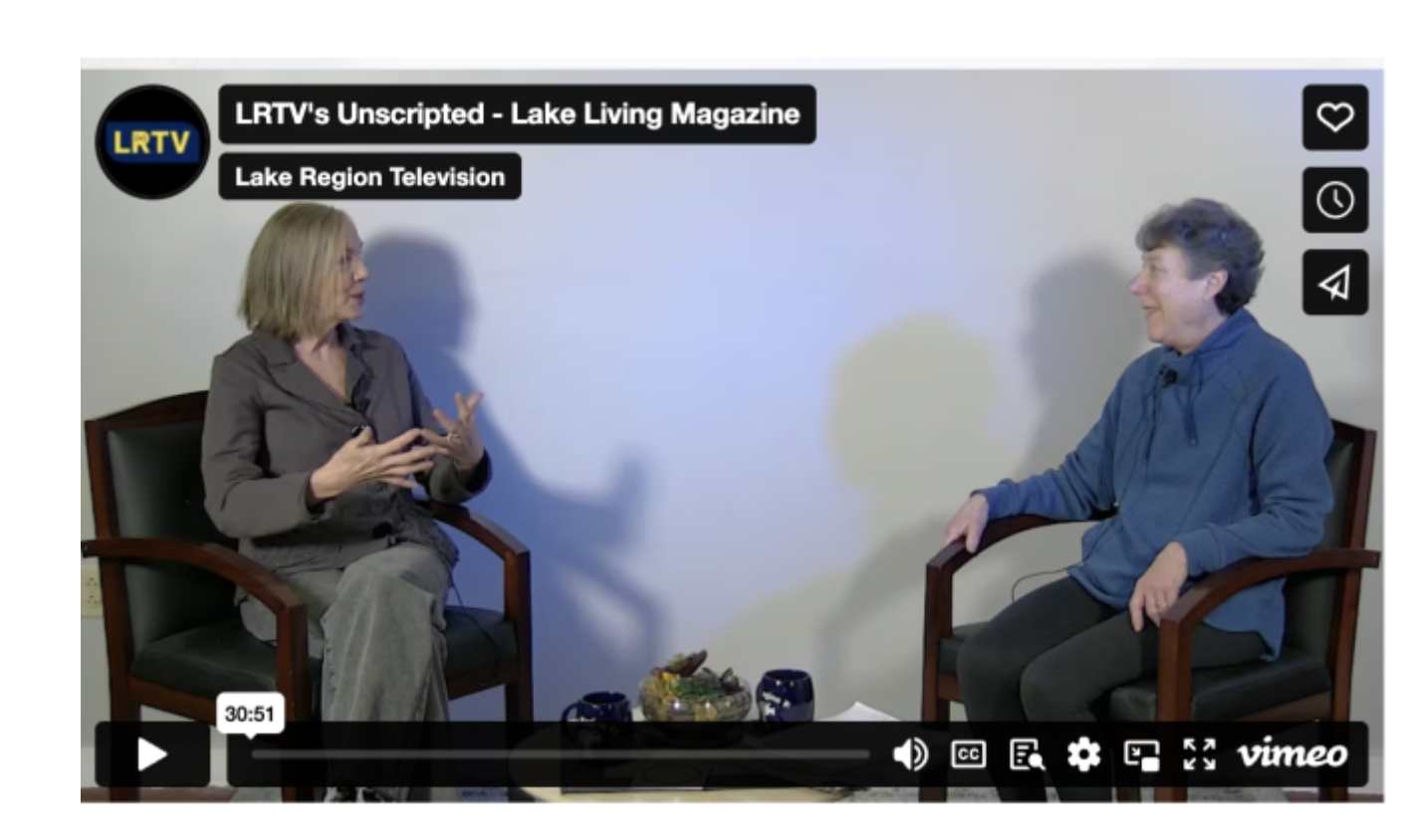
Lake Living on Lake Region Television!

And we said goodbye to Lake Living magazine, a glossy publication I’ve worked on since 2006.

We are movie stars! Well, maybe not quite. But, many, many thanks to Evan Miller of Lake Region Television for filming and editing Laurie LaMountain, owner and publisher of Lake Living magazine, and me recently as we said, “Fare Thee Well,” to working on this publication.

Read more . . .

And in the midst of it all, I still have the good fortune to share the trail with so many others . . .

and especially with My Guy, who is forever patient as I pause to consider the wonder of the moment.

My heart-felt thanks to him and to all of you for joining me so often as I wondermyway.

Wowza–ten years! I never imagined. No time like the present to wish wondermyway.com a belated 10th anniversary.

Where The Beaver Led Me

Where there is water there may be Beavers. And so I explored two locations on several occasions this weekend in a quest to spend some time with one of the most incredible mammals of our region.

One such spot is beside a wetland associated with a brook. It’s a place rich with color and texture, and ahh, those fall scents of earth and water and fallen leaves and Balsam Fir all settled together in the late afternoon after the morning sun has baked them.

The other was beside another brook that served as the outlet for a small pond, and again the colors and textures and scents filled my senses, enhanced by a slight breeze that made for a most delightful exploration on October days with temperatures in the 70˚s.

I don’t want temps to remain in the 70˚s always, but these days are gifts meant to be cherished and remembered by our skin and our soles.

I discovered along the way that I wasn’t the only one basking in the sunlight, for Painted Turtles also took advantage of the warm rays to regulate their body temperature. It also provides an opportunity to hang out with friends as they congregate along logs and rocks.

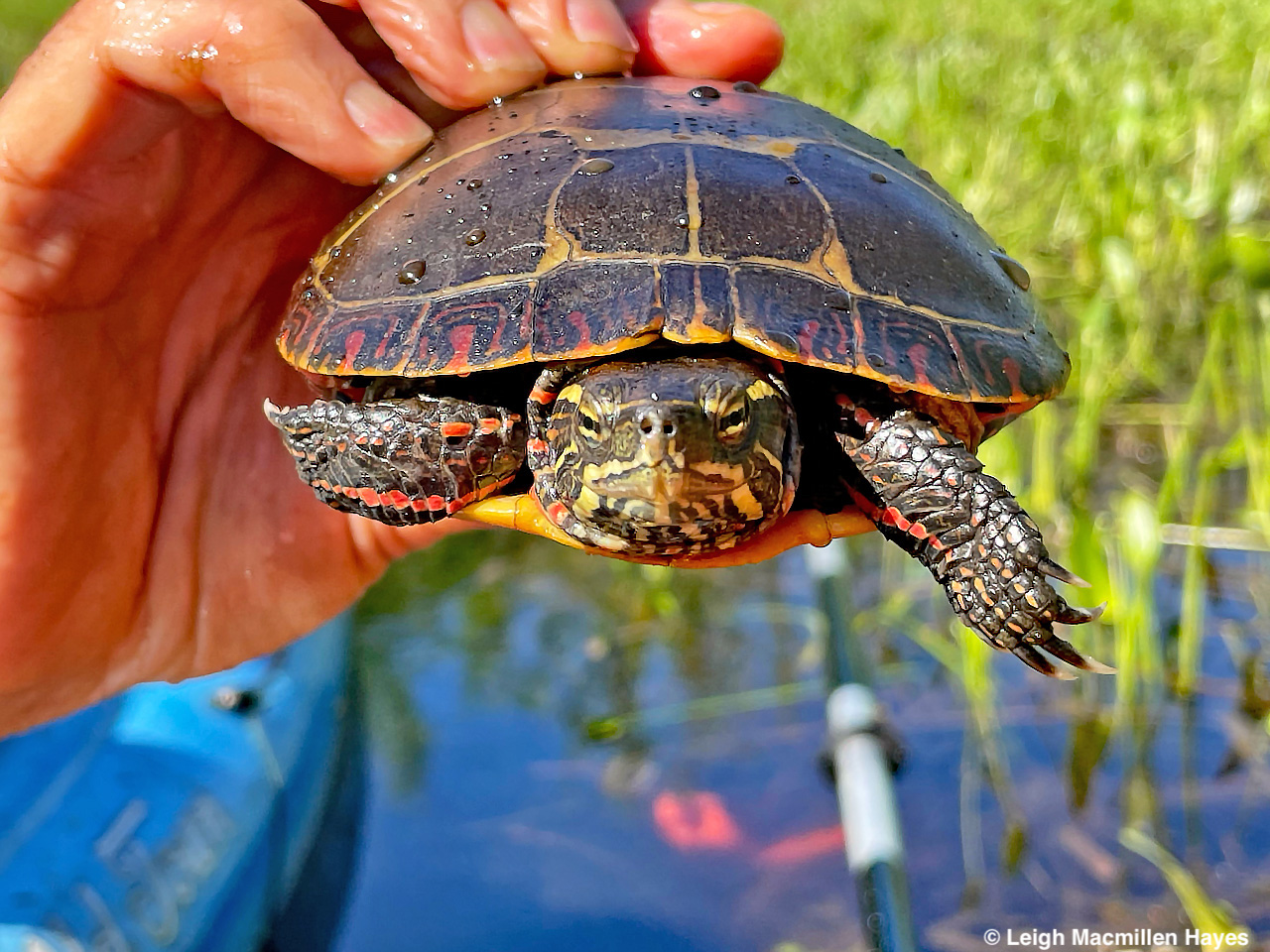
Easter Painted Turtles, beautifully adorned as they are, feature intricate red coloring along the sides of their shells and bodies, plus a orangy-yellow belly, and lines of red and orange and yellow green on their necks and legs.

But beyond all of this, I’m reminded that they play a vital role in maintaining the health of their ecosystems as they consume a diverse diet from aquatic plants, to algae, insects and small invertebrates, thus cycling nutrients throughout the habitat–an environmentally healthy habitat.

I gave thanks to the Beavers for reminding me of that fact.

Back to the Beavers, my journey continued when I spied new Hemlock branches atop a lodge.

And then I began to find pathway after pathway across land to water where the family, since there are usually two or three generations of Beavers who live in a lodge and work the area together, had dragged downed trees and branches overnight and carried them between their teeth out to their residence.

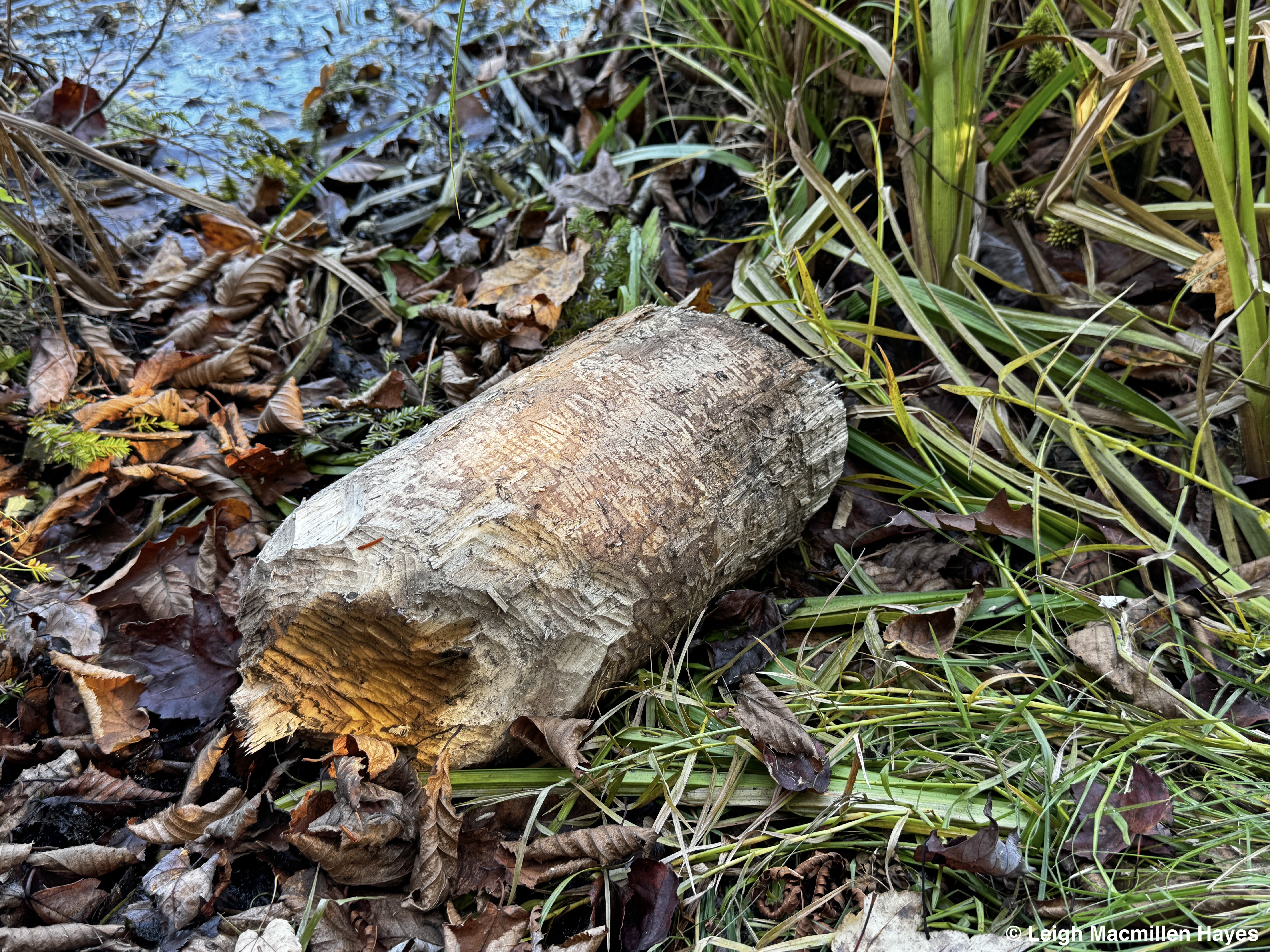
Their works were many and sculptures magnificent as they chiseled away and when I spotted this tree, I had visions of one standing on its hind feet and using its tail to form a tripod, the better to steady its body, as it turned its head to the side and began to work. With head cocked, it created the consistent angle of the half inch groove as the upper and lower incisors come together.

To reach such heights, I could only assume it was a mature Beaver. That, or one stood upon the back of another. Ah, but that’s the stuff of fairy tales. (I do like fairy tales–just saying).

As I looked around the base of a tree for more evidence, I discovered this. What could it possibly be? Scat?

No. Pellets? Yes. Several of them. Filled with bones. And maybe hair. And/or feathers.

The creator? My brain automatically went to Barred Owl and I’ve seen and heard the owl in these woods on many occasions.

But . . . these natural treasures could also have been produced by a resident eagle or hawk or so many other birds. Based on the number of pellets under this one tree, its a certain signpost of a productive area for whatever bird chose to prey from above.

Moving farther along as I bushwhacked, I knew I was getting closer and closer to the animal of my dreams when I spotted trees being turned into logs.

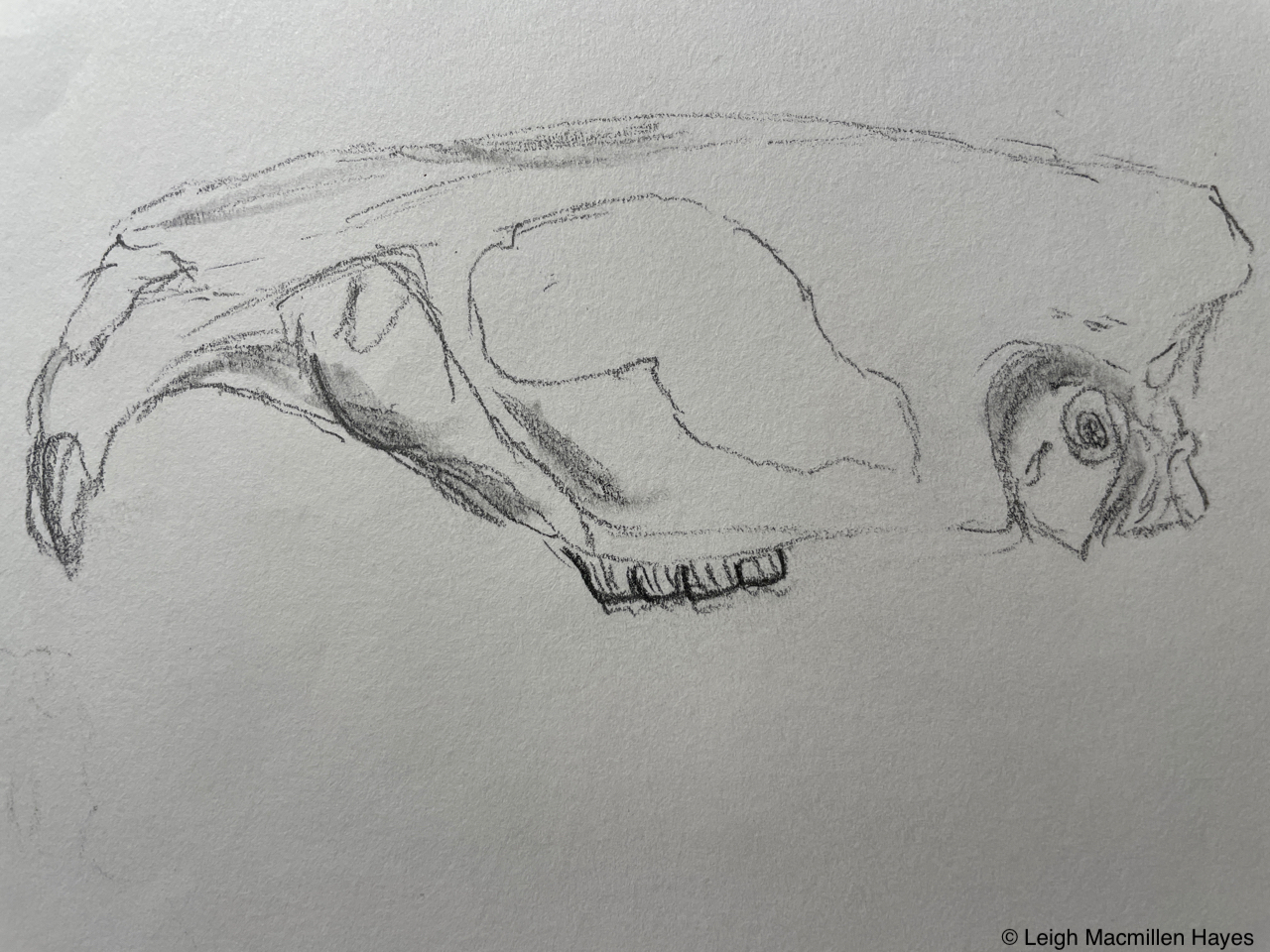
A beaver’s dental formula is this: 2 incisors on top, 2 incisors on bottom, 0 canines on top, 0 canines on bottom, 2 premolars on top, 2 premolars on bottom (that look like molars), 6 molars on top and 6 molars on bottom, for a total of 20 teeth. Recently, I was able to sketch the upper part of the skull of an older family member, who’d lost some of its molars.

These large, semi-aquatic rodents are gnawers. To that end, their incisors are highly specialized for chewing through really, really tough things and they grow continually throughout the critter’s life.

And like all rodents, the front surface of their incisors is coated in enamel reinforced with iron (hence the orange color), which makes it resistant to wear and tear from gnawing.

When the chisel-like teeth chew and fell trees, the much softer white dentine layer (the section behind the enamel) is ground down quicker than the enamel, thus creating a sharp chisel surface.

As strict herbivores, a Beaver’s diet varies with changes in the season. During spring and summer, they are drawn to waterlilies, algae, grasses, sedges, herbs, ferns, shrub leaves and shoots. By late summer, however, tree cutting begins as they gradually change their dietary habits from herbaceous to woody materials. Twigs, roots, bark and especially inner bark become the source of nutrition. Aspen, birch, alder, and willow are favored species, but beavers will cut almost anything including conifers.

Occasionally, I saw individual logs on land or upon a muddy spot in the water. Again, the consistency of the gnawing was to be admired.

And where there are Beavers, there may also be Porcupines. At least, there was a couple of years ago when I spent some winter days tracking one to this cozy little den. Remnants of scat are all that remain and spiders have instead made a home in the hollow of this tree.

And then I spotted the most amazing feat of all. A widow maker dangling from a tree (that is if you are about eight inches tall), its bottom gnawed off and more gnawing about a foot and a half off the ground.

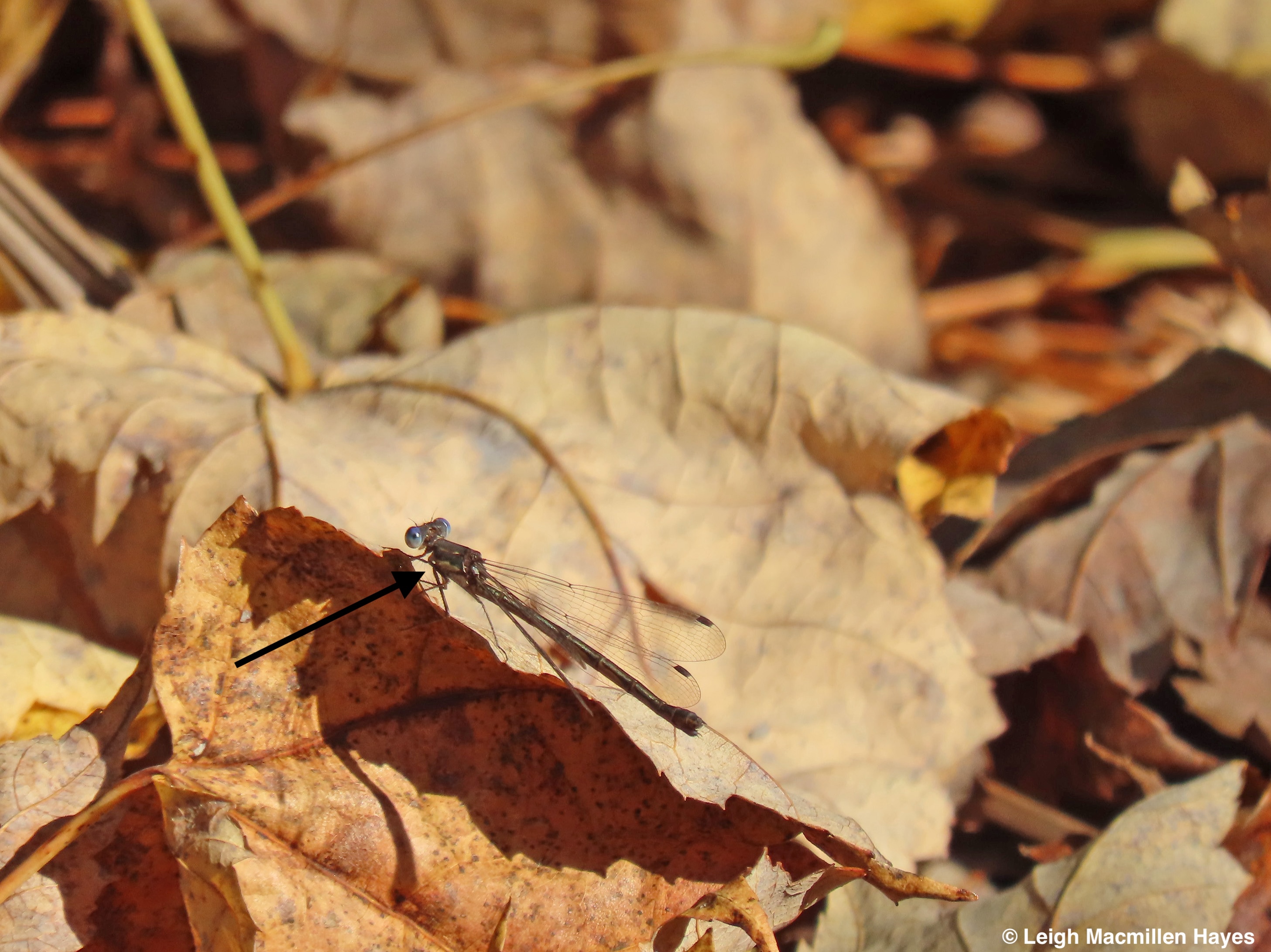
My search was interrupted again when a Spotted Spreadwing Damselfly entered the scene in a sunny spot. So named Spreadwing because unlike other damselflies that fold their wings over their backs when at rest, the Spreadwings, um, spread their wings. On the of left hand side it looked like this insect had four wings rather than two, but such was the sun’s angle in that spot and thus the shadows upon the leaves.

Identification was based on the lower side of the abdomen, where it is difficult to see, but there are two spots below the thorax stripes as compared to the Great Spreadwing with has two yellow stripes with brown between them, and no spots.

Autumn Meadowhawks were also on the fly and I kept seeing males with no ladies about.

A couple of hours later, one flew in, but though they danced in the air together as he chased her, they never did canoodle, in my presence anyway. And the last I saw of them, they headed to separate branches of a pine tree, perhaps to spend the night in rooms of their own.

The Beavers weren’t canoodling either, but they were certainly active given the rolls of mud and grasses and sedges and probably reeds I kept finding along the water’s edge.

And then I discovered the much sought after (at least by me) Beaver print. It’s a rare occasion to see a print, but sometimes I do in the snow. Their tails and the trees they haul swish away such evidence of their travels.

As I stood beside a Beaver path and downed trees just above where I spotted the print, another flying insect entered the scene. And I had the joy of watching her as she deposited individual eggs in vegetation.

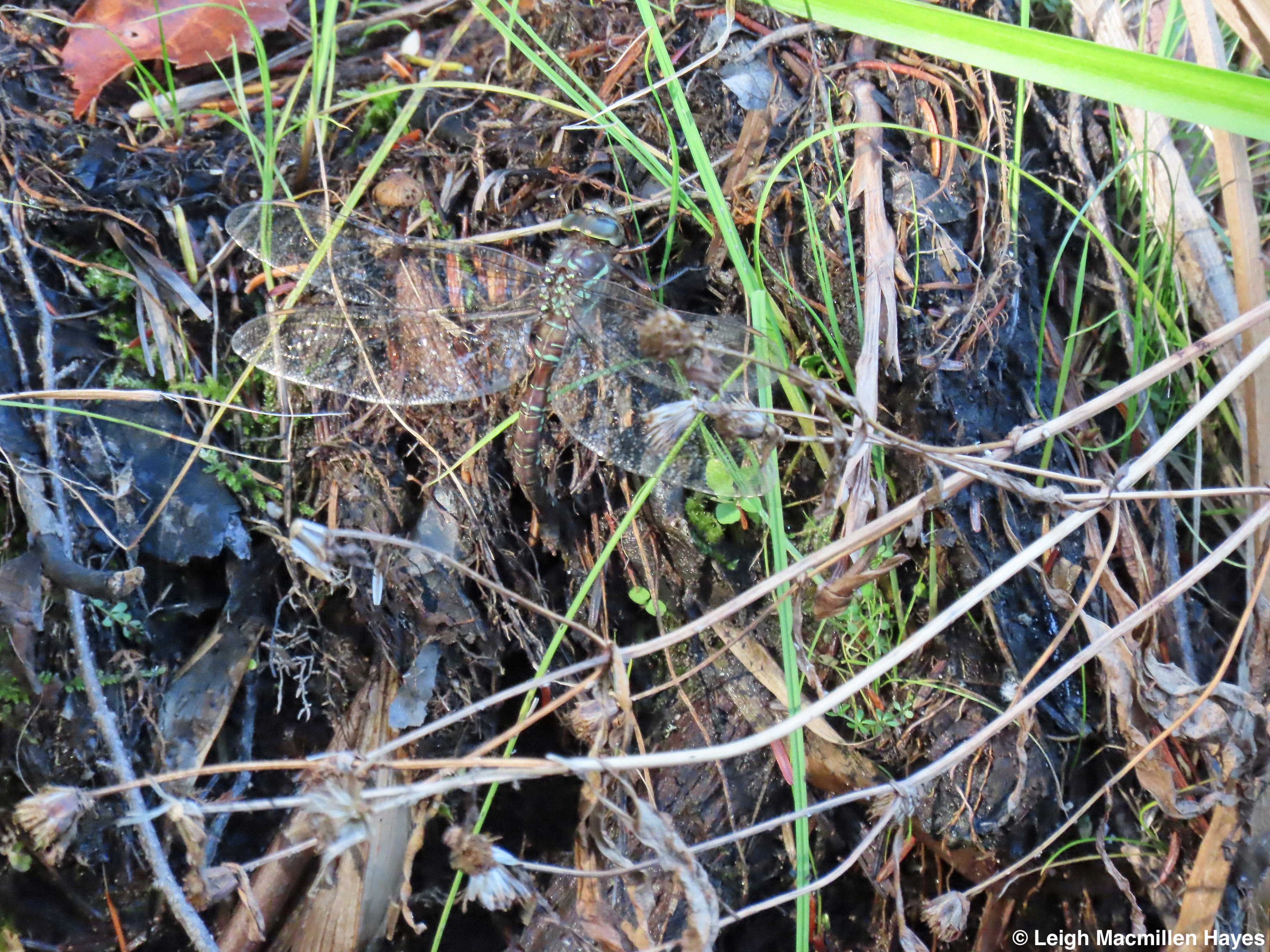
With her ovipositor located under her abdomen, the female Swamp Darner punctures a hole in mud, and logs, and aquatic vegetation in which to lay her progeny. The cool thing is that her eggs can survive a year without water, incase the level is low as it is right now. I suspect by spring these will be quite wet.

I never did find the Beaver(s) of my dreams, but spied another platform that may have been a lodge in the making. I hope they are still living there as the evidence leans in that direction.

At the end of the day, however, my heart was full with all my findings in both locations and I gave great thanks to the Beavers who led the way and all the discoveries I made as I searched for them.

Porcupine, Snakes, and Bears, Oh My!

Disclaimer: there may be some not so pleasant photos in this post. I apologize. BUT, what you will see is a fact of life.

Do I have your attention now?

Our afternoon began so innocently as we hiked along a well-traveled trail at Hawk Mountain in Waterford, Maine, where Goldenrods and Asters shown the way.

I knew I was in the right place the moment I saw a Black and Yellow Spider for I have spent the last two months enjoying their presence in our neighbors’ field and though they are beginning to decline in number as summer heads toward fall, a few are still on the hunt and packaging meals such as you see here.

Also like home, the presence of butterflies. Granted, we were only twenty minutes from home, so spotting Monarchs nectaring wasn’t a surprise. It was a delight, really.

And an American Painted Lady, her two eyespots on the hind wing as opposed to four smaller spots on the same wing of a Painted Lady, pasued on some bramble branches.

A Red Admiral also decorated the scene, even if it did appear to have a bit of attitude given its stance.

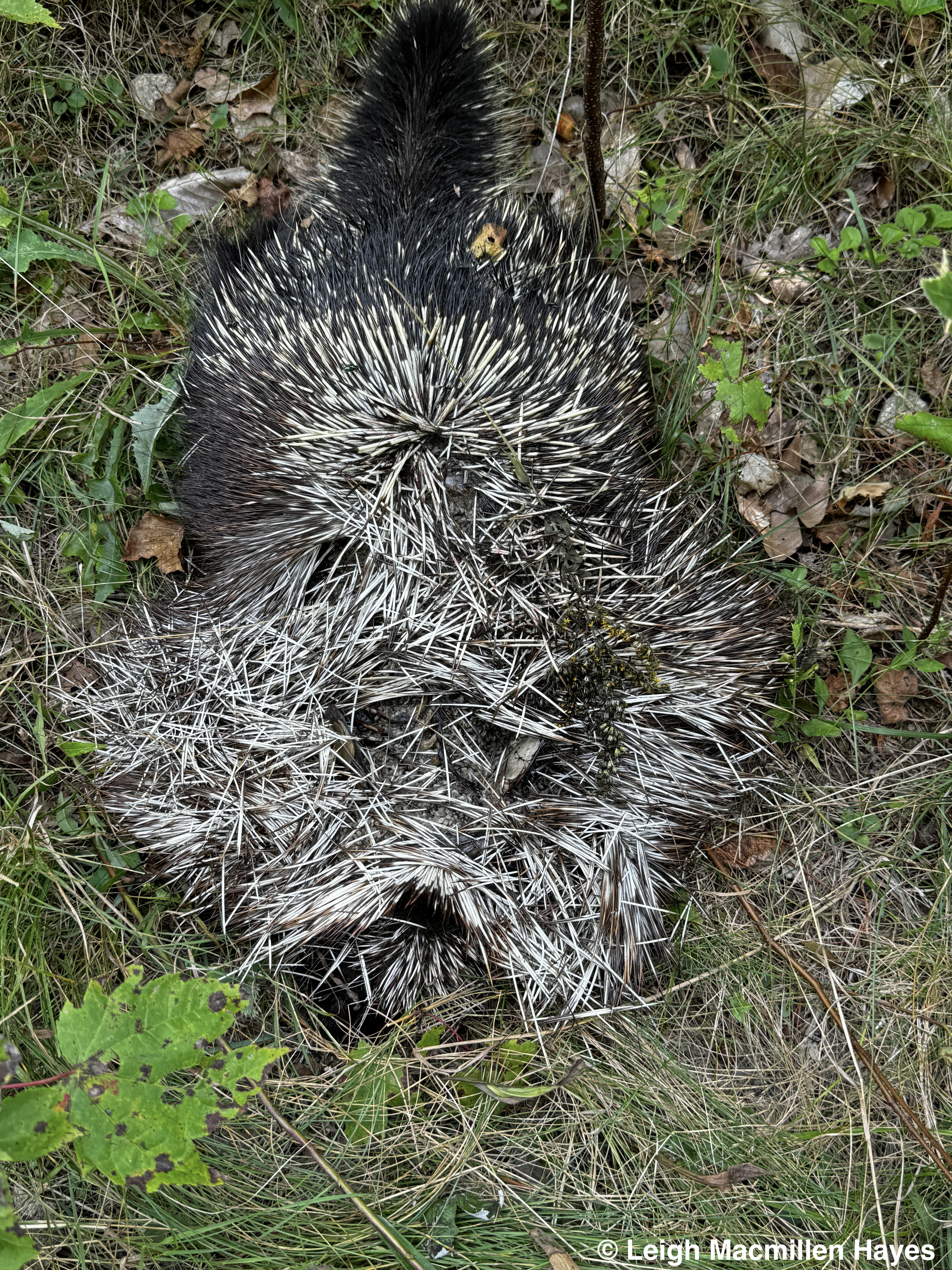
And then . . . and then I saw the body of a dead porcupine. It didn’t smell. But the Common Green Bottle Flies (in the Blow Fly family) that made their fly buzzing sounds around it indicated it had been dead for a bit. Some of you know that I love a such a wildlife mystery–and the opportunity to try to figure out what happened. BUT, the story doesn’t always piece together as neatly as I’d like.

First, there appeared to be three wounds on the animal’s back. Large openings. As if from a very hungry predator. And a brave one? Fishers are the porcupine’s main predator and they are known to attack the others face and belly, where the hair is soft as compared to the 30,000 barbed quills on its back. And a fisher and others would then visit the carcass repeatedly to dine. That hadn’t happened in this case. Instead, the animal died on its stomach. And other mammals didn’t take a repast from the offering. Did a domestic dog do the duty? If so, it must have had a head full of quills.

As for those metallic green flies, their maggots squirmed inside each large wound. By the hundreds. Maybe thousands. I wasn’t about to count. In his book, Insects of New England and New York, Tom Murray explains, “Blow flies are often associated with decaying organic matter, particularly carcasses and other sources of rotting meat and feces. In fact, they can figure prominently in forensic entomology, aiding in determining time of death.”

Murray adds, “This might sound like the dark ages, but cultures of sterile maggots of green bottle flies are sometimes used in hospitals to clean up deep wounds and infections that otherwise are difficult to treat. They only eat dead tissue, and secrete an antibiotic, preventing further infection. In nature, the normal food source is carrion.”

Maggots. A source of wonder! Who knew? Well, obviously doctors and scientists and Tom Murray!

There was one other thing to look at on the carcass, besides those three-toned quills and the soft curly hairs in the mix. The sole. Look how pebbly it is! The better for climbing trees, my friend. Think of non-slip socks with those little white treads. Porcupines don’t need to wear socks. Maybe they were the inspiration for such. Ahh, this site just got even better!

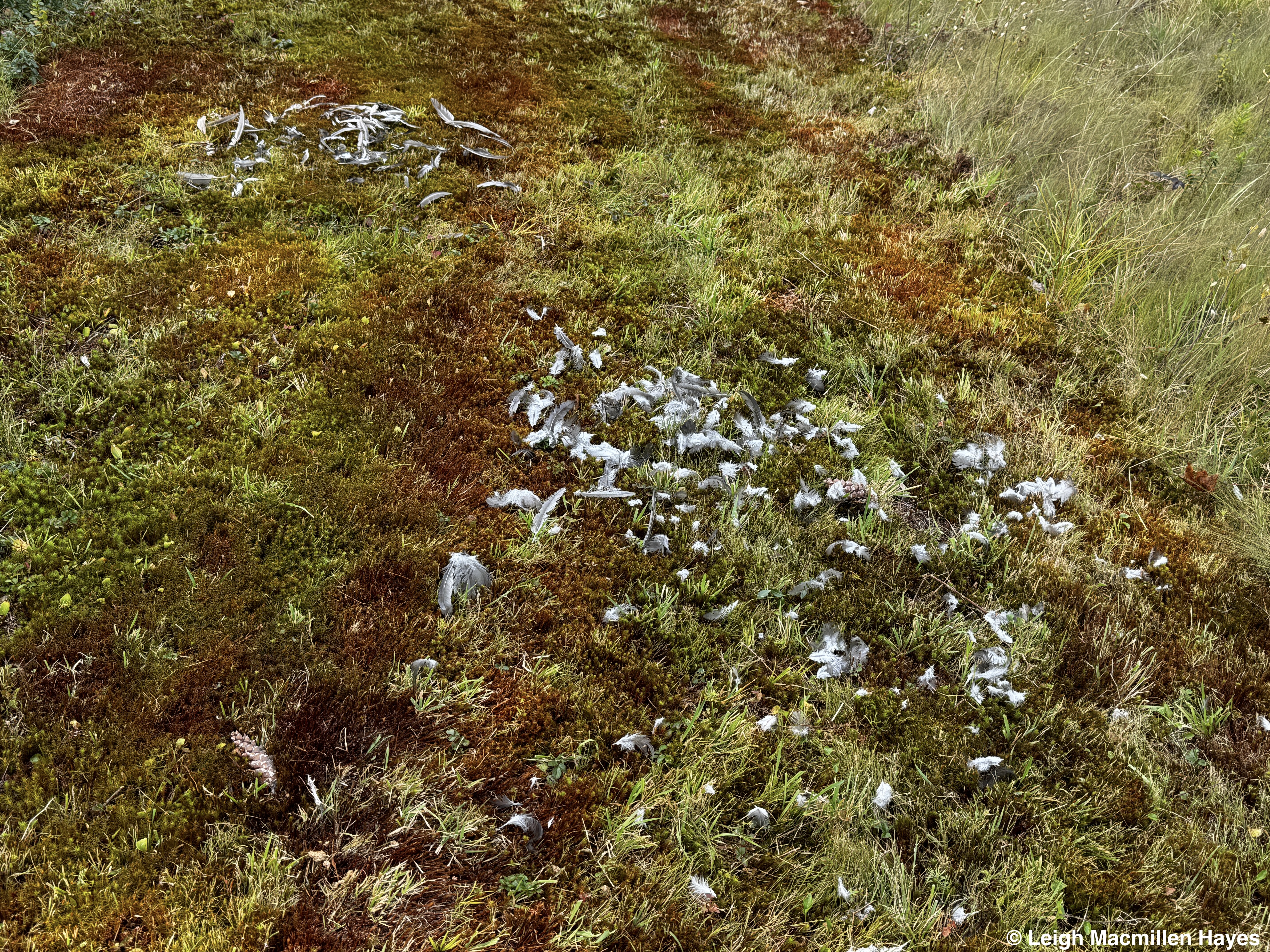
I still don’t know who the predator was but it took me back to what my neighbor and I discovered in her field yesterday. Two piles of feathers from the same bird.

The feathers appeared to have been plucked so I suspect a raptor did the deed, after all, they need to eat too. But what species died? We don’t know birds well enough to say. What was curious to us was that there was no blood. Nor any body parts. My neighbor’s dogs were onto a scent in the feathers, however, and we suspect that they had a better sense of either who the prey was or who needed a meal than we did.

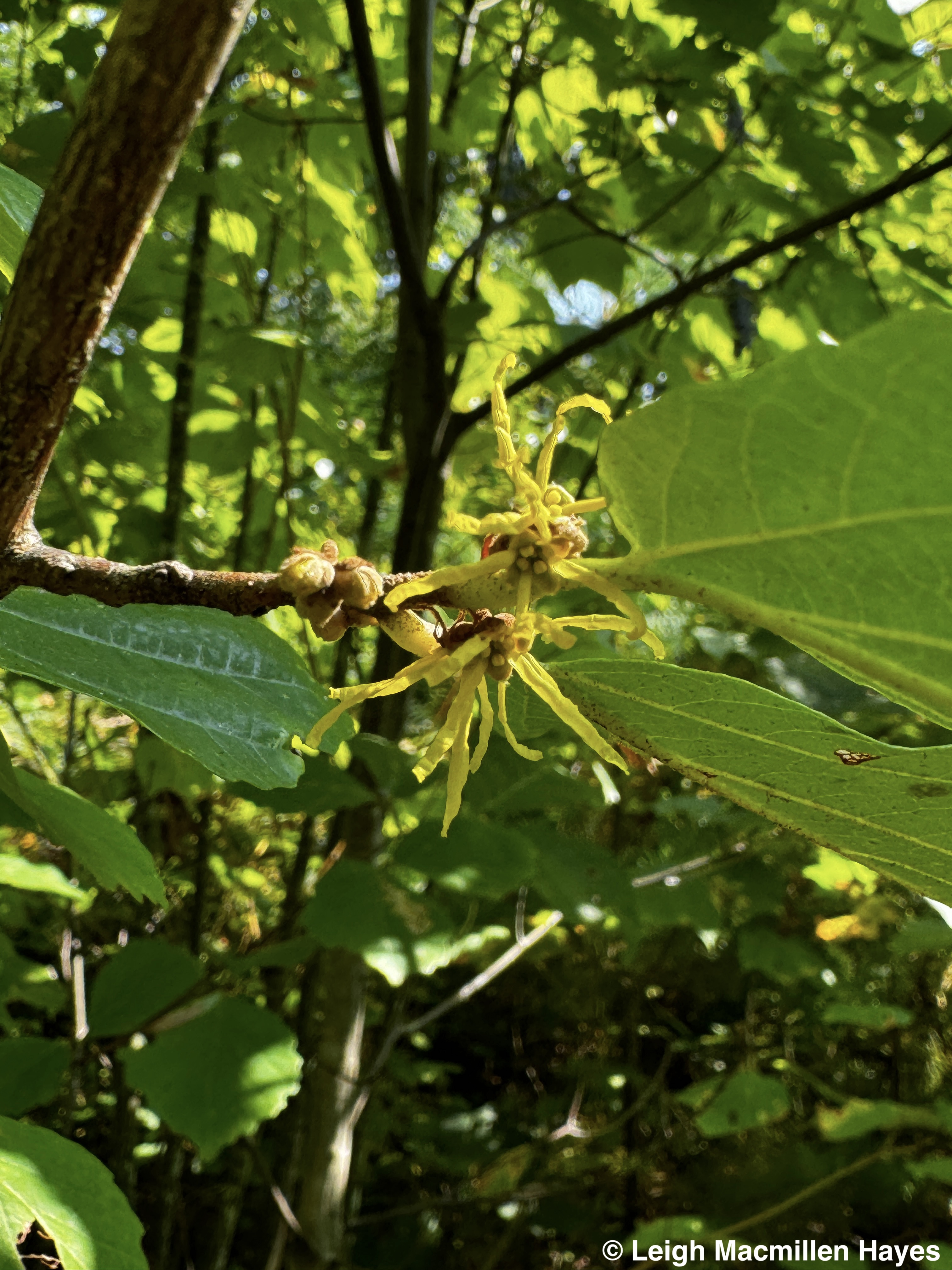
Returning to today’s trail, I spotted Witch Hazel in bloom, the first of the season for me to spy. This flower always makes me happy with it’s yellow ribbons haphazardly displayed.

And then I sawa Maple Leaf Viburnum, its leaves already their magenta color and so many berries still intact.

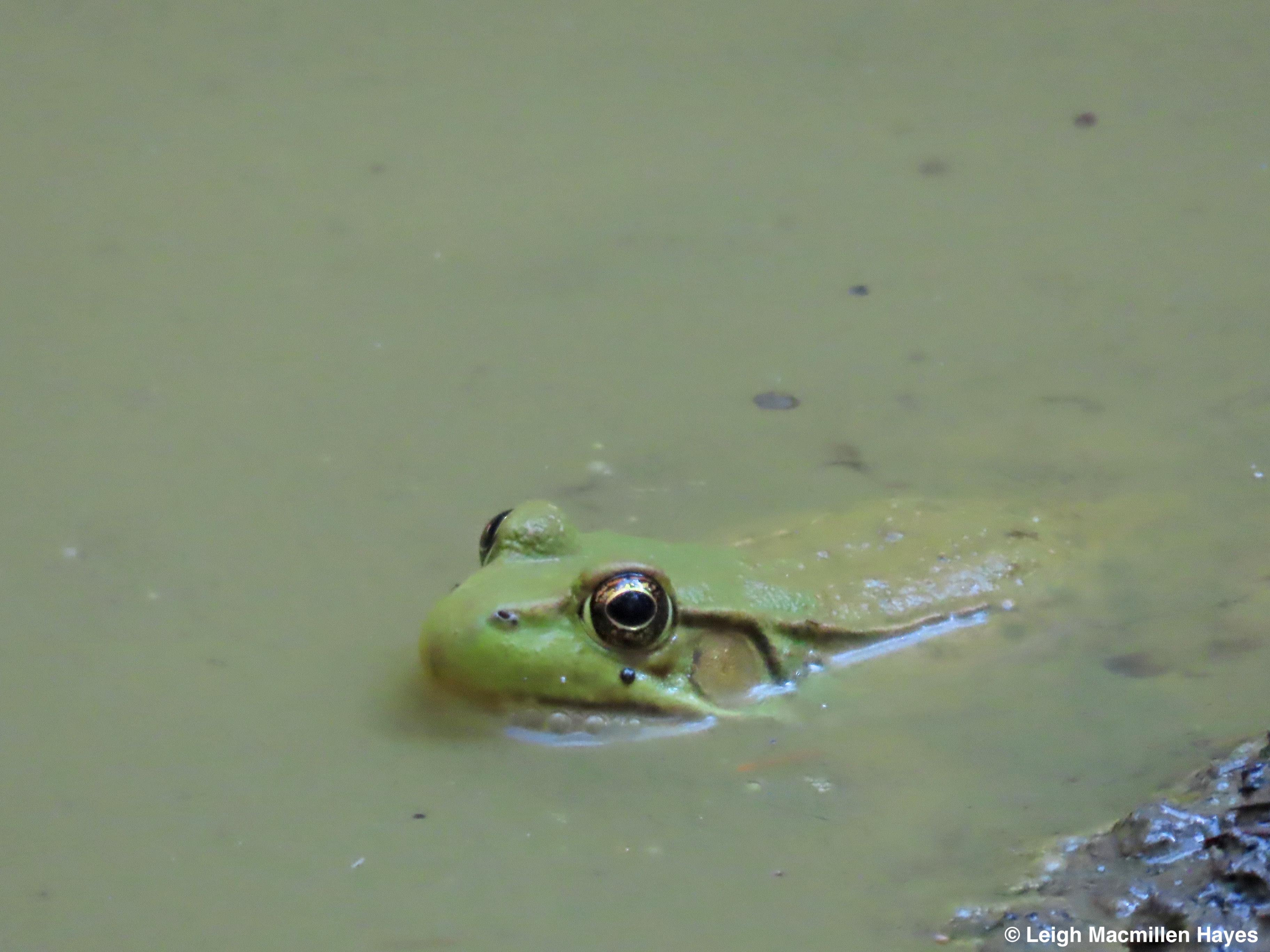
And a Green Frog in a mucky puddle as we approached the summit.

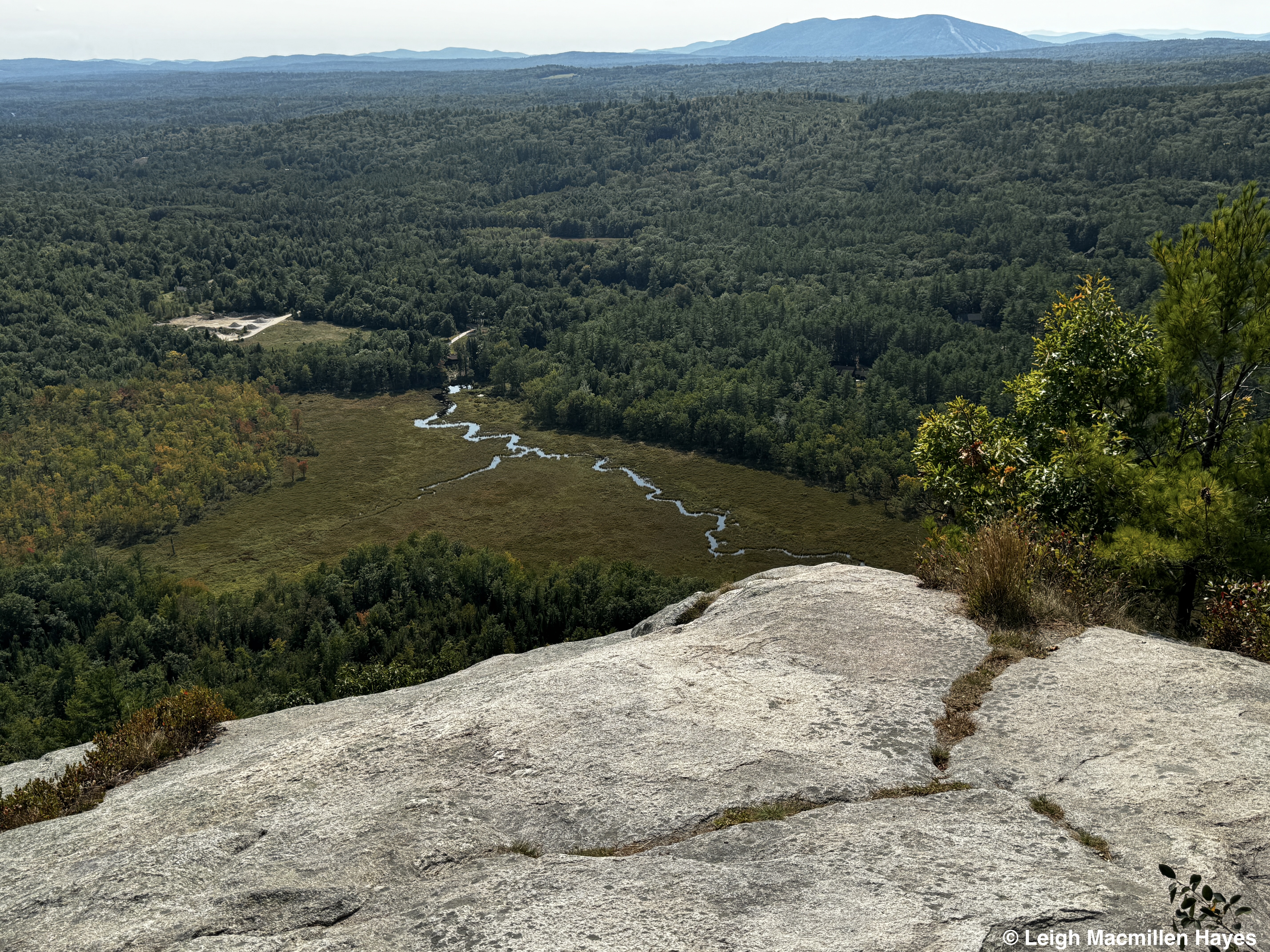
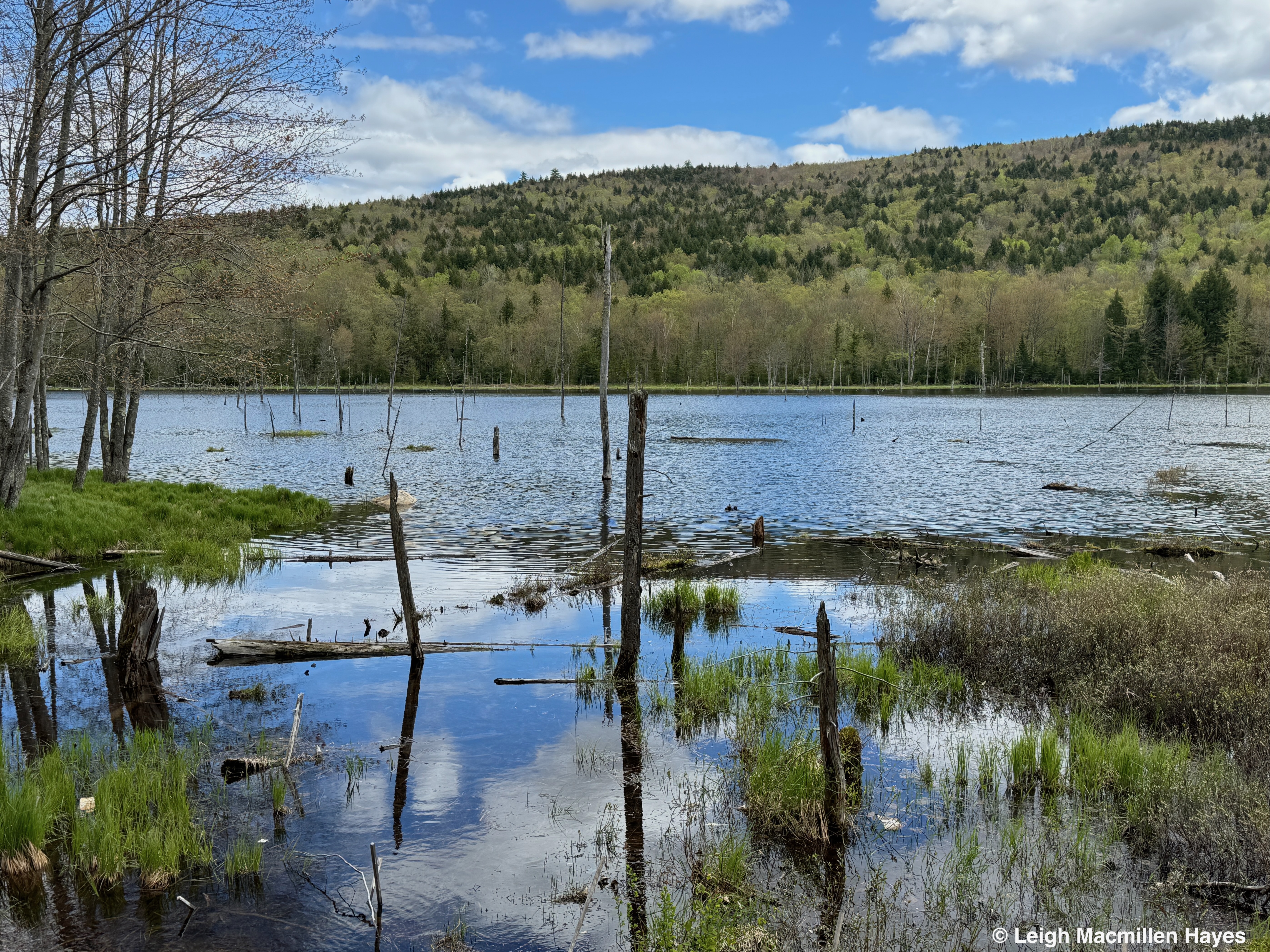
The view is always amazing, enhanced by the brook and wetland below and our beloved Pleasant Mountain in the distance. You can even see the ski area at the right or northern end.

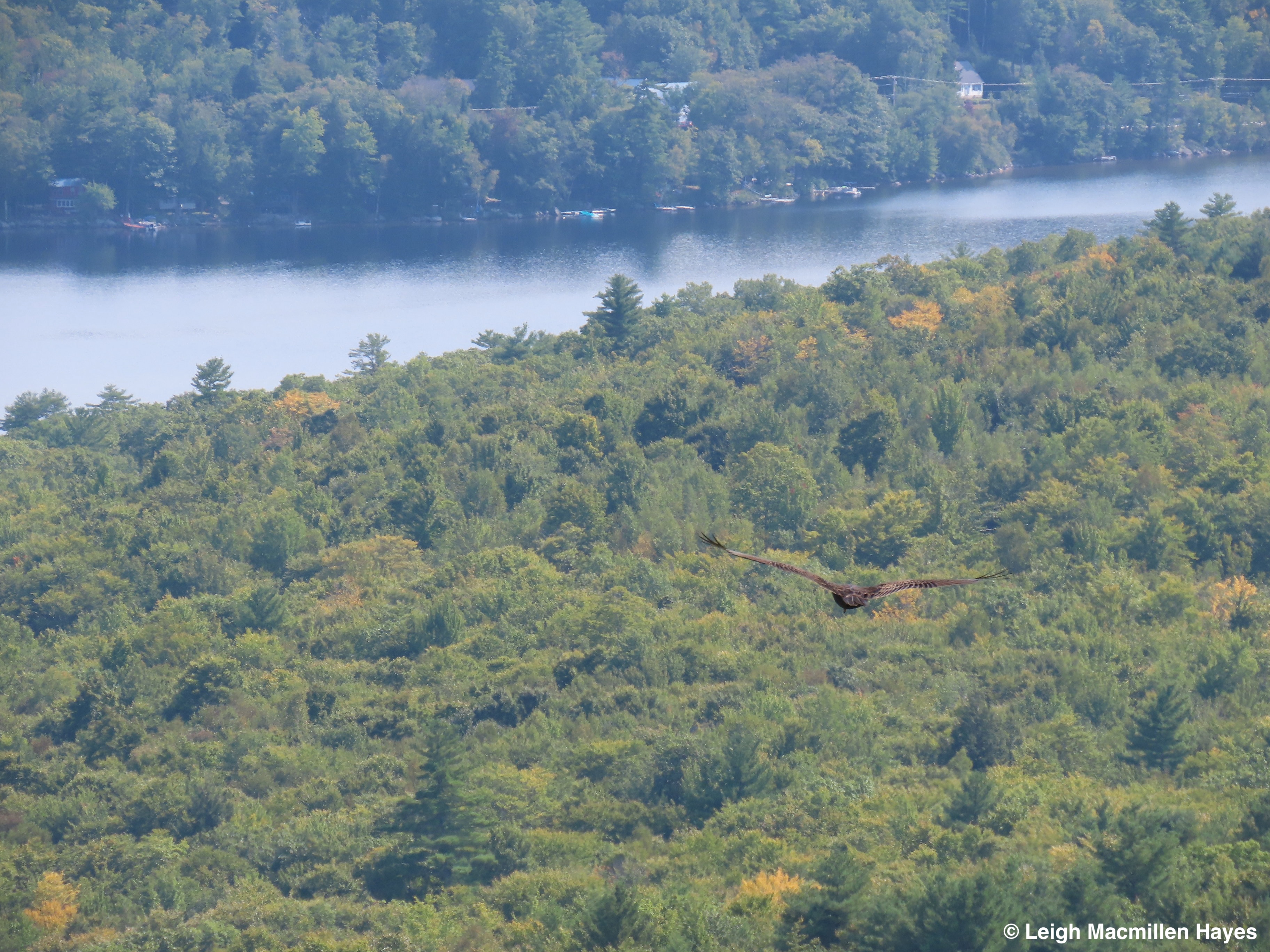
While we were out there I only captured a photo of one Turkey Vulture, but at least three road today’s thermals, gliding round and round.

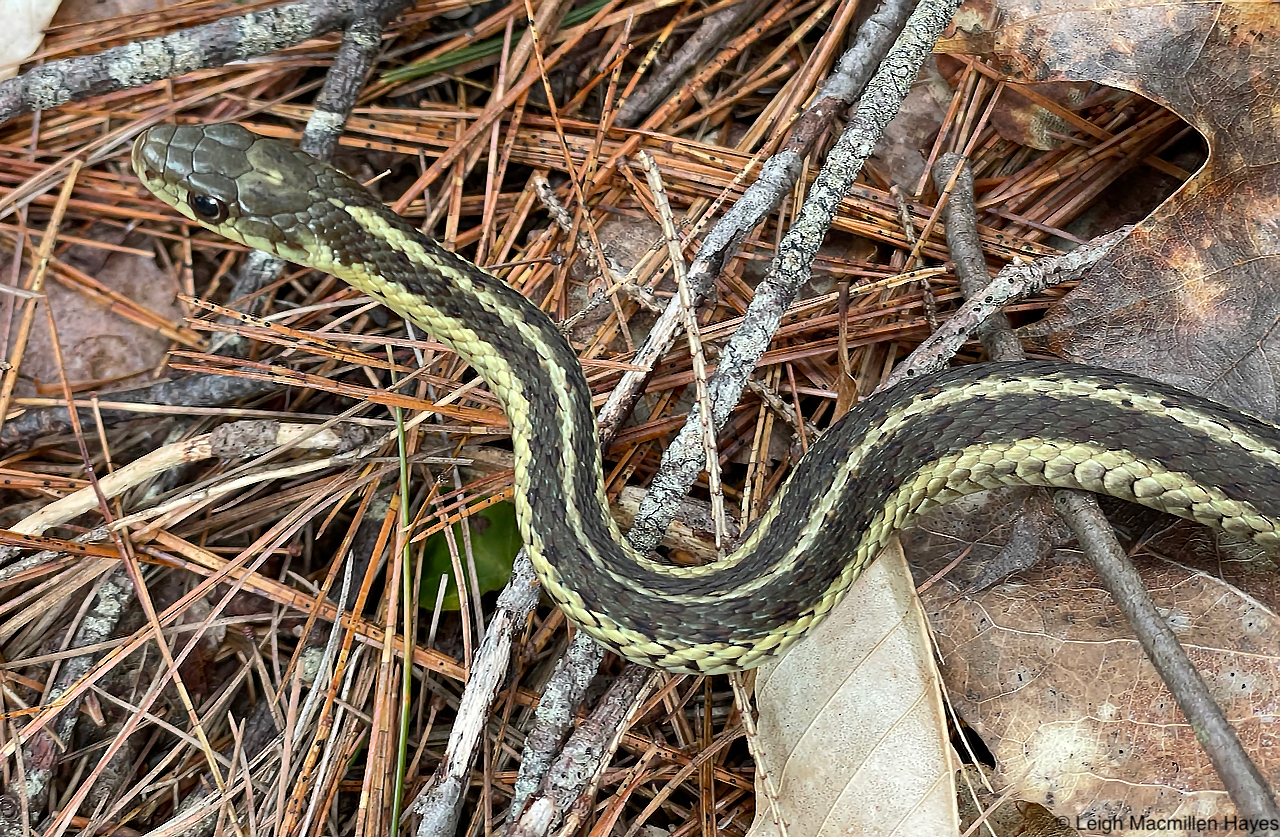
And on the way down a small Garter Snake tried to hide from us. It was about the size of a pencil. And reminded me of another site in the field at home that I spotted this morning.

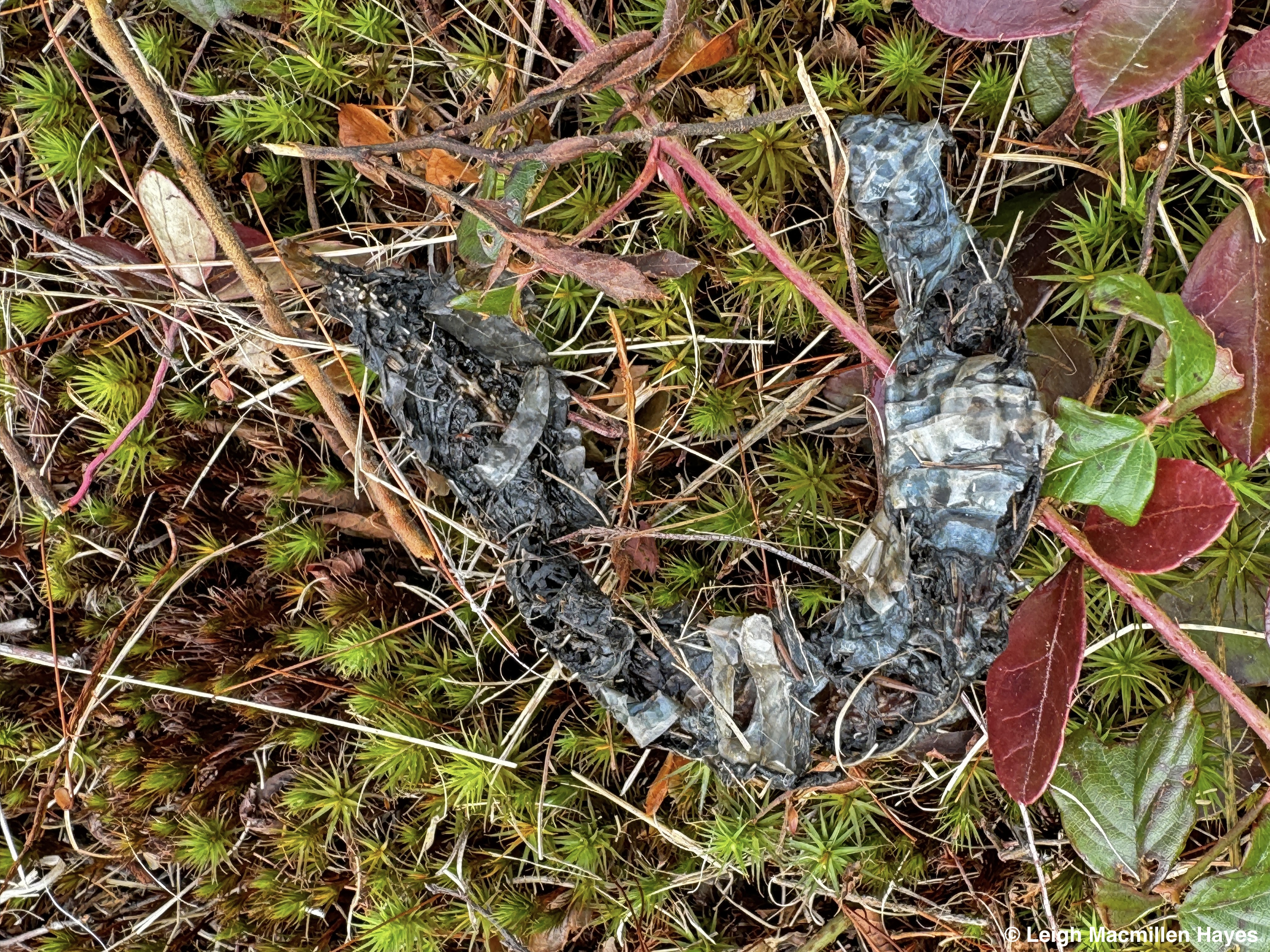
My first thought. Scat. Of course. Until I took a closer look. A spine?

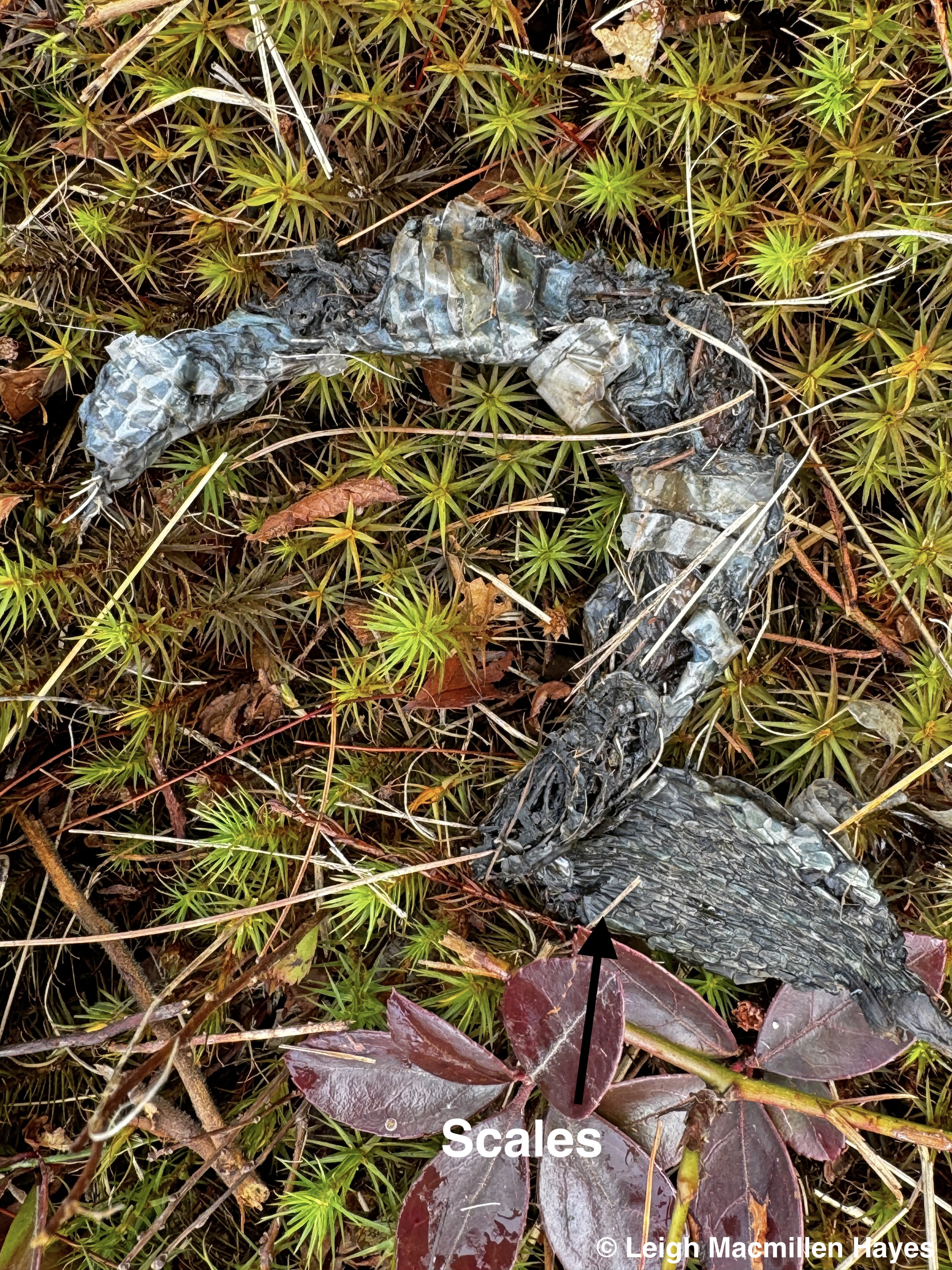
And then I flipped it over and spotted scales. Probably a much larger Garter Snake. If I took a closer look at the scale pattern I could be certain of this ID. Maybe tomorrow. If I can locate it again.

From Hawk Mountain we made a mad dash to Mount Tire’m and again at the summit, a view toward Pleasant, just from a somewhat different angle.

We were in a bit of a rush, but My Guy didn’t mind that I wanted to explore the erratic boulders in the woods behind the summit. I think everyone who climbs that mountain ends up at this spot. Rock Castle? Bat Cave? Bear Den?

We decided on the latter given that we spied a bear through the trees.

And so, I did what I always do here and channeled my inner bear.

Now really, this wasn’t such a gruesome post after all, right? But wow. Porcupine with maggots, snakes, and a human bear. Oh my!

Savoring Spring

My paths were multiple this weekend as if I was on a quest.

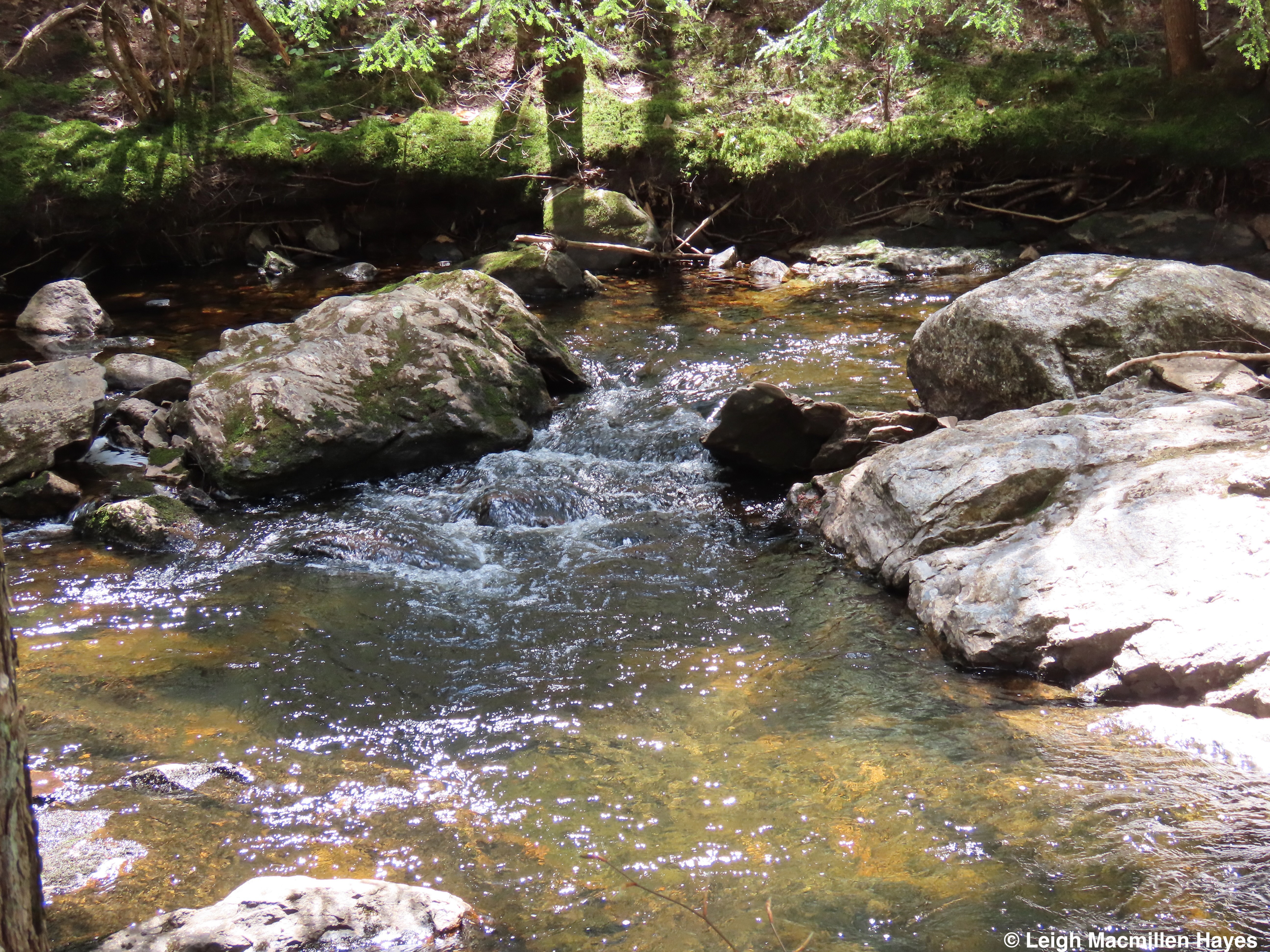
On a bridge over a brook,

down a road through the forest,

beside a bog,

along a boardwalk,

and even following this guy down low and up high.

Together today, we circled another brook (if one can actually circle a brook, but we did),

enjoyed this view from lunch roots,

and dessert on the rocks where we could peek down on said roots.

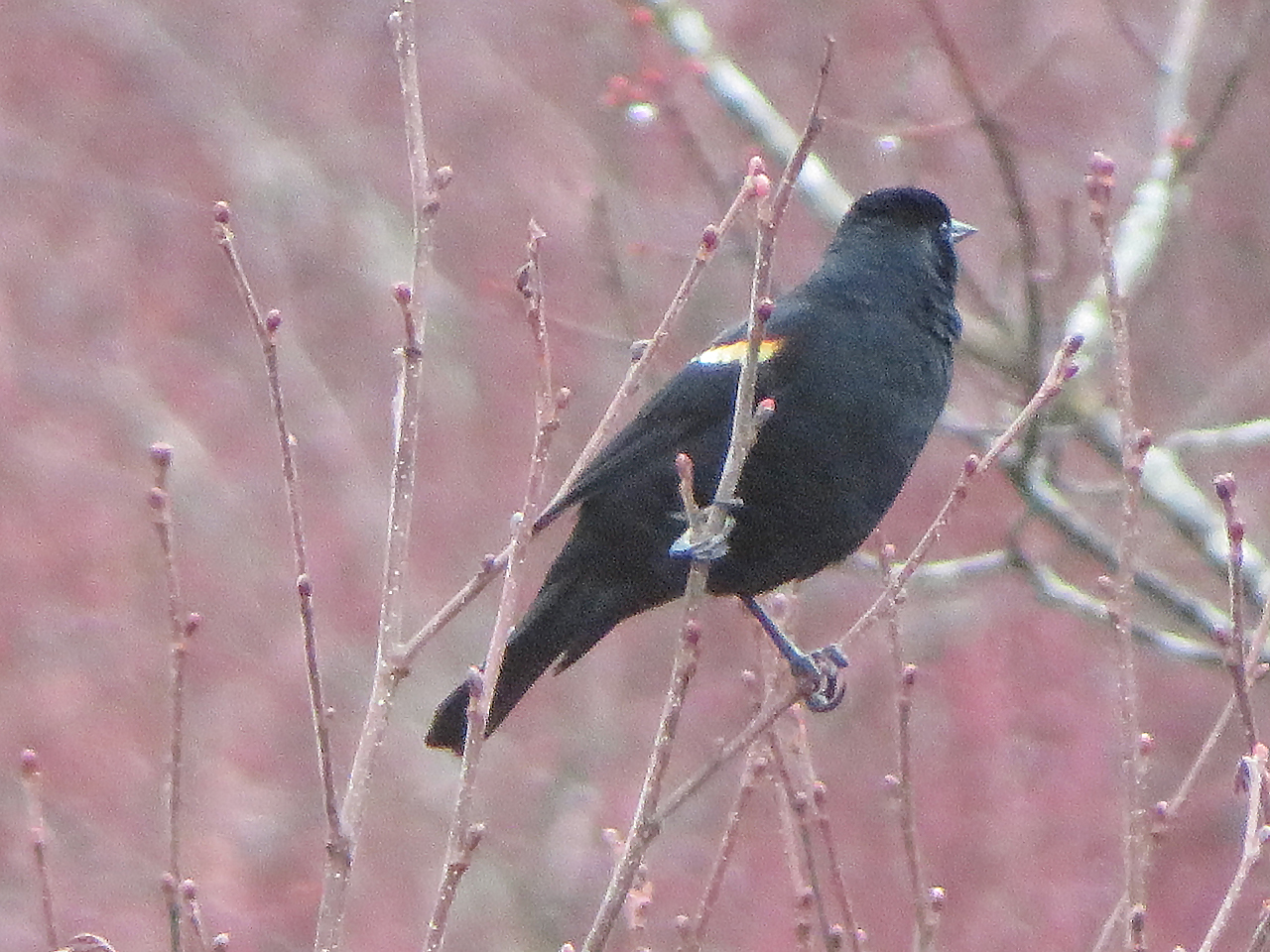
Though I may have been alone for much of the weekend, I never really was for the bird song, including the conk-er-ies from this male Red-winged Blackbird, accompanied me where ever I hiked.

There were Eastern Chipmunks adding to the chorus as they chortled at me and I chortled back, though I did wonder if life hasn’t always been so easy for this one given the marks on its body and a very short tail.

I watched Painted Turtles bask, despite cooler temperatures, though the air was probably warmer than that of the water.

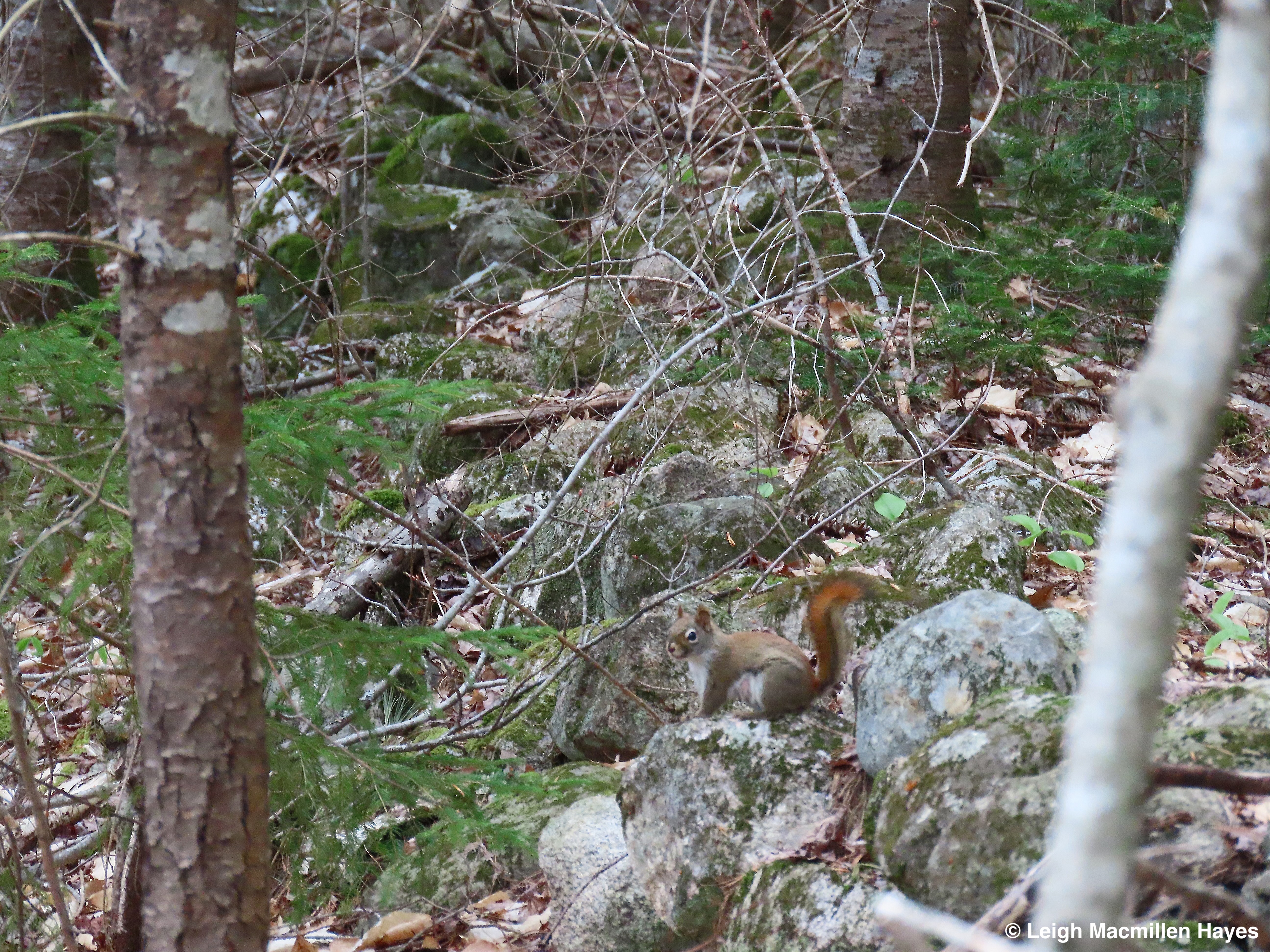
And I was chastised by this Red Squirrel, but really I had done nothing wrong–except to enter his territory without an invitation.

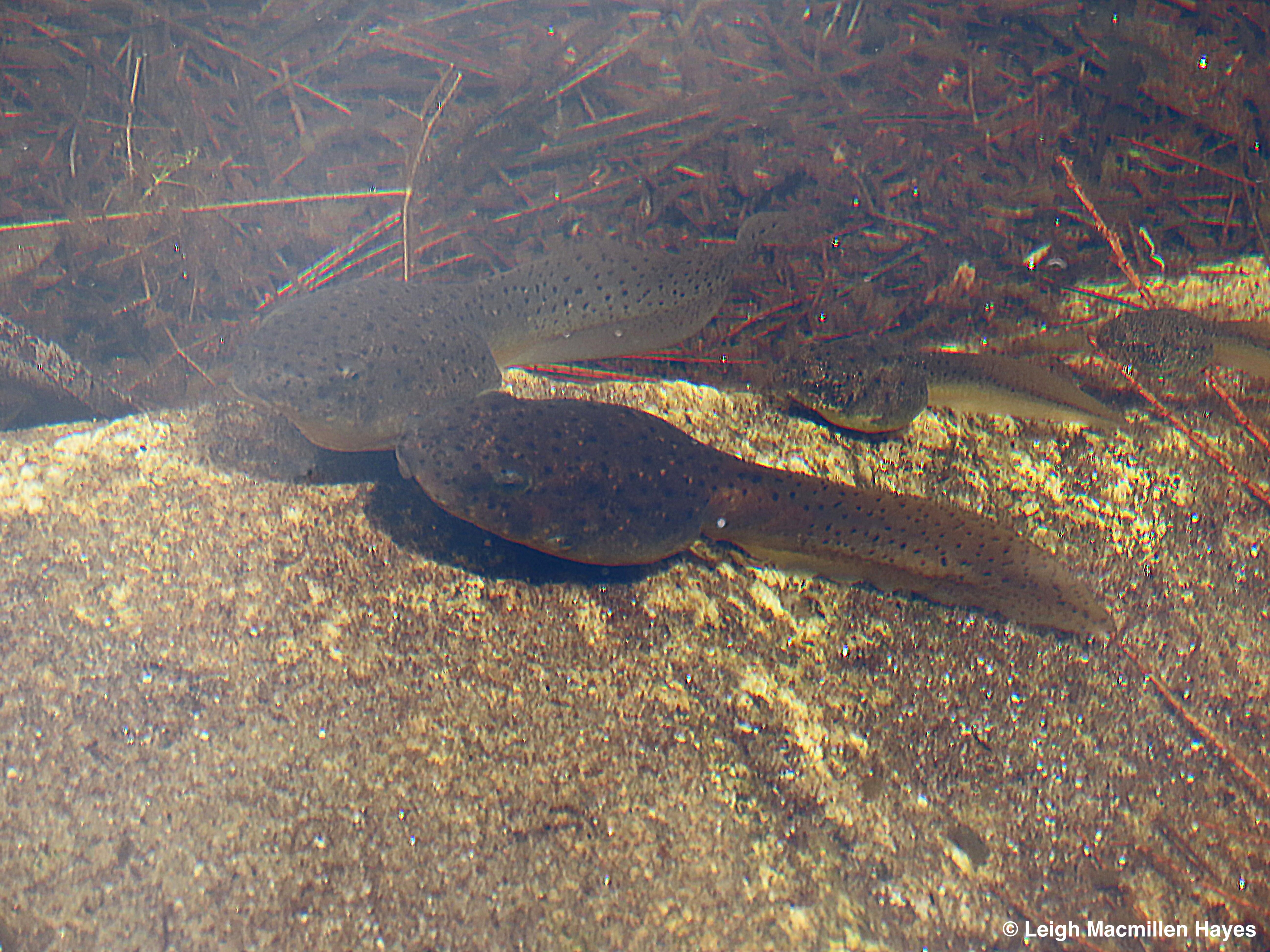
In the depths of the water today, tadpoles. HUGE tadpoles of the Bullfrog sort, which take two years to mature. I spotted tiny hind legs growing beside where the abdomen meets the tail. There were also lots of smaller tadpoles, too big to be Wood Frogs or Pickerel, but I suspected either one-year old Bullfrogs, or perhaps they were Green. Or both.

A few flying insects also brightened the days (and I have to say I’m not referring to Black Flies, which I hardly spotted–and actually caused me concern, for where have the little biters gone?), including this Anglewing butterfly. I can’t name it to species, for it is either a Comma or Question Mark, but never in the time I watched did it pose so that the underwings were visible. Okay, so My Guy and I spotted it today and when I explained to him the difference between the two, the C having a small white comma on its underwing and the QM, a small comma and a dot looking rather like the punctuation mark, he decided it must be an Exclamation Mark instead.

And in the same area, an American Lady added her color to the scene.

Leatherleaf’s bell shaped flowers reminded me of clothing hanging from an outdoor line.

And I’m really beginning to believe there are a trillion Painted Trillium, though I didn’t actually count. There’s something to admire about those olive green leaves and perhaps it’s that we don’t often see that color in nature.

I even spotted a few that chose a different paint palette. I could explain away the color of the leaves by thinking that perhaps they were showing off their anthocyanin, which gives fall leaves their red color and is seen in the spring as well, perhaps serving as a sunscreen for the plant. But the color of the petals was equally amazing, though who knows, maybe it’s common and I was just paying attention to it for the first time. That does happen. A lot.

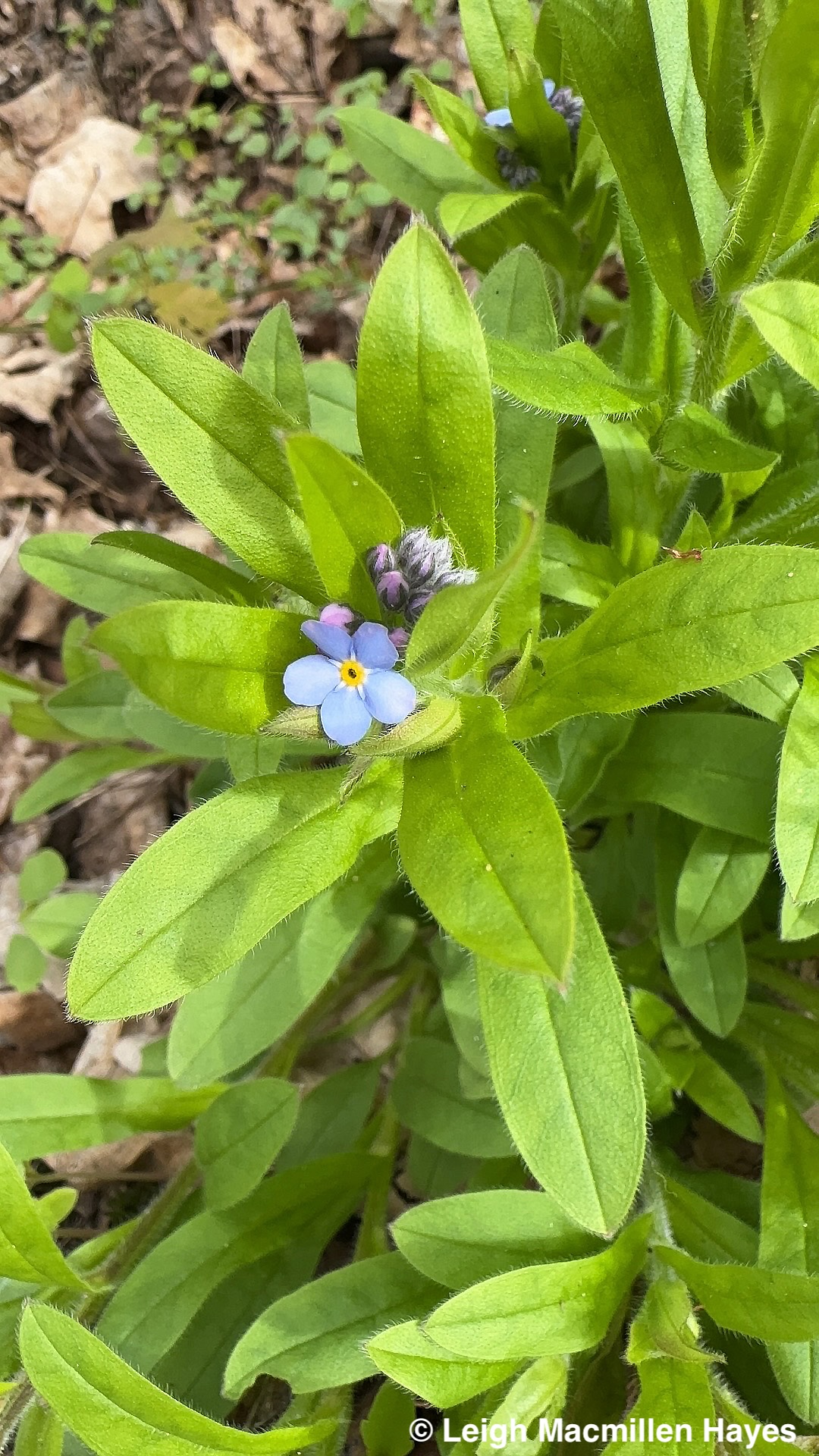
And then there was the amazing blue hue of Forget-Me-Nots. I surely won’t. Forget you that is.

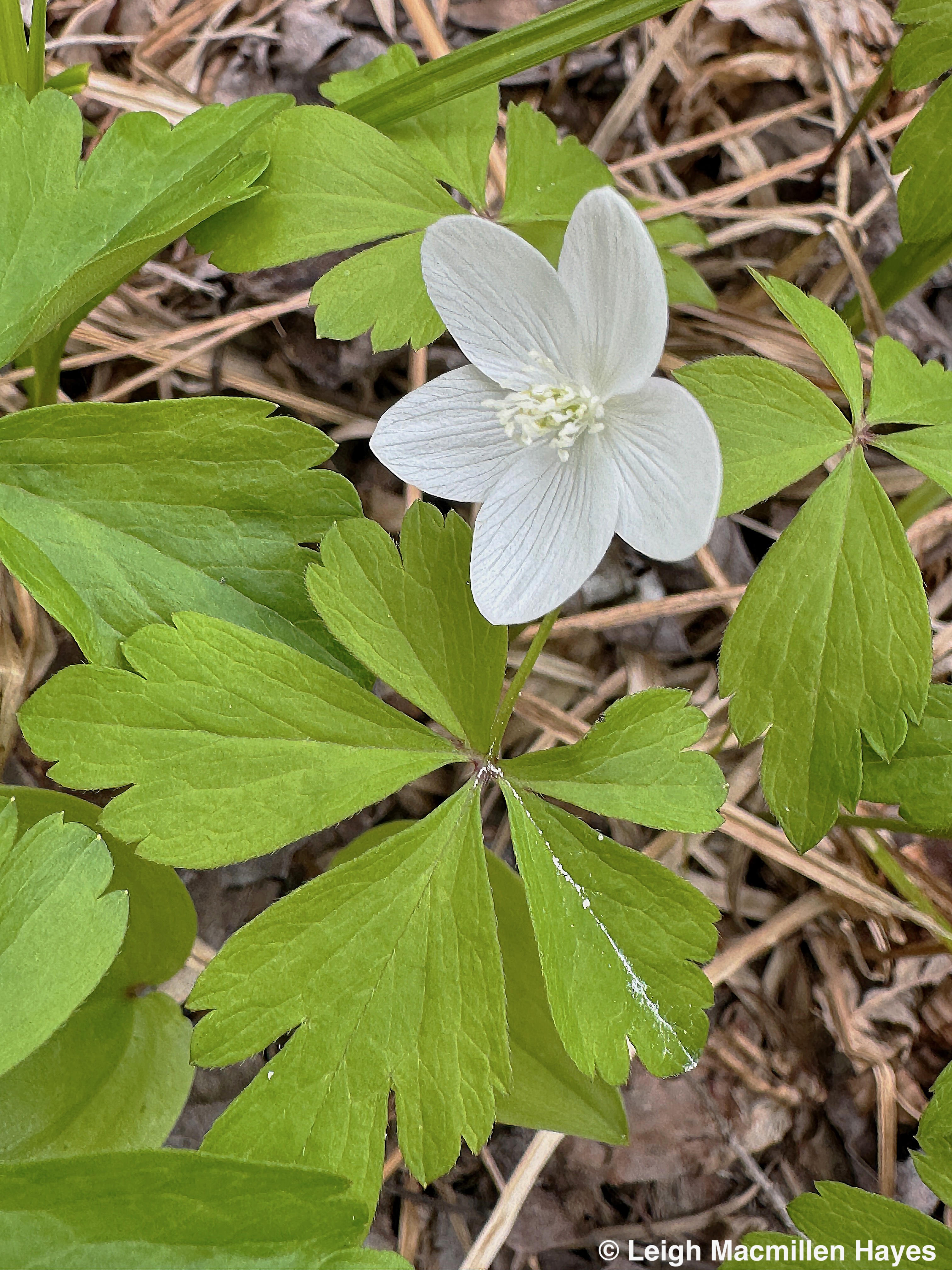
And Wood Anemone, its compound leaves notched, and flowers deeply veined, looking so tender and fragile.

Not looking tender, and hardly fragile, but still beautiful, was the carnivorous Pitcher Plant, of which I paused beside several. I’ve known this particular one for at least twenty years so when I encounter it, I always feel like I’m meeting an old friend. Because I am.

Hiding beneath its lime green leaves, American-Fly Honeysuckle’s delicate flowers did dangle in their manner of two. The shrub always surprises me, though it is a native, but I don’t get to greet it often enough.

All of these flowers bloom so early because they take advantage of sunlight before leaves emerge. That’s all changing now and in another week it will surely look more like summer around here. What I love about some leaves, especially American Beech, is that they are so hairy to start, and look like they’d make great fringed skirts for fairies. The other thing I became aware of this weekend, was the raindropy sound of their bud scales hitting the ground.

I love winter, but this season to follow is flying by, and already the Trailing Arbutus has reached its waning hour.

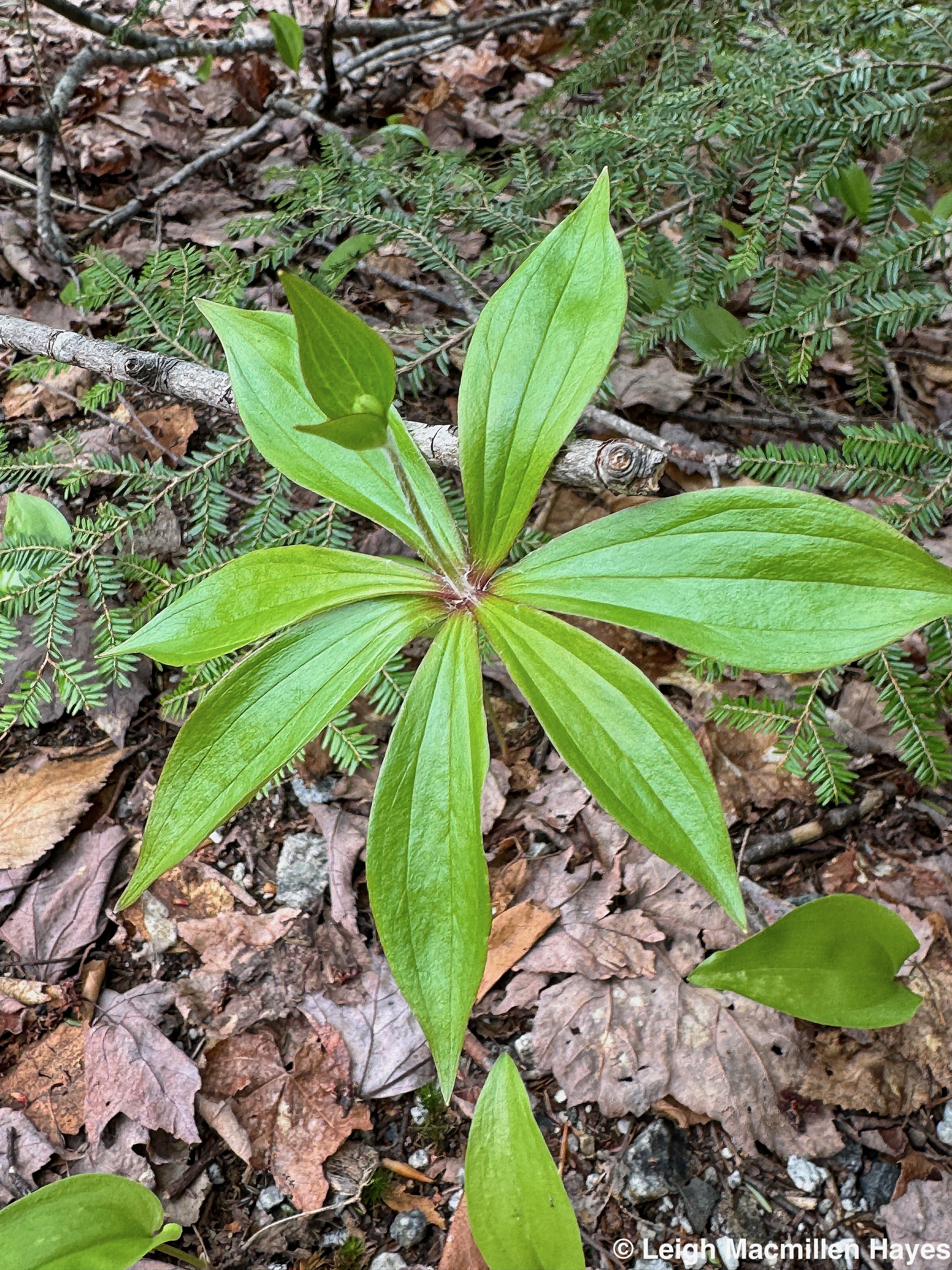
But there is hope in the form of others, like this Indian Cucumber Root, creating a second tier and a bud, and in a few weeks I’ll be seeking out its otherworldly flowers.

I’m savoring spring–before it moves on. I hope you are on the same quest.

Until we meet again . . . New York

I remember when we’d take our young sons to cities and I’d hold a tighter than tight grip on their hands, or maybe it was their wrists, as we walked along sidewalks thronging with people. I can’t hold their hands in quite the same way anymore, and in fact, in their presence in a city (the older in Boston and the younger in Brooklyn), since that’s where they’ve both chosen to make their homes at the moment, their confidence and poise and graciousness make me feel comfortable. And they have become incredible tour guides.

And so it was that this past Friday, My Guy and I flew to LaGuardia Airport and began another New York City journey.

We were met at the airport by P, who drove us to the Prospect Heights neighborhood of Brooklyn, where his girlfriend, M, was waiting and had ordered pizza because one of my wishes for the weekend was for a NY-style pie. Well, really, I wanted New Haven style, given my roots, but NY is the next best thing.

The apartment belongs to M’s mother, D, who graciously offered it to us as a home base for our weekend adventure. The view of the Manhattan skyline garnered our attention each morning and night, and we knew the Knicks had won their game Saturday because the Empire State Building showed off their team colors.

For as long as P has lived in Brooklyn, we’ve heard of Prospect Park, which encompasses over 500 acres in the midst of the city and offers habitat and respite for critters of all shapes and forms, including humans.

We had signed up for a two-hour tour with the well-informed Corinne as our guide. Designed in 1865, she explained that the park is considered Frederick Law Olmsted’s and Calvert Vaux’s masterpiece, Olmsted pictured on the left and Vaux on the right. Here, unlike in Central Park, they took advantage of the natural elements, though I was disappointed to learn that they’d filled in kettle holes created by glaciers.

We entered via the Endale Arch, which was built in the 1860s and restored within the last ten years. It was during the restoration when paint and wood panels that had been added because of rain damage were removed, that pine and walnut paneling was discovered.

It’s almost like passing through the welcoming doorway of a church.
I could have spent hours meeting trees in the park, but this was not the time, and so I reveled in the few we did get to know, such as this Camperdown Elm, whose branches grow more or less parallel to the ground giving it a gnarly bonsai appearance. The tree, grown from the Earl of Camperdown’s Scottish estate, was planted here in 1872, but neglected years later until in 1967 Marianne Moore wrote this poem to save it:

I think, in connection with this weeping elm,

of ‘Kindred Spirits’ at the edge of a rockledge

overlooking a stream:

Thanatopsis-invoking tree-loving Bryant

conversing with Thomas Cole

in Asher Durand’s painting of them

under the filigree of an elm overhead.

No doubt they had seen other trees—lindens,

maples and sycamores, oaks and the Paris

street-tree, the horse-chestnut; but imagine

their rapture, had they come on the Camperdown elm’s

massiveness and ‘the intricate pattern of its branches,’

arching high, curving low, in its mist of fine twigs.

The Bartlett tree-cavity specialist saw it

and thrust his arm the whole length of the hollowness

of its torso and there were six small cavities also.

Props are needed and tree-food. It is still leafing;

still there. Mortal though. We must save it. It is

our crowning curio.

Though she passed about fifty years ago, the tree, thanks to Miss Moore, lives on.

Another that struck my fancy was the Osage Orange, though apparently I should be thankful we didn’t visit in the autumn when its softball-sized fruits fall. Then it might not be my fancy that is struck, but rather my head.

Though we only had a moment to glance at tiled ceilings, they were the masterpiece of Spanish engineer Rafael Guastavino. I can only wonder if a sunflower or some other composite flower was the inspiration for this one.

Much to our delight, as we followed the path, a Black Squirrel scampered along the ground and then up a tree. The Black Squirrel is a color phase of the Eastern Gray Squirrel (Sciurus carolinensis), also known as a melanistic variant due to a recessive gene that causes abnormal pigmentation. Do you see it peeking at us?

While our bird sightings were many, especially of Robins and Sparrows, we spotted one male Cardinal, one Mallard, and this one Cormorant swimming in murky water.

The species of the most abundance, however, was the Red-eared Slider Turtle. Though outlawed for sale today, Red-eared Sliders are the most common turtles kept as pets. They live long lives and need ever increasing habitat and food, thus many have been abandoned–their owners slipping them into the waters of the park unceremoniously in a practice that is illegal.

Thanks again to the generosity of our hostess, we also visited Brooklyn Botanical Gardens where Cherry Blossoms and an array of colors wowed us and thousands of others.

It was fun to glimpse over the shoulders of two artists and notice how their work reflected the scene.

Though these tulips each had a name, I would have called this spot the ice cream stand for the flavors seemed to abound.

Beside water, Horsetails or Equisetums did grow.

As did the almost ready to unfurl crosiers of Cinnamon Ferns. I love their woolly coats.

It was here that I had a brief encounter with another tree new to me, a Horned Maple. Acer diabolicum leaves are five lobed and coarsely toothed. The common name comes from paired horn-like projections from the seeds, but we were too early to spy these. We did get to see it in flower, though I think I’m the only one who noticed.

And I kept wondering where all the pollinators were, though we didn’t get too close to the Cherry Blossoms, but the Honeysuckles lived up to their names and were abuzz with activity.

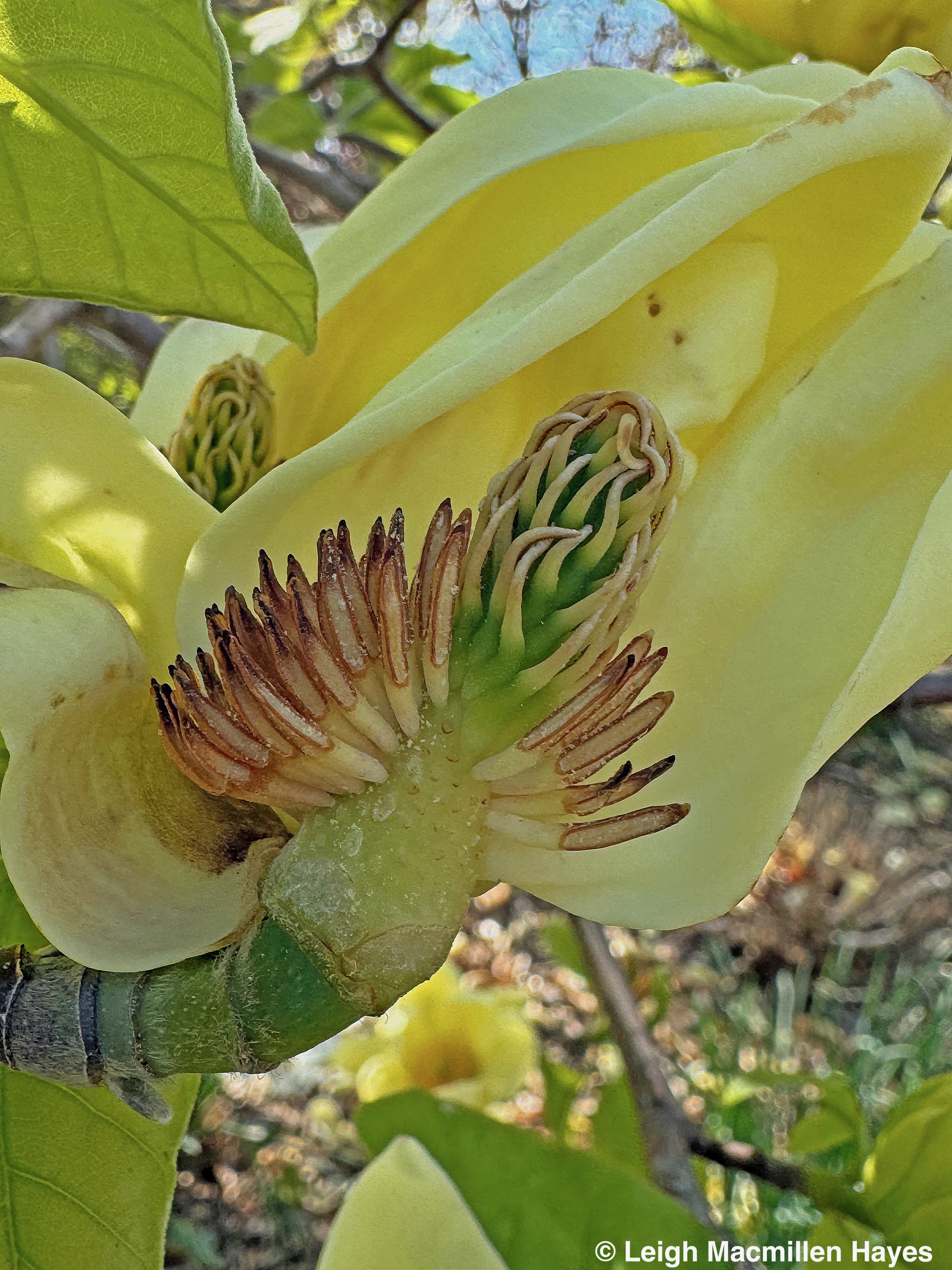
If I had to name a favorite, it would probably be the Hybrid Magnolia based on its color and form. Simply a masterpiece.

We spent an hour enjoying a masterpiece of another sort, worshiping with others at St. John’s Park Slope, an Episcopal Church with a heavenly choir and an organ that filled the rafters with music both old and new.

And then we took a trip into Manhattan via P’s new truck. Haha. Yes. That is a Tesla truck. Just not my idea of a truck. And no, we did not travel in it, but rather M’s car.

P showed us the large office he works in where ads and films, but mostly ads these days, are produced and edited. And clients are wined and dined in situ. There’s even a staff chef.

And now, when he says he’s working from the office, we can imagine him in this space.

It’s located two doors away from the birthplace of Teddy Roosevelt.

Not being shoppers, we only stepped into a Yeti store, where of course, My Guy announced that he has the products on his shelves back in Maine. And he peered into a closed hardware store, cuze no trip of ours is ever complete without visiting one or two. But then again, no trip of ours is ever complete without stepping along a wooded pathway and noticing the flora and fauna.

But the main purpose of our trip was to visit. Family. And friends. And meet this little powerhouse who knew how to command the crowd.

My Guy was in instant love. And she was so chill.

We loved spending time with one of M’s brothers, her sister and niece, plus M and P. of course. We did meet up with M’s other brother, but somehow I neglected to take a photo. Sorry R.

Over the course of the weekend, world problems were solved and sporting events analyzed by these two.

And one of the highlights was our opportunity to attend their softball game, which they won because we were there, the good luck charms that we are.

He scored a home run, another run, and I can’t remember his other stats, though I’m sure My Guy and P have it in their brains.

M also walloped the ball and got on base each time.

And scored as well. We were mighty impressed because we saw the results of a slide she made into a base last week and how she could run this weekend was beyond our understanding.

At last Monday dawned and P stopped by the apartment to pick up laundry and say goodbye.

Until we meet again, thank you M & P, and D, and all the gang, including P’s colleagues who played in the game or came to cheer on the softball team.

We had a fabulous weekend thanks to all of your planning, and I just finished a bagel that followed us home. Family. Food. Oh, I didn’t even mention Frankies Spuntino and the delish eggplant marinara. And fun.

We love New York. Especially through the eyes of P & M. And then we love returning to Maine.

Thanking the Herons

As a community scientist for Maine’s Heron Observation Network these past 14 years, I have the distinct honor of keeping track of several rookeries each spring/summer to monitor the number of active nests, inactive nests, hatchlings, young, and fledglings, plus any obvious disturbances. It’s a task that only takes a few hours every other week and the time span in total is about six weeks. Those few hours are some of the best hours that I spend outdoors because rookeries in this neck of the woods are located in or abutting wetlands and offer a rich abundance of wildlife.

From the HERON website: “The Heron Observation Network of Maine (HERON) is a citizen science adopt-a-colony program started by Maine Department of Inland Fisheries and Wildlife (MDIFW) in 2009 to help investigate the status of Maine’s nesting population of great blue herons. Since 1983, the coastal breeding population of great blue herons has undergone an 82% decline; and it is unknown whether that decline is a statewide phenomenon or whether it is restricted to only the coastal colonies. This is where HERON volunteers come in: they collect invaluable data on colonies statewide that will help biologists assess the population trend over time.

One of my rookeries has had no nests for the past two years since Bald Eagles wiped out the Great Blue Heron population three years ago.

But the beaver pond in the photo above is making a come-back after peaking with about 30 I think about ten years ago, then crashing to a single digit number. This year, we counted 12 nests, all of which proved to be active over the course of the six-week time span.

Observing means making ones way quietly to the edge of the wetland, listening as the youngsters squawk for an incoming meal, then finding a good spot to see the nests with binoculars while not disturbing the birds, and begin counting.

We avoid publicly sharing the locations of these sites for as it is stated on the HERON website: “If you are not the landowner or colony monitor, please refrain from visiting colonies during nesting season to minimize unnecessary disturbance.”

This third rookery we thought had crashed after discovering two nests two years ago and then none last year. But . . . we knew the birds had to be somewhere in the vicinity because, though several rookeries in the area were no longer active, there were still adult birds visiting local ponds and lakes and rivers.

It wasn’t until Maine State Waterbird Specialist Danielle D’Auria completed a flyover this spring and sent an email with the subject: “Your colony is THRIVING!” and two friends joined me and we explored the wetland from a different vantage point than in the past, that we knew just how big the colony was. In total, there are over 40 nests and over 30 of them were indeed active.

Counting so many can be a real challenge, and even with three pairs of eyes, we still needed to restart several times with this larger colony, but figured out a system to identify certain nests as a given # and then restart from there and move from left to right, though sometimes we had to dip down and then look up again to find the next nest.

What added to the counting confusion was that my peeps and I suffer happily from Nature Distraction Syndrome (I used to call it Disorder, but really, it’s such a good thing that it deserves a new name), aka NDS rather than NDD.

And so this is a Dot-tailed Whiteface Skimmer, its name reflecting its features.

Looking up again, we’d spot hatchlings, those fluffy little balls that we could barely make out unless they popped up . . . definitely one of the many joys of those special mornings.

Sometimes the youngsters were difficult to spy based on how well they blended in with the snags upon which the nests were built.

And then it was a matter of deciding: is that a bird or part of the tree? And is there another lump in there? Do you see three or four young, plus the two adults?

Often, several adults stood sentry, keeping an eye on the entire rookery, rather than heading off to fish and feed the youngsters. This one stood on one leg, which I’ve read is a way for birds to reduce the amount of heat loss on their unfeathered limbs.

One of the things I always found amazing is that by week #3, the youngsters seemed to know that their parent was approaching with a feast to share, while those in the condo below waited patiently and quietly for their meal on wings to fly into the nest.

Meals were regurgitated, with those prehistoric croak-like squawks perhaps encouraging the parent to pass the food to its youngsters.

And then it was time for the kids to fight over who got the best and biggest bite, while momma or poppa stepped aside to let them assert their birthright. The question remains, did the first born always get the worm? Or in this case fish or amphibian or whatever the meal might be?

And how could we not admire the Green Frogs that “Ga-dunked” their banjo strings as they surrounded us and kept moving in closer making us think we might become a meal while we stood there and counted?

Feeding time continued to be the birds’ favorite time and as they grew bigger, they certainly became more assertive.

Vying for position continued to stymie us for we didn’t understand which mouths received first dibs. But of equal importance, how did all of those birds remain in their treetop nests without falling over during such squabbles? And how did the nests and birds withstand the rain and wind that marked our spring and summer here in western Maine?

Motion below the nests caught our attention once again, and what we first thought was a Beaver because it explored a beaver lodge, morphed quickly into a Muskrat when we spied its rat-like tail.

It went about its business as we watched, probably in search of food, maybe to feed its own youngsters.

And then there was the ever lovely Four-spotted Skimmer Dragonfly.

By week #6, most of the kids were tweens, and those in the left-hand duplex watched intently for their lunch box to arrive just as their neighbors to the right were about to eat.

We labeled this double-nest “The Squawkers” because anticipation of the lunch box contents in both places was extra loud.

Once the right-hand duplex had finished eating, they turned their attention next door, though nary a beg did they offer and nary a tidbit did they receive.

Still they looked on.

And so did we . . . at this female Eastern Pondhawk Skimmer dragonfly with her bright green thorax and pair of white cerci (terminal appendages).

During week #6 the moment arrived, when encouraged by others a teen got up the gumption . . .

to step out on a limb . . .

and then turn back to say, “Hey, look at me. I did it.”

And then, in an instant, first flight!

So where did the herons go once they no longer needed to remain at their breeding grounds? Well, I took off in my kayak to see if I could answer that question. And a Slaty Blue Skimmer posed on my boat much like a figurehead, this one in obelisk form with its abdomen raised toward the sun to offer some relief from the heat.

I also found the Eastern Pondhawk’s mate. Look at that green face, and powder blue abdomen, or the hints of color on its wings.

I was equally excited when I spied him again, this time with a frontal views. I hope your “Ohs” and “Ahs” match mine.

Another “Oh” moment: A Water Snake peering out from under its lilypad-shaped sun umbrella.

And a couple of Painted Turtles basking upon a rather shaded rock.

Plus a pair of juvenile Mallards in preening mode.

And among my favorites, okay, really, they are all my favorites, but I was quite surprised to spend a few minutes with this Beaver while searching for herons one recent day.

Tada. The search has ended and going forward I’ll probably spot them more and more frequently for I know how successful at least two local rookeries have been this year.

I give great thanks to this Great Blue Heron and all of the others because they offered a chance to not only contribute to research, but also to spend some delight-filled hours standing still and observing. Your breeding and food-gathering habitats are my favorites too.

Honing My Focus

On April 10, the ice had started to melt on the little vernal pool behind our house. And I got excited.

Suddenly it was time to start paying attention on a daily basis.

Within a few days, following a long winter of being frozen under the leaf litter, male Wood Frogs arrived at the pool. I heard their “Wruck, wruck” quacks as I approached and recognized that love was in the air. But the moment I stepped to the edge, all went silent and the frogs dove to the bottom. Standing as still as possible, I watched as they slowly began to resurface.

A few days later, it was in the pool. Love that is. The females had arrived, their abdomens swollen with eggs. And tada, the Wood Frogs were in business. A male, and it could be more than one, jockeyed for a chance to grasp a female around her waist in a long embrace and fertilized her eggs externally as she laid them.

A week or so later, and all was quiet again on the vernal pool front, for momma and papa had exited the water and returned to the forest floor in search of food, and the nursery was left to develop on its own in the form of a lumpy mass of eggs with a single embryo elongating within each.

About a week later, Spotted Salamanders crossed the road with a little help from some human friends, and they (the salamanders) also sought out their natal vernal pools in which to breed.

To do this, the salamanders performed a dance in which he stimulated her rather than participate in amplexus like the frogs. Then he deposited little packets of spermatophores consisting of mucus and a sperm capsule, and enticed her to crawl over such. According to Mary Holland’s blog, Naturally Curious, the female “positions her vent, or cloaca, so as to allow the lips of her cloaca to detach the sperm capsule . . . she collects his sperm into her body and internal fertilization takes place.”

If you look closely at the two plugs attached to the leaf, you’ll notice that the one to the right still had a sperm capsule attached.

I always think of them as little bundles of cauliflower.

And another tada, the eggs were laid and began to swell up, surrounded as they were by a gelatinous mass (and this one momentarily lifted into a container at the surface of the water for educational purposes), and the parents returned to the their mole-like life below the leaf litter, to be spotted rarely until next year’s Big Night.

In yet a different wetland locale, I found Painted Turtles basking together on a log. Being ectothermic, or cold-blooded, their body temperature depends upon the environment and in the spring they need the sun’s rays to warm them up to an internal temperature of 63˚ – 73˚.

Because the spot where I saw the turtles was not a vernal pool, but rather a bog, I didn’t spy any Wood Frog or Spotted Salamander egg masses, but there were tadpoles of another type upon which to dine, like this Bullfrog, which takes two years to mature.

And leeches. A plethora of leeches floated past the rock upon which I stood. Not all leeches suck human blood. Many prefer that of amphibians and reptiles.

Visiting several other vernal pools, Predacious Diving Beetles soon made themselves known in several forms, from this, the larva, aka Water Tiger, with its strong mandibles, ready to grasp prey at any second . . .

to an adult.

The body of a Predacious Diving Beetle is oval with oar-shaped hind legs that feature fringed hairs to increase stroke power. So here’s a thing I learned last week and now try to pay attention to: when swimming, Predacious Diving Beetles kick both hind legs simultaneously, whereas Water Scavenger Beetles, which look similar, kick their hind legs alternately.

Oh, and do you see the Mosquitoes wriggling behind the beetle?

Speaking of behind, look at the beetle’s behind–it’s an air bubble. They trap oxygen-filled air between their wings and body, prolonging their time under water. and thus can stay under for long periods of time, returning to the surface when it runs out.

So back to the Mosquitoes. Meet the third stage in their life cycle (egg, larva, pupa) known as a tumbler. Tumblers lack mouth parts because they don’t eat while undergoing the magical transformation into an adult. Spying this means that very soon biting female Black Flies and Mosquitoes will be part of the landscape. They’ll annoy us, but we need to remember that they are food for others, like tadpoles and birds and dragonflies.

As for the biting insects, I’ll try to practice mind over matter because I can’t resist the opportunity to learn more and be present as I hone my focus above and below the water’s surface.

The Other Season

Most people think there are four seasons in the northern hemisphere: spring, summer, autumn, winter. In Maine, many would argue that there’s a fifth: mud. And maybe even a sixth: road construction season.

I beg to differ on all accounts. In my wee world view we just came out of tracking season, which began at the beginning of December and lasted through the end of March.

And now, we have entered The Other Season. While tracking season doesn’t involve much color, it does offer an insider’s look at the animals with whom we share this space, and the habitat in which they live.

But now . . .

one’s eye needs to focus on what is different. The anomaly. Really focus. For there is a special snake making an appearance upon an old stump by the water’s edge. It looks rather like the saplings that have made this nurse log their home, but if you look closely, you might spy three light yellow stripes that contrast against a dark background and a bit of a curved tail.

Zooming in even closer, look at the snake’s head and the light colored spot in front of its eye. This is a key ID feature for an Eastern Ribbonsnake, an uncommon species in Maine, and one of special concern, which according to the maine.gov website means ” particularly vulnerable, and could easily become an endangered, threatened, or extirpated species due to restricted distribution, low or declining numbers, specialized habitat needs or limits, or other factors.”

Then there’s the Backswimmer who spends its life rowing about, belly up. Each set of legs is used for a different function – the front pair for catching prey because they are voracious predators, the middle pair for holding the prey tight, and the flattened, hairy third pair acts as oars, much like those used with a rowing shell.

As piercer-predators. they kill and suck the bodily fluids out of any prey they can subdue – invertebrate and vertebrate alike – including tiny tadpoles and fish fry. They remind me of terrestrial assassin bugs. But, Backswimmers also become fish food.

In this same habitat, one of the first butterflies to grace our airwaves is the Mourning Cloak because it overwinters as an adult. It’s an easy one to ID, perhaps the easiest for its rich brown wings are accented by vibrant blue dots and a bright yellow border along the trailing edge. Seeing mourning cloaks flutter out of the leaf litter is a sure sign of the other season.

In the same space, moving swiftly from one body of water across a cobbly road to another wetland was a Snapping Turtle. Though Snapping Turtles appear to pose a threat to humans, they are not as aggressive as we think. Instead of swimming, these turtles spend most of their time crawling along the bottom of shallow water.

On land, however, Snappers often act like the nastiest characters that you ever want to encounter. Have you ever tried to help one cross the road? With its long neck, that is almost as long as its shell, it’ll swing its head and lunge with open jaws.

I have read that even though they hiss and strike out with their formidable jaws, they will usually not bite. Supposedly, they’ll close their jaws just before they reach your hand. I don’t intend to verify this. Their act is enough to keep me at a safe distance. It’s best to leave a Snapping Turtle alone and treat it with respect.

Because I was beside water, upon floating leaves, an insect flew in that could easily have been mistaken for a wasp, such as is its tendency to mimic such. The Masquerading Syrphid Fly, aka a hover fly, has longitudinal stripes on its thorax that resemble those on the back of a Paper Wasp, but a wasp it is not. For one thing, it has only one pair of wings, where bees and wasps have two pairs.

Away from the water but within the nearby leaf litter, and easy to find if you roll a log or move some downed tree bark, you might discover the high population density of Red-backed Salamanders who often maintain small territories that they guard and in which they exclusively forage.

The forest floor is a sophisticated, perennial cycling system of leaf litter, fungus, minerals and soil extending from tree trunks down into the earth. Scores of critters travel in between, eating, moving, and transforming the layers as they go, like Red-backed Salamanders who feed on a wide variety of invertebrates and to whom we give great thanks.

Among their meals, Red-backed Salamanders feed on of invertebrates including ants, but have you ever seen anything like this: an ant convention? And not one focused on a sweet treat you accidentally dropped?

According to Donald Stokes 1983 A Guide to Observing Insect Lives, “The other situation is where hundreds of ants seem to be crawling all over each other . . . These masses are probably involved in an aggressive encounter, possibly over the position of nest sites. They could be termed ‘territorial battles’ or even ‘wars.’ In contrast to our wars, they are conducted entirely by females. lf you look closely at the ants, you will see individual battles — ants using their pincers to dismember the bodies of other ants. On the battlefield may be cutoff legs or heads.”

We may be in a new season as witnessed by all the finds commented upon, but where there’s mud or wet sand, there will be tracks and so there’s some carry-over. Do you see the baby hand prints? At least two Raccoons had passed the way of some of the other critters in this post.

But the time has come to emerge from the depths of winter and shed a few weeds and head into the other season: Standing Beside the Water Season.

If you are looking for me in the next six months — I’ll be holding true to this next season.

Beautiful Maine (and Canada)

Our time for a road trip was long overdue. But where to go? We knew we’d begin the week by driving to Lubec, Maine, where we’d enjoyed two days last year, but left knowing there was so much more to explore. And so we booked a room for the first four nights of vacation. After that? The question loomed. The answer eventually presented itself, but first, here’s to Lubec.

We’d barely landed in town after a five hour drive, when a walk down the road found my guy posing before entering Lubec Hardware. Curiously, because the owner had been to Stone Mountain Arts Center in Brownfield, Maine, not far from our hometown, he knew of my guy’s store and they enjoyed a chat. From there we sipped a beer at Lubec Brewery before heading off for our first adventure of the week, along a beach trail within reach from town.

After skipping some stones, we turned around and headed back toward our room, enjoying the cast of our shadows upon sand . . .

and cobbled beaches.

Back in the harbor of Johnson Bay, the setting sun upon moored boats captured our fancy.

And we got our bearings with a view of Mulholland Light on Canada’s Campobello Island located exactly across the Lubec Narrows from our room.

Morning and evening, whenever we were by the Narrows, we watched as the Cormorants preened and flew and swam against the current and preened some more.

On the windiest day, we took to the woods rather than the coast, knowing it would be calmer. And quieter. We weren’t disappointed.

Especially since we found a display of bear scat, this being only one chunk. Berry seeds pass through a bear’s digestive system and exit intact and viable, making bears an important part of nature’s seed distribution system.

We also spotted the largest burl either of us could remember seeing, this at the base of an old Yellow Birch turned silver in age like the rest of us.

We circled through a beaver’s territory, hoping that if we couldn’t catch sight of the bear, we might at least see the beaver, but both alluded us. Fred, the Red Squirrel, however, scolded us at every opportunity.

The next day dawned brisk and chilly, as most did, and found us first finding our way to Reversing Falls, where the incoming tide hit some rocks that splashed the water “backwards.”

Click on the link to catch a brief glimpse of the action.

Over the course of the day, we explored a few trails of Cobscook Shores, including enjoying lunch on a bluff overlooking sandbars at low tide.

Boot Head Preserve along the coast offered a variety of terrains and natural communities, including upland forests, bogs, coastal wetlands, and steep rocky shoreline.

My mom would have loved this–the rocky coast of Maine spoke to her.

We also appreciated all the bog bridging and benches placed to take in the vistas and gave thanks to those who had hustled to create such infrastructure, including my colleague Rhyan, a former intern at Maine Coastal Heritage Trust. The chicken wire along the bridges sang as we trudged, boot tread hitting wire, wire strumming against wood, and song echoing with each step as the wire bounded back off the wood. There was that to be thankful for, as well as the facts that it kept us from slipping, and from stepping upon the fragile environment at our feet.

Despite the daily chill, flower flies such as this bee mimic continued to pollinate asters in a manner hectic as the days grow shorter and temps lower.

Behind the asters we saw plenty of juicy Rose Hips and I thought of my dad who loved to eat these on our beach walks in Connecticut.

Because we followed a smattering of trails, the berry choices changed from Cranberries to . . .

Withe-rod or Wild Raisin,

and Mountain Ash in the shape of a heart.

Those berries fit right in with our daily cobbled beach quest for hearts and we found many, a few which followed us home. But this one, not exactly perfect, as no heart really is, my guy gave a pulse. A pulse with a smile. And then he left it behind.

Our favorite heart selection we did not disturb because it appeared in the midst of a fairy ring created by the tide.

Our adventures found us exploring different areas of the Bold Coast than we’d visited a year ago, but it seemed imperative that we make a quick stop at West Quoddy Head Lighthouse at the end of one day. It’s the easternmost point in the United States, thus bragging rights.

The cool news is that as of our first day of vaca, the border between the USA and Canada opened for travel without pandemic protocol and so we drove across the road bridge located about two minutes from our room, showed our passports, and within two minutes entered one of our favorite countries, this time to a place we’d never been before: Campobello Island. Once there, we drove east to the companion light of West Quoddy–and then climbed up and down two steep sets of stairs and across this wooden bridge, with lots of slippery seaweed in the mix to reach . . .

East Head Quoddy Lighthouse.

Driving back toward trails we wanted to hike, we paused to take in the scene of Head Harbour Public Wharf where lobster boats were docked in the moment.

It struck us as a safe harbor for the effects of the business.

Our next destination was Friar’s Head, where according to interpretive signs, “While occupying Eastport, the British navy was said to have used the stone pillar for target practice, altering its outline to that of a hooded monk or Friar in deep contemplation.

Native American Passamaquoddy legend referred to this rock as the Stone Maiden. “The legend speaks of a young brave leaving on a long journey, telling his lover to sit and wait for his return. Many months passed and the brave did not return. The young maiden was terribly upset and sat on the beach below the head and waited. When the brave finally returned to the village, he found his young maiden turned to stone, forever to wait and watch.”

Finally, it was time for a tour of the cottage of Franklin Delano and Eleanor Roosevelt. It has 34 rooms of which 18 are bedrooms and six bathrooms. Until he was afflicted with polio in 1921, Franklin spent every summer on the island, his parents having owned a property next door. As a belated wedding present, FDR’s mother, Sara, gave the young couple this summer home, which they filled with five children, servants, and guests.

One of my favorite rooms was the site of Eleanor’s desk, where she wrote at least 500 words/day five days a week.

In the backyard stands a reminder that the 2,800-acre Roosevelt Campobello International Park is a US Government Agency and a Canadian Government Corporation, established in 1964.

Next door is the Hubbard Cottage, where the rusticators were known to party–men smoking their cigars as they played pool and women gathering around the grand piano, but . . . it’s the oval window that offers a breathtaking frame on the world beyond, ever changing as the seasons.. Mr. Hubbard was a very successful real estate developer from Chicago and his cottage was the envy of many. The oval window in the main room apparently was imported from France. 

Not ready to be done with our Canadian journey, we visited Eagle Hill Bog and then from Raccoon Beach we hiked along a loop path through bogs and fields and forest and along the coast, where we spotted a natural sculpture of faces and wondered if they represented people lost at sea or those looking for loved ones or perhaps those who came to wonder and wander like we did.

At Ragged Point, we followed a short spur to SunSweep, one of three sculptures carved from a slab of Canadian black granite and located strategically at this location in New Brunswick, a second in Minnesota, and a third in Washington. All are aligned to follow the sun’s path from daybreak to nightfall. We were there as evening approached and still had some hiking to do, so onward we journeyed.

But first, we made a quick stop at Sugar Loaf Rock, which reminded me of an iguana, and from this site had the good fortune to watch Minke whales feeding in the distance.

Before leaving Canada, we had one final stop to make–a visit to Mulholland Lighthouse, the oldest lighthouse in the country. It’s a wooden octagonal structure that was erected in 1883 and decommissioned in 1963. During its heyday, it guided ships through the Lubec Narrows, where even FDR, who served as Assistant Secretary of the Navy from 1913 to 1920, once made an inspection trip along the Maine coast aboard the U.S.S. Flusser. On a plaque it states: Taking the helm, the future President captained the vessel through the narrow channel between Lubec and Campobello Island, earning the respect of an initially concerned Lieutenant (later Admiral) William F. “Bull” Halsey. Admiral Halsey later wrote, “As Mr. Roosevelt made his first turn, I saw him look aft and check the swing of our stern. My worries were over; he knew his business.”

Our fascination with the lighthouse was that from our room at Cohill’s Inn we looked straight across to the lighthouse–the room being the double window just above the white door as we took in the opposite view.

But even more fun was spotting Harbor Seals who came snuffuluffing along with the incoming tide. It was a great way to end our Campobello/Lubec leg of the journey.

A few hours drive the next day and we began an exploration of Millinocket. I think in the back of both our minds we expected to end up there, but the plan didn’t fall into place until almost midweek. Thankfully, we found a place to stay and headed off on a trail soon after we pulled into town.

Whereas the colors along the coast were a bit muted, it was peak fall foliage in this neck of the woods, where Mount Katahdin dominates the landscape.

One hike found us making our way to Rainbow Lake, home of Eastern Brook Trout and Blueback Char. Though we didn’t see any fish actually jump there, we saw lots of activity while eating lunch beside Clifford Pond–ask us how high the fish jumped and you’ll get a different answer. Mine is maybe six inches, but according to my guy: two feet. That’s a fish tale if I ever heard one.

At the urging of an article by Carey Kish in the Portland Press Herald published on Oct 2 entitled Hiking in Maine: A hidden gem in the midst of Baxter State Park, we decided to check out the River Pond Nature Trail–and we’re glad we did. If you go from the Golden Road, we suggest following the trail counterclockwise. There are lots of blow downs that are easy to maneuver around or over or under if you begin from the opposite direction, but those might have dissuaded us at the start.

Instead, we enjoyed beautiful vistas before encountering the blowdowns. And always looked forward to the interpretive signs along the way.

I’m pretty sure that just as the moon follows us when we drive at night, so does the mountain when you hike this trail.

We were dazzled by the kaleidoscope of colors no matter where we looked.

It was pure magic enhanced by reflections along the way.

Of course, there were other things to see, like Stairstep Moss, one of my favorites known for producing a new level of growth each year. (And one that will always remind me of my dear friend, Jinnie Mae, RIP, for we discovered this species on a rock on her land.)

We added to our red berry collection when we spotted several Bunchberrys in fruit form.

A Jack Pine was also a welcome surprise, known for its bundles of two short needles: think Jack and Jill.

And then we headed into the land of the Bad Hair Day Giants, for so the Polypody fern covered erratics did seem.

Our destination–ice caves in the Debsconeag Lakes Wilderness Area! The cool environment in a deep hole under a jumble of boulders can retain ice sometimes as late as August (though I doubt that happened this year given how hot it was over the course of the summer). While we didn’t need nature’s air conditioning on this day, it was still a cool opportunity to explore.

One more stop on this day was a visit to The Crib along Penobscot River’s West Branch, where we recalled memories of dining above during a rafting expedition about 35 years ago and then how I ducked into the boat when we later passed this spot. Really though, when we rafted, they’d opened the dam above and there was much more water, but still . . . it was fast and furious. Oh, and do you see that mountain in the background? The Mighty K once again.

Our wildlife sightings on this part of the journey included a couple of startled Ruffed Grouse, a Fred the Red Squirrel who followed us, I swear, for we endured his scolding on every trail in both locations (and we hiked over 70 miles all told) and this Garter Snake. But then, the creme de la creme presented itself across from River Pond where we’d first stopped on the Golden Road to photograph Mount K and actually spotted its tracks in the morning.

Yep. We got us a moose! A male yearling I think.

On the way home a day later, we decided we hadn’t bumped across the Golden Road enough, and so headed west on it toward Greenville. Approaching Greenville, we spotted a sign for the B52 Memorial and made a sudden decision to follow the seven-mile road to the site.

The story is a somber one of a United States Air Force Boeing B-52 Stratofortress on a low level navigation training mission during the Cold War that went awry. After the aircraft encountered turbulence on an extremely cold and windy January 24, 1963, a vertical stabilizer came off and the plane went into a nose dive on Elephant Mountain.

Only the pilot and a navigator survived. Signage explains the experience: “The pilot landed in a tree 30 feet (9.1 m) above the ground. He survived the night, with temperatures reaching almost −30 °F (−34 °C), in his survival-kit sleeping bag atop his life raft. The navigator’s parachute did not deploy upon ejection. He impacted the snow-covered ground before separating from his ejection seat about 2,000 feet (610 m) from the wreckage with an impact estimated at 16 times the force of gravity. He suffered a fractured skull and three broken ribs. The force bent his ejection seat and he could not get his survival kit out. He survived the night by wrapping himself in his parachute.”

Fortunately an operator on a road grater saw the plane turn and the black smoke that followed the crash. Rescuers looked in the wrong area that day. The next day, after plowing ten miles of fifteen foot snowdrifts and snowshoeing the final mile, they reached the site.

Today, pathways lead to the strewn pieces and viewers are asked to remain silent out of reverence. Visiting the site gave us pause and we offered thanks for those who protect us and those who complete rescue missions.

We’re glad we stopped there, just as we’re glad we revisited the two locales we enjoyed last year. Except for this one spot and West Quoddy Lighthouse, it was an entirely different adventure. Oh, and we celebrated my guy’s birthday, while also celebrating our beautiful Maine and Canada.

Making Everything Count

On May 21, 2022, My Guy and I hiked Albany Mountain Trail in the White Mountain National Forest on a reconnaissance mission. Ours was to note the number of Lady’s Slippers either in bloom or prepping to do so because it was May 24, 2021 that we last counted blossoms. On the 21st of this year none were in bloom, and honestly, we only spotted 21 plants.

And so we returned this afternoon, which found us enjoying Raspberry Bars baked by Fly Away Farm while sitting upon dessert bench at the summit.

On the way up, however, we did keep track of the Pink Lady’s Slippers, including this one that featured last year’s seed capsule.

Occasionally there were spots such as this, where a bunch showed off their lovely moccasins.

But our perennial favorite is the bunch of ten. It’s such a favorite that when we encountered another making his descent, My Guy suggested he hike back up about a quarter mile with us to see this display. He was grateful that we’d shared this special find with him.

But it wasn’t just Lady’s Slippers to note for when we last climbed up two weeks ago, the mosquitoes and black flies were thicker than thick and we practically ran down to finish the route as quickly as possible. Today, there were a few, but it was hardly notable and we gave great thanks to dragonflies such as this male Common Whitetail Skimmer for patrolling the territory.

We found two others on patrol, these being Garter Snakes. I really wanted to stay and watch their movements, for I suspected that the one toward the top was the larger female and the lower one might be a male, but My Guy had Lady’s Slippers on his mind and standing to watch a couple of snakes didn’t tickle his fancy.

And so we moved on, leaving the slitherers to their own intentions without interruption.

But the real star of the show (don’t tell the Lady’s Slippers) was the beaver. You see, there is a dam about a half mile in that hikers must cross to access the rest of the trail and the last few years it has been a bit easier. But this year . . . things have been different and today we met the engineer who made it so.

He was hard at work making repairs when we first came to the dam and we had to time our crossing accordingly.

We watched him as he watched us, sure that he’d slap the surface with his tail in an effort to tell us to move on. Surprised were we when he did not.

Once on the other side, when we encountered the first group of hikers making their way down, we mentioned the beaver. They hadn’t seen it upon their ascent but their group of seven said they may have been the reason for its need to work for apparently they’d messed the dam up a bit as they crossed. It’s not an easy thing to do–the crossing that is.

Upon our own descent we looked about as we reached the dam and tada, there he was swimming away.

And then we got the message–a tail slap! A statement, indeed.

A bit muddier for the experience, we both made it back across as quickly as possible.

And gave great thanks for the opportunity to make everything count.

Lady’s Slippers: 2020: 150; 2021: 47; 2022: 266!!!!

Dragonflies: Never enough, but love how many we saw.

Garter Snakes: 2

Beaver: 1

And as My Guy noted: 266 Lady’s Slippers today + 286 Lady’s Slippers at Overset Mountain on Monday = 552 this week!

But who’s counting?

Recipe for Early Spring Pie

Preheat your outdoor oven to 55˚ Fahrenheit or so.

Prepare several mixing bowls that include wetland scenes.

It might be best to include a vernal pool for one.

A brook for another.

And maybe even a stream.

Locate a butterfly that overwinters as a mature adult, such as this Eastern Comma.

To be sure you’ve chosen this species and not its anglewing cousin, the Question Mark, look for the punctuation mark on its outer hind wing. Drizzle it with sunshine.

Toss in the most minute and earliest blooming flower you can find, probably that of a Beaked Hazelnut with its spray of magenta styles.

Pour in some water from the Pitcher (plant) and in the process, let the sugars that are currently moving into new leaves as evidenced by the red color from pigments called anthocyanins sweeten the recipe and add some energy.

Taste the mixture and decide if you need to add more sap the Yellow-bellied Sapsucker will gladly supply.

Season the mixture with the conk-la-ree of the male Red-winged Blackbird.

Top with the sky blue reflection of a local river.

Use a Painted Turtle shell to store your concoction.

When you are ready to taste, be like a Garter Snake . . .

and dive in quickly with forked tongue.

Enjoy every bit of the wonderful flavor and embrace the texture and scent for this early spring pie won’t last long.

Bon Appétit!

Happy 7th Birthday to you, wondermyway!

Seven years ago today I gave birth–rather a record at my age. It was February 21, 2015, when I welcomed wondermyway into the world. It’s been quite an adventure that we’ve shared together and one of my favorite things to do each year to celebrate is to take a look back.

As I reviewed this past year, the reality hit home. I’ve written less than half the number of posts of any other year. That all boils down to one thing. Time. There’s never enough. Oh, I’ve taken the photos, and had the adventures, but I haven’t made the time to write about all of them. Sometimes, they sit off to the side in my brain and I think I’ll use some of them together in a cumulative post, and there they sit.

That all said, I’ve had more views and visitors this past year than any other. Views = 24,955; Visitors = 16,994. Followers = 701. And over the course of wondermyway’s lifespan, the blog has received 121,765 hits.

An enormous heart-felt thanks to all who have joined me for any or all of these journeys. I get excited to share with you and love hearing from you.

In case you are wondering, my guy and I did have a Mondate this afternoon–along Bemis River and then up to Arethusa Falls in Crawford Notch, New Hampshire.

It was here at the falls that we celebrated wondermyway.com with a couple of those Bavarian Haus chocolates we purchased last Monday.

And now for a look at a few excerpts from posts I made during the past year, beginning with March 2021. To read or re-read the entire post, click on the link below each photo.

The Invitation Stands

It took me by surprise, this change of seasons. Somehow I was fooled into thinking winter would hold its grasp for a wee bit longer because I don’t like to let it go.

Even Winter Dark Fireflies, who don’t carry lanterns like their summer cousins, and aren’t even flies as their name suggests (they are beetles), knew what was happening before I did for in their adult form they’d been tucked under bark in recent months, but in a flash are now visible on many a tree trunk as they prepare to mate in a few weeks.

But . . . this spring will be different.

How so? And what invitation still stands? Click on the link under the beetle’s photo to find the answers.

Whispers Along The Trail

“The way to be heard isn’t to shout,” said the Reverend Dr. Sam Wells of St. Martins in the Fields, London. “It’s to whisper.” But who are the whisperers?

Listen for the slightest murmur of Trailing Arbutus’s delicate blossoms beneath its leathery leaves.

Hear also the soft words of a rattlesnake-plantain explaining that its striking veins may suggest “checkered,” but it actually goes by “downy” in common speak.

You’ll have to click on the link under the photo of the Trailing Arbutus flowers to hear what other species had to say.

Surveying the Wildlife of Charles Pond

For the past two weeks at Greater Lovell Land Trust we’ve had the good fortune to conduct a wildlife survey in the waters that surround the newly acquired Charles Pond Reserve in Stow, Maine.

MDIFW maintains a comprehensive database on the distribution of Maine’s amphibians and reptiles, as well as terrestrial and freshwater invertebrates and the data we’ve collected will add to the bigger picture. What we discovered was just as important as what we didn’t find.

The survey began with a day of setting and baiting fifteen traps in the pond and associated rivers. What’s not to love about spending time in this beautiful locale, where on several occasions lenticular clouds that looked like spaceships about to descend greeted us.

Our favorite bird sighting was this bald eagle, who found a silver maple snag at the outlet of Cold River into Charles Pond. I was a wee bit nervous as that was Change The Trap Bait Day, and I had a bag of stinky old sardine cans in my lap as I paddled a kayak.

He was intent, however, on something else and barely gave us a glance.

This story of the survey would not be complete, however, without the absolute best sighting that occurred on the last day. Our mammal observations on almost every trip included a muskrat, plus occasional squirrels, and once a beaver. From our game camera set up at various locations, and from tracks and scat, we also know that coyotes, raccoons, otters, a bobcat and a black bear share this space.

But . . . you’ll have to click on the link under the Bald Eagle photo to figure out what our best sighting was.

The Saga of a Vernal Pool

Warning: Some may find parts of this post disturbing. But it is, after all,  about the circle of life. 

A climbing thermometer in March signaled one thing amidst many others: the time had arrived to check the vernal pool. 

Completely covered with ice at the start of my explorations, I noted puddling on top and knew it was only a matter of days. 

Not wanting to rush the season, though truly I did, I rejoiced when the edges melted because life within would soon be revealed.

And then one day, as if by magic, the ice had completely gone out as we say ‘round these parts. It was early this year–in late March rather than April. That same night I heard the wruck, wrucks of Wood Frogs, always the first to enter the pool. 

The next day he had attracted his she, grasping her in amplexus as is his species’ manner. 

Ah, but how does the story end? Click on the link under the photo to find out.

Consumed by Cicadas

I walked into a cemetery, that place of last rites and rest, looking for life. It should have been a short visit, for finding life in such a location hardly seems possible, but . . . for two hours yesterday I stalked the gravestones and today I returned to the same spot where I once again roamed, and then continued up the road to another that surprised me even more.

Upon the granite wall that surrounded the Hutchins plot, two small, but actually rather large in the insect world, nymphs crawled and paused, crawled and paused. And my heart sang as it does when I realize I’m in the right place at the right time.

Click on the link under the photo to see the story of the Cicadas unfold.

Not Just An Insect

Out of curiosity, and because it’s something I do periodically, I’ve spent the last four days stalking our gardens. Mind you, I do not have a green thumb and just about any volunteer is welcome to bloom, especially if it will attract pollinators.

There were millions of other insects, well, maybe not millions, but hundreds at least, flying and sipping and buzzing and hovering and crawling and even canoodling, the latter being mainly Ambush Bugs with the darker and smaller male atop the female.

But why the title, “Not Just An Insect”? Ahhh, you know what you’ll need to do to find the answer.

A Collection of Mondates

Every Mondate is different, which goes without saying, and the adventure always begins with a question, “What are we going to do today?”

The answer is frequently this, “I don’t know, you pick.”

The instantaneous reply, “I asked first. You need to figure it out.”

We did figure it out. Over and over again. This collection happens to include places that make us happy and many of our family members and just looking back puts a smile on my face. Oh, and the selfie–taken at the same place where we went today–only in September 2021.

Beautiful Maine

A vacation loomed in front of us. Where to go? What to do?

Click on the link, Beautiful Maine, to see what surprises awaited us as we got to know our state a wee bit better.

Pondering the Past at Pondicherry Park

Before today’s deluge began, I slipped into Pondicherry Park in Bridgton, Maine, to fill the innermost recesses of my lungs with November air, and at the same time my brain with memories of so many people who have traveled these trails with me from Ned Allen, former executive director of Bridgton Historical Society, to Loon Echo’s Jon Evans, and Lakes Environmental Association’s Alanna Yanelli and Mary Jewett, and friends and friends and friends, including the late JoAnne Diller, Sue Black, and Jinny Mae. But today’s journey also included memories of one I took two years ago with Becky Cook, who shared her remembrances of growing up along South High Street and romping through these trails as they were part of her backyard. If anyone ever had a sense of this place, it is Becky.

This post is full of information of an historic and natural nature. Go ahead, click on the link above to learn more.

Following the Circle of Life

Upon an aimless journey into our neck of the woods a pattern soon emerged, though I didn’t realize it at the time. Sometimes, it’s best that way. To be present is the key.

Click on the link to find out more about the pattern.

Good Hair Mondate

The temperature dipped overnight and wind picked up out of the WNW but given the destination we had chosen, we knew if we dressed appropriately we’d be fine because we’d be in the woods most of the time, unlike last week’s walk where we were completely exposed to the elements on Popham Beach. That said, it was cold today.

But what could good hair possibly have to do with this Mondate? You’ll have to read it to find out.

The Duck’s Tale

Dear Readers, This post may not be for the faint of heart, but it’s something those of us who track find incredibly exciting as we try to interpret the gory story. Yes, you read that correctly. Blood and guts are to follow. You are now forewarned, and if you decide not to read on, I totally understand.

So how is this stuffed beaver connected to a gory story?

Starring wondermyway, episode 3 on LRTV

Finally, settle into a comfy chair and click on the following link to listen to fourteen minutes of wondermyway: wondermywayIII.

Thank you. Thank you. Thank you.

I hope you’ll continue to wonder along with me as I wander through the woods.

Beautiful Maine

Two weeks ago a week of vacation loomed before us and we had no plans. Where to go? What to do? My friend, Marita Wiser, suggested the Bold Coast of Maine. Though she hadn’t been, she’d collected articles about it and felt a yearning to get there. I told my guy. He liked the idea, but also wondered if we might spend some time inland. Bingo. Another friend, Molly Ross, serves on the board of Friends of Katahdin Woods and Waters National Monument and so I asked her to suggest some trails. Somehow we lucked out and found places to stay and so on Monday morning, October 4, our adventure began.

We broke up the drive to Lubec with lunch in Machias, and then a quick five mile out and back hike at Cutler Coast Public Lands for a view of the Bay of Fundy. From there it was on to our resting place where we settled in for a couple of nights’ stay.

Thankfully, we left the curtain open as our hostess had mentioned something about sunrises. When the dormer window suddenly lit up, we threw on as many layers as possible and headed outside.

I’m pretty sure we were the first people in the world to ever observe sunrise, or so it felt to us in that moment.

Sitting on the deck, we each took a million photos as the sky kept changing and then, in a flash, there it was–that golden orb upon the horizon between Campobello Island and Grand Manan, with Lubec Channel in the foreground.

It was that same morning light that we rejoiced in as we journeyed along the trails at Bog Brook Cove Preserve and then a return to Cutler Coast Public Lands for a much longer adventure. Along the Inland Trail, though there were rocks and roots, there was also so much moss gracing the scene as spruce and birch and maples towered above that we felt the presence of fairies.

The Coastal Route offered a different feel and we soon learned to appreciate that the coast was indeed bold. And bouldery. Even the beaches featured rocks; rocks so warn by the sea that they had become rounded cobbles.

Speaking of round, lunch and lots of water kept us going, but the real treats were what we looked forward to most, these being M&M cookies baked by a long-ago student of mine, Lisa Cross Martin, owner of Stow Away Baker in Stow, Maine.

Cookies consumed, we soon realized sometimes a helping hand was most welcome–or at least a helping rope.

Other times found us peering down into thunder holes where we could only imagine the water crashing in at high tide.

As the sun had risen, so did it set with us enjoying one more trail at Eastern Knubble Preserve. Because the tide was low, the cobble bar connecting the mainland to Eastern Ear (also known as Laura Day Island) was visible. With the setting sun lighting the treetops, campfire flames came to mind.

Another beautiful day found us exploring some of the trails at Quoddy Head State Park, the easternmost point in the USA. The candy-striped lighthouse was originally fueled by sperm whale oil, and later lard oil, and then kerosene, and finally electricity.

Why the stripes? It’s easier to spot in fog and mist, and given that the coast is rather bold, that makes perfect sense.

We walked a section of the trails at the park, but saved some for another day in another year deciding that we will return because there is so much more to see than our time allowed.

And then we transitioned to our inland location where the setting sun cast a glow upon the mighty Mount Katahdin. It had been years since we’d last visited the area and upon that previous trip we’d rafted on the West Branch of the Penobscot River. Our plan was to support Millinocket businesses as much as possible, and to explore the new Katahdin Woods and Waters National Monument.

We knew we were blessed when another morning dawned with a brilliant blue sky that accentuated the fall foliage. The funny thing, to us anyway, is that we hadn’t given a thought to this being a peak foliage week. But then again, we’d hardly made time to give much thought to this trip.

Our first adventure into the monument found us driving to the northern most part and then hiking beside the East Branch of the Penobscot, where we followed as many spur trails as possible to the water’s edge, this one being Stair Falls, so named by a surveyor in the 1700s.

Our next stop, Haskell Hut, a cabin open to the public when there isn’t a pandemic wreaking havoc with the world. We peeked through the windows and what should stand out on a shelf across the kitchen?

Why a True Value bucket, this one filled with kindling for a fire. And we thought we’d left our work worlds behind!

Beside Stillwater we paused and ate lunch, finding nourishment not only in our PB&J sandwiches, but also the scene that surrounded us.

Beyond Stillwater, the water was hardly still. We didn’t know this previously but on Maine rivers, a pitch is a waterfall that’s too large to navigate in a canoe and one must portage around it. In what seems a play on words, falls are navigable whitewater.

A curve of the river and downstream, we discovered a conglomerate mass reported to be about fifteen feet tall. The right hand structure bespoke a person to me, perhaps leaning against a river creature, the two giving thanks for sharing the space. We certainly gave thanks for the opportunity to be witnesses.

Our turn-around point was Grand Pitch, where the water thundered over the rocks.

Take a moment to listen to the roar.

Before turning completely around, however, we had to pull another sweet treat out of the bag. Again, a creation by Stow Away Baker, this one being a brownie for it was my guy’s birthday.

If you are getting a sense that we hike to eat, you would be correct. What I neglected to mention is that we also dined upon pie we’d purchased from Helen’s Restaurant located in Machias. It made for a delicious breakfast. Yes, we ate pie for breakfast–lemon meringue for him and chocolate cream for me. And it didn’t occur to us until after we’d finished, that we should have offered each other at least a taste!

Our final day at Katahdin Woods and Waters dawned rather gray, and so we drove along Swift Brook Road to reach the loop trail, with our first stop being a hike to Deasey Pond.

The next stop in our line-up was a hike to Orin Falls. It’s along an old logging road and as we walked, we met another traveler who complained that the trails weren’t more “trail-like.” At times they are, but this is an area that had been logged and we actually enjoyed the roads because we could walk side-by-side for a ways.

We also met another traveler on this trail, but first I must back up a bit. I’m not sure how this happens, but frequently we can be in places we’ve never been before, either here in Maine, in another state, or another country, and inevitably my guy will run into someone he knows. It happened to us at Bog Brook Cove Preserve when he greeted a young couple and then the parents behind them. All of a sudden the light bulb went off simultaneously for my guy and his counterpart as they realized that though out of context, they knew each other for they had played on opposing town basketball teams about thirty years ago, and the other man is a frequent customer at my guy’s hardware store.

And then on our way to Orin Falls, we met a single hiker and paused to chat, only to discover that he was on a birthday celebration hike. It turns out he is one day younger than my guy. And because the other man lives in Old Town, Maine, he knows some of my guy’s former classmates at UMaine. Though trite, it’s apropos to say it’s a small world.

At last we reached Orin Falls along Wassataquoik Stream, fearful we’d be disappointed after the wows of the previous day, but this offered a different flavor that complemented lunch.

And to think I can’t remember what we ate for dessert!

Finishing up the hike, we continued around the loop road, realizing we were probably doing it backwards for we’d chosen to drive counterclockwise. But, given the grayness of the morning, I think it was the right choice for the mighty mountain for whom this land was named, had been shrouded. By the time we reached the Scenic Outlook, the weather had improved and once again we were graced with an incredible view. It was our last look before we drove home to western Maine.

Being home didn’t stop our vacation, and after two days of yard work, we treated ourselves to a hike today that proved to be much longer and more difficult than anticipated. But the reward–more incredible fall foliage to fill our souls.

In the end, it wasn’t just the bigger landscape that made us smile. We also enjoyed all that presented itself along the way such as this Tricolored Bee frantically seeking nectar and pollen upon a White Beach Rose.

And then there was a small Red-bellied Snake on the coastal trail at Cutler Coast Public Lands, a new species for me.

My guy rejoiced when we spotted seals frolicking by the bridge to Campobello in Lubec.

I have to admit that I rather enjoyed them as well.

Another fun sighting was that of a Ruffed Grouse that walked out of a Spruce Bog and onto the loop road as we made our way around.

Today, we also found an oft-visited bear tree that made us smile as they always do.

The funny thing for us–we found only two piles of moose scat while in the national monument, but upon today’s hike we counted over thirty piles along the trail. My guy really wanted to spot a moose. Anywhere.

I reminded him that we need to go without expectation.

And so we did and were completely startled to spy a porcupine waddling toward us this morning.

Fortunately he did what porcupines do and climbed a hemlock tree beside the trail, then walked out onto a branch, keeping an eye on us. We skirted off trail for a second to get out of his way.

The end of his tail marks the end of vacation 2021 that allowed us the opportunity to explore bunches of new trails and corners of our state that we’d not seen before and we gave thanks for the suggestion from Marita and recommendations from Molly because this tour certainly reminded us that Maine is a beautiful state. And we all need to work to keep it that way.

Surveying the Wildlife of Charles Pond

For the past two weeks at Greater Lovell Land Trust we’ve had the good fortune to conduct a wildlife survey in the waters that surround the newly acquired Charles Pond Reserve in Stow, Maine. Our hats are off to Alanna Doughty of Lakes Environmental Association (LEA) for her willingness to be the lead on this project and work in collaboration with us. Alanna, you see, has conducted previous surveys for Maine Inland Wildlife & Fisheries (MDIFW) at LEA properties, and was trained by wildlife biologist Derek Yorks to set these up.

MDIFW maintains a comprehensive database on the distribution of Maine’s amphibians and reptiles, as well as terrestrial and freshwater invertebrates and the data we’ve collected will add to the bigger picture. What we discovered was just as important as what we didn’t find.

The survey began with a day of setting and baiting fifteen traps in the pond and associated rivers. What’s not to love about spending time in this beautiful locale, where on several occasions lenticular clouds that looked like spaceships about to descend greeted us.

Each trap was given a number to identify on subsequent days, and all were marked with waypoints on a GPS map of the area. The traps were designed so critters could get in from either end without harm, but could not escape . . . until we recorded them and set them free, that is. An empty water bottle helped each trap stay partially afloat, thus allowing any captured turtle an opportunity to surface for air since unlike fish, they don’t have gills. And each trap was baited with a can of sardines in soybean oil, opened just a tad to release the oil, but not enough for the critters to eat the fish. That was the messy . . . and stinky part of the task. But I swear my hands and wrists currently are less wrinkled than the rest of my arms.

As Alanna on the right, showed GLLT’s Executive Director Erika Rowland, on the left, and me on day 2, the information we needed to collect included air temp at the beginning of each set of five traps, water temp at every trap, plus we had to document turtle species and any bycatch. And if we moved traps, which we ended up doing a day or two later, we needed to note that as well, and remember to change the location on GLLT’s iPad.

We felt skunked at first, because a bunch of our traps were empty, but soon learned that every day would be different. Our first painted turtle, however, was a reason to celebrate.

In no time, it became routine, and GLLT’s Land Steward Rhyan Paquereau, Erika, and I took turns sharing the tasks of the daily trips. If it sounds like a hardship, it was not.

Even GLLT’s Office Manager, Alice Bragg, had an opportunity to spend time checking traps with us and taking the water temperature.

With confidence that we knew what we were doing, well, sorta knew, we invited all volunteer docents and board members to get in on the fun. Of course, my email to them mentioned the stinky soybean oil and feisty mosquitoes, but that did not deter. Often, if something was in the trap it would wiggle upon our approach, but sometimes, as Pam Marshall learned, it wasn’t until you picked it up to check, that the real action began.

A hornpout, aka brown bullhead, started flipping around and there was a moment of surprise.

I knew nothing about freshwater fish at the beginning of the survey, and still don’t know a lot, but am learning. Hornpouts are native catfish who come out at night to feed, vacuuming up worms, fish and fish eggs, insects, leeches, plants, crustaceans, frogs–you name it.

They have a thick rounded body, and a broad, somewhat flattened head with a distinctive set of “whiskers” around the mouth called barbels, which they use to find prey. Their fins have sharp saw tooth spines that can be locked in an erect position as we soon learned and wearing gloves was the best way to try to pull one out if the release zipper on the net wasn’t working. With no scales on their skin, they were a bit slippery, but we managed.

On another day, when volunteers Pippi and Peter Ellison and I had to wait out a fast-moving rain storm that initally left us soaked and chilled, the first catch of the day was a water scorpion. At the time, I kept calling it a walking stick, because it does resemble one. But this is an aquatic insect. It’s not a true scorpion, despite its looks. It uses its front pincer-like legs to catch its prey. And its tail actually acts as a kind of snorkel, rather than a sting, allowing it to breathe in the water.

Once the rain stopped, the Ellisons and I carried on and they were well rewarded. All told, they released the biggest variety of species from this small snapping turtle, to several painted turtles, a crayfish, and several fish species.

In the very last trap, Pippi also pulled out a giant water beetle.

On another day, one of Bob Katz’s finds was a freshwater snail. Thankfully, it was not the large, invasive Chinese Mystery Snail, but rather one of the 34 natives.

As was often the case, teamwork played a huge role in the process of removal of not only the species, but also the stinky sardine cans that were replaced with fresh ones every other day. That didn’t stop Joan Lundin from smiling about the chores to be completed on a super hot day when the air temp hit 90˚.

While some days were downright cold or windy, and whitecaps made crossing the pond a real challenge, others offered calm waters and Basil Dixon and Bruce Taylor joined Rhyan and me for one of the latter.

Up Cold River, much to our surprise, Basil hoisted out a trap filled with four hornpouts.

They waited impatiently for a photo call and release and in moments were on their way.

At the very next trap, Bruce discovered four as well, this time all being painted turtles.

They looked as grumpy as the hornpouts, but who could blame them. Painted turtles are common throughout Maine and in fact, the most wide-spread native turtle of North America. This colorful turtle’s skin ranges from olive to black with red, orange, or yellow stripes on its extremities.

Each time we went out, I prayed we wouldn’t find a large snapping turtle in the trap and that if we did, Rhyan would be with me. Several times, we had to replace traps because big snappers had torn the mesh, and twice we released small snappers, one feistier than the other. On the very last day when we were pulling the traps out because the study was drawing to a close, as luck would have it, Rhyan was with me and we caught not the biggest snapper we’ve ever seen, but still one of decent size.

Notice the plastron, or bottom shell, and you can actually see the bridges that connect it to the much larger top shell or carapace. The zipper on this particular trap had been sewn shut because apparently in a previous study another snapper had torn it, but Rhyan carefully unstitched it to let the turtle swim free.

So, the thing about visiting the same place on a regular basis, is that you get to know so many of the community members, such as the six-spotted tiger beetles who chose that very moment to move rapidly across leaves and rocks by the pond’s edge as they mated. Their large eyes, long legs and sickle-shaped mandibles are characteristic of these metallic green beetles. Usually, however, I can’t get close for a photo because like some dragonflies, as soon as I take a step, they fly ahead a few feet and land until my next step. I was grateful that canoodling slowed them down at least a tad.

Did I mention dragonflies? Each day more exuviae were added to the stems and leaves of terrestrial and aquatic vegetation. Though fragile, the casts of exoskeletons retain the exact shape of the full grown nymph. You might think of it as a kind of death mask for that previous aquatic stage of life. In each exuvia there’s a hole located behind the head and between the wing pads where the adult dragonfly emerged, literally crawling out of itself. The white threads that dangle from this exit hole are the tracheal tubes.

For a couple of hours after we’d finished the survey on the day Pam was with me, we watched this dragonfly that for some reason could not completely escape its larval form. It was obvious by its coloration and body/wing formation that it had been trying for quite a while to free itself–there was still life in it as we watched it move its legs and wings, but we didn’t interfere (though a part of us regretted that) and the next day I discovered it in the same position, but lifeless. Two days later, it was gone and I had to hope a bird had a good meal.

Speaking of birds, we saw them and delighted in listening to them, like this yellow warbler, and herons, osprey, orioles, red-winged blackbirds, tree swallows, one lonely loon, and even a hummingbird.

But our favorite bird sighting was this bald eagle, who found a silver maple snag at the outlet of Cold River into Charles Pond.

I was a wee bit nervous as that was Change The Trap Bait Day, and I had a bag of stinky old sardine cans in my lap as I paddled a kayak. As you can see by the context of this photo, Rhyan and I weren’t far from him at all.

He was intent, however, on something else and barely gave us a glance.

On the sandbar below, stood a sandpiper.

At last, however, the eagle flew, the sandpiper didn’t become a meal, and we watched as the bigger bird landed in a pine where we’ve spotted it before. We still had two more traps to attend to that day, and both were located below the eagle’s perch, but it left us alone.

The smallest birds that delighted us we heard first for they were constantly begging for a meal. All of the first week, we knew they were there by their sweet peeps, but it wasn’t until the second week that we began to spy them. And their demands for food began to sound louder and more adult-like. Unfortunately, the excavated hole used as a nest, was located in a spot where the afternoon sun made it difficult to see, but again on that last day the Kodak moment arrived.

Turtles, too, entertained us not only from the traps, but from their much happier places, basking on rocks or fallen logs. Typically, they slid off the substrate as soon as we approached, but this one actually let us pass by as it remained in place.

Because the water was shallow and clear, occasionally we spied one swimming below. Erika and Rhyan also paddled over one large snapper on a day I wasn’t out for the survey, but our snapping turtle finds tended to be on the smaller side–thankfully.

This story of the survey would not be complete, however, without the absolute best sighting that occurred on the last day. Our mammal observations on almost every trip included a muskrat, plus occasional squirrels, and once a beaver. From our game camera set up at various locations, and from tracks and scat, we also know that coyotes, raccoons, otters, a bobcat and a black bear share this space. But . . .

as we paddled the canoe across the pond, Rhyan spied the young bull moose first. We’d seen moose tracks on the road way and every day hoped today might be the day. At last it was.

For a few minutes we sat and watched as he dined upon vegetation.

He seemed not bothered by our presence; mind you we were farther away than appears.

For a while, he browsed in one area, and then began to walk along the edge. And we gave thanks that the stars were aligned, but felt bad that one more volunteer, Moira Yip, who was supposed to be with us, hadn’t been able to make it.

Finally, the moose stepped out of the water and we knew our time together was coming to a close.

He gave one sideways glance and we said our goodbyes.

And then he disappeared from Charles Pond for the moment, and so did we.

What an incredible two weeks it was as we surveyed the wildlife of Charles Pond. Many thanks to Erika and Rhyan, to all of the volunteers who joined us (including Nancy and Brian Hammond who went on a day that I wasn’t present) and especially to LEA’s Alanna, and MDIFW’s Derek Yorks for letting us complete this assessment.

It was an honor and a privilege to be part of this project.

With Focused Attention

Someone recently commented that I am so fortunate to have a job that I thoroughly enjoy and she was right. I am extremely grateful and love that once again I can share the outdoor world with others who have the same sense of wonder . . . as well as questions. And eyes to see and brains to share.

And so it was that this week began with an attempt to watch dragonflies transform from aquatic swimmers to aerial fliers. I was so certain. Twice. Yes, twice I dragged people to a spot where a friend and I had had the honor of watching such an emergence exactly one year ago. And twice I was foiled. We all were. But . . . no one complained because there were other things to observe. And this young man is one fantastic observer. He has eagle eyes, for sure. As he peered into the water, he spied a winged ant walking along a stick.

Pulling the stick up, he took a closer look and though at first I thought it was an Alderfly, he was indeed correct in calling it an ant.

Notice the elbowed antennae? And those mandibles?

Unlike termites, Carpenter Ants don’t eat wood, but they do damage it as they excavate to make room for more ants. So what do they eat? Scavenged insects (sometimes you might see them dragging an insect home), and honeydew secreted by aphids feeding on vegetation.

Black Carpenters, such as this one, occur in forested areas like we were in, and nest in dead wood of standing trees, fallen longs, and stumps. Though no one wants them in a home, they do play an important role in the ecosystem as they help decompose wood back into soil. Plus they consume many forest pests.

Enough ant love, I suppose. Why this one was walking along a twig in the water we’ll never know. Unless one of us accidentally kicked it in as we looked for dragonfly nymphs. If that was the case, the ant was rescued thanks to the one with the eagle eyes.

Our attention then shifted right, where we’d spent a couple of days observing one or two small water snakes basking on logs. Each time, we were certain they were young snakes. Until they weren’t.

Suddenly, one larger snake came onto the land and as we watched it met the smaller snake.

And then the smaller climbed atop the larger and we thought perhaps it was a mother/child relationship. None of us had ever witnessed it before and so it was most definitely a learning.

Together, they twisted and turned as the smaller snake’s tail wrapped around the larger body.

Every once in a while their heads would twitch.

Upon doing some research at home, we all learned that indeed we’d been watching the canoodling behavior of Northern Water Snakes. She is the larger and would have reached maturity at three years of age; while smaller males do so by twenty-one months. It is his great hope that she’ll produce live young by the end of the summer. I suppose it’s her hope as well.

Another day and another shift in attention, again beside water where while still searching for emerging dragonflies, a spot of metallic green that moved quickly across the ground turned out to be two more canoodlers, this time in the form of Six-spotted Tiger Beetles. Typically, these beetles fly off as we approach, but their passion for each other slowed them down a wee bit. The white at the front of their faces–their mandibles. They’re beneficial because their diet consists of yummy delights like ants, aphids, fleas, other insects, caterpillars and spiders, which they consume with those formidable sickle-like jaws.

Shifting our attention to the left, we found what we sought. Or so we thought. Yes, an emerging dragonfly, this one in the skimmer family. You can imagine our excitement and we felt like expectant mothers. Or at least midwives as we offered encouraging words.

But all the while as we stood or sat and watched, we had questions. We knew that the conditions had been right for the larva to crawl out of the water and onto a piece of grass.

The adult form had begun to emerge through a split in the thorax.

But what stymied us: By the clearness of the wings and colors becoming more defined on the body, this insect had been trying to emerge for longer than the usual couple of hours it takes. The abdomen should have been completely out of the exuvia, and wings still cloudy. Why was the abdomen stuck?

Every time the dragonfly moved its legs, we were certain the moment was upon us when we would finally see it pull the rest of its abdomen out of the shed skin.

Sadly, two hours later, no progress had been made and we had to take our leave. I returned the next day to find the same dragonfly had given up the struggle. What went wrong? Oh, we knew it would become bird food, but still . . . it left us wondering and in a way we felt bad that we hadn’t intervened and tried to help it.

Shifting locations and attention once again, at the end of the week a bunch of us met at 6:30am and it took a while to get out of the parking lot (I can hear your guffaws!) because high up in hemlock a dash of brilliant red meant we were in the presence of a Scarlet Tanager. For the next three hours, we birded, and in the end saw or heard 34 species. All are recorded here: https://ebird.org/atlasme/checklist/S88671412

In the same place, but down by the brook, for eventually we did leave the parking lot, a Swamp Sparrow entertained us for quite a while. We felt honored, for often we might not see them as they like to forage among the aquatic plants, but given it is nesting season, we were treated to a song.

Though we tried not to shift our attention too much from the birds, occasionally our Nature Distraction Disorder bubbled up, and how could we resist the sight of a Stream Cruiser upon a tree oozing with sap. It wasn’t seeking the sap, but rather, we may have discovered the spot where it had spent the night, given that it was early morning, and damp at that.

One more shift, this last at the end of the day at the end of the work week. This time a co-worker and I were at a sandbar by the outlet of a river into a pond, and a Greater Yellowlegs Sandpiper had great reason to stare with concern.

Not far above, atop a Silver Maple snag, one with intense focus watched.

Yeah, I love my job and the people I get to share it with and all that we learn along the way. This was only a brief smattering of this week’s wonders and all that we saw.

I do think in the end, however, that my young friend’s eagle eyes that spotted the Carpenter Ant in the water at the start of the week were the most focused of all.