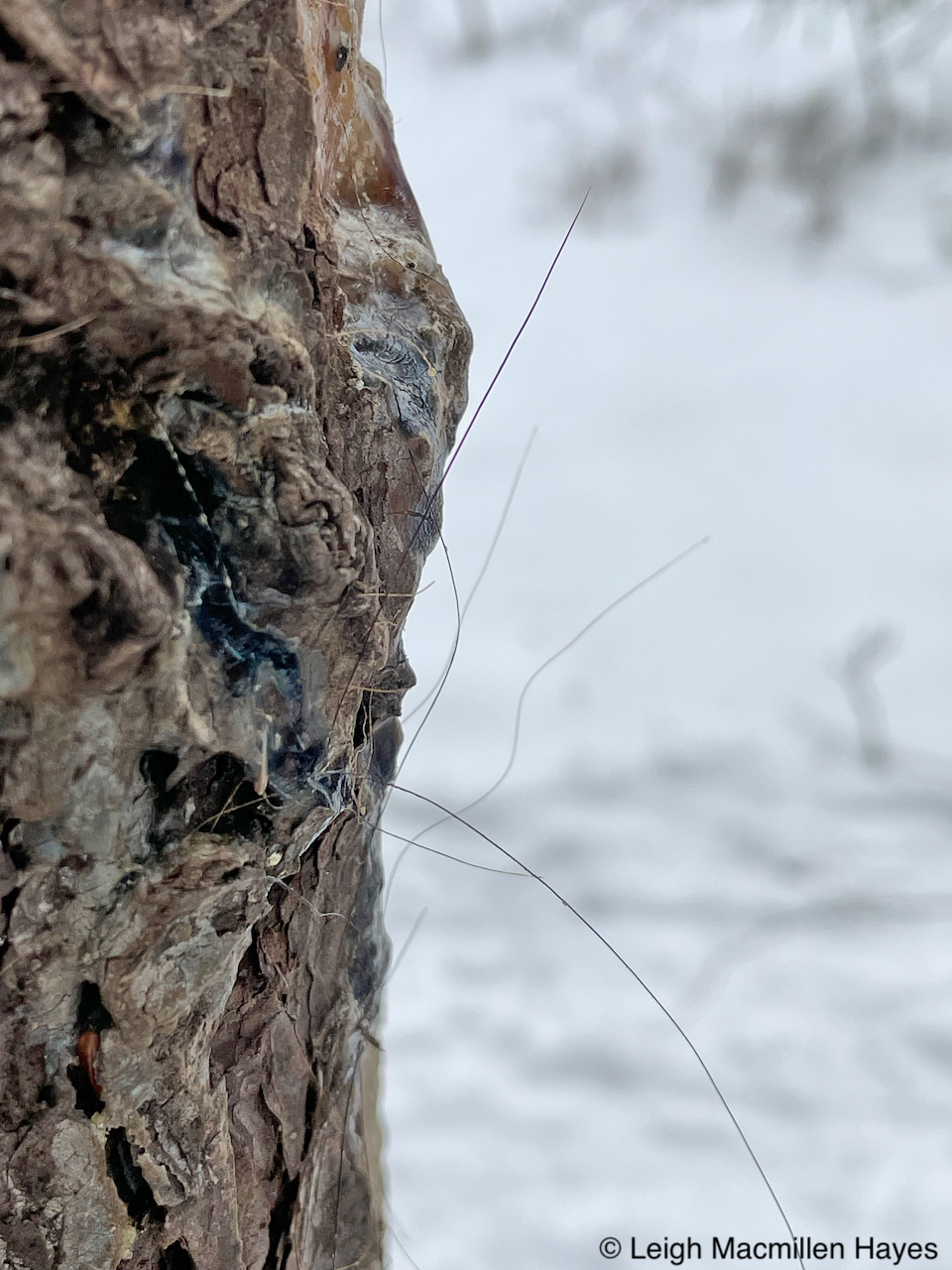
My Bright Idea: Filled with Awe and Wonder

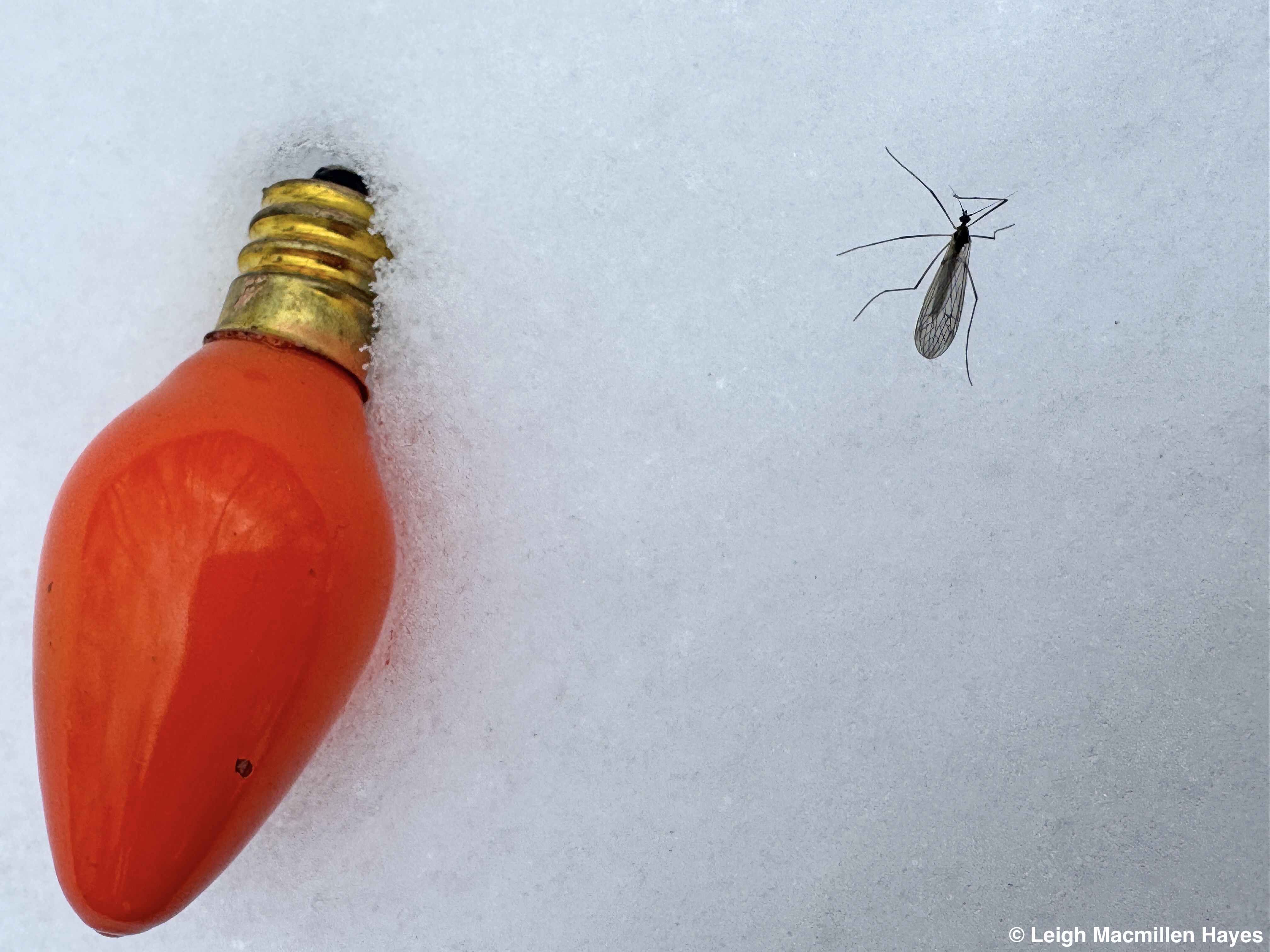
Just as I stepped out the backdoor this afternoon, I realized I really should have something in my pocket to use as a reference because the snow conditions were perfect. And so I grabbed the nearest object, which happened to be an old orange Christmas bulb that no longer brightens a tree, but serves as a reminder of past holidays in my parents’ home. Not exactly a tracker’s go-to instrument, but it does measure two inches in length.

I suppose I shouldn’t have been surprised to spot Snow Fleas, aka, Springtails atop the snow, but I was. They always strike me as more of a February event, but really, they are always on the leaf litter below the snow, we just don’t take the time to look. And today’s temperature felt a bit like February leaning into March, a rather pleasant reprise from the frigid temps of the past week. And so these insects made their way up through the snowpack to do their thing: dine on fungi and decaying matter that I couldn’t see.

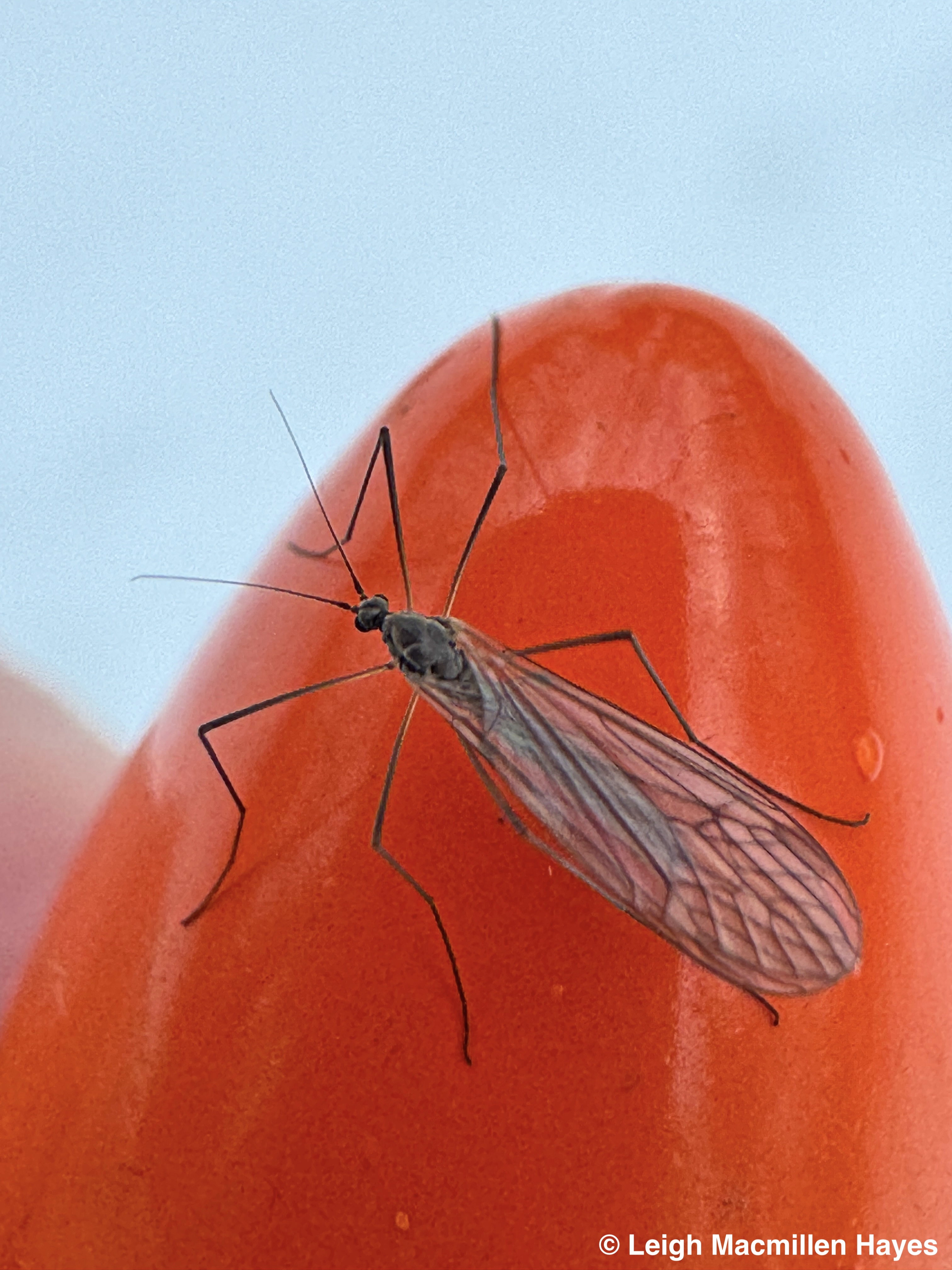
Also flying about and landing, Winter Craneflies, which are smaller than their summer cousins, but still have the long legs and transparent wings. They were everywhere–both flying and walking on snow.

And even the bulb! That was a bit of an experiment because I wondered if the Crane Fly would climb up once I placed the bulb in its face–much like when I can entice a dragonfly to do the same. Voila!

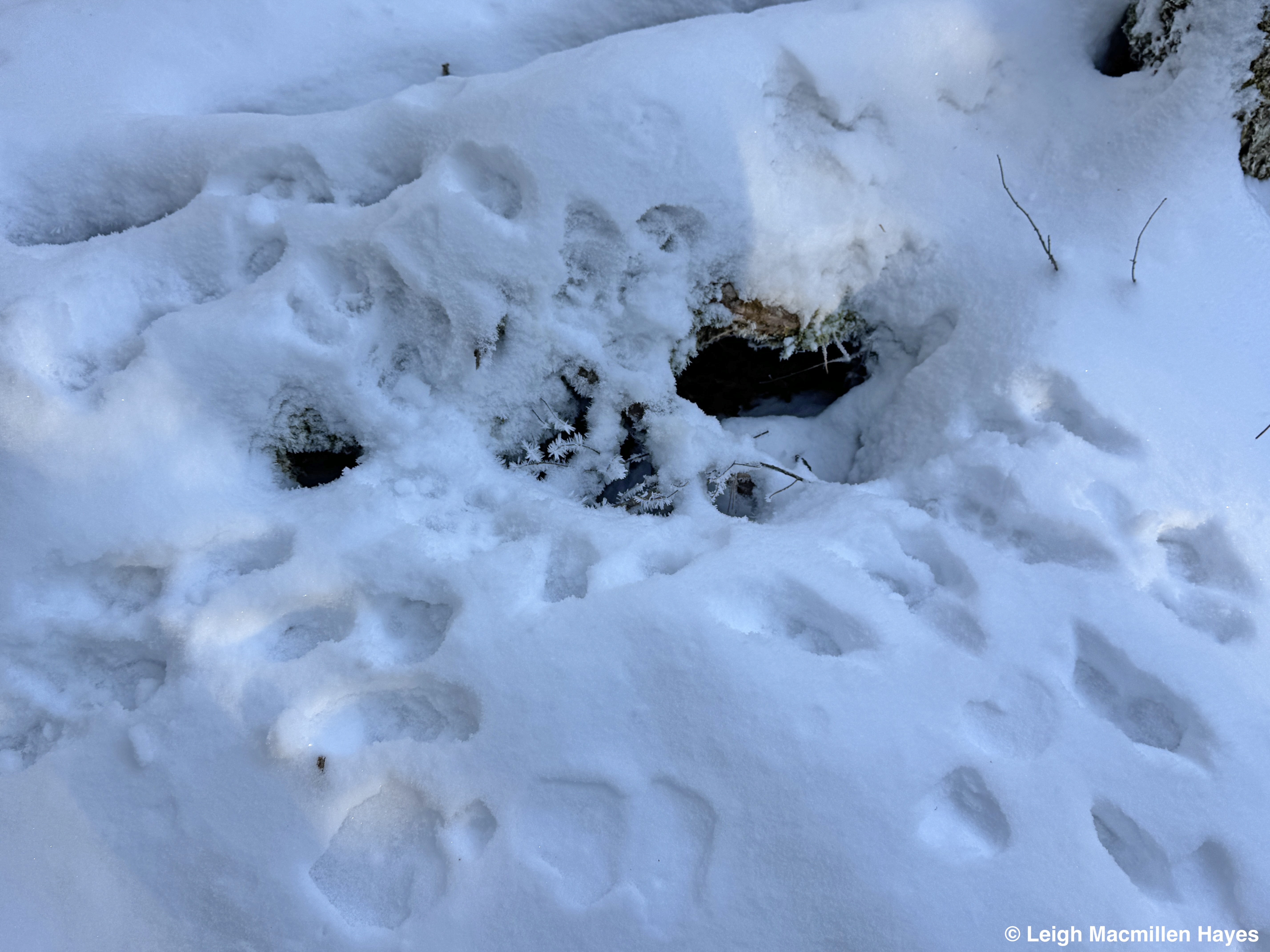
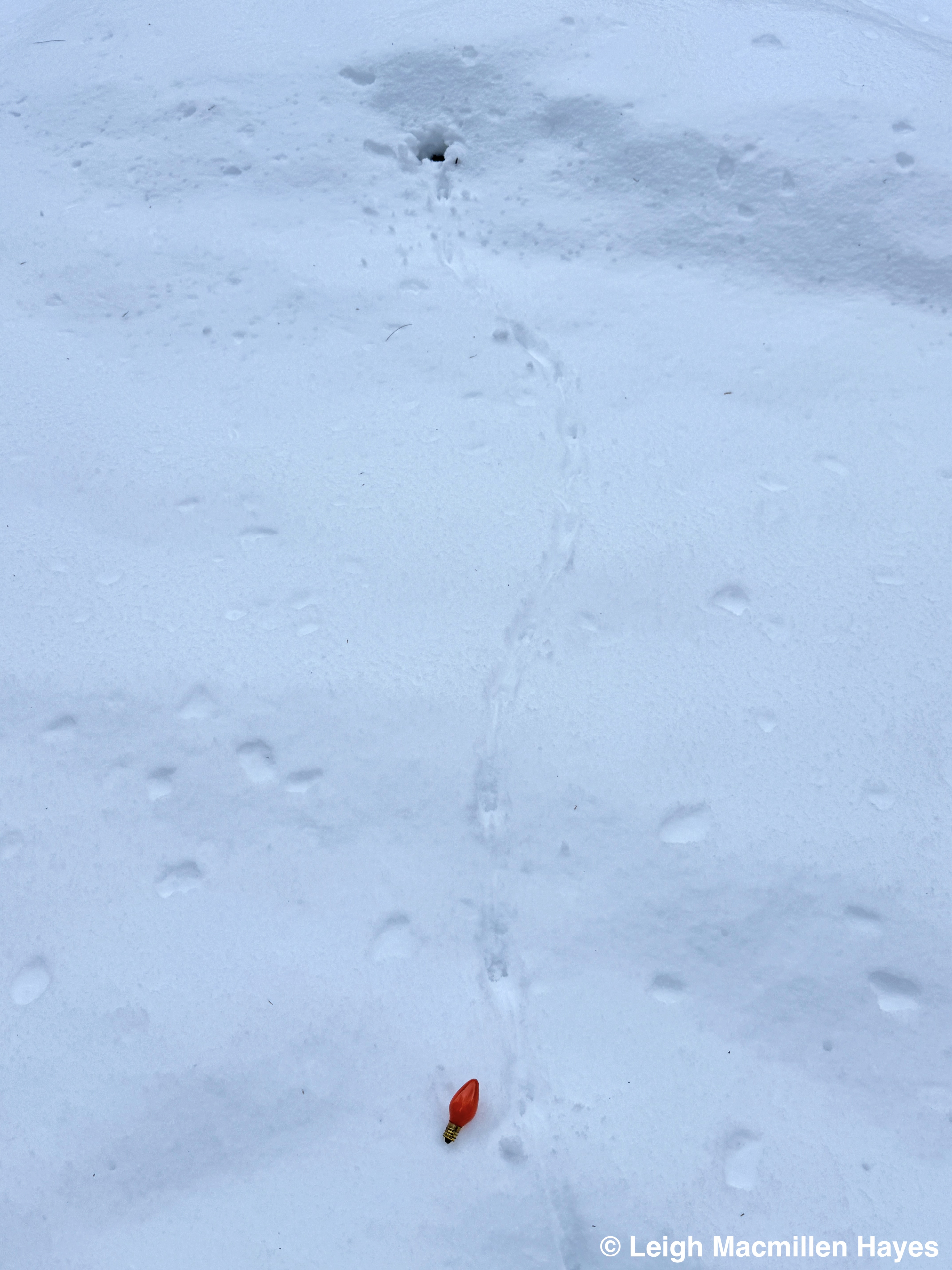
It wasn’t just insects to exclaim over and a few feet later I discovered the impressions of feet of another traveler. The prints left behind on one side of me indicated a hopper/leaper of the mini-kind. And it entered the snow as indicated by the hole at some vegetation that I knew grew below.

What really gladdened my heart was seeing that on the other side of my feet, its gait changed and I knew my identification was spot-on: a Vole who can change from a hopper/leaper to a perfect walker, where one foot packs the snow down and the next foot lands in the exact same spot creating a trail that looks a straight line with a zigzag twist.

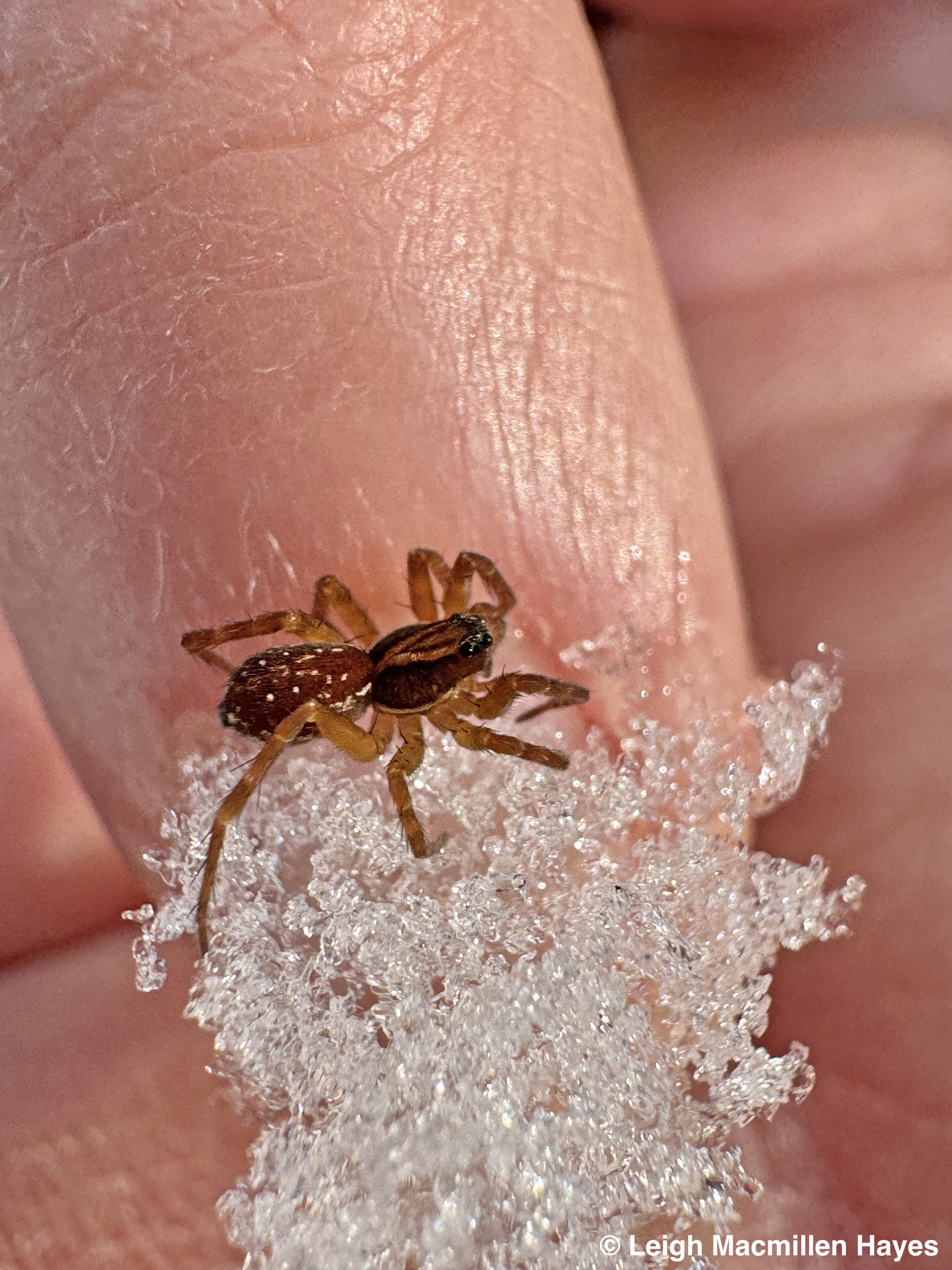
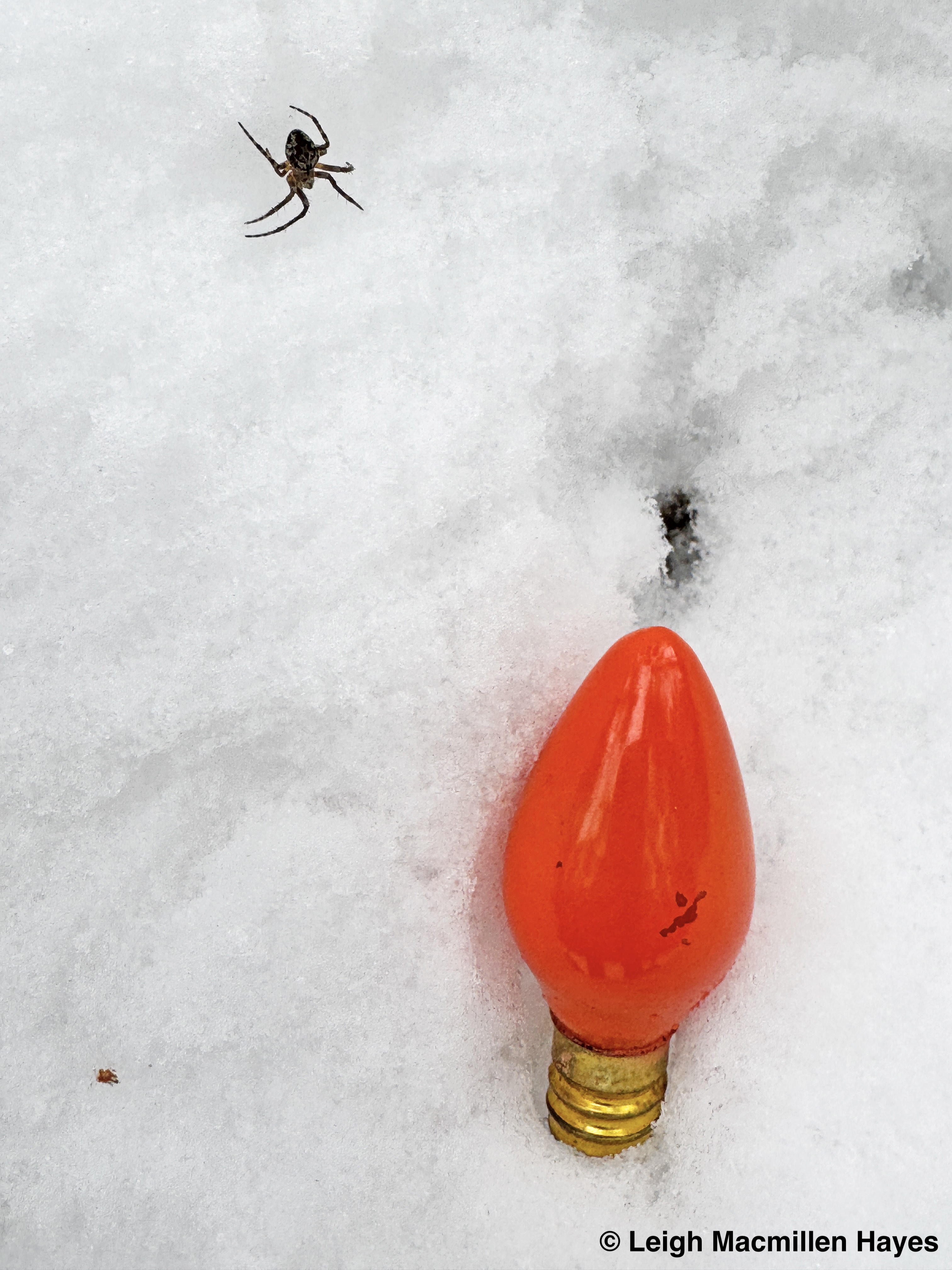
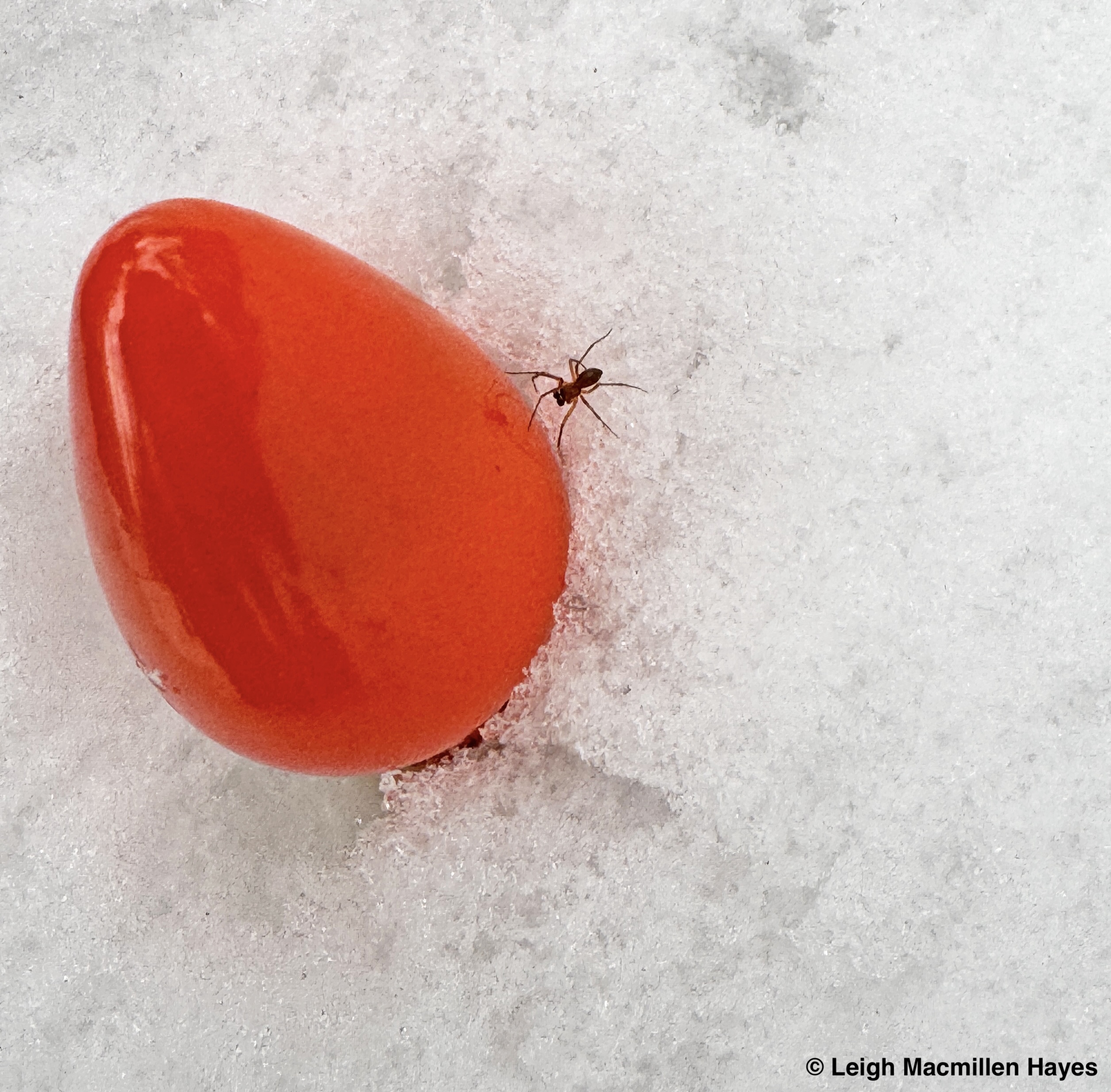
Next up to shine the light bulb on–a spider! Walking on snow also. Many spiders are winter walkers and weavers and I was thrilled to spot this little one.

It had a pretty snazzy pattern and I believe it to be an orbweaver.

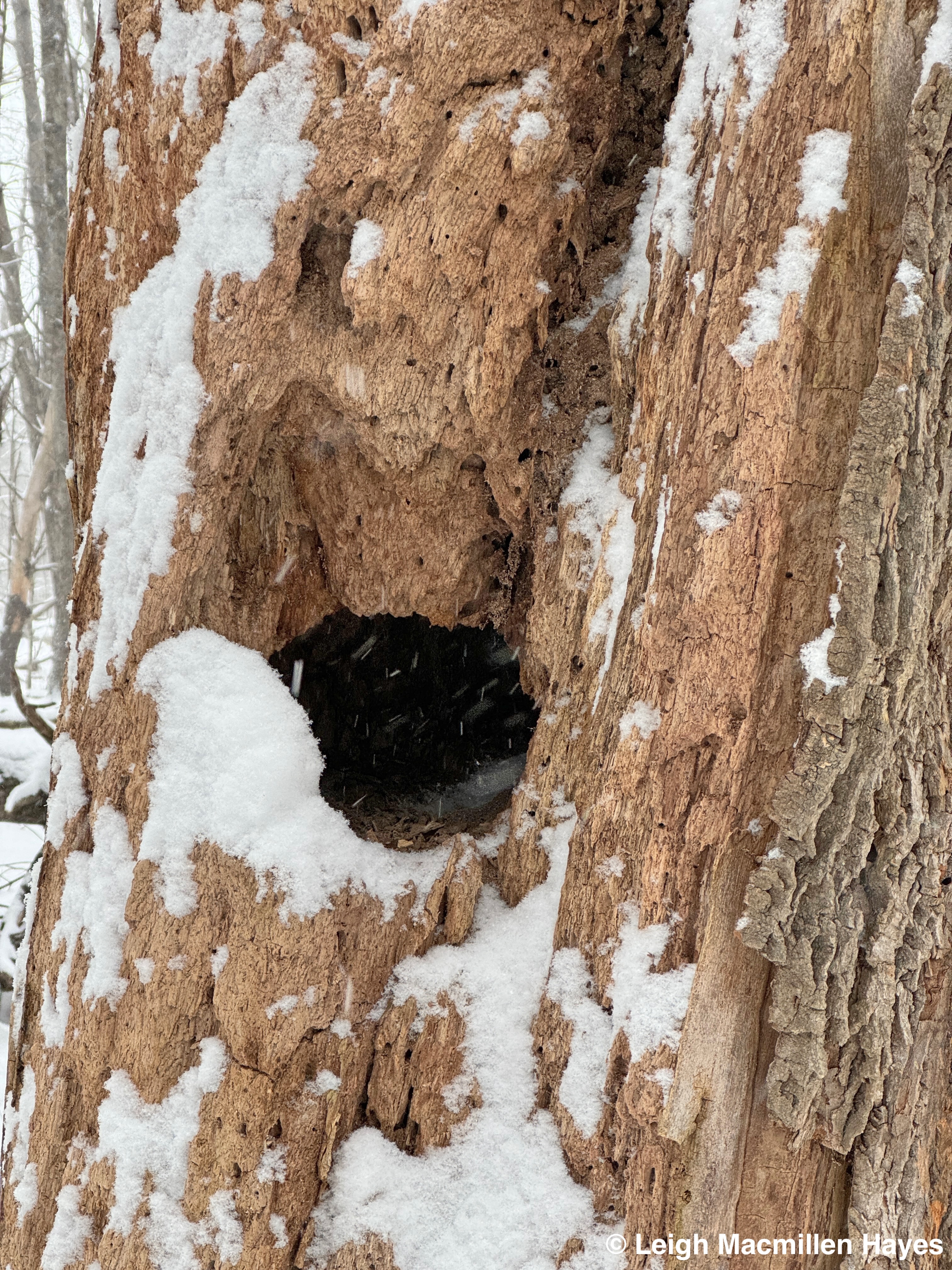
Then I began to play with the bulb, and spotted a tree with a hole that invited a fitting. I was admiring the tree’s bucketload of Ulota crispa, or Crispy Tree Moss, when something else caught my eye.

Below where I’d placed the bulb was the leftover molt of a tussock moth caterpillar. My, what spiny hairs you have. You make the spider’s hairs seem almost not worth mentioning. So I didn’t.

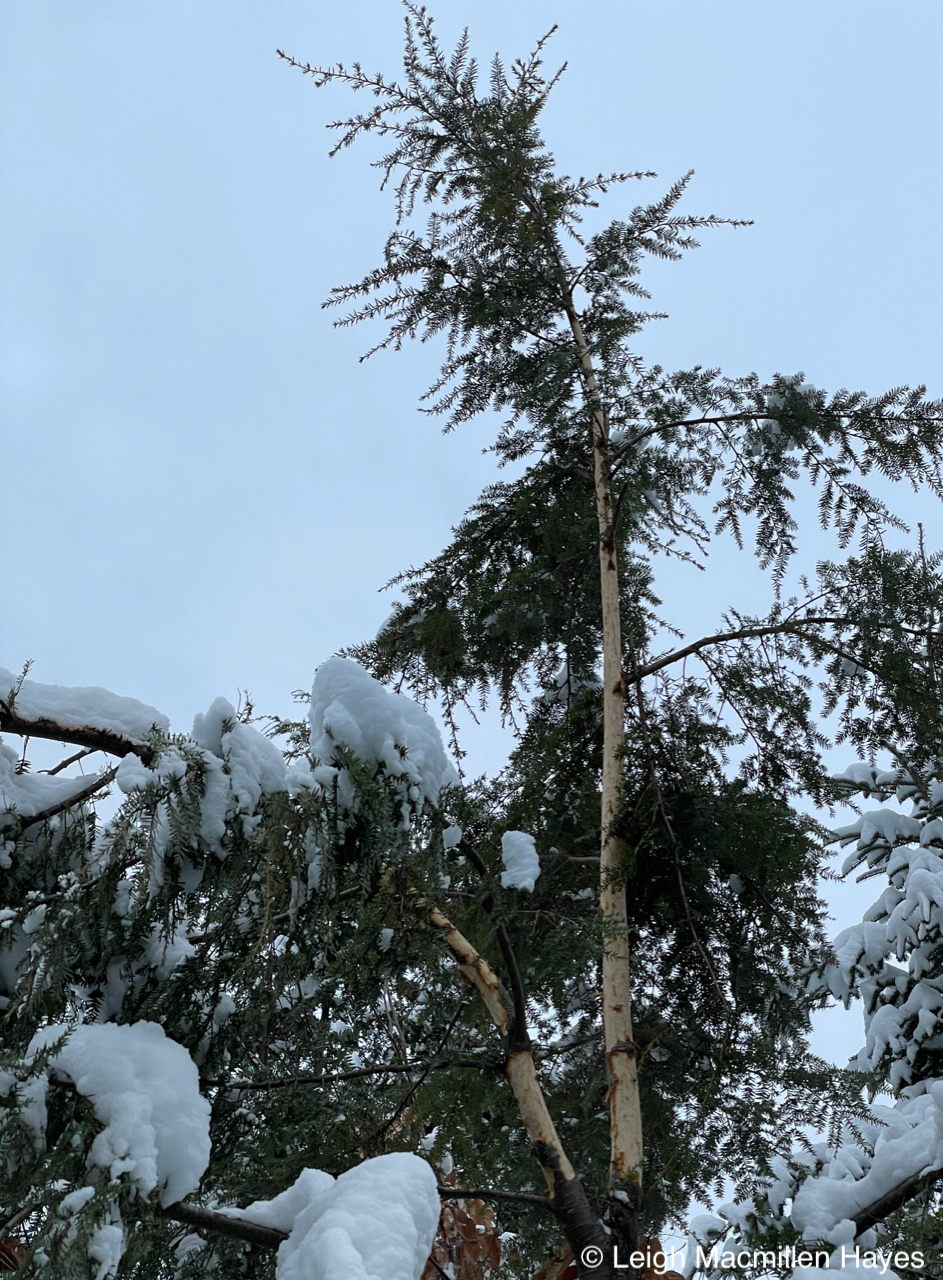
For a few minutes, trees continued to hold my attention, including this one, grafted into an H. Sometimes I think the H trees were created for me.

And not the be outdone, the Northern Red Oak showed up a brilliant display of its inner “red,” which seemed a perfect match for my bulb.

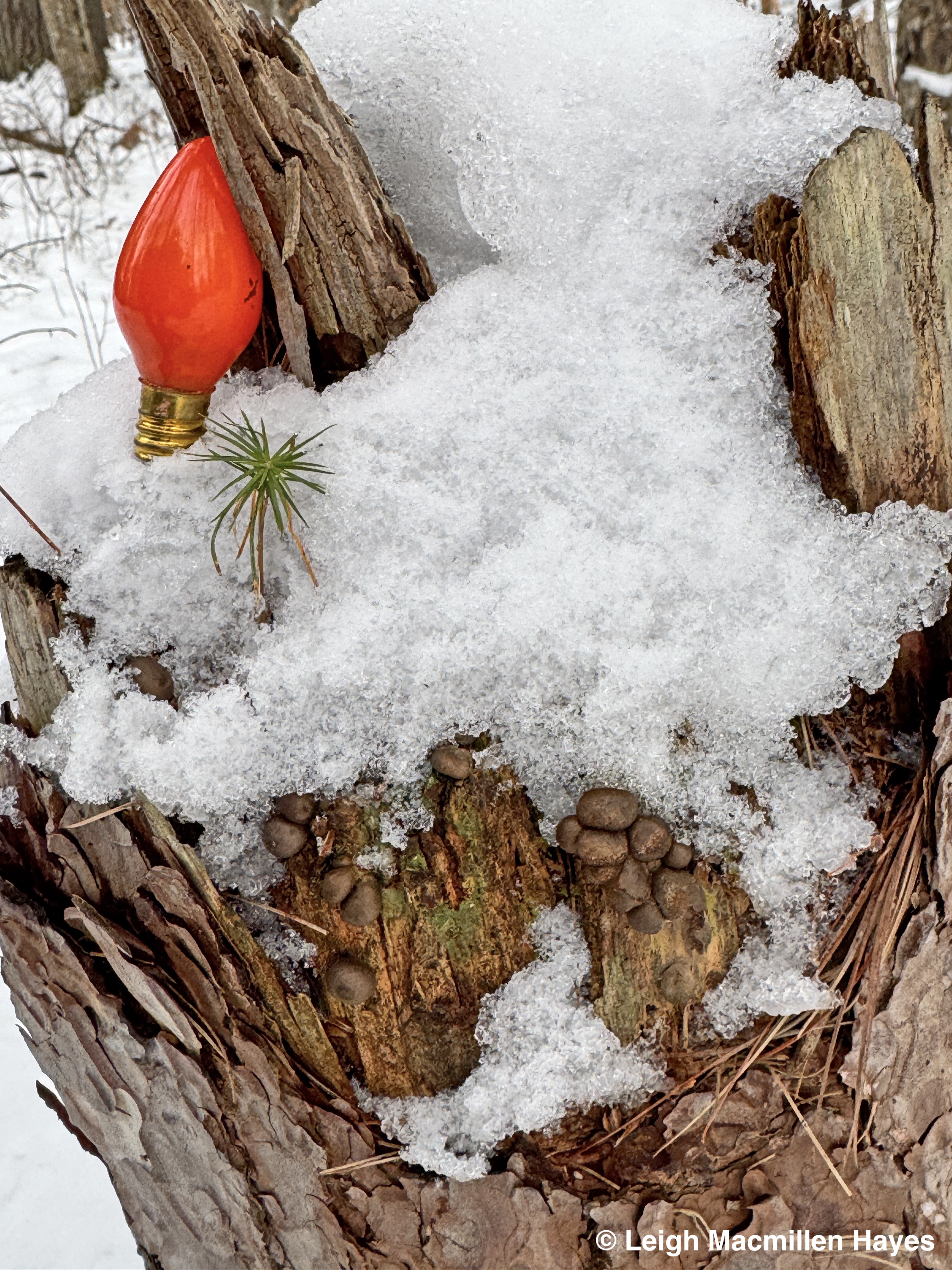
Upon a Red Pine tree stump, the bulb stopped again, this time to shine a light on a tiny pine sapling that resembled a palm tree. Whether the sapling is a Red Pine or White, I failed to figure out because my attention was consumed by something else.

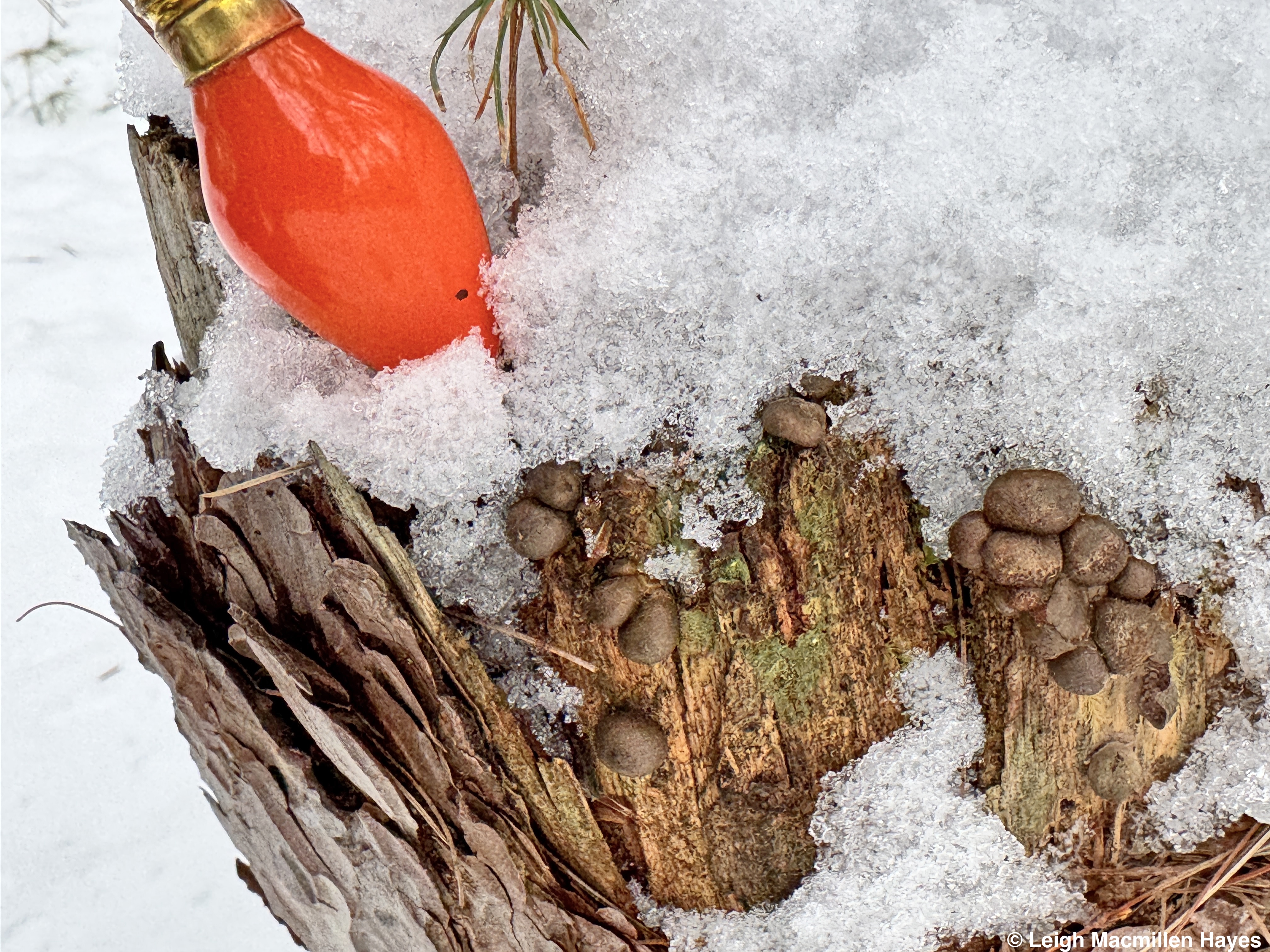
The bulb changed its position to point downward, highlighting the Wolf’s Milk Fungi that grew below the sapling.

And my playful spirit did what it often does when spotting this species. I found a small stick and poked the little puff balls, which released its spores in a smoke-like manner. I can’t show you the action, but you can see the results of the dried salmony-brown spores atop some of the now-deflated brown balls.

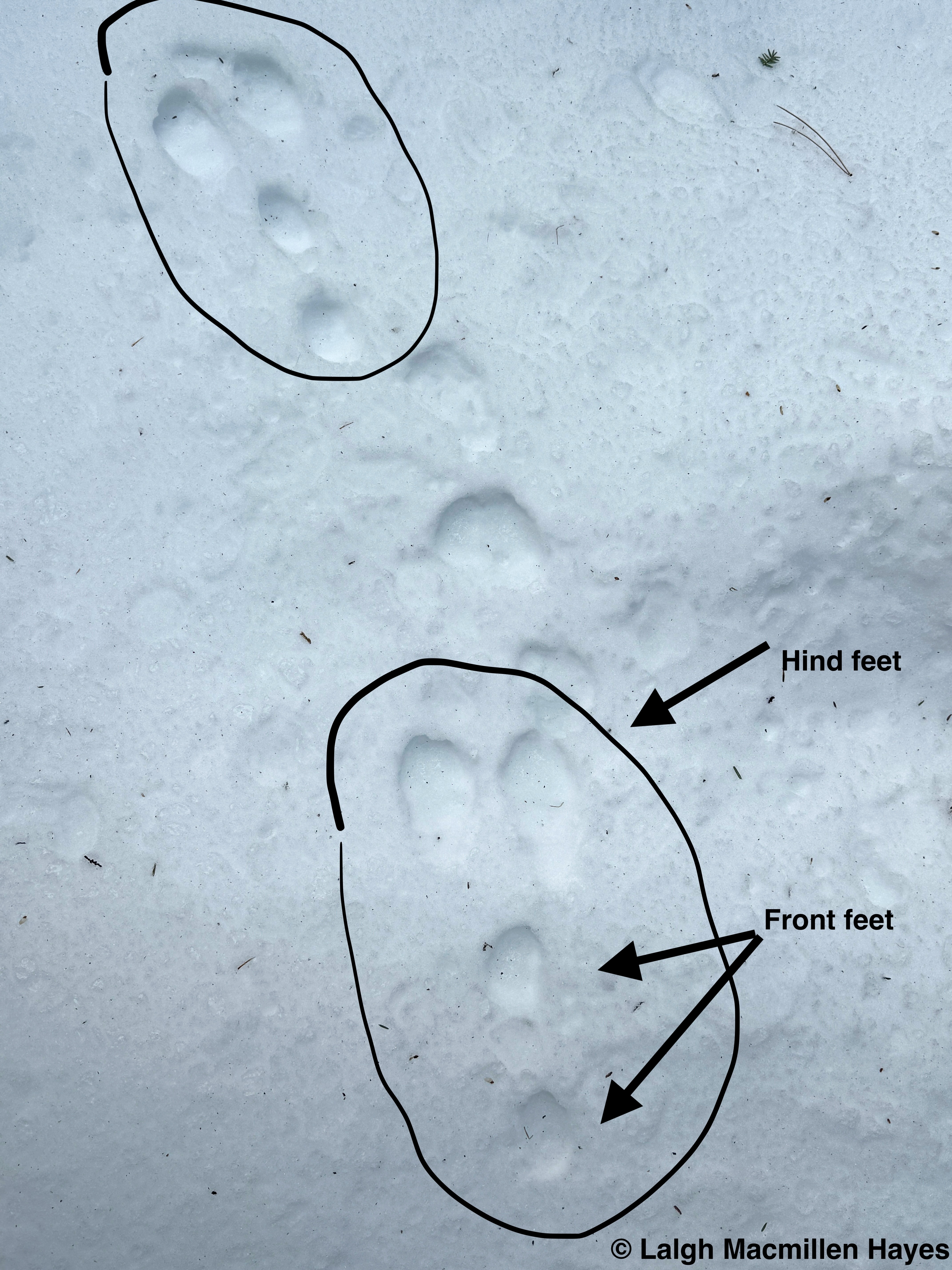
Over the past week and half, about a foot of snow has fallen here in our neighborhood and last night’s addition, plus today’s slightly warmer temps made for some great tracks as I’d already witnessed with the Vole. Gray Squirrels also left their marks–the two smaller feet in the back being their front feet. That always feels like a bit of a stretch until you watch a squirrel move across the landscape.

There was another tree, or should I say pair of trees, that I paused by for a bit because I think of them as a landmark ’round these parts. I love introducing others to these two–the Yellow Birch growing as it does atop a White Pine. I can just imagine the stilts the birch will stand upon when the pine finally finishes rotting away.

As I admired the trees, I noticed something else. My squirrel friend had hopped up, but I can only imagine it didn’t manage a good landing, for there was only one foot impression left behind. In my mind’s eye, I could see him tumbling down–had another squirrel tried to attack from behind?

In the past year, I’ve gotten back into sketching and have been learning to paint, and now see the world through different eyes and know that I’ve walked past this barbed wire many times before, but never noticed it. Today, it looked like an artistic insect in acrobatic motion and love how the bulb found its way into the display.

As I finally headed toward home because darkness was settling in, another spider crossed my path and so I set the bulb before it.

And the spider quickly walked away. Perhaps orange isn’t its color.

To say I went without expectations today would be wrong. For I truly thought I’d see the creator of these works of art since they were made this past week. I did not.

Instead, I came away with revelations and rejoiced in letting my playful spirit run free as I was filled with awe and wonder.

As for the light bulb–it was a bright idea! A brilliant one, really.

Snow–Bugs and Flakes

Betwixt. Between. Be flowers. Be bugs. Be glad for there is so much to wonder about in the natural world. And I don’t even know the half of it. But I wouldn’t be happy if I wasn’t always learning.

It was 28˚ when I awoke this morning. Late this afternoon on this brilliant sunlight day, with temps at least 30˚ warmer, I walked out through our woodlot to the right and then looked back across the neighbor’s field toward our house, taking in the sea of seedheads and I was sure my insect hunting days had come to an end.

But much to my surprise, and really, I shouldn’t have been surprised, the chirps of crickets and grasshoppers, like this Red-legged example, filled the air. I might not have seen the grasshoppers if they hadn’t flown to a new spot occasionally, for so camouflaged are they in the current setting. Or always.

And then, much to my delight, I noticed a Saffron-winged Meadowhawk flying low and making frequent stops, allowing me to do the same. We live in a wet area, but still, I’m often surprised by some of species I meet here.

From the field, I decided to continue along the power line that crosses our property and the neighbor’s and many more beyond that and as I’d told my friend Meg from North Carolina the other day–Mount Washington, our mighty New England Rock Pile, is at the far end and it looks like we could walk right to it. Give or take a few days–or drive there in about an hour.

It’s along the path below the lines that I discovered Cotton-grass, which is a sedge, with its fluffy little heads speaking to the bogginess of this area.

Cottongrasses self-pollinate, their flowers being “perfect,” given that each contains both male (stamen) and female (carpel) parts. And the seeds are attached to parachutes waiting for a breeze (or animal) to move them to a new home.

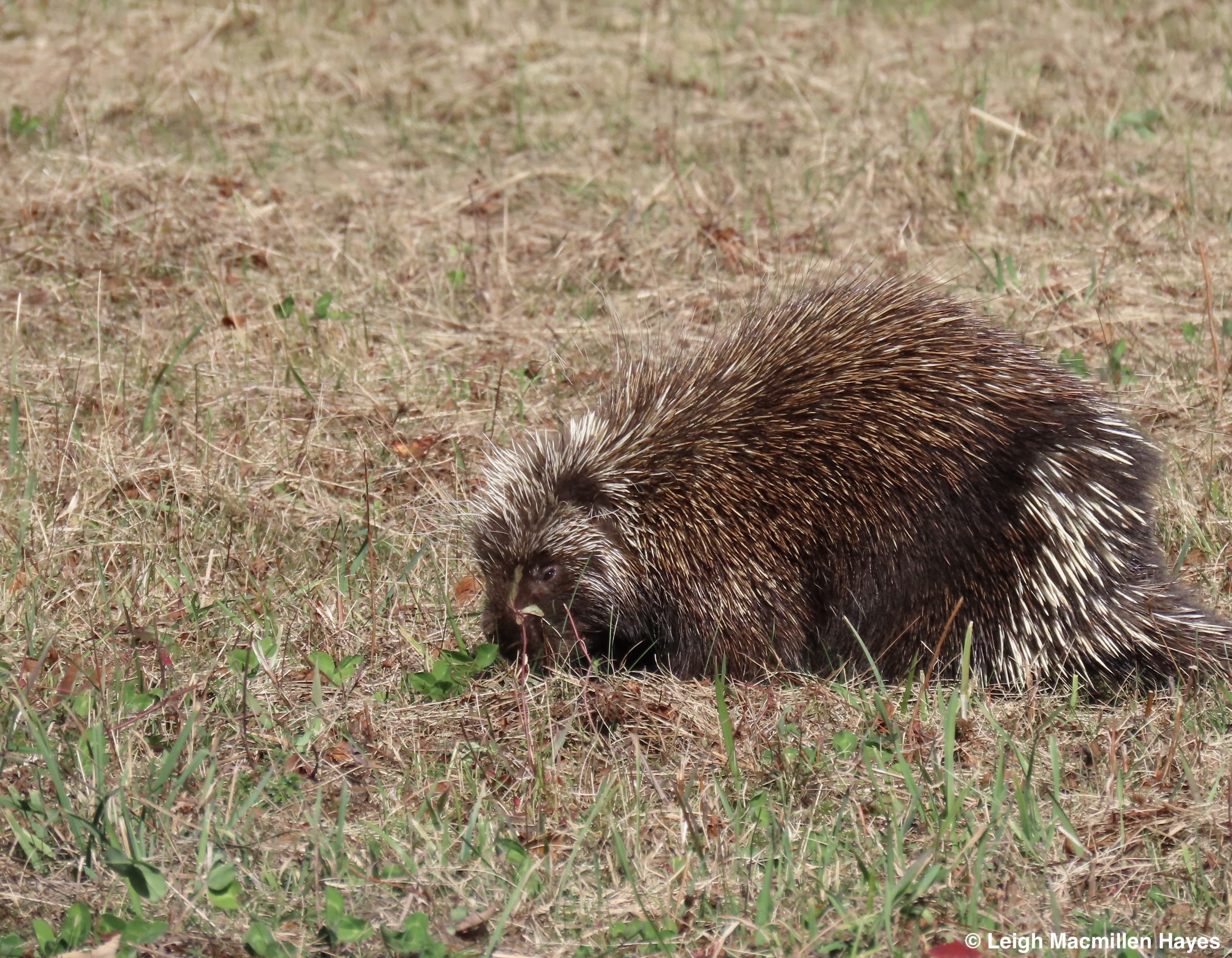
Spotting the curly, cottony-hairs reminded me of the belly hairs of porcupines, which of course, reminded me of the Porky some friends and I spotted in another field in town yesterday. The time is coming when these critters, whom I’ve come to adore, will transition from life in the field to life in forest trees.

Last November I wrote about this particular porcupine, Bandit, whom I met in our yard, along the same route I began today’s journey. Perhaps soon, we will meet again.

Getting back to today’s story, I left the power line, and headed out an old logging trail that I tend to frequent most often in the winter. But it was sunny, and I was enjoying that warmth, and wondered what else I might spy along the way.

For starters, there were the “dried” Pearly Everlasting Flowers, which I should have gathered because they do dry so well. Instead, I just admired them.

And I had frequent encounters with more Saffron-winged Meadowhawks, flying much like White Corporal Skimmers in early spring–always landing and then moving a couple of feet ahead of me whenever I made a move.

Helping with ID of this species, are the fine black lines in the sutures of the abdomen. And the red stigma toward the tip of each wing is outlined in black. Otherwise, I might confuse it for an Autumn Meadowhawk.

I also had the pleasure of meeting a female Shadow Darner, but then I went to offer a finger for her, thinking she might want to take advantage of my body heat, and instead she tried to bite me. So, I let her be and we went our own ways.

At a former log landing, Juncos were on watch, and given how much seed is available, I know they’re mighty happy with the current conditions. It seems like they just arrived in the past week or so, but the good news is that many will overwinter here.

Oh and a few will fly to Connecticut so that my dear friend, Kate, can watch them as well.

Being an old logging road and log landing, conditions were apparently ideal this past summer, and I paused for a moment to admire forest succession, with grasses and herbs forming the floor, and more grasses and sedges growing taller, topped by Gray Birch, and a backdrop of Red Maples, and Big-tooth Aspen, and Paper Birch.

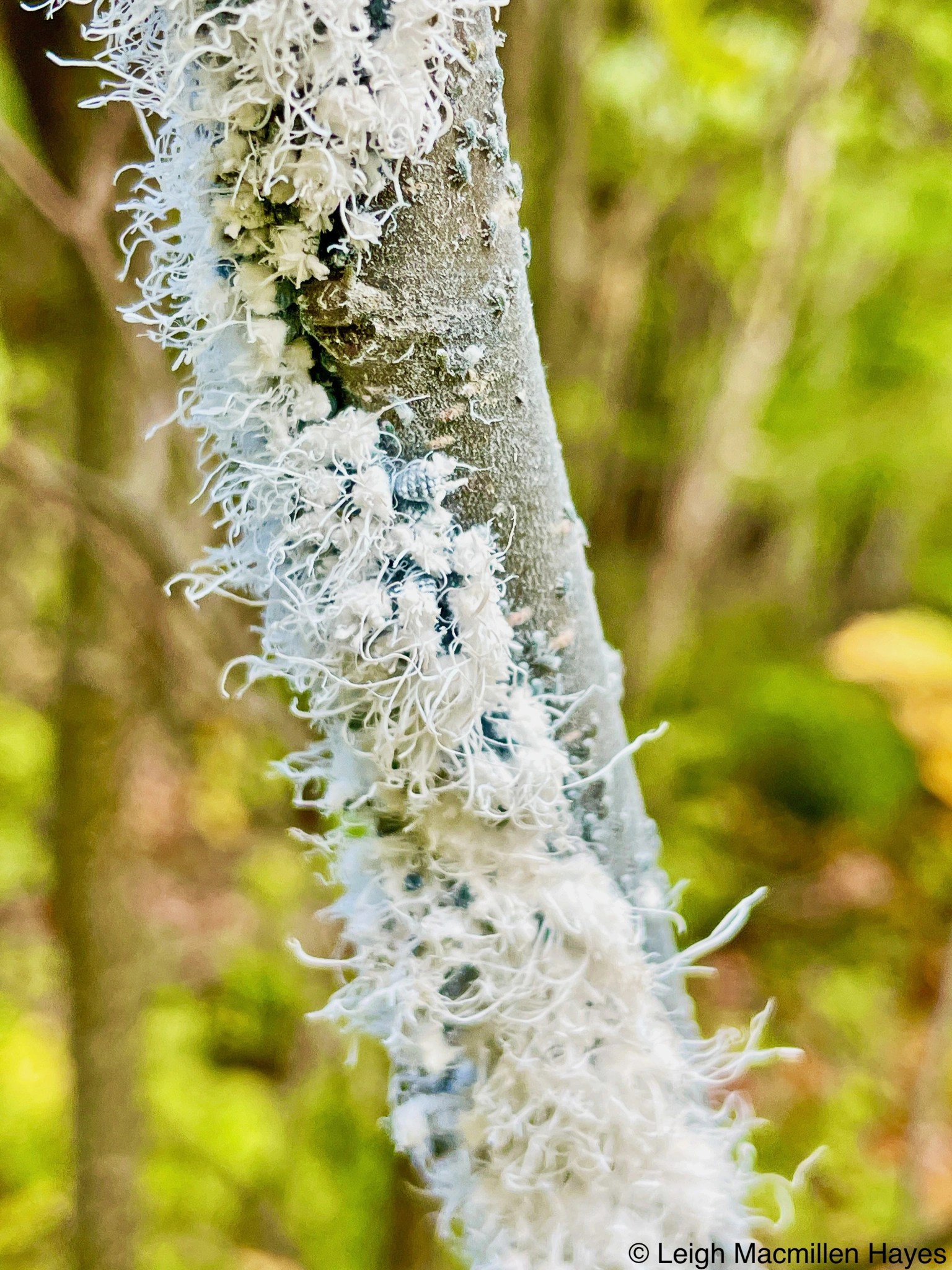
And then it was back to the now dry bed of a stream crossing where Speckled Alder shrubs are closing in on the trail, and Woolly Alder Aphids are living their best life seeking sap from the woody plants.
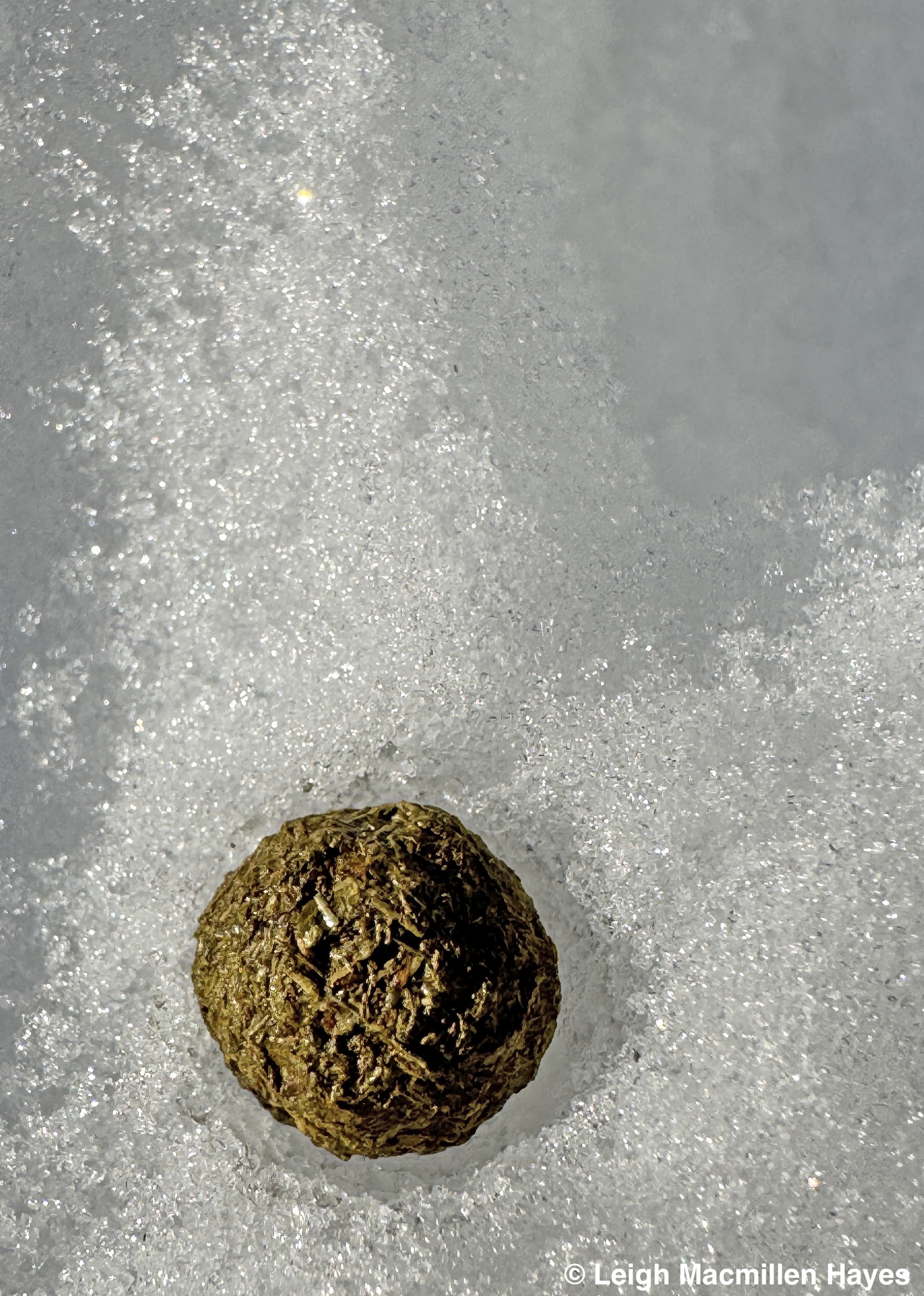
That Cotton Candy or even Cotton-grass look is actually a waxy material they produce from their abdomens, and when they group together like this, perhaps its meant to detract visitors. Or protect them from the weather. Had a I visited on a summer day, I’m sure I would have spotted ants trying to tickle them (it’s called farming) to take advantage of the honey dew the aphids secrete.

Speckled Alder Aphids live an interesting life style. Actually, according to Donald W. Stokes in his book, A Guide to Observing Insect Lives, “There are two life cycles in this species. In one, the aphids remain on alder trees throughout their lives. They are believed to overwinter as adults in the leaf litter at the base of an alder. In spring, they crawl up the plant and feed on its sap. There are several generations per year and adults of the last generation overwinter.

In the other life cycle, the aphids alternate between two plants. The aphids overwinter as eggs placed on maple twigs. In the spring they hatch into females, which feed on the undersides of maples leaves and reproduce. They are wingless, but in midsummer produce winged offspring, also females, which fly to alders. These females feed and reproduce on alders, and give birth to wingless young. Then in the late fall, they produce winged young, which fly back to maples and give birth to both male and female young. The males and females mate, and each fertilized female lays a single egg on a maple twig. Only the eggs overwinter.”

It’s things like this that add to my sense of wonder. Two life cycles? The adults of one life cycle overwinter while the eggs of the other are do the same? That’s amazing.

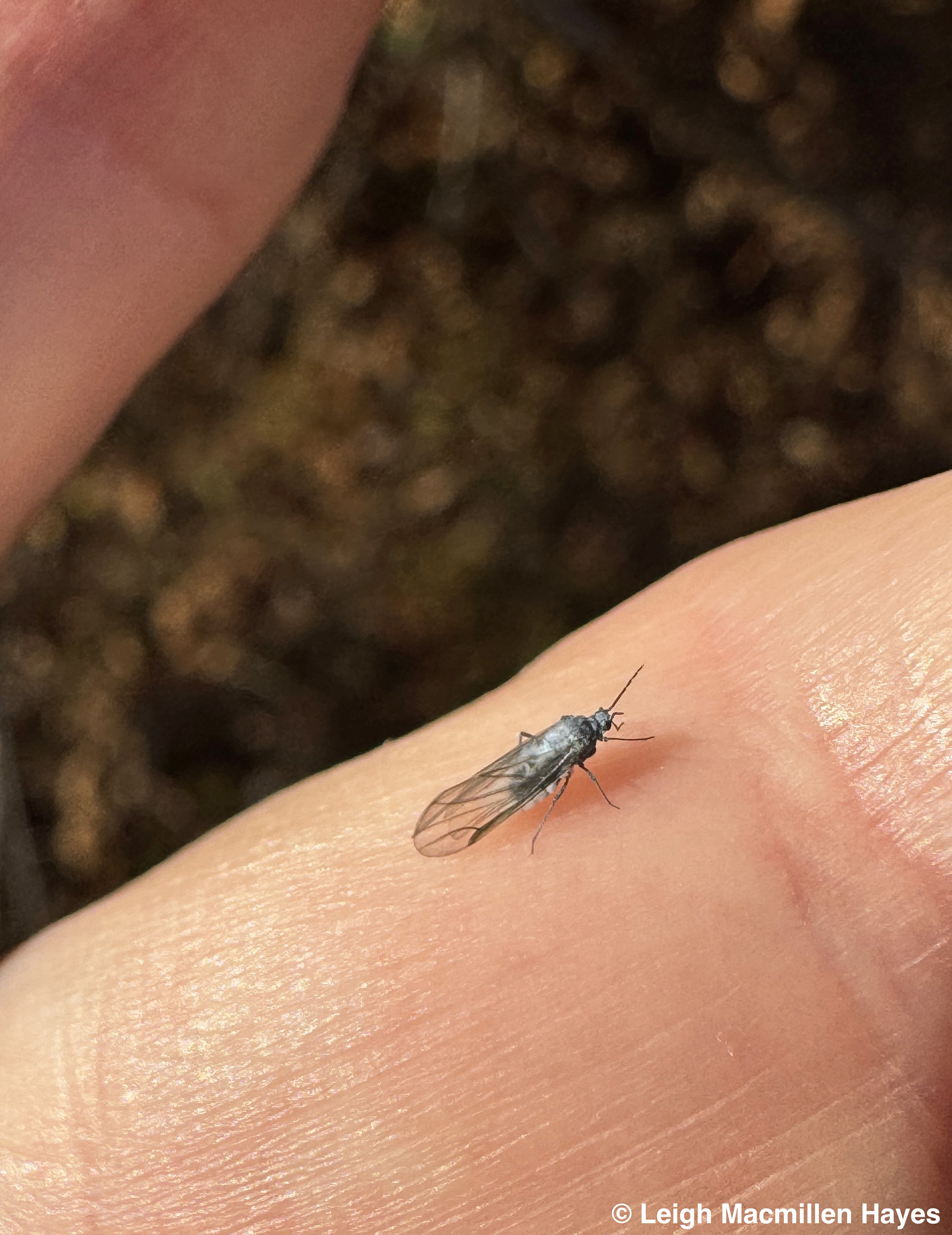
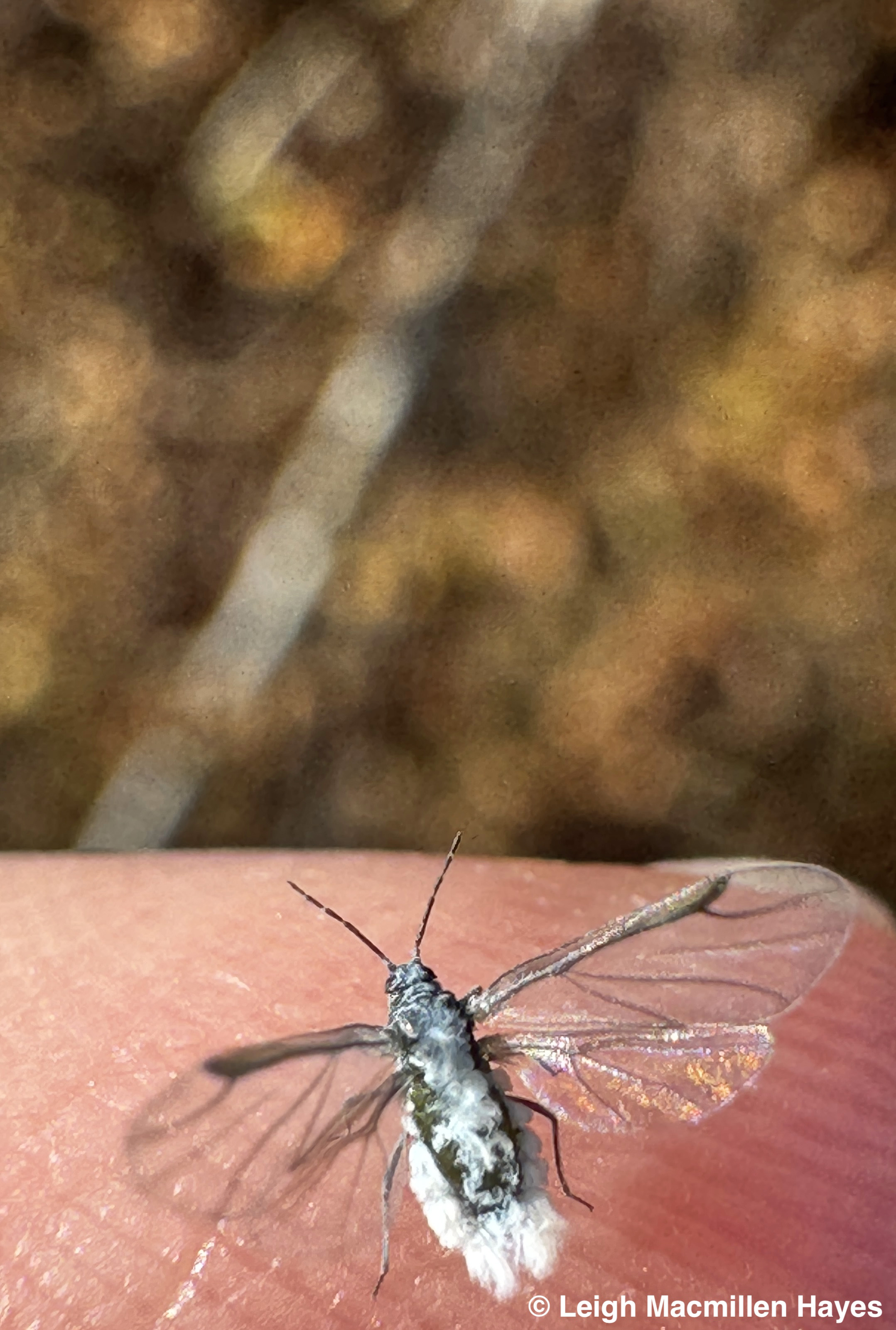
And on the fly in a bit of abundance right now for I saw a bunch today and I’ve been seeing them along many trails that I hike, are the flying aphids. If you stick your hand out and cup it, you can get one to land.

Don’t worry, they don’t bite. And they don’t even tickle, despite that waxy hair.

They’re actually kinda beautiful in their own way and as they fly they look like tiny flakes of snow, thus some refer to them as Snow Bugs.

So I have two forever-friends-since-birth and I’ve already referred to Kate earlier in this blog because she is a great lover of Juncos, along with everything else in the natural world, and so is her sister, Patty, who once told this joke when we were kids:

Q: What’s white and goes up?

A. A dumb snowflake.

One of these two is eleven months younger than me and the other is eleven months older and she and I just chatted yesterday and I’m so thankful to have them in my life all these years. Yes, B.S., I am also incredibly thankful to have you in my life.

But once again I digress. Except I had to tell that joke. Because it kinda reminds me of the aphids in flight.

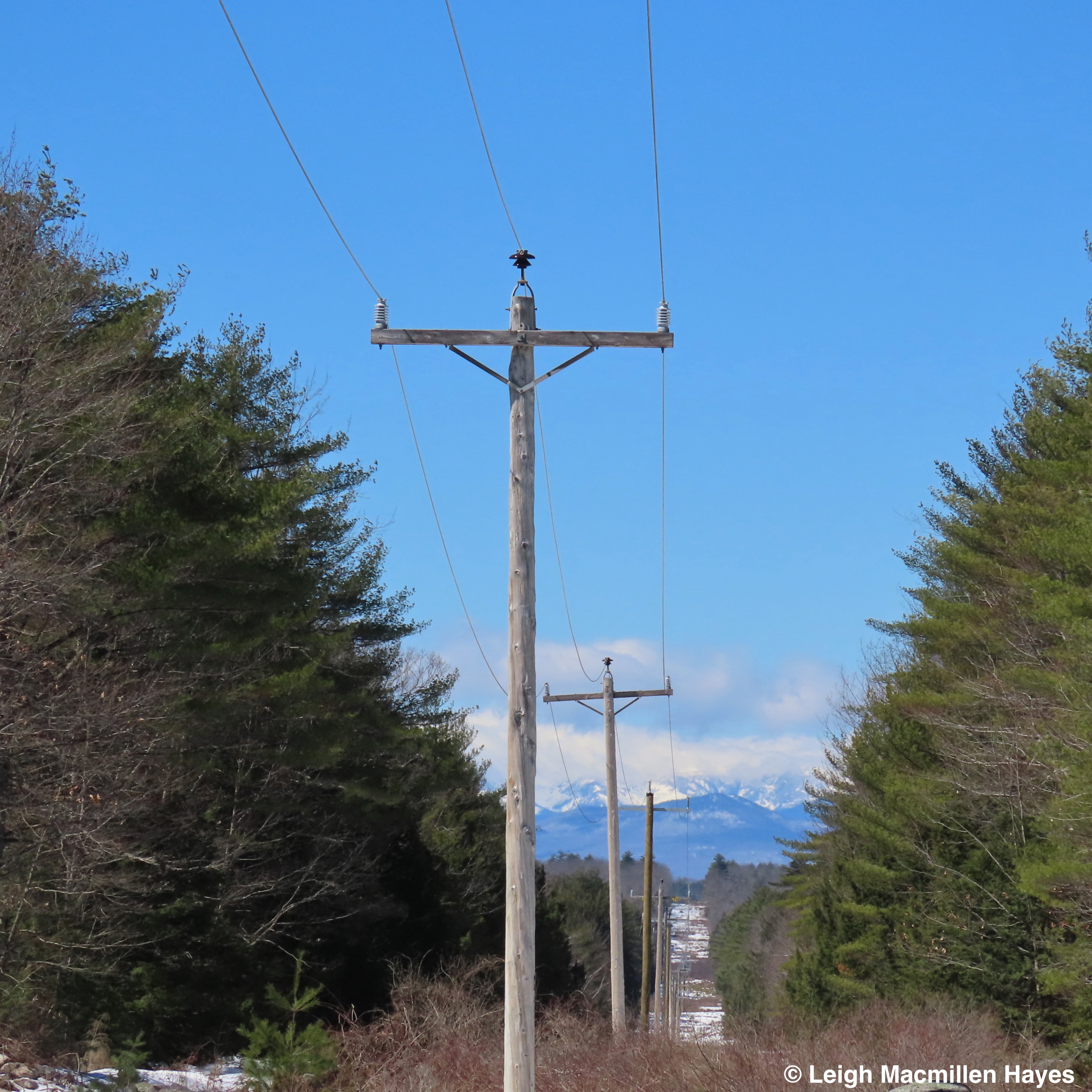
Back to the power line, I decided to pull the Mighty Mount Washington in with the telephoto lens. Yes, dear readers, that is snow! Several inches of the white stuff has fallen over the last few days. And there is rime ice.

My favorite season is only a walk down the power line away.

Snow: Bugs and Flakes. It’s all wonder-filled.

Fall After Fall Mondate

At the start of today’s hike I met a rock. A rock covered in soft green broom mosses. A rock that invited a caress. And so I did. Repeatedly.

When I mentioned that it was the perfect pet rock to My Guy, he reminded me that it wouldn’t fit in my pocket. Details. Details.

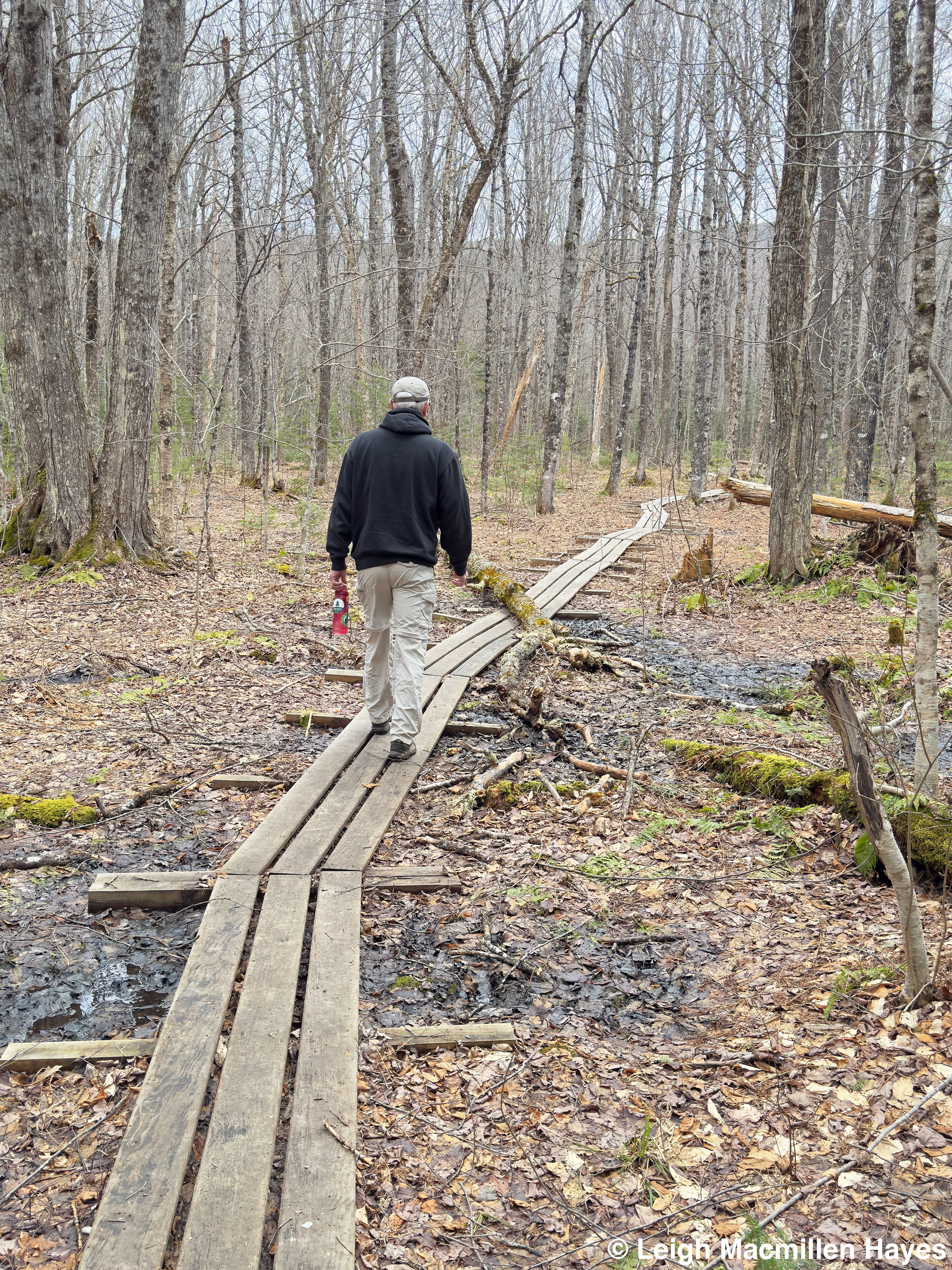
And so our hike continued through a wet area where we gave thanks for the boardwalk system. And for the opportunity to change out our hiking uniform from winter to spring. Oh, we had Muck boots in the truck, but welcomed the opportunity to wear hiking boots, and summer hiking pants, and sweatshirts, and baseball caps instead of winter gear.

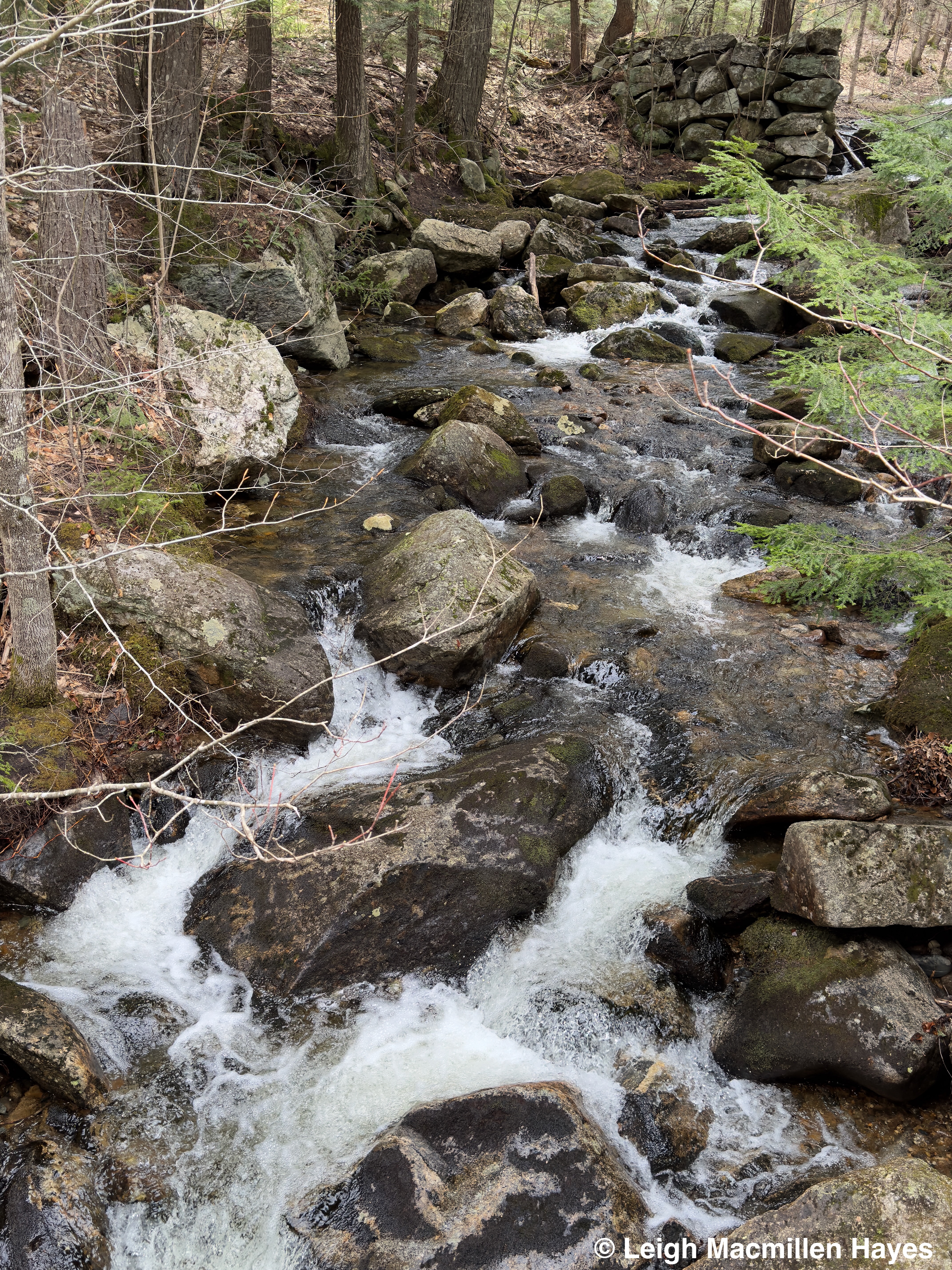
The wetland wasn’t so wet, but the water swirled around rocks just below an old mill as we crossed a bridge over the brook known as . . . Mill Brook.

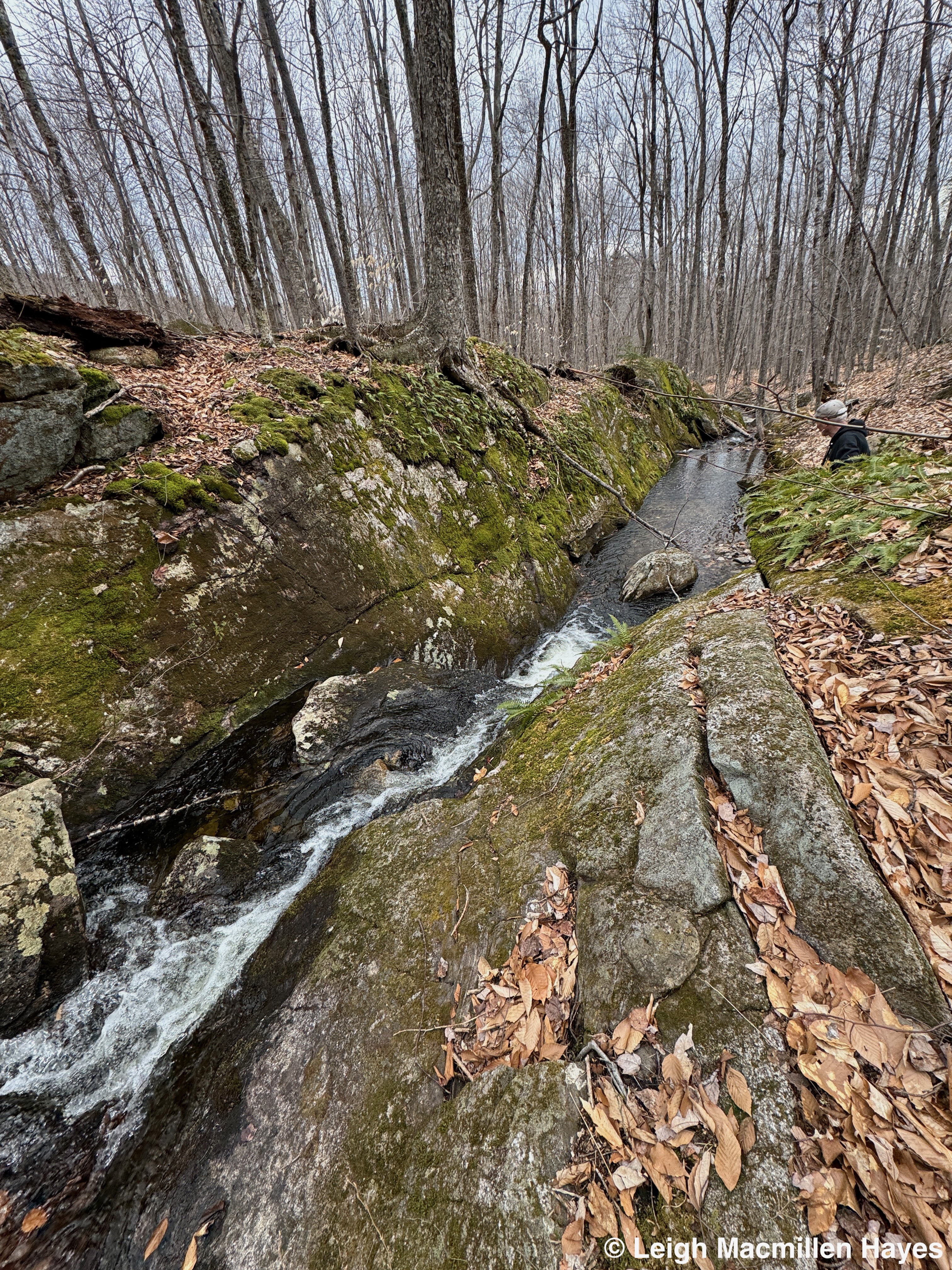
In its lower reaches, we paused to rejoice in how the water swirled around and over and under the boulders and reveled in the fact that their faces were smoothly carved as can only happen in places where so much H20 has flowed for eons.

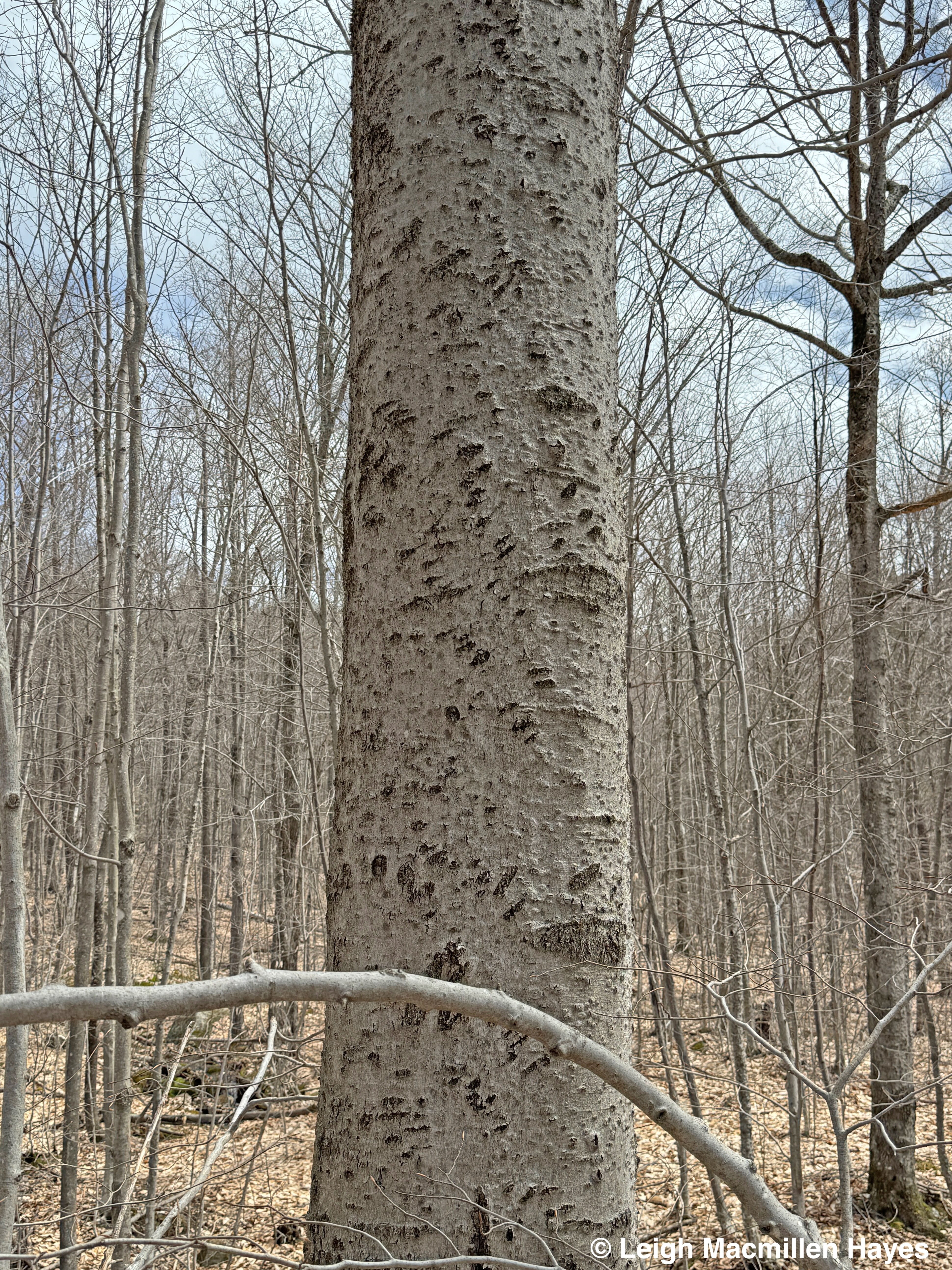
Leaving the water behind for a time, we met some friends. Beech Trees. Particular American Beech Trees. American Beech Trees more commonly known to us as Bear Claw Trees. And in this case, an oft-visited Bear Claw Tree.

Where there is one there is usually another. And another. And another. We found several, but imagined that many more exist given how many claw marks we found on these trees.

About two miles or more from the trailhead, we followed the spur trail to North Ledge (aka Lunch Ledge) and sat down to dine. Below stood a forest of hardwoods that we’d passed through and we had to wonder how many more Bear Claw Trees we might find if we actually took the time to go off trail and look. One of these days.

I did take time to examine a few fruticose lichens growing on the bark of a hemlock overlooking Lunch Ledge, this one being a Boreal Oakmoss, which is actually a lichen despite its mossy name.

And a Bristly Beard Lichen, with its short bristles decorating each branch.

From North Ledge, it’s at least a mile and a half across the mountain, with ups and downs and all arounds to get to the other side. Including snow. Given that we’d had two spring snowstorms, with the first being March 24, and both dumping a couple of feet upon the landscape, it was no surprise. Should we have donned our Muck boots?

Nope. I poked my hiking pole in at one point and discovered there was at least a foot of snow left in spots, but it was soft and easy to hike through and so we did.

At last we reached the southern side, where the trail turned and hugged the edge of the mountain. It was downhill from there.

But first, a quick break at the outlook, where we actually met the only other person who was on her way out as we were on our way in. Looking west, we could see snow showers in some surrounding mountains, but our day consisted of a few raindrops, sunshine, clouds, and a breeze. Perfect for hiking.

Also perfect for hiking: a delayed dessert of Dark Chocolate McVities! A favorite of mine since 1979 when I devoured their biscuits on a regular basis while attending school in York, England.

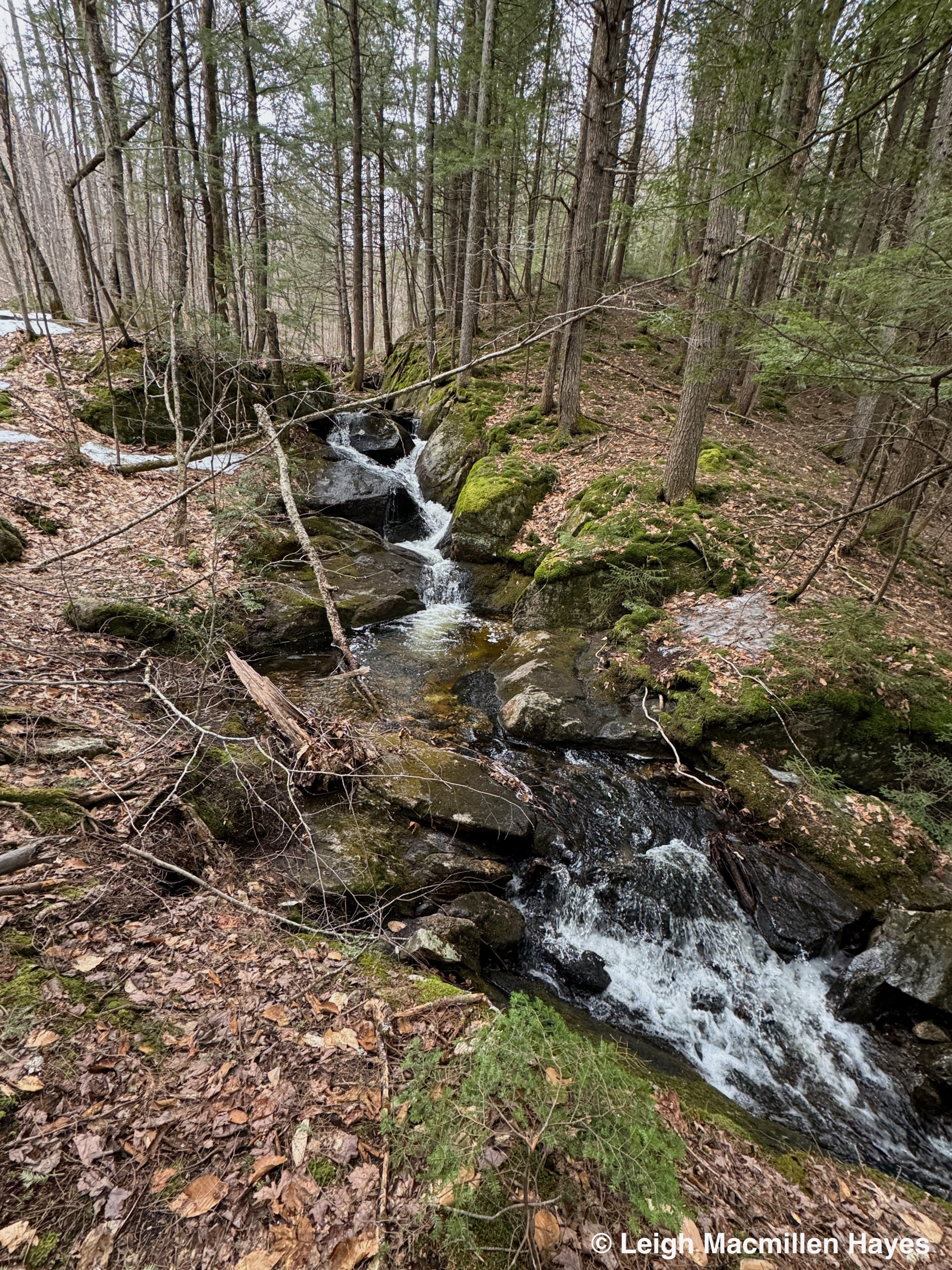
Downward we hiked and then we met Mill Brook again as it cascaded forth.

And forth.

And continued forth some more.

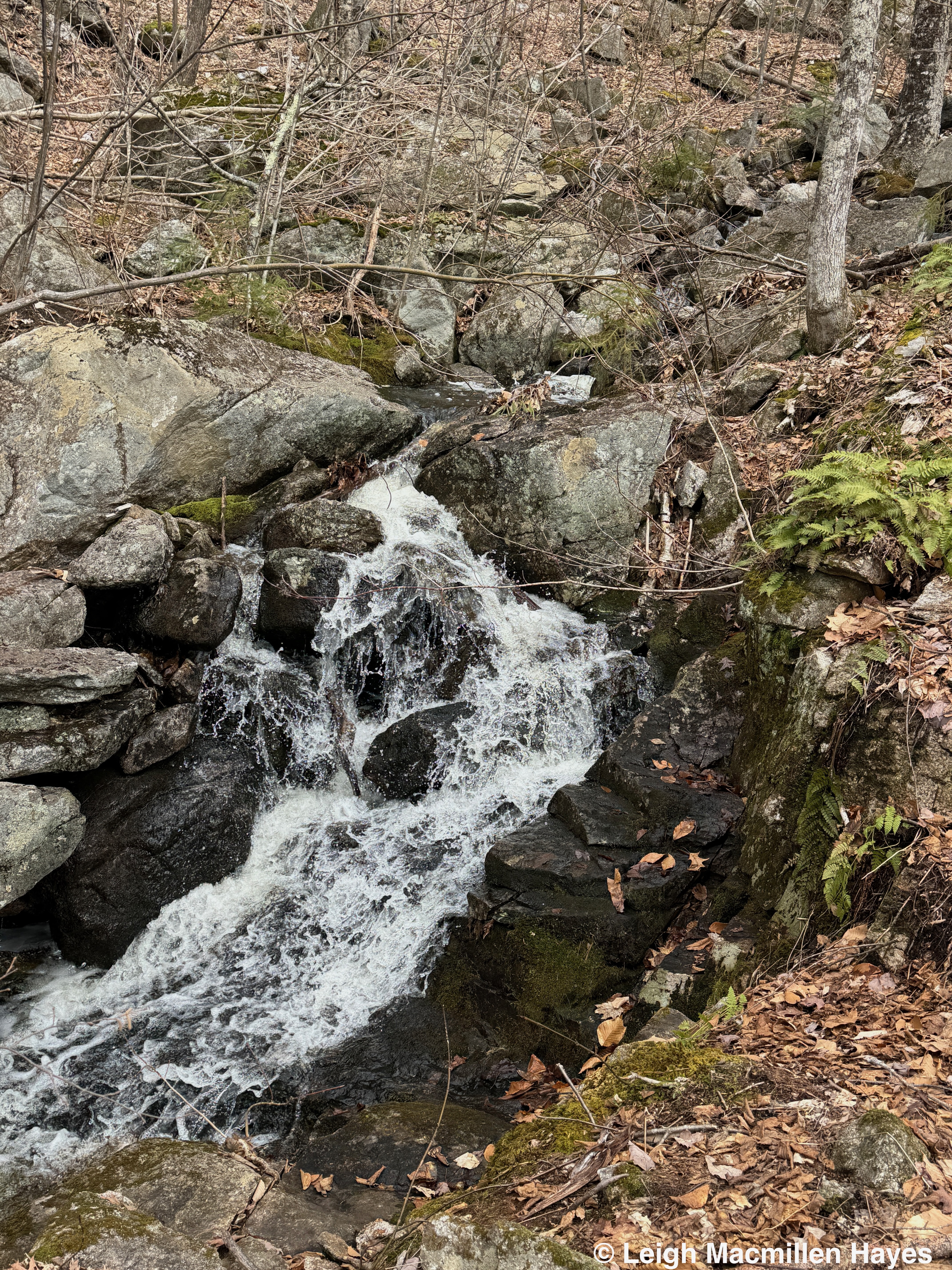
We followed as it flowed between a crevasse in the boulders–headed as you might note toward . . . My Guy.

And admired it repeatedly along its course.

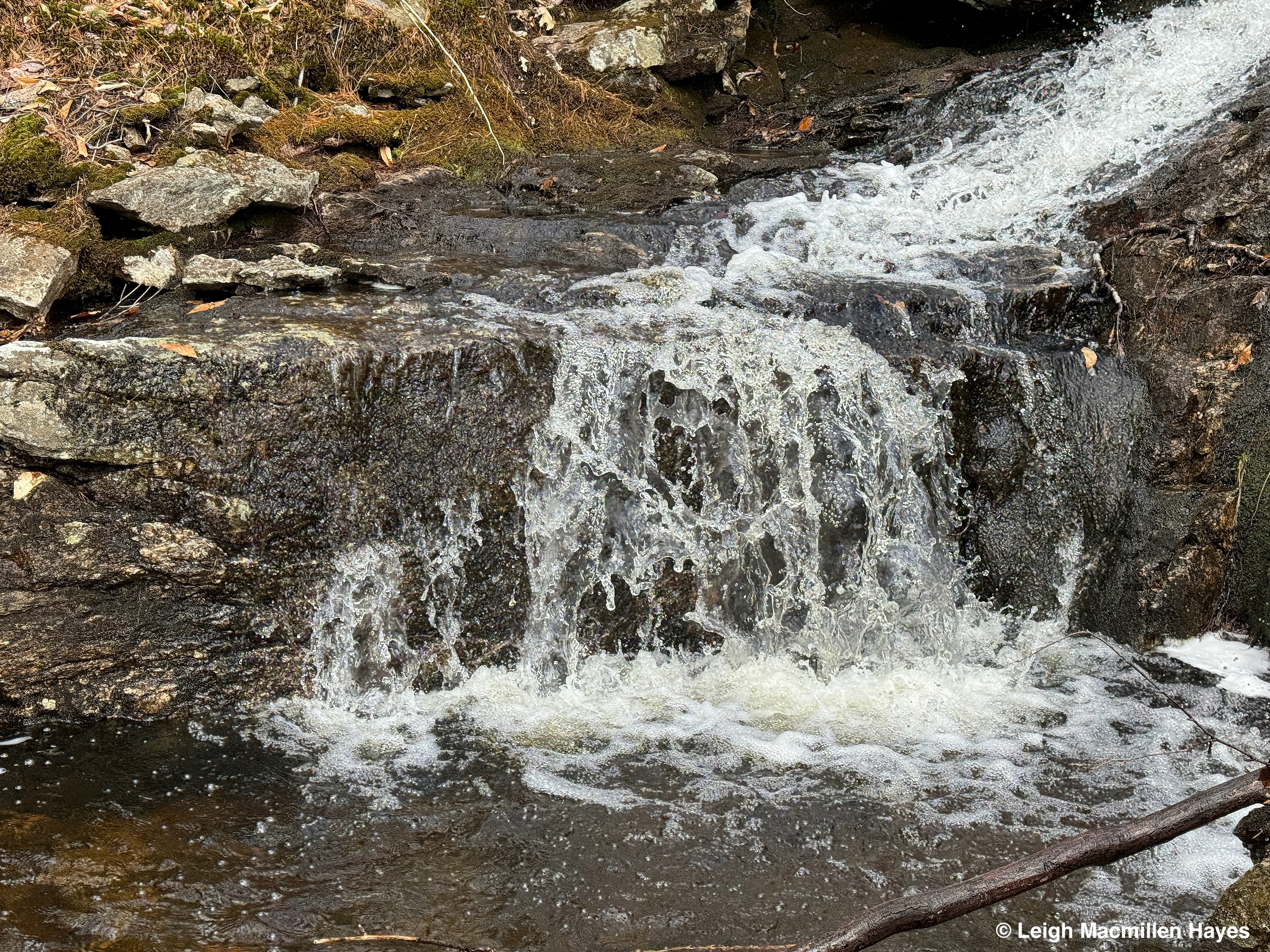
Occasionally it fanned out over boulders in its midst.

And plunged into pools.

It was a lot of water and we were thrilled to hike beside it and are still exclaiming over what a fun hike it was. Oh, there was mud. And ice. But those were secondary condtions. So far, we agreed, this was our favorite hike of the year.

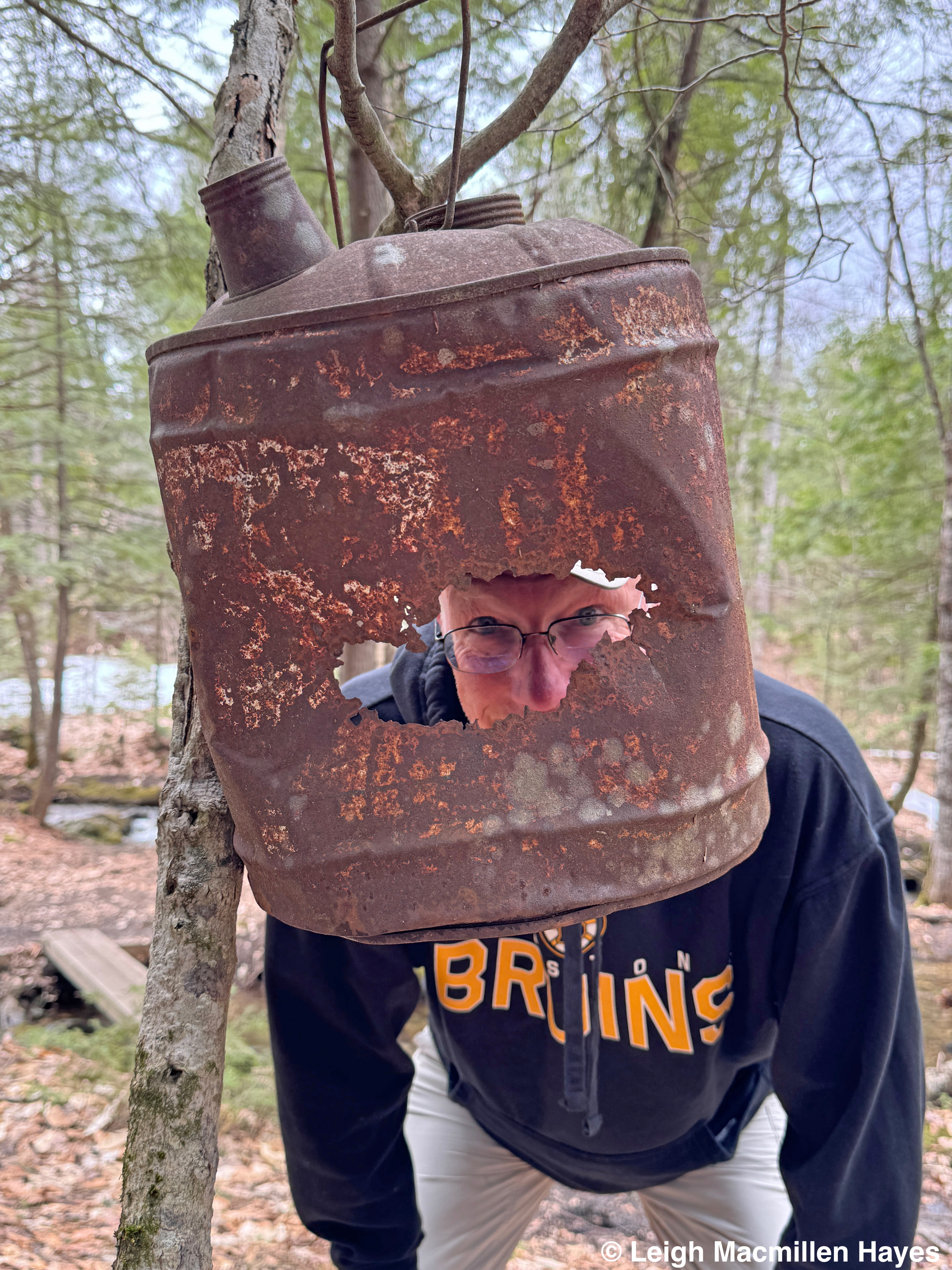
Where were we? Where bears of all types roam, including this crazy Bruin, who is usually a Maine Black Bear.

And no, we did not fall, though I know a few of you were wondering because you know my ability to do so at inopportune times. It was the waterfalls that we followed that made this Fall After Fall Mondate at Long Mountain so special.

Thanks as always to Mary McFadden and Larry Stifler. Through their generosity, many trails in the area are open to the public. And through the work of their employee, Bruce Barrett, those trails are well maintained.

Easter 2024

Easter came early this year and at our church a spring snowstorm that dumped up to two feet of snow meant that last weekend’s Palm Sunday service had to be held via ZOOM. But with a new rector on board, Reverend Annette went with the flow and then during the week, she was able to offer Maundy Thursday, Good Friday, and finally today’s Easter celebration all in person.

It was a week of reflection, as it should be. And a week of searching, like this Winter Stonefly that emerged from a freshwater brook and journeyed up and down and around the obstacles of the forest and snow fo seek a tree. Particularly, the bark of a mature tree. Species mattered not.

The aquatic immature stage of a Winter Stonefly, aka naiad, crawls from the rocky bottom home of the brook where it has spent the last year or more maturing (going through as many as thirty molts)and shredding falling leaves, climbs up through crevices in the snow that covers the brook, finds a plant or some other spot to emerge as an adult, and leaves behind its shed skin, much like a dragonfly or damselfly.

Stoneflies have hammer-like structures on their abdomen that make noise when thumped against a surface, like a tree trunk or a twig or even the ground. This is a mating call. The males drum, and the females drum back, and voila, they find each other and canoodle.

I heard not the drumming for it is not for us to hear, but I have faith that this insect with its veined wings that serve no flying function was successful.

The venation of the Winter Stonefly’s wings was not lost on me as I saw stained glass in their presentation. And was struck by the same when I peered into a quick flowing stream that transported melting snow and noticed the amazing lines and shapes as the water twirled around a rock.

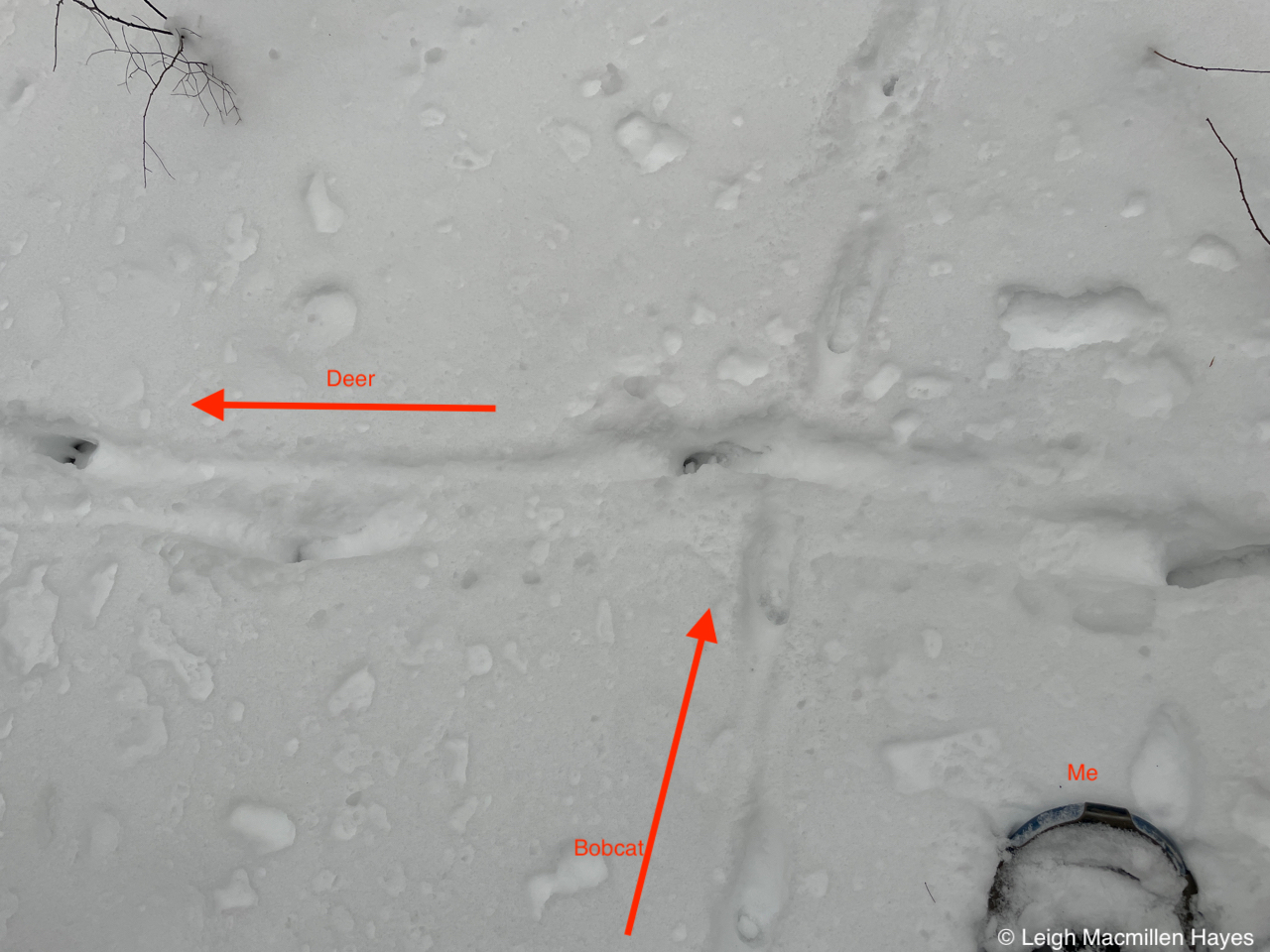
And on both sides of the stream I spotted the prints of one who passes in the night, working behind the scenes and leaves only a trace of its presence. But still, because I recognized these prints, I believed the Bobcat was nearby, perhaps even so close that it kept watch over me without my knowledge. As it should be.

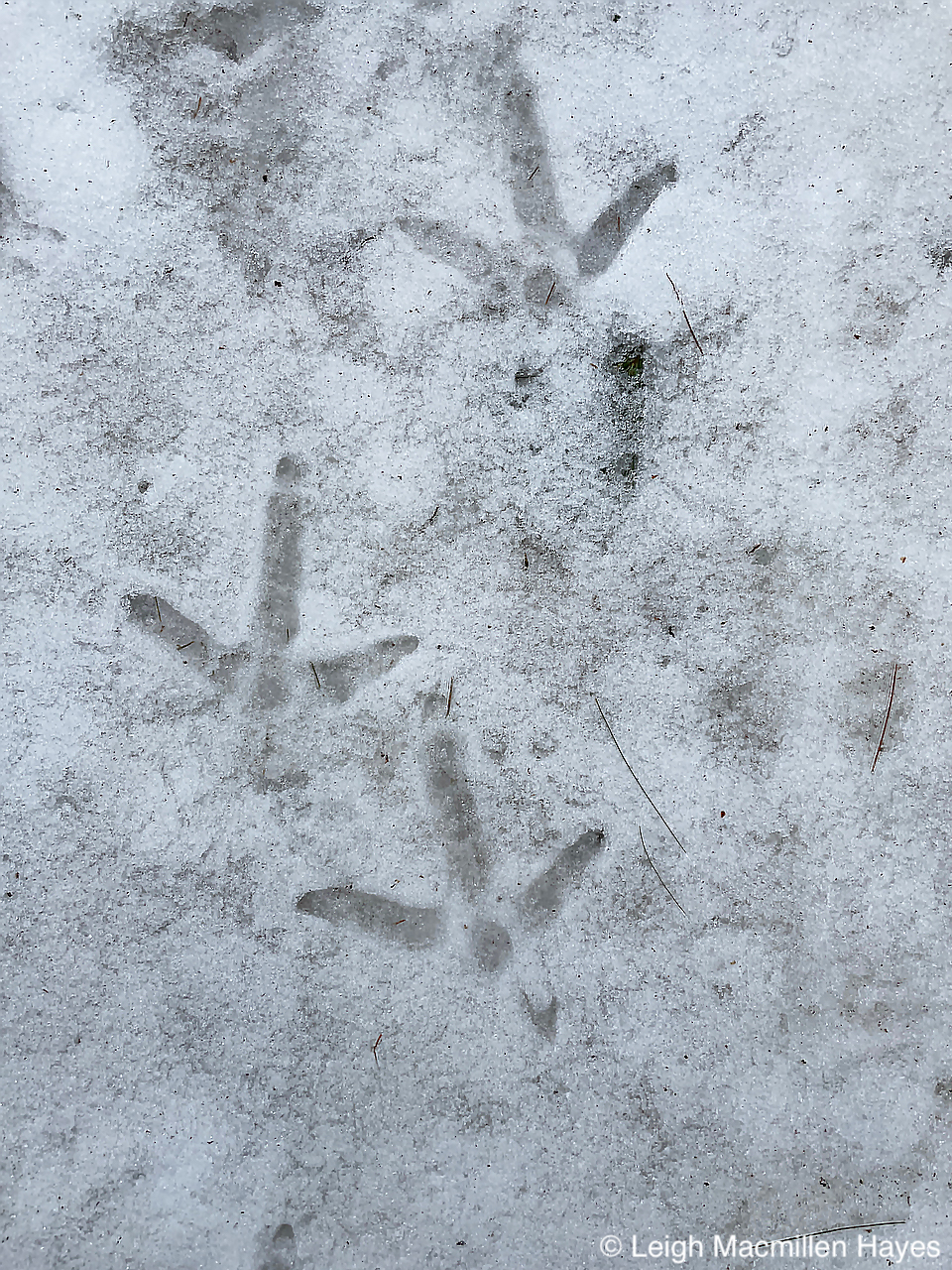
Turkey prints were much more prevalent, but today it was the shape of such that garnered my attention and I could imagine the cross and a being upon it.

The cross theme was equally created in the form of telephone poles leading to the most powerful mountain in New England. Who knew? Light and communication sizzled across the wires for all of us who choose to partake.

An equally power-filled force, some of which is also harnessed for electricity, this swollen river flows to the ocean as waves break over boulders. I see not its full path from source to sea, but trust in its immanence.

And on this day, with the snow melting under bright sun and 50˚ temps, the White Crocus with its lilac-colored runway lines, suddenly bloomed–and the Alleluias are heard ringing across the landscape.

A Purple Crocus added its soprano voice to the Alleluia chorus.

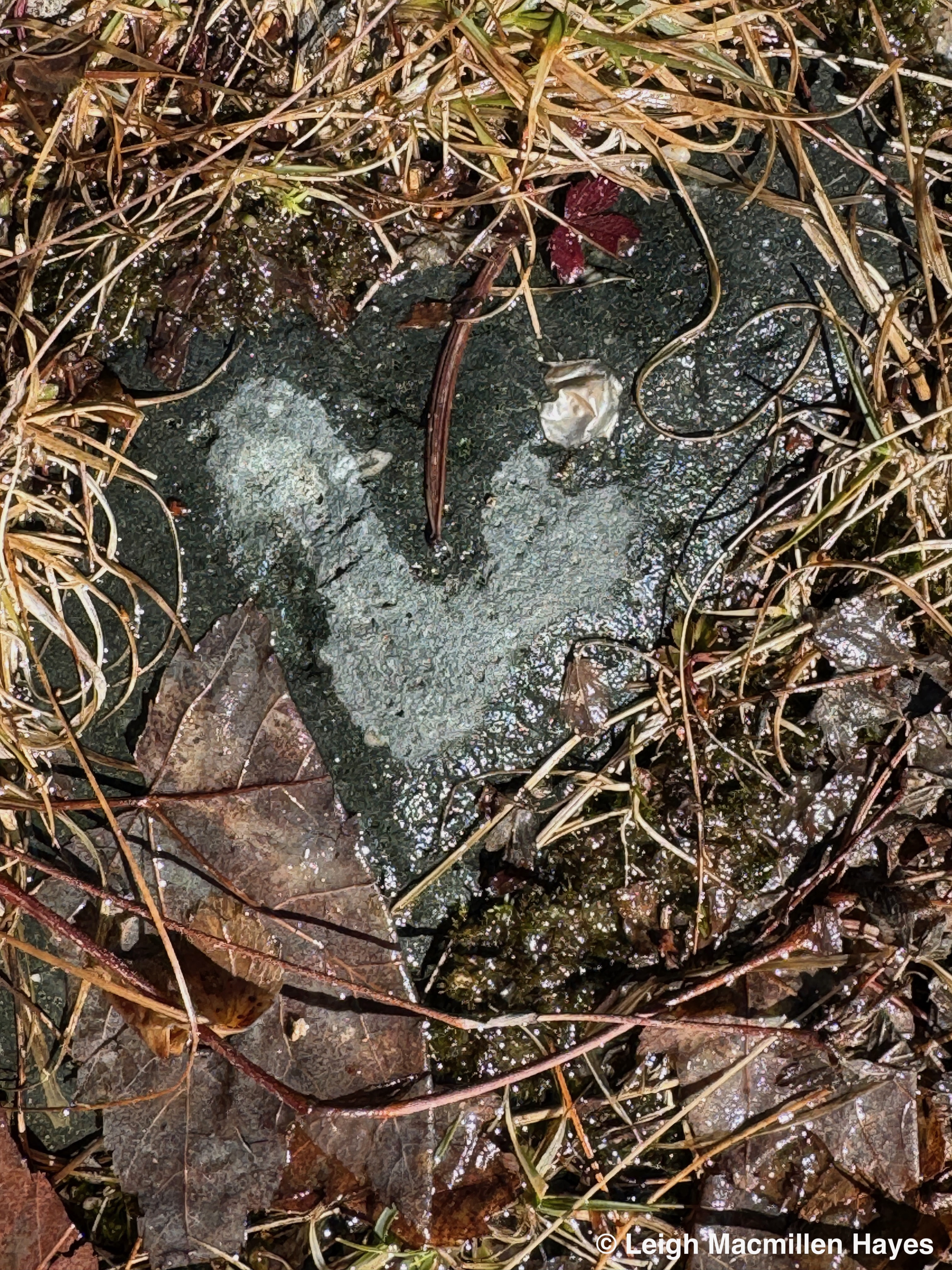
When I spotted this heart upon one of the paths I followed this weekend, I was reminded that hope and awe and wonder and love are captured within my heart and I gave great thanks.

Christ is Risen. A new day has dawned. Alleluia. Happy Easter 2024.

Ah March!

The hype for a predicted snowstorm today kept providing various amounts, rising one hour, falling the next, over the last couple of days. And so I made my own prediction: 1 inch – 12 inches possible.

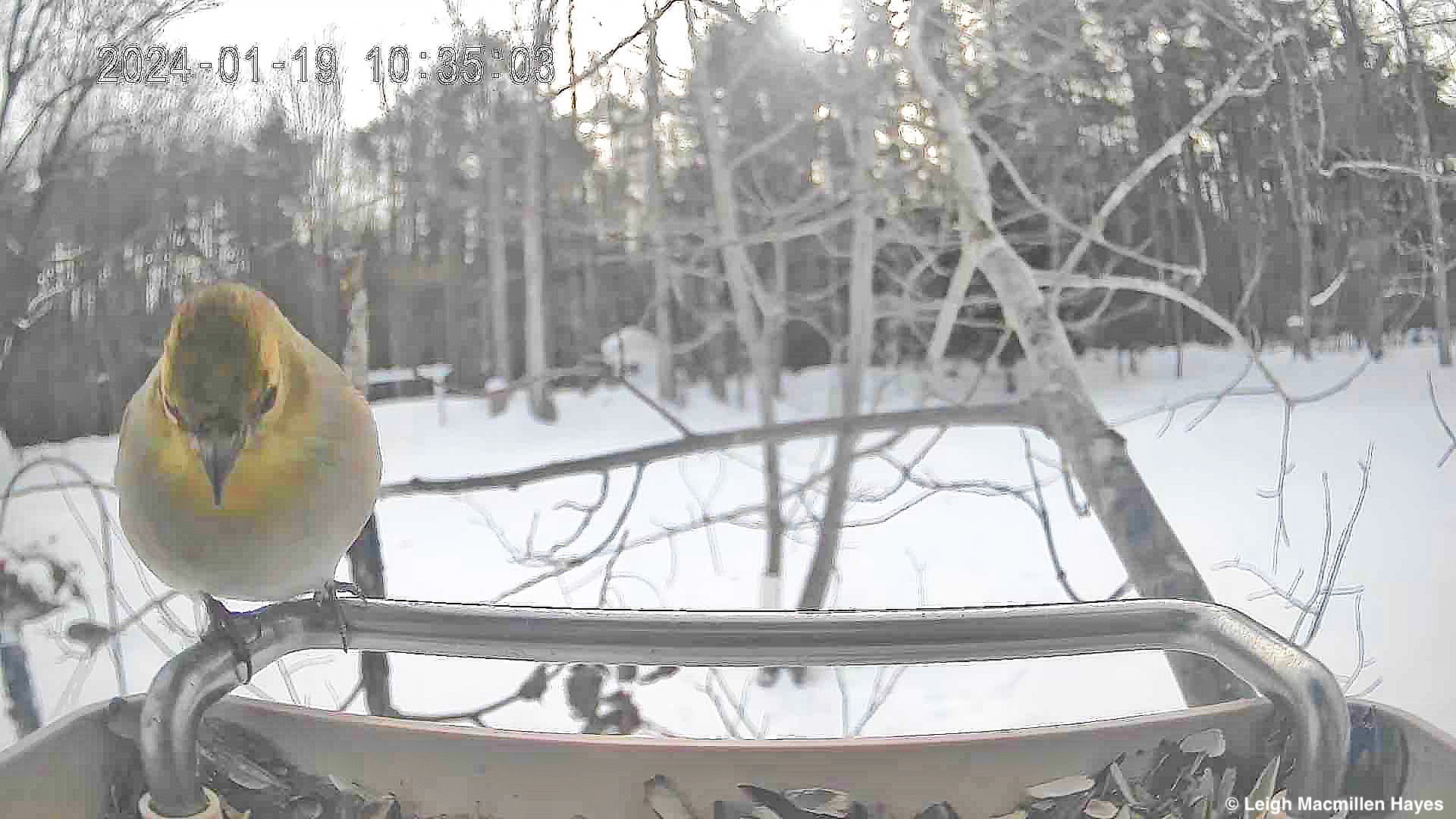
What I didn’t predict was the number or variety of species that would choose our yard to dine. The snow started to fall during the wee hours of the morning and the birds began visiting before 7am, including this Goldfinch and many of its kin.

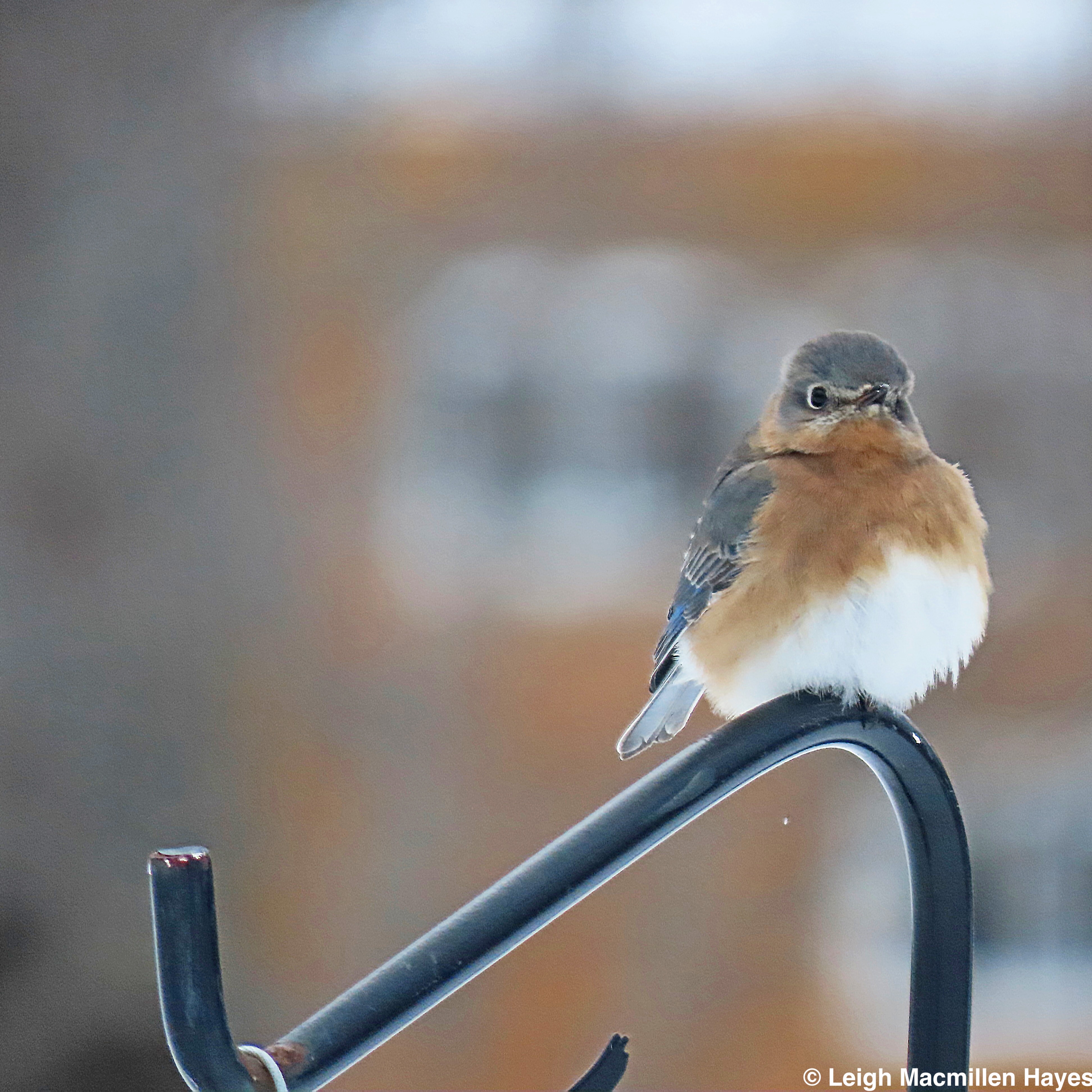
I was probably most thrilled to have a male and female Bluebird return. It’s been a couple of months since my neighbor and I have spotted them. Here’s hoping they soon use the nest boxes she has made available.

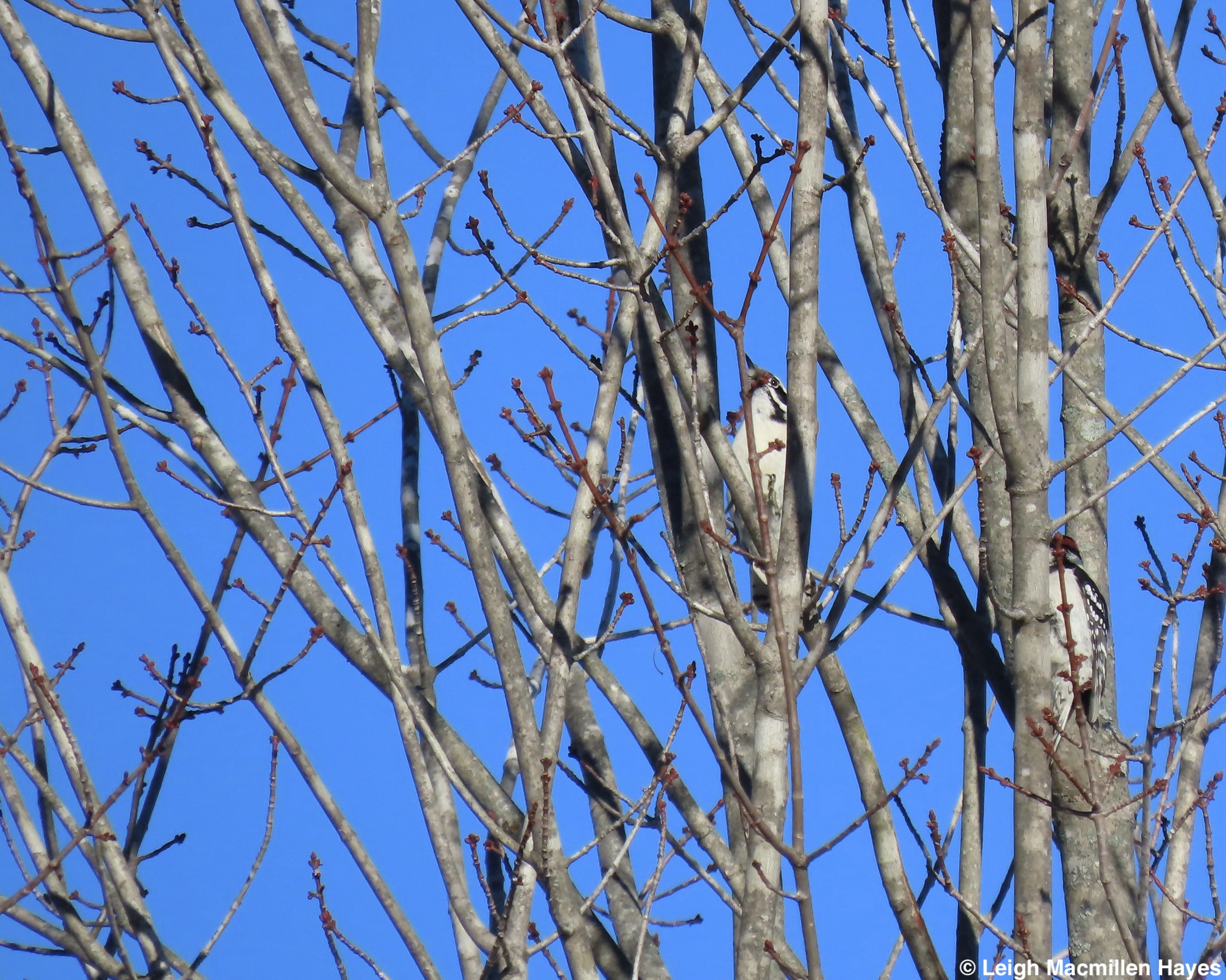
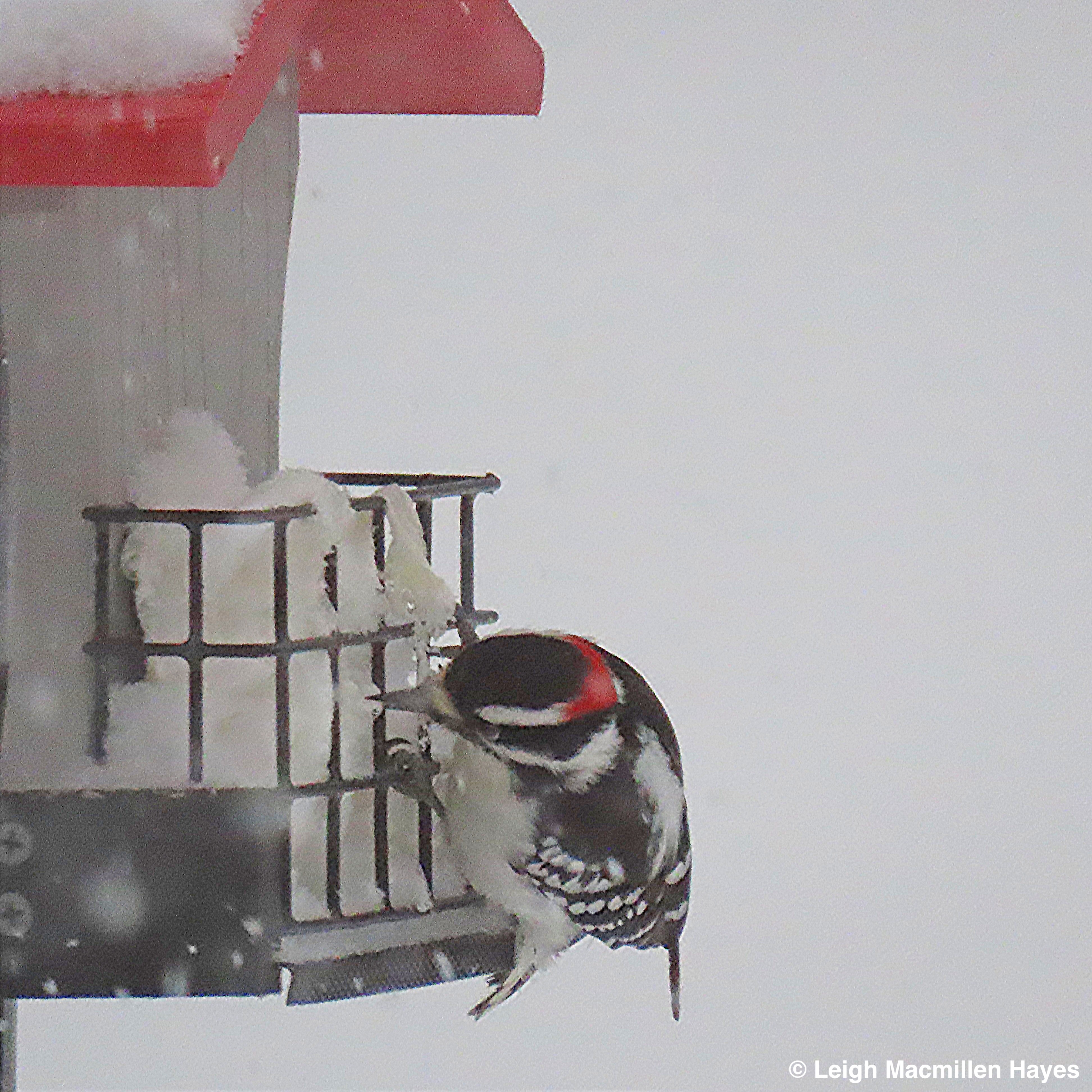
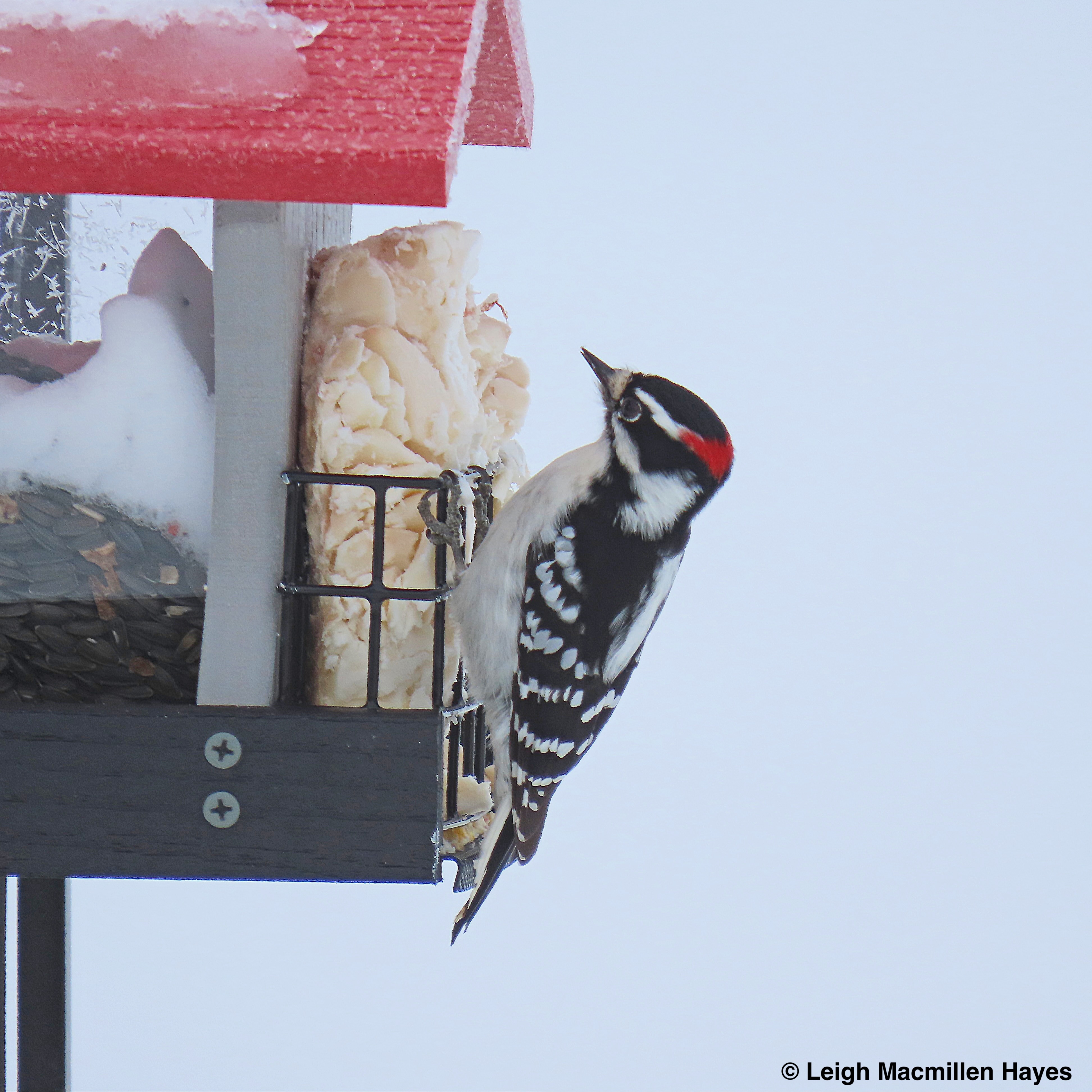
A male Downy Woodpecker found the suet, frozen as it was.

His female counterpart did a curious thing–she walked across the bottom of the feeder before righting herself to dine where he had been a few minutes prior. I’ve yet to figure out why she chose that approach.

There were territorial wars on the ground, at the feeders, and in the air.

Nothing major came of it, yet . . . but oh what drama.

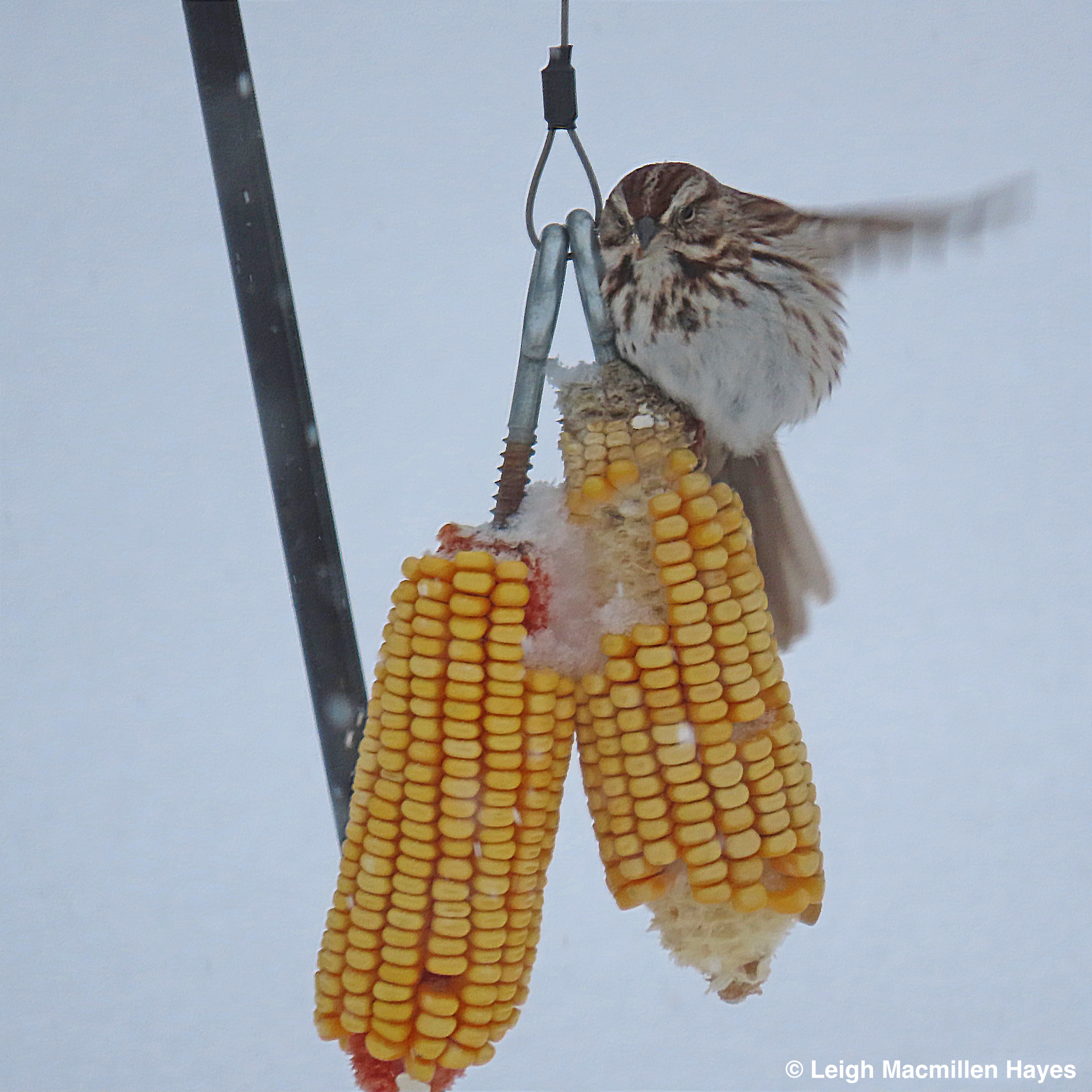
And an exchange of roles as a Song Sparrow pretended to be a squirrel and dine on the corn . . .

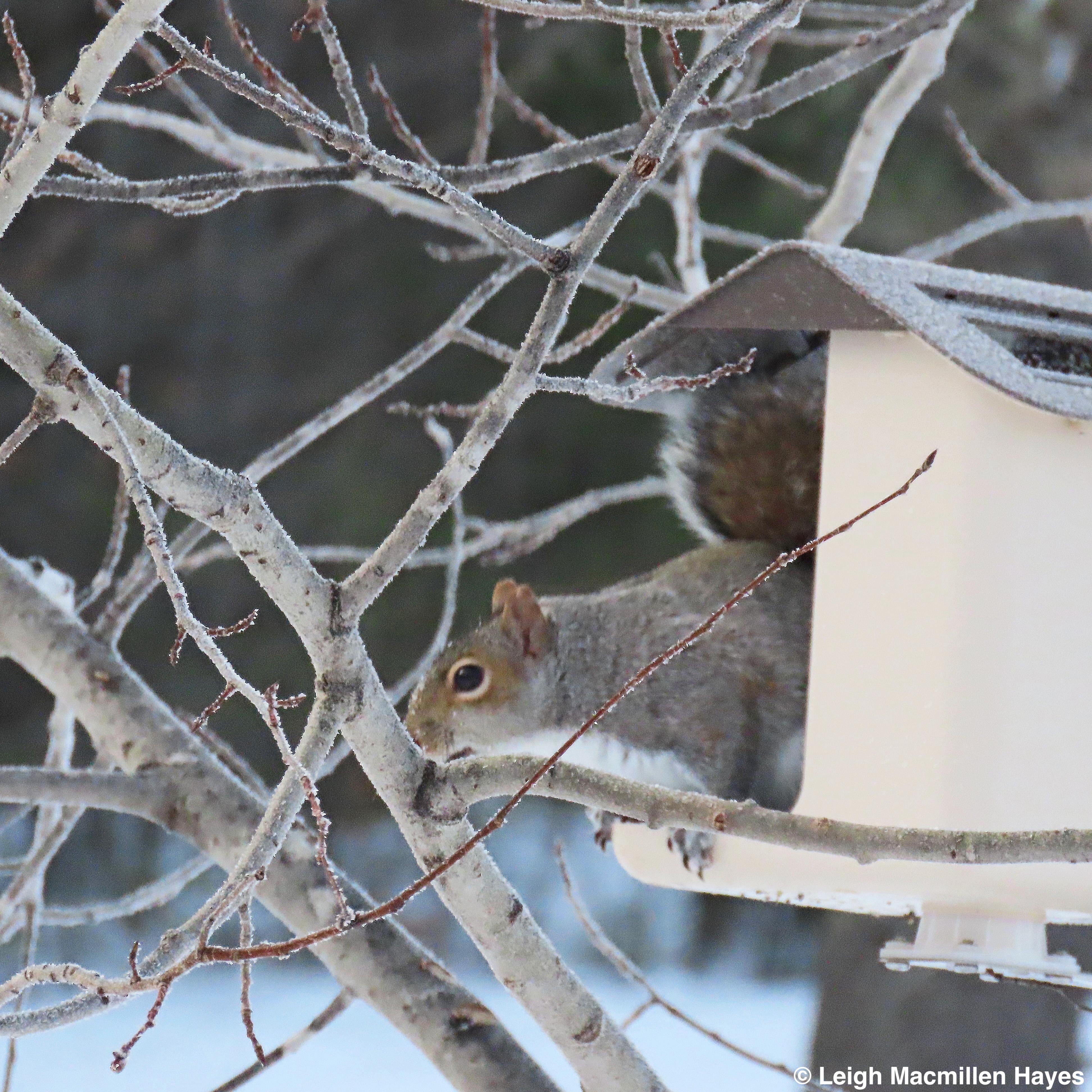
while a Gray Squirrel pretended to be a bird and dine at the feeder.

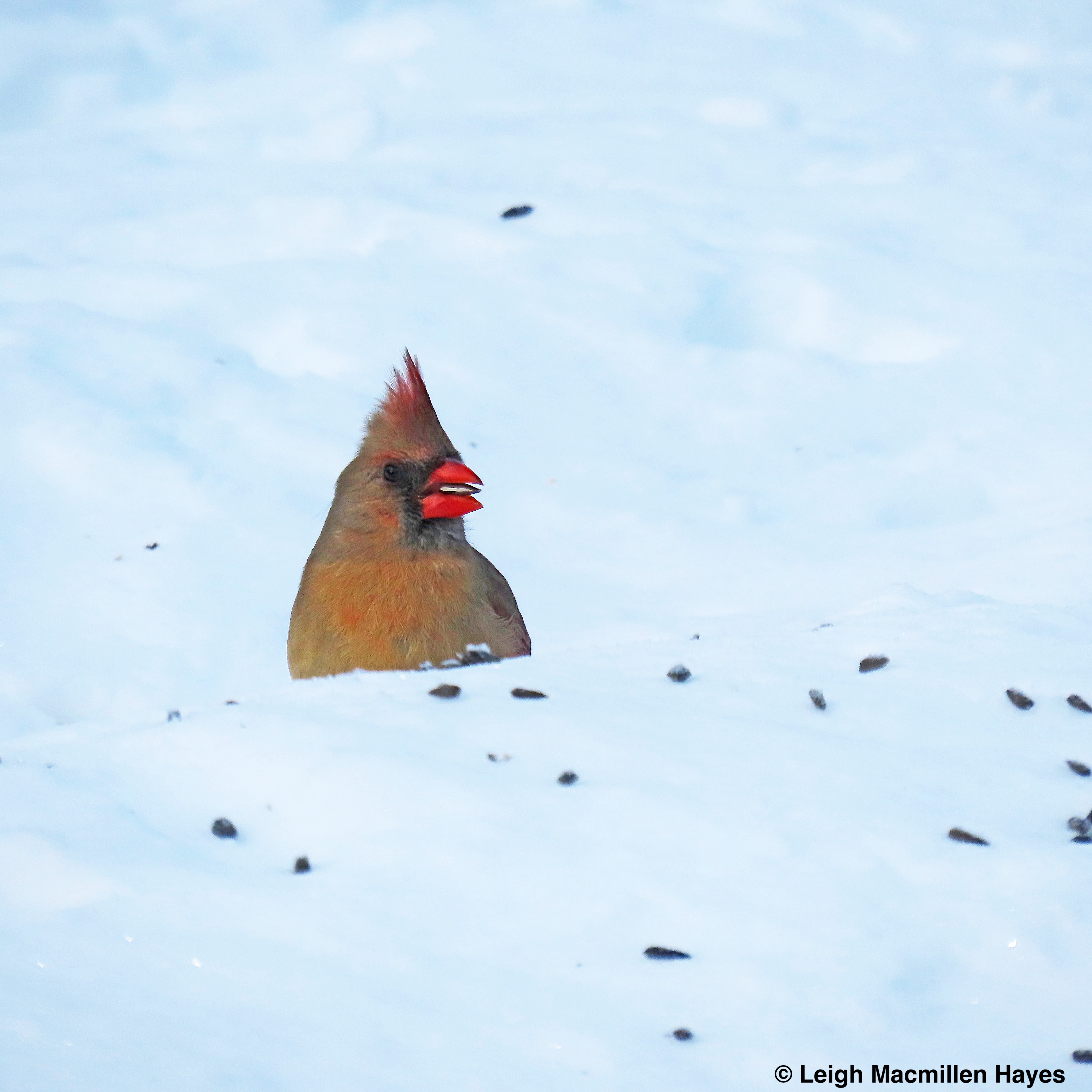
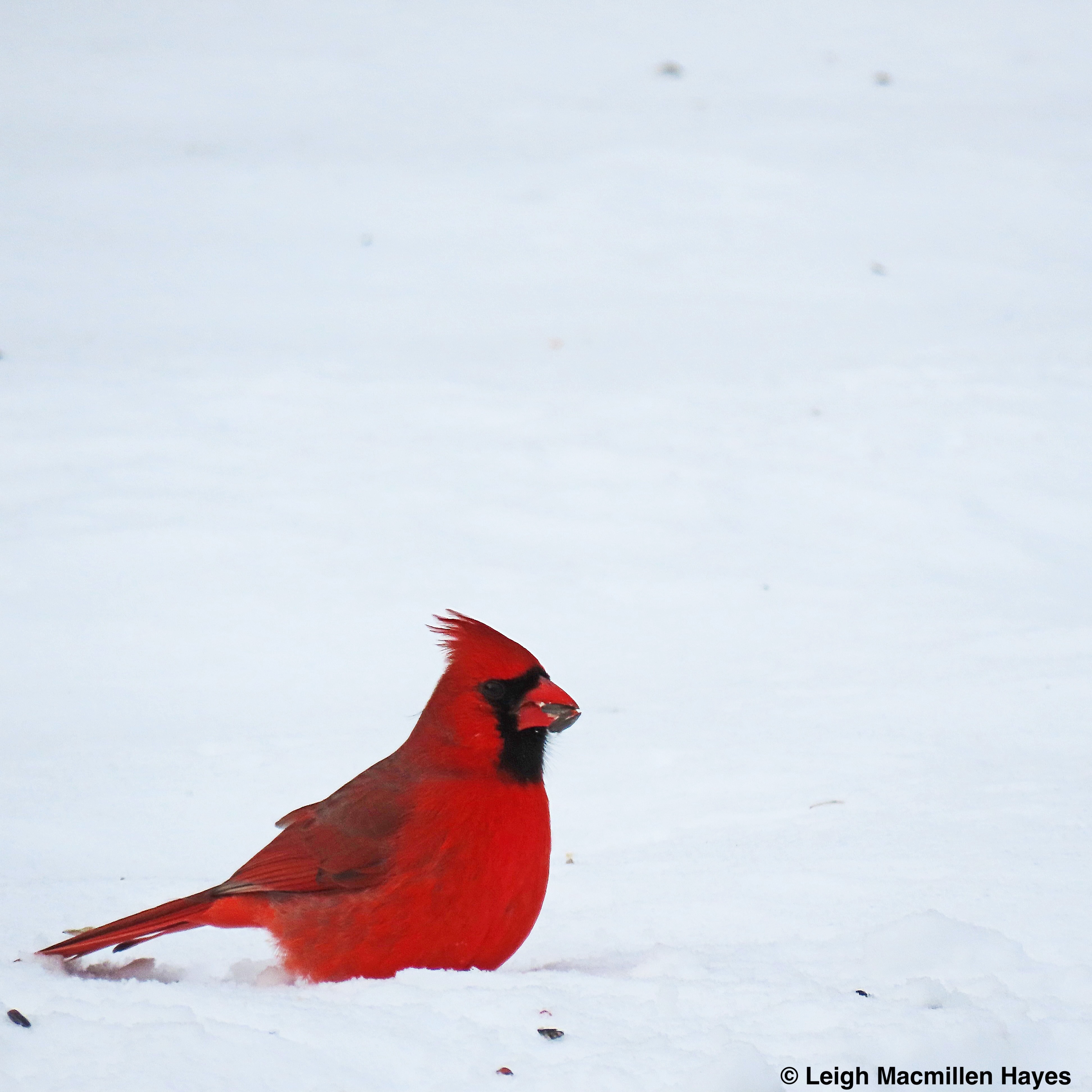
Both the female and male Cardinals were frequent visitors, and she looked especially dashing today.

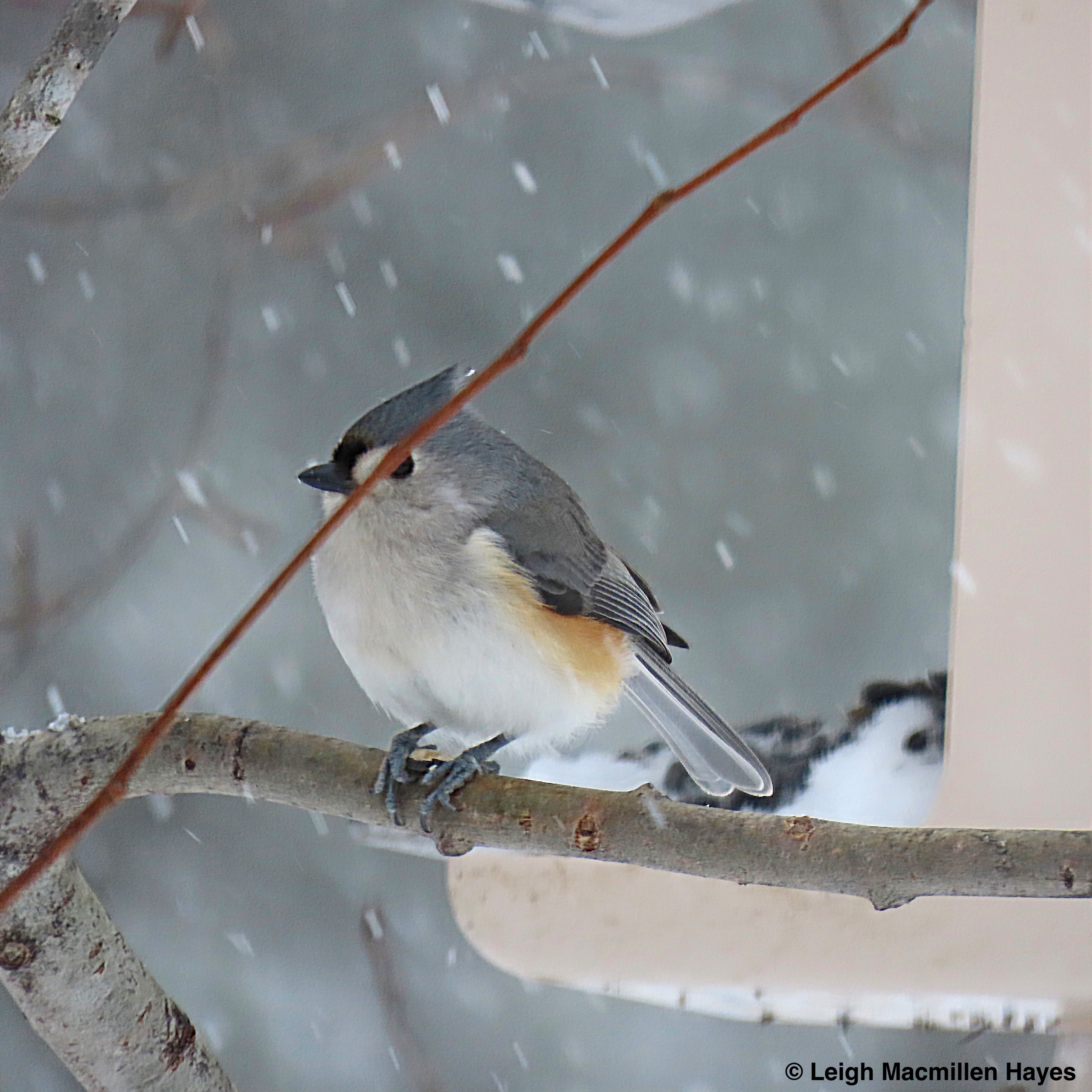
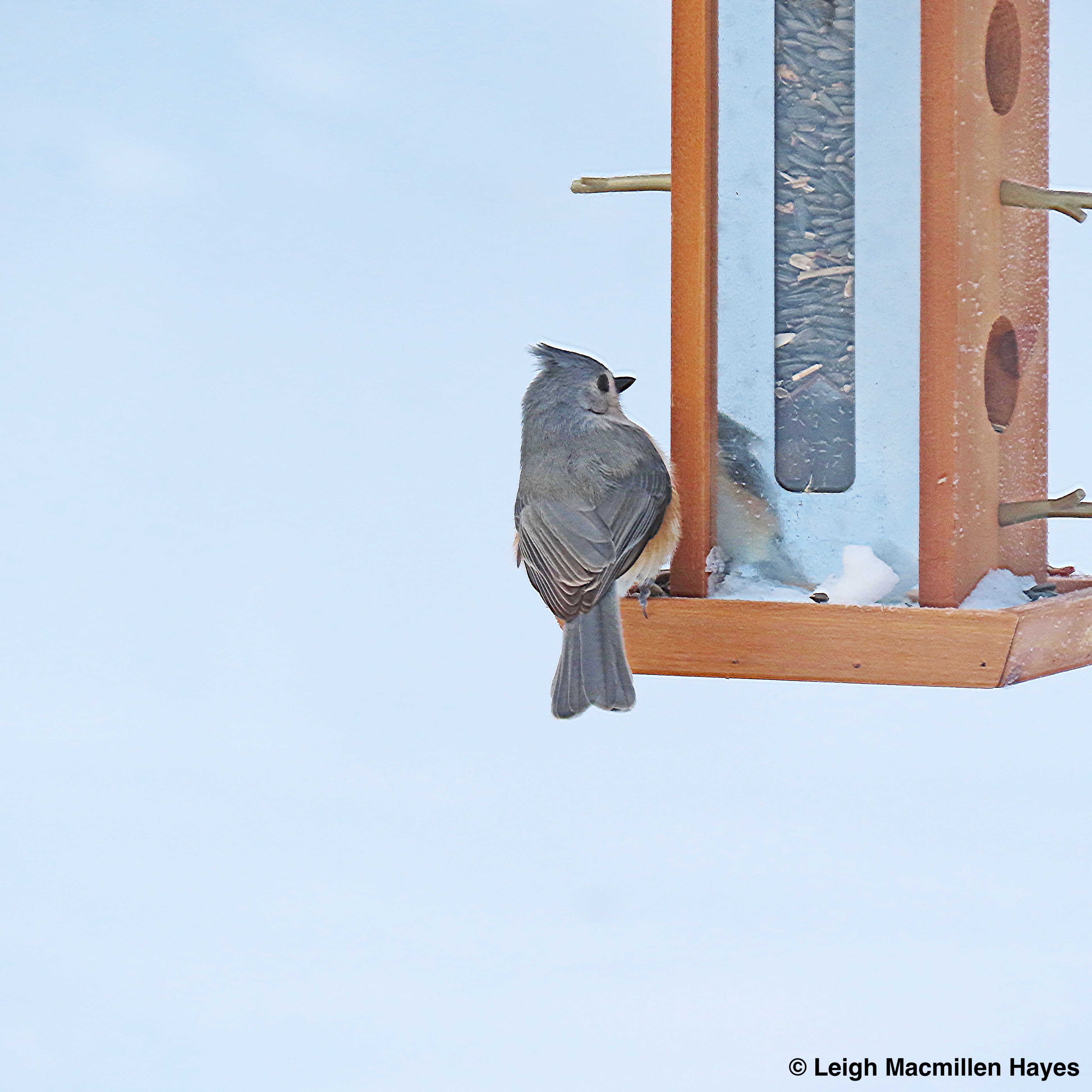
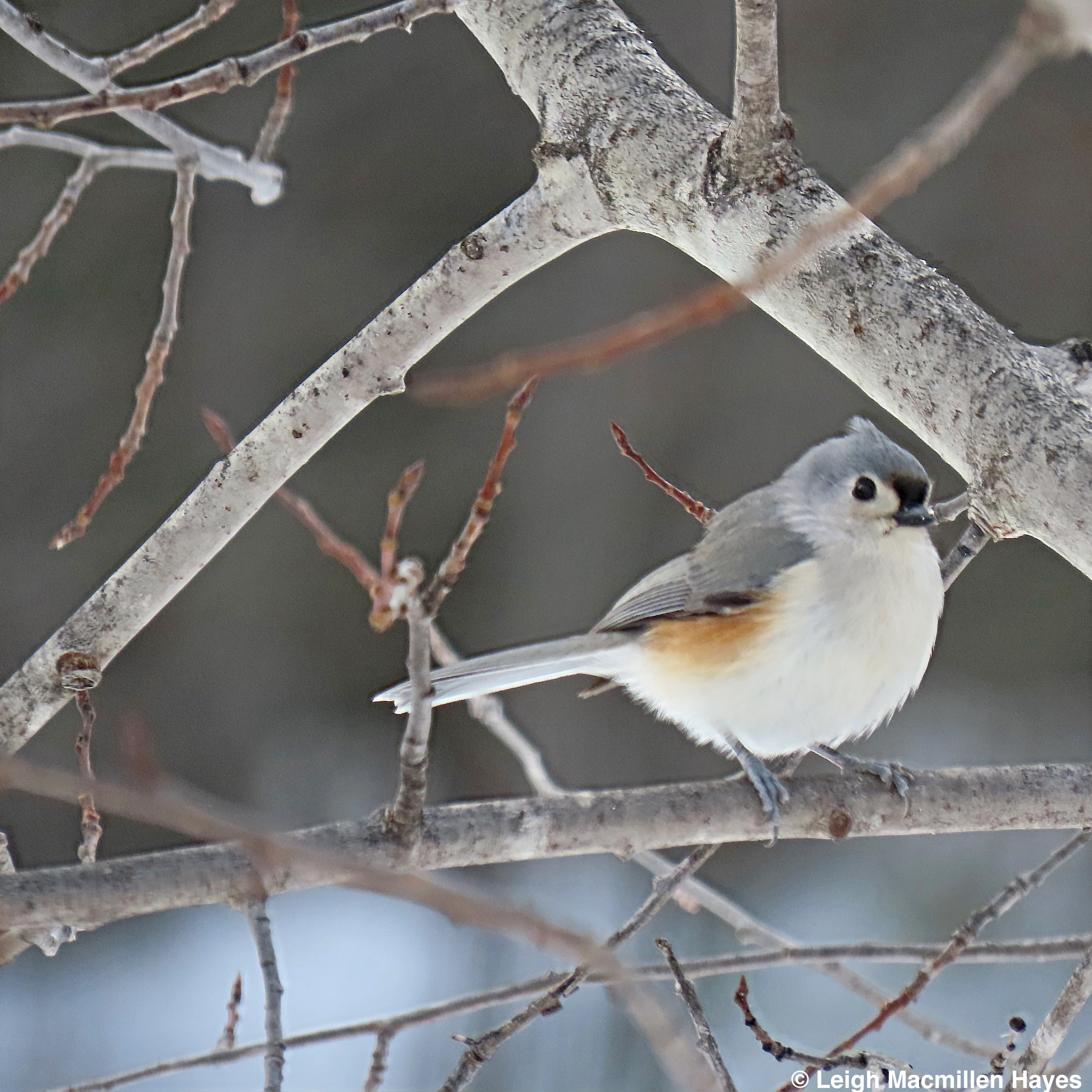
As did a Tufted Titmouse and the yard was filled with songs of “Peter, Peter, Peter,” as has been the case lately.

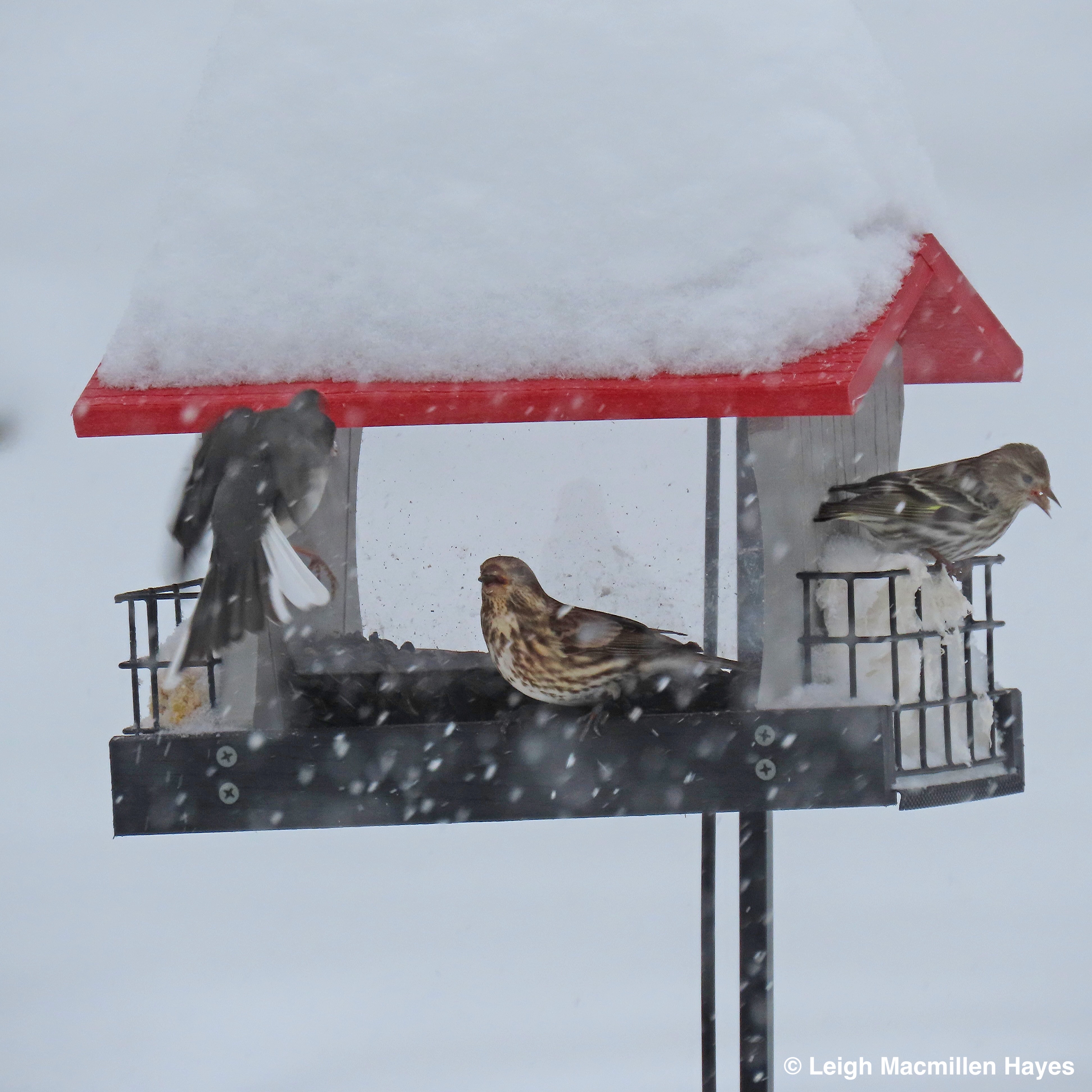
Toward the end of the day Purple Finches showed up and spent lots of time hanging out between one of the feeders and a Quaking Aspen tree.

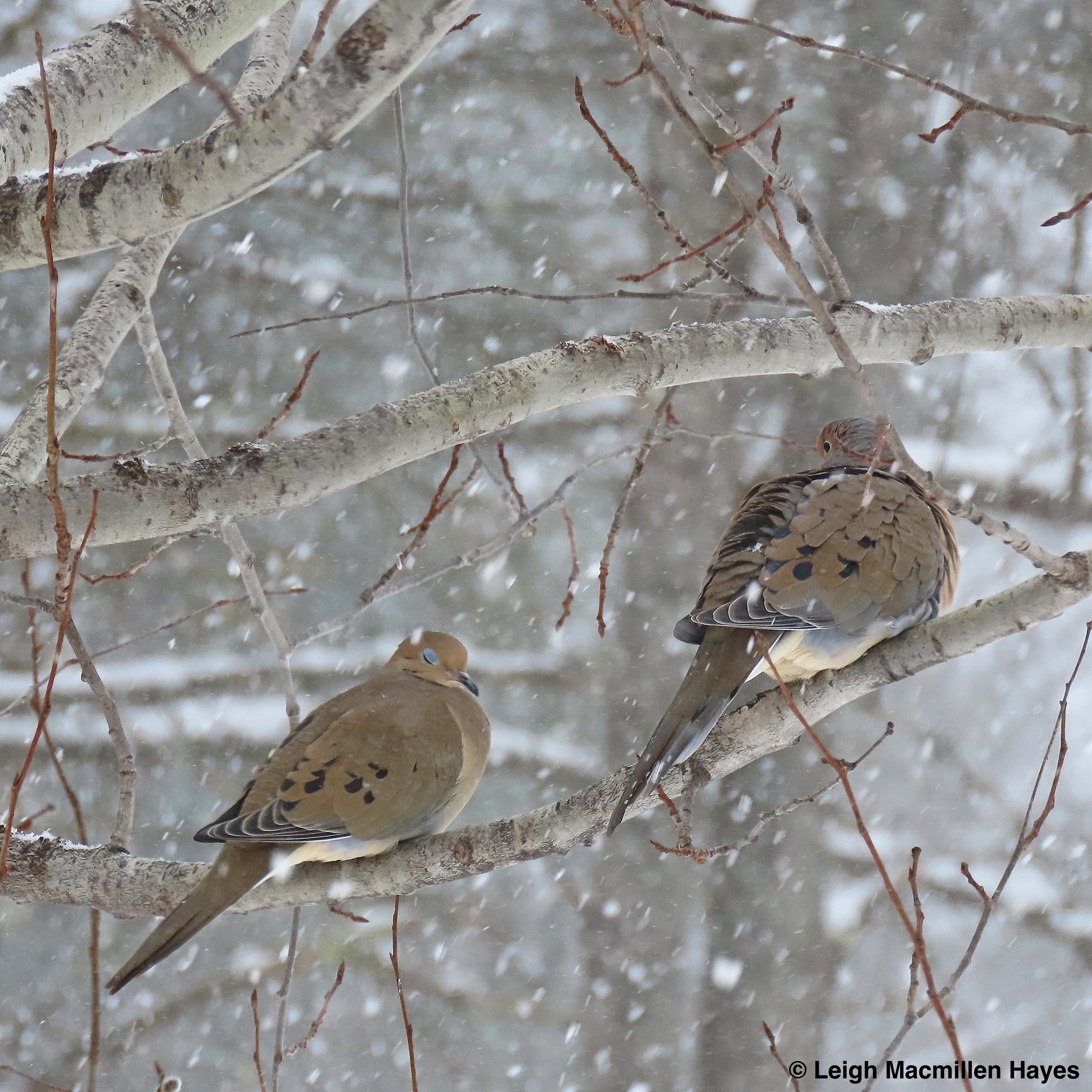
And a couple of times the Mourning Doves paused on a branch. She winked. At least I think it’s a she and a he because the other day one chased the other and they are always together.

Then they both looked at me as if I’d caught them in a secret moment. Did I?

I love that snow and rain bring in more birds than usual and today was no different.

What was different was that we finally got a real snowstorm on this 23rd day of March. An hour ago the total was over a foot, exceeding my prediction, and it’s still snowing.

Ah March in Maine.

Update: March 24, 7:30am. Twenty-one inches of fluffy snow! Ah March!

Winter Inventory

We live on the edge. The edge of a small town in western Maine. The edge of a neighbor’s field. The edge of a vast forest.

Our property only encompasses six acres, but it’s six acres that I love to explore and it’s been my outdoor classroom for a long time.

And so today, I invite you along to take a look; if you are a regular, you may have already met the friends I’m about to introduce, but their actions keep me on my toes, much like the deer who crisscross our yard on a regular basis.

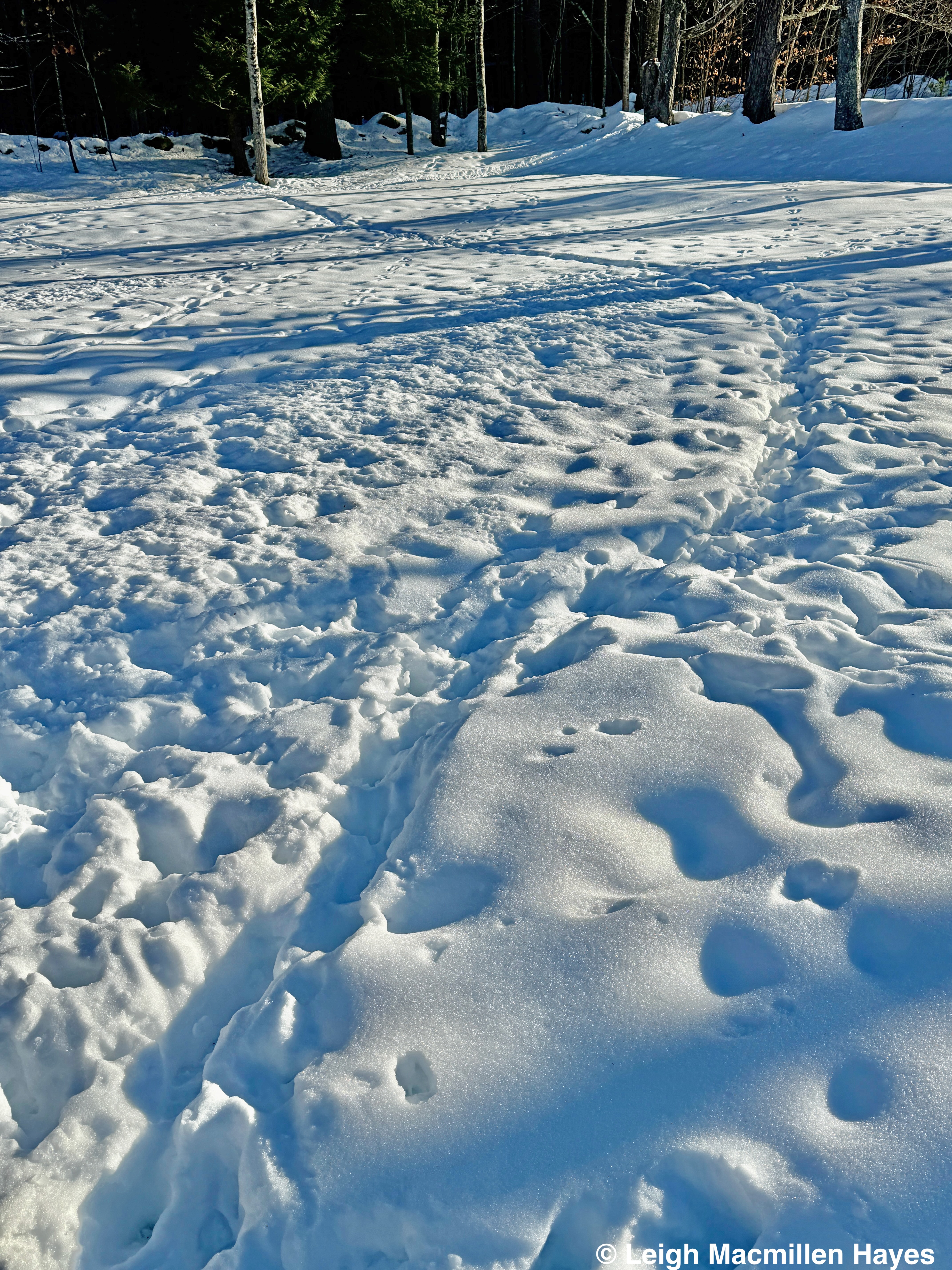
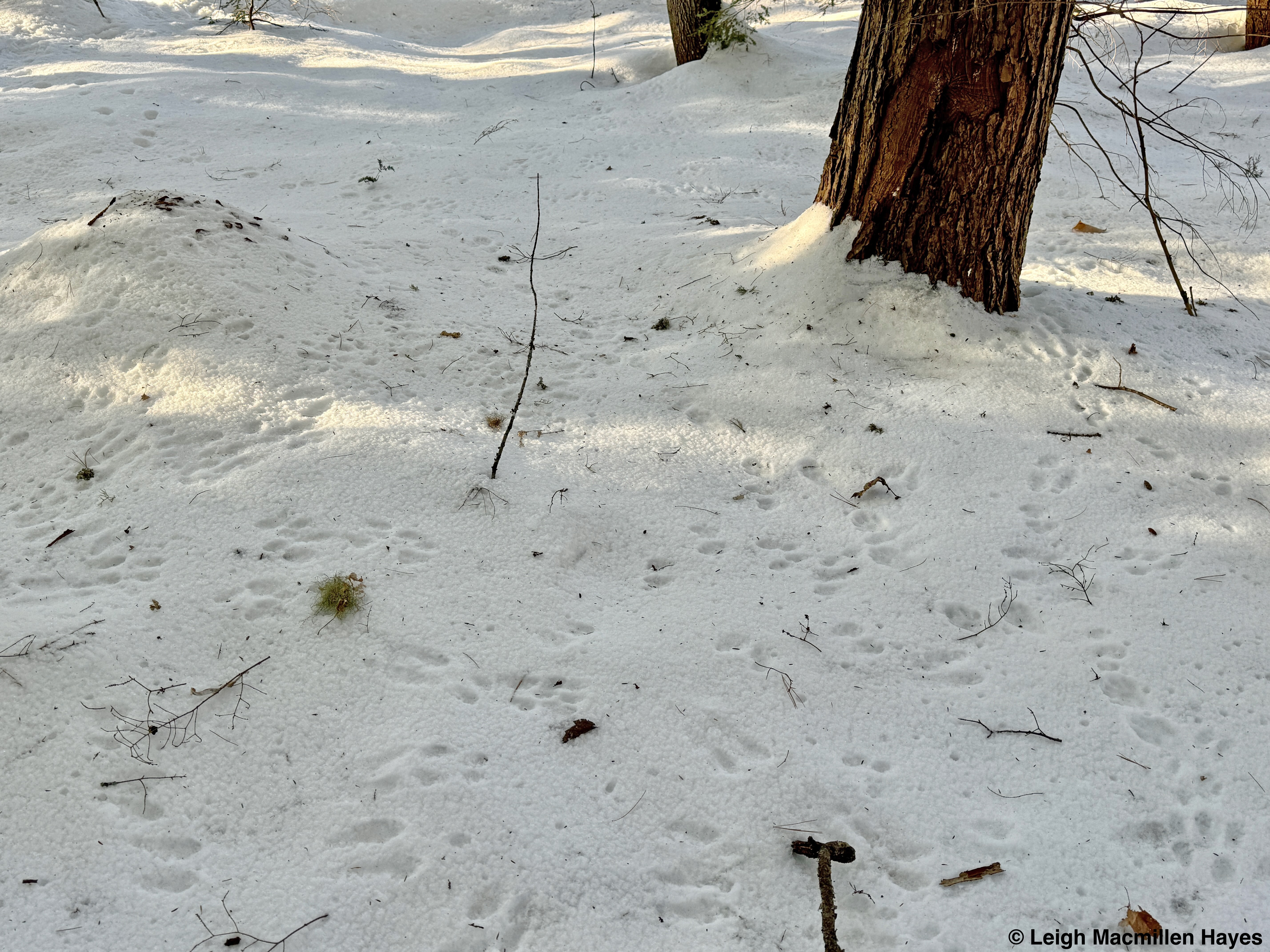
Though the acorn crop was abundant in our area, the deer make several trips day and night to consume sunflower seeds and corn and they’ve worn a path (deer run) making it easier to travel. They don’t always follow it, as you can see, but do so enough that it’s much like my snowshoe trails.

The yard is full of tracks, for besides the deer, there are gray and red squirrels who also frequent the feeders, an occasional red fox that I’ve yet to see this winter, and our neighbors’ dogs and cats. Everyone has a place at this table.

Of course, the deer run does lead to another species they love to munch on, the needles of a Balsam Fir. They frequently pause here before climbing over the stone wall into our wood lot.

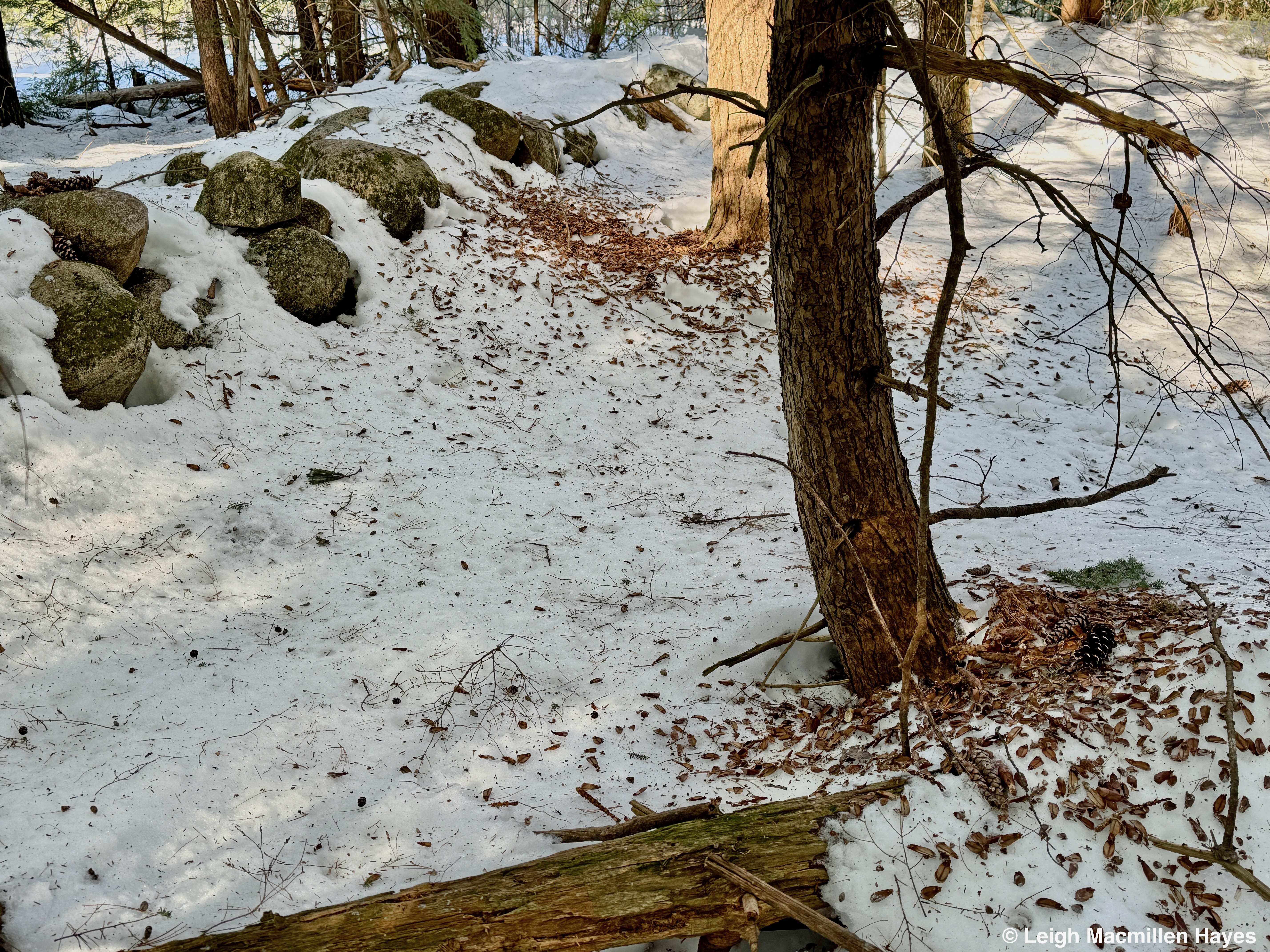
And so I paused too. And discovered yet another cache and midden created by one of our local Red Squirrels. I’m in awe because until yesterday, I wasn’t aware of this one and I can see it from the desk where I’m writing right now. And to top it off, yesterday was the first day since I filled the feeders at the beginning of December that I saw a Red Squirrel chasing the Gray Squirrels away.

I, too, climbed over the wall and look who I met. Always on alert and often either skittering along the ground or a stone wall, or chastising me from its branch of choice, Red doesn’t realize that I’m a fan.

Next, I ventured over to the old cow path, bordered as it is by two walls, and checked on the cache and midden situation that’s become so familiar to me.

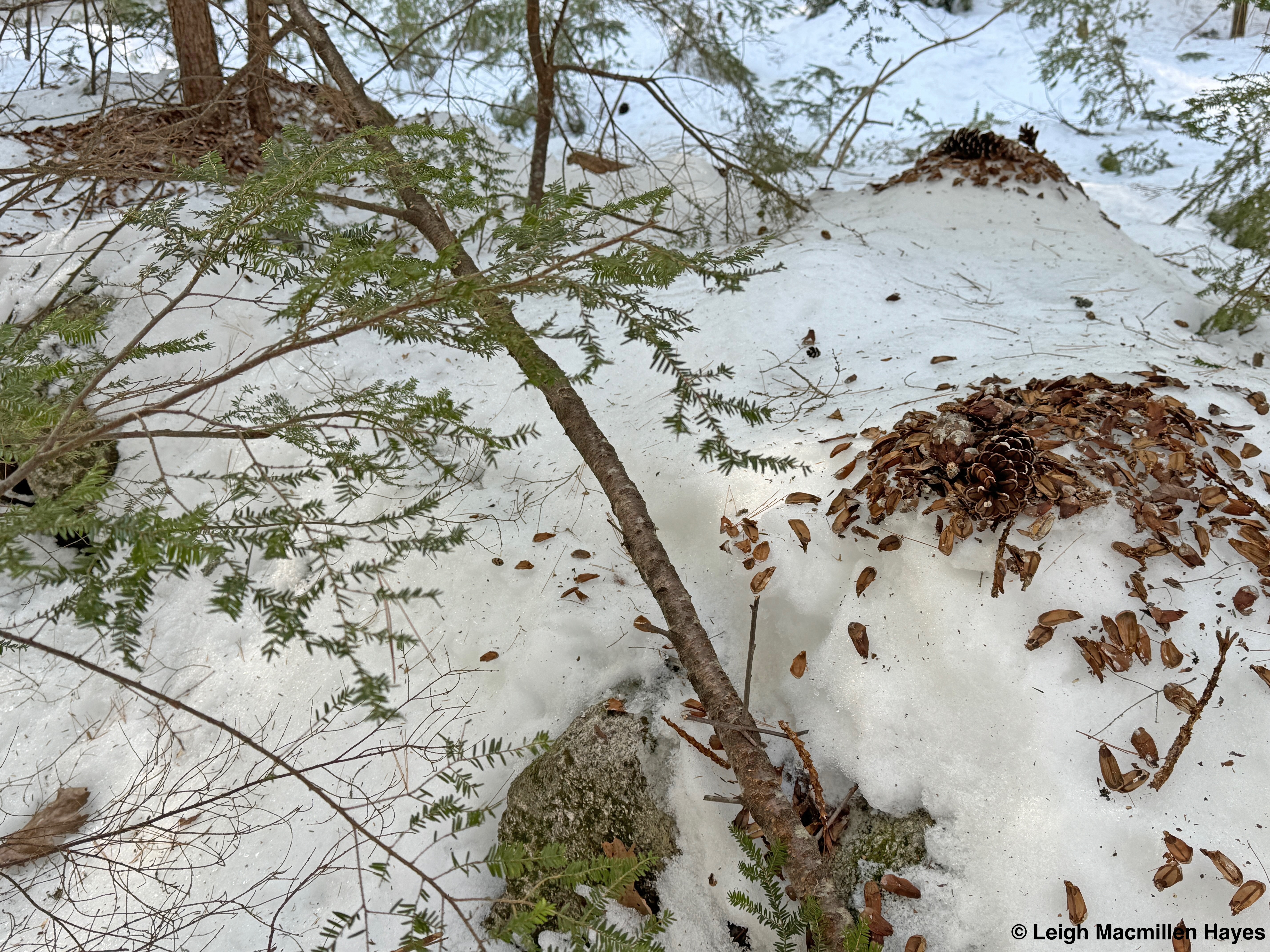
The cache or storage pantry of pine cones is located under the mound of snow the black arrow points toward. At last measurement as recordered in The Forever Student, Naturally, the pile was a foot high. As you can see if you look closely at the tops of the stones behind the snow-covered pile, you’ll spy several middens. So my question is this and I’ll have to wait until the snow melts to answer it: Are all of the cones the squirrel is consuming (well, seeds actually, for the midden is the pile of discarded scales that protect the seeds, plus the cob or core left at the end) coming from under the rocks, where I’m sure there was more storage space, or the bottom of the pile, because Red Squirrels do tunnel? I can’t wait to realize the answer in another month or so.

The pine tree beside the cache also provides a grand dining spot.

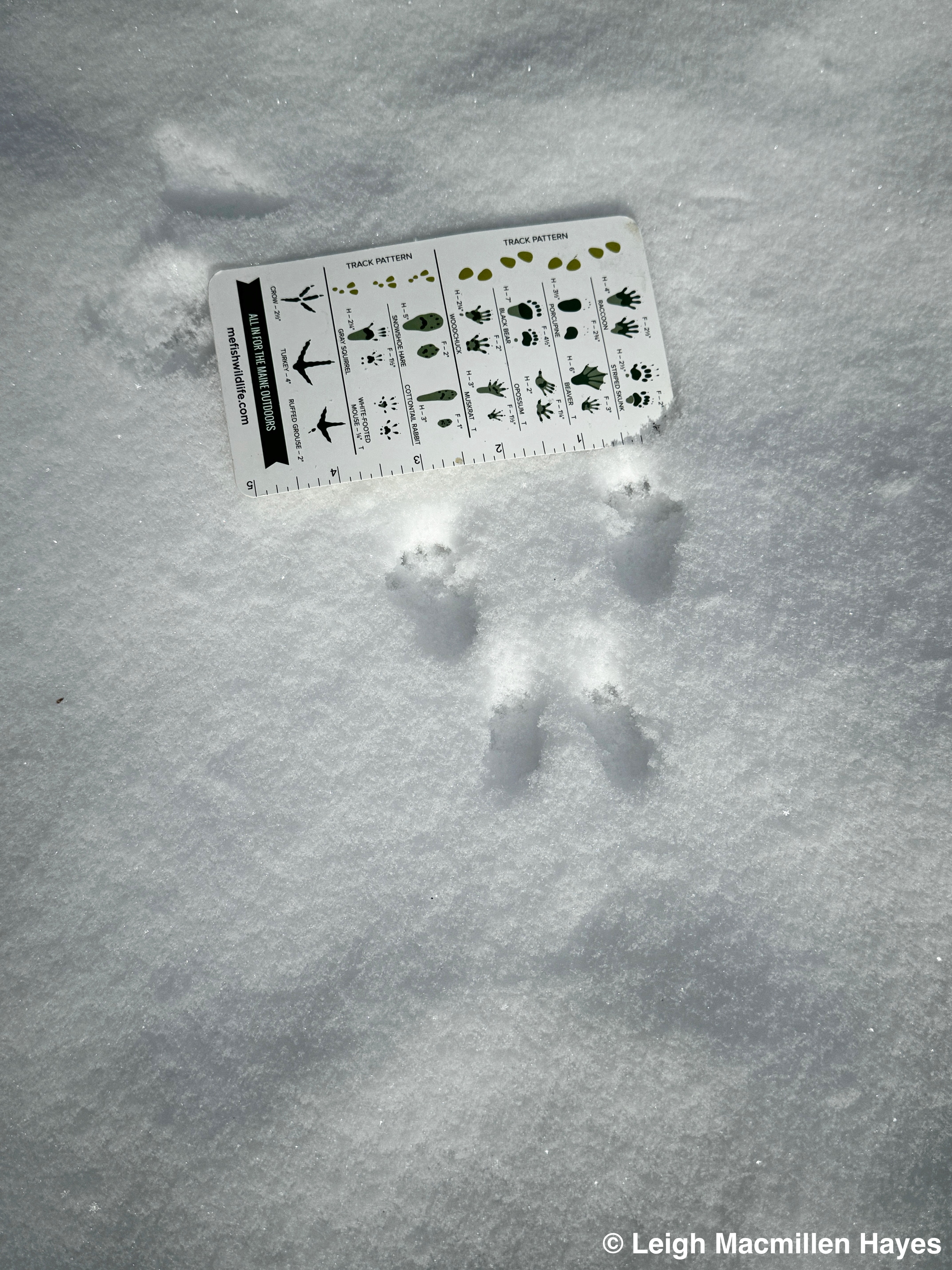
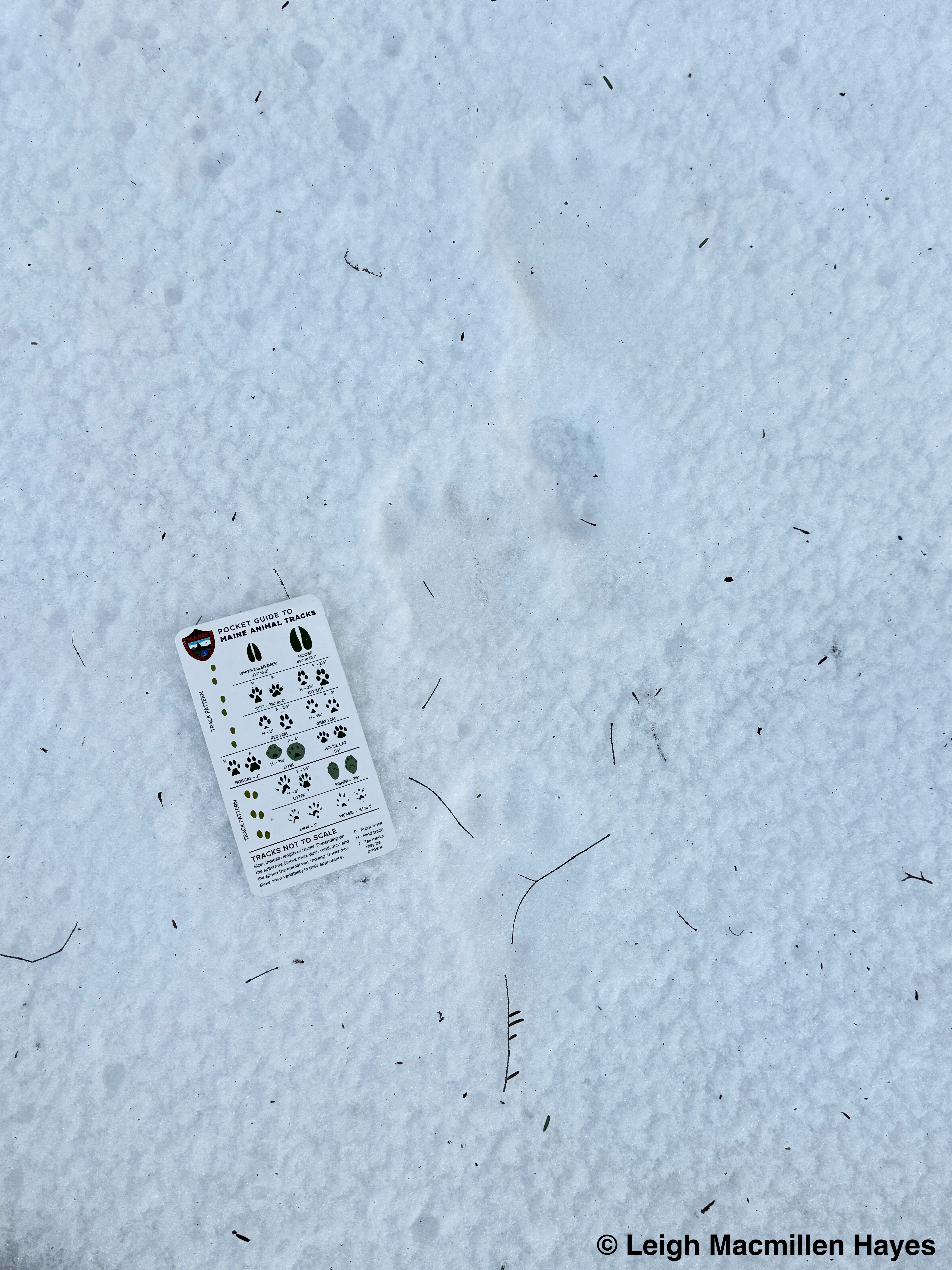
About an inch of snow fell overnight, so when I went into the woods this morning, I found fresh Red Squirrel prints, with the straddle or track width being the typical three inches. It was a bit nippy with the wind chill, so I didn’t get the card placed exactly as it should have been, but you get the idea. Its big feet in front are actually this hopper/leaper’s hind feet.

Okay, so I did risk the freeze for a minute because I spotted the set of four prints behind the first set I’d photographed and realized not only how close together the four were, but also the length of the leap from one spot to the next: My mitten and wrist holder are 19.5 inches in length and they didn’t cover the length of this motion–perhaps an attempt to quickly reach safety in the other wall or up a tree.

That action was on the eastern end of the path, but there’s more to see as I head west.

A few days ago, and probably because the night temperatures were more moderate, a family of rascals crossed from the other side of the wall and onto the path. By the baby fingers of the front foot, I know they were Raccoons.

As waddlers, Raccoons have their own pattern that is easy to recognize once you get it into your head. They don’t travel this way all the time, but most often I find their prints, with a front foot (baby hand) of one side and hind foot (a bit longer print) of the other side juxtaposed on opposite diagonals. If you look at the black lines I placed before each set of two prints I hope you’ll see what I mean. And notice the keys. It’s all I had in my pocket that day and I wanted something for perspective. I really didn’t expect to find the raccoon tracks.

I went back home and grabbed a tracking card to set on the ground. If you’ll look closely, you’ll note that it’s more than one animal, but all the same family. I followed them across the wood lot, over another stone wall, and into the field where they split up into four individuals before heading off in to the neighbor’s woods on the far side.

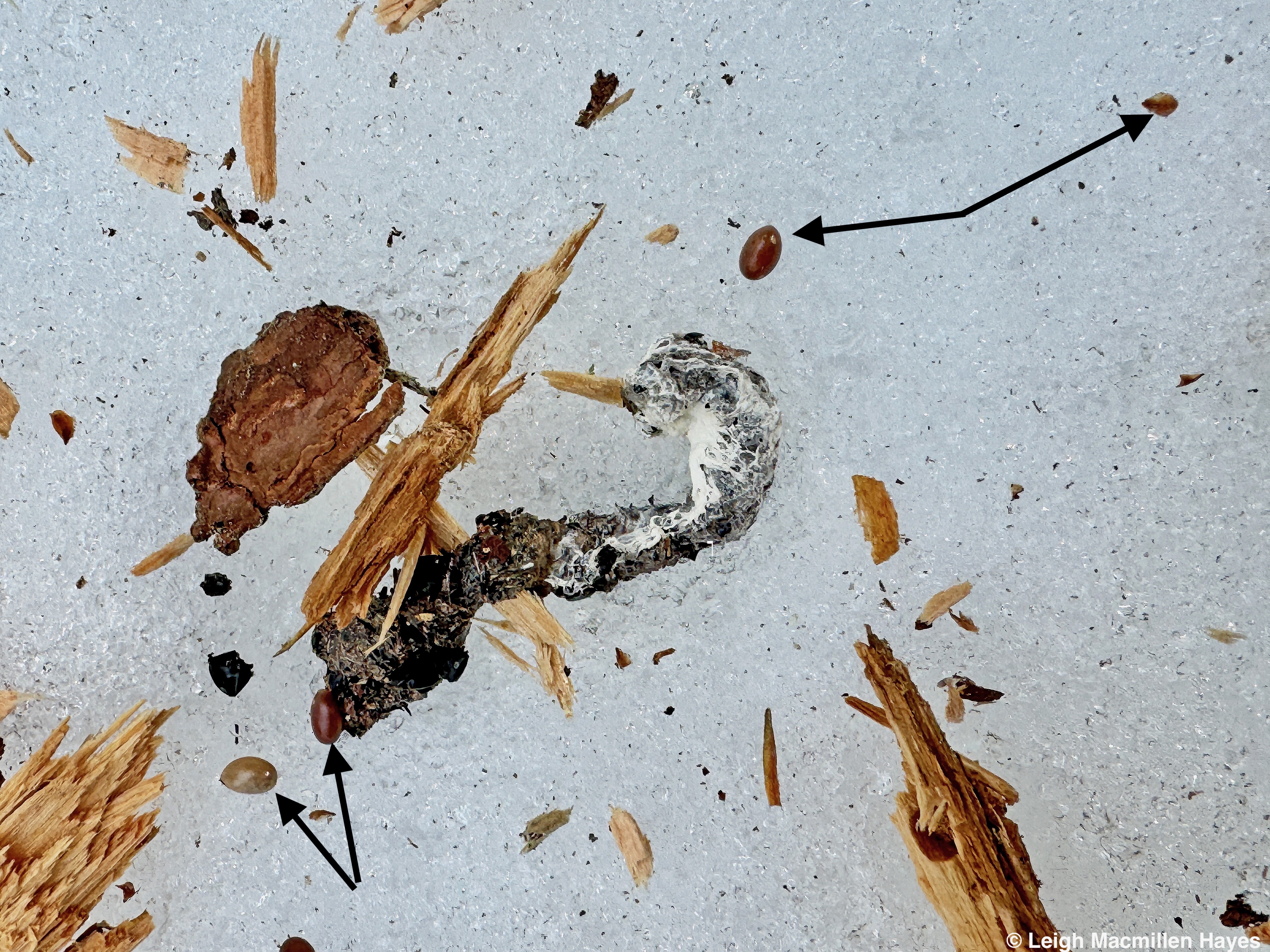
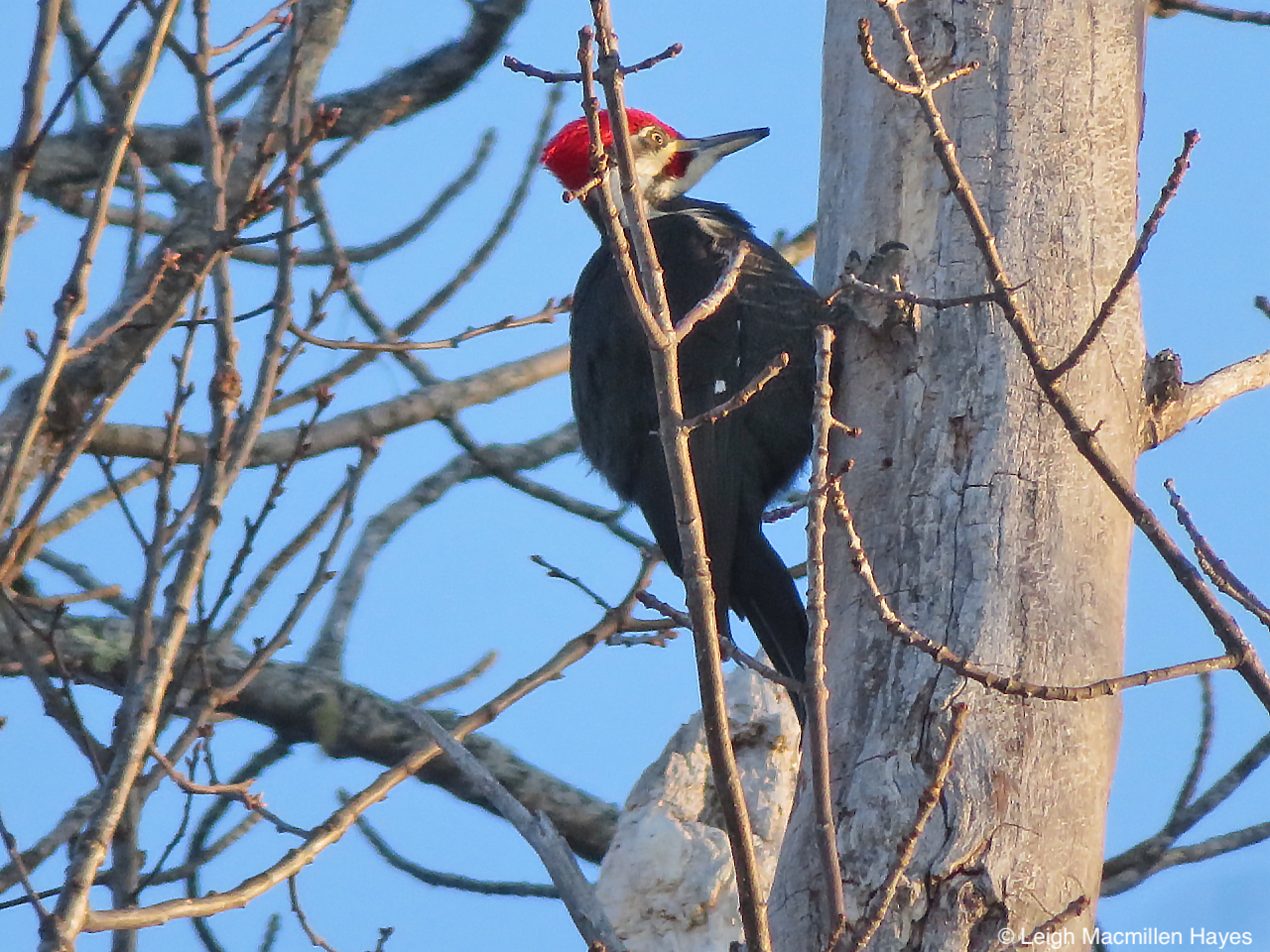
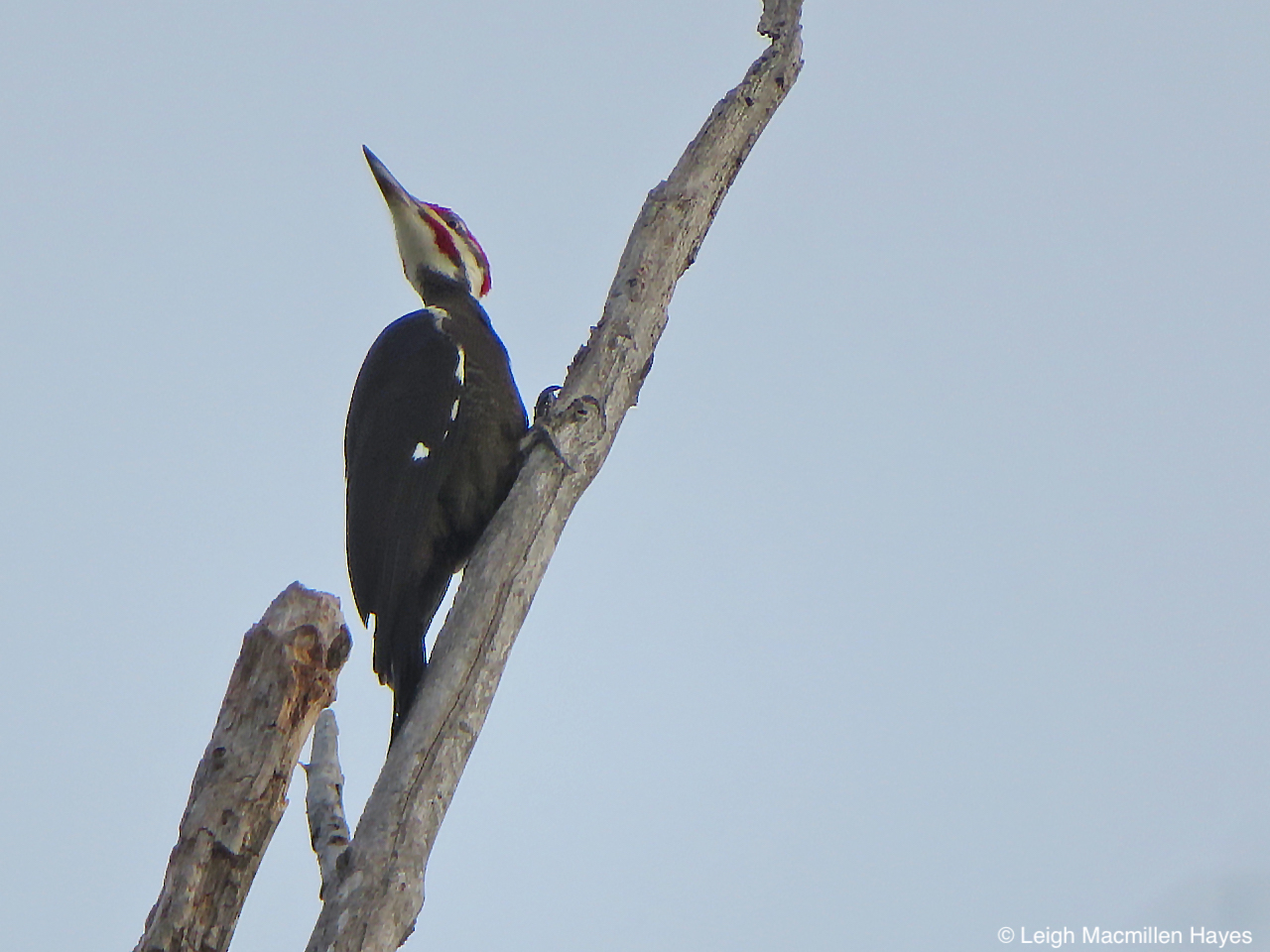
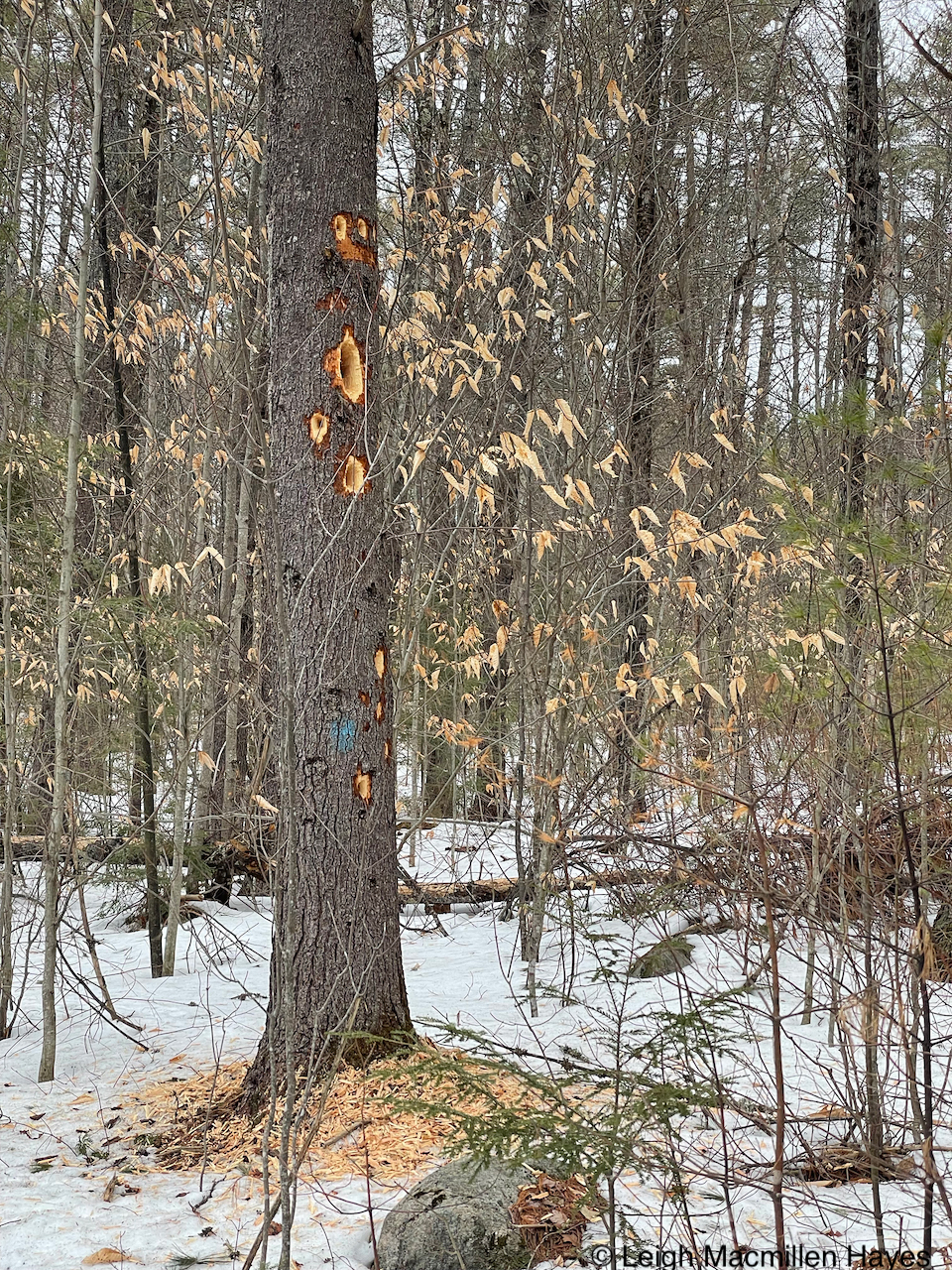
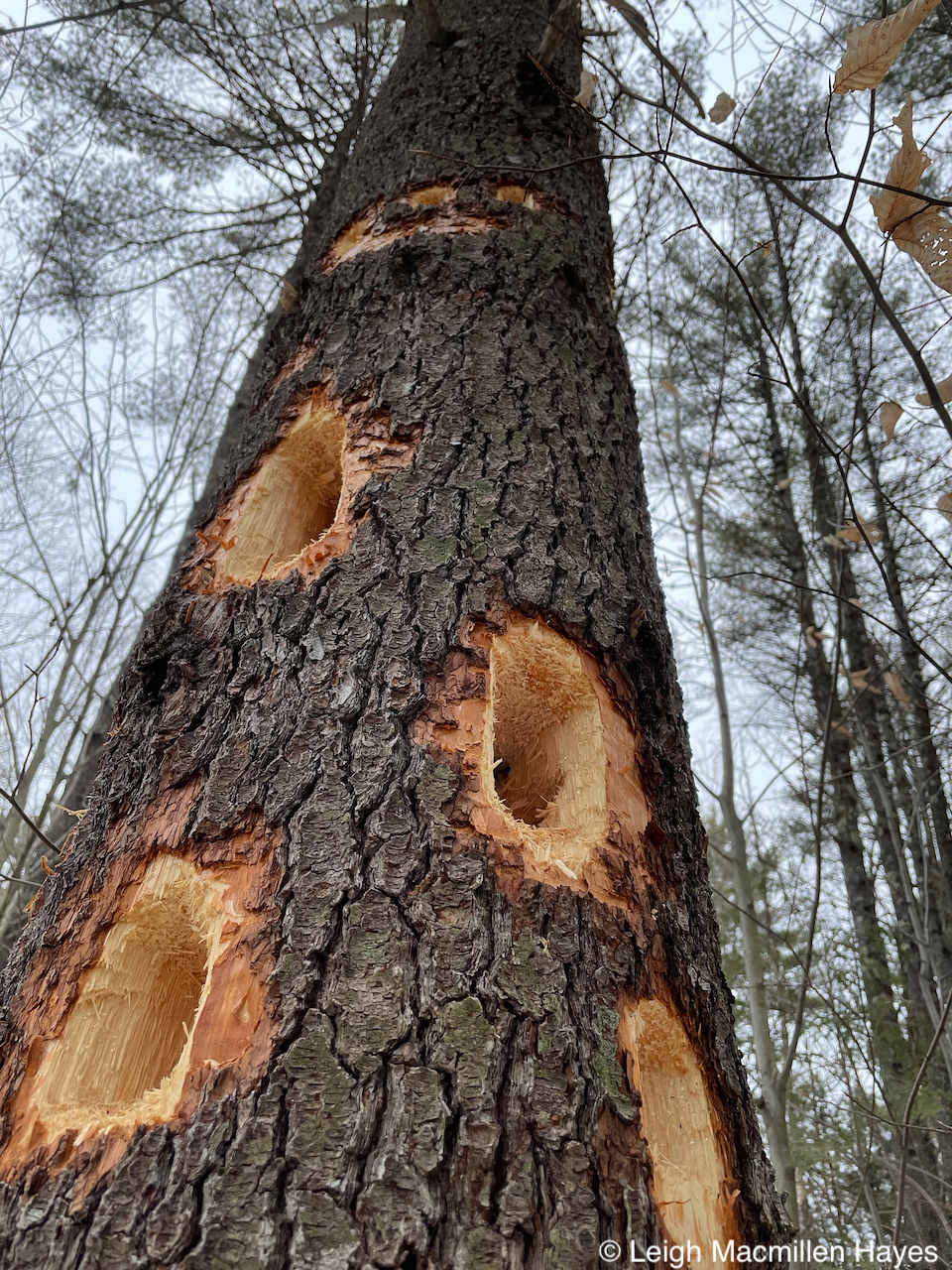
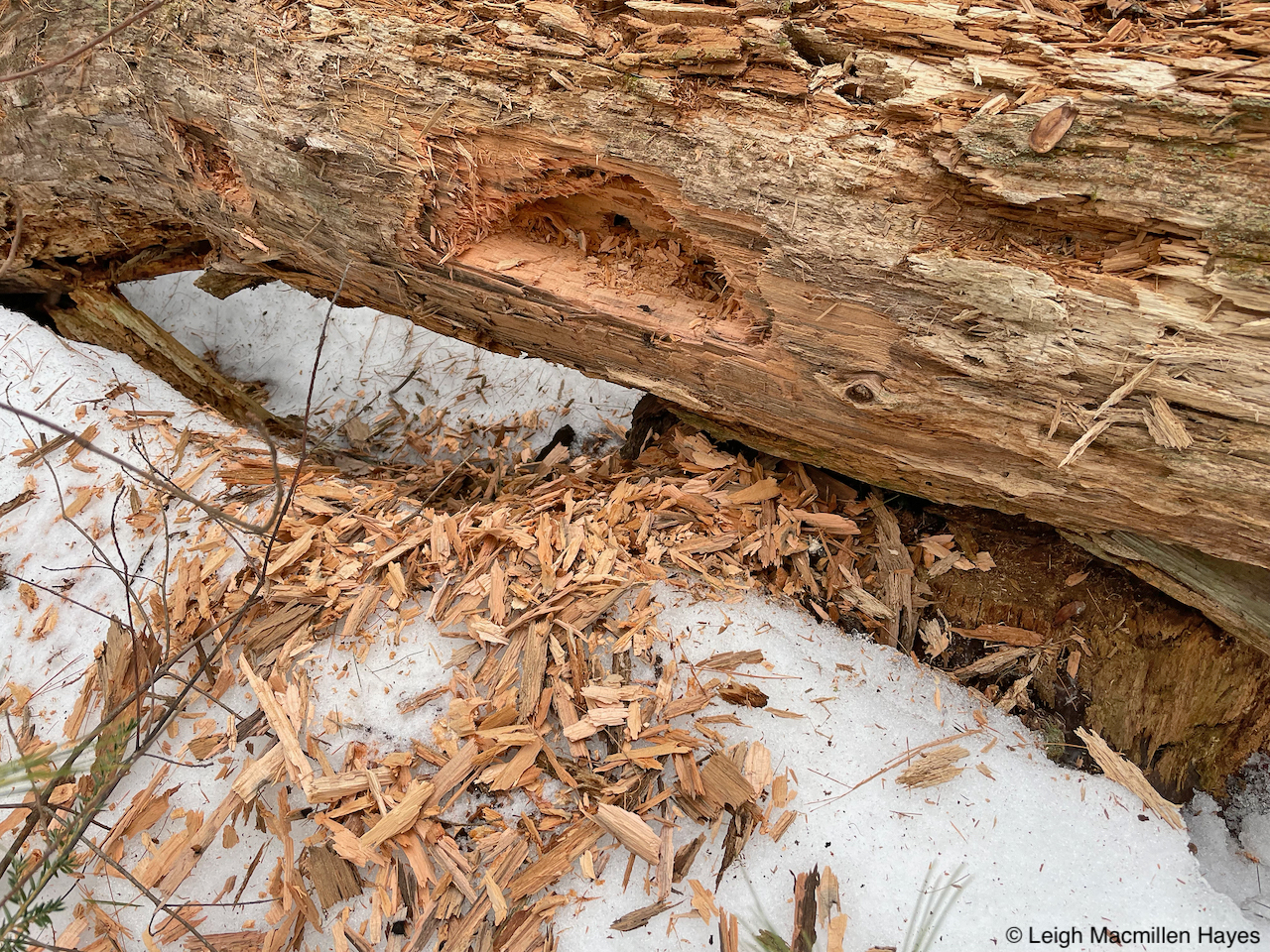
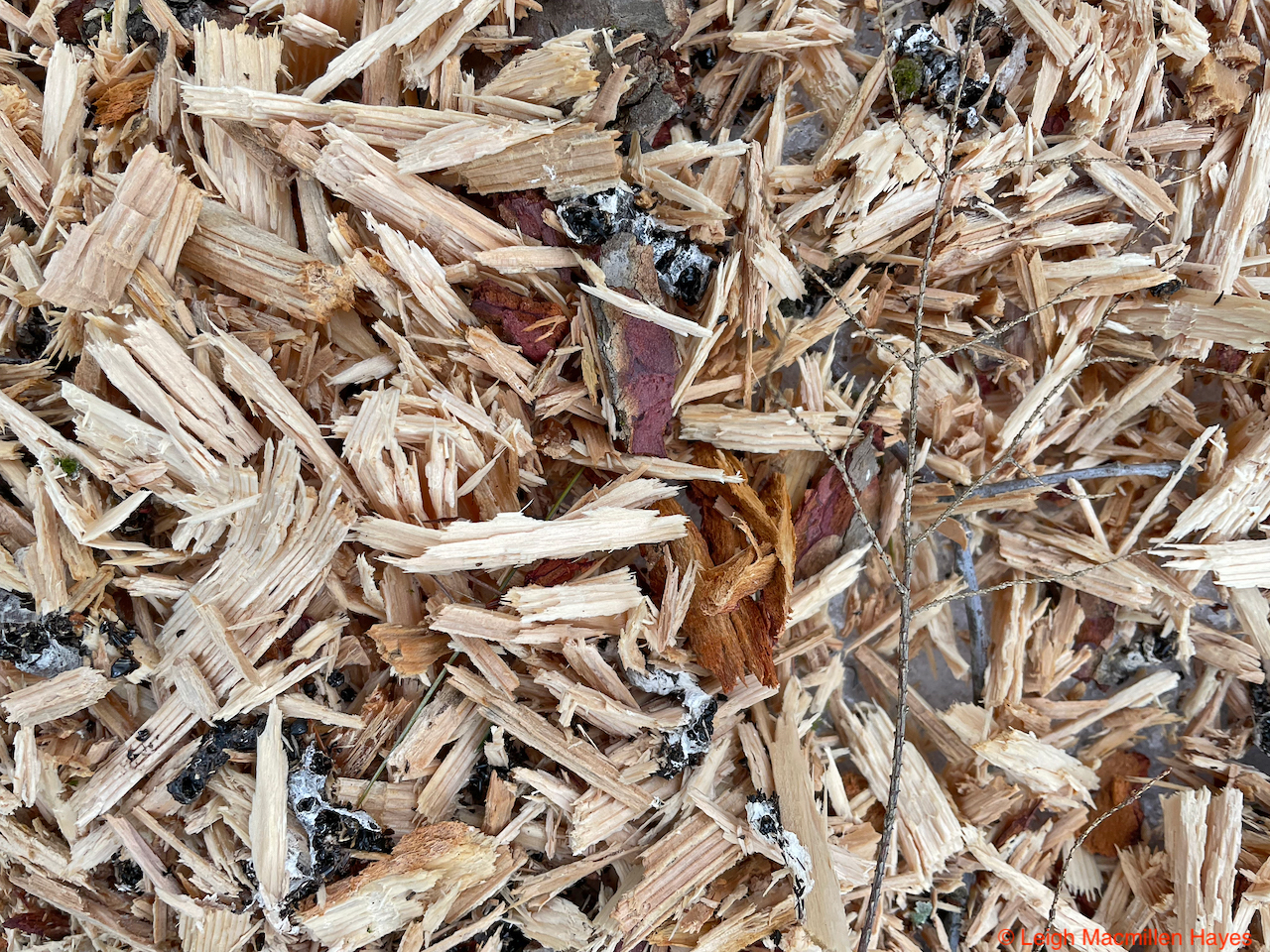
Back to the cow path I did return and this time it was a scene just off the path that drew my attention. Our Pileated Woodpecker has been active as evidenced by all the wood chips on the ground. That means one thing to me. Time to look for scat.

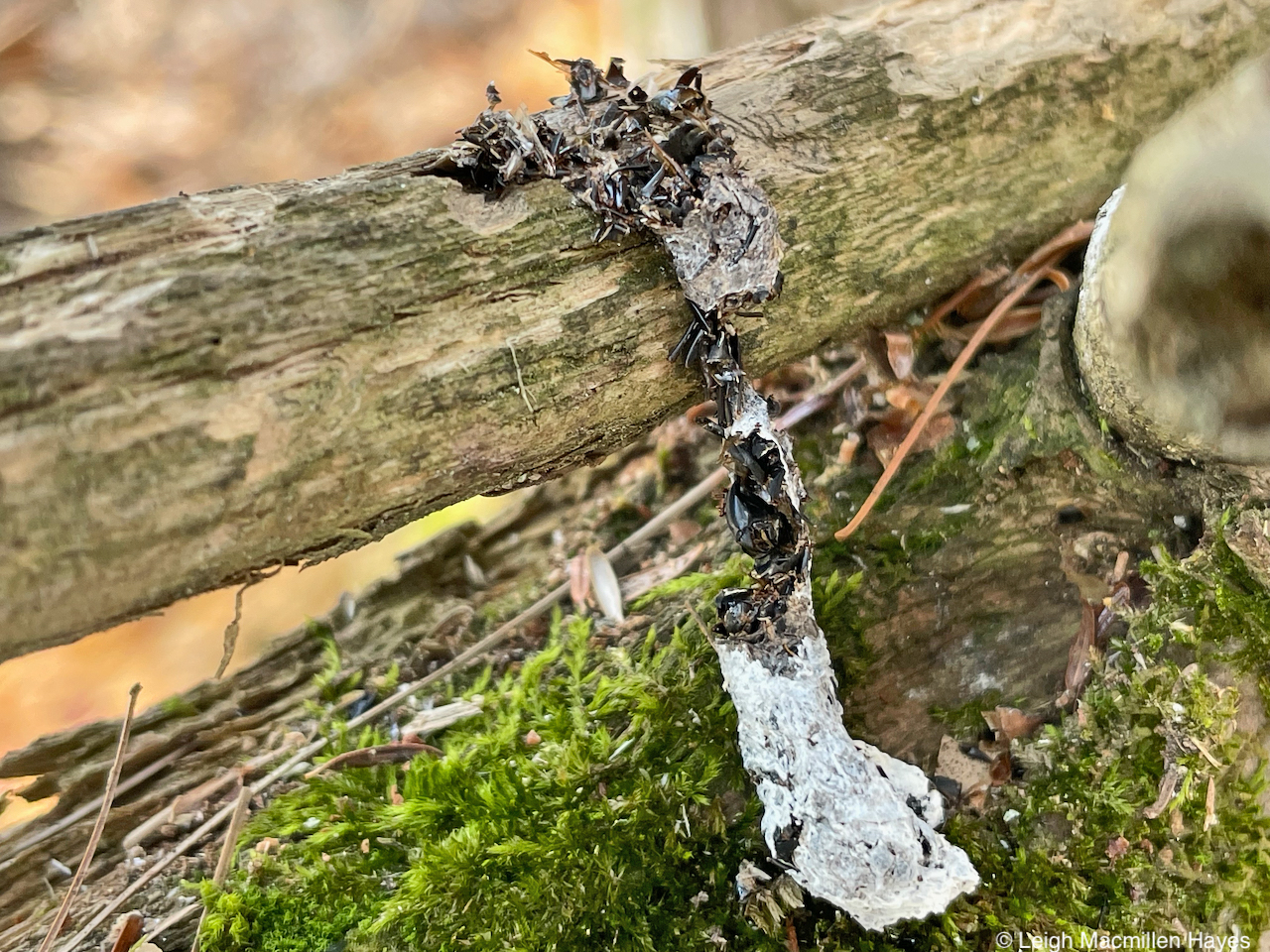
And I wasn’t disappointed. Check out that cornucopia stuffed chock full with insect body parts that the bird couldn’t digest.

Finding this is always like opening a Christmas present. The thrill never ends. But, curious spot here. Seeds. Staghorn Sumac seeds.

And on the pine tree and at its base, I found more of the Staghorn Sumac in bird droppings, a completely different form from the Carpenter Ant droppings.

Both followed me home! The Carpenter Ant scat is very fragile.

The sumac, being fleshier, held together better. Under the microscope I noted that there were some ant body parts mixed in with the sumac.

Here’s a closer look at one of the legs of a Carpenter Ant–notice the long “thorny” thing, which is the tibial spur located at the base of the tibia.

And an exoskeleton plus another leg. With lots of wood fiber in the mix. Lots of nutrients and fibers mean scat findings for me.

A power line bisects our property and I have a love/hate relationship with it. I do love that it looks like we could walk north to Mount Washington. But my destination was to the trees on the western (left-hand side), where we own at least one more acre enclosed by stone walls.

About half of that acreage is a combo of hemlocks and firs fighting for sun. In the end, the hemlocks will rule the world, but the firs are trying to compete.

It is here that I discovered Snowshoe Hare tracks and my heart smiled again. There’s not much on this portion of our land for the hares to dine upon, such is the landscape when the trees block undergrowth. But on either side of the walls, there’s plenty available to them in areas that have seen timber cuts within the last twenty years.

Here’s the thing about hare prints–as hoppers, the smaller front feet land first and often, but not always, on a diagonal. The much larger hind feet swing past where the front feet had been as the mammal moves forward, and thus appear to land in front when you look at the overall pattern. And my favorite part of this set of four footprints: the overall shape, which to me looks like a snow lobster with the front feet forming the tail and hind feet the claws. Do you see it?

This neighborhood on the other side of the power line also supports a Red Squirrel who in true squirrel tradition travels this way and that.

And like its relative on the other side, it took time to cache a bunch of cones and now feasts upon its supply.

And leaves its garbage for nature to recycle. Notice how the middens are often located on high spots such as the rocks along the wall–the better to be in a spot where you can see who or what might be approaching. Even those on the ground below trees mean that the squirrel probably did most of its dining from a branch above, and then let the trash fall.

What could a squirrel possibly fear in these woods? Besides coyotes and foxes and bobcats, oh my, think Fisher such as the one that left these tracks in the squirrel’s territory. As far as I could tell, the Fisher (and it’s not a cat, it’s a member of the weasel family) was only passing through, probably on its way to hunt down the hare. Though a squirrel would make a fine meal, as well.

Heading back across the power line, cases stood out on the White Pine saplings at the start of the cow path. The cases consisted of clusters of needles bound together. This is the work of the larval form of a Pine Tube Moth, Argyrotaenia pinatubana. What typically happens is that the caterpillar uses between ten and twenty needles to form a tube or hollow tunnel.

The caterpillars move up and down their silk-lined tunnels to feed on needles at the tip until they are ready to overwinter.

The moth will emerge in April, when I’ll need to pay attention again. Two generations occur each year and those that overwinter are the second generation.

Walking home via a different path in our woods, I spot deer beds. At least a half dozen spread out under the pines and hemlocks, the spot where the evergreens keep heavy amounts of snow from reaching the forest floor, thus making it easier for the animals to move.

Finally back home, there’s one more member of our family to mention–a porcupine. This may be my friend Bandit, but I haven’t actually seen him in a while so I can’t be certain.

The porcupine did check out a tiny hole under the barn, but we don’t think it actually stayed there. Will it return. Probably, as the barn has long hosted this species; along with other small critters.

That’s a lot for now and at last I’m done counting the stock for our winter inventory. There’s more out there, but this is certainly enough to make me realize that they don’t live in our woods, but rather, we humbly reside in theirs.

Birds Of A Feather?

The other day a friend asked if my bird feeders were busy, but I’d been so focused on looking at mosses through the microscope lens, that I had my back turned to the yard and no idea what was going on out there.

Then today dawned.

And as is typical, a large flock of Juncos flew in. I love to watch them sit up in the Quaking Aspen and then almost dive bomb before gracefully landing on the ground, where I always make sure to spread plenty of seed for the ground feeders. My seeds of choice–a wild bird mix and lots and lots of black oil sunflower seed. Plus suet.

Of course, the Blue Jays also had a presence and, in fact, always make their presence known with their loud squawks. But I do love their colors, especially against the snow, and so I welcome them.

One of my favorite visitors is also the most timid–the female Cardinal. The second any little movement or sound startled her, she flew to a line of shrubs, a favorite hangout for most of the species that visit our yard. And when she flew, usually the others did as well. And then two minutes later, they’d begin to filter in again.

Her guy friend showed up as well, but she spent more time here than usual, despite his bossy attempts to get her to fly. Soon, though, he won’t be pushing her away, but rather sharing seeds beak to beak.

Tufted Titmice happened by and I had to wonder if this one saw its reflection in the feeder. That does happen and sometimes the results are comical.

Meanwhile, at another feeder, a large Gray Squirrel that grows larger every day thanks to my offerings, made sure everyone knew that the feeder attached to the tree was his. We knew when we put it there, that this would be the case, but it was our only choice of position.

And so he dines. A. Lot.

The good news is that eventually he leaves and others, such as this Goldfinch, fly in and look for just the right seed of choice.

Bingo. Mission accomplished.

And then . . . and then . . . two surprise visitors arrived. Bluebirds . . . of happiness, of course, for they made me happy.

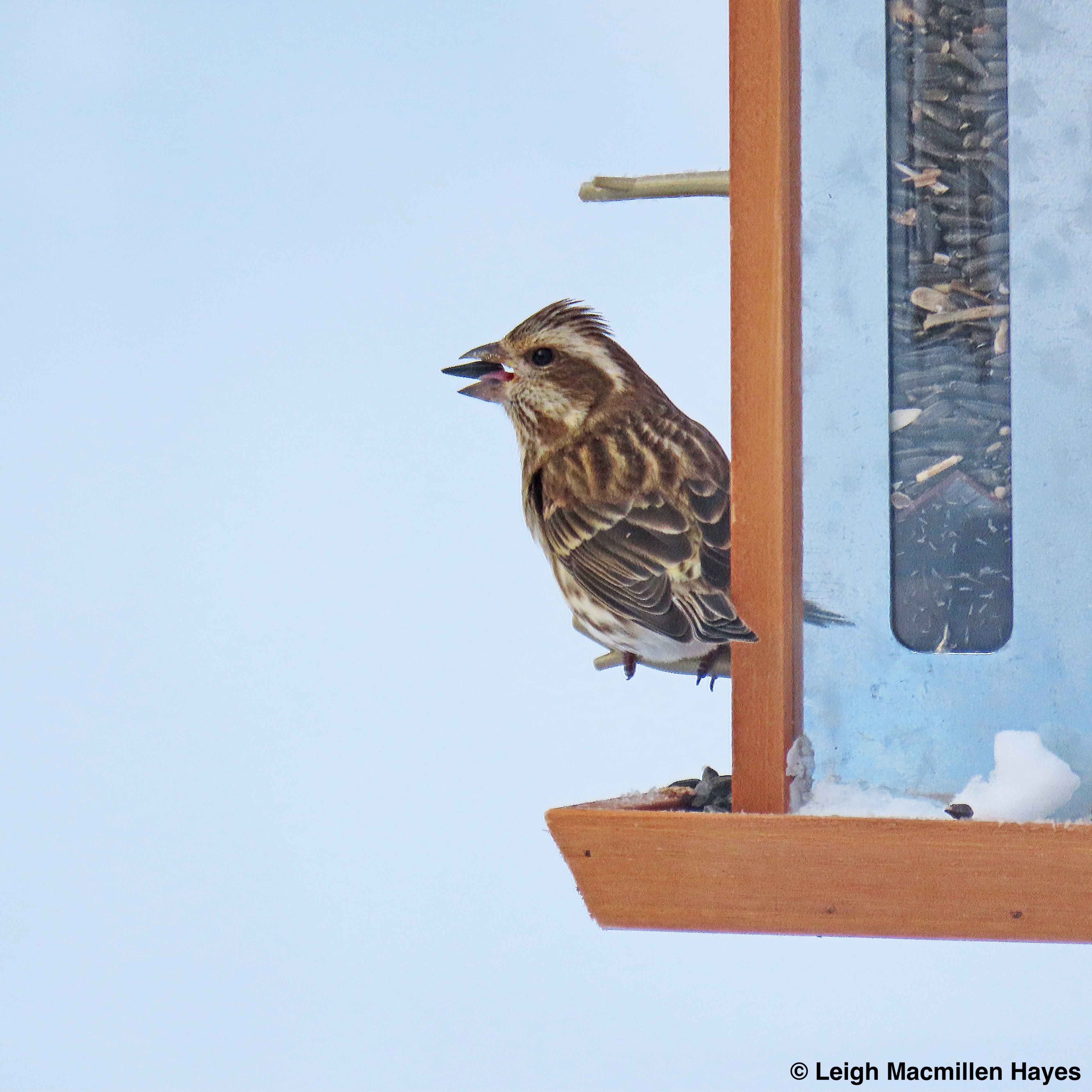
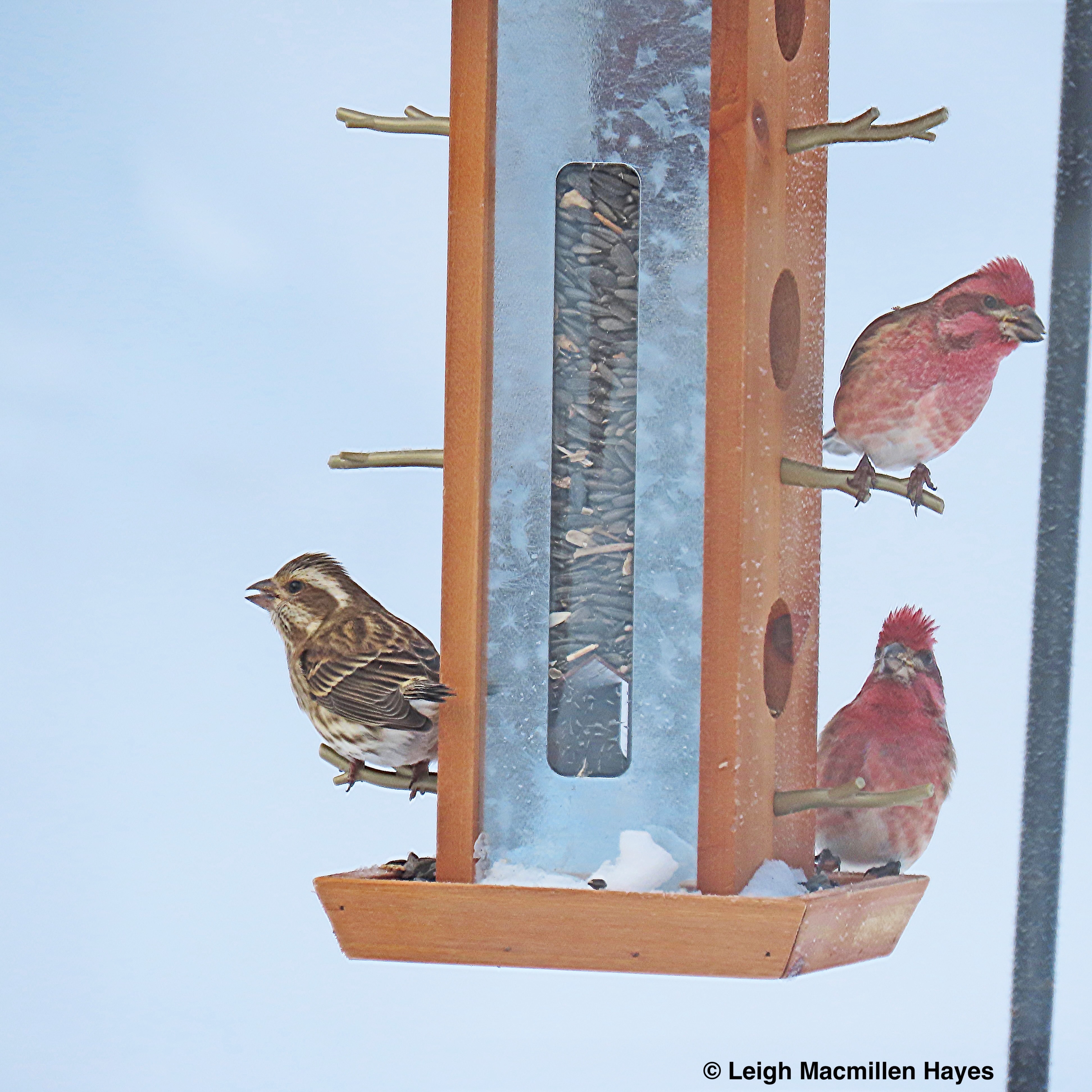
And then, another surprise visitor–a female Purple Finch who looked quite pleased with her tasty seed.

She was so pleased, that she apparently invited two males to join her. Their postures and bad hair day made me laugh–they seemed to have been put here to provide comical relief. That’s not true at all, but so it seemed.

With all of this action, I had to stand as still as possible to take these shots through the back door window. And because I was so still, I had yet another surprise.

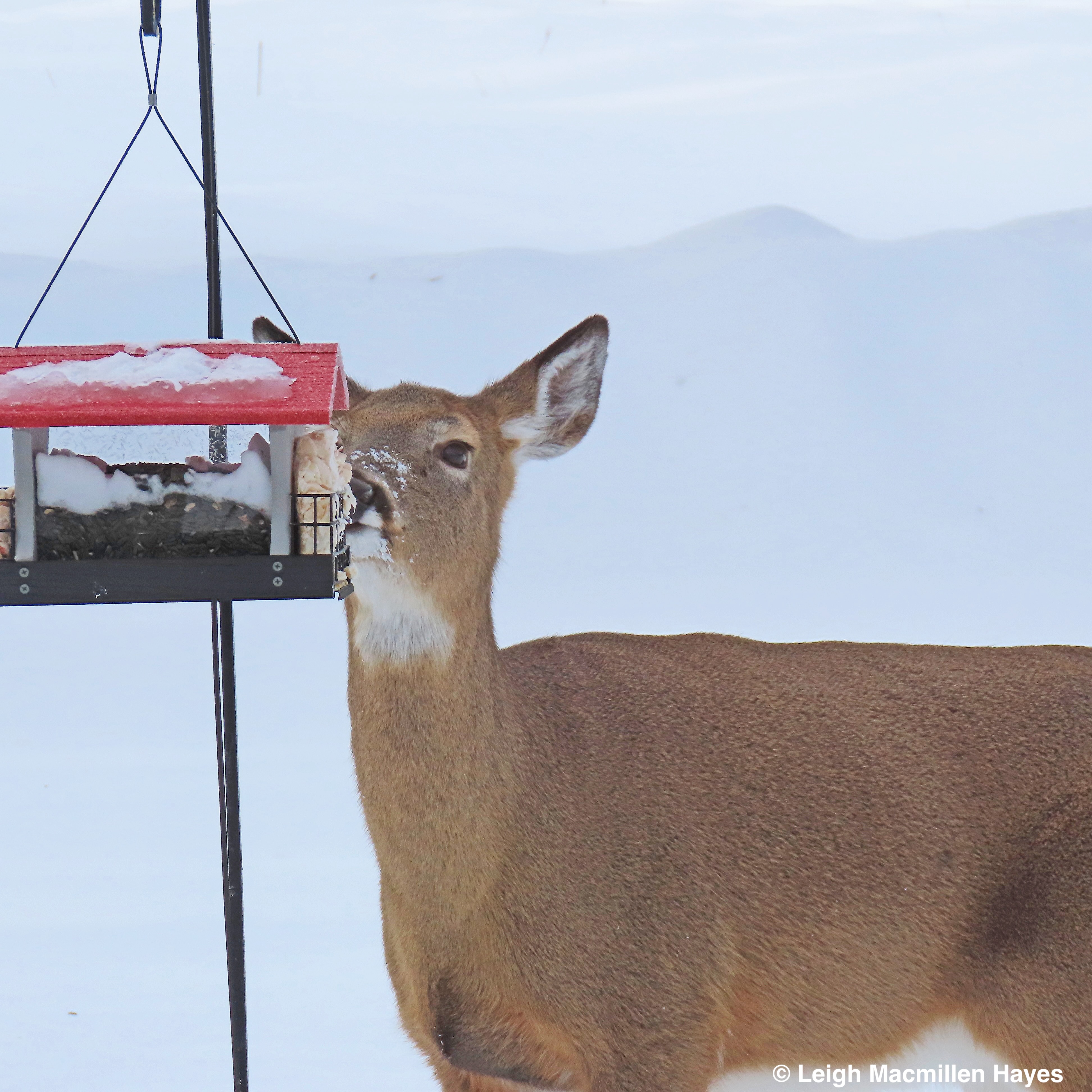
Bird seed is not just for birds, as the squirrels prove daily. And the White-tailed Deer often make that statment at night, but today . . . today was different. They came in the morning and were like vacuums as they consumed the seed.

Observing the birds, I often note that the Juncos can be quite defensive, the Male Cardinal sometimes suggests the female should leave (until that is when he decides to feed her), Chickadees fly in, grab a seed and fly off to a branch to break it open, and Goldfinches hang out together. As do the deer. These were the two young skippers, and they weren’t at all disturbed to be in each others space.

One of the skippers approach this feeder was instantly startled by its movement, but momma doe was much more curious, though in the end she chose to opt for seeds on the ground.

And all were delicious.

After about a half hour, my body tense from holding still for so long because after all, they were only steps from where I stood, the deer had consumed most of the ground seed and headed off to the woods. I waited a few minutes to give them time to depart without pressure and then went out to spread more seed around.

It took a few more minutes and then the action picked up again and in flew a male Downy Woodpecker to sample the suet.

His mate also arrived and waited in the Aspen to take her turn, though there are two suet feeders out there so I’m not sure why she felt the need to wait her turn.

And the rest of the mixed flock returned as well, including the Tufted Titmouse.

At the end of the day, my favorite visitors were the Bluebirds for it was such a treat to see them.

I can only hope they make a habit of returning to our yard.

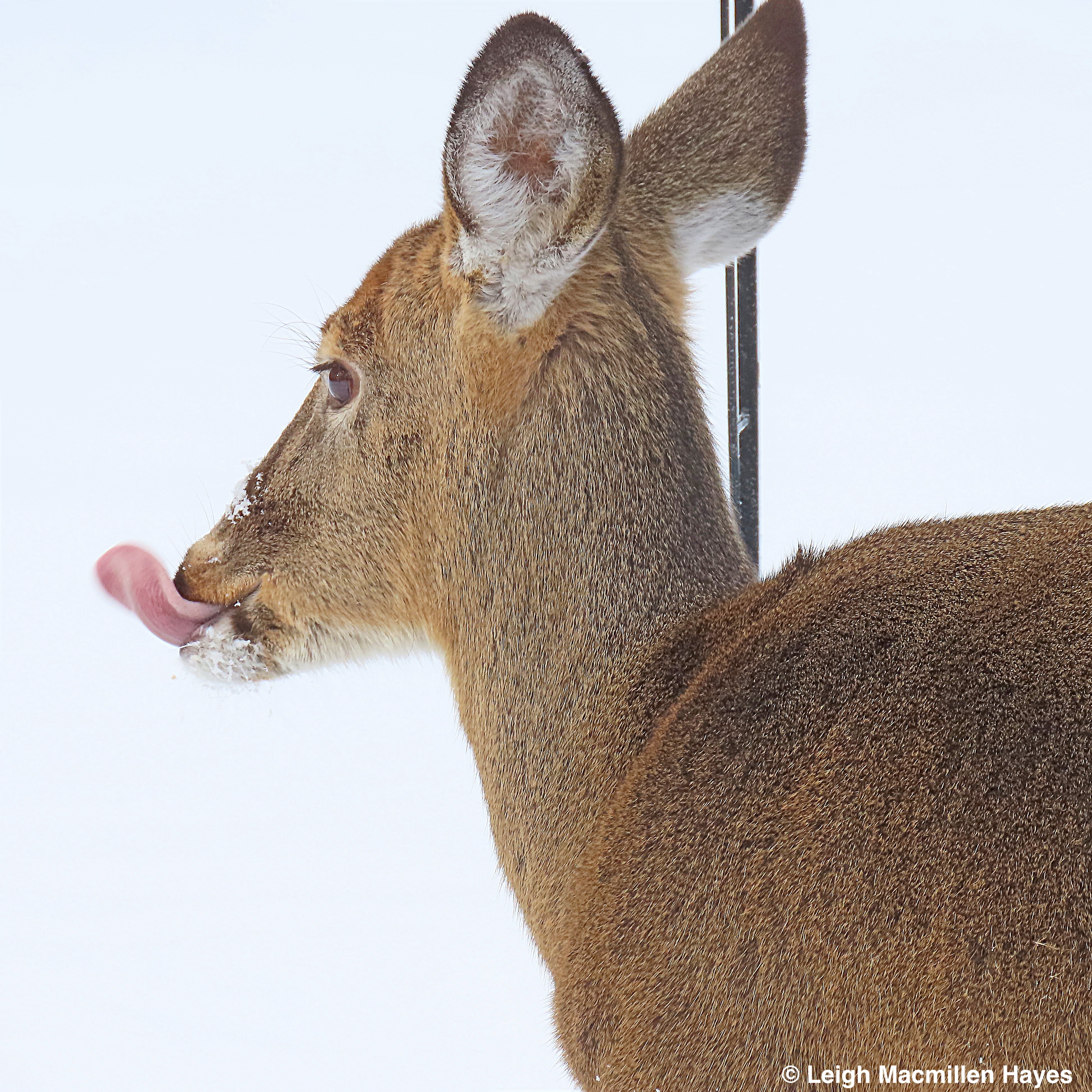
And the deer, who found everything tongue-licking good.

And along with the squirrels, proved that not every bird has feathers. I mean, seriously, have you ever watched Gray Squirrels fly from tree to tree? And Deer fly across a field? Certainly reindeer fly.

On This Finally Snowy Day

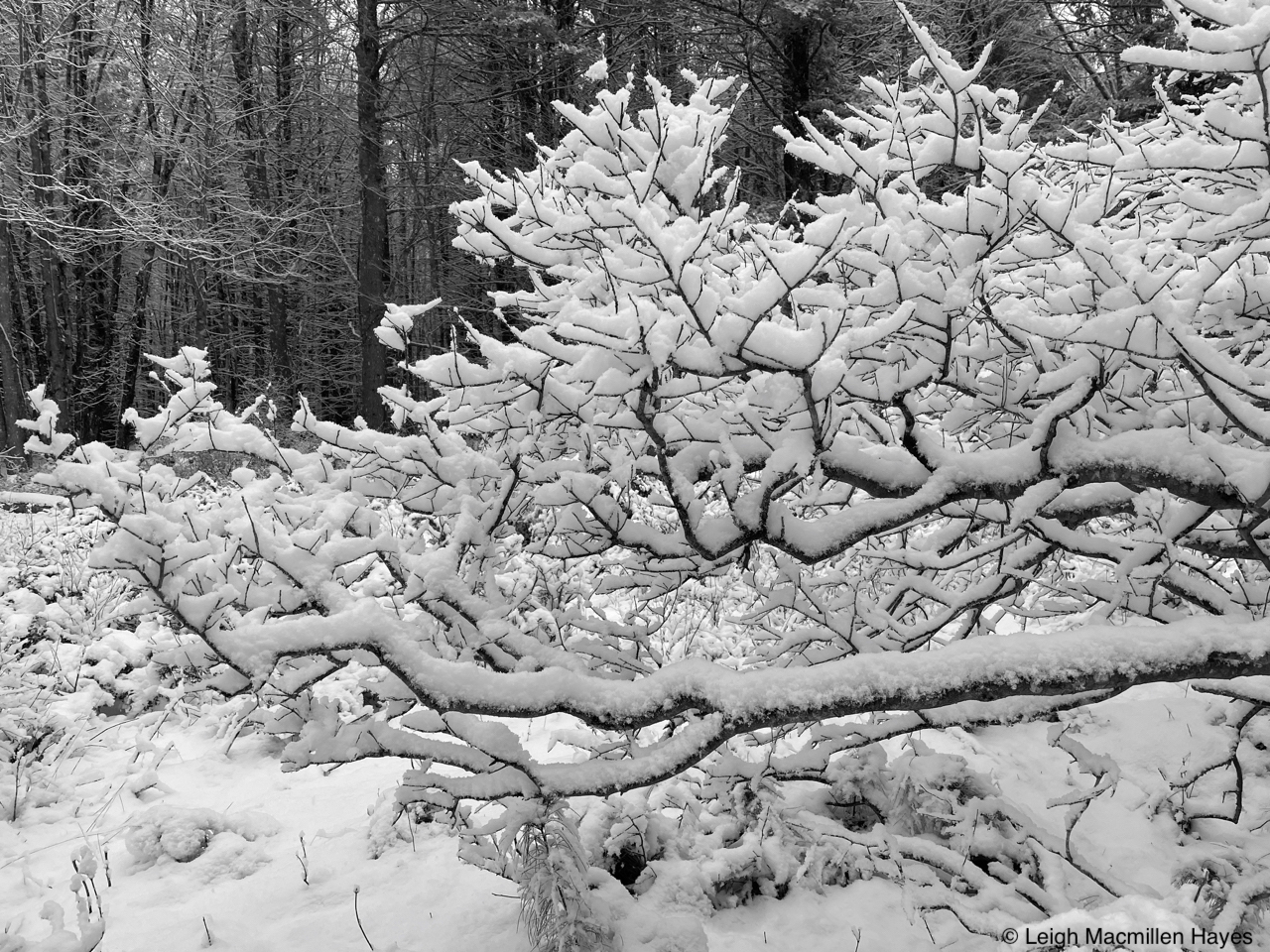
White flakes have a way of quieting the Earth.

All slows down and the world transforms.

Something beyond calls, and despite the wind and frigid temperature, I heed the invite for several hours.

My feet journey along curvy paths.

I spy treasures–gifts tucked into furrows.

Others flowing out of ancient springs.

There’s a staircase to heaven offering a climb.

A long uprooted tree pretending to be a dinosaur.

And tucked away in a spot only a few wanderers know, another dinosaur outlined in white.

The snow coats like a blanket, offering protection going forth.

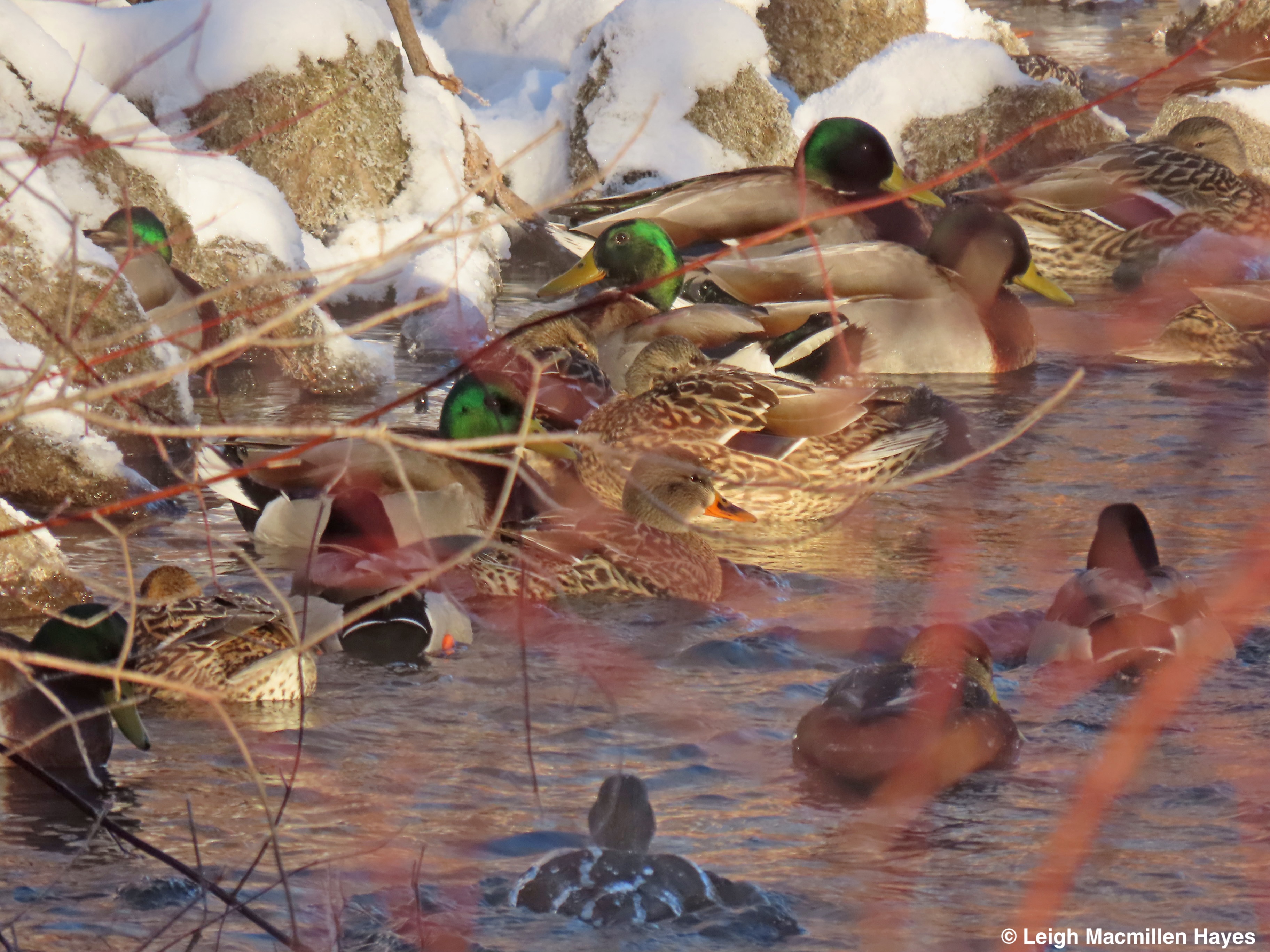
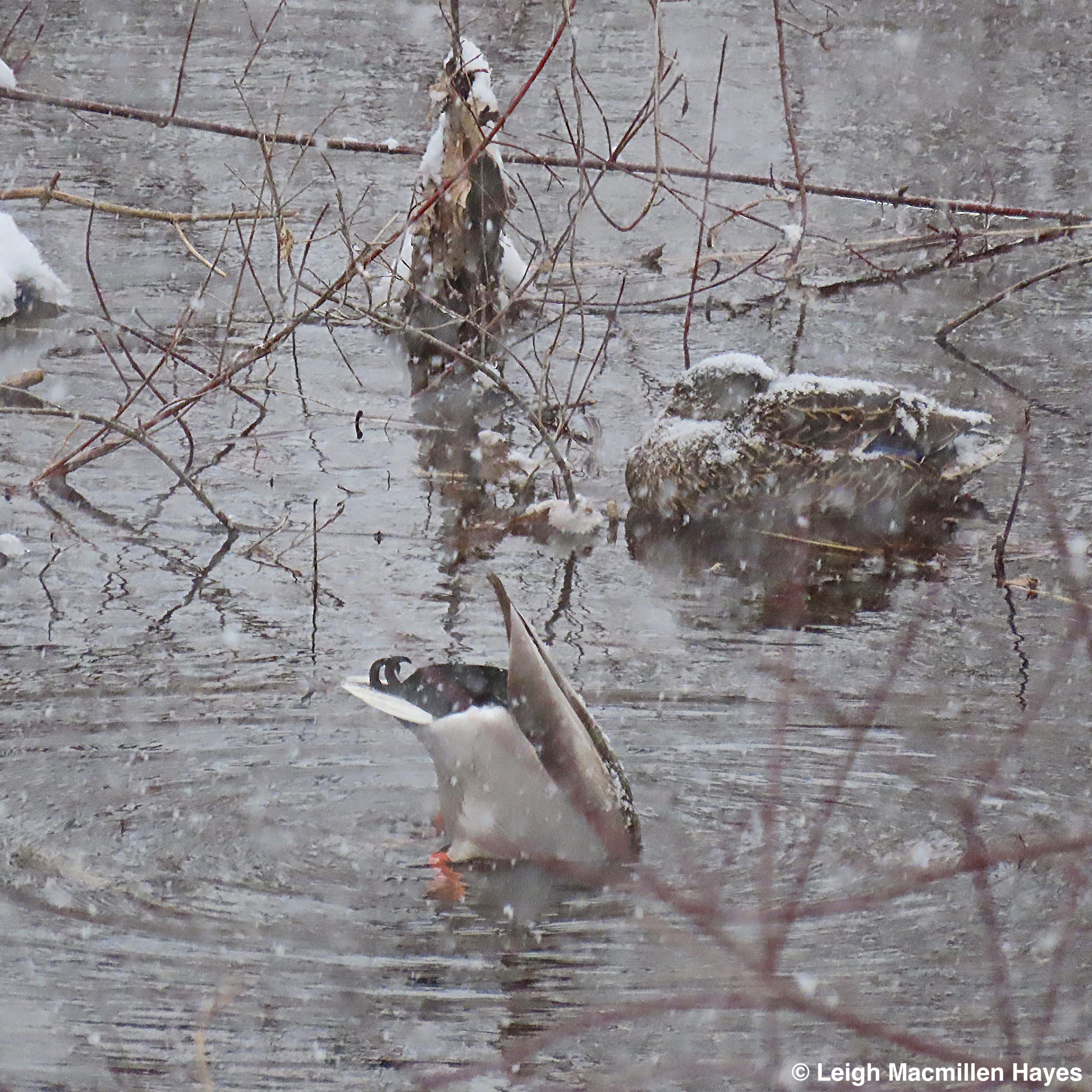
And fills the waters where the ducks take turns sleeping and dabbling.

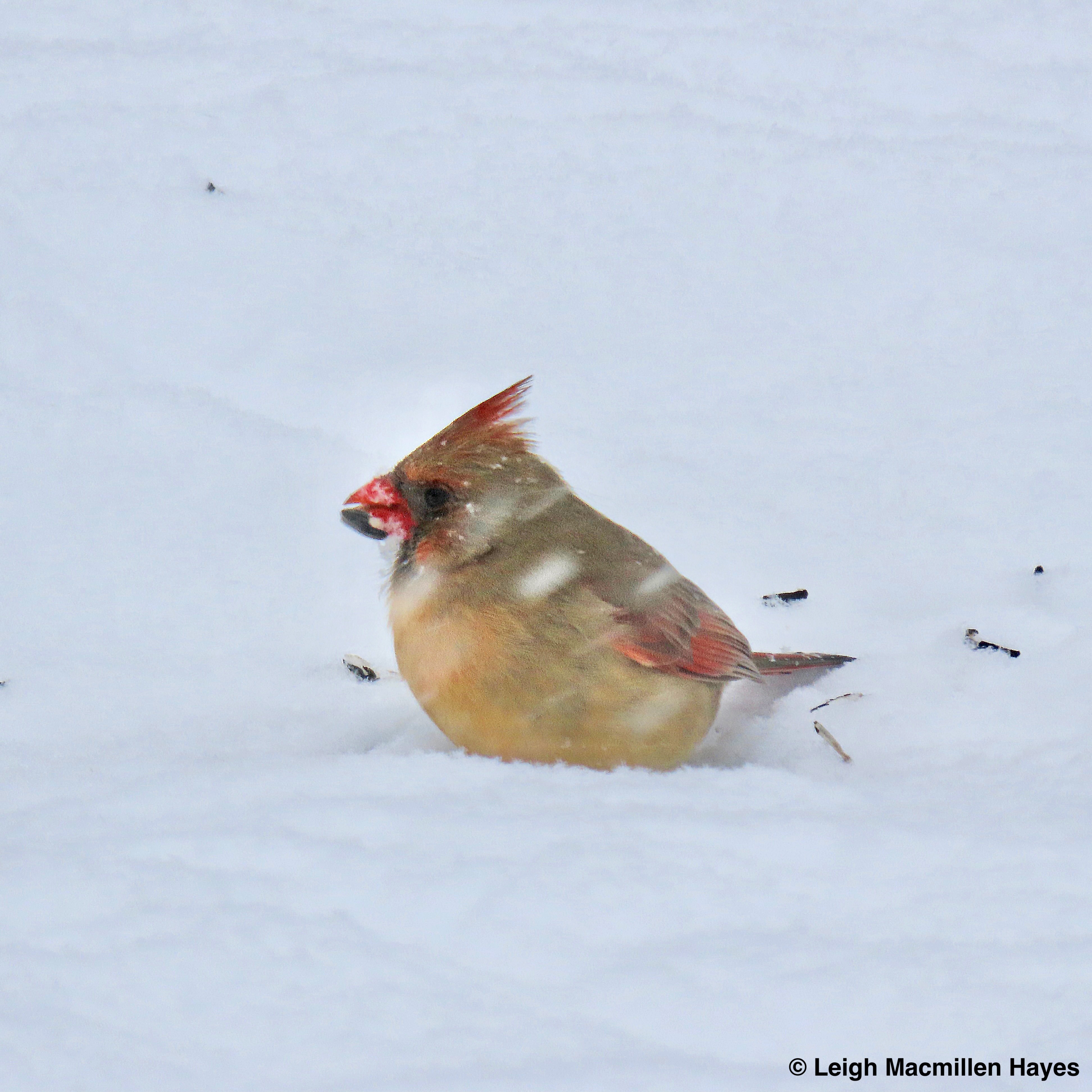
Back on the homefront, the male Cardinal’s red shouts for joy.

While the female seeks the seeds of hope.

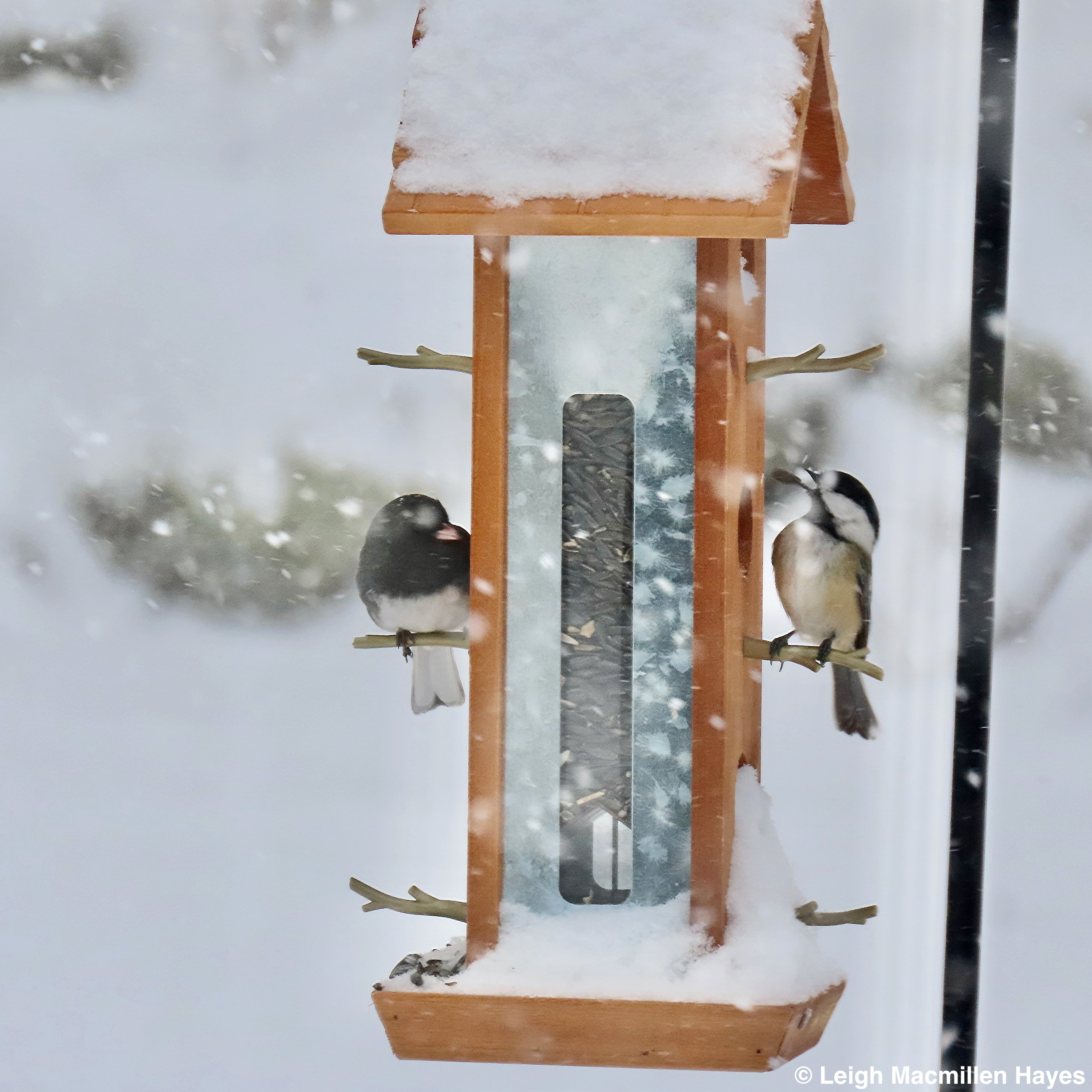
Juncos and Chickadees show courage at sharing a feeder.

And occasionally a Goldfinch flies onto the scene.

In the midst of it all, a tree spirit guffaws as every element of the universe shines . . .

on this finally snowy day!

Lost and Found Mondate

We chose a trail we’ve never hiked before, though we’ve conquered this mountain from two other trails many times over the years. Today’s choice was based on an email from Allen Crabtree, leader of the Denmark Mountain Hikers. The lovely thing about it was we walked along a snowmobile trail to the summit and so were happy to be on micro-spikes and not snowshoes or postholing. And the temperature was crisp enough to keep the snow firm, at least on the way up Burnt Meadow Mountain.

After passing by what I think was an old barn foundation, the trail continued on fairly level ground for a bit and we worried that I may have misunderstood the directions.

But that didn’t really matter because we were in the woods, together, and enjoying the fact that a fisher had loped across the landscape probably last night when the snow was still soft enough to leave impressions before this morning’s temp of 17˚.

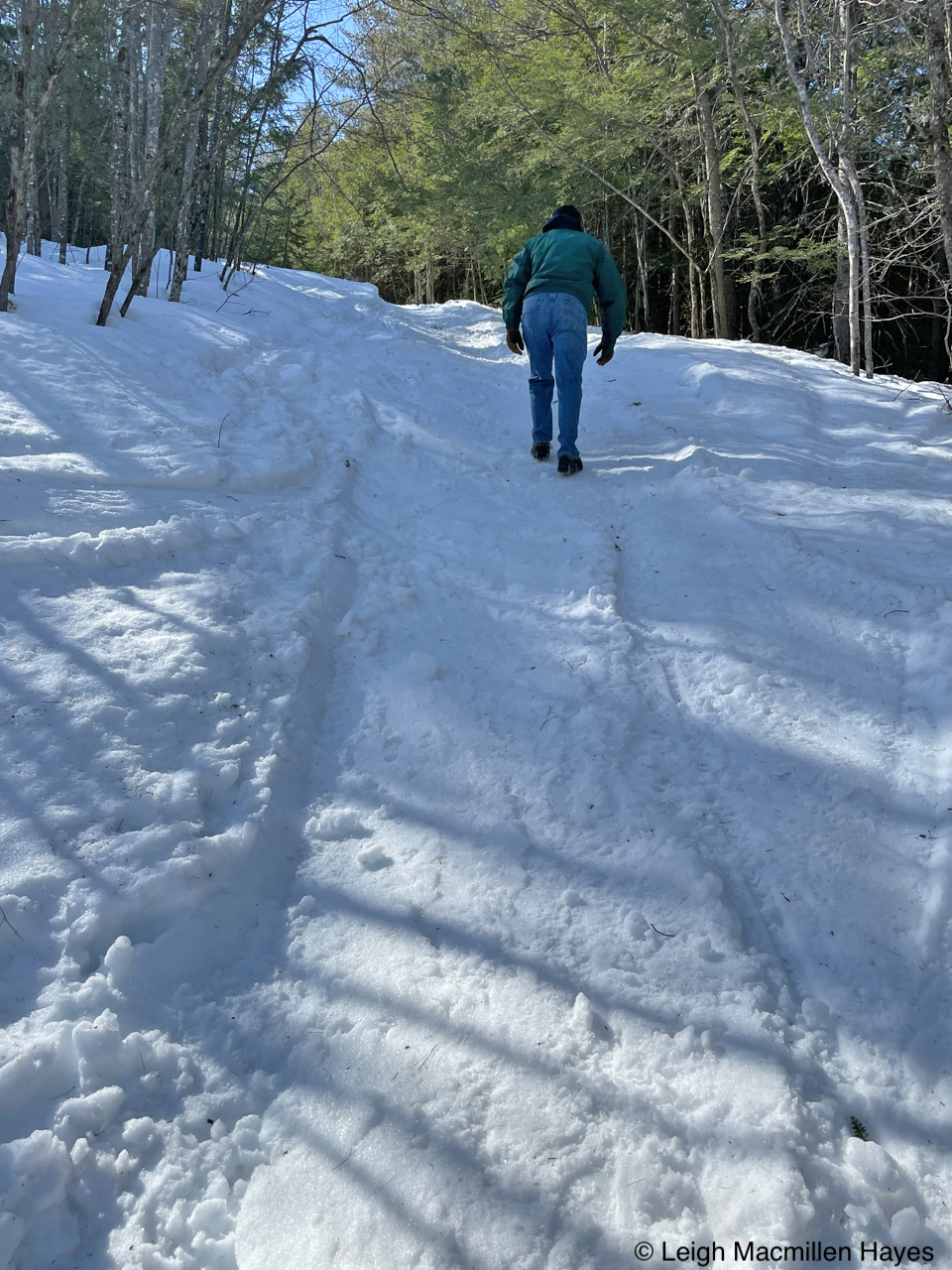
At last the trail began to get steeper and I gave great thanks that it was such a packed trail for it made for an easy ascent. We had no idea what conditions might be under the snowmobile trail, but I suspect on a summer day this isn’t an easy way to go. Not that the other two trails are either.

My real reason for suggesting this hike to My Guy was because I wanted to revisit this site, which we’d reached previously on a exploration down from the summit in 2012.

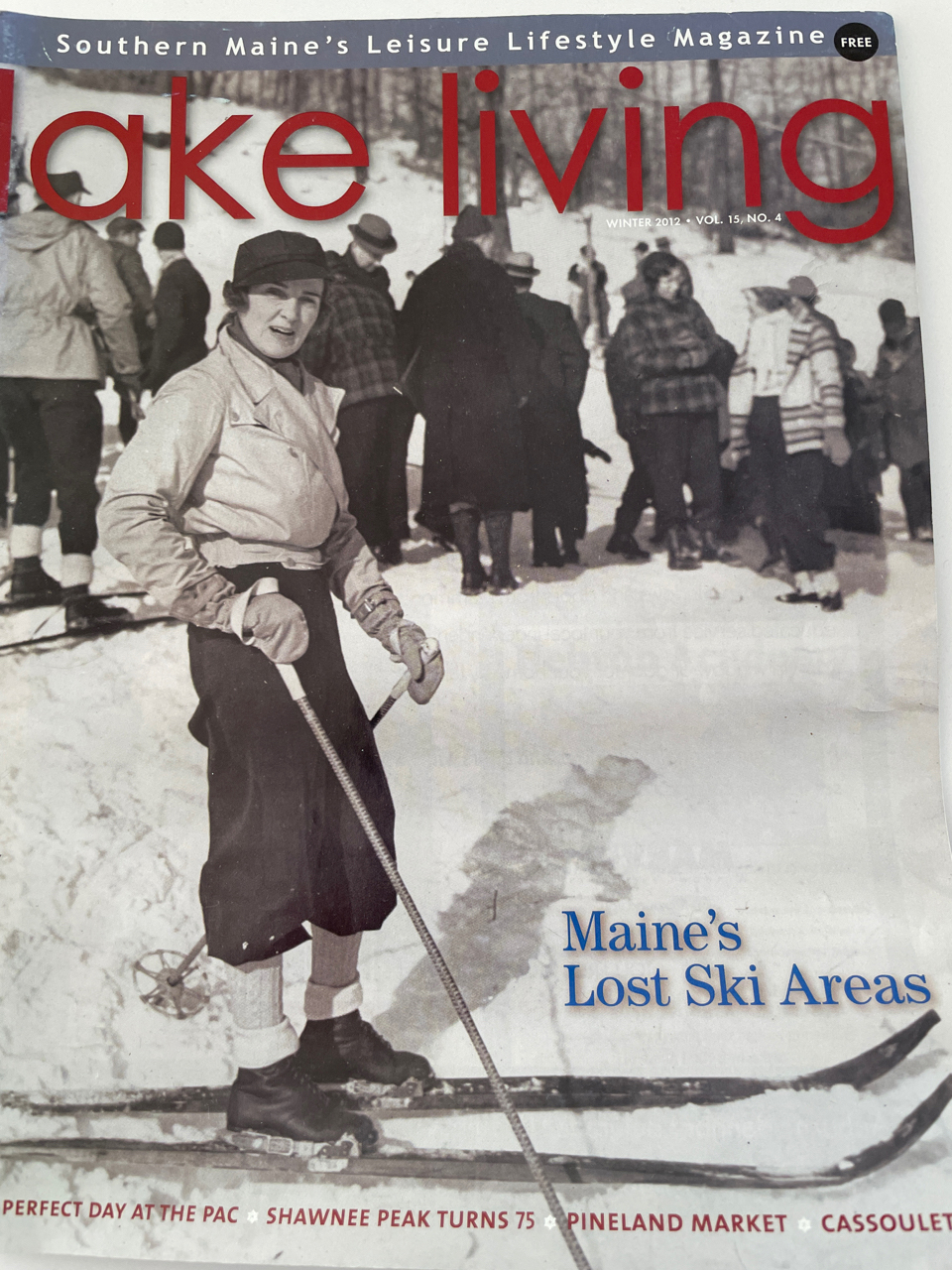
At the time I was working on an article for Lake Living magazine entitled “Maine’s Lost Ski Areas” and interviewing various skiers and making MG tag along with me as I visited the former ski areas. “Trails hidden in the forest provide us with clues that our town fathers worked hard to create recreational areas, but also to boost the local economy,” I wrote in the article. “You can still find some of the trails and remnants of rope tows and chair lifts. When you unexpectedly come upon cement pads and towers while hiking, it’s a bit like entering a ghost town, a place that has seen a livelier day. So many people have a history with these legendary ski areas. They learned to ski at this one, met their spouse at that one, or won first place in a race.

The skiing industry began in the lakes region in 1936 when a group of ten businessmen each invested $25 and considerable labor to build the first rope tow in Maine. The Jockey Cap Ski Tow helped make Fryeburg ‘The Ski Capital of Maine’ for a brief time.

According to newspaper articles and brochures preserved by the Fryeburg Historical Society, the Fryeburg Winter Sports Committee hired Paul Lamere, a ski instructor, to run a branch of the Lamere School of American Skiing. Lessons were offered one day a week.

Because the Maine Central Railroad had a station in town, Fryeburg residents saw the ski area as a means to support businesses during the Depression. Leaflets proclaiming “Weekends for Your Winter Sports” mentioned “good motels, good restaurants, good rooms in private homes, all prices reasonable . . . use the lighted ski-tow, Friday and Saturday nights, a brilliantly lighted slope and rope to pull you up the hill, a new thrill for winter sports enthusiasts” were distributed in the Portland area. The cost for a ride on the snow train from Portland to Fryeburg was $1.50 and a ski ticket was about $1.00.” (I should mention that the photo above was made possible to Lake Living by the Fryeburg Historical Society.)

But we weren’t at Jockey Cap today. And this ski area was a wee bit newer as I quoted former Lake Region High School principal Roger Lowell telling me he’d skied at Burnt Meadow Mountain, which had one lift and a lodge. If you look below the arrow, the top tower was the end of the line and skiers had to exit off the T-bar at that point.

From my article, “According to NELSAP (New England Lost Ski Area Project), in 1967 the Burnt Meadow Mountain Recreation Area received a loan from the Farmer’s Home Association to create a ski area that opened for the 1971-72 season, but saw its demise when several bad snow years followed. In 1980, Wendell Pierce, owner of a northern Maine ski area, purchased Burnt Meadow and renamed it Zodiac Skiway.”

“‘It had pretty good skiing from the top,’ recalls Roger, ‘but three quarters of the way down it flattened out and you had to get up steam to make it all the way without poling.’ He and his team got into trouble for going too fast. ‘WE were bombing the thing so we wouldn’t have to skate to the lift,’ he says.

While there on his own one day, Roger learned about a race. After discovering he couldn’t inspect the course, he found himself last in line. ‘I figured what have I got to lose so I went fast. It didn’t matter if the gates were down a bit. You would have thought I was Jean-Claude Killy.’

Roger won the race and received a blue ribbon similar to what they award at the Fryeburg Fair. ‘I think it said something like FIRST on it,’ he says, a wry look on his face. ‘It was very generic. A conversation piece.’ That was the last race held there. The ski area continued to lose money and closed in 1982. The T-bar still stands intact.” That was 11 years ago, but today’s photos speak to the fact that it still stands intact.

It didn’t take long for us to reach the summit, where we walked around taking in the views beyond, this a look toward Stone Mountain, which is accessible via the Twin Brook Trail.

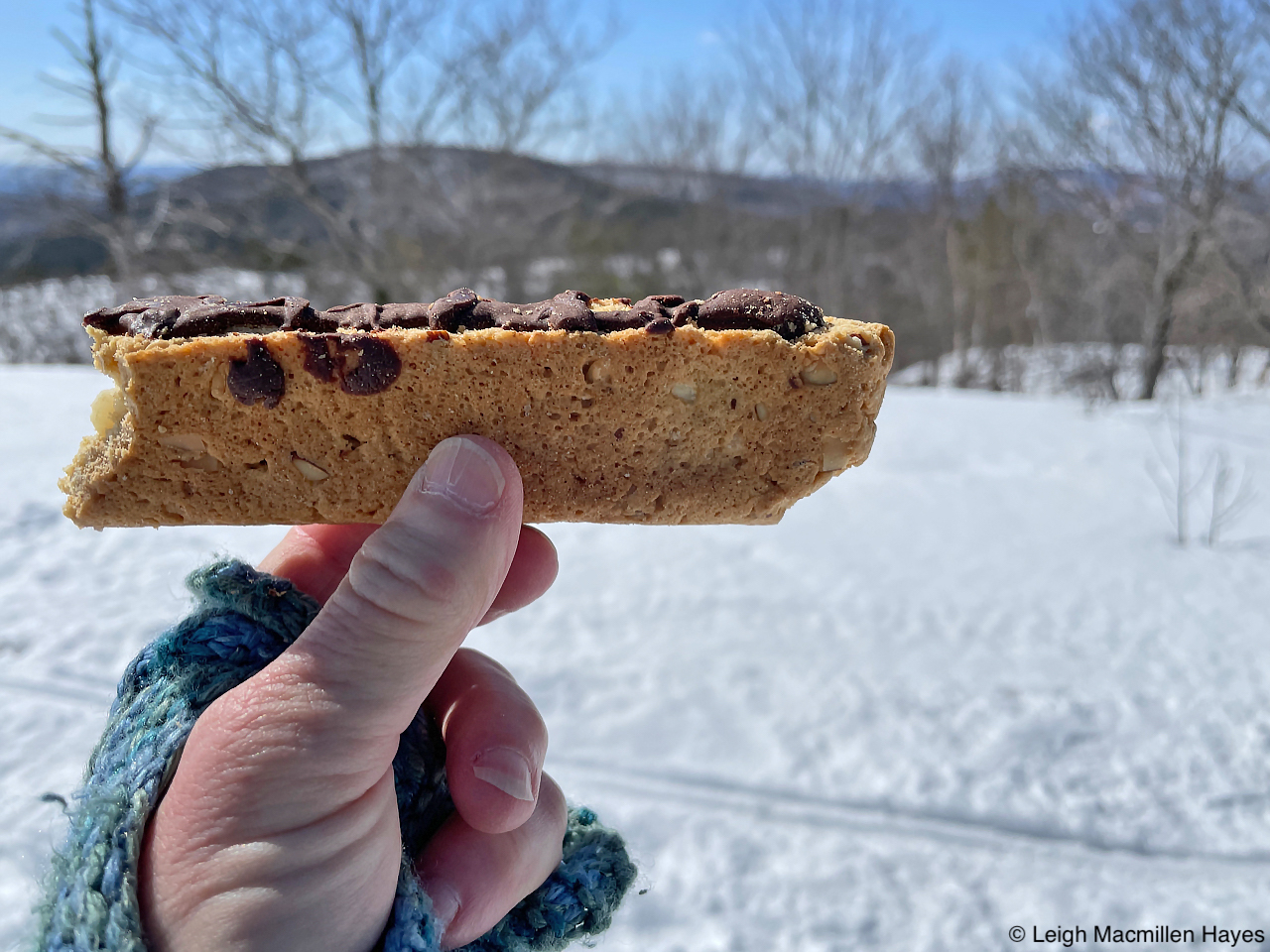
Finally, we sat upon lunch rock to enjoy our sandwiches, followed by Fly Away Farm’s Almond Biscotti with Mocha Drizzle. MG just thought it was chocolate so let’s keep that secret between us.

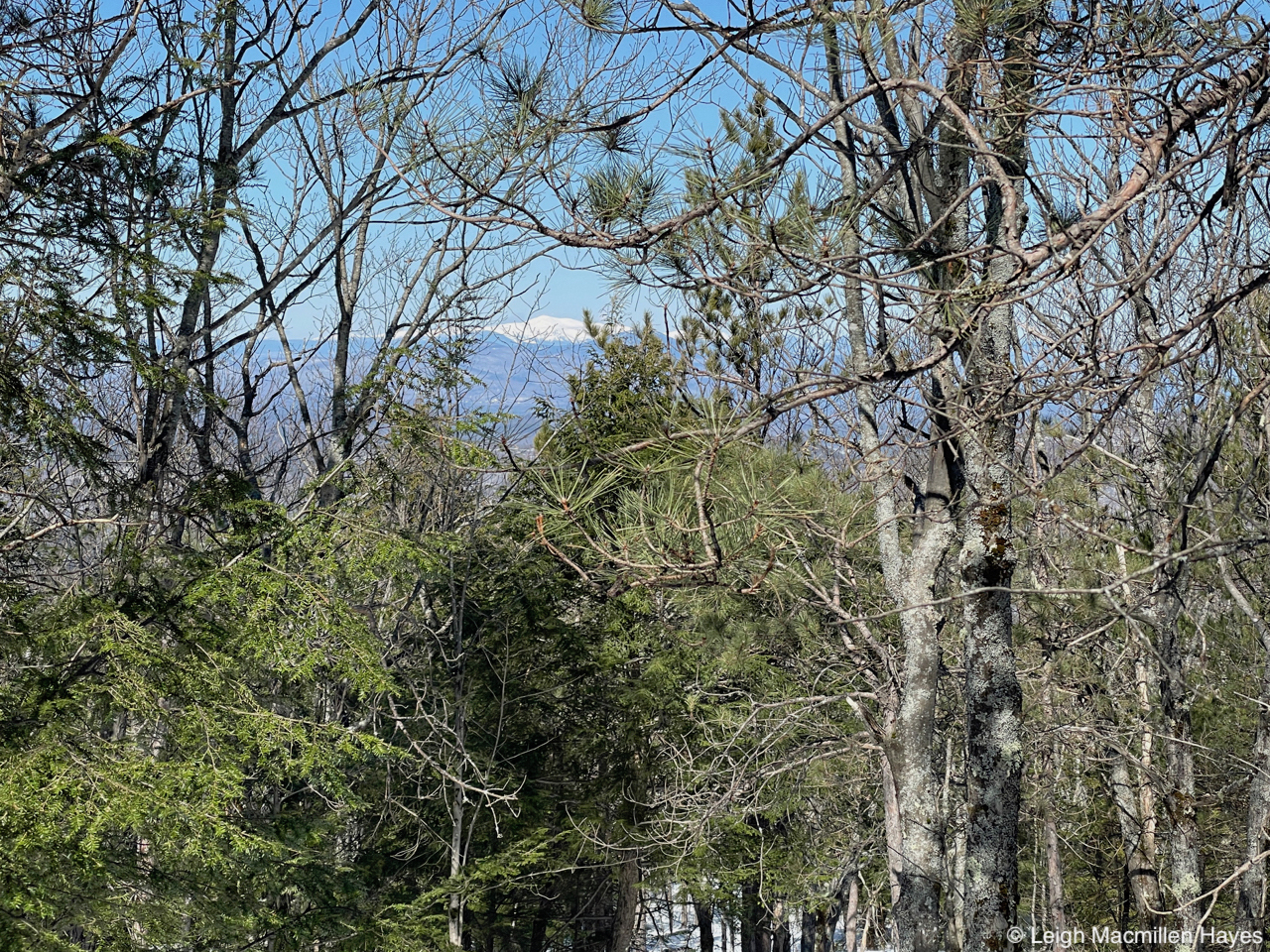
At last we began our descent, with a goal to find Mount Washington. And we did. Do you see it between the trees?

And then we found it again when we slipped off trail to take in the scene from a ledge. We always love to know where we are in the world. Our little world.

As we continued downhill, I was stopped in my tracks. That happens occasionally. (Insert smiley face) But this tree that leaned across the trail begged to be noticed and I’d missed it on the climb up the mountain.

Its manner of growing needles upon the trunk like no other evergreen that I know of gave me an immediate identification.

Add to that the number of needles that grow in short individual bundles: 3. Three strikes and you are out. Pitch Pine. Get it?

In the end, we thought we’d lost winter, but we found it alive and well and holding on for a wee bit longer. And even longer than that if you are at the summit of Mount Washington.

At the same time, because we are on the cusp of a seasonal change, we found spring in the form of swelling Red Maple buds . . .

and Striped Maple.

We also found some stuff left behind by other recent hikers. We left the sunglasses on a cairn at the summit.

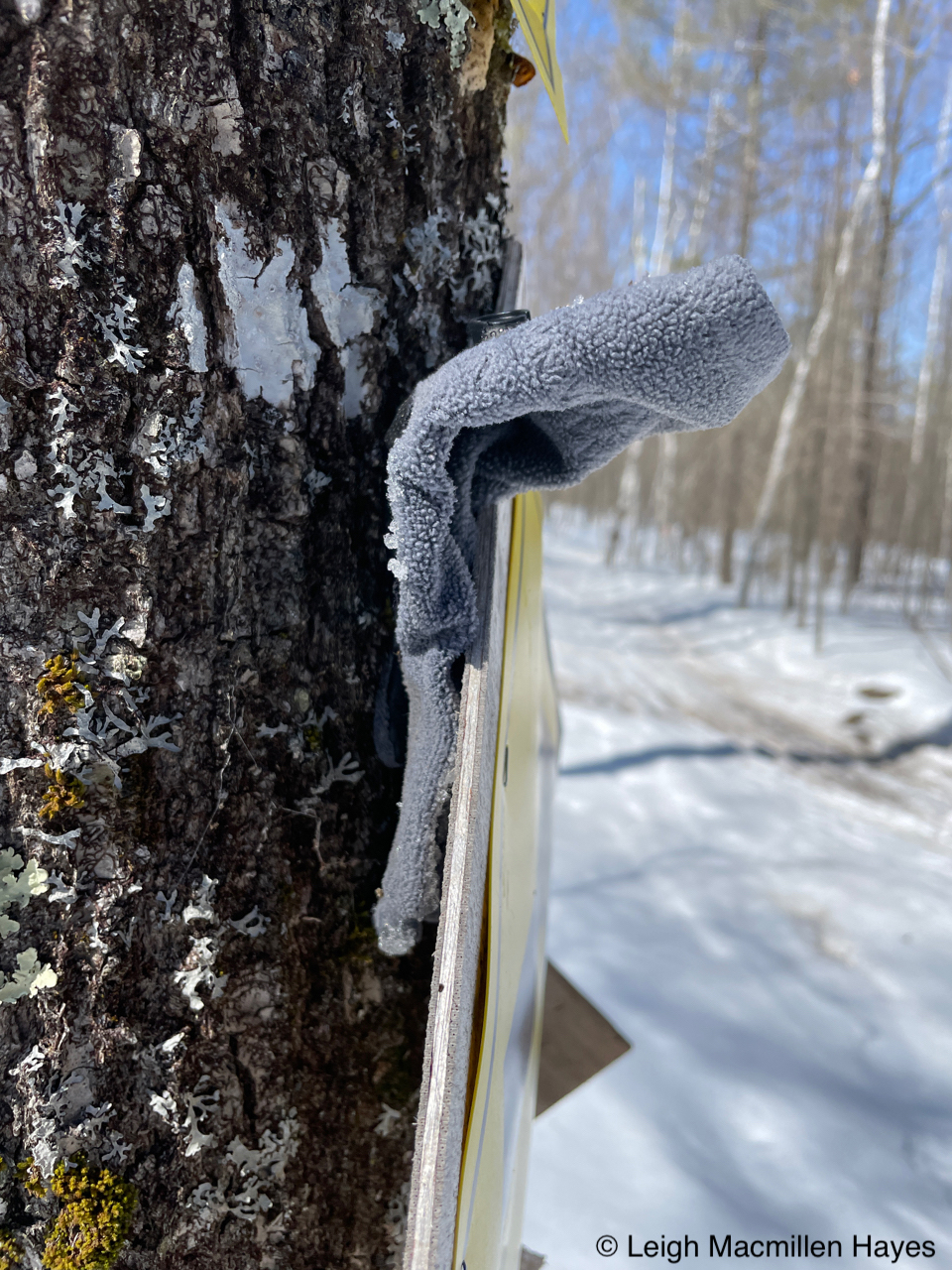
And a glove at the trail intersection.

In fact, just after putting the glove on the sign we found an optic cleaning clothe–maybe to clean the sunglasses?

This was indeed a lost and found Mondate.

Oh, and thanks again to Allen Crabtree for his write-up and directions to the trailhead and mention of my friend Marita Wiser’s book: Wrote Allen: “The origin of the name “Burnt Meadow” is not clear.  Most trail guides attribute the lack of large trees on the mountain to the Great Fires of 1947 which also burned more than 80% of the old homes in Brownfield.  Marita Wiser, in her Hikes in and around Maine’s Lake Region says,”…the name of Burnt Meadow was established long before [1947].  It is shown on…an 1858 map of Brownfield.’”

The Luck Of The . . .

Any day spent outside is a day well spent and such was my case on this Saint Paddy’s Day.

I first followed the oversized bird prints of some Turkeys, which led to . . .

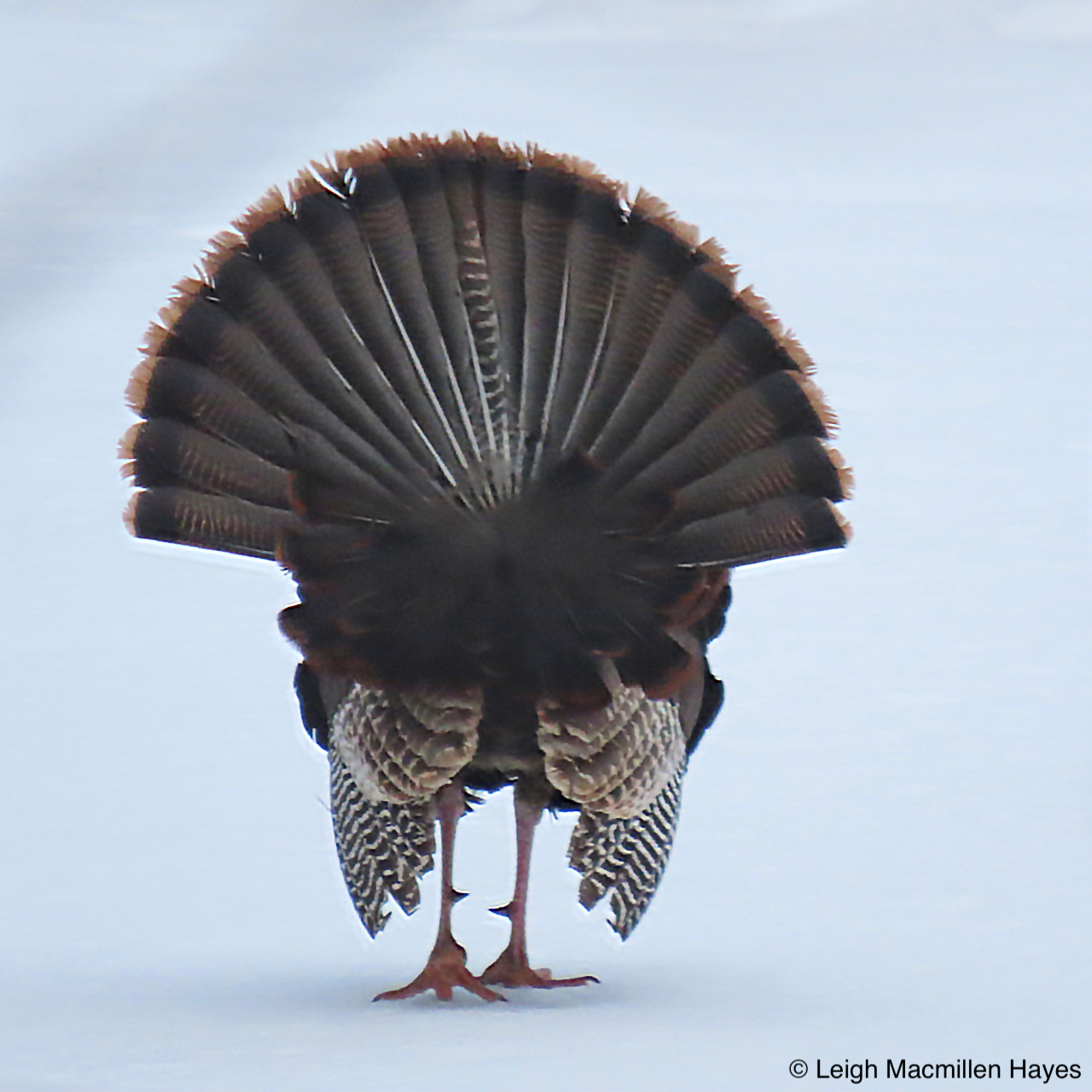
Tom in full display . . .

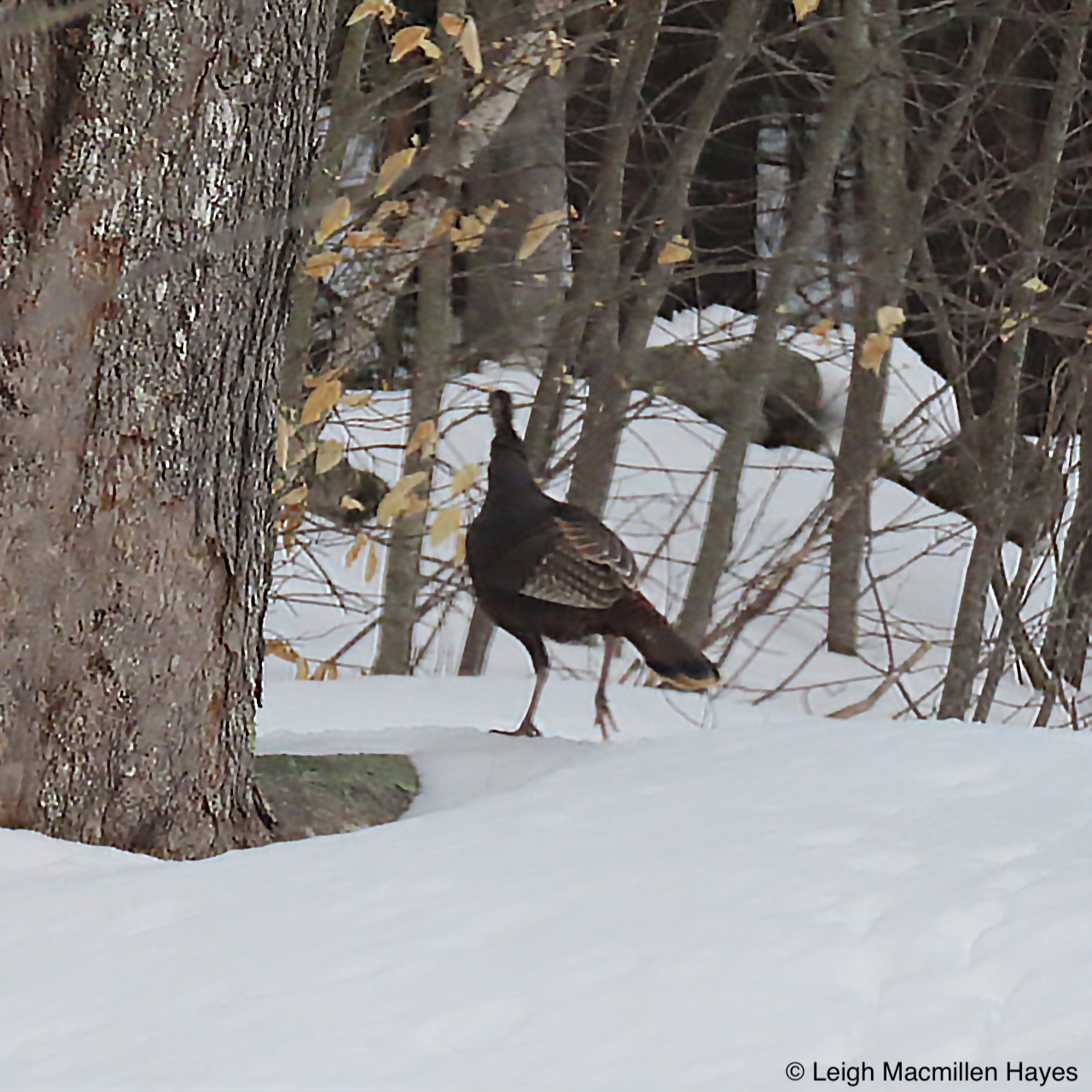
As he strutted before a few ladies, which led to . . .

Total nonchalance on the part of the ladies as they passed by, which led to . . .

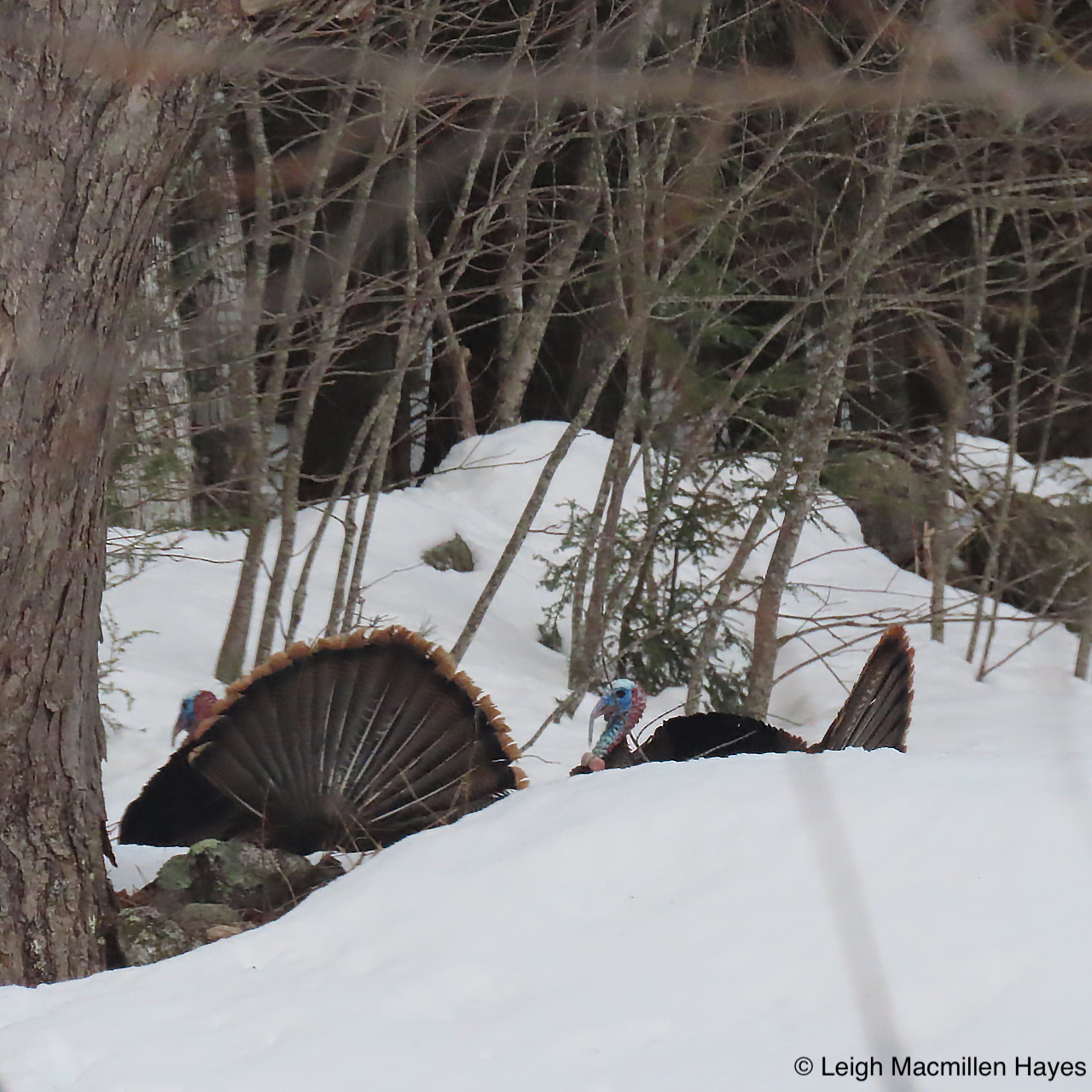
Tom and his brother, Tom, giving chase, which led to . . .

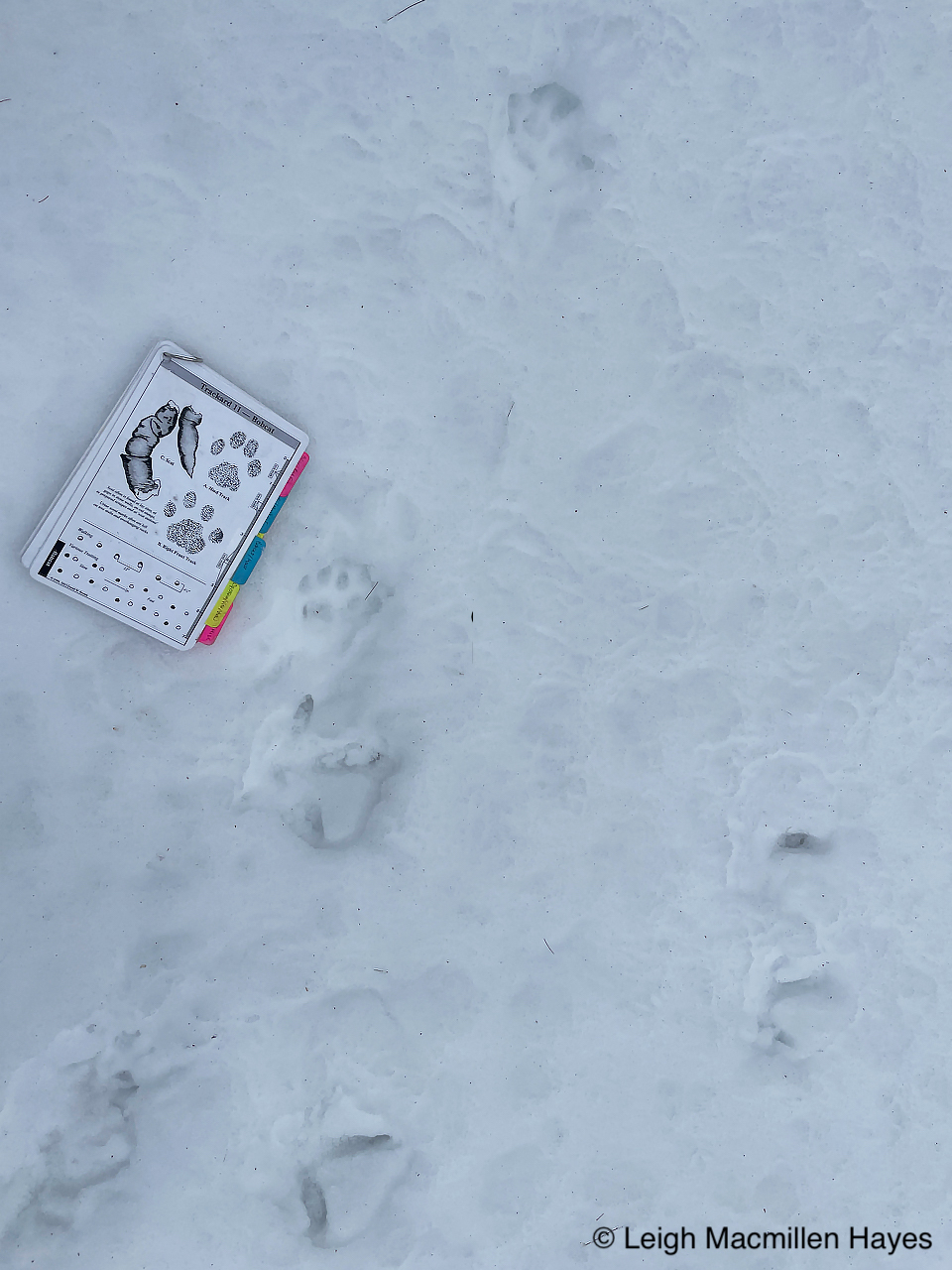
the realization that a Bobcat had crossed the Turkey trail, which led to . . .

a tree with branches scattered on the snow below, which led to . . .

taking a closer look to make sure the twigs were snipped at a 45˚ angle, which led to . . .

following a familiar and fresh trail of pigeon-toed prints, which led to . . .

a sign carved into the cambium layer of a Beech tree, indicating a certain mammal lives near here, which led to . . .

an open door with more signage on either side announcing the resident, which led to . . .

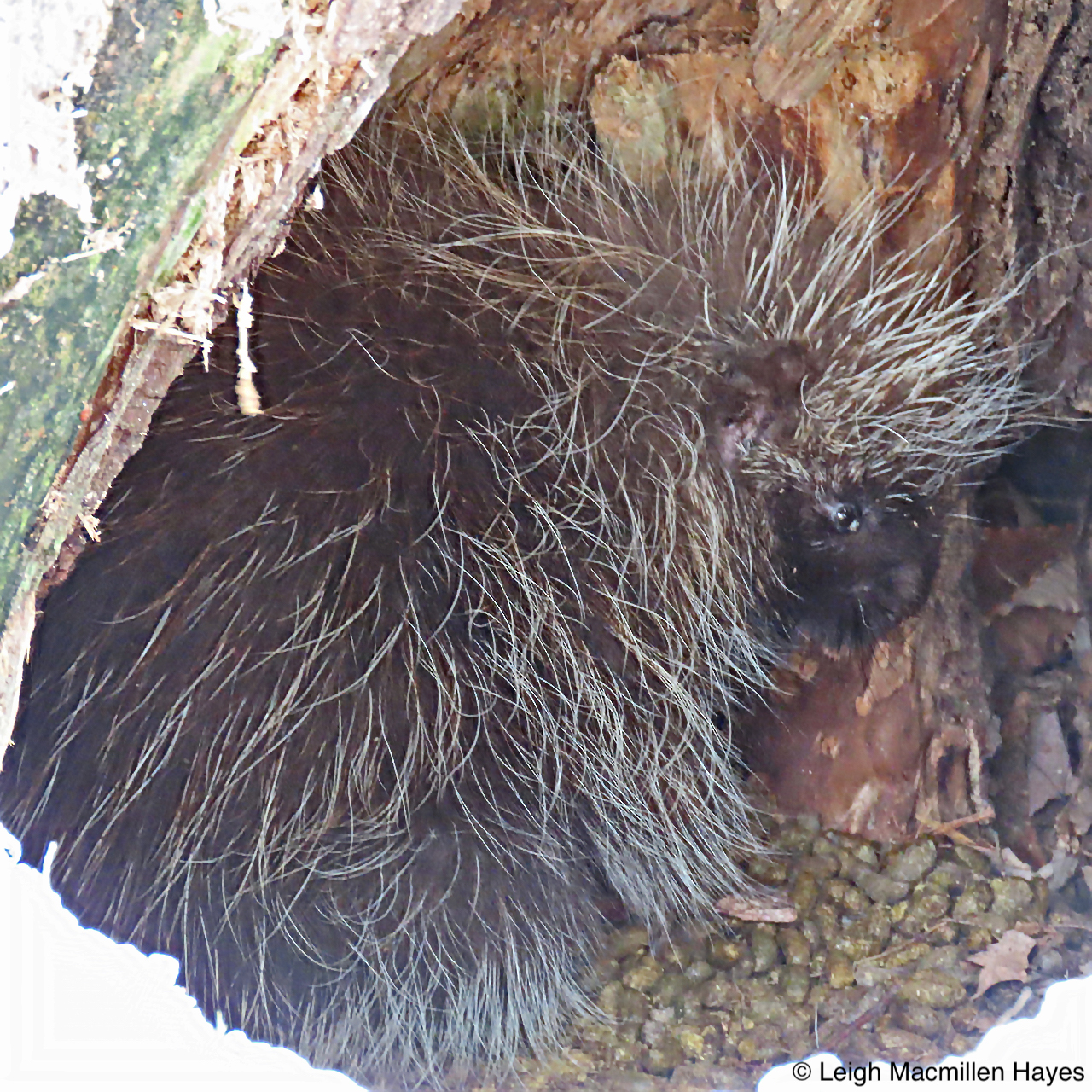
a peek inside and today’s great discovery of a Porcupine at home, which led to . . .

the realization that though St. Patrick is the patron saint of Ireland, which My Guy celebrates, he was born in Scotland and thus today’s finds were due to the Luck of the Scottish.

Oh, and check out that fine pile of scat the Porcupine is sitting upon.

Quill You Be Mine?

It’s not even Valentine’s Day and already I’m thinking of love. Don’t tell My Guy, but this is love of a different sort. And the story all began while tracking with friends earlier this week.

Just as we were about to finish up the program, we spotted the signs of a resident rodent, including downed hemlock twigs and then a den. The den did not entirely make sense due to its placement in what seemed like a wet area, but we decided the critter must have found a dry place above the moisture, for indeed there was scat.

Once spotted, I knew I needed to return, for almost nothing makes me happier than to spot sign left behind by this mammal.

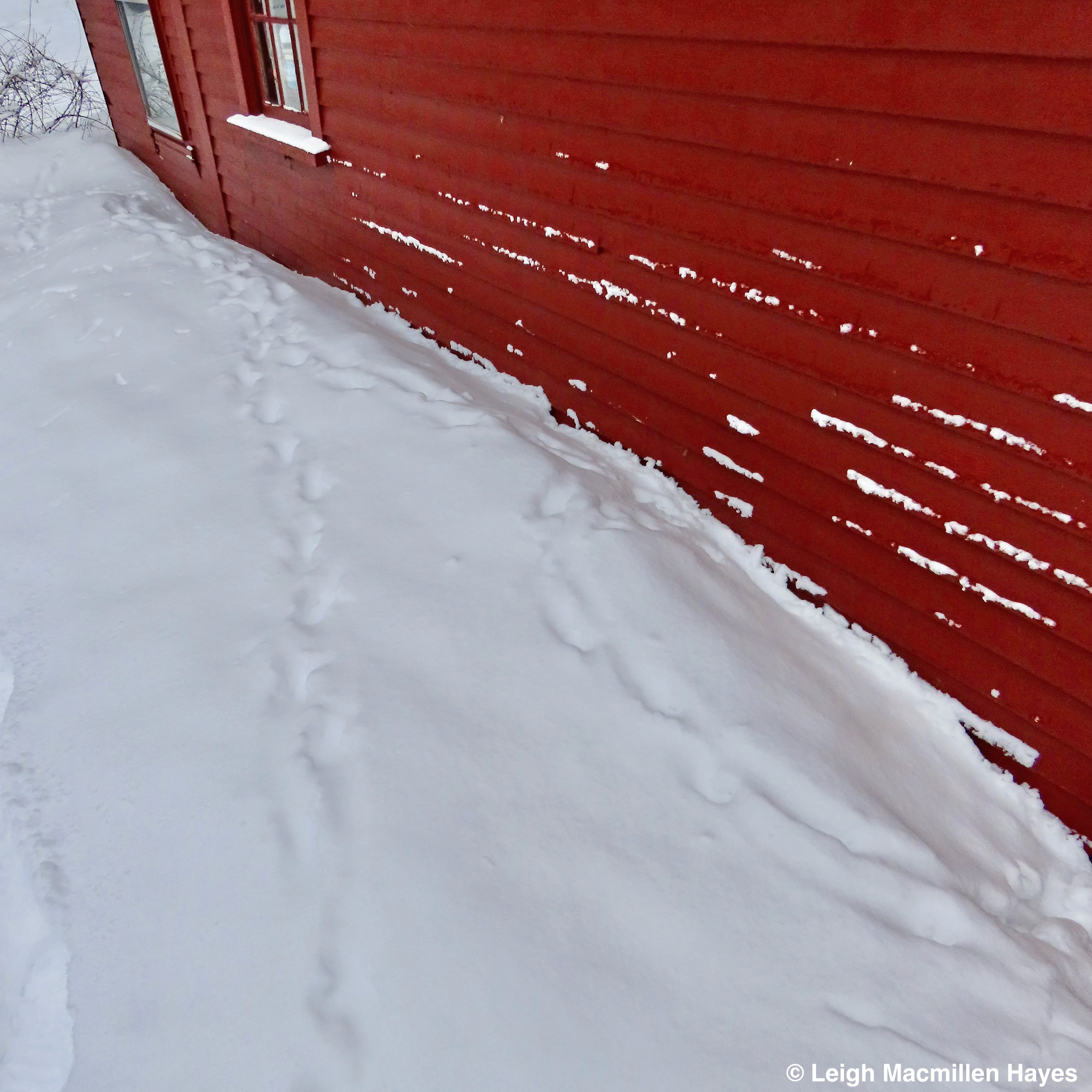
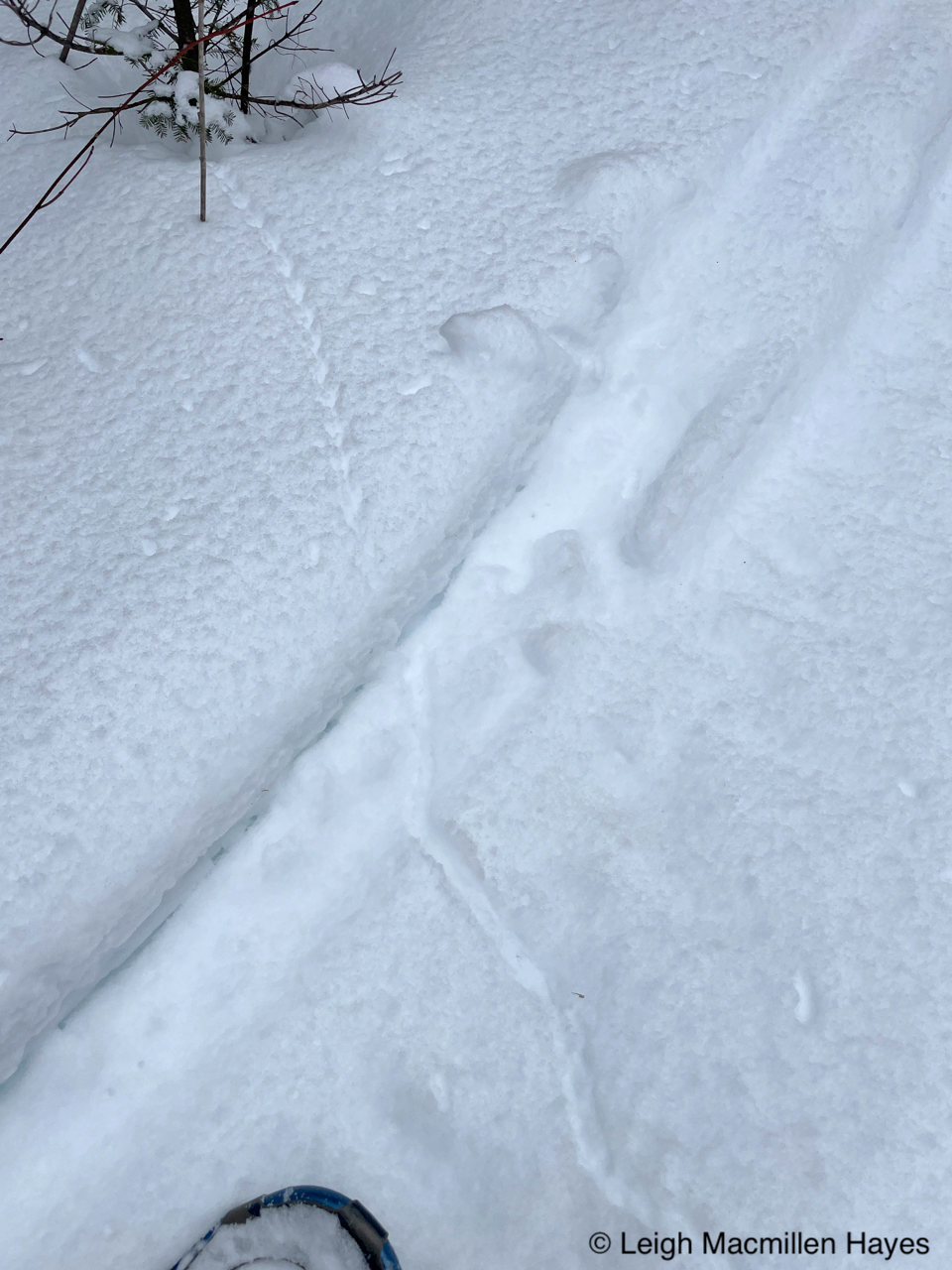
And so I did yesterday afternoon and while taking a different route to the den, I noticed the sashay of said critter as it had waddled through fluffy snow.

Next, I did what I do, and followed the tracks in a different direction than originally intended. And that’s when I saw these, the resident’s name carved on several wooden shingles. It’s an agile critter given that the shingles were posted all the way to the tip top of these pole trees.

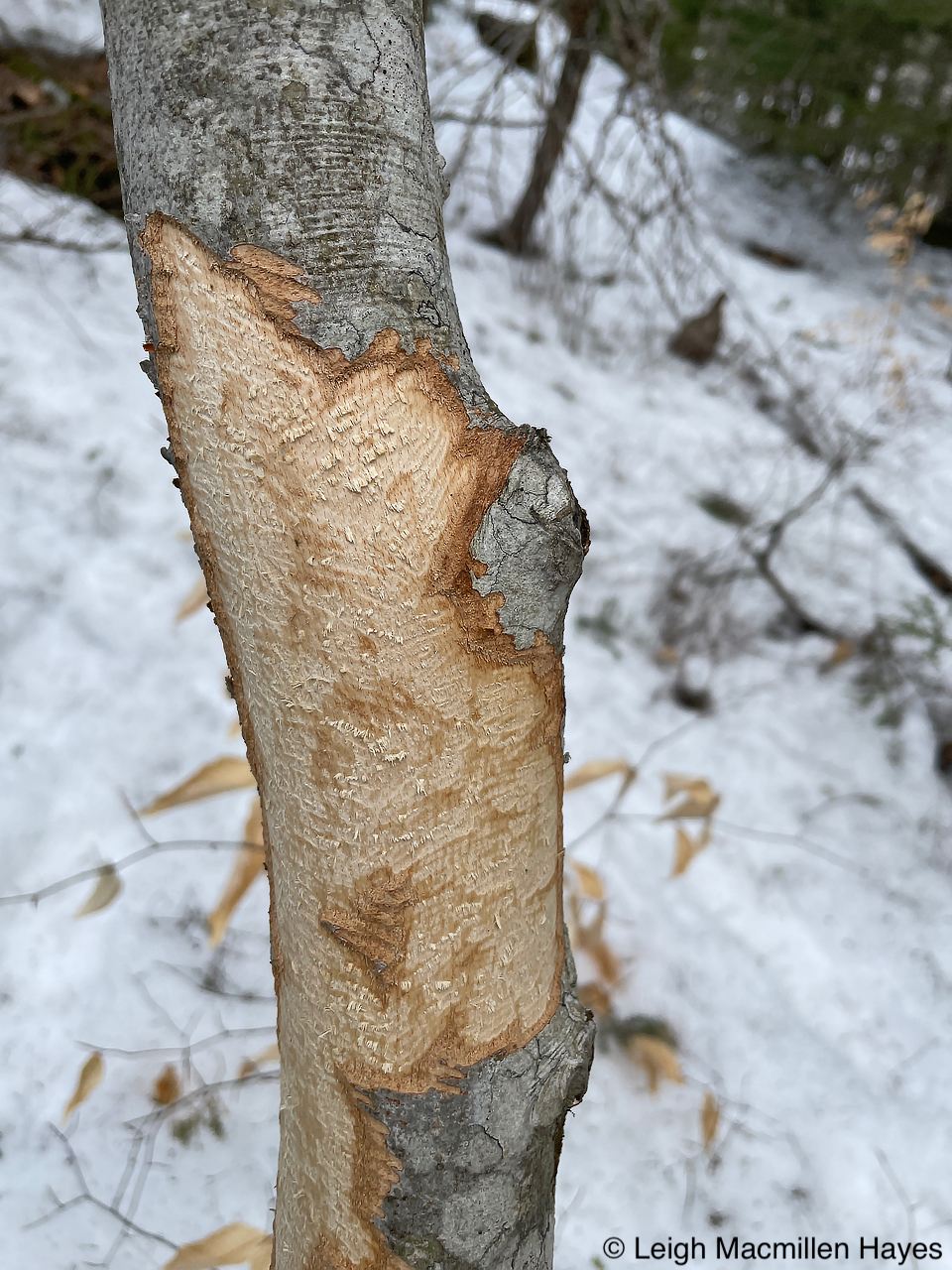
Can you read it? Porcupine Lives Here is the inscription engraved on the tree. Actually, it’s a sign of winter feeding for porcupines, like beavers and deer, seek the cambium layer as one of their food sources. Each line shows where the porcupine’s incisors came together as it scraped away to obtain a meal.

And just beyond those pole trees, I spotted a hole that I suspected could only be one thing. A den with tracks leading in and out and the required pee, for such is this mammal’s habit.

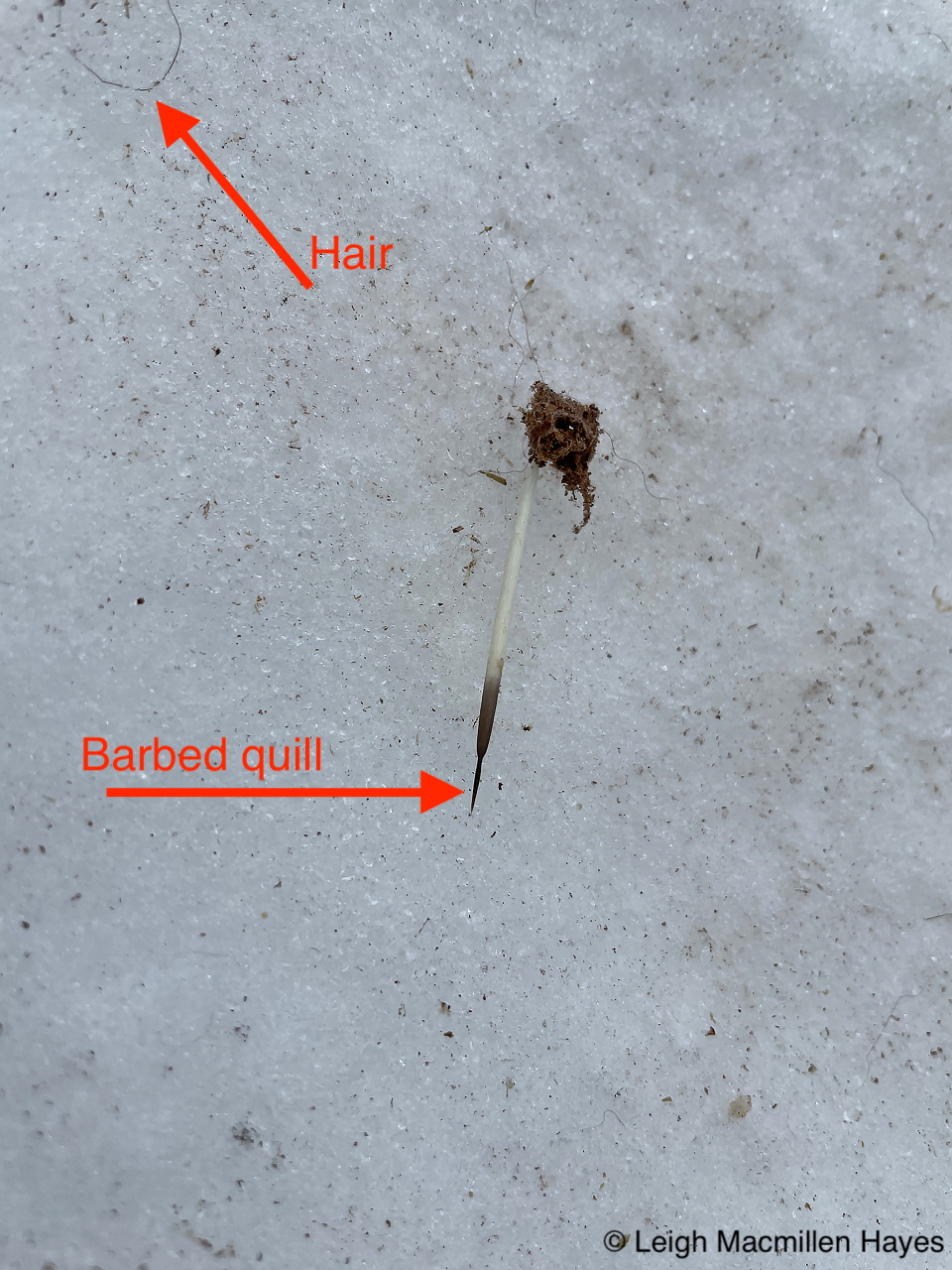
A closer look at the dooryard and I spotted a barbed quill and hair. Actually, quills are a modified form of hair.

Did you know that porcupines have a variety of hair? For winter insulation, they have dark, wooly underfur. In addition, there are long guard hairs, short, soft bristles on the tail’s underside, stout whiskers, and then there are those pesky quills.

They aren’t pesky to the porcupine; just us and our pets and any animal that might choose to or accidentally encounter a porcupine.

The quills are 1 – 4 inches in length and lined with a foam-like material composed of many tiny air cells, thus their round, hollow look. There are no quills on the porcupine’s face, belly, or inside its legs.

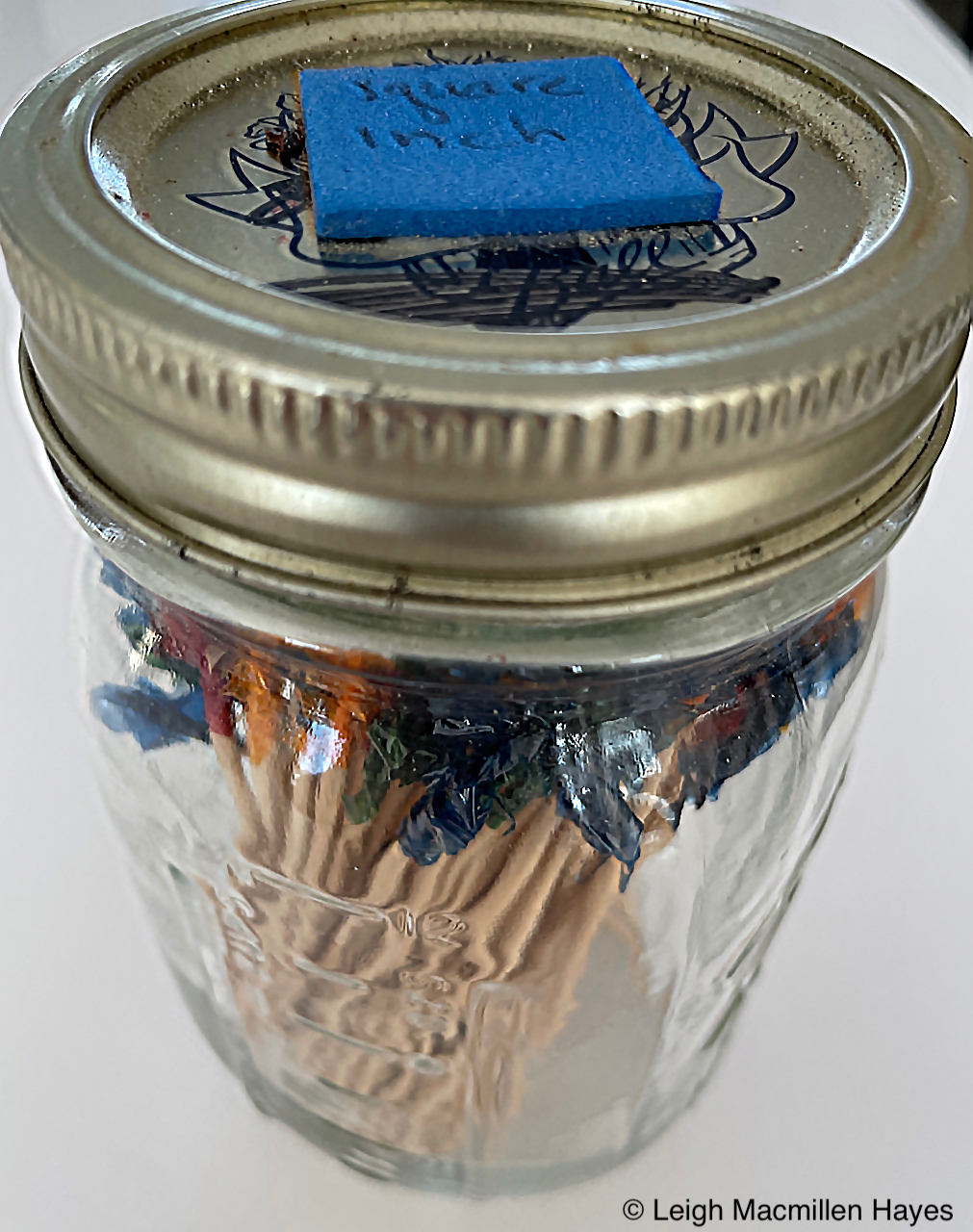
But on the upper portion of its head, down its back and along the top of its tail, oh my. Within one square inch, there are approximately one hundred quills.

All told, there are over 30,000 quills. But who is counting. Not me. Though I did count these fancy toothpicks, 100 in all, to represent the quills in a square inch.

Despite the myth, porcupines cannot throw their quills. Because the quills are loosely attached, they dislodge easily on contact and stick into a victim’s flesh. And because they are barbed, they are difficult to remove. Talk about a formidable defense!

Returning to the den, which was located within a hollowed tree, I knew the porcupine had visited within the last twenty-four hours but wasn’t so sure it was home at the hour I stopped by.

As I often say, “Scat happens.” And in the case of a porcupine, it happens a LOT! One porcupine evacuates 75 – 200 scats a day. And though this happens as it dines, most of the scat is deposited in the den. Why? Warm insulation on a night as cold as tonight will be with temperatures already in the negatives and wind chills expected to reach -45˚? Or a detractor for predators–do they get a whiff and realize its one they don’t want to visit?

I’m not sure, but this is an example of a winter scat–fibrous from that woody diet of bark and twigs. It’s comma shaped. And often there is a groove down the inside curve.

By spring, it may come as linked pieces, much like a necklace, for grass fibers from a change in diet help create the connection.

Having discovered this den, I decided to follow the tracks, which indicated the mammal had traveled in two directions. Where would it lead me?

Within a tenth or two of a mile, I realized I’d snowshoed back to the spot my fellow trackers and I had discovered two days prior. You can see our snowshoe tracks. But since our visit, the porcupine had happened along, climbed over the downed log and peed.

Did you know that pee plays an important role in a porcupine’s courting ritual. These critters are solitary most of the year, but between September and November they seek a mate. The male, in a bid to woe a female, often approaches and sprays her with his urine. Are you feeling the love? She apparently does, for if she likes the scent of his urine, they might rub noses, or walk on their hind feet before canoodling begins.

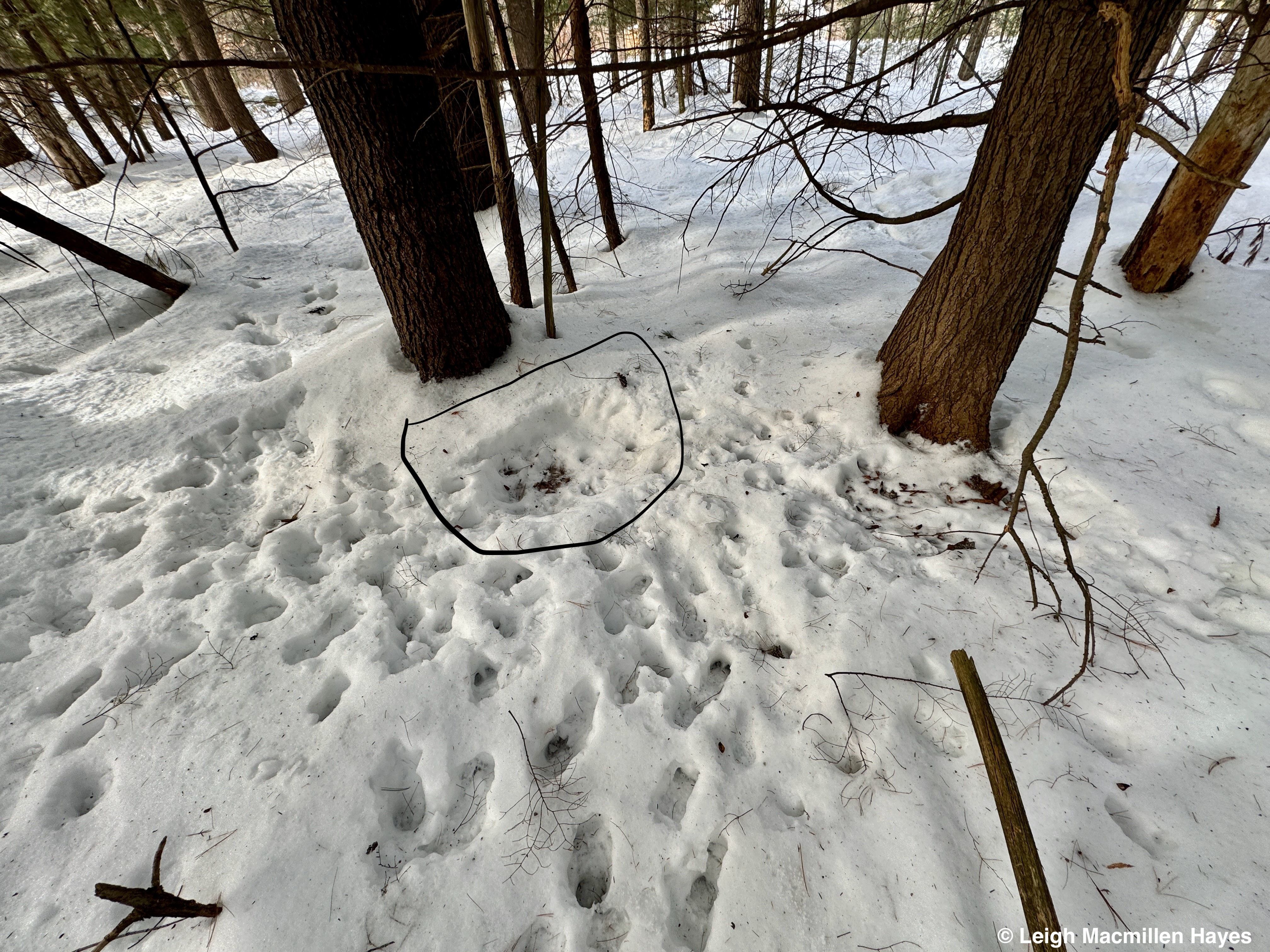
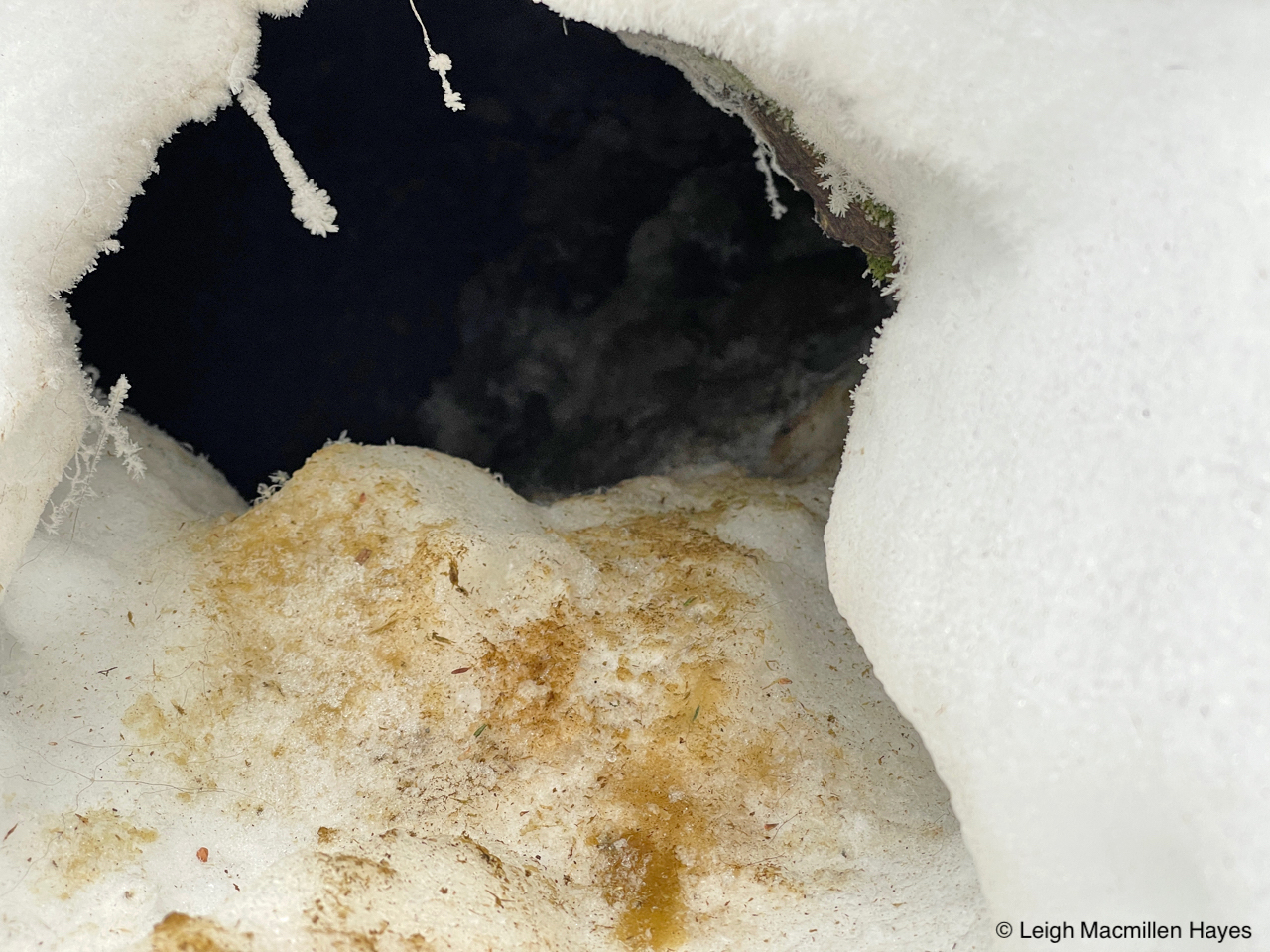
Right above the peed-upon log was the entrance to the den and by the sight of the pigpen approach, browner even that it had been previously, I knew this really was active. The soiled snow is from the porcupine walking across its scat to exit the den.

Unfortunately, I couldn’t get the camera lighting right, but believe me that this one is full of scat as well. And I suspect, though I couldn’t see it, that a porcupine was sleeping somewhere in there, with its tail facing the entrance just in case a predator happened along.

Another indicator of a resident in the house–hoar frost created by breath on a cold winter day.

Right above the den I discovered the tracks of another–enemy number one in a porcupine’s world view. A fisher will kill a porcupine with repeated bites to the face and head.

Coyotes have also been known to work in pairs to maneuver a porcupine onto its back, thus going for the belly, where the hair is wooly.

So the curious story to me was that the fisher passed through after the porcupine was already back in the den, but it didn’t approach the den. Perhaps it had hoped to find the porcupine out in the open and didn’t want to face a tail lashing if it stuck its nose into the house.

Since the pervious visit, there were also more hemlock twigs on the ground and lots more evidence of scat-dirty feet and pee.

Because a porcupine is a rodent, and a large one at that, only exceeded by a beaver in size, it has prominent top and bottom incisors and twig nips are at a 45˚ angle. Can you also spot the scat and hair?

The winter diet consists of needles and bark–favorite trees being hemlock, birch, beech, aspen, elm, oak, willow, fir, and pine.

In spring and summer, a porcupine seeks out grasses and other green plants. And then in the fall, it looks for acorns, tearing into them in a rather messy manner.

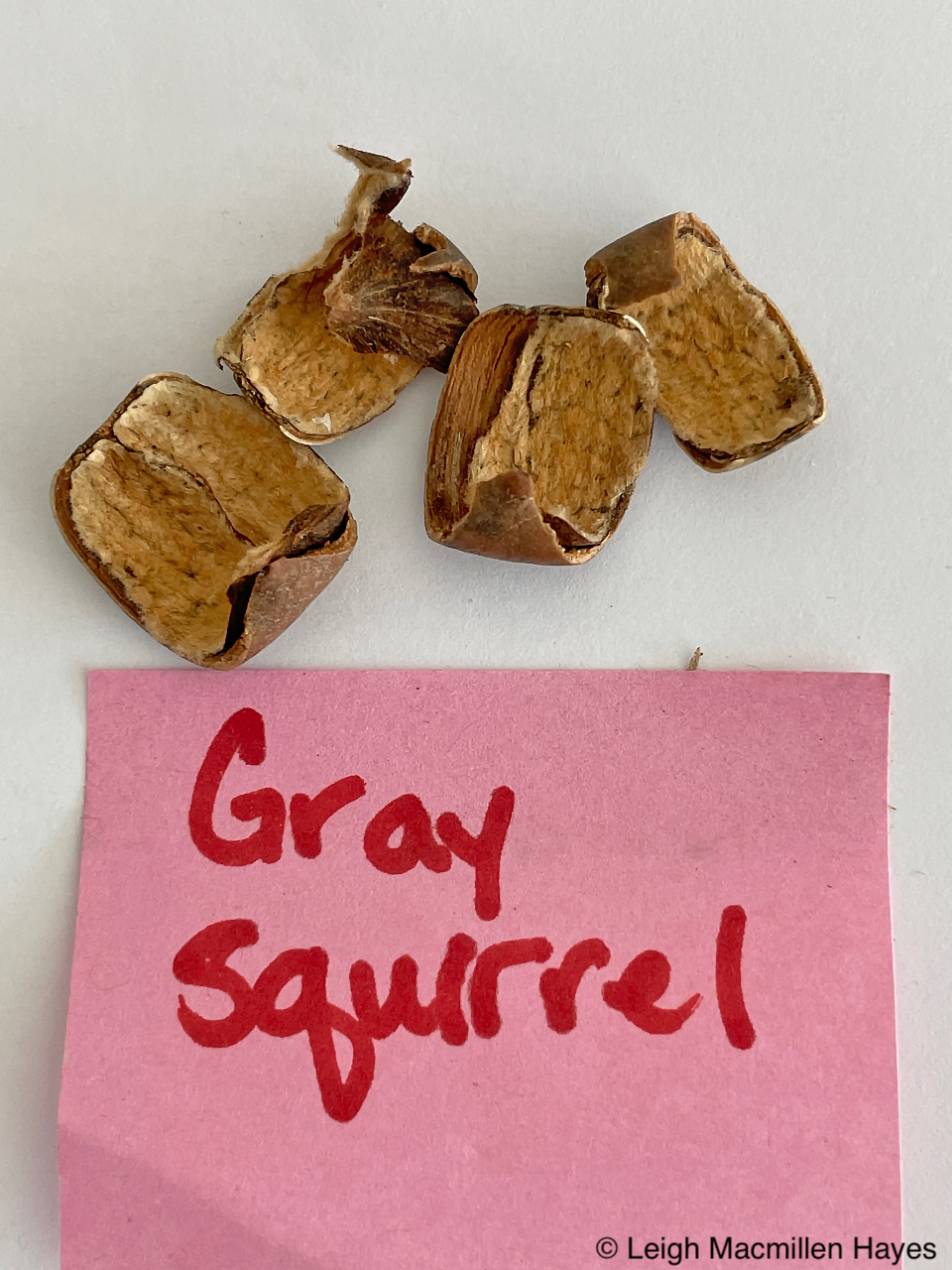
In fact, a squirrel’s midden of opened acorns shows that it cuts the hard shell into much neater strips.

A porcupine’s cheek tooth pattern consists of one premolar and 3 molars on each side top and bottom. As you can see, the cheek teeth are modified for grinding since they are strict herbivores.

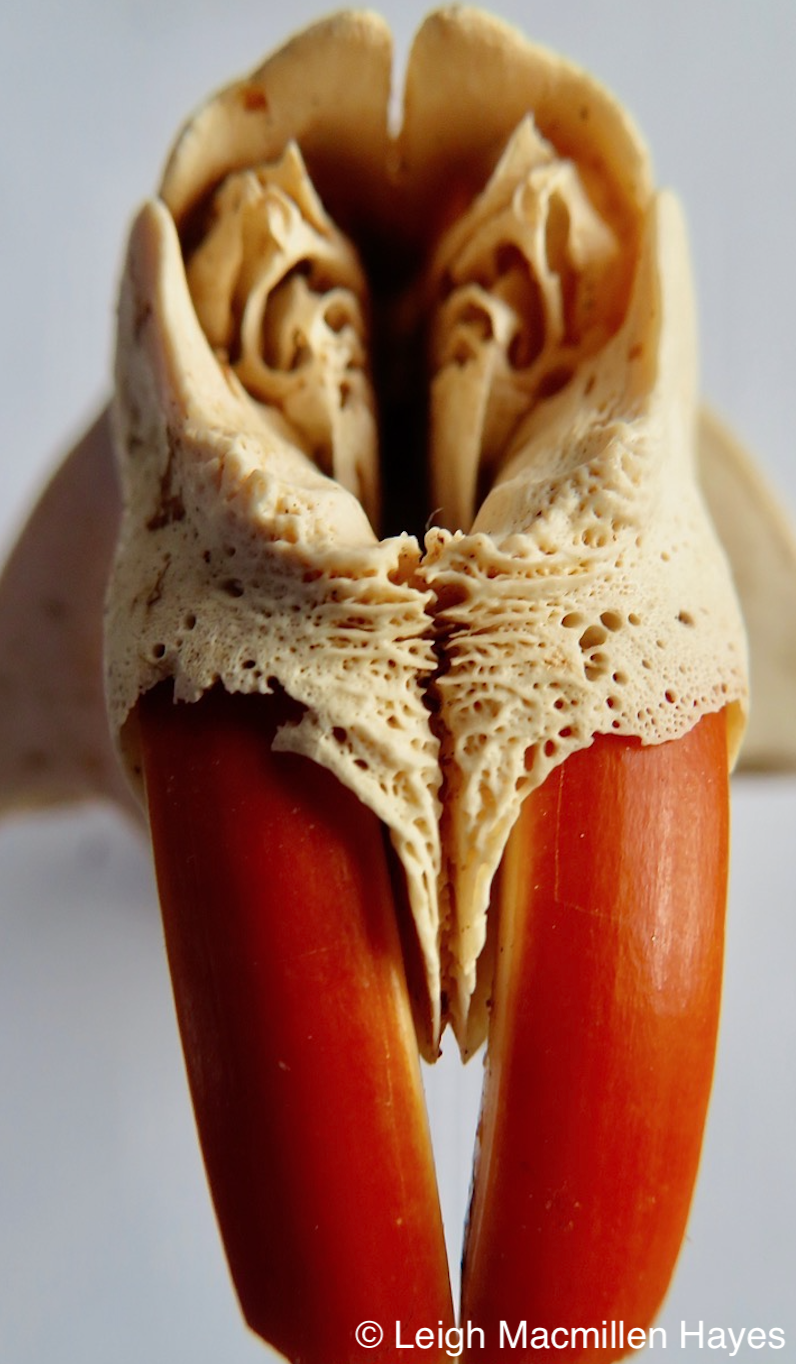
It’s those prominent incisors that are to be admired. A porcupine uses its large two front teeth for gnawing off bites of food. The incisors continue to grow throughout the porcupine’s life at a rate of twelve inches/year, and the constant gnawing keeps them worn down to the perfect size.

I did not actually see a porcupine yesterday, despite my best hopes, but sometimes it happens when I’m not looking intentionally so there may be a sequel to this story.

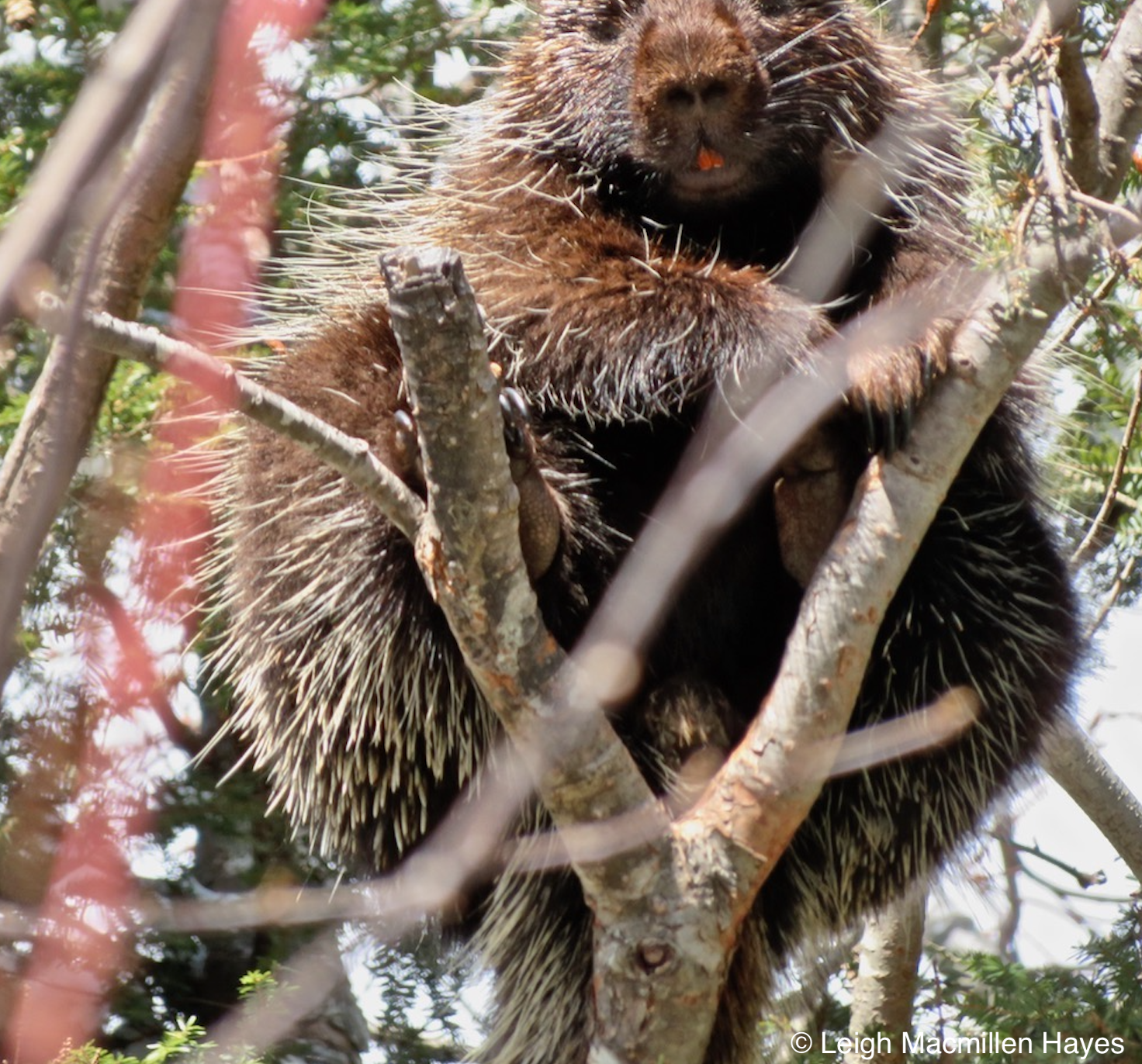
A porcupine has poor eyesight, so I’m not sure if it ever actually sees me when it’s up in a tree, especially if I’m standing sorta still, but it does have a good sense of hearing and smell, so I’m sure its aware of my presence. And the tail always faces the trunk in case I decide to climb up–it’s a great defense mechanism–having the tail at the ready to thwart a predator.

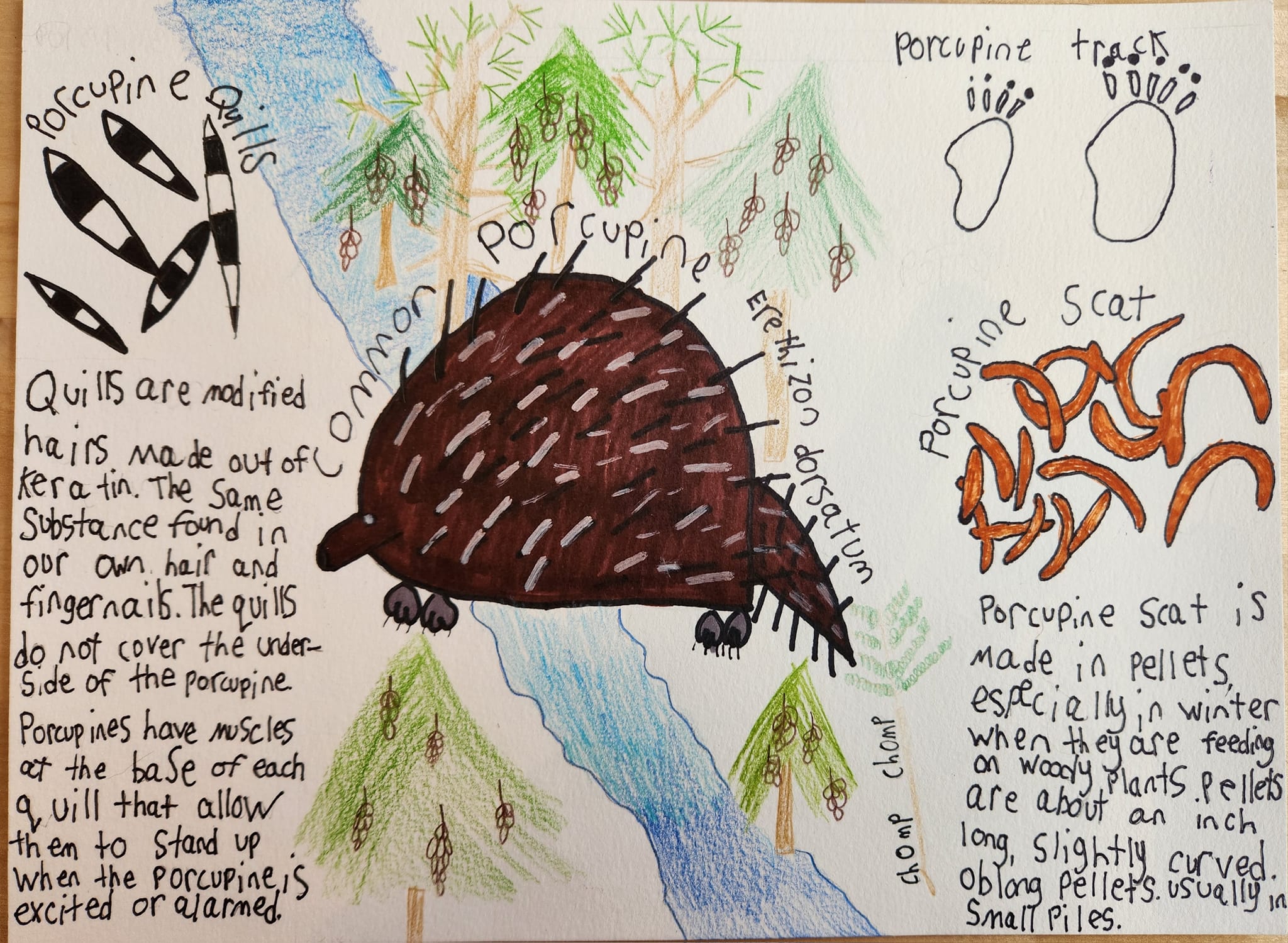
I will end this long story with a drawing by a dear friend and fellow naturalist, 8-year-old Aurora. She’s done her homework and I hope one day soon she’ll be able to answer the question: Quill You Be Mine? with a yes!

Mondate with a View

I’ve been wanting to take My Guy to a certain place in North Chatham, New Hampshire, for the last few years and today was the day that the stars lined up.

Though it appeared we were the second and third humans to head out on the trails this morning, for at the start we spotted only one set of snowshoe tracks, it was obvious that so many others had followed or crossed before us–such as this vole, who tunneled through the fresh inch or two of snow that fell yesterday and then changed its gait.

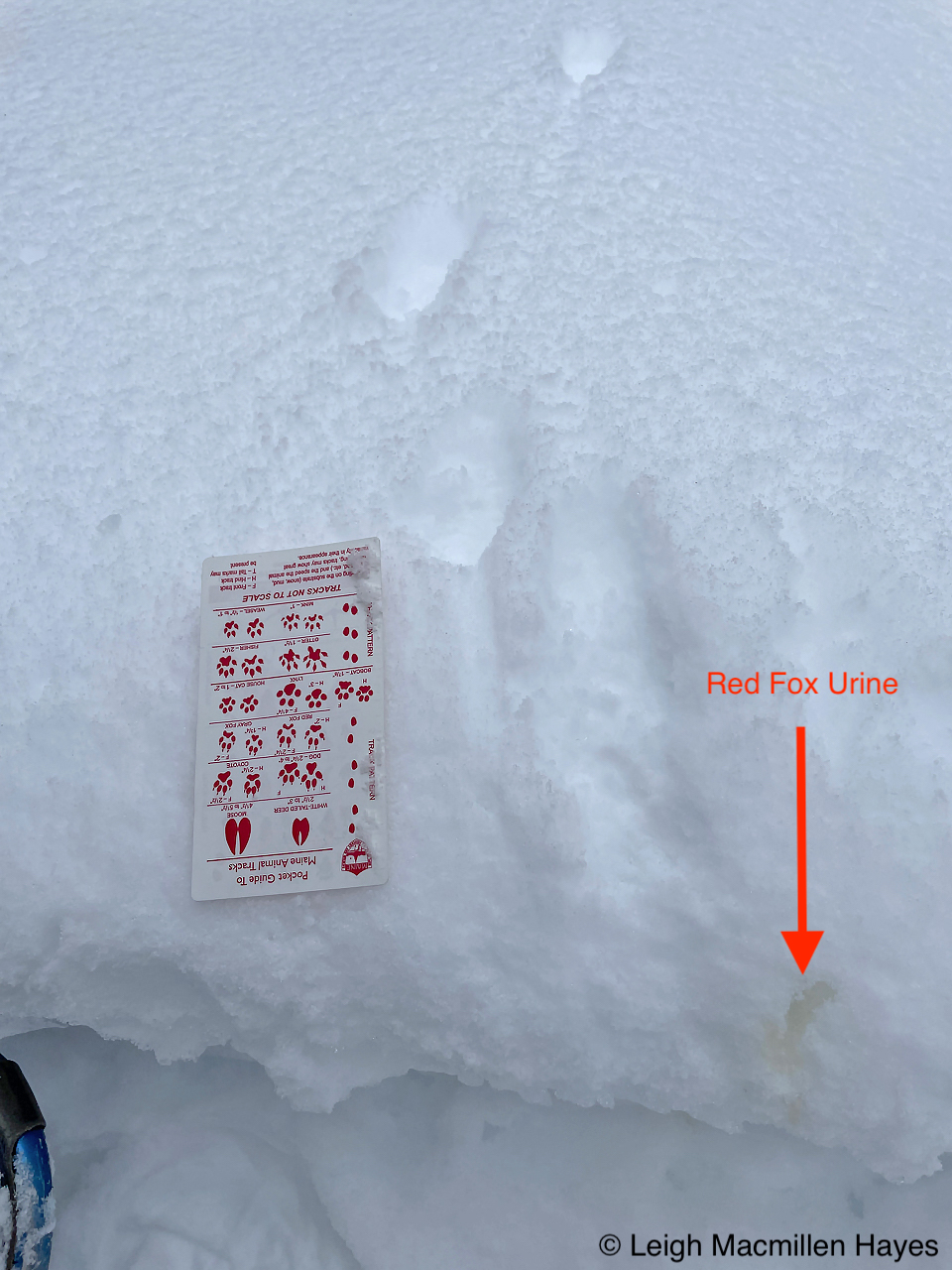
And then I spotted a sign that always brings me to my knees–fox prints and a dash of urine, probably that of a male in search of a date. Confirmation that it was a fox, and a red one at that, came in the form of the urine’s scent–rather skunk-like. I asked My Guy if he wanted to take a sniff, but he passed on the opportunity.

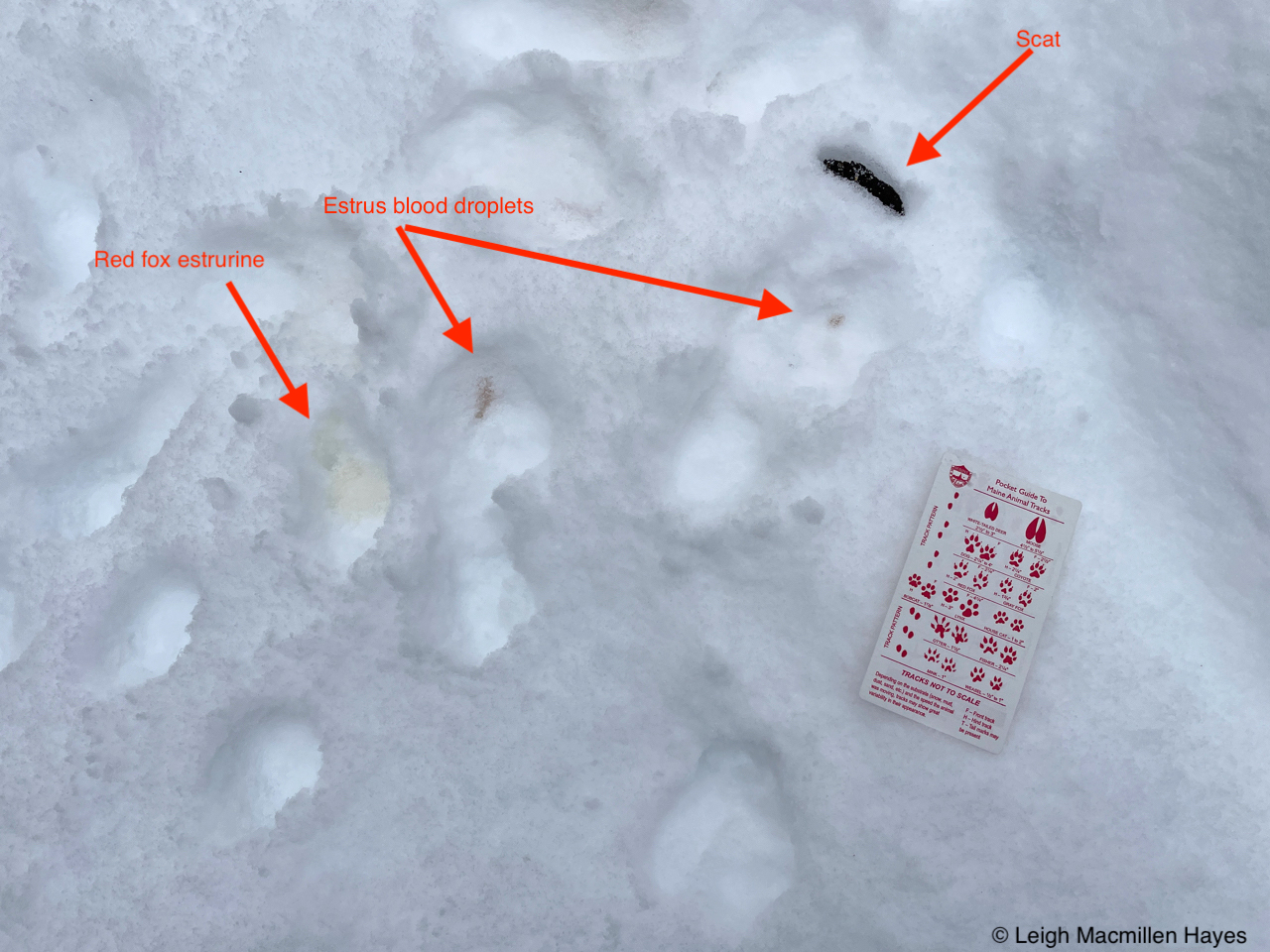
A wee bit farther and we came upon a smattering of activity, where two foxes had left their dancing cards and I think at least announced their intentions for each other as a date.

These classified ads could be that of the male stating his desire, while the vixen left her own marks of estrus blood as she perhaps investigated his intentions and decided to say yes. The scat? It came from one of them. Another advertisement of health and age and vitality.

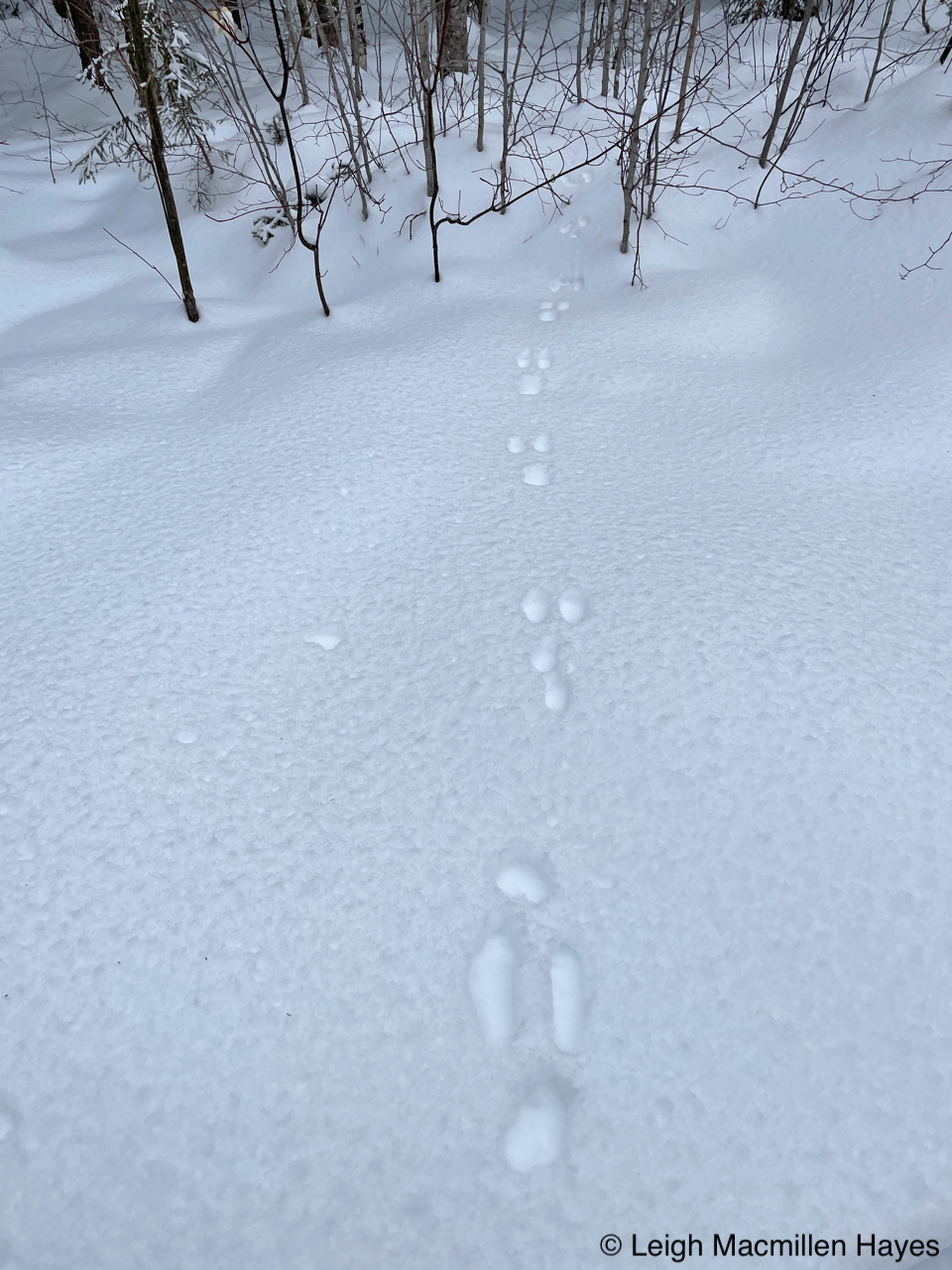
While I suspected a meal was not on their minds as she’s only ready to mate for about a week or less, by the amount of snowshoe hare tracks we spotted, we knew that there was plenty of food available. Other offerings on the pantry shelf included ruffed grouse and red squirrel.

Most of the trails at this place are well-groomed by the owners, but we also tried one or two that weren’t.

For the first time in the four or five years that I’ve traveled this way, I finally found the Old Sap House. The owners still tap trees, but obviously this is not where they boil the sap to make maple syrup.

So . . . this was my first journey on the network of trails with My Guy as I mentioned. And I had no idea that it is possible to circle Moose Alley in under an hour. In the past, when I’ve gone with a couple of friends, it has taken us hours and hours because we stop to look at every little thing. And go off trail to follow tracks. And make all kinds of discoveries. But today was different, and that was fine.

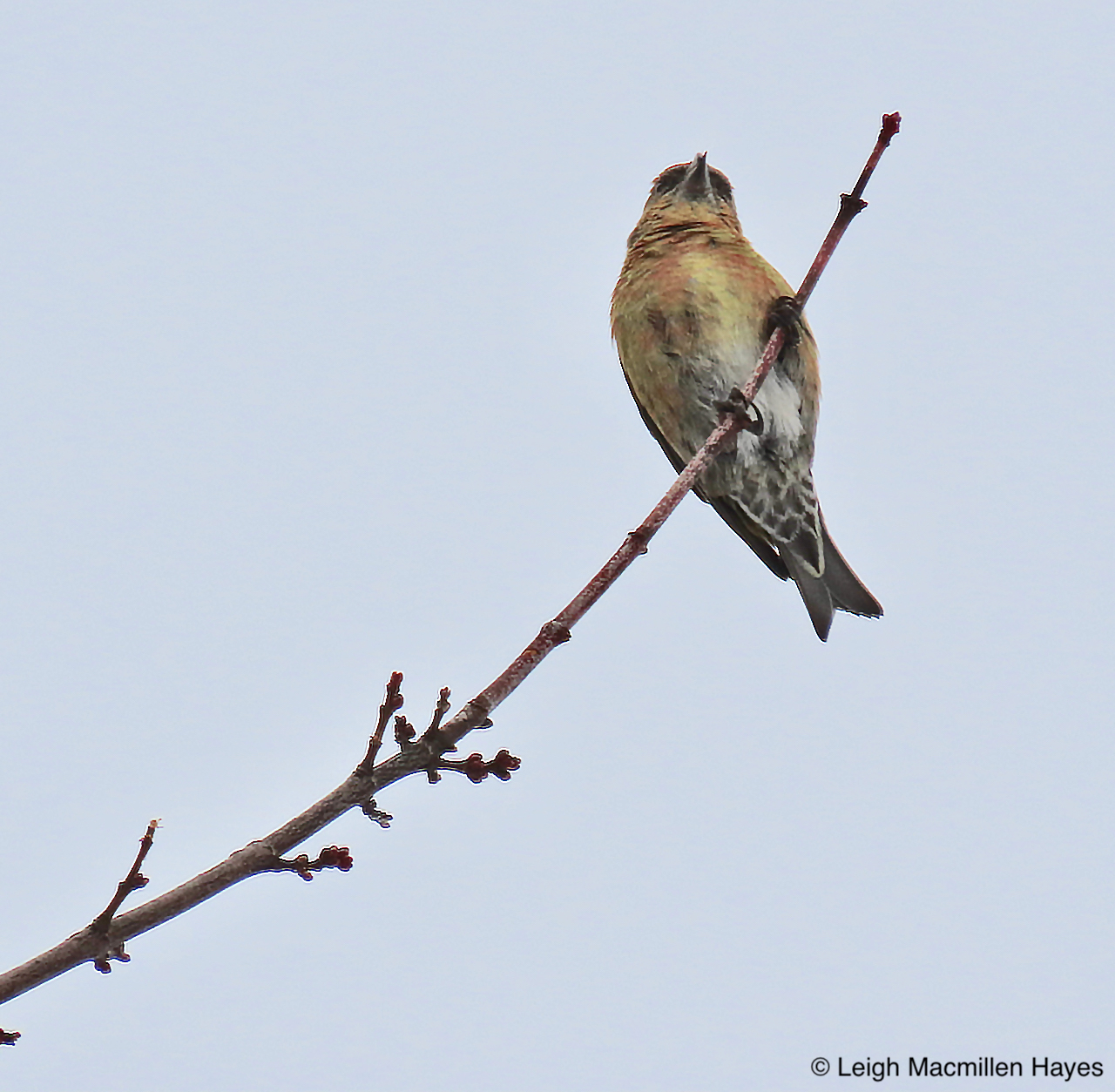
I’d also never been on the Sugarbush Trail, which brought us back to the Route 113 and an intersection with Snowmobile Corridor 19. It was here that we heard Chickadees and Red Crossbills singing and I finally located one of the latter in a maple tree.

Crossbills are finches with specialized bills that let them break into unopened cones. Can you see how the top of the bill cross over the bottom?

My intention was that we would eat lunch at one of the benches along the trail system, but we’d hiked most of the system before I knew it and so we sat on the back of my truck and ate. And then we headed back out on Corridor 19, a super highway through Evans Notch.

Only about a quarter mile from the farm boundary, we spotted moose tracks showing two had passed this way recently. We knew they’d been seen on the farm and hoped we might get to spy them, but just seeing their tracks and knowing they were still in the area was enough.

Can you imagine sinking two feet down with each step? Well, actually I can, because I’ve post-holed through snow many a time, but moose and deer must do this daily. For them, it’s routine.

Our reason for continuing on the snowmobile trail was that we had a destination we wanted to reach, that we hadn’t even thought about before reaching the intersection of Corridor 19 just prior to lunch. Eventually, we had to break trail again, and this time it was all uphill, and rather steep at that.

But our real plan was to climb to the Millard Chandler Feldspar Mine (aka North Star Mine) in Evans Notch.

Millard Chandler was a descendent of one of the founding families of Chatham. Originally, mica was mined from the pegmatites but prior to World War II, Whitehall Company, Inc, focused on feldspar.

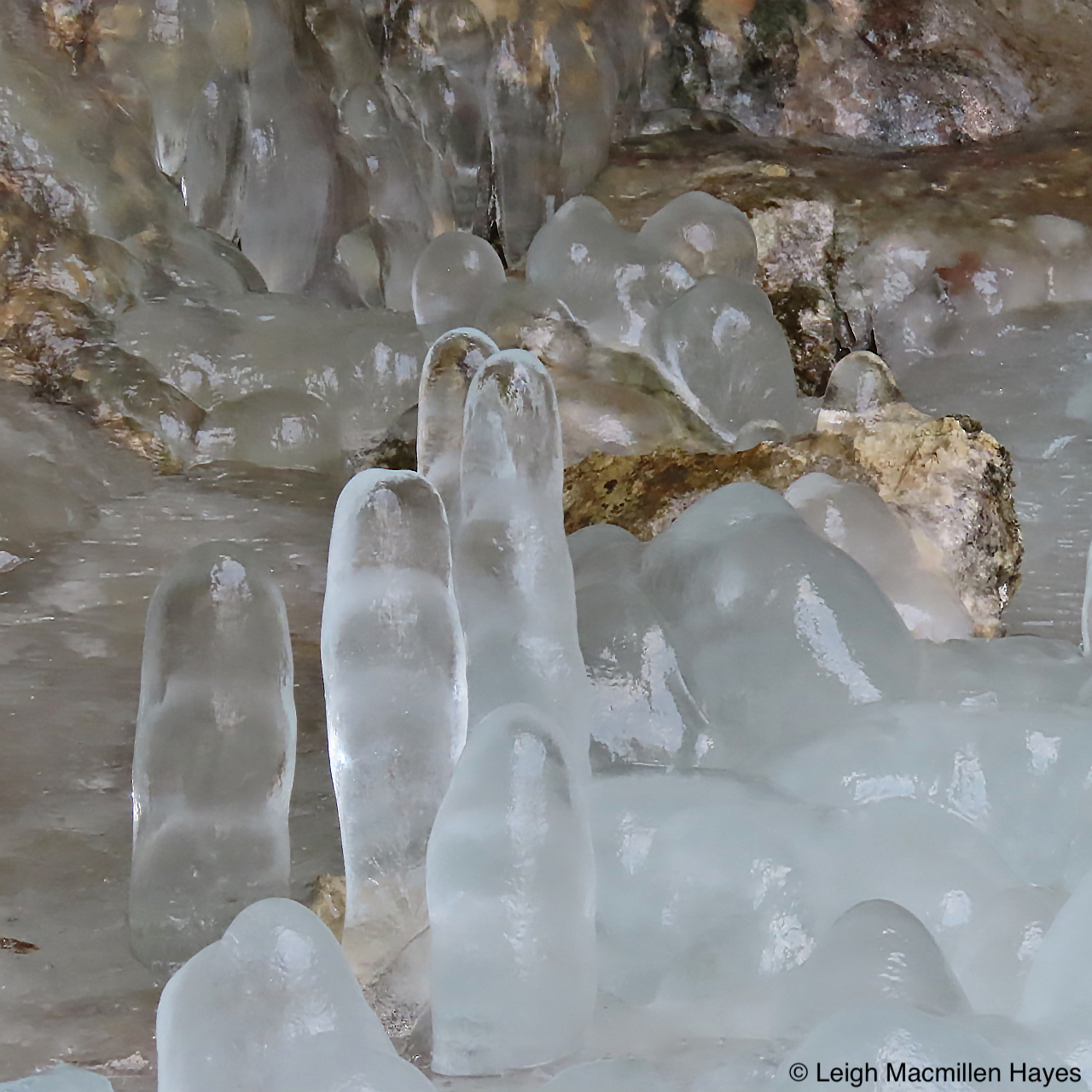
From the top of the cavern, where life on a rock was evident as the trees continued to grow up there, the water flowed and froze and formed stalactites of sorts. Icicle sorts.
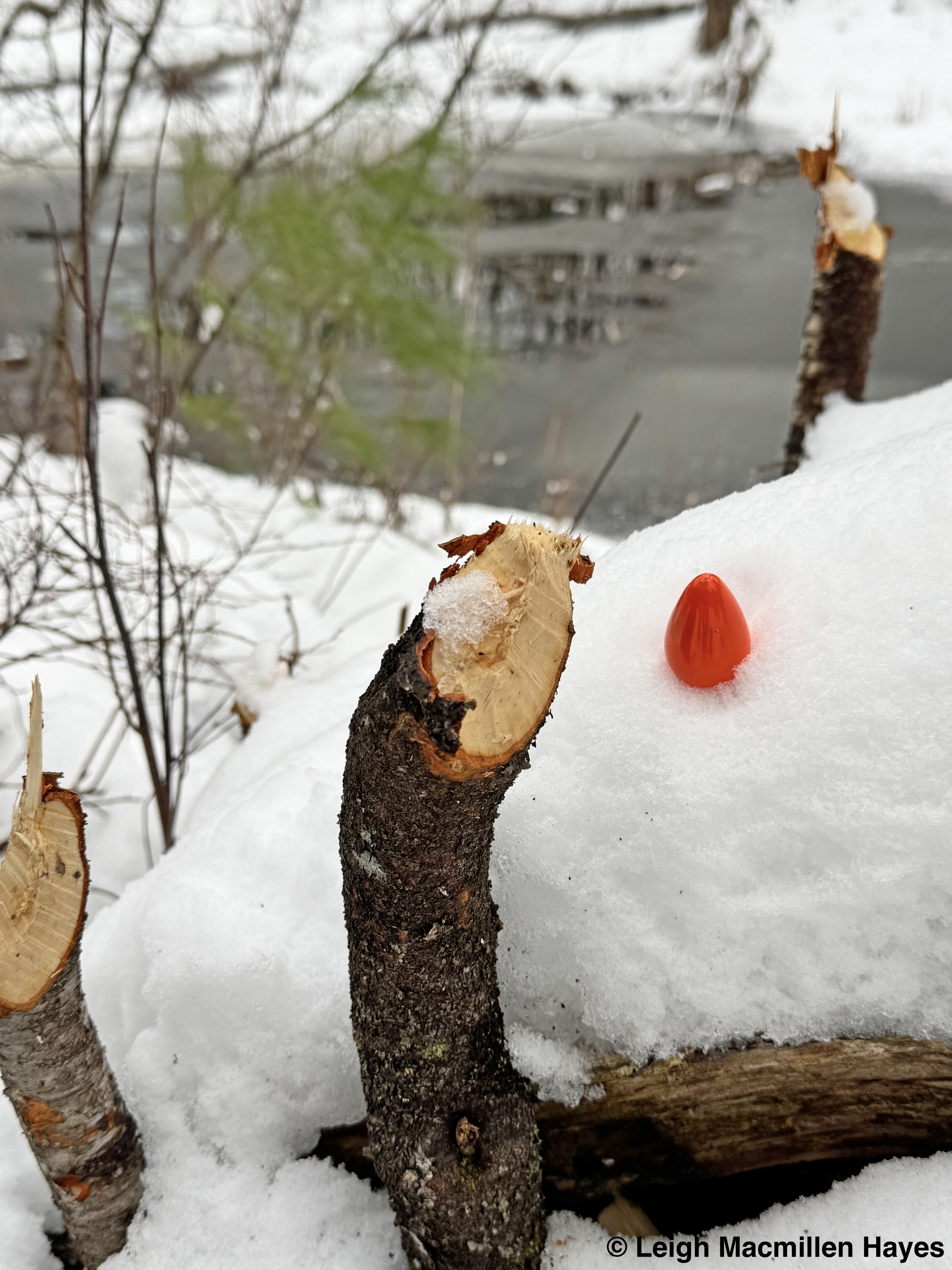
StalacTites grow down from the ceiling of the cavern–think T for Top.

StalaGmites, on the other hand, grow up from the floor–Think G for ground.

In this case, they looked like little fingers reaching up.

This was definitely a Mondate with a view, including Evans Notch from the mine . . .

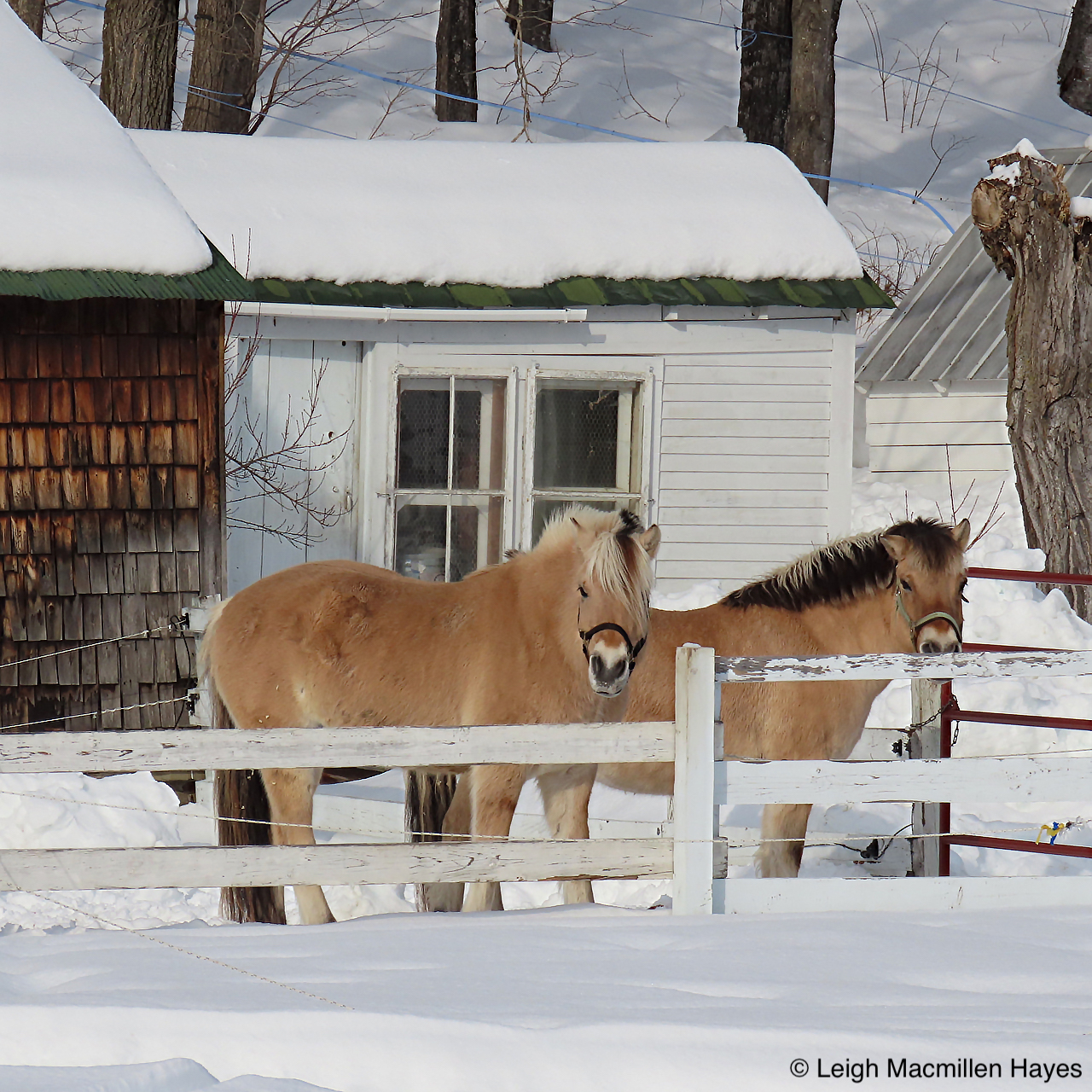
Norwegian Fjord horses Kristoff and Marta at the farm . . .

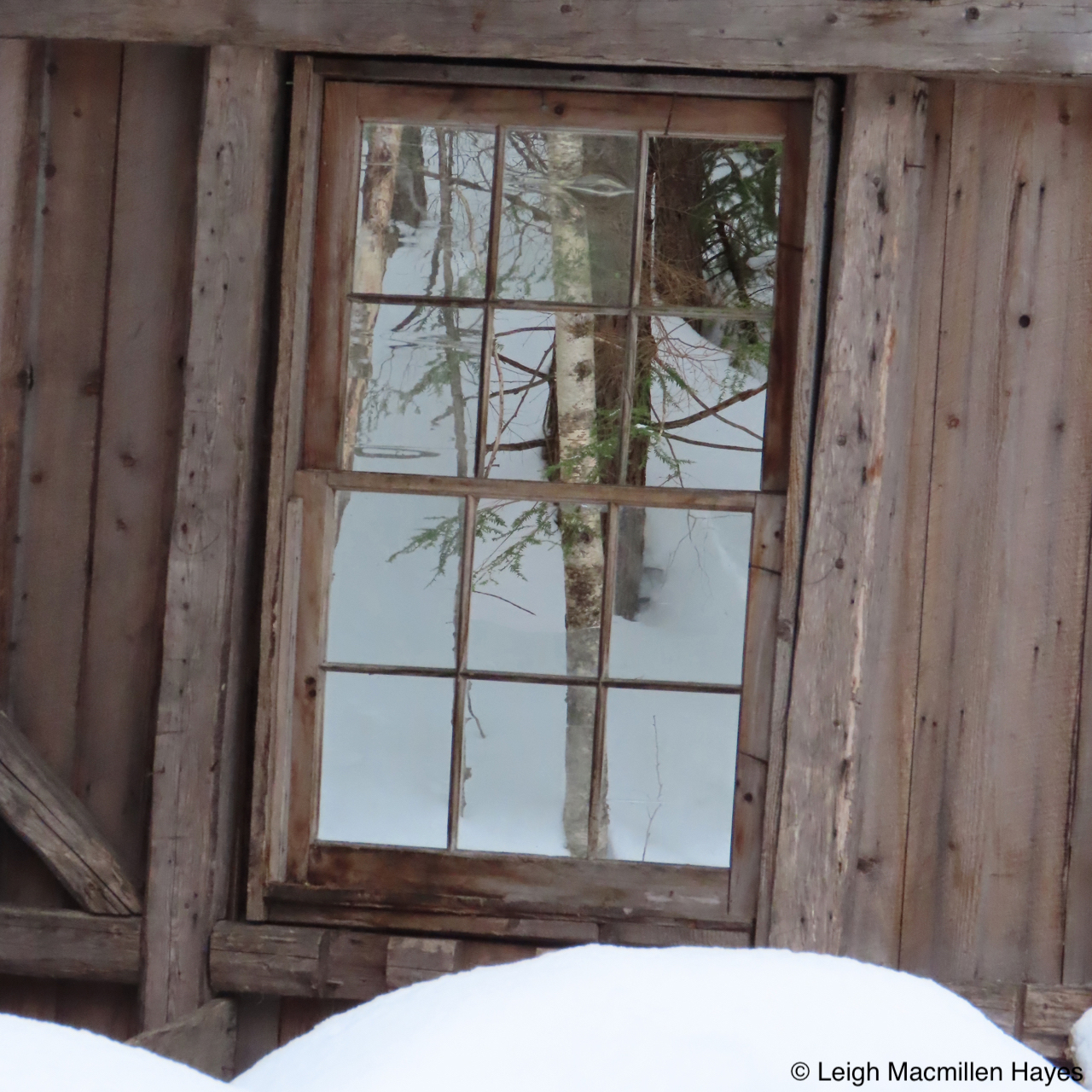
and a window that caught my fancy at the sap house.

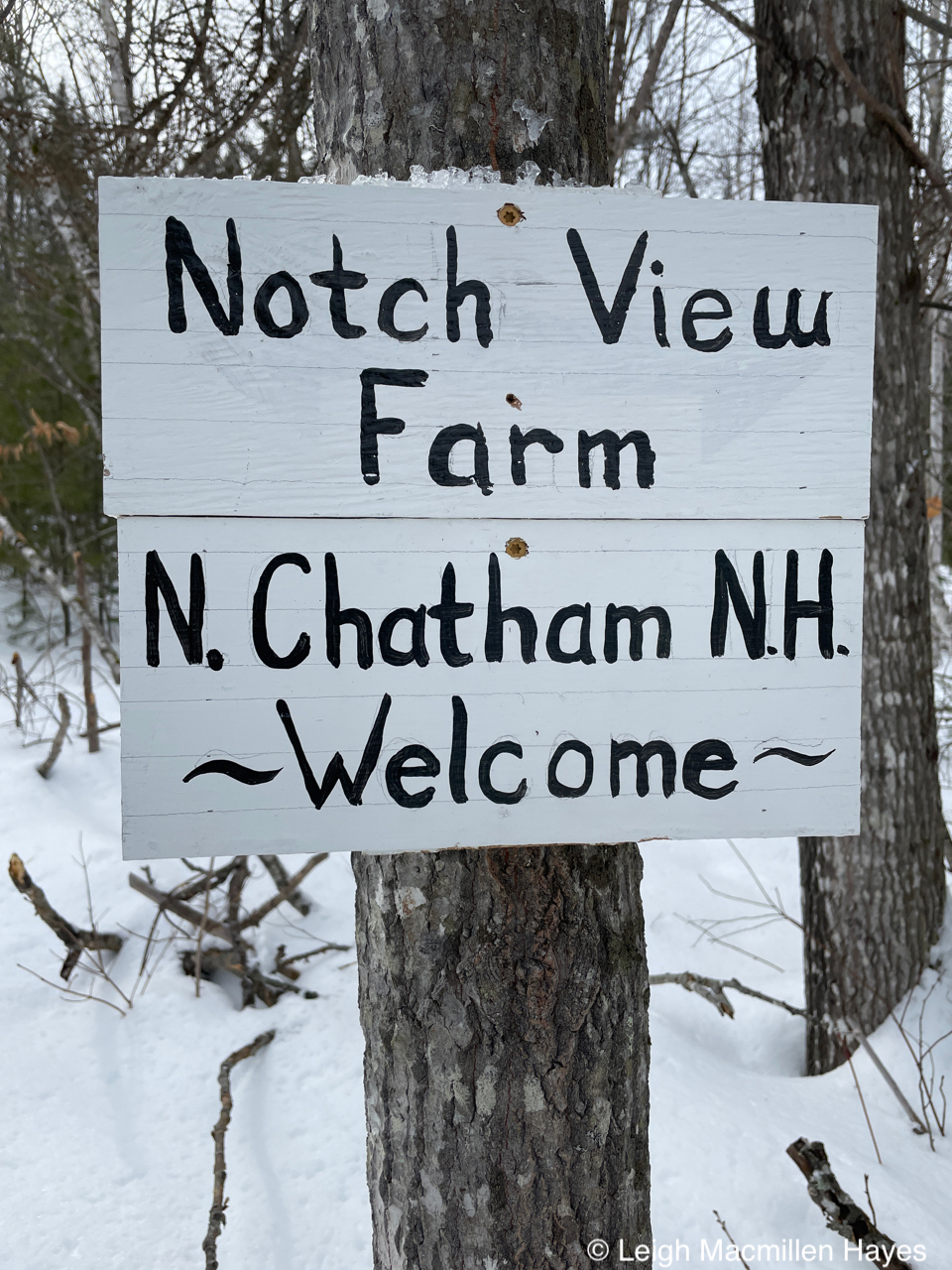
Our many, many thanks to Becky and Jim for sharing Notch View Farm with all of us. And thank you to Jim for chatting with us twice today. I’m still chuckling about the story of the women from Lovell who visit several times a year and spend hours upon hours on the trail. And then one of them writes long prose and includes pictures of every little thing spotted along the way. Yes, that would be Pam, and Pam, and me! Once, Becky even came looking for us on the snowmobile because we’d been out there for so many hours.

Today, with My Guy, it was a different adventure, but still a fun one and we appreciate that both of you work so hard to share your land with the rest of us.

Tracking Glee

We finally have a decent amount of snow on the ground after Friday’s storm and another storm is expected to begin in a couple of hours. That meant it was time to don the snowshoes. And so I did. And headed into the woods behind our house.

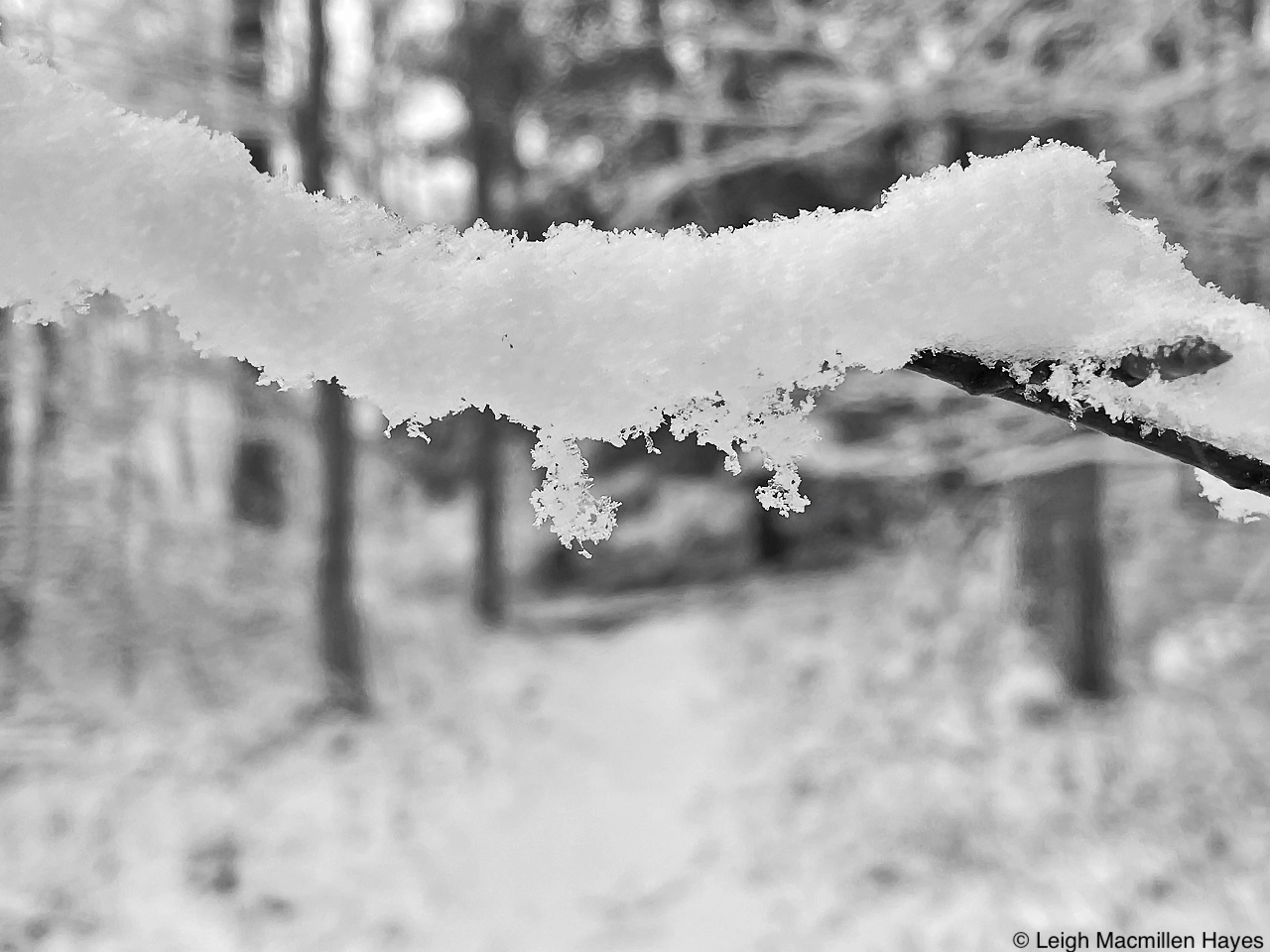
Immediately I was greeted with nature’s art work, and seeing snowflakes dangle like this will always capture my fancy.

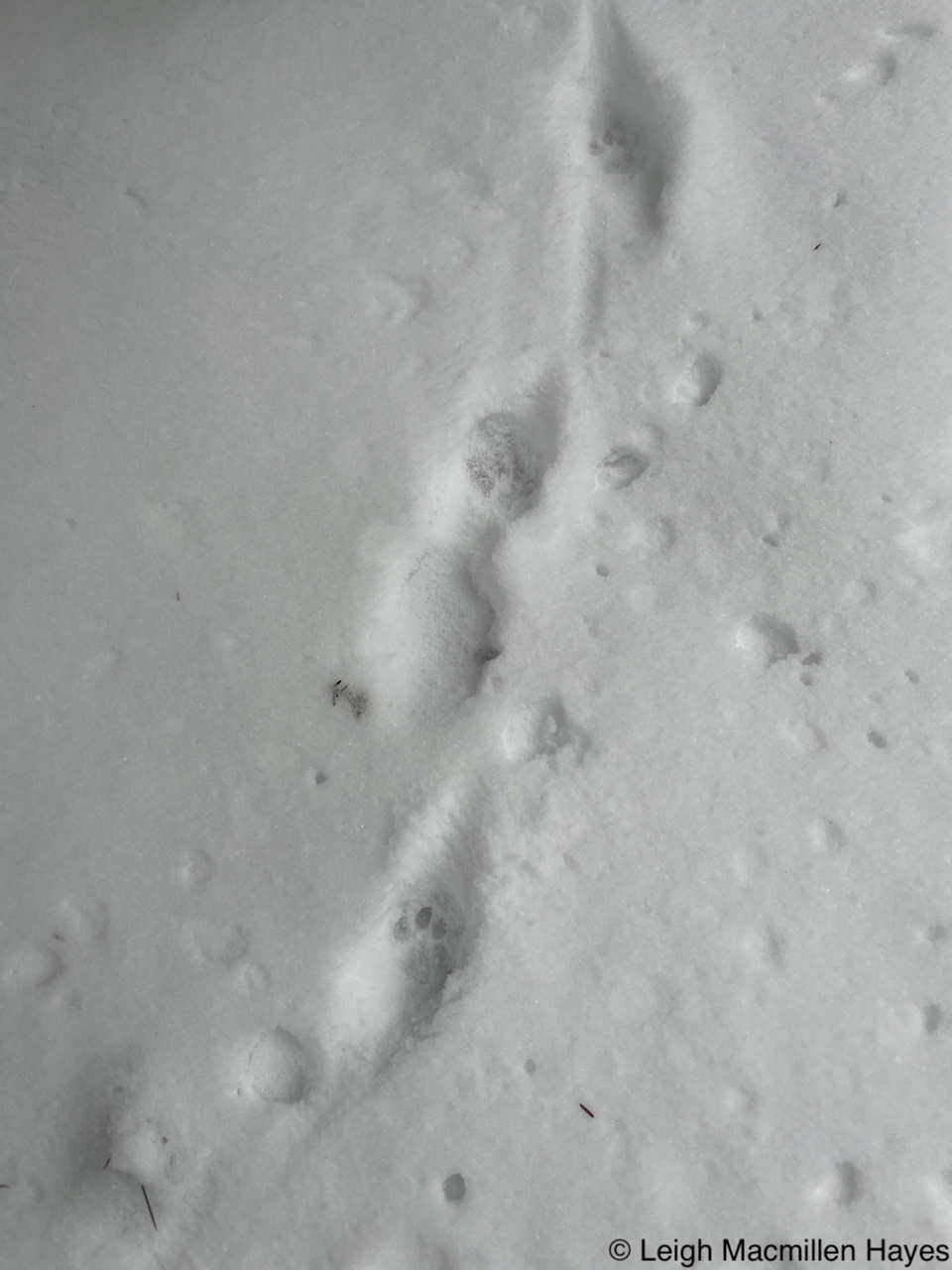
But that wasn’t all that captured said fancy, for at a point where I’d been dealing with trying not to fall into water since it’s quite a wetland out there, I suddenly spotted bobcat prints. And knew I had to follow them.

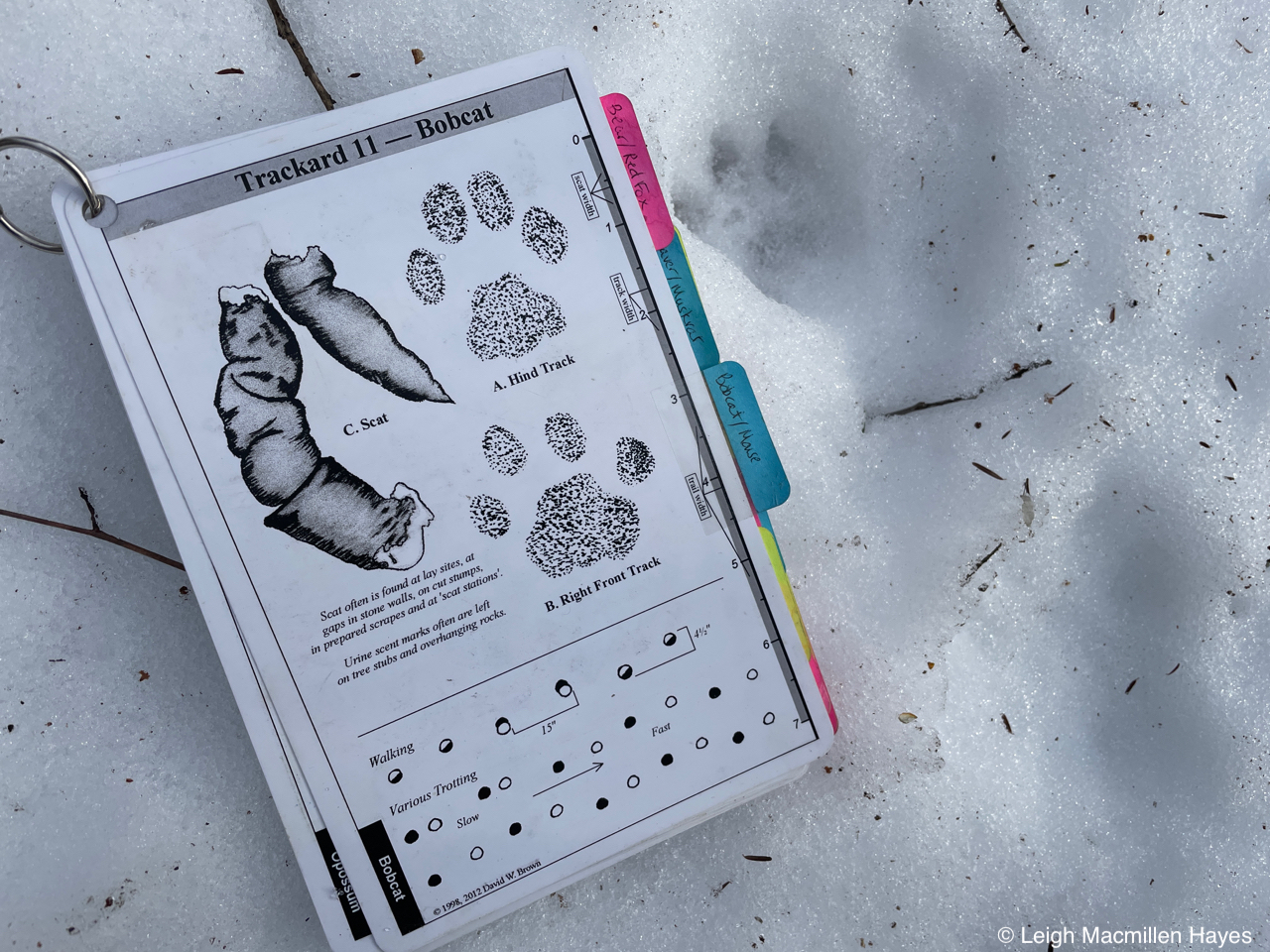
I hadn’t bothered with my tracking bag full of gear, but did think to stick this little card into my pocket for reference. Can you see the C-shaped ridge between the toe pads and metacarpal pad? And the lead toe–making the overall print asymmetrical. Take a look at your hand. It’s also asymmetrical with a lead finger.

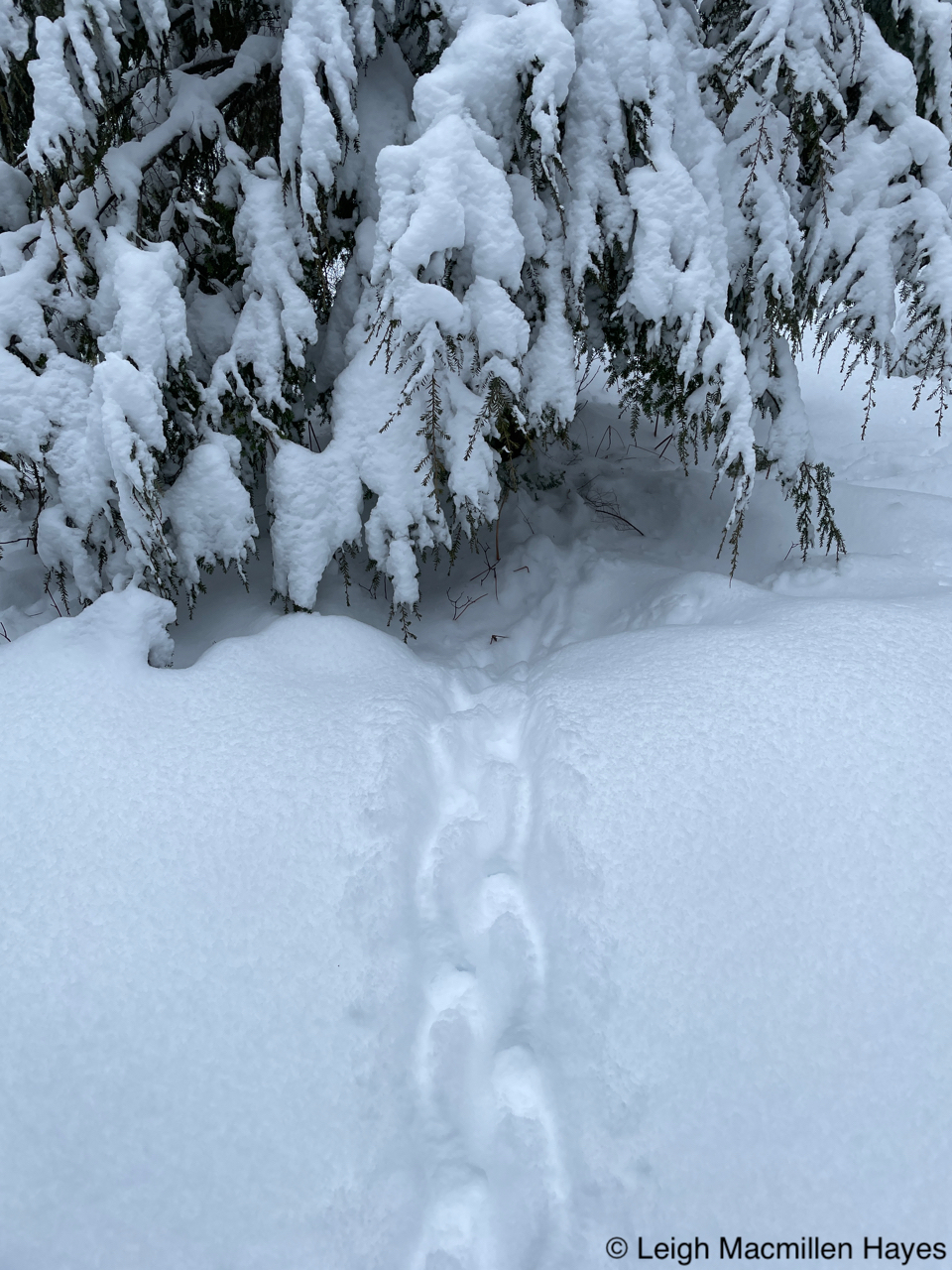
The snow is such a depth that there was foot drag. I got thinking about what the bobcat was hunting for and had seen plenty of snowshoe hare and deer runs so knew there was food available. Where would this cat lead me, I wondered.

It was at that point, however, that I thought about a tracking lesson I taught to future Maine Master Naturalists yesterday–if the prints look fresh, backtrack rather than follow them forward, so you don’t put pressure on the animal. I heeded my own words and turned around.

Of course, there was more art work to spy, like this candy cane dangling from a branch.

In my backtrack exploration, I spotted where the bobcat had climbed over a fallen tree. There were other spots where it went under trees and I had to find a different way around.

Back on track, there were more intersections with deer and even mice. But all continued to live for the moment.

And then my journey led me to another I’ve been looking for all winter because usually I see so much evidence of this critter–a porcupine had sashayed through the snow over night.

I found what I think is its den, given the amount of scat, and a hole. And I’m just now making sense of the story. The hole was not large due to snow in front of it and the scat was a bit frosted. BUT . . . what might have happened is that as the day warmed up, snow fell from the limbs above and the porcupine will dig its way out–in fact, it probably already did about an hour ago, for they emerge during twilight.

I followed the tracks, which led to a hemlock tree where there were a couple of twigs below.

And the bark and cambium layer had been chewed on the main trunk and another branch above.

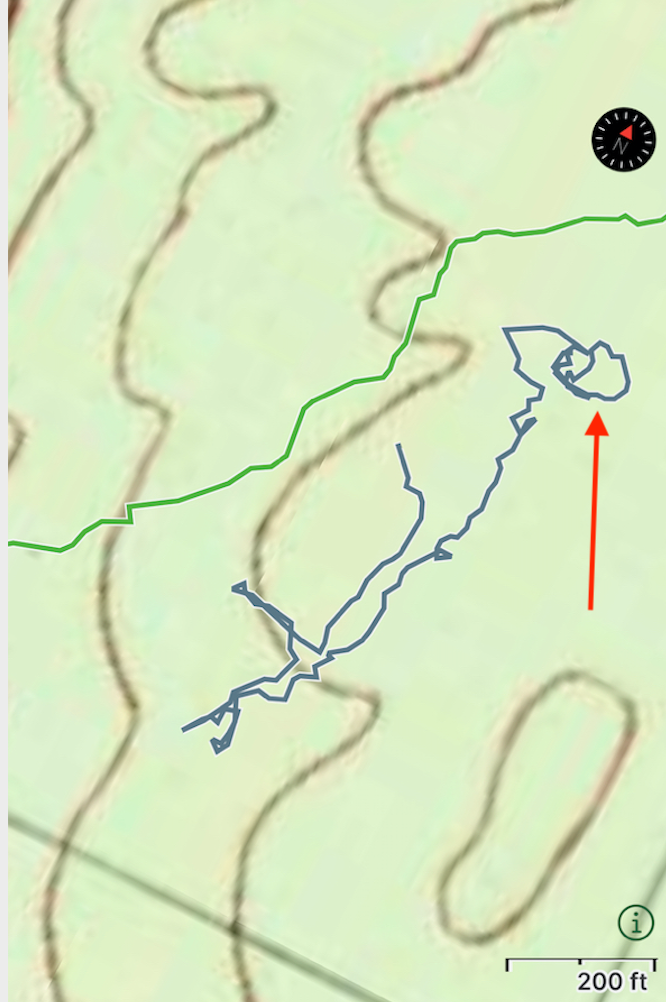
So at some point in my journey, while I was following the bobcat and off my regular trail, I decided to turn on my GPS until I knew where I was. What surprised me is the circle I made as I followed the porcupine’s trail. I need to make time to visit it again, for it seemed to be a new resident to this spot and there wasn’t any more evidence that it had dined in the area.

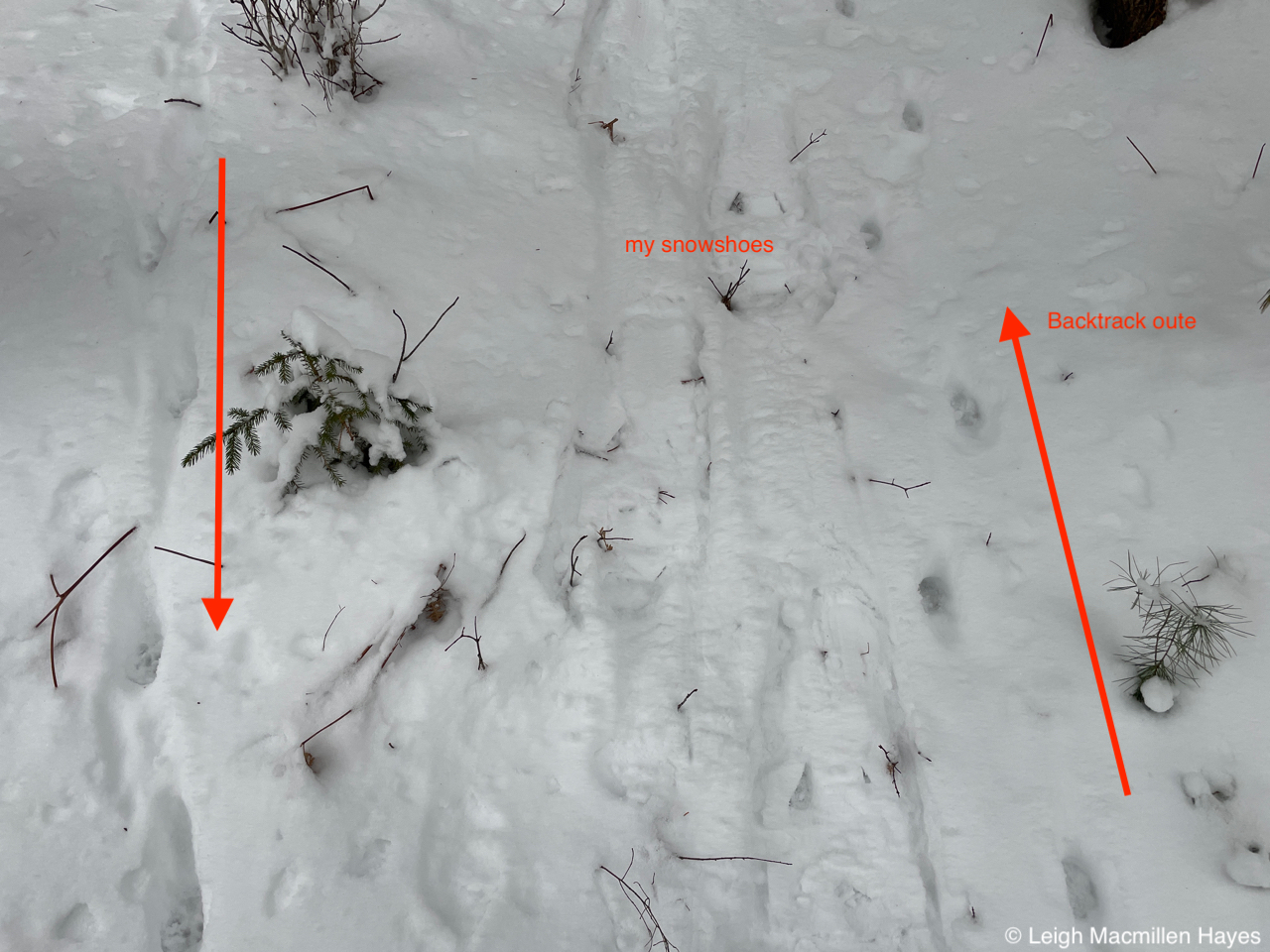
It took a few minutes, but eventually I found the bobcat tracks again. Only . . . this time I was following the cat forward. What?

They led me to a spot at the base of a tree where the bobcat took a break and must have curled up. And then it turned around.

And it suddenly became apparent to me: I’d followed the forward track on the left to the turnaround point and on the way back I noticed the backtrack trail I’d previously been following. I never did find the bobcat or the porcupine, but seeing evidence of their activity was enough and it was getting late so I followed an old logging road home.

There were still more baubles to spy, including this one upon a Red Maple that had provided food last winter in the form of buds–a fav of the deer.

And when I returned to our woods, I discovered that four deer had bedded down last night under a raised sleeping platform our youngest son had built about eleven years ago when he was in high school. Look for the smooth edges and you’ll realize each one is oriented in a bit of a different direction, the better to see that bobcat, or even the coyotes, whose tracks I also saw today.

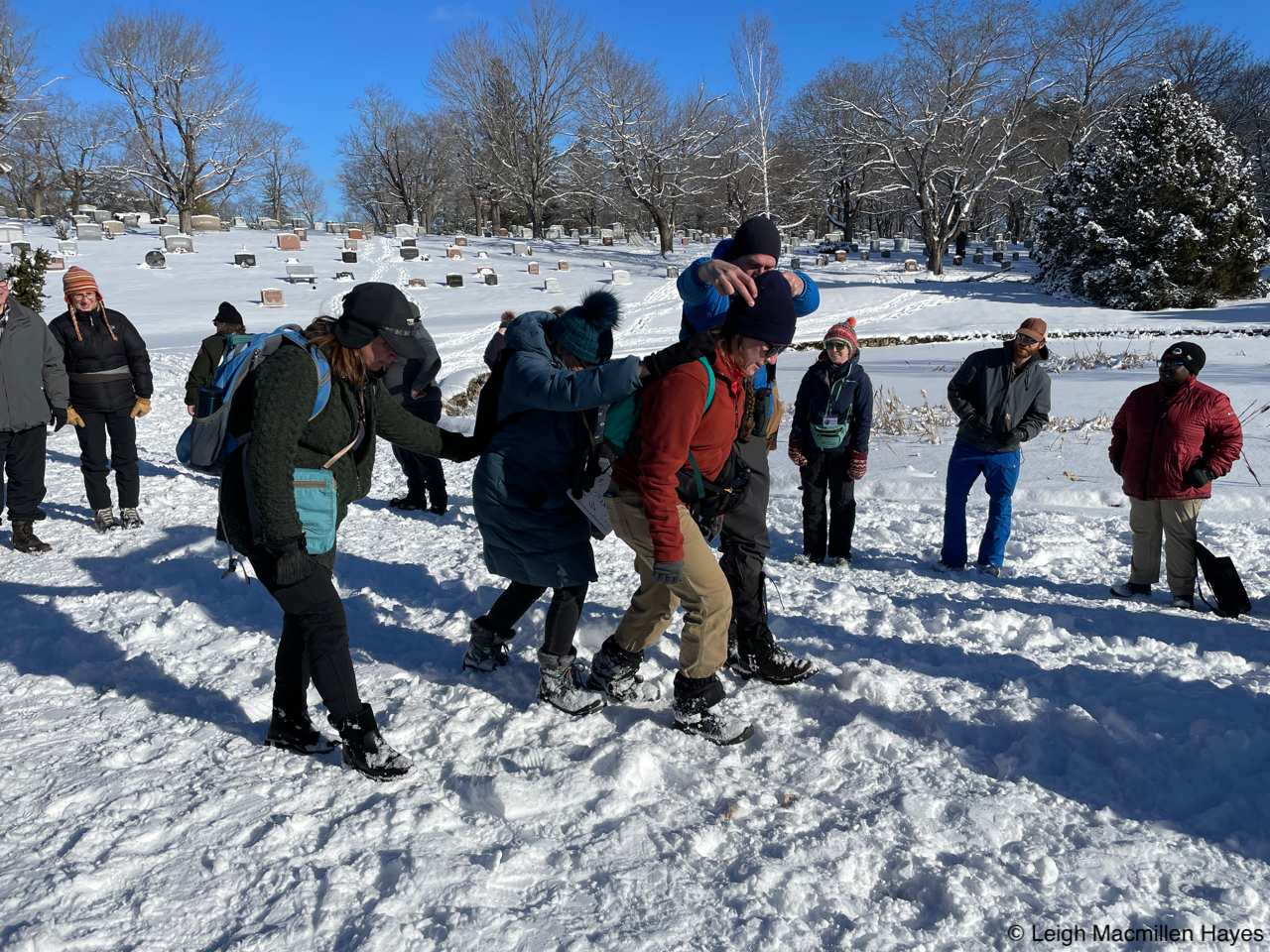
Just for fun, I’ve added these photos of the MMNP students channeling their inner child–each mentor group was assigned a mammal. This group needed to become a bobcat and though you may not quite see it, the bobcat was walking in the zigzag pattern with the hind foot landing where the front foot had packed down the snow, thus each print representing two feet, and conserving energy. And those fingers on the bobcat’s head–ear tufts. Plus the “person” in the back was holding a mitten to serve as the bobcat’s tail.

There was a pigeon-toed porcupine as well that waddled through the snow.

And then it gnawed on the branches of a tree.

They had fun with the assignment. My hope is that these students will get a sense of the tracking glee that I feel every time I follow a trail. Even if I don’t get to see the critter, which is most of the time, just developing an understanding of their behavior makes me so happy.

Sworn to Secrecy

I’ll let you in on a tad bit of a secret . . . eventually.

But first, today was a tracking day and so five of us did just that. When we arrived at the intended location, due to snow conditions, I think we had low expectations. I know I did.

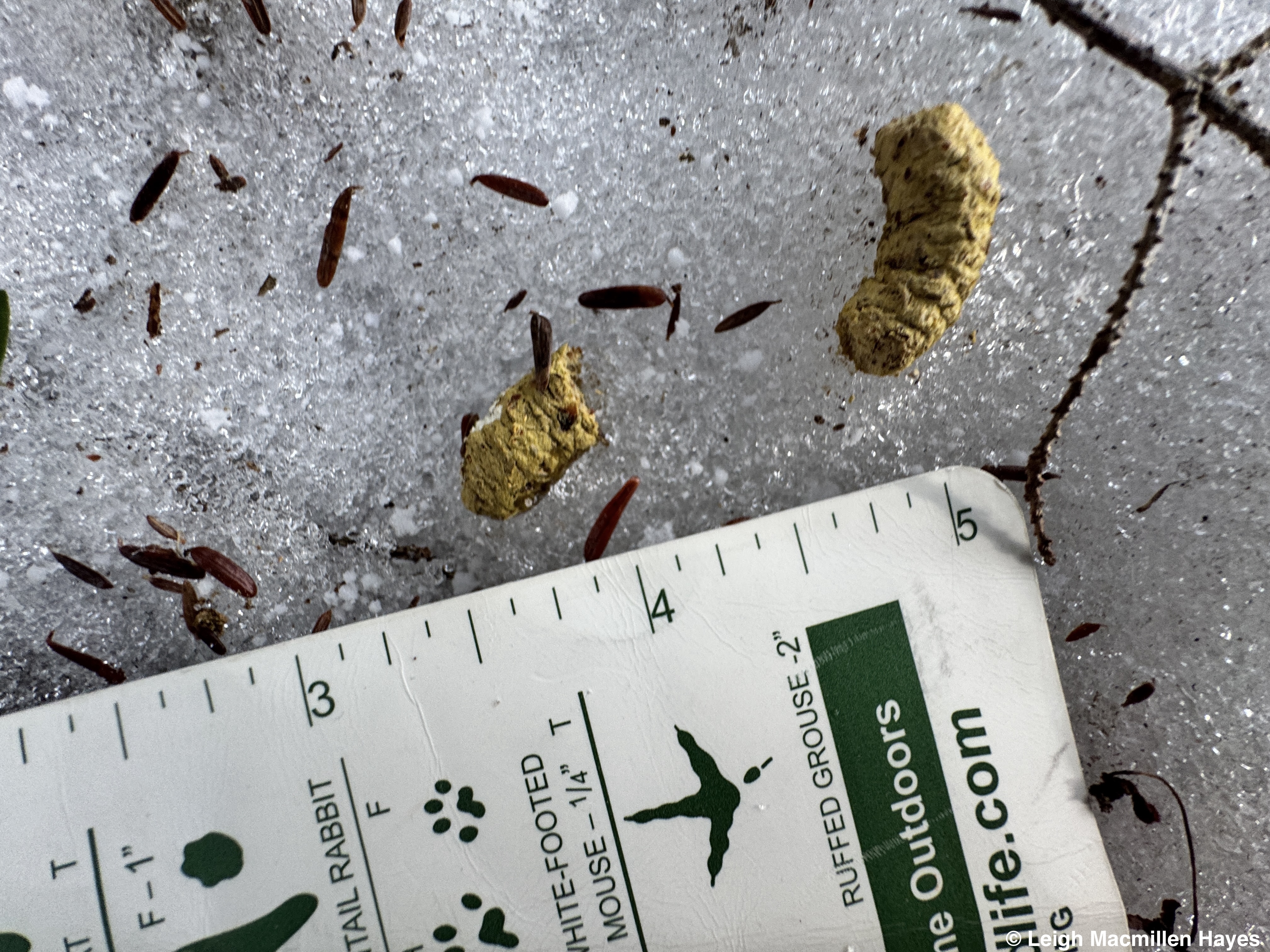
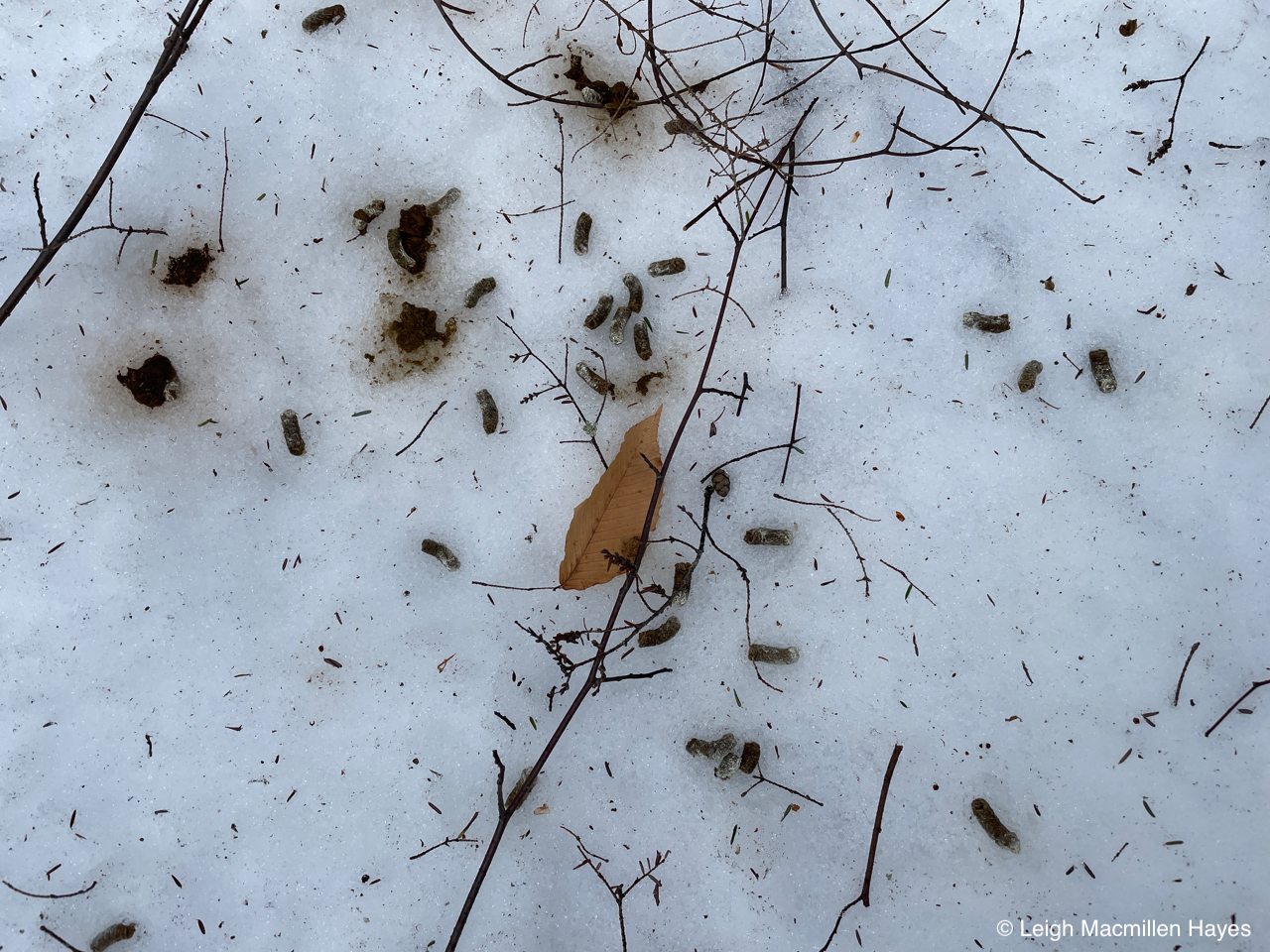
We had just stepped off trail to begin our bushwhack excursion when we spotted this Ruffed Grouse scat. So the curious thing about this is that there are two kinds of grouse scat, the typical cylindrical packets coated with white uric acid, but also a juicier, brown dropping. And I regret that I didn’t take a photo of the juicier, yet slightly frozen stuff we saw dripping from some twigs above. At the time, I knew the brown stuff was significant because I’ve looked it up before, but couldn’t bring it to mind. Thanks to Mark Elbroch and Eleanor Marks, I found an explanation in Bird Tracks and Sign: “Interestingly, after producing these lower-gut-generated solid evacuations, some game birds, such as a grouse, often then evacuate a semi-liquid brownish mass from the upper gut, or cecum, with the two types of droppings coming out sequentially; the more liquid, almost liver-colored scat comes out second and is spread on top of the solid matter. In Ruffed Grouse, it is common to find the hard, fibrous scats at one roost and the soft, brown cecal droppings at another.”

But not uncommon to find them together!

We stood for a long time discussing the grouse scat and when we finally moved on, it wasn’t too far that we discovered bobcat prints. Given that the prints were not super fresh because there was some debris in them, we decided to follow the track forward. Had they been fresh, we would have backtracked so as not to put pressure on the animal. Though secretly, we all love it when we do actually get to spot a mammal. Or a grouse, for that matter.

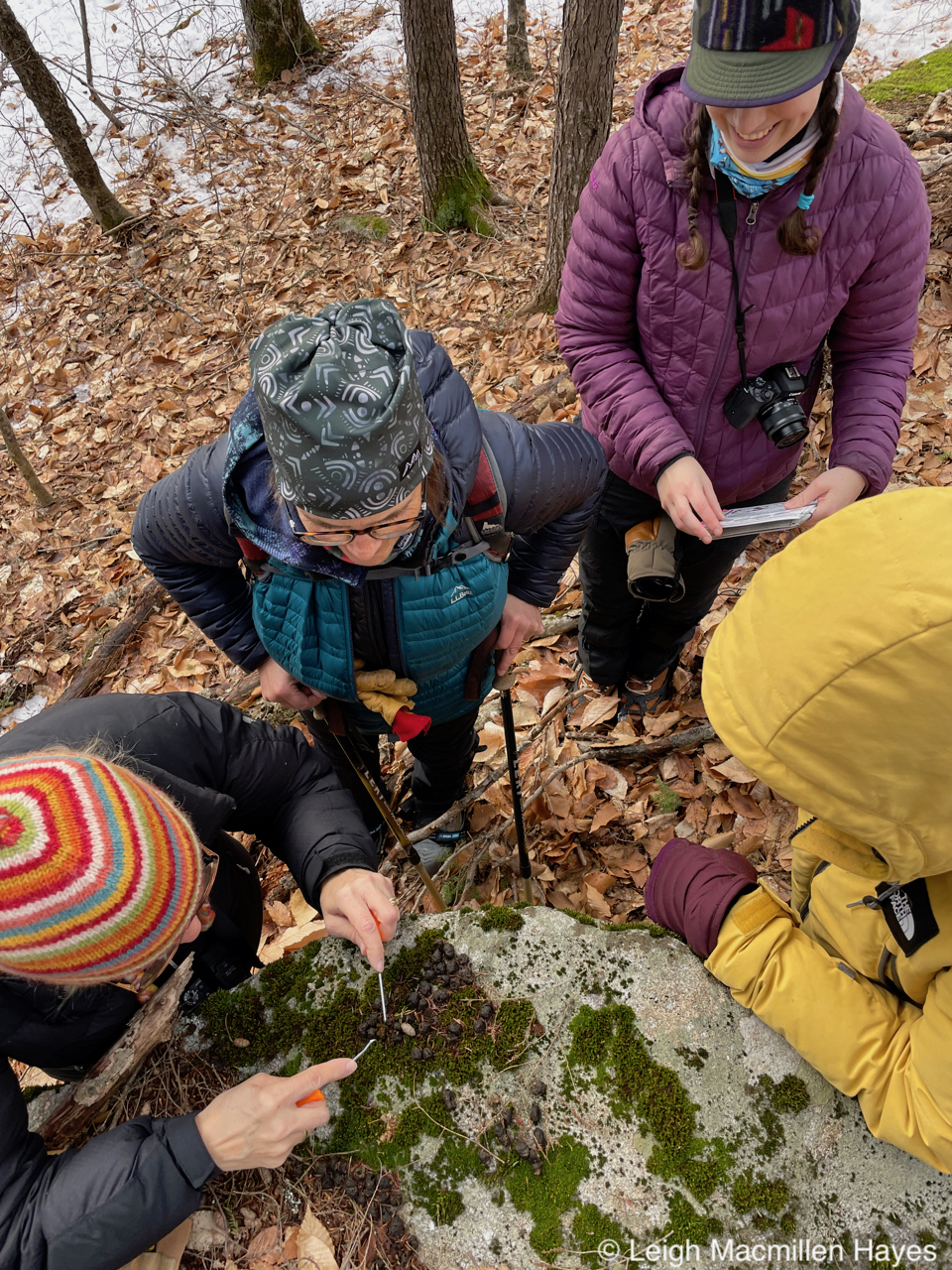
Eventually, we lost track of the bobcat, because as you can see, there were spots with no snow. But then we stumbled across a sighting that confused us. White-tail Deer scat on the edge of a boulder. Dawn has some new tools she was gifted for Christmas, and so she was excited to pull them out. Our confusion, despite the fact that it looked exactly like deer scat, was caused by the location. On top of a boulder. On the edge of said rock. We came up with a few stories, but will let you try to interpret this on your own.

Back in the snow, we found canine rather than the feline prints we’d been looking for and so out came the tape measure to determine species. Based on the fact that the print measured less than two inches at the widest point and that the stride, or space between where two feet touched the snow (toe to toe), we determined it was a Red Fox.

Everywhere, we spotted Red Squirrel holes and middens, indicating the squirrel had cached a bunch of hemlock cones in numerous pantries and returned since the snow fell to dig them up and dine, leaving behind the cone cobs and scales in trash piles. What struck us was that for all the middens we saw, we never heard or caught sight of any squirrels. In fact, we didn’t see any animals . . . until we did. Huh? You’ll have to read on.

Our next great find close to the pond we walked beside, was more scat! Of course, it was. This being the works of a River Otter and filled with fish scales, all those whitish ovals embedded in it. Like a small pile of Raccoon scat we’d spotted earlier, but again, I forgot to photograph (the sign that we were having fun making all these discoveries), otters tend to defecate in latrines, using the same places over and over again.

Our movement was slow, and every once in a while we’d spread out until someone made a discovery and then we’d all gather again.

Which was exactly what happened when this Snowshoe Hare scat was discovered. Three little malt balls.

After the hare find, we followed a couple of canine trails that took us back to the water. Domestic dog or Coyote? We kept questioning this, but never saw human prints. And the animals did seem to be moving in a direct line on a mission. The warm weather we’ve been experiencing may have been enough to make their prints look larger than they typically would so I think I’m leaning toward Coyote.

But in following those, we discovered a sign from another critter by the water’s edge: Mink scat!

When our time was nearing an end and we bushwhacked back to a road near the trailhead, we were all exclaiming about our cool finds. And then a little birdie we encountered asked, “Do you want to see a bear?”

We don’t need to be asked that question twice, though now that I think back, I’m pretty sure we asked the birdie to repeat the question. YES! She gave us directions and we decided we needed to take an immediate field trip. We each hopped into our vehicles, drove almost to the destination, parked, and walked as quietly as we could toward the den site.

We got us a bear! A Black Bear! The birdie said it has been there since sometime in December.

Now that I’ve shared it with you, I’ll say no more for the five of us are sworn to secrecy about its location.

Making a Happy Face

Earthward they fell
So many flakes of white.
The forest enhanced
with accents to delight.
Even trees long dead
whorled with new light.
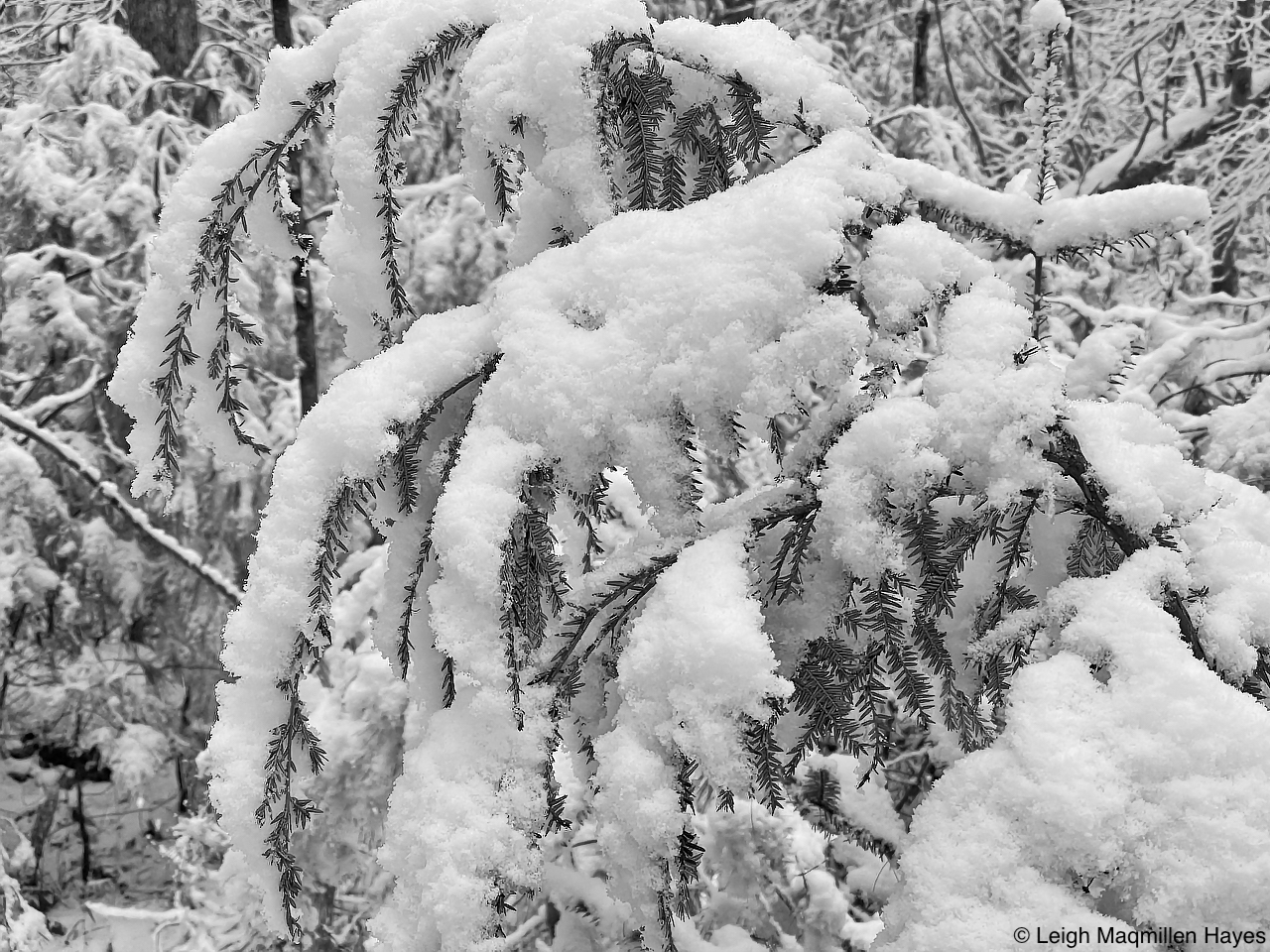
Pine saplings bent over
shortening their height . . . 
Mimicking hemlocks,
who were ever so slight.
Flakes piled upon shrubs
in a manner upright,
While others dangled
defying gravity's might. 
Meanwhile, the flying snag
prepared to take flight,
Just as the oak leaf
grabbed a blanket for tonight.
In the midst of it all,
calm water reflected varying light,
While flowing water
offered a beautiful sight. 
Feeling giddy about this snowstorm
I made a tree sprite.
In fact, I made two
with the intention to make others' days bright. 

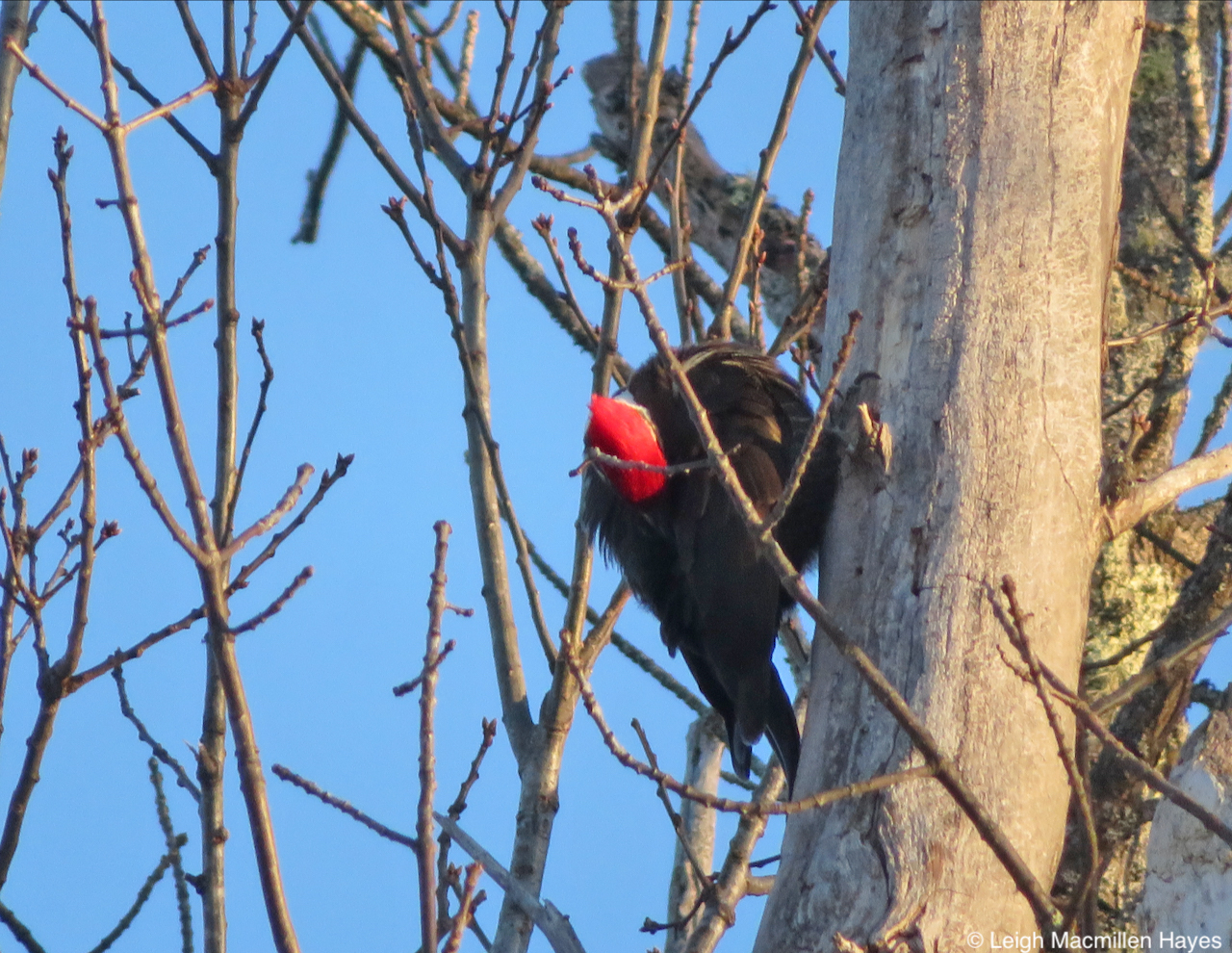
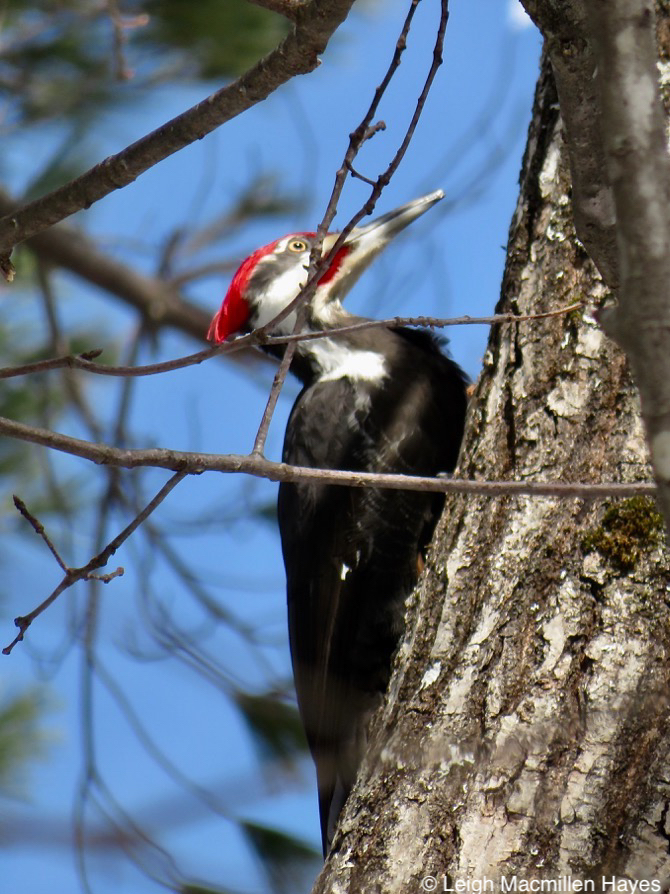
Dear Mr. Pileated

Dear Mr. Pileated,

I’ve been meaning to thank you for serving as our morning rooster all these years. In a couple of months, as the days dawn earlier than on the cusp of this vernal equinox, I know my guy will curse your call, but I admire your tenacity to return morning after morning and practice your drum roll on a snag by the stone wall closest to our bedroom.

Your sounding board of choice resonates with each strike of your beak and I’m sure the volley of taps, sounding like someone is rapping on the back door, can be heard at least a half mile away.

What is amazing to me is that you have the ability to tap at all. But I’ve learned that your tongue actually wraps around your skull, thus dissipating and directing the energy around the brain. Plus, you have a sponge-like bone positioned in the fore and back of your skull to absorb much of the force from the repeated impact of constantly hammering against wood. 

After several rounds of repetition, you take a break and stretch your neck away from the snag . . .

and sway your head . . .

in a 45˚ arc, a movement known as a bill wave. It seems to serve two purposes: as an announcement of your territory to another of your kind; or a message to the one you are trying to woo with hopes she’ll accept a date.

Of course, in the mix of all this action, you also make time to preen. After all, should a mistress fly in, you need to look handsome–an easy task on your part.

I’ve read that your territory ranges from 150 – 200 acres and give thanks that we live in an area that satisfies your needs and those of your kin.

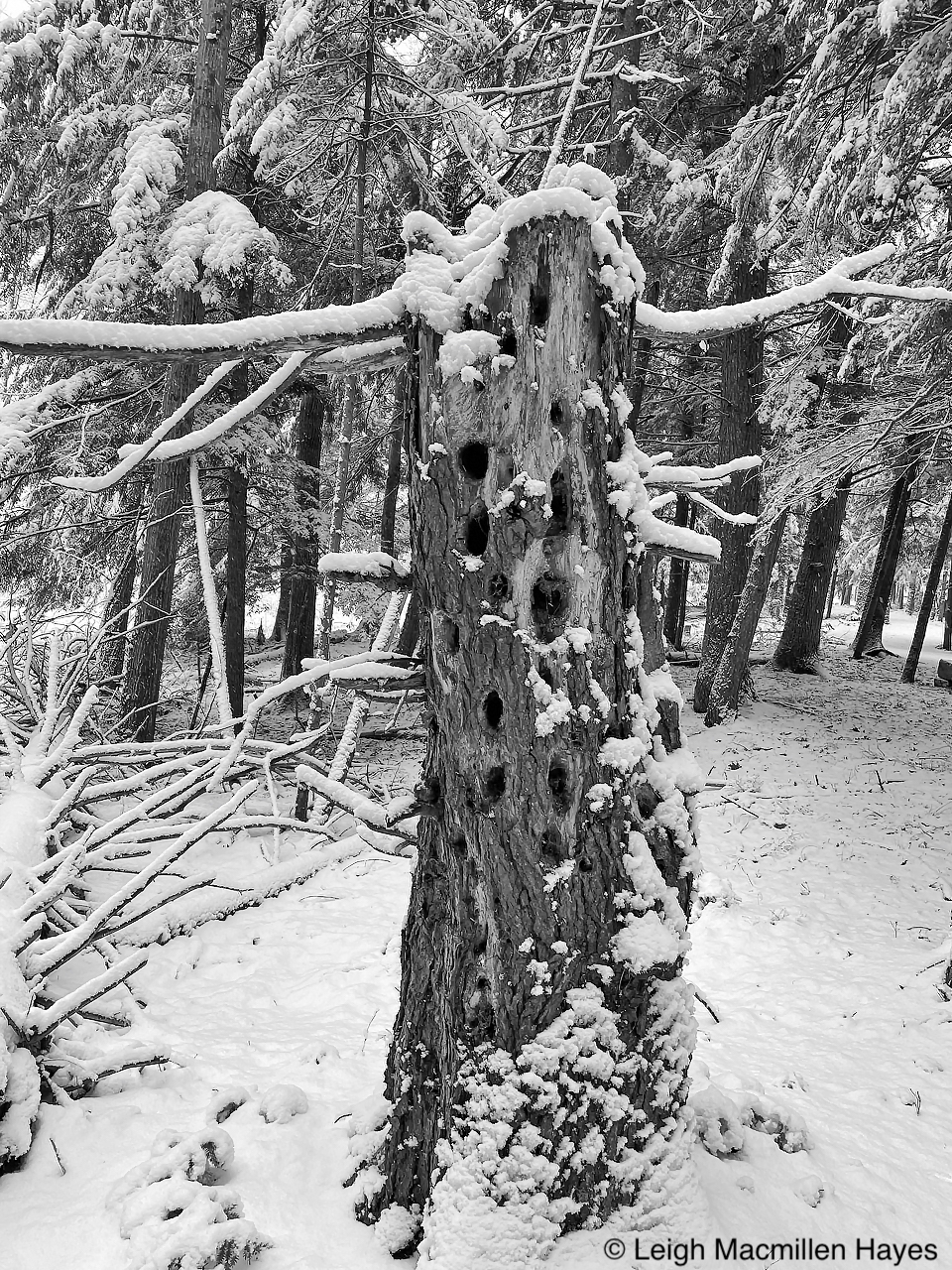
In winter, your feeding trees are easy to spot, either by the oblong holes chiseled into the tree trunks . . .

or piles of wood chips at the base of a tree, providing a contrast with the snow.

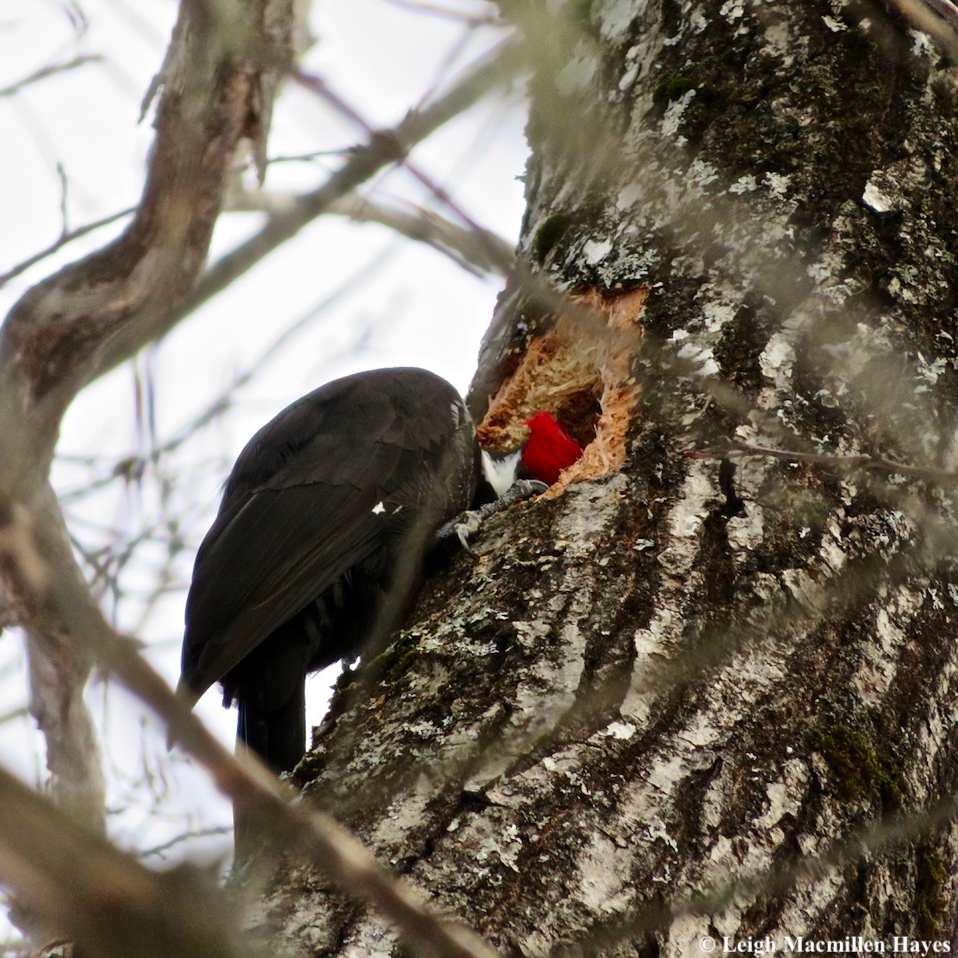
I love it when you even rework a hole you’d started when the tree was standing. So many don’t realize that it’s not unlike you to use your tail as a third leg like a stool and stand on the ground to seek the goodness within.

When the opportunity to watch you work presents itself, I take it and stand silently below while you chip away.

What I can’t see is your method of feeding, as you pursue the tunnels of carpenter ants and snag them with your long, barbed tongue covered as it is with a sticky solution that works rather like tacky glue.

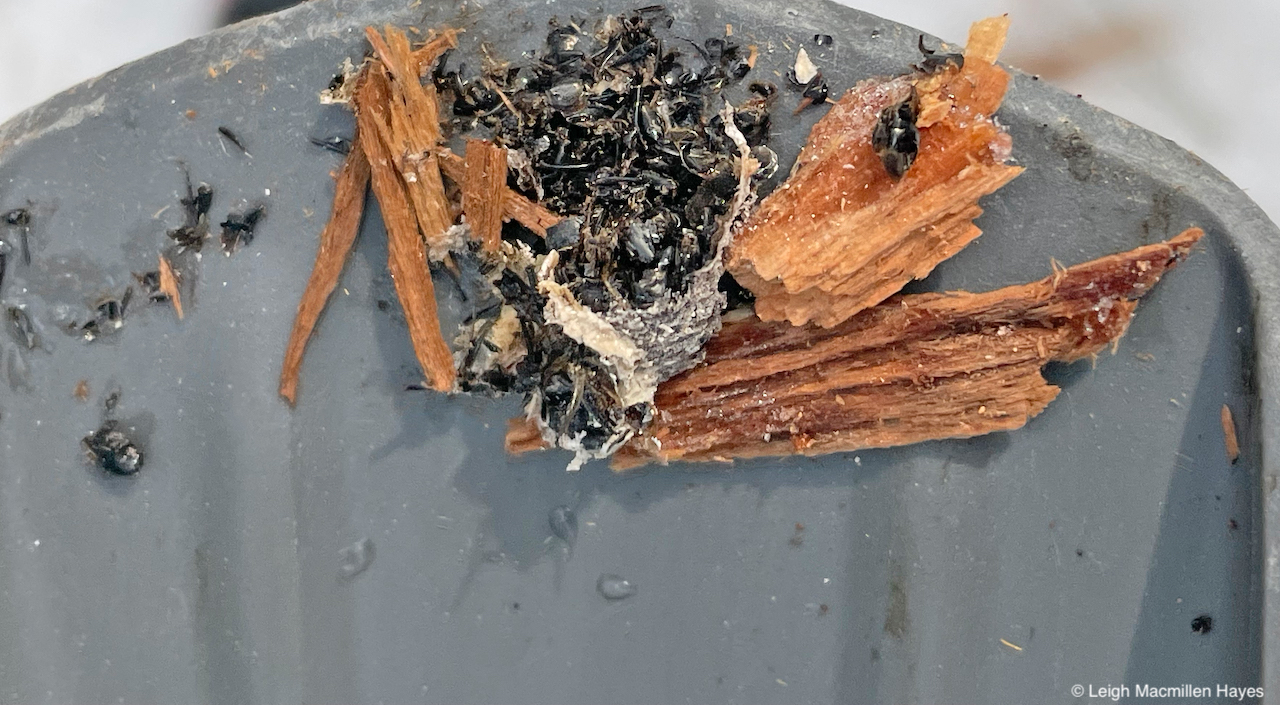
BUT, one of my great joys, as some know, is searching among the chips you’ve excavated to discover if your feeding efforts were successful. Yes, Mr. Pileated, I actually feel well rewarded when I discover packets of scat you defecated. While we humans get rid of waste nitrogen as urea in our urine, which is diluted with water, I have come to realize that you cannot fly with a full bladder and therefore must dispose of uric acid, plus the indigestible parts of your meals in combination via the cloaca or vent located under your tail. Knowing this helps me locate your scat because I first look for the white coating, which is the uric acid, and then I spy the exoskeletons of the ants that you feed upon in winter located inside the cylinder.

Sometimes, your scat doesn’t make it all the way to the ground, but rather lands on a branch below your foraging site.

Of course, it’s great fun when others are present, to whip out my scat shovel and scoop some up so they may take a closer look.

I did that just yesterday with a group of students, some of whom fully embraced the experience, which also gladdened my heart.

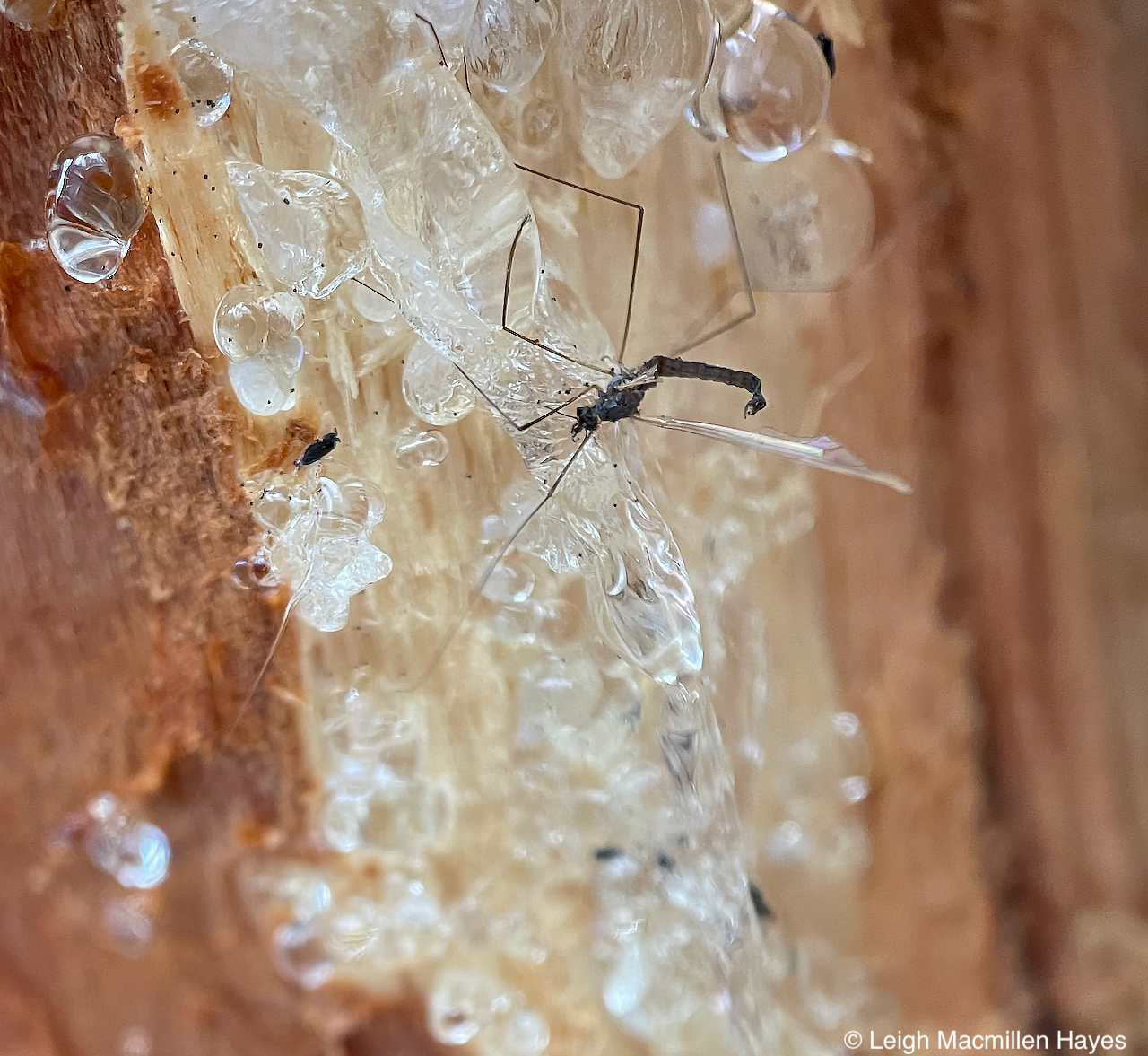
Another thing I love to spot as a result of your foraging efforts, sir, is the winter coloration of sap that flows from Eastern White Pine trees you’ve excavated. In warmer weather, the sap is amber in color, but there must be some winter chemistry that I do not understand, which turns it shades of violet and blue.

Oh so many shades of blue. And once blue, it doesn’t seem to regain the amber hue, at least from what I’ve seen. But then again, somewhere in this world, there’s one that does. Or many more than one.

Noticing the droplets of fresh sap yesterday, I decided to take a closer look, and spied not only spring tails stuck to its sticky surface, but also a small winter crane fly that will be forever suspended . . . unless something comes along for a snack.

When I checked this morning, it was still stuck in place.

As I complete this letter to you, Mr. Pileated, I once again want to express my appreciation for your part in this world, for creating nesting sites that others, such as small songbirds, may use, and how you help the trees in the forest by contributing to their decomposition, for as much as some think that you and your kin are killing the trees, the trees are already dying due to insect infestations, and your work will eventually help them fall to the ground, add nutrients to replace what they had used, and provide a nursery upon which other trees may grown.

And I want my readers to know that your bill waving has paid off for this morning as I watched and listened to you, in a quick turn you flew off giving your Woody Woodpecker call as you sailed away and in flew your date. She landed on the same snag you always use, gave a few taps of her own, preened for a moment or two, and then she also turned and headed in the direction you had taken, and I can only hope that the two of you have been foraging together ever since.

Oh, and that if there are any offspring from this relationship, you’ll name your first born for me.

Sincerely yours,

wondermyway.com

P.S. BP, this post is dedicated to you. Hugs from your non-hugging friend.

Where the Bobcat led us

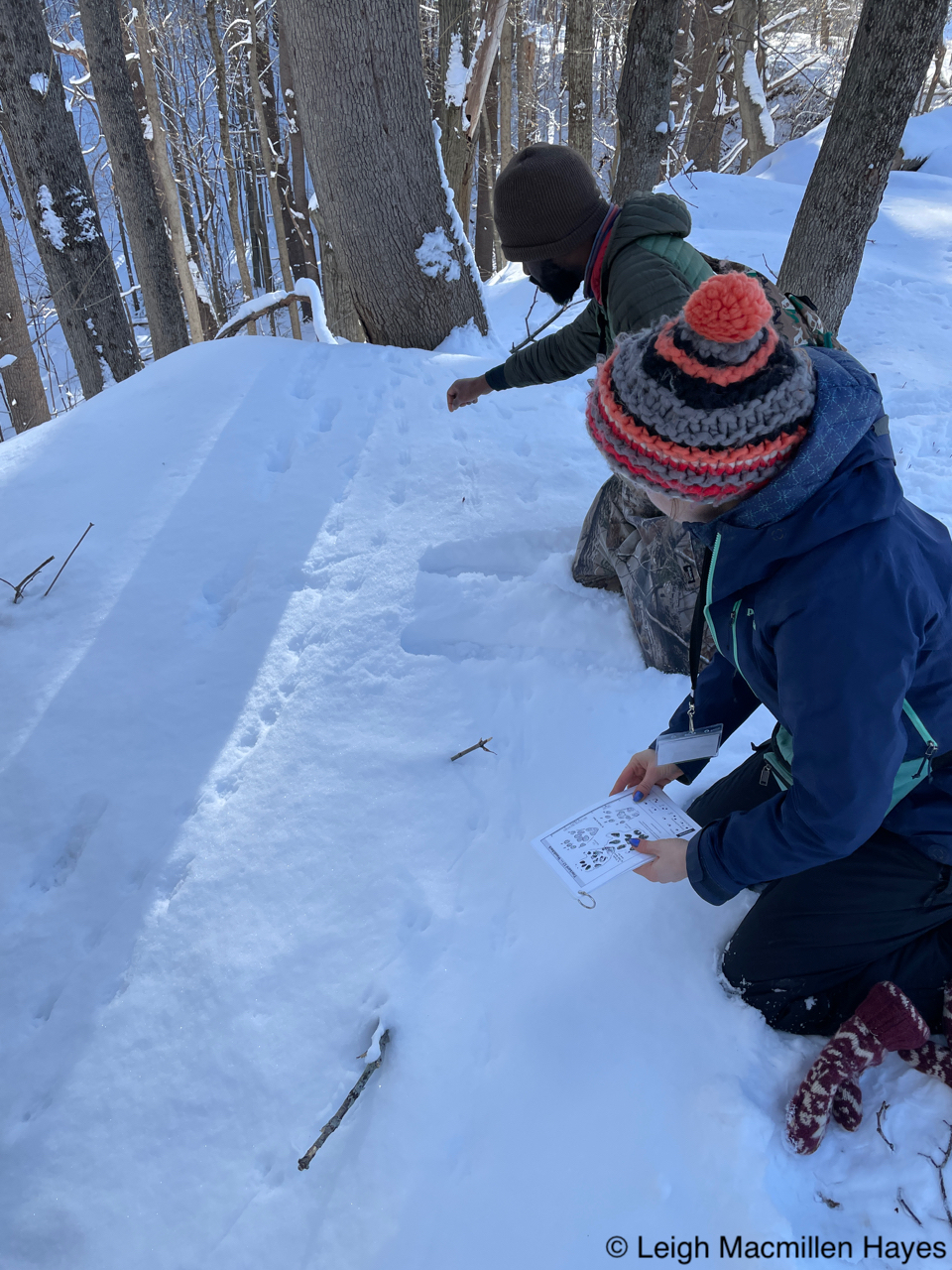
When GLLT Tuesday Trackers meet at a property, we never know what animal sign we’ll need to interpret or what greater understanding we’ll gain. Today was no different and we had a few surprises along the way.

What we’ve all learned is that we need to take a bird’s eye view and consider where we are, whether it be forest or field or wetland, look at how the mammal is moving and what type of pattern it is creating as it moves, get down and count toes, look for nail marks and notice other idiosyncrasies, and then follow the trail for a ways, looking at the prints in different light, or under different trees. Often under hemlock trees we find the best prints because there’s not as much snow since the boughs hold it.

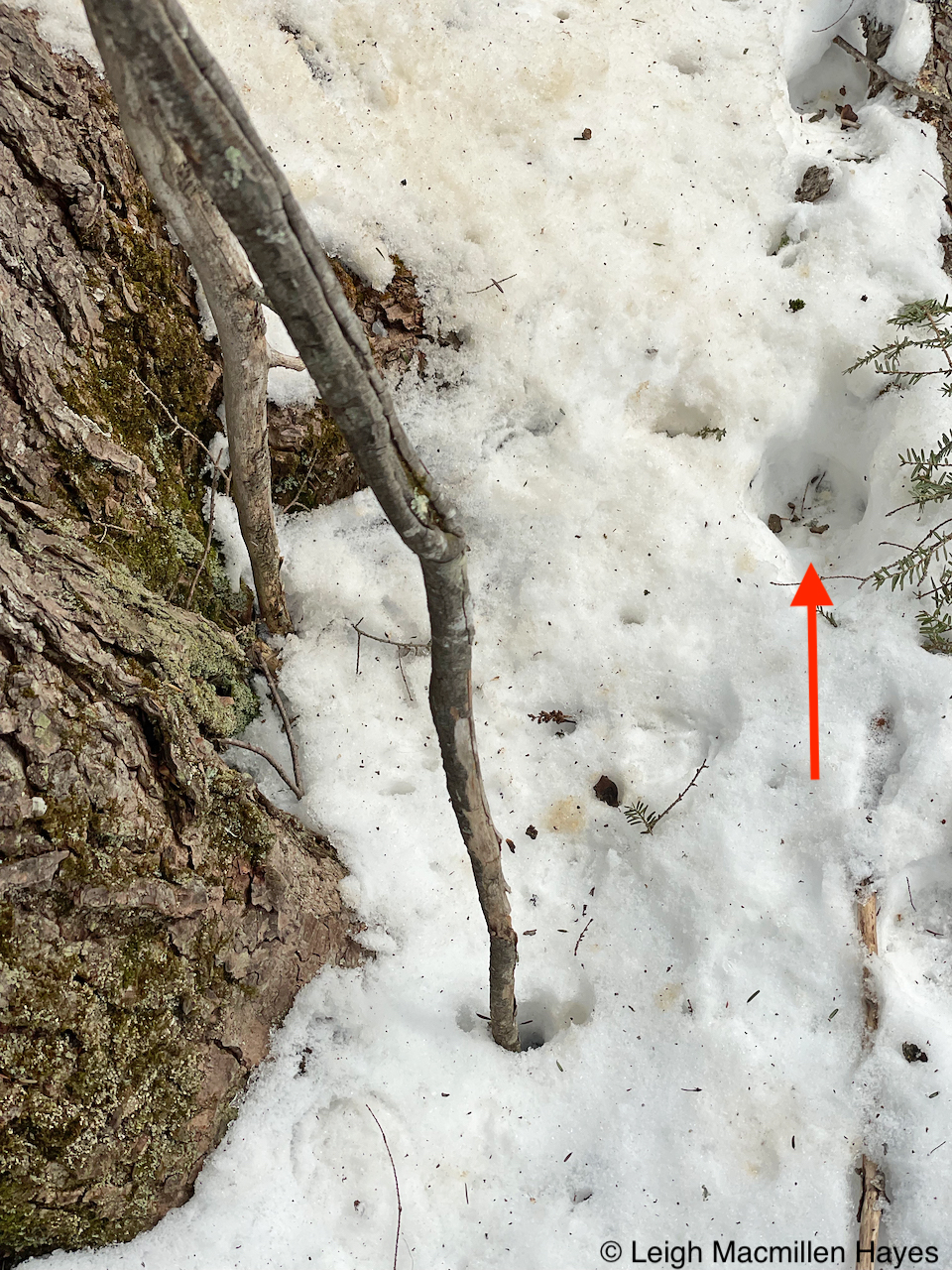
And so today’s adventure began with us following this particular animal and debating—do we see claw marks, is the overall shape round or oval, is there a lead toe, is the ridge creating a C on its side or an X between the toes and heel pad? It took some time, but we finally found a few prints that gave us confidence it was a bobcat we were following. So, where did the bobcat lead us?

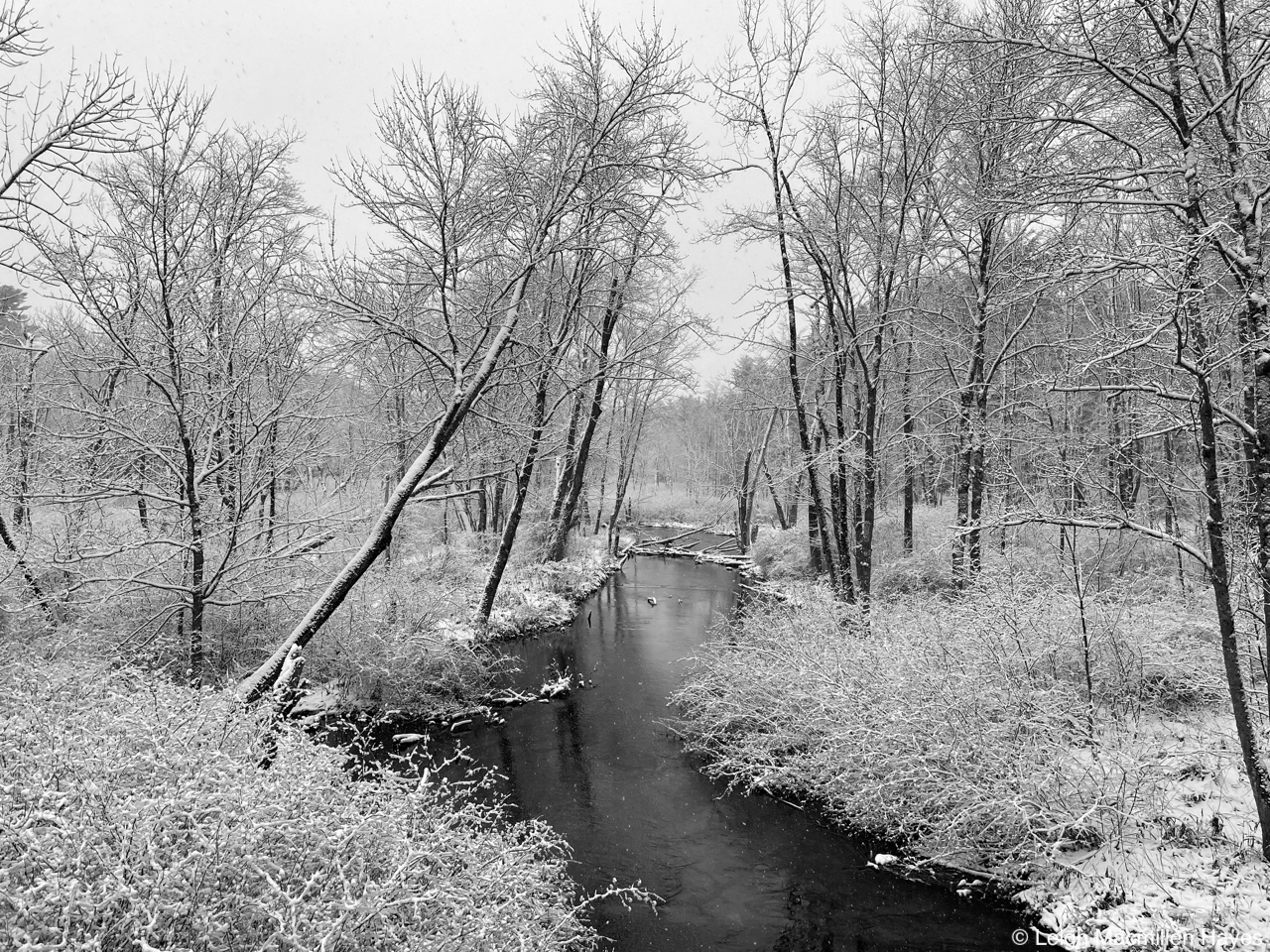
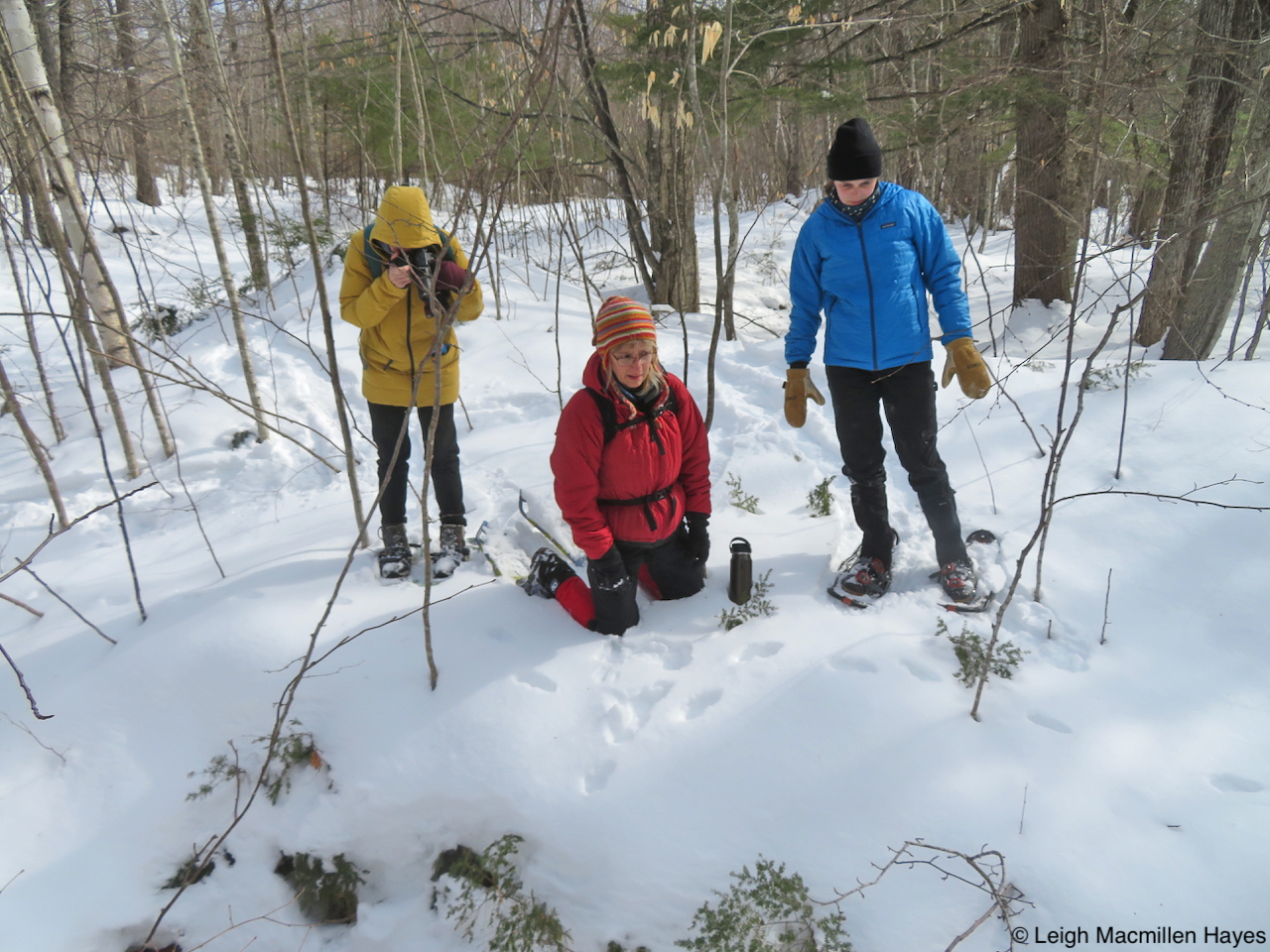
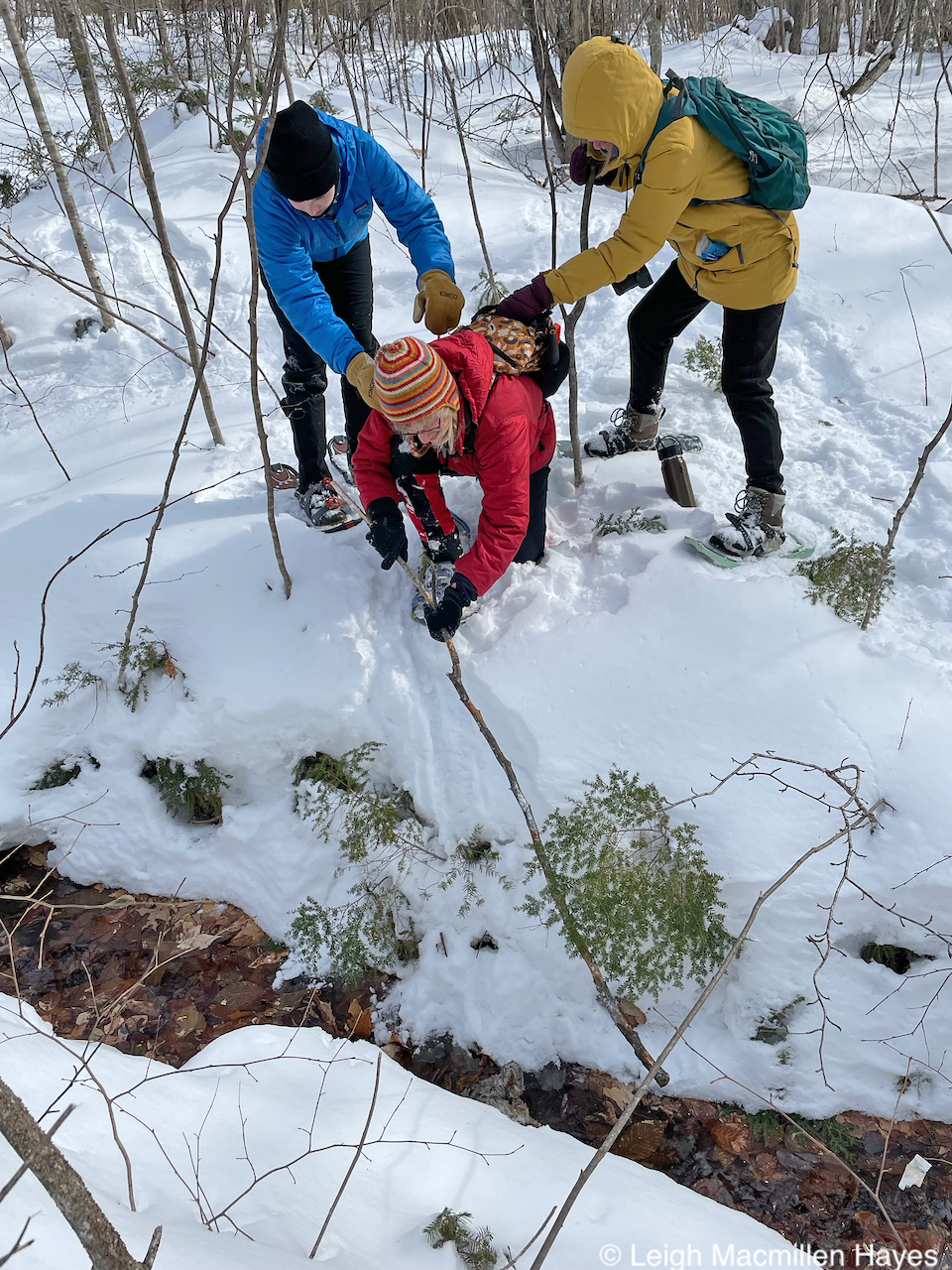
Our first stop was along a stream where he walked beside the edge—about two or three feet above the open water for such is the snow height—but then paused for a moment and seemed to step down because he was curious about something. And so were these three, Pam, Dawn, and Emily, for they spied something in the water below.

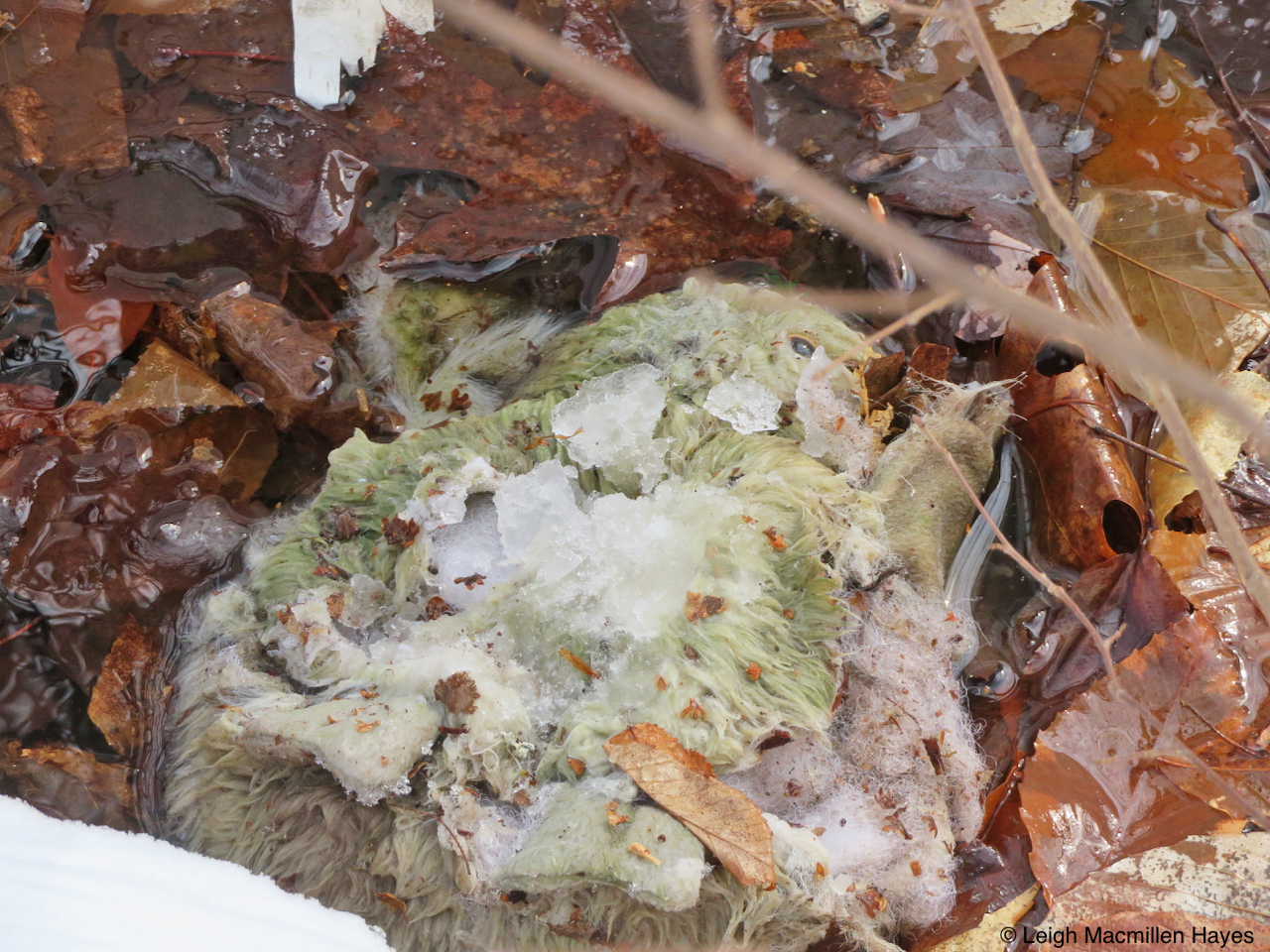
From our position on the opposite bank, a few of us saw what we thought they were looking at. “It’s furry,” Dawn told us.

She wanted to go down into the water because it didn’t appear to be all that deep, but still that would have meant she’d be wet and so Emily hunted around and found a branch to use as a poker instead.

As Dawn wiggled the stick, all the time exclaiming that it was big, whatever it was, and trying to turn it over, Emily and Pam grabbed her to make sure she didn’t turn into an otter and slide down, though I suspected she would have laughed about the experience.

We all watched intently, making suggestions about the critter’s identity while Dawn continued to poke at it and move it. Mammal? Skull? Full body?

The coloration was definitely unique, but it is winter after all, so the freezing temperatures and fact that it was in water may have altered its appearance.

Those were our thoughts anyway, and we voiced our opinions, until . . . Dawn flipped it over and saw . . . a tag.

So hoping for a kill site where the bobcat may have dined, instead we found ourselves looking at . . . a stuffed owl.

Peter took Pippi’s hiking pole and aided Dawn in rescuing the sopping wet bird and if you look closely you may see water dripping from it.

Our chuckles must have rippled through the forest as we laughed at our great find. Mighty trackers are we. But . . . we think the bobcat was almost fooled as well. Almost.

The owl then flew from Peter’s hands to a perch and there it shall remain, or so we think.

For a few minutes we returned to and continued upon a logging road, and then the bobcat called for our attention again and so we did follow it. As I said to the group, normally I’d insist that we backtrack the animal so we don’t put stress on it, but the tracks were at least a day old.

This time the bobcat led us to a hemlock tree. Do you see the debris under the tree?

How about now? And stained snow by the trunk?

There were even little brown commas atop the snow that could easily be mistaken for hemlock cones. But rather, they were a form of scat.

Like us, the bobcat had been here, but for some reason he chose to pass by.

Whenever we spy downed hemlock branches, comma-shaped scat, and lots of urine at the base of a tree, we know to look up and so we did. High above sat a male porcupine. Males are known to stay in a tree during the day while females typically return to the den each morning and head back to the tree of dining choice at twilight. Here’s are two curious things: 1. the bobcat passed by—they will go after a porcupine, but perhaps this one was too high up. (Fishers are a porcupine’s #1 enemy.) 2. we looked all around and couldn’t find any porcupine tracks. If we had, we might have followed them to see if we could locate the den. But, since we couldn’t we came to the assumption that this porcupine has been up in the tree since at least our last major snowstorm on Friday, February 25.

Back on the bobcat’s trail we did go, being stymied occasionally because though we knew it was a bobcat, there were a few prints that resembled a deer and we came up with all kinds of stories about flying deer and other critters of our imaginations.

But always, we’d find a few classic prints and again feel 100% confident of our ID. Well, not ours, but the bobcat’s.

So where would it lead us next? To a spruce tree all covered with sap . . . and fur.

Some of the hair was dark and coarse.

In other spots it was redder and softer. After much debate, and noting that it was all up and down the tree from just above snow level to at eye sight and maybe a bit above, I think we all agreed it was a bear marking tree. Bears sometimes nip and bit trees and rub their backs on them and their hair gets stuck on splinters or in this case also sap.

According to North American Bear Center: “Favorite trees have little ground vegetation to prevent a bear from approaching them, and they often lean slightly toward the trail.  Look for hair caught in the bark or wood 2 to 5 feet high and look for bites 5½ to 6½ feet high.

The hair often bleaches to brown or blond after a few months but can still be distinguished as bear hair from its length and appearance.  Guard hairs are typically coarse and 3-4 inches long and have a narrow base that may be wavy.  Bears are shedding their winter fur when much of the marking is done in spring or early summer, so the bark may also catch underfur, which is thin, wavy and shorter.”

Two feet up made sense given the snow’s depth.

You’d think that would have been enough, but again we wondered: where will the bobcat lead us?

This time it was a snapped snag and we noticed he’d walked along the top of it.

And then one among us spotted this. Brown snow and more hair. We were sure it was a kill site. Yes, as trackers we really like kill sites because they are fun to interpret and we appreciate the energy passed from one animal to another via the predator/prey relationship.

For a few minutes we took turns walking around the site trying to take in everything presented to us, including some hair that had fallen into the snag’s hollow.

I think it was the two=toned hair that helped us figure this one out. Plus the fact that there was no blood. This was a spot where the bobcat sat down, thus the rather tamped down snow that had turned brown. The warmth of his body helped to flatten it and in so sitting, some of his hair, which is black and white, got stuck, similar to what we see in deer beds at this time of freezing and warming temps. The mammals are beginning to shed their winter coats and last week we had an unusually warm day so change is in the air.

We admired his hunting spot and balance beam. And then it was time for us to leave.

But those grins remained on our faces for we were grateful we’d taken the time to see where the bobcat might lead us at GLLT’s Charles Pond Reserve today.

The Tale of the Squirrel’s Tail?

The forest behind our home has long served as my classroom and this past week has been no different.

Upon several occasions, through the doorway I stepped. My intention initially was to stalk some porcupines I’d tracked previously in hopes of finding at least one of them in a tree. But the three dens that had been active two weeks ago were empty.

Near one located almost a mile from home, however, I spied squirrel middens dotting the landscape. This was in the late afternoon of Wednesday, February 23, a day when the high temperature broke records and reached 62˚ in western Maine.

For a brief second I spied the squirrel responsible for the middens, but then it scrambled up a hemlock and disappeared from my sight.

And so I . . . I decided to try to examine its territory and exclaimed when I realized that because of the warm temperature, its tunnels had been exposed. This particular one led to one of its food storage units, a cache of hemlock cones stored under a downed tree.

Into the mix it was more than the squirrel, for I spied vole tunnels and deer prints. So here’s the thing, red squirrels tunnel through the deep snow to get to their caches. Of course, they also leap across the snow. Voles, on the other hand, are much shier of sky space because they are everyone’s favorite food. They tunnel between the ground and the snow in what’s technically called the subnivean zone and typically we don’t see their exposed runways until spring. But 62˚is like an early summer day ’round these parts. Oh, and do you see that same downed tree from the last photo? Keep it in mind, for it plays an important role in this story.

A vole’s tunnel is about an inch across and the only thing I had for a reference point was a set of keys. I was traveling light that day.

Likewise, the squirrel’s tunnel was about three inches in width.

My next move was to walk the perimeter of the squirrel activity in order to gain a better understanding of its territory. All told, it is about 30′ x 50′, and located under several tall pines and hemlocks that create a substantial canopy. On the fringe of this particular neighborhood live a few red maple and balsam fir saplings.

I had to wonder if the squirrel was still in the hemlock or had moved to a different location via its tree limb highway while I was looking down and all around.

Having figured that out, I returned to the downed tree, for not only did it serve as a food storage or cache below, but the top side was the dining table/refuse pile, aka midden. Obviously the hemlock had provided a great source of food–a good thing given that it seemed to be the only hard mast available this year.

There were other middens scattered about, but I really liked this one upon a stump, which showed the pines had at least offered a few treats not yet devoured. The thing is, red squirrels like to dine on high places, whether it be upon a downed tree, stump, or even up on a limb. That way they can see their predators approach and make a mad dash to a tunnel or up a tree trunk.

Two days later, on Friday, February 25, seven or eight inches of snow fell and again in the later afternoon I ventured into the woods to check on the squirrel’s activity. Sometimes during storms mammals hunker down but by the number of prints visible, I knew that this one hadn’t. Its tunnels had some snow in them, but the boughs above kept much of the snow from landing on the ground.

The curious thing for me was that though there was a lot of activity by the downed tree, I couldn’t locate a single midden. Even if the squirrel had been dining on a tree limb, surely some cone scales and cobs would have fallen.

It had also climbed its favorite tree, the one where I spied it on Wednesday, but again, no sign of food devoured.

After my guy and I spent the morning and early afternoon tramping four miles from home to a swamp and back, I decided to head back out to check on the squirrel while my guy went for a run. Speaking of running, as I approached the squirrel’s territory, I watched it run across the snow and zoom up the hemlock and never spied it again.

So I turned to the tree stump–it was covered with Friday’s snow, though there were tracks around the base of it. What I loved is what I’d missed on Friday–barbed wire. This was all once farmland and obviously I was standing on a boundary. It was actually a boundary for the squirrel as well, since this marked an edge of its territory.

Near the red maple saplings I found evidence of some fresh tunneling, albeit not under the snow, but through it, which is also typical. Perhaps the squirrel was dining within and had hidden its middens.

I stepped over to the downed tree and looked under in a southerly direction, curious to see barely a sign of the cache that had been so evident on the first day.

Looking north, it was more of the same.

That is . . . until it wasn’t. A hint of color captured my attention. Feathers?

No. Hair. From a red squirrel, whose hair hues can range from gray to brown to red. A fluffy tail no more. The thing is that squirrels sometimes loose their tails to predators, or even parts of the tail from a fracas during a territorial fight with one of its own. Another cause may be a tree trying to snag the tail just as speckled alder and winterberries and balsam fir tried to snag my hat repeatedly on our tramp this morning.

Even upon the downed tree . . . a little tuft. No tracks atop the tree. And no signs of feeding.

I looked around, searching for predator tracks and instead found the snow lobster instead. This was a place of squirrel and vole and deer and hare. But not a predator in sight.

And so I looked up, thinking that the hair was the result of an avian predator. My hope was to find a few strands dangling from a tree. Or some other evidence. Nothing. Oh, how I wished GLLT’s Tuesday Trackers were with me, for they are an inquisitive group and ask great questions and process the whole picture in a complete manner. Together we share a brain and I needed that sharing.

Alas, they were not, but I snatched some of the hair and will certainly share it with them in the morn.

In the meantime, that’s my tale of the squirrel’s tail. And if you have ideas or considerations, please let me know.

Happy 7th Birthday to you, wondermyway!

Seven years ago today I gave birth–rather a record at my age. It was February 21, 2015, when I welcomed wondermyway into the world. It’s been quite an adventure that we’ve shared together and one of my favorite things to do each year to celebrate is to take a look back.

As I reviewed this past year, the reality hit home. I’ve written less than half the number of posts of any other year. That all boils down to one thing. Time. There’s never enough. Oh, I’ve taken the photos, and had the adventures, but I haven’t made the time to write about all of them. Sometimes, they sit off to the side in my brain and I think I’ll use some of them together in a cumulative post, and there they sit.

That all said, I’ve had more views and visitors this past year than any other. Views = 24,955; Visitors = 16,994. Followers = 701. And over the course of wondermyway’s lifespan, the blog has received 121,765 hits.

An enormous heart-felt thanks to all who have joined me for any or all of these journeys. I get excited to share with you and love hearing from you.

In case you are wondering, my guy and I did have a Mondate this afternoon–along Bemis River and then up to Arethusa Falls in Crawford Notch, New Hampshire.

It was here at the falls that we celebrated wondermyway.com with a couple of those Bavarian Haus chocolates we purchased last Monday.

And now for a look at a few excerpts from posts I made during the past year, beginning with March 2021. To read or re-read the entire post, click on the link below each photo.

The Invitation Stands

It took me by surprise, this change of seasons. Somehow I was fooled into thinking winter would hold its grasp for a wee bit longer because I don’t like to let it go.

Even Winter Dark Fireflies, who don’t carry lanterns like their summer cousins, and aren’t even flies as their name suggests (they are beetles), knew what was happening before I did for in their adult form they’d been tucked under bark in recent months, but in a flash are now visible on many a tree trunk as they prepare to mate in a few weeks.

But . . . this spring will be different.

How so? And what invitation still stands? Click on the link under the beetle’s photo to find the answers.

Whispers Along The Trail

“The way to be heard isn’t to shout,” said the Reverend Dr. Sam Wells of St. Martins in the Fields, London. “It’s to whisper.” But who are the whisperers?

Listen for the slightest murmur of Trailing Arbutus’s delicate blossoms beneath its leathery leaves.

Hear also the soft words of a rattlesnake-plantain explaining that its striking veins may suggest “checkered,” but it actually goes by “downy” in common speak.

You’ll have to click on the link under the photo of the Trailing Arbutus flowers to hear what other species had to say.

Surveying the Wildlife of Charles Pond

For the past two weeks at Greater Lovell Land Trust we’ve had the good fortune to conduct a wildlife survey in the waters that surround the newly acquired Charles Pond Reserve in Stow, Maine.

MDIFW maintains a comprehensive database on the distribution of Maine’s amphibians and reptiles, as well as terrestrial and freshwater invertebrates and the data we’ve collected will add to the bigger picture. What we discovered was just as important as what we didn’t find.

The survey began with a day of setting and baiting fifteen traps in the pond and associated rivers. What’s not to love about spending time in this beautiful locale, where on several occasions lenticular clouds that looked like spaceships about to descend greeted us.

Our favorite bird sighting was this bald eagle, who found a silver maple snag at the outlet of Cold River into Charles Pond. I was a wee bit nervous as that was Change The Trap Bait Day, and I had a bag of stinky old sardine cans in my lap as I paddled a kayak.

He was intent, however, on something else and barely gave us a glance.

This story of the survey would not be complete, however, without the absolute best sighting that occurred on the last day. Our mammal observations on almost every trip included a muskrat, plus occasional squirrels, and once a beaver. From our game camera set up at various locations, and from tracks and scat, we also know that coyotes, raccoons, otters, a bobcat and a black bear share this space.

But . . . you’ll have to click on the link under the Bald Eagle photo to figure out what our best sighting was.

The Saga of a Vernal Pool

Warning: Some may find parts of this post disturbing. But it is, after all,  about the circle of life. 

A climbing thermometer in March signaled one thing amidst many others: the time had arrived to check the vernal pool. 

Completely covered with ice at the start of my explorations, I noted puddling on top and knew it was only a matter of days. 

Not wanting to rush the season, though truly I did, I rejoiced when the edges melted because life within would soon be revealed.

And then one day, as if by magic, the ice had completely gone out as we say ‘round these parts. It was early this year–in late March rather than April. That same night I heard the wruck, wrucks of Wood Frogs, always the first to enter the pool. 

The next day he had attracted his she, grasping her in amplexus as is his species’ manner. 

Ah, but how does the story end? Click on the link under the photo to find out.

Consumed by Cicadas

I walked into a cemetery, that place of last rites and rest, looking for life. It should have been a short visit, for finding life in such a location hardly seems possible, but . . . for two hours yesterday I stalked the gravestones and today I returned to the same spot where I once again roamed, and then continued up the road to another that surprised me even more.

Upon the granite wall that surrounded the Hutchins plot, two small, but actually rather large in the insect world, nymphs crawled and paused, crawled and paused. And my heart sang as it does when I realize I’m in the right place at the right time.

Click on the link under the photo to see the story of the Cicadas unfold.

Not Just An Insect

Out of curiosity, and because it’s something I do periodically, I’ve spent the last four days stalking our gardens. Mind you, I do not have a green thumb and just about any volunteer is welcome to bloom, especially if it will attract pollinators.

There were millions of other insects, well, maybe not millions, but hundreds at least, flying and sipping and buzzing and hovering and crawling and even canoodling, the latter being mainly Ambush Bugs with the darker and smaller male atop the female.

But why the title, “Not Just An Insect”? Ahhh, you know what you’ll need to do to find the answer.

A Collection of Mondates

Every Mondate is different, which goes without saying, and the adventure always begins with a question, “What are we going to do today?”

The answer is frequently this, “I don’t know, you pick.”

The instantaneous reply, “I asked first. You need to figure it out.”

We did figure it out. Over and over again. This collection happens to include places that make us happy and many of our family members and just looking back puts a smile on my face. Oh, and the selfie–taken at the same place where we went today–only in September 2021.

Beautiful Maine

A vacation loomed in front of us. Where to go? What to do?

Click on the link, Beautiful Maine, to see what surprises awaited us as we got to know our state a wee bit better.

Pondering the Past at Pondicherry Park

Before today’s deluge began, I slipped into Pondicherry Park in Bridgton, Maine, to fill the innermost recesses of my lungs with November air, and at the same time my brain with memories of so many people who have traveled these trails with me from Ned Allen, former executive director of Bridgton Historical Society, to Loon Echo’s Jon Evans, and Lakes Environmental Association’s Alanna Yanelli and Mary Jewett, and friends and friends and friends, including the late JoAnne Diller, Sue Black, and Jinny Mae. But today’s journey also included memories of one I took two years ago with Becky Cook, who shared her remembrances of growing up along South High Street and romping through these trails as they were part of her backyard. If anyone ever had a sense of this place, it is Becky.

This post is full of information of an historic and natural nature. Go ahead, click on the link above to learn more.

Following the Circle of Life

Upon an aimless journey into our neck of the woods a pattern soon emerged, though I didn’t realize it at the time. Sometimes, it’s best that way. To be present is the key.

Click on the link to find out more about the pattern.

Good Hair Mondate

The temperature dipped overnight and wind picked up out of the WNW but given the destination we had chosen, we knew if we dressed appropriately we’d be fine because we’d be in the woods most of the time, unlike last week’s walk where we were completely exposed to the elements on Popham Beach. That said, it was cold today.

But what could good hair possibly have to do with this Mondate? You’ll have to read it to find out.

The Duck’s Tale

Dear Readers, This post may not be for the faint of heart, but it’s something those of us who track find incredibly exciting as we try to interpret the gory story. Yes, you read that correctly. Blood and guts are to follow. You are now forewarned, and if you decide not to read on, I totally understand.

So how is this stuffed beaver connected to a gory story?

Starring wondermyway, episode 3 on LRTV

Finally, settle into a comfy chair and click on the following link to listen to fourteen minutes of wondermyway: wondermywayIII.

Thank you. Thank you. Thank you.

I hope you’ll continue to wonder along with me as I wander through the woods.

Knowing My Place

I planned to accomplish so many things since I had time off this past week. And I did check a couple of items off my list, but . . . most of my time was spent wandering and wondering in the woods behind our house.

Sometimes I followed trails known only by those who like to zoom through this space and never really see.

Other days I bushwhacked, eager to discover what might present itself.

Always I was reminded that this has long been my classroom and its taught me many a lesson, including that the bracts of the Witch Hazel flower persist in the winter and offer a dash of color in the landscape. Notice how each flower consisted of four bracts that curl back. The ribbony flowers fell off in the fall. And I have to admit that there was a time when I thought these were the flowers.

While bushwhacking, debris on the snow drew my attention and of course I had to investigate.

Much to my delight, I found a couple of Pileated Woodpecker scats filled with insect bodies. And notice all the chiseled wood–it’s a lot of work, but I’m always happy to note via the scat that the attempt was successful.

Equally successful was the digging of a Red Squirrel who had cached a pile of hemlock cones and returned within the last few days to dine and leave behind a midden of cone scales–its garbage pile.

This is a truly wild place that serves as home to so many mammals and birds and I give thanks to them for leaving behind prints and other signs of their presence. Of course, I was looking for the resident Moose, who has eluded me so far, but the White-tailed Deer are everywhere, including sucking seed from our bird feeders every night.

The Turkeys haven’t discovered our feeders yet, but by their prolific tracks I know they are nearby.

I’ve also been noting many, many Snowshoe Hare tracks, some in places I don’t recall seeing them previously and methinks there is plenty of prey available for predators. One of the learnings these woods have offered is that the hare’s prints can throw one off on ID, especially when the snow is soft and its hind feet (top of photo as they always land in front of where the front feet landed and lifted off) spread out and leave more toe impressions than one typically sees.

Of course, no visit to these woods is complete without a check-in at the vernal pool. And this week I discovered two other pools to check on in the spring. But those are for another day three months away.

For all my wandering, actually spying wildlife is rather rare, but from inside our kitchen door sometimes we see so much. Every few nights a porcupine pays us a visit. And every night four healthy looking deer stop by as I said earlier. But on these stormy days, the feeders see the most action and today’s visitors included Tufted Titmice,

and American Goldfinches studying the scene.

Eventually, this male flew to the ground and dug in, much like the Red Squirrel in the woods.

Time and time again, he knew success.

Mr. Cardinal also dove in.

And his Mrs. came by as well. One day we actually spotted two Cardinal couples in the yard.

One of the joys of the feeders is that those who visit add color to the scene and it soon became apparent that red was the color of the day, this time with the spots on the back of the Downy Woodpecker’s head indicating it was a male.

Another male of another species also showed off his red coloration.

I was tickled to welcome a couple of House Finches. And do you see the deer hair on the snow to the upper right of his beak?

It’s that time of year when the Juncos also pay a visit and keep the red theme going with their pink beaks.

Not all birds are created equal or don’t tell the Gray Squirrel he’s not a bird because like the deer and porcupine, he’s sure that the seed and nuts are meant for his pleasure. Certainly.

This was my week, a week spent happily dilly-dallying in my place and giving thanks for past and present and future lessons. A week spent wondering and wandering alone. And it was topped off with this icy sculpture in the woods that reminded me of a bird’s head–it seemed apropos, but I did have to wonder how it formed. Ahhhh, not all is meant to be understood in this school of choice.

How well do you know your place?