Dear Aunt Ruth

My memories are snapshots of times spent with you and Uncle Bob and all the cousins. I loved visiting your home–whether we drove down the long road and driveway with Dad or walked via the old dump road and skeet field with Mom. Each time we arrived, you welcomed us with grace and your unassuming manner.

I remember sipping lemonade on the back porch, riding the wooden horse, and checking on Dale’s bunnies, especially Peter who soon became Mrs. Peter. I remember lunches at your kitchen table, and the time we bit into our tuna sandwiches only to discover the bread was filled with ants. Why that sticks with me, I don’t know, but we all thought it was funny. I remember family reunions, where food and laughter and aunts and uncles and cousins were abundant. Eventually, it evolved into a musical gathering–such was the talent of the clan.

But most of all, I remember your flower and vegetable gardens and your love of all things natural.

p-kiosk

And so today, as my guy and I ventured to a park we’d never before visited, I took you with us. I wanted to share with you our findings, just as you used to share stories of your gardens and wildlife sightings with us in Christmas cards after I moved north.

p-moose trail

Our first observation–a moose! Well, not really.

p-deer tracks

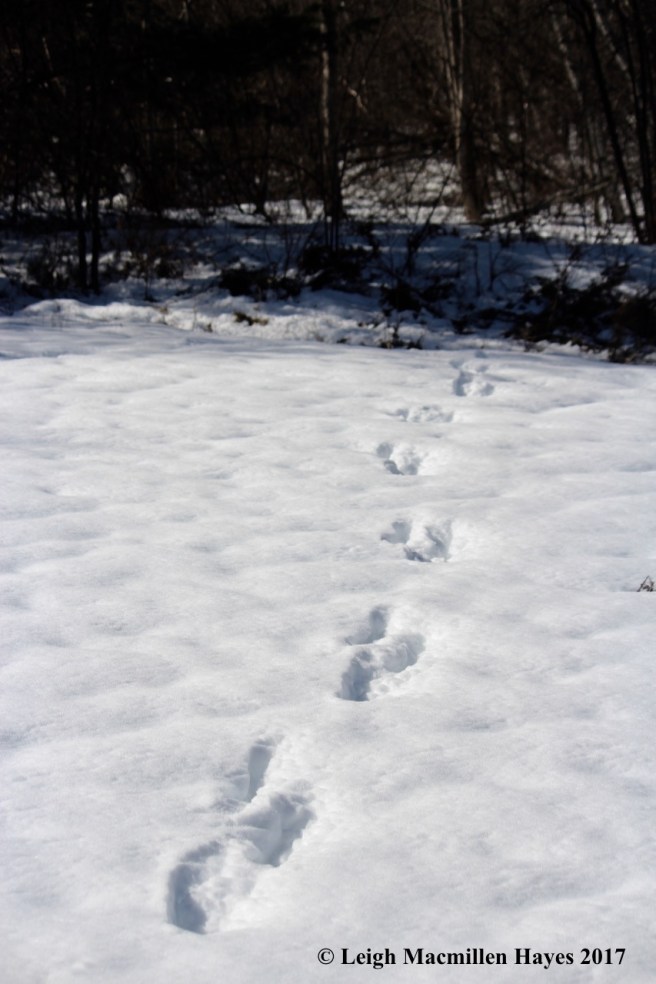
But we did see evidence of deer and I knew you’d be glad they were running away–leaving your gardens alone. Oh, and those pesky raccoons! Raising eight children didn’t seem to phase you, but those raccoons in the corn field–that did rattle you.

p-gardens on high

The gardens in these woods differ from yours–and right now, given the snow cover, the only ones visible were high up in pine trees, where yesterday’s snow offered nourishment to the mosses and lichens that grow there.

p-locust legume-like seed pod

We did, however, find one similarity–the legume-like seed pod from a locust tree. It’s almost time to sow the peas.

p-apples

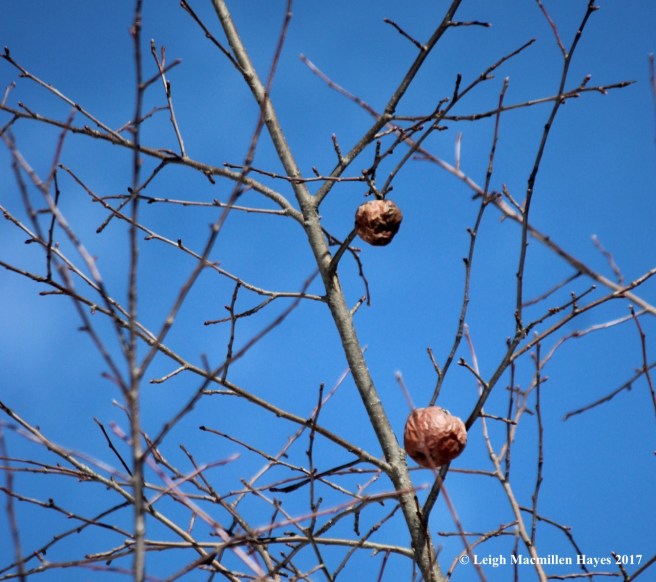
In these woods, we also found a symbol of the past–it was once farmland as signified by the apple trees. If memory serves me right, there was a very climbable apple tree beside your driveway.

p-hidden acorn

And then we spied one impossible possibility–an acorn tucked into red maple bark. How did it get there? And will it germinate? If it does, what then?  I trust, you too, would have noticed such and wondered.

p-pratt brook 2

We followed the trails through the woods and sometimes beside the brook for which the property was named–Pratt Brook. It was a bit more bubbly than the creek in your yard, but such is the snow melt right now.

p-artist conks

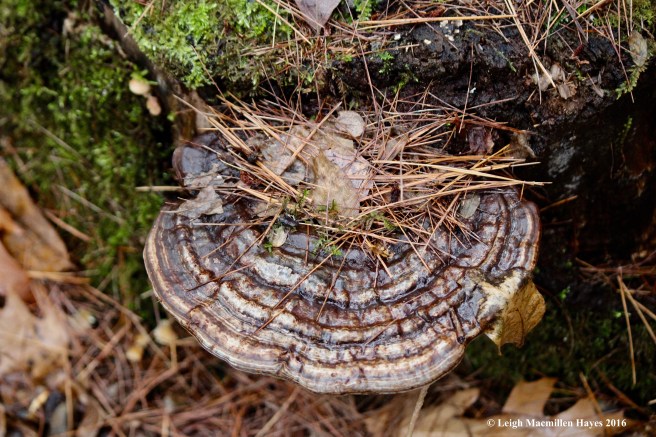
Along the way, I noted a family of artist conks decorating a tree. And, that, of course, brought to mind the box of colored pencils you (or perhaps it was the cousins, though Neal had no qualms about telling us that our gifts were really chosen by you) gave me long ago. I cherished that box and used those pencils with care. They lasted into my early adulthood.

p-colors 1 (1)

And then my guy gifted me another box, which I again revere. One of my favorite pastimes is to sit and sketch and then add a dash of color. Whenever I do, Aunt Ruth, you are with me.

p-powerline

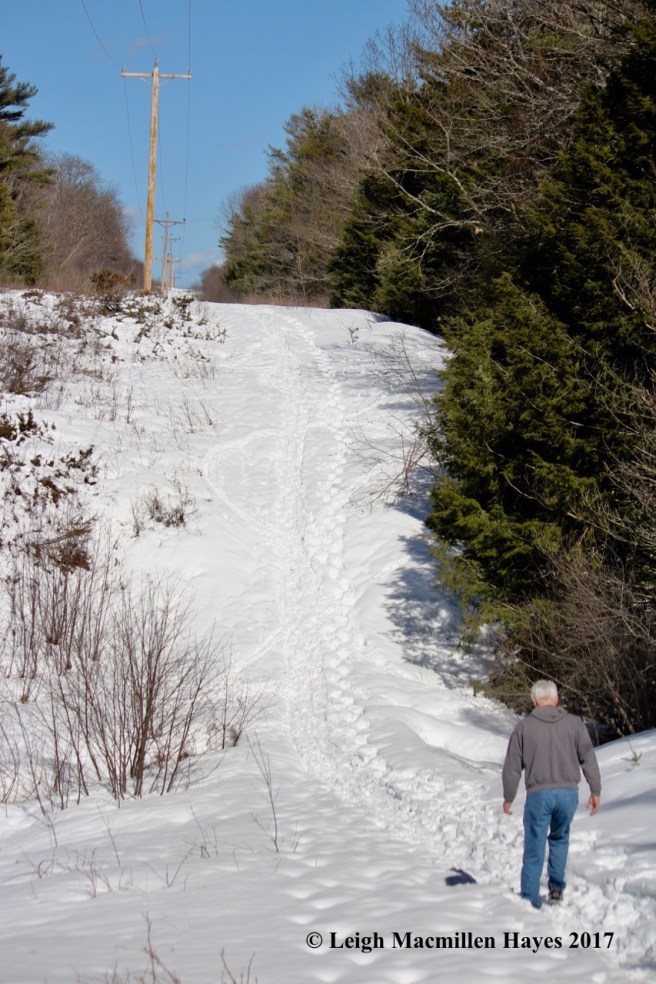
For a while we followed the power line trail, aka Bear Trail. As you can see, we tramped in the footsteps of many others who’ve traveled this way just today–via skis, snowshoes and hiking boots like us. We were an hour from home and close to the ocean, so the snow level was about six inches compared to at least two feet we walk upon daily. But today’s sun warmed us and initiated a meltdown.

p-spider

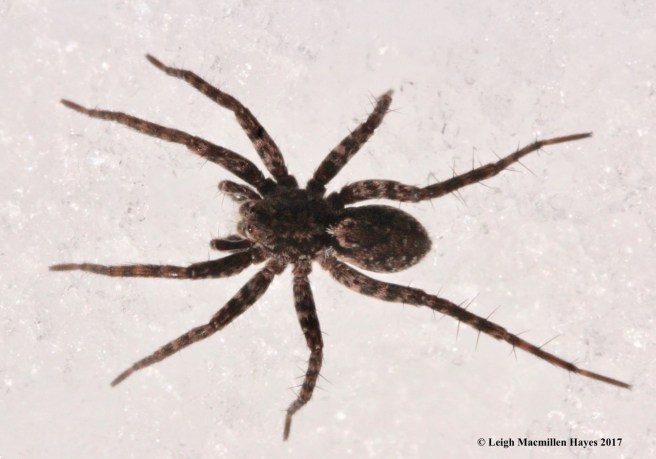
I didn’t mind being on the power line for a bit, for it was here that we saw our only sign of wildlife.

p-aster 1

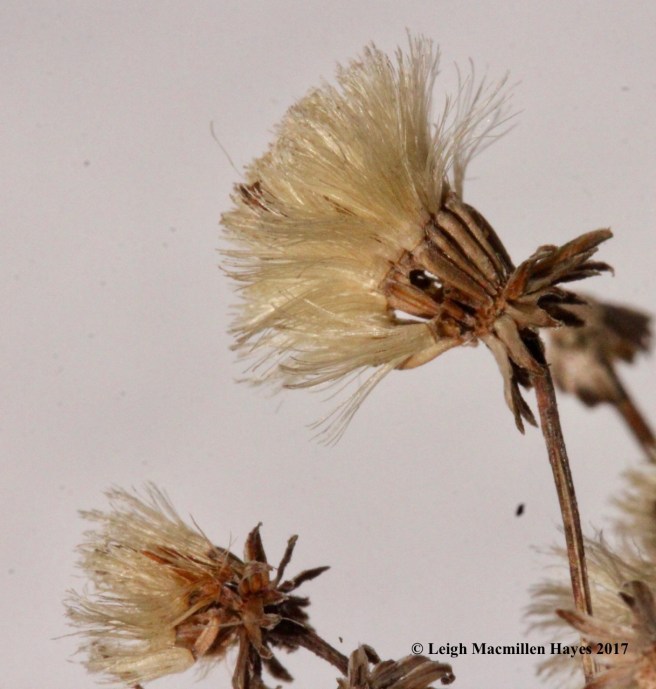
It was also the spot where I knew we’d find wildflowers–and I wasn’t disappointed. Asters like these, and goldenrods, spireas and berries displayed their winter forms.

p-beetle 3

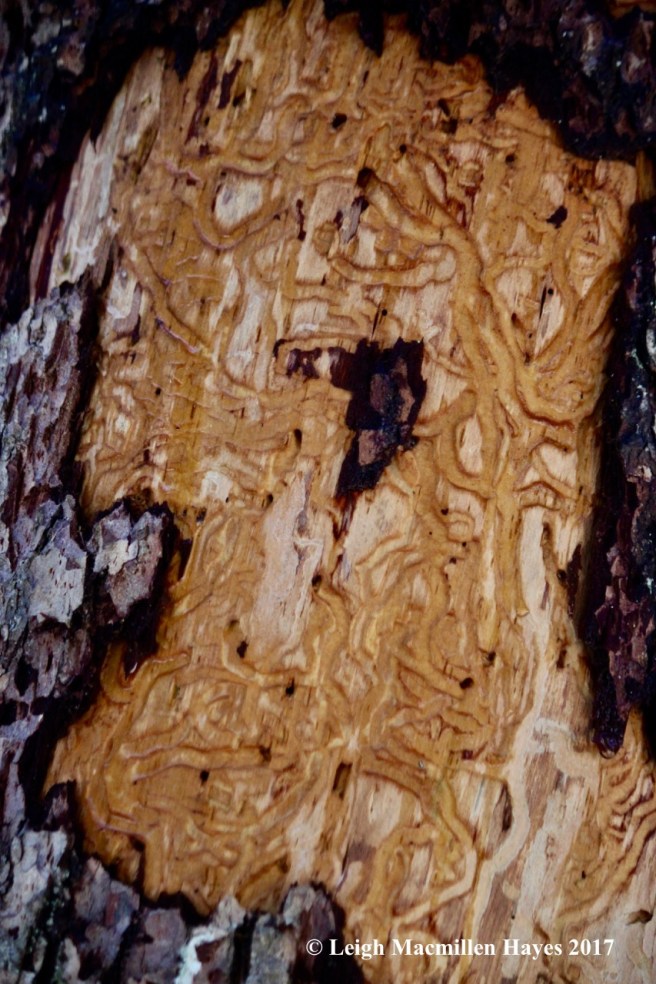
Back into the woods, we were almost done, when we spied this woodwork, carved by bark beetles.

p-bark beetles 1 (1)

And I was again reminded of my past observations when I moved a log and discovered a gnawer on the job.

p-me

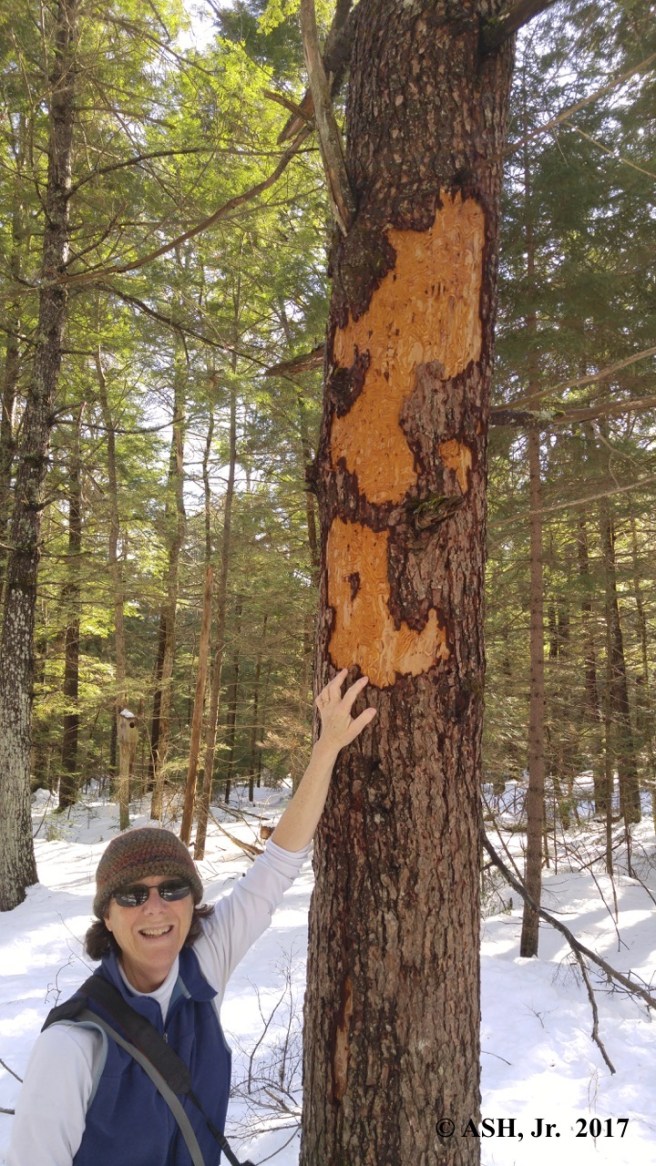
The intricate work reminded me of Uncle Bob’s woodworking skills and I knew you’d appreciate that. You’d also appreciate that as I write, my guy is watching a National Geographic show about Wild Scotland.

Thanks for the memories, Aunt Ruth. And thanks for making time for us and showing an interest in all that we did–always as curious about our adventures as those of your brood. You were a remarkable woman and a genuine Yankee whom I was blessed to have as a part of my life.

Fondly, Leigh


Book of March: Upstream

As friends often do, one, whom we fondly call Señora because she was our sons’ high school Spanish teacher, recommended a book to me.

And as I often do, I visited my favorite independent bookstore, Bridgton Books, took a quick look and made a purchase.

m-cover-1

Book of March: Upstream

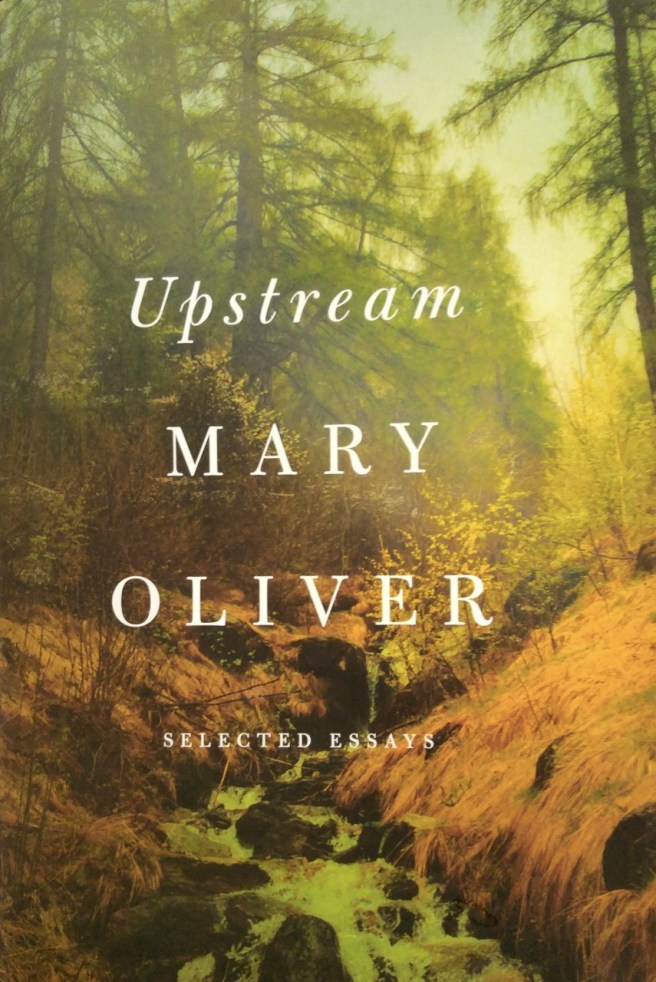
Upstream by Mary Oliver is a collection of essays, many which she previously published elsewhere. In 175 pages, the essays span a lifetime of writing–but even more so a lifetime of living. And noticing. And contemplating. And wondering. And making connections. And wondering some more. But all the time, believing, even in that which she could not see or quite comprehend.

She speaks to the writing process, a process I have embraced for what seems like forever. Only a few minutes ago I shared with a friend that a final draft is never really final. Each time we return to the words, we find other ways of playing with them.

She speaks to the natural world that she has spent a lifetime observing and recreates it on the printed page with elaborate detail. And so, with each sentence, I travel beside her, whether she wants me to or not, for Ms. Oliver embraces solo moments of exploration. I get that.

She speaks of Emerson and Whitman and Wordsworth and Poe. And actually, about the latter, she turns my head for she writes about him with such compassion.

She speaks of the reality of the universe and reminds us to exist. She is. We are.

She speaks of observing a mother spider and her egg sacs in the cellar of a rented home over the course of several months, and I sense her wonder. As a child, I was afraid of those cellar spiders. As an adult, I’m intrigued by them.

And so today, I took Ms. Oliver with me when I stepped into the woods.

m-fog

It was a snow-eating foggy  sort of day and the dampness grazed my cheeks.

m-preweb-raindrops-and-crosses

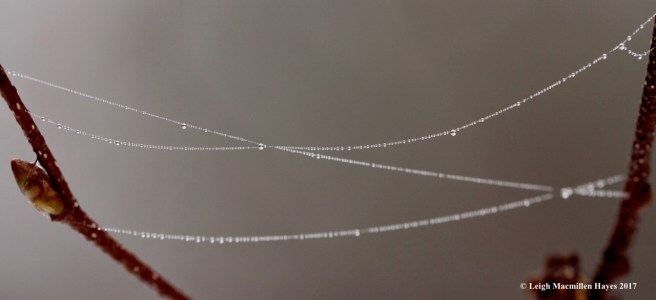
As my snowshoes slapped the hardened snow pack, rain drops drew my focus. On this particular pine sapling, I was drawn to the crosses formed by raindrops and needles, which seemed apropos given that today is Ash Wednesday. And then I noticed the spider silk.

m-web-1a

Every where I turned, long beaded strands of miniature raindrops connected one branch to the next.

m-web-connections-2

What I soon realized, however, was that the strands weren’t merely on single trees. Each tree was connected to the next throughout the forest. As I moved slowly about, I inadvertently snapped some of those lines and felt a sense of sorrow for all that work lost.

m-leaf-attachment

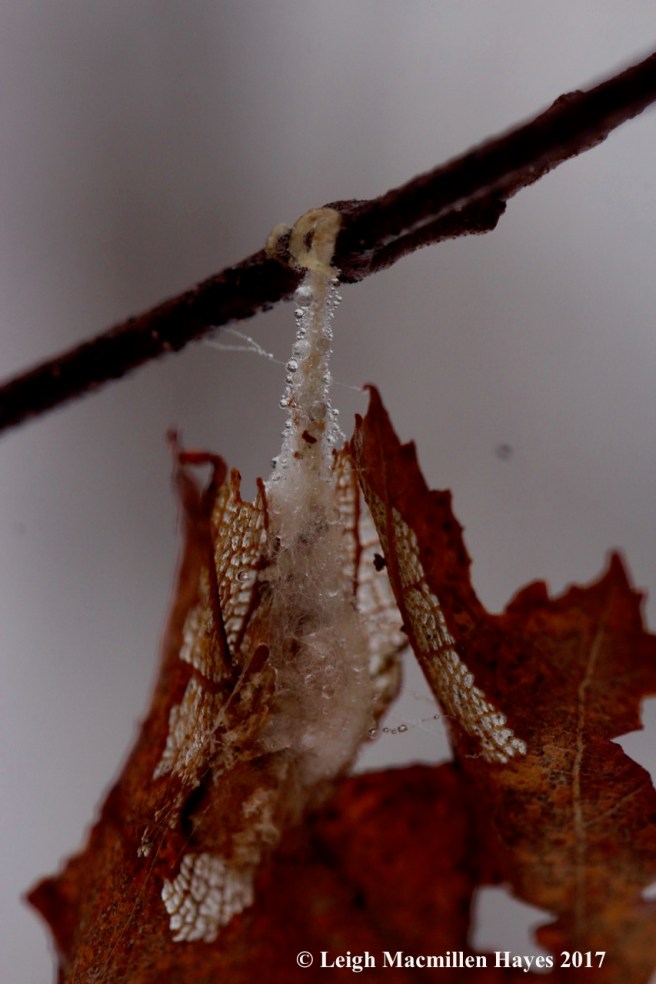
And because I was looking, I found other curious sites that I didn’t expect. That is one of the take-away messages of Ms. Oliver’s book–get outside and even if you are searching for something specific that you may not find, it’s what you see along the way that is more important.

m-page

As I often do when a book such as this one pulls me in, I turn back the bottoms of pages to remind myself that there are passages I will want to revisit. If the corner is turned back and back again, as this one, it means there is something to reread on this page and the one to follow.

For me, Upstream is that type of a book. It’s broken into five sections. Ah, the word broken–it doesn’t feel right in that last sentence because there is nothing broken about the book. Perhaps divided is a better word. Or maybe there’s another that will come to me eventually. That’s the thing about the writing process–it’s never final as I said above. Anyway, I found myself relating to each section with a different part of my soul.

m-rain-drop-globe

And give thanks that Ms. Oliver chose to share her reflections in this manner. I also thank Señora for the recommendation.

Upstream by Mary Oliver, Penguin Press, 2016

Forever a Student

Once the rain let up, I donned my Boggs and headed out the door in mid-afternoon, not sure where exactly I was headed. But after reaching the snowmobile trail, I decided to turn south. Since the spring, I’ve been to the vernal pool on the neighboring property numerous times, but not much beyond in that direction.

h-new-bridge

Part of the reason was that a local industry, of which we now have so few, was constructing a new building and had cut off the trail. Oh, I could have bushwhacked around the project, but the other part of the reason is that it’s a heavy tick zone and I normally avoid it come warmer weather. Given the new building, I wasn’t sure what to expect today, but as I passed through the stonewall, I discovered they’d added a bridge over a new water diversion and the trail was open. I’m glad for the small industry, but simultaneously sad that the willows are gone. No more pussy willows in the spring. Or willow galls, though I suppose that’s good news. And who knows, perhaps some viable willow seeds will spring forth in this place–a hypothesis to be tested.

h-artist-conk-top

After crossing behind the building, I moved through an opening in the next stone wall, and felt right at home again–in one of my local classrooms. This is one where I’m often the solo student, as was the case today.

h-artist-conk-2

I revisited an old stump, where art class was about to begin. The underside of the artist’s conk welcomed a sketch, but I left the canvas blank for another day.

h-gate

In social studies class, I took a look at former land uses. The wall opening and split stone gate bars helped me envision the fields that once were cleared. I followed several walls, which switched from single to double and even double-double, or so it seemed as one section was at least six feet wide and a football field long (The New England Patriots are winning in CA right now!). Barbed wire indicated the need to keep animals out and flat land with trees not a hundred years old spoke to the land’s former plowed use.

h-vp

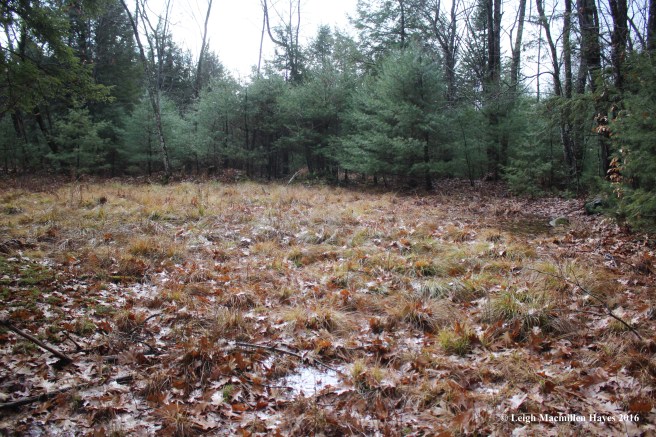
A few minutes later, I moved over an old rock mound and stood before my science teacher–another vernal pool. As I recalled, this one dries out early in the season and grasses and other vegetation grow prolifically here. But unlike the smaller pool closer to home, this one held some water from the recent rain.

h-boots

As any student should, I stepped through the door and sunk my feet into class.

h-cinnamon-fern

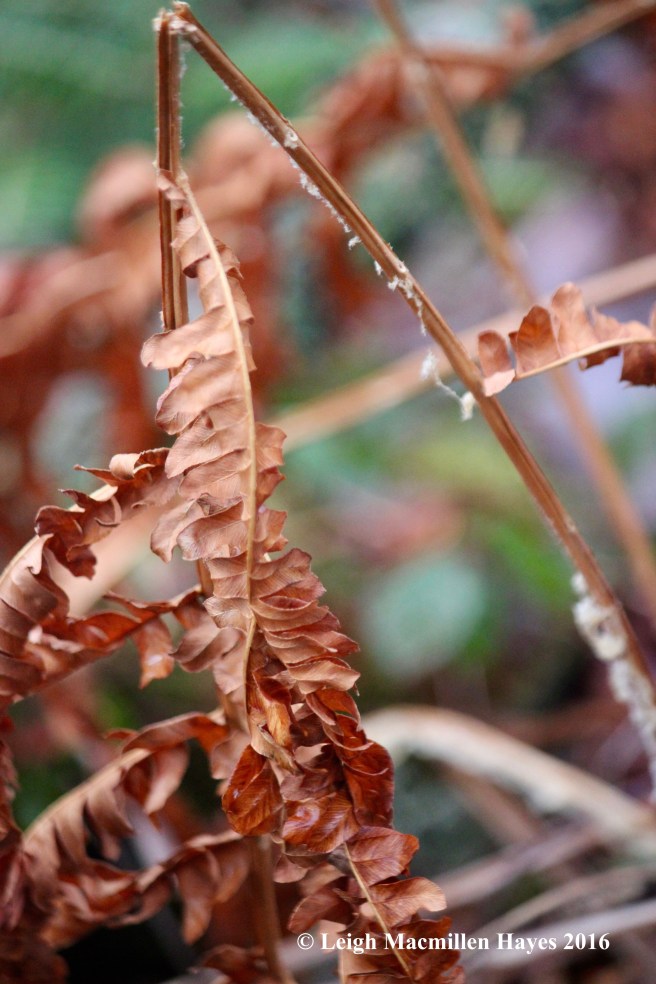
Cinnamon ferns reminded me that they keep their fuzziness right up to the end.

h-birdnest-1

I wondered about strips of paper birch dangling from a young sapling and then realized I was looking at the remains of a nest–maybe a vireo.

h-seeds

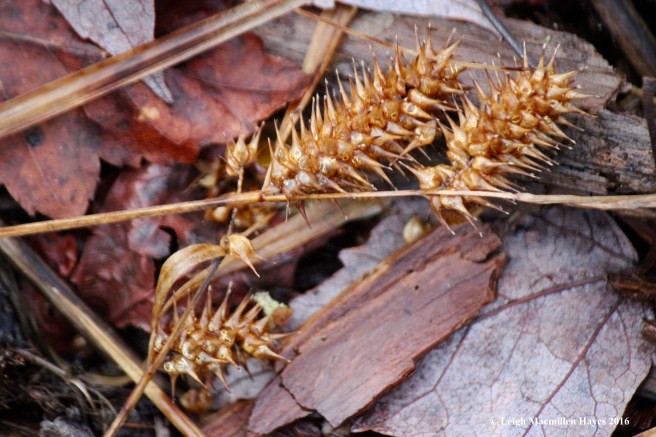
I questioned how the long-beaked sedge seedheads came to be bent over–by weather or wildlife or just because their time had come?

h-vp-bulrush-a-grass

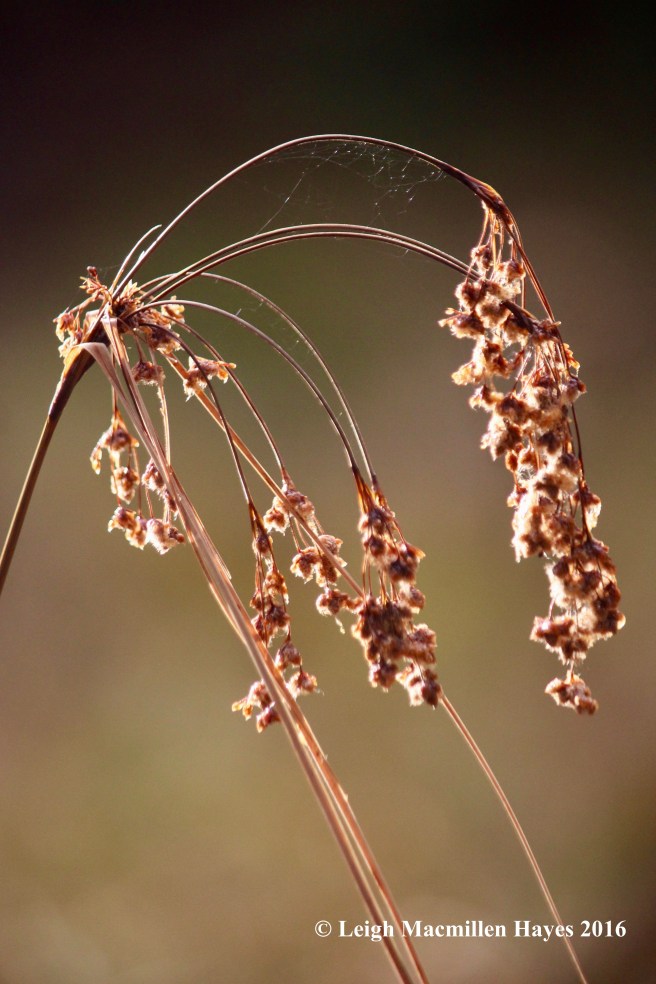
While bulrushes (actually a grass) offered flowing fountains pouring into the future, their seeds still clung–as did a spider web.

h-vp-steeplebush-web

And more spiders eluded me, though their webs stood strong among the steeplebush capsules.

h-vp-crystal-ballseeds

A few raindrops dangled like ornaments from a holiday decoration.

h-vp-backside-of-sensitive-fern-beads

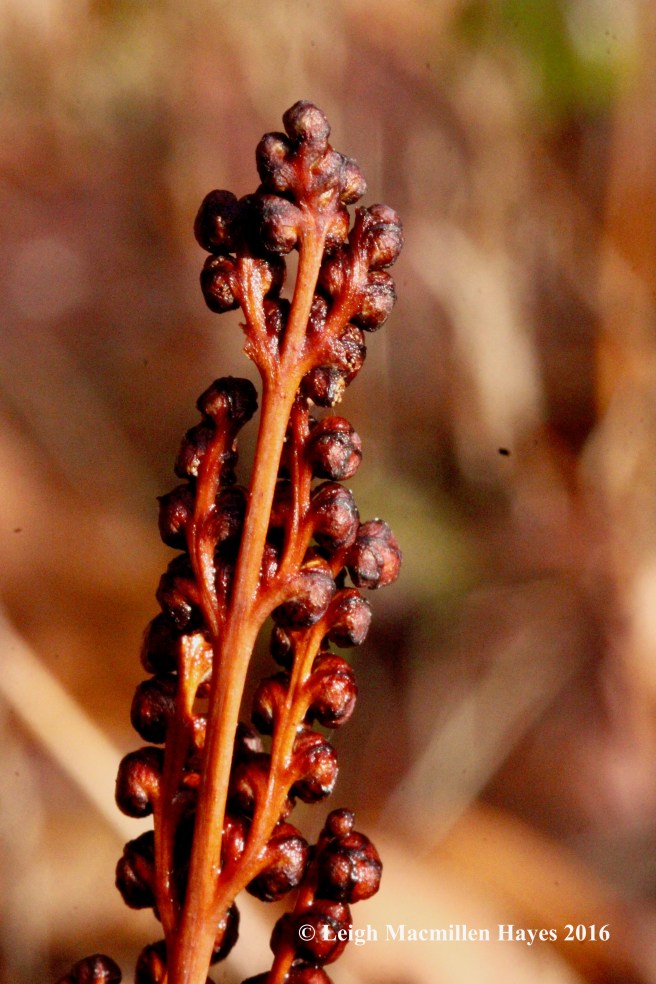
And bead-like spore structures on sensitive fern’s fertile stalk waited for another day to spread their good news.

h-lichen-or-fungus-2

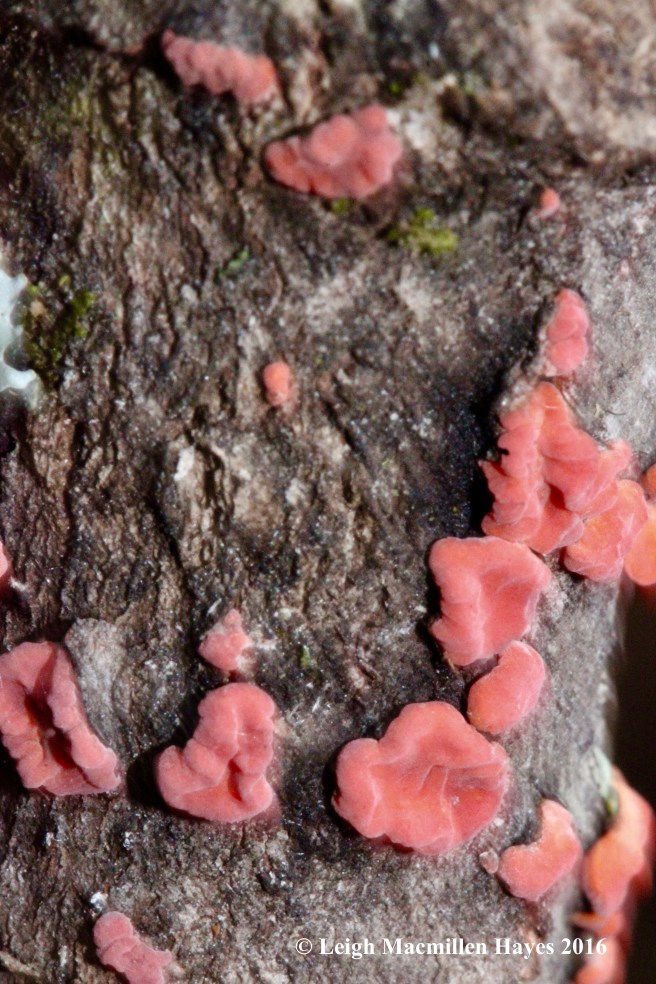
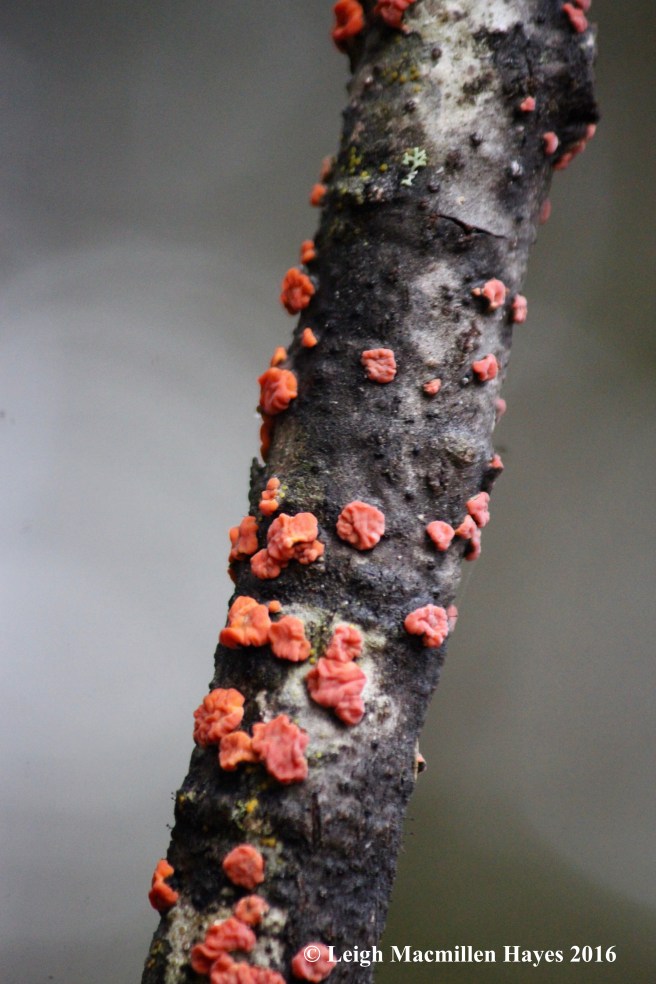
I finally left the vernal pool, but before heading back down the hallway, small salmon-colored growths stopped me. Lichen? Fungi? I didn’t think I’d ever seen it before and so it was a new lesson.

h-lichen-or-fungus

My first thought–lichen. In a way, it resembled the tops of British Soldiers that grow prolifically here. But my latest thought is red tree brain fungi (Peniophora rufa) . I may be wrong, but that’s what being a student is all about.

h-woodpecker-1

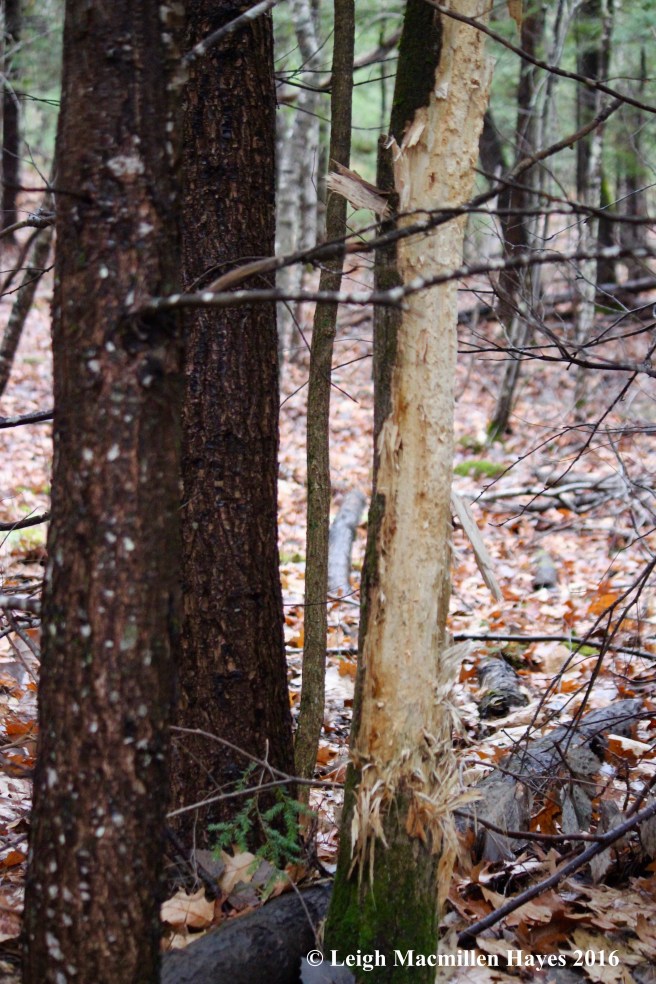
With each new lesson, I was also thankful for those that were reinforced, such as the chisel-like and shredded works of pileated woodpeckers. I used to think such trees were the result of bear activity.

h-woodpecker-2

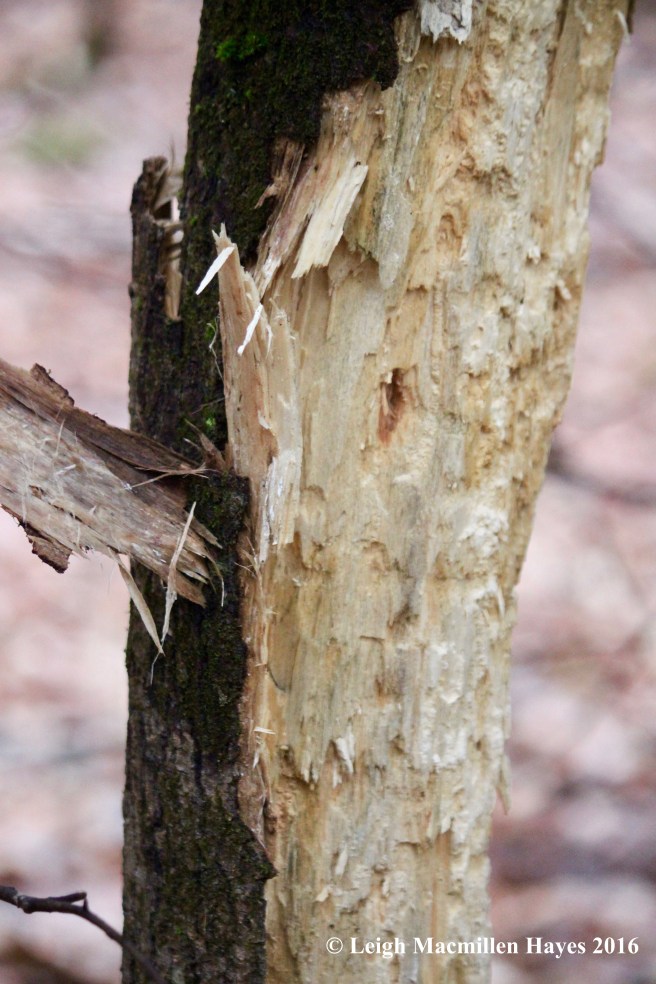
I’m always awed by the resulting sculpture left behind by those powerful birds–their strong beaks stabbing away at the bark until they’ve consumed a meal of carpenter ants and beetles. Thankfully, their skulls are thick and spongy–allowing their brains to absorb the impact of such repeated drilling.

h-field-succession-layers

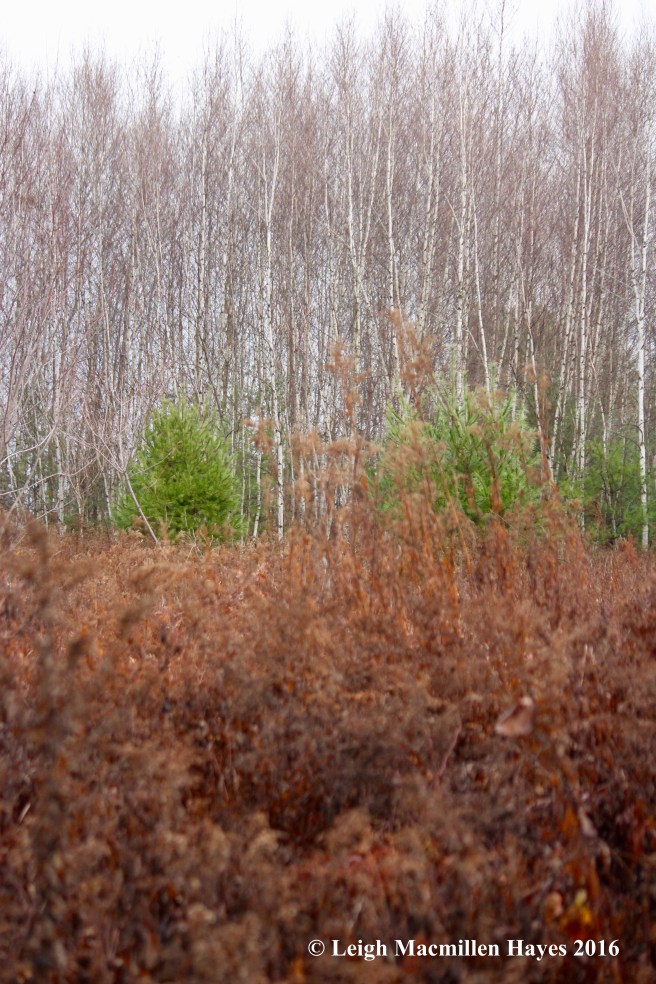
At a field, I paused to admire the layers–a testament to field succession. These woods are constantly changing.

h-male-turkey-scat-j

One thing that doesn’t change is the signature of a Tom Turkey–usually offered in straight or J formation.

h-slime-3

h-tubifera-ferruginosa

h-slime-2

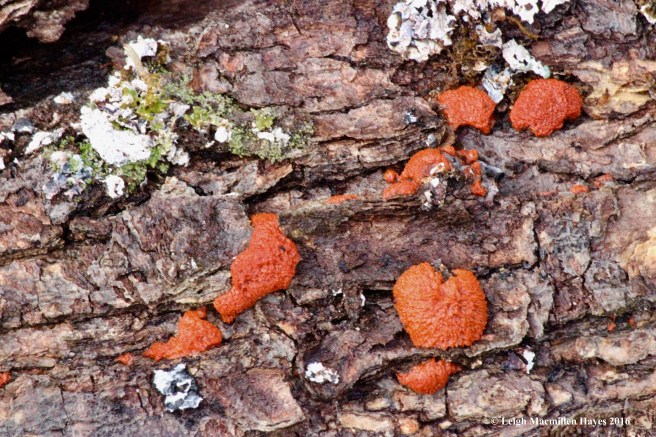
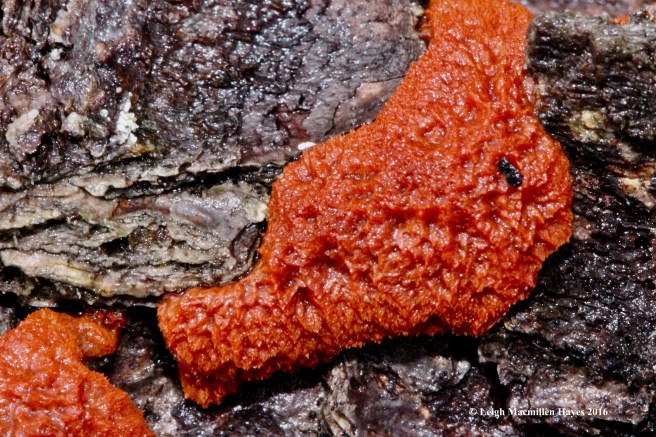
At another wetland, I poked around and then my eye focused in on something decorating a fallen tree. A slime mold perhaps? Red raspberry slime? In one rendition it seemed to have a crater-like surface, while another was more flower-like with petals spraying from a center.

h-hemlock-cinnamon

At last I entered a hemlock forest where the cinnamon inner bark stood out on the wet trees. If not for the scales, I realized it would be easy to confuse this bark with that of red oak, but a quick look up the trunk and the answer was obvious.

h-striped-maple-seeds

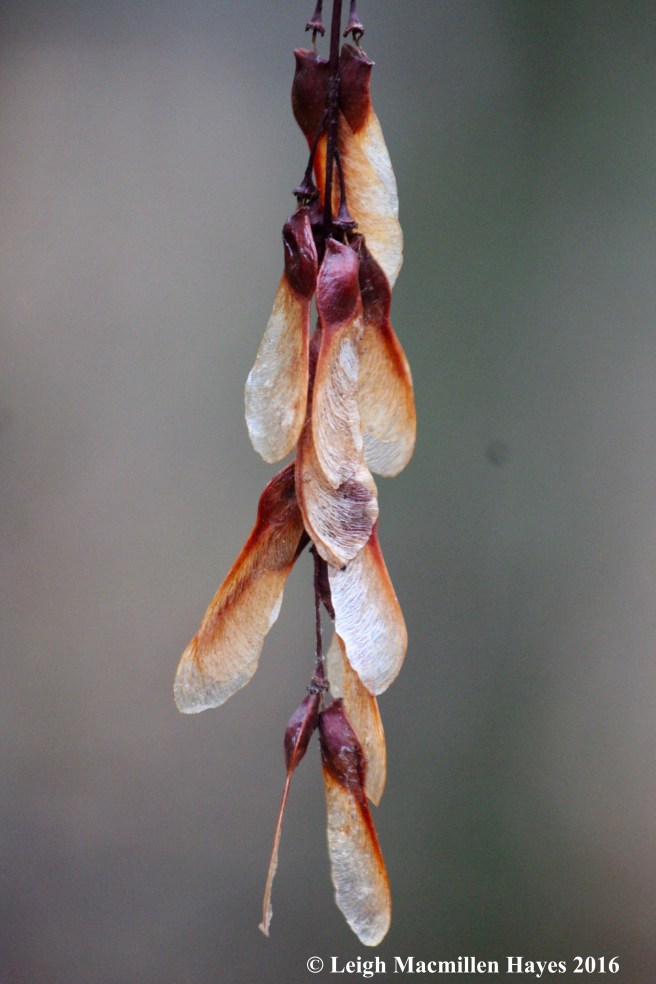
As I walked back toward home, I looked along parts of the trail I’d skipped while exploring in the woods. And I wasn’t disappointed when I discovered one of the few striped maple trees–still bearing the seeds it produced last year. Why did they cling still? When released, will they be viable?

h-pine-suds

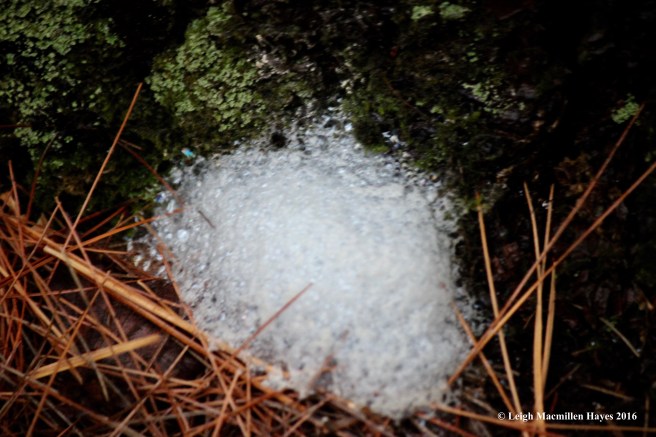
And then, a sight I was hoping for presented itself when I returned to our woodlot. Froth at the base of a pine tree. It’s not unusual and occurs following a rain event such as we’d had all night and morning. I had hoped to see some foam today, and felt rewarded for my efforts. So what causes the tree to froth? Well, like all lessons, there are several possibilities. Maine Master Naturalist Science Advisor Fred Cichocki recently had this to say about it: “I’ve noticed this phenomenon often, and in every case I’ve seen it’s associated with white pine, and always after a dry spell followed by heavy rain. Now, conifers, especially, produce hydrocarbons called terpenes (it’s what gives them their lovely pine, balsam and fir scent). These hydrocarbons are hydrophobic by nature and form immiscible films on water. During a heavy rain, water running down the trunk of a white pine picks up terpenes on the way. Air (having accumulated in bark spaces, channels, etc. perhaps under slight pressure) then “bubbles” through terpene-water films producing a froth. Recall the cleaning products PineSol, and the like. They are made from terpenes, and produce copious bubbles when shaken. One could get the same result directly by shaking terpentine in water, or by bubbling air through a terpentine-water mixture with a straw  . . .  Of course, it may be that other substances (salts, etc.) enhance the frothing.”

No matter how much I have learned on this life-long course, there’s always more. I certainly don’t have all the answers and for that I am thankful. I’m forever a student.


A Color-filled Mondate

The fleeting fall foliage offered the backdrop for our afternoon Mondate.

h-orchard-1

We started with a stop at Five Fields Farm to purchase a pumpkin and enjoy a chat with owners Tom and June Gyger.

h-pond-from-orchard

Their orchard overlooks Holt Pond, that speck of blue among the trees. Because of this year’s drought, the water is lower than ever, but Tom pointed out that during heavy rainstorms they’ve often watched it quickly fill and then lower as the water pours in and then slowly flows down the Muddy River. We need such a storm.

h-bridge

In fact, once we got onto the trail, my guy tested a bridge he’d built in the spring–noting that currently it’s useless because no water flowed below.

h-trail-work

We continued on, turning our hike into a trail clearing activity because this is a trail we steward for Lakes Environmental Association. A few blow downs were easily cleared–by my guy. I worked as well–documenting his good deeds.

h-carpet-2

But really, it was the color that drew our attention.

h-feet-n-leaves

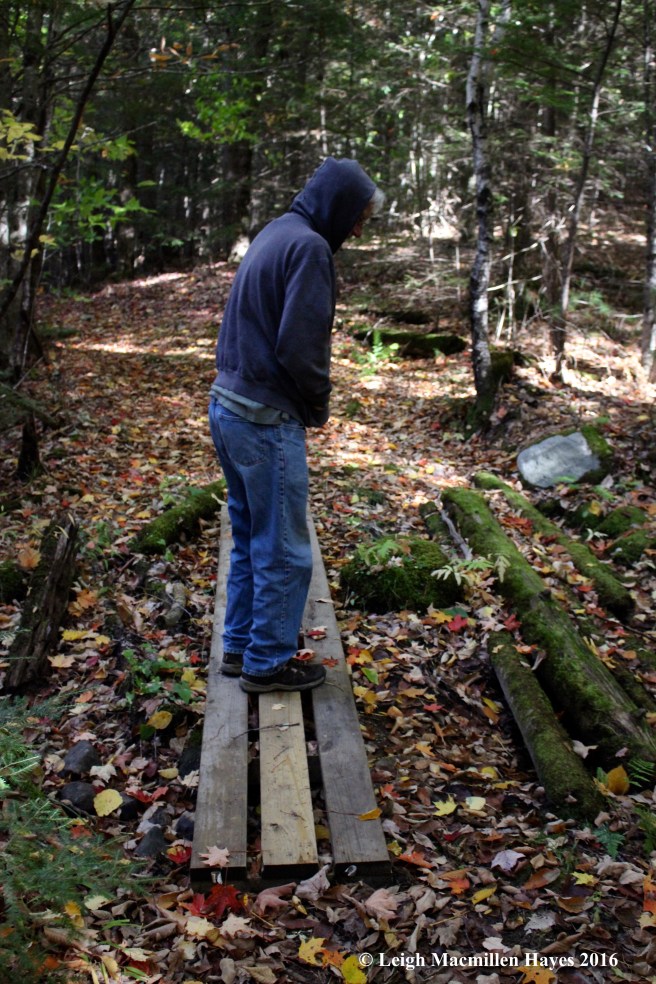
At our feet, a rich carpet covered the forest floor.

h-carpet-5

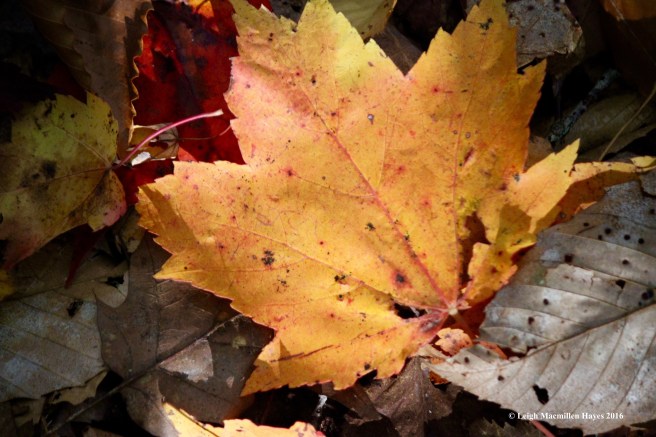
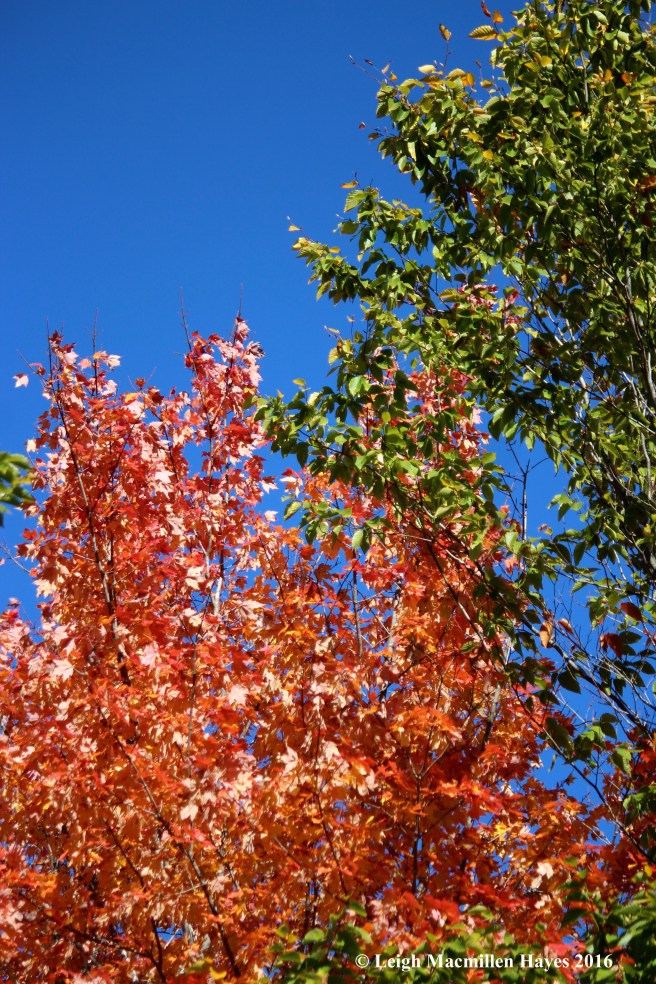
It’s vibrant variety was pre-determined by the species. Red maple leaves offer shades of red or scarlet, sugar maple leaves vary from brilliant orange to fiery red to yellow, while striped maple, quaking aspen and birch feature only yellow. Ash leaves range from yellow to magenta and beech offers up a golden bronze.

h-maple1

So, how does it work? It’s been dry and many thought that would mean a lack of color this fall. Yes, some trees will dry up and their leaves wither and fall. But for most, it’s a different story as old as time.

h-maple-2

During the spring and summer the leaves worked as food-processors for their trees. Their numerous cells contain chlorophyll or the green coloration. The chlorophyll absorbed energy from the sunlight, which it then used to change carbon dioxide and water to  sugars and starch (think carbohydrates).

h-quaking-aspen

But, also at work alongside the green pigment, yellow and orange carotenoids. As you can see with these quaking aspen leaves, the carotenoids are masked by the greater amount of green coloring for most of their season.

h-sugar-maples-in-breeze

With the change in daylight hours and temperature, the leaves go on strike from processing food. And thus, the chlorophyll breaks down, green color begins to disappear and the yellowish color becomes visible to our delight.

h-red-and-green

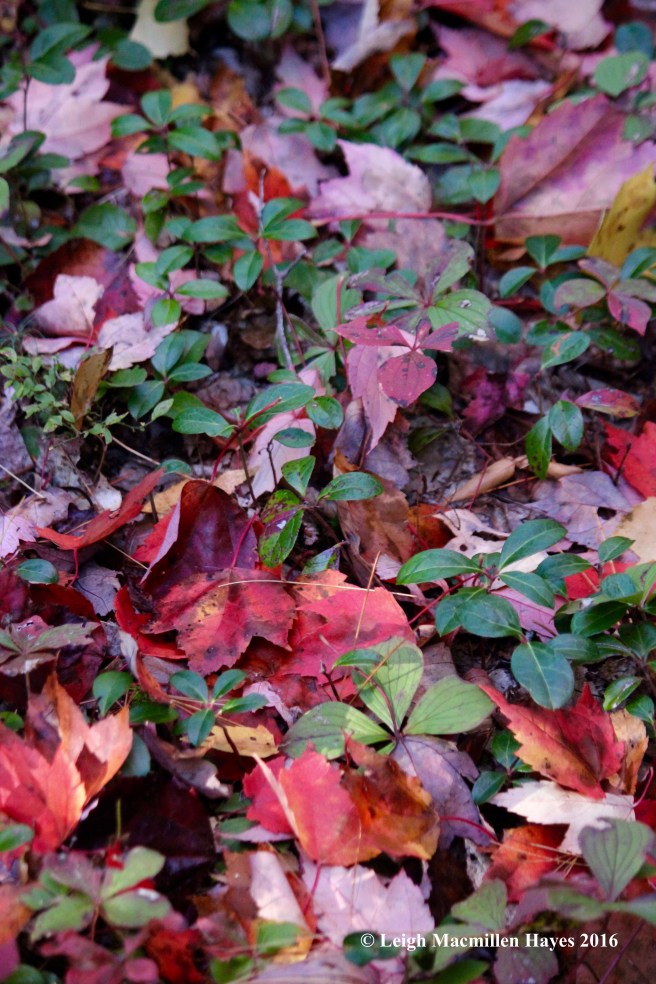
At the same time, other chemical changes occur that cause the formation of more pigments from red . . .

h-ash-leaf1

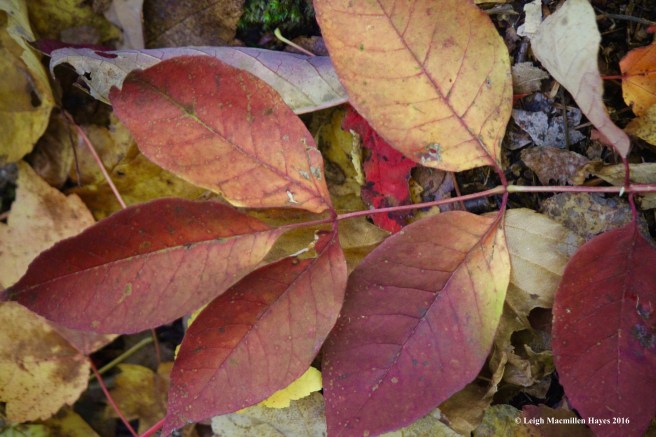
to purple. The red pigment called anthocyanin forms.

h-paint-2-yellows

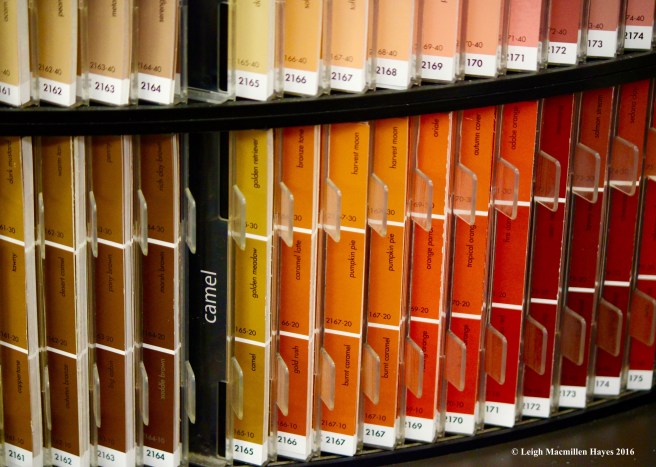
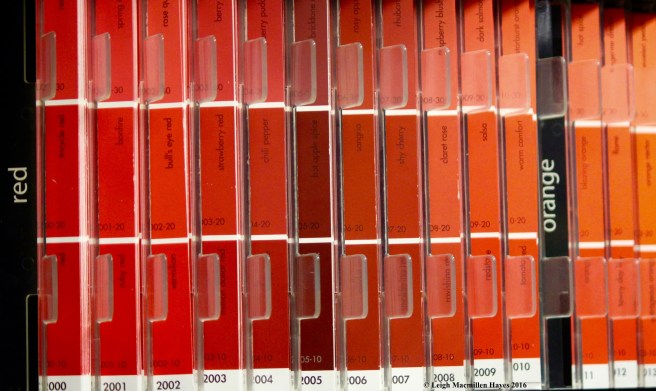
It’s like being in nature’s paint store.

h-paint-1

And I have to admit that it occurred to me I should spend some time sorting leaves by color  and trying to match them to paint chips so I could better describe the gems before me.

h-paint-reds

OK, so I didn’t dwell on that thought for too long, just long enough to realize that it would need to be a quick assessment before the leaves dry up and all become a shade of brown.

h-pond-6

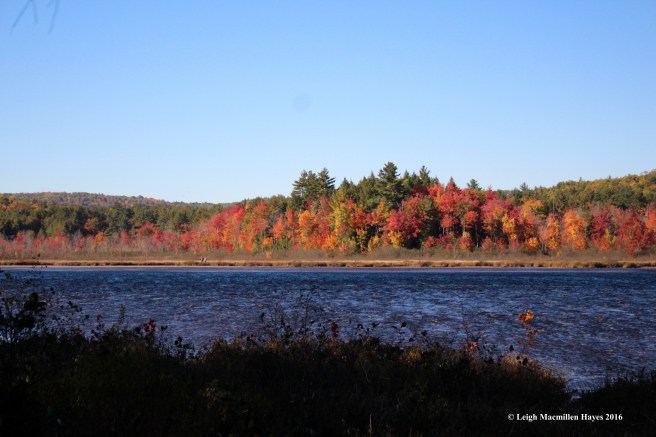
At last we reached a vantage point from which to view the pond. I often stand across the way on the quaking bog boardwalk, so looking back provided a different perspective.

h-pond-2

And those swamp maples–oh my!

h-pond-4

For this beautiful display to occur, we must have warm sunny days followed by cool nights. The sugar is made in the leaves during the day, but those cool nights trap it there, preventing it from moving into the tree.

h-leaves-in-field

Not only do the colors vary, but the degree of color may also be different from tree to tree or even on one tree. Direct exposure to the sun may turn leaves red on one side of a tree and they may be yellow on the shady side.

h-sky-view

As for clouds and rain, too much in the fall means less red (a bright side of the drought). On those types of days it also tends to be warmer at night, thus changing up the process and providing duller colors. Not so this year, thankfully.

h-leaf-on-hemlock

There was nothing dull about what we saw today, including the presentation of fallen leaves, some captured by their evergreen comrades.

h-maple-web

A few dangled like ornaments hung by spiders.

h-maple-on-fern

Others held on precariously, attached only by a few points.

h-hobble-shadows

And even others portrayed a shadow show.

h-leaves-in-brook-1

At last we reached a small stream, our turn-around point, where all gathered to show off their glory.

h-nessie

We took one last look at the pond while making our way back. And what to my wondering eyes should appear–Nessie. Or maybe I should name her Holtie, the Holt Pond Monster! Do you see her?

My guy–he chuckled at me. He often does that. It’s OK. I know what I saw.

You might say our Mondates are always colorful, but today’s was especially color-filled as we celebrated the work of the leaves.

An Emerald Mondate

My guy and I journeyed via bus, car and foot across northern and eastern Ireland these past two weeks. Our main agenda–a vacation in the land where twenty-six years and two months ago we celebrated our honeymoon. We both also had semi-hidden agendas–his to seek out ancestral roots, mine to search as well, though my quest wasn’t quite so clear.

river-liffey-and-quay-dublin

Our journey began after we dumped our bags at the hotel, where our room wasn’t yet ready, and crossed the River Liffey in Dublin. It was to the right that we’d parked a rental car 26 years previously as we searched for traditional music and supper, only to return hours later and discover that the driver’s side window had been smashed and our video camera stolen. All these years I’ve held a sour view of the Fair City and so I felt a bit nervous as we stepped forth.
trinity-college-dublin

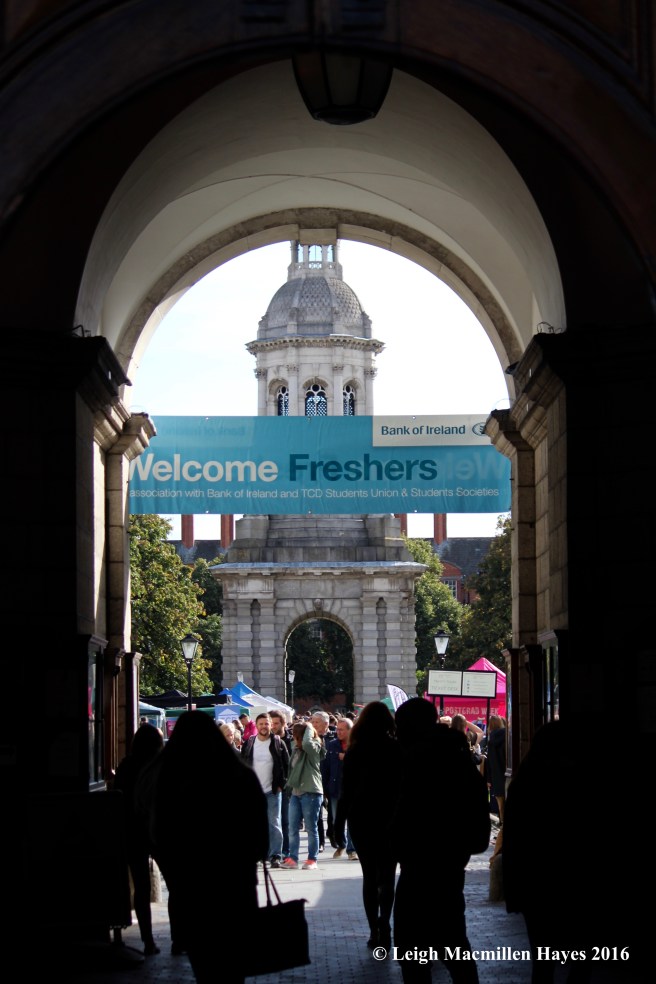
The feeling began to wane immediately, for as we approached a street corner and chatted about locating the library, a Dubliner overheard us and assumed we were looking for Trinity College (founded in 1592). We decided to play along and followed his directions–thankfully. It was “Welcome Freshers” week and the quad swelled with activity tents, music and students anticipating the year ahead. We passed among the frivolity and found the self-guided tour of the 18th century Old Library and that most ancient of manuscripts–the Book of Kells, a 9th century book featuring a richly decorated copy of the four Gospels of the life of Jesus Christ. A favorite discovery: the monks used oak apple galls to create ink–apparently, they crushed the galls and soaked them in rainwater, wine or beer until they softened. I’ve got to try this.
library-at-book-of-kells-1-1

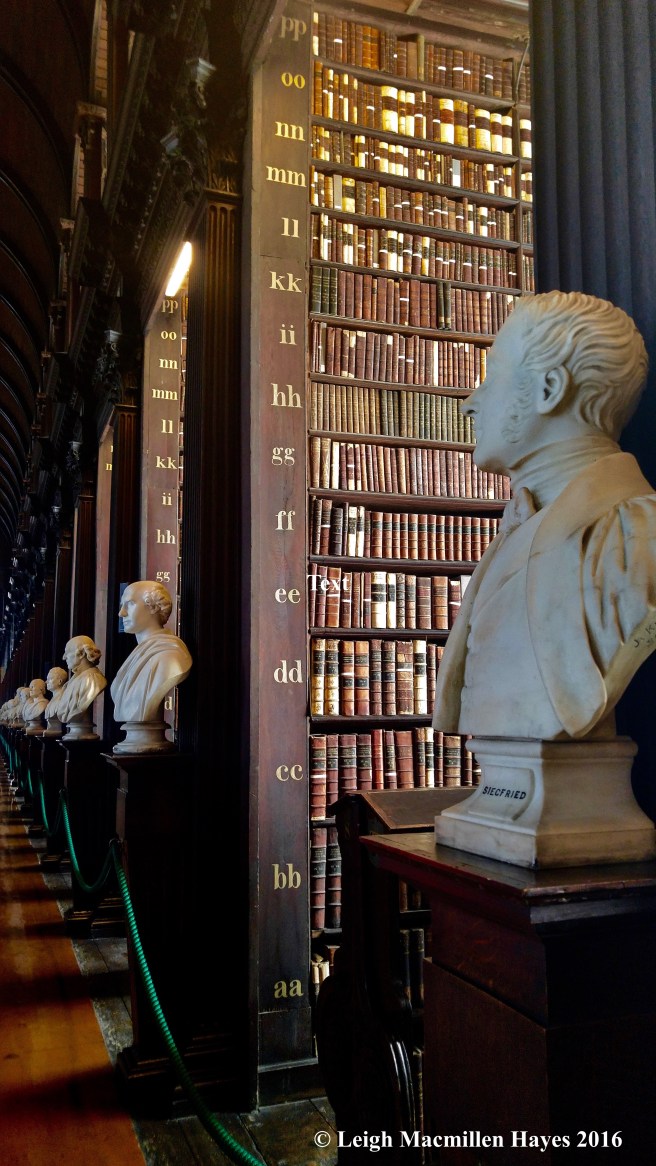
While (or whilst as the Irish say) no photos were allowed in the Treasury where the manuscripts are stored, equally impressive was the Long Room, which houses 200,000 of the library’s oldest books in ancient oak bookcases. Just thinking about the centuries we were encountering was mind boggling, enhanced of course, by a lack of sleep.

architecture-and-flowers-dublindublin-church-architecture

A few hours later, we made our way back to the hotel, enjoying the architecture and flowers as we walked along. At last, we could check in and so we checked out–a rejuvenating nap essential to our well being.

guiness-sign-and-face

Rested and showered, we hopped aboard a bus–our next destination, the Guinness Storehouse at St. James Gate Brewery. The 250-year story of Guinness® is portrayed on five floors in a building designed in the shape of a pint. What’s not to like about that.

singing-oyster-guiness

We learned about the process of creating beer, and then there was the whistling oyster, one of the many icons of the Guinness® brand.
guinness-gravity-bar

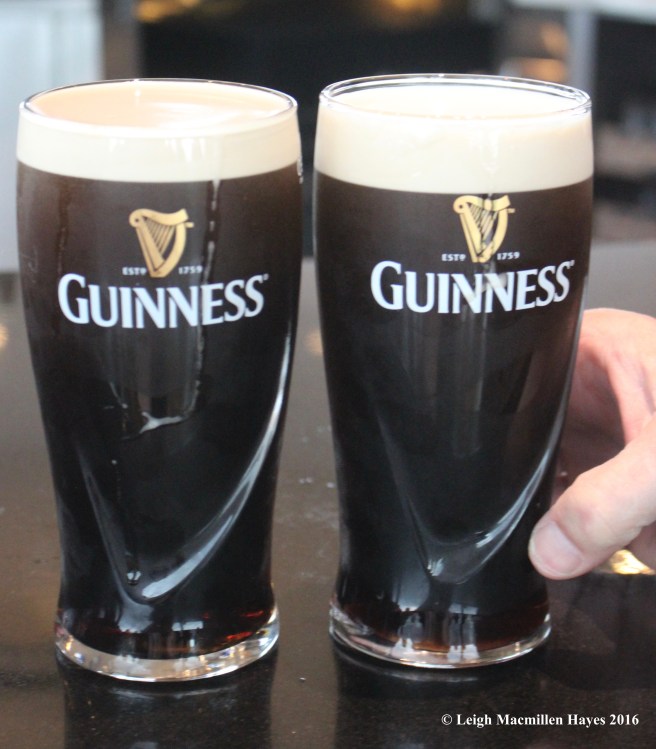
After taking in the full story, we reached the Gravity Bar, where ticket holders may each sip a complimentary foam-topped pint. The museum was preparing to close and the bartenders made the last call. My guy asked if we could purchase a second pint and we learned that they don’t sell any, but he kindly slipped us two. Don’t tell.

guiness-view-2

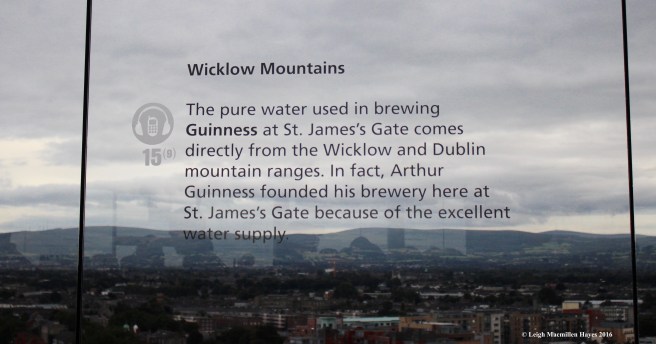
The Gravity Bar offers 360˚ views of the city.
wicklow-mtns-from-gravity

And the view includes the Wicklow Mountains, our intended destination for week 2.

the-temple-bar

If you hear my guy tell this story, he’ll say that we were told it was a 45 minute walk from our hotel to the Storehouse, but a short bus ride. We rode the bus there, but later weren’t sure where we should queue for the ride back, so we decided to walk instead. According to him, it took us five hours to make that 45 minute walk. I’m not sure it was quite that long, but we did stop at The Temple Bar for the music and a few other prime spots to eat and sip a wee bit more.
national-library-dublin

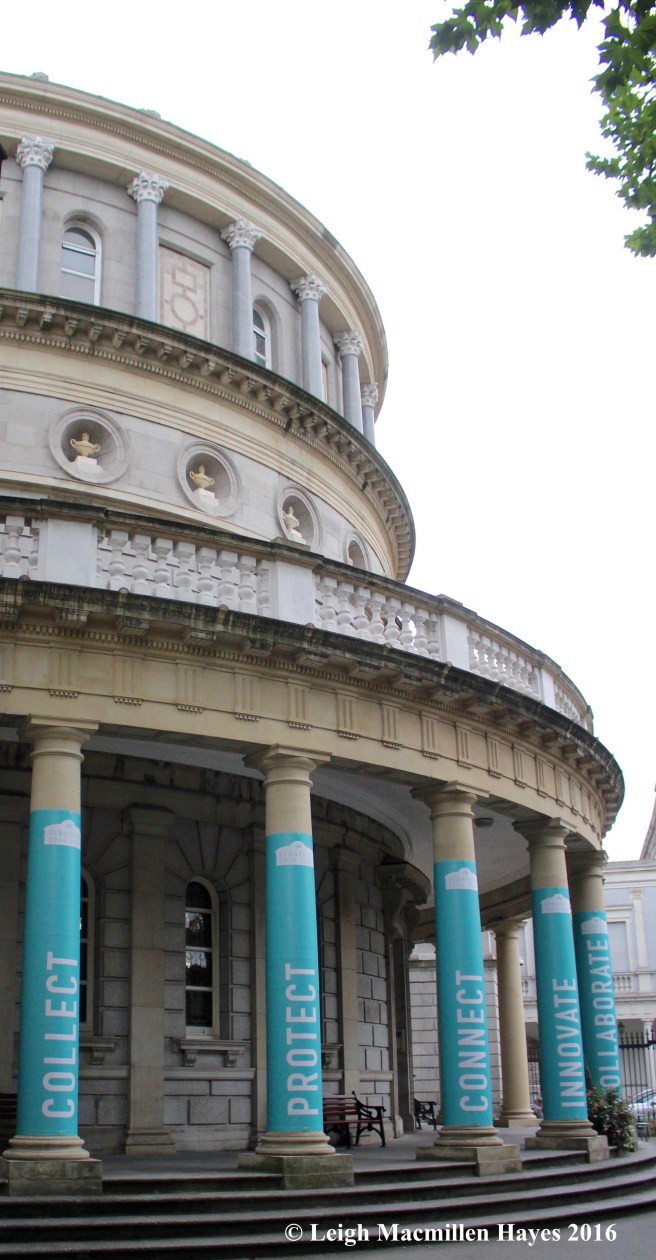
The next morning we set out for the National Library, which had actually been our intended destination the previous day–but who can deny enjoying the Book of Kells exhibit. My guy was hopeful that the genealogists at the library would help him make some connections, but without knowing parishes he hit a bit of a stonewall.

And so we left the Fair City with much fonder memories, took a bus to the airport, picked up our rental car, and ventured on. Oy vey. If you’ve ever watched the BBC program, “Keeping Up Appearances,” you’ll appreciate that I was Hyacinth to my guy’s Richard. “Mind the pedestrian,” I’d say. “I’m minding the pedestrian,” he’d respond.
newgrange

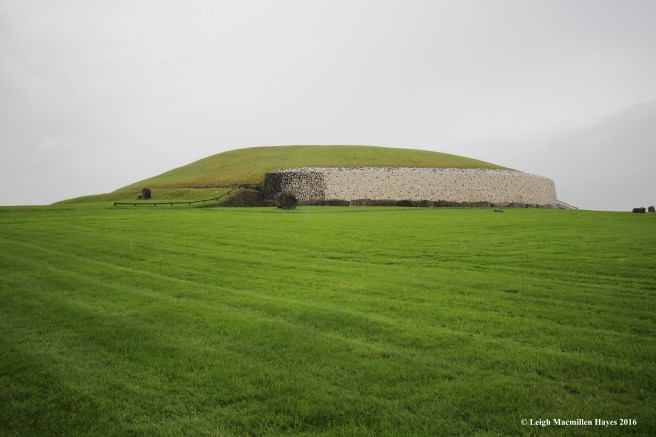
Our first stop, Newgrange, a Neolithic passage tomb alleged to be older than Stonehenge and the Great Pyramids. Constructed during the Stone Age, about 5,200 years ago, Newgrange is a large circular mound that covers 300 feet in diameter and stands 36 feet high. A stone passageway leads to three small chambers. Some describe it as an ancient temple, a place of astrological, spiritual and ceremonial importance. Our guide told us that bones were found here and it may have been a place for worship as well as where people were laid to rest. We were in awe of its structure and the fact that the passageway is oriented northward allowing the sun to illuminate it during the winter solstice.

newgrange-entrance

Yes, the railings are new, but this is possibly the oldest building in the world. That’s worth repeating–the oldest building in the world. We had to bend low to enter and then squeeze between the walls as we walked toward the center, where three small chambers with stone basins created a cross-like structural plan. Even as we stood with others in darkness and waited for a beam of artificial light to demonstrate the real thing, we couldn’t quite fathom what we were witnessing.
newgrange-spirals

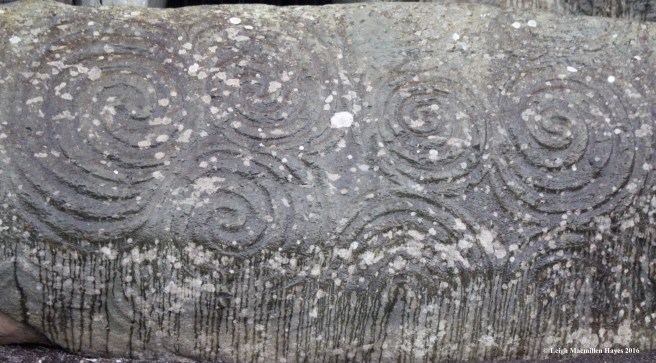
Our awe continued within the center and by the entrance stone, where we witnessed megalithic art. The spirals reminded me of labyrinths, but we’ll never know their true significance. And that’s OK.
ghan-house-carlingford

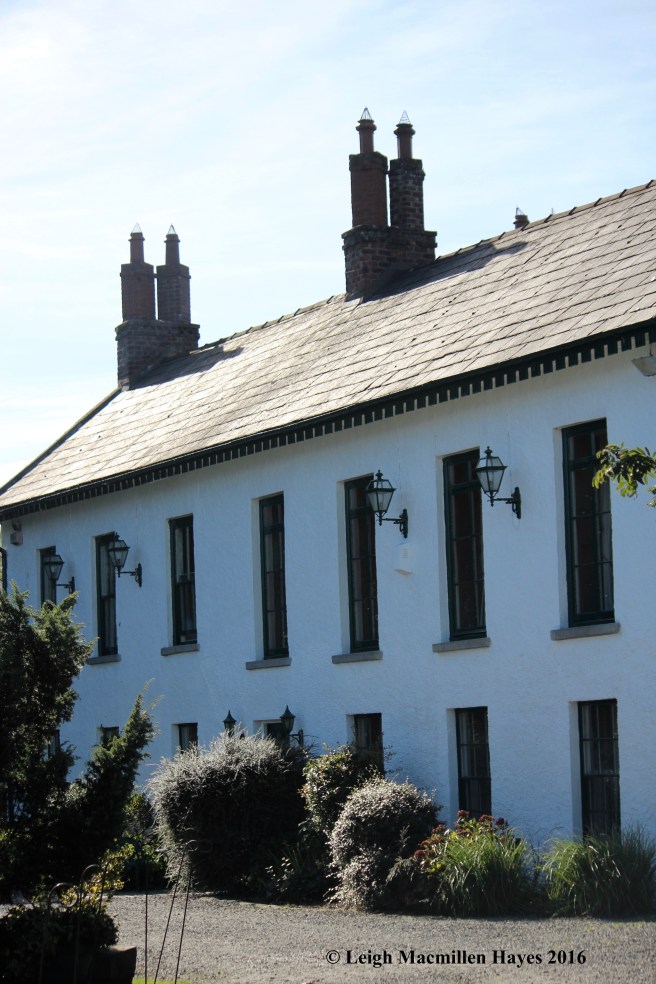
By the time we arrived at Carlingford, it was pouring and we had no idea where to stay. We stopped at a hotel, which was full–thankfully. They suggested the Ghan House, a Georgian House set within three acres of walled gardens. It was our most posh stay and we didn’t truly appreciate it until the next morning when the sun shone brilliantly.
carl-arch-2

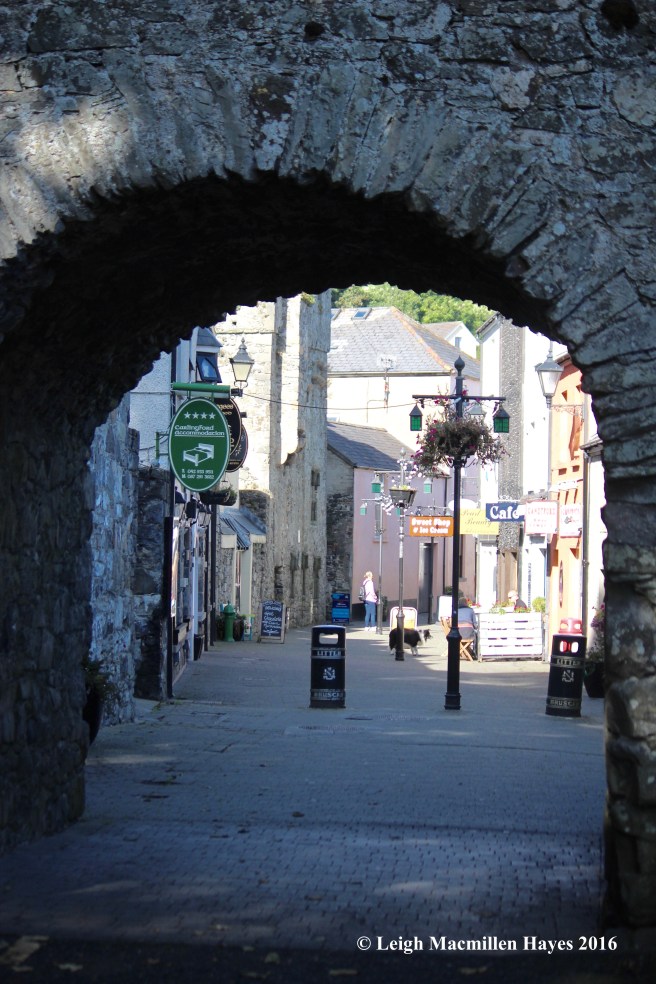
The Ghan House is located just a stone’s throw from the Thoisel or town gate leading into the narrow streets of the town centre, where we found Ma Baker’s in the rain, a welcoming pub frequented by the locals, who laughed and joked and reminded us that the Irish love to sip a pint, tease each other and tell stories no matter what the weather might be out the door. And they don’t care about spelling, punctuation or run-ons. Life is too short for that–note to self.

carlingford-lough1

The tide was low when we walked along the lough the next morning and took in King John’s Castle, which was initially constructed by Hugh De Lacy in 1190, though it wasn’t completed until 1261. Purportedly, King John, the brother of Richard the Lionhearted, visited in 1210, and thus the name for this Norman structure.

wall-around-derry

From Carlingford, we travelled north and did what we had wanted to do 26 years prior; we crossed into Northern Ireland. On our previous adventure, we’d journeyed as far as Letterkenny in the northern part of the Republic of Ireland, only a half hour from Derry. But that was then, the time of The Troubles, and we didn’t dare to cross the border. Again, my guy was seeking ancestors and at the Welcome Center he was told to visit the Tower Museum where Brian Mitchell would be able to provide some help. We were too late when we climbed down from the wall to the museum, so we did what the Irish would do–when in Rome–we found a pub and had a nice chat with a young man who had recently returned to Derry in search of work. We also walked around the city, taking in the sites made famous by The Troubles. And the following morning we again returned to the museum, where the curator told us that Brian would probably show up around 11am. So, we paid for a self-guided tour and learned about the town’s colorful and dramatic past through “The Story of Derry.” At 11:30 we once again went in search of Mr. Mitchell, only to learn that he was out and about somewhere. Since we needed to check out of our room, we decided that our Derry experience was over, but Mr. Mitchell did respond to an e-mail and so my guy has some more resources to consider.

carrick-cave

Our next stop, Portrush, a resort town along the Atlantic and on the northern fringe of Ireland. After checking in at the Antrim House B&B, we headed off along the Coastal Scenic Route to Carrick-a-Rede Island. Carrick-a-Rede is from the Scottish Gaelic term, Carriage-a-Rade, meaning the rock in the road.
salmon-boat-at-carrick-1

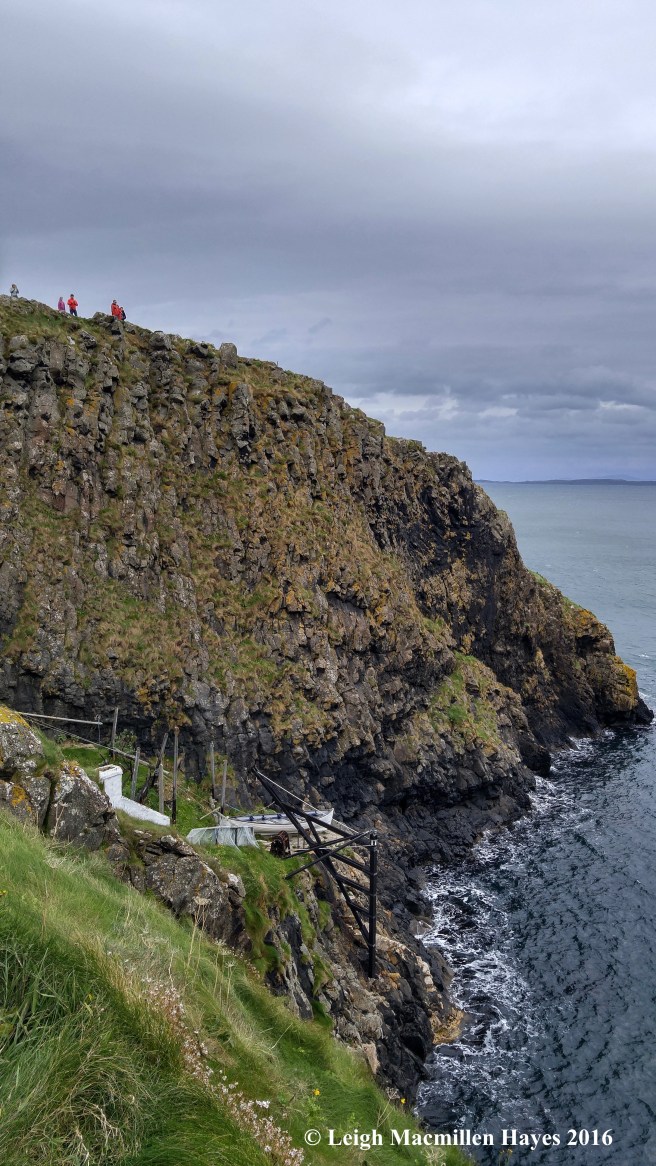
And the road is presumably the sea route for Atlantic salmon that were once fished here prolifically. In fact, so prolifically, that the fishery is no longer viable. In order to reach  the best places to catch the migrating salmon, for 350 years fishermen crossed regularly to the island.
rope-bridge

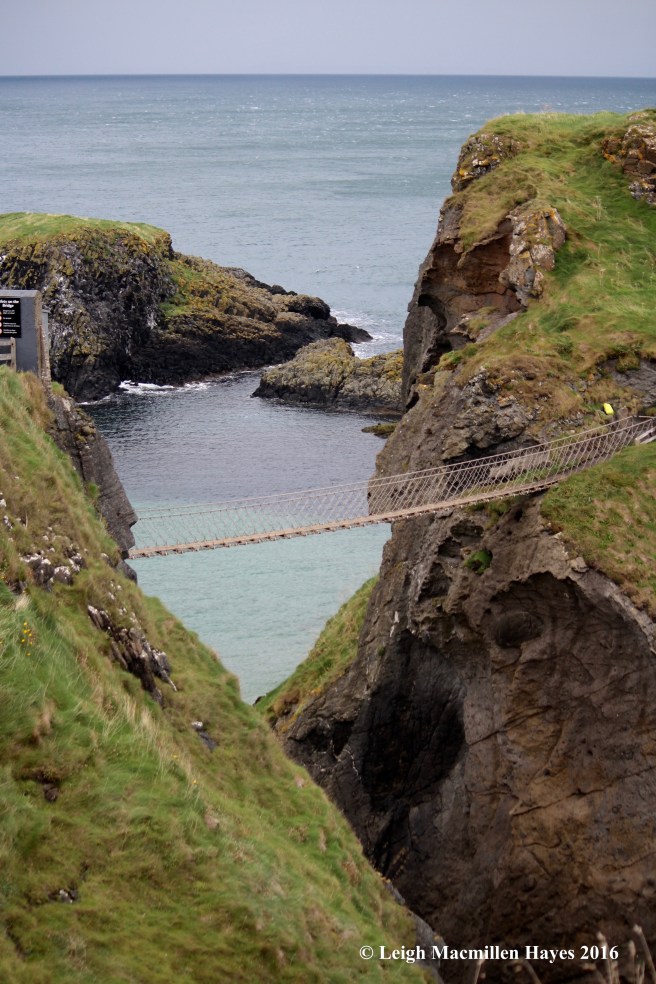
One hundred feet above the sea, the fishermen crossed the 60-foot chasm via a rope bridge to check their nets. Of course, they had only one rope, not the steel and plank structure that we crossed. That being said, it was quite windy and the bridge did sway.
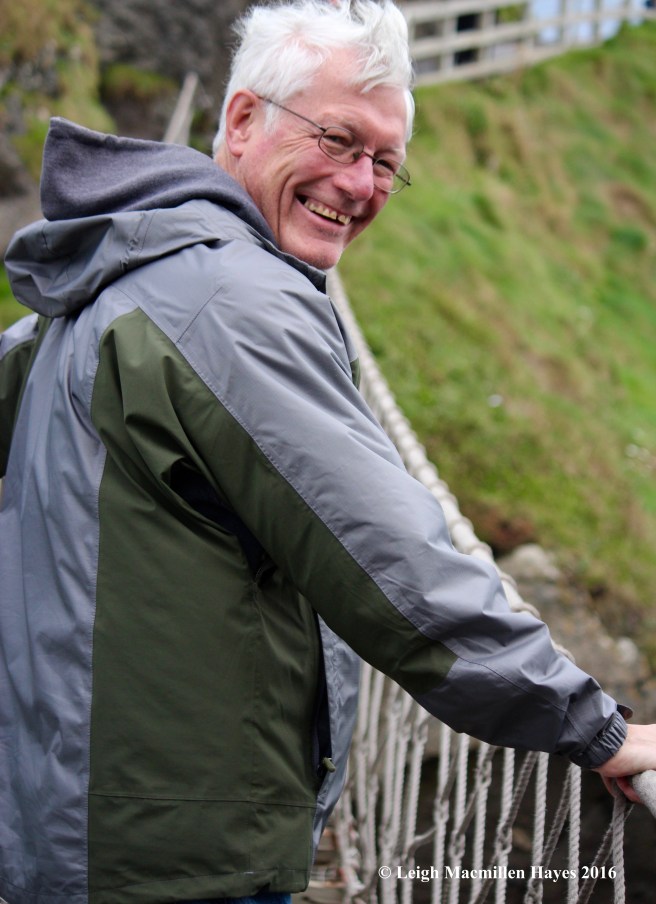
smiling-from-the-carrick-a-rede-rope-bridge

We put our fear of heights behind us and made our way across.

allen-at-carrick-3-1

Did he just do that? Yup.

me-at-carrick-1

And I followed.

scotland-2

Our views included Raithlin Island, the northernmost point of Ireland.

giants-causeway-1-1

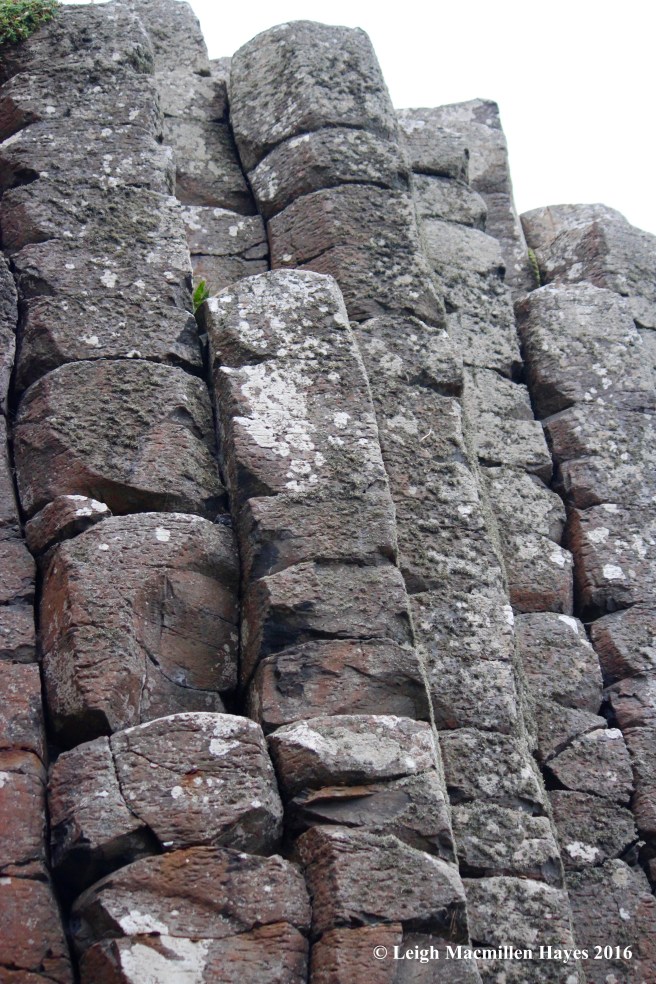
Our next wonder–the Giant’s Causeway, a geological phenomenon of 40,000 basalt stone columns formed by volcanic eruptions over 60 million years ago.
giants-3

giants-6

These hexagonal tubes stacked together like cans on a shelf offer yet another mystical and magical look at the world, one that the Irish embraced by creating legends to explain their existence–Fionn mac Cumhaill (Finn MacCool), an Irish giant, was challenged to a fight by the Scottish giant Benandonner. Good old Fionn accepted said challenge and built the causeway across the North Channel so that the two could meet. There are two endings so take your pick: In one version, Fionn defeats Benandonner, but in another,  he hides from Benandonner because he realizes his foe is much bigger. Fionn’s wife, Oonagh, disguises her husband as a baby and tucks him in a cradle. When Benandonner sees the size of the “baby,” he fears that its father, Fionn, must be the biggest giant of them all. Benandonner flees back to Scotland in fright, but makes sure to destroy the causeway behind him so he won’t be followed by Fionn.
causeway-view

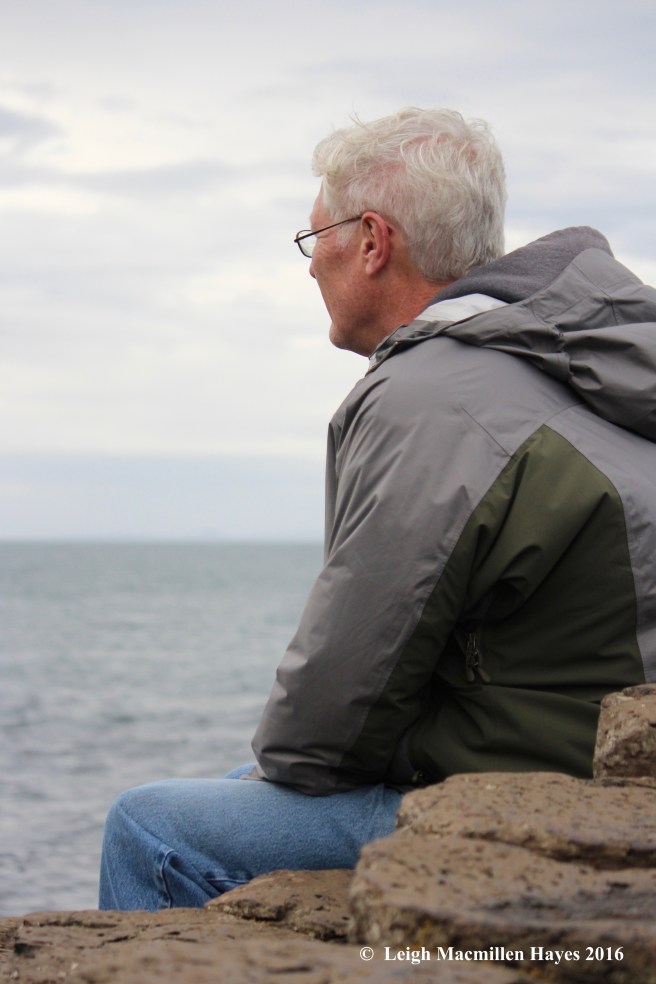
My guy found a spot to take in the giant’s viewpoint.

dunluce-castle-2-1

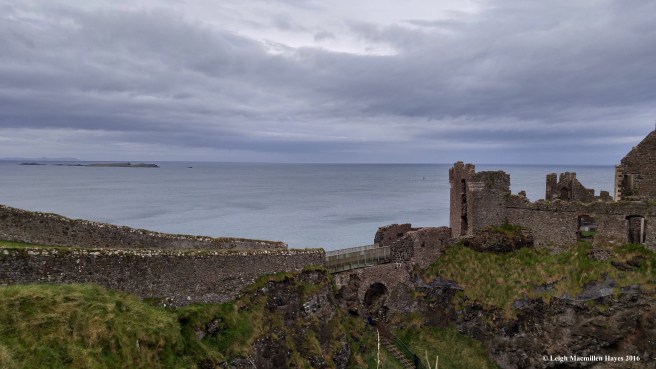
As we made our way back toward Portrush, we paused at Dunluce Castle. We couldn’t go in because it had closed for the day, but we could still see part of the castle town that was developed in the early 1600s.
dunluce-castle-1-1

Originally built by one clan in the early 1500s, it was seized by another in the mid 1500s. Its history includes rebellions and intrigue.

dunluce-castle-wall-over-cliffimg_7377

Included in its dramatic history are tales of how the castle kitchens fell into the sea one stormy night in 1639. We couldn’t help but wonder if the same happened to the wall.

portrush-2-1

Back in Portrush finally, our own tale continued. At the suggestion of our hostess, we walked to the Harbour Bar for dinner.

wee-harbor-bar-ryder-cup-trophy-1

While we waited for a table, we paused in the wee pub, as they call it. A few minutes later, two guys walked in with a trophy and made a big fuss about its placement among the best bottles of whiskey.

darren-3-1

At the time, I was standing to the right of the gentleman in the middle and so I asked him about the trophy. He explained that when you participate in the Ryder Cup you receive a replica. My guy immediately realized that I was talking to a famous Irish golfer, he just couldn’t put a name with the face. On the wall above, we could see photos of him, but we weren’t close enough to read the signatures.

allen-as-darren-1

It turns out we were in the presence of Darren Clarke, the European Ryder Cup captain for 2016. We didn’t know that until we went to check on our table and asked. One of the bartenders encouraged us to stay for the send-off, so we did. Everyone donned a D.C. mask (at 00:16, if you look quickly to the back left, you might see my scraggly hair behind a mask)–and sang “Shoulder to shoulder, we’ll answer Darren’s call.” We were included as the North American entourage.

allen-and-willie-2-1

allen-and-willie-1

While I got Darren’s autograph on one of the masks, my guy befriended Willie, the bar manager.

portrush-2

The next morning, after a traditional Irish breakfast, we toured the downtown. Ireland amazes us–the temperature was chilly and yet the flowers were gorgeous. And palm trees grow throughout the country.

walk-to-murlough-bay-with-fairhead-in-background

Upon our departure, our hostess suggested we follow the coastal route to Murlough Bay and so we did. And took a wrong turn that lead down a dead-end to a gate with a sign warning us that guard dogs were on site. With caution, my guy backed up the lane until he could turn the car around. Our hostess had also told us not to park at the upper lot for Murlough Bay, but instead to drive down. I insisted upon the upper lot given that the road had at least a 10% pitch. So we walked down. And down. And down some more.

fairhead-murlough-bay

Upon our descent, the light at a distant lighthouse beckoned in the background as Fairhead came into view.

murlough-bay

The coastline was as dramatic as we’d been promised. And I was glad we’d walked because the drive would have been even more dramatic with Hyacinth in the passenger seat.
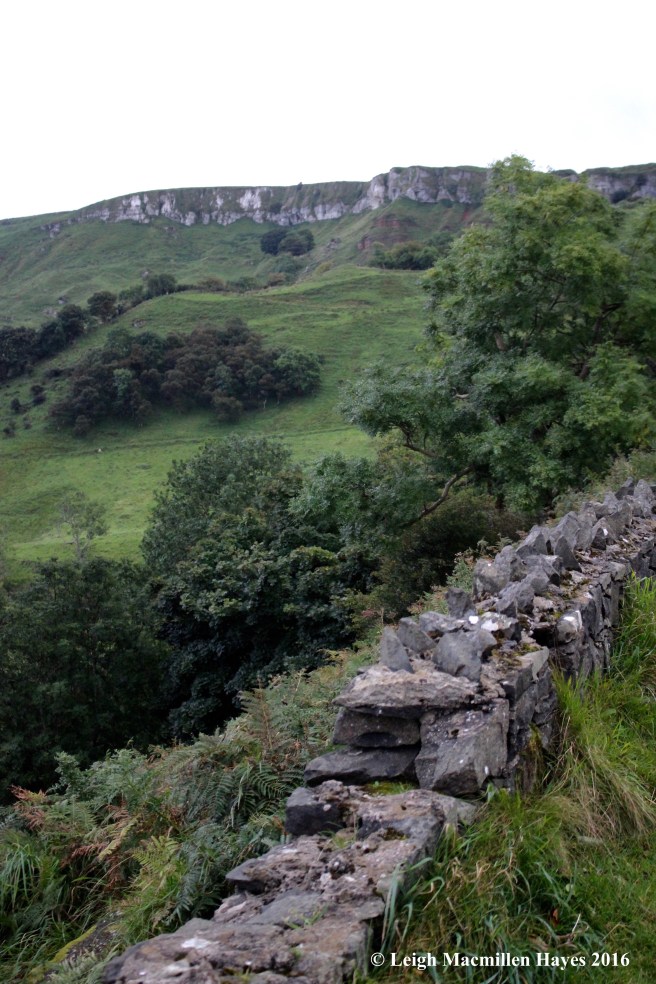
stormlands

This area may appear familiar to viewers of Game of Thrones–including the site of Stormlands.

traditional-music-in-belfast-1

After a hike back up the road, we drove on to take in the scenery of Torr Head. The road narrowed significantly as it twisted and turned along the coast. And then . . . we met a porsche rally. As best he could, my guy squeezed our car past them. And as soon as he could, we got off the coastal route and drove on to Belfast. It was late in the day and pouring when we arrived. By the time we parked in city centre and walked to the Welcome Center, we were drenched. And disappointed. There was no where to stay in town and we’d have to move on. But . . . then one final effort proved that a hotel was available. We should have questioned if for the price. Well, actually I did, but we were told that it was a fine place and served as a conference center. So we took it. And couldn’t wait to get out of there. Fortunately, we found some Irish music back in town and a delightful meal of locally harvested food. All we needed to do was sleep in the rathole, though even that didn’t work so well.

nomadic-1

The next morning we took in the Titanic Museum and stepped aboard one of its tenderfoot boats, the Nomadic.
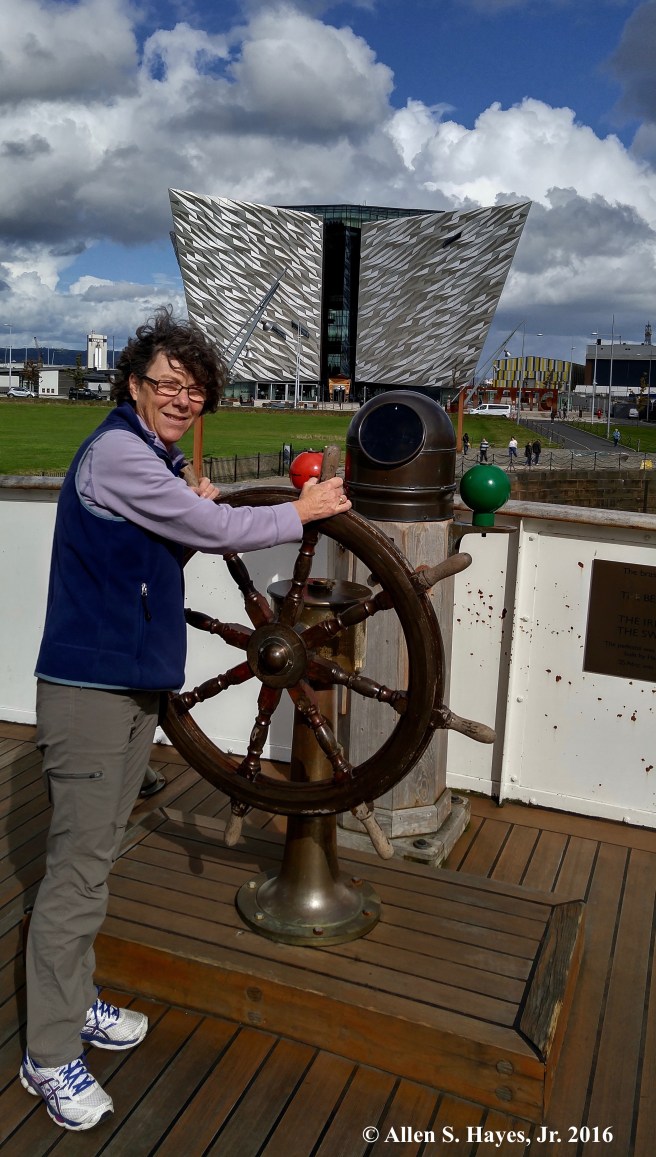
me-nomadic-2-1

A dose of coffee and I was ready to take the helm. And if you are wondering if it’s windy every day in Ireland, the answer is yes. It also rains at some point each day. Our time in Northern Ireland was over, but except for that one accommodation, we’d had a wonderful and wonder-filled time.
holly-cottage-laragh-1

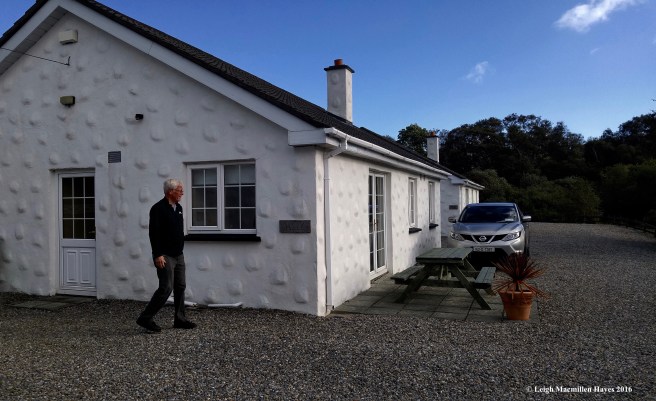
As we worked our way south, we spent a night at a delightful B&B in Navan, which featured  more traditional music and a place to relax. On Monday morning, we finally headed to the cottage we’d rented in the town of Laragh–Glendale Holiday Cottages–we highly recommend. Our host, Christy, was extremely accommodating, the cottage spacious and amenities plentiful.

ww-monastic-city

We’d chosen this location because it was a five minute walk to the pub and restaurant in Laragh, located in the Wicklow Mountains, and near the Glendalough monastic settlement founded by St. Kevin in the sixth century.

round-tower-glendalough

Forty shades of green and Brigadoon all came to mind as we approached the monastic settlement and its round tower.

st-kevins-church-glendalough

St. Kevin’s kitchen is actually a 12th century church, so named because it was believed that the bell tower was a kitchen chimney. Apparently, however, no food was ever cooked there. But . . . if you think of the word of God as food, then perhaps many a feast was actually served.

ww-monastic-cathedral

From the altar window in the cathedral, the largest of seven churches within the monastic city,  a view of the world beyond was offered.

st-kevins-monastery-glendalough-1

Likewise, we could see the world within, including the Priest House in the background.

monastery-cemetery-glendalough

And everywhere, gravestones told the story of many who’d passed this way.

trinity-church-glendalough-day-3

A little closer to Laragh, Trinity Church.

upper-lake-3-glendalough

Upper Glendalough was the jumping off point for our initial hike upon the Wicklow Way.

p-falls-2-glendalough

We paused beside Poulanass Falls before zigzagging our way up the first trail.
sheep-wicklow-way-2

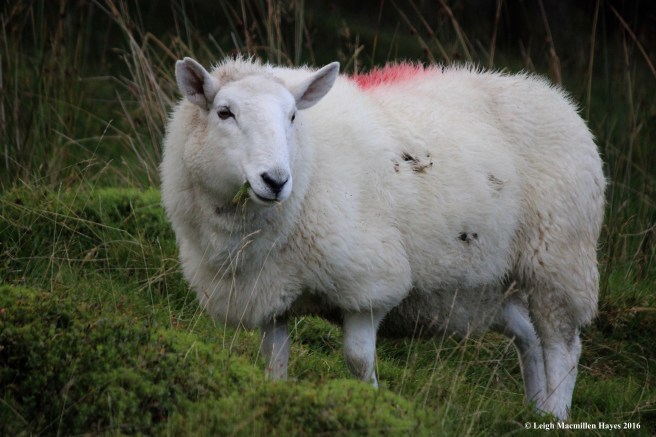
Sheep merely looked up to acknowledge our passing. We, however, needed to pay more attention for sheep shit was prolific.

reforestation-wicklow-way

Tree felling was also a frequent sight, but we noted a unique (to us anyway) method of reforestation–in this case the Sitka spruces and Scots pines being felled were replaced by mountain ash saplings. One other thing we wondered about–the plastic sleeves–we saw some that had fallen away as trees grew, but were left in place. Biodegradable? We could only hope.
wicklow-way-bog-day-1

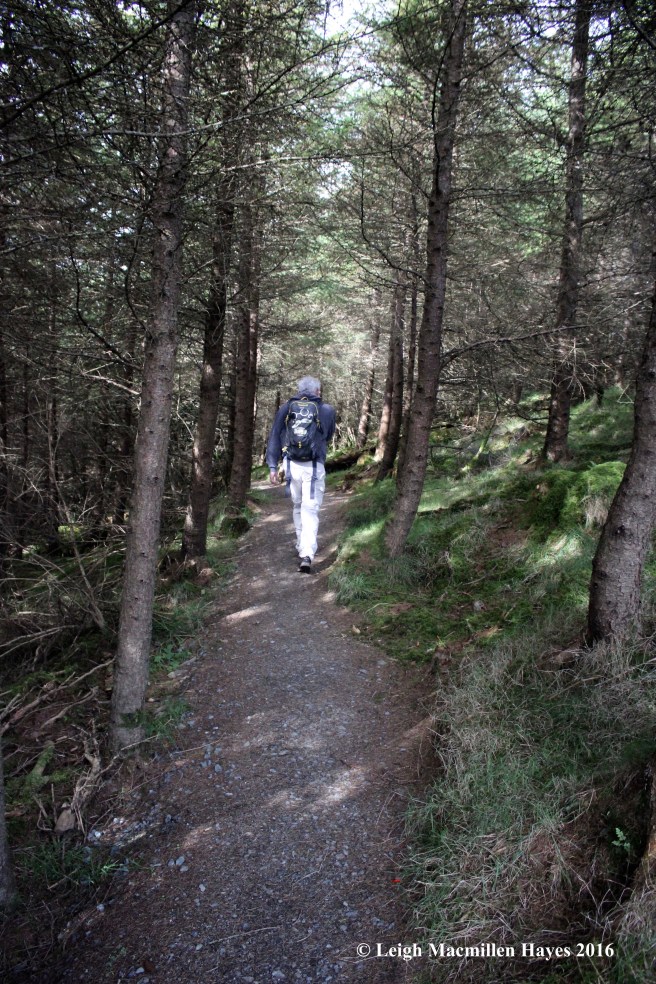
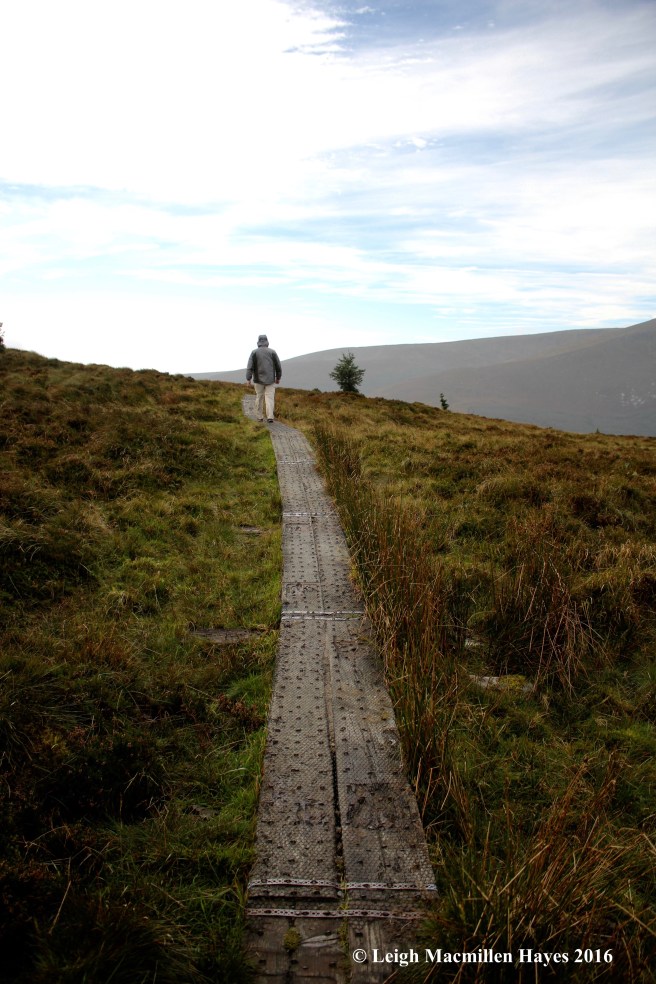
We spent three full days on the trail, not covering all of it, but a good portion as we hiked 10-15 miles each day.
crossing-bog-wicklow-way-day-1

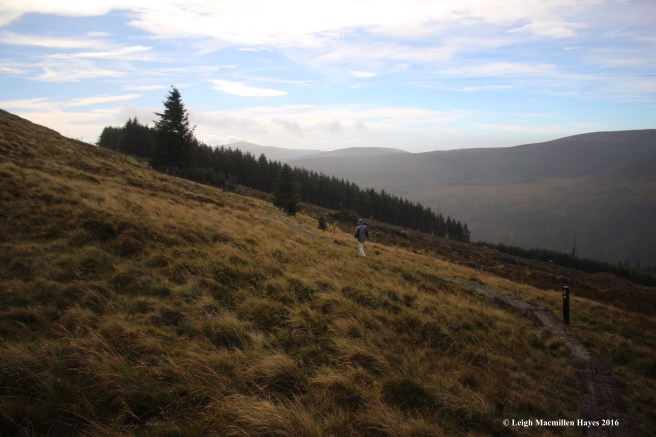
Our journey took us over boggy portions,
wicklow-way-day-3

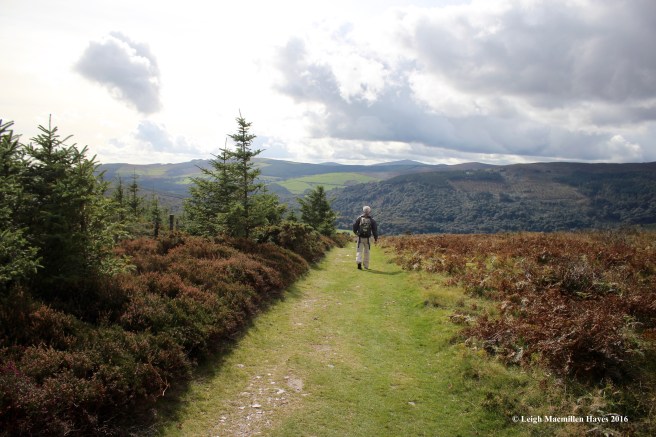
down grassy sections,

w-lane-2

on village lanes,

ww-boardwalk

over boardwalks,

ww-forest-path

through the black forest,

w-walking-into-the-sky-day-3

and into the future.

ww-following-the-signs

Frequently, we had to stop, reread the directions and study the map, but more often the route was self-explanatory.

ww-muddy-trail

Along one section that was particularly muddy due to frequent horse crossings, we made a discovery unique to us.

w-badger-print

A badger print. Sadly, or maybe happily to locals, we saw a dead badger on one of the lanes not far from this print. Related? We’ll never know.
w-deer-at-glendalough

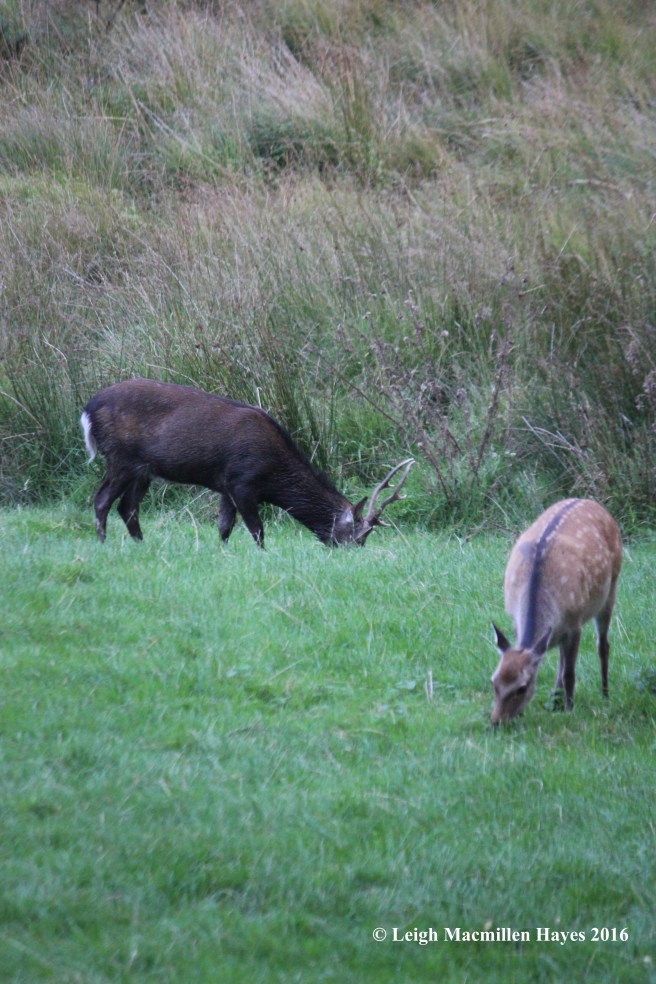
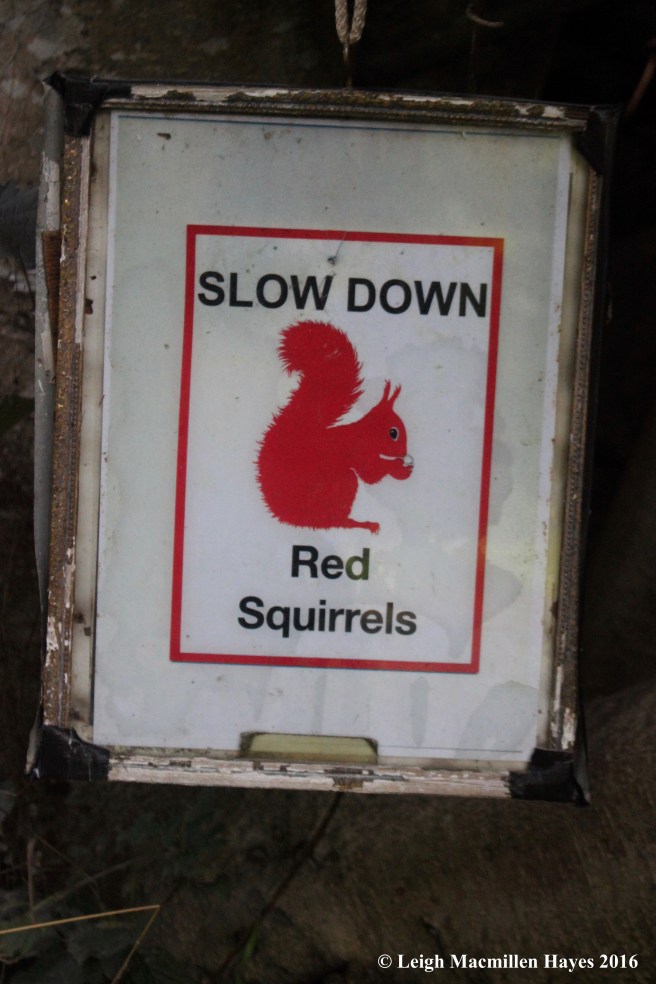
We saw deer, one rabbit and two red squirrels.
Red Squirrel sign, day 3.jpg

Writing of the latter, we chuckled when we encountered this sign because we have frequent encounters with them at home. But considering we only saw two in two weeks and spent most of our days outside, we had to wonder.
w-bessy-1

Bessie One,

w-bessy-2

Two,

w-bessy-3

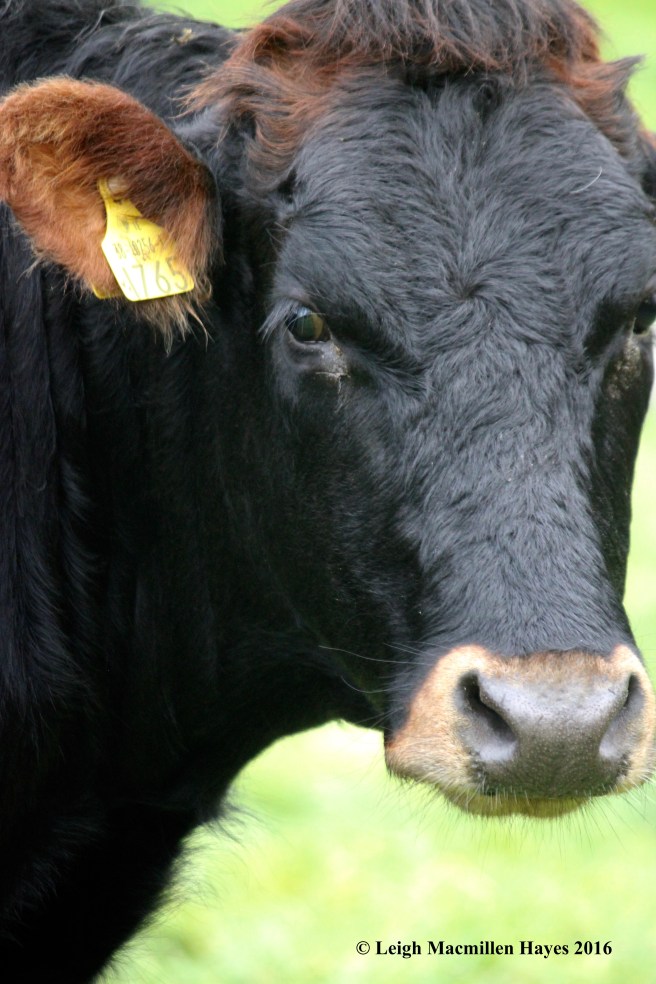
and Three (pronounced Tree) tolerated our presence.

w-cow-on-wall

And Bessie Four made us laugh–as she stood upon a wall.
w-hay-in-barn

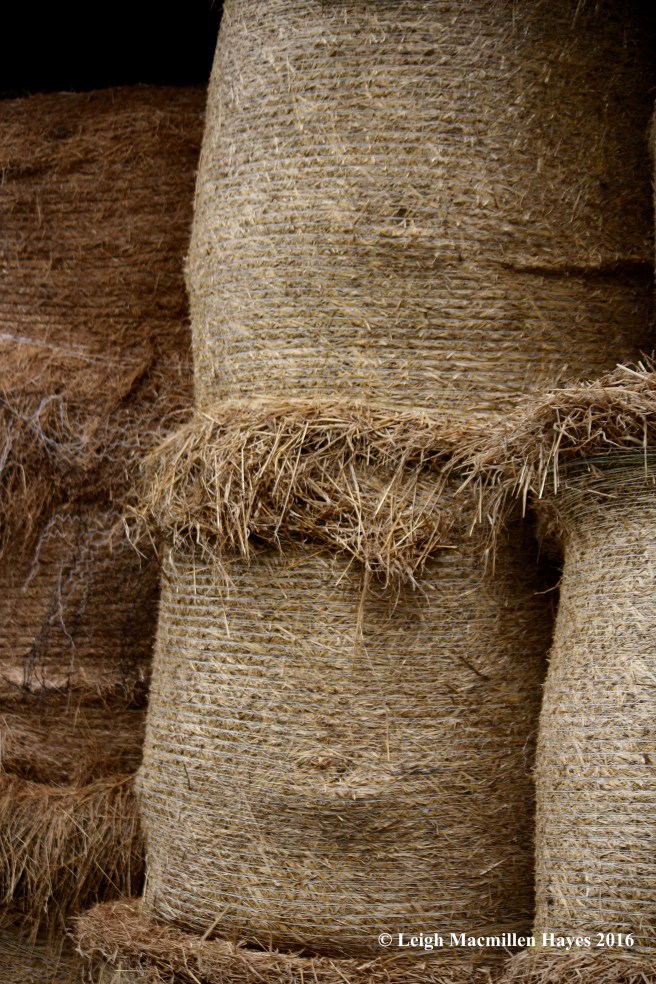
Though we passed through pasture after pasture and by many a farm and barn, we never saw any farmers, but knew that they were hard at work preparing for winter.
drinking-water-wicklow-way-day-3

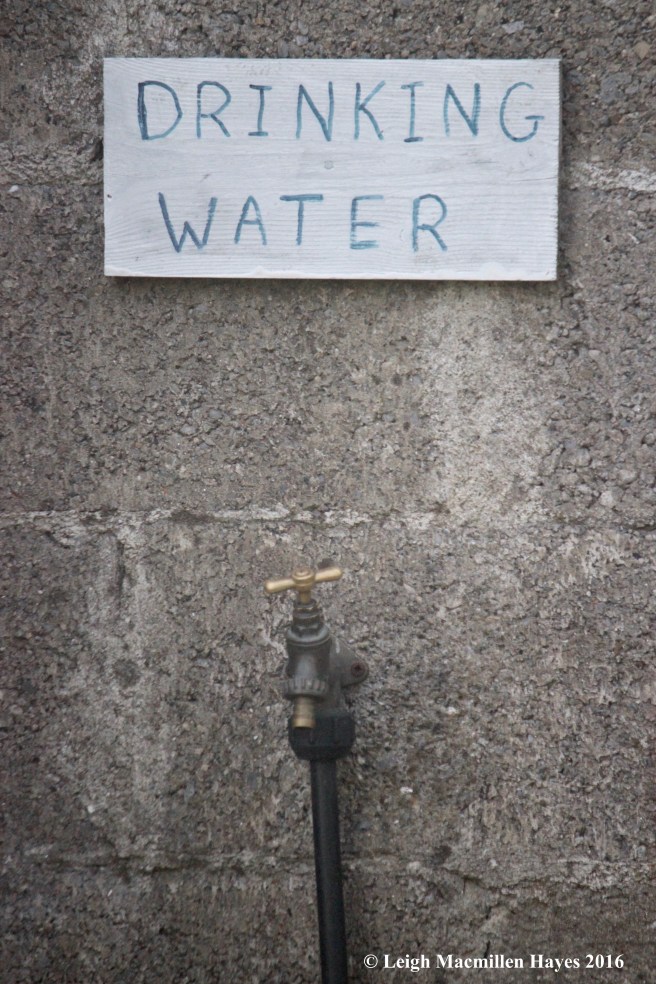
And one even offered us nourishment.

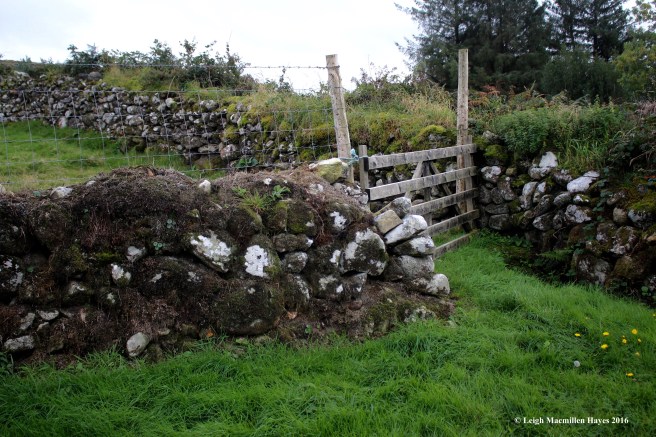
w-wooden-stile

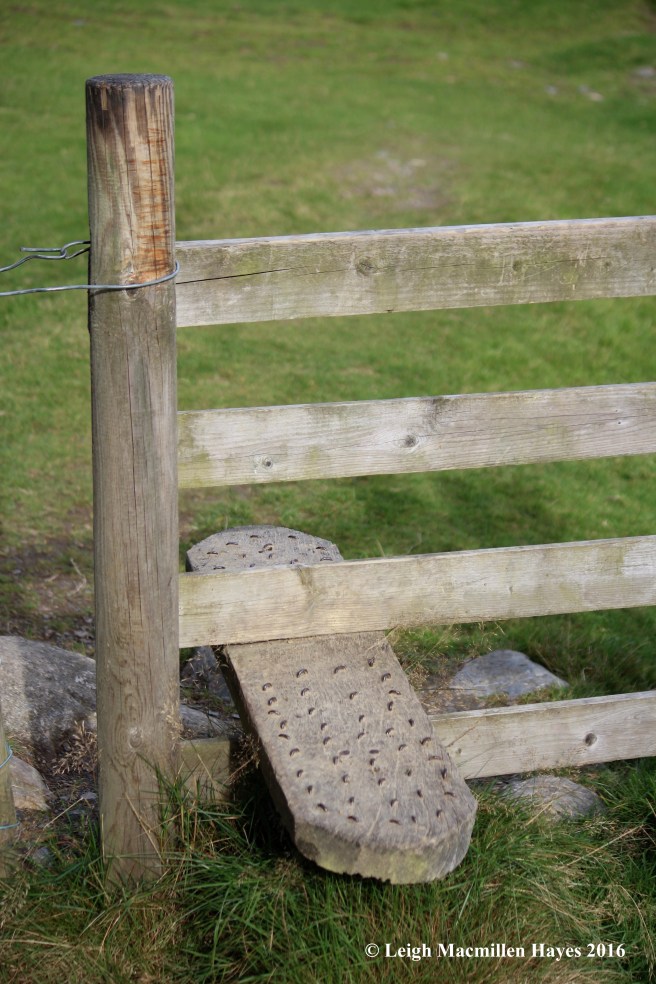
Our path included obstacles, though most were easy to overcome from a rope loop
w-stile-step-wicklow-way-day-3

to a simple step or

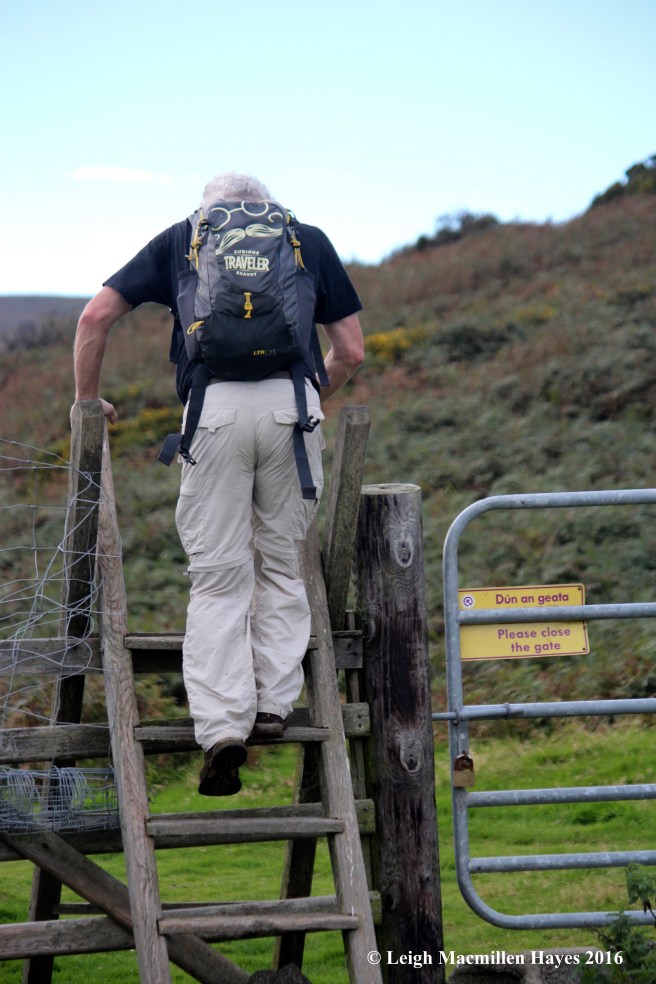
w-another-stile

ladder crossing.

w-bull-sign

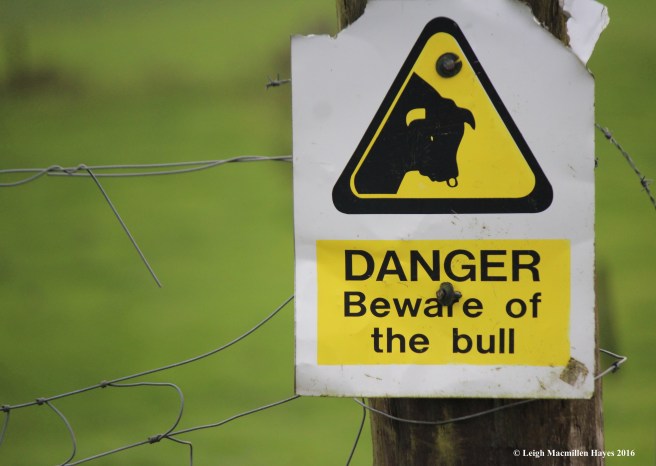
Only once were we uncertain. The stile was padlocked and there was no step or ladder. We finally decided to climb up over the gate in hopes that there wasn’t a bull on the other side. Usually though, a beware of bull sign announced their presence and no such sign marked that particular crossing–phew.

w-guinness-sign

Our days ended with a stop at the local pub because Guinness® is good for you. I actually overheard an older woman telling her significant other the truth behind this. Apparently, when this woman’s mother had been in hospital years before, she was given Guinness® to drink each morning and evening–perhaps for its iron content. Or perhaps just because it’s good for you.

w-dying-cow-1

One of our stops was at the smallest and oldest pub in the nation–the Dying Cow. Mr. Dolan sat behind the bar sipping a Guinness® along with us as he and my guy got into a discussion about American politics. We noted that to be a hot topic. Our reason for finding this pub was because we’d walked into Tenahely after a fifteen miler and were about to step into Murphy’s for a pint when a gentleman sitting outside started chatting with us. He suggested we head off down the road because we needed to experience this tiny bar and he would have joined us but he’d just ordered his pint and didn’t want to waste it.

w-1798-monument

We followed the directions he wrote out for us, and missed the 1798 monument at first, but retraced our route and found it. We only wish he’d then told us how to get back to Laragh. That took a while, but eventually we found our way home.

wicklow-day-3-1

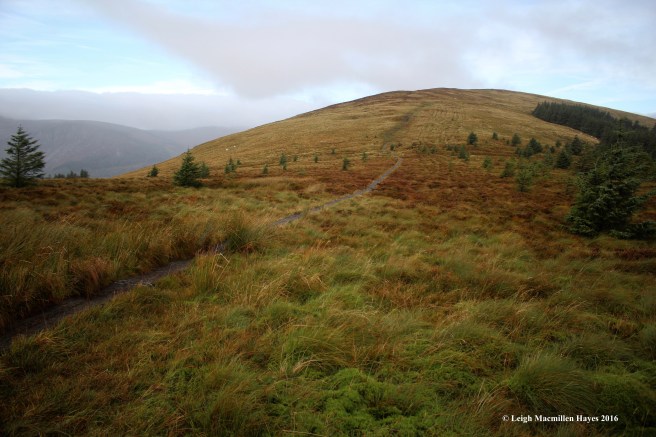
Our views from the Wicklow Way were worthy of wonder.
wicklow-way-day-1-3

And the ever present clouds added to the drama.

ww-greens

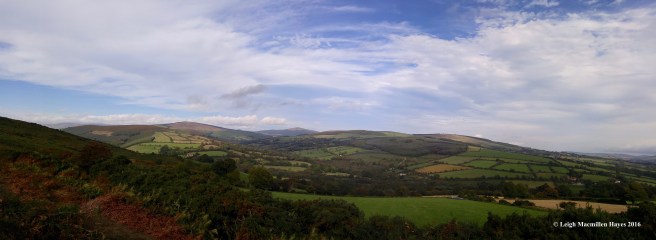
The land resembled a patchwork quilt.
pano-2-day-2-1

No matter where we looked, it was forever changing.
chestnuts

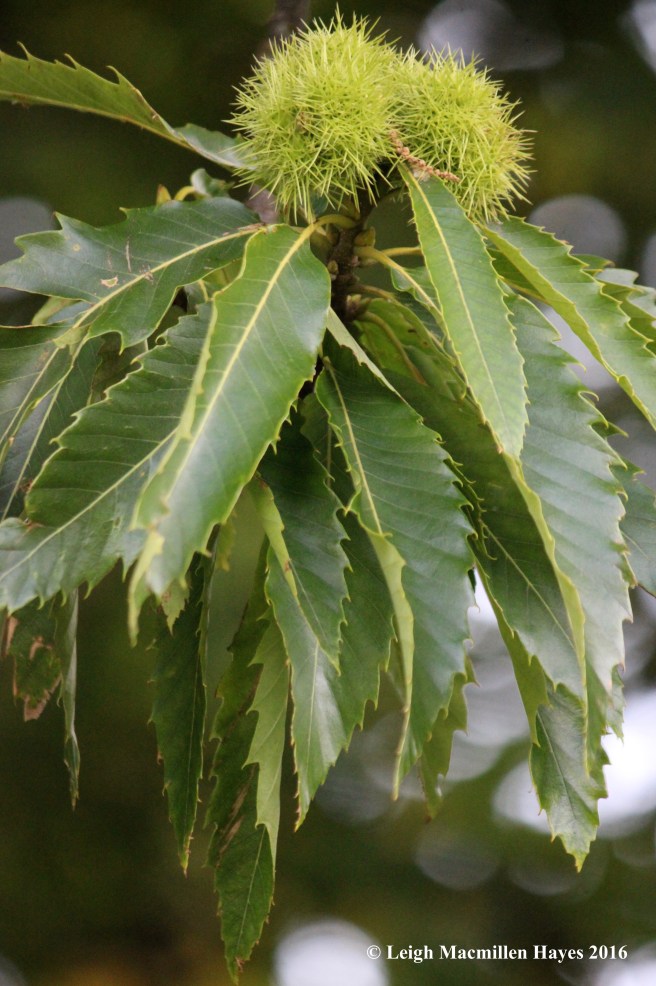
Some of our fun discoveries included chestnut trees,
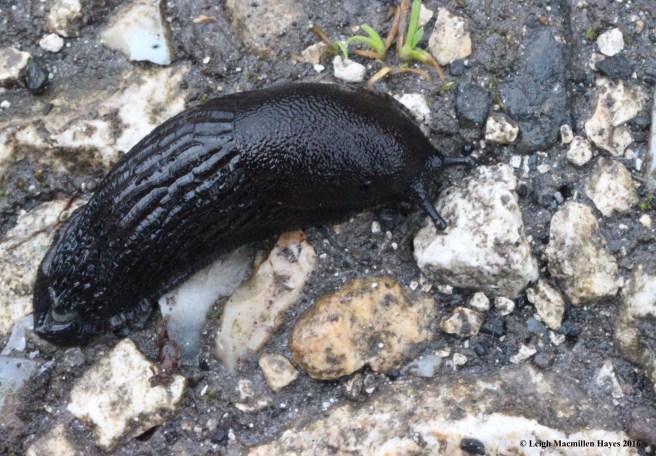
slug

black slugs, and . . .

bear-gryllz-signature

the crème de la crème–bear claw marks! Did Bear Gryllz really leave his signature on the trail behind the Glendalough Hotel?

wicklow-and-the-irish-sea

When we weren’t hiking, we explored the area, including Wicklow and its stone beach.

wind-turbine-boat-wicklow-harbor

We didn’t understand this ship at first until my guy asked–meet Wavewalker, a maintenance boat for Ireland’s Offshore Windfarm.

wicklow-harbor-other-side

Across the harbor, we spied the remains of a castle that invited a closer look.

wicklow-castle-2-sky-and-water-reflection

It seems Black Castle was constantly under siege and totally destroyed in 1301. And yet–I felt a presence still there.

castle-wicklow-face-in-turret

Do you see his face?

avoca-chairs

The oldest mill in Ireland also drew our attention–Avoca Handweavers Mill was established in 1723.

avoca-socks

It was the home of color with attitude.

avoca-yarn-5

Upclose and personal, we saw the inner workings.
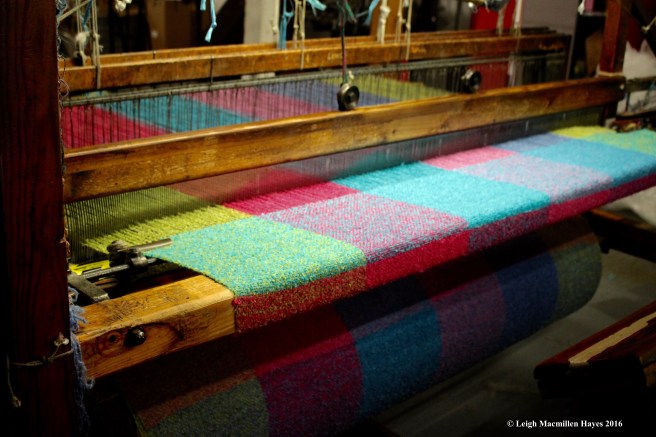
avoca-yarn-2

And marveled at the creative results.

carlow-castle-towers

Our last full day in Ireland found us in Carlow. Standing beside the River Barrow, this castle was thought to once be a stronghold and it survived attacks in the 1400s and 1600s. According to local lore, a physician set out to remodel it into an asylum in the early 1800s. As he tried to demolish the interior, he placed explosive charges near its base and accidentally destroyed all but the remaining west wall and twin towers. Uh oh.

swan-face-carlow

As happened daily, the weather quickly changed from blue sky to raindrops. Swans in the River Barrow didn’t care. They were in their element.
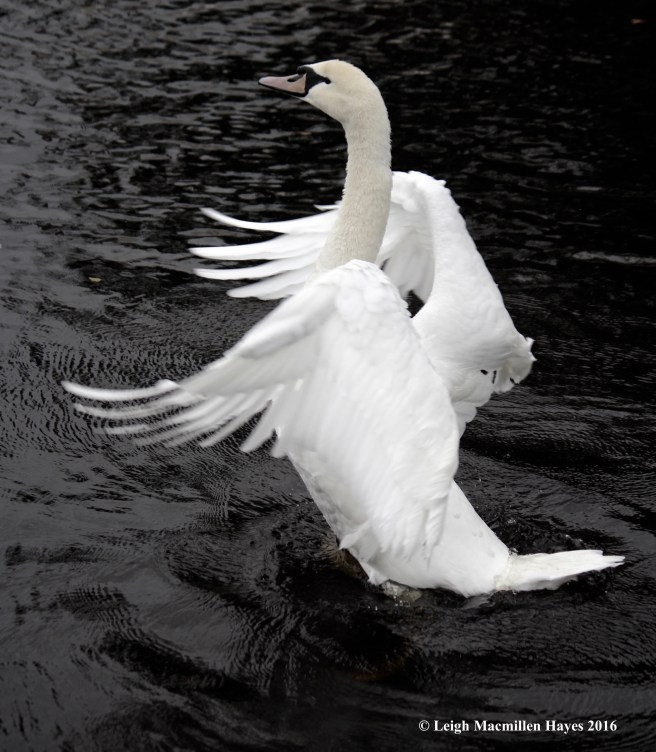
swan-stretch-carlow

My guy counted while I photographed. Thirty some odd–all wishful that we’d brought good tidings in the form of bread. Not to be much to their dismay. Despite that, we were treated to several displays.

sunset-over-carlow-1

And later that night, a display of sun and clouds as we went in search of supper.

irish-breakfast

Our final night was spent at the Green Lane B&B in Carlow where Pat and Noeleen took special care of us. My guy watched the GAA football game with Pat, their grandson Sam helped us print out our airline tickets and Noeleen made sure we had toll money for our journey to the airport. And then there was the breakfast–the finest we’d enjoyed.
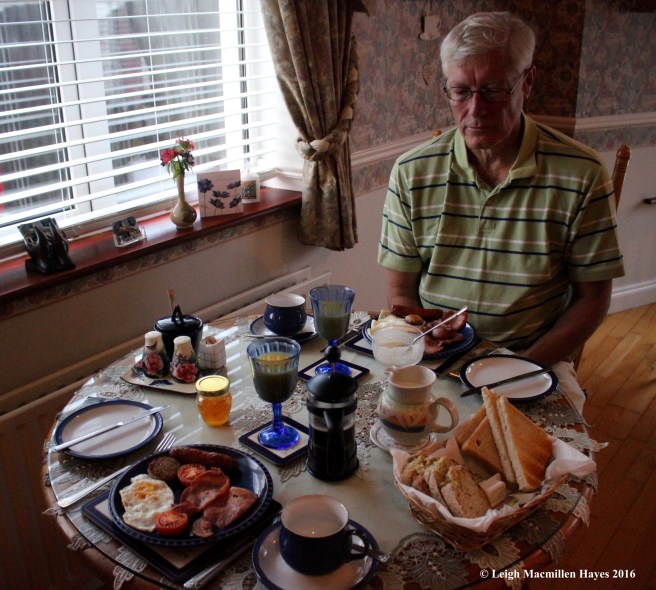
breakfast-2

Think eggs, tomatoes, mushrooms, bacon, sausage, white pudding, toast and Irish soda bread. And they wanted to know if we wanted porridge and cereal. Really?

irish-mist

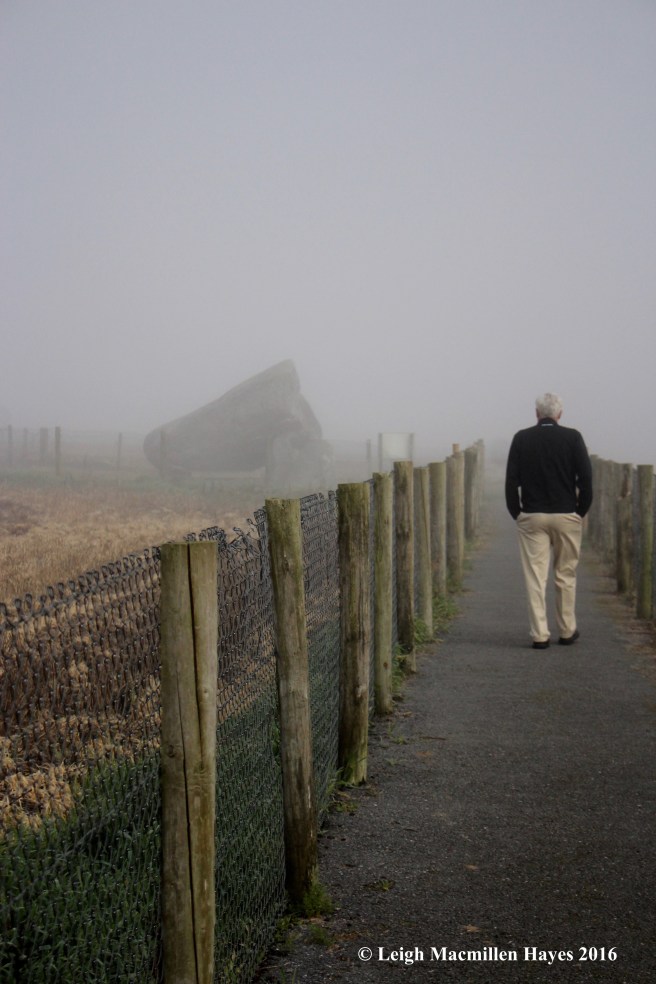
Before we checked out, I made my guy drive to this field ensconced in an Irish mist.
out-of-the-mist

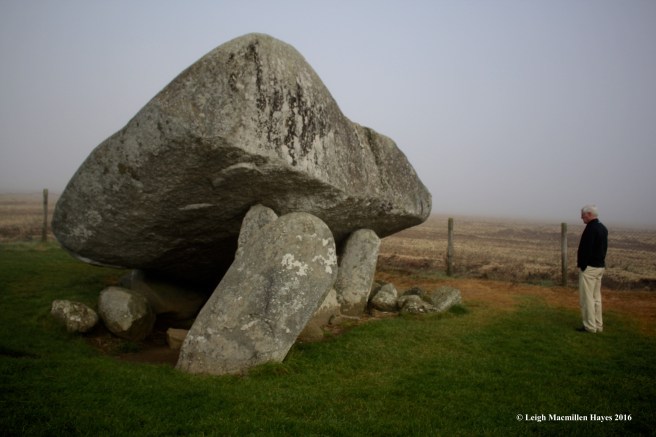
The fog seemed apropos for our walk out to the Browneshill Dolmen. This was a burial chamber that may have originally been covered with earth.
dolman-size

My guy stands almost six feet tall, so his height provided a sense of size.

dolman-2

The two more pointed stones on either side of the squared stone were known as portal stones that would have supported the granite capstone or chamber roof. The squared stone in the center was probably the gate stone that blocked the entrance. This site has not been excavated so there’s no other info about it, but just standing in its presence and considering those who came before and created such was enough.
web-2

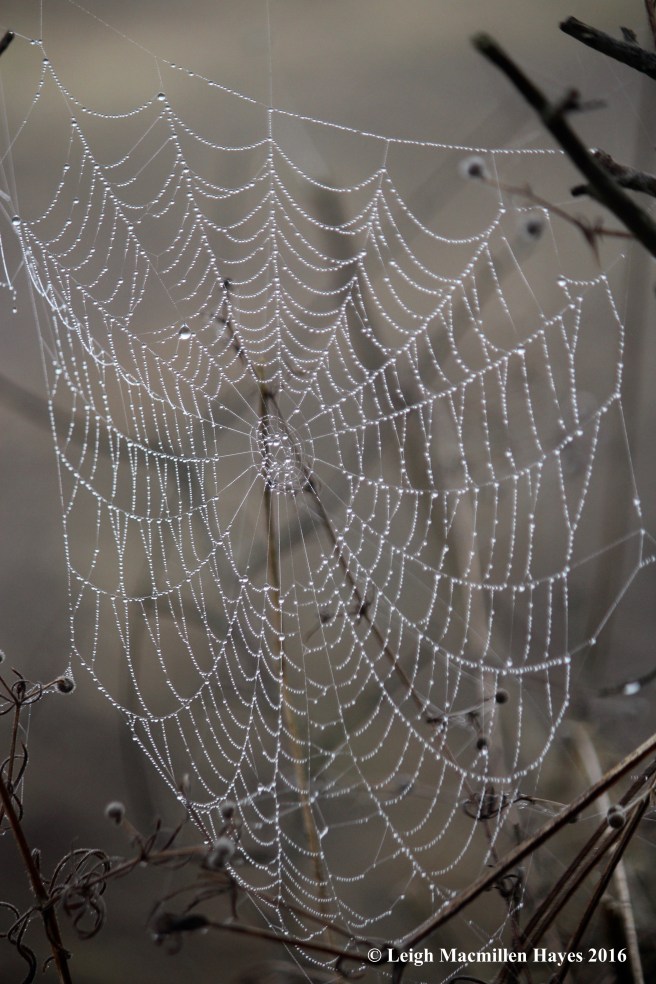
And then there were the spider webs. I’d missed them as we’d walked toward the dolmen, but they captured my attention all the way back. From prehistoric to present, the structures before us were breathtaking.
tree-webs

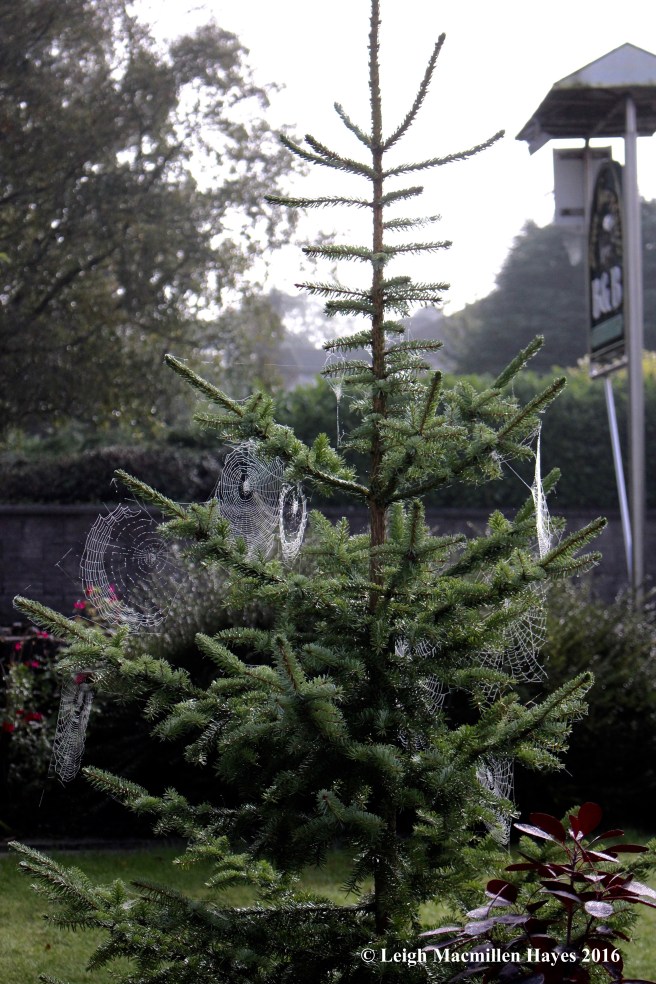
And when we finally pulled out of the B&B driveway on our way to the airport, I asked my guy to stop while I jumped out of the car. What a sight to behold–web ornaments. A perfect ending to our vacation.

My guy meet several roadblocks on his search for roots, but at the same time, he learned about some new avenues that may help in his quest. And I, I wished for more time to understand all that was before me from prehistoric to present–but maybe I sought answers that don’t need to be. Having the questions might be enough.

Together, we were grateful for our Hyacinth and Richard Adventure on the Emerald Isle. And glad to return the car safely to the rental agency.


Golden Rulers

In late summer/early fall, a variety of goldenrods shower gardens and fields with their sunshiny flowers.

Unfortunately, they’ve been wrongly blamed as the culprits of hay fever, but by the abundance of pollinating insects that visit them daily, it’s clear that they are insect rather than wind pollinated. (Ragweeds and other hay-fever causing species are wind pollinated.)

And so today, as I have for the past few weeks, I spent time focusing on those pollinating visitors and others who find goldenrods attractive for different reasons. Take a look.

g-assassin-1

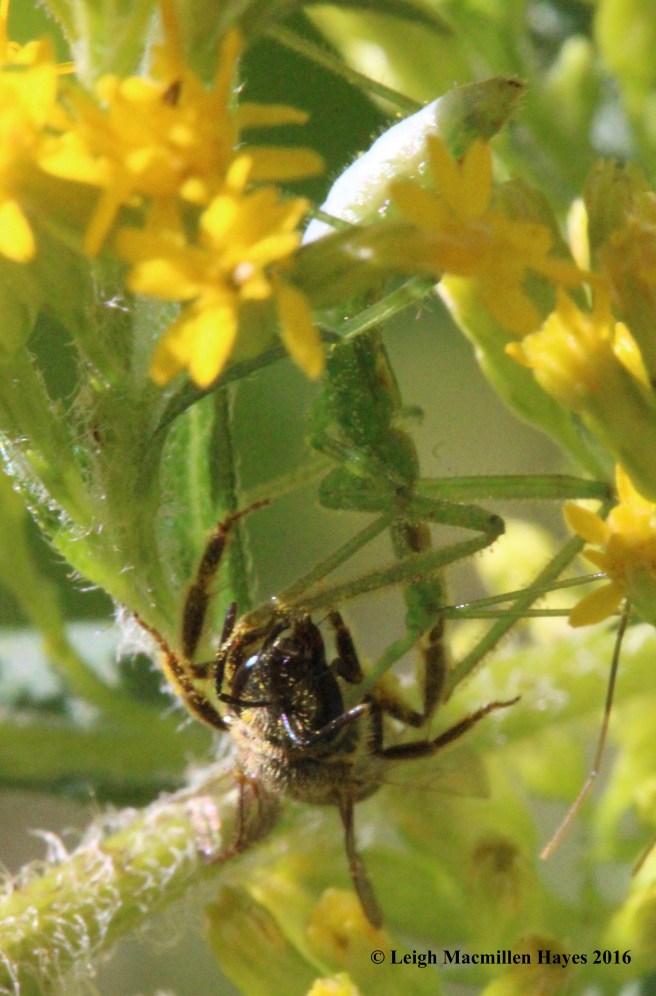
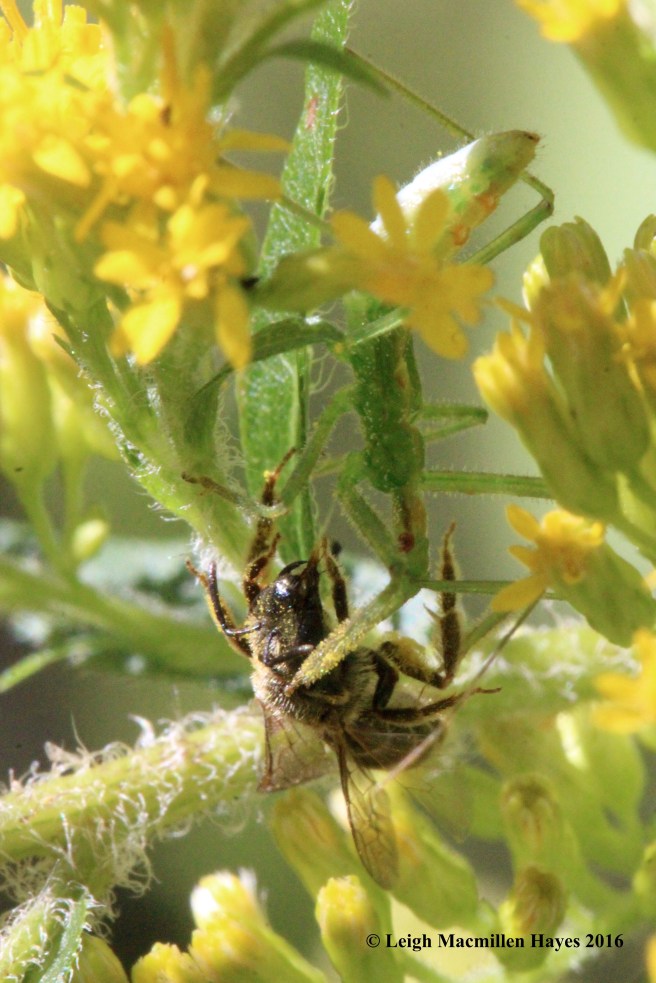
What first caught my eye was a bee that dangled upside down. And then I spied the green legs of an assassin bug. What? Yup, an assassin bug.  I believe this one is a nymph. Regardless of age, here’s the scoop: Assassin bugs are proficient at capturing and feeding on a wide variety of prey. Though they are good for the garden, they also sometimes choose the wrong species like this bee. The unsuspecting prey is captured with a quick stab of the bug’s curved proboscis or straw-like mouthpart. Once I saw this, I continued to return for a couple of hours, so stay tuned.
g-honey-2

Fortunately, there were other honeybees on the job of pollinating the flowers.

g-bumblebee

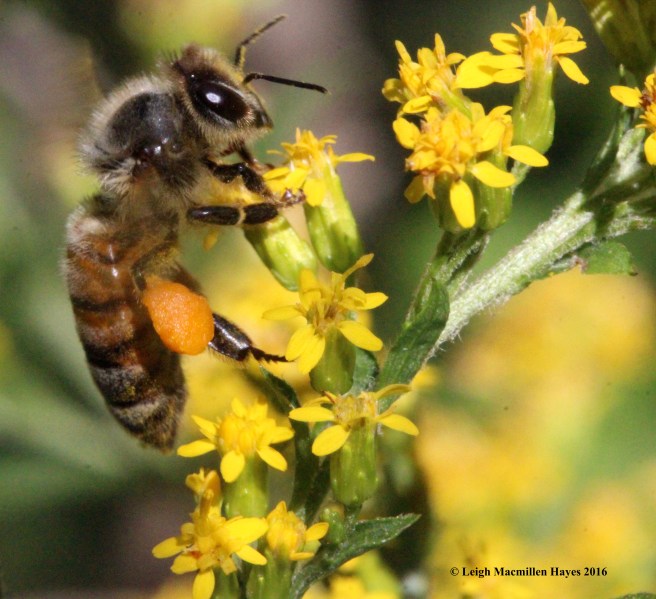
Mighty bumblebees also filled their sacs to the brim.

g-assassin-2

A.B. Take 2–do you see the proboscis stuck into the first bee’s thorax? It fed by sucking out the fluids.

g-hover-fly

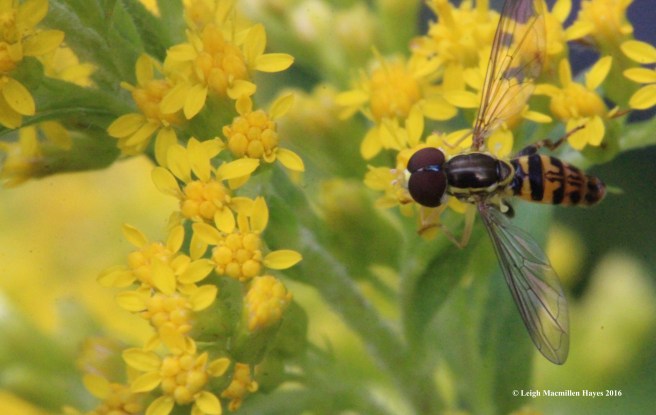
Back to the other visitors. One of my favorites was the hover fly. I’m always humbled by its coloration.

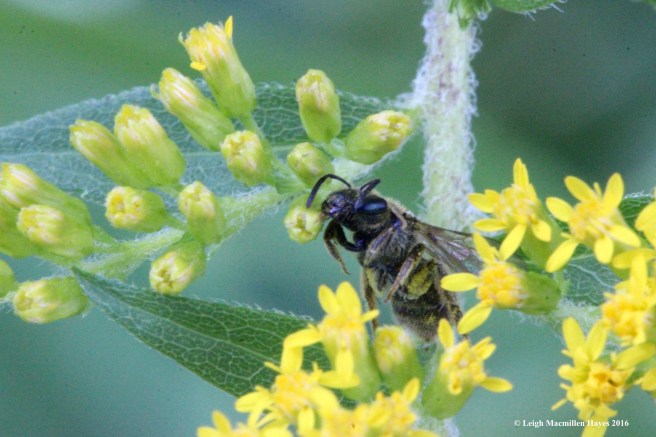
g-wasp

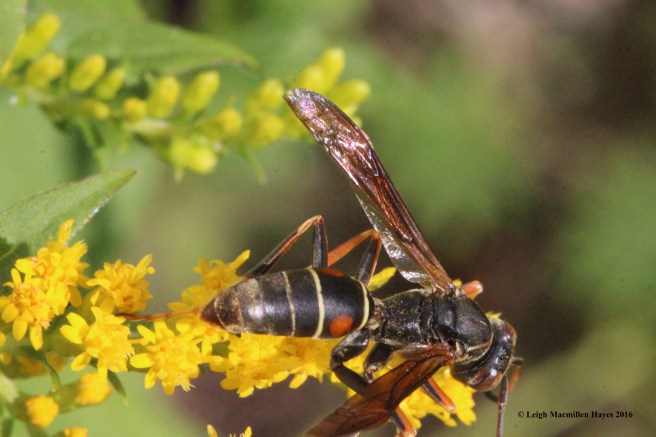
And then there were the wasps.

g-wasp-2

Their almost hairless bodies provided contrast beside the bees.

g-assassin-3

A.B. Take 3–The A.B. turned the bee and it appeared that its proboscis became coated with pollen, which would make sense.

g-jumping-spider

Meanwhile, a jumping spider waited patiently for its own prey to come into sight. I felt like all eyes were on me as we came face to face. Thankfully, it didn’t jump and grab me with its jaws.

g-crab-3

Another with a poisonous bite is the crab spider. This one was more active that most that I’ve seen. Usually, they sit and wait, then catch their prey, bite it and again, suck it dry. And while it looks huge in this picture, it is really quite small–about pencil eraser size.

g-spider-web

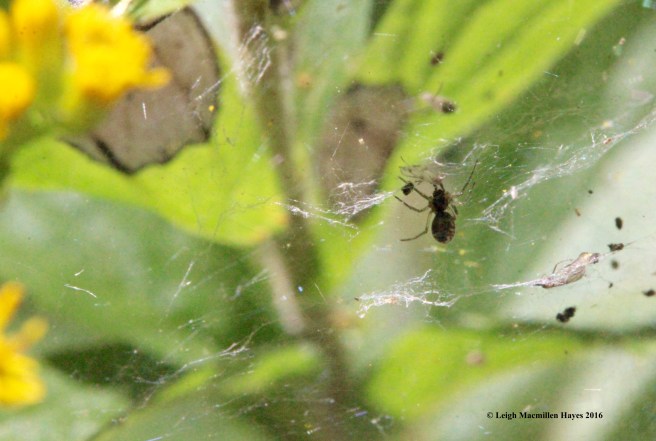
A third spider species used the goldenrod’s stem and leaves to weave its own structure. It seemed to be more successful than the others at finding a meal.

g-assassin-5

A.B. Take 4–Check out A.B.’s tiny red eyes. And its camouflage–no wonder the poor bee never saw it.

g-caterpillar-2

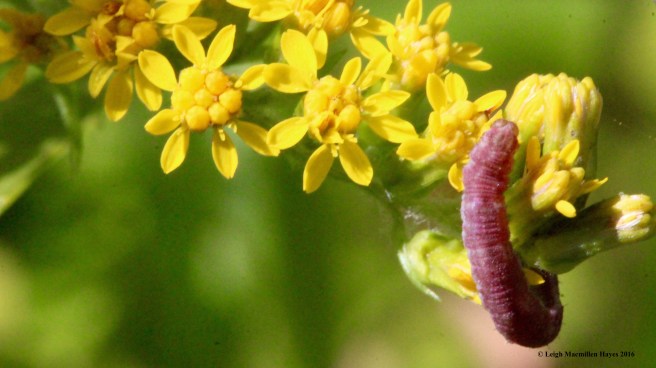
Not every visitor to the goldenrod knew about camouflage. I don’t know who this is, but saw it on a nearby orange echinacea yesterday. Its mauve color certainly shouted for attention among the yellow sea.

g-caterpillar-blend

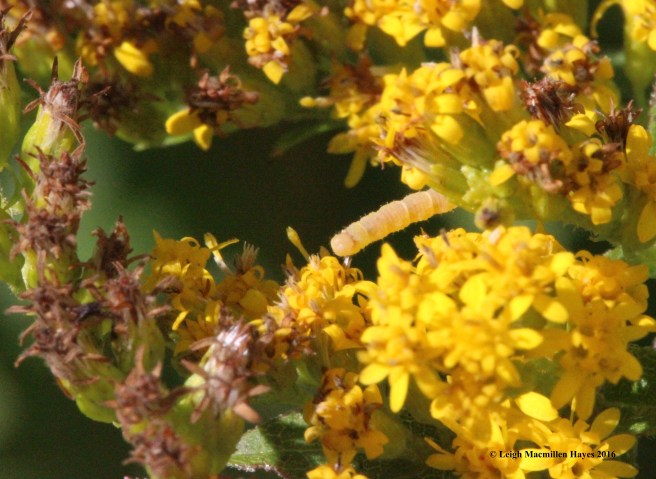
A different caterpillar did a better job of blending in–do you see it?

g-assassin-7

A.B. Take 5–An hour later and the A.B. was still sucking.

g-assault-2

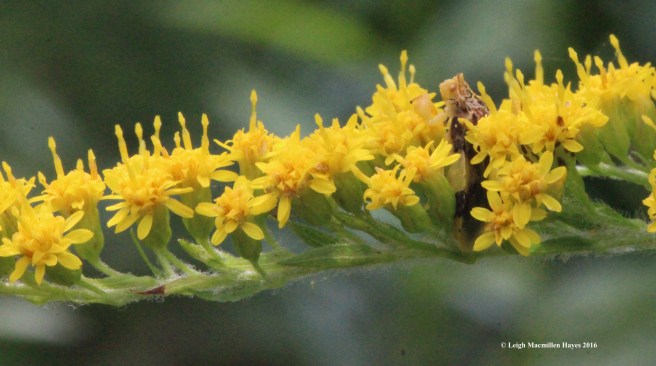
At the same time, another predator hid among the flowers–an ambush bug.

g-ambush-3

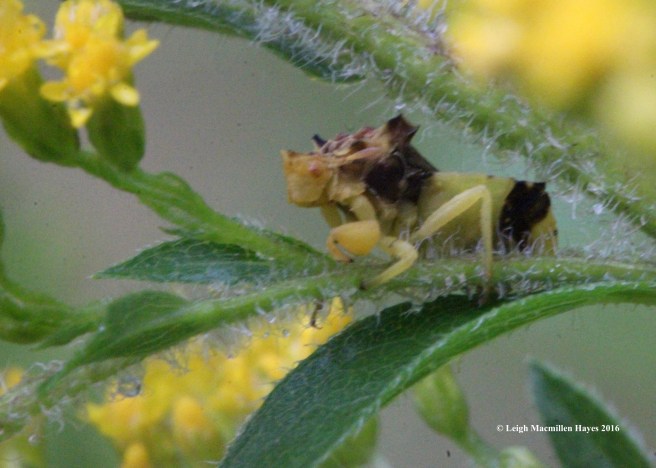
This species is otherworldly at best.

g-ambush-bug

And talented. The ambush bug waits patiently and then snatches prey with its knife-like pincers. All but the outer shell of the prey is consumed. I swear this guy was smiling. Maybe he’d enjoyed a feast and I’d missed it.

g-assassin-victim

A.B. Take 6–About two hours after I’d first observed it, I returned and couldn’t find the bee. Then I noticed a motionless body on a flower branch below. Apparently A.B. had sucked all the life out of it and then let it go.

g-assassin-on-prowl-2

A.B. The Final Take–It had finished taking and went in search of another victim.

What I know for sure: While goldenrod may rule the late garden, it is also ruled by many in a bug-eat-bug world. All of it is worth a wonder.