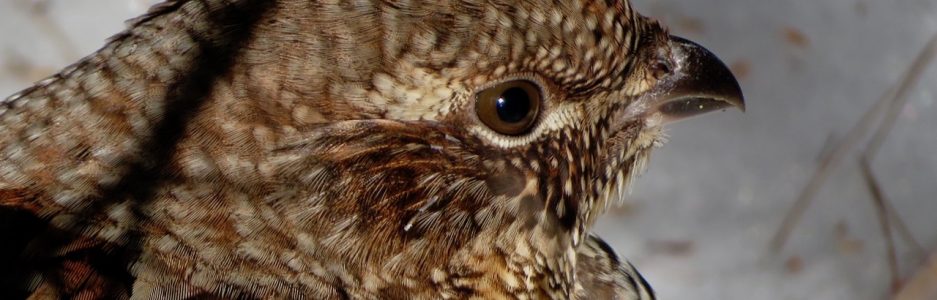
It rained. The sun came it. Rain drops continued to fall. Until they didn’t. Then the temperature rose to a degree we haven’t seen in over eight months here in western Maine. And we melted.

But, with the heat wave came some new visitors, including this male Baltimore Oriole, so named because his coloration resembled the coat-of-arms of Lord Baltimore.
The funny thing about Lord Oriole: he’d stopped by a few days ago when I had a sturdy chunk of suet in the feeder. After seeing him, I immediately added orange slices to the offering in hopes of enticing him to return.
And so when he did this morning, I marveled at the fact that he ignored the oranges and chose instead a small bite of the suet.
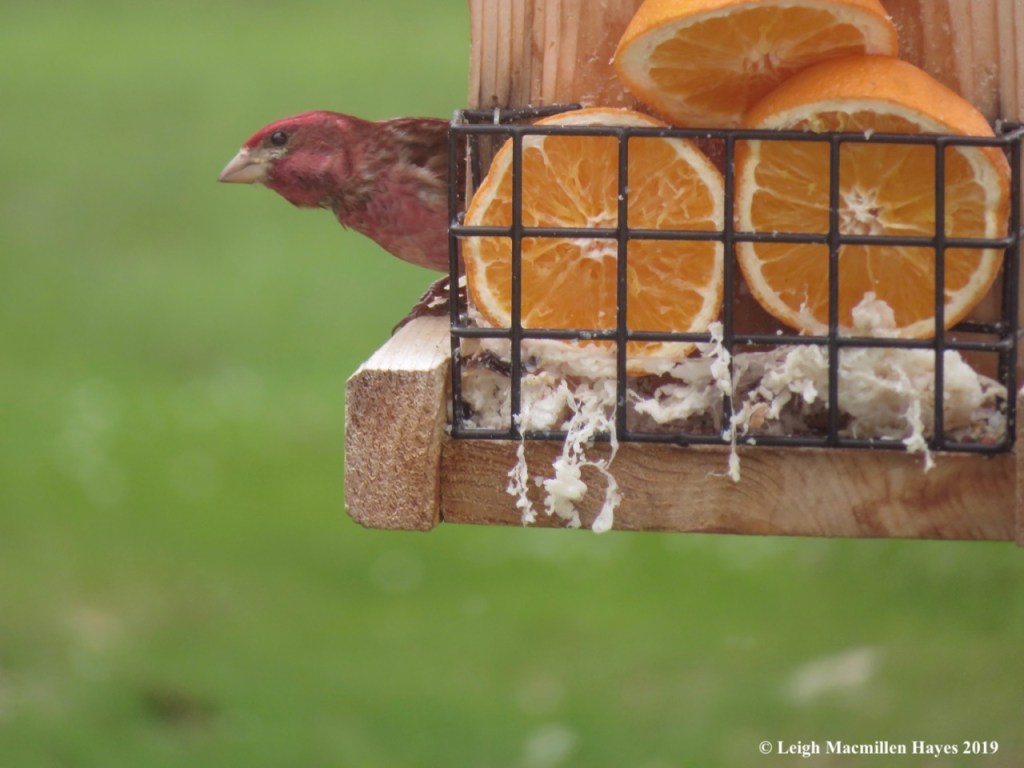
Adding more color to the yard was a male House Finch. He tarried not long for his gal paused in the lilac bush and then flew past and he followed in hot pursuit.

But I gave thanks to the finch for as I looked for him to return, I noticed movement on the outer edge of the garden below the back deck. Shuffling about the dried leaves looking to glean a meal was a Common Yellowthroat. My very own Common Yellowthroat. Certainly another reason to rejoice.

There was more rejoicing to be done for I eventually found my way to the vernal pool. I realized I’ve been avoiding it lately, ever fearful after discovering a few dead frogs that life had taken a turn for the worse within that small body of water.
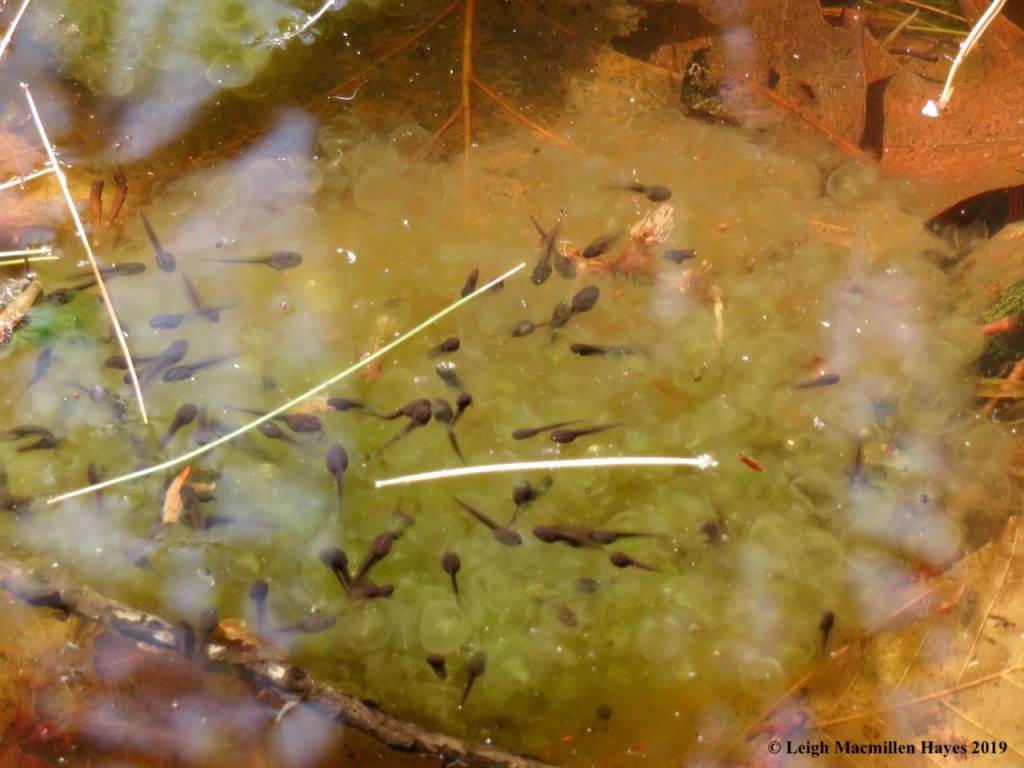
But the surprise was all mine when I discovered recently hatched tadpoles resting atop an egg mass. The green color is an algae with which they share a symbiotic relationship. The algae colonize the egg mass and produces oxygen. Being symbiotic, it’s a two-way street and the algae benefits from the eggs by gaining carbon dioxide produced by the embryos. The carbon dioxide is needed for the photosynthetic process. For a few days after hatching, the tadpoles feed on the alga.

Salamander embryos within their own gelatinous also took on that greenish hue due to the same symbiotic alga. My heart was filled with joy for there were numerous masses within the pool, most of them spotted salamander. And now I can only hope that the pool stays wet enough for them to mature and crawl out as their parents did.

Leaving the pool behind, I wandered toward home, but a familiar call beckoned. It took a few minutes for me to locate the creator, but eventually I saw him.
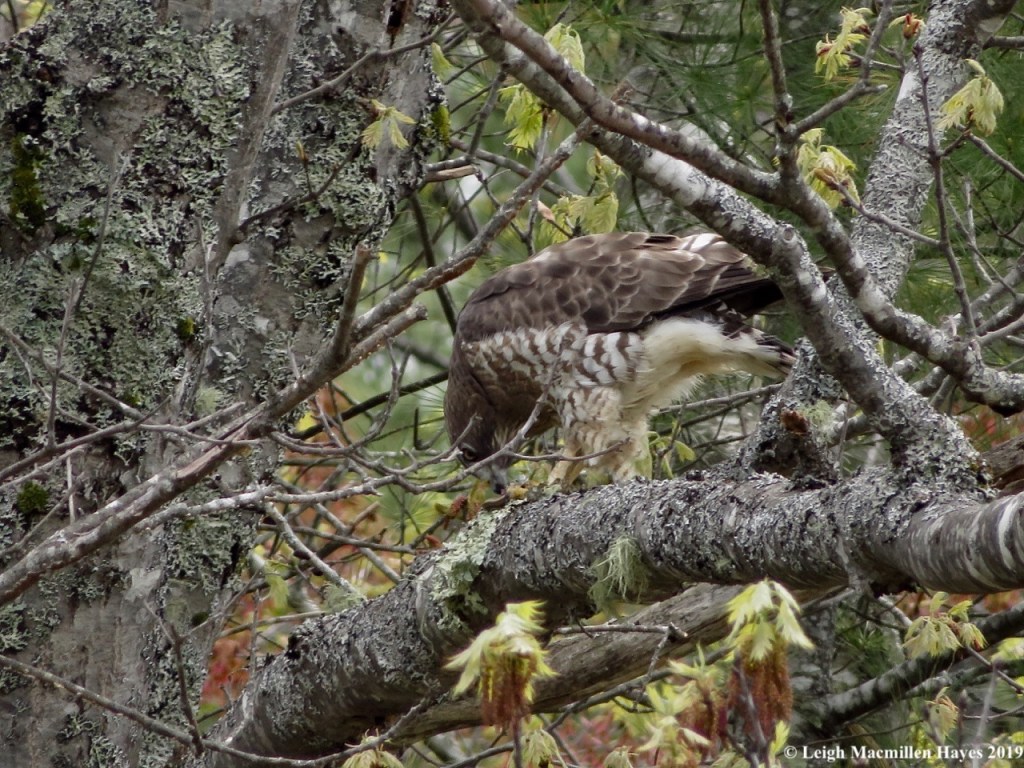
On a sturdy branch parallel to the ground, the Broad-winged Hawk did dine. He also frequently announced his presence with his high-pitched voice.
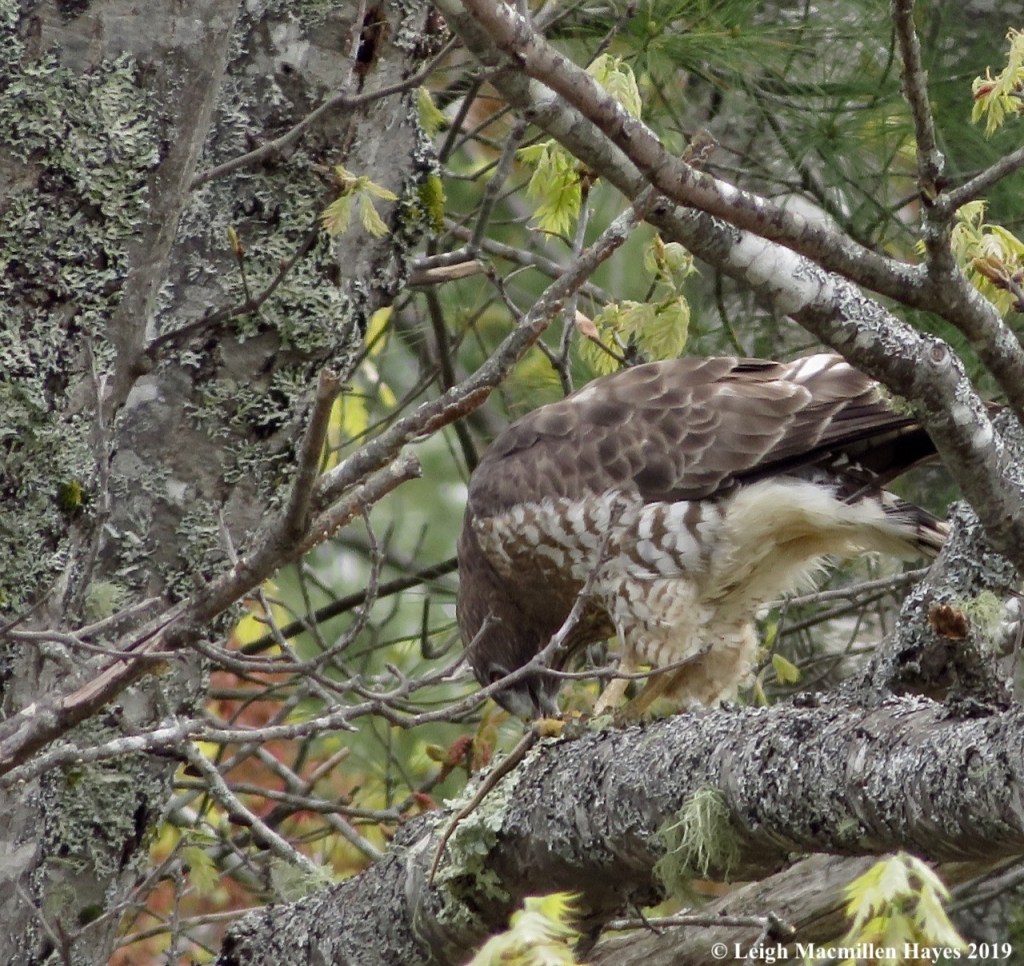
As a true carnivore, he’s known to eat reptiles, amphibians, birds, small mammals and even large insects. From my stance, I thought I saw a long tail that didn’t seem right for a vole. Instead, I wondered if it was a snake. I kept expecting to be greeted by one beside the vernal pool and the hawk wasn’t all that far away. I suppose that means that if the salamanders and frogs are able to crawl and leap out of the water, they’d better find good hiding places because this guy and a possible mate have been soaring above for a couple of weeks and probably have a nest nearby.

In the end, it seemed that whatever his meal was, it was lip-licking good. Upon finishing it, he flew south while I trudged across the field to the east. But I suspect our paths will cross again going forward.
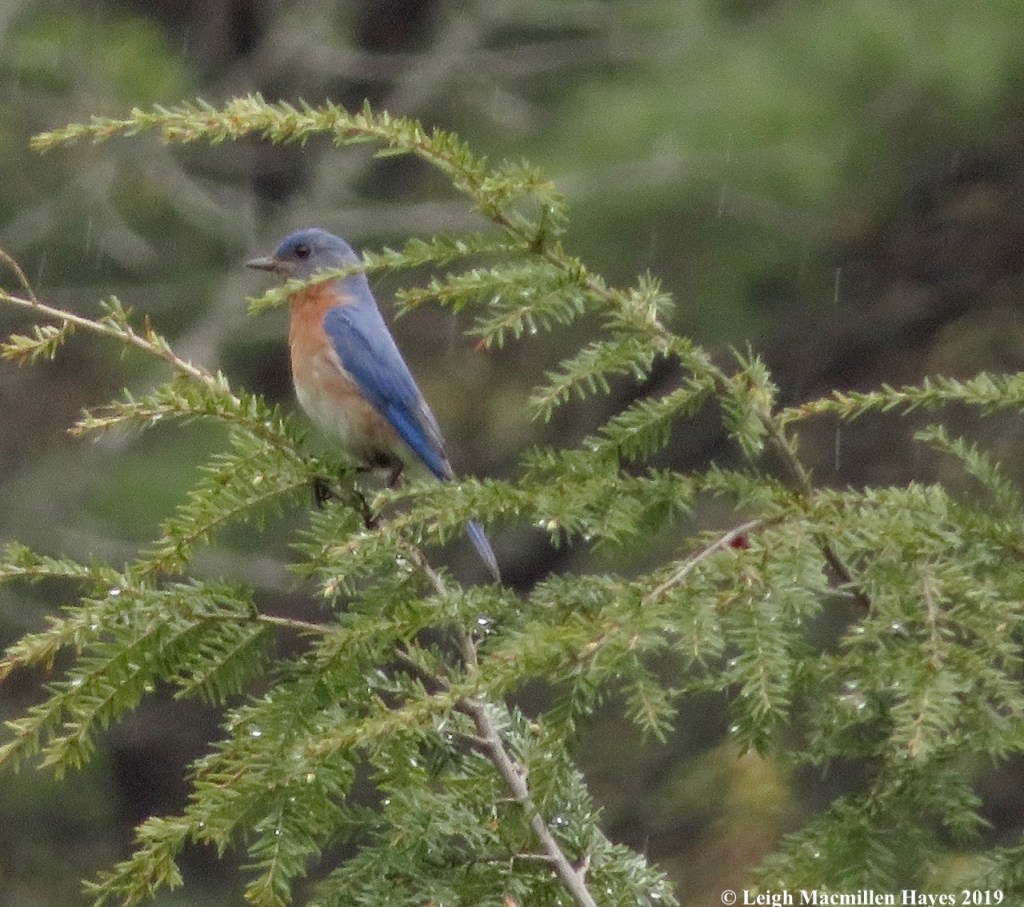
All of those finds were spectacular, but . . . one of the best parts of the day–watching Eastern Bluebirds in the yard. I first spied the male in this morning’s rain.

And then late this afternoon, I was surprised to discover that they were both here, the she and the he. For the most part, they stayed out by the stone wall, perched on branches above before flying down to catch a meal.
Then they flew closer to the house and landed atop the feeders where I don’t have any mealy worms that are much to their liking. I hadn’t even planned to still have the feeders out, but with each new day bringing new visitors, I’ve delayed taking them in for the season. That is, until a Black Bear arrives.

But no Black Bears yet. (Just wait, one will probably show up overnight or tomorrow.)
And so . . . Bluebird, Bluebird, through my focus. Thanks for taping me on the shoulder. ;-) And sharing this day with me.








 wondermyway