Bluebird Days are the best days

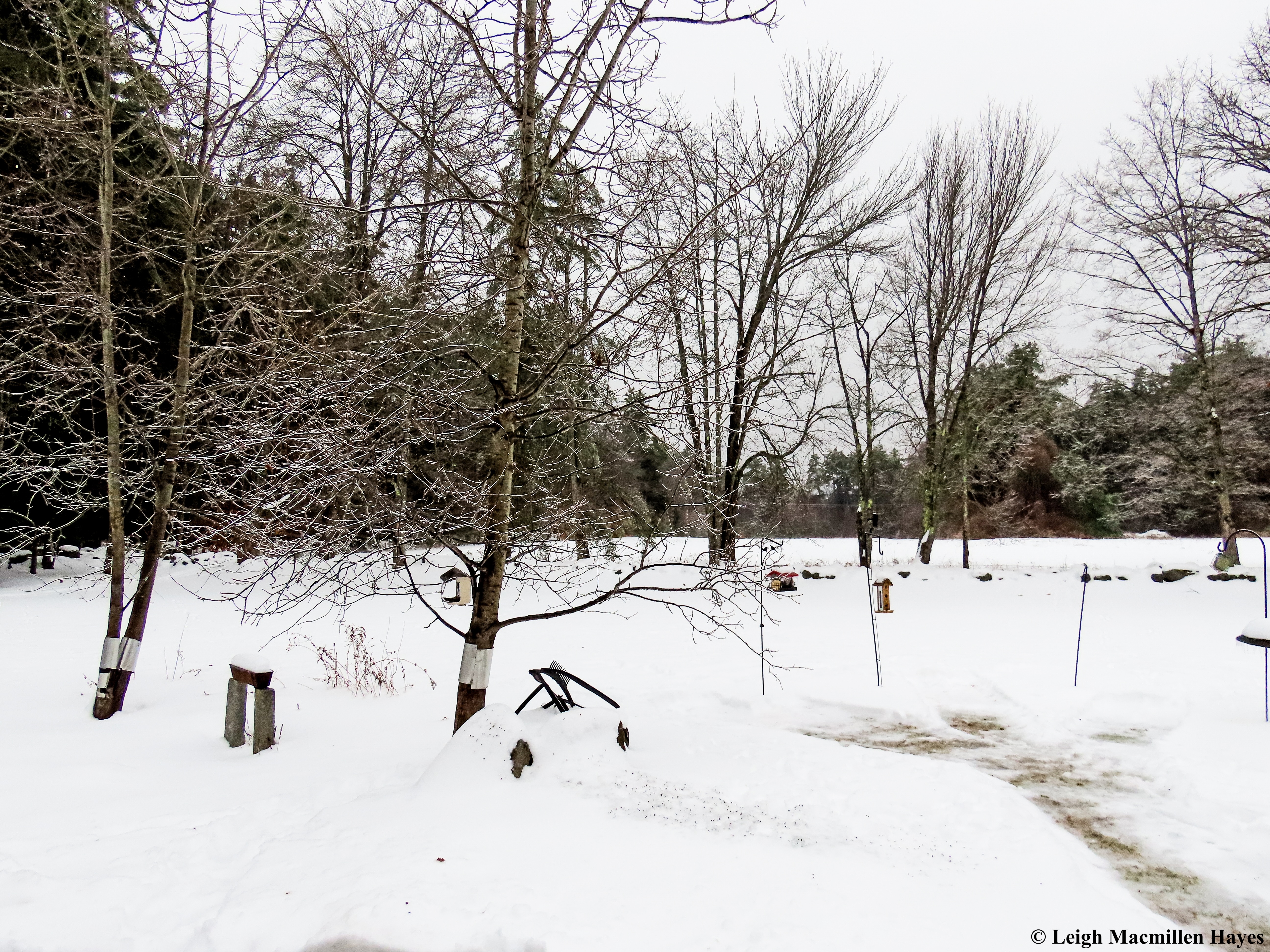
It’s been delightfully frigid this past week. My kind of temps because it makes me feel so alive when I’m out in the woods. And as My Guy and I were saying when we hiked this afternoon, it’s all about dressing right. So we did.

Just after turning onto the side road of our intended destination, we watched a Vole scamper across and then dart this way and that while I stopped the truck. Did either of us take a photo? No. But those moments are always for the mind’s eye.

And then, after parking, I spotted this sweet little snowman on the other side of the snowbank and thought, “What a job well done, given the cold temps of the week.” You see, it’s not really snowman-building-kinda snow, but someone was successful.

Our journey included walking a mile in to the trailhead, though we noticed a few people had actually driven in; something you can’t usually do at this time of year . . . if there is more snow. Alas. That we don’t have.

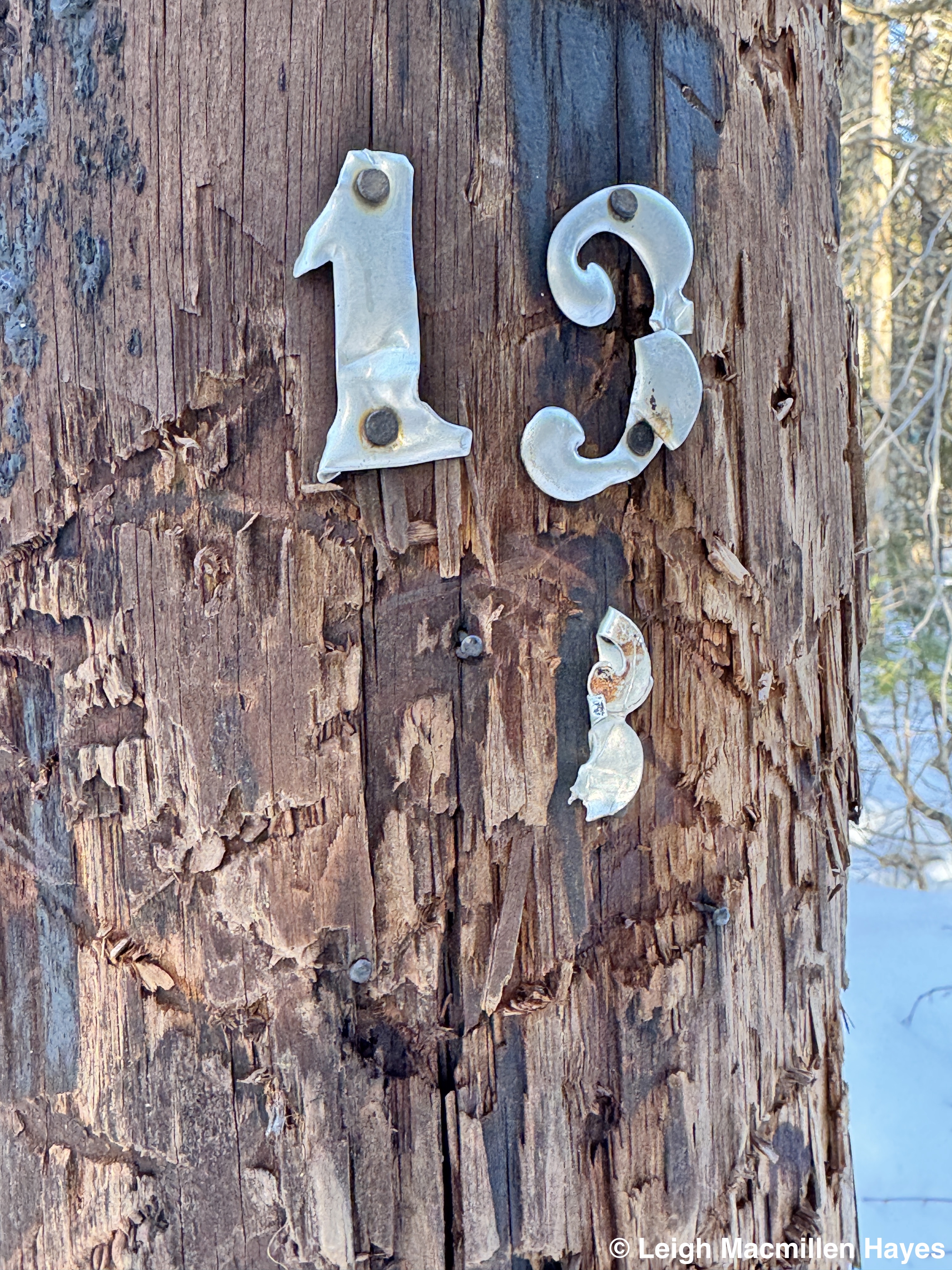
But . . . I love to walk in because . . . there are telephone poles. And being adjacent to the National Forest, it’s a rather wild place. And these poles tell a story of just how wild.

In fact, on this one the shiny numbers have been attacked and I can just imagine the activity that took place here.

In my mind’s eye, the Black Bear scratched the pole and then rubbed its back as it turned its head and bit at it. Why? That’s a question for which I’ve heard several different answers over the years, from something different in the woods, to it likes the creosote, to it feels the vibration coming down from the electrical wires above. I’m not sure of the answer, but I do know that I like to use my back scratcher once in a while and I can imagine the Bear does as well. His is just MUCH bigger than mine.

I always tease My Guy that this is his favorite game, to which he guffaws. But I can’t resist taking a look. I mean, look at pole 17. The metal is fairly intact, but can’t you just see the upper incisors chomping down and dragging back toward the lower, while the head is turned to the side?

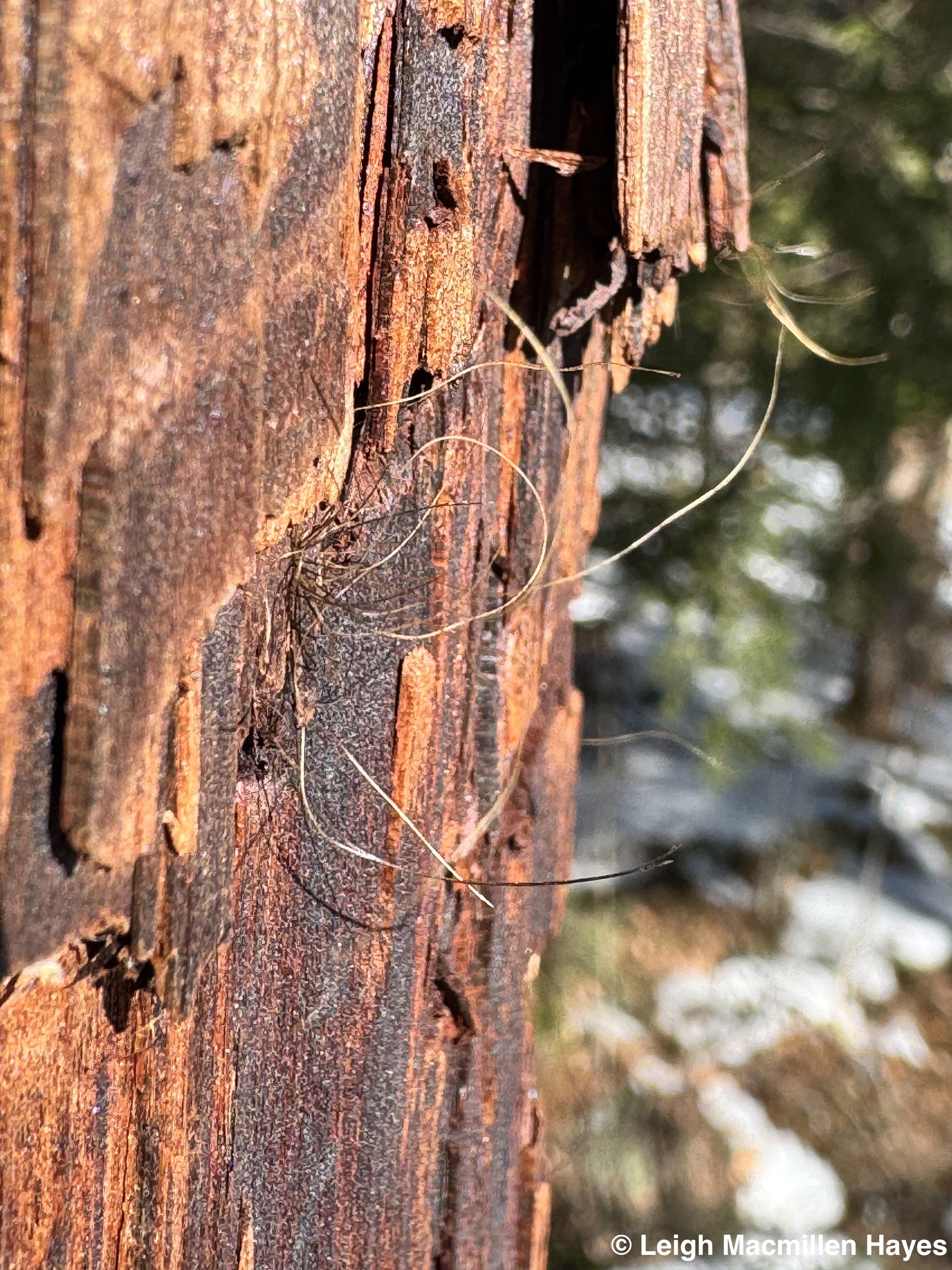
And don’t you just covet those hairs? My Guy asked why some are so light in color–that’s because this action may have occurred in the spring. It could be territorial, and maybe that’s the only answer we need. Anyway, over the summer, the color bleached out.

This pole had been attacked so many times over the years, that the numbers are now completely gone. In the past, I’ve noted that the number 5 somehow seemed to draw the Bear’s attention, and today I don’t recall seeing Pole #5 or #15. Maybe this was one of them. Because I was with you-know-who, I didn’t take too much time to pay attention to what number this pole should have been.

I was just happy to be out there looking at them.

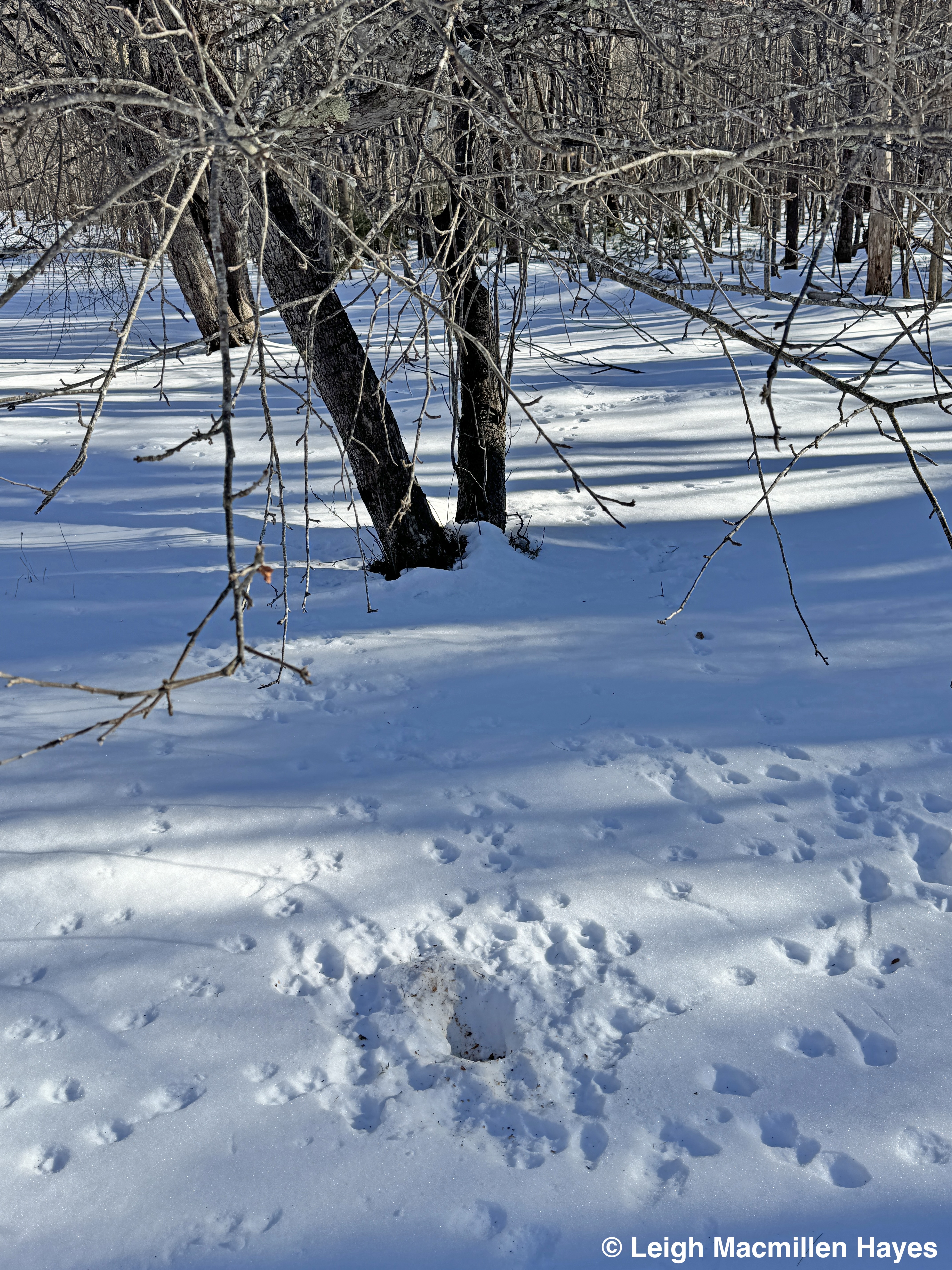
Once we reached the trailhead, well, actually, even before we reached it, we noticed Red Fox prints and tracks. By the gazillion.

And then, in the middle of a field that is part of the trail, a perfect Red Fox scat filled with fruit. You can thank me for not making this a more upclose and personal photo.

There was a reason for the fruit . . . because the trail next passed through an old orchard. And there, the tracks increased significantly.

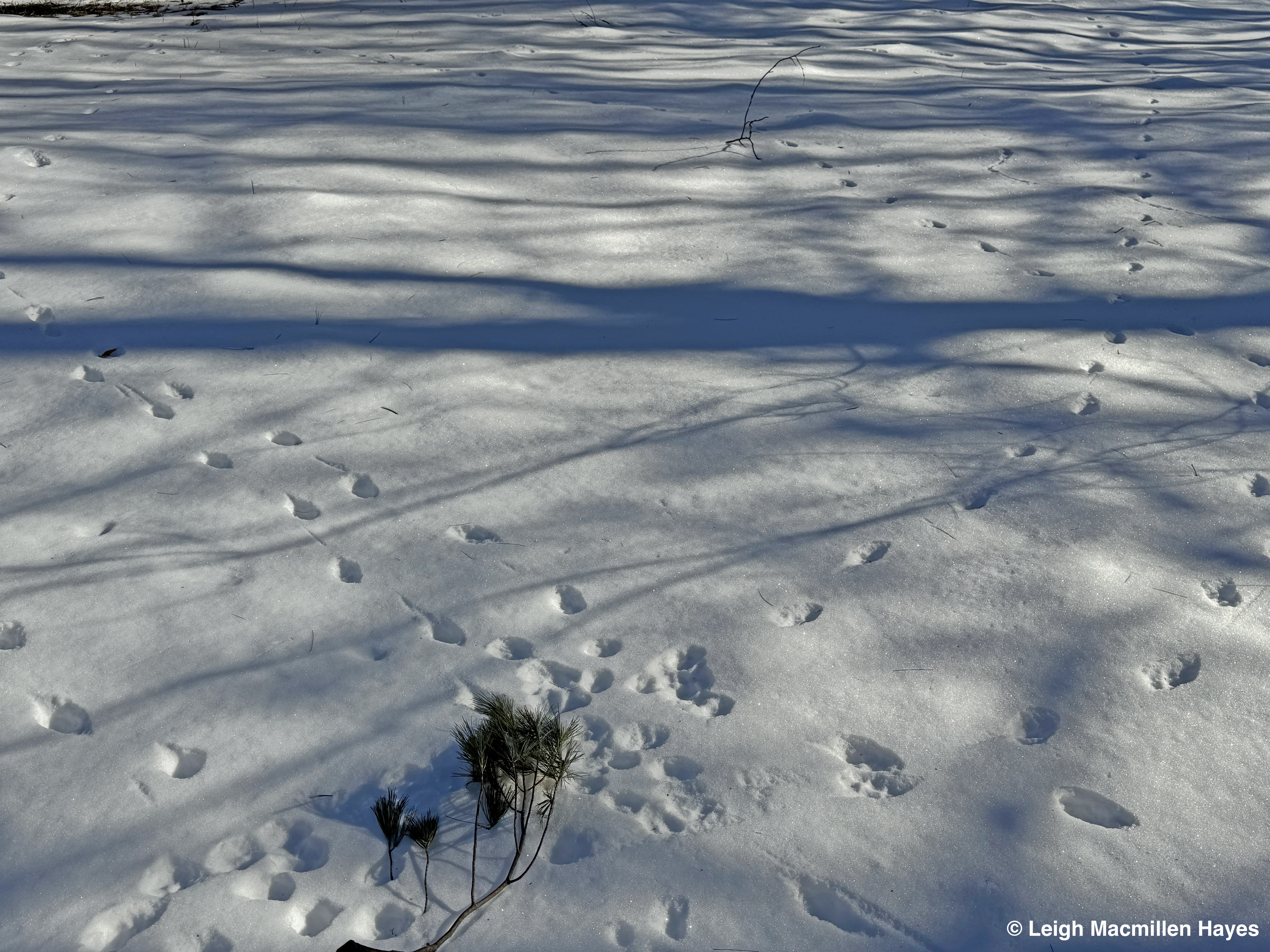
Apples were on the Fox’s menu and those that had been buried under the snow were excavated.

And because it is that time of year, I noticed something else going on in the midst of all the tracks.

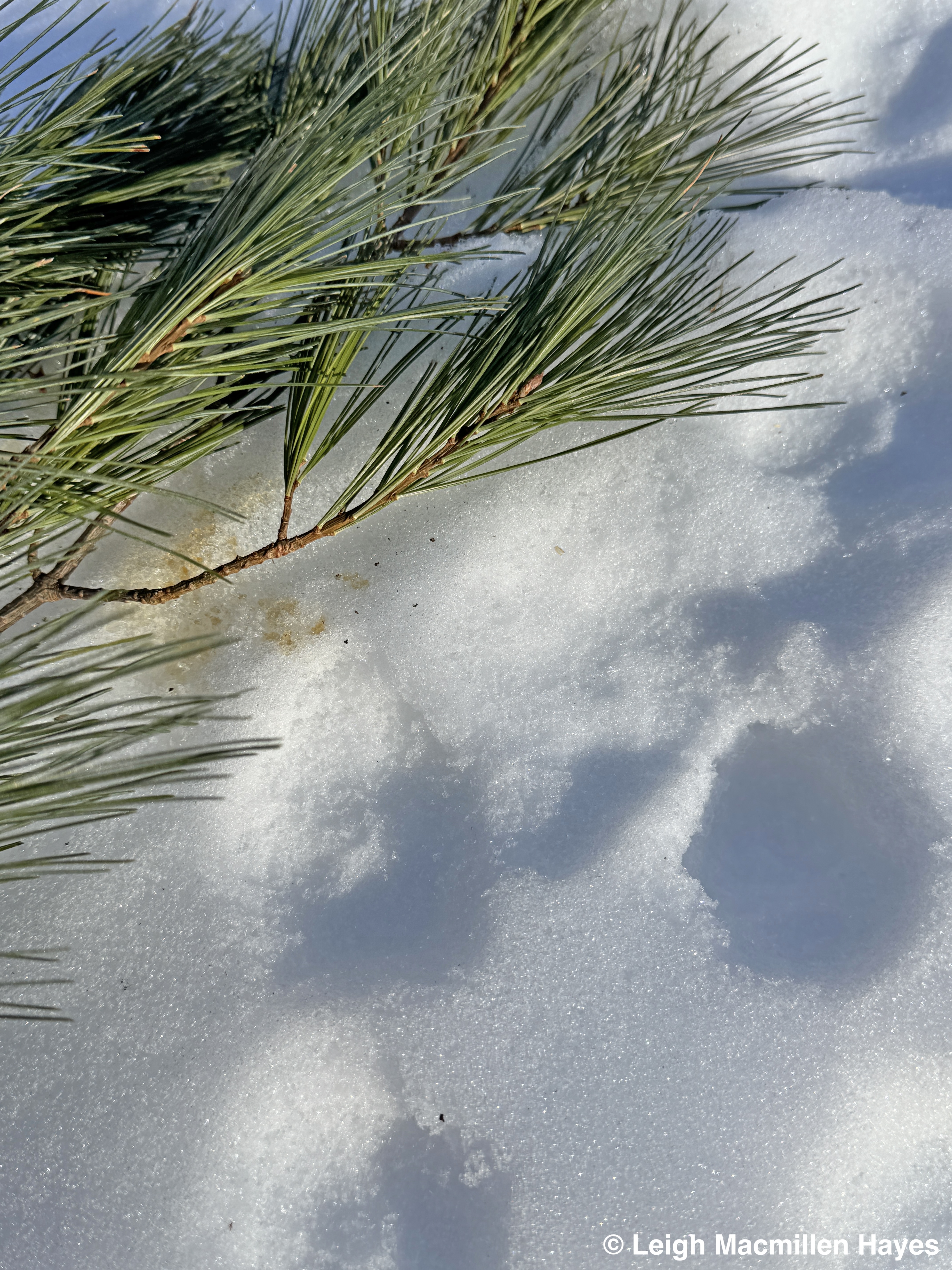
Do you see the downed White Pine branch?

Take a closer look and you’ll see urine. Fox pee. Male Fox pee.

Just yesterday I was hiking with a friend through her acreage and we found the same. Numerous Fox tracks and spots where the Fox had peed on saplings and anything else that poked out of the ground and snow. And so I invited her to get down on her knees and sniff it, just like a vixen would do.

Skunky!

She stood up smiling and it’s a smell she’ll never forget.

The Fox guys are leaving their messages everywhere to let the ladies know they are available for a date or two or three.

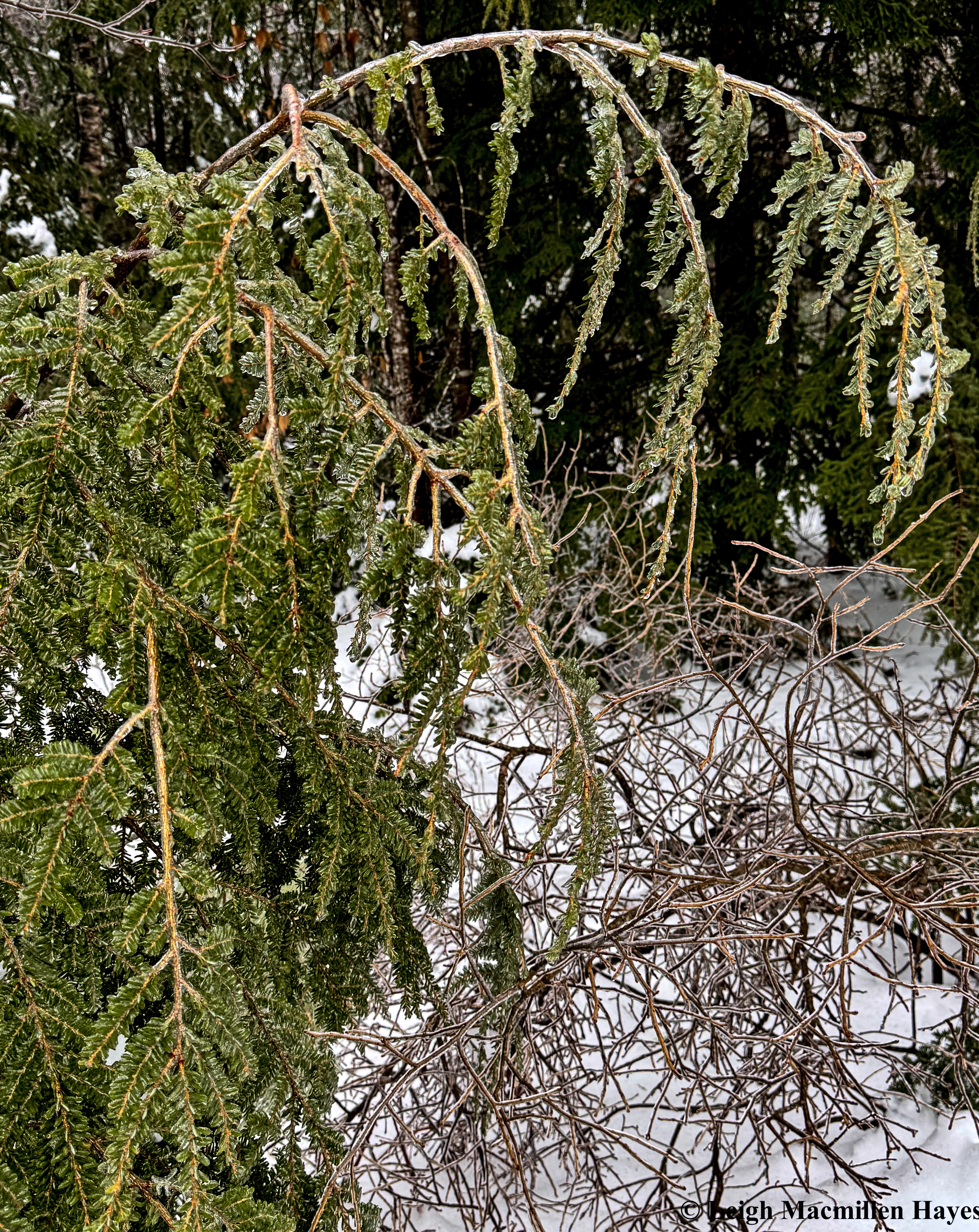
Speaking of yesterday, as we continued to hike, we spotted lots of Deer runs, well worn pathways through the woods. And then a spot where they seemed to browse a bit on downed Hemlock twigs.

But why were the twigs on top of the snow? I lifted one up and noted the 45˚ cut of it. The same on the next. And the next. And then we spotted the curved form of . . . Porcupine scat. Plus some pee.

We looked around and couldn’t find Porcupine tracks anywhere leading to or from the tree.

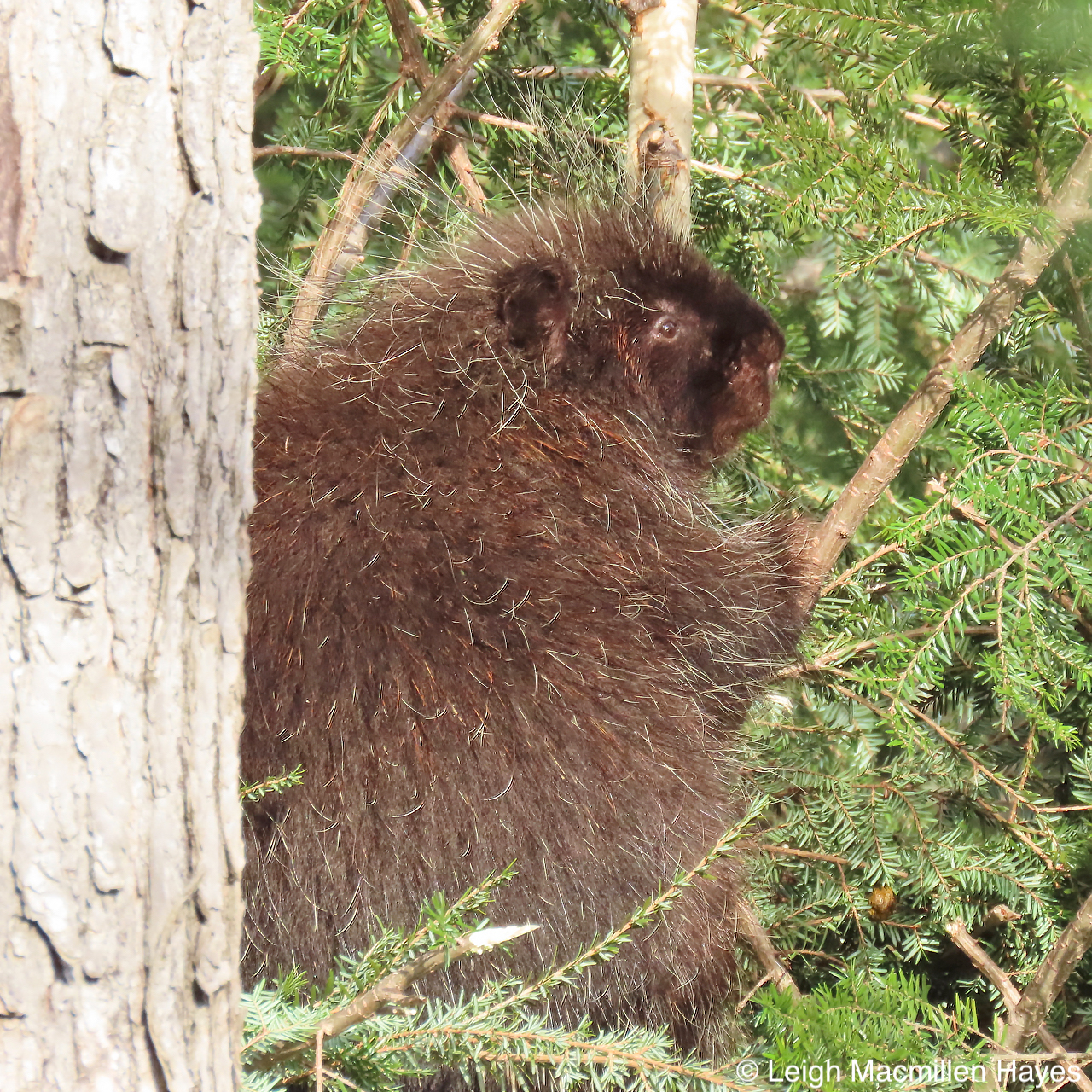
And so I looked up because that’s what I do whenever I’m under a supposed Porky tree. And low and behold, he was walking out on a branch high above us. We quickly moved away from the trunk and enjoyed the view from below, before continuing our tour.

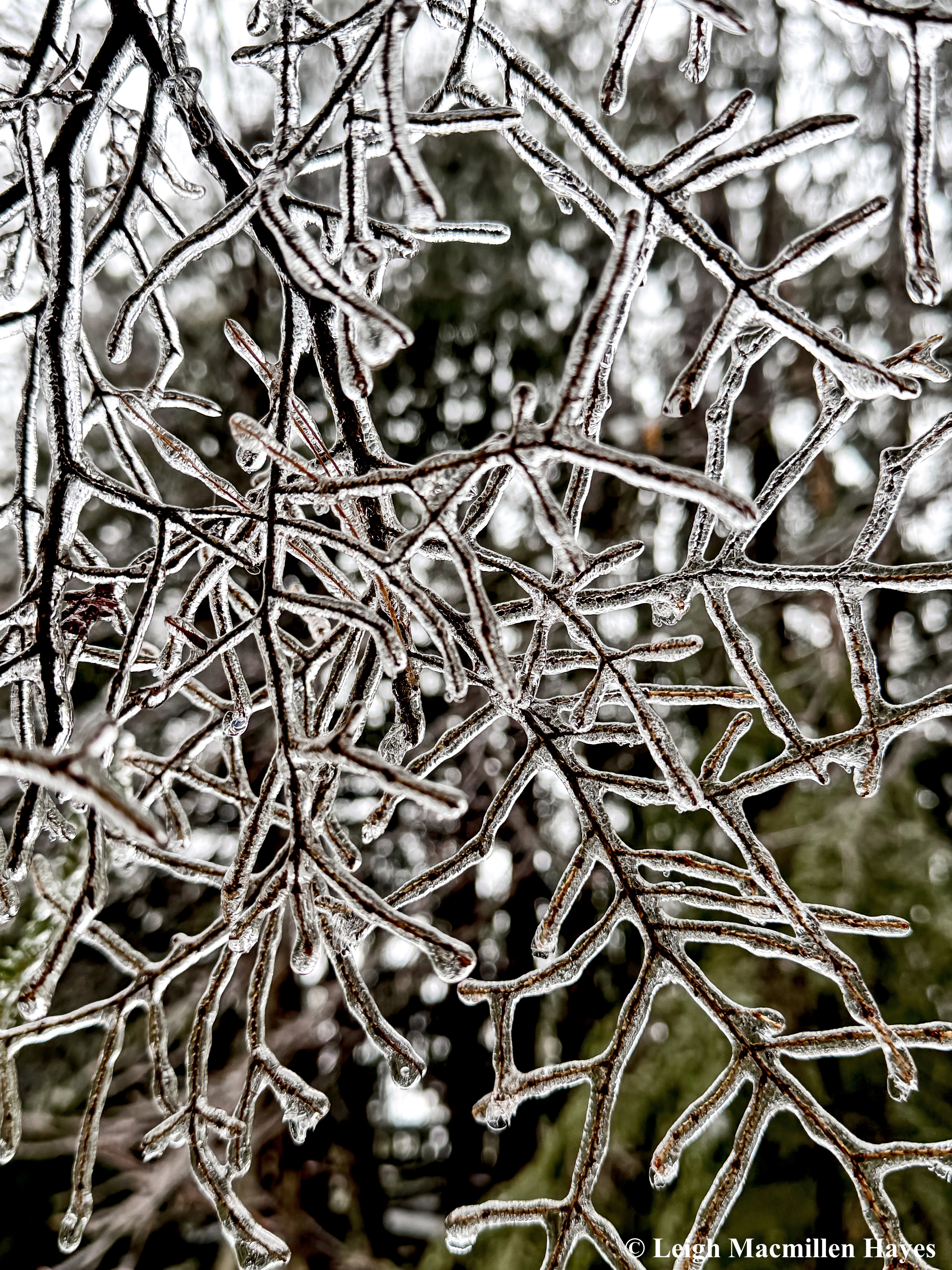
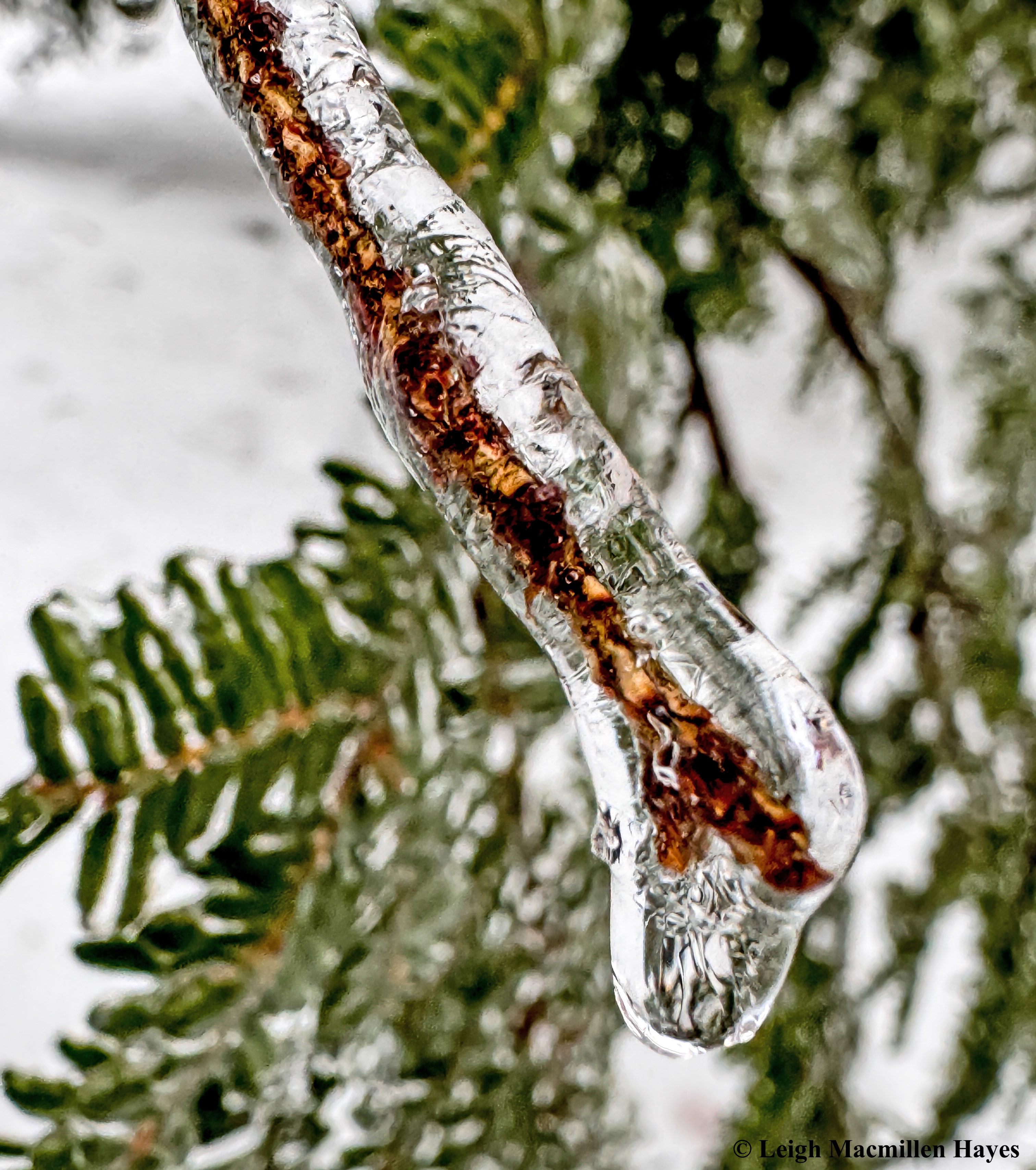
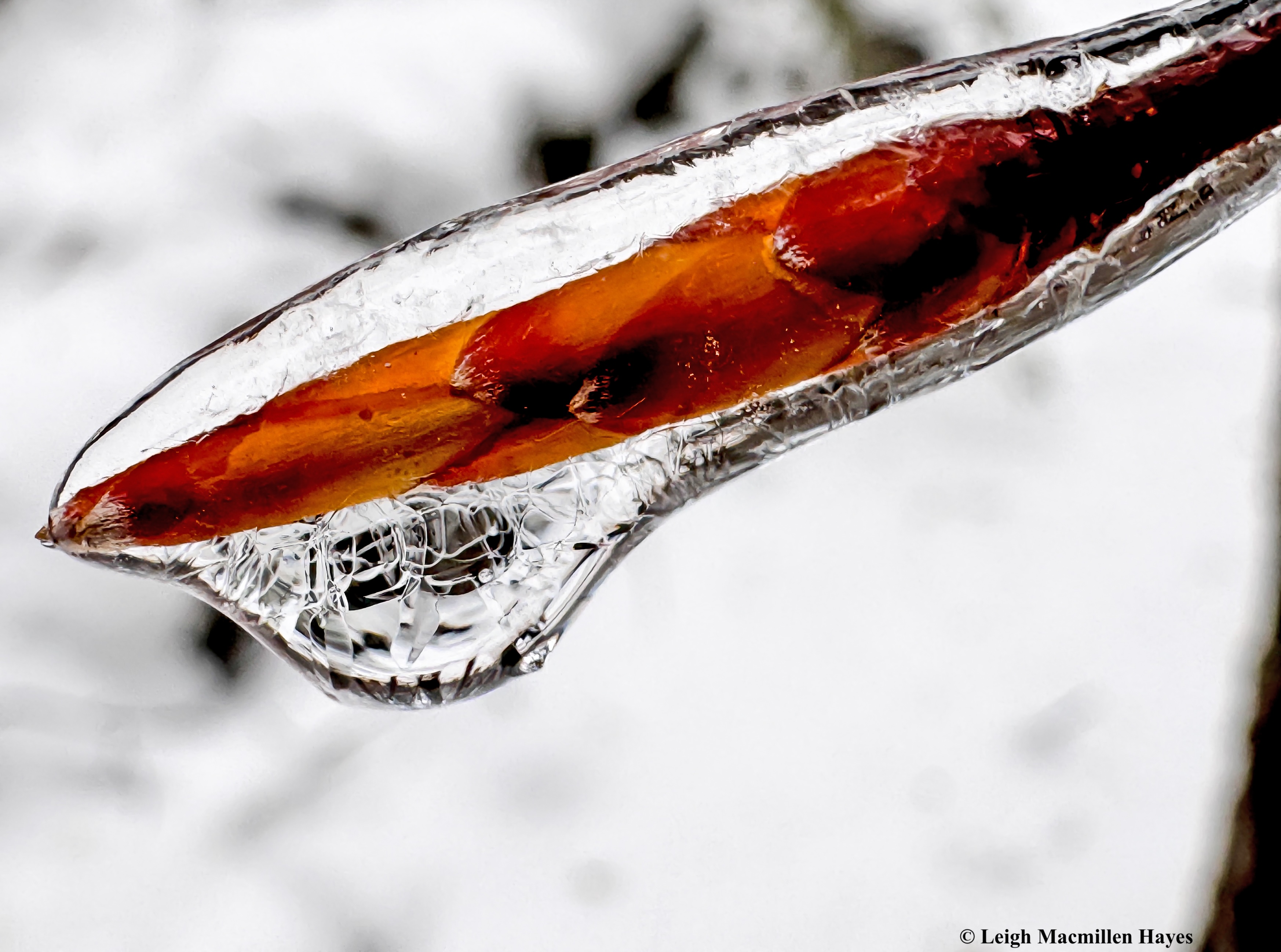
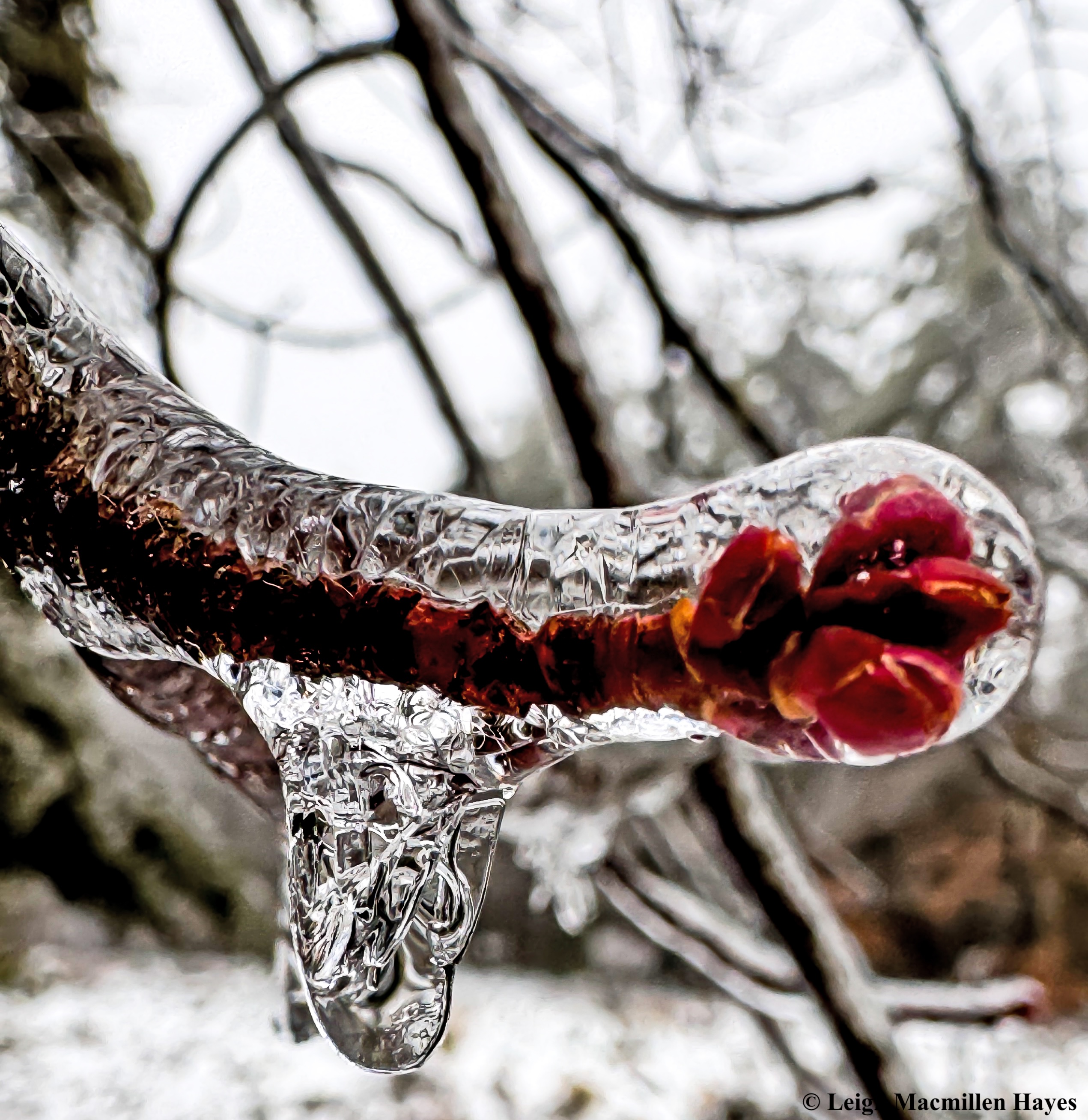
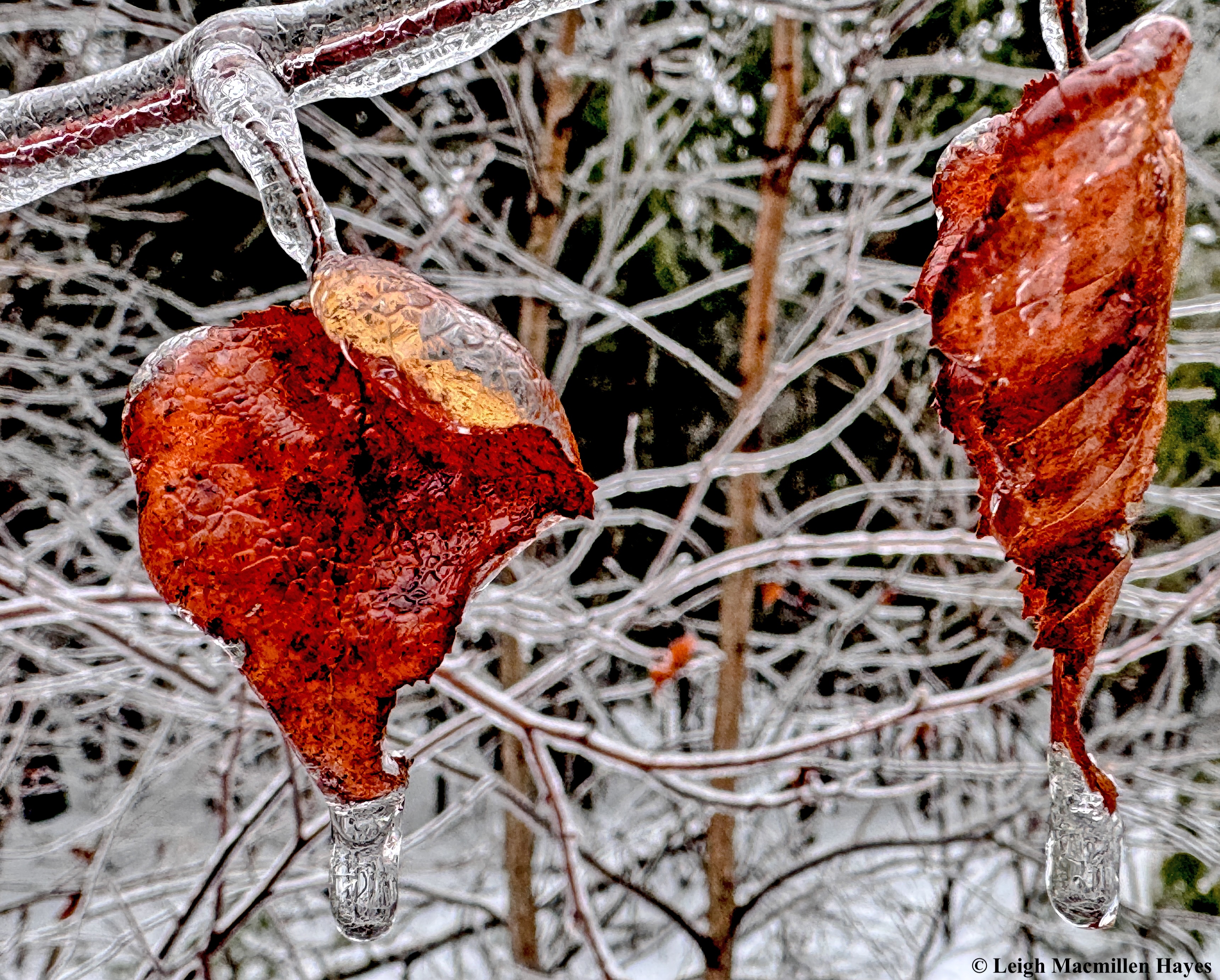
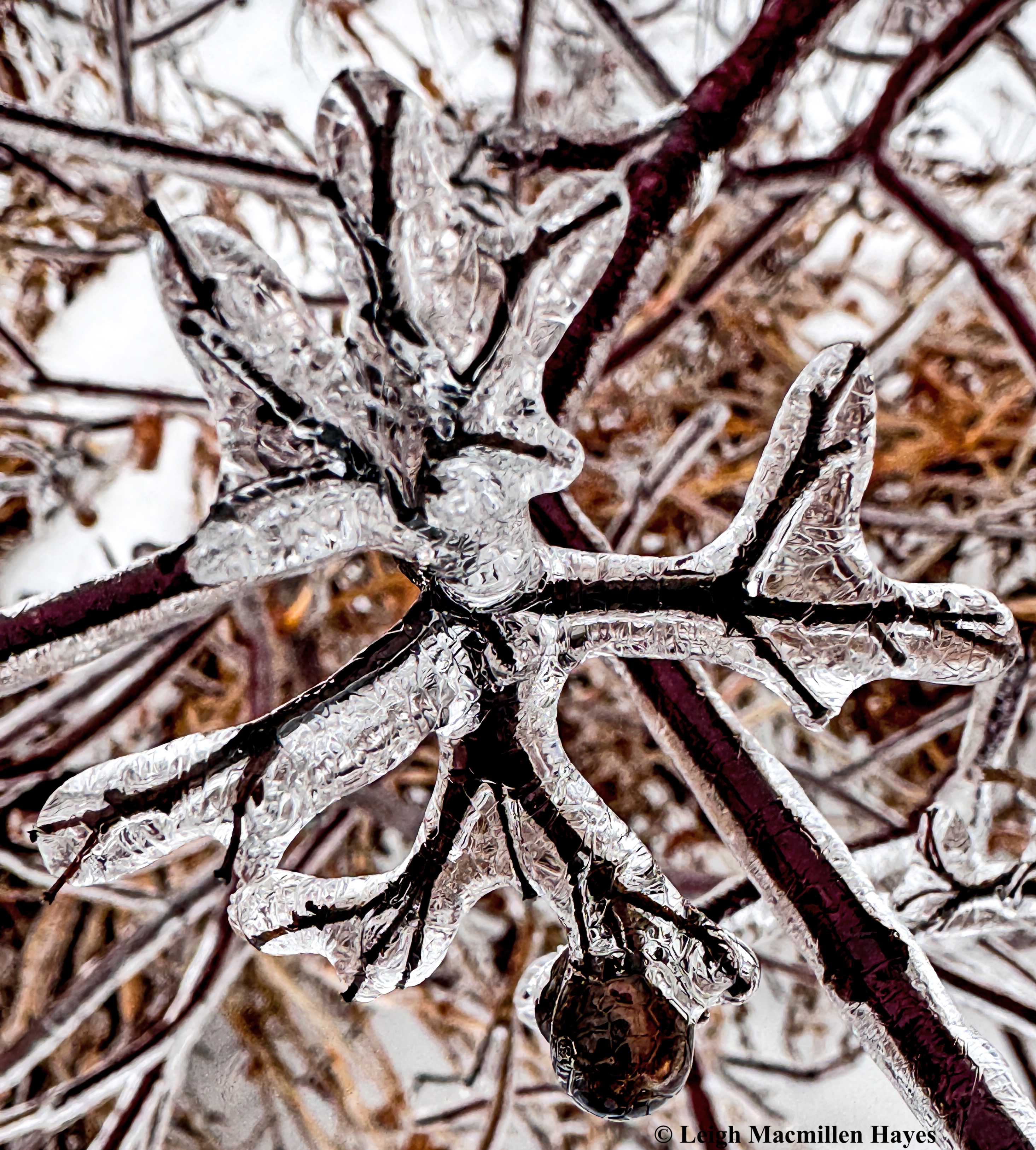
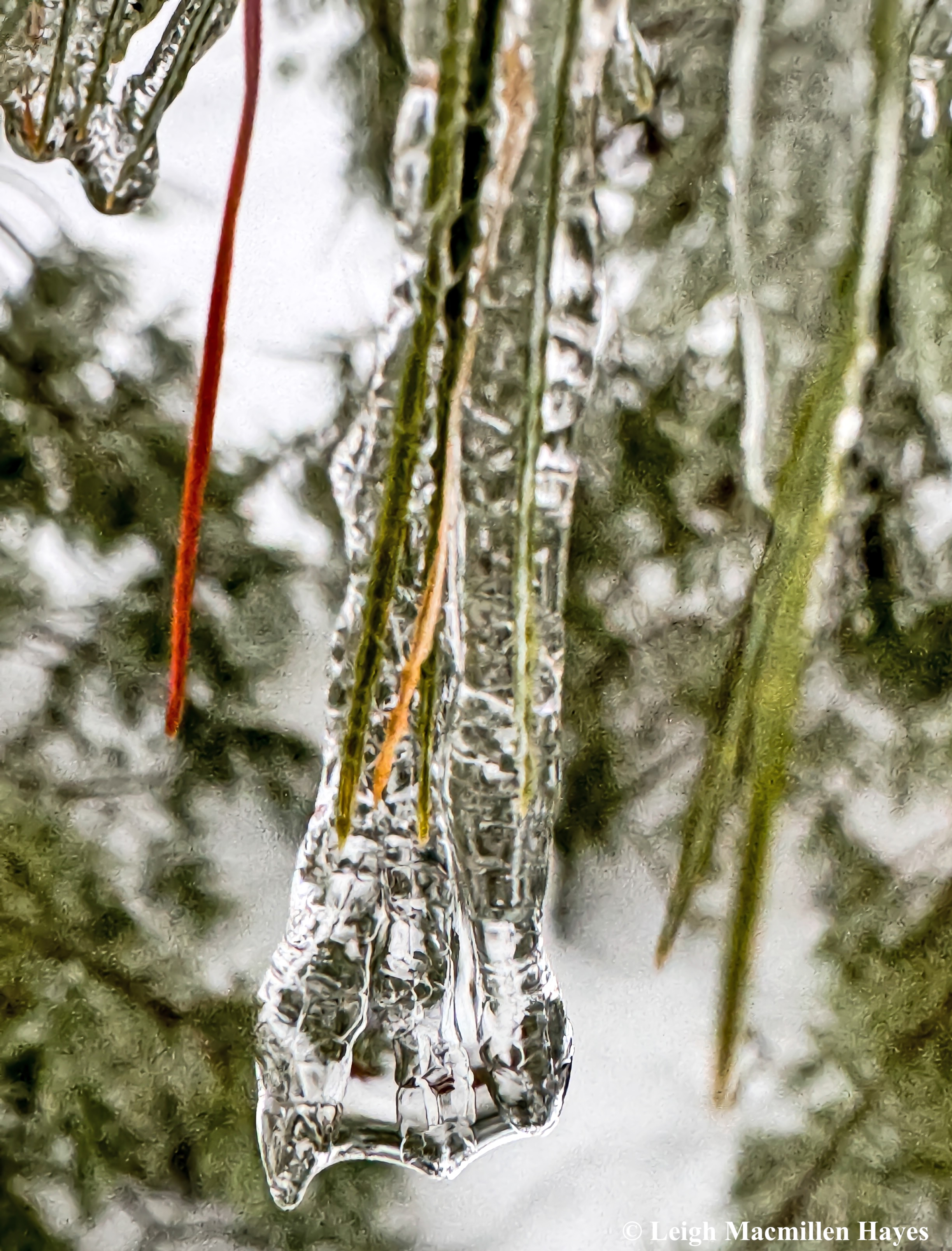
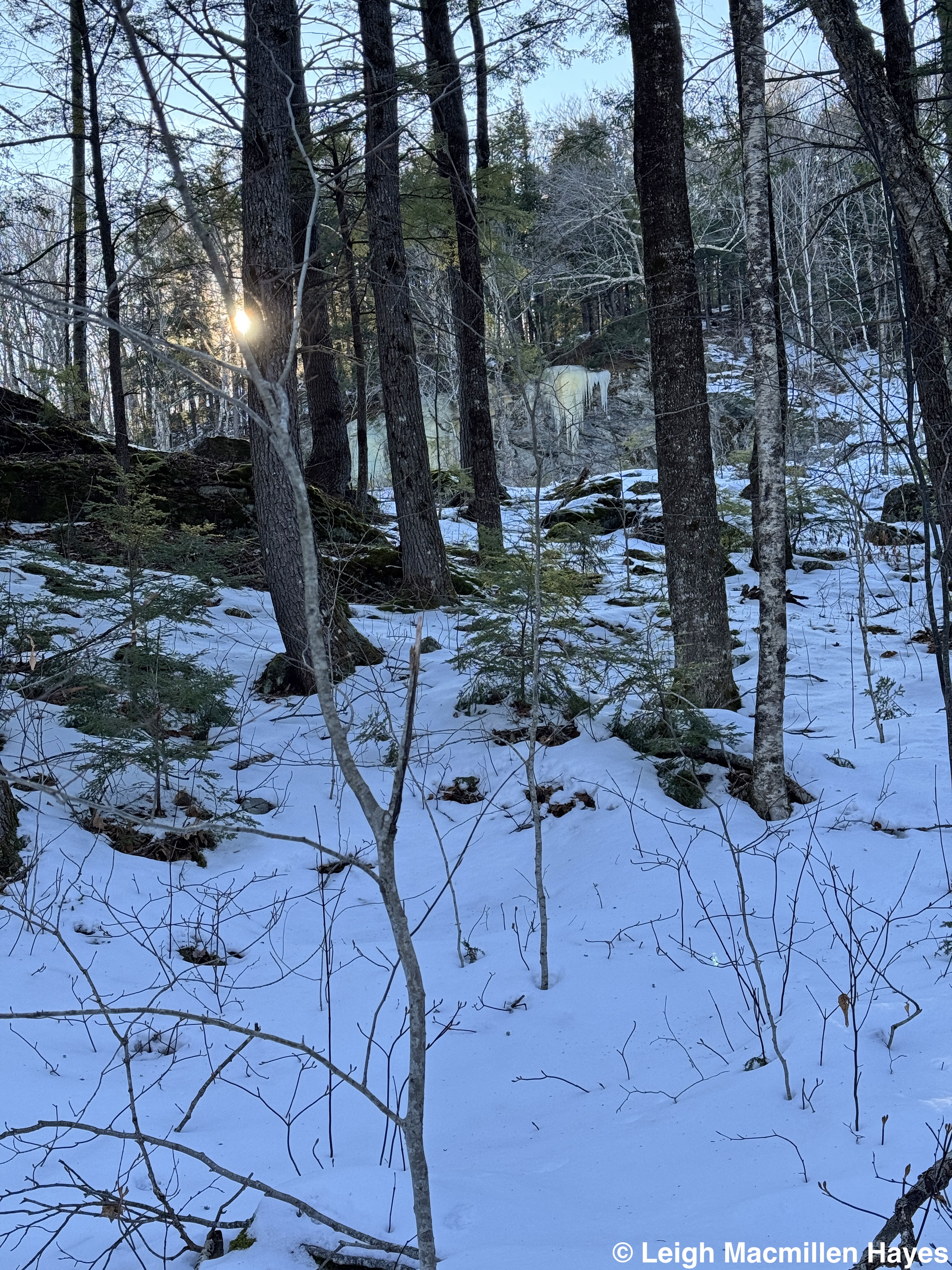
But I digressed and so I looked skyward today and noticed ice dangling from the cliffs above–prickly in nature, much like yesterday’s Porcupine, but beautiful all the same.

And down low, we noted a good crossing point in case we needed it because last year we arrived at this brook from the opposite direction and discovered the bridge had been washed to the opposite shore during a storm and we had to find our way across with snowshoes on our boots. We wanted to be prepared today.

Much to our dismay and surprise, the bridge hadn’t been repaired, but fortunately the brook was iced over in this section and we decided to run across in hopes of making it safely to the other side.

Success.

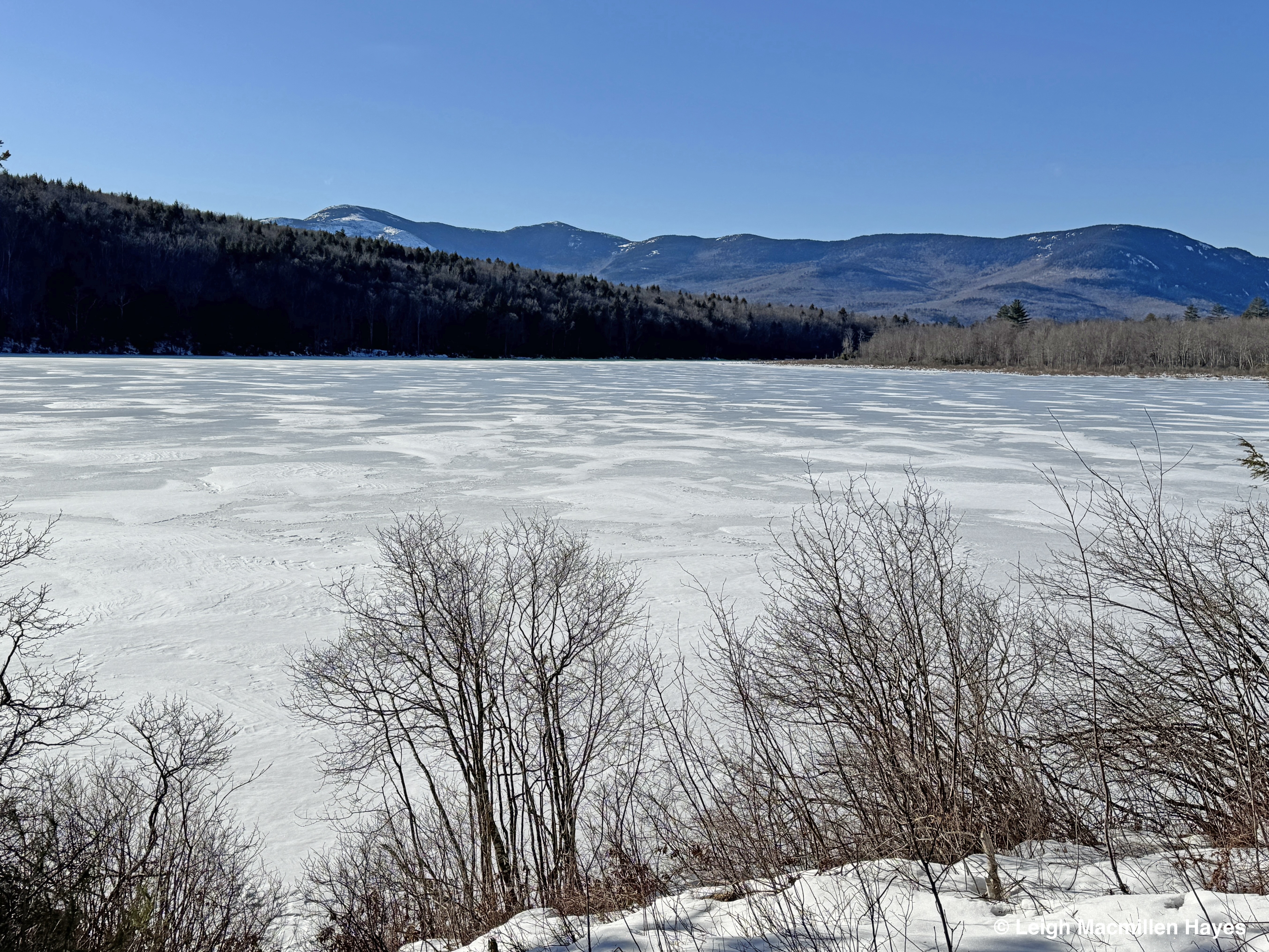
A bit farther on and we reached the lookout point for the pond we were circling, with the mountains of Evans Notch forming the backdrop. It looked like a perfect skating rink.

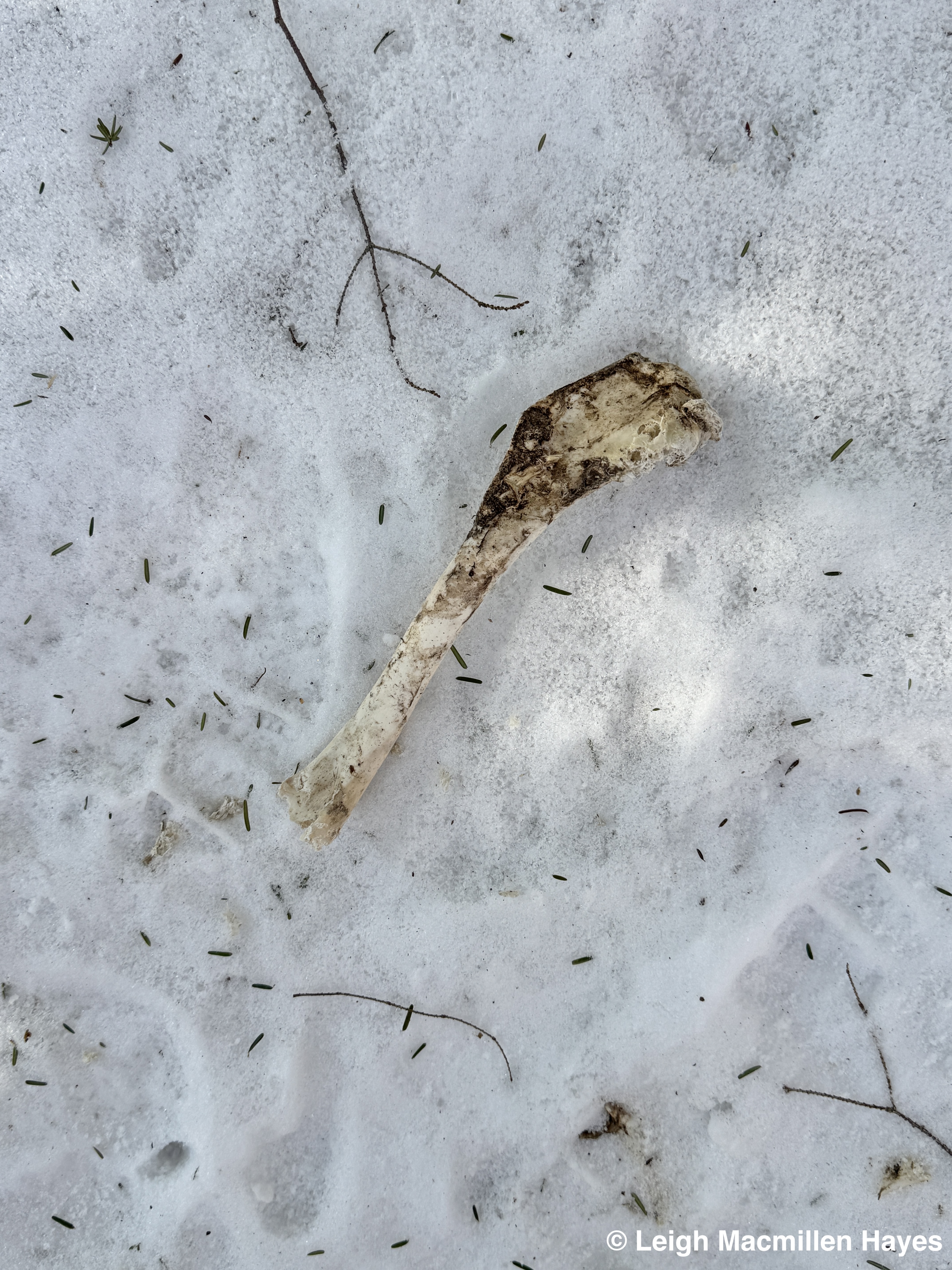
Fox tracks and Coyote tracks continued to mark the way for us and at one spot we saw a few deer bones. I really wanted to look for more evidence of what happened, but time wasn’t on our side.

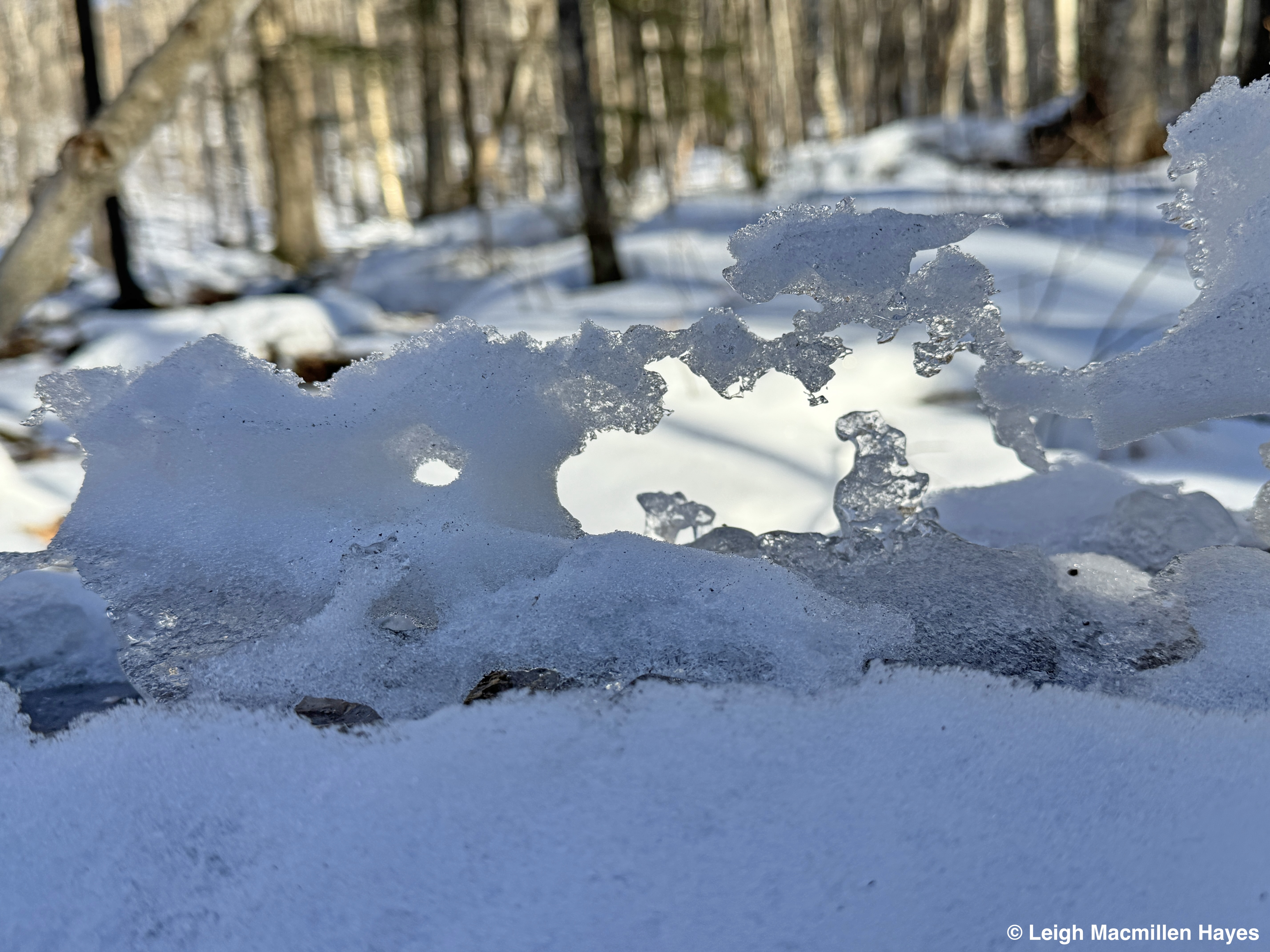
Instead, I paused only briefly to admire how the snow and ice danced across a fallen log.
Admired an old friend who watches all who pass this way.
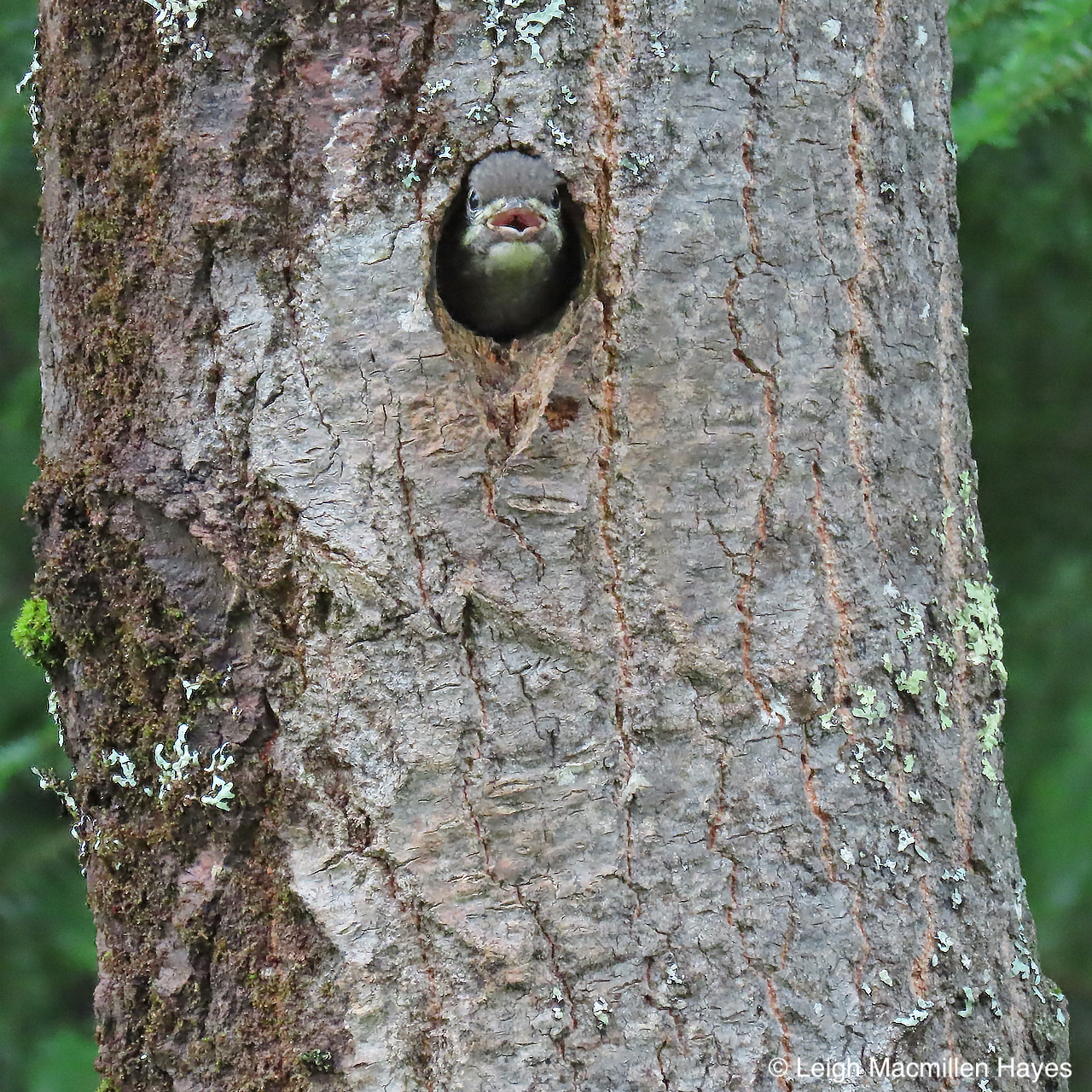
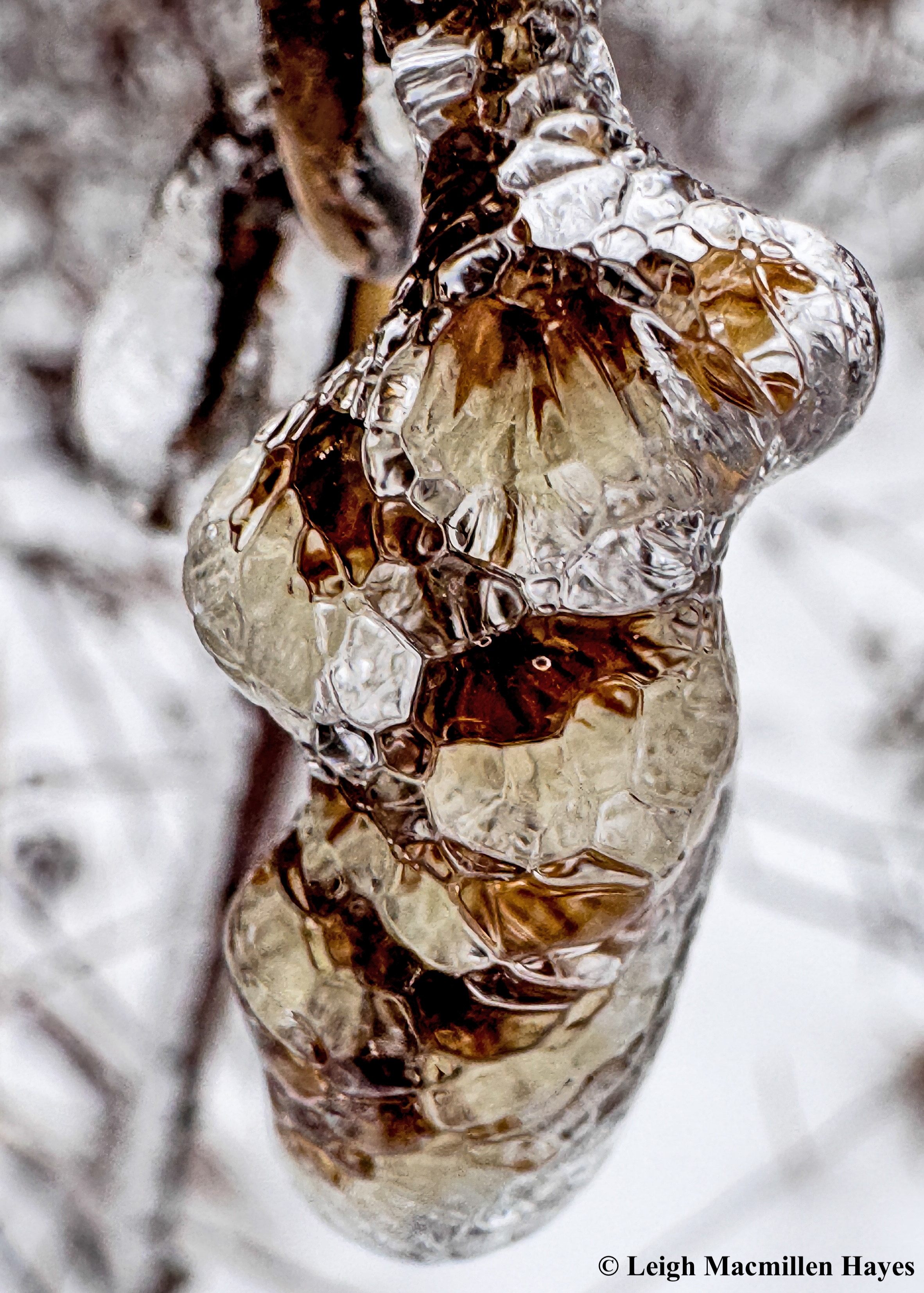
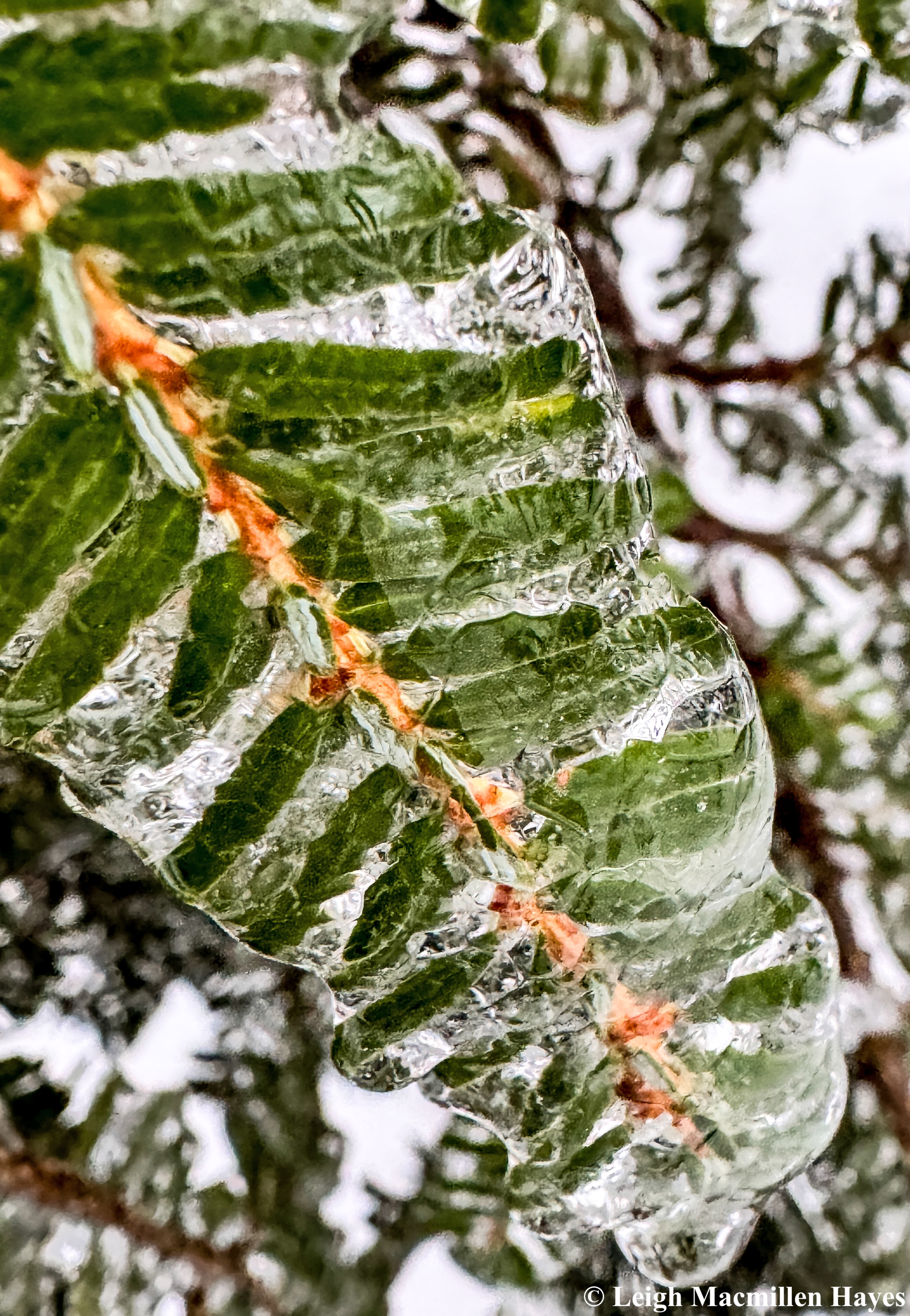
And noticed more colorful ice dripping off a ledge as the sun dipped lower in the sky.

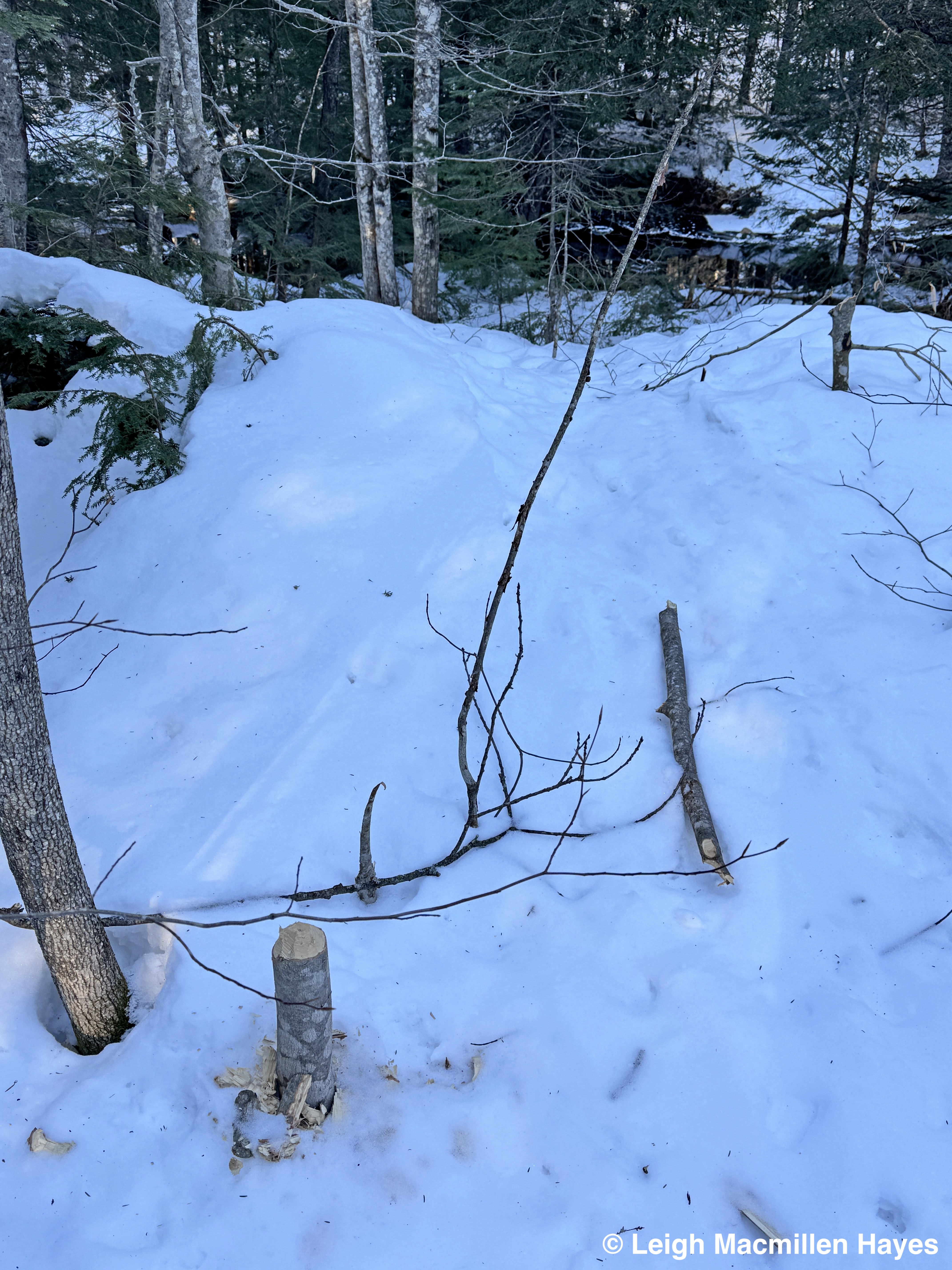
And then, much to my surprise, some Beaver works right beside the trail.

There were more and they were rather fresh and there was a trail to the water and so I asked My Guy if he’d mind if I checked out the activity for a moment.

He did what he always graciously does when I ask such, and found a rock to sit upon and patiently wait.

At the water’s edge, I found more signs of the Beaver’s activity, including gnaws on a much larger trunk, and a pile of chew sticks. Did the Beaver sit here to dine? Perhaps. The water was open, so he didn’t have to eat under the ice.

On the way back up the hill to meet My Guy on the edge of the trail, I smiled at the sight of another Beaver tree, that showed how the Beaver, like the Bear, turns its head to scrape the bark and get at the cambium layer.

Funny thing about this one, possibly a previous generation of this Beaver’s family had visited the same tree, as evidence by its graying top that had been cut at least a few years ago and had started to stump sprout.

We had one more bridge crossing to make before heading back to the telephone-poled road, this time with ice and open water to view.

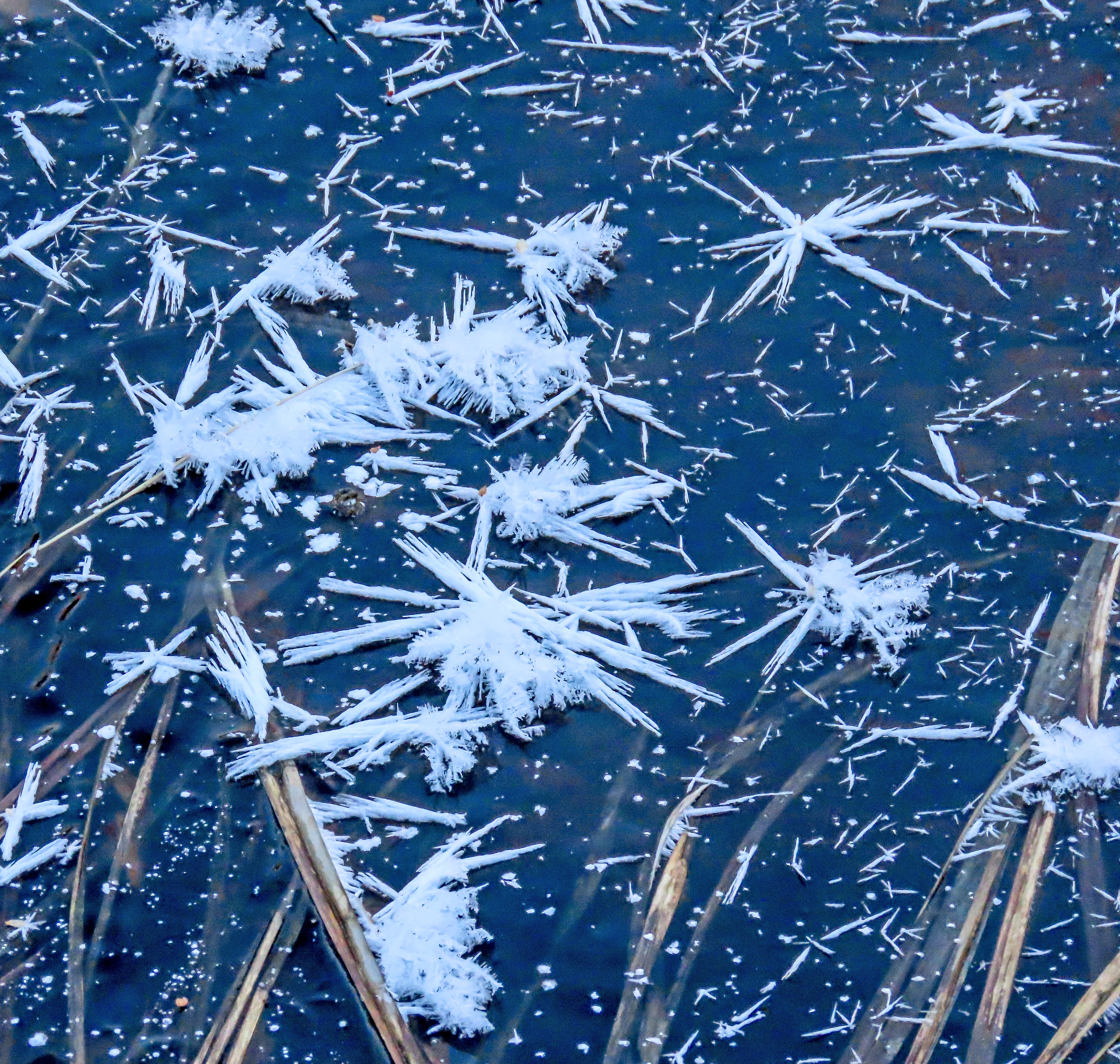
And clumps of stars fashioned upon the ice that reflected the sky.

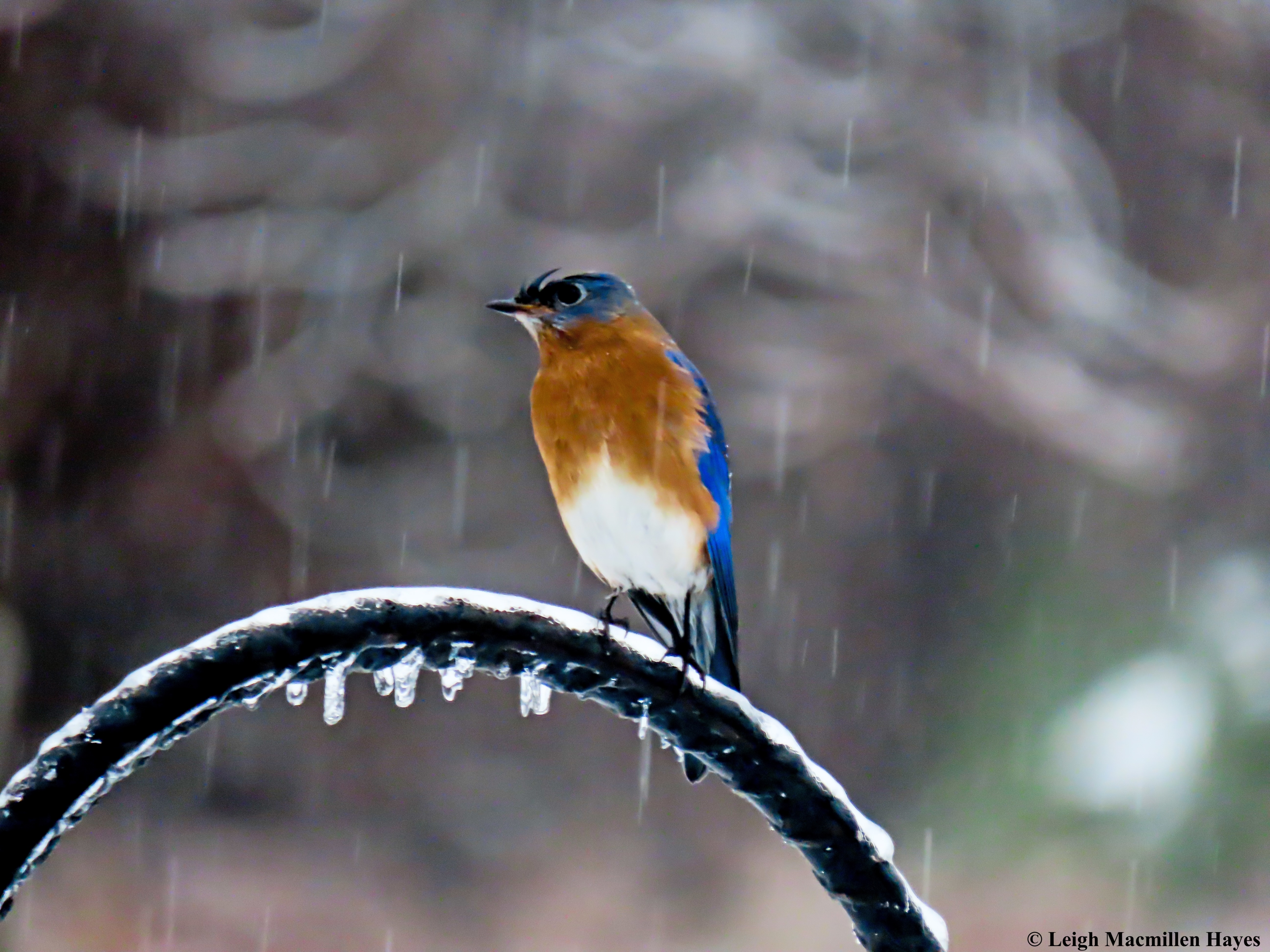
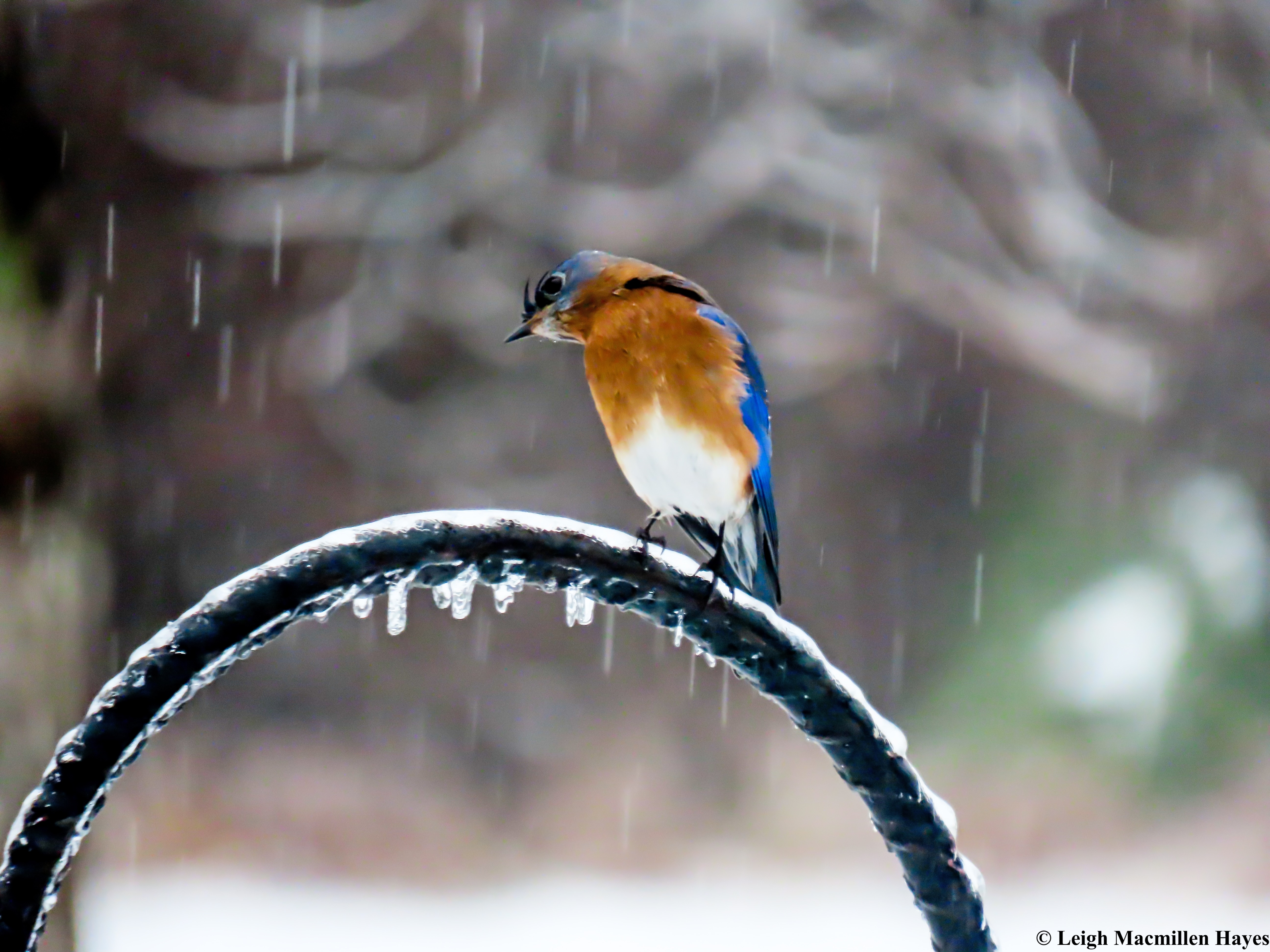
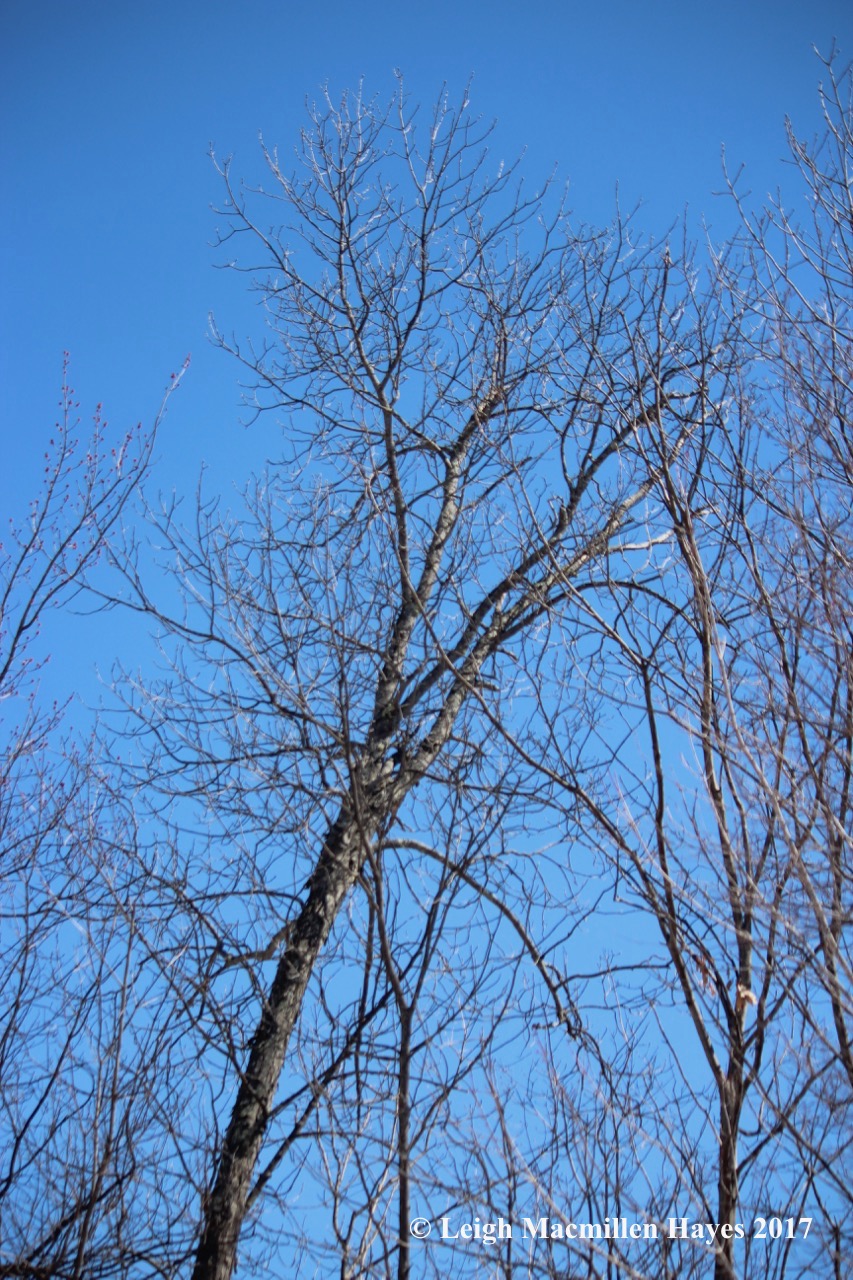
To say it was a Bluebird day is trite. But truly it was with the sky matching the bird’s plumage.

And on the way out, while I looked at another telephone pole, My Guy saw a Coyote run across the road. A minute later and I spotted a second one headed north as well.

Dancing Vole. Fox dates. Beaver works. Icy art. Coyotes hunting. The first and last were alleged since we don’t have photographs to prove our sightings, but My Guy assured me that since the two of us saw them, they actually happened.

Bluebird days are indeed the best days.

Happy 9th Birthday, wondermyway!

Thank you to all who read and comment and share wondermyway.com. Some of you have followed my blog posts since the beginning, February 21, 2015. A few have joined the journey as recently as yesterday. I’m grateful for the presence of all of you in my life.

To mark this occasion, I thought I’d reflect upon those moments when my wonder gave me a glimpse of the “Thin Places” that I’ve experienced either by myself or in the company of others.

To quote my friend, Ev Lennon, “A Thin Place is a spot of beauty, loveliness, space–an example of the wideness and grandeur of Creation.”

I think of them as places that you don’t plan a trip to visit, but rather . . . stumble upon.

I had
the track of
a bobcat to thank,
for it showed me the way
to a special friend.
It was without expectation 
that we met
and spent at least
an hour together.
And then I realized
though its sight is not great,
it was aware of my presence
and I hightailed it home,
but I will always
celebrate time spent
with the Prickly Porcupine.
Something quite small
scurrying across the snow
captured my attention
and suddenly
there was a second
and a third
and then hundreds
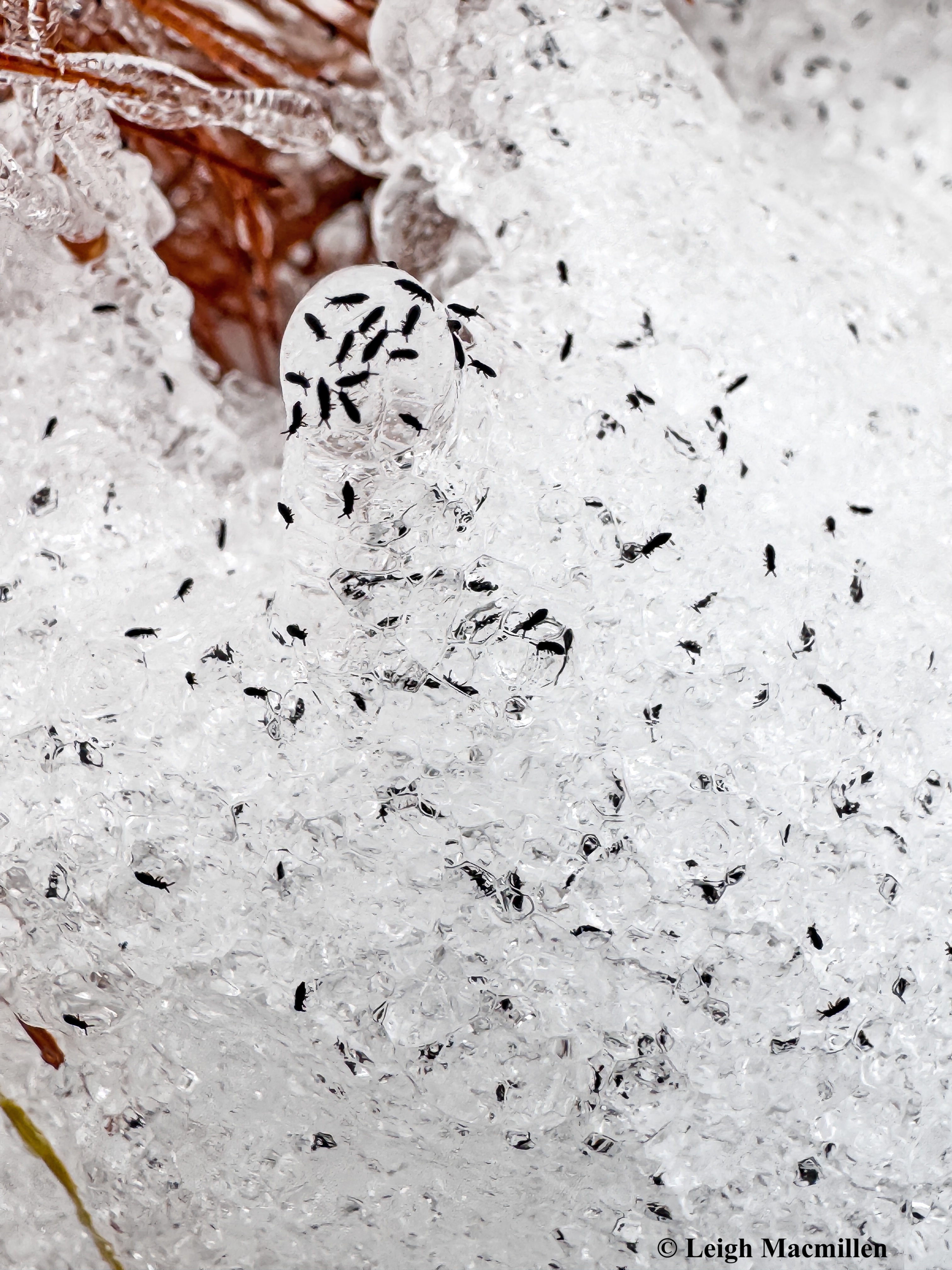
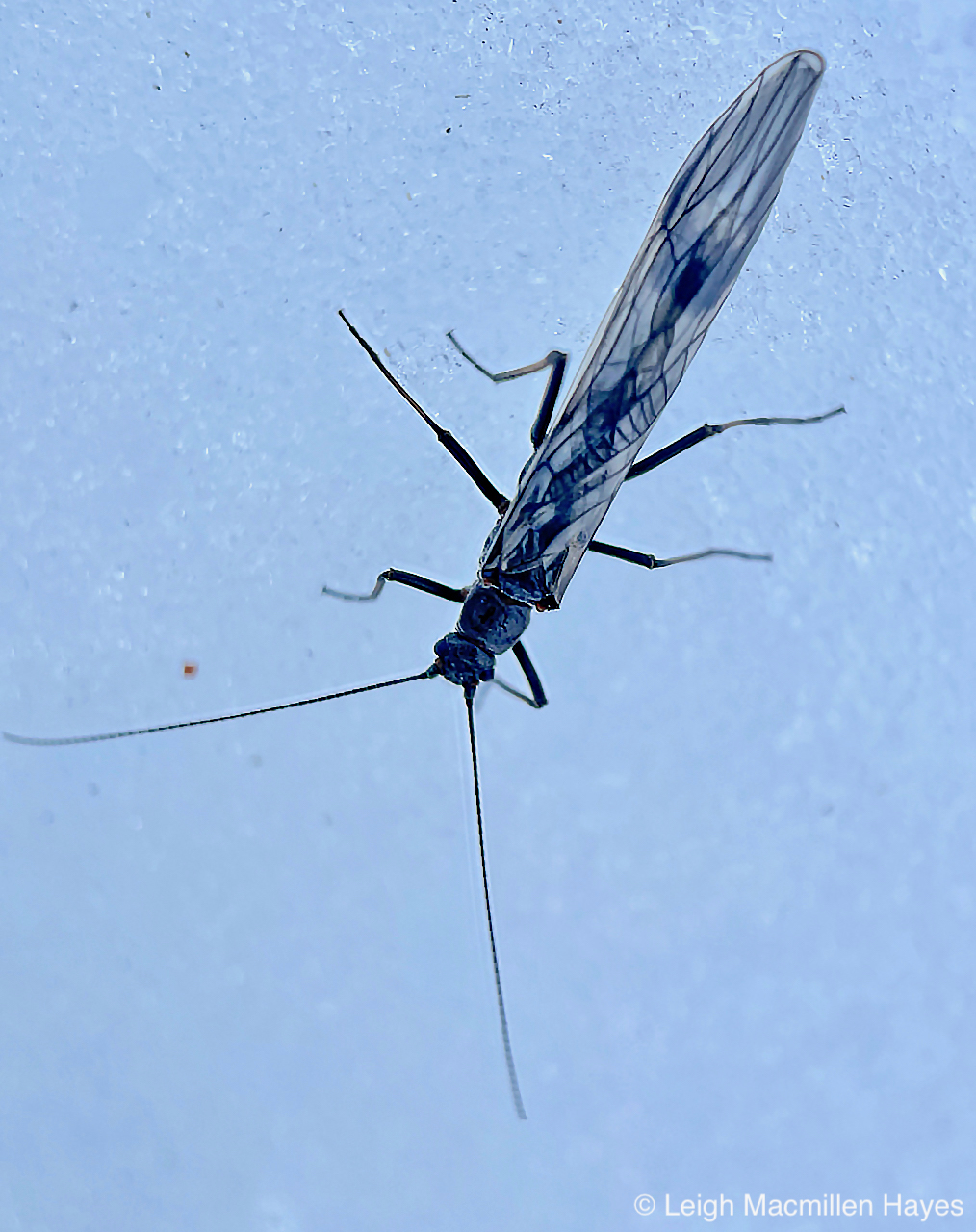
of Winter Stoneflies.
All headed west from the brook
toward mature tree trunks
to beat their drum-like structures
against the bark
and announce their intentions to canoodle.
Though I could not hear
their percussion instruments,
I am grateful
to learn
with those who
march to the beat of a different drummer.
Standing beside quiet water,
I was honored
on more than one occasion
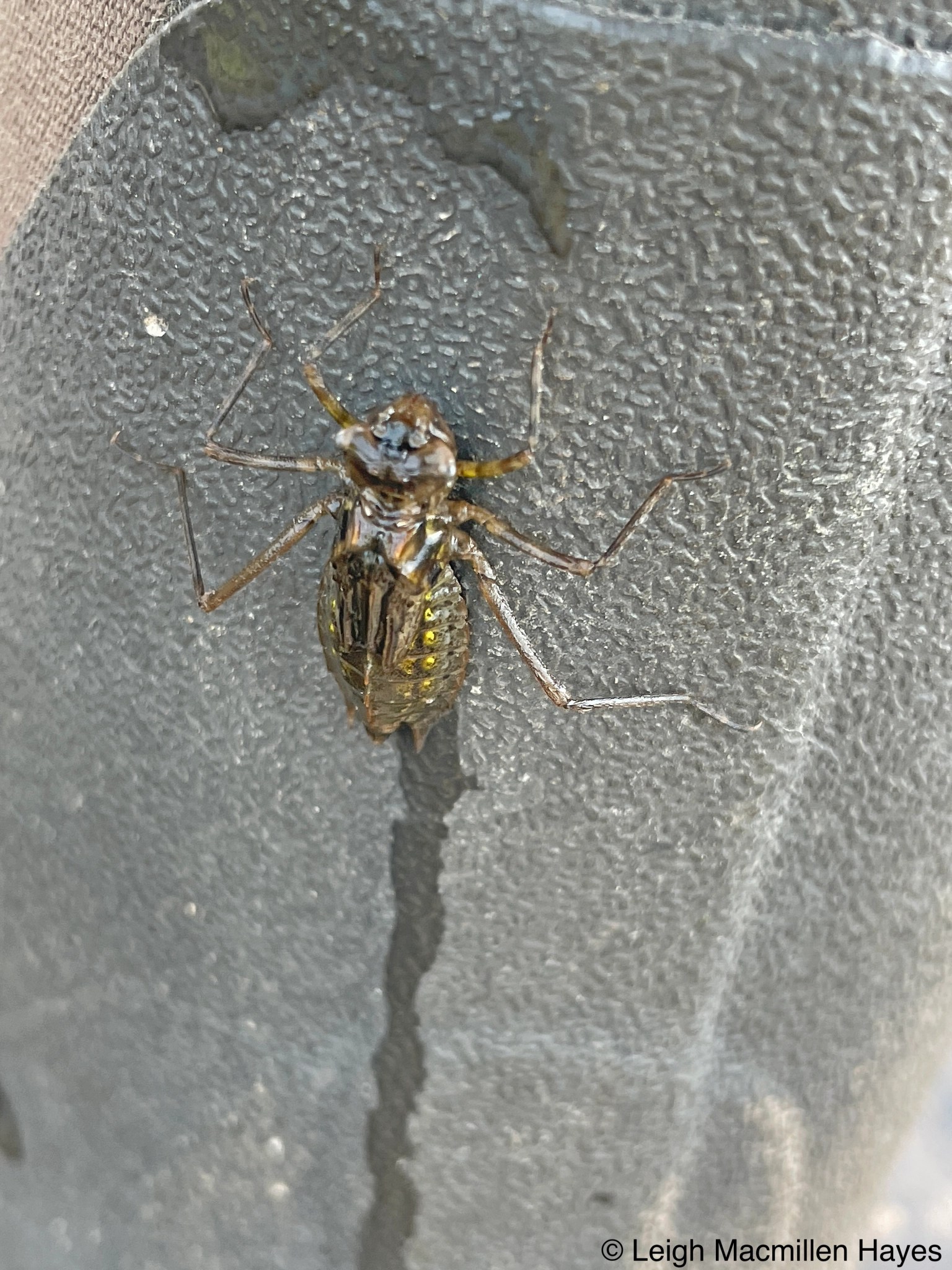
to have my boot and pant legs
considered the right substrate
upon which to transform
from aquatic predator
to teneral land prey
before becoming
a terrestrial flying predator.
It takes hours
for the dragonfly to emerge
and I can't think of a better way
to spend a spring day
than to stand witness
as the mystery unfolds
and I begin to
develop my dragonfly eyes
once again.
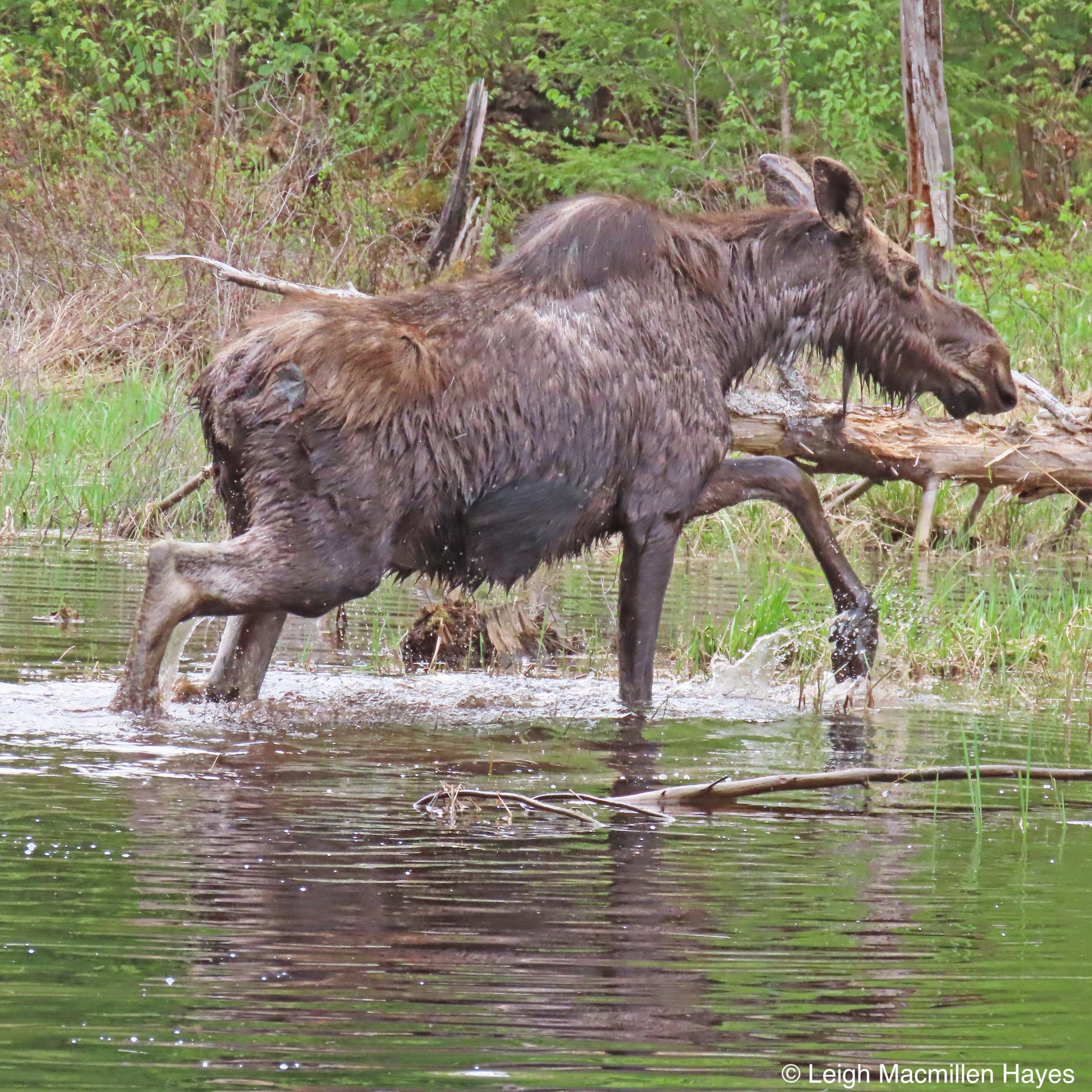
It took me a second 
to realize that I was
staring into the eyes
of a moose,
and another second
to silently alert My Guy
while grabbing my camera.
She tip-toed off
as we relished our time
spent in her presence
and at the end of the day
had this Final Count
on a Moosed-up Mondate:
Painted Trillium 59
Red Trillium 3
Cow Moose 1
One was certainly enough!
Some of the best hours
I spend outdoors
include scanning
Great Blue Heron rookeries
to count adults and chicks
and get lost in the
sights and sounds
of rich and diverse wetlands.
Fluffy little balls
pop up occasionally
in the nests and the
let their presence be known
as they squawk
feverishly for food.
And in the mix of it all
Nature Distraction
causes a diversion of attention
when one swimming by
is first mistaken for a Beaver
but reveals its tail
and morphs into a Muskrat.
I give thanks to the Herons for these moments.
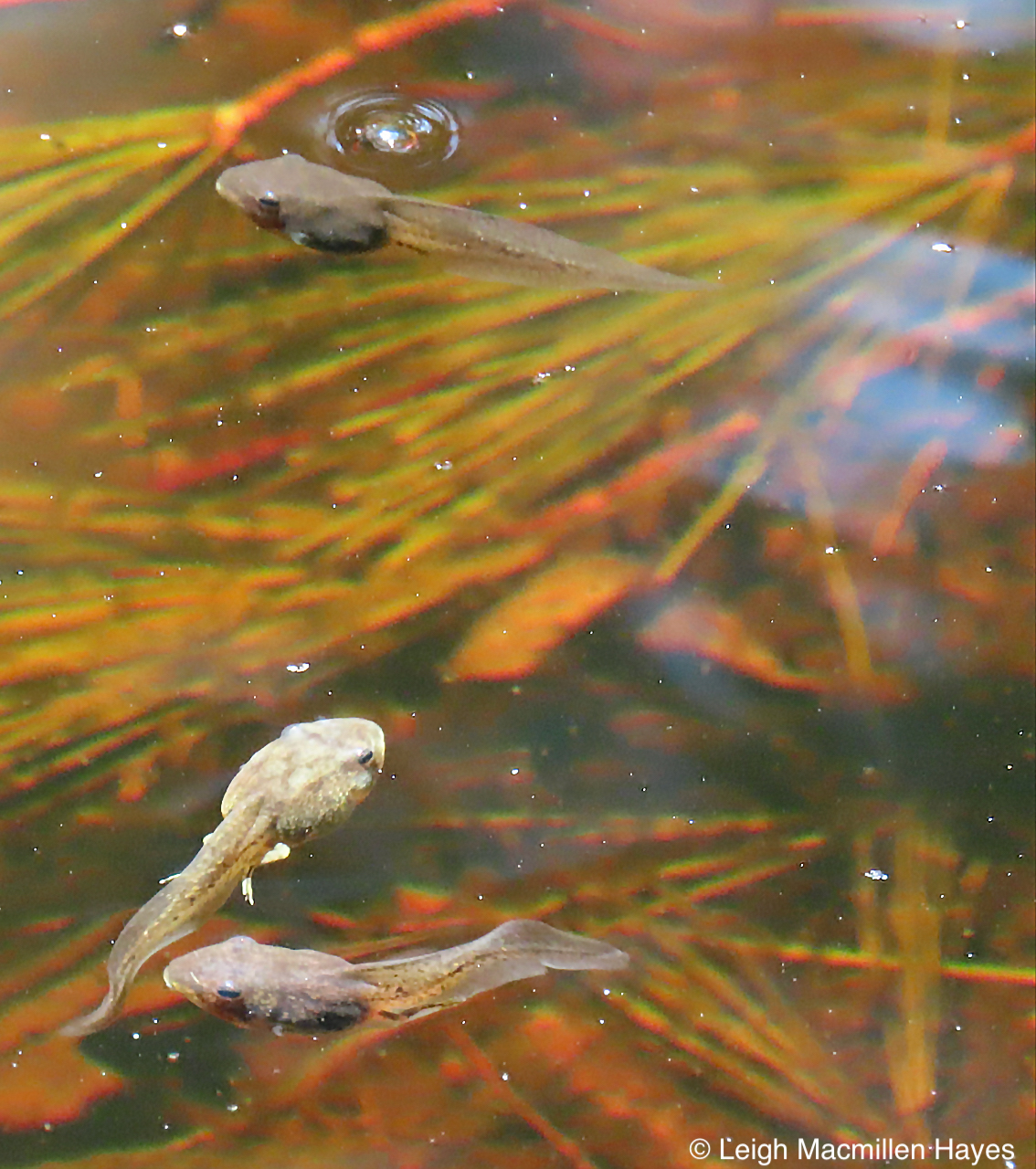
What began as a "Wruck, Wruck" love affair
continued
for longer than usual
and due to
a rainy spring and summer
I was treated to a surprise
in the form of developing frog legs.
In the midst of my visits
one day I heard
the insistent peeps
of Yellow-bellied Sapsucker chicks
demanding a meal on wings,
which their parents
repeatedly provided.
Walking home 
from the pool
another day,
I was honored
to spend about ten minutes
with a fawn,
each of us curious
about the other
until it occurred to me
that its mother
was probably nearby
waiting for me to move on,
so reluctantly I did,
but first gave thanks
that something is always happening
right outside my backdoor.
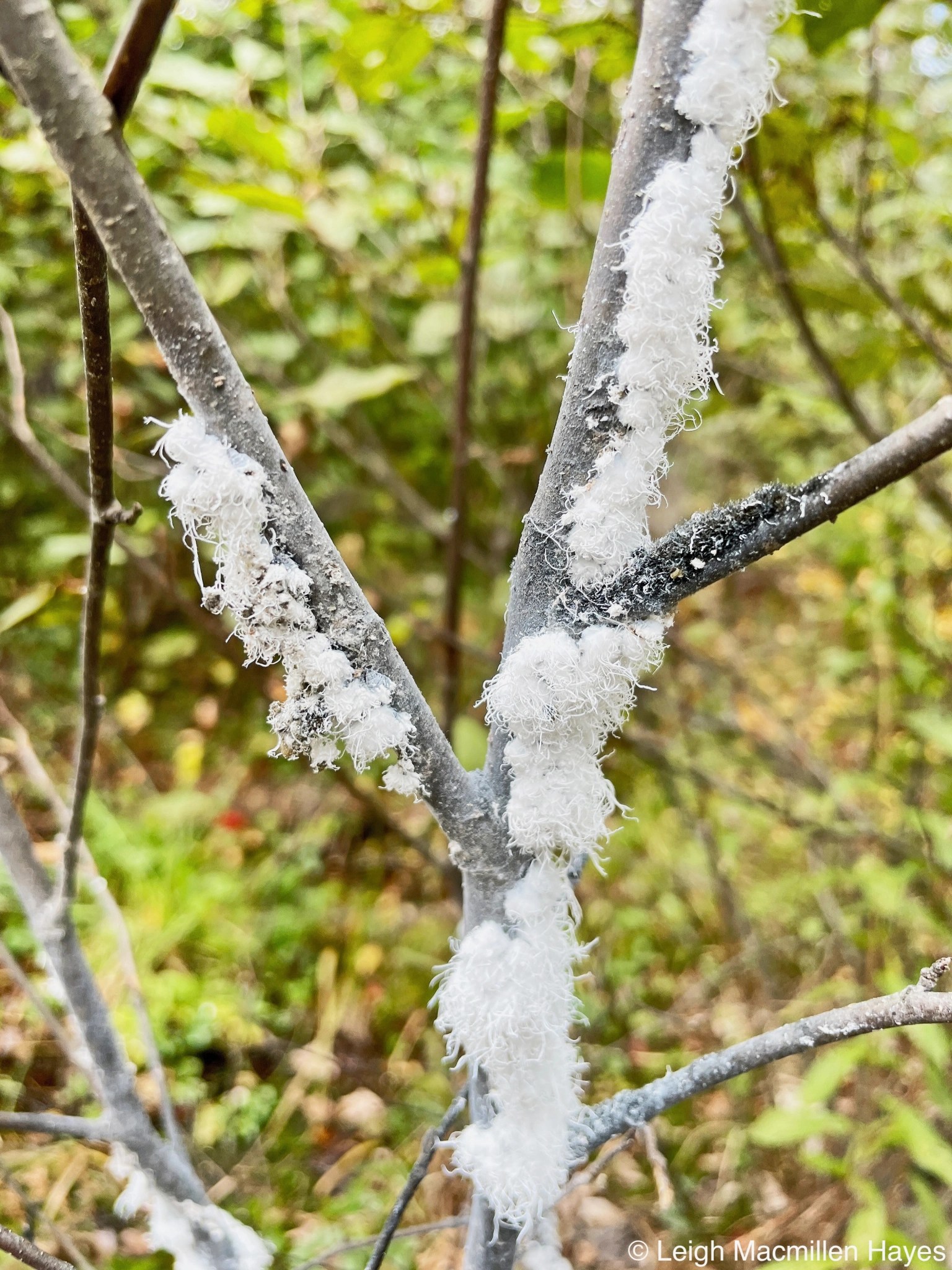
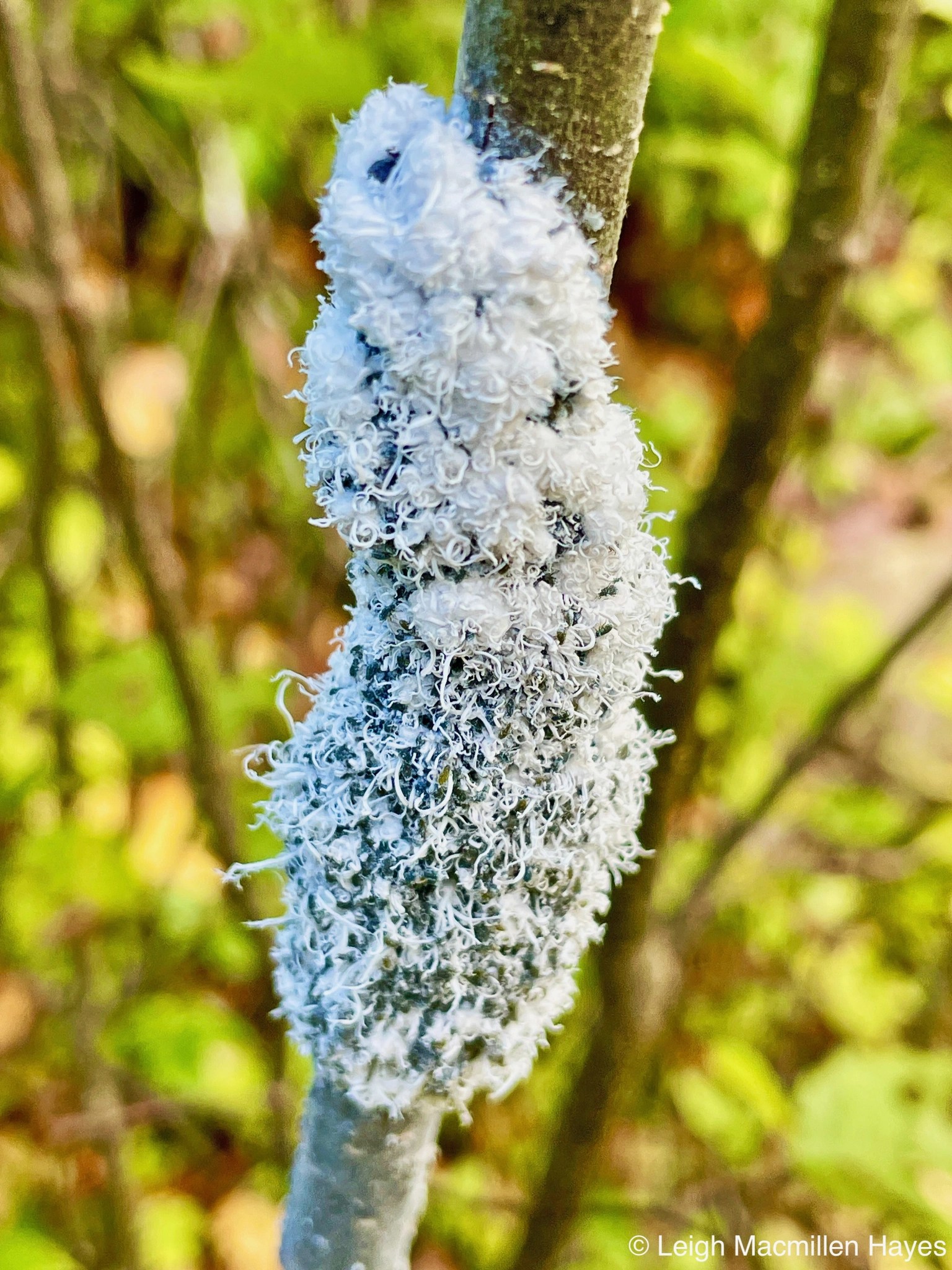
While admiring shrubs
that love wet feet,
I counted over
one hundred branches
coated with white fluffy,
yet waxy ribbons.
Theirs is a communal yet complex life
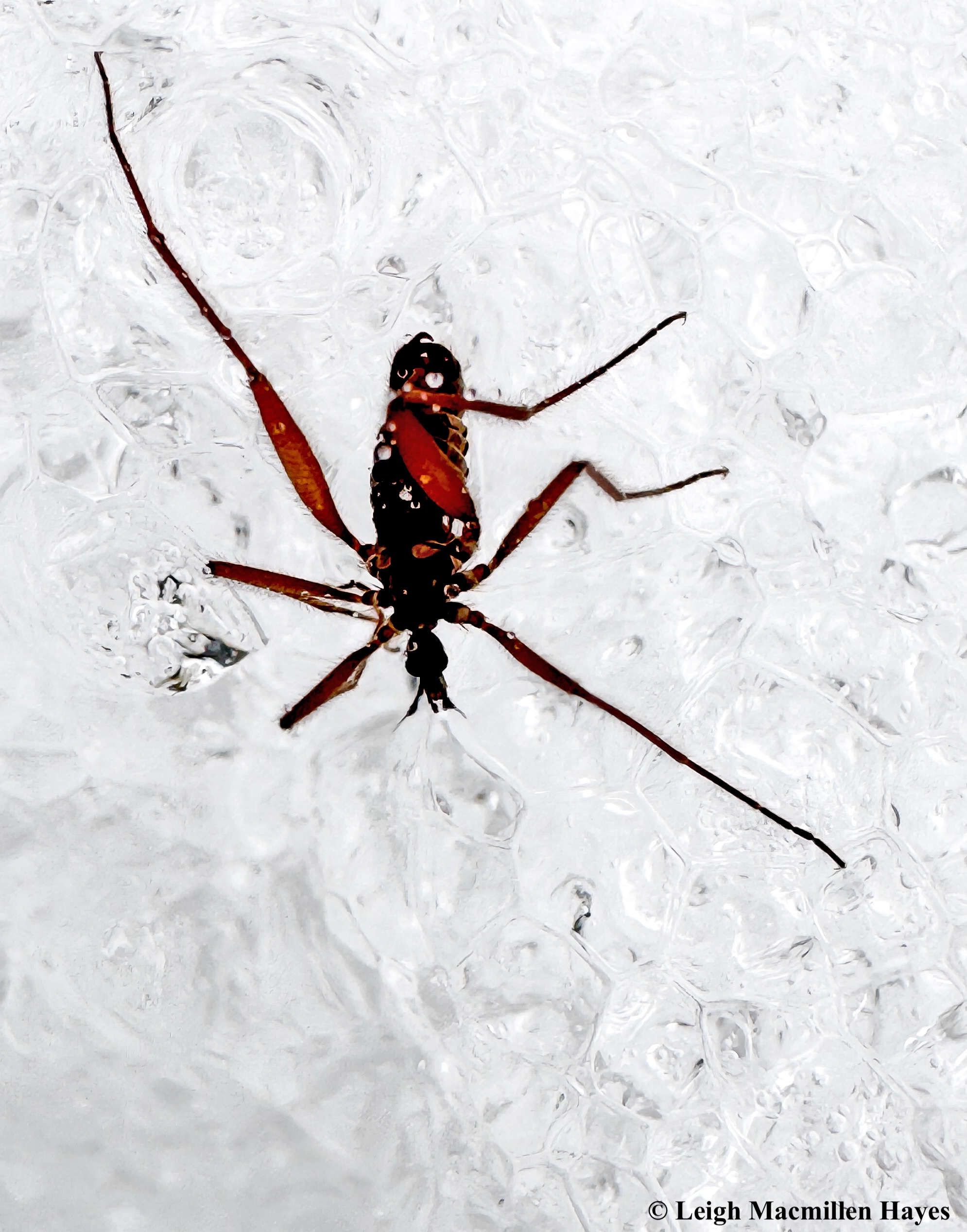
as the Woolly Alder Aphids
suck sap from Speckled Alders.
Communal in that
so many clump together
in a great mass.
Complex because
one generation reproduces asexually
and the next sexually,
thus adding diversity
to the gene pool.
Along with the discovery
of coyote scat,
and Beech Aphid Poop Eater,
a fungus that consumes
the frass of the Aphids,
it was an omnivore, herbivore, insectivore kind of day.
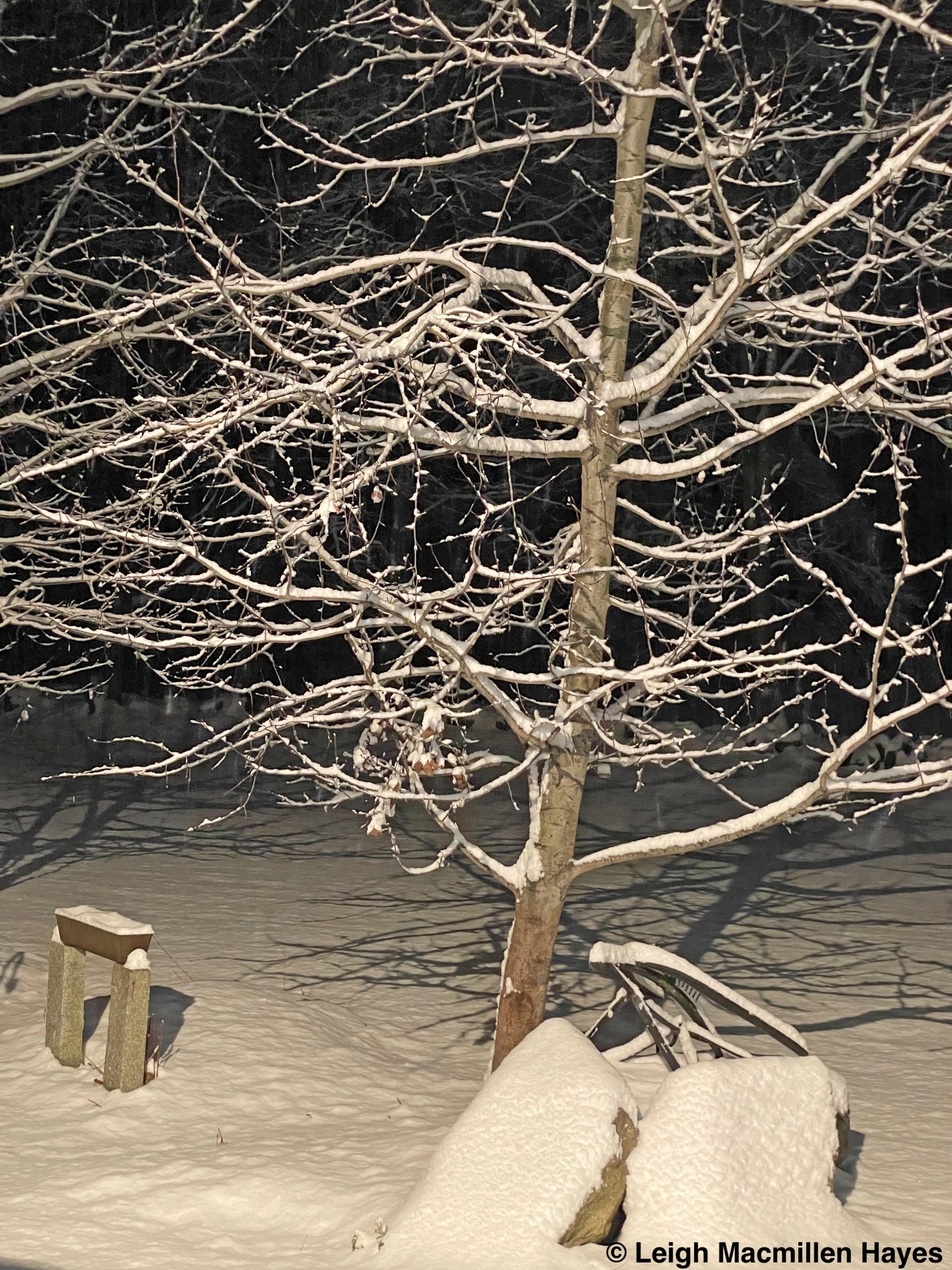
Awakening early, 
a certain glow
in the sky
pulled me from bed
and I raced downstairs
to open the door
and receive the quiet
that snowflakes create.
The snow eventually
turned to rain,
which equally mesmerized me
as I watched
droplets elongate
and quickly free fall,
landing on bark below
in such a manner
that caused them
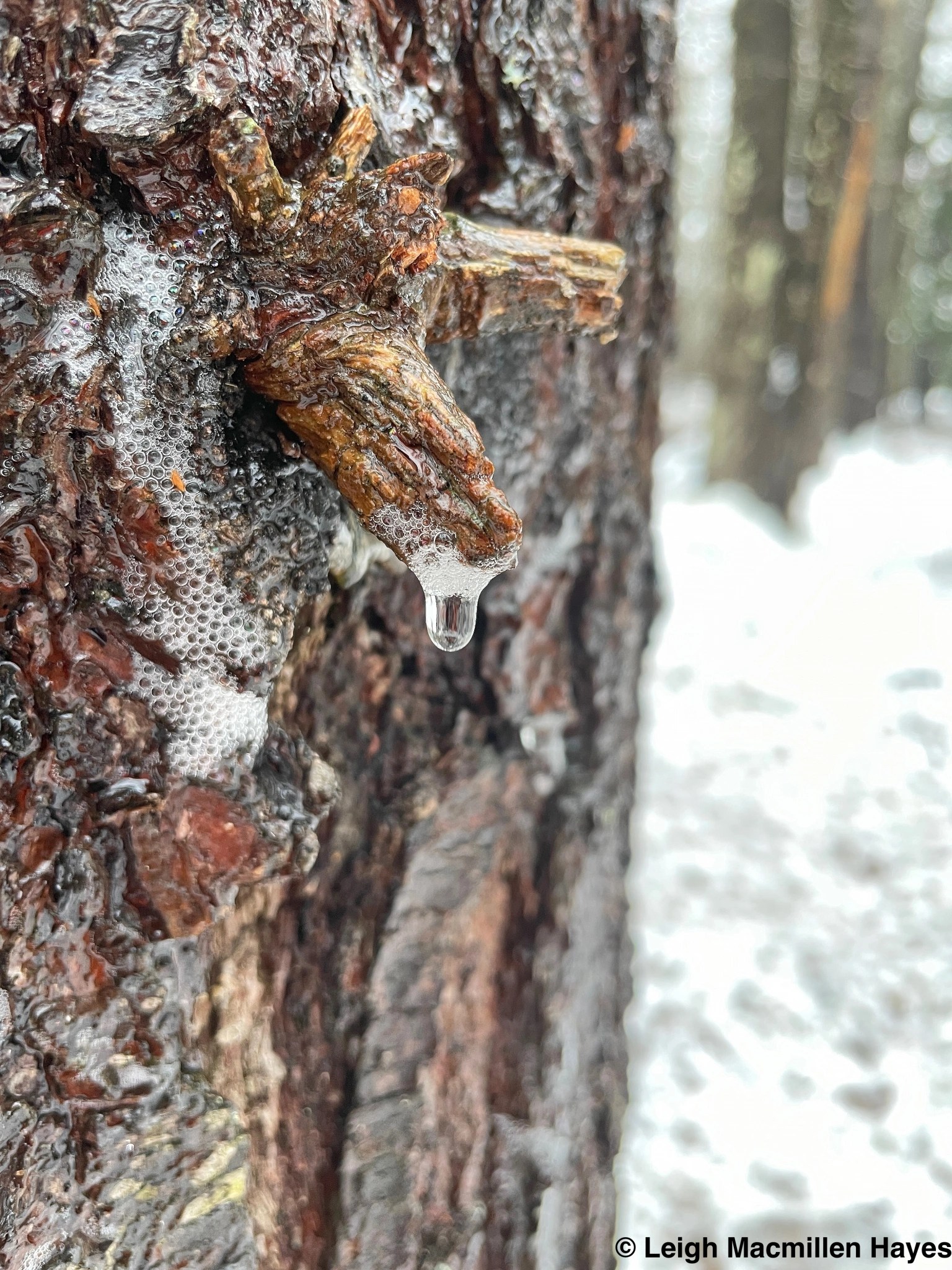
to mix with sap salts and acids.
The result was
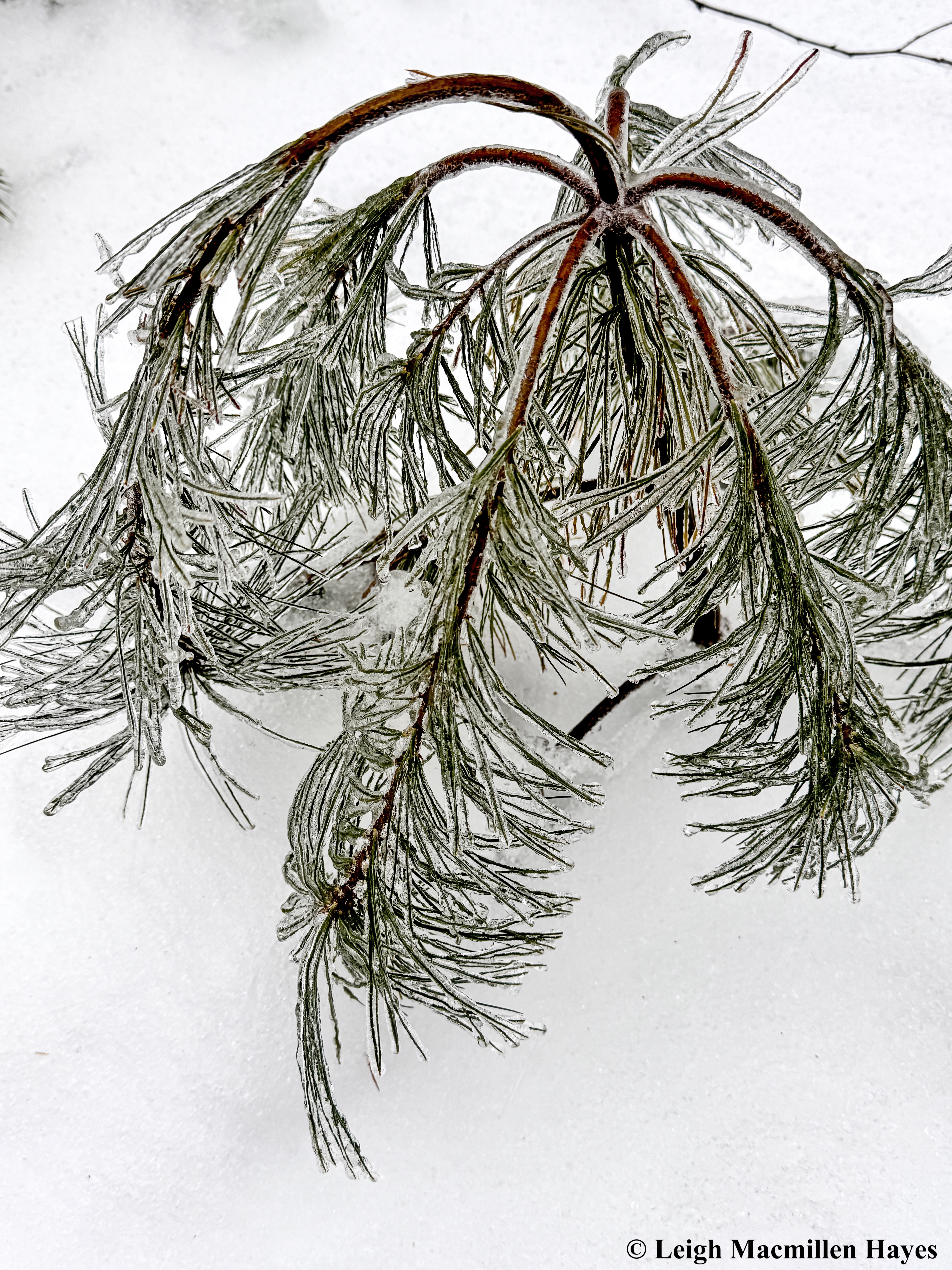
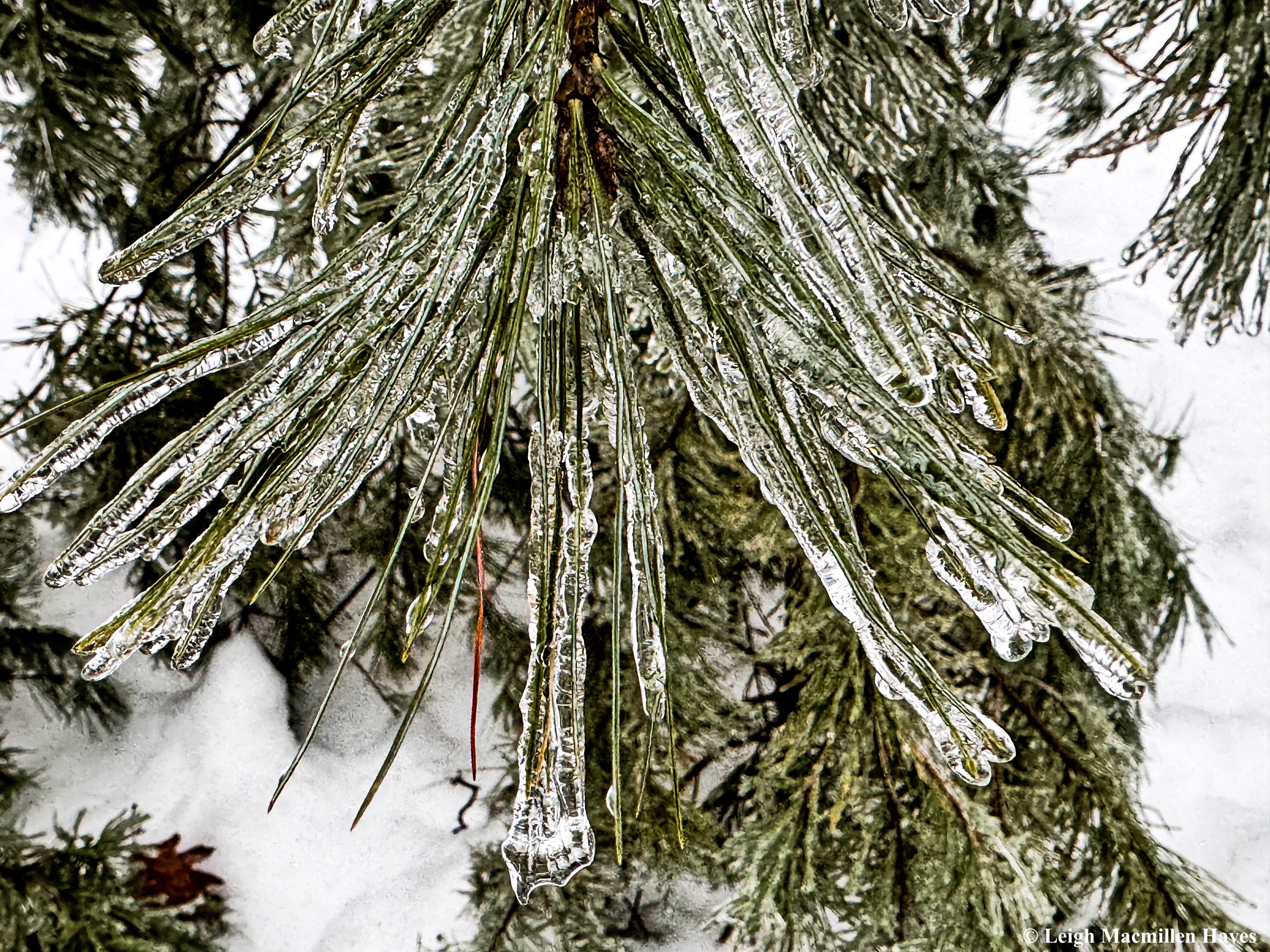
White Pines foaming
in the form of
Pine Soap
with its hexagonal shapes:
worth a natural engineering wonder
and I gave thanks for being present.
Occasionally, 
it's the action
outside the backdoor window
that keeps me standing sill
for hours on end,
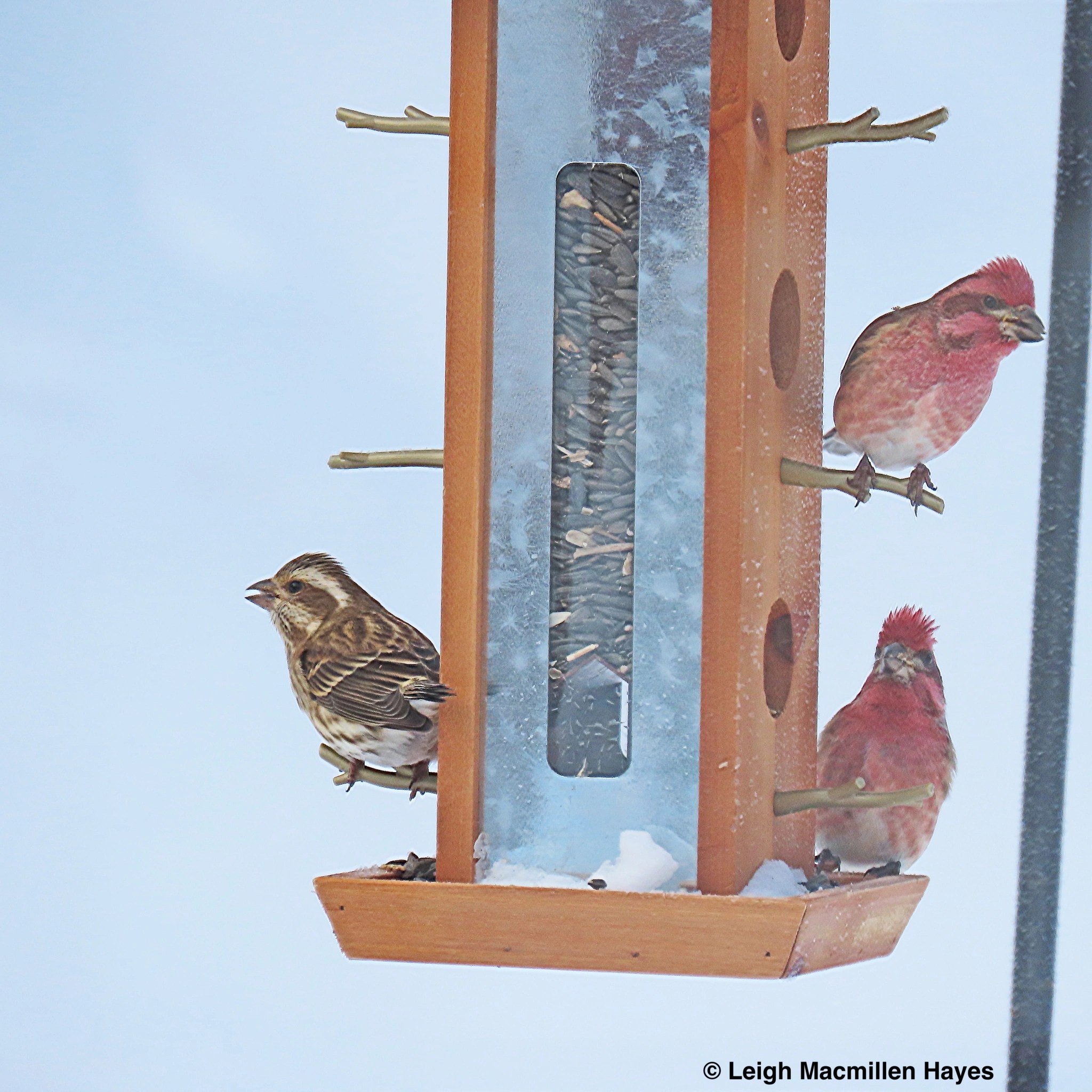
as a variety of birds fly
in and out
of the feeding station,
such as these Purple Finches,
the males exhibiting
bad hair days.
Bird seed is not 
just for birds
as the squirrels prove daily.
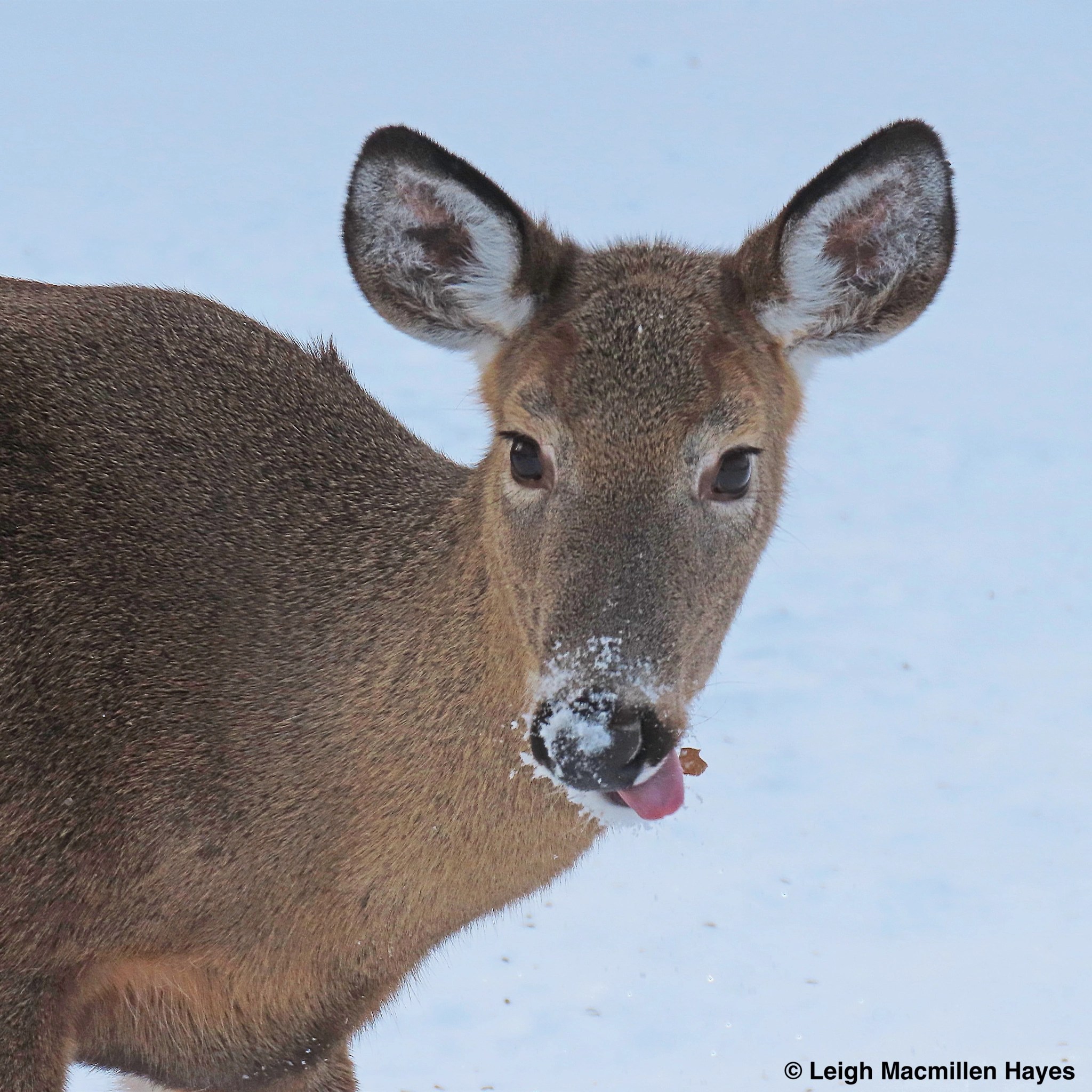
And White-tailed Deer
often make that
statement at night.
But this day was different
and they came
in the morning
using their tongues
to vacuum the seeds all up.
At the end of the day,
my favorite visitors
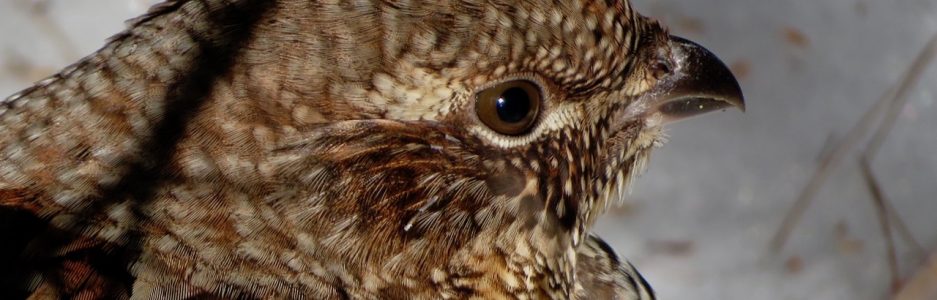
were the Bluebirds
for it was such a treat
to see them.
But it was the mammals
who made me realize
not every bird has feathers.
These are samples 
of the Thin Places
I've stumbled upon
this past year.

They are a
cause for celebration,
participation,
and possibility.
My mind slows down
and time seems infinite
as I become enveloped
in the mystery.

I give thanks
that each moment
is a gift
and I have witnessed
miracles unfolding
that did not
seek my attention,
but certainly captured it.

And I thank you again
for being
one of the many
to wander and wonder my way.

A Blue Bird Kind of Good Friday

When Jinnie Mae picked me up this morning, our destination was the Narrow Gauge Trail. But somewhere between here and there, she pulled a U-turn and drove to Narramissic Farm owned by the Bridgton Historical Society.

It had been just over a year since I last visited and I wanted to show her the shagbark hickory buds. And maybe even the bear trap.

n-Pleasant Mtn to Narramissic1

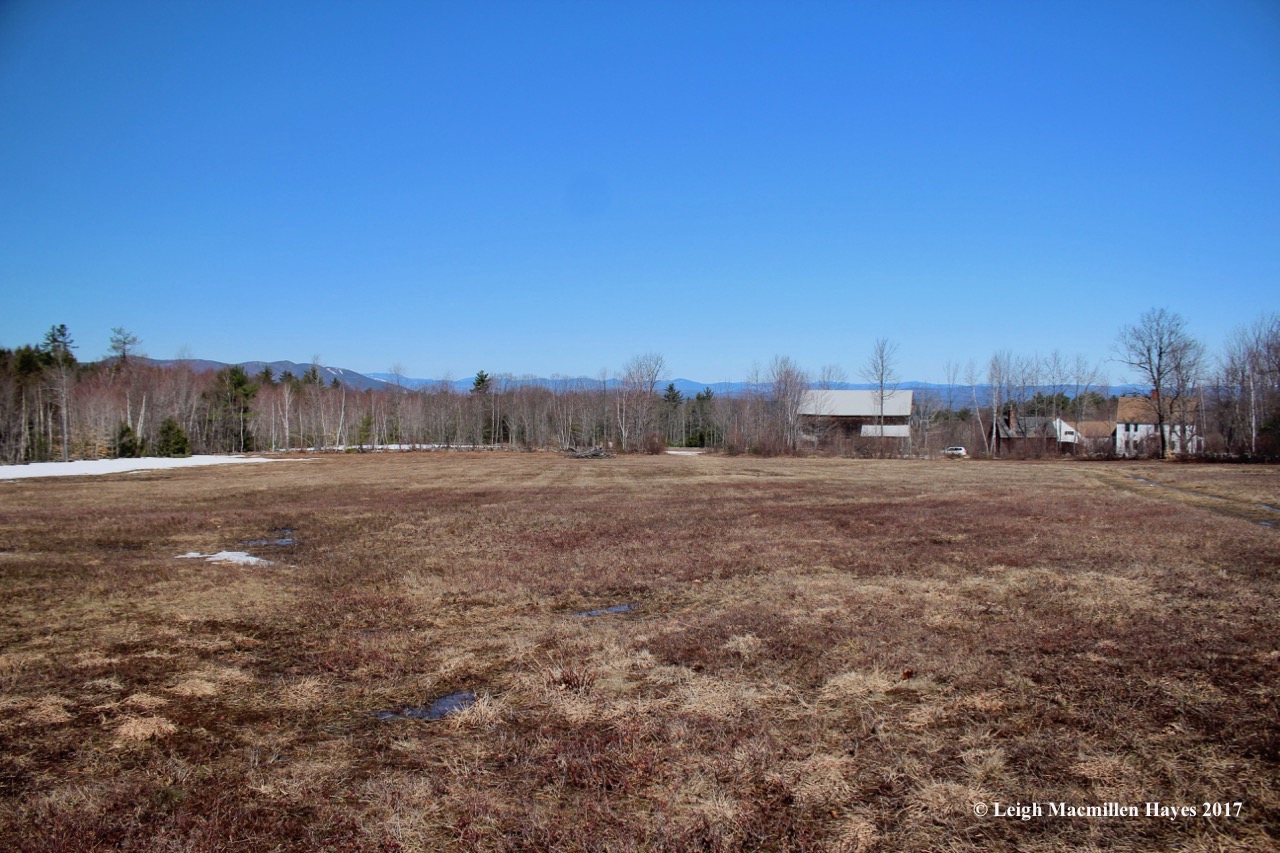
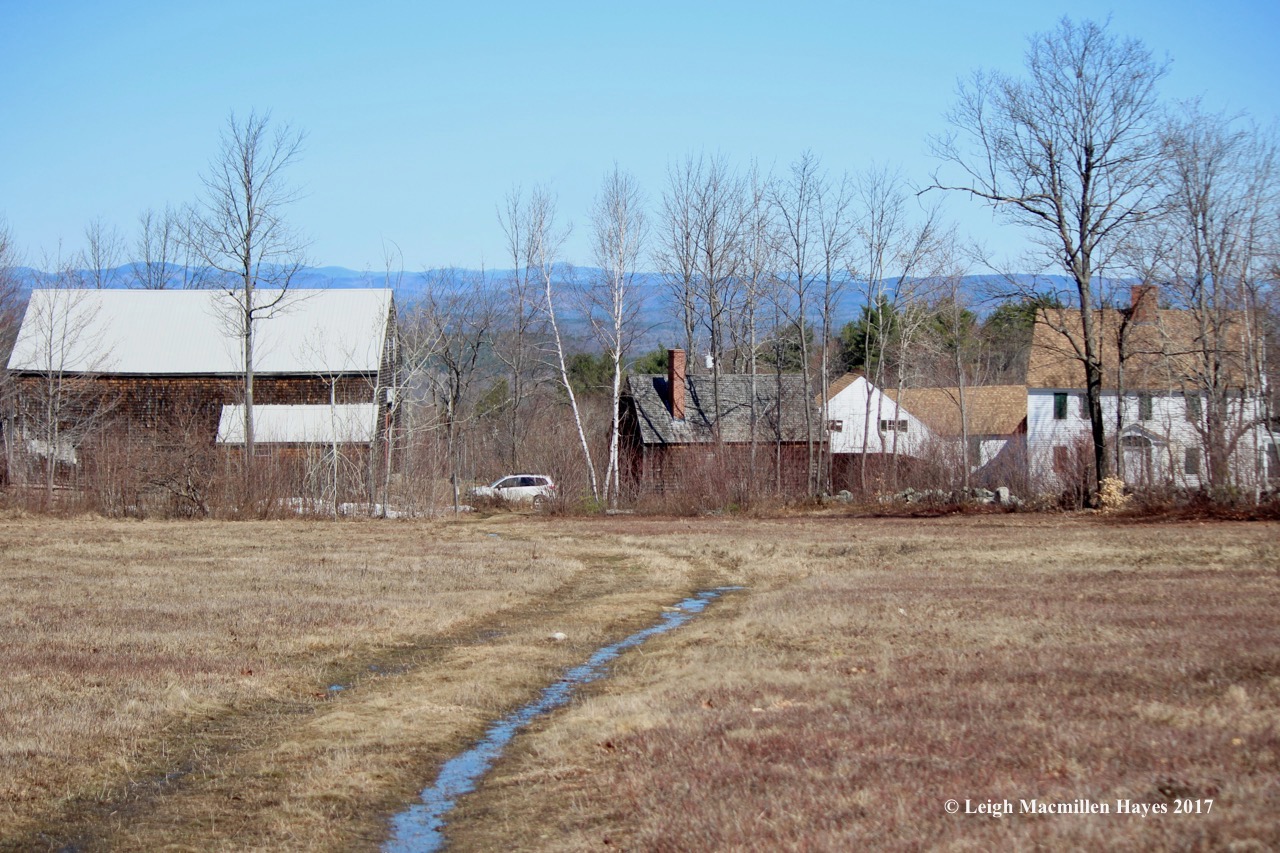
We crossed the field behind the house and started off on the path to the quarry and bear trap, but snow and water in the woods resulted in another U-turn. We’d been talking so much, we’d hardly noticed our surroundings, but the view stopped us in our tracks.

n-Pleasant Mountain

To the left, the long ridge line of Pleasant Mountain, where the ski trails of Shawnee Peak Ski Area made themselves known.

n-Narramissic

And in front of us, the Temperance Barn and Peabody-Fitch homestead, built in 1797. We had the place to ourselves and reveled in the quiet of the day–when we weren’t talking, that is.

n-shop and flagpole

Heading to the road for our tree bud search, we passed by the blacksmith shop where horseshoes were probably made in the day.

n-temperance barn

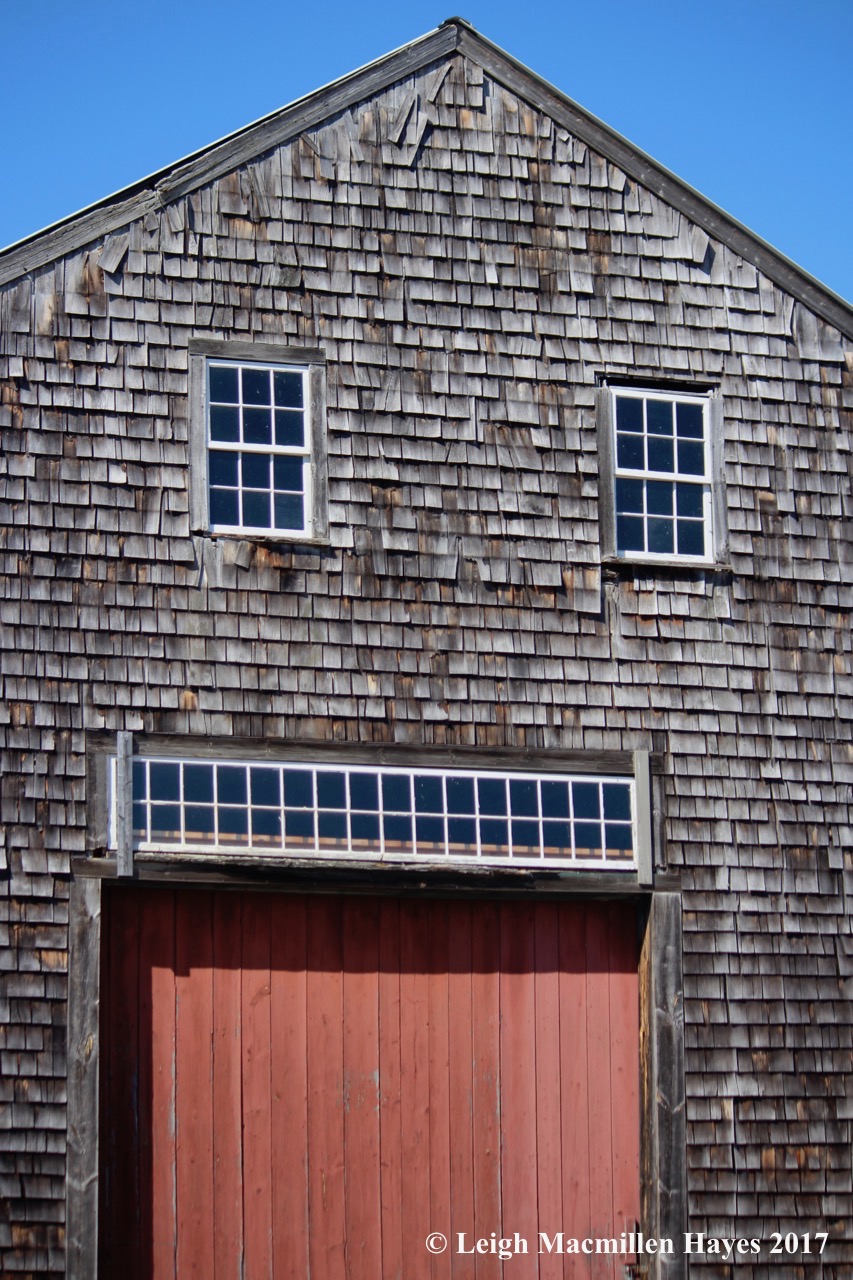
And at the Temperance Barn, so named “because it was raised without the traditional barrel of rum,” I can never resist admiring the structure even though it’s in great need of repair.

n-ash tags

And then we were stumped by a flowering tree. It sure looked like an ash as Jinnie Mae suggested, but what were those lacy tips? What came to my mind first were the tags on red oaks that I didn’t understand a few years ago until a friend helped me realize that they were leaf stems left behind when the wind finally claimed the dried leaves. Was this the same?

n-double-wide stonewall

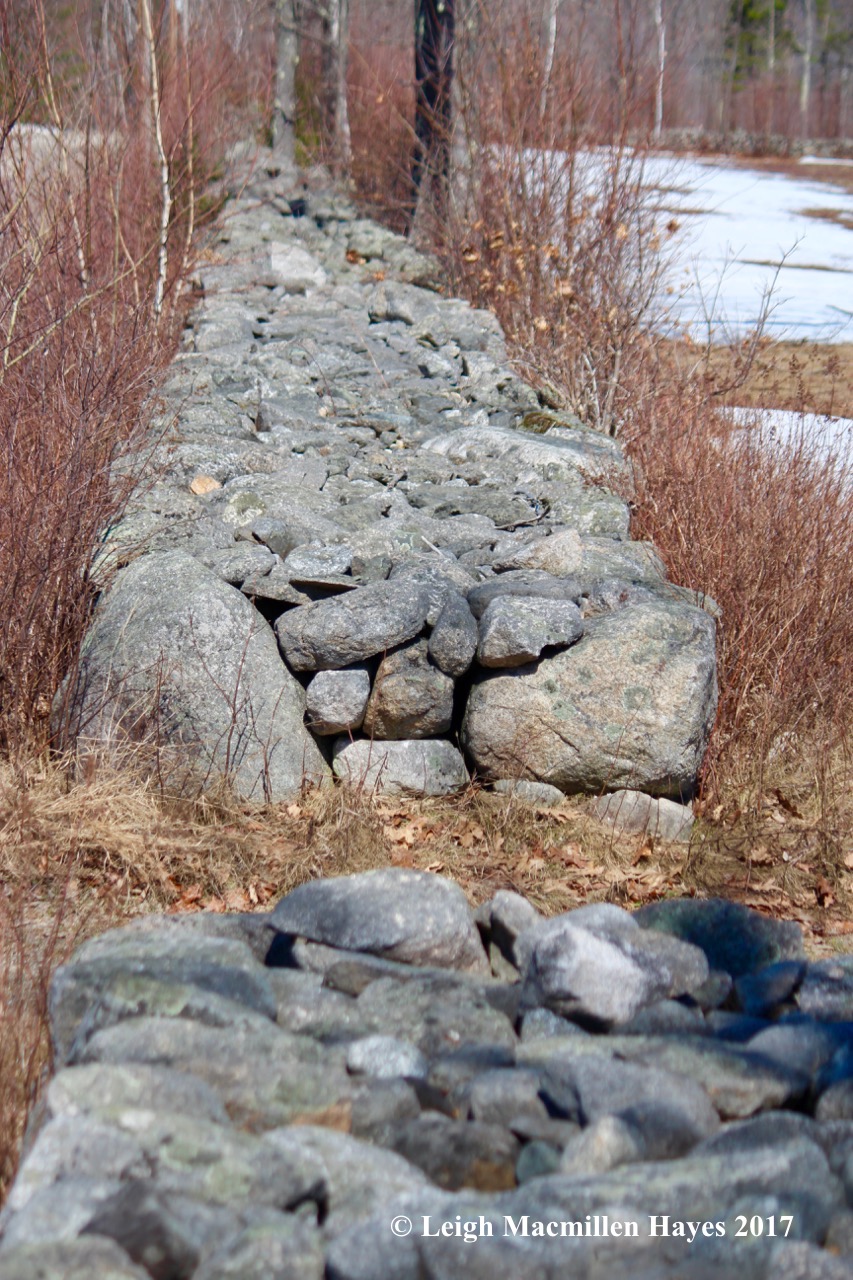
Climbing onto the double-wide wall, I took a closer look.

n-white ash danglers 1

Turns out Jinnie Mae was right. But my question still remains. Were these the stems of the ash samaras or compound leaves?* For some reason I’ve never before seen them left behind. Ah, there are so many things to discover in this world.

n-black walnut 3

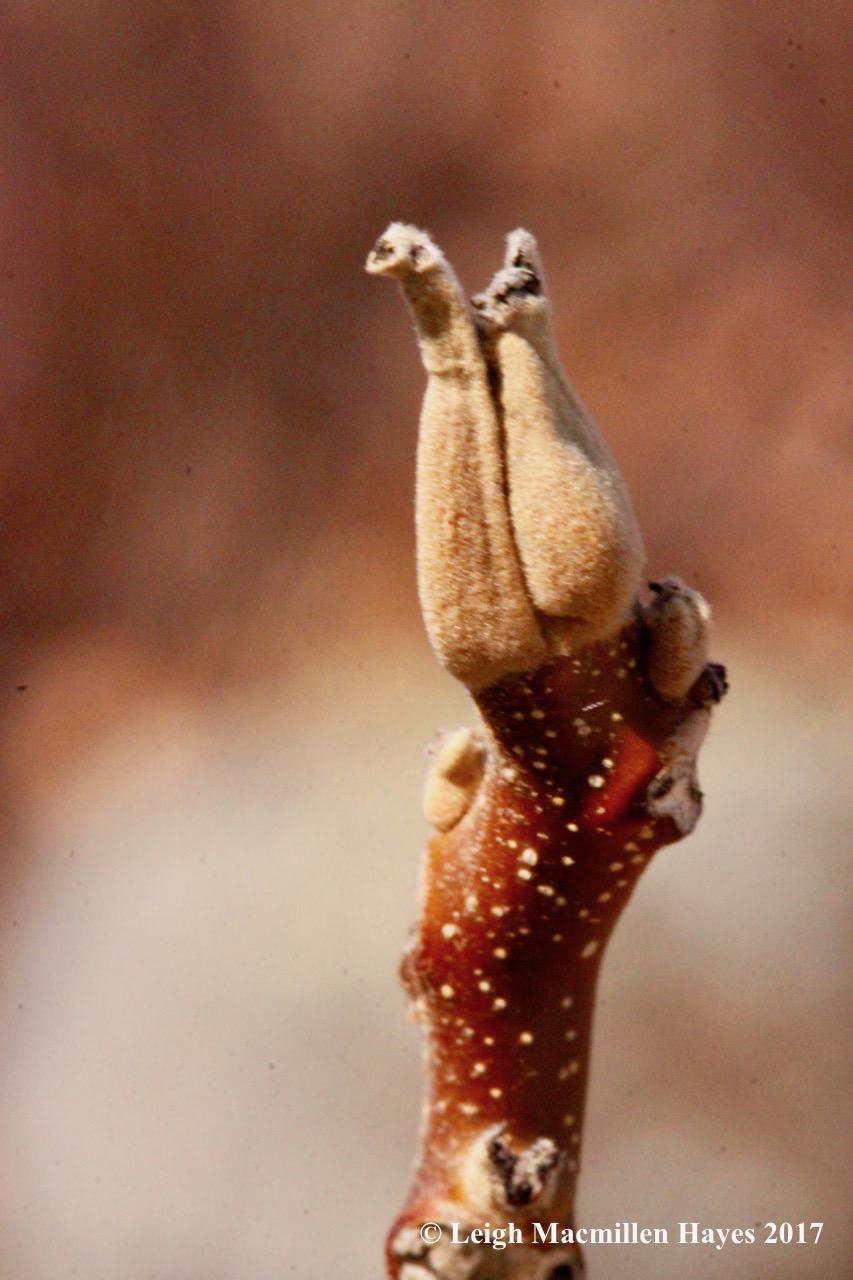
We continued down the road, noting budding pussy willows and flowering red maples. And then I spied the bulbous buds I wanted to show her. Only, it turns out that we hadn’t reached the hickory trees yet.

b-black walnut leaf scar 2

The monkey face leaf scar should have been a clue. But my brain was stuck in hickory mode and I completely forgot that black walnut leaves leave such a formation. At home, I pulled out Forest Trees of Maine and then seesawed between black walnut and butternut (aka white walnut). Both feature leaf scars shaped like a monkey’s face. But the top of the leaf scar serves as the give away–this one did not have thick fuzzy eyebrows like a butternut, so I’m going out on a limb and declaring this a black walnut.

n-shagbark bud hairy 1

A bit further down the road we spotted more bulbous buds. These were definitely the ones I was looking for–shagbark hickory. In the moment and because the two trees weren’t close together, we thought they were all one in the same. But hindsight being 20/20 as it is, the photographs tell the story.

n-shagbark bud 6

The subtle colors and fuzziness wowed us and we both took numerous photos.

n-shagbark leaf scar1

Then there were the leaf scars–definitely more heart-shaped than the previous trees.  And lacking that smiling face. We smiled for them.

n-Long Lake below

It wasn’t enough to find the small saplings beside the road and so we crossed another field in search of the mother tree.

n-grasshopper 1

Along the way, Jinnie Mae spotted a wee grasshopper–the first of the season for us.

n-shagbark bark from distance

And then her newly trained shagbark hickory eyes keyed in on the momma.

n-shagbark bark 3

If you go, it’s located behind the barn.

n-shagbark bark 5

And shouts its name in presentation.

n-shagbark bark 4

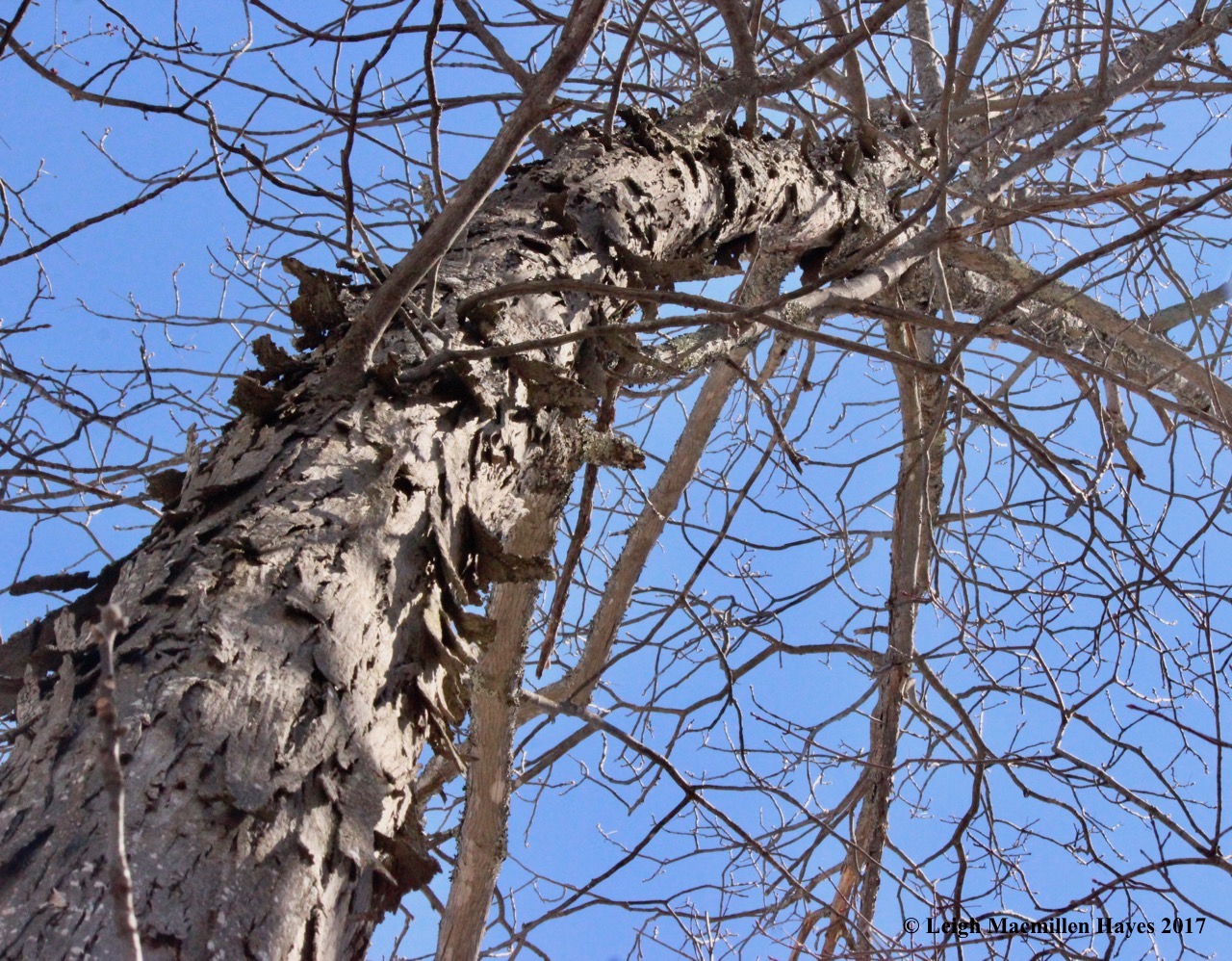
Looking upward, we could see the bulbous buds on the twig tips contrasted against the bright blue sky.

n-bluebird

Happiness is a blue bird kind of day–sweetened by time spent exploring with Jinnie Mae, making discoveries and watching bluebirds move between the field and the trees. Indeed it was a Good Friday.

Now we need to return and find the mother black walnut.

*Thanks for Maine Master Naturalist Pam Davis for IDing the ash strand as the rachis of the compound leaf. She reminded me that I have seen these on the ground in the fall. But–to be still dangling from the tree was new to my eyes and mind.