Easter 2025: An Interwoven Weekend Celebration

Hindsight being what it is in offering 20:20 vision, maybe I shouldn’t be surprised at how this weekend played out, but going forth without expectation always offers the best of the best.

The weekend began on Good Friday, when after completing some errands, I wandered along a local trail for far longer than I intended, and in fact, had to pull myself away to get home in time to attend a Taize service at church.

Walking alone gave me time to reflect on the past and be present in the moment.

And that’s when I spotted my first Painted Turtle of the season, who offered a reflection all its own.

I still have some of the man-made Turtles I collected as a kid, but love when the real deal presents itself. And by traveling alone, I wasn’t making much noise, and so the Turtle didn’t suddenly plop into the water and disappear.

Along the same trail I nearly stepped upon another Painted Turtle, who immediately pulled its head into the shell, as only this species can do. It was in a spot where cobblestones cover a culvert, and I decided I should help it cross to the other side.

But first, I insisted that it pause for a selfie. Based on the length of its nails, being on the shorter side, and flat bottom shell (plastron) as opposed to the concave bottom of a male, I decided this was a female.

And a beautiful female at that–in color and pattern and texture. Amazing.

It took her a few seconds to decide the world was still a safe place, but once she started to move, it was a quick journey to the water before she swam out of my life, and I wished her well while giving thanks for our short time together.

Once I cued in on there being turtles in this place, I quickly realized they were everywhere. I counted eight on one semi-submerged log. And in this photo there are two.

Can you locate the second one?

And then I had another surprise, and this was the main reason I probably overstayed my welcome.

At first I thought it was a beaver, until I looked at its thick rounded tail and knew I was in the presence of a Muskrat.

Usually Muskrats disappear in my presence, but I think again, because I was willing to stand still and be as quiet as possible, this one did not dart off.

It did, however, dine in places where I came to appreciate its camouflage coloration.

Other times it was in the open so I could better watch as it munched on vegetation, holding the plant matter with both small front “hands.”

As I finally walked back to my truck, I stopped one last time, to admire the buds of Trailing Arbutus, on the cusp of blooming.

And then on Holy Saturday, My Guy and I returned to the same trail system because when I’d first arrived on Friday I ran into a former colleague who mentioned an adjacent trail and I wanted to explore it.

It’s actually part of the snowmobile system, and if you know where this privy is located, then you know where we were. Together we covered a lot of ground (as in 9 miles) and got a better understanding of the area and local ponds and wetlands near the privy.

But even better than that– (remember yesterday’s buds ready to burst?) another first for the season that again seemed apropos for the weekend: the first blossoms of Trailing Arbutus. So sweet and tender and fragrant.

Maybe instead of being known commonly as a Mayflower, this year it should be an Easter Flower.

On Easter, we had a late start for adventure and actually, we chose Plan B for our hiking destination because of the time–since we’d attended church in the morning and then dined at a local restaurant with three generations of our family, minus our two sons, their gals, and a nephew and his gal.

At the summit we did what we always do and waved to some friends who have a summer place on the pond before our eyes. And expressed our sorrow that they won’t be heading north this year. We can only hope that future plans include a return trip.

The wind was wild and brisk, but we took time to also admire the beauty of another pond and Sebago Lake in the distance and shouted, “Happy Easter, Alleluia!”

Eventually, we had to backtrack along another trail upon which we’d started our hike, and though we love loops, I also like it when we follow the same trail back because sometimes you see different things you missed.

Such was the case.

It had been a few years since we’d followed this trail named for a local brook, but it wasn’t until the return trip that I spotted this Scouring Rush. Again, it’s a case of structure and form and color and design and texture. The stem reminds me of an accordion and the top a cone. Or even Cancer Root. Just wow!

And then today found us exploring yesterday’s intended Plan A, where we circled a river for about 2 miles, enjoying the sounds as the water flowed and splashed and sounded so life giving–as it should because it is.
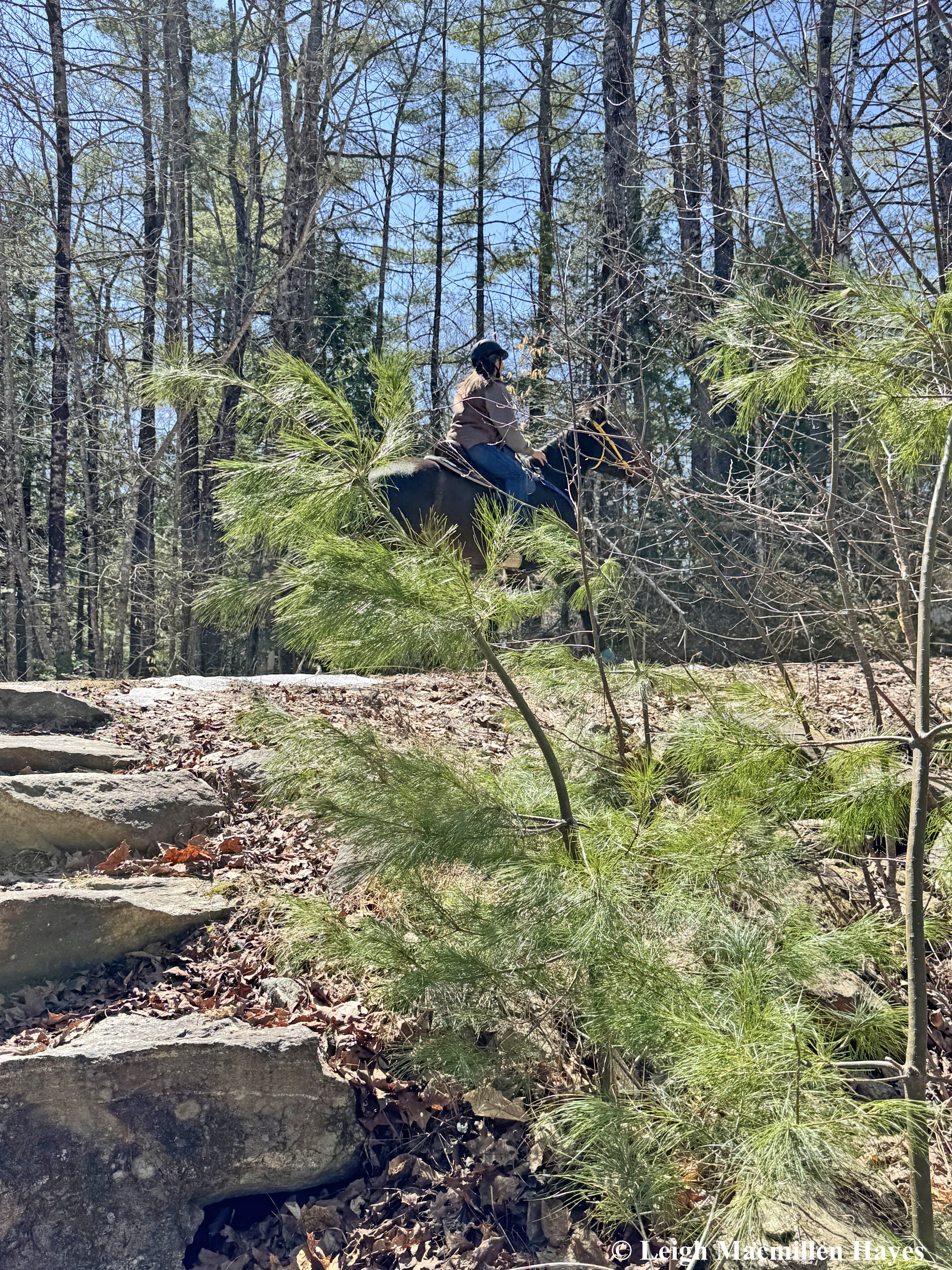
Our chosen spot for today’s lunch was upon steps after we crossed the river to head to a connector trail.

And it was there that we had a most pleasant surprise: a woman rode past on horseback. I only wish I’d been quicker to snap the photo.

Our other surprise in this spot was the knowledge that this past winter a Ruffed Grouse had roosted overnight right here based on the pile of scat it left behind–which is its habit.

My Guy sat upon the rock above and I cautioned him about setting down his water bottle or sandwich.

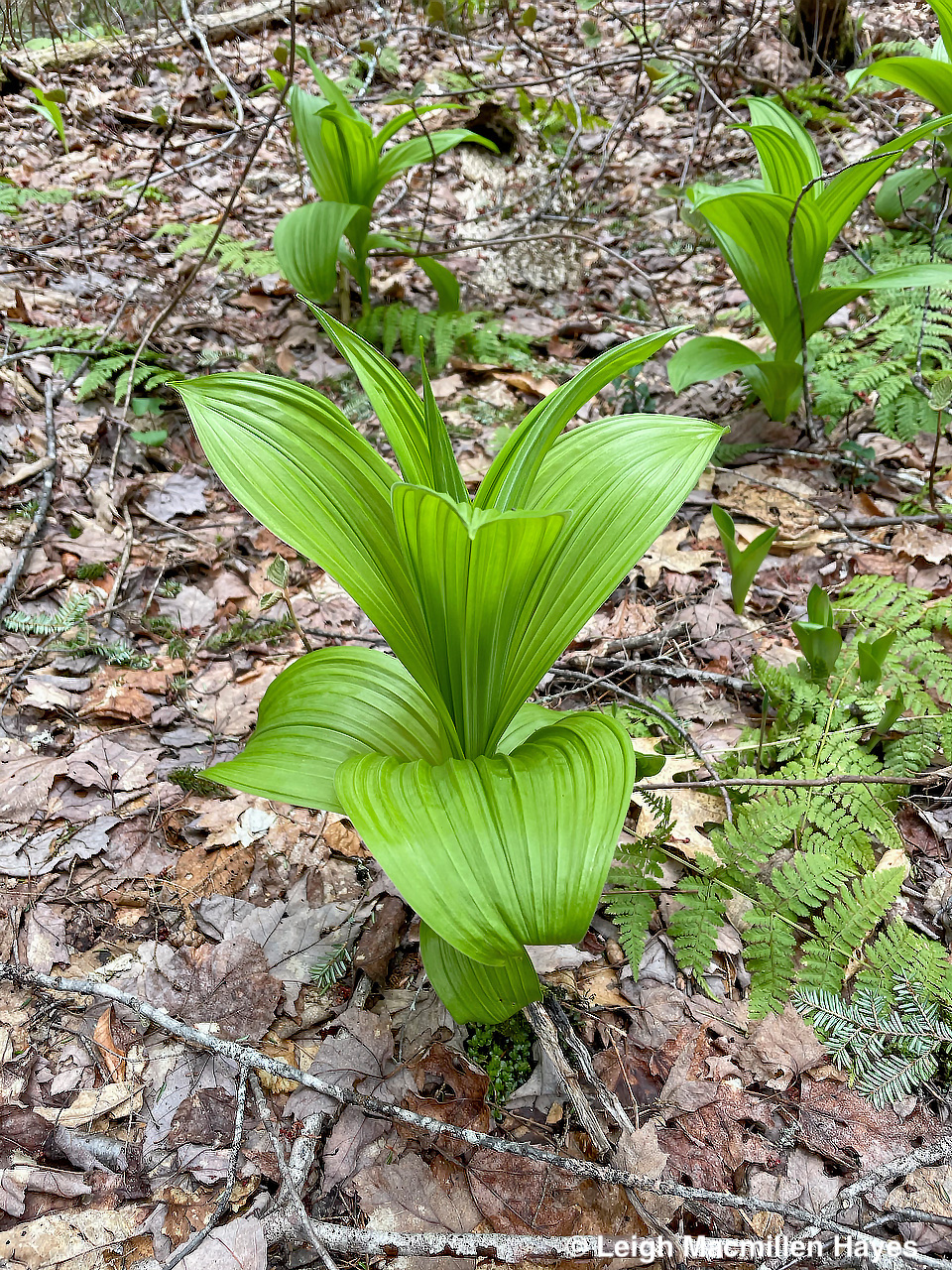
And in a super sunny spot nearby, the first False Hellebore leaves of the season, at least for me, showed off their bright green and pleated presentation.

After crossing the connector trail we reached a pond with the mountain of our destination serving as the backdrop. I love it that often, even if there is a breeze, and slight it was today, this pond offers the most glorious reflection.
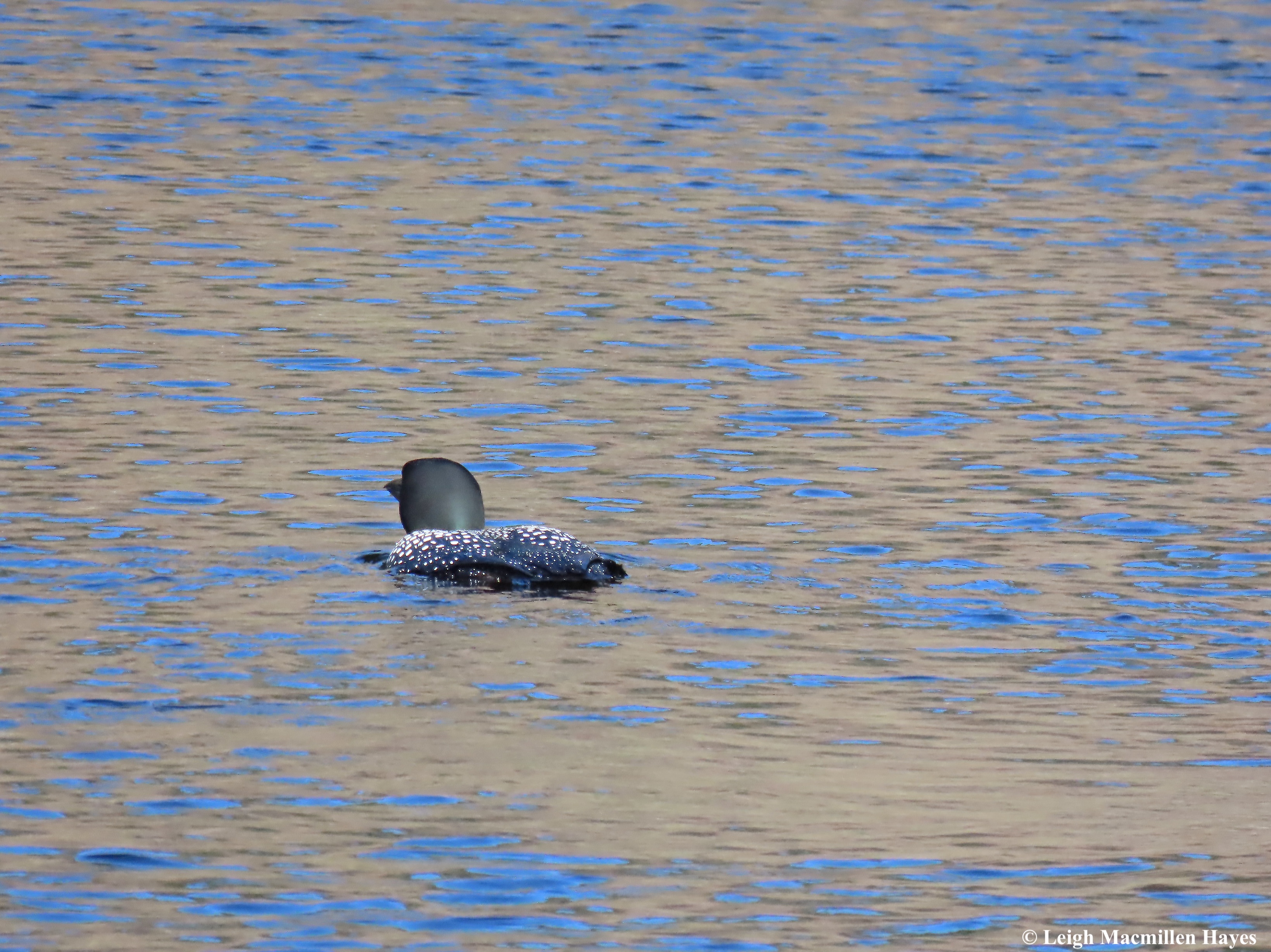
While we paused, we spotted two people fishing, but also another who had the same finned meal in mind, a Common Loon. We didn’t see another, and if memory serves me right, it’s rare that we’ve seen a pair on this pond.

I can only hope memory doesn’t serve me right this time.

Within the shallow depths there were also huge Bullfrog tadpoles and teeny tiny minnows. And probably so much more, but I didn’t look any closer.

Another fun find reminded us that we will return to these trails in another month for the Lady’s Slippers that call to My Guy will make their usual request for a count.

Finding the capsule is so rare considering that there are hundreds of Lady’s Slippers that bloom just along the trail, yet we only spotted two of these structures, which would have contained thousands of dust-like seeds that dispersed through the split sides.
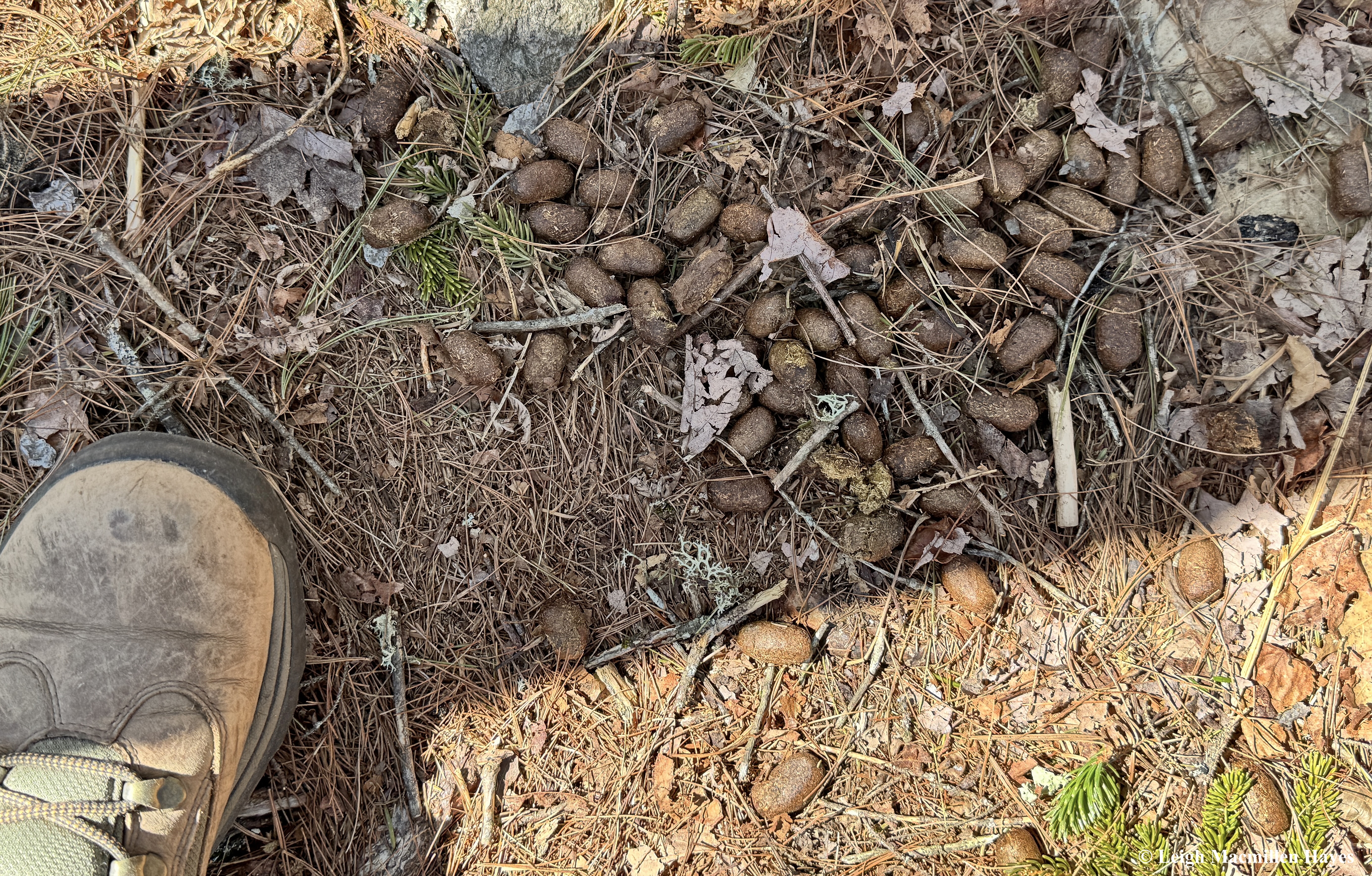
Similar in shape to the capsule, but of a completely different origin, we found two piles of Moose scat–deposited possibly two winters ago based on its formation and the dried leaves and other debris that had landed upon it.

As we continued along the trail beside the pond before climbing up, we knew to look to the ledges for a rare sighting. It’s up there, but you may not see it until I share the next photo with you.

Do you see the cross? How apropos for Easter Monday.

The question remains for us: How did it get there? Or is it a natural formation? We know that we would not have the heart to climb down to that spot and install it, but perhaps others did.

Actually, we don’t want to know how it got there. It’s enough for us that it is. And persists.

And even more important today, the fact that we didn’t get here on Easter, but instead hiked this way on Easter Monday, the day Pope Francis died, one who cared about those marginalized and the Earth. All of Creation matters.

Our time at the summit of the mountain was brief because we needed to get home for My Guy had another event. But it’s never lost on us that the shape of the main basin of the pond is a heart.

Back at the truck, we celebrated the weekend with a treat from Fly Away Farm.

And gave thanks for how all that we saw and heard and experienced this weekend seemed to be interwoven into a beautiful Easter tapestry.

Happy Easter 2025!
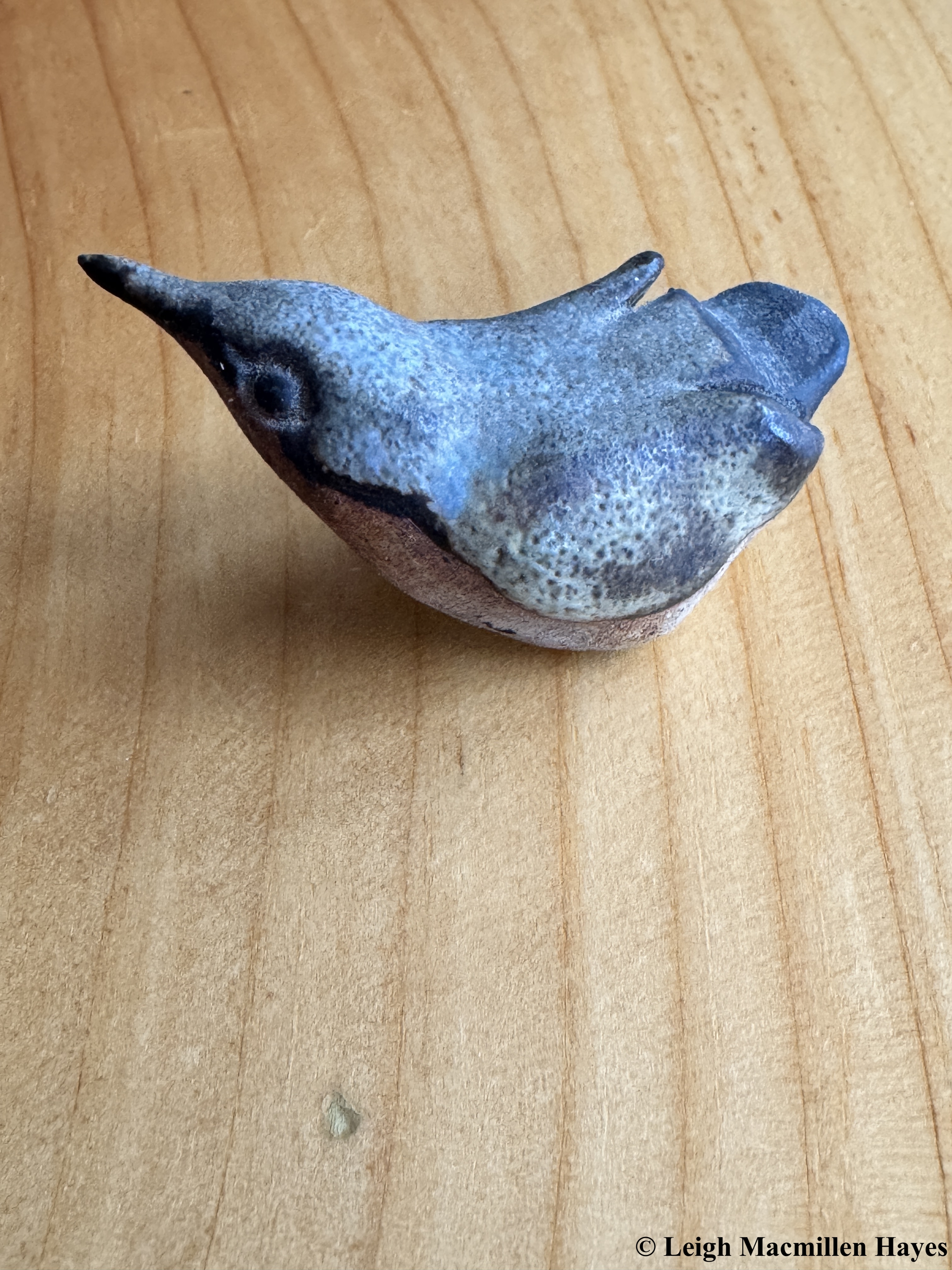
Collecting Birds

OK, I admit it. I’m a collector. Of things. But they are all special things. And many of them handcrafted. And most of them with a story to tell.

So, yes, I collect birds. No, not dead or dying birds. And certainly not living birds. Just . . . birds. My collection is actually quite small, and until today I hadn’t given it much thought, but it began a hundred years ago when I was a senior in college and my roommate and I hosted a student from Great Britain in our dorm room for a week.

I honestly cannot remember her name or too much about her. But I do remember that at the end of her stay she gave us each a bird.

And I remember she told us they were of the Tit species, which didn’t mean a whole lot at the time, but now that I see and hear Titmice on a regular basis, I have a better appreciation. This little bird has graced my desk for decades and the young woman’s name keeps flitting in and out of my mind, so maybe I’ll recall it by the time I finish writing. I now realize I haven’t thought about her in years, despite my fondness for the gift she bestowed upon me.

Another gift was the carving of a Chickadee, and I received this one about 35 years ago from a sweet little man named Carl and I only wish he’d lived long enough to know how much I still appreciate it.

Likewise with this Loon, crafted for us by my Godfather Russell because he knew My Guy and I love our encounters with these birds who symbolize Maine. And he loved to paint, among many other talents.

I also cherish these two ornaments that never made it to a Christmas tree because they pose instead from a vase of twigs in my study. The one on the left was created by Dr. Fred, a founder of the Maine Master Naturalist Program, and the Hummingbird was gifted to me by my friend Marita after she spent some time bicycling around Cuba last year.

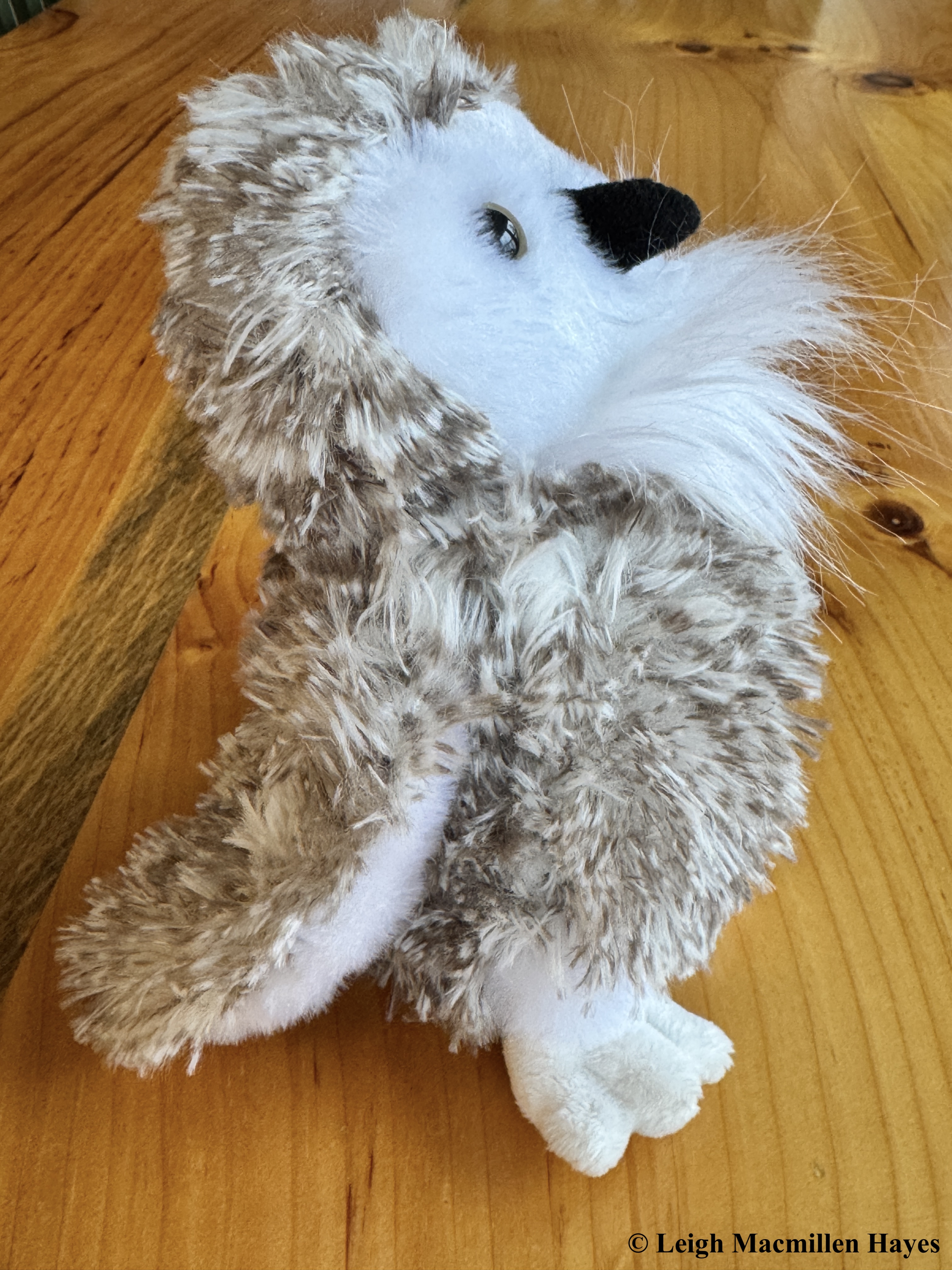
And then there is the Token Owl. Token, because if one is leading an Owl Prowl and there is no guarantee of spotting an Owl, it always pays to pull such a stuffie out of one’s pack so that everyone can leave saying, “I saw an Owl.” Sometimes you just need to make things happen.

All of this leads me to what I realized today is becoming quite a collection: my paintings of birds.

Pileated Woodpecker in our back forty, which is actually only five more acres beyond the house. One of his favorite trees, however, is at the edge of our yard before the woods, where we’ve left several super tall dead snags and he uses them to mark his territory early in the morning, and later in the day as he taps away. Every day.

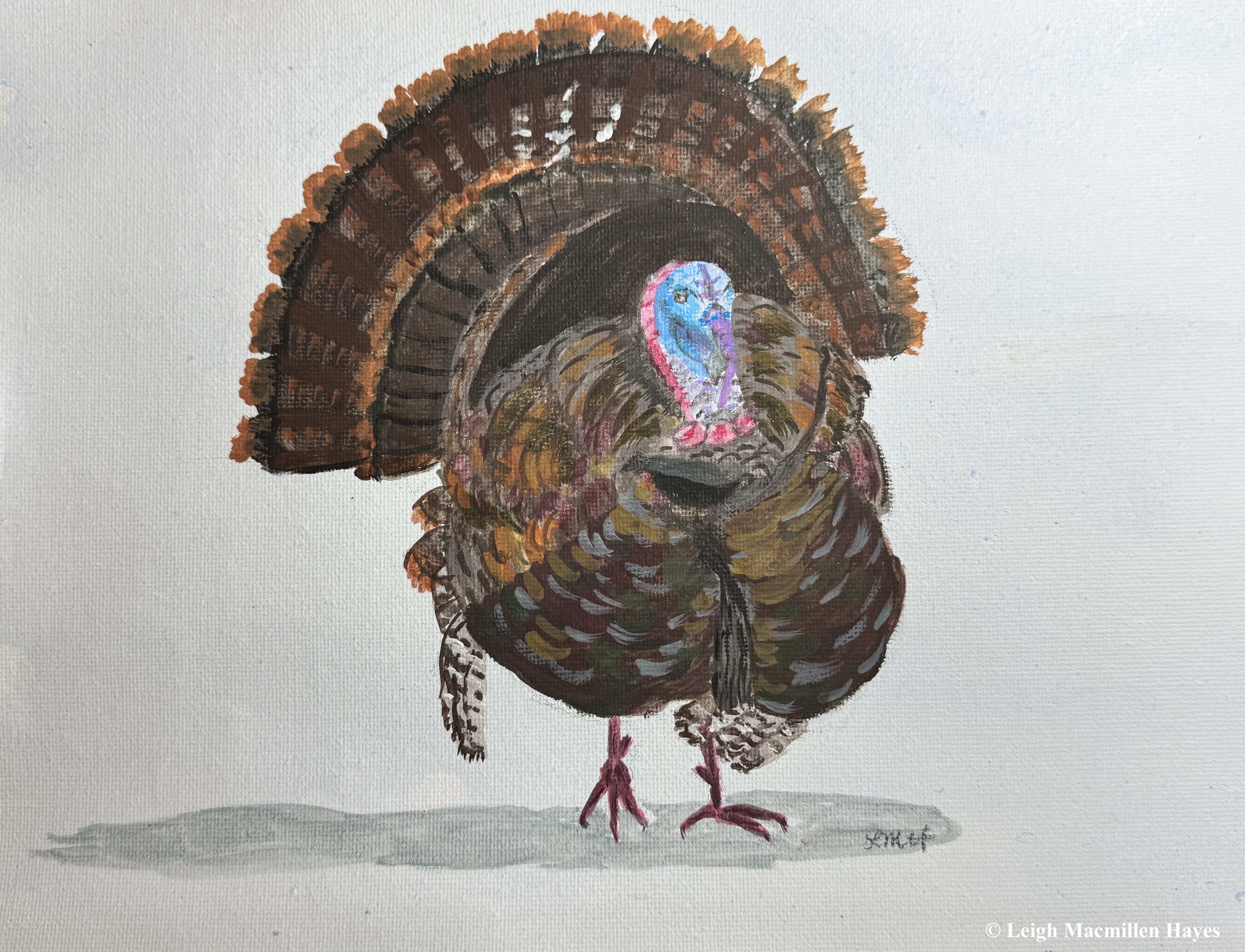
Tom Turkey strutting his stuff across the yard in hopes of wooing a hen. I can only assume he did though I never caught them in the act, but so large is the Turkey population round these parts.

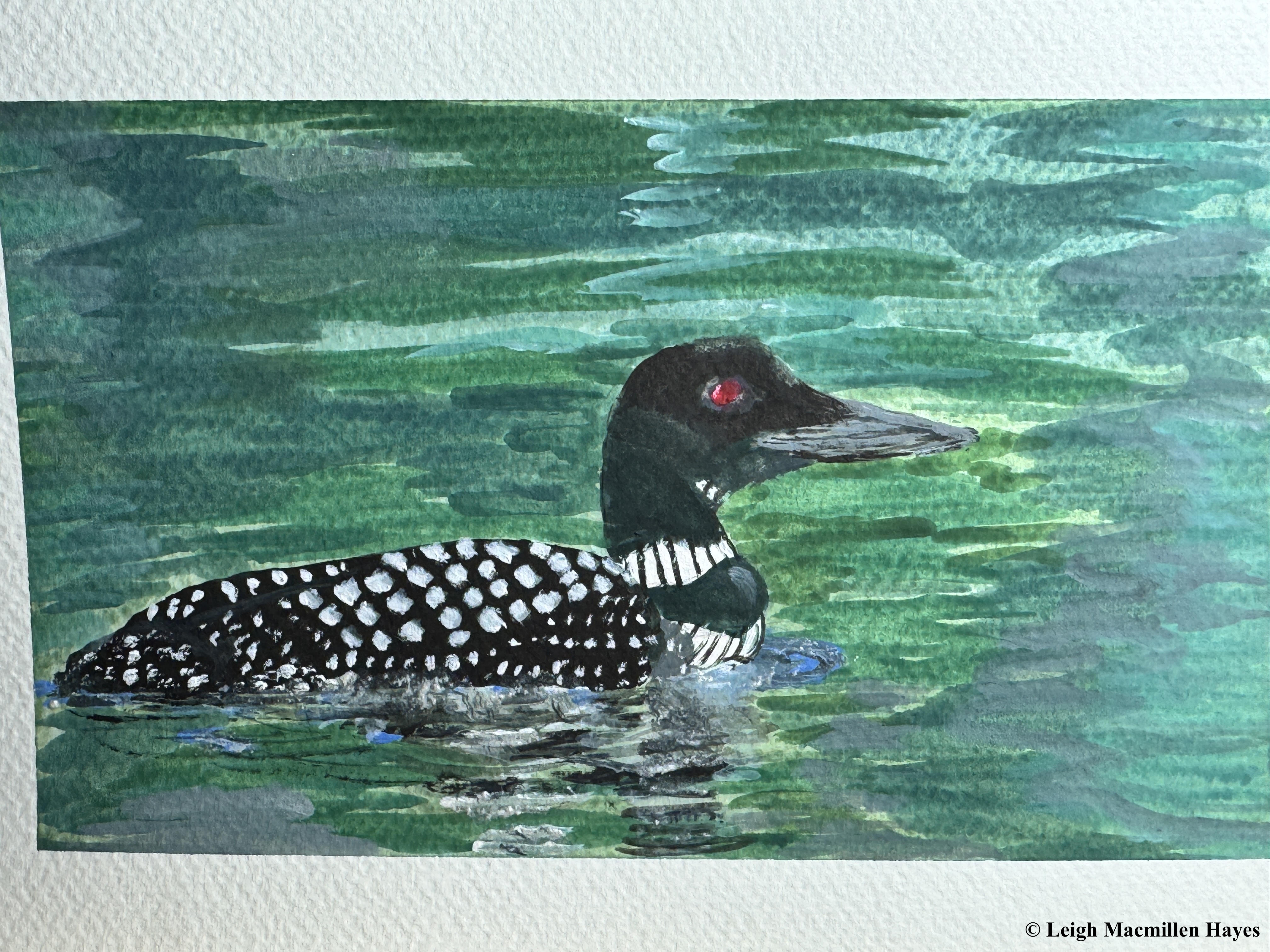
A Common Loon in front of the dock at camp. I admit that like dragonflies, I can never take too many photographs of loons.

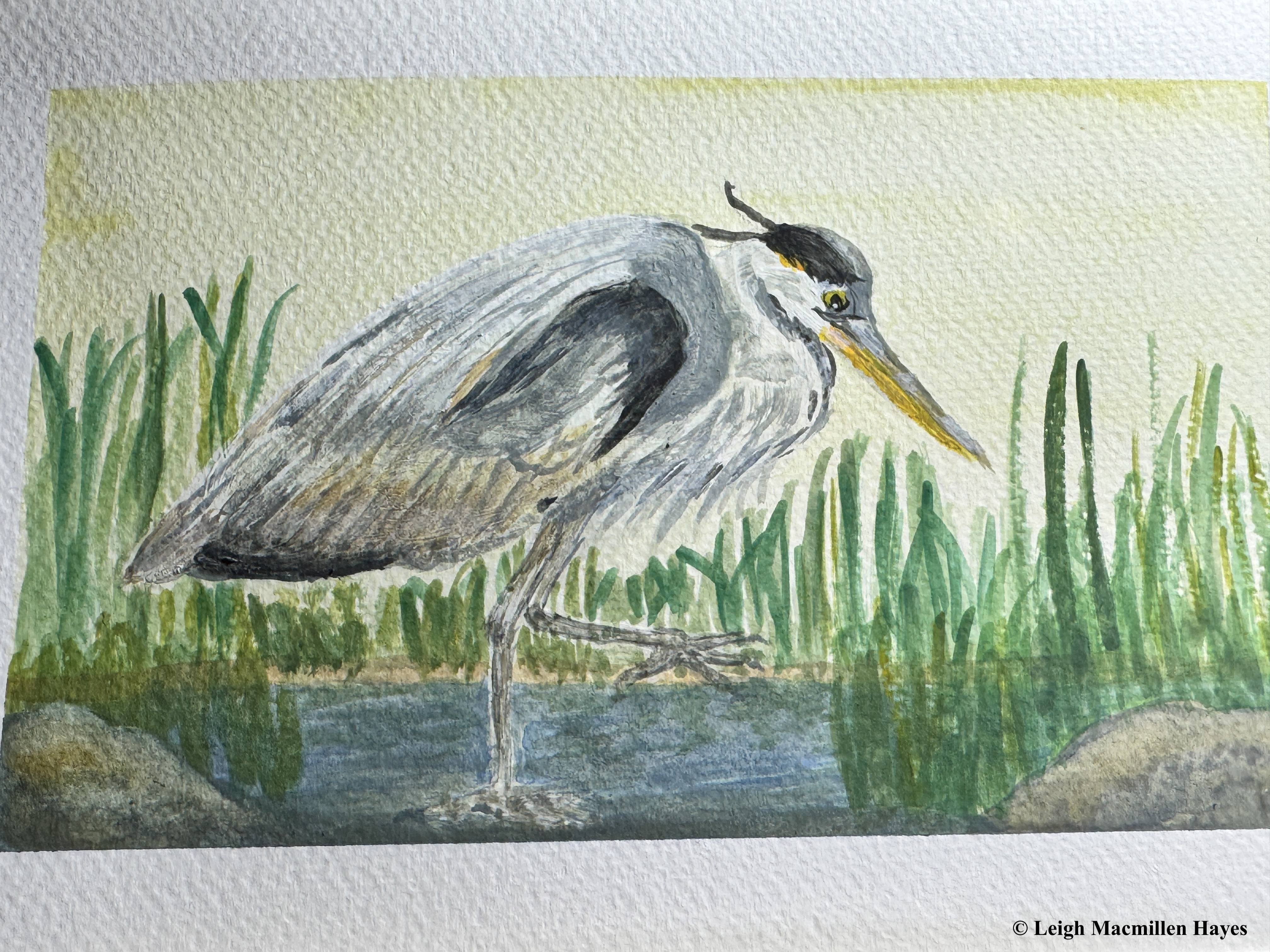
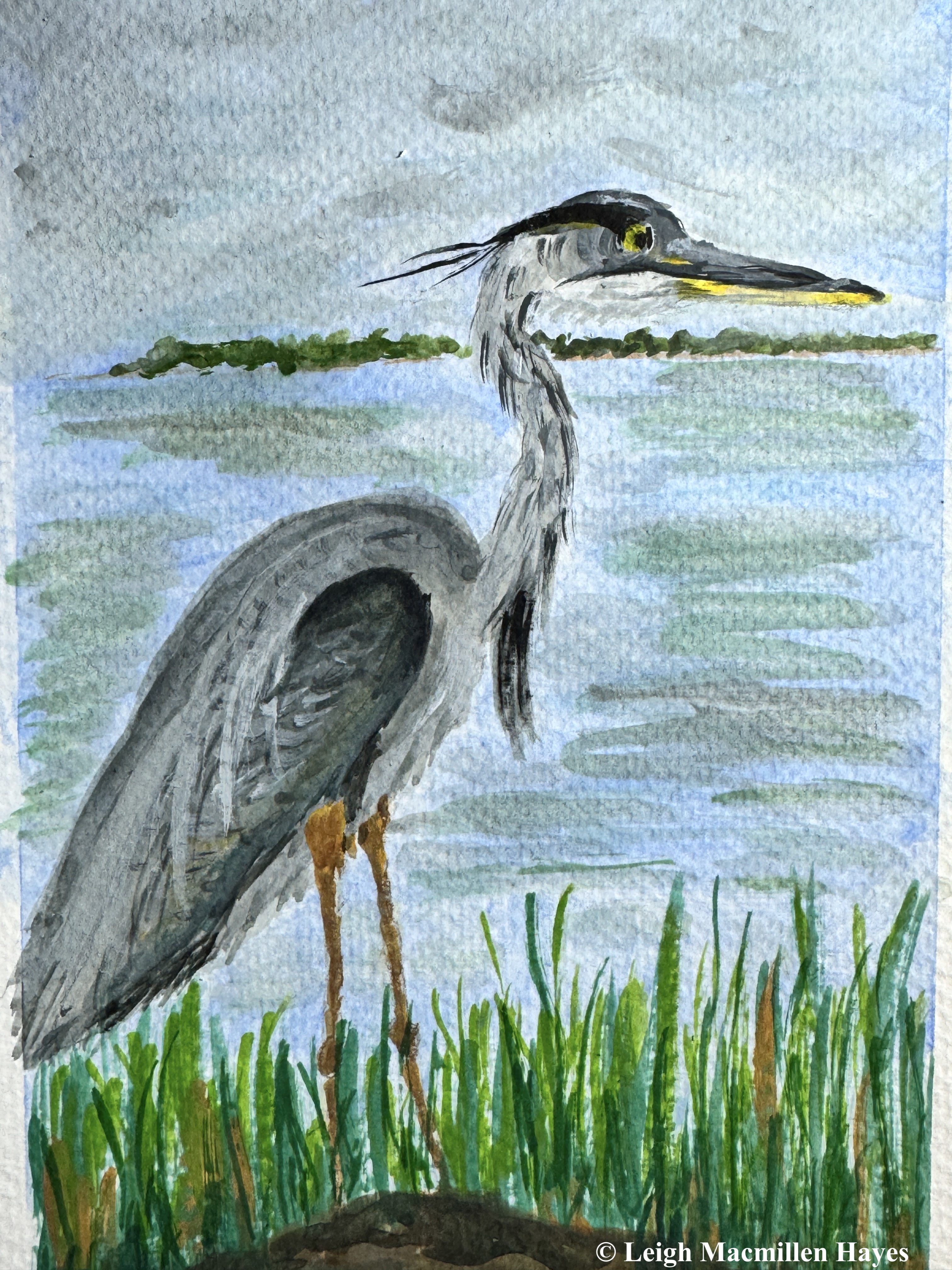
Great Blue Heron scoring a wee fish for a snack.

And another searching for another meal.

And still seeking more, its eyes always intent as it stalks its prey.

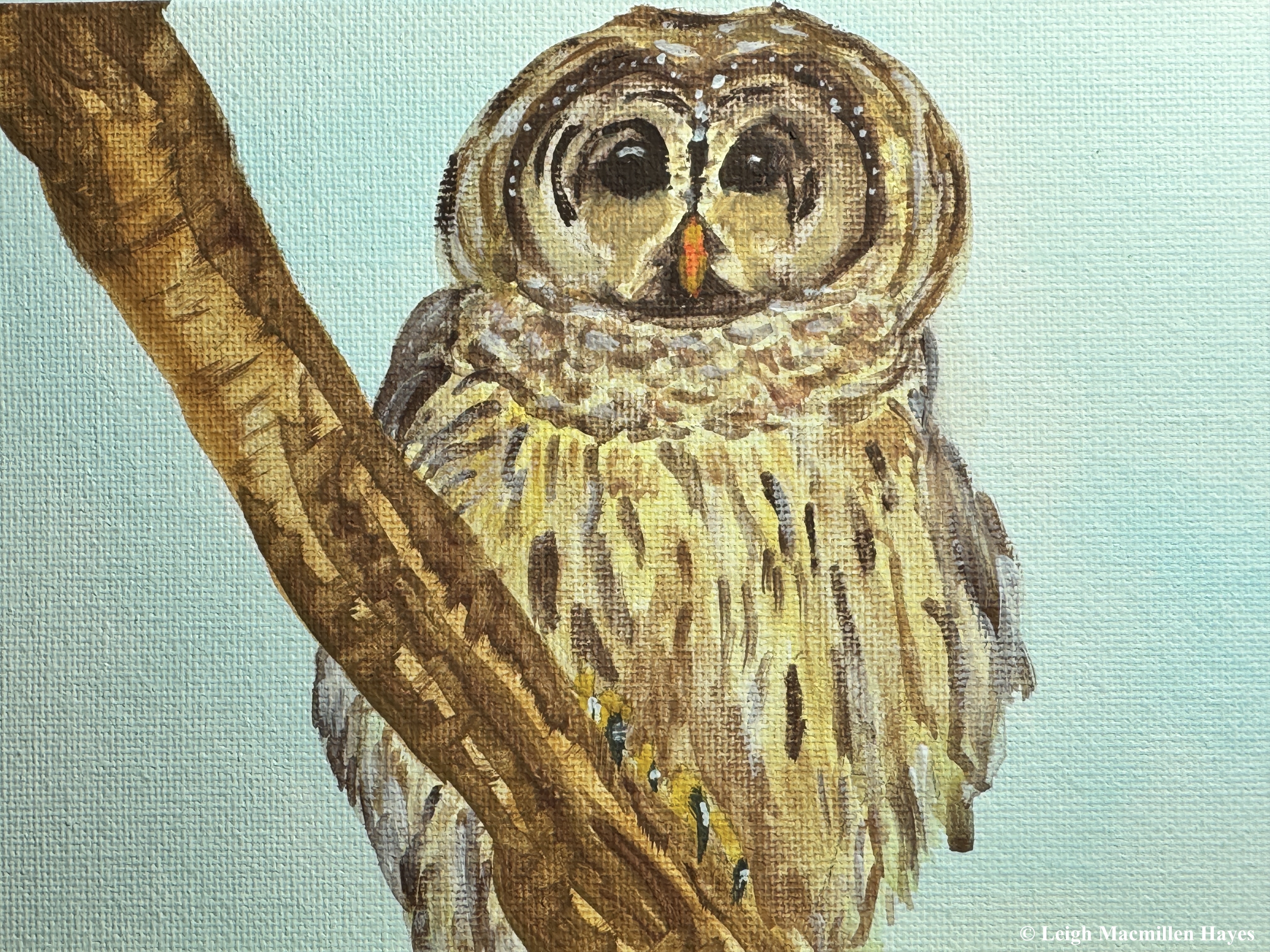
A Barred Owl near the vernal pool, thankfully when there was still ice on it about a month ago, but he’s in the area, so anything can happen.

Ah, but how I love to meet these critters, who unless they are calling, remain incredibly still and blend in with the scenery and I’m sure I pass by more than I actually spot.

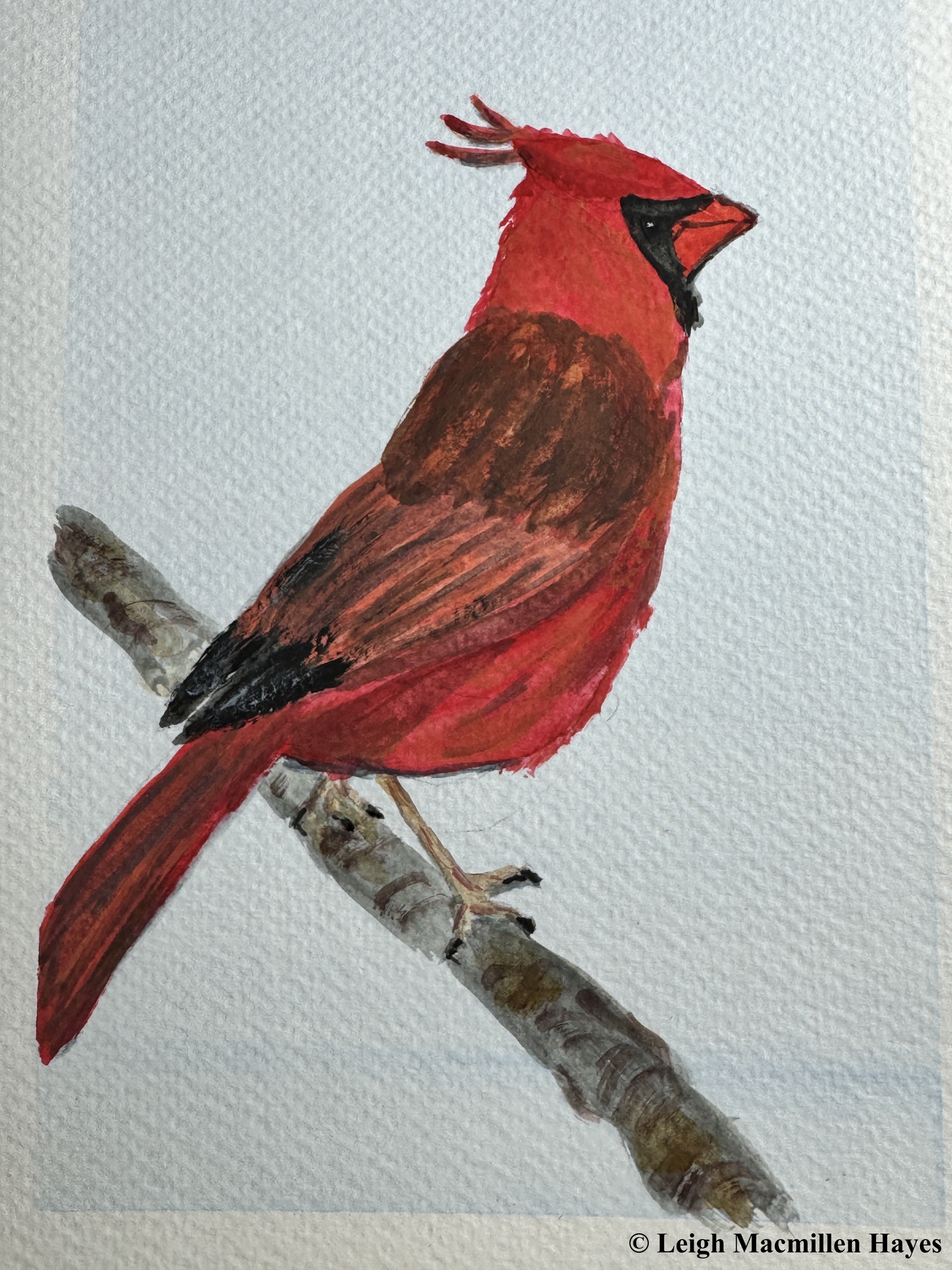
Mr. Cardinal, and I’ve been waiting for him to pass sunflower seeds on to his Mrs. because I’ve seen him do it in the past and it’s such a lovely gesture.

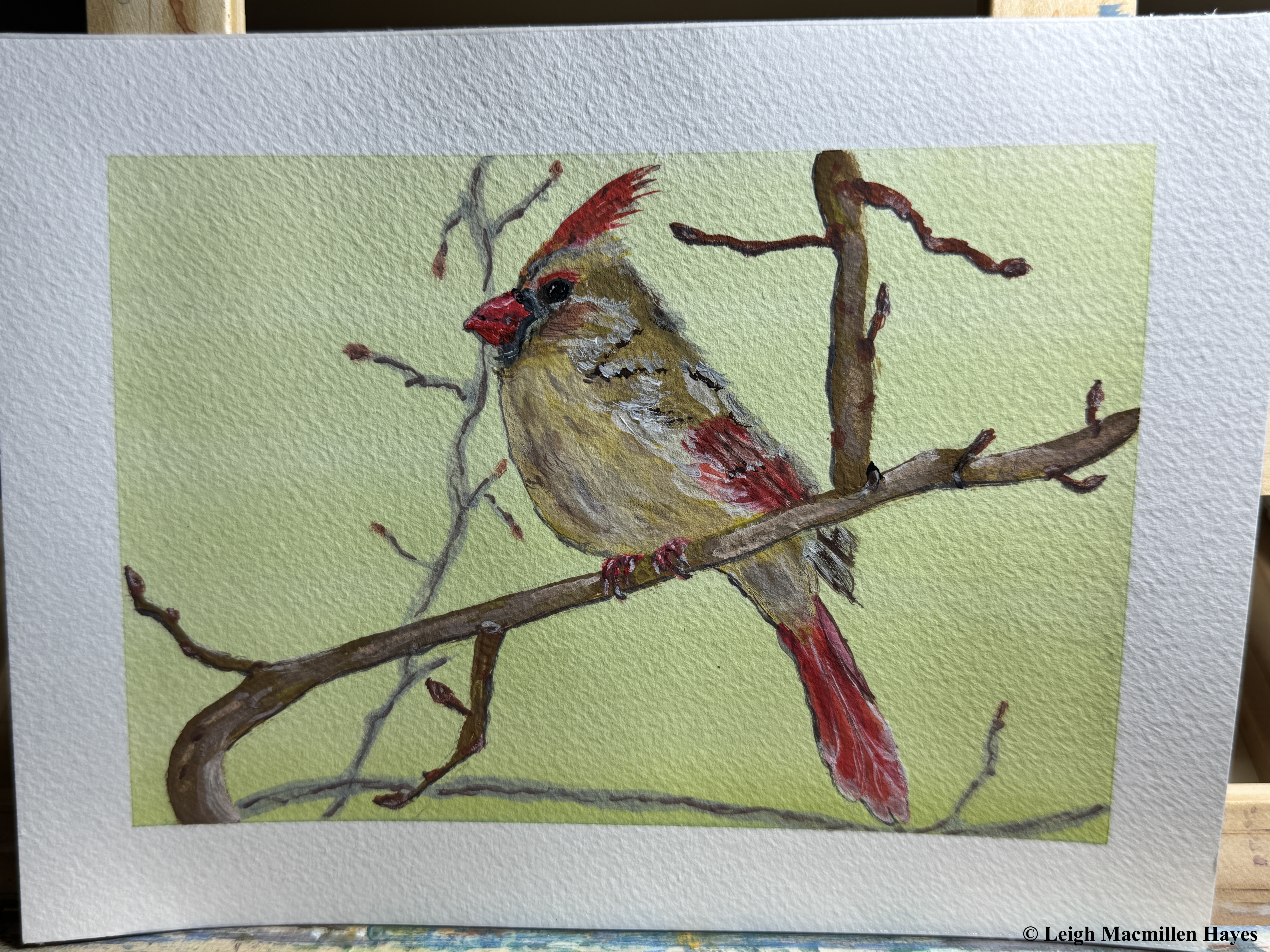
The Mrs. waiting for a gift from her betrothed. To my knowledge, she’s still waiting. One of these days he’ll surprise both of us.

Mr. Bluebird, who also visits daily, as does his Mrs., and from the direction of their travel, I believe they are setting up housekeeping in a house my neighbor erected just for them.

One of the zillion Juncos my friend Kate sent up from Connecticut. They arrived the day she told me they were on their way. That was a few weeks ago. In a snowstorm the other day, we had quite a large flock, but I think most are continuing their journey north as now I only see a few at a time.

My first attempt at painting a Robin following instructions in a book.

And then trying to tweak the painting and turn it into an American Robin. I fooled SEEK, a free app developed by iNaturalist. It came right up with A. R.

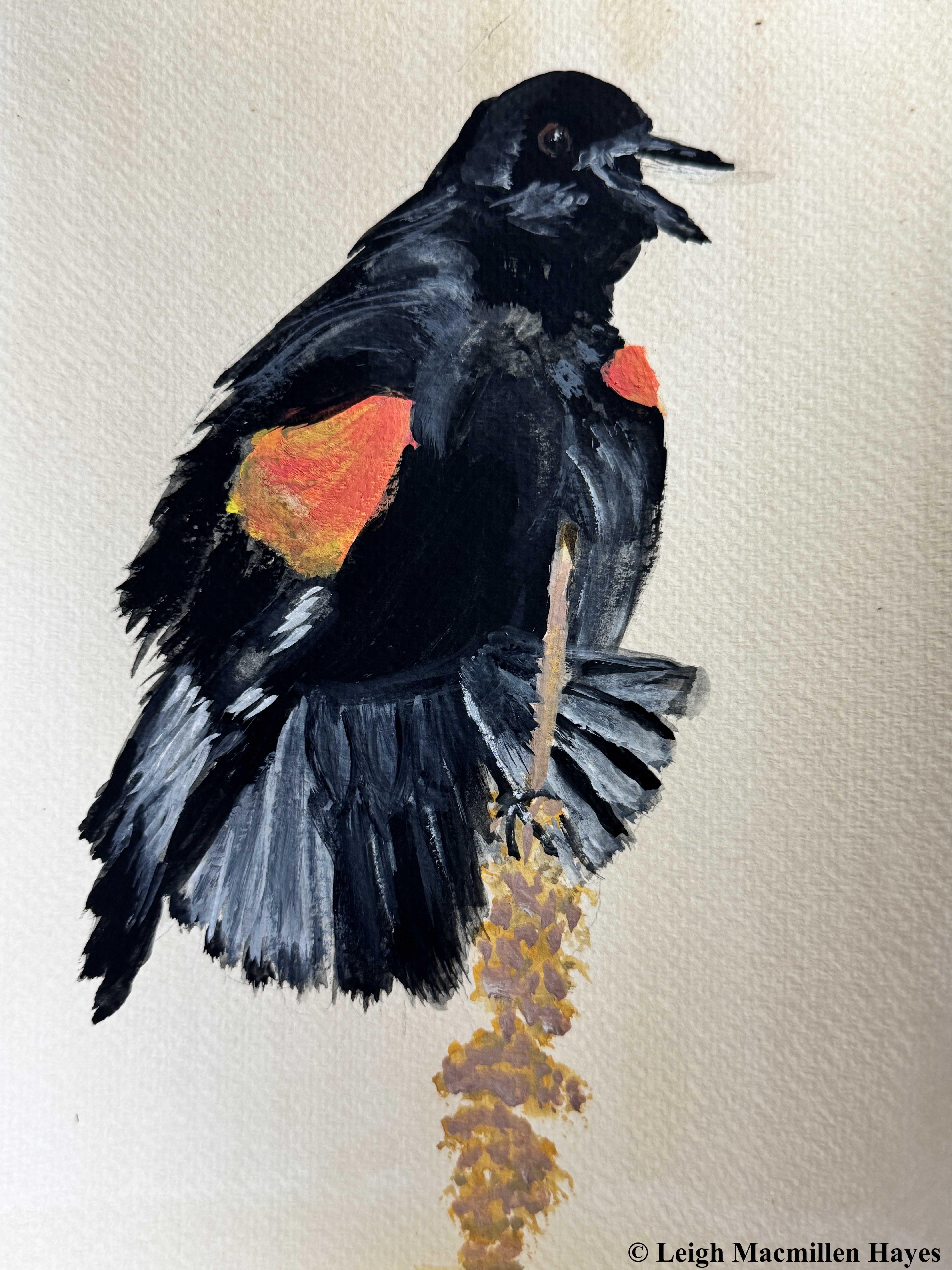
SEEK also knew this to be a male Red-Winged Blackbird. What it didn’t know is that it was one I saw calling a few weeks ago when there didn’t seem to be any females around.

And finally, my new friend, who has actually been in the neighborhood for a long time, but we only recently spent a few minutes together the other morning: Sharp-shinned Hawk.

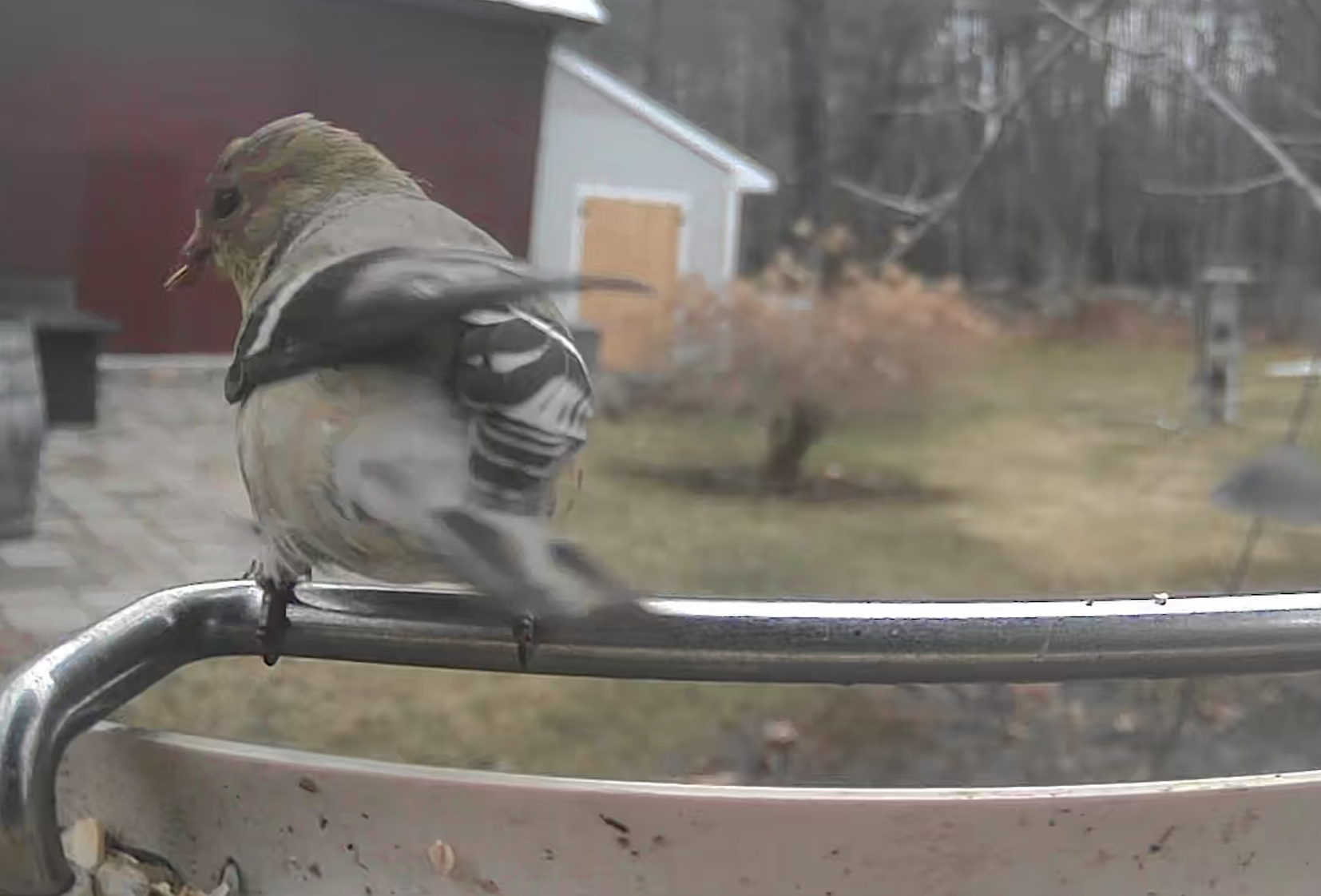
As I look out the window right now, besides this Goldfinch, the Bluebirds are both here, plus Robins, Juncos, Chickadees, Tree Sparrows, White-Breasted Nuthatches, and Mourning Doves. And actually, there are more Juncos than I expected.

That is the extent of my bird collection–at least for the moment. Thanks for stopping by to take a look.

The student from Britain: Jillian. It just came to me.

Man & Nature: Why Can’t We All Work Together?

I absolutely love it when the unexpected occurs and nature takes me by surprise and provides me with jaw-dropping opportunities. So here’s the thing. What is unexpected to me is an every day or every year occurrence in the natural world. It’s just that on that one day I happened to be in, as the saying goes, “the right place at the right time.”

And so it was that during June I paddled between two islands and slight movement caught my eye. Mind you, I was a telescopic camera lens away from the action and so what may appear close, wasn’t. I’d unexpectedly happened upon two loons. Okay, so the truth be told, My Guy was the first to witness them. He pointed in their direction and then the two of us sat in our kayaks and watched.

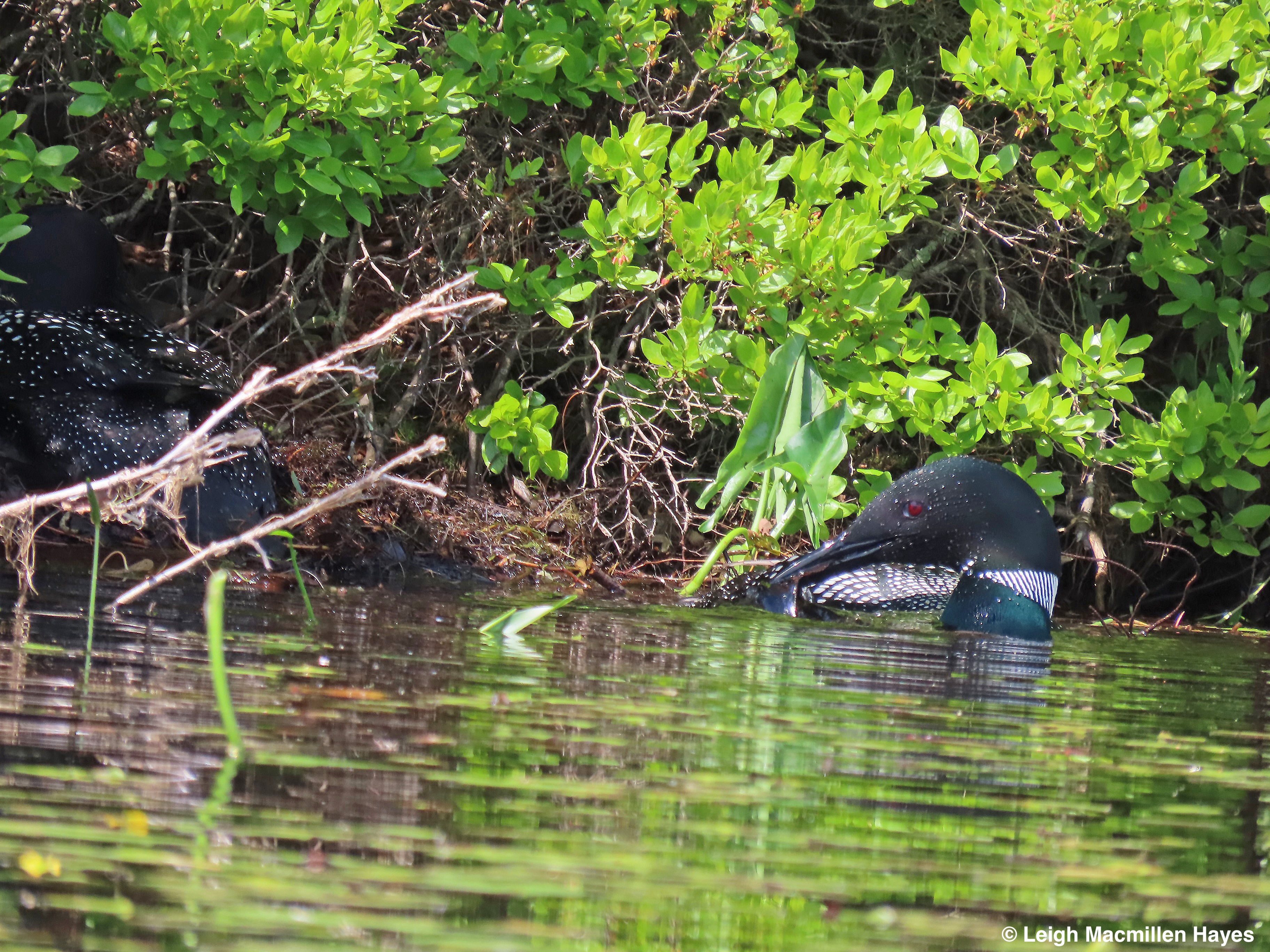
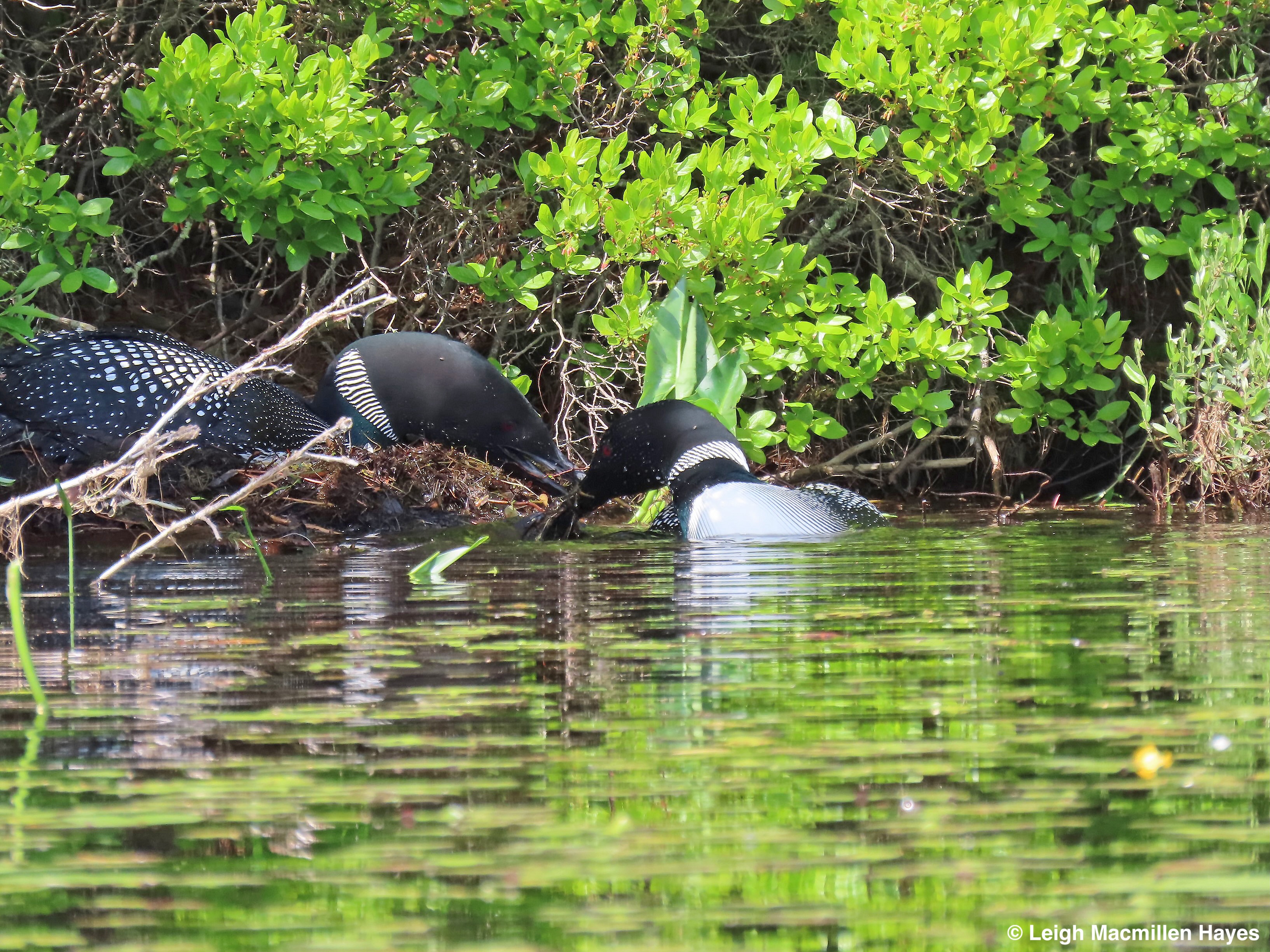
This was a first for both of us. To observe as one loon pulled nesting material from the pond . . .

and dipped to gather more . . .

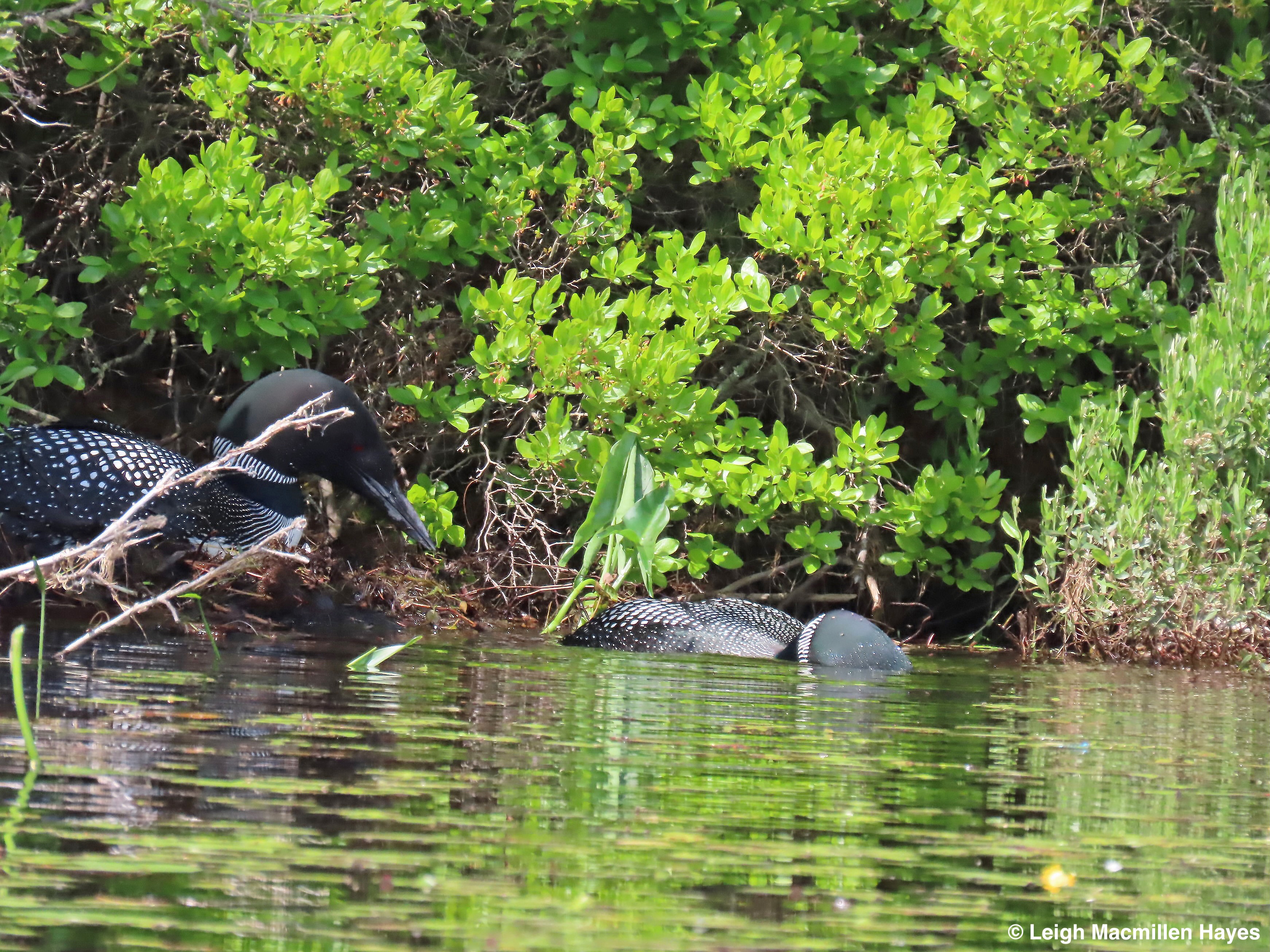
and carefully “handed” or rather beaked it over to the other . . .

who, in turn, received it . . .

and added it to the nest.

And so the nest building continued, but we’d seen enough and knew we needed to paddle away and leave them to their business.

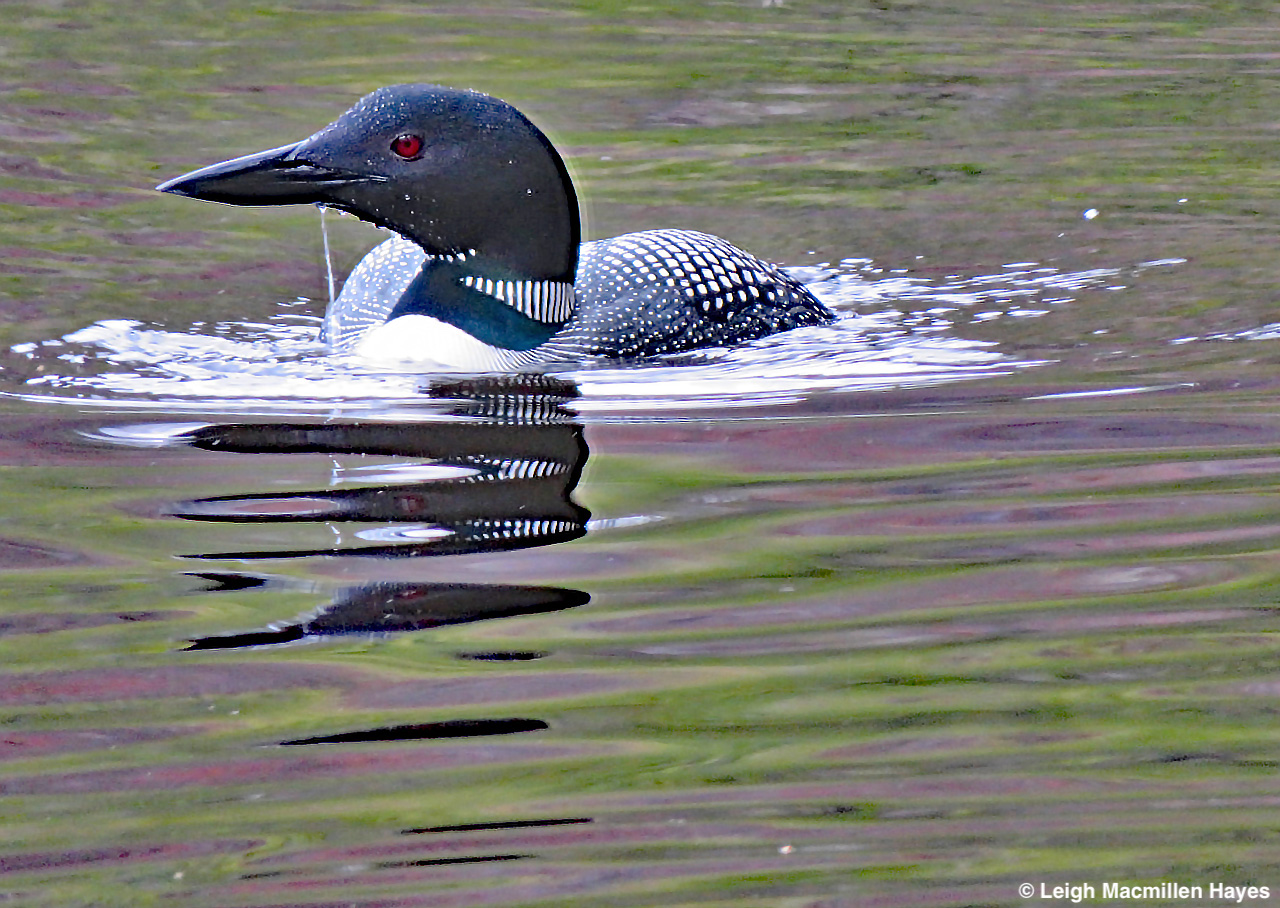
A couple of weeks later, as My Guy explored the pond’s perimeter, I took a few moments to check on the nest and much to my delight, found a loon sitting on it. Notice its open mouth? I say “its” because I don’t know if this is the male or female and do know that they take turns incubating the eggs.

Notice how the loon’s mouth is open. Much like a dog pants to cool down, so do loons. According to National Audubon, “When it’s hot, some species will resort to gular fluttering. The bird will open its mouth and “flutter” its neck muscles, promoting heat loss (think of it as the avian version of panting).”

I’ve seen the same behavior in other birds, including Great Blue Herons.

It’s been an extremely hot summer, even here in the north country. In fact, the water temperature of our local ponds and lakes is way too high. It should be in the 70˚s, but instead is in the 80˚s and not at all refreshing for us, so I can only imagine the adverse effects it is having on flora and fauna.

The day after a pond association meeting this past weekend, My Guy and I hit the water again. While I was drifting for a while, numerous insects sought my boat as a landing spot. And then, this Scarlet Bluet landed, plastering a meal to the side of the boat.

It was a mighty big and juicy looking meal for this little damselfly to consume. He (his female counterpart is yellowish where he is so scarlety orange) dined for at least twenty minutes as I watched, and then I think it was more than he could handle, and off he flew, leaving the remains for me. I was starting to get hungry, but . . . not that hungry.

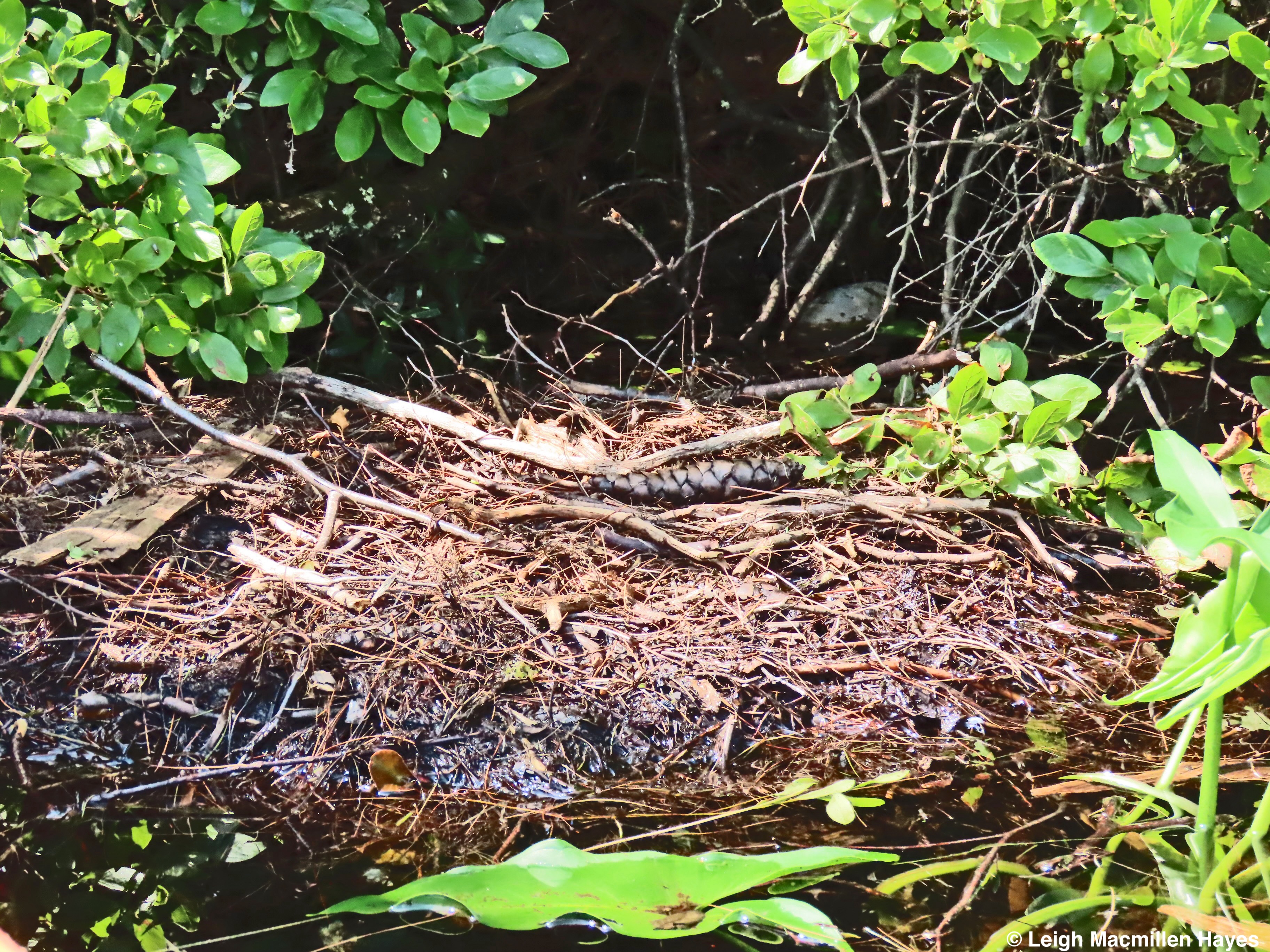
Once he departed, I made my way back toward the loon nest. As I suspected, it was empty. Usually, the local loon chicks hatch around the fourth of July (never a good mix with fireworks–think about noise, oh, and added pollution to the pond water).

BUT . . . then I took a closer look and this time I did get close because it was empty. Here’s the thing. About two weeks ago we had a major storm that didn’t last long, but deposited a lot of water. That seems to be the pattern of late. And I’d learned at the association meeting that the dam which controls the water level for this particular pond hasn’t been opened as much as usual and some people have water either directly under their docks or just over them. Ours is a floating dock, so it’s not an issue for us.

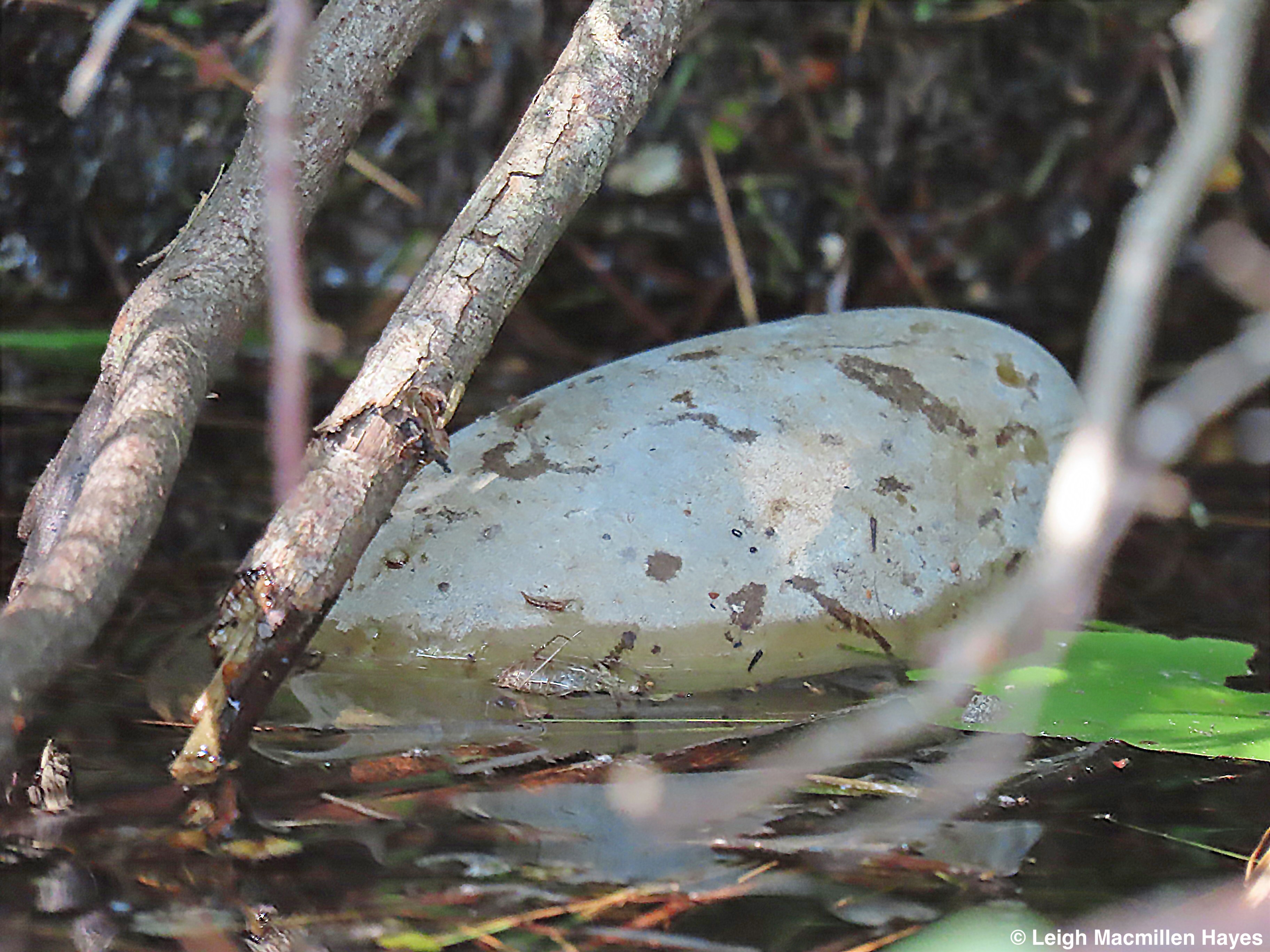
All that said, I spotted water behind the nest. And something in the water behind the nest.

A loon egg. That could probably mean that during that storm a couple of weeks ago, the nest was swamped, the adult abandoned it, and the egg floated off. It was a sad realization. I had to remind myself that nature happens.

In this case, it happened twice, for as I looked about, I saw a second egg off to the right of the nest.

Two loon parents who worked side by side to create a home.

Two loon chicks who never had the opportunity of life.

A dam that is controlled by a local government, and has a new dam tenderer, but it is also controlled by another entity father downstream, in the form of a hydroelectric power plant.

I shouldn’t blame them. I know that things don’t always work out the way we think they should. But still.

Man versus Nature; Nature versus Nature. Why can’t we all work together?

Overset Bouquet Mondate

We’d hiked at least a mile and passed a few Trout Lily leaves but no flowers when I asked my guy to hunt for the little yellow beauties that delight me. And so he did.

And felt quite pleased when he pointed one out to me. Well, um, how should I tell him it’s a False Hellebore and not the lily I sought. But, it is a member of the lily family, so it was a win, and I can’t resist photographing the hellebore’s spiral stalks of pleated leaves so it was actually a win/win for both of us. We never did find a flowering Trout Lily.

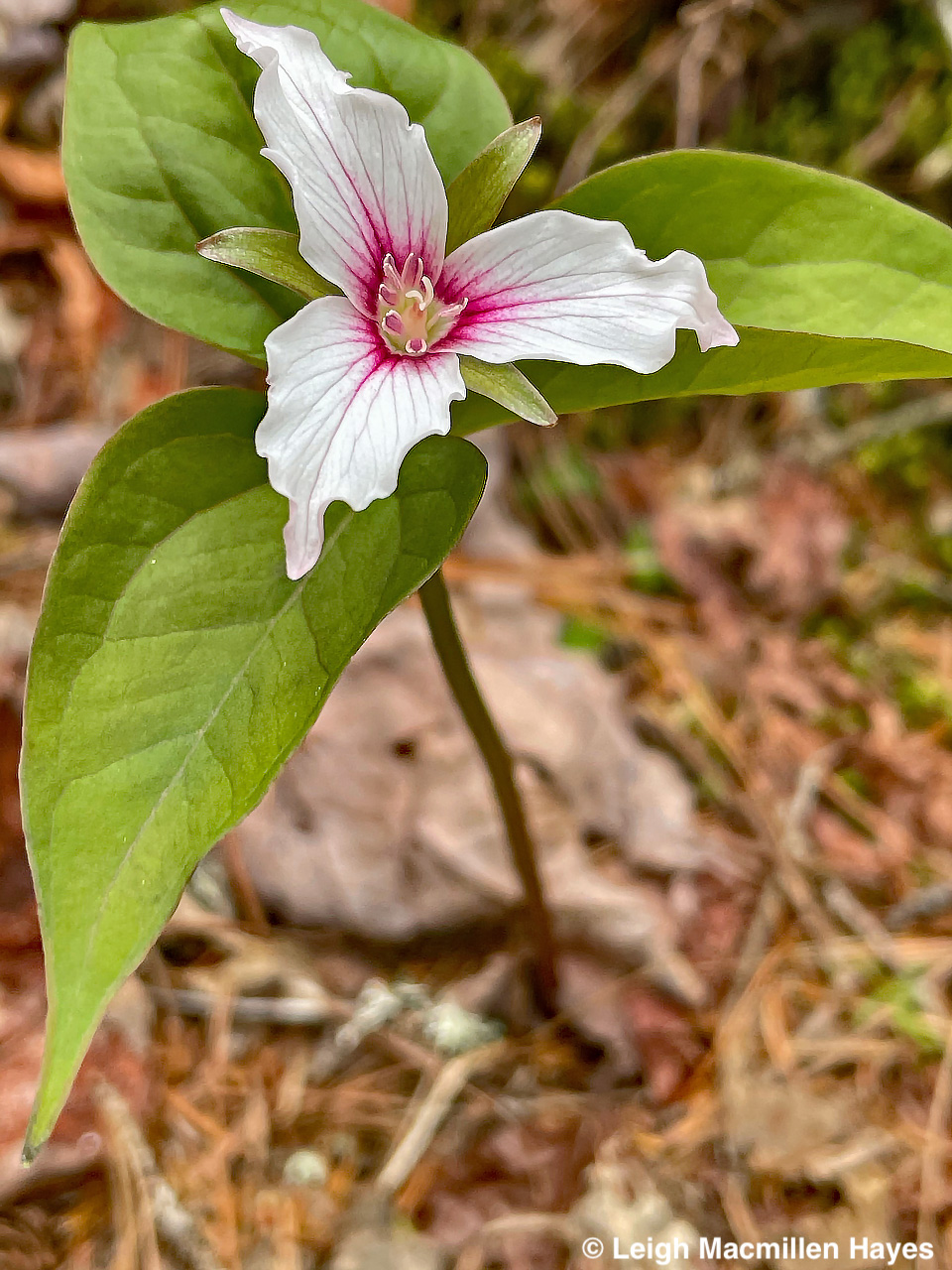
That was okay, because there were so many other flowers to honor and today marked the first day of this year that I spotted a Painted Trillium. Leaves of three (actually bracts), sepals of three, petals of three, but the best is the pinkish-reddish-purplish splotch at the base of the petals that acts as a pollinator guide.

Another pleasant surprise a few minutes later: American Fly Honeysuckle, its funnel-shaped yellow flowers tinged with a hint of purple dangling like a set of twins.

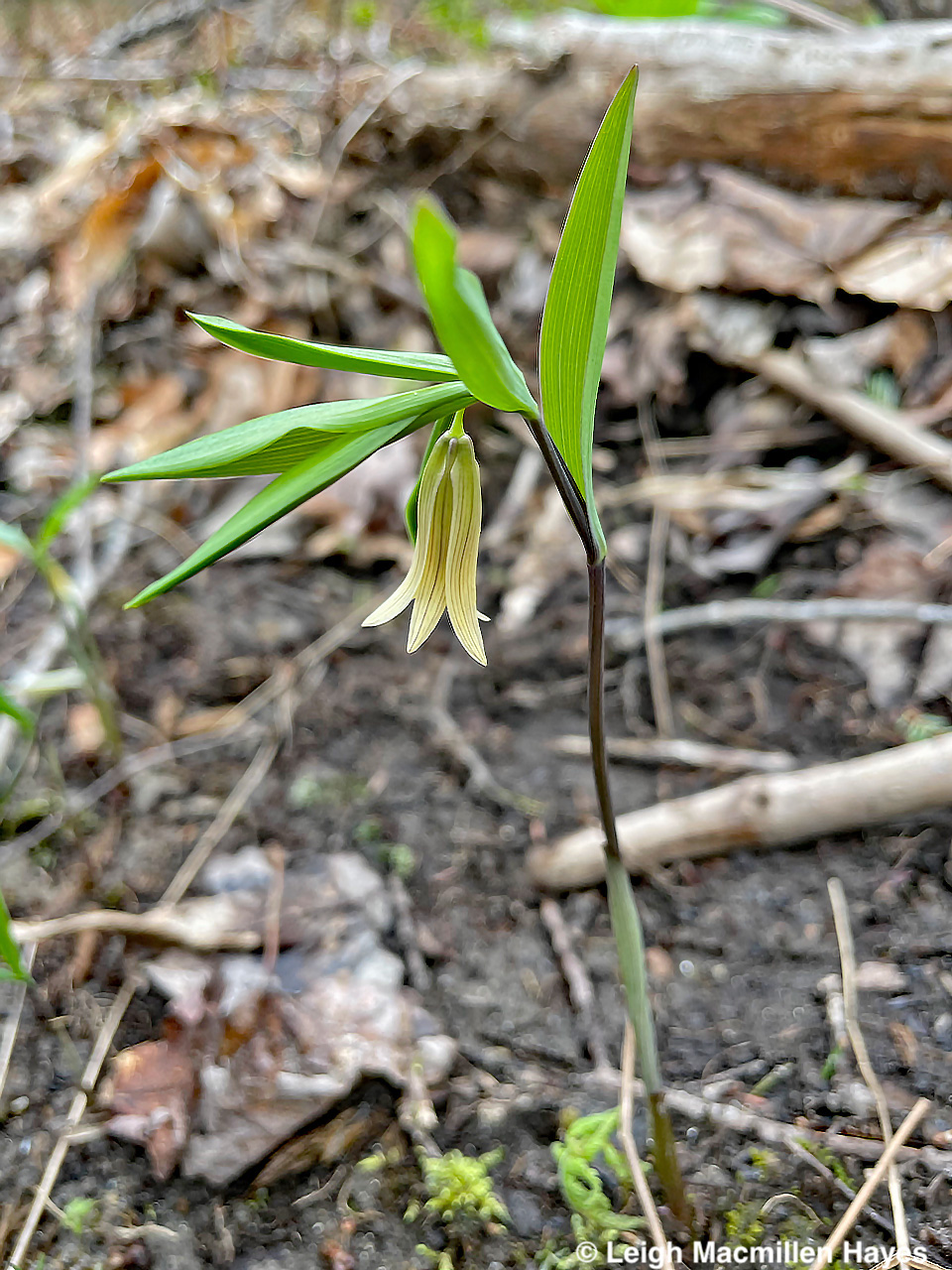
Also pale yellow in hue, but with petals that curve out slightly at the tip: Sessile-leaf Bellwort (aka Wild Oat). While most bell-shaped flowers are fused, these are not. And they are most subtle in appearance so you really have to focus to locate one. But chances are that once you find the first, your eyes will cue in on others.

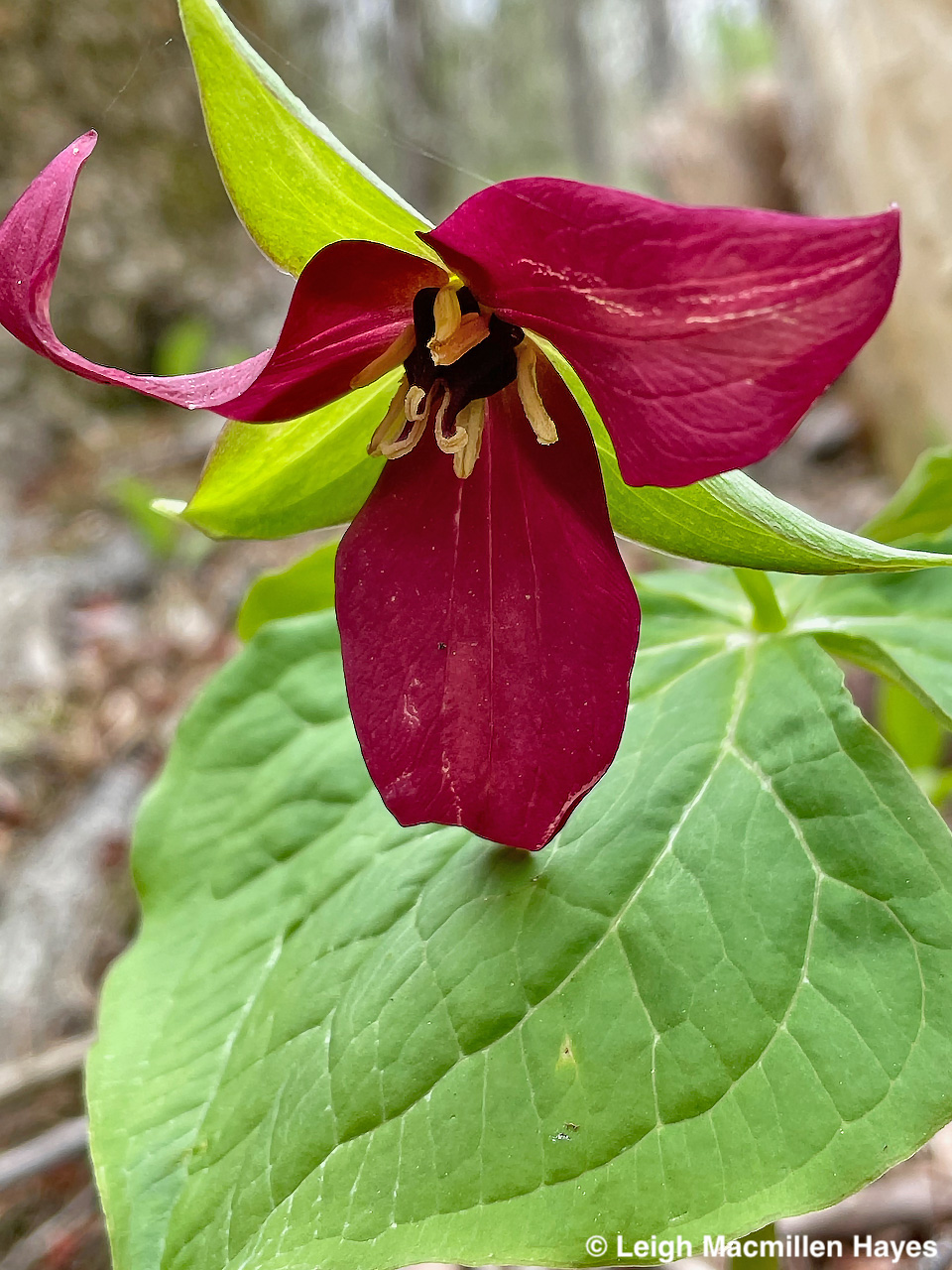
No gathering of flowers is complete without a touch of red, and though we found only one Red Trillium (aka Stinking Benjamin), it was enough for its rose-colored flower was well accented with egg-yolk yellow anthers.

Of course, we continued to find more Painted Trillium and no hike at this time of year is finished without my guy commenting on the trillion Trillium that I insist upon photographing. I assured him that I wouldn’t take pictures of each one today, but I surely would honor all of them and so as we continued and he somehow managed to walk by without noticing, I obnoxiously drew his attention to all.

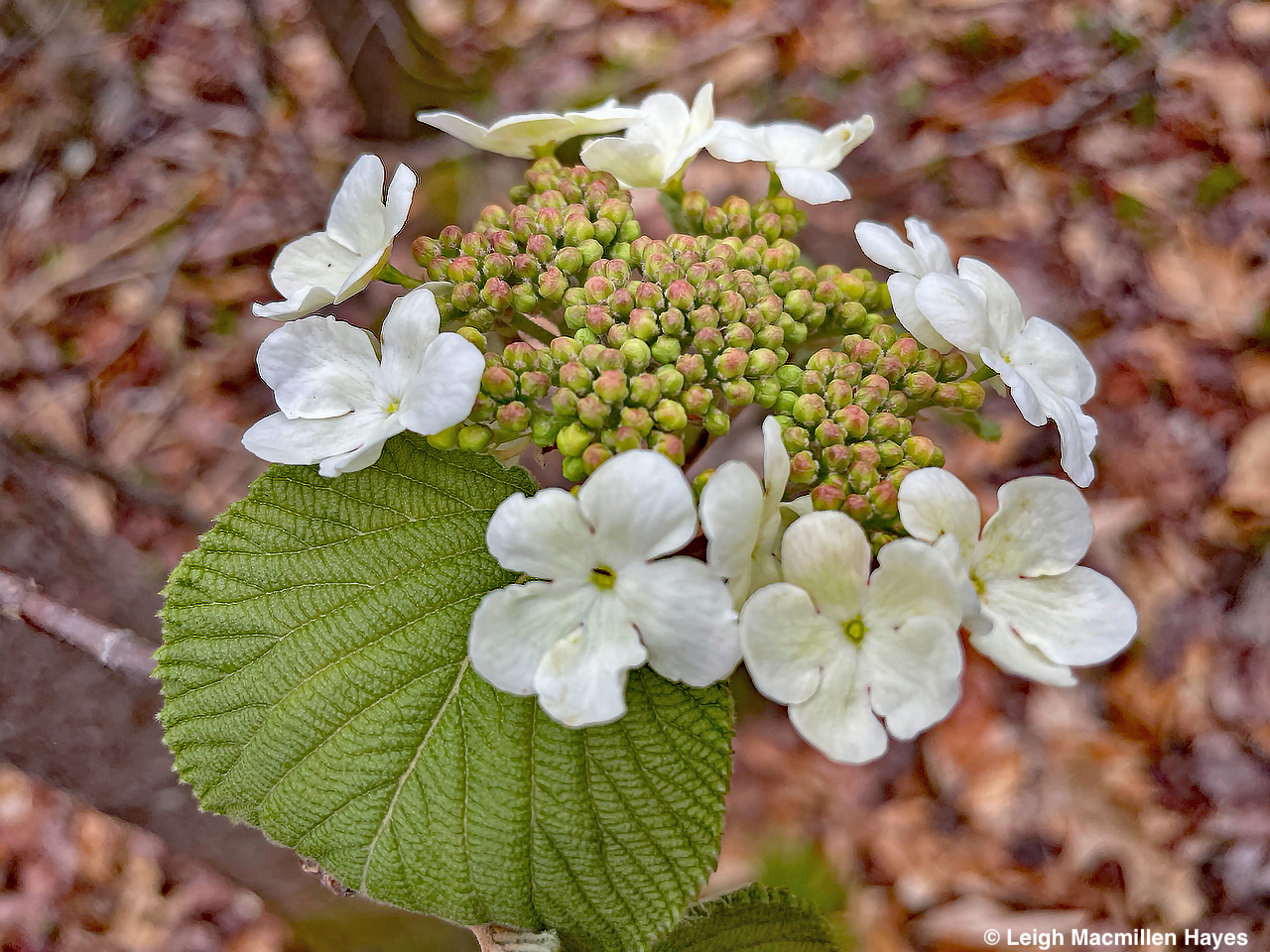
The one flower whose name he did learn today was Hobblebush. I swear I’ve introduced them before, and surely I have, but today the name and the floral display clicked–perhaps because they decorated so much of the trail we traveled, and truly, I’m not sure that I’ve ever seen so many in flower in one place.

The flat-topped clusters of flowers have a lacy effect and contrast well with the accordian-veined leaves. The outer ring of sterile flowers are said to attract pollinators who will then focus on the tiny fertile watermelon tourmaline flowers in the center. My wonder is this: do the sterile flowers have a second use–perhaps to keep others away because they find no nectar or pollen and think the plant isn’t worth a further exploration?

As I explained to my guy, the reason for the common name is its straggly branches that often bend and take root, tripping or “hobbling” passers-by.

To not include Trailing Arbutus would be remiss on my part, for so many were still blooming along the trail. And after I paused to photograph this one and then caught up with my guy and explained my focus moment, he was quick to quip that I was the one trailing! Always . . . in his hiking book.

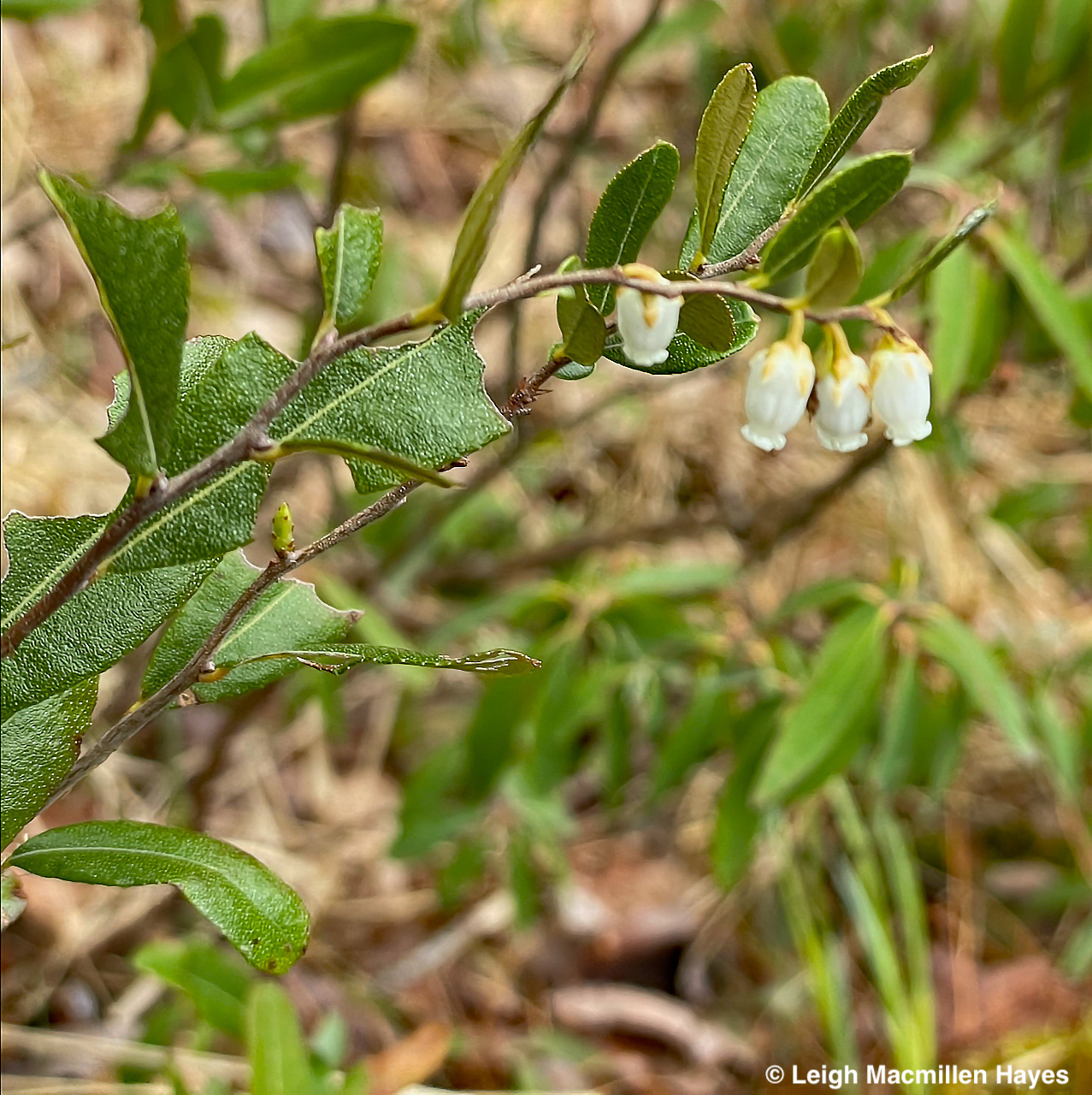
By water’s edge, where we sat upon an overturned canoe to dine on our sandwiches, I found a few examples of Leather-leaf in flower, its tiny nodding, urn-shaped, pearly white bells with crisp rolled upper lips, on a short stalk hanging all in a row rather like a line of laundry on the clothesline.

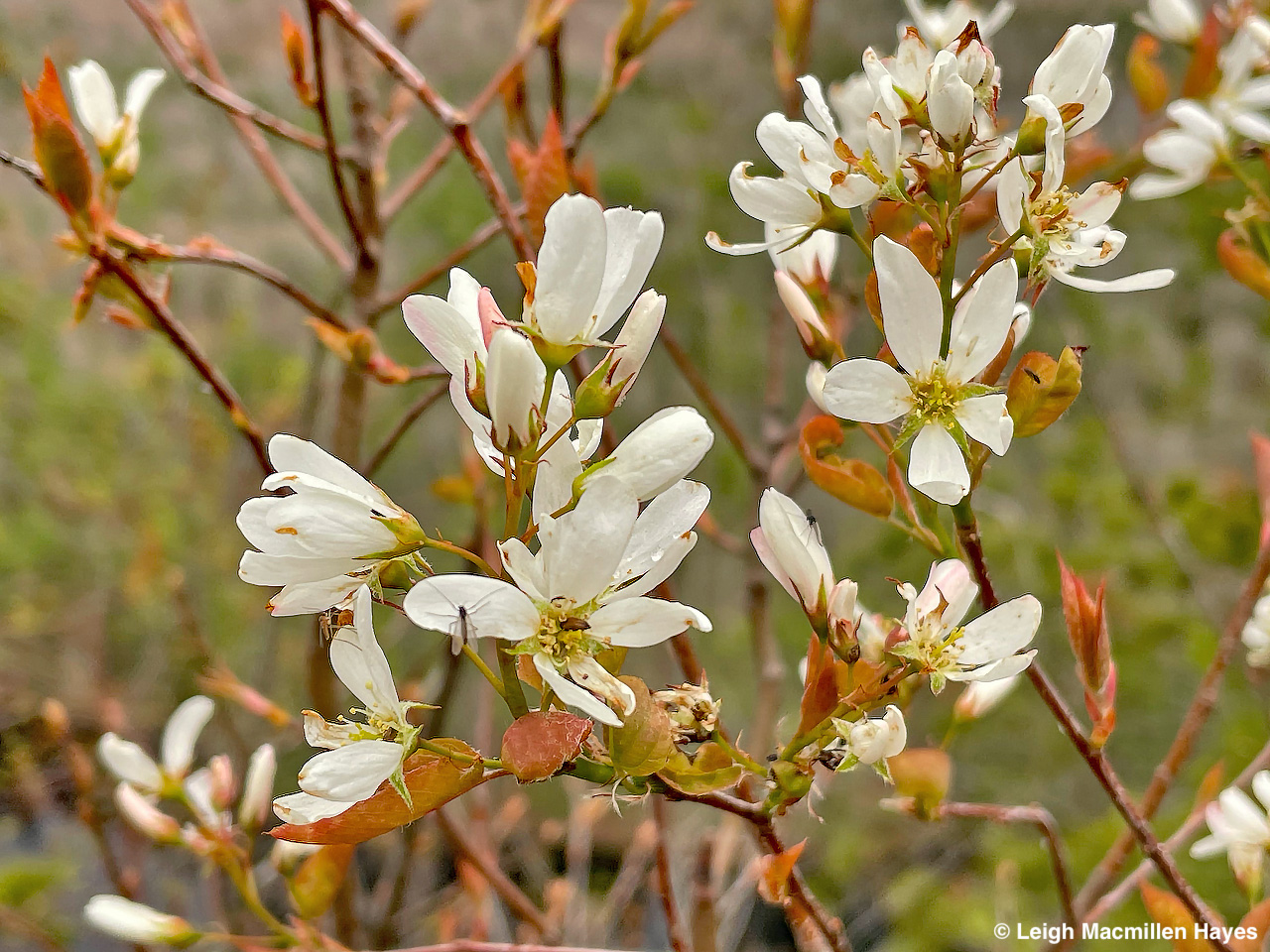
At the summit, it was Serviceberry, aka Shadbush, that announced its presence. Notice how the flowers have emerged before the leaves. Right now, mini-leaves are bronze-tinged, folded and half or less their mature size; eventually the leaves will become green and flat, with the upper surface smooth and the lower hairy just along the midrib but retaining a few hairs on the surface. Nothing like a bit of variation.

If you look closely, you’ll find at least one pollinator taking a pause as it was raining by this point in our hike, but another close gander may reveal a few others.

Again at the summit, and therefore closer to the sunlight that didn’t shine today, several urn-shaped white flowers with pinkish stripes, the petals fused and tips turned back, shouting that blueberry season is in the offing.

All of these we gathered in photographs as a bouquet to mark this Mondate.

There were a few other finds worth noting–like last year’s Lady’s Slipper capsule, the source of thousands of tiny seeds.

And the discovery of a few Morel mushrooms at the base of Northern Red Oak trees. That was another first find for me. I’m sure for my guy as well, though he hardly saw them ;-)

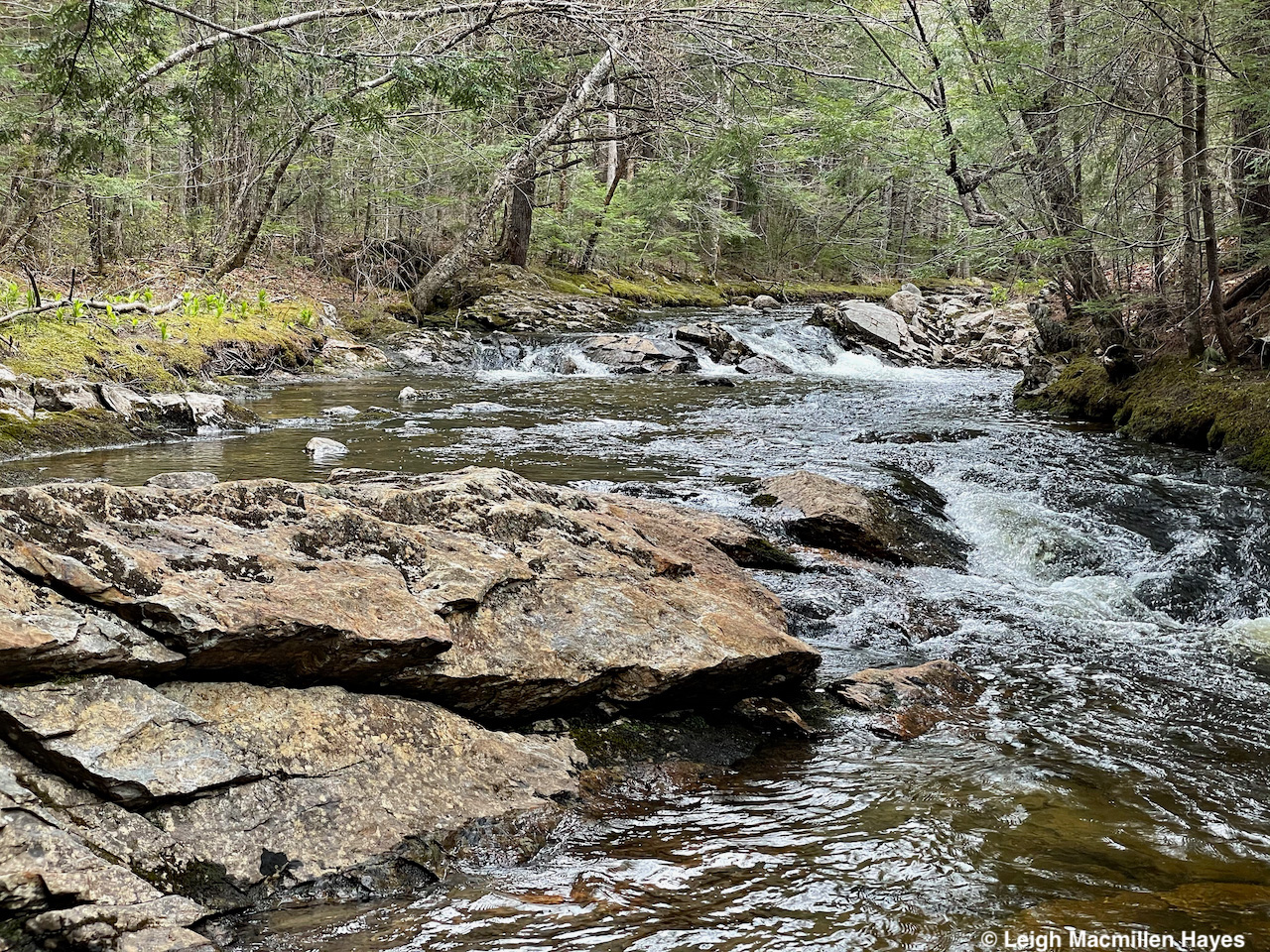
Our journey today found us hiking beside Sanborn River . . .

lunching on top of one of many overturned canoes beside Overset Pond . . .

enjoying the mirror image of the pond from a false summit on the mountain . . .

and taking in the entire scenario from the granite we stood upon to pond below, mountains beyond, and sky that reflected the ledge under our feet.

The flowers, the landscape, it was all worth the journey and we made plans to return in the near future. But the icing on the cake or pollen on the flowers was the pair of loons who entertained us from time to time in water so clear that we could see them swim underwater. Their re-emergence, however, was best and we enjoyed our time spent with them.

Overset Mountain and Sanborn River. A perennial favorite. A place to gather a bouquet without picking any flowers. A place to enjoy a variety of natural communities. A place to be native with the natives.

Thanks to Larry Stifler and Mary McFadden for allowing all of us to create an Overset Bouquet any day of the year.

Nature’s Denouement

Due to today’s inclement weather, I postponed a Tracking expedition and thought it might be a good day to become a couch potato. But still, my feet itched to get outside as the raindrops fell.

And then a text message arrived: “Potential loon trapped in the ice; rescue happening on Lower Bay.” I was in my truck and on my way before I even knew the exact location.

As I drove, rain changed to big slushy balls that struck the windshield with noisy inkblot-shaped splats. I pulled into a parking area to check on the intended meet-up point and learned I was a bit early, so I went for a walk. All around me, the forest was alive with sounds–of wet snow striking marcescent leaves, and birds chirping as they flew from branch to branch. I’d hoped to meet an old friend, Argee, but he was nowhere in sight.

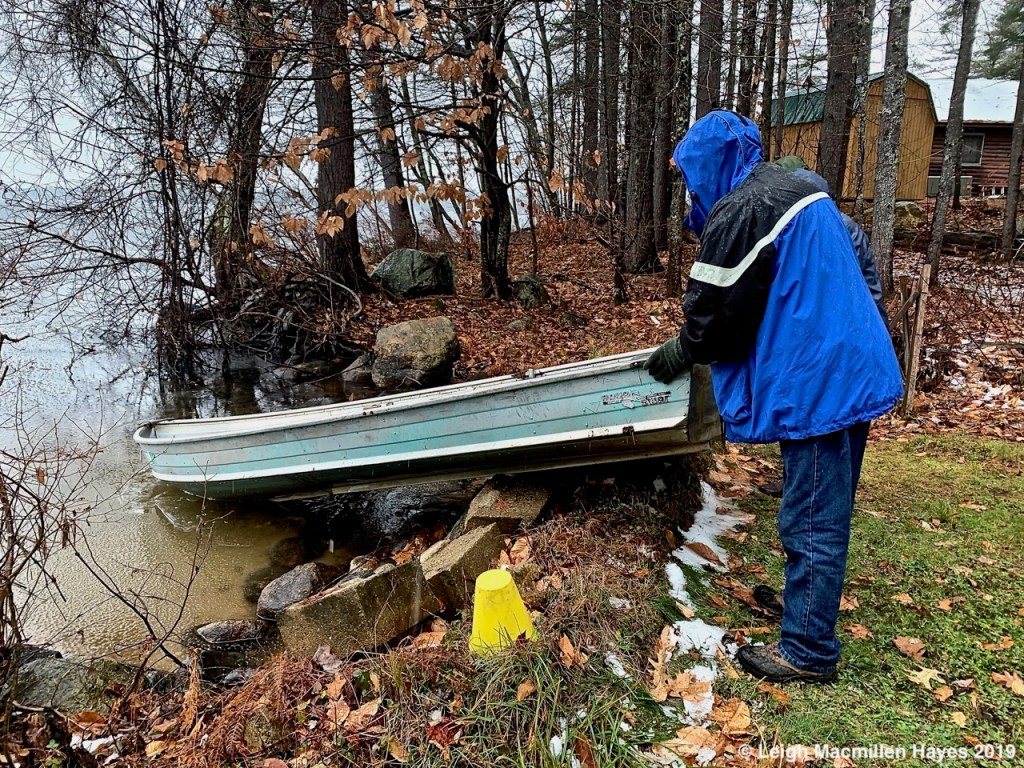
By the time I did join the rescue group, they were already loading an aluminum boat into the lake.

The Lower Bay of Kezar Lake had sealed over this past weekend and was coated with an inch or more of ice.

Thus the need for the rescue mission. An immature loon got caught by the sudden freeze. Thankfully for it, Susan Clout, a local resident, noticed its situation and put out a call for help.

Responders included Heinrich and Linda Wurm, Paul Buckley, Steve Lewis, and Jim Buck.

Donning life jackets, their only gear: paddles, a net and a box. It all seemed so simple. Paddle out, coo to the bird as it might talk to another, and either make open water for it to fly (loons need at least a quarter mile for take off, this one had a circle that maybe measured twenty feet–it was difficult to tell from the shore) or capture and release it on an open section of the lake. As one of the text messages stated about the plan: Evolving.

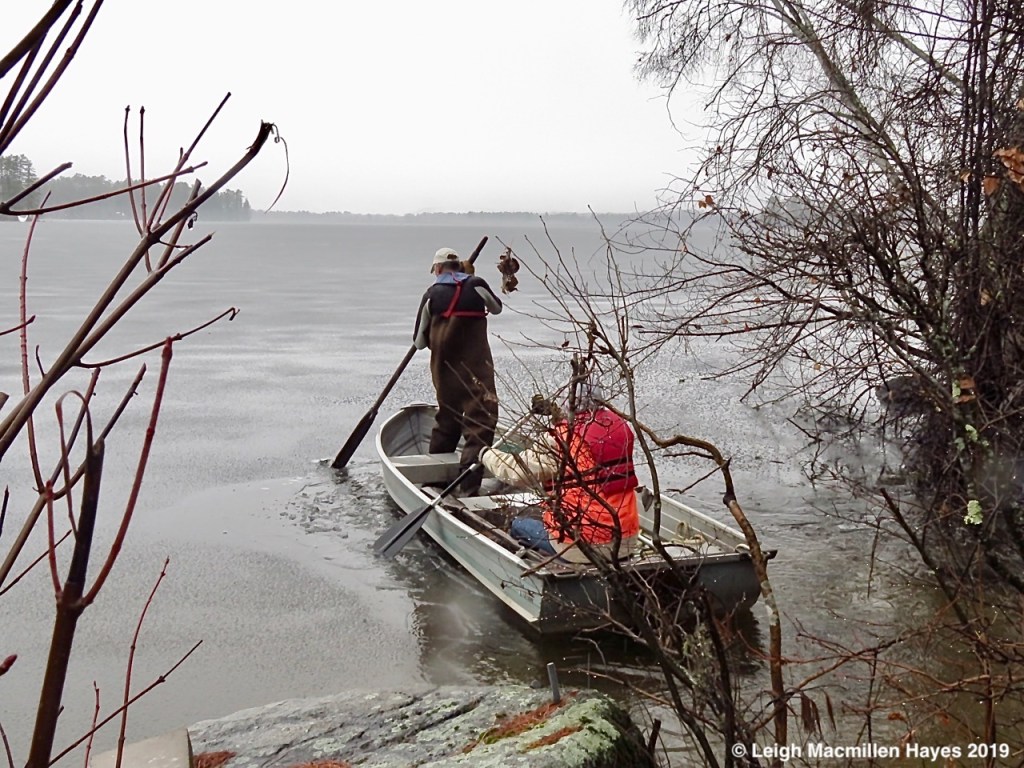
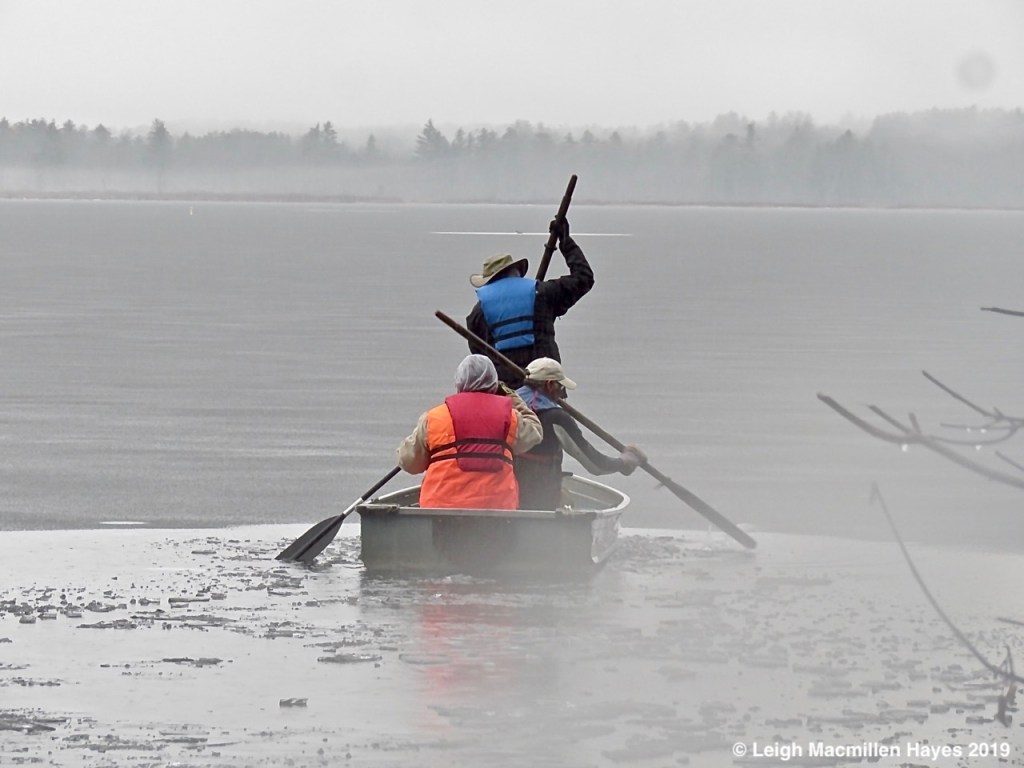
The task of breaking the ice was daunting and though it looked like they were crossing the Potomac, all they really wanted to do was maneuver part way across the bay.

Because it made sense for the person in the bow to stand and break ice as the sternman paddled, stability became an issue and within minutes the boat returned to shore and a third passenger climbed aboard.

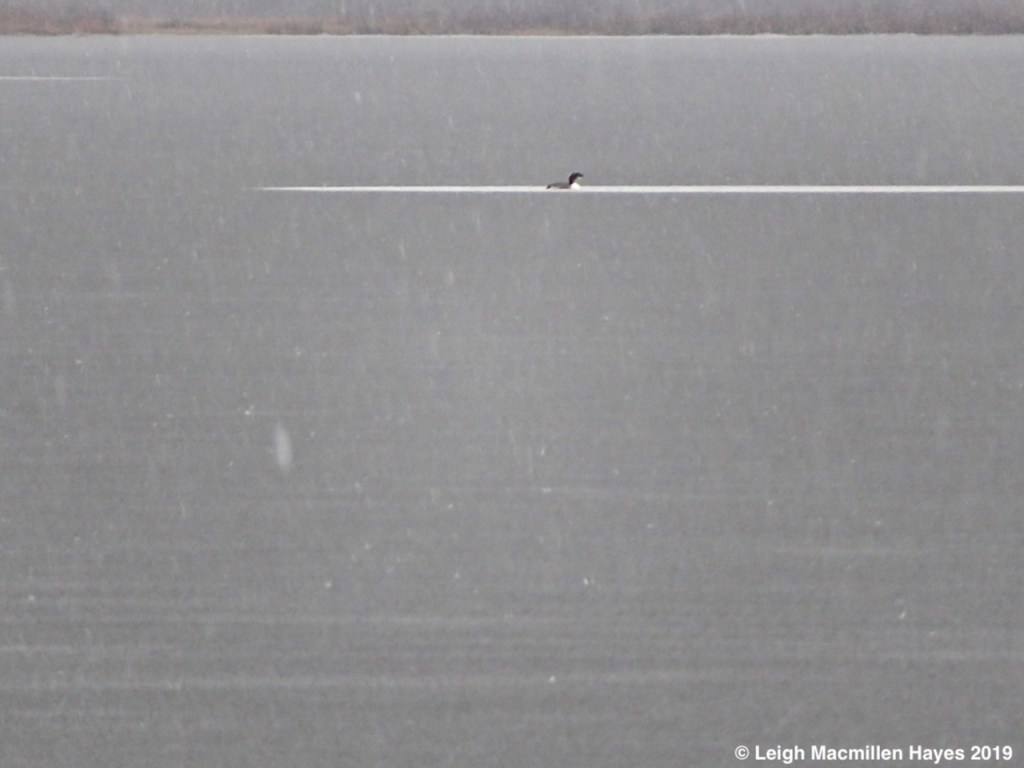
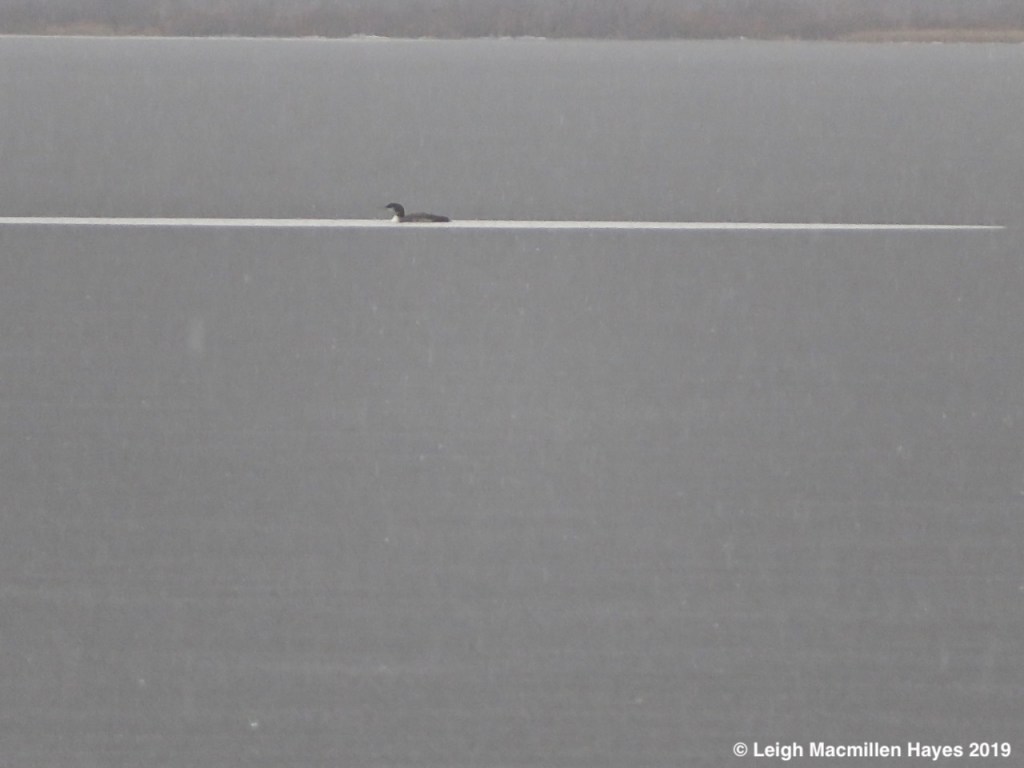
Though you can see the circle of open water and it may appear close by, it was all a matter of perspective and they had a long path to create.

Meanwhile, back on shore, those of us who remained behind and felt like we might need to rescue the rescuers, were entertained by Susan as she sang the most delightful lines of a song she’d been writing about the loon’s dilemma.

Back on the water, or rather, ice, progress was slow.

And still the loon swam, occasionally calling out. We interrupted its voice to mean, “I see you. Keep coming my way.”

On board the SS Icebreaker, oarsmen shifted positions because it was tiring to chop continuously.

We kept assuming they were making headway given their position.

And they were. But they still had a long way to go. After 75 minutes, with probably two more hours separating them from the loon, and a cold rain falling, they decided to turn around and hope that higher temps and maybe a breeze in coming days will do the trick. All are hopeful.

I was invited to the scene because my friends’ thought it would make a good story. In the end, my story is nothing compared to the one Nature is writing. She, apparently, has Her own plans for the denouement. We can’t wait to read how She resolves this matter.

Update: November 21, 2019

And here is the rest of the story as Heinrich interpreted it for us: “The loon we were aiming our mission toward took off this morning! Just as the Game Warden showed up the loon started flapping its wings and headed east toward the Narrows. Amazing!
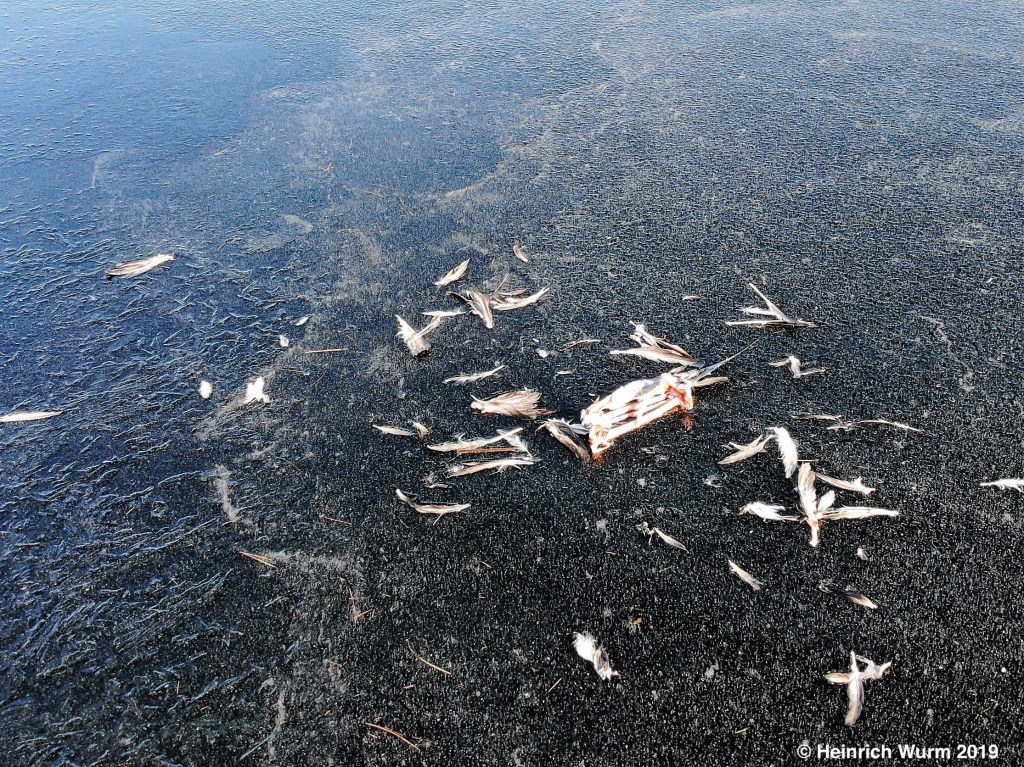
created by dji camera

Unfortunately these remnants were left near the other open space
where a loon had been sighted before.

I later learned that two Bald Eagles were spotted near the loons.

Nature’s Denouement: Find a balance.

Loon-atic loon antics

I wasn’t sure what to expect this morning when I drove to an undisclosed body of water for a boat trip to see an eagle chick in a nest. The reality was that though I’ve seen many eagles and twice had to cover my head with my hands for fear I was about to be dive bombed, only to discover the bird quickly grabbed a fish not far from my location, I’ve never seen an eagle nest.

l1-pontoon boat

And so, I was graciously met at a camp road and escorted to the dock, where we boarded a pontoon boat for the expedition.

l2-common loon

Within minutes of leaving shore, we spied several common loons and paused to watch them swim . . .

l3-preening loon

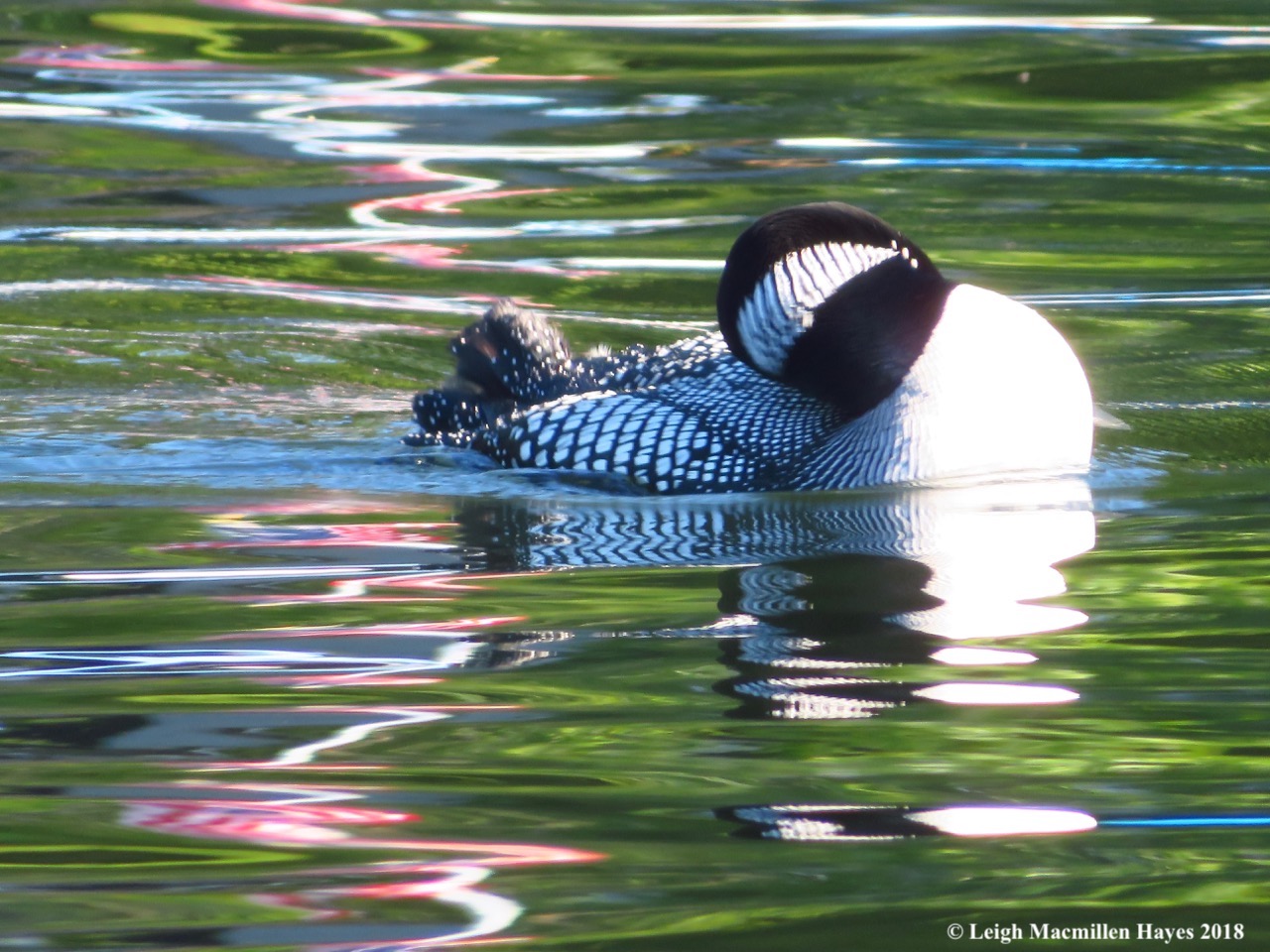
and preen. Feathers are important to loons and all other birds, for they provide protection from weather, including rain and sun. Aerodynamics also come into play, for the feathers give the body a smooth contour and help reduce drag in the air. To preen, the loon grasps a feather with its bill and works on it from base to tip, getting rid of oil, dirt, and parasites. The bird then repositions the feathers, straightening out the barbs on either side of the shaft–thus providing a smooth, weatherproof coat. To aid in the weatherproofing, the bird collects oil from a gland on top of the base of its tail and spreads it over the smooth feathers.

l4-eagle nest

At last we pulled away, my hostess (M) and host (S) eager to show me the eagle nest and a young fledgling. With apt directions, they pointed out the tree and told me where to focus the binoculars and then my camera. I was pretty sure I found the spot.

l6-eagle nest

But alas, a few minutes later they realized they were pointing to the wrong tree. A trip refund was surely in order, but . . . they regrouped, scanned the tree tops again and found the actual nest. Though it was difficult to tell from our location below and because they may have been hunkered down, we didn’t think we saw any birds, but we maybe we did. It apparently wasn’t feeding time and mom and pop were nowhere to be seen.  M  and S were disappointed, but I wasn’t. My first eagle nest! And maybe some babes, but even if not . . . my first eagle nest!

l7-crazy loon

Suddenly, splashes of water caught our attention and we turned in our seats to focus on the action closer to the boat.

l8-crazy loon

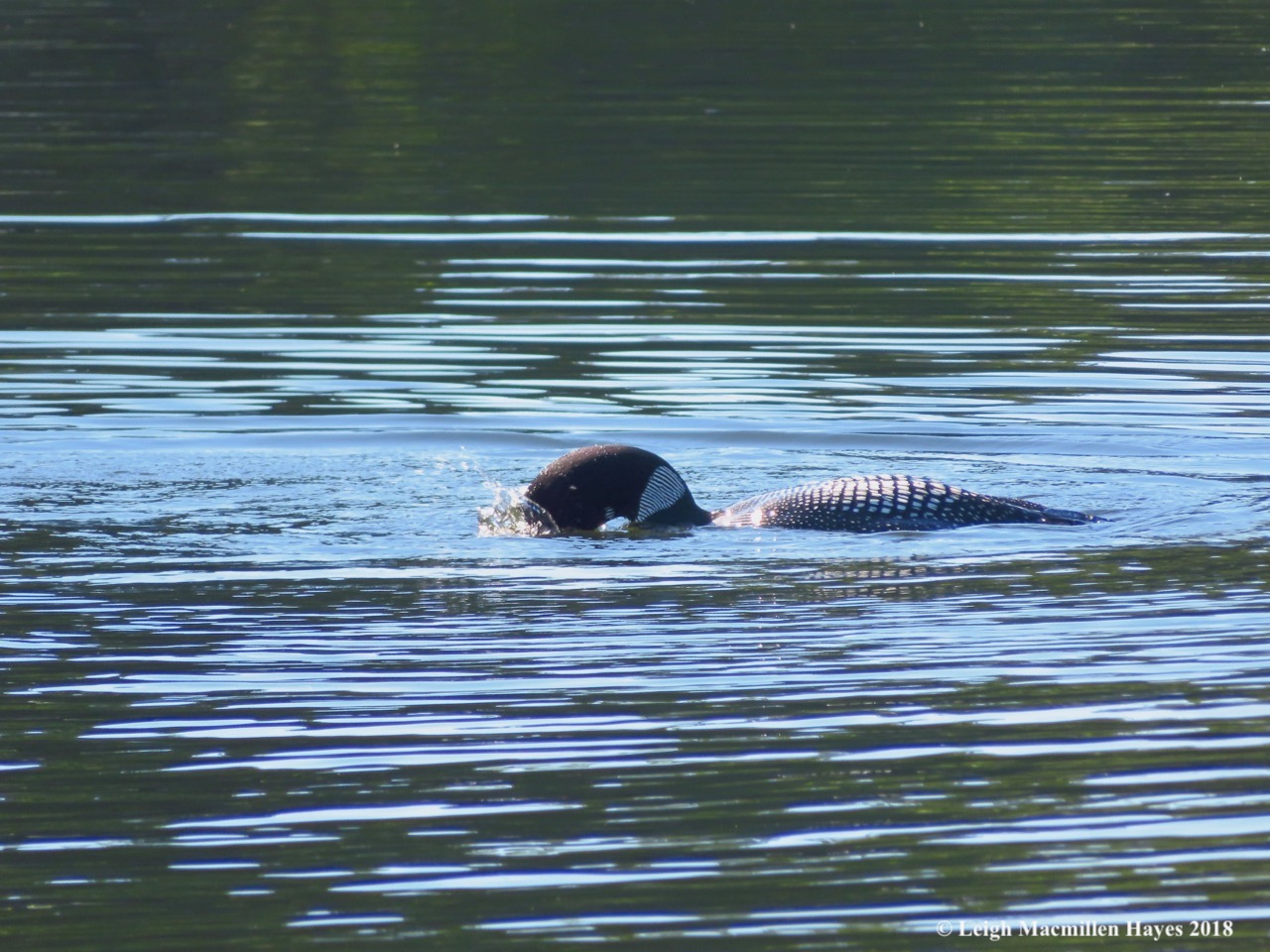
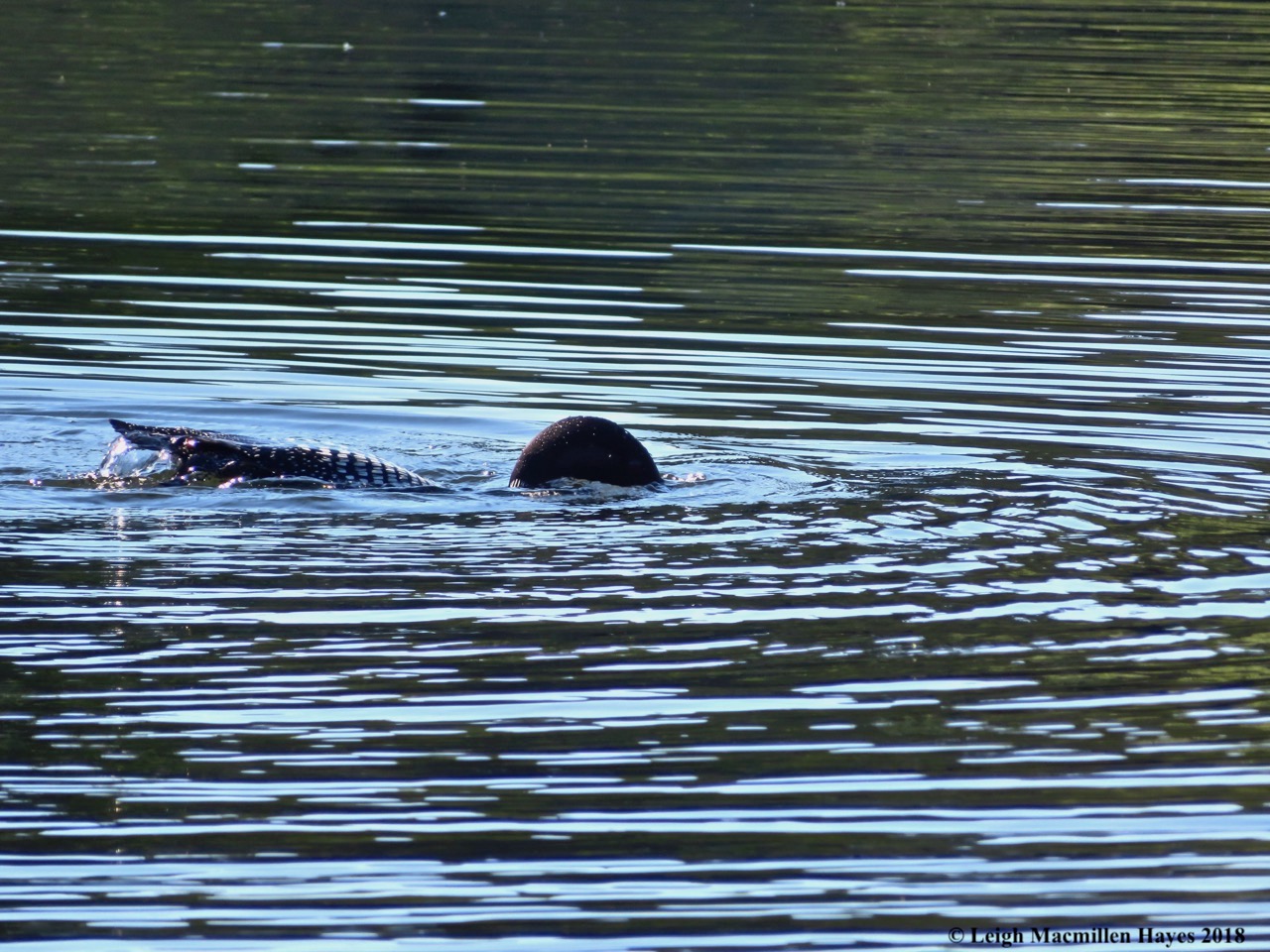
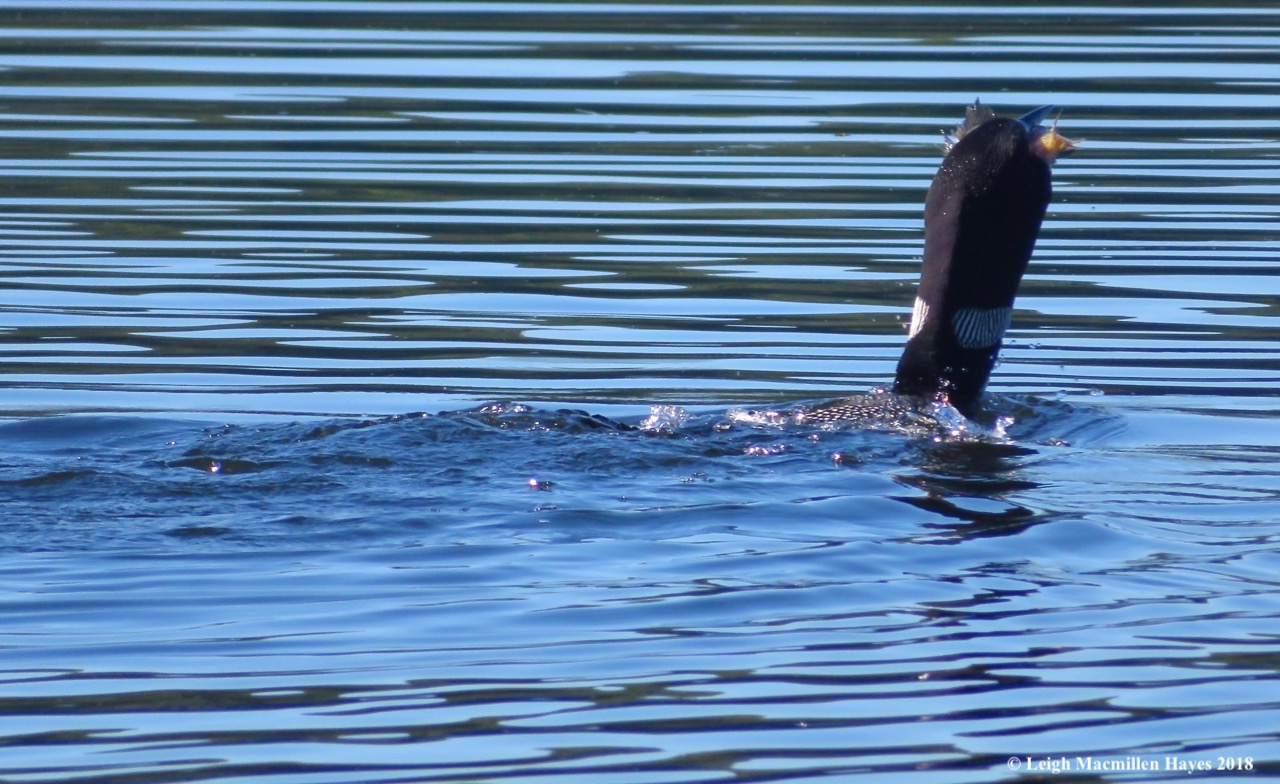
A loon undulated in the water in a most frantic fashion, moving back and forth in about a ten-foot space.

l9-crazy loon

Whatever was it doing? We panicked. What should we do?

l10-crazy loon

Each time it pulled its head up, we noticed its beak was wide open. Was there a fishing hook stuck in its mouth? S pulled out his cell phone. Who should he call? Kappy Sprenger, a local wildlife rehabilitator? Or the Maine Warden service?

l11-crazy loon

Again and again, it thrashed on top of the water and our concern rose with each movement.

l12-crazy loon

We each developed our own scenario, none of them ending with a positive outcome.

l13-loon family

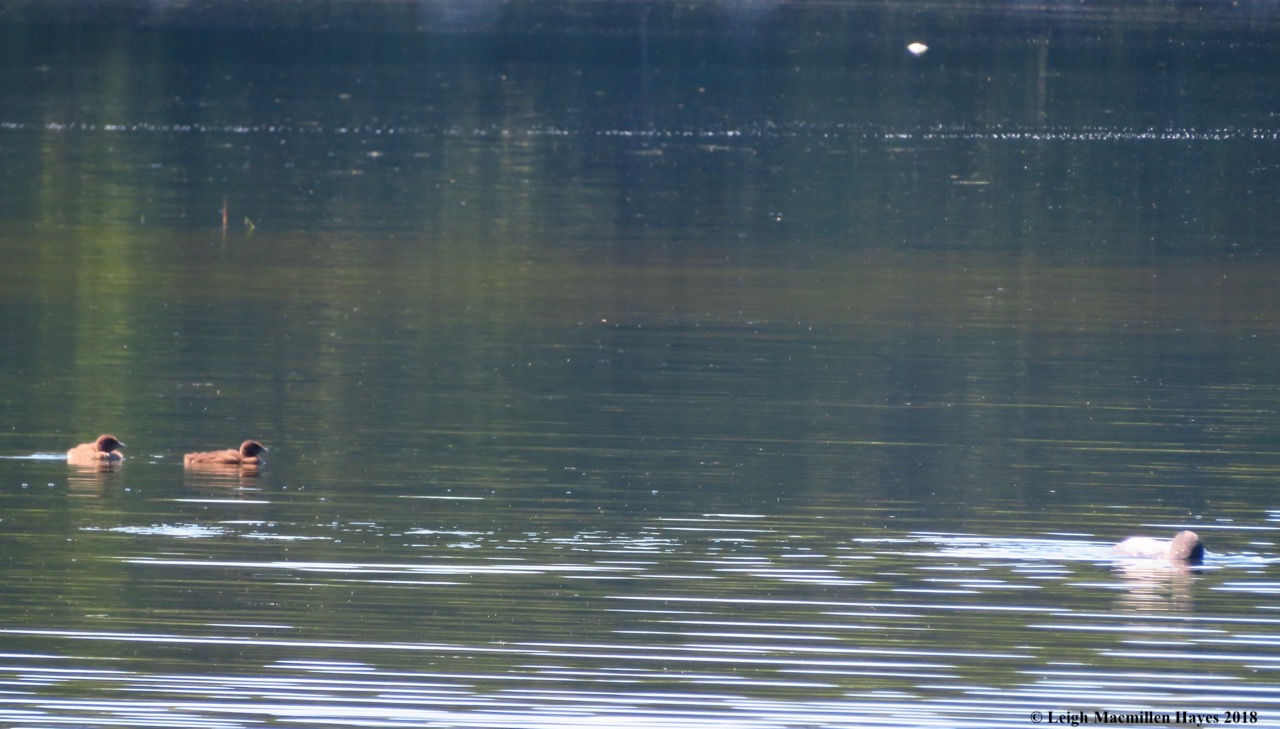
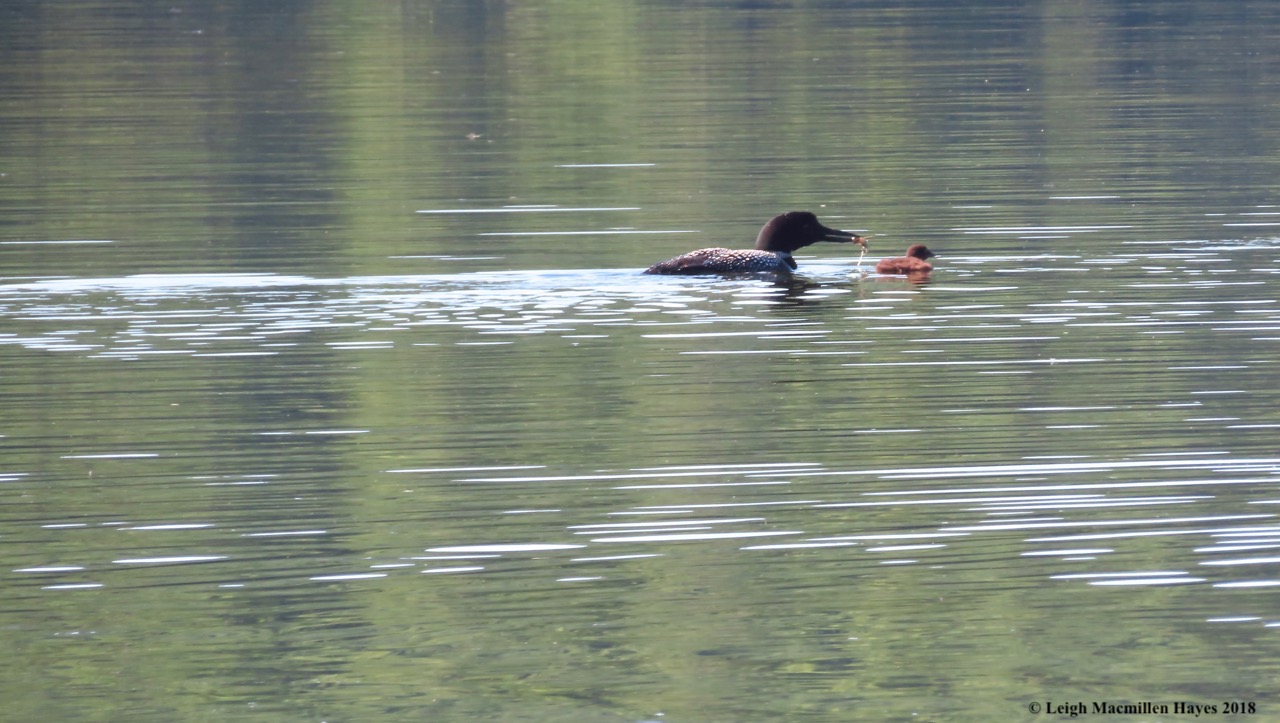
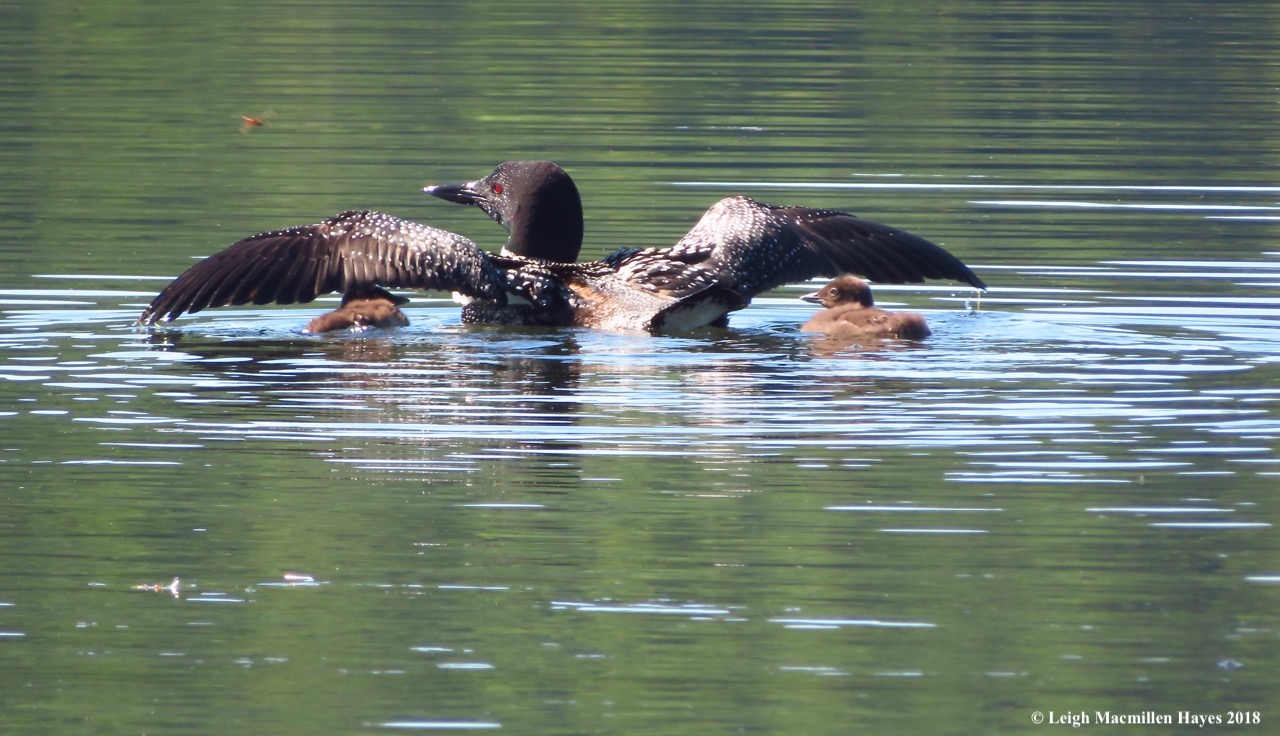
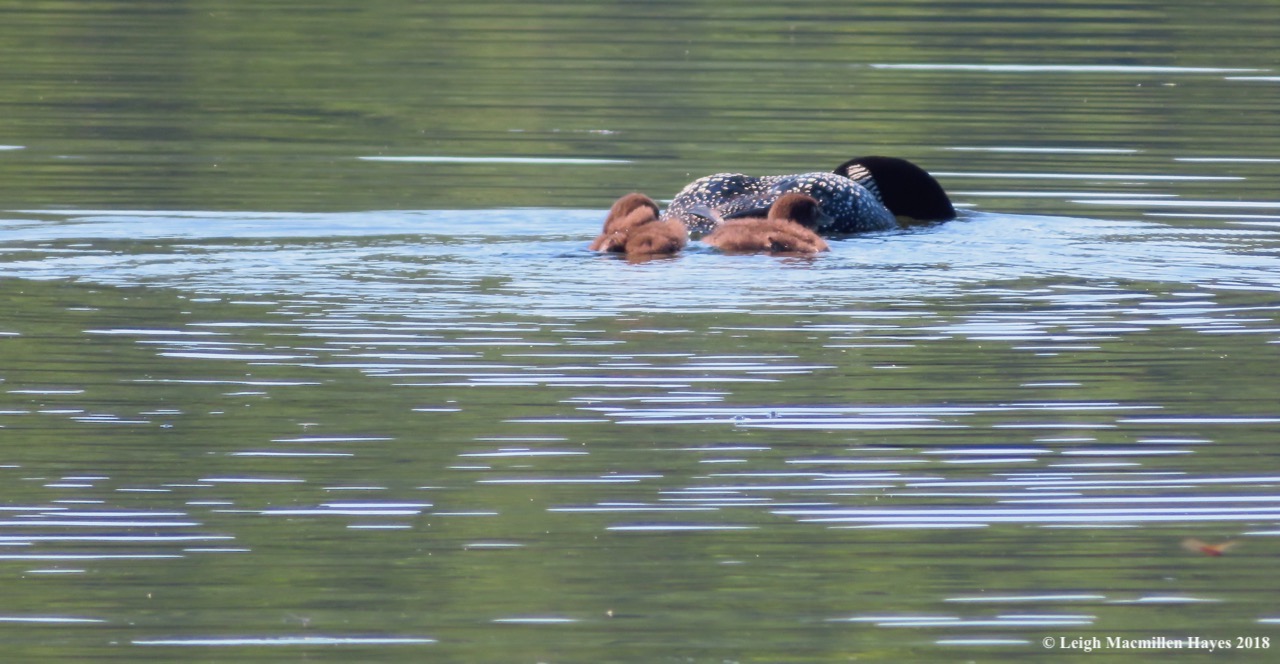
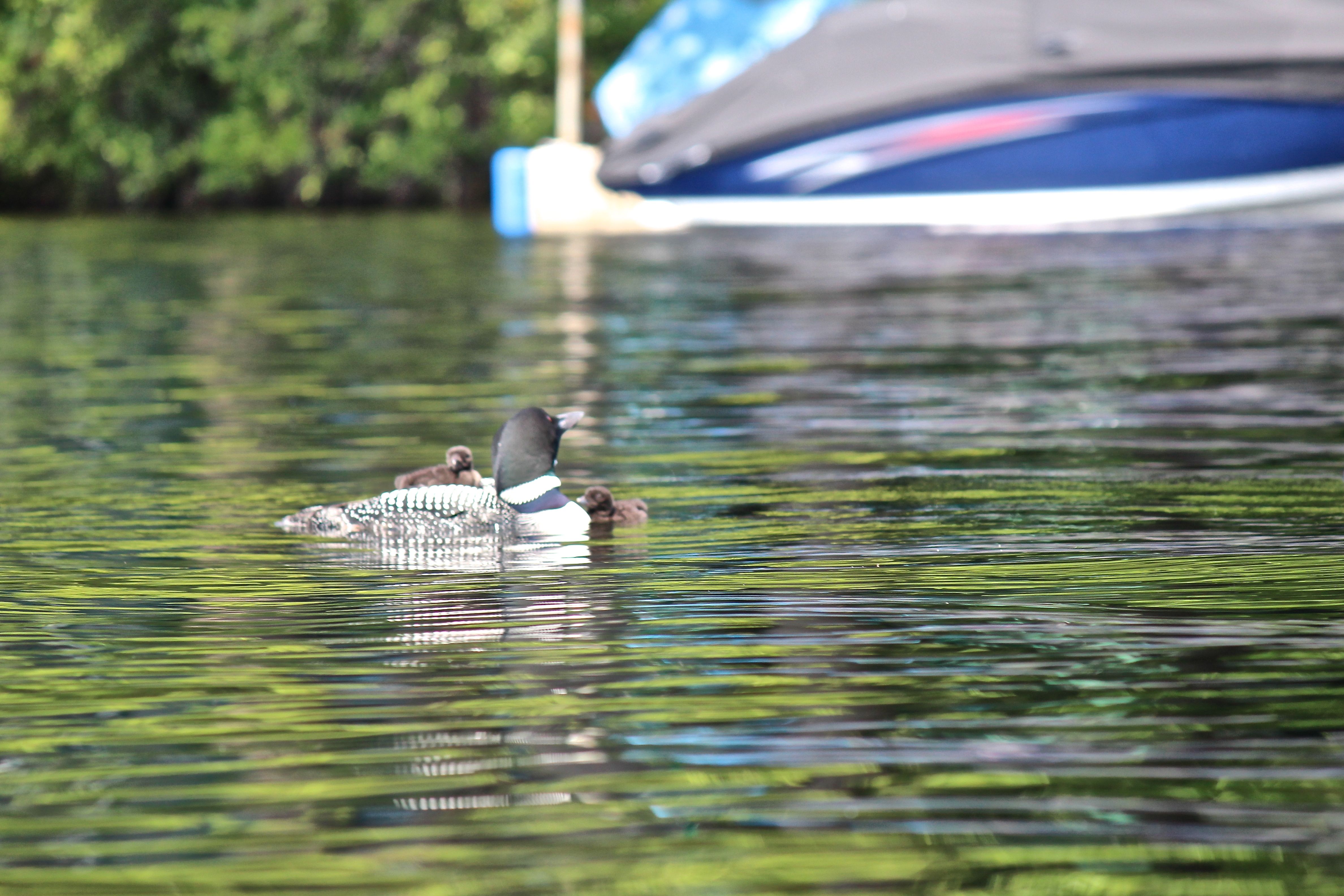
Meanwhile, another adult approached with two youngsters in tow.

l15-good in mouth

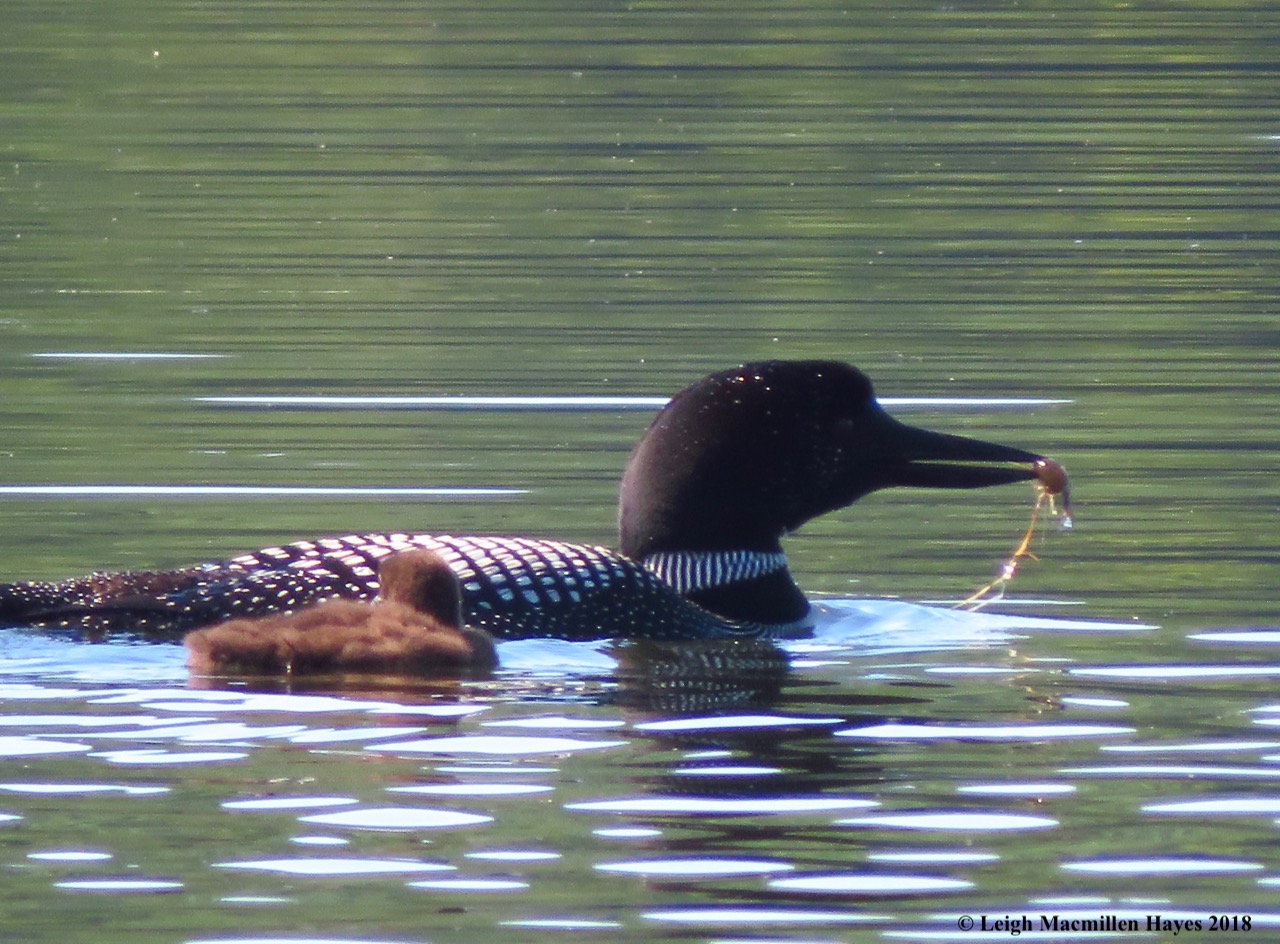
The second adult found a smidgen of food to dapple in the water and offer to the chicks.

l16-plant or fish?

Fish are the primary food source for loons and they’ll catch whatever species they can. But . . . they also feed on crayfish, aquatic insects, and sometimes vegetation.  What we saw being offered was indecipherable.

l17-bigger fish

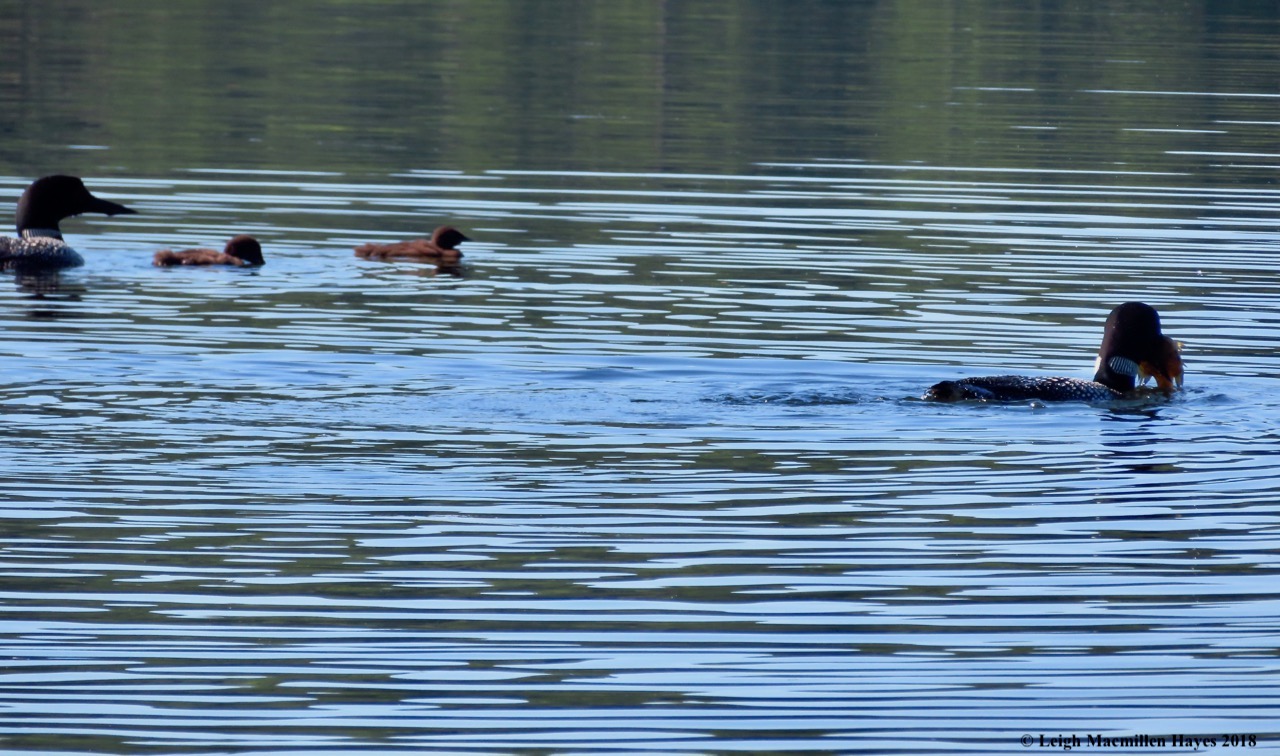
Meanwhile, the thrasher came up with a big catch. Had it been going after a fish all that time. Was it not the victim, but rather the predator? Indeed. But why was its mouth always wide open and not closed like a spear? Was it chomping on the fish? How could that be? Loons can’t break up their food the way mammals do, for they have no teeth.

l18-gulp

Whatever the answers to our questions, the outcome, or rather, income was obvious and the loon quickly consumed its prey.

l19-down the throat

Do you see the intake making its way down the bird’s throat? Swallowed whole, the fish would be ground up in the loon’s gizzard, a muscular structure that is part of the a bird’s stomach.

l21-taking cover

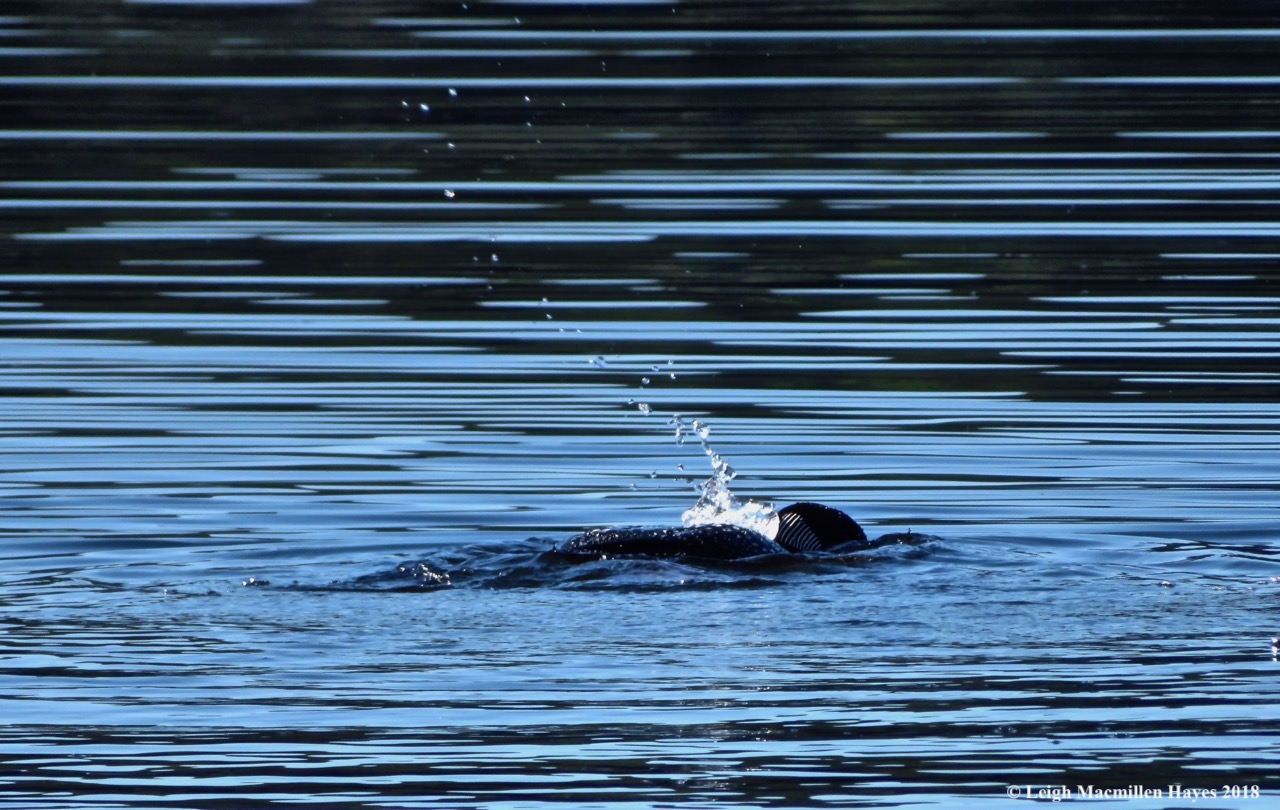
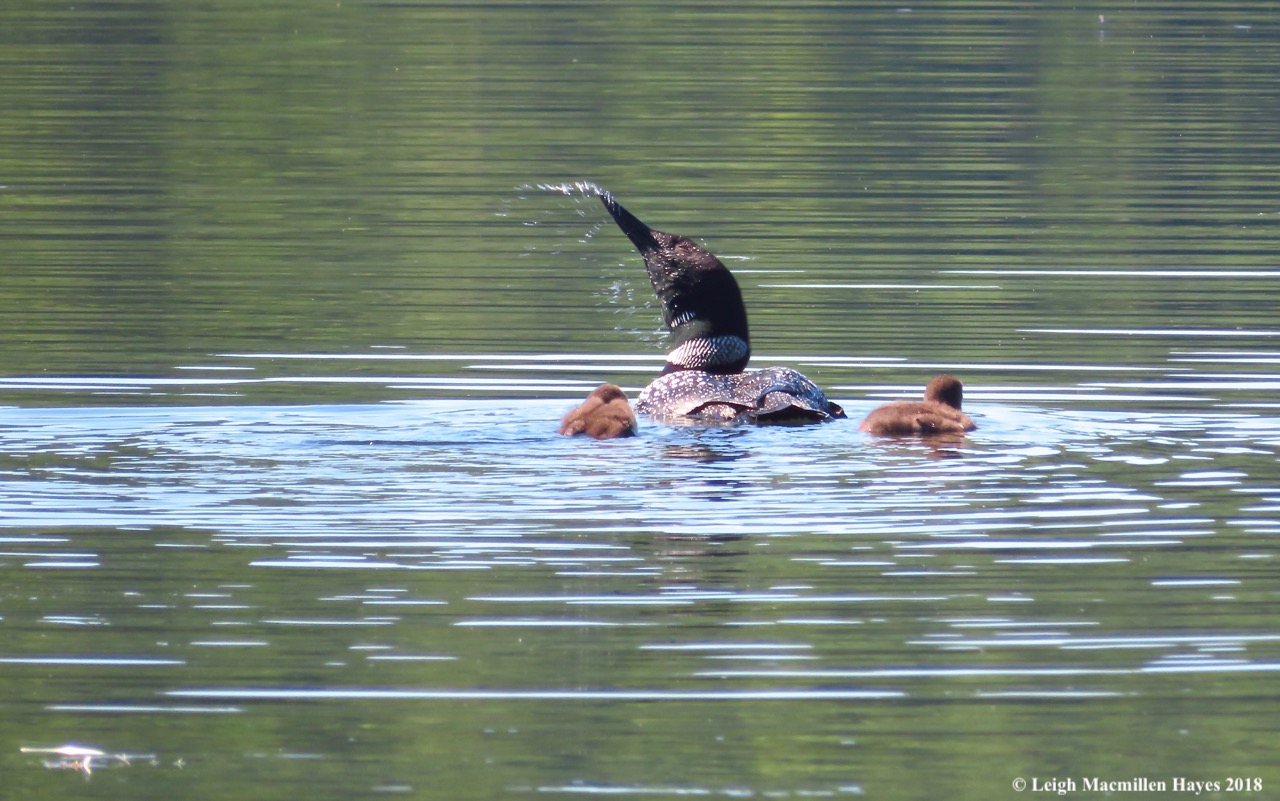
At the same time, the other adult felt the need for a shower, while a curious chick peered below a wing. To shower, a loon rises up and splashes.

l22-shaking off the water

A vigorous body shake follows–it’s all part of their maintenance routine. The splashing and shaking help to settle their feathers back into the proper place, whether for beauty during mating season, or weatherproofing the rest of the year.

l21a

And then it was time to peer into the water again, ever in search of the next meal.

l23-chicks

We learned something new today, M, S, and I: That what we might interpret as loon-atic behavior may actually be otherwise. Perhaps the lesson was meant more for the chicks than us, but we were suddenly wiser.

Thank you, M & S, for sharing your special place with me. And here’s to tomorrow’s 2018 Maine Audubon Loon Count. I suspect I won’t see any loons in the area I’m assigned to, and if I do, it will certainly not compete with today’s crazy loon antics.

Homecoming Mondate

After months of waiting and an arduous drive, we arrived at our camp on Moose Pond late yesterday afternoon. It’s that anticipation following months away and the five mile road trip that always make the final turn into the driveway so sweet.

m-night sky 2

We unpacked and put everything away, ordered a pizza because our Sunday night tradition of making our own takes a hiatus for a couple of months, and then settled on the porch as dark clouds gathered, their hues enhanced by the water’s reflection. And then we spotted a friend from across the pond jumping into his boat and pulling away from his dock. He raced south and we thought perhaps he hadn’t seen the lightning that was visible to us. Suddenly the wind increased dramatically and then the rain came. We moved indoors and checked windows and looked to our south and assumed Brian’s boat was fast enough to get beyond the storm. When the rain began to teem, we realized he hadn’t outrun it for two boats came flying back into the North Basin, his being one. We knew he was soaked and probably had a story to tell. Such is life on the pond, where our focus switches from world news to the news of our immediate world.

m-loon off the dock

And so we awoke this morning to the announcer of said news–a pair of common loons calling. We answered as we headed outdoors.

m-robber fly 1

Of course, being back meant we had chores to complete, but most of them were outside. I finished mine first and so I began taking inventory–greeting old friends I hadn’t seen in a while. The first was a robber fly posed by the porch door.

m-robber fly side view

Its compound eyes aren’t as large as those of a dragonfly, but still . . . they are large enough and allow this mighty predator to spot and catch prey more than a foot away in a split second. I wanted to see it, but wasn’t privy. Instead, I admired his body features.

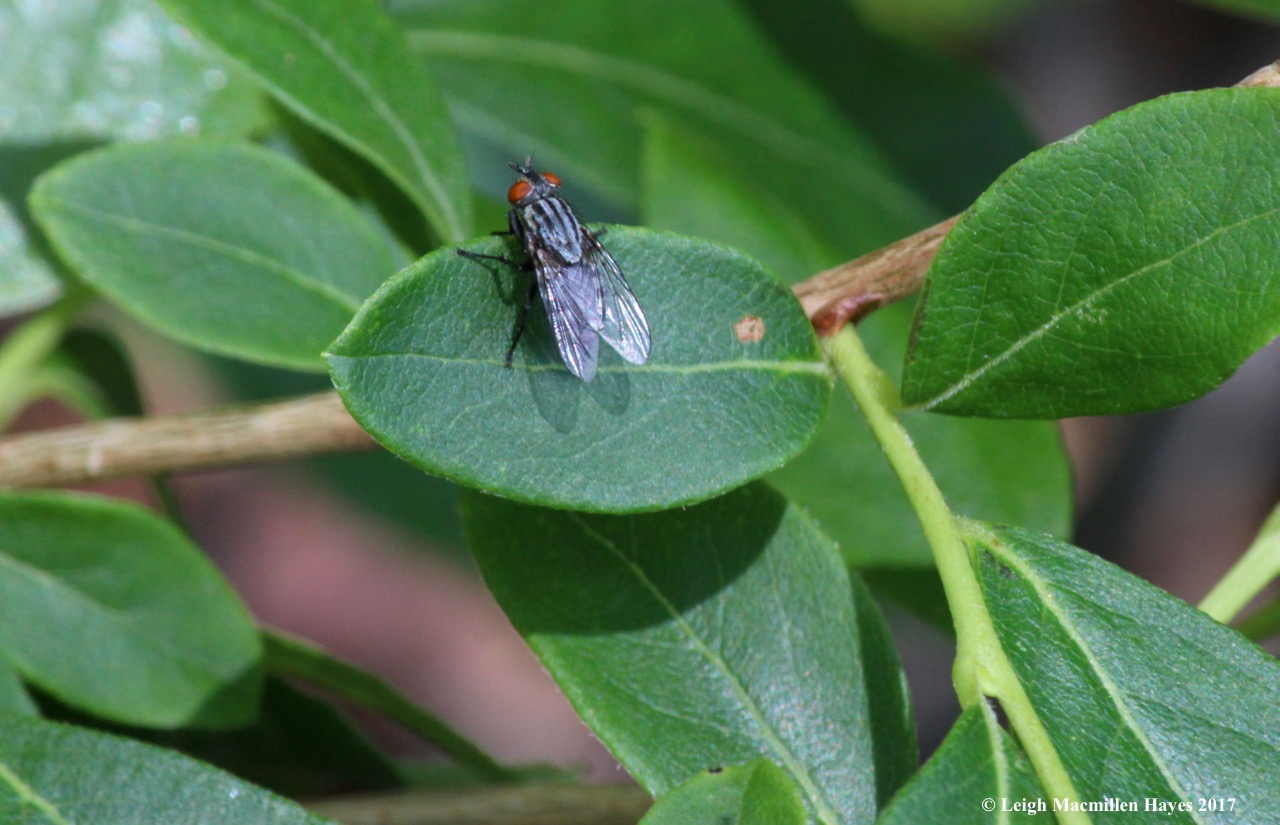
m-flesh fly

Then I headed to the pond. My first find beside the water was a flesh fly–and I wondered what dead insects his bright red eyes may have feasted upon.

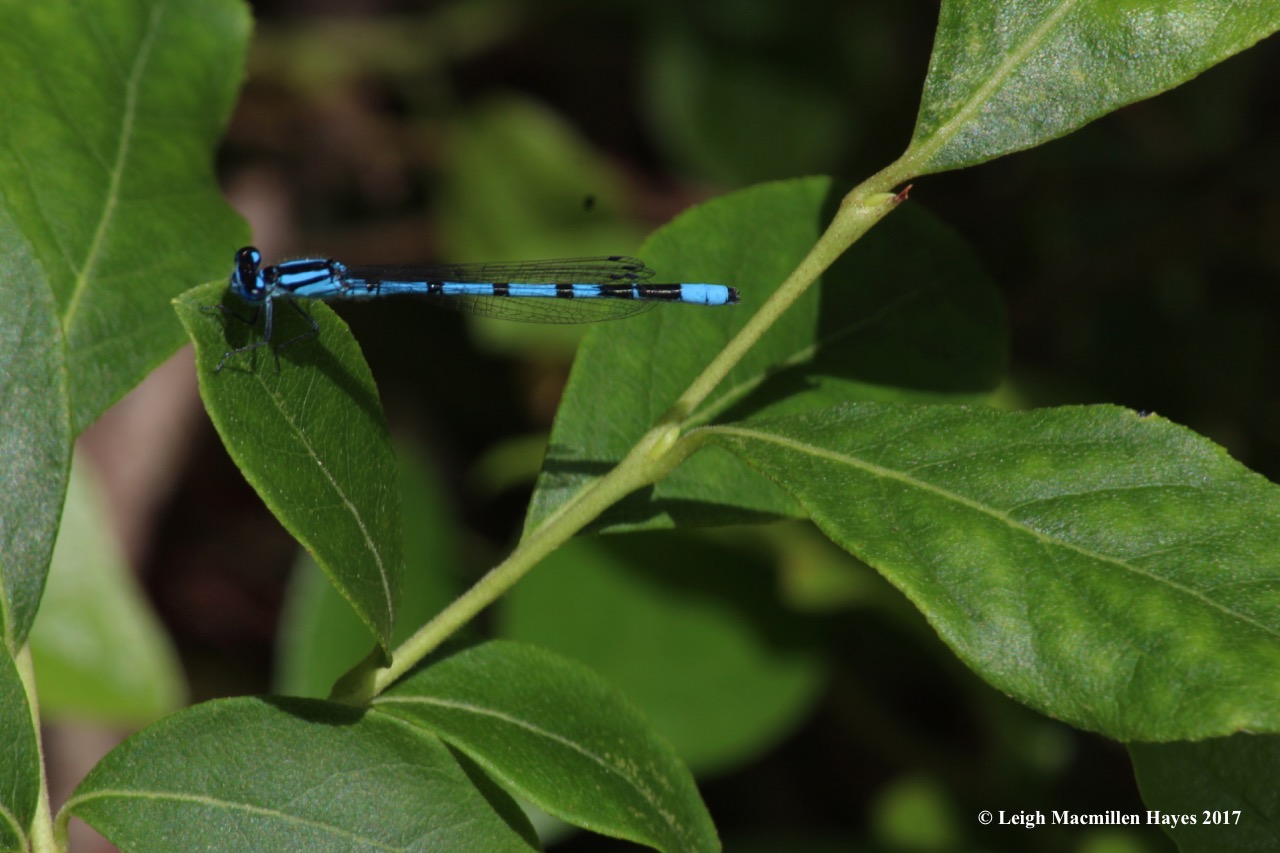
m-familiar bluet 2

More to my liking was the sight of a male familiar bluet damselfly. I can’t see enough of these and I think it has something to do with the color blue–especially when it contrasts against a dark green leaf.

m-chalk-fronted corporal 1

As I stood there, a perennial favorite appeared. It seems the chalk-fronted corporal dragonfly and I like the same habitats for wherever I go, at least a half dozen are also there. Perhaps that means that wherever I go, I’m always at home.

m-lancet 1

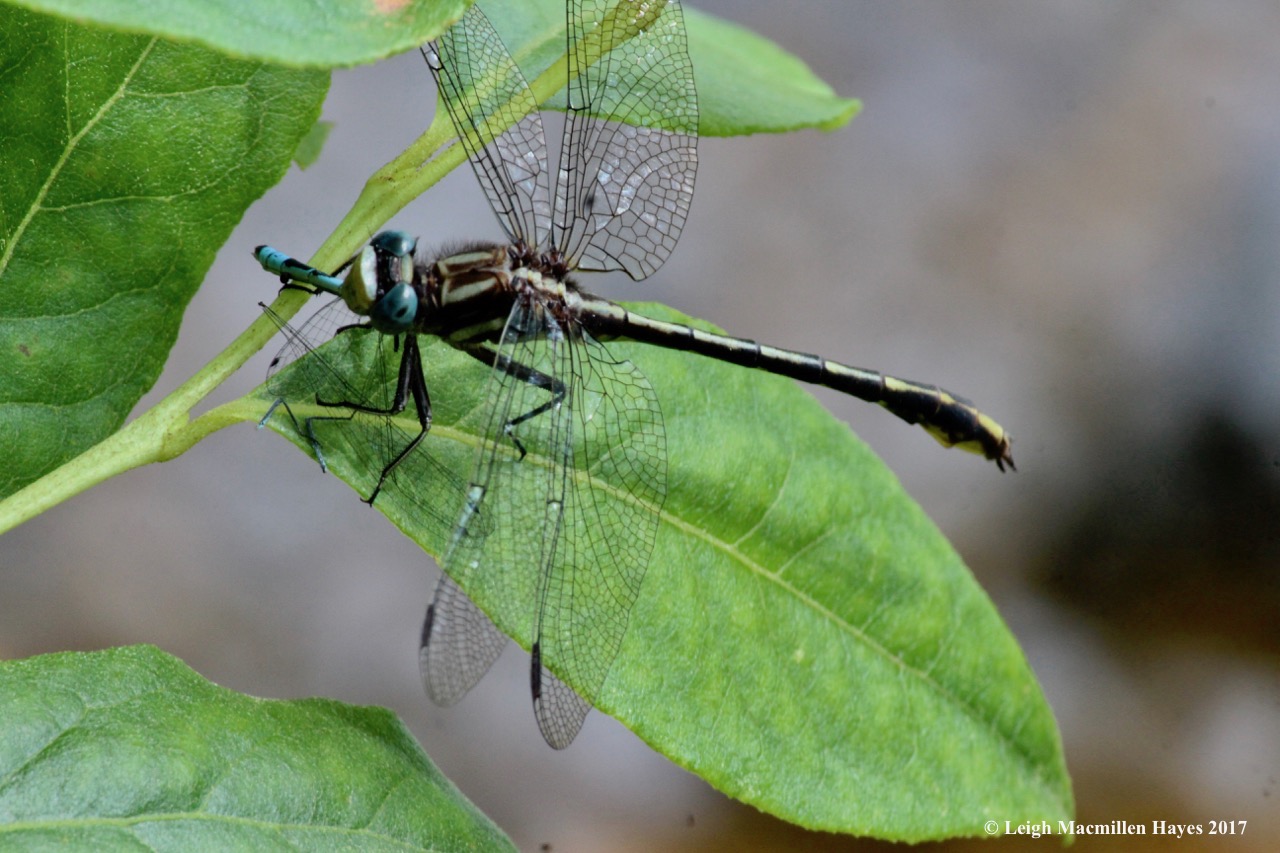
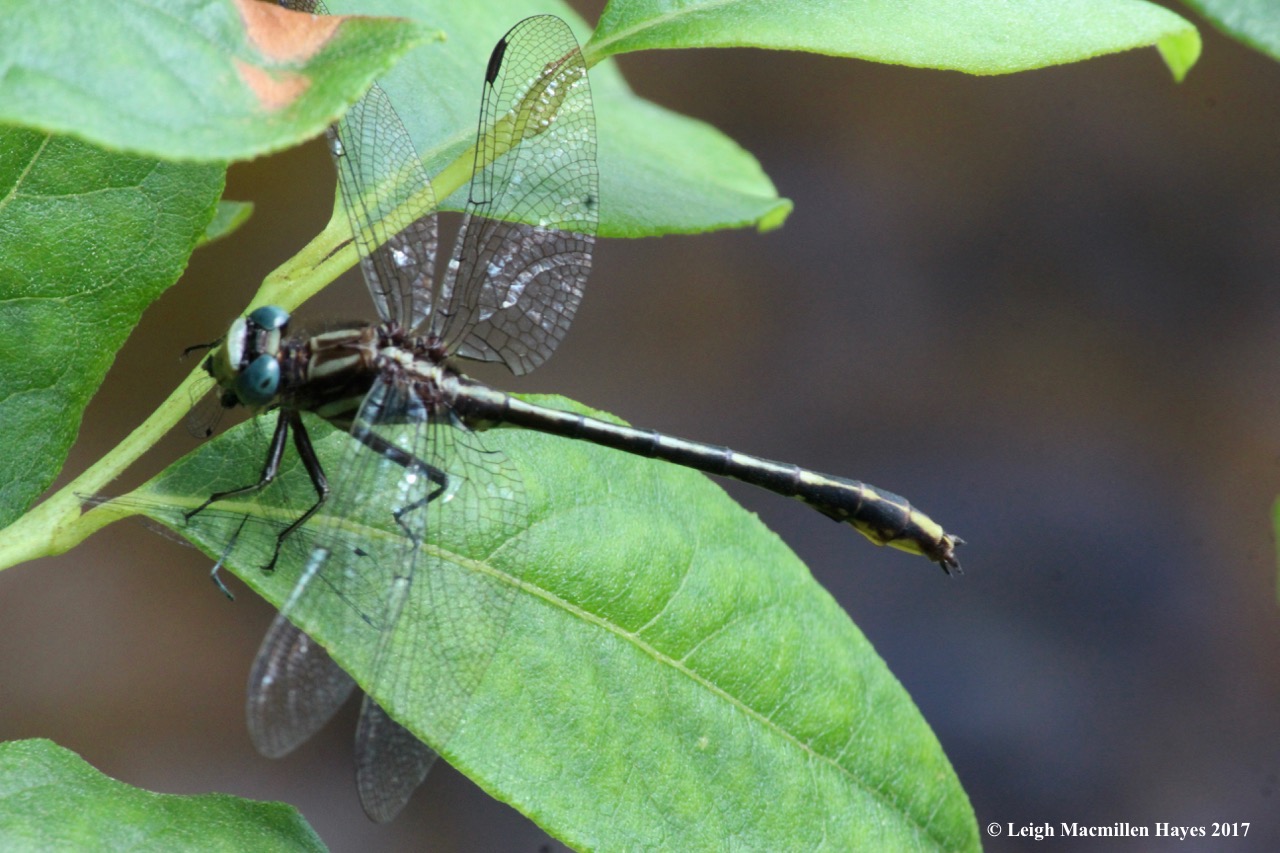
And then another dragonfly caught my eye and I recognized it as another familiar friend,  a lancet clubtail. But what surprised me was that a damselfly, possibly a familiar bluet, was exploring the underside of the same leaf.

m-lancet 2

That is . . . until I looked again.

m-lancet 3

And noticed the bend in the damselfly’s abdomen.

m-lancet 5

And watched the dragonfly move the damsel body with one wing attached and another dropped.

m-lancet 7

Ever so slowly . . .

m-lancet 8

the damselfly . . .

m-lancet 9

disappeared . . .

m-lancet 10

until only a bit of its abdomen,

m-lancet 11

a leg part and the wing were left. Wow. I felt privileged to have observed such a meal. Of course, I was sad for the damselfly, but also thankful for the energy it passed on to the dragonfly.

m-loon in Sweden, Maine 1

At last, my guy’s chores were completed. We pulled out the kayaks and paddled north to Sweden. Sweden, Maine, that is. And in the shallows of the northern-most end of the pond (Moose Pond is actually nine-plus miles long), we again met the loons.

m-eastern kingbird

A trillion damselflies and dragonflies darted about, some in mating position. And the kingbirds hovered above the water before making quick dips to retrieve insects.

m-rose pogonia driftwood garden 1

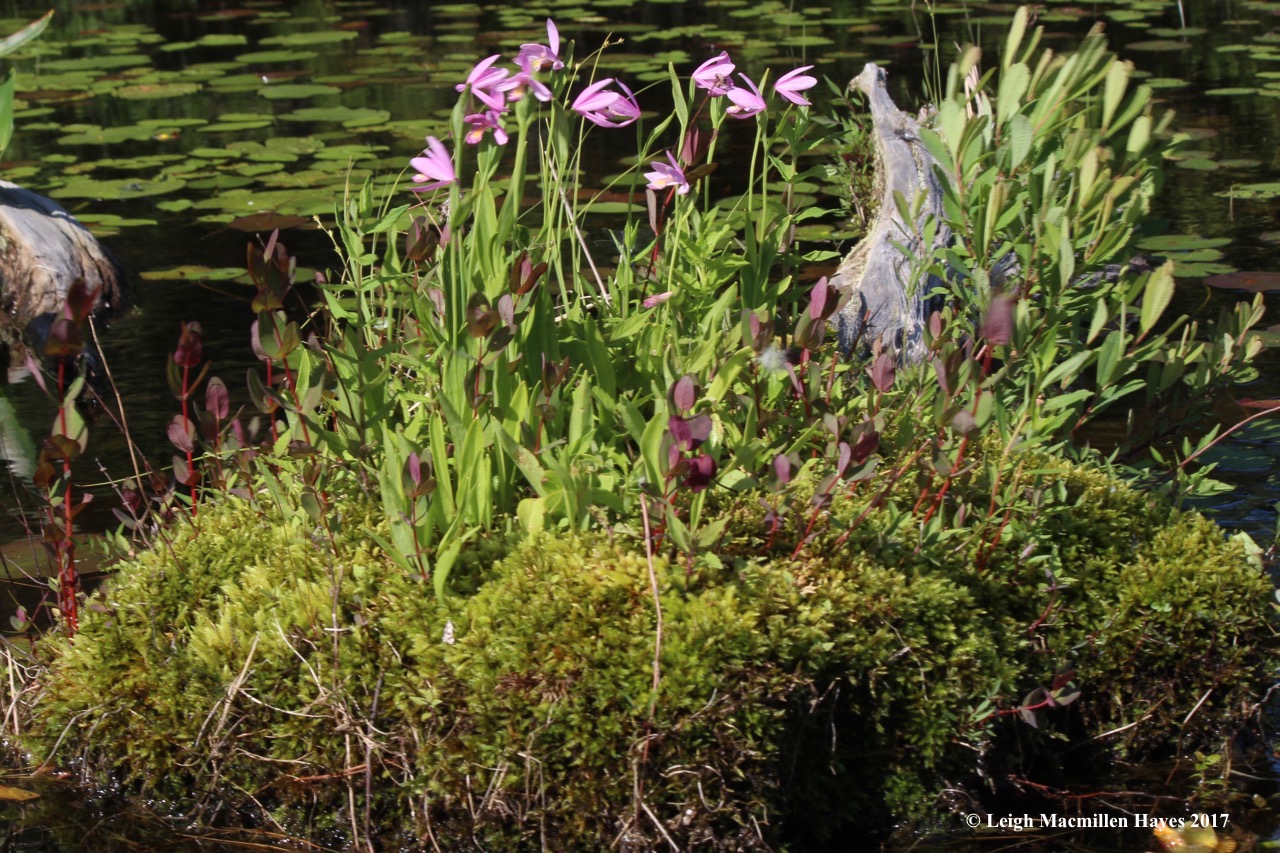
We floated around and noted that the water was deep enough for us to get almost to the very tip of the pond. At the same time, the old stump islands delighted us with their gardens.

m-rose pogonia 1

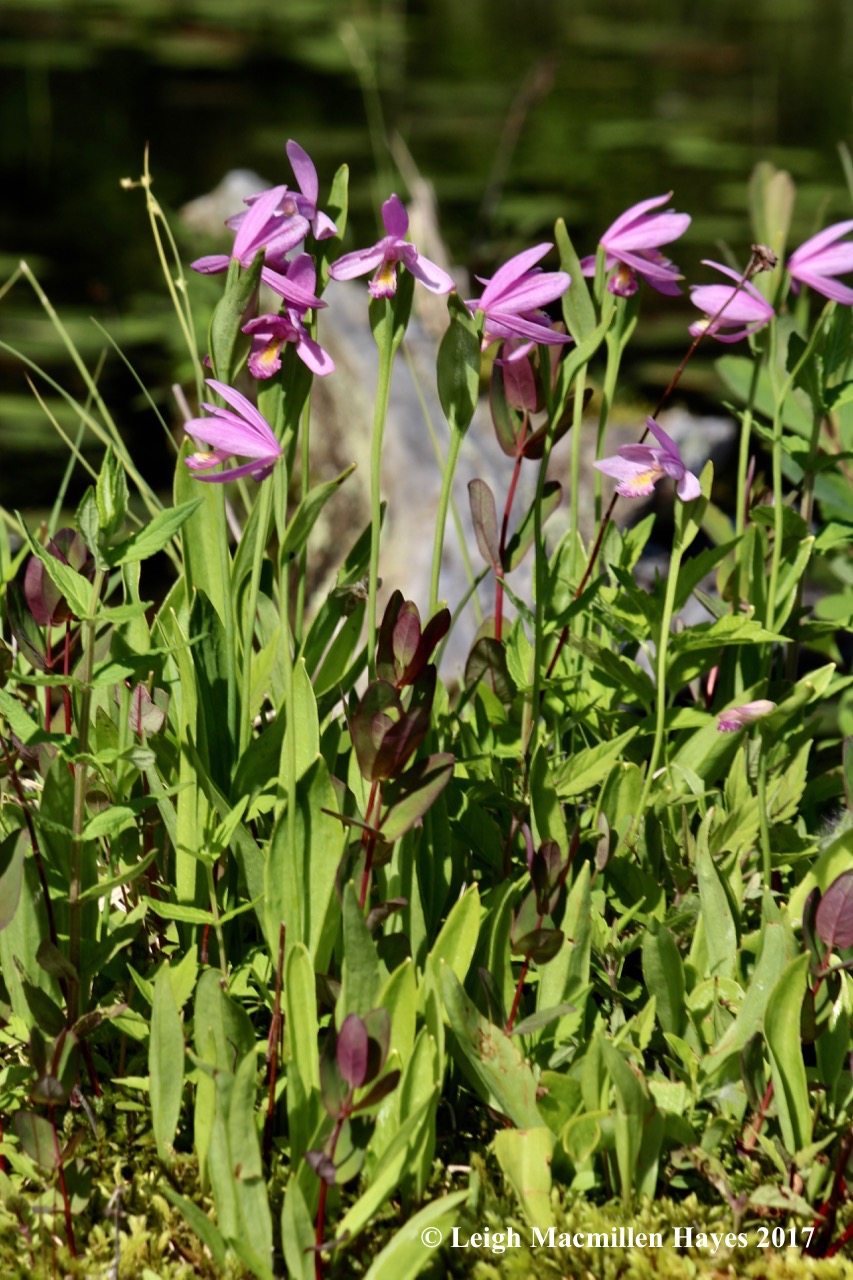
And within some of those islands another delight–rose pogonia in bloom.

m-looking south 2

At last it was time to leave our favorite section of the pond where all kinds of life thrived, knowing that we’ll return time and time again.

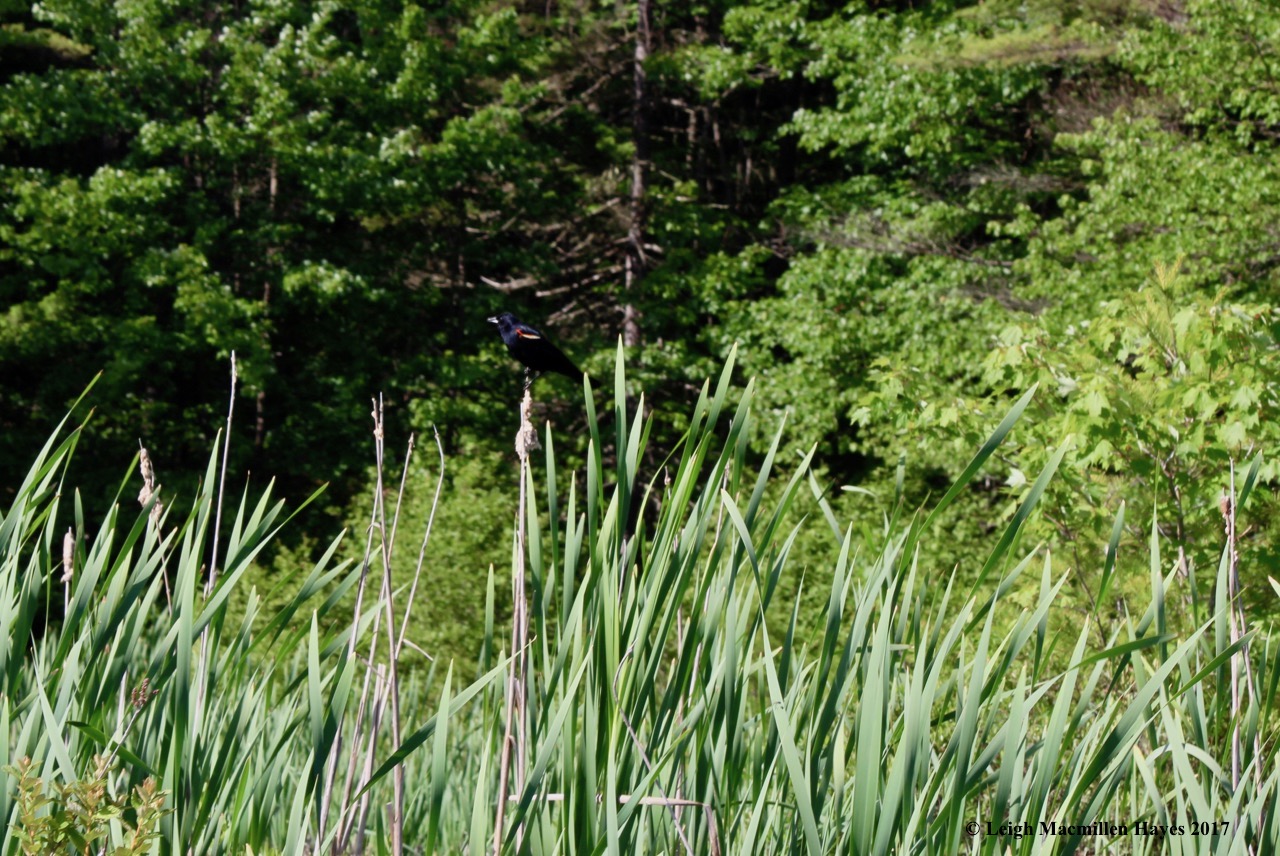
m-red winged blackbird

As we moved along, a red-winged blackbird began to turn circles above us–squawking as he showed off his shoulder patches in glaring scarlet form. He landed on a cattail and we paddled on, assuming there was a nest nearby. We also spotted Mrs. Red-Winged, who chose to go grocery shopping at that time. Even though we were headed away, the Mr. came after us one more time, so close that we could almost touch him. He was definitely a good dad–protecting the nest and/or young.

m-painted turtle 1

Continuing south, a painted turtle surprised us by staying atop a rock until we passed by, as if he wanted to welcome us back (or so we believed–after all, this is our story).

m-camp 1

A couple of hours later and we returned to camp sweet camp, to this place that has marked many occasions in our journey together since we first started dating in 1986.

Camp will always represent a homecoming to us, made especially sweet when we can share a Mondate here as we rediscover the world that surrounds it.


Looney Tunes

I was like a kid anticipating Christmas this morning when I grabbed my life jacket and headed out the door for the Maine Audubon Loon Count. While sipping coffee on the porch earlier, I’d heard a couple of hoots come from the middle basin. The hoot is the call a loon uses when it wants to announce its presence or locate others.

This is my first year participating in the event, which occurs annually on the third Saturday of July. It was misty when I slipped the kayak into the water, but I decided to bring my camera along just in case. The count traditionally begins at 7am, when about 900 volunteers across the state gather data about the status of Gavia immer, the common loon.

As I approached the causeway to begin my tour of the western side of the upper basin, I heard a quiet motorboat behind me. My fellow counter, P.B., and I chatted briefly and then decided to meet about a mile and a half to the north and compare notes.

The breeze was with me making for an easy paddle as I scanned the water, looking for that iconic bird that resembles no other on our Maine waters. I saw four ducks. And four fishermen.

P.B. and I met up as planned and had the same results. No loons this morning, though during the week we’d both seen a pair and a single loon diving.

For those of us who are looney about loons, we had great hope for the nesting couple on the upper basin this year. Last year, for the first time in a long time, they successfully hatched two chicks and raised one. We learned from another observer (S.F.), who has been a long-time Audubon counter, that the second chick somehow managed to make its way through the middle basin to the lower basin and joined another family raising one chick. An amazing feat to be sure.

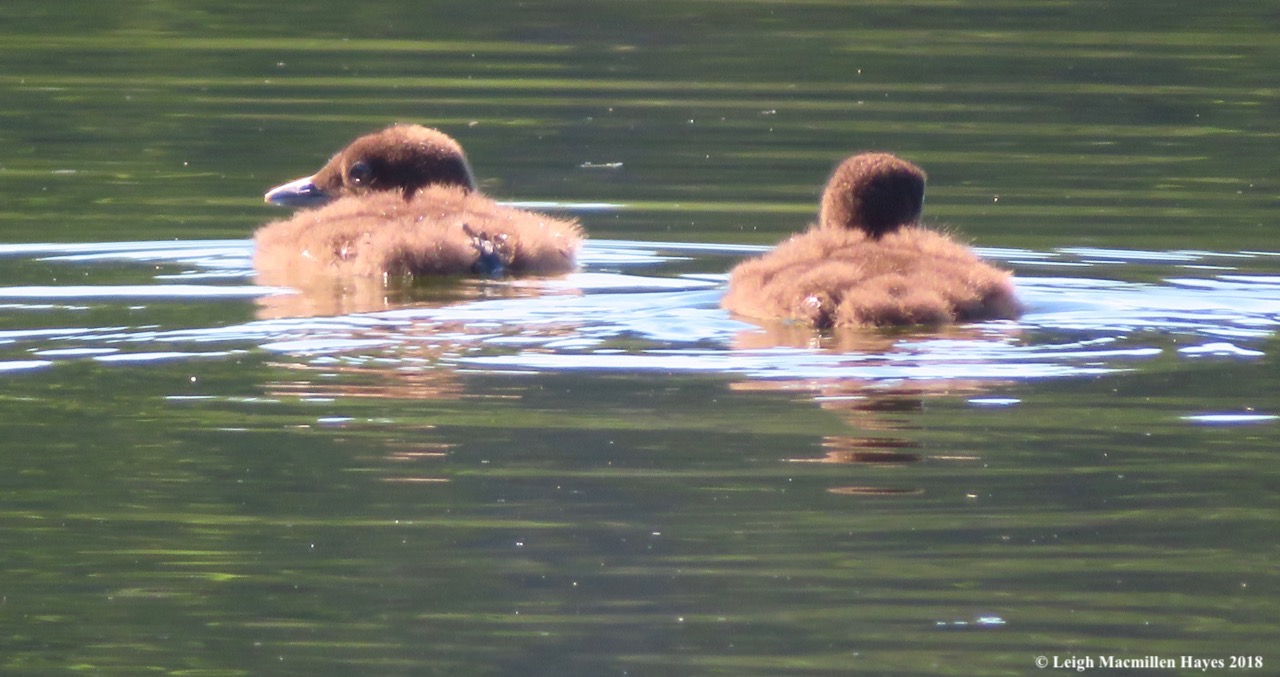
chicks

These are last year’s chicks–about two days old.

This year, one chick hatched on July fourth, was seen by some (not me) for a couple of days and has not been spotted since. And the second egg apparently half-hatched.

What happened to the first chick and why did the second die? We don’t know. We do know that boats were harassing the young family. But we also know that turtles and eagles and other predators exist on the lake. And it was Independence weekend. Could fireworks have had anything to do with the loss of the second chick? The loons were certainly not impressed with the noise that night as was evidenced by their tremolo alarm calls.

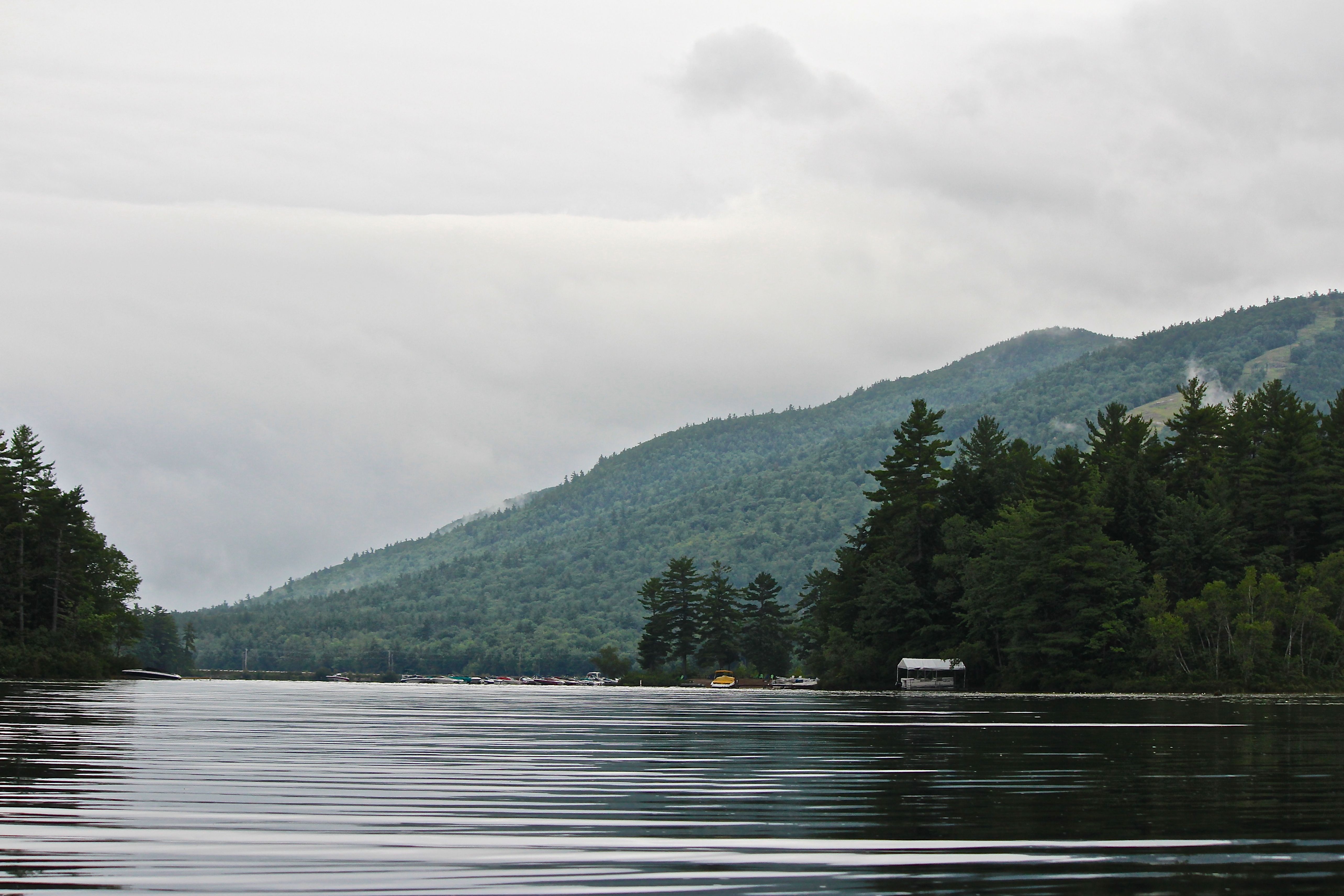
moose pond

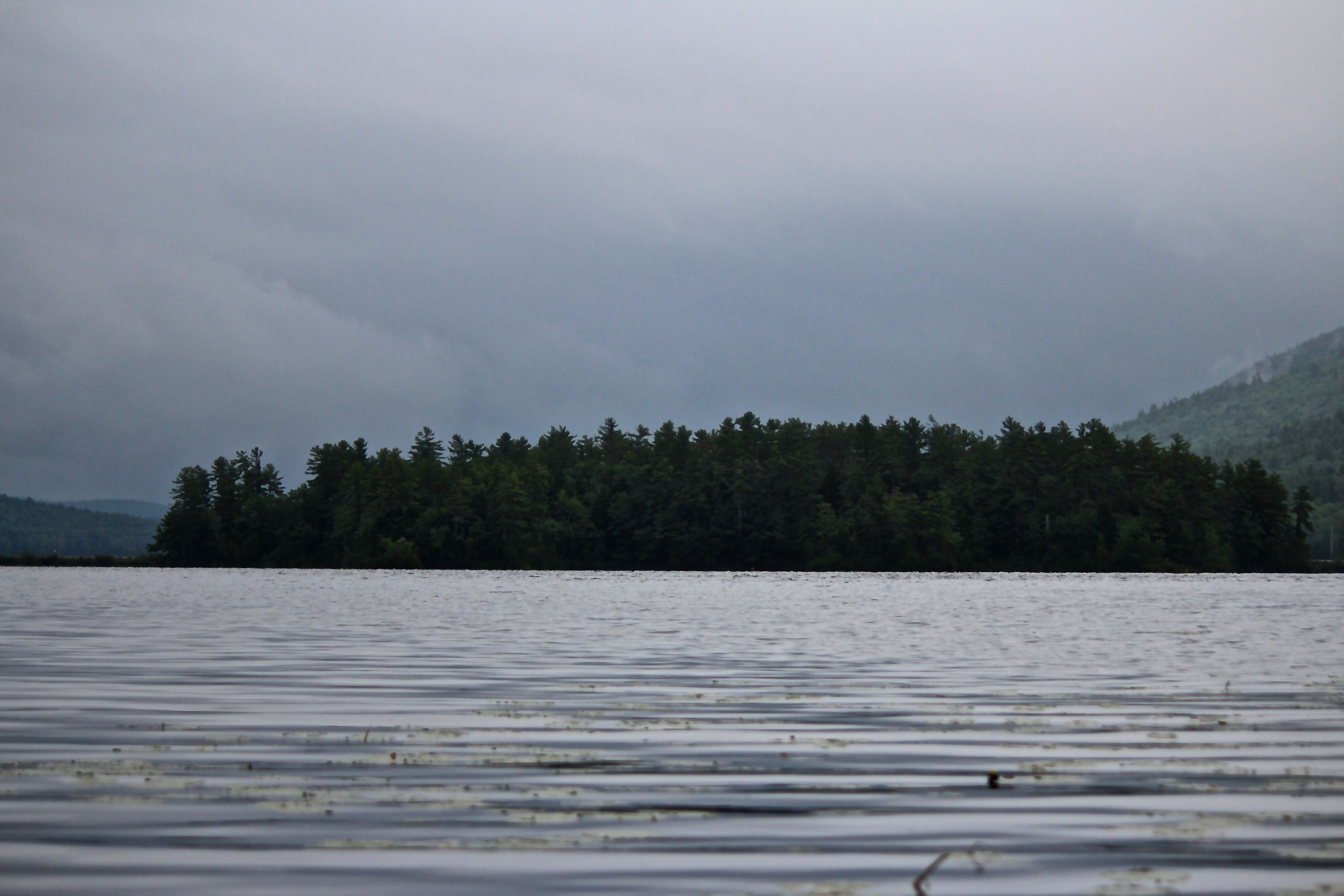
Back to this morning. The clouds thickened as I paddled home.

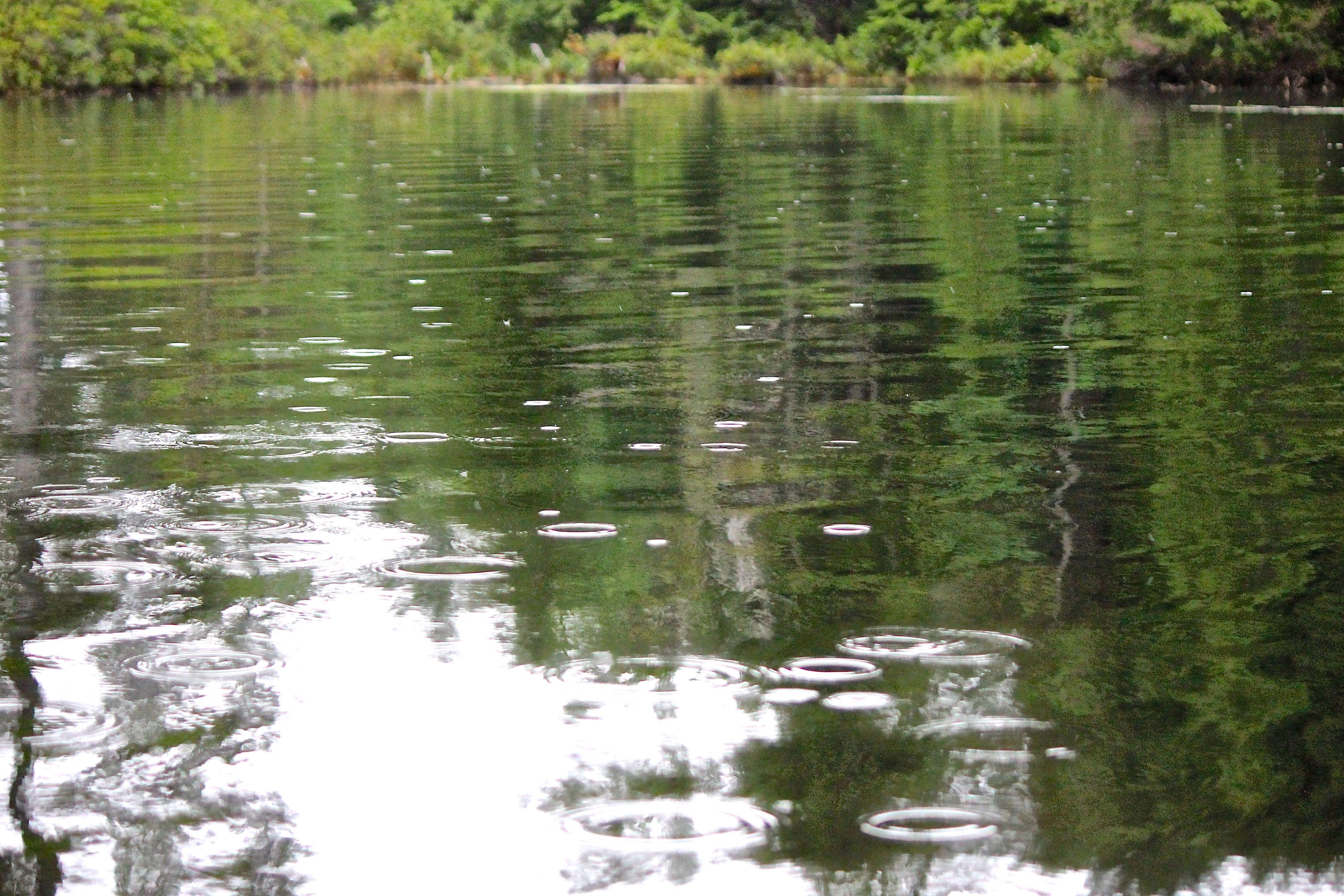
rain drops

It was a gentle sprinkle at first.

sabattus

Then the wind picked up and it rained a bit harder. But . . . I could hear a loon, so I paddled frantically while scanning through water drops. Eyeglass windshield wipers would be a great invention.

Not a loon in sight. I did enjoy breakfast with a few of the hearty volunteers (thanks S. & H.) and learned that one couple saw at least five loons and one still sitting on a nest that traditionally produces chicks at a later date. May be something to that–but how do you tell loons they’d be better waiting a week or two to nest.

As I went through my photos from last summer, I found a few that I thought worth including.

loon1

loon 2

loon3

loon 4

loon 5

loon 6

loon 7

Four hours after the official count, it’s no longer raining and a loon has been fishing about a hundred yards from our dock.

Maine Audubon offers the following tips to protect the loons. Education is the key.

~Obey no-wake law within 200 feet of shore
~Use lead-free tackle; alternatives are made of steel, tin and bismuth
~Dispose of fishing line so it does not get tangled in a loons’ feet or bill
~If you live on a lake, use phosphorus-free fertilizer and plant shrubs as a buffer along the shoreline to reduce run-off
~If you see a loon on a nest, keep your distance and watch with binoculars
~Keep garbage out of reach of loon egg predators, like skunks and raccoons

Two more glimpses from last year before I sign off.

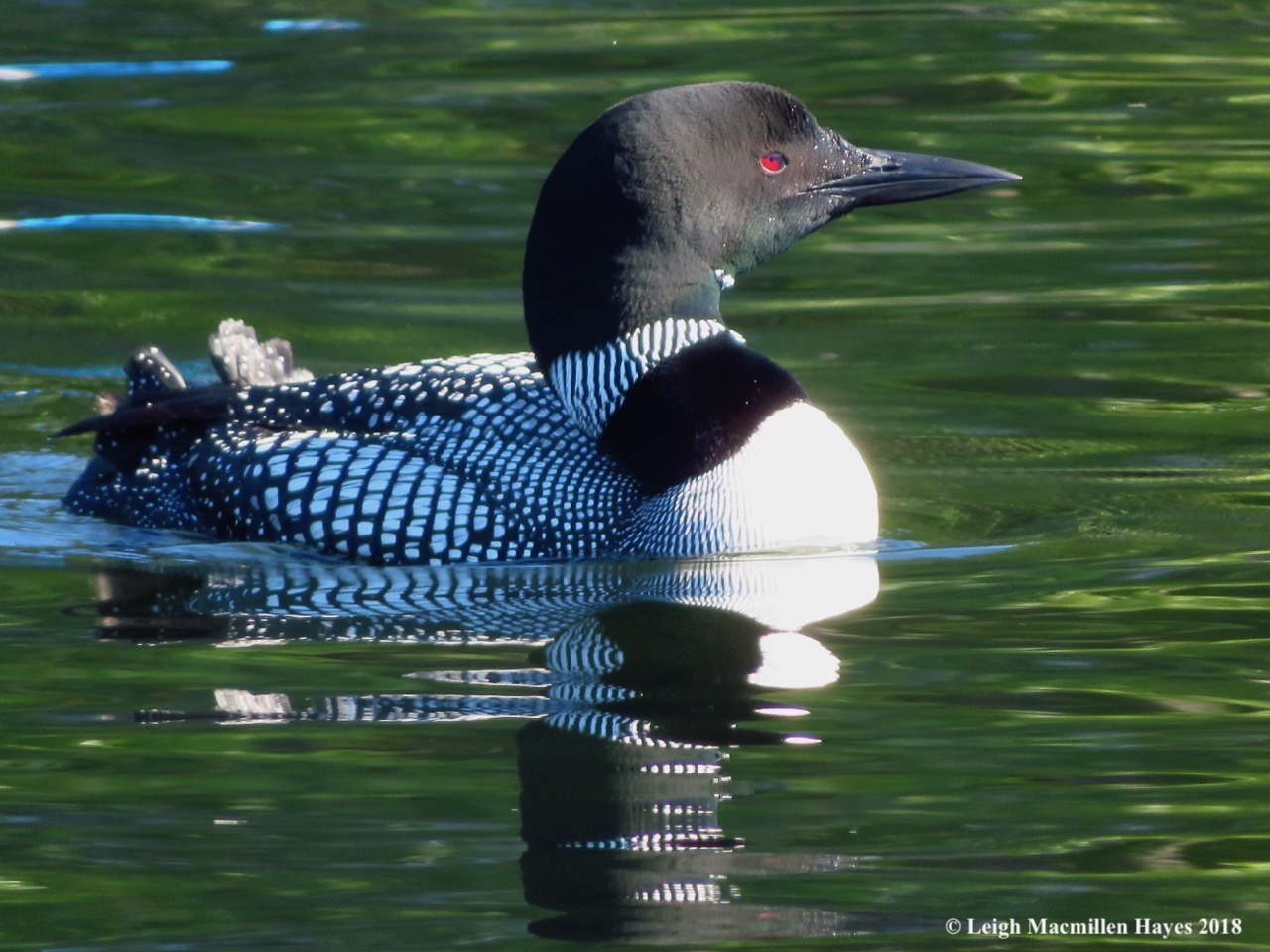
loon up close

red eye

These were taken as my guy and I kayaked and the loon suddenly surfaced beside us.

Always a thrill to see them and hear their looney tunes.