They’re large. They’re robust. They’re in constant motion. Well, almost constant motion. You see, this story begins when I looked out a couple of windows at 6:00am. And then stepped outside.
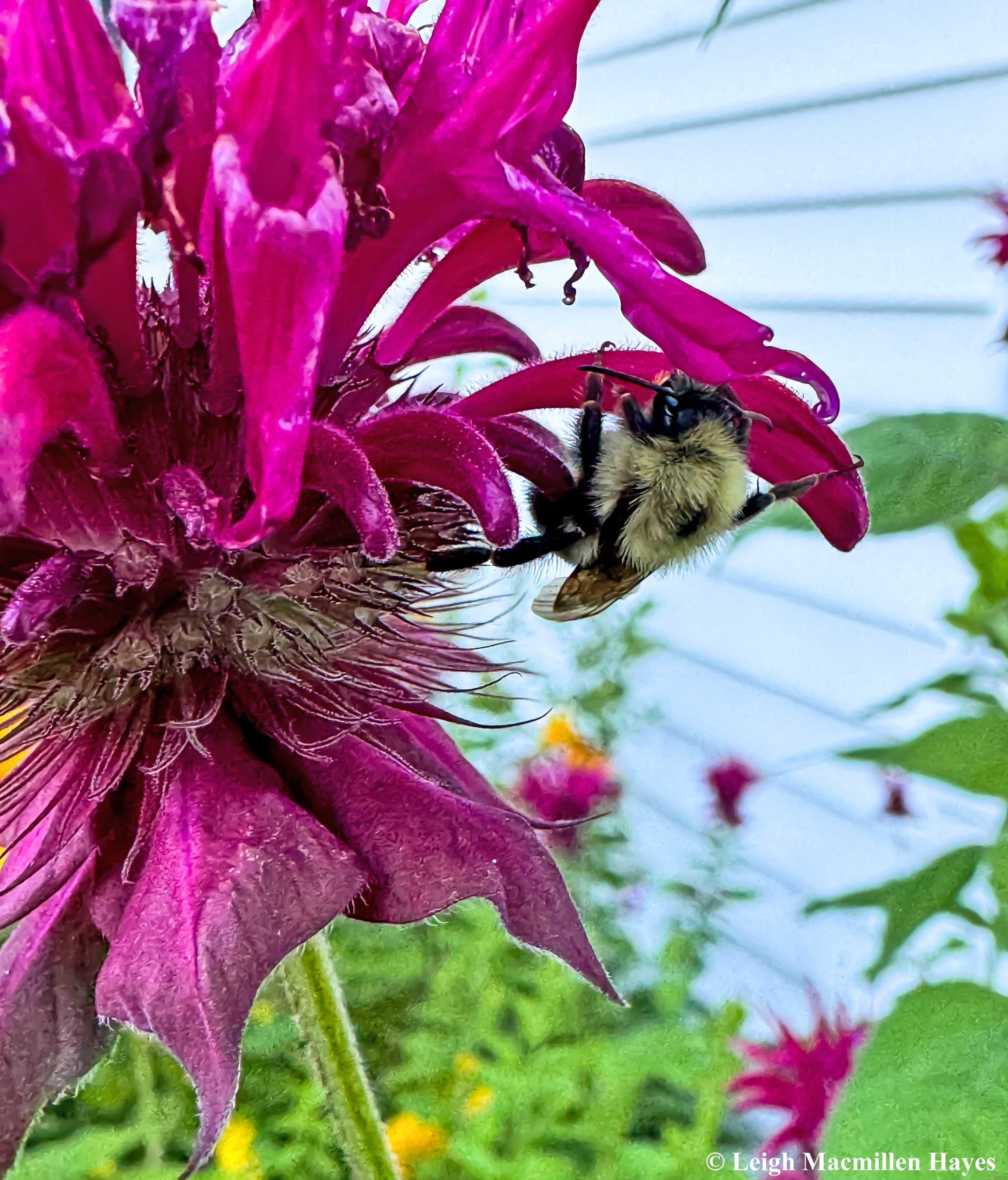
For in the back garden, on the western side of the house, . . .
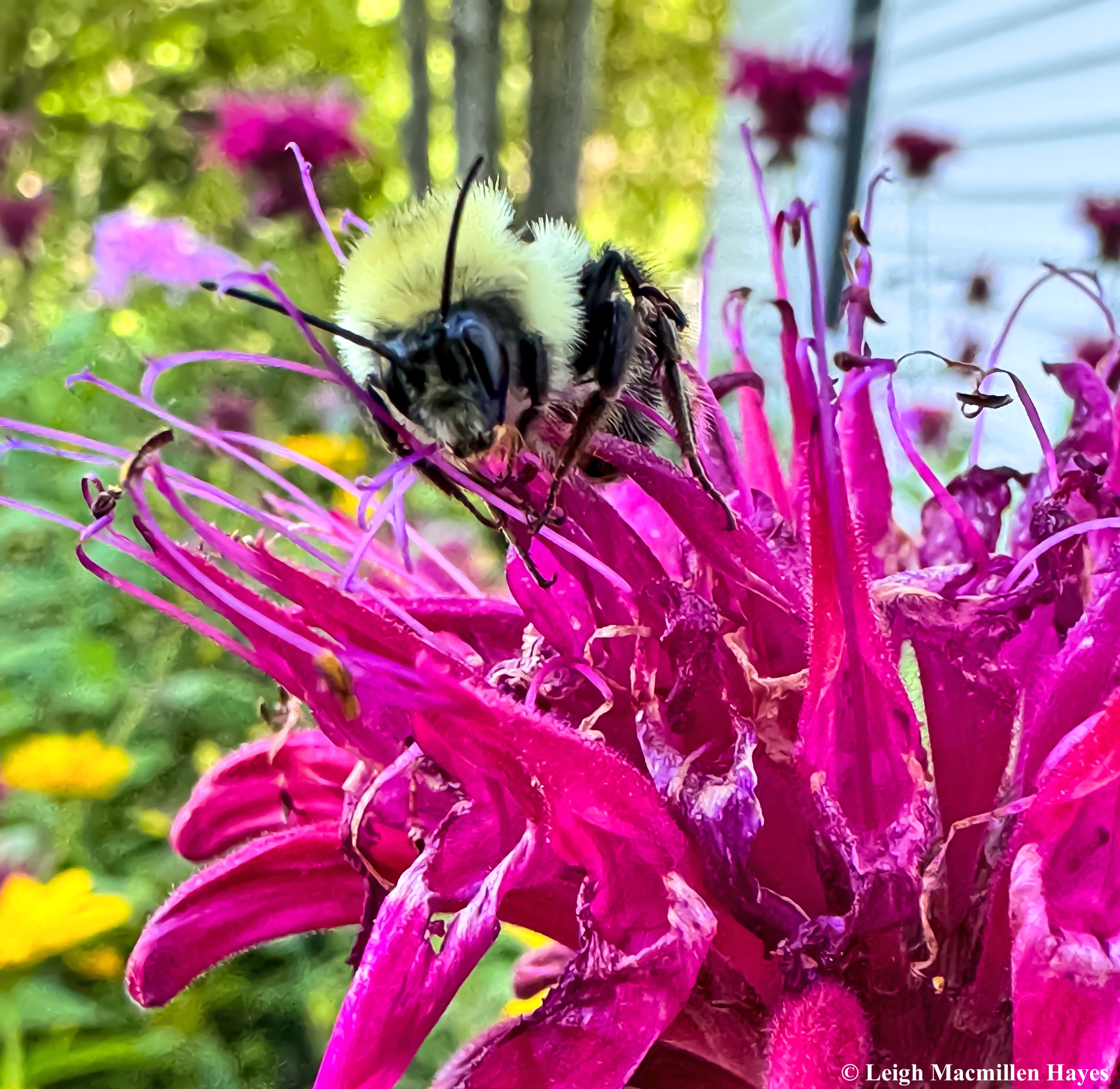
on more than one flower and in more than one pose, . . .

as well as in the driveway-side garden on the eastern side, Bumblee Bees slept.
I knew insects slept on plants and under leaves, but until this week I had only paid a wee bit of attention. And then, I went into my usual stalking mode and My Guy was rather amused.
Have you ever watched a Bumble Bee sleep? Even as the breeze blew its bed?
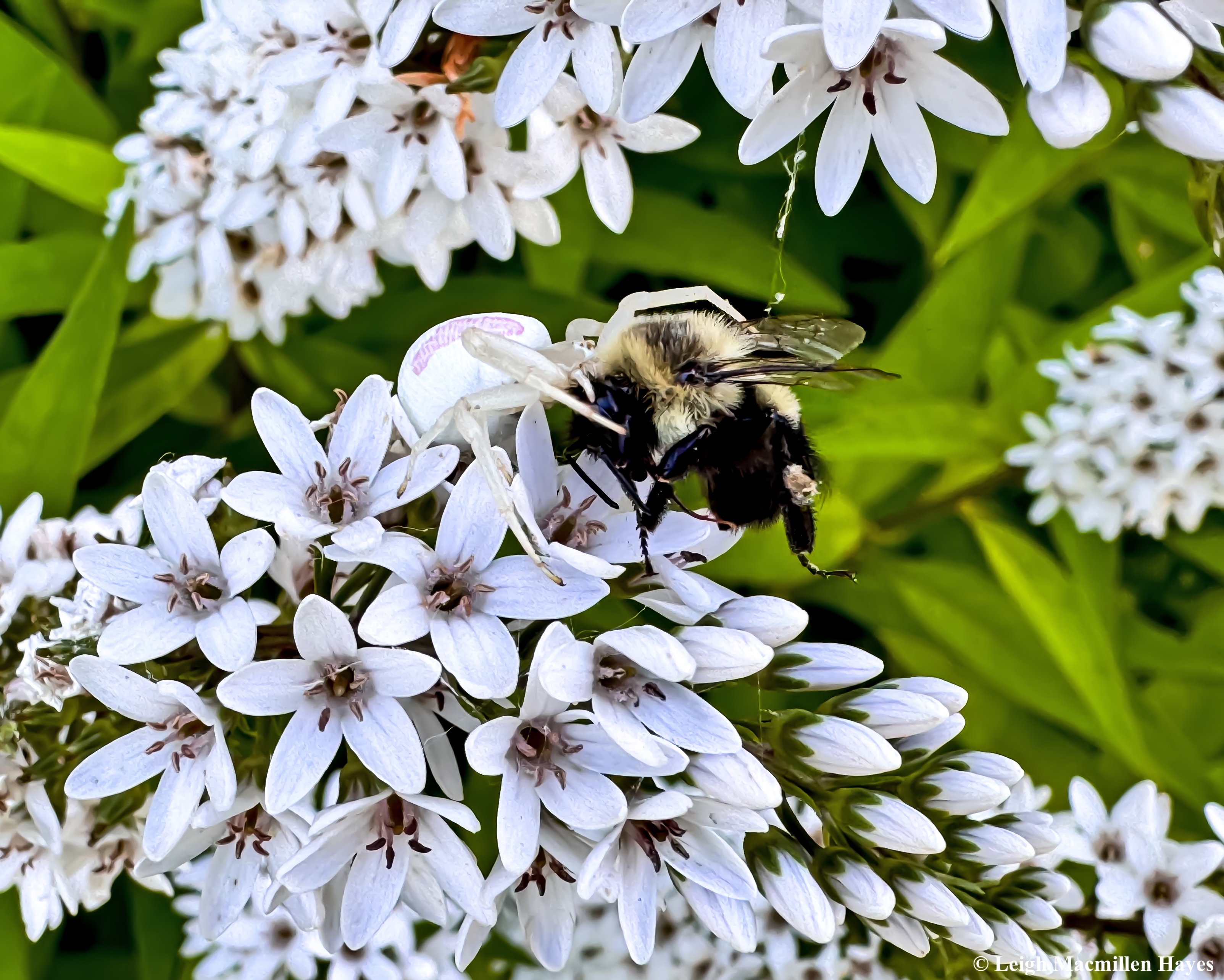
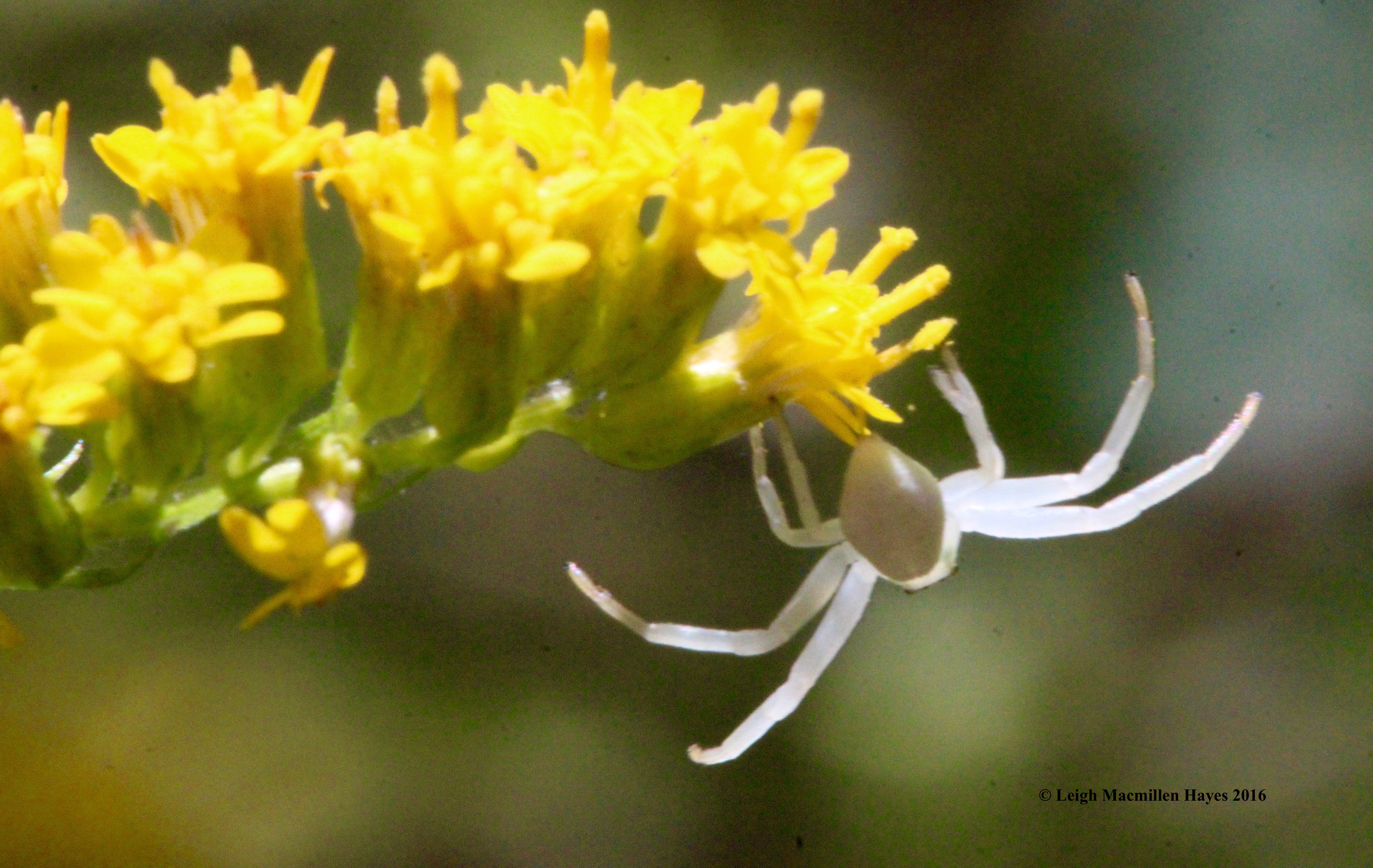
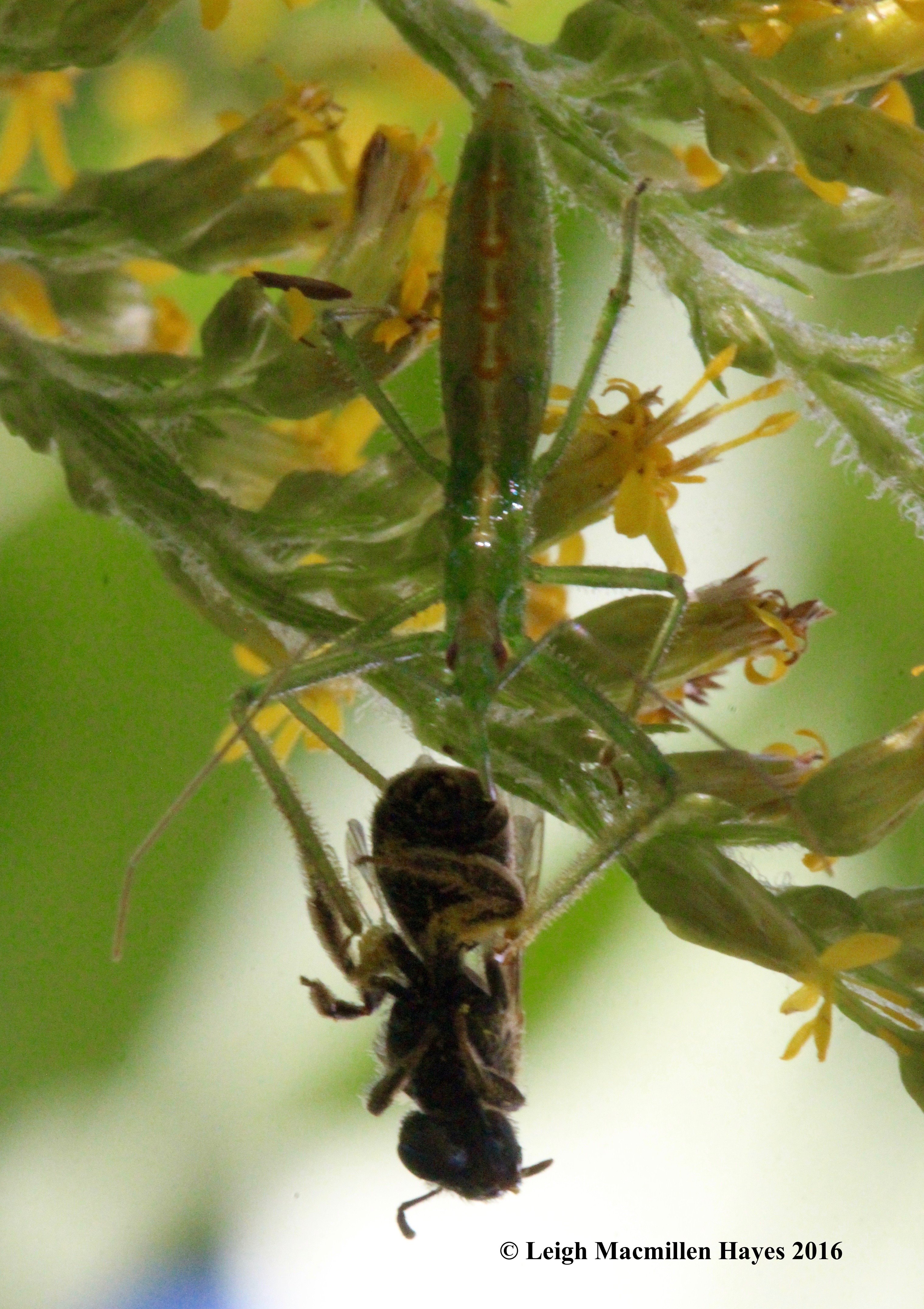
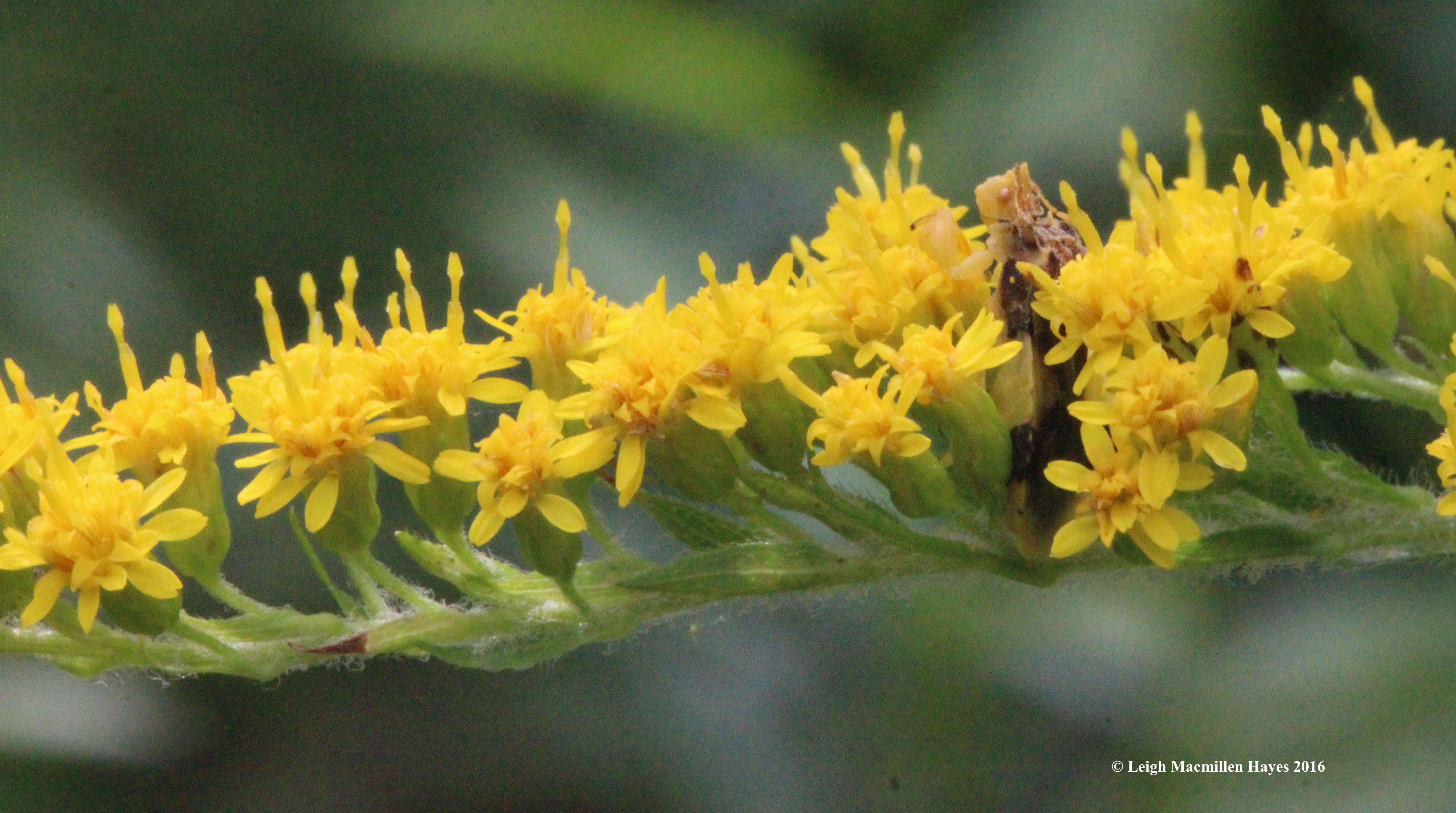
Because I was paying so much attention, I discovered one highly camouflaged Crab Spider had captured a Bee and turned it into a meal. While this may seem an easy task, for spiders capture insects in their webs all the time, I’ve come to learn that that isn’t always the case as I continued to watch this particular one. But I’m getting ahead of myself. In this moment, she had already immobilized her meal of choice and then secreted digestive enzymes into its body to break down its tissues.

That process meant she now had a Honey-flavored Smoothie or perhaps a RootBee Float to drink, the insect becoming a liquified meal.
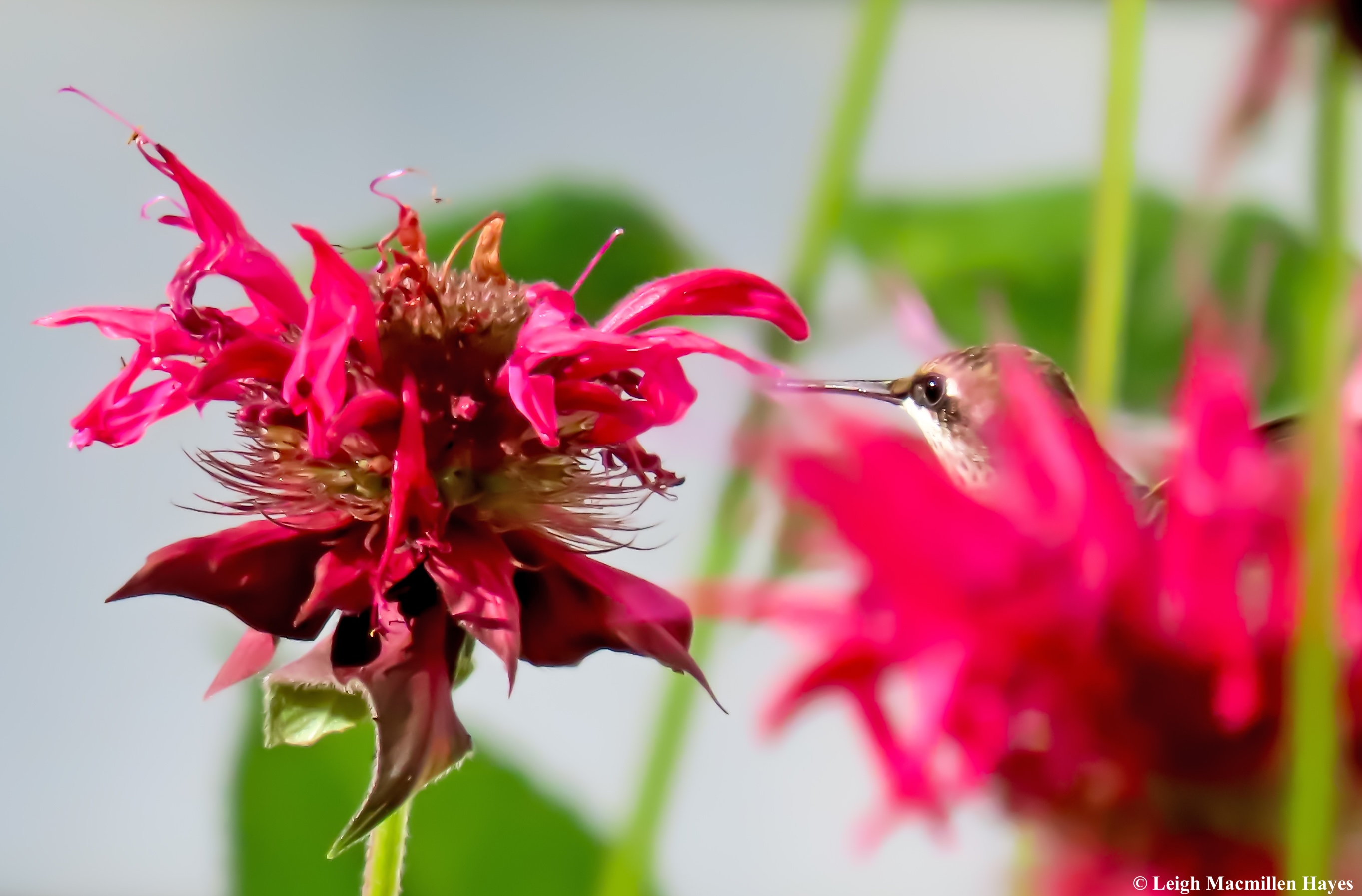
As I moved back and forth between gardens, I realized I wasn’t the only one paying attention, though the female Hummingbird had nectar and not Bees on its mind.

After leaving home for a few hours, I returned to find this Snowberry Clearwing Moth resting on a Hosta. My, how its fuzzy golden body and black abdomen mimicked those of the Bees.
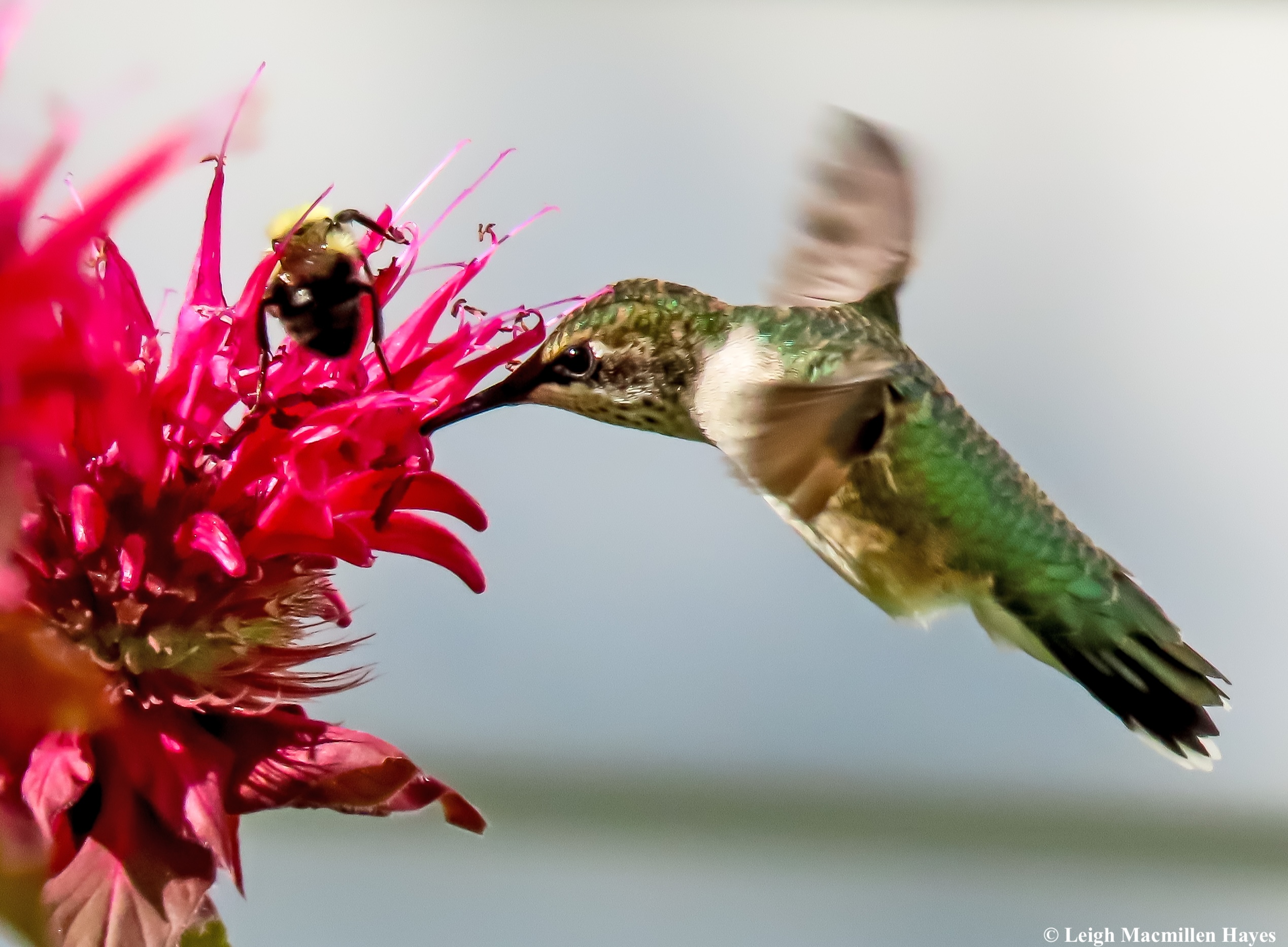
As for the Hummingbirds, the Bees were not bothered. As for me, I tend to get in the Bees’ way, but they gently let me know by flying toward me and then backing off.
One of my realizations was how much nectar the plants produce, and of course, how so many insects are rewarded with this sugary treat–as well as these little birds. Don’t get me wrong. I know plants produce a lot of nectar, but I hadn’t thought about how when it is depleted, it takes the plant time to create more. And each plant is visited over and over again. I guess I’m just jazzed that this year I’m seeing more pollinators in the gardens and field than I have in a long, long time.
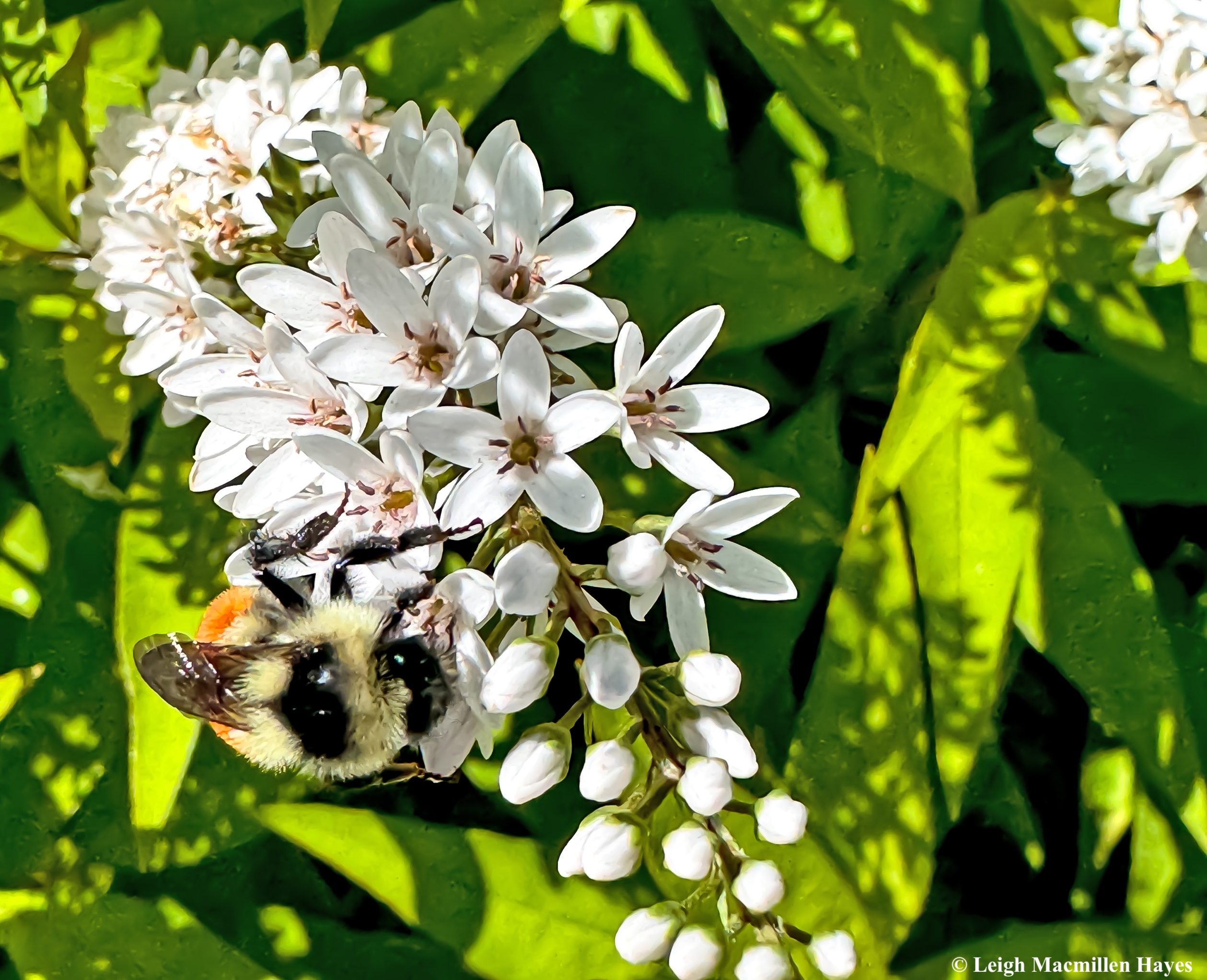
Including a Tricolored or Orange-belted Bumble Bee, which I saw in the field the day before and then in the driveway garden adding its own buzz to the story.

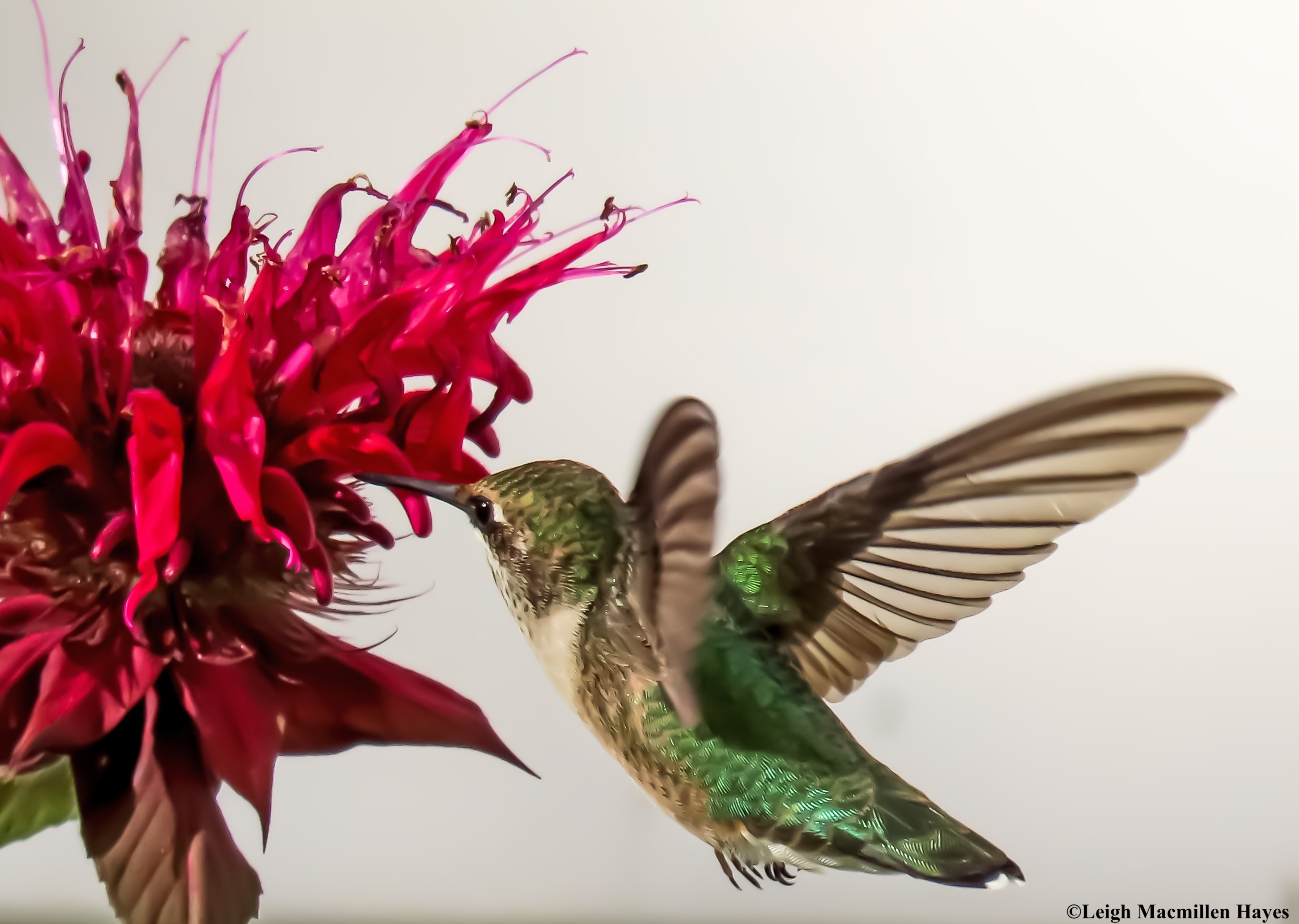
And still the Hummingbird flew in.
When I was a kid, my mother planted Beebalm around the base of a tree in our front yard and I detested the smell of it. But as an adult, I cannot wait for these flowers to blossom in our gardens, and usually within a day the Hummingbirds arrive–seemingly out of nowhere.

Another learning of the day(s) was that because it’s cooler in the late afternoon on the eastern side of the house, the Bees slow down sooner and actually tuck themselves into bed over the course of several hours.

Not all beds are the same, and its interesting to see what the choice might be, like this Hosta flower.

It was after 7 pm before the Bees on the western, and therefore sunnier side, decided to find a place to repose for the night.

The next morning, while most of the Bees were still asleep, I discovered that Madam Crab Spider had turned her meal around overnight. I don’t know why, but I could also see the faint lines of silk that she had used to secure it in place.

She had a plan and it wasn’t for me to know, but I appreciated understanding that she had received energy from the Bee, who had ultimately received energy from the flowers, which had received their energy from the sun, and so the web she wove was full of the circle of life.
Meanwhile, on the shadier side of the house, the Bumblers were just beginning to rise after a long night’s sleep and given that the temperatures have been in the 50˚s these past few nights, it was heavenly naps I’m sure they experienced. I know I did.
Have you ever watched a Bumble Bee wake up? Notice its antennae starting to quiver, and the same for its abdomen. I had to wonder if both were an act to warm up its body on such a cool morning.
And before it had that first sip of nectary caffeine, the Bee seemed to wobble around, rather unsure of its footing.

Once the sun warmed the world up for everyone, the Hummer started flying as well.
A moment I didn’t capture that she and I both shared, occurred just after I took the videos above. She had flown into the garden much to my surprise because I was standing right there, rather than my usual distance away (think telephoto lens), and in flew her Mr. He alludes my camera because his visits aren’t as often, and they are fast. As was the case in this instance. All I could do was watch as she moved below the blossoms and paused on a leaf to watch him. And he performed an aerial dance creating figure eights over and over again, before flying off. It was one of those moments that will be forever etched on my brain.

As for the Bee that had been the Spider’s meal–once she was done with it, she had discarded it and I found the body on the granite stone below the flowers. The color was a bit different, and in my brain, I wonder if the Bee’s pollen bags had exploded upon impact.
I again left for a wee bit of time, but when I returned, much was still the same.

Except–the Bee’s body was missing. And only some legs and a wing remained. Where had they gone, I wondered.
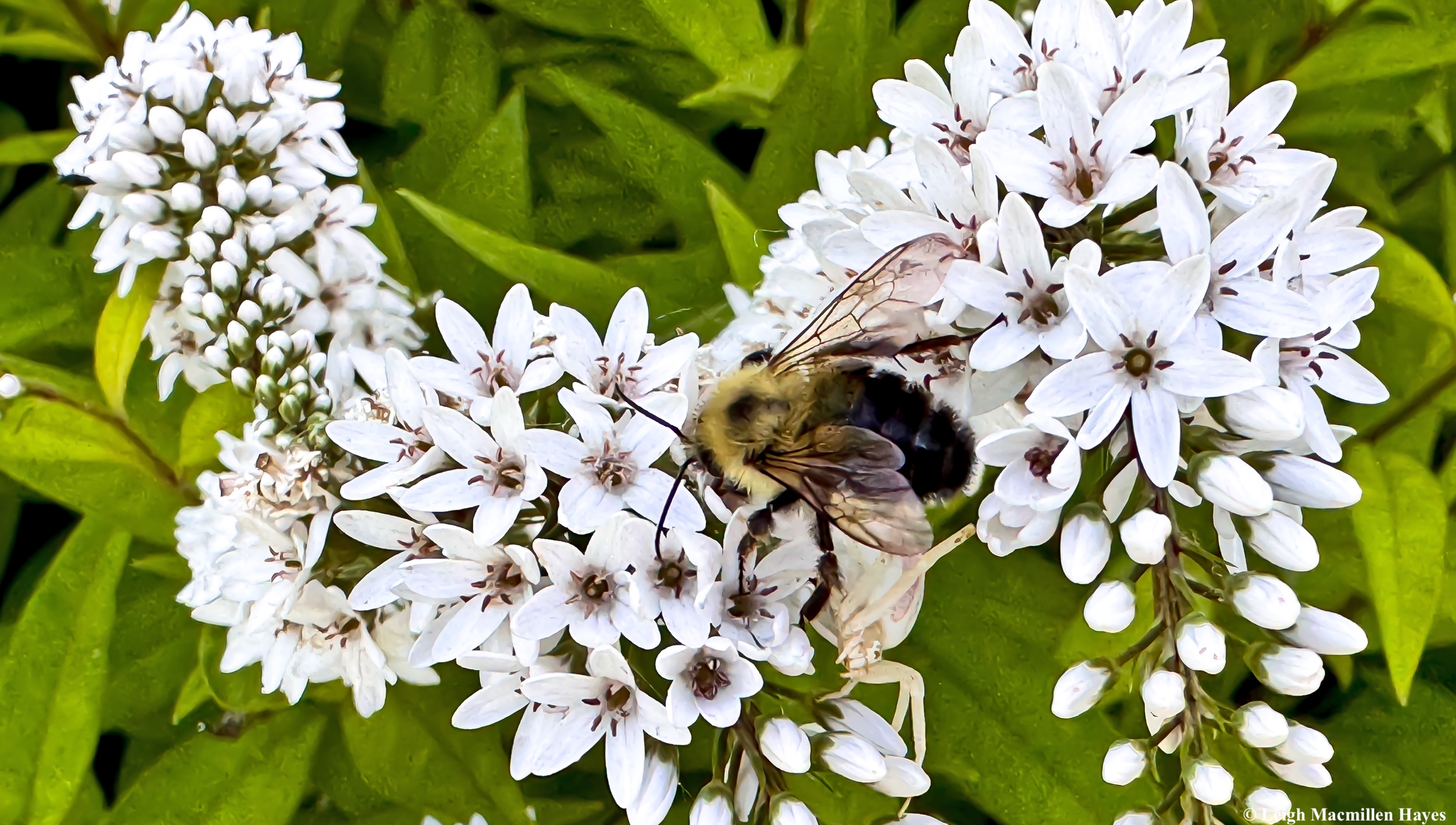
Above, Bee after Bee tempted the Spider, but she didn’t make a move and I suspected she was sated for the moment.

And below, I suddenly figured out what had happened to the body, being the great tracker that I am (LOL!) An Ant removed the body parts one by one.

The Hummer still flew, and occasionally took a break right above my head and I was grateful for the opportunity to watch it without it realizing I was there.
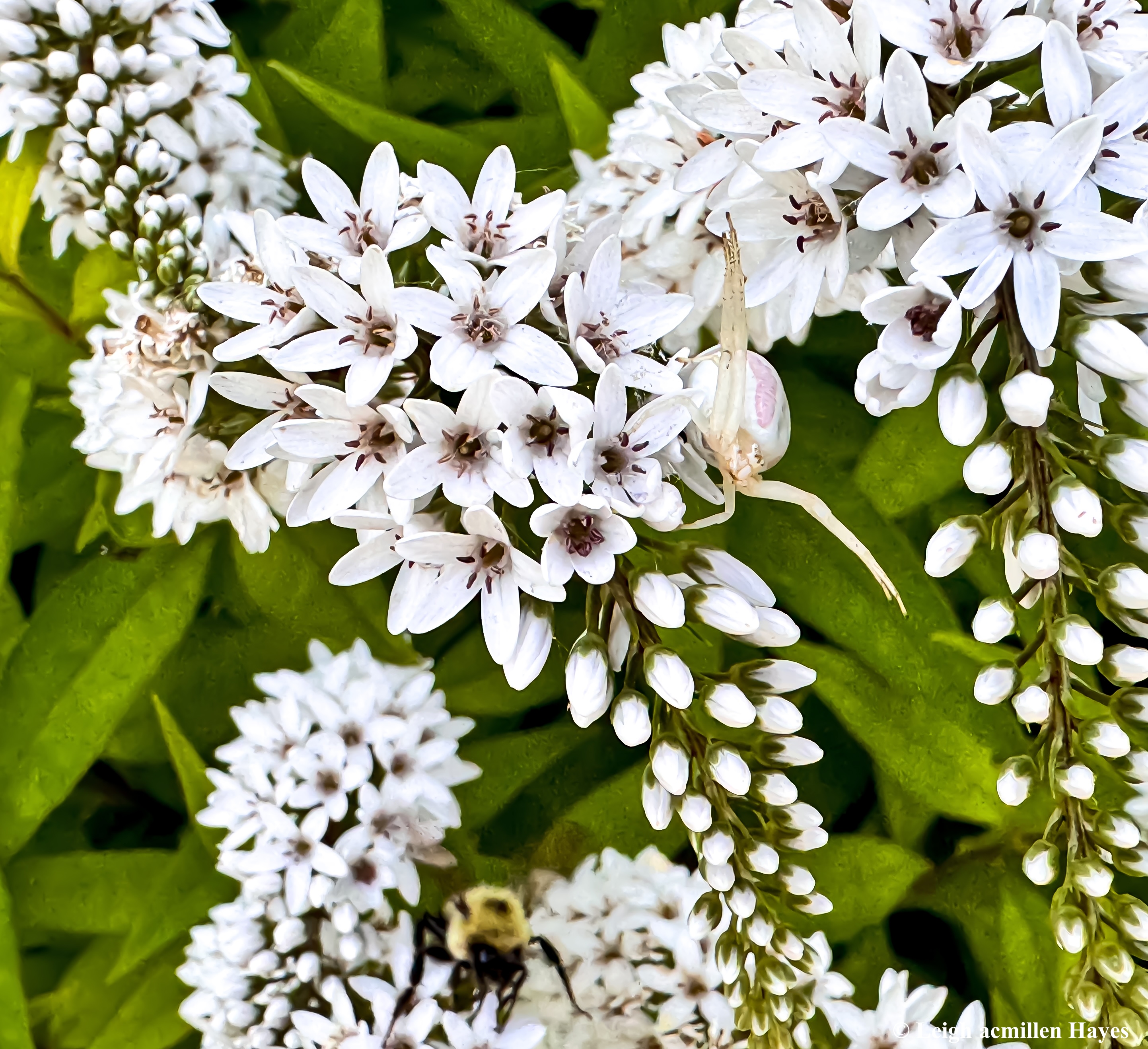
The Spider began to change position, and move from one plant to the next and even when I thought she’d take a meal, she didn’t listen to me.

The Ant completely removed all signs of the Bee and I suspect there’s one mighty happy Ant family in the garden.

And the Bees. Well they are hardly quiet, but all that buzz is a wonderful thing.
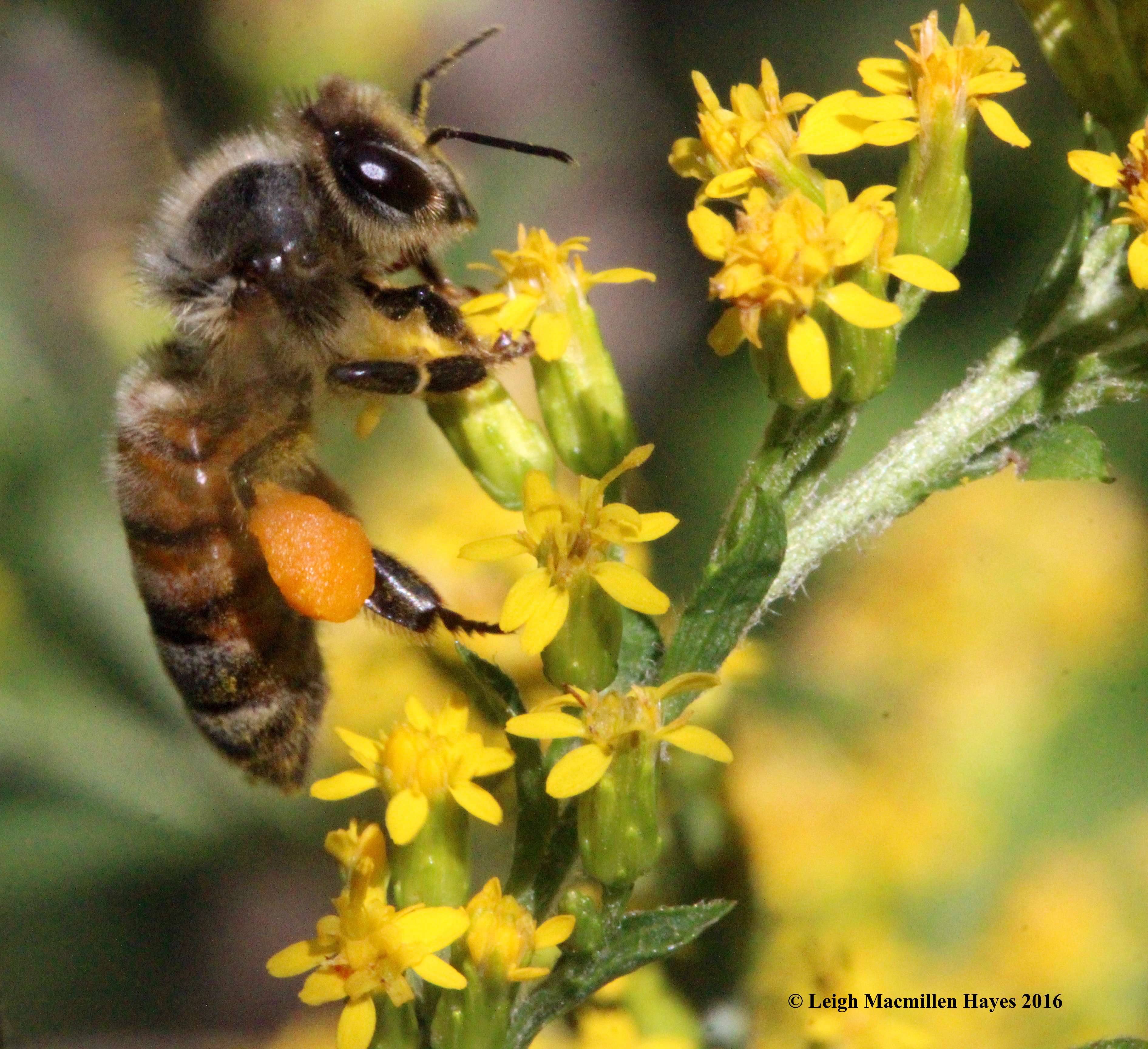
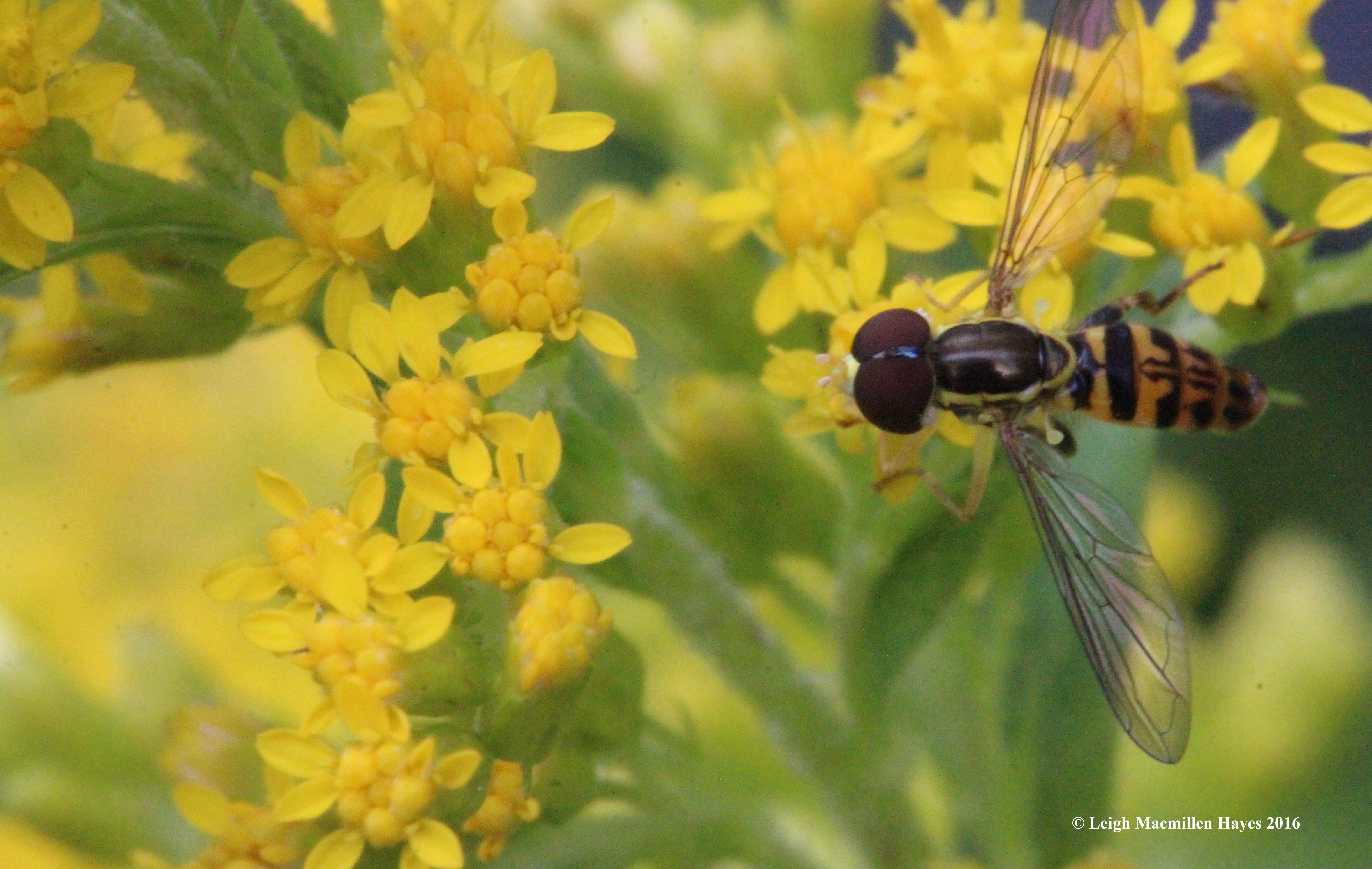
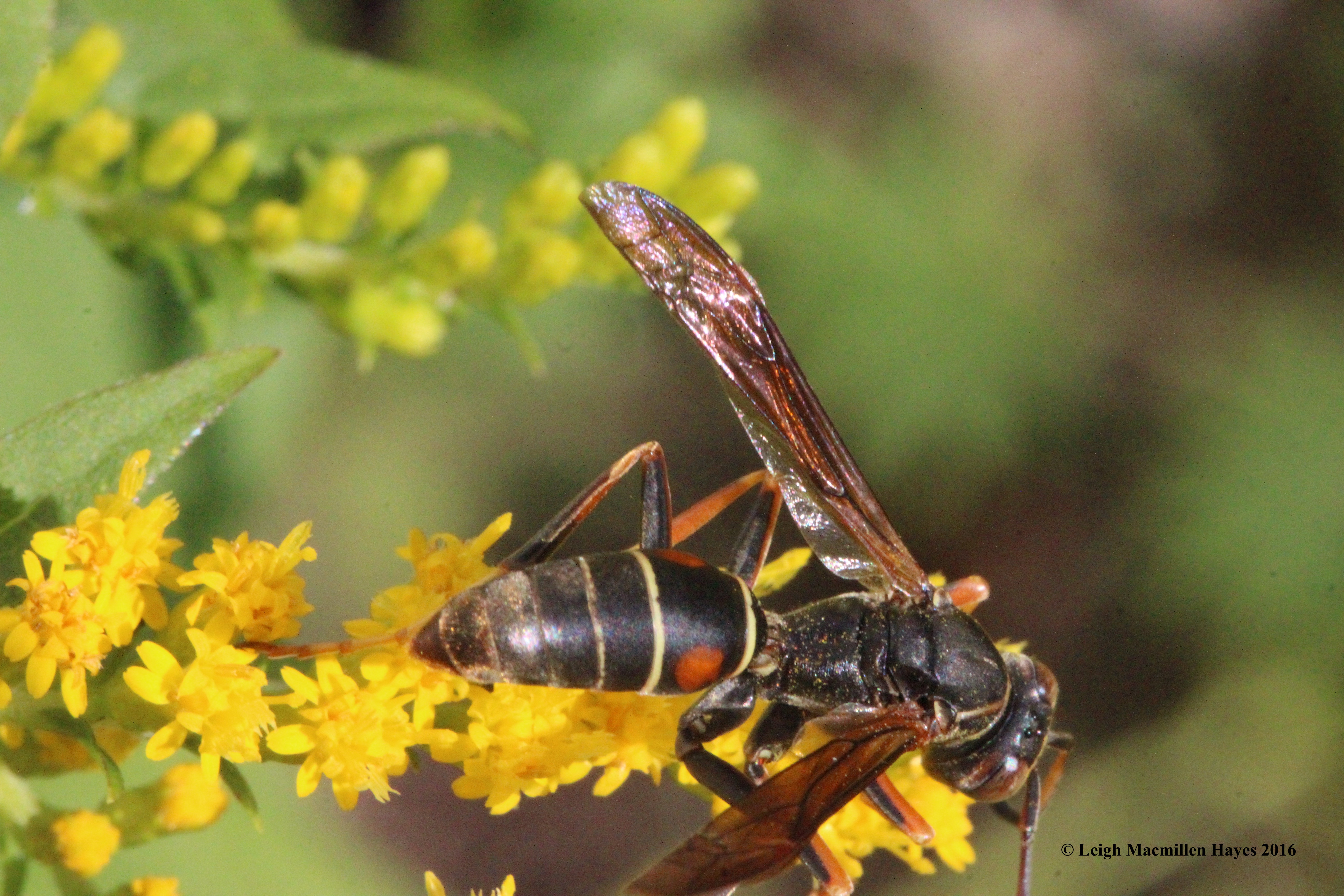
I give thanks to them and their friends like the Great Black Wasp with its iridescent blue wings, and the Great Golden Digger Wasp with its orange and black coloration, and the Hover Flies, and the Skipper Butterflies and Tiger Swallowtail Butterflies, and so many others who feast here because I know that they are doing all of us a service by pollinating the food we eat–it doesn’t get any better than that.
Next time you see Bees in your yard, I encourage you to Bee Quiet and maybe they’ll share their stories with you as well.









 wondermyway