Artistic Perspective Along the Trail

We went for a walk this morning, My Guy and I, along trails owned by Lakes Environmental Association, particularly their Highland Research Forest, and the network of Highland Ridge Ski Trails. It wasn’t strenuous, it was only slightly buggy, and it was lovely, with so many offerings and here I only captured a few.

Our first stop was beside the wetland that in the past has been home to Beavers and Great Blue Heron and a whole host of others. It’s still home to that whole host of others, but our sightings only included a few of the singing Bullfrogs.

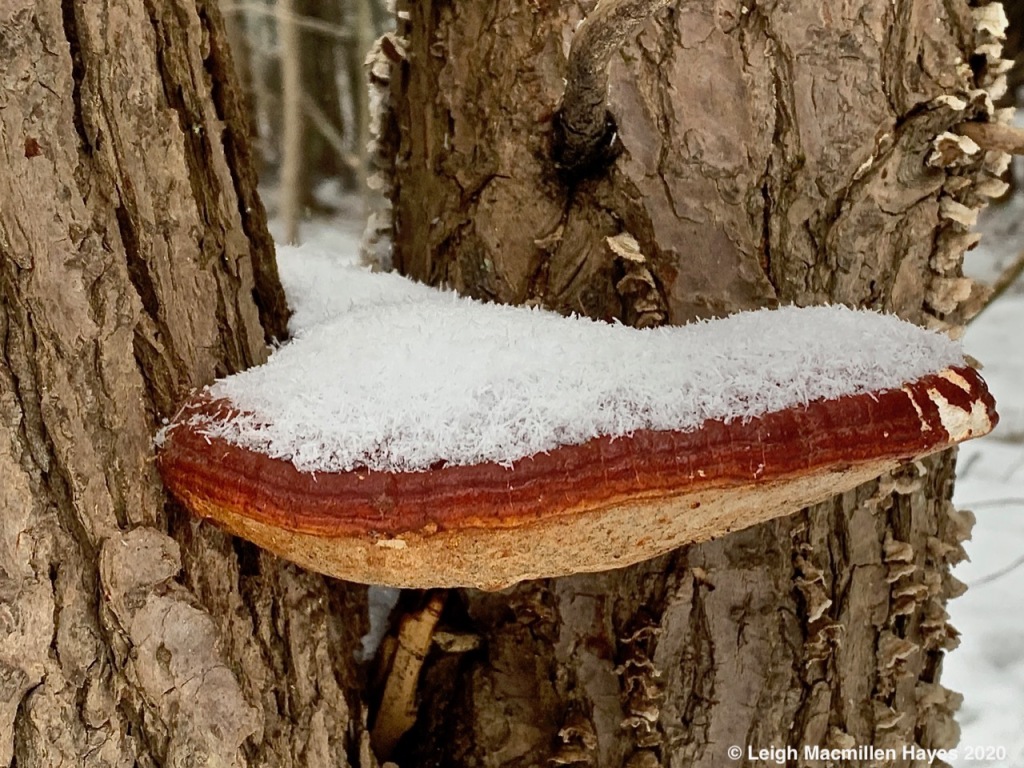
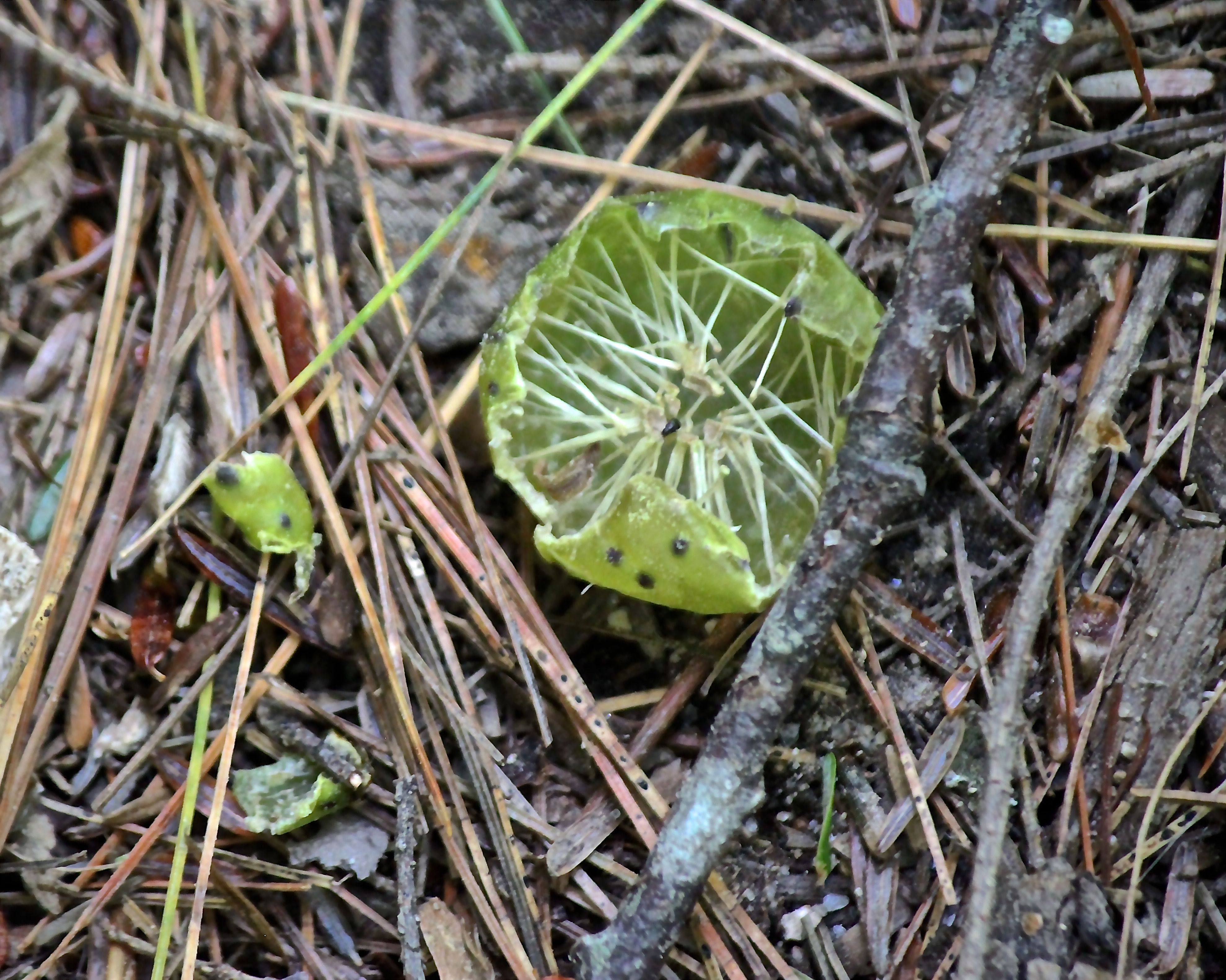
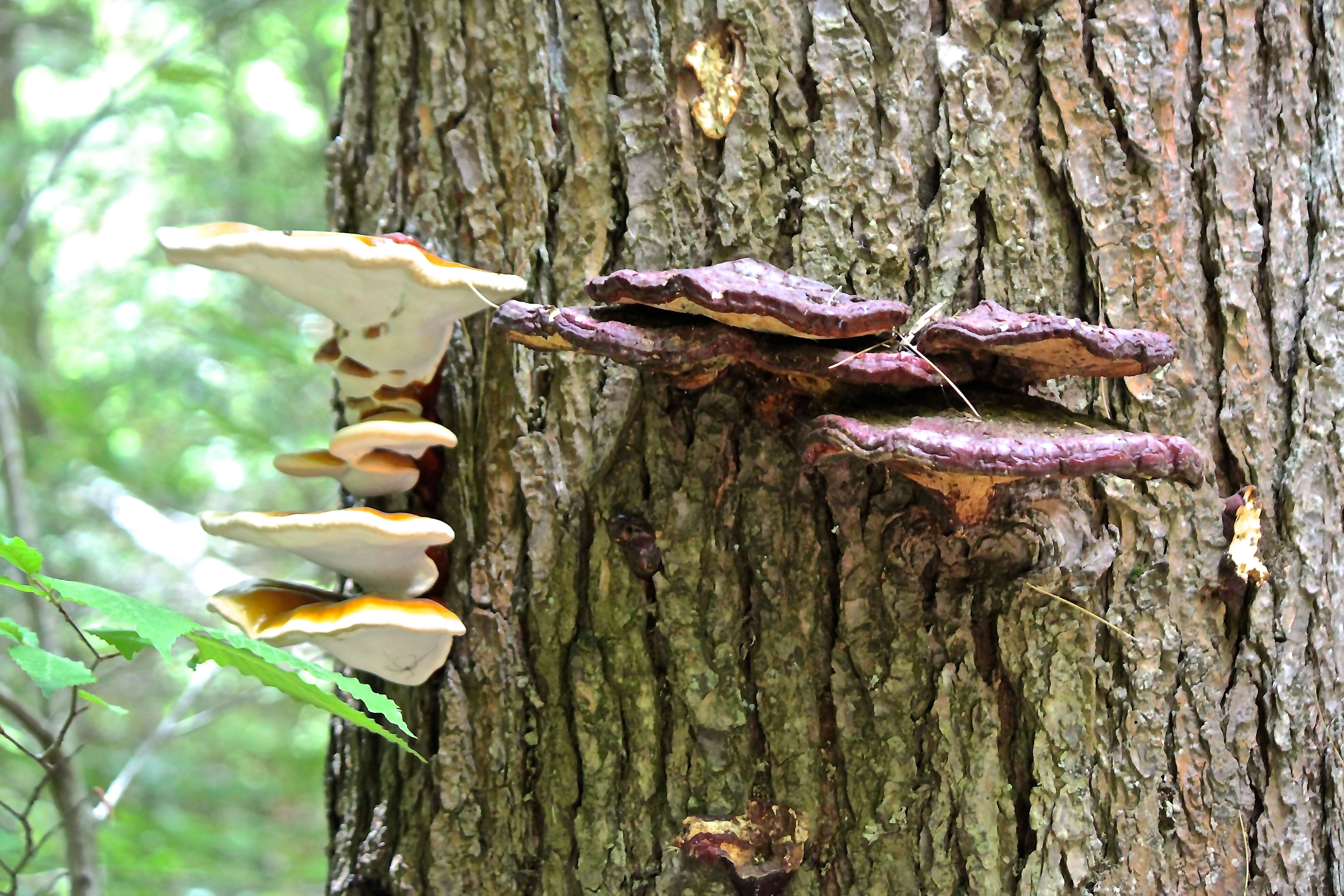
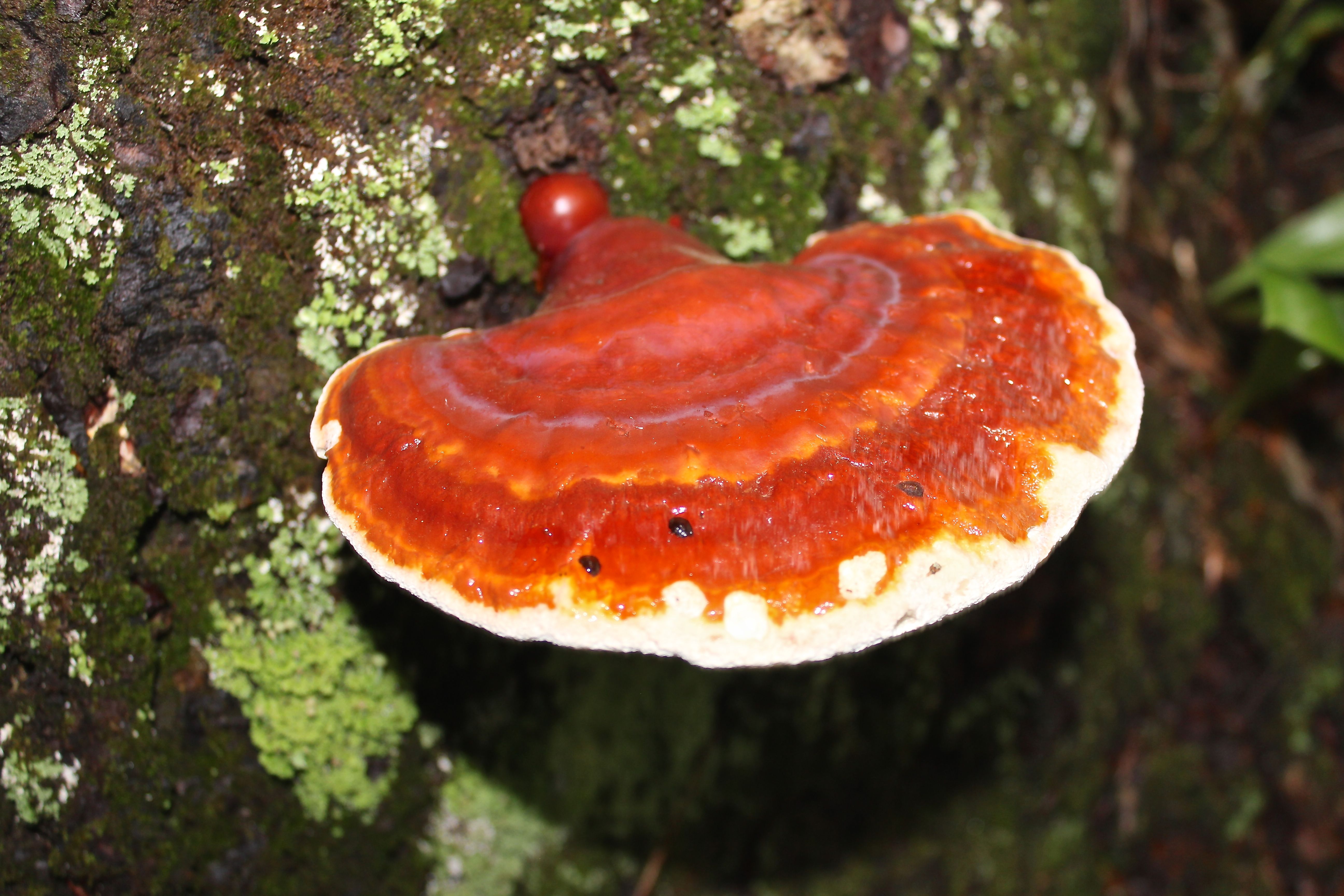
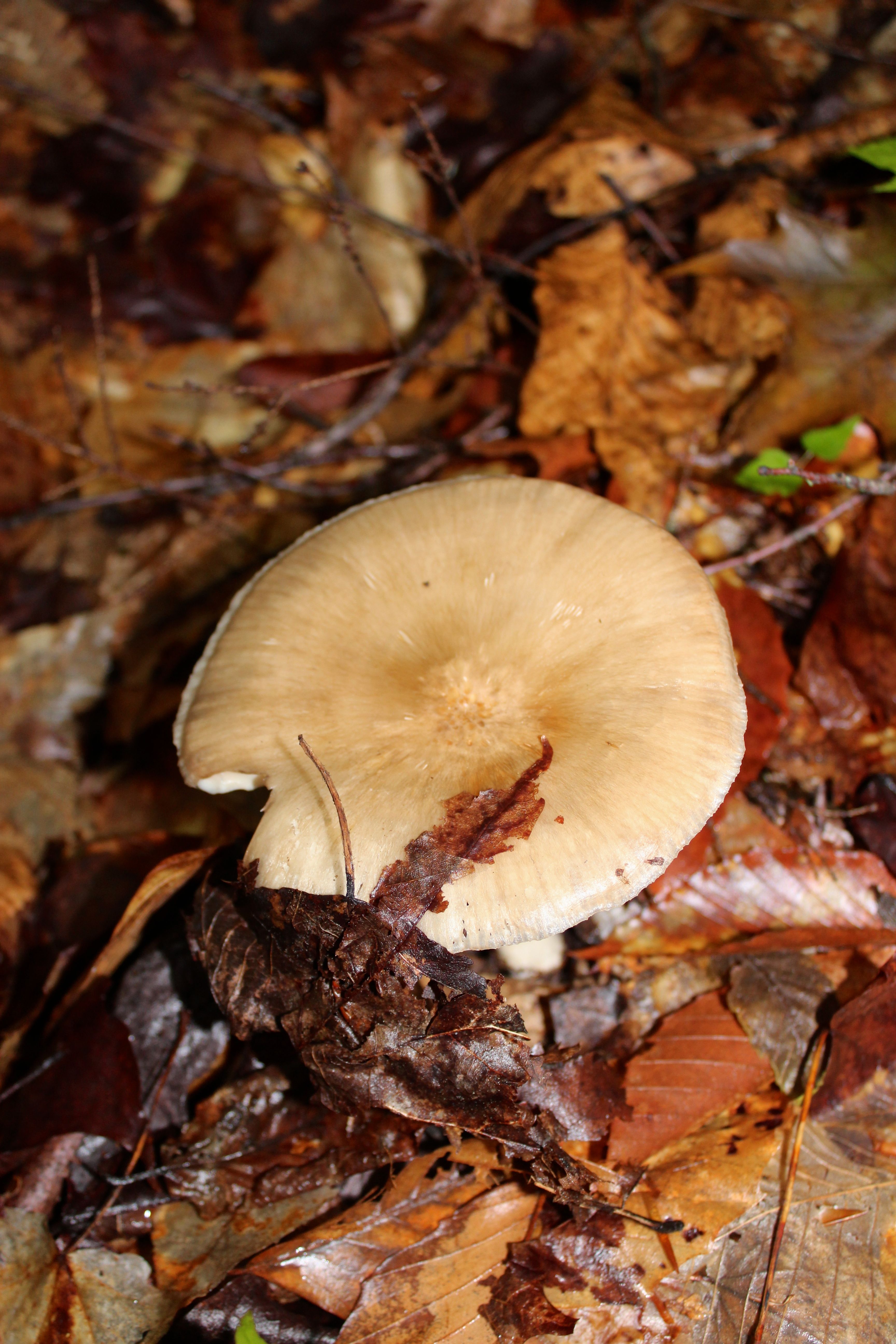
Tree stumps soon garnered my attention, however, first because of this fresh Varnish Shelf Fungi, aka Hemlock Reishi. Sighting these and so many other mushrooms always bring an old soul friend to mind who died too young a few years ago, RIP Parker. You taught me so much and continue to travel the trail with me, and for that I’m grateful to be able to keep you alive . . . in my mind.

I’m not one to recommend foraging mushrooms because my knowledge of such is limited, though Parker always reminded me that there are more poisonous plants than fungi. I do know this one is, but at a certain point in its lifecycle. Obviously, a squirrel had already enjoyed a few bites.
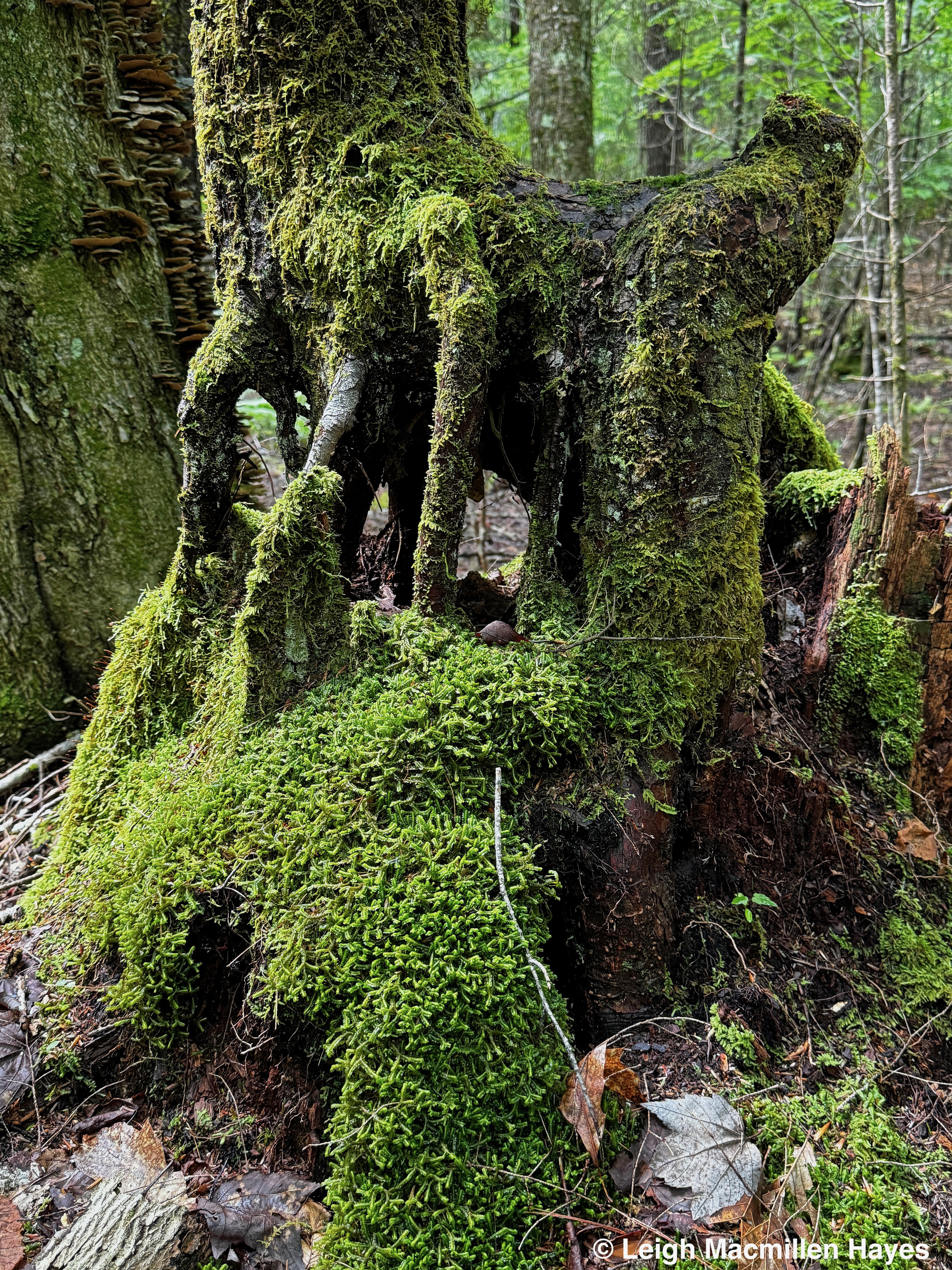
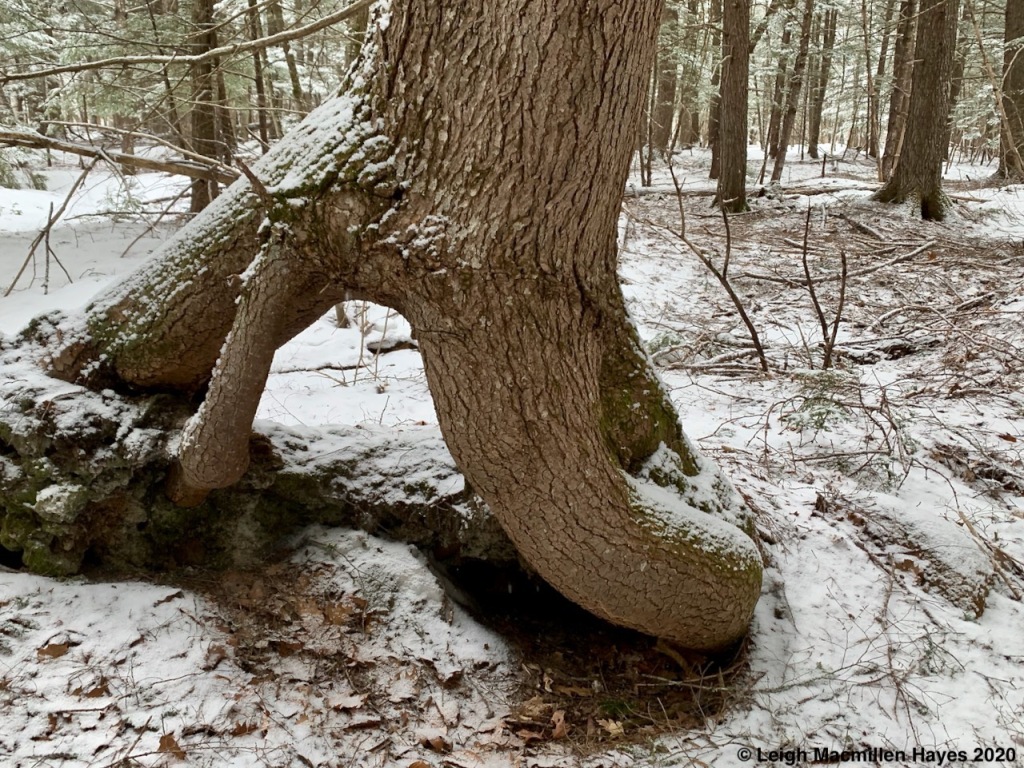
Both My Guy and I were charmed by this stilt-rooted tree and we felt the presence of elves, rather than the fairies that often greet us. Can’t you just imagine entering through those arched doorways and then moving into your workshop to complete a project?

There was another with crazy hair day–so topped off was it with Big Red Stem mosses.
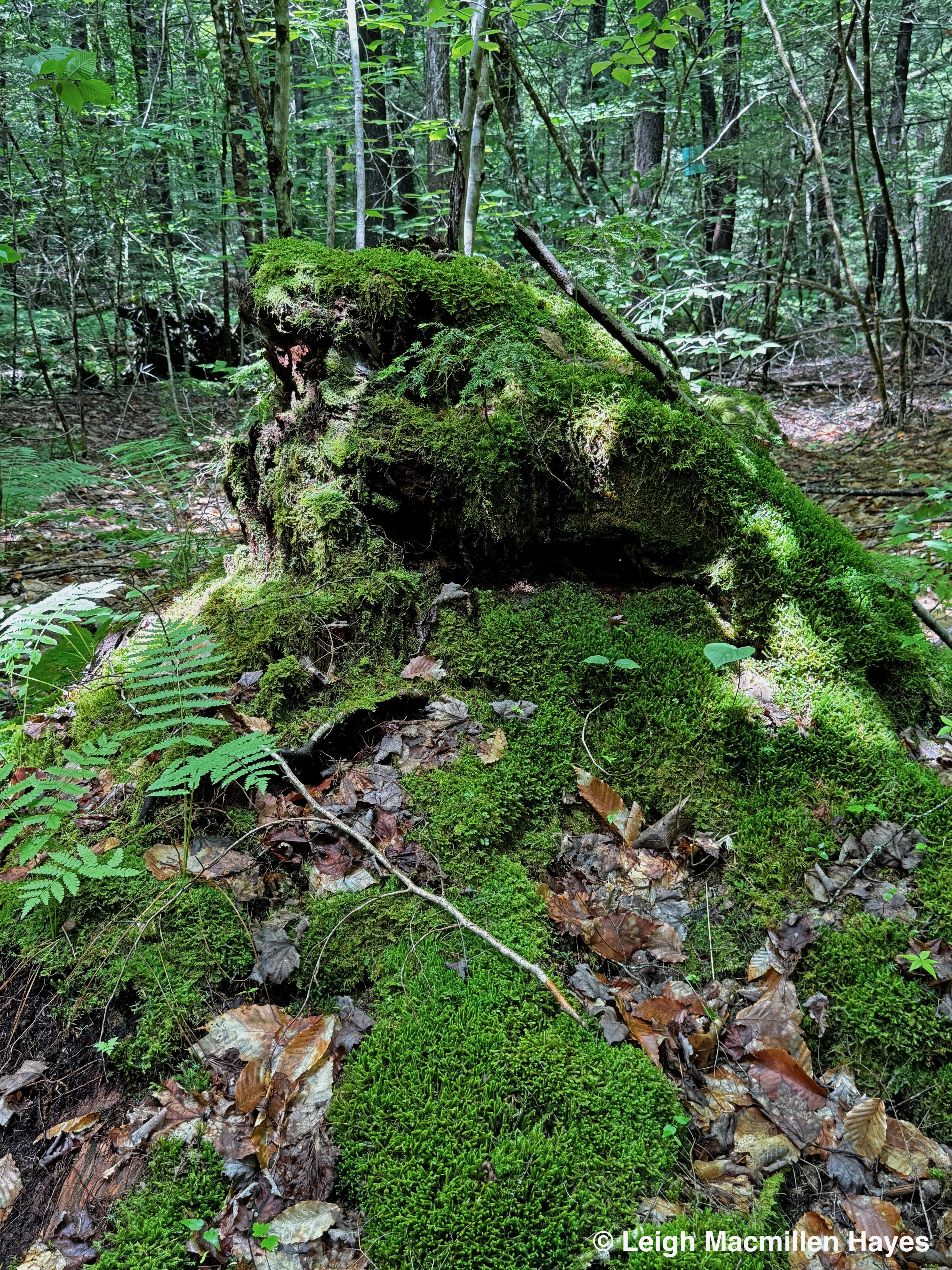
Possibly my second favorite, however, wasn’t so much a stump as an uprooted tree which also abounded with life.
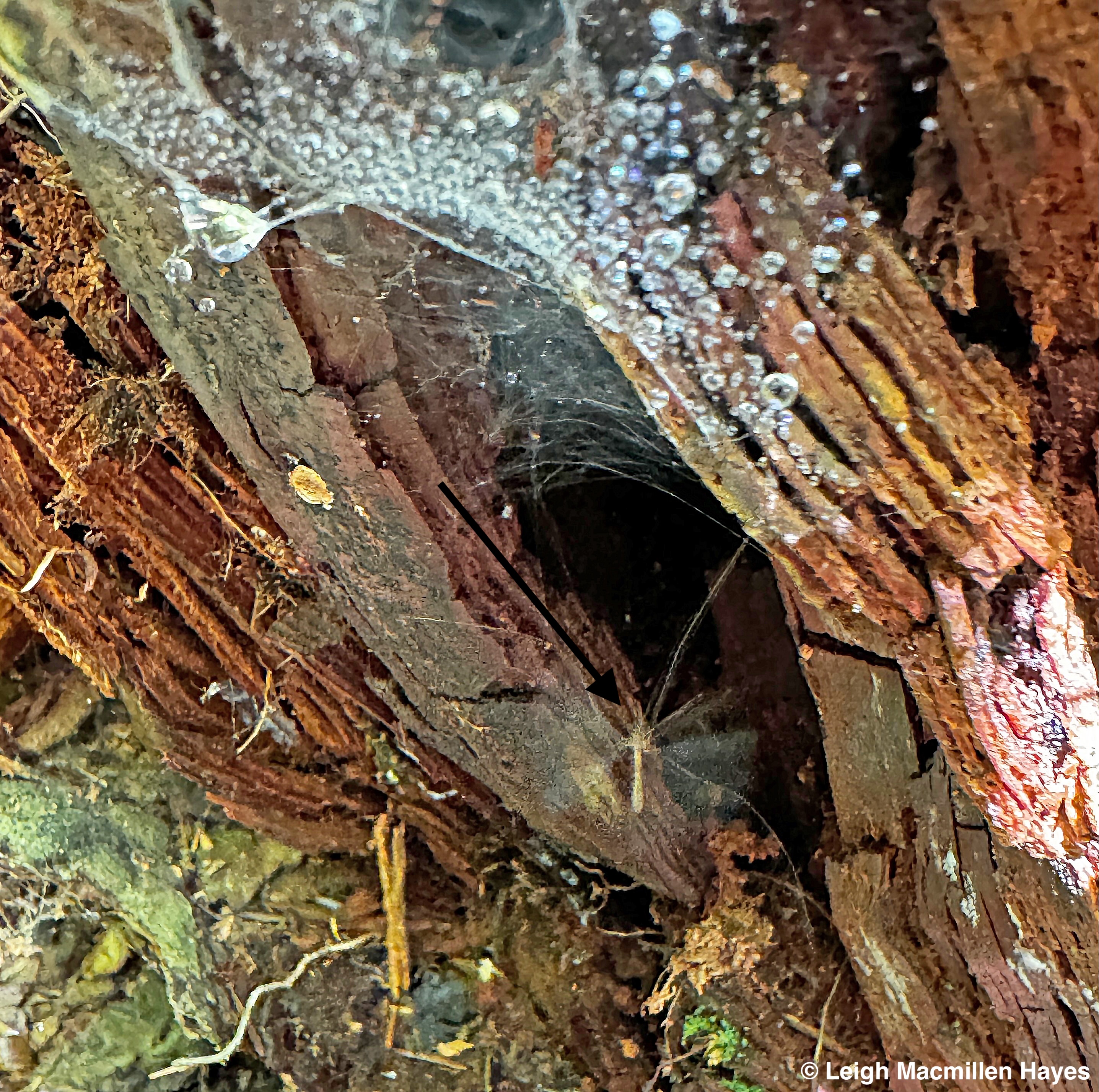
Among the offerings, a cranefly or two or three or a dozen, fluttering in the dark as they do. The arrow points to one and I hope you can see the action of its wings.
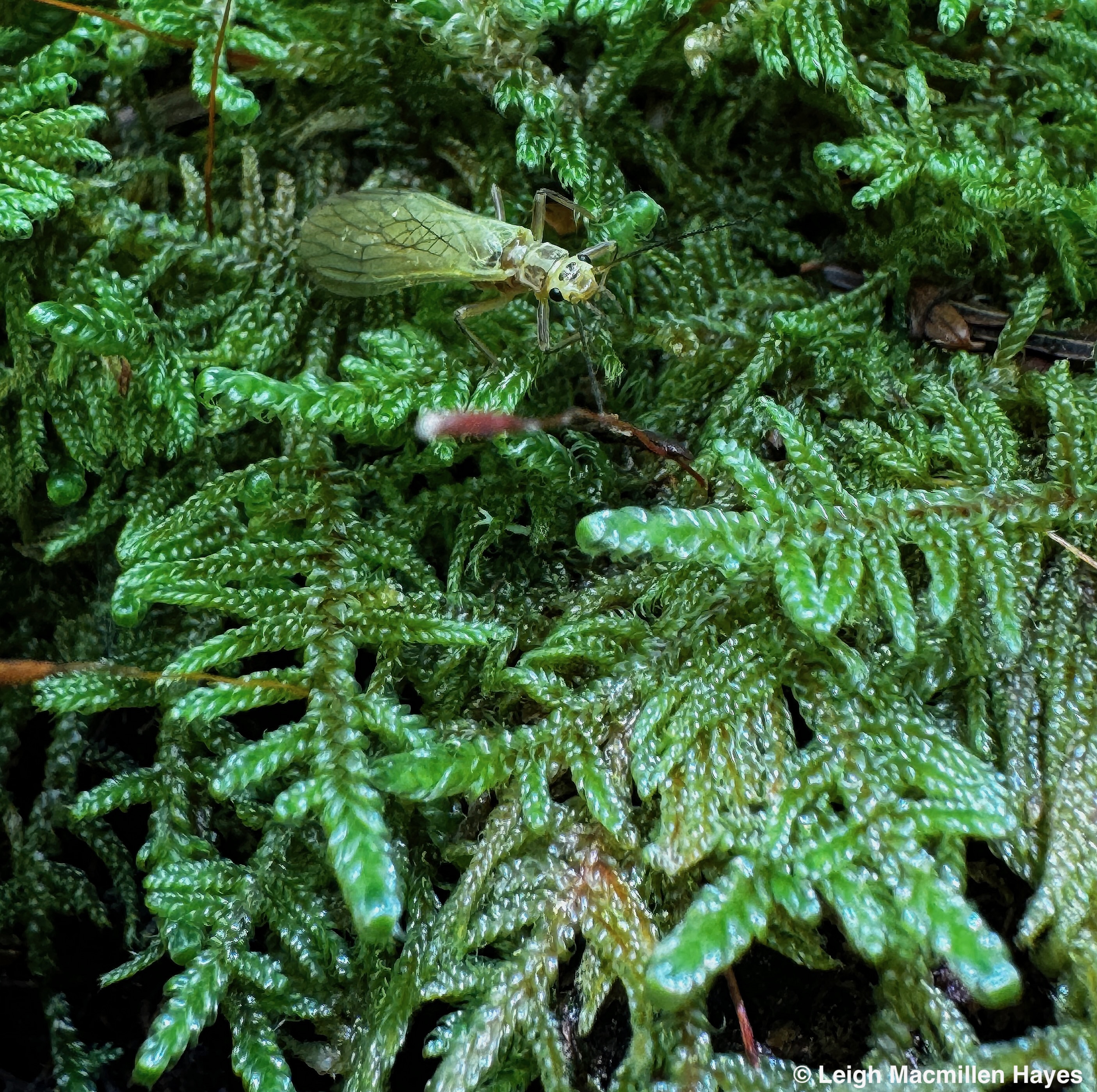
And among the Brocade Moss that decorated the uprooted tree trunk, a Green Lacewing, a beneficial insect in the natural world. Do they bite? No. Do they eat aphids and other pests? Yes.

This is also the land of underarm-high Bracken Fern. At least it was as tall as my underarms.

And upon a moss-covered rock, a delightful display of Many-fruited Pelt Lichen with its saddle-like reddish brown projections or apothecia.

The dainty flower of cool, moist woods, Mountain Woodsorrel, also made an appearance in several spots. With shamrock-shaped leaves, the flower color has a strong pink-purple veining and somehow makes me want to gobble it up as if it were peppermint ice cream.

While we walked and occasionally talked and constantly looked, he for the trail because though it’s well-blazed, it’s not all well traveled and so we had to slow ourselves down and pay attention, while I looked for anything that begged a notice. And then we found this most unusual sighting–well, someone’s sighting may be unusual without these glasses. They are still out there, right where you lost them, I think on the Gibbons Trail. Or there abouts.

As always, you-know-who was patient with my periodic stops, usually finding a stump or rock upon which to wait. Sometimes a bridge had to be the resting spot. And this one we love for its construction across Carsley Brook.

His view: the brook as it flowed forth below the bridge. Okay, so the artist may have left a few trees out, but that’s artistic license–the freedom to paint what she/he wishes to portray a scene. And so I did.

We all view things in a different perspective and from a different angle. Thank goodness. This may not have been his perspective, but it was mine.

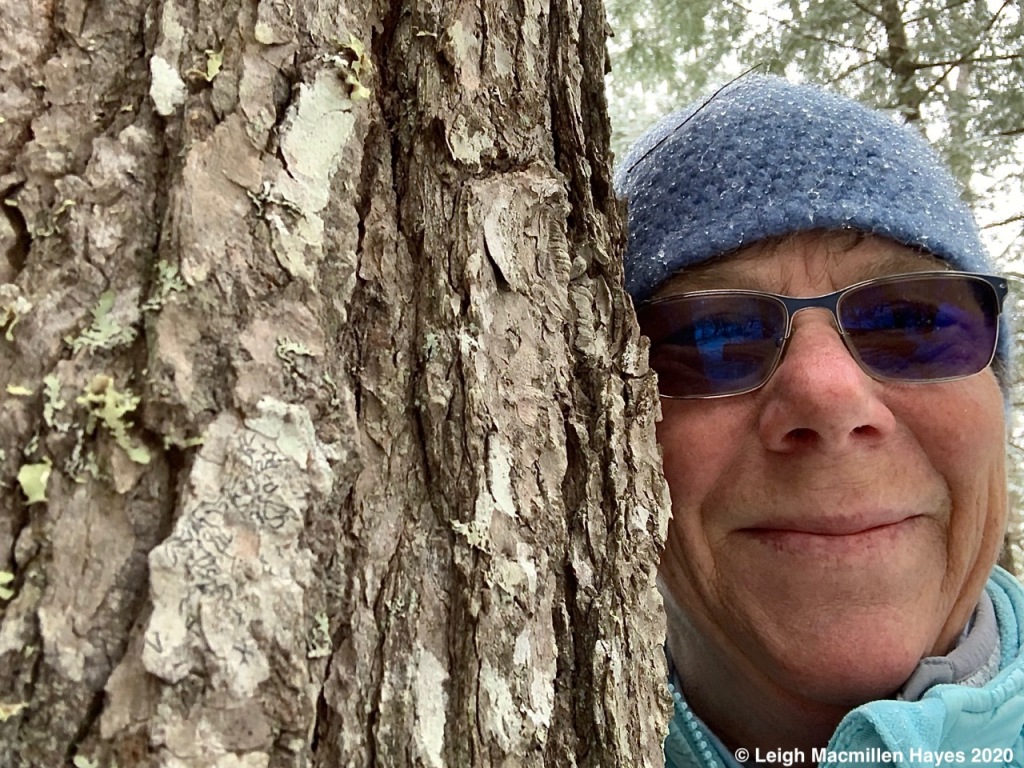
Be Like a Hemlock

On this St. Patrick’s Day, my hope is that as we practice the new norm of social distancing, we’ll make time to step outside and become intimately connected to the earth.

May we find a path to follow that will lead us into a hemlock grove where we can shout, cry, laugh, or just be.

May we realize it’s okay to talk to a tree for the tree will listen.

May we discover that the trees help their neighbors by offering nourishment perhaps in the form of yellow-bellied sapsucker holes . . .

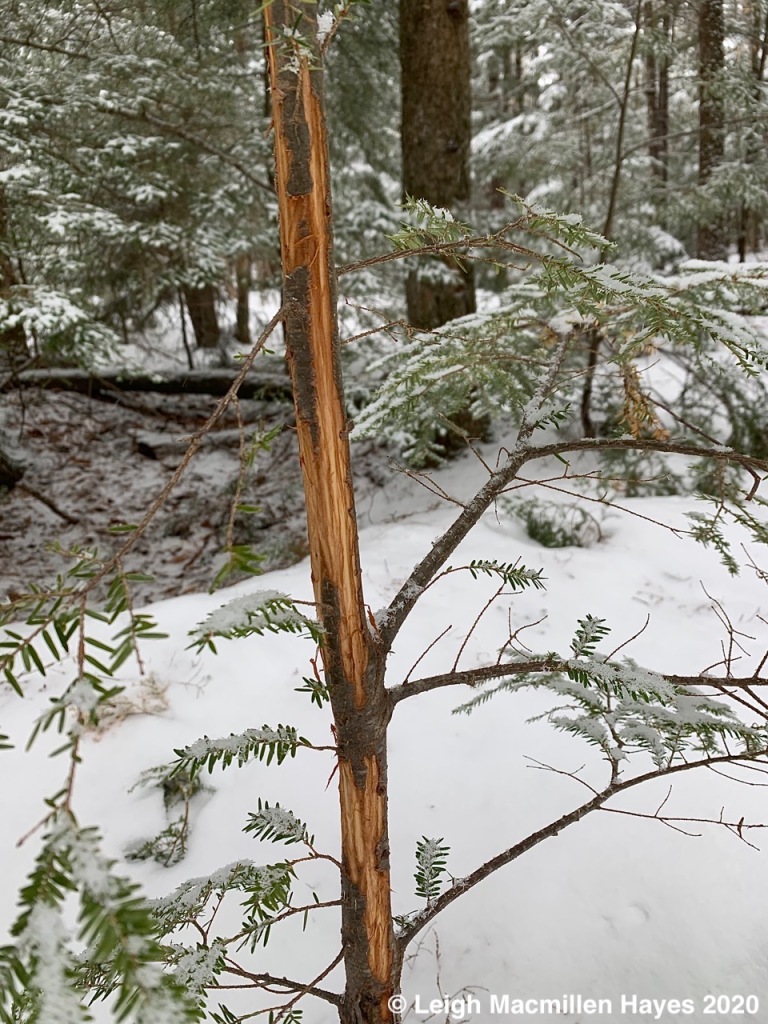
and bark upon which to scrape one’s teeth–a deer one that is.

May we notice that as a fungus takes control from within and shows forth its fruiting body, it too, might provide sustenance for others–in this case, perhaps a squirrel enjoyed a few nibbles. (Hemlock Varnish Shelf or Reishi has long been touted for its medicinal benefits.)

May we get down on all fours as we peer under a hemlock on stilts–we never know who might peer back. Perhaps a leprechaun?

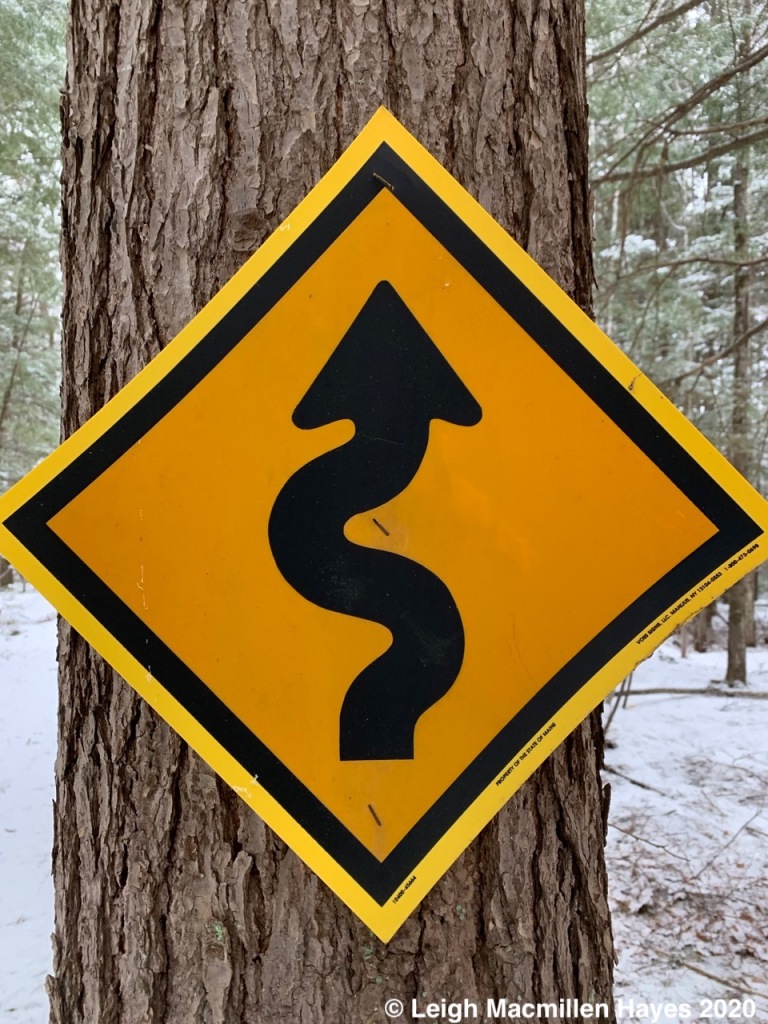
May we know that we all have a squiggly road in front of us.

But, as much as possible, may we follow the hemlocks example and heal what ails us.

At the end of the day, may we all have the courage to hug a tree. Any tree. And may we be surprised by its calming effect.

While we are at it, let’s be sure to thank nature for giving us space to heal ourselves.

Go ahead. Be like a hemlock.

The Main(e) Exotics

If you’ve traveled with me before, you know that I often frequent the same trails. And so it was today. Oh, there was a change-up in the early morning hours when I joined a couple of members of the Lakes Environmental staff to oversee a volunteer project by the Rotary Club. Rotary members from around the state and beyond (think Argentina) spent four hours clearing a new trail we’d laid out at LEA’s Maine Lake Science Center. They provided humor and hardwork hand-in-hand.

And then a friend and I drove to LEA’s Holt Pond Preserve where everything was in exotic mode.

oak g 3

One of our first finds was an apple oak gall about the size of a golf ball. So, the apple oak gall female wasp (yes, there is such a species) crawled up the tree trunk of a Northern red oak in early spring and injected an egg into the center vein of a newly emerged leaf. As the larvae grew, it caused a chemical reaction and mutated the leaf to form a gall around it that provided sustenance.

oak g 5

Recently, the wasp drilled its way out and probably found a mate.

oak gall 1

All that remained–wispy fibers.

blue 3

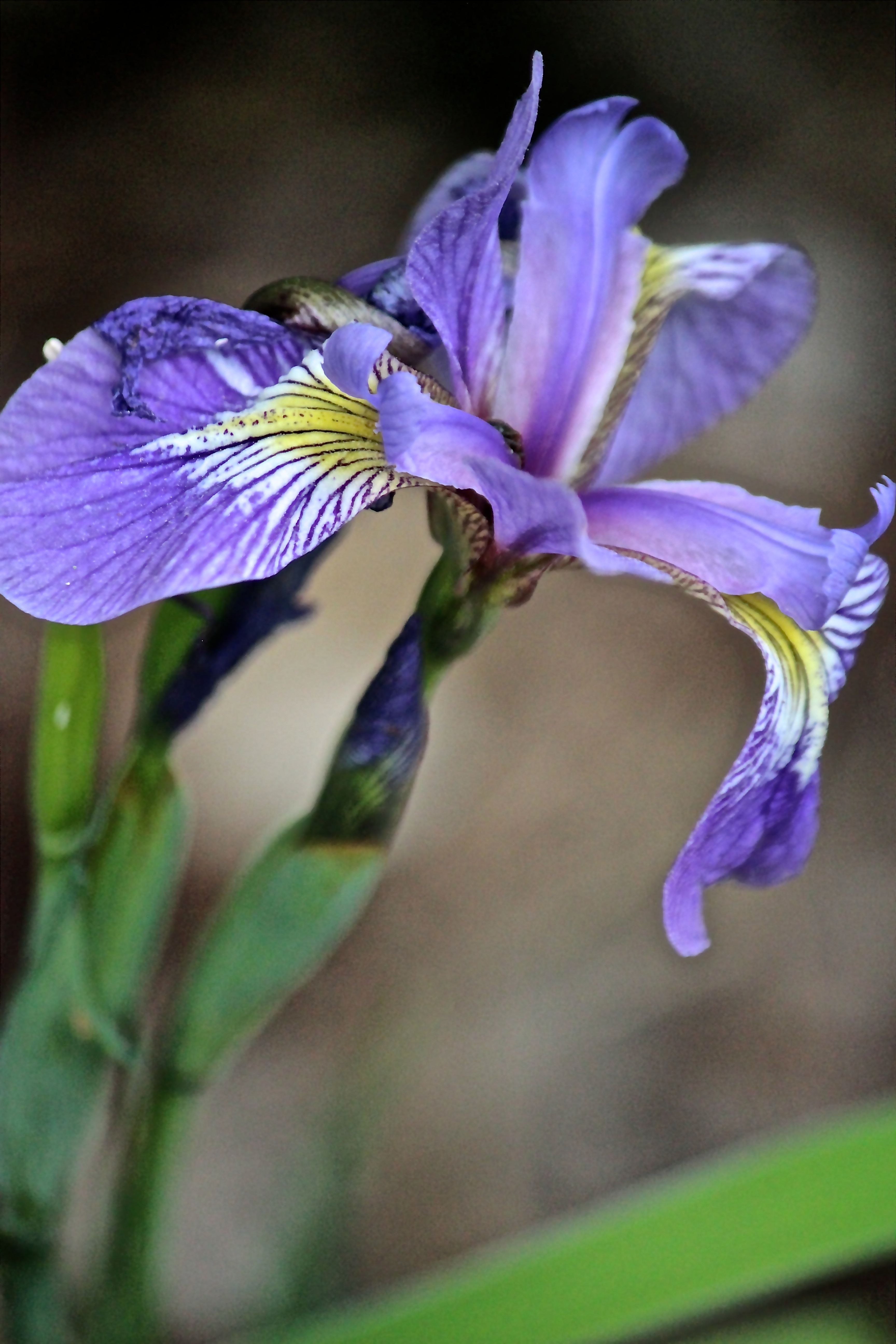
Along the first boardwalk in the red maple swamp we found Northern blue flag iris in bloom. Flag irises are wild irises that tend to grow in boggy areas. Unlike the irises that grow in our gardens, they don’t have beards. The venation of the gracefully downturned sepals was intense–the better to attract pollinators.

snake2

We moved from the swamp to the first hemlock hummock and chatted about natural communities when suddenly we realize we were being hissed at.

snake 10

Its coloration threw us off and beautiful though it was, the hairs on the back of our necks stood on end. Apparently we made it feel likewise. And so we retreated. We retraced our steps and decided to complete the same loop in the opposite direction. When I got home, I looked it up and realized that it was a common garter, but really, there didn’t seem anything common about it in the moment.

hemlock v

Because we backtracked, we were treated to fresh and older hemlock varnish shelf fungi that  we may not have seen otherwise.

hemlock v 6

We know where they’re located. F0r big $$ we might (MIGHT) show you.

park 1

Later on, as we left, we recognized a friend’s vehicle in the parking lot. Our question–did he see what we saw?

pitcher 9

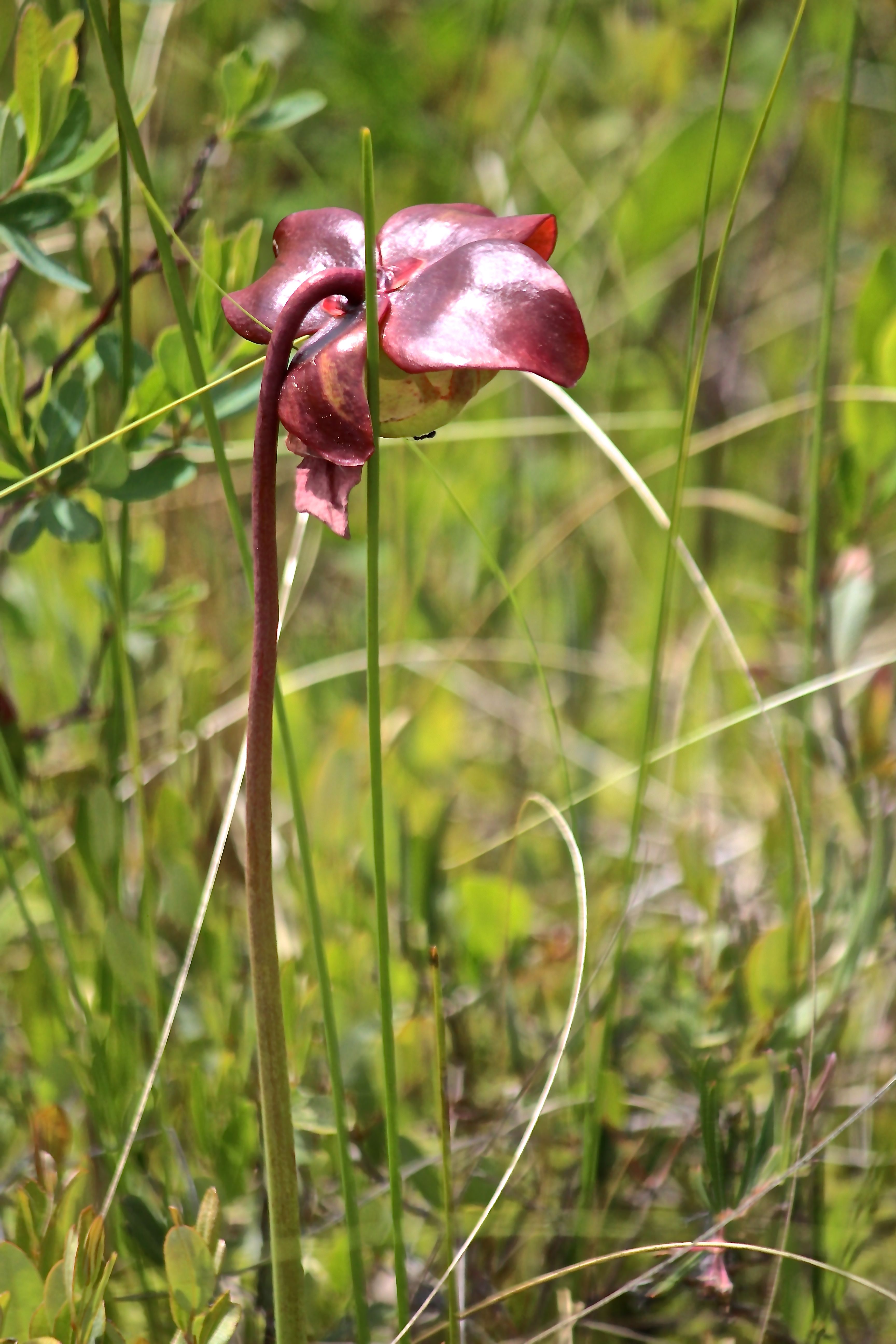
Throughout the preserve we found one of our favorite plants that in my book is the most exotic of them all.

pitcher 3

The carnivorous pitcher plant obtains nitrogen and phosphorus by eating insects. Its oddly shaped leaf forms a unique pitcher partly filled with water and digestive enzymes. The spout is a hairy landing platform for insects attracted by its red venation and nectar glands. Imagine this: An insect crawls to the edge of the leaf, aka pitcher, slips on the downward-sloping hairs and plunges into the liquid below where enzymes and bacteria break it down. Any chance for escape are zapped by those stiff hairs. Oh my.

pitcher & sundew1

The pitcher plant isn’t the only carnivorous plant that thrives here. Check out the glistening tentacles of the sundew intended to capture small insects like a mosquito. Should one land on the tiny leaf, its feet become ensnared in the sticky secretion and the end is eminent. YES! Within mere minutes the tentacles curl around the victim and suck the nutrients out of it. Go sundews. Go pitcher plants.

sheep 4

Only beginning to bloom was sheep laurel with its deep crimson-pink flowers. Located below the newly emerged leaves, each flower has five sepals, with a corolla of five fused petals and ten stamens fused to the corolla. Beauty and danger are also encompassed here–it contains a chemical that is poisonous to wild animals, thus one of its common names is lamb kill.

exo 1

Because we were beside the pond, we thought to look for dragonfly exoskeletons and weren’t disappointed.

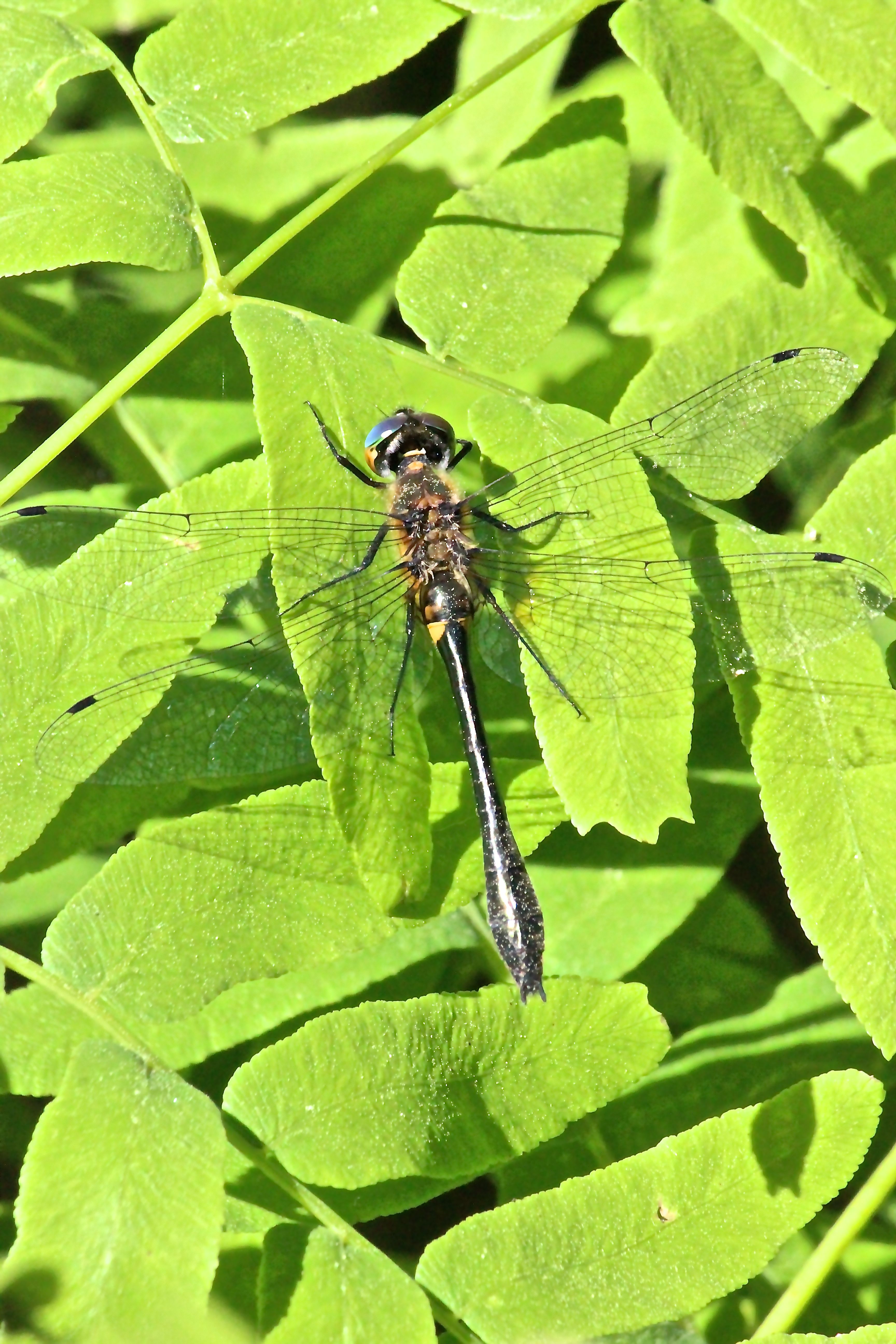
broad-tailed shadow dragonfly

And the dragonflies themselves were worth our attention. I’m not sure my ID is correct, so help me out if you know better, but I think this is a broad-tailed shadowdragon and if that’s true it is one that Maine is paying attention to because it only occurs in one or two states.

beaverpond clubtail dragonfly

Another that I name without certainty–beaverpond club tail.

ebony 2

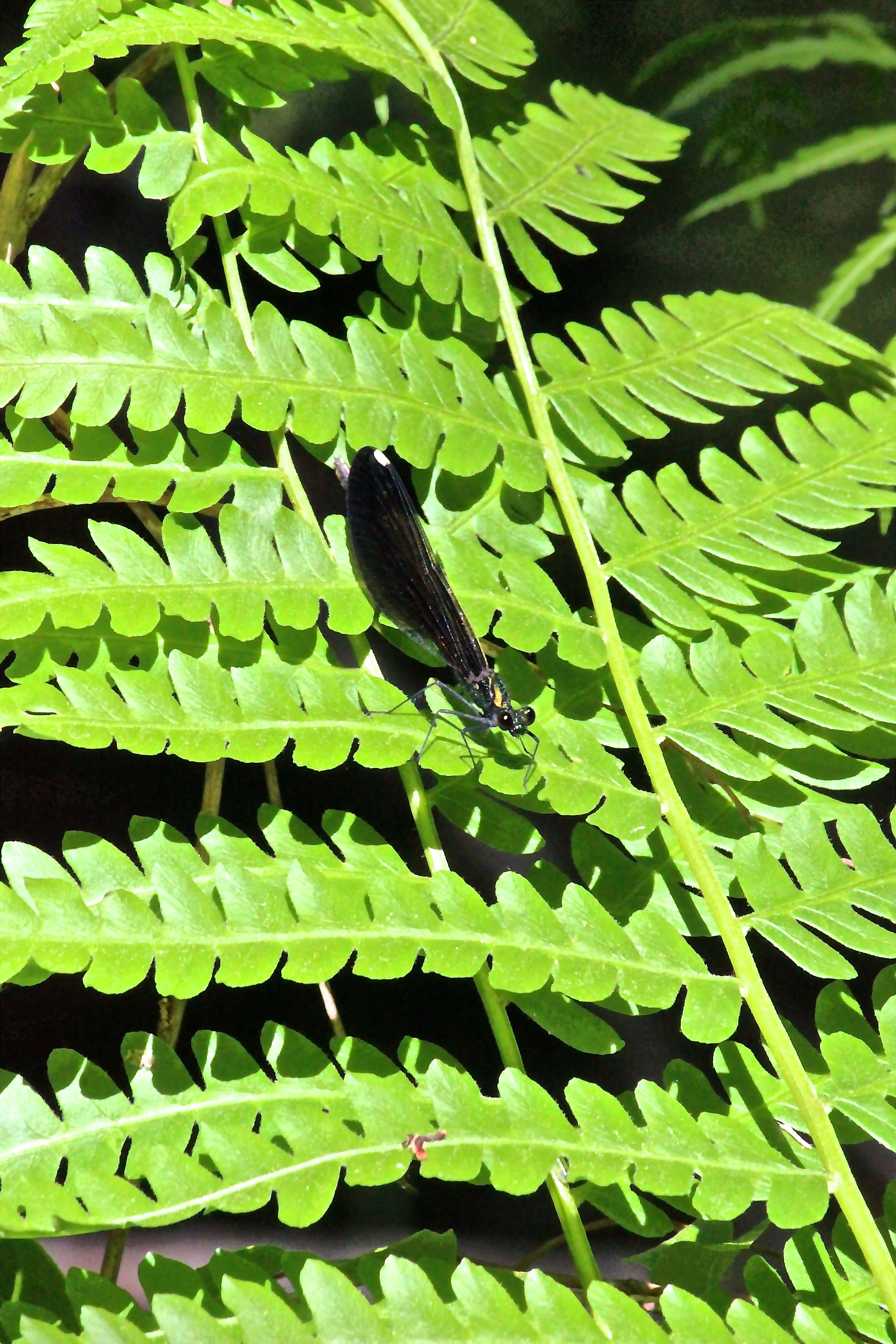
I’m much more confident about my ID of this ebony jewelwing damselfly.

cuke 7

We found a double-decker Indian cucumber root that displayed flowers in varying stages. The yellow or green-yellow flowers drooped below the upper leaf whorl and as is their custom, were slightly hidden. Each flower had three long, brown styles in the center that curved outward and the stamens were magenta.

LEA boats

Among the unnatural offerings, a few boats to explore the river and pond. Though we noted a couple of paddles and one pfd, we highly recommend you bring your own.

LEA 2

Some extra duck tape is also a good choice just in case. ;-)

HP view1

Like the ever-changing reflection, life changes constantly at Holt Pond. The more I look, the more I realize how exotic life is in Maine. Who knew?
Slugs, Bears and Caterpillar Clubs, Oh My!

I was on a quest today as I wandered with friends at the Greater Lovell Land Trust’s Bishop Cardinal Reserve. I wanted to return to the bear trees and show them that there are so many more in the area. Thank goodness they are all good sports and don’t mind getting fake lost.

But first, I licked a slug again. And convinced a friend (J.L.) to do the same, without twisting her arm.

slug

This was my terrestrial gastropod mollusc of choice.

slug 2

And proof. Rather attractive photo–Not–but the slug did numb my tongue a bit.

bear 1

We eventually found some of the beech trees with bear claw marks, but there are more–for another day.

bear 2

Satisfied with our findings, we decided to continue off trail, keeping our eyes and minds open.

hemlock varnish shelf

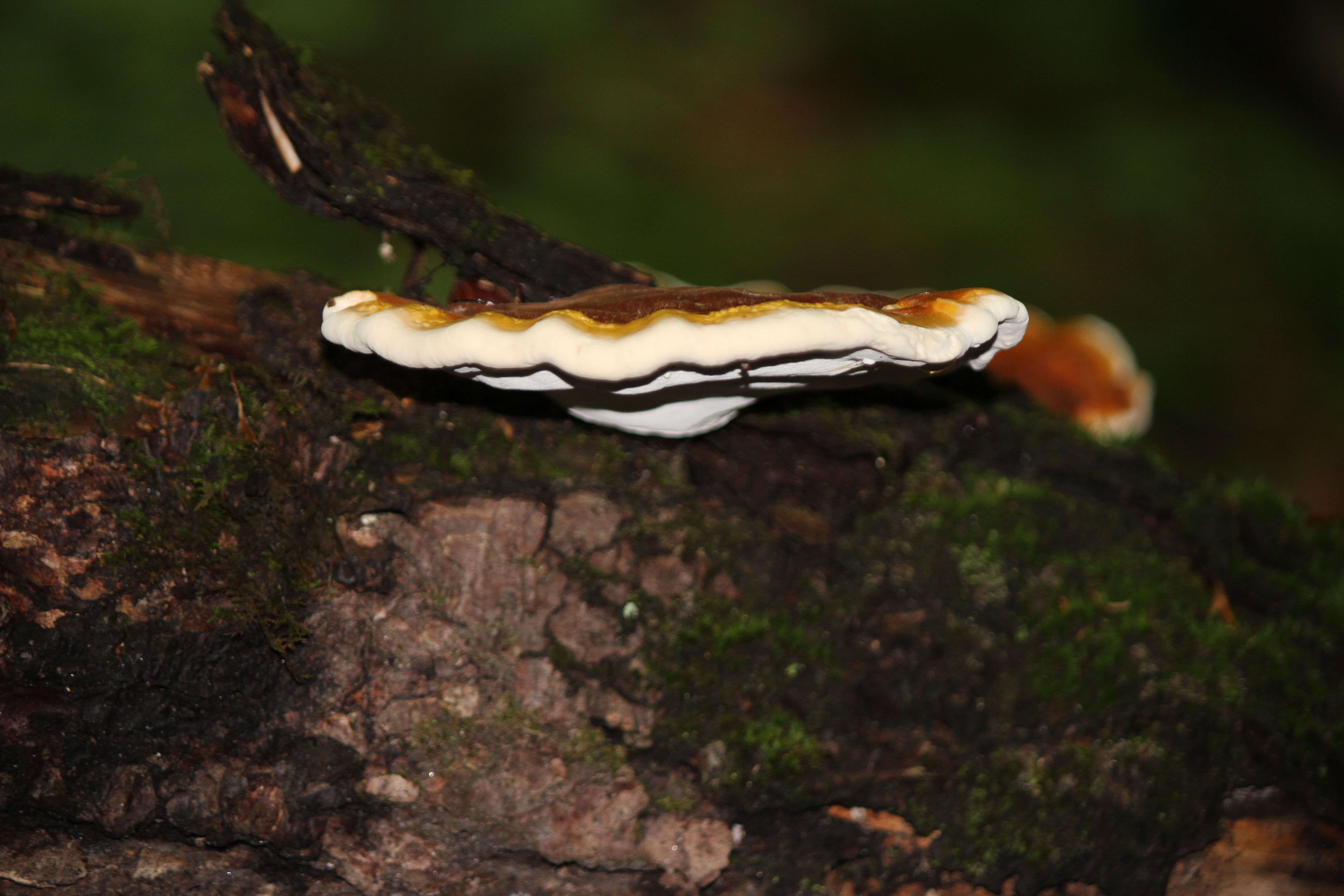
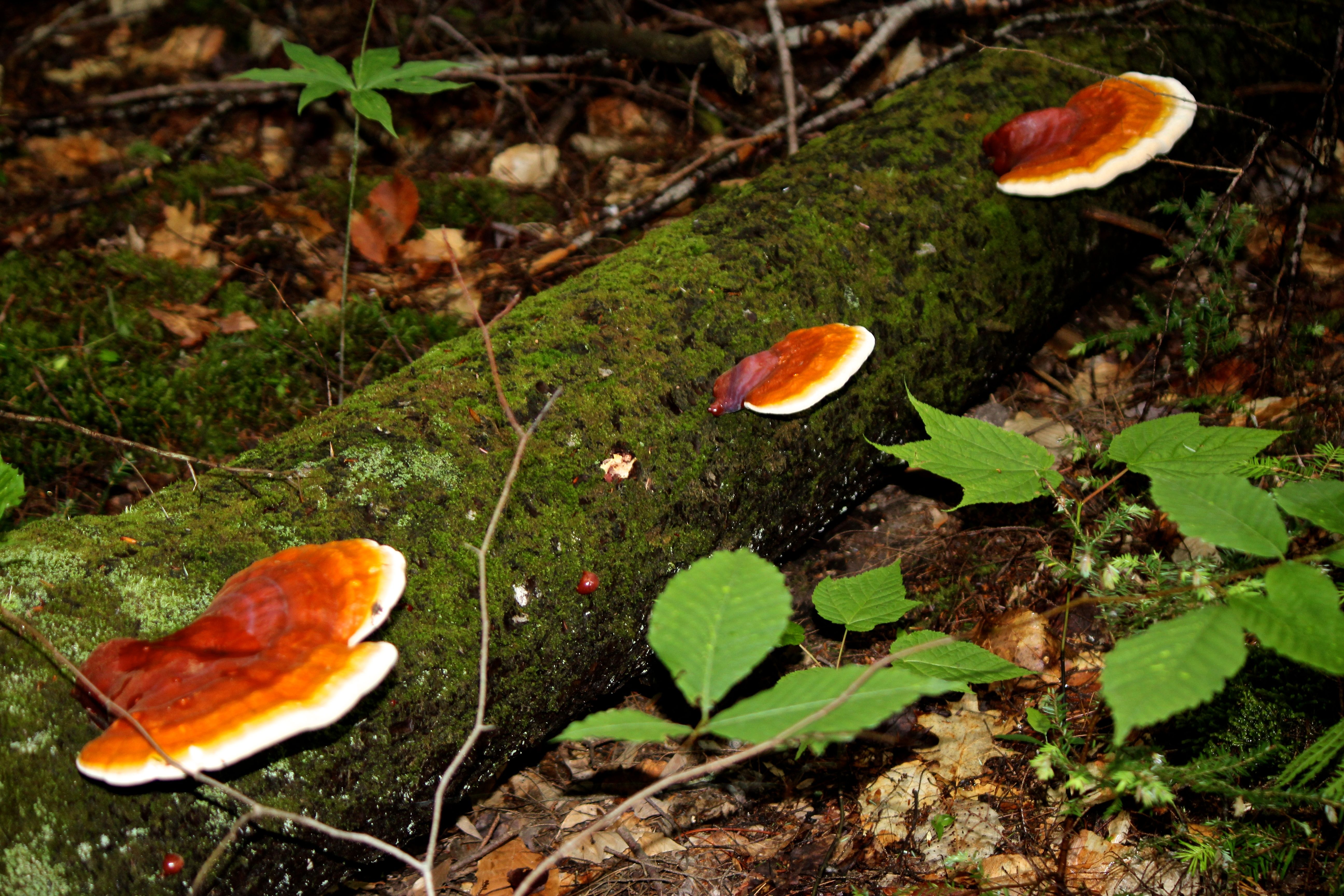
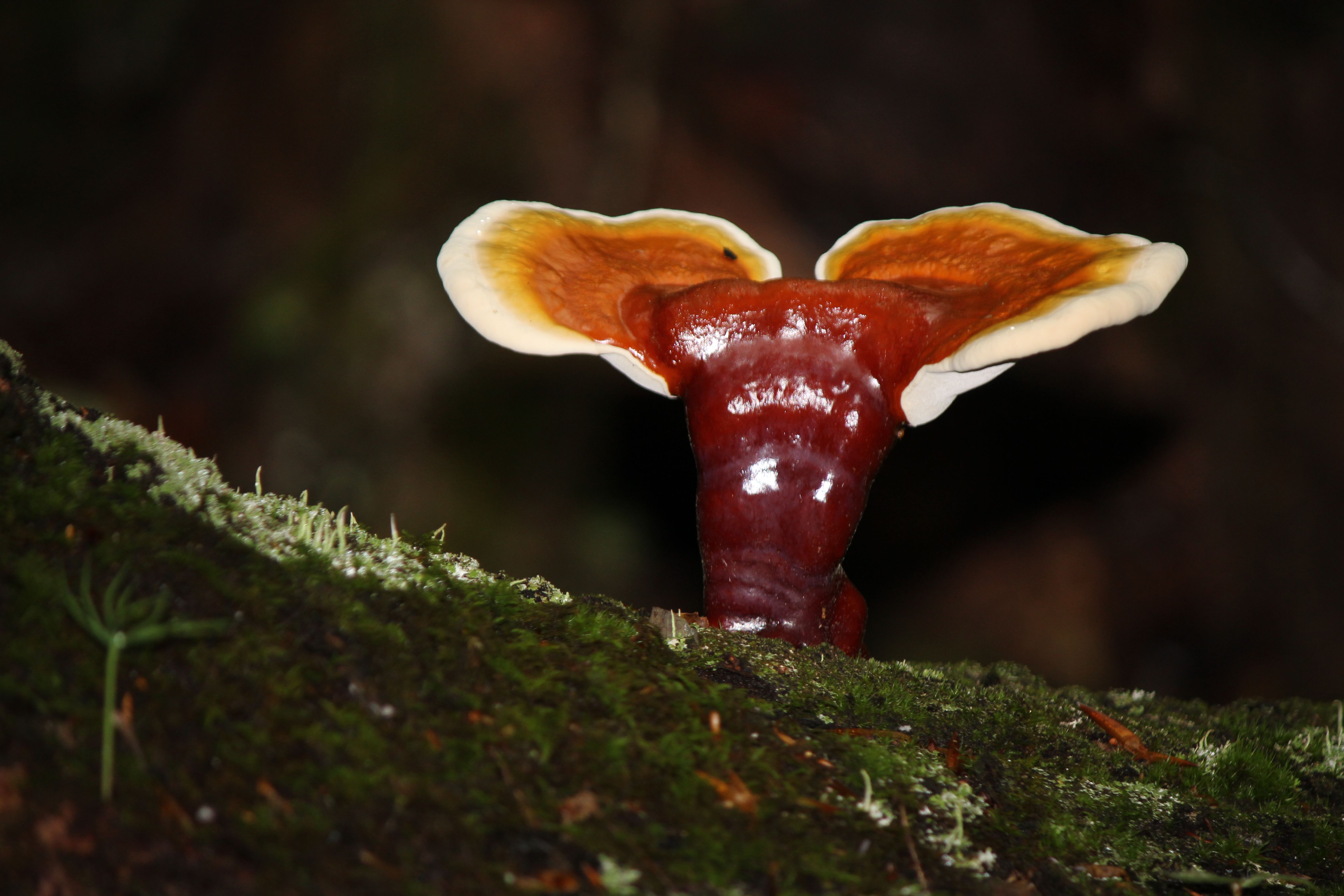
From start to finish, we saw plenty of Hemlock Varnish Shelf (Ganoderma tsugae) fungi.

Hemlock Varnish

Each one presented itself in a different manner.

Hemlock varn 3

While its shiny, colorful surface and habit of growing on hemlocks and other conifers speak to its name, the  oyster-shell rim and non-gilled pore surface are equally attractive.

hemlock 3 in a row

Three in a row.

hv4

And two fer one.
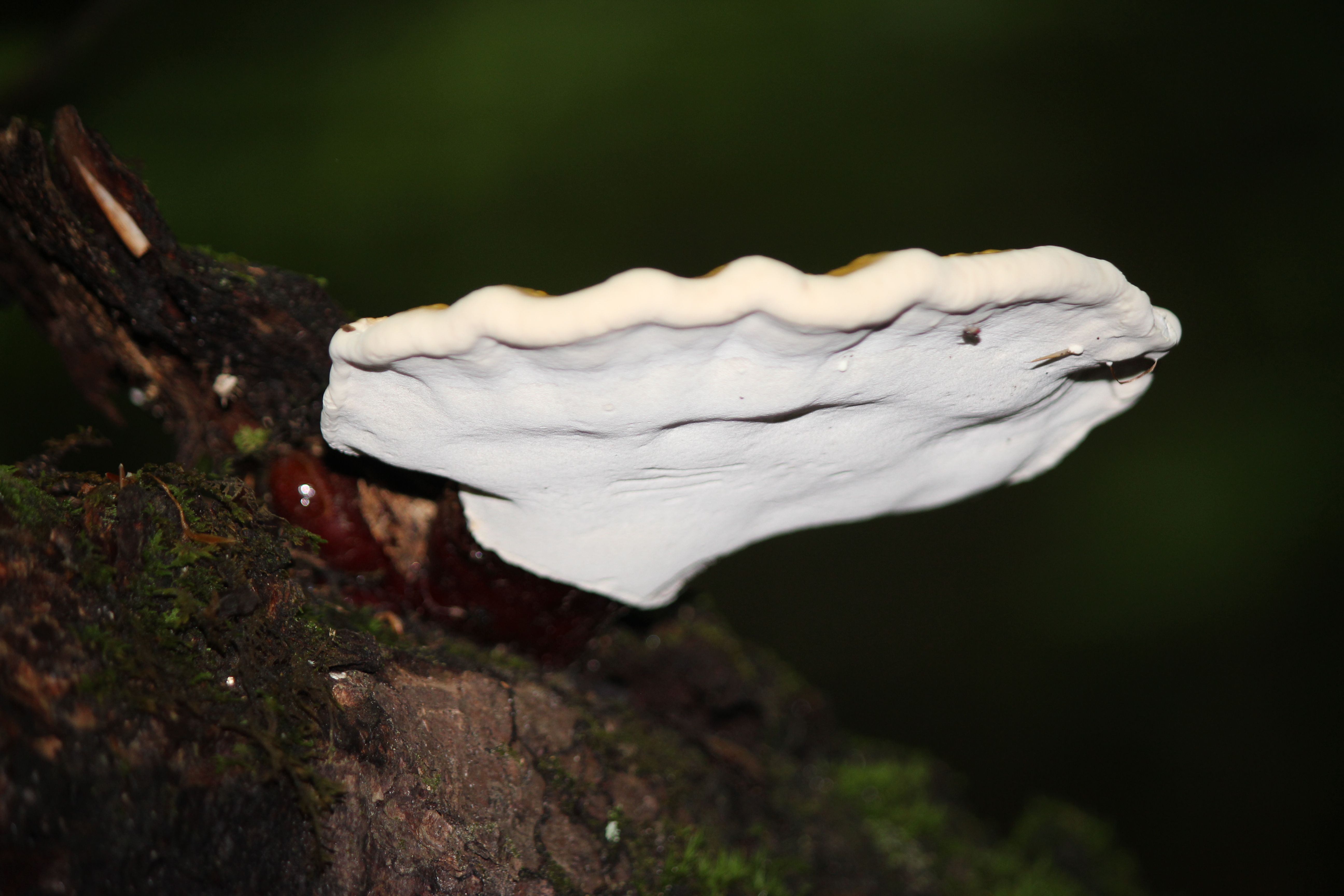
hemlock varnish ripe

Most were not as ripe as this.

I was thankful this day to be among people who have a shared wealth of knowledge about the natural world. They also have eagle eyes. Or in this case fungi eyes (P.V.).

stream 3

The mossy stream became our focus as we searched for wild orchids and more fungi.

Platterful Mushroom

Some orchids have passed, others aren’t open yet and still others had been eaten. But the wet habitat provided plenty for us to wonder about, including this Platterful Mushroom, the common name for Tricholomopsis platyphylla, aka Broad Gill. Despite that first common name, it’s mildly toxic and not meant to be served as a platter full.

Swamp beacon

Glowing up at us from a wet depression was a colony of Swamp Beacons (Mitrula elegant). I include the Latin with the fungi because P.V. uses it almost exclusively when he enlightens us. I wish I’d learned the Latin first, but alas, I’m a common kinda gal.

northern oak fern

Mixing it up and almost messing us up was the Northern Oak Fern. It reminded us of miniature bracken fern, with a softer texture.
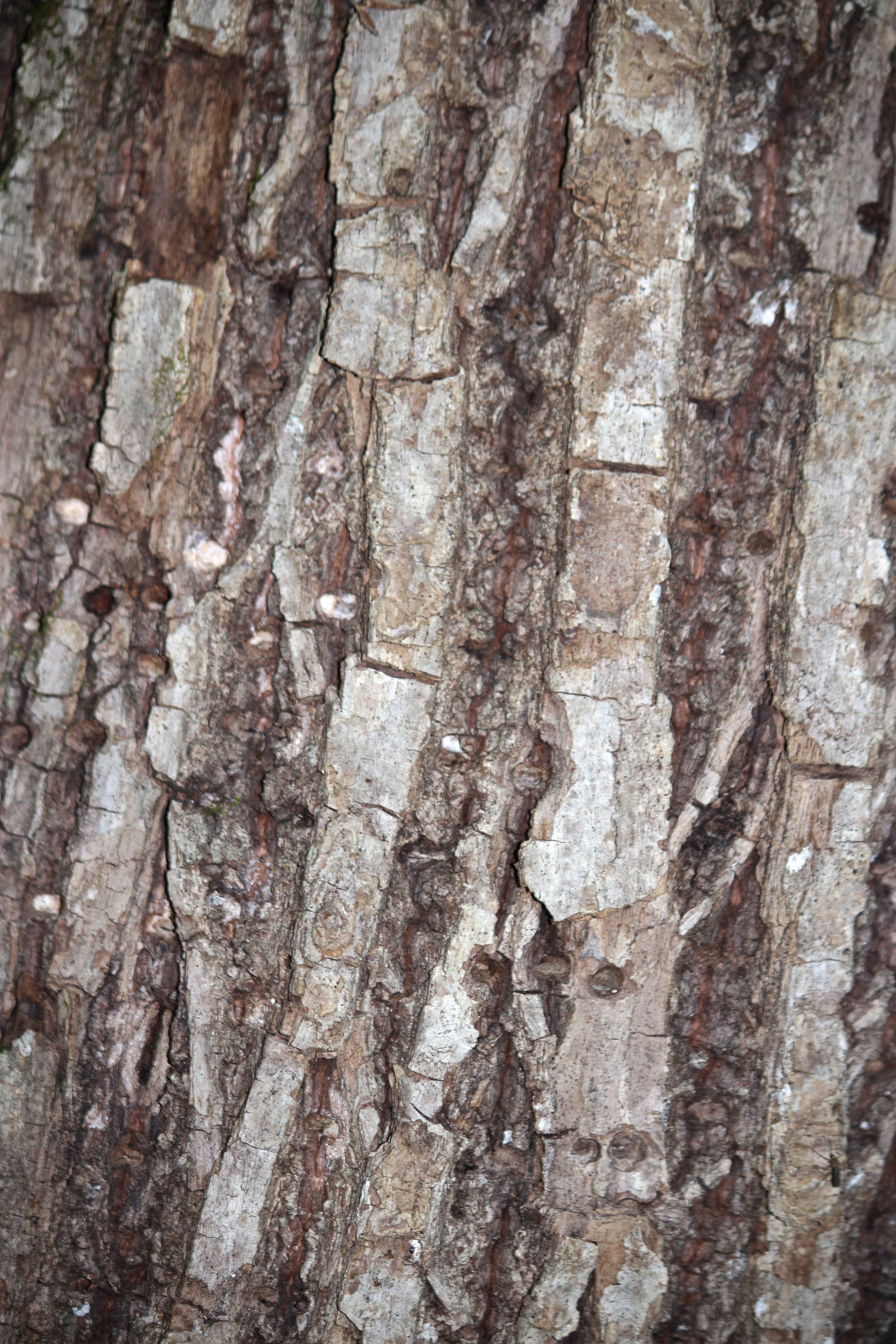
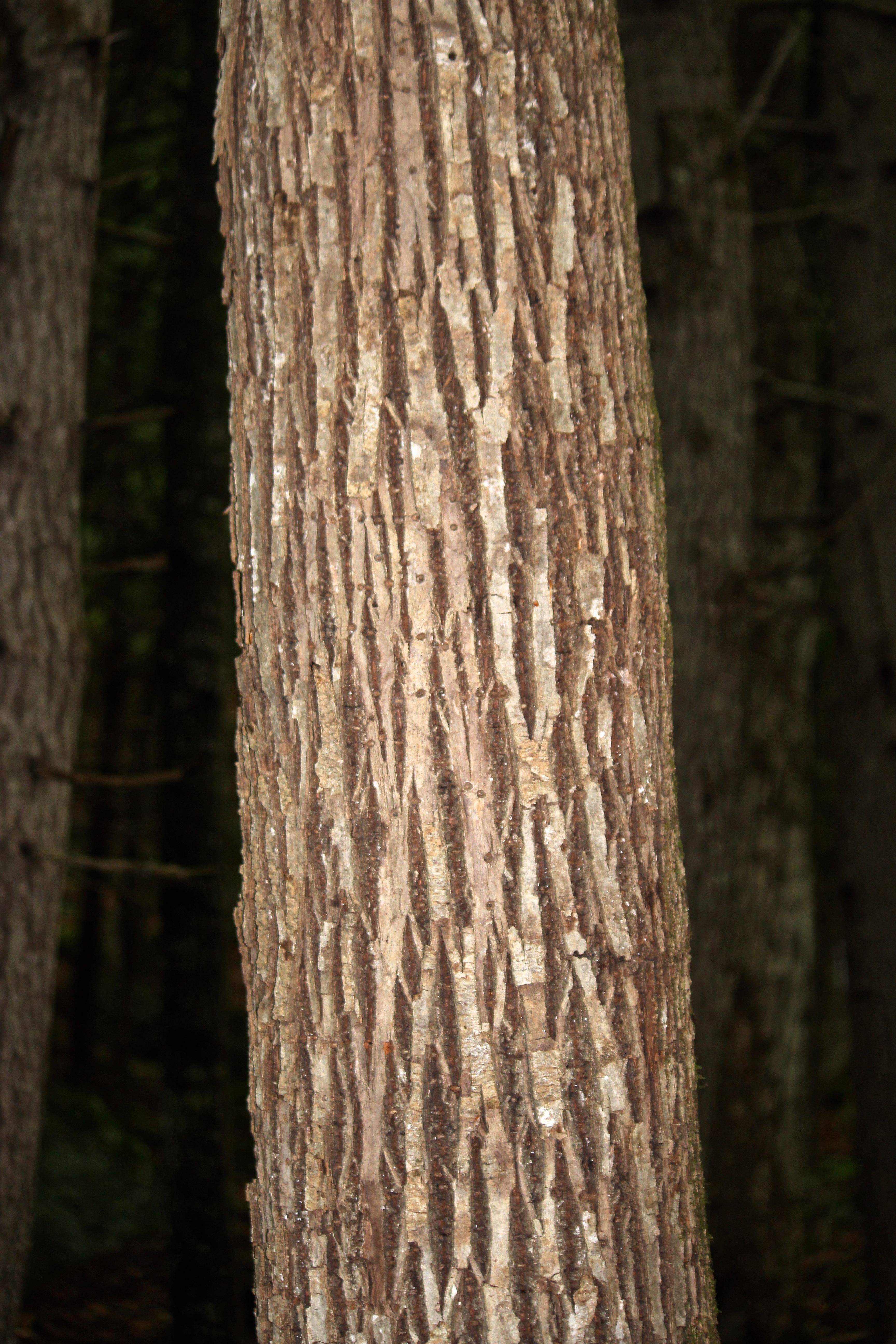
basswood bark

We were in a rich, upland habitat, verified by several species, including this one, which D.S. paused by to quiz us. We got it right–American Basswood (Tilia americana).
bass 2

Its flattened, square-like ridges intersect like a woven basket every 6-12 inches. Not only does it look like a basket from the outside, but the inner bark is fibrous and has been used for rope and fish nets and . . . woven baskets.

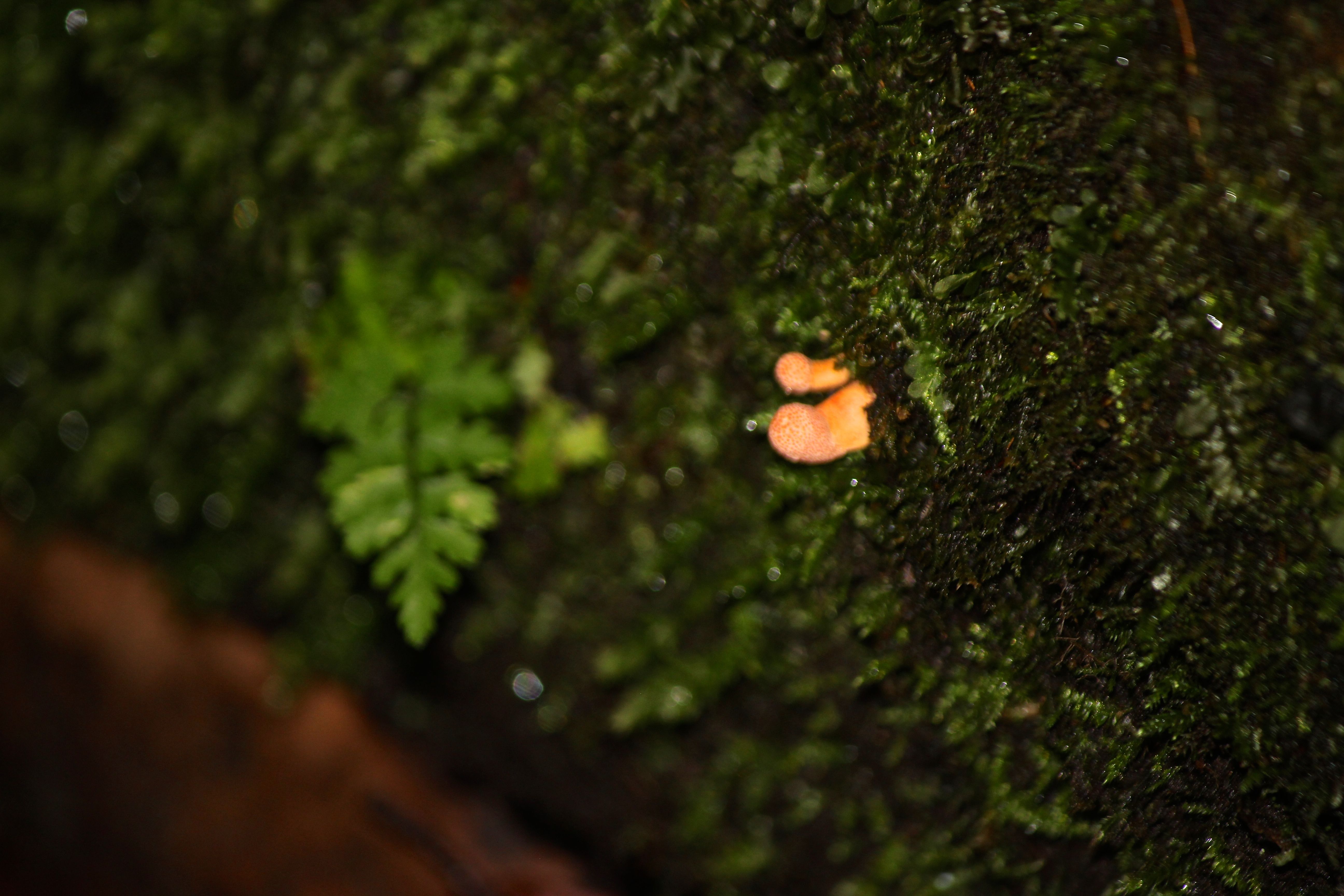
Cordyceps militaris - Scarlet Caterpillarclub

Those fungi eyes continued to search high and low. And waited for us to locate this rather small sample sticking out of a moss-covered rock in the stream.

cord larve

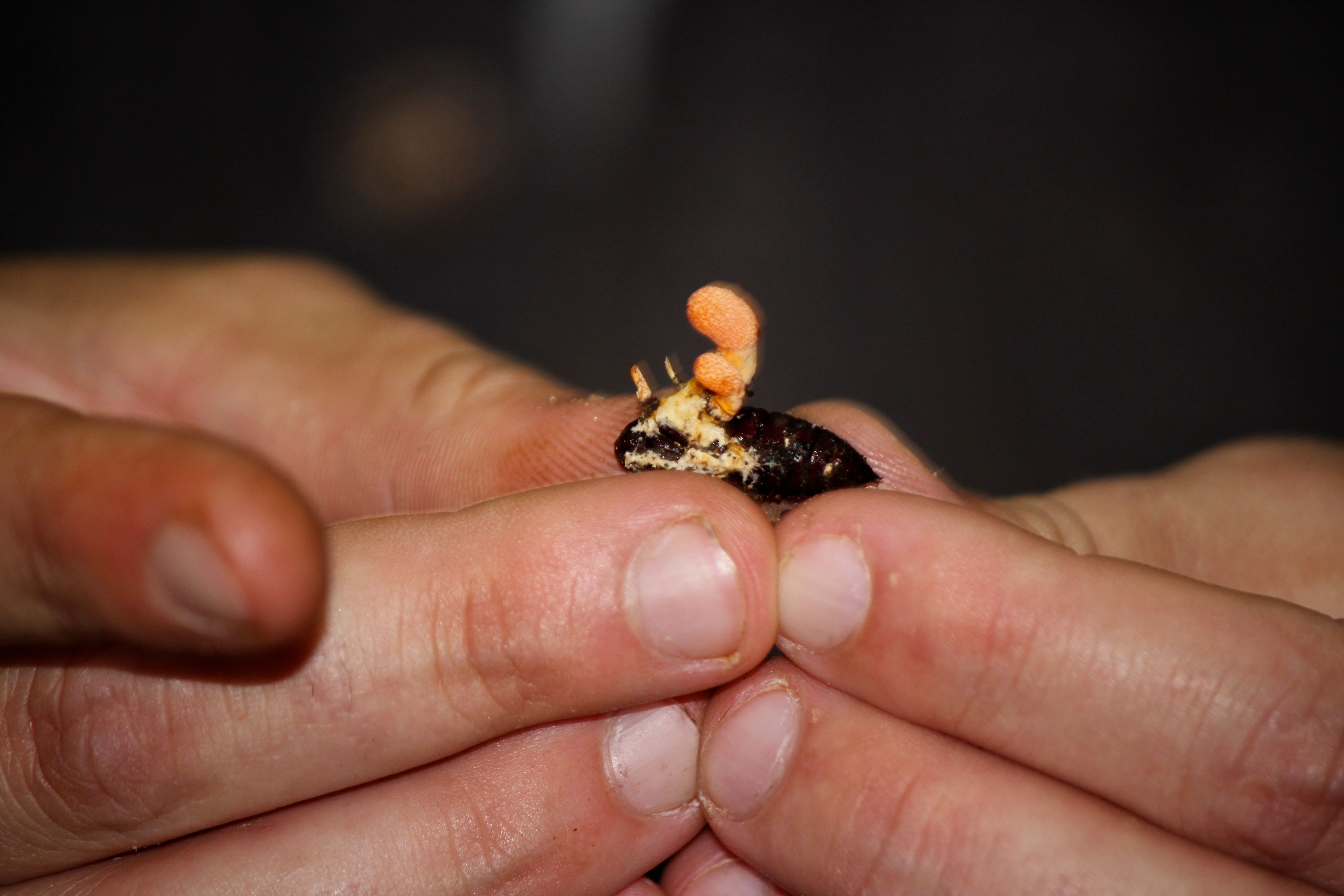
Scarlet Caterpillarclub (Cordyceps militais) feeds off of insect larvae as you can see here. The host provides the most and turns to mush as the fungi grows.

Though we never plan it that way, our journey lasted three hours. Suddenly, we emerged from the wet woodland onto Horseshoe Pond Road–all the richer for having spent time in the land of the slugs, bears and caterpillar clubs. Oh my!