Lions, and Otters, and Moose Mondate!

We drove across the border and south today in search of wildlife. And we were not disappointed as our sightings were numerous.

But first, lunch. That in itself was a treat–mine being an Avocado and Roasted Veggie Panini. You are looking at the second half, which was supposed to follow me home. But . . . the avocado would have turned brown. And so I gobbled it all down. Sometimes, you just have to do the right thing.

We may not have been the only ones eyeing lunch, though what this Bobcat was looking at, we could not determine.

It was less than ten feet away from this second Bobcat and it appeared that they had their eye on the same little tidbit. Perhaps a mouse or chipmunk was on their menu.

With a lick of the chops, it appeared that the nearby Mountain Lion had indeed enjoyed a morsel of delight. So, the fact that we saw a Mountain Lion is rather curious because they were officially extirpated in New Hampshire. But . . . sometimes one makes it way into the state and perhaps this was one of those.

I love how its front paw rests so naturally on its back leg. And my, how big those paws are. Notice also that the claws are tucked in. Members of the cat family only use their claws to capture prey (or if conditions are muddy or in some other way slippery, then the claws are extracted to help with stability).

In the midst of our adventure, we stepped into a garden filled with flowers and flowering shrubs and trees, a haven for pollinators this early in the season.
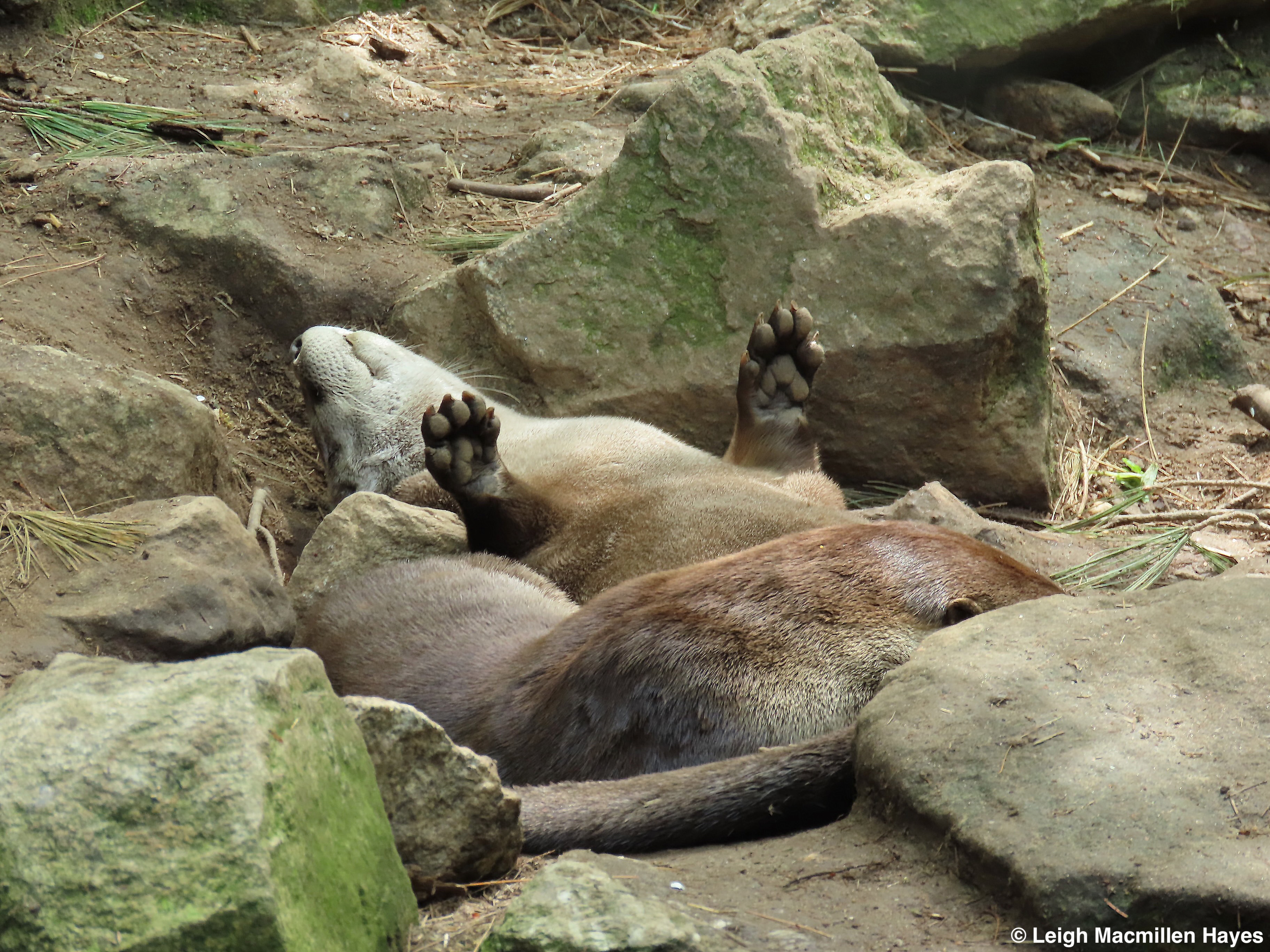
And then it was on to search for River Otters, who had obviously decided to take a post lunch nap. And rejoice in the opportunity. Or so it seemed with those front feet raised.

Take a look at the bottom of those paws–with their five tear-drop shaped toes identifying them as members of the weasel family.
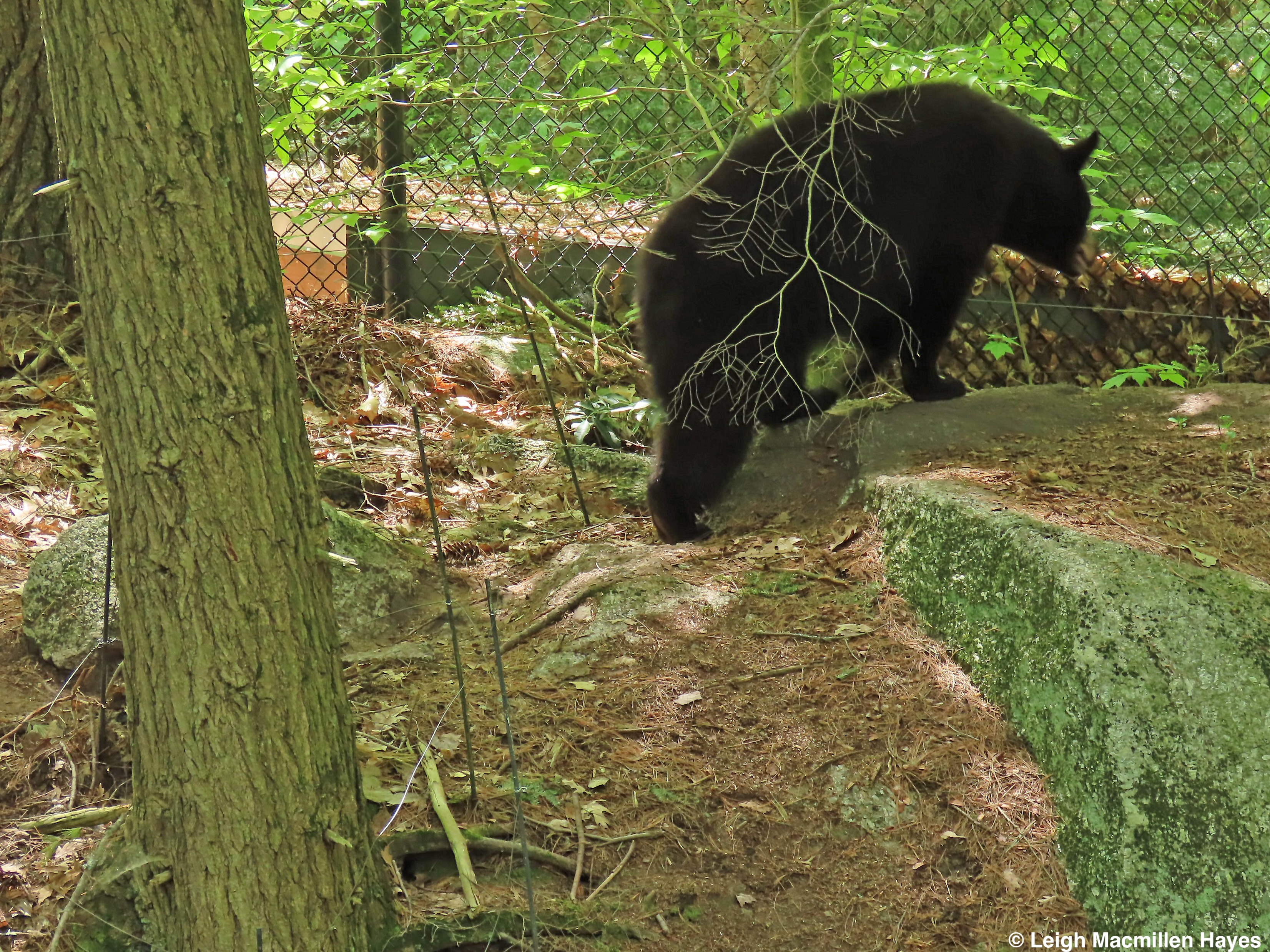
Our next sighting mystified us a bit. As two who are always looking for signs of Black Bears, we were thrilled to see this one. Every once in a while we are granted such views, but the troubling thing today was how the bear paced. Back and forth and back again. It was obviously anxious about something despite its ability to roam in a large area.

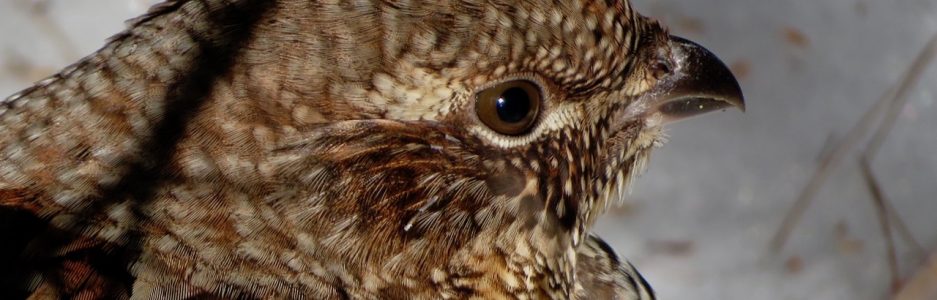
Birds were also part of our view, this being a Black-crowned Night Heron, or more simply Night Heron. Look at that eye–its color allows it to hunt at dawn, dusk, and even during the night.
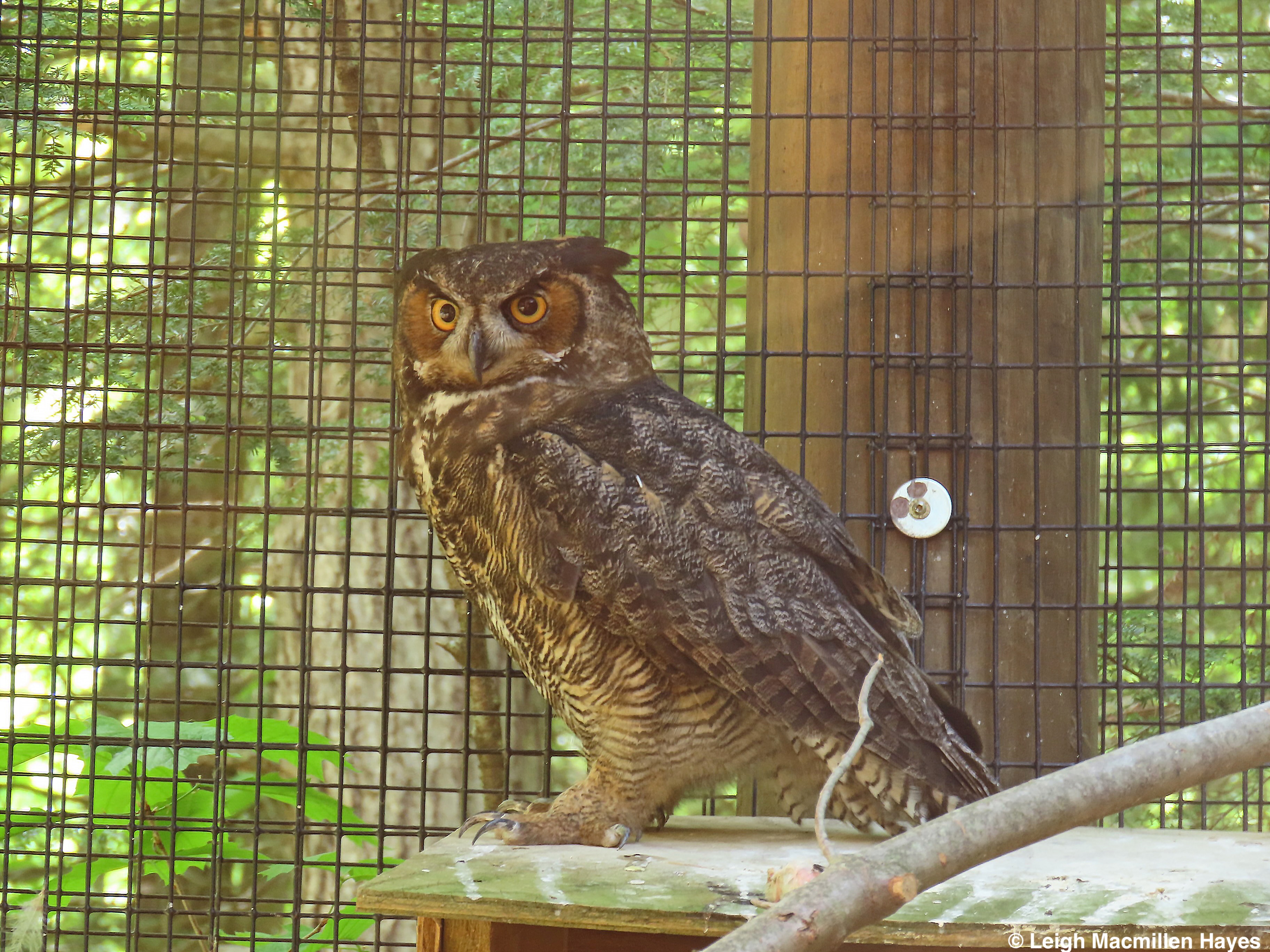
The same is true for the eyes of the Great Horned Owl.

Okay, so by now you’ve turned into a great tracker and hunter and realized that there is fencing behind these animals. Yes, we had travelled to Squam Lakes Natural Science Center in Holderness, New Hampshire, about an hour and a half from home. All photos were taken through glass. Glass that was smeared with finger and nose prints.

The animals are only there because they were orphaned or injured or for some reason couldn’t survive in the wild. And they live in habitats that equal their preferred home territory.

The Red-tailed Hawk offered a shrug, maybe because it thought it should be out in the open. But, it had an important job to do here: to educate all of us. To be an ambassador.

How often do we get to eye all of these species up close. Their behavior might not be entirely natural given their confinement or injury, but I think it’s amazing that we can visit with them and that so many tots were there with their moms today, and there were a couple of school groups visiting as well. These kids get to meet these critters, and maybe will develop an appreciation of them, and who knows where that might lead.

Today was the beginning of a heat wave, and the Bald Eagle reacted by panting, its way of cooling down.
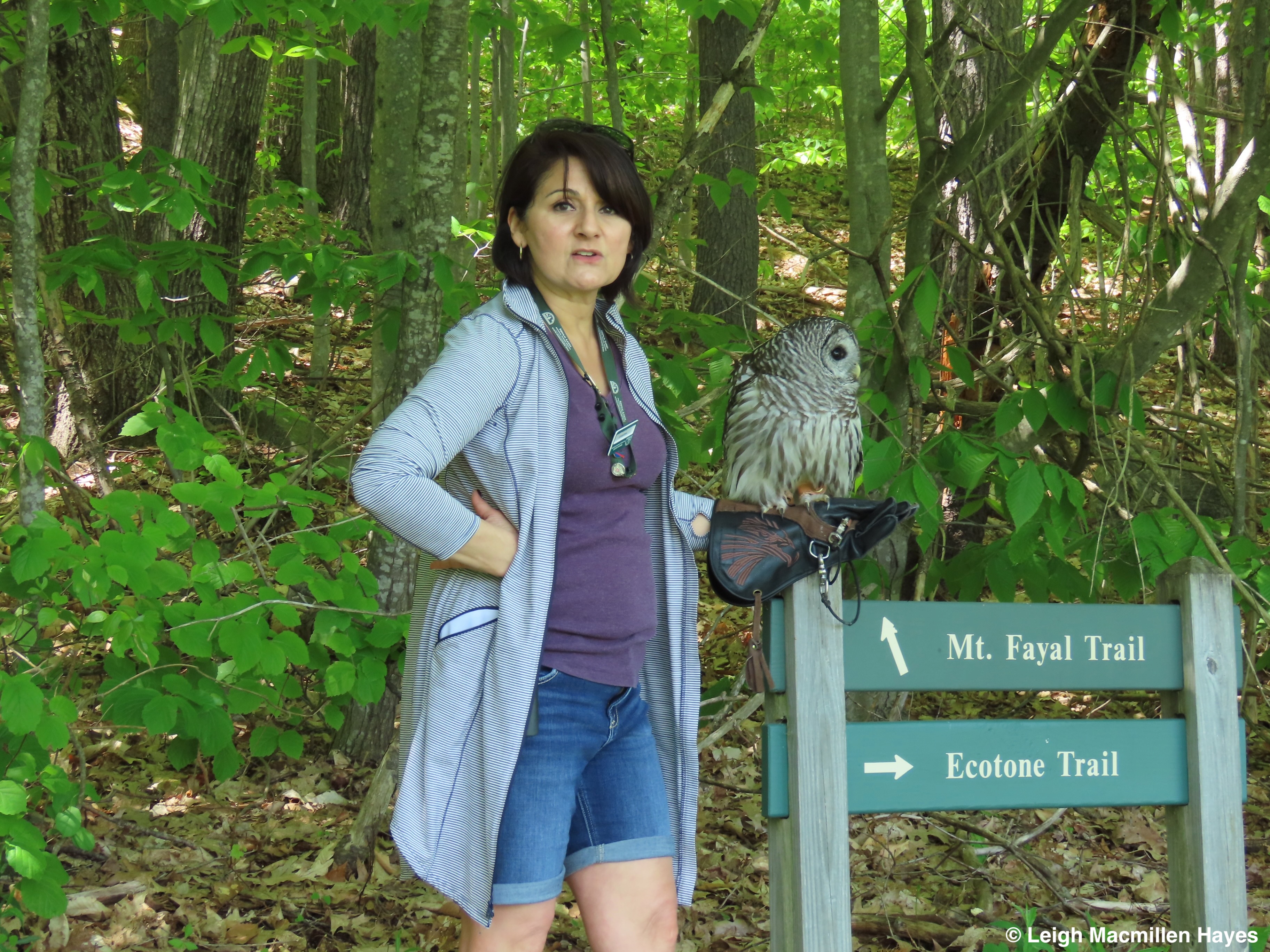
Our plan was to walk through the exhibits, and then hike some of the trails, including climbing to the summit of Mt. Fayal.

Along the way, we had a special treat, for we got to meet Barred 13, who was out for a walk as well, and panting.

The “name,” Barred 13 refers to the fact that this was a Barred Owl that came to the Center in 2013. As a policy, they do not name the critters who reside there so folks like us won’t think that wild animals should become pets.

Barred 13 was very curious about something in the vicinity. We learned that she once heard a Black Bear before her handler turned and saw it. And that she’s at the Center due to a broken wing.
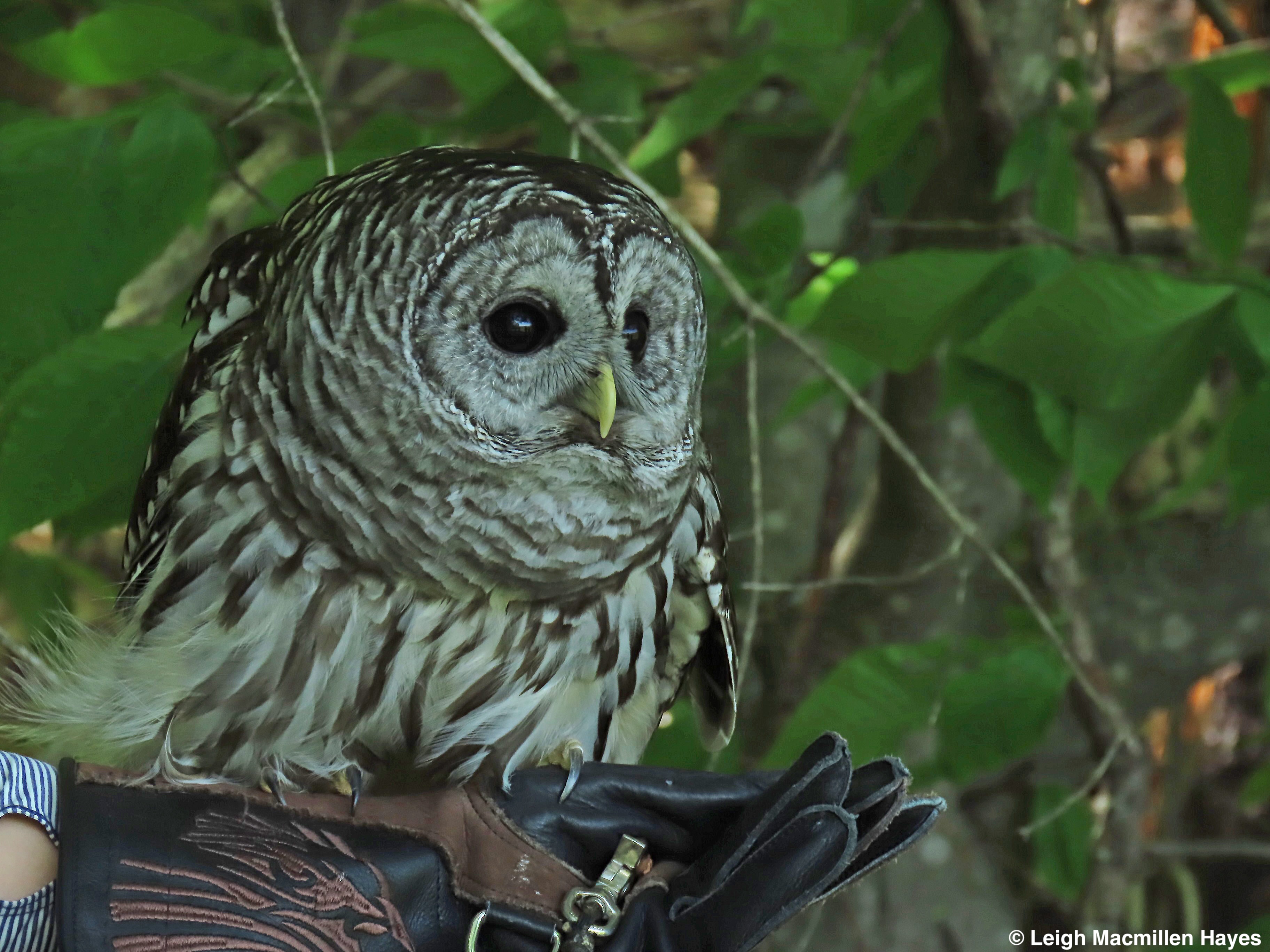
The Barred Owl’s hearing is so acute that it can pinpoint the location of its prey. There’s a cool exhibit to help us humans better understand how well they hear, but I’ll leave that for you to discover upon a visit.

At the summit of Mount Fayal, My Guy found a bench upon which to sit for a bit and enjoy the view of Squam Lake.

What he missed, I discovered behind the bench.
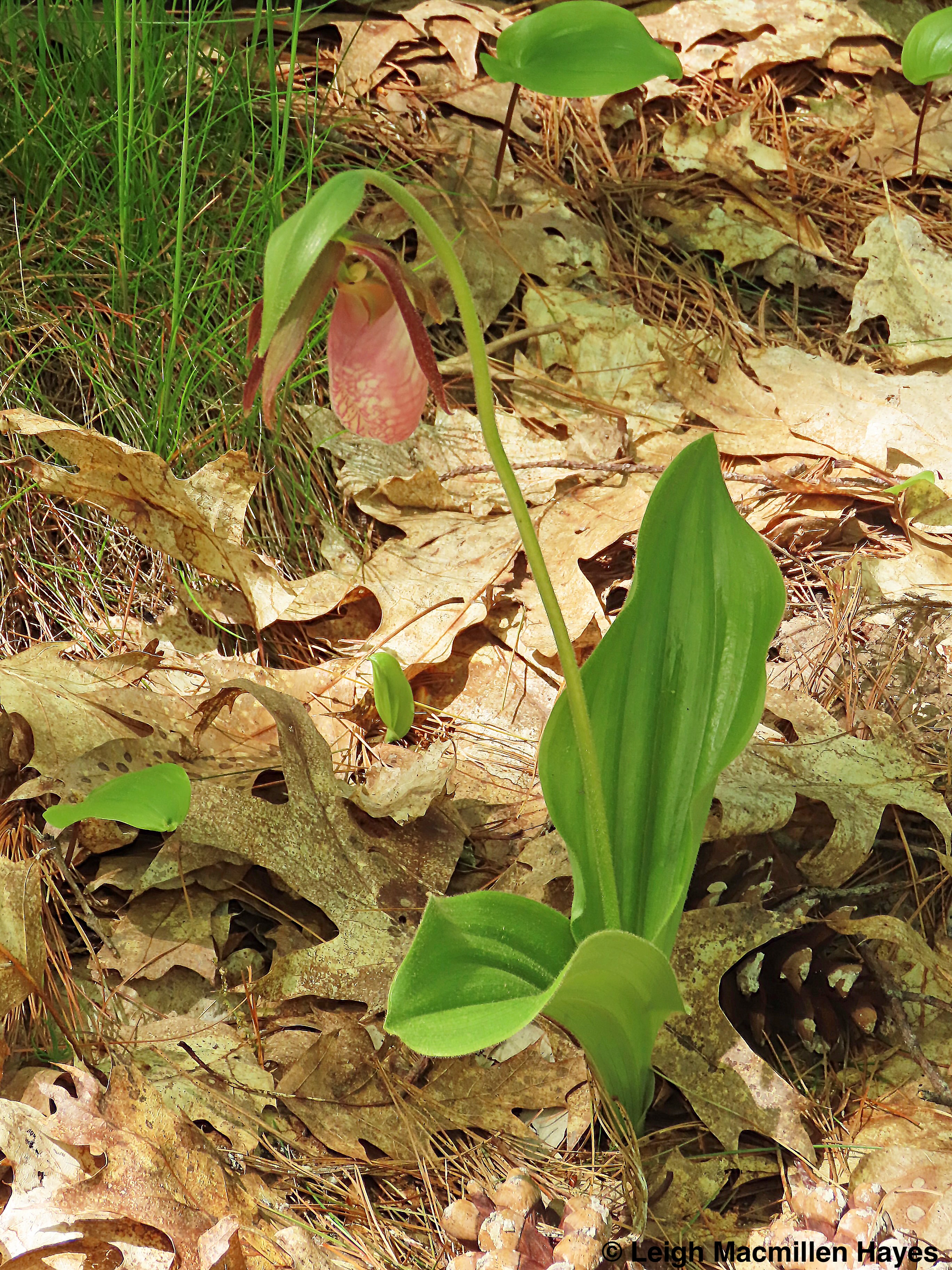
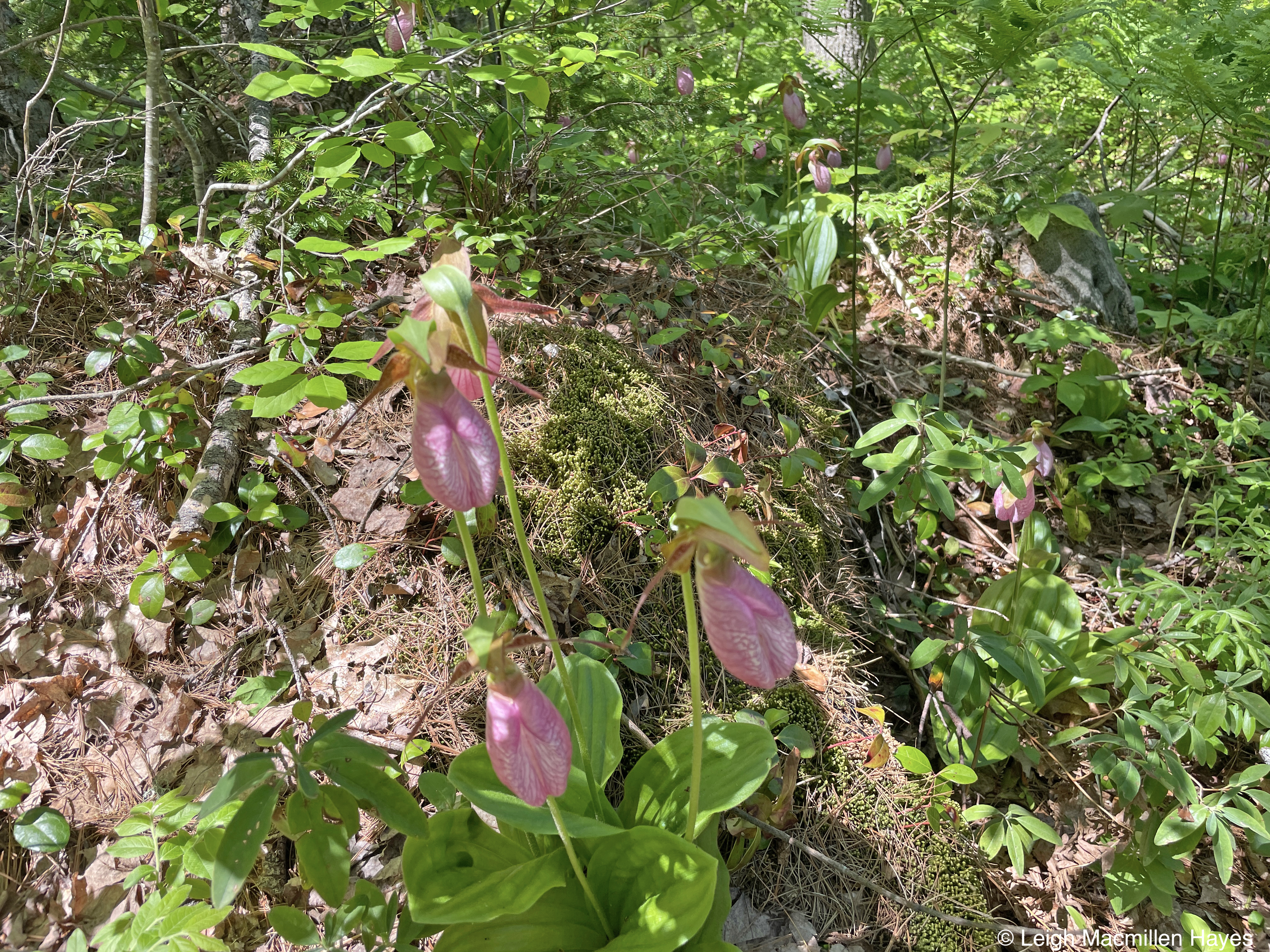
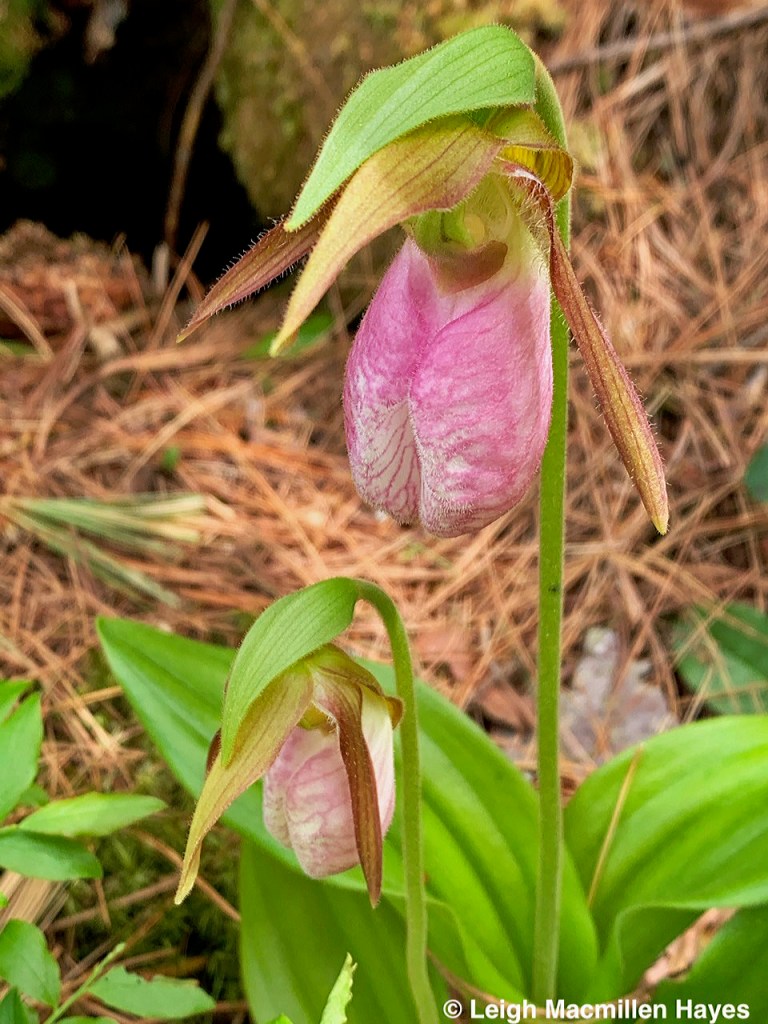
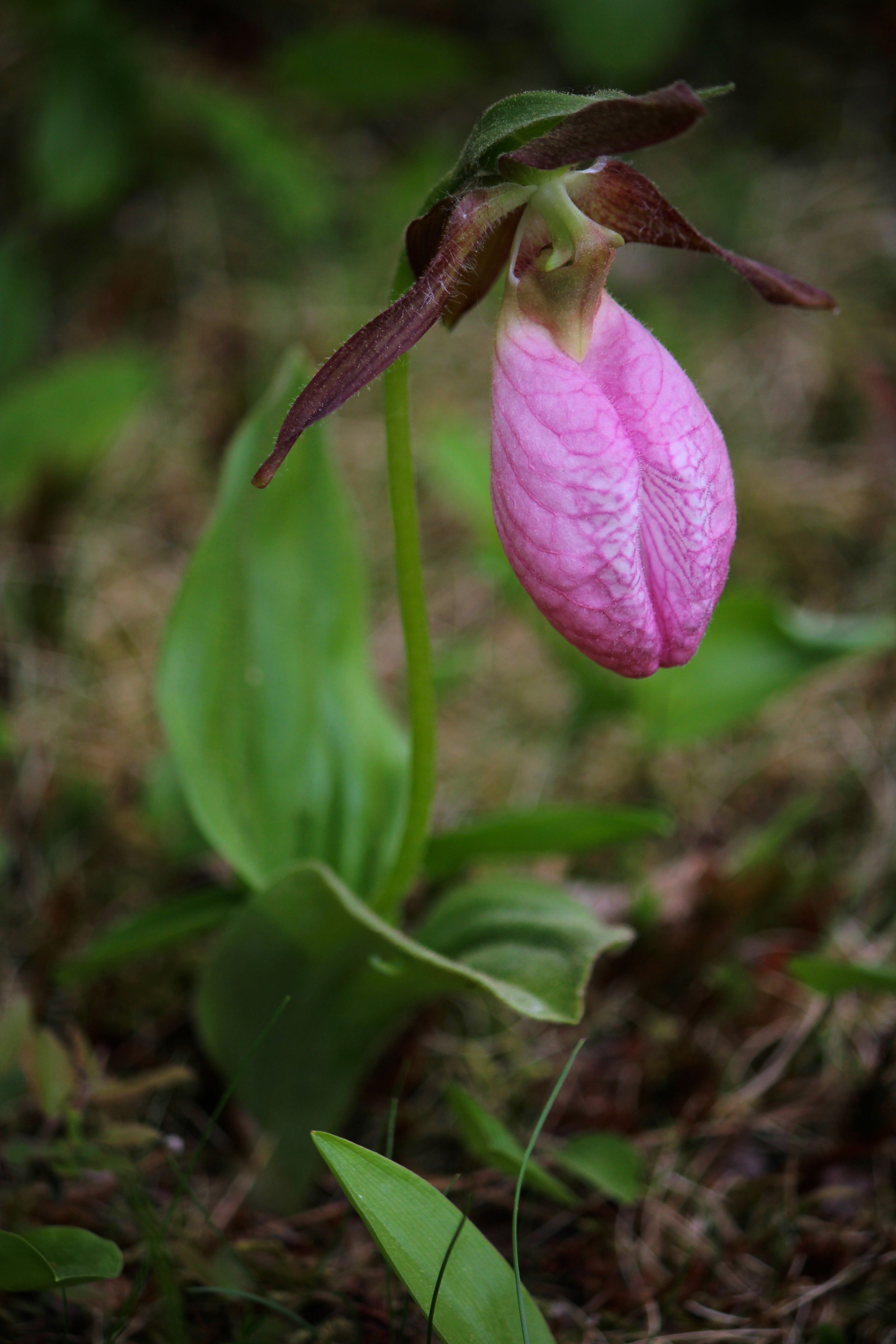
A Pink Lady’s Slipper. The first for us for this year.

His comment: “Only one?!”

We are rather Lady Slipper’s Snobs. Truth be told.

Back on the animal exhibit trail, we stopped by to visit the Otters again. Thank goodness. The most amazing thing–we were the only ones there. The Otter exhibit is usually packed.

We quickly realized that the time to visit the Center is in the mid to late afternoon, after the kids have packed up and gone home. Or if you go earlier, do like we did and head off for a hike before returning to the exhibits.

The two Otters entertained as they constantly climbed up toward us and then did backflips into the water.
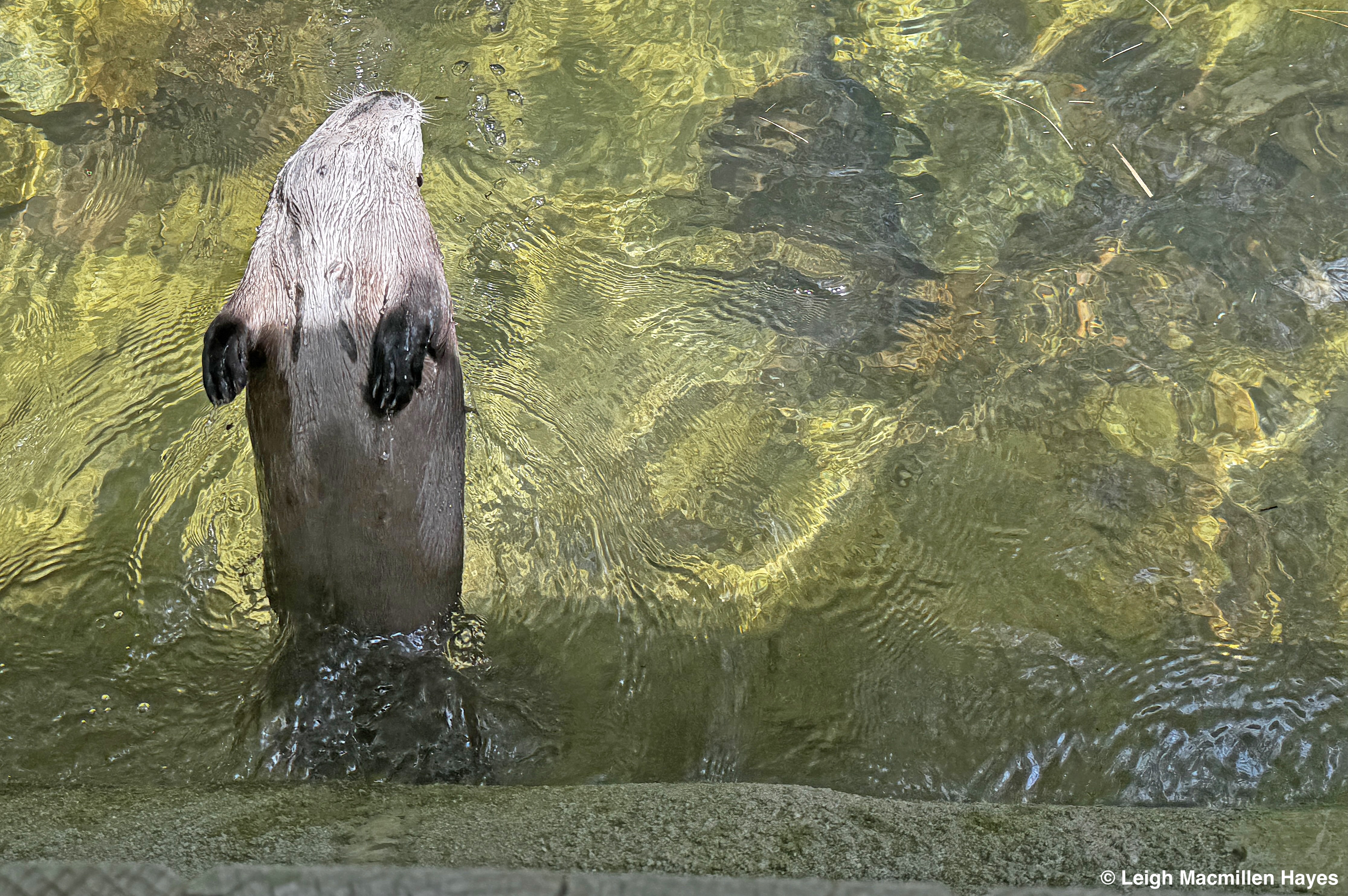
Up . . .

Bend over . . .

And swim.

And flip over and swim some more.

Lions, and Otters, and Moose–but wait. This moose was in the same pose when we left as it was in when we arrived. Allegedly we saw a moose. Well, we have a photo to prove it. But, unlike all the other critters, it wasn’t alive. Still.

Squam Lakes Natural Science Center–we highly recommend a visit, no matter how many years you have under your hat.

And lunch from Squam Lake Marketplace. The flour-free Chocolate Chip and Peanut cookies–a great way to end a meal, even if you wait three hours for the ending because your belly was filled by your sandwich.

A Mondate worth noting.
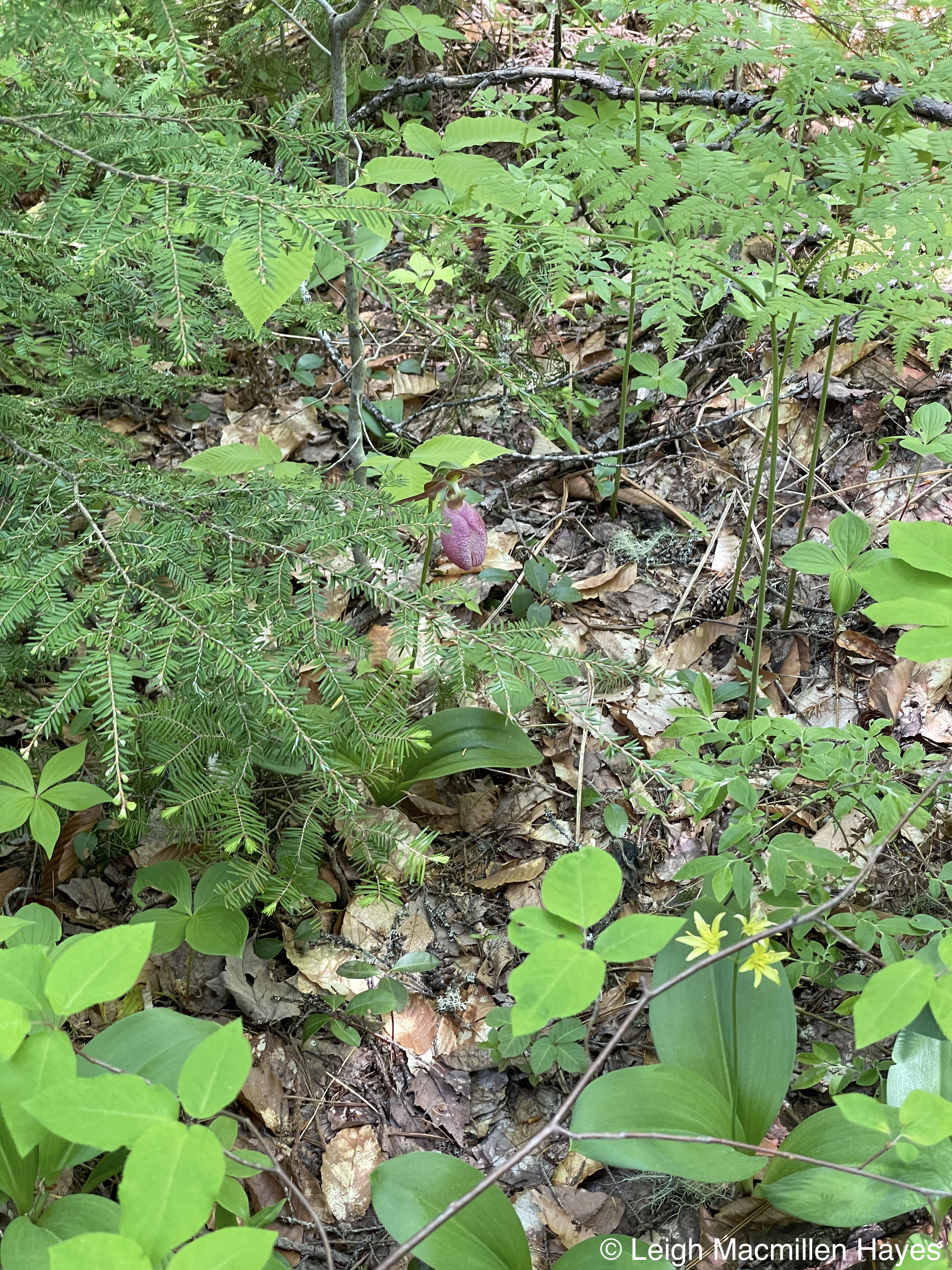
Honoring the Lady’s Slippers

It’s become a tradition for us to spend Memorial Day or at least a day during this weekend searching for one of My Guy’s favorite blooms. I don’t even remember how the count began, but now he cannot not count them.

What we’ve learned over the years is that they like a variety of habitats. from dark forests to bogs, and even mountain tops. And they like to hide. So we must really don our Lady’s Slipper eyes (just as I’ve been donning my dragonfly eyes lately) and look for them.

I mean . . . really hide.

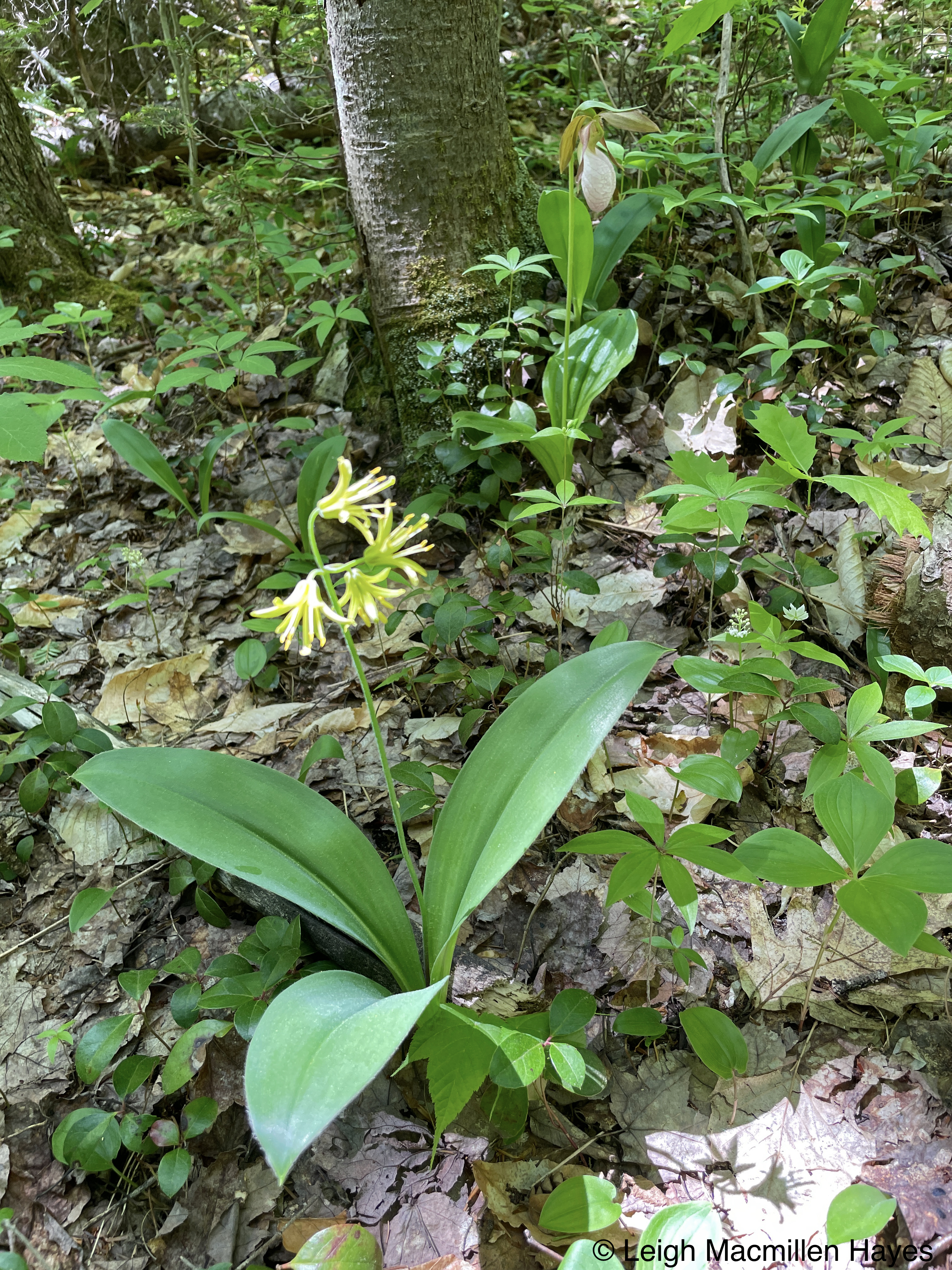
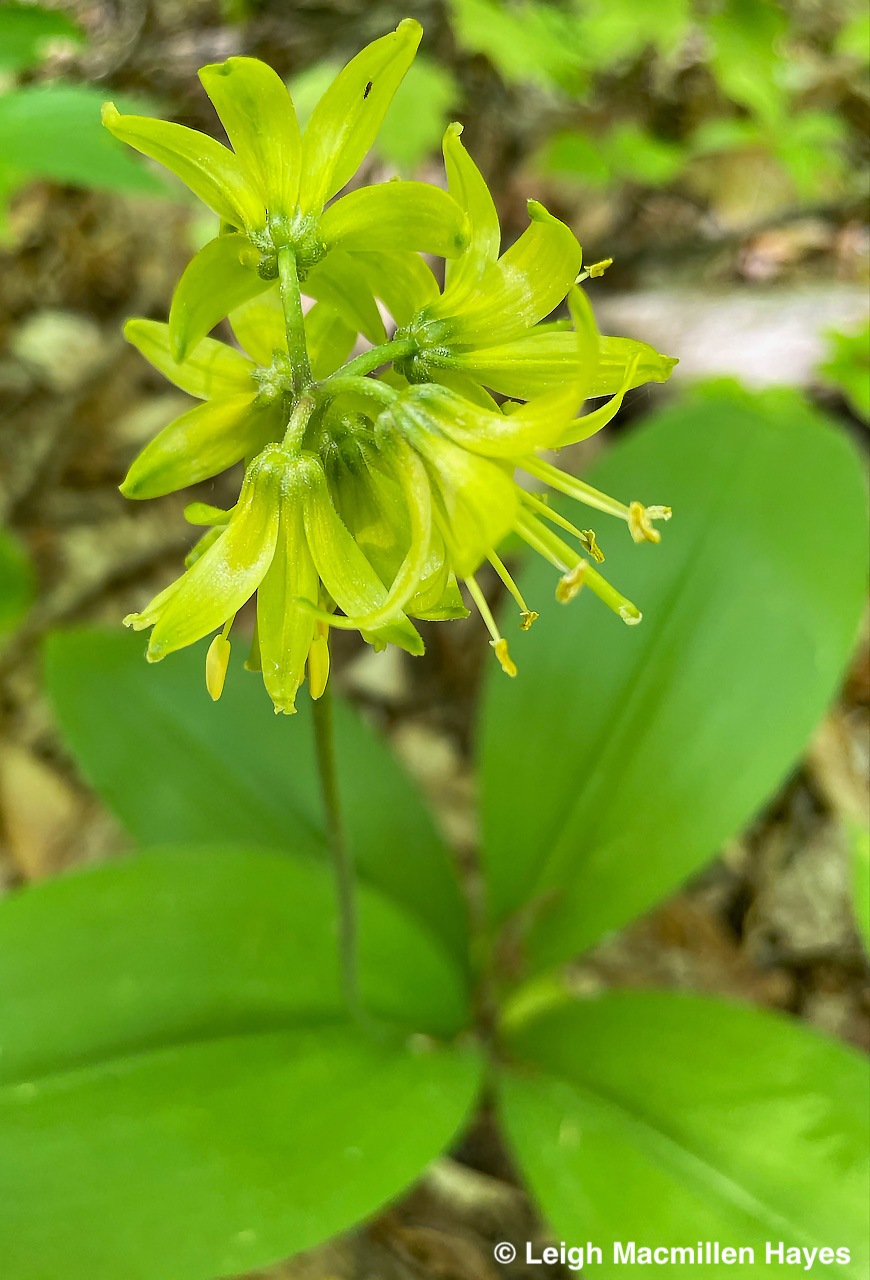
It’s acidic soil that they are rather fond of, just like Yellow Clintonia, the beacons of many a forest trail. But while Clintonia seems to bloom anywhere and everywhere, Lady’s Slipper need Rhizoctonia fungi in order to grow and show off a blossom. According to Jack Sanders, author of The Secrets of Wildflowers, “Unlike most seeds, the minute and dustlike Lady’s Slipper seeds contain no food to allow them to grow. However, the outside of the seed is susceptible to attack by Rhizoctonia fungi, which digest the outer cells. If things balance out just right, the inner cells escape digestion and absorb some of the nutrients the fungus obtained from the soil. Not until this happens can the seed germinate and begin growing . . . The symbiosis with the fungus doesn’t end there. In order for the infant corm (or ‘proto-corm’) to obtain minerals and other soil foods, it must use the ‘go-between’ services of Rhizoctonia fungi. The fungi, in turn, take from the seedling Lady’s Slipper foods that are photosynthetically manufactured. These sensitive and complex relationships make native orchids of all kinds relatively uncommon . . . What’s more, in the wild, it takes from 10 to 17 years for a Lady’s Slipper seed to become a mature plant capable of blooming.

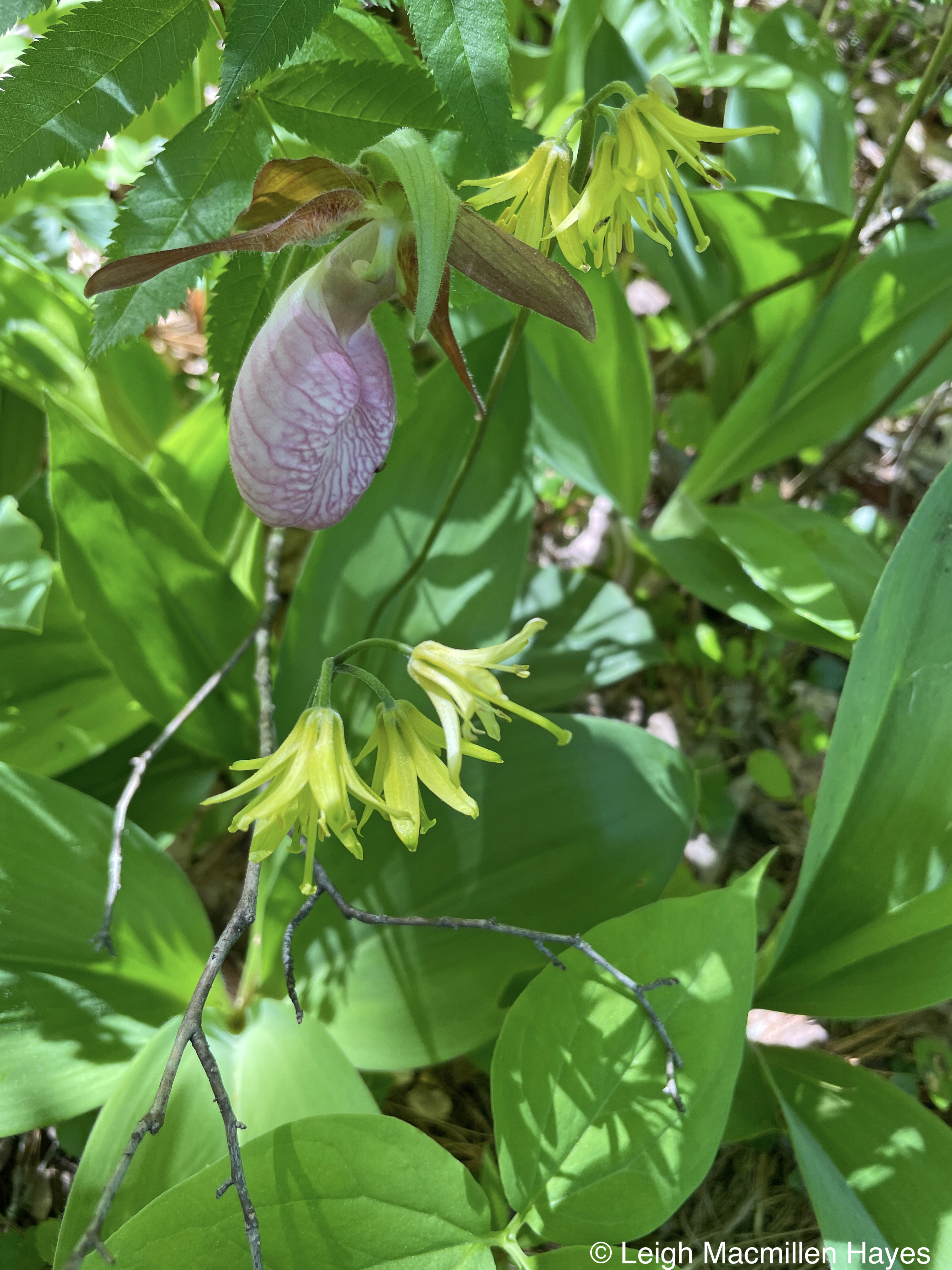
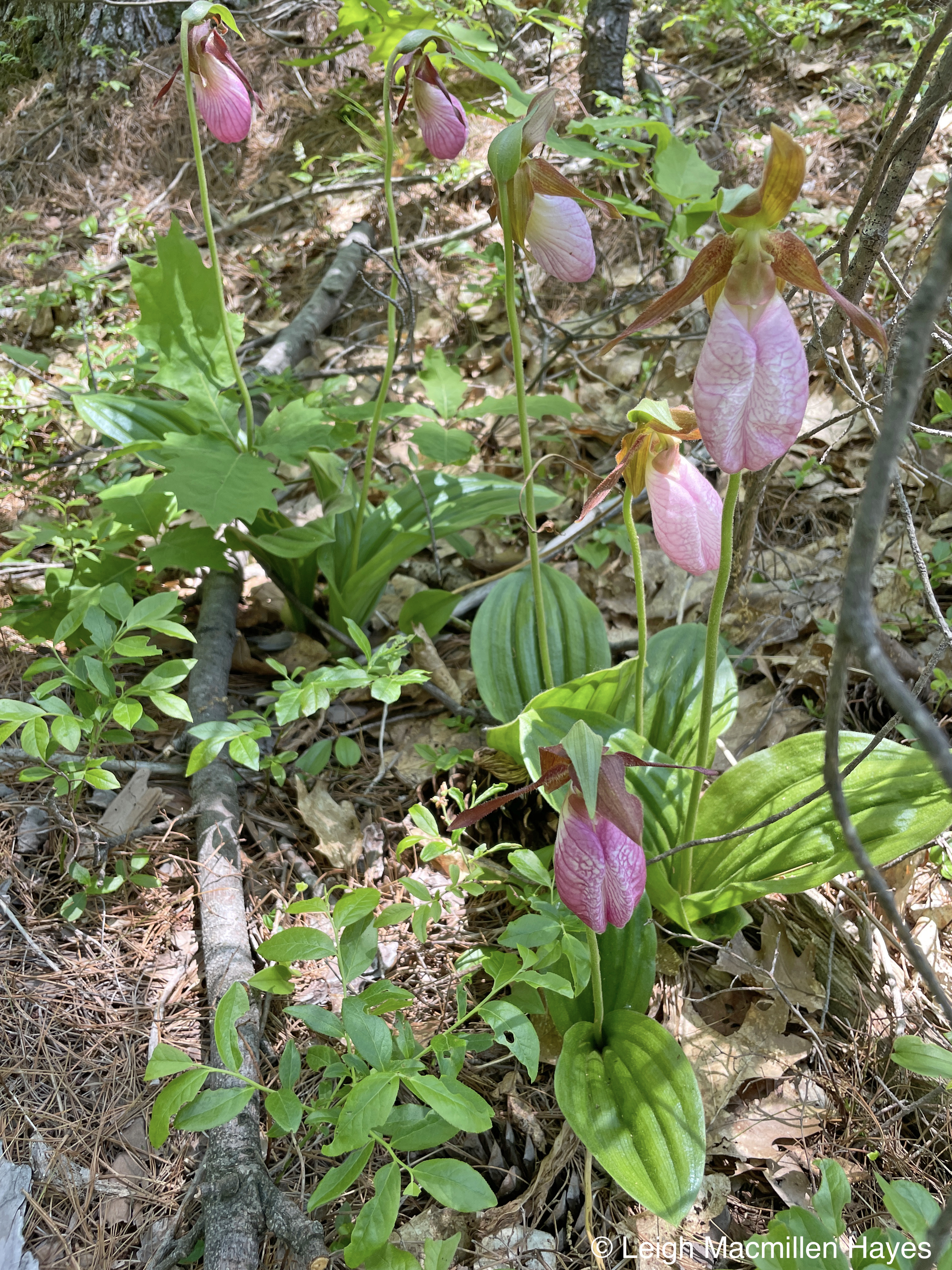
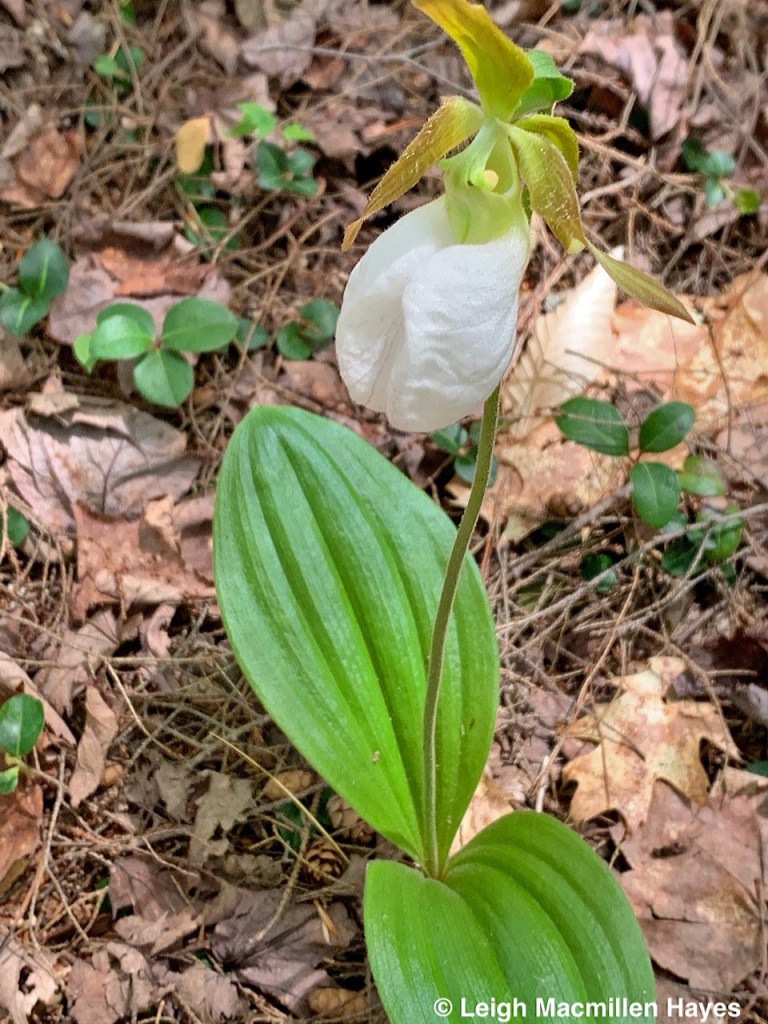
So here’s the thing. Yellow Clintonia and Pink Lady’s Slipper flowers look nothing alike. But their leaves–that’s a different story and when there are no flowers to confirm, one like me, must slow down and notice the features. Do you see what I mean? Clintonias are members of the Lily Family, with six lily-like tepals (segment of the outer whorl in a flower that has no differentiation between petals and sepals). And their leaves can be folded in half with the inner vein forming the fold line.

Lady’s Slippers, on the other hand, are orchids. The flower is a moccasin-shaped, inflated pouch, but also two lateral petals that twist outward. And the leaves–take a look. Remember folding paper in an accordion-like manner to create fans, or tissue paper to create flowers? That’s what Lady’s Slipper leaves look like to me. Multiple pleats.

Lest you think nature didn’t distract us, there was a male swallowtail puddling in a wet seep that we had to pause and admire.

And we certainly didn’t want Indian Cucumber Root, in the same lily subfamily as Clintonia, to think we were ignoring it for it has just begun to offer its unique flower to the world.

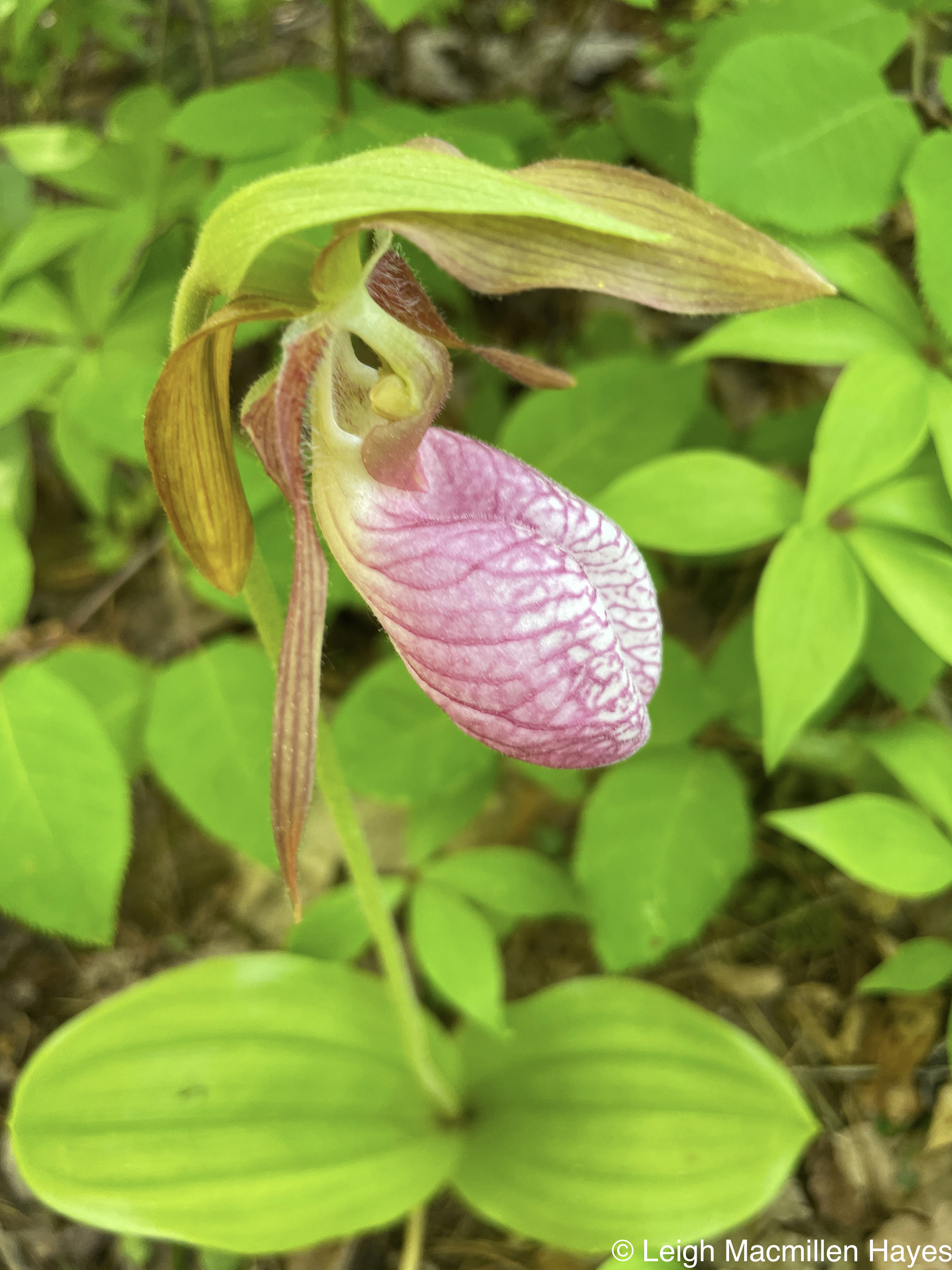
But our real focus, of course, were the slippers, even those decorated in white, which is a form of the pink.

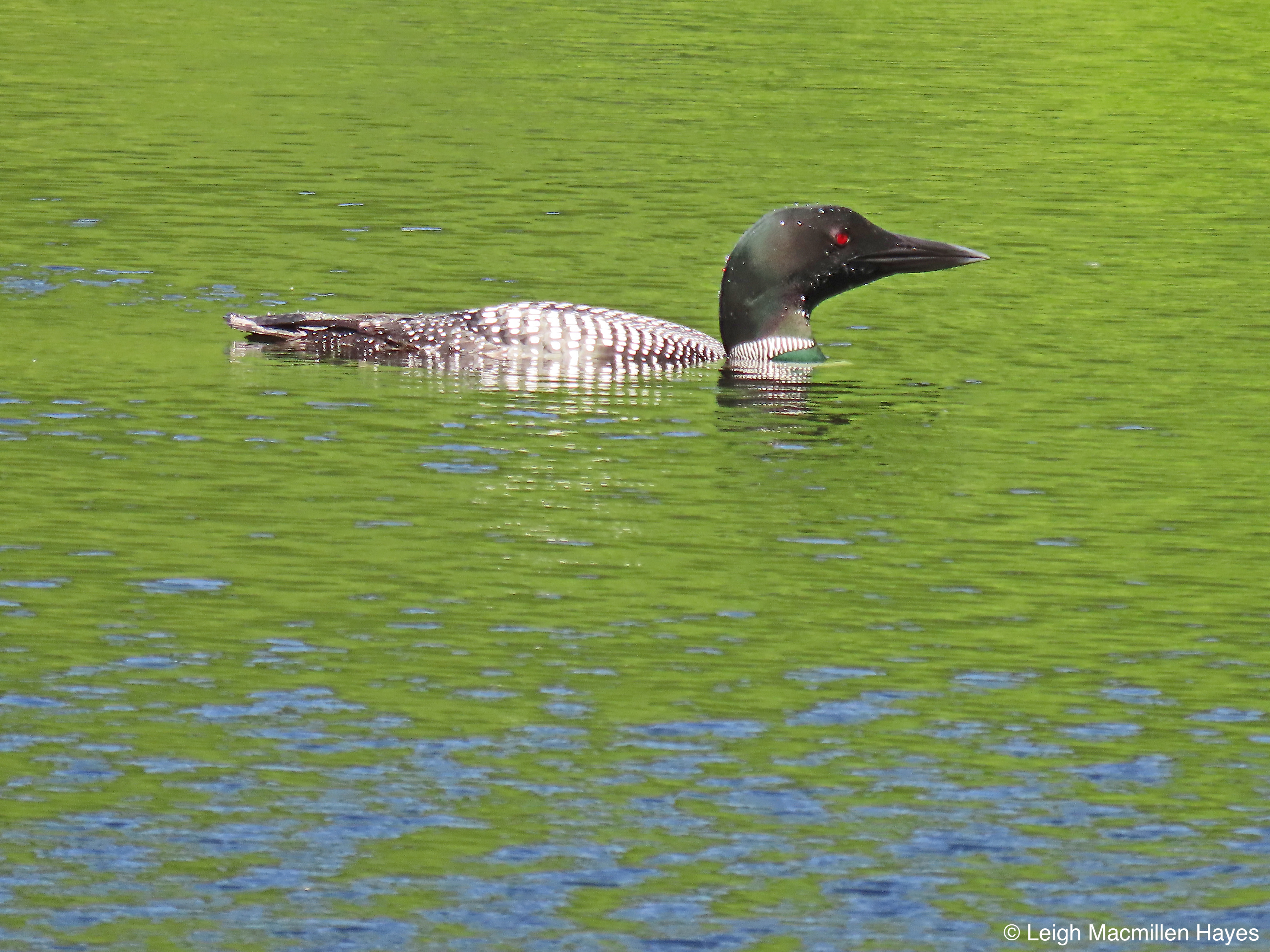
Until, that is, the Common Loons begged to be noticed and so we did.

A few miles into the hike, we reached one of My Guy’s favorite spots. Just the other day I heard him describe it as a field of Lady’s Slippers. I’m pretty sure he was thinking football field. I happen to think it’s closer to the size of my office. But, it does produce about fifty flowers each year.

While he was meticulously counting those fifty, a Bald-faced Aerial Yellowjacket flew in and started chewing some wood. My attention was indeed diverted.

Heading to the summit, we didn’t find as many, but still they were there and we paused to admire this grouping. I wonder if there was a nurselog below them that offered the right growing conditions and thus the line.

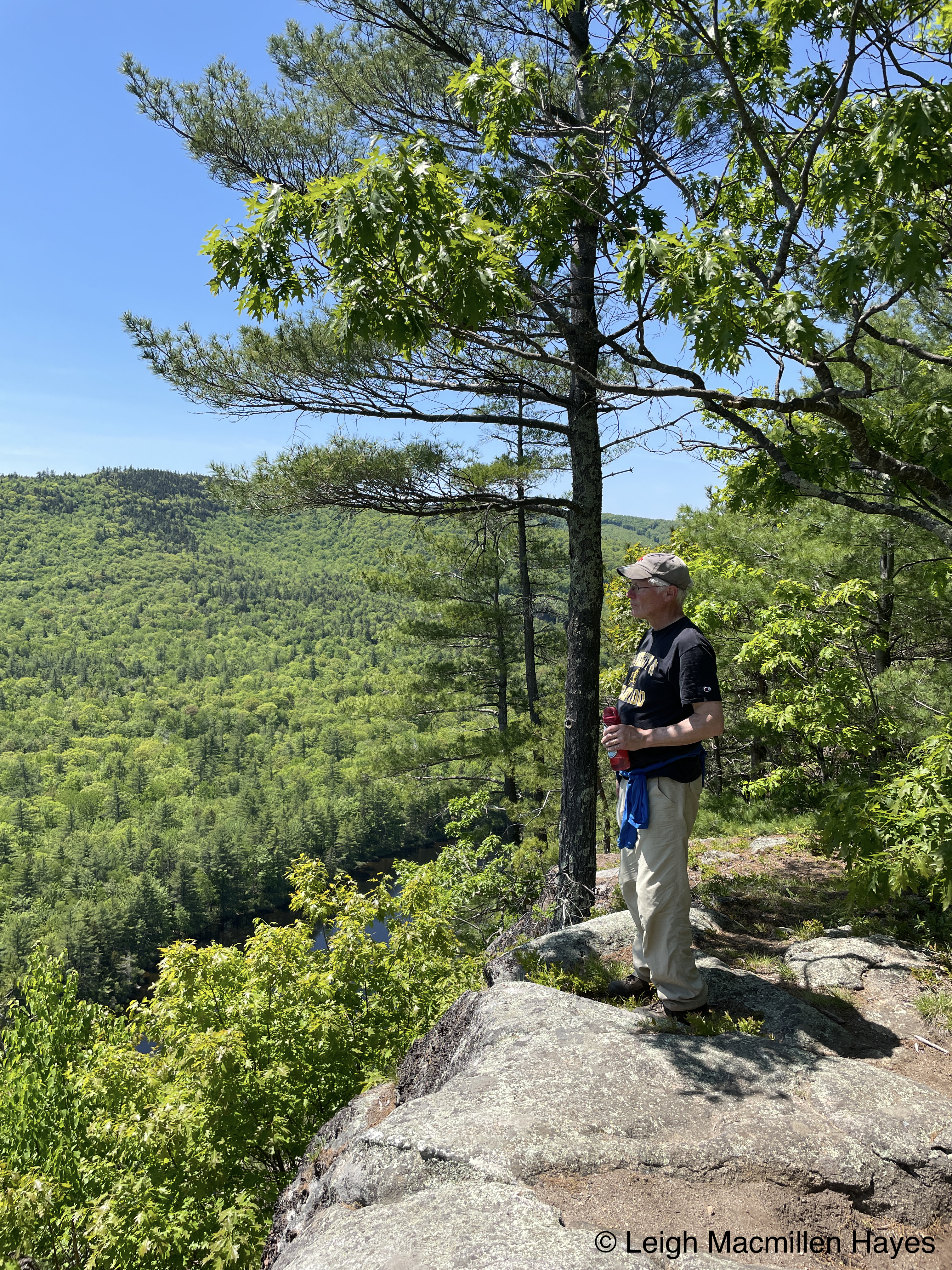
At the summit, after finishing dessert (we’d eaten our sandwiches below by the pond), someone had to survey his kingdom.

It’s always worth a look.

We found some more as we descended and then followed a different trail out, where another lady made herself known.

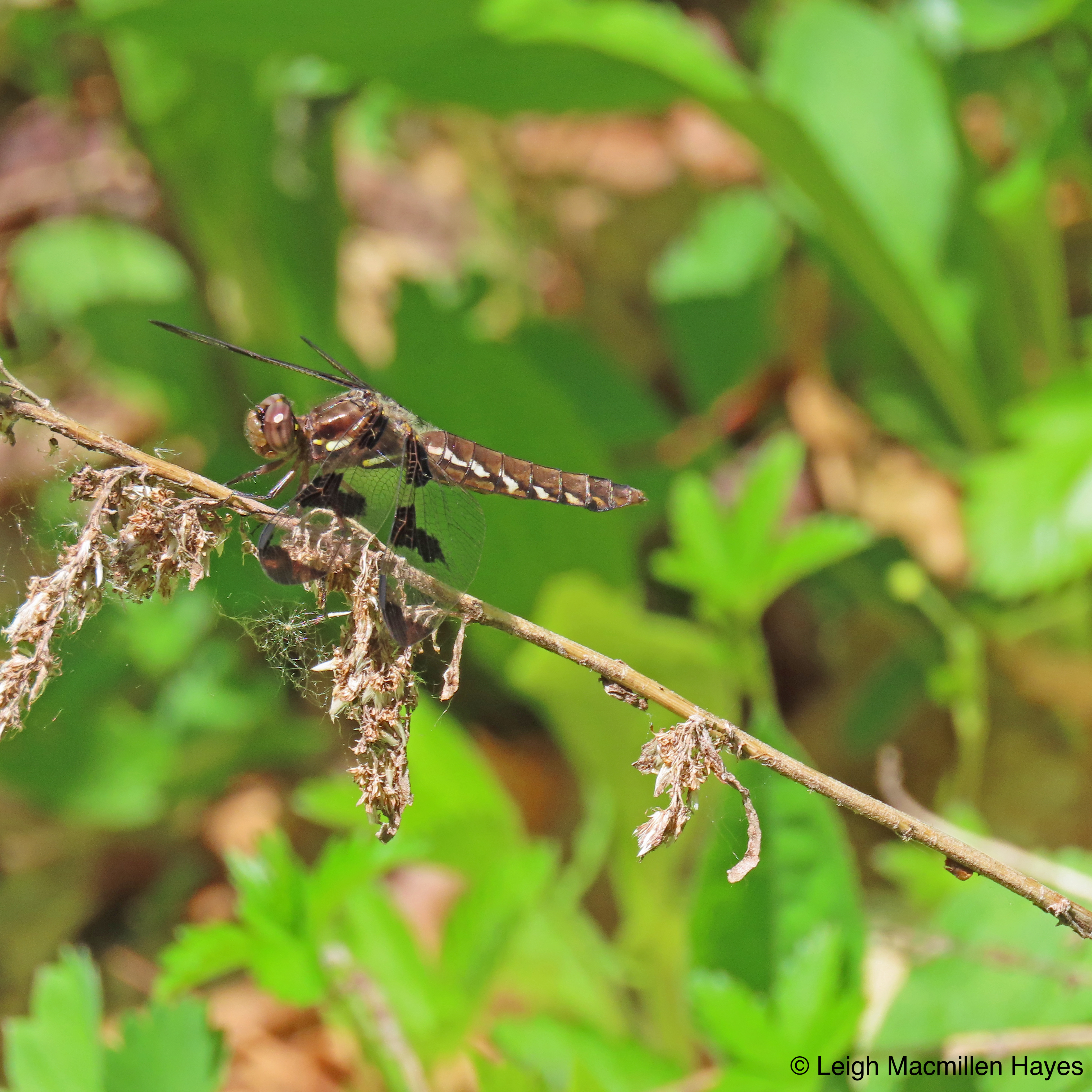
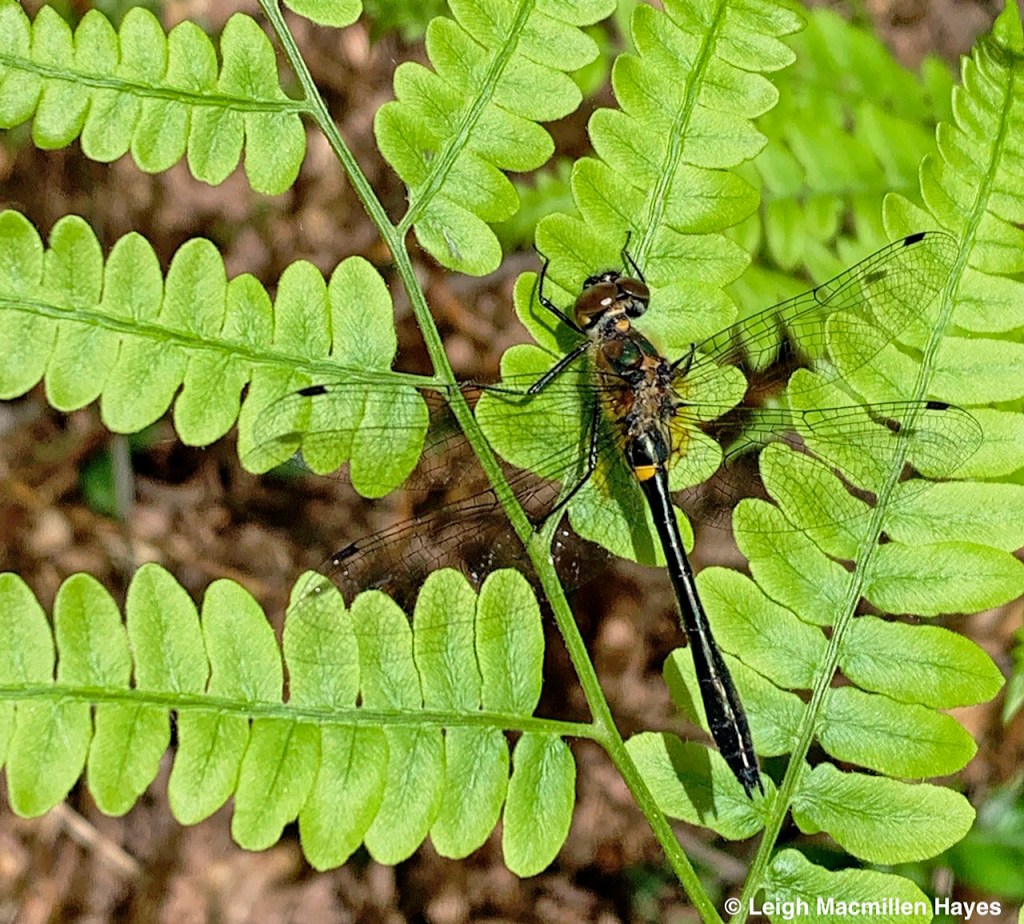
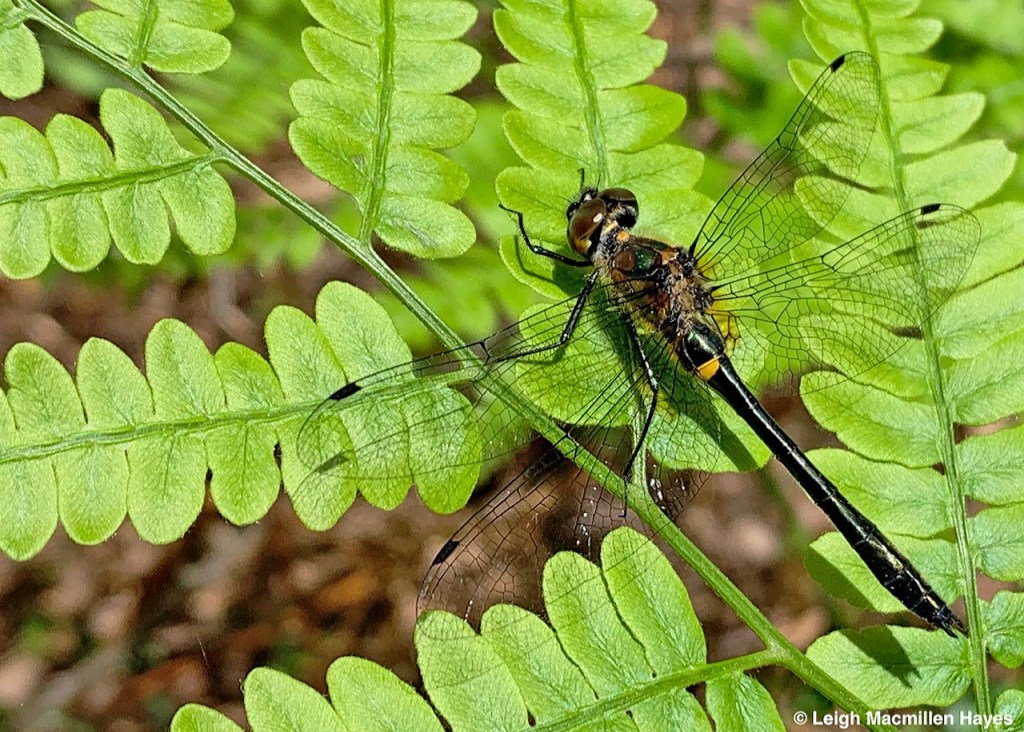
Meet a female Common Whitetail Skimmer dragonfly, who is hardly common with her tail markings, and spots on her wings.

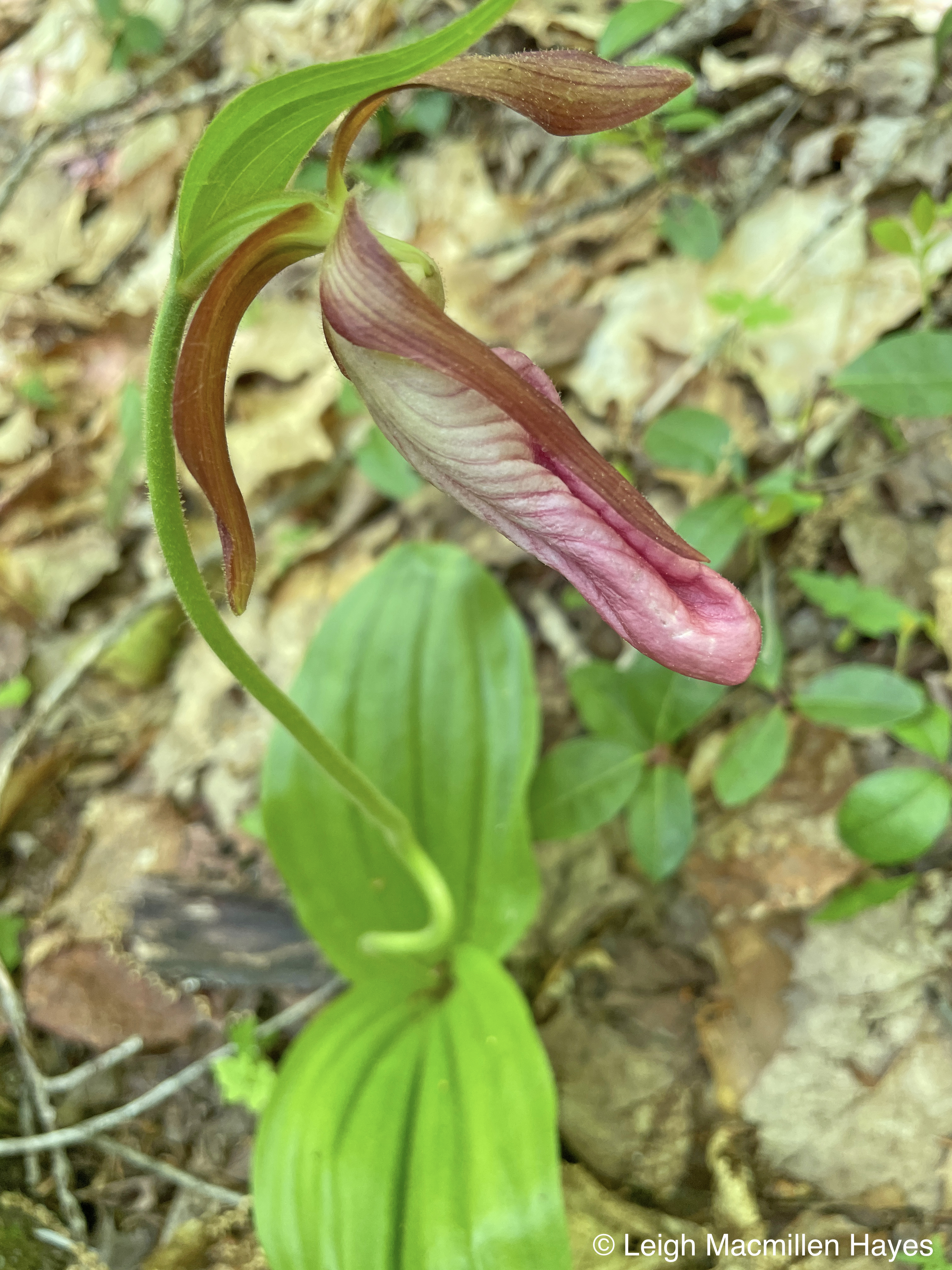
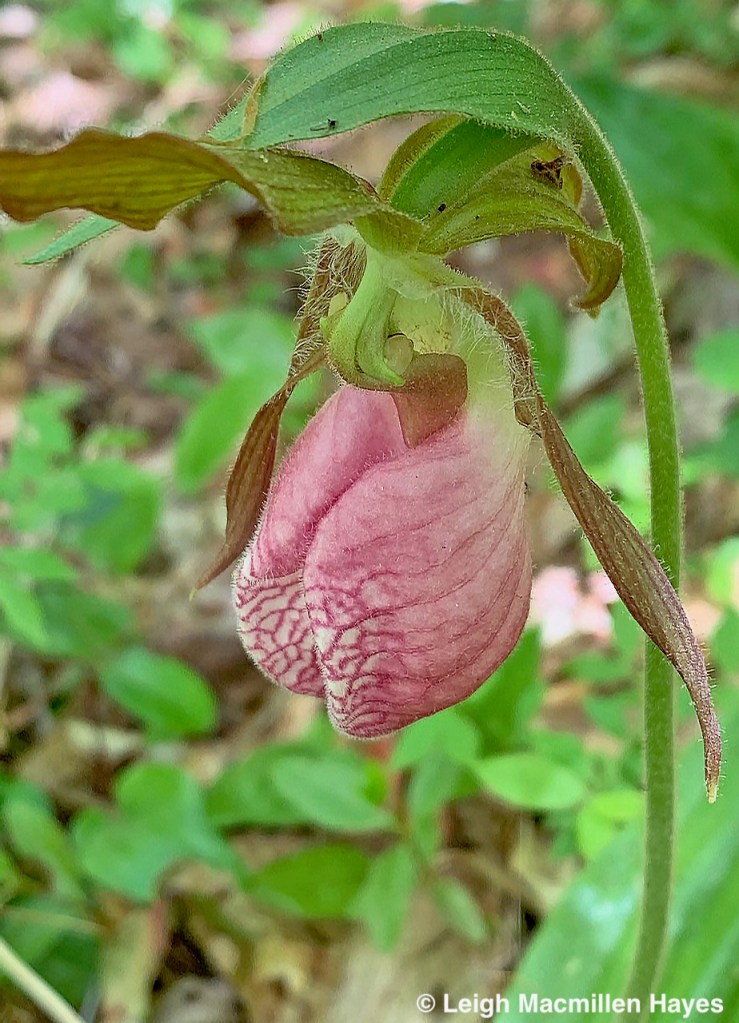
We were almost finished when we spotted this Lady’s Slipper blowing in the breeze. Note the curve in the stem, and the closed moccasin.

I don’t know if removing the leaf will help the flower to fully develop, but it made me think of today, Memorial Day, and the fact that so many have in the past and do presently work so that we can enjoy the freedom of going for a hike in the woods–thank you to all who have served our country, past, present, and future, including our dads, uncles, cousins, and friends.

The question remains: How many Lady’s Slippers did we honor on this Mondate? 351. And those were only the ones we could spot from the trail. I’m sure we missed some. Can you imagine how many more might be out there.

Counting Orchids Mondate

We had a feeling we might be rushing things when we set out on one of our planned Lady’s Slipper hikes this morning. But this was one nature moment my guy was actually looking forward to–oh, he loves to hike, it’s just the stopping for hours on end to look at all the idiosyncrasies of a flower or insect that doesn’t appeal to him.

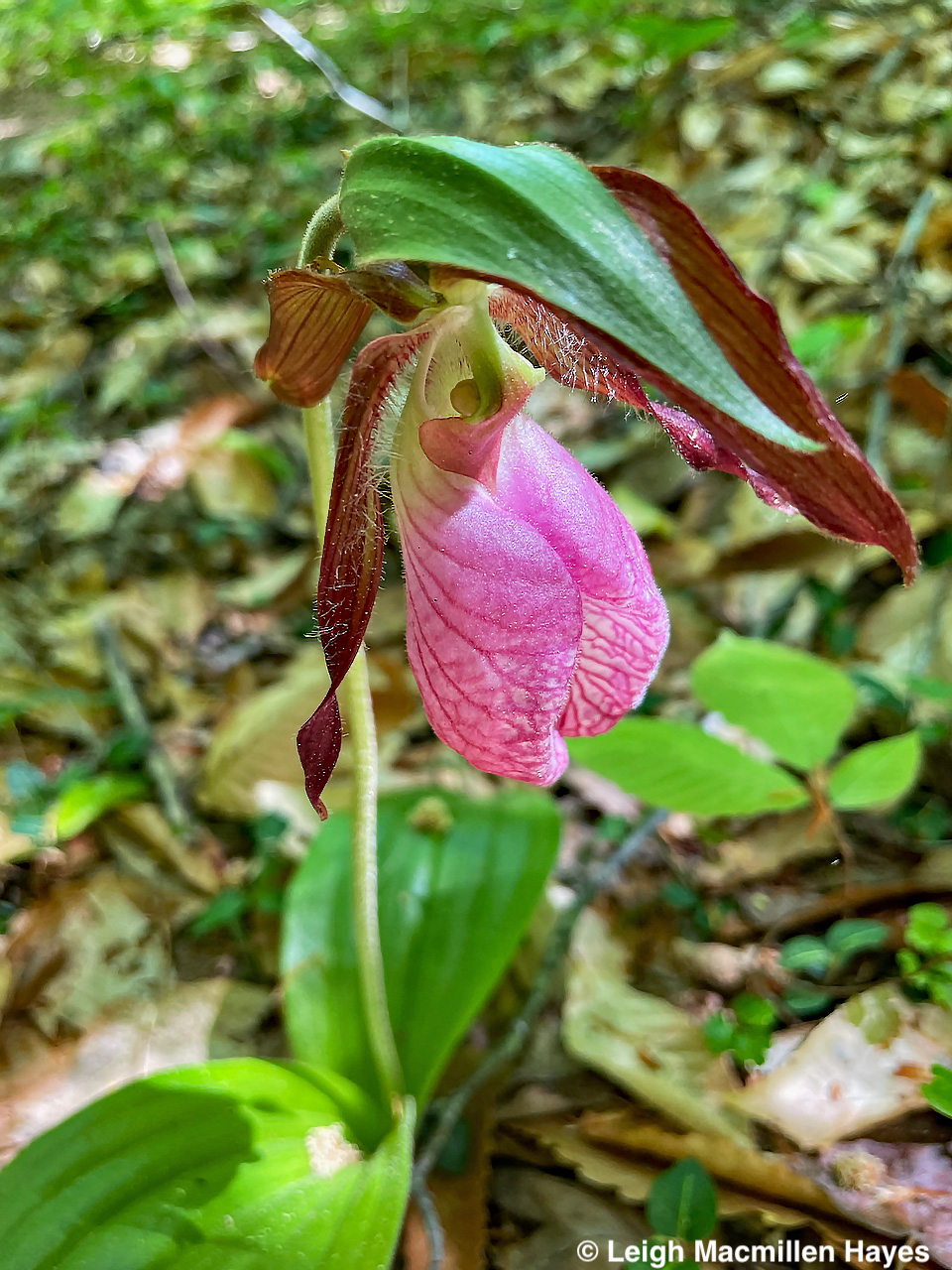
And so it was that not long after we left the trailhead, we met the first lady of our intentions. She was classic–her pink slipper-like pouch inflated and darkly veined (in a manner that reminded me of a pitcher plant’s veins), her sepals and upper petals purply-bronze, stem hairy, and the set of basal leaves well ribbed. With that, we got excited, announced her as number one, and couldn’t wait to continue the count.

As luck would have it, by the time we reached the beaver dam crossing, we’d seen only four.

But at the dam we did pause, at which point several large tadpoles disappeared and a frog jumped into the muck to hide from us. Do you see him? By his dark angular spots, rather than dark rounded spots surrounded by a light ring did I know his name to be Pickerel.

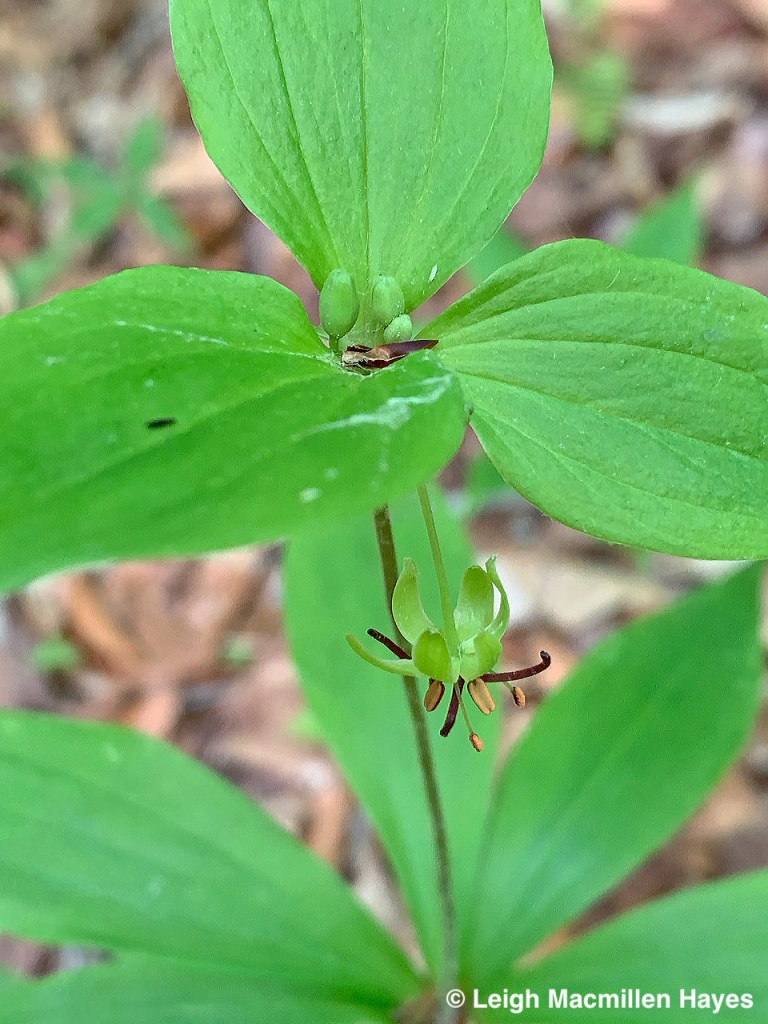
Once the trail began to actually ascend the mountain, we continued to search left and right–and in the process discovered Indian Cucumber-root suddenly in flower. This is one of my favorites, perhaps because of the unique and quite subtle flower that nods below the upper leaf whorl. Except for once that I know of, typically Indian Cucumber root needs a second tier of leaves to help supply more energy so it can flower and fruit. One might easily pass by these plants, but they’re worth a stop to notice the six recurved, yellowish-green tepals (petal-like parts), six stamens, and those three stunning dark red styles.

Still no more lady’s to delight us, but flower clusters of Clintonia added bright cheer beside the trail. And actually, when not in flower, it’s quite easy to confuse their leaves with that of Lady’s Slippers. While both are basal, green, and oval in shape, Clintonias have several smooth leaves featuring a central vein and you can easily fold them in half, while Lady’s Slipper leaves of two are deeply pleated.

As we climbed higher, we spotted more and more Painted Trillium, the flower appearing above its three leaves. The flower has three green sepals and six pink-tipped stamens. Two of the features I love about these flowers: its wavy-edged petals; and the inverted pink V at the base of each. And I’m proud of my guy because he can name a trillium and seems to find pleasure in pointing them out to me. Of course, then he moves on, while I stop to honor the plants with a photograph. Every time ;-)

My heart cheered at the sight of this little one, a Bunchberry. While the plant seems to sport a single flower, it’s “flower” is a series of four large petal-like bracts, surrounding the actual flowers, which are tiny and greenish, with four minute petals. Like the Indian Cucumber-root, this plant needs more leaves when it’s ready to flower, so instead of the usual leaves of four, flowering Bunchberries have two extra large leaves to help the cause.

It wasn’t just flowers that were worth noticing for upon a tree leaf that was being consumed after only recently breaking bud, two May Beetles, quite possibly Dichelonyx elongatula, prepared to canoodle.

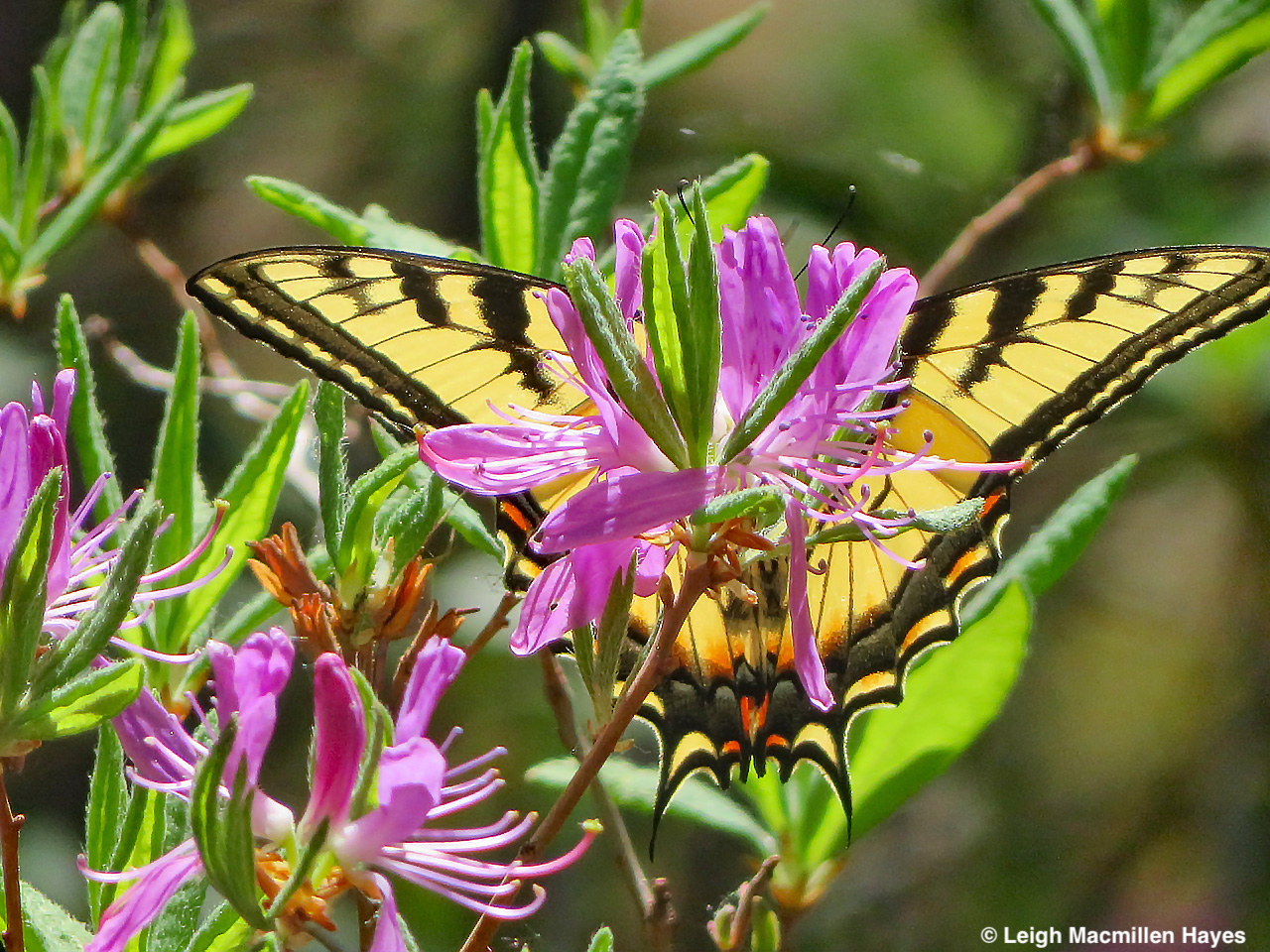
As we approached the top, where the naturally community transitioned, so did the insects. Here and there fluttered several Eastern Tiger Swallowtails. I’m never quite certain of my ID for these versus Canadian Tiger Swallowtails, but the latter has a solid yellow band on the trailing edge of the forewings and the yellow is broken by black for Eastern. Also, on the hind wings, if I’m correct, the blue on the Eastern is outlined in black arcs or curves, while the black line is straight for a Canadian Tiger.

And what to its dining delight should be offering nectar on this fine day–Rhodora.

A Hummingbird Clearwing Moth was equally pleased with the menu.

So what about the ladies of our quest. It was in this new community that we found the most. And not all were completely opened, which made us wonder if we’d jumped the gun and headed off on our search a week too early.

We had to look under trees and shrubs, and though we didn’t find as many as we’d anticipated, we were still pleased.

Our favorite was this cluster, which my guy was proud to discover.

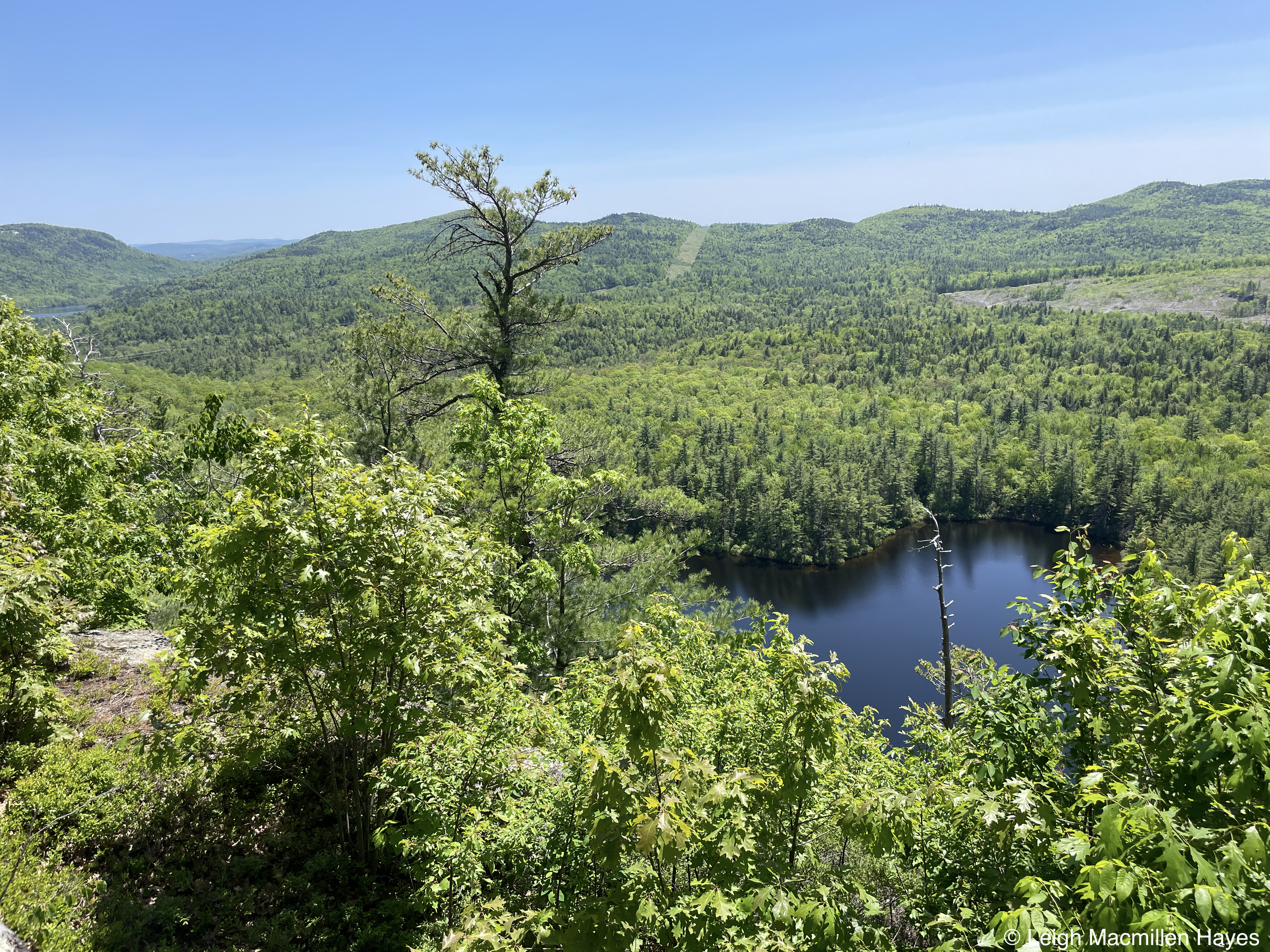
By the time we reached lunch rock where our PB&J sandwiches were consumed as we took in the view, the final orchid count totaled 47. We may just have to return for another Mondate in a few weeks because we suspect there will be more in bloom.

Stepping Up A Notch Mondate: Part 2

Last week found us hiking up an old fav, but there’s another way to approach the summit and so today was the day to follow that route.

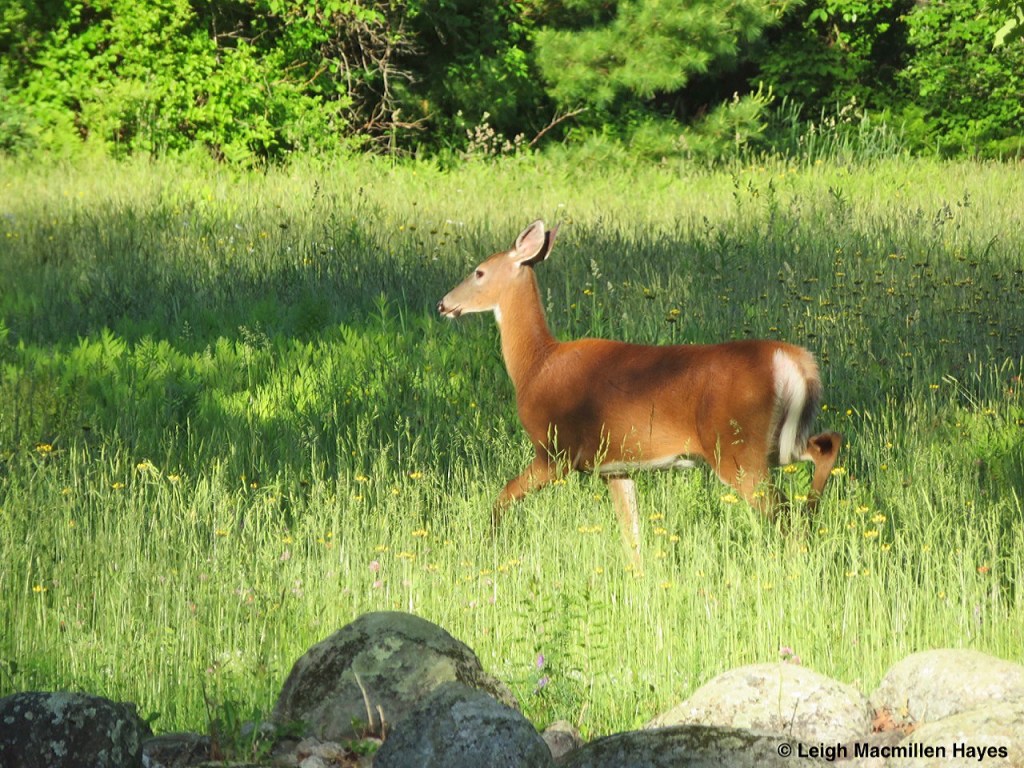
But first, my guy needed to sleep in for a bit because he’s been working way too hard of late and way too many hours and so he missed some early morning moments spent with our resident doe.

But that didn’t matter. A late morning start found us parking beside a clover patch where the swallowtail butterflies showed off not only their need for nectar, but battle scars as well.

Not long into the hike, we came upon a stone bench where we once shared lunch. It was only for a brief pause that we stopped today because the insects were thick, but still . . . it’s such a pleasant spot.

After conquering some wet spots along the way, we arrived at the wettest of all, that was actually quite dry. And not a dragonfly in sight.

After that we began to climb, encountering more damp seeps along the way.

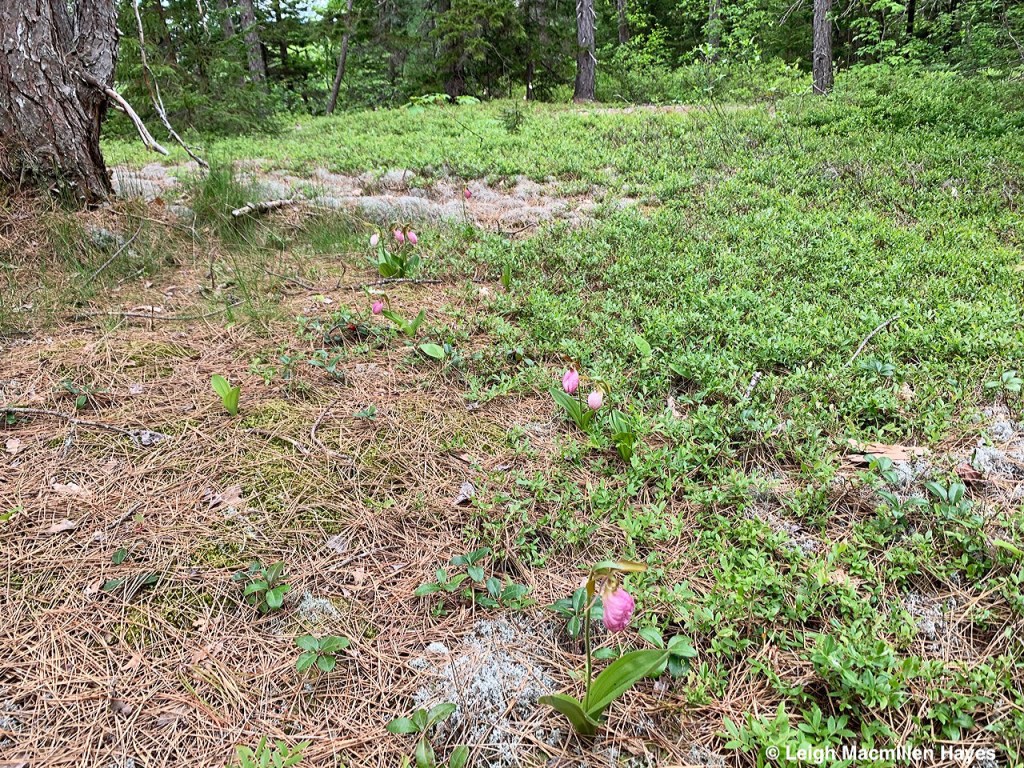
All the while our eyes scanned the forest floor because on the other trail to the same summit we’d counted 150 lady’s slippers last week. It wasn’t until we were two miles into today’s hike that we finally found one.

At last we reached the start of the ledges, a welcome spot for that meant no more mucky spots and fewer biting insects.

By the time we reached the same spur to the summit that we’d followed last week, we’d counted 13 lady’s slippers. Mind you, as we began the hike I asked my guy how many he thought we’d see. “One hundred,” he replied. And then he turned the question to me. “Seventy-five,” I said.

At the intersection he conceded. “You win because you had the lower number.”

“What do you think we’ll count when the lady’s slippers fade,” I asked.

“Deer Flies,” he said. Funny guy, my guy.

We agreed that we couldn’t count the ladies along the spur since we’d already acknowledged them last week. That is, until we came upon a bouquet we’d completely missed. Eight in a cluster like none we’d seen before.

We did chuckle a bit further on for we knew there were a bunch, but swear more had appeared for today’s display. Though you can’t see them all because some are by the tree line, there were fourteen that we know of. That’s one more than along today’s chosen trail.

Even though we had stopped counting, I have to tell you that we continued to point out old friends to each other, and even found a few others we’d previously missed. Besides the bouquet, my favorite was a wee blossom that hid under a red maple sapling.

I would be remiss if I didn’t acknowledge others on display like the huckleberry’s red flowers shaped like bells waiting to ring joyous sounds across the summit.

And then there was the flower beetle atop a mountain ash tree. I was pretty sure it was a flower beetle because . . . um, it was a beetle on a flower. But beyond that my knowledge and research were limited. So as I do in such cases, I reached out to Maine Master Naturalist Anthony Underwood, who said that I’d found an uncommon scarab, Gnorimella maculosa, or Maculated Scarab. Maculate means “mark with a spot.”

And then there were the ants pretending to be part of a flower structure.

Birds also were in on the scene, though we actually heard the songs of many more than we had the honor to see. But this Mourning Dove posed on the trail for us and we could hear a mate call from nearby so we suspected there must be a nest in the vicinity.

Our wonders were many, but the best of all . . . when we reached lunch rock we realized several women who were social distancing had arrived at the overlook before us. Funny thing . . . we knew them. Funnier thing . . . and the best part was that last week along this same mountain we’d met Eleanor on the left and Rachel in the middle. Today, Amy completed their friendship triangle.

Who knew that as we stepped up the notch from a different starting point on this Mondate, we’d find these three amigas. Perfect.

Where will we find you next week, ladies?

Stepping Up A Notch Mondate

Today’s hike meant we had to drive about thirty minutes north to an old favorite, but though we’ve hiked it a bunch in the past, we had no idea what to expect–including meeting my friend Rachel Pickus and her friend Eleanor on the trail.

Not long after we began hiking, we discovered a lone lady’s slipper and fondly thought of our discovery last week of over 200 of these beauties. The special thing about this one was that not only was it a solo but also pure white . . . a variation of a pink.

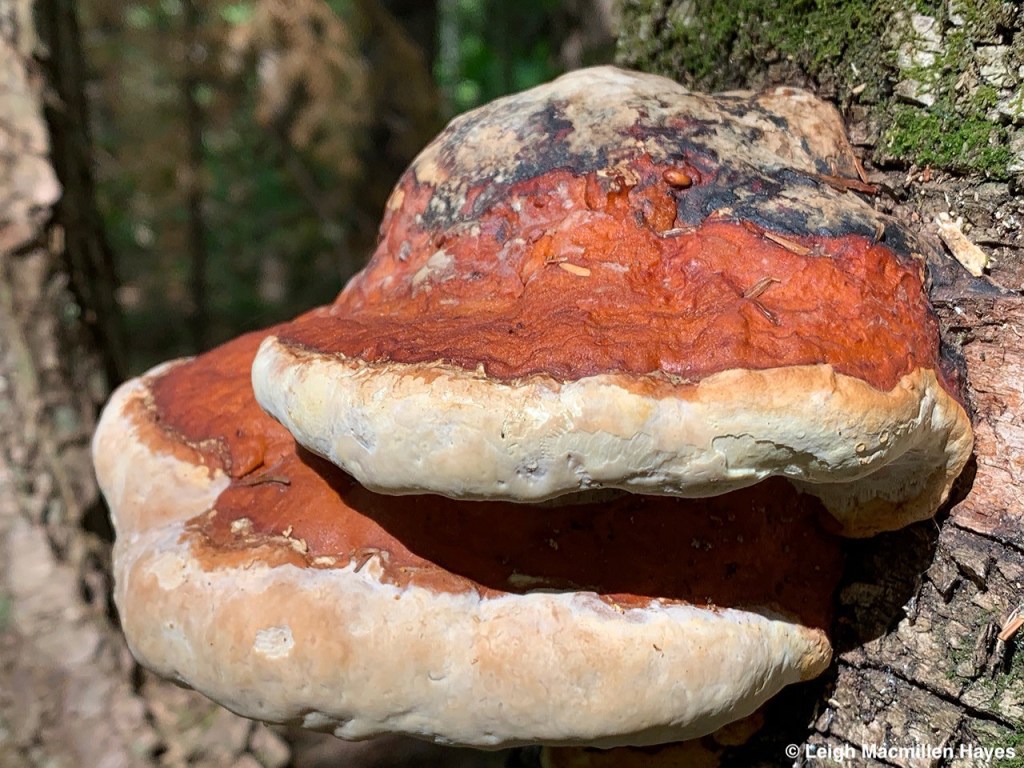
Offering other colors to the mix in the mixed forest were a couple of red-belted polypores, the name truly a misnomer for the belt along the outer margin was whitish-orange, but can also be yellowish-orange, red, brown or white.

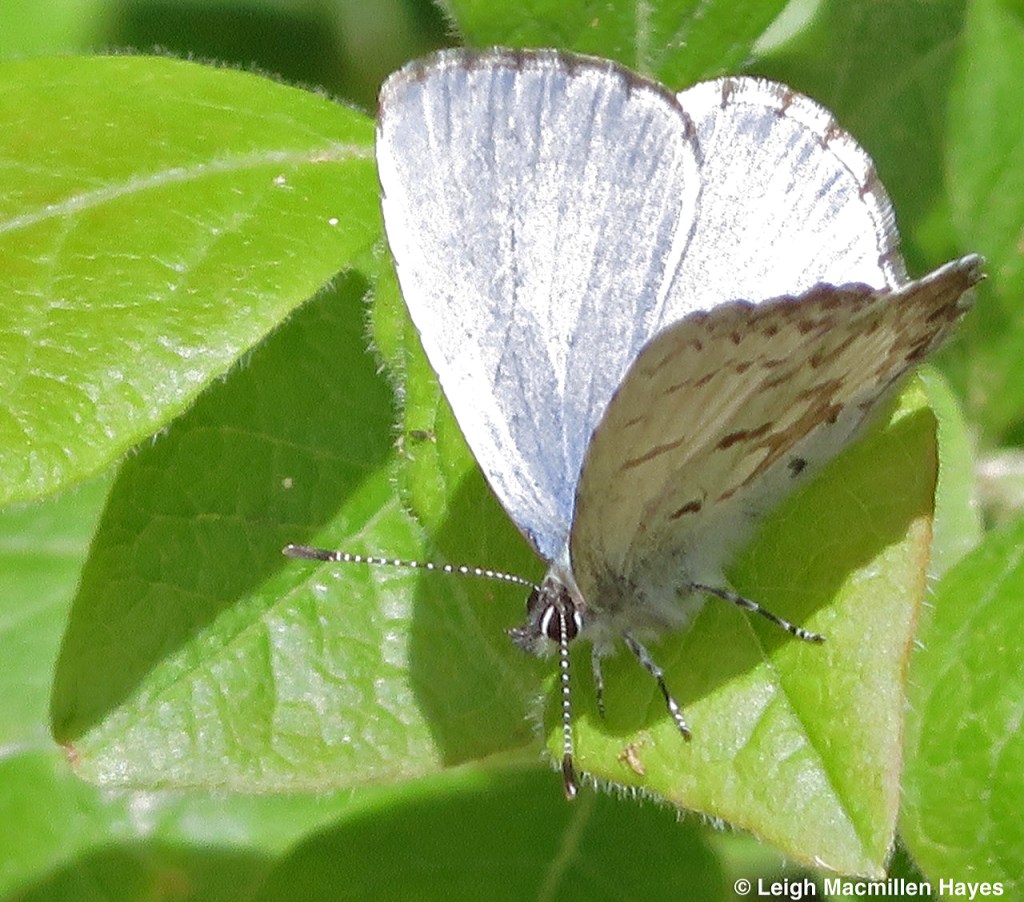
Flitting about at our feet whenever it seemed the sun shone through the canopy were tiny blue butterflies known as Spring Azures. Though named for the season in which they are one of the first to fly, they’re known to be on the wing until autumn so keep your eyes as wide open as theirs for a one inch flash of blue at your feet.

Within a short time we reached a beaver pond that was most active with dragonflies and the banjo strums of green frogs than beavers.

To cross, one must get a wee bit muddy along the beaver dam where a few large tree cookies have been added this year as stepping “stones.”

As we moved across, the frogs who were calling did leap away, except for one who channeled its inner chipmunk and froze in place, perhaps in hopes that we wouldn’t notice. Can frogs hope? Or is that one of those most people of things?

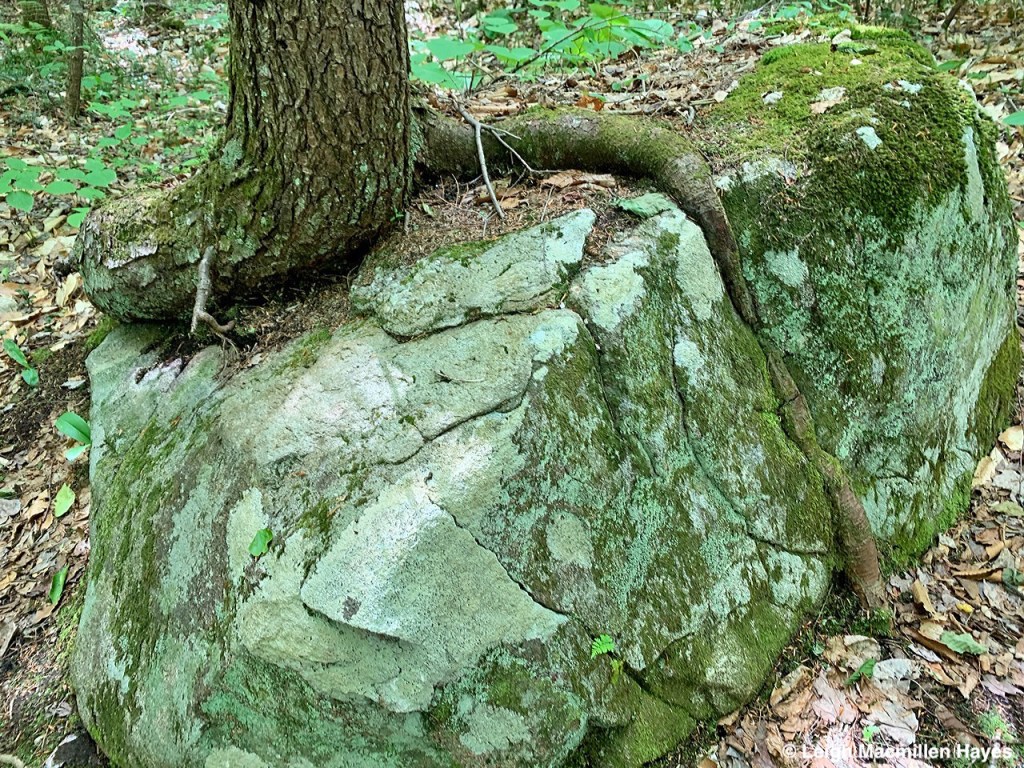
Upward we climbed, though really, the trail is moderate in difficulty. But speaking of difficulty, check out the root of this hemlock tucked as it was inside the rock. Hemlock rock. Hemrock?

And then there was the snag of an ash tree. So you see the scar? That hollowed out part? Many of the trees along the trail exhibited such scars for the area had been logged years ago by the United States Forest Service given that we were in the White Mountain National Forest (and actually met a forester on the trail). Why the scars? Because trees pulled out of the forest would have been dragged past these and injured them in the process.

But . . . again a sign of hope if trees can hope. Or rather, if snags can hope. For this ash still had roots participating in the flow high and low of fluids and an errant compound leaf grew out of the bark.

It wasn’t long after that that I once again realized my guy has an eye for the ladies. Or at least their slippers. And odd fetish indeed. But we began to count.

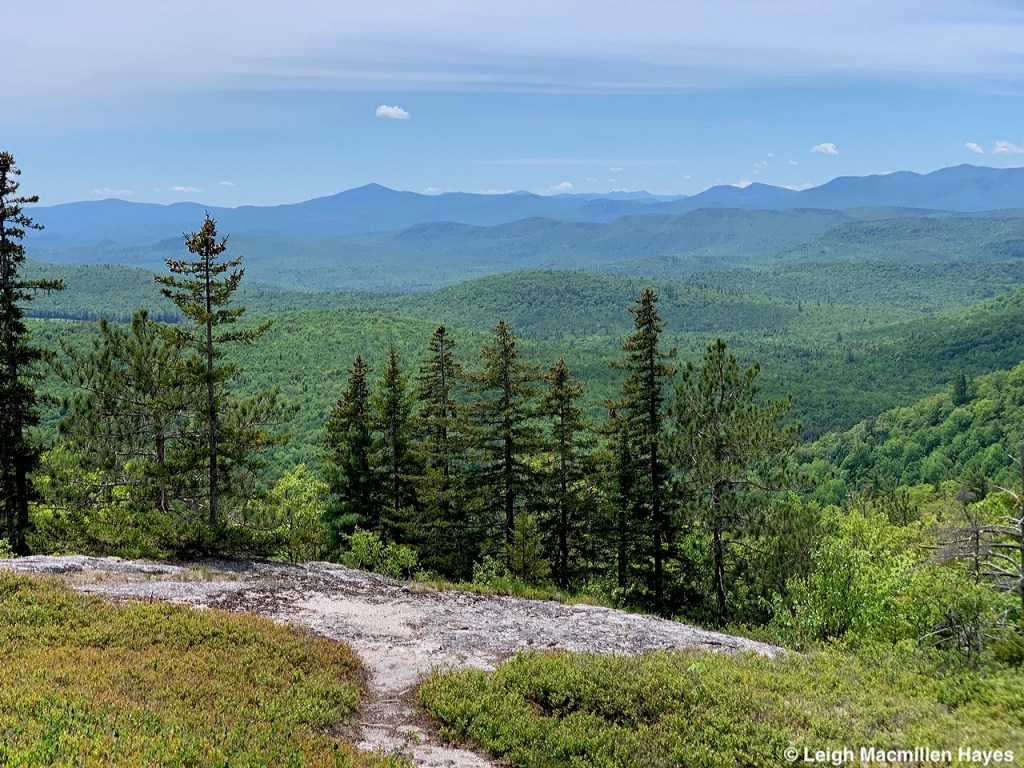
The count continued as we ventured out to the ledge of a spur trail and Kearsarge North showed off its pyramid form in the distance.

Continuing to climb, we soon met a friend in the form of a Racket-tailed Emerald dragonfly.

They’re known for their metallic green thorax with brown hairs, black legs, and clear wings. with a wee bit of yellow and black at the base of the hindwings. In their simplicity, they are truly beautiful.

And speaking of beautiful, have you noticed Tiger Swallowtails everywhere of late? This one sought the nectar of chokeberry in bloom.

While I noticed the butterflies and dragonflies and trees and fungi, my guy focused in on the ladies of his dreams. By the time we’d reached the summit and ledges beyond, he’d counted many.

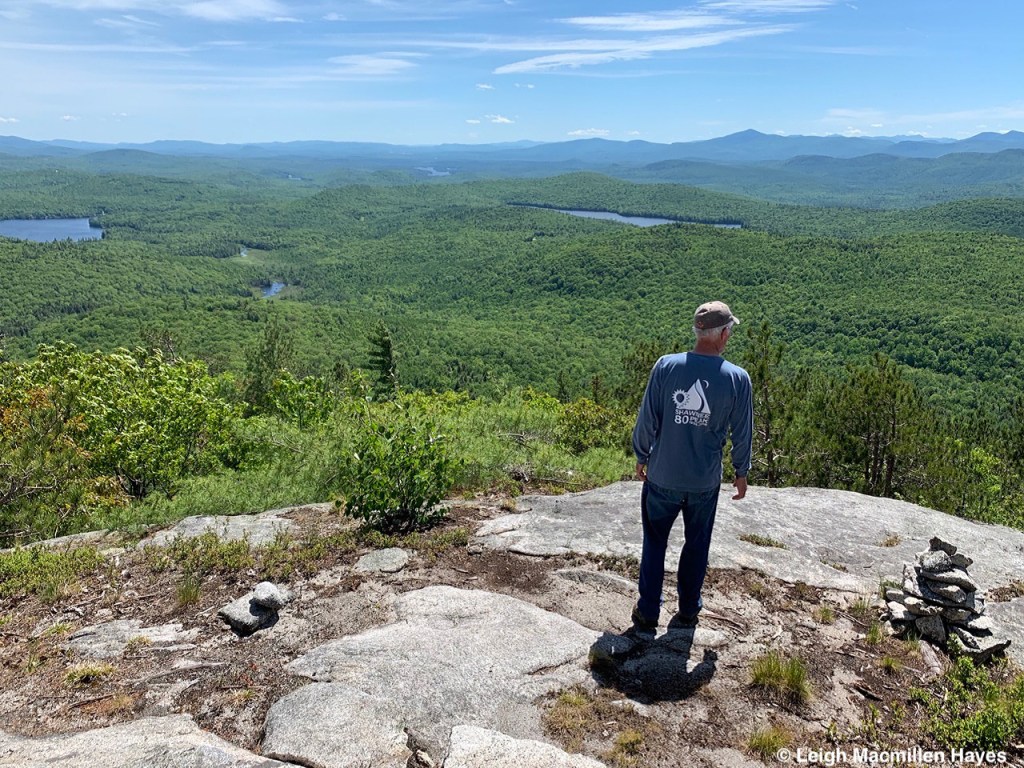
As we took in the view at the last cairn, and the peak on his back matched the peaks beyond, he commented that a week ago he never expected to spot so many lady’s slippers and today he added 150 to the count. I never expected him to slow down and count. Two hundred last week. One hundred fifty today. We definitely stepped it up a notch on this Mondate.

Cinderella’s Slipper Shop Overflows

Did you hear? Cinderella lost her slipper. And didn’t know where to find it. So . . . Pam M. and I turned into Fairy Godmothers over the course of the weekend in an attempt to help the folktale heroine of our youth.

We began by waving our magic wands . . .

formed in the shape of Indian Cucumber Root flowers suddenly in bloom.

And then we looked everywhere. Do you see the shoe?

No, that’s not it. Ah, but what is that? It’s the nest of an Ovenbird who ran across the forest floor away from the nest, which made us wonder why it was running and not flying–to distract our attention, of course.

We took quick photos and then moved out of momma’s way, continuing our quest.

Do you see the shoe?

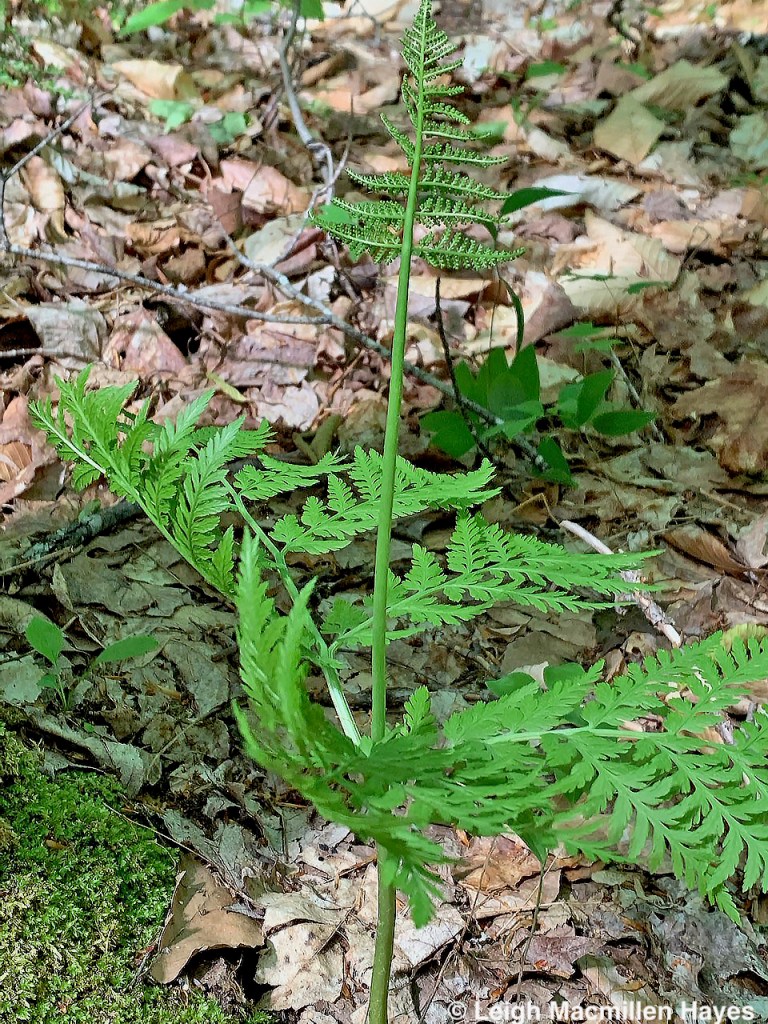
No, it wasn’t underneath, but we did celebrate the fact that we’d found the ever common rattlesnake fern with its lacy triangular fronds . . .


and separate beaded fertile stalk. To us, it was hardly common for we rarely see it except in this place. Perhaps we’ll whip the fern into another dress for Cinderella.

Do you see the shoe? No, it isn’t here either, but the leaflets (pinnae) of a Christmas fern could certainly serve as Cinderella’s stockings, bejeweled as they are with the sori’s indusia (the round sheets partially covering each sorus) attached at their centers.

Do you see the shoe? No, it’s not here either, but the hobblebush showed that even in leaves that for some reason were dying, design and color should always be noticed because everything deserves consideration. As we consider Cinderella’s next gown, certainly we’ll remember this.

Do you see the shoe? Maybe we were getting closer. Indeed we were getting closer when we spied this bladder sedge.

Do you see the shoe? We hope one day soon you will for it was while admiring the sedge that we noticed the leafy forms beside it and realized we’d discovered the plant we sought. Perhaps it will flower soon and the golden yellow shoes of our quest will make themselves known.

In the meantime, yesterday morning Pam led a stroll for the Greater Lovell Land Trust.

And this afternoon I did the same for the wait-list crowd.

Each time, we led participants on a stroll through the slipper shop. Cinderella should be pleased with our finds for in every aisle the slippers were available in exactly her size.

And each offered its own variation of the color theme.

There were a few darker ones.

And even several in white.

We were all in awe and had to bow and curtsey (in Covid-19 fashion) for so many choices were there to honor.

Saturday’s group found 53, which became a challenge for today’s group. Their total: 71.

We know Cinderella is holding out for the golden one, but until then her personal slipper shop overflows with possibilities.

Diggin’ the Garden

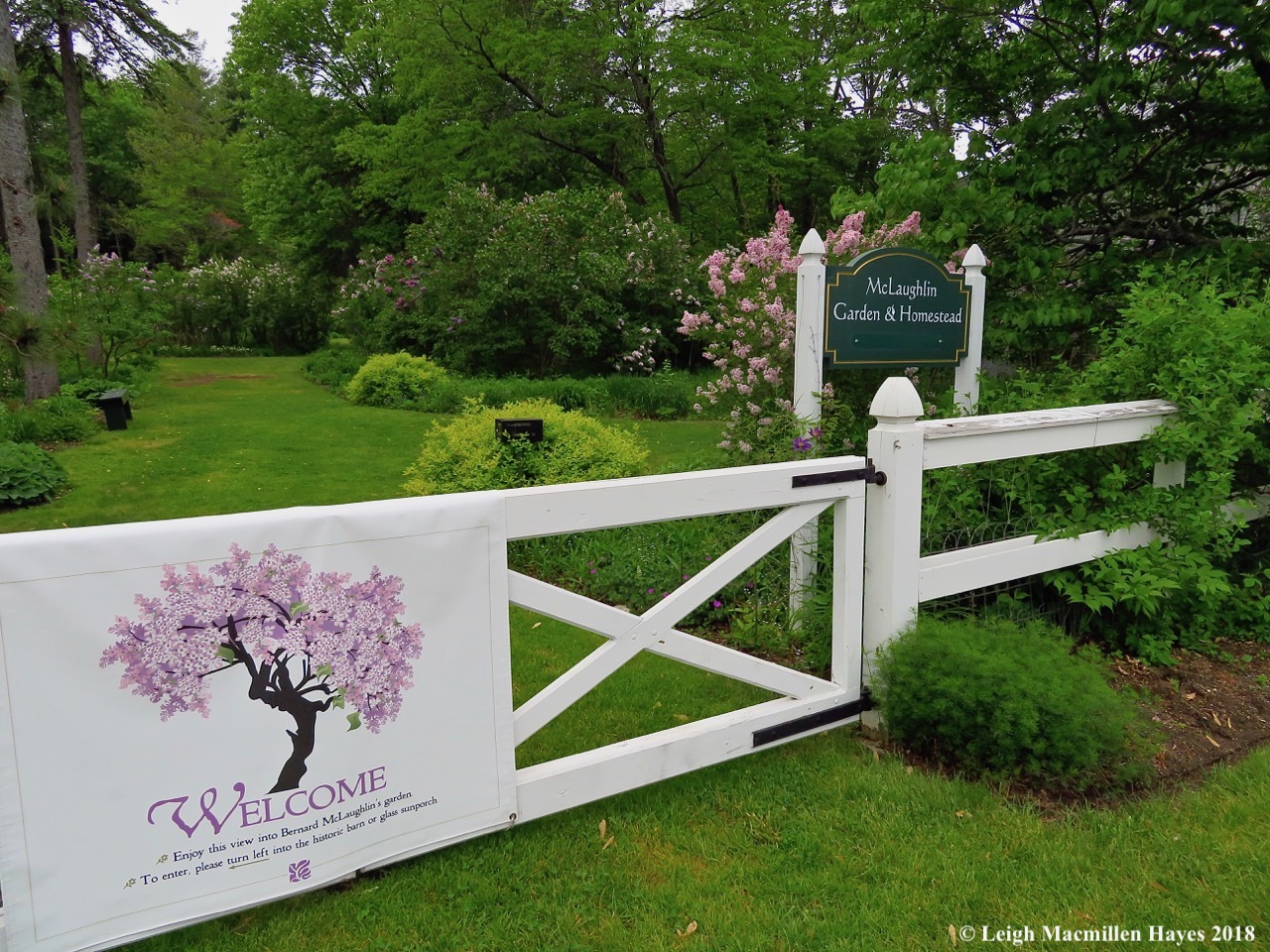
As Judy Lynne and I approached the entrance to McLaughlin Garden in South Paris, it felt as if we were calling on an old friend.

M1 MCLAUGHLIN GARDEN

Maybe that feeling was realized because we passed through the barn, as if visiting a neighbor and searching out back for her.

m9

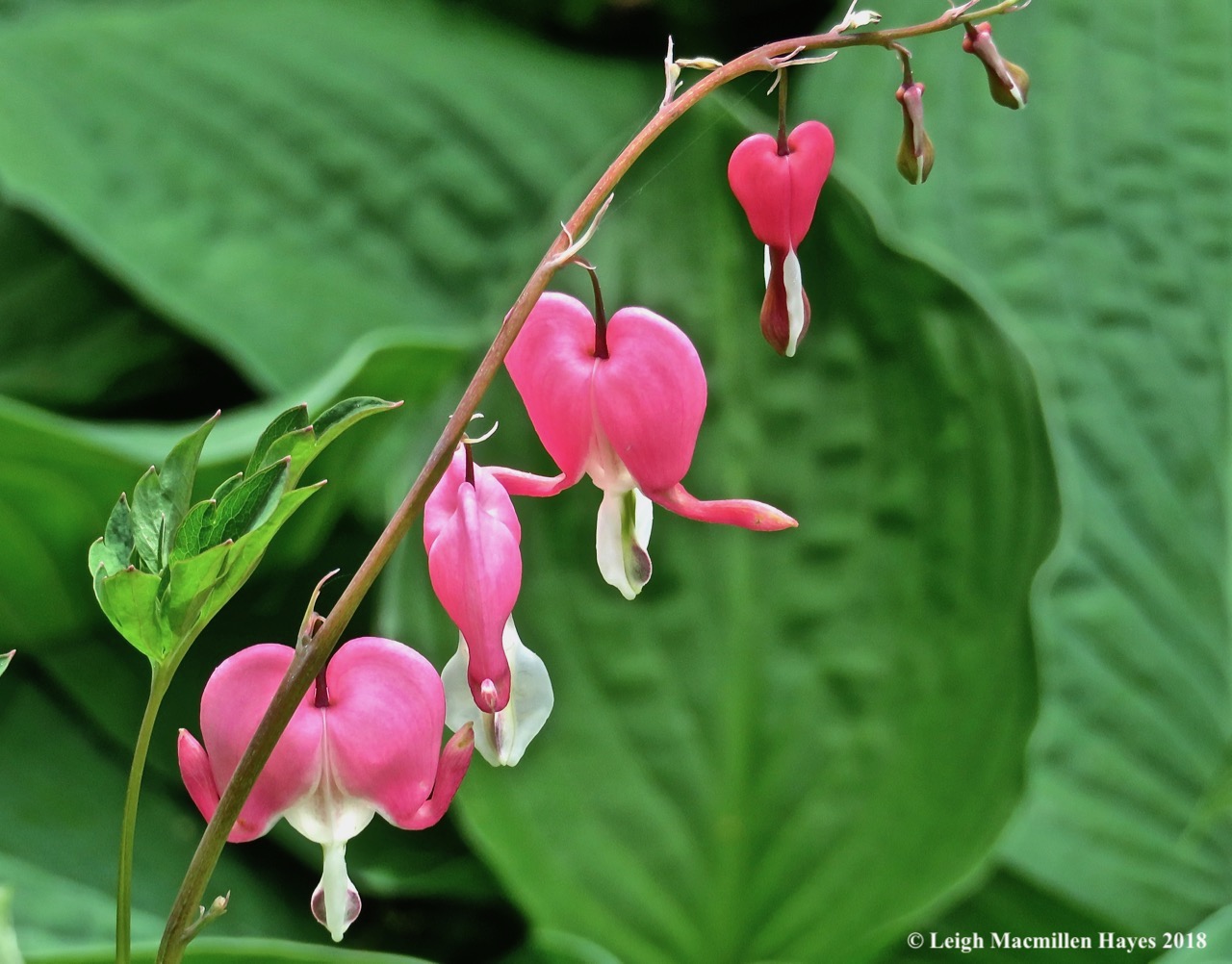
It was there that we were immediately greeted by not one, but many old friends, including bleeding heart,

m3

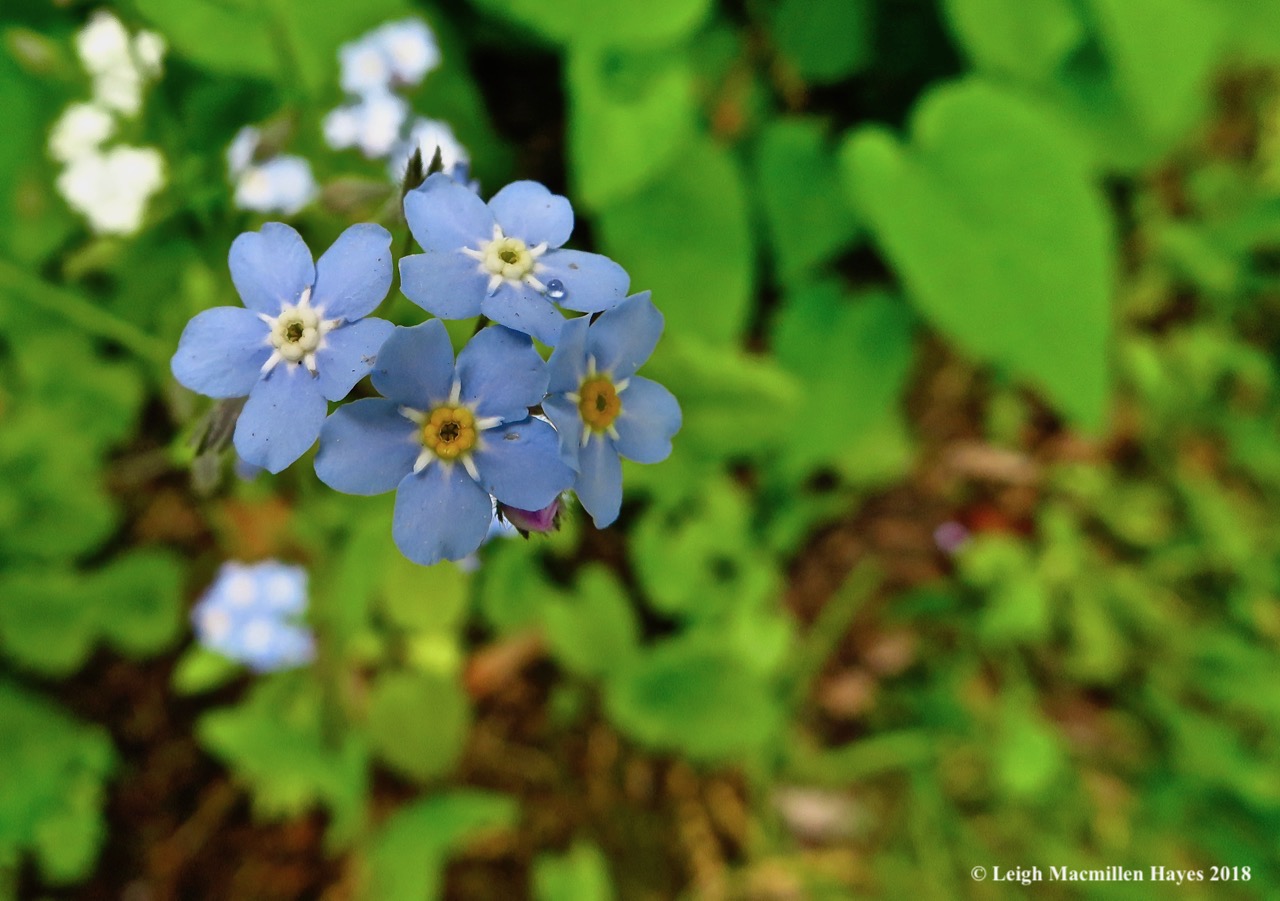
forget-me-not,

m7

and jack-in-the-pulpit.

m2

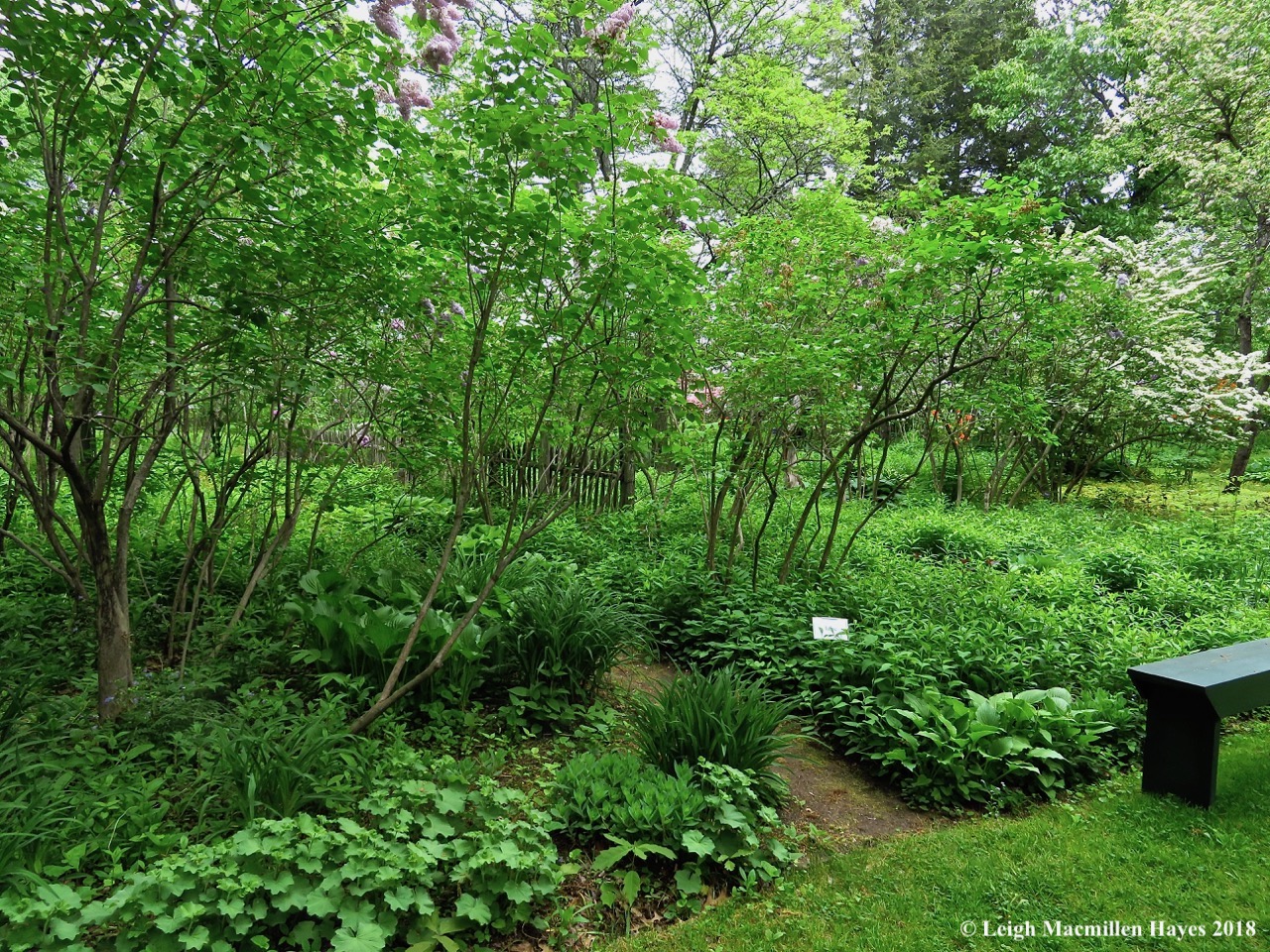
All of these and so much more were the inspiration of Bernard McLaughlin. He began planting the garden in 1936 right on Main Street, though at that time it wasn’t the strip it is now. But that’s part of the wonder of this place for it’s a unique oasis in the middle of our busy lives. As Bernard nurtured his diverse collection of wildflowers, ferns, woody shrubs, trees and over 200 lilacs, he always kept the garden gate open. In 1997, a non-profit was formed to preserve Bernard’s legacy and continue his open door policy.

m3a

We went to smell the lilacs and their heady fragrance did please our noses immensely, but we noted so many other flowers, some which we knew like the old friends above, but made new acquaintances as well. Of course, we’ll never remember all their names, but isn’t it always that way when you meet someone for the first time? Or second or third?

m10

While some paths are grassy, others consist of well-tramped mulch.

m14

We were in constant awe of the array tucked in beside each other in what at times appeared simply random. Anemones such as this grew near . . .

m4

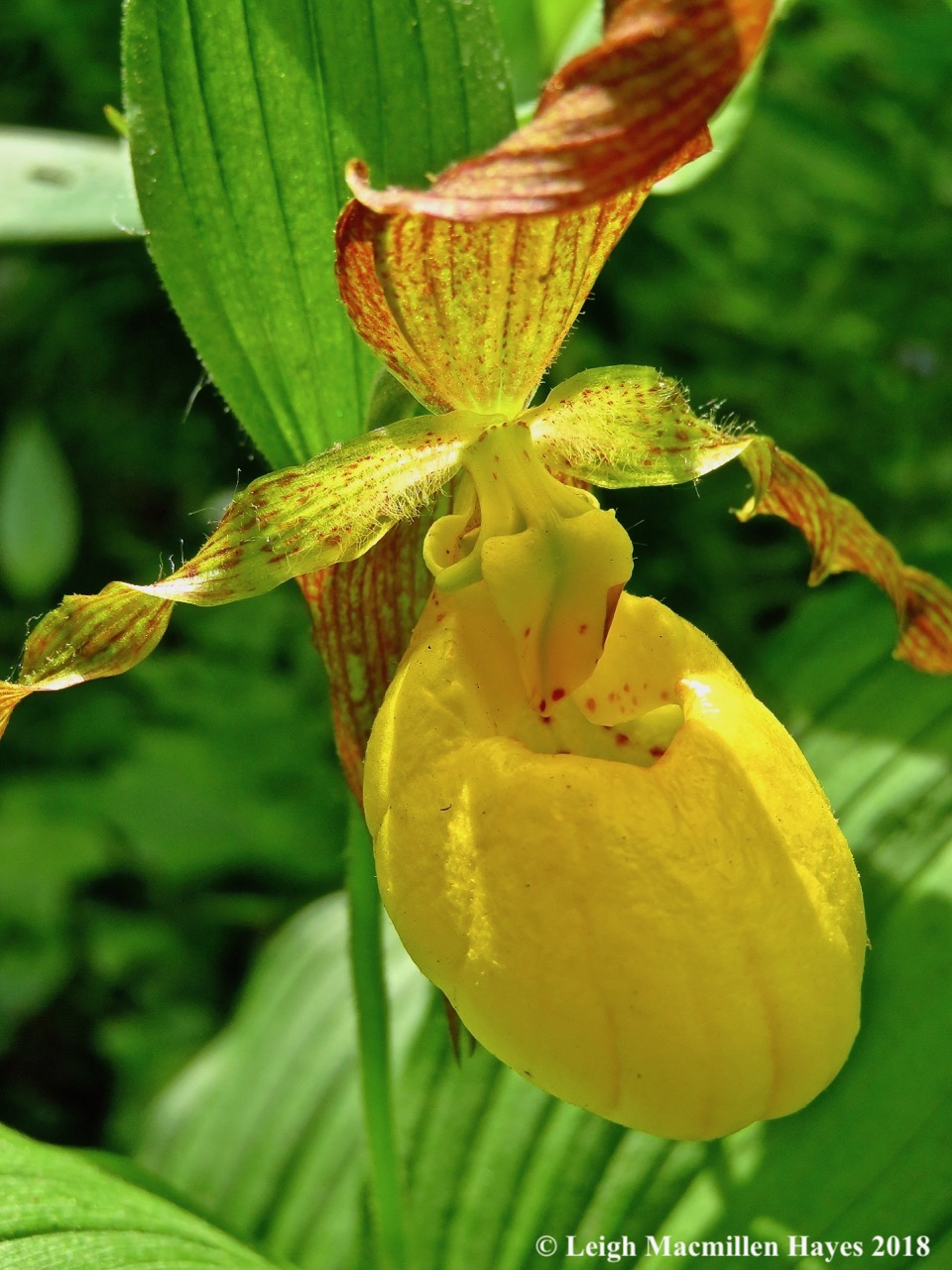
yellow lady’s slippers. And if you haven’t had the pleasure of meeting a yellow lady’s slipper, then hurry to McLaughlin Garden before they go to seed. We spied them in a few different locations.

m17

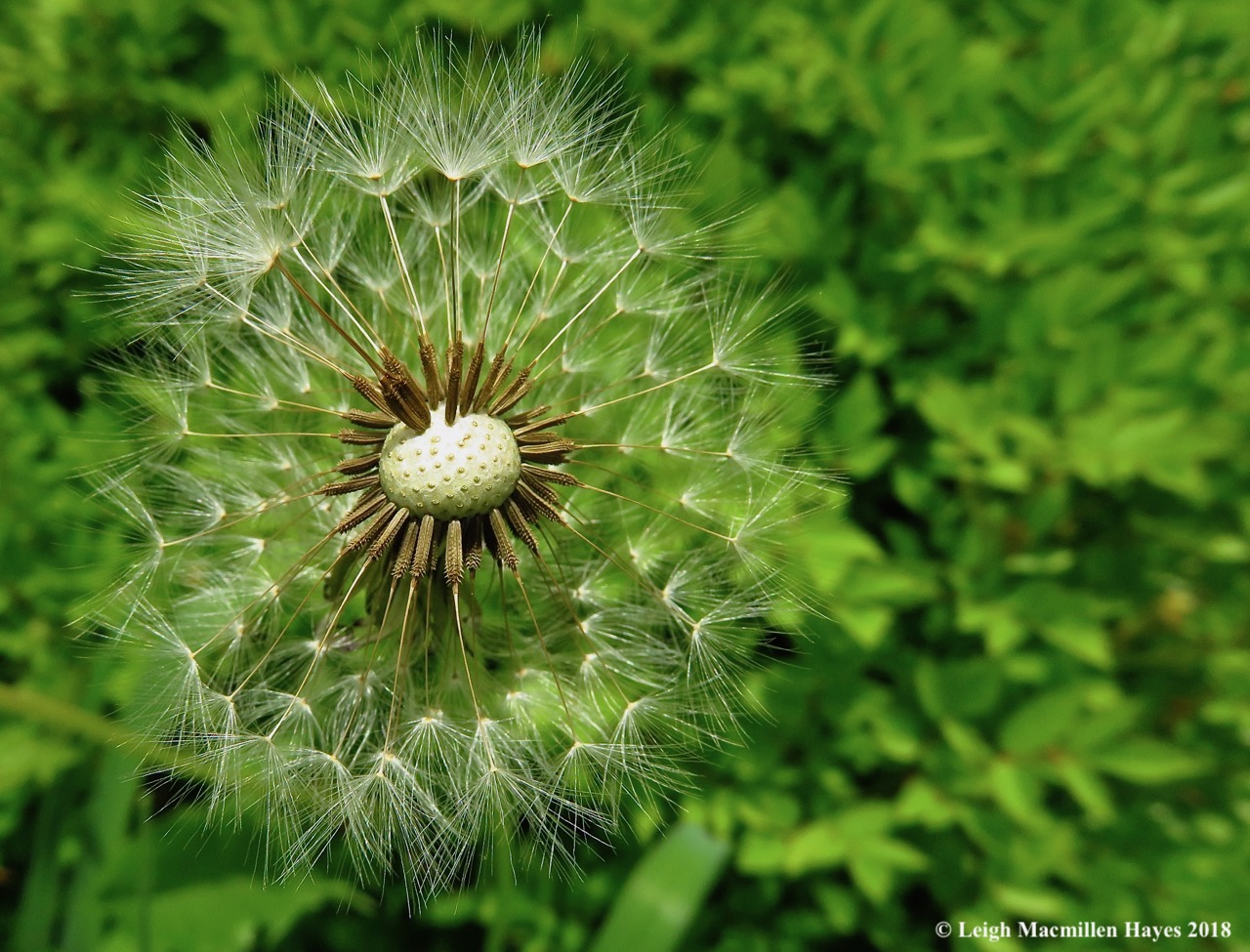
Thrown into the mix, common yet exquisite dandelions.

m8

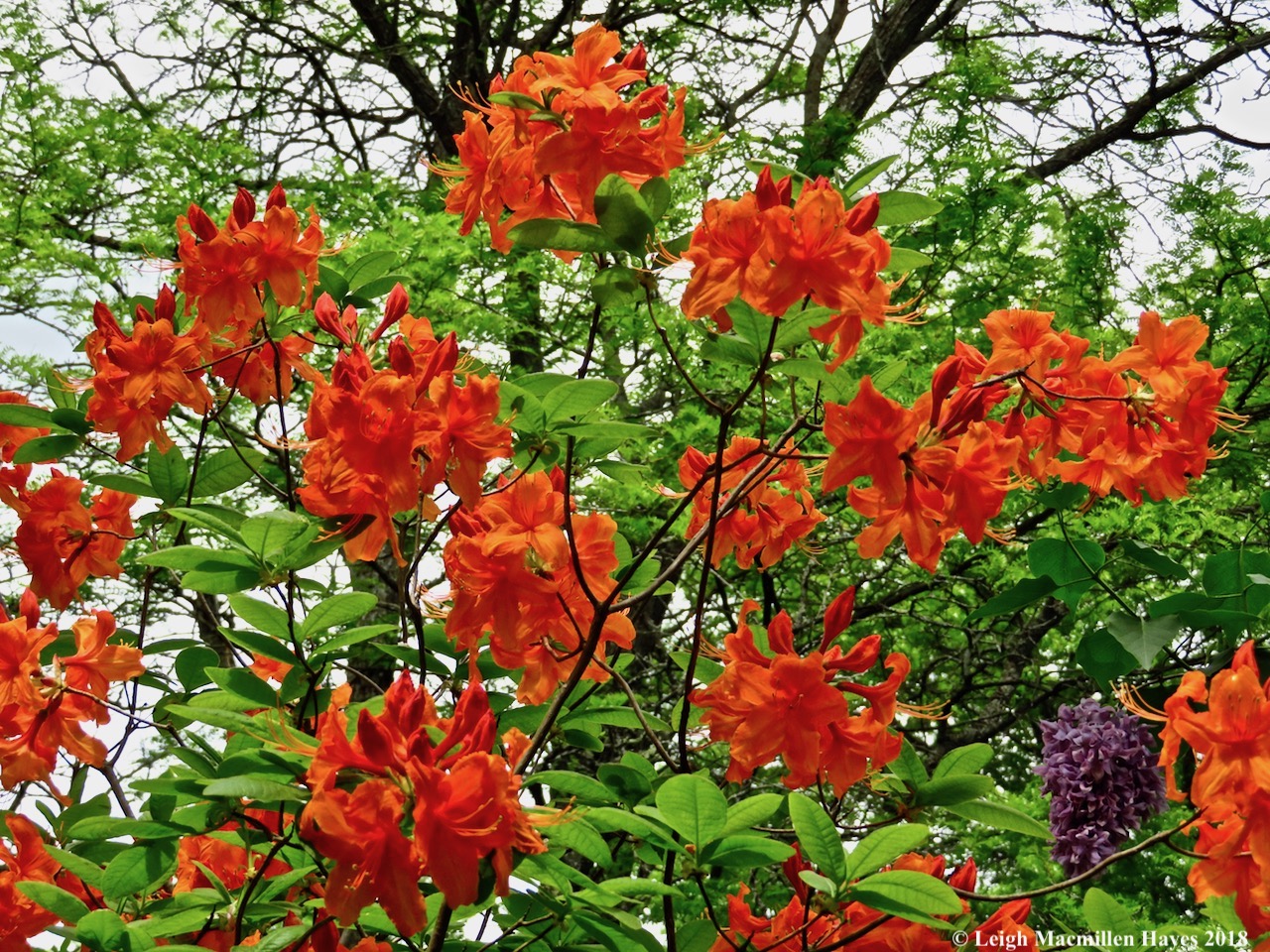
There were azaleas of the most intense orange delightfully juxtaposed beside a purple lilac.

m11

And lemon chiffon yellow enhancing a wooden fence.

m18

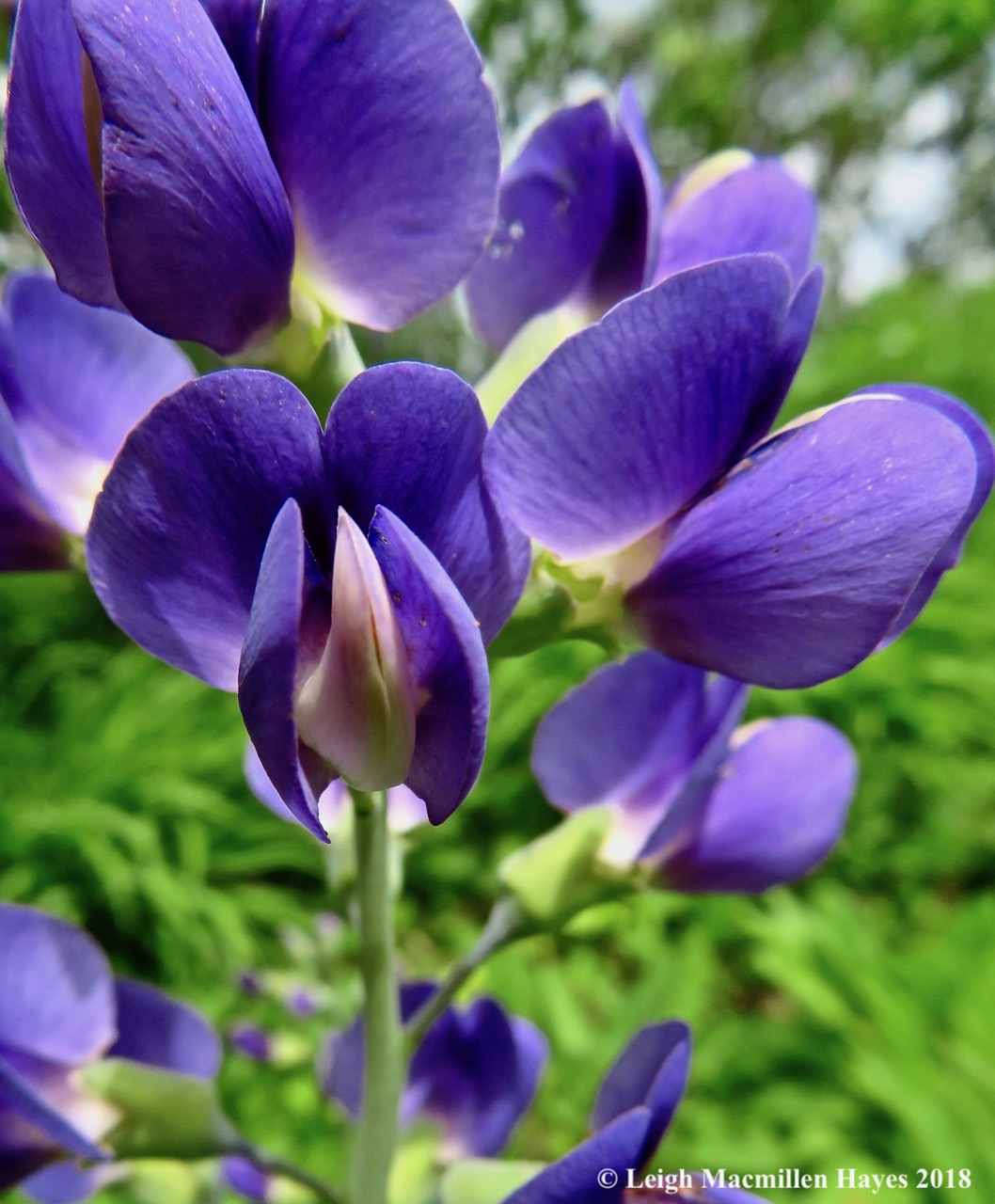
We found lupines of a sort that we hadn’t meet before.

m18a

Though they weren’t yet in full bloom, a pollinator buzzed from within,

m18b

relishing the fact that it was first in line at the fountain of nourishment.

m19

The same was true for the peonies that won’t blossom for another few weeks, but their goodness proved an attraction already.

m12

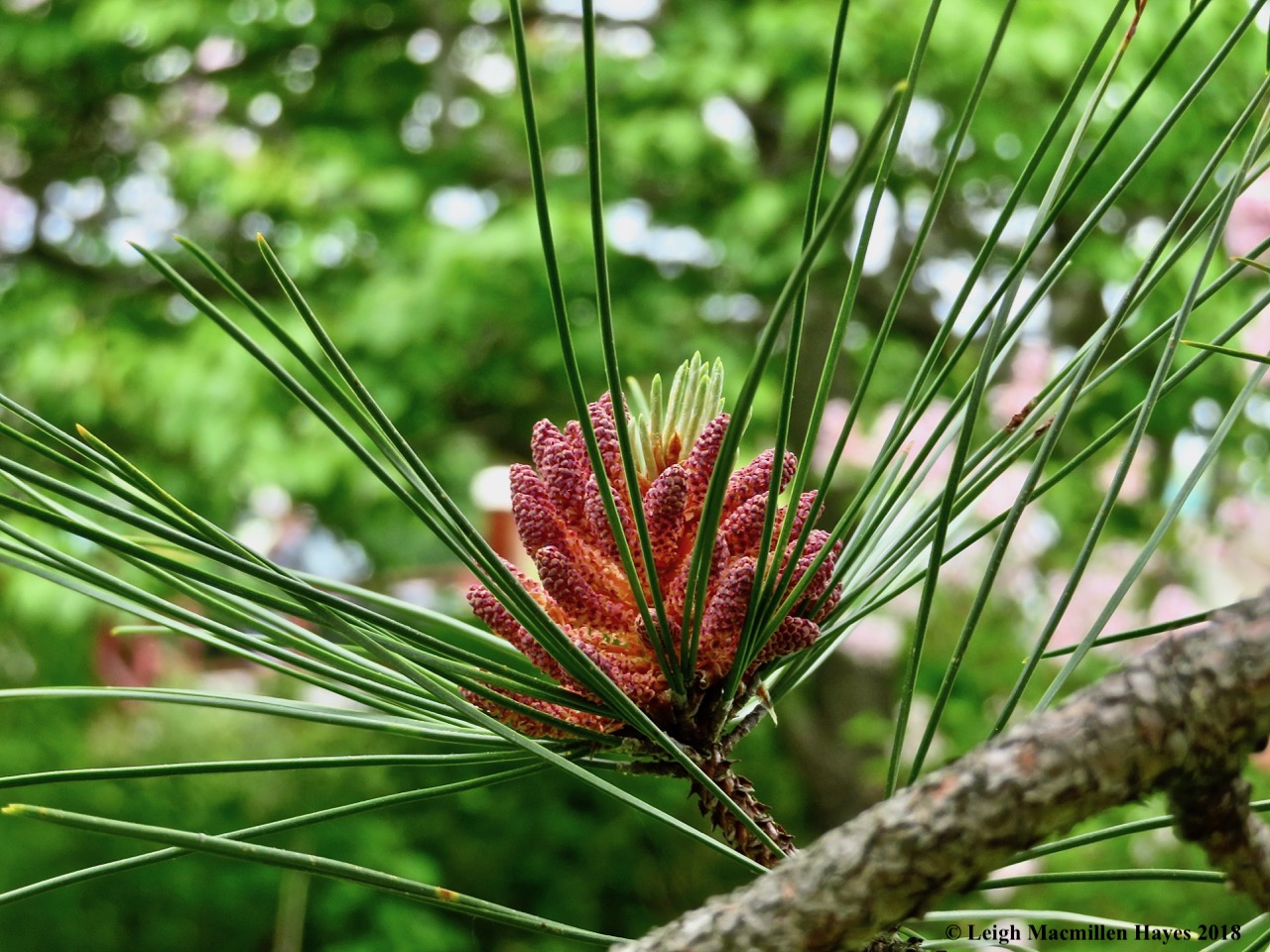
Sometimes our gaze moved upward and we admired the male and . . .

m13

itty bitty female cones on a red pine.

m29

An ash tree also wowed us with its plentiful seed production.

m16

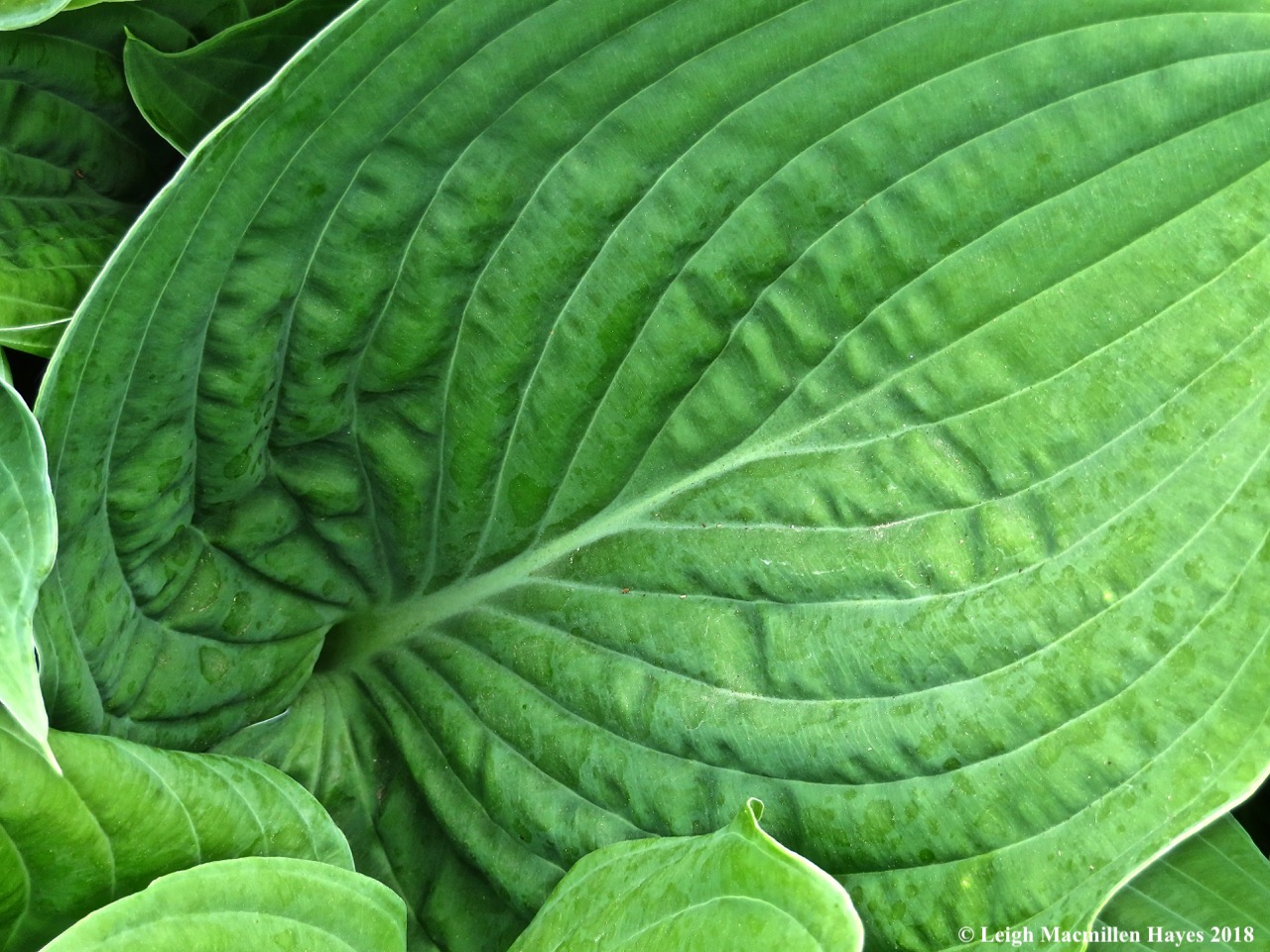
Everywhere, there were hostas adding variations of green and texture.

m24

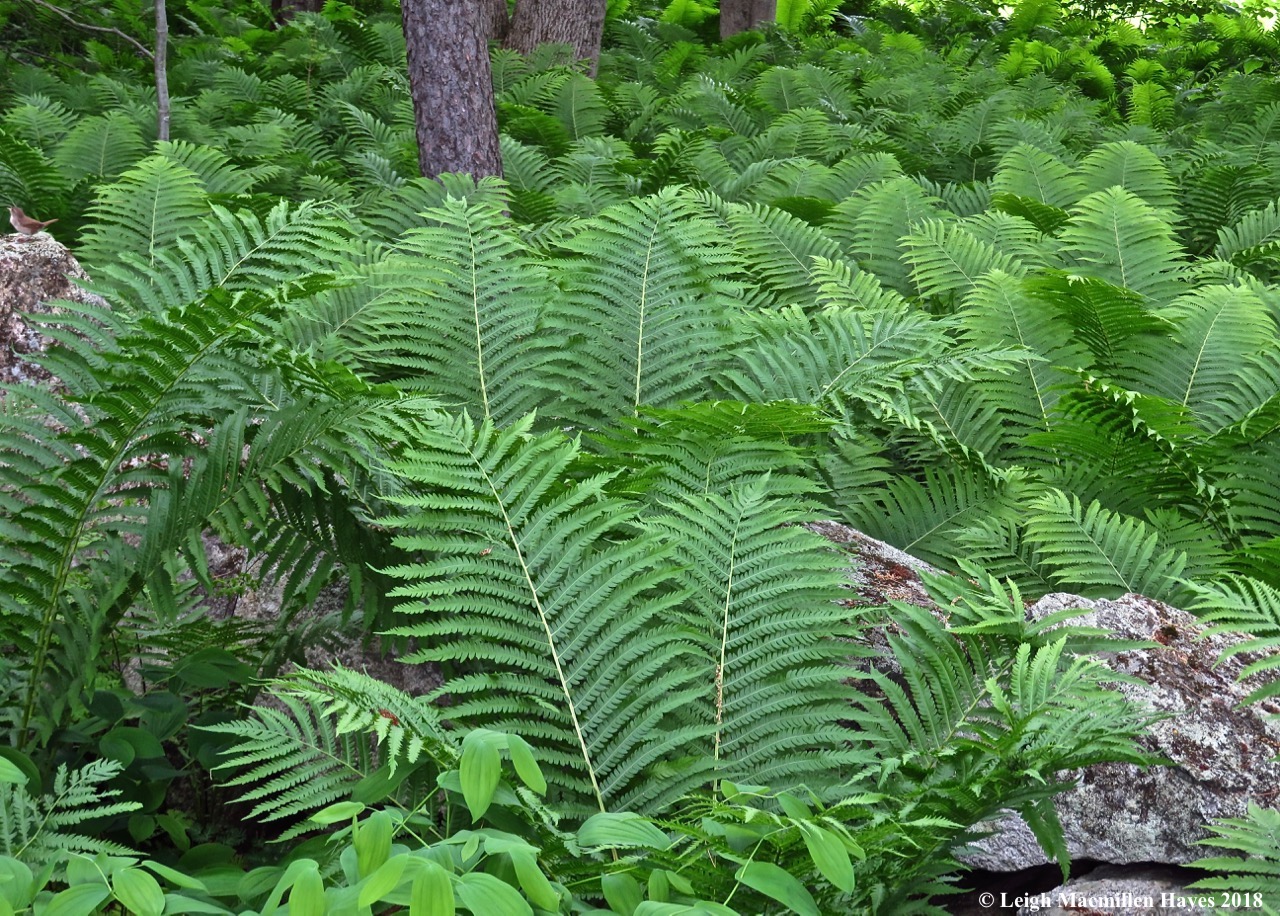
But among my favorites were the ostrich ferns . . .

m6

and maidenhead ferns. My inner fairy flitted from one step to the next as she climbed this spiral staircase to the ground.

m25

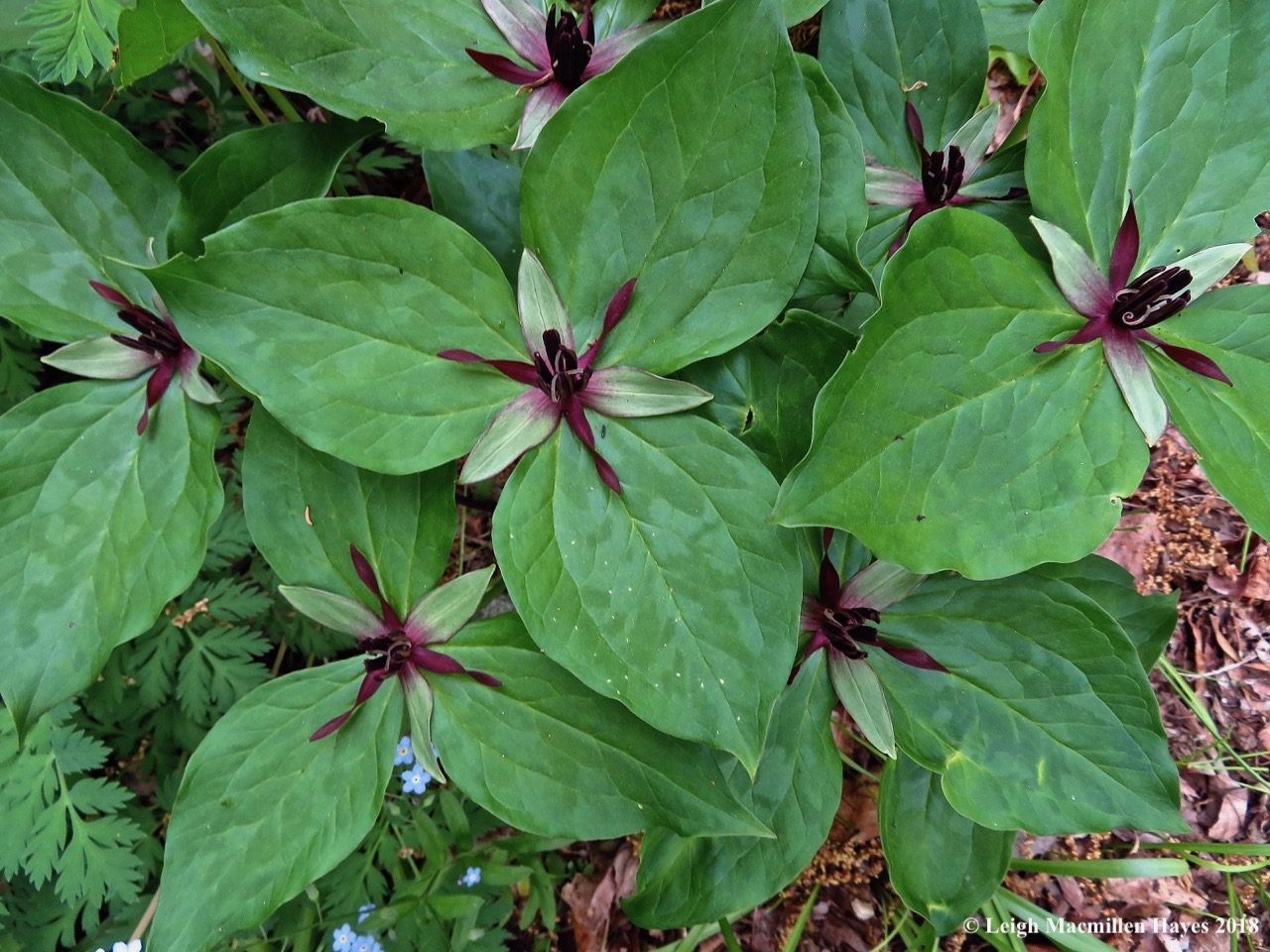
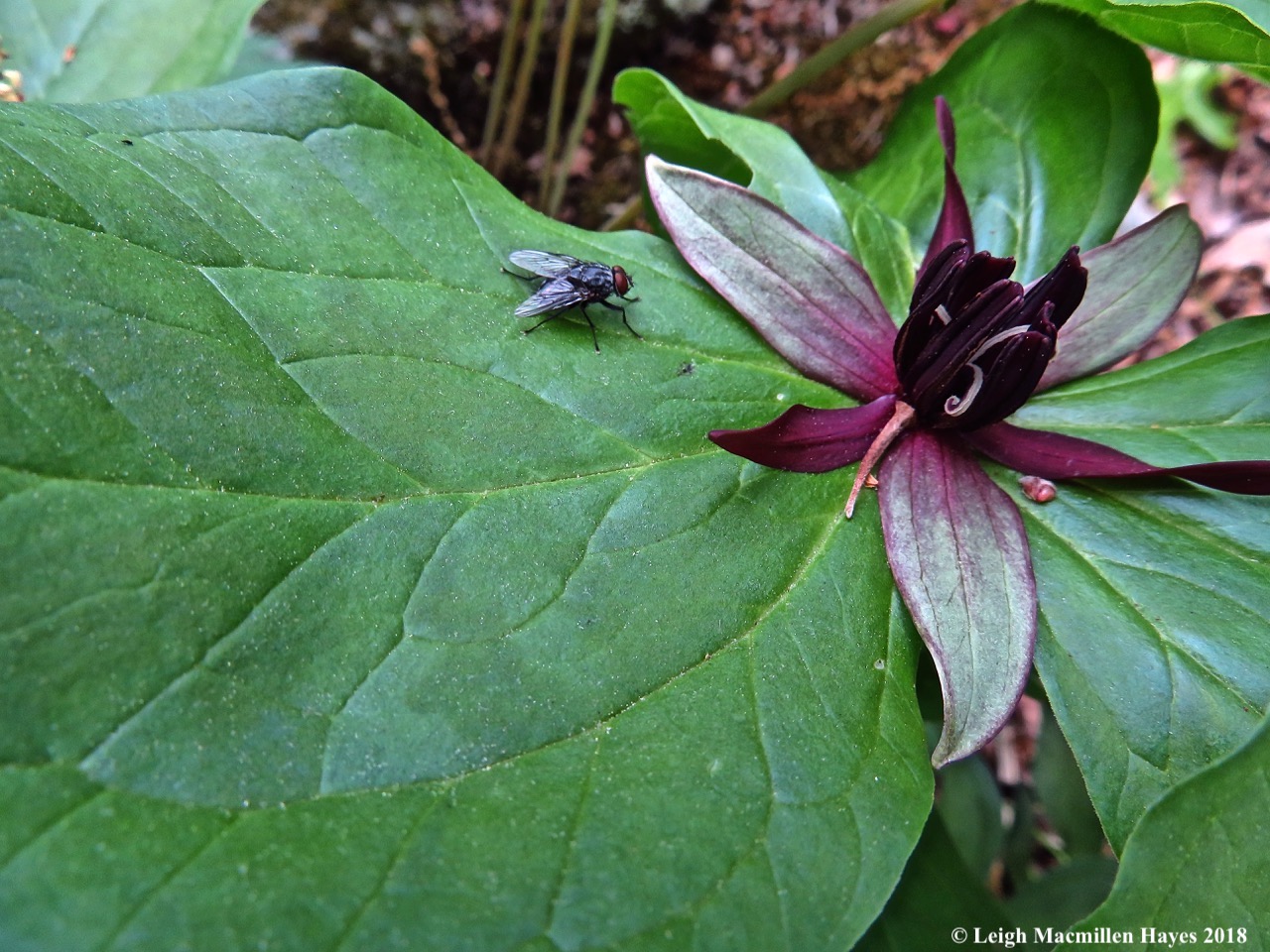
And what should she find growing among the forget-me-nots? Why the most unusual trilliums . . .

m26

one after another . . .

m27

after another .. .

m28

after another. All told, there were seven species of trilliums.

m30

All told, what has been offered here is only a mere glance at Bernard McLaughlin’s garden. You need to experience it yourself and even if you aren’t much of a gardner like me, I trust you’ll be diggin’ the garden.


Finding Our Way on Mount Tom in Fryeburg, Maine

I ventured this afternoon with my friend Marita, author of  Hikes and Woodland Walks in and around Maine’s LAKES REGION, along with her daughter’s beagle, Gracie, on a new trail in Fryeburg.
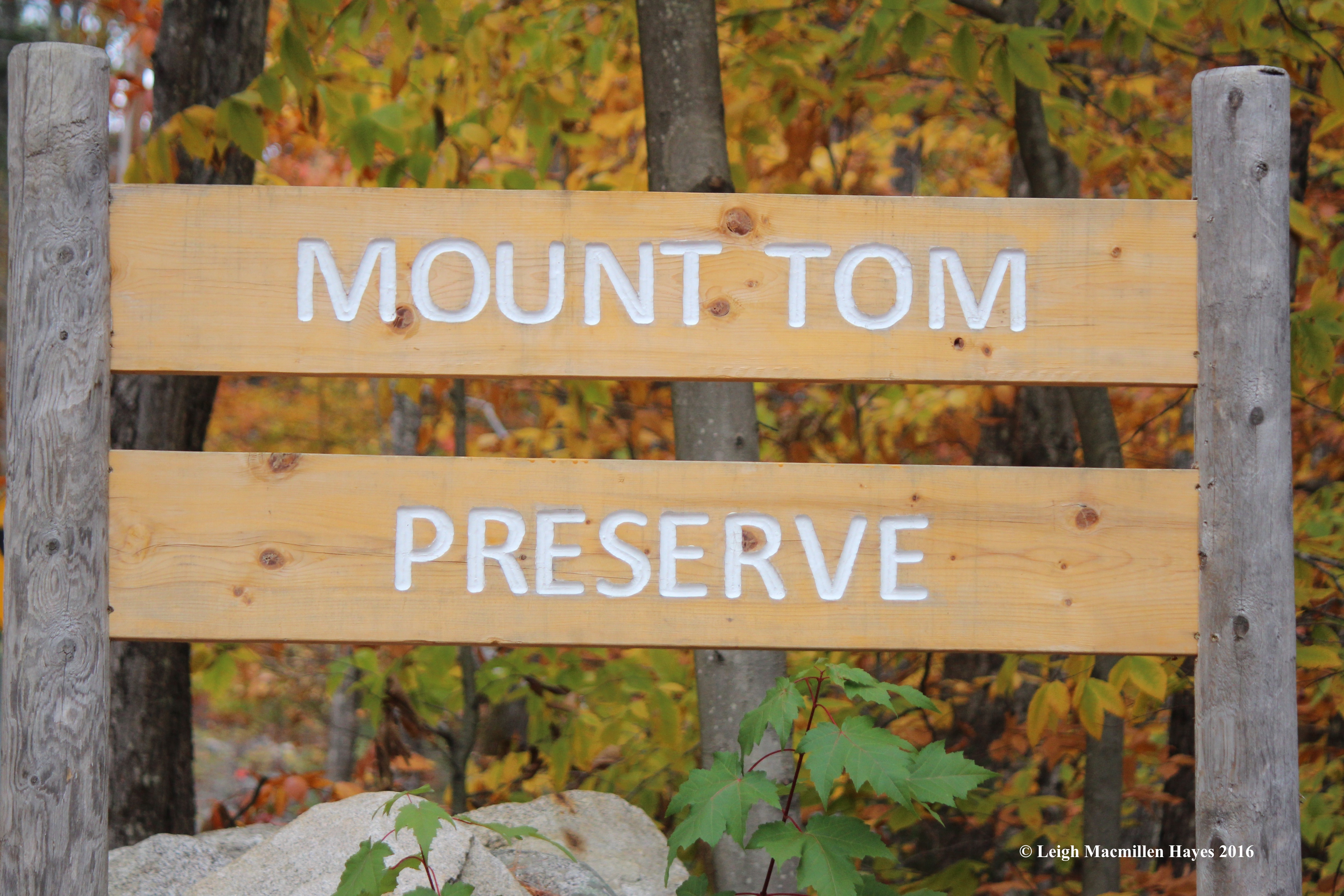
t-preserve-sign

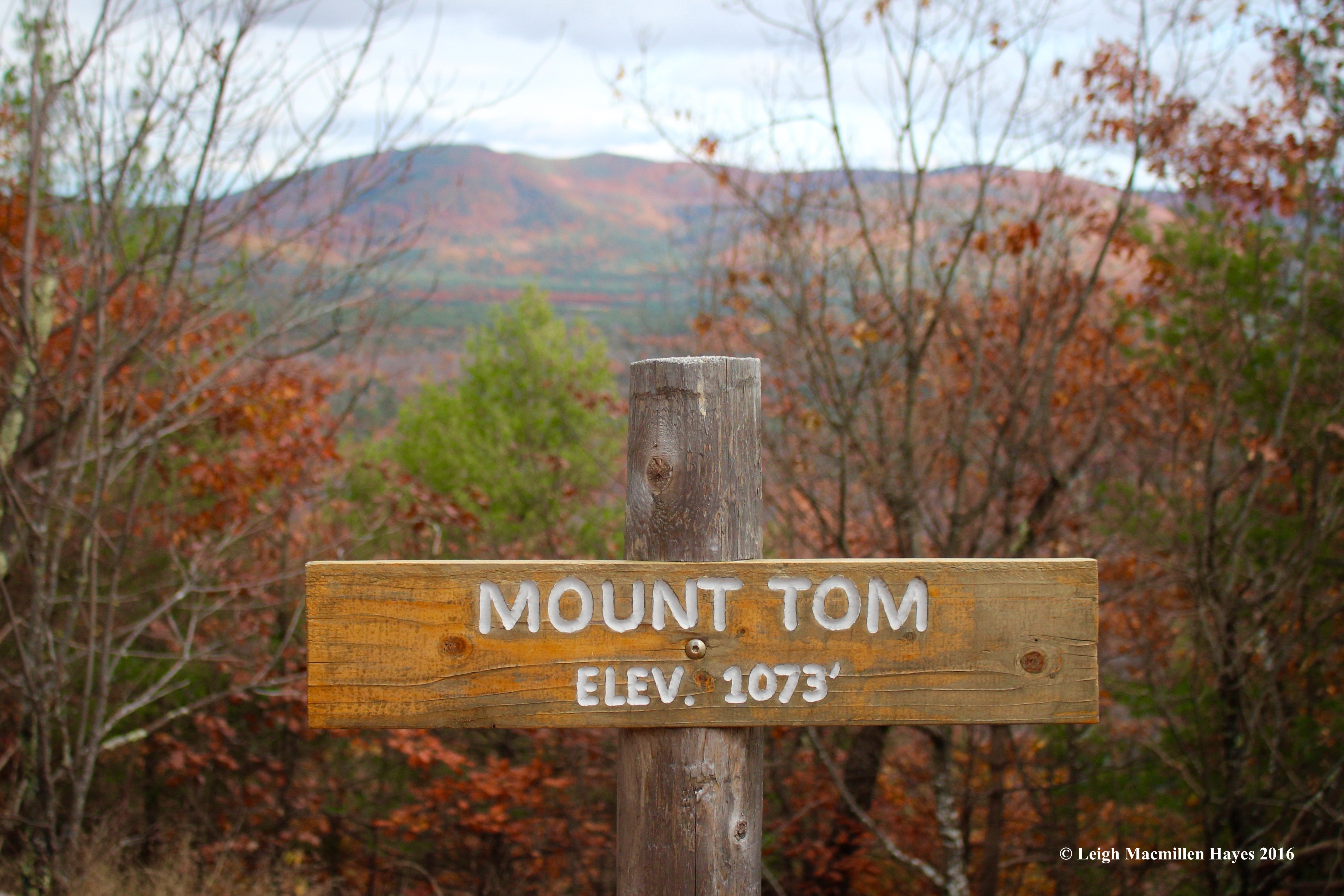
Mount Tom, a Roche Moutonnée, is an asymmetrical hill with a gently sloping up-ice side that has been smoothed and polished by a glacier. The other side is abrupt and steep–the down-ice side where the rocks were plucked off, leaving a more cliff-like appearance. As Marita noted, its most impressive view is from a distance, but today we sang its praises from up close. We’ve both hiked a 1.5 mile trail to the summit for years, but recently The Nature Conservancy developed a new trail that we were eager to explore.

t-fdn-1

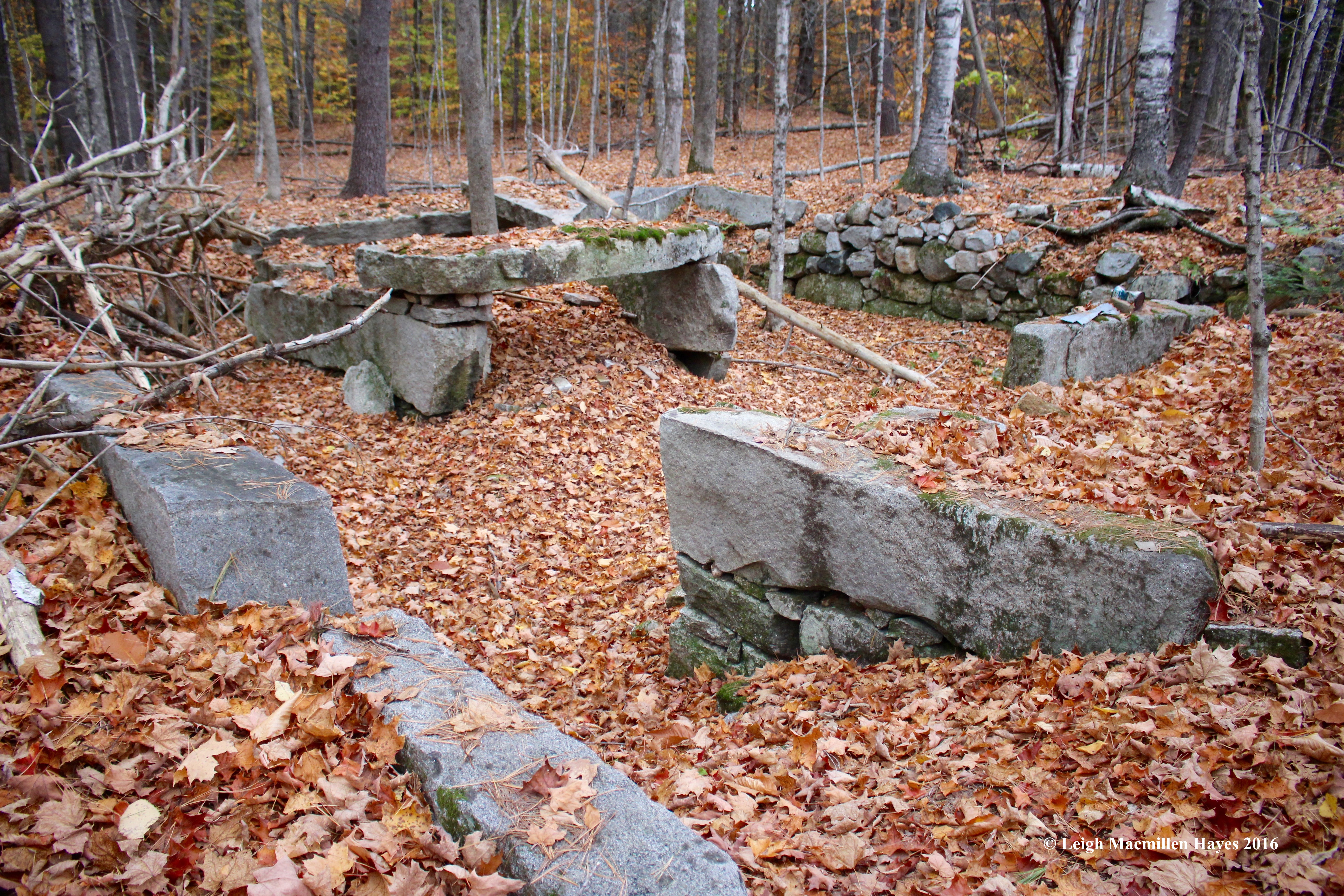
Within seconds I was exclaiming with joy. A huge, and I mean HUGE foundation shared the forest floor. Note the outer staircase to the basement.

t-center-chimney

And the large center chimney.

t-fryeburg-1858-map

On an 1858 map, I found that A.H. Evans owned a home in about this vicinity, but I don’t know if this was his. Or any more about him. It will be worth exploring further at the Fryeburg Historical Society.

t-house-connected-to-barn

The house extended beyond the basement.

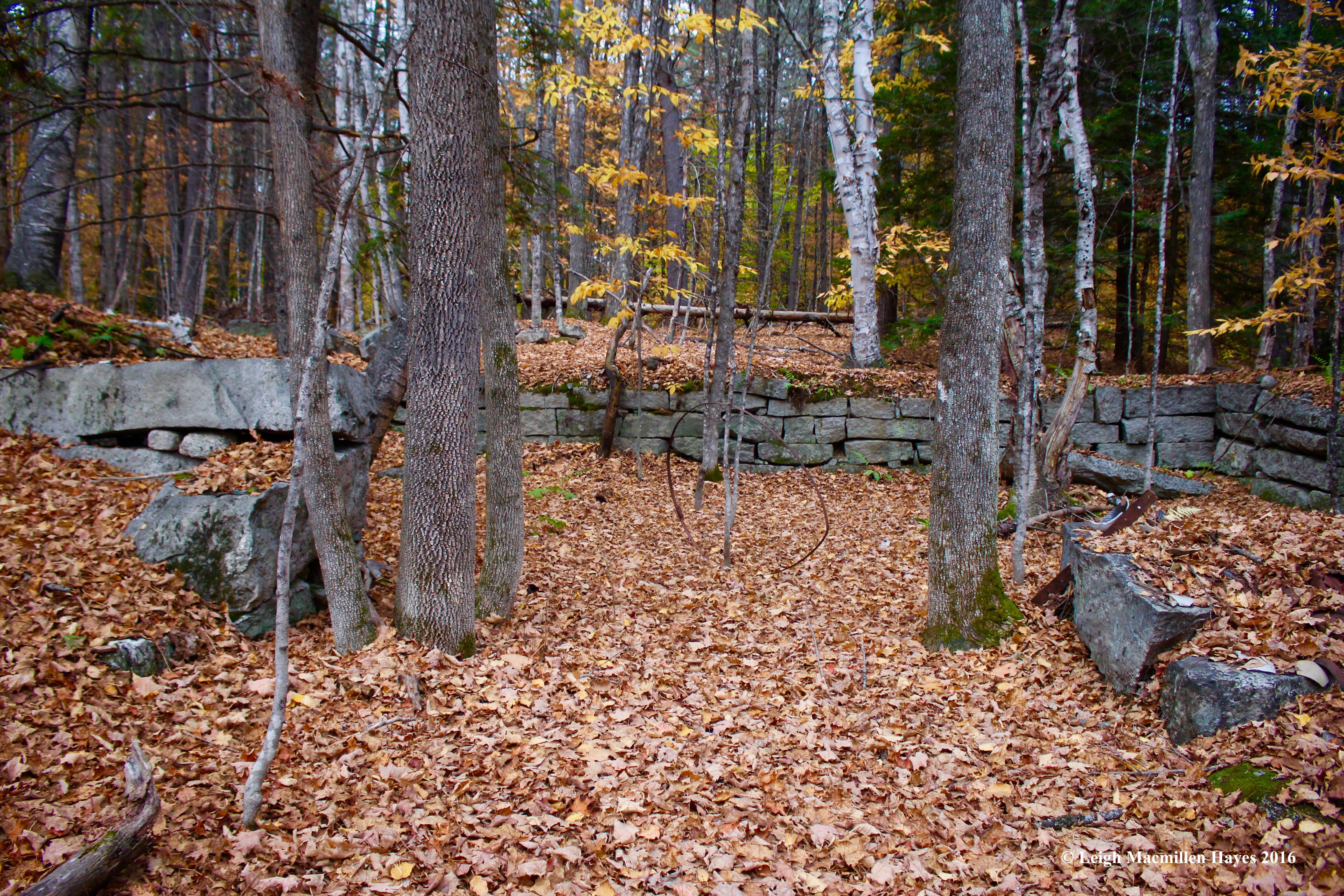
t-barn-1

And was attached to an even bigger barn.

t-barn-2

Ash trees grow beside the opening, but I wondered if we were looking at the manure basement.

t-trail-blaze

Finally, we pulled ourselves away and returned to the trail. Well, actually, we tried to return to the trail but couldn’t find it. So we backtracked, found this initial blaze and again looked for the next one. Nothing. Nada. No go. How could it be?

t-marita-and-gracie

That didn’t seem right, so we decided to follow our noses, or rather Gracie’s nose, and sure enough we found the trail. If you go, turn left and cross between the house and barn foundations.

t-gracie

After that, for the most part, we were able to locate the trail, but it was obscured by the newly fallen leaves and could use a few extra blazes. Gracie, however, did an excellent job following the scent of those who had gone before and leaving her own.

t-saw-dust

The path took us over a large mound of sawdust, something I’ve found in several areas of Fryeburg.

t-color

The predominate trees were beech, white and red oaks, thus providing a golden glow to the landscape.

t-ledges-1

And then we came to the ledges. Bobcat territory. Note to self: snowshoe this way to examine mammal tracks.

t-ledge-island

The trail was situated to provide a close up view of the ledge island, where all manner of life has existed for longer than my brain could comprehend. Life on a rock was certainly epitomized here.

t-intersection

We continued our upward journey for over 2.3 miles (thanks to Marita’s Fitbit for that info) and eventually came to the intersection with the trail we both knew so well.

t-summit-sign

From there, we walked to the summit where the views have become obscured by tree growth.

t-pleasant-mtn-from-summit

But . . . we could see the long ridge of Pleasant Mountain in front of us,

t-kezar-pond

Kezar Pond to our left,

t-richardson-1

t-richardson-farm

and the Richardson Farm on Stanley Hill Road to our right.

t-ladys-slipper-pod

Also along the summit trail, the woody seedpod of a Lady’s Slipper. Ten-to-twenty thousand seeds were packaged within, awaiting wind dispersal.

t-mt-tom-house

We decided to follow the old trail down, which passes through a hemlock grove and then suddenly changes to a hardwood mix. Both of us were surprised at how quickly we descended. And suddenly, we were walking past some private properties including the 1883 Mt. Tom cabin.

t-northern-white-cedar-bark

t-northern-white-cedar

The cabin sign was actually attached to a Northern White Cedar tree. I’m forever wowed by its bark and scaly leaves.

t-flag

In the field beyond, Old Glory fluttered in the breeze.

t-barn

And just before Menotomy Road, we spied Mount Kearsarge in the distance.

t-menontomy-cemetery

Since we’d taken the loop trail approach rather than an out and back on the same trail, we had to walk along Menotomy Road, so we paid the cemetery a visit and checked out the names and ages of those who had lived in this neighborhood.

t-pine-on-grave-stone

One of the older stones intrigued me with its illustration. I think I would have enjoyed getting to know these people.

t-menotomy-pumpkins

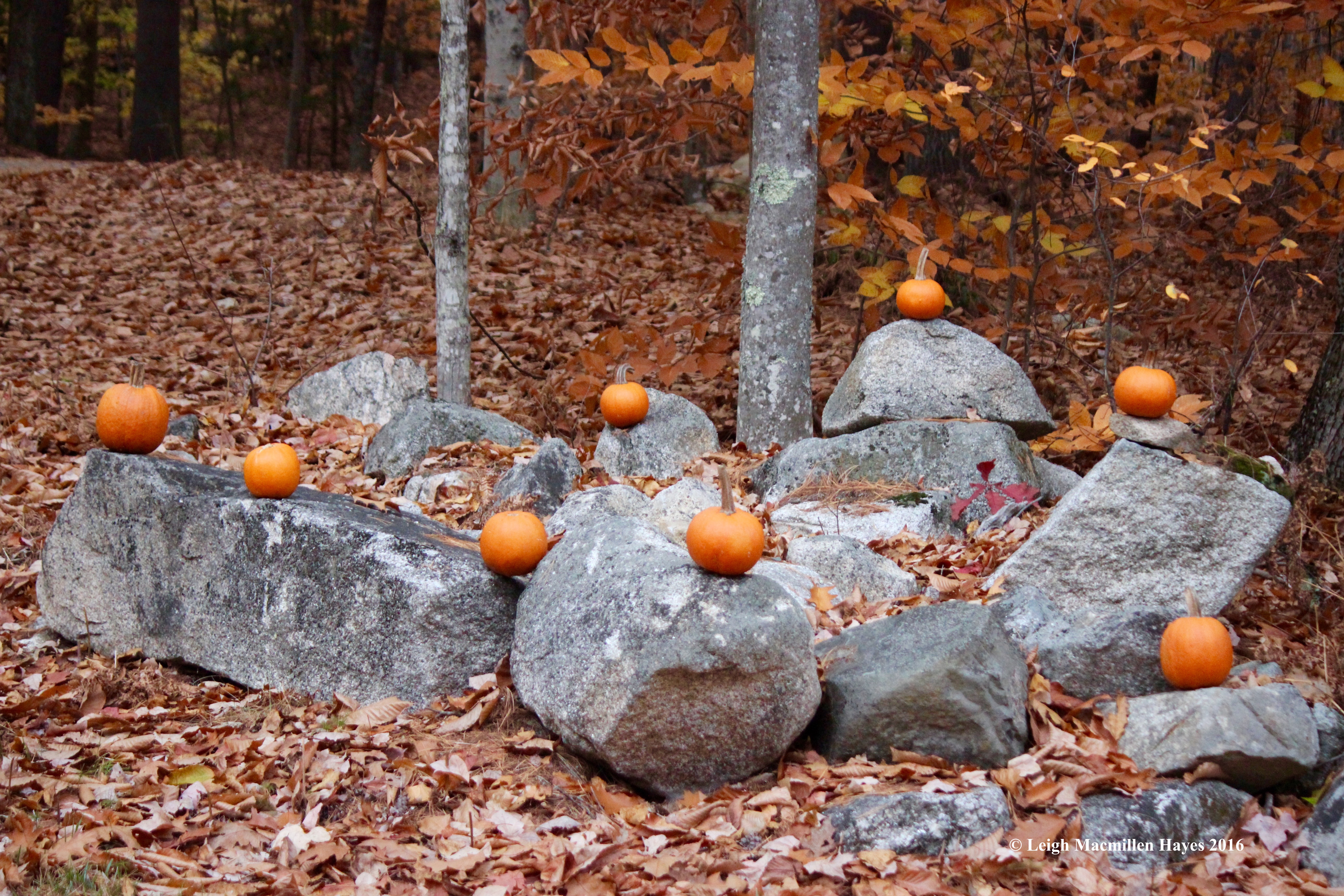
As we continued on, I was reminded of recent adventures in Ireland  and the realization that we notice more when we walk along the road rather than merely driving by. We both admired this simple yet artful pumpkin display.

t-menotomy-road-1

If you go, you might want to drive to the old trailhead, park your vehicle and then walk back to the West Ridge Trail. We parked at the latter and had to walk the 1.5 back at the end, when it seemed even longer. But truly, the road offers its own pretty sights and the temperature was certainly just right, even with a few snow flurries thrown into the mix, so we didn’t mind. We were thankful we’d found our way along the new trail and revisited the old at Mount Tom. And I’m already eager to do it again.


Hawk-eye Mondate

Some Mondates are shorter than others and such was the case today. But . . . we made the most of it as we walked up the trail to Hawk Mountain in Waterford.

hm-sign

It’s a half mile trek up a dirt and gravel road–just right when you want a great view and time is short. Of course, you could spend hours at the summit, but we weren’t there long.

hm-interrupted1

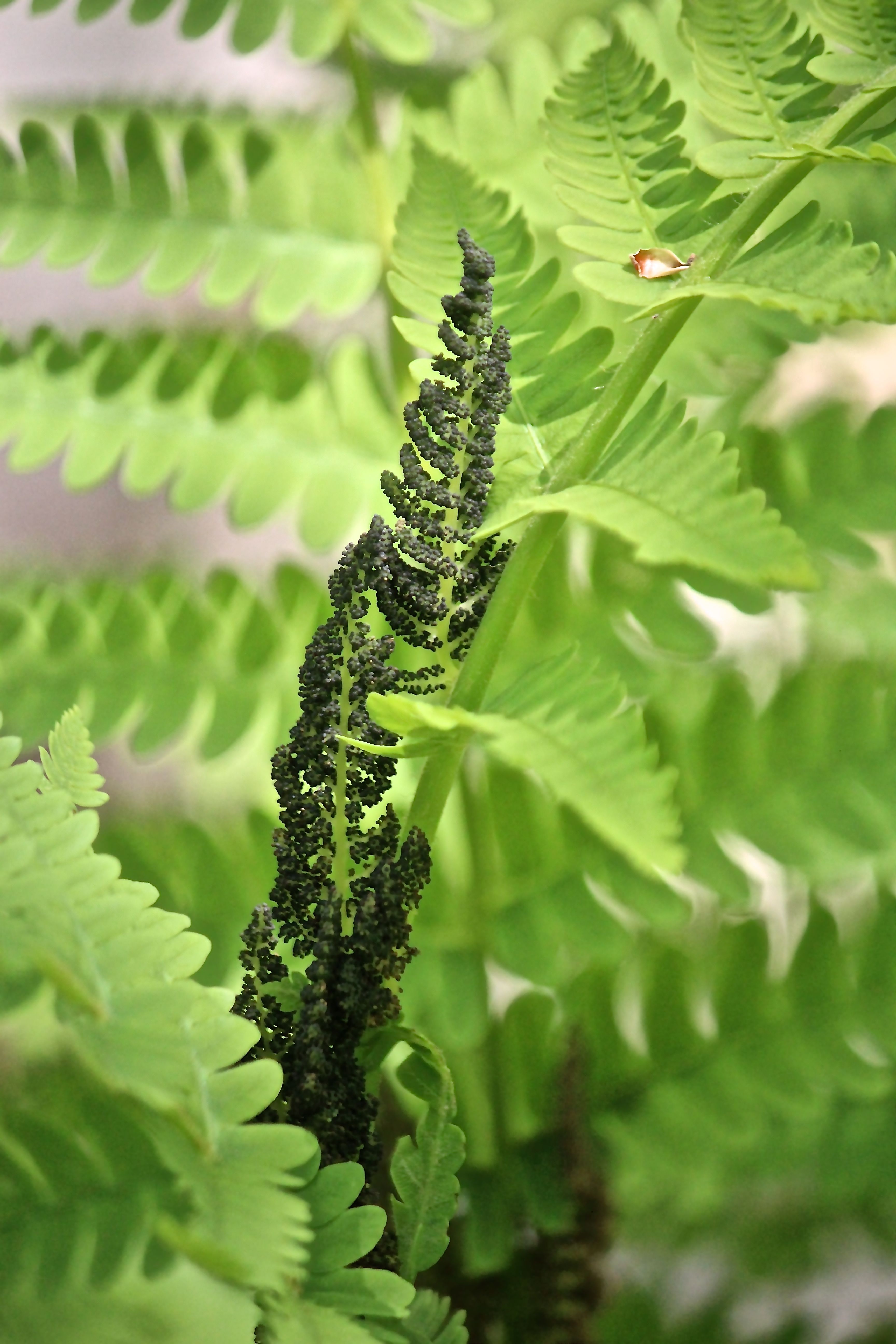
On the way up, I noticed interrupted fern in its interrupted form. Fertile leaves toward the middle are densely covered with sporangia (spore-bearing structures). I’m fascinated by their contorted, yet beautiful structures.

hm-lady1

Another favorite–lady’s slippers. Again, its structure is beyond my understanding.

hm-cyrstal and long2, ph

At the summit, we paused briefly and gazed toward Crystal and Long Lakes.

hm-white oak 4, ph

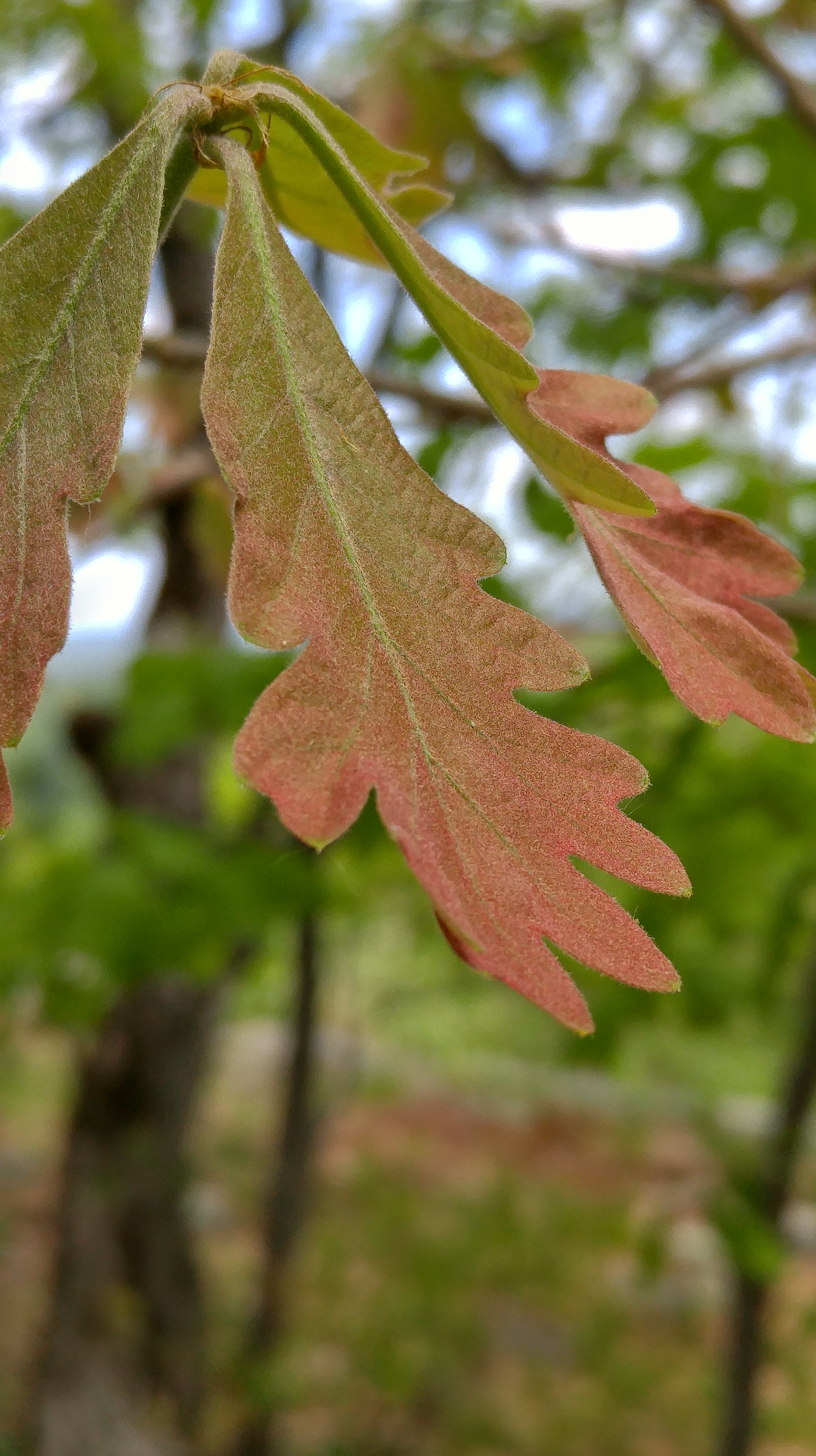
While my guy moved on to the better vantage point, I stopped several times. First, it was the color of these leaves that slowed me down. Have you noticed how spring foliage provides a subtle play on fall foliage? A few friends and I have been thinking about this lately, and this morning I had the opportunity to pick the brain of Dr. Rick Van de Poll, a well-known mycologist/naturalist/educator.

hm-red maple 1

He reminded me that the various hues of color in leaves is caused by the presence of pigments called anthocyanins or carbohydrates that are dissolved in the cell sap and mask the chlorophyll. As our spring temperatures rise and light intensity increases, red pigment forms on a leaf and acts as a sunscreen to protect the plant from an increase in ultraviolet rays.

hm-white oak1

It wasn’t only the color that caught my eye. Take a look at the lobe shape of the reddish leaves and that of the green in the background. In my continuing personal citizen science project to informally connect the dots of where white oaks meet red oaks, I added another pin on the map. Rounded lobes=white oak in the foreground. Pointed lobes=Northern red oak in the background.

hm-bee1

As I headed toward my guy, I noted that the cherry trees were abuzz.

hm-wild columbine1, ph

And hiding among the rocks at the base of a tree–another treat for the eyes. Wild columbine. Splendid indeed.

hm, cyrstal and long, ph

Equally splendid–the view from the ledges. Crystal and Long Lakes again.

hm-bear river

Bear River below. I always expect to see a moose here. Or maybe a bear. One of these days.

hm-pm1, ph

Pleasant Mountain and my guy.

hm-dragon5

As we walked back down the trail and concluded our Mondate, we celebrated the fact that dragonfly season has begun. With their hawk eyes, may they capture and consume a kazillion black flies and mosquitoes.


Close to Home

It’s a no-Mondate Monday since we just returned from vacation. My guy felt the need to work and I felt the need to stick close to home.

Stepping outside, the aromatic smell of lilacs and honeysuckle envelope me. It reminds me of my childhood home, where the lilacs grew outside the bedroom I shared with my sister. And that reminds me of Mom and Dad and the fact that it’s Memorial Day and we always went to the parade in town and sometimes we marched in it and other times we rode in the back of our neighbor’s car because she was the head of the VNA and the school nurse, and we always bought crepe paper poppies from the veterans to honor them and my father, grandfathers, uncles and cousins. Thank you to all who have and do serve.

Lilacs

We purchased our home 22 years ago. The previous owners had green thumbs and though the house had been empty for ten years before we bought it, their toil was still evident. I have a green pinky, so the gardens aren’t what they once were. I am excited, however, that some of the flowers they nurtured continue to thrive. Such is the case with this white lilac.

purple lilac

And the purple, that forms part of the windscreen on the edge of the yard.

The fragrance is mixed in with . . .

honeysuckle

that of the honeysuckle. Both buzz with pollinators seeking their sweet nectar.

strawberry 2

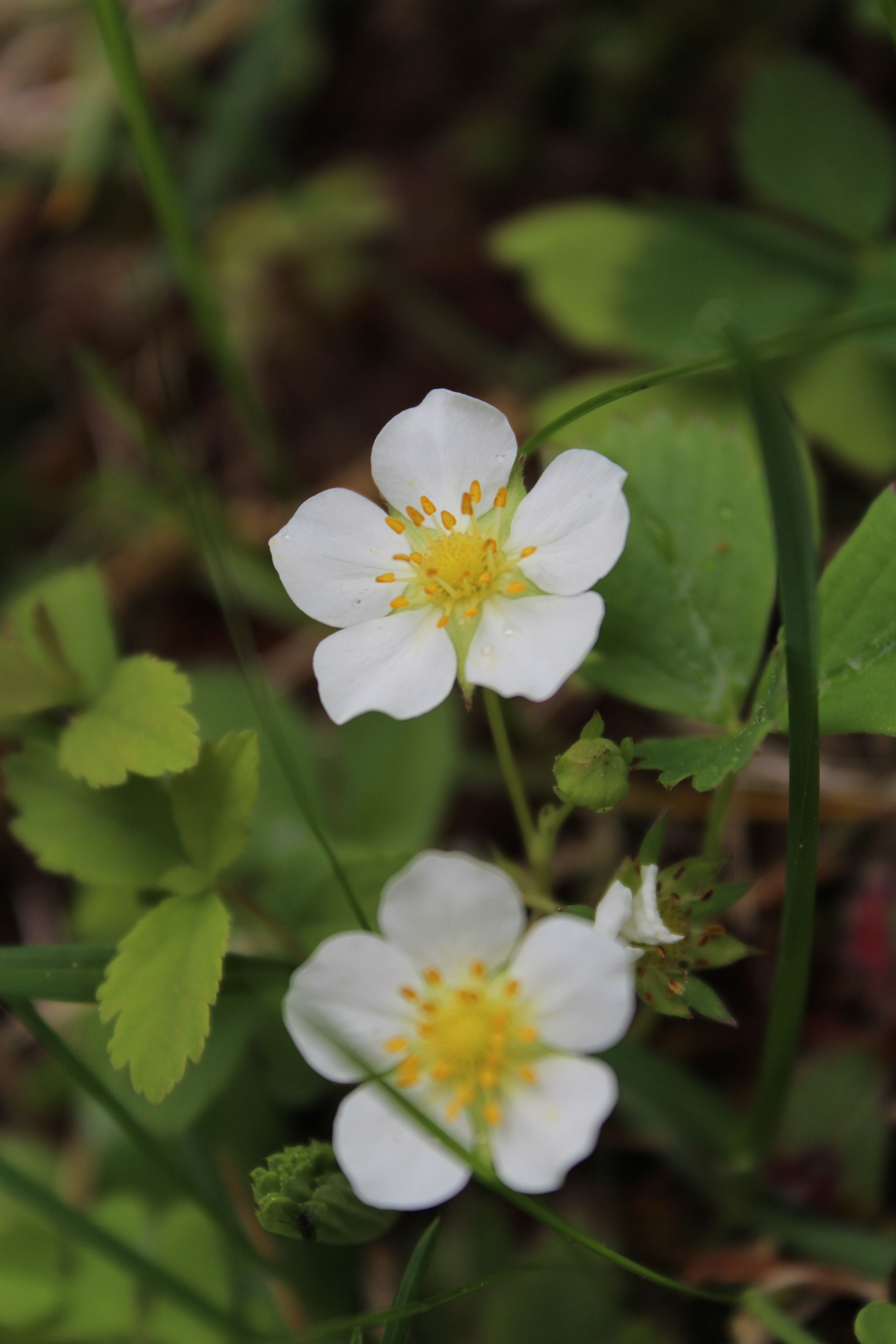
Wild Strawberries are just that as they creep through the gardens and lawn.

Flowers and leaves grow separately on long, slender stalks.
With milk-white flowers, whence soon shall sweet
Rich fruitage, to the taste and smell
Pleasant alike, the Strawberry weaves
Its coronet of three-fold leaves,
In mazes through the sloping wood.
—Anonymous

blueberries

Another edible, the Highbush Blueberries.

Canada Mayflower

Atop one of the stone walls, at its base and below many trees, the Canada Mayflower blooms.

star flowers

A wildflower that some consider common is the Starflower. Look closely and you may see that there are seven stamen, seven petals and seven sepals. How common is that?

Interrupted 2

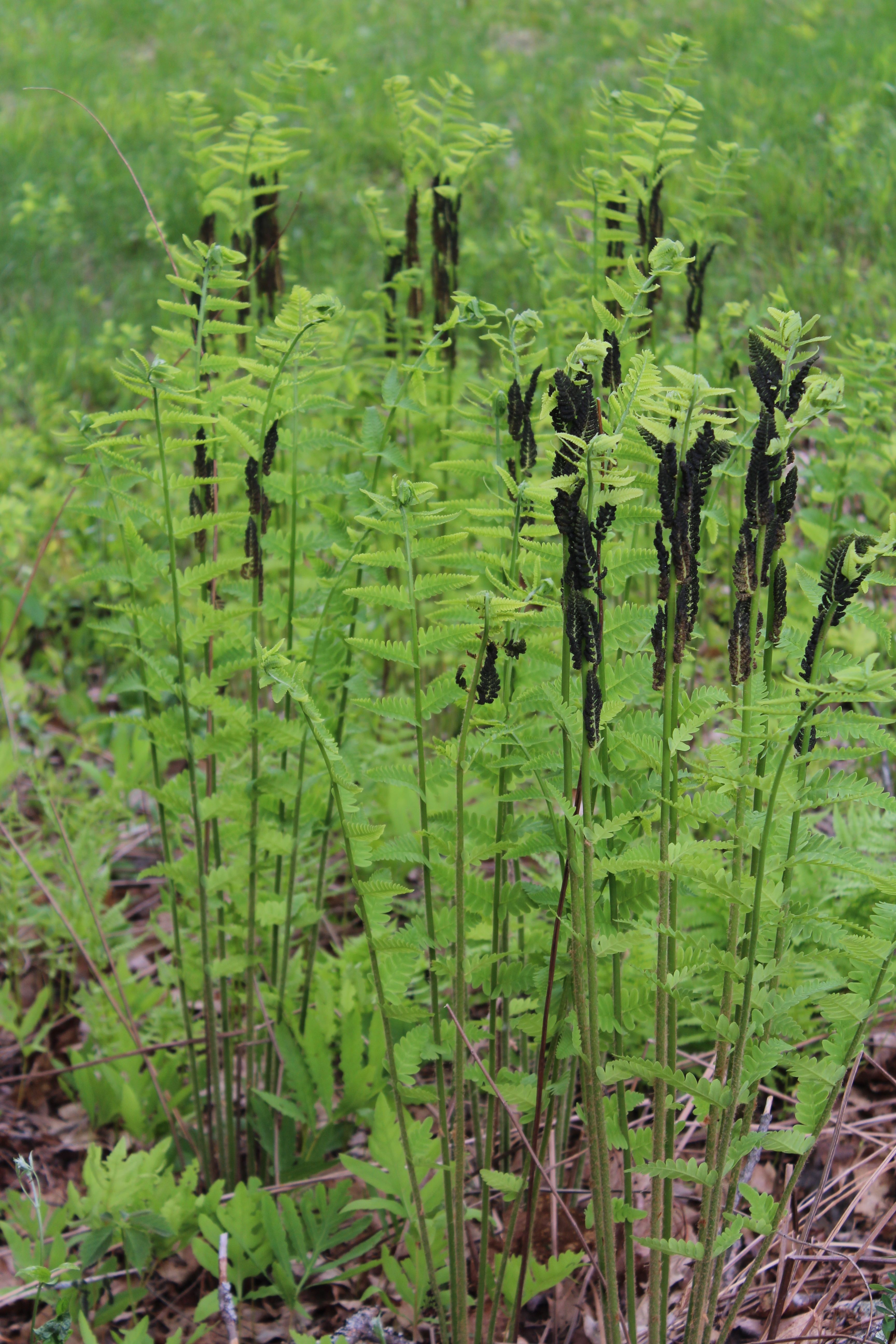
We have plenty of ferns throughout the yard and woods, but I like this one–the Interrupted Fern. It speaks its name.

Interrupted fern

On larger fronds, brown fertile pinnae or leaflets interrupt the green sterile leaflets.

Lupine

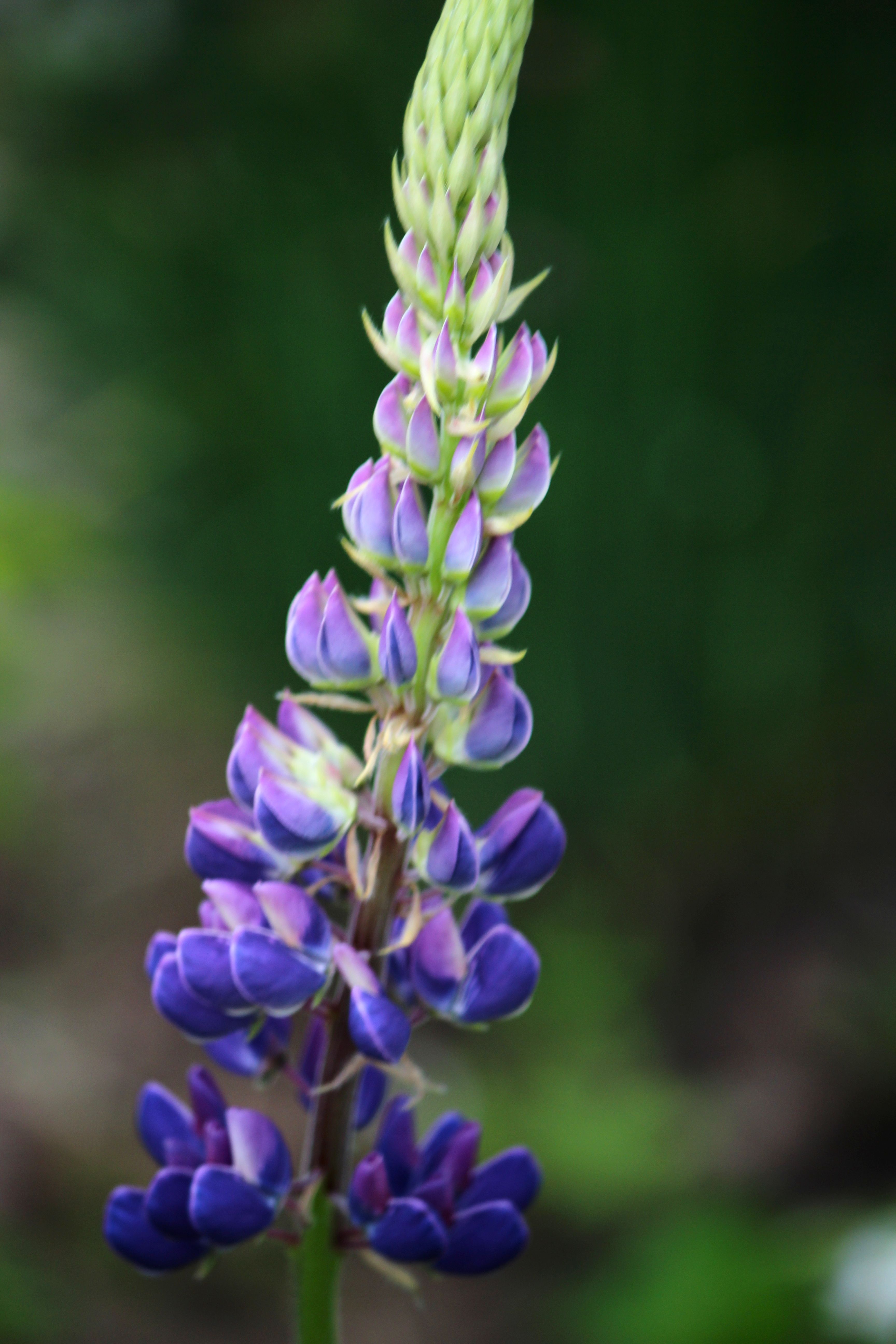
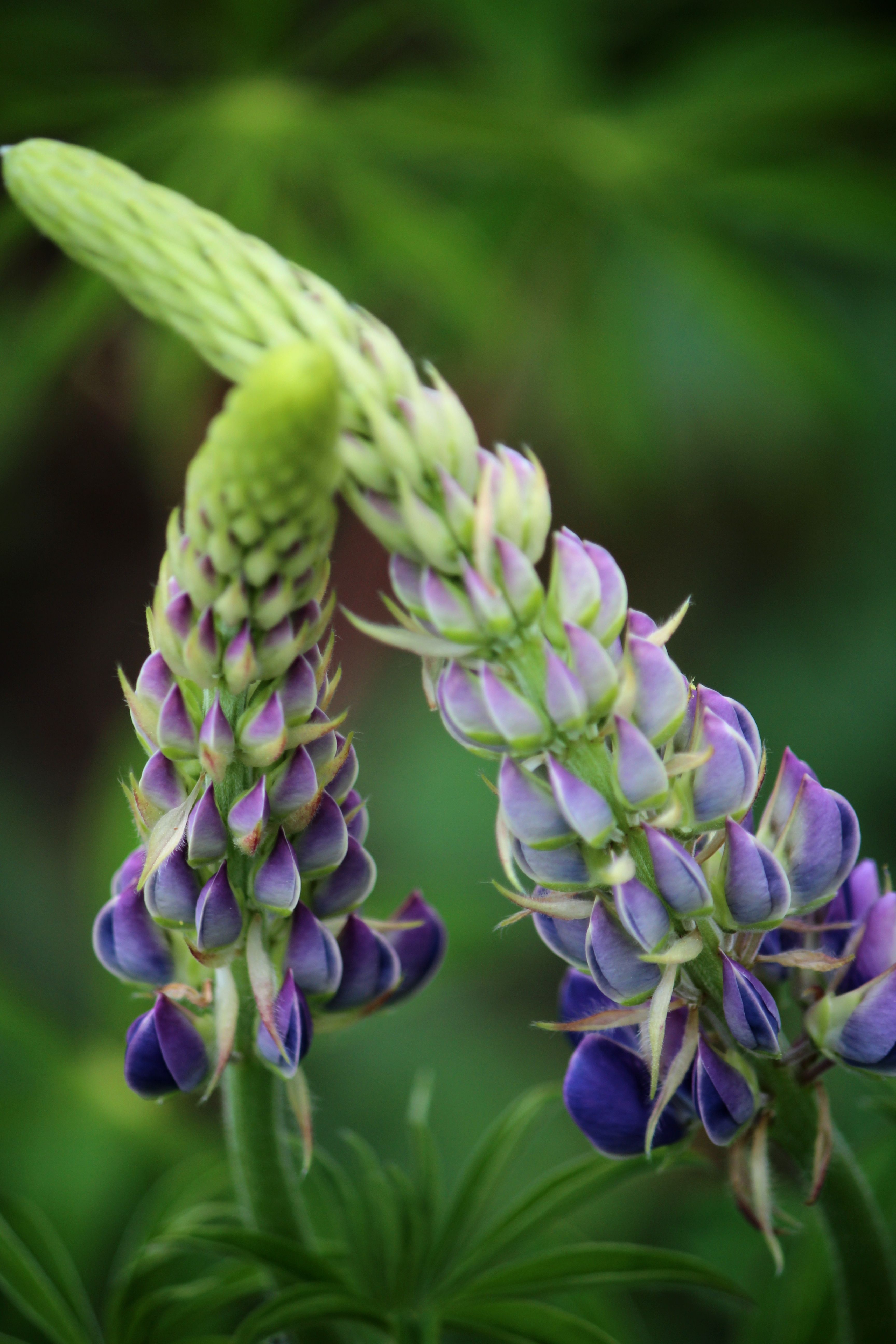
And then there is that hitchhiker, the Lupine. Each year it moves to a different spot.

Lupine 2

I love to watch the flower open from the bottom up.

lady slipper

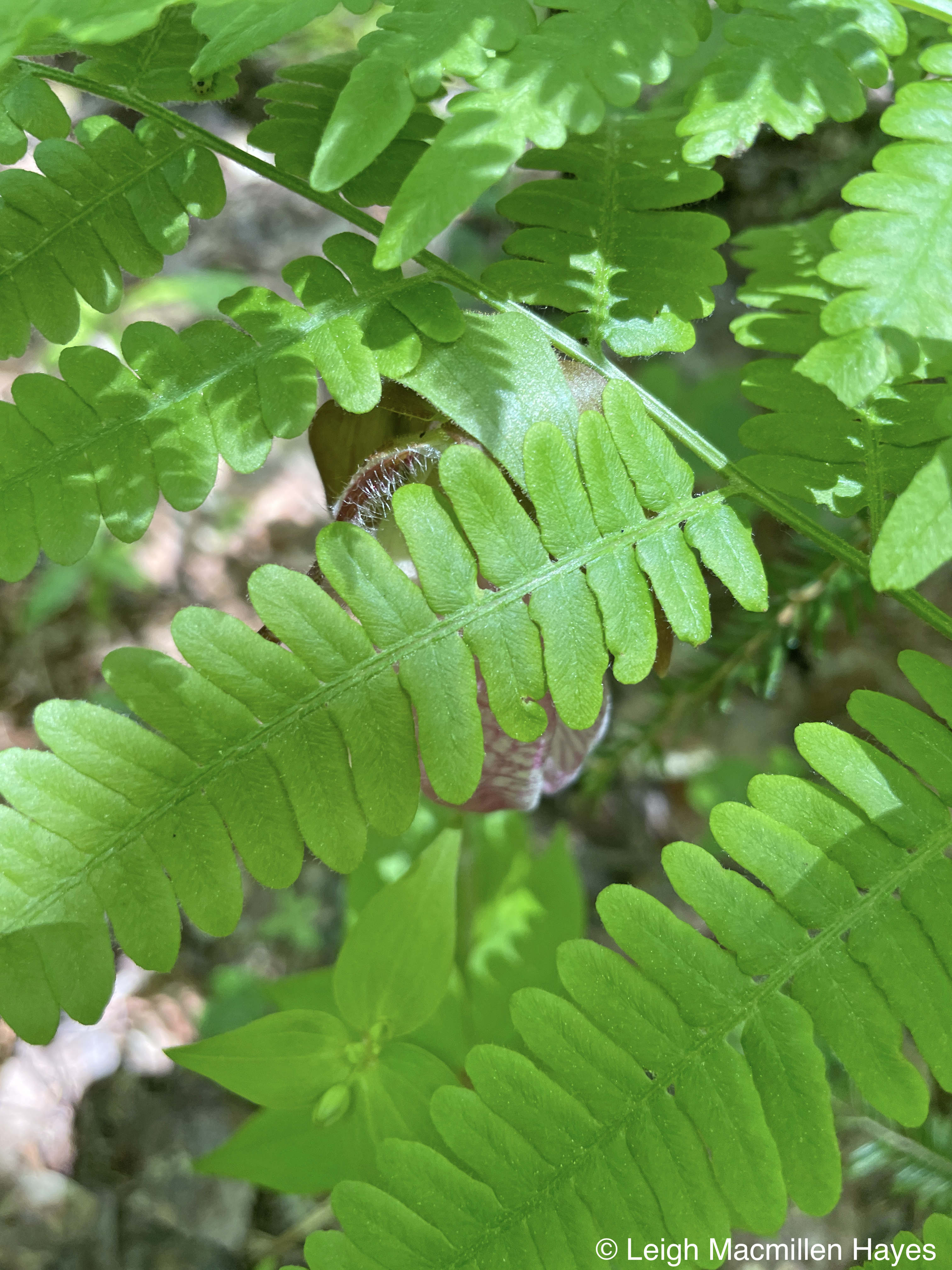
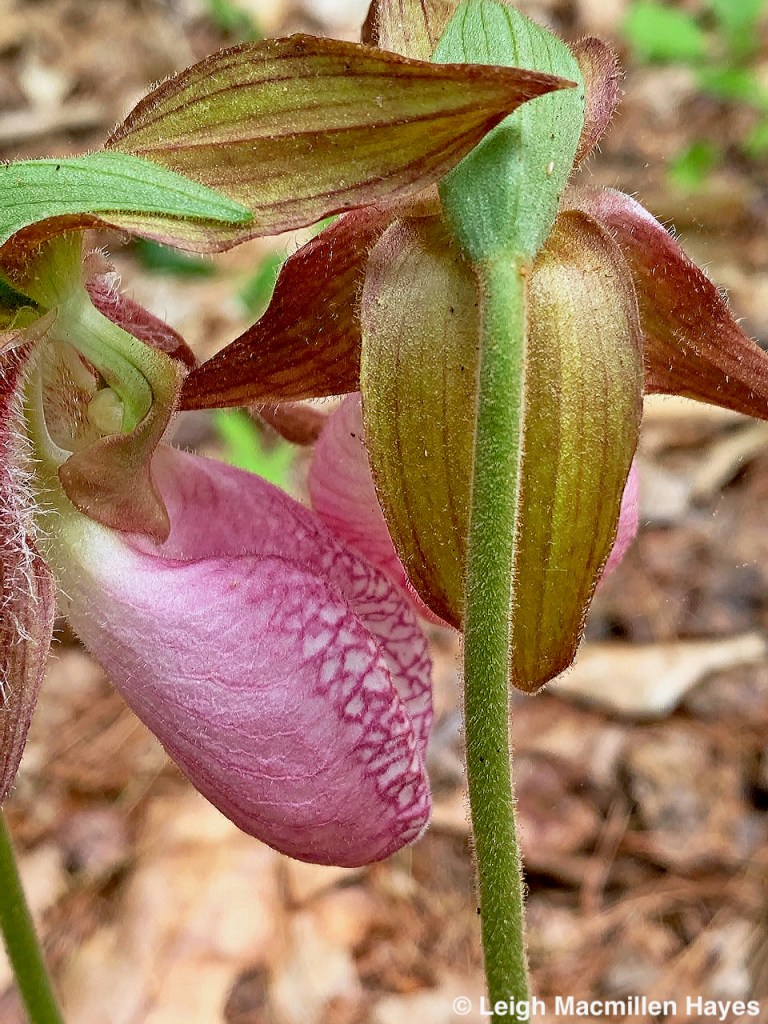
I saved the best for last. As I mentioned earlier, we’ve lived in this house for more than two decades and though I’ve seen Lady’s Slippers in other places, today I stumbled upon this one in our yard. A member of the Orchid family, it features the typical three petals in an atypical fashion. The pouch (or slipper or moccasin), called the labellum, is actually one petal–inflated and veined as you can see. The two remaining narrow petals twist and extend to the sides. Overall, it reminds me of a lady holding out her skirt as she curtsies.

Though bees help with pollination, they hardly reap the rewards of sweet nectar. It’s a symbiotic relationship with a fungi that helps the Lady’s Slipper germinate. And then, it still takes a few years for the germinated seed to produce leaves and about 3-5  years before it produces a flower. Once established, however, it may live for 20-30 years or more. So apparently this wildflower has been present for at least eight years, but I only discovered it today.

Staying close to home certainly offered sweet wonders.