On Another Day

Today was a perfect day for a hike–cool temps and a breeze kept the bugs at bay. And so my guy and I headed off after lunch with a destination in mind. Backpack–check. Camera–check. Map–check.

And with the latter, it all ended.

a-squiggly sign

We’d hiked our intended trail once before within the last ten years, but remembered that back then we had a difficult time following it. We were sure, however, that we could find our way today and we did. Until, that is, we reached a junction and read the snowmobile trail signs. Our gut told us to go straight but because we were on a snowmobile trail, the signs listed destinations. We looked at the map, looked at the signs, and convinced ourselves to turn right.

a-hobble 3

And so we journeyed on, enjoying the beauty of hobblebush even as it forced us to do what it was named for–hobble through the undergrowth.
a-hobble 2

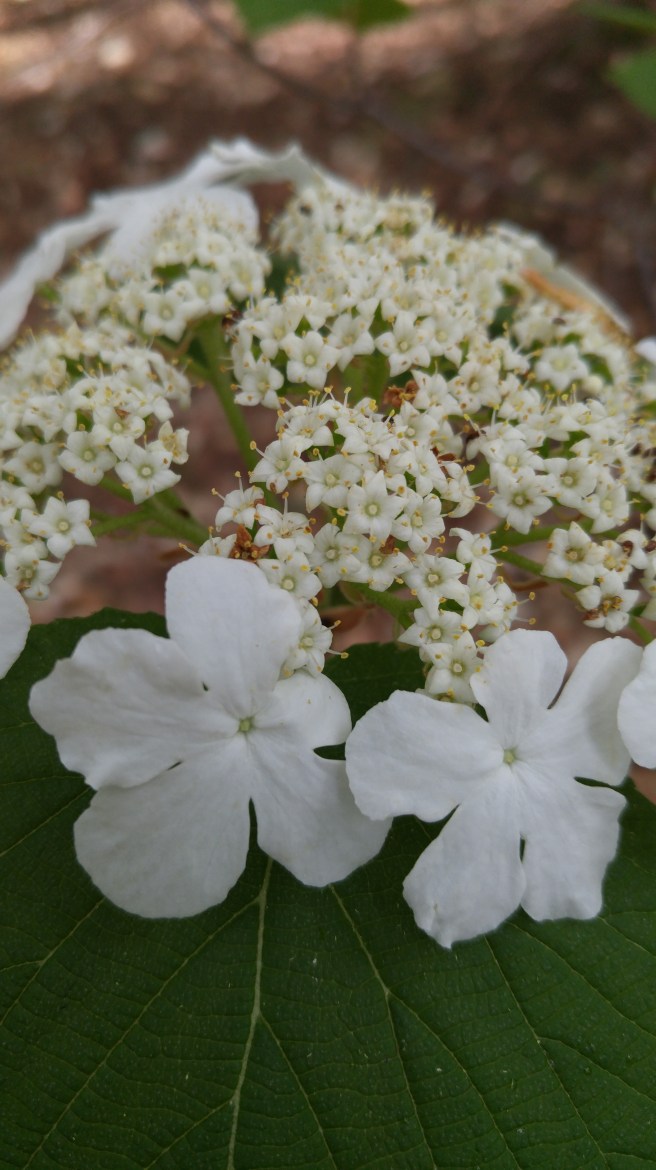
But how could we resist such beauty. Or should I say, how could I resist such beauty–my guy trudged on. I think it’s the complexity of the blossom that intrigued me most–large, five-petaled, sterile flowers encircled petite and fertile, waxy-white flowers. Why big showy flowers surrounding such tiny ones complete with stamens and pistils? Perhaps the outer sentry attract insects for the sake of pollination.

a-round-leaved violet 2

Also thinking about pollination–those purple runway lines of the round-leaved violets.  I’m not a fashion girl, but it’s flowers like this that make me realize you can combine a variety of colors to make a statement.

a-rose twisted stalk

A much more subtle display of color–rose twisted-stalk. Not a great photo, but the  flowers dangled below the twisted stalk. Why rose?  The bell-shaped flowers that occur singly at the leaf axils are pale rose in hue. Why twisted? Because at each leaf junction the stem takes a distinct twist.
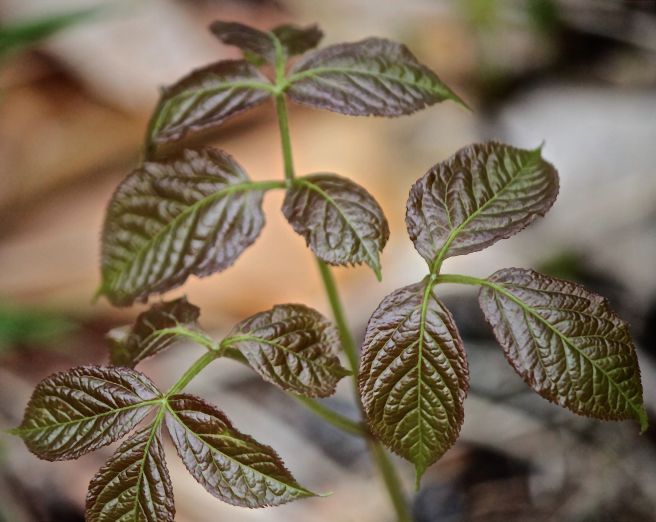
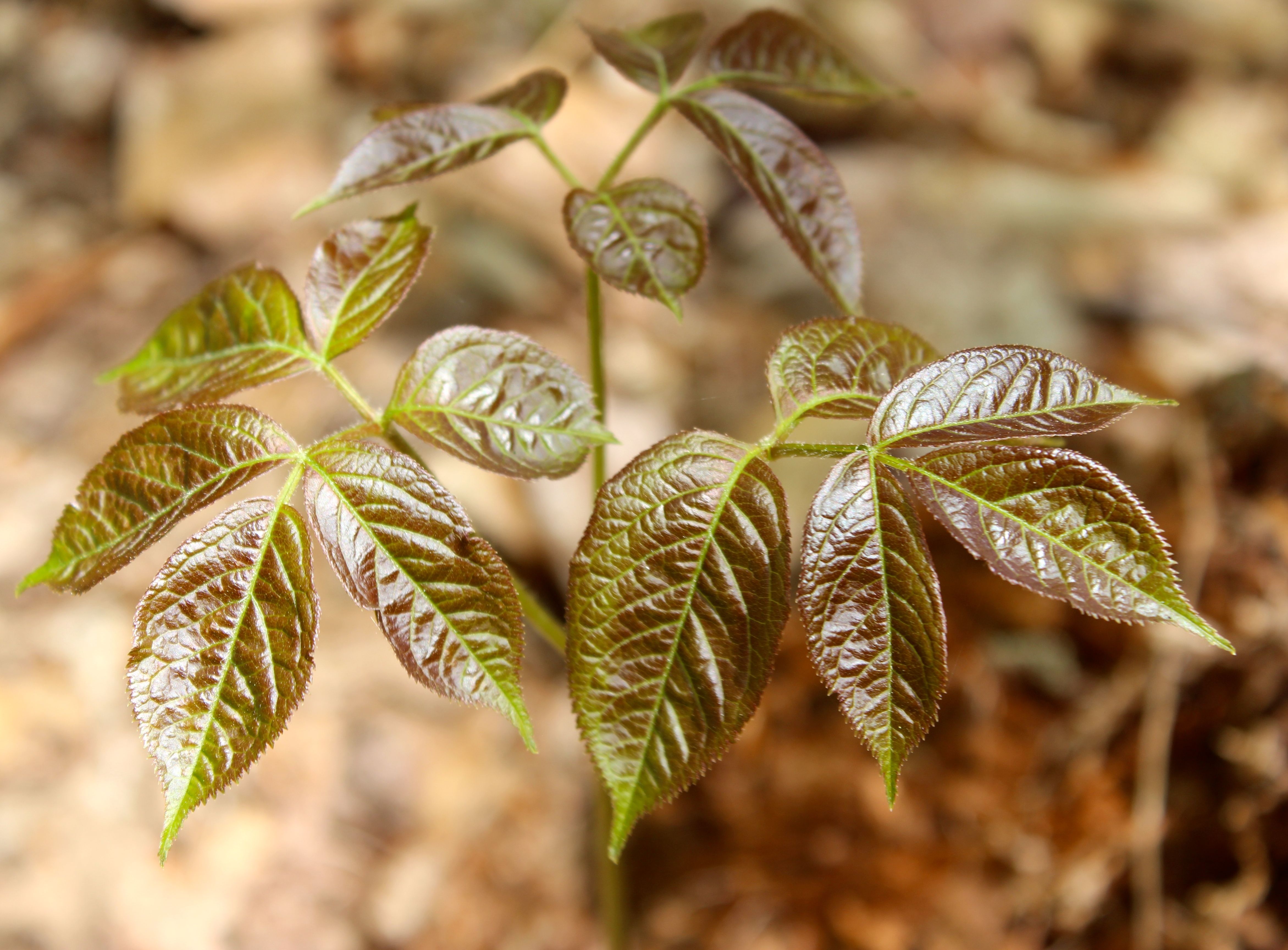
a-sarsaparilla

Adding to the subtle color of the season–sarsaparilla. I love the fact that this particular example shows the variety in the finely toothed compound leaves–in this case, two leaves sporting five leaflets, while another consists of three. It’s the three that sometimes gives this plant an undeserved bad rap–leaves of three, leave them be, refers to poison ivy. But this is not P.I. as we used to call it when I was a kid.

a-coltsfoot1

Another sorta look-alike, coltsfoot that resembles a dandelion. The difference–a coltsfoot seed ball retains its flower parts.

a-spring color

As the tender new leaves emerge, the landscape softens.

a-oak 1

From subtle colors

a-beech 3

to hairy fringes

a-sumac 1

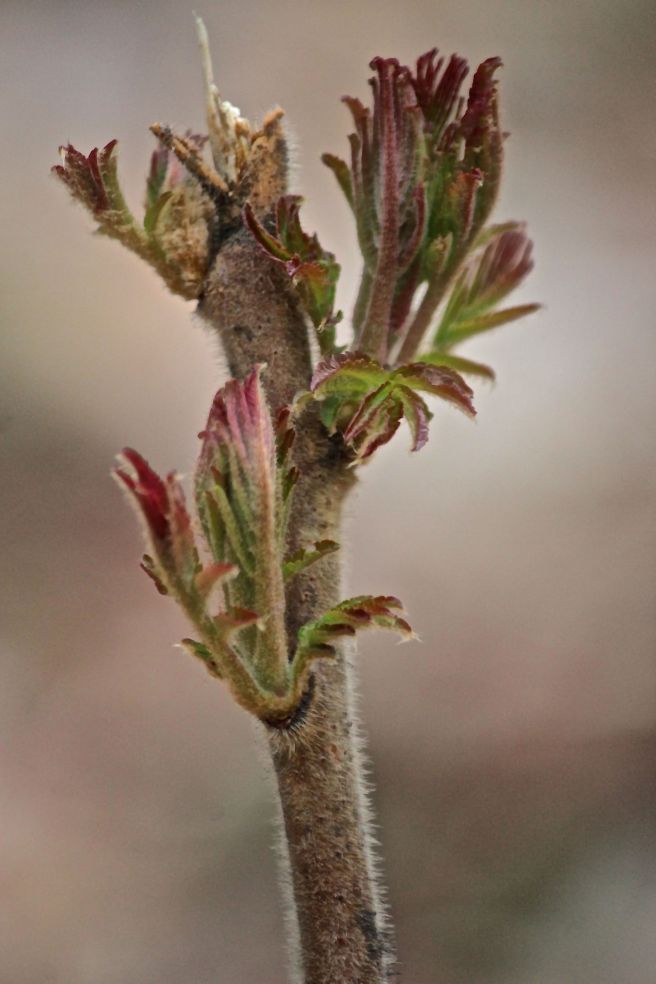
and fuzzy coatings, the world embraces a softer point of view.
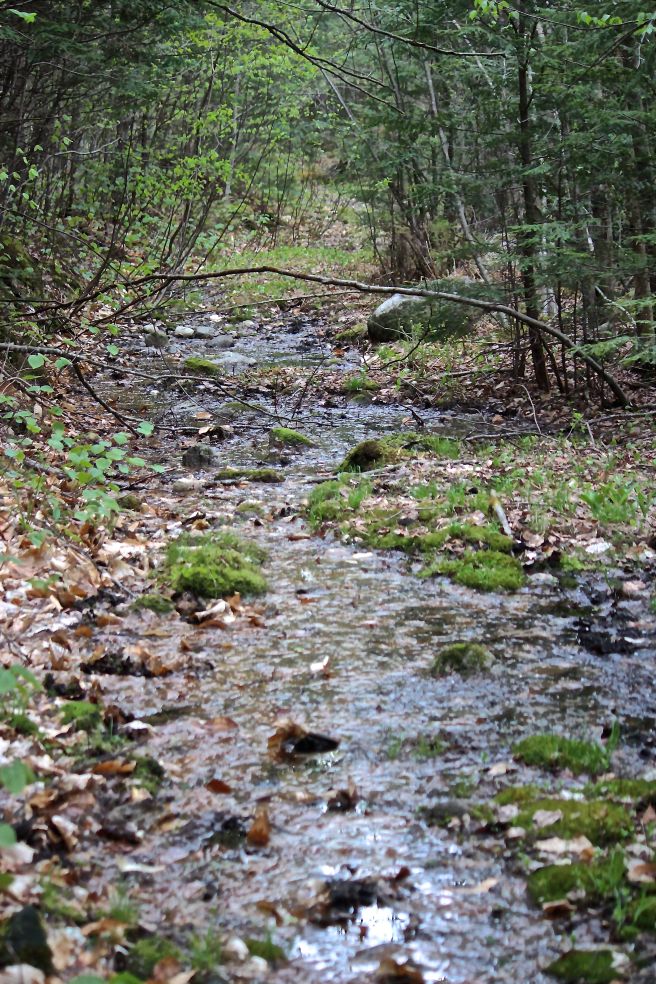
a-wet trail

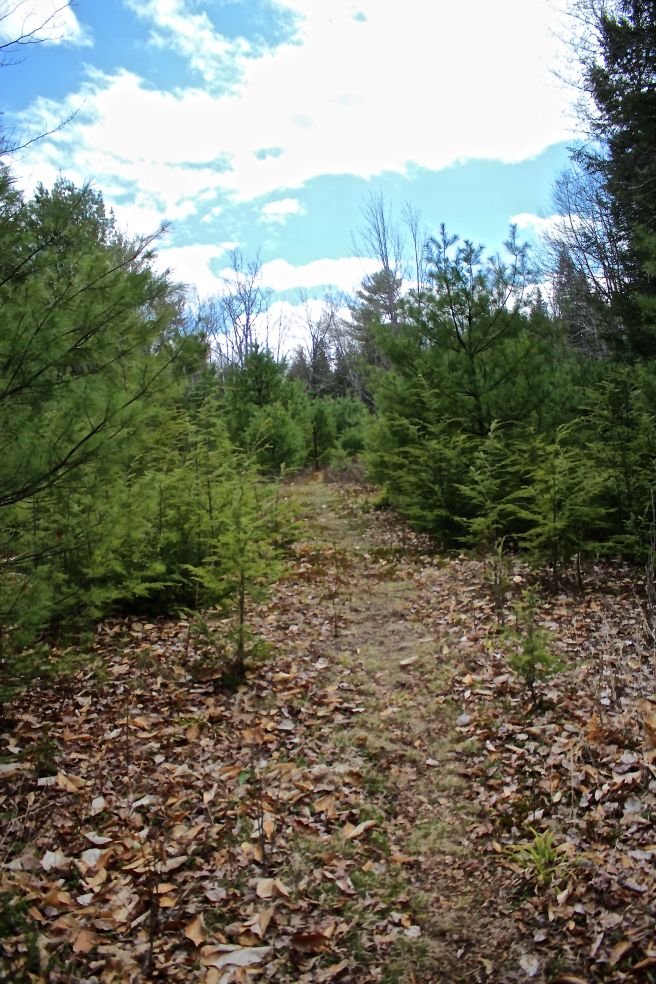
Though we continued to make delightful discoveries, it was evident that we were on the wrong trail.
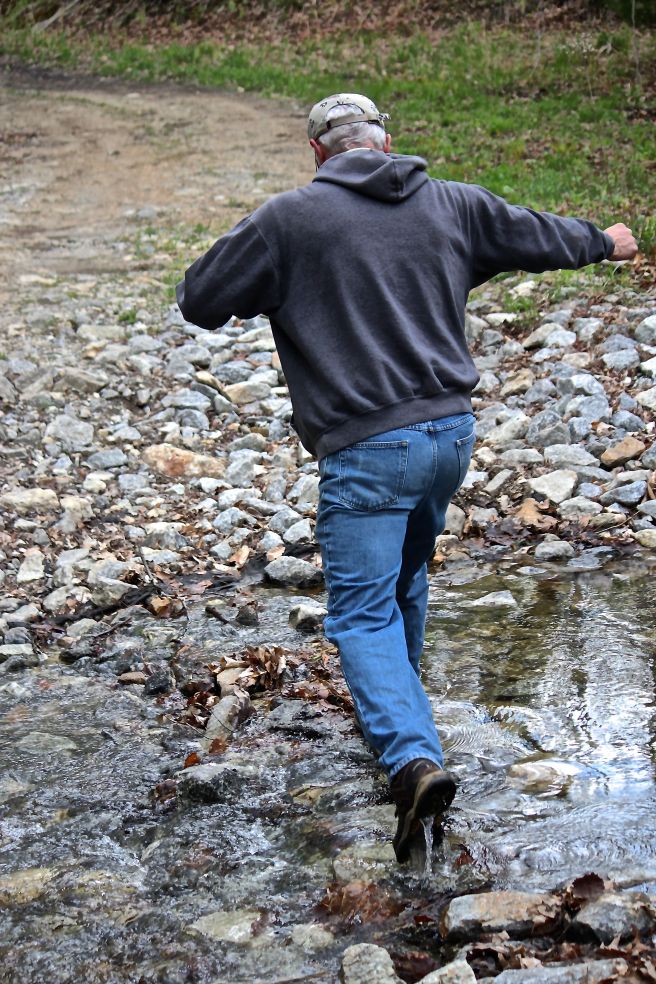
a-brook crossing.jpg

After a couple of hours, we turned back.
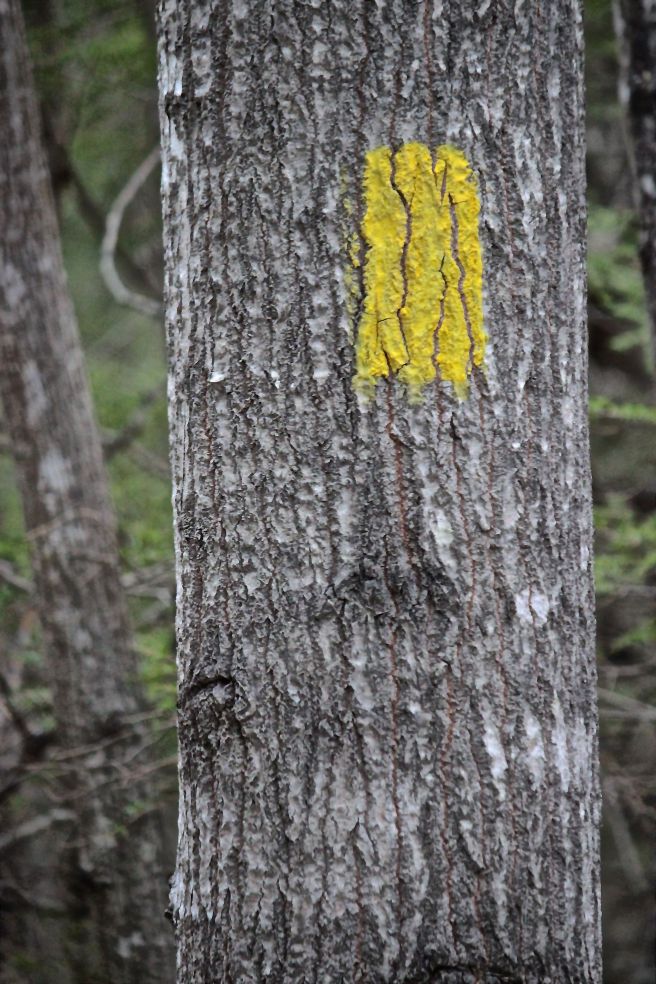
a-trail blaze.jpg

And at the point where we ignored our gut feelings and decided to turn right, we checked on the other trail–and found that it was blazed. Oh well.

We’ll save it for another day.


Mondate Circle

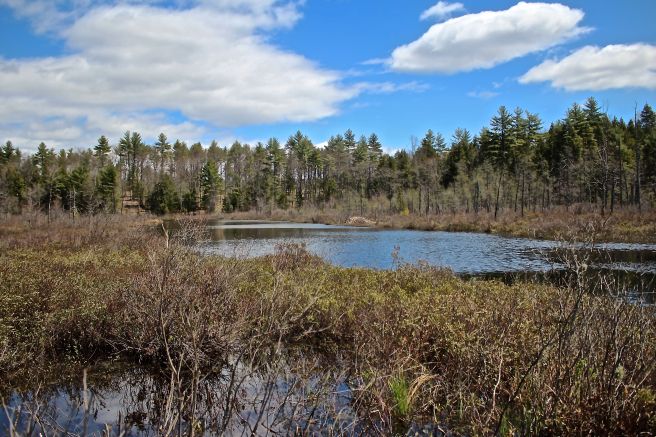
Today’s Mondate found us circling Holt Pond–on a reconnaissance mission for a section of the trail that we maintain for the Lakes Environmental Association, but also because we just happen to love this tucked-away space. It’s one of those places where we appreciate the constant change in community and feel completely removed from civilization–maybe because we don’t often see others here.

And yet, today, as we walked down “tire alley,” a woman at the far end called to us–by name. Here’s to you, Earlene, for recognizing us. Earlene and I first met almost a year ago on this very trail. I was exploring with some folks from LEA and she was on her own–as is her nature (my kind of nature). I can’t remember what she said, but somehow we made a connection based on this very blog. The fact that our paths have actually crossed a couple of times since then should mean that we need to spend some time together.

h-boardwalk 1

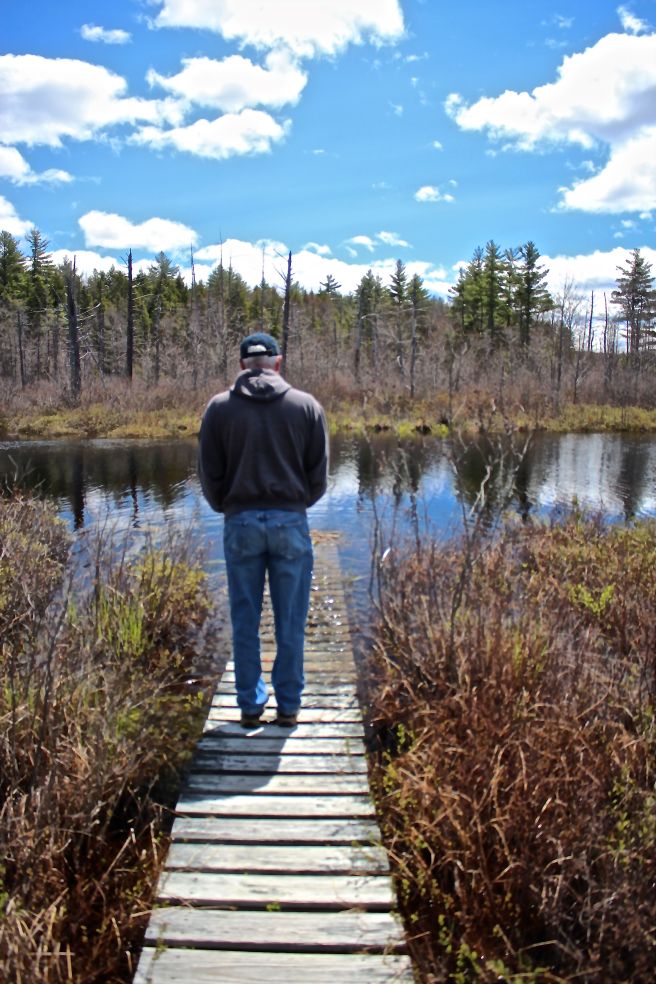
My guy and I followed the boardwalk through the red maple swamps.

h-boardwalk muddy

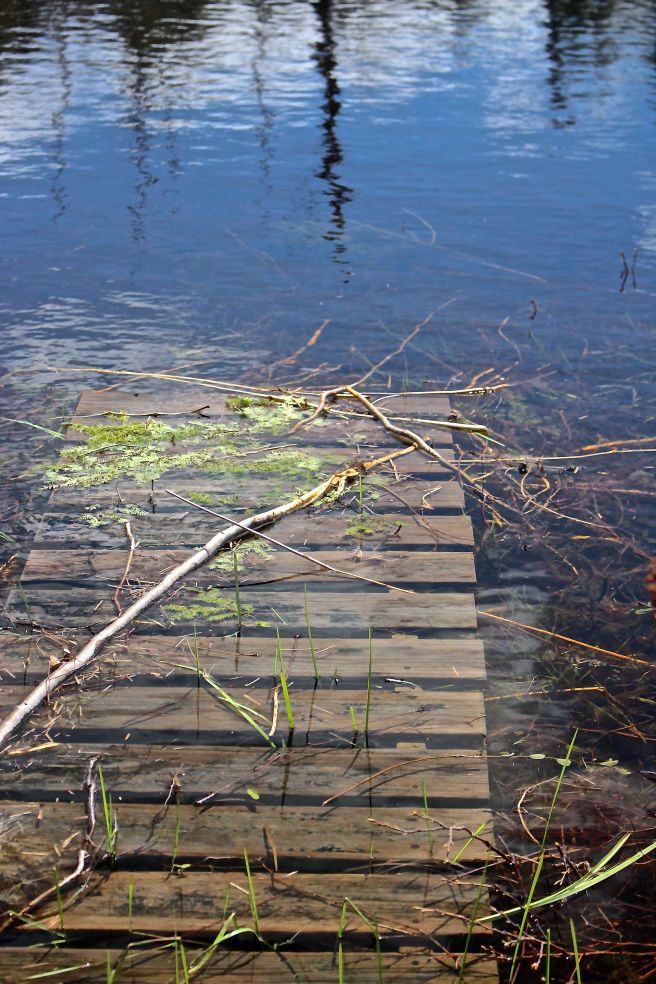
Our first pause–beside the Muddy River, where the water was high.

h-boardwalk muddy river:beavers

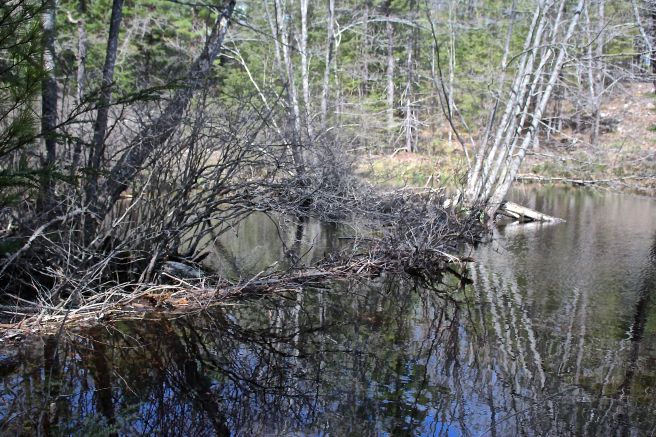
Beaver chews decorated the end of the walk.

h-muddy river

Looking east, we could see the lodge in the distance on the far side of the river, with fresh wood work standing out atop it.

h-muddy to holt

And to the west, the river flowing out of the pond.

h-boardwalk 3

We continued on, wondering how far we’d get, given the amount of water.

h-boardwalk quaking bog

And then it was out to the quaking bog, where we were stopped in our tracks.

h-sawyer brook

Crossing Sawyer Brook, we were struck by the lushness of life.

h-contemplating bridges

We conquered all of the boardwalks, though occasionally we had to pick our way through. As we continued on, our mosey included moments of contemplation as my guy considered bridges we need to construct over some wet spots on the Southwest Shore Trail.

h-landing

Our section of trail ends at the old log landing, where we noted the circle of life in the form of succession as the white pines and hemlocks begin to fill in the space.

h-view from southshore trail

From the southwestern shore, we looked back toward the Muddy River and listened to Canada geese that we never spied.

h-view from southeast

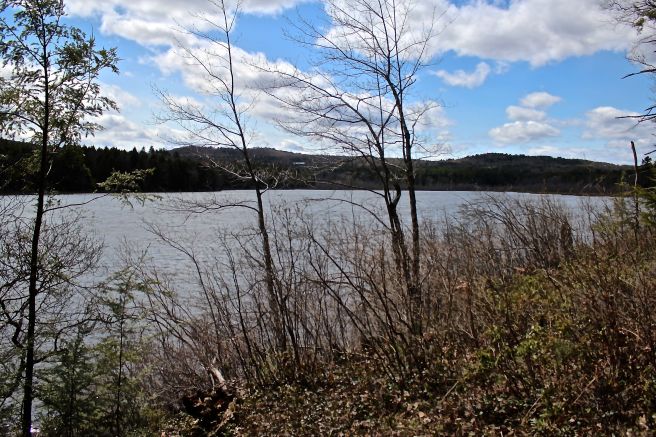
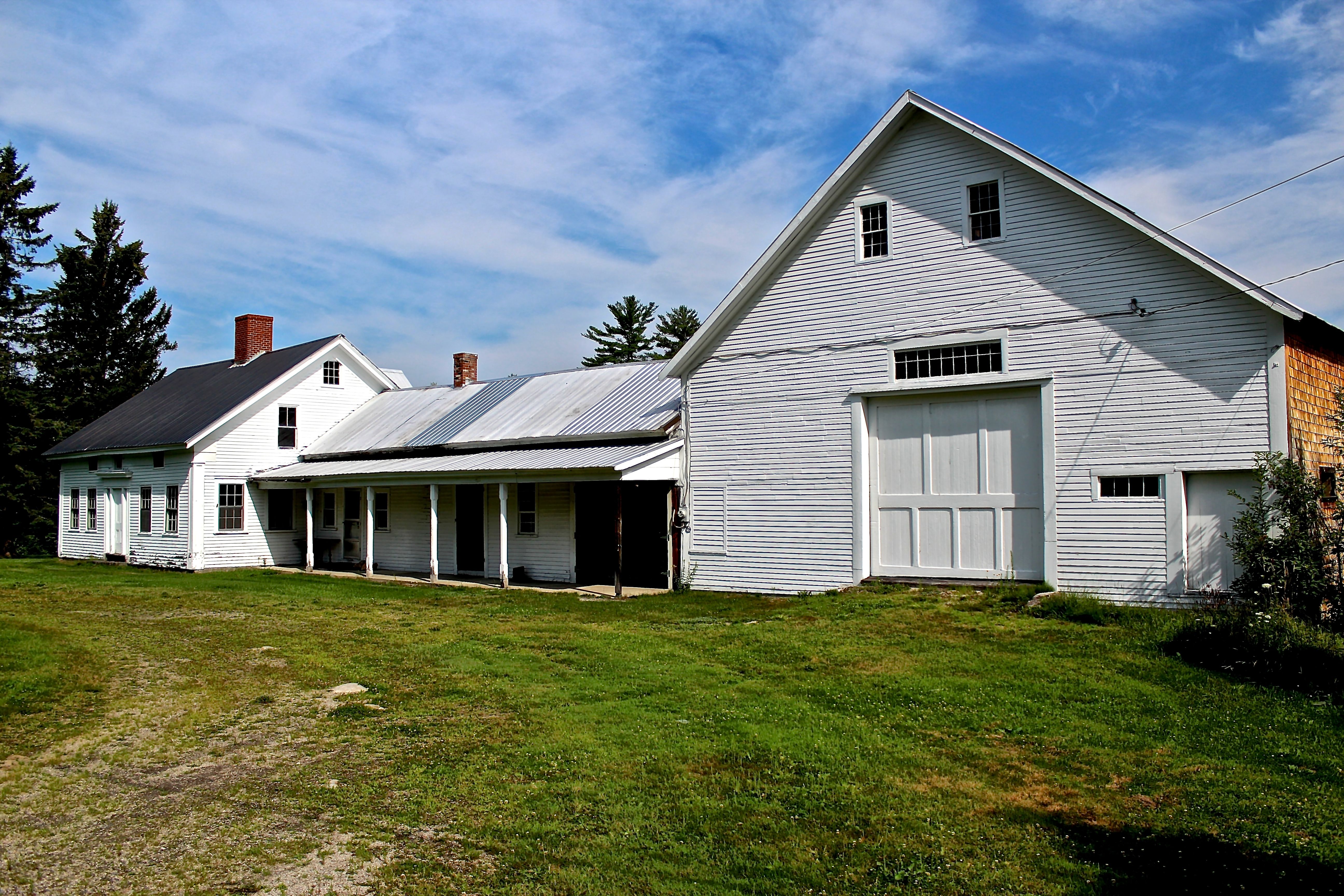
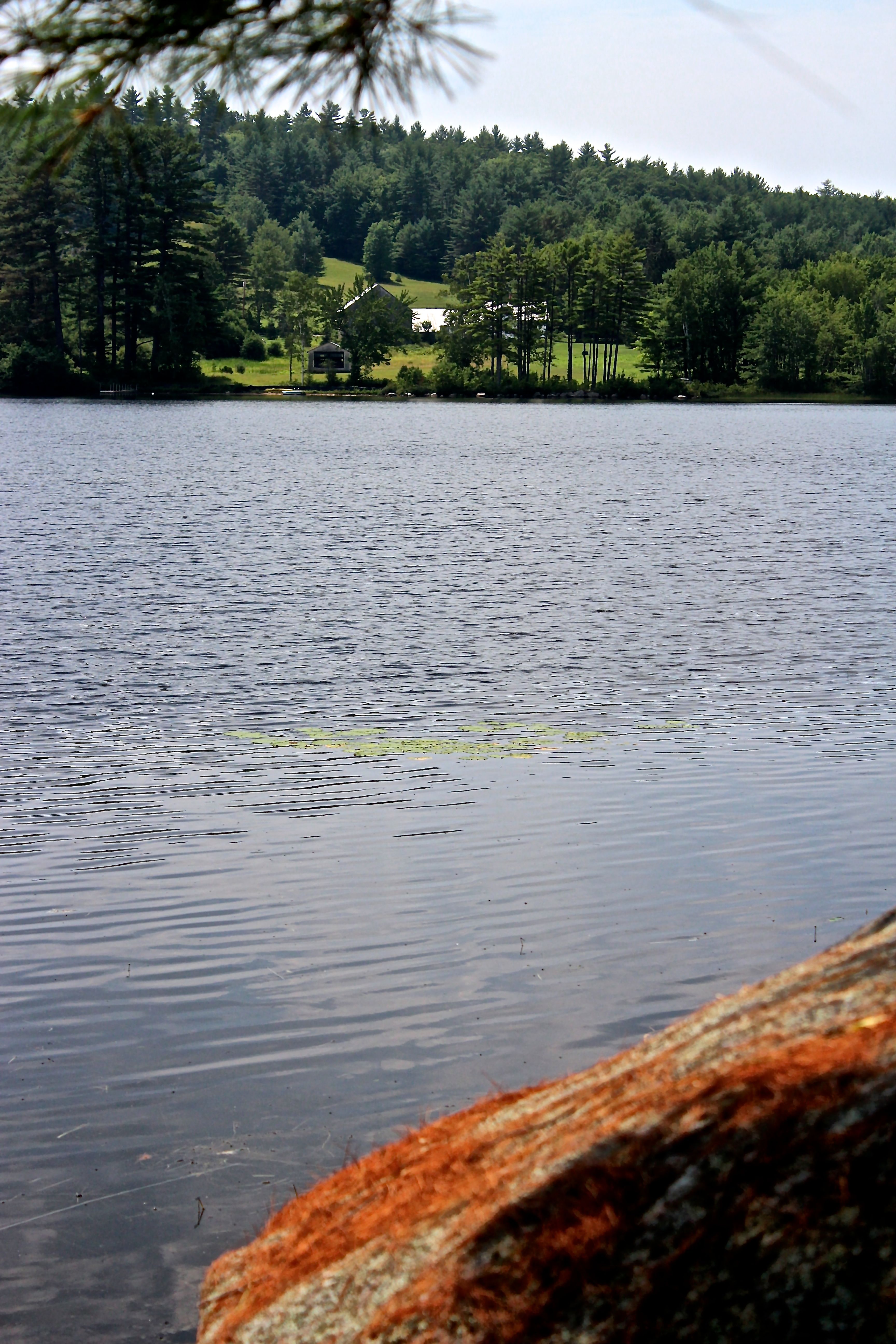
Eventually, we’d circled around to the southeast shore, with a view of Five Fields Farm in the distance.

h-view from snowmobile trail

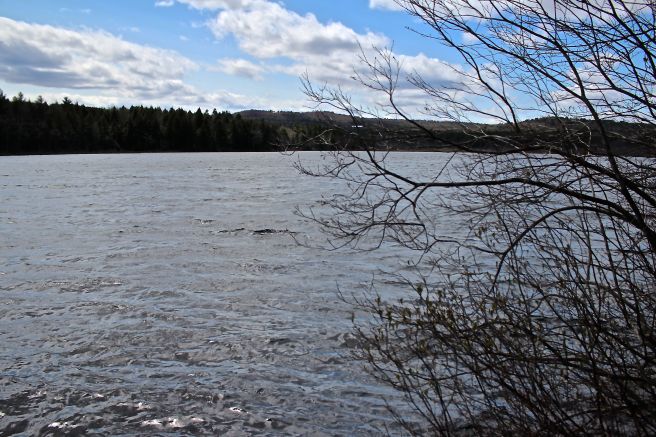
The wind had increased and the pond reflected its movement.

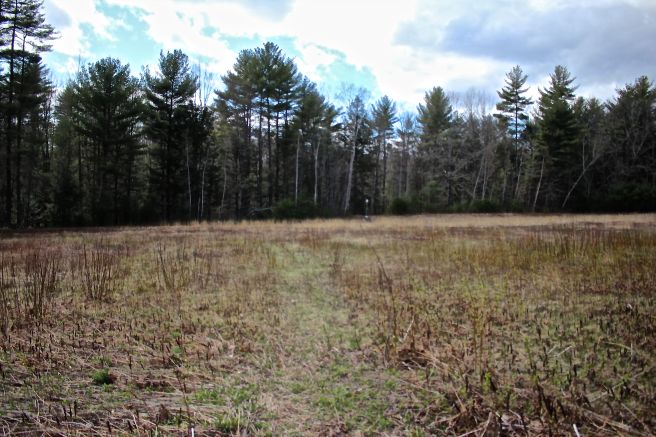
h-view emerald field

We crossed the Emerald Field and made our way back into the Preserve.

h-view beaver 2

Having circled about, three hours later we were once again beside the Muddy River, downstream from the beaver lodge we’d spied earlier, and looking at a mighty fine dam.

h-horsetail 1

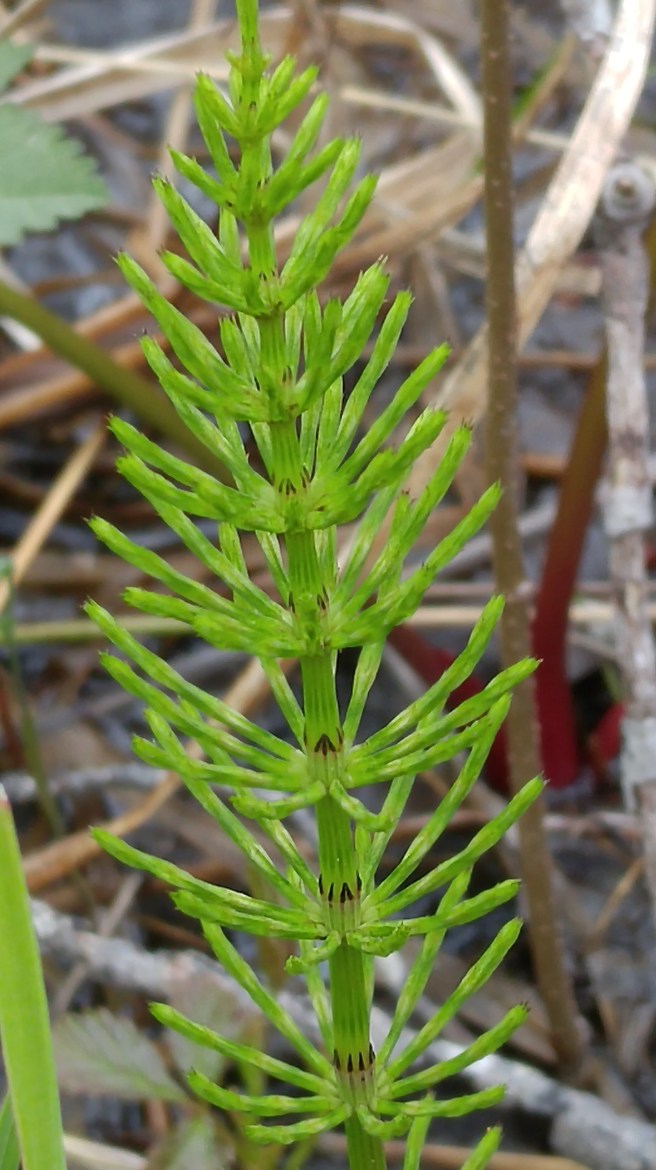
Along the way we noticed that we weren’t the only ones circling about.

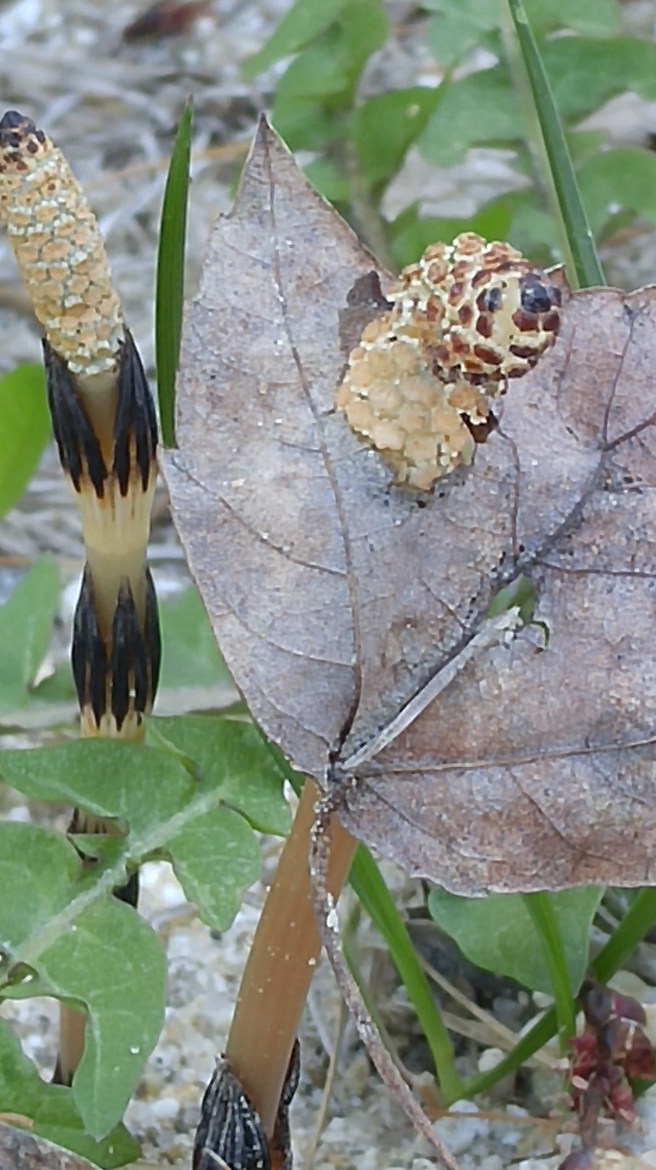
h-equisetum

And sometimes a breakthrough was necessary for life to continue.

h-red maple bark

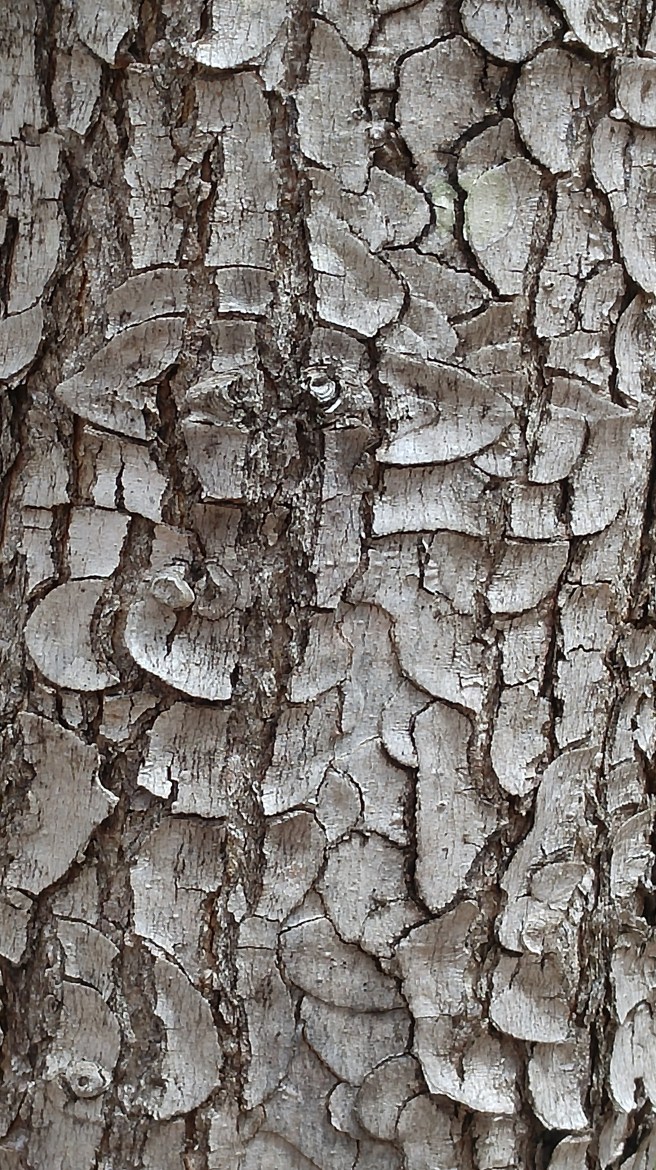
The potential to hit the bull’s eye was a frequent occurrence.

h-pileated scat 1

And even scat (ah, my fav) demonstrated the circular theme. (If you dare to look closely, do  you see the ant body parts in the pileated woodpecker scat?)

h-painted

Circled by its traditional leaves of three, painted trillium wasn’t yet ready to show its beautiful face.

h-sensitive2

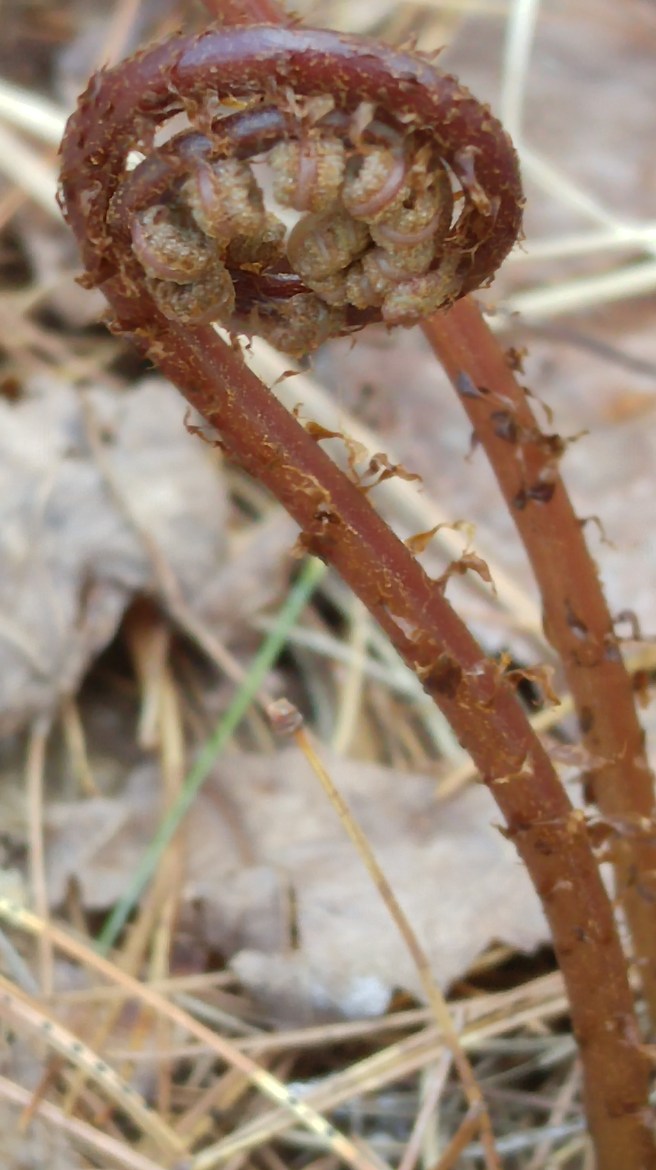
But my favorite circles of all right now–fern crosiers. And Earlene–I wasn’t sure what you were talking about when you mentioned the red ferns. I believe I said grape fern, which turns a reddish shade in winter. But even as I said that, I couldn’t remember ever seeing it here. Moments after we chatted with you, however, I knew what you meant–sensitive fern.

h-cinnamon 2

I hope that I’ll be forever in awe of the hairy sheath that envelops cinnamon fern crosiers

h-cinnamon 1

and the life embraced within.

h-Christmas 1

My newest discovery this past week is the Christmas fern crosier. Wrapped in satiny fur, the young frond encompasses life as it prepares to unroll. The more I get to know each species as a crosier, the more obvious they become.

I’m thankful that not only did we circle Holt Pond on today’s Mondate, but we also noticed the circle of life that surrounded us.


Every Day is a Gift

It’s Earth Day and yet, I wanted to hibernate. That didn’t go so well. First, I looked out the living room window this morning and noticed a skunk staggering as it walked in circles–like a dog chasing its tail–only the skunk kept falling to the ground and then getting up and continuing in the same fashion. So I called the game warden. A neighbor did the same and a short time later an animal control officer put the skunk out of its rabid misery.

a-blues1

And then I was supposed to co-lead a hike in Pondicherry Park, but still in hibernate-mode, I managed to get out of it. My excuse–work load. Which was true, but staying focused wasn’t happening. So, I headed out the back door and decided to change my point of view. The high bush blueberry leaf buds began to do the trick as they offered their gift of quiet beauty.

a-red map2

a-red maple 1

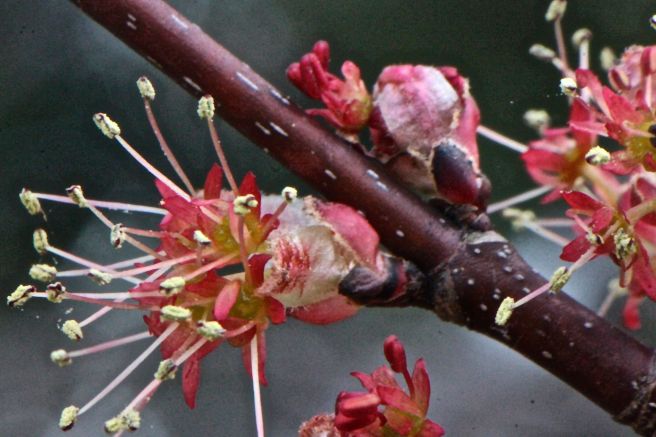
Nearby, red maples practically screamed for attention. Male flowers have long, extended stamens that are coated in dusty yellow-green pollen. The females have a well developed ovary with two long stigmas but the stamens are reduced in size and non-functional. Just seeing them lifted my mood.

a-ta1

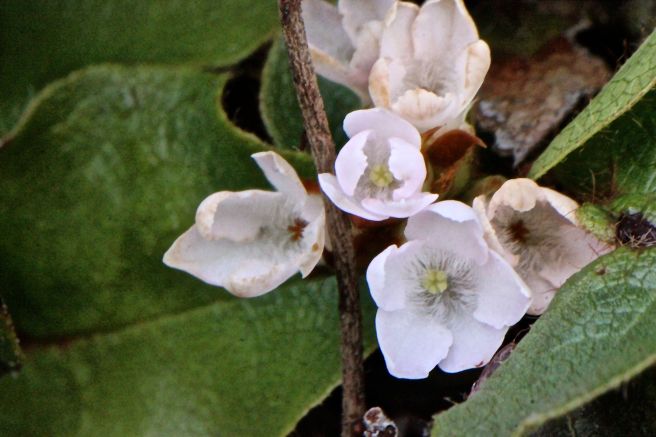
As I made my way to the vernal pool, I stopped to smell the trailing arbutus, aka Mayflower. But sniff as I did while squatting on all fours, I couldn’t smell the soft scent people rave about. And I have a good sniffer. For me, the gift of this wildflower is all in the joy it brings as one of our first to bloom.

a-tad 4

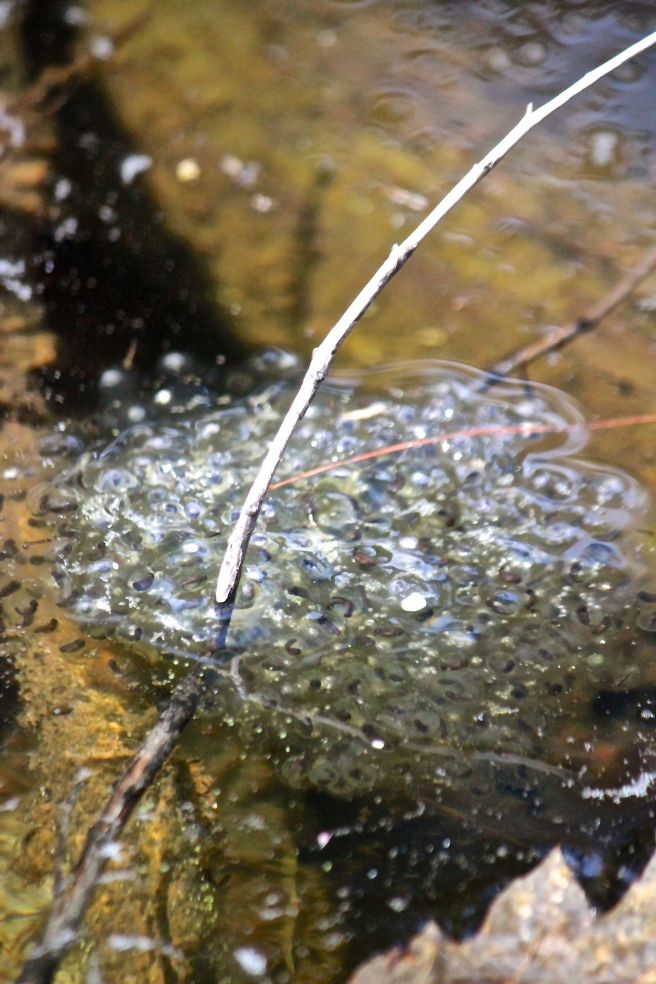
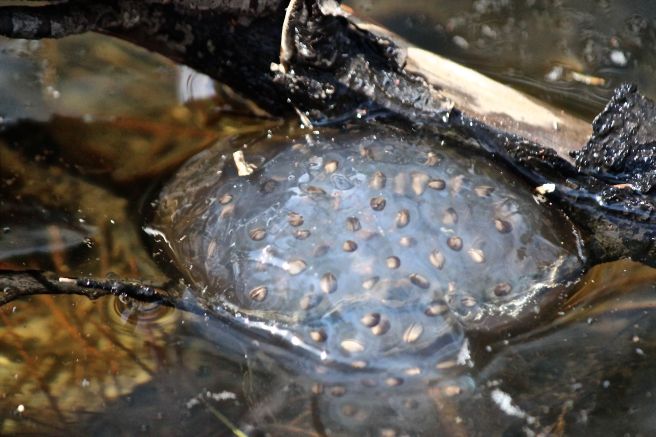
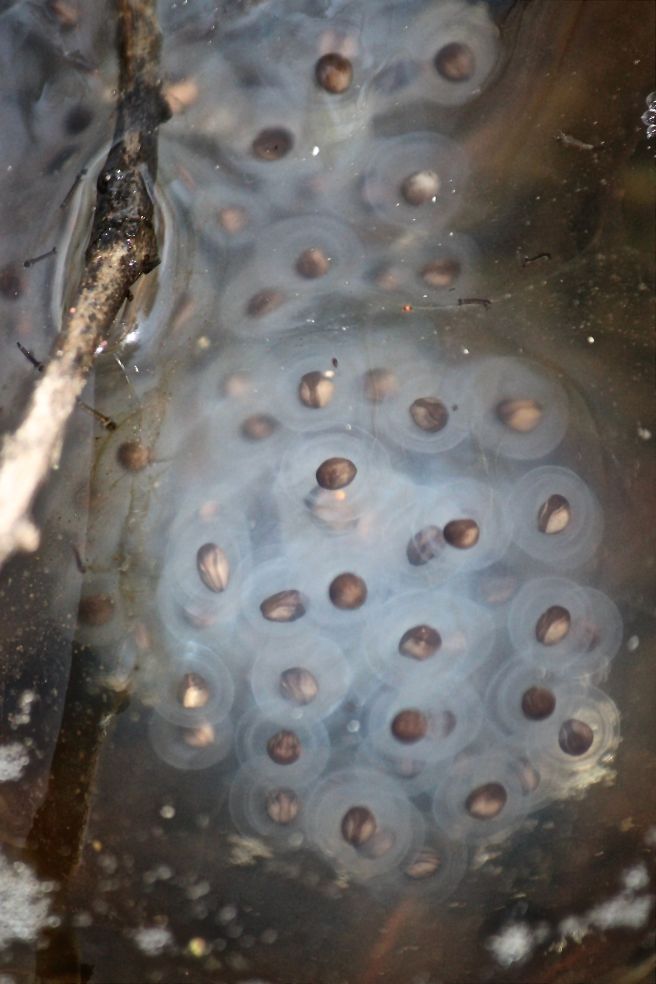
My next stop, was of course, the vernal pool that I frequent on a regular basis. While something has been disturbing some of the egg masses, others continue to develop.

a-tadpole 1

Each little tadpole swims about in its jelly-covered egg, offering a gift of hope.

a-sally3

Salamander eggs also are enjoying the warmth of being encased in jelly–especially where the sun shines upon them. It’s most helpful for development when the egg masses can float to the top of the pond and take advantage of the sun’s heat.

a-sally 1

For now, each little pod within the orb reminds me of coffee beans.

a-water st2

While standing silently beside the pool, I began to notice other forms of life, including the water striders. Do you see the two mating? These wonders of the natural world appear to skate on water, but really its the water-repellant hairs on their hind and middle legs that allow them to glide nimbly across the surface. They offer a gift of amazement.

a-mosquito1

Their favorite food happens to be abundant in this pool–mosquito larvae. I have to say it’s a food offering, but also a gift to all of us–we should celebrate the water striders as much as we do the dragonflies.

a-tom 2

I left the pool and realized I was among the turkeys. Tom was ready to offer his gift to his harem. Such a handsome dude.

a-grady 4

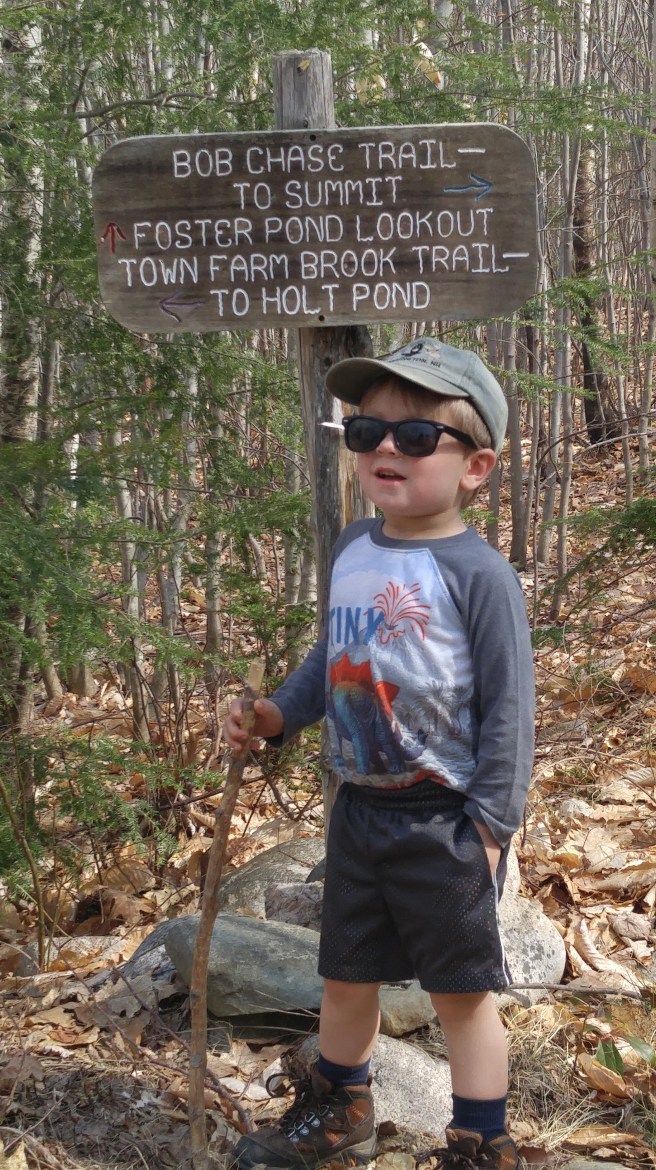
And with that, I realized that I was ready to join the world again so I drove to the trailhead for Bald Pate to join Loon Echo Land Trust for an Earth Day hike. The leader of the gang was this precocious tyke. At three years old, I kept insisting he’s 33. He kept telling me he’s only three. It can’t be. Though this was his first mountain to climb, I suspect there are many more in his future. He offered just the right tonic today and I fell in love.

a-view

As we climbed, we paused to look west and admire the view. Though the sun wasn’t truly shining, the day was getting brighter, literally and figuratively.

a-pitch cone

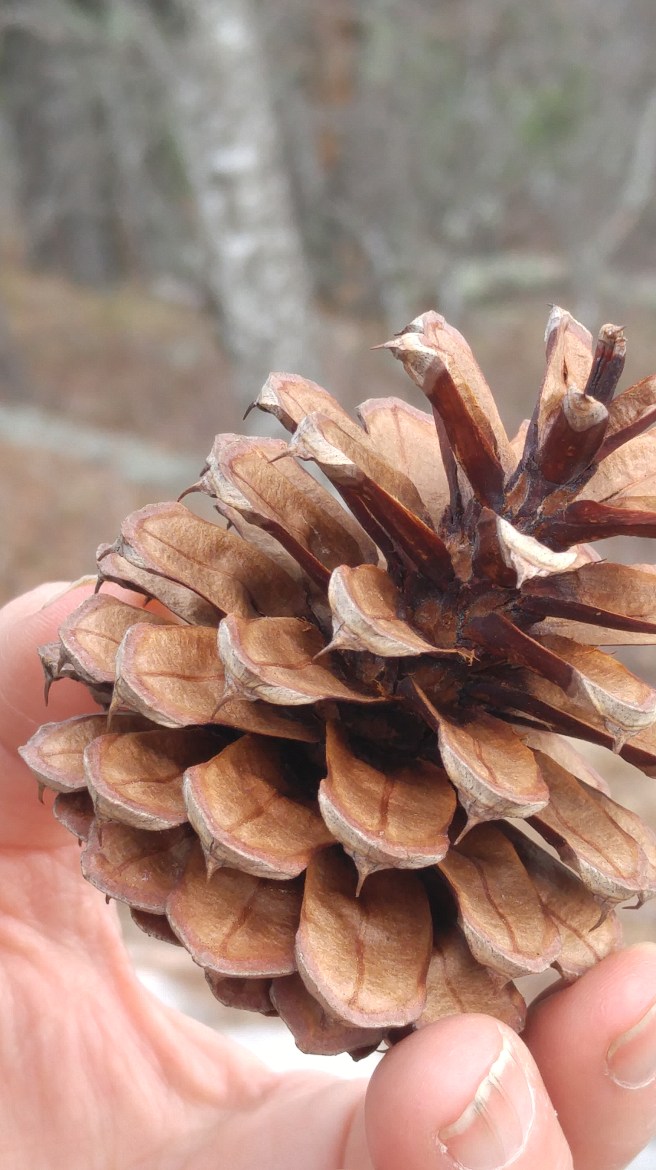
At the summit, we took time to examine the pitch pine cones with their prickly scales. Sometimes beauty has an edge.

a-grady and carrie mean pose

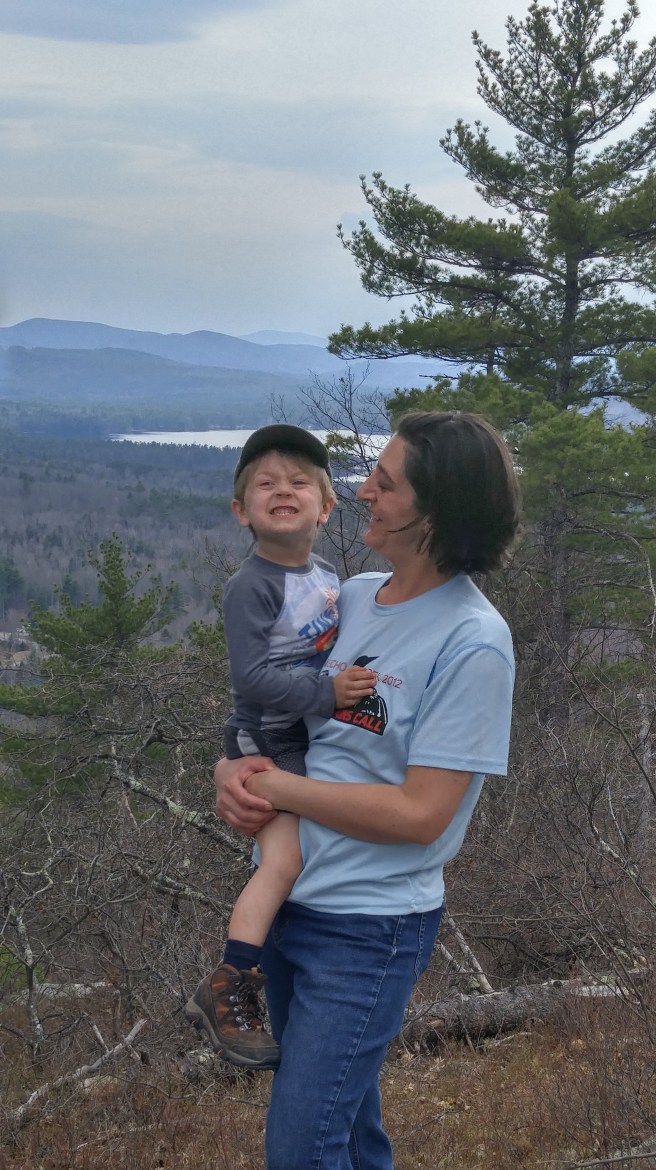
Before we descended, our little hiking buddy posed with his mom, the outgoing executive director of Loon Echo. Carrie will be missed and we wish her and her family well as they prepare for their move to Wisconsin in a couple of months. Her dedication to land conservation is to be admired. And that mean-looking grin–oh my.

a-adam 1

Also to be admired and the reason our local community and those beyond have been dealing with extreme shock these past couple of days–Adam Perron, who’s life was snuffed out two days ago in a tragic accident. Adam was the milfoil dude and a naturalist/educator at Lakes Environmental Association in Bridgton, where I serve on the board (and chair the ed cmt). He was also a student in the Maine Master Naturalist Program (Falmouth 2014) when I served in my first year as a mentor, so we spent many hours carpooling to classes and field trips and solving all kinds of environmental problems–in our opinions at least.

a-adam2

He was most at home in places like Holt Pond, where he loved to share his knowledge with others. R.I.P. Adam. I’m grateful for the gift of time spent in your presence. It strikes us all that your candle was snuffed out way too early, but as a friend reminded me today, we never know when it is our turn. Here’s to you, Beth and Abby.

And to everyone else, hug the ones you love and don’t forget to wonder. Every day is a gift.


Wer-if-est-er-i-a-ing A-long

12074842_10153632630537731_2769008110586363497_n

Thank you to my friend, Judy Lynne, who shared this word with me today. I know I do it, but I didn’t know there was a word for it. And I love that it’s an Old English word–takes me back to college days and my History of the English Language Class where we learned to read in Old and Middle English.
And so it was that today I wandered longingly through the forest in search of mystery with five other naturalists–all MMNP grads who will bring the Master Naturalist course to Bridgton in the spring of 2016.

After a tour of Lake Environmental Association’s Maine Lakes Science Center, we took care of some housekeeping items (coursework) before heading out the door. I made them practically run through Pondicherry Park–well, maybe run is an overstatement, but we moved quickly for us–not much time for werifesteriaing.

It was our afternoon tramp at Holt Pond when we allowed ourselves more time to pause and wonder.

HP snake

As we started down the trail, Beth saw this snake hidden among the leaf litter. It’s the third garter snake I’ve seen this week. The day was overcast and we weren’t sure if he was coiled up because he was cold or if something had attacked him.

HP Muddy River

We stepped onto the boardwalk to view the Muddy River and it almost sank beneath our weight. The water is quite high and I suspect I know why.

HP beaver works

Off to the side, we saw fresh evidence of beaver works.

HP beaver lodge, Muddy River

And in the river, a lodge topped with new sticks. I think the dam down the river has probably been rebuilt.

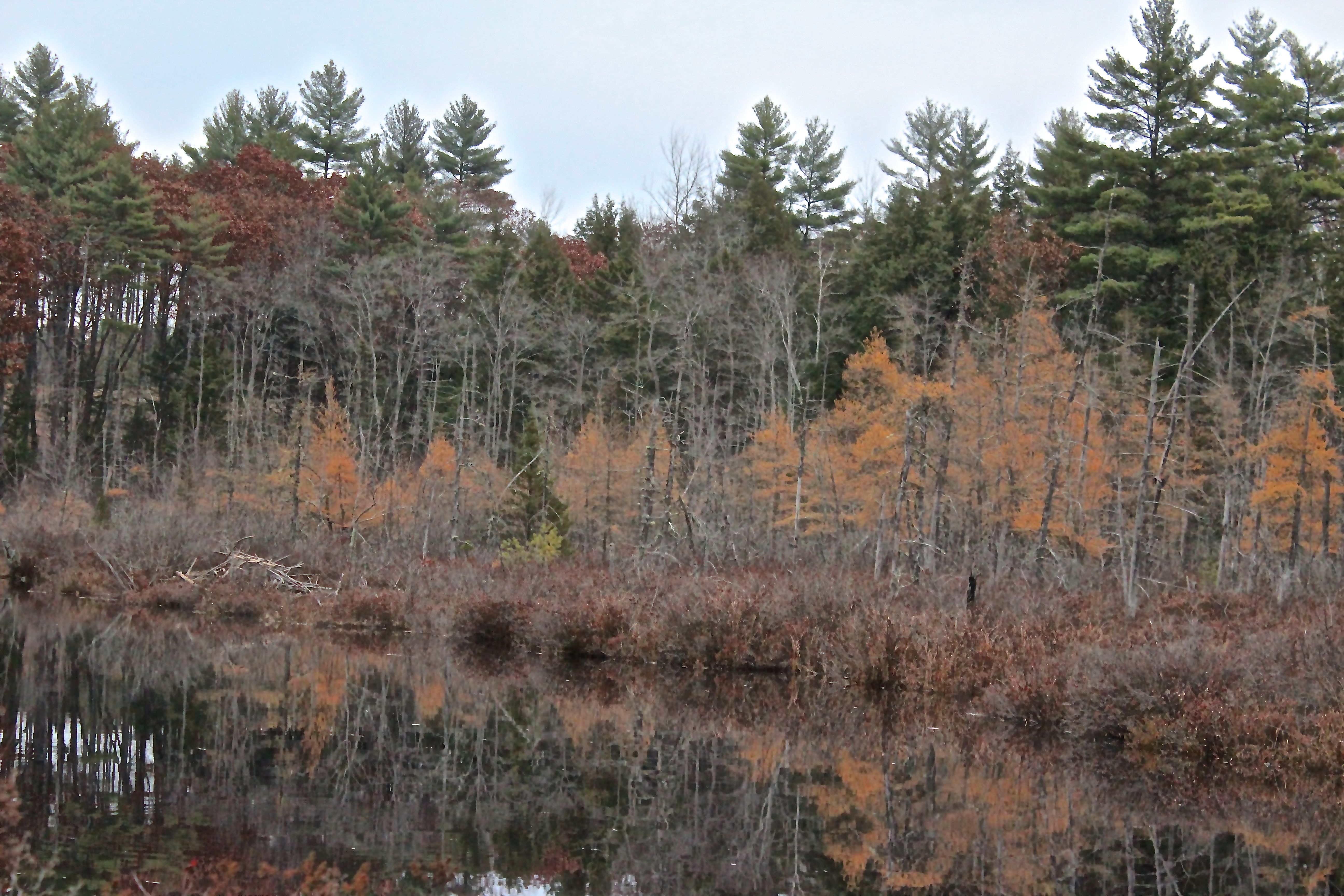
Looking from this vantage point, the layers of communities are pronounced, with the wetland plants like leatherleaf, sheep laurel and sweet gale growing low by the river, topped by alders and small red maple trees, topped by tamaracks, topped by white pines, hemlocks and Northern red oaks.

HP layers from Muddy River

Similar layers surrounded us with the bright red winterberries forming the creme between two wafers.

HP pitcher 1

As happens each time I pass this way, I am forced to photograph the pitcher plants.

HP pitcher 2, picture

Have you ever noticed the pictures on the hairy inner lip? Do you see what I see? A woodland landscape–trees with extended branches, a layer of colorful foliage and a grassy edge leading to the lake (water in the cup)? I know the hairs and design are important for the attraction of insects, but I never really paid attention to the actual design before.

HP Wooly aphid

We also found more woolly alder aphids, which Joan and Ann held in their hands so everyone could get an unclose look at the squiggly insects. Rather disgusting, yet fascinating.

Holt PondHP north 2

Even a single moment at Holt Pond translates into tranquility. (And I had to channel this moment for Judy Lynne.)

HP bog boardwalk, water

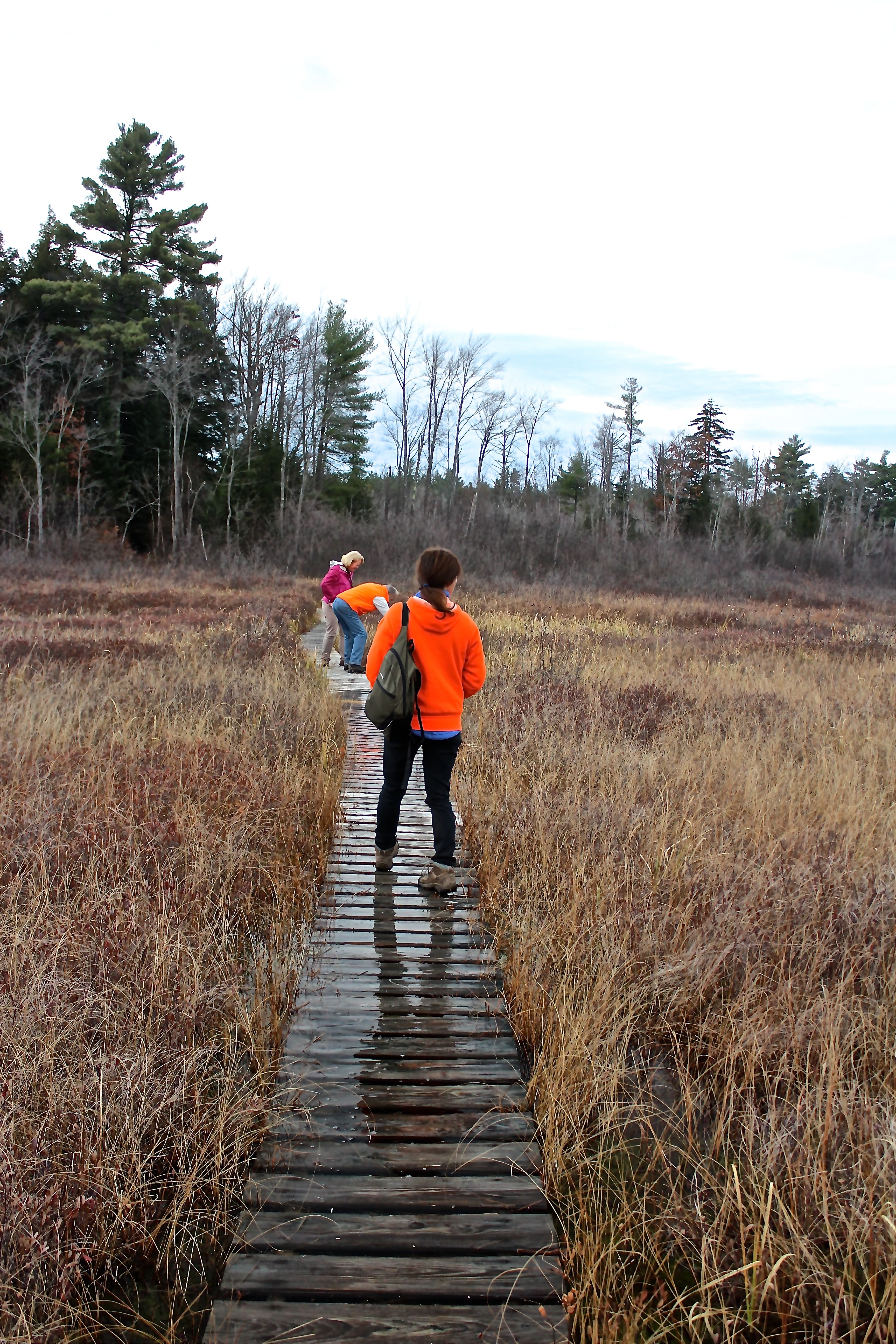
Gordon, Beth and Joan tried to keep their feet dry as we examined the plant life along the quaking bog boardwalk.

HP cranberries

Karen spotted one cranberry and then another, and another, so everyone could sample the tart flavor. Pucker up.

HP owl pellet

Our next fun find–a raptor pellet comprised of hair and bones galore. For the naturalist course, this will come into play.

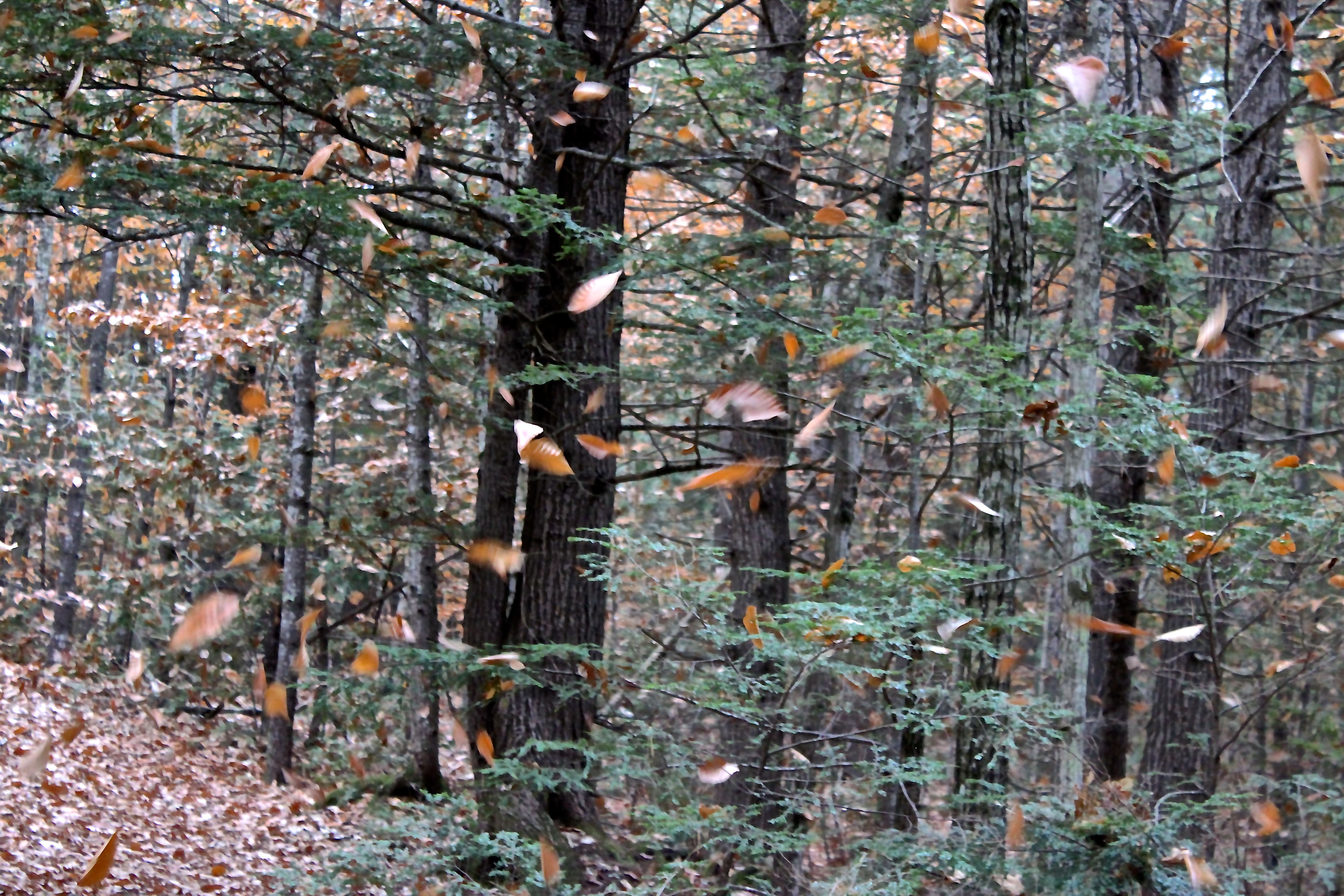
HP raining leaves 3

Every once in a while, I’d ask if it was raining. It was–beech and oak leaves.

HP old hemlock varnish conk

While we stopped to admire several older hemlock varnish conks, something else caught our attention.

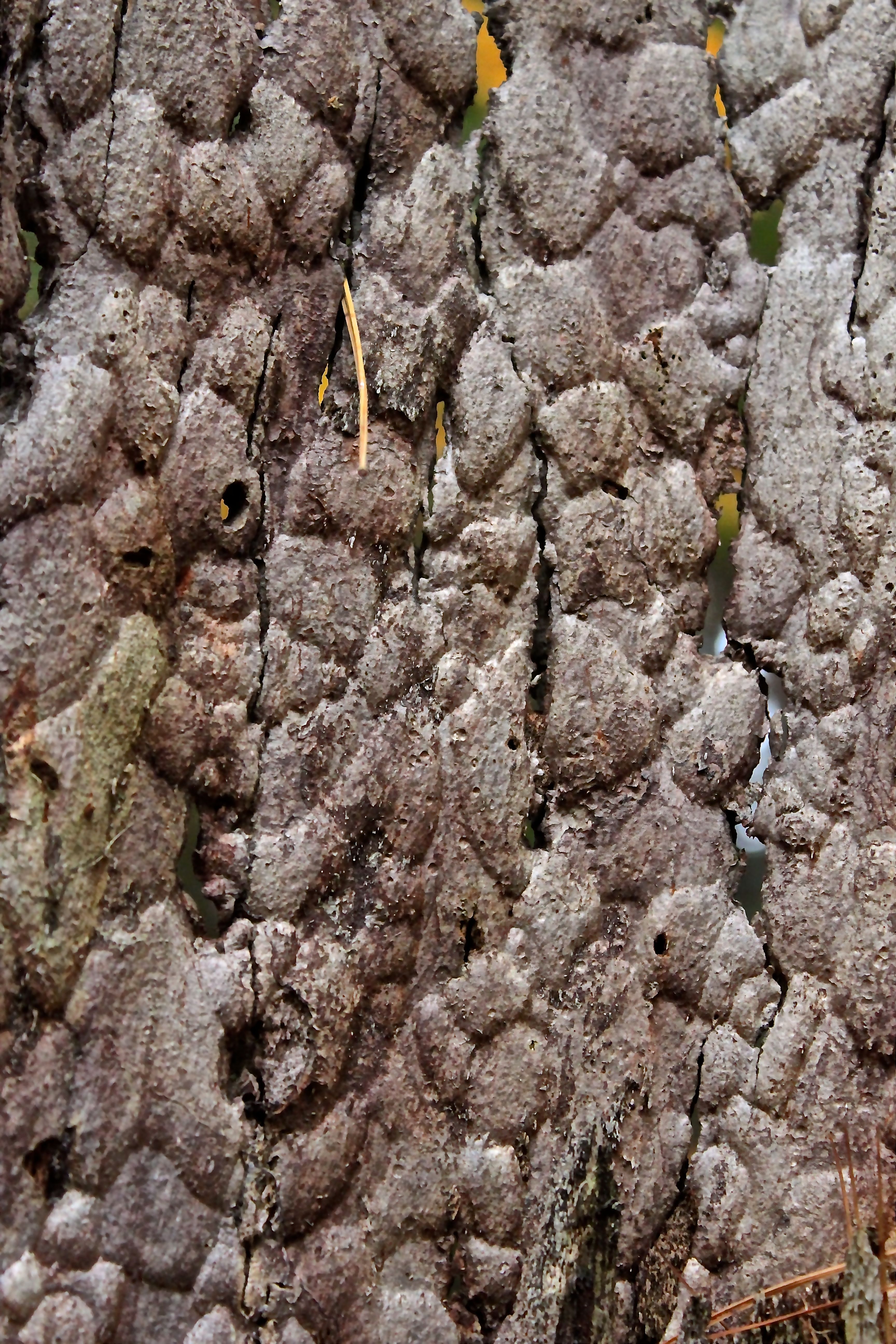
HP mystery bark

Do you know what it is?

HP fur

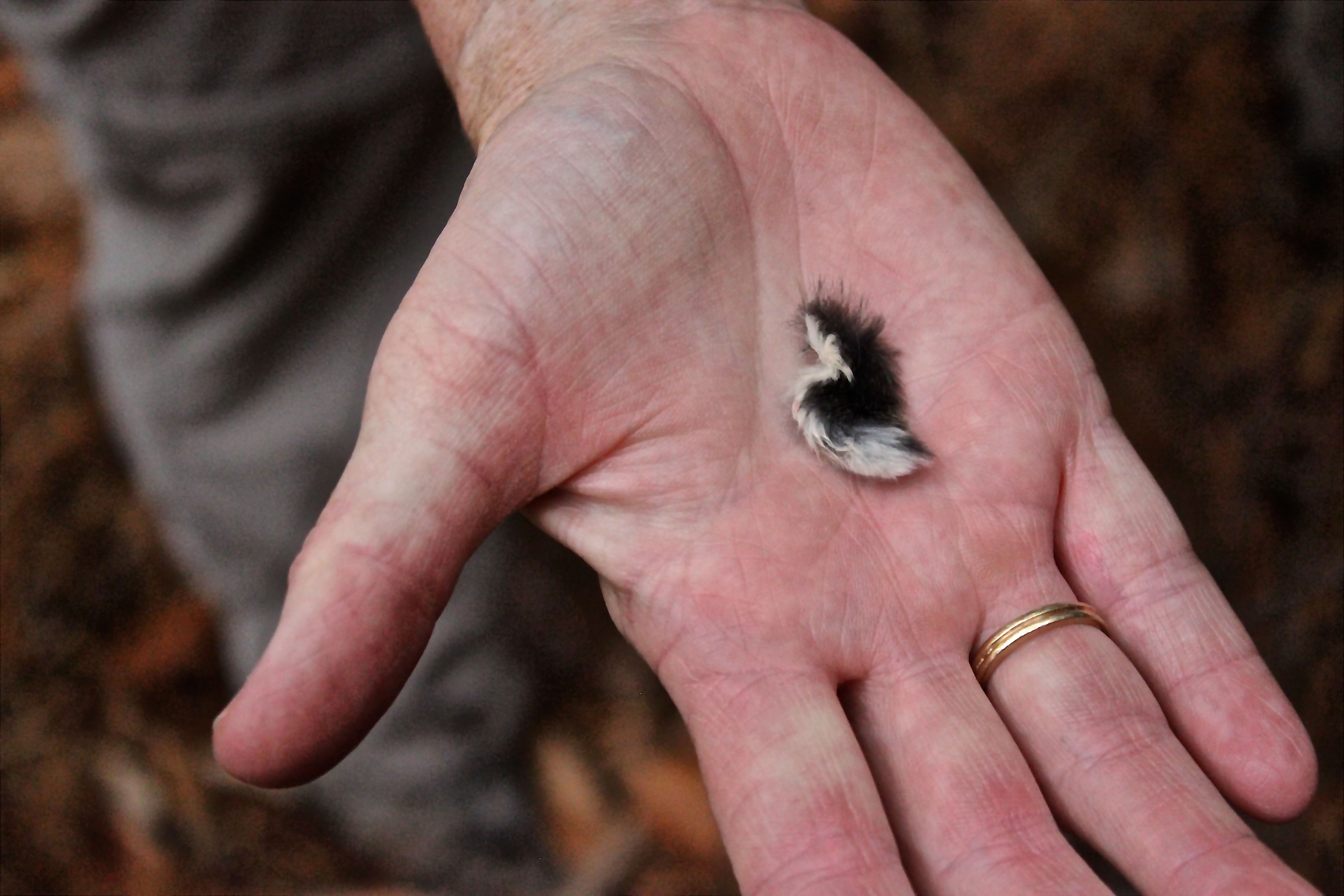
And then Ann spotted this little tidbit–leftover from someone’s dinner. We still don’t know who ate whom. Or if it was related to our earlier find of the pellet.

What we do know is that we spent a delightful day werifesteriaing along.

HP fun mystery

As for the mystery photo–the inside of hemlock bark. This is the bark that I think of when trying to remember how trees decay–hardwoods rot from the inside out, softwoods rot from the outside in, but hemlock bark often remains. In the 19th century, hemlock bark was used in the tanning process because the tannins found in the bark preserved a hide and prevented natural decay while giving it a brown hue. At the same time, the tannin left the leather flexible and durable.

Here’s hoping you’ll have the opportunity to wander longingly in search of mystery.
Summer Fly By

It’s the height of summer. I love every season, but wish I could slow this one down and spend more time soaking in all that it has to offer. This week alone is flying by.
mystery stones

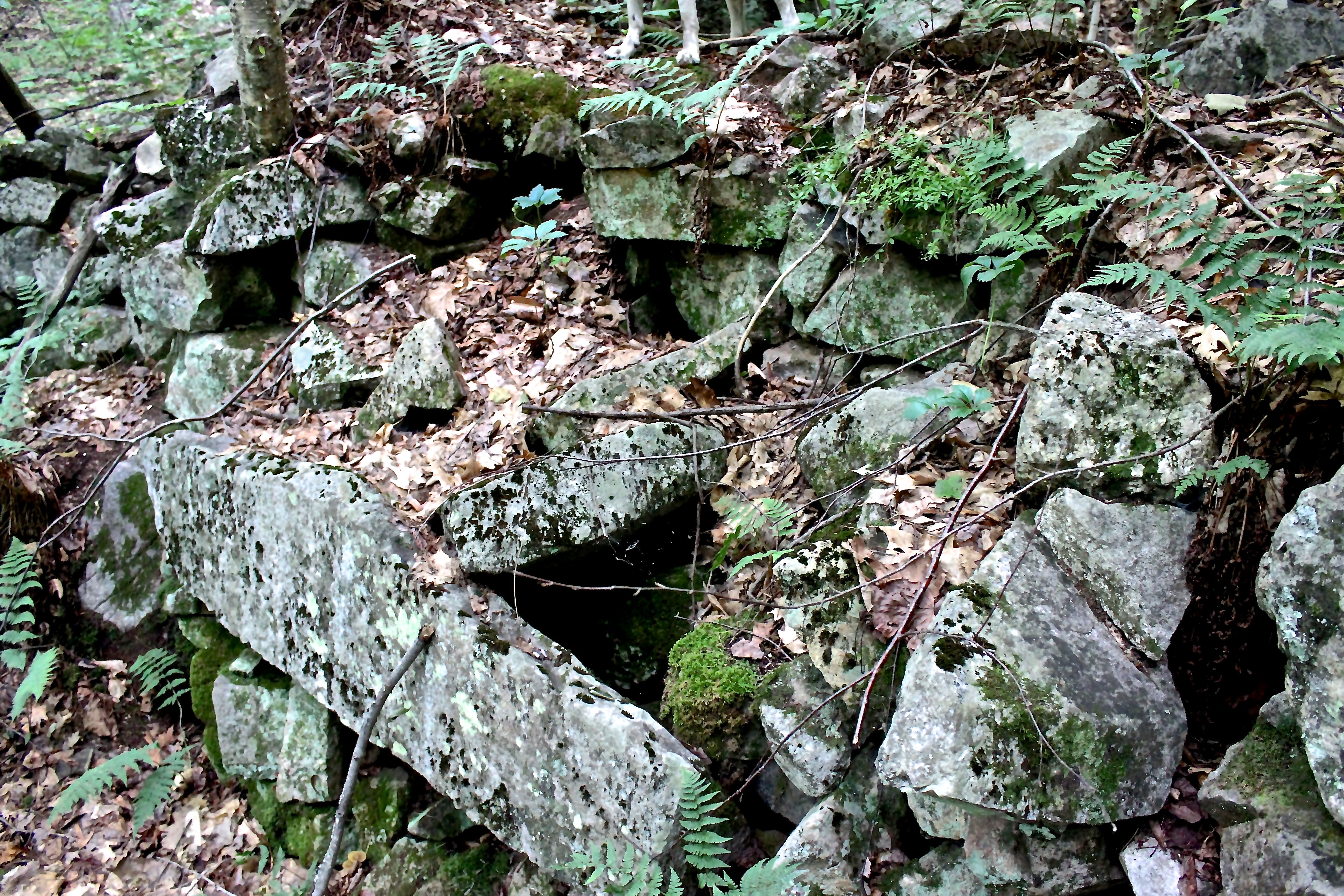
My offerings are a mishmash of what I saw and did during the week, beginning with the mystery stones on the backside of Amos Mountain at the Heald and Bradley Ponds Reserve in Lovell.

me mystery stones 2

My friend, Jinny Mae, would love this mystery, so I’m going to ask her what she thinks this is all about. It’s a huge structure and I hope some people will want to check it out with me this Saturday during the Family Fun Day–A Celebration of People, Place and Nature hosted by the Greater Lovell Land Trust.

me mystery structure and mystery legs

There’s one more mystery in this photo–four legs. Do you see them?

trail signs

I continued on to the Wilson Wing Moose Pond Bog Preserve to make some tweaks along the newly installed self-guided nature tour beside Sucker Brook.

Shout out to docent Linda Wurm for all the work that went into re-creating and installing the signs. Warning to the wise: Do not hire the two of us for any house renovations. We discovered talents we don’t possess. A humbling experience.

me hobblebush fruit

One of my favorite plants along this trail–hobblebush showing off its fruits.

me hobblebush

And letting us know that times are a-changing. Say it isn’t so–it’s too early for fall colors. I only found it on this one shrub. Phew.

Indian pipe

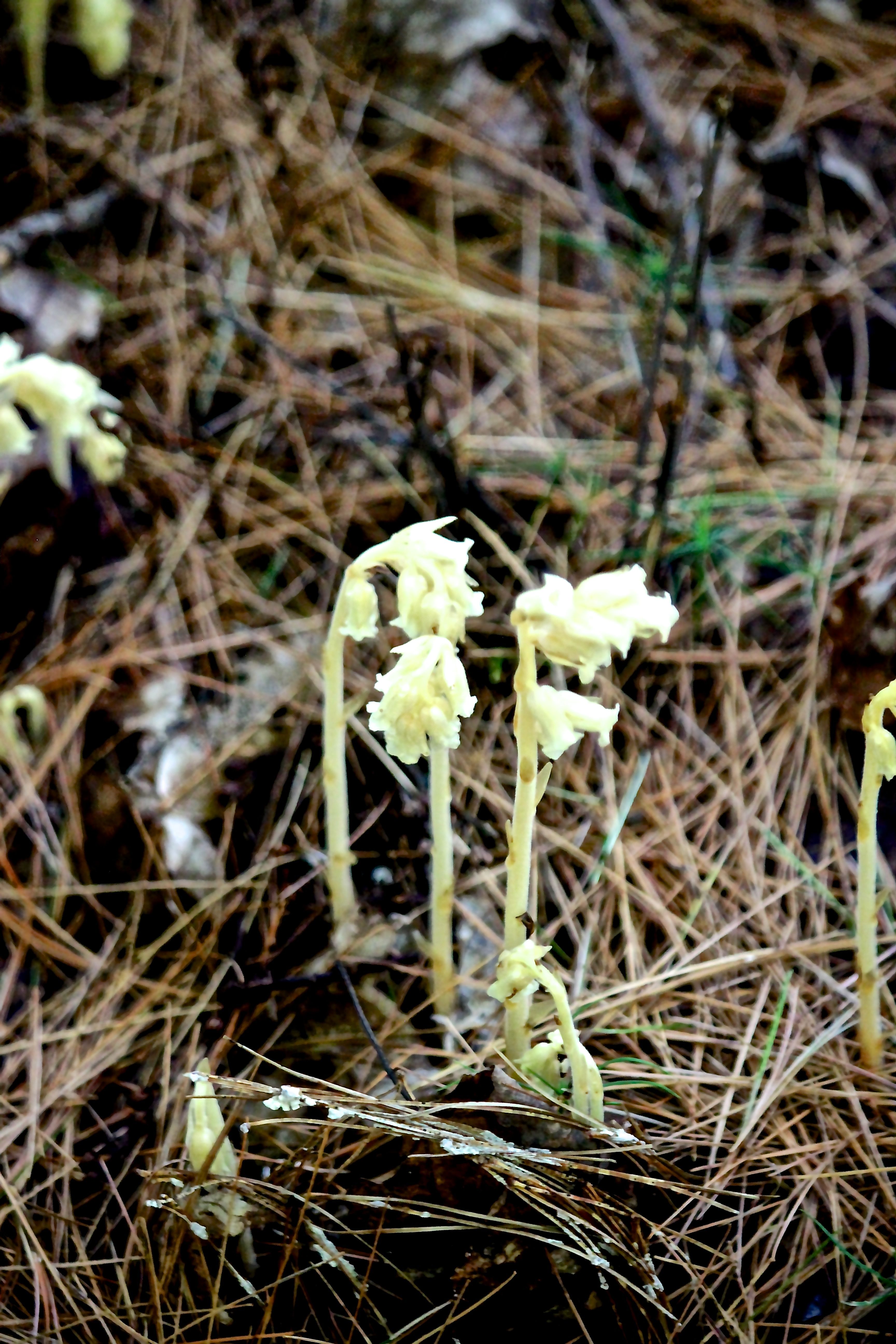
A docent tramp at the Chip Stockford Reserve on Tuesday took a wee bit more than the usual three hours. The loop trail is only about a mile long, but we’re passionate about checking everything out. The parasitic plants were in full bloom, like this Indian Pipe,

pine sap

yellow-flowered pine-sap, and

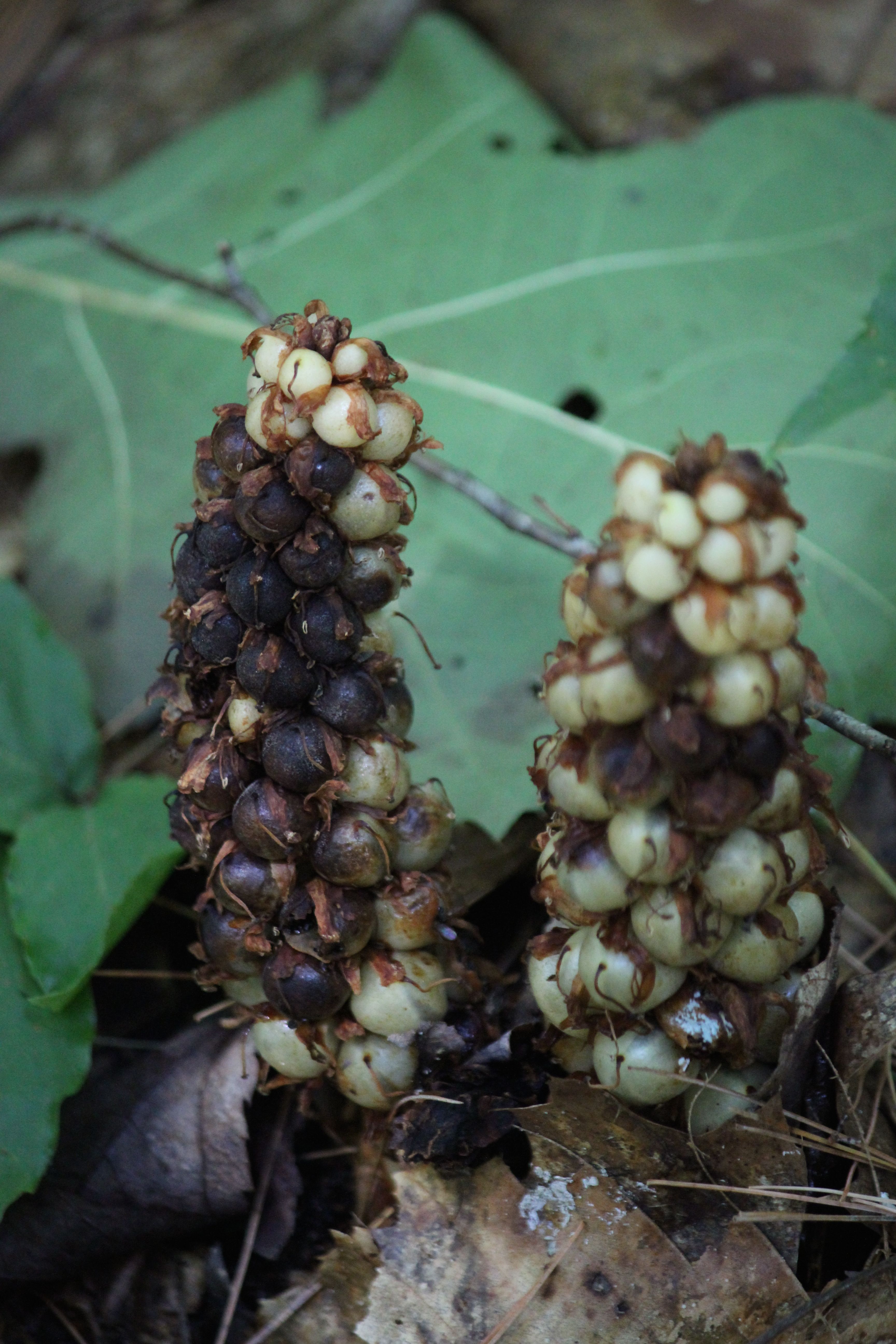
squaw-root

squaw-root. Kind of looks like corn on the cob, doesn’t it? Or a pine cone?

painted turtle

Yesterday, I joined the Lovell Recreation Program for the grand finale to our land trust nature program–a field trip to the Maine Wildlife Park in Gray. Though it can be disconcerting to see wild animals caged, these are here for some reason–and they give us an opportunity to see animals that surround us but are elusive.

me brook trout

What were the kids’ favorites? The turtles and brook trout. Feeding the brook trout especially.

me jf houseme jf house 2

Last night, Brian Fox and Heidi Dikeman, grandchildren of John Fox, hosted a talk for the GLLT about their grandfather and his Yankee ingenuity.  This was John’s house–at the southern end of Heald Pond. Though they thought it funny that I entitled the talk “The Legendary John Fox,” I think it became more apparent as the evening wore on and the stories unfolded that he was indeed a legend in these parts. A magical evening for many who attended.

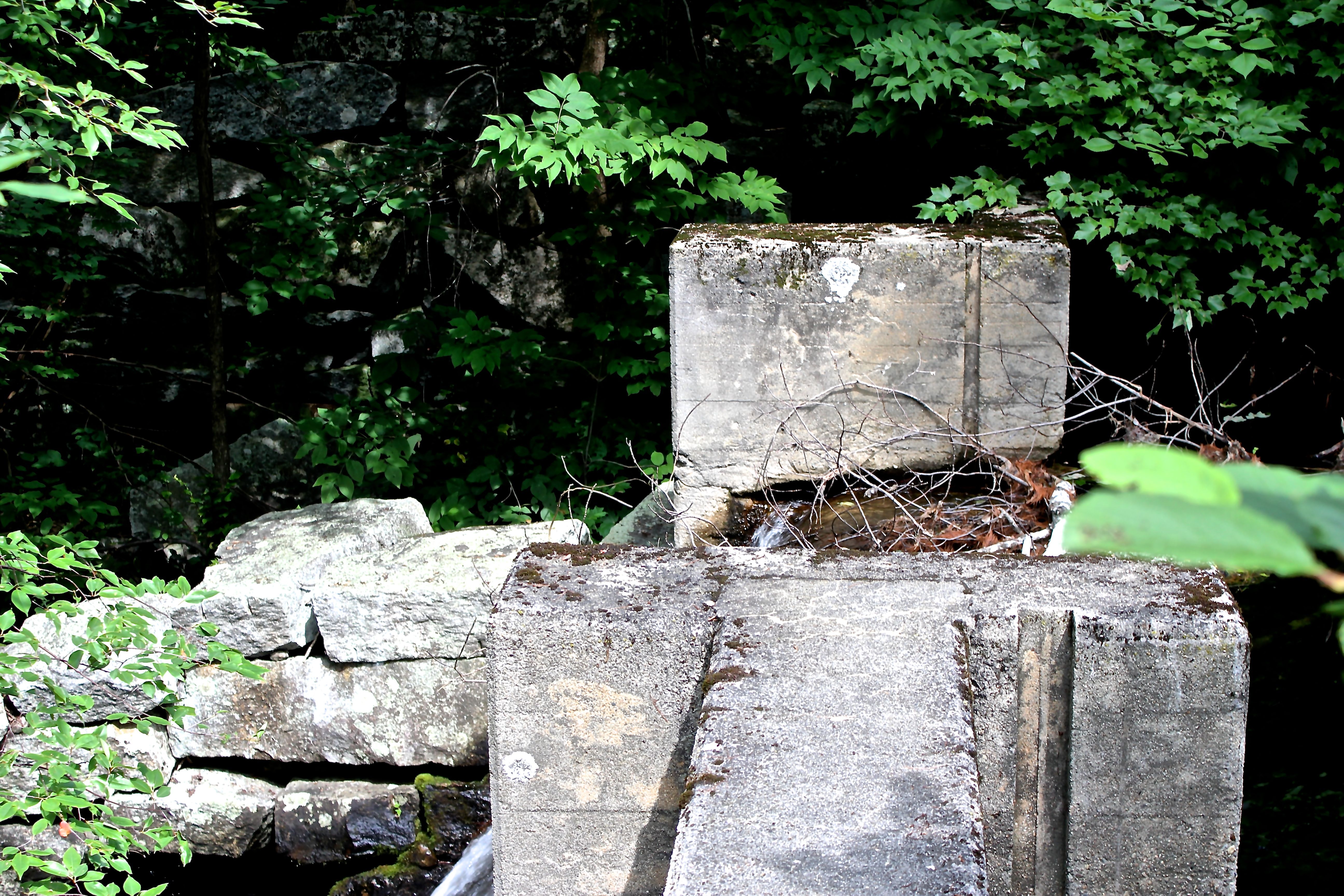
me dam

We returned today to learn more about the mill by John’s house. Another shout out–this time to docent Bob Winship, who shared his knowledge of dams with a large crowd. The rocks–a contrast of age and history.

me beech fern

A third shout out to docent Susan Winship for helping us all learn how to identify ferns, like this beech fern with its lowest leaflets pointing diagonally outward, winged attachment to the mid vein, and growth pattern arching toward the ground.

Pam 2

A final shout out to Pam Katz, who starred in her debut appearance as a docent. :-)

view from otter rocks

We reached Otter Rocks and looked back toward John Fox’s house.

me sr2

My final stop, though the week isn’t over–the Songo River, which is the connection in the chain of lakes–Long Lake, Brandy Pond and Sebago Lake.

me-variable-leaf

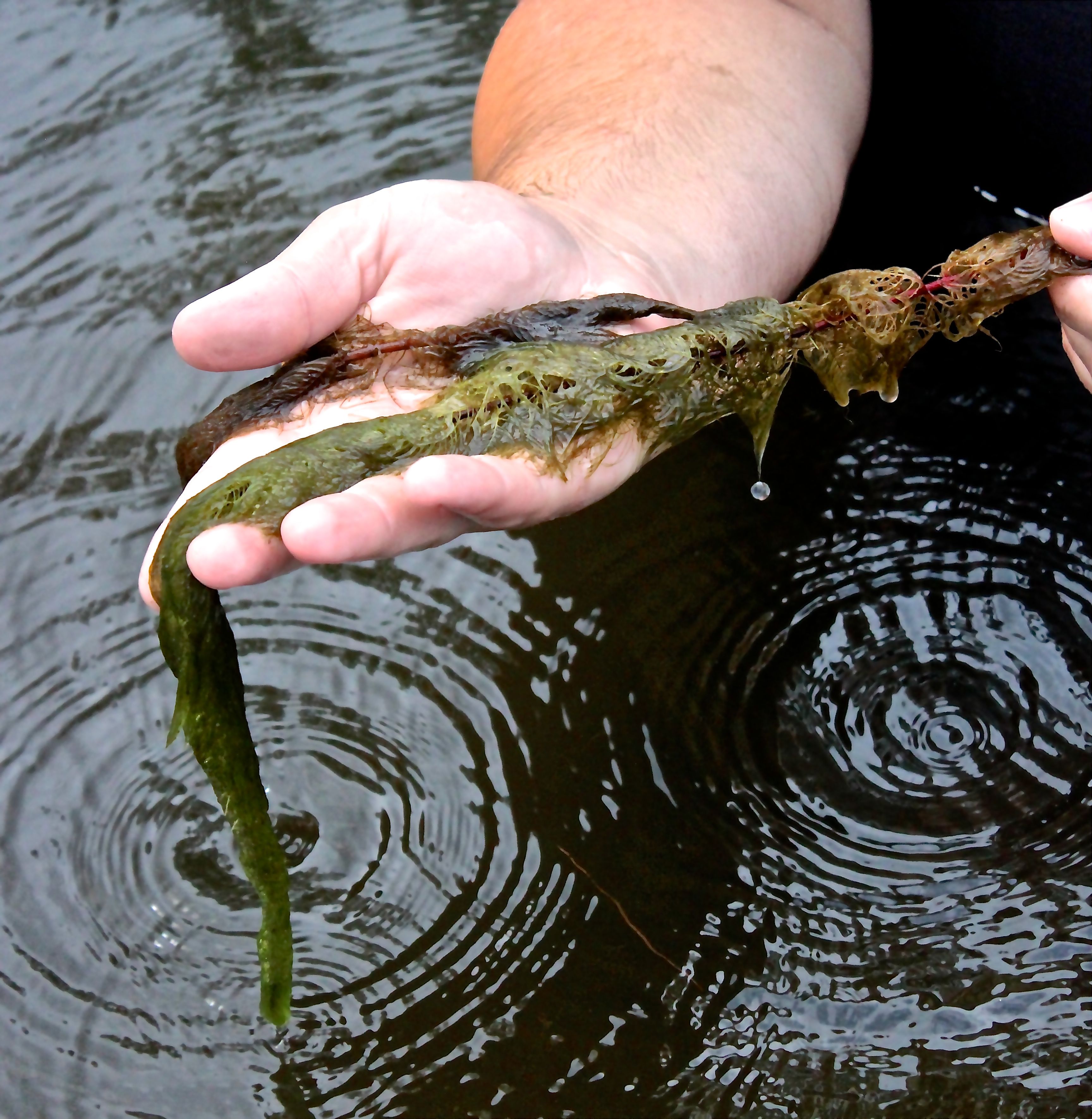
The Songo was the source of a major variable-leaf milfoil infestation that Lakes Environmental Association has been working to eradicate. Notice the red stem? Underwater, it looks similar to our native bladderwort, but that stem is the giveaway.

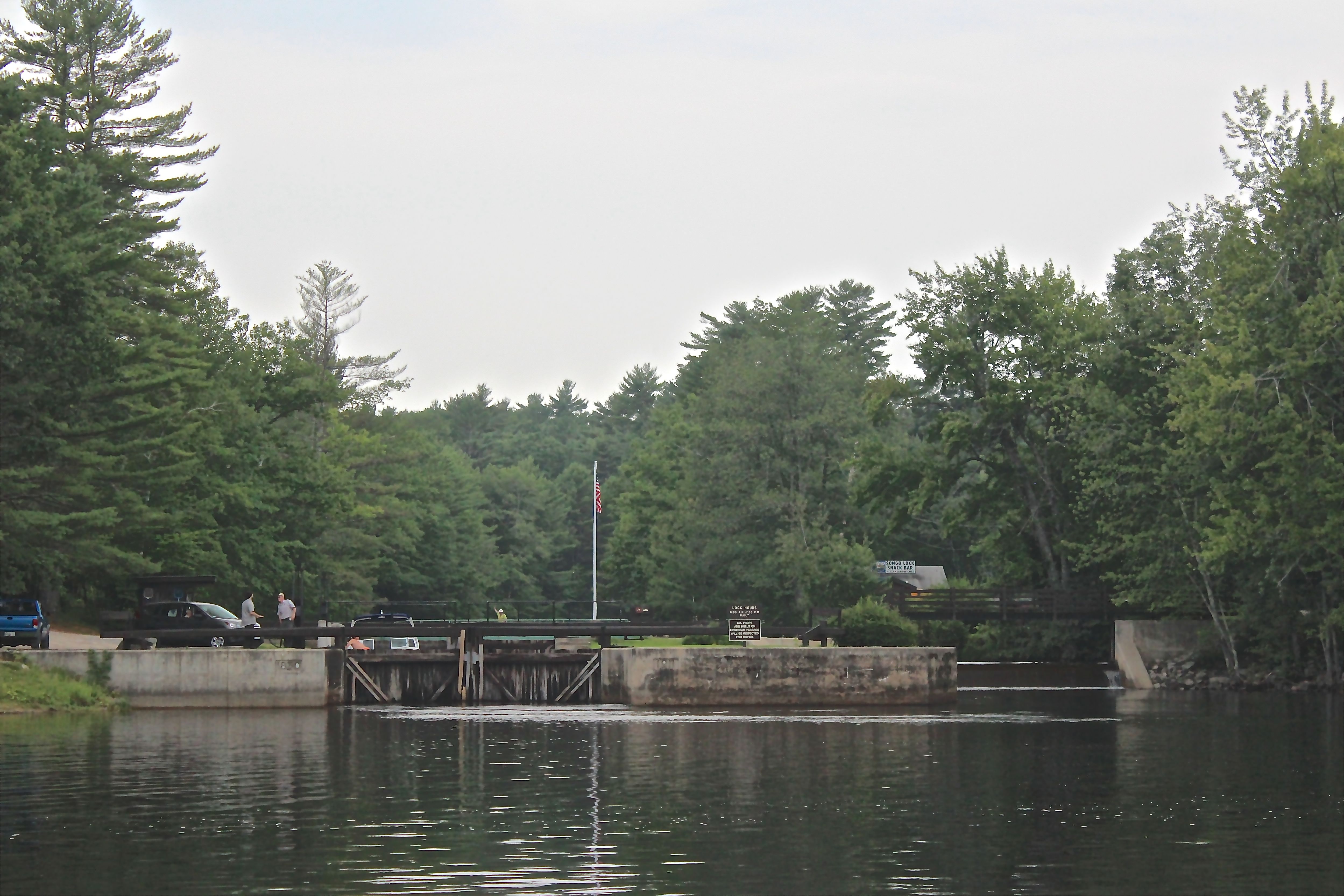
Songo Lock

Among the heavily infested areas–the basin just below the Songo Lock. Today, it’s part of an LEA success story and I get to share that story in a newspaper article.

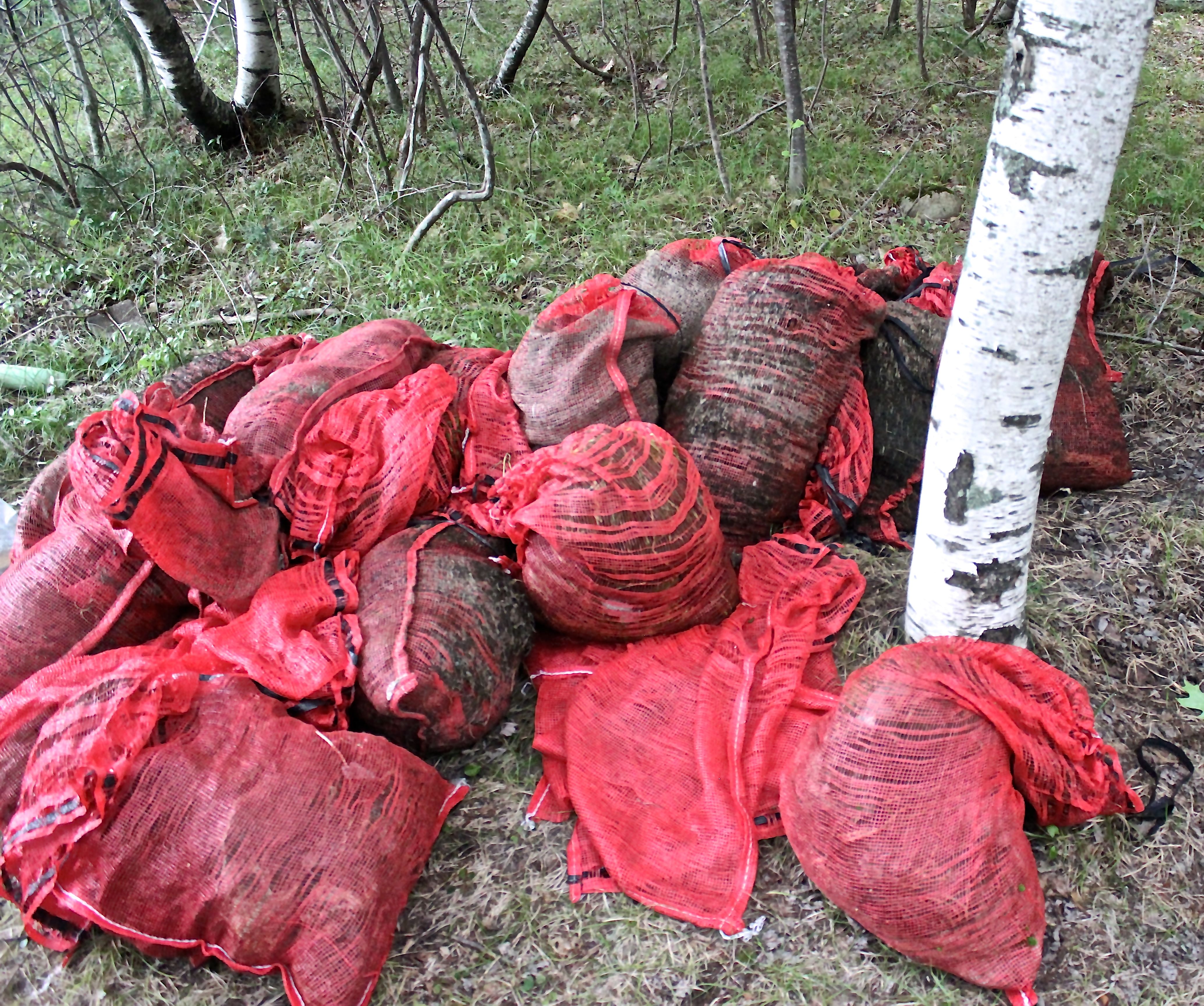
bags of milfoil

These mesh onion bags are filled with milfoil handpicked from the river. But . . . this is nothing compared to the past when the milfoil team used the suction harvester and benthic barriers as their major defense. This pile represents a couple of weeks worth of finds and will warrant a trip to the compost pile soon. In previous years they made daily trips to the compost pile.

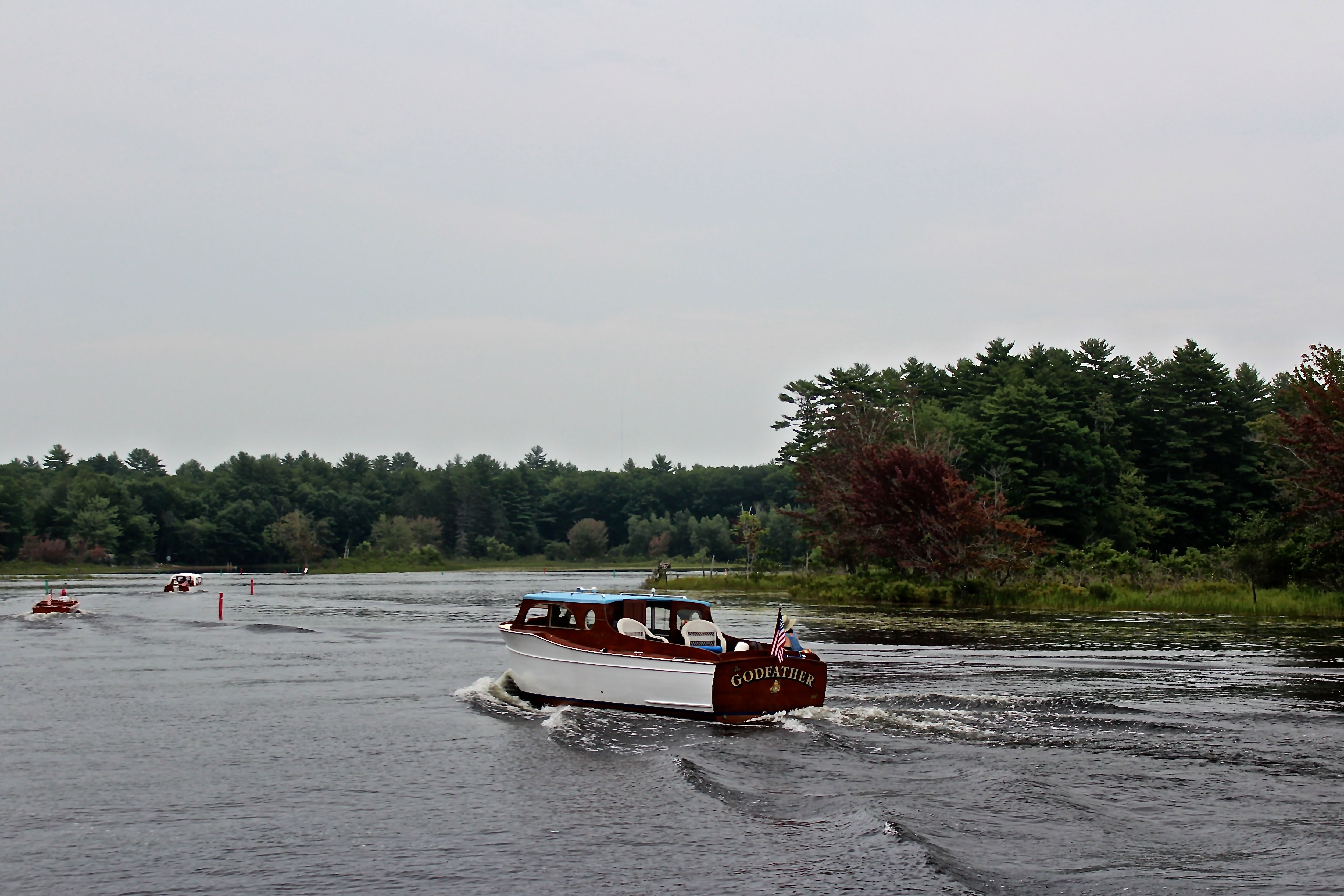
me classic boats

Before leaving the river, we saw a couple of wooden Chris Crafts travel by–enroute to Naples for this weekend’s Antique and Classic Boat Show on the causeway.

me land trust sign

That being said, come to Lovell on Friday afternoon for Bonny Boatman’s presentation on the Uncommon Common Loon, Friday night for the annual education meeting featuring Geri Vistein, conservation biologist for Project Coyote, and on Saturday for the 2nd annual Family Fun Day. Follow the signs.

Summer may be flying by, but we’ll show you how to get out and enjoy it.

Not All Who Wander Are Lost :-)

path 2

Today, I wandered along the boardwalks at  Holt Pond Preserve in South Bridgton with Adam Perron, education director of Lakes Environmental Association, and Amy Kireta, a PhD student from UMaine. Amy plans to help Adam develop climate change curriculum for LEA. Exciting stuff.

We chatted as we walked, but frequently stopped to look and listen. Check out our finds.

blue flag iris

Blue Flag Iris is beardless (no hairs on its petals), unlike the irises that grow in my garden.

sheep laurel

The Sheep Laurel beginning to bloom. This is an interesting and beautiful plant, with its flowers blooming below the new leaves. I love how the leaves droop.

water lily

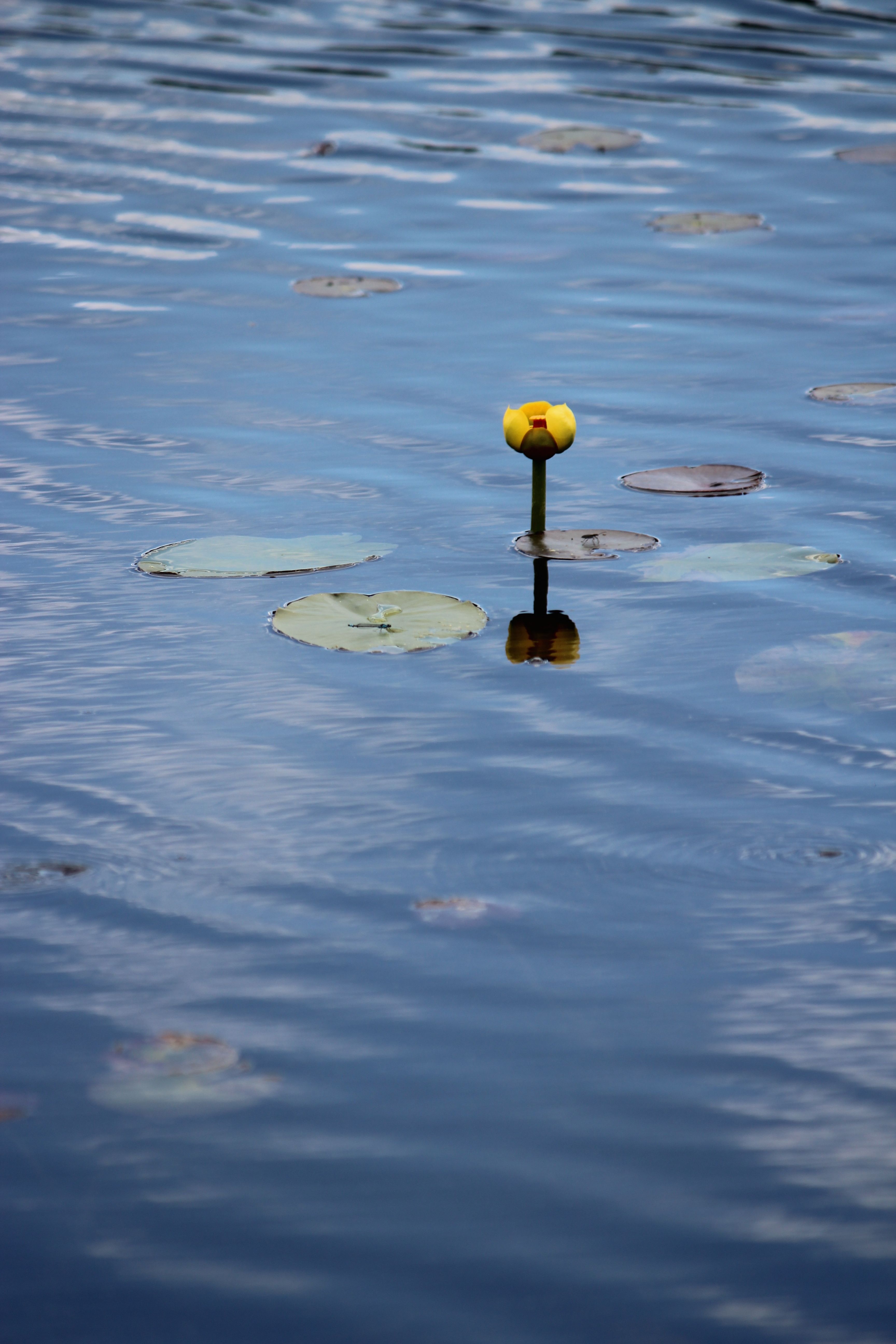
Another new bloom–the ball-shaped flower of Spatterdock.

blatterwort

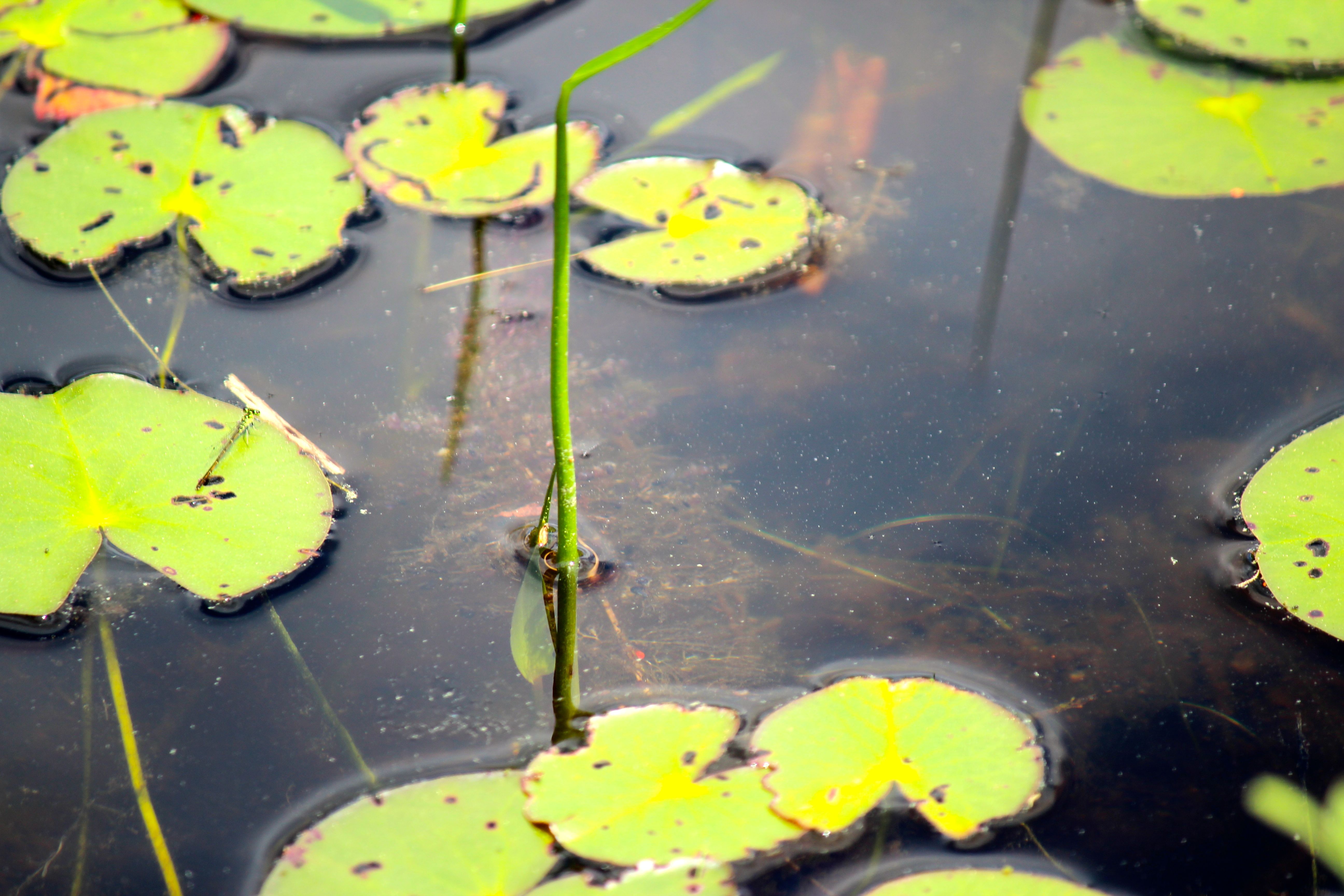
Though our eyes were immediately drawn to the leaves of Fragrant Water Lilies with their pie-shaped notch, we could see a submerged blatterwort–one of the carnivorous plants of the preserve. They feature small blatters that act as vacuums and suck up tiny aquatic animals in order to take advantage of their nutrients.

pitcher plant

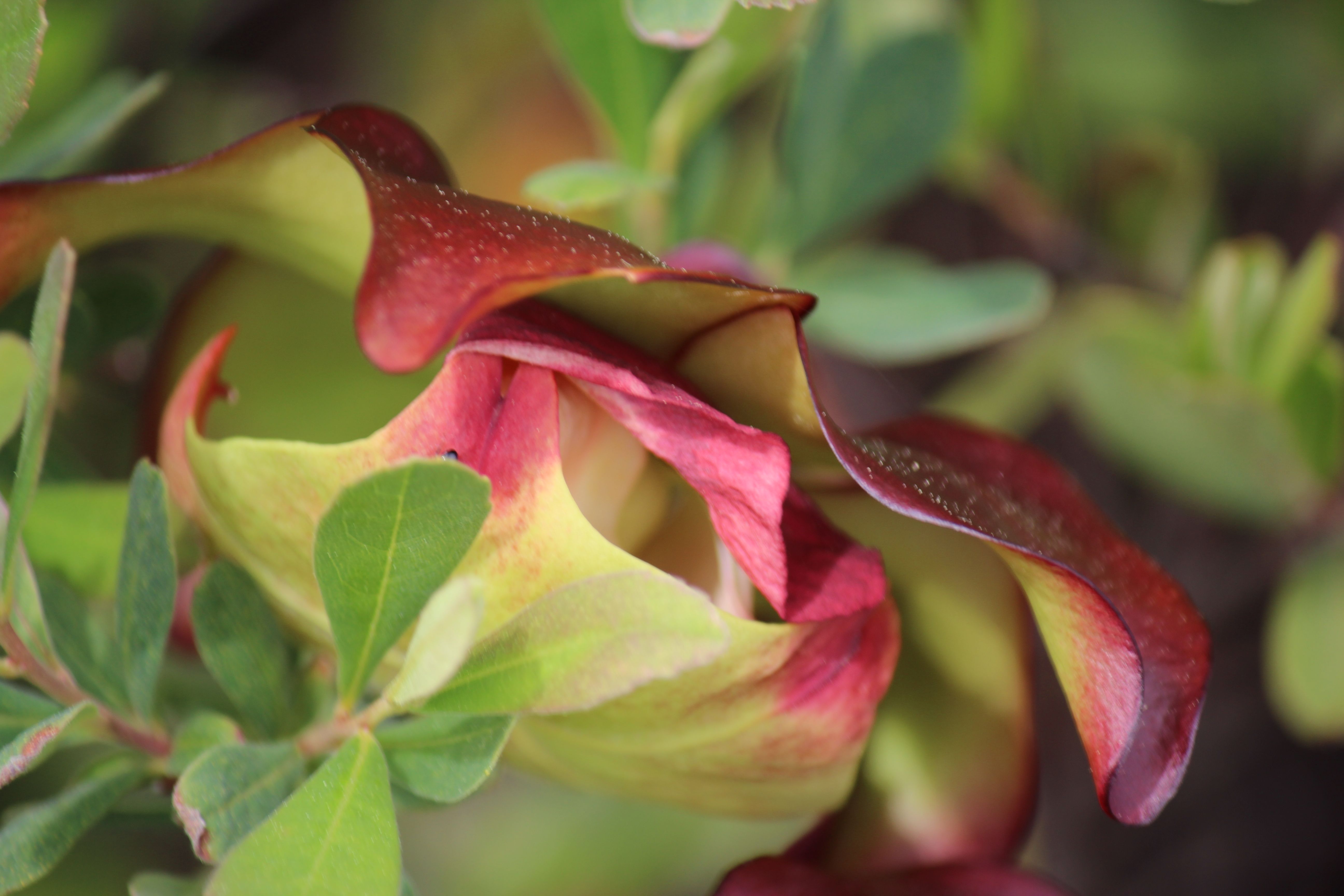
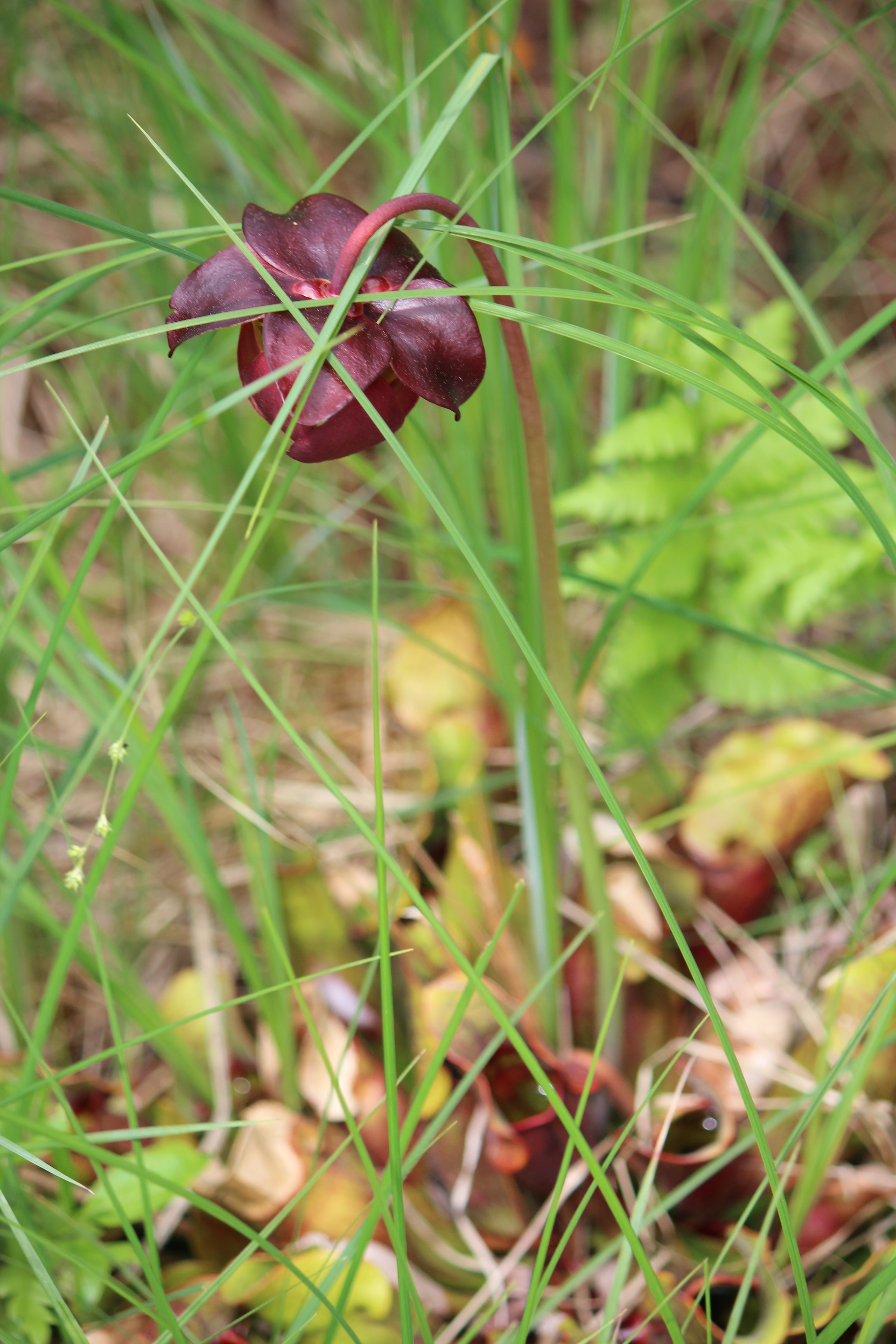
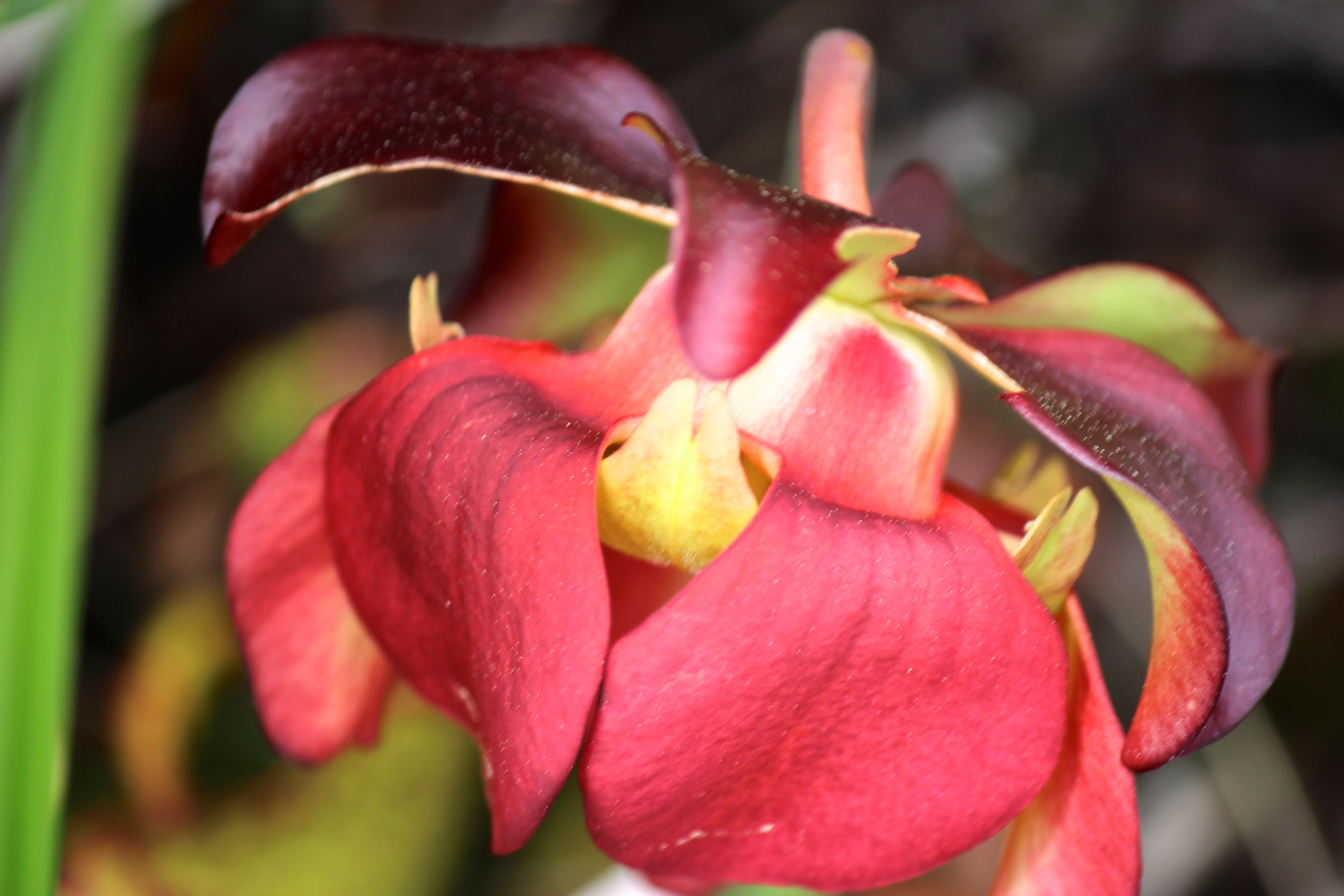
Speaking of carnivorous plants . . . the Pitcher Plants are flowering.

pitcher plant flowering

The colors are enough to suck me in.

ppf

 ppflower

While the Pitcher Plants make themselves known in any season, another carnivorous plant barely announces its presence on the quaking bog.

sundew

The Round-leaf Sundew. Preferring the acidity of the spaghnum moss, the hairlike tentacles  on each leaf are tipped with glistening droplets that shout a welcome message to passing insects. Those droplets are actually quite sticky and when the tendrils of hair detect that a prey has stopped by, they curl inward and wrap around the insect–then digest its nutrients.

There aren’t many nutrients in a spaghnum bog, so these plants have figured out how to meet their own needs–another reason to be in awe.

It’s stuff like this that makes me think J.R.R. Tolkien could have found inspiration right here.

Though we didn’t stray off the beaten path today, that is one of my favorite things to do. But I’m glad we backtracked rather than taking Amy back to the parking area via a different route because . . . we encountered another hiker who stopped to ask us some questions. As she talked, some things she said made me wonder if she was someone who recently commented on one of my blog posts. A friend in Connecticut has said since high school that I can be blunt (that’s you, C.W.N.) and I probably was today when I blurted out this woman’s name. I’m so glad I did. I was right–it was her. And I hope we can make a connection to wander together some time because it sounds like we have walked in each other’s tracks more than once.

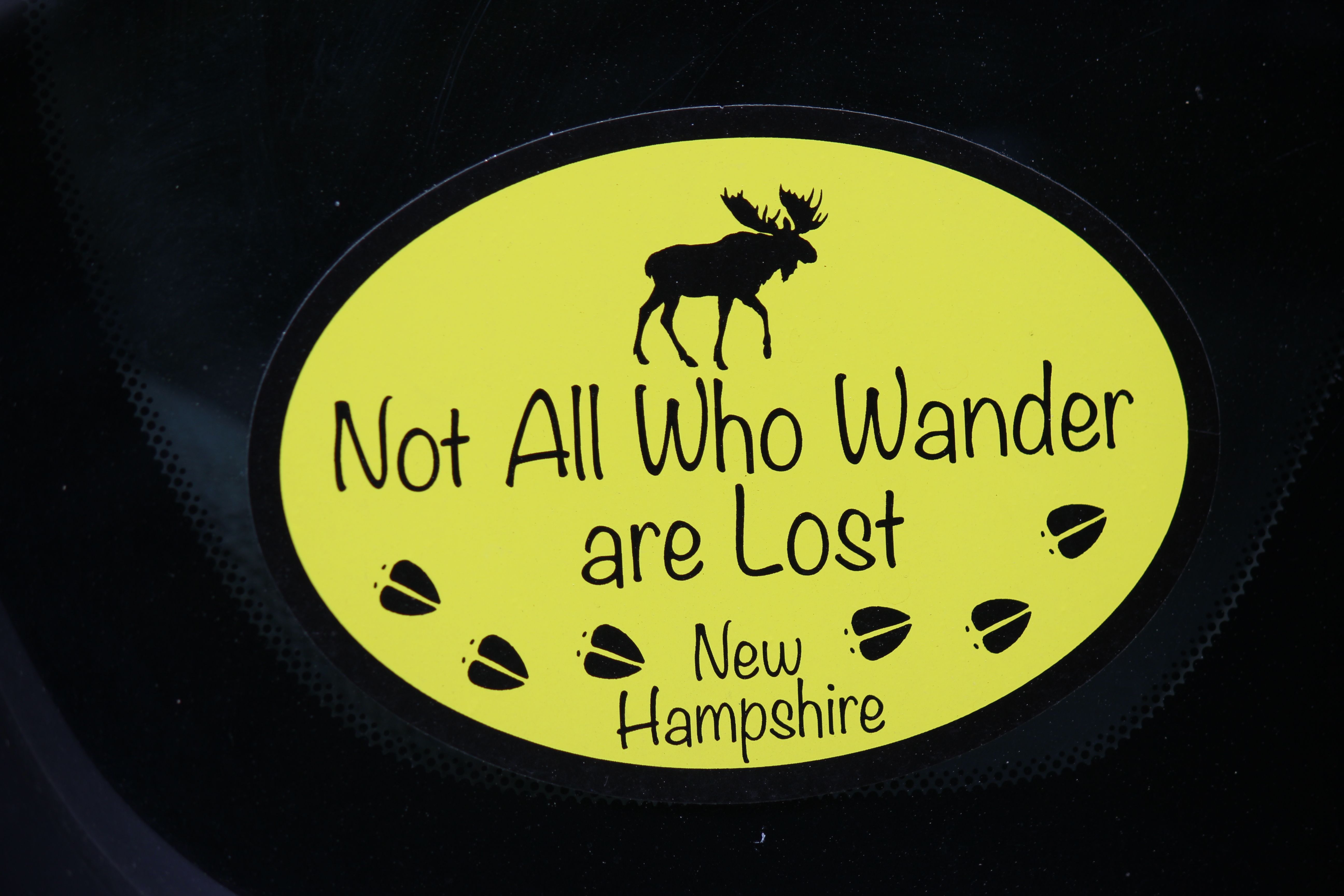
Not all who wander are lost

I knew your car when I saw this, E.

IMG_4177

Years ago, I paraphrased it. Wander and wonder. You never know what or who you might stumble upon.

Soaking Up Solitude

It just so happened that my guy and oldest son had to work today and our youngest is exploring Chicago for a few days before heading home for the summer. So, on this Mother’s Day, I did what I do–went for a hike by myself.

kiosk

Thanks to the efforts of Loon Echo Land Trust, and the people who support this organization, there is a network of trails that loop around and over Bald Pate in South Bridgton. Initially, the land was purchased from a paper company to protect it from becoming the site of a TV tower. The Bald Pate Mountain Preserve encompasses 486 acres and has 6.7 miles of trails. I covered most of them today.

Moose Trail sign

The Moose Trail was at times dry and other times wet. Though this sign directs hikers to the Beech Thicket, really, much of the lower part of the mountain is covered in beech–an indication that the land was previously disturbed.

horsetail

Along the way, I found Woodland Horsetail, an Equisetum. The whorled branches apparently reminded those who came before of a horse’s tail.

hobblebush

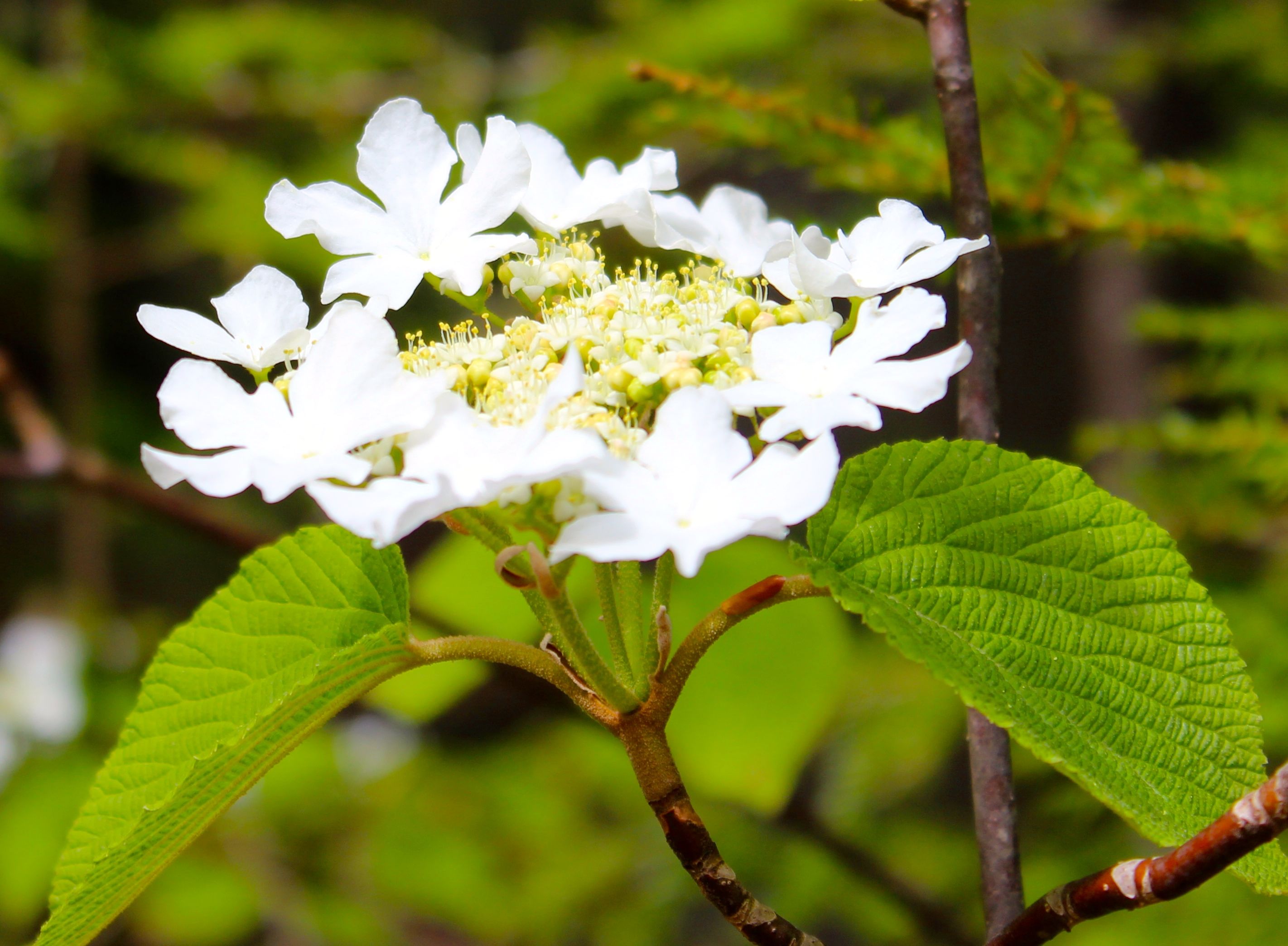
A few Hobblebush Viburnums were in full bloom. One of the extraordinary things about this plant is that the showier outer rim of flowers are sterile, while the inner flowers have both stamens and pistils. Today’s lesson–male flower part, stalk is called filament, pollen producing sac at tip is the anther, together they form the stamen(stay men); pistil–female flower part, the stigma at the top receives the pollen, which is sent down the style, a tube-like structure, leading to the ovary, where the potential seeds or ovules are located. (She’s a pistil) Phew! Got through that discussion.

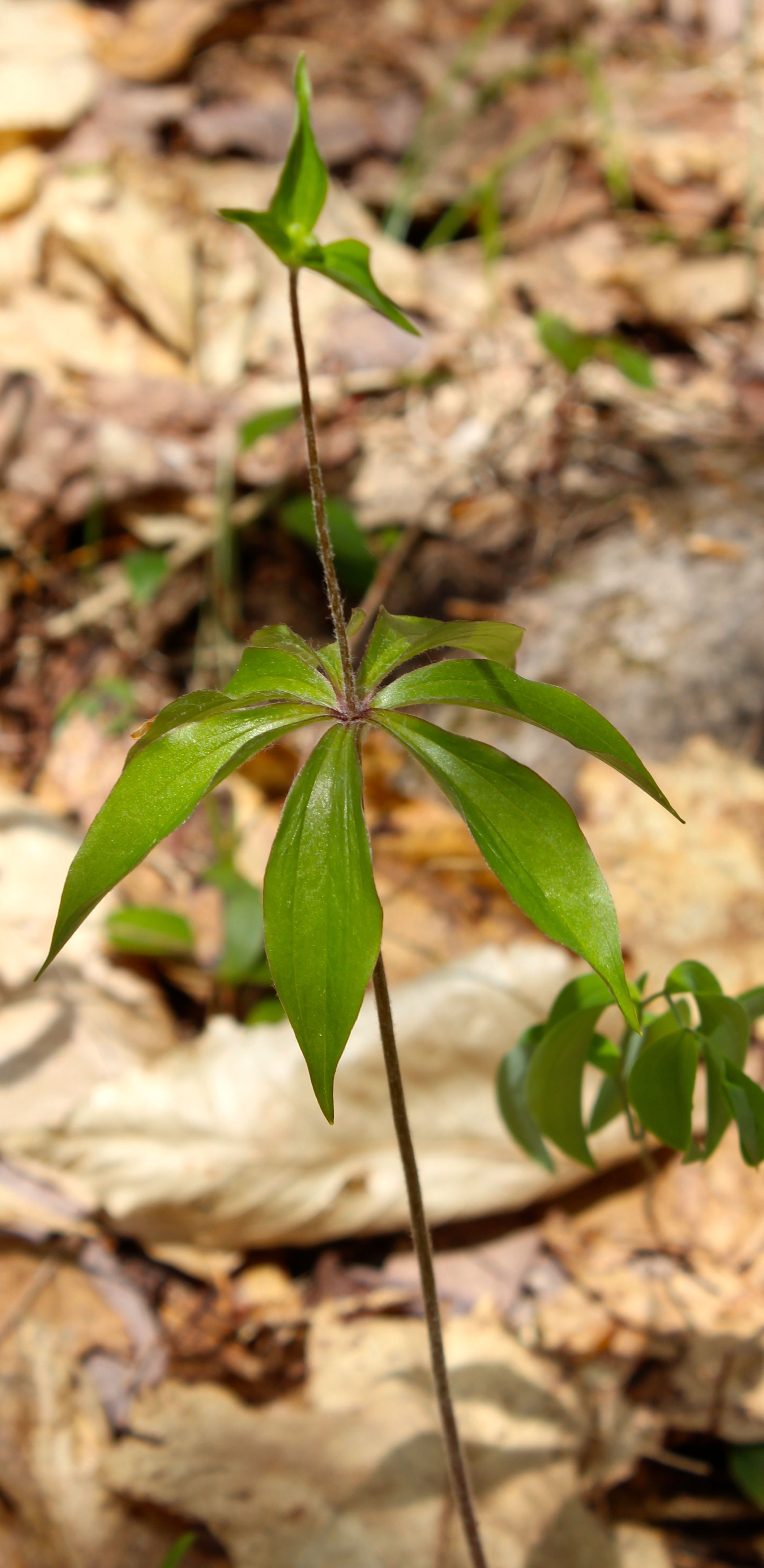
Indian Cucumber

Indian Cucumber Root is the double-decker of the plant world. When it has two tiers, such as this one, it has enough energy to produce a flower. And the root is edible. This I know first hand. I’m not the forager some of my friends are, but the root really does taste a bit cucumbery.

wild sasparilla

Another plant with an edible root, Wild Sarsaparilla was used as a tonic and was the source of root beer–until we learned how to make it out of artificially flavored syrup.

trail marker

I followed the squiggly trail marker to the summit, hiking from the Moose Trail to the South Face Loop Trail and continuing past the Pate Trail. The trail is well marked and maintained. On the climb up, I kept looking for my favorite signs.

bobcat

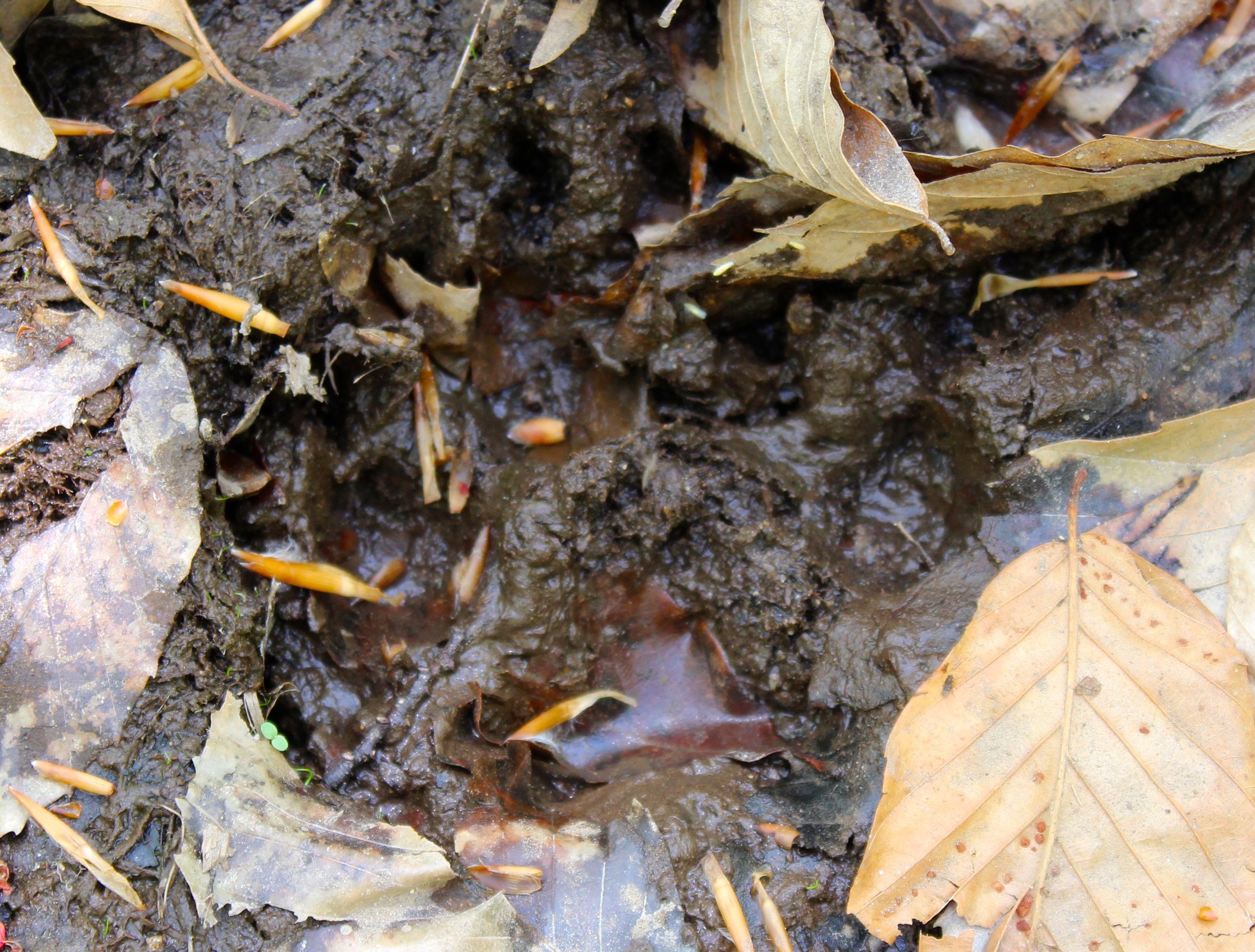
Found some. Bobcat prints in the mud.

coyote scat--apple

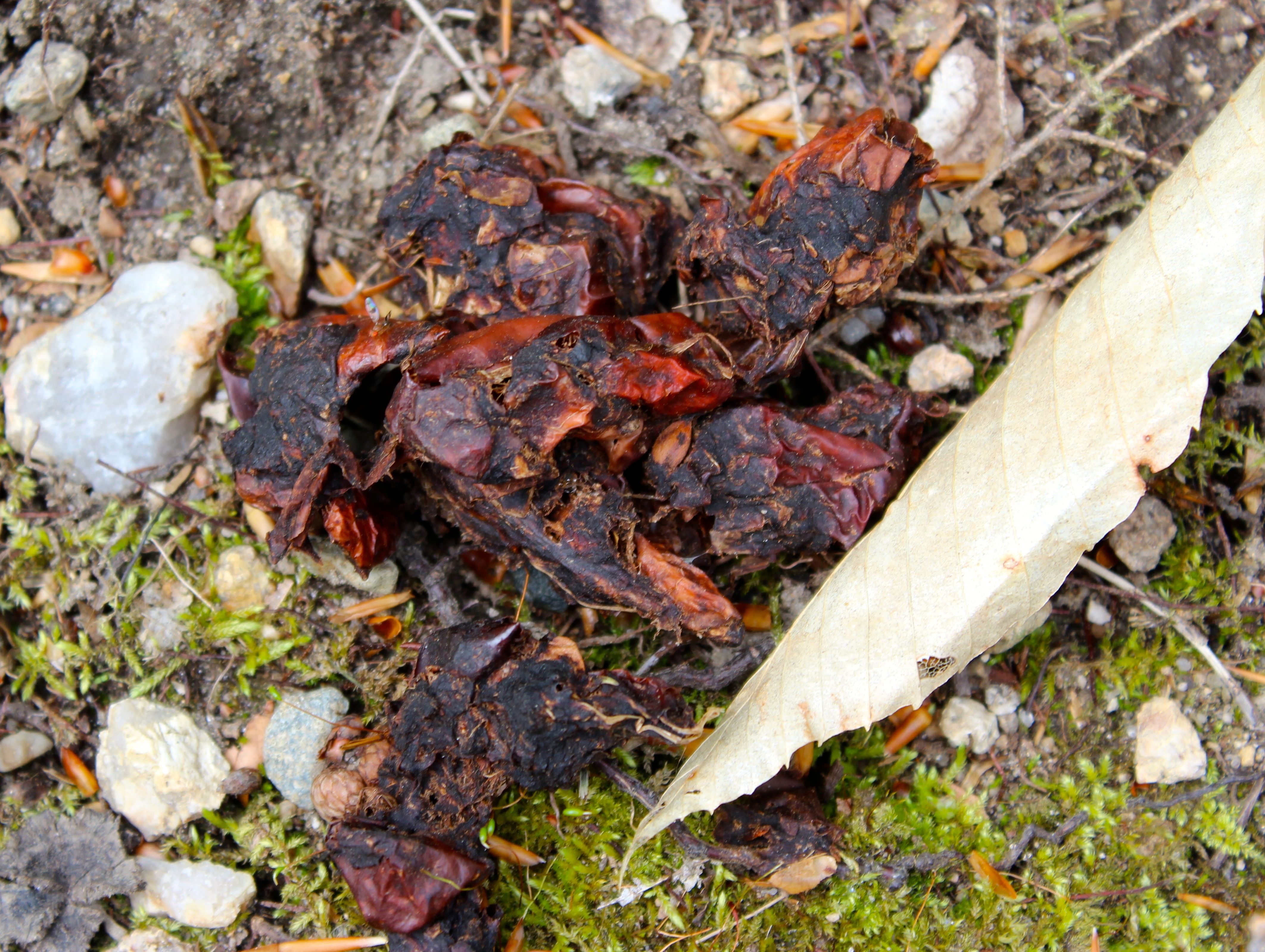
Coyote scat filled with apple skin and seeds. The property abuts an orchard. In fact, at Five Fields Farm, winter activities include snowshoeing, cross-country skiing and dog sledding on a network of trails through the orchard and onto the preserve.

coyote

A coyote print dried in the hardened mud.

garter snake

And a garter snake slithered away from me. I actually saw another later on.

beech nuts

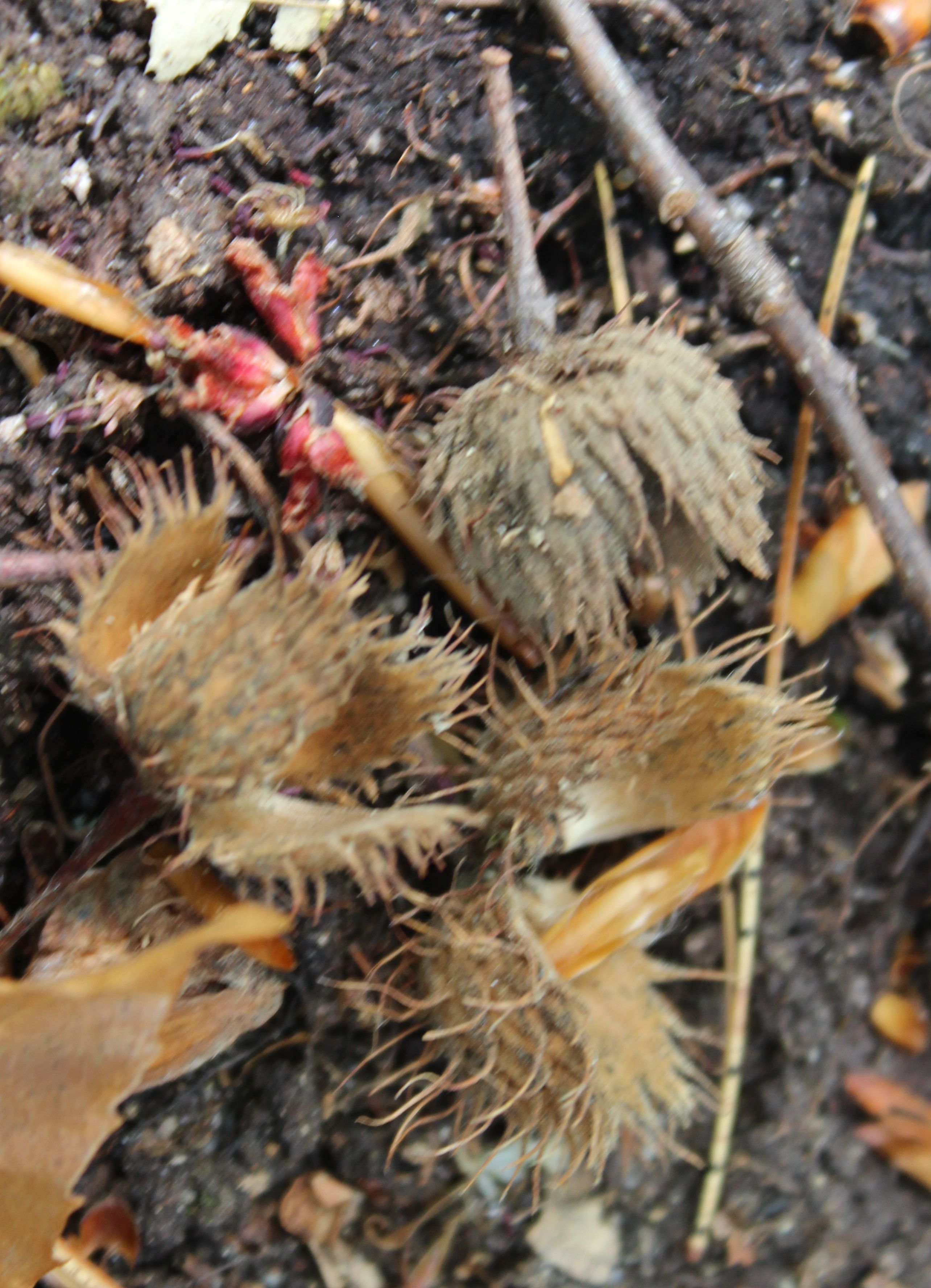
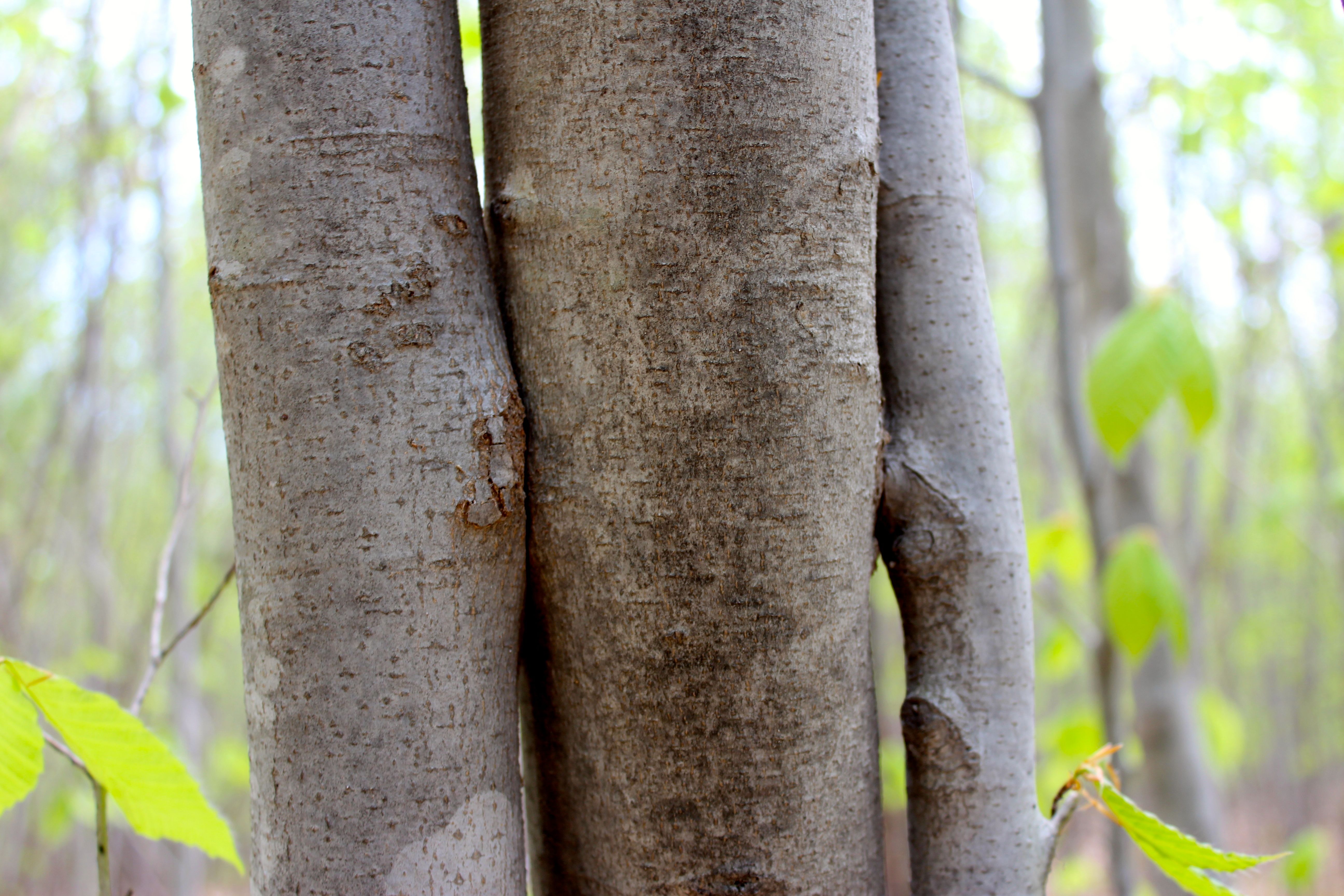
I found beech nuts on the trail, but no bear claw marks, which surprised me considering the number of mature beech trees. And interestingly, while some of the beech trees suffer from infection due to the beech scale insect, many are quite healthy.

initials

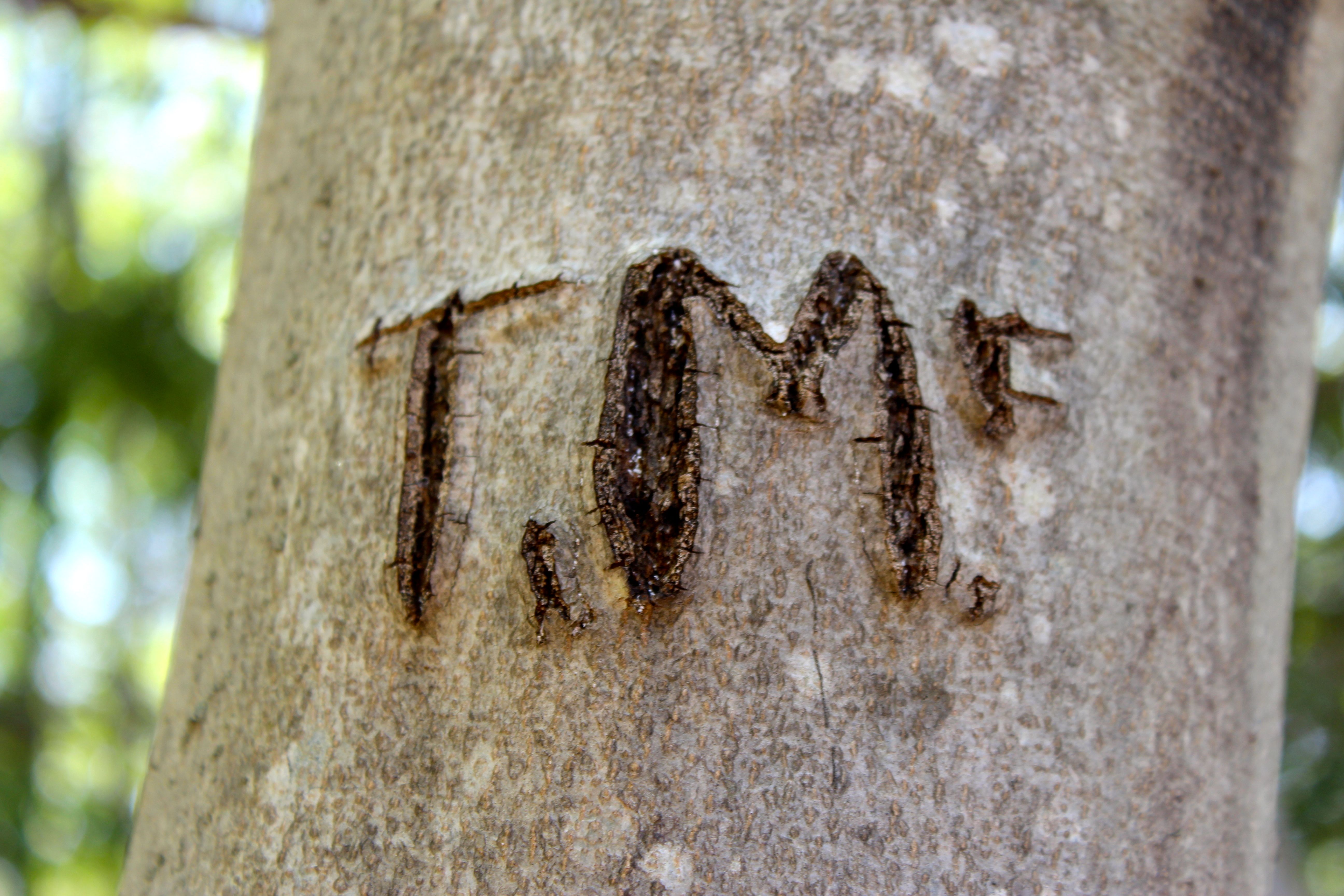
One black bear did carve its initials into bark. We only raise intelligent black bears in these parts.

PeabodySebago

Ascending via the backside of the ledges, I soon came to the view of Peabody Pond and Sebago Lake beyond. The only other people I saw was a family of five at the summit.

pp3

Pitch Pine trees are the most fire resistant in Maine and the summit features a community of these.

pp needles

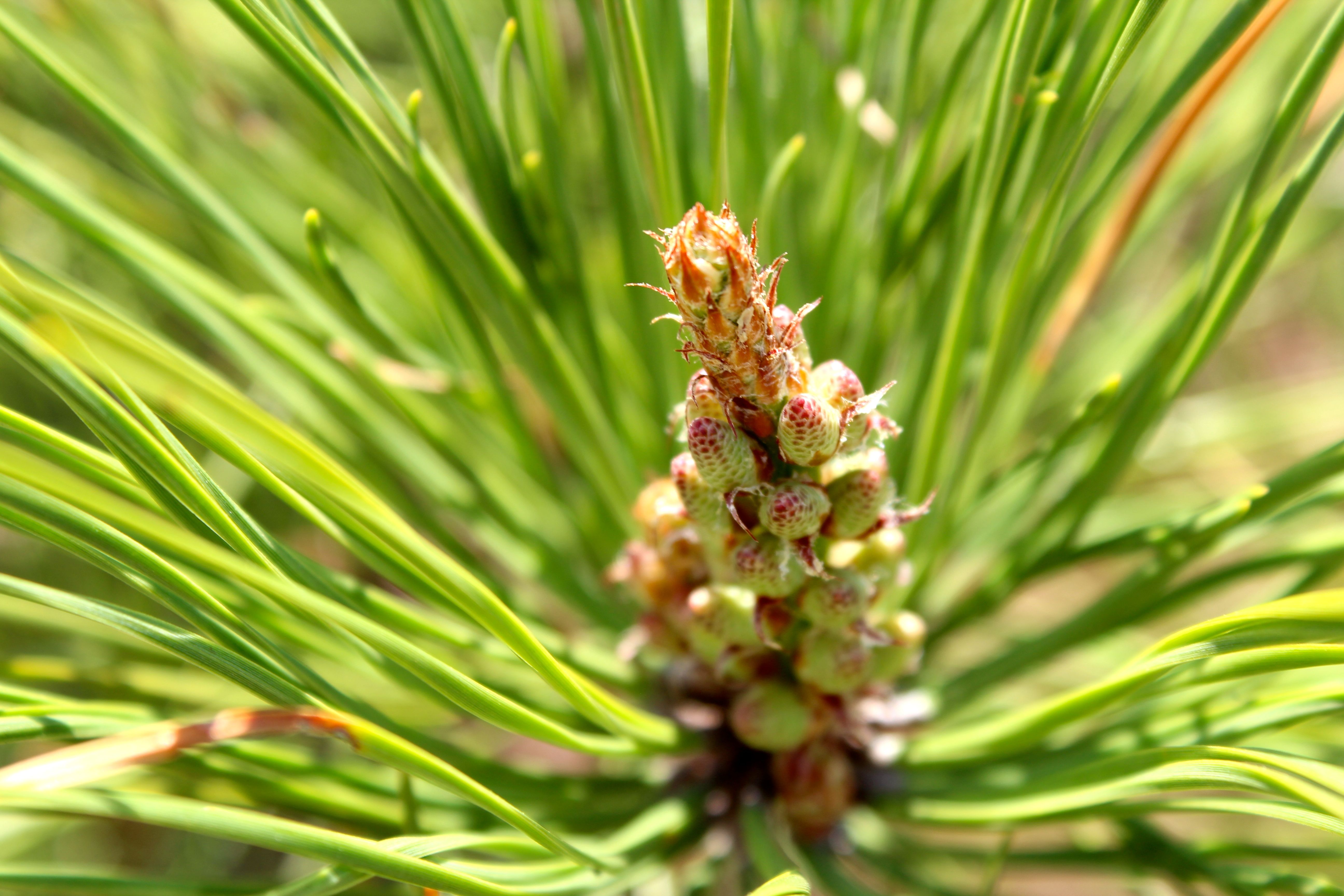
While White Pines have a bundle of five needles, Pitch Pines have three in a bundle.

pp cone

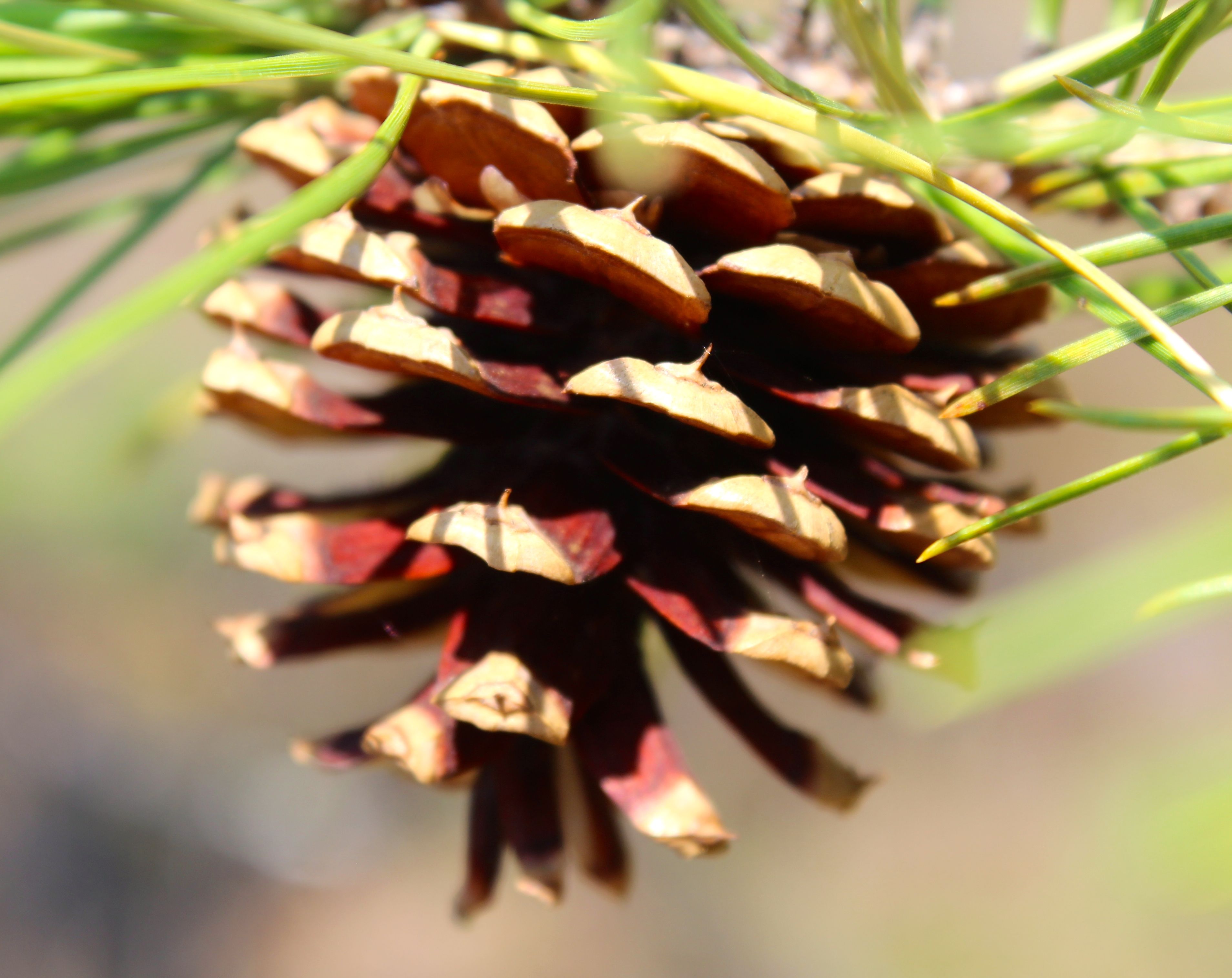
And prickly-scaled cones.

lichen on granite

The “bald” mountain top is the reason I am who I have become. Being outside and hiking have always been part of my makeup, but when our oldest was in fifth grade, I chaperoned a field trip up this mountain that changed everything. The focus was the soils. And along the way, Bridie McGreavy, who at the time was the nature educator for Lakes Environmental Association, sat on the granite surrounded by a group of kids and me, and told us about the age of the lichens and their relationship to the granite and I wanted to know more. I needed to know more. That was the beginning and I give thanks to LEA, Loon Echo Land Trust, the Greater Lovell Land Trust and Maine Master Naturalist Program for continuing my education.

Foster pond

There was so much more to see, like this view of Foster Pond from the Foster Pond Lookout Trail.

bb1

And these bell-shaped flowers. I’ll be back when they turn to fruit. There will be plenty to pick.

3 beeches

I may have been soaking up my alone time (or maybe that was just sweat–it was hot), but my thoughts were of my three guys.

Happy Mother’s Day to all. As one of my college friends wrote the other day, “whether we are mothers to children, aging parents, pets, or all of the above, we deserve to celebrate!!” Love that sentiment, BMD :-)

And I love that you’ve taken the time to wonder along with me. See, I wasn’t alone after all.

Speed Date

dunning bridge

Some Mondays we only have time for a quick trek. Such was the case today, so we walked down the  street and headed off on the trails in Pondicherry Park. We actually exited a couple of hours later via this bridge, but it’s the entrance most people use and a work of art. The Bob Dunning Memorial Bridge was built by master craftsmen and women, family and friends to honor Bob, himself a master craftsman who was taken from this world much too early. One of my favorite  features is that each of the sixteen crossbeams was created from a different tree species and the bark was left on all. For my Maine Master Naturalist capstone project, I created a brochure and slide show to help others identify the trees. The slide show is available on the LEA Web site and the brochure is available at the kiosk by the bridge (when I remember to fill it. My guy pointed out that it’s empty again–tomorrow, tomorrow.)

bittersweet

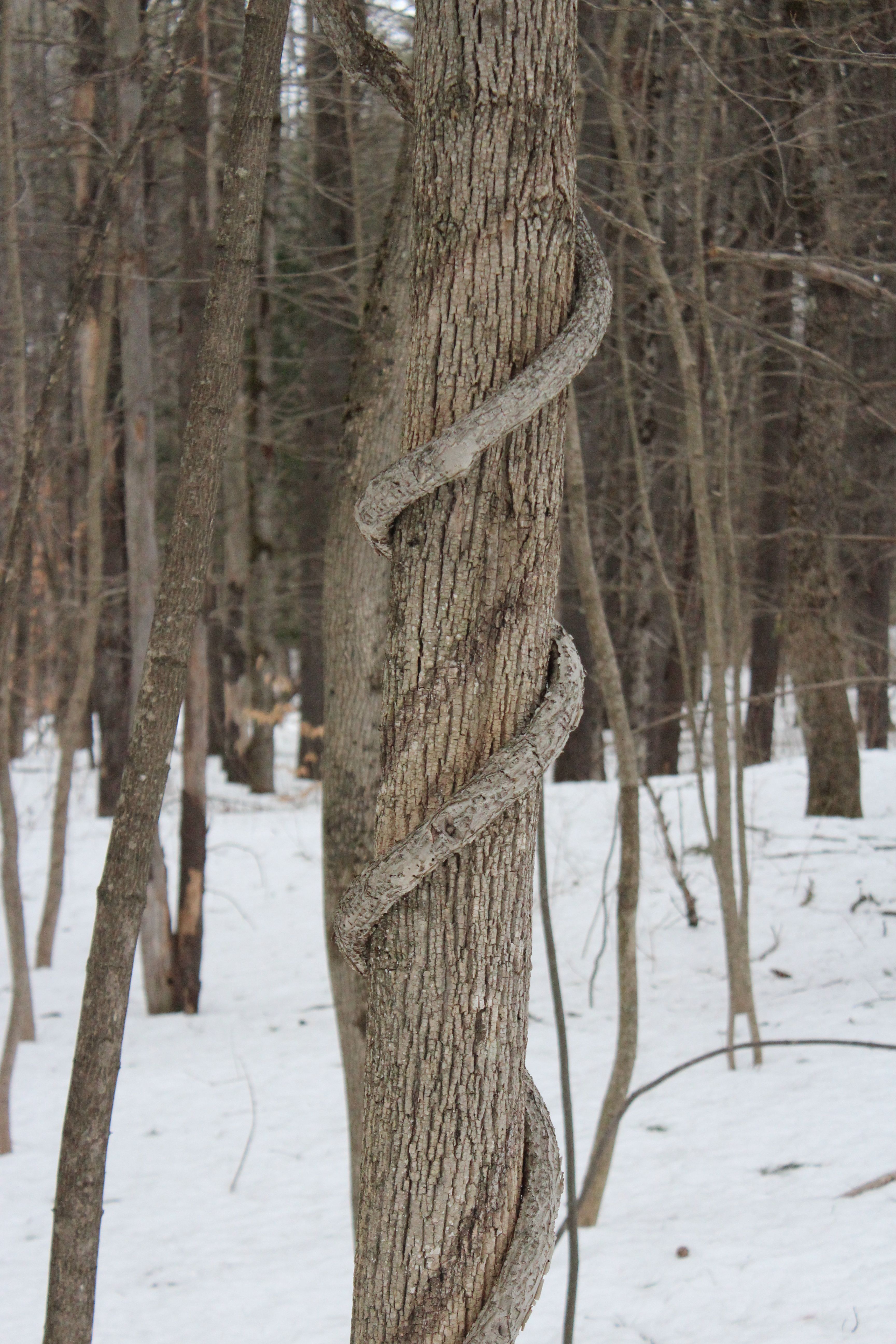
I know it’s an invasive species and this photo proves it, but I didn’t realize that for years. I used to cut it in November and use it for decorations. This is a bittersweet vine. It does make for an interesting scene. And provides the birds with lots of berries . . . which, um, provides the park and town with more bittersweet.

bittersweet up close

A closer look.

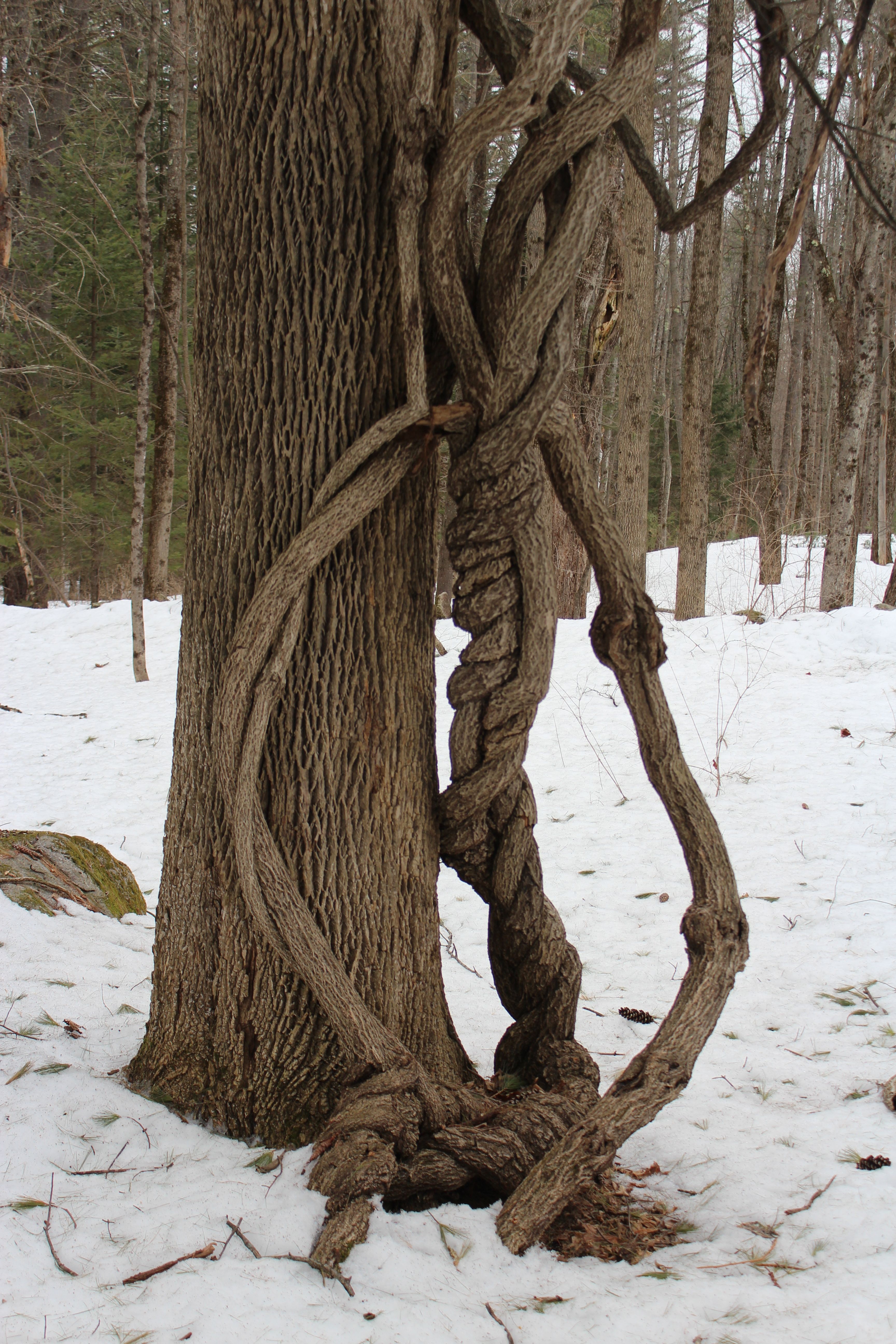
bittersweet on ash

It’s got a grip hold, that’s for sure.

MLSC1

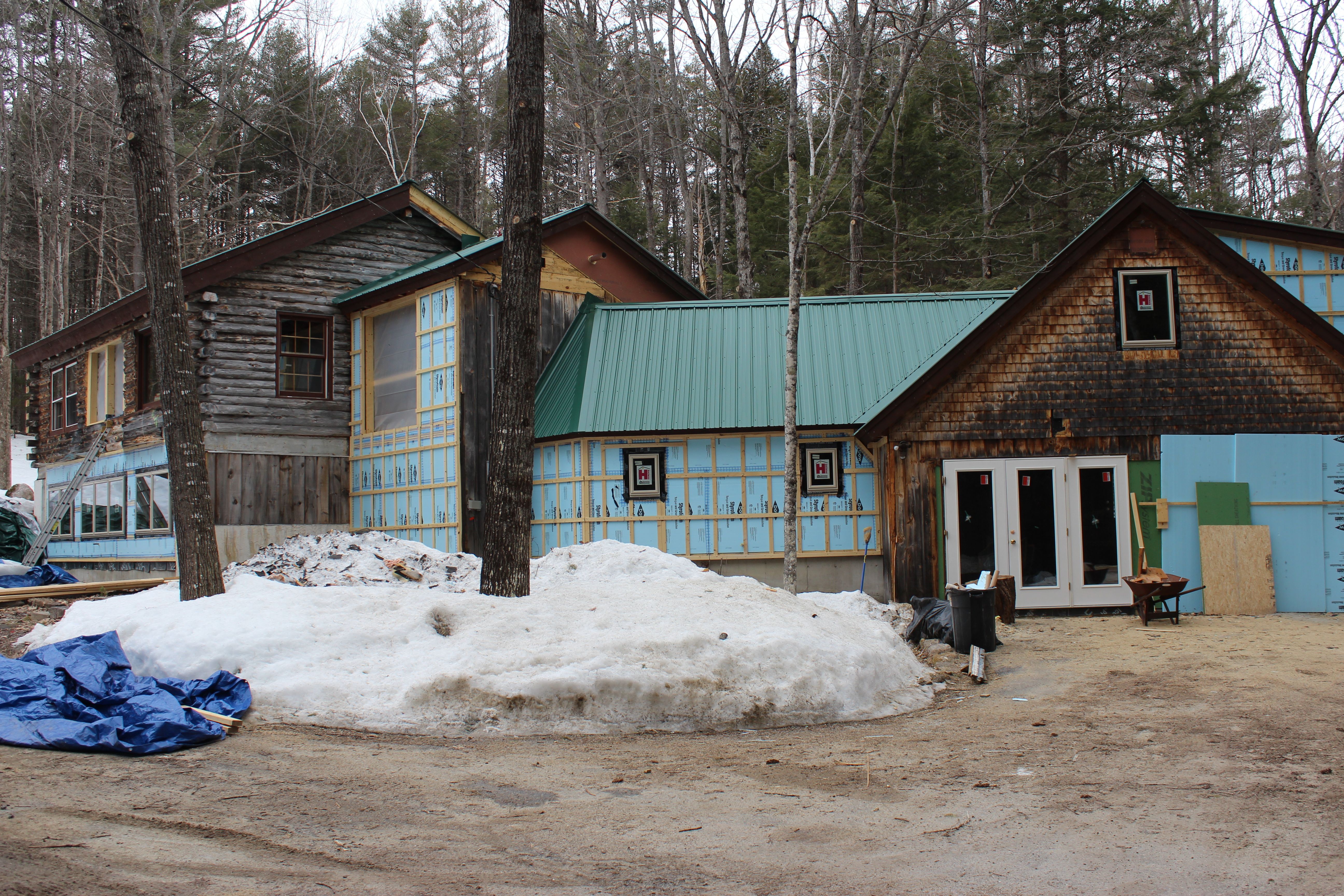
Because it’s too early for leaves, the new Maine Lake Science Center stands out among the trees. This is a pet project of LEA (Lakes Environmental Association), where yours truly serves on the Board of Directors.

MLSC2

Last year, LEA purchased a sixteen-acre lot with an existing building adjacent to Pondicherry Park. The building is being renovated to serve as researcher housing, a meeting room, lab, education center and a park welcome center.

This is destined to become a hub for world-class lake research by providing support to researchers in Maine and beyond who come to study our lakes. While Executive Director Peter Lowell will continue to head LEA, Dr. Bridie McGreavy will serve as the director of the center. I’m tickled about that because she has always been one of my mentors. In fact, she taught me the joy of sniffing red fox pee. Yup, it doesn’t get any better than that.

MLSC3

We are the Lakes Region of Maine, and the lake science center will serve as the voice of change. We are on the brink of something really big here.

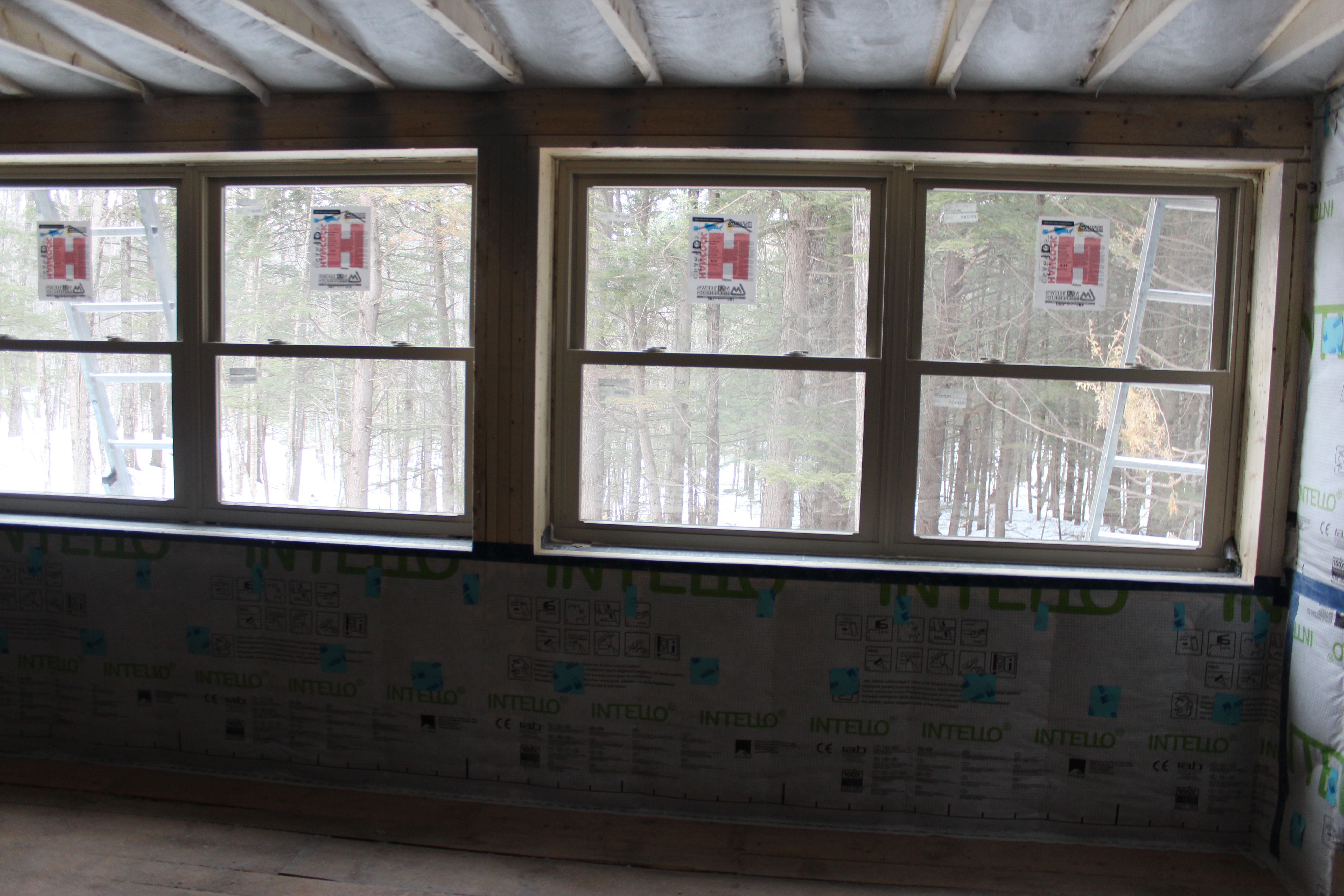
MLSC Bridie's view

Though she won’t officially work here full-time until 2016, this is part of Bridie’s new digs.

MLSC main conf room

And what once was a living room, dining room and kitchen is being transformed into a conference room. When my guy and I stepped over the stonewall and onto the property this morning, Peter happened to be pulling in so we had another tour. The building is on schedule to open this summer.

beaver 1

We looped back into the park because I wanted to check on the beaver works.

beaver 2beaver 3

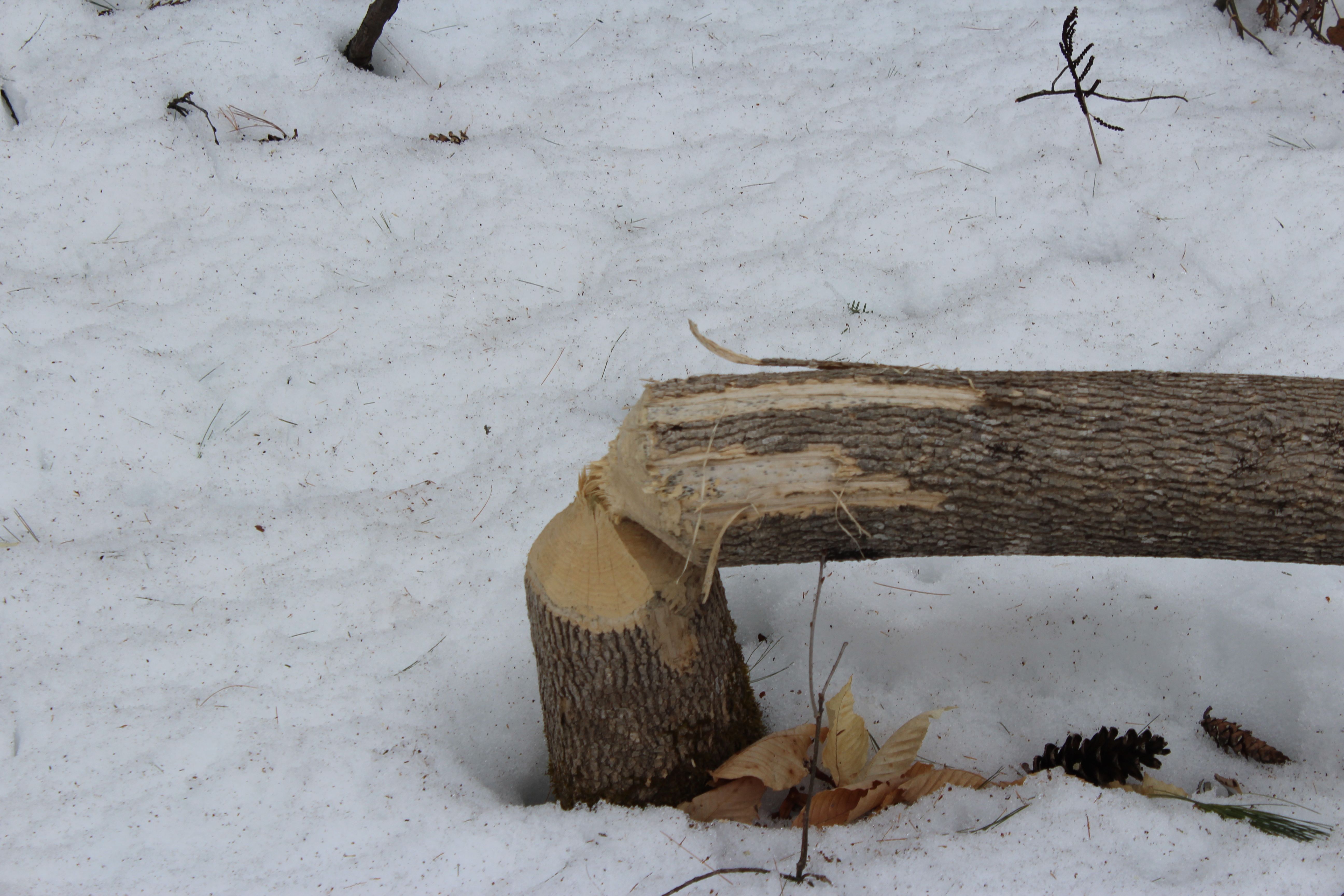
Yup, they’ve been busy. Some of this work was done in December. But the tree on the left has been worked on since then.

beaver teeth

My, what big teeth you have. Their teeth, which never stop growing, are like chisels.

Beaver tracks Dec 5

I have to be honest. I took this photo of beaver tracks in December.

Willet brook

We paused quickly at Willet Brook.

new uniform

But we had to keep moving. As you can see, my guy’s uniform is changing. It’s a wee bit warmer in these parts.

Stevens Brook

And then we were back on Main Street and heading homeward bound. Our speed date had come to an end. I didn’t even bother to make PB&J.

Thanks for stopping by and taking a quick wander with us today.

Our Three Hour Tour

HP sign

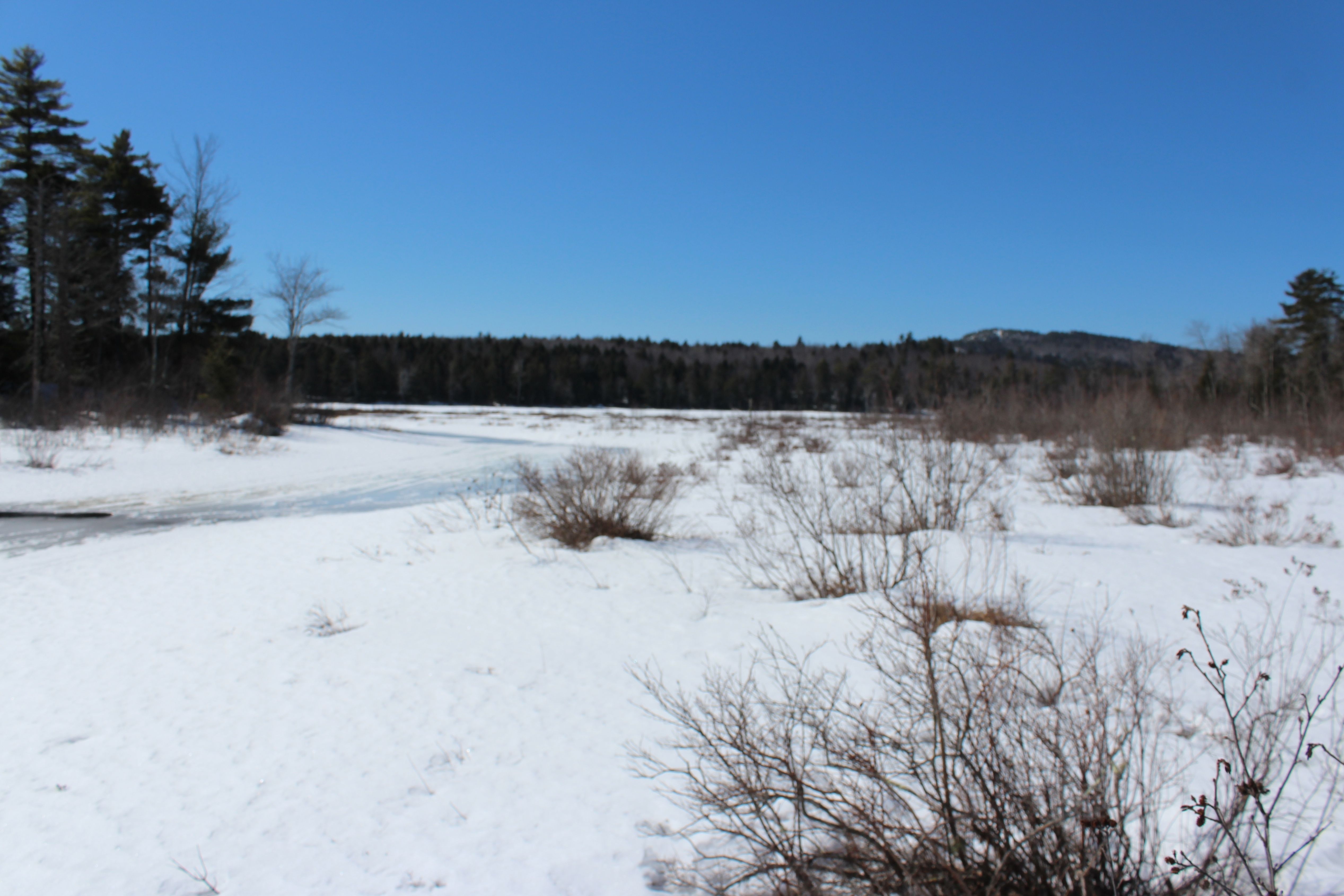
One of our favorite places in town is a hidden gem–Holt Pond Preserve. We parked at the corner of Chaplin’s Mill and Grist Mill Roads, grabbed our snowshoes and backpack from the truck and walked on snowmobile tracks across the field to begin today’s Mondate.

Tingley Brook

Tingley Brook

At the field’s edge, we passed under the hemlocks, beeches and oaks and into the wild and delicate beauty that the preserve offers.

Tingley Brook ice 1

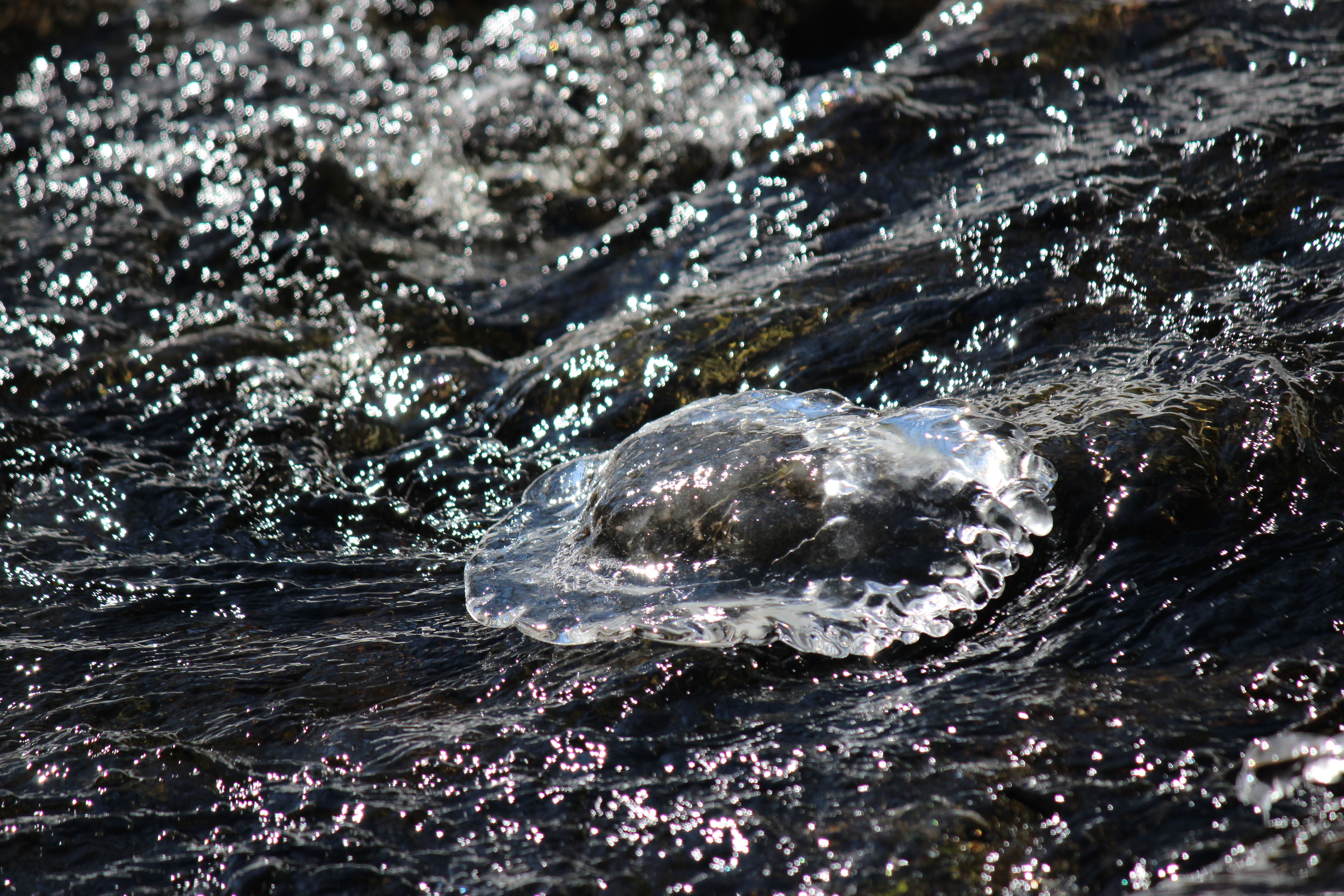
The midmorning light added subtle hints of aqua and pink as the water danced around an ice-capped rock in the brook.

mushrooms and hole

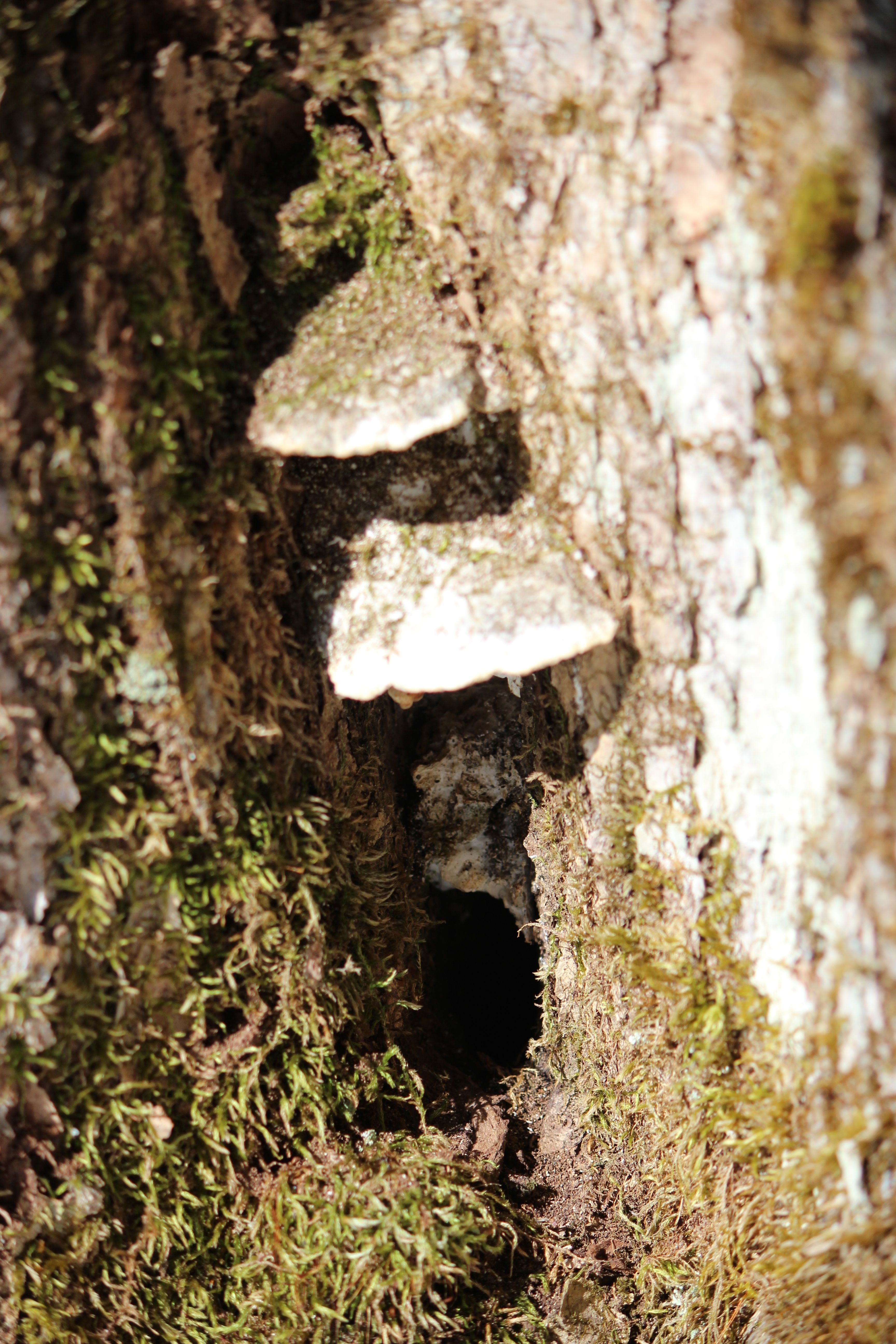
We saw lots of tracks from the mustelid family, as well as snowshoe hare, fox, squirrels, mice and voles. Also, turkeys and grouse. I’m not sure what made the hole and dirt trail beneath the mossy maple mushrooms near the base of this Red Maple. I would not have seen it if I hadn’t leaned in closer to take a photo. I do happen to know that gnomes frequent the area, so just maybe . . .

canoes

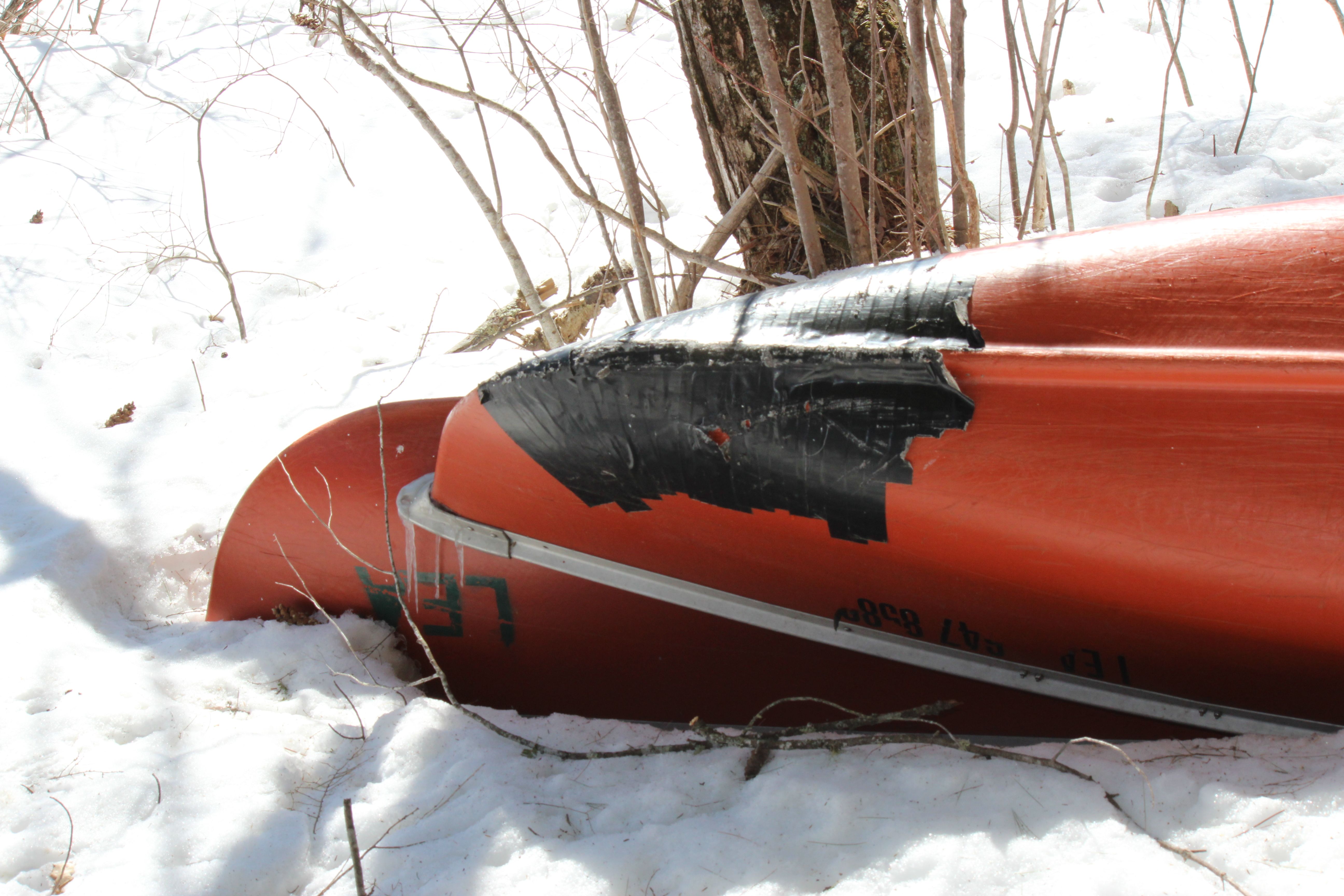
We continued on, crossing Tingley Brook and then making our way beside Muddy River, where the Lakes Environmental Association (LEA) leaves these canoes for anyone to use. Bring your own personal floatation device, paddles, and duct tape. I know where you can purchase duct tape, should you need more. :-)

beaked hazelnut

Near the canoes–a lone beaked hazelnut. Inside this bristly tan husk is an edible nut. Doesn’t it look like a gourd? The name derives from that tube-like protruding beak. I couldn’t believe it was still there as the protein-rich nuts are favorites for red squirrels and chipmunks, as well as ruffed grouse, woodpeckers and blue jays. Humans too.

to Muddy River

We never actually wore our snowshoes today. I hauled mine around on my pole, while my guy stuck his between his jacket and sweatshirt. He said he didn’t need his back scratched for the entire trip.
River to pond

Looking toward Holt Pond from the boardwalk by the Muddy River.

There was only a slight breeze, so the low temp was modified by the brilliant sunshine. Another beautiful day in Maine.

Red Maple Swamp

I think one of my favorite features about the preserve is that the habitat keeps changing–from hemlock groves to red maple swamps to alder thickets to a quaking bog.

Quaking Bog

Though you can’t tell in the winter, the quaking bog is a thick mat of vegetation that formed over the surface near the edge of the pond. A board walk passes across it and one of the fun things to do with a group of people is to have everyone jump at the same time and watch the bog quake. This is also a great spot to visit alone–for quiet reflection.

Holt Pond 1HP South

Views at the pond’s edge–north and south

HP from southwest

We stopped at a rock in a sunny spot along the South Shore Trail to enjoy lunch al fresco. PB&J never tasted so good. Topped off with ice cold water and some Ghirardelli chocolates. :-) As we continued along, we paused to look back across the pond toward the Quaking Bog.

Sometimes we chatted and other times we were each lost in our own thoughts and moving at our individual paces. Similar to my NDD (Nature Distraction Disorder), my guy has his own syndrome–Destinationitis. But, he’s learned to compensate by pausing until I catch up . . . and then he’s off again. That’s OK–it gives me time to spend in my own world.

feathers one

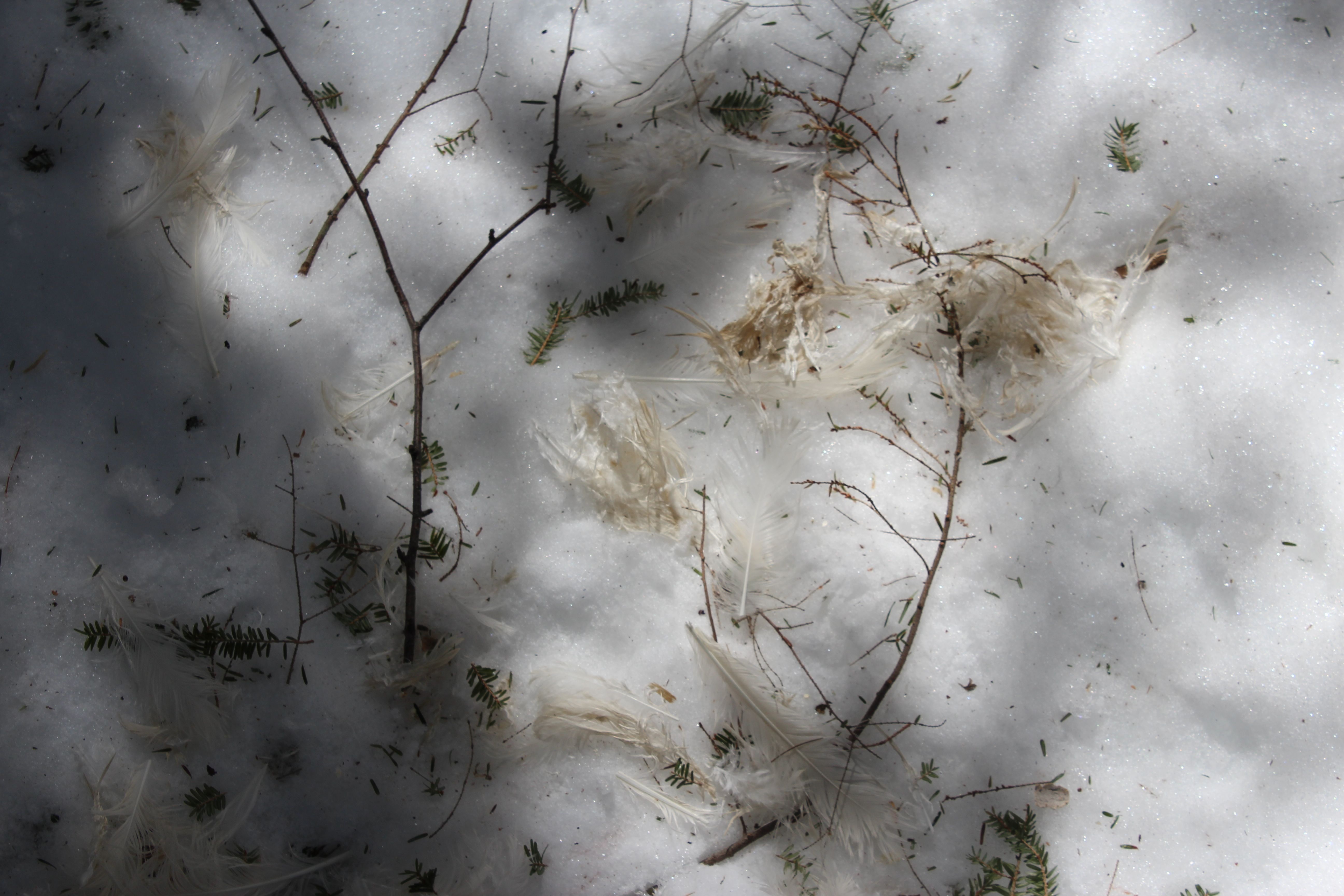
At the edge of a field (we know it as “The Field” because it’s the end of a section of trail that we keep maintained for LEA), we both stopped to look and wonder. Under a hemlock tree and in the middle of the trail, we found these white feathers. Don’t you just love a mystery?

feathers 2

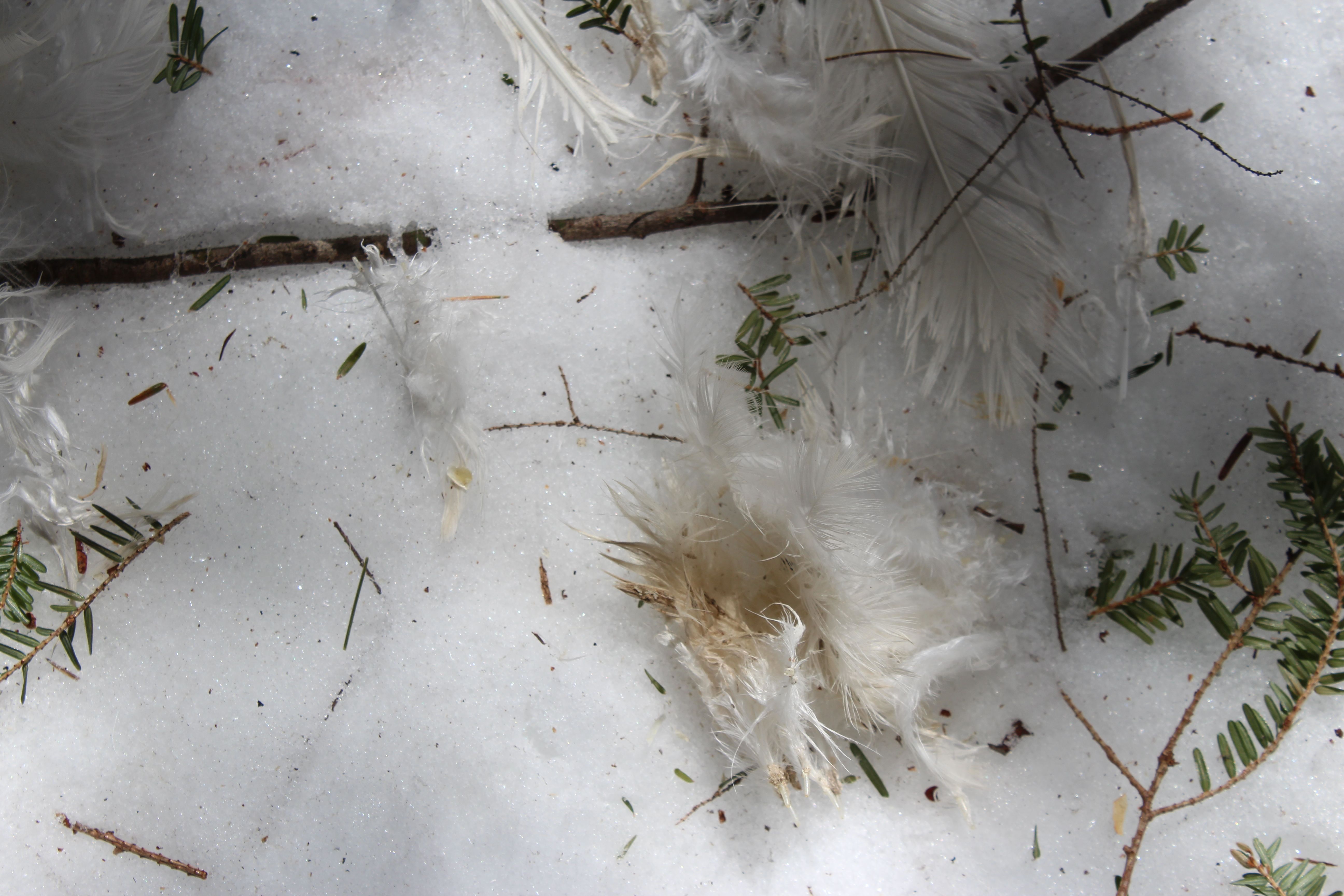
Here’s another look. Some had sheer cuts; others looked plucked. No great place to hang out above. If you know what bird this was or what happened here, please enlighten me.

horse

At least five miles later, we were back on Chaplin’s Mill Road headed toward the truck.

Thanks for stopping by again to wonder my way. I hope you enjoyed the three hour tour.