While bonnets are on display each Easter in New York City, the parade takes a different form in the wilds of Maine. This year’s festivities began in the late afternoon of Good Friday.
It was then that this handsome Yellow-bellied Sapsucker tapped an announcement inviting everyone to the avenue.
A River Otter was one of the first to arrive, pausing in the midst of playing with a relative.
From a branch above, a Grackle showed off its iridescent spring finery as it viewed the procession below.
Fluttery marchers moved along, pausing in their routines before flying high and then dancing toward the ground again.
Willows stood along the way, waving flowery flags to the tap of the music.
And Ring-necked Ducks wondered what all the frivolity was about.
The route changed over the course of the weekend, and Saturday night found it along a backroad where Wood Frogs showed off their float techniques and sang love songs as rain drops fell.
A female heard the band and hurried across the road to get to the other side. (She may have had some help)
Spring Peepers high-pitched notes filled the air and all felt a sense of excitement despite the weather.
As the night went on, the grand marshal, a Spotted Salamander, finally arrived.
Actually, there was more than one grand marshal and some needed a little help to get to the grand stand so they could watch and participate in the action.
And then Easter Day dawned and after a festive church service, the parade resumed, this time along a gated Forest Road where Beavers had created sculptures to decorate the way.
Those Beavers had completed other work and due to the footwear of some of the onlookers, the route had to be changed for crossing the beaver dam proved a challenge.
Instead, it followed miles and miles of Forest Roads, where brooks contributed happy babbling songs to compliment the local Wood Frog and Spring Peeper chorus.
It wasn’t just music, though. Balsam Fir natural essence rainbows reflected bird balloons for everyone to enjoy.
As the parade neared its end, an early spring flower known as a Coltsfoot, appeared along the way.
And suddenly there were three, a trinity. Faith, Hope, and Love. Sunshiny faces for all to see.
Then a Sapsucker tapped the final announcement. This may not be New York, but the weekend’s Easter Parade has drawn to a close and hope, and awe and wonder are in the air.
My guy and I began this day with a list . . . of things to do and places to go, all within about 15 miles from home. Our starting point was our camp, where I wanted to do a few things inside, while he picked up branches that had fallen over the winter.
Once our chores were completed, we paused for a moment and enjoyed the view of Shawnee Peak Ski Area at Pleasant Mountain and the almost iced-out northern basin of Moose Pond.
Maybe the ice finally went out this afternoon, but the longer it stays, the better in my opinion. Not all that long ago we could predict the event to occur in mid-April, but sadly everything is happening earlier than it should.
From there we hiked up a hill on some land we own behind his store because he’d recently spotted a site he knew I’d appreciate: a carpet of Eastern Hemlock twigs. We looked up, but no porcupine was in sight.
Following a quick lunch at home, we headed off for a quick hike up Mount Tir’em where another porky tree greeted us beside the trail.
From the summit, we spied first Keoka Lake to the east, its ice still in.
And Bear Pond to the south, also still covered in ice. And yes, toward the west, that is Pleasant Mountain and the ski area of the earlier photo.
No trip up this mountain is complete without a visit to the glacial erratics that our sons, back in their youth, called The Castle. I’ve always thought of it as offering a great bear cave and so we went in search.
We did find the neighborhood bear who has been keeping an eye on this spot for a number of years now. My, what long, sharp claws you have.
In the best cave though, only this momma bear emerged and she seemed kinda friendly ;-).
Our final adventure of the day found us following several Yetis into the woods.
They led us to this tree, which bespoke a long and gnarled history.
On one side it sported a burl, that strange-looking collection of tree cells. Known as callus tissue, the burl forms in response to an environmental injury such as pruning, disease or insect damage.
On the other side, a tree spirit smiled. They often do if you take the time to look.
Its bark was so stretched that though it remained a bit corky, its diamond pattern had stretched into sinewy yet chunky snakes of furrows and ridges.
Upon the ground a shed limb ready to give nutrients back to the earth that will continue to aid the tree sat in its shadow.
Holes in the tree offered further intrigue . . .
and so my guy climbed up and looked in first.
I followed and couldn’t believe the site within. This tree is still producing leaves, thus the xylem and phloem still function, but almost entirely hollow and I fully expected to see a bear or two or a slew of raccoons in residence. Certainly, it would have created a delightful hideaway to sit and read and sketch, and watch . . . life inside and out.
By now you’ve possibly figured this is one mighty big tree . . . and I found this information about it: On October 30, 1969, the Maine Forest Service stated that it was the largest of its species in the state. And in 1976, the bicentennial year, it still held that honor. The dimensions in 1969 were these: circumference 17′ 81/4″, height 70′ and crown spread 77′. I’m not sure if any of those measurements have changed, but I learned last week that is still the biggest of its kind.
When GLLT Tuesday Trackers meet at a property, we never know what animal sign we’ll need to interpret or what greater understanding we’ll gain. Today was no different and we had a few surprises along the way.
What we’ve all learned is that we need to take a bird’s eye view and consider where we are, whether it be forest or field or wetland, look at how the mammal is moving and what type of pattern it is creating as it moves, get down and count toes, look for nail marks and notice other idiosyncrasies, and then follow the trail for a ways, looking at the prints in different light, or under different trees. Often under hemlock trees we find the best prints because there’s not as much snow since the boughs hold it.
And so today’s adventure began with us following this particular animal and debating—do we see claw marks, is the overall shape round or oval, is there a lead toe, is the ridge creating a C on its side or an X between the toes and heel pad? It took some time, but we finally found a few prints that gave us confidence it was a bobcat we were following. So, where did the bobcat lead us?
Our first stop was along a stream where he walked beside the edge—about two or three feet above the open water for such is the snow height—but then paused for a moment and seemed to step down because he was curious about something. And so were these three, Pam, Dawn, and Emily, for they spied something in the water below.
From our position on the opposite bank, a few of us saw what we thought they were looking at. “It’s furry,” Dawn told us.
She wanted to go down into the water because it didn’t appear to be all that deep, but still that would have meant she’d be wet and so Emily hunted around and found a branch to use as a poker instead.
As Dawn wiggled the stick, all the time exclaiming that it was big, whatever it was, and trying to turn it over, Emily and Pam grabbed her to make sure she didn’t turn into an otter and slide down, though I suspected she would have laughed about the experience.
We all watched intently, making suggestions about the critter’s identity while Dawn continued to poke at it and move it. Mammal? Skull? Full body?
The coloration was definitely unique, but it is winter after all, so the freezing temperatures and fact that it was in water may have altered its appearance.
Those were our thoughts anyway, and we voiced our opinions, until . . . Dawn flipped it over and saw . . . a tag.
So hoping for a kill site where the bobcat may have dined, instead we found ourselves looking at . . . a stuffed owl.
Peter took Pippi’s hiking pole and aided Dawn in rescuing the sopping wet bird and if you look closely you may see water dripping from it.
Our chuckles must have rippled through the forest as we laughed at our great find. Mighty trackers are we. But . . . we think the bobcat was almost fooled as well. Almost.
The owl then flew from Peter’s hands to a perch and there it shall remain, or so we think.
For a few minutes we returned to and continued upon a logging road, and then the bobcat called for our attention again and so we did follow it. As I said to the group, normally I’d insist that we backtrack the animal so we don’t put stress on it, but the tracks were at least a day old.
This time the bobcat led us to a hemlock tree. Do you see the debris under the tree?
How about now? And stained snow by the trunk?
There were even little brown commas atop the snow that could easily be mistaken for hemlock cones. But rather, they were a form of scat.
Like us, the bobcat had been here, but for some reason he chose to pass by.
Whenever we spy downed hemlock branches, comma-shaped scat, and lots of urine at the base of a tree, we know to look up and so we did. High above sat a male porcupine. Males are known to stay in a tree during the day while females typically return to the den each morning and head back to the tree of dining choice at twilight. Here’s are two curious things: 1. the bobcat passed by—they will go after a porcupine, but perhaps this one was too high up. (Fishers are a porcupine’s #1 enemy.) 2. we looked all around and couldn’t find any porcupine tracks. If we had, we might have followed them to see if we could locate the den. But, since we couldn’t we came to the assumption that this porcupine has been up in the tree since at least our last major snowstorm on Friday, February 25.
Back on the bobcat’s trail we did go, being stymied occasionally because though we knew it was a bobcat, there were a few prints that resembled a deer and we came up with all kinds of stories about flying deer and other critters of our imaginations.
But always, we’d find a few classic prints and again feel 100% confident of our ID. Well, not ours, but the bobcat’s.
So where would it lead us next? To a spruce tree all covered with sap . . . and fur.
Some of the hair was dark and coarse.
In other spots it was redder and softer. After much debate, and noting that it was all up and down the tree from just above snow level to at eye sight and maybe a bit above, I think we all agreed it was a bear marking tree. Bears sometimes nip and bit trees and rub their backs on them and their hair gets stuck on splinters or in this case also sap.
According to North American Bear Center: “Favorite trees have little ground vegetation to prevent a bear from approaching them, and they often lean slightly toward the trail. Look for hair caught in the bark or wood 2 to 5 feet high and look for bites 5½ to 6½ feet high.
The hair often bleaches to brown or blond after a few months but can still be distinguished as bear hair from its length and appearance. Guard hairs are typically coarse and 3-4 inches long and have a narrow base that may be wavy. Bears are shedding their winter fur when much of the marking is done in spring or early summer, so the bark may also catch underfur, which is thin, wavy and shorter.”
Two feet up made sense given the snow’s depth.
You’d think that would have been enough, but again we wondered: where will the bobcat lead us?
This time it was a snapped snag and we noticed he’d walked along the top of it.
And then one among us spotted this. Brown snow and more hair. We were sure it was a kill site. Yes, as trackers we really like kill sites because they are fun to interpret and we appreciate the energy passed from one animal to another via the predator/prey relationship.
For a few minutes we took turns walking around the site trying to take in everything presented to us, including some hair that had fallen into the snag’s hollow.
I think it was the two=toned hair that helped us figure this one out. Plus the fact that there was no blood. This was a spot where the bobcat sat down, thus the rather tamped down snow that had turned brown. The warmth of his body helped to flatten it and in so sitting, some of his hair, which is black and white, got stuck, similar to what we see in deer beds at this time of freezing and warming temps. The mammals are beginning to shed their winter coats and last week we had an unusually warm day so change is in the air.
We admired his hunting spot and balance beam. And then it was time for us to leave.
But those grins remained on our faces for we were grateful we’d taken the time to see where the bobcat might lead us at GLLT’s Charles Pond Reserve today.
Seven years ago today I gave birth–rather a record at my age. It was February 21, 2015, when I welcomed wondermyway into the world. It’s been quite an adventure that we’ve shared together and one of my favorite things to do each year to celebrate is to take a look back.
As I reviewed this past year, the reality hit home. I’ve written less than half the number of posts of any other year. That all boils down to one thing. Time. There’s never enough. Oh, I’ve taken the photos, and had the adventures, but I haven’t made the time to write about all of them. Sometimes, they sit off to the side in my brain and I think I’ll use some of them together in a cumulative post, and there they sit.
That all said, I’ve had more views and visitors this past year than any other. Views = 24,955; Visitors = 16,994. Followers = 701. And over the course of wondermyway’s lifespan, the blog has received 121,765 hits.
An enormous heart-felt thanks to all who have joined me for any or all of these journeys. I get excited to share with you and love hearing from you.
In case you are wondering, my guy and I did have a Mondate this afternoon–along Bemis River and then up to Arethusa Falls in Crawford Notch, New Hampshire.
It was here at the falls that we celebrated wondermyway.com with a couple of those Bavarian Haus chocolates we purchased last Monday.
And now for a look at a few excerpts from posts I made during the past year, beginning with March 2021. To read or re-read the entire post, click on the link below each photo.
It took me by surprise, this change of seasons. Somehow I was fooled into thinking winter would hold its grasp for a wee bit longer because I don’t like to let it go.
Even Winter Dark Fireflies, who don’t carry lanterns like their summer cousins, and aren’t even flies as their name suggests (they are beetles), knew what was happening before I did for in their adult form they’d been tucked under bark in recent months, but in a flash are now visible on many a tree trunk as they prepare to mate in a few weeks.
But . . . this spring will be different.
How so? And what invitation still stands? Click on the link under the beetle’s photo to find the answers.
“The way to be heard isn’t to shout,” said the Reverend Dr. Sam Wells of St. Martins in the Fields, London. “It’s to whisper.” But who are the whisperers?
Listen for the slightest murmur of Trailing Arbutus’s delicate blossoms beneath its leathery leaves.
Hear also the soft words of a rattlesnake-plantain explaining that its striking veins may suggest “checkered,” but it actually goes by “downy” in common speak.
You’ll have to click on the link under the photo of the Trailing Arbutus flowers to hear what other species had to say.
For the past two weeks at Greater Lovell Land Trust we’ve had the good fortune to conduct a wildlife survey in the waters that surround the newly acquired Charles Pond Reserve in Stow, Maine.
MDIFW maintains a comprehensive database on the distribution of Maine’s amphibians and reptiles, as well as terrestrial and freshwater invertebrates and the data we’ve collected will add to the bigger picture. What we discovered was just as important as what we didn’t find.
The survey began with a day of setting and baiting fifteen traps in the pond and associated rivers. What’s not to love about spending time in this beautiful locale, where on several occasions lenticular clouds that looked like spaceships about to descend greeted us.
Our favorite bird sighting was this bald eagle, who found a silver maple snag at the outlet of Cold River into Charles Pond. I was a wee bit nervous as that was Change The Trap Bait Day, and I had a bag of stinky old sardine cans in my lap as I paddled a kayak.
He was intent, however, on something else and barely gave us a glance.
This story of the survey would not be complete, however, without the absolute best sighting that occurred on the last day. Our mammal observations on almost every trip included a muskrat, plus occasional squirrels, and once a beaver. From our game camera set up at various locations, and from tracks and scat, we also know that coyotes, raccoons, otters, a bobcat and a black bear share this space.
But . . . you’ll have to click on the link under the Bald Eagle photo to figure out what our best sighting was.
Warning: Some may find parts of this post disturbing. But it is, after all, about the circle of life.
A climbing thermometer in March signaled one thing amidst many others: the time had arrived to check the vernal pool.
Completely covered with ice at the start of my explorations, I noted puddling on top and knew it was only a matter of days.
Not wanting to rush the season, though truly I did, I rejoiced when the edges melted because life within would soon be revealed.
And then one day, as if by magic, the ice had completely gone out as we say ‘round these parts. It was early this year–in late March rather than April. That same night I heard the wruck, wrucks of Wood Frogs, always the first to enter the pool.
The next day he had attracted his she, grasping her in amplexus as is his species’ manner.
Ah, but how does the story end? Click on the link under the photo to find out.
I walked into a cemetery, that place of last rites and rest, looking for life. It should have been a short visit, for finding life in such a location hardly seems possible, but . . . for two hours yesterday I stalked the gravestones and today I returned to the same spot where I once again roamed, and then continued up the road to another that surprised me even more.
Upon the granite wall that surrounded the Hutchins plot, two small, but actually rather large in the insect world, nymphs crawled and paused, crawled and paused. And my heart sang as it does when I realize I’m in the right place at the right time.
Click on the link under the photo to see the story of the Cicadas unfold.
Out of curiosity, and because it’s something I do periodically, I’ve spent the last four days stalking our gardens. Mind you, I do not have a green thumb and just about any volunteer is welcome to bloom, especially if it will attract pollinators.
There were millions of other insects, well, maybe not millions, but hundreds at least, flying and sipping and buzzing and hovering and crawling and even canoodling, the latter being mainly Ambush Bugs with the darker and smaller male atop the female.
But why the title, “Not Just An Insect”? Ahhh, you know what you’ll need to do to find the answer.
Every Mondate is different, which goes without saying, and the adventure always begins with a question, “What are we going to do today?”
The answer is frequently this, “I don’t know, you pick.”
The instantaneous reply, “I asked first. You need to figure it out.”
We did figure it out. Over and over again. This collection happens to include places that make us happy and many of our family members and just looking back puts a smile on my face. Oh, and the selfie–taken at the same place where we went today–only in September 2021.
Before today’s deluge began, I slipped into Pondicherry Park in Bridgton, Maine, to fill the innermost recesses of my lungs with November air, and at the same time my brain with memories of so many people who have traveled these trails with me from Ned Allen, former executive director of Bridgton Historical Society, to Loon Echo’s Jon Evans, and Lakes Environmental Association’s Alanna Yanelli and Mary Jewett, and friends and friends and friends, including the late JoAnne Diller, Sue Black, and Jinny Mae. But today’s journey also included memories of one I took two years ago with Becky Cook, who shared her remembrances of growing up along South High Street and romping through these trails as they were part of her backyard. If anyone ever had a sense of this place, it is Becky.
This post is full of information of an historic and natural nature. Go ahead, click on the link above to learn more.
Upon an aimless journey into our neck of the woods a pattern soon emerged, though I didn’t realize it at the time. Sometimes, it’s best that way. To be present is the key.
Click on the link to find out more about the pattern.
The temperature dipped overnight and wind picked up out of the WNW but given the destination we had chosen, we knew if we dressed appropriately we’d be fine because we’d be in the woods most of the time, unlike last week’s walk where we were completely exposed to the elements on Popham Beach. That said, it was cold today.
But what could good hair possibly have to do with this Mondate? You’ll have to read it to find out.
Dear Readers, This post may not be for the faint of heart, but it’s something those of us who track find incredibly exciting as we try to interpret the gory story. Yes, you read that correctly. Blood and guts are to follow. You are now forewarned, and if you decide not to read on, I totally understand.
So how is this stuffed beaver connected to a gory story?
Dear Readers, This post may not be for the faint of heart, but it’s something those of us who track find incredibly exciting as we try to interpret the gory story. Yes, you read that correctly. Blood and guts are to follow. You are now forewarned, and if you decide not to read on, I totally understand.
For those who are still with me, here’s the scoop. Last Wednesday during a Greater Lovell Land Trust walk on Groundhog Day, where shadows were the main focus, and yes, Lovell Lil, the beaver, did spy her’s and predicted six more weeks of winter, a group of us noticed a pile of feathers on the far side of a brook we snowshoed beside. (Notice how I used this photo as an intro so that those who didn’t want to deal with the aforementioned gore could exit with a beaver image in their minds?)
Here’s how it all began. First, a few of us glimpsed a large bird that we thought was an owl, fly off with something in its mouth. Though we were supposed to be looking for shadows, our nature distraction disorder (NDD being the best kind of disorder to possess) took over and we decided to walk quietly in hopes that we might spy the owl in a tree. Imagine a group of curious people on snowshoes attempting to walk quietly. But we did. Or so we thought. Until three ducks flew up out of the brook and headed in the same direction as the owl.
Shortly after, we spotted this scene and two of us decided that once the public hike ended, we’d find our way to the other side and try to decipher the story of the feathers and the blood and the slides. I was sure I knew the predator.
As we approached, we spotted wing marks at the base of a tree.
What we’d seen from the other side was the plucking station where the predator had pulled the feathers off to get to the meaty part of its avian meal.
Once the bird was plucked, then it dragged it up the hill and sat down to dine behind the tree. Do you see the circular area where the predator left an impression. I’m sure the prey was not at all impressed, though by this time it was . . . dead.
Here’s another look from the dining table down toward the plucking site and the brook below.
Of course, I need to give you a closer look–at the duck’s entrails. I often find these left behind at a kill site and wonder why. Do they not taste good? Is there some sort of bacteria that makes them indigestible? Or do they not offer any discernible nutrition?
Another body part not to be overlooked was the foot with its tendons still attached that sat on the dinner table beside the entrails. Can you see the webbing between the toes? That confirmed our ID that the prey was a duck. But who was the predator? We looked around for mammal prints and found none.
What we did find was a slide. Actually there were a couple of slides. And as I often do, I wanted to confidently say that an otter was the predator. But . . . rather than seeing otter tracks in any of the slides, there were wing marks beside them. From the duck? Or someone else?
We hunted around as we tried to decipher the story. It appeared that quite a struggle had taken place.
And no feather had gone unplucked.
The bright red blood was quite fresh and I could just imagine the pain the duck endured.
While most of the blood was at the plucking station, there was some on a small mound on the brook and again I wondered: was that where the initial attack occurred?
As I said, we found no signs of a mammal, but we did find large splatters or splays of bird feces. Birds don’t produce urine and instead excrete nitrogenous wastes in the form of uric acid, which emerges as a white paste for most.
Fellow tracker, Dawn, and I also found several long shots of excrement that I cannot explain, but perhaps the owl had spent some time up in the tree?
I guess by now you’ve figured out that our assumption was that the owl we saw fly off was the predator. That’s the story we’re telling anyway about how this particular duck lost its tail and its life.
But . . . think of it this way: Plants the duck fed on were primary producers who used energy from the sun to produce their own food in the form of glucose. The primary producers were eaten by the duck, a primary consumer. The duck was then eaten by the owl, a secondary consumer. Who knows how the duck’s tale will actually end because we don’t know who might eat the owl. In the midst of it all, however, energy flowed and in this case may continue to flow from one trophic level, or level of the food chain, to the next.
I know you expected a Mondate, and my guy and I did explore Laudholm Farm in Wells, Maine, today as I prepped for a Maine Master Naturalist field trip related to tree bark and buds, but the story of the duck and owl have been forming in my brain for a few days. And then this morning another tracker sent me this email:
Subject: Tracking Forensics:
Weird thoughts in the early morning…
I was thinking about the Tracking Tuesdays that you lead on the GLLT properties and about how similar they are to all those CSI shows – coming in a day or two after the events have occurred and trying to piece together who was there and what happened. From seemingly little information you figure out who was there, what they were doing, where the gang hangs out, and sometimes who killed whom.
Bring in the TV cameras!
That’s when I knew I should take a chance with the blood and guts story. Nature can seem brutal, but it’s all part of the system.
Dedication: This one is for Pam and Bob Katz for leading the Shadows Hike that led us to make this discovery; for Dawn Wood who helped me interpret the site; and for Joe Scott who sent the email. Bring on the TV cameras indeed!
The temperature dipped overnight and wind picked up out of the WNW but given the destination we had chosen, we knew if we dressed appropriately we’d be fine because we’d be in the woods most of the time, unlike last week’s walk where we were completely exposed to the elements on Popham Beach. That said, it was cold today.
Our plan was to follow the trail around Shell Pond at the Stone House property and do it with micro-spikes on our boots rather than snowshoes. Or at least on my boots. Given that there had been some foot traffic, we hoped that when we actually arrived at the trail we’d made the right decision.
As it turned out, most of the traffic had headed to the air strip, but a few had walked our way and really, there’s more ice than snow in this part of western Maine right now.
We cruised along at My Guy’s speed, which boded well for keeping our bodies warm and gave thanks that we were both quite comfortable as we began to circle the pond. Mammal tracks were numerous, but most muted and really, we didn’t want to take time to stop and measure so we only named to each other those we were certain we knew.
Well, one of us did walk a tad faster than the other, but that’s nothing new.
In what felt like no time, we greeted the Keeper of the Trail who gave us a smile from below his winter hat.
And then we reached lunch bench, which my guy cleaned of snow so we could dine on our peanut butter and jelly sandwiches in comfort. Well, sorta in comfort. It was here that we met the wind as it swept across Shell Pond from Evans Notch. So, it was a quick lunch.
And a quick journey to the orchard. As we crossed the bridge over Rattlesnake Brook I recalled once watching a muskrat swim beneath. My guy informed me that I’d probably not see such today–how right he was.
I was feeling a bit bummed that we’d circled so quickly but we did promise ourselves that by the Stone House we’d turn off the air strip and check out Rattlesnake Pool and Gorge, which we’d missed on a Thanksgiving Day hike when we journeyed up Blueberry Mountain located behind the house to Speckled Mountain.
Each time we pass this way I give thanks to the owners who long ago put most of the forested part of the land into a conservation easement with Greater Lovell Land Trust and allow hikers and hunters and rock climbers to use their trails.
And so up the Stone House Trail we went, passing the gorge to start so we could meet the brook at a spot above and watch as the water swirled under ice,
below boulders,
and down through a chute,
creating ice sculptures all along its journey.
Briefly it danced into Rattlesnake Pond, and then followed the course below.
The pool’s nature as forever emerald green never ceases to amaze me.
We met it again at Rattlesnake Gorge were the flow continued despite all the frozen formations.
Down it continued on its way to the point where I earlier showed it in its calm and completely frozen flatwater oxbow.
Click on the video to briefly enjoy the sound.
As much as I was thrilled to have visited the Rattlesnake sites because it was too dark to do so the last time we hiked here, it was the image in the negative space of the ice that really put a smile on my face today.
Do you see a bear?
Back at the air strip we turned right and headed back to the gate. After that, we still had another mile to walk because we’d parked closer to Route 113 since the road in to Stone House isn’t plowed.
And then we played my favorite Stone House Road game–checking telephone poles for bear hair. Black bears LOVE telephone poles. For the creosote? Maybe. Is it the soft pine that they can so easily chew and claw? Maybe. Is it a great place to hang a sign that you are available for a date or this is your territory? Probably, but maybe it’s the other two possibilities that lead the bears to the poles. I do know this. They are well marked along this road.
In the process of biting and scratching some hair is left behind. Mating usually takes place in late June or July, so possibly this hair was left then and has since bleached out in the sunshine.
Shiny numbers also seem to draw their attention, or perhaps the bear wants to hang its own sign and tear down the one left by a human.
Look at the horizontal dots and dashes–can you see them? Think of the bear turning its head and the upper and lower canine teeth meeting as it bites at the wood.
Closer to the truck one pole indicated that the bear won–it had almost totally remodeled the pole including removing most of the number.
As Mondates go, I have to say this one was a very good hair date! And I’m not talking about mine or my guy’s, since we didn’t care what we looked like as long as our warm hats smooshed our manes.
On this coldest day of the new year, with winds gusting from the north, my guy and I chose to go for a walk on a beach and peer into the future. What did we see?
A clean slate to start.
What did we learn? Rather than clam up, be happy and express your true colors.
Break free from the crowd occasionally and make sure your pop is the loudest.
Know that some layers will erode, but still, strong roots will persist.
Find works of nature’s art in the midst.
Recognize the value of local plants just like your Dad always did.
Liken bursts of sunshine upon rocks that add color to gray days.
Take a brief second to pause, as you skitter along.
If you feel trapped, find a way out.
Spew when you need to, but do make it colorful and dramatic.
Despite the cold temperature, paddle like heck.
When the moment is right, ride the waves.
Let life’s lines intersect and go with the pattern presented.
And most of all, together make tracks as you step into 2022.
Upon an aimless journey into our neck of the woods a pattern soon emerged, though I didn’t realize it at the time. Sometimes, it’s best that way. To be present is the key.
And so I began by walking slowly and breathing deeply as I followed the labyrinth in and out.
Eventually I met an old friend who shouted with glee that I had stopped by.
Behind said friend, her age lines were revealed and it was obvious that from time to time she’d hosted a variety of others who ate at her inner core in such a manner that her death provided a means for their life.
Similarly, her sibling showed off his own marks of healing and growing.
And then I moved into a different neighborhood, this one a conifer stand, where an obvious meal had been interrupted and I wondered why.
Upon another rock, another midden indicated an earlier meal consumed, perhaps in a safer place as maybe the barbed wire added some safety.
And then I saw them. Prints that is. Impressions in the snow. Created by not one, but two coyotes. Why did they change direction?
By the hair-filled scat one of them had left not long ago on another rock along the wall it was obvious they’d been here before.
A few steps more and I knew why. I’d discovered the crossroads–that intersection of life where red squirrel headed left, snowshoe hare in the same direction as my boots, and the coyotes circled about.
The red squirrel survived. This I know because it left fresh prints that led to a hemlock stand where, though I couldn’t see it, it scolded me from high above. Or perhaps it was telling me a tale of its heroic adventures to outwit the coyotes.
The coyotes’ trail indicated they’d moved north. The snowshoe hare? I’m not sure where it went.
As for me? I returned home to enjoy this gift I received from dear friends that now graces our kitchen wall. It was fun naming all the ornaments they’d bestowed upon the wreath from Northern White Cedar leaves to Evening Primrose, lichens, sensitive fern spores, an acorn, a hemlock cone, and Queen Anne’s lace in its winter form.
Taken all together, today’s adventure followed the circle of life and the circle of friends from trees to woodland critters to givers of the wreath. I am grateful for all.
Two weeks ago a week of vacation loomed before us and we had no plans. Where to go? What to do? My friend, Marita Wiser, suggested the Bold Coast of Maine. Though she hadn’t been, she’d collected articles about it and felt a yearning to get there. I told my guy. He liked the idea, but also wondered if we might spend some time inland. Bingo. Another friend, Molly Ross, serves on the board of Friends of Katahdin Woods and Waters National Monument and so I asked her to suggest some trails. Somehow we lucked out and found places to stay and so on Monday morning, October 4, our adventure began.
We broke up the drive to Lubec with lunch in Machias, and then a quick five mile out and back hike at Cutler Coast Public Lands for a view of the Bay of Fundy. From there it was on to our resting place where we settled in for a couple of nights’ stay.
Thankfully, we left the curtain open as our hostess had mentioned something about sunrises. When the dormer window suddenly lit up, we threw on as many layers as possible and headed outside.
I’m pretty sure we were the first people in the world to ever observe sunrise, or so it felt to us in that moment.
Sitting on the deck, we each took a million photos as the sky kept changing and then, in a flash, there it was–that golden orb upon the horizon between Campobello Island and Grand Manan, with Lubec Channel in the foreground.
It was that same morning light that we rejoiced in as we journeyed along the trails at Bog Brook Cove Preserve and then a return to Cutler Coast Public Lands for a much longer adventure. Along the Inland Trail, though there were rocks and roots, there was also so much moss gracing the scene as spruce and birch and maples towered above that we felt the presence of fairies.
The Coastal Route offered a different feel and we soon learned to appreciate that the coast was indeed bold. And bouldery. Even the beaches featured rocks; rocks so warn by the sea that they had become rounded cobbles.
Speaking of round, lunch and lots of water kept us going, but the real treats were what we looked forward to most, these being M&M cookies baked by a long-ago student of mine, Lisa Cross Martin, owner of Stow Away Baker in Stow, Maine.
Cookies consumed, we soon realized sometimes a helping hand was most welcome–or at least a helping rope.
Other times found us peering down into thunder holes where we could only imagine the water crashing in at high tide.
As the sun had risen, so did it set with us enjoying one more trail at Eastern Knubble Preserve. Because the tide was low, the cobble bar connecting the mainland to Eastern Ear (also known as Laura Day Island) was visible. With the setting sun lighting the treetops, campfire flames came to mind.
Another beautiful day found us exploring some of the trails at Quoddy Head State Park, the easternmost point in the USA. The candy-striped lighthouse was originally fueled by sperm whale oil, and later lard oil, and then kerosene, and finally electricity.
Why the stripes? It’s easier to spot in fog and mist, and given that the coast is rather bold, that makes perfect sense.
We walked a section of the trails at the park, but saved some for another day in another year deciding that we will return because there is so much more to see than our time allowed.
And then we transitioned to our inland location where the setting sun cast a glow upon the mighty Mount Katahdin. It had been years since we’d last visited the area and upon that previous trip we’d rafted on the West Branch of the Penobscot River. Our plan was to support Millinocket businesses as much as possible, and to explore the new Katahdin Woods and Waters National Monument.
We knew we were blessed when another morning dawned with a brilliant blue sky that accentuated the fall foliage. The funny thing, to us anyway, is that we hadn’t given a thought to this being a peak foliage week. But then again, we’d hardly made time to give much thought to this trip.
Our first adventure into the monument found us driving to the northern most part and then hiking beside the East Branch of the Penobscot, where we followed as many spur trails as possible to the water’s edge, this one being Stair Falls, so named by a surveyor in the 1700s.
Our next stop, Haskell Hut, a cabin open to the public when there isn’t a pandemic wreaking havoc with the world. We peeked through the windows and what should stand out on a shelf across the kitchen?
Why a True Value bucket, this one filled with kindling for a fire. And we thought we’d left our work worlds behind!
Beside Stillwater we paused and ate lunch, finding nourishment not only in our PB&J sandwiches, but also the scene that surrounded us.
Beyond Stillwater, the water was hardly still. We didn’t know this previously but on Maine rivers, a pitch is a waterfall that’s too large to navigate in a canoe and one must portage around it. In what seems a play on words, falls are navigable whitewater.
A curve of the river and downstream, we discovered a conglomerate mass reported to be about fifteen feet tall. The right hand structure bespoke a person to me, perhaps leaning against a river creature, the two giving thanks for sharing the space. We certainly gave thanks for the opportunity to be witnesses.
Our turn-around point was Grand Pitch, where the water thundered over the rocks.
Take a moment to listen to the roar.
Before turning completely around, however, we had to pull another sweet treat out of the bag. Again, a creation by Stow Away Baker, this one being a brownie for it was my guy’s birthday.
If you are getting a sense that we hike to eat, you would be correct. What I neglected to mention is that we also dined upon pie we’d purchased from Helen’s Restaurant located in Machias. It made for a delicious breakfast. Yes, we ate pie for breakfast–lemon meringue for him and chocolate cream for me. And it didn’t occur to us until after we’d finished, that we should have offered each other at least a taste!
Our final day at Katahdin Woods and Waters dawned rather gray, and so we drove along Swift Brook Road to reach the loop trail, with our first stop being a hike to Deasey Pond.
The next stop in our line-up was a hike to Orin Falls. It’s along an old logging road and as we walked, we met another traveler who complained that the trails weren’t more “trail-like.” At times they are, but this is an area that had been logged and we actually enjoyed the roads because we could walk side-by-side for a ways.
We also met another traveler on this trail, but first I must back up a bit. I’m not sure how this happens, but frequently we can be in places we’ve never been before, either here in Maine, in another state, or another country, and inevitably my guy will run into someone he knows. It happened to us at Bog Brook Cove Preserve when he greeted a young couple and then the parents behind them. All of a sudden the light bulb went off simultaneously for my guy and his counterpart as they realized that though out of context, they knew each other for they had played on opposing town basketball teams about thirty years ago, and the other man is a frequent customer at my guy’s hardware store.
And then on our way to Orin Falls, we met a single hiker and paused to chat, only to discover that he was on a birthday celebration hike. It turns out he is one day younger than my guy. And because the other man lives in Old Town, Maine, he knows some of my guy’s former classmates at UMaine. Though trite, it’s apropos to say it’s a small world.
At last we reached Orin Falls along Wassataquoik Stream, fearful we’d be disappointed after the wows of the previous day, but this offered a different flavor that complemented lunch.
And to think I can’t remember what we ate for dessert!
Finishing up the hike, we continued around the loop road, realizing we were probably doing it backwards for we’d chosen to drive counterclockwise. But, given the grayness of the morning, I think it was the right choice for the mighty mountain for whom this land was named, had been shrouded. By the time we reached the Scenic Outlook, the weather had improved and once again we were graced with an incredible view. It was our last look before we drove home to western Maine.
Being home didn’t stop our vacation, and after two days of yard work, we treated ourselves to a hike today that proved to be much longer and more difficult than anticipated. But the reward–more incredible fall foliage to fill our souls.
In the end, it wasn’t just the bigger landscape that made us smile. We also enjoyed all that presented itself along the way such as this Tricolored Bee frantically seeking nectar and pollen upon a White Beach Rose.
And then there was a small Red-bellied Snake on the coastal trail at Cutler Coast Public Lands, a new species for me.
My guy rejoiced when we spotted seals frolicking by the bridge to Campobello in Lubec.
I have to admit that I rather enjoyed them as well.
Another fun sighting was that of a Ruffed Grouse that walked out of a Spruce Bog and onto the loop road as we made our way around.
Today, we also found an oft-visited bear tree that made us smile as they always do.
The funny thing for us–we found only two piles of moose scat while in the national monument, but upon today’s hike we counted over thirty piles along the trail. My guy really wanted to spot a moose. Anywhere.
I reminded him that we need to go without expectation.
And so we did and were completely startled to spy a porcupine waddling toward us this morning.
Fortunately he did what porcupines do and climbed a hemlock tree beside the trail, then walked out onto a branch, keeping an eye on us. We skirted off trail for a second to get out of his way.
The end of his tail marks the end of vacation 2021 that allowed us the opportunity to explore bunches of new trails and corners of our state that we’d not seen before and we gave thanks for the suggestion from Marita and recommendations from Molly because this tour certainly reminded us that Maine is a beautiful state. And we all need to work to keep it that way.
I went with intention for such was the afternoon. Sunny, cloudy, rainy, dry. Change. Constantly. In. The. Air.
Of course, my intention led to new discoveries, as it should for when I spotted the buttons of Buttonbush, a new offering showed its face–that of Buttonbush Gall Mites, Aceria cephalanthi. Okay, so not exactly the mites, but the structures they create in order to pupate. Mighty cool construction.
Continuing on, into the Red Maple Swamp did I tramp, where Cinnamon Fern fronds stood out like a warm fire on an autumn day. But wait, it wasn’t autumn. Just yet, anyway.
And then there was that first sighting of Witch Hazel’s ribbony flower, the very last perennial to grace the landscape each year.
And color. All kinds of color in reality and reflection beside Muddy River.
Even the fern fronds glistened, individual raindrops captured upon a spider web adding some dazzle to the scene.
Next on the agenda, a Goldenrod Rosette Gall created by the midge Rhopalomyia capitata. The midge formed a structure that looked like a flower all its own. What actually happened is that the midge laid an egg in the topmost leaf bud of Canada Goldenrod, Solidago canadensis, causing the stem to stop growing, but the leaves didn’t.
A few steps farther and I realized I wasn’t the only one who appreciated the sight (or nectar) of Jewelweed, Impatiens capensis, or Spotted Touch-me-Not. The latter name because upon touching the ripe seed pods, they explode. Try it. Given the season, the pods have formed as you can see behind the bee’s back.
Winterberry, Ilex verticillata, its fruits bright red also graced the trail in an abundant manner, but wait a few months and they’ll be difficult to spy. For a month or two we’ll enjoy their ornamental beauty, but despite their low fat content, birds, raccoons, and mice will feast.
All of these sights meant one thing.
The Red Maple swamp bugled its trumpet with an announcement.
The announcement was this: Fall freezes into winter, winter rains into spring, spring blossoms into summer, but today . . . today summer slipped into fall and I gave great thanks for being there to witness it all.
We drove forty minutes north at midday on Sunday with the intention of hiking a trail we’d enjoyed only once previously. Our memories of it had petered a bit, but we did look forward to bear trees and cascading falls.
And we were not disappointed. Within minutes of beginning the ascent, a look up at the gnarled top of a Beech gave me reason to scan the bark below and by the number of claw marks left behind it was obvious that this had been a well-used source of nuts in the past.
We could just imagine the bear scrambling up, sitting upon the branches and pulling them in to form a “nest,” or so it looks when they’ve been broken and folded inward, foraging for beech nuts, and then, once all were consumed, scrambling back down and on to the next tree.
Bears weren’t the only animals that have known this land and beside a stone wall we paused for a second. Our first ponder was whether it was a boundary fence or meant to keep animals in or out. Until . . . we spotted a piece of barbed wire growing out of a tree. No wait, barbed wire doesn’t grow out of trees. Trees grow around it. And our question was answered: the wire would have been added to keep the animals in the pasture.
That said, it had been a while since the wire was installed and even longer than a while since the stone wall had been built, for the trees had had time to grow and mature and incorporate the wire into their souls and while one still knew the flow of xylem and phloem, this other was a source of new life for insects and birds.
Our next pause was at picnic knoll where two tables and two Adirondack chair invite hikers to take a respite and enjoy the view. We tarried not given that we had a football game to get home to and pizza dough to prepare. Well, one of us had a football game to get home to and the other the dough.
Onward and upward we hiked, keeping an eye on ankle biters (saplings not cut to the ground that caused us to stumble repeatedly if we weren’t paying attention) at our feet, while searching for more bear trees, not an easy task during leaf season. But our best reward was the sight of this oft-climbed tree and the realization that the two behind it had also been visited.
We know there are more like those in this forest thus giving us a reason to return in late autumn and search off trail to see how many we can count. If memory serves us right, from the trail we once counted over twenty such bear trees.
Oh, there were other things to see along the way, like the Hobblebush’s ripening berries . . .
and Bald-faced Hornets gathering nectar.
But the second object of our intention was eventually reached for we’d found the cascades, beginning with one named for the family that farmed this area: Chapman.
It was a bit of a scramble but we were well rewarded for our efforts.
Again and again. After viewing this final flow, Library Cascades, we practically ran back down the trail. Just in time to catch the start of the game on the radio. Pizza was a wee bit late, but we didn’t mind.
The story should have ended there, but while hiking on Sunday we came up with a plan for Monday. So . . . back into the truck for that forty-minute drive we did go. This time, in the same forest, we hiked up an esker, which I saw as the stick of a lollipop.
At a junction, we chose the Red Pine Trail, a tree with bark so rich in color and design, it creates an art gallery in the forest.
Along the way, we paused at openings to enjoy the views, but . . .
a ridge off-trail, and really off-property (Shhhh, don’t tell. The boundary was marked but not posted.) invited us and we couldn’t refuse. What view might there be that we would miss if we didn’t accept the summons?
We were rewarded with the sight of the surrounding mountains showing off their summits in crisp contrast to the sky above.
I’m pretty sure the invitation included lunch and so we sat down and dined.
Our off-trail pursuit offered one final gift as we headed back to the trail–galls created by a wasp upon a Northern Red Oak twig.
A few steps later and we startled a Garter Snake who flicked its tongue to get a better scent of us before deciding we weren’t worth the effort and slithering away.
Again, there was water to cross, but it wasn’t nearly as impressive as the cascades of Sunday.
And some porcupine work to acknowledge, though we had hoped to see a den, but determined it was probably in the ledges below.
One final view at the land beyond and then we completed the loop that formed the sucker at the top of the lollipop stick and began our descent. Again, this should have been the end of the story. But . . .
There was plenty of daylight left and this day’s football game wasn’t until much later and so we sought a third trail in the same forest. The natural community differed, which made us grateful because each trail had its own unique flavor, this one including Striped Maple dripping with seeds of the future.
Once again, we climbed toward the view.
One sight that caught our attention for it was the only one of its kind that we saw along any of the trails was a Lady’s Slipper, and we gave thanks that it had been pollinated for perhaps its future will spill forth in multitudes we can enjoy next spring.
A flock of nuthatches, woodpeckers, and chickadees entertained us occasionally, but it was the silent Hermit Thrush who paused that caused us to do the same.
At last we reached the end and stood for a moment to take in the range beyond, before turning around and retracing our steps for this last trail wasn’t a loop.
Nailed to a tree, was this sign: To Be Continued. As so it was on this Sundate/Mondate. We trust we’ll return to see where the trail may lead next.
Out of curiosity, and because it’s something I do periodically, I’ve spent the last four days stalking our gardens. Mind you, I do not have a green thumb and just about any volunteer is welcome to bloom, especially if it will attract pollinators.
iWhat I’ve discovered is that in sunshine and rain, the place is alive with action from Honeybees and Gnats . . .
to Paper Wasps,
and even several Great Black Wasps, their smoky black wings shining with blue iridescence as they frantically seek nourishment and defend territories (including letting this particular human know that she’s not welcome at the party by aggressively flying at her).
Bumblebees were also full of buzz and bluster and it was they who reminded me of one important fact.
The color of the storage baskets on their hind legs depends upon the color of the pollen grains in the plants they’ve visited.
There were millions of other insects, well, maybe not millions, but hundreds at least, flying and sipping and buzzing and hovering and crawling and even canoodling, the latter being mainly Ambush Bugs with the darker and smaller male atop the female.
And then, because I was looking, I discovered an insect in the process of being wrapped for a meal intended for later consumption. I’ve long been fascinated by Ambush Bugs and Assasin Bugs and this, the Black and Yellow Garden Spider, Argiope aurantia. What’s not to love? She’s an orb weaver, meaning she spins a complex circular web, in this case among tall plants, that features spokes which are non-sticky that she uses to walk upon, and round wheels that are sticky to capture prey. The web is the size of a platter. A large platter. And . . . every night she consumes the entire thing and rebuilds a new one for the next day. In the process of consuming the threads, she can take advantage of any little insects like mosquitoes that get caught in the stickiness, but it’s the bigger insects that she prefers to eat.
Do you see the rather conspicuous zigzaggy line down the middle of the web? That’s called the stabilimentum and may have several purposes: providing stability; attracting insects with the multiple threads like an ultraviolet runway such as the colorful lines and dots on plants; or perhaps announcing to birds that they shouldn’t fly through the web. Whatever the reason, it’s in the center of the stabilimentum that the spider hangs in suspension, waiting for the dinner bell to announce ring.
Though she has eight eyes, her vision is poor. But . . . her hairy legs may also help in the detection that a meal has arrived, perhaps signaling sound and smell, plus she can sense the vibrations.
Once captured, she injects a venom (that is harmless to us bipeds) to immobilize her subject and then begins to spin a sac around it.
Remember, I’ve been watching her for four days, while she’s hanging upside down playing the waiting game and showing off her egg-shaped abdomen with its asymmetrical yellow markings on the carapace (much like a turtle’s shell) to her silver-haired head.
Some days I felt like she might just be Charlotte, writing a message only Wilbur could interpret.
And one day she surprised me by turning right-side up. It was then that I was offered a closer look at those little bumps on her head that serve as eyes. And the pedipalps, those two little hairy appendages sticking up on her head that work like sensory organs.
An hour or so after finding her upright, when I checked again, I thought she’d gone missing. Instead, I discovered she’d climbed to the top of one of the plants upon which she’d spun her web.
Perhaps she was surveying the area as she waved her front legs, looking about her domain.
A day later, a new web, and another meal packaged, and slowly my buzzers were being consumed. But, she also likes grasshoppers and crickets and the garden is full of them.
And then this morning dawned, with T.S. Henri in the offing and a few raindrops upon a broken web announcing the storm’s intended arrival. Wait. The web–it had holes but had not been entirely consumed. That wasn’t all, yesterday’s meal also hadn’t been consumed. And the spider was nowhere to be seen. I looked up and down and all around and couldn’t find her. Had she meant to save the meal, waiting for her venom to pre-digest it by liquifying the internal organs and in flew something larger than her and dinner went uneaten? Had our time together come to an end just like that?
I wasn’t going to let the issue go, and so I continued to search, and guess who I found about three feet away upon a new web?
Even more exciting was the discovery that I can see her from the kitchen window AND, the view is of her underside so I can actually see her brown spinnerets at the end of her abdomen and maybe I’ll get to watch her capture a meal.
Well, so I thought, but two hours later, when I next looked, I realized I’d missed the action and she’d already securely wrapped her latest victim–all that was still visible was a leg.
Though the prey may be one, this is NOT just another insect in the midst of my quest. Actually, it’s not an insect at all for spiders are arachnids, with eight legs versus an insect’s six. She may be scary big, as well as carnivorous, but she is beneficial to the garden as she helps control insect populations, including some pests.
And how do I know she is a she? Her male counterpart I’ve yet to meet, but he’s much smaller and all brown, unlike her beautiful coloration.
There’s more to this story I’m sure and I look forward to learning more about her as I try to interpret the messages she leaves. If you have a chance, go out and stalk your gardens and be wowed by what you find.
I walked into a cemetery, that place of last rites and rest, looking for life. It should have been a short visit, for finding life in such a location hardly seems possible, but . . . for two hours yesterday I stalked the the gravestones and today I returned to the same spot where I once again roamed, and then continued up the road to another that surprised me even more.
It seemed the Hutchins family was watching over the first little specks of my attention, keeping them safe at a most tender moment in their life cycle.
Upon the granite wall that surrounded the Hutchins plot, two small, but actually rather large in the insect world, nymphs crawled and paused, crawled and paused. And my heart sang as it does when I realize I’m in the right place at the right time.
Who are these land lobsters, for such do their claws remind me. Dog-Day Cicadas. They complete their life cycle in 1 – 3 years. As nymphs or larvae, they remain underground feeding on plant juices from tree roots. In July, the nymphs tunnel up through the ground and crawl onto tree trunks or other surfaces like gravestones, which they latch onto with those over-sized claws.
Tickled to see two who looked like they were about to burst into new life, I watched with intensity, noticing that this, the second one, had green wings forming. And really, its head was already emerging, for if you look closely, you’ll note a small set of brown eyes closer to its claws and the new eyes much larger and darker in color protruding.
Winged cicadas emerge from a slit along the back of the nymph’s exoskeleton.
Back to the first, you’ll notice the same is true. And do you see where the second cicada had that hint of green, this one is more rosy red in color.
I could say that within minutes I noticed more of the body bulging, giving the nymph a hunchback look, but this is a transformation that takes time. Lots. Of. Time. They begin the process by arching and expanding the thorax until the larval cuticle fractures and the adult’s thorax appears, soon, or sorta soon, followed by its head.
Ever so slowly . . .
the rest of the body . . .
comes to life.
Both red and green complete this process simultaneously as I squat and watch.
Eventually, legs and wings are visible. Do you see the proboscis, that elongated sucking mouthpart or stylet that is tubular and flexible, extending from its nose?
How about now?
As the abdomen extends, four wings take shape.
In continued slow motion, they begin to unfurl . . .
and the insect wiggles its legs . . .
ready to get a grip.
Next, it pumps insect blood into its body and wings, which takes even longer, as in hours. After the cuticle hardens for a while and muscles grow stronger, the cicada pulls itself out of its former self.
Before it can fly, those wings need to dry, some resembling a rainbow.
Teneral to start, a breeze creates an angelic quality befitting the setting.
In time, the wings will fold over the cicada’s back, but until that happens, the rose-version offers a lesson that not all Dog-Day Cicadas look like camouflaged leaves among which they sing–the tree-top males producing the droning whirr of a song we all associate with summer by using their tymbals or paired membranous structururs in their abdomens that vibrate through muscular action–it’s this song that attracts females.
Today, I visited yesterday’s cemetery and found not much action, but a few miles north it seemed the summer chorus was preparing to take in new members.
First, however, they had to finish donning their choir robes.
And as I’d noticed for the first time yesterday, not all robes are the same color. Variation apparently is normal among cicadas, which provide me a wonder-filled lesson.
My question is this: what determines color? It can’t be temperature as from the many I saw today and few yesterday, all emerged at about the same time. And it can’t be location, for they were all in the same locale.
In fact, some even morphed upon the same family plot corner stone, this being the Evans family in Center Lovell, and their transformation occurred within minutes of each other.
Then there was another question–if they were so close to each other in emergence, would they get along? I watched these two for a long time, and though they got quite close occasionally, they seemed rather territorial, using. a foot or tarsus to push the other away. That, of course, is my human interpretation of what I was observing. The reality may be different.
A few headstones away, another for the red variety.
There are other lessons, such as this–like dragonflies, some nymphs transform atop the discarded exuviae of their relatives.
And while I expect that they only climb a few feet off the ground to morph, I’m proven wrong when I have to use my warbler neck to spy at least two on branches high above. Do you see them? Are there others that I missed?
I have so many more questions, but pull myself away once again.
I do often wonder if my presence bothers then, but have to hope that they realize I’m there to protect them from predators and learn from them during this time of transition.
Note that the proboscis is tucked under their bodies, as it won’t be needed until these cicadas reach the tree tops. Once up there, where I won’t be able to spy them, males will produce the droning whirr of a song we all associate with summer by using their tymbals or paired membranous structures in their abdomens that vibrate through muscular action–it’s this song that attracts females. After mating, the female lays her eggs in slits she makes in twigs. The young nymphs hatch, fall to the ground, burrow underground and feed on sap from roots for a year or two or three.
And then the day I wait for happens and I once again roam places where I know I can find them, cemeteries being my place of choice, and I spend hours stalking one stone and then another and back to first and then the second, over and over again, consumed as I am by cicadas.
It feels like forever, but has only been since last fall that we produced an issue of Lake Living. Our hiatus was due to the pandemic and the fact that we didn’t have the usual amount of advertisers (the mag is free to you, so please support the advertisers who make it happen–and tell them where you saw their ads. Thank you.), and stores and other businesses didn’t necessarily want to put a magazine on the shelf. That was all before we understood this devastating disease better.
But . . . we’re back! And with some timely articles I think you will enjoy.
The first article, “Conservation Collaboration,” by yours truly is about Sebago Clean Waters, an initiative that includes Loon Echo Land Trust, Western Foothills Land Trust, Portland Water District, Lakes Environmental Association, Mahoosuc Land Trust, and some bigger entities. I won’t give away how it works because I want you to read the article, but it’s all about clean water and the Sebago Lake watershed and what these organizations are doing to benefit all of us.
In “A Sense of Space,” Laurie LaMountain describes how architect John Cole recreated a lakeside house in a creative way given shoreland zoning laws in Maine. Not only is this an enjoyable read to learn more about how John and the homeowner problem solved to turn small living quarters into airy living quarters, but Laurie also provided valuable information about the laws that govern building beside our lakes and ponds.
Laurie is also the writer of this extremely important topic: protecting our most precious resource. A must read for everyone, both here in Maine and afar.
Up next is another article by me, “From the Earth to the Moon and Beyond,” about the world-class Maine Mineral and Gem Museum in Bethel, Maine, where I had the opportunity to hold this moon rock. You can too! But again, be sure to tell them you read about it in lake living.
That’s followed by the Summer Living calendar of events that comes with the warning that all items are subject to change because one of the take-aways from the last 15 months is that we all need to be flexible. So . . . check websites before heading out the door. I know this to be so true because at Greater Lovell Land Trust we’ve already made some changes since publishing our summer calendar.
“Eat What You Sow,” about three local gardeners including lake living‘s graphic designer, Dianne Lewis, is an informative article by my friend and emerging writer, Marguerite Wiser, Farm Lead at The Ecology School in Saco, Maine.
Possibly one of the most visually colorful articles I wrote, entitled “The Bag Lady,” features Designs by Diana Bags, a Lovell, Maine, business Diana Davis created and her story of how it came to be that’s she’s selling hand-made bags and other consigned items from her boutique and workshop on Main Street. Another one where you need to stop in and let Diana know you read her story here.
And no copy of the summer issue would be complete without book reviews from the folks at Bridgton Books, including owners Justin and Pam Ward, and employees Sue and Perri. There’s something in these pages for everyone, and once again I beg you to shop local. By now you know what to tell them when you step up to the counter to make your purchase. ;-)
Finally, Laurie brings us recipes as she always does, this time in the form of “l’apéritif.” If you don’t know what that means, you’ll have to check it out. Well, of course, you need to check it out because ’tis the season.
To say we’re excited to be back would be an understatement. I hope you’ll pour a cup of coffee or glass of lemonade and enjoy the read. Here’s the link: Lake Living Summer 2021
Somehow the words my high school Spanish and Latin teacher, Mr. Cretella, wrote in my yearbook have always stayed with me: “Never lose your desire to learn.” Indeed. That said, in Latin 1 during my senior year, if I couldn’t remember the answer, I substituted a Spanish term. I don’t remember how he reacted to that–probably with a groan on the outside and a smile within.
And so, my friends, please join me as I continue to learn about Odonatas, aka dragonflies and damselflies , those winged insects we all love to celebrate because they eat those that bug us the most, including blackflies and mosquitoes. Hmmmm, what about ticks?
Periodically, over the course of the summer my intention is to share some information and/or story with you about these predatory fliers. I may not always be correct, but hey, that’s how I learn, and I hope you’ll wondermyway for the journey.
One distinction I want to make is that mature dragonflies always have their wings spread out whether in flight or perching, while damselfly wings are together over their backs when perching (except for the Spreadwing family of damsels).
With 468 North American Species of Odonates at this time (new discoveries are always being made), Maine is home to 160 species.
One thing I want to point out about dragonflies is that the abdomen consists of ten segments. That will become important for identification purposes.
I thought we’d begin with the dragonflies known as Skimmers.
Skimmers, like the Four-Spotted Skimmer above, are the most ubiquitous dragonflies and range in size from small to large. They tend to have stocky bodies and spend much of their time perching on the ground and other flat substrates near muddy ponds and stream.
Chalk-fronted Corporal Skimmers are active May through July.
This chunky northern male skimmer has dark markings at the base of his otherwise clear wings. His hind wing patches are triangular, and the forewing patches are smaller or non-existent.
He has dark brown eyes and a black face. Notice the whitish/grayish/bluish stripes on his thorax–those are his “corporal” stripes.
The first half of abdomen is the same color and the rest of it is black.
Chalk-fronted Corporals tend to be in dense populations. Often, as I walk along a woodland path or beside a pond, these dragonflies lead the way, flying a few feet ahead, stopping on a rock or something else ahead of me and then as I approach, moving ahead again.
This baker’s dozen I spotted on a rock beside a small mountain pond.
The Female Chalk-fronted Corporal Skimmer’s eyes are brown and face tan. But where his thorax was whitish gray, her’s is brown.
Her abdomen, however, is like his.
Would you have guess that this was an immature form of the same? Just when you thought you nailed the Chalk-fronted Corporals. The immature features a lovely orangey brown with a black strip down the middle. The immature stage last for about two weeks in any species.
Active June through August, Slaty Blue Skimmers are about two in length.
The mature male is entirely blue except for black face and brown eyes. I typically find them flying and perching beside lakes and ponds.
Notice how he doesn’t have the patches at the base of his wings like the Corporals did.
Like most species, the female Slaty Blue has a look all her own with a brown thorax highlighted with yellowish-tan stripes. Her abdomen has a dark brown to black stripe down the top with a yellowish-tan stripe along the sides.
She’ll darken with age to a uniform brown or gray color and her eyes will become red-brown. Immature of both sexes resemble a young female, just to confuse you more.
Much smaller in size at about 1.2 inches as compared to a two-inch Slaty Blue are the Calico Pennants, active May through August.
The male has red heart-shaped spots on abdomen segments 4 to 7 (remember, all dragonflies have 10 abdominal segments so you need to start at the base below the thorax and begin counting from there.)
All four wings have a small dark patch at the wing tips. And the hindwings have a large, mottled dark patch at the base which reminds me of stained glass.
The stigma, on the leading edge of each wing toward the wingtip, and the face are red.
His claspers at the end of the abdomen are also reddish.
The female is the same as her male counterpart, but her spots and stigma are yellow. Again, it’s that stained glass effect that captures my attention.
From May through September you might spot an Eastern Pondhawk Skimmer near a lake or pond.
The entire thorax and abdomen of a Male Eastern Pondhawk Skimmer are powder blue; and his claspers at the tip of the abdomen are white.
Often found perching on lily pads, his face is green and eyes blue.
The female Eastern Pondhawk Skimmer is bright green with black markings. Her green thorax is unstriped.
In flight from May through August, the Dot-tailed Whiteface male is an easy one to identify in the field. First, there’s that white face. But wait. Some other dragonflies also have white faces, so don’t stop there. While his eyes are brown, his body is black overall, but he has a conspicuous yellow spot on segment 7.
You might not recognize his mate as being a Dot-tailed because, well, she has lots of dots. Her abdomen is yellow at the base and then large dots on segments 3 through 6, with a smaller one on segment 7. She also has along the sides of her abdomen.
There are more to share just in the Skimmer family, but for the first edition of Odonata Chronicles, we’ll leave it at that. Five species with so much variation is a lot to digest.
We had a feeling we might be rushing things when we set out on one of our planned Lady’s Slipper hikes this morning. But this was one nature moment my guy was actually looking forward to–oh, he loves to hike, it’s just the stopping for hours on end to look at all the idiosyncrasies of a flower or insect that doesn’t appeal to him.
And so it was that not long after we left the trailhead, we met the first lady of our intentions. She was classic–her pink slipper-like pouch inflated and darkly veined (in a manner that reminded me of a pitcher plant’s veins), her sepals and upper petals purply-bronze, stem hairy, and the set of basal leaves well ribbed. With that, we got excited, announced her as number one, and couldn’t wait to continue the count.
As luck would have it, by the time we reached the beaver dam crossing, we’d seen only four.
But at the dam we did pause, at which point several large tadpoles disappeared and a frog jumped into the muck to hide from us. Do you see him? By his dark angular spots, rather than dark rounded spots surrounded by a light ring did I know his name to be Pickerel.
Once the trail began to actually ascend the mountain, we continued to search left and right–and in the process discovered Indian Cucumber-root suddenly in flower. This is one of my favorites, perhaps because of the unique and quite subtle flower that nods below the upper leaf whorl. Except for once that I know of, typically Indian Cucumber root needs a second tier of leaves to help supply more energy so it can flower and fruit. One might easily pass by these plants, but they’re worth a stop to notice the six recurved, yellowish-green tepals (petal-like parts), six stamens, and those three stunning dark red styles.
Still no more lady’s to delight us, but flower clusters of Clintonia added bright cheer beside the trail. And actually, when not in flower, it’s quite easy to confuse their leaves with that of Lady’s Slippers. While both are basal, green, and oval in shape, Clintonias have several smooth leaves featuring a central vein and you can easily fold them in half, while Lady’s Slipper leaves of two are deeply pleated.
As we climbed higher, we spotted more and more Painted Trillium, the flower appearing above its three leaves. The flower has three green sepals and six pink-tipped stamens. Two of the features I love about these flowers: its wavy-edged petals; and the inverted pink V at the base of each. And I’m proud of my guy because he can name a trillium and seems to find pleasure in pointing them out to me. Of course, then he moves on, while I stop to honor the plants with a photograph. Every time ;-)
My heart cheered at the sight of this little one, a Bunchberry. While the plant seems to sport a single flower, it’s “flower” is a series of four large petal-like bracts, surrounding the actual flowers, which are tiny and greenish, with four minute petals. Like the Indian Cucumber-root, this plant needs more leaves when it’s ready to flower, so instead of the usual leaves of four, flowering Bunchberries have two extra large leaves to help the cause.
It wasn’t just flowers that were worth noticing for upon a tree leaf that was being consumed after only recently breaking bud, two May Beetles, quite possibly Dichelonyx elongatula, prepared to canoodle.
As we approached the top, where the naturally community transitioned, so did the insects. Here and there fluttered several Eastern Tiger Swallowtails. I’m never quite certain of my ID for these versus Canadian Tiger Swallowtails, but the latter has a solid yellow band on the trailing edge of the forewings and the yellow is broken by black for Eastern. Also, on the hind wings, if I’m correct, the blue on the Eastern is outlined in black arcs or curves, while the black line is straight for a Canadian Tiger.
And what to its dining delight should be offering nectar on this fine day–Rhodora.
A Hummingbird Clearwing Moth was equally pleased with the menu.
So what about the ladies of our quest. It was in this new community that we found the most. And not all were completely opened, which made us wonder if we’d jumped the gun and headed off on our search a week too early.
We had to look under trees and shrubs, and though we didn’t find as many as we’d anticipated, we were still pleased.
Our favorite was this cluster, which my guy was proud to discover.
By the time we reached lunch rock where our PB&J sandwiches were consumed as we took in the view, the final orchid count totaled 47. We may just have to return for another Mondate in a few weeks because we suspect there will be more in bloom.
Someone recently commented that I am so fortunate to have a job that I thoroughly enjoy and she was right. I am extremely grateful and love that once again I can share the outdoor world with others who have the same sense of wonder . . . as well as questions. And eyes to see and brains to share.
And so it was that this week began with an attempt to watch dragonflies transform from aquatic swimmers to aerial fliers. I was so certain. Twice. Yes, twice I dragged people to a spot where a friend and I had had the honor of watching such an emergence exactly one year ago. And twice I was foiled. We all were. But . . . no one complained because there were other things to observe. And this young man is one fantastic observer. He has eagle eyes, for sure. As he peered into the water, he spied a winged ant walking along a stick.
Pulling the stick up, he took a closer look and though at first I thought it was an Alderfly, he was indeed correct in calling it an ant.
Notice the elbowed antennae? And those mandibles?
Unlike termites, Carpenter Ants don’t eat wood, but they do damage it as they excavate to make room for more ants. So what do they eat? Scavenged insects (sometimes you might see them dragging an insect home), and honeydew secreted by aphids feeding on vegetation.
Black Carpenters, such as this one, occur in forested areas like we were in, and nest in dead wood of standing trees, fallen longs, and stumps. Though no one wants them in a home, they do play an important role in the ecosystem as they help decompose wood back into soil. Plus they consume many forest pests.
Enough ant love, I suppose. Why this one was walking along a twig in the water we’ll never know. Unless one of us accidentally kicked it in as we looked for dragonfly nymphs. If that was the case, the ant was rescued thanks to the one with the eagle eyes.
Our attention then shifted right, where we’d spent a couple of days observing one or two small water snakes basking on logs. Each time, we were certain they were young snakes. Until they weren’t.
Suddenly, one larger snake came onto the land and as we watched it met the smaller snake.
And then the smaller climbed atop the larger and we thought perhaps it was a mother/child relationship. None of us had ever witnessed it before and so it was most definitely a learning.
Together, they twisted and turned as the smaller snake’s tail wrapped around the larger body.
Every once in a while their heads would twitch.
Upon doing some research at home, we all learned that indeed we’d been watching the canoodling behavior of Northern Water Snakes. She is the larger and would have reached maturity at three years of age; while smaller males do so by twenty-one months. It is his great hope that she’ll produce live young by the end of the summer. I suppose it’s her hope as well.
Another day and another shift in attention, again beside water where while still searching for emerging dragonflies, a spot of metallic green that moved quickly across the ground turned out to be two more canoodlers, this time in the form of Six-spotted Tiger Beetles. Typically, these beetles fly off as we approach, but their passion for each other slowed them down a wee bit. The white at the front of their faces–their mandibles. They’re beneficial because their diet consists of yummy delights like ants, aphids, fleas, other insects, caterpillars and spiders, which they consume with those formidable sickle-like jaws.
Shifting our attention to the left, we found what we sought. Or so we thought. Yes, an emerging dragonfly, this one in the skimmer family. You can imagine our excitement and we felt like expectant mothers. Or at least midwives as we offered encouraging words.
But all the while as we stood or sat and watched, we had questions. We knew that the conditions had been right for the larva to crawl out of the water and onto a piece of grass.
The adult form had begun to emerge through a split in the thorax.
But what stymied us: By the clearness of the wings and colors becoming more defined on the body, this insect had been trying to emerge for longer than the usual couple of hours it takes. The abdomen should have been completely out of the exuvia, and wings still cloudy. Why was the abdomen stuck?
Every time the dragonfly moved its legs, we were certain the moment was upon us when we would finally see it pull the rest of its abdomen out of the shed skin.
Sadly, two hours later, no progress had been made and we had to take our leave. I returned the next day to find the same dragonfly had given up the struggle. What went wrong? Oh, we knew it would become bird food, but still . . . it left us wondering and in a way we felt bad that we hadn’t intervened and tried to help it.
Shifting locations and attention once again, at the end of the week a bunch of us met at 6:30am and it took a while to get out of the parking lot (I can hear your guffaws!) because high up in hemlock a dash of brilliant red meant we were in the presence of a Scarlet Tanager. For the next three hours, we birded, and in the end saw or heard 34 species. All are recorded here: https://ebird.org/atlasme/checklist/S88671412
In the same place, but down by the brook, for eventually we did leave the parking lot, a Swamp Sparrow entertained us for quite a while. We felt honored, for often we might not see them as they like to forage among the aquatic plants, but given it is nesting season, we were treated to a song.
Though we tried not to shift our attention too much from the birds, occasionally our Nature Distraction Disorder bubbled up, and how could we resist the sight of a Stream Cruiser upon a tree oozing with sap. It wasn’t seeking the sap, but rather, we may have discovered the spot where it had spent the night, given that it was early morning, and damp at that.
One more shift, this last at the end of the day at the end of the work week. This time a co-worker and I were at a sandbar by the outlet of a river into a pond, and a Greater Yellowlegs Sandpiper had great reason to stare with concern.
Not far above, atop a Silver Maple snag, one with intense focus watched.
Yeah, I love my job and the people I get to share it with and all that we learn along the way. This was only a brief smattering of this week’s wonders and all that we saw.
I do think in the end, however, that my young friend’s eagle eyes that spotted the Carpenter Ant in the water at the start of the week were the most focused of all.
Sometimes it happens. Well, more than sometimes. One steps out of a vehicle to go for a walk in the woods, and tada . . .
A diminutive butterfly rapidly and erratically skips from stone to stone in the parking lot, before it final settles down for a few moments. Meet a dustywing, a member of the spread-wing skippers who hold forewings and hindwings open when landed.
And then upon a pine sapling, another tiny offering, this one of the click beetles.
The day already feels complete when another winged insect suddenly flies up from where we are about to step and then lands a few feet ahead. We have to have look closely to spy it, but finally do–dragonfly that’s only just over an inch long. The sighting is special because just a couple of hours prior I’d taught a senior college course about Mayflies, Cicadas, and Dragonflies. But the test is on us. Who is this? In some ways it resembls a Calico Pennant Skimmer–the female of the pennant being black with yellow markings. But the shape of the pennant’s yellow on the abdomen is heart-shaped and these are more variable.
We take a few more steps when another wee one garners attention and by its membranous wings and abdomen broadly joined to the body, plus it’s chosen plant, it must be a member of the sawfly family.
A few more steps and we meet it’s cousin, another sawfly on another pine.
As we continue, so do our encounters with our little dragonfly friend and we begin to realize there are many and they are all the same species. But the question remains. What species is it? It can’t be the Calico Pennant because all four of her wings have dark patches at the tips and her hindwings are decorated with blotches of yellow and black at the base that remind me of stained glass. This dragonfly only has small dark patches, at the base, the hindwing’s more triangular shaped and larger than the forewing. And those hindwing patches feature light venation, not colored like a Calico’s.
At last, though it’s not all that far, but takes us at least an hour and a half, maybe two hours, we reach a brook where an orbweaver does just that–weaves.
Farther out in the water, a Tree Swallow poses at the top of snag, intent upon its surroundings. We pose as well, though our intention is upon all the vegetation for we seek the exuviae left behind by the dragonflies when they transformed from their aquatic life to terrestrial. We find none, and determine that vegetation in the brook must have served as their life-changing substrate.
Finally leaving the water behind, we once again meet our dragonfly friends. What species is it? Well, the face adds another clue for where the face of a female Calico Pennant is yellow like the hearts along her abdomen, this dragonfly has a white face.
So be it. Continuing along, Striped Maple flowers dangling like a lantern with a string of shades, light the path in a place or two.
And then as we pause upon a bench for a moment, our eyes are drawn to movement upon the ground and we spy a grasshopper who is so well camouflaged that we’re grateful when it finally climbs onto a fallen branch and poses.
At last it is time to walk back to our parked vehicles, but again, along the way we are greeted over and over again by our new friend. Occasionally, we can see the sheen of the wings and realize that the molt had occurred within the last few hours as they hadn’t completely dried.
It’s not until we get home, however, and respectively pour through ID books and bounce ideas off of each other, that we realize the name of our new friend. Meet Hudsonian Whiteface, a member of the Skimmer family. For a bit, we consider Dot-tailed Whitface, but Hudson’s yellow spot on segment seven (dragonfly abdomens consist of ten segments) is triangular in shape, whereas Dottie’s is more like a square.
So many stars align, and except for not finding the dragonfly exuviae, we will always celebrate this day (actually yesterday, May 13) as First Dragonfly of 2021 and give thanks that the real star was a new learning for us.
What season is it exactly? That was today’s puzzlement as we headed up a trail in Newry, Maine.
The temperature was in the 20˚s at best and wind gusted to at least 25 miles per hour as we hiked along the forest trail, but my heart sang with the sight of a field of Trout Lilies, a plant that I sadly seldom encounter. We’ve hiked this trail a bunch of times and never could I recall seeing these delightful spring ephemerals so named because the maroon markings on the leaves resemble a brown or brook trout. And then it occurred to me: being ephemerals, they bloom early when the canopy isn’t yet closed in with leaves and then disappear into the landscape as so many other flowers and ferns fill the space. Though the yellow nodding flowers hadn’t yet opened completely, it was enough to see into the future.
Similar in color were the Forest Yellow Violets, their tiny flowers offering teeny rays of sunshine beside the trail like runway lights at an airport. Their purple veins served as runways all their own and despite today’s brisk weather, the translucent coloring of the flower’s tips indicated that insects had done their duty and pollenated the plants.
And then, my heart be still, a Red Trillium waiting to blossom. That, of course, brought out a comment from my guy about a trillion trilliums because he knows well that I find it difficult not to honor each one.
Through a deciduous wood we climbed for two miles and then decided to find lunch rock. It happened to be beside a stream and so we sat, ate our PB&J sandwiches, topped off with cookies from Fly Away Farm, all the while enjoying the water’s babble and view beyond with Sunday River Ski Area in the offing.
If I had to say exactly where lunch rock was located it would be this: where X marks the spot.
Ah, but notice the icicles. Can you feel the chill of the day?
And then it was onward and upward, with a brief stop at the infamous trail sign where many have carved their names in a proclamation of love or at least acknowledged ascent of the trail.
Eventually we emerged onto the start of the ledges where we met the wind head on and it grabbed our bodies in an attempt to whip us off the mountain. Did I mention that for the first mile we wondered about our choice of trail given the day’s conditions and considered other possibilities for today’s hike, but neither wanted to give in and so the wind was ours and likewise we belonged to it.
That said, rosy-cheeked as we were, we posed for a selfie and wondered it might be the highest height we’d reach. And then upward we continued to hike, uncertain about the future.
Over and over again, Sunday River Ski Area became our focal point as we viewed it from a variety of vantage points.
With a half mile to go before reaching the 3000+ foot summit, we peered into boulder caves and wondered if anyone was home.
Our best finds: more icicles.
And so onward and upward we continued, our hoods helping to keep the wind at bay.
Suddenly, only a few boulders stood between us and the summit. Tackle them and we’d arrive.
Which we did, the cairn at the top the first recipient of our honor.
One of three survey markers our second focus.
And a quick pause to mark the fact that we were actually there, and then we found the trail down the backside that led toward a spur that circles below the summit.
It was there that we climbed down into winter.
Or perhaps it was late, late fall that met us along the trail.
As we followed the spur, snowflakes flew sideways in front of us and started to blur Sunday River’s face.
My guy, the naturalist :-) in his own right, did what he often does and pointed out things of interest to me, like the #4 tree. So, what created the 4? I had ideas; he’d already moved on.
We eventually found our way back to the main trail and continued the descent. It was rather quick as is my guys’ custom, but I know a few tricks to slow him down and one is to mention the potential for bear paw trees.
Bingo! He found one we’ve missed on previous journeys.
Eventually we left late fall/winter behind and upon the descent met spring again, this time in the form of Canada Mayflower making preparations to bloom.
And then . . . a first bloom of one of the trillion Trillium.
With that the puzzle was solved. Even if it feels like a cooler season on Puzzle Mountain in Newry, Maine, blossoms like that of a Stinking Benjamin (Red Trillium) tell the truth. It is spring after all.



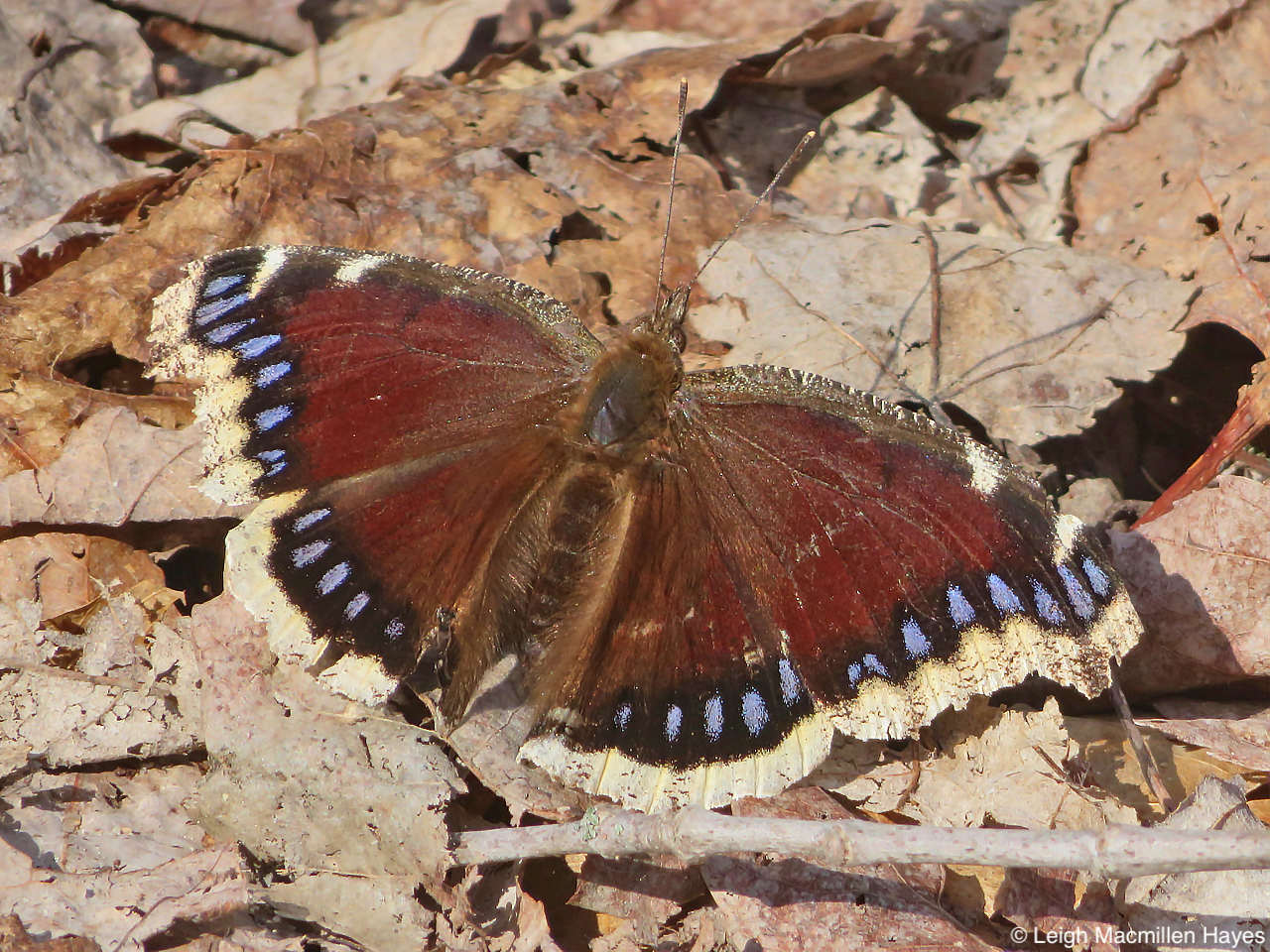
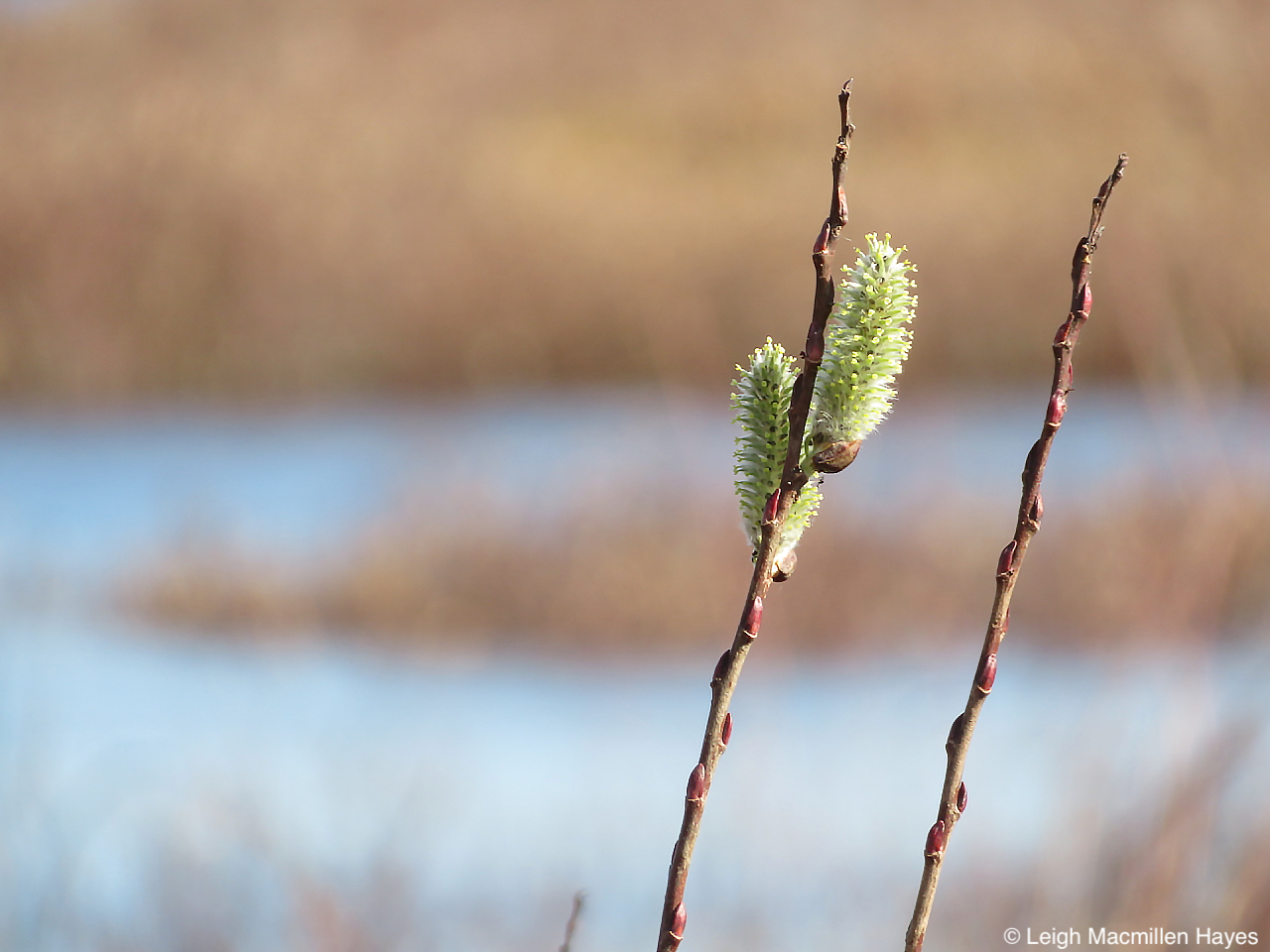

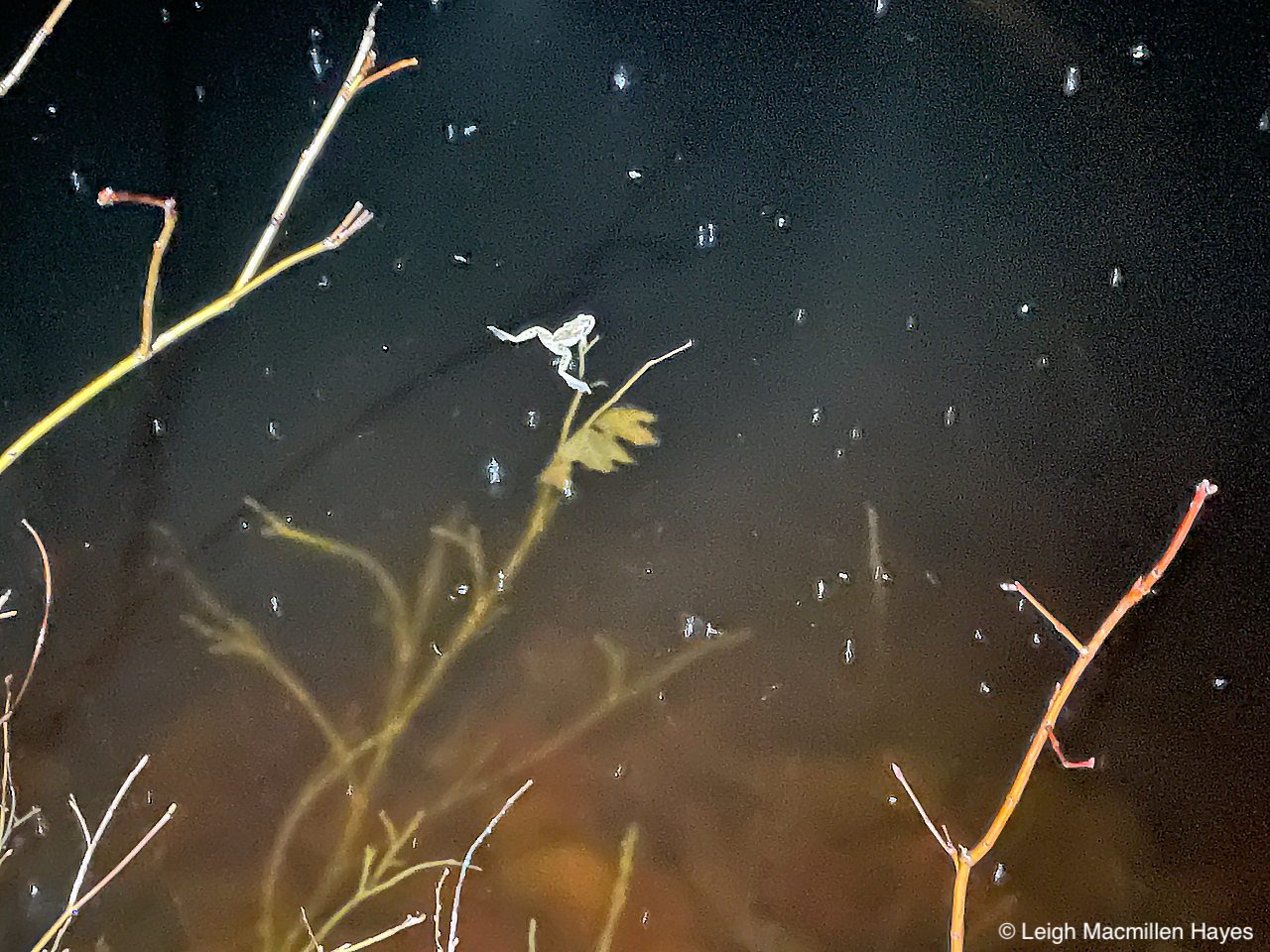
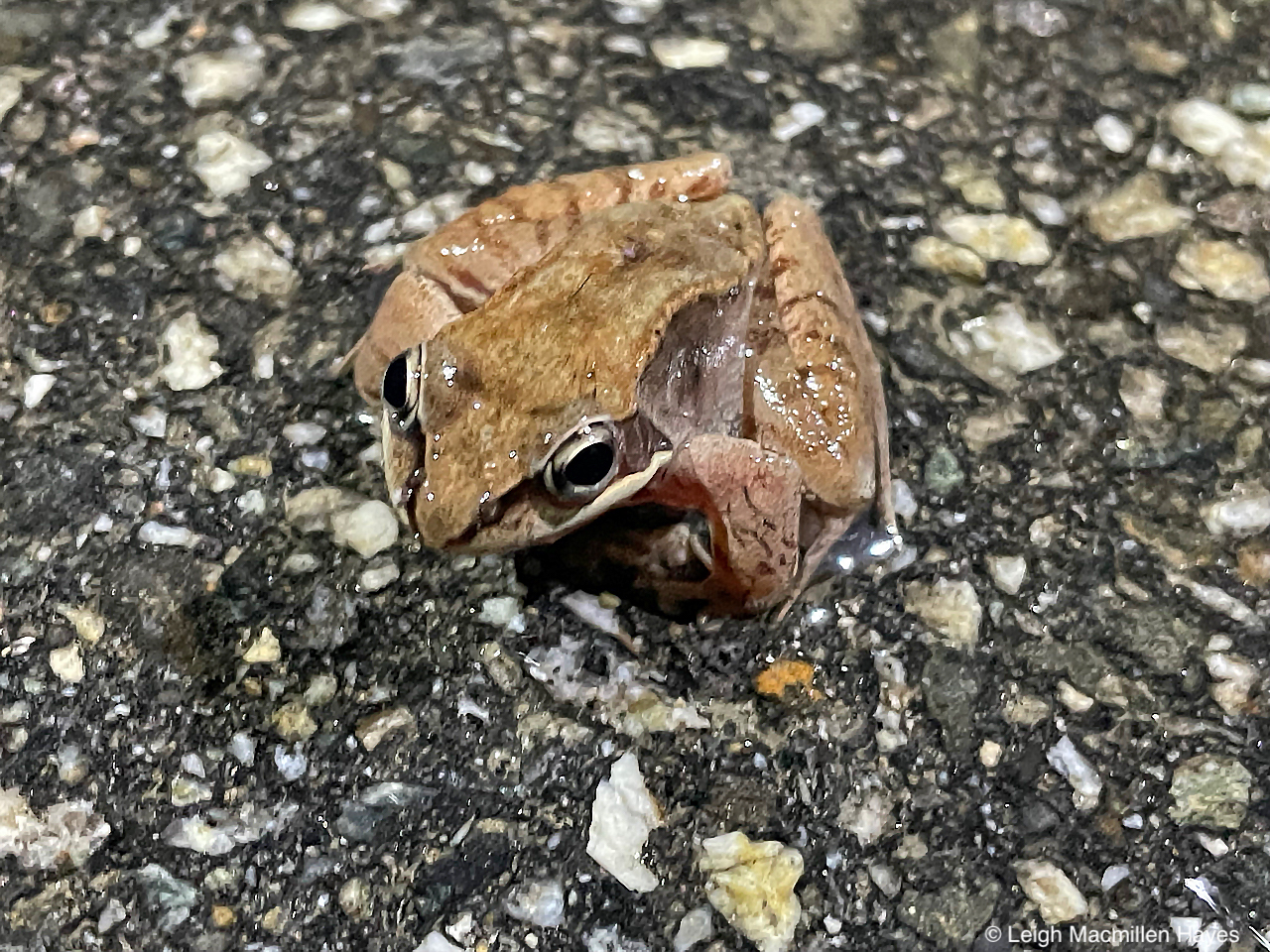
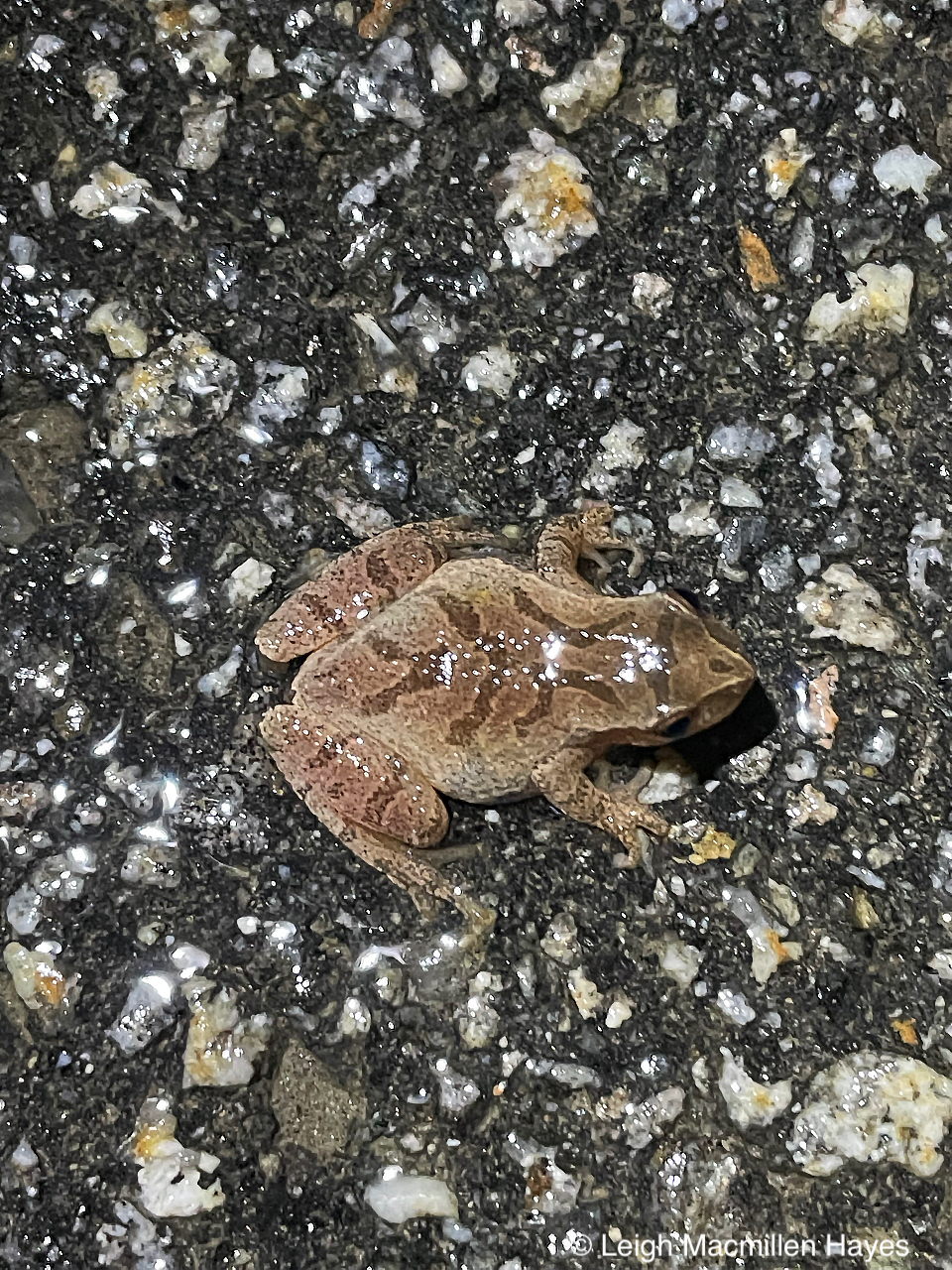
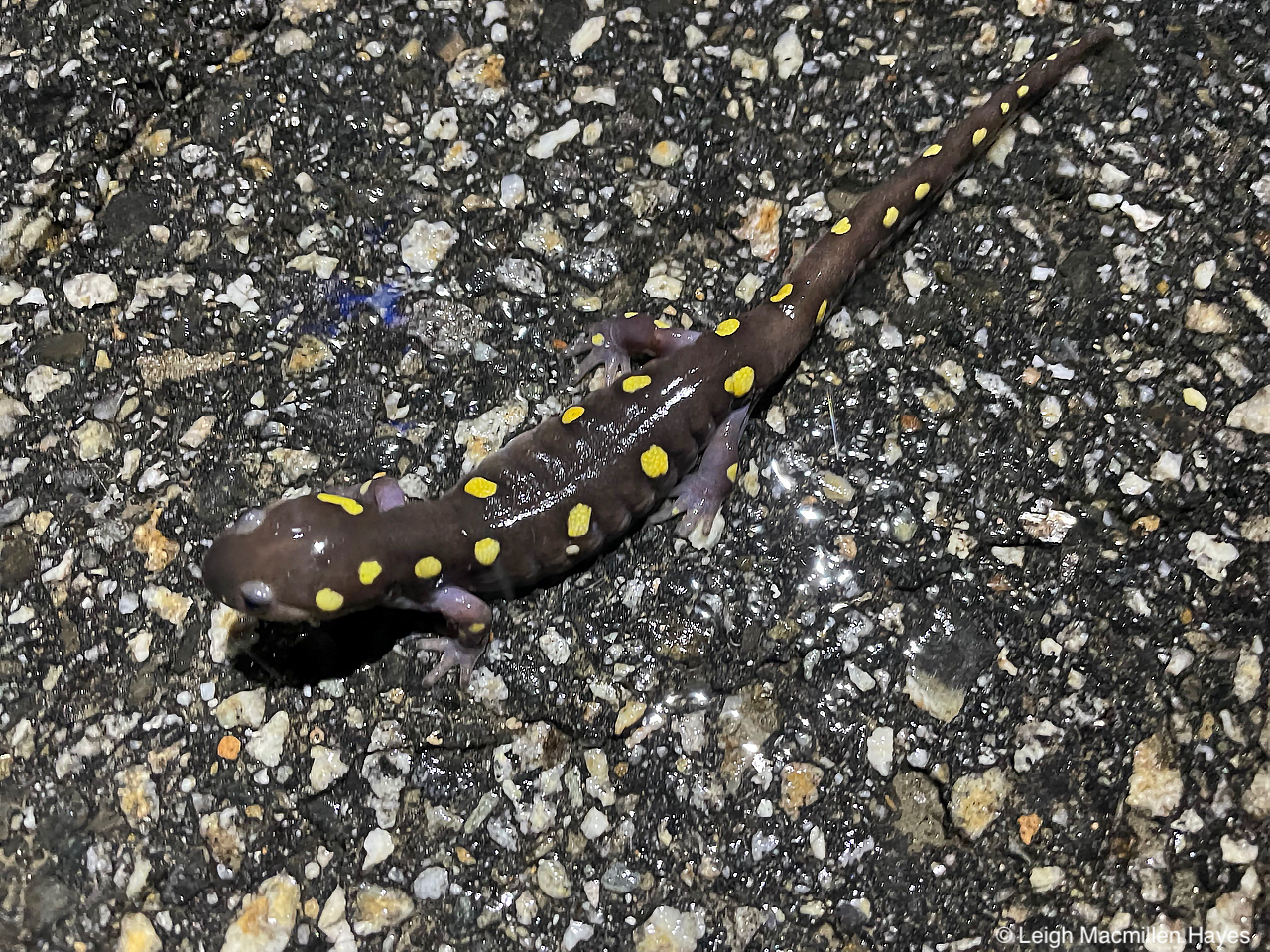


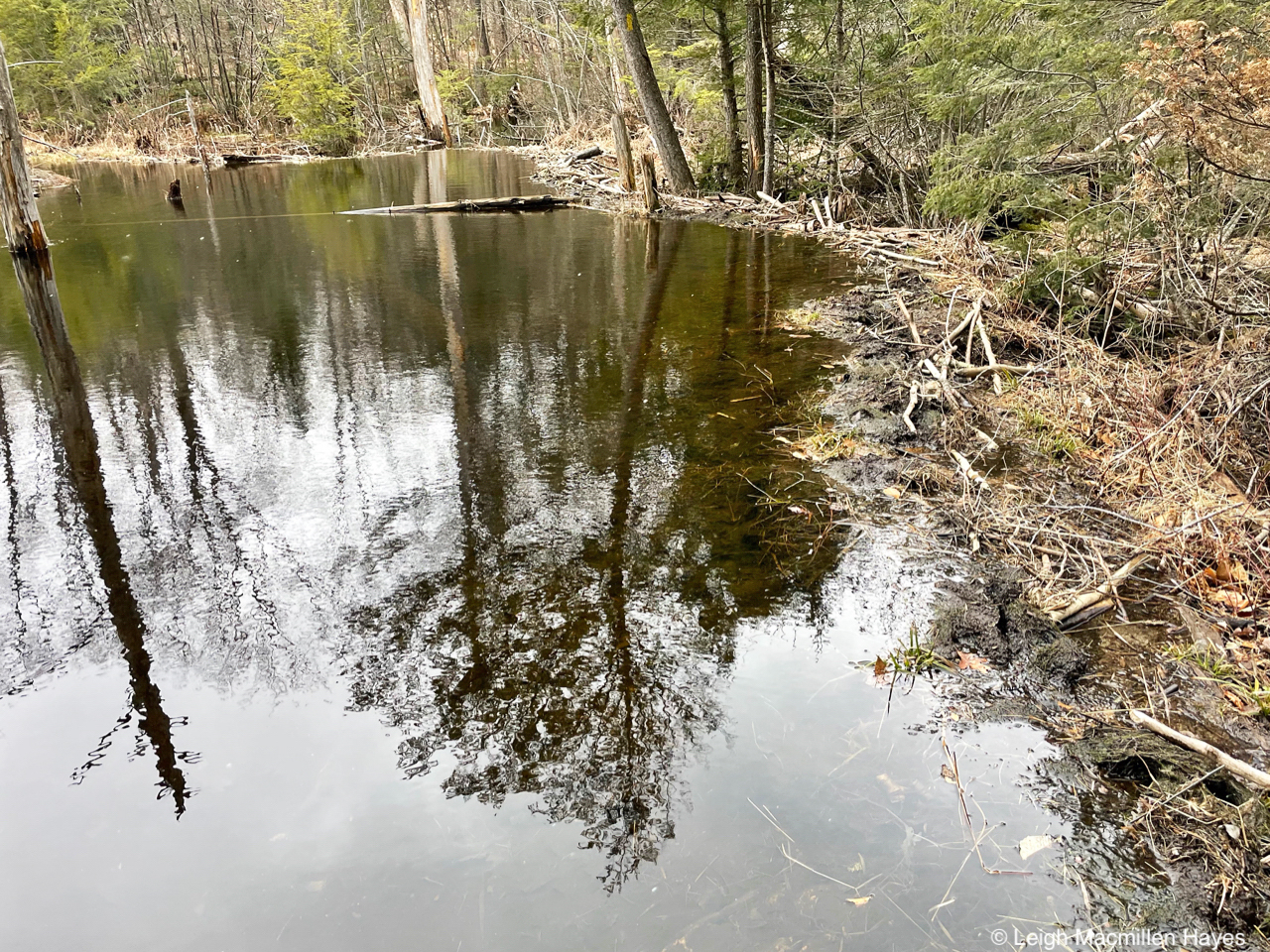

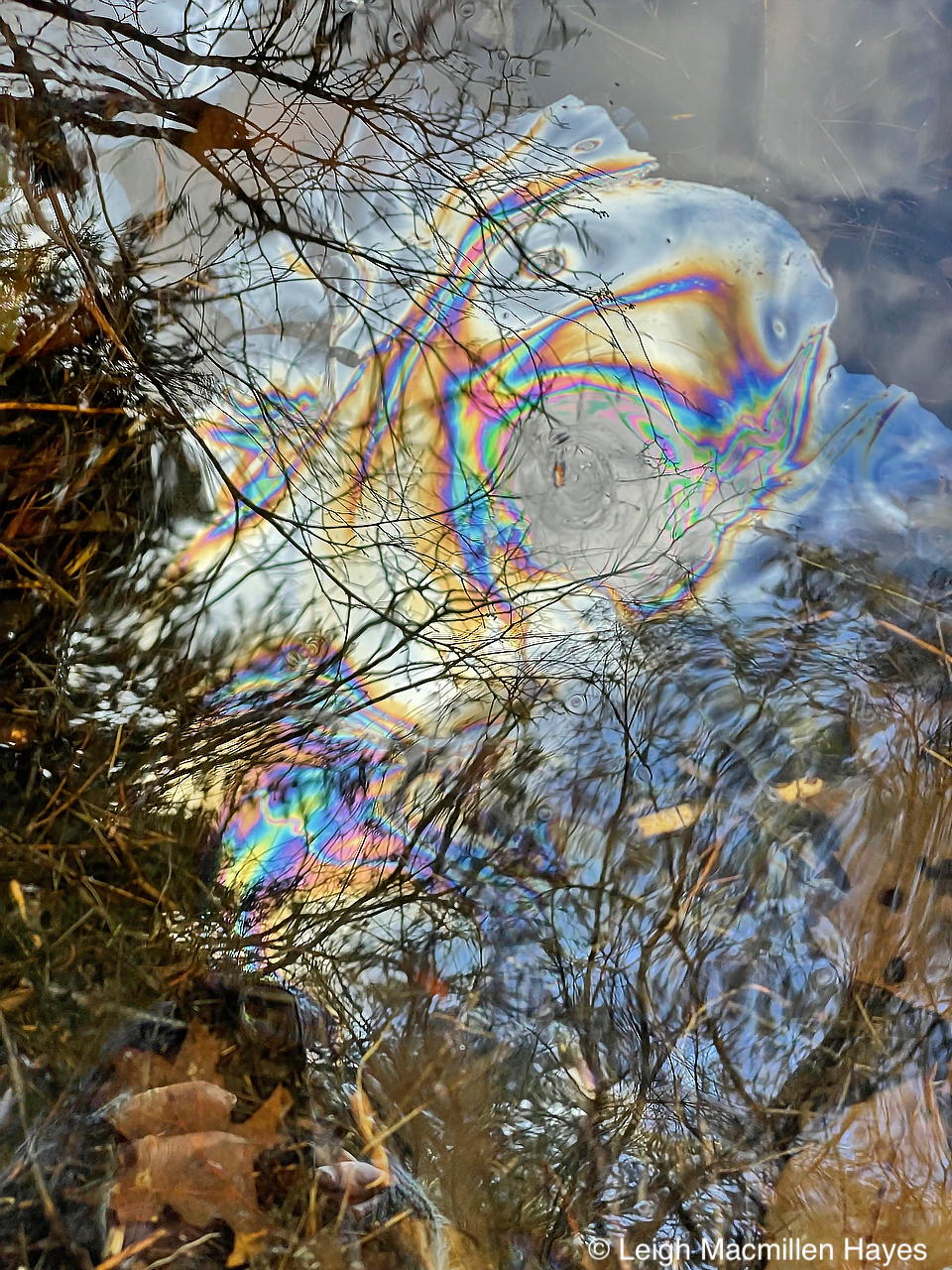

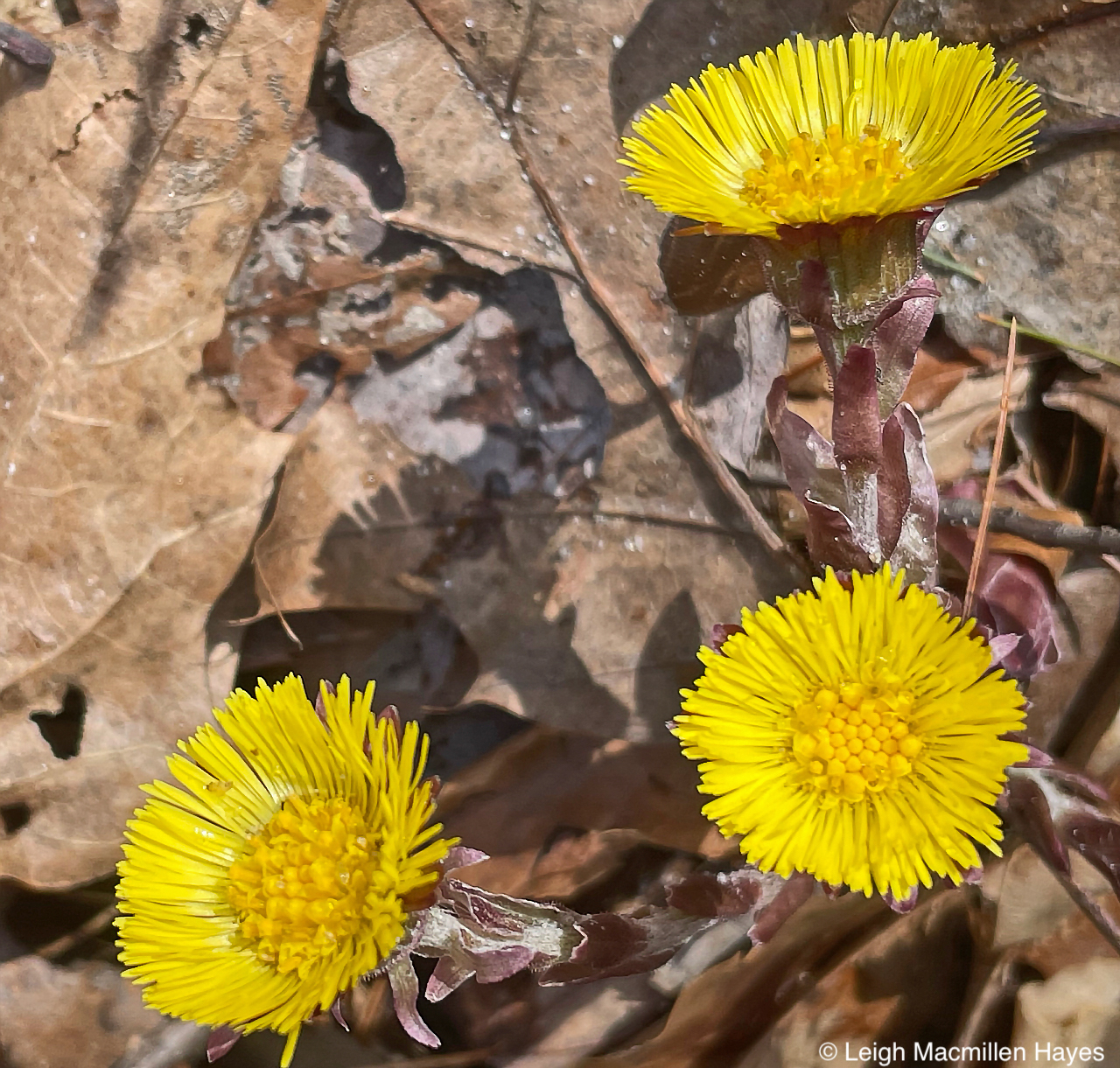


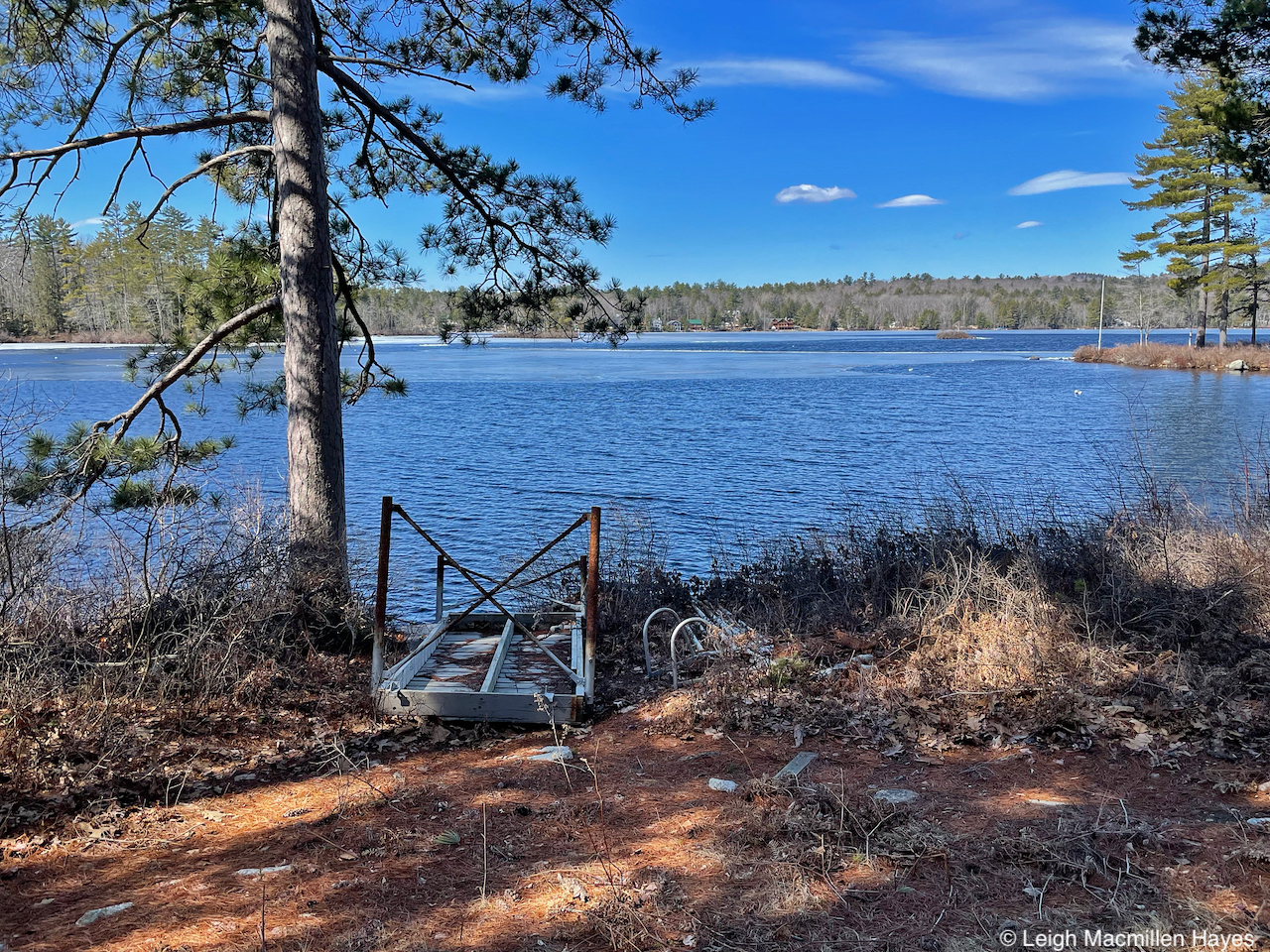


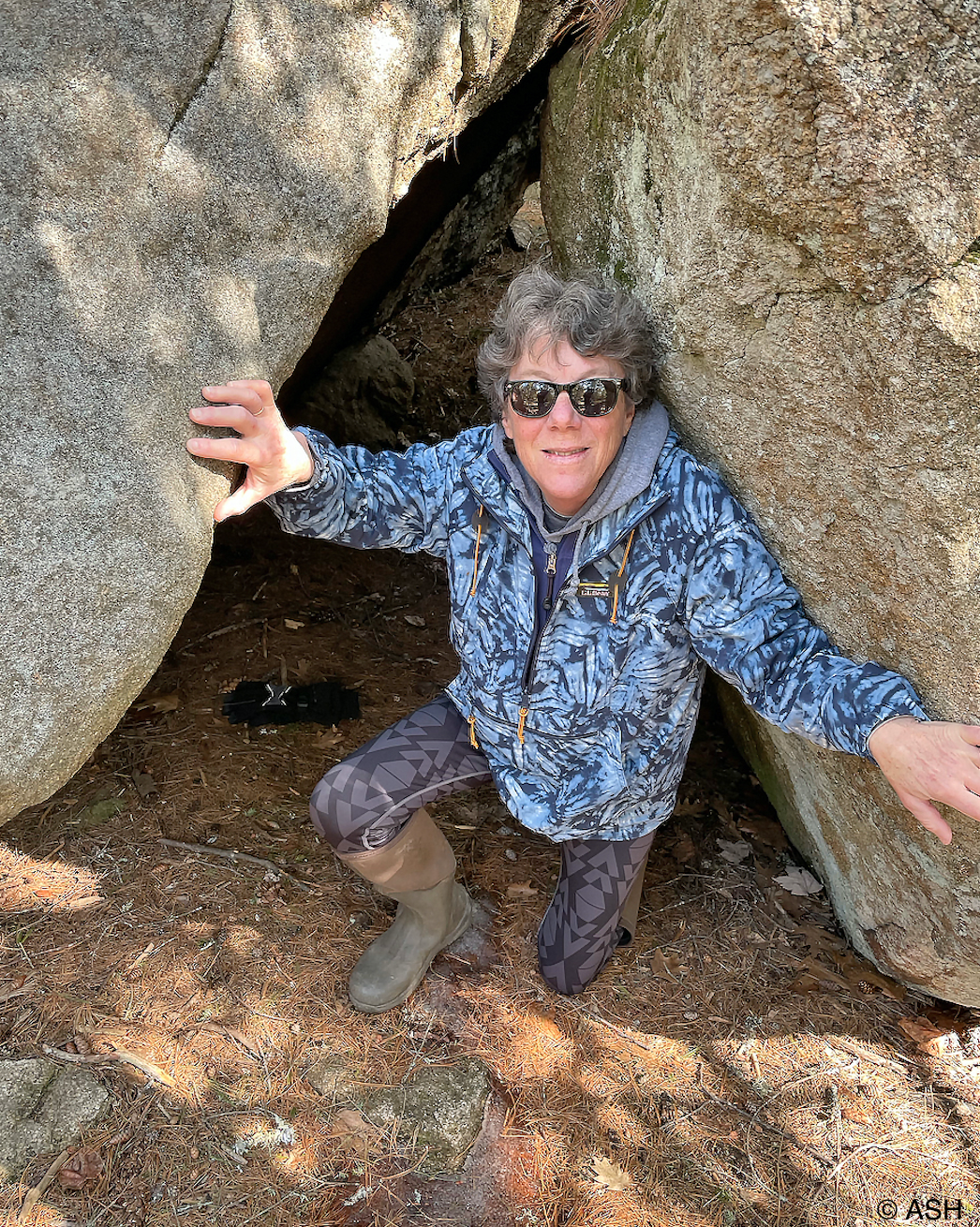


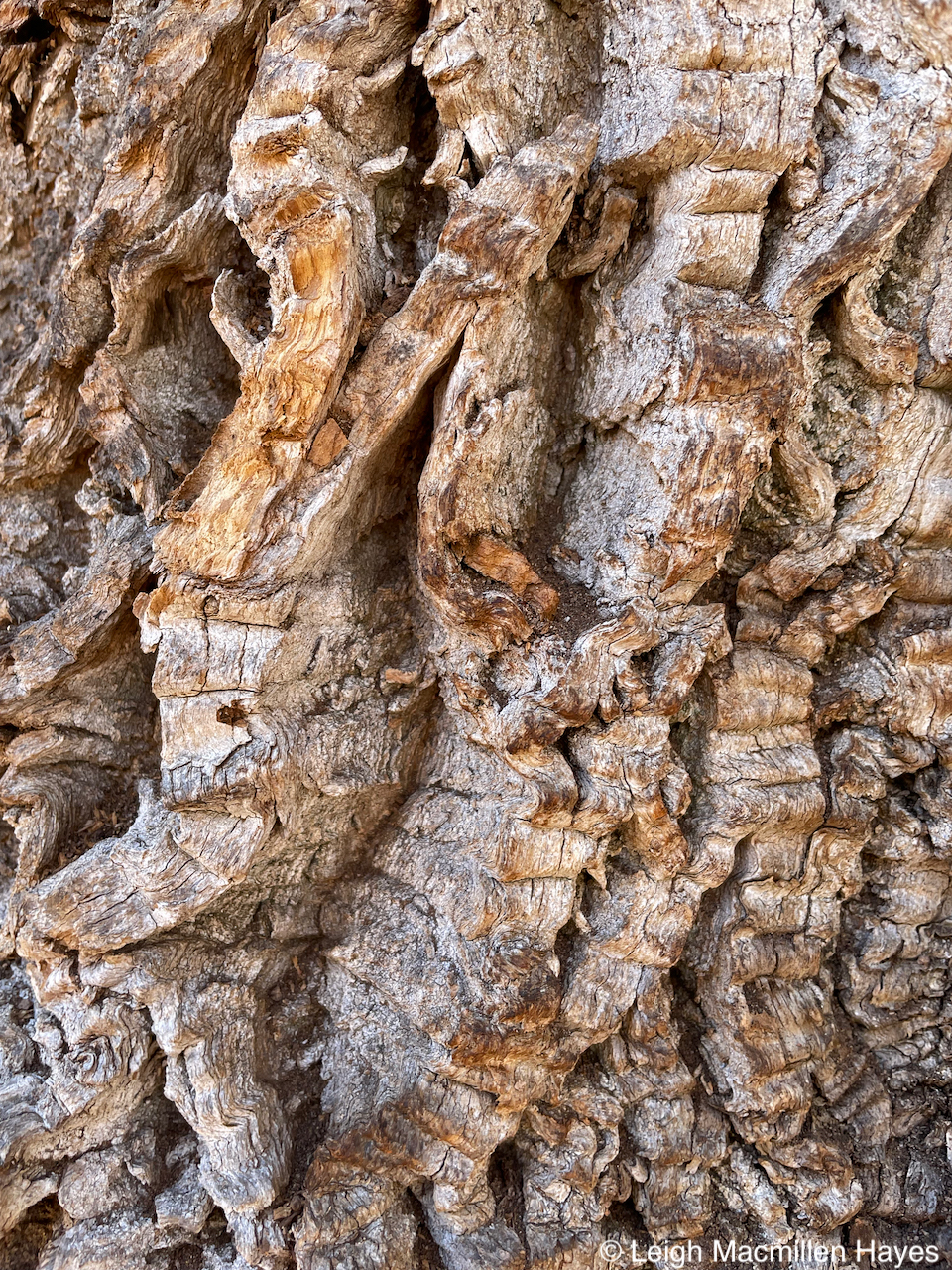


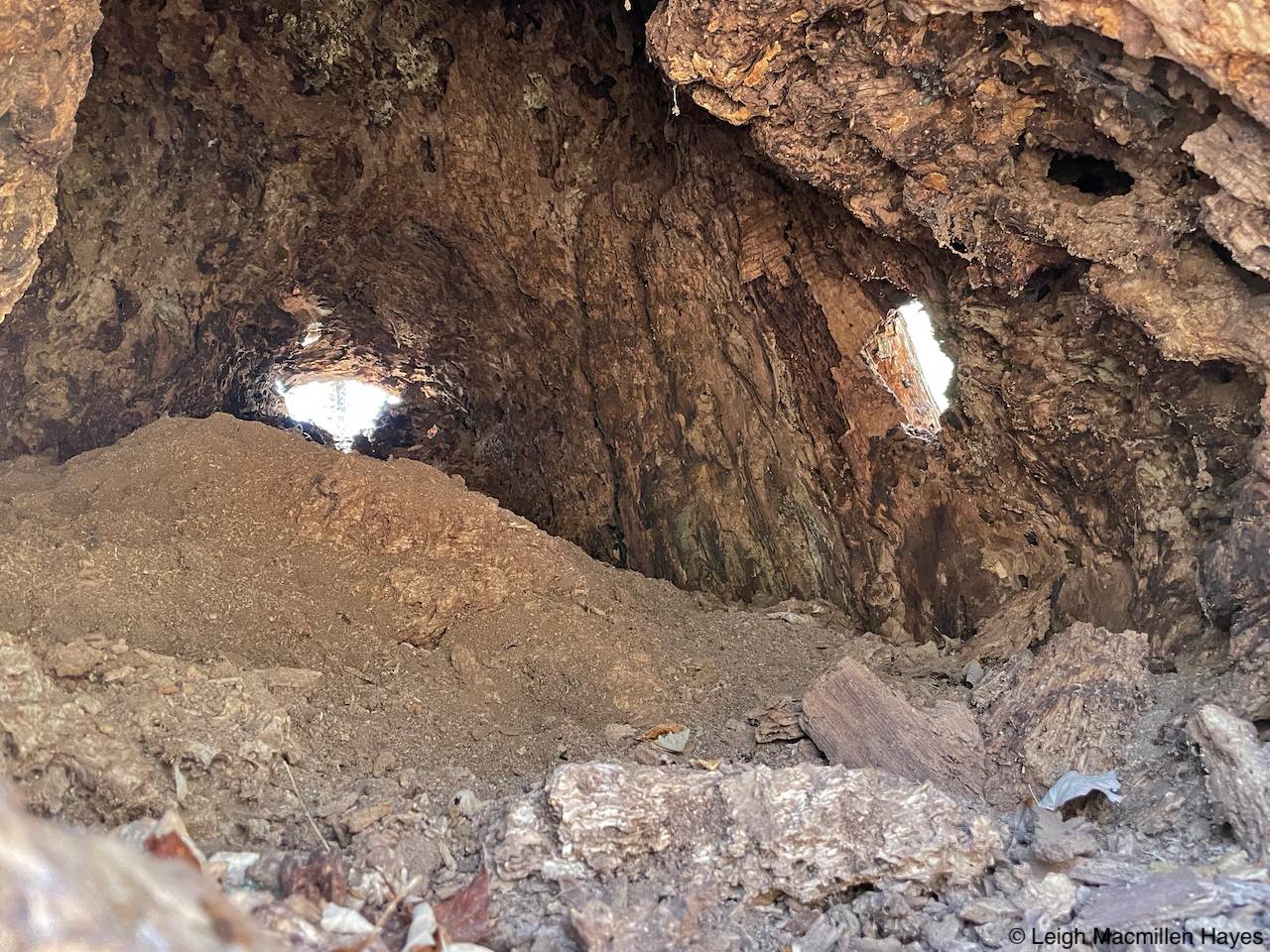
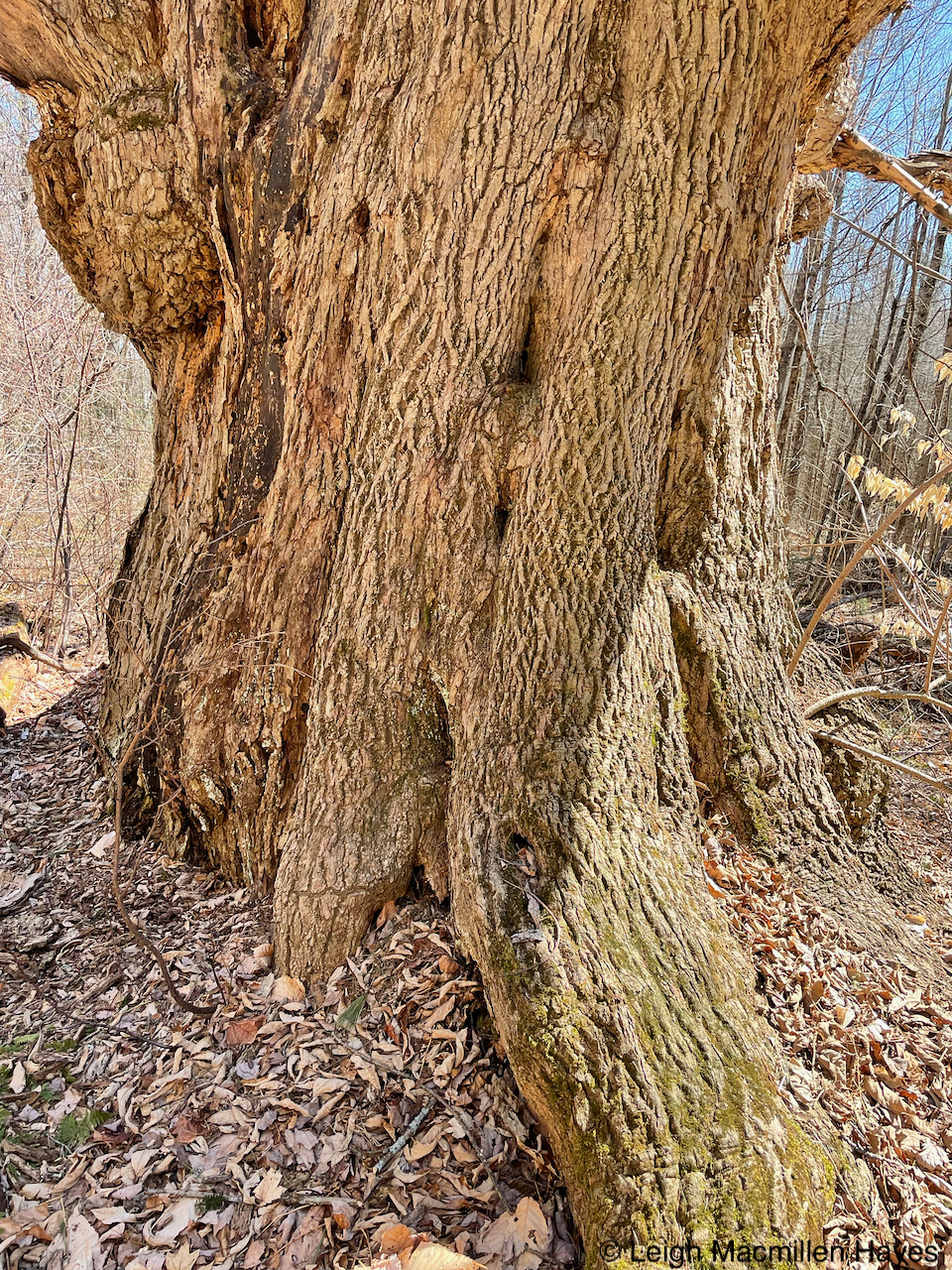


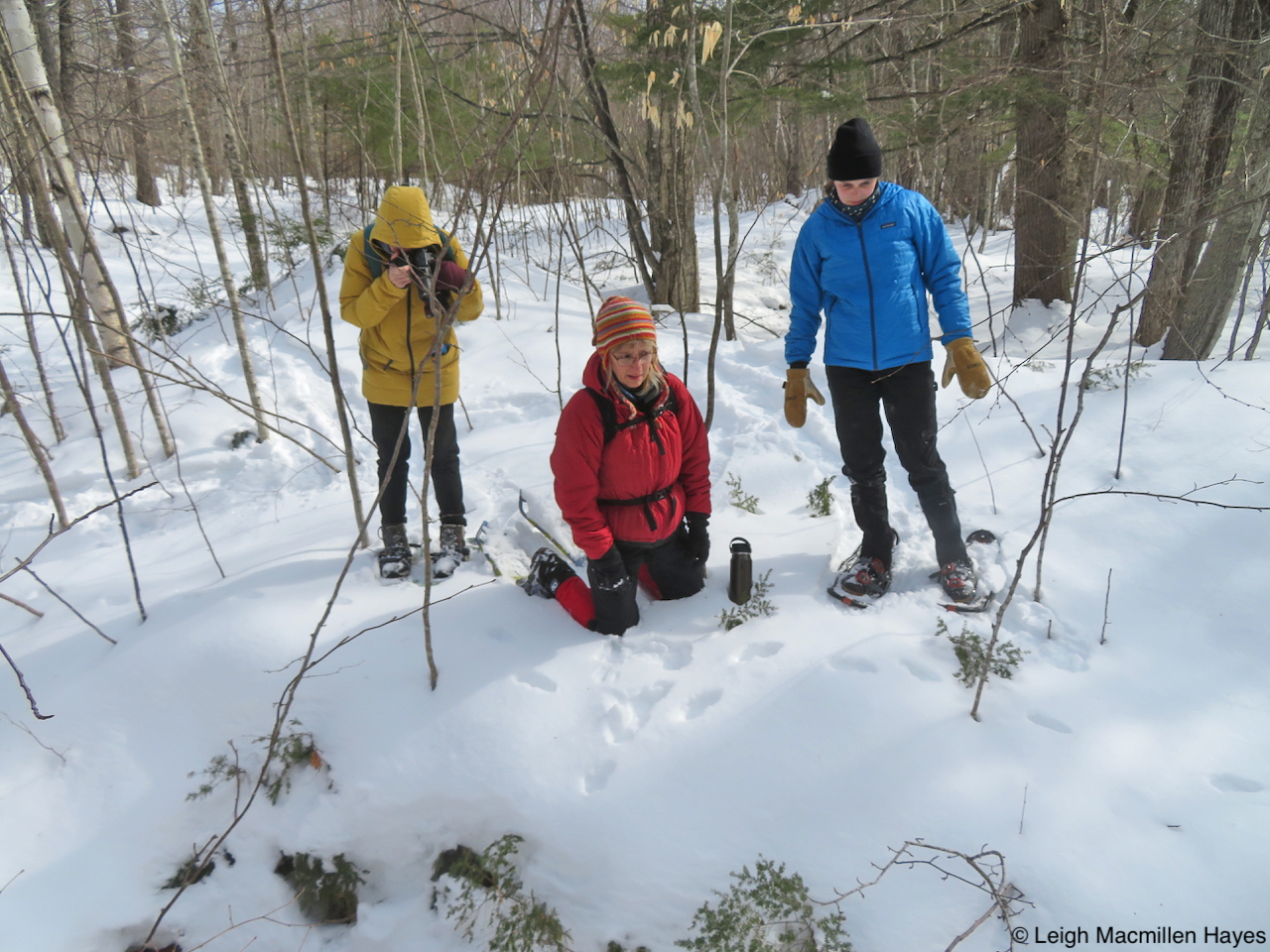


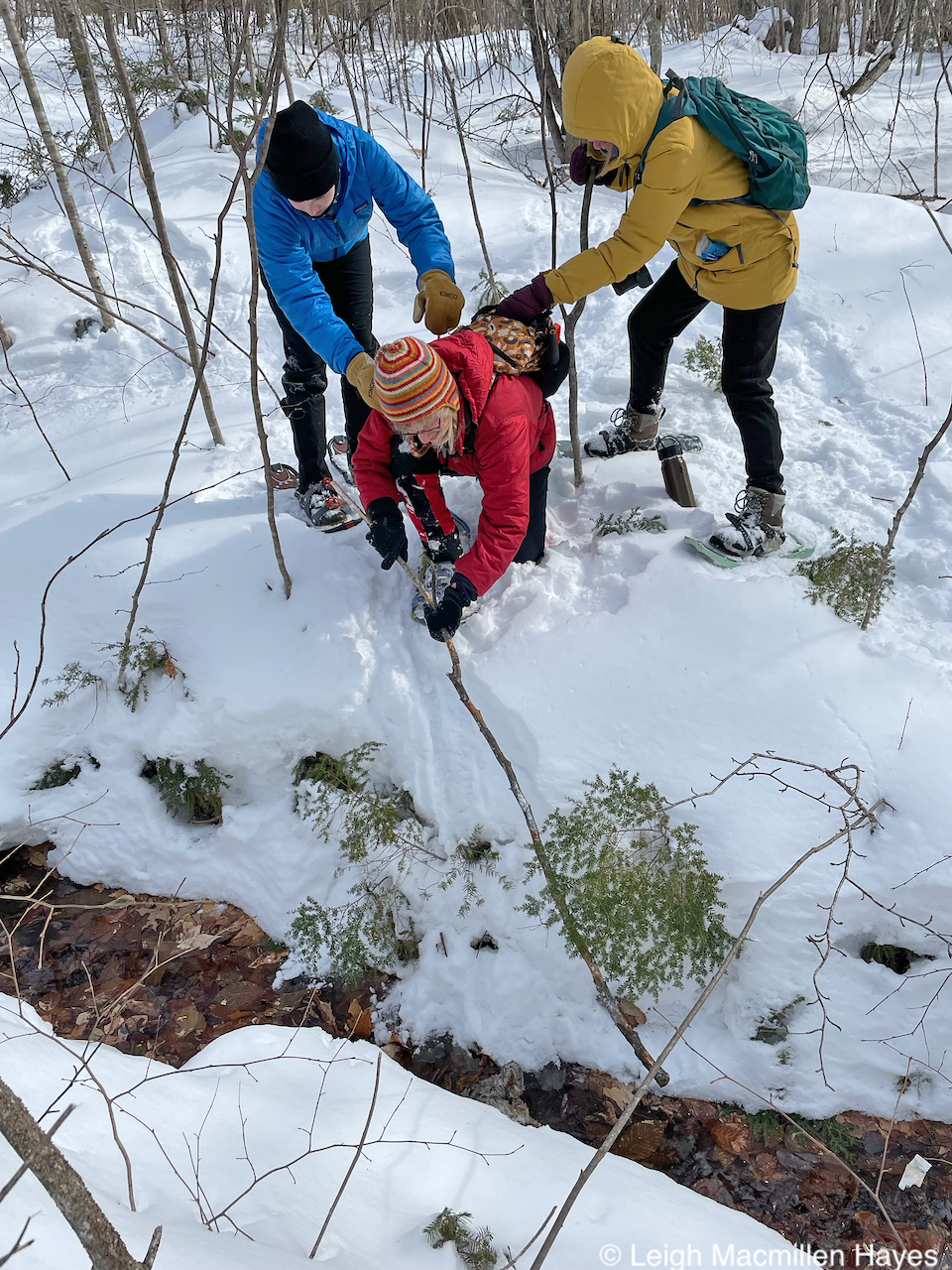


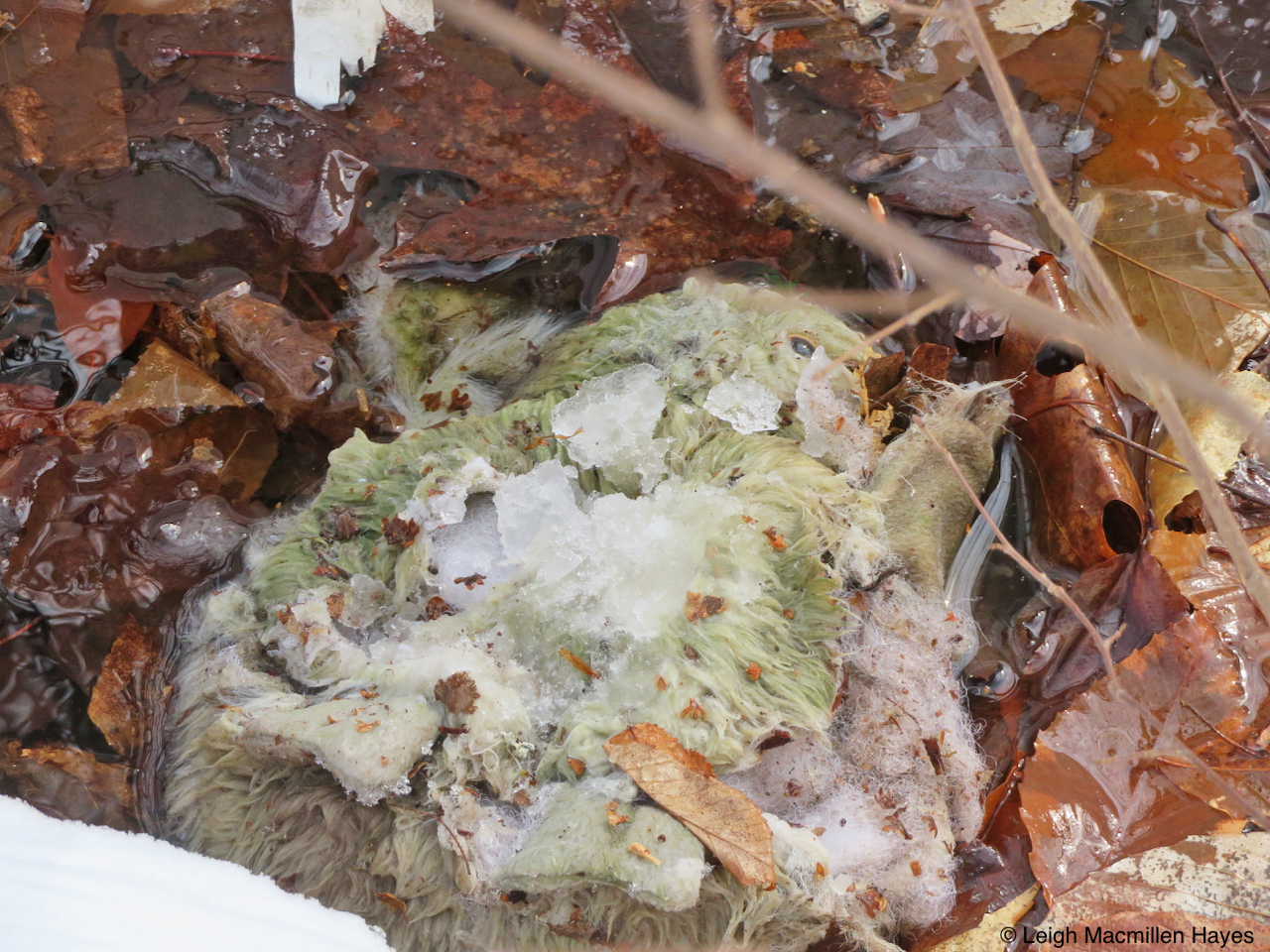


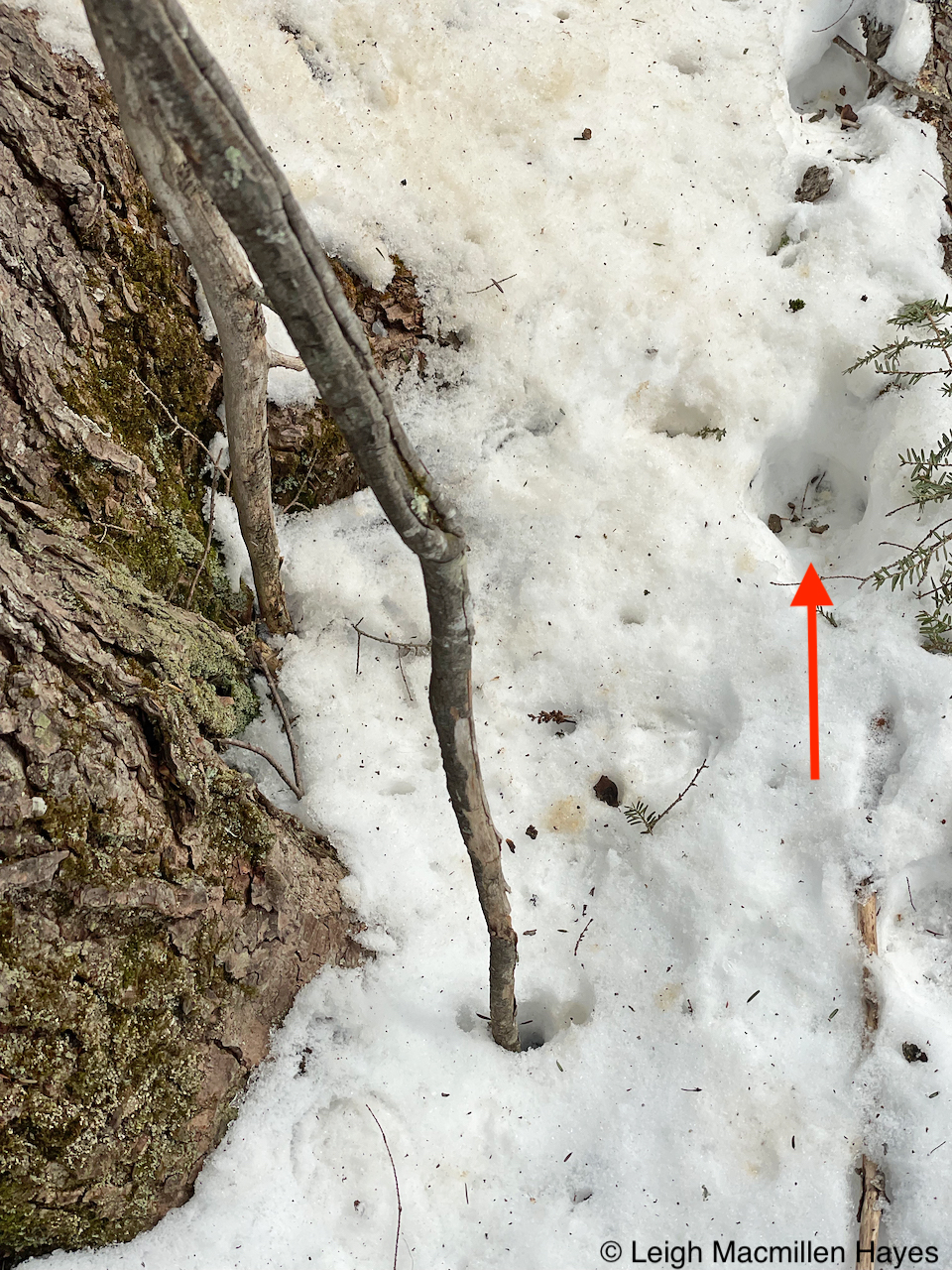


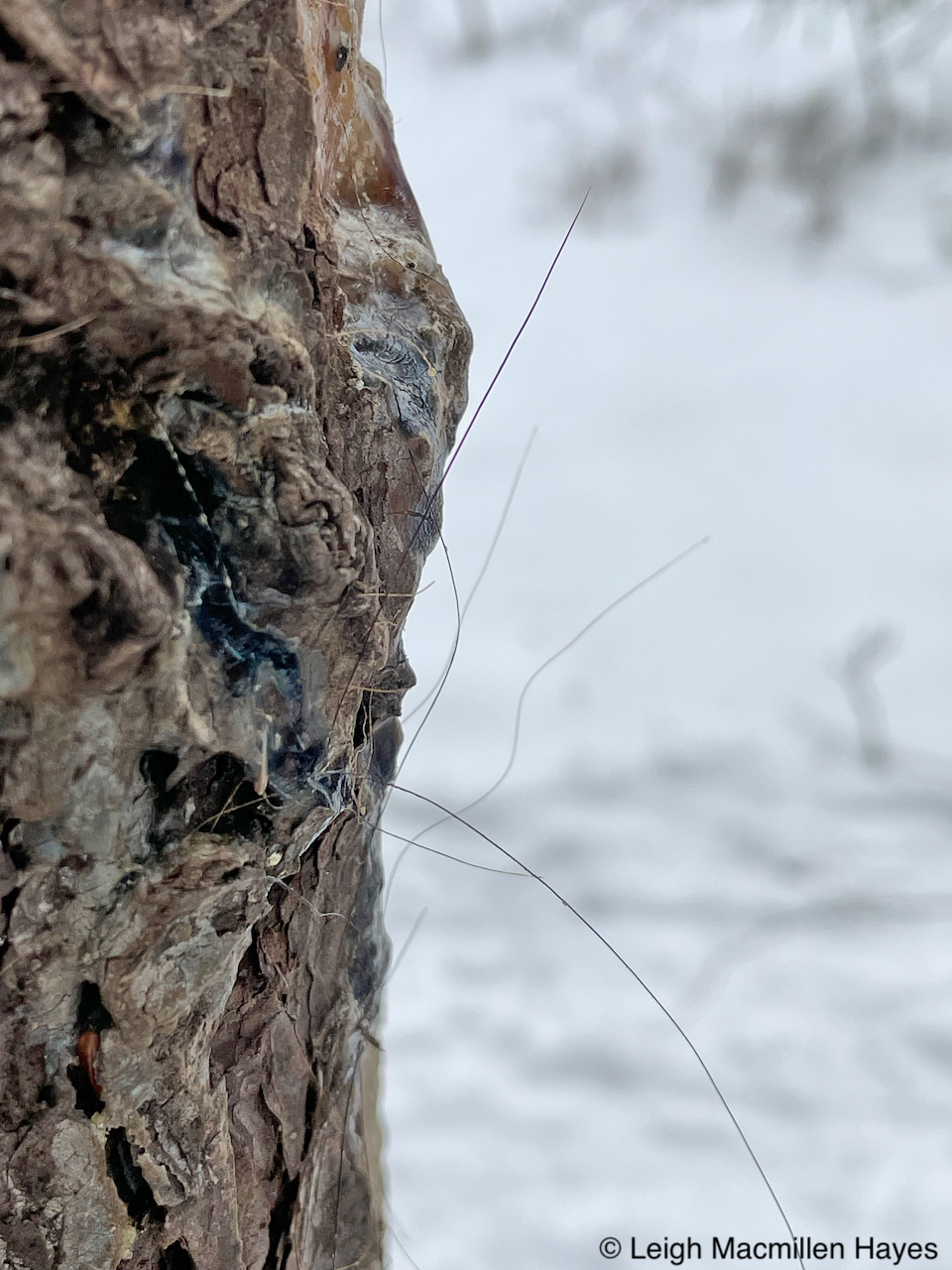


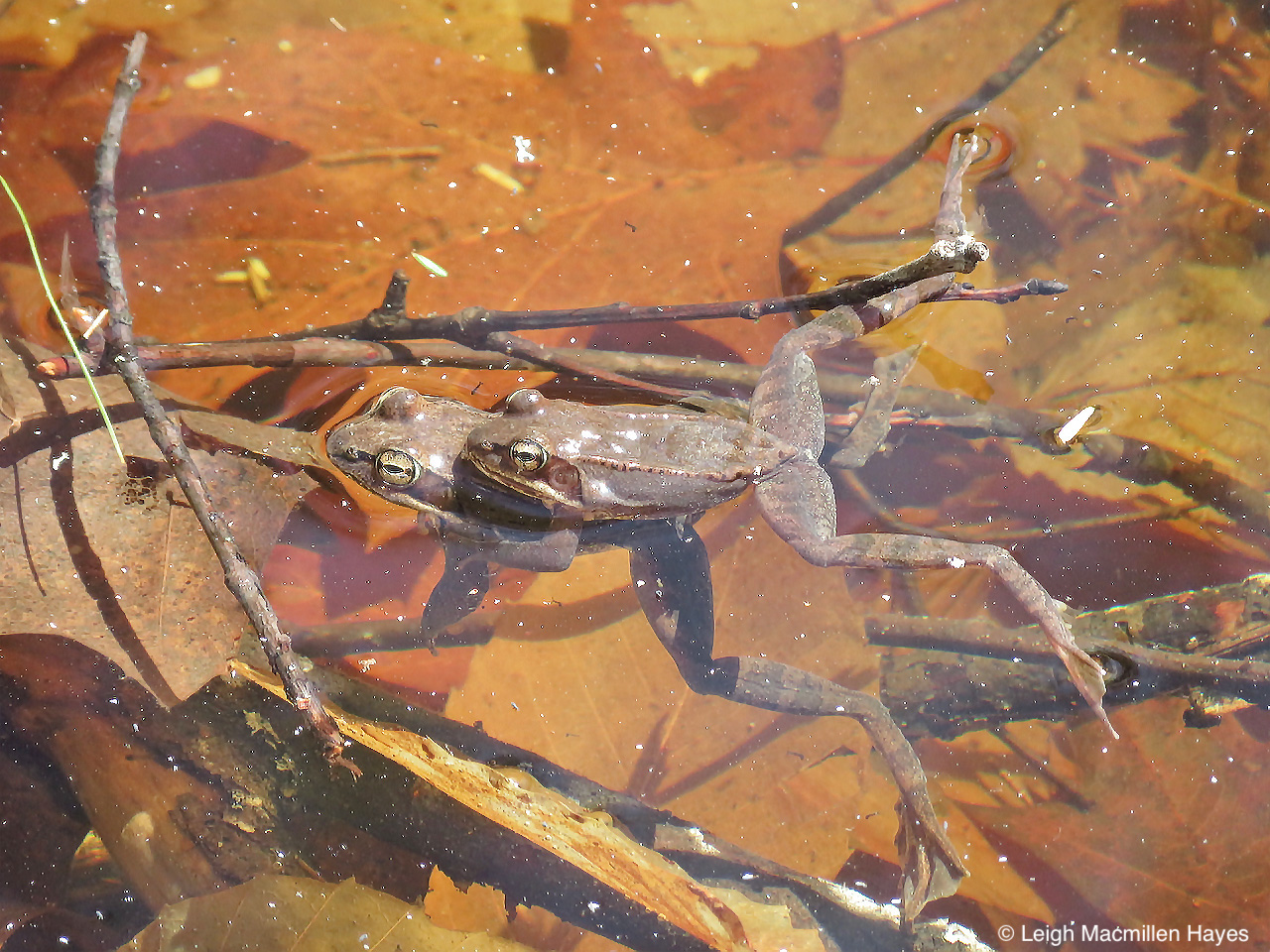


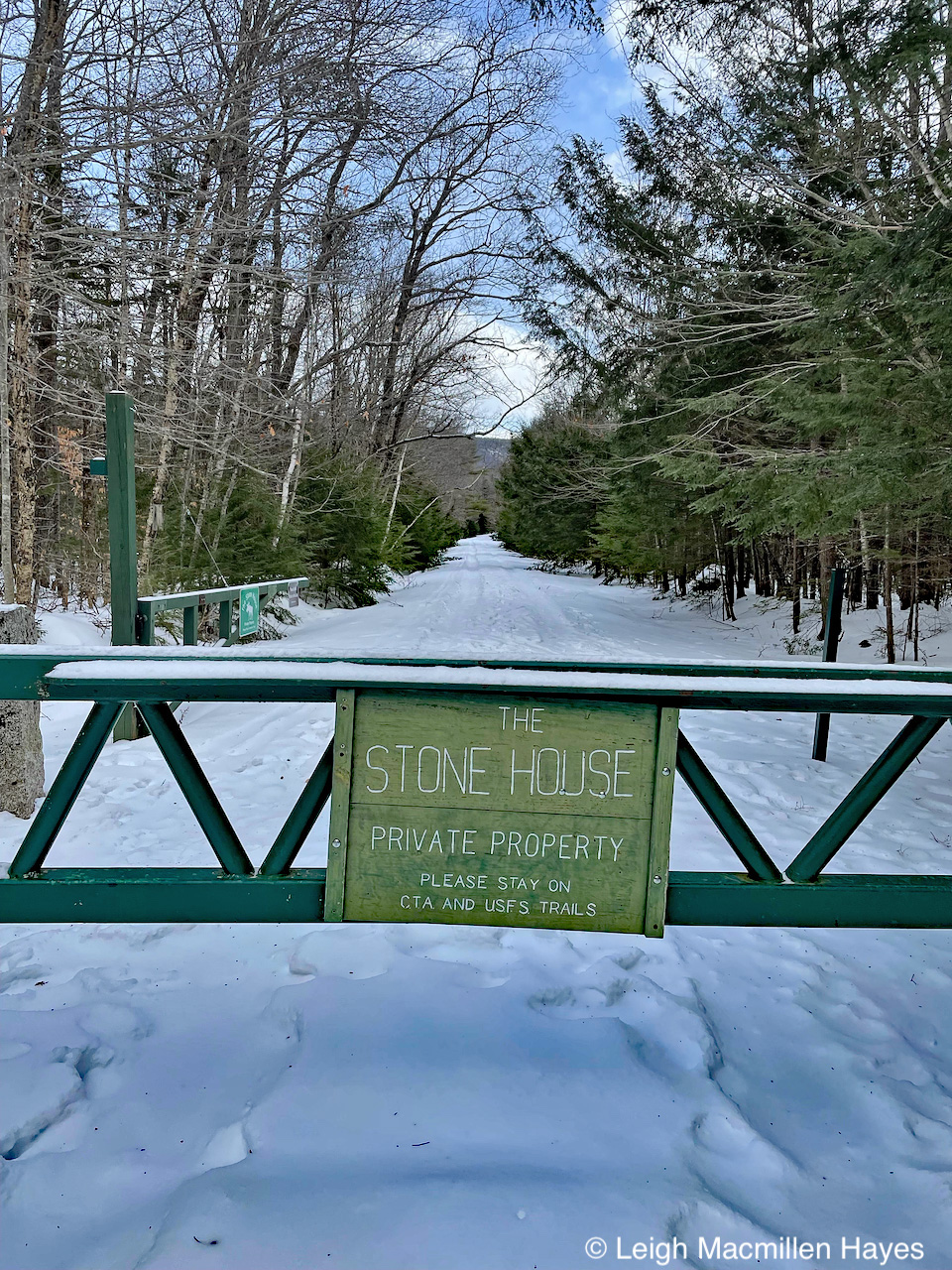

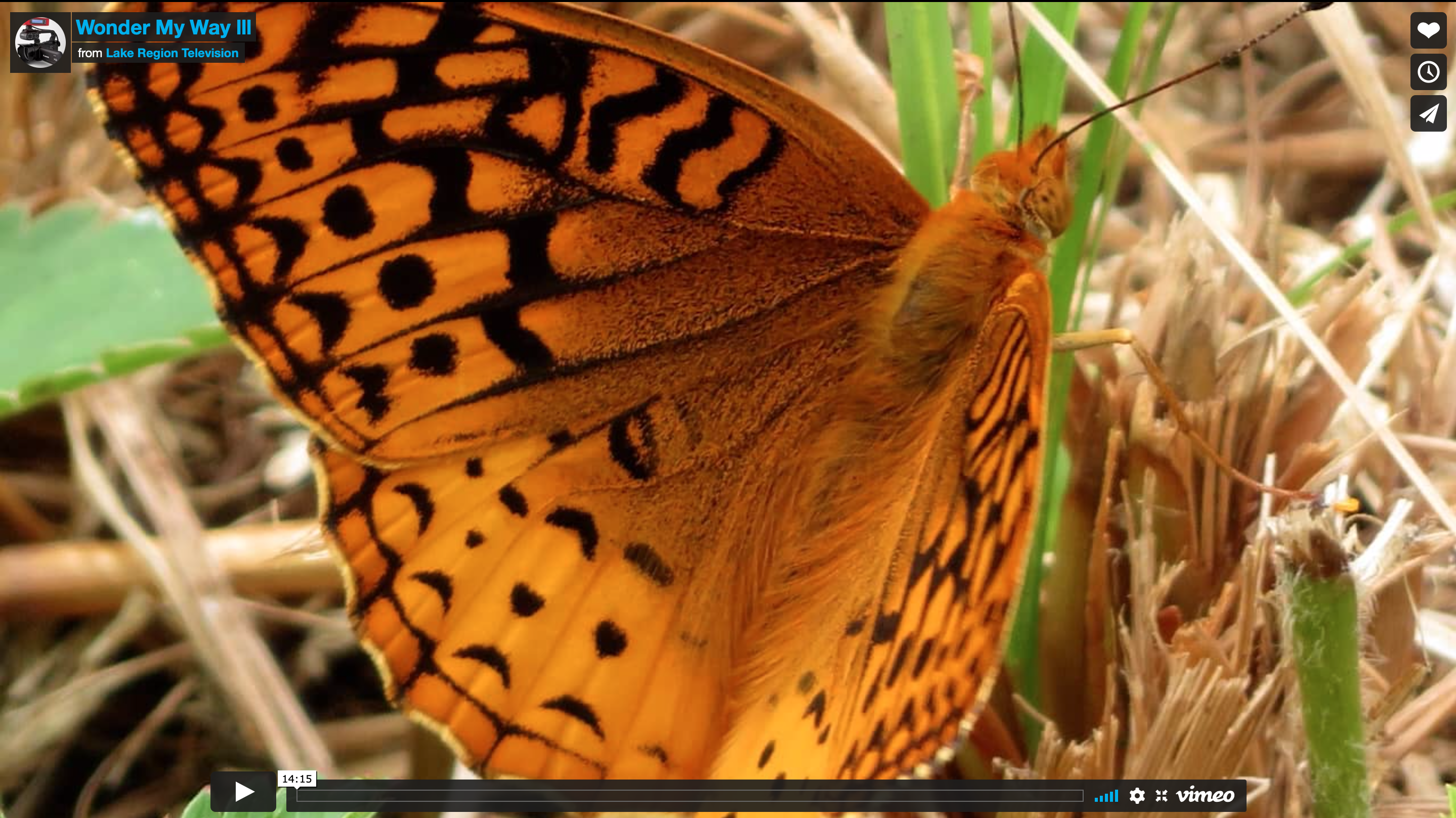


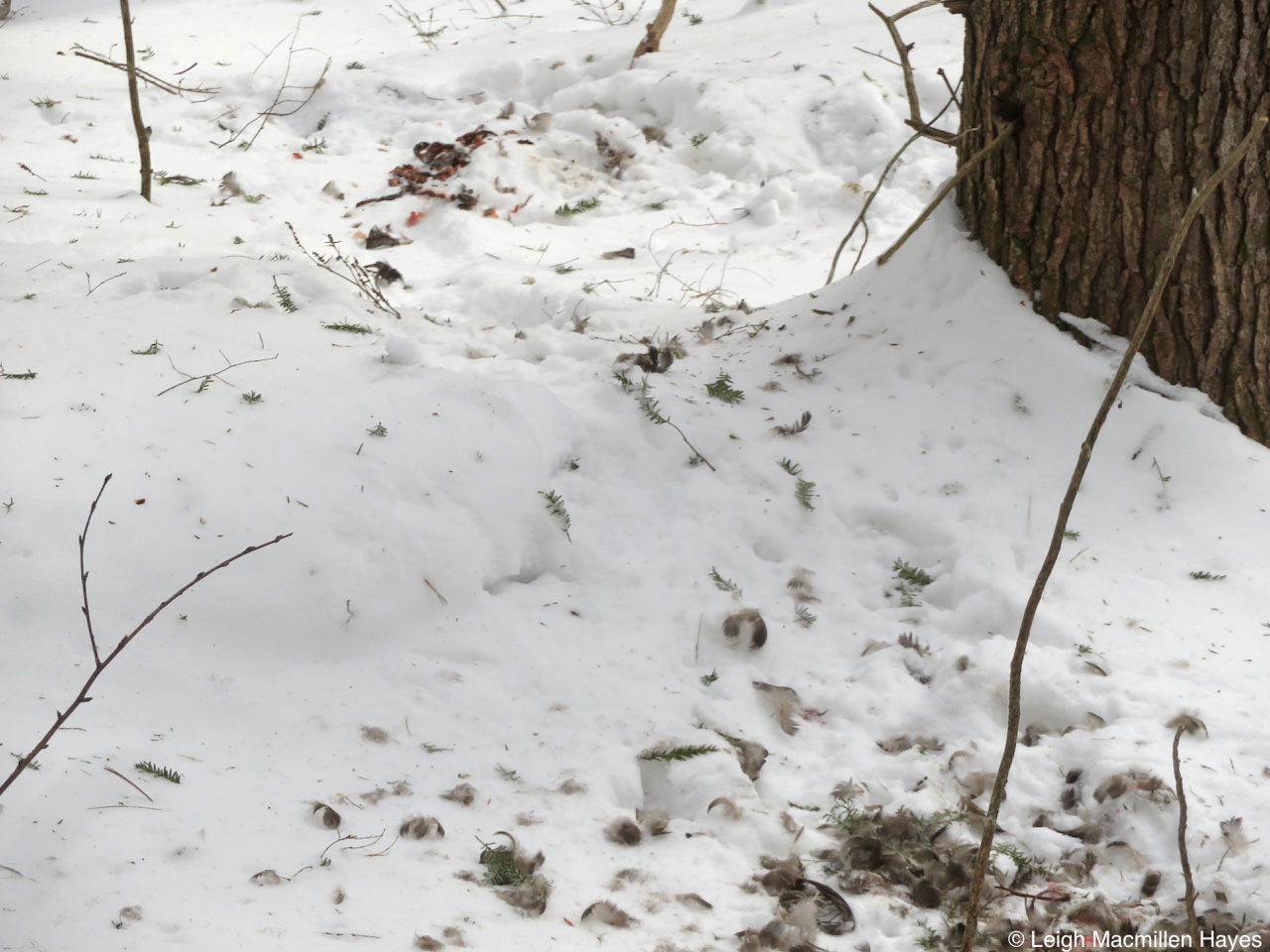


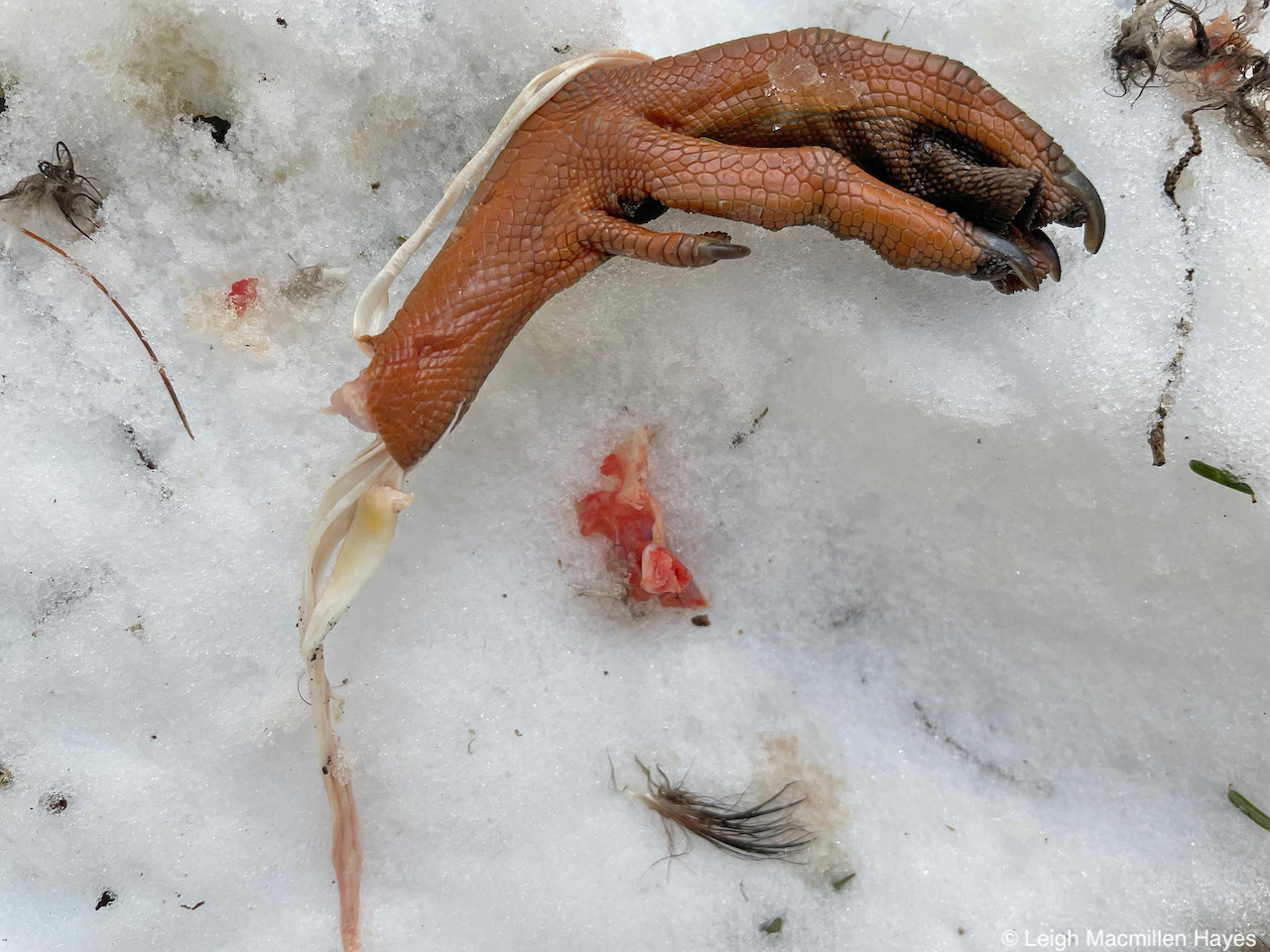


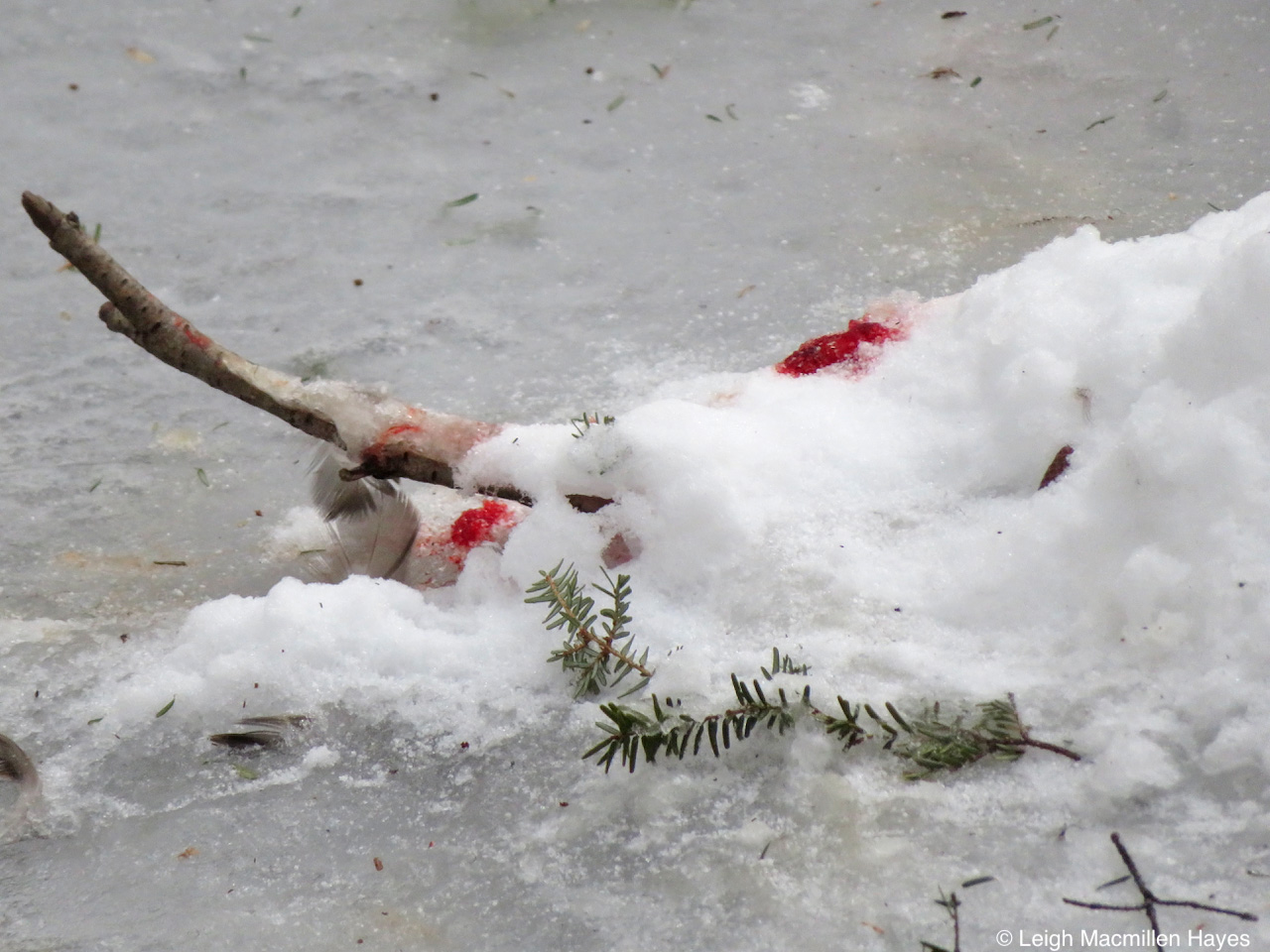

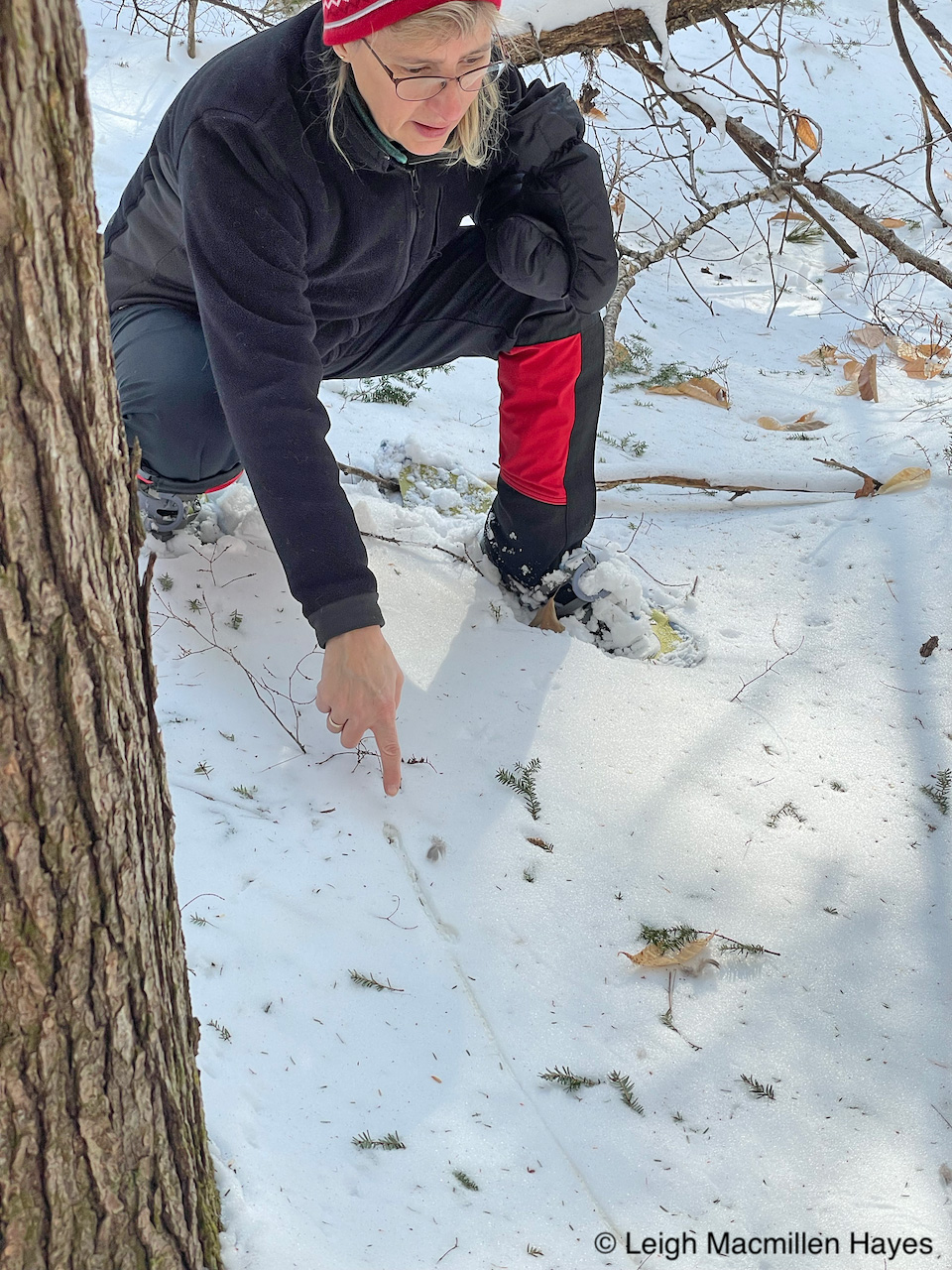


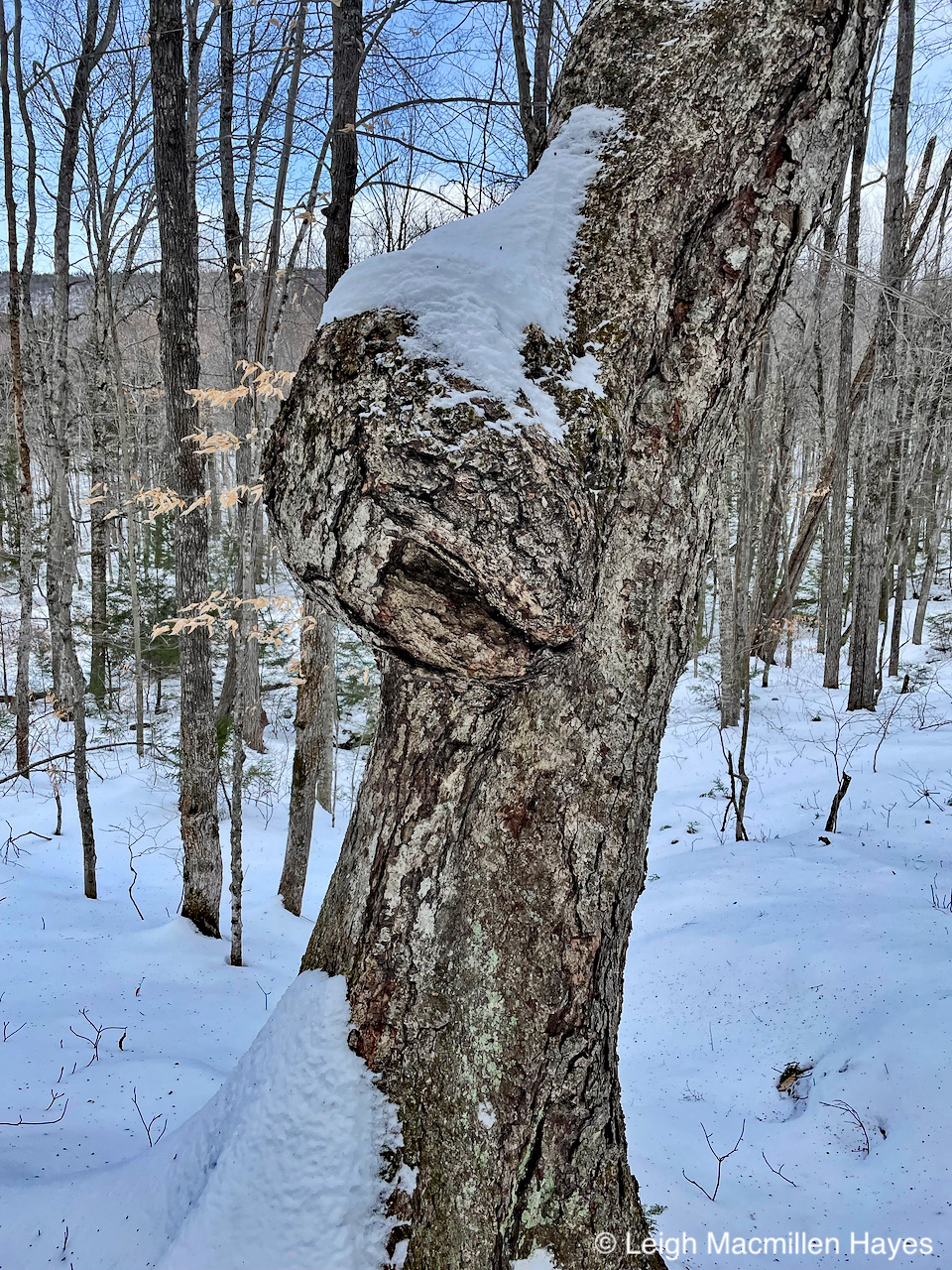


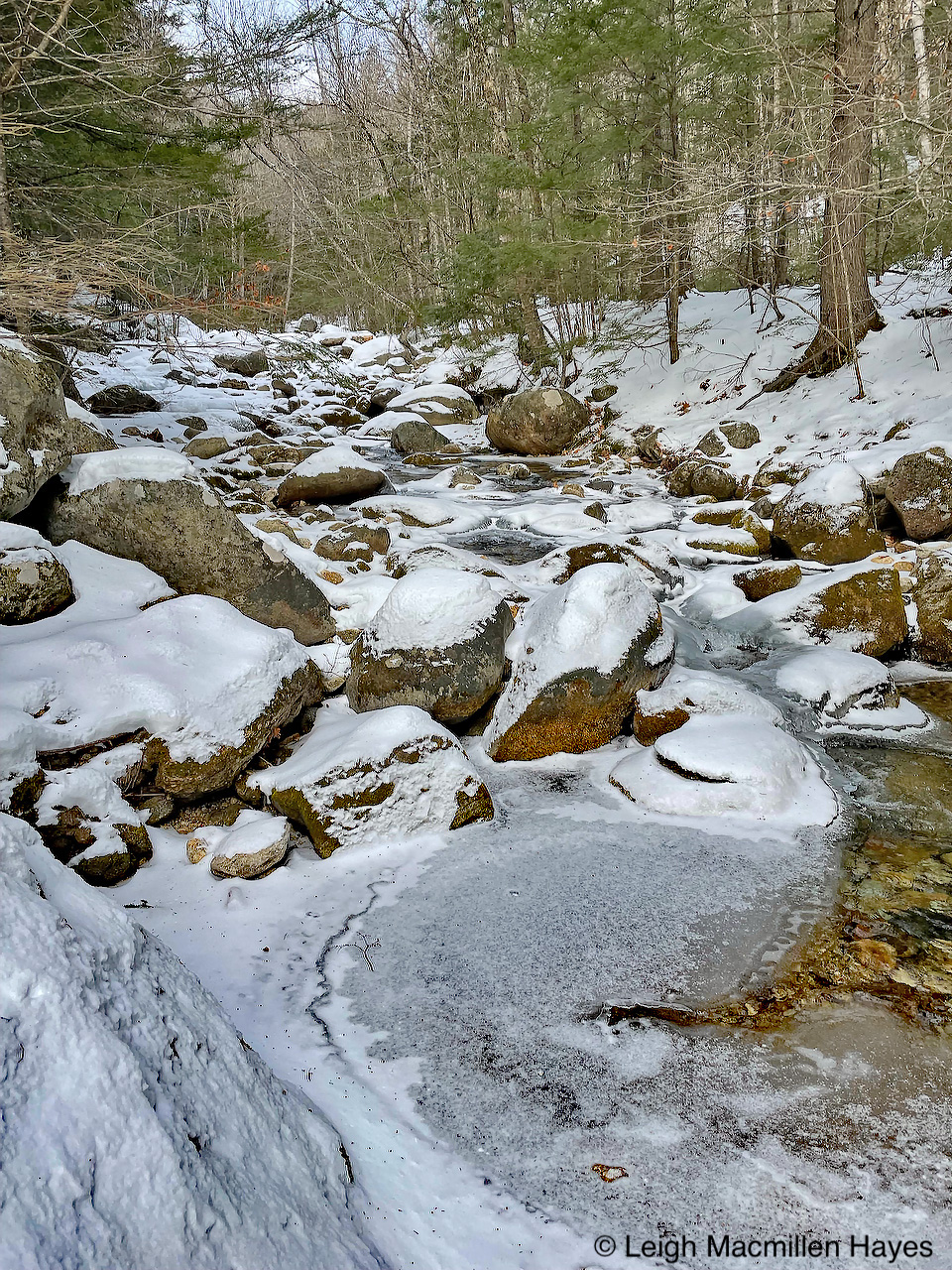


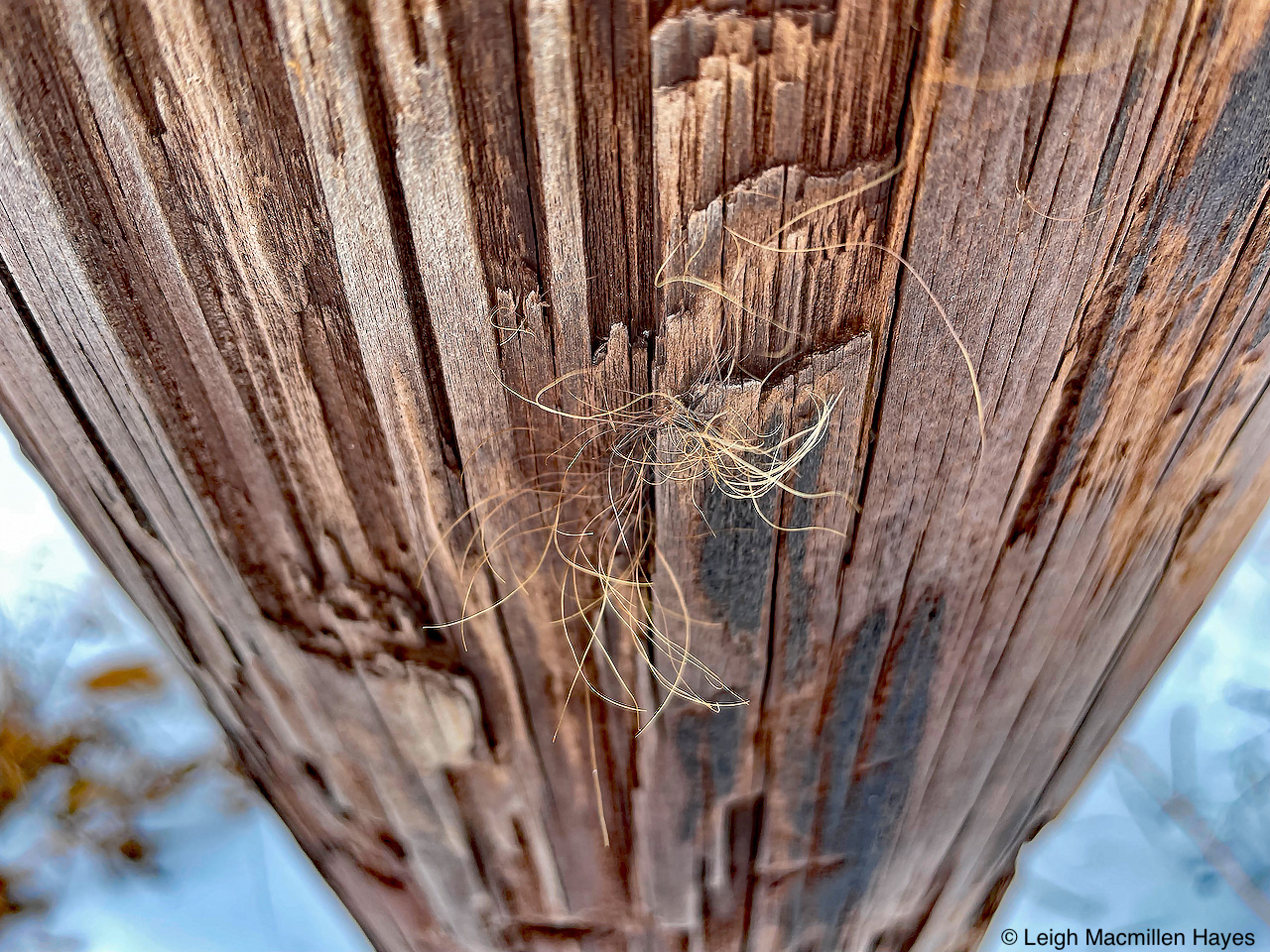
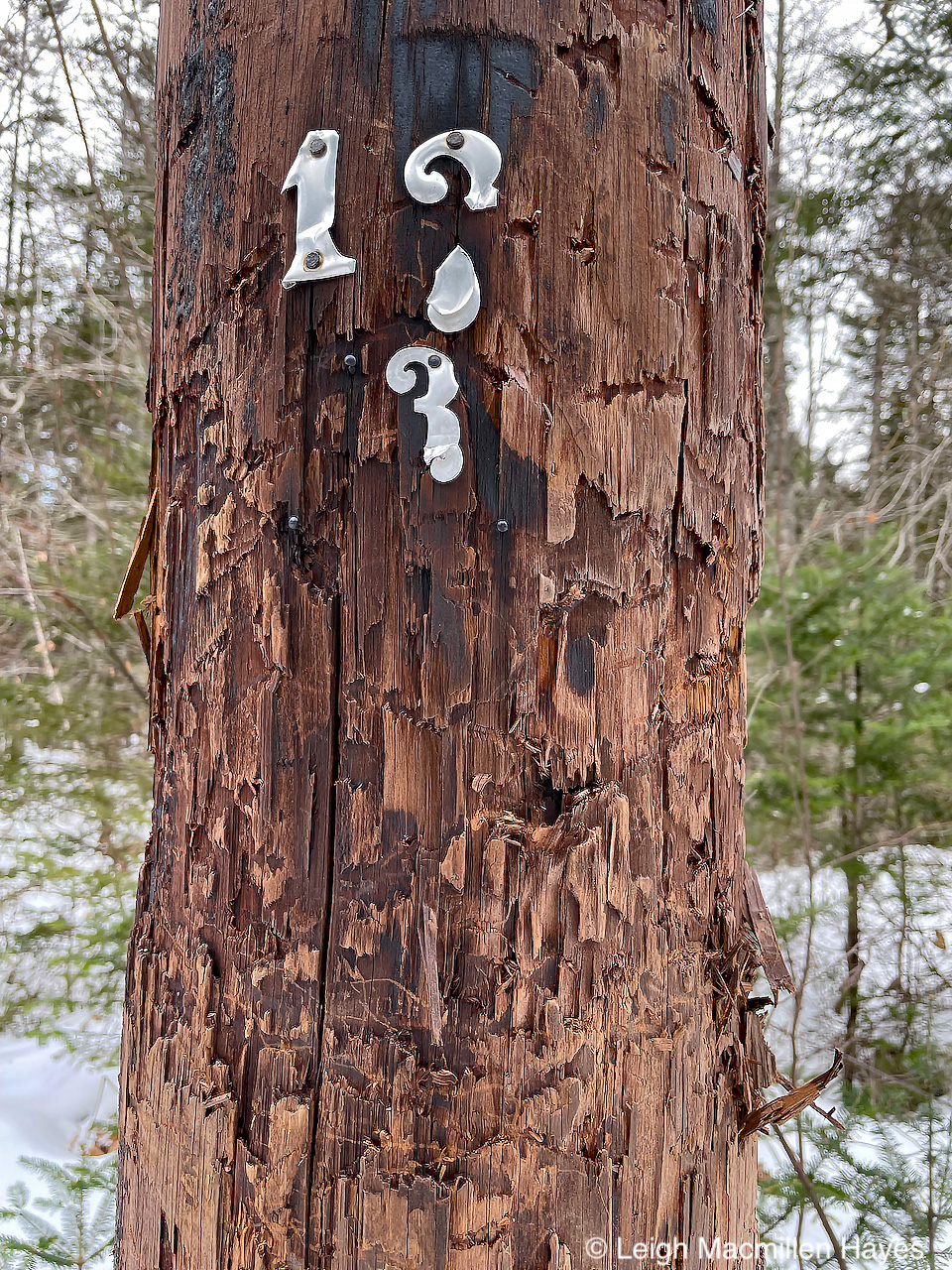


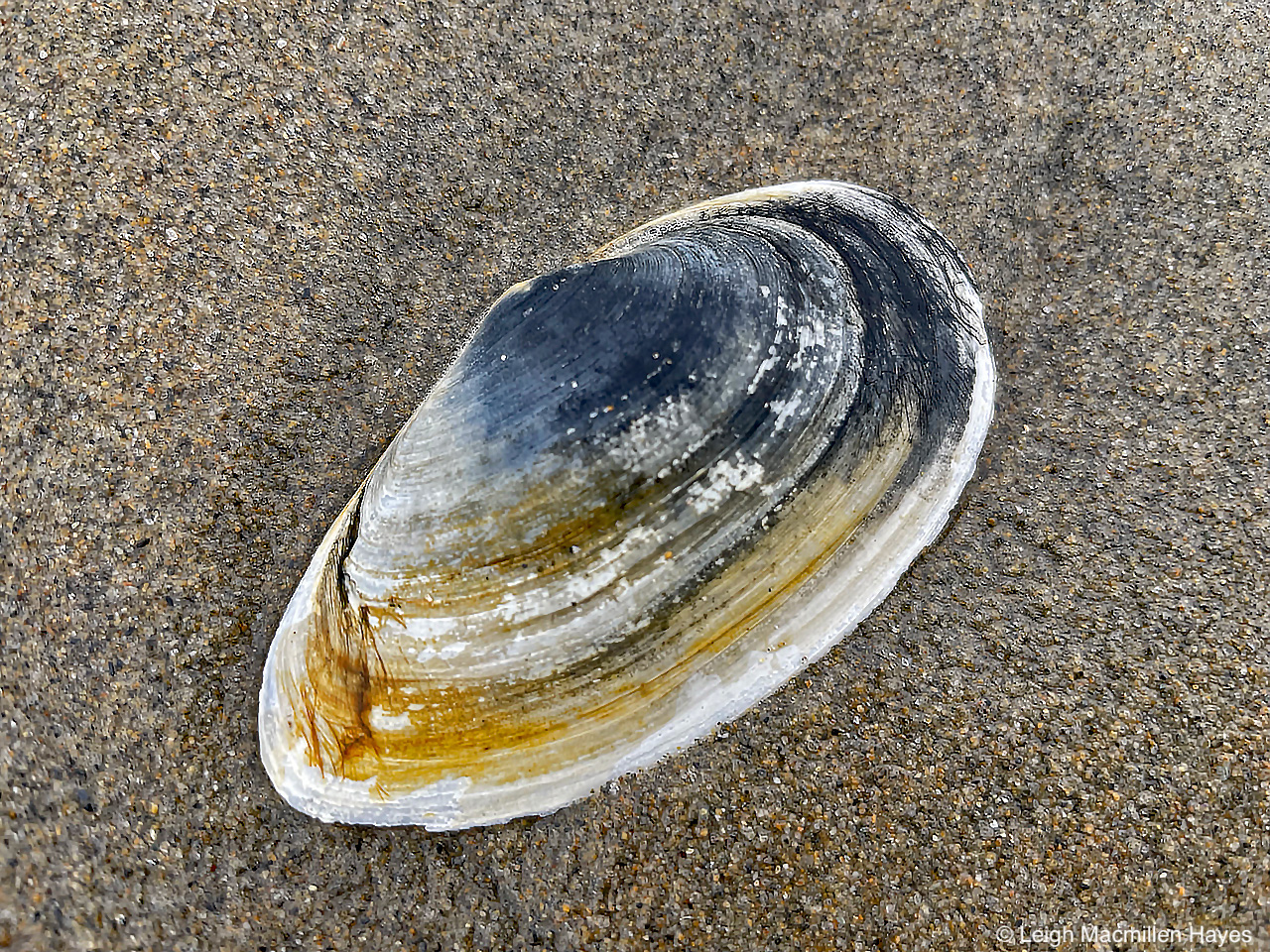
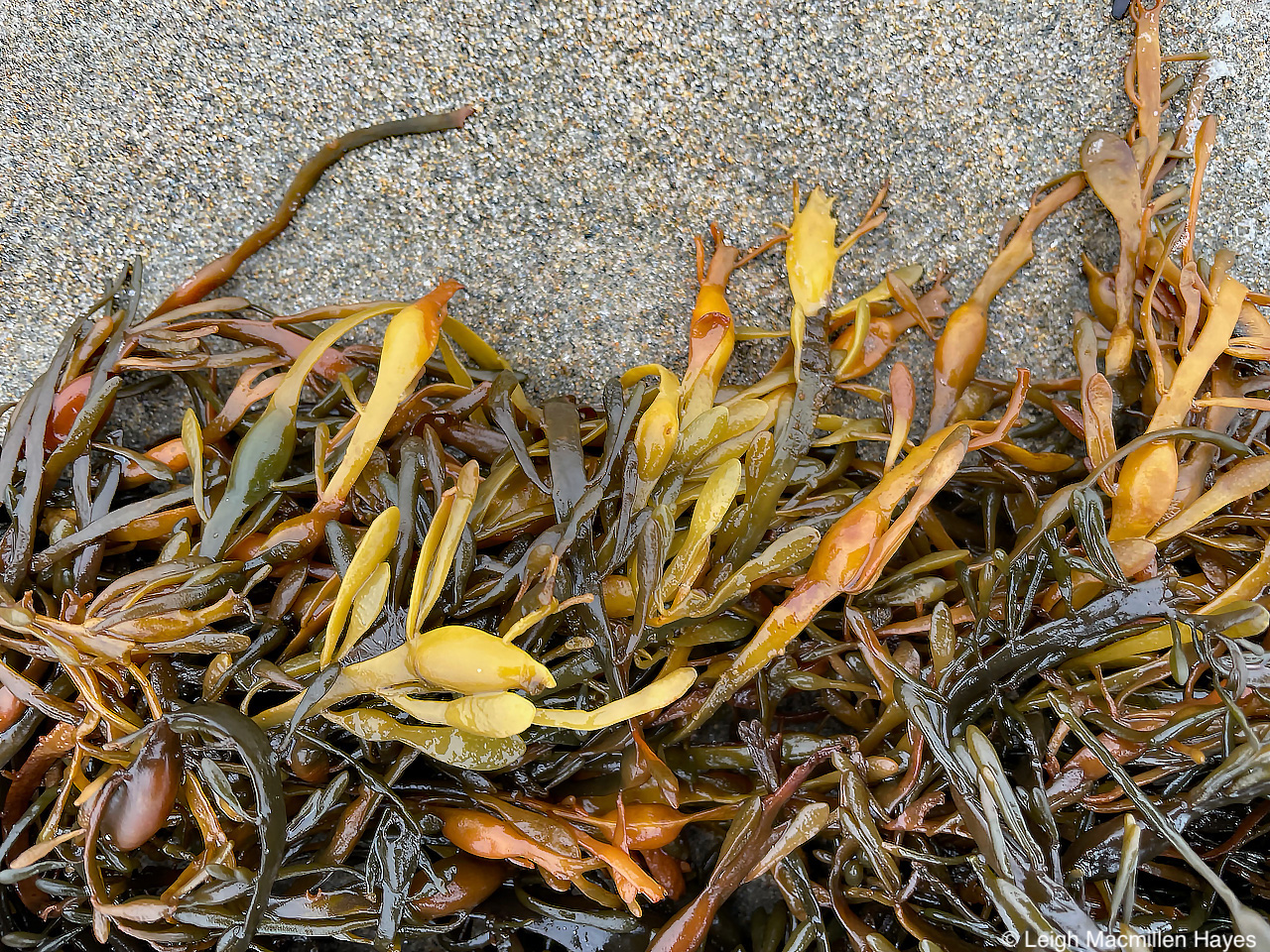

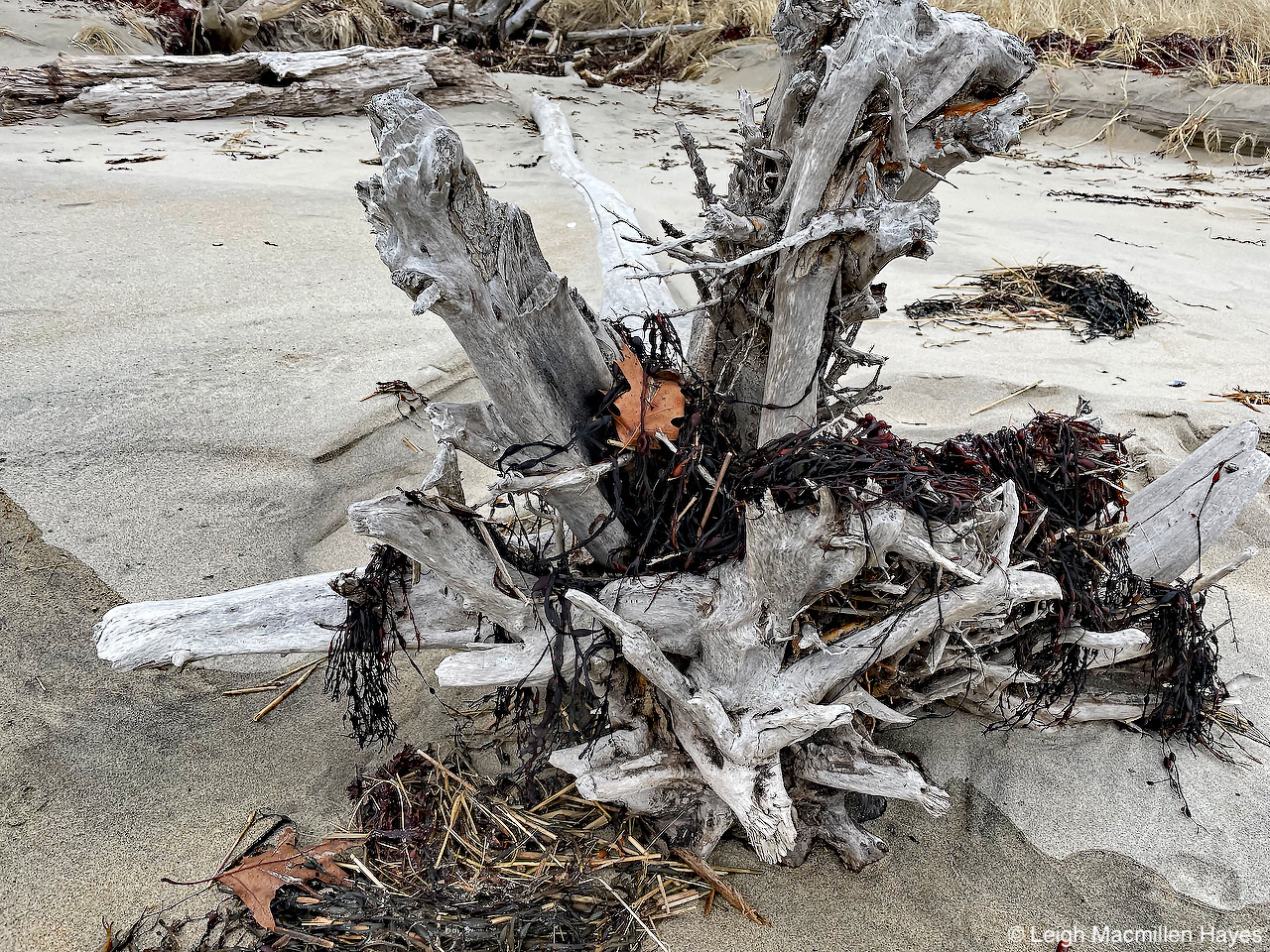





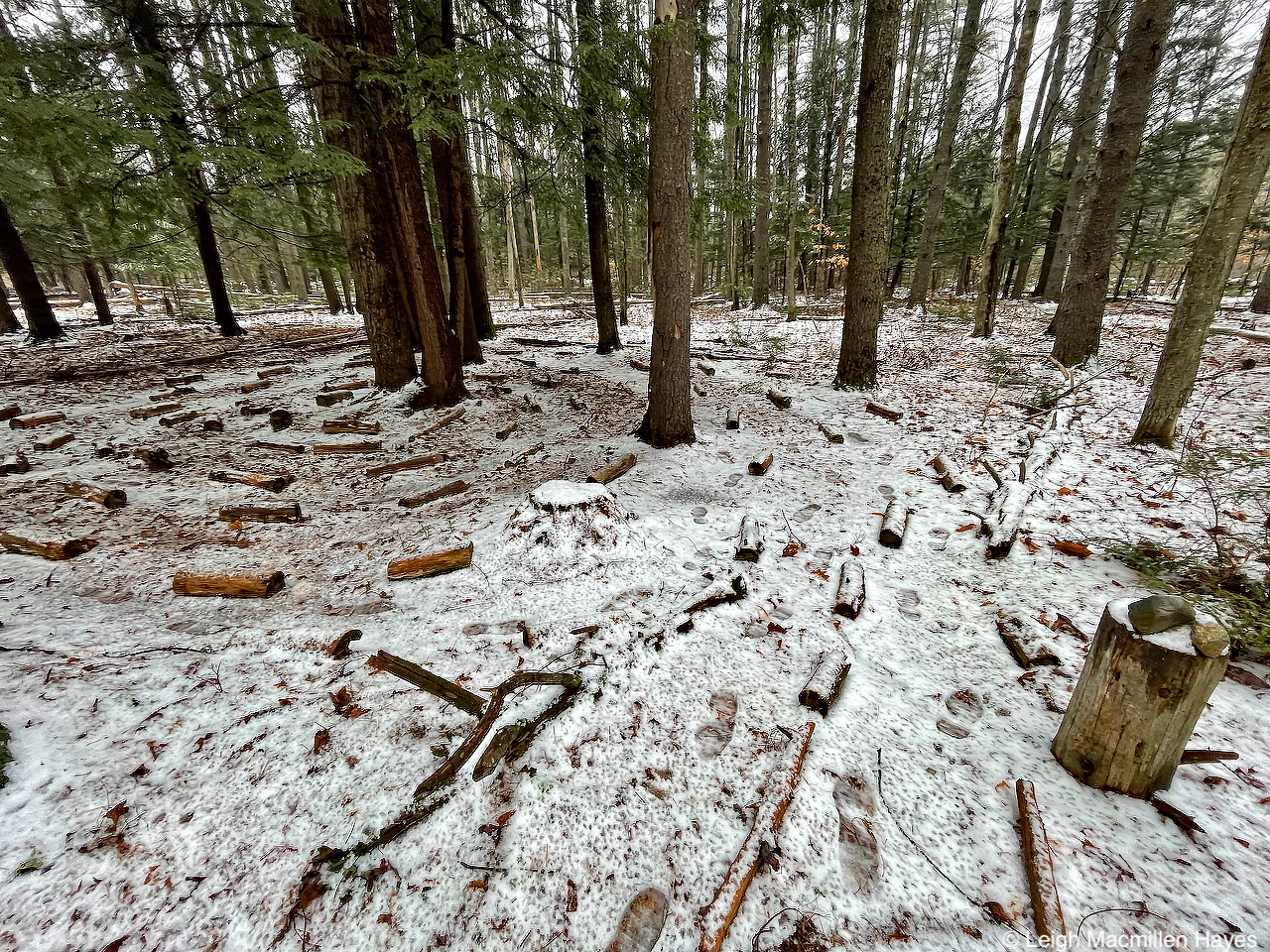
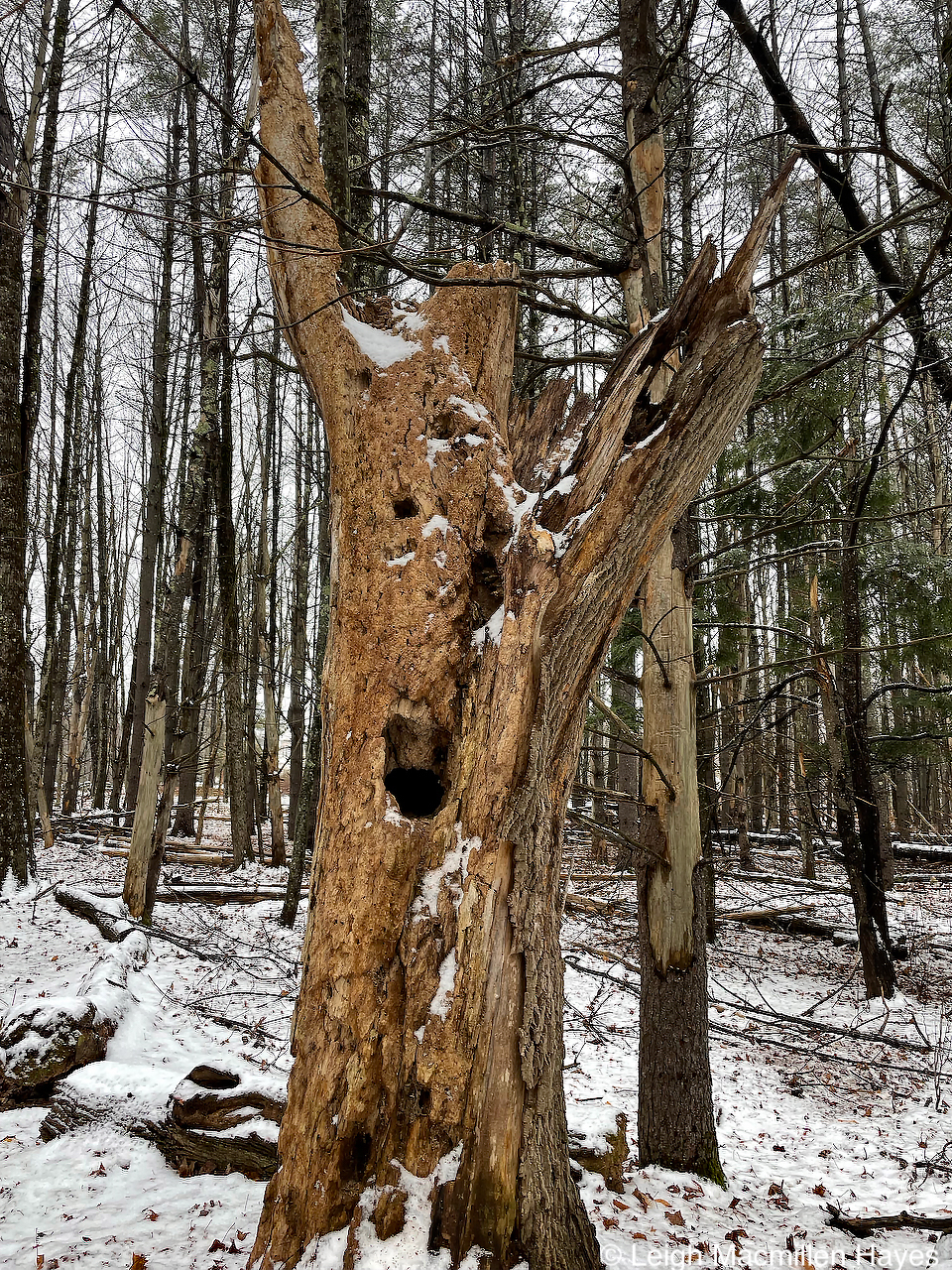

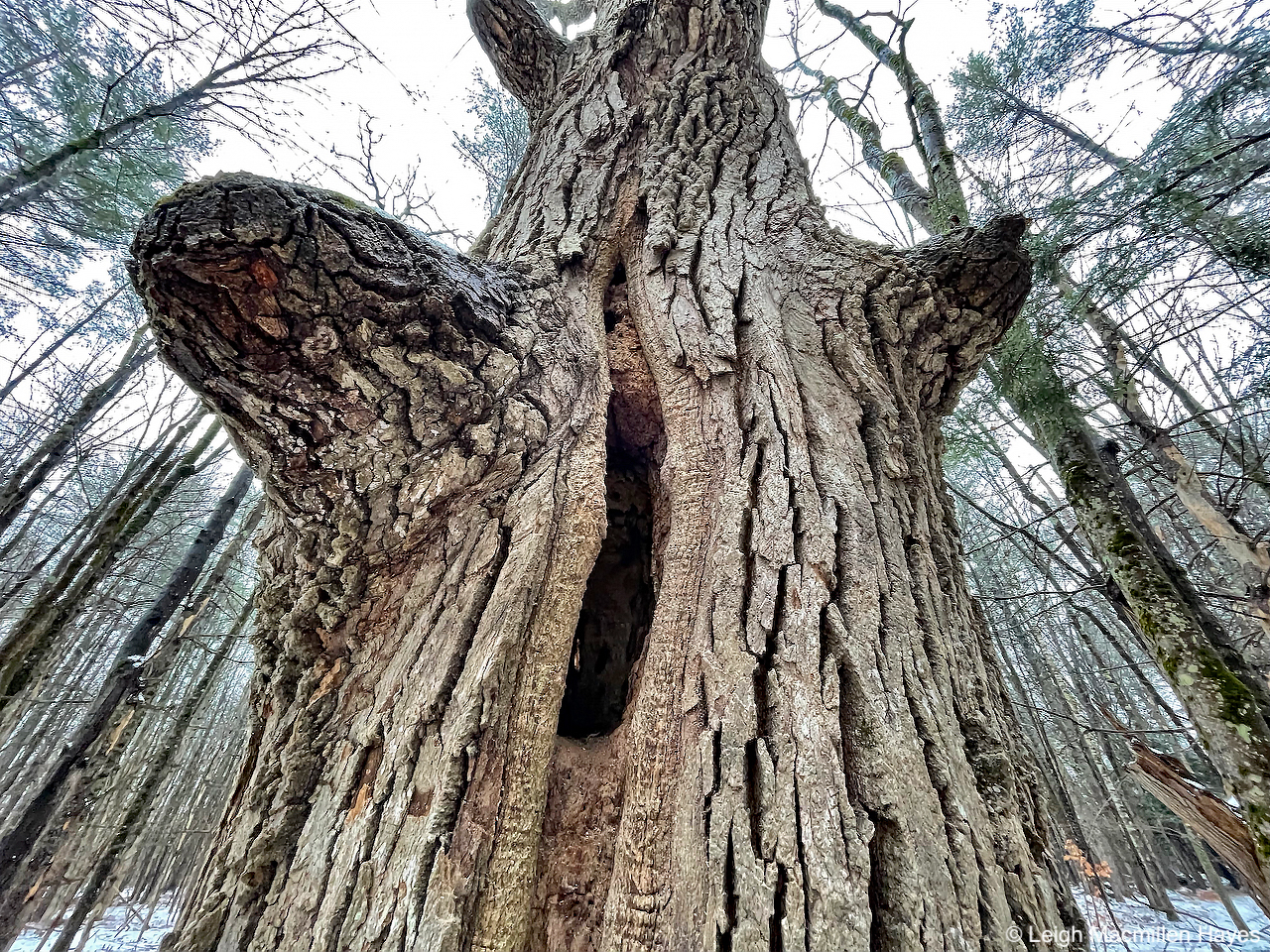


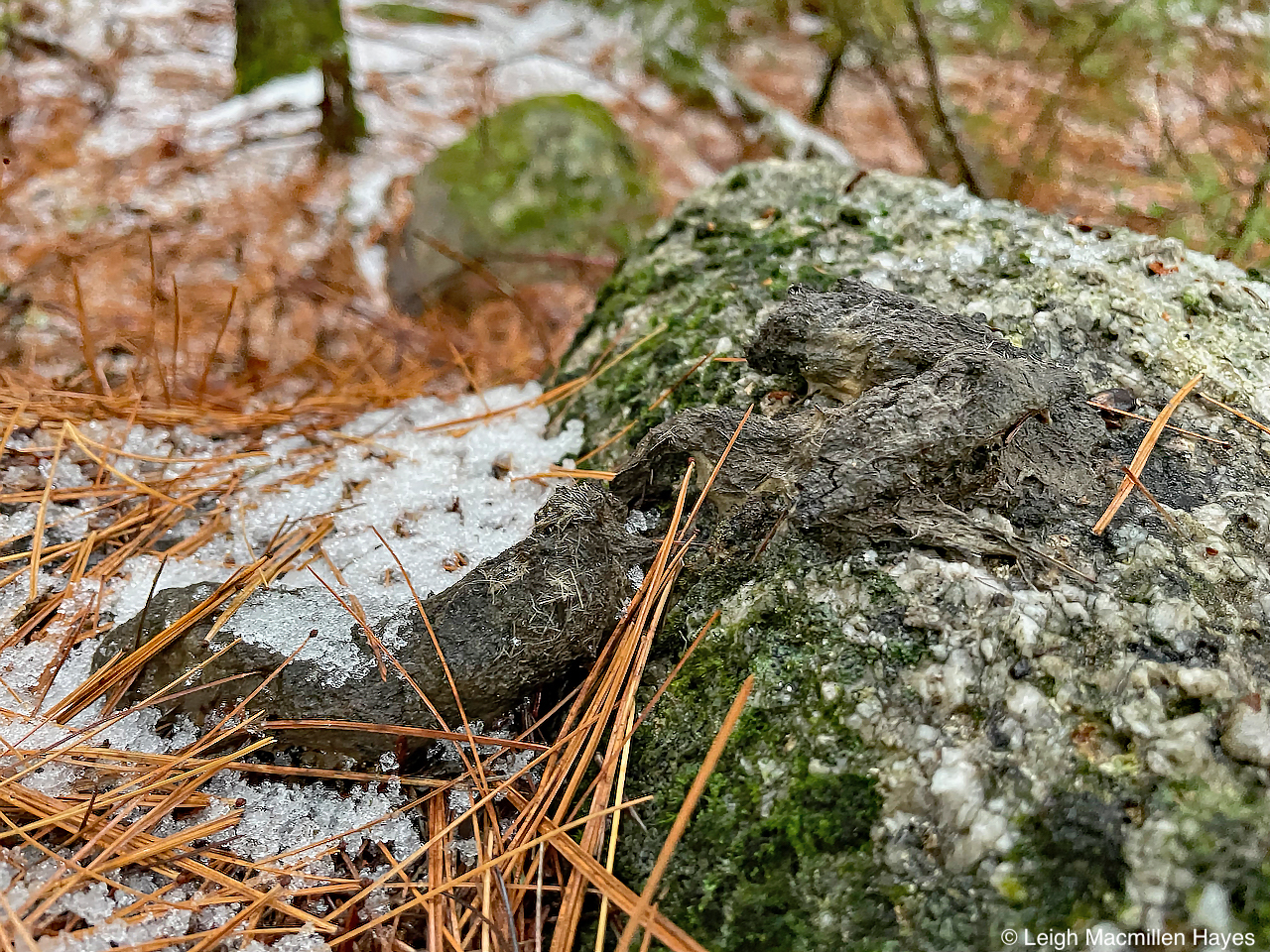


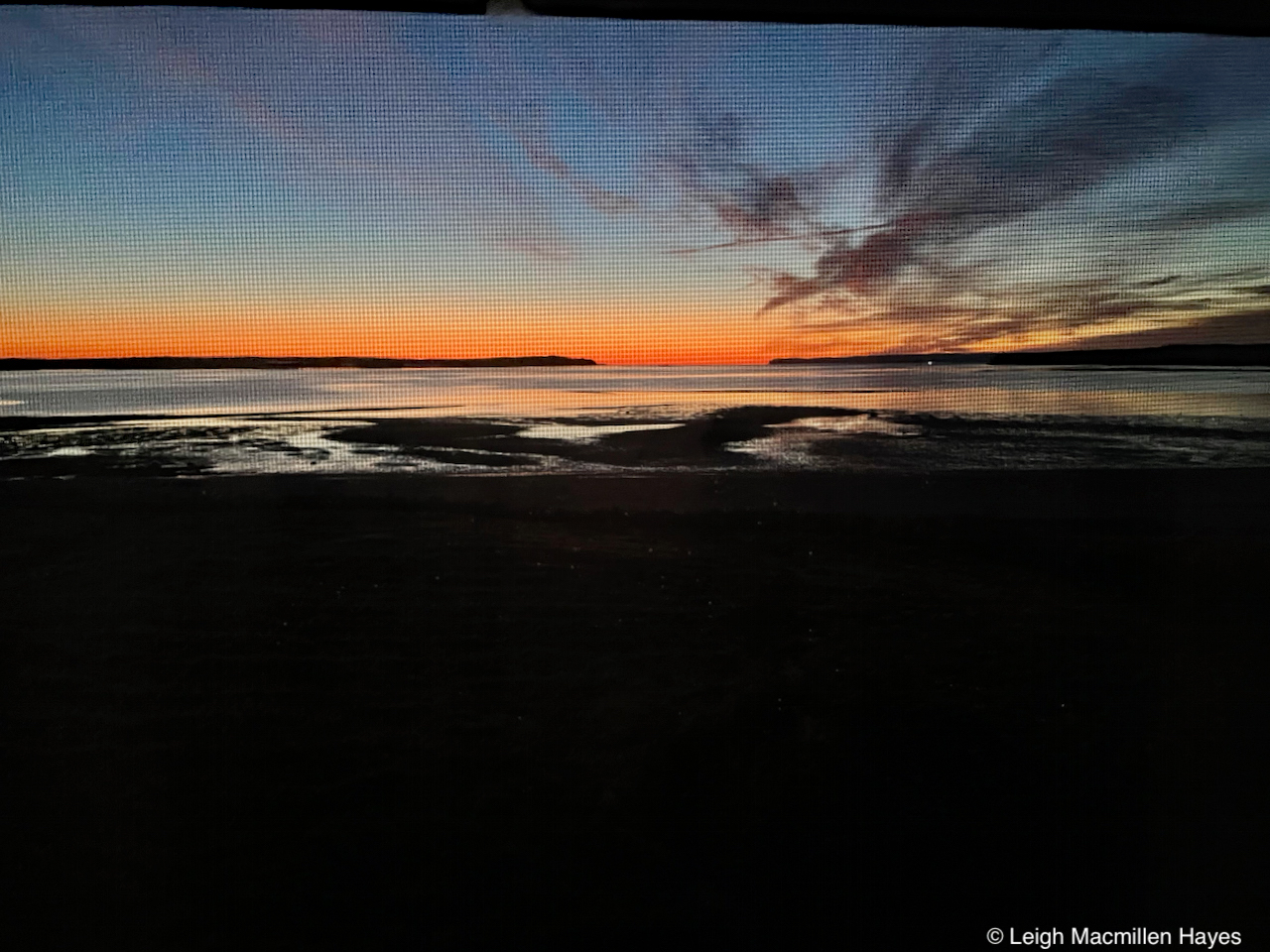

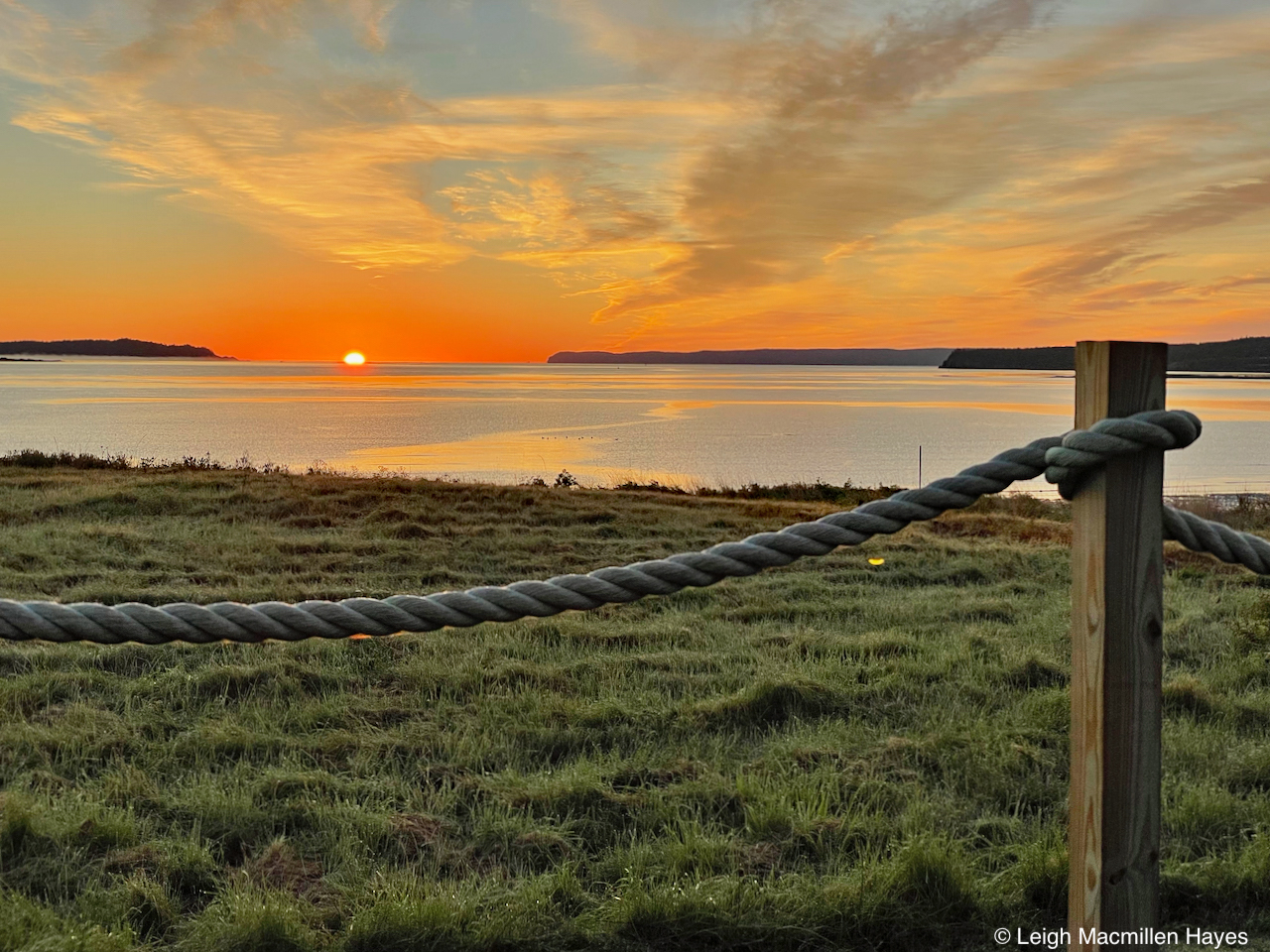
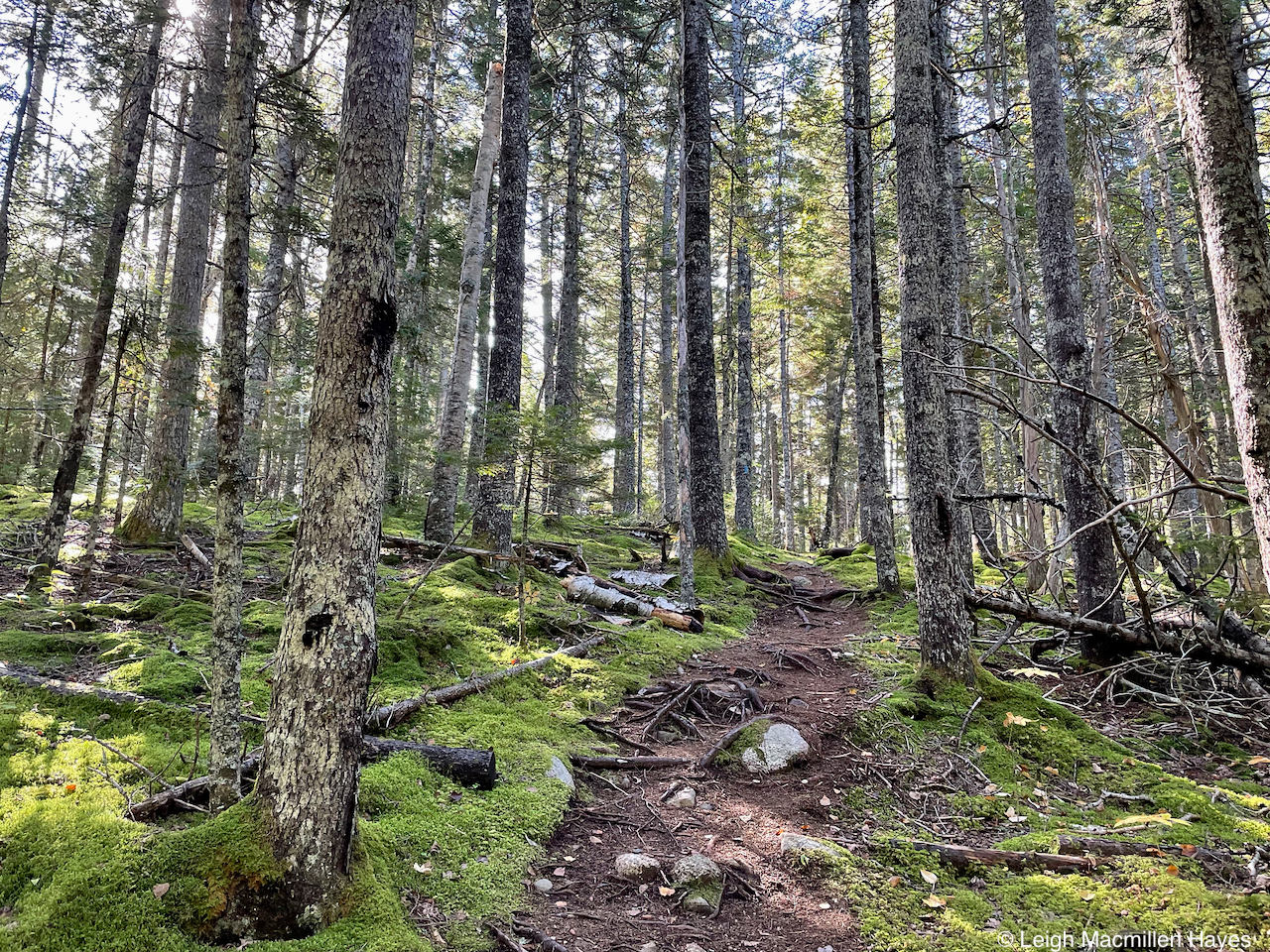
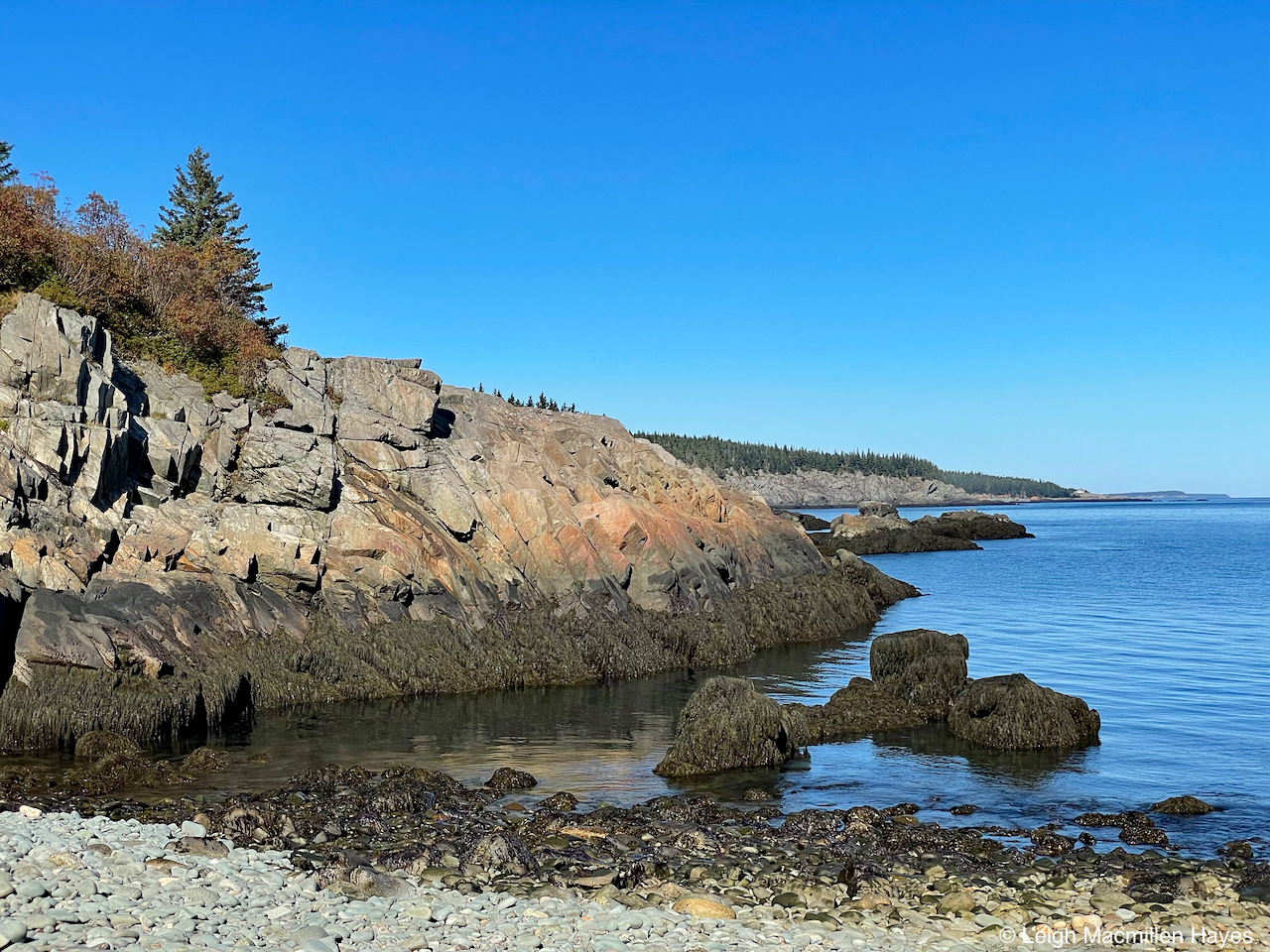
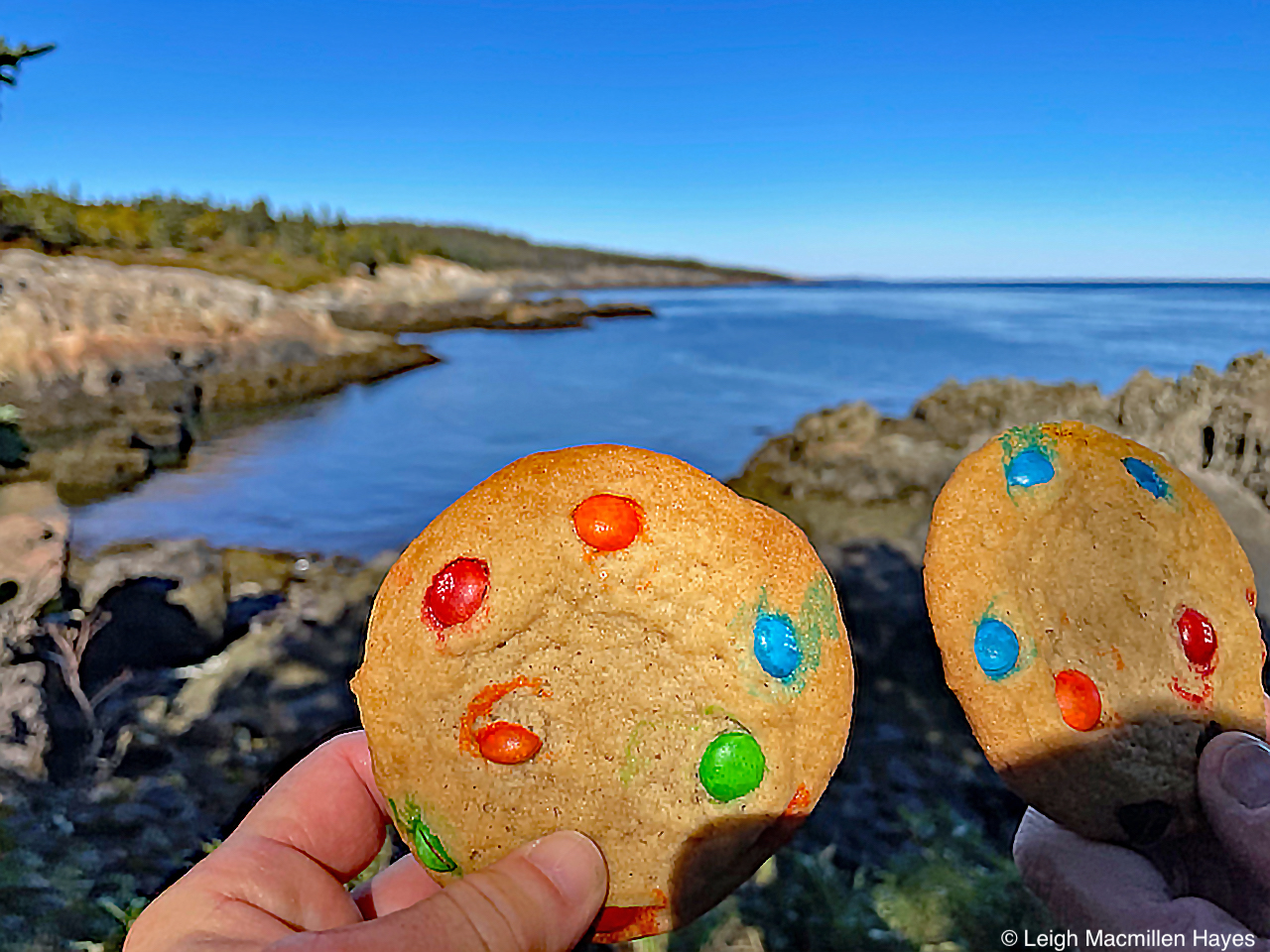
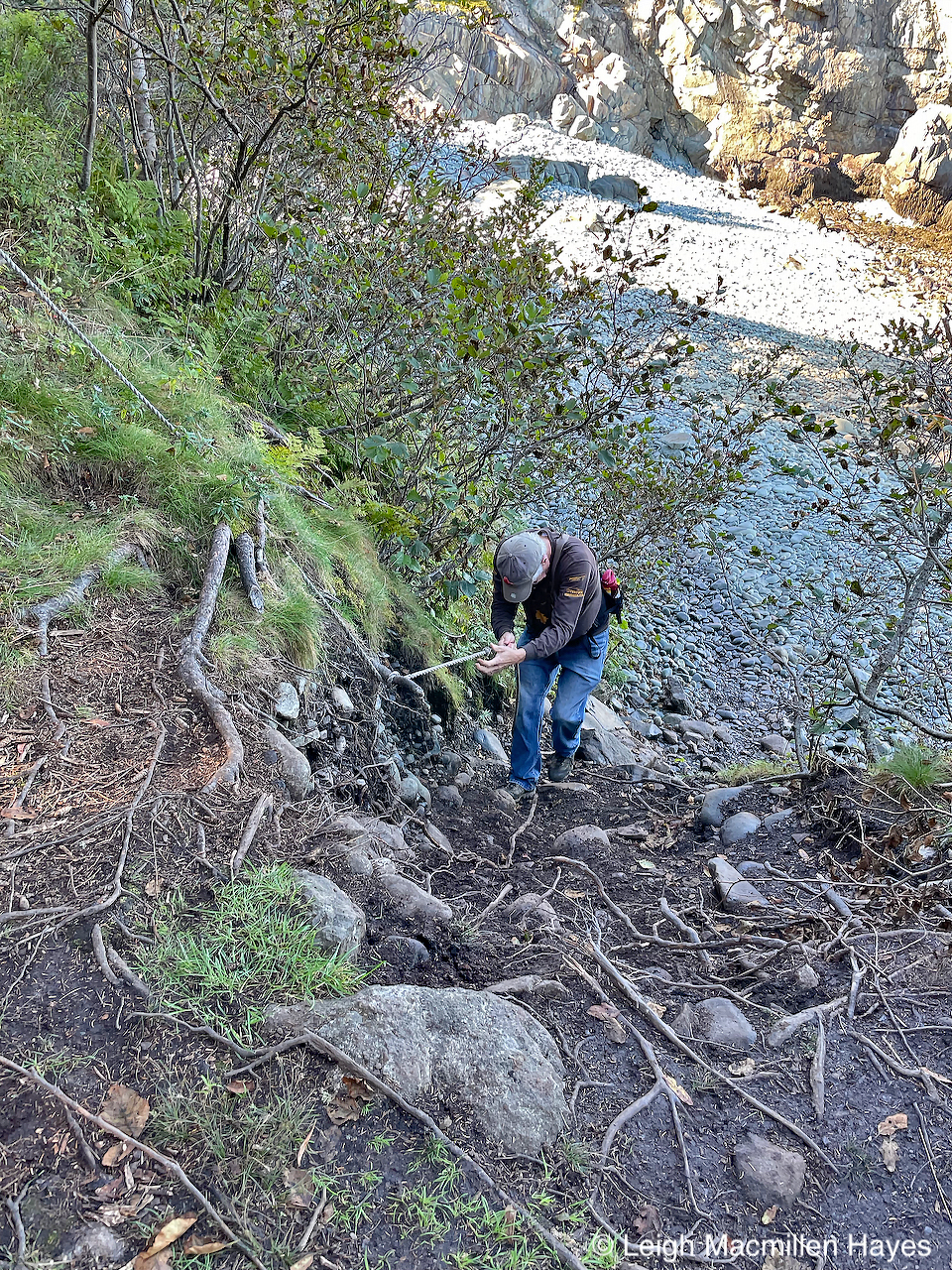
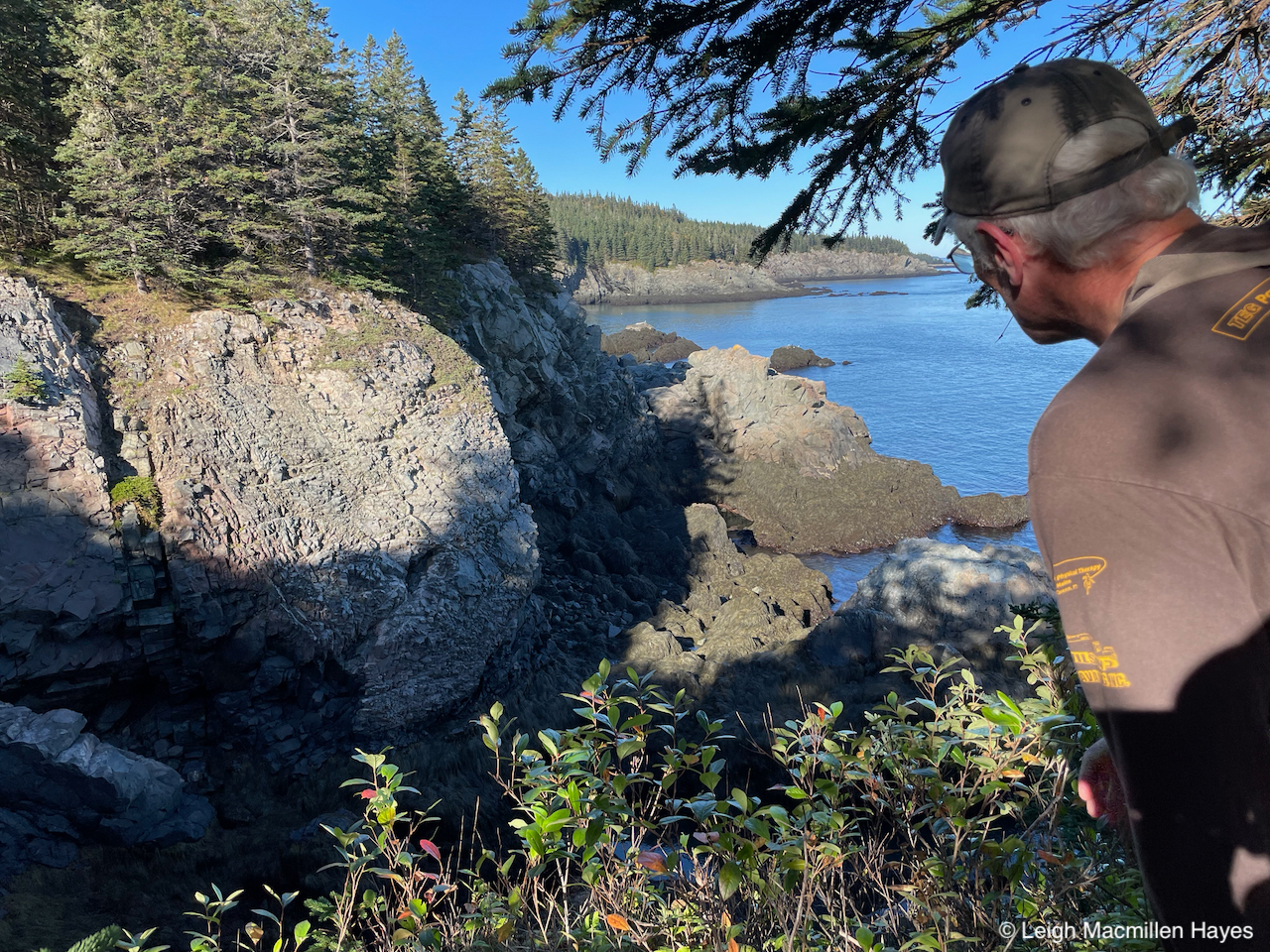
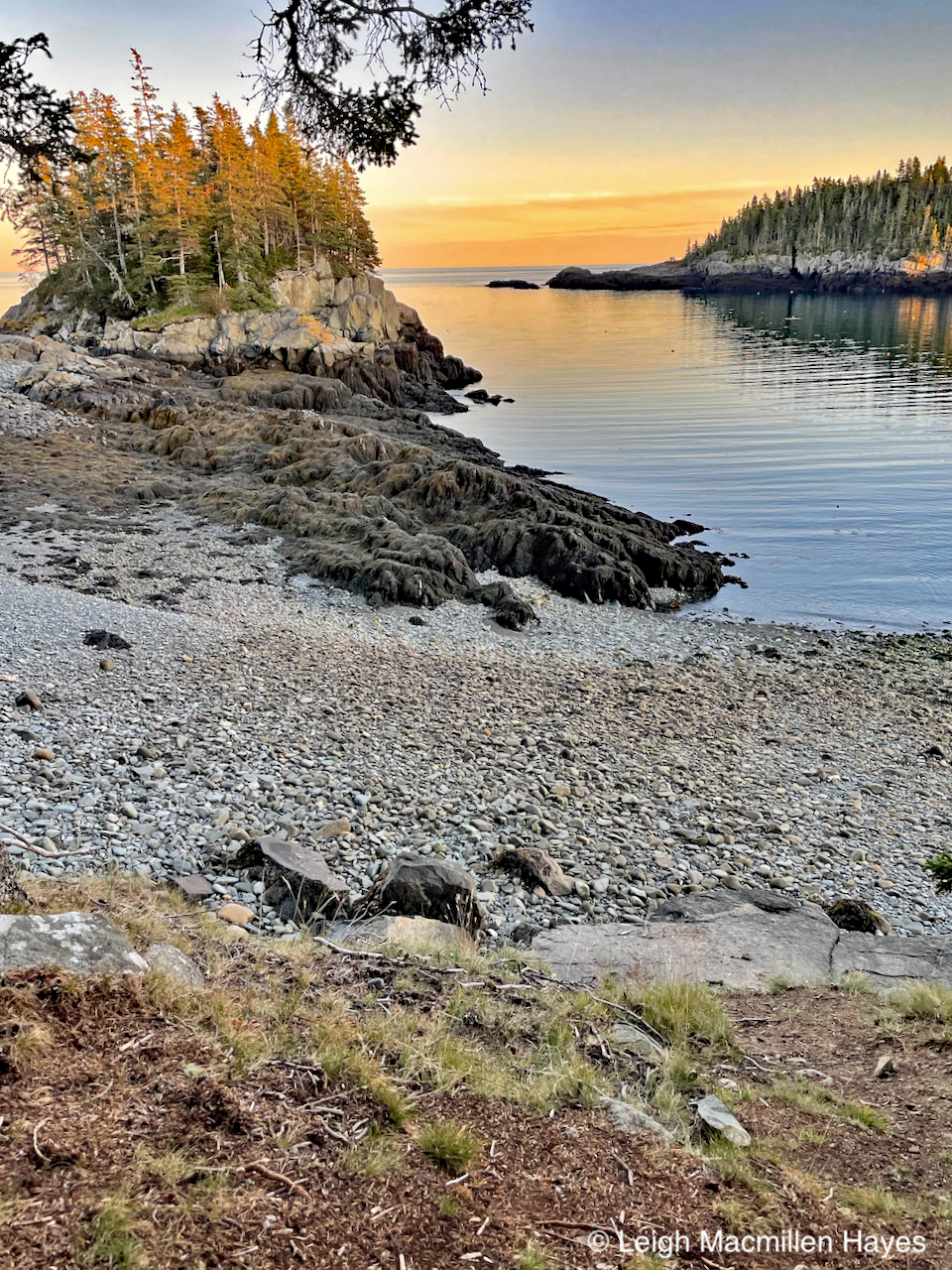
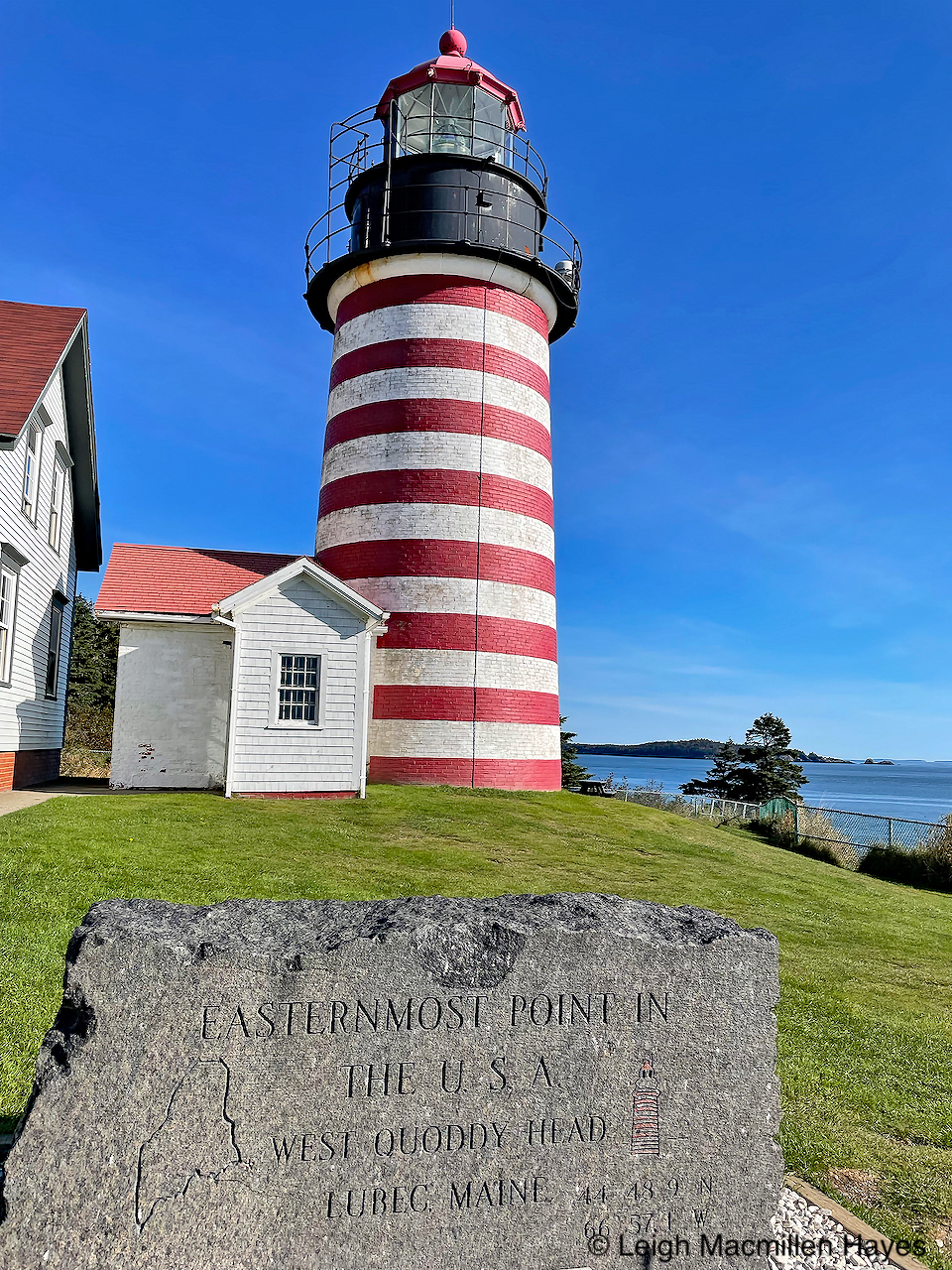
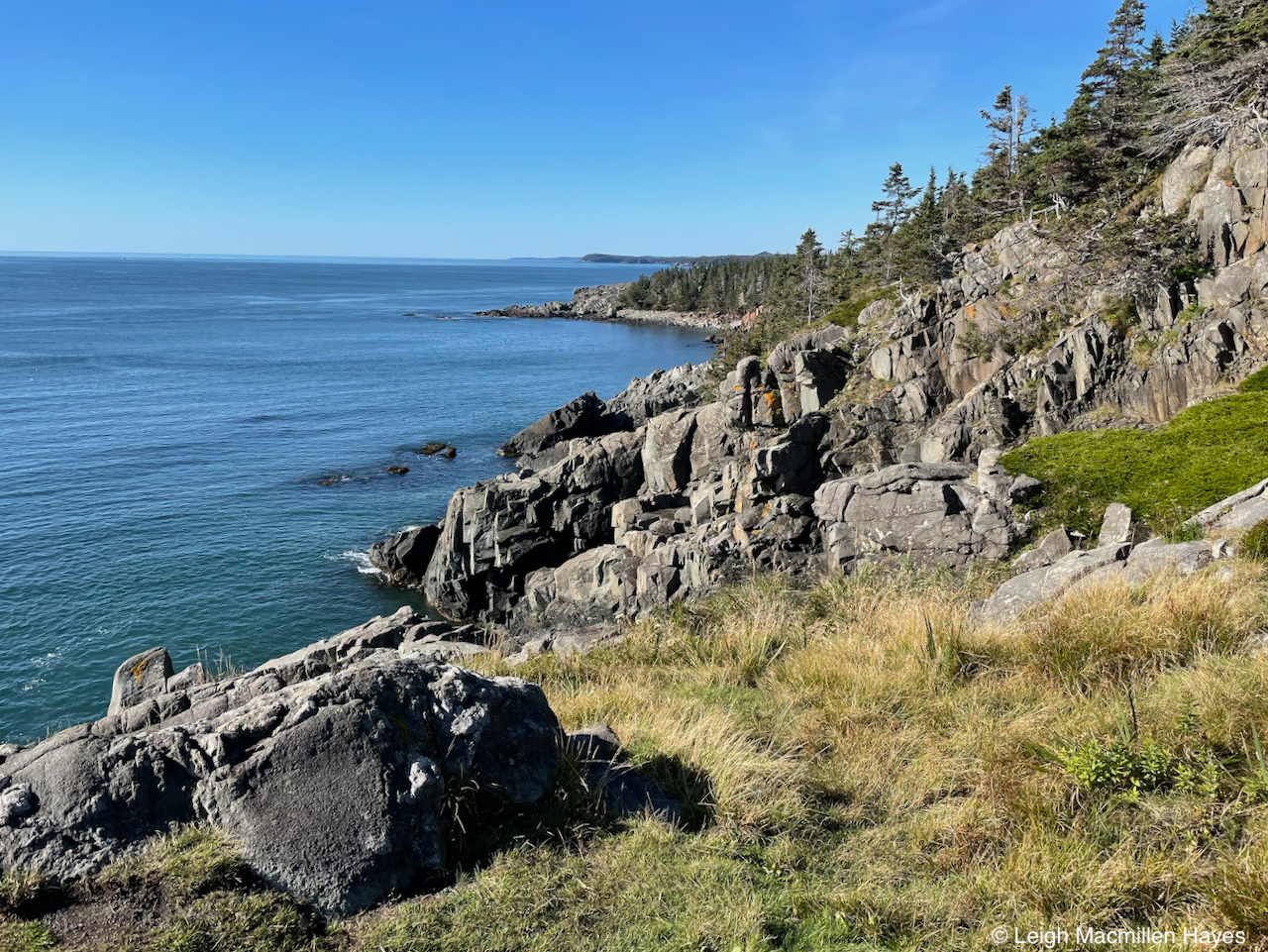
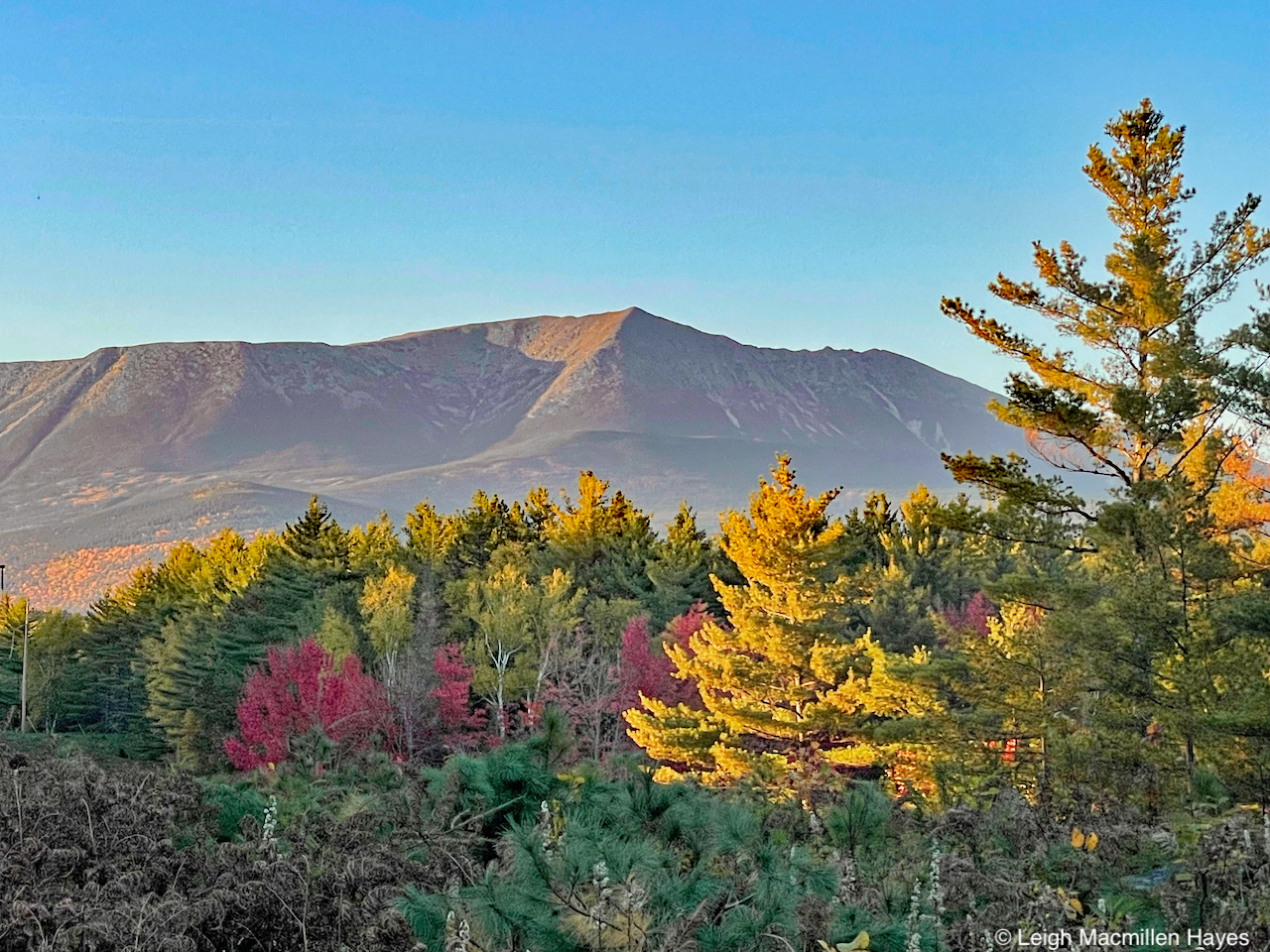
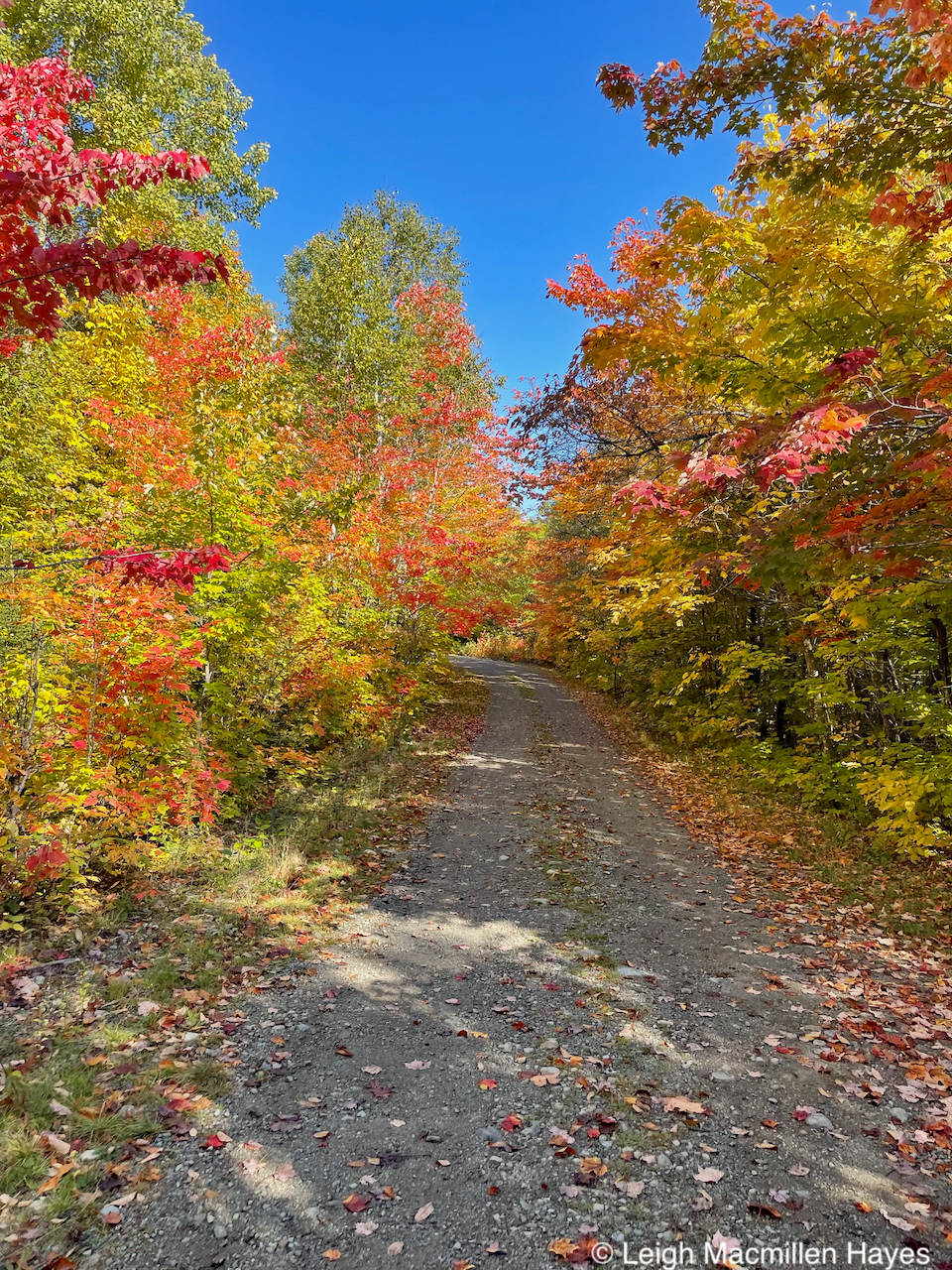
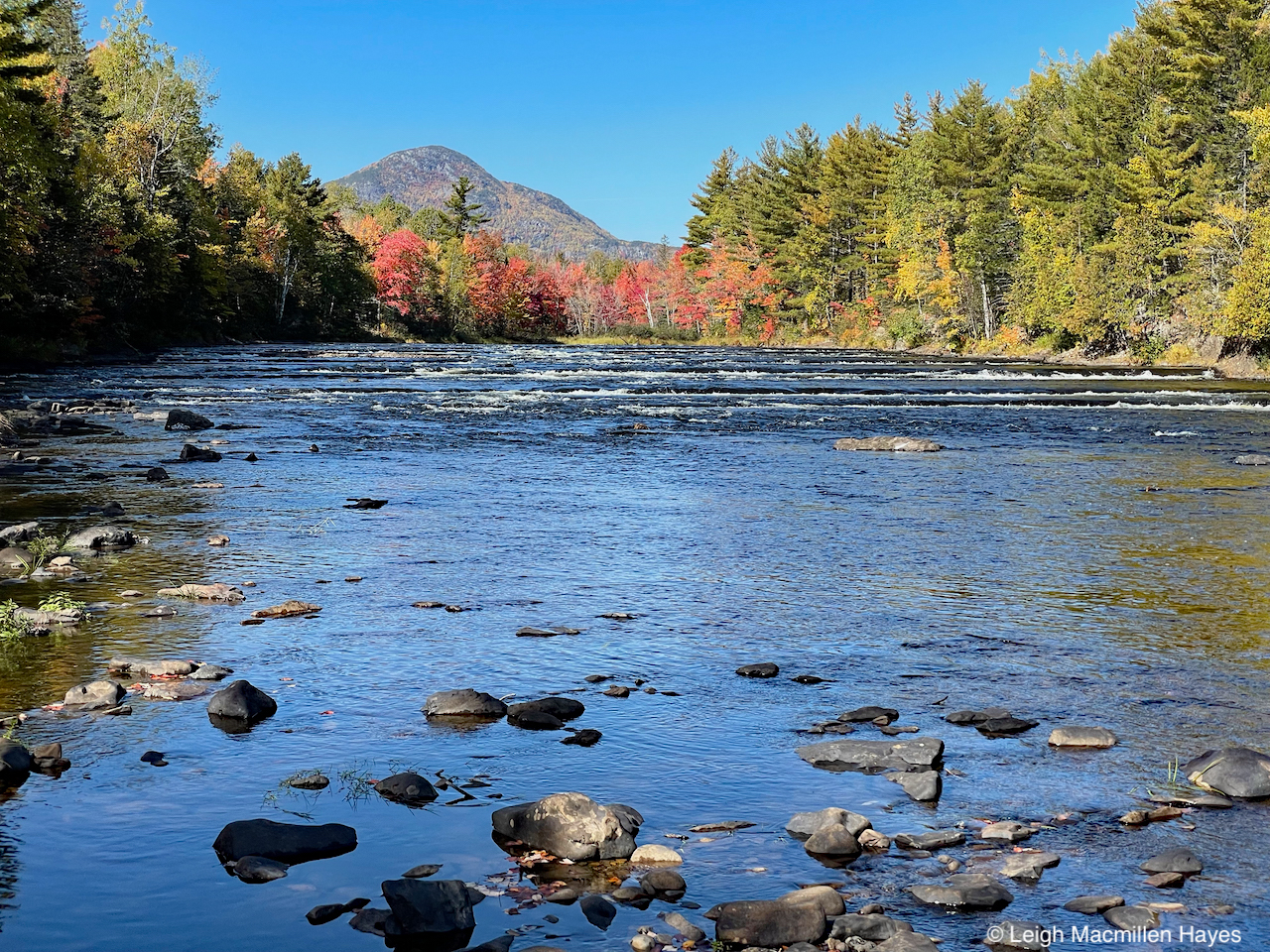
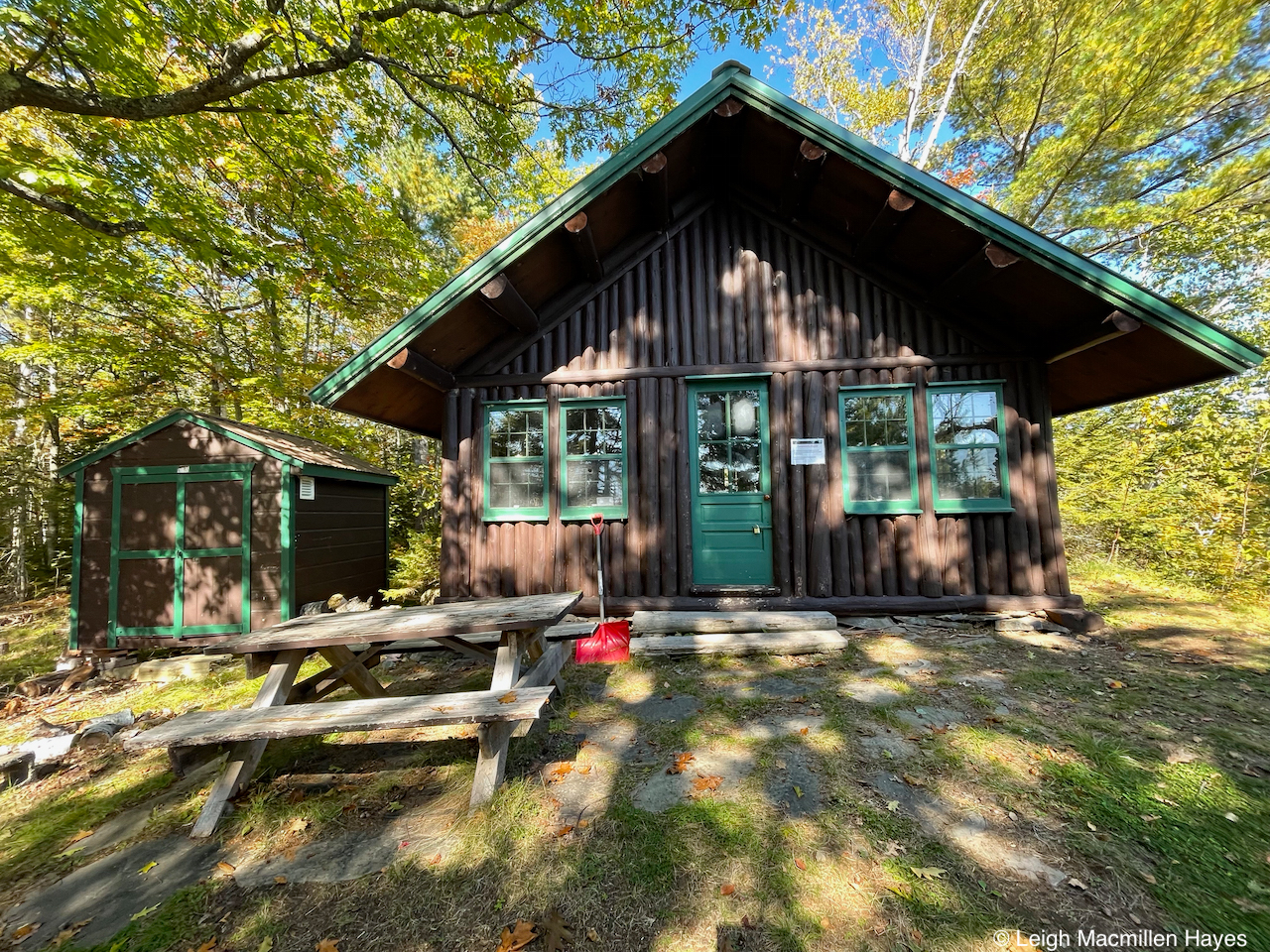
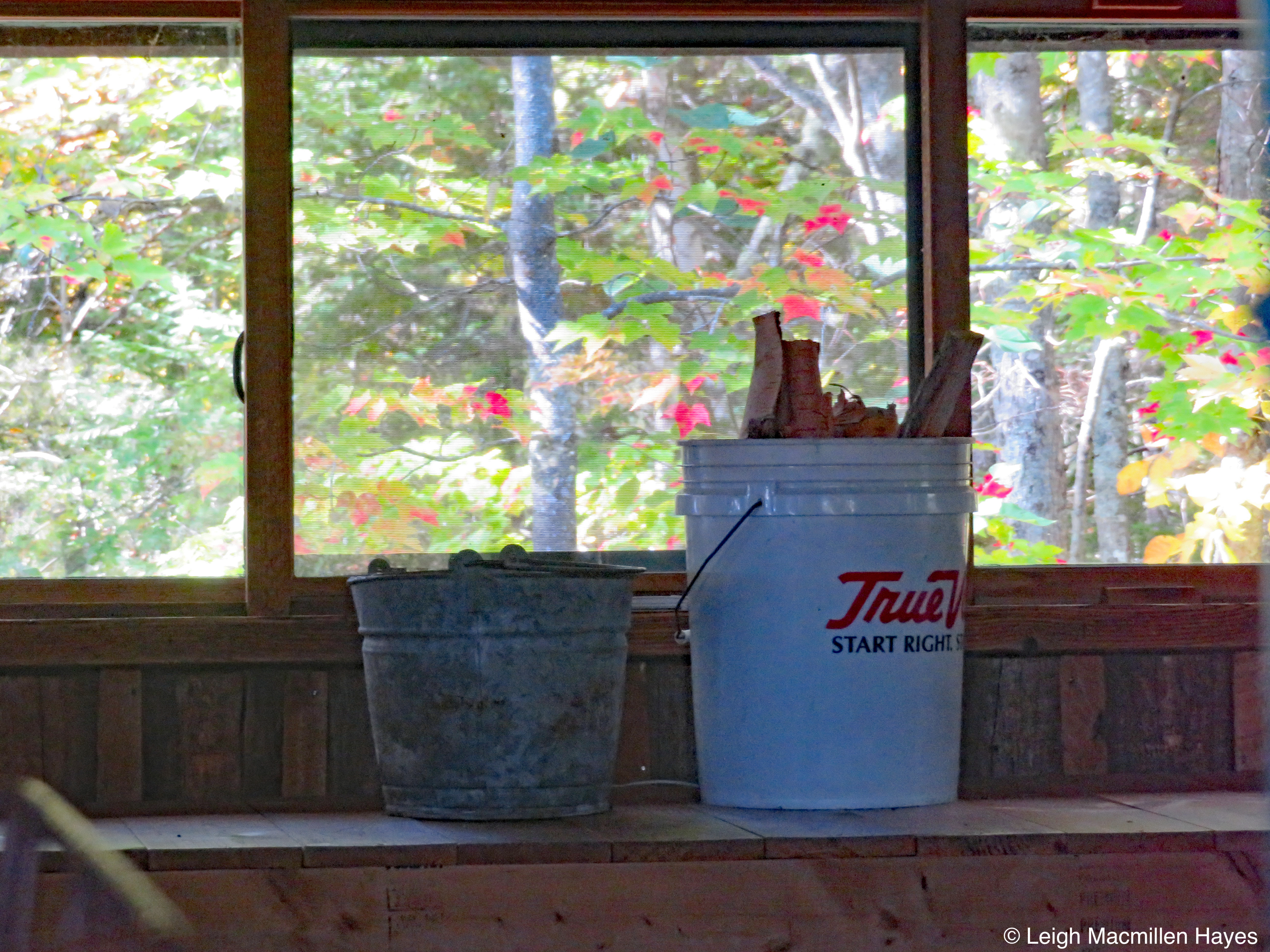
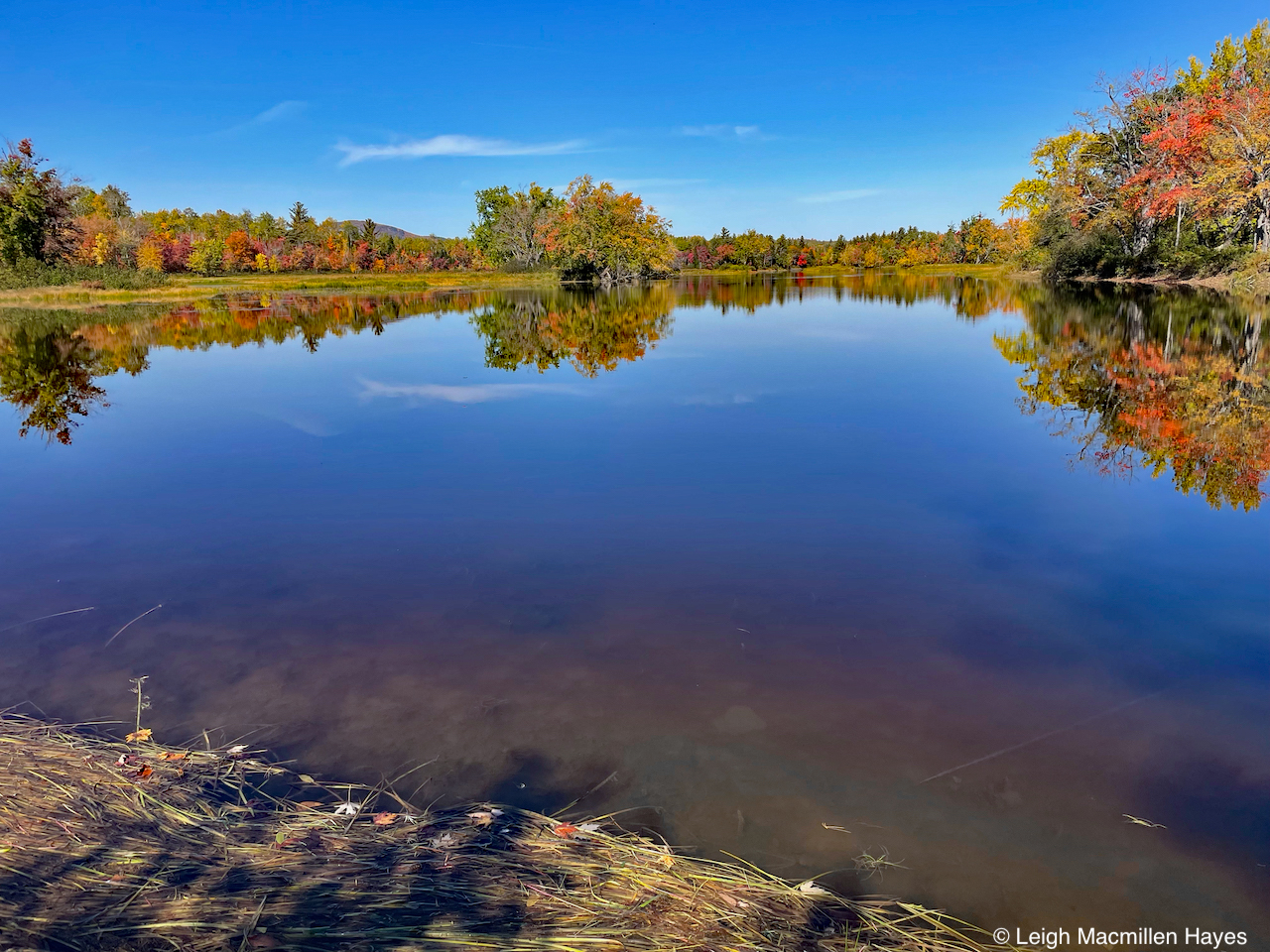
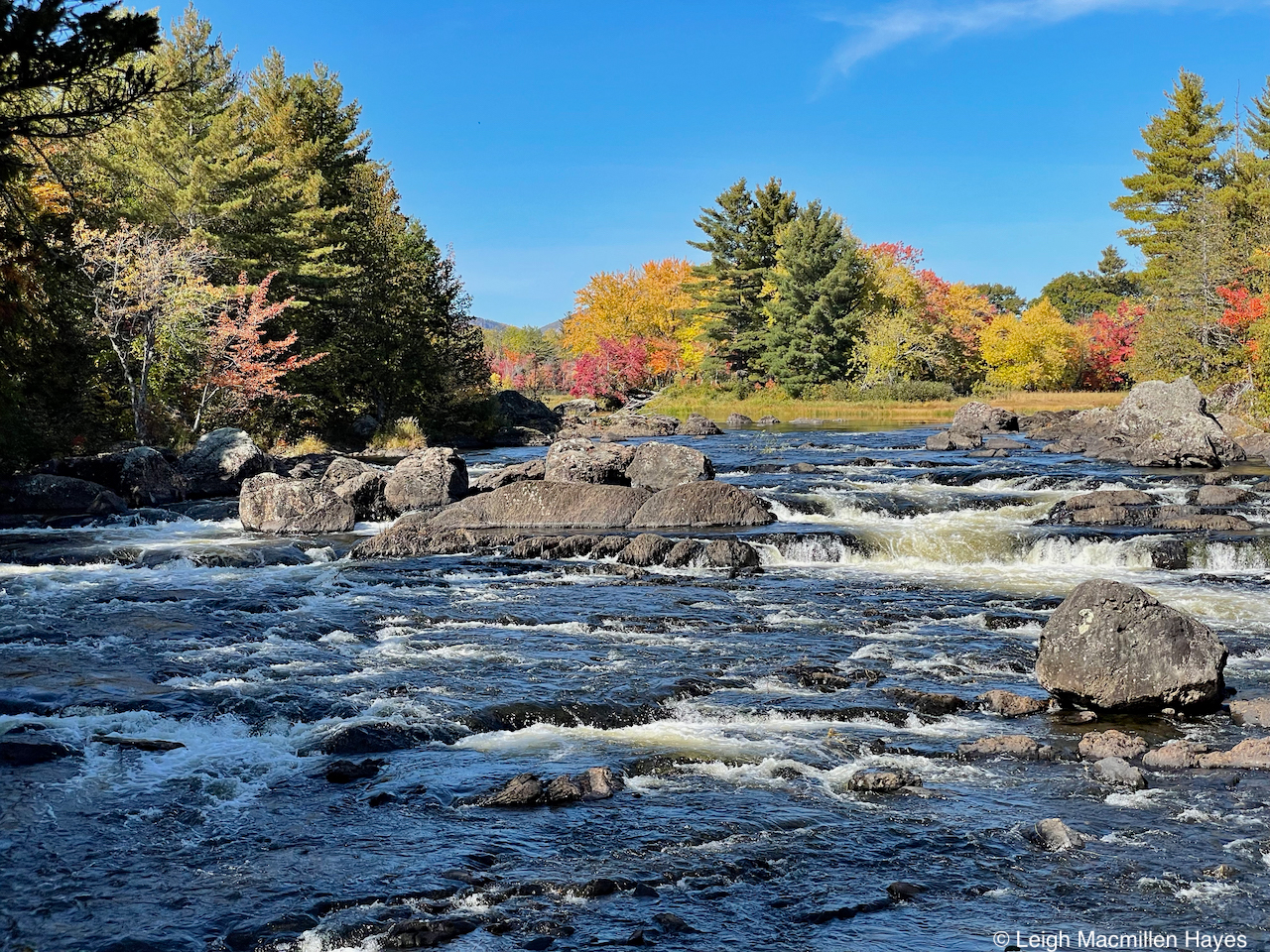
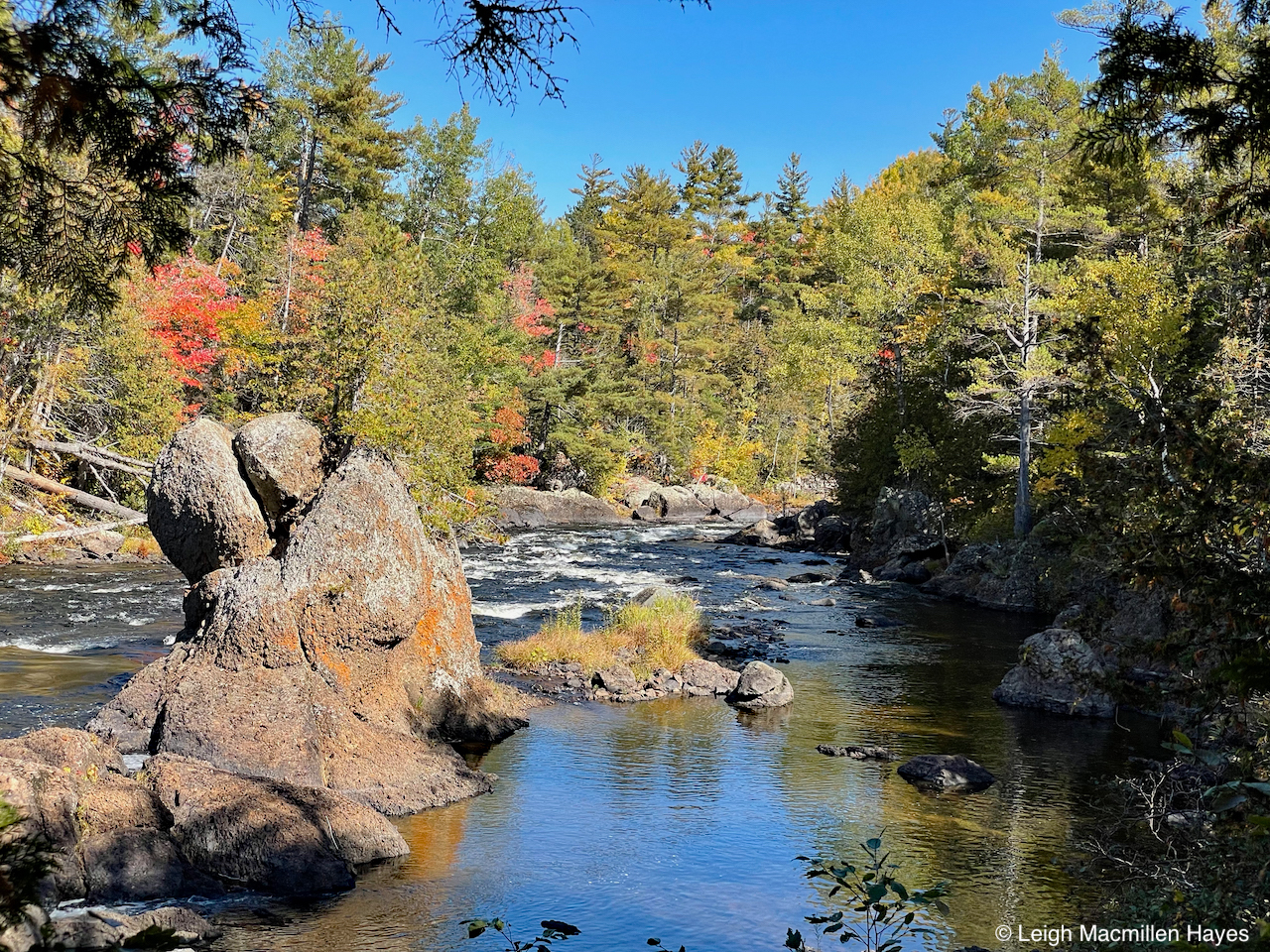
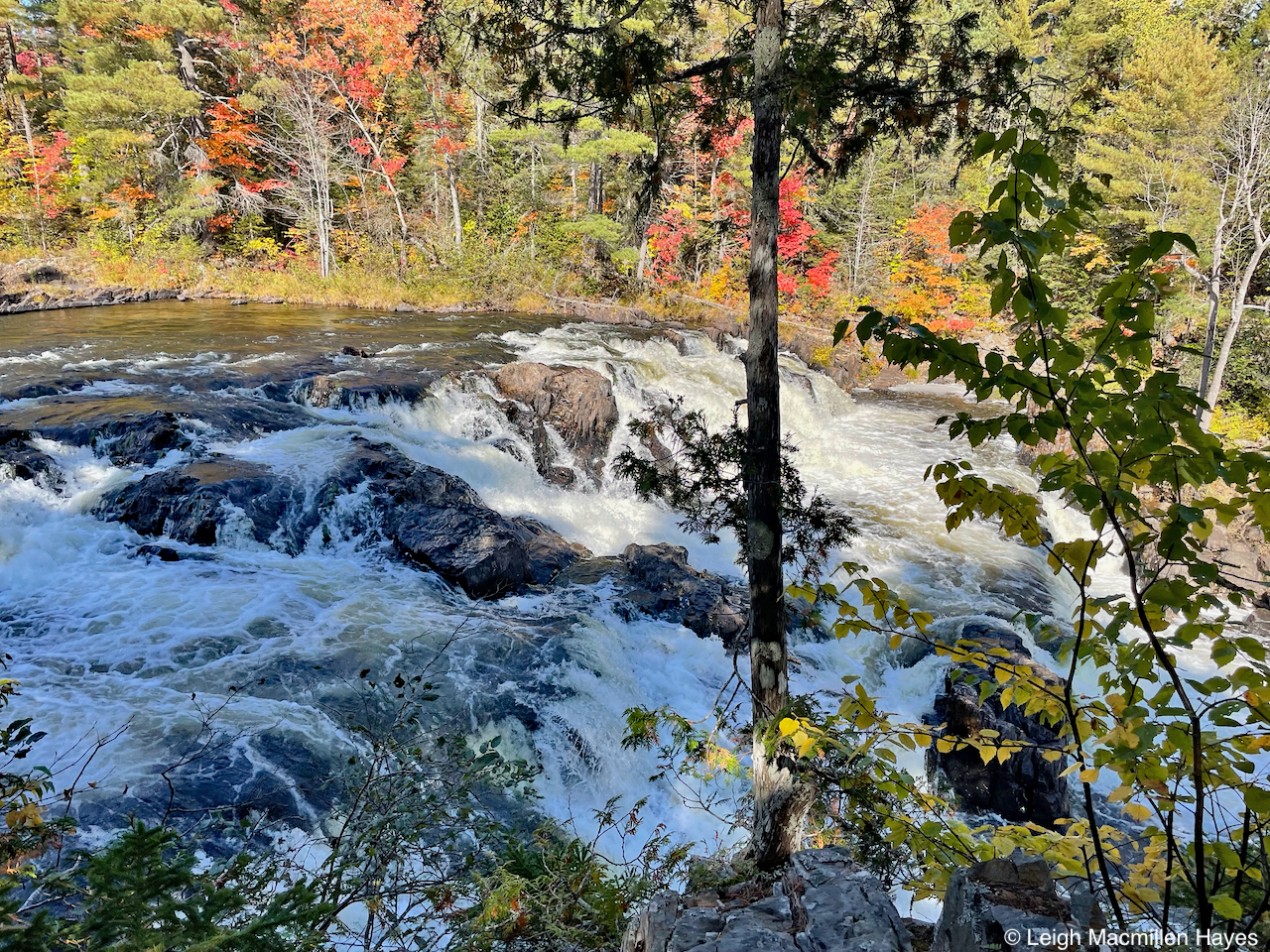
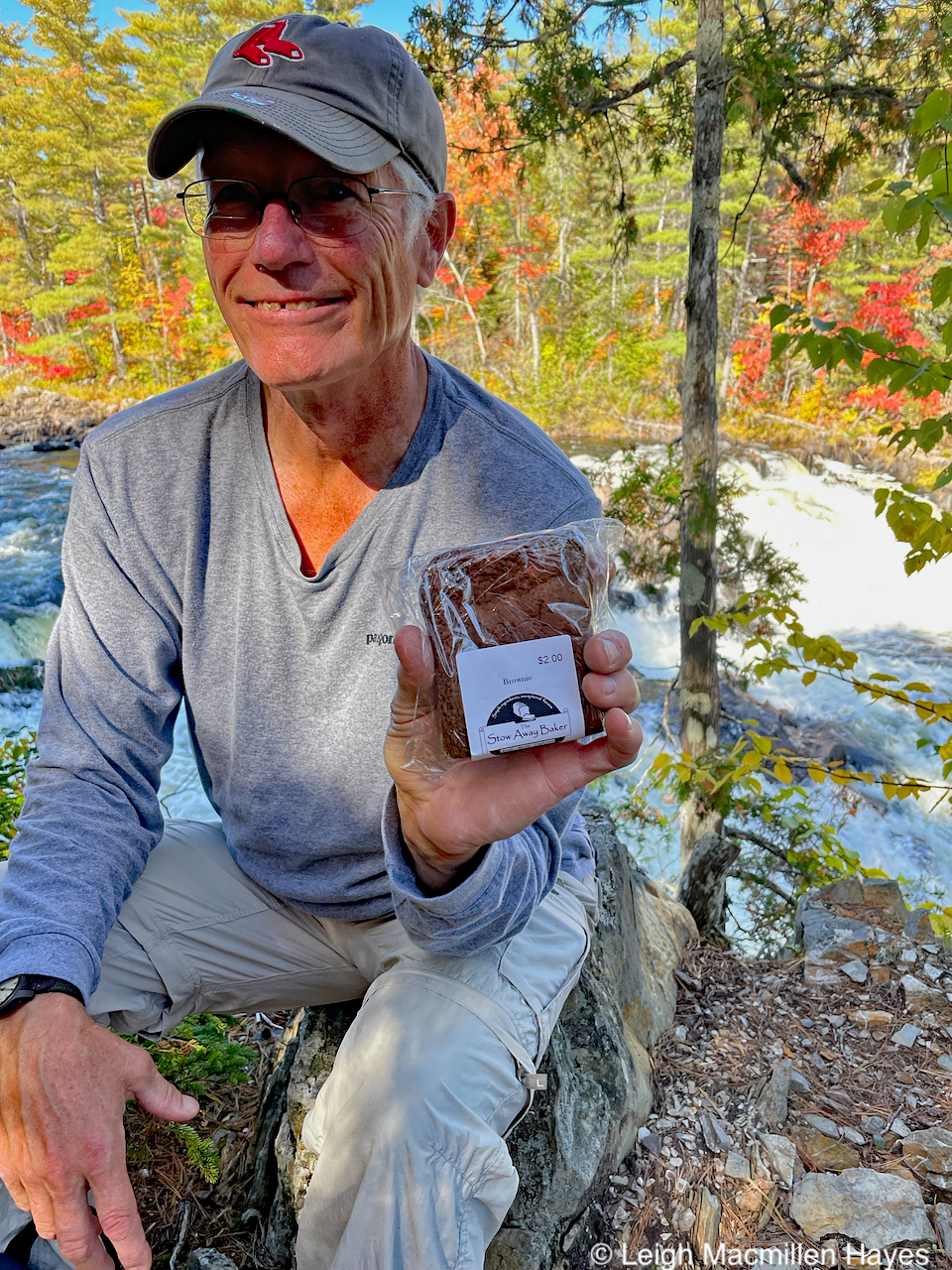
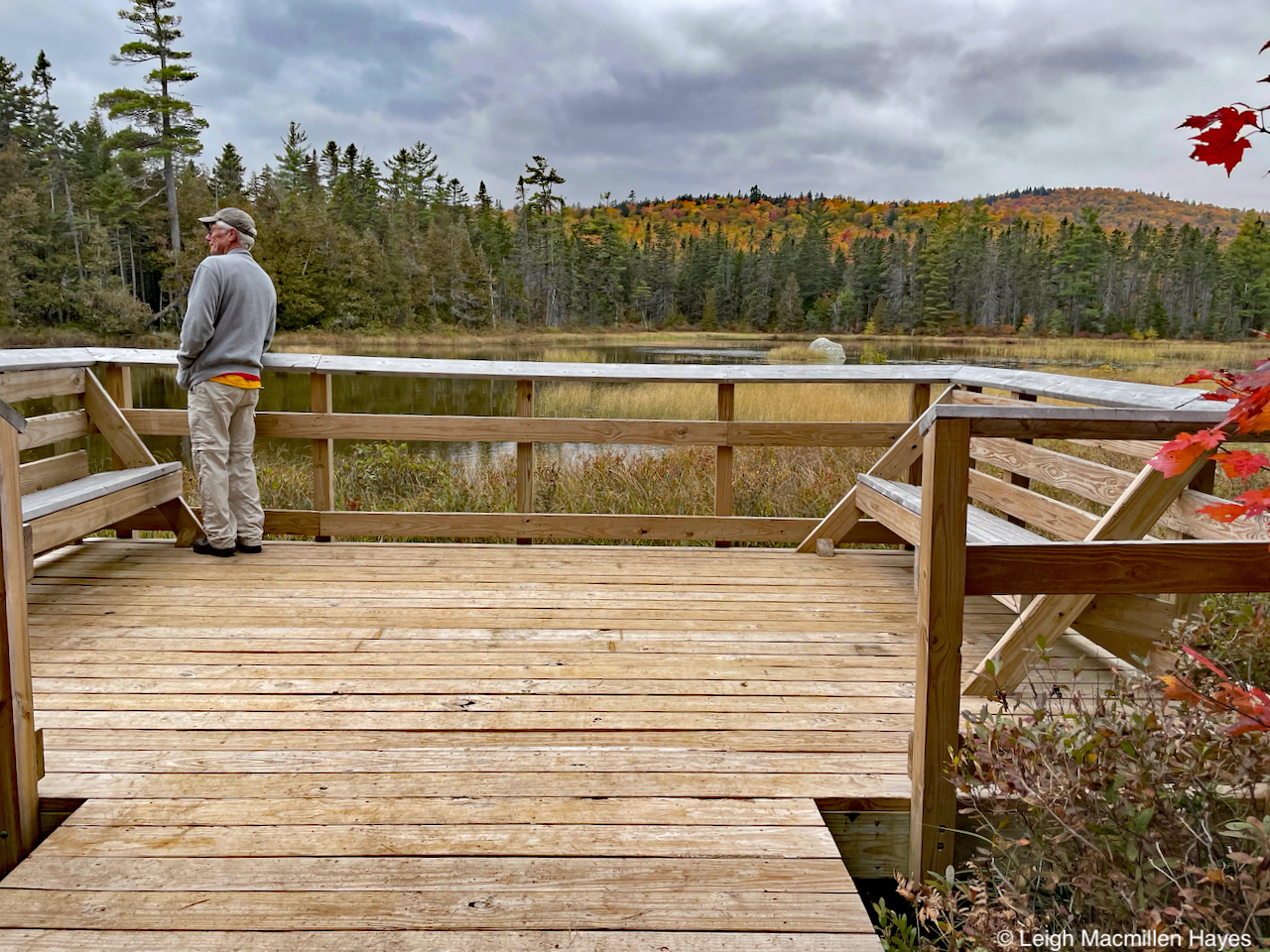
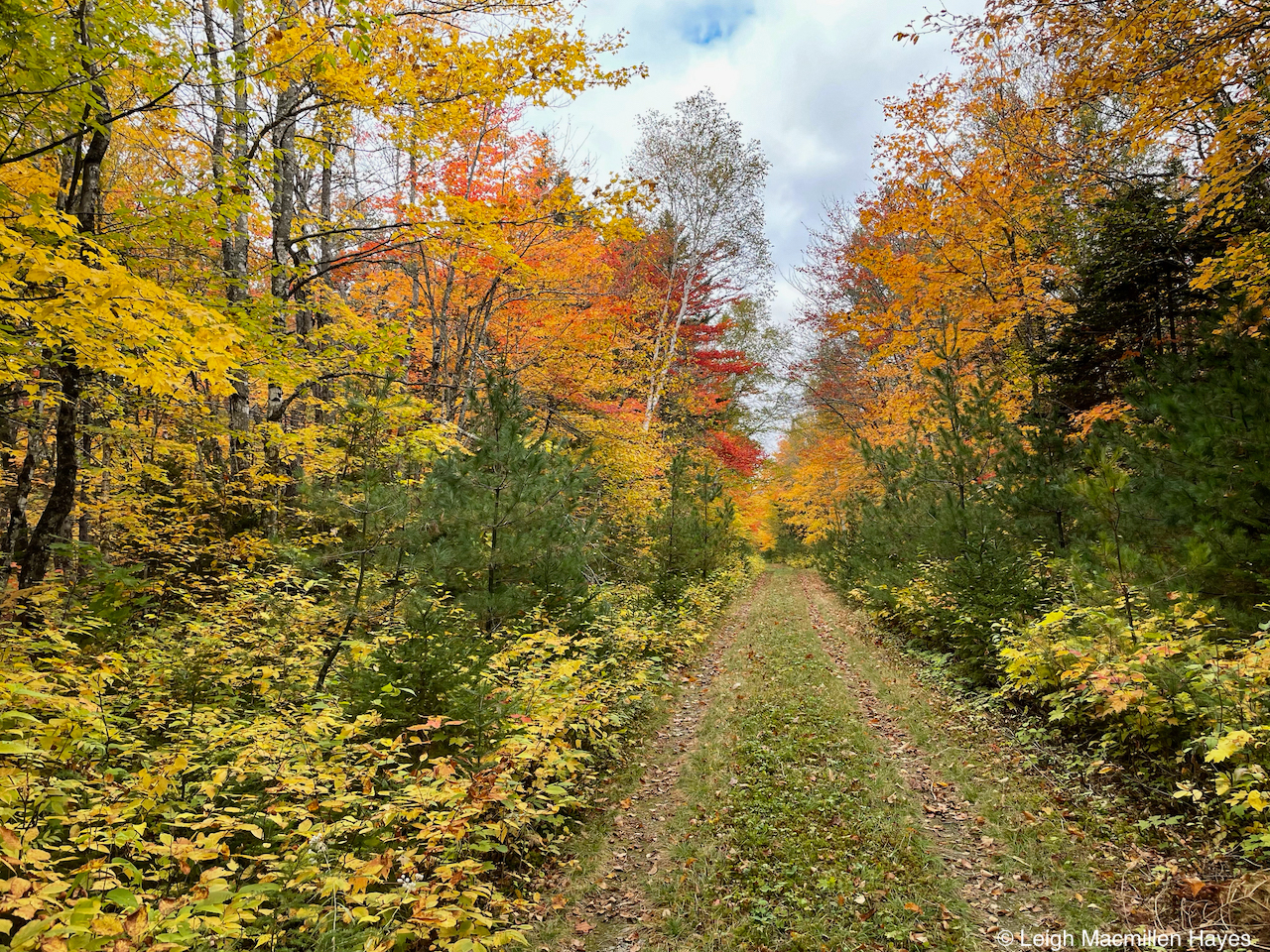

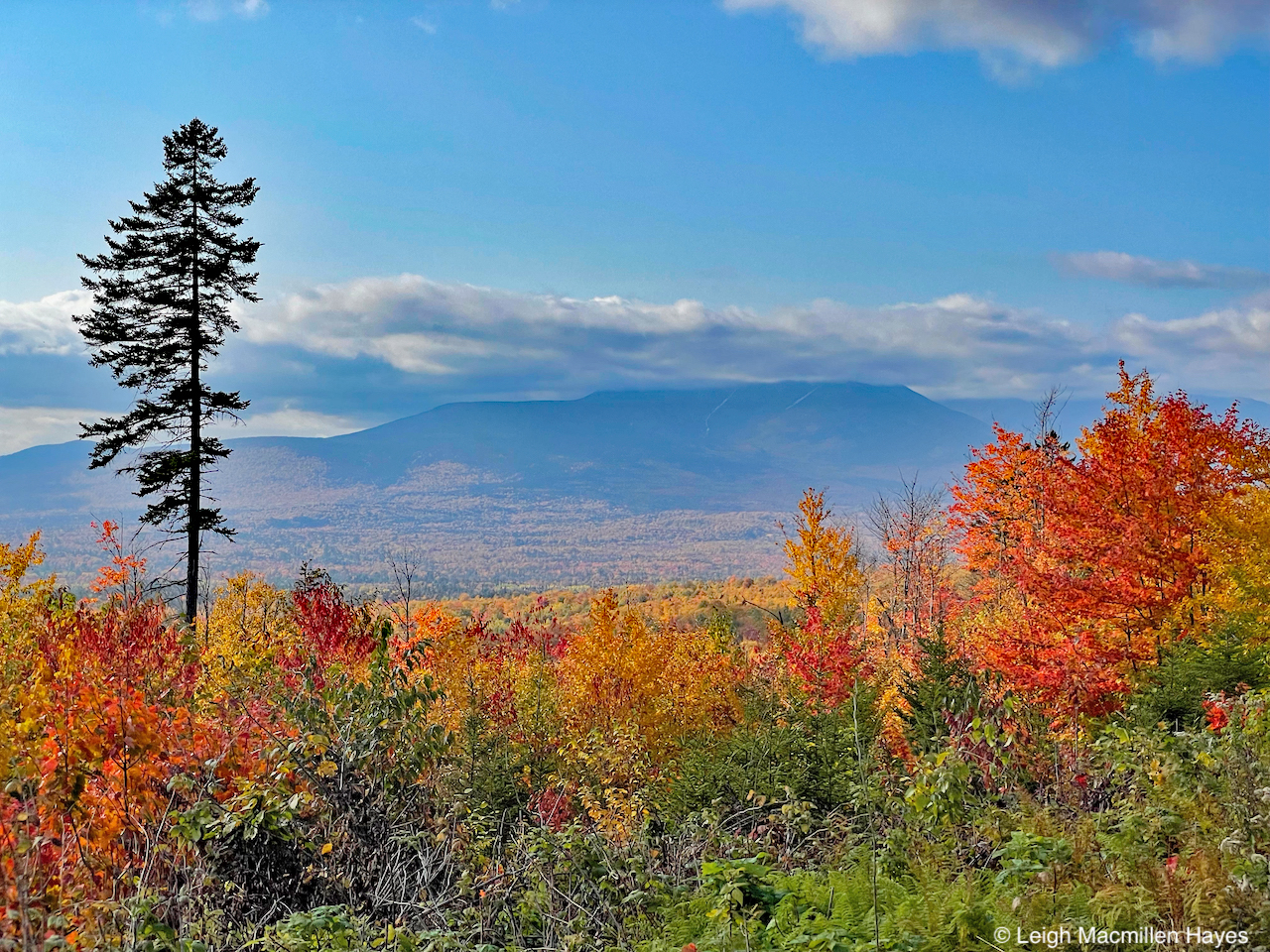
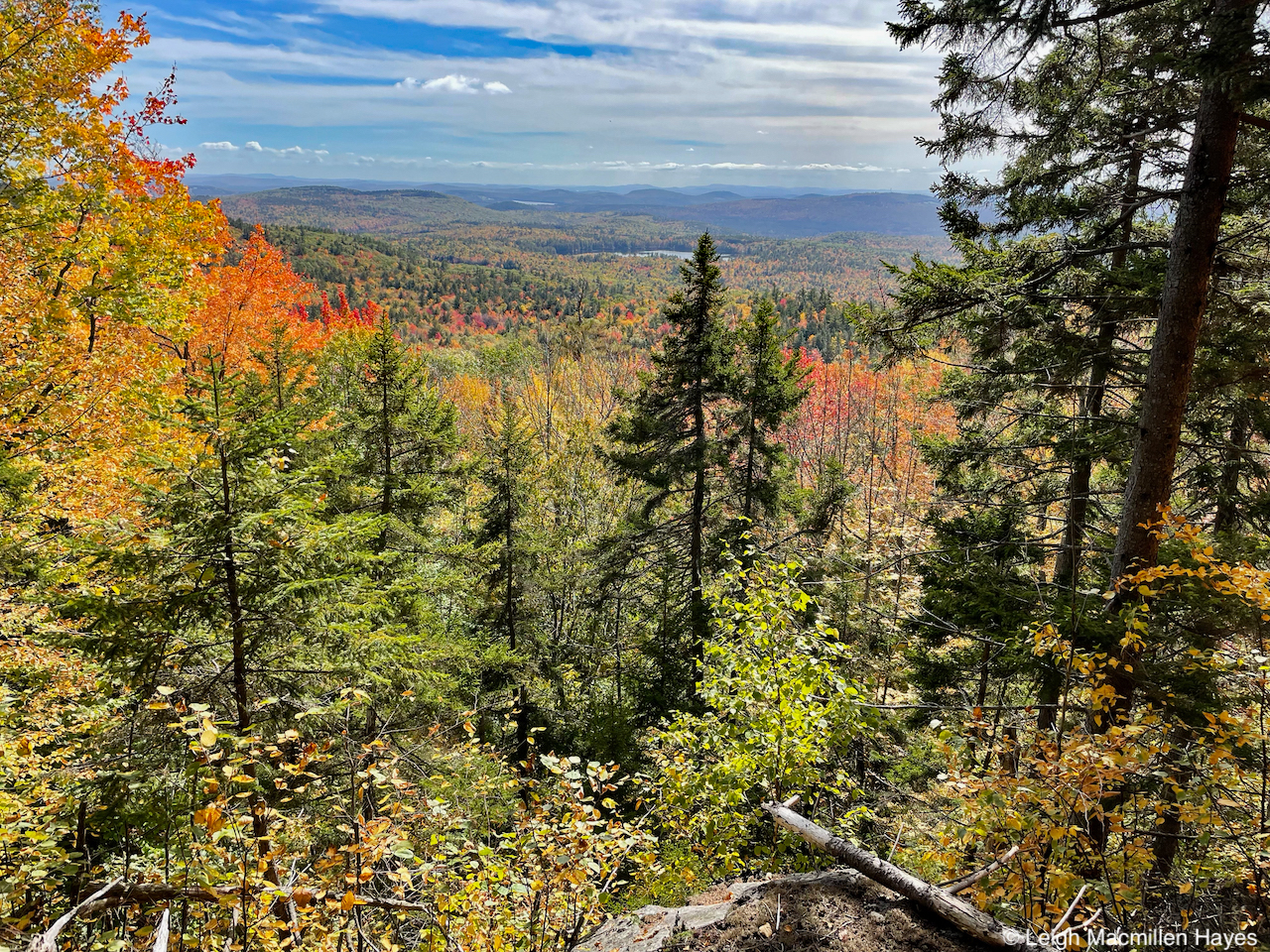
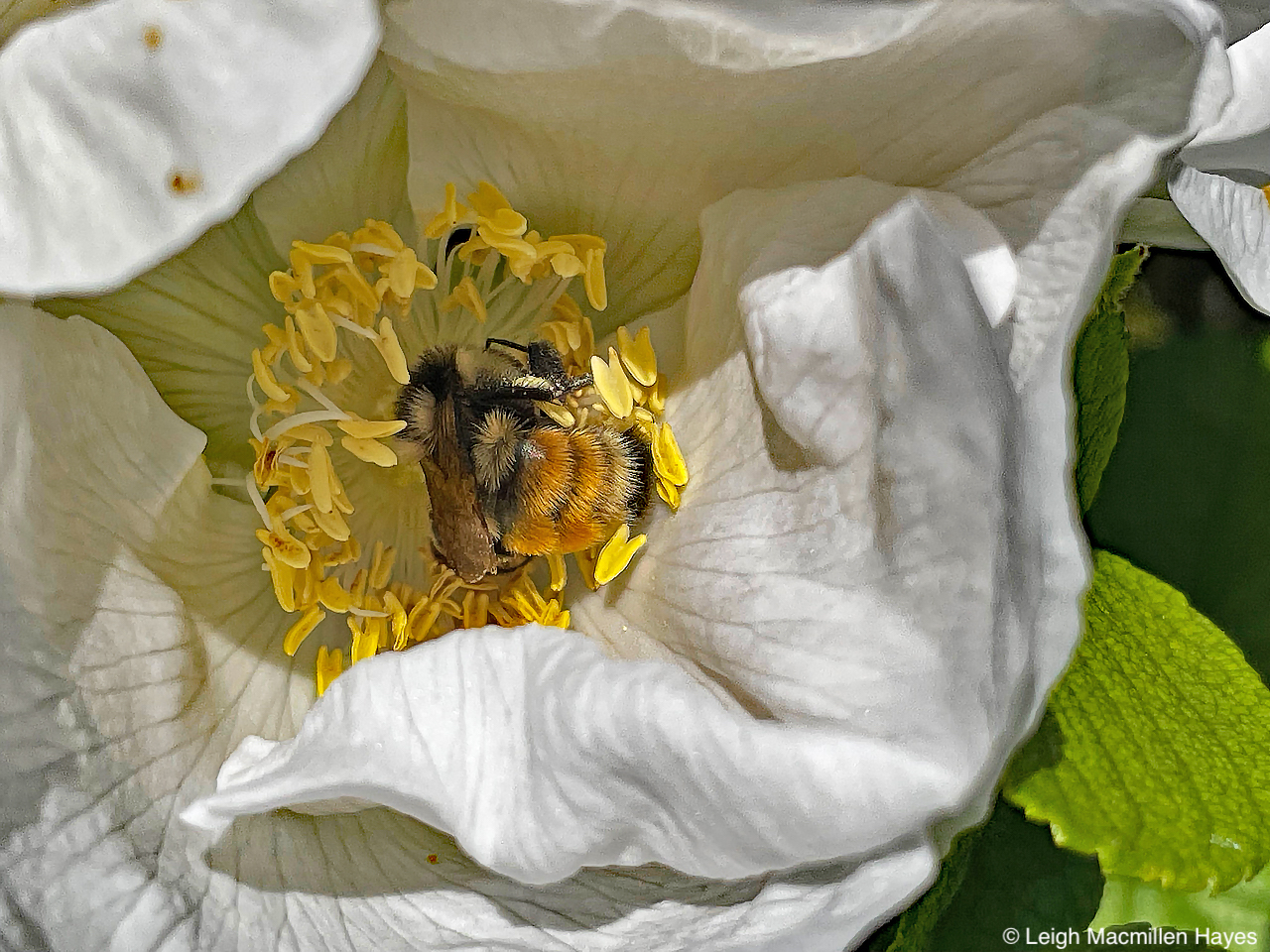
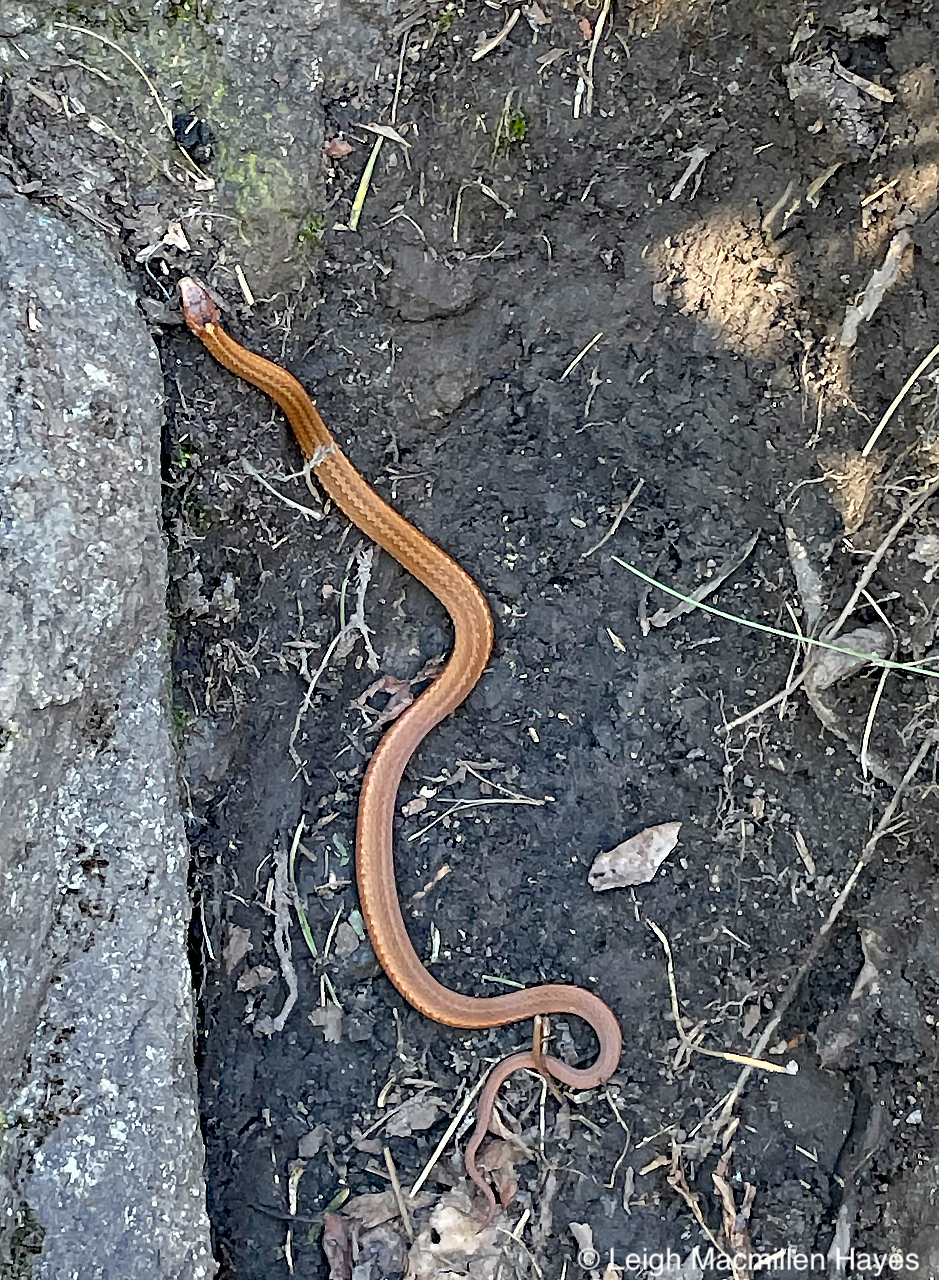
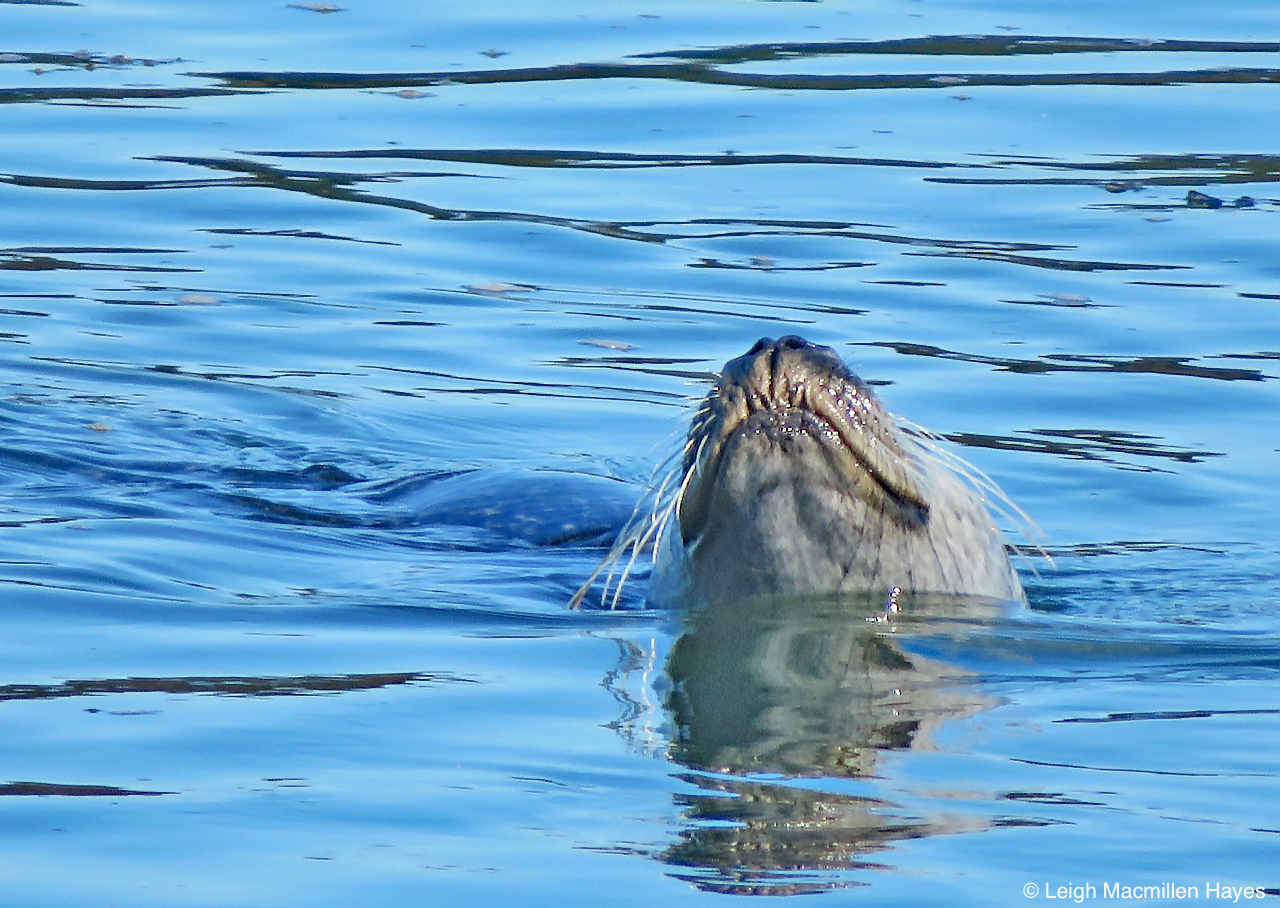
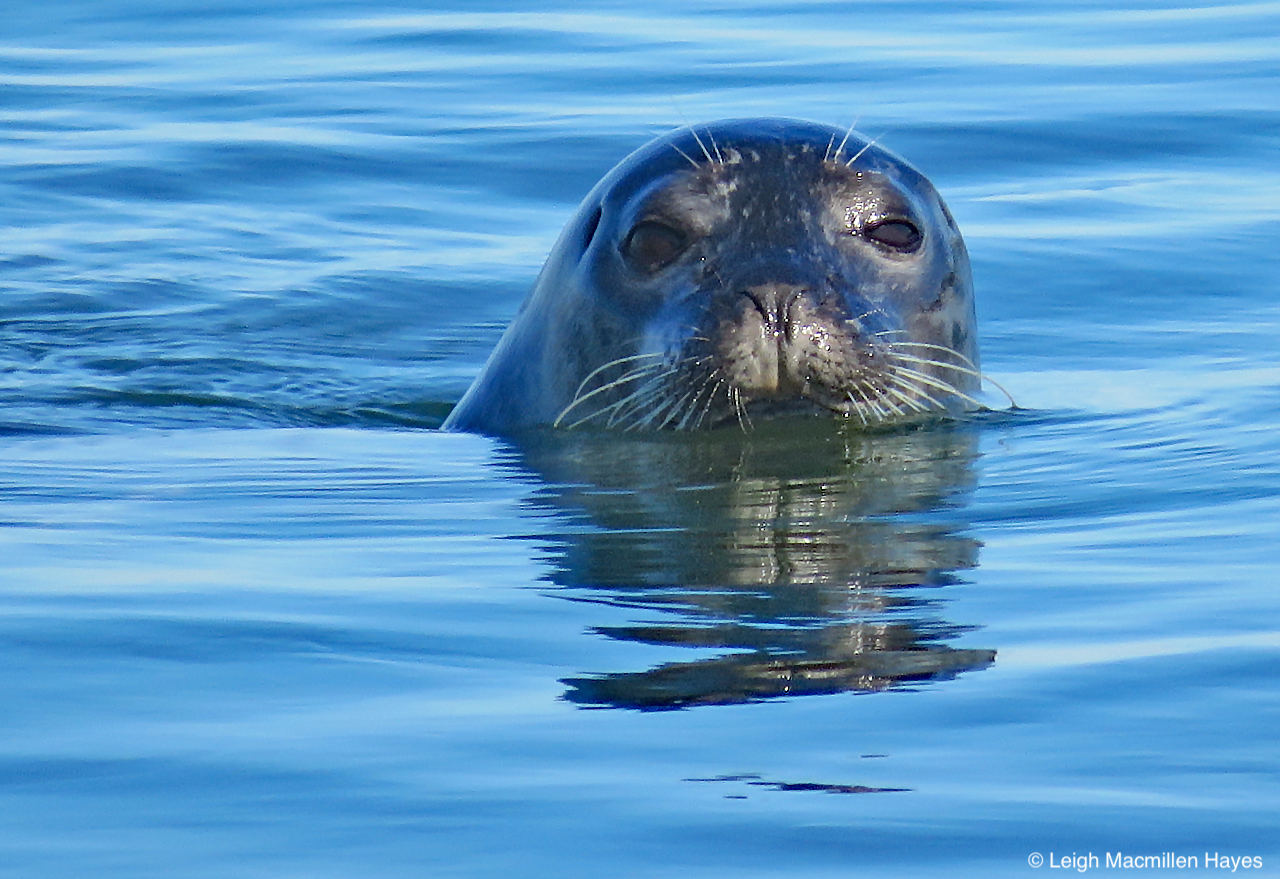
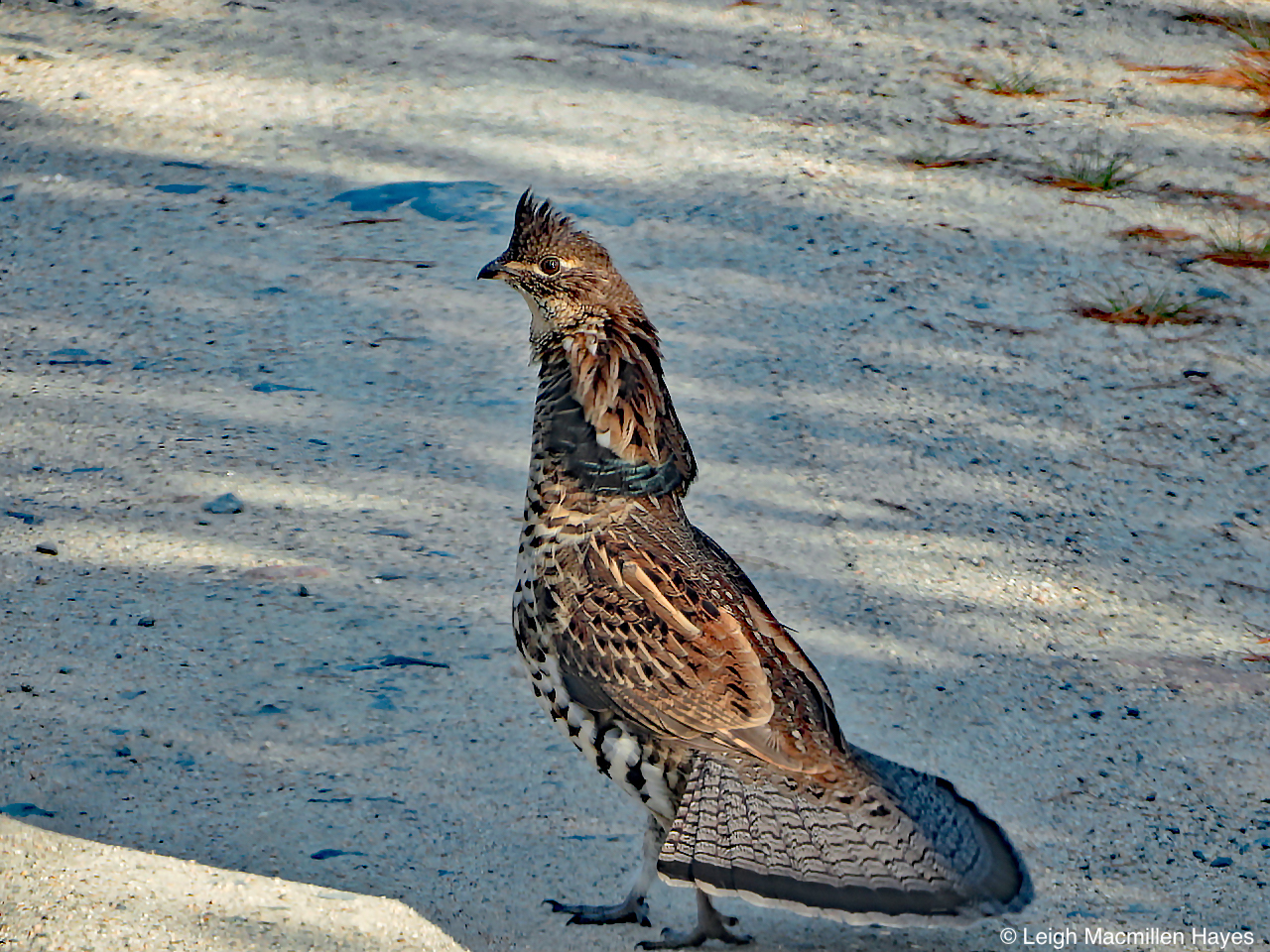
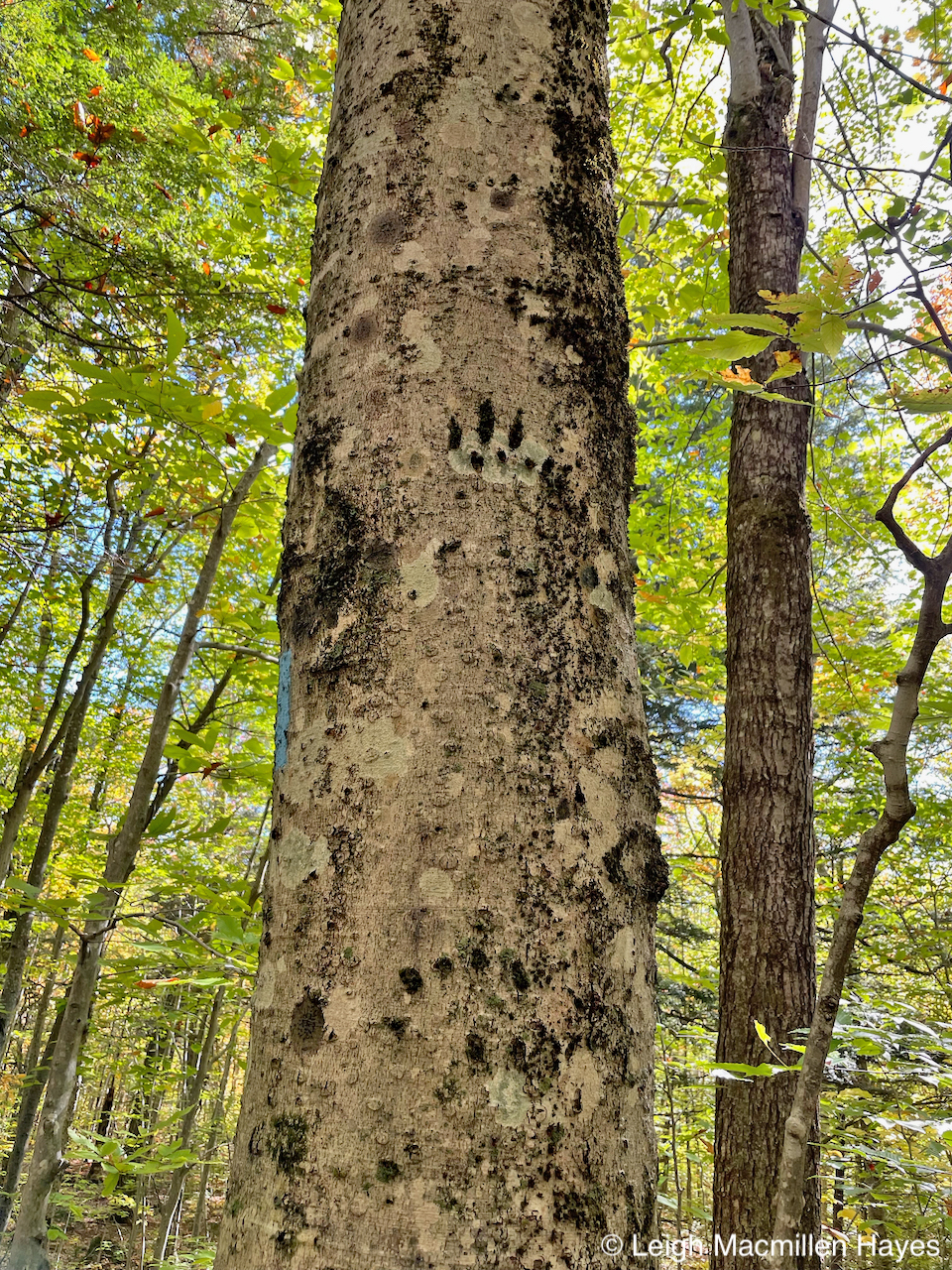
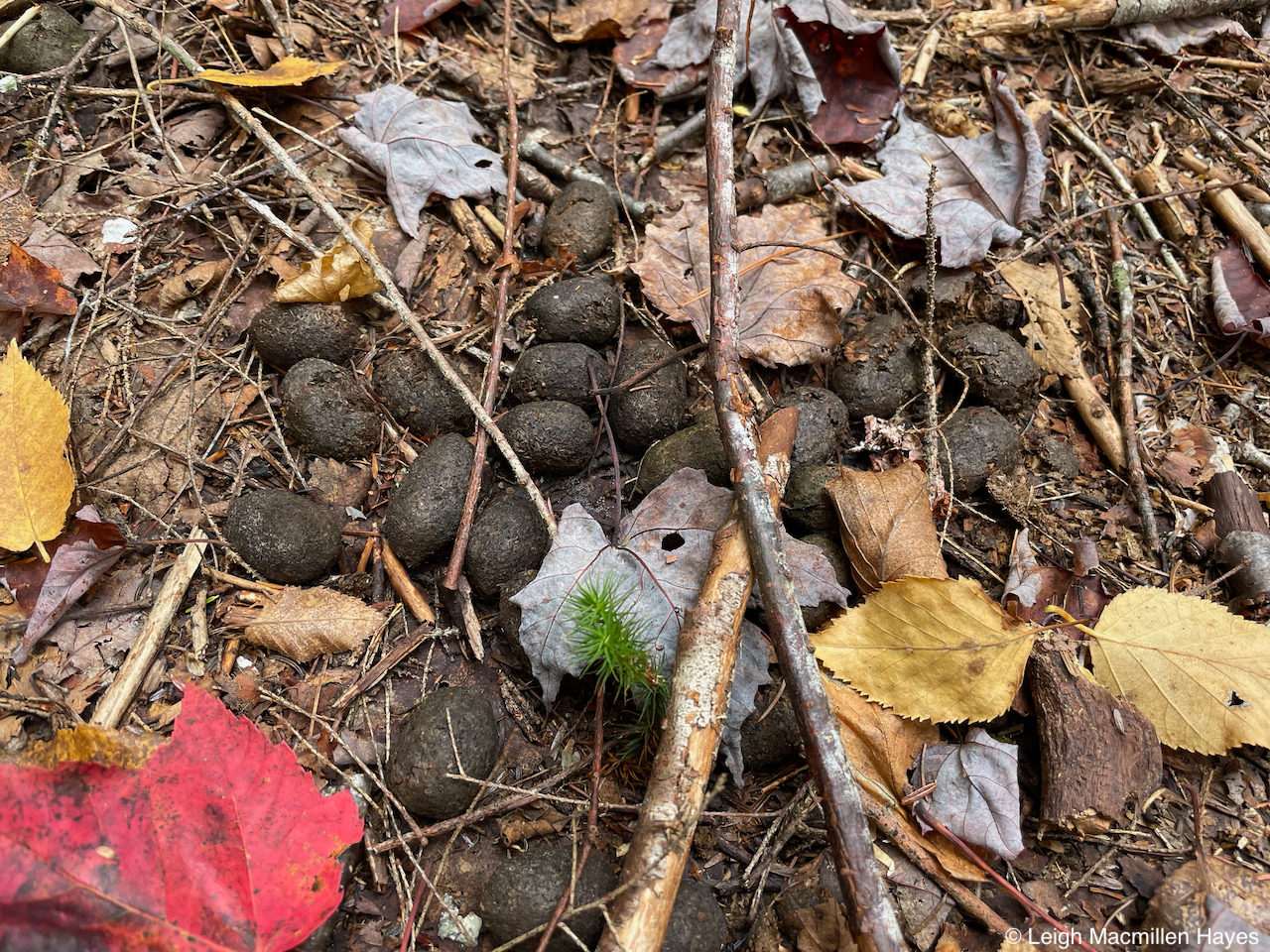
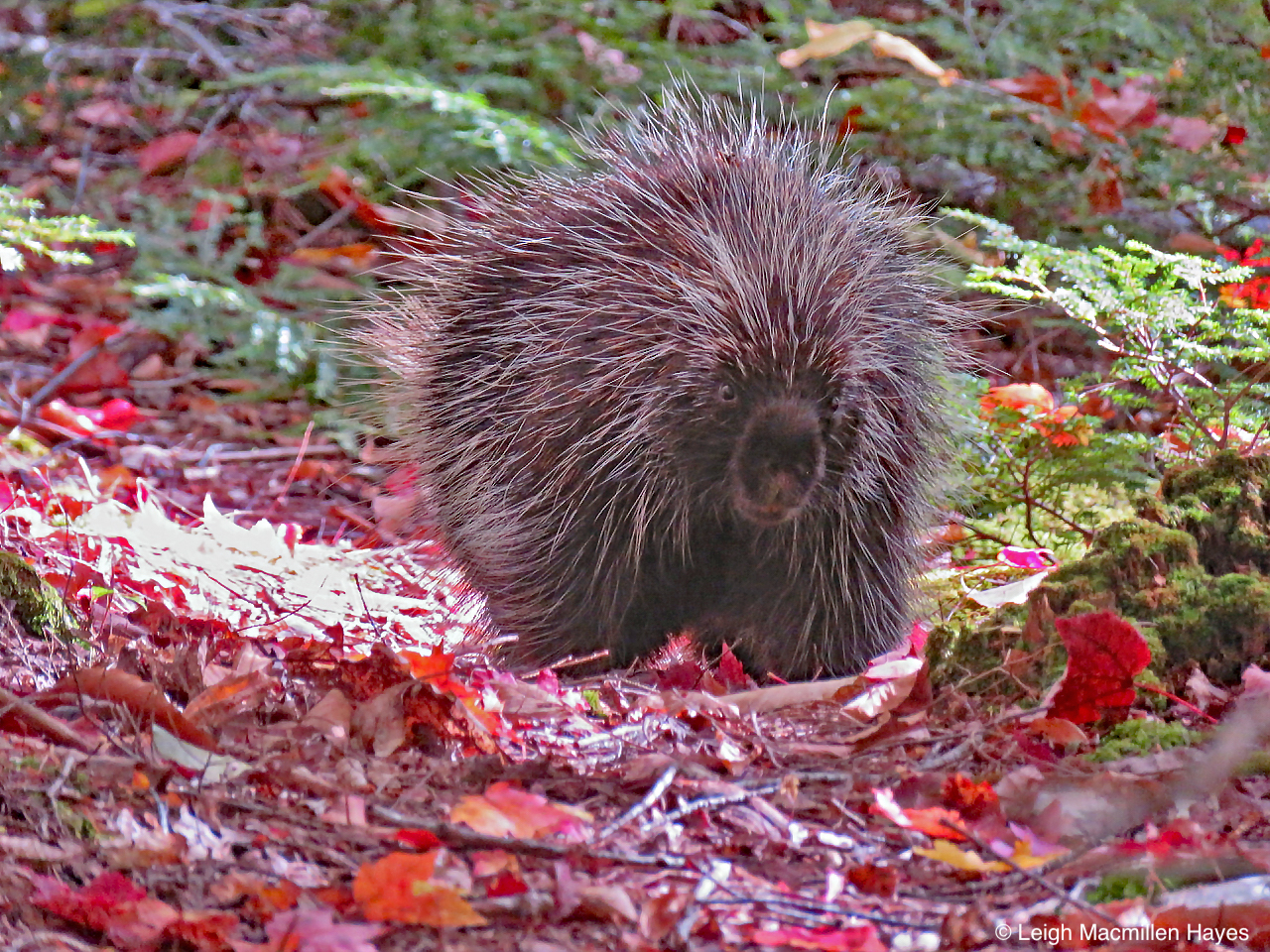
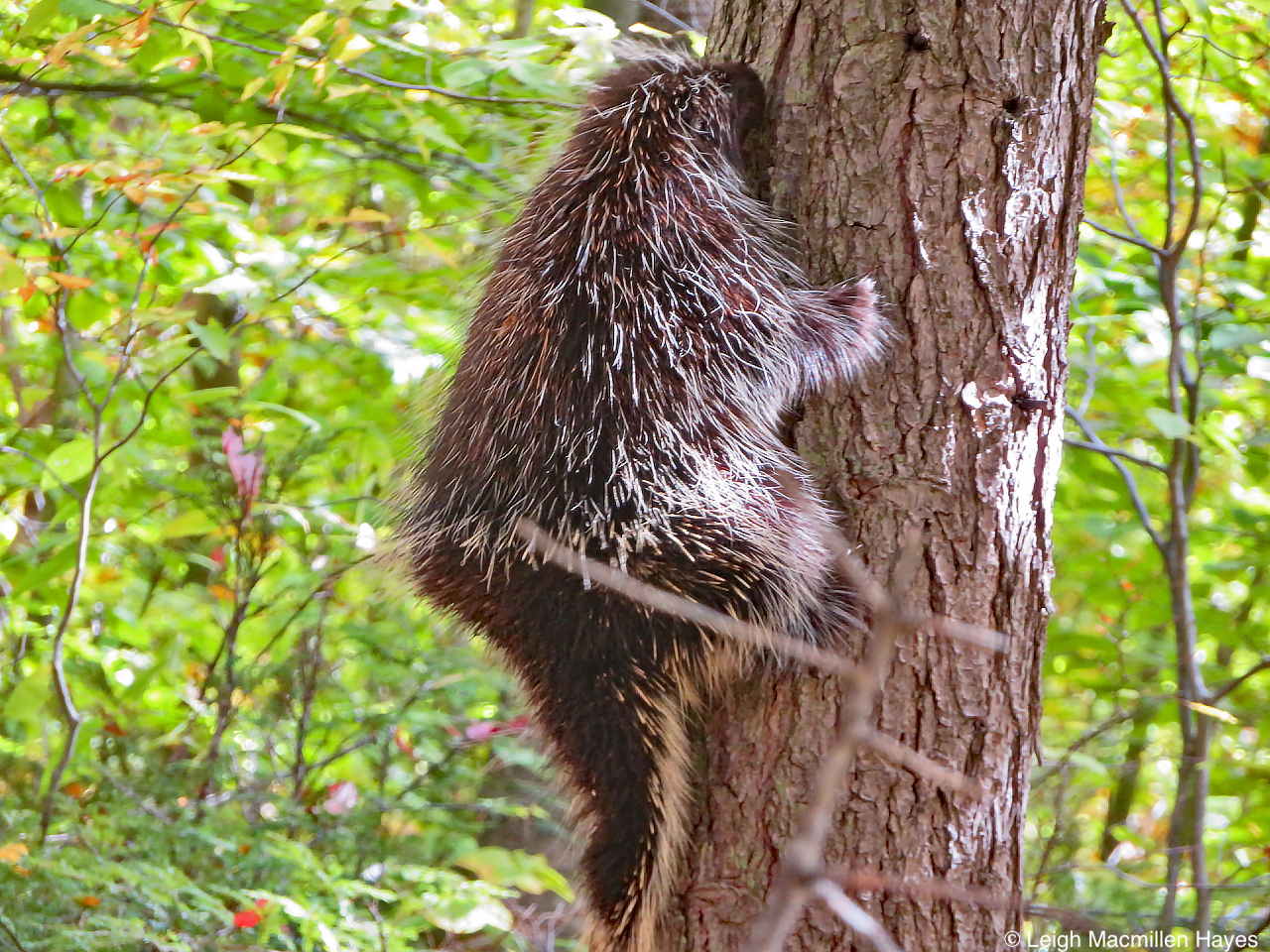

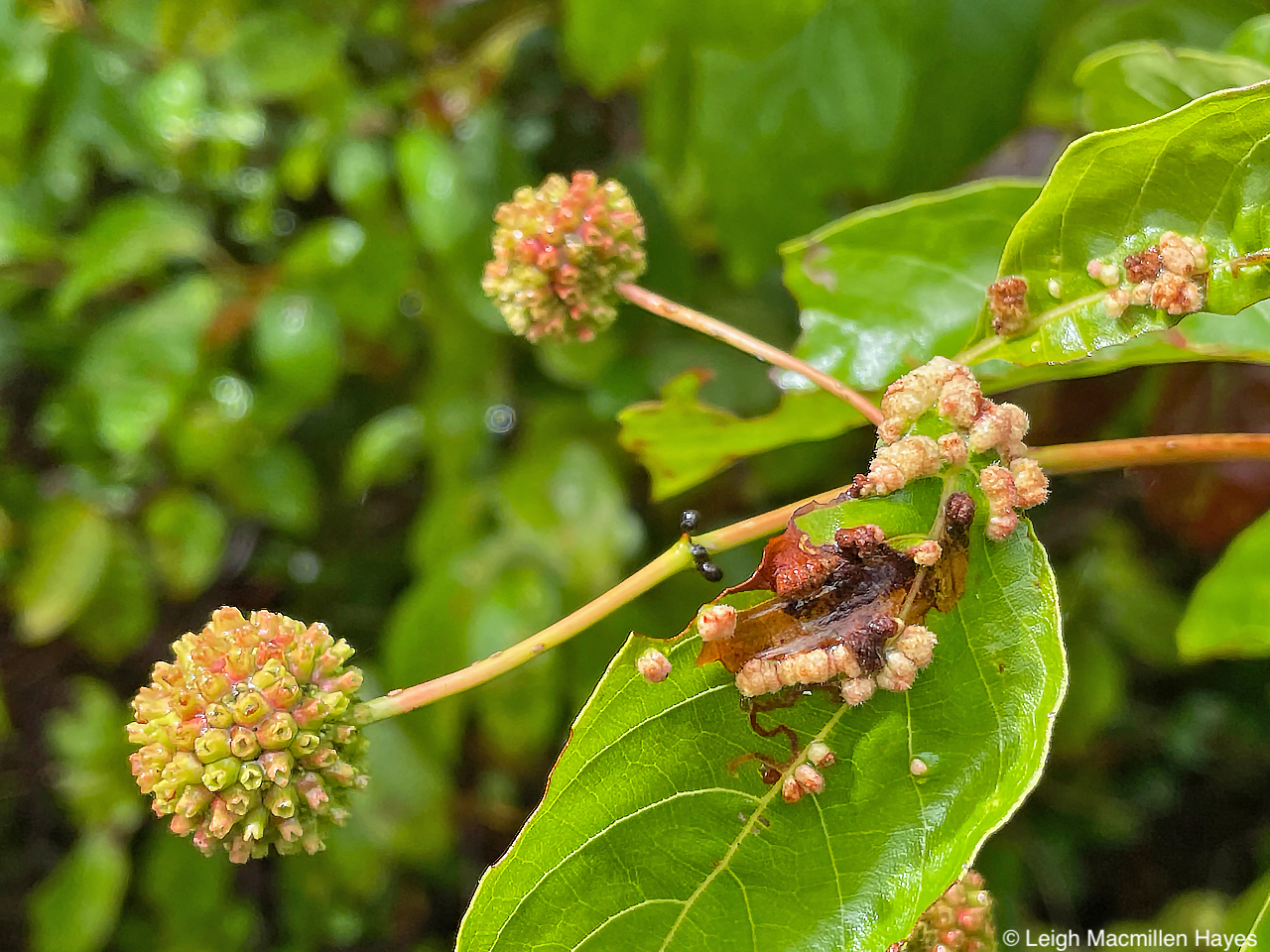


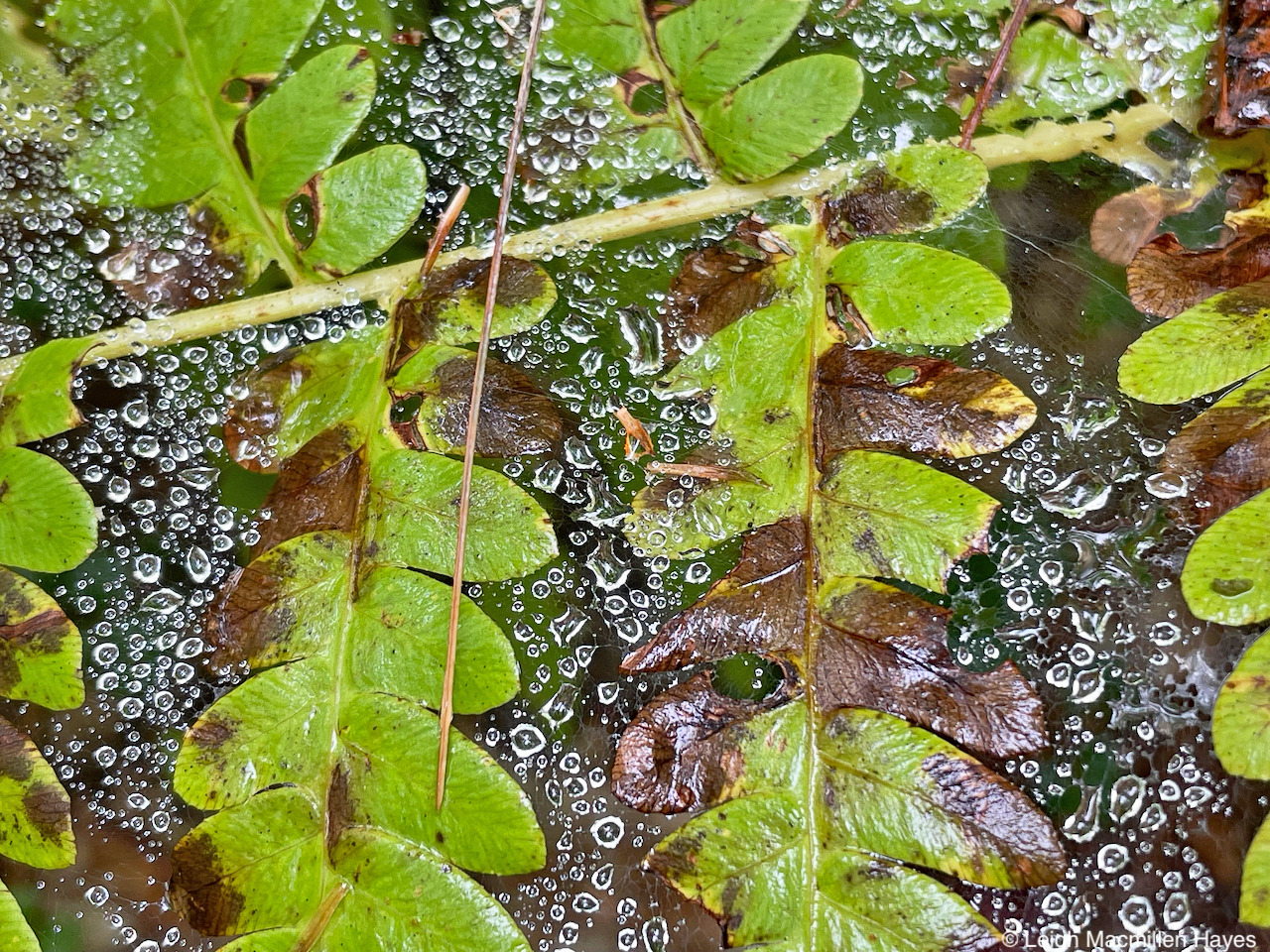
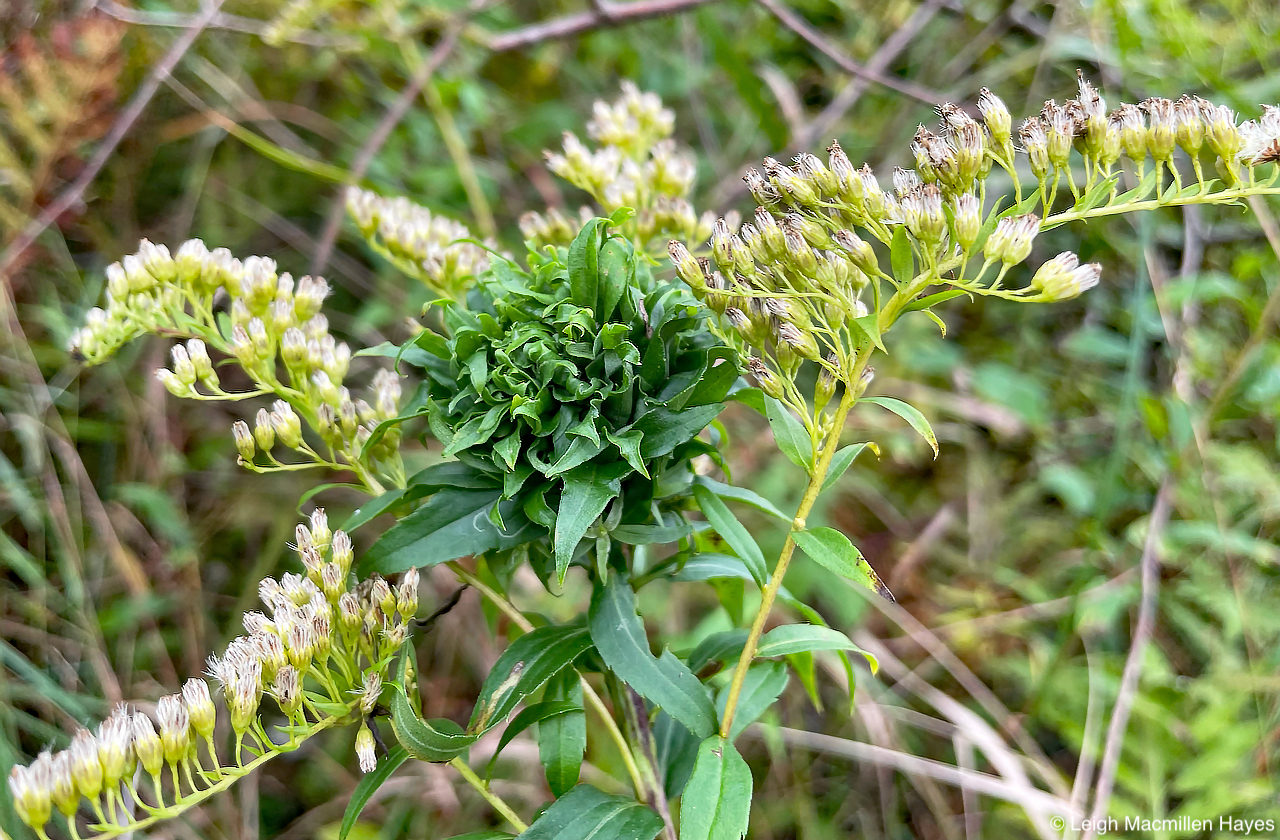
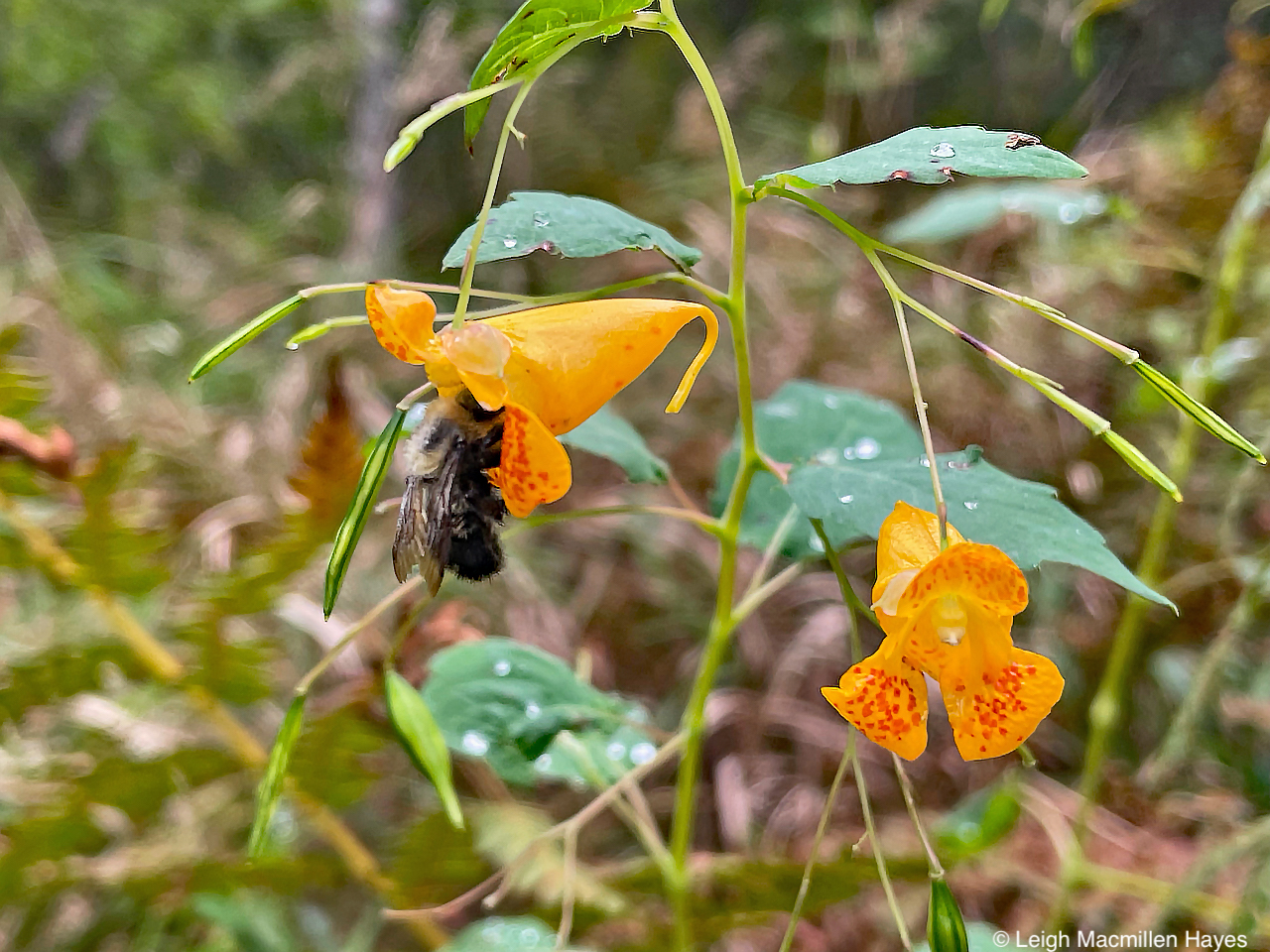
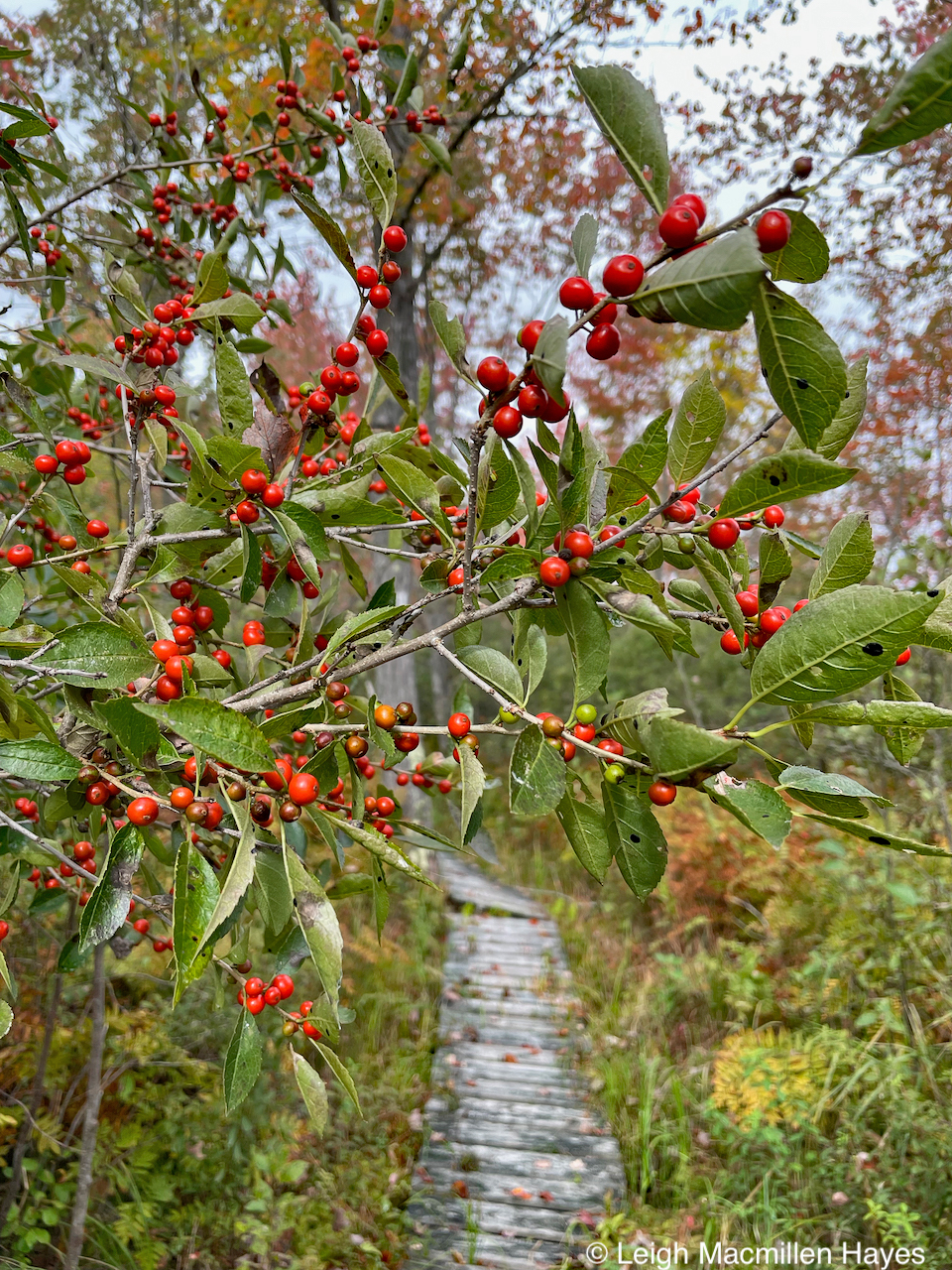
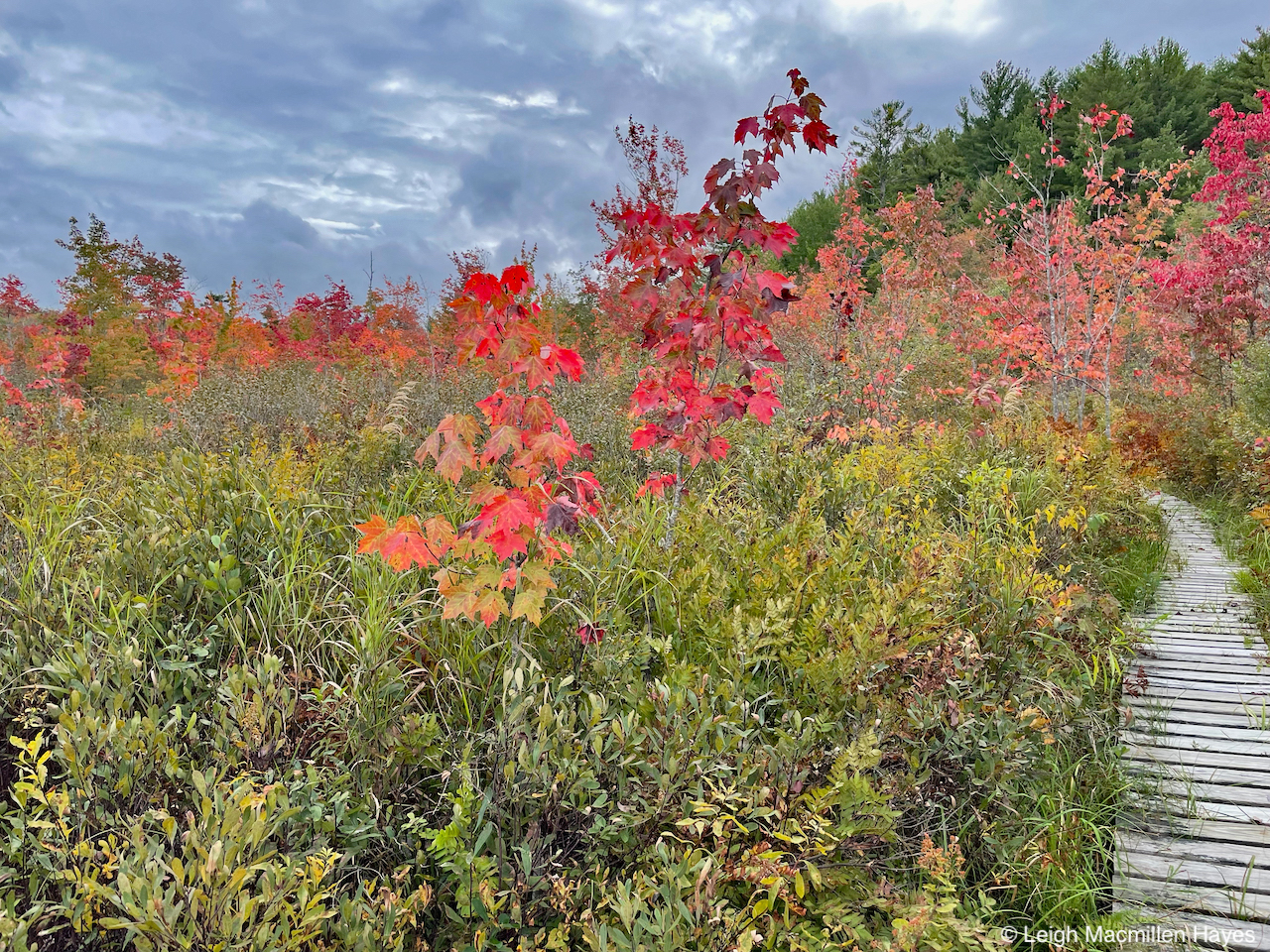
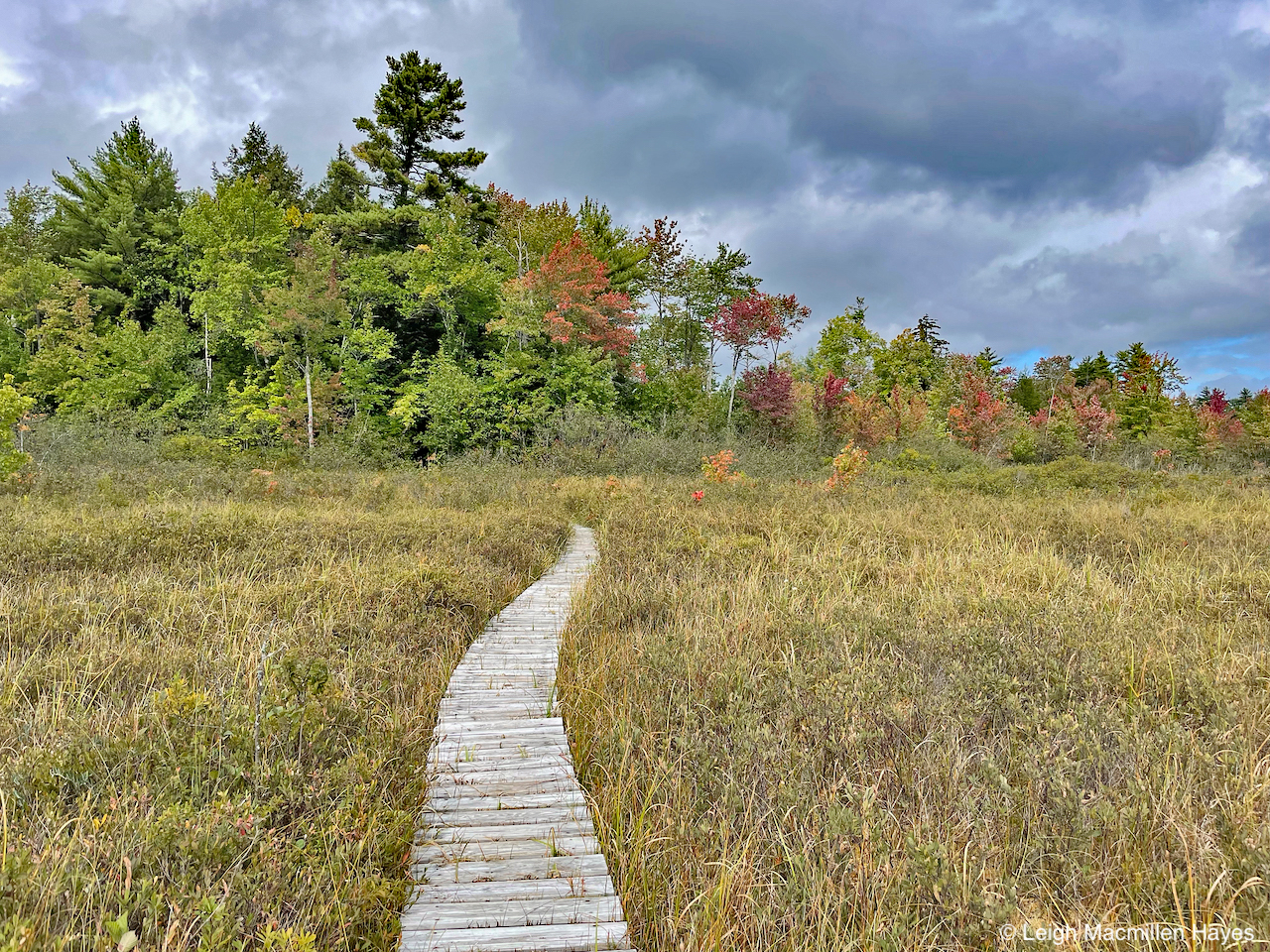

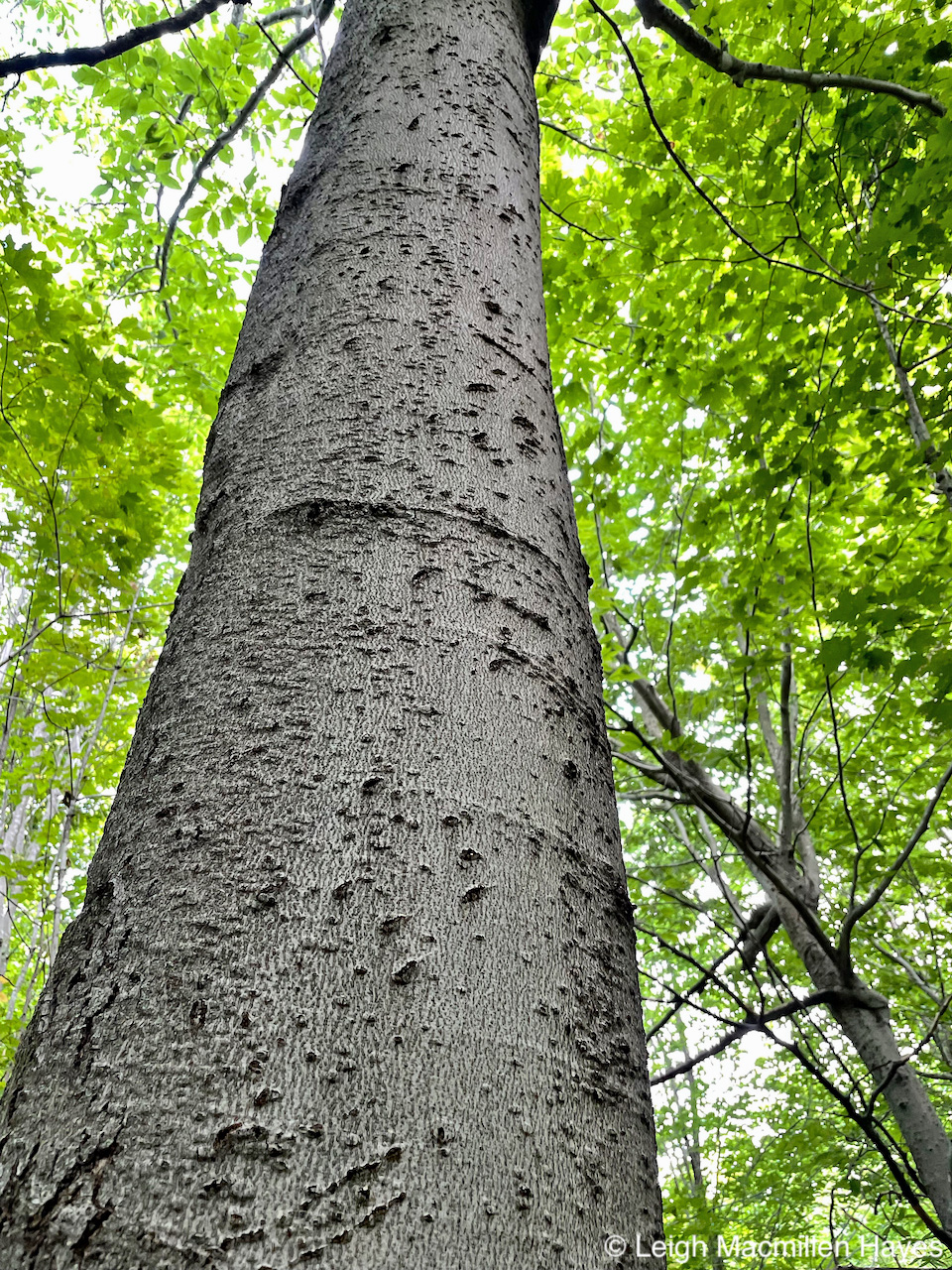
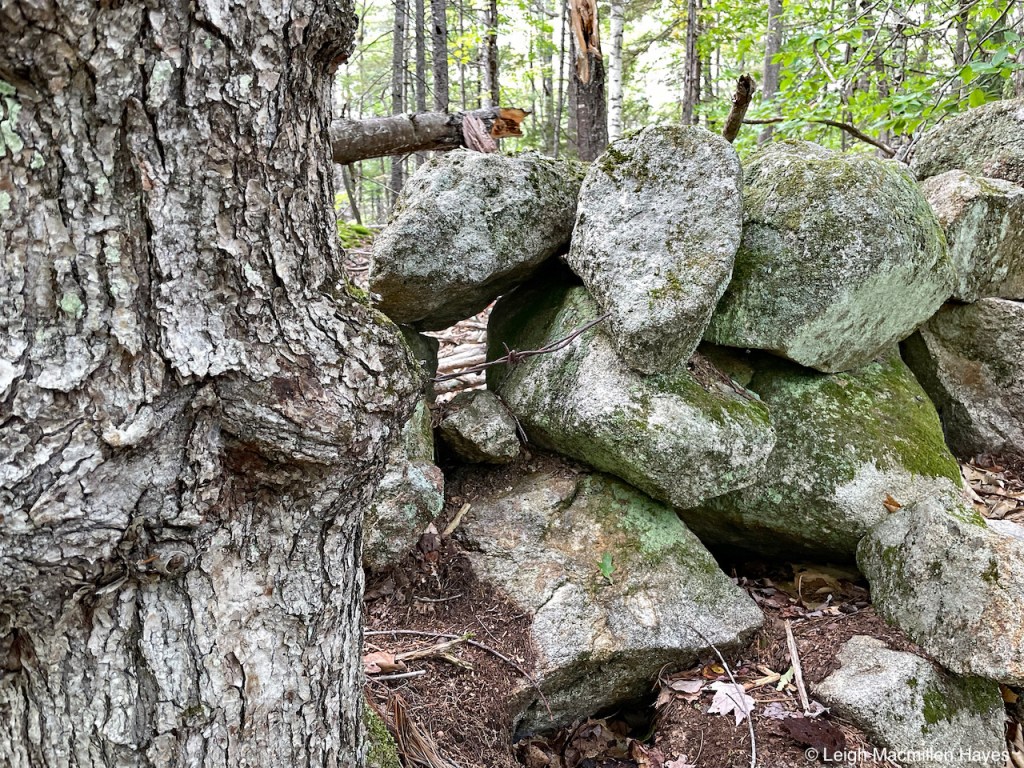
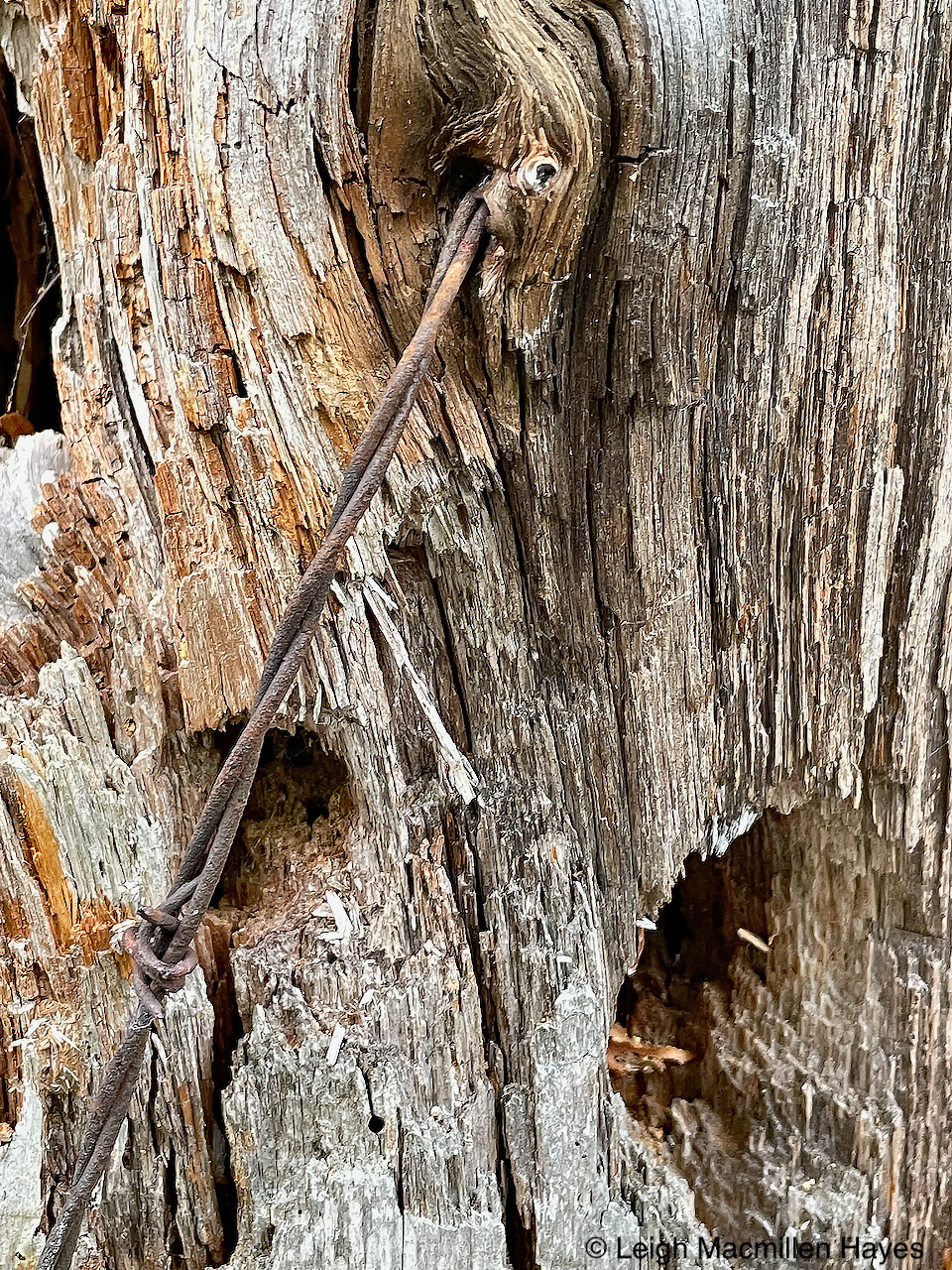
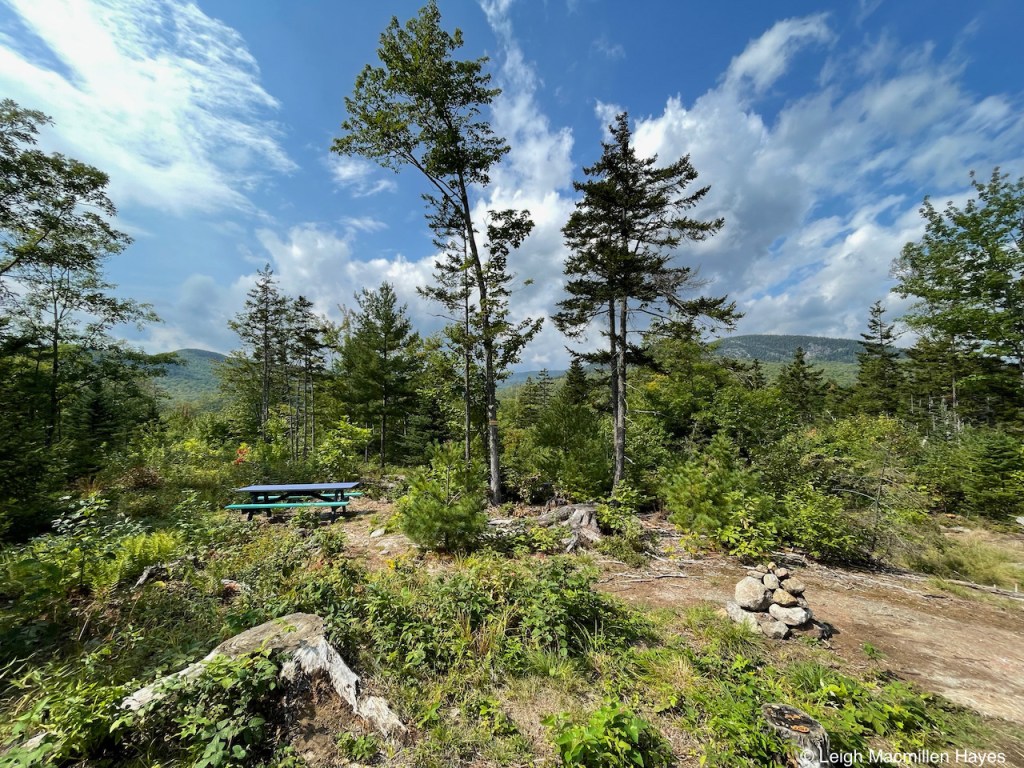
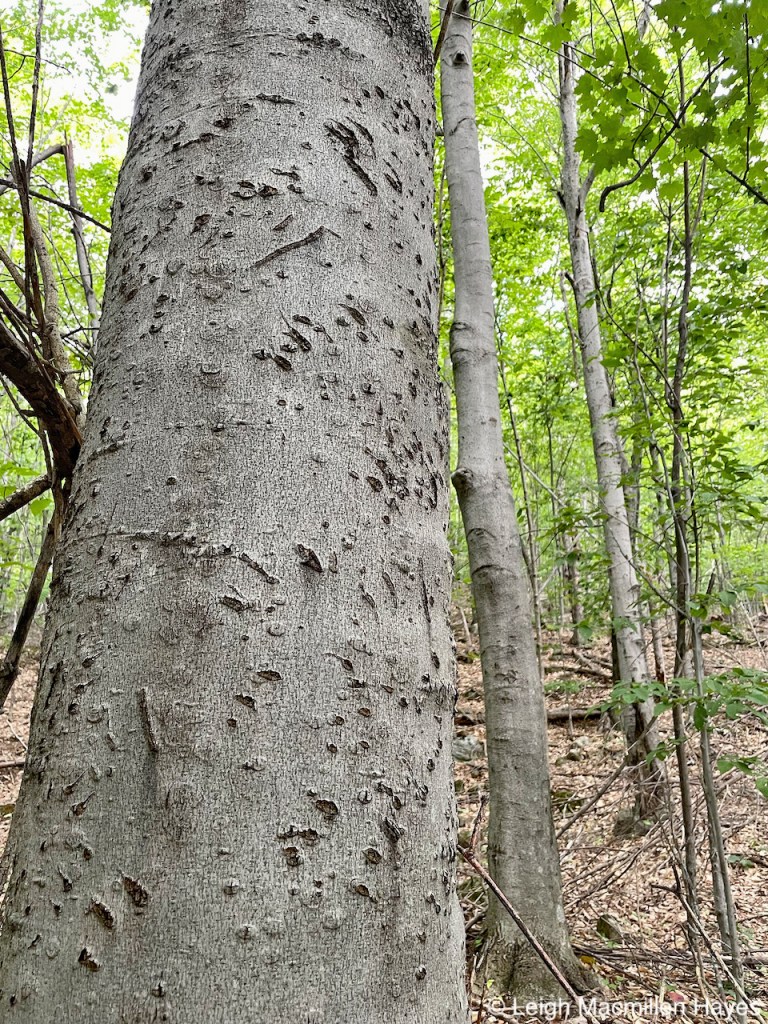

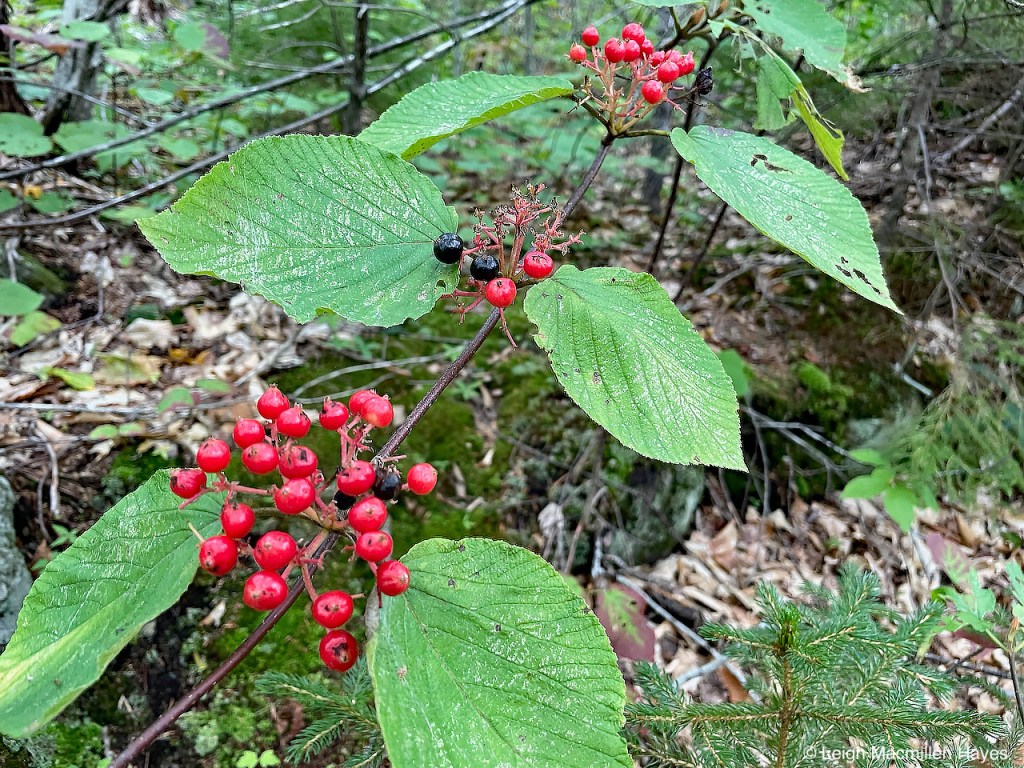
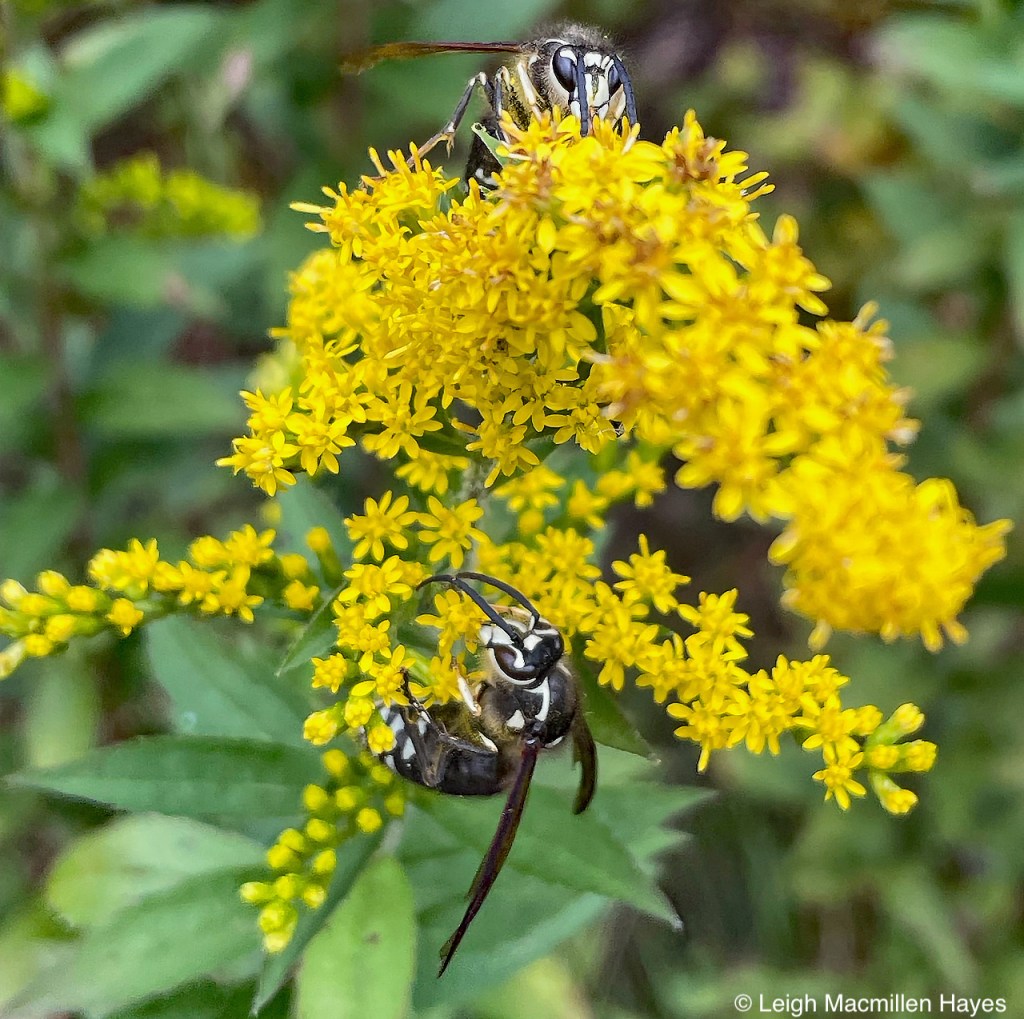


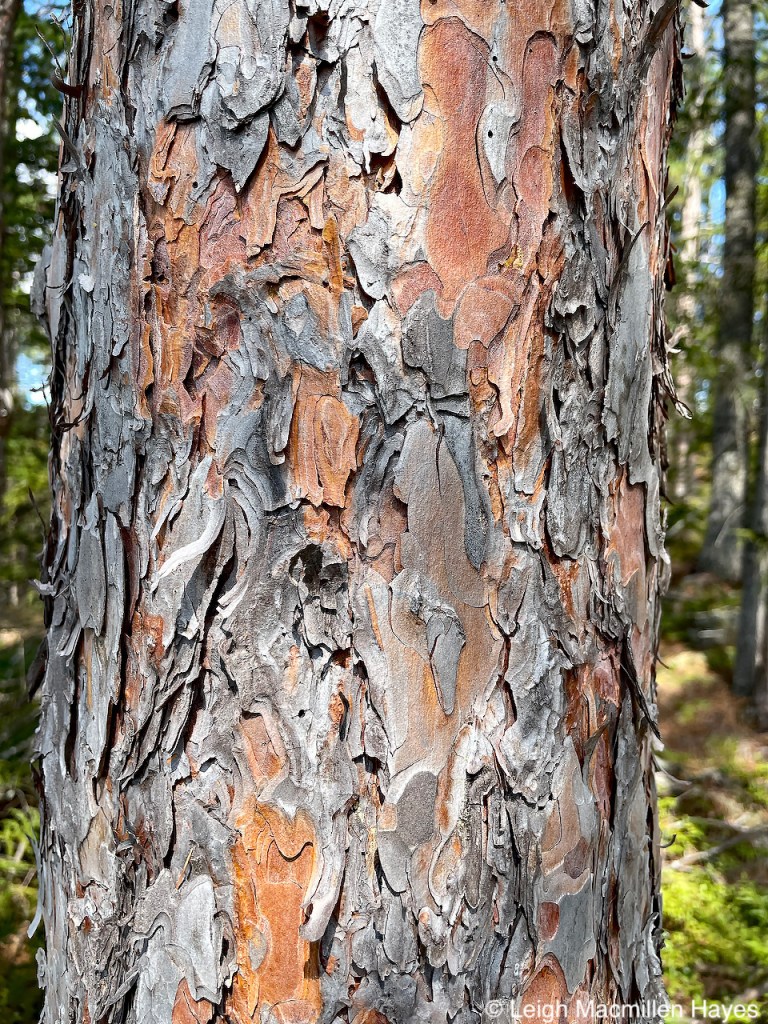

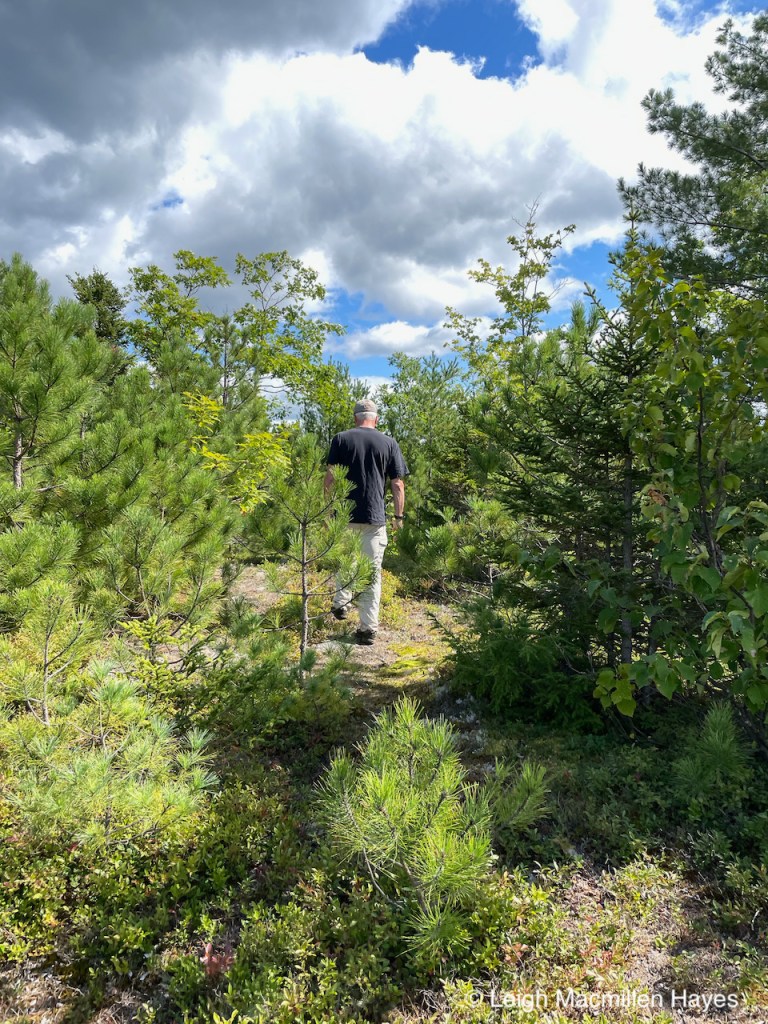
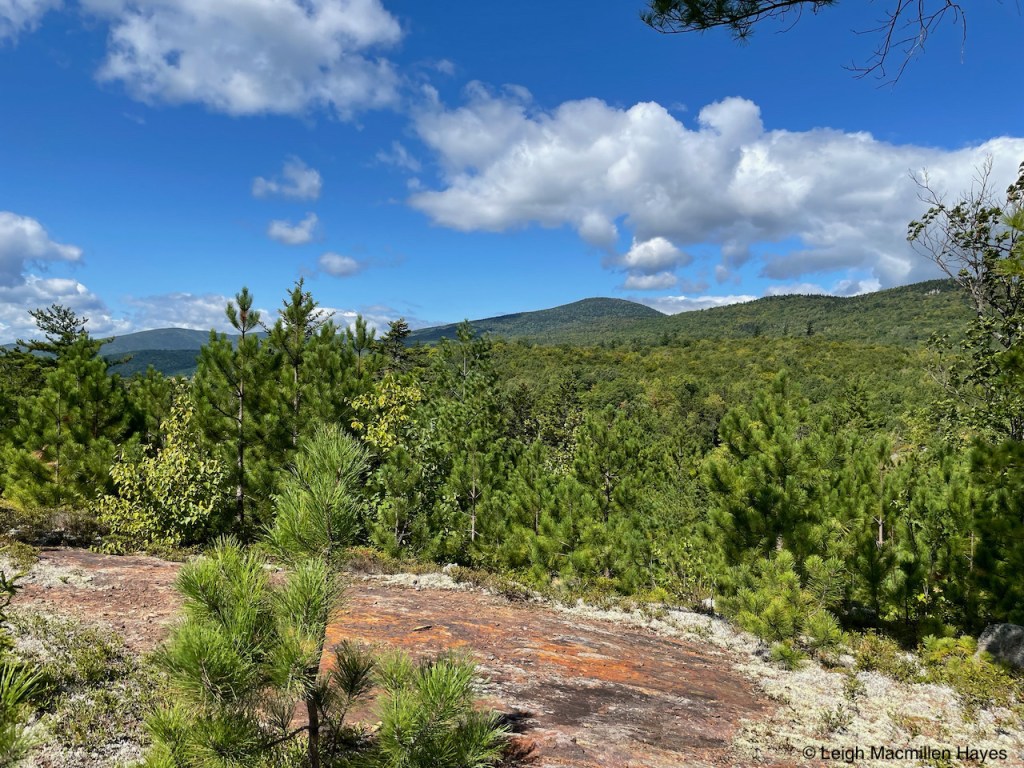
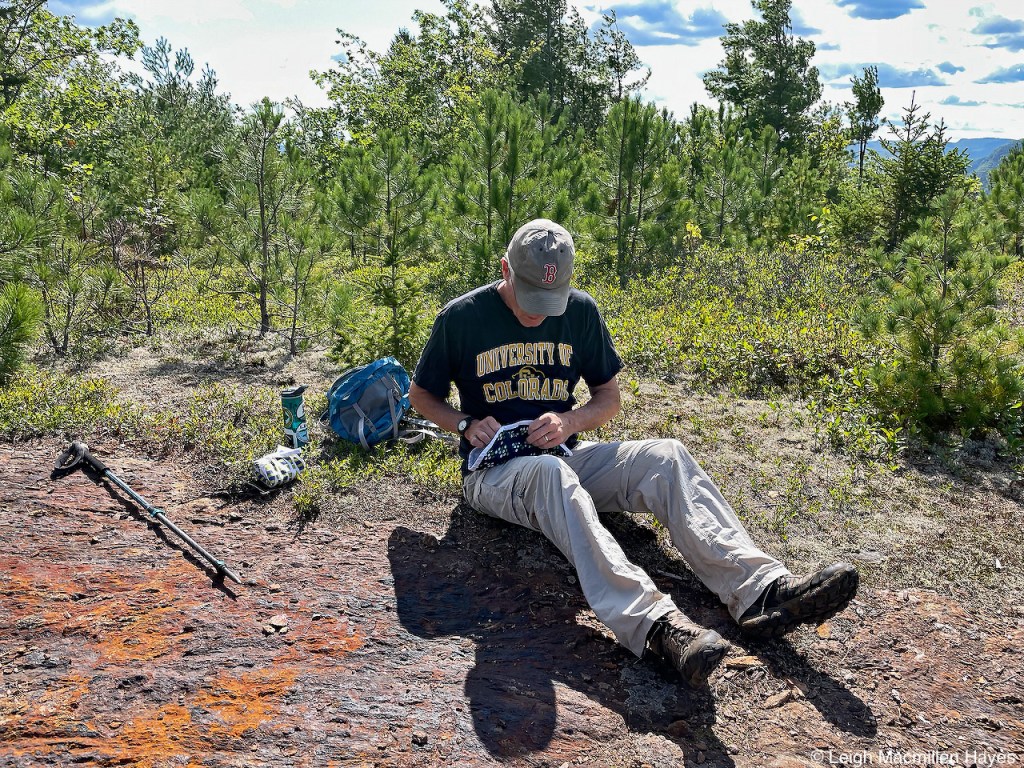

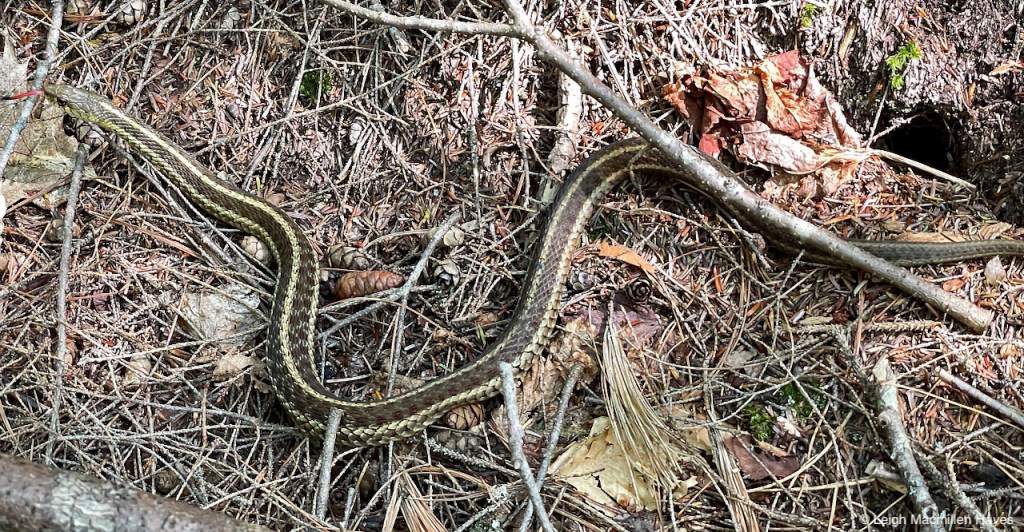
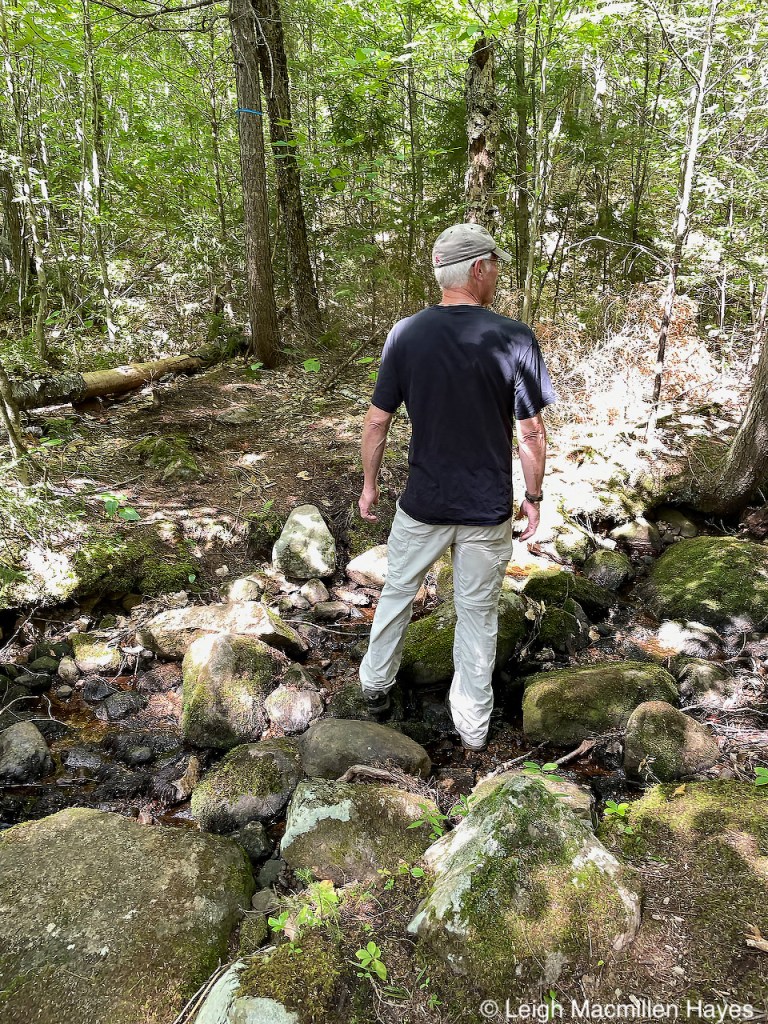


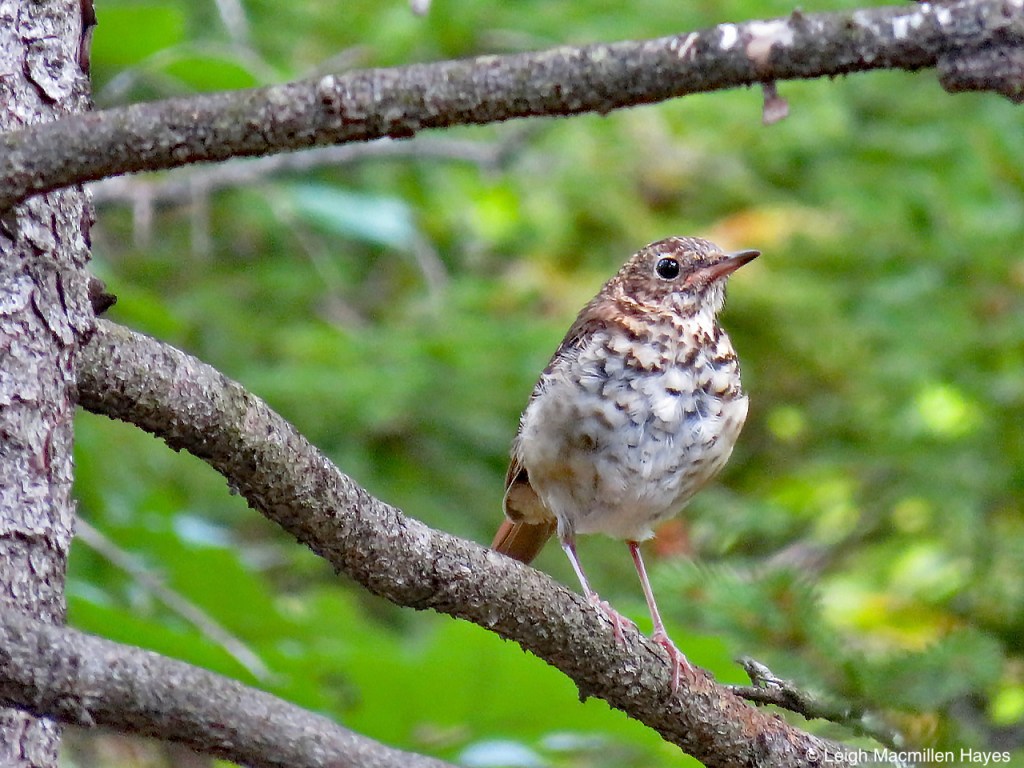
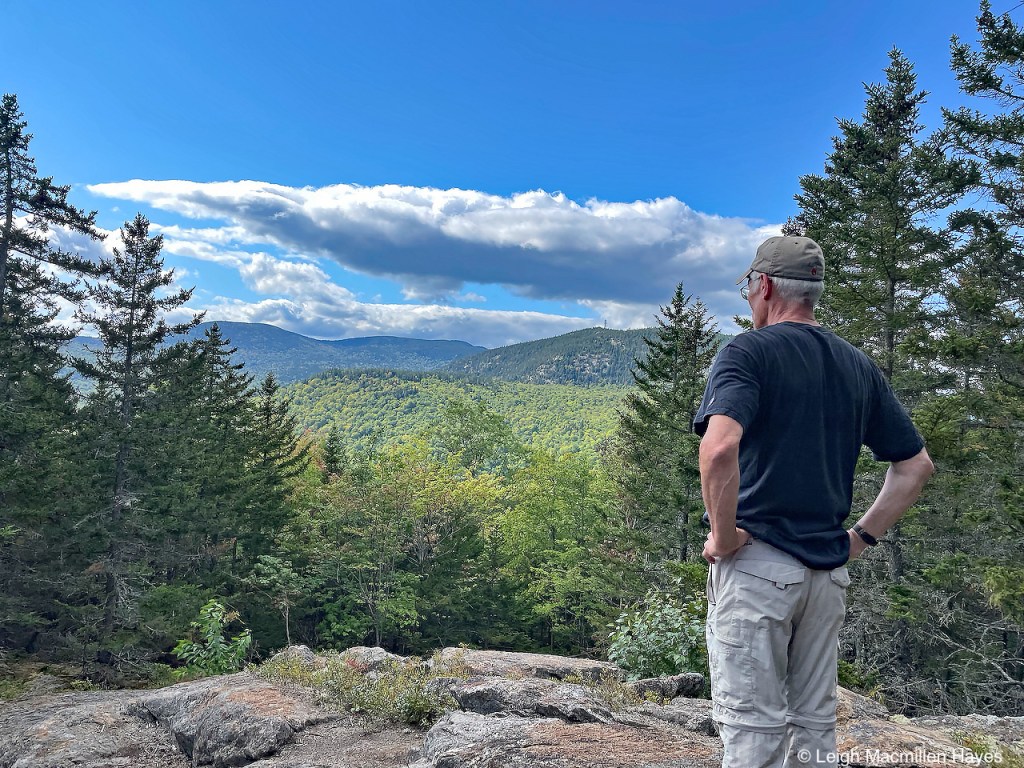

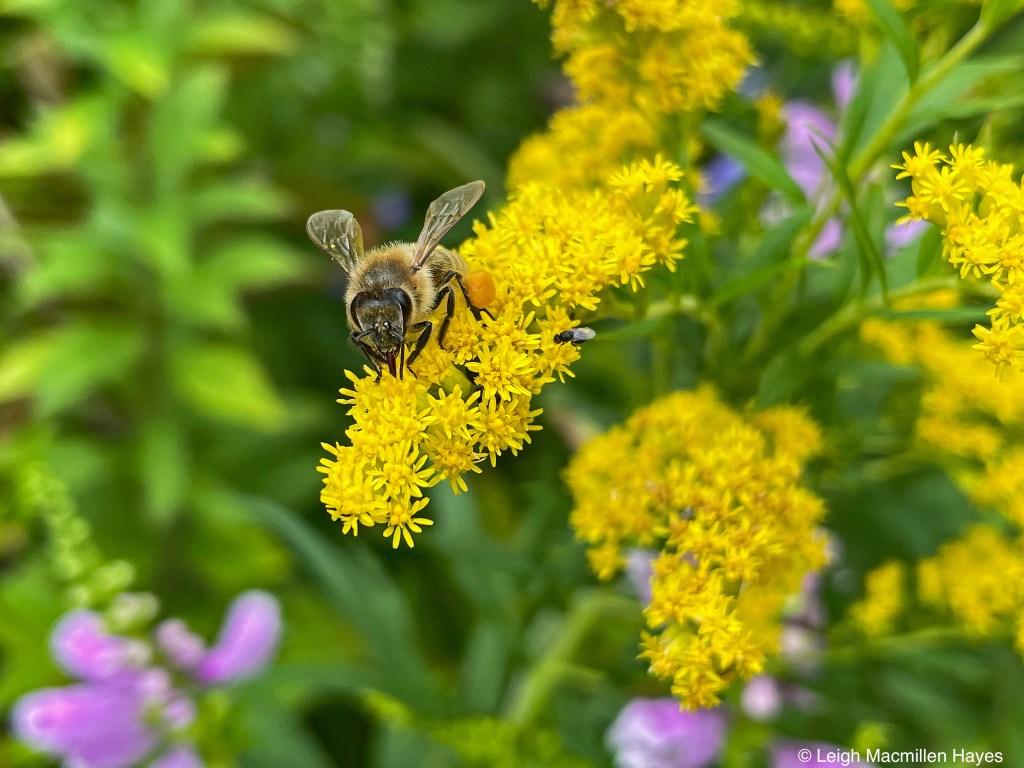

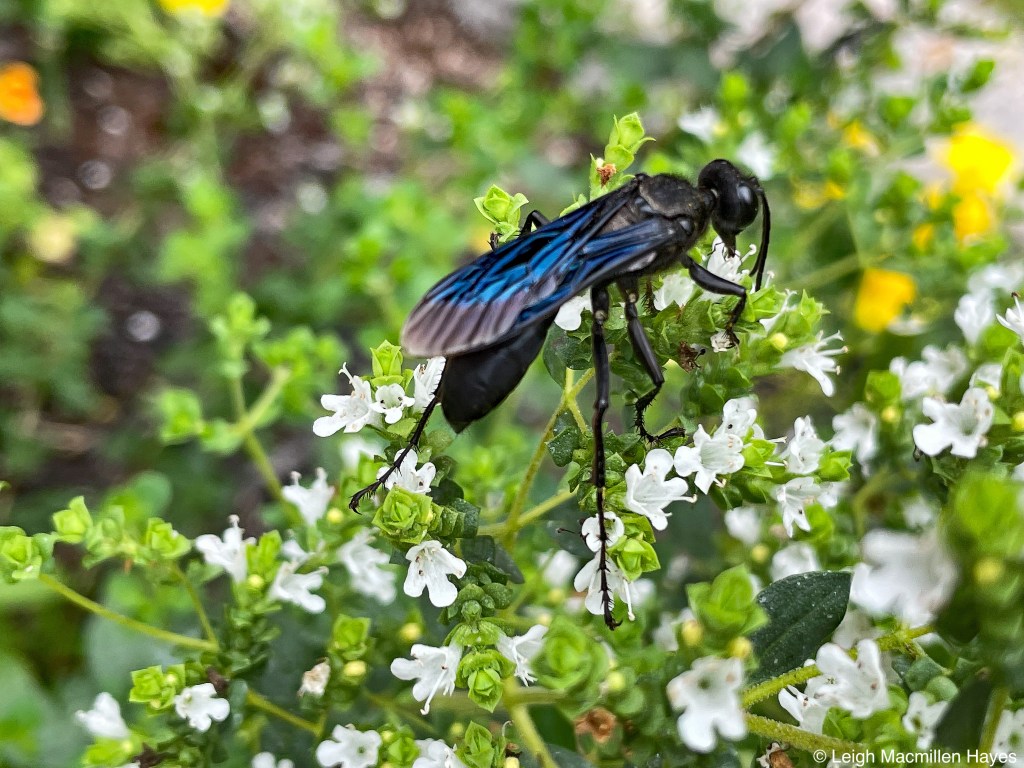


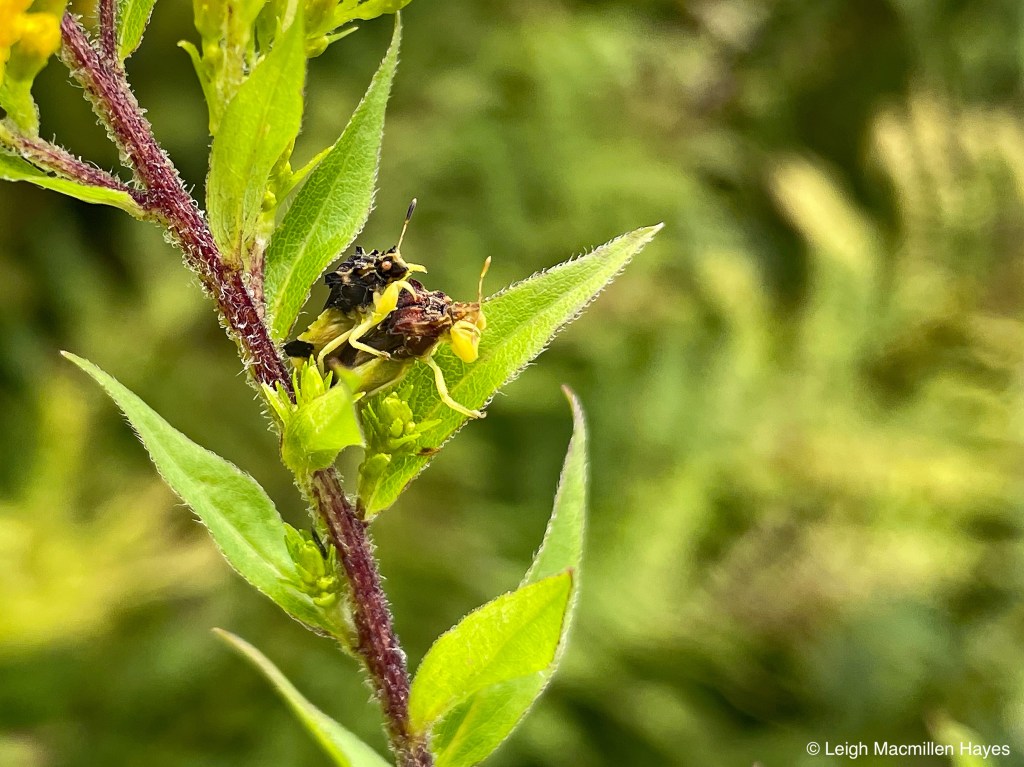


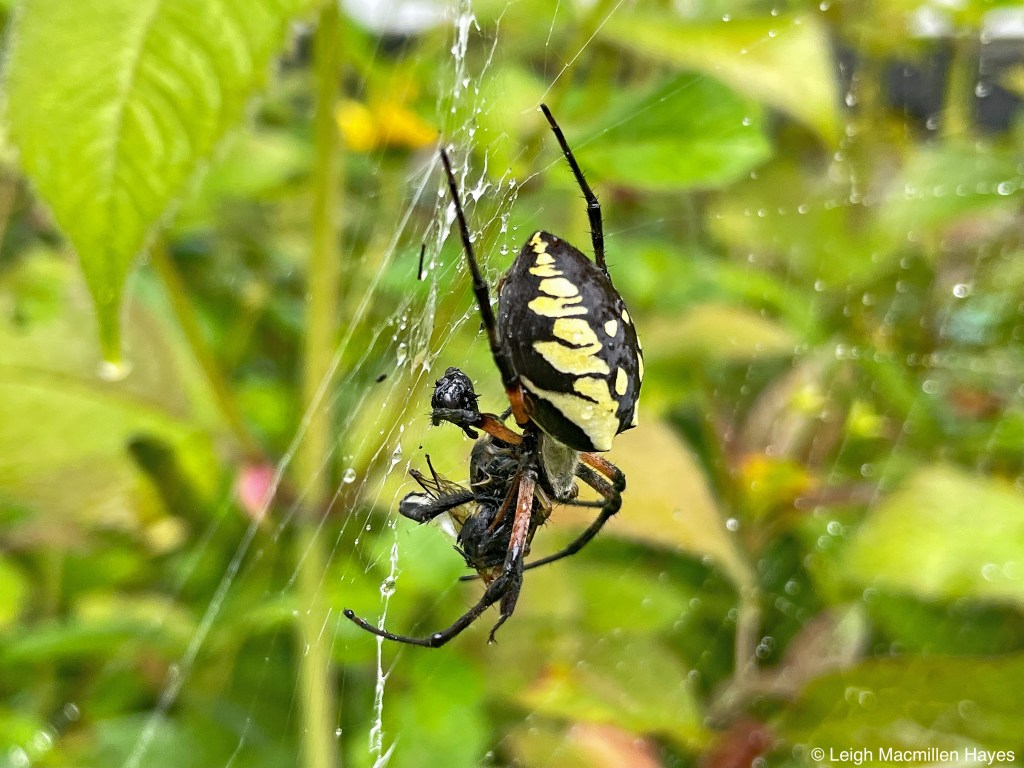

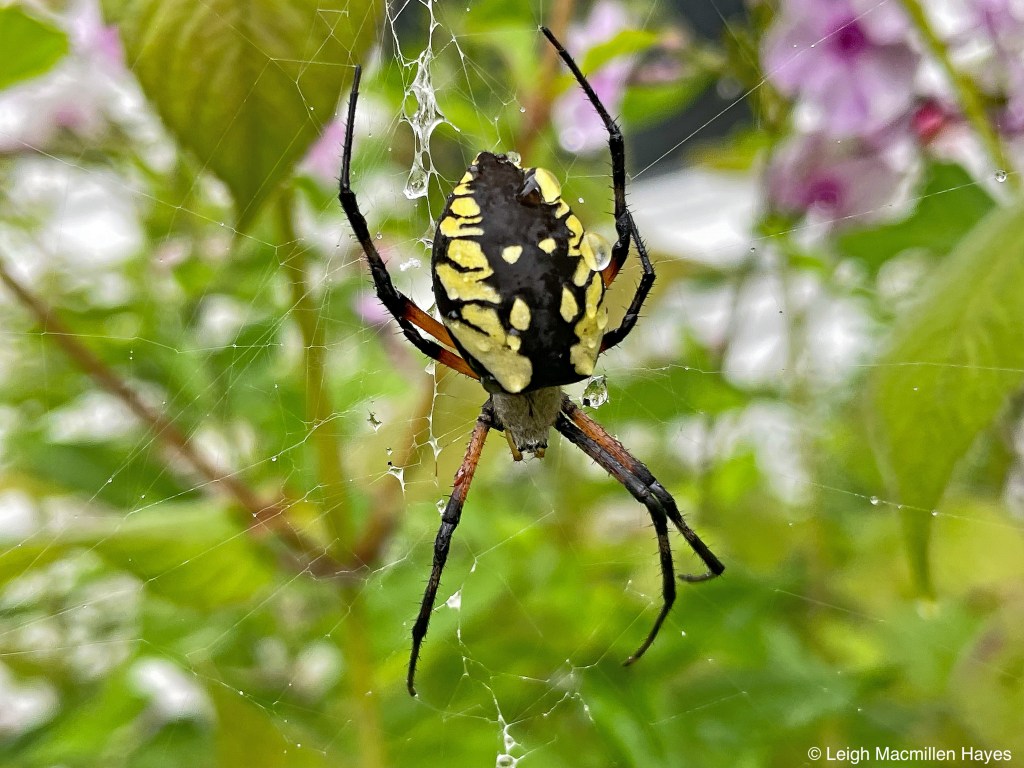


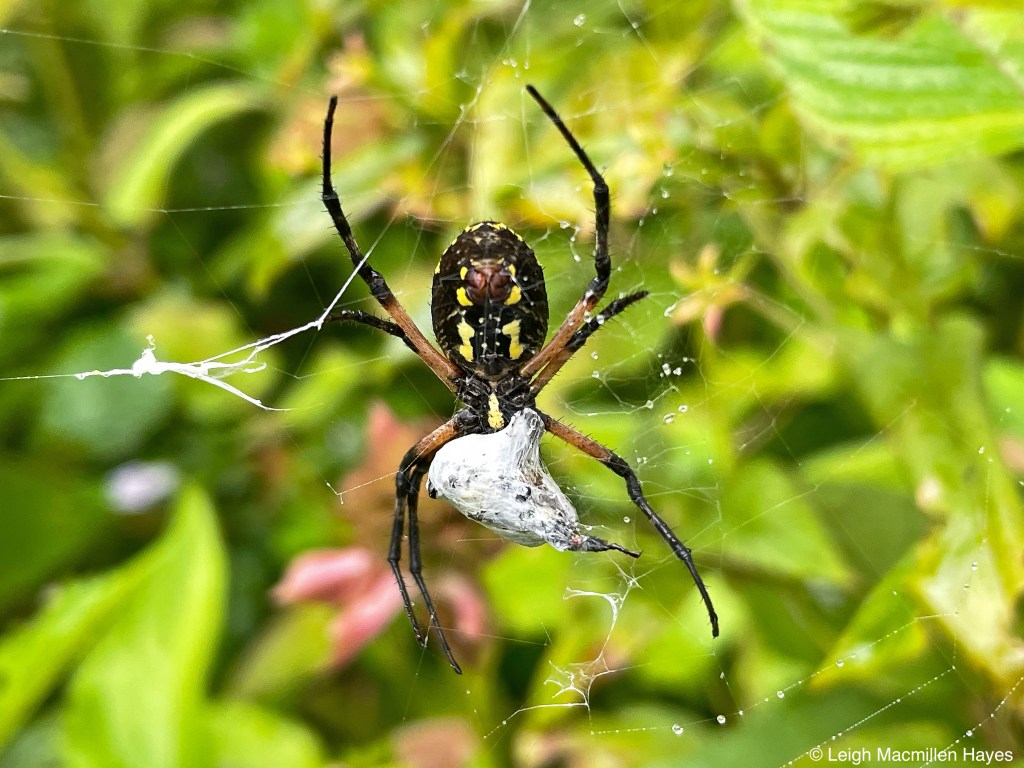
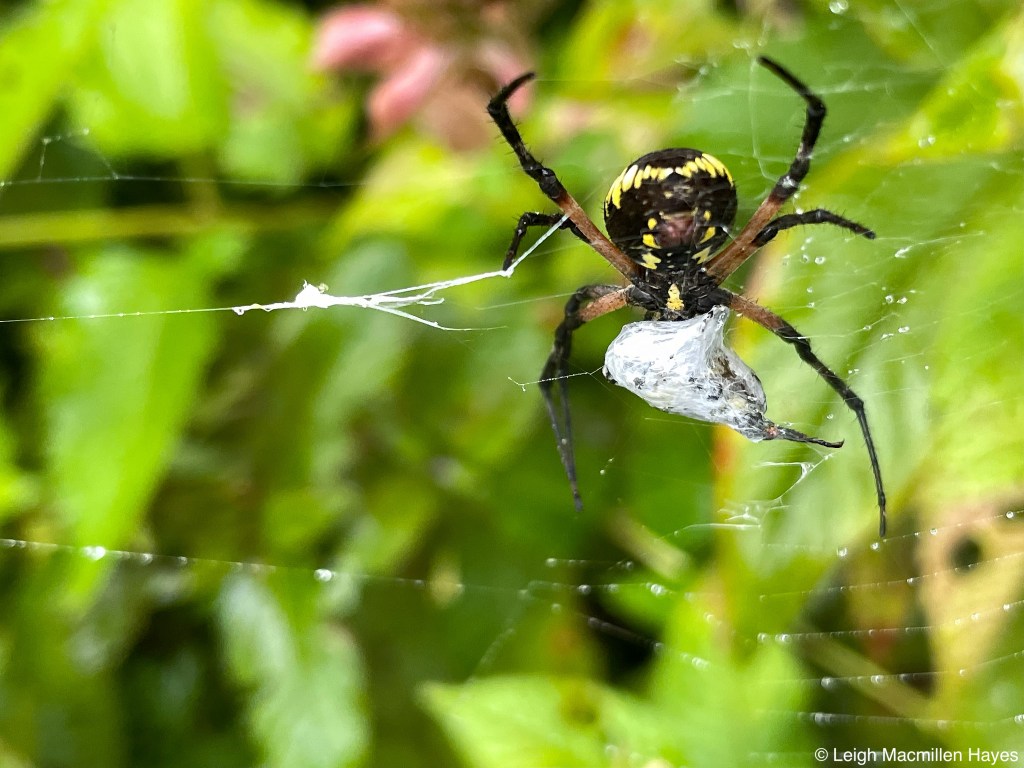
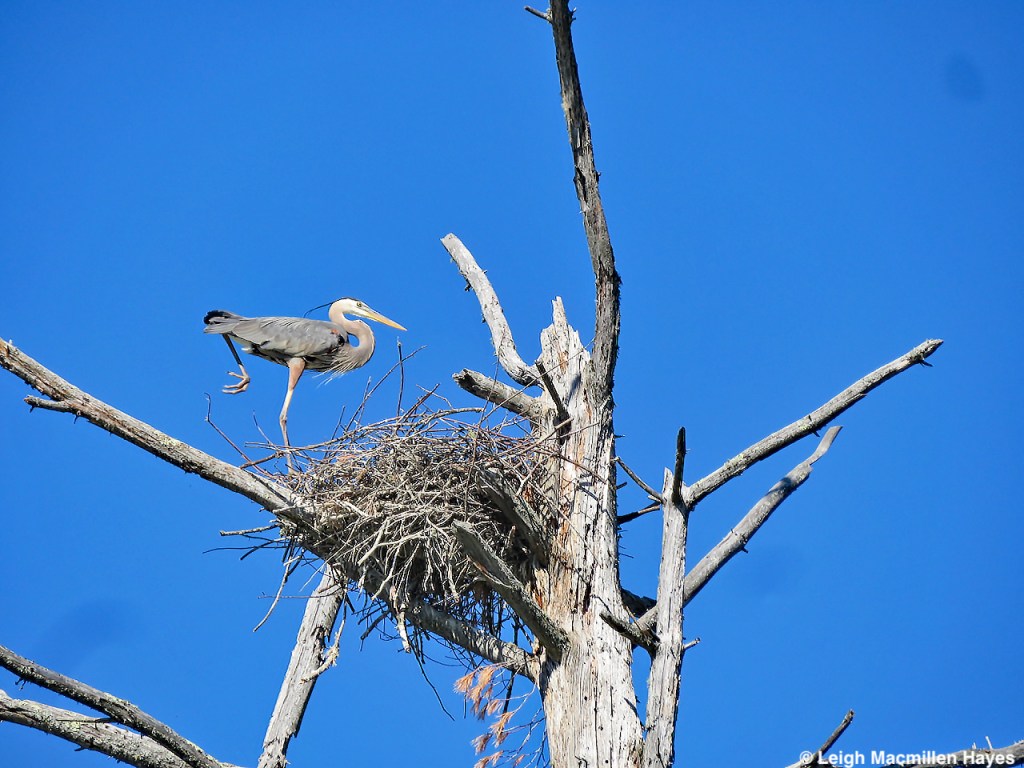


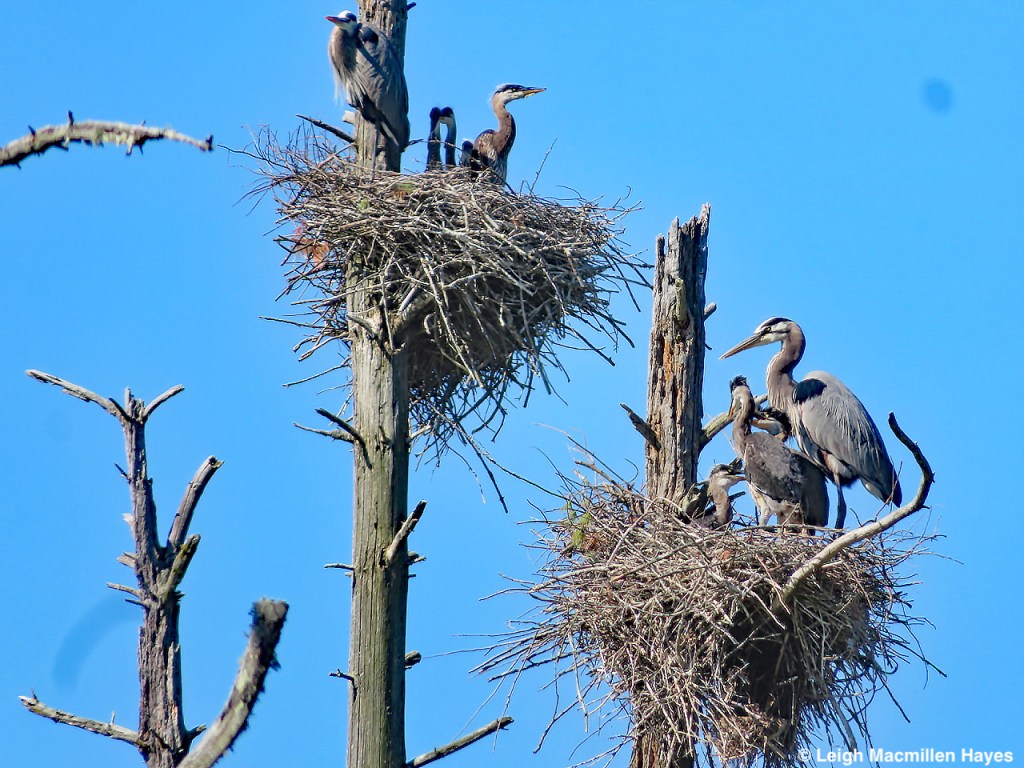


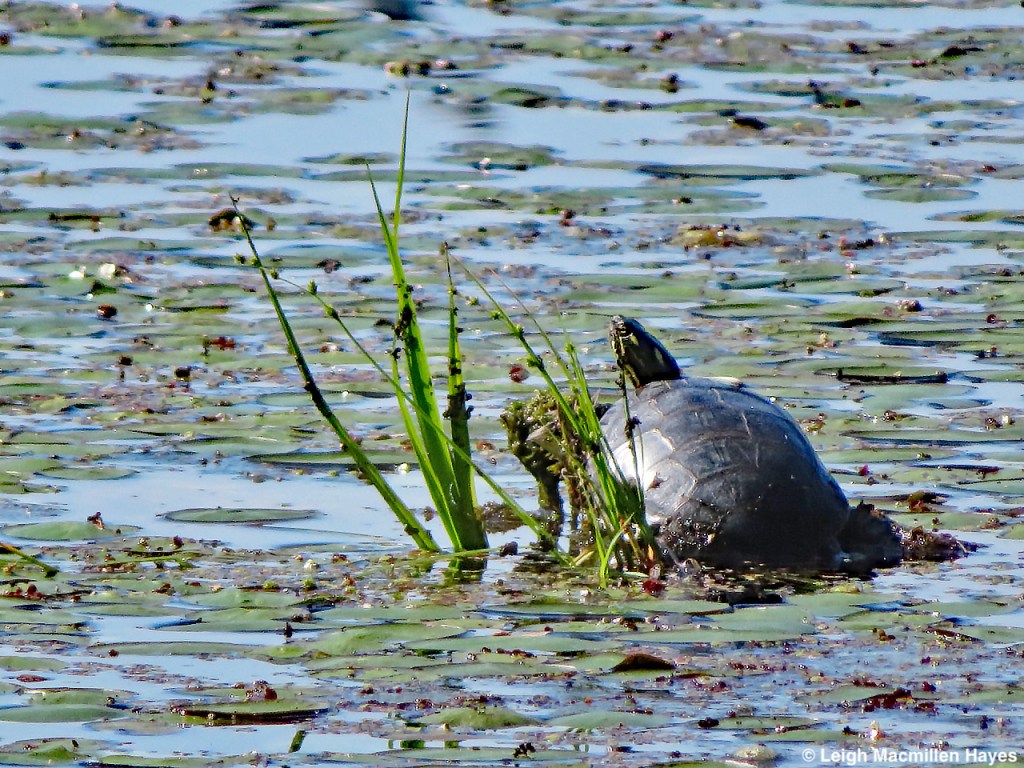


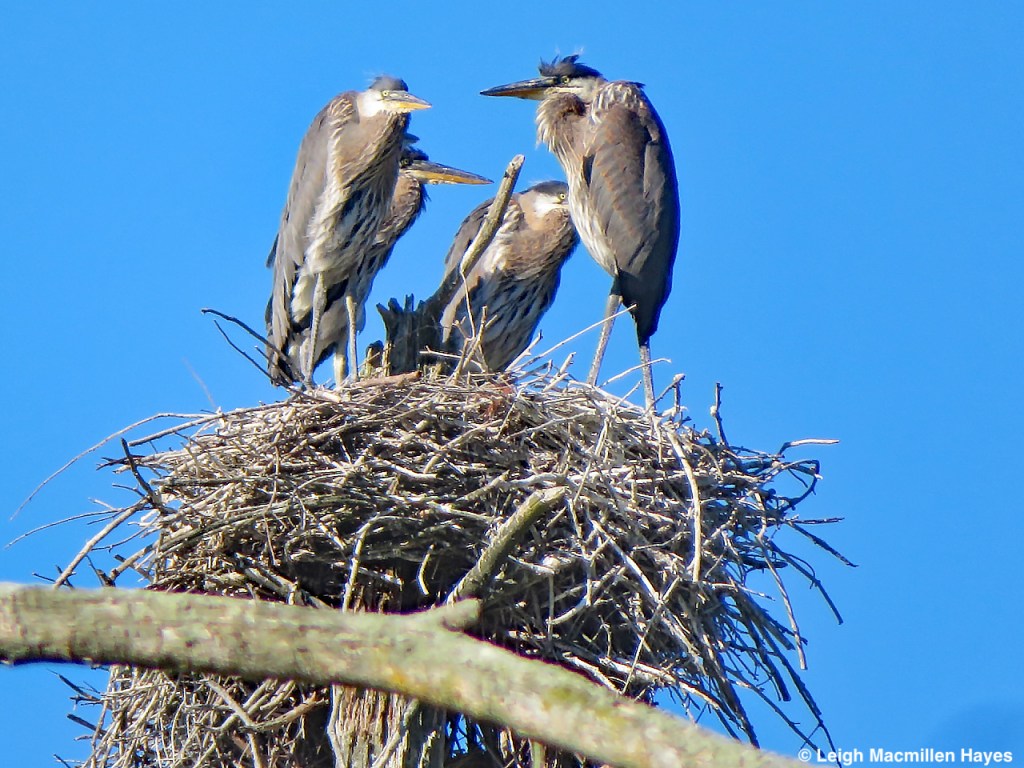
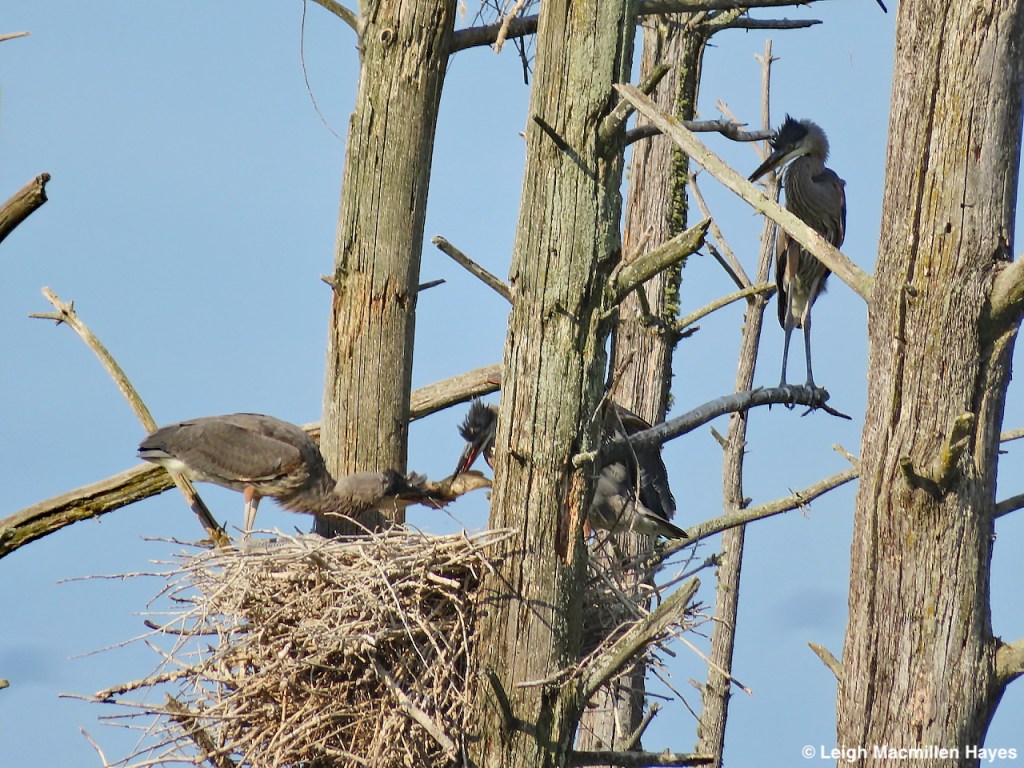
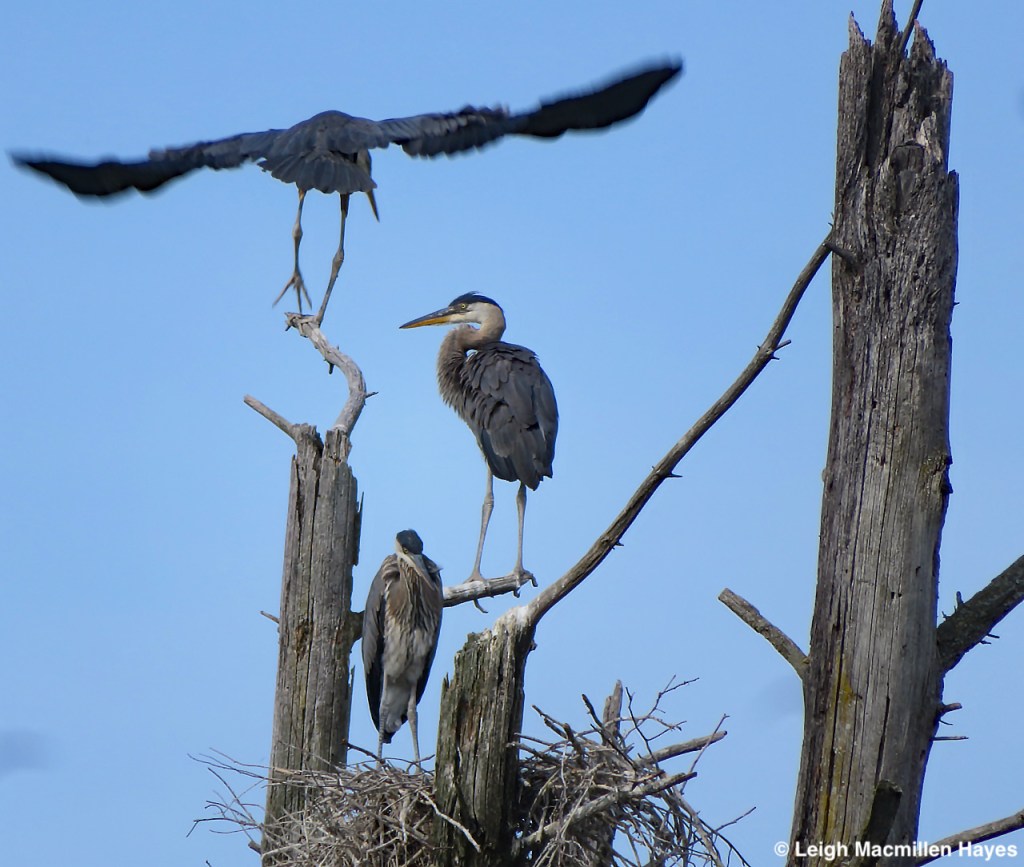


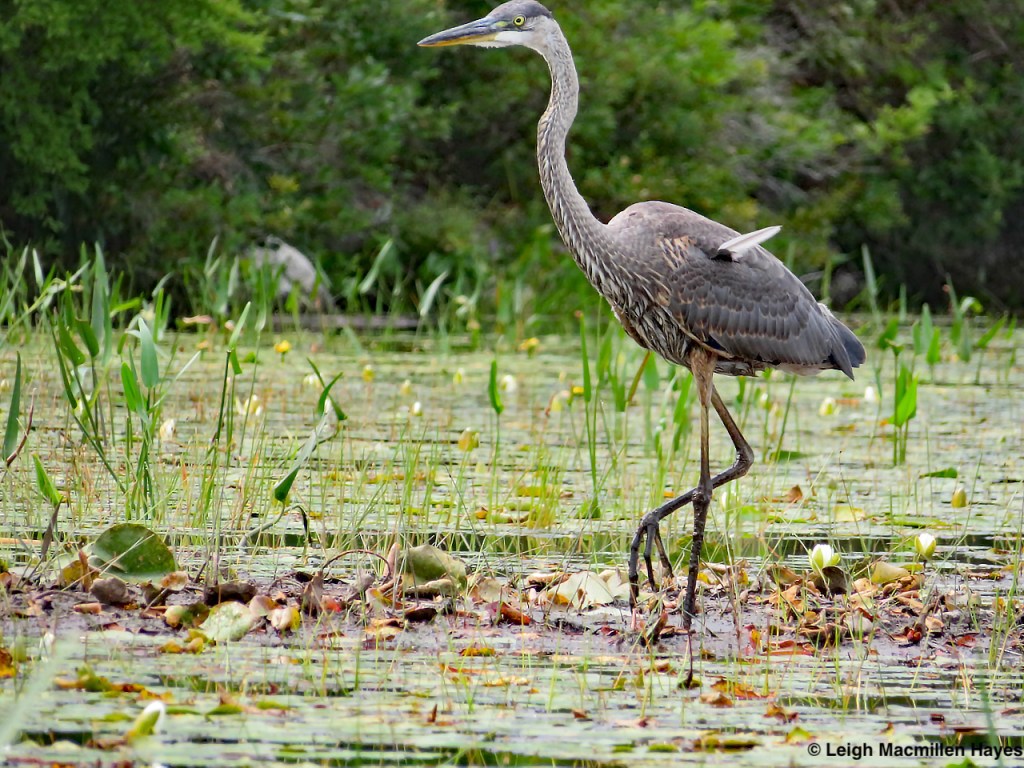
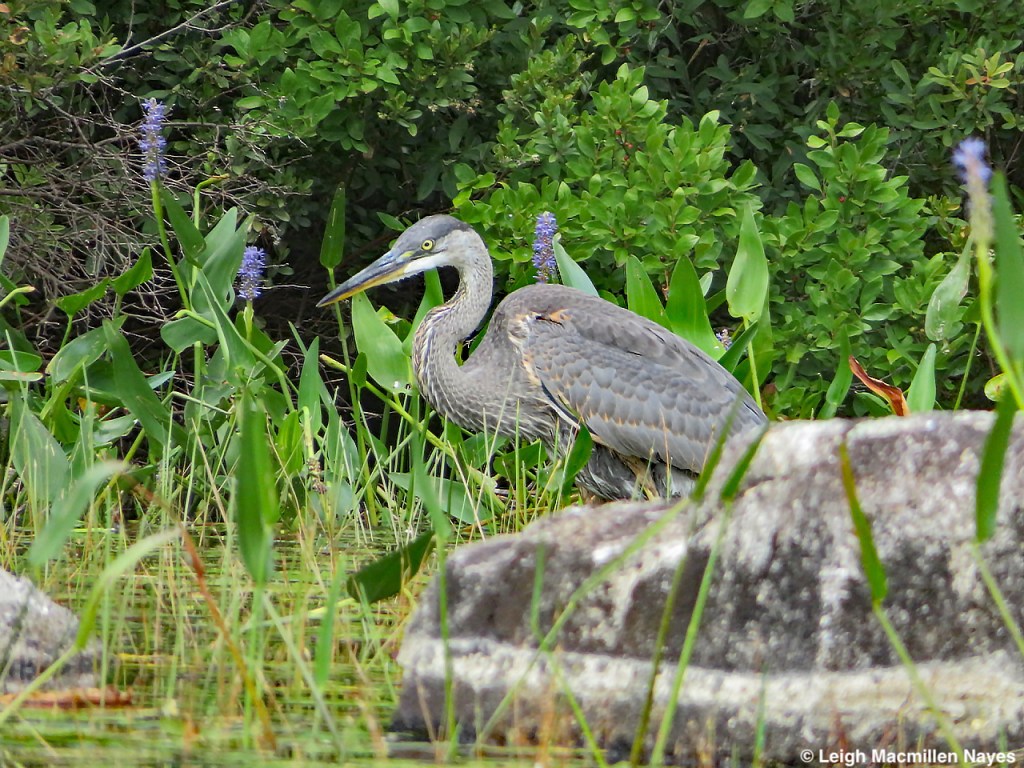
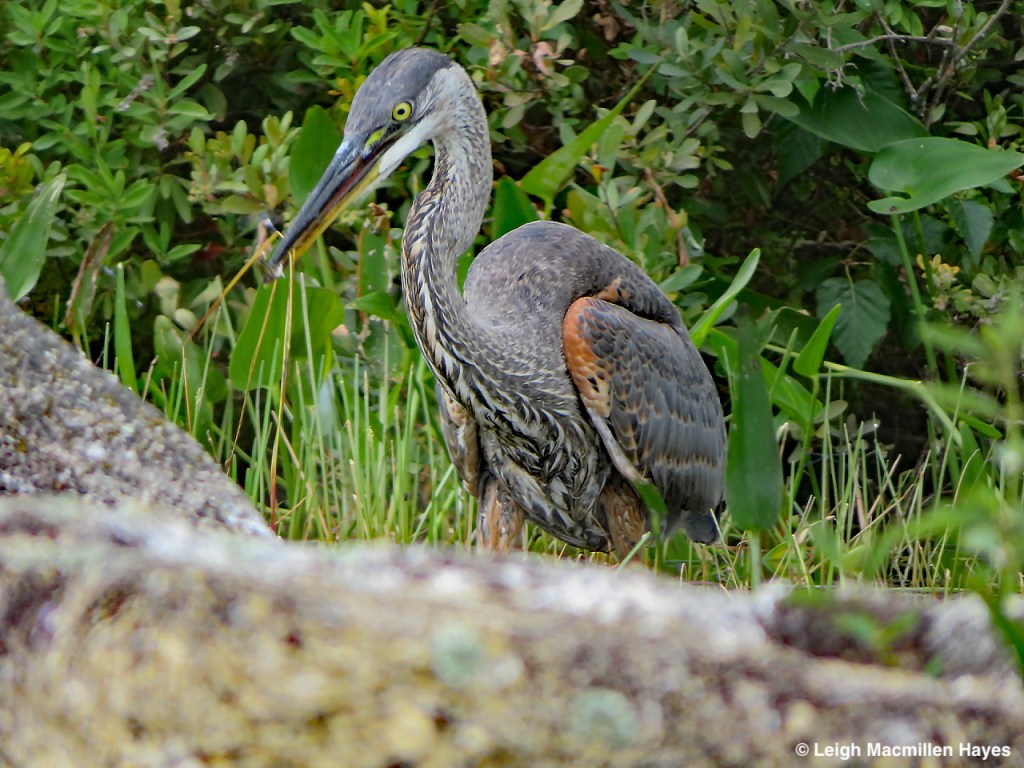
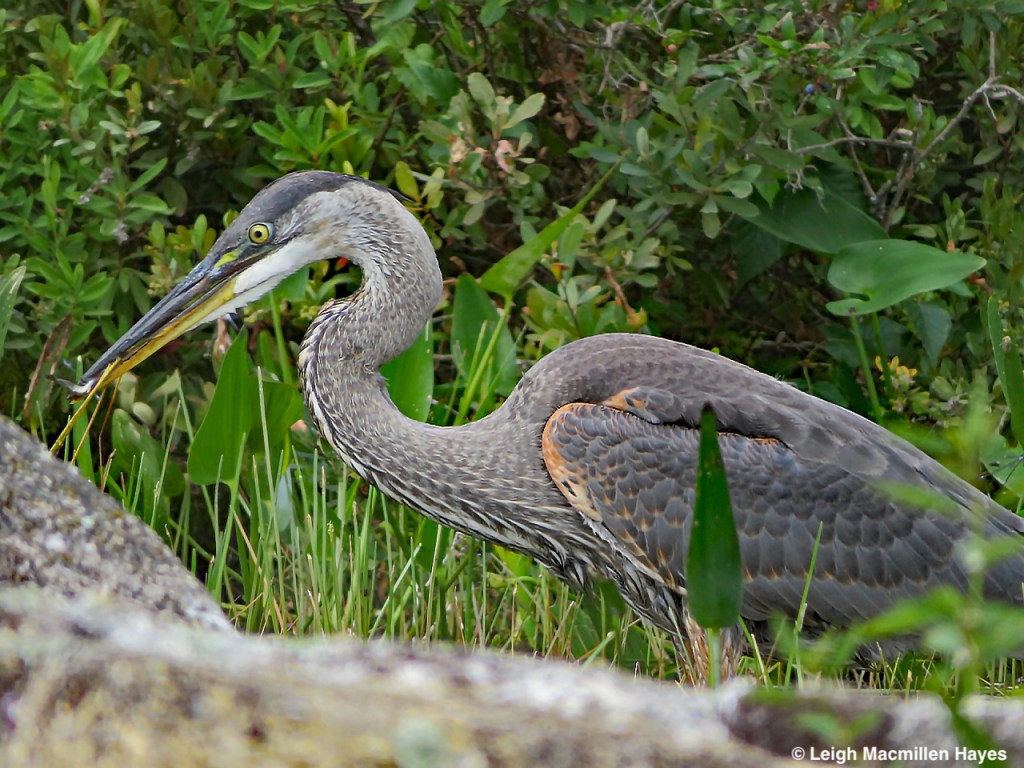


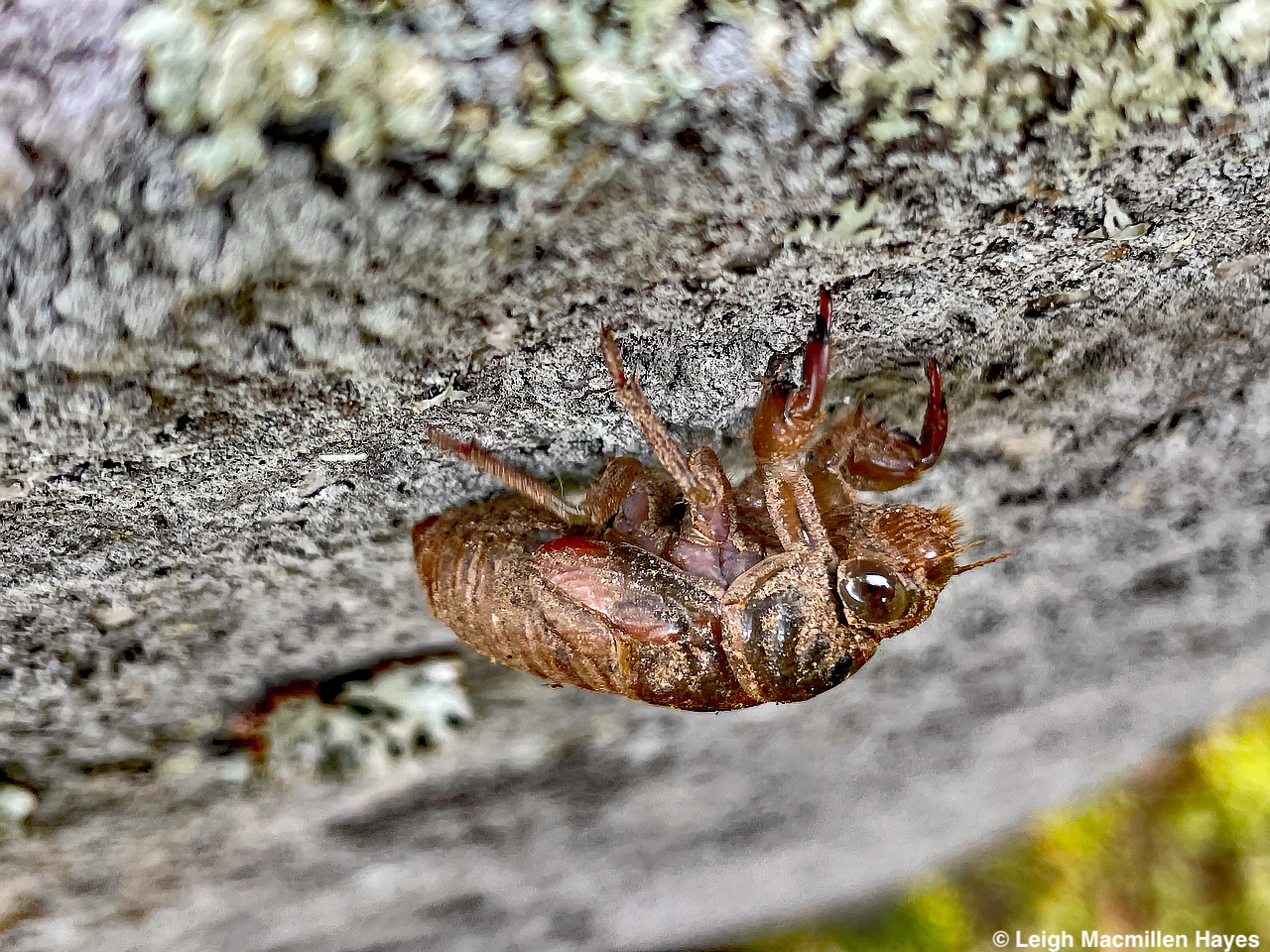


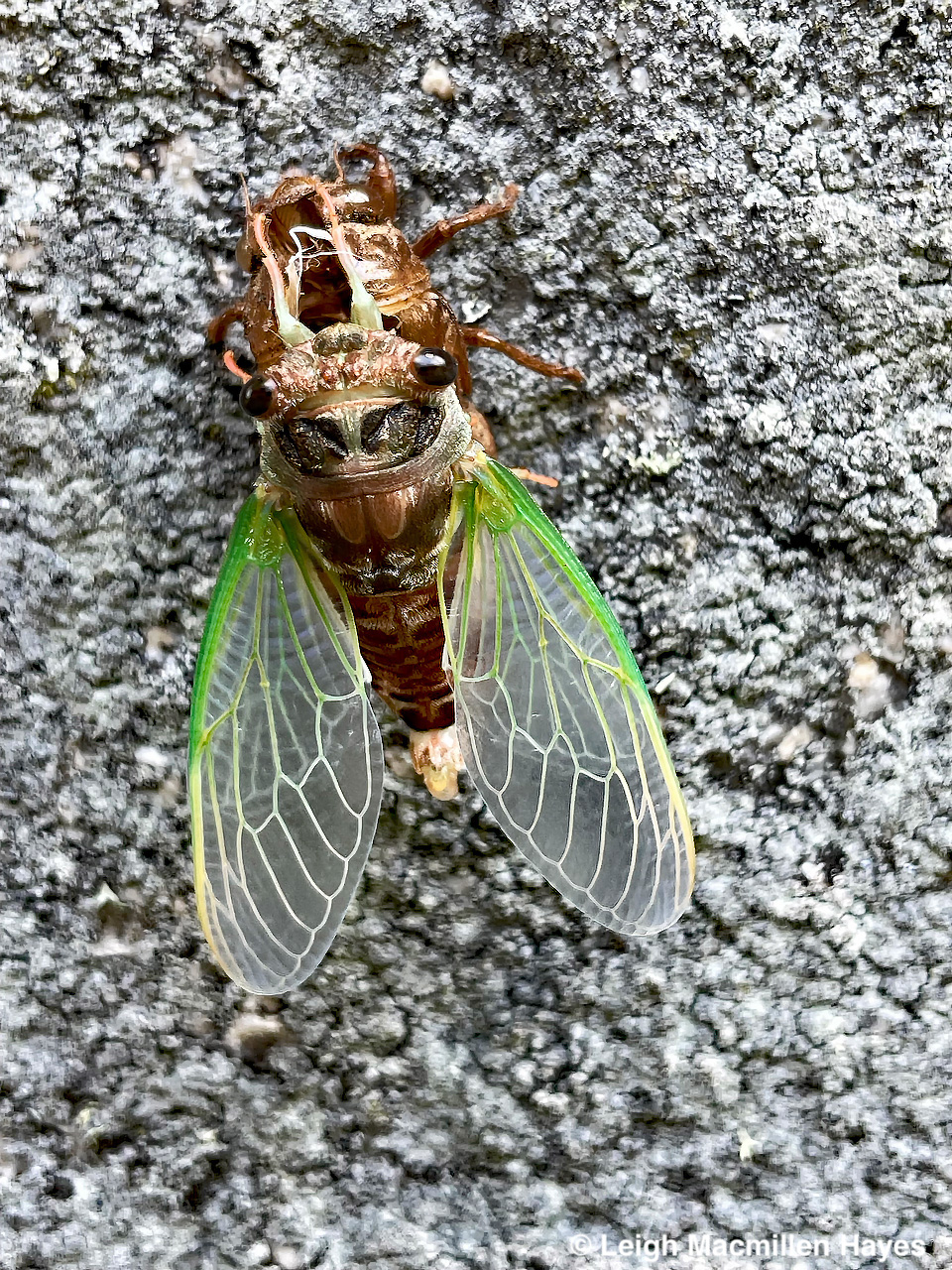

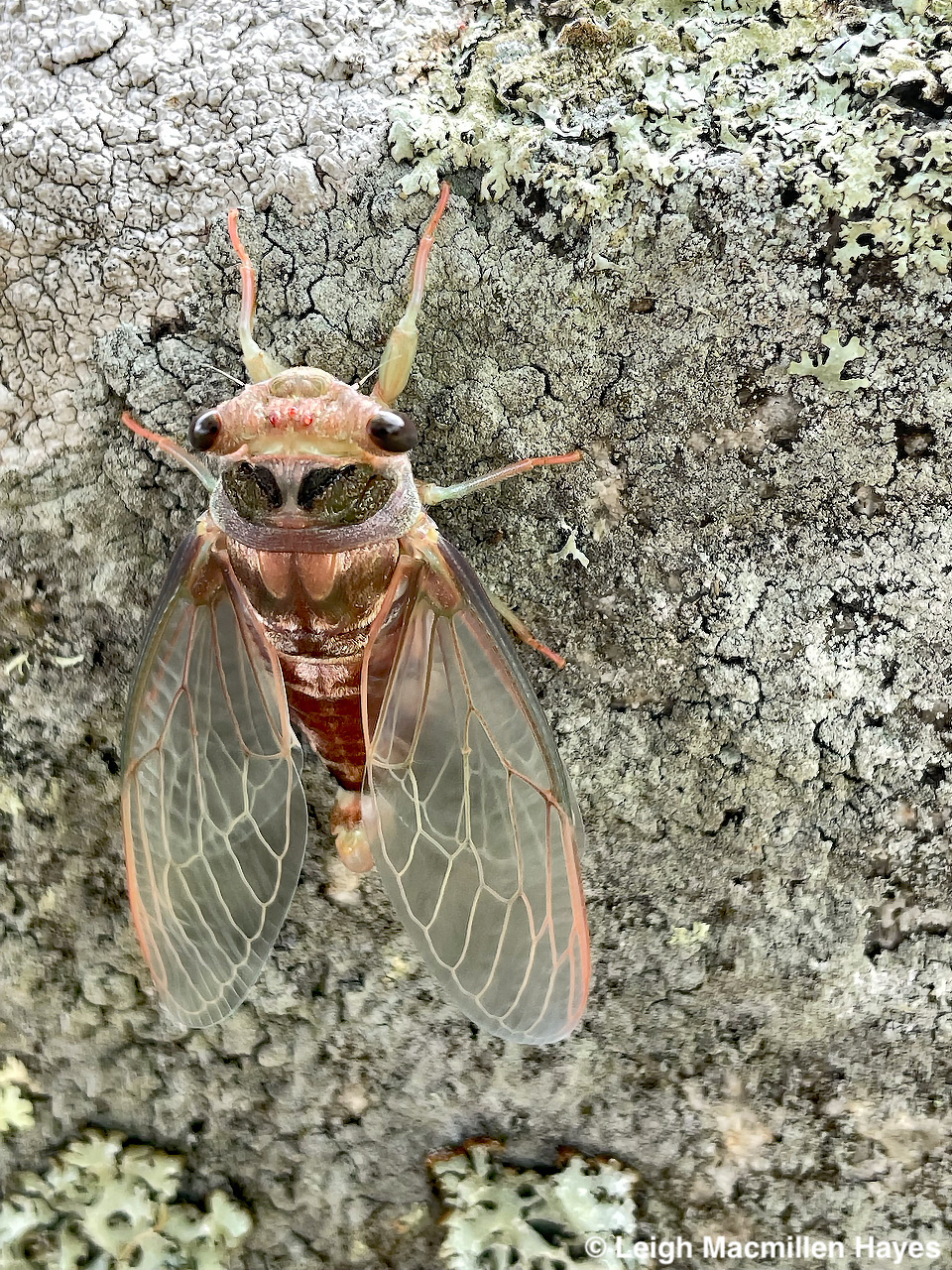
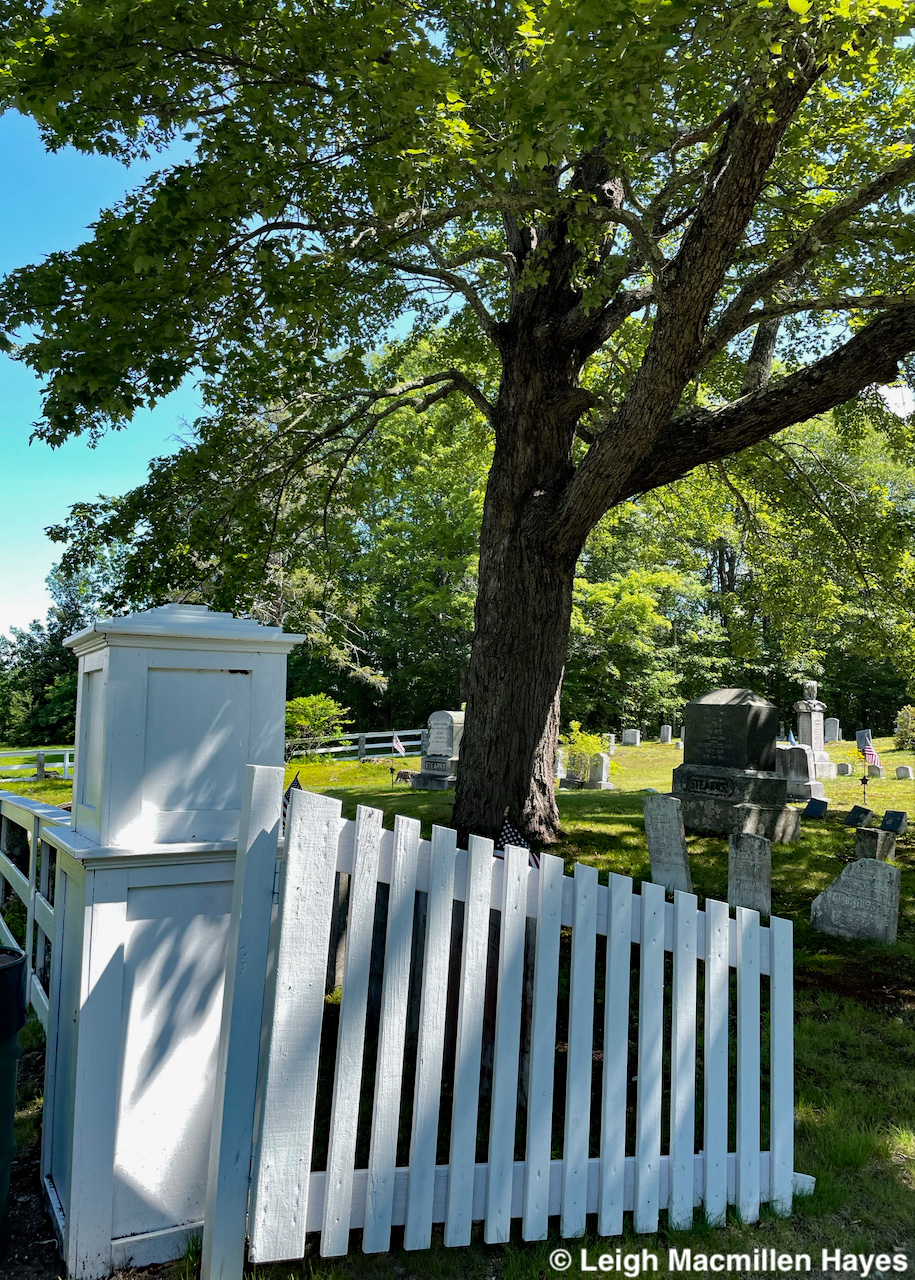




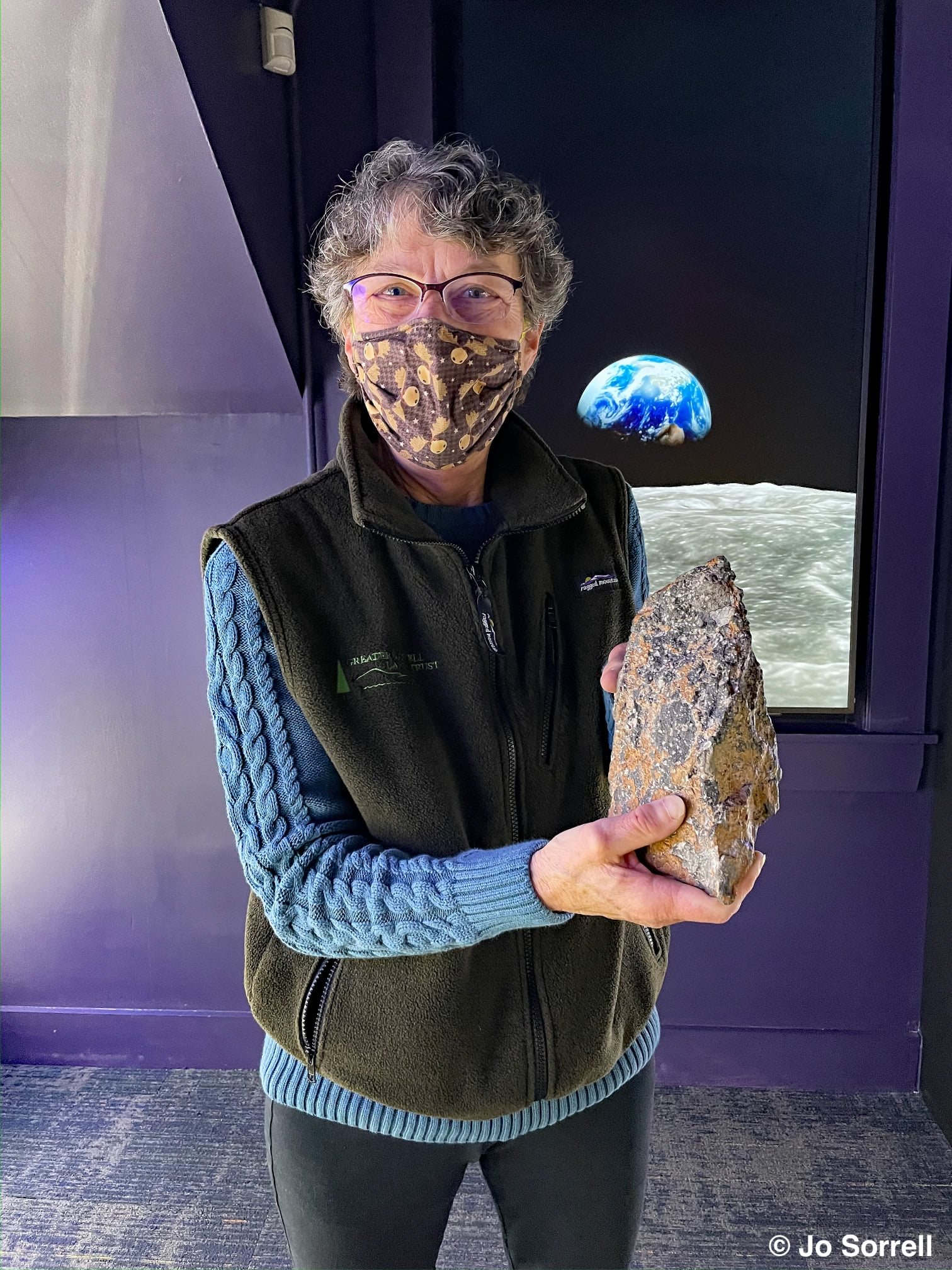

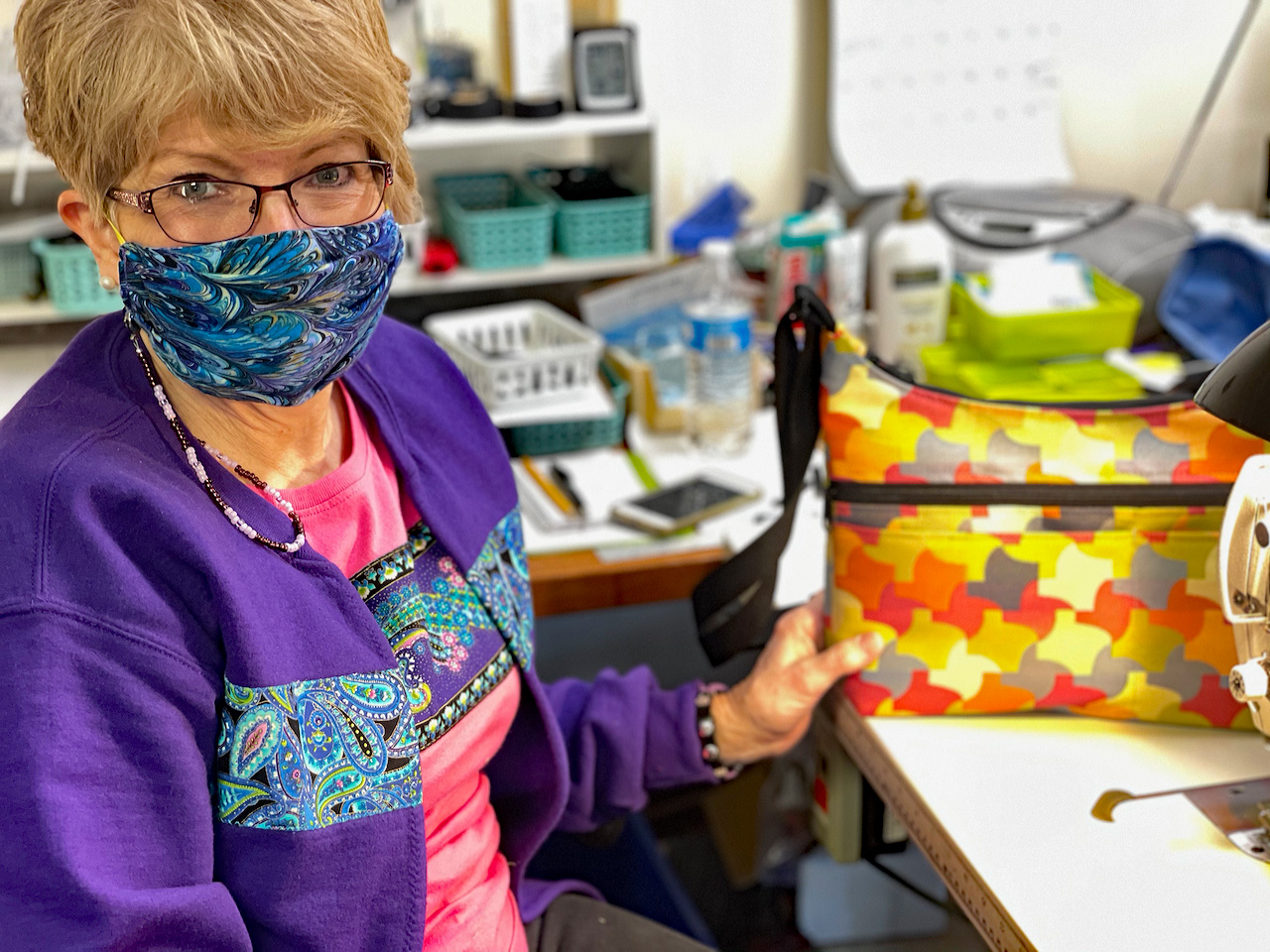



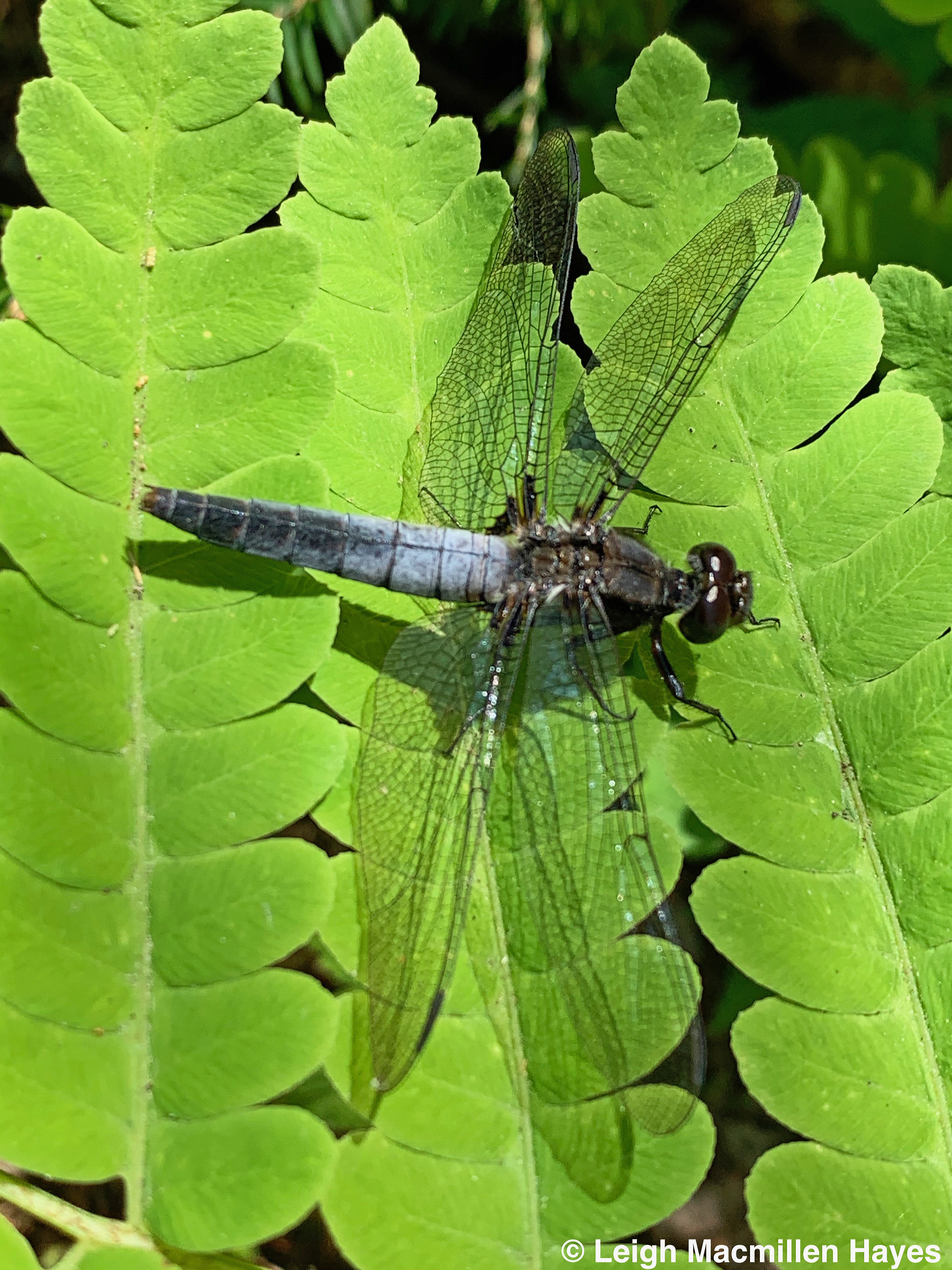
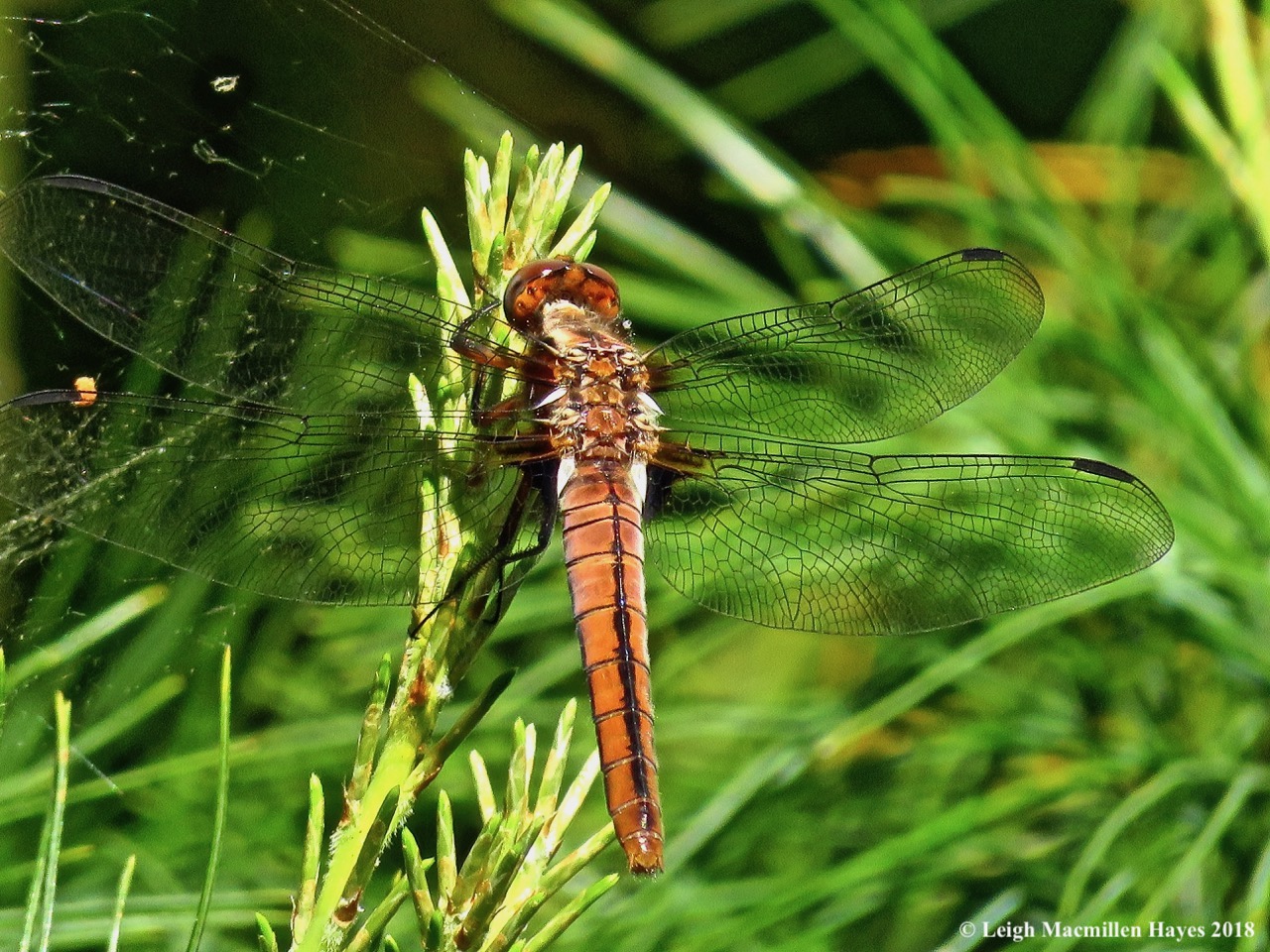


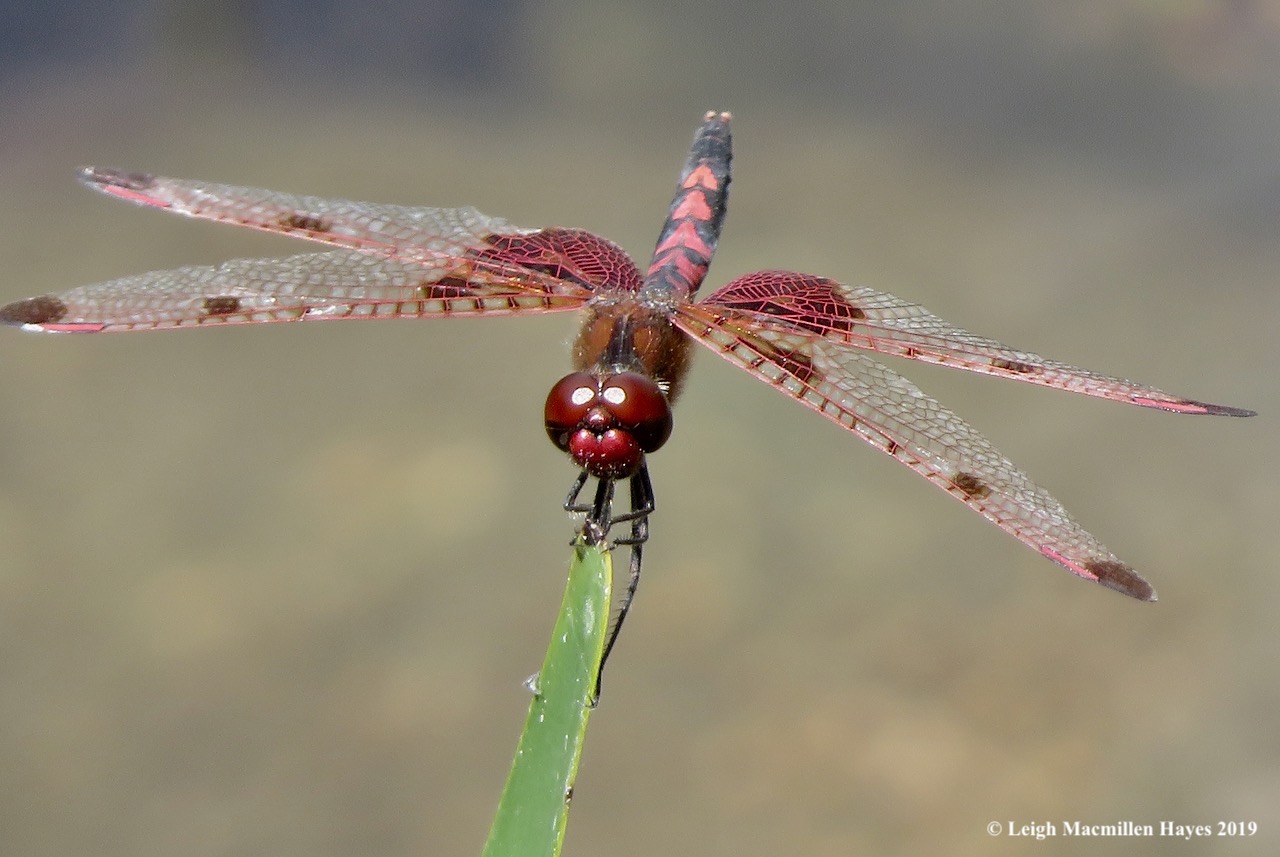


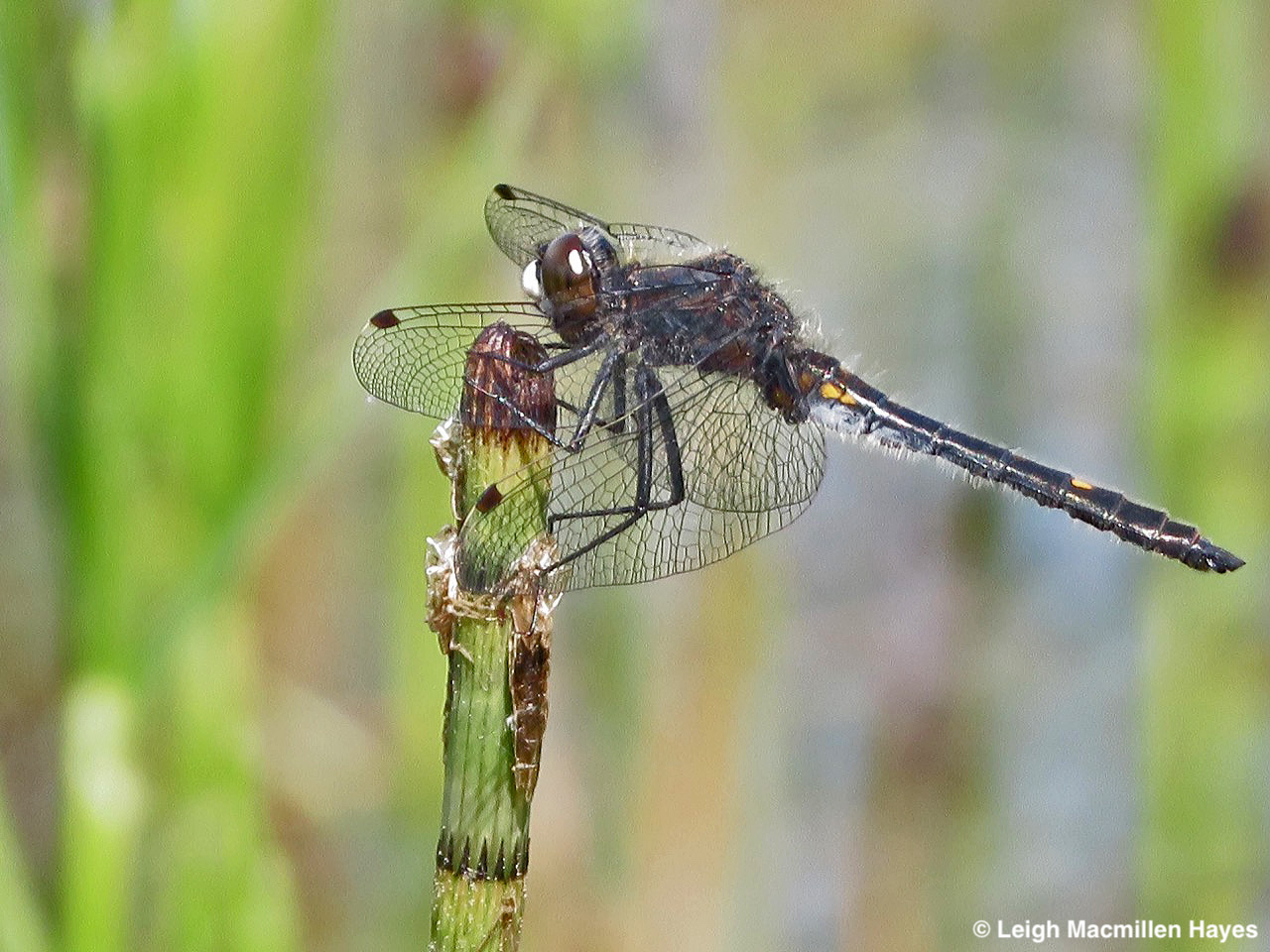

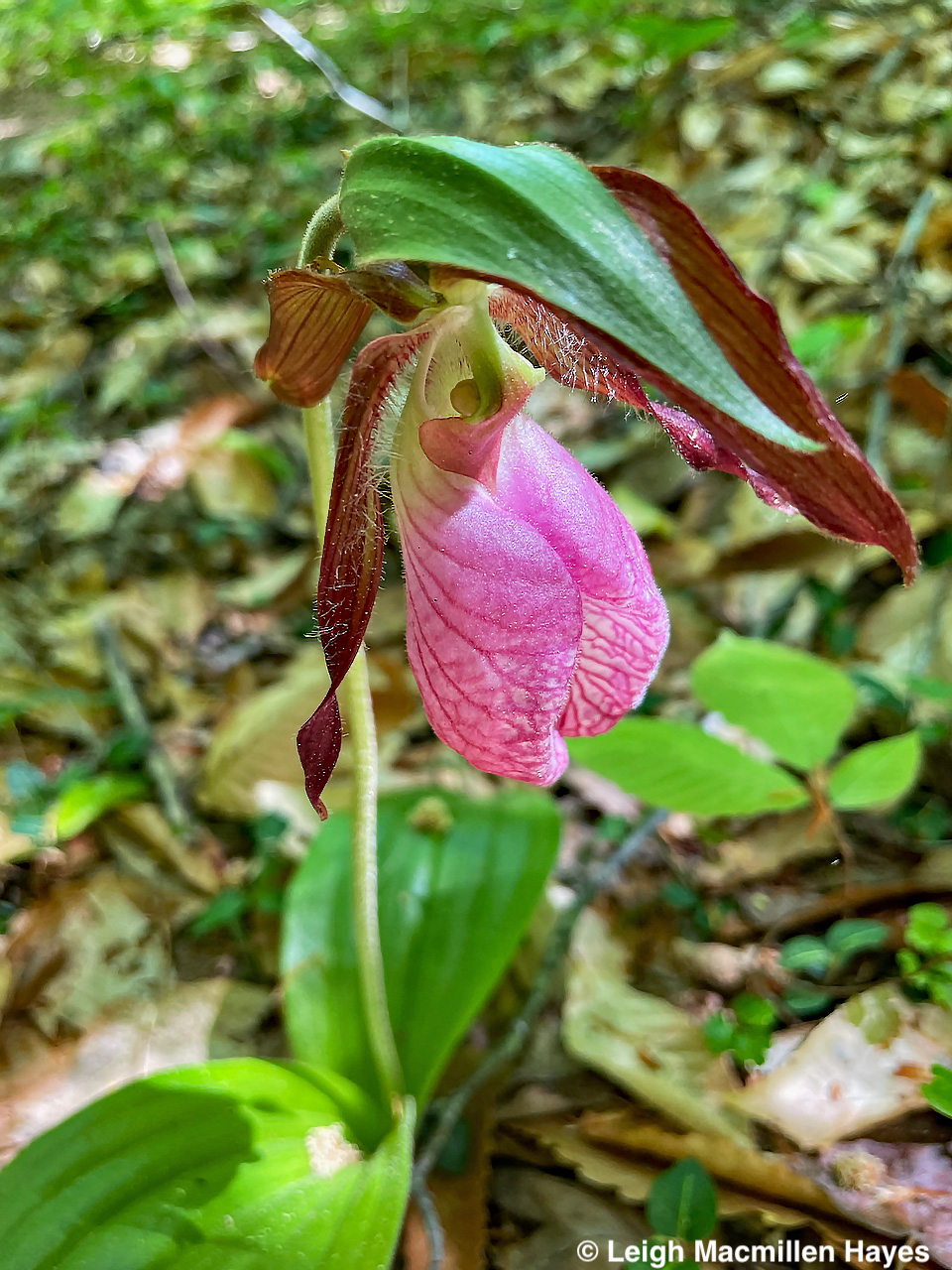


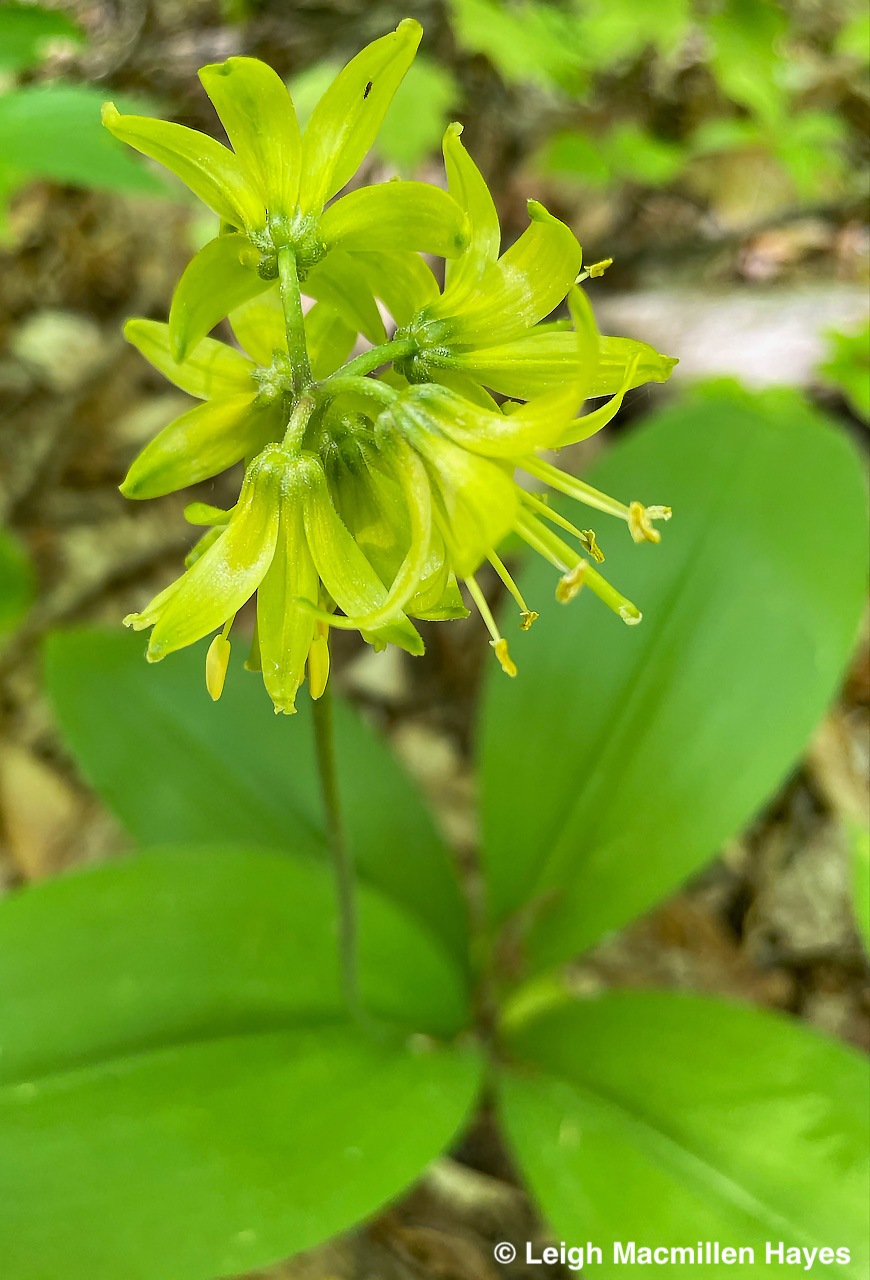


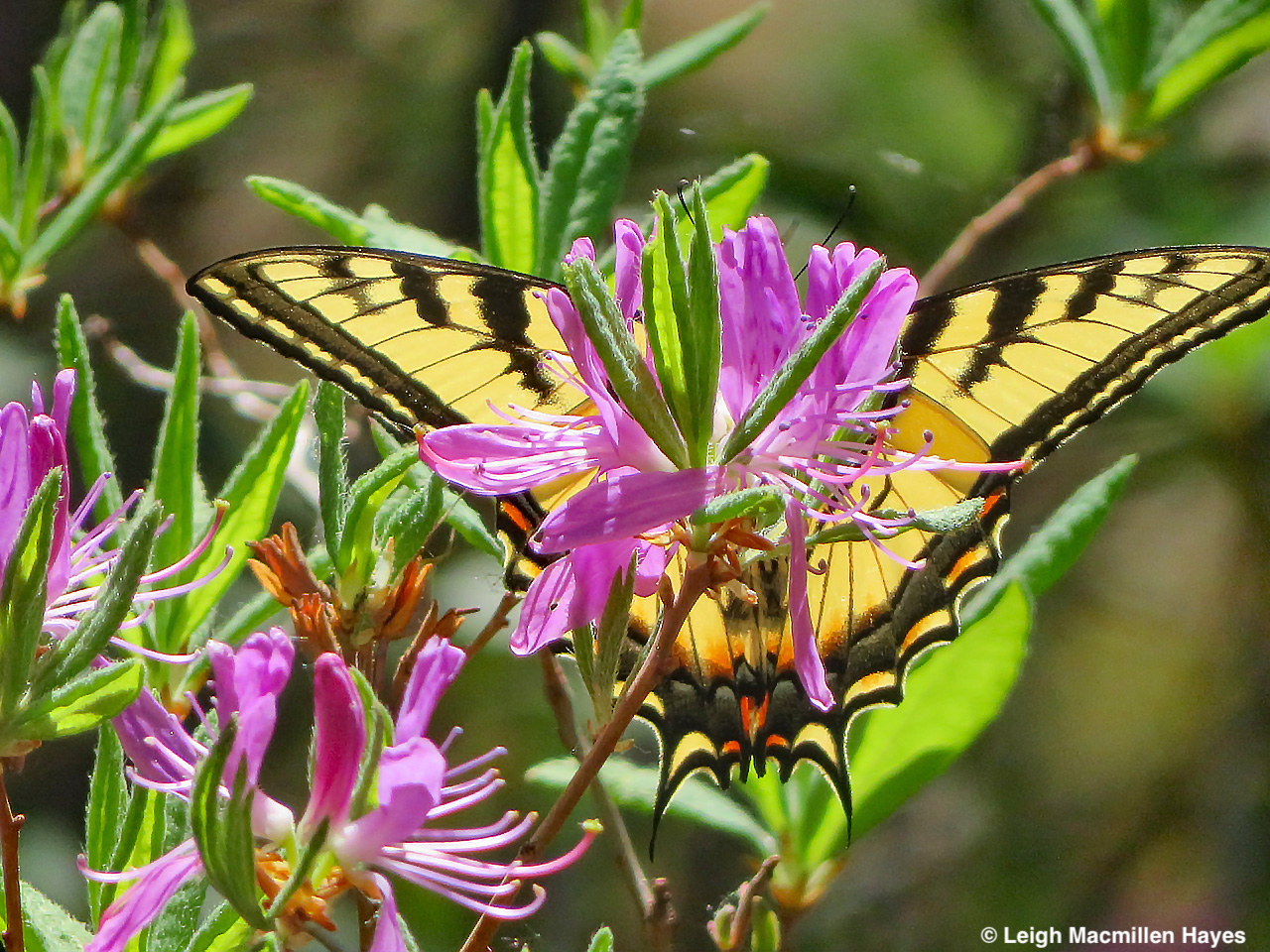


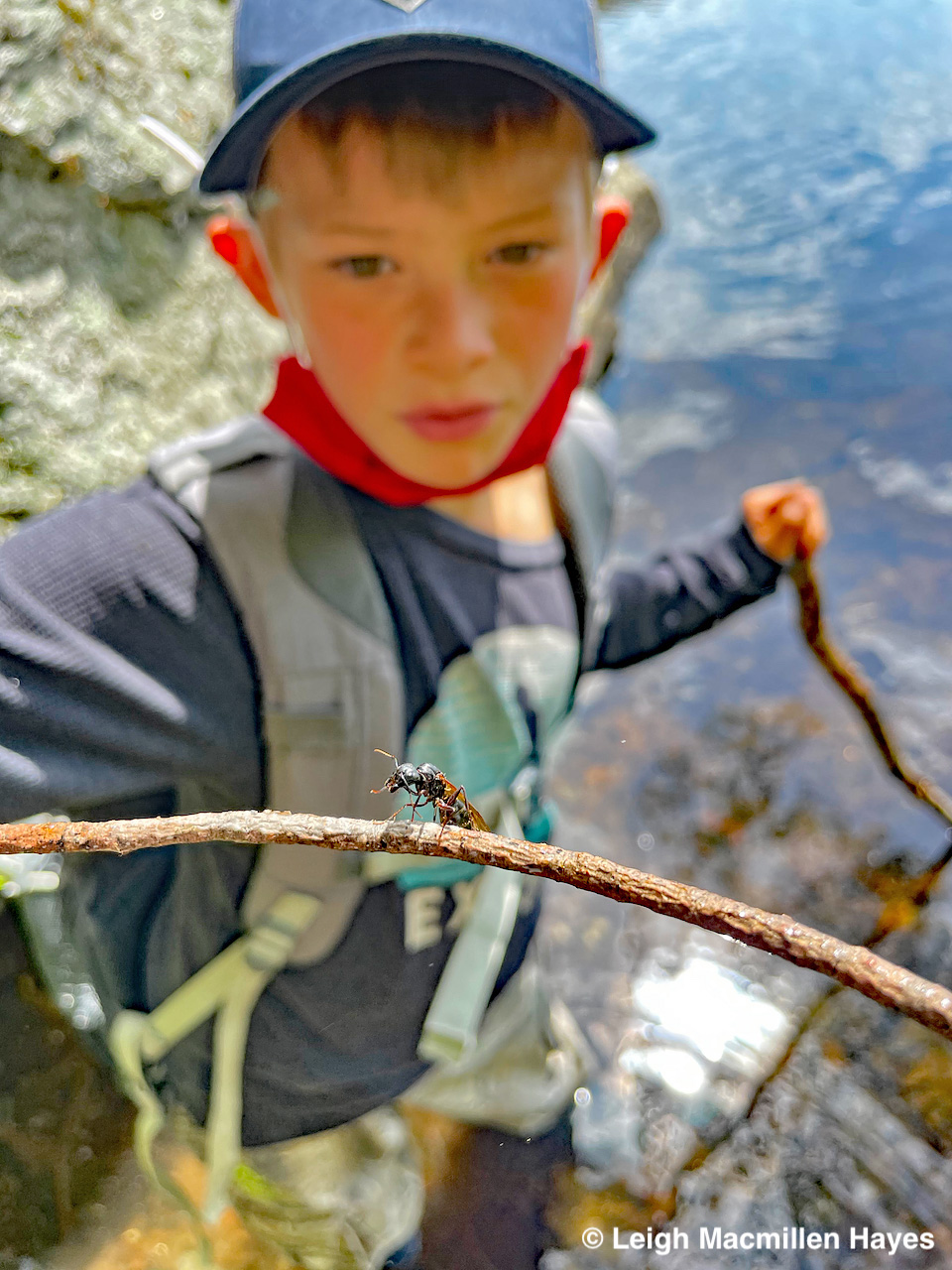


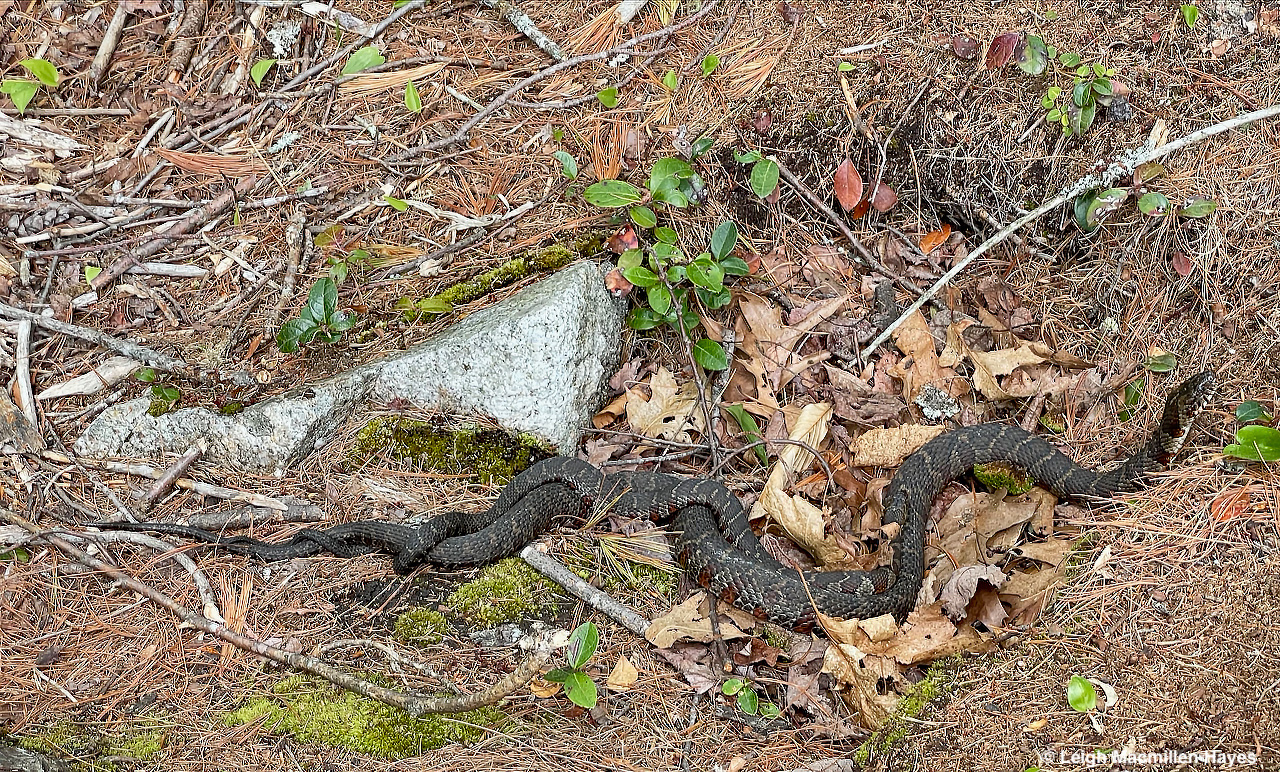

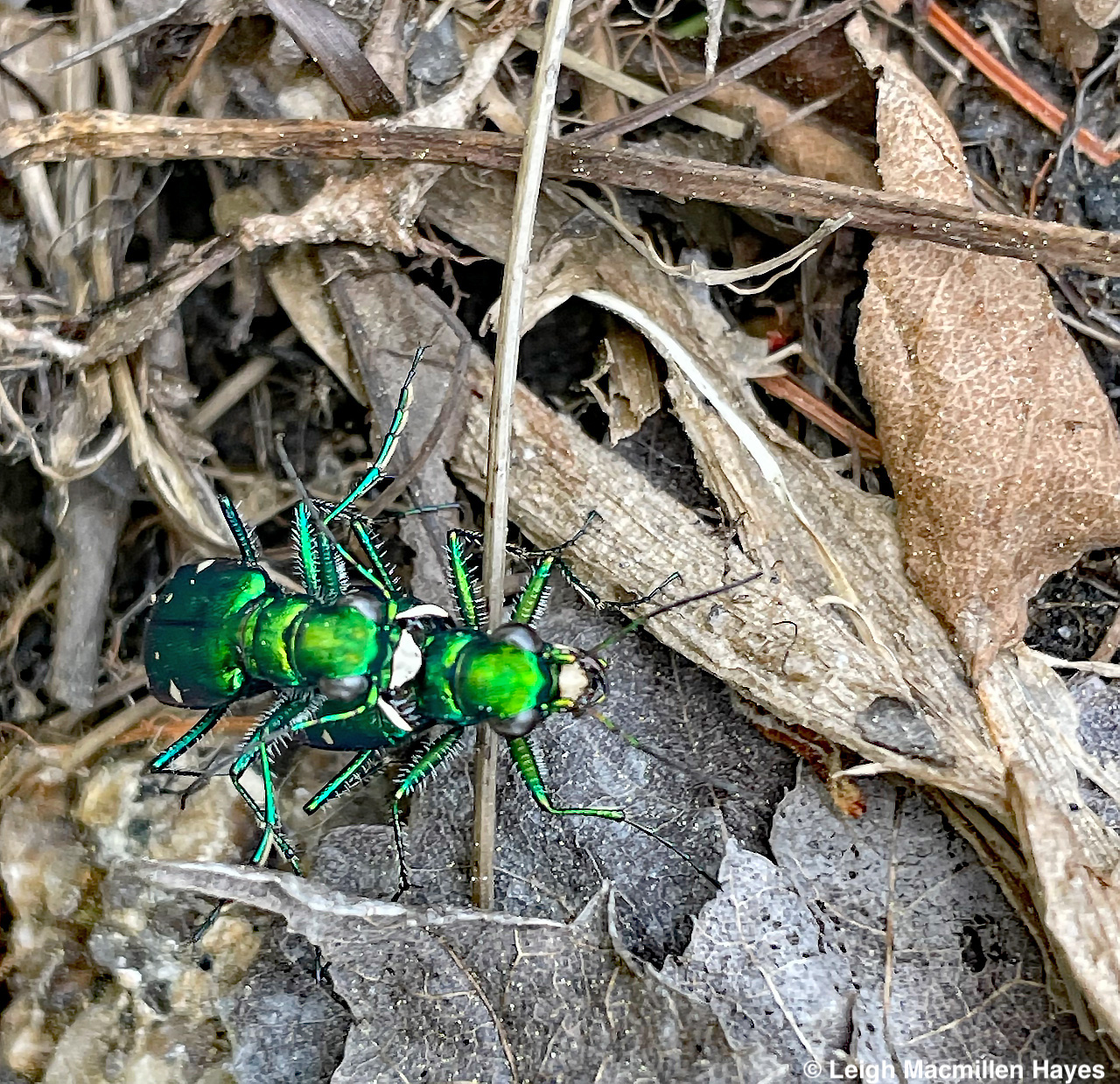


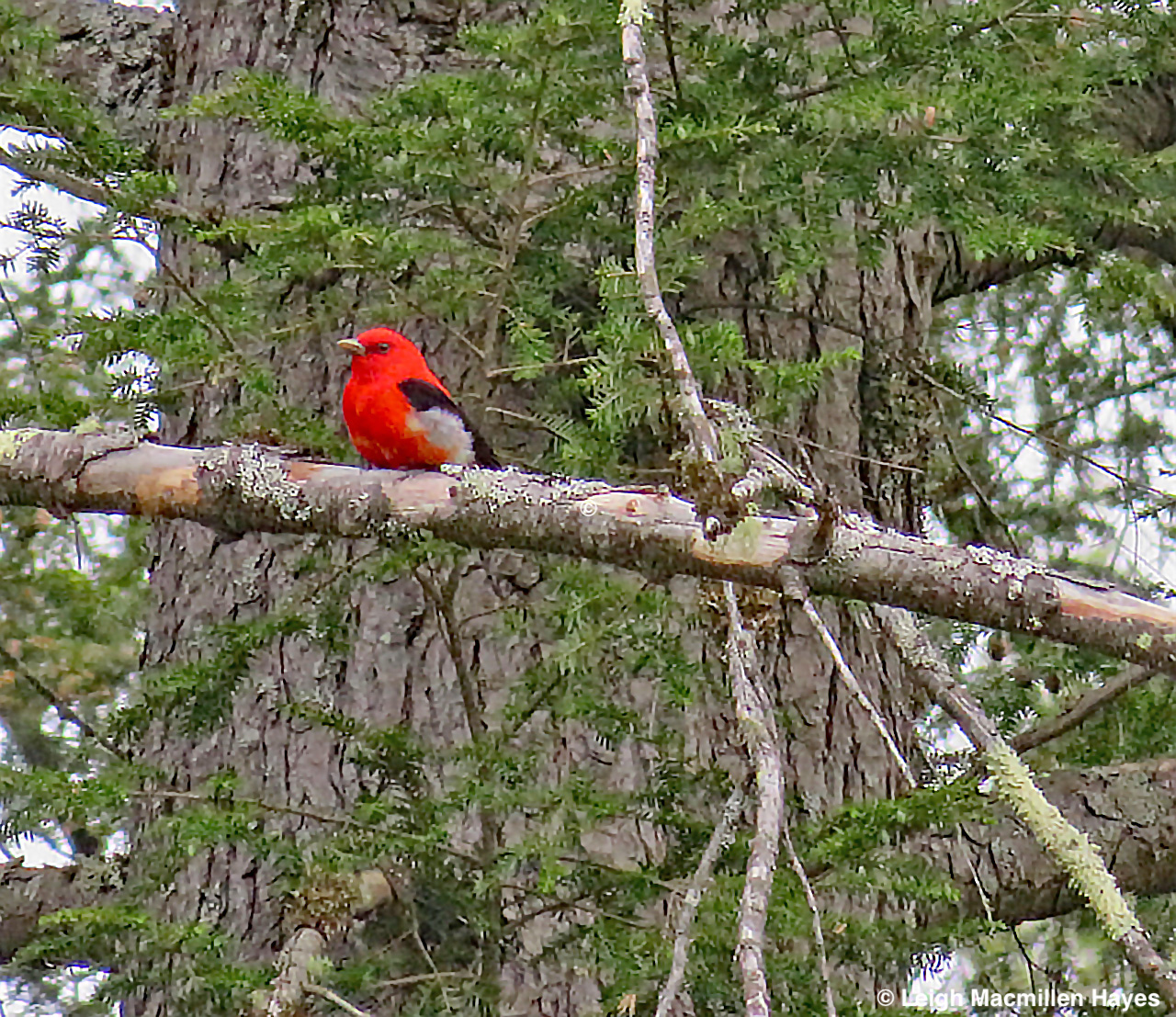
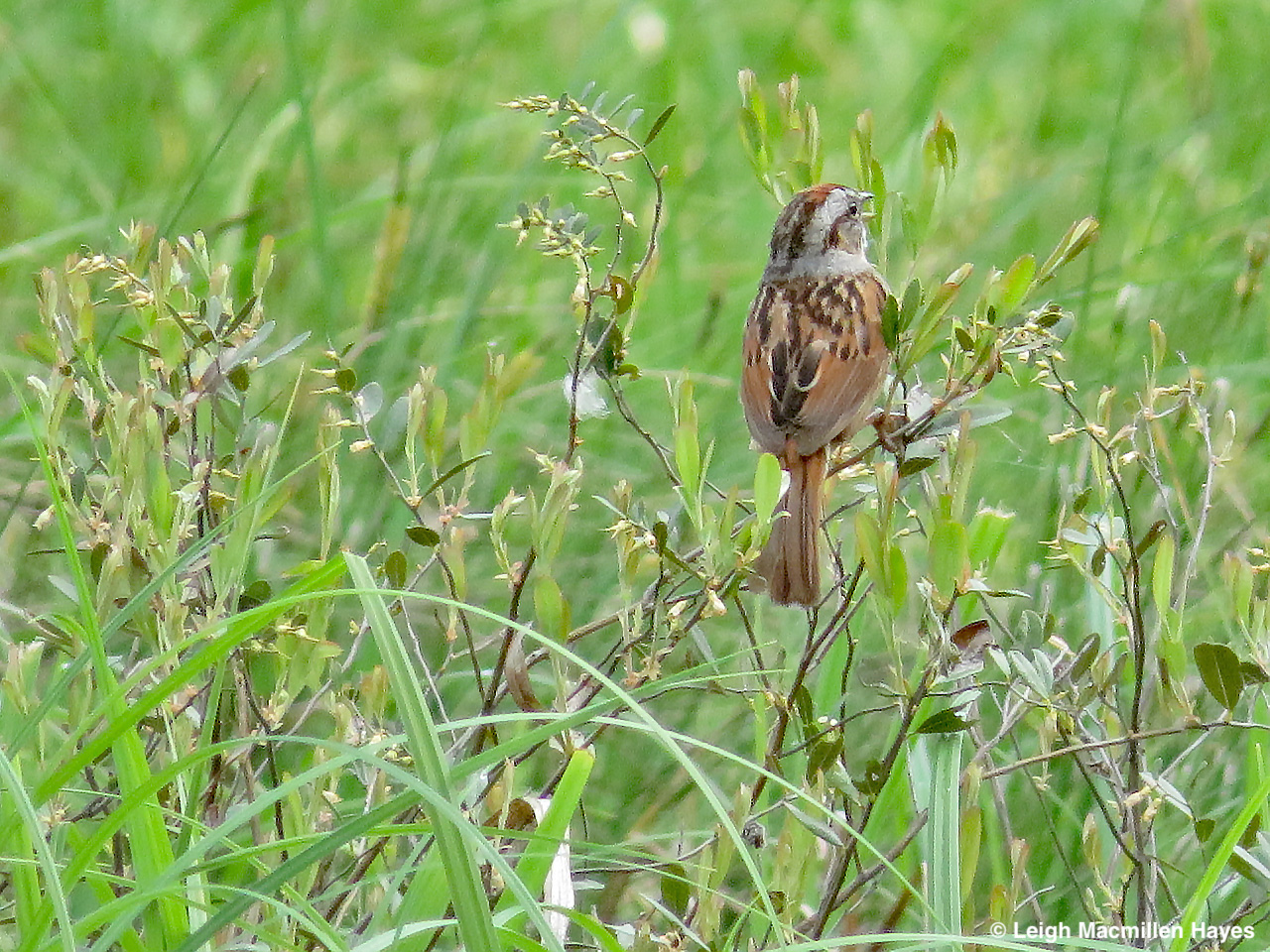
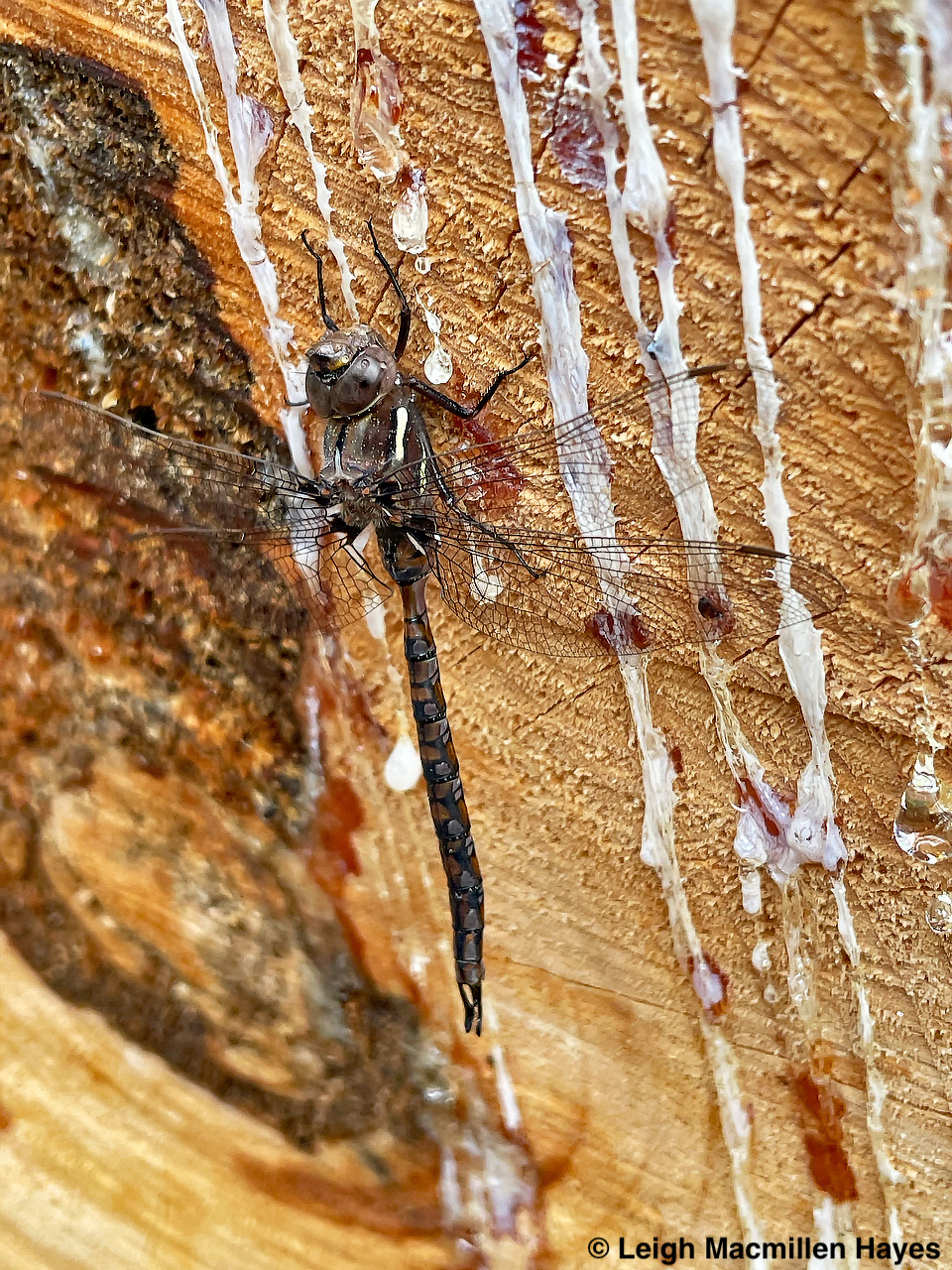


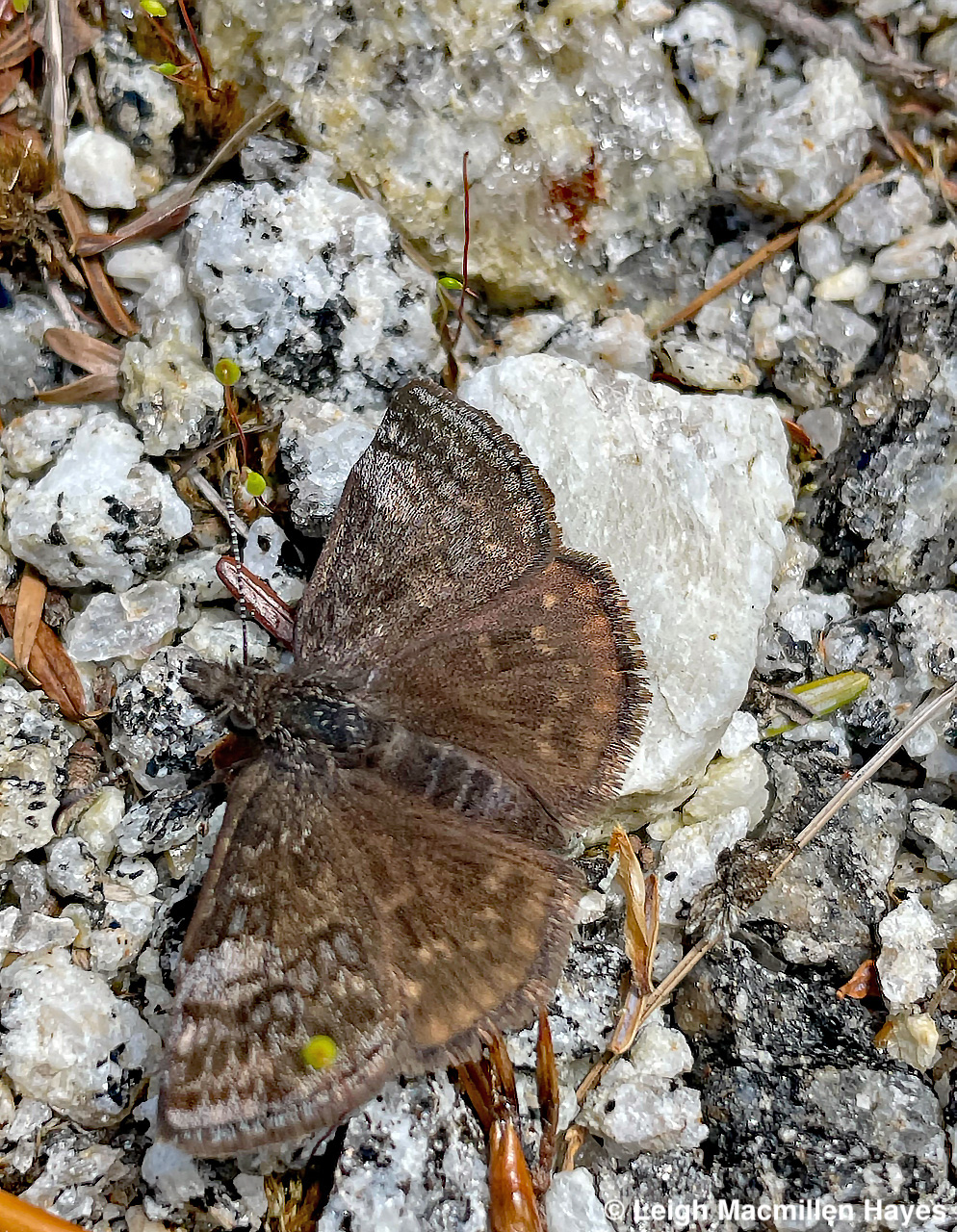


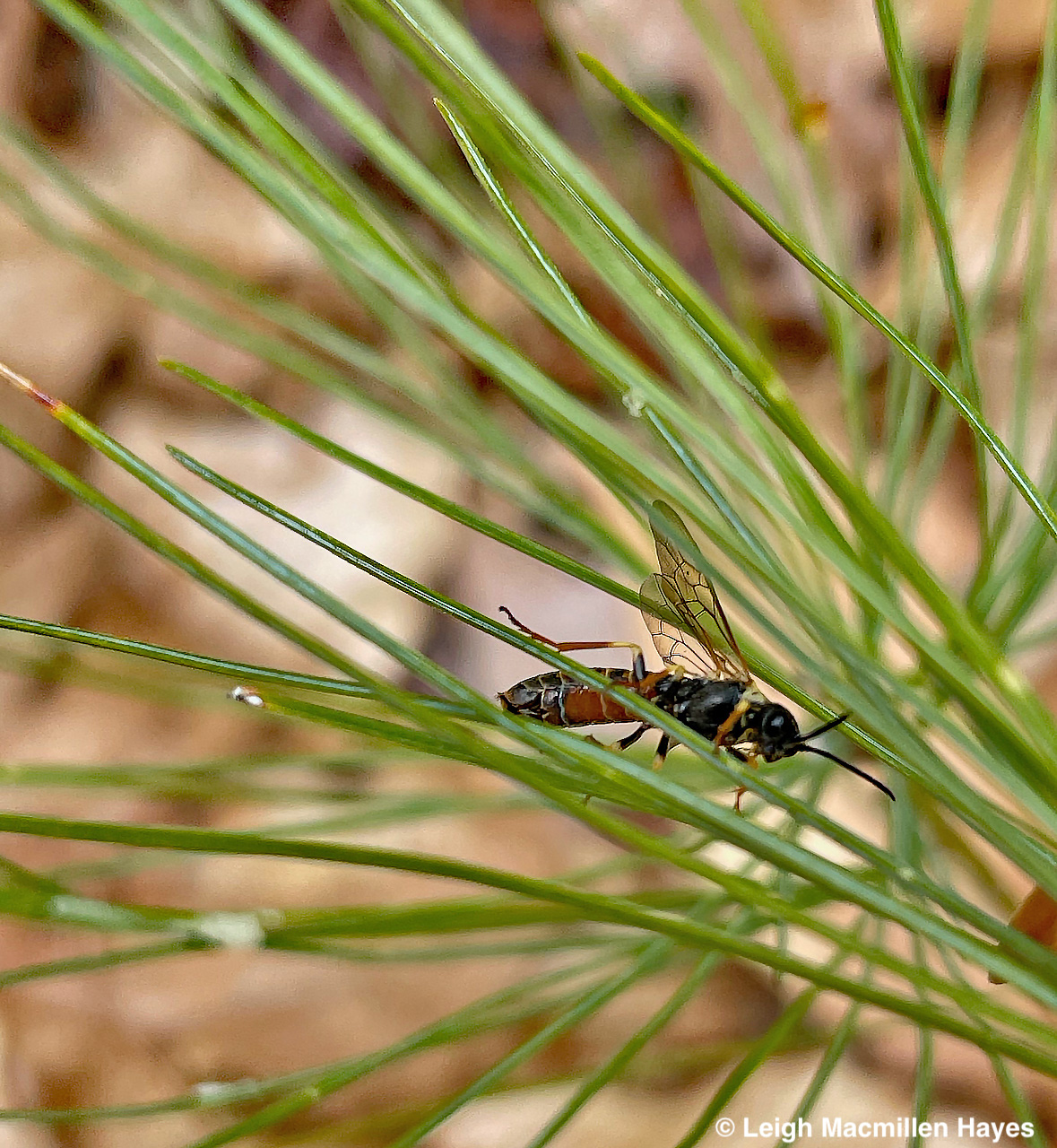
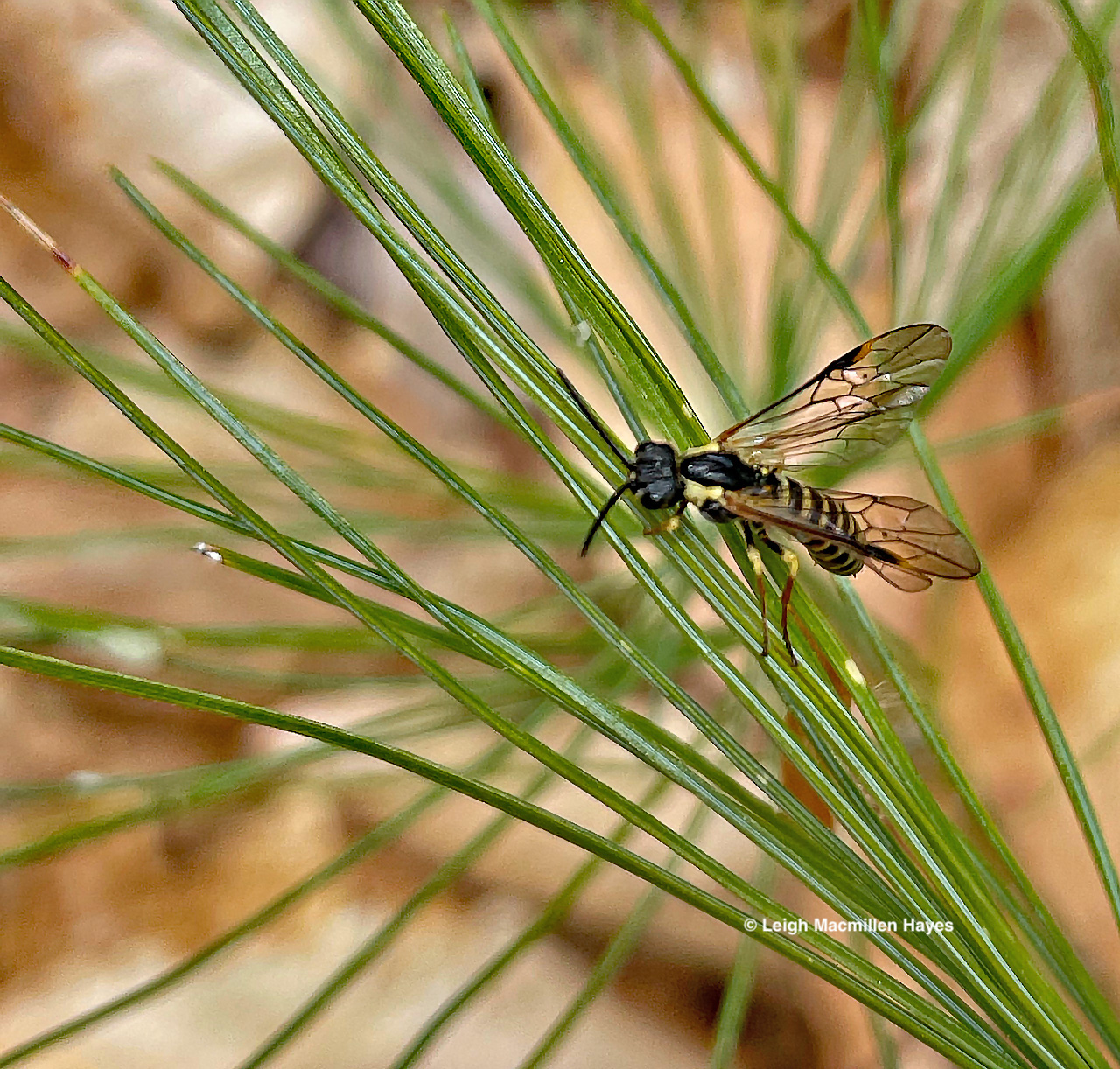
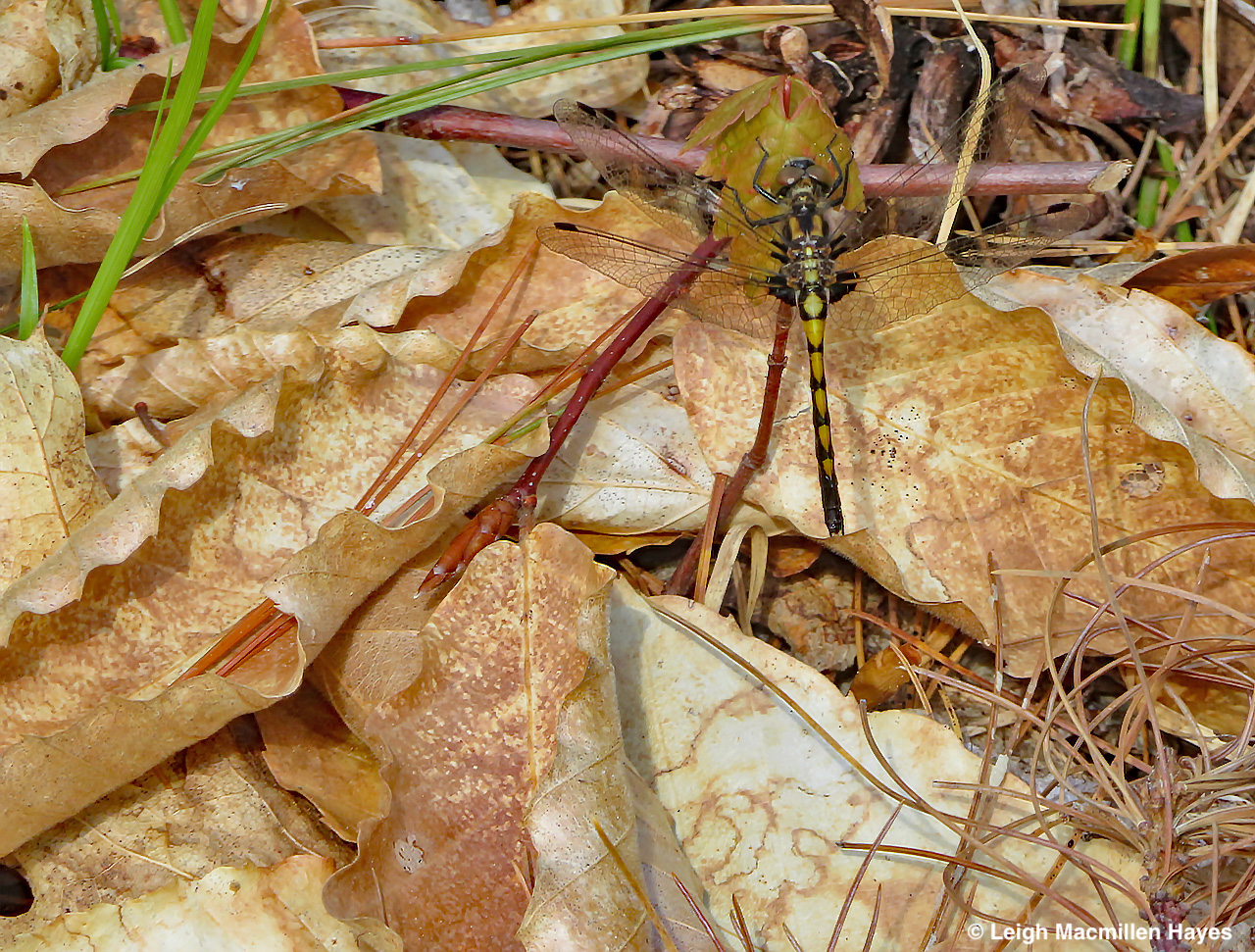

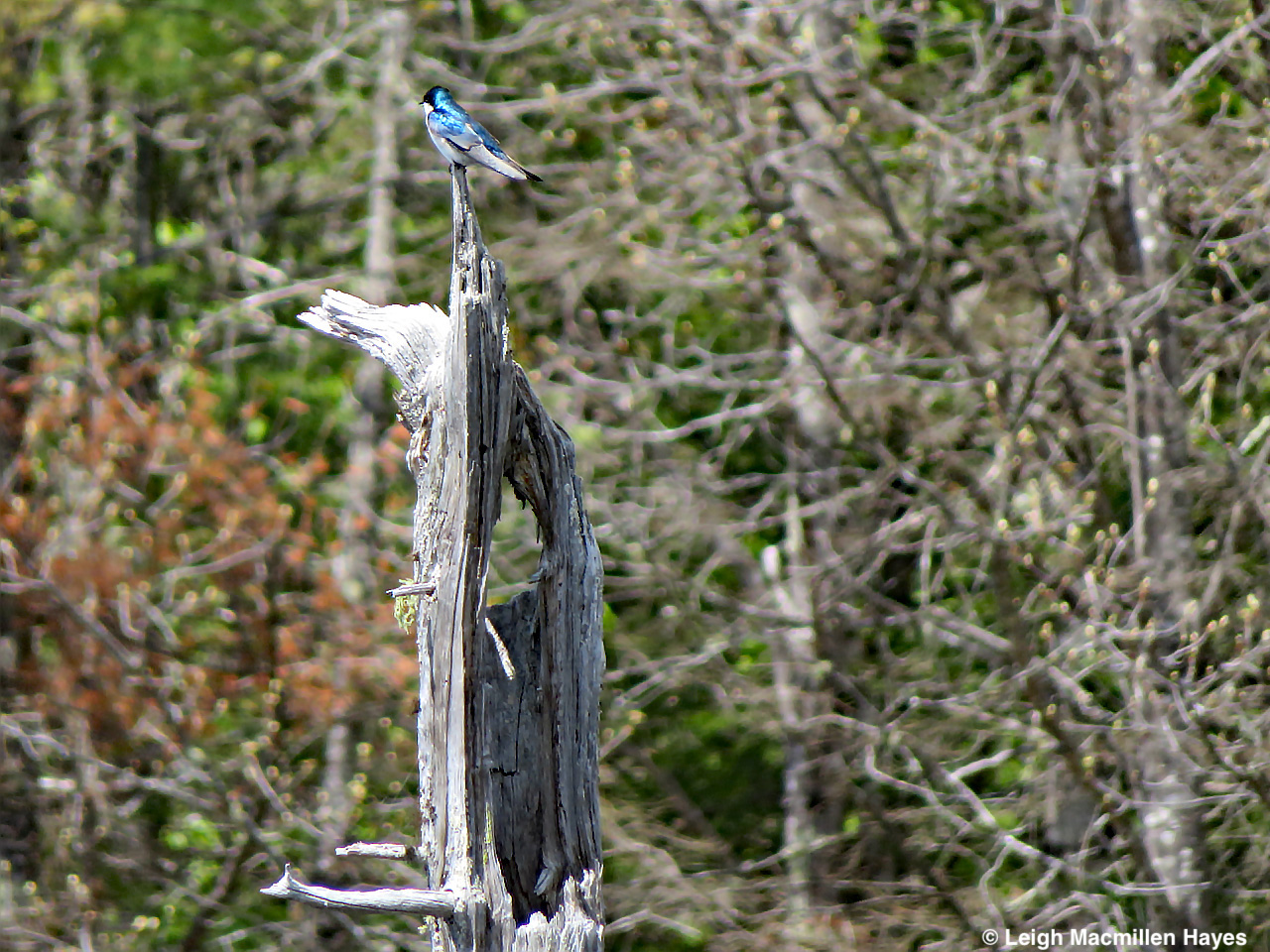
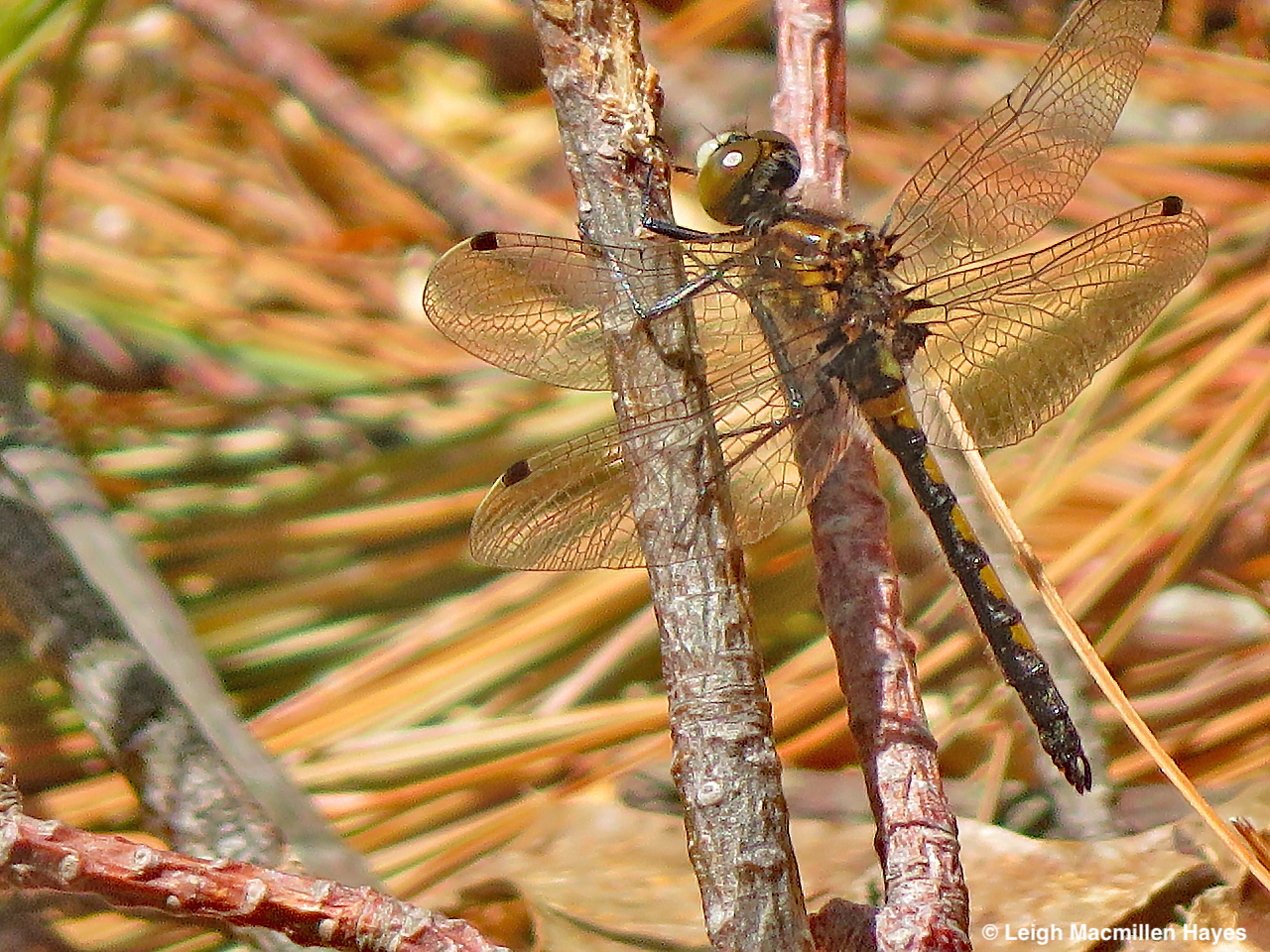


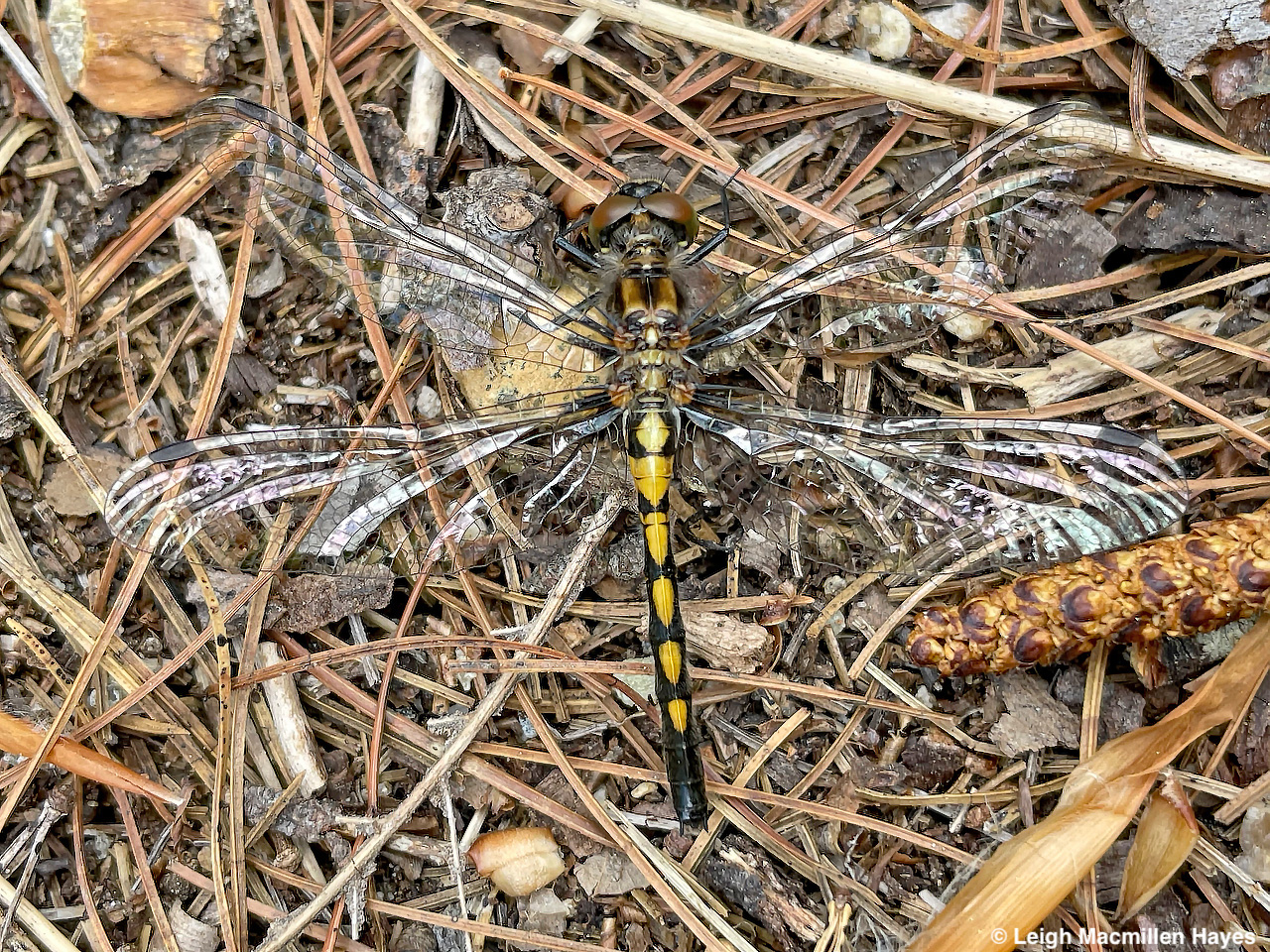
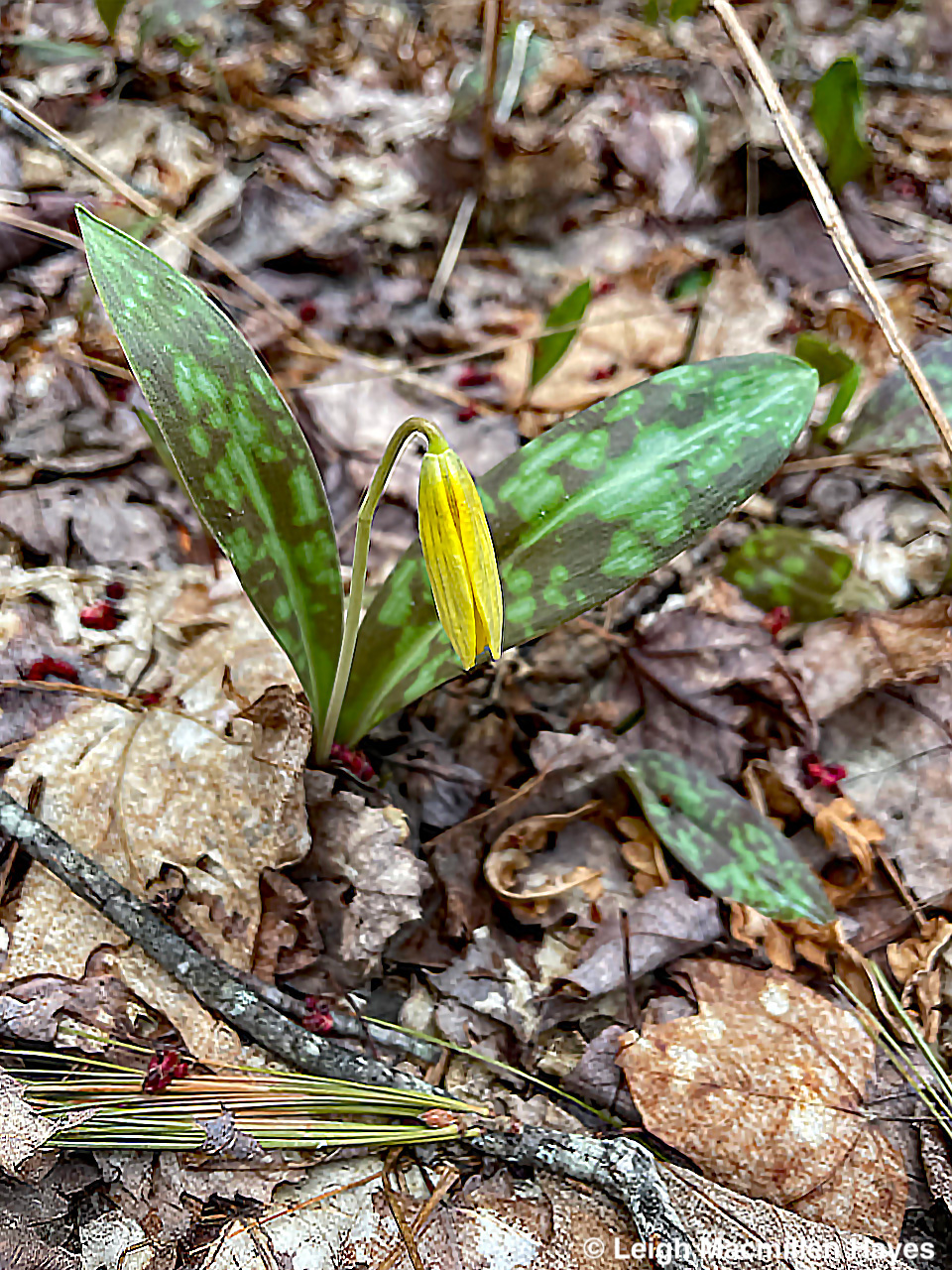
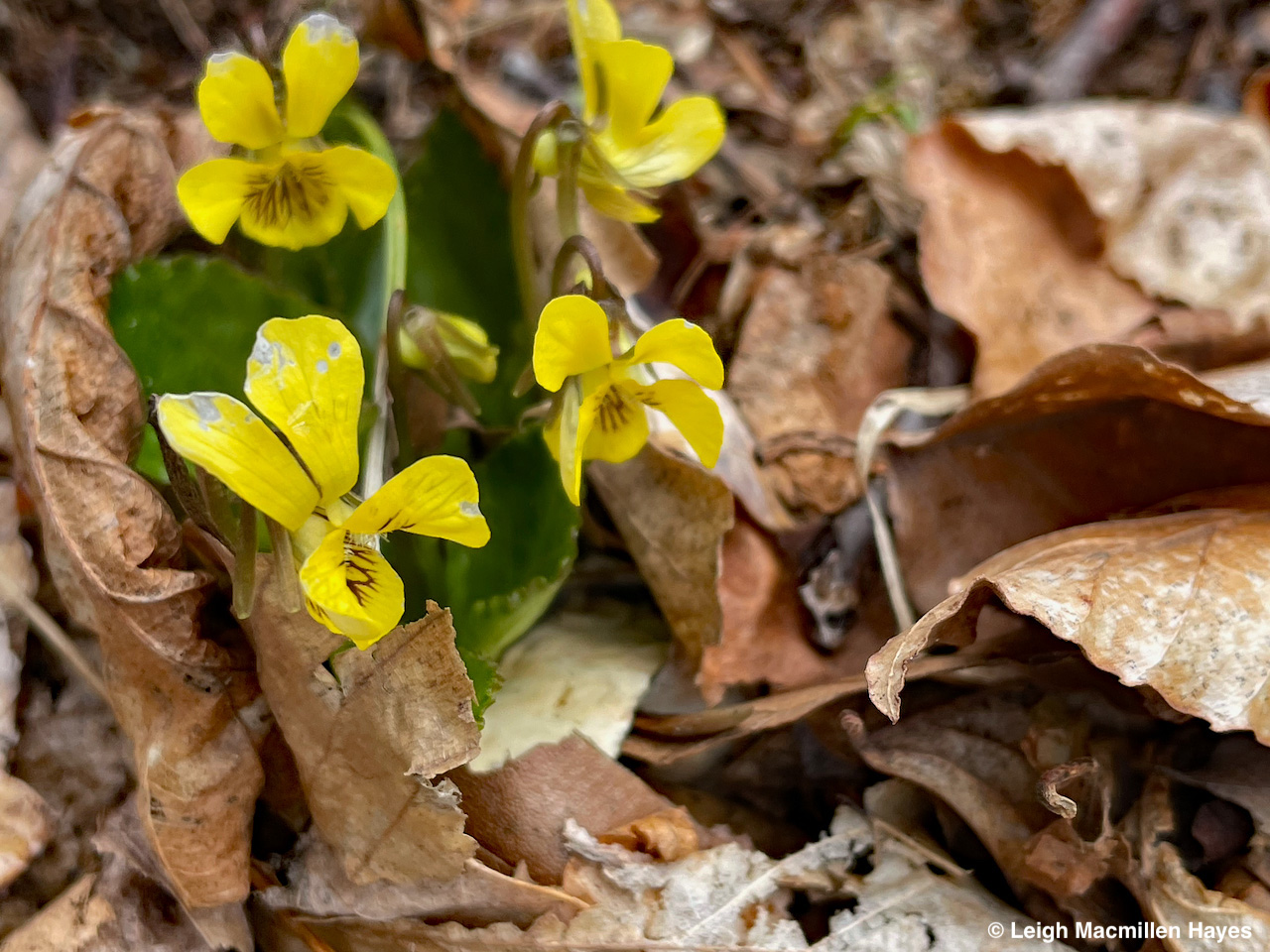


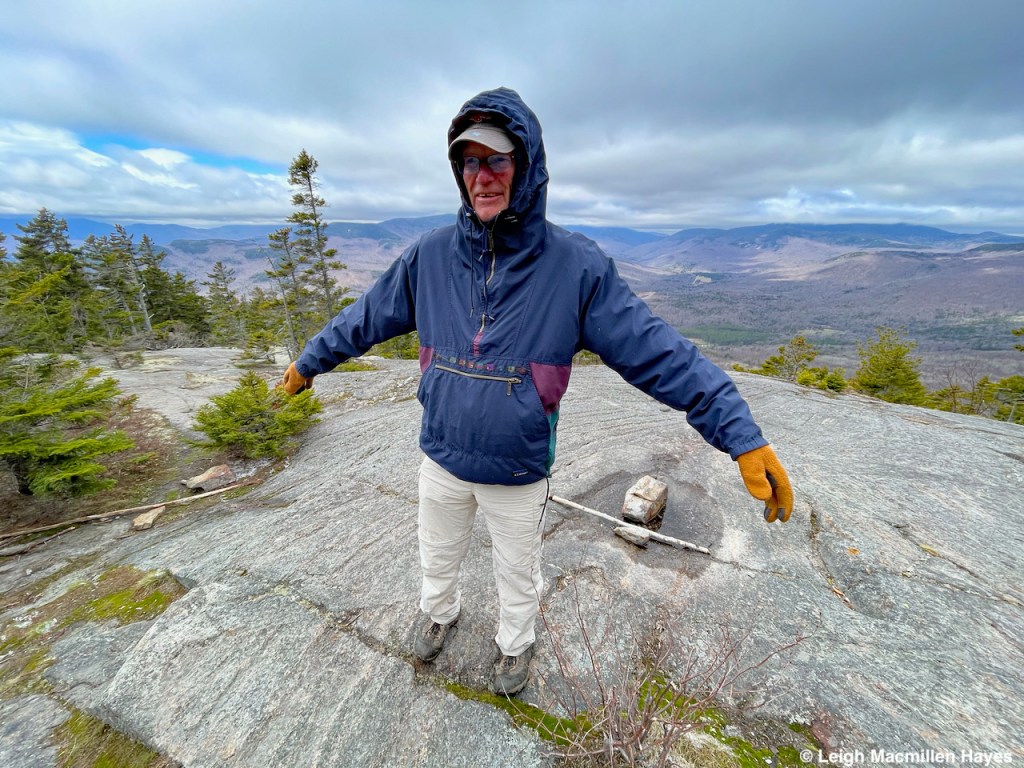
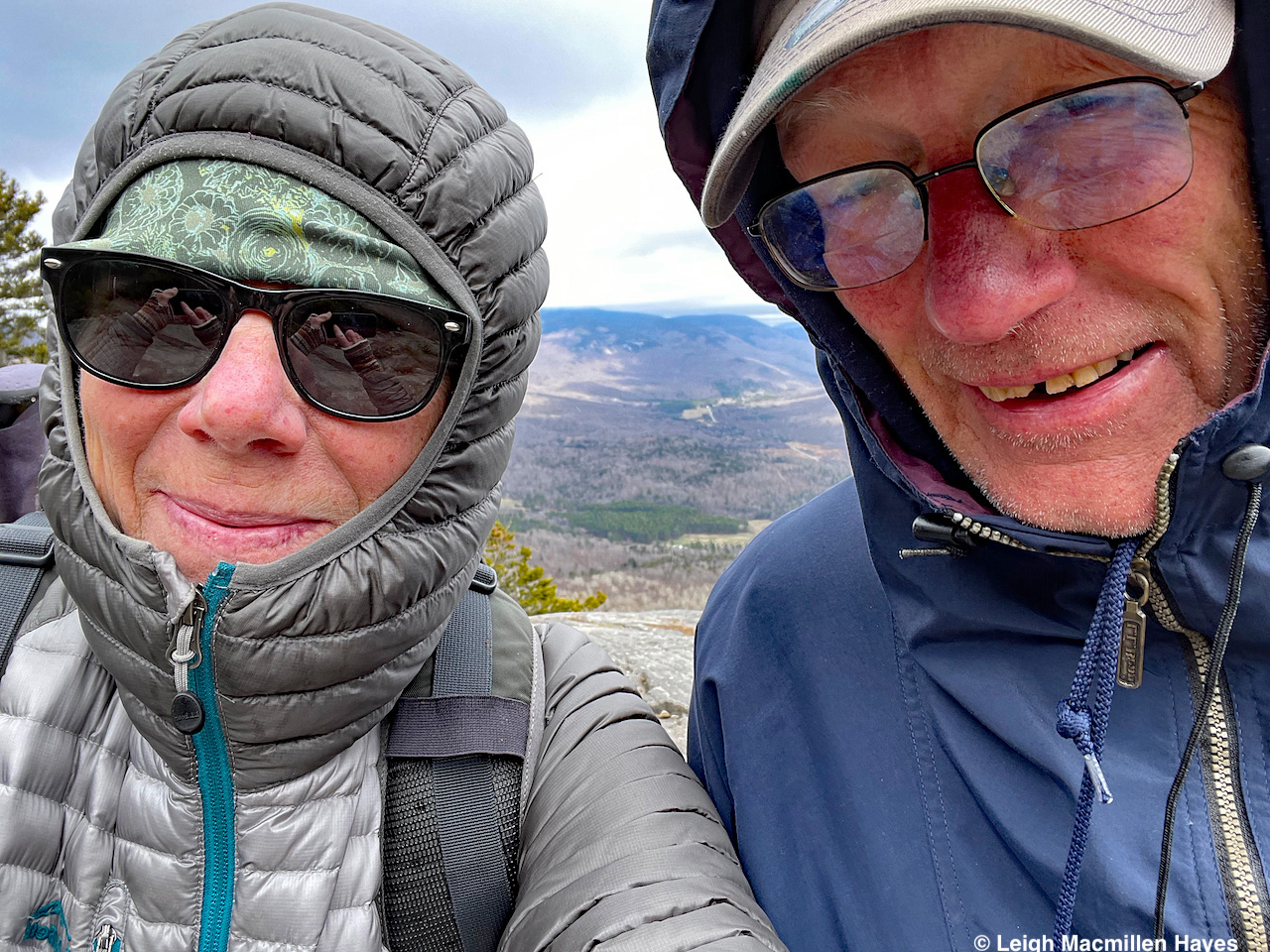
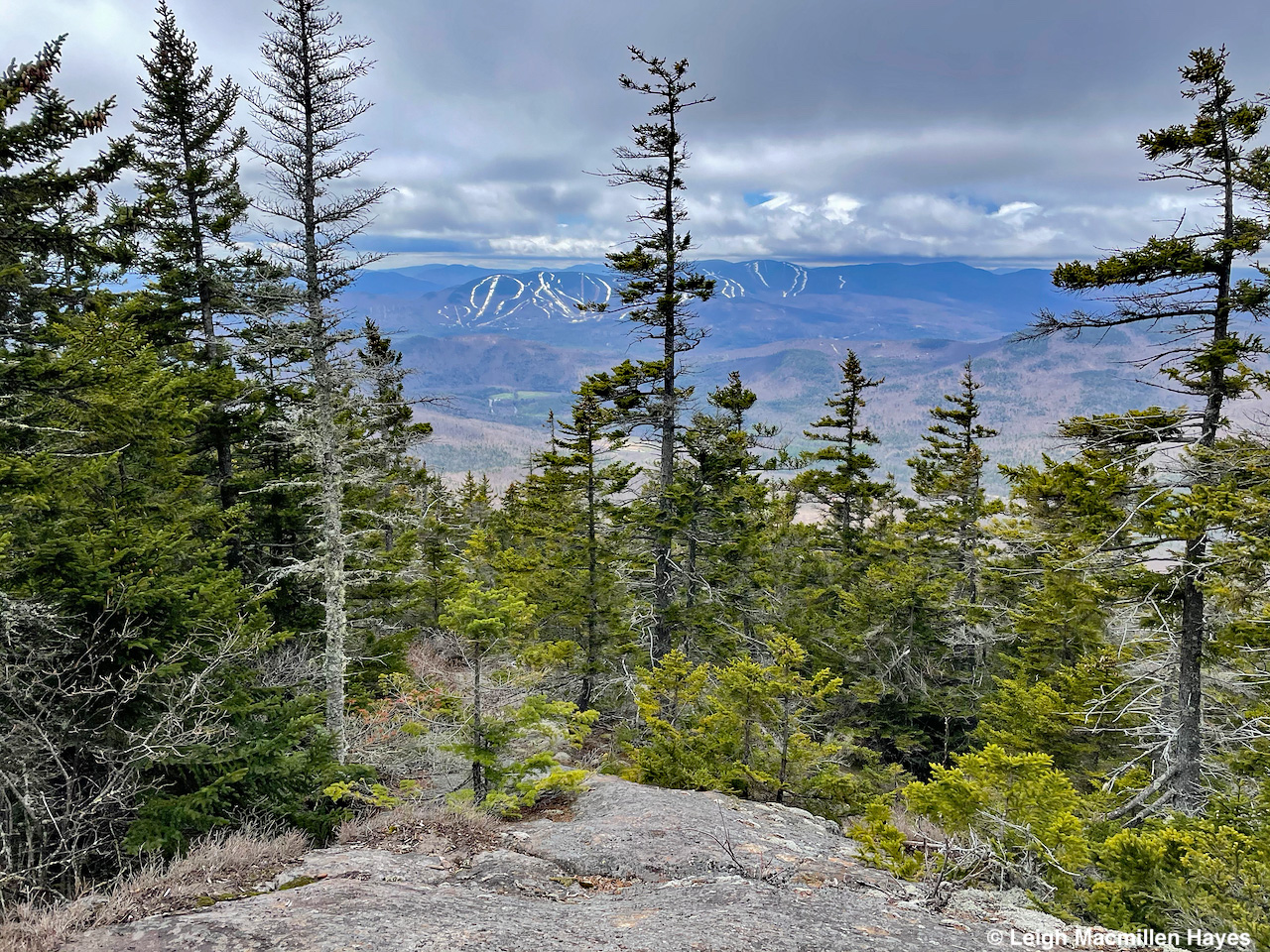

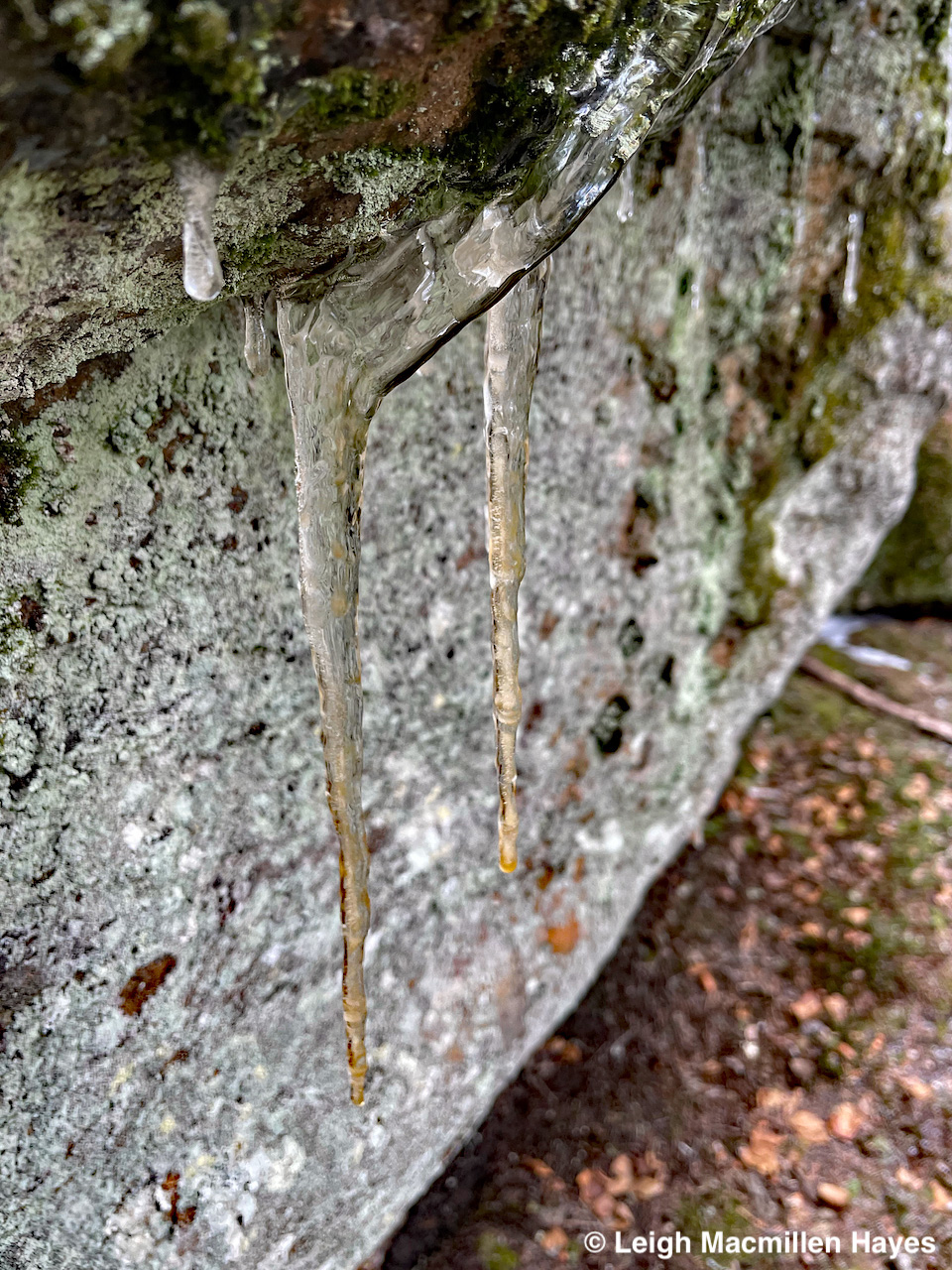
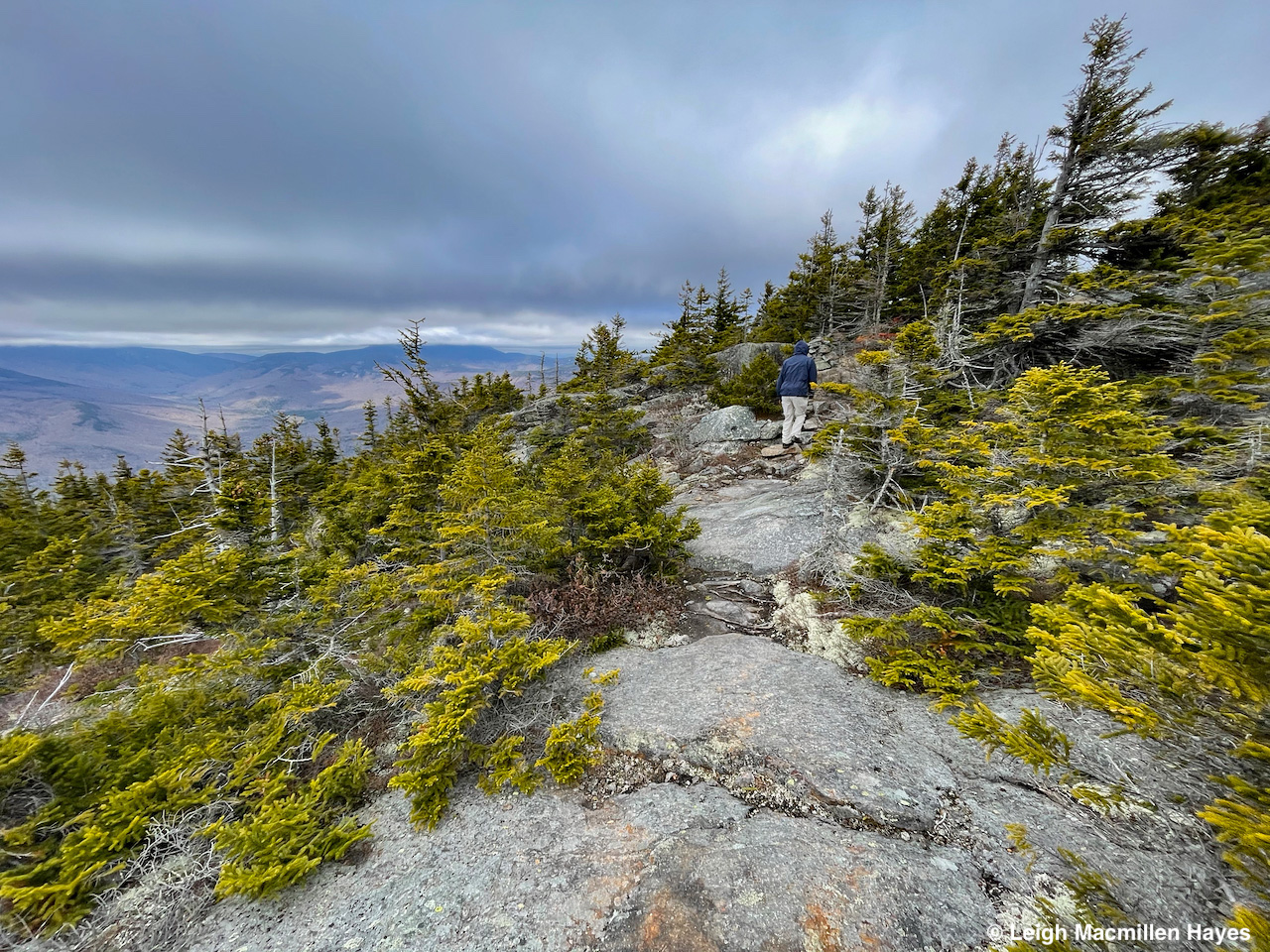
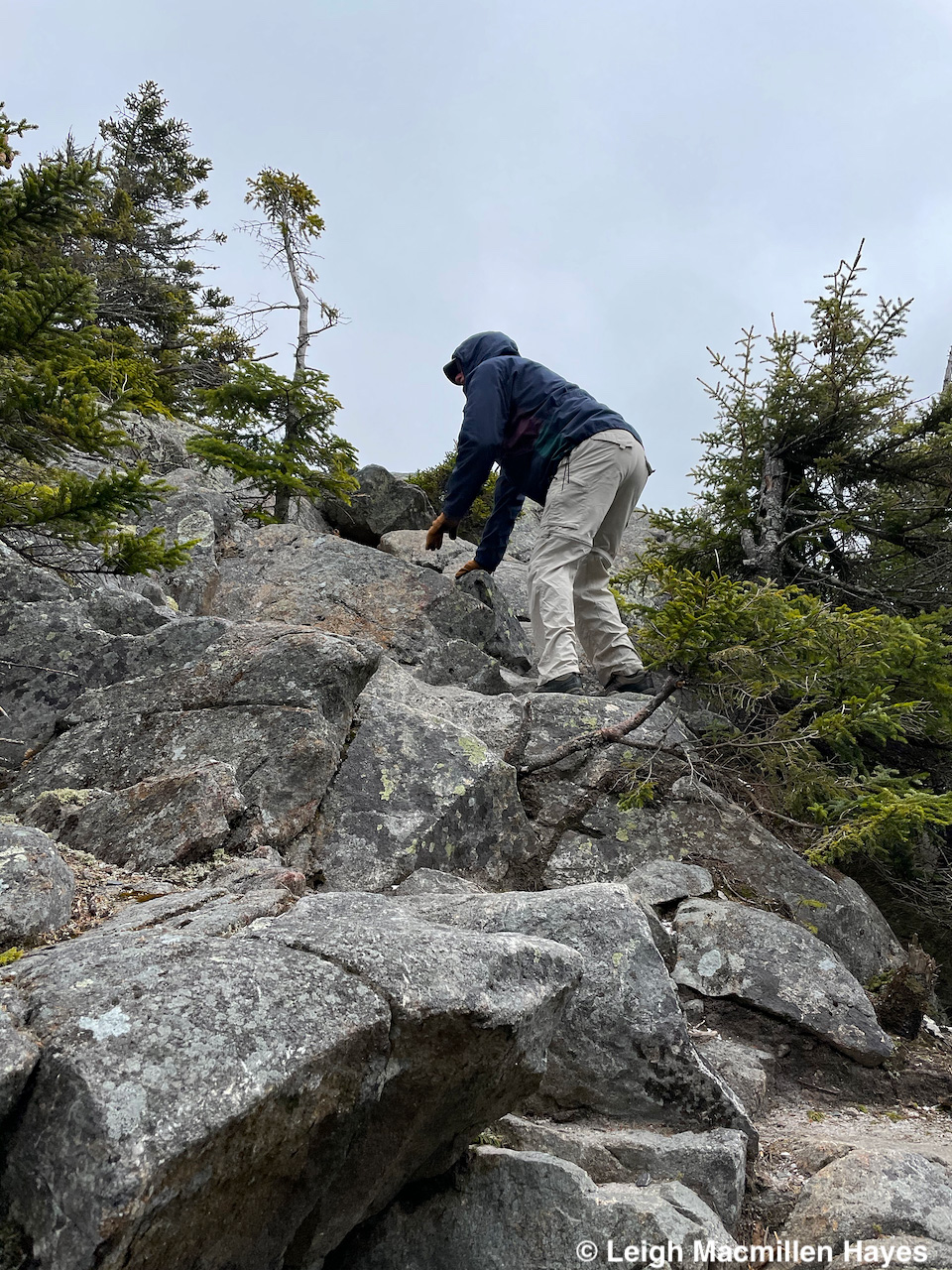


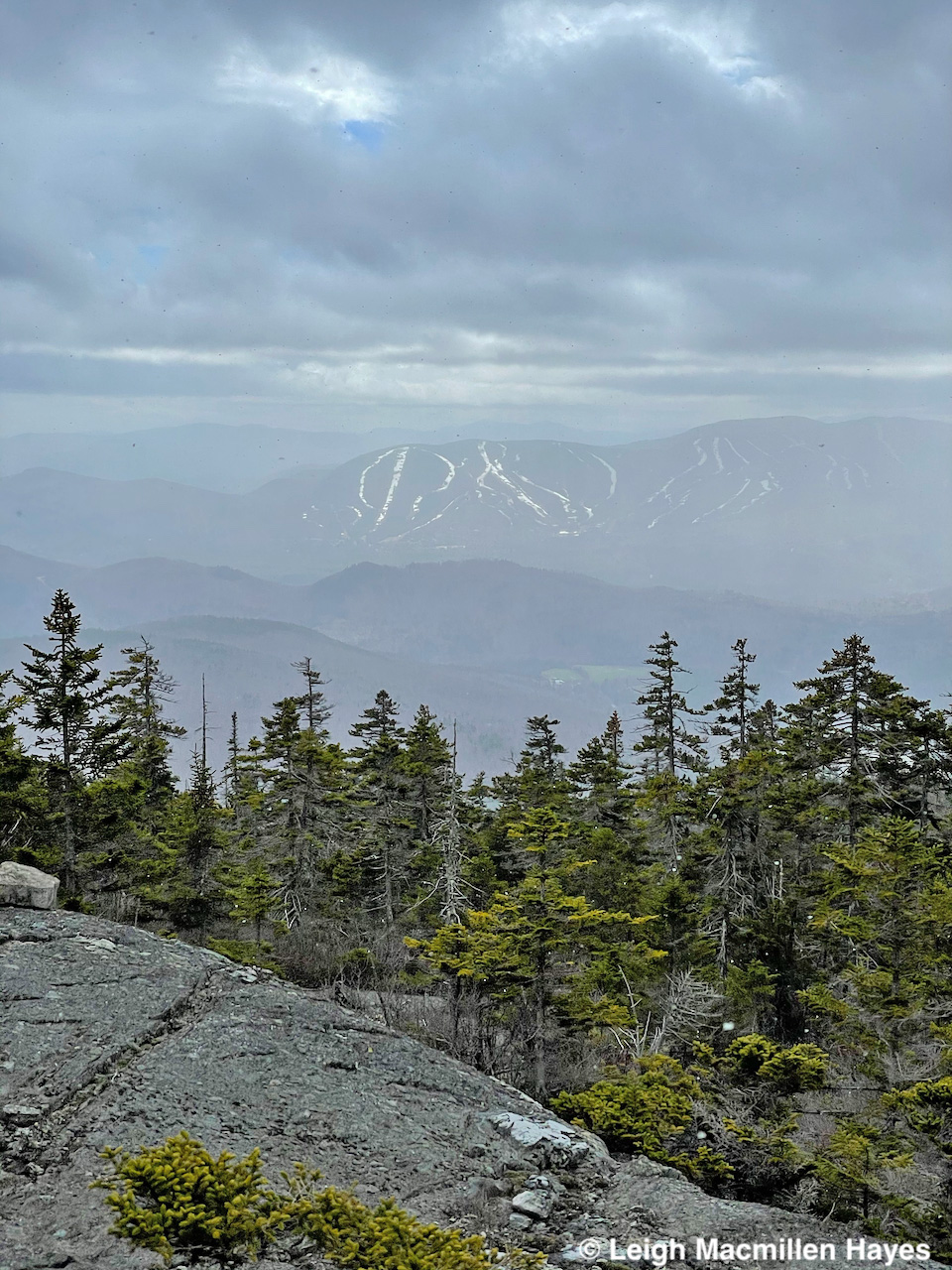


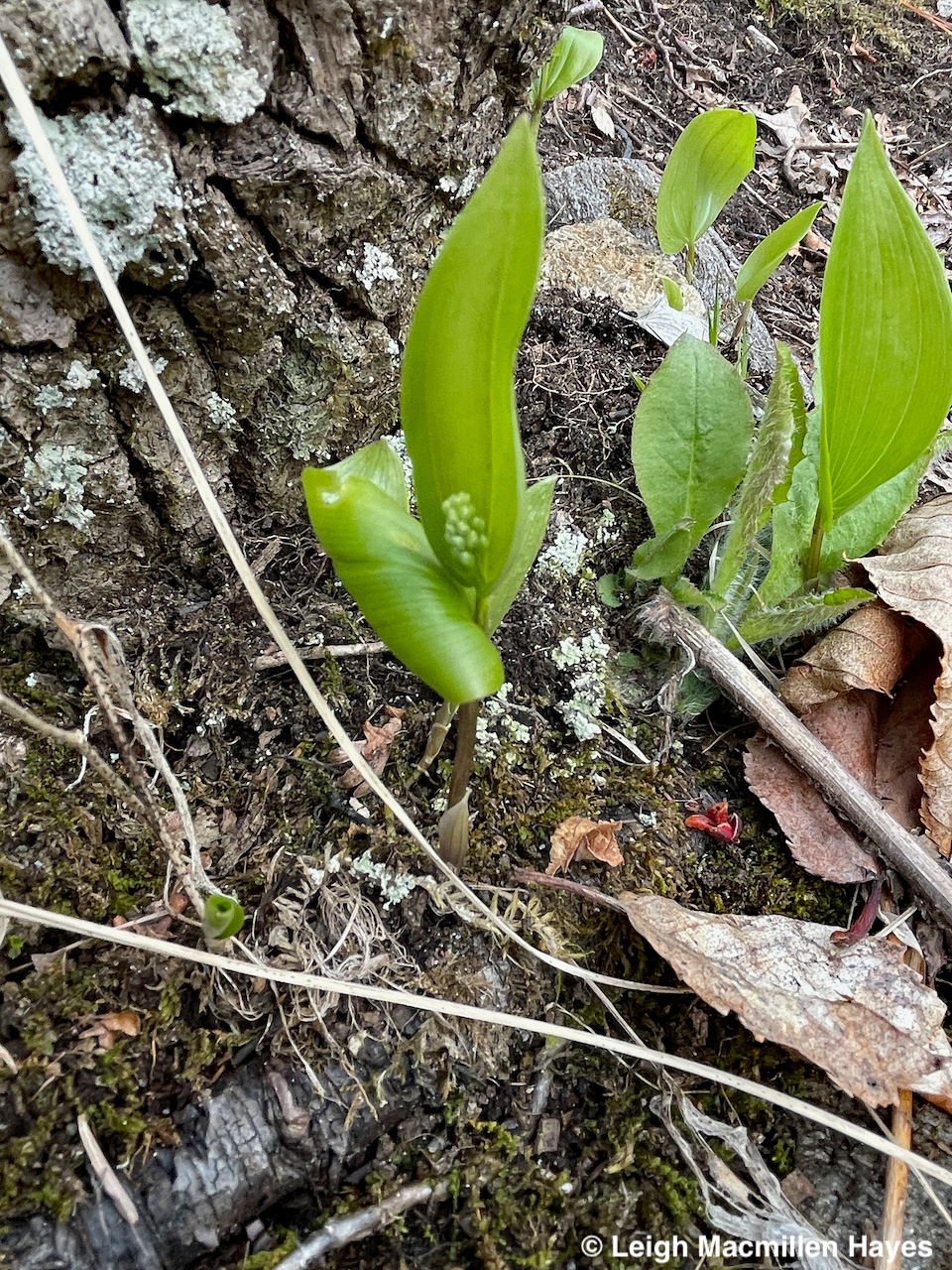
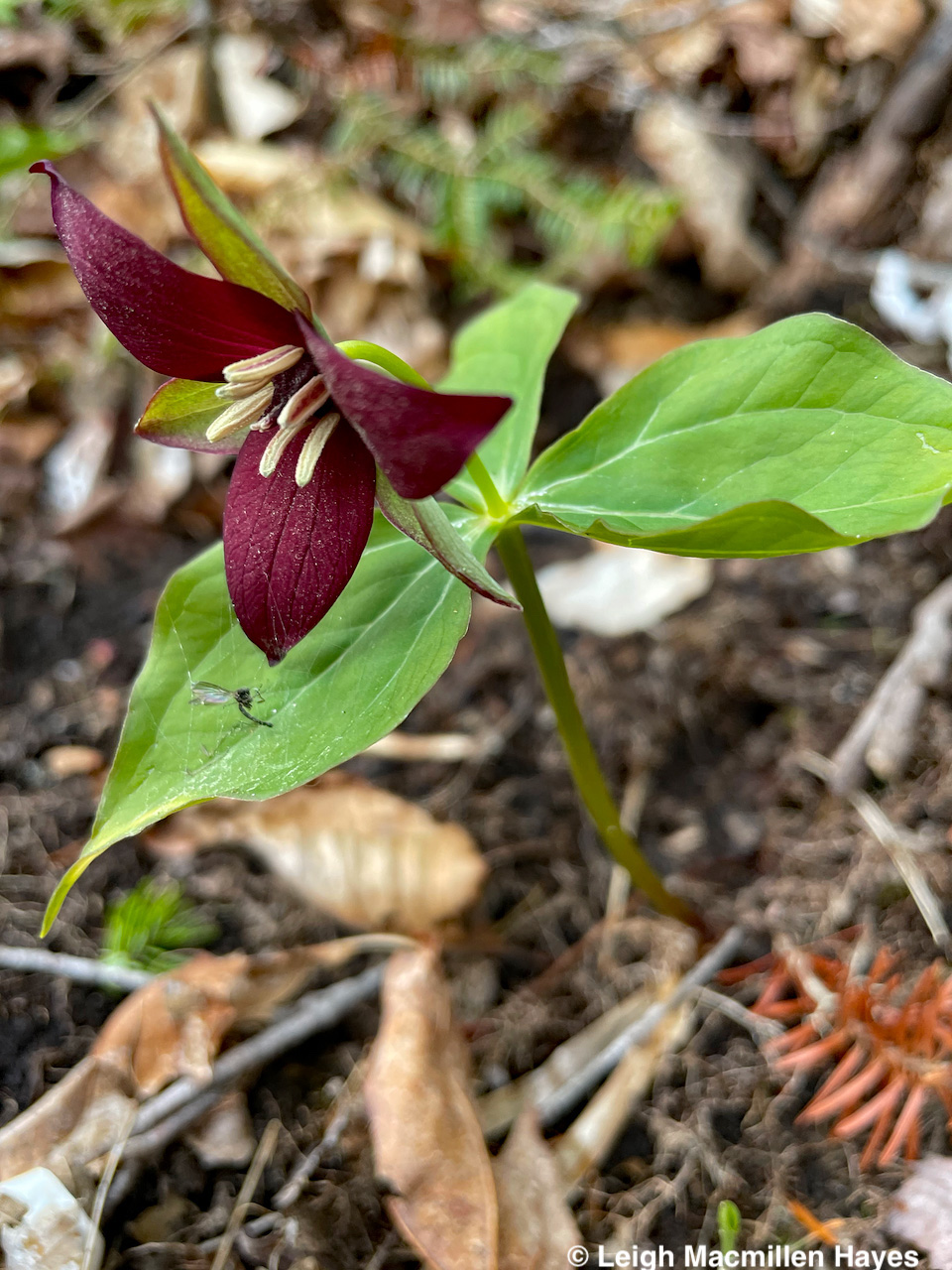
 wondermyway