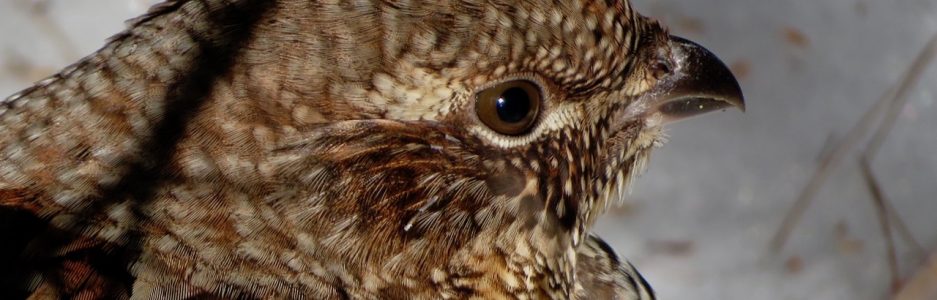
Thanks to the Cardinal

I love this time of year when the windows are open and the birds wake me and invite me to head down the stairs and stare out the window. And so I did this morning.
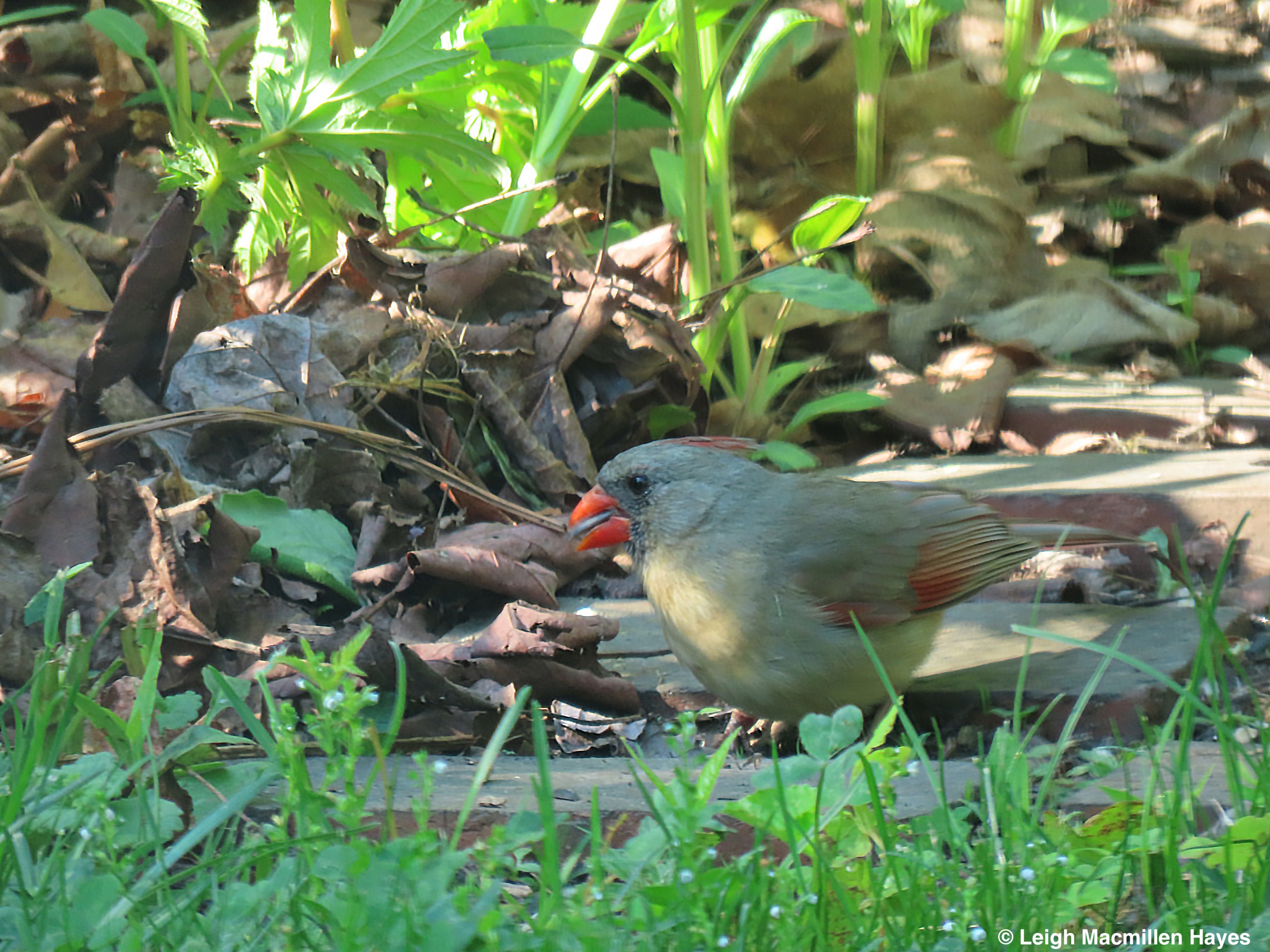
It seems the Northern Cardinals always announce their arrival with a “Chewip, Chewip, Chewip,” call and usually he arrives first, and she, pictured above follows. For some reason, I didn’t see him this morning, but maybe tonight as they are early morning and early evening visitors.

While watching her another bird flew in. This a House Finch. And it immediately amazed me. I didn’t realize that they eat Dandelion seeds . . . until, that is, I watched it do exactly that.

So, My Guy and I are at opposite ends of the spectrum when it comes to Dandelions. He wants to banish all from the yard. I want to encourage them and any other wildflower that chooses to appear.

And today, I decided to discern what I might hear when I take time to listen, and not just listen to the birds.

It was the voice of the Dandelion for which I yearned. Some call them weeds and wish they would wither and die. But the Dandelion wants us to know it is strong and persists even in the poorest soils.

And so it should.

To begin, there are the green bracts. Some of the bracts are turned downward as if in a dance, perhaps to keep certain insects that might gobble up the flower at bay, while other bracts protect the developing flower.
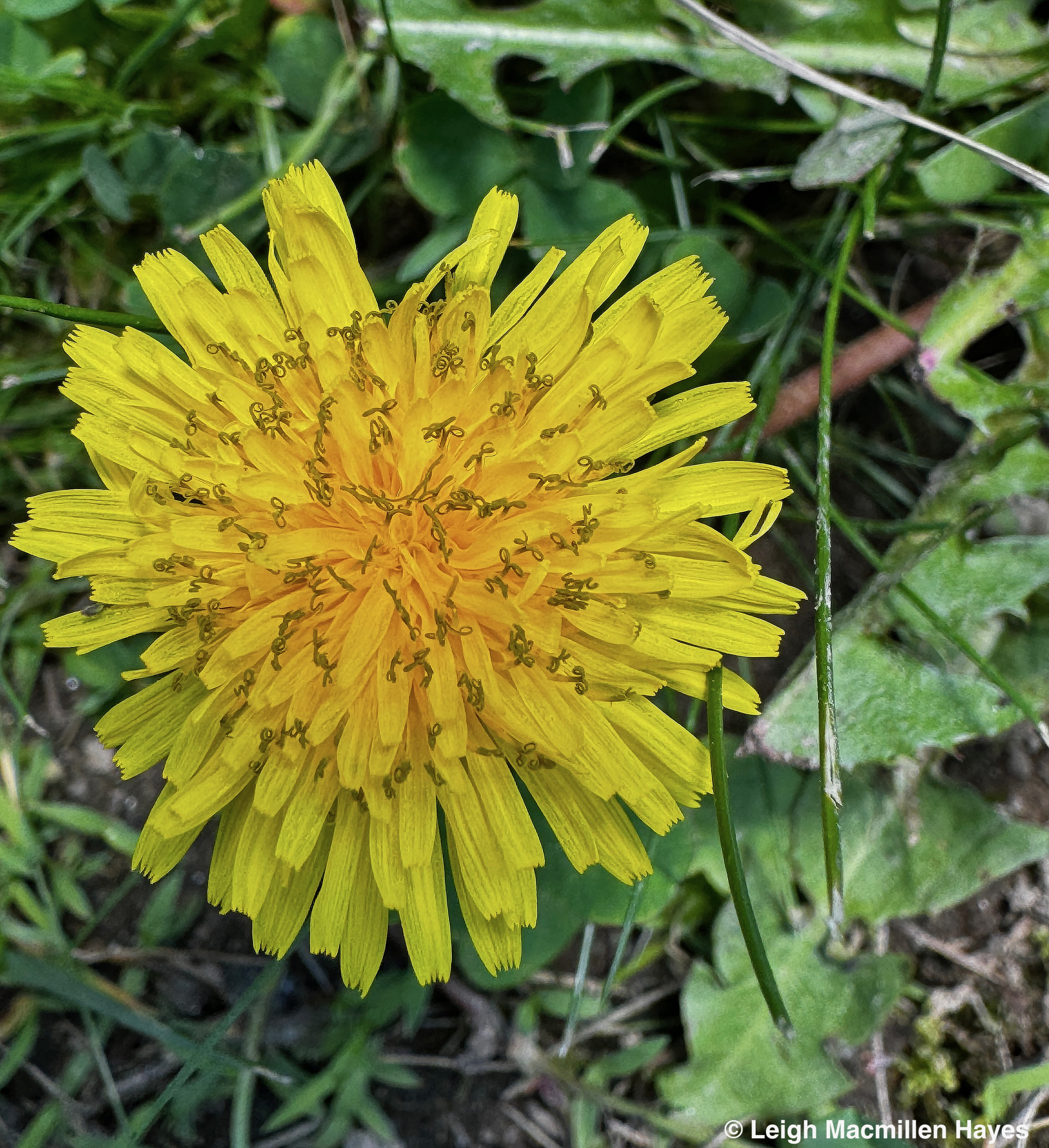
When the flowerhead begins to open, it does so one ray or “petal” at a time, for each “petal” is actually a floret, all of which combined look like the sun at high noon and make this plant a composite.

Toward the stem, each floret narrows into a tube, which rests on an ovary containing a single ovule. In that tiny tube is the nectar. While you may not see the tubes unless you carefully pull the flower apart, we can’t overlook the stigma, that tip of the pistil, or female part, covered with pollen. Each stigma for each floret is split at the end into two curling lobes.
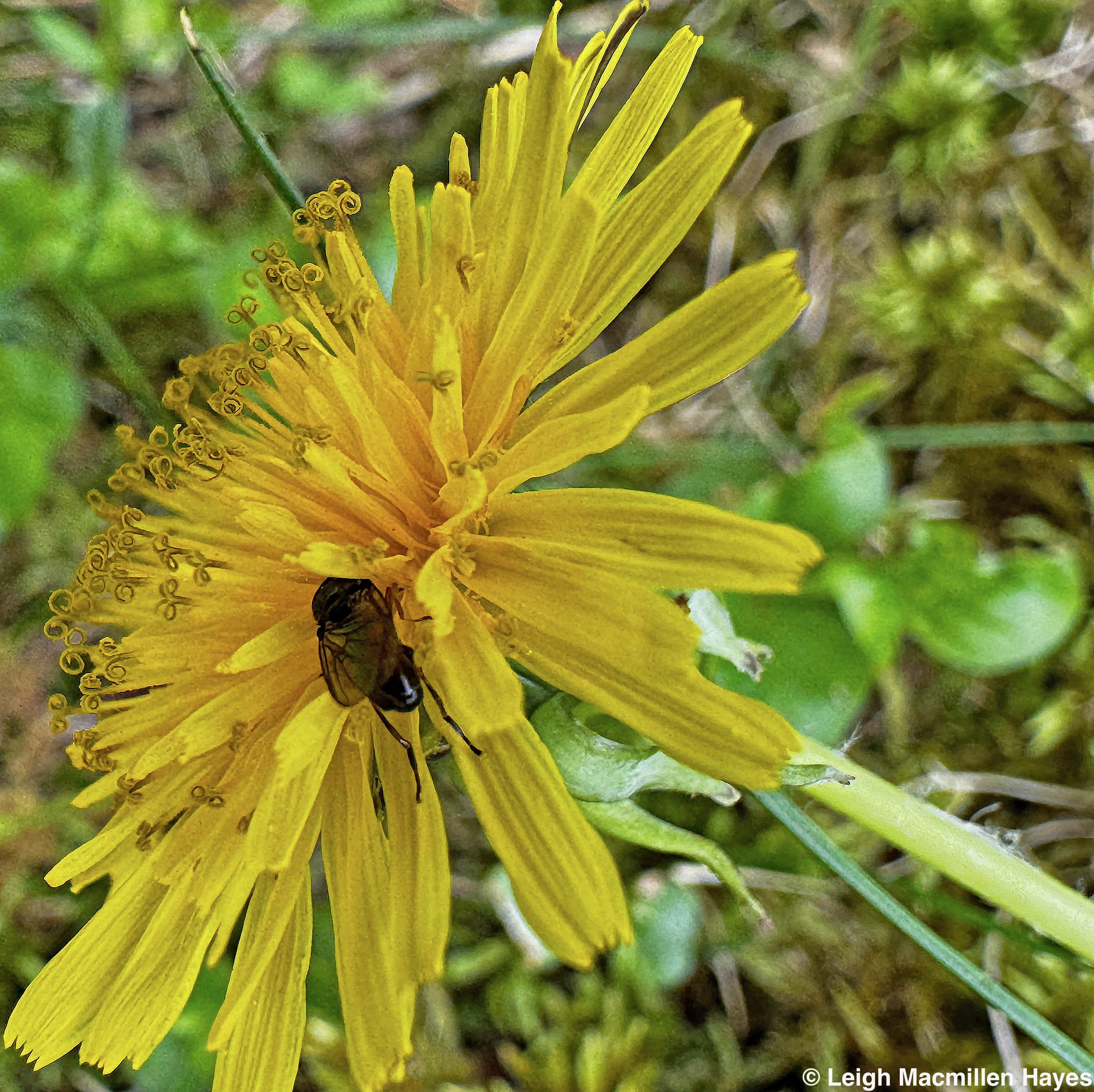
The Dandelion sings out from its nectary, inviting insects to stop by for a visit. Meanwhile, the pollen remains in the protected areas within the circles or loops the two lobes of the stigma create.
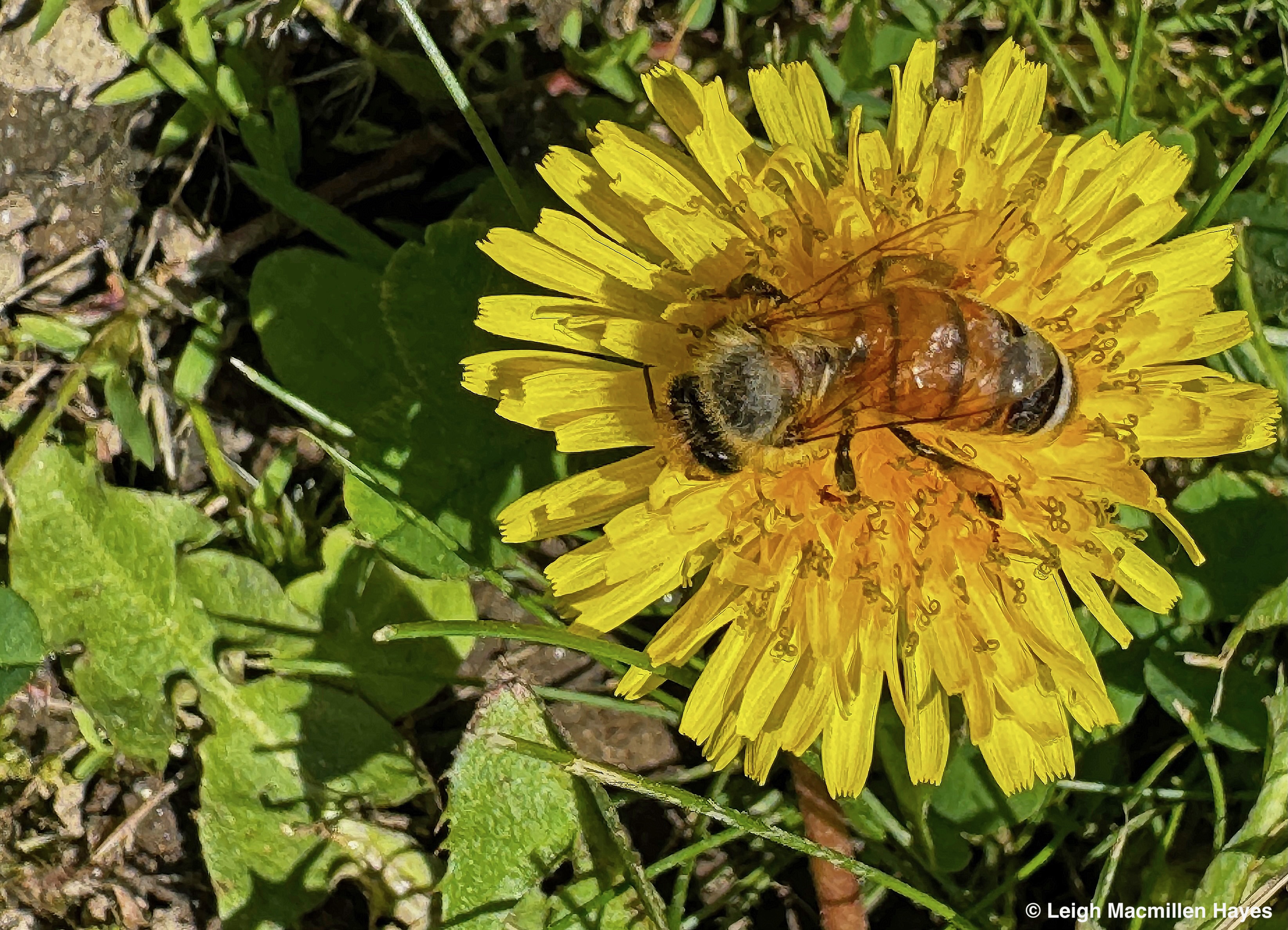
Bees and many flying insects seek the nectar and in the process of visiting the flower, they smear themselves with pollen grains, which drop off at the next flower where the insect seeks another drink, thus insuring cross-pollination.
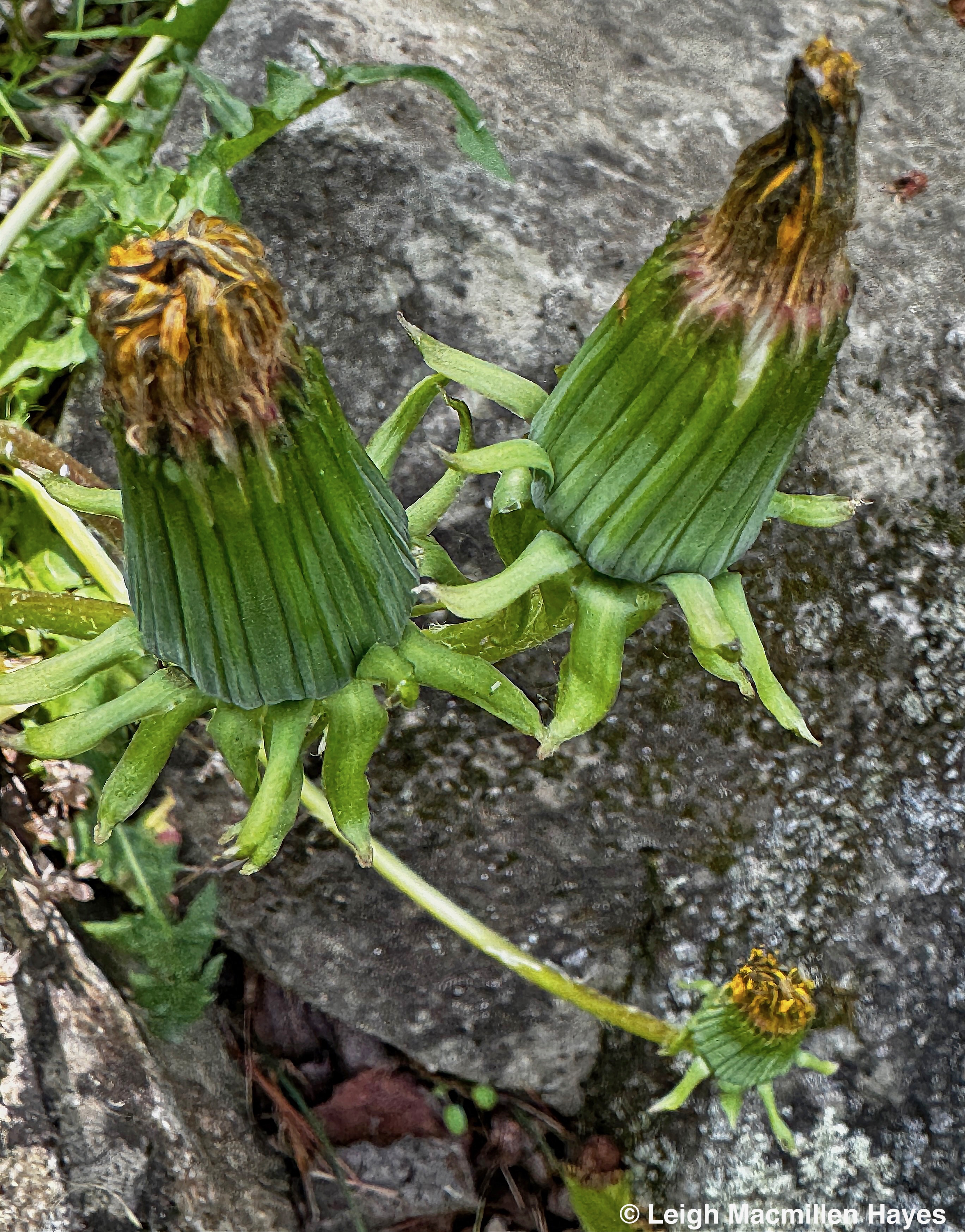
Of course, if you are going to listen to a Dandelion in full flower, you should be equally wowed as it continues its journey.

In time, the entire head of the bloom matures, the florets close up within the green bracts, and the bloom looks almost like it did as a bud, and evokes an image of our life cycle–from birth to death.

But the transformation isn’t over yet. Next on the Dandelion journey, the flowerhead opens into a fluffy ball of seeds, that fluff being fine hairs attached to each seed that will serve as a parachute.

Each seed represents one floret. And they wait for us, the wind, animal. or bird to disperse them. Out into the world they are ready to go. I don’t know about you, but it’s hard to resist the temptation to pick a stem and blow on the puffball.

As I walked around our yard today, I noticed carpets of another composite, with a flower of the same color, but this one a Mouse-ear Hawkweed.

One easy way to differentiate between the two plants is by their leaves. Both have basal leaves, but those of the Dandelion are irregularly lobed.

The Mouse-ear Hawkweed leaves are entire, and entirely hairy. And much shorter in length.

Some call them weeds, but I prefer to think of them as volunteers who reflect the sun’s image. When I take the time to listen to them, they remind me that we are all interconnected and we need each other to survive, a lesson the pandemic certainly taught us. And that includes letting the undesirables flourish–in our yards and in our lives. I know I need to remember that.

If we take the time, really take the time, to slow down and observe, watch the variety of insects that pollinate flowers like Dandelions and Hawkweeds, and begin to understand that we need to save the flowers in order to save the bees and their relatives who also pollinate the fruits and vegetables we need in order to flourish, then we may change our minds and realize they are desirable after all.

And not all the seeds will end up growing in your lawn, as the House Finch taught me today.

Thanks to the Northern Cardinal for leading me to the House Finch, and subsequently the Dandelion and Hawkweed.

Eyes on the World About Us

Sometimes we hike with a purpose, My Guy and I. And on those days, he actually slows his pace down.

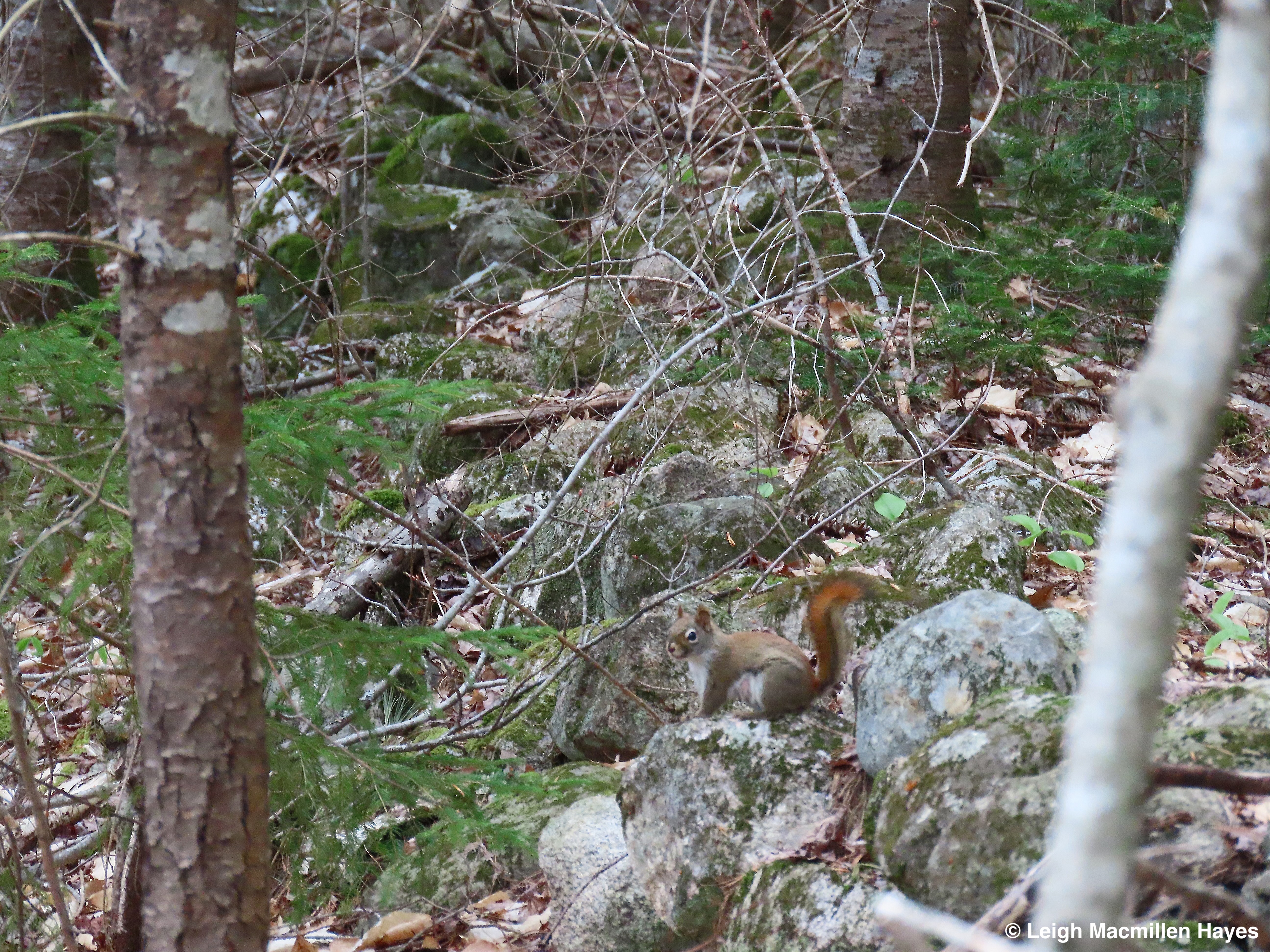
And opens his eyes wide, much like the Red Squirrel–ever on the alert.

Was it the Fringed Polygala, aka Gay Wings he sought? No, but I certainly did. Those petal-like wings are actually sepals. Two of the petals are fused into a tubular structure, thus giving this plant a “bird-of-paradise” form. The fringe at the end of a third petal or keel below invites all to enter.

Don’t they look like birds in flight? Being a spring ephemeral, these delicate blooms will only last a few more weeks and then I’ll confuse their leaves with those of Wintergreen, but My Guy was rather oblivious to all of this.

Was it the Dandelions he sought? No, he scuffs at those. But the Flower Fly and I–we were two of a kind for this incredible display. Notice how each ray is notched at the tip like teeth. Those five “teeth” represent a tube-shaped floret. Fully open, the bloom is a composite of numerous florets.

Was it the Wolf’s Milk Slime he sought? No, I’m not sure he even spotted them for though we were moving at a slower than normal pace, one of us was even slower than the other. I couldn’t help it. I cannot resist this slime mold.

It was apropos that I should spot it on this trail and by the end you’ll understand why.

And so I did what I always have to do when I spot Wolf’s Milk. Picked up a stick. And poked one of the fruiting bodies. I could actually feel my peeps’ presence in the moment because they would have been doing the same, and maybe even taking a video as the salmony-pink paste inside oozed out.

As the mold matures, the paste actually turns into the spores and when we poke it later in the season, a puff of gray exits the ball. No, they are not puffballs, but they are the next best thing.

Was it the Painted Trillium he sought? No, but for once he did actually count them. I’ll let you know the total at the end.

Was it the number of blowdowns, he sought? No, but those were incredibly abundant, many occurring over the course of the past eight months. And actually, they were a hinderance to what he did seek.

Was it the Pink Lady’s Slippers he sought? BINGO! I do not know why, but My Guy loves to count them and especially to find displays like this. And I love that he loves this.

White Lady’s Slippers are a variation of Pink, and so they were included in the count.

We honored the very last one before we headed back to the truck–this being #475.

Yes, 475 Lady’s Slippers.

At this same locale in 2023: 324.

And in 2022: 411.

The thing we did notice this year, we were a week earlier than usual, and many of the flowers hadn’t completely opened. Note to ourselves: don’t be so impatient next year because we really love seeing them in full color.

And we do know we missed some because of the blow-downs, but hey, we still did well.

Number of Painted Trillium: 2. My Guy usually refuses to count them, but we didn’t spot one until we were almost done, so he figured he could. And then the second one appeared.

I couldn’t help but smile.

Where were we? By this photo some of you may now know our location. In front of us was Googins Island, as viewed from the rocky coast at Wolfe’s Neck Woods State Park in Freeport, Maine.

Now do you understand why I said the Wolf’s Milk Slime Mold was located in the right place?

And Googins Island has long been home to this Osprey nest, where the expectant parents had their eyes on the world about them. Just as we had.

A Day of Firsts

This has never happened before. Then again, there’s a first for everything.

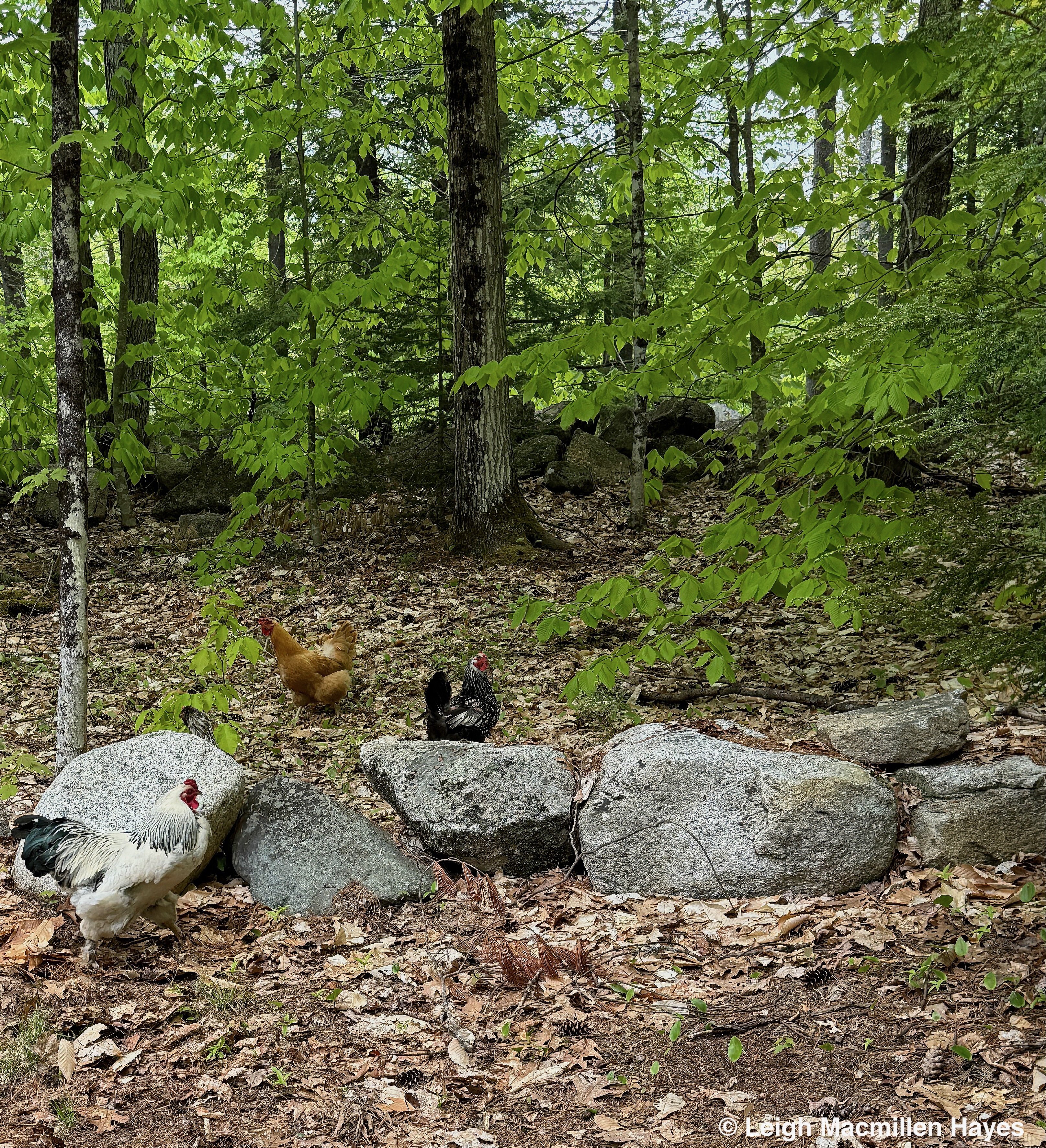
My Guy and I have been hiking together for the last 38 years, and in all that time, never, ever have we been greeted by neighborhood chickens, with one rooster even sending us off to the tune of his cock-a-doodle-do.

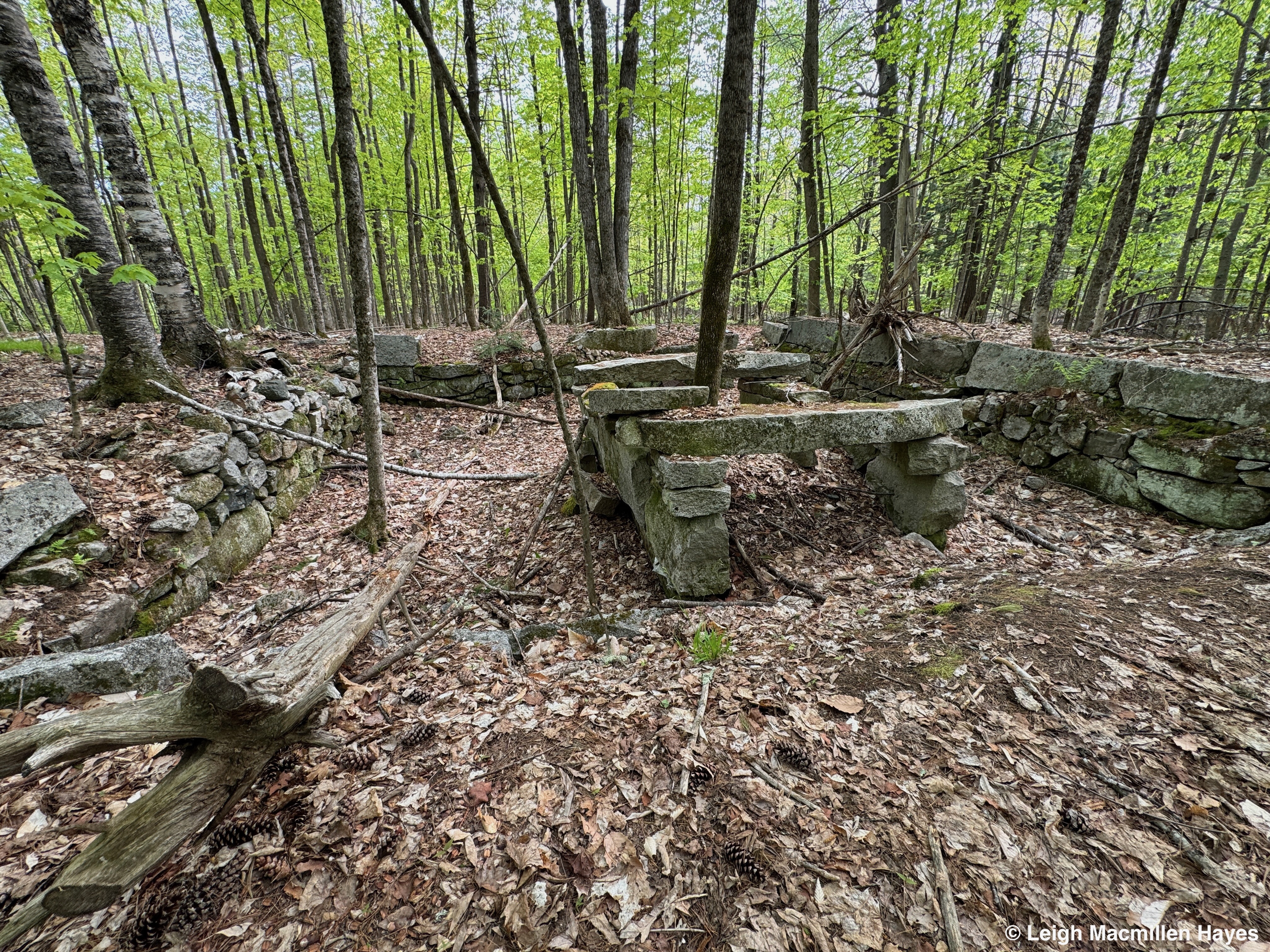
The past is always present and just after the send off, we paused by the homestead foundation, possibly that of A.H. Evans, which is located within feet of the trail’s head. And it appears that if this did belong to A.H., he was the head of a large family for it’s a huge foundation.

The barn foundation was also impressive and we could sense the work that went into such a creation.

And based on the configuration of rocks and boulders between the house, outbuildings and barn, all were once attached.
Again, assuming all of this belonged to A.H., I did discover a 1916 document that suggested he grew rutabagas: “A. H. Evans, Fryeburg, raised 90 bushels rutabagas in 1-8 of an acre.”

At some point in time, the land also must have served as a saw mill close to what is now a small stream, but may have been more of a brook in the past, there’s a pile of saw dust that hikers must climb. This is not uncommon in Maine woods. And it’s forever soft underfoot, however many years later.

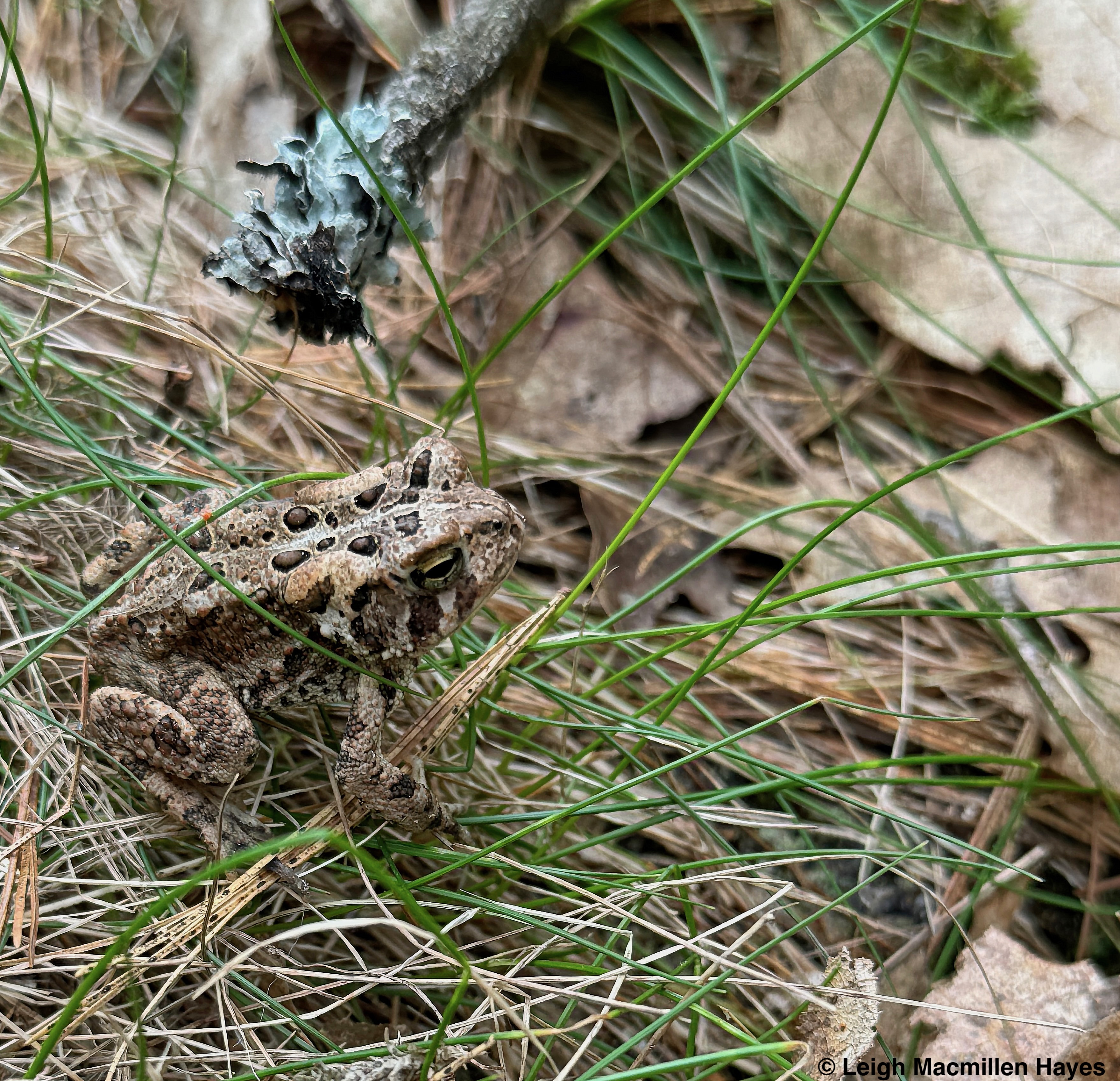
We spotted a few Painted Trilliums, and lots of Sessile-leafed Bellwort, and other flowers waiting to come, and a Chipmunk peeking out from a rocky ledge, and mosses, and lichens, and so much more, (oh, and a few Black Flies, but again, not bad in the scheme of things), but this was the first American Toad of the year for us. Toads can remain absolutely still, a smart adaptation as they blend into the scenery.

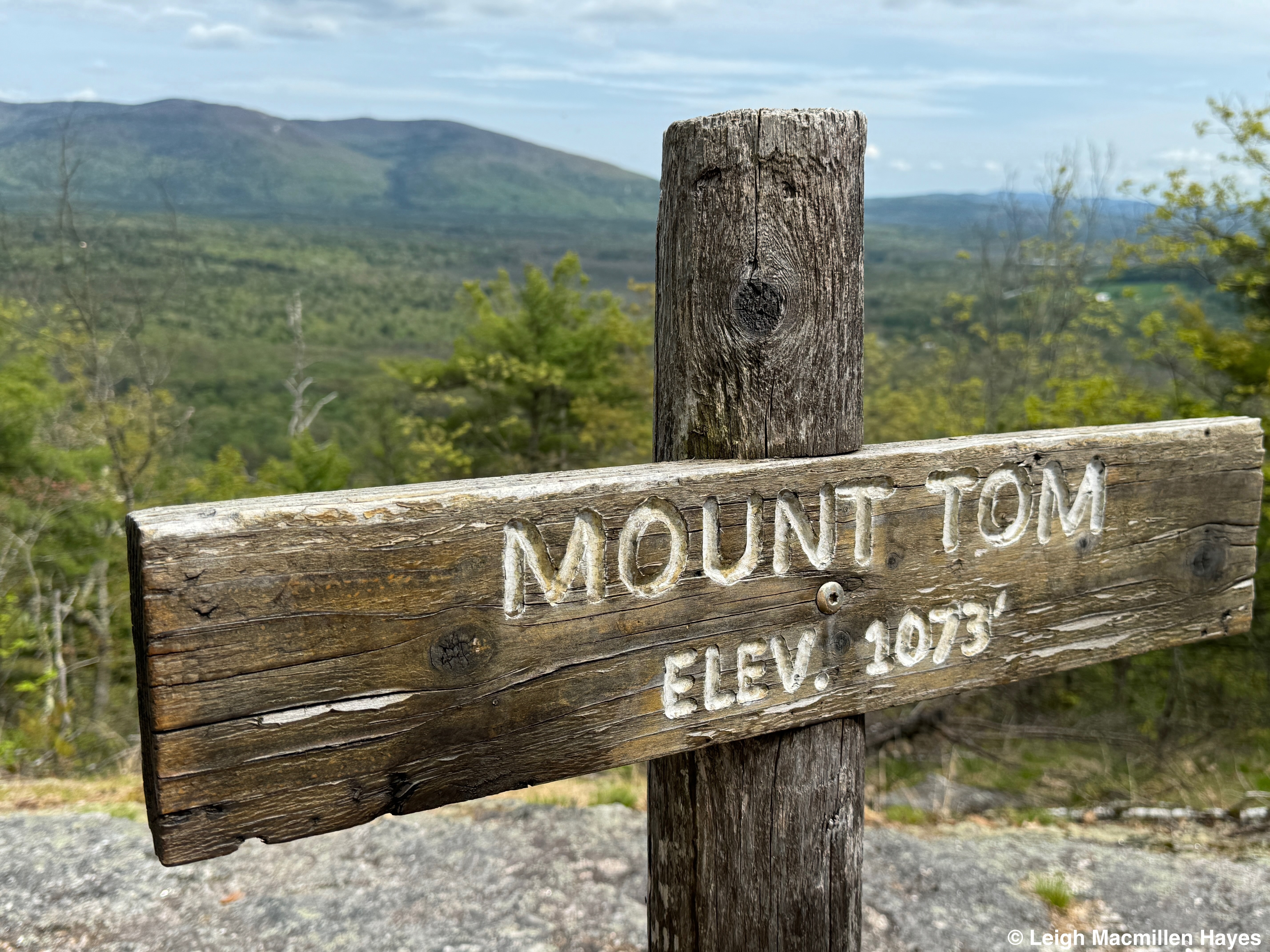
It’s about two miles to the summit, which isn’t all that high, but it’s the perfect quick hike (okay, remember who I was hiking with) for an afternoon. And at said summit, we stood for a few moments as we gazed upon the ridgeline of our hometown mountain–Pleasant by name.

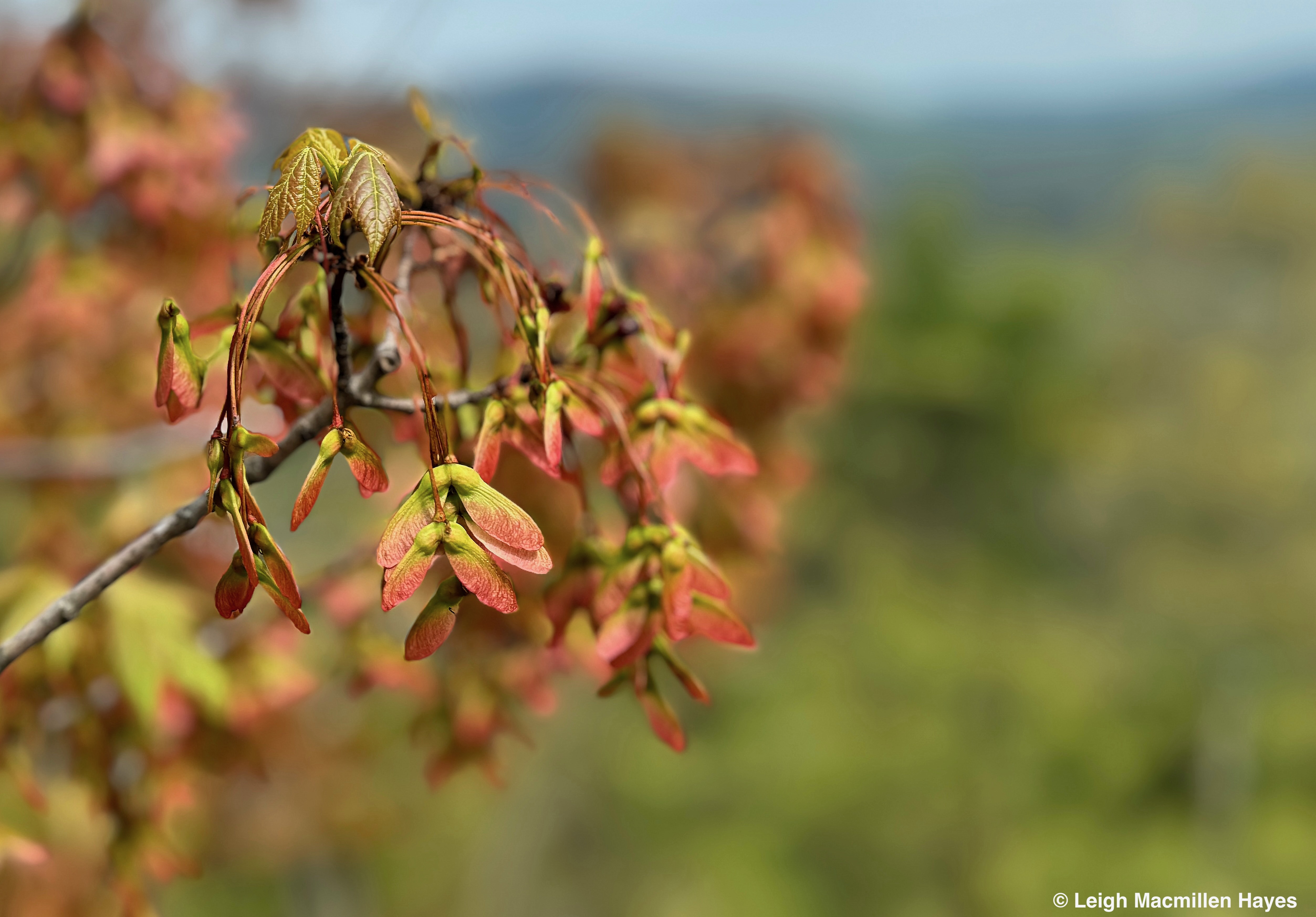
And at the summit, a Red Maple showed off its gifts to the future in the form of an abundance of samaras. Well, I see them as gifts. Given that we have an abundance of Sugar Maple seedlings growing in our yard doesn’t exactly thrill MG.

As we started to walk back along the trail, I spotted something we’d both missed on the way up. Wild Columbine. In flower. The. Most. Spectacular. Flower. That structure. Those colors.

And because we took a different path down, Striped Maple showed off its own set of flowers, limeade green in hue. I chuckled later when I commented on how the Beech leaves gave the trail such a summery look, and MG mentioned that he had even spotted toilet paper. It took me a second, during which I searched for a roll of white, before I realized he was referring to Nature’s Toilet Paper, for so large are the leaves of Striped Maples, and soft, and not poisonous, so you know they are safe to use. Not that we often encounter Poison Ivy in the woods, but it could happen.

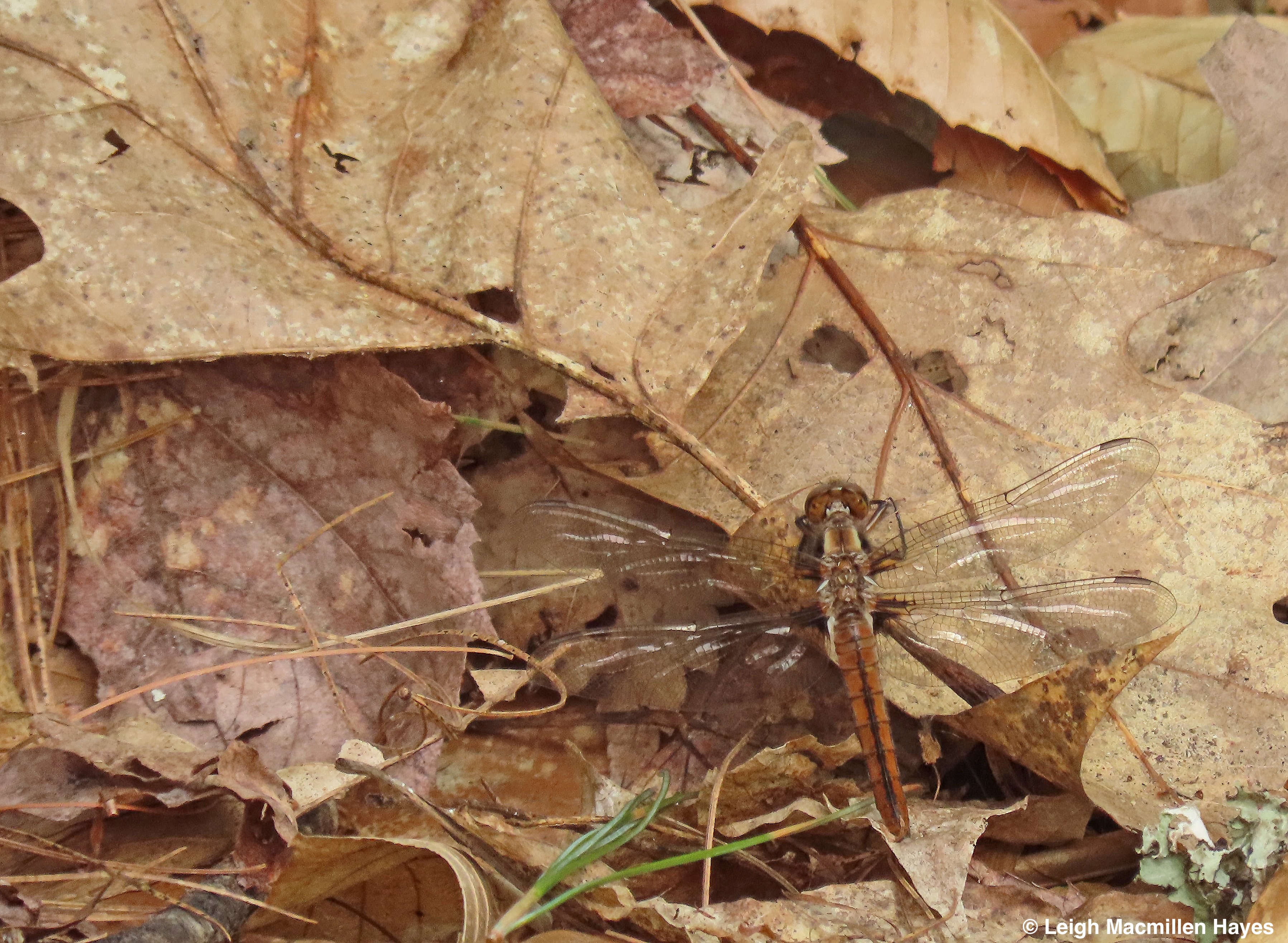
Back at the trailhead, the chickens weren’t there to congratulate us for a safe return, but we encountered probably the best finds of the day–several immature Chalk-fronted Skimmer Dragonflies. Let this next season begin.

Indeed, this was a day of firsts.

Savoring Spring

My paths were multiple this weekend as if I was on a quest.

On a bridge over a brook,

down a road through the forest,

beside a bog,

along a boardwalk,

and even following this guy down low and up high.

Together today, we circled another brook (if one can actually circle a brook, but we did),

enjoyed this view from lunch roots,

and dessert on the rocks where we could peek down on said roots.

Though I may have been alone for much of the weekend, I never really was for the bird song, including the conk-er-ies from this male Red-winged Blackbird, accompanied me where ever I hiked.

There were Eastern Chipmunks adding to the chorus as they chortled at me and I chortled back, though I did wonder if life hasn’t always been so easy for this one given the marks on its body and a very short tail.

I watched Painted Turtles bask, despite cooler temperatures, though the air was probably warmer than that of the water.

And I was chastised by this Red Squirrel, but really I had done nothing wrong–except to enter his territory without an invitation.

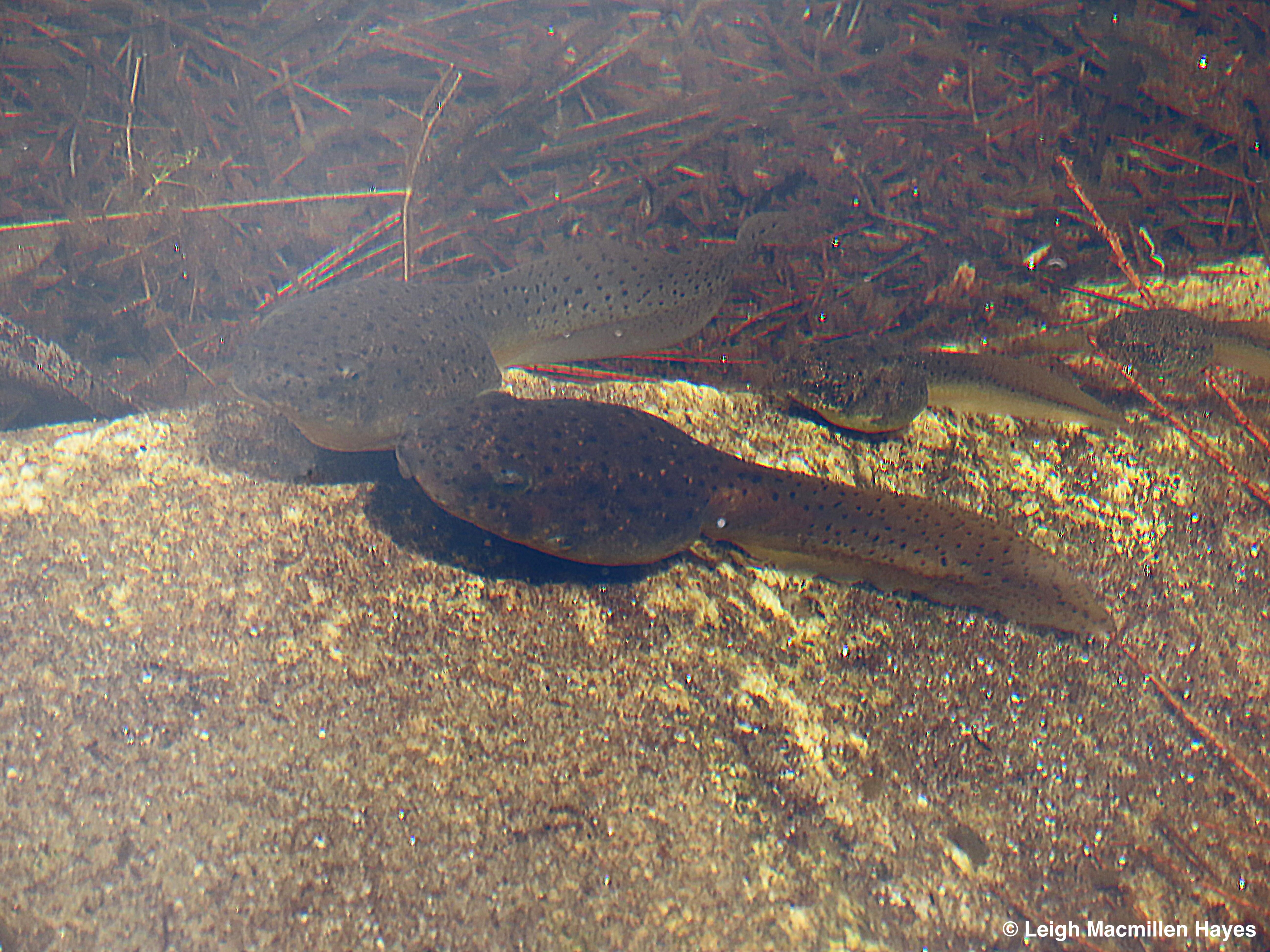
In the depths of the water today, tadpoles. HUGE tadpoles of the Bullfrog sort, which take two years to mature. I spotted tiny hind legs growing beside where the abdomen meets the tail. There were also lots of smaller tadpoles, too big to be Wood Frogs or Pickerel, but I suspected either one-year old Bullfrogs, or perhaps they were Green. Or both.

A few flying insects also brightened the days (and I have to say I’m not referring to Black Flies, which I hardly spotted–and actually caused me concern, for where have the little biters gone?), including this Anglewing butterfly. I can’t name it to species, for it is either a Comma or Question Mark, but never in the time I watched did it pose so that the underwings were visible. Okay, so My Guy and I spotted it today and when I explained to him the difference between the two, the C having a small white comma on its underwing and the QM, a small comma and a dot looking rather like the punctuation mark, he decided it must be an Exclamation Mark instead.

And in the same area, an American Lady added her color to the scene.

Leatherleaf’s bell shaped flowers reminded me of clothing hanging from an outdoor line.

And I’m really beginning to believe there are a trillion Painted Trillium, though I didn’t actually count. There’s something to admire about those olive green leaves and perhaps it’s that we don’t often see that color in nature.

I even spotted a few that chose a different paint palette. I could explain away the color of the leaves by thinking that perhaps they were showing off their anthocyanin, which gives fall leaves their red color and is seen in the spring as well, perhaps serving as a sunscreen for the plant. But the color of the petals was equally amazing, though who knows, maybe it’s common and I was just paying attention to it for the first time. That does happen. A lot.

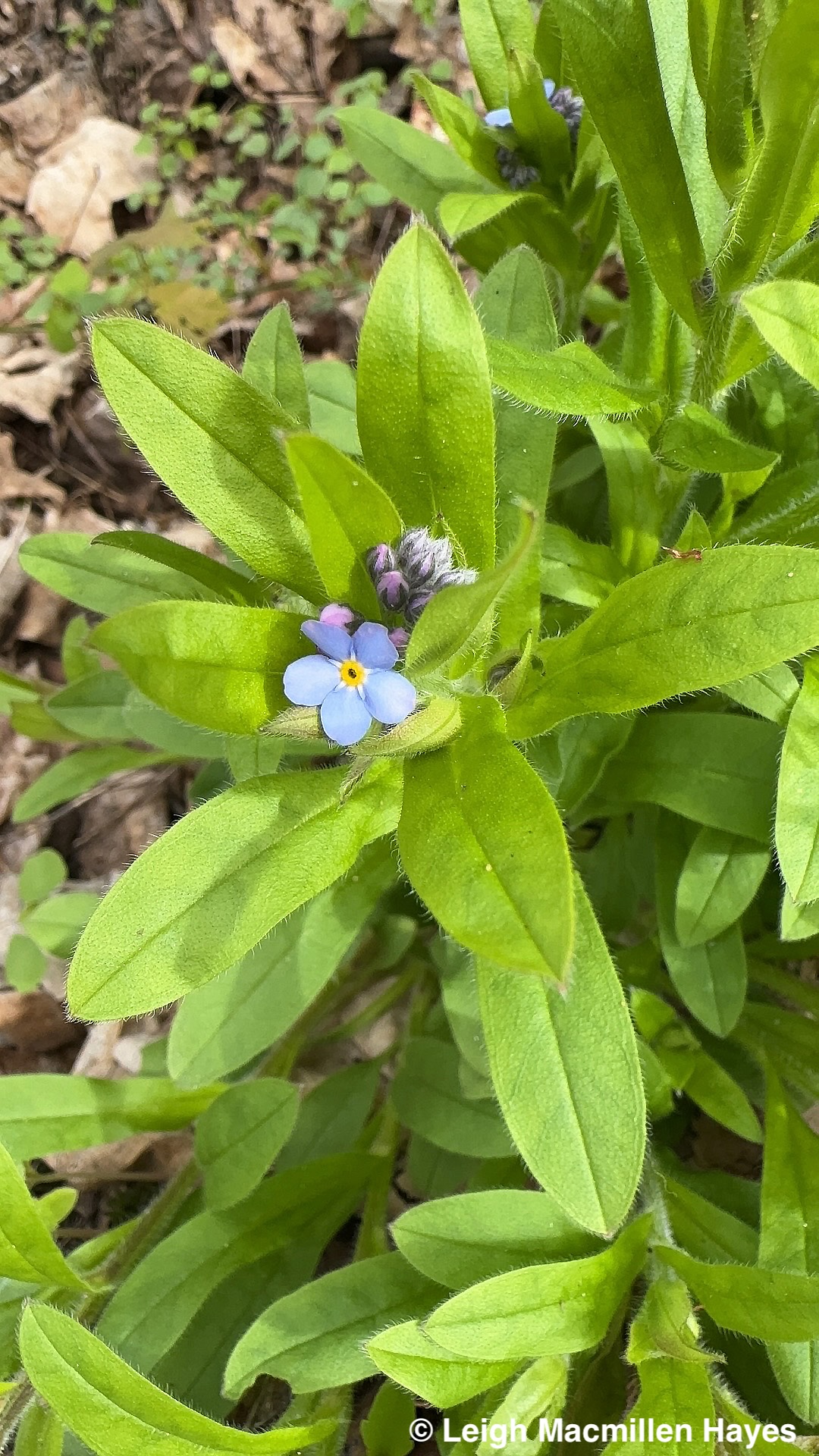
And then there was the amazing blue hue of Forget-Me-Nots. I surely won’t. Forget you that is.

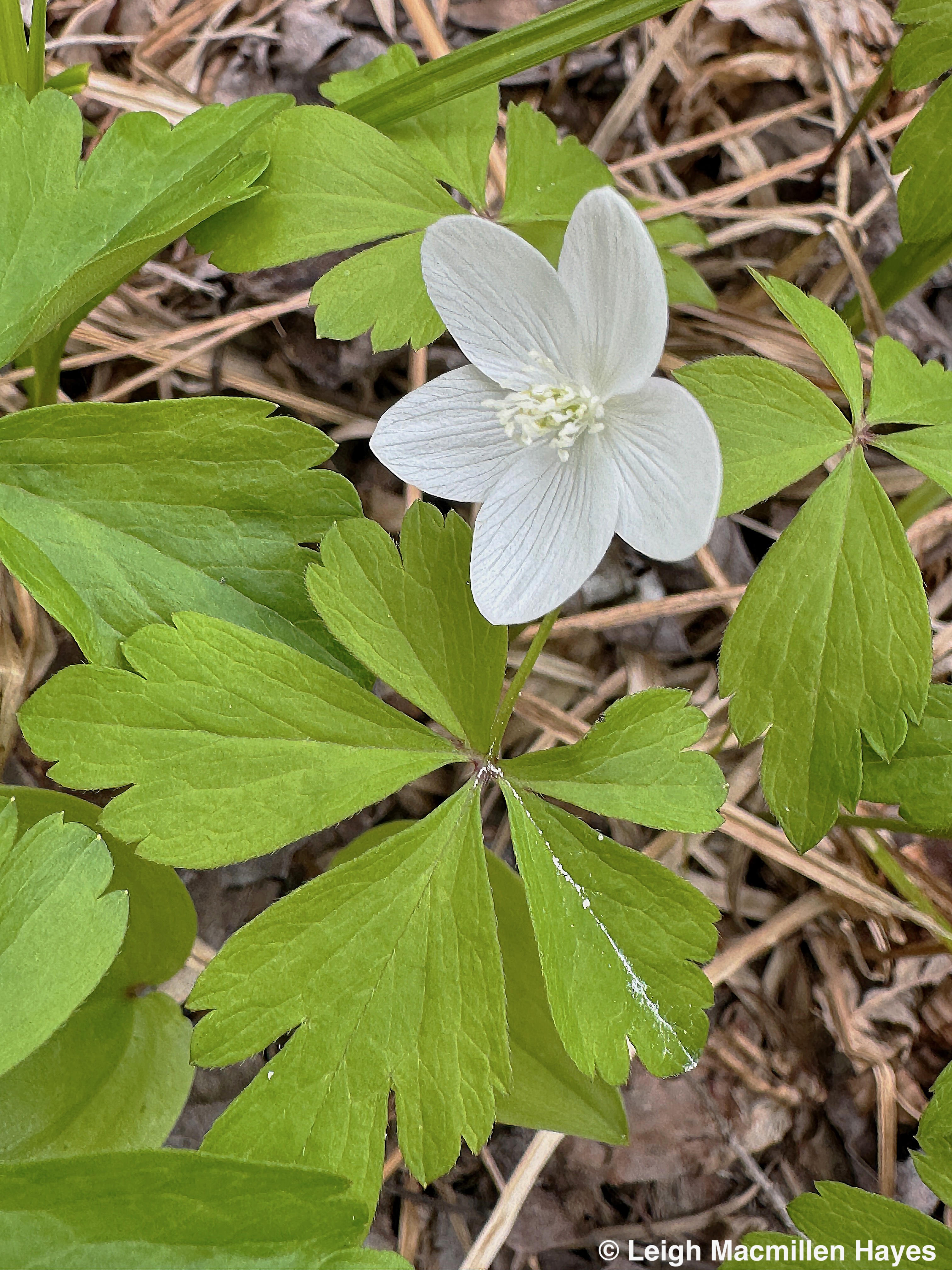
And Wood Anemone, its compound leaves notched, and flowers deeply veined, looking so tender and fragile.

Not looking tender, and hardly fragile, but still beautiful, was the carnivorous Pitcher Plant, of which I paused beside several. I’ve known this particular one for at least twenty years so when I encounter it, I always feel like I’m meeting an old friend. Because I am.

Hiding beneath its lime green leaves, American-Fly Honeysuckle’s delicate flowers did dangle in their manner of two. The shrub always surprises me, though it is a native, but I don’t get to greet it often enough.

All of these flowers bloom so early because they take advantage of sunlight before leaves emerge. That’s all changing now and in another week it will surely look more like summer around here. What I love about some leaves, especially American Beech, is that they are so hairy to start, and look like they’d make great fringed skirts for fairies. The other thing I became aware of this weekend, was the raindropy sound of their bud scales hitting the ground.

I love winter, but this season to follow is flying by, and already the Trailing Arbutus has reached its waning hour.

But there is hope in the form of others, like this Indian Cucumber Root, creating a second tier and a bud, and in a few weeks I’ll be seeking out its otherworldly flowers.

I’m savoring spring–before it moves on. I hope you are on the same quest.

One Minute of Vernal Pool Fame

Since November, newly minted Maine Master Naturalist Dawn Wood and I have co-led a program we call Wednesday Wanders for Loon Echo Land Trust in Bridgton, Maine. This past week, channel 8 WMTW reporter Jacob Murphy and his videographer Ethan joined us for a tramp into a vernal pool at LELT’s Tiger Hill Community Forest in Sebago.

Here’s the clip: Hometown Maine: Sebago

Take a listen as Aurora, Marie, and Henry comment on the experience. It’s this and soooo much more.

Somewhere Under The Rainbow

Somehow we thought the rain wouldn’t fall upon our hike today, until it did. And so we sat in the truck for about 15-20 minutes, waiting for the drops to slow down, which they did.

The rain, however, enhanced everything. And as the sun came out, the water and warmth combined to create a Black Fly Festival, one which will last for several more weeks.

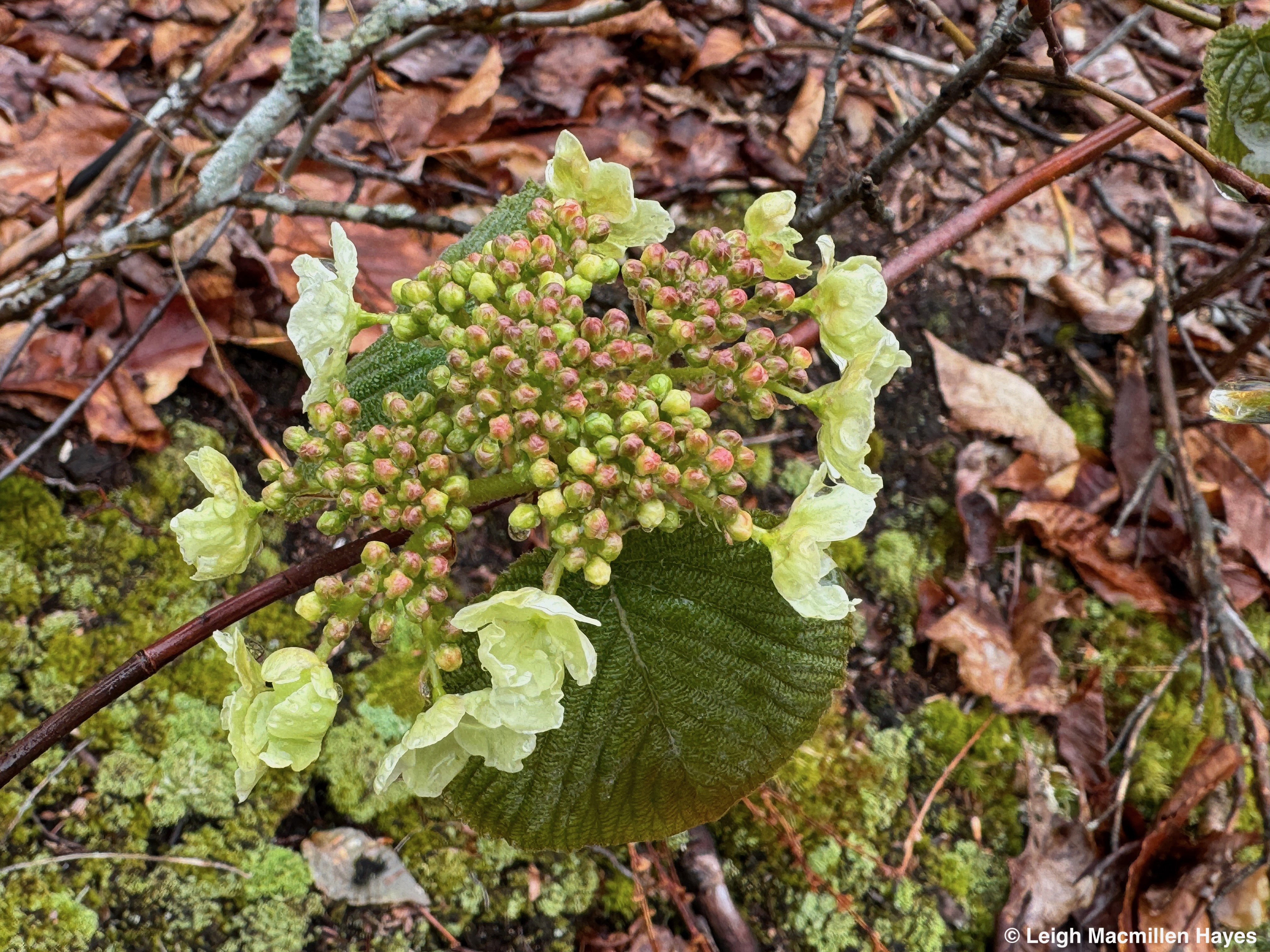
But, April/May showers do bring May flowers, and I sooo love the pastel colors that Hobblebush produces, its non-fertile showy flowers on the edge meant to entice insects to visit about a hundred tiny fertile flowers preparing to bloom in the center.

In wet seeps, Round-leaf Yellow Violets did show off their cheery faces, with violet-veined runways showing the way to the nectary, much like lights at an airfield that aid landings.

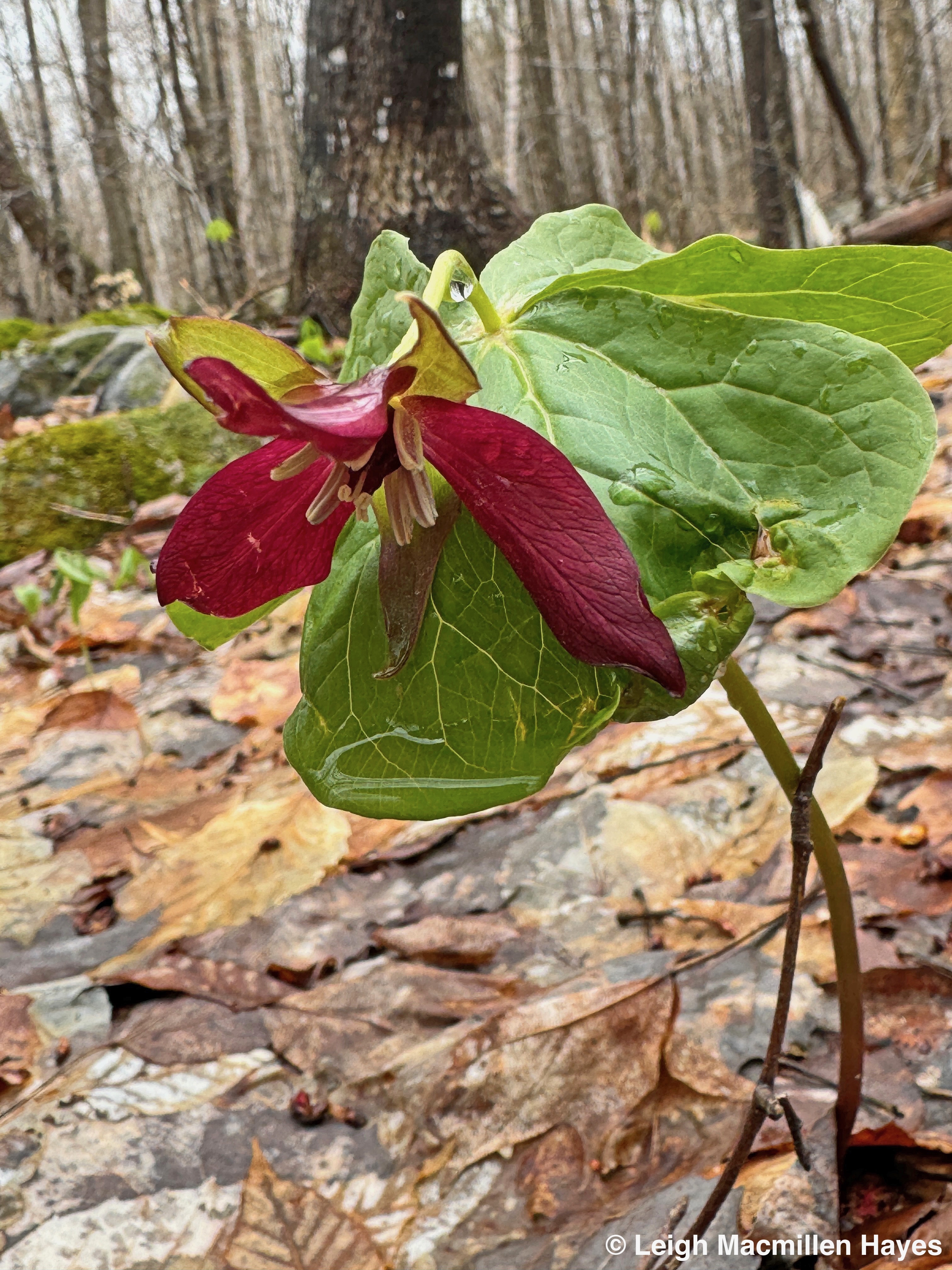
And fortunately My Guy didn’t question the fact that I was taking more photos of Red Trillium, for I’ve hardly reached the trillion I intend to take. Really though, in a few weeks our attention will turn toward his beloved Lady’s Slippers, and there are comparatively fewer trilliums than slippers in the forests through which we wander.

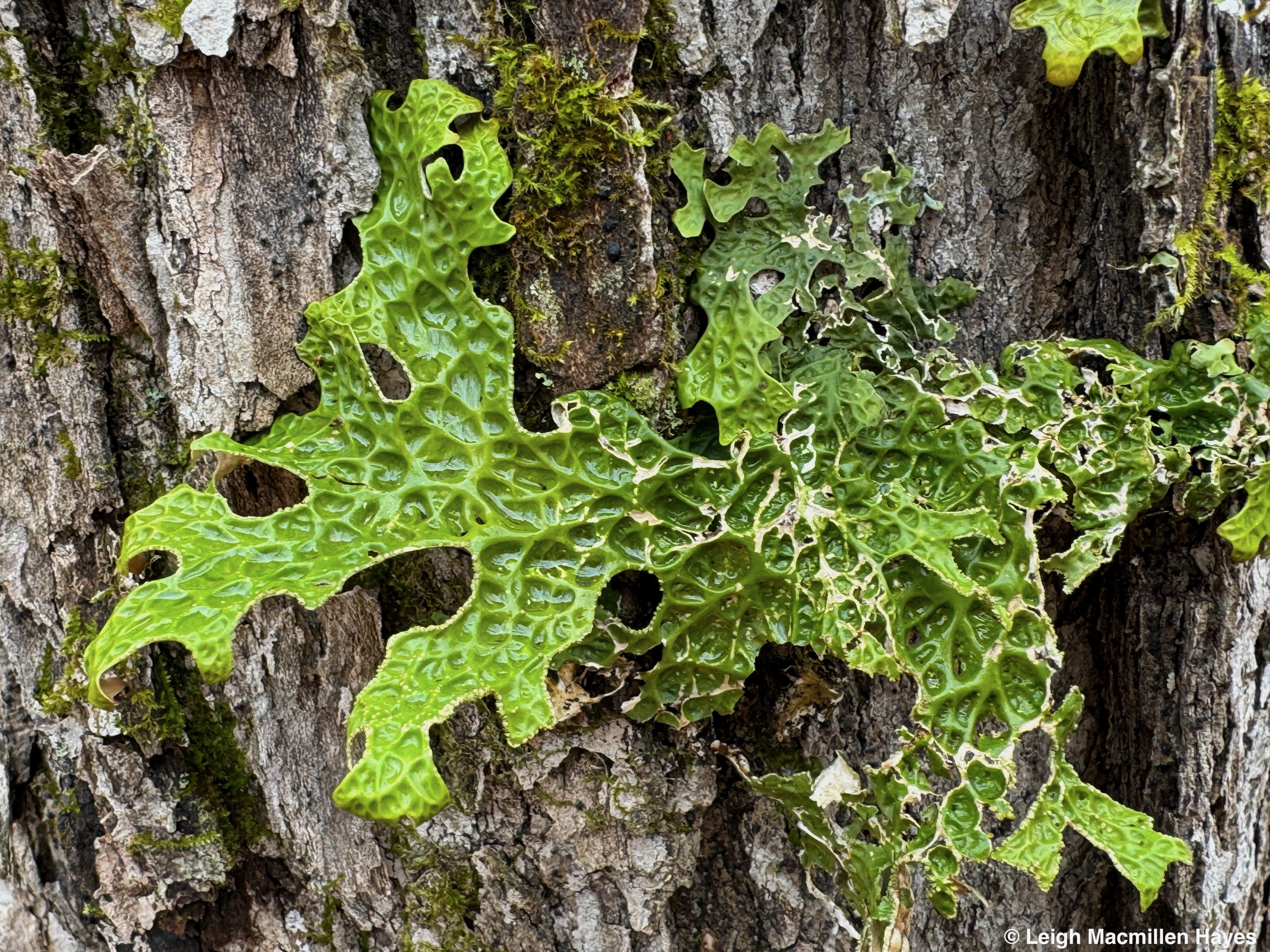
Because of the rain, Lungwort, a foliose lichen consisting of a fungus and a green algal partner living together in a symbiotic relationship with a cyanobacterium, showed off its greenliness since the alga had kicked into action to provide food for the fungal structure. It’s sensitive to air pollution and habitat loss, so spotting it is always a treat and reminds us of why we love living here in western Maine.

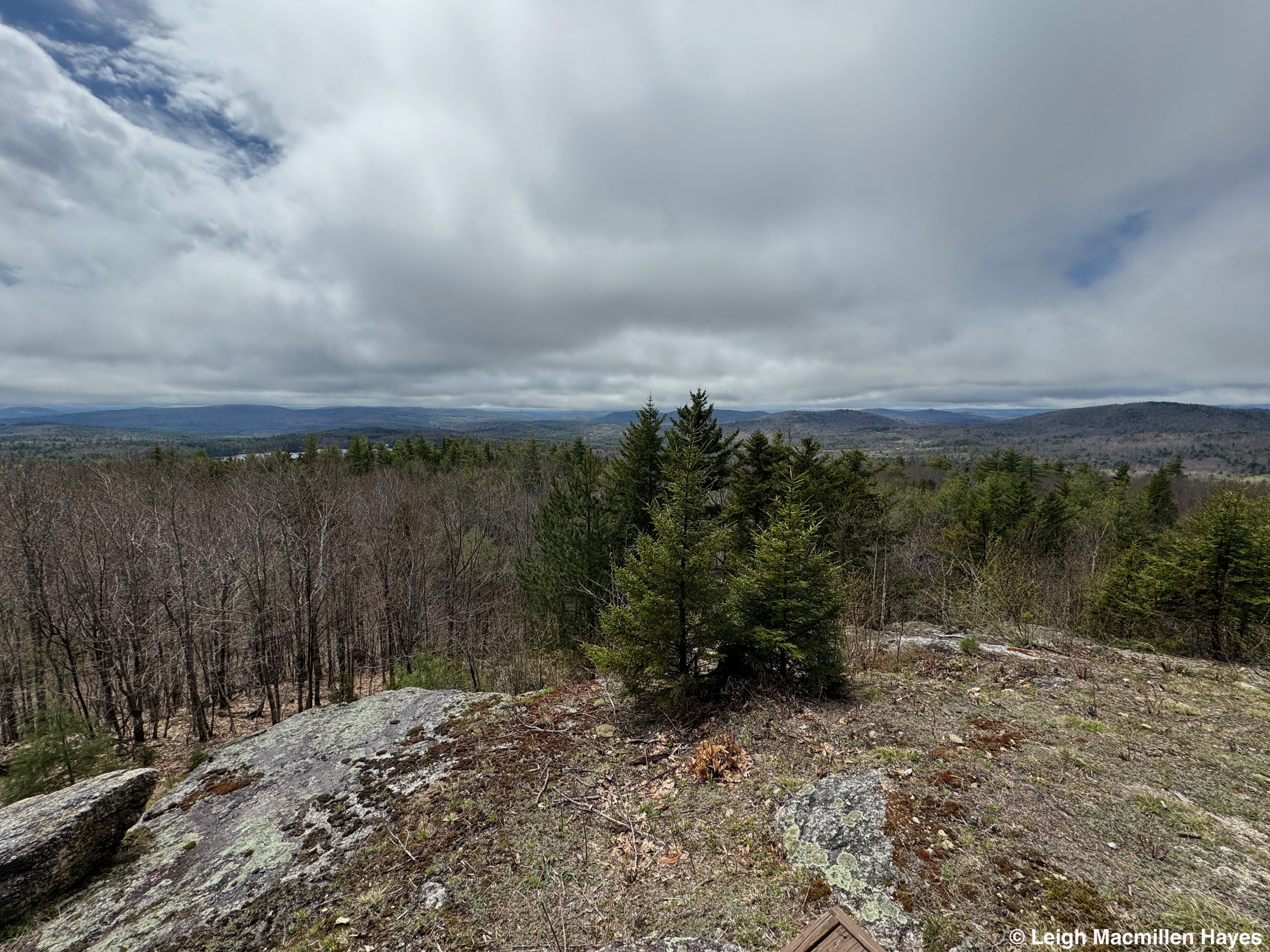
Below the summit, we paused to share lunch with the Black Flies and take in the view of the mountains, though many were obscured by the cloud cover.

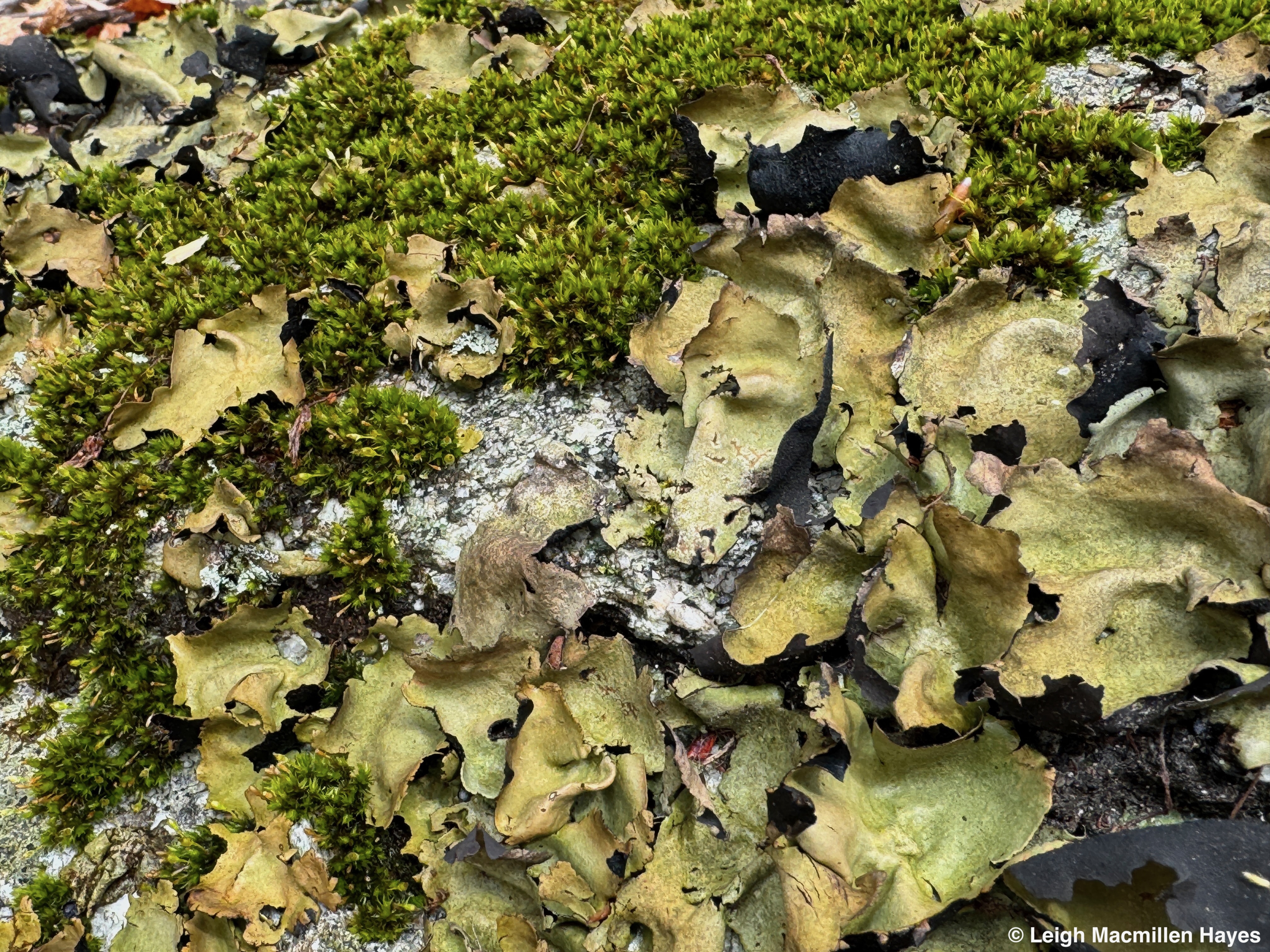
On our descent, there were more hues of green to add to the art palette in the form of the larger Rock Tripe, an umbilicate foliose lichen, and Rock Tuft Moss scattered in its midst.

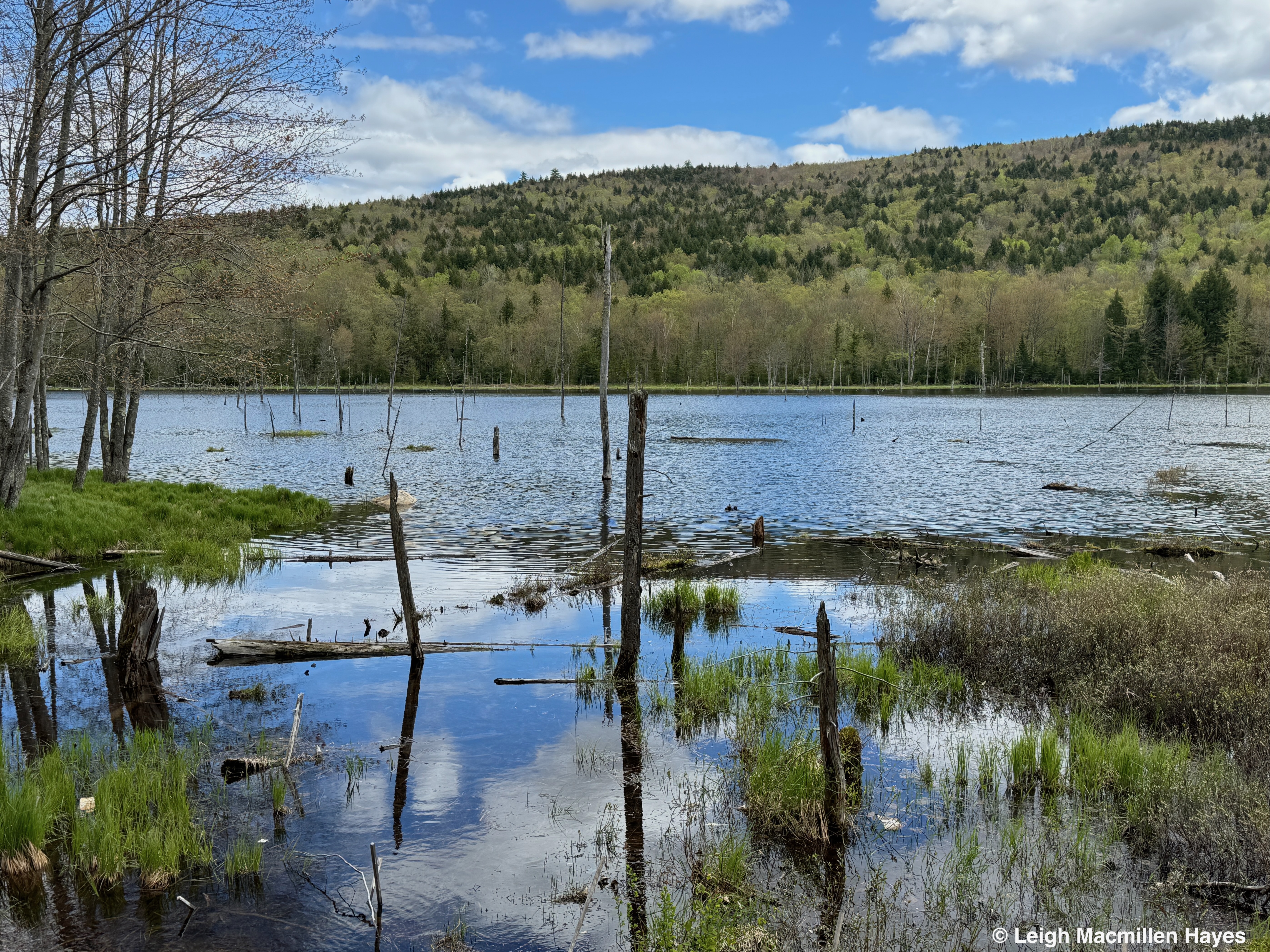
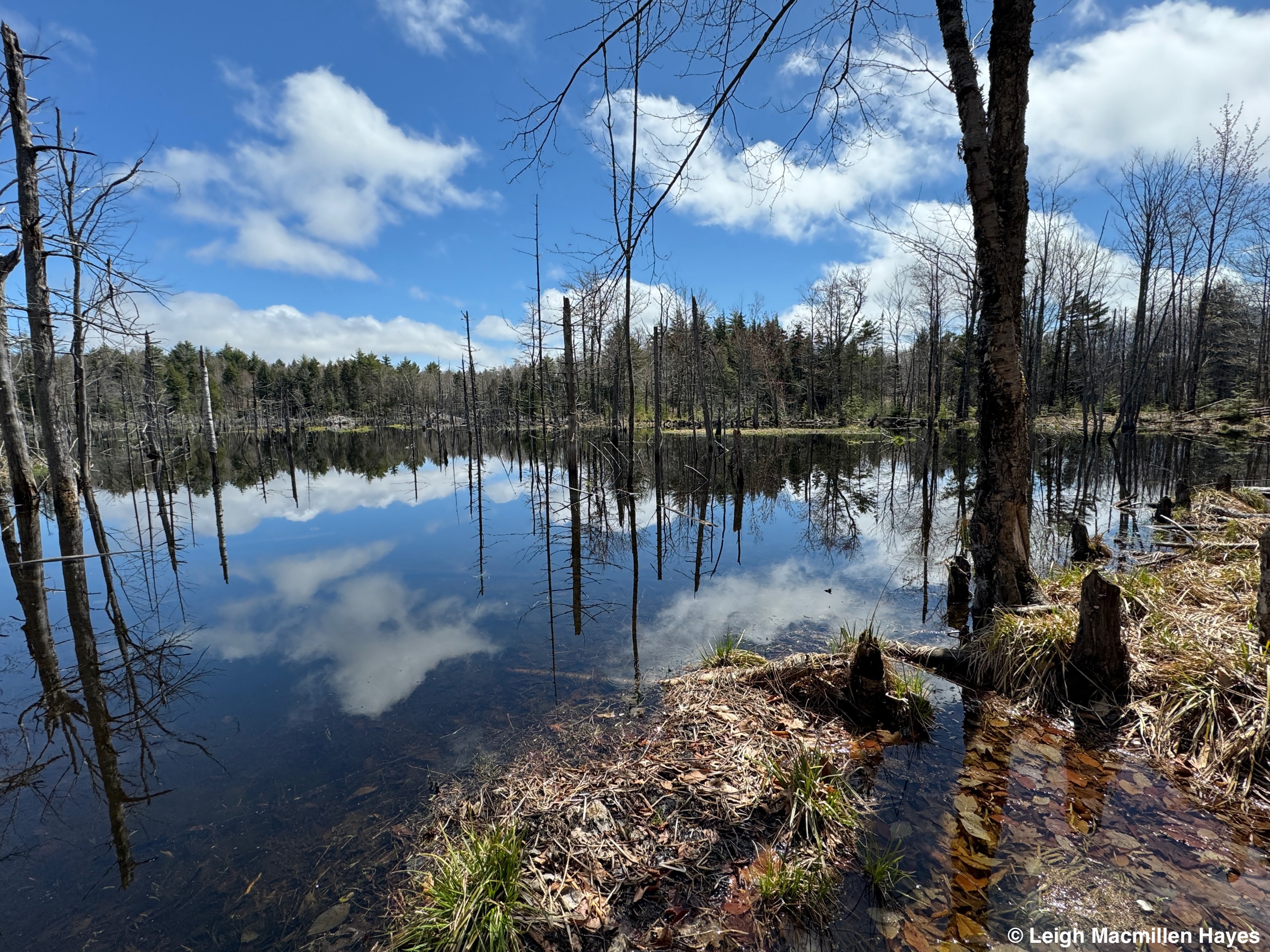
At a beaver pond, we noted several beaver lodges that looked abandoned and a long dam, but it was the reflection of the sky and clouds that also garnered our attention. The day had transformed as was visible both above and below.

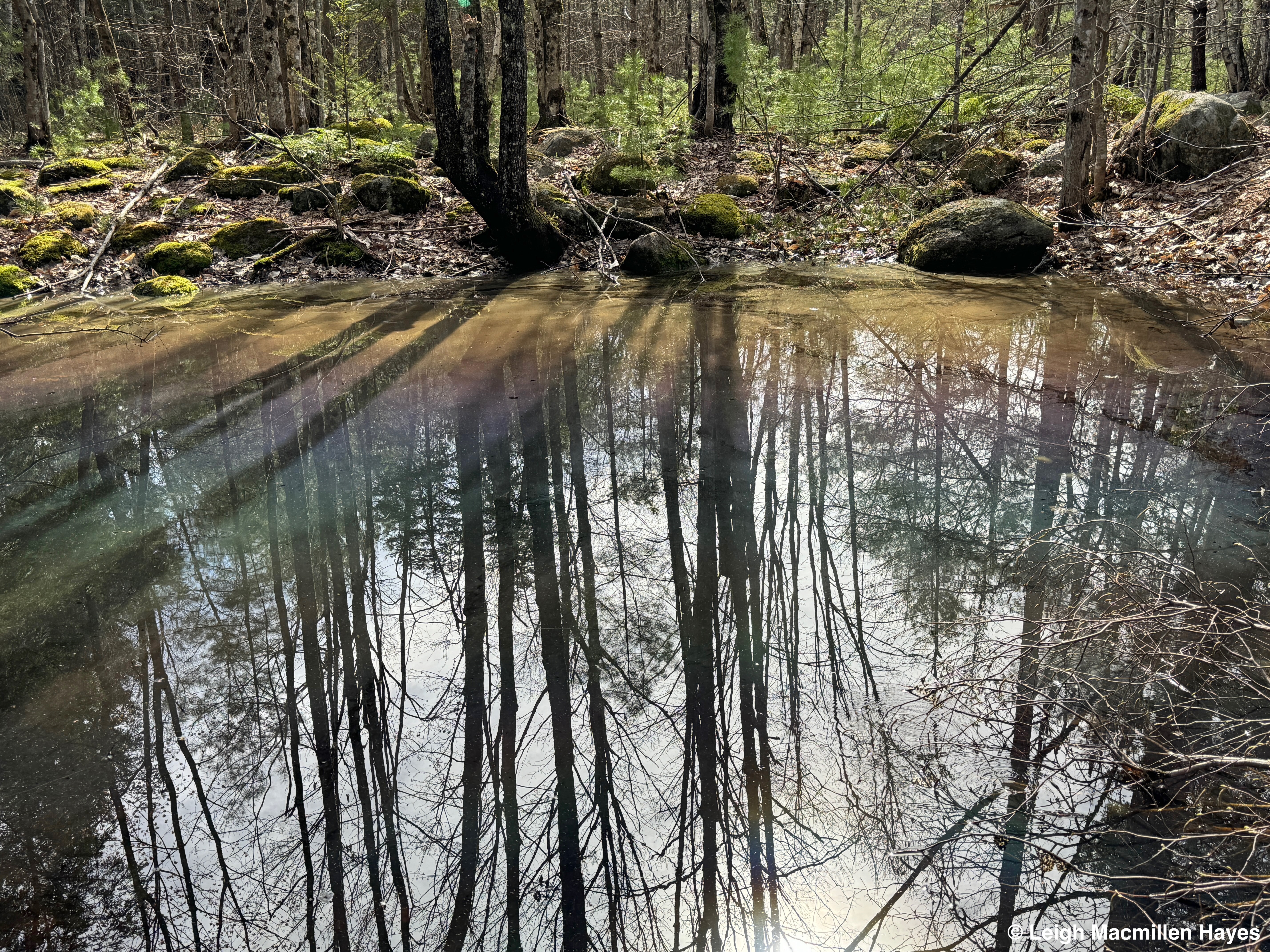
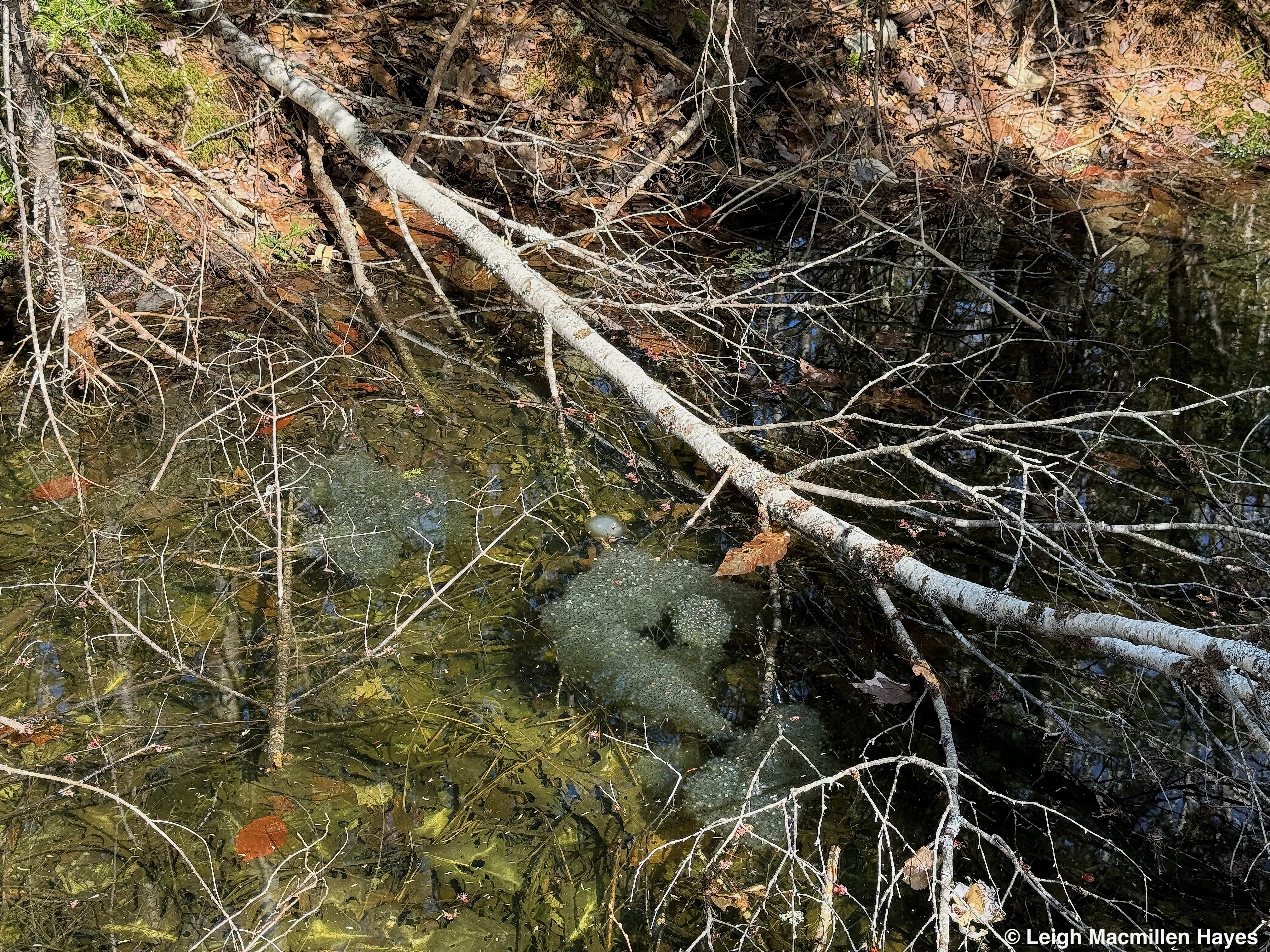
Back at home, I wandered out to the vernal pool to check on the activity. A few days ago I realized that tadpoles were beginning to emerge from egg masses, and today’s warmer weather brought even more into the picture, which in this case included both what I could see under water, as well as the reflection of trees and sky upon the water.

It was when I stopped looking into the depths, however, and focused upon the scene before me, that I realized I was seeing something I’ve never noticed before.

As I had approached the pool, I saw that it had a coating of Birch and Maple pollen and thought with a smile of a fourth grader spotting such last year and looking confused as he asked me if it was ice. No Daniel, it’s not ice. But his initial reaction made sense.

What I noticed today was that the pollen added a rainbow to the water’s surface as the sun got lower in the sky. Yellow by the far shore, orange, red, purple, blue, and green.

So, what caused this rainbow to appear? I’m a huge fan of taking a stick to a Balsam Fir blister to gather some resin and then tossing it into a puddle or still water to watch the natural resins or essential oils appear. Was that happening here?

Maybe this was from decaying vegetation and the sun being at the right angle?

Maybe it had something to do with the pollen as well as the sun’s angle?

I don’t know, but certainly it was fun that this day which began with rain, and showed off a variety of vibrant colors during our five-mile hike, should end somewhere under the rainbow.

The Extraordinary Ordinary

I love to venture off and explore other places but more and more I feel drawn to just head out the back door and see what this land of field and forest and vernal pools and puddles has to offer. And so I do. Almost daily.

It’s land where the Red Maples are in full flowering mode, this cluster being male, each with five to ten slender stamens.

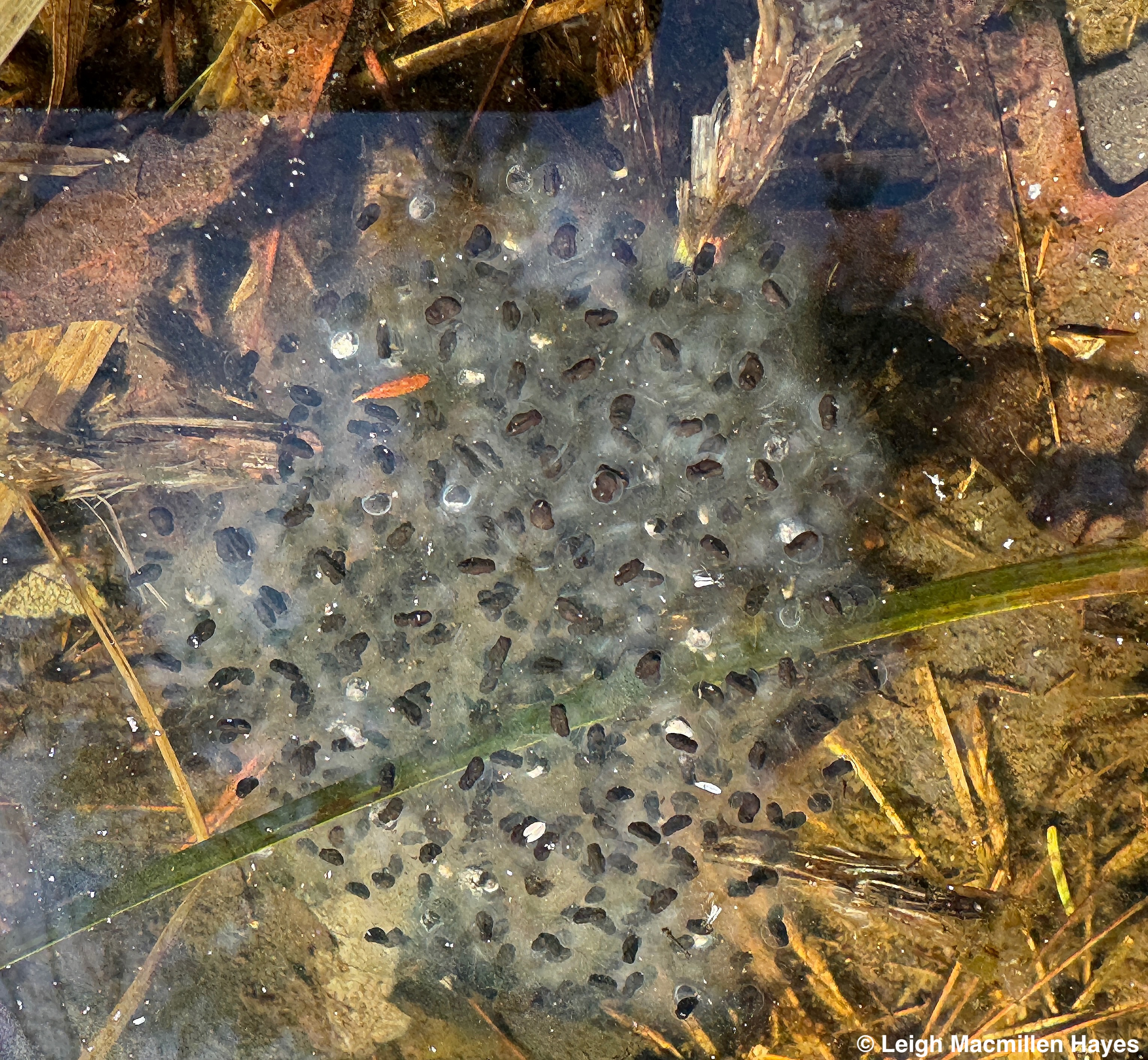
As beautiful as the flowers are, one of the real reasons I head out so often right now is that the vernal pools are full of egg masses, both Wood Frog and Spotted Salamander. Somehow, this year, except during Big Night, I missed the Wood Frog activity in the pools I frequent, but by the amount of egg masses, I know they were there.

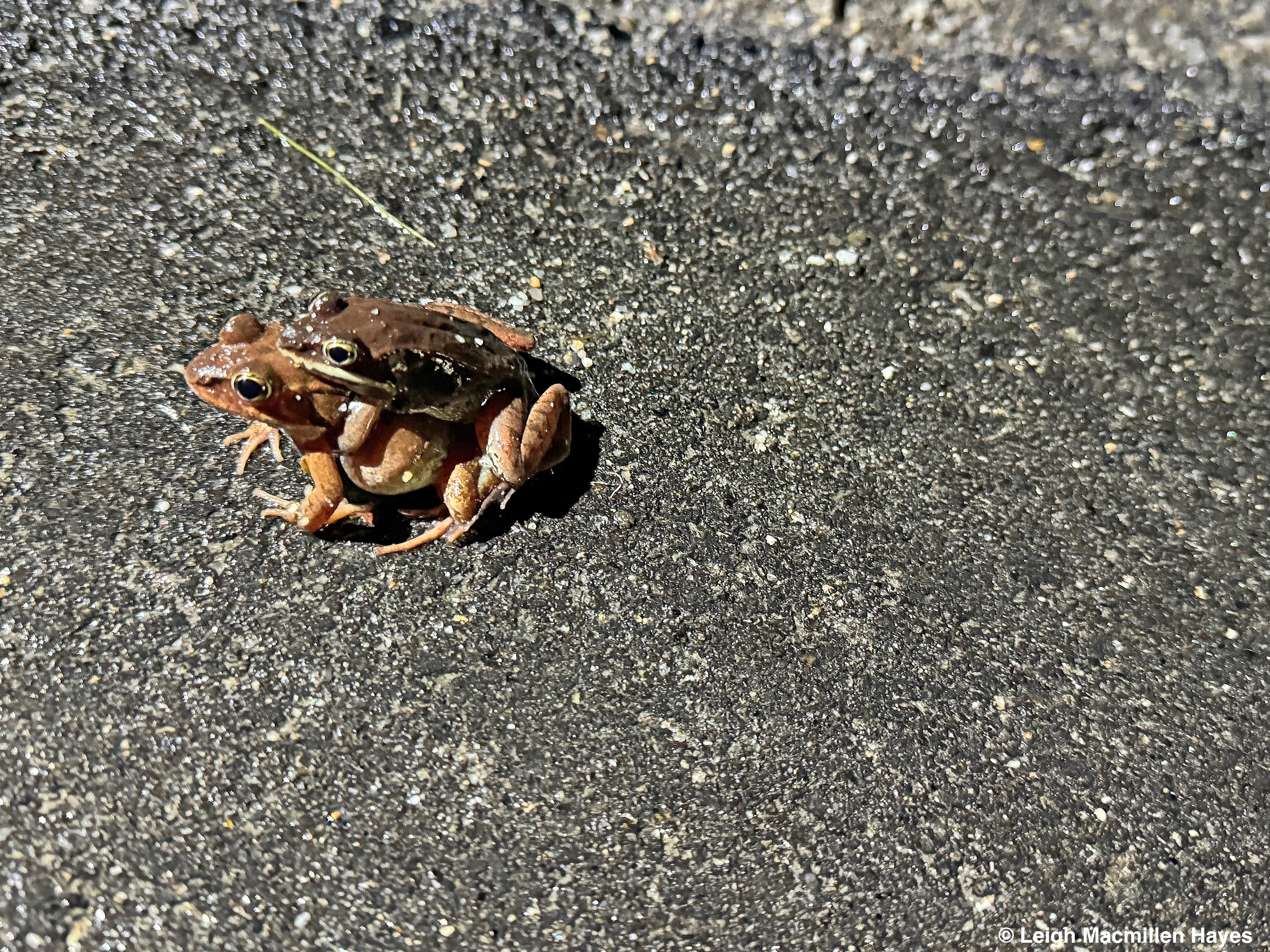
What cracks me up is that it isn’t just vernal pools that are used for the canoodling ritual. Sometimes, if there’s a rut on the way to the pool and he decides to start calling, and she responds, well, you know how it goes.

And so it must have, for this one mass is in the rut pictured above.

It reminded me of the two sets of Wood Frogs we had to gently move off the road during Big Night. They couldn’t even wait until they found a rut.

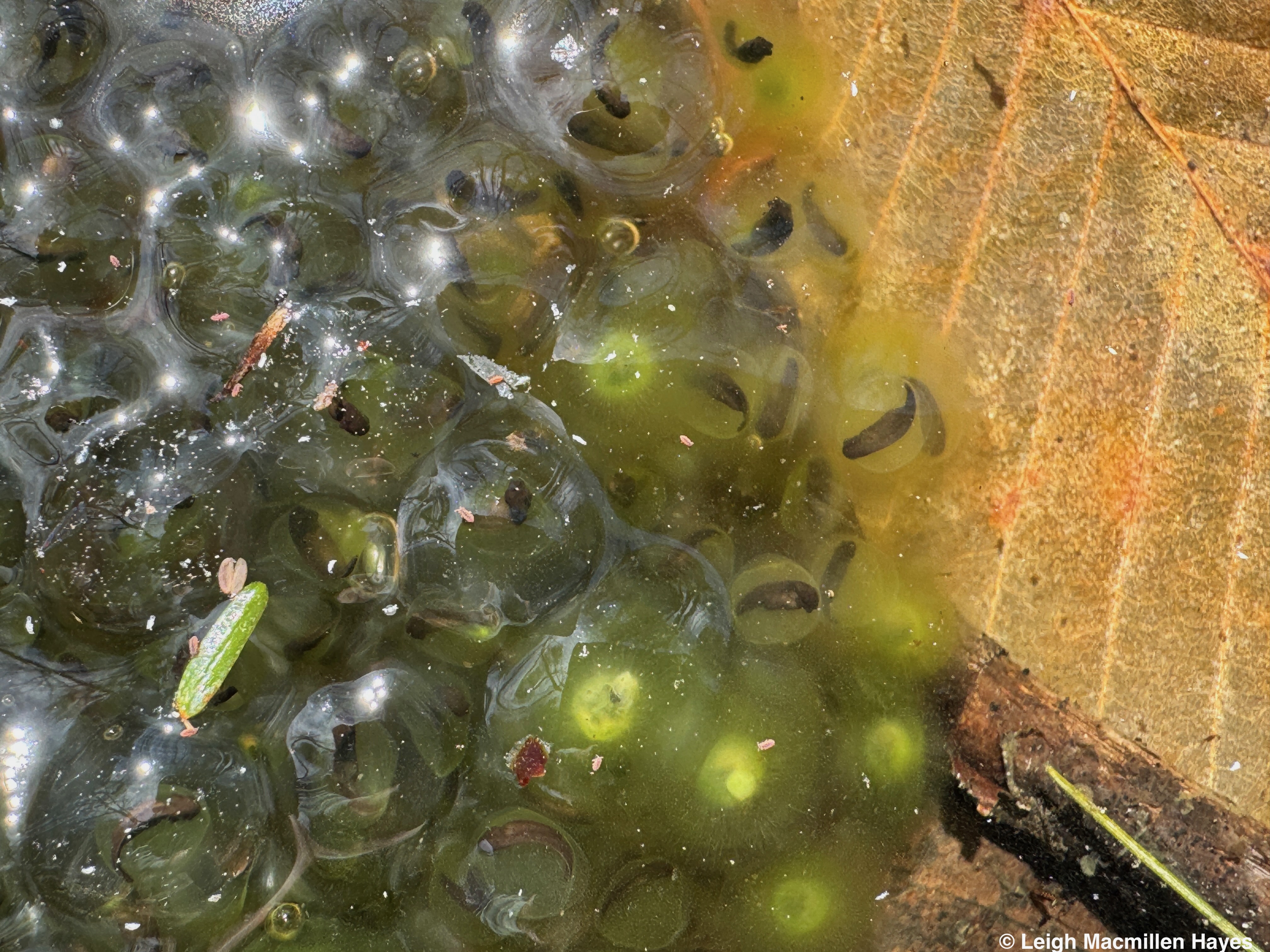
It’s only been about two or three weeks since the eggs were laid and fertilized, and already the embryos are taking on their tadpole shape.

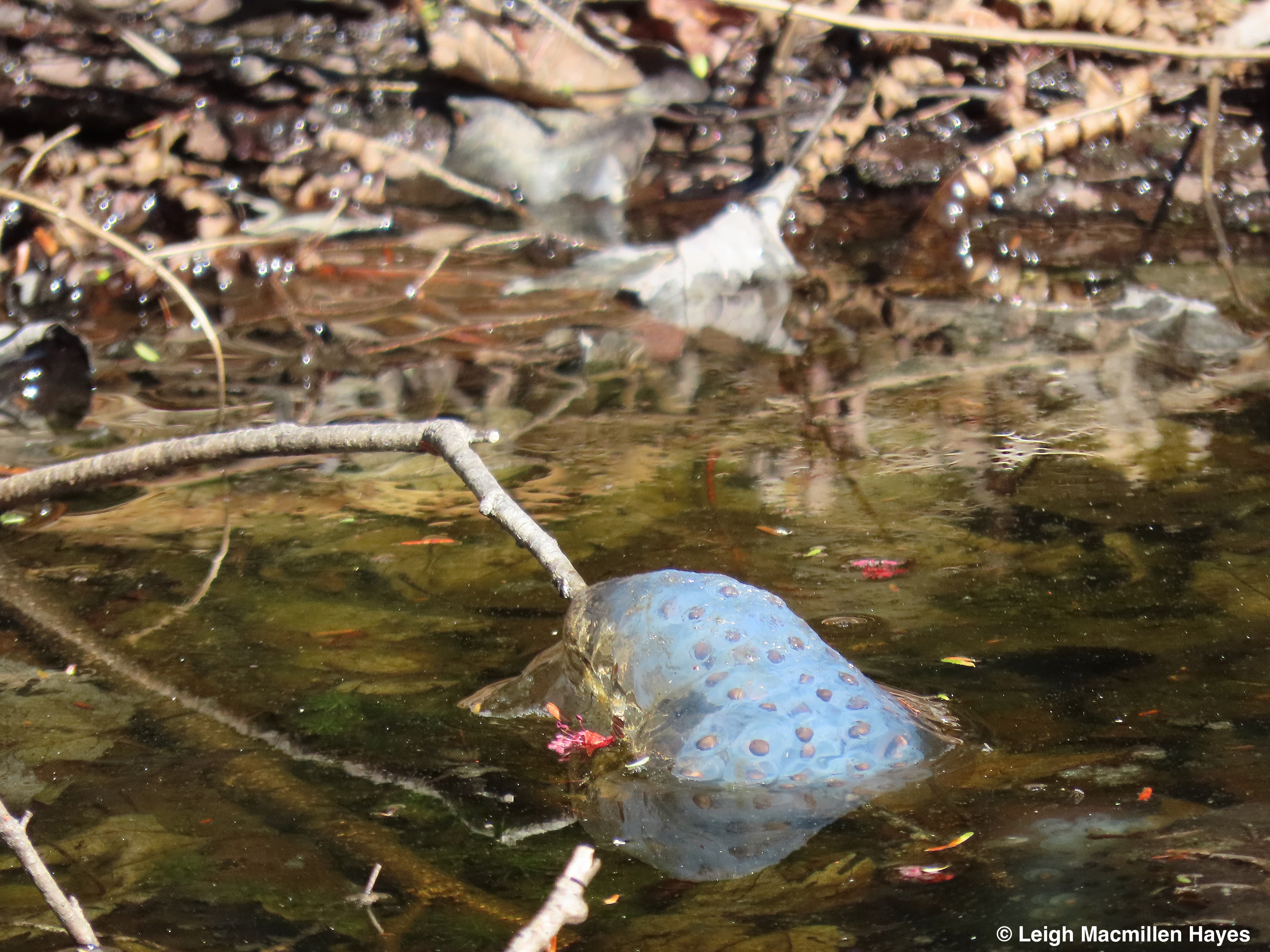
In another location, I spotted a Spotted Salamander egg mass that was also deposited about two weeks ago, at a time when snow melt and rain were the norm. We’ve had some rain since then, but the tide is quickly going down in the pools. Wait. There is no tide in these. Being rain/snowmelt dependent, the water is quickly evaporating and this mass probably will become food for something rather than turn into 100 or so salamander tadpoles.

But in “My” vernal pool, where I put “My” in quotes because I don’t actually own the land upon which it is located, I just think I do, the salamander embryos are also taking form.

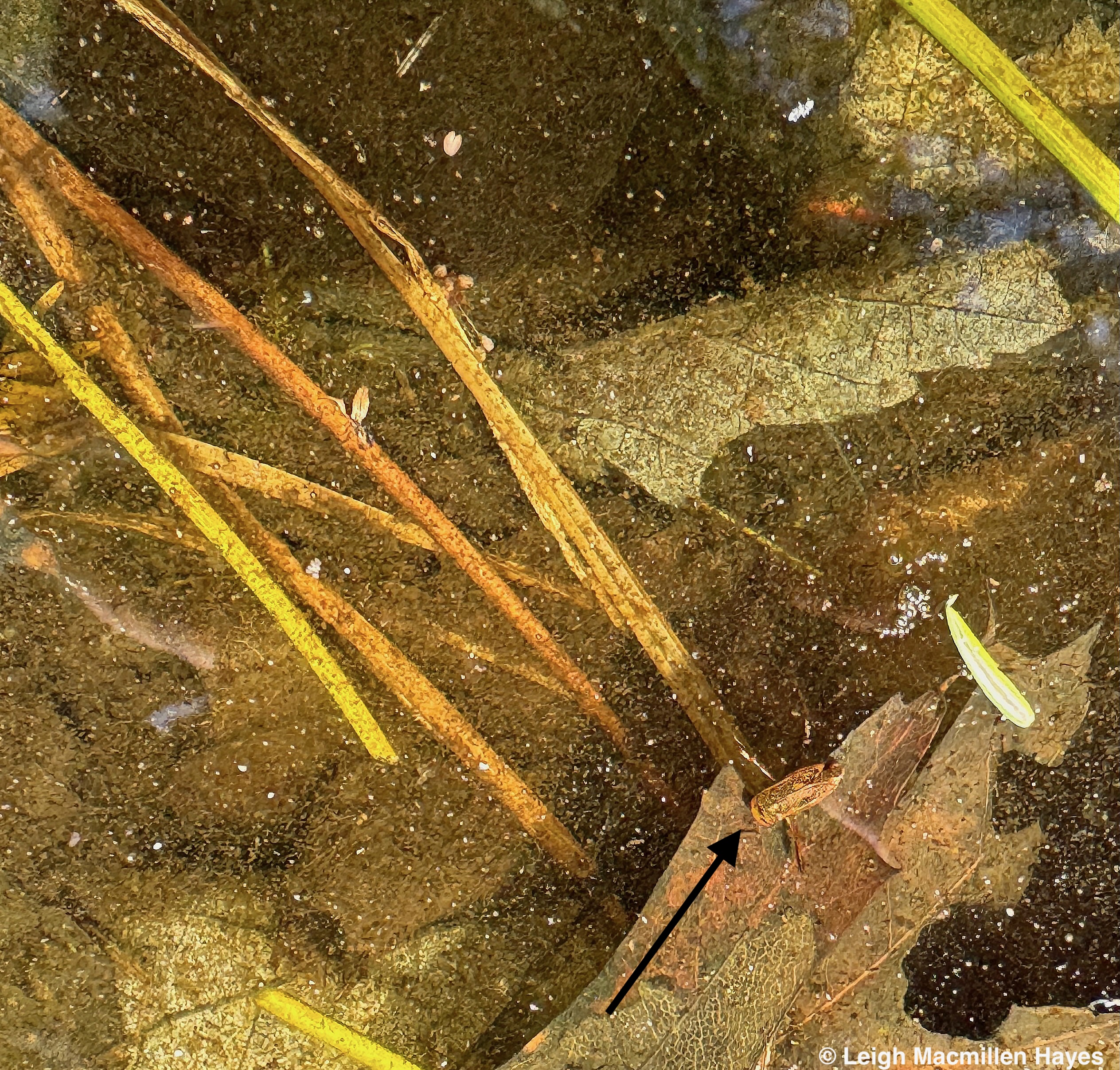
Of course, when one is stooped over and staring into the water, there’s more to see like this Water Strider. Water Striders are so cool as they skate along the surface thanks to some hairs at the ends of their legs that we can’t see. At least I can’t. Those hairs don’t get wet and instead attract water molecules. I placed an arrow on the photo because the shadow a strider creates with what appear to be larger than life feet speaks to this adaptation.

And in this case, the arrow points to a Water Boatman. I love how his tiger-like body design, though not intentionally, mimics the oak leaf above which he swam. Unlike the skating strider, a Water Boatman uses its hind legs as oars.

In one of the shallowest pools I know of outback, Mosquito and Caddisfly Larvae move about, the first suspended in the water column just below the surface, breathing air through tubes at the end of the abdomen. The Northern Case Maker Caddisflies took advantage of all the plant material, including a Red Maple flower to add a bit of class to its house.

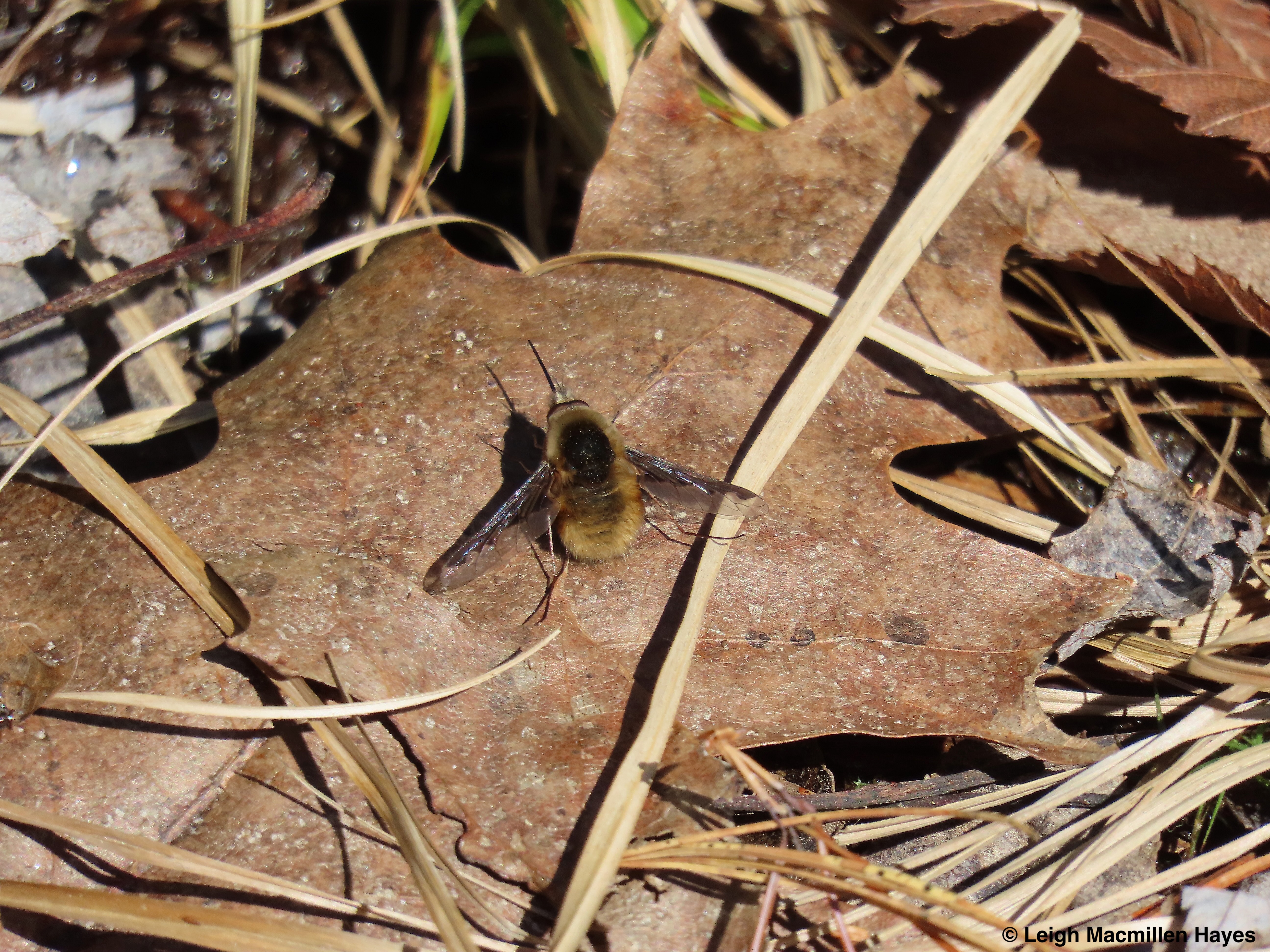
When I wasn’t looking into water, I did notice a few other things like about five or six Greater Bee Flies frequenting one area. The cool thing about bee flies is that they do look like bees, but don’t sting. While they feed on nectar, they also parasitize the nests of solitary bees and I have to wonder if that was what their behavior was about.

Several Six-spotted Tiger Beetles with their metallic green coloring, dashed here and there, always on the move as they looked for other insects to devour. Here’s the thing about these beetles–not all have six white spots, or even any spots.

Speaking of spots, I love the violet-blue markings on a Mourning Cloak Butterfly. This species overwinters under tree bark and other protected places as adults, so they are one of the earliest for us to encounter in the spring, along with Question Mark and Comma Butterflies. And then we get to enjoy a second brood in the autumn that will hibernate as adults.

So it’s not all about insects, though I suspect if I look hard enough I will find one in this photo. But it was the first Bluet of the season that I needed to note. Sure, they’ll be commonplace soon, but this one is the harbinger. And it was enhanced by the contrasting red caps of some British Soldier lichens.

As I walked toward home this afternoon, this Turkey Vulture rode the thermals and I took its photo to honor my neighbor for she alerted me Monday to the fact that she’d spotted some vultures and a Bald Eagle in our ‘hood, and we met on Tuesday afternoon to search for a kill site in an orchard behind some other houses. We didn’t find anything, but I love that she was curious. And that occasionally we share natural occurrences with each other and sometimes walk the same stretches of land. Thank you, Karen.

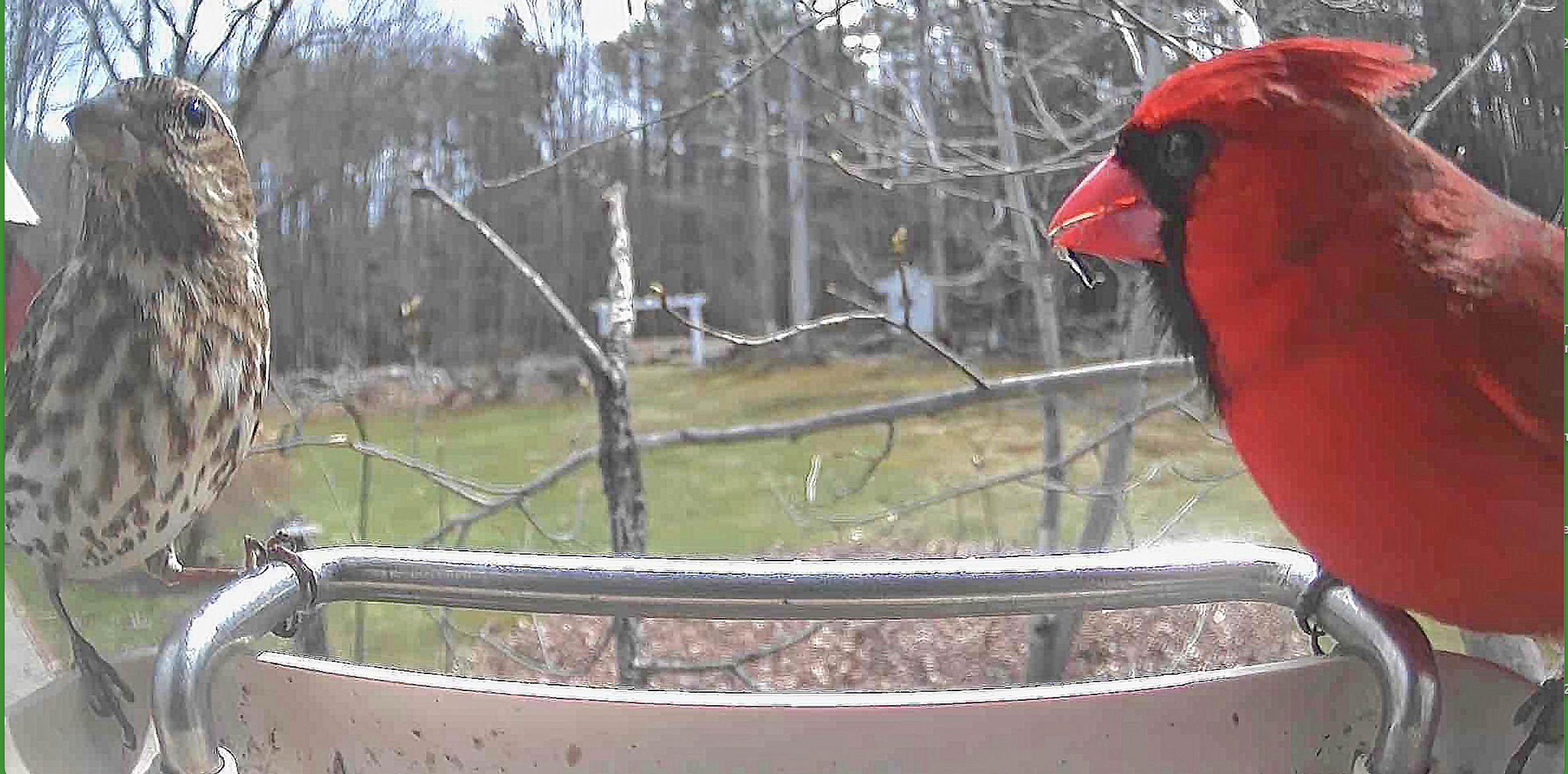
Back home, I was surprised to find these two sharing a feeder, a female Purple Finch on the left and male Cardinal on the right. She would squawk at other finches, but not at the Cardinal. And so they fed simultaneously for a while. If only we could all take a lesson from them.

As a self-confessed home body, I love how the land that surrounds my house and beyond has been my classroom for so long now (30+years), and that it has taught me to celebrate the extraordinary found in everything ordinary.

Until we meet again . . . New York

I remember when we’d take our young sons to cities and I’d hold a tighter than tight grip on their hands, or maybe it was their wrists, as we walked along sidewalks thronging with people. I can’t hold their hands in quite the same way anymore, and in fact, in their presence in a city (the older in Boston and the younger in Brooklyn), since that’s where they’ve both chosen to make their homes at the moment, their confidence and poise and graciousness make me feel comfortable. And they have become incredible tour guides.

And so it was that this past Friday, My Guy and I flew to LaGuardia Airport and began another New York City journey.

We were met at the airport by P, who drove us to the Prospect Heights neighborhood of Brooklyn, where his girlfriend, M, was waiting and had ordered pizza because one of my wishes for the weekend was for a NY-style pie. Well, really, I wanted New Haven style, given my roots, but NY is the next best thing.

The apartment belongs to M’s mother, D, who graciously offered it to us as a home base for our weekend adventure. The view of the Manhattan skyline garnered our attention each morning and night, and we knew the Knicks had won their game Saturday because the Empire State Building showed off their team colors.

For as long as P has lived in Brooklyn, we’ve heard of Prospect Park, which encompasses over 500 acres in the midst of the city and offers habitat and respite for critters of all shapes and forms, including humans.

We had signed up for a two-hour tour with the well-informed Corinne as our guide. Designed in 1865, she explained that the park is considered Frederick Law Olmsted’s and Calvert Vaux’s masterpiece, Olmsted pictured on the left and Vaux on the right. Here, unlike in Central Park, they took advantage of the natural elements, though I was disappointed to learn that they’d filled in kettle holes created by glaciers.

We entered via the Endale Arch, which was built in the 1860s and restored within the last ten years. It was during the restoration when paint and wood panels that had been added because of rain damage were removed, that pine and walnut paneling was discovered.

It’s almost like passing through the welcoming doorway of a church.

I could have spent hours meeting trees in the park, but this was not the time, and so I reveled in the few we did get to know, such as this Camperdown Elm, whose branches grow more or less parallel to the ground giving it a gnarly bonsai appearance. The tree, grown from the Earl of Camperdown’s Scottish estate, was planted here in 1872, but neglected years later until in 1967 Marianne Moore wrote this poem to save it:

I think, in connection with this weeping elm,

of ‘Kindred Spirits’ at the edge of a rockledge

overlooking a stream:

Thanatopsis-invoking tree-loving Bryant

conversing with Thomas Cole

in Asher Durand’s painting of them

under the filigree of an elm overhead.

No doubt they had seen other trees—lindens,

maples and sycamores, oaks and the Paris

street-tree, the horse-chestnut; but imagine

their rapture, had they come on the Camperdown elm’s

massiveness and ‘the intricate pattern of its branches,’

arching high, curving low, in its mist of fine twigs.

The Bartlett tree-cavity specialist saw it

and thrust his arm the whole length of the hollowness

of its torso and there were six small cavities also.

Props are needed and tree-food. It is still leafing;

still there. Mortal though. We must save it. It is

our crowning curio.

Though she passed about fifty years ago, the tree, thanks to Miss Moore, lives on.

Another that struck my fancy was the Osage Orange, though apparently I should be thankful we didn’t visit in the autumn when its softball-sized fruits fall. Then it might not be my fancy that is struck, but rather my head.

Though we only had a moment to glance at tiled ceilings, they were the masterpiece of Spanish engineer Rafael Guastavino. I can only wonder if a sunflower or some other composite flower was the inspiration for this one.

Much to our delight, as we followed the path, a Black Squirrel scampered along the ground and then up a tree. The Black Squirrel is a color phase of the Eastern Gray Squirrel (Sciurus carolinensis), also known as a melanistic variant due to a recessive gene that causes abnormal pigmentation. Do you see it peeking at us?

While our bird sightings were many, especially of Robins and Sparrows, we spotted one male Cardinal, one Mallard, and this one Cormorant swimming in murky water.

The species of the most abundance, however, was the Red-eared Slider Turtle. Though outlawed for sale today, Red-eared Sliders are the most common turtles kept as pets. They live long lives and need ever increasing habitat and food, thus many have been abandoned–their owners slipping them into the waters of the park unceremoniously in a practice that is illegal.

Thanks again to the generosity of our hostess, we also visited Brooklyn Botanical Gardens where Cherry Blossoms and an array of colors wowed us and thousands of others.

It was fun to glimpse over the shoulders of two artists and notice how their work reflected the scene.

Though these tulips each had a name, I would have called this spot the ice cream stand for the flavors seemed to abound.

Beside water, Horsetails or Equisetums did grow.

As did the almost ready to unfurl crosiers of Cinnamon Ferns. I love their woolly coats.

It was here that I had a brief encounter with another tree new to me, a Horned Maple. Acer diabolicum leaves are five lobed and coarsely toothed. The common name comes from paired horn-like projections from the seeds, but we were too early to spy these. We did get to see it in flower, though I think I’m the only one who noticed.

And I kept wondering where all the pollinators were, though we didn’t get too close to the Cherry Blossoms, but the Honeysuckles lived up to their names and were abuzz with activity.

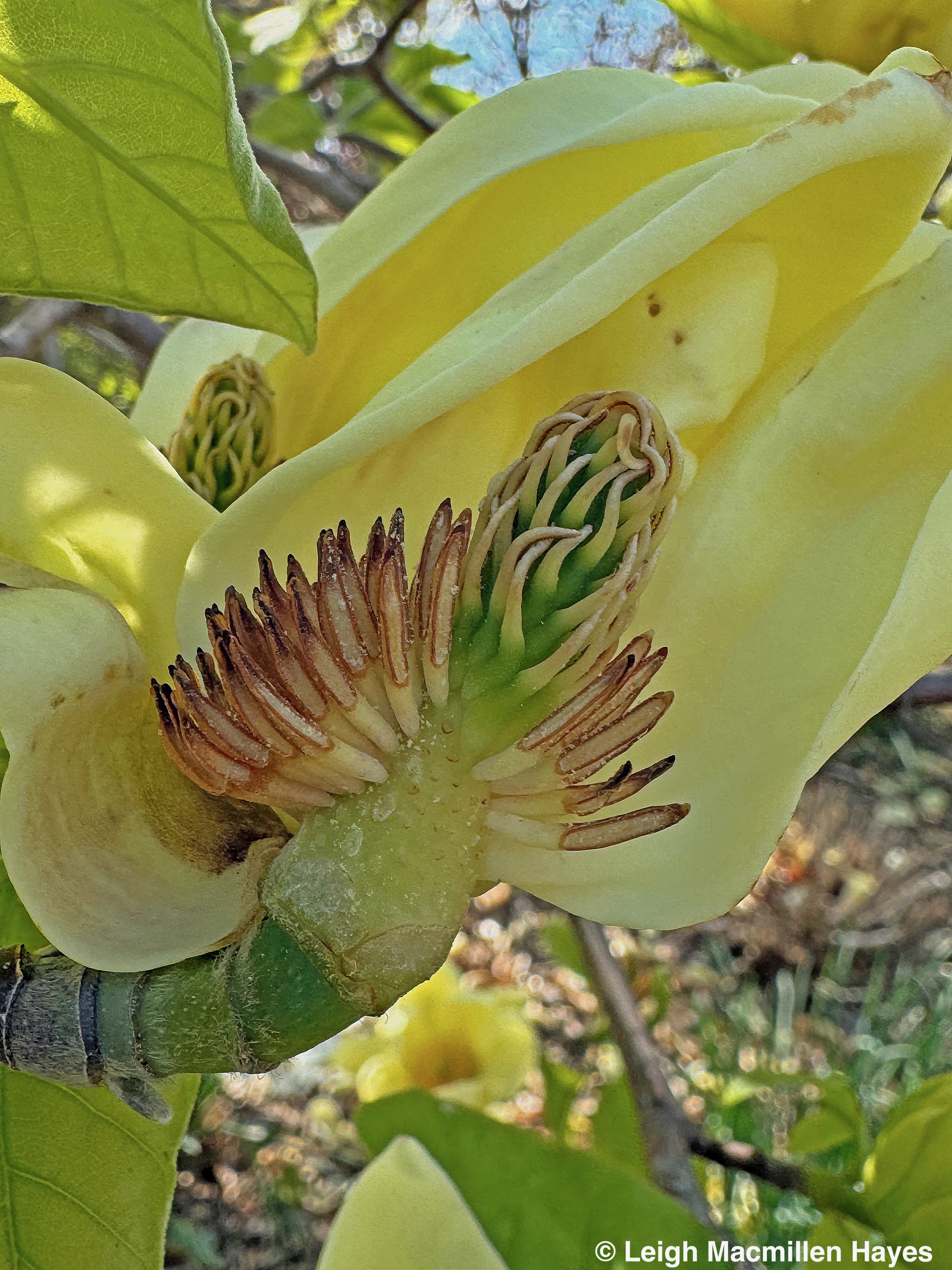
If I had to name a favorite, it would probably be the Hybrid Magnolia based on its color and form. Simply a masterpiece.

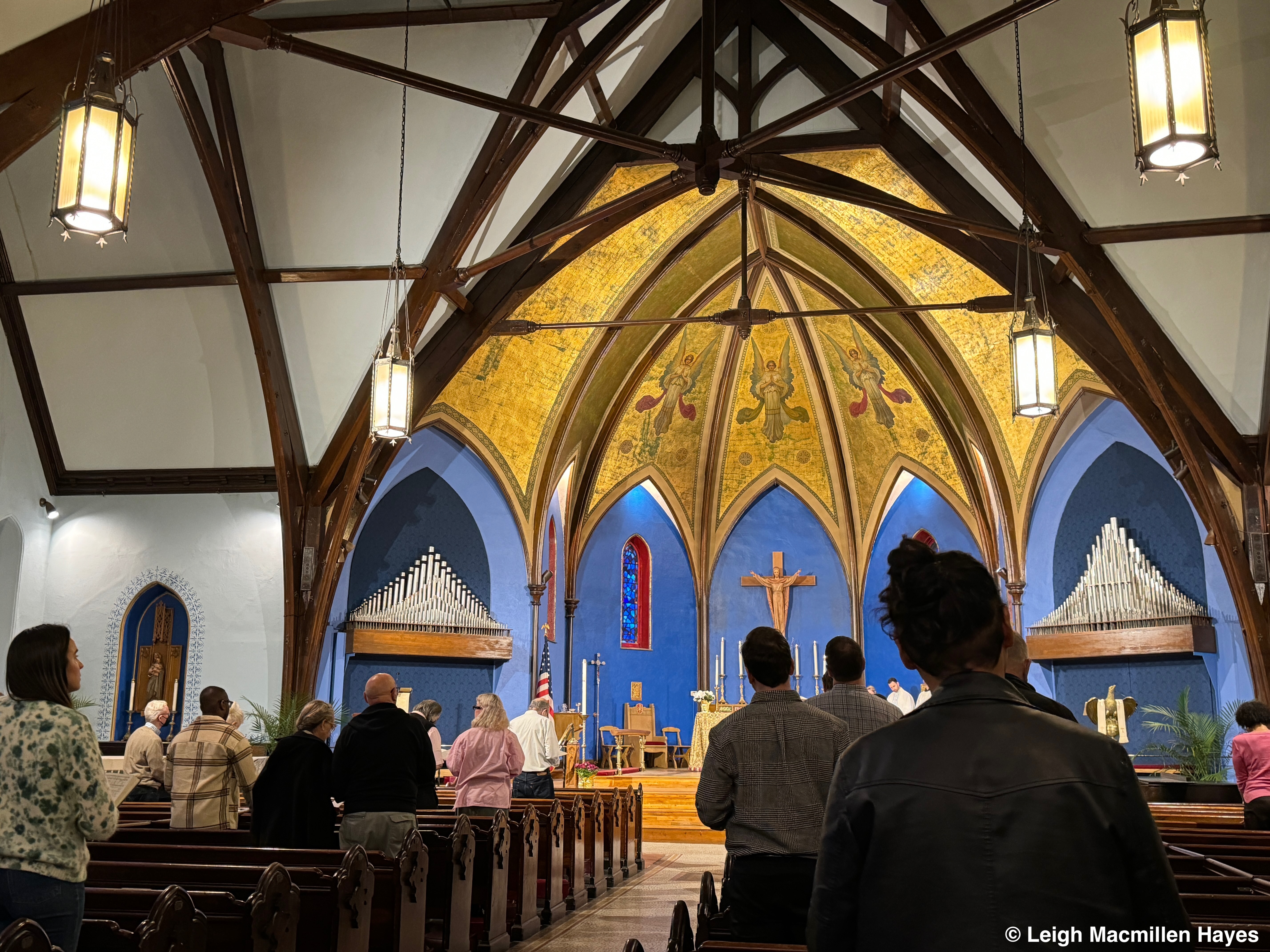
We spent an hour enjoying a masterpiece of another sort, worshiping with others at St. John’s Park Slope, an Episcopal Church with a heavenly choir and an organ that filled the rafters with music both old and new.

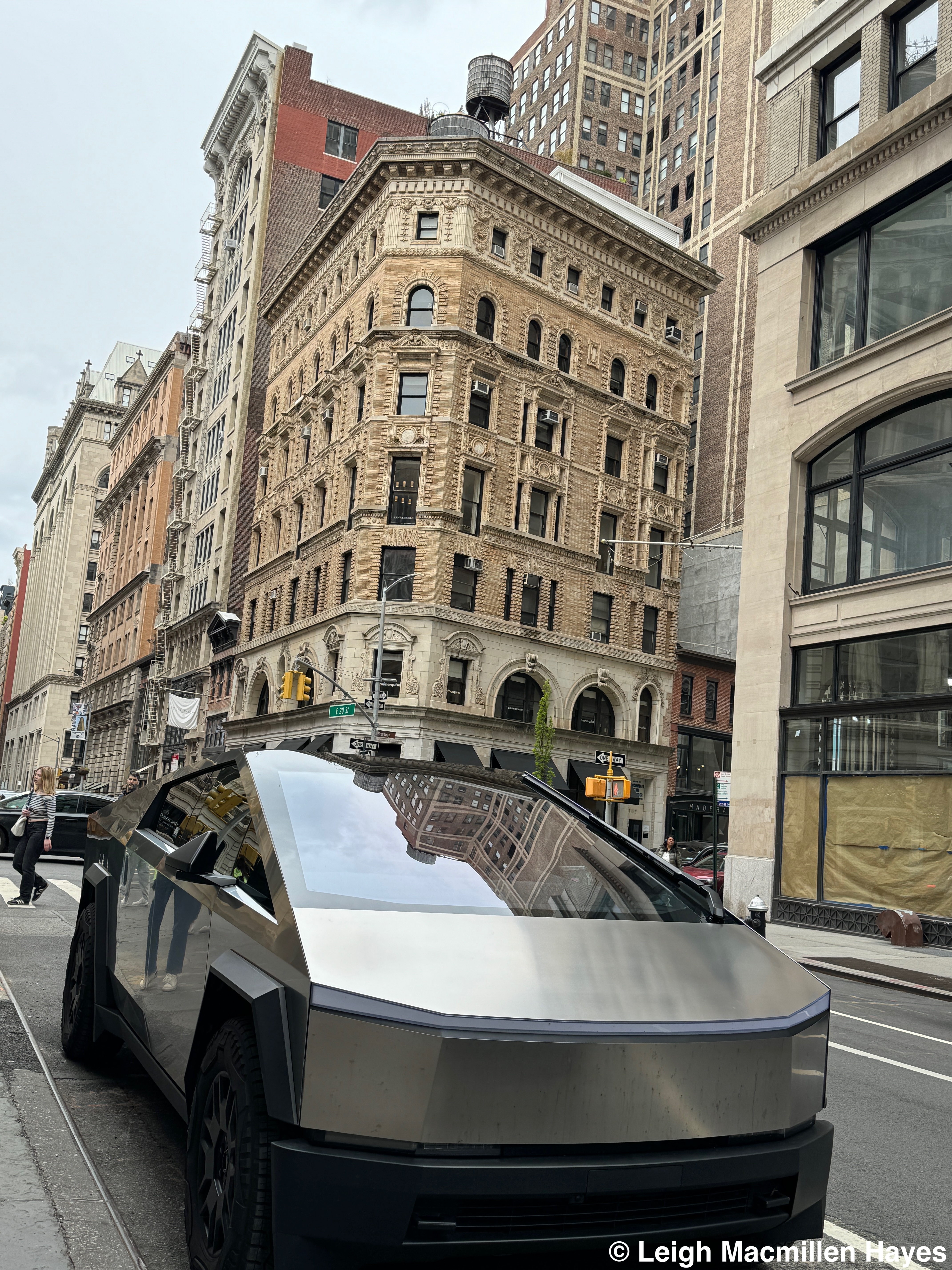
And then we took a trip into Manhattan via P’s new truck. Haha. Yes. That is a Tesla truck. Just not my idea of a truck. And no, we did not travel in it, but rather M’s car.

P showed us the large office he works in where ads and films, but mostly ads these days, are produced and edited. And clients are wined and dined in situ. There’s even a staff chef.

And now, when he says he’s working from the office, we can imagine him in this space.

It’s located two doors away from the birthplace of Teddy Roosevelt.

Not being shoppers, we only stepped into a Yeti store, where of course, My Guy announced that he has the products on his shelves back in Maine. And he peered into a closed hardware store, cuze no trip of ours is ever complete without visiting one or two. But then again, no trip of ours is ever complete without stepping along a wooded pathway and noticing the flora and fauna.

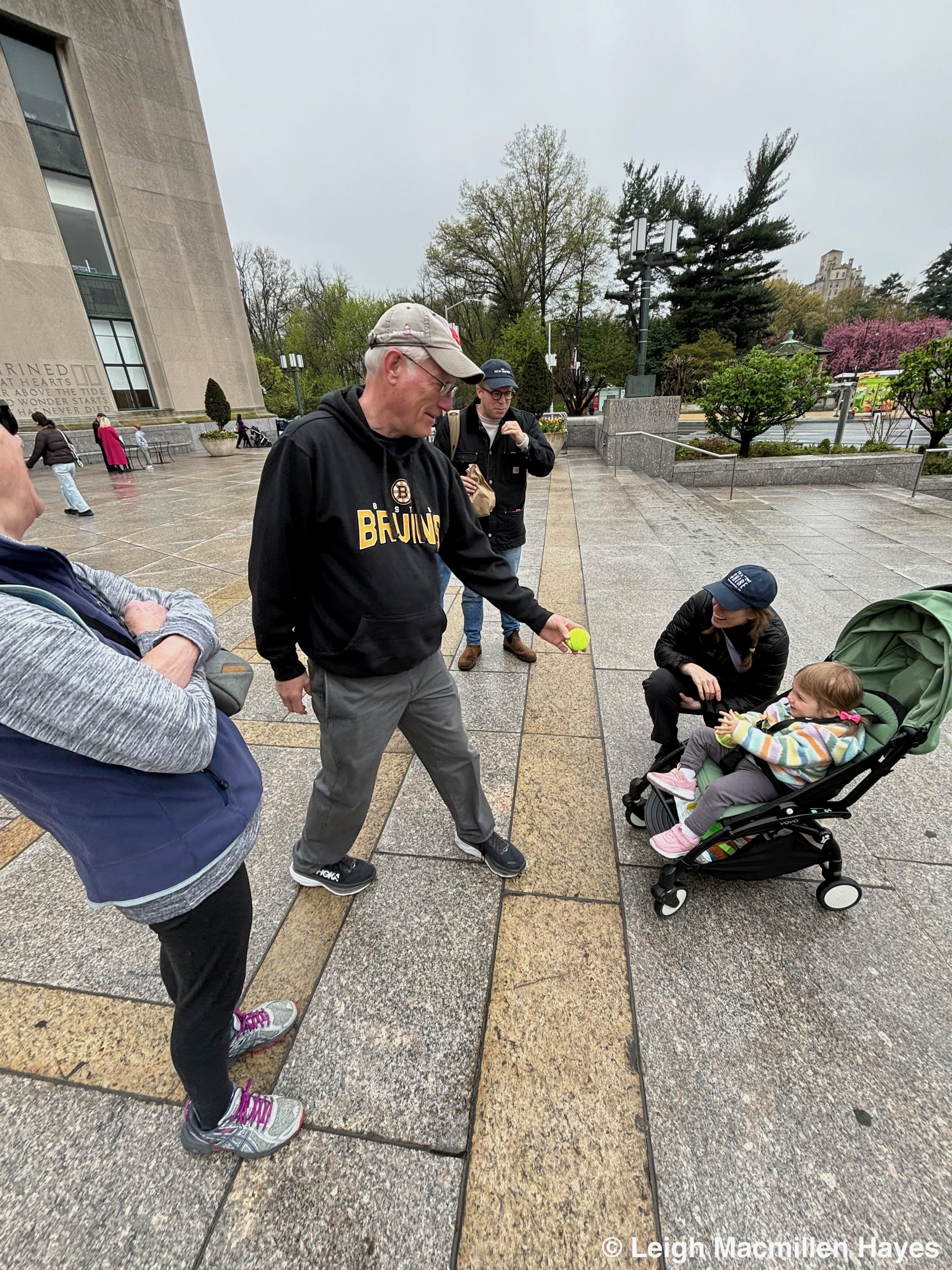
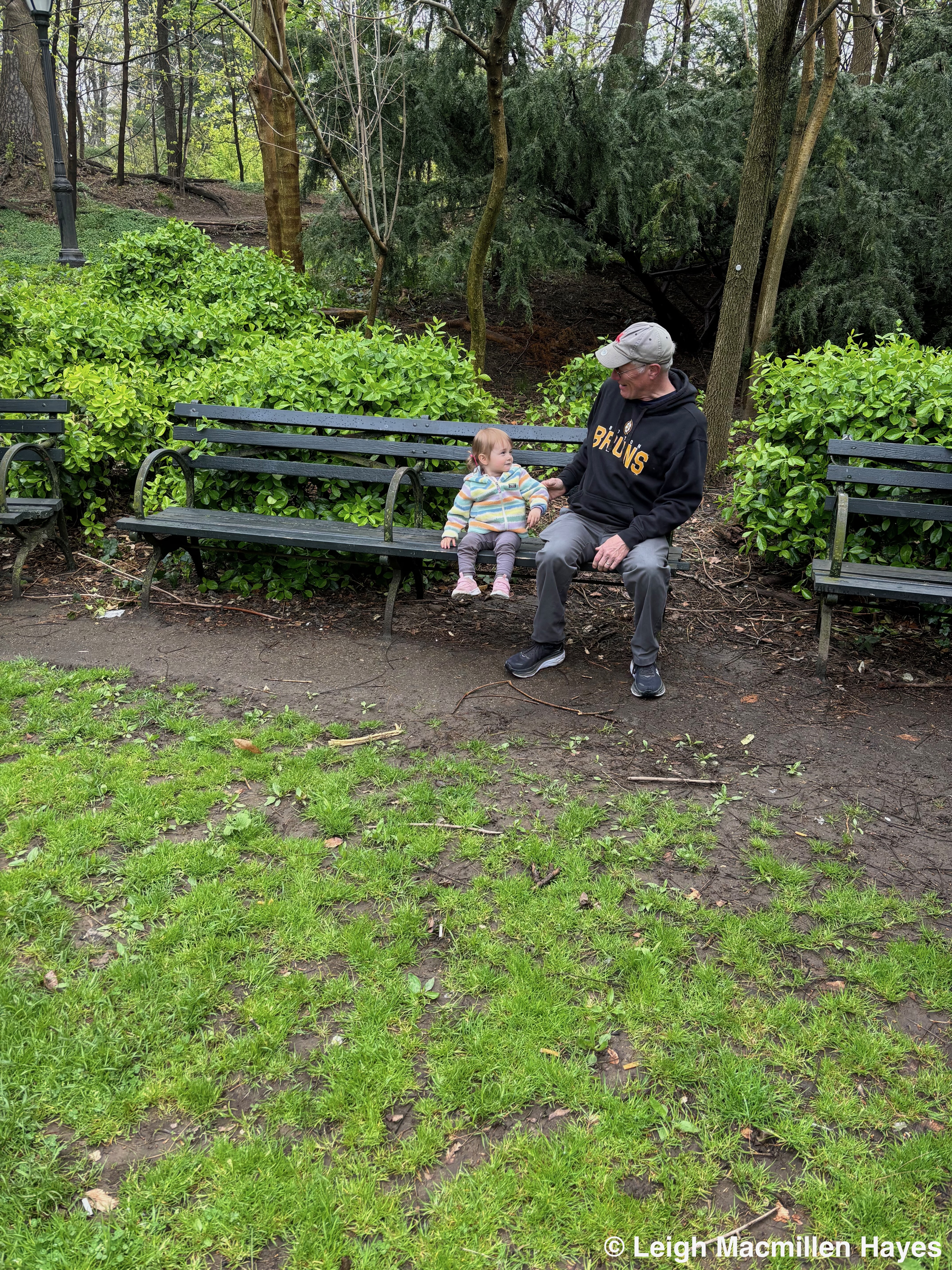
But the main purpose of our trip was to visit. Family. And friends. And meet this little powerhouse who knew how to command the crowd.

My Guy was in instant love. And she was so chill.

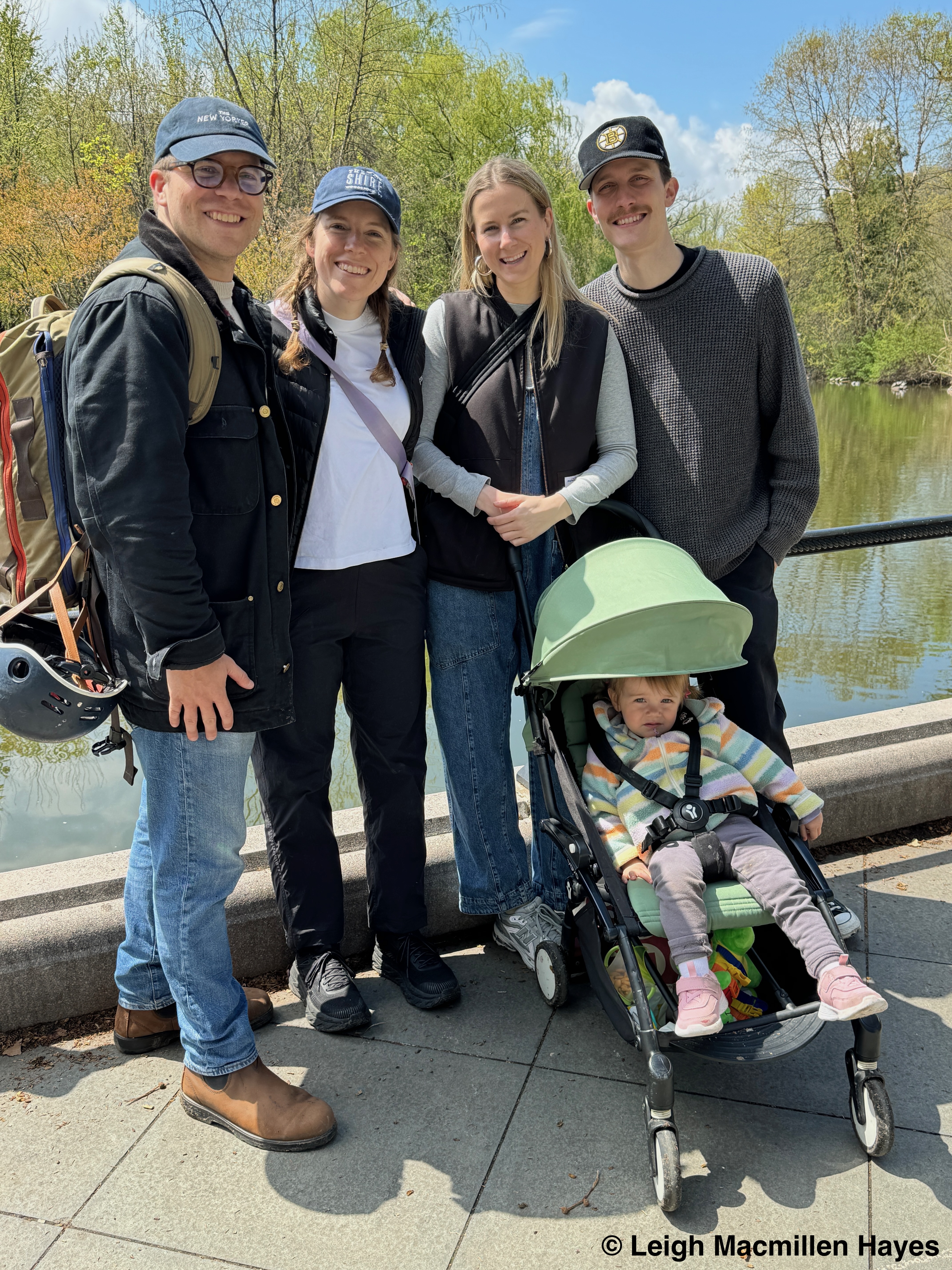
We loved spending time with one of M’s brothers, her sister and niece, plus M and P. of course. We did meet up with M’s other brother, but somehow I neglected to take a photo. Sorry R.

Over the course of the weekend, world problems were solved and sporting events analyzed by these two.

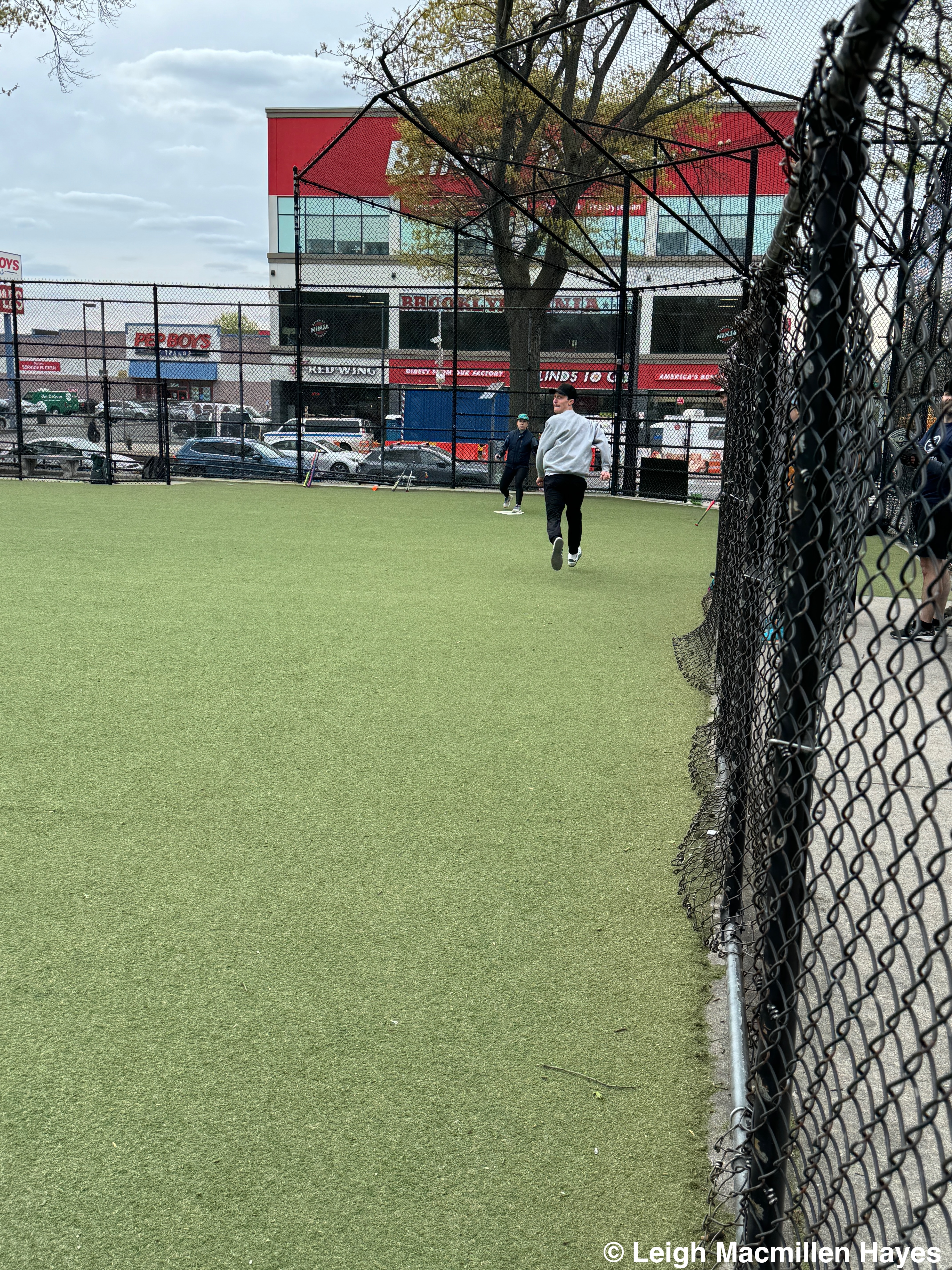
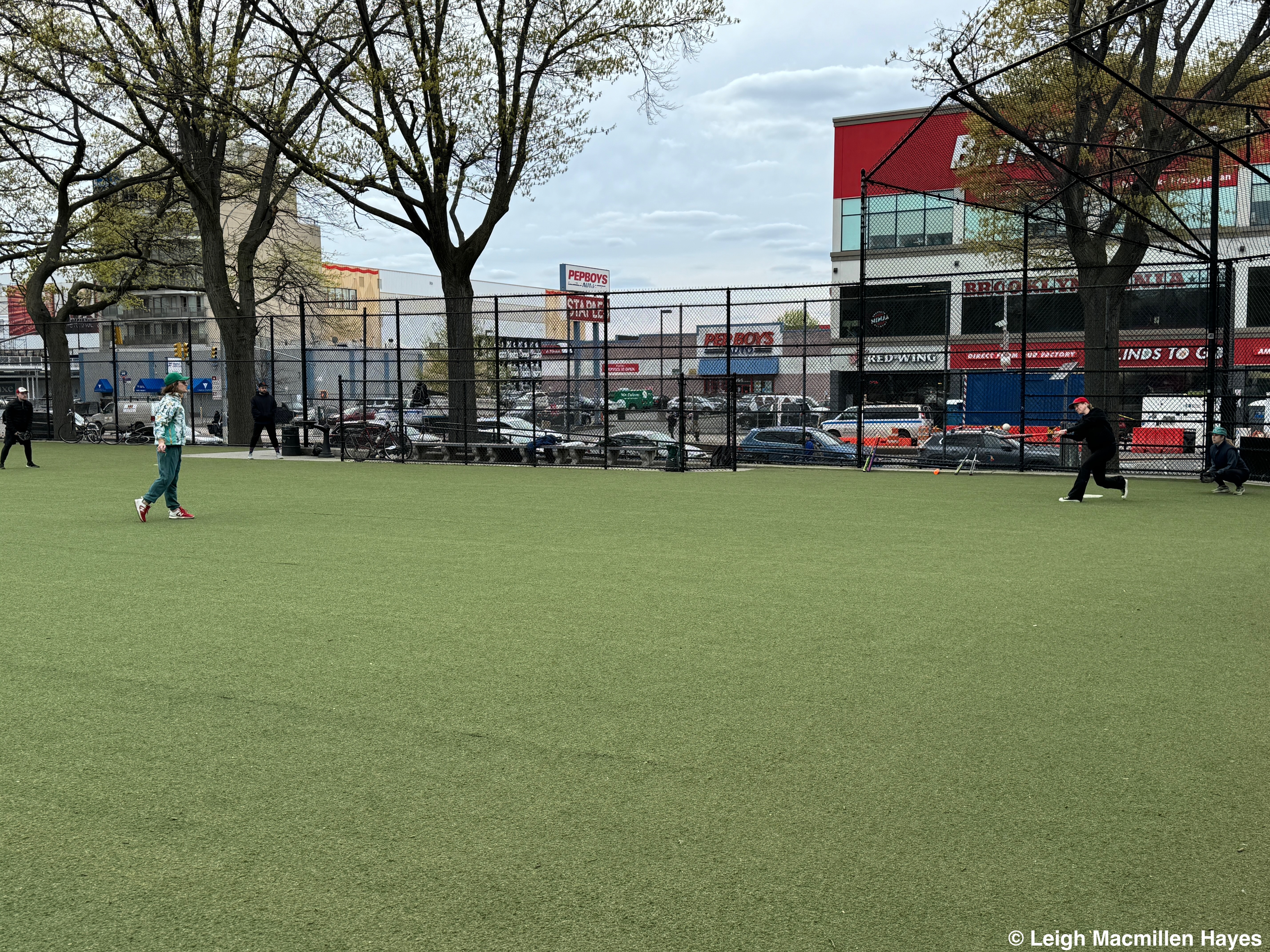
And one of the highlights was our opportunity to attend their softball game, which they won because we were there, the good luck charms that we are.

He scored a home run, another run, and I can’t remember his other stats, though I’m sure My Guy and P have it in their brains.

M also walloped the ball and got on base each time.

And scored as well. We were mighty impressed because we saw the results of a slide she made into a base last week and how she could run this weekend was beyond our understanding.

At last Monday dawned and P stopped by the apartment to pick up laundry and say goodbye.

Until we meet again, thank you M & P, and D, and all the gang, including P’s colleagues who played in the game or came to cheer on the softball team.

We had a fabulous weekend thanks to all of your planning, and I just finished a bagel that followed us home. Family. Food. Oh, I didn’t even mention Frankies Spuntino and the delish eggplant marinara. And fun.

We love New York. Especially through the eyes of P & M. And then we love returning to Maine.

Fall After Fall Mondate

At the start of today’s hike I met a rock. A rock covered in soft green broom mosses. A rock that invited a caress. And so I did. Repeatedly.

When I mentioned that it was the perfect pet rock to My Guy, he reminded me that it wouldn’t fit in my pocket. Details. Details.

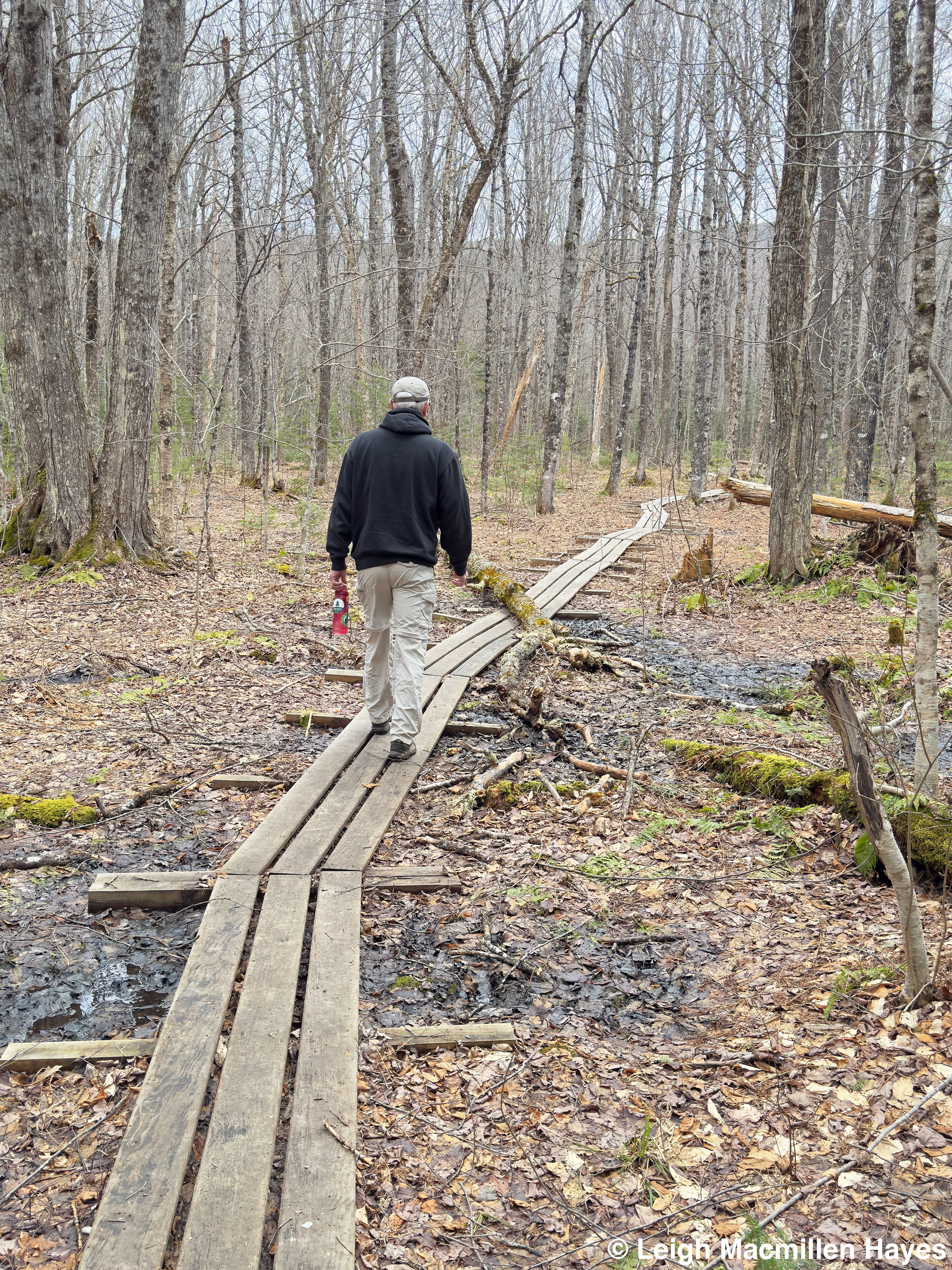
And so our hike continued through a wet area where we gave thanks for the boardwalk system. And for the opportunity to change out our hiking uniform from winter to spring. Oh, we had Muck boots in the truck, but welcomed the opportunity to wear hiking boots, and summer hiking pants, and sweatshirts, and baseball caps instead of winter gear.

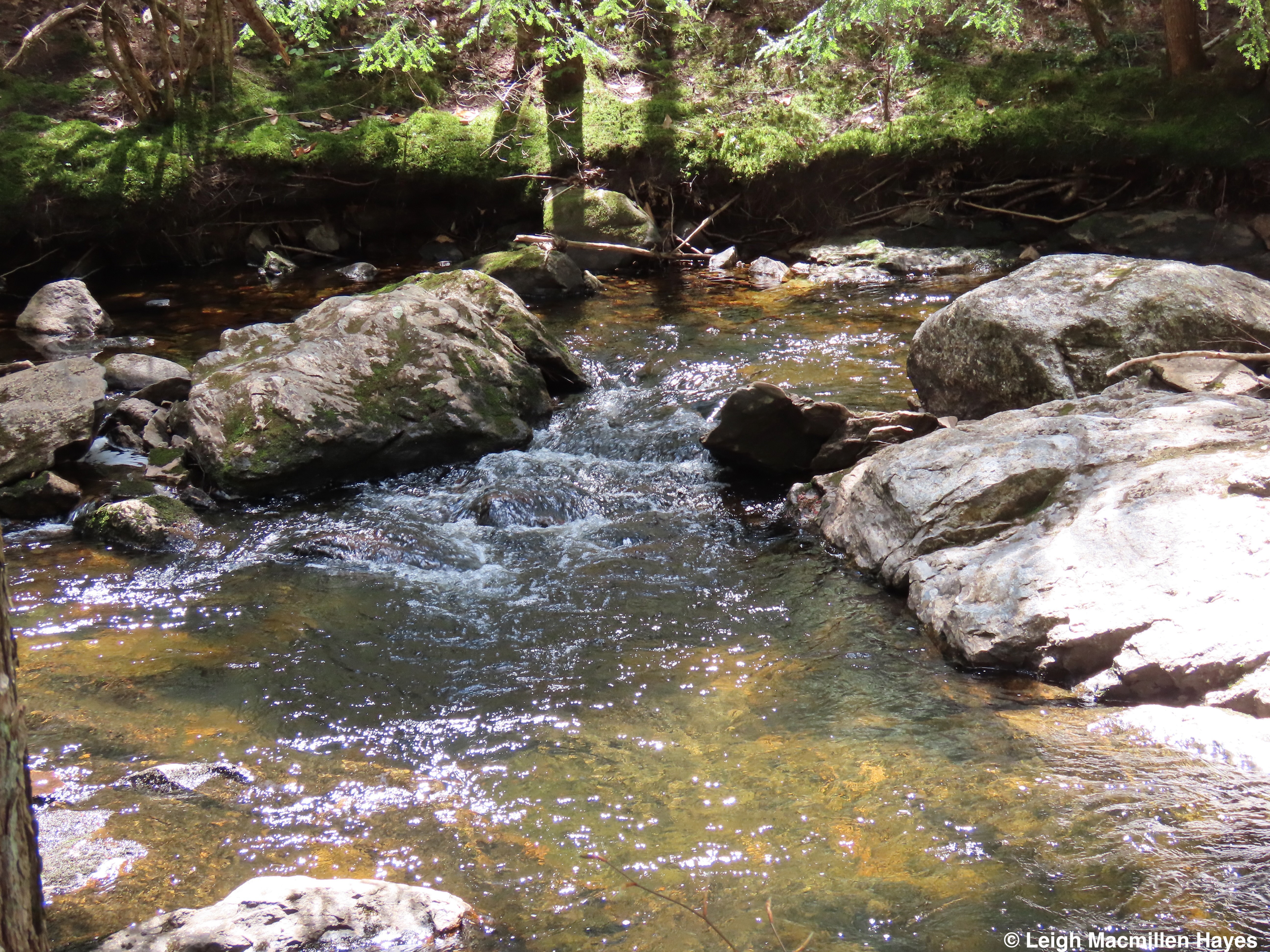
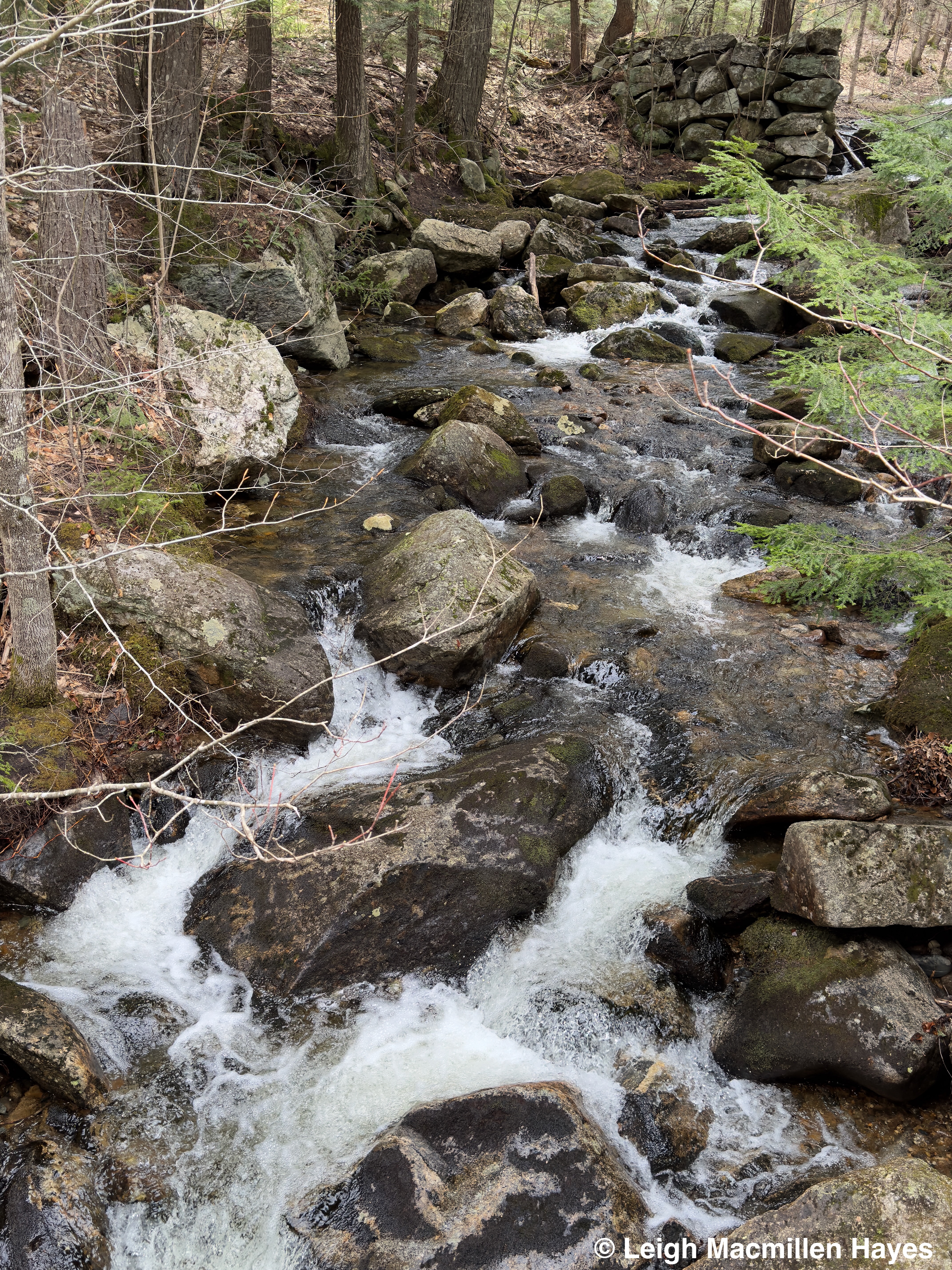
The wetland wasn’t so wet, but the water swirled around rocks just below an old mill as we crossed a bridge over the brook known as . . . Mill Brook.

In its lower reaches, we paused to rejoice in how the water swirled around and over and under the boulders and reveled in the fact that their faces were smoothly carved as can only happen in places where so much H20 has flowed for eons.

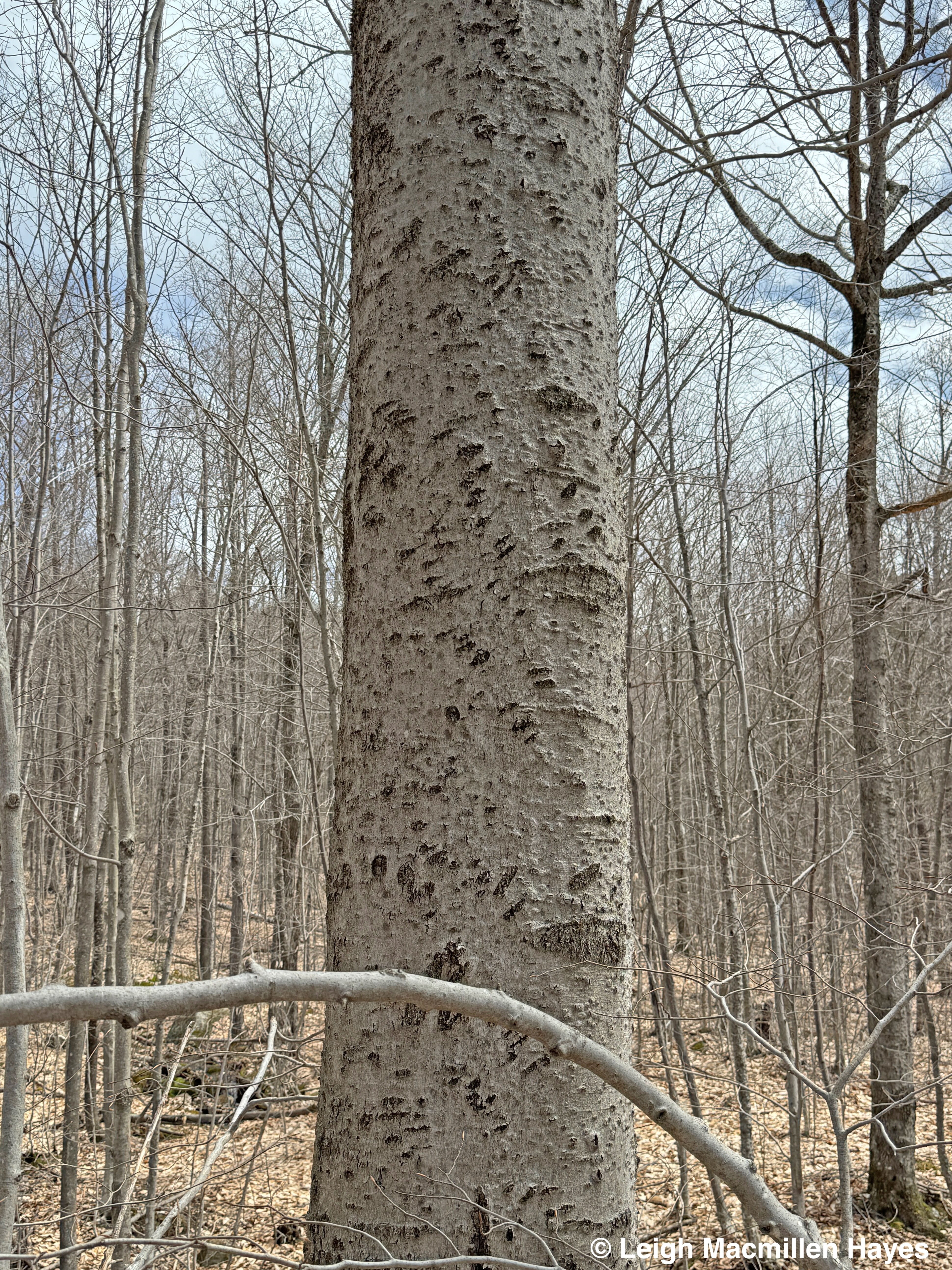
Leaving the water behind for a time, we met some friends. Beech Trees. Particular American Beech Trees. American Beech Trees more commonly known to us as Bear Claw Trees. And in this case, an oft-visited Bear Claw Tree.

Where there is one there is usually another. And another. And another. We found several, but imagined that many more exist given how many claw marks we found on these trees.

About two miles or more from the trailhead, we followed the spur trail to North Ledge (aka Lunch Ledge) and sat down to dine. Below stood a forest of hardwoods that we’d passed through and we had to wonder how many more Bear Claw Trees we might find if we actually took the time to go off trail and look. One of these days.

I did take time to examine a few fruticose lichens growing on the bark of a hemlock overlooking Lunch Ledge, this one being a Boreal Oakmoss, which is actually a lichen despite its mossy name.

And a Bristly Beard Lichen, with its short bristles decorating each branch.

From North Ledge, it’s at least a mile and a half across the mountain, with ups and downs and all arounds to get to the other side. Including snow. Given that we’d had two spring snowstorms, with the first being March 24, and both dumping a couple of feet upon the landscape, it was no surprise. Should we have donned our Muck boots?

Nope. I poked my hiking pole in at one point and discovered there was at least a foot of snow left in spots, but it was soft and easy to hike through and so we did.

At last we reached the southern side, where the trail turned and hugged the edge of the mountain. It was downhill from there.

But first, a quick break at the outlook, where we actually met the only other person who was on her way out as we were on our way in. Looking west, we could see snow showers in some surrounding mountains, but our day consisted of a few raindrops, sunshine, clouds, and a breeze. Perfect for hiking.

Also perfect for hiking: a delayed dessert of Dark Chocolate McVities! A favorite of mine since 1979 when I devoured their biscuits on a regular basis while attending school in York, England.

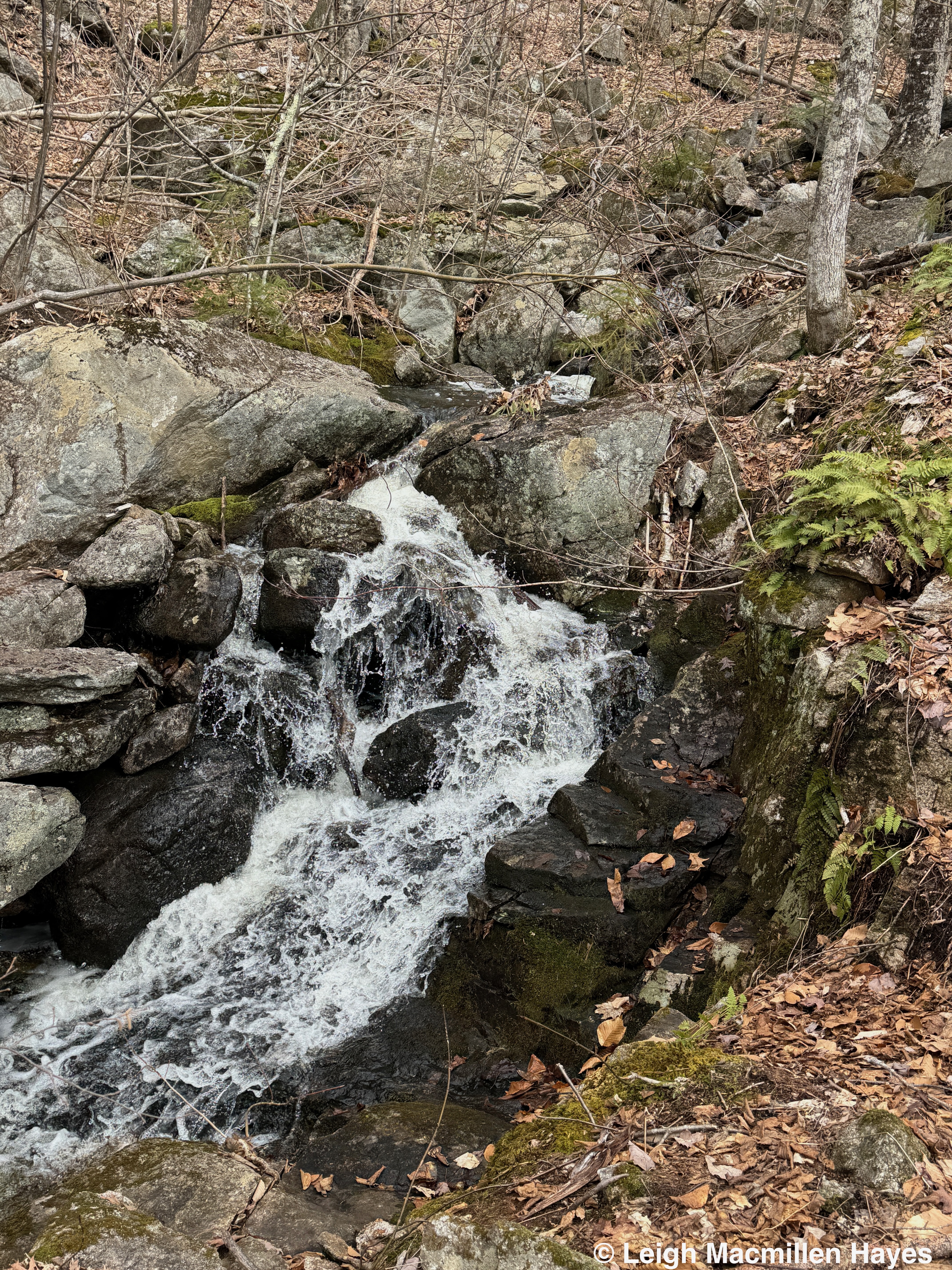
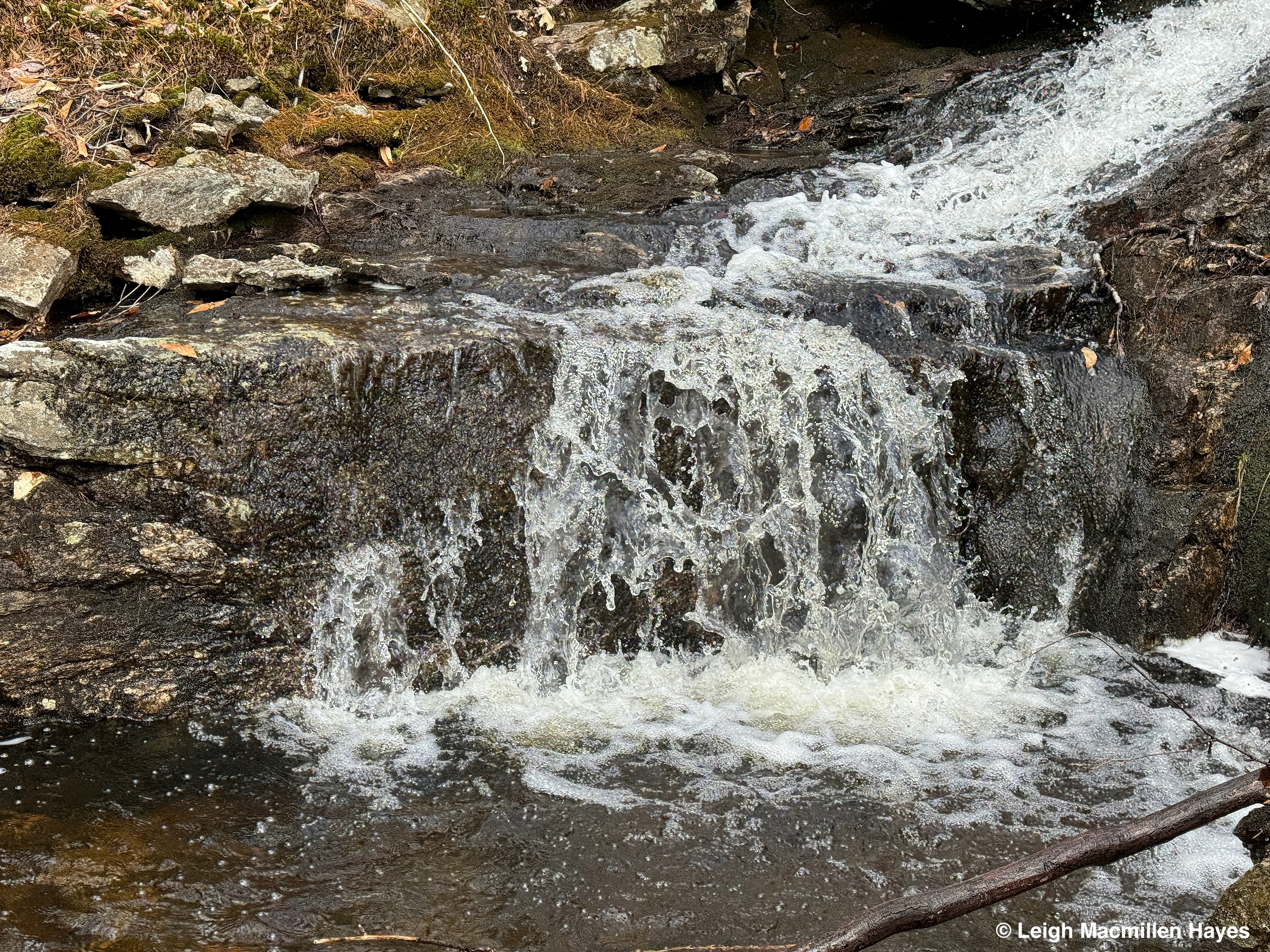
Downward we hiked and then we met Mill Brook again as it cascaded forth.

And forth.

And continued forth some more.

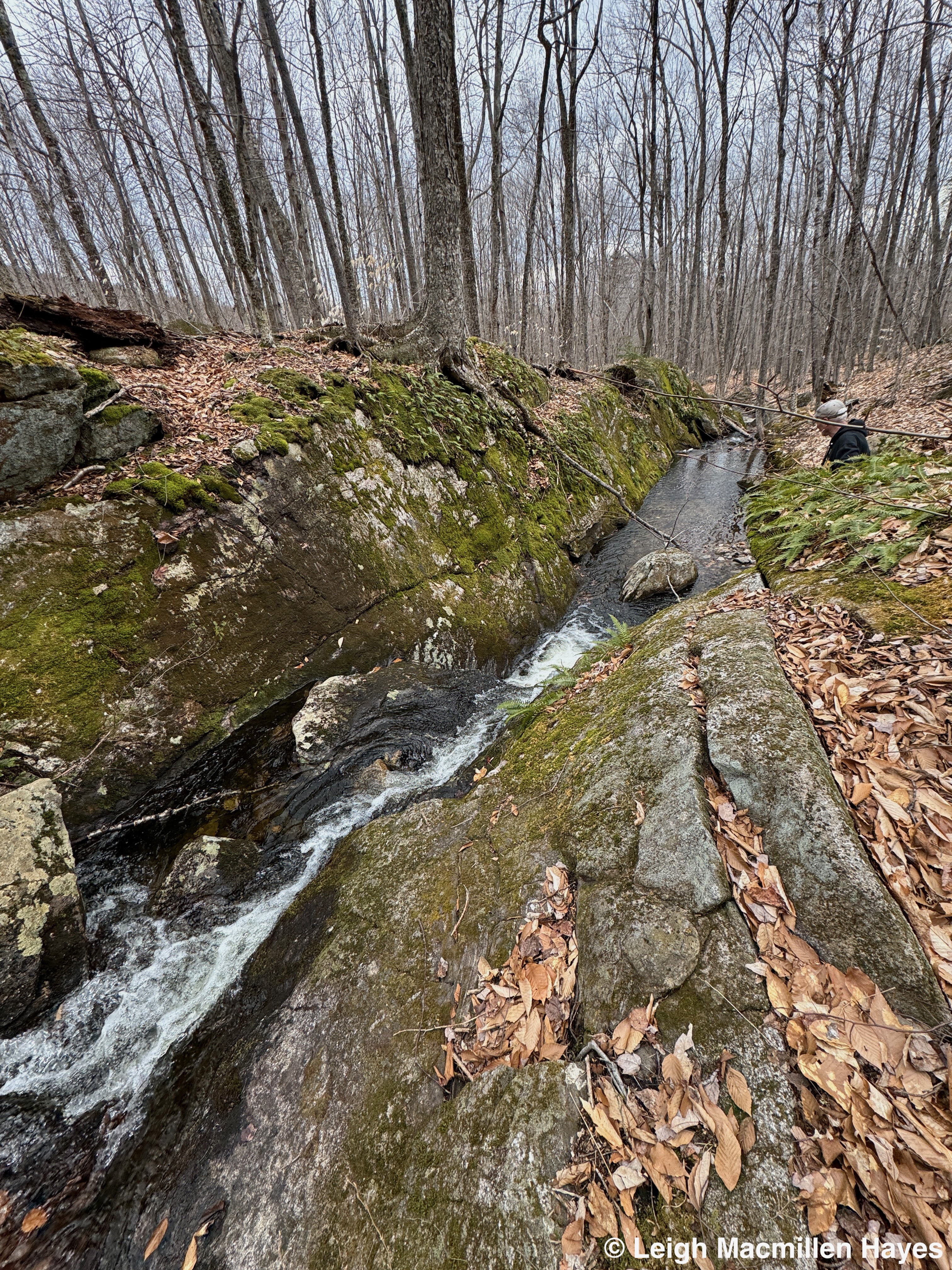
We followed as it flowed between a crevasse in the boulders–headed as you might note toward . . . My Guy.

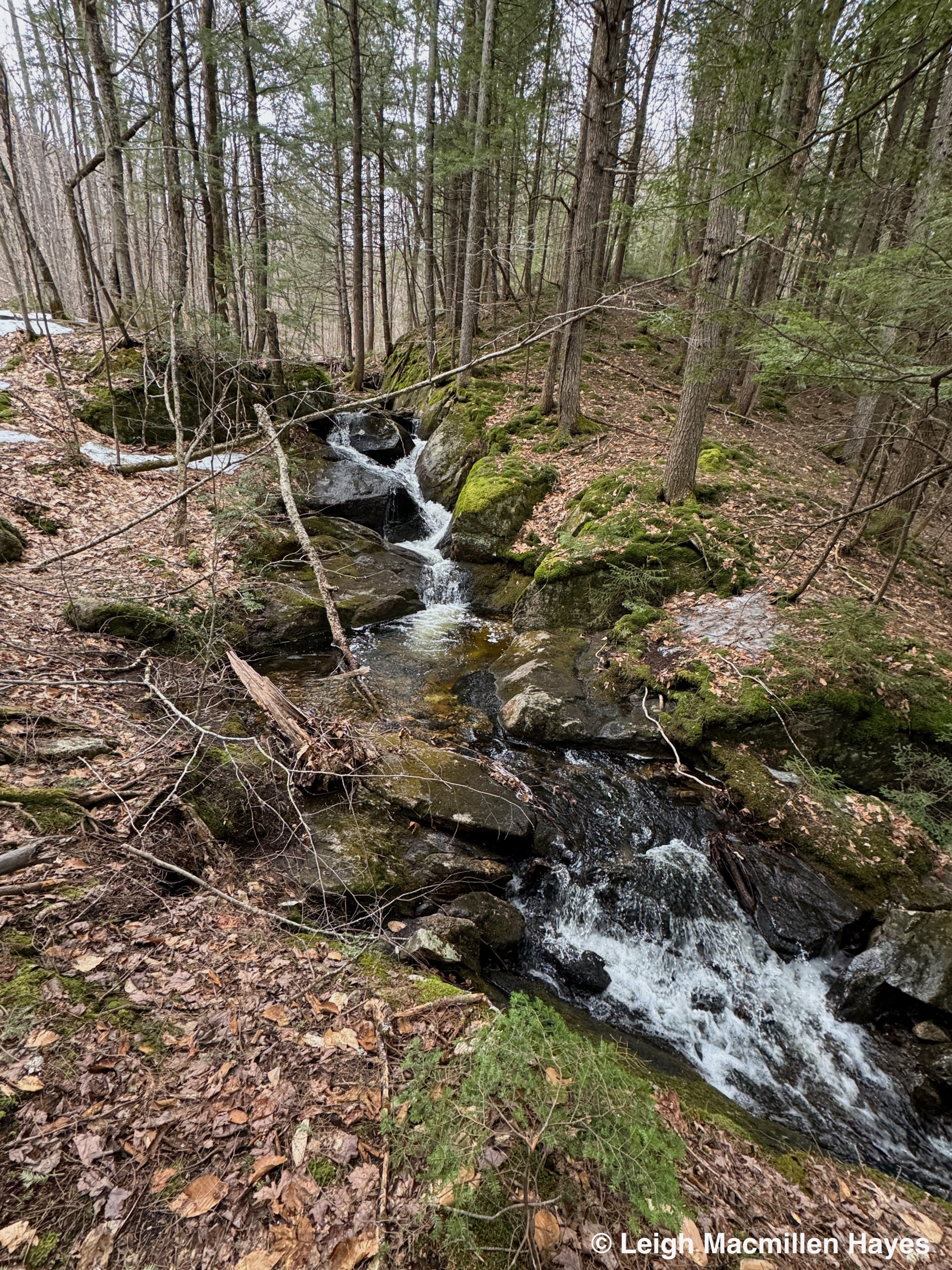
And admired it repeatedly along its course.

Occasionally it fanned out over boulders in its midst.

And plunged into pools.

It was a lot of water and we were thrilled to hike beside it and are still exclaiming over what a fun hike it was. Oh, there was mud. And ice. But those were secondary condtions. So far, we agreed, this was our favorite hike of the year.

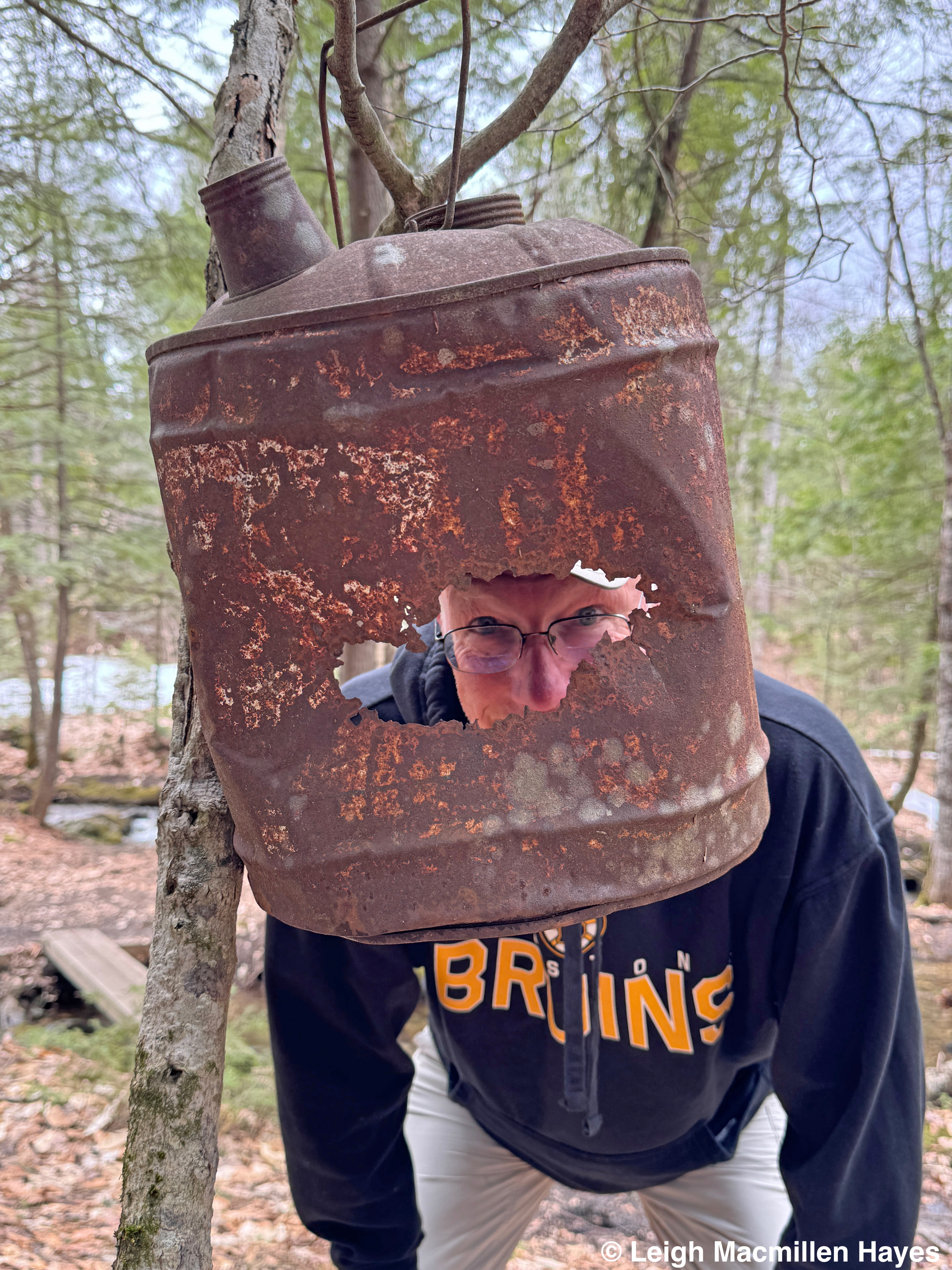
Where were we? Where bears of all types roam, including this crazy Bruin, who is usually a Maine Black Bear.

And no, we did not fall, though I know a few of you were wondering because you know my ability to do so at inopportune times. It was the waterfalls that we followed that made this Fall After Fall Mondate at Long Mountain so special.

Thanks as always to Mary McFadden and Larry Stifler. Through their generosity, many trails in the area are open to the public. And through the work of their employee, Bruce Barrett, those trails are well maintained.

One Night, Two Nights, Three Nights…

It was a dark and dreary night. Repeat. It was a dark and dreary night. Repeat. It was a dark and dreary night.

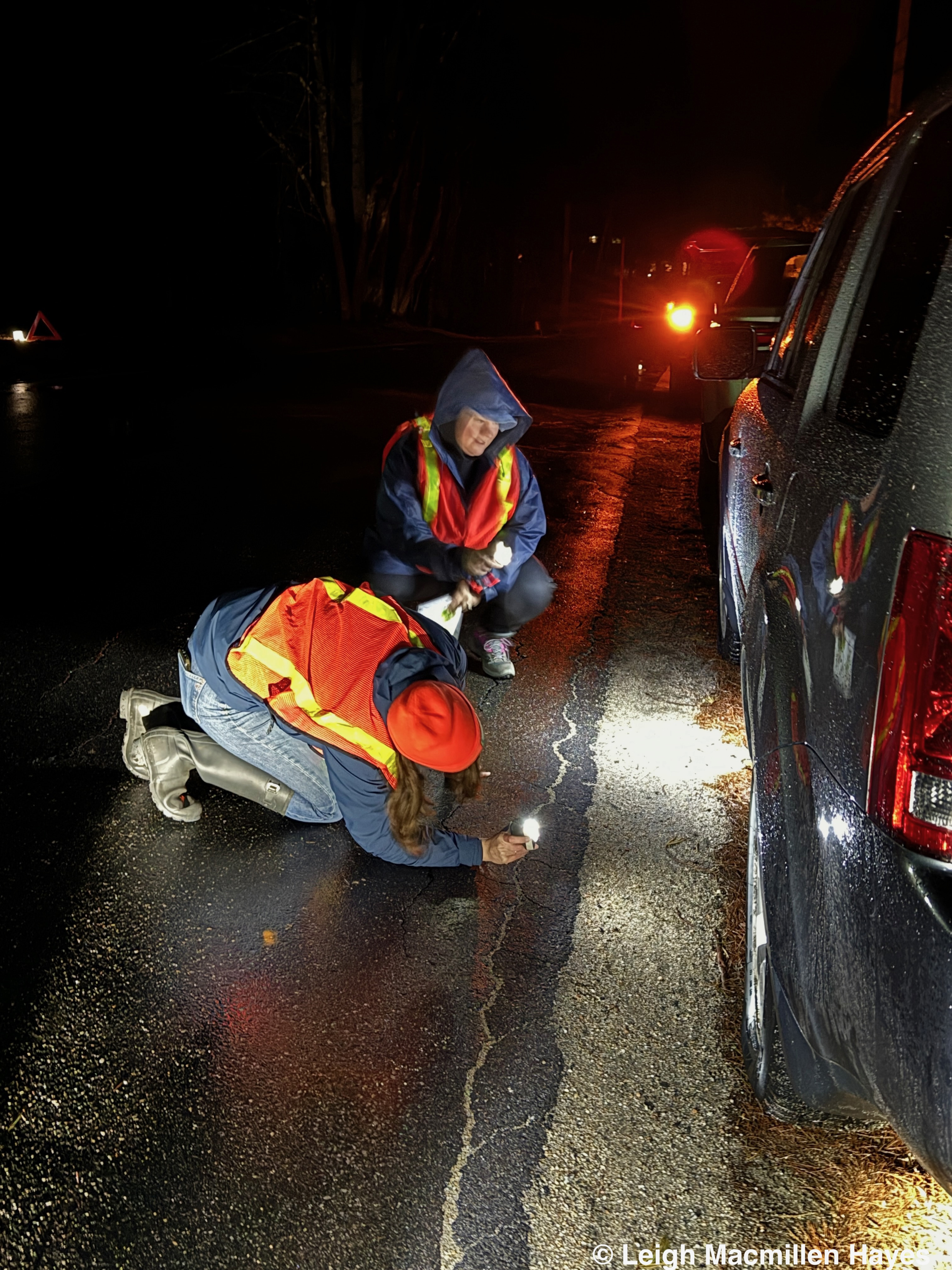
While most folks would choose to stay inside curled up by the fire while drinking a hot toddy, a number of intrepid community scientists ranging in age from 3 to 70+, donned rain gear (even waders) and reflective vests, cleansed hands of soap and moisturizer, grabbed flashlights and headlamps, and met at 7:30pm in the pre-determined locations.

Their mission each night was the same: Help us help frogs and salamanders cross the road to avoid getting squished by vehicles.

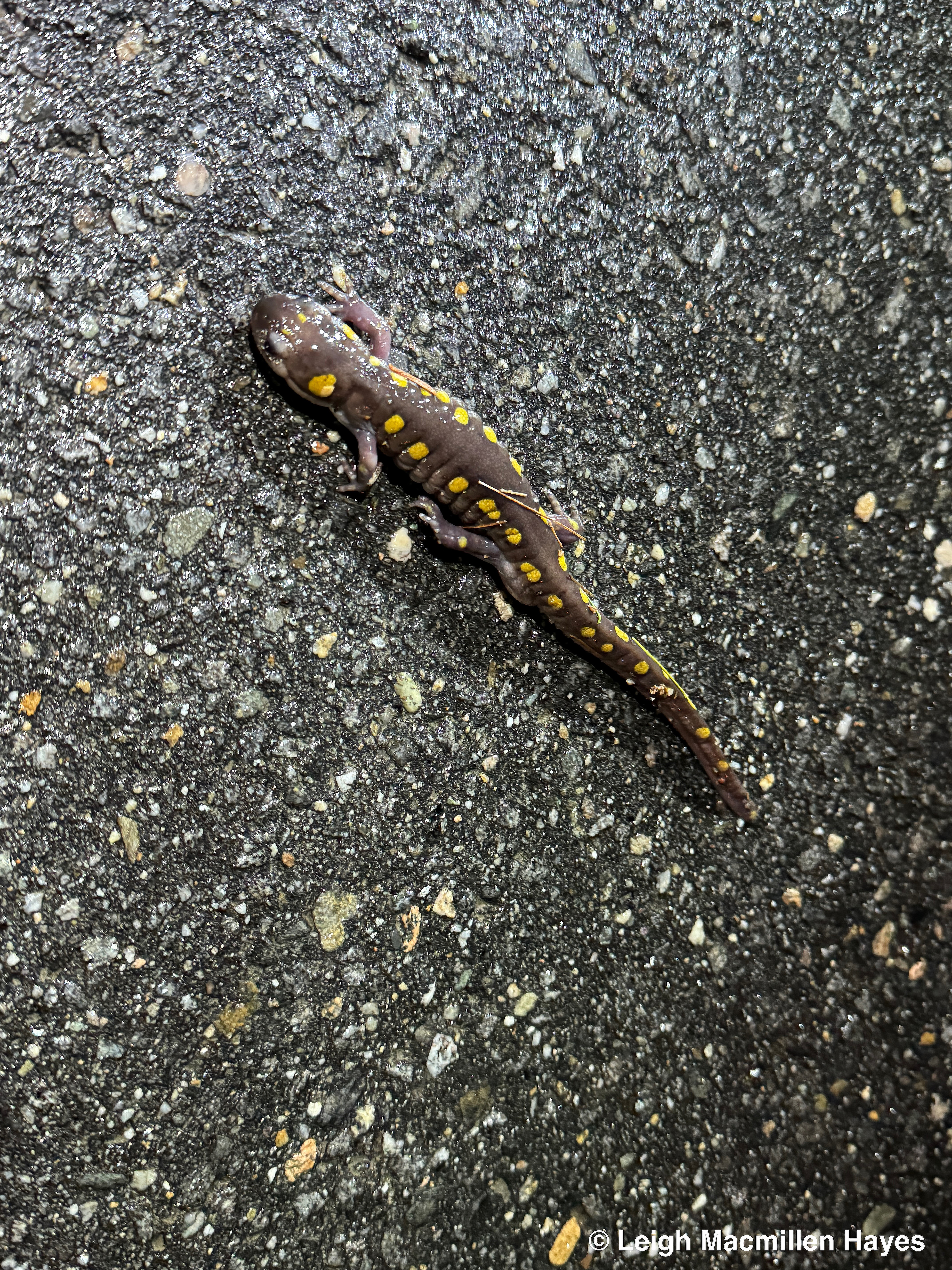
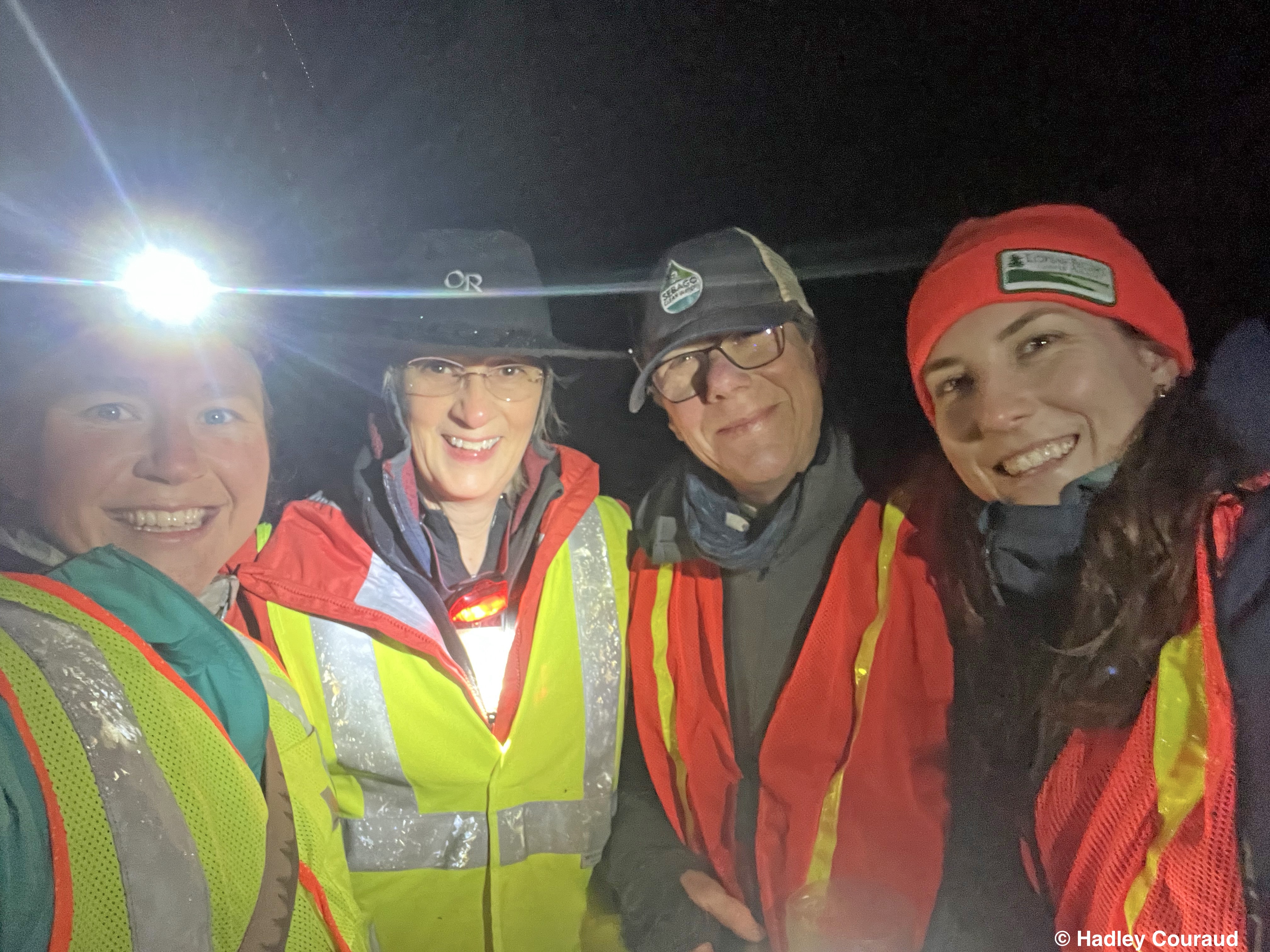
The names and ages of participants changed each night, but the leadership remained the same. As Maine Master Naturalists, Dawn Wood (who took the lead on organizing these events and recording data–a daunting task in the rain and dark and with people spread out and shouting numbers and species at her), Hadley Couraud, and I led the way, all three of us providing information about the different critters and their behavior as the evening progressed. All of this was under the umbrella (pun intended–though no one actually had an umbrella) of Loon Echo Land Trust in Bridgton, Maine. Thank you to Maggie Lynn for creating the sign-up forms, advertising the events, and keeping us posted.

The technique was easy. Once we reached the location of the vernal pool, to which amphibians return each year from their upland habitat, we started scanning the road with our lights. It’s amazing how the mica, small rocks, sticks, and lichens can fool us.

It’s equally amazing how much tiny Spring Peepers resemble small rocks. And how stone cold they are when we lift them up. And how they’d rather stay in our hands than return to the cold earth.

We always noted the direction in which they were headed and that’s the side of the road we took them to, even if it didn’t make sense to us. They knew what they were up to and we were there only to try to keep them alive so they could canoodle for a few nights before heading out of the pools and back to the forest.

Meet a Spring Peeper up close and personal. Note those little toes, which are actually suction cups of a sort, the better to climb vegetation, especially at the edge of or in a wetland, and then to sing their high-pitched songs that announce the males intention of finding a date. Because of the toe pads, peepers were originally thought to be closely related to Tree Frogs but they have since been reassigned as chorus frogs in the genus Pseudacris, which comes from the Greek pseudes (false) and akris (locust) (think of our Dog Day Cicadas and their raspy love songs in the summer).

The species name, crucifer comes from the Latin cruces, meaning “cross,” so named for the dark X or cross on the frog’s back.

A really cool thing happened that first night. A teenager who lived in the neighborhood where we were scanning the road came out to ask what we were doing. And then he joined us, eager to learn as his family had recently moved here from out of state.

After a Spotted Salamander was saved, he ran home to get his camera and stayed until we finally departed. We had hoped he’d join us the next night at a different location, but wonder if he stayed home to help those on his road instead. Whether or not he did that, we loved his enthusiasm and desire to learn.

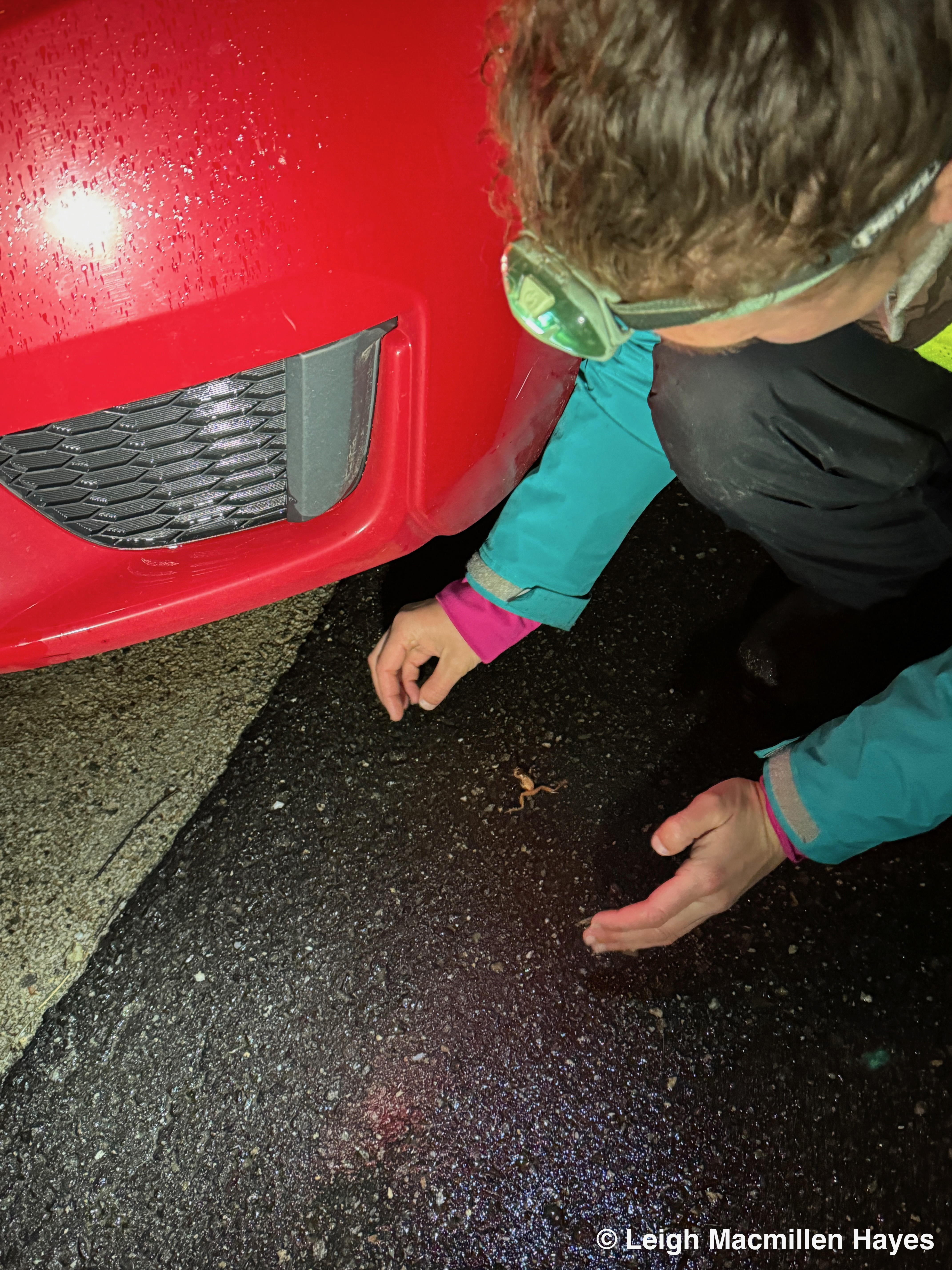
It soon became clear on the first night that we’d parked in the wrong spot, however right it may have seemed because we could get our vehicles off the road. As people started to leave, we all did a check underneath from all angles to make sure tires would not run over any critters by accident.

And sure enough . . . out crawled a Spotted Salamander. Of course, photo calls came first, and then help was offered to get to the other side.

Even teeny, tiny Spring Peepers had to be saved. And we all commented that we didn’t want to know if we did happen to drive over something. Added to that, we noted most of the vehicles only made it a few feet down the road, before the driver stopped and another amphibian was saved. That and the driving was rather erratic since everyone had gained a new understanding of how much action there is on a rainy night.

The second night found us in a different location that we actually walked about three quarters of a mile to reach, thus lowering our chances of hitting the critters right near the pool which is located directly beside the road, with a vast wetland on the other side of the street.

Wood Frogs, with their dark masks, typically headed toward the pool, where they’ll spend the next two weeks or so, singing for a mate, embracing her in a technique called amplexus, fertilizing her eggs, and trying again and again, until it’s time to hop out and head into the forest for the next 50 weeks.

Because it was dark, the Wood Frogs didn’t seem to mind our presence too much. Some still sang, or rather “wruck, wrucked” their love songs, and others floated in anticipation or chased each other in hopes of finding a female. We even noted a few egg masses clinging to branches, telling us this pool had been busy for a few days already.

Part of the fun in hosting such an event is sharing it with other people who might not typically head out the door after dark. And then seeing smiles on faces as they encountered the critters for the first time.

A cool find on this night was an Eastern Newt crawling across the road. Perhaps because the pool dries up each summer, this one had overwintered either in the wetland or even the upland before returning on this particular night. It felt like an unusual find on the road, though from what I’ve read, it’s not rare. I have seen many Red Efts, the juveniles of this species, their bodies squished by vehicle tires, on this very road in the fall.

Yet again, it was the Spring Peepers who garnered much of our attention.

And some Spotted Salamanders, though not as many as on the first night.

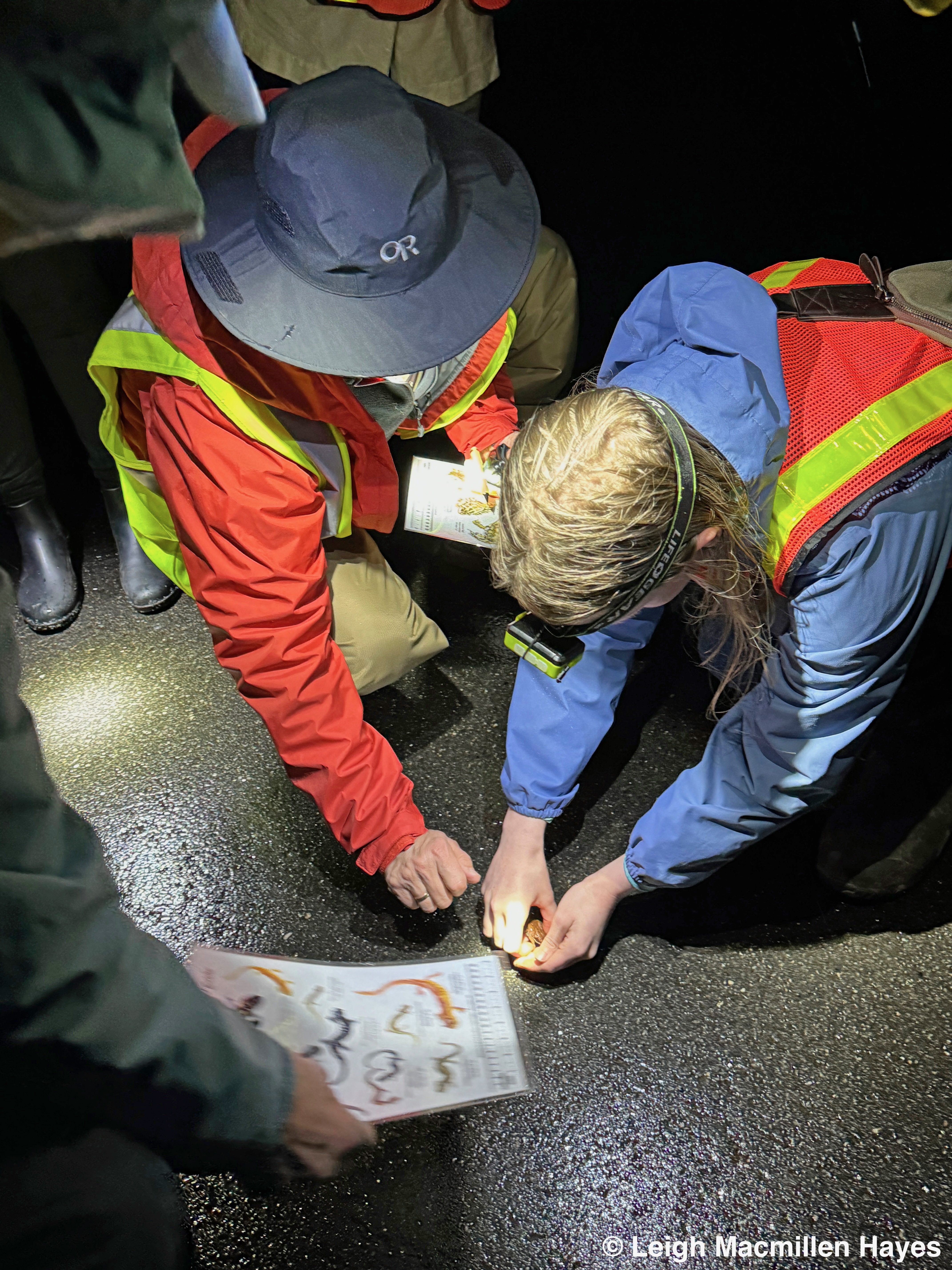
That said, we were thrilled with each find. And found an easy way to help them was to place the laminated ID card created by Maine Master Naturalist Michael Boardman under their bodies. Now don’t you think this guy is crawling onto the card in search of his ID?

As we prepared to walk back to our vehicles that night, Officer Hammond of the Bridgton Police Department happened along. No, he wasn’t going to arrest us for J-walking, though that’s essentially what we did. He was just stopping by because we’d ask Maggie to let the department know of our whereabouts in case anyone wondered what we were doing, but didn’t slow down to ask us. Traffic was high each of the nights. I’ve been doing this for about 22 years, and this year I felt like we had the most traffic. Most drivers were considerate when they saw the cones (courtesy of Hayes Ace Hardware) and vehicle flashers, plus our headlamps and flashlights. And we were all good at yelling “CAR” each time we saw approaching lights, but there were a few who were annoyed and one even had to lean on the horn after passing through the section of road we walked upon.

Night three was the warmest, with temps in the 50˚s and little to no rain. In fact, by the time we were heading home, the moon and stars were visible.

But still, the critters crossed and once again we showed new participants of all ages how to ID them and then help them cross the road.

On this final night, we had several teenagers along for the journey. Two of them had actually driven past us on the first night, slowed down, rolled down the window, and asked if we were okay. When we showed them a photo of a Spotted Salamander, they went home and signed up for a chance to help. Their enthusiasm was incredible.

We peered into the pool again and were amazed at the number of swelled Wood Frog egg masses in their communal cluster–as is the Wood Frog fashion. perhaps to take advantage of being warmer when crowded together, and thus evolve quicker. It’s the swelling that told us they’d been laid a few days before as initially their egg masses are maybe the size of a golf ball, but swell as they absorb water over the days to come.

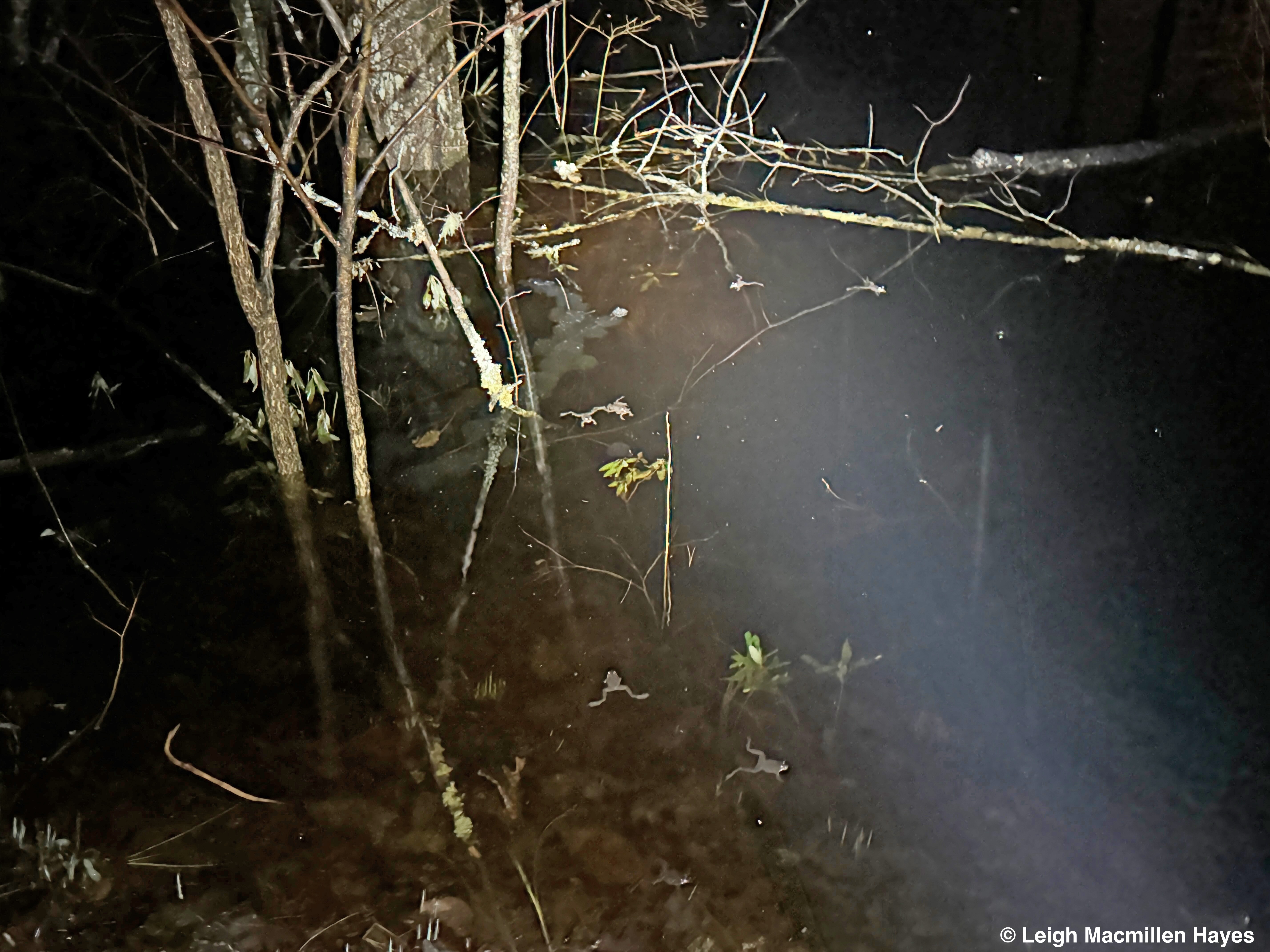
The action was constant and I encourage you to see how many frogs you can find in this photo. It’s almost like the Hidden Picture of Highlights magazine, or Where’s Waldo?

And twice we spotted Spotted Salamanders swimming in the pool, though I really wanted to see a “congress” of salamanders conducting their mating dance. One of these nights.

As we walked out on the third night, about ten feet from each other we spotted two sets of Wood Frogs in amplexus! They couldn’t even wait to find a room, or pool, for that matter!

We quickly, if awkwardly, helped them off the road because we heard that familiar “CAR!”

One night, two nights, three nights . . . turned into one incredible and extended BIG NIGHT migration.

Our results:

April 10, 2024
21 Spotted Salamanders
40 Spring Peepers

April 11, 2024
7 Spotted Salamanders
102 Spring Peepers
75 Wood Frogs
3 Red-backed Salamanders
1 Eastern Newt

April 12, 2024
13 Spotted Salamanders
268 Spring Peepers
62 Wood Frogs
4 Red-backed Salamanders
2 Green Frogs
1 Eastern Newt

For a grand total of 599 critters helped to the other side of the road. We saw a number of squished ones and had to constantly remind ourselves that they will become food for others.

Thank you to the 39 people who joined us during these three nights--you were incredible and we loved hearing stories of how you want to share this with other members of your family and you are already planning to join us next year.

To go out on a rainy night and help amphibians cross the road is special–for the critters and for us. Thank you to Hadley, Dawn, and Maggie–for being the cool swamp critters that you are! And for letting me be part of the club.

BIG NIGHT 2024–one for the books.

Wondermyway.com on TV

For the fourth time in the last few years, Lake Region Television has featured wondermyway.com. Thanks to producer Evan Miller and station manager Chris Richard for working on this project with me. And to Evan for the original music that accompanies it.

Why not pour your favorite beverage, sit in a comfy chair and watch it here.

Click on the white arrow above to watch and listen.

Thank you so much for stopping by! I hope you enjoyed the show.

Eclipse in Totality

My Guy and I had no idea what our plans were for today. We just knew that we wanted to find a place to enjoy the solar eclipse.

And then the invitation came and friends made connections and wrapped us in their tapestry and welcomed us into their midst so that we might enjoy the celestial event in one of the most beautiful places on Earth in the community of others.

This morning’s sunrise felt a bit like Christmas and so I arose early in anticipation of what was to come. I hope you did the same.

And then a few hours later after an hour and a half drive upta camp, we were welcomed to this place of peace.

The plan was for My Guy and two buddies to head off on their sleds for a few hours while I explored the area via snowshoes before others joined us for the afternoon celebration.

And they were off.

So was I. Who knew that they’d be sledding on April 8 and I’d be snowshoeing. As it turned out for me, it was actually the best snowshoeing adventure of the season, so firm was the snowpack.

Please don’t tell my sister, for I was given some directions about old logging roads and did some zigging and zagging and, of course, checked my GPS frequently, but I really had no idea where I was. And yet . . . I felt completely at home.

I found ledges filled with old friends tucked among the seams like Yellow Birch and Hemlocks growing where most other trees can’t take root.

And Broom Mosses . . .

and architecturally designed spider webs among the offerings.

There were kissing cousin trees . . .

and Striped Maple twigs showing off their growth rings and buds . . .

plus a few offering chandeliers of seeds.

I was told that when I reached the blue blazes, I should turn left to head back to the trail and so I did.

But still there was more to see, including the camp that served as today’s headquarters in view from my location.

Along the way, the flattened, antler-like portrayal of Boreal Oak Moss.

And one of my favorite finds: Beaked Hazelnut catkins.

And maybe the creme de la creme: Beaked Hazelnut flowers in bloom! So tiny. So sweet. So beautiful.

And then . . . and then . . . I discovered this fairy path through the evergreens and I knew there would be riches at the other end.

At the other end I was honored for there stood Alanna demonstrating the phase of today’s solar eclipse with the help of an Oreo cookie. And then she ate it.

Those who had gathered began to play with the shadows as the sun slipped behind the moon and we were all in awe of finger shadows that resembled tree frog’s suction cupped toes.

And crescents formed as the light filtered through tree shadows.

Darkness began to descend in the middle of the afternoon and we all watched the sky change and felt the temperature drop. Suddenly, we were cold again.

It was as if the sun had set, when indeed it still stood high in the sky.

Totality of the solar eclipse lasted about two minutes and we were a group of about 20 ranging in age from about 6 to, um, senior citizens, and every one of us was in total awe.

Before and after totality we watched the light dance on the snow in a way never experienced before.

We checked the tree shadows again, and noted how they had changed as the sun started to appear again.

Thank you to Alanna and Jason for inviting us to your special family place and to Brian for transporting My Guy’s sled. Celebrating this phenomenal event in community served as icing on the cake for an extra special day, with snowmobiling and snowshoeing being the base layers.

Solar Eclipse 2024. One for the books.

Eyeing the Ladies

We were in the area. It’s spring. (Until Wednesday that is, when winter is scheduled to return, and here’s the latest from the National Weather Service out of Gray, Maine:

…WINTER STORM WATCH IN EFFECT FROM WEDNESDAY AFTERNOON THROUGH
LATE THURSDAY NIGHT…

  • WHAT…Heavy snow possible. Total snow accumulations greater than
    18 inches possible. Winds could gust as high as 55 mph.
  • WHERE…Portions of south central, southwest, and western Maine.

And so we headed to Wolfe’s Neck State Park this afternoon cuze we kinda have a love affair with this place in Freeport, Maine.

It’s a place where the forest meets the sea, or at least Casco Bay, and so it brings our two loves together and always gives us a chance to refill the innermost recesses of our lungs with salt air, while still enjoying the woodland trails.

What immediately became clear, however, was the extent of damage the coast has endured this past year due to intense storms. Erosion was evident in so many places. Sadly.

The landscape was also ransacked by the force of the wind. Trees were uprooted–some falling south, others, east, a few west, and even north. We could almost feel the harsher than normal gusts even though we weren’t present for any of these episodes.

And the trails are scattered with pine twigs and needles, which though they soften each footstep, really just bring the destruction closer to our eyes and minds.

There were some, however, or perhaps many, who took advantage of the uprooted trees as great places to think they were hiding from us–the great predators that we are.

Those who work for the park have had a lot of work “cut” out for them and they’ve cleared tree after tree from blocking the trail and our kudos to them.

In almost five miles of hiking trails, we only found a few obstacles, this one being the most difficult to conquer. And really, it wasn’t that difficult, but more inconvenient. And we know that they’ll take care of it soon. They probably just need to give their chainsaws and muscles a brief break. Really. I cannot explain the amount of devastation. It happens every year, but I don’t think we’ve ever seen it to this extent.

But there were other things to notice, such as this Red Squirrel midden that must have been an incredible cache back in the fall, and I wished I’d seen it then.

And the sweet buds of Trailing Arbutus waiting to make their 2024 debut.

But our best sight of the day: Lady’s Slippers in bloom. Oh my. Everything is early this year, but we definitely didn’t expect to find these friends so soon.

Eyeing the ladies is something My Guy loves to do.

Oh, we found a few seed capsules along the way.

And we did see these flowers . . . on the kiosk.

But the photo I took of a Lady’s Slipper dates back to last spring. I hope I gotcha for a moment.

Happy April Fools Day 2024!

Easter 2024

Easter came early this year and at our church a spring snowstorm that dumped up to two feet of snow meant that last weekend’s Palm Sunday service had to be held via ZOOM. But with a new rector on board, Reverend Annette went with the flow and then during the week, she was able to offer Maundy Thursday, Good Friday, and finally today’s Easter celebration all in person.

It was a week of reflection, as it should be. And a week of searching, like this Winter Stonefly that emerged from a freshwater brook and journeyed up and down and around the obstacles of the forest and snow fo seek a tree. Particularly, the bark of a mature tree. Species mattered not.

The aquatic immature stage of a Winter Stonefly, aka naiad, crawls from the rocky bottom home of the brook where it has spent the last year or more maturing (going through as many as thirty molts)and shredding falling leaves, climbs up through crevices in the snow that covers the brook, finds a plant or some other spot to emerge as an adult, and leaves behind its shed skin, much like a dragonfly or damselfly.

Stoneflies have hammer-like structures on their abdomen that make noise when thumped against a surface, like a tree trunk or a twig or even the ground. This is a mating call. The males drum, and the females drum back, and voila, they find each other and canoodle.

I heard not the drumming for it is not for us to hear, but I have faith that this insect with its veined wings that serve no flying function was successful.

The venation of the Winter Stonefly’s wings was not lost on me as I saw stained glass in their presentation. And was struck by the same when I peered into a quick flowing stream that transported melting snow and noticed the amazing lines and shapes as the water twirled around a rock.

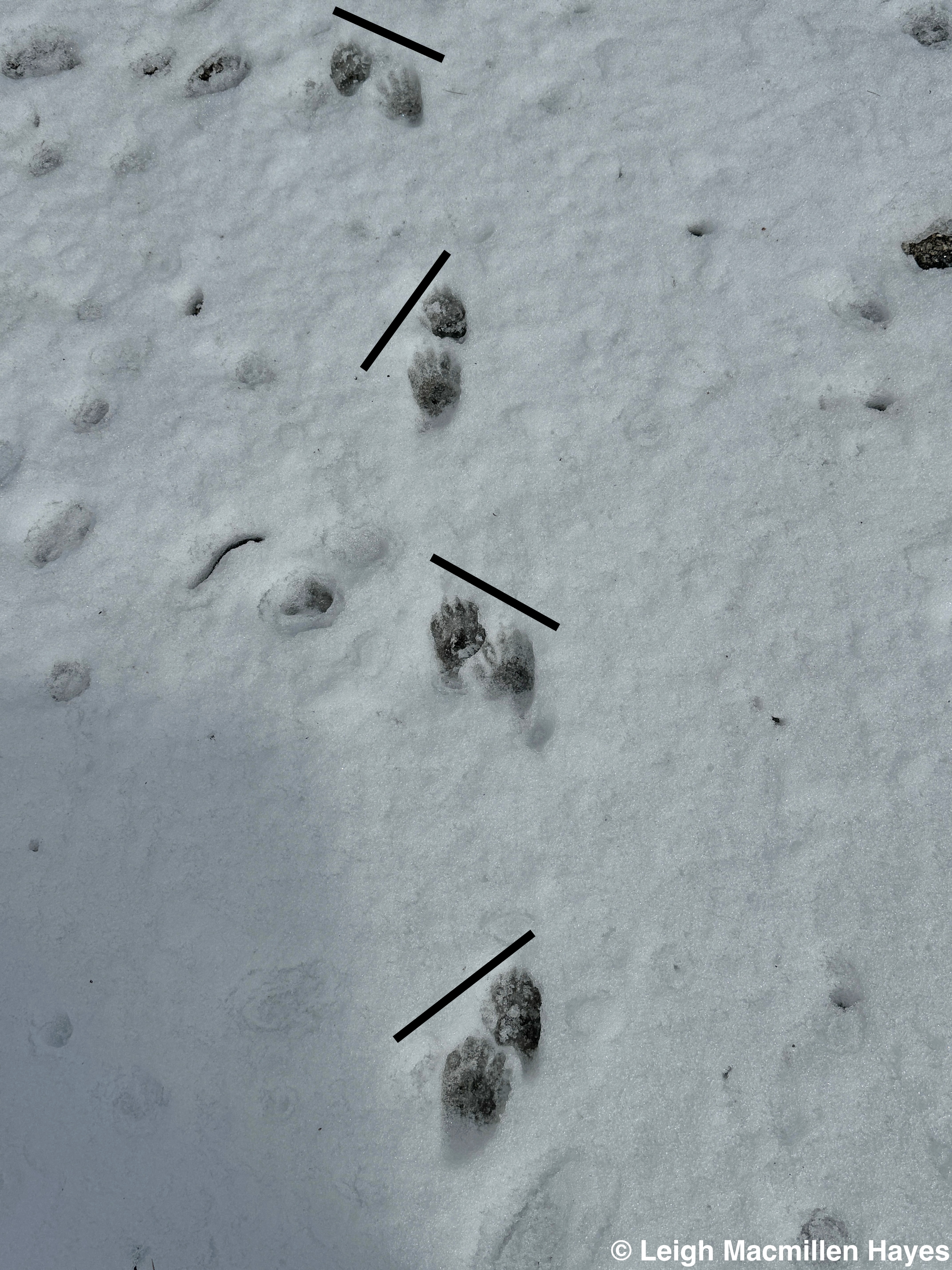
And on both sides of the stream I spotted the prints of one who passes in the night, working behind the scenes and leaves only a trace of its presence. But still, because I recognized these prints, I believed the Bobcat was nearby, perhaps even so close that it kept watch over me without my knowledge. As it should be.

Turkey prints were much more prevalent, but today it was the shape of such that garnered my attention and I could imagine the cross and a being upon it.

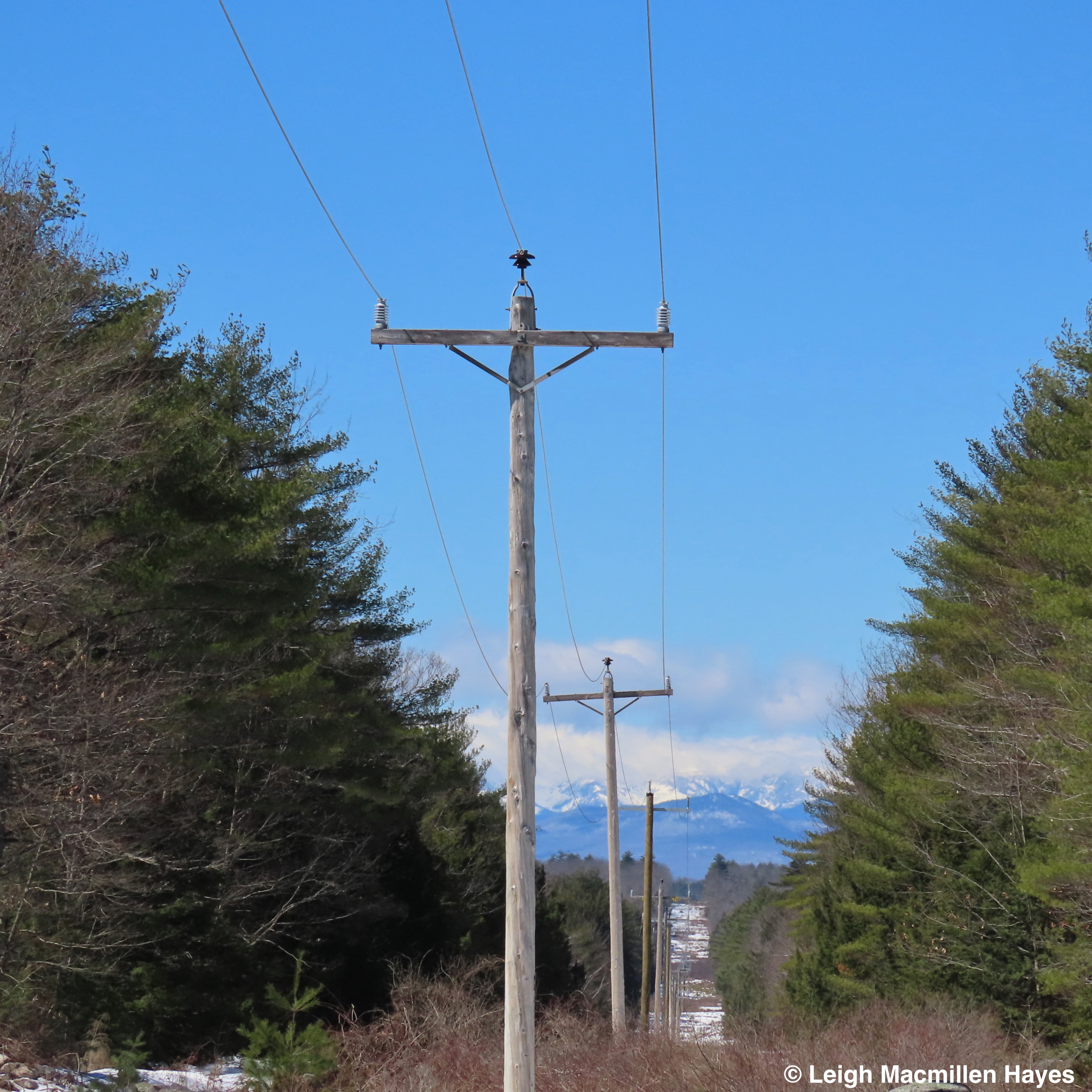
The cross theme was equally created in the form of telephone poles leading to the most powerful mountain in New England. Who knew? Light and communication sizzled across the wires for all of us who choose to partake.

An equally power-filled force, some of which is also harnessed for electricity, this swollen river flows to the ocean as waves break over boulders. I see not its full path from source to sea, but trust in its immanence.

And on this day, with the snow melting under bright sun and 50˚ temps, the White Crocus with its lilac-colored runway lines, suddenly bloomed–and the Alleluias are heard ringing across the landscape.

A Purple Crocus added its soprano voice to the Alleluia chorus.

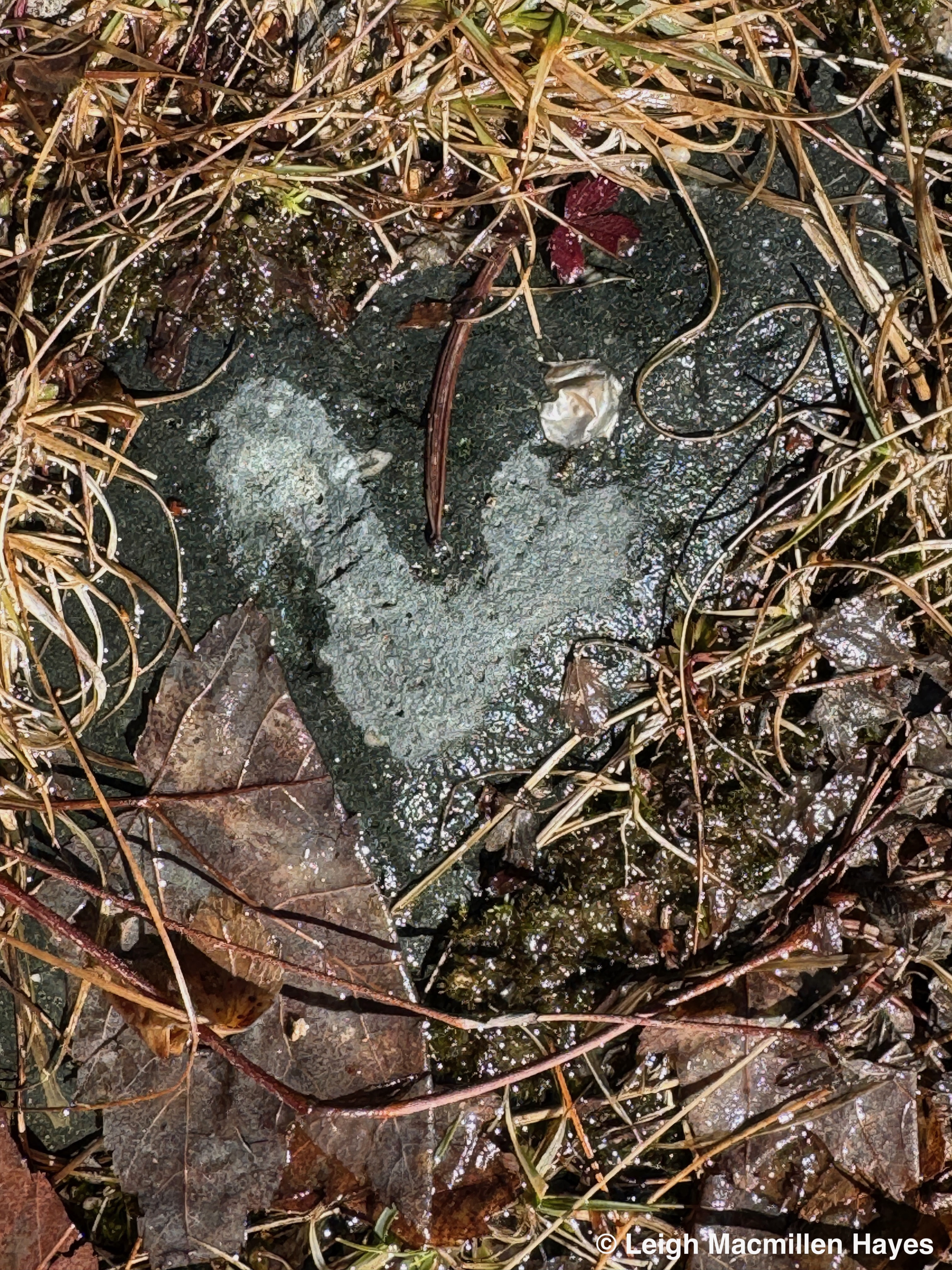
When I spotted this heart upon one of the paths I followed this weekend, I was reminded that hope and awe and wonder and love are captured within my heart and I gave great thanks.

Christ is Risen. A new day has dawned. Alleluia. Happy Easter 2024.

Ah March!

The hype for a predicted snowstorm today kept providing various amounts, rising one hour, falling the next, over the last couple of days. And so I made my own prediction: 1 inch – 12 inches possible.

What I didn’t predict was the number or variety of species that would choose our yard to dine. The snow started to fall during the wee hours of the morning and the birds began visiting before 7am, including this Goldfinch and many of its kin.

I was probably most thrilled to have a male and female Bluebird return. It’s been a couple of months since my neighbor and I have spotted them. Here’s hoping they soon use the nest boxes she has made available.

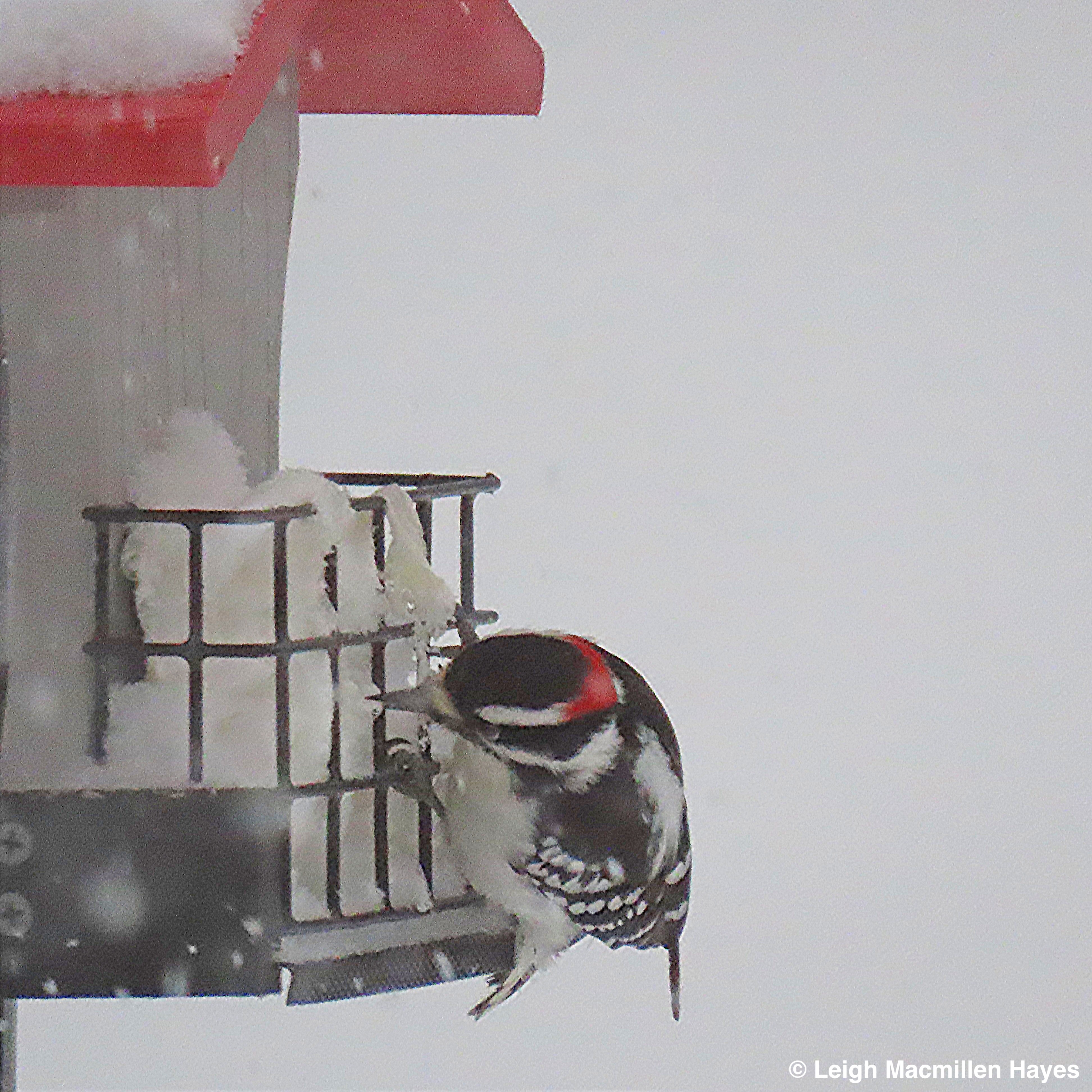
A male Downy Woodpecker found the suet, frozen as it was.

His female counterpart did a curious thing–she walked across the bottom of the feeder before righting herself to dine where he had been a few minutes prior. I’ve yet to figure out why she chose that approach.

There were territorial wars on the ground, at the feeders, and in the air.

Nothing major came of it, yet . . . but oh what drama.

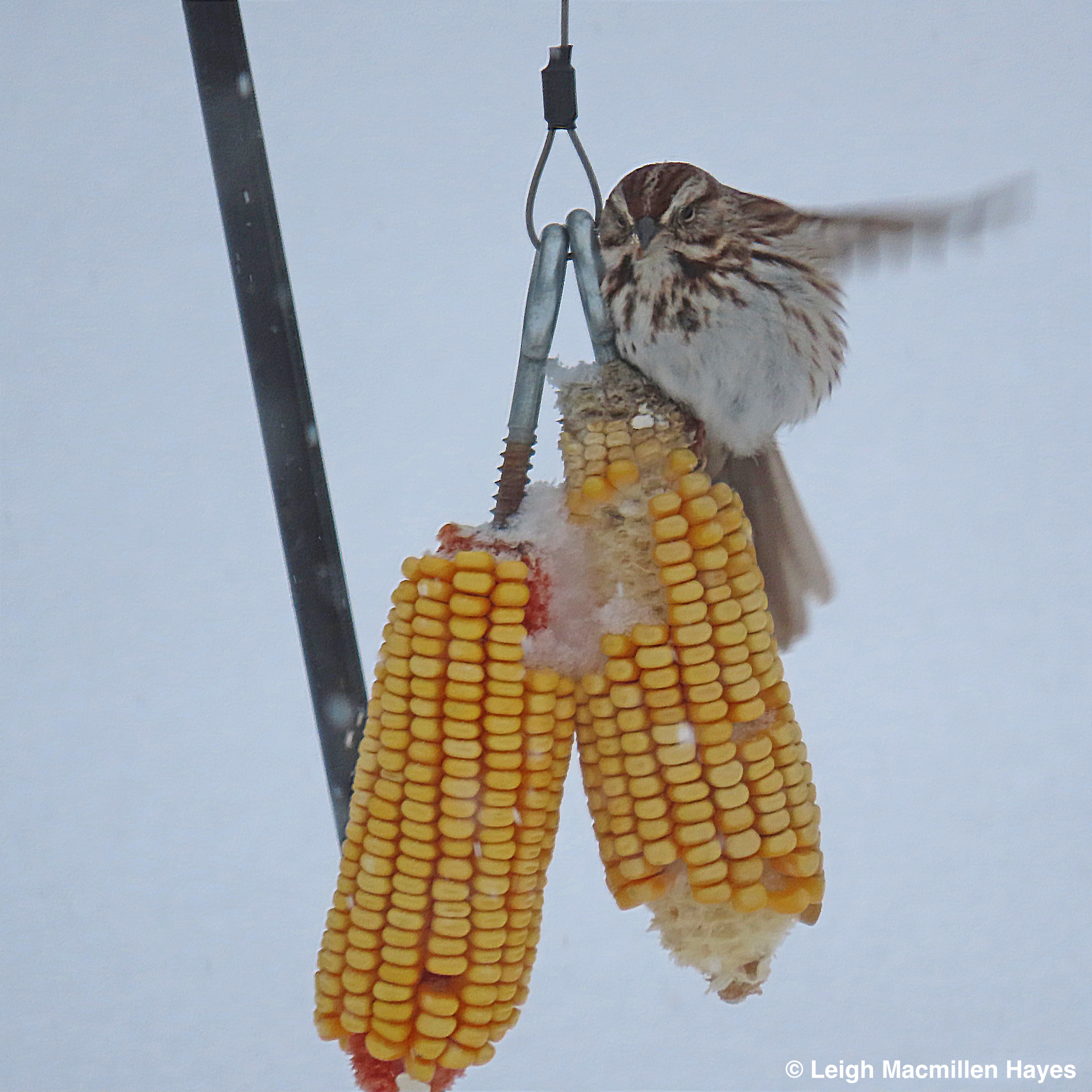
And an exchange of roles as a Song Sparrow pretended to be a squirrel and dine on the corn . . .

while a Gray Squirrel pretended to be a bird and dine at the feeder.

Both the female and male Cardinals were frequent visitors, and she looked especially dashing today.

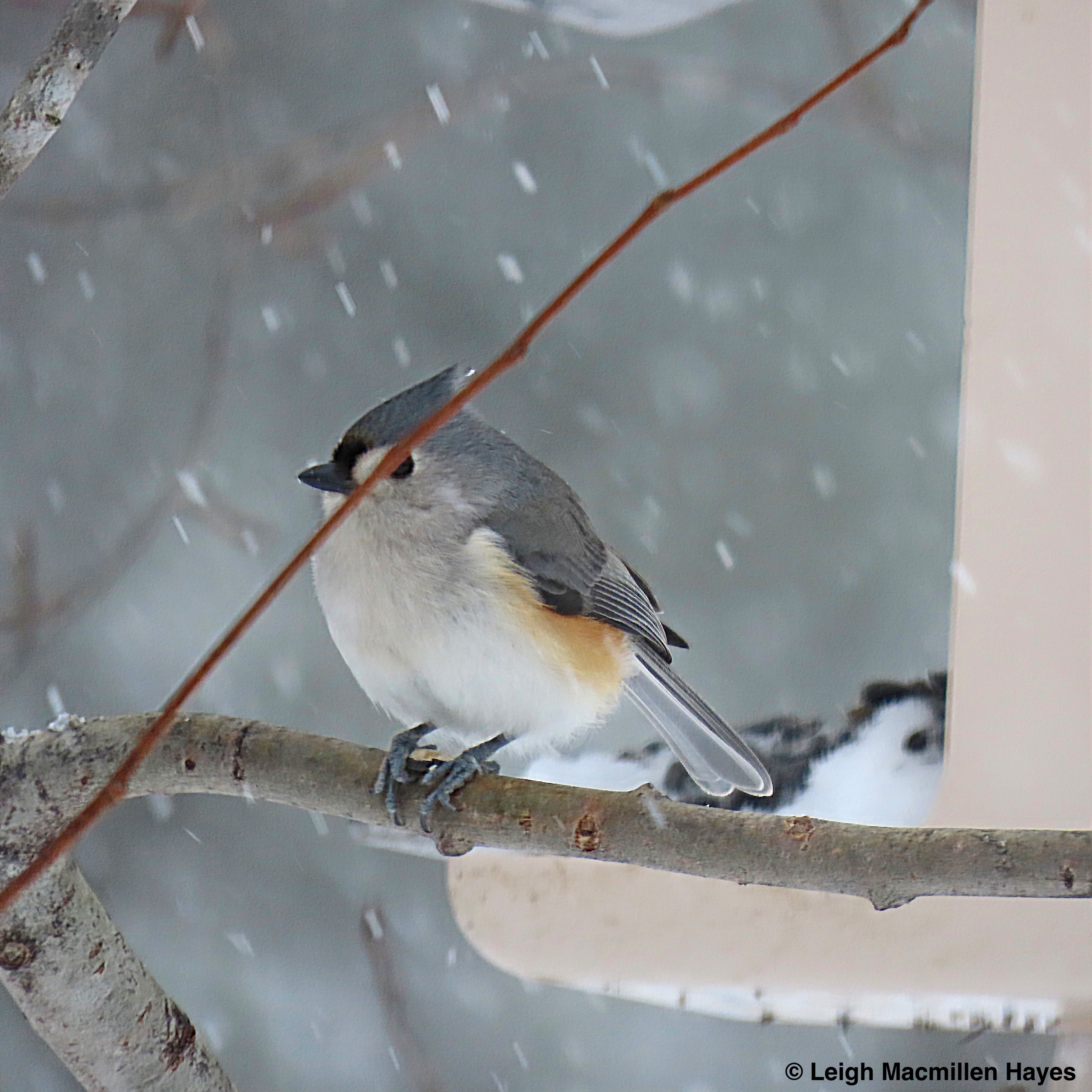
As did a Tufted Titmouse and the yard was filled with songs of “Peter, Peter, Peter,” as has been the case lately.

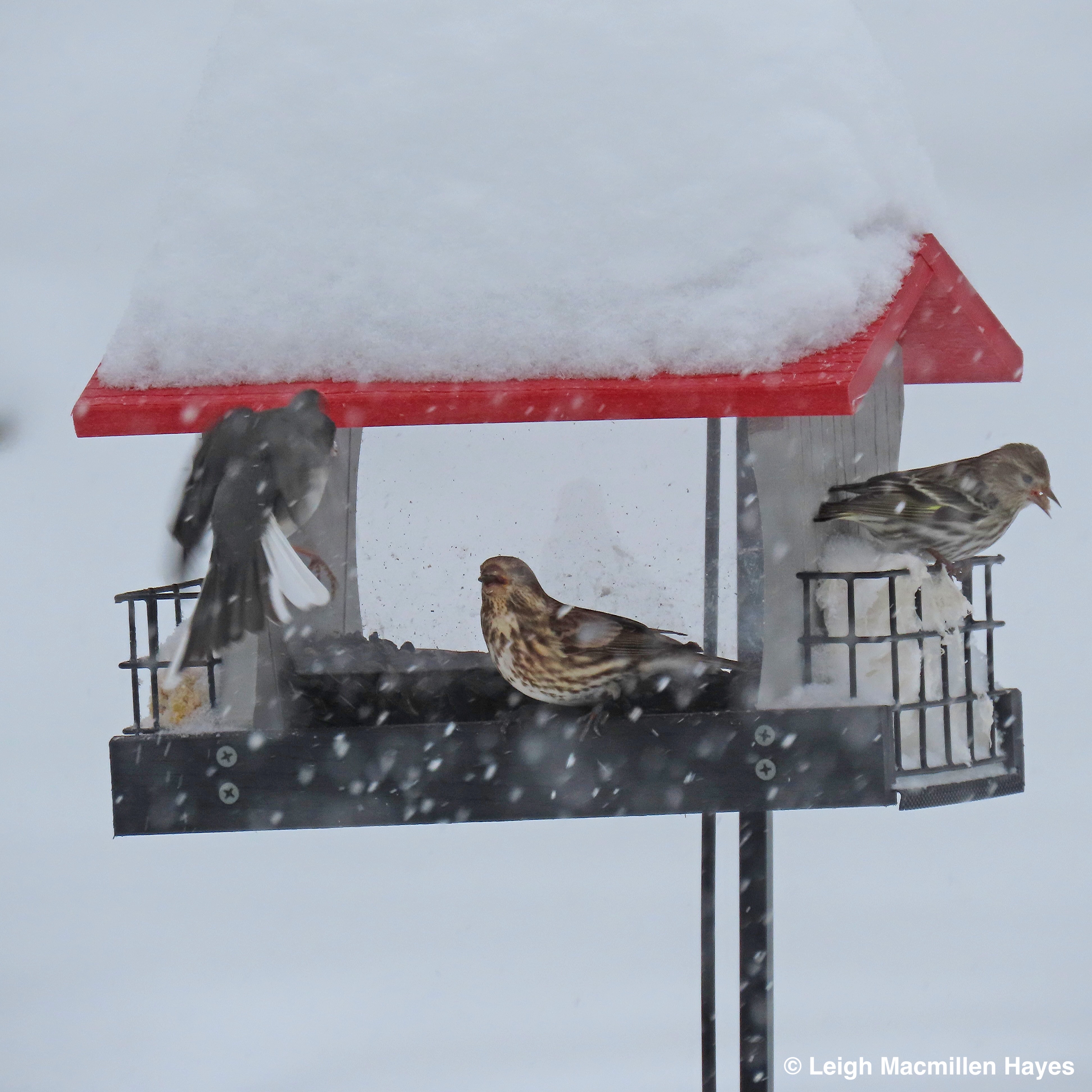
Toward the end of the day Purple Finches showed up and spent lots of time hanging out between one of the feeders and a Quaking Aspen tree.

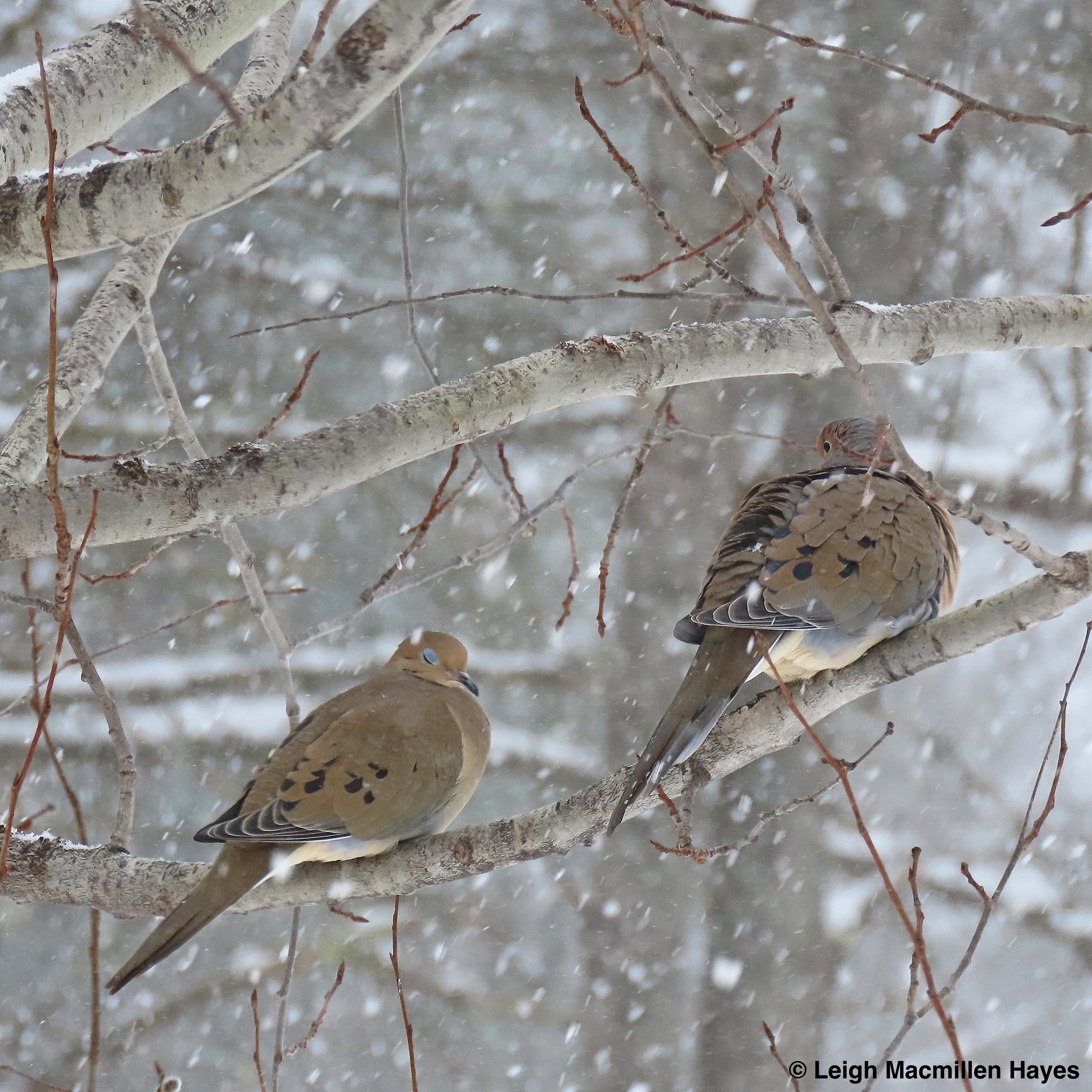
And a couple of times the Mourning Doves paused on a branch. She winked. At least I think it’s a she and a he because the other day one chased the other and they are always together.

Then they both looked at me as if I’d caught them in a secret moment. Did I?

I love that snow and rain bring in more birds than usual and today was no different.

What was different was that we finally got a real snowstorm on this 23rd day of March. An hour ago the total was over a foot, exceeding my prediction, and it’s still snowing.

Ah March in Maine.

Update: March 24, 7:30am. Twenty-one inches of fluffy snow! Ah March!

Season Opener

You might think of it as a homecoming; a return to that time of year when all begins again. Slowly. Ever Evolving.

A time when one needs to stand watch and listen. And so My Guy and I did yesterday when we heard this Red-bellied Woodpecker before we finally spotted it. And for the first time I could actually see the red belly for which it is named.

A time when I start visiting vernal pools and can be found with my hands on my knees as I lean forward to peer into the water.

A time to be in shock at spying such large Fairy Shrimp on this date, March 19. There were dozens and they were at least an inch and a half long. I have never seen such big Fairy Shrimp and can’t help but wonder the size of those I hope to see in other pools going forward. In the past they’ve been about a half inch long in April, and might grow close to an inch by May.

A time for catching a dash of a look at a Predaceous Diving Beetle heading for cover to avoid becoming prey in my presence.

A time to notice the minute, such as this wee bright orangey-red water mite that could easily be mistaken for a spider.

A time to return home and walk the path of the now snow-free labyrinth I created a few years ago.

A time to visit the vernal pool on a neighbor’s land and notice that only the edges are ice-free.

A time to peer into the water along those edges and watch a multitude of larval mosquitoes wriggling as is their custom.

A time to poke a Balsam Fir blister with a stick to get some sticky resin on the tip and then place it in a puddle along the path and watch the essential oils form rainbow designs.

A time to look up before heading indoors and realize that the Quaking Aspen flower buds are starting to fluff out much like Pussy Willow buds.

A time to realize that this spring’s season opener officially begins at 11:06 tonight, but the Fairy Shrimp suggest it may have started earlier than normal.

Not necessarily a good thing. Not at all. But . . . if you are looking for me in the next few months, you know where I’ll be. Somewhere near water.

Happy Vernal Equinox 2024.

Of Stumps and Snags on this St. Patrick’s Day

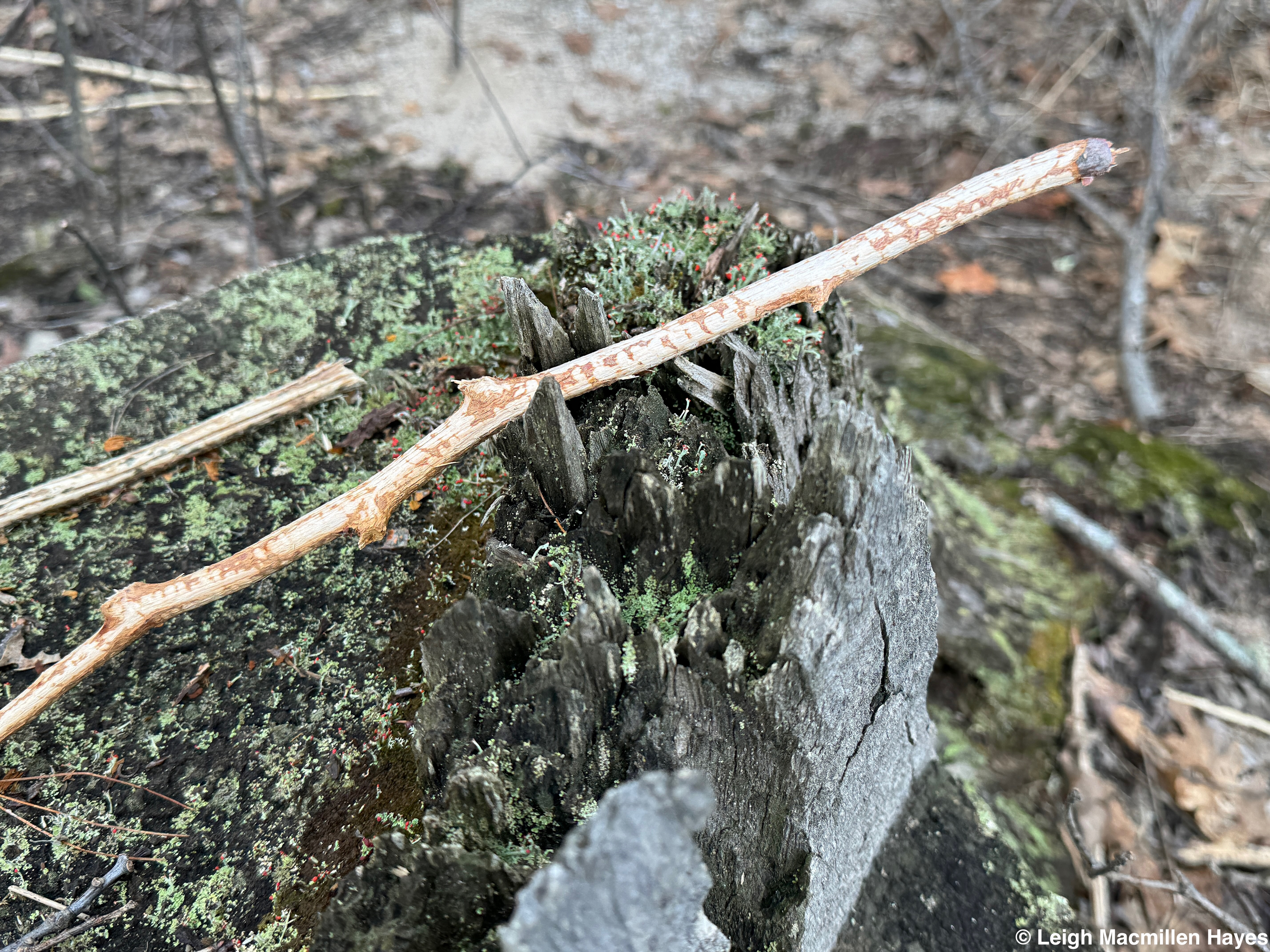
Stump: the base of a tree that has been chopped down or fallen, but is still connected to its roots.

Snag: a standing dead or dying tree; or part of a tree that is dying.

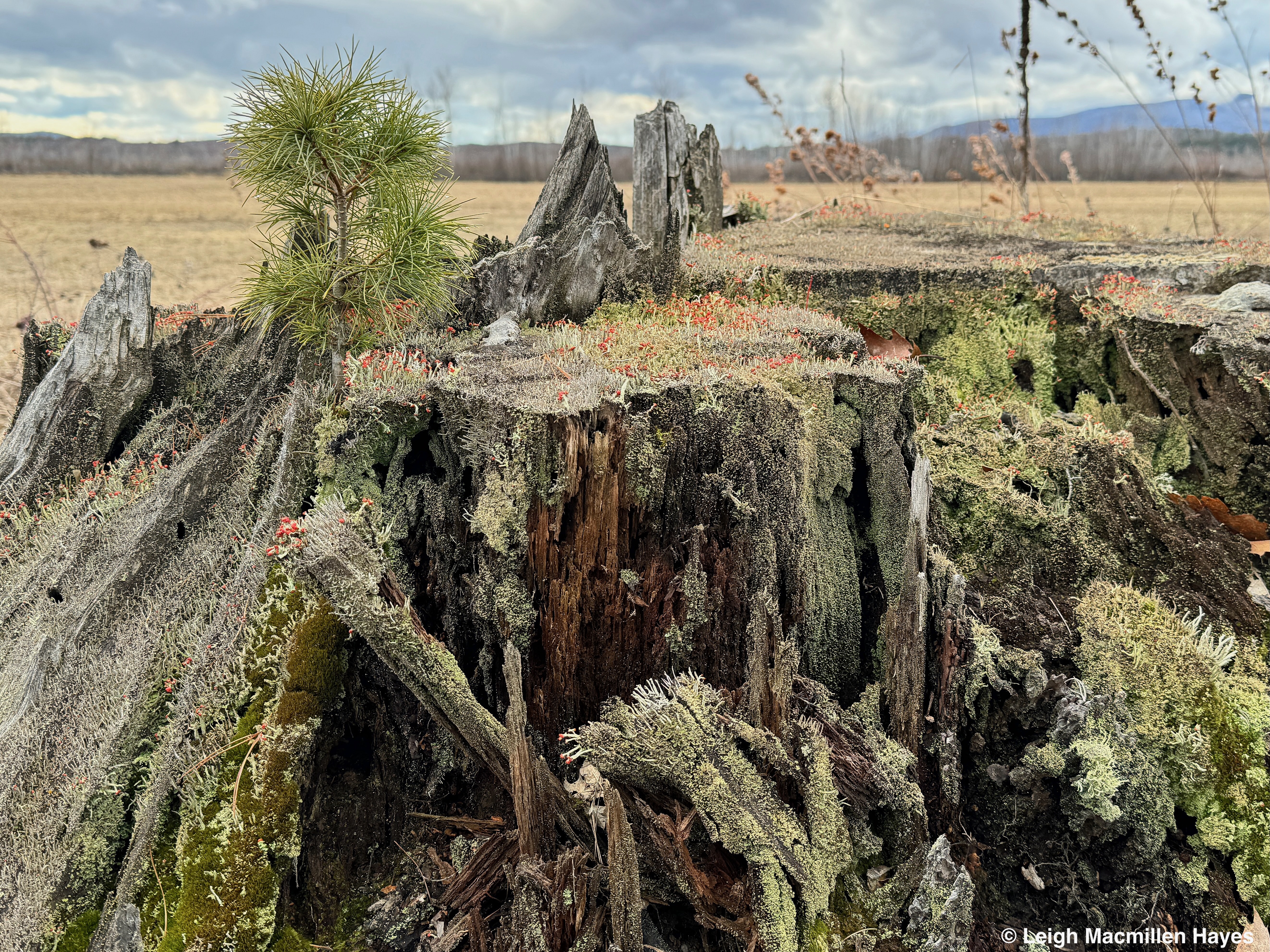
To visit a stump presumed dead
is to find life that comes in many forms.
Mosses and lichens colonize in a manner all their own,
and saplings find a new spot upon which to grow.
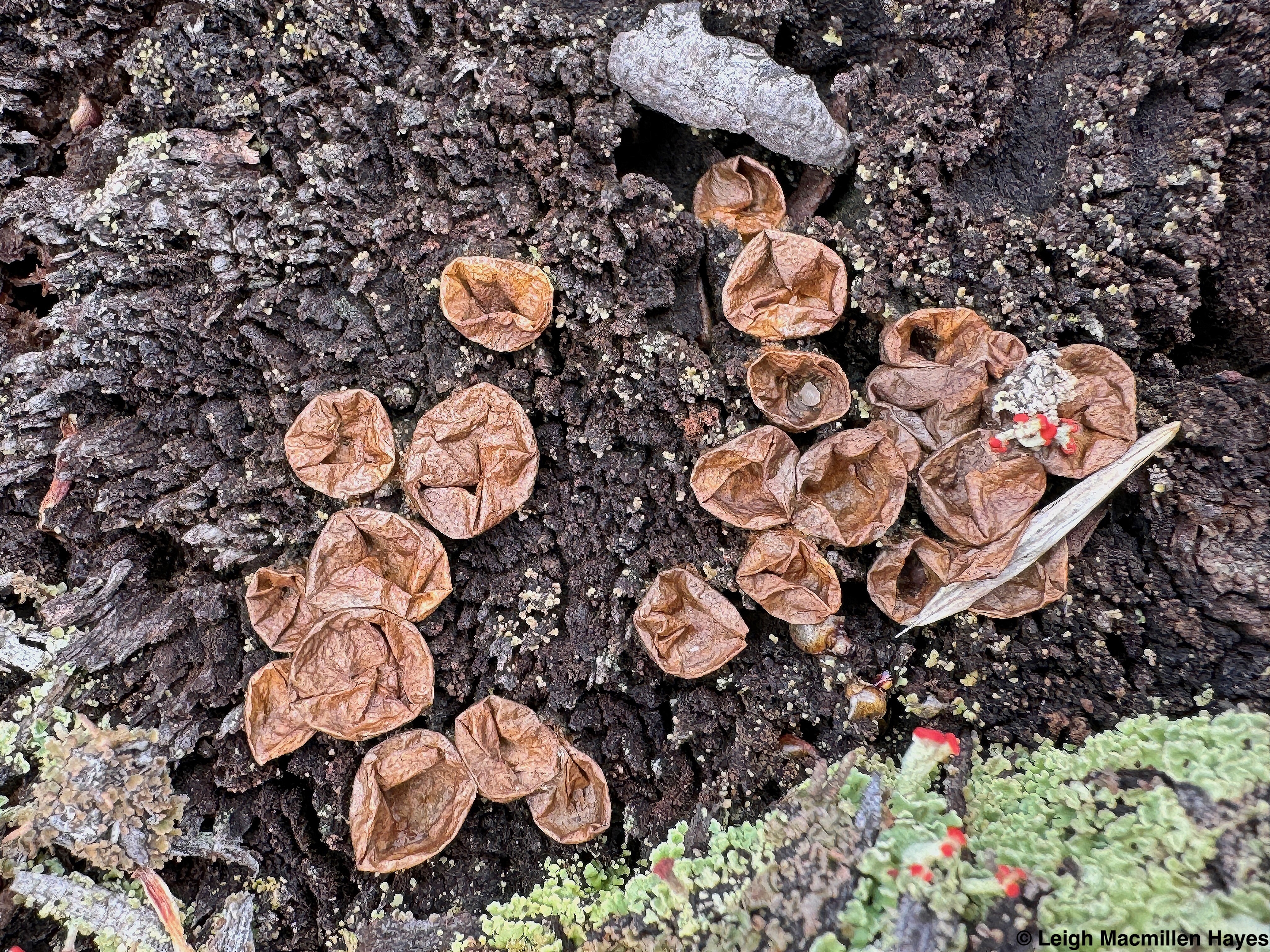
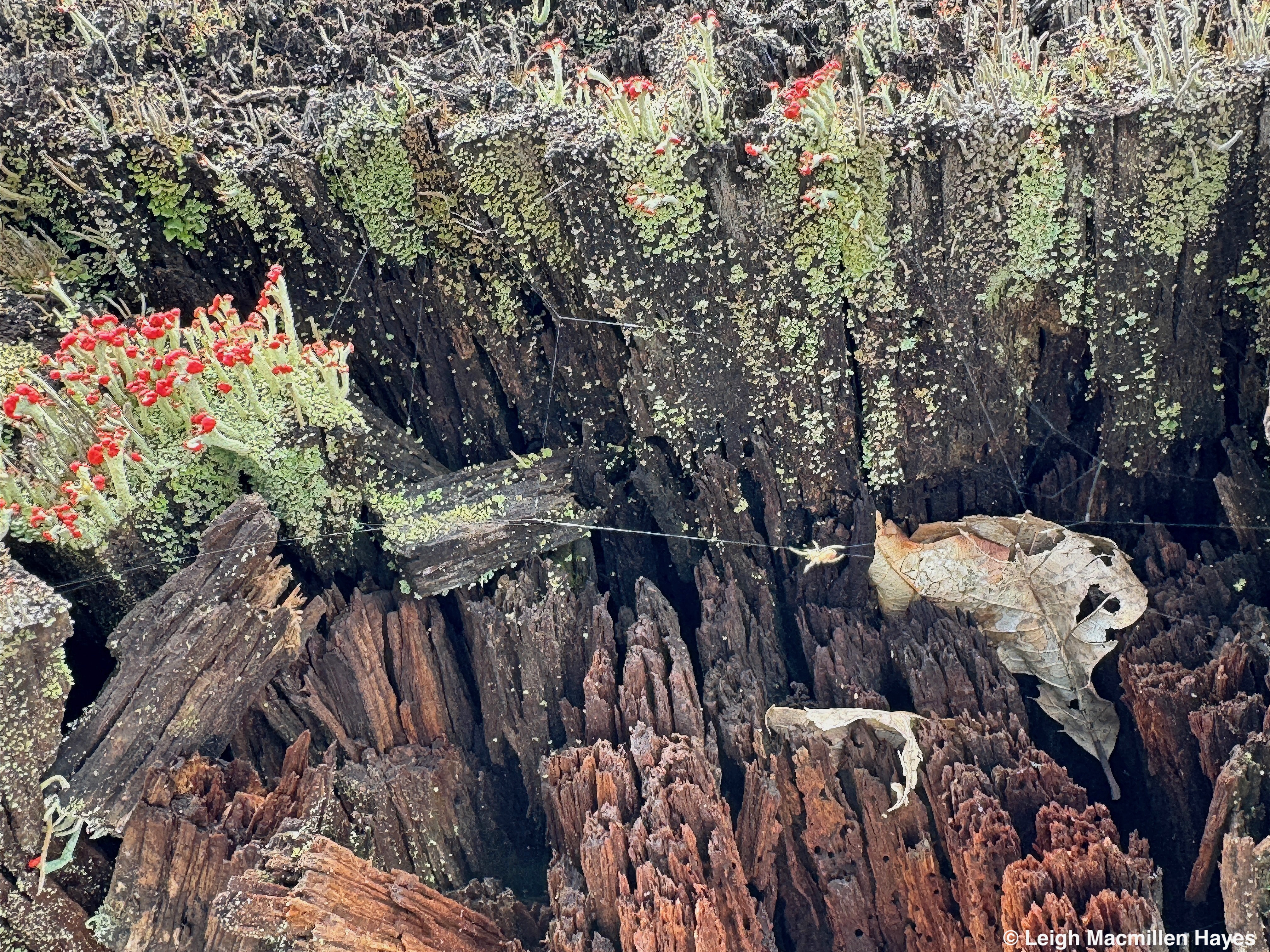
British soldiers crowd the scene,
their red caps marching toward the future
with fruiting spores planning to form
more of the same.
In their midst
others who are deflated,
the papery remains of puffball fungi
having already spread their wealth.
And a tiny White Pine
who chose this spot
upon which to germinate
at least seven years ago.
Stopping beside another stump,
it is not the residents who call this home
that attracts my attention,
but rather the sign of another who had paused here.
Beaver nip sticks, a source of winter food, 
were on display,
the trees from which they came
now skinny stumps in the background.
And growing on this stump,
scaly-surfaced trumpets
blaring Irish tunes
for all to lichen.
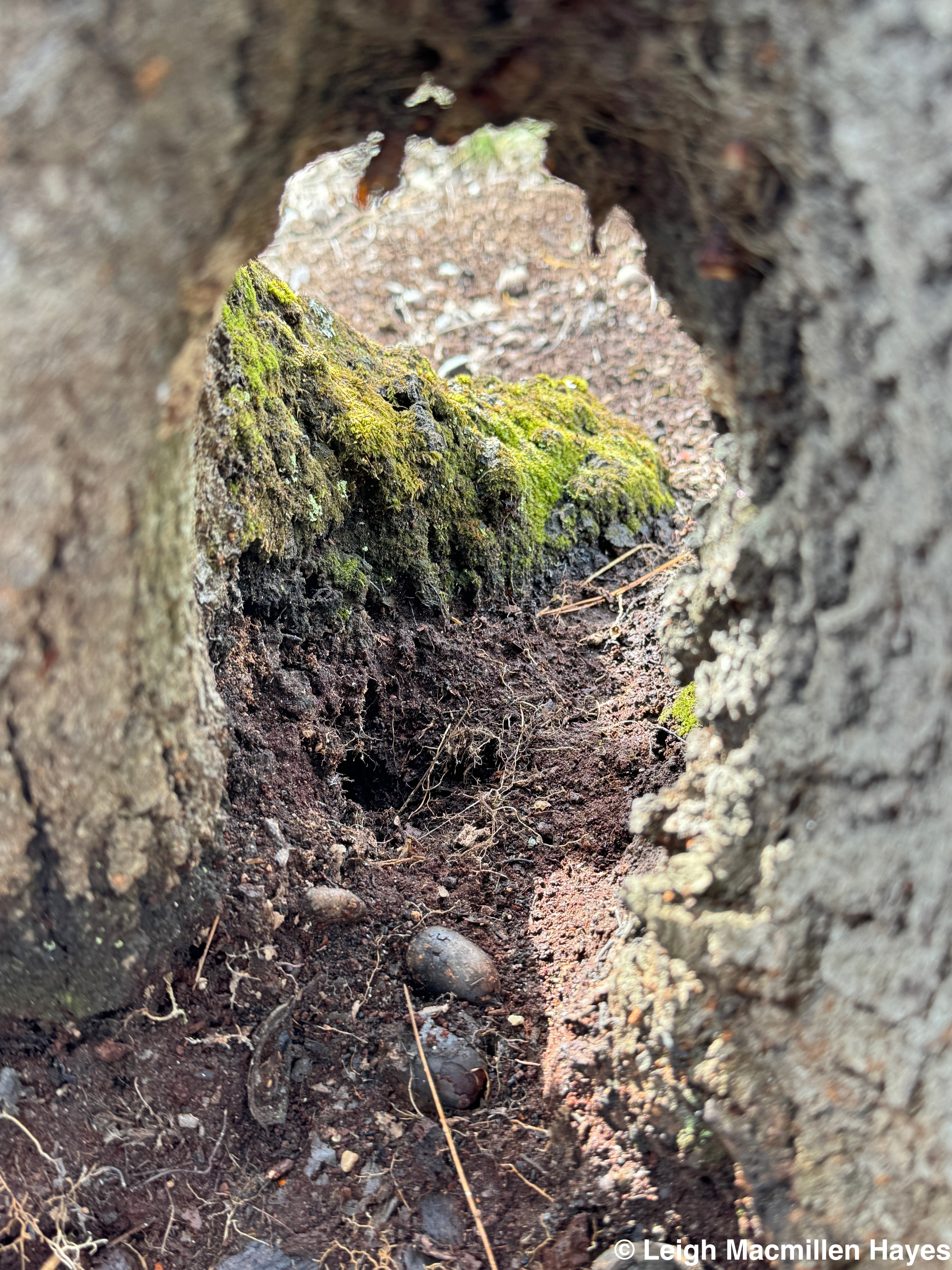
The next stump in my survey
had rotted from the inside out
and humus formed within
its castle-like chambers.
It even had an arched doorway
for leprechauns to enter
or pass into the next world
and the stump itself was leading the way.
There was another, 
which though the wood had already decomposed,
offered a substrate for a few
to set up housekeeping.
I was struck by the contrast
of a small clump of British Soldiers
on this one, whilst its neighbor
supported an entire army.
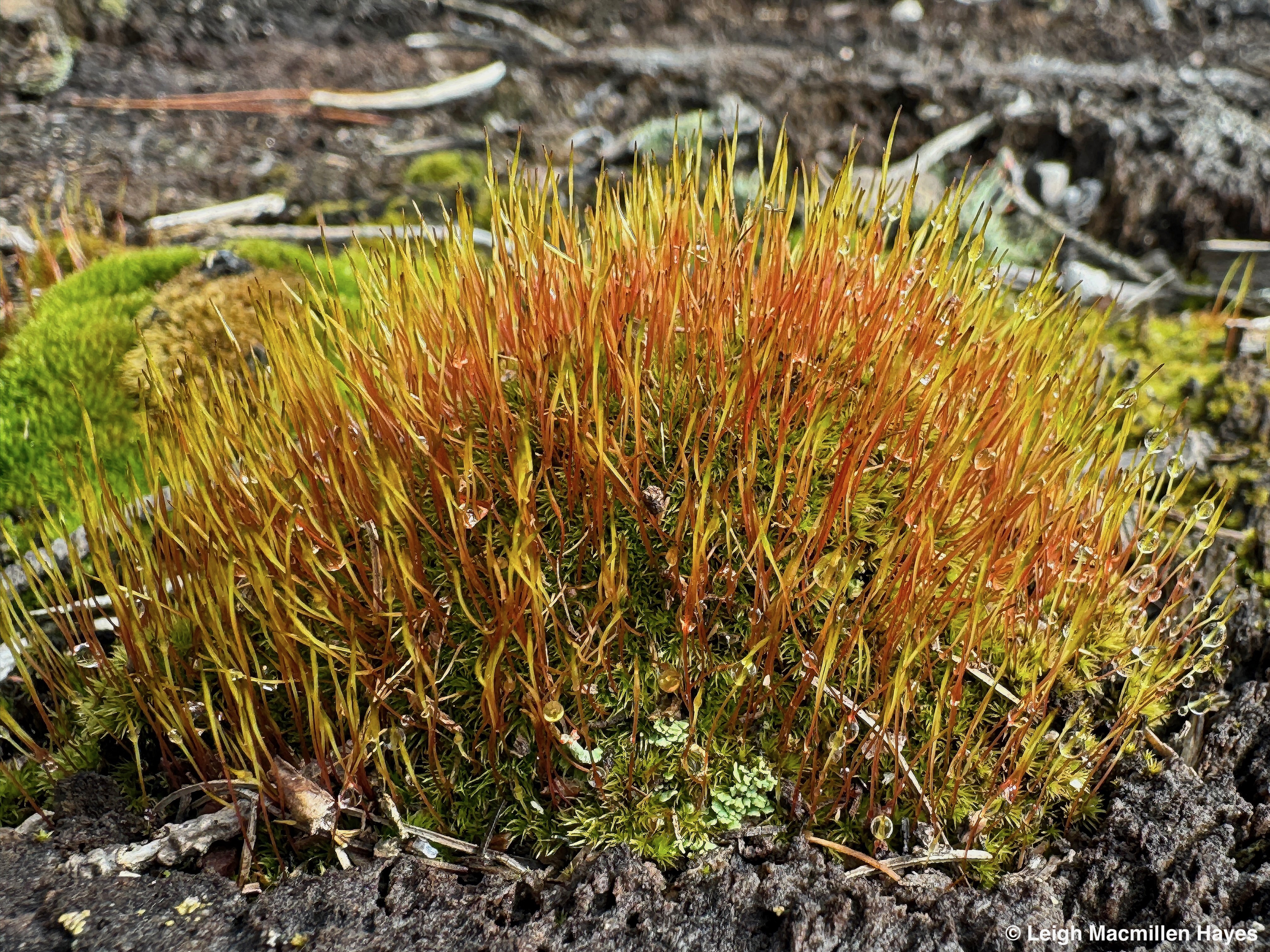
And only one small clump 
of Four-tooth Moss,
decorated with raindrops
in a salute to our March weather.
It's when one takes 
the time to look,
that the tiniest residents
make an appearance.
And so I watched this tiny spider
works its magic
of building guide lines
and creating a snare in hopes of a grand capture.
Not all stumps in this river-side location
were the result of man's intervention,
for old beaver works
highlighted tree spirits in the curvature of the lines.
Switching my attention to snags
brought the vision
of more artwork
upon the skeleton of a tree trunk.
And a display of the (w)holiness of this place,
for such were the portals
carved by beeltes in the past
that had breached the bark.
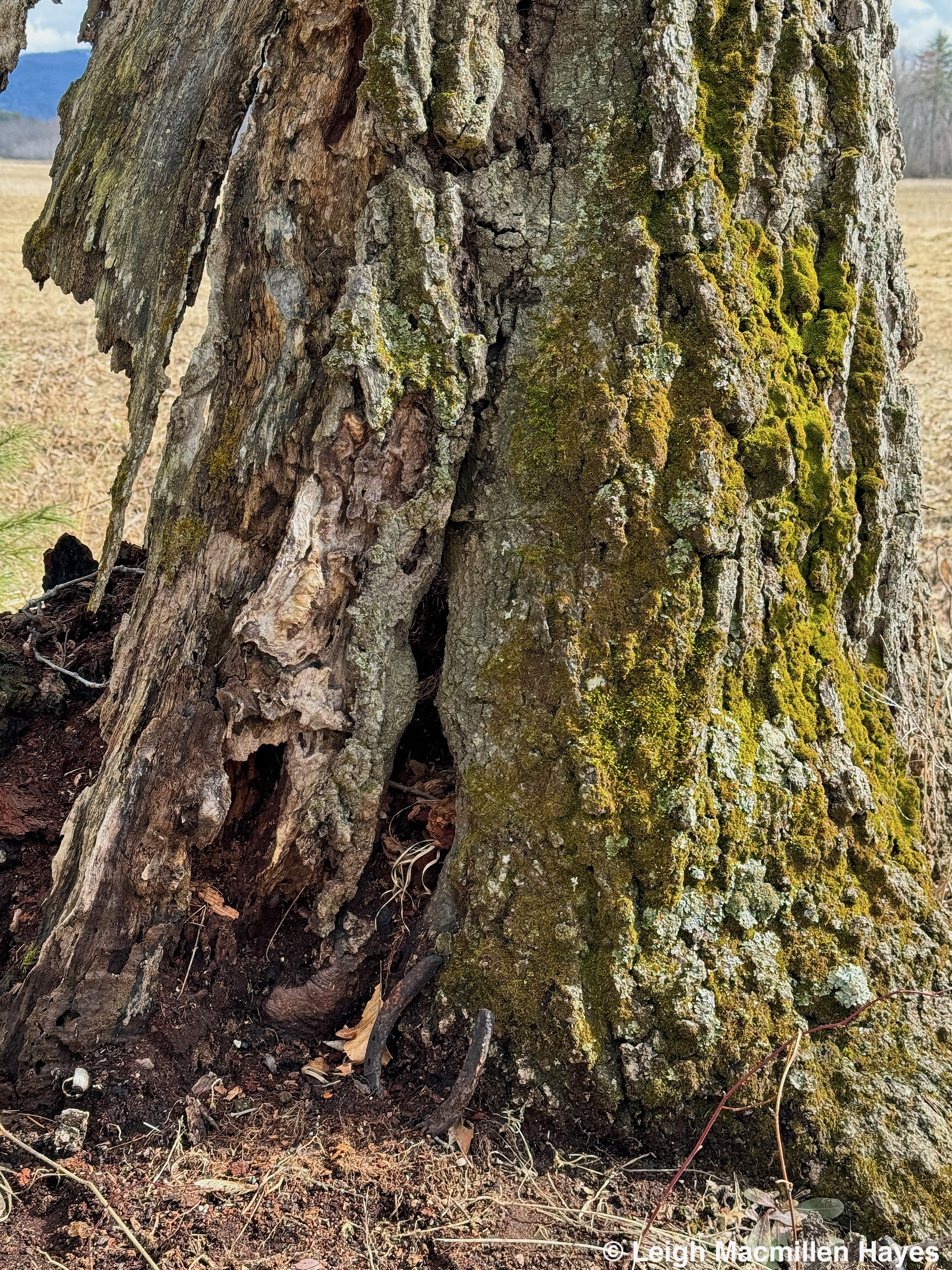
Finally, I stood by one mighty snag
that is a marvel of this natural world,
so much of it decomposed
yet replenishing the soil.
Looking skyward from within,
one can see branches
and marcescent leaves above
speaking to the xylem and phloem still in operation.
What bark is left,
serves as armor for this old oak,
and as scaffolding
upon which mosses and lichens can grasp.
It's what I spy inside,
however, that takes my breath away.
Oddly enough, it is named
for the breathing structure of another.
And when I compare it to 
the nose of my oldest son's furbaby,
I can see the resemblance, sorta.
Dog Nose Fungus.

As for stumps and snags, I must give thanks
for they are hardly useless in the landscape,
but rather hosts of many a forest life,
and I'm sure St. Patrick would approve.

Reflection Mondate

Snow. Slush. Mud. Water. Flurries. Wind. Sun. Clouds. They were all on today’s menu. It’s a March thing. And so we decided to embrace it and head to a spot we usually avoid this time of year.

Our destination was a country lane beside the Old Course of the Saco River in Fryeburg, Maine. During the winter, this road is part of the snowmobile system. In spring, summer, and fall, it sees a fair amount of traffic. But . . . because of current conditions and the fact that a portion of the road washed out a few months ago and another portion is under at least six inches of water, the gates are closed and the only traffic is via foot. Perfect conditions in our book.

I love to walk roads like this because they always have something to offer and today it was the discovery of a bunch of rather dramatic winter weeds known as Roundhead Bush-clover. Bristly, spiky flower heads. Curly leaves with nooks and crannies.

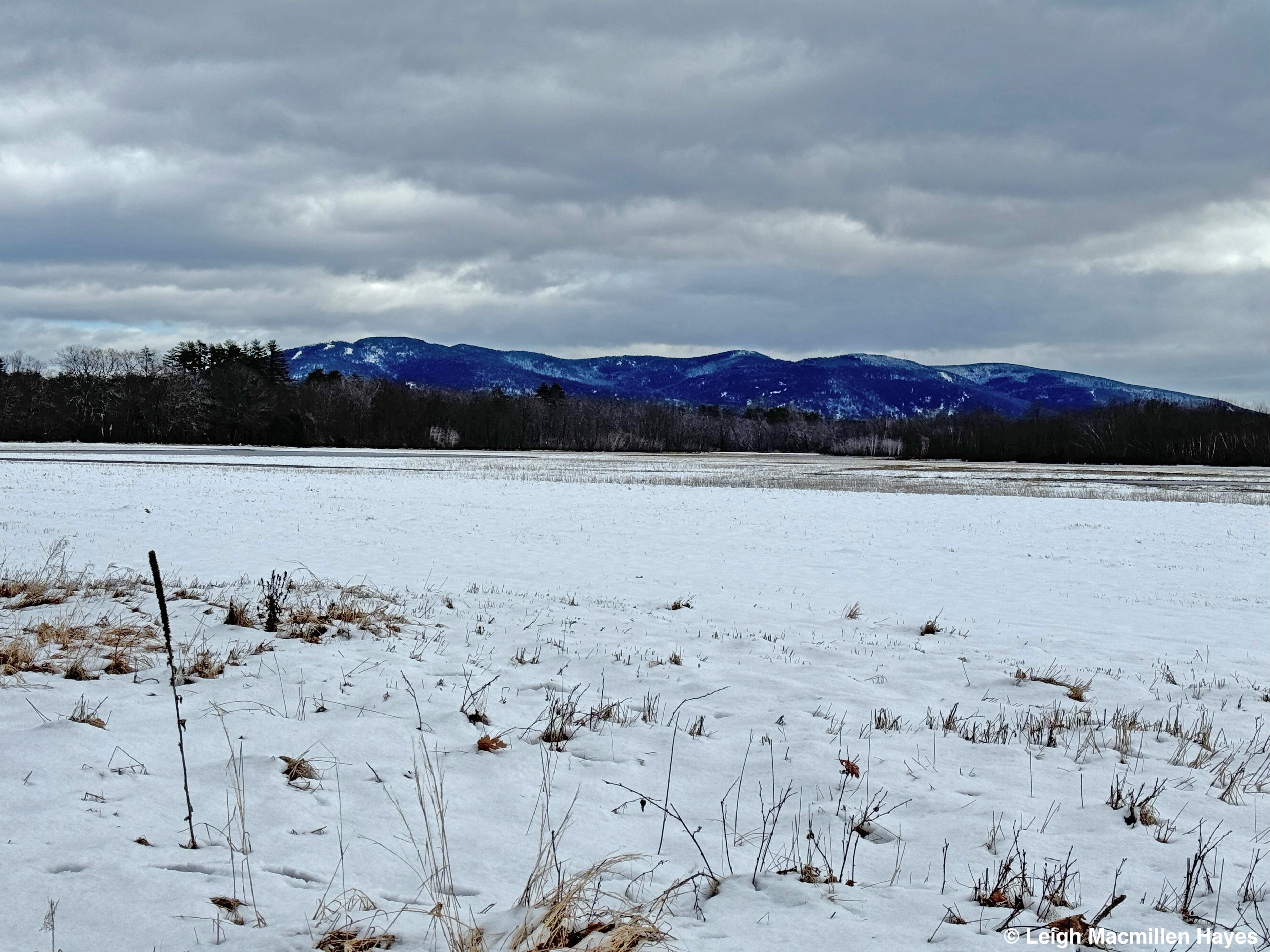
The sky was equally dramatic and ever changing as we viewed it while walking southeast with the ridge line of our beloved Pleasant Mountain forming the backdrop.

We managed to easily get around a major washout, but then encountered this and it is not a puddle. The water is flowing across the road and we could feel the current as we were determined to get to the other side.

We are both here to report it was at least six inches deep in the deepest spots. We were feeling pretty darn smart for thinking to wear our muck boots.

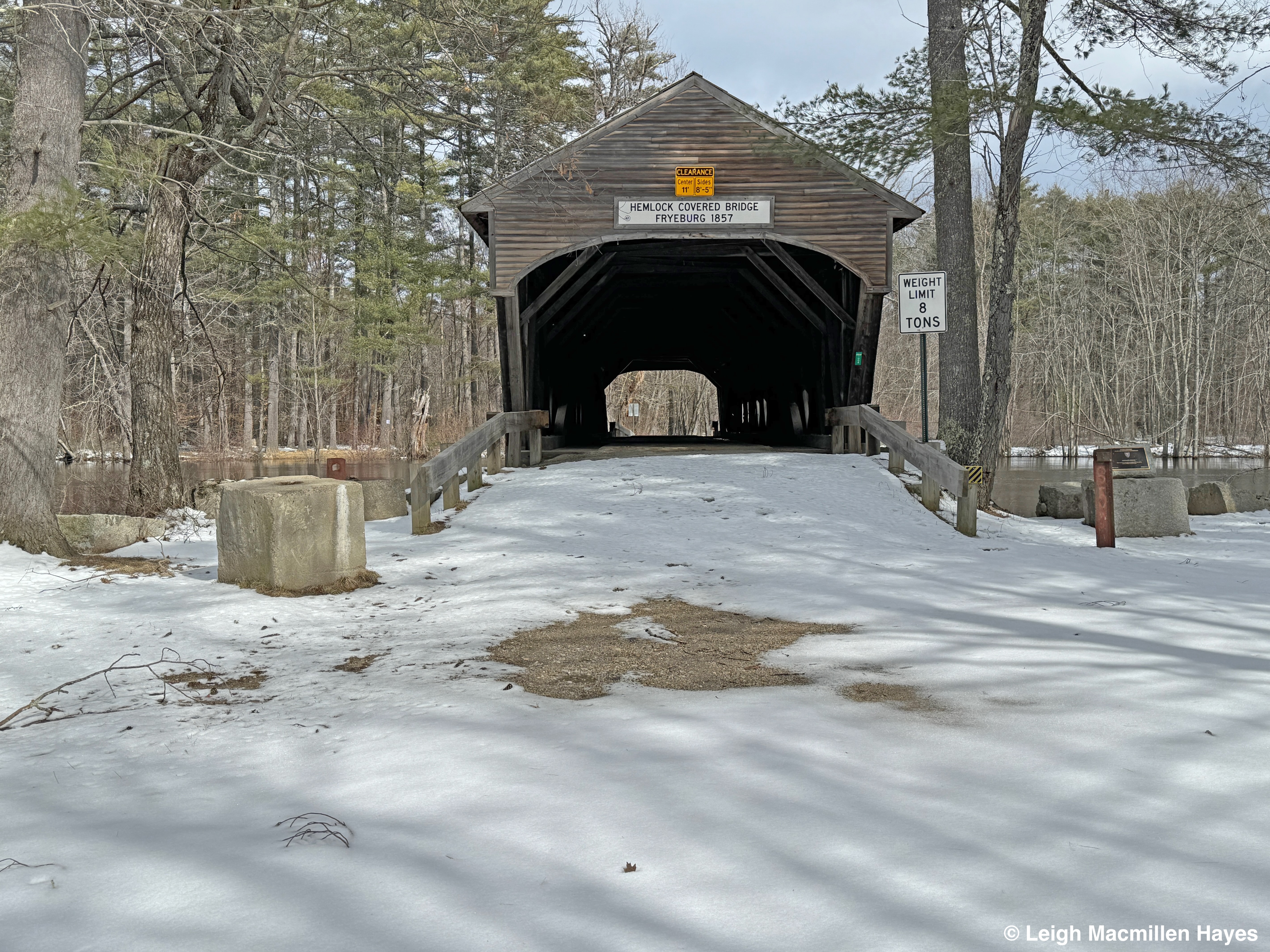
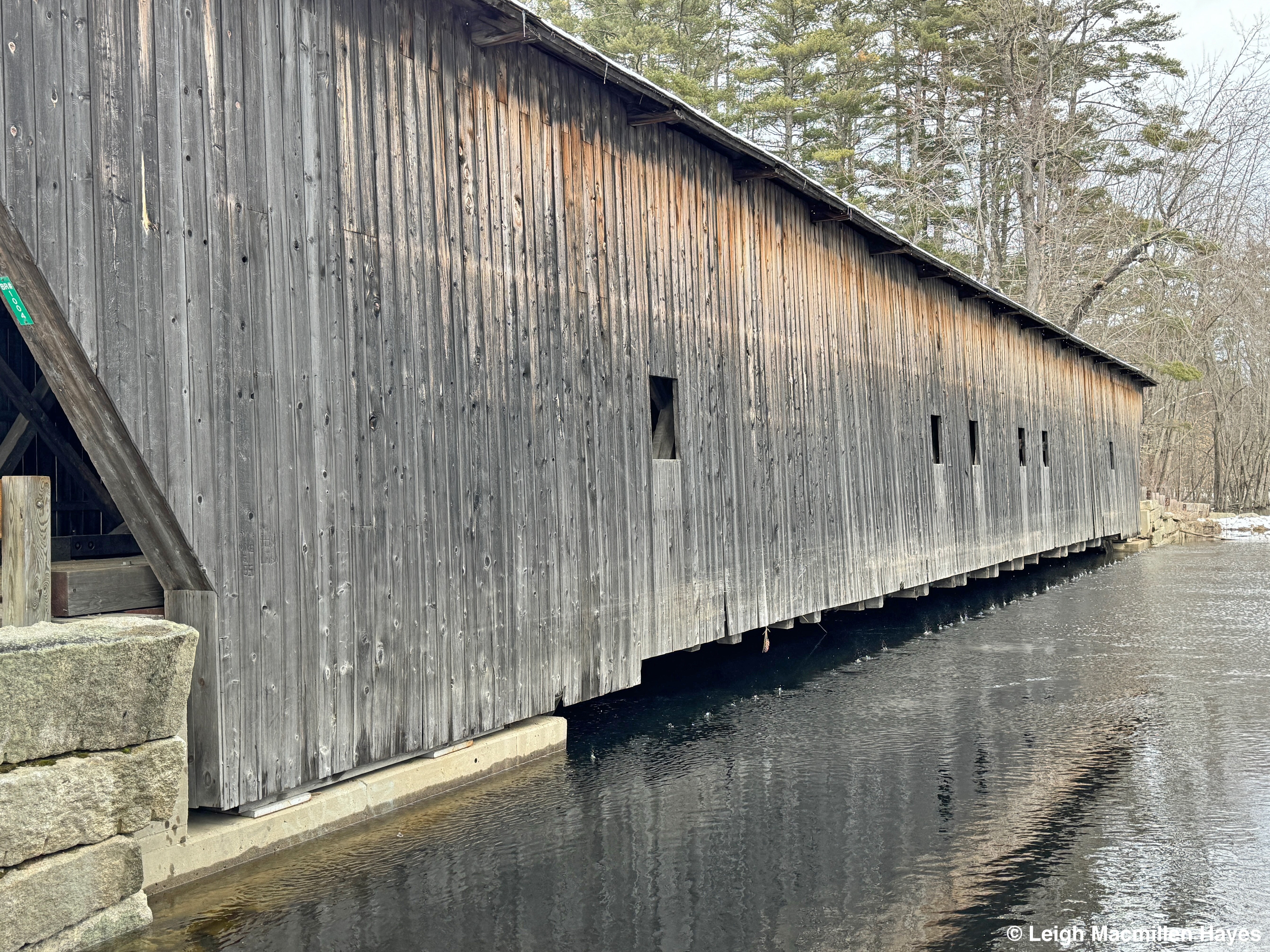
Just over a mile in we reached the coveted spot: Hemlock Bridge. The bridge has spanned what is now the Old Course of the Saco River for 167 years. Built of Paddleford truss construction with supporting laminated wooden arches, Hemlock Bridge is one of the few remaining covered bridges still in its original position.

Peter Paddleford of Littleton, New Hampshire, created this design by replacing the counter braces of the Long-style truss bridge, creating an unusually strong and rigid structure. During three seasons, you can still drive across it.

Yes, we’d seen a lot of water on the road and in the field and noted how high the river was and flooded the fields were, but it really struck home when we noted the short distance between the bridge and the water. And a memory popped into our heads simultaneously.

Today we never would have been able to kayak to Kezar Pond as we did in August 2023. If you look at the cement support on the left and scroll back up to the previous photo, you get a sense of how high the water is right now. And that’s not the highest it’s ever been. Not by a long shot. But you must keep reading to learn more about that.

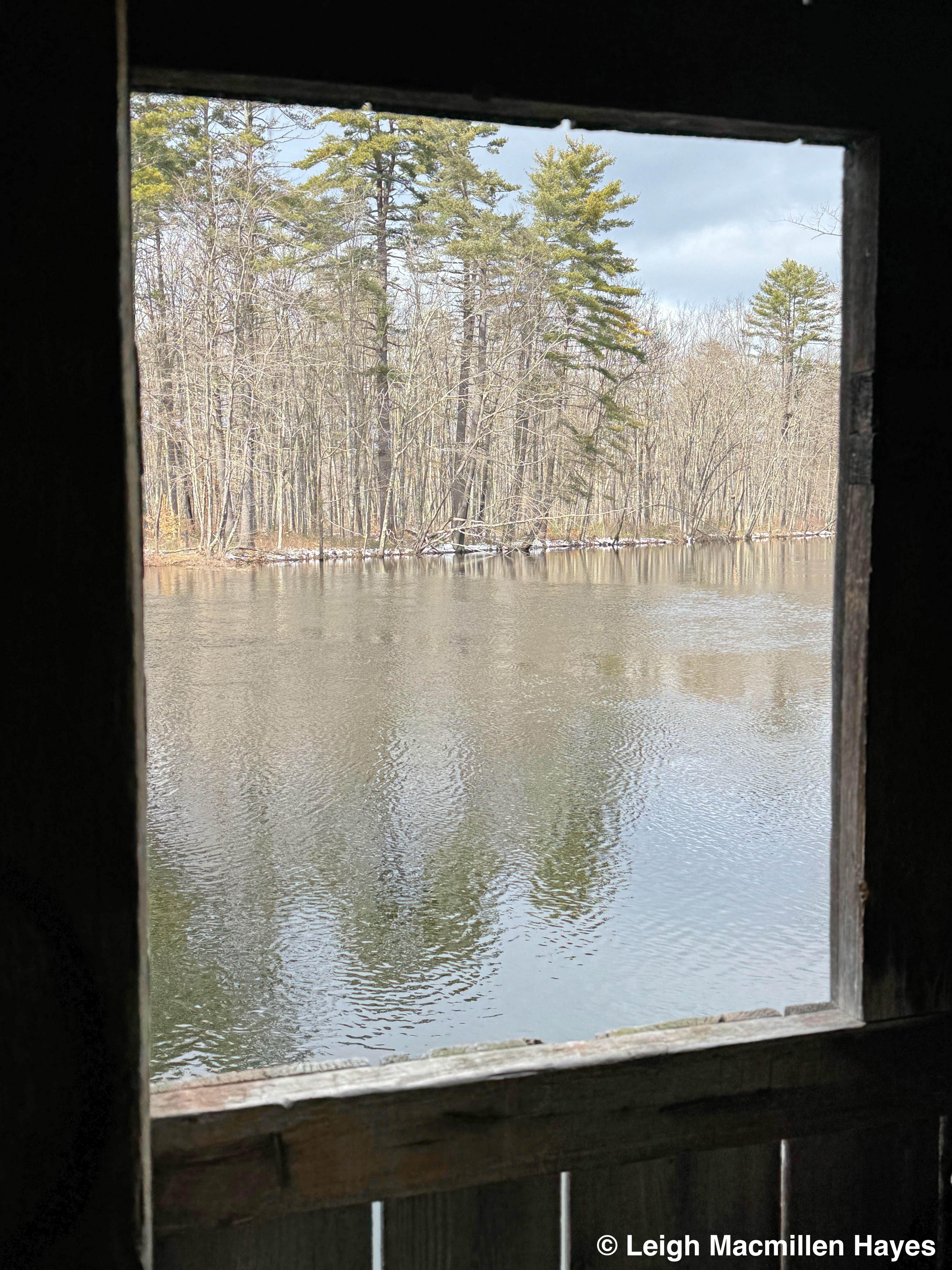
Once on the bridge, there’s plenty of graffiti to examine, or not. I prefer to take in the views and love how the boards create a frame–this one looking in the direction of Kezar Pond.

And this toward Saco River. Both are a bit of a paddle, but a fun paddle.

Exiting the other side of the bridge, we discovered we weren’t the only ones to have passed this way. Perhaps we were the only humans, but raccoons had also been out for a walk, or rather a waddle.

After spending a few minutes looking around and scaring off Wood Ducks, it was time to turn around.

On the way out, it was the silhouette of one large and statuesque American Elm that captured my heart as it always does.

And we could see snow squalls in the mountains, while a few flurries fell on us.

At last we finished up where we’d started. And that’s when we saw the owner of the land we’d passed through coming down his son’s driveway. The legendary Roy Andrews is a storyteller of the past and we were delighted that he stopped his truck to chat with us. He told of stories passed on to him about logging operations and situations, especially when the river reverses flow during high water events and once a huge amount of logs were lost until they could haul them out individually in the summer. And he told us that the highest he has ever seen the river is three feet above the floor of the bridge. “Well, that’s a bit of an exaggeration,” he said. “It was 34 inches high.”

This was a reflection Mondate as Roy reflected upon the past and we did the same, both recalling different times we’ve traveled this way, via skis and snowmobile and vehicle and foot and we are so grateful that we can continue to enjoy the past and present. And hope for the same in the future.

Breaking Up . . .

They say it’s hard to do and usually I feel the same, but this year has been different, and suddenly the time has come. Letting go though, that’s the part that causes me the most struggle.

Then again, six days ago I knew the end was near.

And today, the denouement became clearly obvious.

How things can change in only a matter of time i’ll never understand.

My heart grieved for all that has been lost.

But warmed by what I found instead.

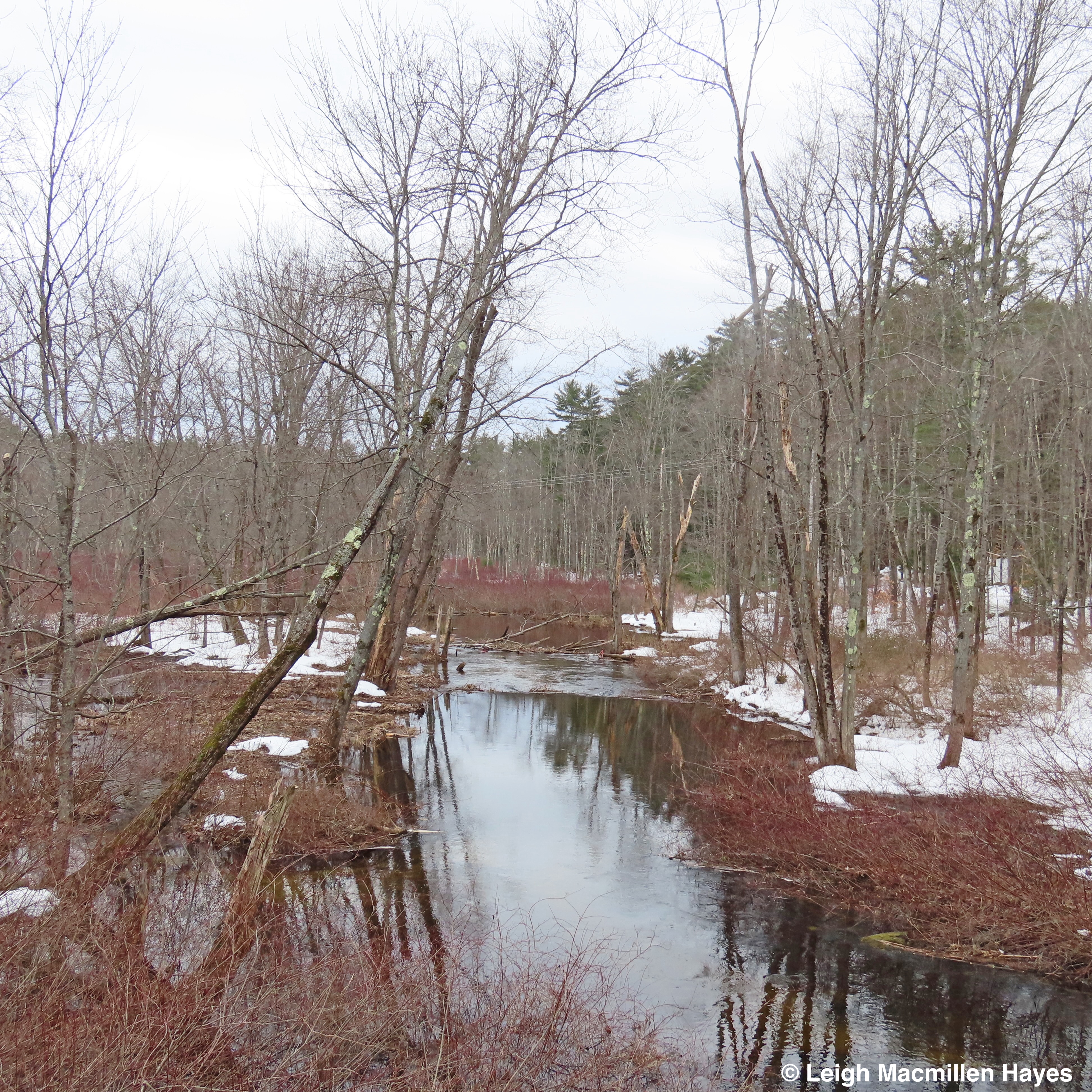
And when I stooped over to peer into the shallow depths, I knew I was going to be okay.

The end had come, but new beginnings awaited.

Goodbye Winter. I’m breaking up with you, though honestly, I think you broke up with me this year. You’ll always hold a place in my heart, but this year you didn’t seem to kindle the usual flame.

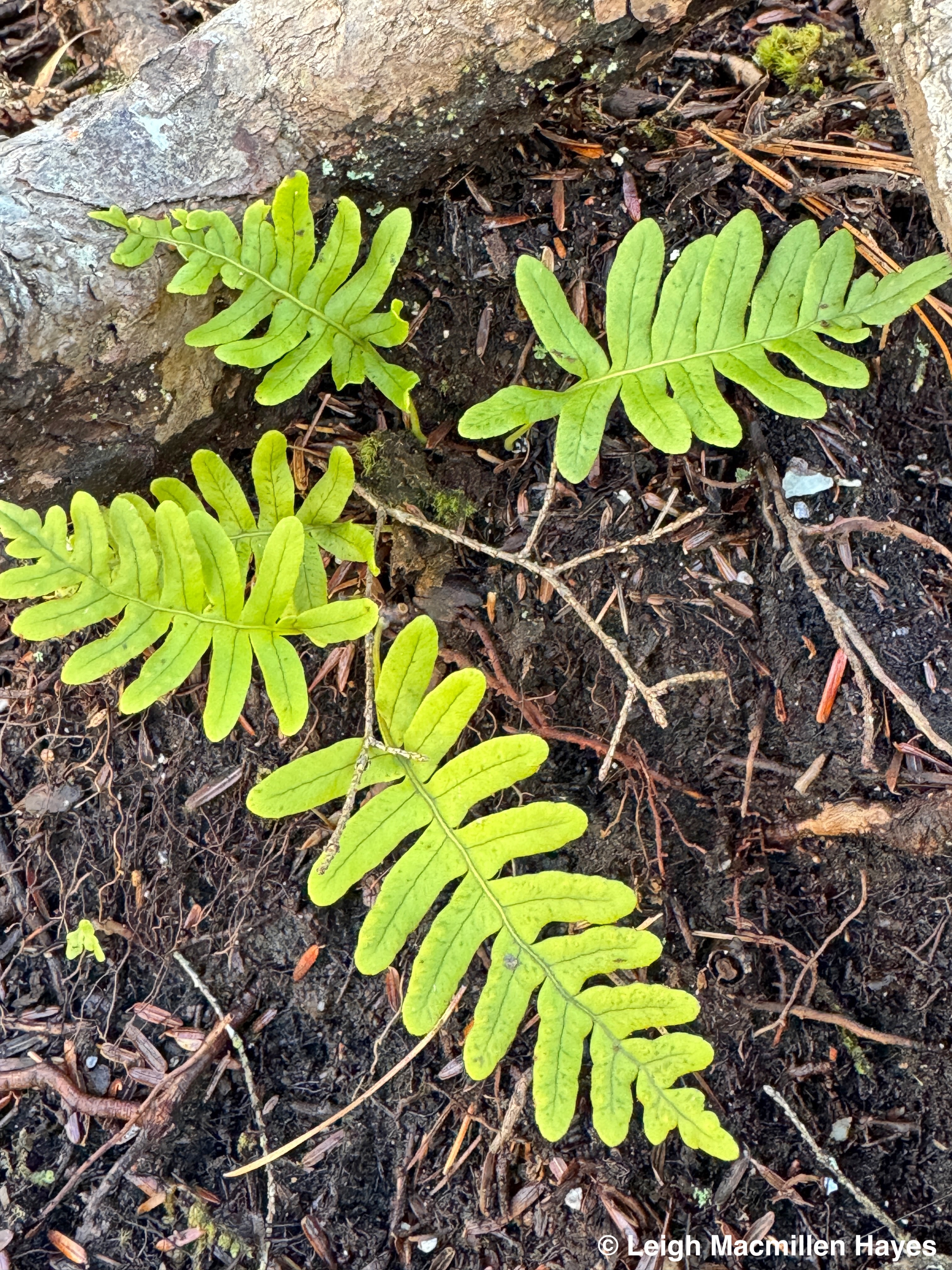
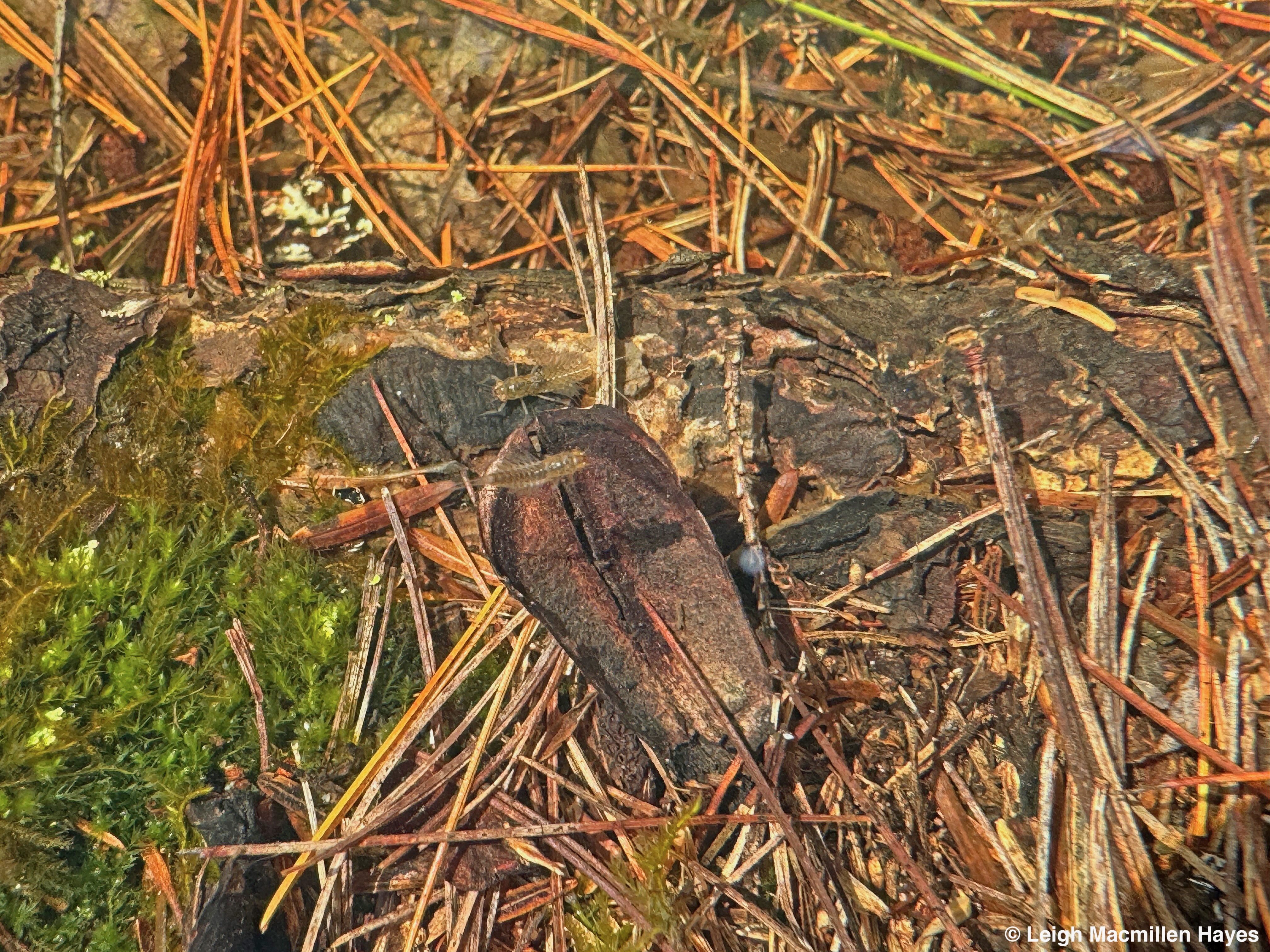
Hello spring! Thanks for reaching out in the form of Common Polypody Ferns, Mayfly Larvae by the hundreds, and even the Woolly Bear caterpillar. By the bits of debris on her bristly hairs, it was obvious that she’d just emerged from under the leaf litter where she’d overwintered and was frantically crawling along the road in search of a place to form a cocoon and metamorph into the Isabella Tiger Moth she’ll soon become.

I’ll always love you, winter. But right now, I’m already smitten with spring.