Milling About

snow waves

Today’s tramp found us heading north on Moose Pond again. The pond is covered in snowmobile tracks and snow swirls like these.

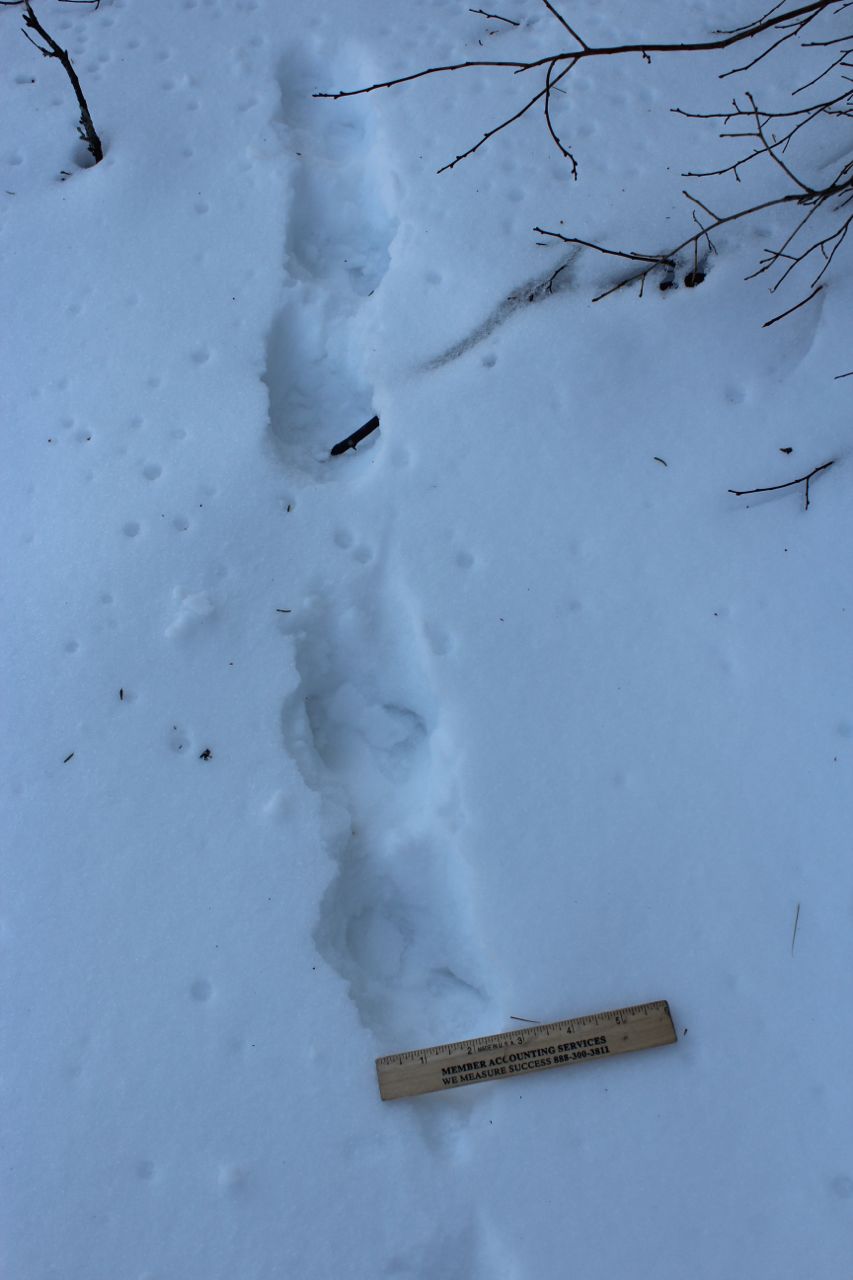
coyote print

Though we sink into the snow, this coyote had no problem moving along.
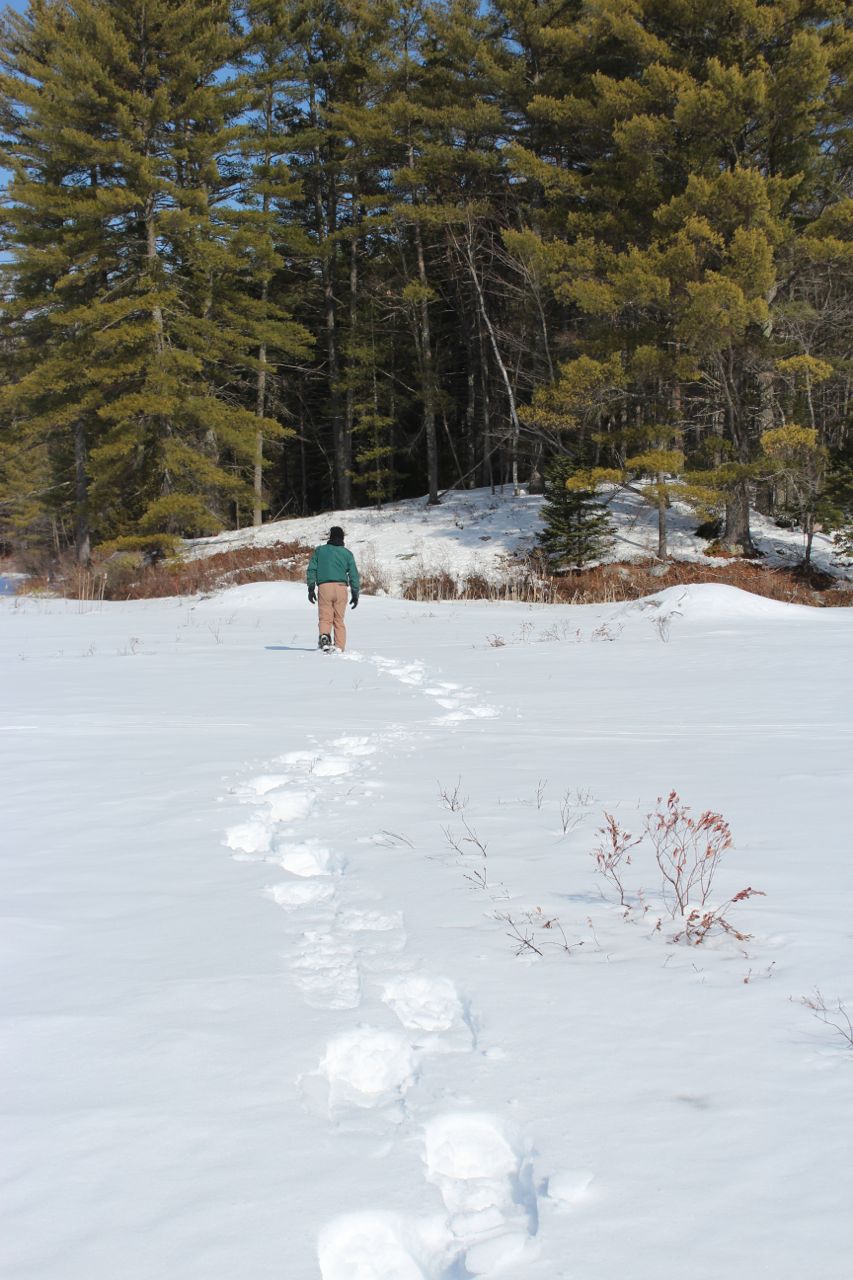
snowshoes

Snowshoes were a must for both of us. Our intended destination was Rueben Bennett’s saw mill–or at least the remnants of it. I’d been there about a year and a half ago with the current land owner and another friend, and wanted to show my guy. A couple of men who lived in the Old City neighborhood I wrote about yesterday, may have worked at the mill.

beaver lodge

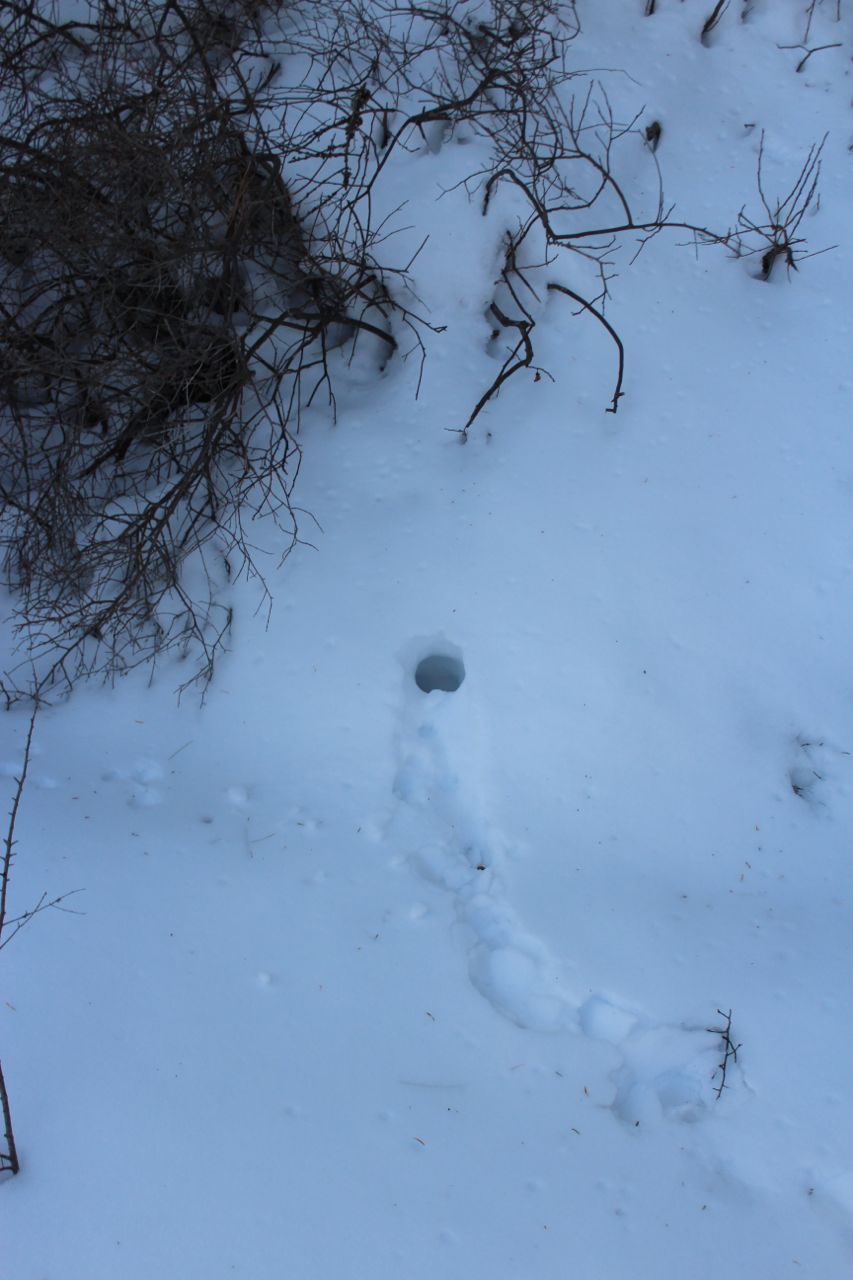
We were almost to the outlet of the brook when we saw that this beaver lodge is active. Notice the breathing hole at the top. We moved away quickly so as not to add any more stress to them.
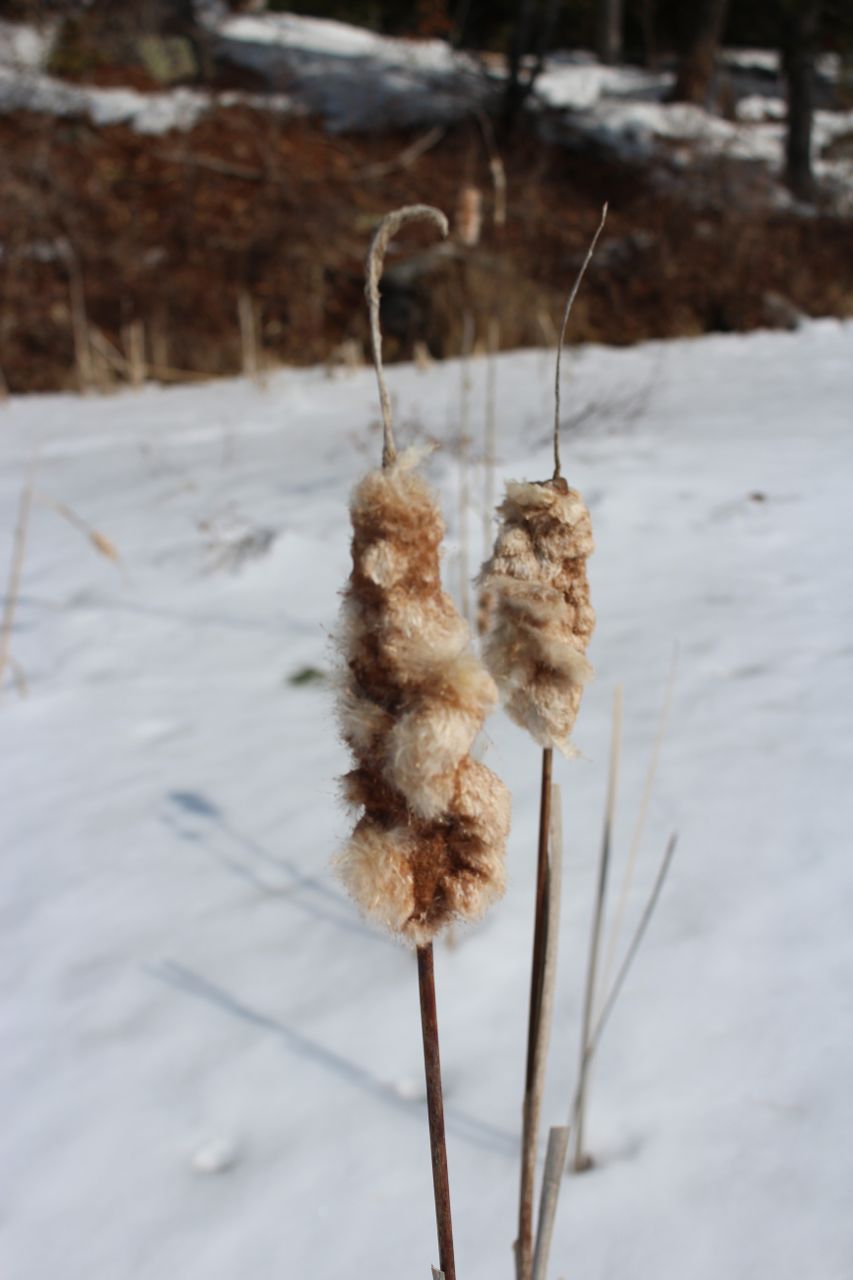
 cat tails

It looks like the fluffy seeds of these cattails are still emerging. It won’t be long before the Red-winged Blackbirds are perching on them.
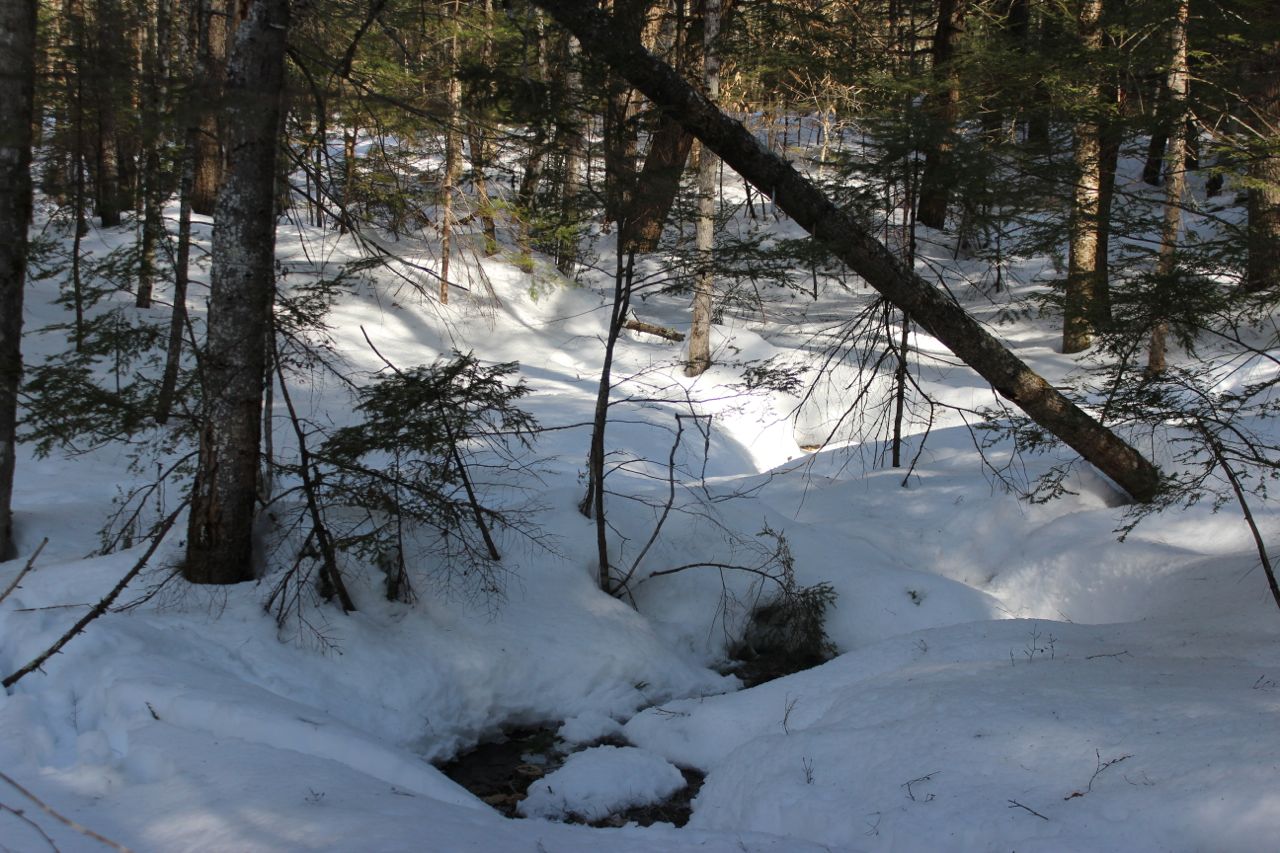
stream

Following the stream, we kept looking for the rocks left from the mill site.

liverwort

Along the way, I spotted this lungwort or lung lichen. It’s one of my favorites because when it’s dry like this, it’s light in color and very brittle. But after a rain storm, it turns bright green and is quite pliable. And it’s got that lettuce leafy look to it. Some describe it as a lung tissue appearance. I’ll stick with the lettuce, thank you very much. Lungwort is an indicator species for a rich, healthy ecosystem. Always a good find.
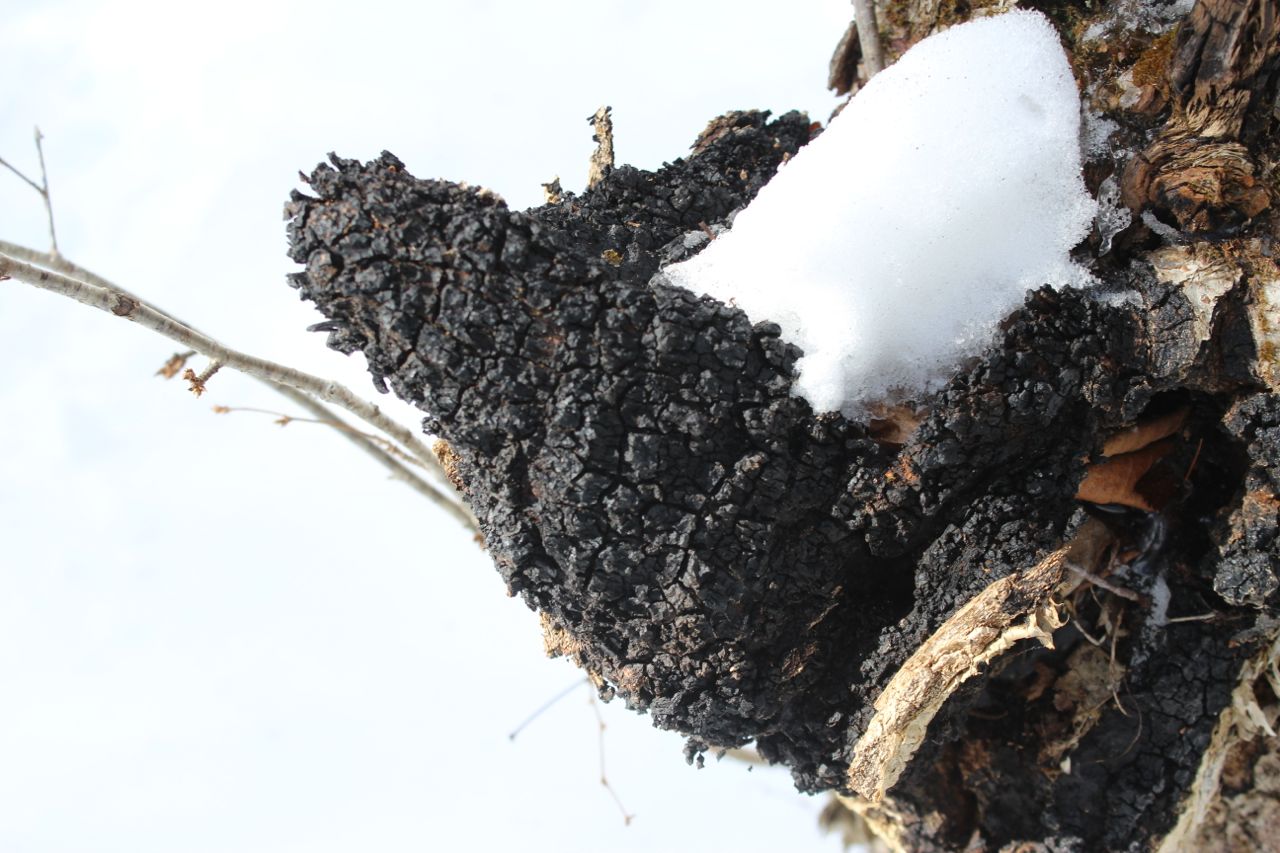
chaga

I’m not a mushroom expert, but I do know that this is Chaga. Another good find.  Unlike most other  hard, woody fungi, Chaga is coveted for its nutritional and medicinal benefits. If you want to know where this one is, you’ll have to follow our breadcrumb trail. I recently learned that the Siberians call it the “Gift from God” and the “Mushroom of Immortality.” To the Japanese, it is “The Diamond of the Forest,” and for the Chinese, “The King of Plants.” A mighty good find. It’s still there.

red maple swamp

We looked high and low for the mill site. At last we came to this Red Maple swamp and decided that perhaps it was Duck Pond, and we’d gone too far.
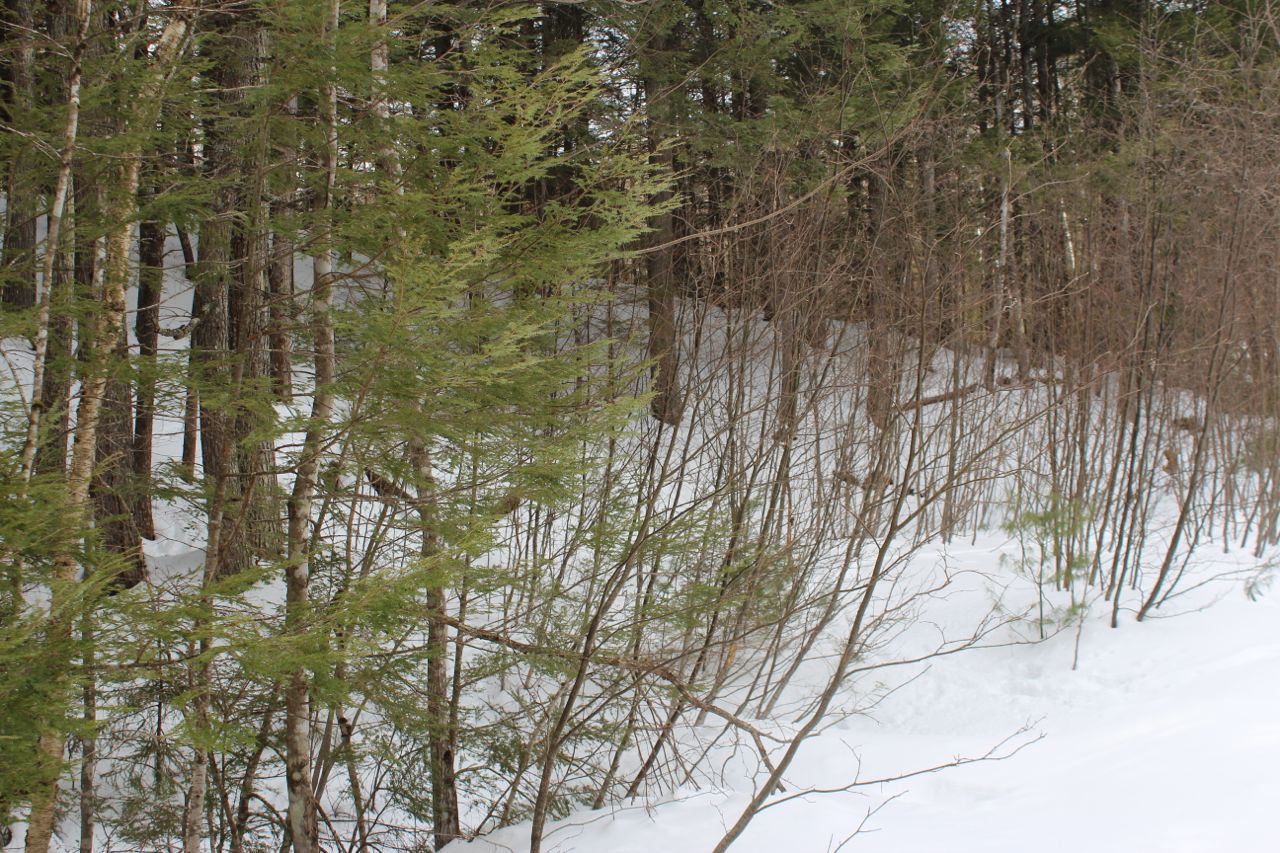
old City up the hill

Old City is located right up the hill. I was almost certain we were in the right place, but our search turned up nothing.
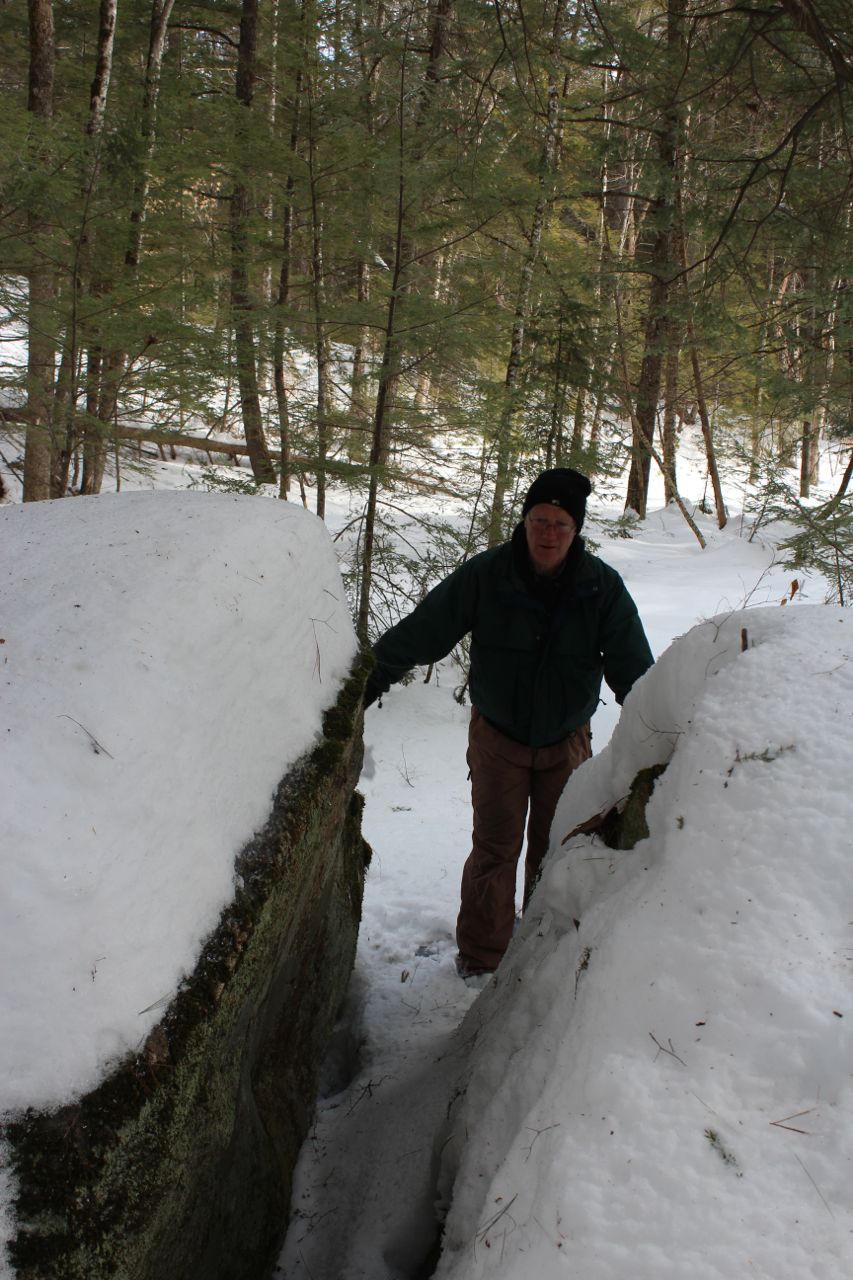
examining the erratic

We examined this rock to see if it was a glacial erratic or had been moved here for some reason. I vote for glacial erratic.
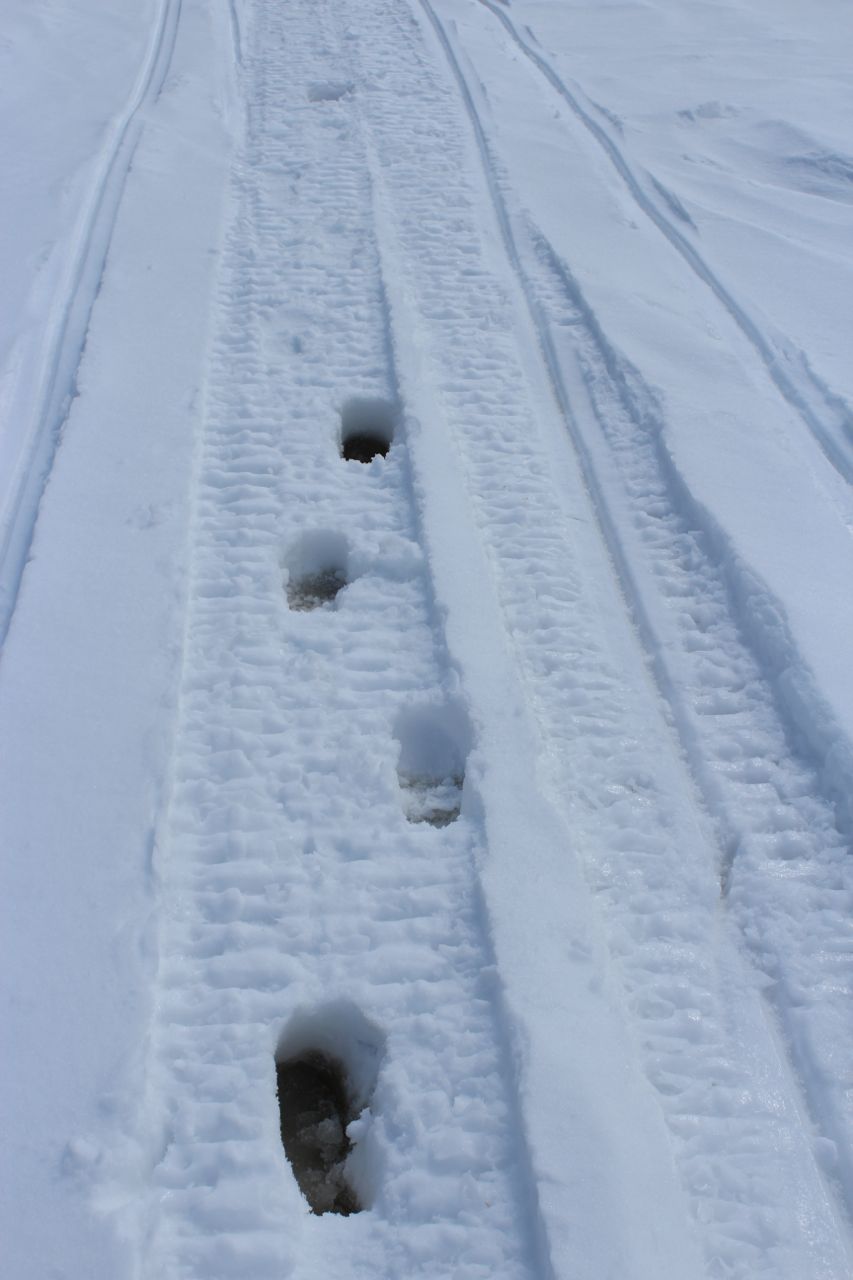
slush

After three hours of tramping about, we started for home. The wind was cool at our backs, but someone took of his snowshoes and you can see that it’s getting a bit slushy on the pond.
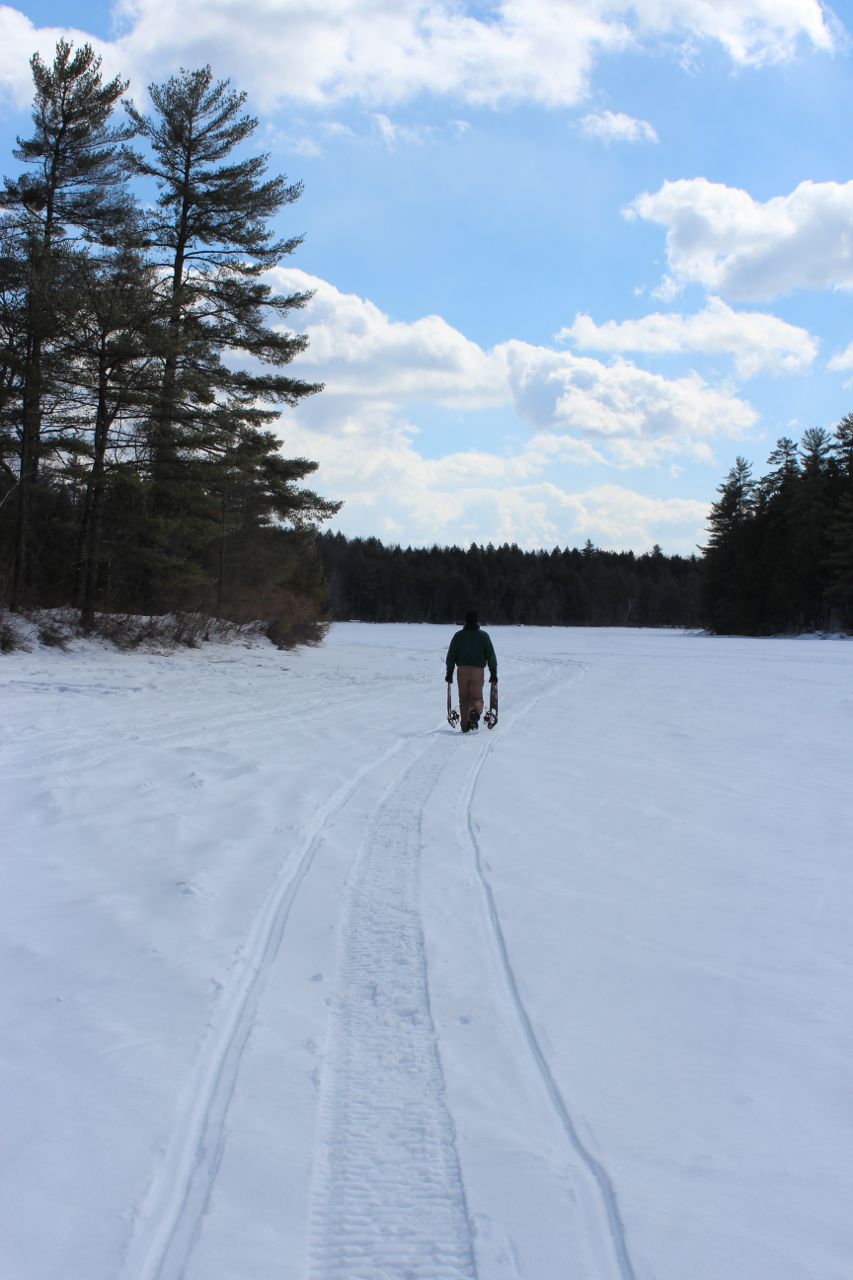
heading home

What’s that line about walk beside me and be my friend. I know it looks like I’m always following, but that’s not the case all the time. I do like to pause frequently and take photos to remember and ponder at a later time.

It turns out that we were milling about in the wrong area. I should have looked at my friend’s Web site prior to today’s adventure. She almost always has her GPS handy and had posted the exact location. I knew it didn’t feel quite right, but I was so certain it was closer to Old City than it actually is.

Oh well. A destination for another time.

Thanks for joining me for today’s wonder-filled discoveries.

To Old City and Back

Leaving camp

From camp. To Old City. Bridgton to Sweden. Via Moose Pond.

Toward Black Mtn

The temp was about 40 degrees, but with the brilliant sunshine, it felt even warmer. We reminisced about kayaking and rowing as we headed north on the pond.

Mink 1

Beside one of the islands, a mink had made numerous trails and holes.

Mink 2

I love it when a critter behaves like it’s supposed to. In this case, the prints are on the slant that the weasel family is known for. A mink is a small mammal with a long body and short legs. It has partially-webbed feet, an adaptation to a near-aquatic habitat. A few years ago, an acquaintance and I were helping with the Moose Pond watershed survey. We were sitting on some rocks by the shore, with a dock in front of us, as we jotted down notes. Much to our surprise, a mink came up from under the rocks by the dock. We starred at it, it starred at us. We had cameras. Did we take a photo? Nope. Another one for the mind’s eye.

Mink3

Bound and slide. Like otters. I still want to be an otter in my next life, but minks do have fun too.

following tracks

Tracks tell the story about behavior, but it’s often a guessing game. I think I got this one right. Homo sapiens. Male. About 6 feet tall. Handsome. Puts up with a lot.

finding a seat

He borrowed a resting spot while I examined those mink tracks and holes. There were tons of holes.

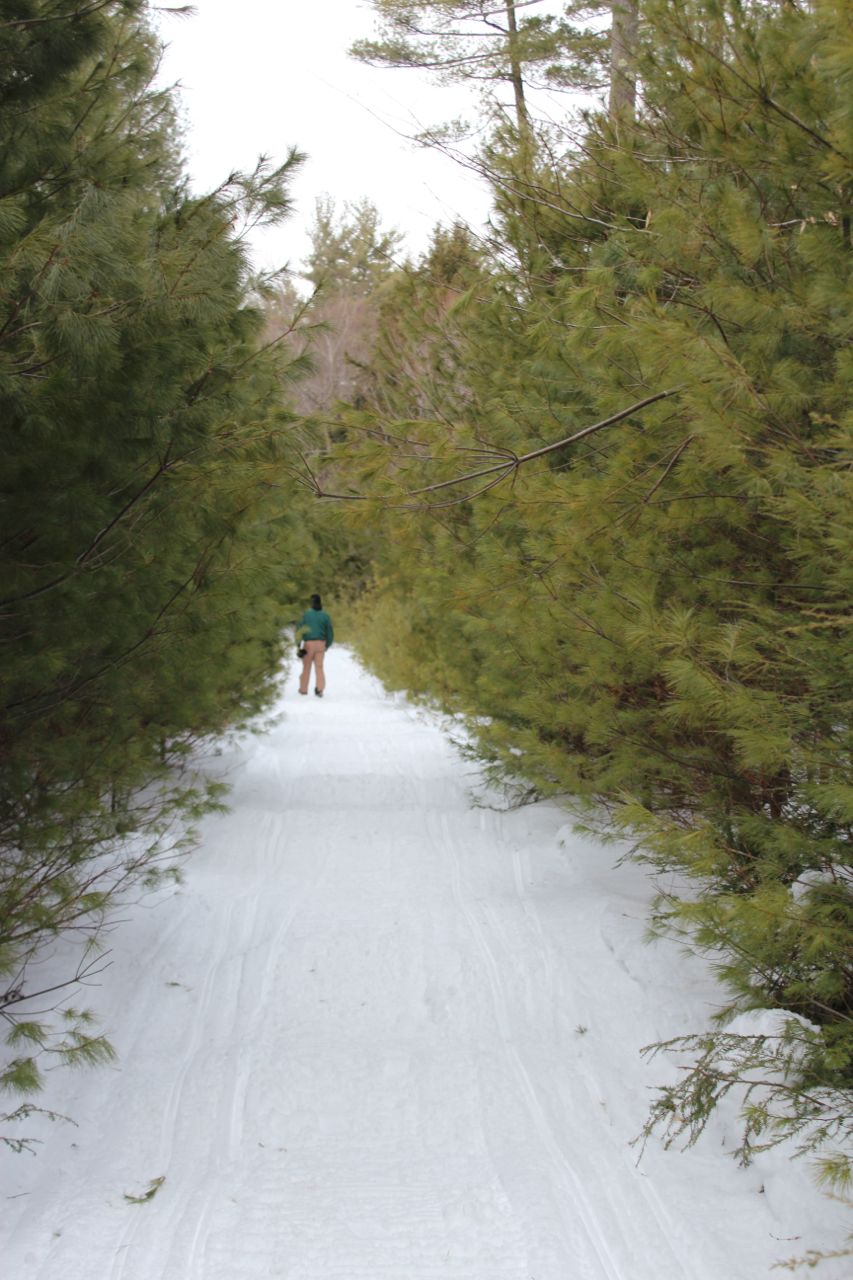
on the trail

At the northernmost end of the pond, we followed the snowmobile trail toward Old City. Today it’s a wooded snowmobile trail around the base of Black Mountain in Sweden, Maine, but during the 19th century a road passed by at least six homesteads. All were reportedly occupied by young men who chose not to live at home–perhaps increasing their status as eligible bachelors. Their names included Cushman, Farrington and Eastman, among others–names long associated with Sweden and Lovell. (Sweden was originally part of Lovell)

foundation

The area was abandoned at some point after the Civil War, but foundations like this one remain. This may have belonged to P. Farrington or J. Edgecomb, but I’m thrown off because it occurs on the wrong side of the current “road.” That doesn’t mean the road was originally in the same spot.

stone walls

Stone walls, like this one near the I. Eastman property, formed boundaries to keep animals in or out. I suspect this guy was a major landowner.

stone wall 2

I’m fascinated by stone walls. Not only are they beautiful and functional, but they also represent a tremendous amount of labor. And the stones have their own story to tell about the lay of our land in New England.

color in the woods

I’d been looking at tracks, trees (always looking for bear claw marks on beech trees and quizzing myself on bark) and stones. On the way back, this touch of color caught my eye. Red Pine bark is among my favorites. Then again, I haven’t meet a tree I didn’t like. And the contrast with the hemlock needles, beech leaves and touch of blue sky gave me pause.

vine?

This also caught my eye. Last fall, a friend had sent me a photo of a beech tree with a similar case of strange scars. I didn’t know what it was, so I sent it on to a forester I know. He sent it on to someone in the invasive insect department at the state level. It all boiled down to what they thought was wounds from bittersweet vine being wrapped around the tree at one time.

vine 2

That made sense then. Today, I dunno. As I looked around, I noticed the same phenomenon on other beech trees. But I didn’t see any evidence of vines nearby. Of course, there’s still a lot of snow on the ground, as my guy can tell you since he chose not to wear snowshoes. The area had been logged at some point. But, I’m just not sure.

heading back to camp

Back on the pond and heading toward Bridgton and camp. Shawnee Peak and Pleasant Mountain provide the perfect backdrop. Yesterday, my guy took one of our grand-nephews for another ski lesson. The young’un skied straight over moguls on the Pine, slipped off the trail into the woods several times and fell a kazillion times. On the ride home this tired seven-year-old said that his younger brother probably spent the day playing Xbox. When asked if he wished he’d done the same, he remarked, “No, this was the most fun day I’ve ever had in my ENTIRE life.” I can hear my mother-in-law guffawing in heaven. :-)

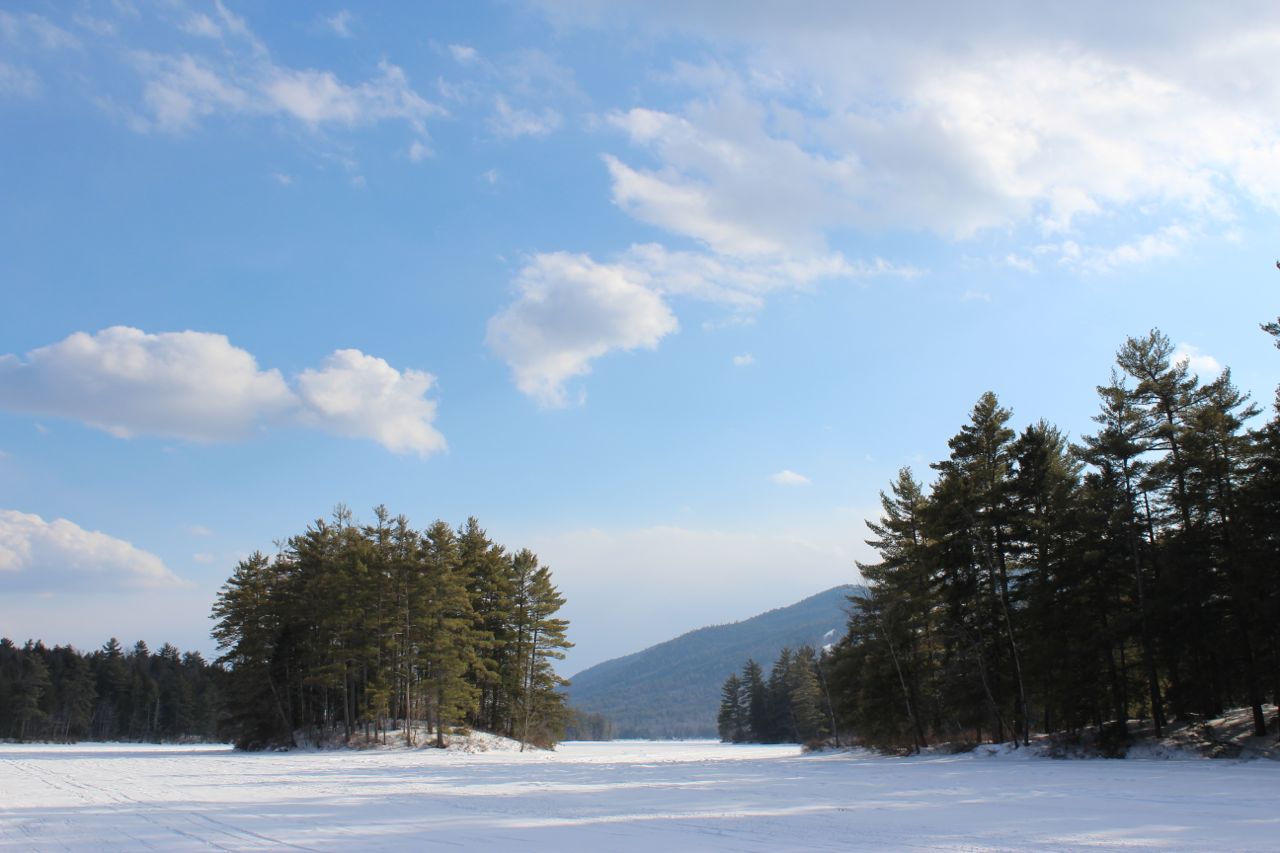
islands and mountain

Only another mile to go before we rest. Thanks for wondering along with us on today’s wander.