On the Cusp of Autumn

It occurs every year, autumn that is. But this year it hasn’t even started and already feels different. In the past week, My Guy and I have followed many a trail or waterway, both on foot and by sea, oops, I mean kayak on local lakes and ponds, and every offering has been unique.

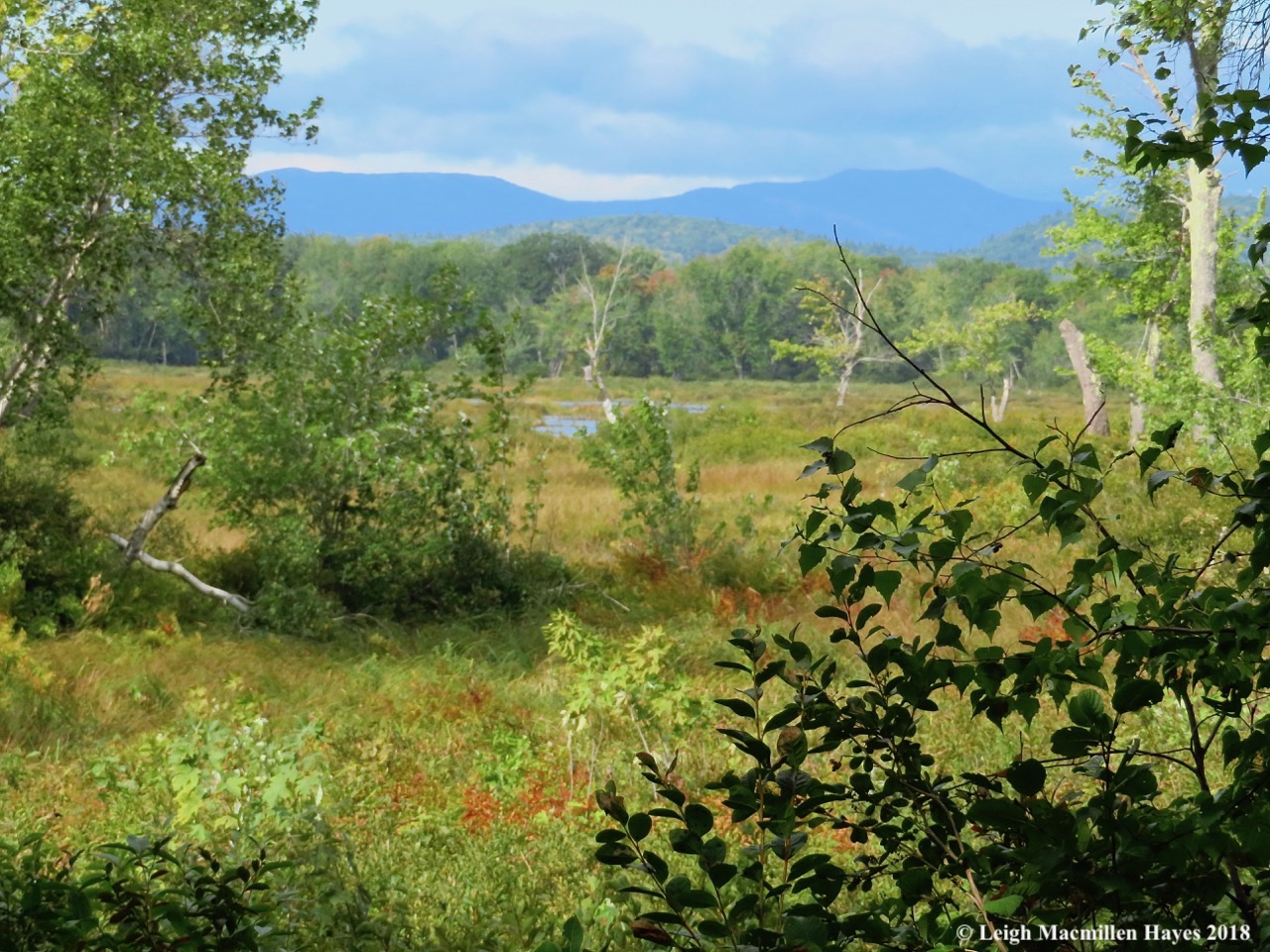
Some, such as this, being Brownfield Bog as we locals know it, or Major Gregory Sanborn Wildlife Management Area as the State of Maine knows it, took us by complete surprise. The last time we’d wandered this way together was in the spring, when despite wearing Muck Boots, we could not travel some parts of the trail because the water was so high. That was in the Time-We-Actually-Experienced-Rain. That time has long since passed and now western Maine is in a severe drought and don’t the Lilypads know it. What about all the mammals and birds and insects that depend on this water? It was an eerily quiet walk in a place that is usually alive with action.

Where the Old Course of the Saco River crosses through the bog, there was some water. But still, not enough. And we know of other areas of the Old Course, such as in Fryeburg Harbor, where there is no water.

As for the Saco, it too, was incredibly low and sandbars were more the norm.
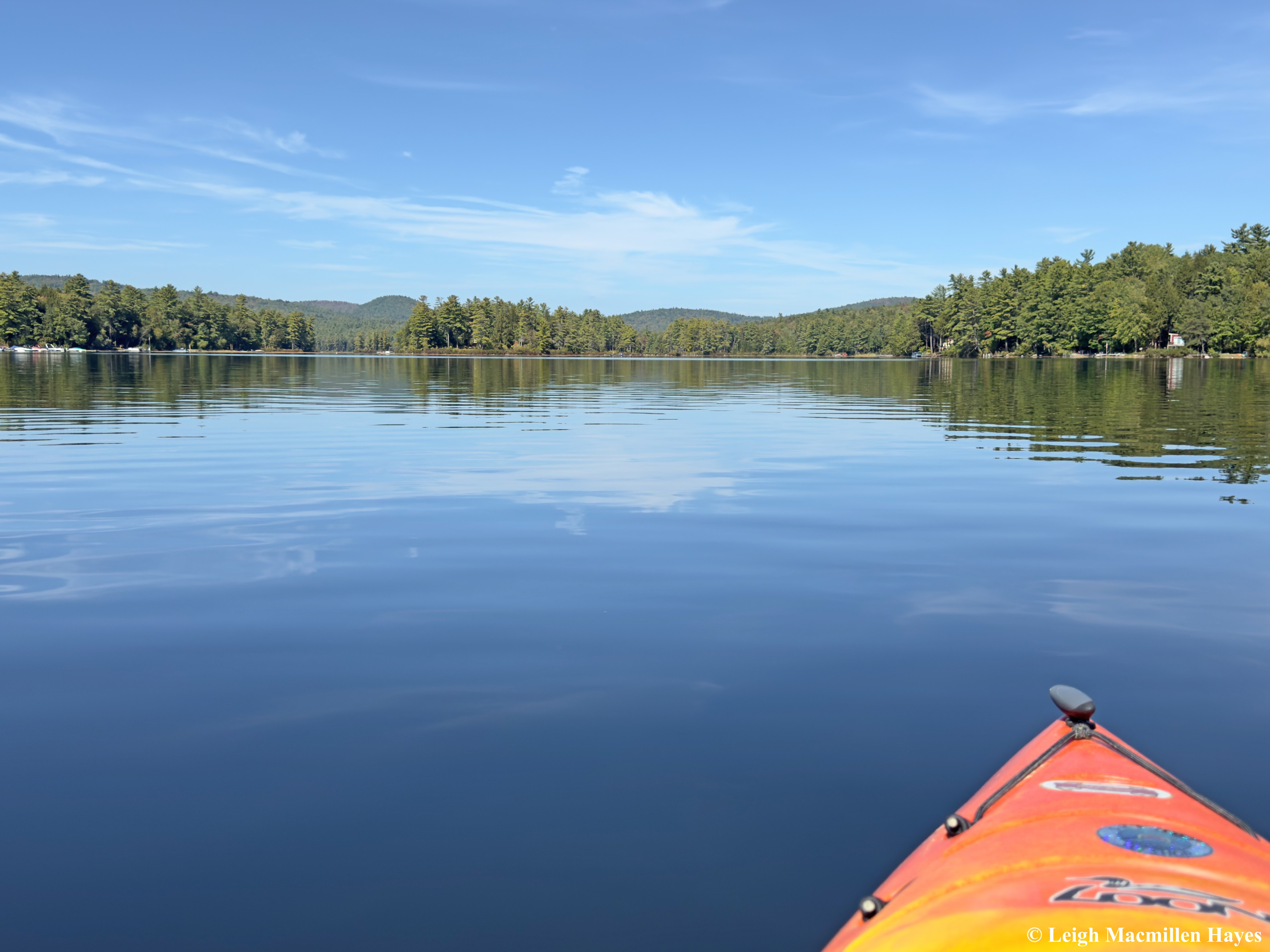
Other adventures found us paddling our favorite pond.
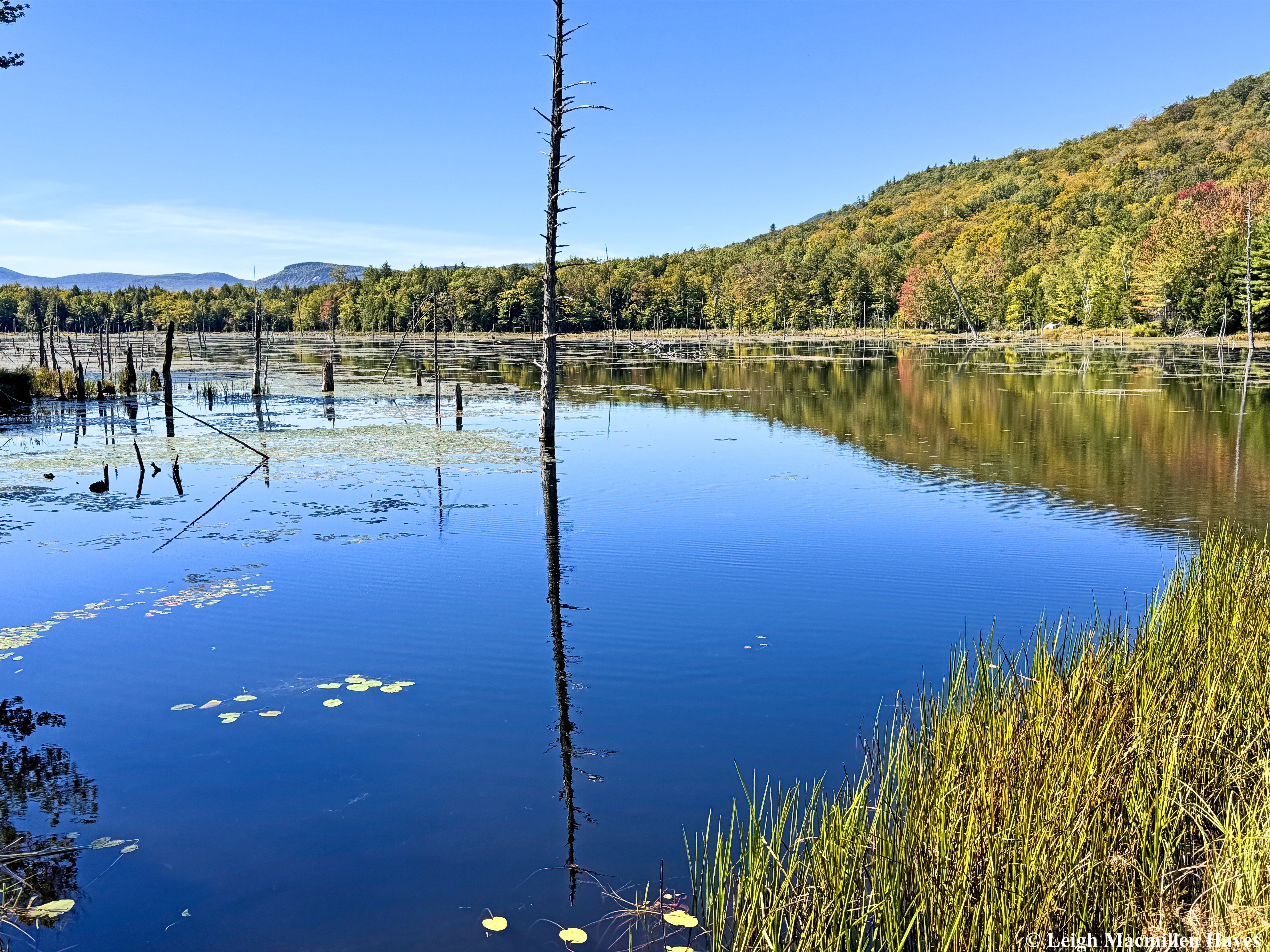
And bushwhacking around another bog.

What kept making itself known to us–the fact that the trees are turning much too soon, and many leaves aren’t even turning, but rather drying up and falling.

That meant that some paths or bushwhacks found us crunching the dried leaves with each step we took. We could hardly sneak up on a Moose or a Bear, or even a Squirrel.

Despite such dry conditions, we did find the varied colors of Wild Raisins or Witherod drupes dangling in clusters below their leaves.
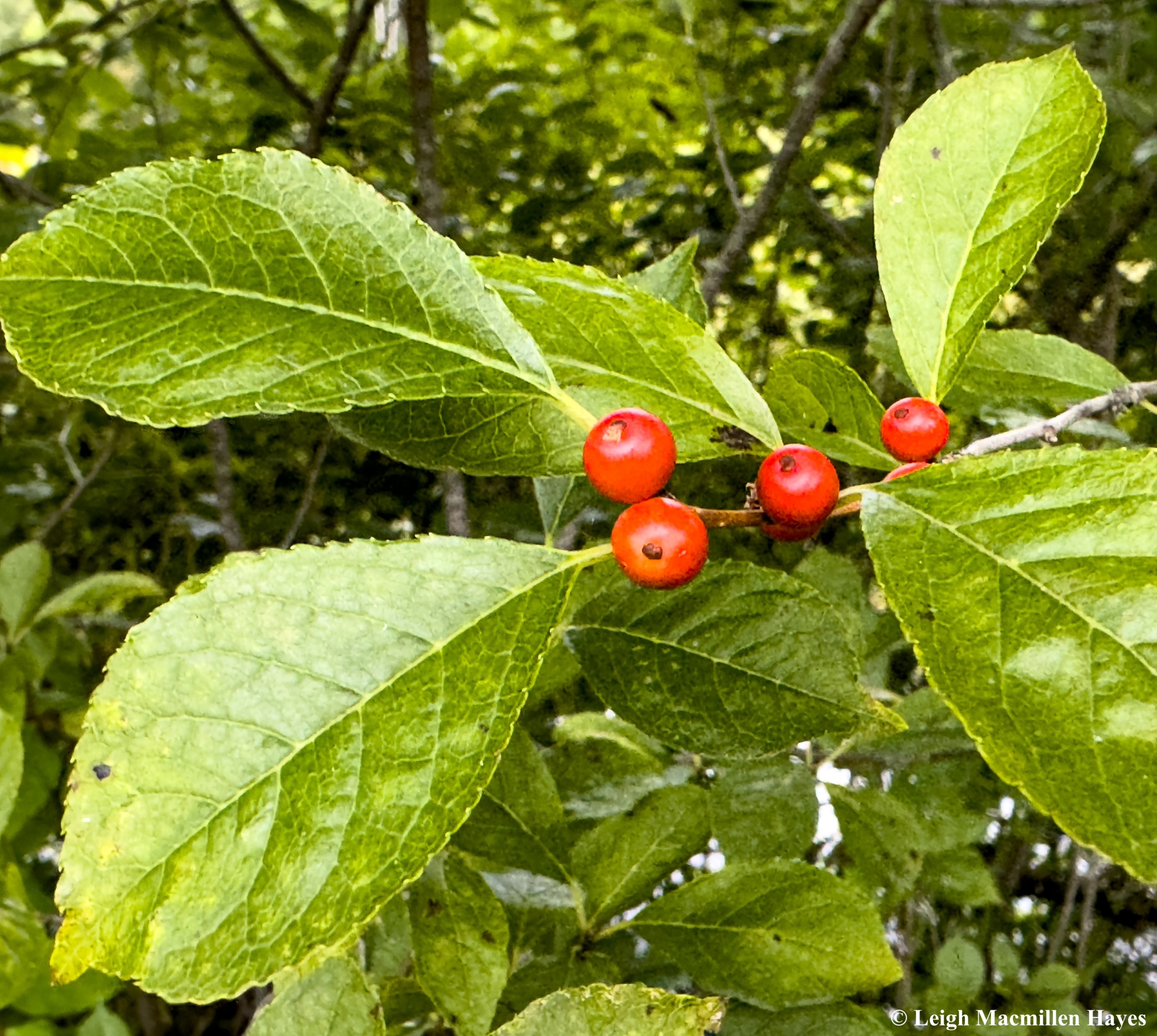
And Winterberries showing off their enticing red hues–ready to attract birds and maybe become part of our holiday decorations. Only a few branches for us, mind you. We leave the rest to the critters because we know their importance in the food chain.

Late summer flowers were also in bloom, including the brilliant color of the Cardinal Flower.

And in a contrast to the red, there were Ladies’ Tresses, a wild orchid, one of the few with a fragrance if you can bend low enough to smell it.

I think one of the greatest wonders is how many variations there are on a theme, in this case flowers for take a look at the Pilewort or American Burnweed, this one growing upon a Beaver Lodge.

What you are looking at is the flower heads: They are about a ¼ across and petal-less. The inner bracts, with their purplish tips form a ½-inch tube exposing just the yellowish to creamy white stamens at the top. And the seeds are teeny tiny, as you can see, with tufts of white hairs to carry them like parachutes upon a breeze.

Along one trail, we spotted another teeny tiny display that surprised us due to the fact that we haven’t seen many mushrooms this summer. But the Orange Peel Fungus apparently had enough moisture, at least to produce these two forms.

Critters were also a part of our sightings and several times we encountered young Northern Water Snakes, not more than two pencils in length.

In another spot where we expected to see Water Snakes, we instead met a Garter. Mind you, none of these wanted to spend any amount of time with us.
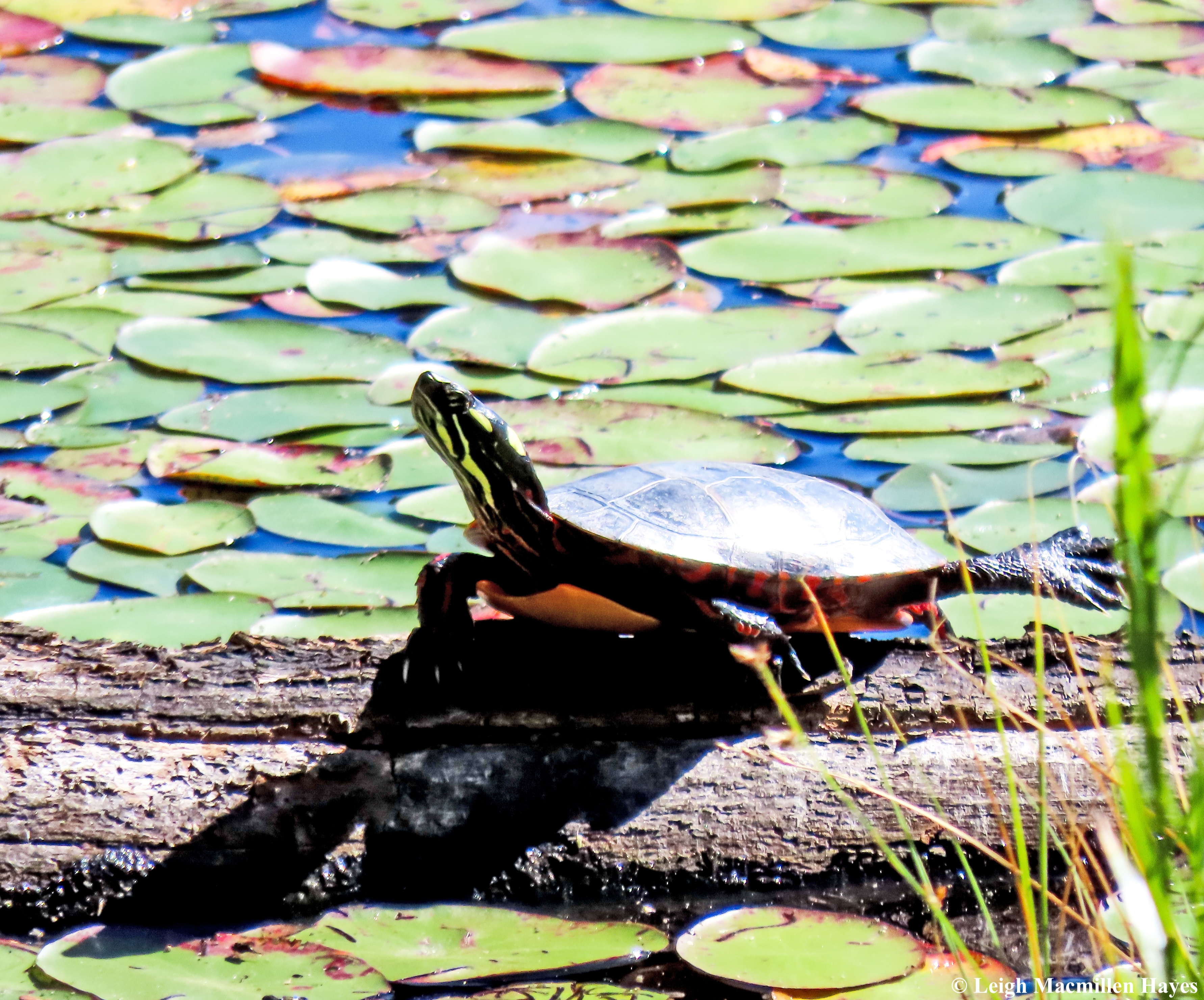
And despite the cooler morning temps that we’ve been experiencing, including lows in the mid-30˚s the past few days, or more likely, because of those temps, the Painted Turtles were still basking, soaking up the sun’s warmth. I love how they stick out their legs to absorb more warmth. It truly looks like a Yoga position, and I know this personally because along one of the trails we traveled in the past week, My Guy showed me several poses he’s learned recently. He also showed me those he struggles to perform.
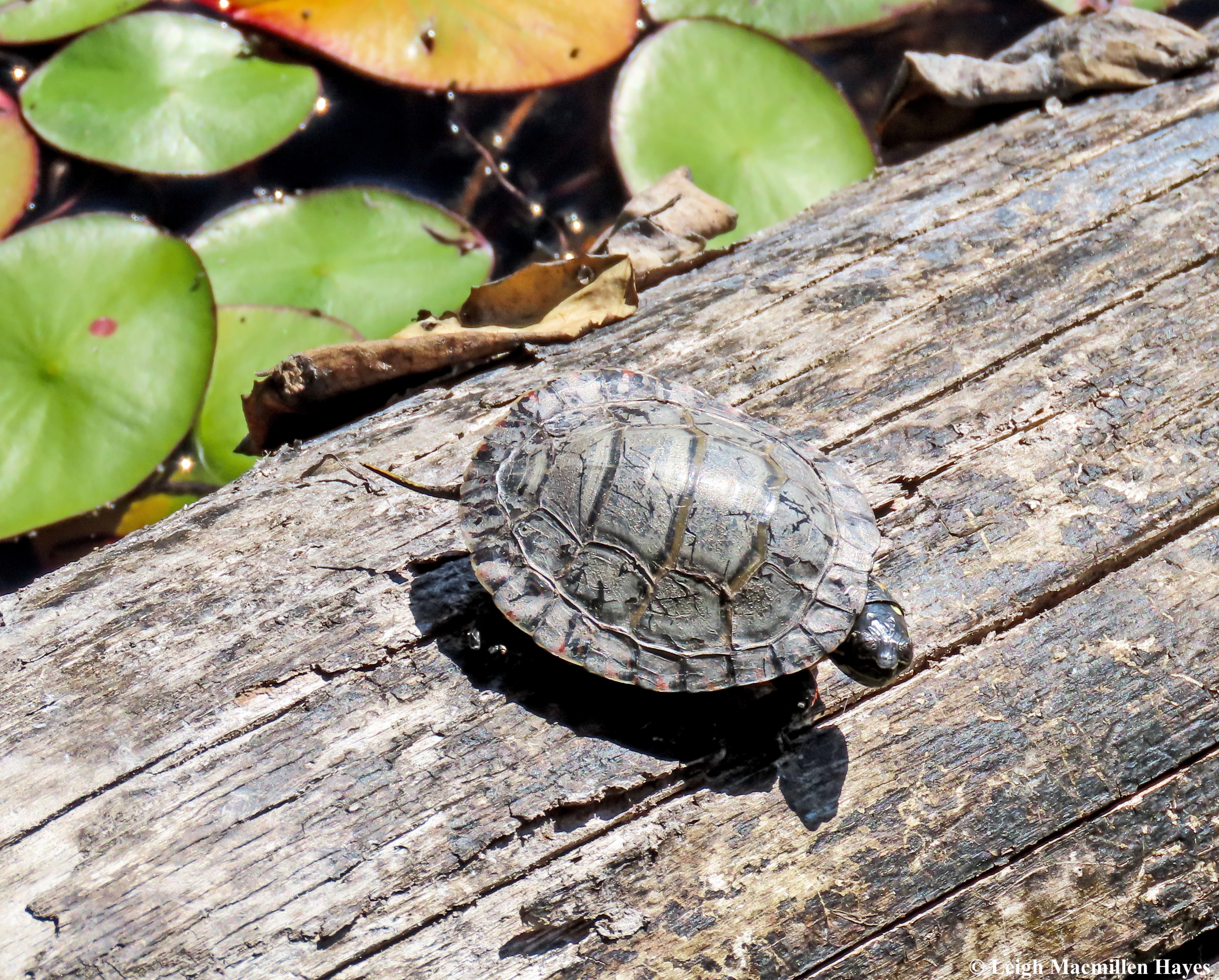
Not all turtles were of the same size, and this was a tiny one, who stayed on this log for at least two hours as we spotted it before we embarked on a bushwhack and it was still there when we returned, though it had changed its position. And gave me a wary look.
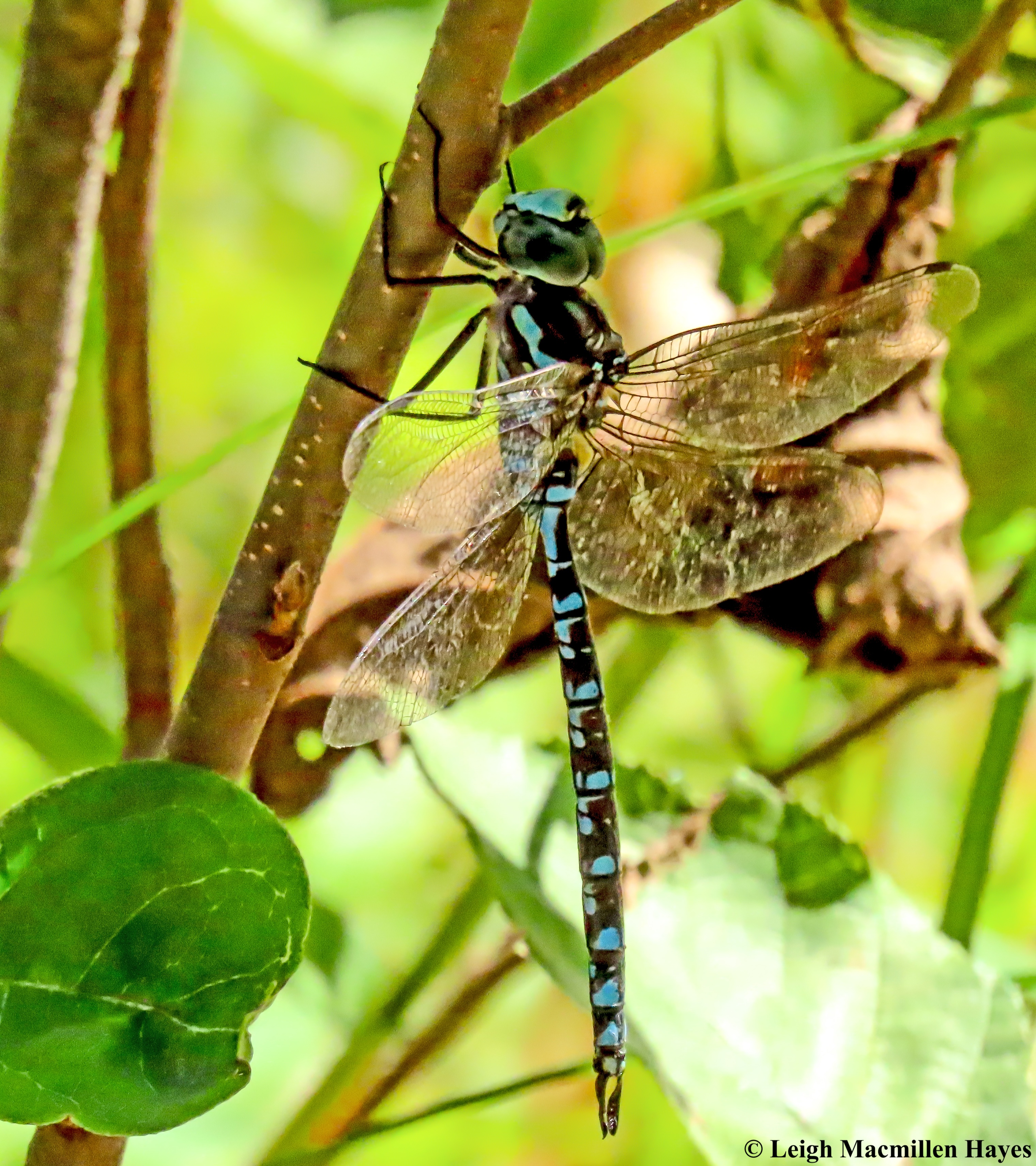
My Dragonfly fetish was also fulfilled for the Darners and Skimmers continue to fly and occasionally pause. Well, the Skimmers often pause, but the Darners are usually on the wing–patrolling territory while looking for a meal, and even more so, a mate. That’s why it’s always a moment of joy for me when one stops and my admiration kicks up a few notches. In fact, it’s the notch in the side thoratic markings that help with ID–in this case a Canada Darner. I’ve discovered this summer that they are numerous ’round these parts.
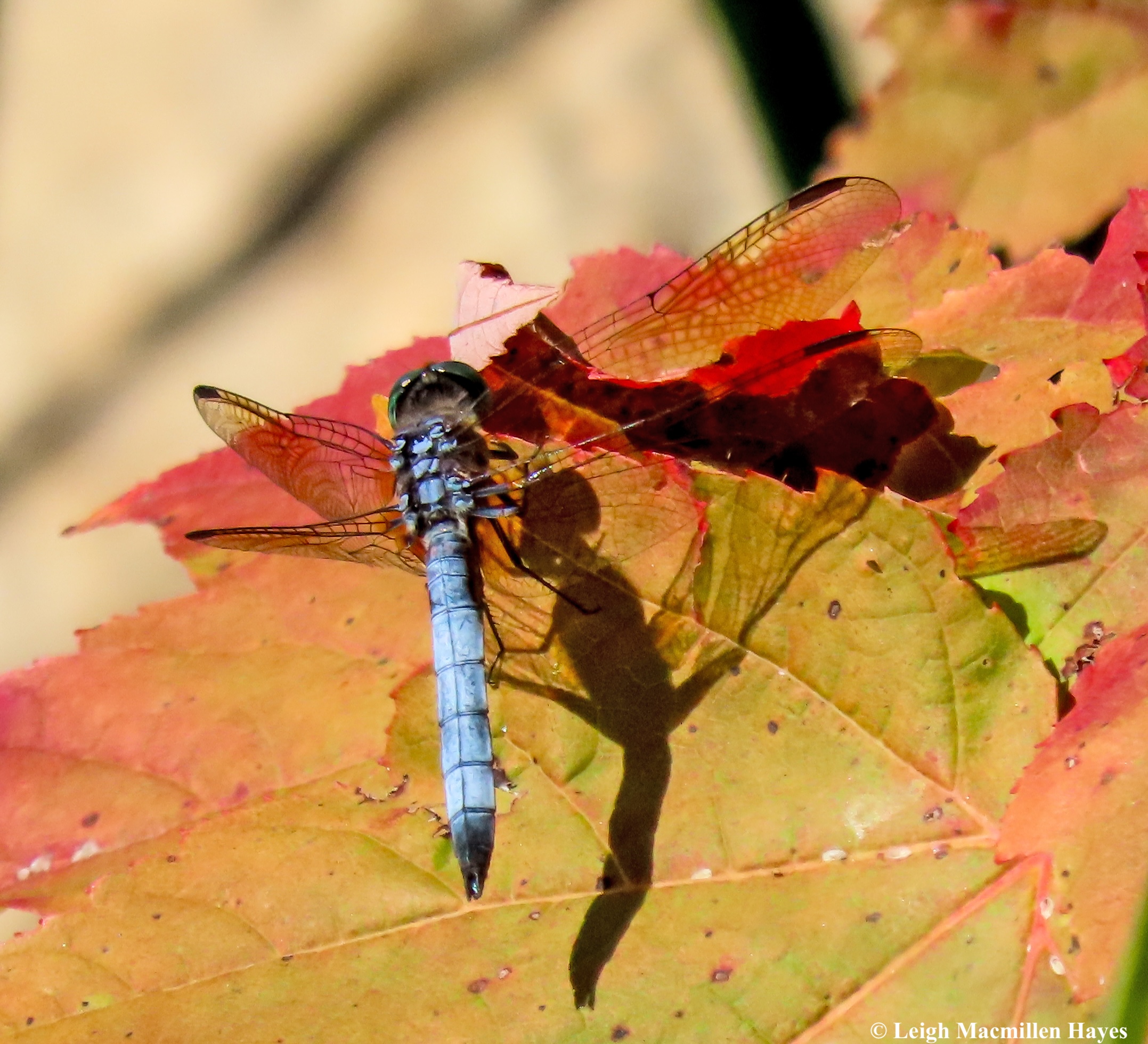
While the Darners are on the largish size in the dragonfly world, most of the Skimmers that are still flying are much smaller. The Blue Dasher, as this is, is probably considered medium in size.

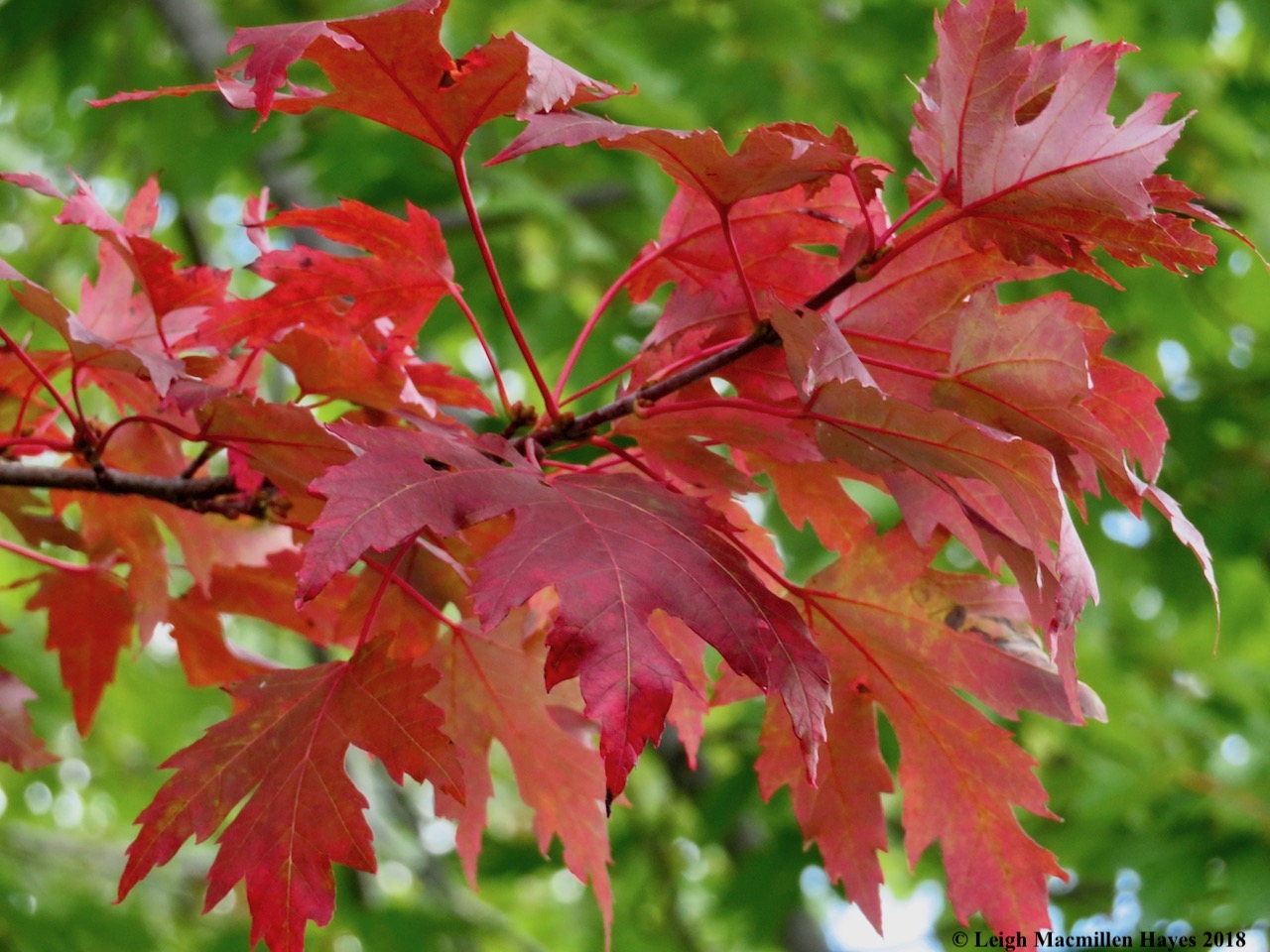
What a display, no matter how big, with the blues and blacks and greens contrasting with the Red Maple leaf’s hues.

And then there’s the dragonfly’s shadow. It’s almost like it was a different creature.

My surprise was full of delight when I realized as I floated beside a Beaver Lodge, that I was watching female Amberwings deposit eggs into the water as they tapped their abdomens upon it. I rarely spot Amberwings, and yet they were so common in this spot.

And overlooking all the action, perhaps not only to defend its territory, but also to eat anything that got in the way, a Slaty Blue Skimmer, twice the size at least of the Amberwings and Blue Dasher.

Birds, too, were part of the scenery wherever we were. This Eastern Phoebe spent moments on end looking about, from one side to the other, and then in a flash, flew to some vegetation below, grabbed an invisible-to-me insect, and flew off.

Much to the surprise of both of us, despite the loud crackling of leaves and branches upon which we walked in one place, we didn’t scare all the Wood Ducks off, and enjoyed spending a few minutes with this Momma and Teenager. Usually, this species flies off before we spot them on the water.

Even the male hung out and when I suggested to My Guy that he look at it through the monocular, he was certain he really didn’t need to because he could see it without any aid. And then he did. And “Oh wow!” was the reaction. And I knew he’d finally seen a male Wood Duck–for the first time. And that moment will remain with me forever.

One of our other favorite moments occurred on our favorite pond, where we first spotted a Bald Eagle on a rock that the low water had exposed. And then it flew. As birds do.

And we followed it with our eyes, and watched it land above us in a White PIne.

And thus, we spent a good twenty minutes with it, admiring from our kayaks below.

The Bald Eagle was sighted not to far from our favorite Beaver City–where we know of at least five lodges located within a football field-sized area. And this one above had been abandoned for the last few years.

But fresh mud and fresh wood told us that someone was home. Probably more than one someones. We love the possibilities. The mudding is an important act–preparing for winter by coating the outside and closing up any holes or airways that might let cold air penetrate. Of course, the “smoke hole” at the top will remain, much like a chimney in our homes.

Just a Beaver channel and a hundred yards away, another of the five lodges also showed signs of winter preparation. It’s a busy neighborhood.
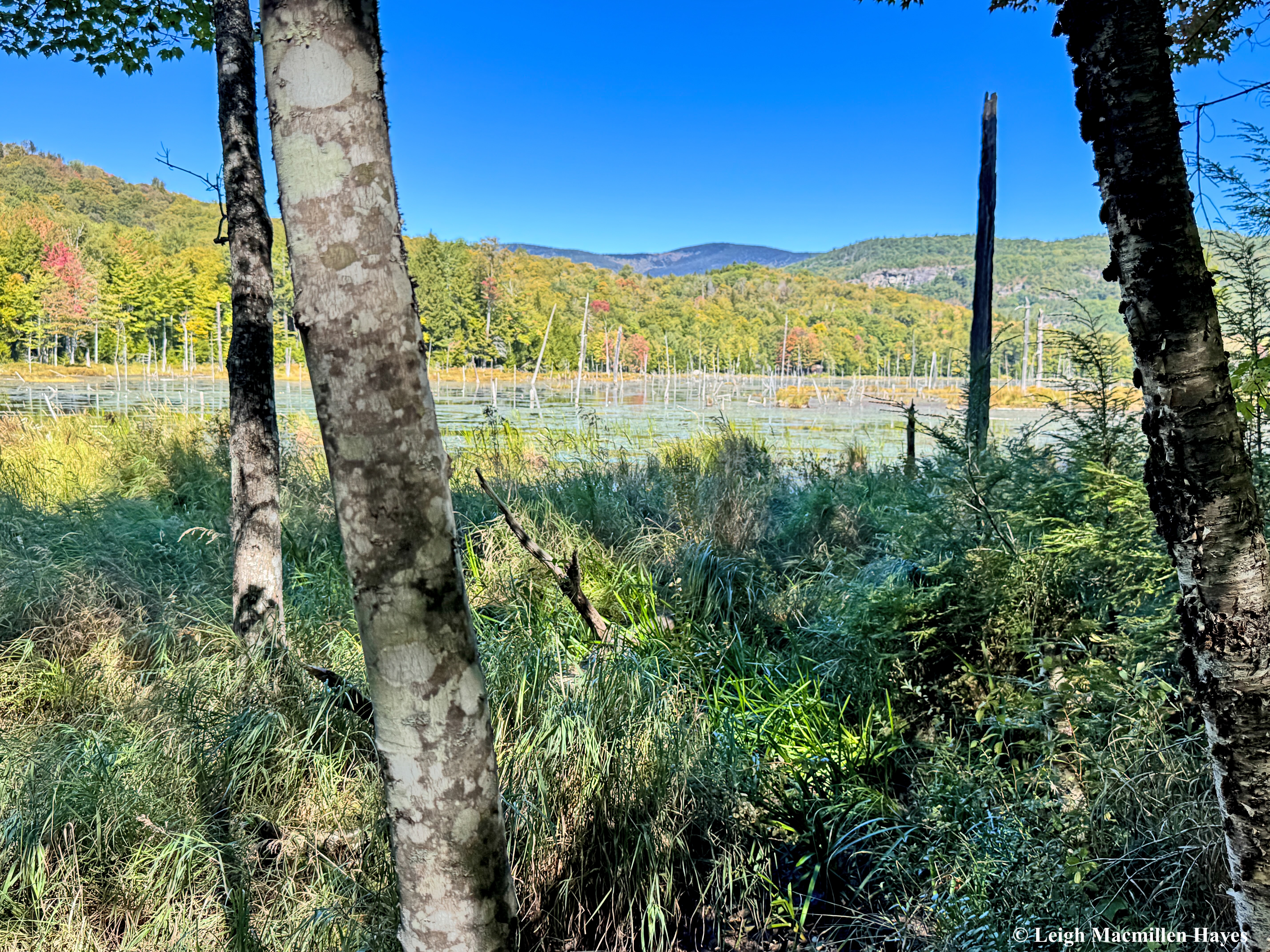
No matter where or how we traversed, one of the things that stood out to us is that despite the autumnal equinox being September 22 at 2:19pm. fall is already here thanks to the summer’s drought.

It’s usually mid-October when we begin to celebrate the color change–that time when Chlorophyll, the green pigment we associate with summer, and necessary for photosynthesis, slows and then stops manufacturing food, and the leaves go on strike.
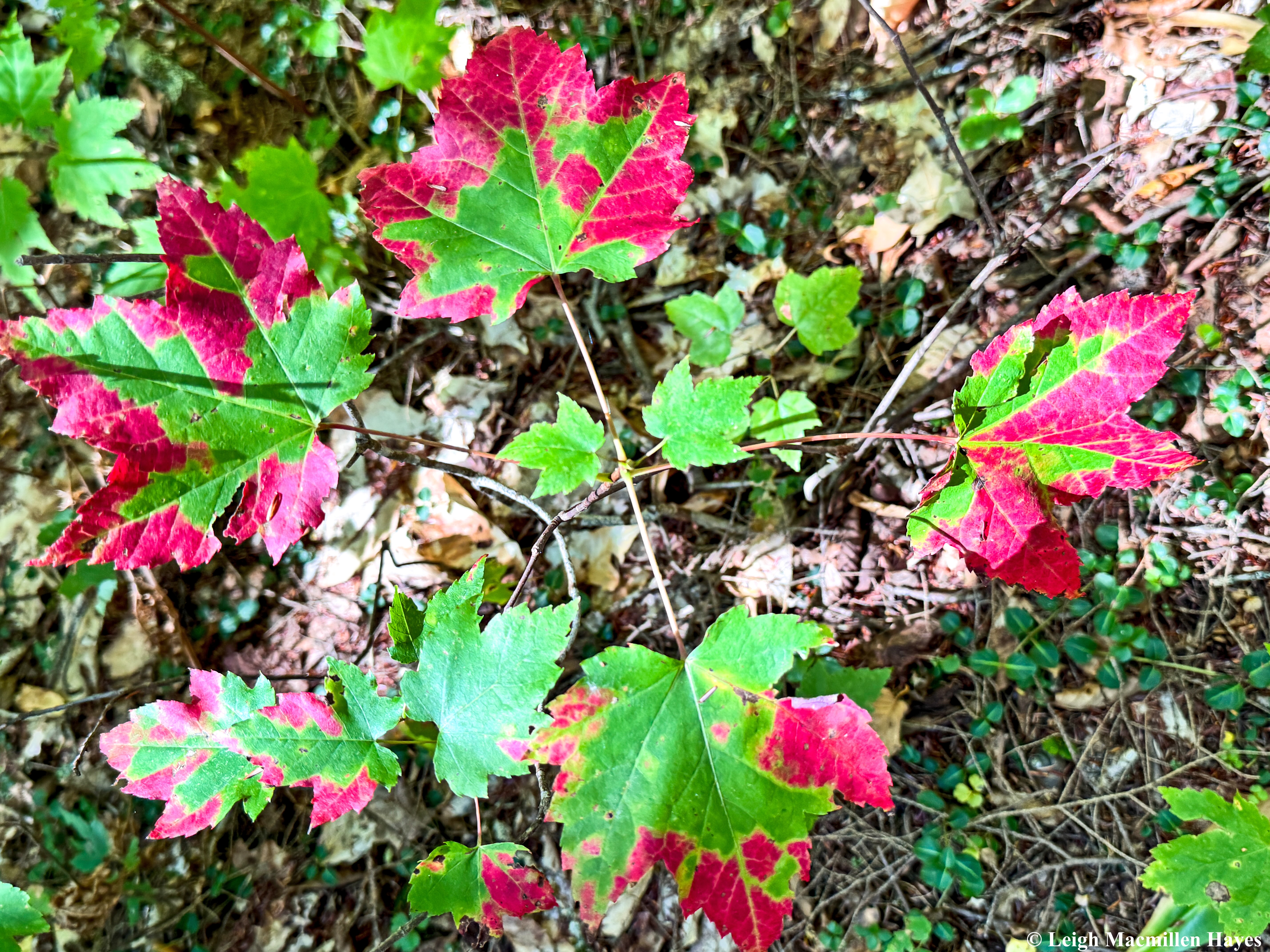
Veins that carried fluids via the xylem and phloem close off, trapping sugars, and promoting the production of anthocyanin, the red color we associate with Red Maples like these.

Tonight, as I finish writing, we are on the Cusp of Autumn, which is about seventeen hours away. But this year, I think it’s already here and if you have planned a fall foliage tour for mid-October I hope you won’t be too disappointed. I suspect we’ll not have many leaves left on the trees by that point.

But . . . maybe I’m wrong. There’s always that possibility.

No matter what–Happy Autumnal Equinox!

Book of April: I’m in Charge of Celebrations

Serendipity: the occurrence and development of events by chance in a happy or beneficial way.

And so it was that upon arrival home from a short hike with my guy this morning, we discovered a package addressed to me in the mailbox. When I saw the town in Florida I knew exactly from whence it had come, but still didn’t know what was inside.

Well, much to my delightful surprise it was a children’s book.

I’m in Charge of Celebrations by Byrd Baylor with illustrations by Peter Parnall.

Upon opening to the inside cover, several pieces of paper fell out. The first was a letter from Ben and Faith Hall; though actually it was written by Ben. Here’s an excerpt: “One of my favorite children’s books is Everybody Needs a Rock. It was written by Byrd Baylor and illustrated by Peter Parnall. When Byrd Baylor’s name appeared on the cover of the book I saw, I purchased it for fifty cents.

Ben and Faith, you see, are part of a group of twelve retired residents in their Florida town who tutor second graders struggling with reading comprehension. Given that, they are always on the lookout for appropriate books to share with their students.

Ben continued in his note to me, “After reading the book, I left it by Faith’s chair without saying anything. Obviously, I wanted to see if her reaction was similar to mine. It was. The story reminds us of your blog with its information and imagination. Thank you for sharing your gift with us. Keep going!

My ulterior motive in sending you the book is that hopefully you will write a children’s book. In no way should you take time away from your blog, but with your depth of spirit it would be worthwhile.

The illustrations in the book are fascinating and remind me of your skill with photography.”

Well, Ben and Faith, thank you so much for this gift. And for your love and support for what I enjoy doing. As for the children’s book, ideas fly through my brain all the time, but . . . I’d have to self-publish and it isn’t going to happen.

As for I’m in Charge of Celebrations, I totally get it. My guy wasn’t in the house when I sat down to read it and it’s a book that needs to be read aloud. And so I did. When he walked around the corner into the living room, he thought I was talking to someone on the phone.

For those of you not familiar with the title, Baylor begins the story with an explanation of how she’s never lonely as she explores the desert.

I feel the same way and on January 11, 2019, I actually wrote, “People often ask me this question: Aren’t you afraid of hiking alone. My response is that I’m more afraid to walk down Main Street than through the woods, the reason being that it’s a rare occasion I encounter a mammal. Oh, I do move cautiously when I’m alone, but there’s something uniquely special about a solo experience.”

As Baylor goes on to say, part of the reason she’s not lonely is this: “I’m the one in charge of celebrations.” Indeed. Each celebration marks the day she made an incredible discovery.

And so, I took a look back at some of my blog posts, and it’s all your fault Ben and Faith that this is a long one. But you inspired me to review some exciting discoveries I made just in the past year. With that, I attempted to follow Baylor’s style.

Friends,
while reveling
in the colors 
of dragons and damsels,
their canoodling
resulting in 
even more predators
of my favorite kind,
I met Prince Charming,
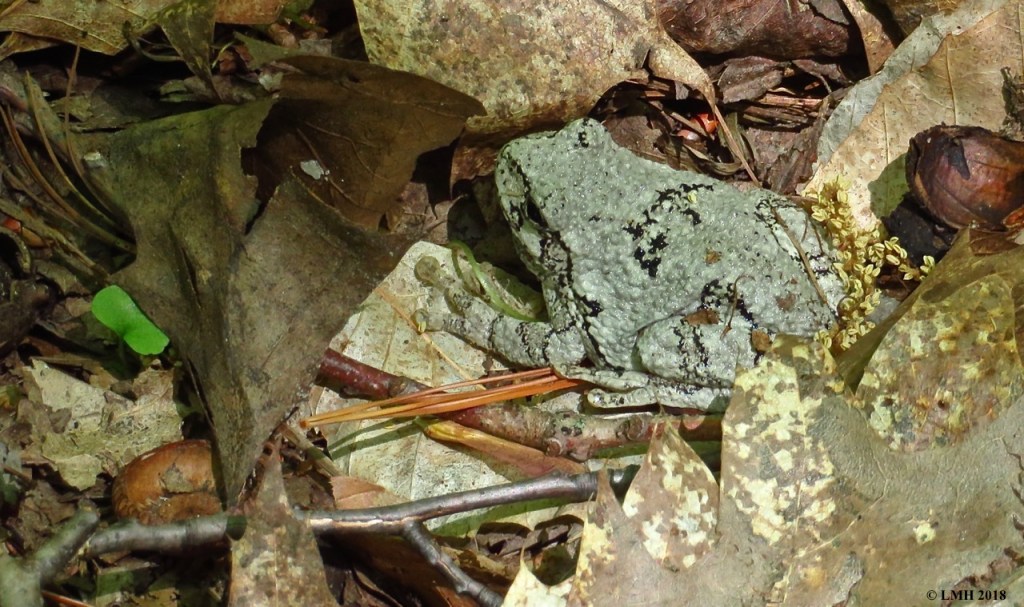
a Gray Tree Frog
who offered
not one rare glimpse, 
but two.
And so it is
that May 30th is
Gray Tree Frog Day.
For over thirty years
I've stalked this land
and July 14th
marked
the first time 

noticed
the carnivorous plant
growing beside
the lake. 
Droplets glistened
at the tips 
of the hair-like tendrils 
of each leaf
filled
to the brink 
as they were
with
insect parts. 
On this day
I celebrated
Round-leaved Sundews. 

A celebratory parade 
took place
on
September 22.
The route
followed the old course
of a local river.
Along the way,
trees stood in formation,
showing off 
 colorful new coats.
Upon some floats, 
seeds rustled 
as they prepared
to rain down
like candy tossed
to the gathered crowd. 
My favorite musicians
sported their 
traditional parade attire
and awed
those watching
from the bandstand.
With an 
"ooEEK, ooEEK,"
and a
"jeweep"
they flew 
down the route.
Before it was over
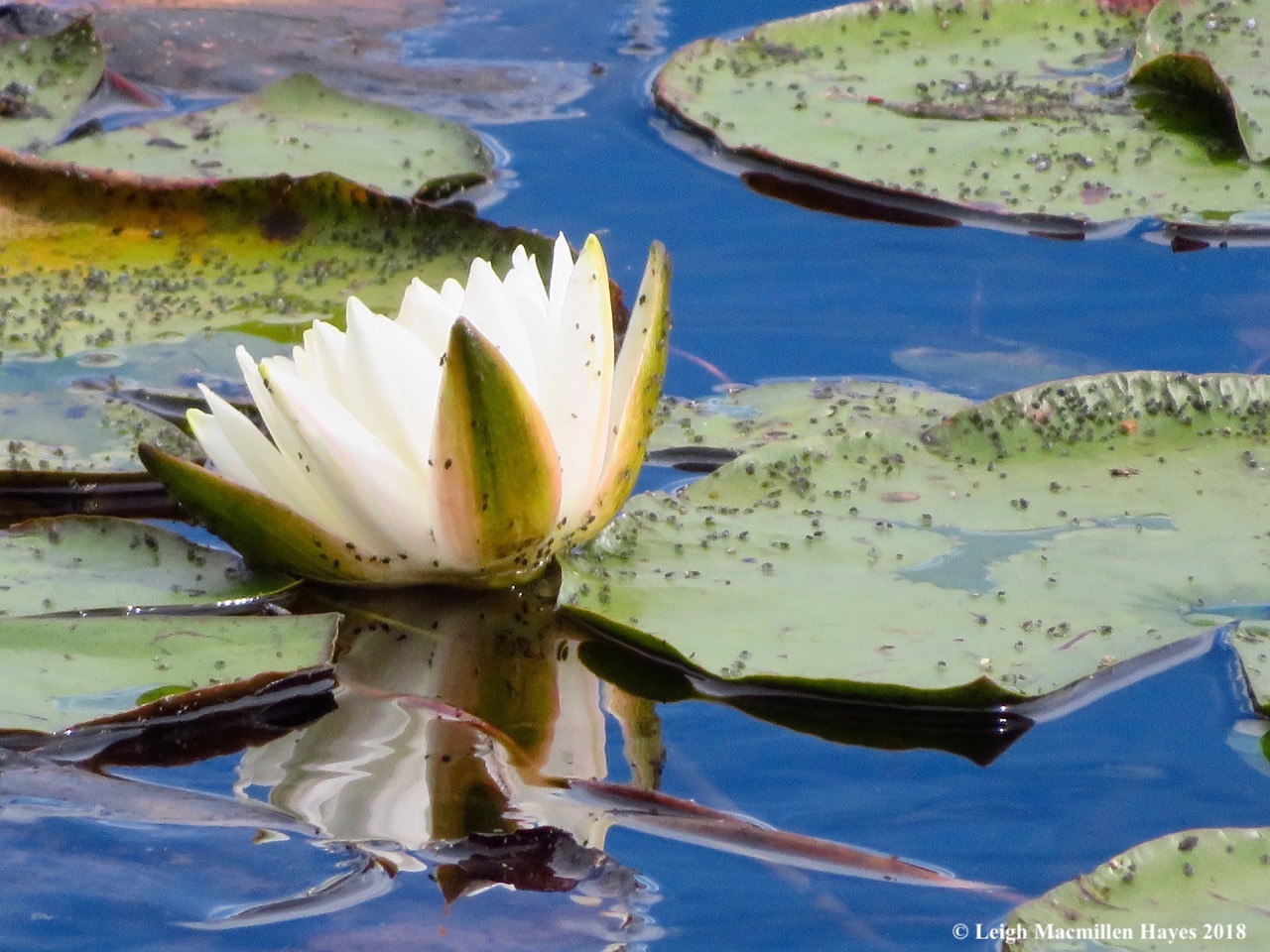
a lone lily
danced on the water
and offered
one 
last 
reflection. 
And then summer marched into autumn. 
With wonder
in my eyes
and on my mind
I spent November
in the presence 
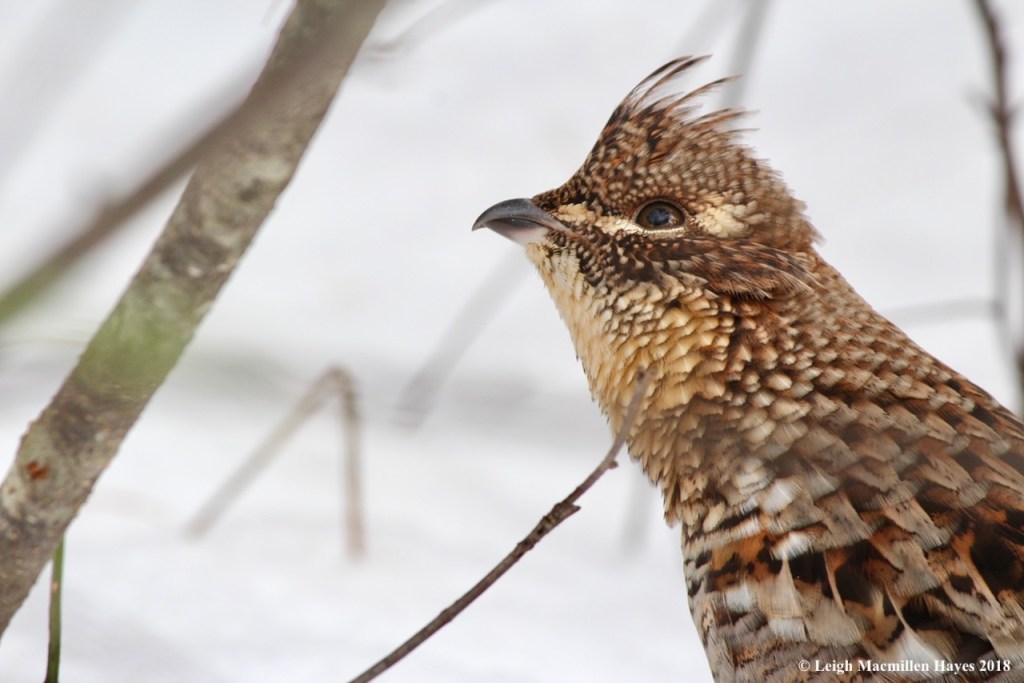
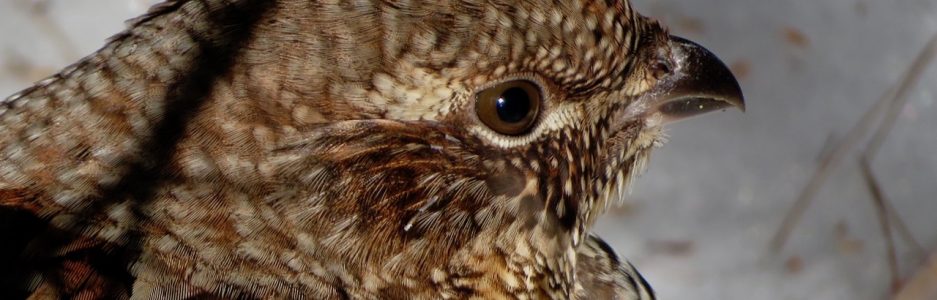
of a Ruffed Grouse. 
The curious thing: 
the bird followed me, 
staying a few feet away
as 

tramped 
on. 

stopped. 
Frequently.
So did the bird. 
And we began 
to chat. 
I spoke quietly
to him
(I'm making a gender assumption)
and he
murmured back
sweet nothings. 
Together 
we shared the space, 
mindful
of 
each other. 
As he warmed up
below a hemlock,
I stood nearby, 
and watched, 
occasionally offering
a quiet comment, 
which he
considered
with
apparent nonchalance. 
Sometimes
the critters 
with whom we share
this natural world
do things
that make no sense,
but then again, 
sometimes we do 
the same. 
Henceforth,
November will always be 
Ruffed Grouse month 
for me. 
At 6am 
a flock of crows
outside the bedroom window
encouraged me 
to
crawl out of bed. 
Three black birds
in the Quaking Aspen
squawked
from their perch
as they stared 
at the ground.
I peeked
but saw nothing 
below.
That is,
until I looked
out the kitchen door
and tracks drew
my attention.
It
took
a
moment 
for my
sleepy brain
to click into gear, 
but when it did
I began to wonder
why the critter
had come
to the back door
and sashayed about
on the deck. 
Typically,
her journey
takes her
from under the barn
to the hemlock stand.
Today,
as the flakes fell, 
and the birds scolded,
she sat on the snowpile,
occasionally retreated 
to her den, 
grunted, 
re-emerged, 
and then
disappeared
for the day. 
I went out again
at dusk
in hopes
of seeing 
the prickly lady
dig her way 
out
but 
our time schedules
were not synchronized. 
I don't know
why she behaved
strangely this morning,
but I do know this:
when the crows caw--listen.
And look. 
And wonder. 
April 8th
will be the day
I celebrate
the Barred Owl
for he finally
flew in
and landed.
As I watched
he looked about
at the 
offering of treats. 
Cupcakes and cookies
were for sale
to the left
in the form
of Juncos and Chickadees. 
And then he turned 
his focus right, 
where drinks
were on tap
as the snowflakes fell.
He even
checked out 
the items 
below his feet, 
hoping upon hope 
to find
a morsel
of a vole
to his liking. 
Eventually, 
he changed
his orientation
to take 
a better look 
at the 
entire spread
of food. 
But still, 
he couldn't
make up his mind
and so
he looked some more, 
swiveling 
his neck. 
In the end,
he never did 
choose. 
Instead,
off he flew 
without munching 
any of 
the specialty items. 
But I finally got to see my owl. 

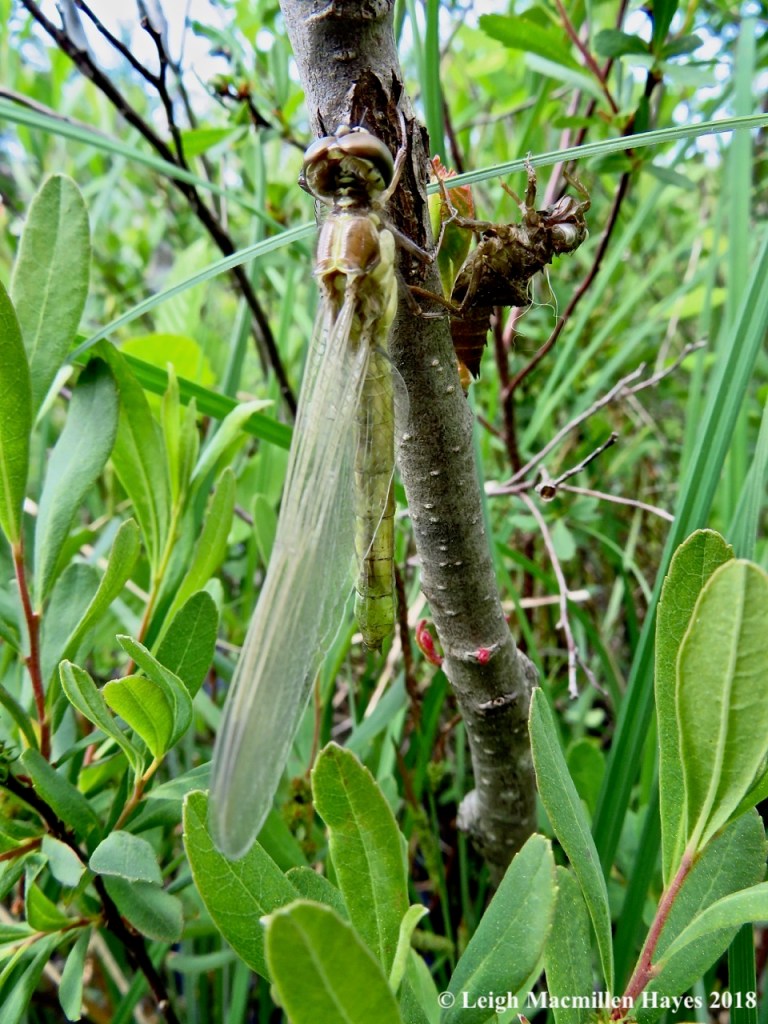
Ah, Ben and Faith, there are moments when one miraculously arrives in the right place at the right time, such as when a dragonfly emerges from its exuvia and slowly pumps blood into its body and you get to be a witness.

It strikes me as serendipity that this book should arrive today. You see, all month I’ve been debating what book to feature and time was of the essence as May approached. And then today, your lovely note, a copy of I’m in Charge of Celebrations, and the Christmas homily you wrote, Ben.

You are both the salt of the earth and I am honored to be your friend. Thank you for your kindness. (I’m only now realizing that we’ve shared a few celebrations that we’ll never forget including the fawn at Holt Pond and your smiling Bob the Bass.

Once again, the April Book of the Month: I’m in Charge of Celebrations.

I’m in Charge of Celebrations, by Byrd Baylor, illustrated by Peter Parnall, Charles Scribner’s Sons, 1986.

Summer Marches On

Today I attended a celebratory parade.

0-Subtle colors

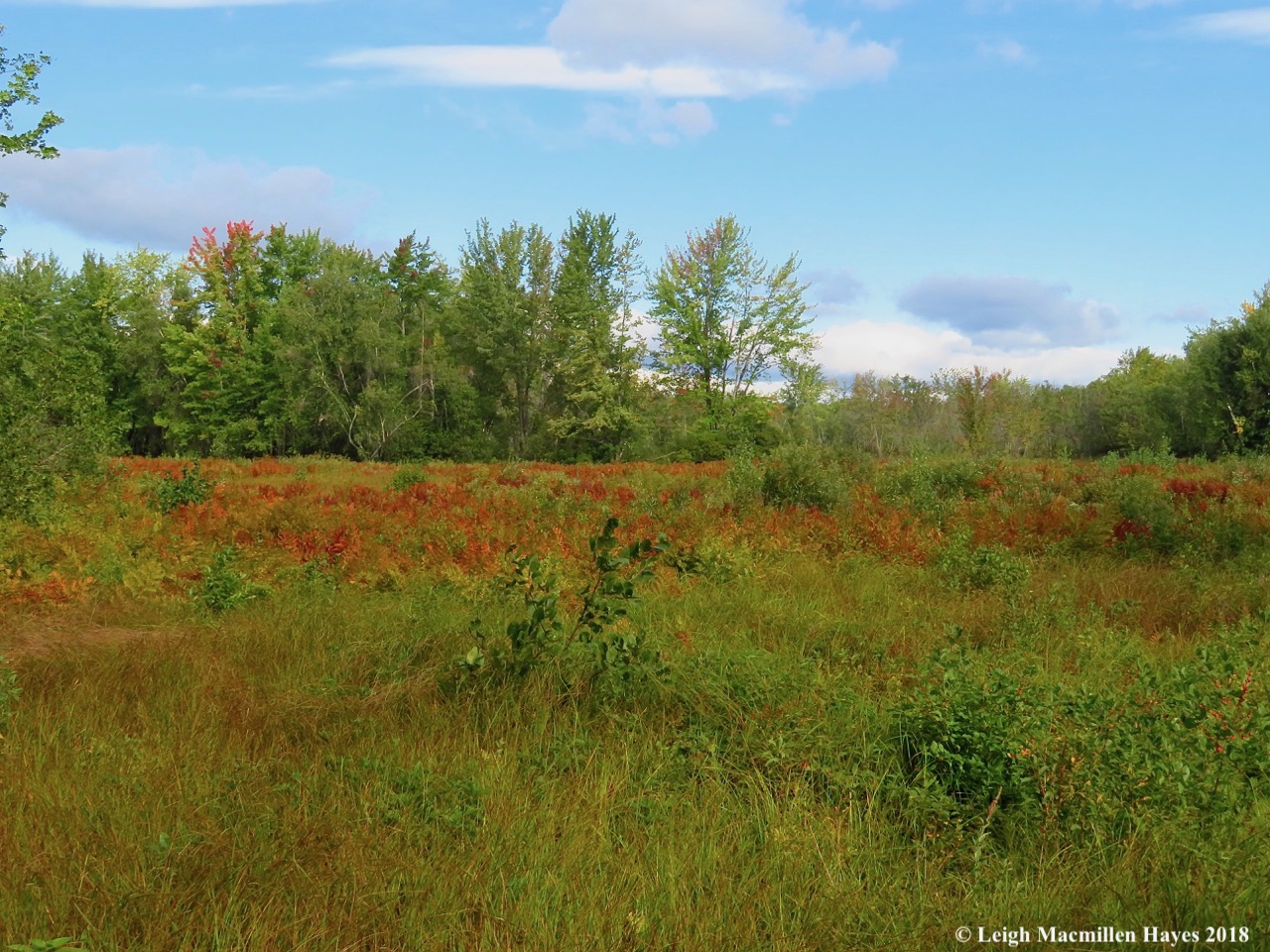
The route followed the old course of a local river and along the way the trees stood in formation, some showing off their bright new coats.

5-colors in the field

Each float offered a different representation of the theme: transition.

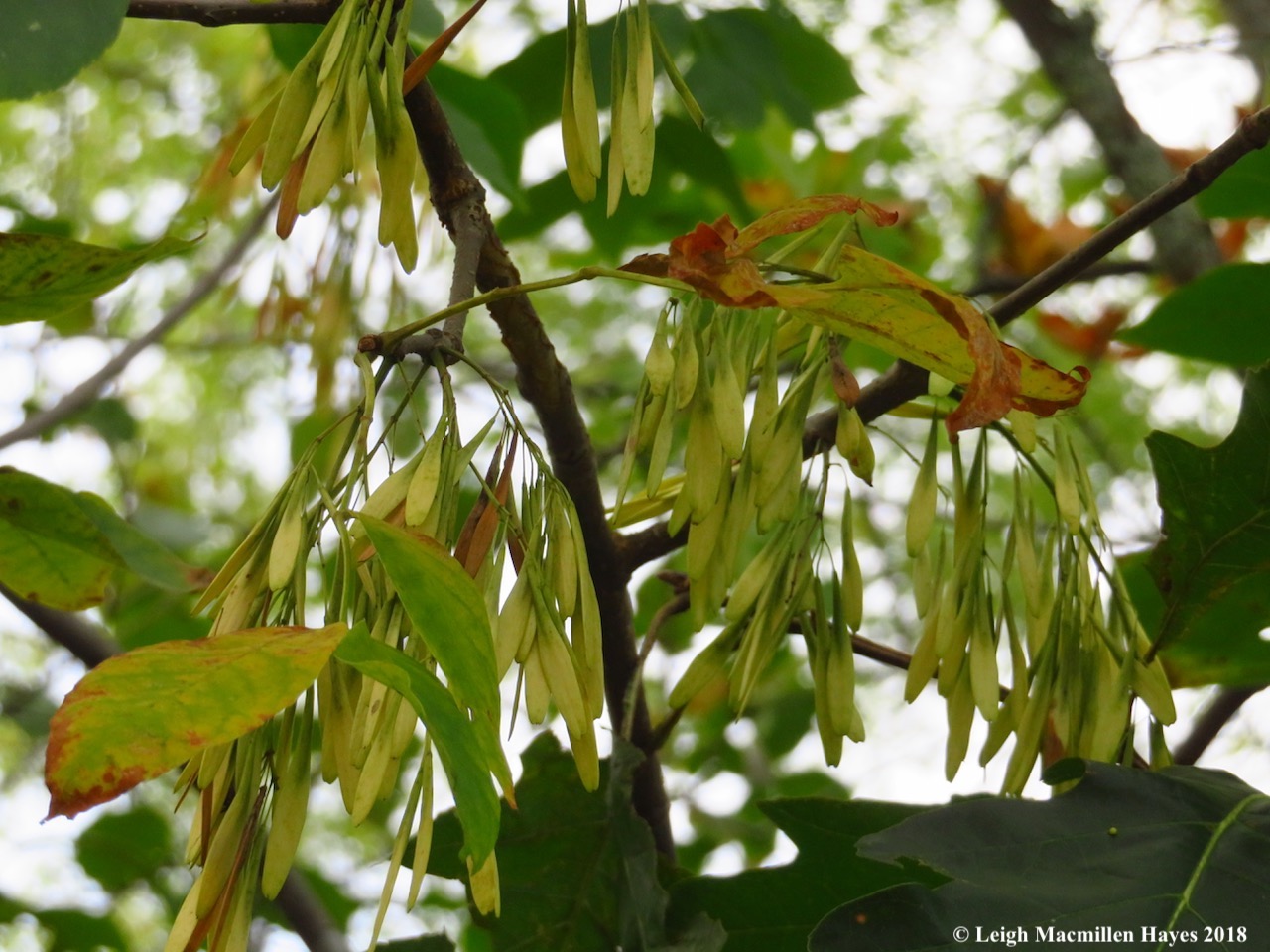
3-ash seed raining

Upon some floats, seeds from the Ash rustled as they prepared to rain upon the ground like candy tossed into the gathered crowd.

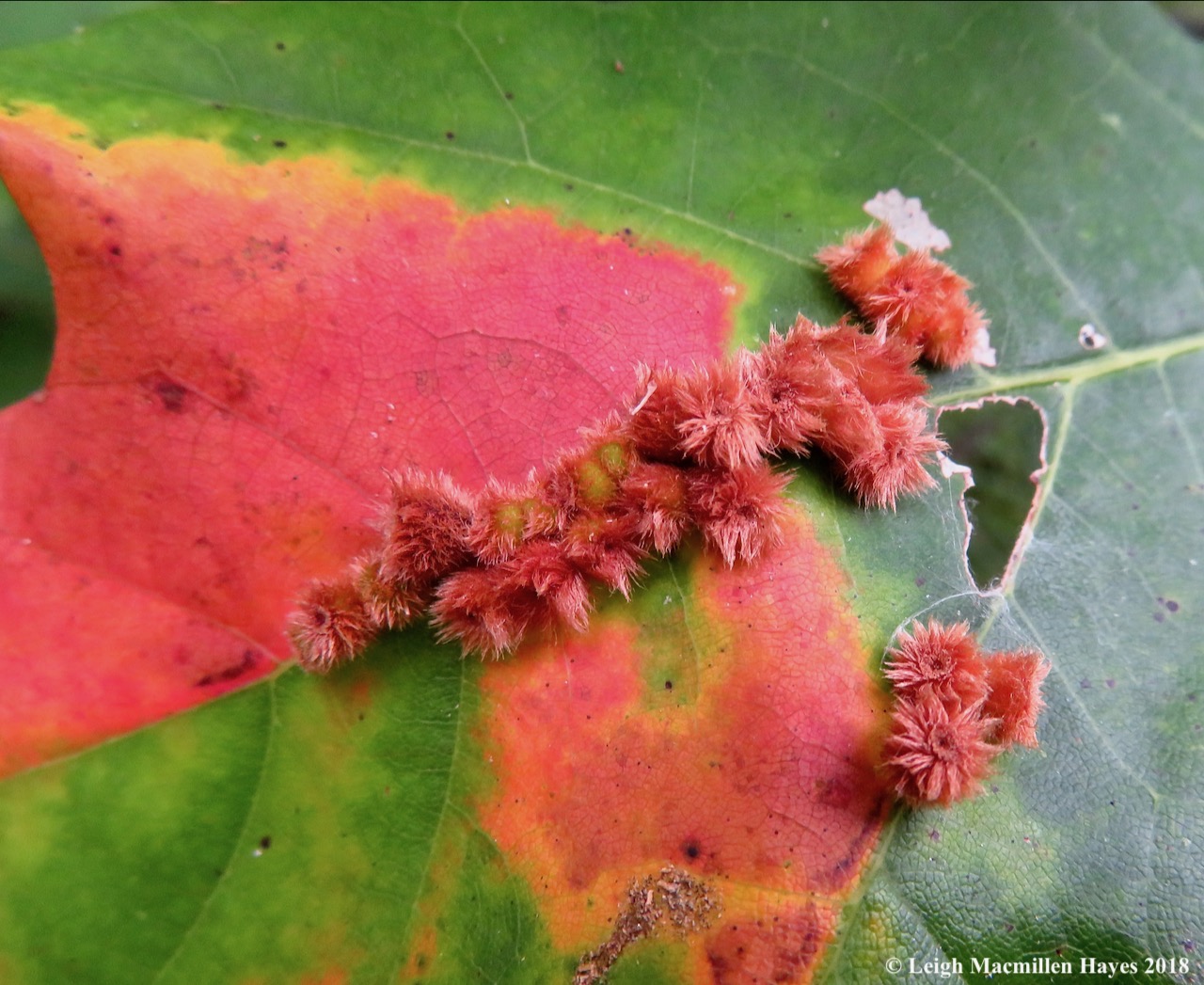
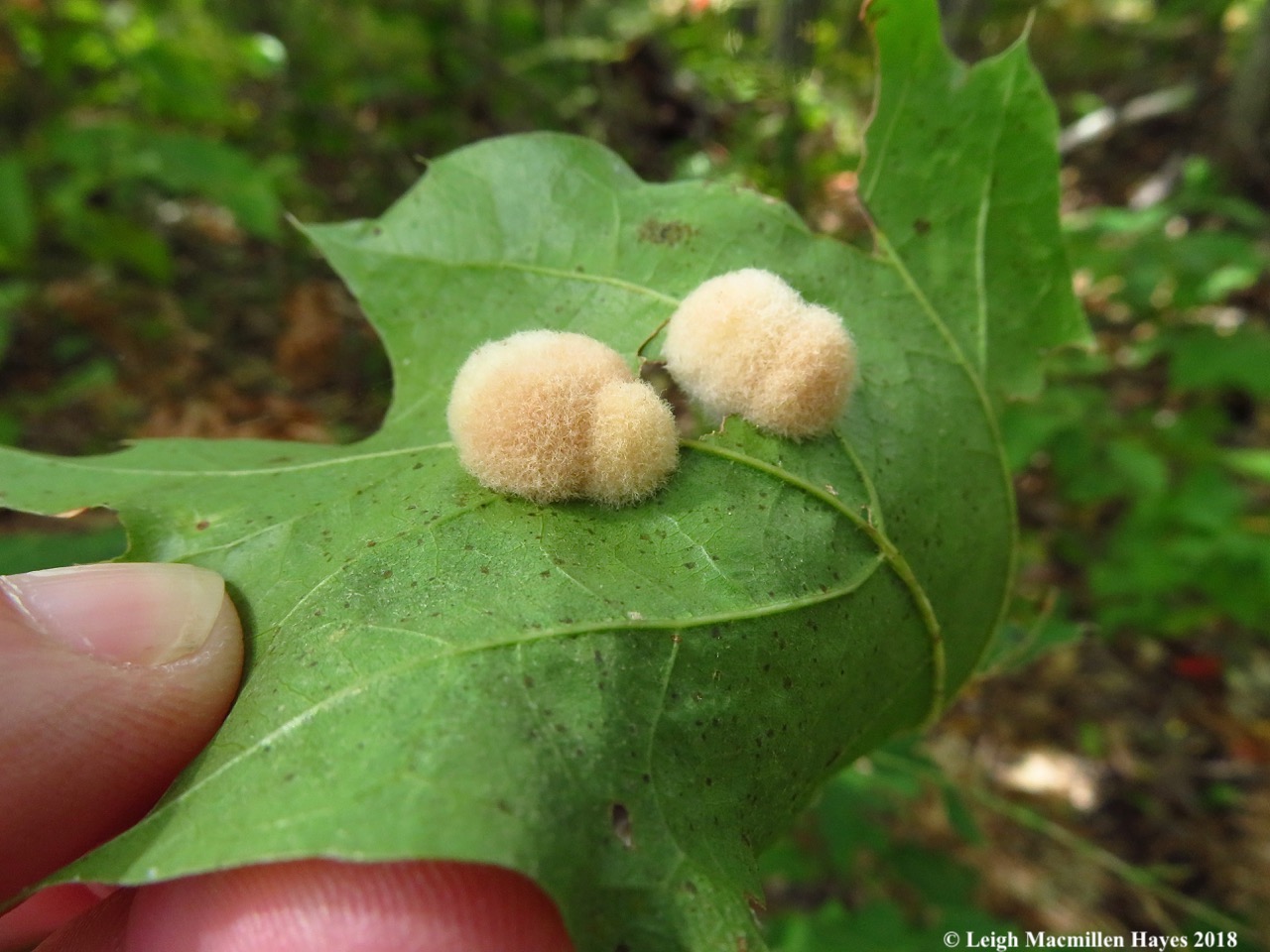
4-crystalline tube gall on red oak

Oak leaves showed off their pompoms of choice–some being crystalline tube galls and others . . .

19-hedgehog gall?

possibly called hedgehog.

8-bald-faced hornet

Playing their instruments were the Bald-faced Hornets,

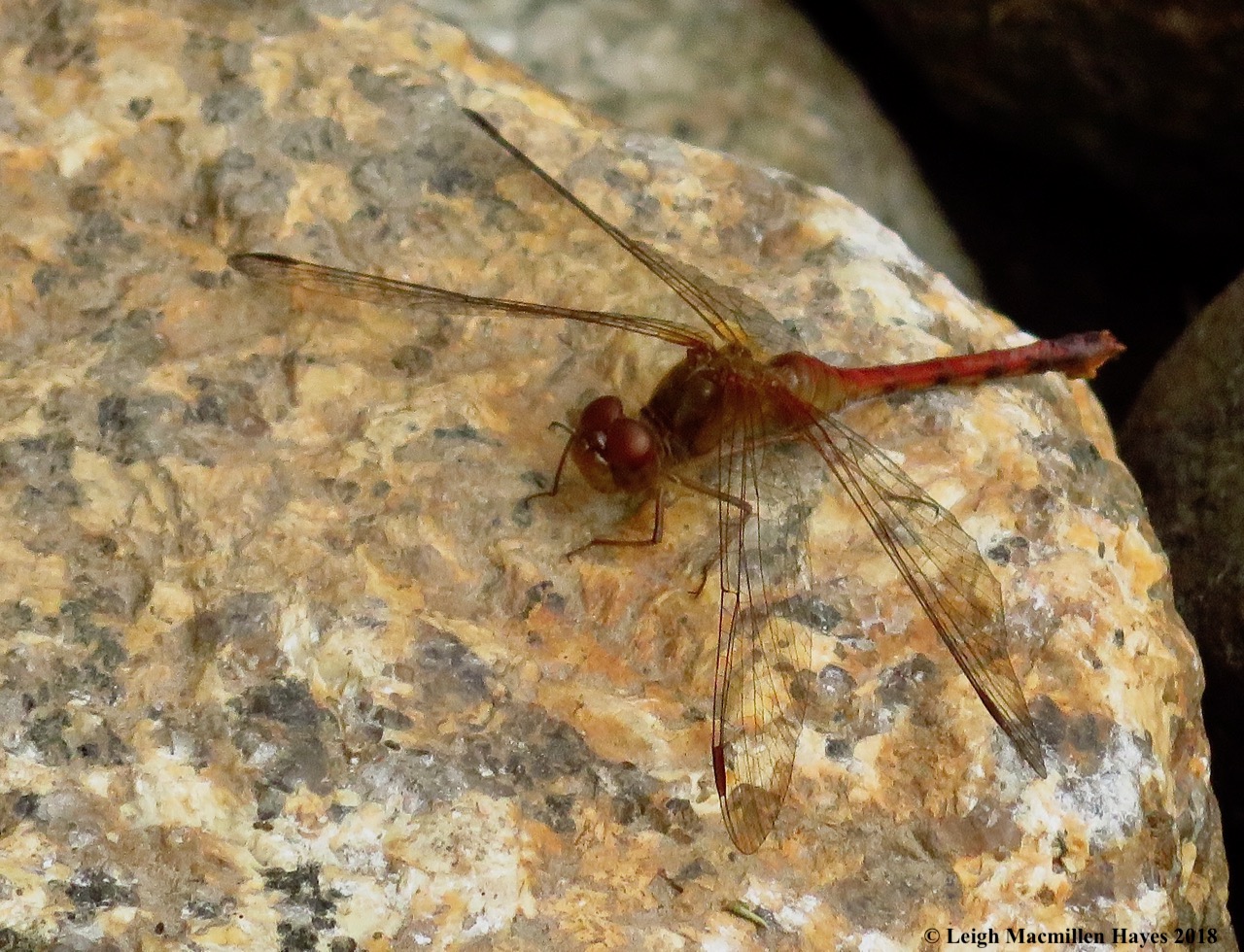
9-autumn meadowhawk

Autumn Meadowhawk Dragonflies,

11-immature green stink bug

and even an immature Green Stink Bugs.

10-green frog

On the percussion instruments at the back of the band were the green and . . .

23-pickerel frog

pickerel frogs.

15-yellow-rumped warbler

Adding a few fainter notes were a couple of Yellow-rumped Warblers.

16-yellow-rumped warbler

They didn’t want the chickadees to get all the credit for the songs of the woods.

17-hairy woodpecker

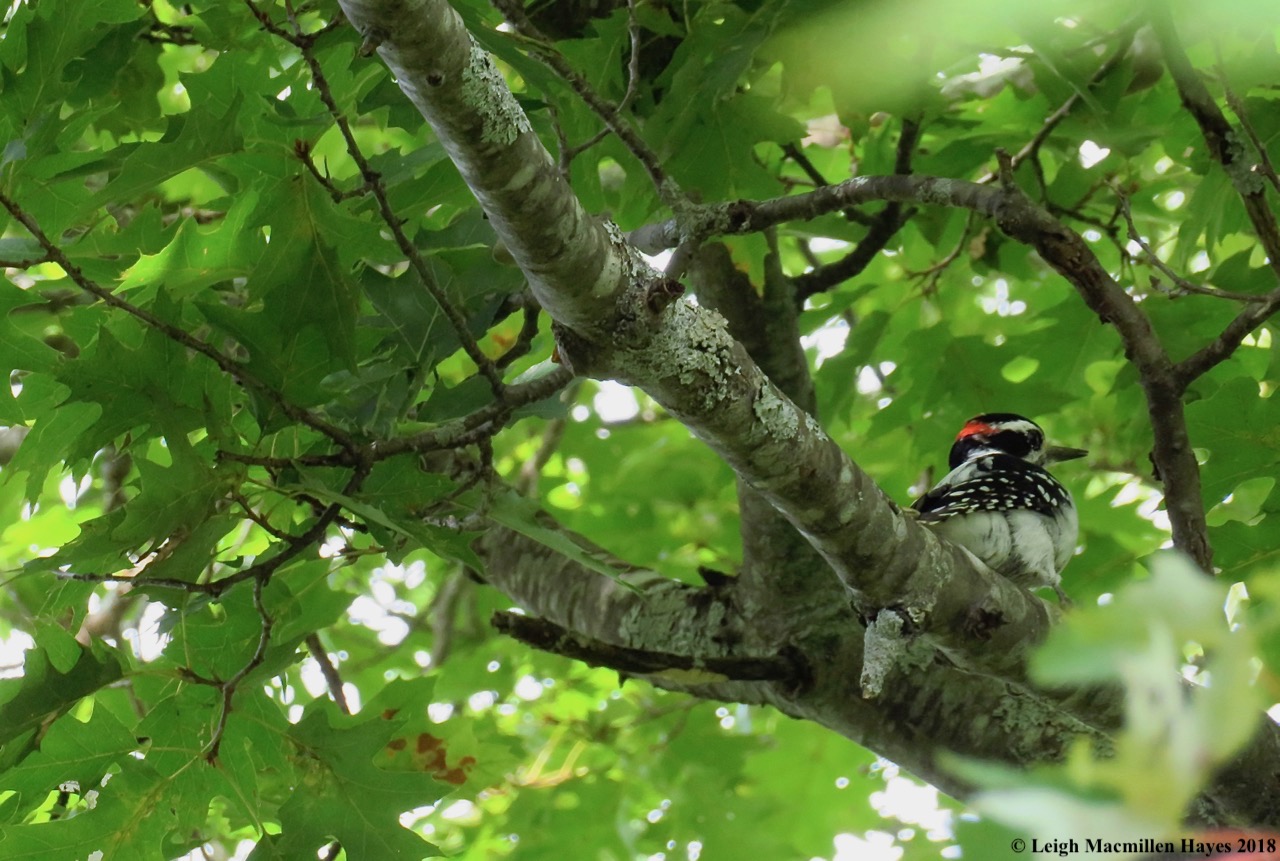
A Hairy Woodpecker also tapped a view beats.

12-wood ducks

Probably my favorite musicians, however, sported their traditional parade attire and awed those watching from the bandstand.

13-wood duck

Even a non-breeding male made the scene look like a painting.

14-wood ducks taking off

Their real contribution, though, came from the modestly plumaged females who offered a squealing “oo-eek, oo-eek”  each time they took flight.

18-sensitive fern

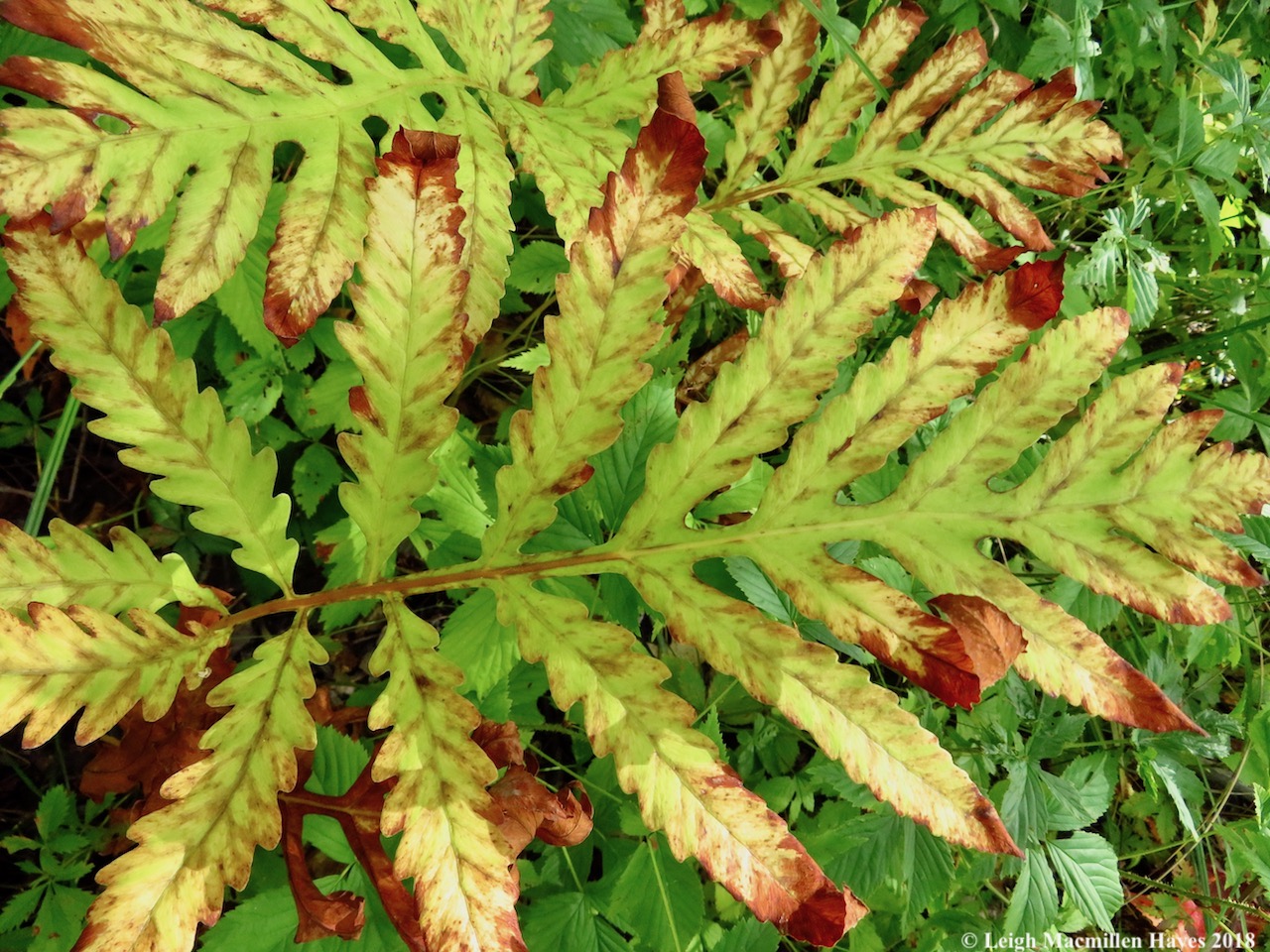
Though green attire was the most prominent of the day, others sported colors of change from yellows and browns to . . .

6-red emerging

brilliant reds.

21-Brigadoon

As is often the case along such a route, vendors offered works of art for sale, including local scenes painted with watercolors.

22-lily reflection and aquatic aphids

Before it was over, a lone lily danced on the water and offered one last reflection.

24-season transformation

And then summer marched on . . . into autumn.