Extended Mondate

Sometimes Christmas gifts are delayed at our house, though not quite the way they were when I was growing up. Back then, months after the holiday, Mom would discover a forgotten gift she’d tucked away in the hallway closet for one of us. It was a fun surprise–for us and for her.

This weekend, my guy and I shared a present I’d given him last Christmas–a weekend away, with a search for roots tied in.

We began with my roots actually–and spent Friday night and Saturday morning with my sister and brother-in-law. That, in itself, is always a gift. Plus the conversation, laughter, a delicious breakfast and chocolate chip cookies for the road. (Many thanks to the MacBuds! You are the best.)

And then we were on the road again–headed to Onset Beach in Wareham, Mass. Until this weekend, Wareham had always been a place that we passed through on our way to or from the Cape. Oh, maybe we stopped for  saltwater taffy sometimes, but that was about it.

This weekend changed everything. We didn’t stay there, but we spent plenty of time there–including in the Ford dealership because the check battery light came on when we were about an hour away. The nice mechanic replaced the alternator and belt and in less than an hour and a half we were on the road again. And thankful.

Finally, Onset Beach.
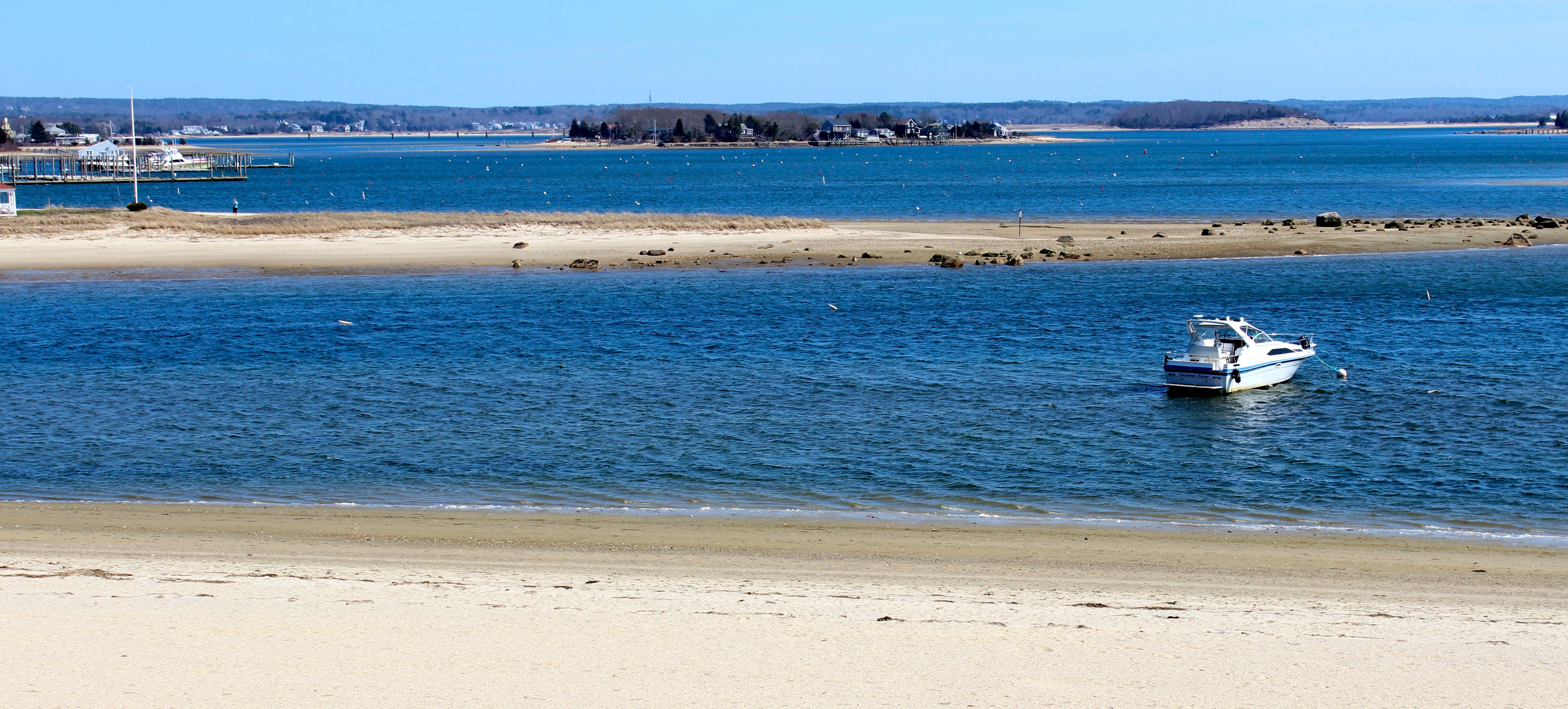
onset 1

This is the view we think my guy’s great grandparents enjoyed daily. Back in the late 1800s/early 1900s, they owned the Onset Hotel. We weren’t exactly sure which building it was at first, but my guy isn’t shy (as some may think) and he talked to almost everyone in town. We were looking for one person in particular because we’d been told he might have information that would help us. I’m surprised the police didn’t come looking for us as we walked up and down streets, chatted with anyone we encountered and knocked on a few doors. We even visited the kind dispatcher at the local fire department. As I said, we talked to almost everyone.

onset 4

This person told us about that person, who suggested we visit yet another person. Finally, we had confirmation–the hotel became condominiums in the 1980s/90s. The photo above is of a page from a 1925 booklet that a woman who owns a property management business showed us. She also called several people in town trying to get more information, to no avail. But we were thrilled that we could look  from her business and see the building.  And walk by it and enjoy the view and smell the sea air, just as his great grandparents had done all those years ago. If they had time, that is, because apparently they also owned a bar in Boston.

onset 2

There’s a condo for sale. Maybe we should think about it. I don’t think so. We really aren’t beach people, even though we both grew up along the coast. We enjoy visiting the beach, but . . .

onset 3

We spent Saturday afternoon stalking the area and returned there this morning. Finally, we’d located the man we were looking for. He gave us two more names–of people who may have some information, but they weren’t home today. Never fear, this story isn’t over yet. We have phone numbers.
bike path 1

And so the present continued. We drove over the Bourne Bridge to Falmouth, where my guy had spent many summers before his parents purchased a hardware store in Maine back in 1965.

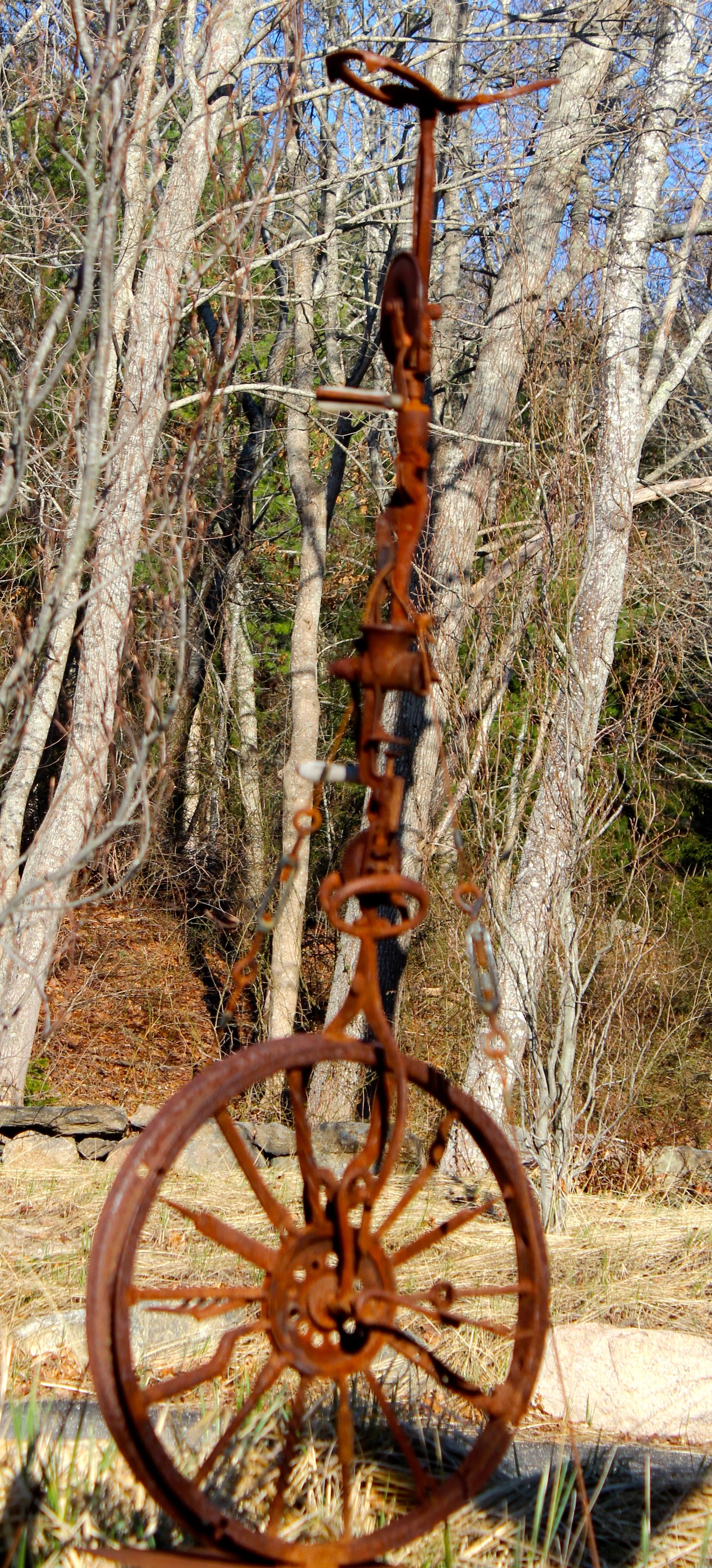
Our first Sunday morning adventure was along the bike path.

allen, bike path

While he headed down the trail for a run to Woods Hole and back, I moseyed along with camera in hand. You may want to stop reading now.
 invasives

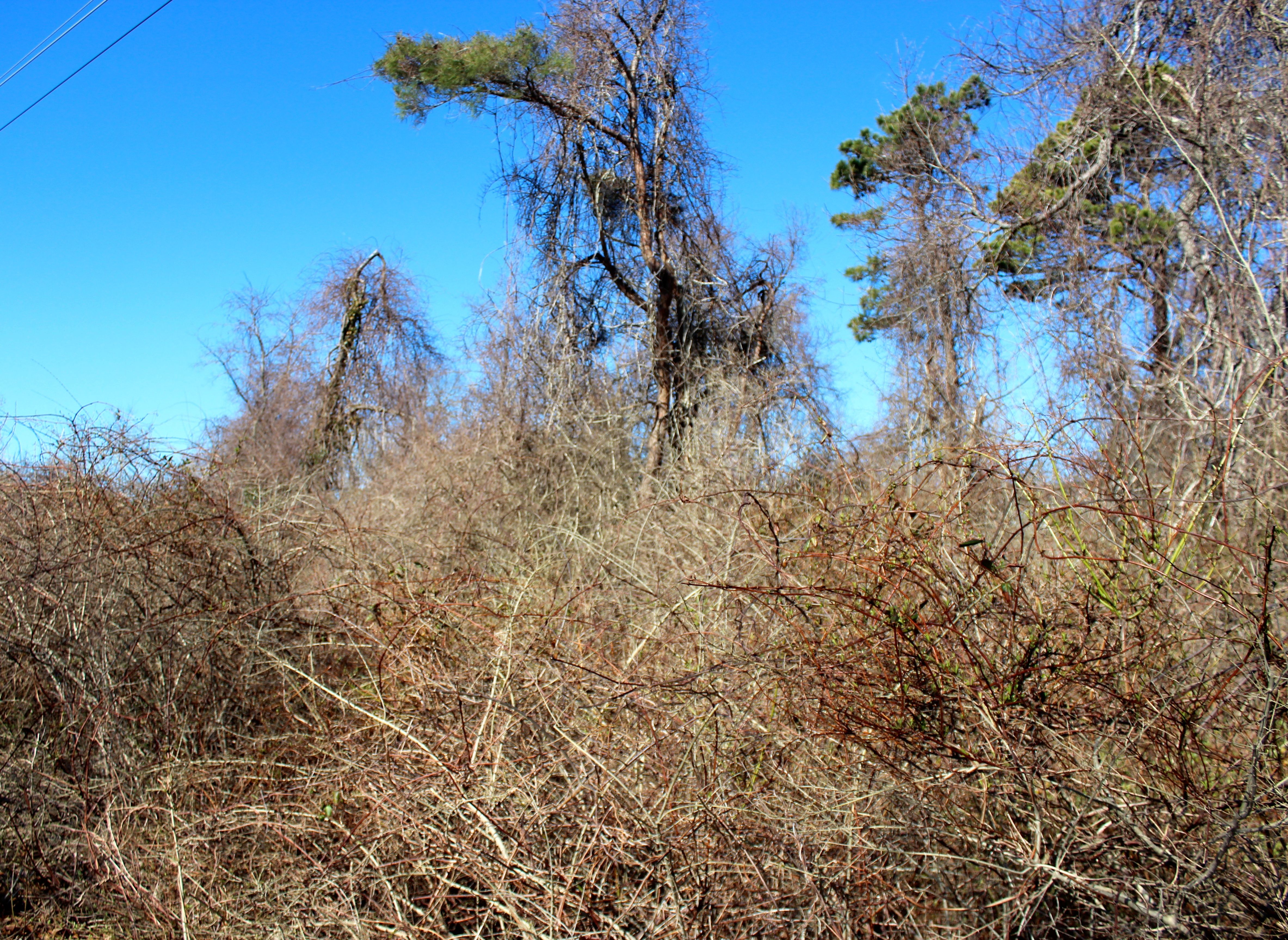
I was surprised by the overwhelming amount of invasive species. It makes our neck of the woods look practically invasive-free.

bamboo 2bamboo

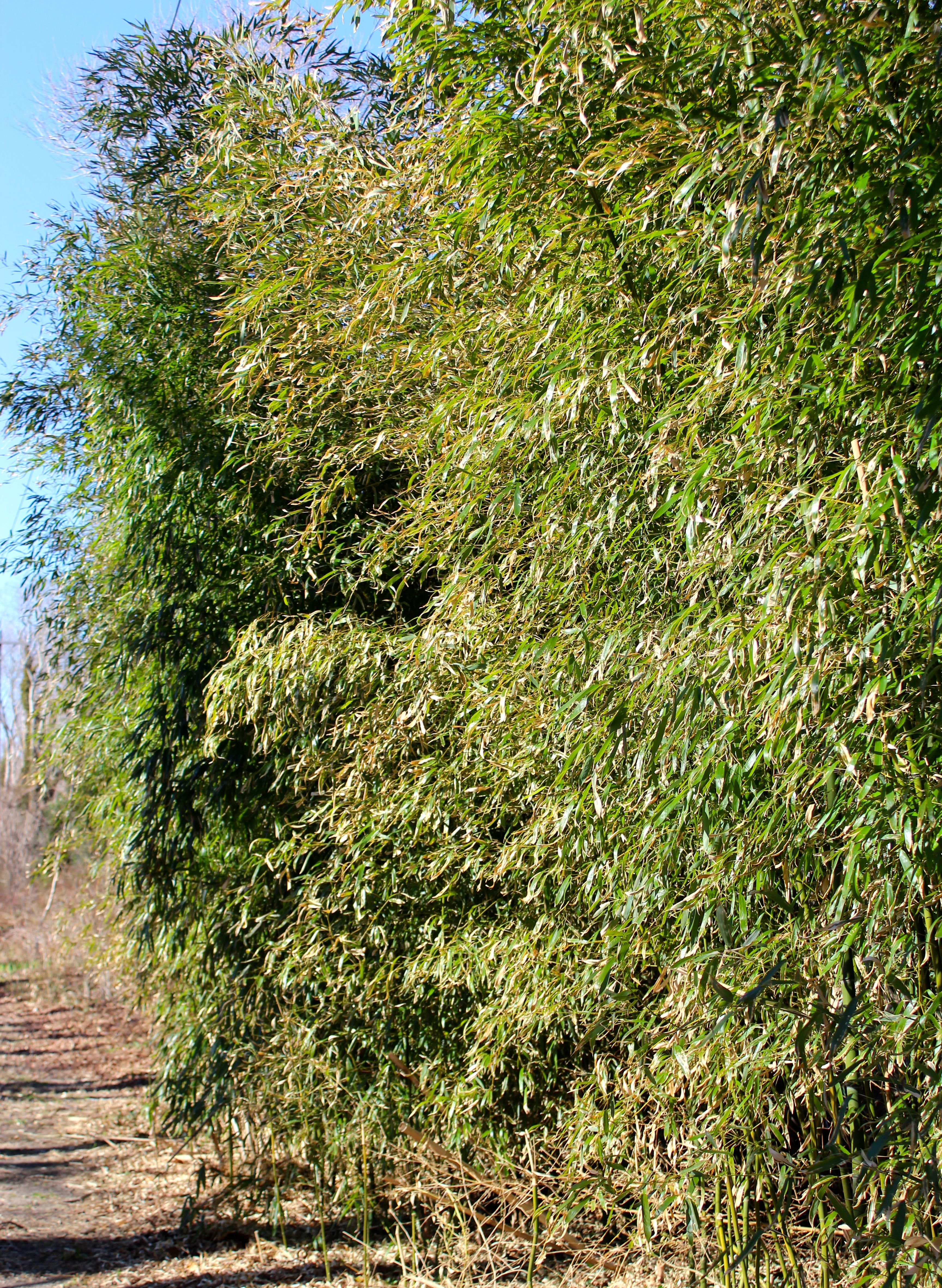
I expected panda bears to come out of this swath of bamboo. Fortunately, it’s only in one spot–at the moment.

Invasive species do always give me pause. On this land, I too, am an invasive. Just like the plants and insects that are not native, nor were my ancestors or my guy’s ancestors. They say what makes an invasive such is that there isn’t anything native that will feed on it, thus it will take over and smother the native species. Hmmm . . .

salt pond

On to prettier sites, like this salt pond beside the path.

seagrass

And the ubiquitous common reed, an invasive which I’ve always admired. There’s beauty in commonness.
willow bud

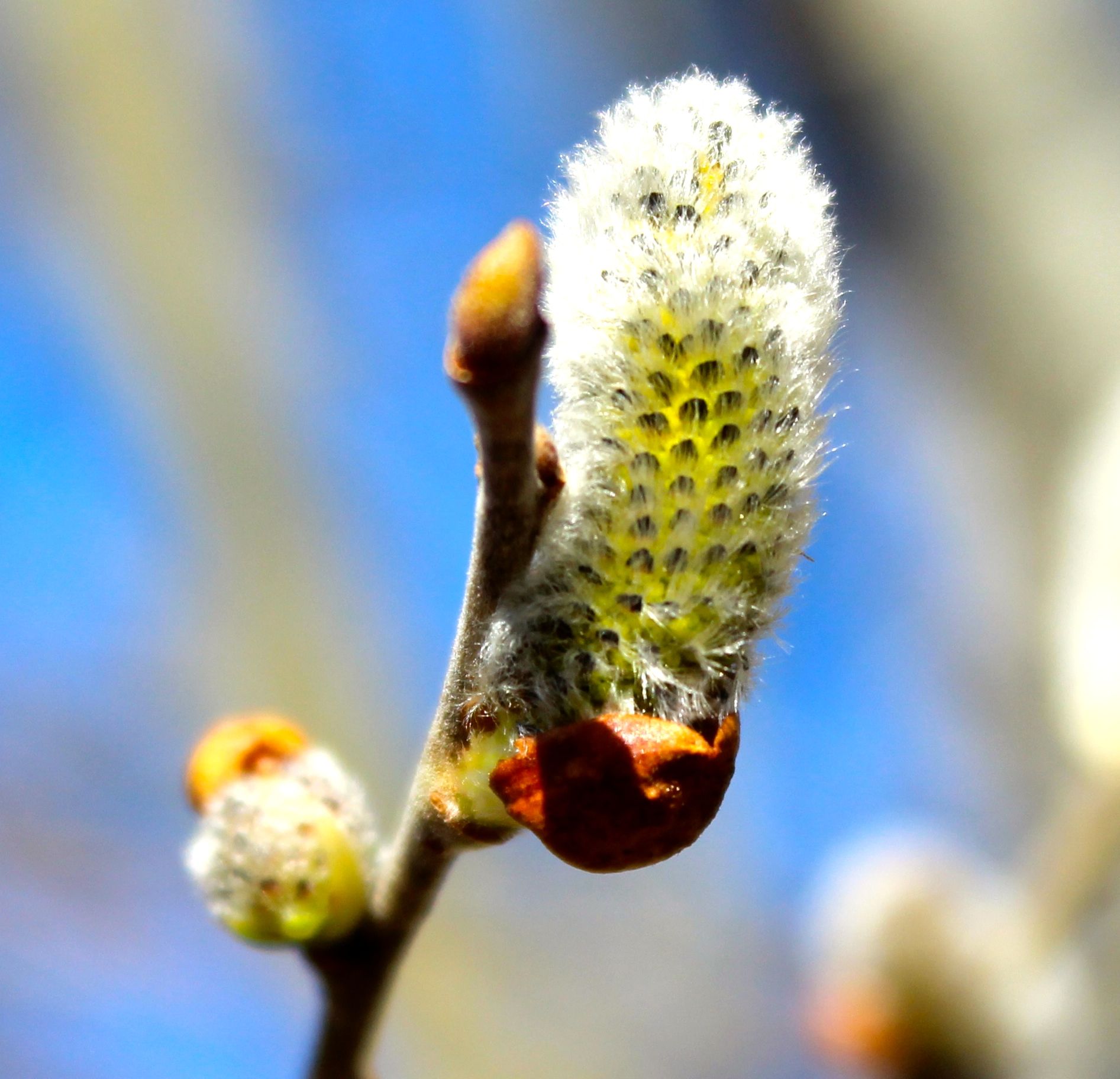
Willow buds.

osprey

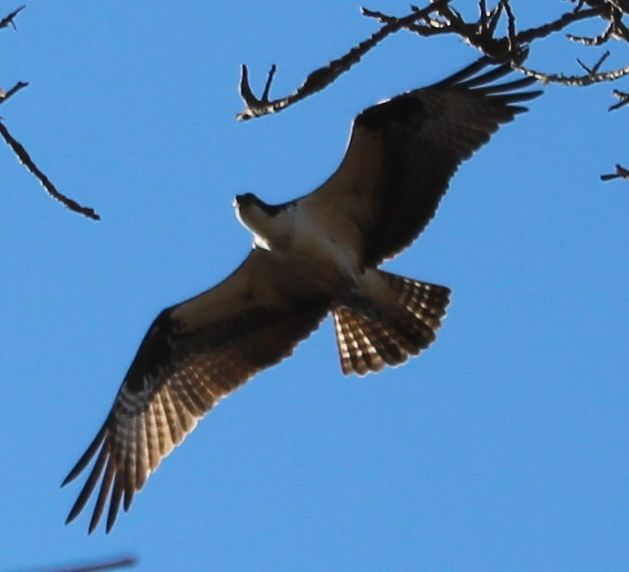
And soaring osprey.

osprey nesting

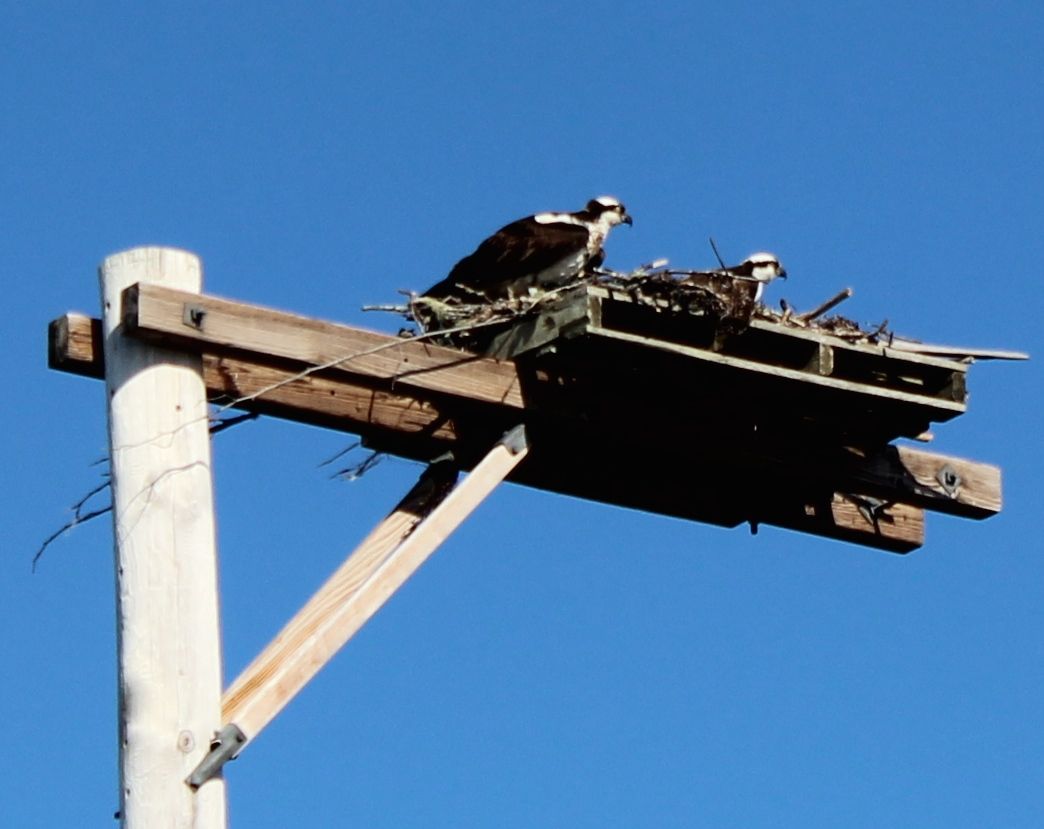
Nests on platforms or cross bars of power lines. So maybe man invaded, but he’s making amends by placing pallets on high.

beach by bike path

This beach was my turn-around point.

critter on bike path

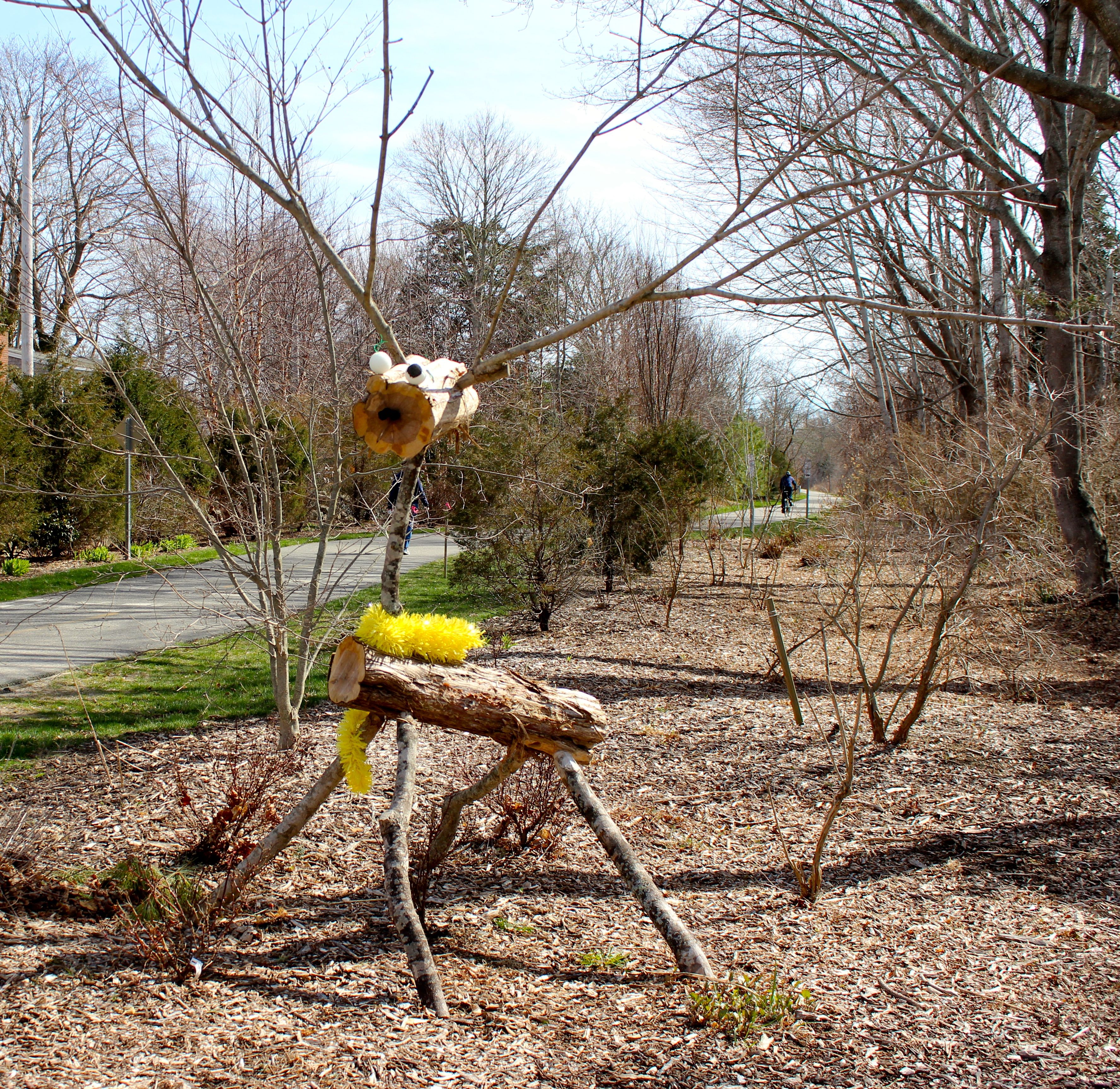
If you do use the bike path, be forewarned. Panda bears may not be munching on bamboo, but you never know what you might see.

We went in search of the childhood cottage my guy’s dad had built. They sold the small house fifty years ago, and even though we’d last driven by about twenty years ago, it took us a bit to relocate it. Again, he approached a woman who was working in a neighboring yard. There were more houses on the road than he remembered, but it seemed to still be there–with a few changes. He didn’t knock on the door.

We did visit the beach where he and his siblings used to swim and cross the narrow channel to explore an island. On Google, I found the following: “A WW II Army amphibious Training base located in East Falmouth MA (Cape Cod). More exactly it was located on a peninsula now called Seacoast Shores in the village of Waquoit. The base was connected to a nearby island called Washburn Island by a bridge. We have circa 1950’s aerial photos showing the road and ramp to a bridge on the Washburn Island side but the bridge is missing. Aerial photos from 1942 to 1945 should show the bridge. Seacoast Shores is now a thriving waterside Community and Washburn has been returned to its natural state as a wilderness preserve in Waquoit Bay. ~Paul R. Flebotte, COL US Army Retired
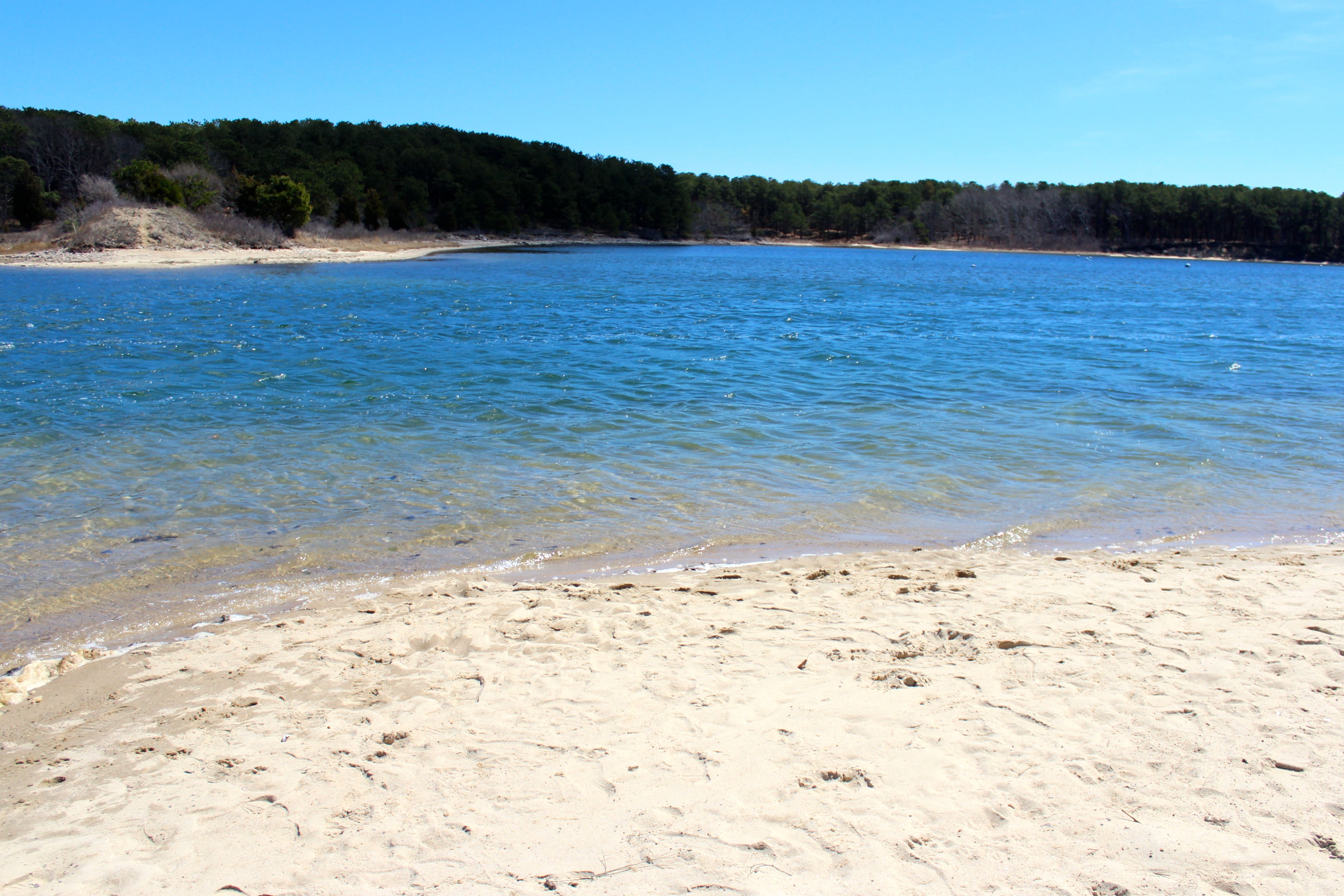
looking toward island, seacoast shores

On the left hand side of the island is the site of the bridge Col Flebotte mentions.
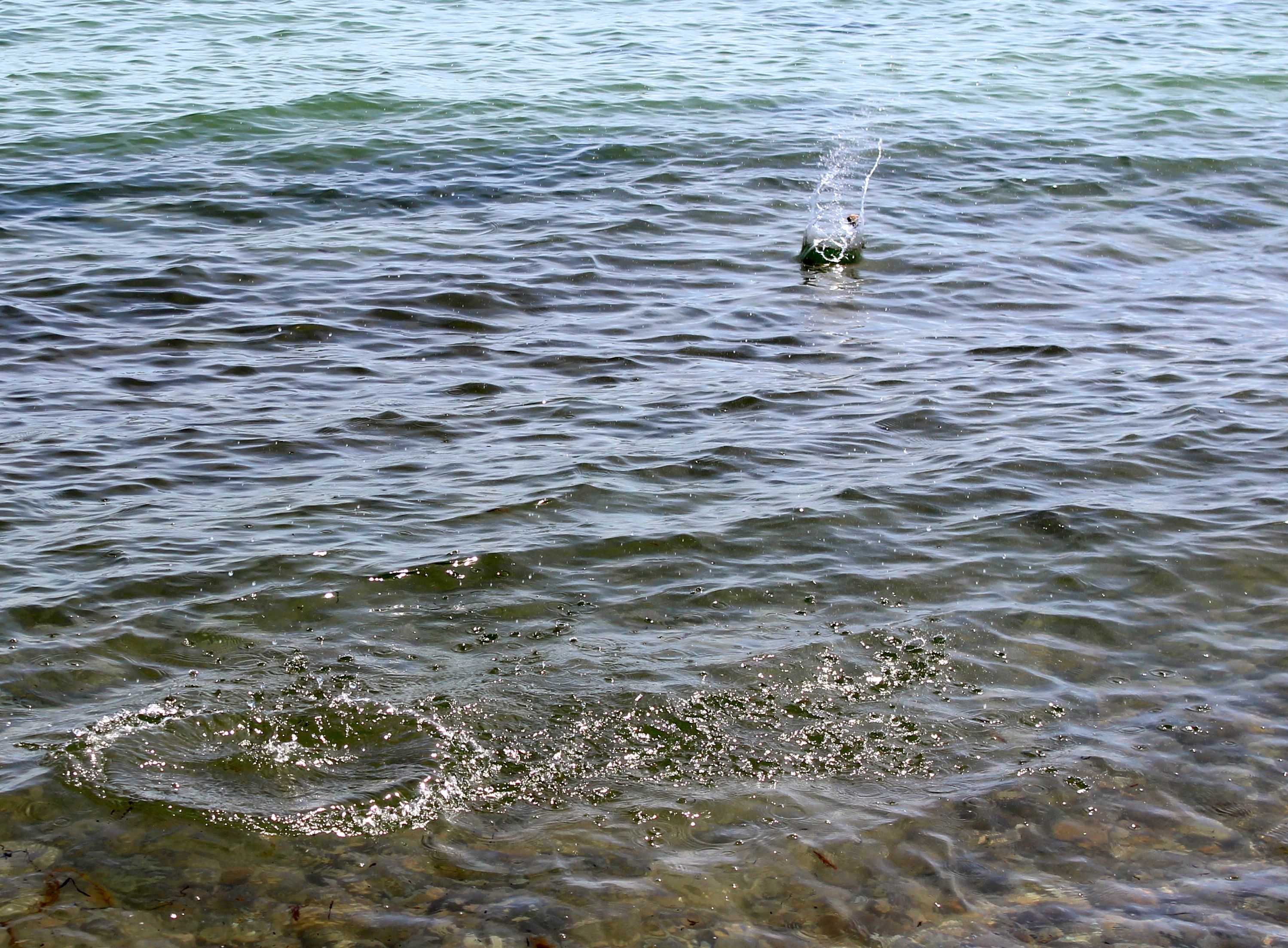
skipping stones

The afternoon found us skipping stones.

gull

Talking to herring gulls.

jingle shell

Admiring jingle shells (I don’t know their actual name, but as kids, we used to collect several in our hands and then shake them together to make them jingle).

nature art

And other works of art.

lighthouse

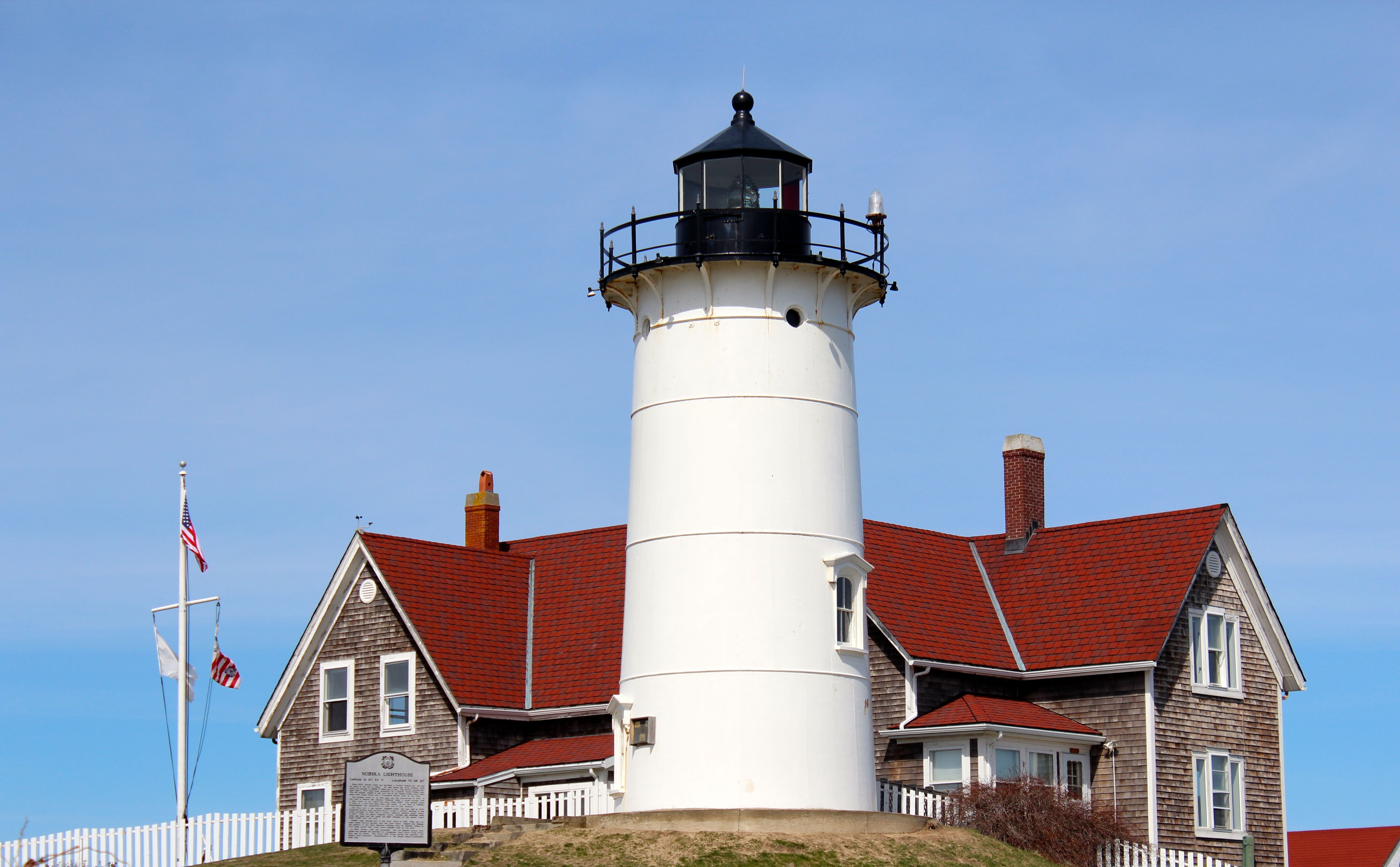
We paused at Nobska Lighthouse.

Woodshole

Explored Woods Hole.

woods hole pier

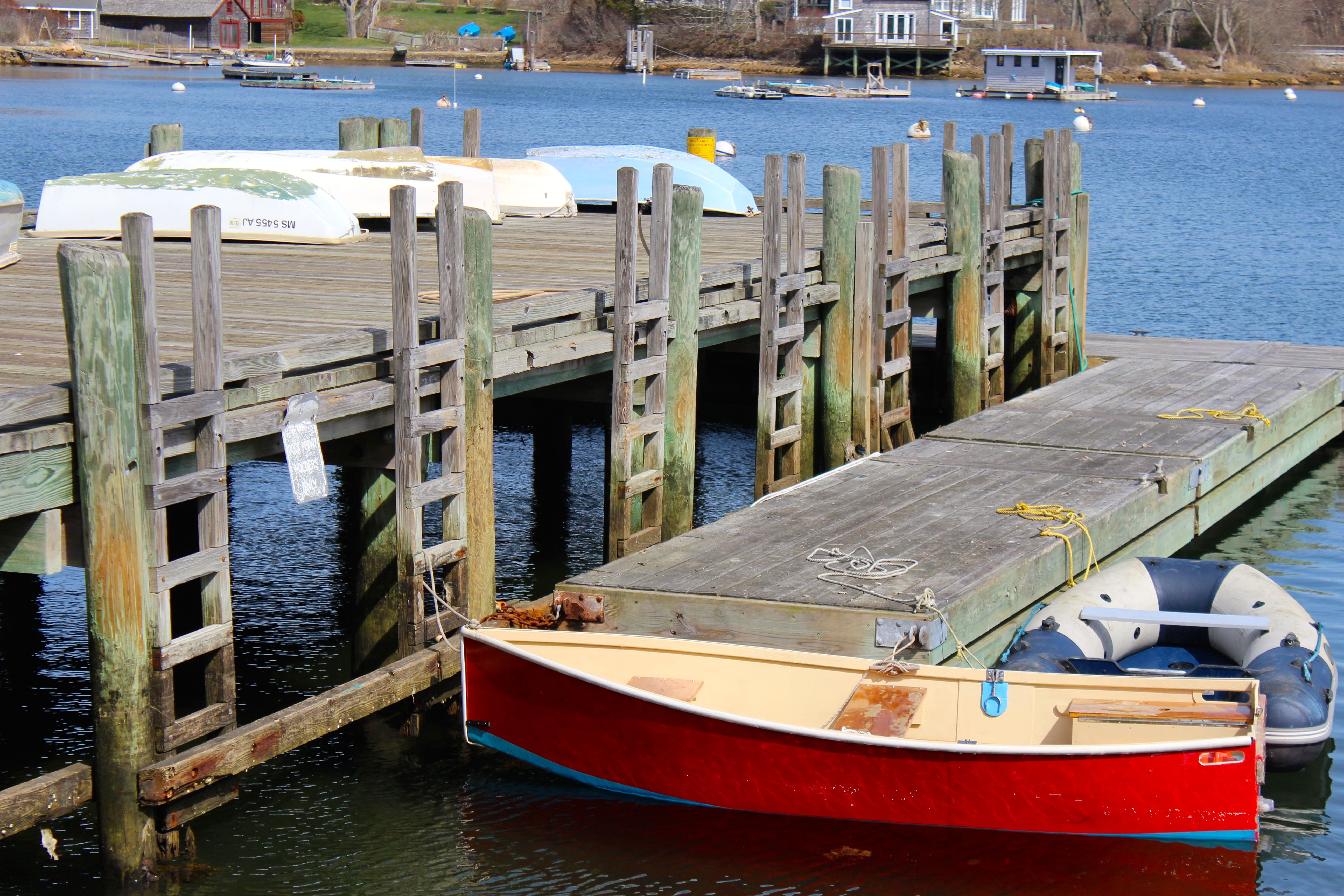
Reminisced about dinghies of our youth.

wooden boat

Which sometimes looked like this.

buoys

And realized that things are still on the quiet side.
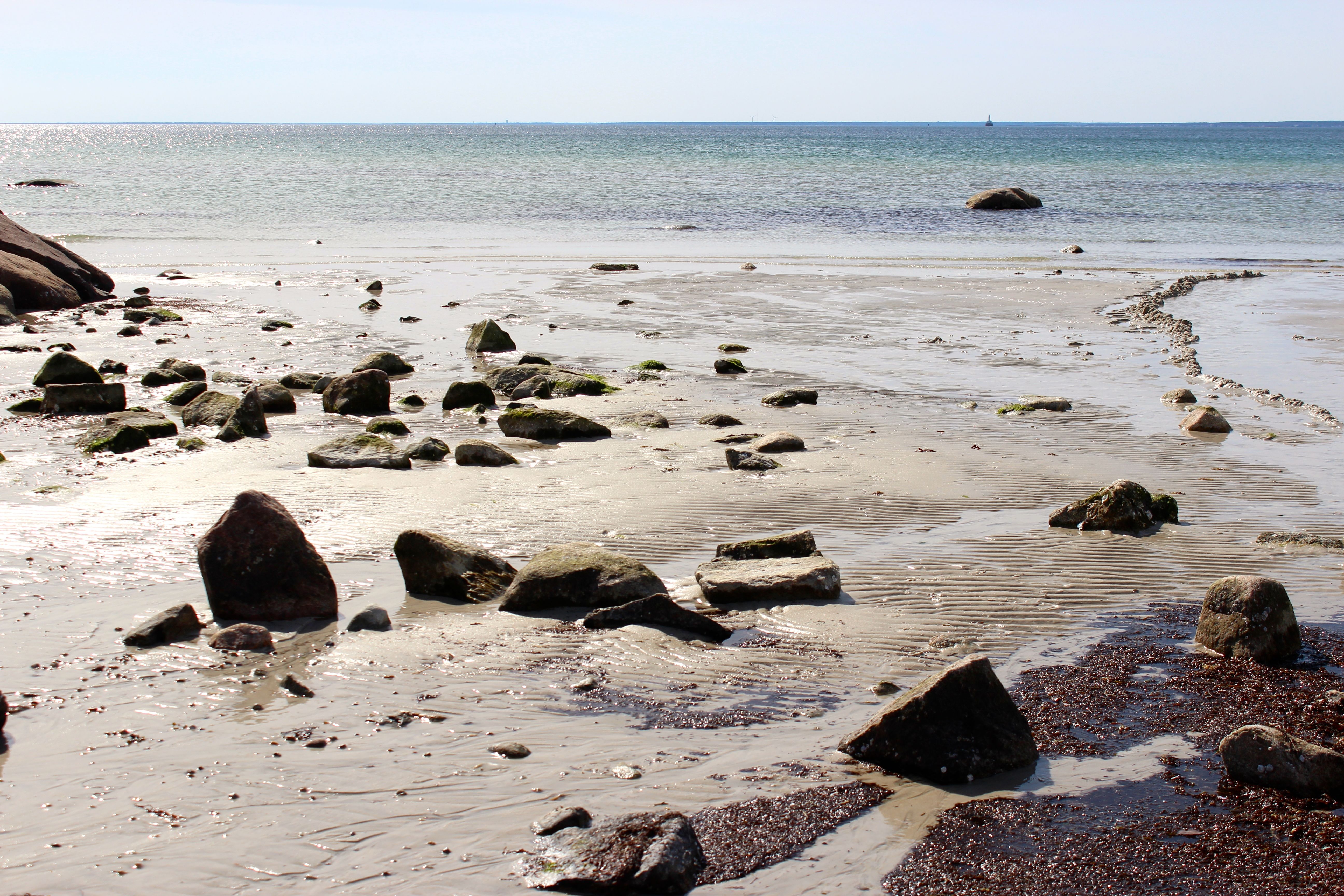
silver sands

Then we explored more beaches.

barnacles:seaweed

Discovered life on a rock–the same and yet different from what we find in the woods.

barnacles

And wondered about the crustaceous barnacles that are secured head-first. Talk about living in a small house. (My sister and I had been talking about living in small houses)
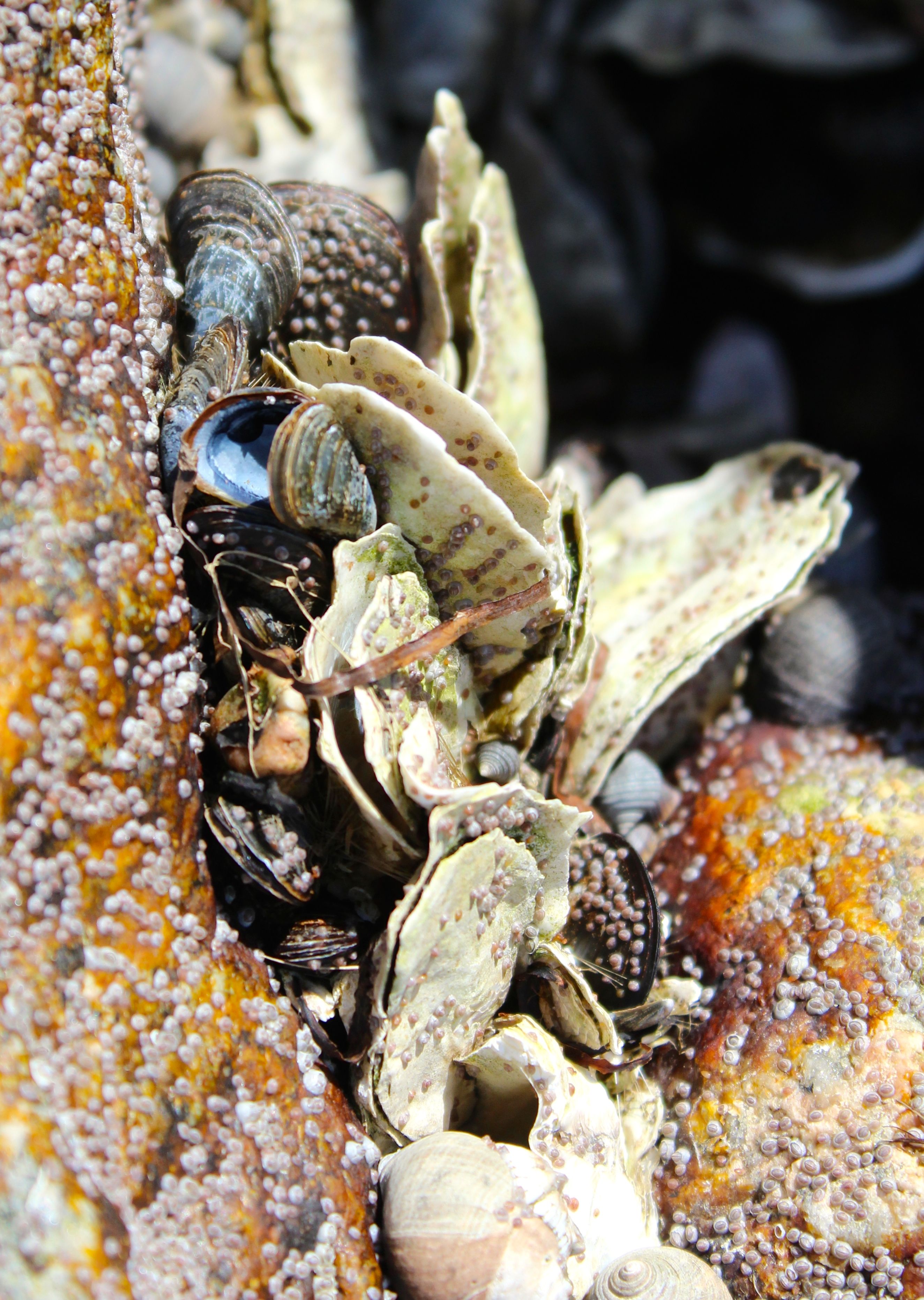
mussels:oysters

In the same fashion that lichens and mosses grow on the rocks around our western Maine home, providing a home base for others, so do the barnacles, mussels and oysters adhere in their habitat.
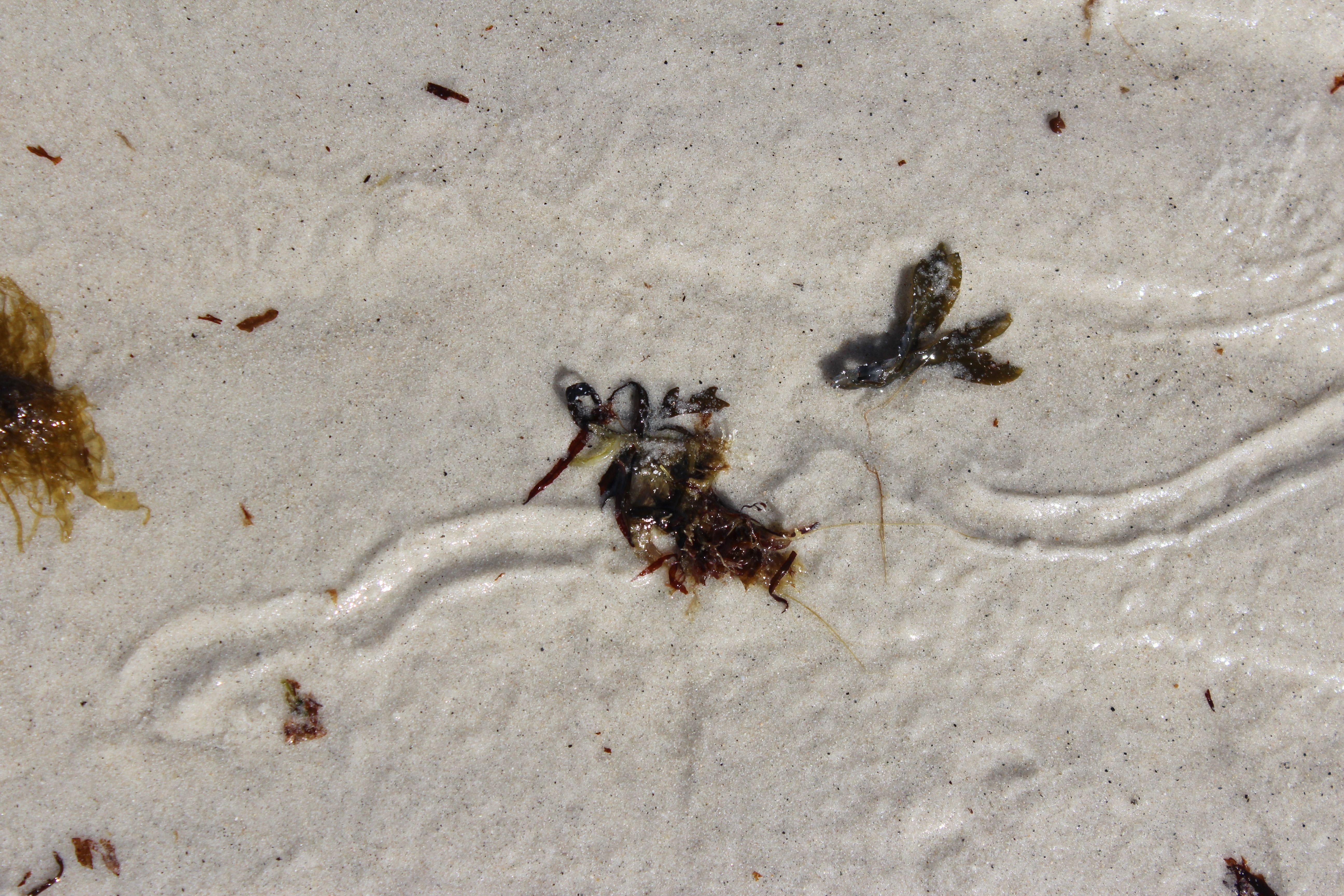
snail trails

Lest you think I wasn’t tracking–snail trails.
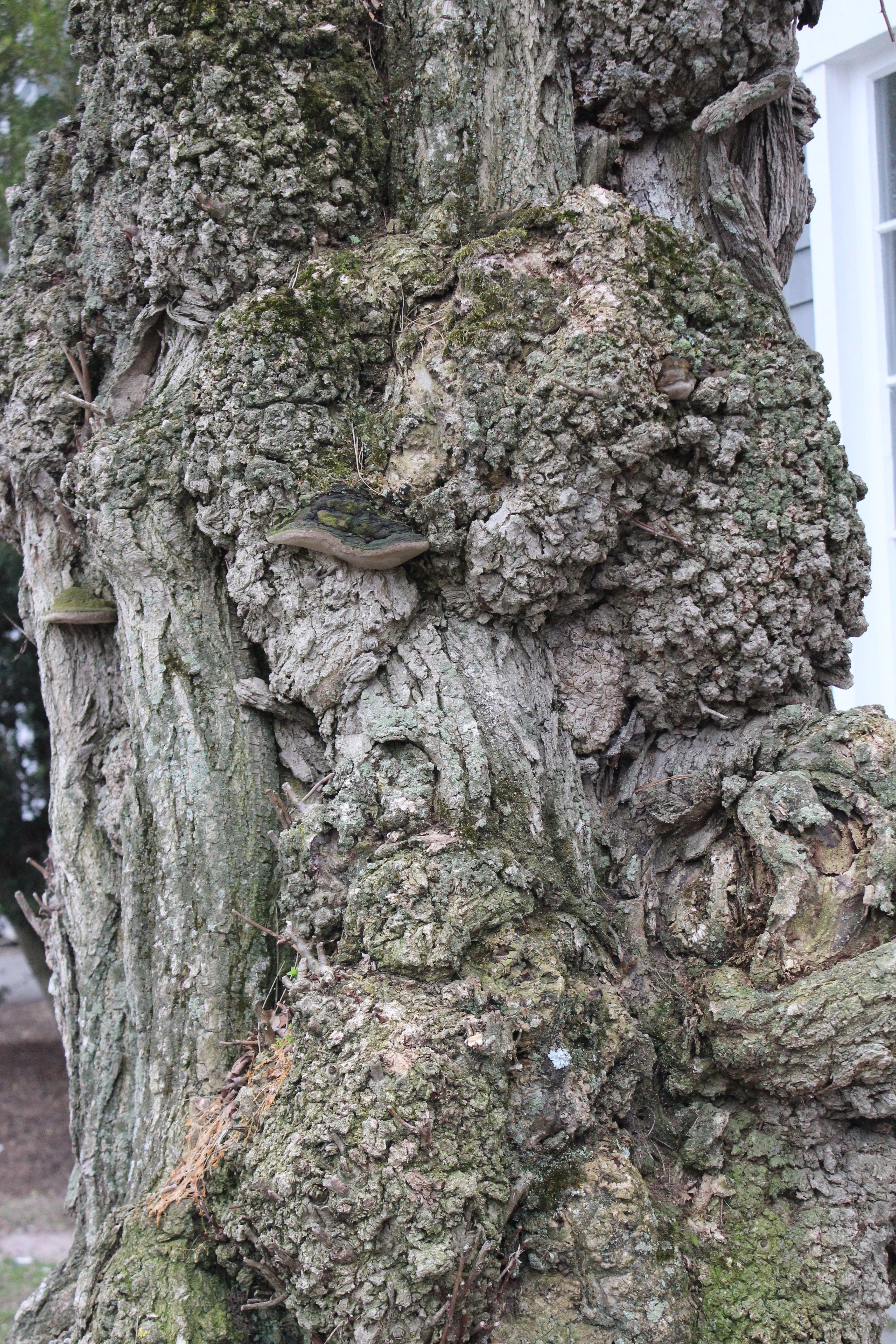
gnarly trees

Then there were the trees. I knew I was out of my comfort zone when it came to identifying some of these–especially with the gnarly behavior. Despite that, just as my guy stalked the good people of Onset, I stalked the trees of Falmouth.
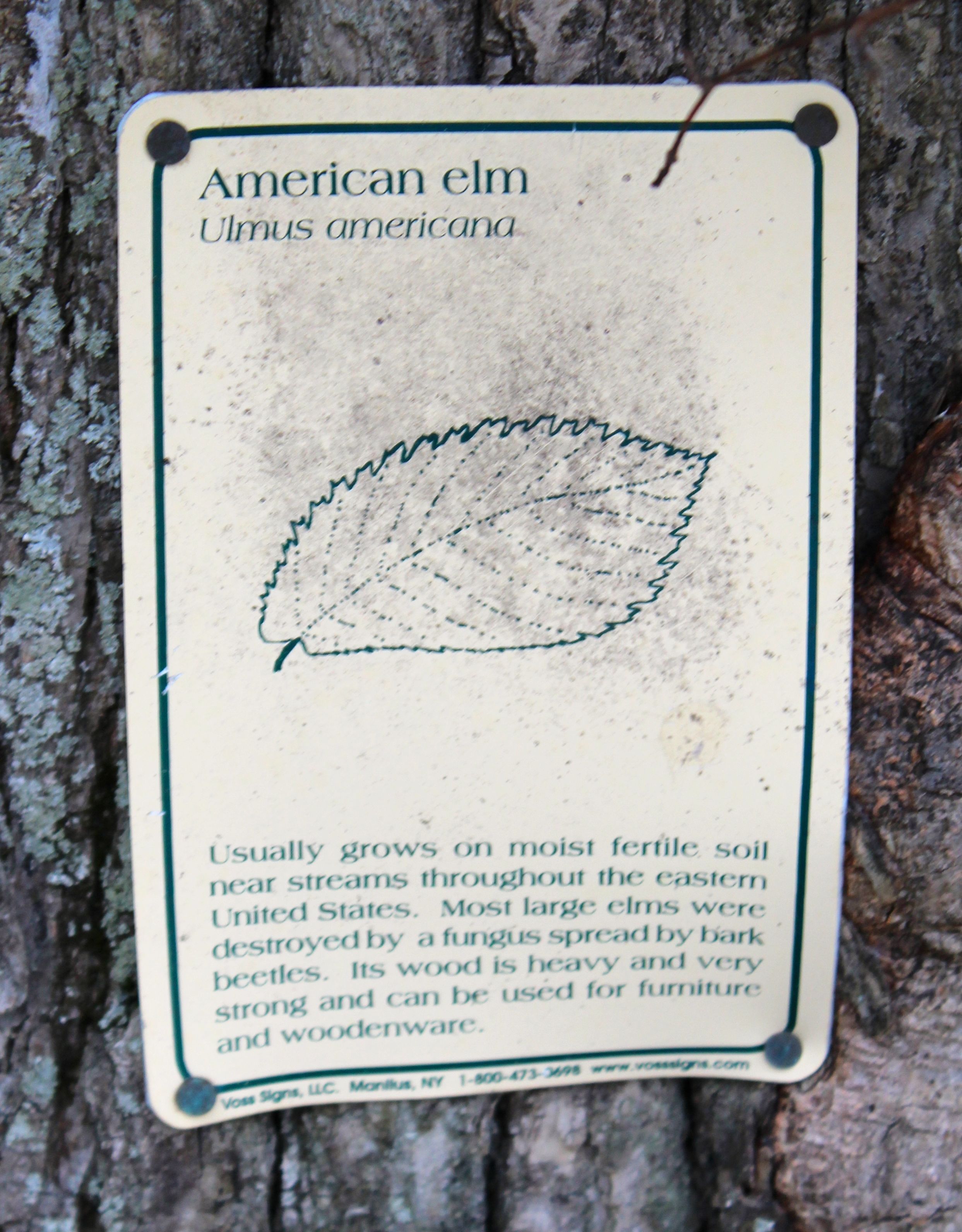
am elm sign

Thankfully, someone made it easy for me. Signs.
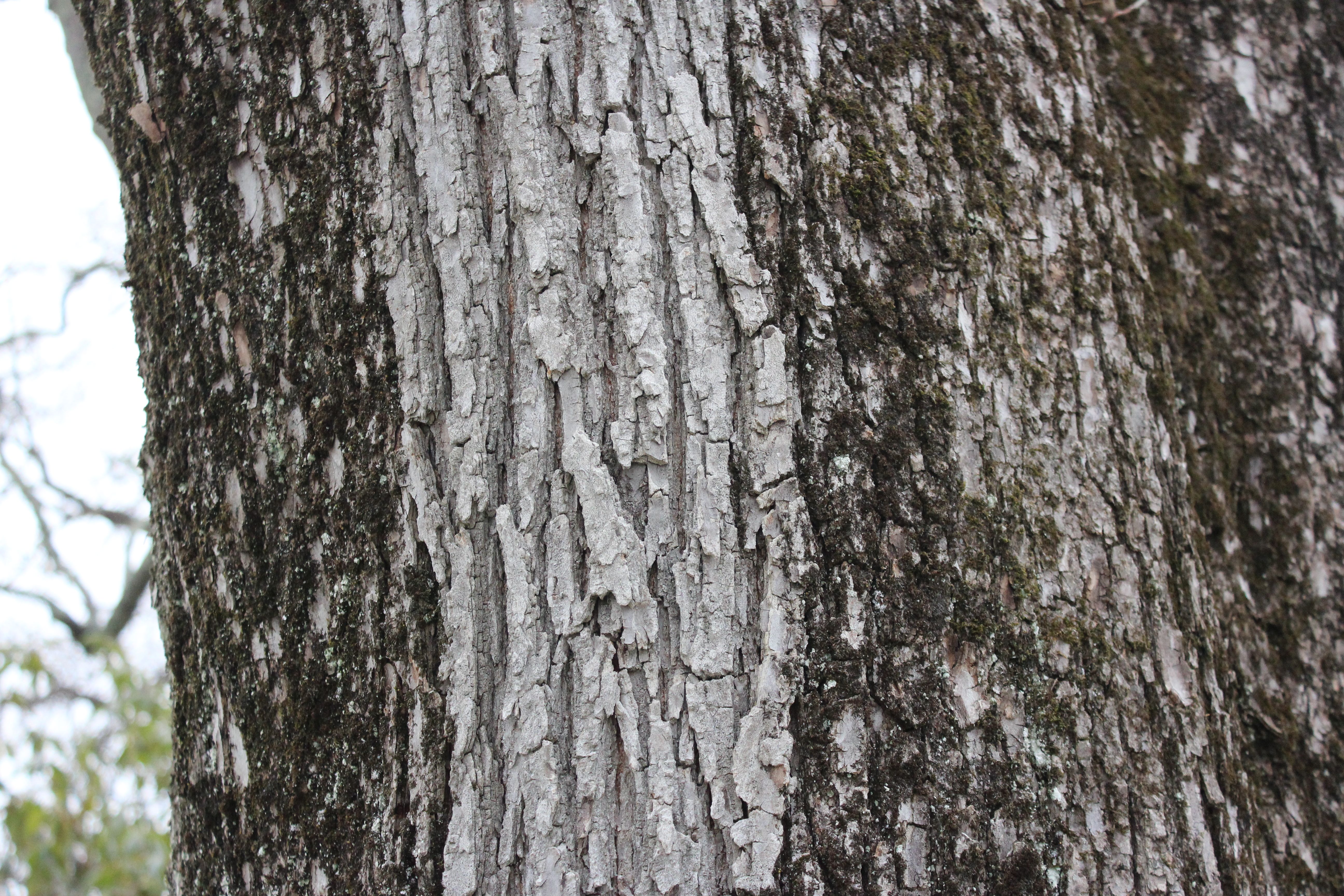
American elm

The  elm’s light gray bark has furrows with a V  or diamond shape, but they intersect at longer lengths than on an ash tree.

amelm buds

And the branches are wiry with alternate buds/branching.

syc

I loved the camouflage look of this bark and only just realized that it is a sycamore. It wasn’t wearing a sign.

syc 2

But it did have its signature calling cards–dangling brown fruits that some call button balls.

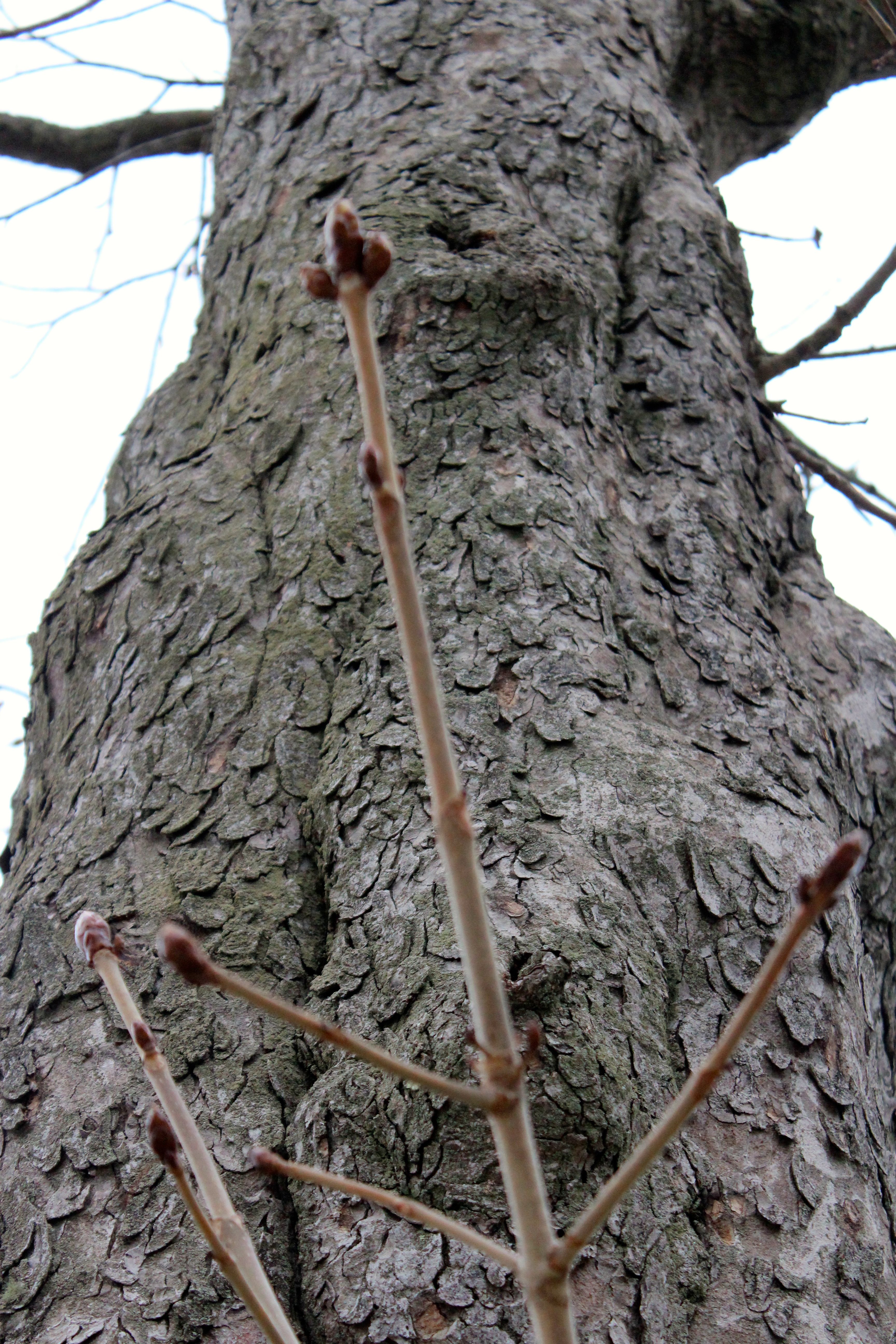
horse chestnut

Thankfully, the horse chestnut identified itself. :-)
hc buds

It also showed off its opposite bud pattern, making for an easy id.

Maple, Ash, Dogwood, Honeysuckle/Viburnum (aka Caprifoliaceae) and Horse Chestnut–trees with opposite buds. MADCap Horse is one way I was taught to remember that little tidbit.
home sign

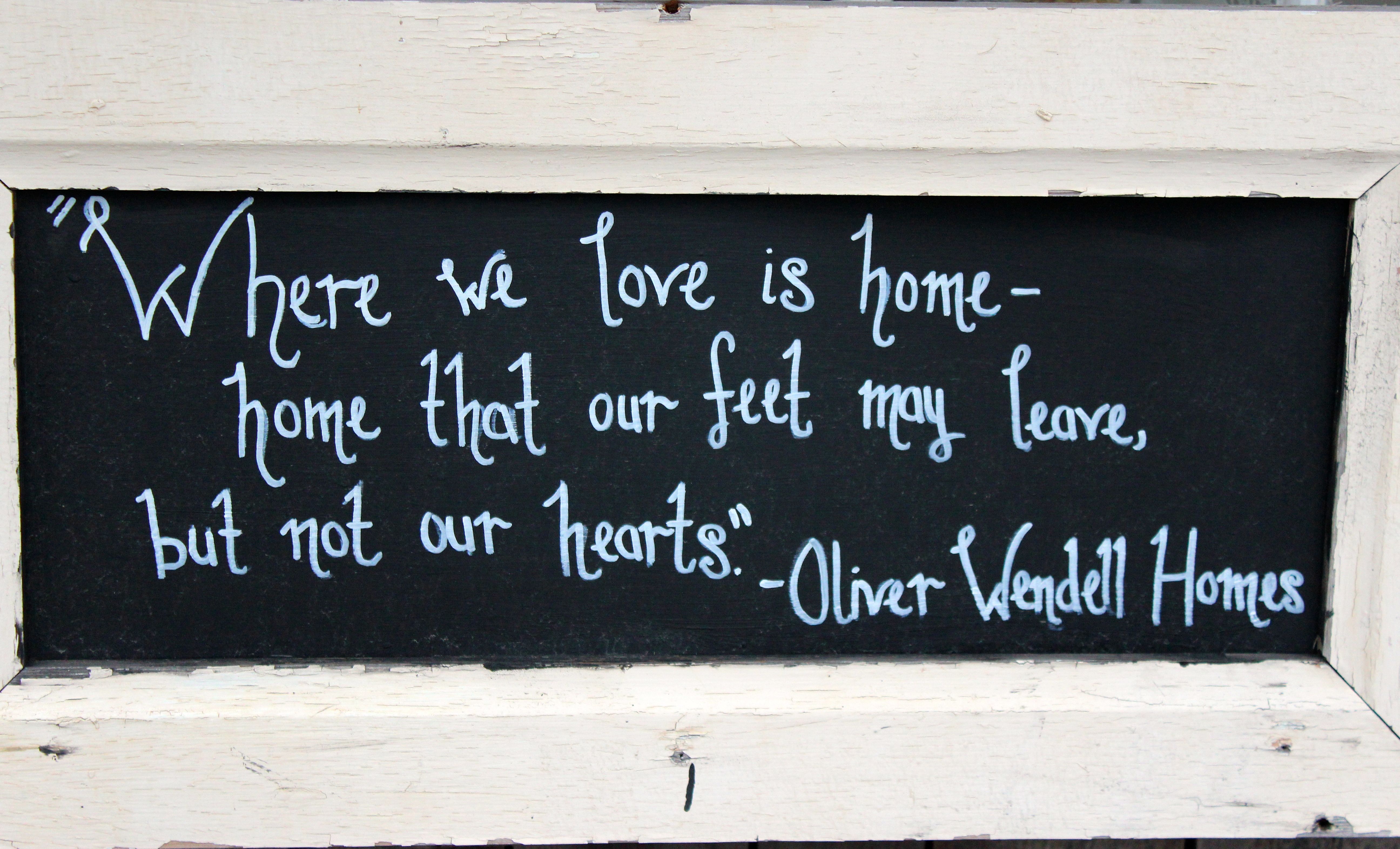
And then it was time to head for the hills. We had a delightful stay and will go again, I’m sure–especially since we have more to learn about the family roots, but this sign on a shop near the inn where we stayed says it all.

Our feet may have left our home for a few days on this extended Mondate, but our hearts were always back here, well rooted in the Maine woods.

Thanks for wondering along on this lengthy wander.

Gifts from the Land

B & H sign

A friend and I met at the Heald and Bradley Ponds Reserve in Lovell this morning. I only just noticed that this sign places Bradley Pond first–I’ve always heard it the other way. Funny how your mind reads what it thinks is there. At least mine does. Makes the job of editing a slow process–for good reason.

I love that the sign shows three peaks, as there are three peaks here–Whiting Hill, Flat Hill and Amos Mountain. Our mission today, however, was to check out the saw mill site off Slab City Road and walk to Otter Rocks.

We completed said mission and chuckled that it took us less than three hours to walk the short distance out and back. But the gifts we received along the way were many.

To begin with, it was an absolutely gorgeous spring morning.

mill 2

Water raced over the dam at the mill site. Timber long played an important role in Lovell, as in other towns throughout New England.  And water provided the power at the saw and grist mills before steam engines were put to use.

In her book, Blueberries and Pusley Weed, The Story of Lovell, Pauline W. Moore wrote: “Slab City (so named because when the mills were running, the slab or outside of the logs was piled high on either side of the road), had two cooper shops and two stave mills as late as 1881, representing the period when one mill produced the staves and a cooper put the barrels together.”

Robert C. Williams, author of Lovewell’s Town, adds, “In 1840, Benjamin Heald built a sawmill in the area east of Kezar Lake known locally as Slab City–a common New England term for the lumbering area of a town–in order to produce shook, the thin boards used to make barrel staves. Slab referred to the outside cuts of logs with bark that piled up unused by the roadside. Shook mills soon abounded in Lovell, and barrel staves went off to the Caribbean, especially Havana, Cuba, to produce barrels that could be filled with molasses and rum.”

Mill 4

This mill site features a combination of quarried stone and cement. On the Lovell Historical Society’s Web site, there are several photos of mills in the Slab City area.

 cherry tree

I wonder about the efforts to quarry the stone, move it to the brook, and build the dam. I also wonder about other things–like this cherry tree that grows out of the sloped land, dips down toward the water and then reaches skyward. Enviable perseverance.

mill pond

Here’s a look at the mill pond above the dam.

bird 2

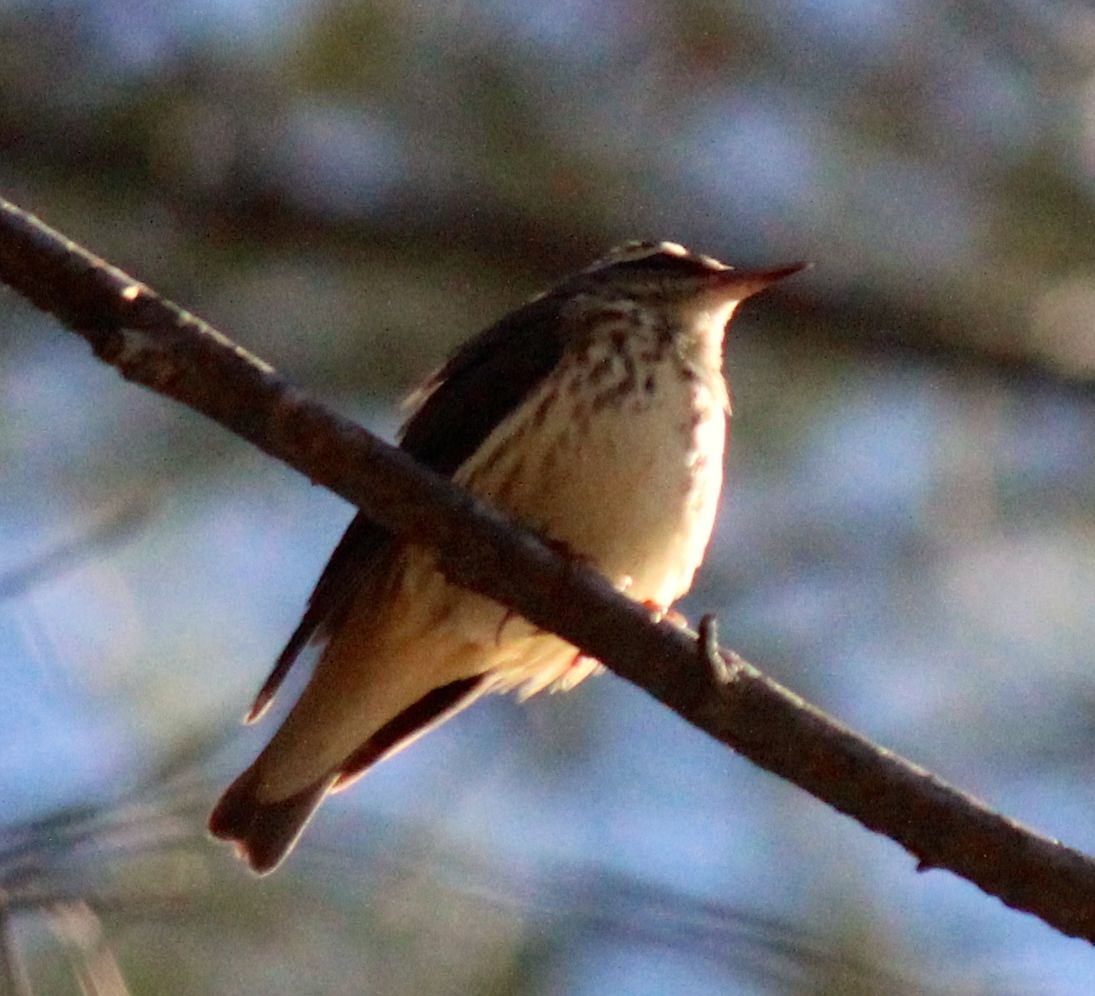
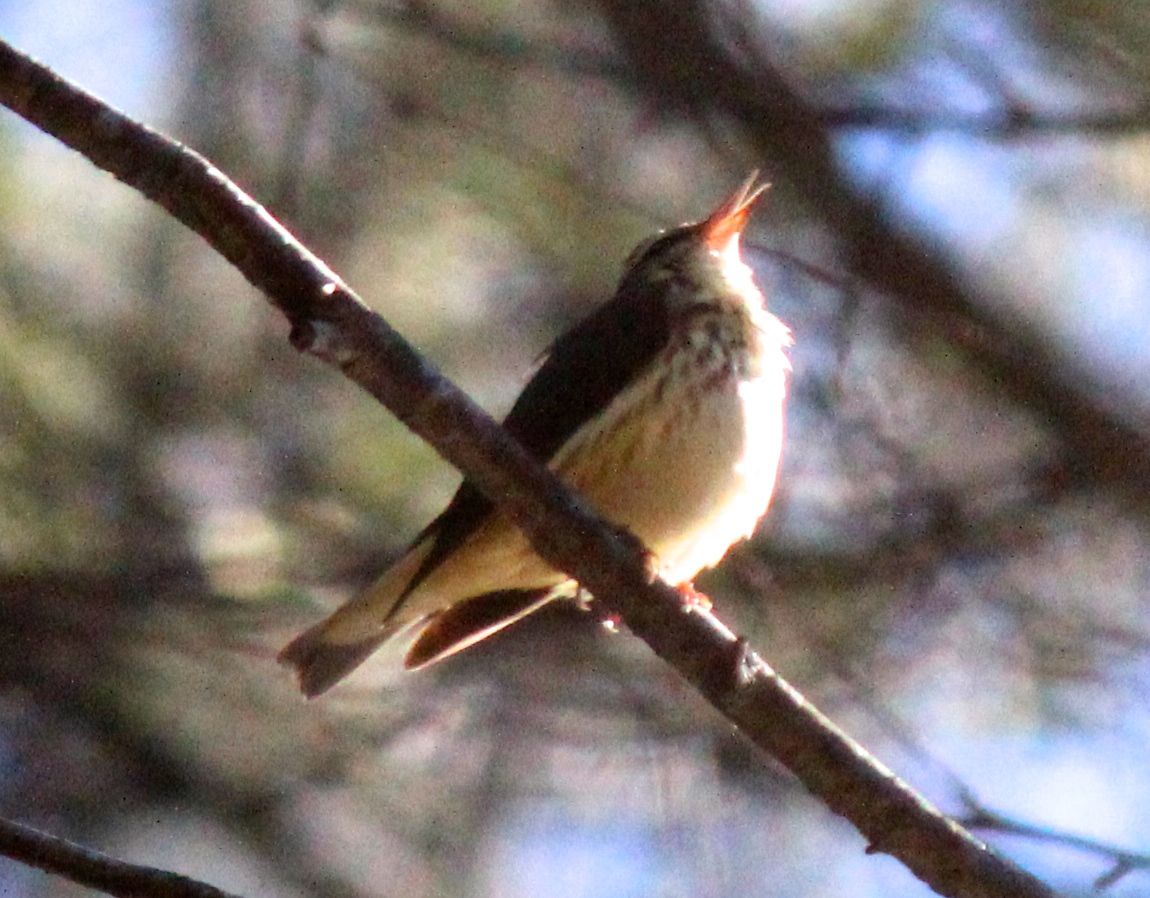
And then there was the gift of song as this warbler sang to us from a branch above. Or is it a Louisiana Waterthrush?

bird

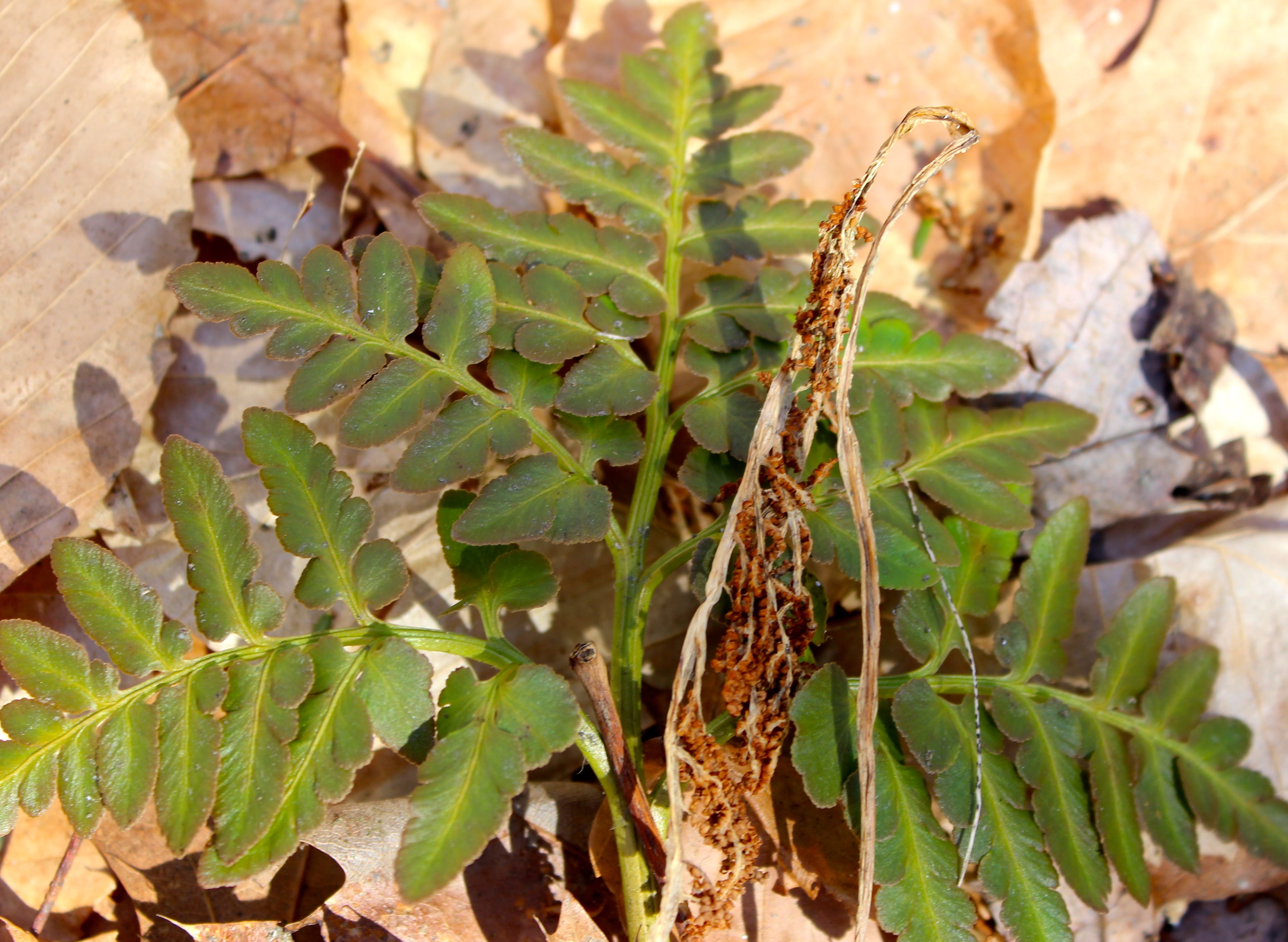
lady ferns

And an evergreen fern, matted from a long winter’s rest.

grape fern and frond

Plus grape fern and its old fertile frond, for which it derives its name because the sporangia have a grape-like appearance when they are fresh.

Christmas fern

The third fern gift of the day–Christmas fern, so named because each leaflet looks like a Christmas stocking or Santa in a sleigh behind his reindeer.

Christmas 2

I didn’t notice any fern fiddleheads, but the snow only melted this past week. There’s still so much to look forward to.

beech leaf

I’ve been watching beech tree buds for at least a month. What I noticed today is that most buds are still wrapped up in scales and retain their cigar shape. On saplings, however, it’s a different story. Along the path, several were unfurling. Perhaps because of their smaller size, they want to be first to leaf out, thus taking advantage of any available sunlight before the larger trees form a canopy above them. Just a thought.

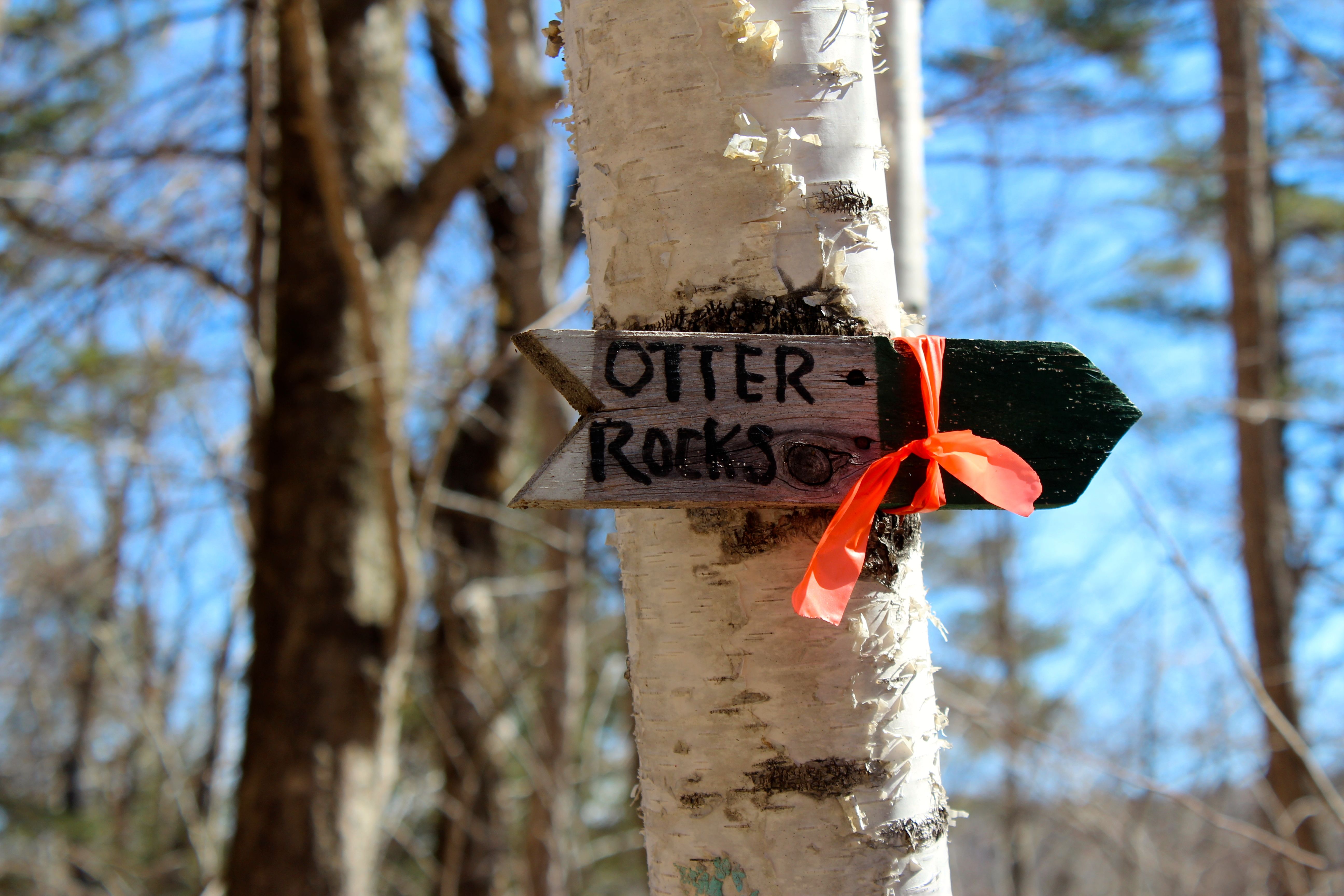
otter rocks sign

Our destination–Otter Rocks.

Otter rock

I’ve not had the privilege of seeing otters here, but plenty of other things revealed themselves today.

ice:eggs look alike

The melting ice fooled us only momentarily. On first glance, it looked like egg masses, but proved to be small masses of ice floating on the surface.

macro

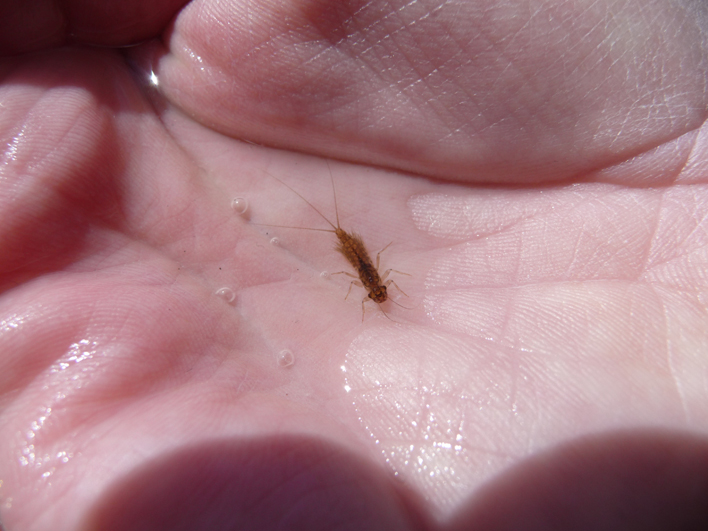
Though you can’t see it here, we watched a kazillion aquatic macro invertebrates swim about.

Mayfly_rs

I scooped a few into my hand and my friend, Jinny, snapped this photo of a Mayfly nymph with three cerci or tails. (Thanks J.M.)

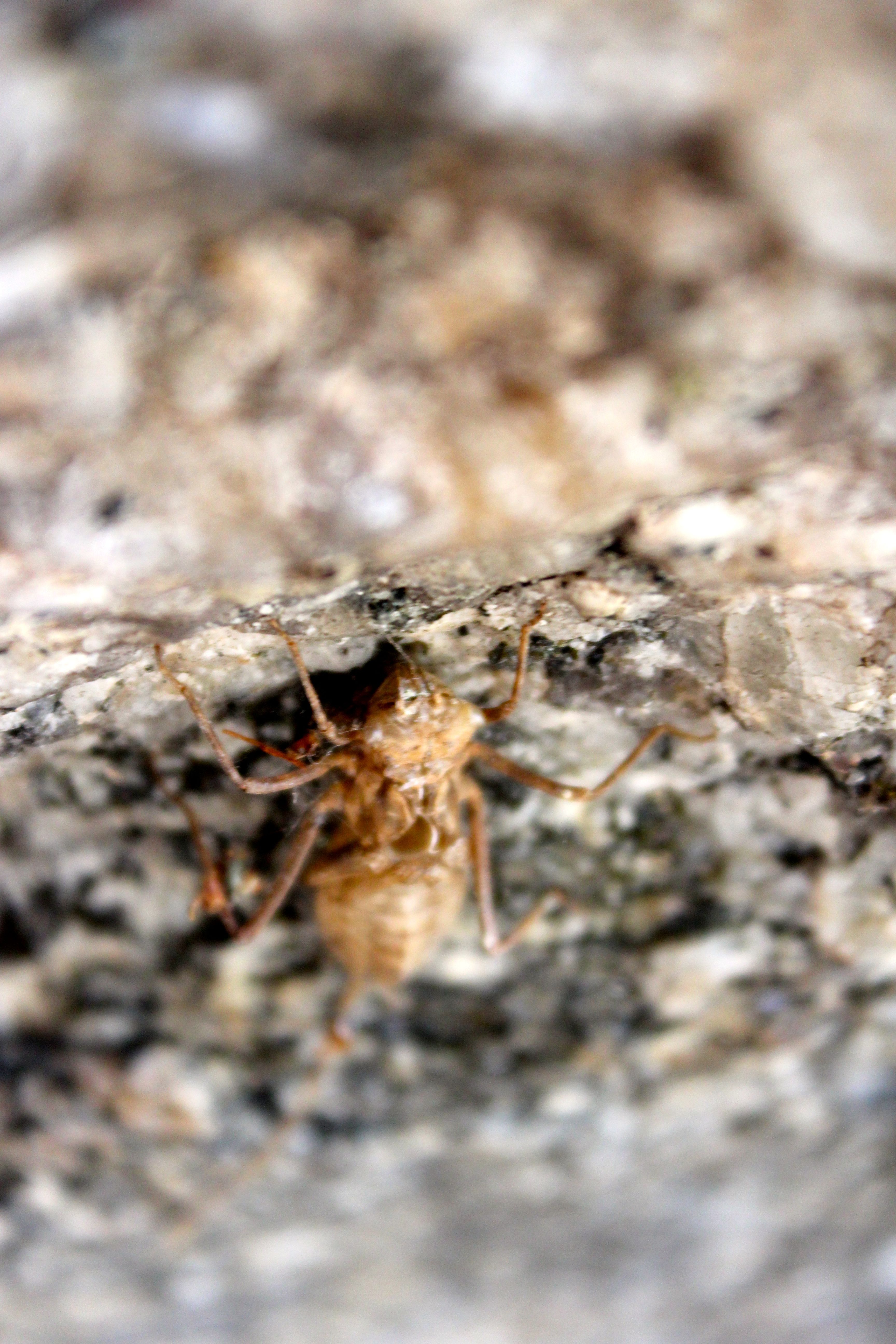
exoskeleton

On otter rock itself, there are exoskeletons from hatchings that occurred in previous years.

Heald Pond

It was difficult to pull ourselves away and we have plans to return with sketch books and food and cameras and maybe even some wine–to spend some time taking in all that this lovely spot has to offer.

For today, we needed to wend our way back up the trail. There were still a few more moments of wonder to be had.

partridge berry

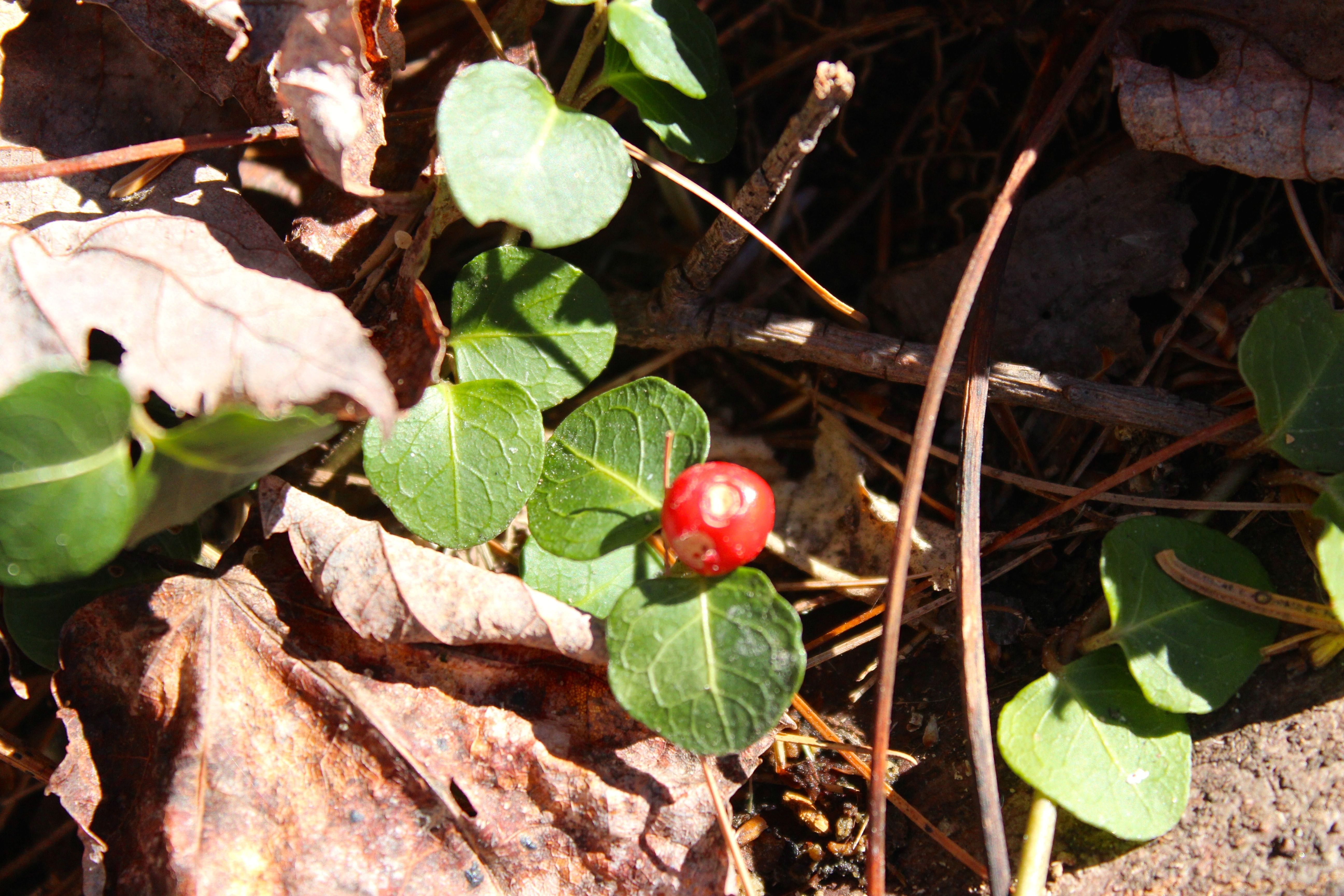
Take, for instance,  the partridge berry with its opposite evergreen leaves and berries with two spots on the surface, a result of the fusion of two ovaries. This plant produces two white flowers, one with short pistils and long stamens and the second just the opposite. In order for a berry to form, both flowers have to be pollinated. Nature has it all figured out. Why don’t I?

cm2

A princess pine club moss shows off its upright spore-producing candelabra or strobili. Funny thing about club mosses–they aren’t mosses. I guess they were considered moss-like when named. Just as the mills take us back in time, so do these–only much further back when their ancestors grew to 100 feet tall during the Devonian Period. They make me feel so small and insignificant. And yet, I’m thankful for the opportunity to be in awe of them.

tinder conks and bird holes

Again the insignificance makes itself known–as this tree dies, it provides life–for carpenter ants, pileated woodpeckers, mosses, lichens and  tinder polypore or hoof fungus. And probably so many more species.

hoof 2

On a nearby tree, the  fruiting bodies of the tinder conks  grow at the base, giving them a true hoof-like appearance. Giddy-up.

sumac

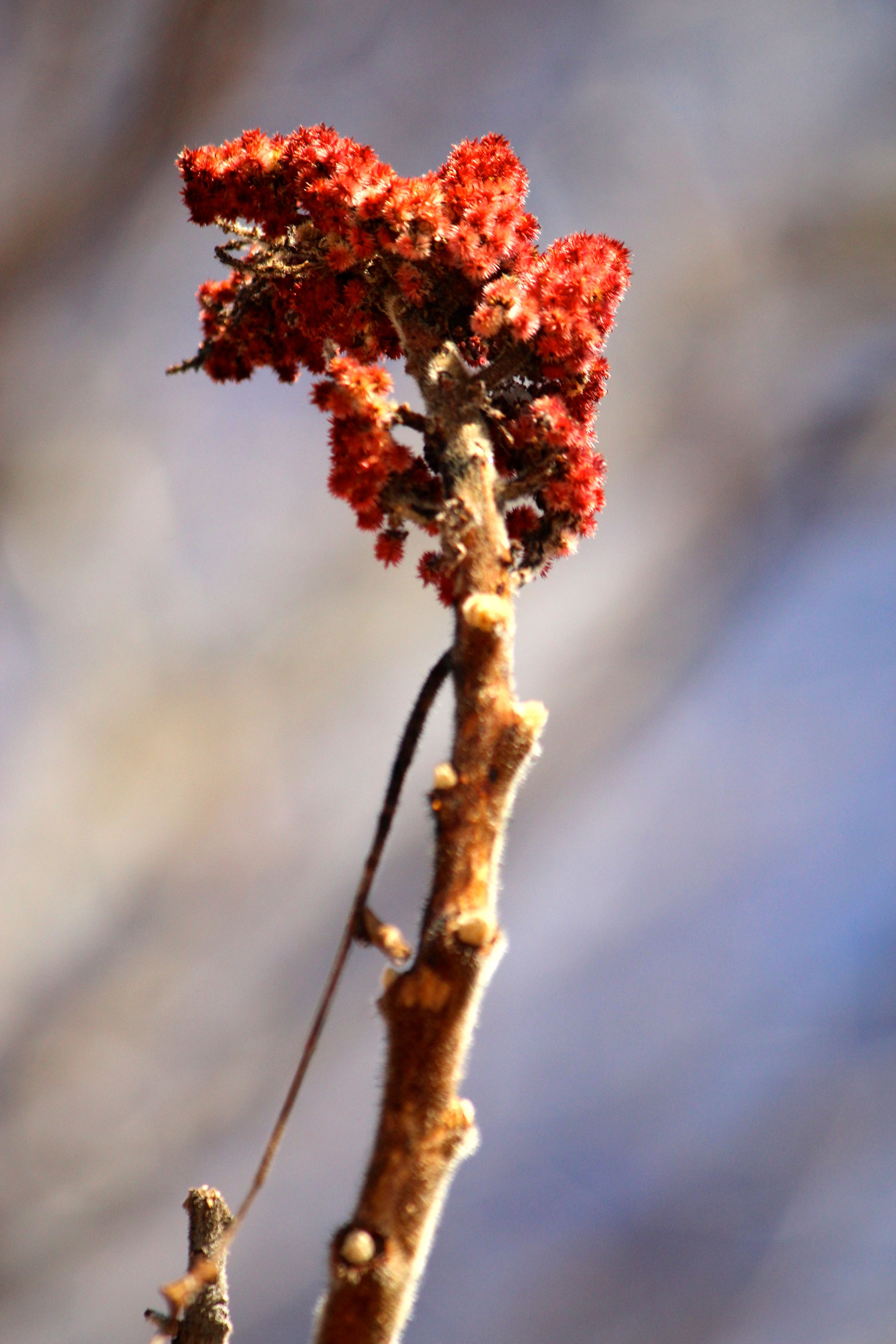
We were almost back to my truck when we saw a clump of staghorn sumac shrubs. I grew up in the land of poison sumac, so it’s taken me a while to warm up to this species. But the hairy red fruits are a work of art in their own right. Plus, they provide food to wild turkeys, ruffed grouse and others.

sumac 2

Some people make tea from the summer berries. I, um, can’t bring myself to try it.

 sumac 3

Check out the hairy antler-like growth pattern. So maybe I won’t seep the fruits for tea, but I can certainly enjoy the other features staghorn sumac offers up.

cedar bark

And though not all of my posts include tree bark, I like it when they do. In this case, Northern White Cedar (Thuja occidentals). The lines of the bark follow the shape of the tree.

cedar leaves

And its leaves are flat and scaly–reminiscent of princess pine.

My friend, Jinny, and her husband Will, are forever naturalists. He wasn’t with us today, and doesn’t often trek with us, but I suspect that he was channeling our adventure. They own many acres and know their land intimately. Sometimes they invite me along to walk their trails and wonder with them. Together, we learn.

And they get me. I know this because every so often they give me gifts from their land.

Today, I was the recipient of two gifts.

green stain

Trail blaze on a downed tree? No, Green Stain (Chlorociboria aeruginascens). In his book, Fascinating Fungi of New England, Lawrence Millman writes, “The stain was once used for Tunbridge ware–decorative wooden objects inlaid with strips of colored veneer.” I’d much rather have this piece of wood.

 bark 2

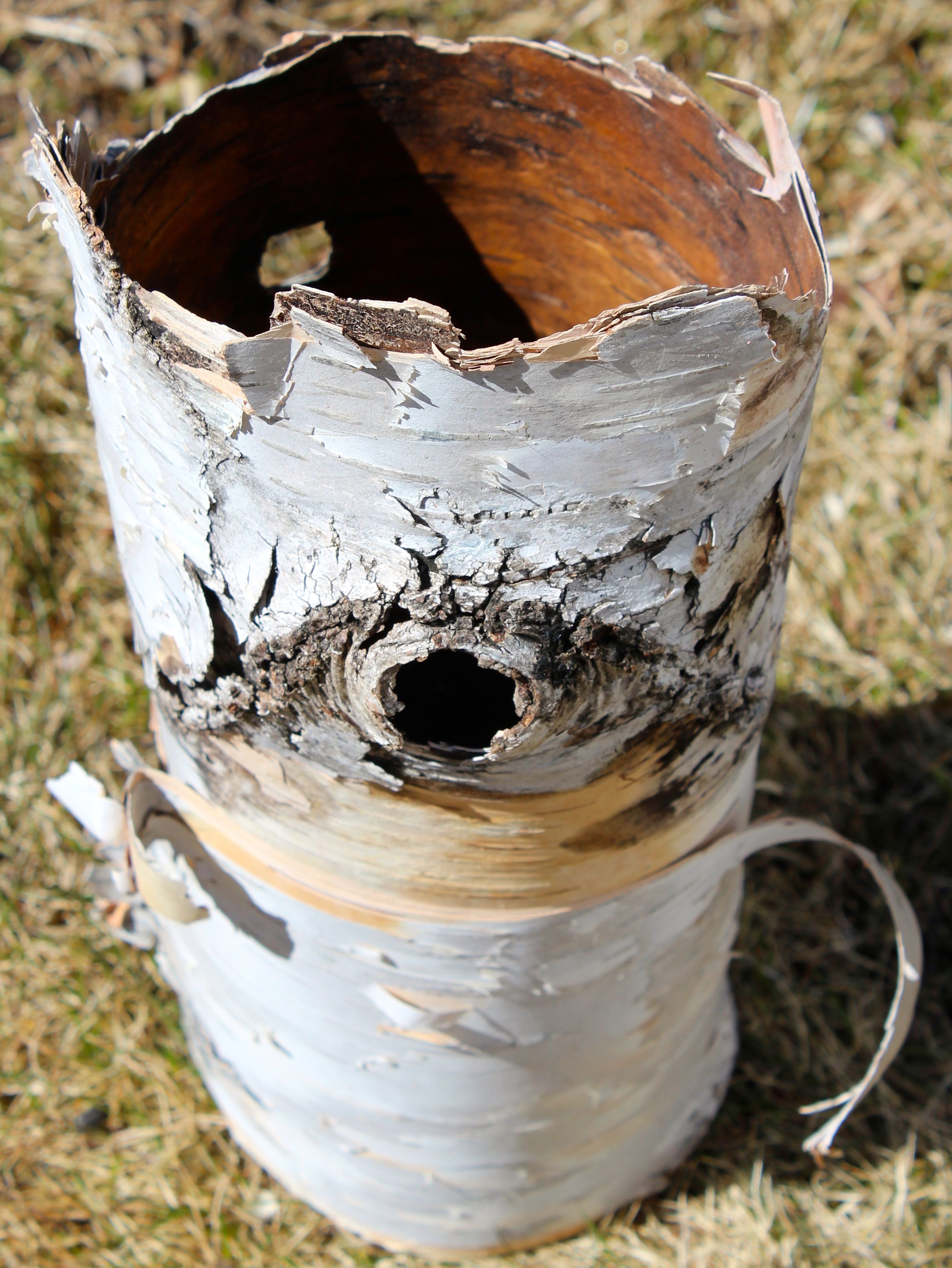
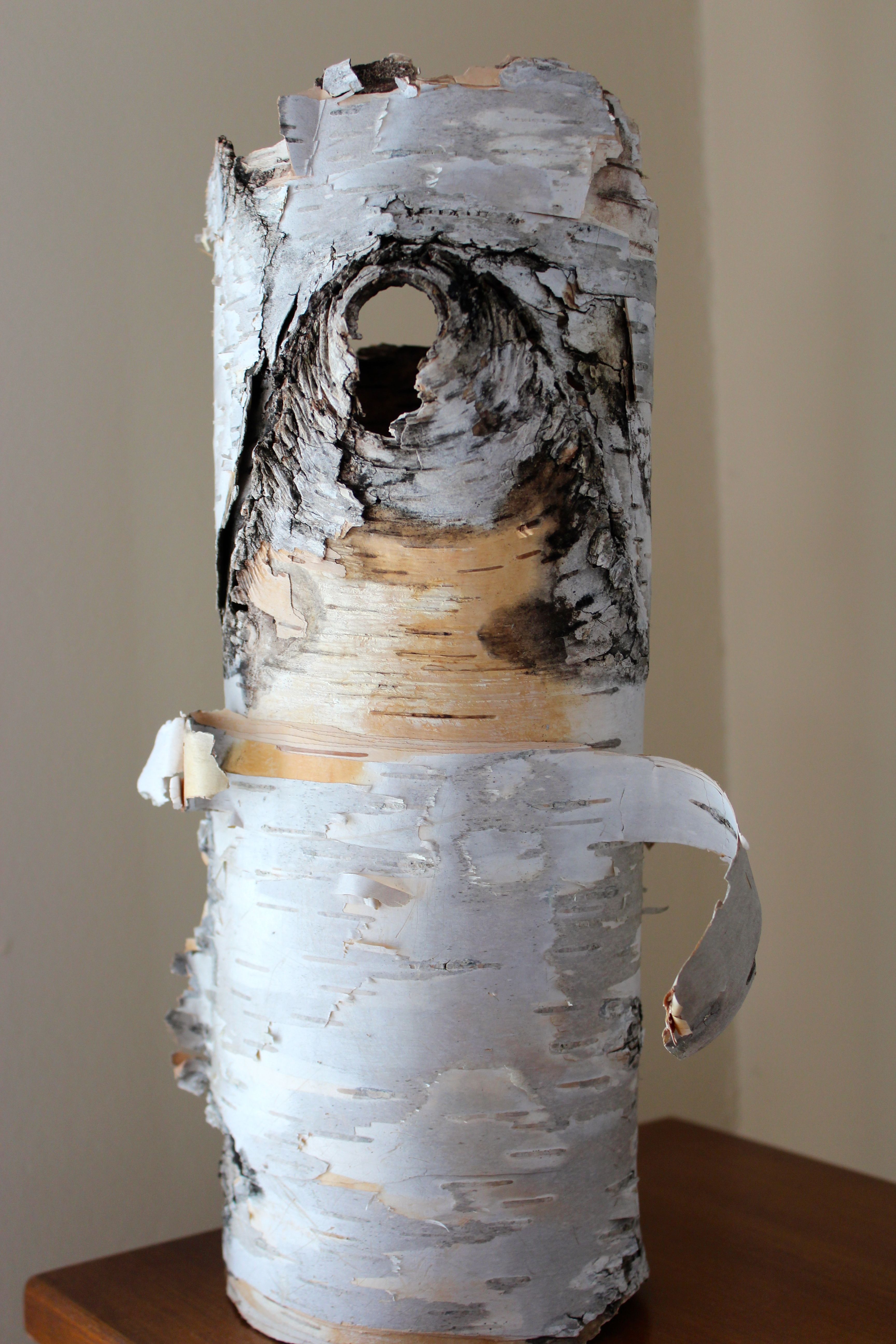
The other present is an intact piece of paper birch bark–peeling, chalky white outer bark, orangey inner bark, a hole where the branch was and a fu manchu over the branch hole. Perfection.

sculpture

It will certainly be a useful teaching tool, but in the meantime, it’s earned a spot on top of the bookcase in the summer kitchen.

One last gift from the land.

matted ferns

These evergreen ferns, matted from a winter under snow, invoke a touch of spring fever.

It was a short wander with a lot of wonder. Thanks for joining me.

Our Three Hour Tour

HP sign

One of our favorite places in town is a hidden gem–Holt Pond Preserve. We parked at the corner of Chaplin’s Mill and Grist Mill Roads, grabbed our snowshoes and backpack from the truck and walked on snowmobile tracks across the field to begin today’s Mondate.

Tingley Brook

Tingley Brook

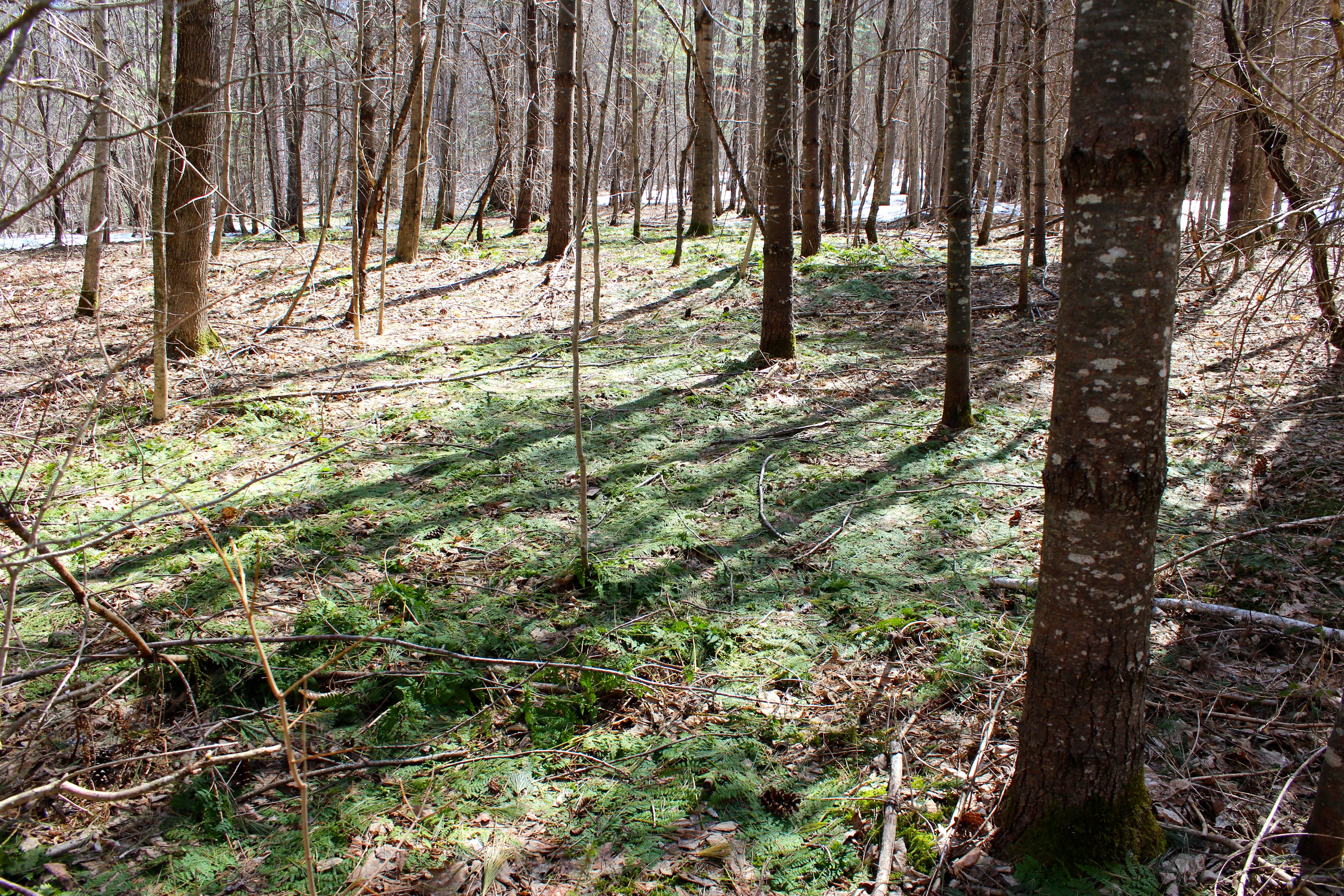
At the field’s edge, we passed under the hemlocks, beeches and oaks and into the wild and delicate beauty that the preserve offers.

Tingley Brook ice 1

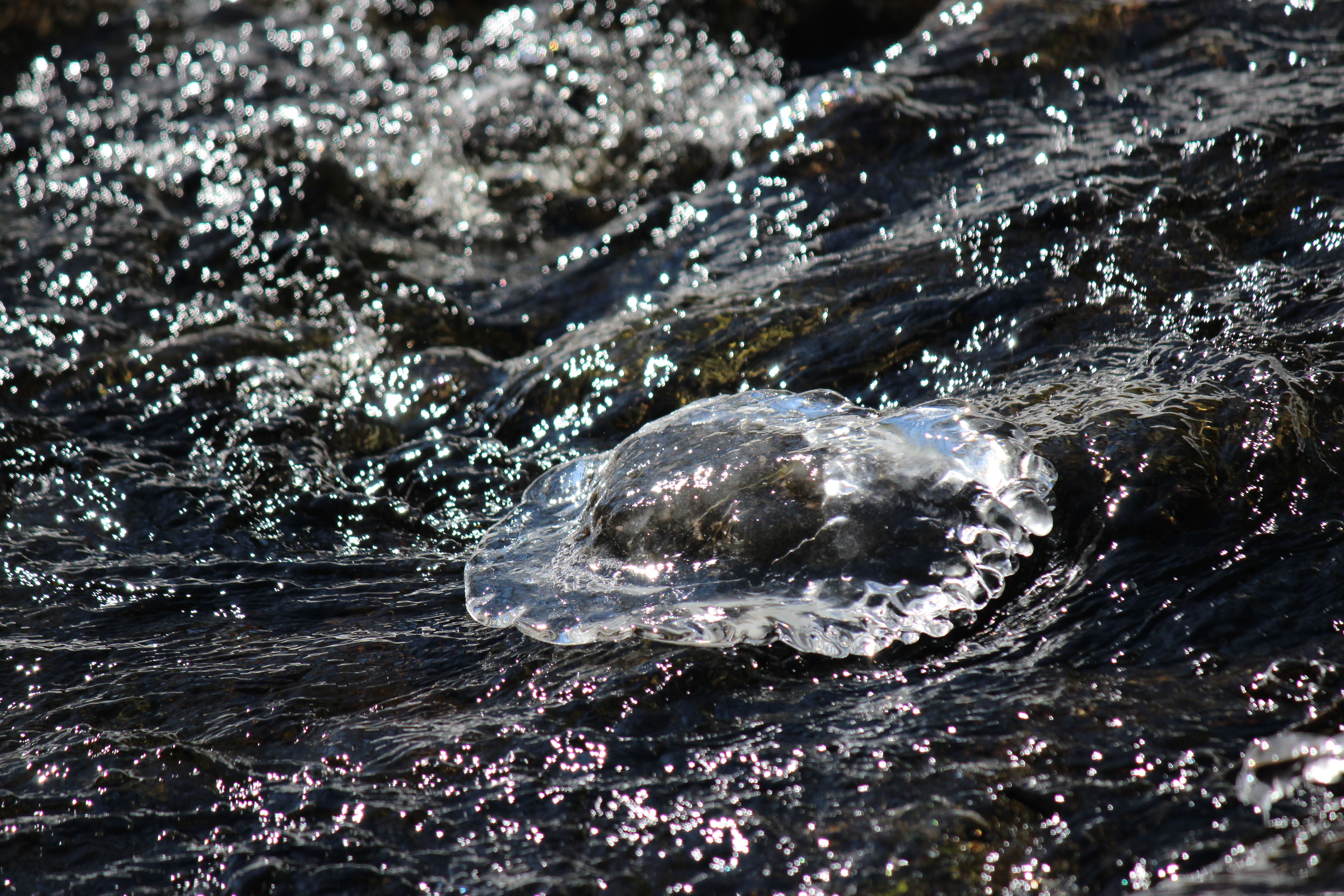
The midmorning light added subtle hints of aqua and pink as the water danced around an ice-capped rock in the brook.

mushrooms and hole

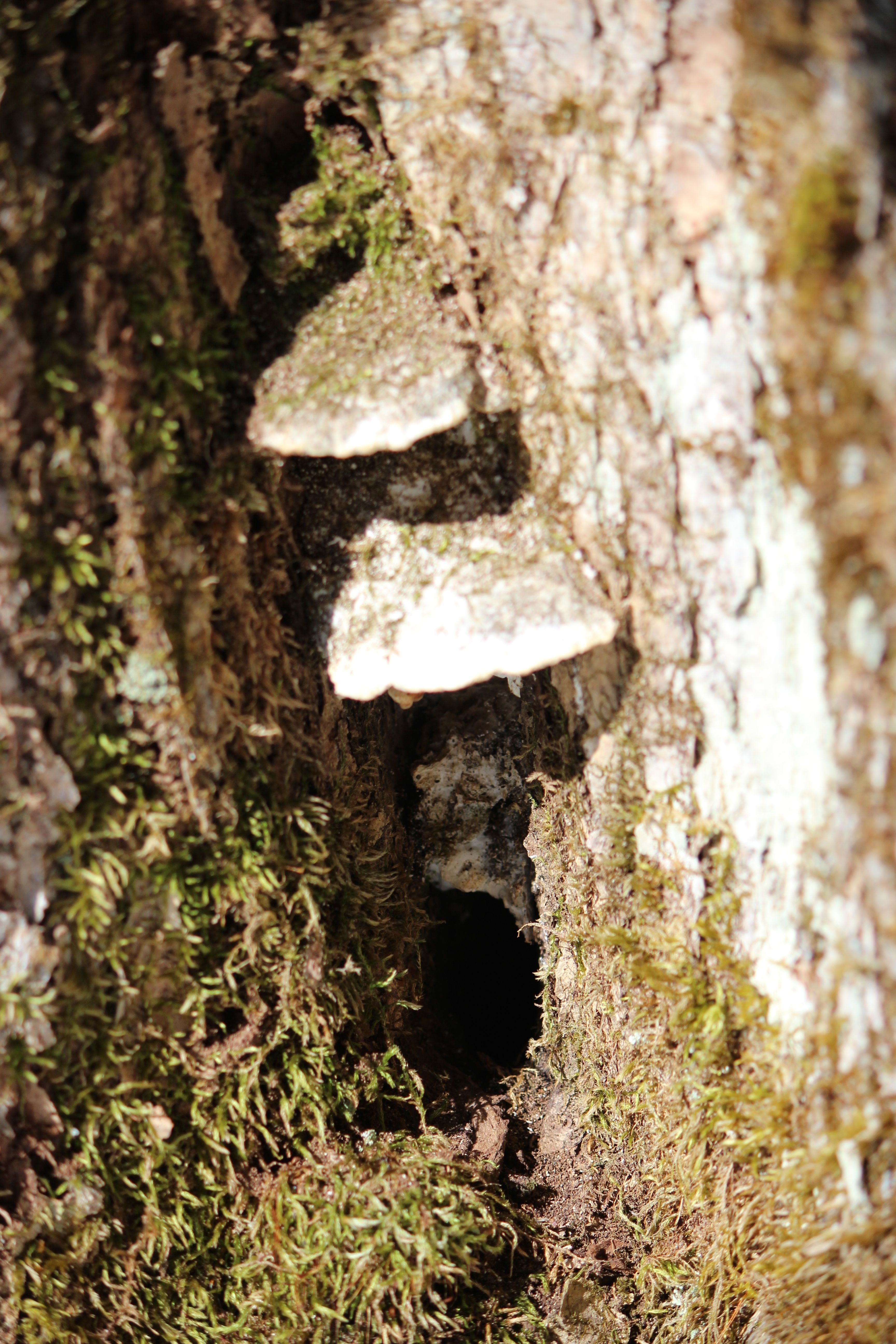
We saw lots of tracks from the mustelid family, as well as snowshoe hare, fox, squirrels, mice and voles. Also, turkeys and grouse. I’m not sure what made the hole and dirt trail beneath the mossy maple mushrooms near the base of this Red Maple. I would not have seen it if I hadn’t leaned in closer to take a photo. I do happen to know that gnomes frequent the area, so just maybe . . .

canoes

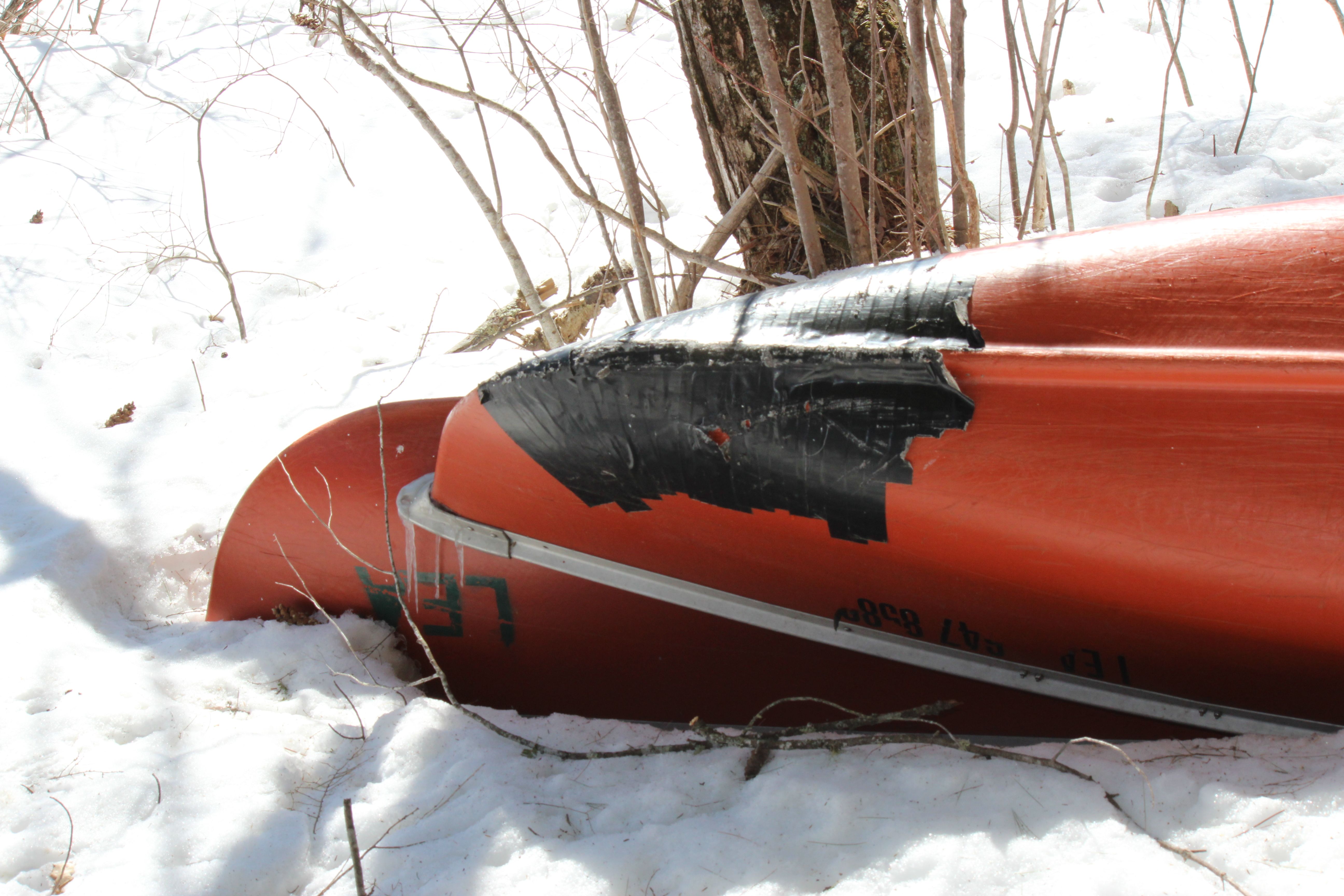
We continued on, crossing Tingley Brook and then making our way beside Muddy River, where the Lakes Environmental Association (LEA) leaves these canoes for anyone to use. Bring your own personal floatation device, paddles, and duct tape. I know where you can purchase duct tape, should you need more. :-)

beaked hazelnut

Near the canoes–a lone beaked hazelnut. Inside this bristly tan husk is an edible nut. Doesn’t it look like a gourd? The name derives from that tube-like protruding beak. I couldn’t believe it was still there as the protein-rich nuts are favorites for red squirrels and chipmunks, as well as ruffed grouse, woodpeckers and blue jays. Humans too.

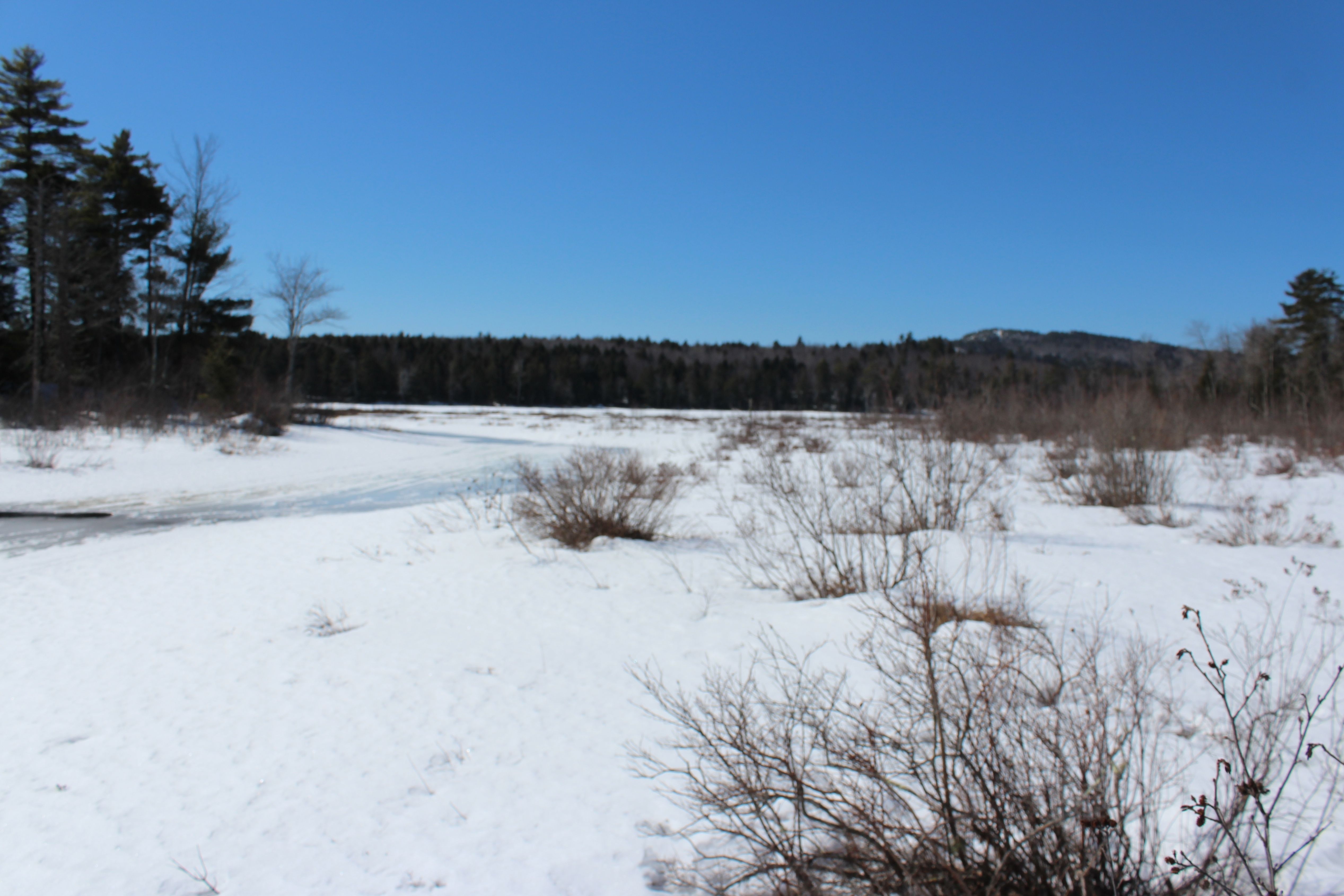
to Muddy River

We never actually wore our snowshoes today. I hauled mine around on my pole, while my guy stuck his between his jacket and sweatshirt. He said he didn’t need his back scratched for the entire trip.

River to pond

Looking toward Holt Pond from the boardwalk by the Muddy River.

There was only a slight breeze, so the low temp was modified by the brilliant sunshine. Another beautiful day in Maine.

Red Maple Swamp

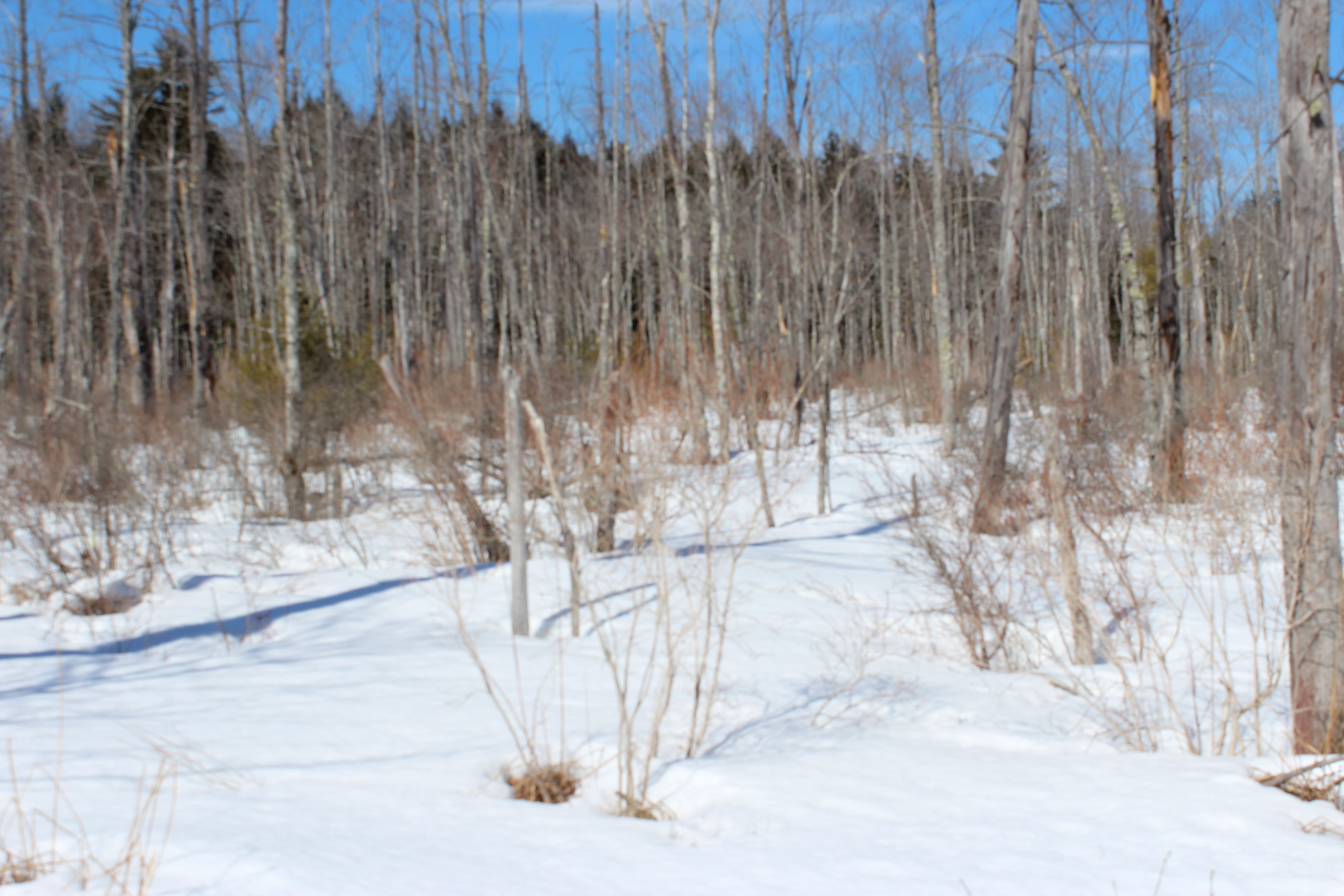
I think one of my favorite features about the preserve is that the habitat keeps changing–from hemlock groves to red maple swamps to alder thickets to a quaking bog.

Quaking Bog

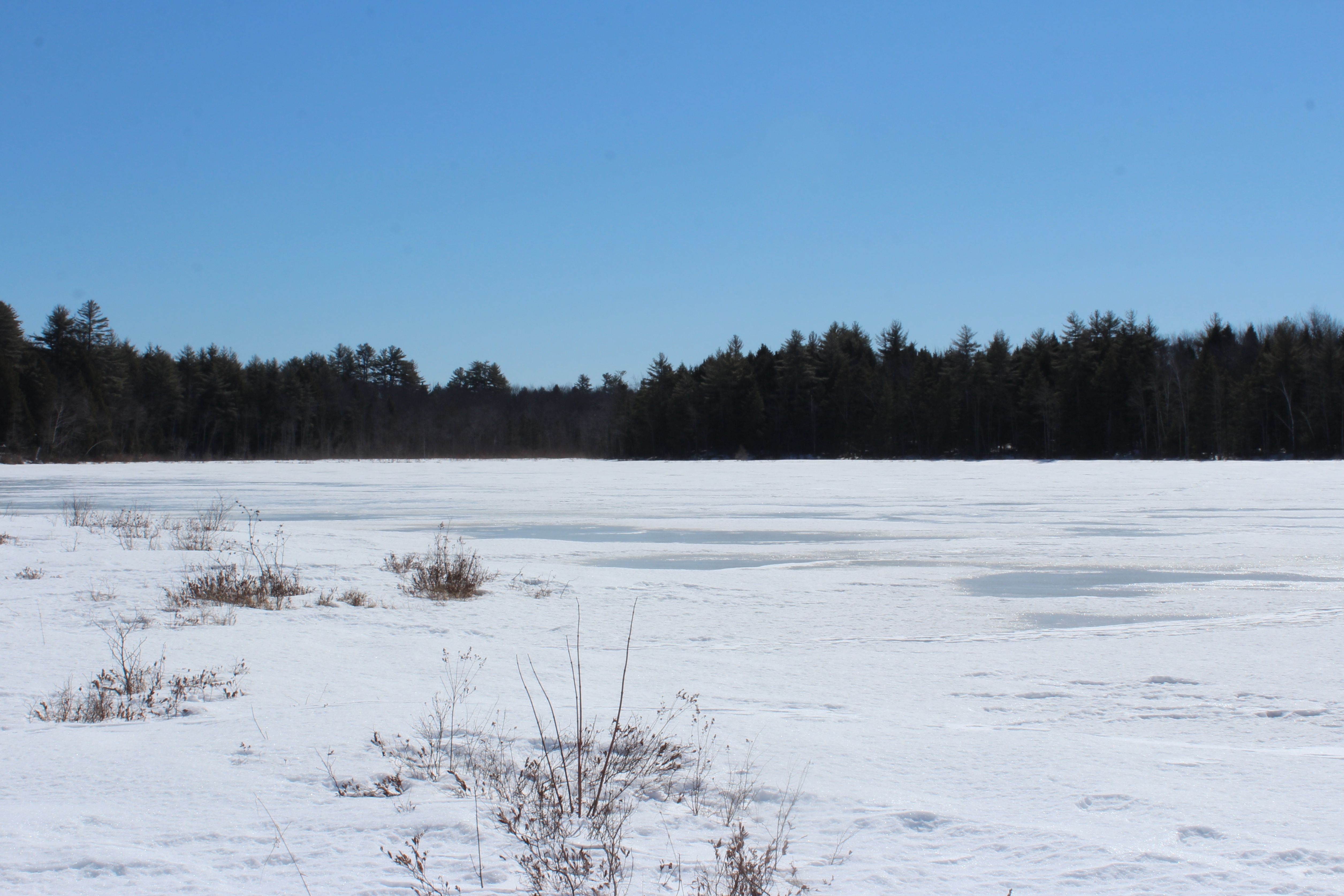
Though you can’t tell in the winter, the quaking bog is a thick mat of vegetation that formed over the surface near the edge of the pond. A board walk passes across it and one of the fun things to do with a group of people is to have everyone jump at the same time and watch the bog quake. This is also a great spot to visit alone–for quiet reflection.

Holt Pond 1HP South

Views at the pond’s edge–north and south

HP from southwest

We stopped at a rock in a sunny spot along the South Shore Trail to enjoy lunch al fresco. PB&J never tasted so good. Topped off with ice cold water and some Ghirardelli chocolates. :-) As we continued along, we paused to look back across the pond toward the Quaking Bog.

Sometimes we chatted and other times we were each lost in our own thoughts and moving at our individual paces. Similar to my NDD (Nature Distraction Disorder), my guy has his own syndrome–Destinationitis. But, he’s learned to compensate by pausing until I catch up . . . and then he’s off again. That’s OK–it gives me time to spend in my own world.

feathers one

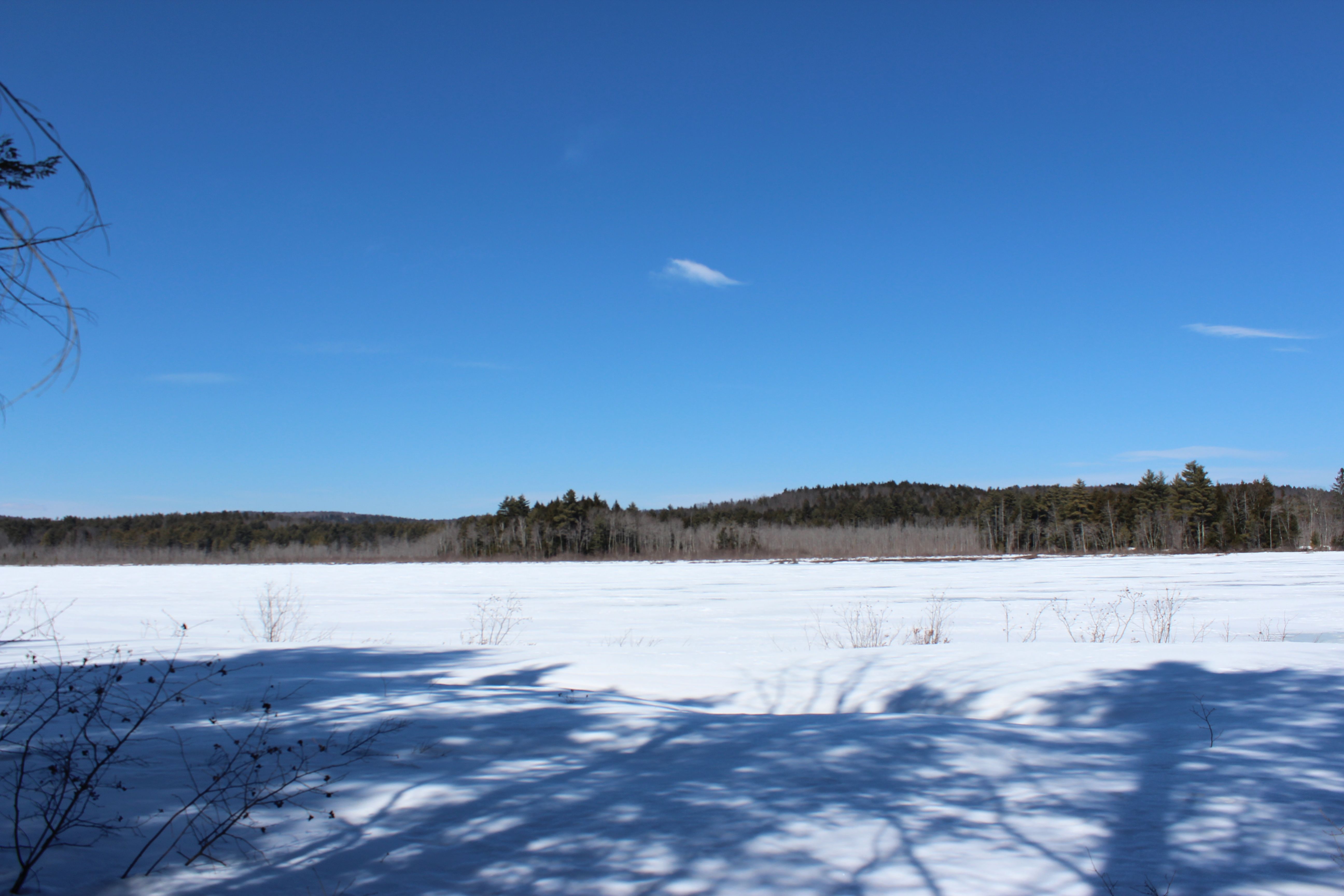
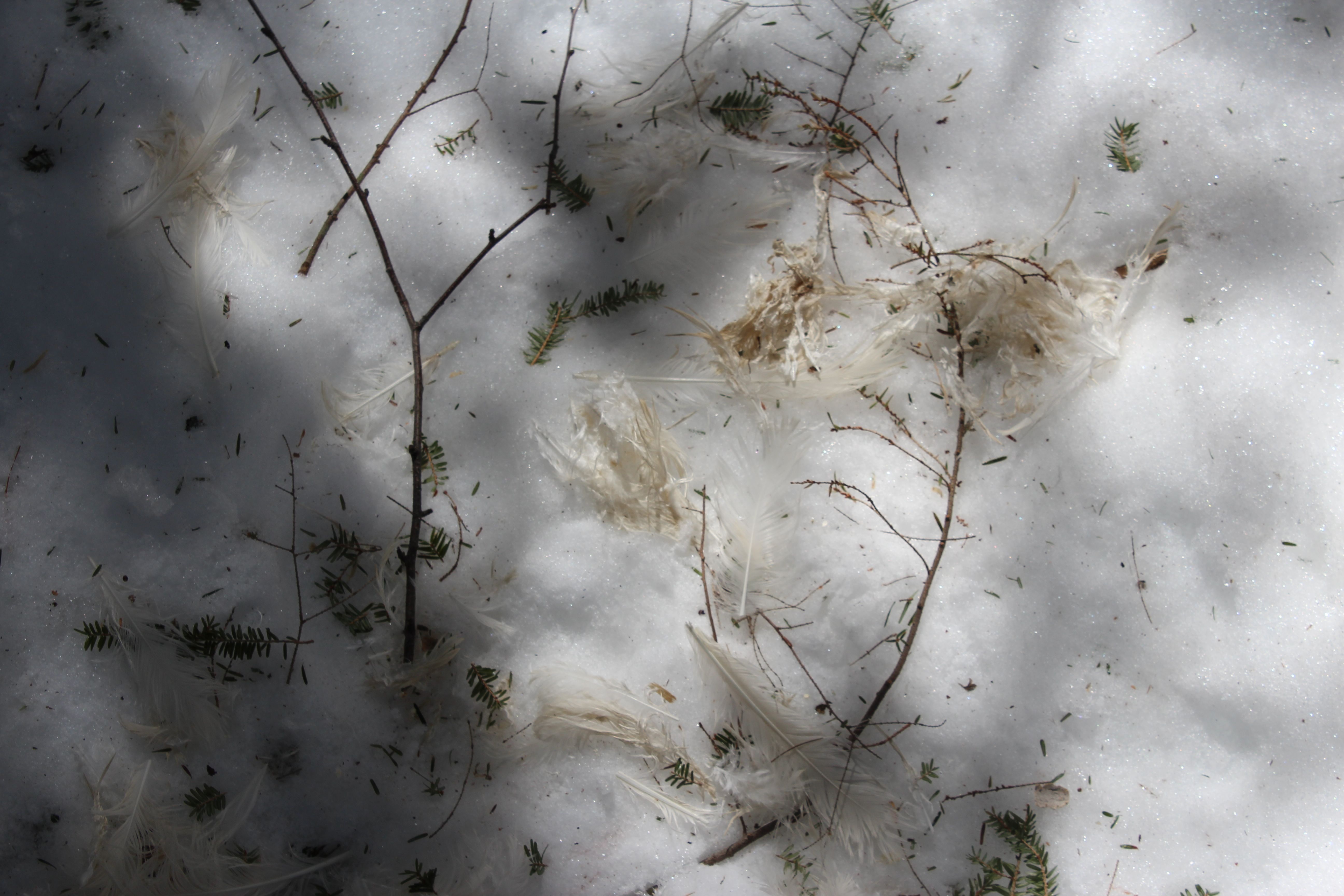
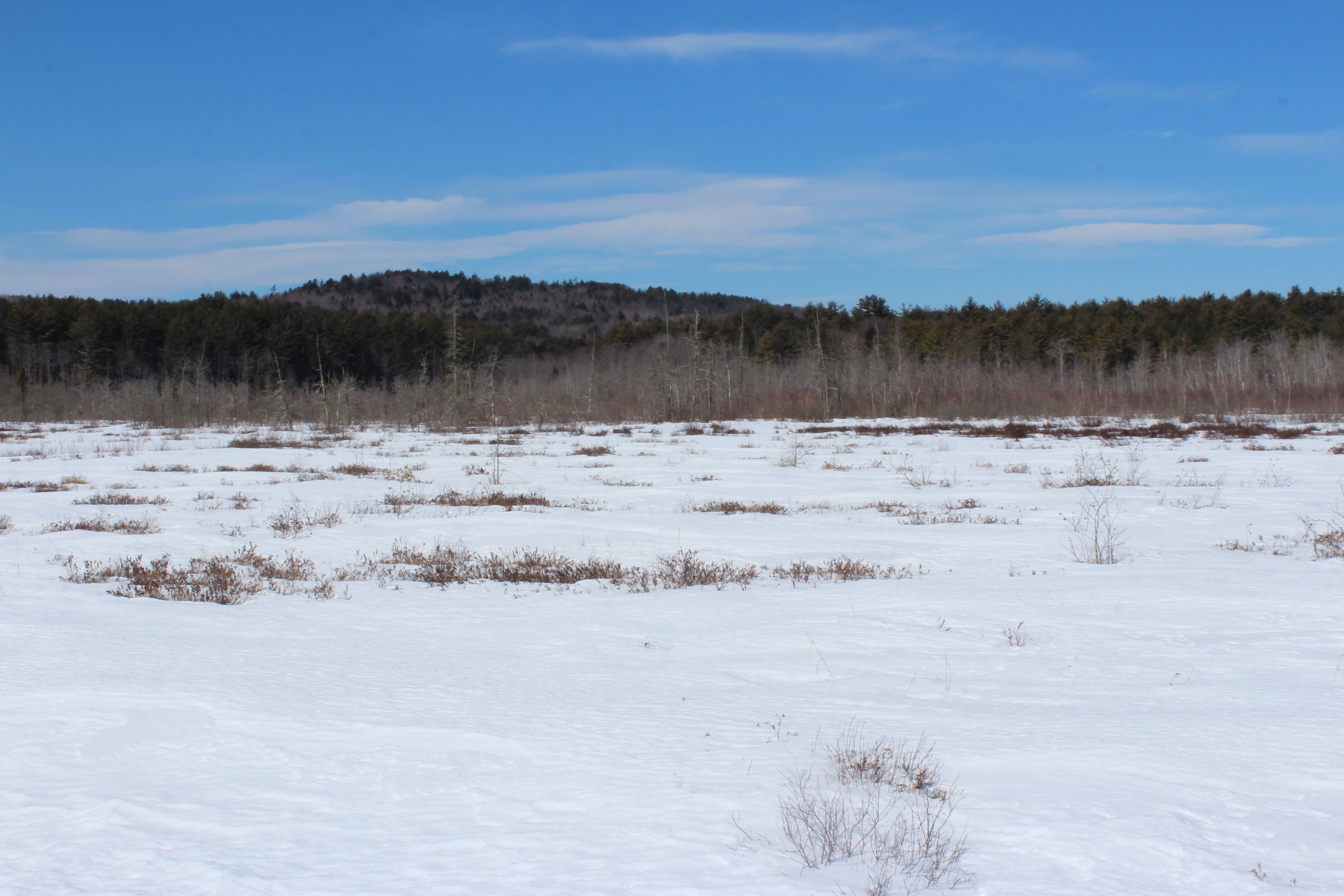
At the edge of a field (we know it as “The Field” because it’s the end of a section of trail that we keep maintained for LEA), we both stopped to look and wonder. Under a hemlock tree and in the middle of the trail, we found these white feathers. Don’t you just love a mystery?
feathers 2

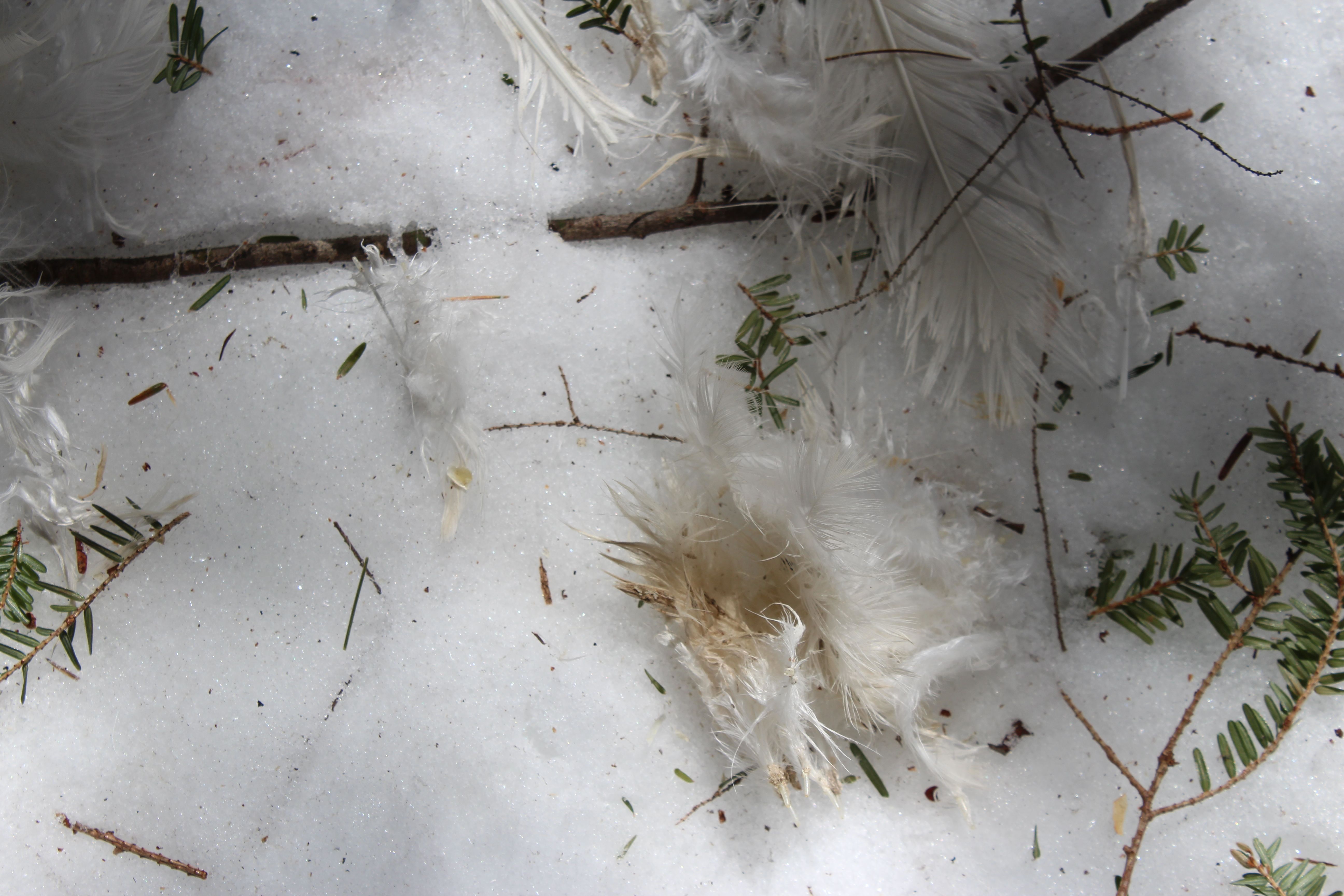
Here’s another look. Some had sheer cuts; others looked plucked. No great place to hang out above. If you know what bird this was or what happened here, please enlighten me.

horse

At least five miles later, we were back on Chaplin’s Mill Road headed toward the truck.

Thanks for stopping by again to wonder my way. I hope you enjoyed the three hour tour.