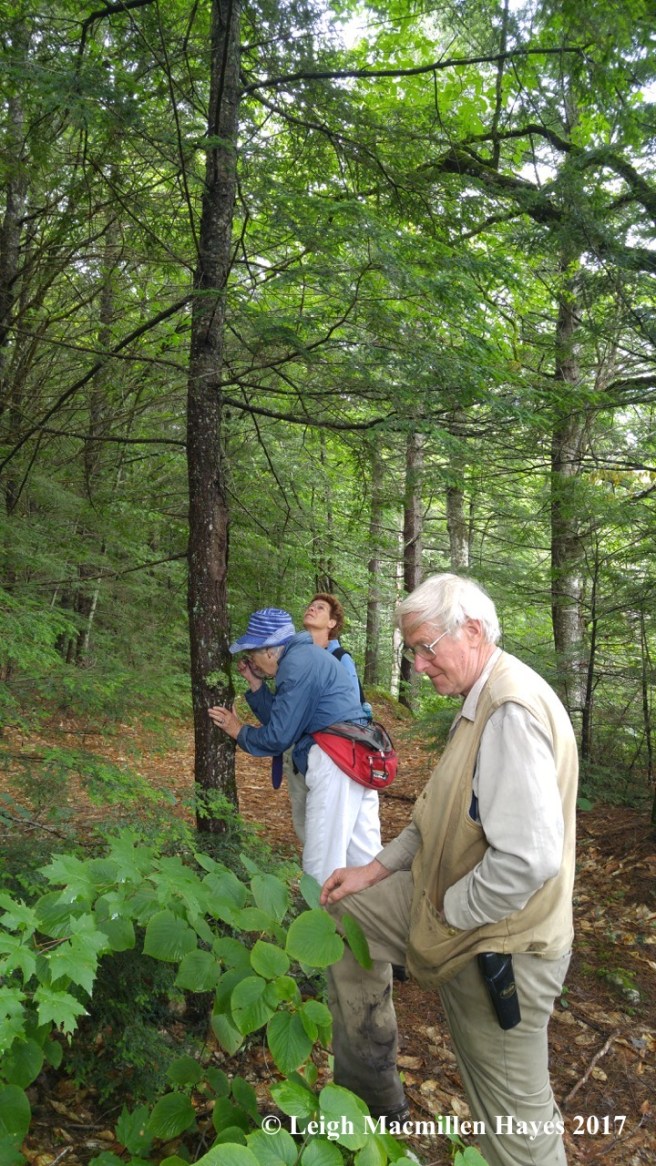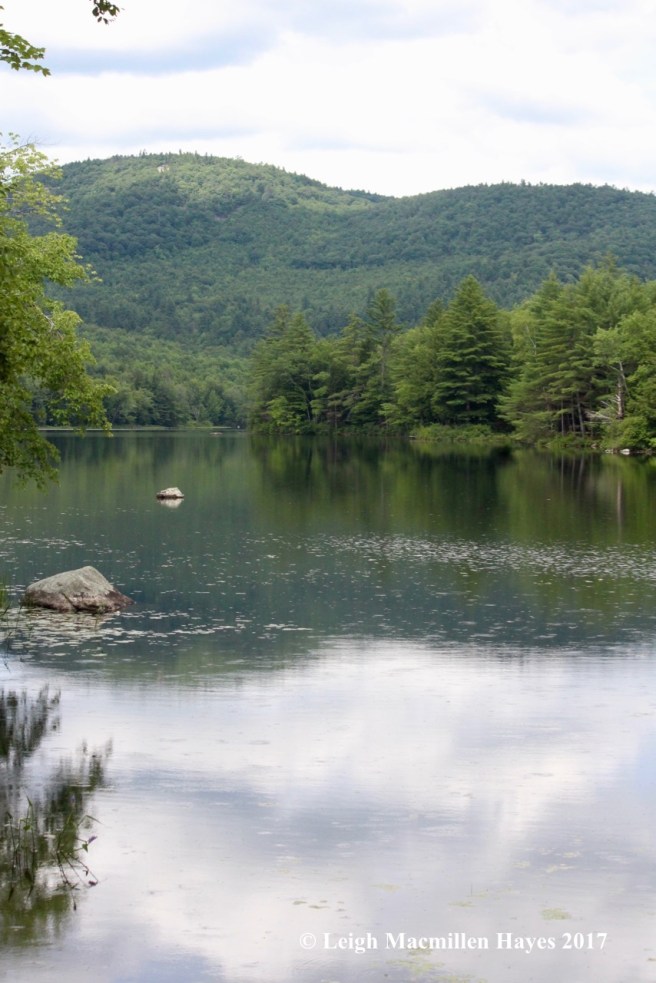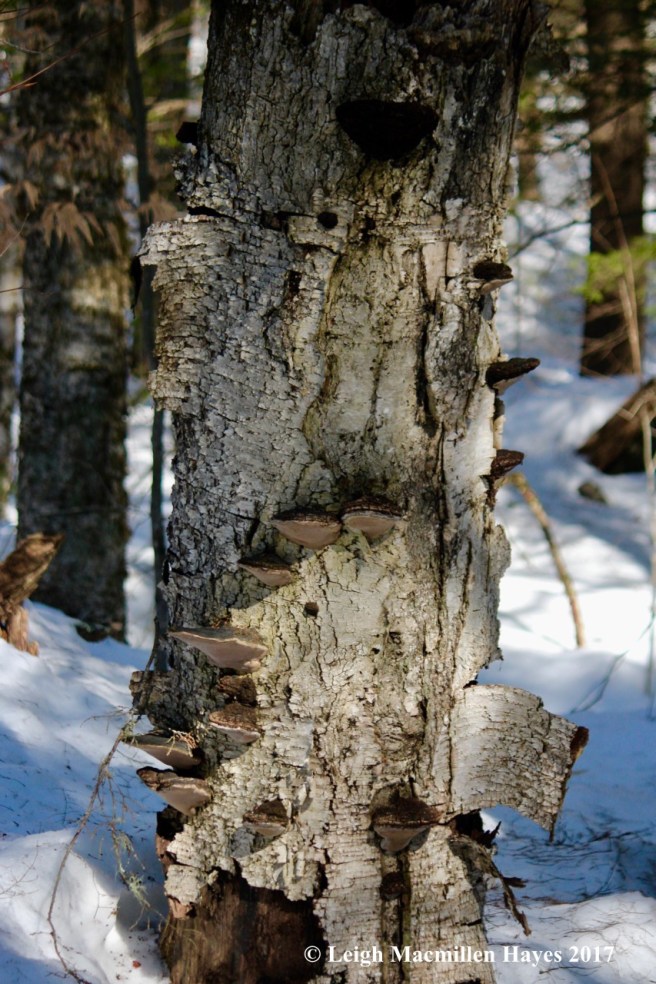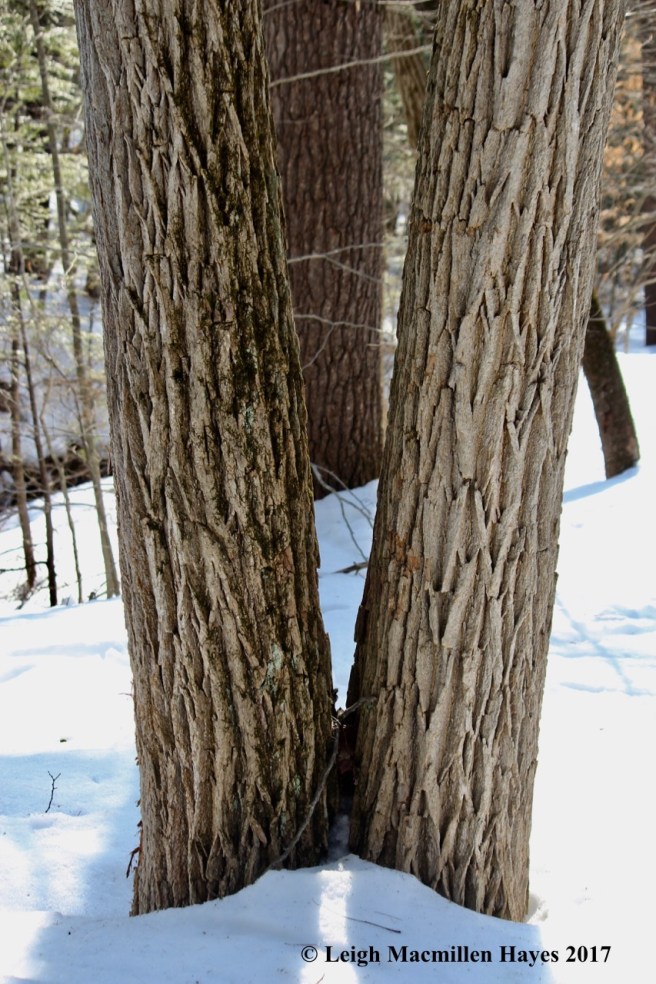
Peering In

As I pulled into the parking lot beside the old school in Sweden, Maine, I was excited to see the door open, meaning that for the first time I’d get to step inside and take a look.

S1-old school

The Sweden Historical Society had recently had the building cleared of asbestos and hopes to possibly turn the 1827 structure into a museum.
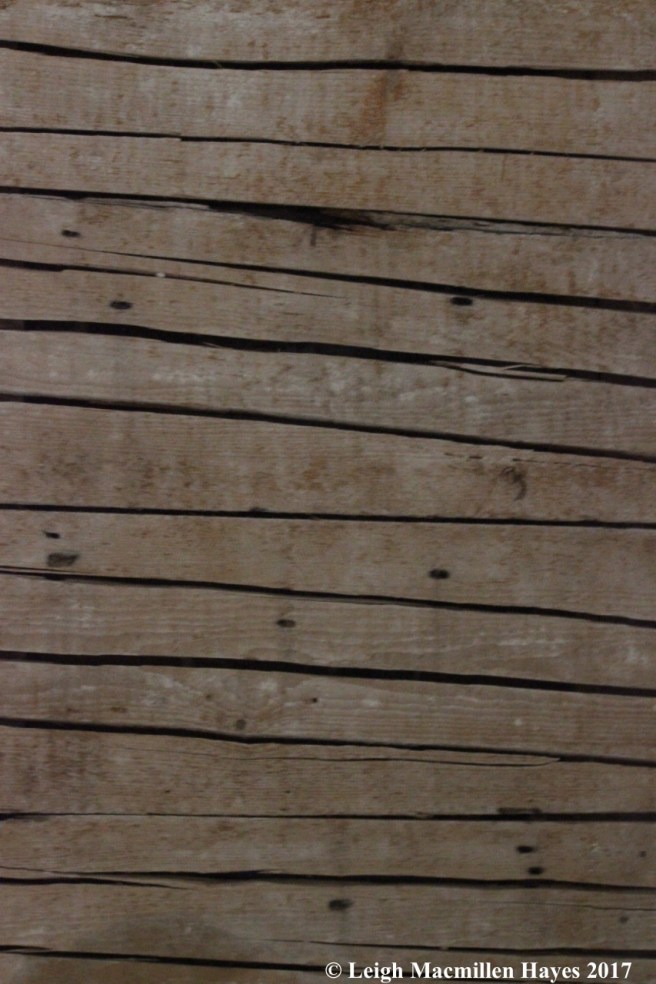
S2-lathe

My friend, Janet, who is past president of the SHS, invited me in and gave me the short tour–especially of the former bathrooms where the renovation revealed the plaster and lath originally used to finish a wall. The wooden lath was attached directly to the studs and then embedded with plaster; often horsehair plaster.

s3-wall paper

Once the plaster dried and formed a hard, smooth surface, it was either painted or covered with wallpaper. Janet was thrilled by the discovery of the latter and has plans to preserve it within a frame. Do you see Donny’s signature? I wondered if he got into trouble for writing his name on the wall.
s4-original entrance

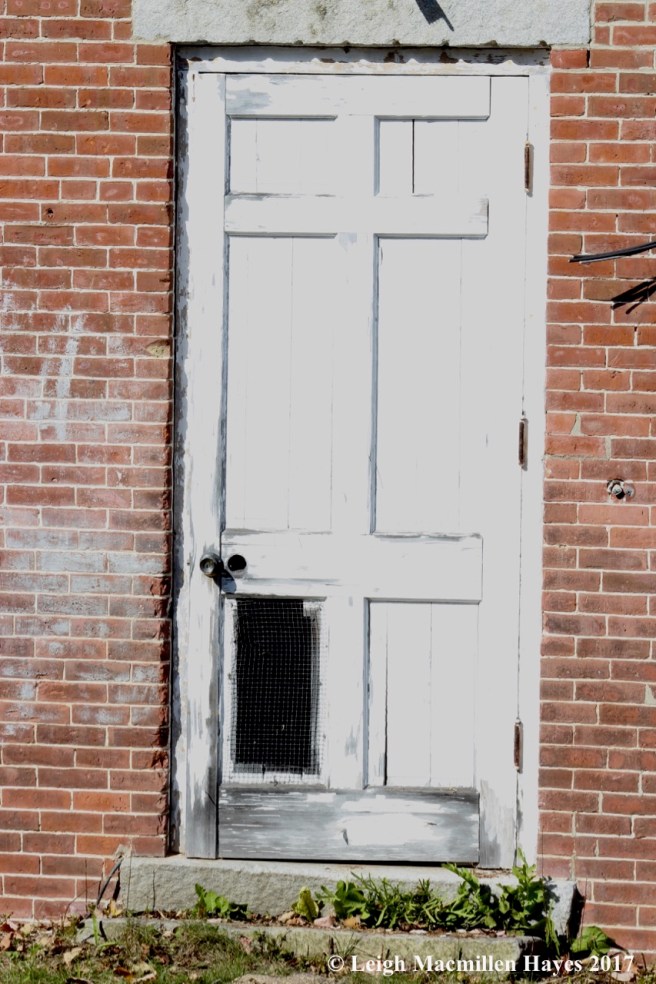
We didn’t stay in the building long because we had a walk planned, but first, Janet provided a bit more history including pointing out the original door on the front of the building.
s5-foundry

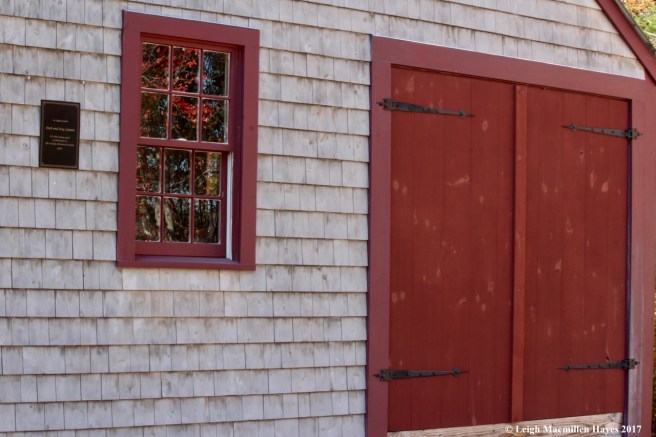
And beside that in this small hamlet that is home to a community church, town hall, town office and the old school, sits another building that looked like it had been there forever. It was an old foundry that Janet explained had been moved from another location–a frequent happening during yesteryear. This year it was dedicated to the founders of the SHS (apropos–foundry for the founders), Kay and Dick Lyman.

At last, we were ready to begin our walk.

1858Map_comp_1000

1858 Map

1880_Sweden_small

1880 map

The route was a short one, but it took Janet, her friend Karen, and me about three hours to walk from Route 93 to Webber Pond Road and back again.

s6-the road

We began beside the foundry on the colonial road. Though it’s still a town road, it’s no longer traveled (except by logging trucks a few years ago).

s7-fence post

Not far along, Janet pointed out two granite pillars, indicating a fence line. And then we went off-roading, in search of other evidence of the use of this land.

s8-well

And what to our wondering eyes should appear, but an old well, its covering slabs now turned upright. We poked about some more, but found nothing else in that spot and suspected it was a well for the farm, rather than for a house.
s9-barbed wire

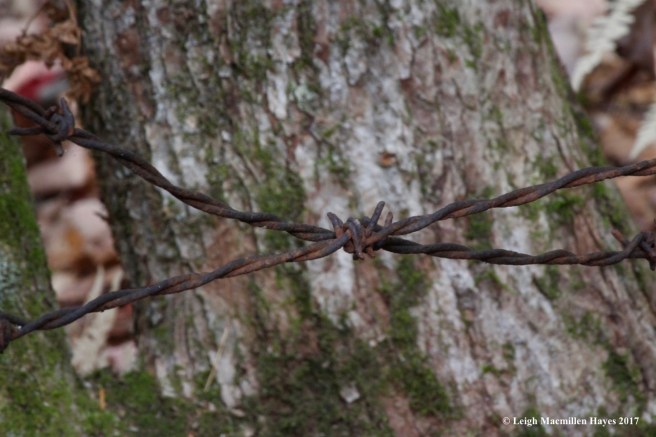
As we returned to the road, our suspicion was correct, for we found barbed wire that would have held the animals in. We stepped over it.
s12-bridge

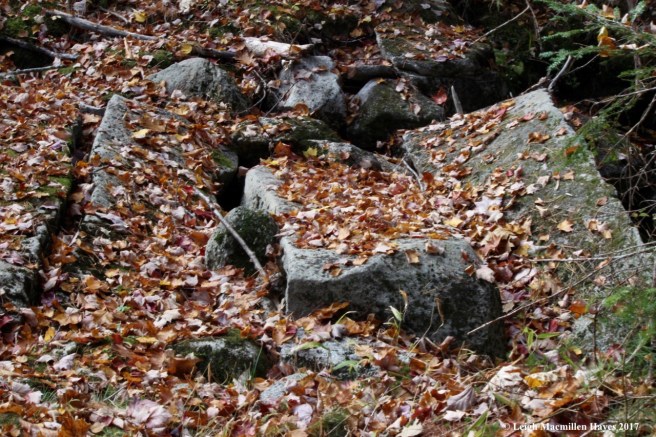
Our journey continued and at a brook that flows from Keyes Pond to the north down to Webber Pond, we came to a crossing. It was a crossing that also had us wondering for it was made of large granite slabs than ran east to west in the direction of the road. Number one, we didn’t expect the slabs to serve as a bridge, and number two, if such was the case, we thought it would have made more sense if they were turned 90 degrees. And so again, we wondered what the story might be. Perhaps wood once covered the stone?

s19-single wall to double

For most of the journey, the road was bordered on both sides by stone walls–all freestanding, but some single-wide and others double. Single indicated either boundary or a way to keep animals in, while the double made us wonder about a plowed field. We noted neat construction where the stones were carefully stacked and messy sections where it seemed they’d been tossed, and again did some more wondering–were the messy parts the work of youngsters?

s11-Christmas fern 2

It wasn’t just the historical artifacts that drew our attention. Check out the withered leaflets on the Christmas fern. Its spores formed on the underside of a few leaflets, aka pinnae, of one or two fronds and that was sufficient for reproduction.
s15-lungwort 1

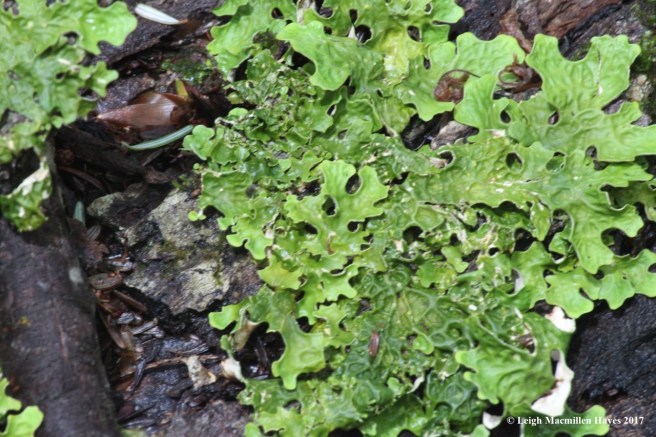
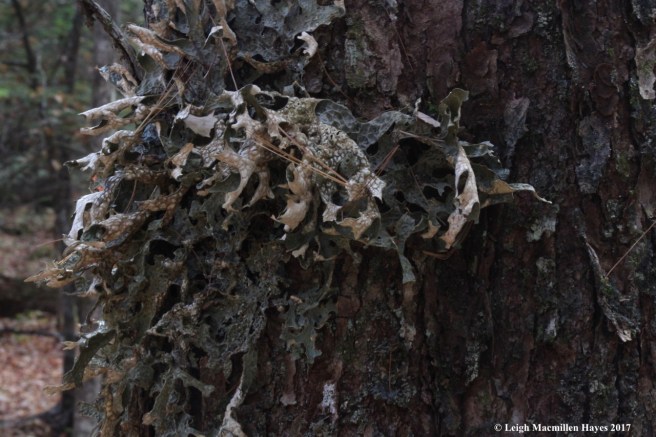
We also found an old favorite, lungwort; an indicator of old growth, thus a rich, healthy ecosystem.

s14-lungwort 2

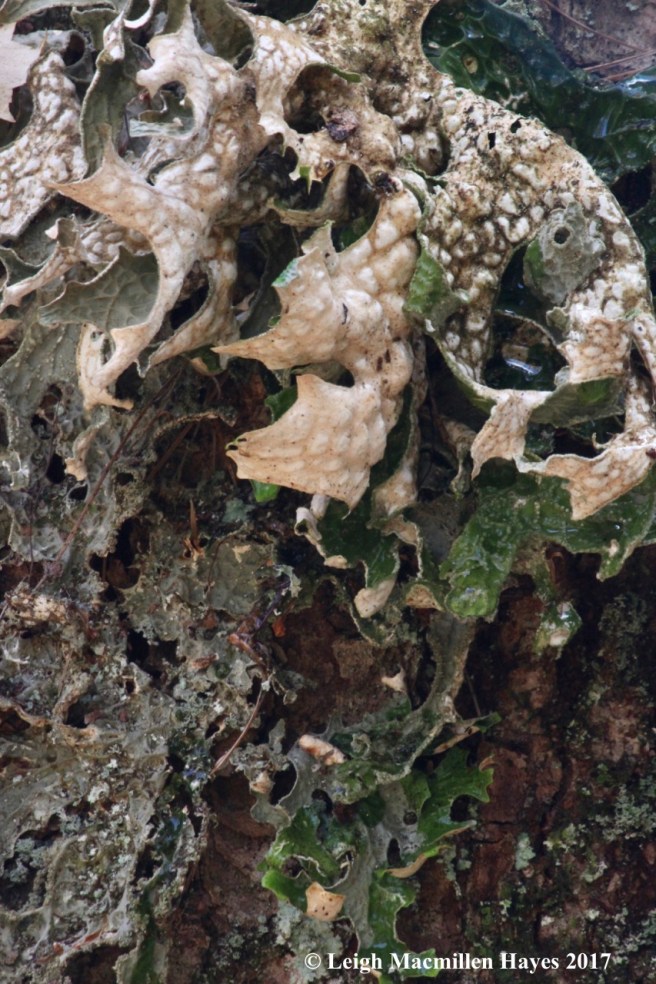
And an equally fun lesson for Karen, who lives in Illinois, and had never encountered it before. Janet poured some water onto the lungwort, which is a foliose lichen, and the miracle occurred on cue.
s16-lungwort 4

With a twitch of her nose and a wink of one eye, we watched as the water reached the lungwort’s surface and changed its color from gray to bright green, while where no moisture flowed, it didn’t transform. Lichens have a high resistance to damage by dehydration and will suspend photosynthesis when they dry out. The cool thing about them is that once wet, they can quickly absorb water and get back to food production.

s18-bluestain 2

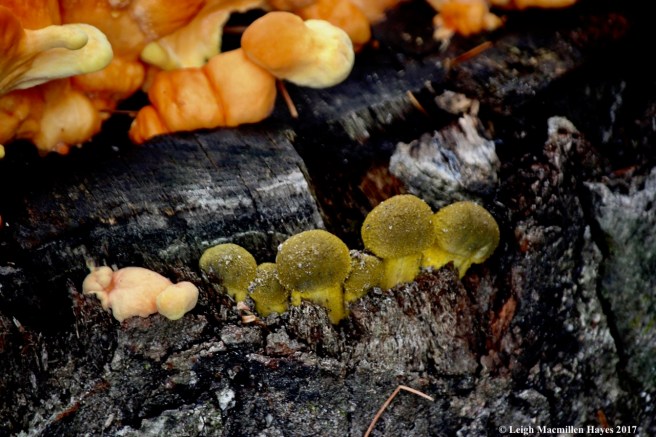
We also spied a cool fungi, and one that we seldom see fruit, but this year has been different and we’ve discovered it periodically. This is green stain fungi, so graced with the common name because it really does look as if the wood had been stained green. I used to think it was an old trail blaze. When it does fruit, the mushrooms are tiny, but among the most beautiful–at least in my mind.

s20-Mrs Webber

At last we reached Webber Pond Road and we crossed to the cemetery, where Janet pointed out those for whom the nearby pond and road were named. She also noted that while most foot stones in a cemetery are positioned in front of the headstones, these were located behind. Indeed curious.

The cemetery was our turn-around point and we followed the route back, but actually went off route because we were looking for a foundation or two. We found none as we paralleled the road, but that’s okay because it just means we need to return.

Back at the old school house, I said goodbye to Karen (on the left) and Janet (on the right) and gave thanks for the opportunity to look keenly with them–as we peered into history.


Lingering at Long Meadow Brook

It’s Tuesday, which means time for a tramp through the woods–especially if you are a docent for the Greater Lovell Land Trust. We take our job seriously, filling our bags with field guides, hand lenses, binoculars, cameras, water, humor and wonder. The latter two are the key components and thankfully we’re all comfortable enough with each other to tell corny jokes and laugh at our misidentifications as we explore the natural world through curious eyes and minds, while sharing a brain.

l1-white spores 1

And so today, though our intention was to look for fall wildflowers, we had much more to notice along the way, like the white spores of mushrooms decorating the surrounding haircap mosses.

l2-funnel spider 1

And there were funnel sheet webs to examine, given that the morning fog left them dew covered and easier to spot.

l3-funnel 2

Though we wanted to take a closer look at the creators of such fine work, and tried gently touching webs with pine needles, our antics obviously vibrated more than your ordinary bug might, and the spiders ran into their funnels to hide.

l4a-cup and saucers

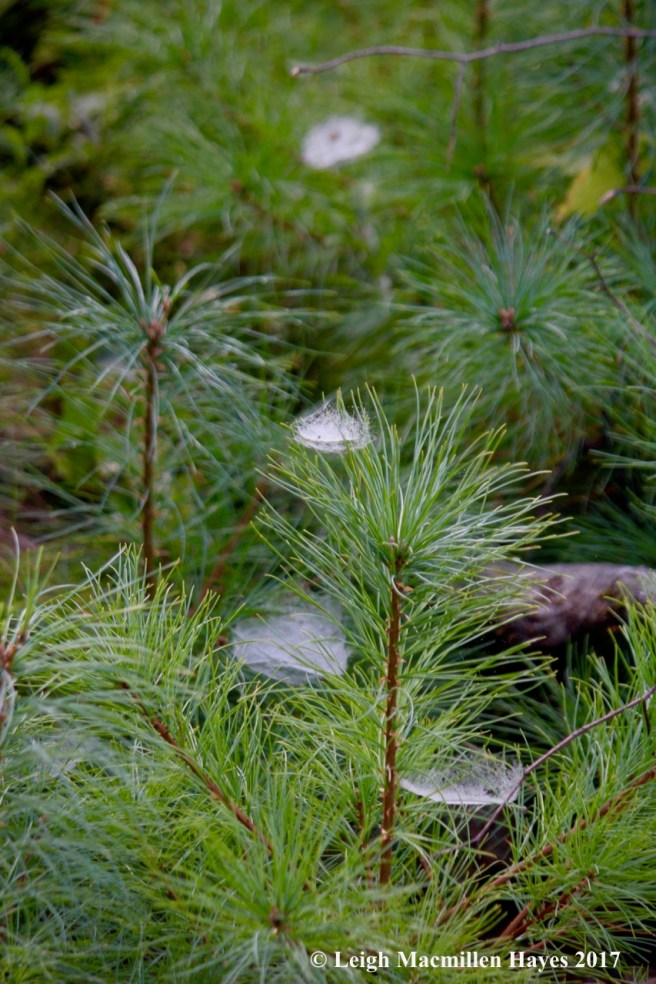
As we’d driven to the Long Meadow Brook Reserve, we’d spotted a field of medium-sized white pines decorated with webs and were thrilled to find the same on saplings.

l5-cup and saucer web 1

The bowl and doily spider is another member of the sheet species, and it builds webs that consist of two intricate parts. Above is the bowl, an inverted dome, and below, the lacier doily. The spider hangs upside down beneath the bowl, but above the doily, waiting for dinner to drop in.

l6-looking at spider webs

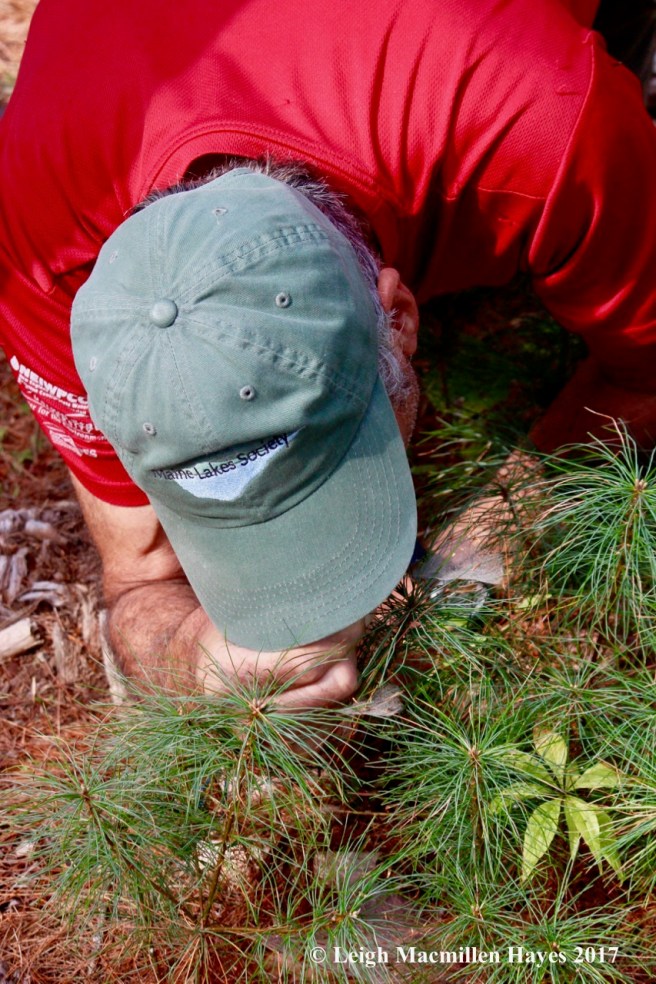
Trying to see the tiny bowl and doily spiders requires getting down on all fours and looking through a hand lens for they are only about 3-4 millimeters in length. We did and were successful in our efforts.

l4b-cup and saucer on bristly sarsaparilla

It seemed today that nothing escaped spider activity, including the gone-by fruits of bristly sarsaparilla.

l4-orb web 1

Equally delightful in the making was an orb web outlined in dew, larger droplets highlighting each spoke, with smaller ones on the sticky silken spirals.

l1b-pilewort

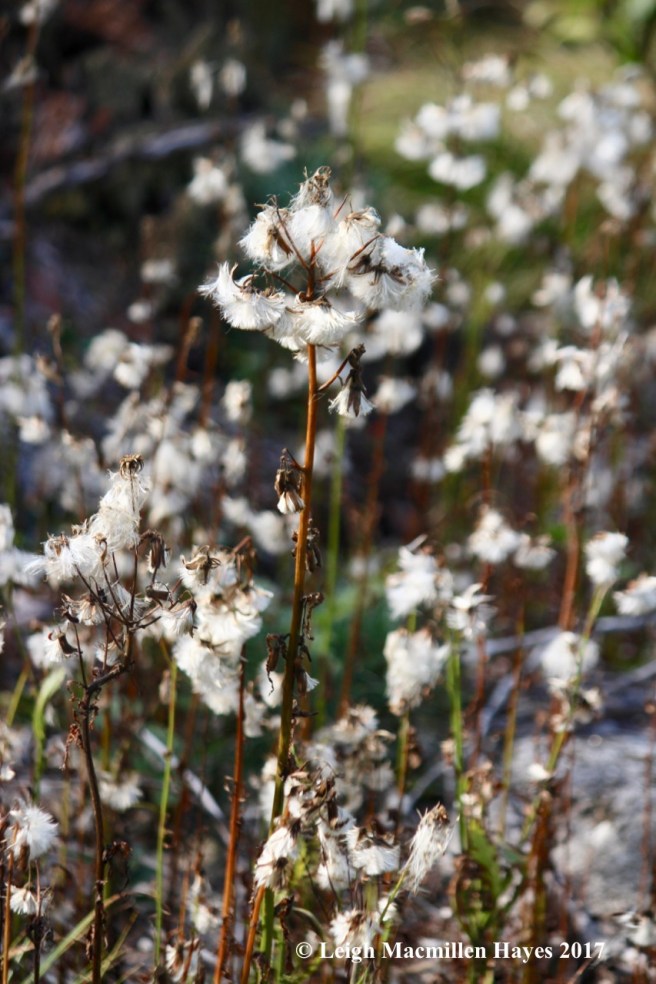
In several openings, pilewort grew in abundance.

l1a-pilewort field

Like a field of cotton, its dandelion-like seedheads were prolific.

l1c-pilewort seedhead

But really, I preferred the seed display to the petal-less flowerhead that emerges from the cylindrical cluster.

l7-pine cones 1

Also prolific were the female cones atop the white pines, their brown color indicating they were in their second or third year of development, having been wind pollinated by  tiny male cones. The pollen cones fall of trees within a few days of decorating our vehicles, outdoor furniture, and naked female seeds with yellow dust. If you think back to spring and all the little rice krispies that decorated the ground below white pines, you’ll know that you were looking at male cones. The seed cones typically form on the uppermost branches, so that the tree won’t pollinate itself from below, but can receive pollen blowing in the breeze from another tree.

l8-pokeweed 1

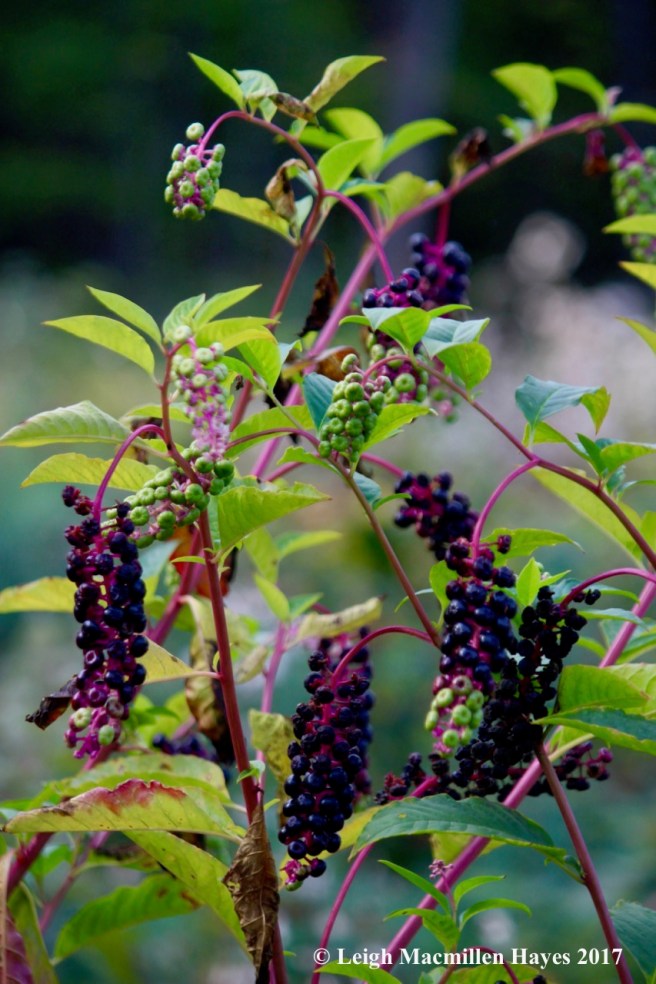
We’d looked high to see the cones, and then drew our eyes lower and thrilled with the sight of one of our tallest perennials.

l9-pokeweed 2

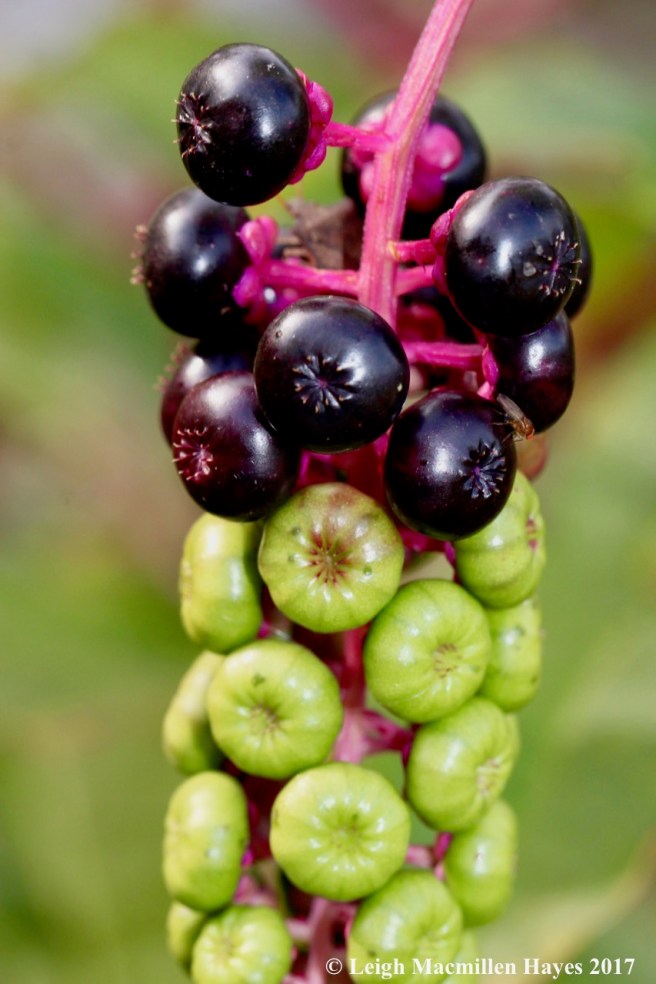
At first we only spied one pokeweed growing in an opening, but then began to spot others in flower and . . .

l11-pokeweed 3

fruit.

l29-blueberry

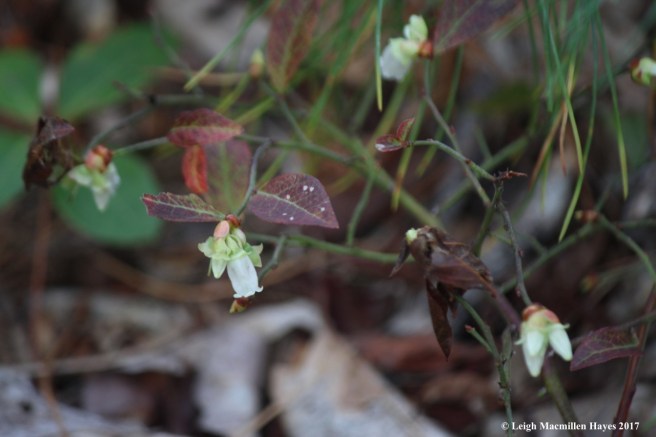
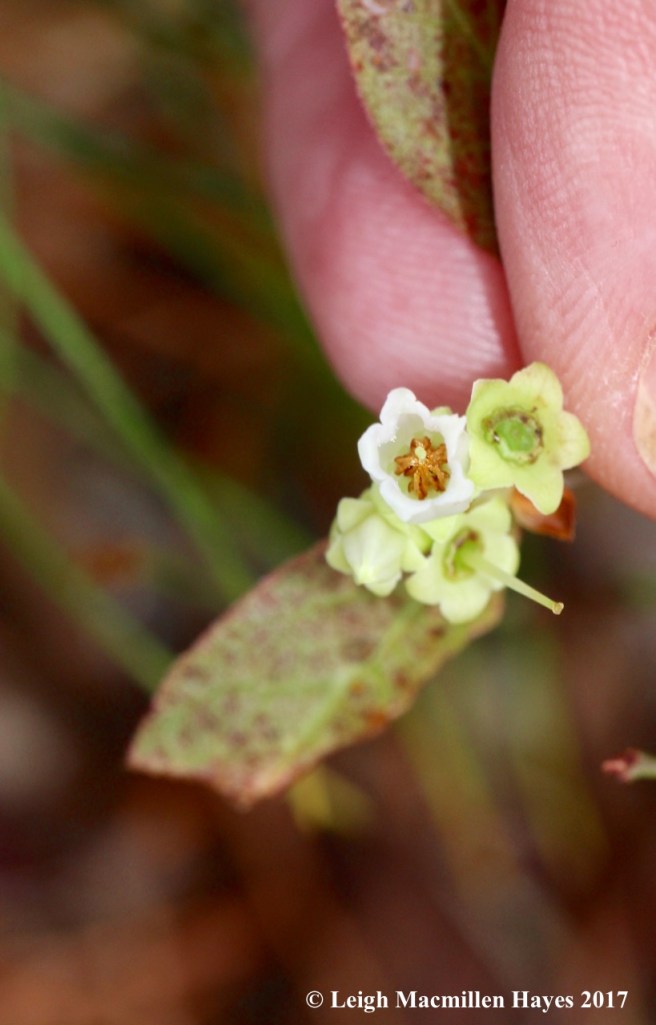
Another one of our surprises–still flowering blueberries. The plants themselves didn’t look too happy . . .

l13-blueberry flowers

and we wondered if there would be enough energy or time for the fruit to form.

l14-cinnabar-red polypore

As we ambled along, we found cinnabar-red polypores,

l18b-turkey tails1

turkey tails,

ll18a-gilled polypore

and polypores know for their . . .

l18-labyrinth of pores

underside labyrinth of pores that look like gills.

l20a-brown spores 1

And we found another type that had spread brown spores.

l19a-mystery hole

Making our way down to the brook, we were stumped by a pile of dirt, small hole about one-half inch across and chewed mushroom. We remain stumped, so if you have a clue, we’ll listen. It was a messy dooryard so we didn’t suspect a chipmunk, plus the hole wasn’t wide enough. Voles eat vegetation. Could it be? Was it even made by a mammal?

l22-white oak

Along the same route, we made another fun find. White oak saplings.

l23--white oak 2

White oak grows in surrounding towns–Fryeburg, Sweden, Brownfield, Waterford, but not in Lovell or Stow, where this property was located. So, how did it arrive? Two theories–it was on a skidder trail, so could have come in on a machine; or perhaps via airmail from a bird. Long ago, white oaks grew in this area, but were used for barrel making. And because their acorns contain less tannin than that of a Northern red oak, mammals devour them quickly, thus making it more difficult for the trees to regenerate.

l23-LMB 2

It took us a while, but finally we reached the old beaver dam and culvert by the brook, where the fall foliage was subtle at best, but still beautiful. We walked (if you can call it that) for 2.5 hours and covered all of .95 miles. It was hot and muggy, so we felt like we’d covered 9.5 miles, but as always were thankful for our time spent lingering at Long Meadow Brook.


Poking Along Beside Stevens Brook

Raincoat? √

Notecards? √

Camera? √

Alanna Doughty? √

This morning I donned my raincoat, slipped my camera strap over my head, and met up with LEA’s Education Director Alanna Doughty for our reconnaissance mission along Stevens Brook in downtown Bridgton. Our plan was to refresh our memories about the mill sites long ago identified and used beside the brook.

Lakes Environmental Association maintains a trail from Highland Lake to Long Lake, which follows Stevens Brook’s twists and turns and passes by twelve power sites originally surveyed by Jacob Stevens in 1766.

s1-5th power site 1

We skipped the first mile of the trail and slipped onto it from the Route 302 entrance by the Black Horse Tavern, knowing that that will be our entry point for a walk we’ll lead with Bridgton Historical Society‘s Executive Director Ned Allen later this month. Alanna suggested I not pull out my notecards, and rather rely on my memory. Oh my.

As we made our way past the old trestle that once carried coal from the Narrow Gauge railroad to the Pondicherry Woolen Mill at the fourth power site (the other three are located between Highland Lake and the 302/117 intersection), we recalled that the now deceased Reg Fadden used to claim he knew the color of dye because as he walked to school each day he noted the color of the water. Scary thought.

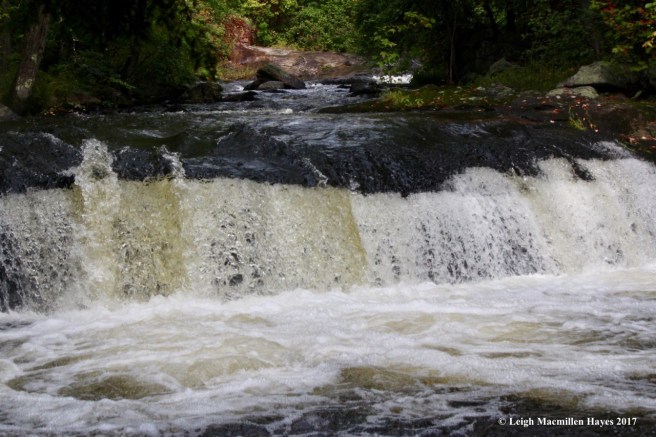
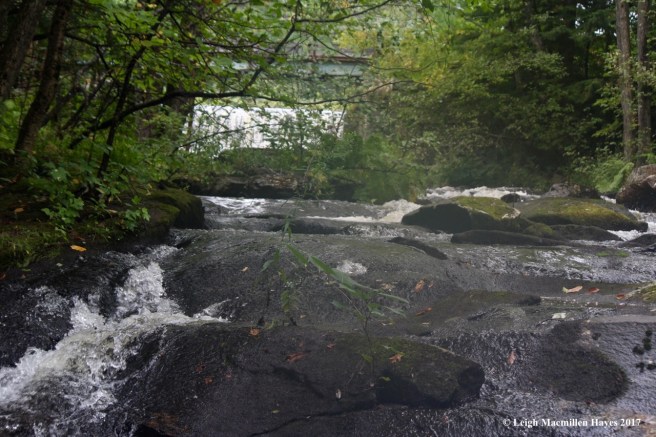
At the fifth power site, we went off trail to look around a bit. The water flowed over the rocks with such force that sometimes we couldn’t hear each other.

s2-5th site-Narrow Gauge trestle bridge

Before us was another former trestle spot–this one being part of the track that carried the train across the brook and on toward Harrison as part of a spur from the main line.

s3-5th site, nurse log

In front of it, large trees placed years ago to prevent anyone from crossing the now gone trestle, served as a nursery to many species. But it wasn’t just what grew there that gave us pause–it was also the textures and lines that seemed to reflect the water below.

s-poison ivy 1

As we walked, we looked at the lay of the land and wondered about mill ponds and berms. We also noted the one plant we wanted to avoid–poison ivy.

s-poison ivy 2

It grows in various forms, but the safe thing to know is that the two opposite leaves have short petioles that attach to the main stem, while the third and leading leaf has a longer petiole. As the saying goes, “Leaves of three, leave them be.”

s7-6th site water power

Site number six is one that we’re not sure we’ll share on our public walk. It’s a wee bit of a challenge to get to and was apparently never developed–though we did note the drop and some stonework on the far bank.

s8-blue-stemmed goldenrod 1

Before we stepped onto Smith Avenue for the next site, a goldenrod shouted for attention. We tried to figure out how many rays it had, but as it turns out, that number can vary from three to five. The flowerhead formed a ladder that climbed up the stem and this is one that we should recognize going forth for its display struck us as being different than other goldenrods. We’ll see if we actually do remember it the next time we meet.

s9-7th site, Lower Johnson Falls 1

As is often the case, it took us about an hour to walk a half mile. At last we emerged onto Smith Ave, by Lower Johnson Falls. The curious thing would be to note which was faster–the water or us. I have a feeling the water might win, but perhaps another time we should test that theory.

s11-coffin shop

For a few minutes we watched and listened and took in the view of the only mill still standing. I suspect this building was constructed in the 1860s as a sash and blind factory. Eventually it became the coffin shop, where Lewis Smith, the town’s first undertaker, built furniture and coffins.

s13-8th site, sluiceway different view

For about a tenth of a mile we walked down Kansas Road and then slipped into the woods again. I think this site is my favorite–site 8 and former home of the Forest Woolen Mill. There were actually two Forest Mills, one on either side of the road and connected by an overhead walkway.

s15-8th site, sluice way from above 2

Today it was the sluiceway that drew most of our attention. First we looked down.

s12-8th site, sluiceway1

And then we climbed down–paying attention to stones, bricks, cement and rebar, all necessary to build a foundation that still stands today.

s17-piece dangling

Well, most of it still stands. We were awed by a piece that appeared to dangle at the edge of the sluiceway.

s16-tree root in sluiceway

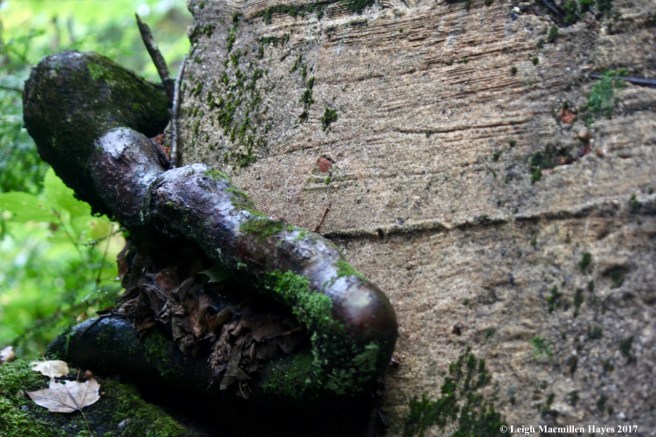
And a root that wound its way around the same cement stanchion . . .

s14-hemlock atop cement

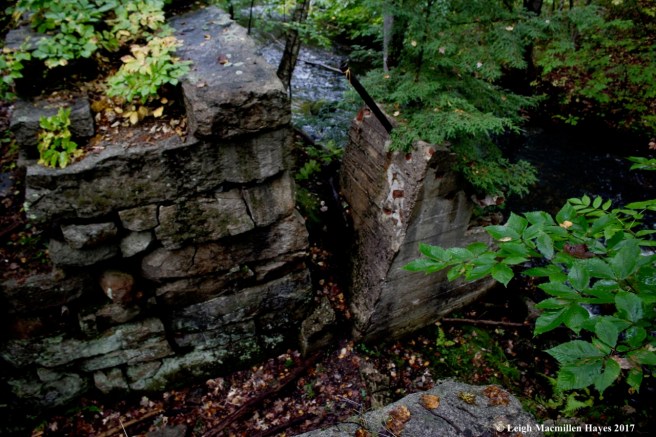
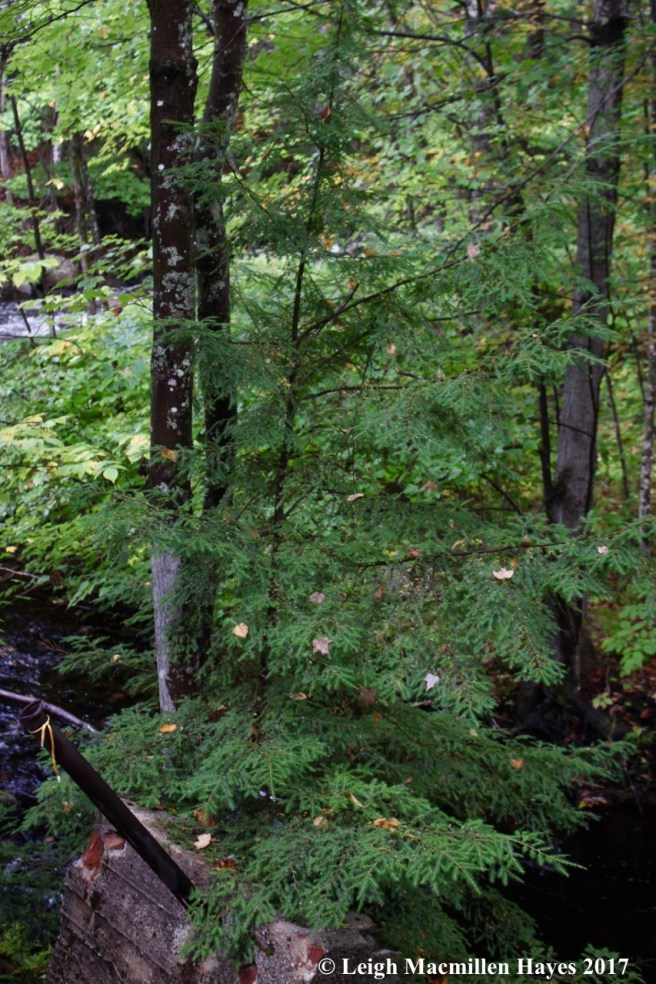
which happened to provide the perfect growing conditions for a hemlock.

s18-false Solomon's-seal berries

Crossing Kansas Road again, we ventured on. In a section under the current power lines we found flowers a many. The fruits of the false Solomon’s-seal looked like miniature strawberry and cherry-vanilla candies.

s19-winterberries

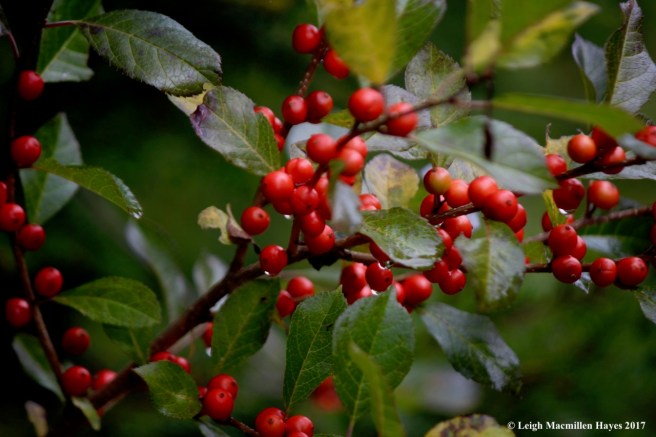
As we stepped onto a boardwalk across a wet area, winterberries glowed red and reminded us that the cold season isn’t all that far off.

s20-virgin's bower fruit, feathery plumes

It was there that we spied the feathery-fruited plumes of virgin’s bower,

s21-red-stemmed dogwood

red-osier dogwood berries,

s24-cat-in-nine-tails

and cat-in-nine-tails.

s22-cardinal flower

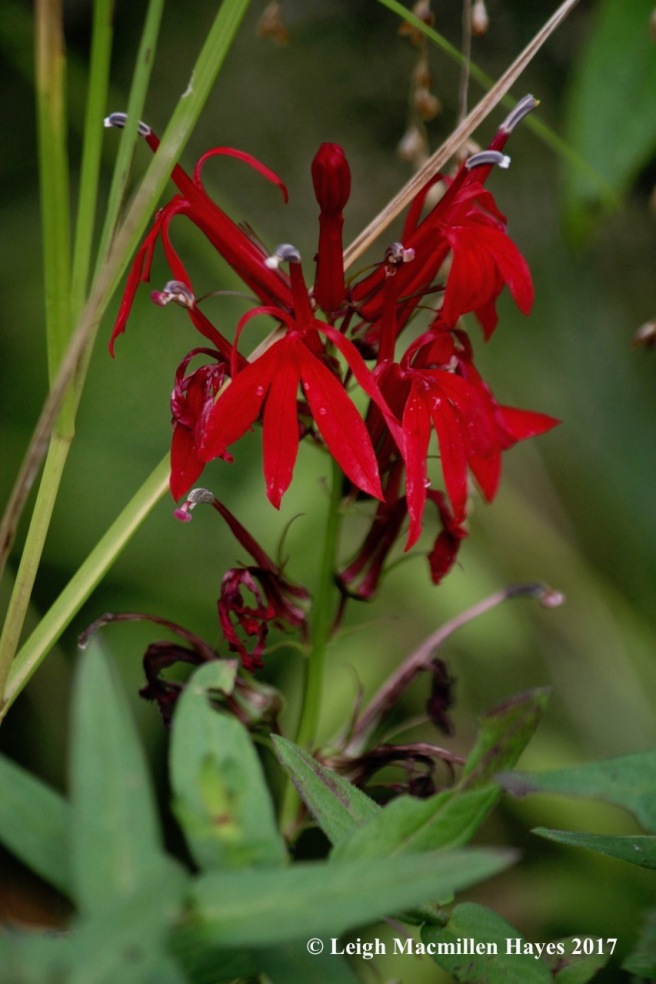
But our favorites: a cardinal flower still in bloom and . . .

s23-Northern beggar-ticks

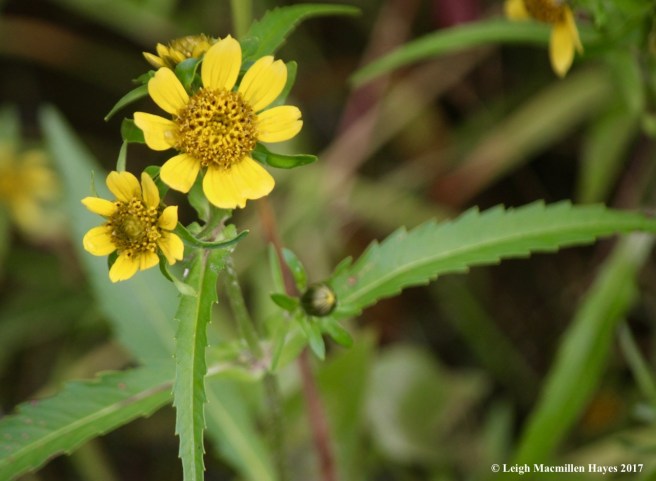
northern beggars-tick.

s28-10th site, CMP above

We passed by the tenth power site, knowing we’d return to it on our way back. Instead, we stood below and looked up at the water flowing over the improved dam.

s27-water below 10th site

It was in this section that the brook dropped 25-30 feet and created the greatest power at one time. It was also here that the eleventh site was located and where a penstock once provided a way to get water to a powerhouse in order to furnish local homes with electricity.

s31-Alanna laughing by skunk cabbage

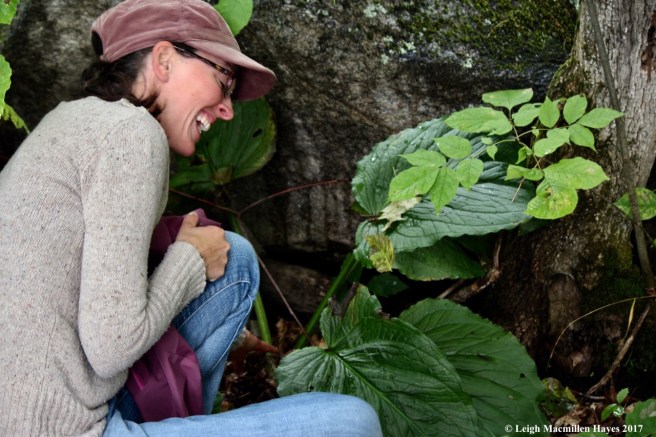
For us, it was a place to make more discoveries and share a laugh as we looked at the huge leaves of skunk cabbage.

s32-first witch hazel bloom

We also spied the first witch hazel flower of the season . . .

s33-maple-leaf viburnum

and a maple-leaved viburnum showing off its subtle fall colors.

s34-milkweed pods

In a spot just above the Central Maine Power substation, we found a garden of wildflowers including milkweed seed pods and . . .

s37-New England aster 2

New England asters offering a deep shade of purple.

s27-chicken of the woods

We also found some chicken of the woods.

s38-honey mushrooms?

And fruiting on the same stump, what I think was honey mushrooms (Armillaria mellea). I know a few fungi experts who occasionally read this, so I know they’ll correct me if I’m wrong with my ID.

s39-Stevens Brook outlet into Long Lake

The second half mile took us just as long as the first, and at last we reached the outlet into Long Lake.

s40-10th site, CMP dam

And then we made our way back, crossing over the bridge at power site 10, which was possibly the spot where Jacob Stevens, for whom the brook was named, built the first sawmill in 1768. We do know that in 1896, the Bridgton Water and Electric Company acquired the site and improved the dam. Eventually it passed on to the Western Maine Power Company and then Central Maine Power. In 1955, it was transferred to the Bridgton Water District. Through all the time, we could only imagine how the reflections changed.

s42-milkweed tussock moth caterpillar

To save time, we decided to walk along Lower Main Street as we made our way back. And to that end, our discoveries continued, for on a milkweed, Alanna first saw the chewed leaf and knew to look for the milkweed tussock moth caterpillar that was filling its belly.

s43-common snowberry

We also saw what I’ve always referred to as popcorn shrub because it reminds me of such, especially when I’m hungry for lunch. But really, it’s common snowberry. And not edible.

s46-northern white cedar bark

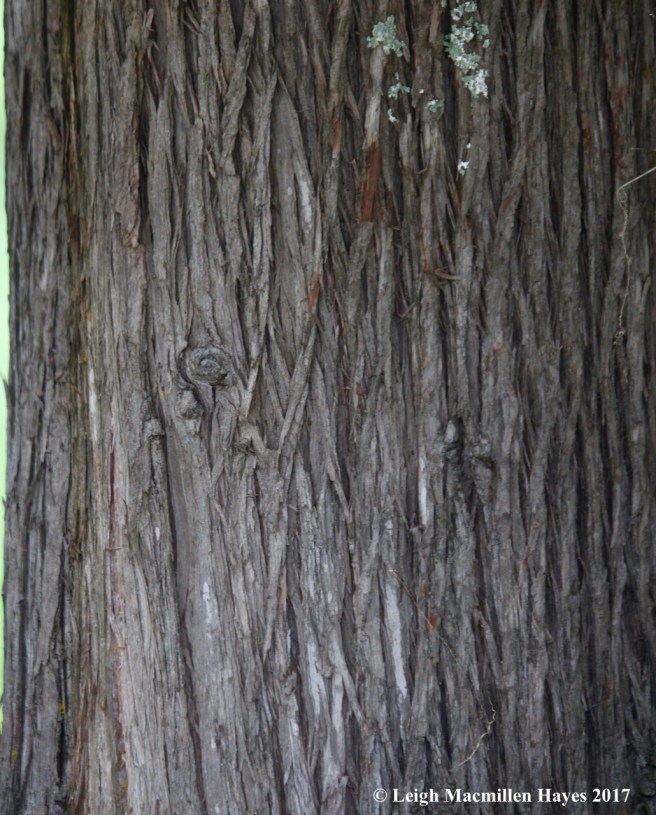
And then we found a tree that I didn’t know grew there–and I can’t tell you how many times I’ve run or walked by it: a northern white cedar with its scraggly striped bark.

s44-Northern white cedar 1

As much as the bark, I like the overlapping scale-like blue-green leaves.

All in all, our one mile journey took us just over two hours and we did recall some of the info about the mills without referring to my notecards. But what was even more fun was our wonder and awe as we made new discoveries while poking along beside Stevens Brook.

If you care to join us, the talk by historian Sue Black will be on Wed, September 27 from 5-7pm at LEA’s Maine Lake Science Center and the walk will be the next morning from 9-11. We’ll meet at Bridgton Historical Society on Gibbs Avenue for that. Be sure to register for either or both by contacting Alanna at the following address: alanna@leamaine.org.


From wet to sweat

“Will I need waders?” I asked before we departed from the Lakes Environmental Association’s office  early Wednesday morning.

Dr. Rick Van de Poll looked down at my hiking boots and said, “No, you should be okay if you don’t mind getting muddy.”

l1-into the fen

And so, LEA teacher/naturalist Mary Jewett and I joined him to begin a two-day survey of LEA’s Highland Lake Preserve. The 325-acre property was the gift of the David and Carol Hancock Charitable Trust. Except for two logging roads, there are no trails.

Our first destination was in the middle of the fen. OK, so Mary and I should have known better because we know how much it has rained this summer. But really, it was quite hot that morning and our feet did get wet.

In fact, she found a deep hole on the way in.

l1-fen plot

Once reaching the plot, our tasks were several.

l1-flag

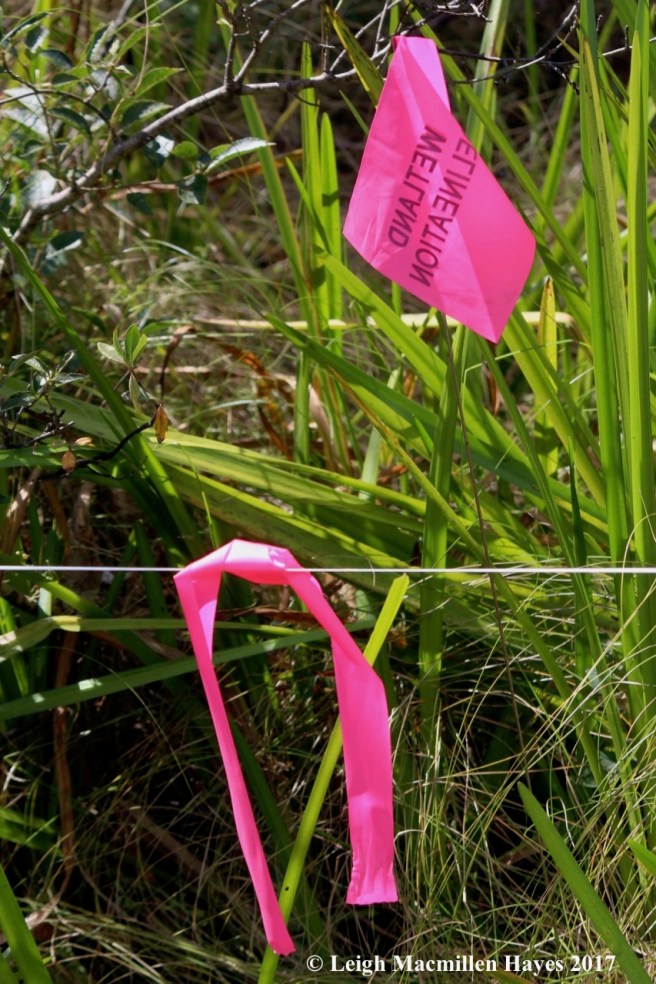
We helped delineate the boundary with measuring tape and flagging, the first being 10 meters by 10 meters, and then found the center, thus creating four quarters.

l1-Rick 1

Under Rick’s patient guidance and teaching, we began to survey the site, section by section, while he recorded our findings.

l1-measuring trees

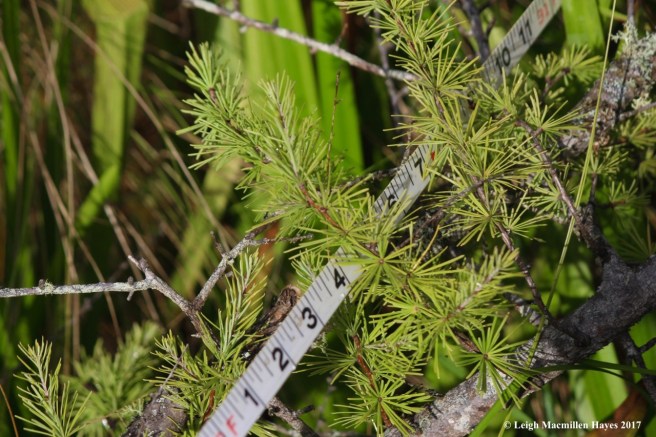
Trees were first and needed to be measured to make sure they were trees after all, and not considered saplings.

l1-rhodora 1

Layer by layer, including shrubs,

l1-tamarack

seedlings,

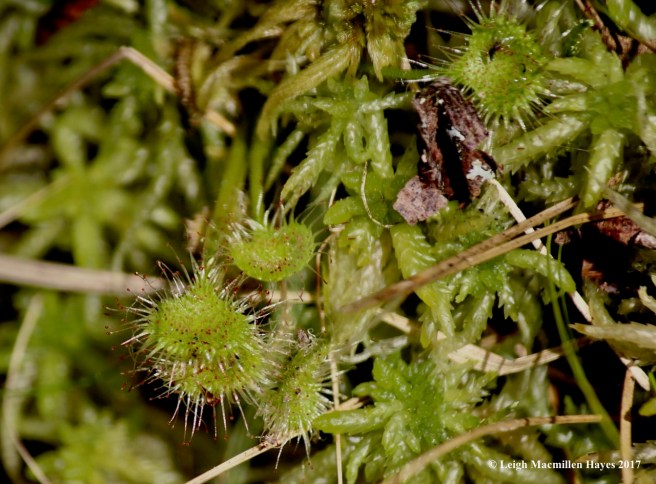
l1-round leaf sundew 2

and herbaceous ground cover,

l1-round-leaved sundew 1

we made our way down.

l1-wasp pupa on hornworm 1

Along the way, other discoveries presented themselves, including wasp pupae on a hornworm,

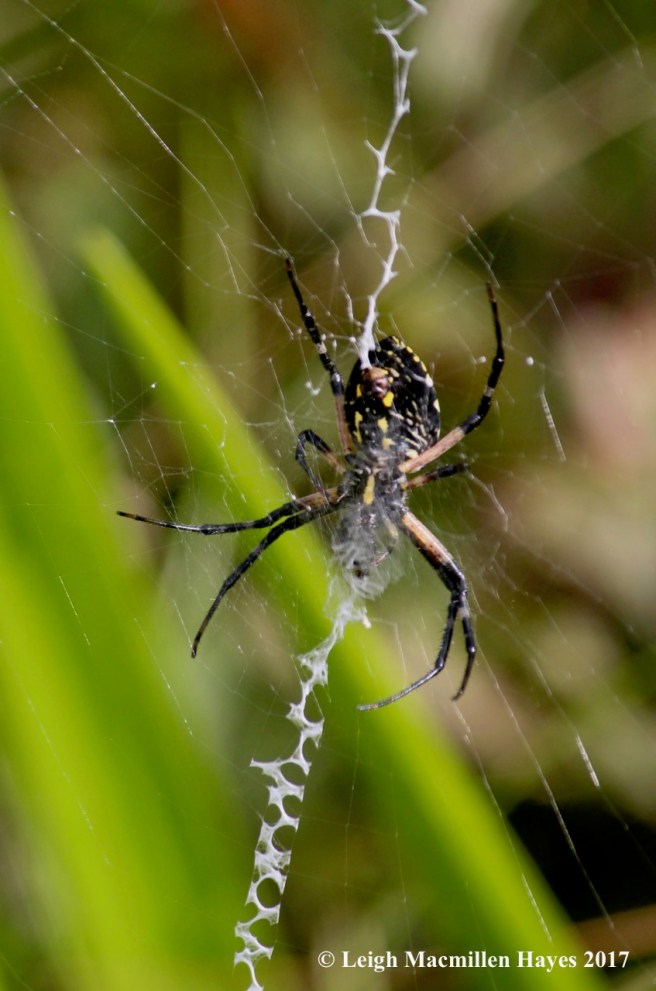
l1-garden spider 1

black and yellow garden spiders,

l1-garden spider 2

weaving their signatures,

l1-eastern pondhawk

eastern pondhawks,

l1-eastern pondhawk 1

up to the measure,

l1-green frog

and of course, green frogs.

Swamp Thing

Four hours later I found a deep hole as we departed that plot. We slogged out, water swishing in our boots, and quickly ate lunch.

l2-hemlock plot

And then it was back into the woods for the afternoon, this time a hemlock grove. On the way, we marked off a site for Thursday’s work, before reaching our destination for the afternoon.

l2-surveying the site

This plot was 10×20 meters and so within we had nine smaller plots to examine in the same manner.

l2-squirrel bites

Though we identified all the species from top to bottom, we also noted more cool finds like squirrel chews on a striped maple,

l2-glue crust fungus

a crust fungus that acts like a glue and attaches dead wood to live,

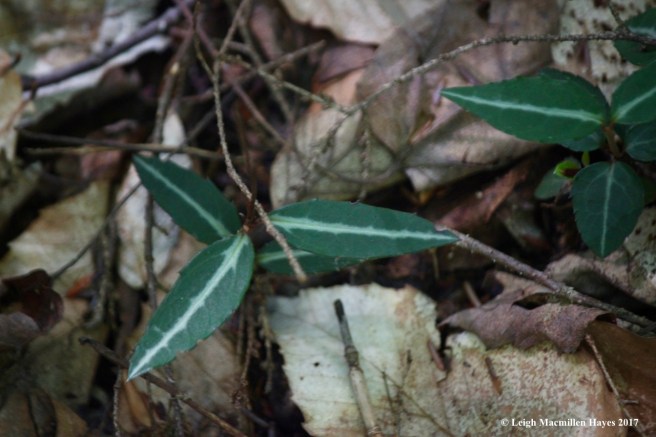
l2-spotted wintergreen

and spotted wintergreen, listed as S2 meaning this: “Imperiled in Maine because of rarity (6-20 occurrences or few remaining individuals or acres) or because of other factors making it vulnerable to further decline.”

l3-plot 3 (1)

I had to miss the Thursday morning session due to a GLLT hike, but met Rick and LEA’s education director, Alanna Doughty, as they finished their lunch. I think they extended it a few minutes as I was a wee bit late. This time, Alanna and I sat on the tailgate of Rick’s truck as he drove down a logging road–I, of course, held on for dear life, while she nonchalantly acted like it was a walk in the park. The best part of the ride was the smell of sweet-fern that our feet occasionally dragged over. And then our march began with a short trek through a wooded forest, before we reached the highbush blueberries and other shrubs that acted like hobblebush and made for careful movement.

l3-black and red spruce 3 (1)

The first afternoon site was in a black spruce bog and for once, I could confidently differentiate between black and red as they stood side by side–both by their colors, the black having a blueish hue, while the red was more yellowy-green, and their gestalt.

l3-cinnamon and chain ferns

One of my favorite learnings from that plot was the difference between cinnamon fern and Virginia chain fern. Again, they were easy to ID by their colors, the cinnamon already dying back. But notice the similarities.

l3-chain fern

And then we looked at the back side. While cinnamon has a separate fertile frond that forms in the spring and then withers, chain fern’s sporangia are oblong and on the underside.

l3-chain spores 2

The area was thick with the chain ferns and our every movement meant spores flew through the air.

l3-pitchers (1)

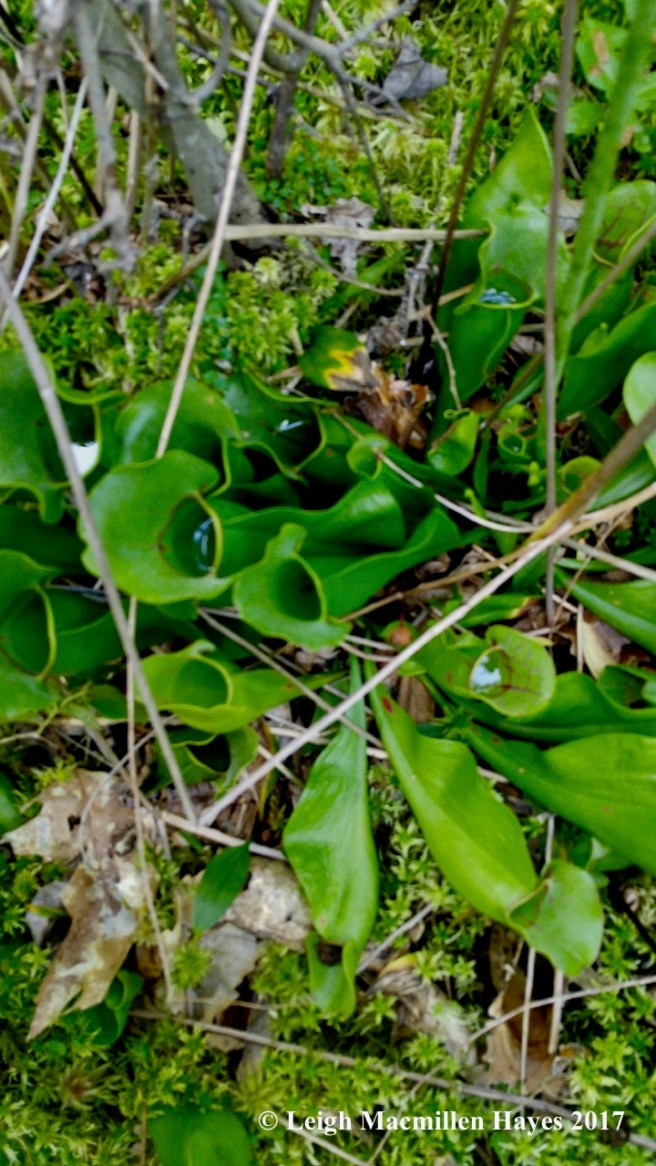
Every movement also meant we had to watch our every step, for so numerous were the pitcher plants. It was a great opportunity to ask Rick about the color of these–I’d been told that green is rare, but he said it’s just a matter of sunlight and age, all eventually take on a redder hue in veins and then overall leaf coloration as they mature.

l3-pitcher plants

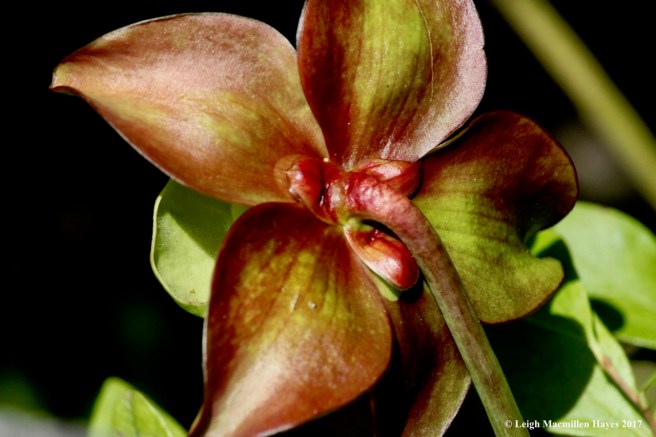
Their flowers were also plentiful in this lush space.

l3-chanterelle waxy cap 1

Among other things, Rick is a fungi expert (and an overall fun guy with corny jokes–the mark of a teacher), and so our learnings were plentiful, including these chanterelle waxy caps.

l4-plot 4 (1)

After making our way back out through the tangle, we hopped back onto the tailgate for a short ride and then headed off into a mixed forest for the final 10x 20 plot.

l4-deer skull

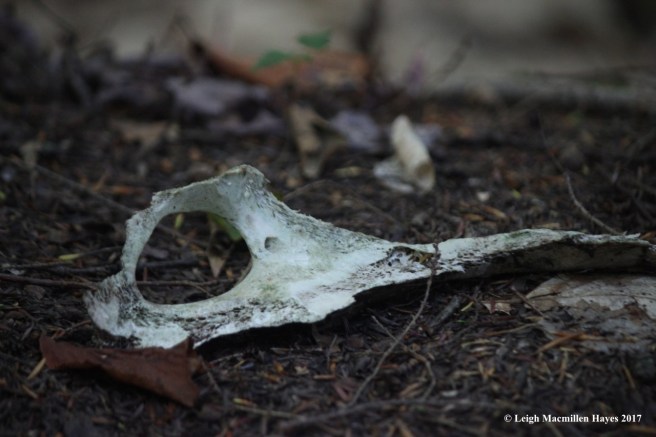
Our cool finds in this one included a much gnawed skull,

l4-orchid

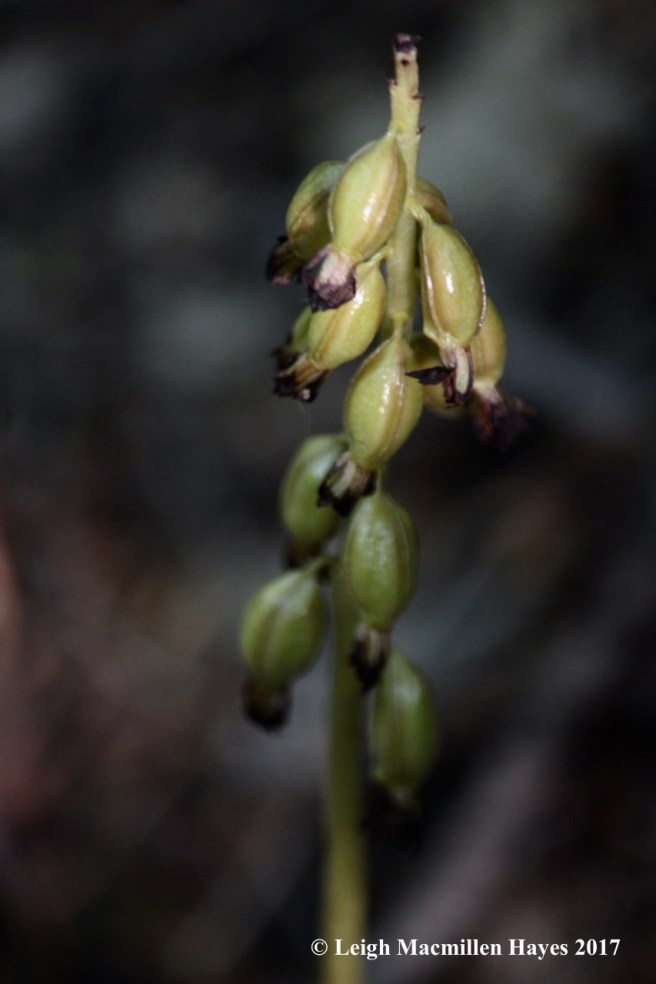
and spotted coral-root.

l4-bristly clubmoss

I also learned to ID one clubmoss–bristly tree so named for its bristly stem.

l4-back up the road

It was dinner time when I again held on for dear life as we drove up the road. To say we were sweaty, stinky, hungry and pooped would be an understatement. By the same token, I think I can speak for Mary and Alanna to say that we were more than grateful to have spent so much time learning from Rick. From wet to sweat–it was well worth the effort.


B is for . . .

Our original plan was to hike to the summit of Blueberry Mountain in Evans Notch today,  following the White Cairn trail up and Stone House Trail down. But . . . so many were the cars on Stone House Road, that we decided to go with Plan B.

And so up Route 113 I drove, turning left just before crossing from New Hampshire back into Maine.

b-view from Basin

By the parking lot for The Basin, we pulled out our lunch and set up camp temporarily at a picnic table as we enjoyed the view of the manmade pond and Sugarloaf Mountain before us.

b-basin rim

The Basin is a low-elevation glacial cirque carved out of the east side of the Baldface-Royce range. Though we’ve visited the pond on numerous occasions, we’d only hiked the trails circling it once before. And as we recalled while sharing a brain in the memory department, that had been thirteen years ago when our oldest son was in seventh grade. It was a fine September day and we’d headed off to climb the Basin Trail. At first, we couldn’t find the brook crossing, so eventually we made our own. And, what we didn’t realize that day was that at the top of said trail we should have turned around and descended. Instead, in our ignorance, we’d continued on the Basin Rim Trail, assuming they were one in the same. Not so. Hours later, we practically slid down one of the Royce trails, splashed across another brook, bushwhacked to the road and followed it down as quickly as we could to our vehicle. It was late in the afternoon and we knew that our seventh grader was anxiously waiting for us . . . because it was also the very day that he could receive his school-supplied Apple computer if his parents attended an after-school meeting with him. That was pre-cell phone time in our lives and we didn’t have enough change for the one pay phone at the Stow Corner Store, which happened to be closed. We raced home, found he wasn’t there and while my guy went in search of our younger son, I zoomed to the middle school, sweaty, muddy and bloody (from a few encounters with branches and rocks), to find that my sister-in-law who teaches there had stood in as a surrogate until I arrived. Today we carried a map.

b-trail sign

And knew what Rim junction meant.

b-hobblebush1

As the north wind blew, it felt rather autumn like and added to our memory bank, while also the perfect day for a hike. And the hobblebush berries and leaves showed off their almost autumn colors.

b-trillium 1

Berries were abundant–especially upon red trillium,

b-bunchberries

bunchberry,

b-doll's eye 1

and white baneberry (doll’s eyes–can you see why?).

b-following the yellow brick road

The trail was easy at the  start, switching from roots to stones to rocks before climbing. Since we’d attended Lake Region Community Theatre‘s fine performance of The Wizard of Oz last night and the trail blazes were yellow, it felt a bit like we were following the yellow brick road.

b-hermit fall sign

At about the one-mile mark, we chose the Hermit Falls loop.

b-lower hermit falls

Water poured over the lower falls,

b-Hermit Falls

and from there we spied the upper.

b-Hermit Falls 2

Though a couple of fallen trees crossed the waterway, the view and sound were pleasing to our senses. It was at this point that our climb became steeper.

b-bear tree 1

We spend a lot of time looking down when climbing up, but because we were in a beech forest I knew I had to look–for bear claw trees. And I wasn’t disappointed.

b-bear paw 2

Even in the upper trunk we could see the marks left behind.

b-maple division

And then my guy pointed out another tree he thought I should note–it looked rather like a burl gone bad. We don’t know what happened, but the final result was rather gnarly, and still the tree continued to grow and produced leaves.

b1-boulders

Huge boulders littered the woods as we continued our climb.

b-light at the end of the tunnel

Closer to the summit, the trail followed a rather precarious shelf beside the base of a big headwall cliff–I didn’t take time to photograph it for I was focused on each step, but at last we saw the light at the end of the tunnel.

b-summit which way should we go?

Before stepping out to the viewpoint, we walked ahead to the spot where we’d erred thirteen years ago. Today it’s well marked. In fact, this junction includes five options and my guy took the time to point in each direction. Our choice: to return from whence we’d come–behind us.

b1-summit 1 (1)

At last, we turned back to take in the view from the Basin below us to Pleasant Mountain on our far right. We noted a cloud casting its shadow over Blueberry Mountain and trust we would have been blown off had we stuck with Plan A.

b-summit blue bead garden

Though we’d brought containers to pick blueberries, that wasn’t to be. But at the summit we noted a blue of a different hue, a blue-bead lily garden by our feet,

b-summit mountain ash berries

and mountain ash berries maturing above our heads.

b-velvety fairy fan fungi 1

Finally, we started down. After the initial scramble on the rocks and roots just below the summit, I once again turned my attention to the life around me and realized I’d missed this display of fungi on the way up–velvet stalked fairy fan mushrooms (Spathularia velutipes). They actually reminded me of miniature cowboy finger puppets donning oversized hats.

b-bear tree on way down

And . . . another bear claw tree–this one highlighted with a trail blaze. How sweet is that?

Follow the yellow brick road.

b-back on flat ground

At last we were back on flattish ground and made our usual mad dash out.

b1-deer hill bog 4 (1)

As we drove home, I gave my guy a choice–ice cream at the Stow Corner Store or turn onto Deer Hill Road (actually a road of many names) to the bog and then to Evergreen Valley. He said the choice was all mine and so I chose the latter. And as I knew it would because it always does, it made me want to return when I have time on my hands. I will–that is a promise to myself.

b-bull frog 1

Today’s stop included a chorus of bullfrogs–adding to my list of finds beginning with the letter B.

b-bye

As it worked out, we were glad we followed Plan B.

B is for . . . The Basin and the bog and all that we saw in between.

Thanks for stopping by.

Bye bye!


Lichen Everything We See

The Tuesday morning Greater Lovell Land Trust docent tramps don’t typically have a theme–we just like to explore a property together to see what it has to offer and learn from each other. But this morning I tried to invoke one–lichens–since we recently had Maine Master Naturalist Jeff Pengel present a talk on the topic and a few days later he led a walk for us.

w-on the trail (1)

I’m happy to say, we are who we are and within minutes we found ourselves easily distracted.

w-many fruited pelt lichen

We did spot a variety of lichens and talked about their forms and substrates. The youngest among us at age 5 found this pelt lichen growing among the mosses.

w-Wes

In fact, he spotted it just after he’d jumped off what he deemed Jockey Cap, a rock that represented the 600-foot ledge that overlooks neighboring Fryeburg. We welcome his keen eyes and those of his siblings, for they see things we overlook and have a natural curiosity. (Don’t you just want to pinch those cheeks?)

w-green stain fruiting

In fact, his oldest brother was the first to spot this fungi, the turquoise fruiting bodies of green stain fungi that I used to think was a remnant trail blaze. The fruits are minute but the color spectacular.

w-scaly vase chanterelle

And so our eyes began to focus on other fungi, the fruiting bodies of which are a result of all the rain we’ve received. Another great find today–scaly vase chanterelles. Our British docent, who is a fungi aficionado, reminded us, “It’s veys here, but back home I’d say vahz.”

w-ant pupa in heart shape

And then there was the heart that we had to love. One of our group had stumbled by a tree stump and some bark slipped off. Beneath it, the adults in an ant colony quickly went to work, moving their pupa to a safer location and we watched for a few minutes as they worked–the heart slowly losing form.

w-interns and young naturalists 2

All along the way, our interns took time to explain things to the younger set.

w-interns and young naturalists 1

And the younger set took time to practice what they knew,

w-poking a balsam blister

such as the fact that if you pop a balsam blister, the resin will ooze out. And your fingers may stick together. But it will smell like Christmas.

w-docents 1b (1)

It took us almost two hours to walk less than a mile and climb the “eagle nest” overlooking Wilson Wing Moose Pond Bog.

w-docents 3 (1)

A few stayed below and made more discoveries.

w-pipsissewa

We finally reached Horseshoe Pond Road, turned right and slowly made our way back to the kiosk where we’d parked. But still, we stopped periodically and took in the sights, including the pipsissewa in bloom.

w-spider

And a spider that was dangling when first spotted by one, but on the dirt road when we all gathered round. Check out the design on its legs.

w-lungwort

After all but one had left, she and I chatted over our brown bag lunches and then ventured across the street to the Bishops Cardinal Reserve in preparation for tomorrow’s  Lovell Rec Summer Camp Nature Hike. We offer two hikes–one for the younger set and another for the older kids, who wish we’d talk less and walk more. We can take a hint and so we do that for them. But still, there are cool things to see. We determined some fine stopping points today for the mammal theme, but the lungwort lichen also called out with its bright green coloration after yesterday’s rain.

w-Horseshoe Pond

Once we’d completed our reconnaissance mission, I decided to stop down the road at the Horseshoe Pond boat launch, ever in search of dragon and damselflies.

w-pickerel weed

It wasn’t warm or sunny enough, so I didn’t spy any of the odonatas.

w-pickerel and hoverfly 2

But I did notice hoverflies nectaring the pickerelweed flowers.

w-green frog

And a young green frog jumped into the water upon my approach. As I stood and looked at it, I heard rustling behind me.

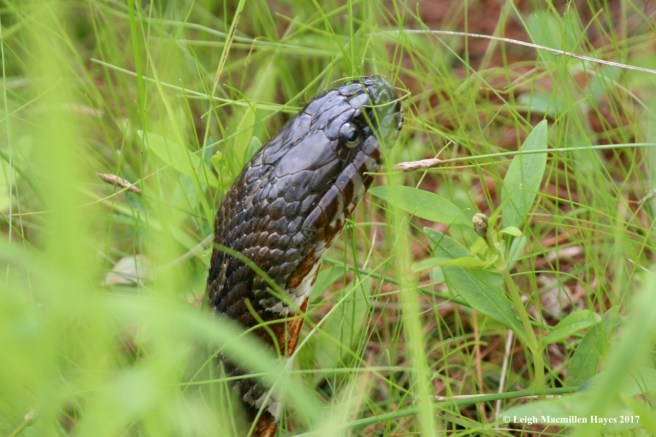
w-snake 8

And in the grass, I spied the creator.

w-snake 9

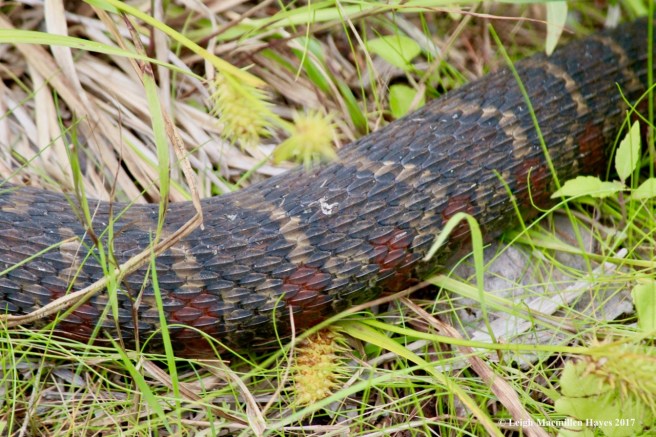
Notice how thick its body was and the keels or ridges on its scales. Plus the coloration–dark brown to gray with reddish brown and even black splotches.

w-snake 1

It held its head up as if searching for me and I could see a variation of color on its neck.

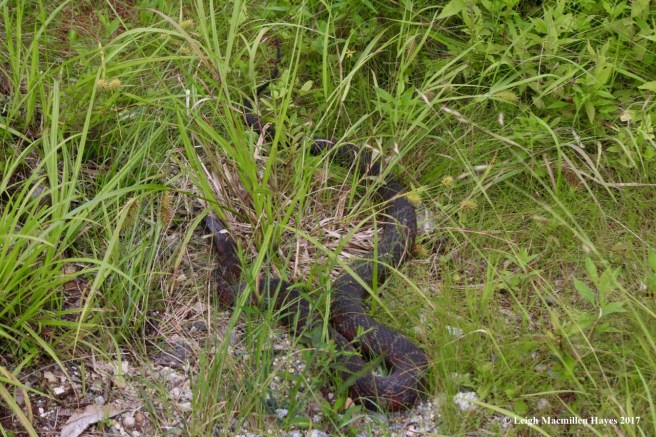
w-snake 3

And then I moved again while it stayed still–the better to see it with.

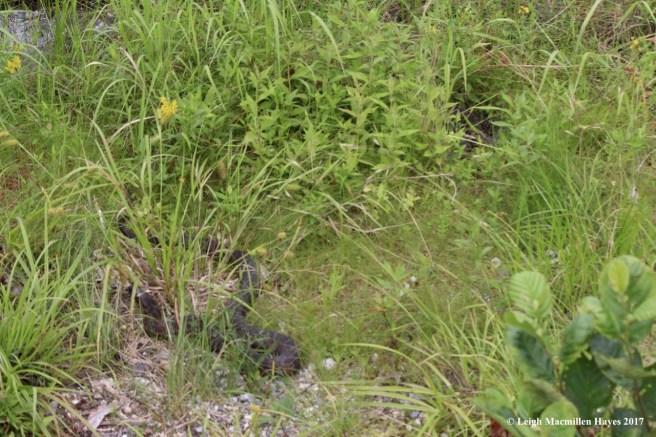
w-snake 6

That’s when I realized that what I thought was a six-foot-long snake . . .

w-snake 4

turned into two three-foot-long Northern water snakes. Two? Why? They are known to be solitary. And mating season has since passed.

A few minutes later, a vehicle approached on the road above and slowed down. The driver reached out and grabbed a few blueberries from a high-bush shrub. We exchanged greetings and he told me he was stopping by for his daily dose on his way home from work. I asked if he’d seen the snakes, for I recalled seeing one in the same spot a year ago. As he jumped out of his jeep, he told me he’s caught water snakes in the pond while fishing, but he hadn’t seem them by the boat launch. And then . . . he said he wanted to pick one up and in a flash he did just that, catching one by its tail as the other quickly slithered into the water. I was a bit taken aback but the snake danced with such rhythm and force that he had to let go.

w-snake 11

It dropped into the water where we could admire its colors even more.

w-snake 12

And then it swung around–not necessarily to say hello. We noted a small frog nearby and commented on how still green frogs can be.

w-snake 13

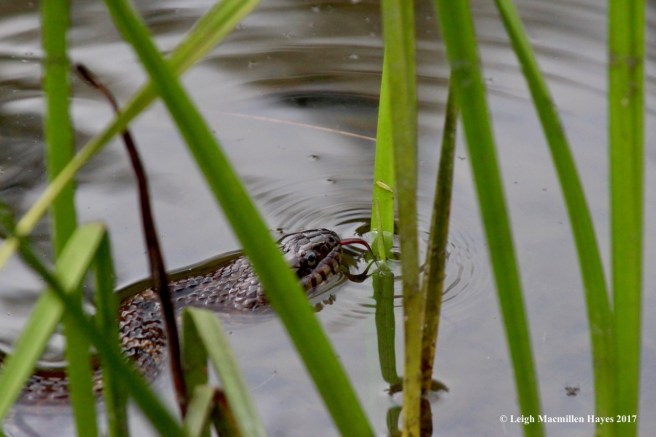
Eventually, the snake moved off, all the while its forked tongue dashing in and out . . .

w-snake 14

and in and out some more as it snacked on insects.

So much for a lichen walk–instead, as always, everything spied on today’s adventure was worth liking.


Dodging the Drops Mondate

A friend called this afternoon and her first comment was that she didn’t know if she’d reach me given that it was a Monday. She’d thought about the weather, but figured it wouldn’t bother us and we’d probably be in the woods somewhere. How right she was–and her call came just after we’d returned home.

h-trail sign

Our mission was a work date on the Southern Shore Trail at Lake Environmental Association’s Holt Pond Preserve. For a number of years, we’ve maintained this section of trail between the last boardwalk just below Knapp Road in South Bridgton and “the field” near the southern tip of Holt Pond. It’s a section that was an Eagle Scout project years ago and we’d helped in creating it, so it’s been our pleasure to keep it clear of fallen trees and branches. Thankfully, this section isn’t traveled often and we rarely find any manmade debris.

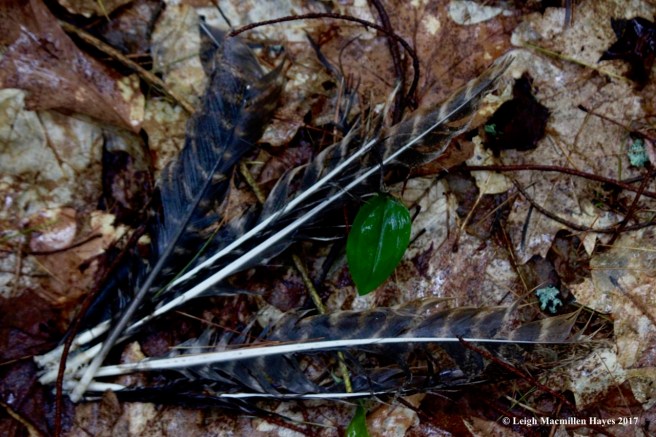
h-wild turkey feathers

Immediately we did find some bird debris and wondered what happened to the turkey. A few other feathers were scattered, but we didn’t look further, so we don’t know if there was more to this story.

h-following the wall

Loppers in hand, we turned at the stonewall, and entered the enchanted forest, for that’s how it feels . . .

h-green lichens:mosses

especially given so many shades of green. And a few openings that would make perfect entry points for wee inhabitants.

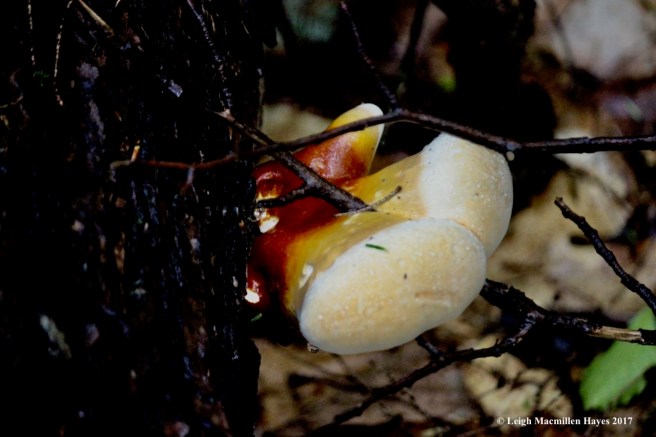
h-hemlock varnish shelf 1

We moved along at a rather brisk pace (in my opinion, that is, though when I mentioned it to my guy, he brought up other times when we’ve moved much more quickly.) But, I did what I do, and while he picked up sticks and dragged downed trees out of the way, I looked around to see what I might see, like the varnish shelf fungi on a hemlock tree. I questioned myself with this ID because it looked similar to a red-belted polypore, both featuring a glossy lacquer-like sheen and concentric zones of red, yellow and white. But, it grew on a hemlock and I should have snapped an old specimen that was on the ground below. I know if I’m wrong, Parker and Jimmy Veitch of White Mountain Mushrooms and Maine Master Naturalist Alan Seamans will all correct me. If that’s the case, I’ll add a note to this post.

h-Broad gill, more sombero like in nature

I could hear the mushrooms and the mushroom gurus singing praises to the rain gods, given this spring’s rain. And I’m going out on a limb again with broad gill (Tricholomopsis platyphylla) as an ID for this one. (NOTE: from Parker–“The Megacollybia (Tricholomopsis) platyphylla is Entoloma vernum [group])

h-swamp beacon 1

There with others, but my favorite of all–swamp beacons lighting the way through puddles.

h-Holt Pond toward Quaking Bog

At last we made our way to an outlook spot with its view of Holt Pond. Across the way, the quaking bog (where the trees are tallest on the left) and Muddy River outlet (just to the right of those tall trees).

h-into the field

And then we continued through the hemlock forest and on to the field, our turn-around point. Again, we shared memories–of our first reconnaissance mission with Bridie McGreavy when she was LEA’s education director and we decided to take on the task of maintaining the trail. The three of us headed out on a winter day when the snow was deep and soft. Bridie and I were smart–we let my guy cut trail. I’m sure we jumped in front once in a while, but he led the way most of the time and was exhausted by the time we finished. So were we ;-)

h-field 1

There were a few years when we drove in from Fosterville Road, making it easier to bring in bigger equipment to keep the field trail open. Today, I counted the whorls on the white pines in order to age them–they’re at least fifteen years old.

h-field pines

And loving this rainy season–as evidenced by their recent growth.

h-sweetfern 1

The field is also full of wild strawberries, raspberries, gray birch and sweet-ferns like this–all early succession species.

h-big tooth leaves

On the edge, young big-toothed aspen are slowly getting established. It’s been our great fortune to watch the evolution from field to forest at this almost hidden gem.

h-parasol

As we backtracked and listened not only to the sweet songs of vireos and veerys, but also to  raindrops sprinkling upon the canopy before drifting down to the understory, we were thankful for our raincoats. A parasol might have been handy, but we weren’t soaked by the time we arrived back at the truck. Somehow, we managed to dodge the drops on our Mondate.


Snow White Birches

We’ve plenty of snow still on the ground and another storm predicted for the weekend. I keep saying, “Spring in Maine,” because that’s exactly what it is. In fact, no season here has ever looked at the calendar and we never know what will happen during those transitional days–except that they’ll do just that–transition.

o-up to my knees

I, too, am transitioning and rather than my usual uniform that includes snowpants and a vest or jacket, I simply wore jeans and a sweater, plus boots minus the snowshoes. Only occasionally did I dig a posthole, but when it happened my foot went deep–at least to my knees. And in this case, there was a juniper below, so probably more snow under that.

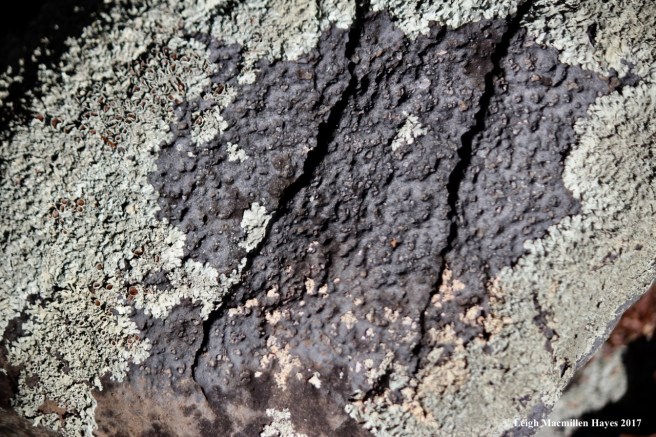
o-rock surface black and pitted

Deer, raccoons and a bobcat had traveled through our woodlot and along the cowpath. At the vernal pool, I spent some time checking out trees and looking for signs of change. Deer and turkeys have been the most recent visitors. And both have also traveled along the double-wide stonewall beside it. I, too, climbed up there and moseyed along. That’s when I discovered a black crustose lichen that turned out not to be a lichen after all.

o-rock surface, basalt?

I suddenly realized I was looking at the rock face and have sent photos off to two geologist friends. My question, “Is this basalt?”

Ann Thayer replied, “Could be, it also looks like it could be a rock that has been metamorphosed and has secondary mineral growth. At certain pressures and temperatures there are indicator minerals that grow that represent the metamorphic conditions. For instance, Garnet, sillimanite, and andalusite, are examples of indicator minerals . . . Take a look at it with the hand lens. Tell me what you see. There are a couple of minerals that look like they have a six-sided form and cross-section.”

Ah, a reason to look some more–as if I need one. And to invite Ann here for a walk.

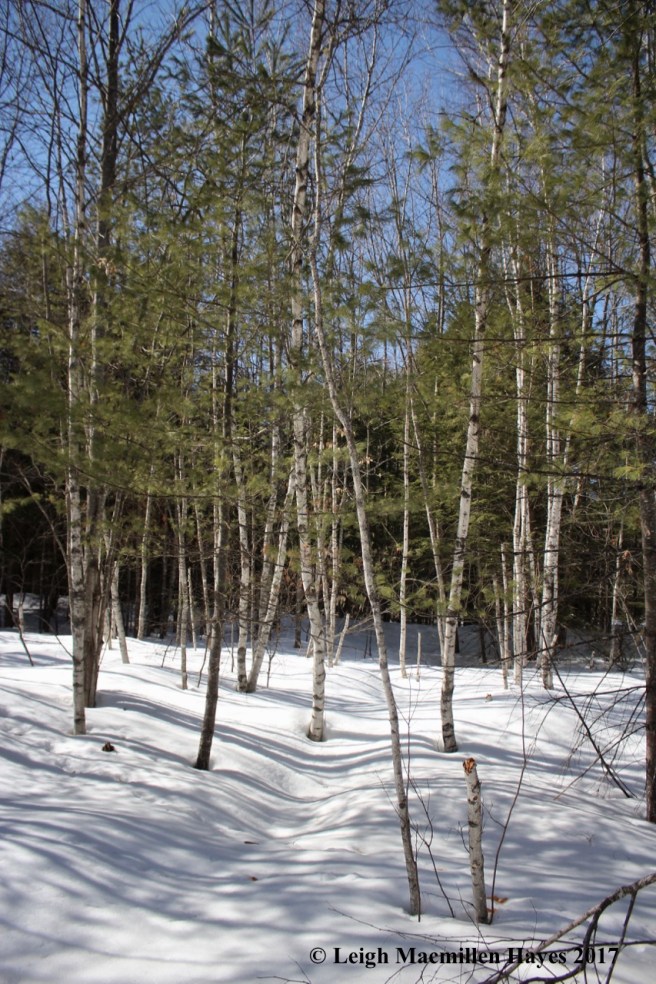
o-birch grove

Beside the vernal pool is one of my favorite sections of these woods, a small birch grove. Yes, white pine and red maple saplings also grow there, but right now the birches dominate this acre-size plot.

o-gray birch chevrons 1

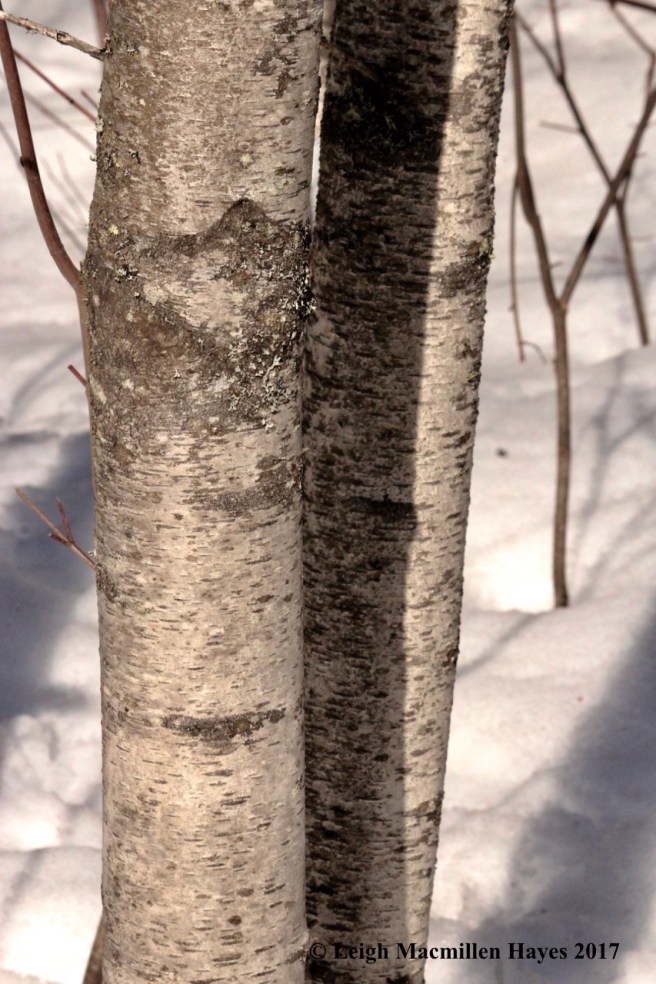
It’s a classroom filled with examples that have helped me gain a better understanding of differences between family members. The gray birch, Betula populifolia,  are those I associate with Robert Frost’s poem, “Swinger on Birches,” because it’s an early successional tree that bends naturally and even more so in an arc when snow or ice weigh it down. But it’s the chevron or triangular shape below branches that shouts its name to me.

o-dirty gray birch bark

Its bark, though white like paper birch, looks dirty–especially toward the base. And, unlike paper birch, it barely peels.

o-paper birch bark1

In this same plot, I did find a few specimens of paper birch or Betula papyrifera, which is a stronger tree and grows taller and longer that brother gray.

o-paper mustache

And rather than a chevron below the branches, it’s known for the long, dark mustache that swoops up and over its branches.

o-paper birch close up

I moved in to take a closer look at the paper birch bark, admiring how the lenticels withstand the peeling, breathing while sloughing off old cells.

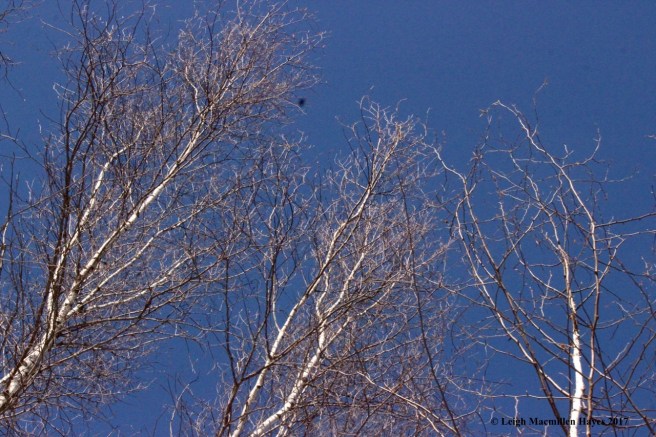
o-gray, left, paper, right

Looking skyward, the differences between the two were yet again defined. The gray birches on the left featured a bushier silhouette than the paper birch on the right. Catkins and buds also shouted their names, but I’ll save that for another day.

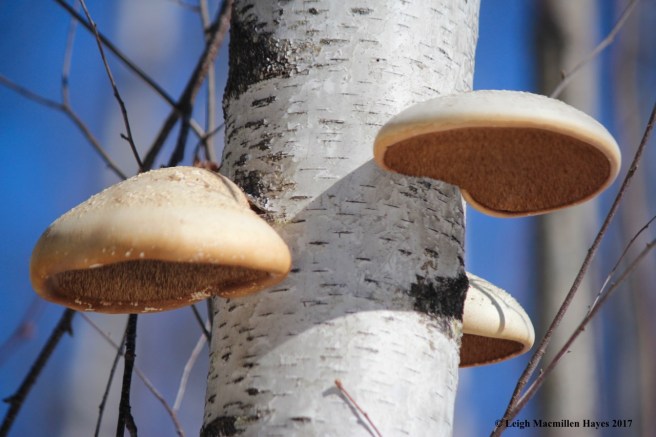
o-birch polypores 2

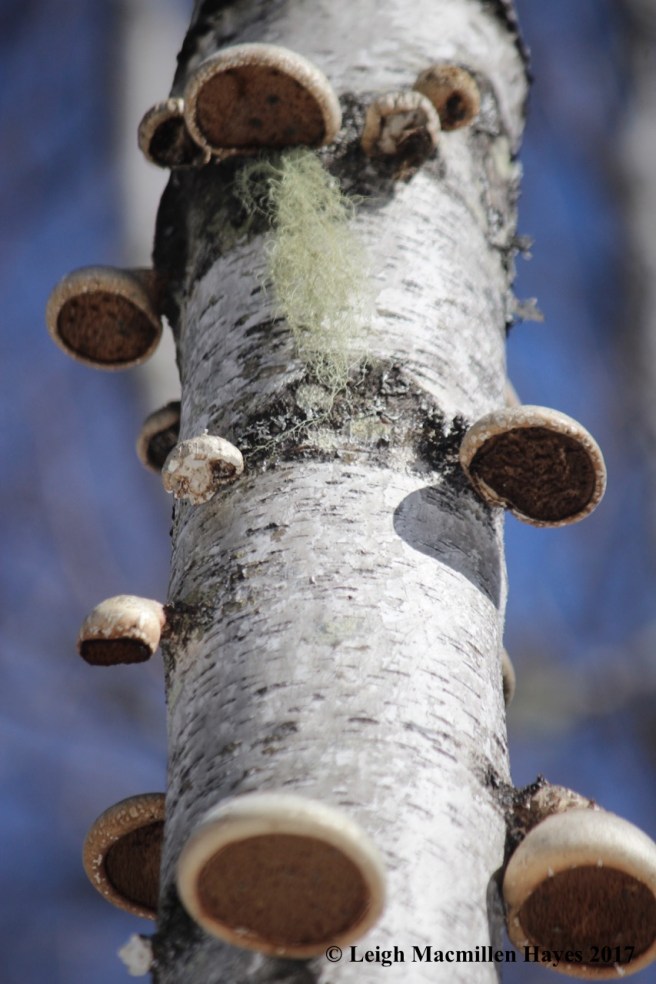
Not fussy about which birch it grows upon is one of my favorite fungi–because I can identify it with ease! But also because it really is attractive.  Piptoporus betulinus or birch polypore grow on some snags as well as a few live trees. The smooth rim rolls around the pore surface and sometimes reminds me of a bell hanging from the tree.

o-birch polypores growing old

These bracket fungi only live for one season, yet persist on trees for a longer period of time . . .

o-birch polypore skeleton

until they may become mere skeletons.

o-birch grove 1

After a sunny afternoon among the birches, it was time to head home. Oh and by the way, some call paper birch white birch and some call gray birch white birch. I prefer to call them paper and gray.

In the Brothers Grimm Fairy Tale, the queen sat by the window sewing as “the flakes of snow were falling like feathers from the sky.” Soon the queen gave birth to a daughter as white as snow with hair as black as ebony. You know the rest of the tale. But did you know that Snow White lives in these woods–forever embodied in the birches?

The Bears of Mount Tire’m

Mary Holland posted in her Naturally Curious blog that black bears are emerging now and it’s time to bring in the bird feeders. Maybe so, but today surely didn’t feel like a good day to give up a cozy spot and head out in search of food that doesn’t exist because the snow is crusted and two feet deep.

Winds were out of the northwest at about 18 miles per hour. The temperature was 8˚ that felt like -10˚ or lower. But sunshine. We had plenty of sunshine. So maybe the bears are waking from their long winter’s nap.

t-porky-works-2

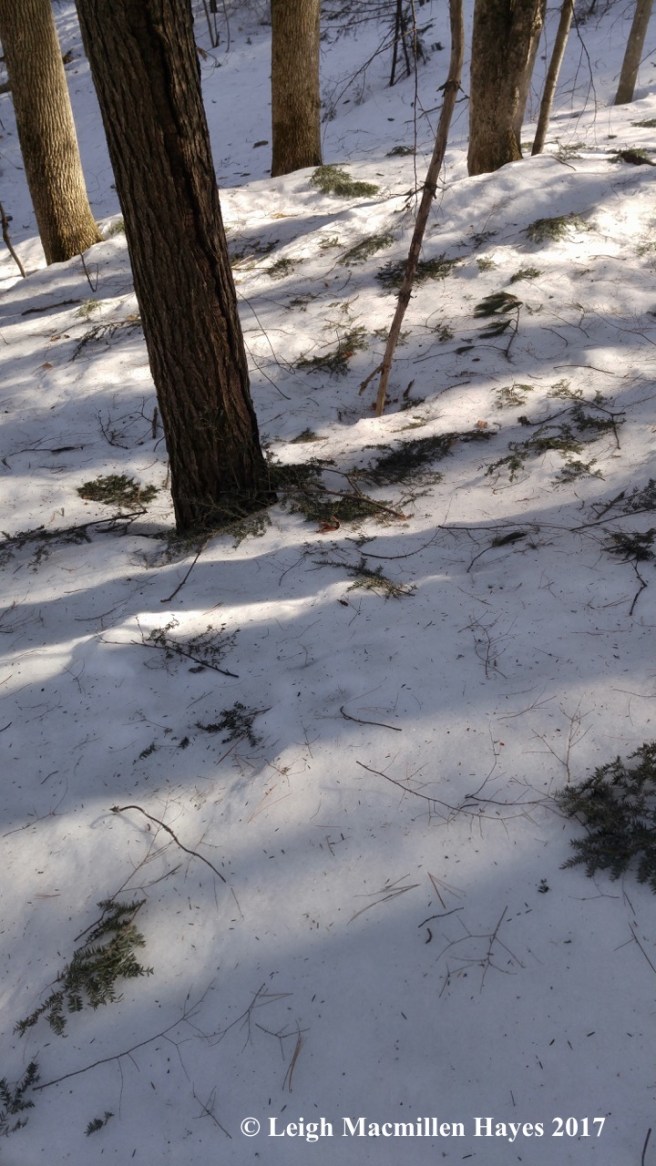
Post lunch, my guy and I decided to don micro-spikes because of the snow conditions and ascend the trail to the summit of Mount Tire’m in Waterford. Only a few seconds after starting up the trail, we spied downed hemlock branches and knew one of the critters that frequents these woods.

t-porky-wall-walk-1

As I looked on the stonewall beside the trail, I could see that the porcupine had left its own trail while it came and went. We wondered where it might be, but when I turned and looked back down to the road, I saw that the trail continued that way and have a feeling that Porky lives under one of the nearby barns, much the same as our local Porky lives under our barn.

t-woodpecker-hole-1

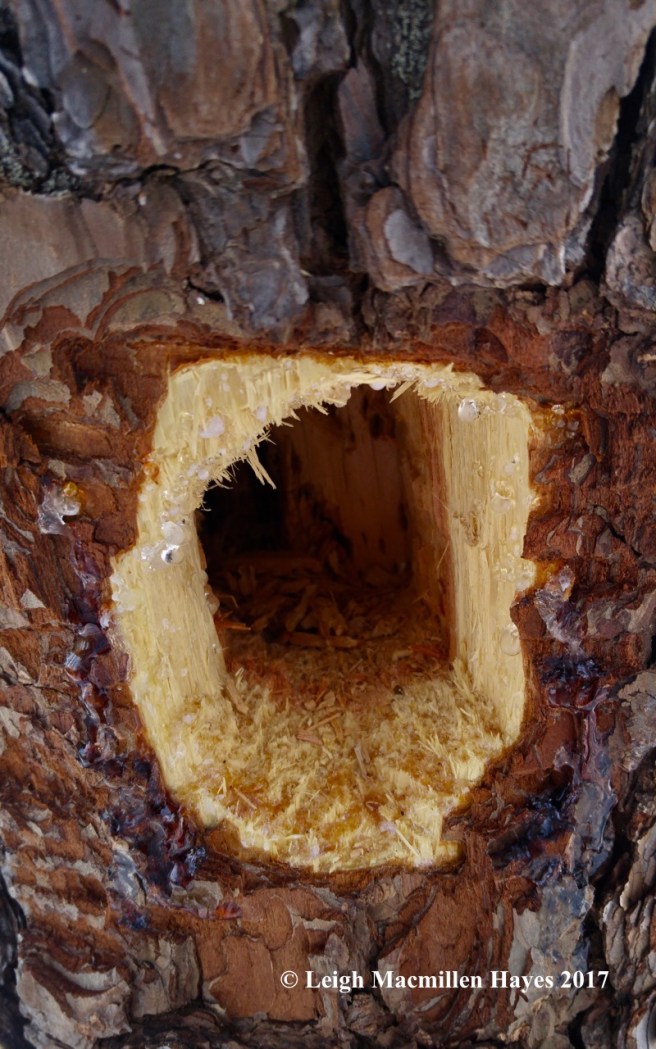
Our hike to the summit was brisk because it was so cold. Every once in a while, my guy paused, including beside this newly excavated pileated woodpecker hole. If I were the local chickadees, I’d choose this one tonight and gather all my friends and relatives within since it was deeper than many.

t-fungi-1

There were the fire tenders nearby–birch bark and false tinder conks–so keeping the home fire lit should help keep them warm.

t-keoka-1-1

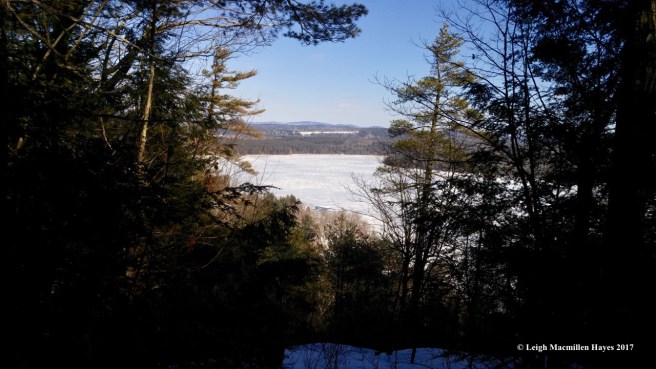
Over halfway to the summit, there’s a brief opening to Keoka Lake and Streaked Mountain in the offing. We could see a wee bit of open water below, and know that despite this weekend’s weather, change is in the air.

t-summit-view-2-1

It seemed like we reached the summit in a matter of minutes, so cold was it. But, we were out of the way of the wind and the southerly exposure meant less snow.

t-summit-view-4-1

We looked to the left, with Keoka Lake below. And behind the single pine, Bear and Hawk Mountains.

t-summit-view-3-pleasant-1

To our right and through the pines, we could see the snow covered ski trails at Shawnee Peak Ski Area on Pleasant Mountain.

t-summit-view-2-1

Straight below, Waterford City, Bear Pond and Long Lake beyond.

t-tirem-rocks-2-1

This hike is never complete without a visit to the rock castle hidden in a hemlock stand behind the summit. It was a favorite for our sons when they were youngsters and we still like to pay homage.

t-rock-cracks-1

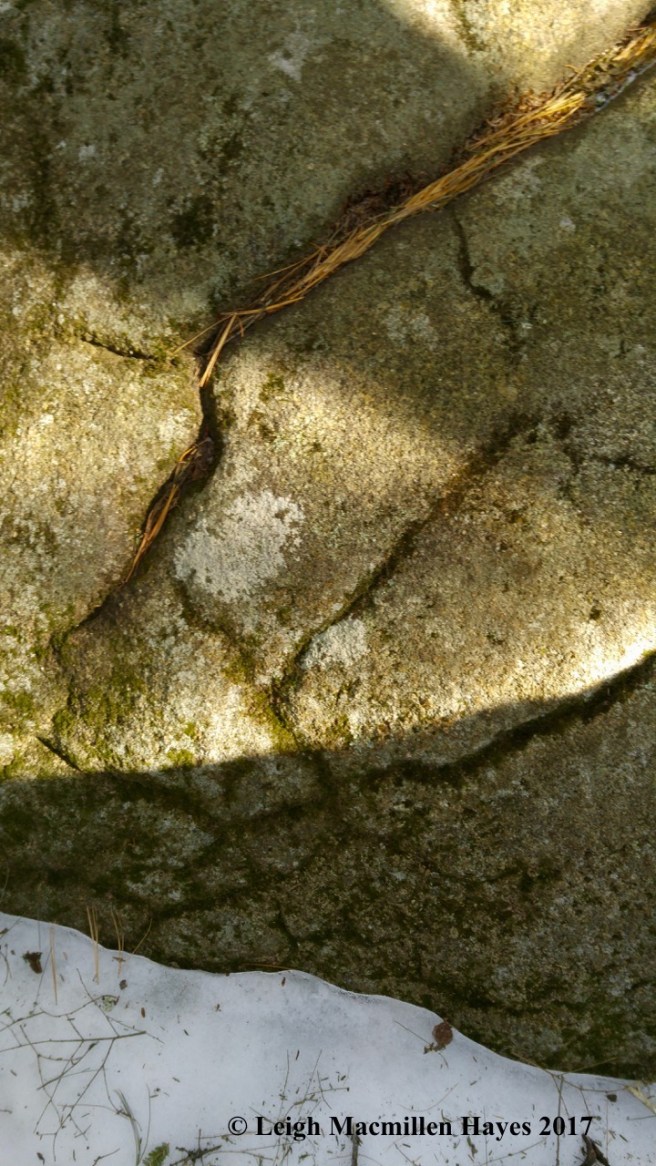
Life on a rock has long been exemplified here, with crustose lichens topped by mosses that grow among the cracks, where pine needles and seeds gather.

b-tree-on-rock-1

The result– dirt so birch trees may grow out of the side of the boulders.

t-bear-cave-2-1

When one visits the castle, it’s important to check out the caves because you never know . . . t-me-2-1

who might emerge.

t-bear-1-1

We decided to bushwhack on our way down. Turns out, Ms. Holland was right. We met a bear in the woods today.


Hiking the West Mondate

How could it be? We realized this past week that we’d only hiked in Sebago Lake State Park together once–thirty years ago. Oh, I’ve skied there, visited friends who were camping, and participated in several eighth grade class picnics back in my public education days.  But today we decided to remedy our hiking opportunity–or lack thereof.

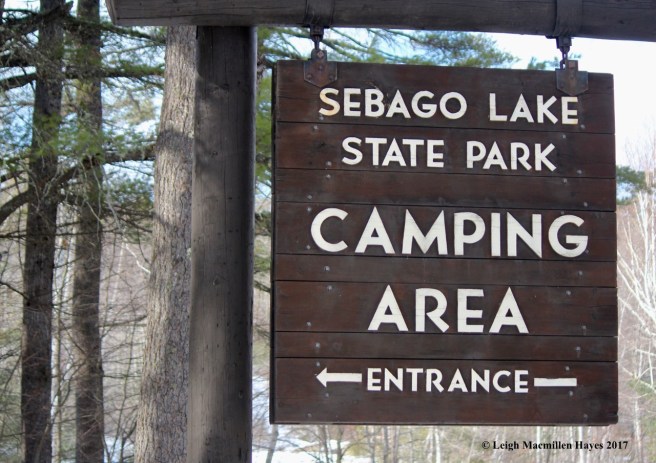
s-sebago-sign

Our intention wasn’t to camp, but rather to explore the trails that circle around and cut through the 1,400-acre property. For those of you who know my guy, though we certainly haven’t spent a lot of time in the park, he does feel a certain affinity–to the brown stain that the park staff purchases in five gallon buckets from his hardware store. :-)

s-boundary-blazes

After looking at a map near the entry booth, we headed off on a trail marked with orange blazes. Or so we thought. Until we realized we were following the boundary. But all the orange paint made me think of our young neighbor, Kyan, and as it turns out he was on my brain for a great reason–he’s been in remission for the past six months following his bone marrow transplant and today had his central line removed. No wonder we spent an hour following those orange blazes. All the while, however, we did think the trails were poorly marked.

s-high-point-1

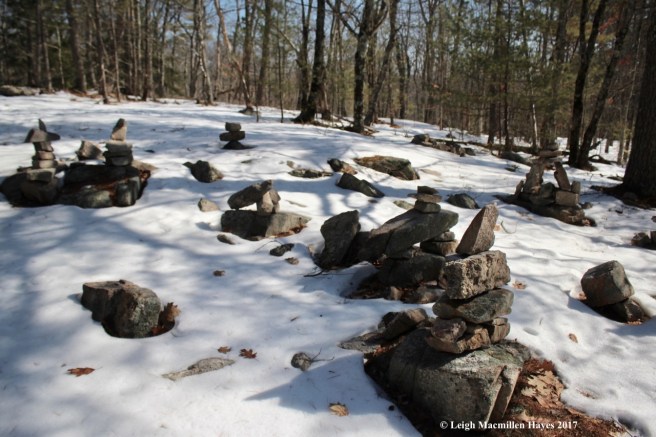
Unwittingly, we spotted a bit of brown–on the picnic table. We appeared to be on a high spot, home to the table and a cairn garden.

s-cairns-3

I’m of several minds when it comes to cairns. I know that some are historical and symbolic and others mark trails, but these, though each different in sculptural form, bothered me.

s-cairn

While my guy saw them as offering hikers something to do, I saw them as disruptive to the natural landscape. That being said, the landscape was formed by a glacier and these pieces spoke to the bedrock geology of the Sebago pluton with their pinkish coloration.

s-kneeling-before-map

Turns out we were at the summit of the Lookout Trail, the highest point in the park at 499 feet. And behind the cairn park, we found the trail itself, blazed with red triangles, which we followed down to the campground road where we found a map–worth kneeling and worshiping. Well, actually, given the snow depth, that was the easiest way to read it. From that point forward, we found “You Are Here” maps whenever trails intersected, though we did tend to wander off occasionally.

s-ice-bubbles

Over a brook, where balls of ice formed,

s-artist-conks

past artist conks decorating a decaying birch tree,

s-locust-bark

and through woods featuring the braided ridges of black locust bark, we hiked.

s-tree-silhouette

And then we reached the beach. On Sebago Lake.

s-rocky-coast-of-maine

We’d arrived at Witch Cove Beach.

s-waves-and-wind

The wind had kicked up the waves and it felt almost ocean like. Almost.

s-maple-and-pitch

Certainly, tree roots beside the lake spoke to wave action and higher tides (no, the lake doesn’t have a tide, but in storms and floods it must surge higher). Beside the water, a red maple and pitch pine tree embraced from their root source.

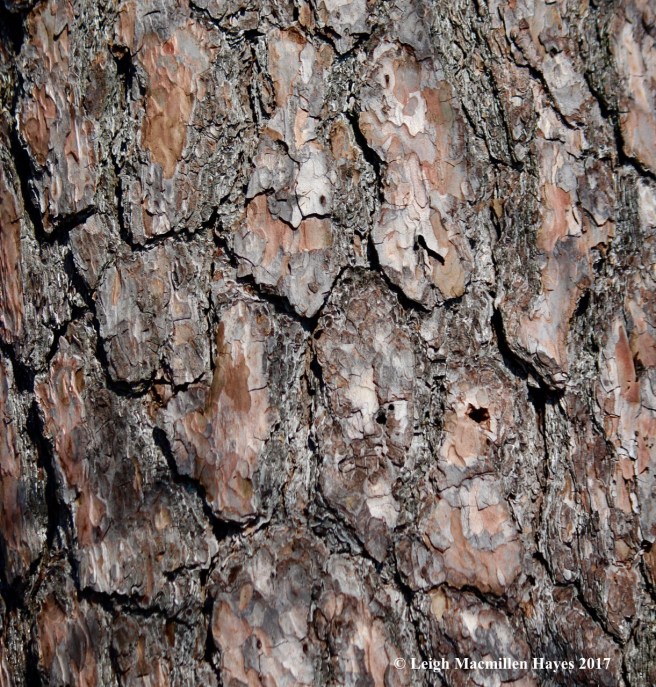
s-pitch-pine-bark-1

The bark of the pitch pine featured its reddish plates surrounded by deep furrows.

s-red-pine-bark

While it’s similar to red pine bark that grows nearby, there are subtle differences–red pine bark being plated but much thinner and tighter to the trunk. Plus, the pitch pine has bundles of three needles, while the red features two needles.

s-pitch-pine-growth

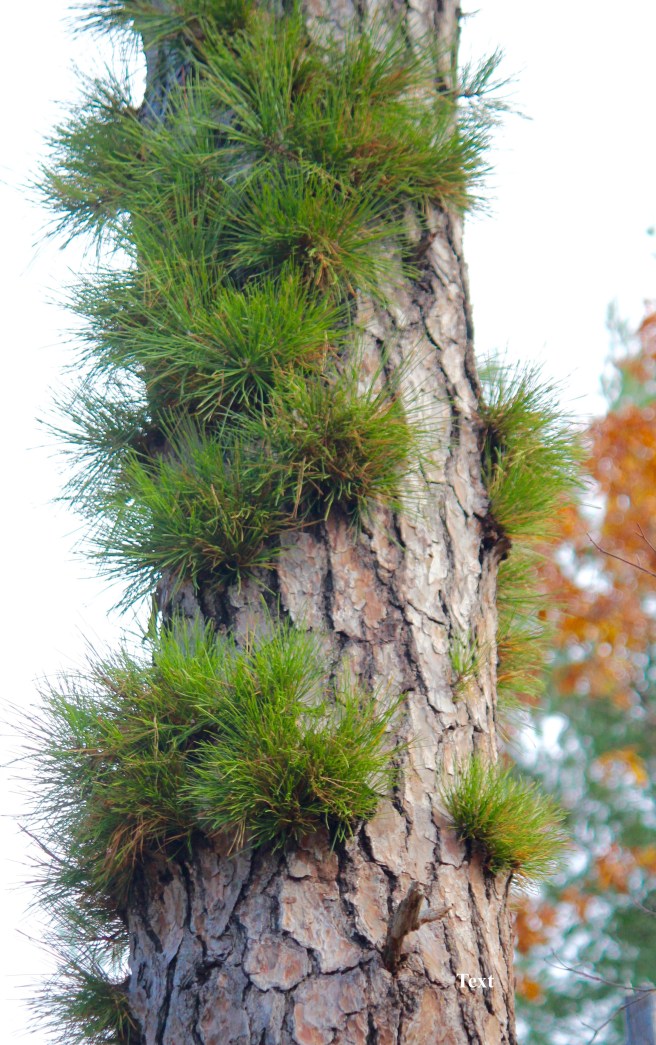
The other unique characteristic of pitch pines, their epicormic sprouting of needles on the trunk that grow from dormant buds on the bark.

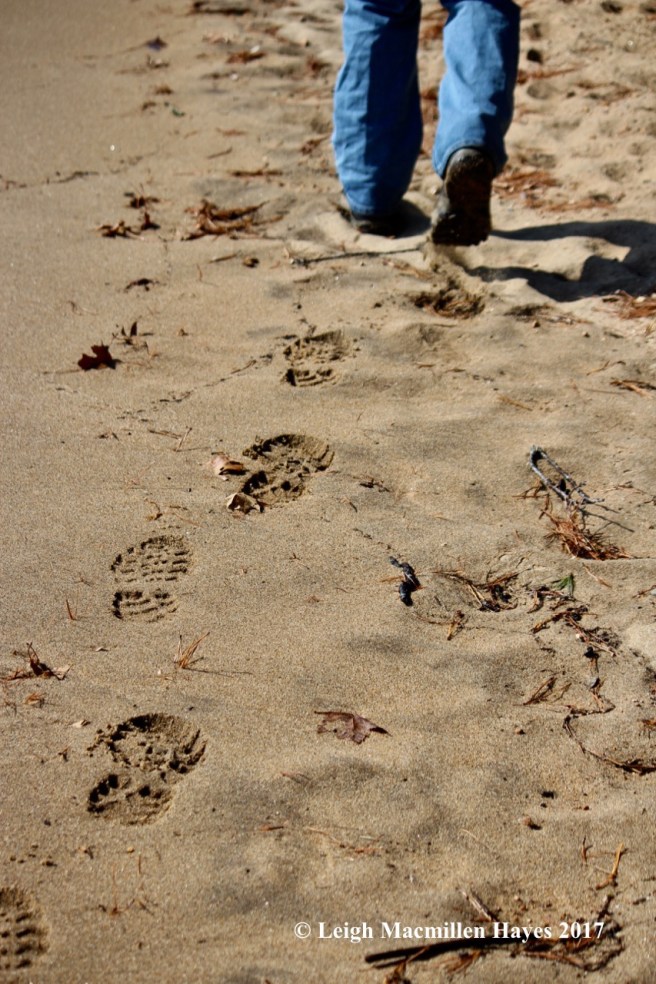
s-sand-prints

Eventually, we moved on, leaving prints in our wake.

s-beach

Our substrate switched from snow to sand and back to snow, which we much preferred.

s-beach-eyes

Before we turned away from the beach, we found the sand goddess eyeing the world. Again, we noted the orange and thought of Ky, but didn’t truly realize its significance.

s-lunch-table

Into the picnic area we moved, after watching a few deer who eventually flashed their white tails before moving on. Lunch table beckoned us. It needs some fresh stain–there’s job security in that thought–for the park staff and my guy.

s-buried-table-2

Some tables spoke to the snow depth.

s-cache-fest

After we finished our sandwiches, we discovered that others had used the picnic ground–for a cache site. Somewhere in the park, at least one red squirrel prospered through the winter.

s-glacial-kettle

Our journey took us past the glacial kettle formed by the melting of large blocks of ice.

s-map

And then we figured out our final trails to follow.

s-songo-river

We crossed Thompson Point Road and followed the oxbows and meandering of Songo River, which actually proved to be bittersweet. I’d only been on the river twice and both with the milfoil team of the Lakes Environmental Association. As we hiked beside it today, I recognized various points Adam Perron, the milfoil dude had pointed out. Again I say, RIP Adam.

s-beaver-bog-from-table

At last we reached Horseshoe Bog, home to one of those picnic tables needing work. You know who spied it from a mile off.

s-beaver-works-3

He also spied the work of others and eagerly showed me.

s-beaver-teeth

My what big teeth grooves a beaver leaves.

s-beaver-works-4

It left its mark everywhere.

s-beaver-5

And sometimes such works met the forces of nature and all was well that ended well.

s-spur-trail

The same could be said for us. We began the day on a trail that wasn’t and ended by trying to follow a spur trail out, that we couldn’t quite locate (except for the sign at the beginning that identified it as a spur trail) and so we bushwhacked and then an anomaly caught our eyes–snow on a structure, which turned out to be the entry booth from which we’d begun our expedition.

As it turns out, we realized that our adventure thirty years ago was on the east (Casco) side of the park and this was our first visit to the west (Naples) side. Here’s hoping it doesn’t take us thirty more years to return for another Mondate–indeed.


On the Prowl at Heald & Bradley Pond Reserve

My original intention when I set out this morning was to snowshoe from the Gallie parking lot on Route 5, follow the Homestead Trail and then connect with the Hemlock Trail as I climbed to the summit of Whiting Hill. I planned to make it a loop by descending via the red trail back to the green Gallie Trail.

w-mill-in-morning-light1

Not to be as the parking lot hadn’t been cleared yet of yesterday’s Nor’easter, which dumped several inches of snow, sleet and freezing rain upon the earth. When Plan A fails, resort to Plan B. A drive down Slab City Road revealed that the Fairburn parking lot wasn’t yet cleared either, but the boat launch was open (because the pond serves as a water source for the fire department) so I parked there and headed to the trailhead beside Mill Brook. The sight of so much water flowing forth was welcome, especially considering it was a mere trickle a few months ago.

w-snow-layers-brookside

The layers of snow overhanging the brook told the story of our winter. And it’s not over yet–at least I hope it isn’t. We’re in the midst of a thaw, but let’s hope more of the white stuff continues to fall. We need it on many levels, including ecologically and economically.

w-fox-print

Because of the storm, I thought I wouldn’t see any tracks, but from the very beginning a red fox crossed back and forth between the pond’s edge and higher elevations.

w-fox-and-squirrel

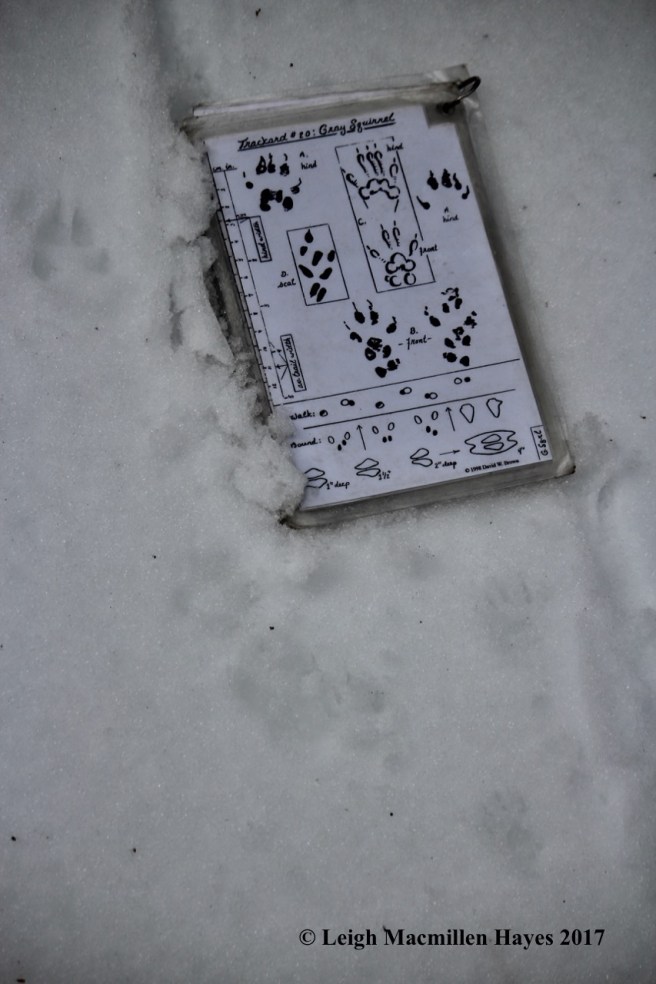
While it may be difficult to discern, a gray squirrel, the four prints with long toes below the Trackards, had leaped up the hill, perhaps after the fox. Lucky squirrel. The fox prints can be viewed to the left of the cards.

w-vernal-pool

My new plan was to follow the red/blue trail to the summit of Whiting  Hill. And along the way, a side trip to the vernal pool. Visions of fairy shrimp swam in my head. No, I wasn’t rushing the season, just remembering a fun time pond dipping last spring.

w-fringed-wrinkle-lichen

Back on the red/blue trail, I noted that most of the recent seed litter was covered by yesterday’s storm. The Fringed Wrinkle Lichen, however, did decorate the snow. Tuckermanopsis americana, as it’s formally known, grows on twigs and branches of our conifers and birches and often ends up on the forest floor.

It’s a foliose lichen that was named for Edward Tuckerman, of Tuckerman’s Ravine fame on Mount Washington. According to Lichens of the North Woods author Joe Walewski, Tuckerman was “the pre-eminent founder and promoter of lichenology in North America.As a botanist and professor in Boston, he did most of his plant studies on Mount Washington and in the White Mountains.”

w-pileated-debris

Further along, I saw some pileated woodpecker scat about twenty feet from the tree it had hammered in an attempt to seek food. It made me realize that even when I don’t find scat in the wood chips below the tree, I should seek further.

w-pileated-holes

The holes weren’t big–yet.

w-pileated-scat-bursting-with-body-parts

But the scat–oh my. It looked as if insects were trying to escape the small cylindrical package coated in uric acid.

w-mossy-maple-fungi

The trail turned right and so did I, beginning the climb. For most, the ascension doesn’t take more than five or ten minutes. Um . . . at least 45 on my clock today. There was too much to see, including the mossy maple fungi hiding in a tree cavity.

w-tube-moth-3

And then I saw something I’d looked for recently after seeing it on the blog  Naturally Curious with Mary Holland. Notice how the pine needles are clumped together?

w-pine-tube-moth-pupae-overwintering-1

Eastern White Pine needles grow in bundles of five (W-H-I-T-E or M-A-I-N-E for our state tree), but the clumps consisted of a bunch of needles from several different bundles.

w-tube-moth-2

What I learned from Ms. Holland is that these are tubes or tunnels created by the Pine  Tube Moth. Last summer, larvae hatched from eggs deposited on the needles. They used silk to bind the needles together, thus forming a hollow tube. Notice the browned tips–that’s due to the larvae feeding on them. Eventually the overwintering larvae will pupate within the tube and in April when I come back to check on the vernal pool, I need to remember to pay attention, for that’s when they’ll emerge. Two generations occur each year and those that overwinter are the second generation. The good news, says Holland, is that “Pine Tube Moths are not considered a significant pest.” I only found the tubes on two young trees, but suspect there are more to be seen.

w-beaked-hazelnut-1

And a few steps later–an old beak. I couldn’t believe my luck. It was then that I realized if I’d been able to stick with the original plan I would have missed these gems. Oh, I probably  would have found others, but these were in front of me and I was rejoicing. Inside that bristly tan husk was the protein-rich nut of a Beaked Hazelnut overlooked by red squirrels and chipmunks, ruffed grouse, woodpeckers, blue jays and humans.

w-beaked-hazelnut-2

Catkins on all of the branches spoke of the future and offered yet another reason to pause along this trail on repeated visits.

w-burl-on-sugar-maple

With my eyes in constant scan mode, I looked for other anomalies. One of my favorites was the burl that wrapped around a Sugar Maple. If I didn’t know better, it would have been easy to think this was a porcupine or two.

w-buried-bench-on-way-up-whiting

About two thirds of the way up, there was no rest for the wary, for the bench that offered a chance to pause was almost completely buried.

w-polypody-and-rock-tripe

Closer to the summit, the ledge boulders were decorated with snow, Common Polypody ferns and lichens, including Common Rock Tripe, its greenish hue reflecting yesterday’s precipitation.

w-whiting-view-1

And suddenly, the summit and its westward view, Kezar Lake in the foreground and Mount Kearsarge  showing its pointed peak in the back.

w-whiting-other-bench

As I’d hiked along the red/blue trail, I noted that the red fox had crossed several times. At the other end of the summit, I checked on the bench where on our First Day 2017 hike for the Greater Lovell Land Trust, we’d discovered the remains of a red squirrel. Today, fox tracks paused in front of the bench before moving on and I had to wonder if had been the one to use this spot as a sacrificial altar.

w-bear-claw-tree

Finally, it was time to head down. My choice was to follow the red trail toward the Gallie Trail. I love this section because it features some of my favorite bear trees.

w-beech-leaves-rustling

The fox tracks continued to cross frequently and so I paused often. And sniffed as well. What I smelled was a musky cat-like scent that I’ve associated with bobcats in the past. What I heard–dried beech leaves rattling in the breeze. They always make me think something is on the move. Ever hopeful I am.

w-striped-maple-buds-and-twig

One of my favorite finds along this section was the bright red branches of young Striped Maples. From leaf and bundle scars to growth lines, lenticels and buds, their beauty was defined.

w-striped-maple-leaves

Another sight that surprised me–Striped Maple leaves still clinging, rather orangey in hue.

w-red-pine-on-red-trail

And here and there, as if in honor of the trail color, Red Pines reached skyward.

w-redgreen-trail

Eventually I reached the bottom, and turned right again, this time onto the stoplight trail–well, red and green at least.

w-squirrel-midden

My wildlife sitings were few and far between, but red squirrel tracks and a midden of discarded cone scales next to a dig indicated where the food had been stored in preparation for this day.

w-tinder-2

Following some grouse tracks took me off trail and tinder conks made their presence known.

w-tinder-fungi

The swirled appearance of these hoof fungi threw me off for a bit, but I think my conclusion is correct.

w-bobcat-trail

At last I reached the red trail that runs parallel with Heald Pond. Again, the fox tracks crossed frequently, but beside the path and leading to and fro the water and higher heights, another set of tracks confirmed my earlier suspicions.

w-bobcat-prints

Bobcat. I thought I smelled a pussy cat. I did.

w-fox-and-bobcat

Sometimes the bobcat moved beside the trail, while the fox crossed over. I’d thought when I started out this morning that I wouldn’t see too many tracks because the animals would have hunkered down for the storm. I was pleasantly surprised–for my own sake. For the sake of the animals, I knew it meant they were hungry and on a mission.

w-john-fox-1

My own mission found me following the spur to Otter Rock. I noted that the fox had walked along the shoreline on its eternal hunt.

w-dragonflies-2

My hunt was of a different sort. No visit to the rock is complete without a look at the dragonfly exoskeletons. But today, it was a bit different because I, too, could walk on the ice. And so I found exoskeletons on parts of the rock I haven’t been able to view previously. Their otherworldly structure spoke to their “dragon” name.

w-dragonfly-nymph-exoskeleton

The slit behind the head and on the back of one showed where the dragonfly had emerged from the nymph stage last spring. Or maybe a previous spring as some of these have been clinging to the rock for a long time.

w-other-pupae-overwintering

While I was looking, I noticed some other pupae gathered together within a silky covering. Another reason to return–oh drats. I don’t know if I’ll be there at the right time, but with each visit, I’ll check in.

w-mill-dam-in-afternoon-sun

The sun was shining and warm. High 30˚s with slight breeze–felt like a summer day, with the sun reflecting off the snow. And at the mill, further reflection off the water. After four hours, it was time for me to check out.

As always, I was thankful for my visit, even though it wasn’t my original plan. Like the mammals, I’d been on a prowl–especially serving as the eyes for a friend who is currently homebound. I think she would have approved what I saw.


The BOF of Ron’s Loop

Huh? The BOF of Ron’s Loop? What in the world is that all about. Read on, if you dare.

r-kiosk

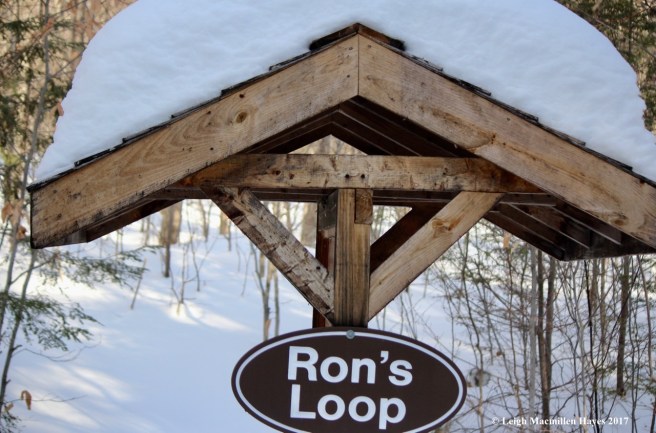
This morning dawned bright and chilly, just perfect for a tracking expedition with my friend, Joan, along Ron’s Loop at Back Pond Reserve in North Waterford/Stoneham. It’s a Greater Lovell Land Trust property that we love to visit. Then again, is there a GLLT property we don’t like? Uhuh.

r-bobcat

The snow was crusty and we were able to snowshoe atop it for most of the way. The same was true for many of the mammals that traveled about–including the bobcat whose print was difficult to see, but that’s because of the conditions. We went off trail and followed it for quite a ways, hoping to find other signs it left behind, but no such luck today.

r-otter-1

It did lead us to the stream that flows toward Five Kezar Ponds and we recognized the filled-in evidence that an otter had been this way. Based on the bobcat conditions, we assumed it had moved through recently, quite possibly last night or this morning. But the otter had visited after the last snowstorm, but before Tuesday’s ice storm, such were its offerings.

r-woolly-first

Eventually, we returned to the trail and continued on our merry way. But then we came upon a beech tree that begged noticing. In the reserve are a number of bear paw trees, though I have yet to find one along Ron’s Loop. And we didn’t today.

It was the fuzziness of a large clump of small white specks that drew our attention. Beech scale insect or more technically, Cryptococcus fagisuga, is a tiny insect that sucks sugar and other nutrients from beech trees only. In the summer, wingless larvae hatch and crawl (the only mobile stage of this insect) during their first instar stage of development. They search for suitable feeding spots such as cracks or crevices in the bark. What struck us today was the size of the colony.

r-woolly-1

A waxy substance secreted from its glands allows the insect to survive the winter months under a protective woolly-like coat.

r-frullania-liverwort-and-scale-insects

Even the frullania liverwort showed a contrast with the white filaments. By spring, the beech scale insect will molt into its second, legless nymph stage and emerge. Immediately, it will start sucking the sap through its tubular mouthpart or stylet. That instar stage doesn’t last long, and quickly it will become a mature female. For the rest of its life it will remain sedentary, but repeatedly remove and reinsert its piercing stylet, wounding the tree and providing entry points for fungi to enter. An interesting fact about beech scale insects–its a world of females who reproduce by parthenogenesis; there are no known males.

r-beech-hell

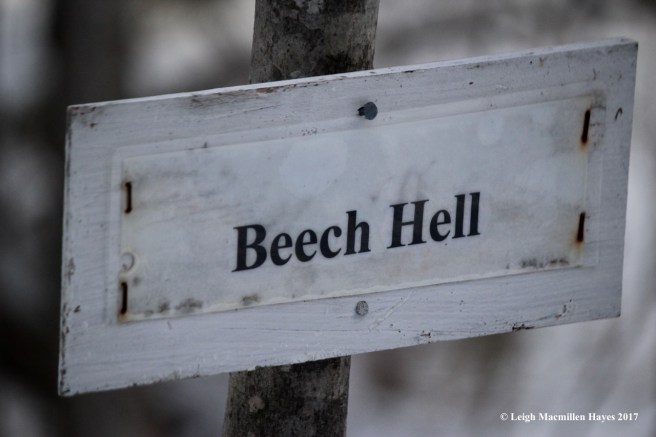
At Ron’s Loop a sign refers to what happens to the beech trees once the scale insect has set up housekeeping.

r-beech-bark-4

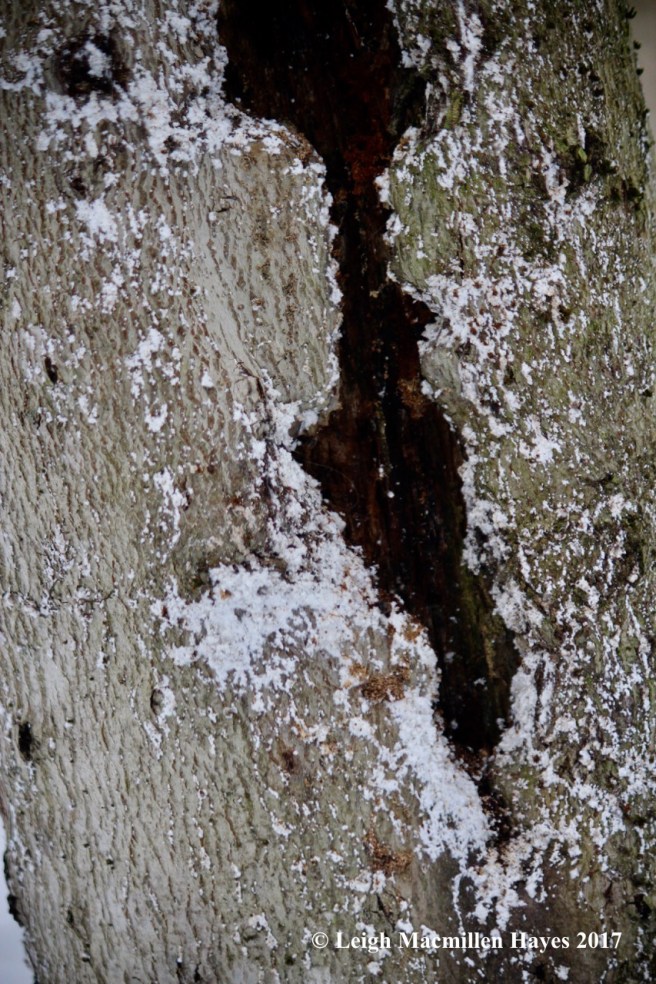
They feed on trees that are at least thirty years old. Beech bark is typically smooth from a tender age to the end of its long life. But the scale insects puncture holes and . . . when two or more gather and withdraw fluids from the vascular tissues in close proximity with each other, those vascular cells collapse and cease to function.

r-beech-bark-3

Fissures form in the bark’s surface.

r-beech-bark-2

The stage is set for one or two Nectria fungal pathogens to take advantage of the wound sites. Their spores, transported by wind or insects, germinate, enter the wounds and their hyphae colonize the vascular tissues, eventually killing patches of inner bark.

r-beech-bark-5

The bark develops cankers that can expand and join together. Photosynthetic activity decreases and limbs die and break off.

r-beech-snap

r-beech-snap-2

Some trees survive for a while, but others, possibly due to environmental stresses, die within five to ten years, their crowns and upper trunks snapping off. We call that beech snap.

The scale insect is non-native to Maine, having arrived here via Nova Scotia and before that Europe. Consequently, except for a species of lady bugs, there is no known predator to reduce its number. Fortunately, some trees are resistant and the current thinking it is to leave those trees intact and hope that they disperse seeds that produce more resistant trees.

r-hoar-frost1

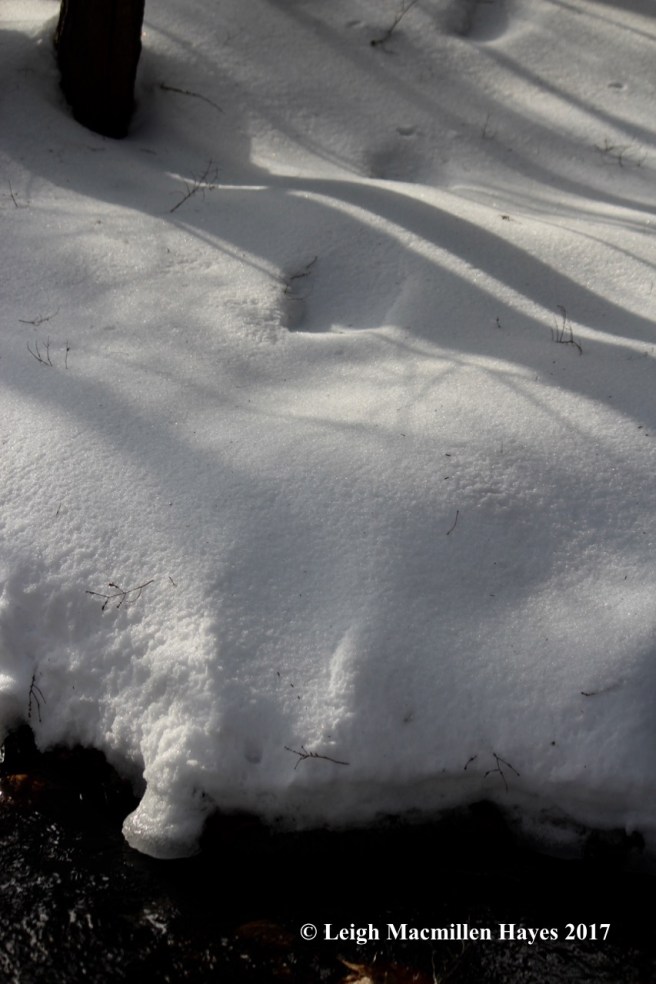
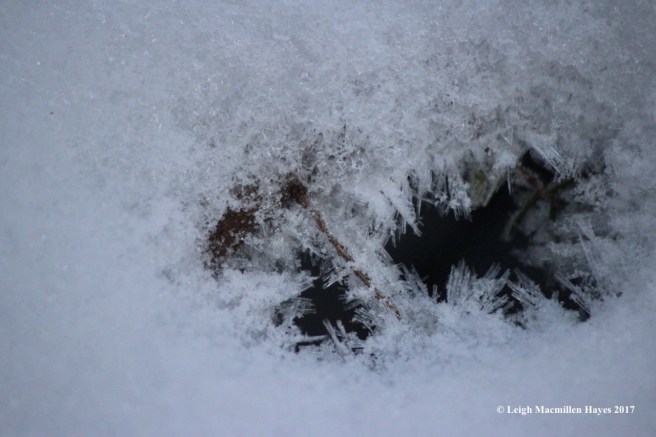
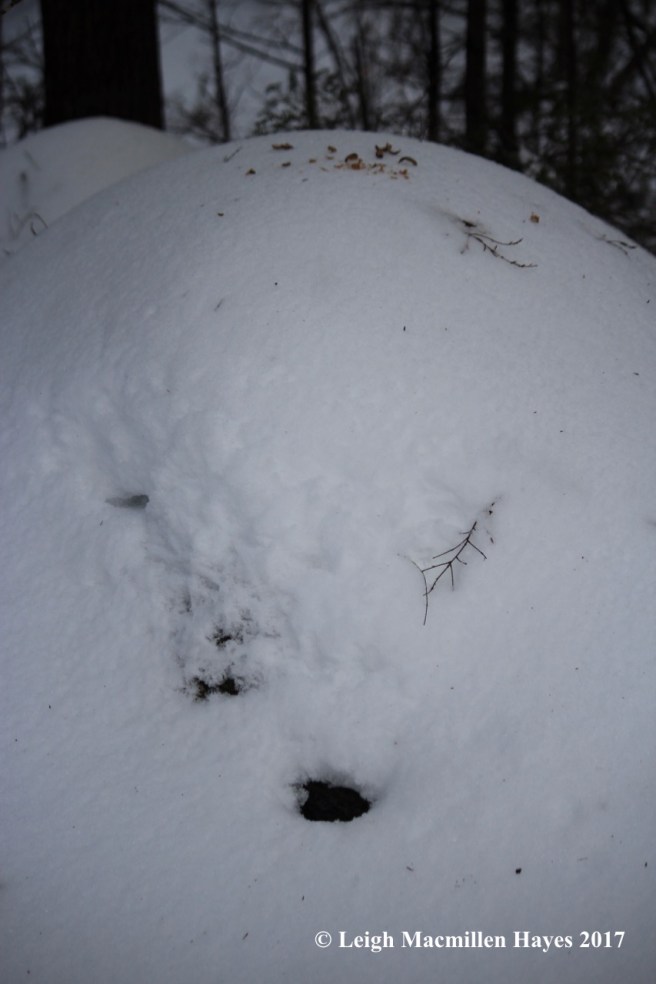
Another fortunate thing is that there is so much more to see at Ron’s Loop. We spied some hoar frost surrounding a small hole and imagined a vole or some other little brown thing snuggled below the snow’s surface.

r-hoar-frost-and-feeding-area

In fact, we found other examples of the same; this particular mound featured not only the frost, but also served as the site of dining table–for a red squirrel.

r-otter-slide

All in all, the tracking was good. We found plenty of otter slides and knew where it bounded. We also saw evidence of snowshoe hare, deer, mice and possibly fisher, though that too was diluted by the ice storm.

r-otter-x-2

Did I say plenty of otter sign? In fact, let’s make that otters with an s.

r-running-water

The mammal activity was prime because the property offers a mountain, ledges, streams and is located by five ponds.

r-ice-on-flow

Most often when we’ve traveled this way during the winter months, we cross the streams with little hesitation.

r-ice-flow-2

Today, we admired the ice formations and the flow, which we hope bodes well for all forms of life and puts an end to the drought.

r-stream-crossing-at-end

Our finally crossing was the most difficult due to lack of ice. But the water is shallow in this spot for the most part and it’s not far from the end of the trail.

Truth be known, we didn’t actually cross here. Instead, we found some rocks a wee bit upstream and made our precarious way across,  one of us almost falling in and the other climbing up the steep bank on hands and knees–not easy when donning snowshoes. BOF could have stood for big old fools. But we survived and highly recommend sticking with the trail crossing, even if your shoes get a wee bit wet.

r-snow-level

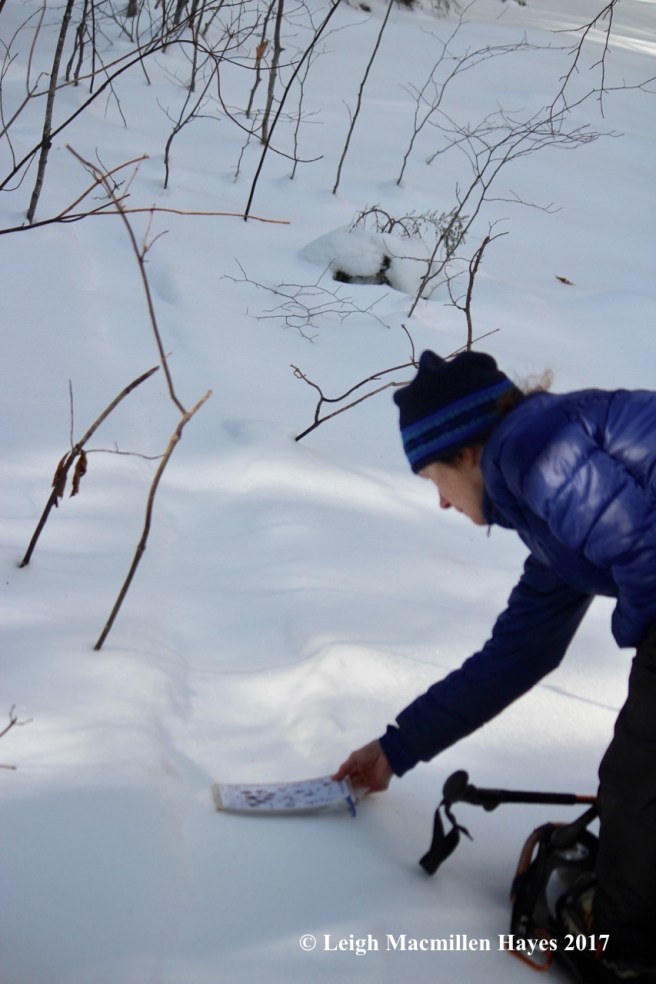
Back in the parking area where we could not park, the trail sign provided an indication of the current snow depth.

As for Joan and me, we spent three hours examining the beech trees, exclaiming over the tracks we found, especially those of the bobcat and otter (we’d like to be reincarnated as otters–if we have a choice), and rejoicing in the flow of the water. The BOF of Ron’s Loop.


Down the Rabbit Hole

Winter clothing? ✓

Hand warmers? ✓

Camera and extra lenses? ✓

Water? ✓

Trackards? ✓

Scat shovel? ✓

Snowshoes? Oh no. I didn’t realize until I met up with two fellow trackers for today’s Tuesday Tramp that I’d left my snowshoes home. “I’ll be fine,” I said. “Other’s have probably walked the trail before us.”

Indeed, they had. But I also knew that because we were tracking, we’d wander off trail. Indeed, we did.

It’s a good thing I had warm snow pants and tight boots on and brought along my sense of humor and adventure.

c-1

We began at the kiosk of the Greater Lovell Land Trust’s Chip Stockford property, where an Eastern Phoebe’s moss-lined nest awaits the return of its residents. Perhaps the funnel spider who took advantage of the nesting site is keeping the home fires lit amid the grasses and mud therein.

c-4

And then we reached the former log landing and the current site of Speckled Alders. We’d only seen squirrel evidence at that point, but knew to check on the fuzzy little woolly alder aphids who inhabit these shrubs.

c-5

We were surprised to see a black coating that seemed associated with the aphids and reminded us of black knot on fruit trees. Upon closer inspection, it appeared that the aphids were covered in black.

When I arrived home, I looked for more information and of course, Mary Holland, author of Naturally Curious, came to the rescue:

“Once leaves start to fall, one often observes white, fuzzy patches along the branches of Speckled Alder (Alnus incana). These fuzzy patches consist of colonies of aphids feeding on the sap of the shrub. In order to get enough nitrogen, they must drink volumes of sap, much of which is exuded from their abdomens as a sweet liquid called honeydew. The honeydew accumulates and hardens onto the branches as well as the ground beneath the shrub. Yesterday’s Mystery Photo was the honeydew of Woolly Alder Aphids (Paraprociphilus tessellates) which has been colonized by a fungus known as black sooty mold, a fairly common phenomenon.

Fairly common means we need to pay more attention. That’s how it is in the natural world–you see something for the first time and then realize it’s everywhere, you’ve just missed it all your life, or at least up until now. I love the noticing.

c-3

In places we predicted, we found snowshoe hare runways. Typically, I give thanks to them for the technology that holds us up closer to the surface of the white fluff that covers our winter world.

c-2

Where the trail splits, we were greeted by the keeper of these woods. It was here that we also found porcupine tracks, the prints a bit muted but the sashaying pattern easily decipherable. We followed its trail for a while, me making post holes, but moving with relative ease. Winter hiking is so much easier even when the snow is deep.

c-6

We’d come to track mammals despite the freezing rain, sleet and snow, but other things also drew our attention, like the lines that decorate a beech tree. Usually it seems obvious that they are made by either a formerly attached vine or branches from other trees that scratched in the breeze. We couldn’t say for sure with this one, despite taking a closer look.

c-9

At the scenic look out, other young beech trees provided a hint of light in the gray of the day as we took in the sight of Lower Bay below.

c-8

A turn to the right and we noted a number of artist conks decorating a tree.

c-7

And beside our feet, evidence that a Ruffed Grouse had passed under low limbs.

c-10

For a while, our tracking seemed limited to squirrels and then at the old foundation, we noticed a bounding pattern. Of course, we needed to follow it, up over what was probably a rock and then noted where it had passed under a branch close to the snow. It was under the tree that its prints gave us a few more clues and we determined it was a fisher. (Note: Fisher, not Fisher Cat. They are members of the weasel family, not feline.)

c-11

As we rounded the bend below the foundation, snow snaking across the limbs of a downed tree made us pause and admire.

c-12

And then we paused again–at The Rock. In the summer, it’s a great place to admire “Life on a Rock,” and in the winter we always expect some small mammal to take advantage of its protection. One of these days maybe we’ll be rewarded with evidence.

c-13

It was just beyond The Rock that we decided to go off trail again and further explore the porcupine’s trail. It led us to its home and then climbed upward. My two companions went first, making their way across what we soon realized was an old stump dump.

Seconds later, I disappeared . . . down a hole . . . well, at least up to my waist! Our first thought as I pulled my body out–would I discover quills on my boots? Thankfully no. I maneuvered  and my friend, Joan, who is half my size, pulled me up as we laughed about the possibilities.

We skedaddled across the rest of the dump and bushwhacked back to the alder trees.

So maybe I didn’t exactly disappear down a rabbit hole, but for a brief moment it felt like such. And will become part of our memory of a snowy, icy day spent on the prowl.


Walking With(out) Kyan

One of these days I’ll get to explore the route I traveled today with my young neighbor, Kyan, who is recovering from a blood marrow transplant. In the meantime, I took him along with me in spirit.k-1

Our first stop–the frog pond, aka vernal pool, that we both love. After all the recent rain, it has once again filled with water.

k-2

As I stood before it and thought about spring moments spent observing the wood frogs that use this pool as a breeding place, I wondered if I’d see any action. I wasn’t disappointed–springtails and mosquito larvae. When I return with Ky in tow, I’ll pull out the small shovel I carry so we can scoop these up for a closer look. Of course, he’ll probably need to remind me to do that. Such is age.

k-3

And then I retraced my steps, dodging puddles at first because I had my hiking boots on. Oh, they’re waterproof, but suddenly the water is deep in spots. I’m not complaining–by any means!

k-4

Rather than my woodlot trail, I decided to cross the field that Ky’s grandfather owns as I headed home to change into my Boggs. And so I happened upon a mystery. What was this white stuff? Fur? No. Fungi? Maybe. Stay tuned? I hope you will. Had Kyan actually been with me, I’ve a feeling he could have told me right off.

k-5

Back on the trail, where the puddles were shaded, nature presented its artistic flair.

k-6

I trust Ky would have appreciated the various forms the ice took. Had he been with me, we could have stomped our feet through the ice and felt its thickness. But then again, he may not have wanted to ruin such beauty.

k-7

k-8

k-9

That being said, over the course of several hours, I found plenty of puddles that were ice free and walking through them was the easiest mode of travel. Plus . . . who doesn’t love to jump in a puddle, right Ky?

k-10

Had Ky been with me, we would have marveled at all the tracks left behind by creatures who passed in the night or early morning hours.

k-11

And I’d have shown him how to make a positive ID of a print, in this case–Eastern Coyote. We’d have looked at the key characteristics, like the winged ball of the pad, the x between toes and pad, the symmetrical front toes and inward facing nails. And I would have shared my Trackards with him so we could both better understand how the critters with whom we share this space move about.

k-12

In this case, it appeared there were several coyotes and they shared a brief tussle.

k-13

We’d have looked at the contents of coyote scat, of which I saw tons. Ky would have reminded me that the apple skins meant the coyote visited the neighborhood orchard.

k-14

k-15

And I would shared with him that the grassy scat meant perhaps one of the coyotes had an upset stomach. If you are grossed out by the scat, please forgive me. But . . . it’s natural. It’s a sign. It tells a story. And Ky is 12. Then again, I’m in my late 50s–and I LOVE scat.

k-16

Had Ky been with me, we’d have wondered about the swatch of hair deep in the woods. And maybe we would have looked around more than I did to search for other signs of why the hair was left behind.

k-17

Had Ky been with me, we would have noted numerous deer tracks as well. And coyote tracks in the same vicinity.

k-18

We’d have seen where the deer browsed.

k-19

And where one rubbed its antlers–perhaps leaving an important scent for others to note.

k-20

Had Ky been with me, we would have seen some downed hemlock twigs.

k-21

And known to look for their comma-shaped scat.

k-22

Had Ky been with me, we would have found a bunch of puff balls or stink bombs.

k-23

And most definitely we would have poked them with our feet and watched the spores flow out like a cloud.

k-24

Had Ky been with me, we would have noticed the little things, like a peeled acorn stuck in a tree and wondered how it go there.

k-25

We would have enjoyed not only the sight of the Auricularia auricula-judae or brown jelly fungus, but also it’s other common name–wood ear because indeed it does resemble an ear.

k-26

Had Ky been with me, we would have felt bad for the wee shrew that took one for the family’s sake. Despite releasing a toxin that prevented his predator from consuming him, he still died from the attack. But perhaps his siblings and parents will not be attacked by the same predator–a lesson learned. Maybe. And we would have marveled at what a long nose he had and what tiny ears.

k-27

Had Ky been with me, we might have bushwhacked, only getting fake lost on our way home. If he wasn’t comfortable doing that, however, we most certainly would have turned back and followed the trail.

k-28

And finally, had Ky been with me and we had bushwhacked, he might have noted some white fluff on the ground, the same as what I saw in the field earlier. And then he would have noticed the source.

k-29

One never knows what one might discover deep in the woods. Had Ky been with me, would he have recognized Myrtle? Was it a dog toy at one time? If so, how did it find its way to the middle of nowhere? I know–it walked. But really, it was over a half hour from home and the terrain not easy, yet I found no other stuffing. Of course, it could have traveled a different route than I took.

At the beginning of today’s journey I’d thought about seeking out the color orange again in honor of Ky, but perhaps he’s tired of orange. And it was much more fun looking for things I thought Ky might appreciate had he been beside me. I know he’ll see things I’ve never noticed and I can’t wait to learn from him. Perhaps soon we can venture together, maybe once the ground is frozen and snow falls. Or in the spring.

One of these days, I will surely walk with Kyan.


Pay Homage at Otter Rock

This holiday season, why not take a short hike and smell the roses along the way?

h-milkweed

Or at least admire the milkweed plants that grow in the field across from the boat launch. I did just before I walked the blue/red trail at the Greater Lovell Land Trust’s Heald and Bradley Ponds Reserve this morning. It wasn’t a long walk, but worth every moment. And I encourage you to do the same, whether here or somewhere else.

h-water-over-dam-1

Listen to the water flow over the dam.

h-boat-1

Notice the greenery across the mill pond.

h-snow-on-trail

Follow the path sprinkled with snow.

h-ice-on-leaves

Rejoice in the ice shapes atop various leaves.

h-pileated-works

Check out the Pileated Woodpecker works in dead snags.

h-bright-beech

Let the Beech leaves brighten your day.

h-beech-and-witch-hazel

Distinguish between the hues of Beech and Witch Hazel.

h-four-trees

Greet four amigos–Paper, Yellow and Gray Birch, with the trickster Cherry posing as a Black Birch.

h-grape-fern

Applaud the maroon-fringed Grape Ferns at your feet.

h-sign

Follow the directions found on the sign.

h-bleeding-mycena-mycena-haematopus

Rejoice in late blooming fungi like these Bleeding Mycenas (Mycena haematopus).

h-otter-rock

Wonder at the various lichens that adorn the trees.

h-bristly-beard-lichen

Get up close and personal with a few, including the Bristly Beard.

h-rocks-near-otter-rock

Laud the reflections of water not yet frozen.

h-fall-colors

Praise the warm color of Royal Ferns gone by.

h-exo-1

Revere dragonfly and damselfly exoskeletons that still cling.

h-john-fox-2

Take in the view–ice and water and the old John Fox place–a testimony of yesterday, today and a glimpse toward tomorrow.

To Otter Rock–whether it takes you twenty minutes or three hours, make time in this busy season to pay homage.

The Be-Attitudes Sundate

Today marks the beginning of the season of hope and with that in mind, my guy and I climbed Singepole Mountain in Paris. Paris, Maine, that is.

s-halls-pond-start-1

Our hike began beside Hall’s Pond, where the water reflected the steel gray sky of this late November day.

s1-barbed-wire

And stonewalls and barbed wire reflected the previous use of the land.

s1-beaver-6

In a matter of minutes we learned of its present use.

s-beaver-works-3

Everywhere we looked, beaver sculptures decorated the shoreline.

s1-hemlock-grove

We passed from the hardwood community to a hemlock grove . . .

s-hemlock-girdled-2

where more beaver activity was evident. I’ve been reading The Hidden Life of TREES by Peter Wohlleben and have some questions about tree girdling such as this. There is a theory that beavers chew off the bark all the way around (girdle) to eventually kill trees such as hemlock, so preferable species will grow in their place. But, that’s thinking ahead to future generations. Do beavers really do that?

s-hemlocks-3

On page 18, Wohlleben states the following: “As the roots starve, they shut down their pumping mechanisms, and because water no longer flows through the trunk up to the crown, the whole tree dries out. However, many of the trees I girdled continued to grow with more or less vigor. I know now that this was only possible with the help of intact neighboring trees. Thanks to the underground network, neighbors took over the disrupted task of provisioning the roots and thus made it possible for their buddies to survive. Some trees even managed to bridge the gap in their bark with new growth, and I’ll admit it: I am always a bit ashamed when I see what I wrought back then. Nevertheless, I have learned from this just how powerful a community of trees can be.”

Could this theory be true? Are the surrounding hemlocks feeding that tree via their roots? If so, does that throw out the other theory? So many questions worth asking.

s-huge-maple-1

Soon, we left the Pond Loop Trail and started to climb the Singepole Trail, passing by a gentle giant.

s-maple-2

It’s a snag now, but this old maple offered tales of the forest’s past and hope for the future.

s-downy-rattlesnake-plaintain

On a smaller scale, Downy Rattlesnake Plaintain provided a cheery contrast among the leaf and needle carpet.

s-bobcat-ledges-1

The climb was a bit challenging in places, but we held out hope among the ledges that we might see a bobcat.

s-porky-den

No such luck, but we did find this . . .

s-porky-scat

a well used porcupine den.

s1-water-2

Water dripped in constant harmony as we stepped gingerly along the narrow ledges and tucked under overhanging rocks.

s-halfway-up-2-1

About halfway up, we took a break and paused to admire the view.

s-halfway-up-view-1-jpg-communities-defined

The hardwood and softwood communities became more obvious as we looked down.

s-summit-1-1

And suddenly or so it seemed, my guy reached the moment of truth–the summit.

s-halls-pond-to-pleasant-1

From the top, we looked around and embraced our home place, which appeared on the horizon in the form of Pleasant Mountain.

s-pleasant-to-whites-1

A slight turn and the view extended from Pleasant Mountain to the White Mountains.

s-quartz-intrusion

Below our feet, the granite pegmatite shared its showy display.

s-summit-1

We’d read that there was a quarry at the summit, so we headed toward a cairn, in hopes of locating it. Too many jeep trails confused us and we decided to save the quarry for another day. Instead, we turned into the woods to get out of the wind and munch our PB & J sandwiches, the grape jelly courtesy of Marita Wiser and family.

s-wickiup-1

As we poked about, something caught our attention and we moved closer.

s-wickie-3-1

s-wickie-2-1

s-wickie-1-1

A wickiup frame. We admired the efforts of someone to create this traditional structure.

s-pleasant-mtn

Emerging from the woods, we took one last look at Pleasant Mountain, and . . .

s-summit-4

one last view of what seemed to be the summit (though it may have been a false summit).

s-climbing-down

And then we started down, once again hugging the rocks and trying not to slip.

s-flower-mushroom

On the way, I did note a few things, including this fungi that looked more flowerlike than mushroom like.

s-girdled-beech-1

s1-porky-2

And I spotted a phenomenon that occurred repeatedly. Girdled beech trees too far uphill for a beaver. What or who had debarked these trees?

s-porky-works

I may have been seeing things that weren’t real, but the lines on this particular tree made me wonder about the porcupines. Was I looking at the design they leave with teeth marks created in the distant past? Or were they wounds of another kind?

s1-beaver-5

When at last we reached the Pond Trail again, we continued to circle around it, noting more beaver works.

s-beaver-lodge

At last, we found the mud-packed lodge built into the edge of the pond. Here’s hoping for a warm winter within.

s-pond-at-end-of-day-1

Completing the circle, the biting breeze forced us to walk quickly toward our truck and the end of our hike. We have chores to complete tomorrow so our Sundate may have to suffice for a Mondate.

That being said, in this season of hope, we trust we’ll find more opportunities to consider these be-attitudes:

s1-trees-in-harmony

Be supportive of each other.

s1-christmas-fern-1

Be watchful of what’s to come.

s-heart

Be hopeful of love everlasting.

Ho-Ho-Ho Ho Hoing Away

I remember a time when a Pileated Woodpecker sighting was rare. And now, it’s a daily event, but one which I still feel blessed to experience.

h-pileated

Stepping out the door this afternoon, I immediately heard one hammering and realized another was drumming in a nearby tree. Within minutes, a third flew in and birds #2 & 3 sang their eerie tune as they approached #1. He chased the couple and they flew off, their flight strong, and marked with slow, irregular woodpeckery flaps.

h-woodpecker-hole-1

After watching #1 for a bit, I went in search of woodpecker happenings scattered throughout our woodlot. Though they’ll eat lots of wood-boring insects and occasionally berries, seeds and suet, carpenter ants are their mainstay. Better in a woodpecker’s stomach than our home. Sometimes the holes they create are about six inches across and almost as deep.

h-woody-condo-2

h-woody-condo

And those holes became homes for other critters occasionally, so when friends and I see trees such as these, we think of them as condominiums providing living quarters perhaps for small birds and little brown things (mice). Included in these condo units are some smaller round holes, created by the Hairy and Downy Woodpeckers that also live in our neighborhood.

h-wood-chisel

Occasionally I come across trees such as this one that hadn’t been so much excavated as chiseled. Woodpeckers are just that–peckers of wood. They don’t eat the wood. But to get at their preferred food, they must hammer, chisel and chip the bark.

h-woodchips

At the base, always a scattering of wood chips. I, of course, cannot pass up any opportunity to search through the chips in hopes of locating scat. I was not rewarded with such a find today.

h-hole-in-snag

Leaving dead snags encourages woodpecker activity. They become prime locations to forage, roost and maybe even nest, though I hardly think this snag was large enough to serve as the latter.

h-pinesap

While I was out there, I did stop to admire a few other sights including the now woody structure of pinesap;

h-winterberry

winterberries contrasted against the wee bit of snow that still graces patches of ground;

h-deer-tracks

deer tracks indicating we’d had visitors during the night;

h-violet-upper

h-violet-toothed-under

and a tree skirt of violet-toothed polypores. They are rather like the Lays Potato Chips of the natural world. You can never have just one. (Note: I’m not talking about eating them, but rather how they grow.)

h-woody

It’s been said that Pileated Woodpeckers are skittish. That’s not always the case. I’ve stood beneath one for over twenty minutes, the bird intent on its work and seemingly oblivious to my presence.

The next time you are in the woods and hear the ho-ho-ho ho ho, ho-ho-ho ho hoing that reminds you of that cartoon character, Woody Woodpecker, take a look around. You, too, might be blessed. And don’t forget to check for scat. ;-)

Forever a Student

Once the rain let up, I donned my Boggs and headed out the door in mid-afternoon, not sure where exactly I was headed. But after reaching the snowmobile trail, I decided to turn south. Since the spring, I’ve been to the vernal pool on the neighboring property numerous times, but not much beyond in that direction.

h-new-bridge

Part of the reason was that a local industry, of which we now have so few, was constructing a new building and had cut off the trail. Oh, I could have bushwhacked around the project, but the other part of the reason is that it’s a heavy tick zone and I normally avoid it come warmer weather. Given the new building, I wasn’t sure what to expect today, but as I passed through the stonewall, I discovered they’d added a bridge over a new water diversion and the trail was open. I’m glad for the small industry, but simultaneously sad that the willows are gone. No more pussy willows in the spring. Or willow galls, though I suppose that’s good news. And who knows, perhaps some viable willow seeds will spring forth in this place–a hypothesis to be tested.

h-artist-conk-top

After crossing behind the building, I moved through an opening in the next stone wall, and felt right at home again–in one of my local classrooms. This is one where I’m often the solo student, as was the case today.

h-artist-conk-2

I revisited an old stump, where art class was about to begin. The underside of the artist’s conk welcomed a sketch, but I left the canvas blank for another day.

h-gate

In social studies class, I took a look at former land uses. The wall opening and split stone gate bars helped me envision the fields that once were cleared. I followed several walls, which switched from single to double and even double-double, or so it seemed as one section was at least six feet wide and a football field long (The New England Patriots are winning in CA right now!). Barbed wire indicated the need to keep animals out and flat land with trees not a hundred years old spoke to the land’s former plowed use.

h-vp

A few minutes later, I moved over an old rock mound and stood before my science teacher–another vernal pool. As I recalled, this one dries out early in the season and grasses and other vegetation grow prolifically here. But unlike the smaller pool closer to home, this one held some water from the recent rain.

h-boots

As any student should, I stepped through the door and sunk my feet into class.

h-cinnamon-fern

Cinnamon ferns reminded me that they keep their fuzziness right up to the end.

h-birdnest-1

I wondered about strips of paper birch dangling from a young sapling and then realized I was looking at the remains of a nest–maybe a vireo.

h-seeds

I questioned how the long-beaked sedge seedheads came to be bent over–by weather or wildlife or just because their time had come?

h-vp-bulrush-a-grass

While bulrushes (actually a grass) offered flowing fountains pouring into the future, their seeds still clung–as did a spider web.

h-vp-steeplebush-web

And more spiders eluded me, though their webs stood strong among the steeplebush capsules.

h-vp-crystal-ballseeds

A few raindrops dangled like ornaments from a holiday decoration.

h-vp-backside-of-sensitive-fern-beads

And bead-like spore structures on sensitive fern’s fertile stalk waited for another day to spread their good news.

h-lichen-or-fungus-2

I finally left the vernal pool, but before heading back down the hallway, small salmon-colored growths stopped me. Lichen? Fungi? I didn’t think I’d ever seen it before and so it was a new lesson.

h-lichen-or-fungus

My first thought–lichen. In a way, it resembled the tops of British Soldiers that grow prolifically here. But my latest thought is red tree brain fungi (Peniophora rufa) . I may be wrong, but that’s what being a student is all about.

h-woodpecker-1

With each new lesson, I was also thankful for those that were reinforced, such as the chisel-like and shredded works of pileated woodpeckers. I used to think such trees were the result of bear activity.

h-woodpecker-2

I’m always awed by the resulting sculpture left behind by those powerful birds–their strong beaks stabbing away at the bark until they’ve consumed a meal of carpenter ants and beetles. Thankfully, their skulls are thick and spongy–allowing their brains to absorb the impact of such repeated drilling.

h-field-succession-layers

At a field, I paused to admire the layers–a testament to field succession. These woods are constantly changing.

h-male-turkey-scat-j

One thing that doesn’t change is the signature of a Tom Turkey–usually offered in straight or J formation.

h-slime-3

h-tubifera-ferruginosa

h-slime-2

At another wetland, I poked around and then my eye focused in on something decorating a fallen tree. A slime mold perhaps? Red raspberry slime? In one rendition it seemed to have a crater-like surface, while another was more flower-like with petals spraying from a center.

h-hemlock-cinnamon

At last I entered a hemlock forest where the cinnamon inner bark stood out on the wet trees. If not for the scales, I realized it would be easy to confuse this bark with that of red oak, but a quick look up the trunk and the answer was obvious.

h-striped-maple-seeds

As I walked back toward home, I looked along parts of the trail I’d skipped while exploring in the woods. And I wasn’t disappointed when I discovered one of the few striped maple trees–still bearing the seeds it produced last year. Why did they cling still? When released, will they be viable?

h-pine-suds

And then, a sight I was hoping for presented itself when I returned to our woodlot. Froth at the base of a pine tree. It’s not unusual and occurs following a rain event such as we’d had all night and morning. I had hoped to see some foam today, and felt rewarded for my efforts. So what causes the tree to froth? Well, like all lessons, there are several possibilities. Maine Master Naturalist Science Advisor Fred Cichocki recently had this to say about it: “I’ve noticed this phenomenon often, and in every case I’ve seen it’s associated with white pine, and always after a dry spell followed by heavy rain. Now, conifers, especially, produce hydrocarbons called terpenes (it’s what gives them their lovely pine, balsam and fir scent). These hydrocarbons are hydrophobic by nature and form immiscible films on water. During a heavy rain, water running down the trunk of a white pine picks up terpenes on the way. Air (having accumulated in bark spaces, channels, etc. perhaps under slight pressure) then “bubbles” through terpene-water films producing a froth. Recall the cleaning products PineSol, and the like. They are made from terpenes, and produce copious bubbles when shaken. One could get the same result directly by shaking terpentine in water, or by bubbling air through a terpentine-water mixture with a straw  . . .  Of course, it may be that other substances (salts, etc.) enhance the frothing.”

No matter how much I have learned on this life-long course, there’s always more. I certainly don’t have all the answers and for that I am thankful. I’m forever a student.


Focus On The Forest Forage

When Jinny Mae beckons, I always answer. Oh, maybe not in the affirmative every time,  but as often as possible I join her for a forest forage. Ours is not so much to collect anything physically, though sometimes a pinecone or some scat have been known to jump into our packs, but rather to visually and mentally take in all that we see.

j-november-day

Today was the perfect November day for such an adventure. As the breeze blew, the cloud formations kept changing and the sun poked in and out. We were at times chilled and other times warmed–but always happy to be tromping through the woods and across fields in search of great finds.

j-droplet-on-big-tooth

Sometimes our finds were as simple as raindrops left behind on leaves in the pond.

j-rock-island-1

But a great deal of our time found us on our hands and knees yet again, oohing and aahing among the complex lilliputian world of lichens.

j-rock-foam

We plopped ourselves down, realizing that no matter where we stepped or sat, we were destroying some form of lichen that was older than time as we understood it. No sooner did we begin to focus when we realized we were beside Rock Foam Lichen (Stereocaulon saxatile).

j-rock-foam-2

Perhaps we’ve seen it a million times before, but today we met it for the first time. Its granular surface that speaks to its common name was visible even without a loupe. Though it grew near reindeer lichen, its presentation was different and it was singular rather than colonial. Now, if we can only remember its name the next time we meet–Rock Foam, Rock Foam, Rock Foam.

j-brits-2

We are not ones to resist a more familiar friend, and so British Soldiers (Cladonia cristatella)  also captured our focus. Despite their diminutive size, those bright crimson caps shouted for recognition.

j-brits-3

The thing we reminded ourselves of today is that British Soldiers grow in a branching formation.

lipstick-powderhorn-and-common-powderhorn

In contrast, their cousins, the Lipstick Powderhorns (Cladonia macilenta), sport red caps atop unbranched stalks. Also standing out to the left in this photo are a few Common Powderhorns (Cladonia coniocratea)–recognizable for their lack of a cap.

j-red-fruited-pixie-cup

It seemed we couldn’t get enough of a good thing and as we scooched along the granite surface trying not to destroy too many lichens and mosses, we found a third red-capped variety.

j-red-fruited-pixie-2

Red-fruited Pixie Cups (Cladonia pleurota) brought smiles to our faces due to their goblet formation topped with those outlandish caps along the margins. We were immersed in Cladonia heaven.

j-lichens-galore

And then . . . and then . . . and then just as our eyes trained on the red caps before us, something else made itself known.

j-ladder-lichen-cladonia-cervicornis-subsp-verticillata

We spied another cousin that I’ve only seen once before: Cladonia cervicornis ssp. verticillate.

j-ladder-2

Its growth formation is rather unique. In one sense, it reminded me of a sombrero, but in another sense, I saw fountains stacked one atop another, each giving forth life in their own unique fashion. But rather than being called Fountain Lichen, its common name is Ladder Lichen–perhaps referring to the fact that the pixies can easily climb up and up and up again.

j-candy-2

One of the lichens that grew abundantly in this place is the Candy Lichen (Icmadophila ericetorum). This one has been long admired for its salmon-colored fruits that rise above the pale grayish-green crustose formation. Today’s realization–that crustose wasn’t as flat as one might expect. In fact, its appearance  was rather lumpy and almost brain like.

j-brown-beret-1

And beside it, one that I hesitate to name, but will take a stab at anyway–Brown Beret Lichen (Baeomyces rufus). I based my attempt upon a description in Joe Walewski’s book: Lichens of the North Woods. Walewski states: “Crustose pale green to gray green surface with short fruticose stalks topped with a dull brown cap.” I may be totally wrong, but that’s what learning is all about.

j-shield-6

We next became equally enthused by the rock shields and their brownish disks.

j-british-among-shields-1

And living among them–British Soldiers.

j-shields-fertile-2

While the foliose formation of the shield lichens spread outward in radiating patches, the apothecia that housed spore production sat atop rounded bowls with rolled-in margins. Based on the margins, my guess was that this was Cumberland Rock Shield (Xanthoparmelia cumberlandia). Maybe it was enough knowing it was a rock shield.

j-shield-bug-2

And speaking of rocks and shields, while we looked, the surface of the rock moved.

j-shield-bug-1

A shield bug, aka a stink bug, crawled along, barely pausing to let us admire the variety of colors it presented.

j-rock-island-2

At last we left the rocks behind and moved on through the woods. Jinny Mae still had a couple more things to show me.

j-common-stinkhorn-1

While my camera had a difficult time focusing on the minute fruiting structure of green stain fungi, it had no problem with the Common Stinkhorn (Phallus ravenelii). It’s reportedly the most common stinkhorn in New England, and yet I don’t find anything common about it. As apparent from the “cracked shell” and lack of a stalk yet, this one was just hatching from its embryonic or egg form. We got down to sniff and noted merely a strong mushroomy odor.

j-purple-crust-1

With one more wonder to ponder, we returned to Jinny Mae’s home, where she showed me a rotting maple branch decked out in purple.

j-purple-2

My first thought because I’d been wearing my lichen eyes–a foliose lichen. But upon further reflection, I think it’s a crust fungi. Whatever it is, again, I’ve never seen it before. But as we noted all day long, once our eyes are focused, things make themselves known.

j-mt-wash-2

At last it was time for me to find my way home. My forest forage with Jinny Mae had come to an end for another day, but my mind’s eye is still focused on our wonder-filled finds.

The Way of the Land at Long Meadow Brook Reserve

Last month the Greater Lovell Land Trust purchased a new property along Long Meadow Brook that further develops the wildlife corridor. A couple of weeks ago I first visited it with GLLT’s Executive Director Tom Henderson and a number of the land trust’s volunteer docents. As we left the property, Tom said to me, “I didn’t oversell this, did I, when I said this will become one of the docents’ favorite properties.” Indeed.

And so I couldn’t wait to get back there myself to spend a few hours exploring the almost one-hundred-acre reserve.

l-mullein-flower-2

Because the land was last logged by the previous owner in 2014, it’s in the early succession stage of regrowth.

l-mullein-flower-3

And so, it’s a place where those who like disturbed places tend to grow, such as the common mullein. What surprised me most was that I found a few still offering blooms.

l-mullein-cactus

Of course, it reminded me that I was in the great West–WESTern Maine, that is–with its occasional cacti-like form.

l-seeds-holidng-on

Scattered throughout are also the seedheads of white lettuce, waiting for release in lampshade-like formation.

l-orange-peel-fungi

Orange-peel fungi fruited prolifically in the gravel logging road.

l-future-parking-lot

That was all before I even reached the future parking lot, which had served as the log landing a few years ago. Already, sweet ferns and berry bushes have made themselves known.

l-sweet-fern-colors

The leaves of sweet fern, which is really a shrub rather than a fern, exhibited their version of autumn hues.

l-trail-marker

If you go, I encourage you to look for the blue ribbons that indicate where a future trail will be placed. It’s a loop trail that summer interns Hannah and Aidan laid out and leads to two focal features.

l-stonewall-double-to-single

The trail nears a neighboring property, which just happens to also be under conservation easement thanks to the foresight of its owners. I stepped off the blue flag trail and started to follow the wall for a bit–noticing that soon it changed from a double (garden or plowed land) wall to a single wall. A large pasture pine grew at the change-over point.

l-stonewall-barbed-wire-1

And where the wall switched to single formation, barbed wire indicated its former use a pasture boundary. And white pine scales indicated its current use–as a red squirrel’s dining room table.
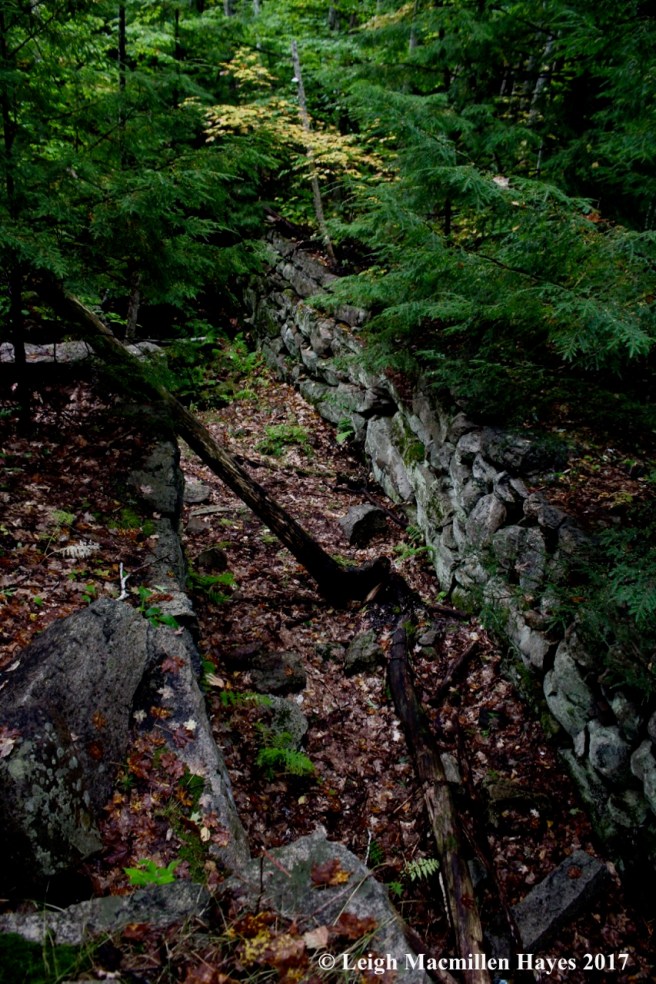
l-forest-succession-2

After moving away from the wall, I noticed the mountains in the offing and ferns and young trees already filling in the empty spaces.

l-kearsarge

One of my favorite mountains to climb stood tall in the backdrop–Mount Kearsarge.

l-forest-succession-1

My bearings were off a bit, but I knew where the eastern boundary was as I moved across this opening.

l-pitch-pine-bark-1

Walking along the back edge, my tree passion was ignited yet again.

l-pitch-pine-1

Several pitch pines grow in this space. While the bark is similar to that of red pines, it’s platier (is that a word?). And the tufts of needles that grow along the trunk were a dead give-away.
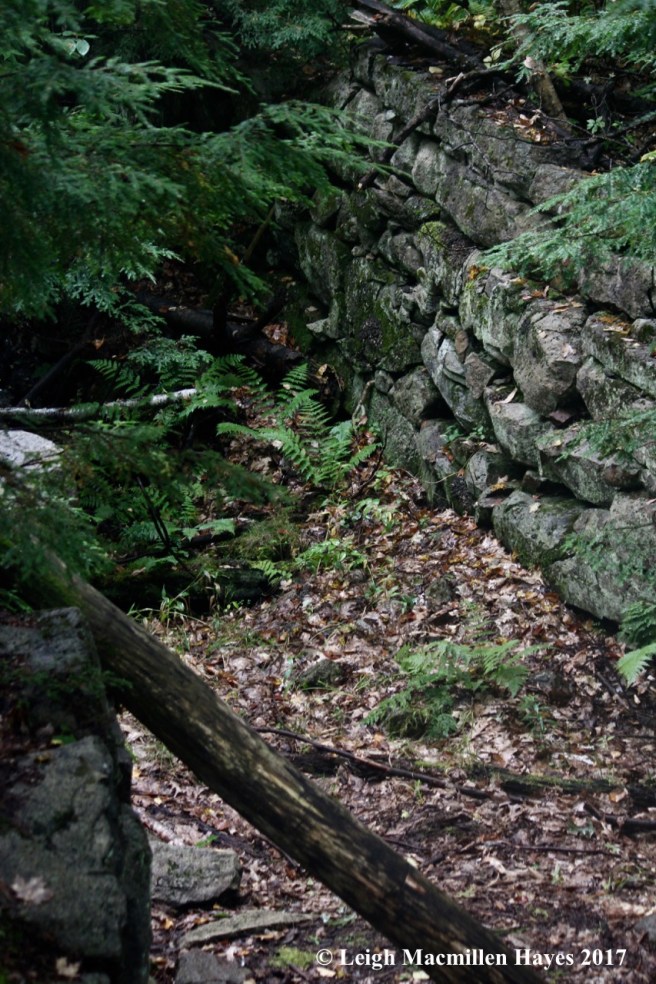
l-pitch-pine-cone

l-pitchpine-needles

But . . . I always quiz myself and so I looked around. And right below the trees, pitch pine cones and the triple needle bundles common to this species.

l-wintergreen-berries

It was here that I discovered wintergreen growing by the base of a tree stump. What made me wonder was the amount of fruit on each plant. Yes, wintergreen grows prolifically in all of western Maine, but I can’t recall ever seeing so many little red globes dangling below the leaves.

l-marshy-1

From my half-circle around the opening, I wasn’t positive about my whereabouts and so decided to follow the land downhill because it looked like there may be an opening below. A few minutes later, I realized I was in a marshy spot where the cinnamon ferns grew. And the earth beneath my feet was rather spongy and damp.

l-beaver-lodge

I reached what I thought was the meadow I sought–only to realize that I was looking at a beaver lodge. I knew that beaver lodge, but from a different perspective–the neighbors’ property.

l-first-marsh

And then something else caught my attention.

l-marsh-tamaracks

Tamarack (aka larch) trees–our only deciduous conifers, which had turned a golden yellow as is their autumn habit.

l-tamarack-2

The spray of tamarack needles reminded me of witch hazel flowers, which also grow on this property. But soon, the former will drop, leaving only their barrel-like stems as a reminder of their presence.

l-maple-leaf-viburnum

I left that spot, retraced my steps and headed to the north on a cross-country bushwhack, where the mauve colored maple-leaf viburnum grew.

l-turkeys

I saw lots of mammal sign and even a few birds, including turkeys who are loving the fact that this is a mast year for acorns.

l-trail-to-meadow

At last I emerged onto the trail I remembered and headed downhill again.

l-meadow-brook-2

And then . . . I was rewarded for my efforts. Long Meadow Brook and the mountains beyond provided a WOW moment.

l-meadow-east

I looked to the east for a few minutes.

l-meadow-layers

And then turned west again, where the layers and colors spoke of diversity.

l-meadow-snags

Even the dead snags added beauty.

l-cat-n-nine-tails

Cat-in-nine tails added to the view and I noted others who like wet feet including steeplebush, meadowsweet and bulrushes growing along the old beaver dam. It’s also a place for a variety of evergreen species–hemlock, white pine, balsam fir, red spruce and tamaracks. Future teaching moments await.

l-hobble-2

My intention to stick to the trail was soon thwarted when I spied hobblebush.

l-hobble-bud1

Like all trees and shrubs, the future was already encased in a bud–in this case a bud we refer to as naked because it doesn’t have the waxy coating of most others. Methinks its furry presentation offers the same protection from winter’s cold.

l-back-of-hobblebush-leaf

And as I studied the back side of fallen leaves, I paid attention to the venation–reminiscent of the bud’s pattern.

l-hobble-leaves-2

In the glow of sunlight, I felt like I’d found the pot of gold.

l-meadowhawk-2

A short time later I reached the second opening that Hannah and Aidan’s trail encompasses. And what to my wondering eyes should appear–a meadowhawk dragonfly.

l-snow-on-balds-1

It provided a sharp contrast to snow on the Baldface Mountains.

l-secod-opening-2

It was at this six-acre opening that I poked around for a while longer. And watched a goshawk fly to a pine tree with something dangling from its talons. Did I take a photo? No, of course not. I was too mesmerized to focus my camera. But sometimes, the photo doesn’t matter. Being there in the moment does.

I’m thankful for such opportunities made possible by organizations such as the Greater Lovell Land Trust. I know that ultimately this property is for the mammals that travel through and I saw plenty of evidence that they use this place. But then again, I’m a mammal who also appreciates the land bridges created and opportunity to observe the connectivity. I spent the day getting to know the way of the land at Long Meadow Brook Reserve–and can’t wait to return.