Tri-day Mondate

It’s been a while since I’ve shared a Mondate mostly because it’s either rained, or we had errands to run, or whatever we did was something we’ve already done a million times before and didn’t seem worth sharing. And so this weekend dawned as a three day weekend for the two of us and we decided to dig in and have fun.

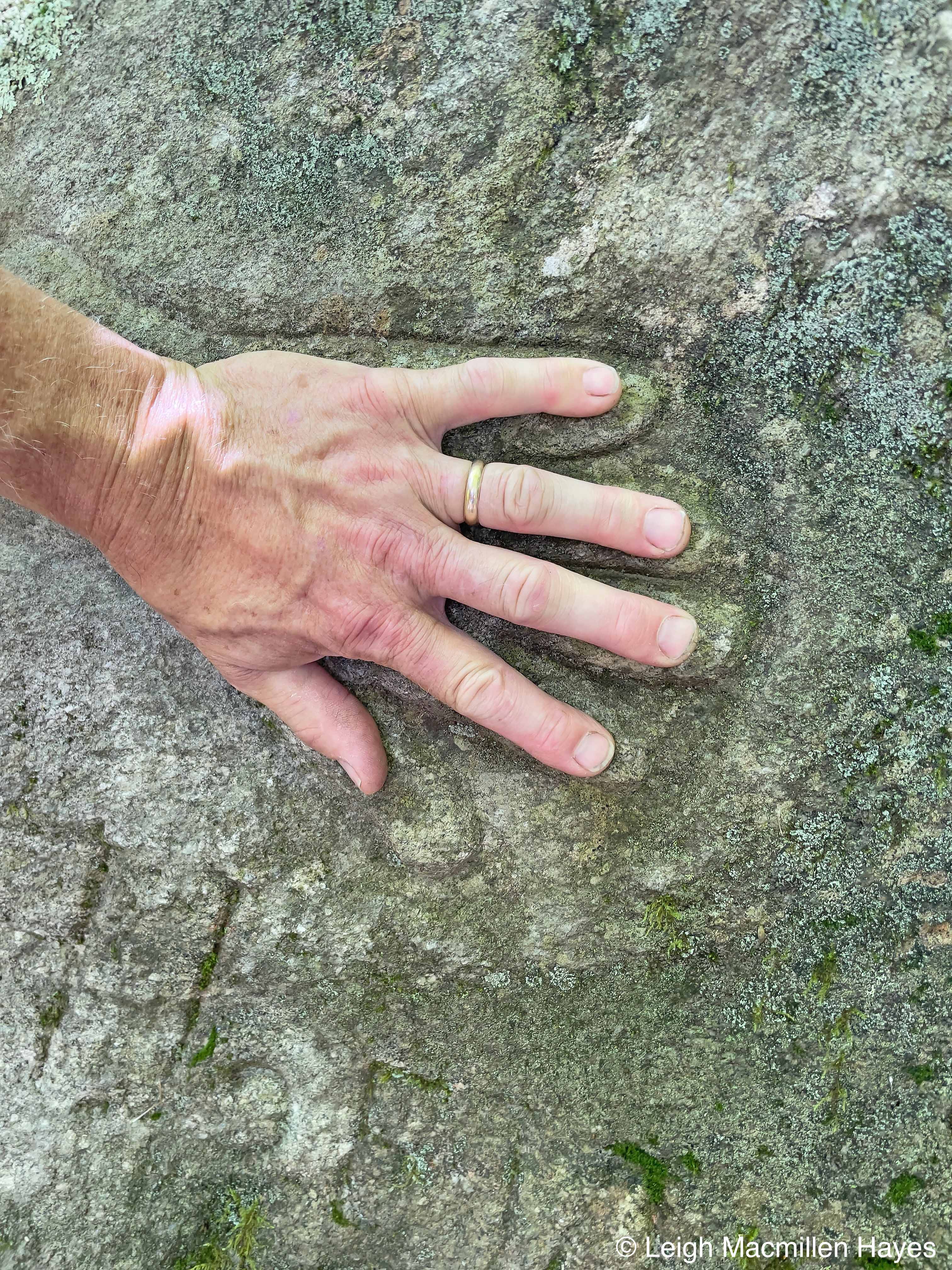
We began our journey on Saturday with a long (think 9.5 mile out and back, with some backtracking in the mix) walk on old roads deep in the woods of western Maine. Our goal was to find the Hand on The Rock. Yes, you read that correctly. The Hand on The Rock.

And we did. I’d heard friends talk about this over the years, but until recently didn’t know of its actual location. Yes, that’s my guy’s hand. But do you see the engraved hand on the rock? It was perfect for my guy to place his hand on top, as he’s left-handed.

Below the left hand is the name LH JEWETT, that features a backward letter J. According to Arthur Wiknik, Jr.’s Hand on The Rock essay, “The rock carver has been identified to be Leander Hastings Jewett. Leander was born on April 4, 1851 in Sweden, Maine to Milton and Eliza (Whitcomb) Jewett, and for a time lived in the northeast corner of Sweden known as the Goshen neighborhood.”

Continues the writer: “As with most young men in the 1800s, Leander was a working member of his family and likely chiseled the rock between 1868 and 1873, presumably out of boredom while helping his father do some logging.” 

I think what I love most about all of this is that Wiknik acknowledges my friends Jinnie Mae and Dick Lyman, (may they both RIP,) for their historical knowledge.

Since we were in the neighborhood, we also stopped in at the Goshen Cemetery. The stones were discovered years ago under the duff and uprighted in situ. The tombstones are unmarked and as far as I know, two theories exist–an epidemic struck the neighborhood and those who died needed to be buried as fast as possible, or these were the tombs of the residents from the town’s poorhouse.

And when we finally returned to the truck, we were blessed to discover a bag of fresh veggies left by two dear friends.

That was Saturday.

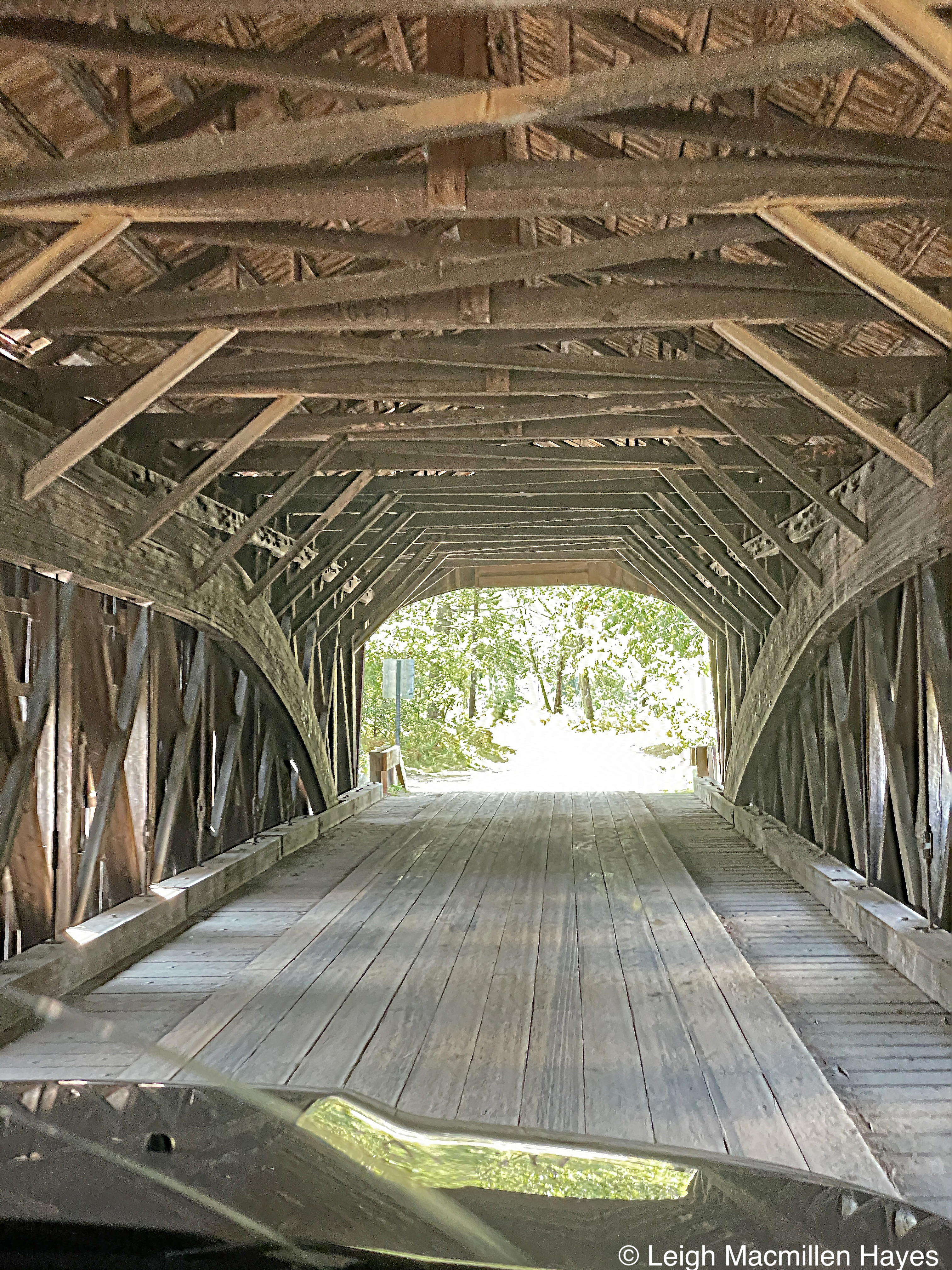
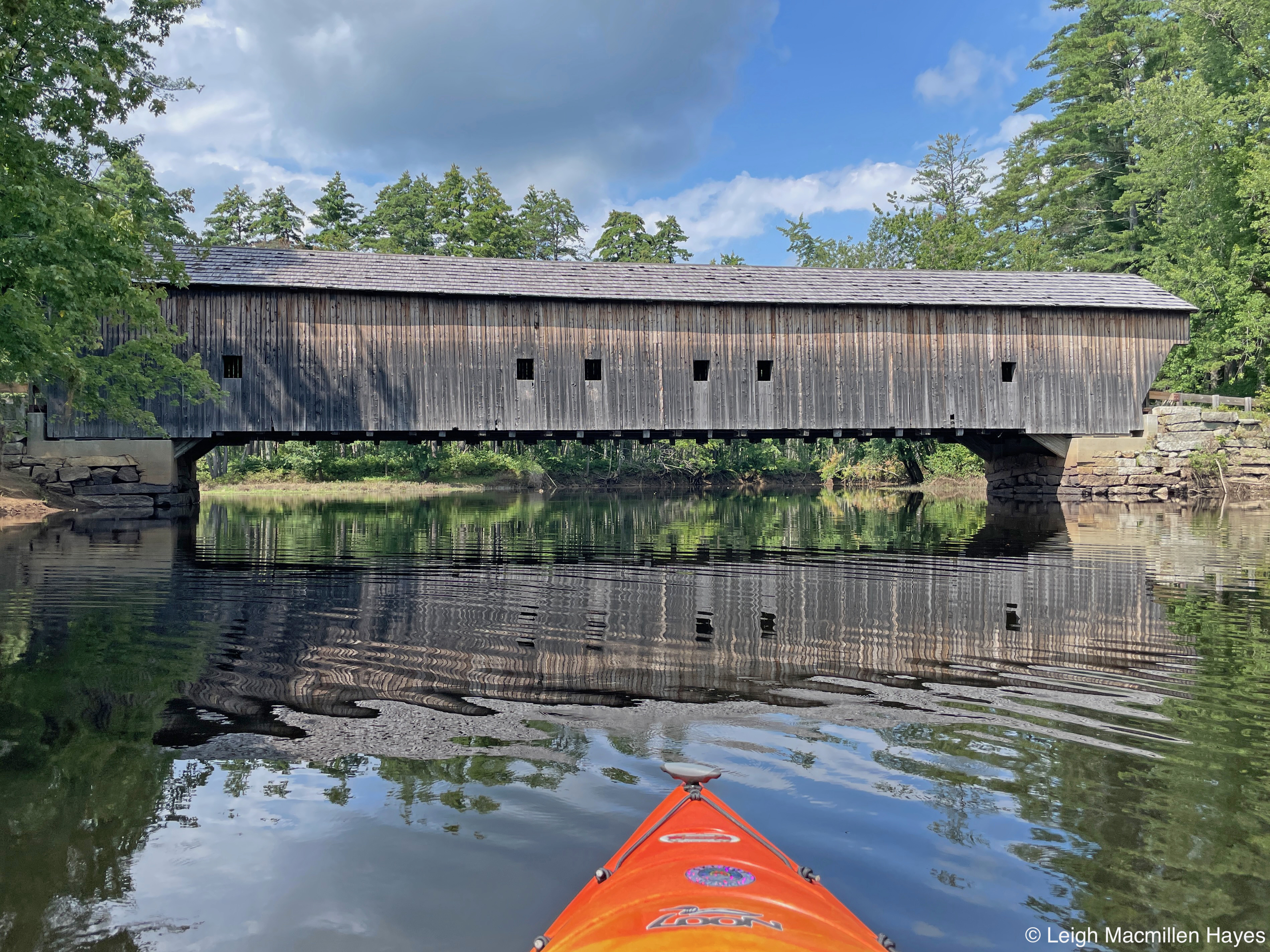
Sunday found us driving across Hemlock Covered Bridge in Fryeburg, Maine. The structure has spanned the Old Course of Saco River for 166 years.

Built of Paddleford truss construction with supporting laminated wooden arches, Hemlock Bridge is one of the few remaining covered bridges still in its original position. Peter Paddleford of Littleton, New Hampshire, created this design by replacing the counter braces of the Long-style truss bridge, creating an unusually strong and rigid structure. It was reinforced in 1988 and one can still drive across (“You’re stating the obvious, Mom,” our sons would say.).

Our goal was to paddle under the bridge and head to Kezar Pond on this beautiful afternoon.

My guy had never actually travelled this route before, so it was fun to share the tranquil paddle with him.

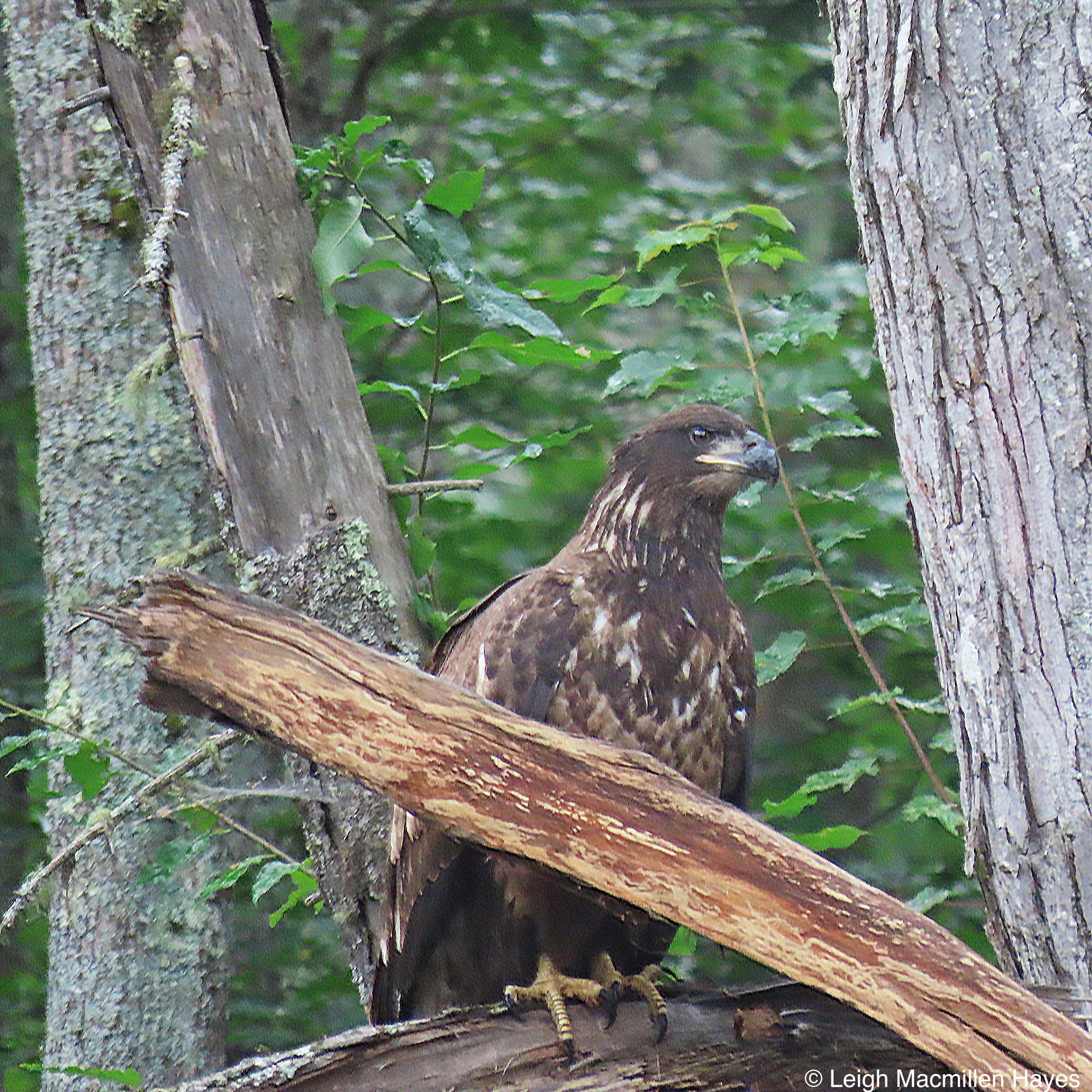
A juvenile Bald Eagle greeted us from high up in a White Pine. And we greeted it back. As one should.

Reaching the pond, we discovered a beautiful day to the east and storm clouds to the west. And so it was a quick look-about and then a wise decision to turn around and paddle back to the bridge.

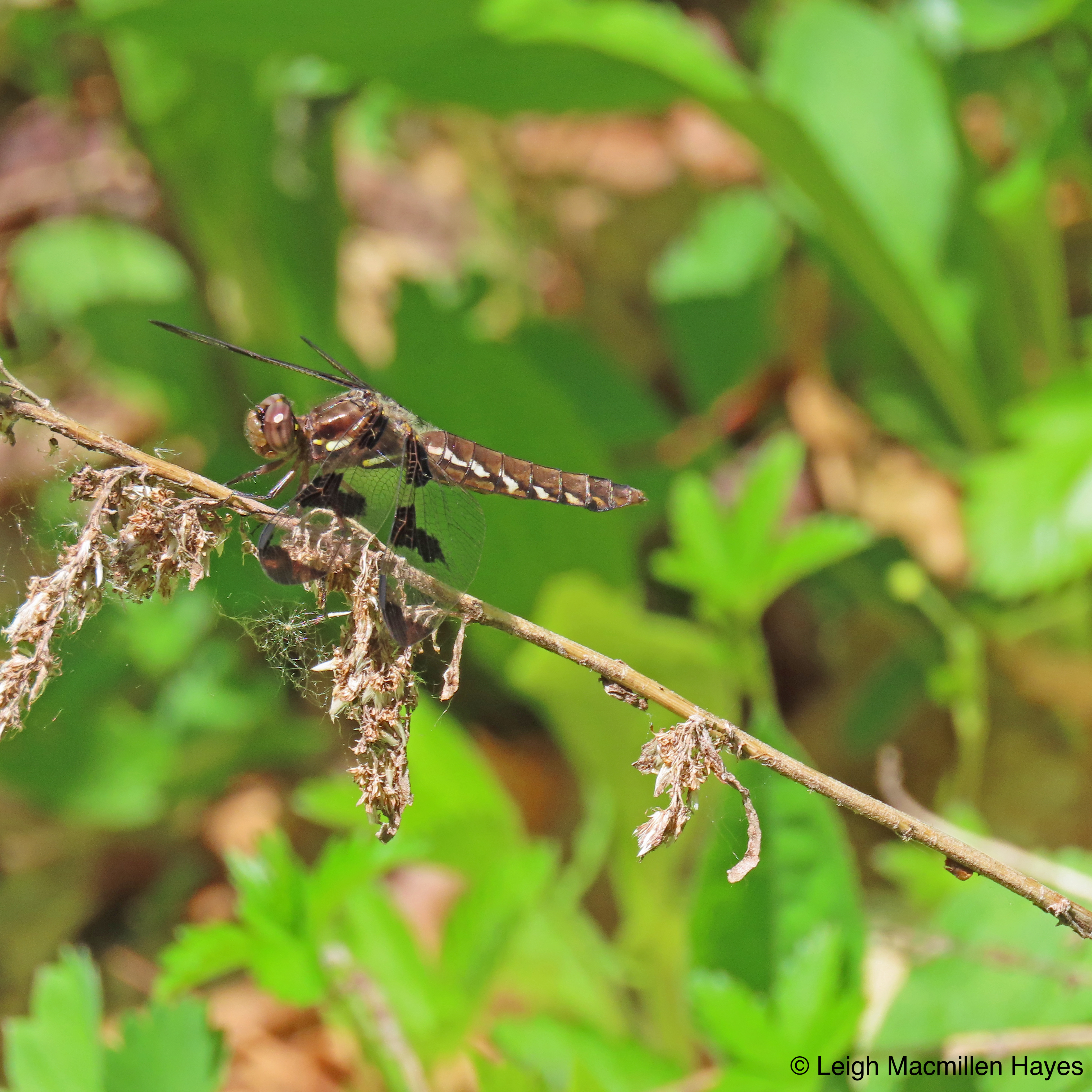
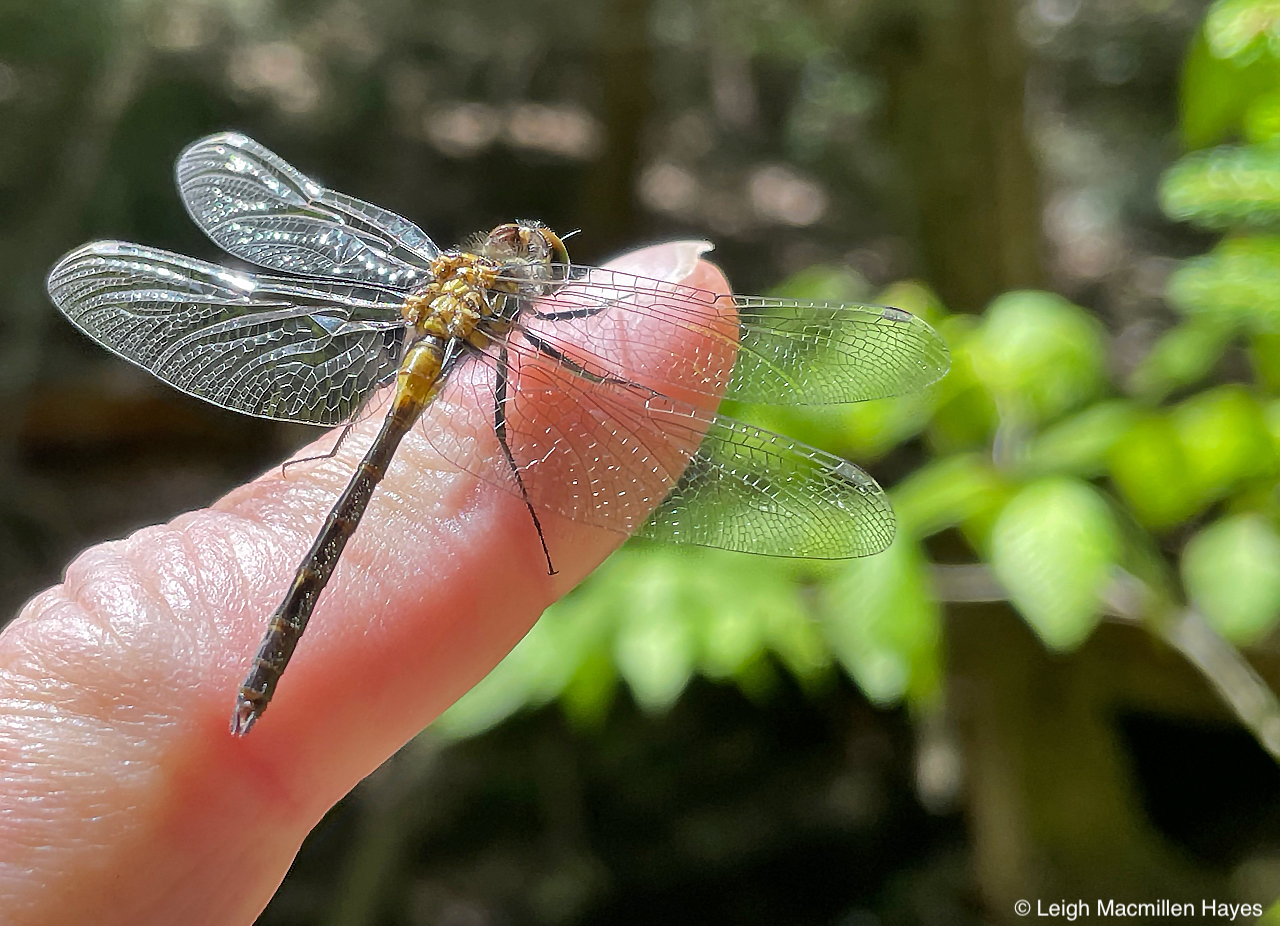
But first, a small skimmer dragonfly known as a Blue Dasher, begged to be admired. And so I did.

As soon as we started our return journey it began to sprinkle, but despite the rain, we were rewarded with another look at the juvenile eagle as it flew down to a tree limb beside the river.

Did we get wet? A tad bit. It was a gentle rain, however, and since it wasn’t cold, we didn’t mind.

Was my guy faster than me? Yup. But he waited under the bridge until I caught up.

And then today’s decision was to climb The Roost trail in Evans Notch and hike along another trail in Shelburne, New Hampshire. The Roost is a fun loop that doesn’t have much of a view at the summit.

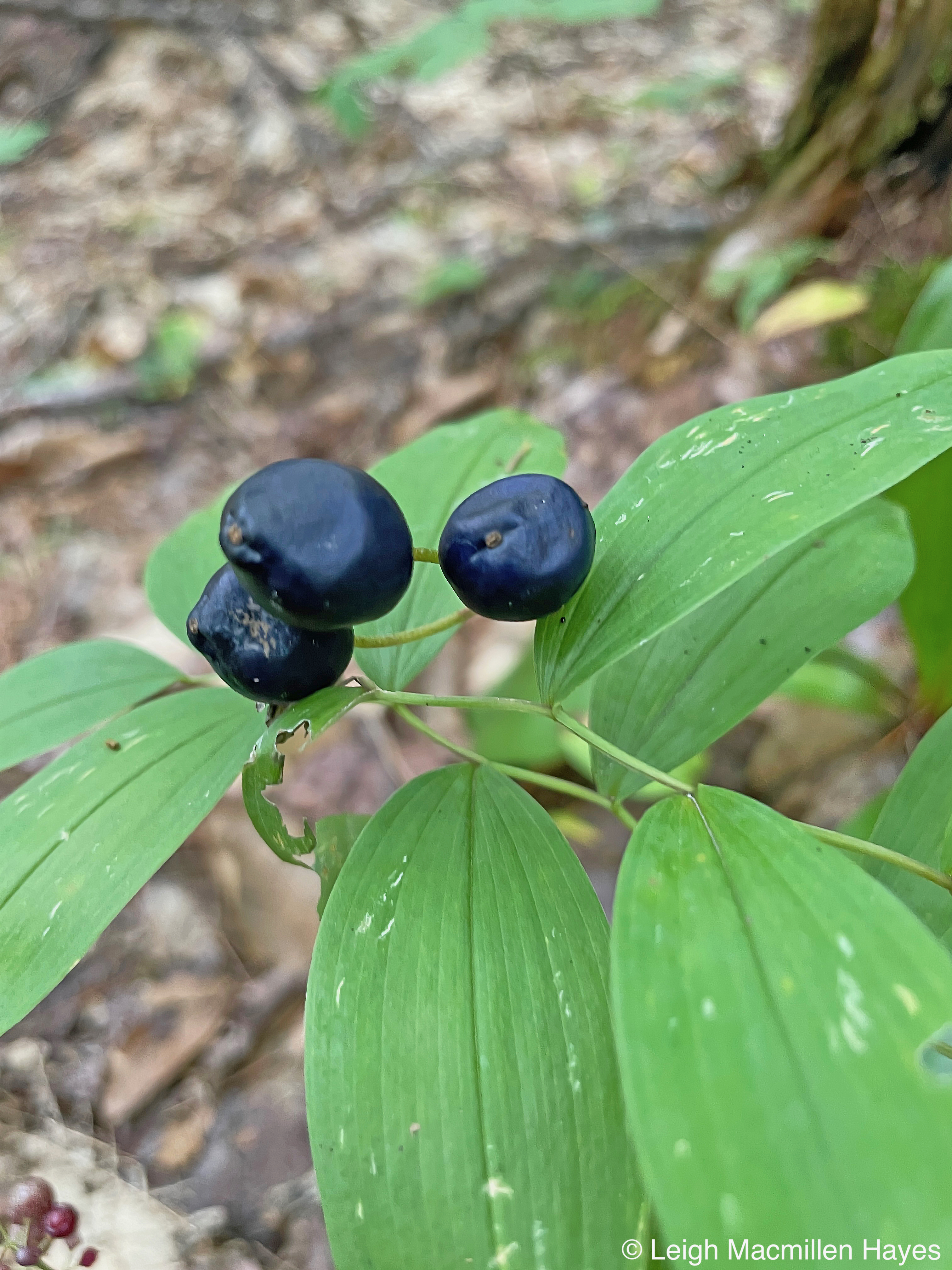
But we found things to look at that made up for it, like this Clintonia, aka Blue Bead Lily, growing out of a dead snag.

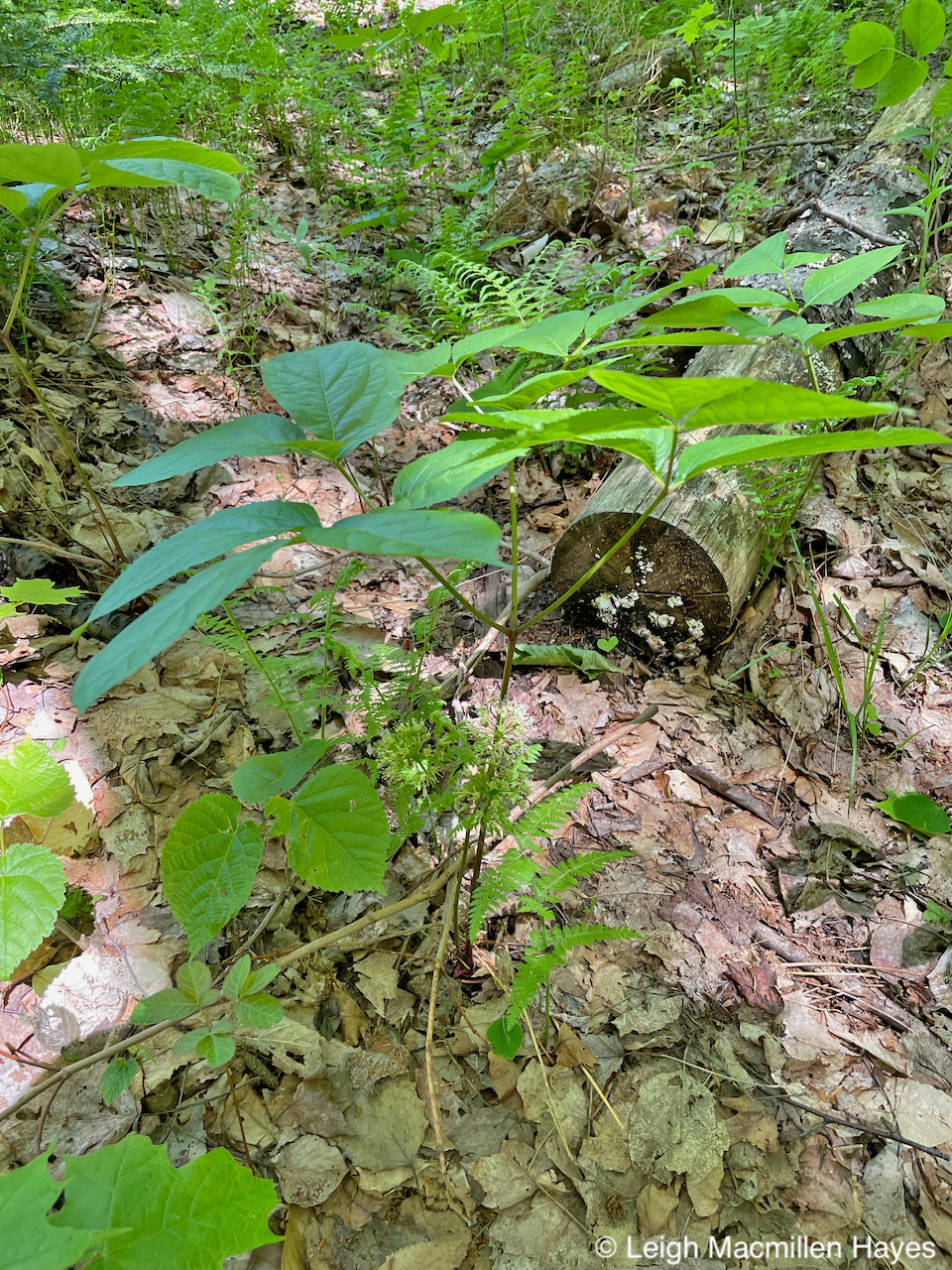
And this mystery plant for my naturalist friends to identify.

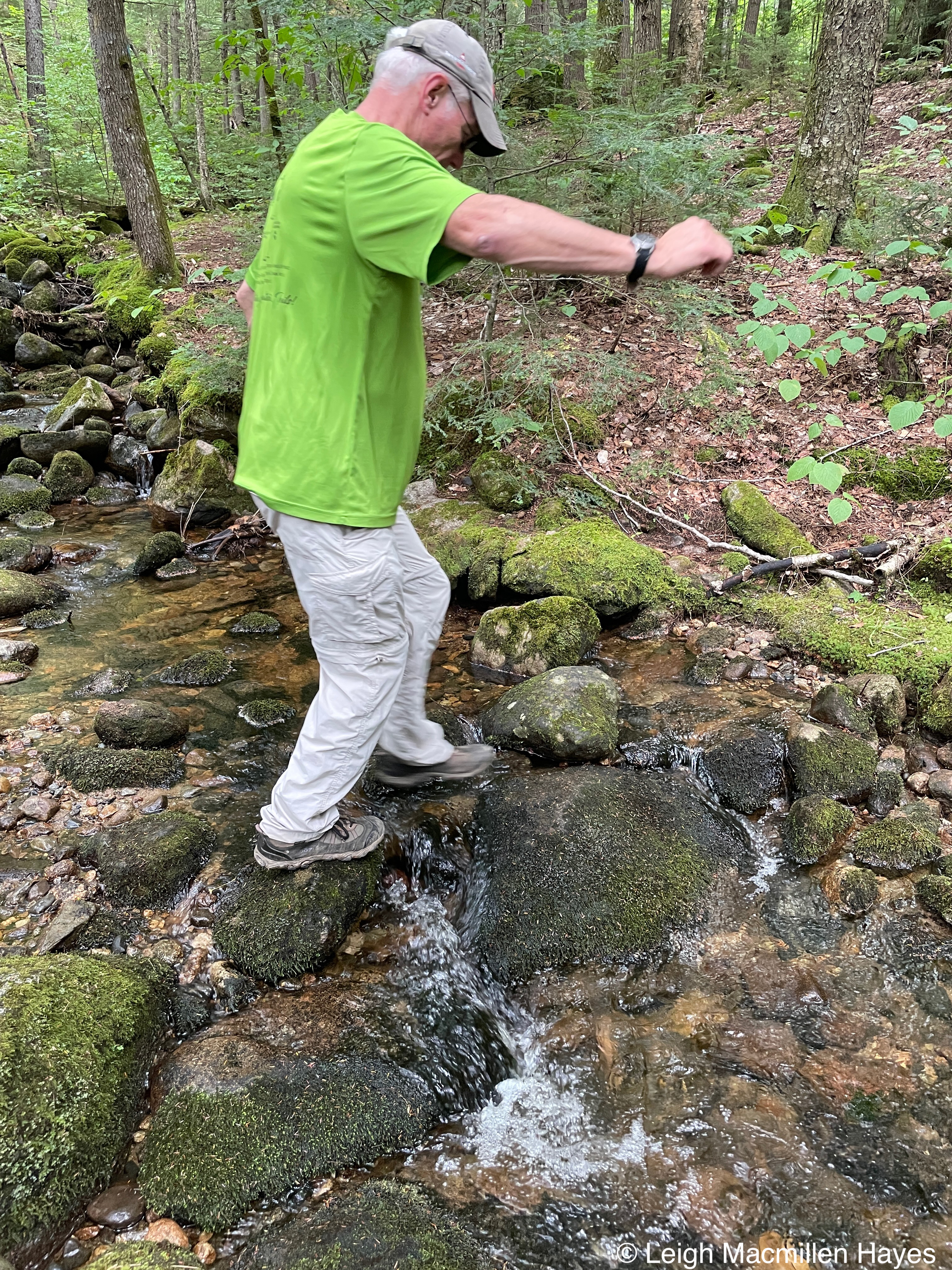
The trail down that we chose to follow was a wee bit longer than that ascending The Roost, but offers a much more gradual descent. And four water crossings.

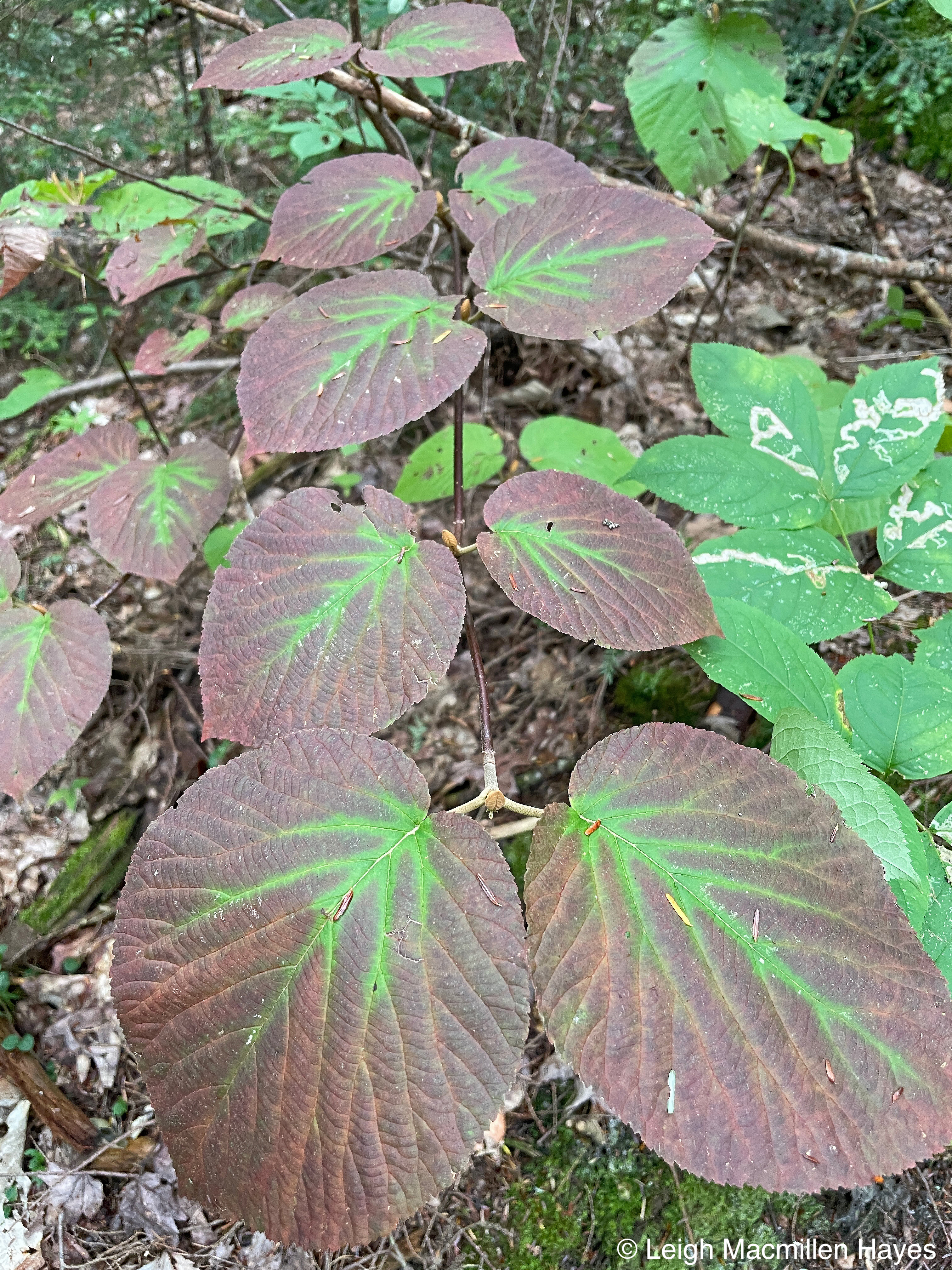
And a view of Hobblebush leaves speaking of the future. Since I mentioned Jinnie Mae earlier in this post, she had to be smiling down upon me when she saw that I was taking this photo. She used to tease me about all the Hobblebush photos I took. But it always has something interesting to offer, no matter the season.

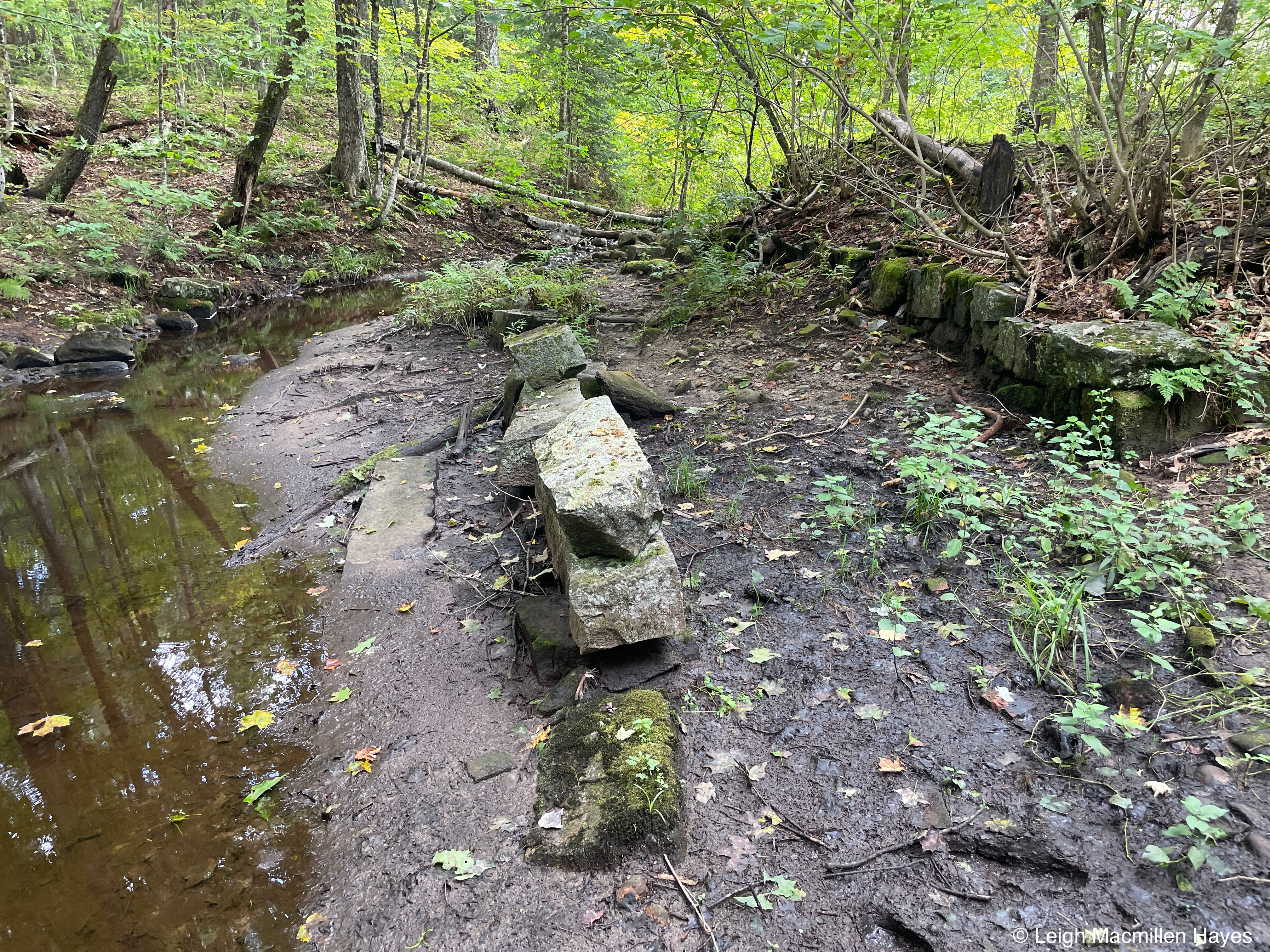
At the final stream crossing, we spied an old sluice way that speaks to the history of the area once known to support many logging camps. We were just below Hastings Campground and Hastings was formerly a booming village during the early 20th Century.

There are also bricks in the water, so I wondered if a grist mill or saw mill had been operated here.

As we walked back up Rte 113 to complete the loop and return to my truck, we took a detour across the bridge over Wild River. It’s part of the snowmobile route when the white flakes do fly.

Our next plan was to explore Shelburne Riverlands, a Mahoosuc Land Trust property just across the line in New Hampshire, but where gnats had been annoying on The Roost, the mosquitos drove us crazy and about a half mile in we decided to turn around and save this hike for another day. A cooler day. A less buggy day. I think we’re on at least the fourth mosquito hatch this summer.

Instead, we continued down the road to Mahoosuc Land Trust’s pollinator garden at Valentine Farm. It’s a favorite hang-out of mine. My guy tolerated my slo-mo photo taking by napping in the truck.

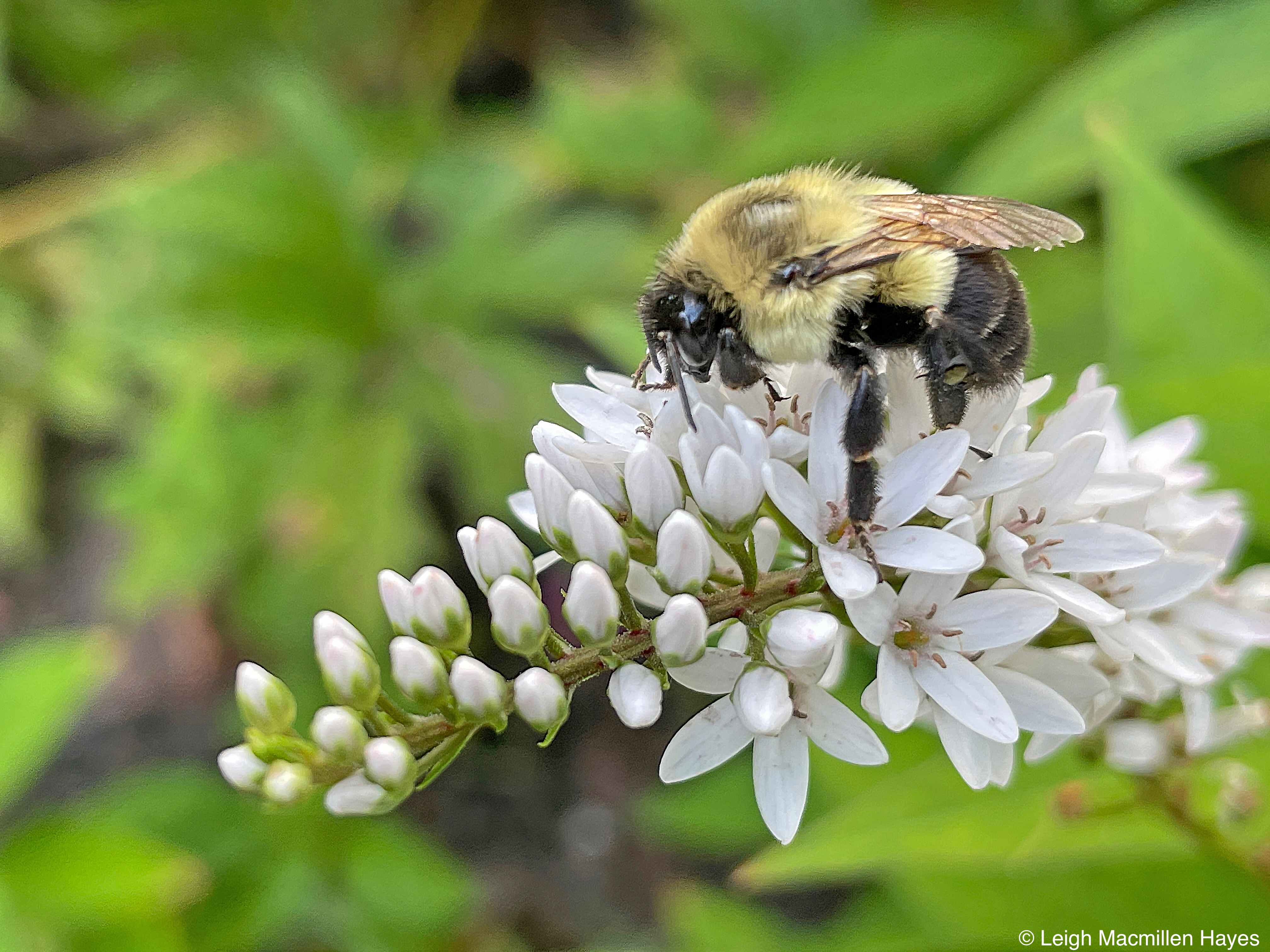
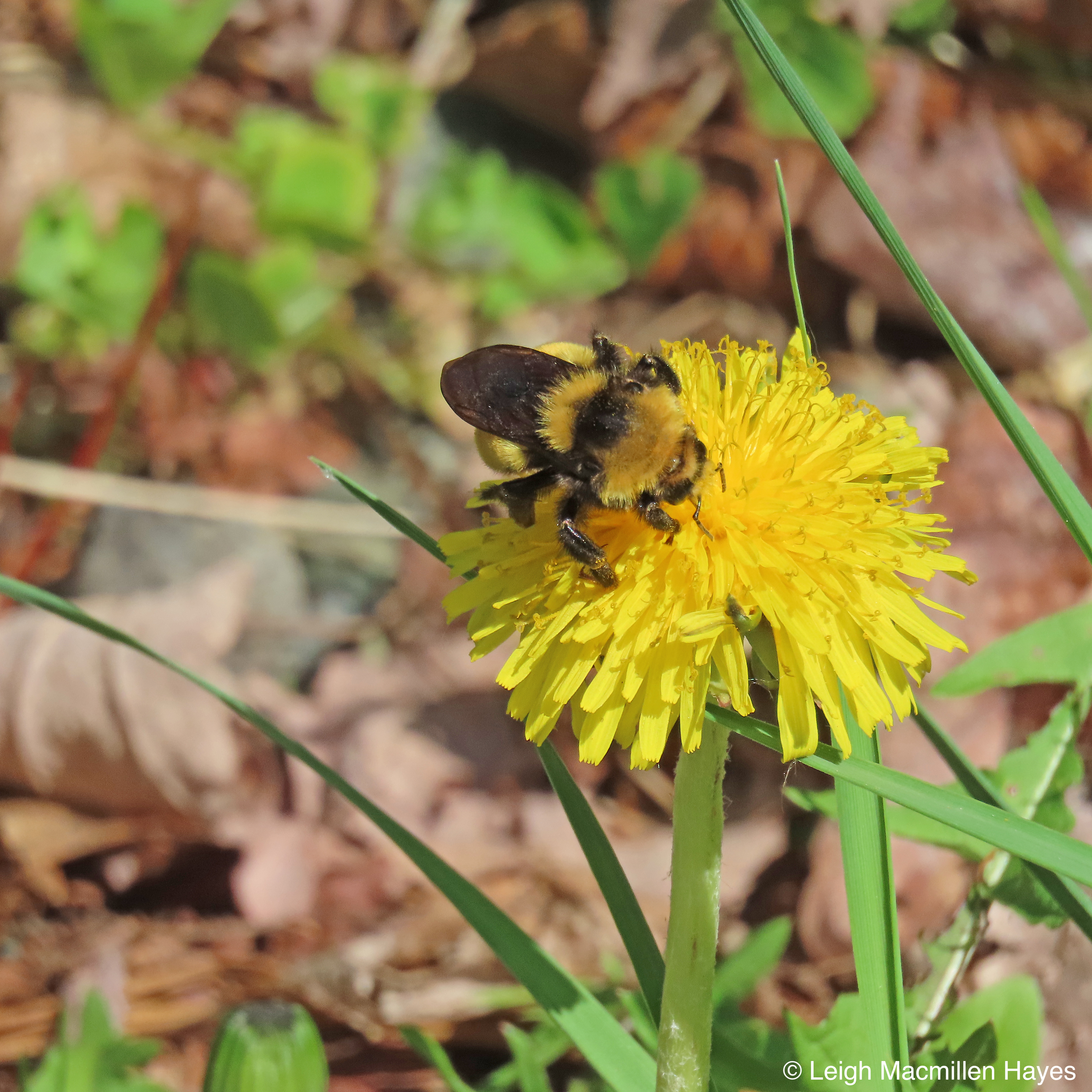
Look at all the pollen on that bee!

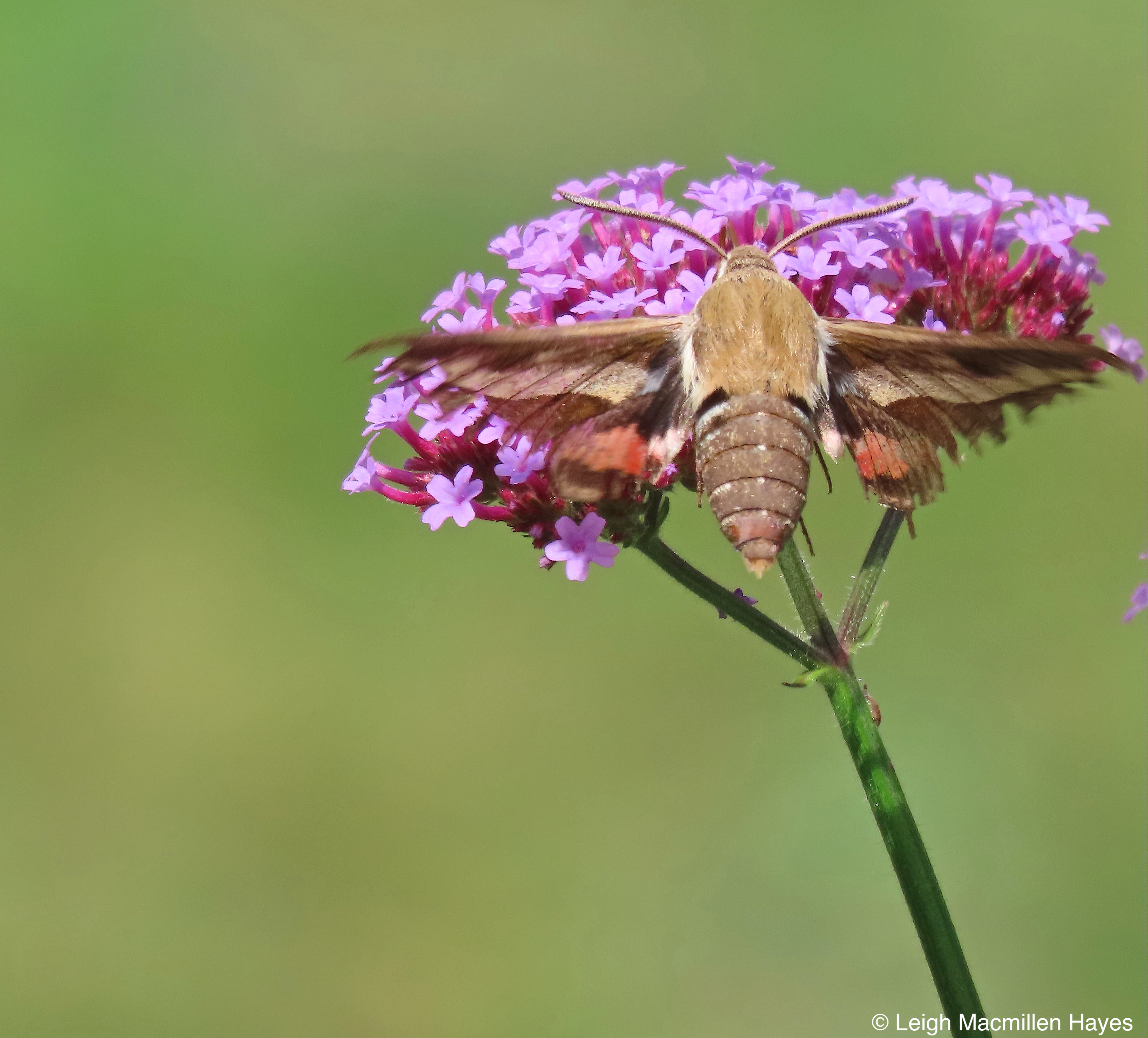
And check out this Hawk Moth that hovered much like a Hummingbird.

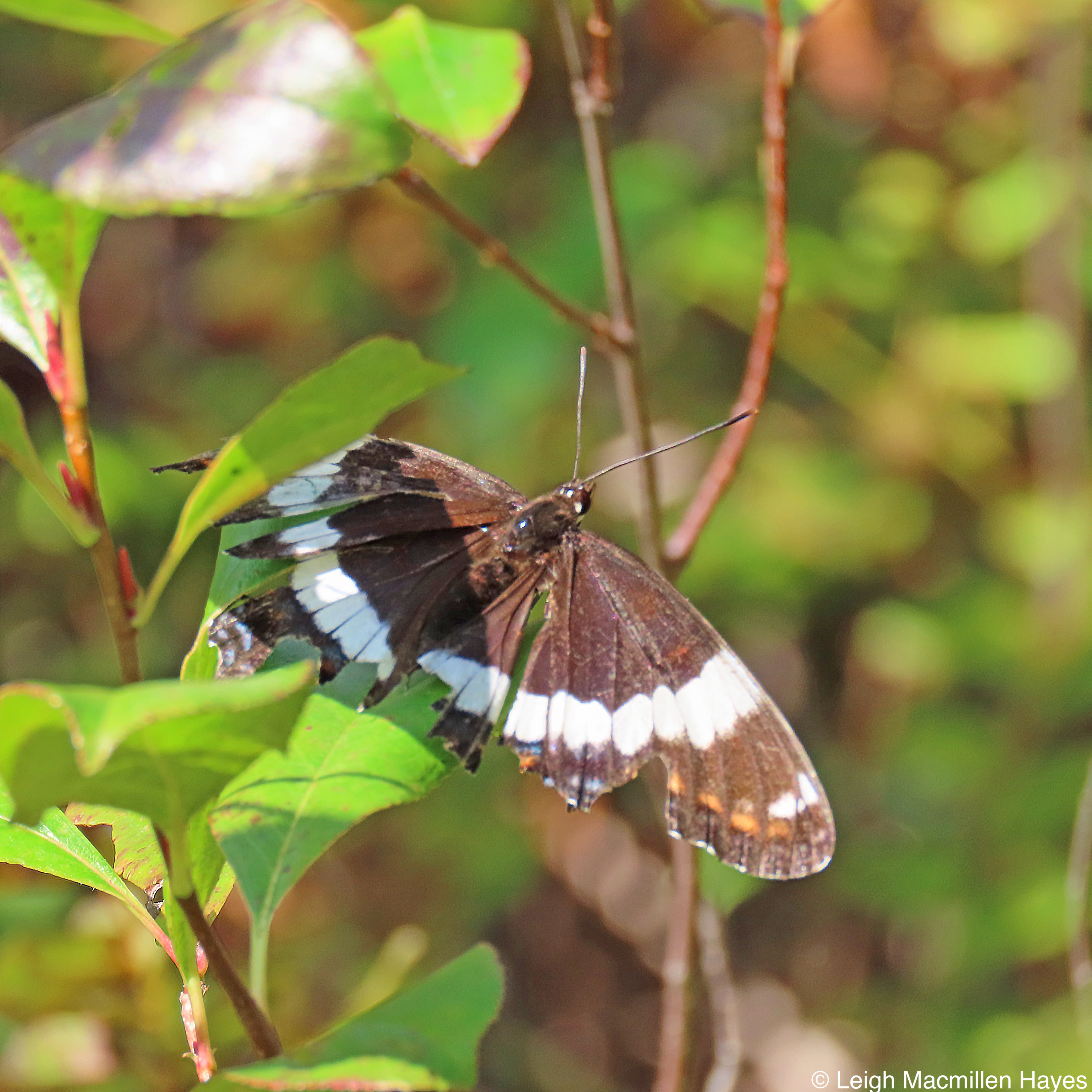
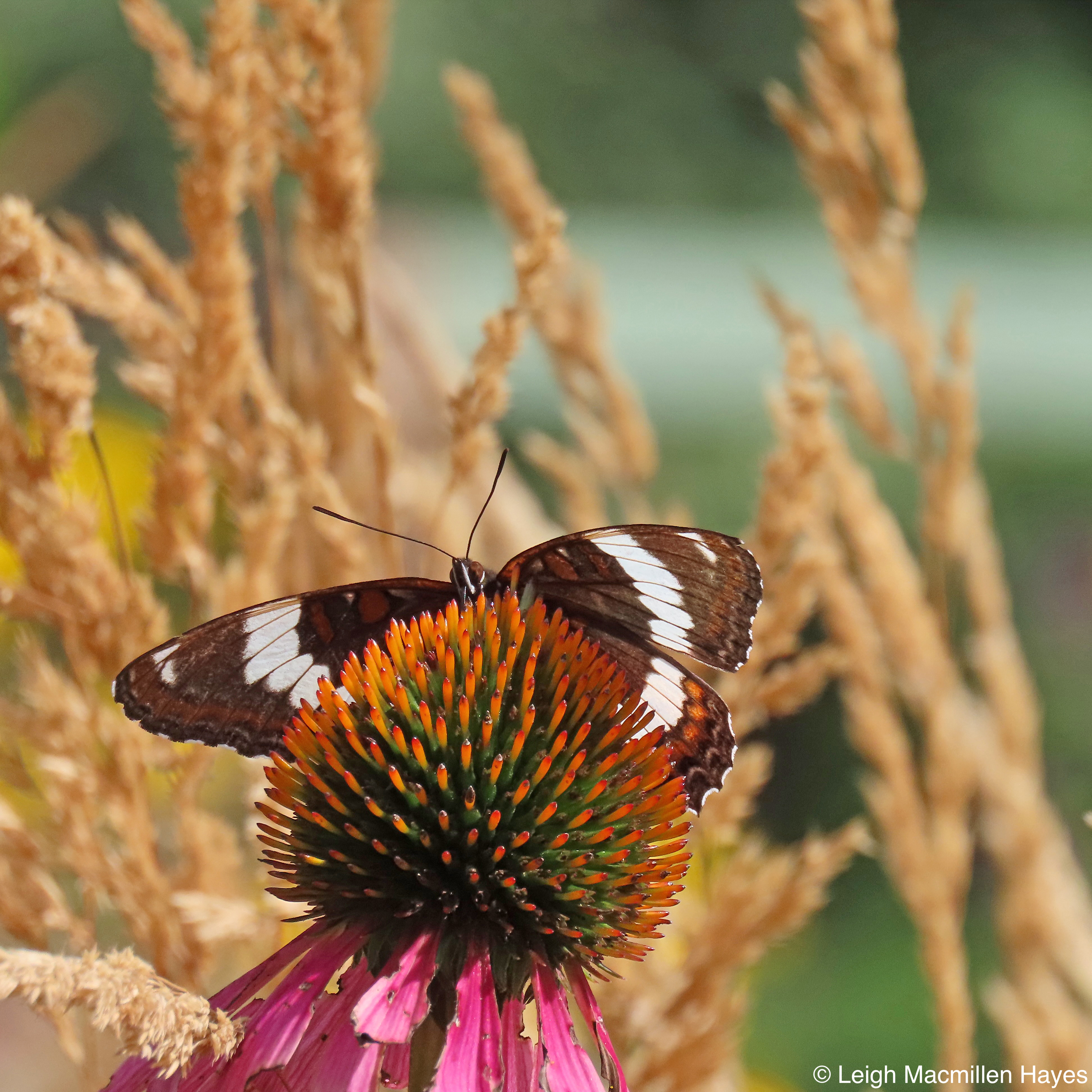
I also fell in love all over again with the White Admiral Butterfly, especailly since the orange on its hind wings seemed to match the orange of the Coneflower.

But the stars of the show were the newly emerged Monarch Butterflies.

If my guy hadn’t been waiting so patiently in the truck, I might still be there, circling around and around watching all the action.

It was the perfect ending to this Tri-day Mondate. And I’m glad we were able to make the most of it.

Our Blue Greed Mondate

Somehow that time of year always sneaks up on us. And yet today dawned and the writing was on the wall: This is that time of year-kind-of-day. But the question remained: Would we be rewarded?

Well, we had to find out and so this morning we set off in search of this small mountain nestled in the midst of so many behemoth uprisings. It took us several wrong turns before we finally shared that sudden “Aha” moment that indeed the pasture road was the correct road. It was all rote from there.

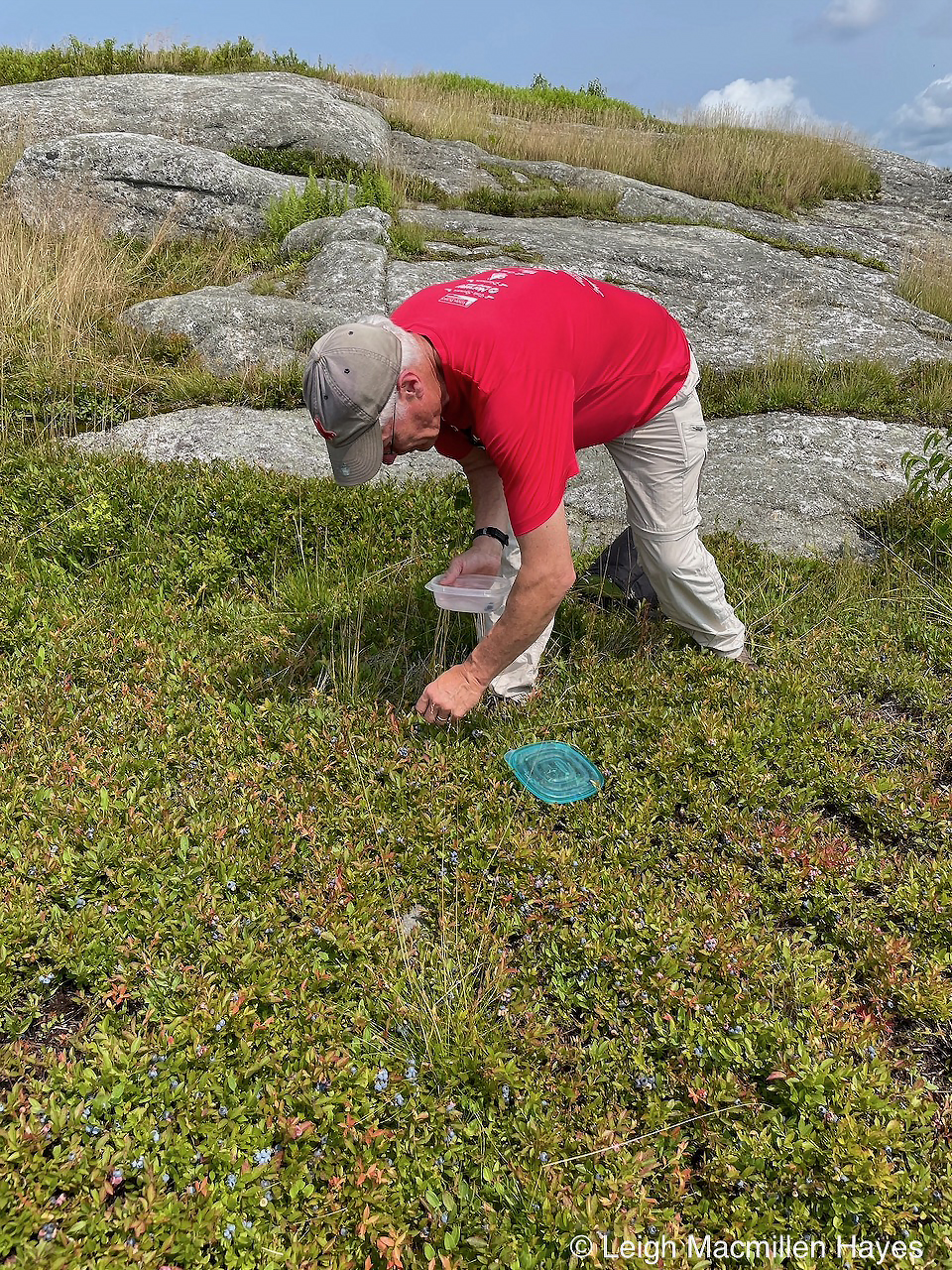
Last year we discovered the mountain top had been cut back and there were no little specks of blue to glean, but that cutback lead to this year’s abundant offerings. My Guy was in his happy place.

Well . . . one of his happy places. This one offering such sweetness in a manner all blue.

I chuckled when I overheard a mom commenting, “This is just like Blueberries for Sal.” I immediately texted our friend Kimmy for she and I know otherwise. Drop the “S” from Sal and you’ll know what I mean.

That said, his blueberries are my pollinators and with pollinators you have flowers, this one being one of many, many Wood Lilies.

There was also the Red-shouldered Long Horn Pine Borer, so frantic in its activity upon the Steeplebush flowers.

Plus a Paper Wasp upon Yarrow, . . .

And Flower Longhorn Beetle on Bristly Sarsaparilla. The season is short and there’s so much work to be done and the rain may have slowed things down so when the sun doth shine, it’s all insects on hand.

We finished up our hike, grabbed a to-go lunch at a locally eatery and then took off in the tandem kayak, with the same mission on our minds. Picking more blueberries for him, of course.

And checking out the local wildlife activity for me. We watched a beaver pass by our dock two nights ago, so we knew there was an active lodge somewhere in the area.

We actually found two new lodges and other older ones that were turning into islands. But we didn’t spy any beaver activity, probably given that it was the middle of the afternoon.

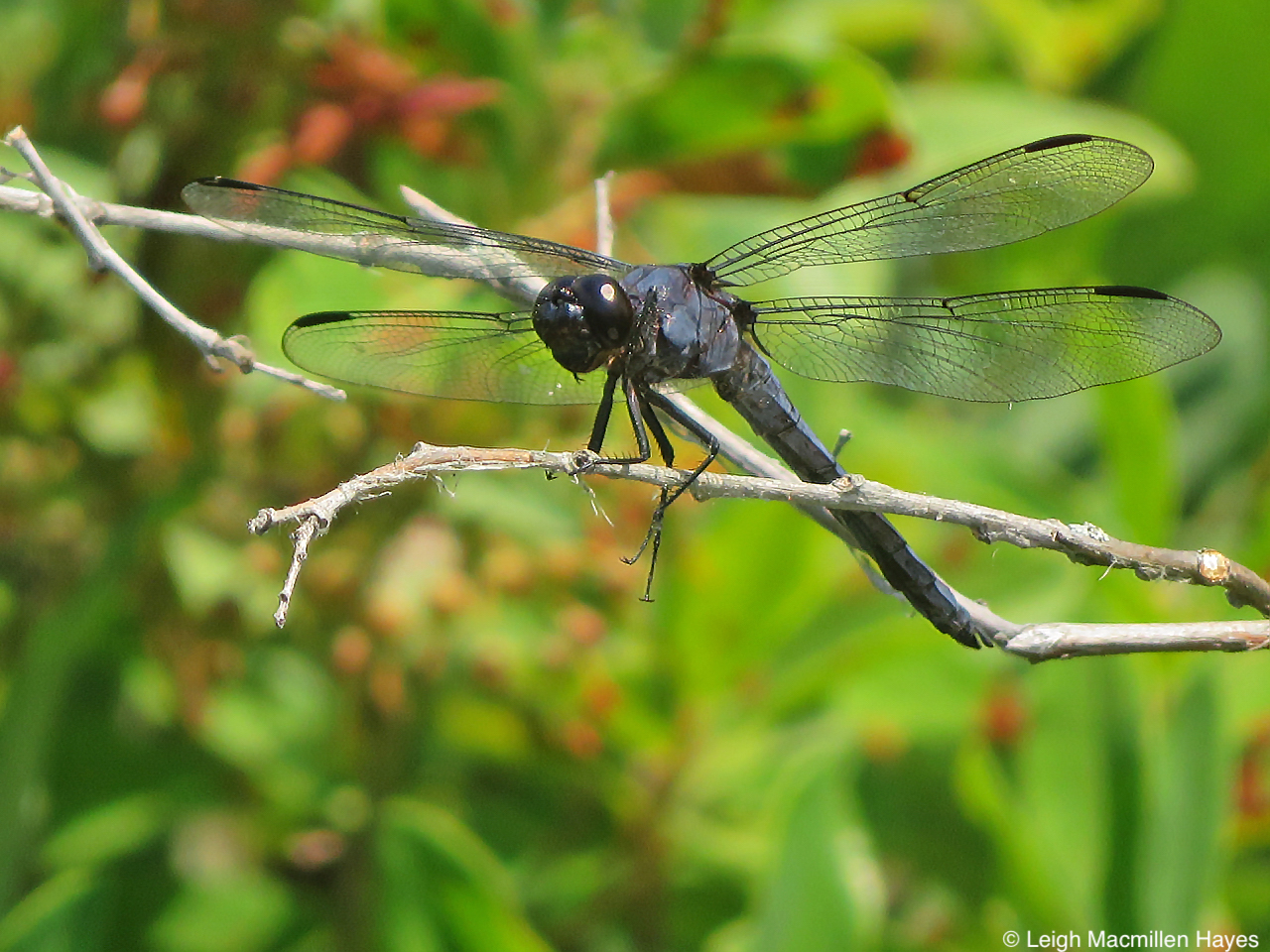
I, however, spotted a couple of species that envied My Guy’s blue greed, this being a male Slaty Blue Skimmer pausing in the midst of defending its territory.

And my heart was glad for we also spent some time with this tiny male Blue Dasher, another Skimmer who posed longer than I expected.

Only yesterday, I included his mate in Hunting for Dragons. Suddenly, here he was, albeit with a few Red Mite hitchhikers attached to his thorax.

While My Guy’s Blue Greed may be low and highbush blueberries, mine is definitely insects, and the bluer the better.

Rewarded were we, indeed!

Slippery Eyes

Exactly one year ago on a fine sunny day, My Guy and I drove to Wolfe’s Neck State Park in Freeport to fill the inner most recesses of our lungs with salty ocean air.

Today dawned rainy as has been the forecast now three days old, but we returned to the park with one quest in mind.

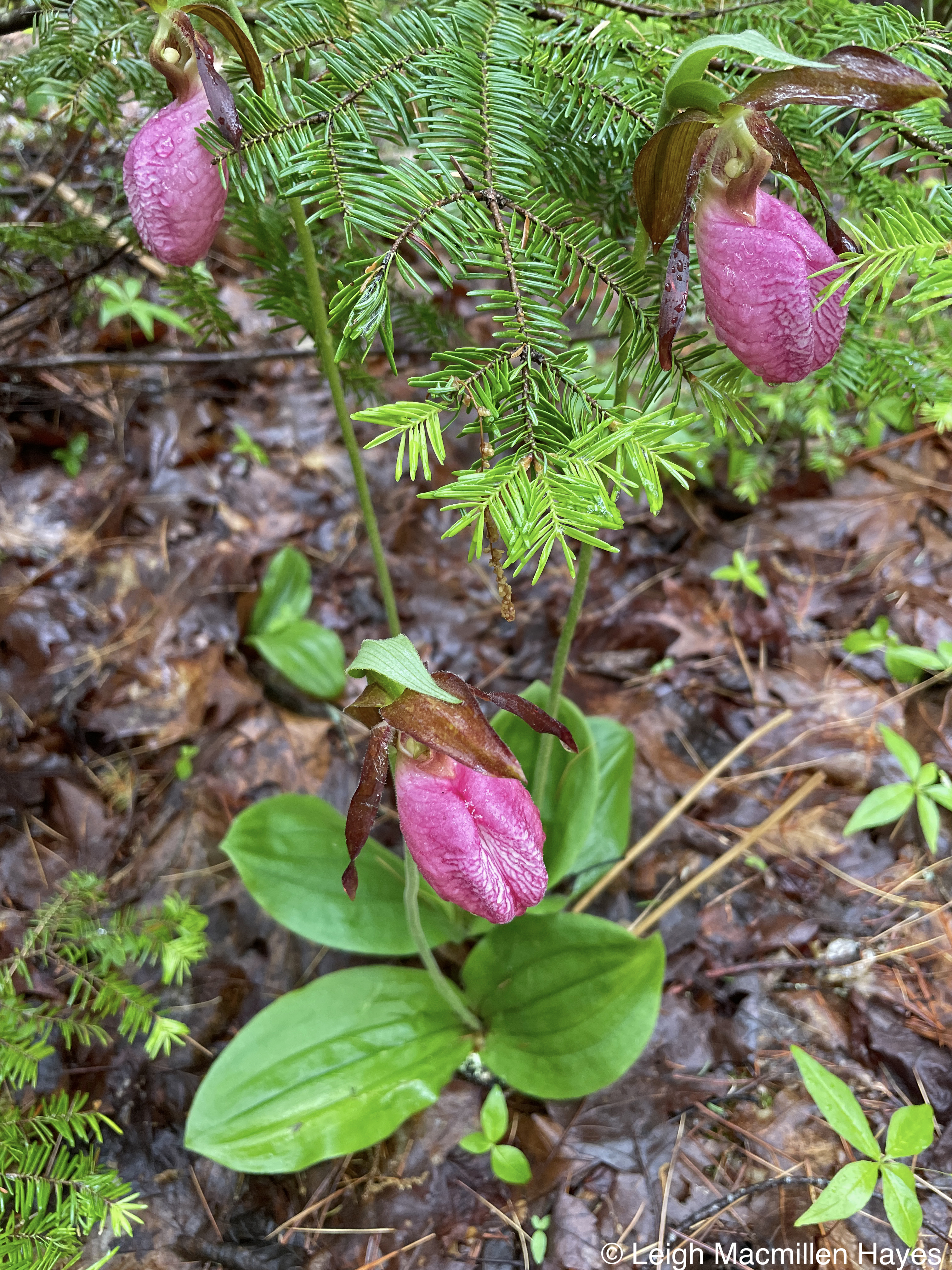
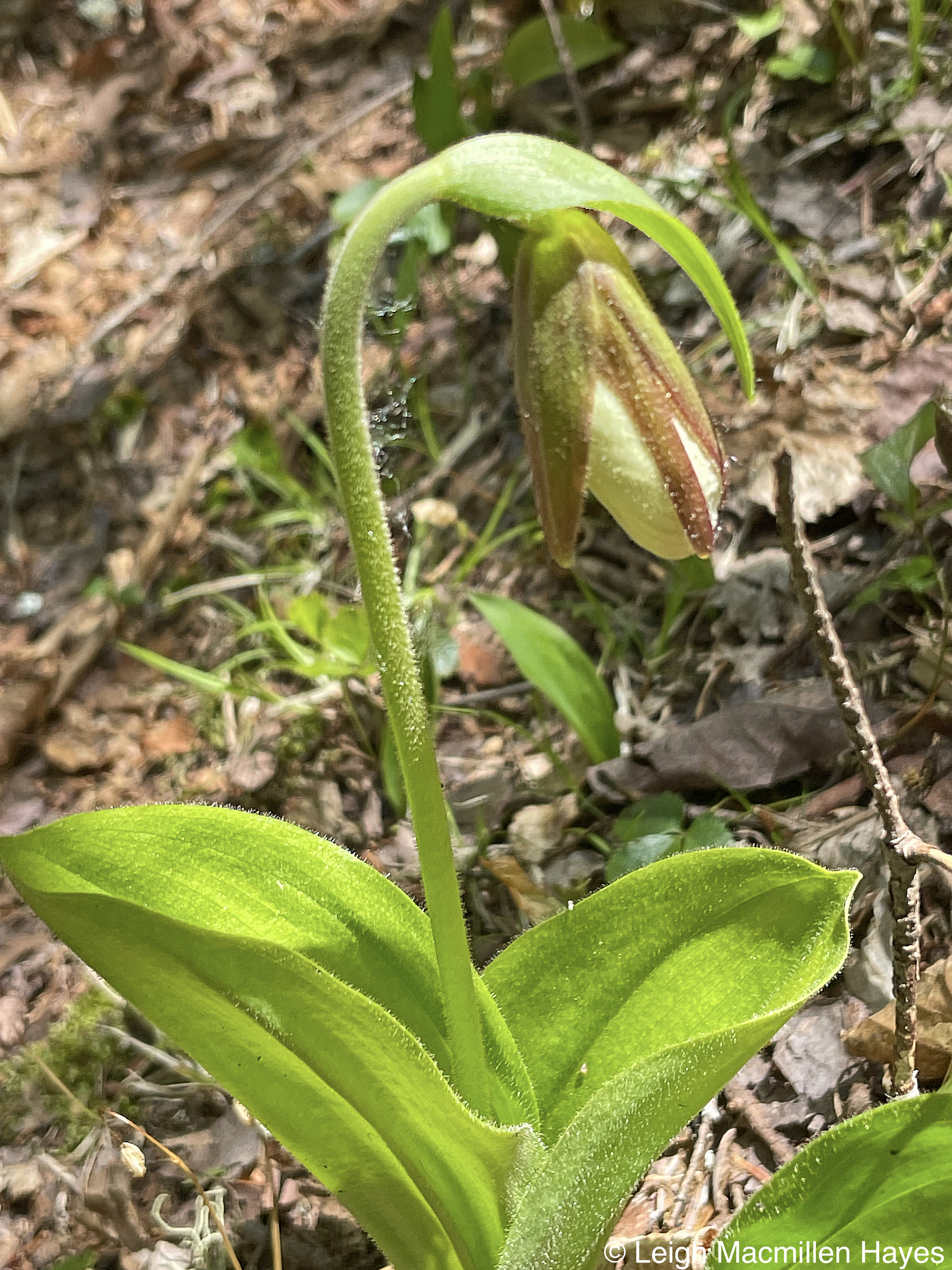
To see if we could match the count of Lady’s Slippers we encountered last year and Nature did not disappoint.

But, she also presented others to honor in their wet formations like a few remaining dandelion seeds and translucent bracts offering a sunshiny display.

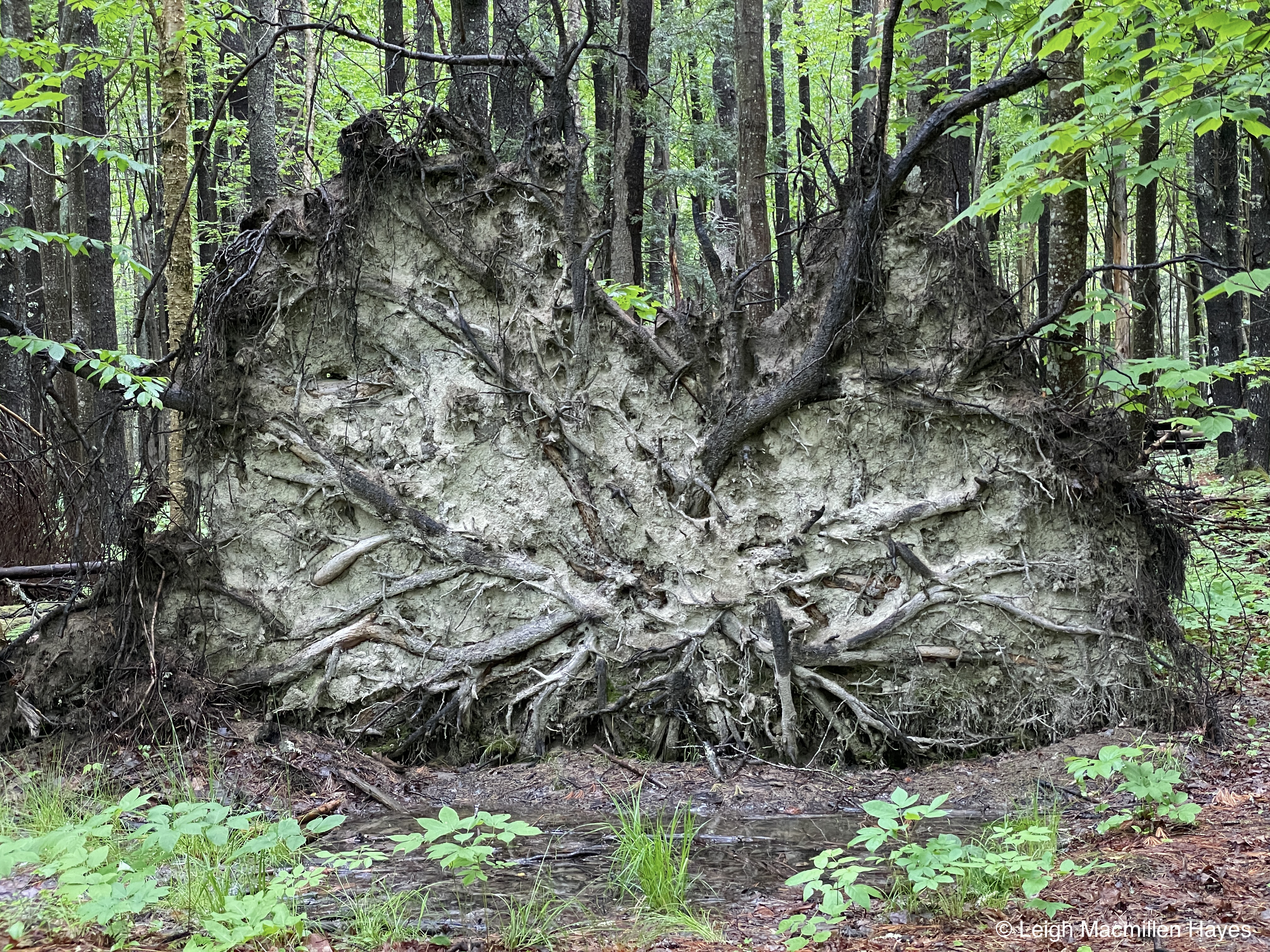
Even the underside of a windblown tree, one of many, showing off its shallow root system created an artful design to admire.

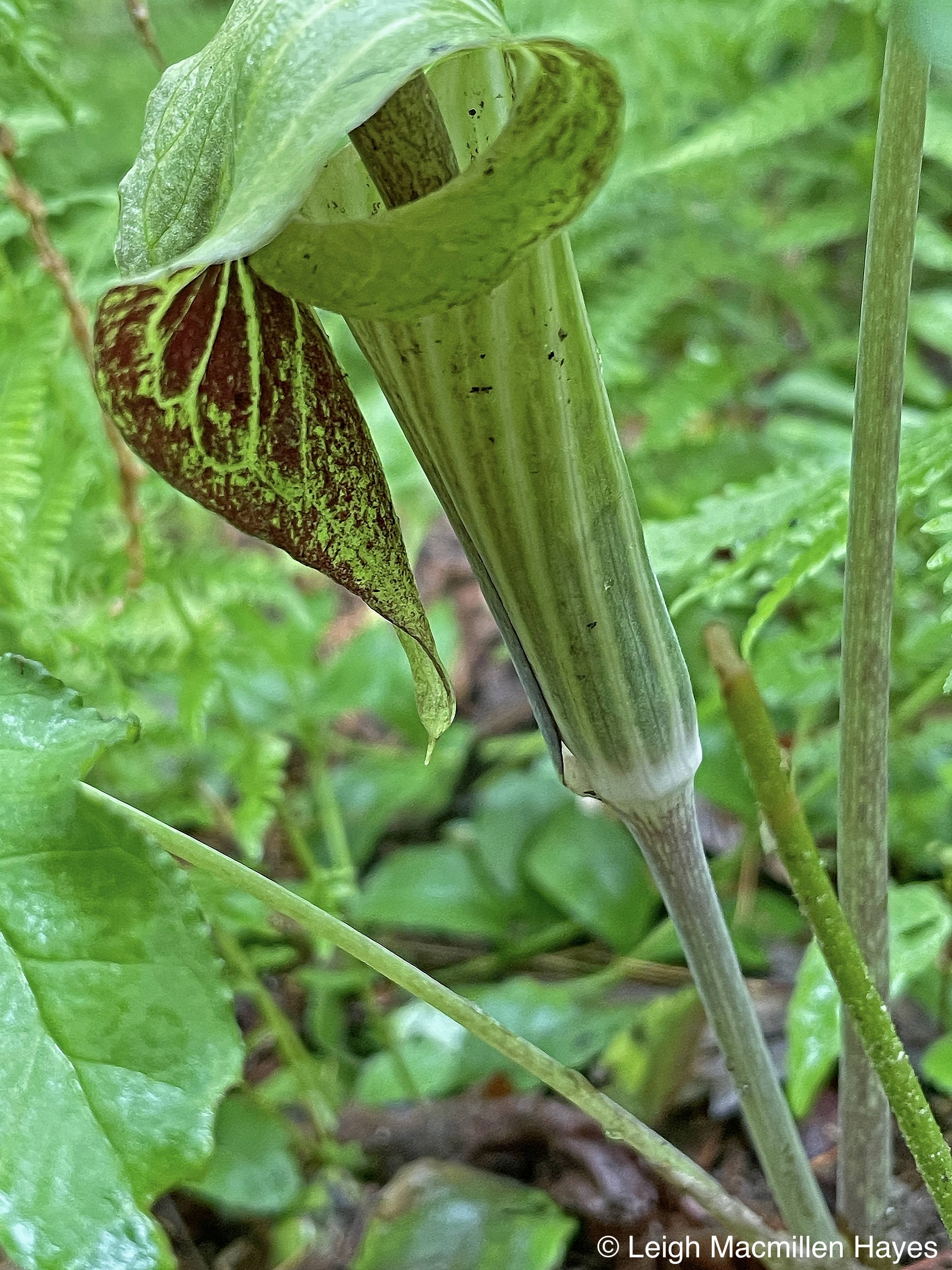
Hiding beneath two three-part leaves, a long club or spadix sitting in a hooded base or spathe known as a pulpit indicated that Jill and not Jack was doing the preaching in these woods.

Though the weather changed from drizzly to dry, or maybe because it did so, White Baneberry celebrated with a show of fireworks.

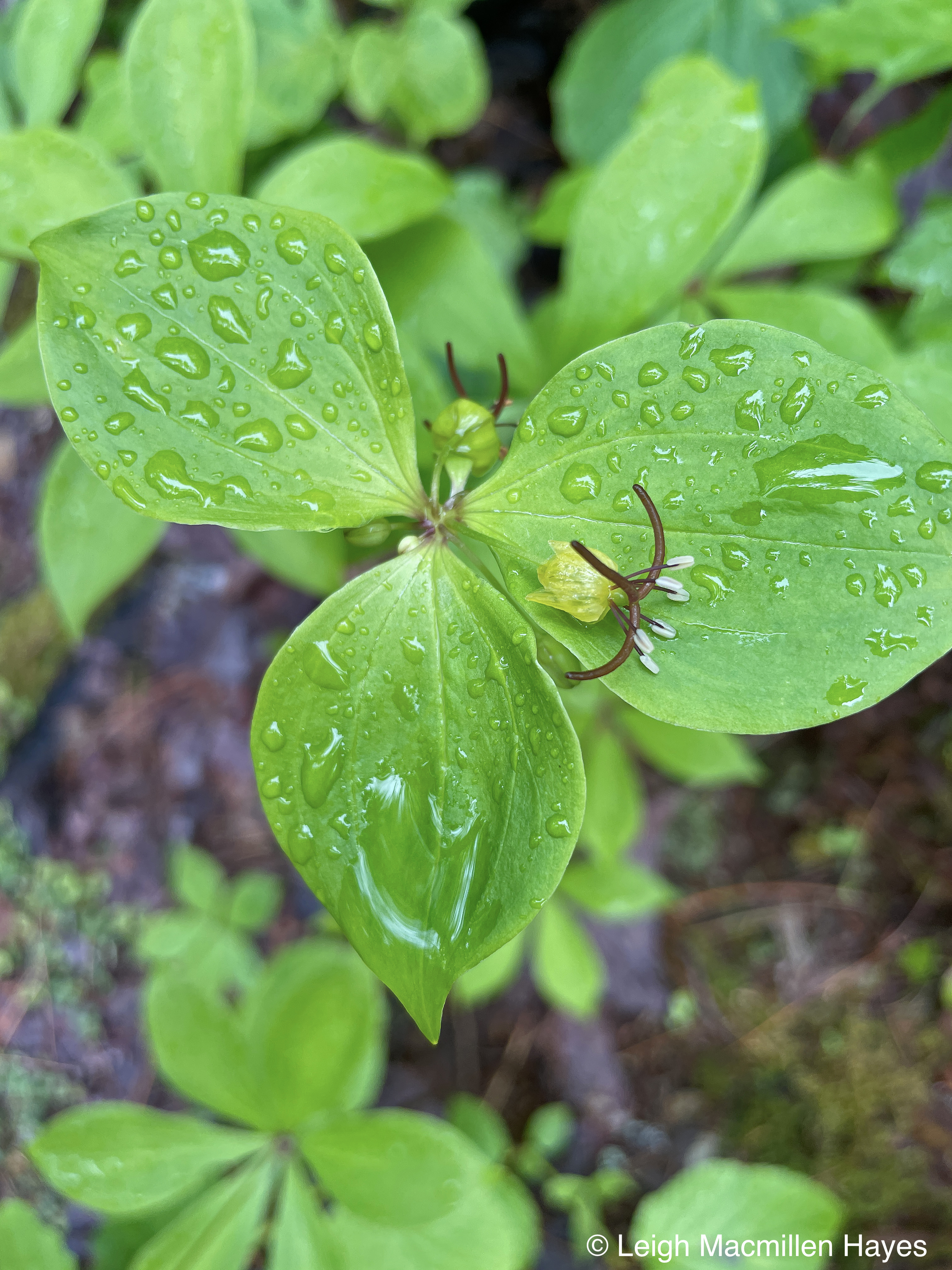
And Indian Cucumber Root began to take the next step in its two-tiered story, for at least one flower had been pollinated and rather than dangle below the leaves, rose above in anticipation of a fruit forming.

There was all that to see, but My Guy, whether walking along the yellow brick road or over rocks and roots, only had his sight on one species that actually slowed him in his tracks.

Looking left and right, and peeking under and over, he kept count of his Lady’s Slippers.

Whether they grew in groups or singly, including this one that surprised even him, for it had sprouted from a mossy substrate upon a rock, each one mattered.

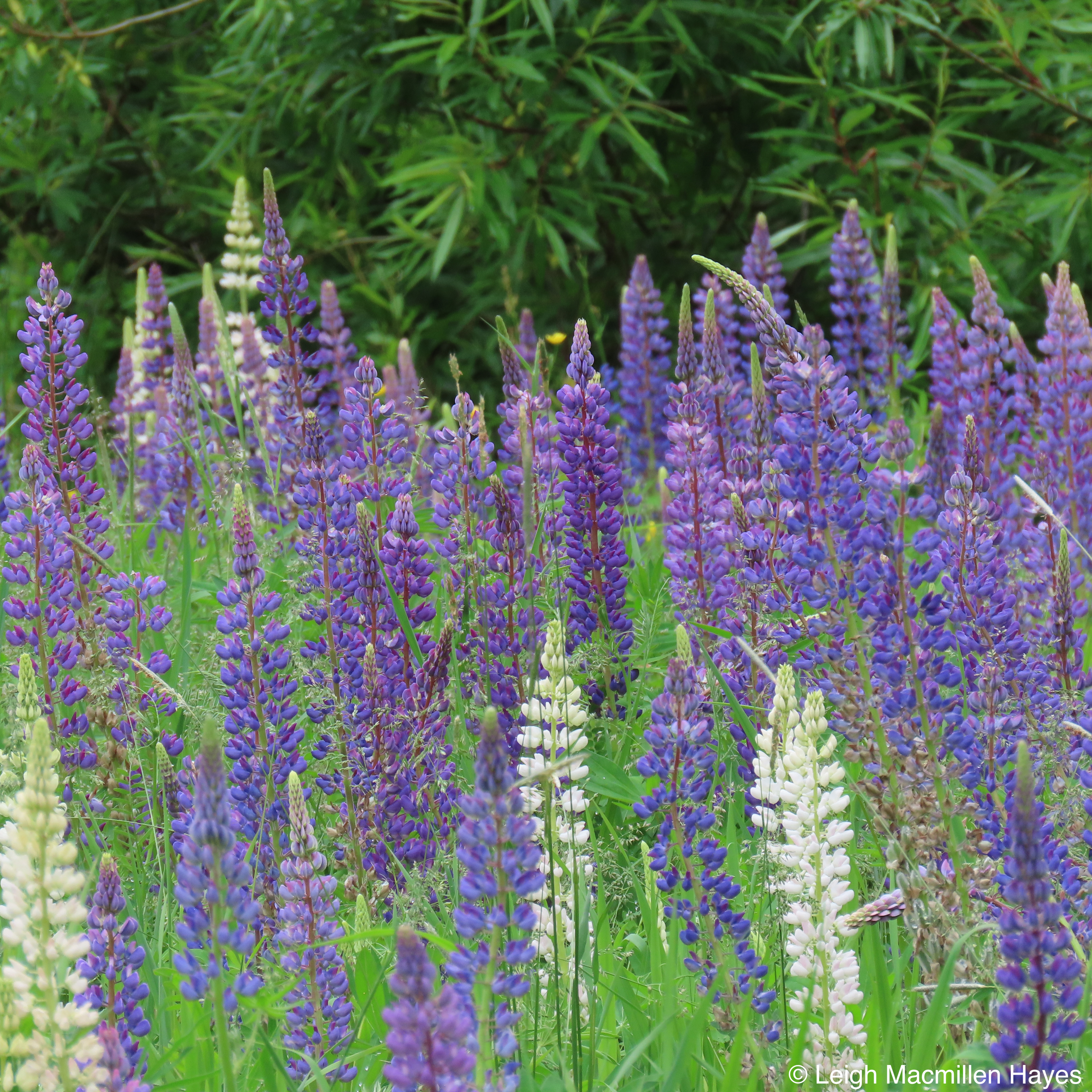
When at last we departed the park, I paused the truck beside a small pond outlined with Lupines.

They may not be Lady’s Slippers, but their own unique design and colors deserve to be honored as well.

We didn’t count the Lupines, but our Slippery Eyes took in 324 Lady’s, a total of 87 fewer than last year, but still we gave thanks.

Honoring the Lady’s Slippers

It’s become a tradition for us to spend Memorial Day or at least a day during this weekend searching for one of My Guy’s favorite blooms. I don’t even remember how the count began, but now he cannot not count them.

What we’ve learned over the years is that they like a variety of habitats. from dark forests to bogs, and even mountain tops. And they like to hide. So we must really don our Lady’s Slipper eyes (just as I’ve been donning my dragonfly eyes lately) and look for them.

I mean . . . really hide.

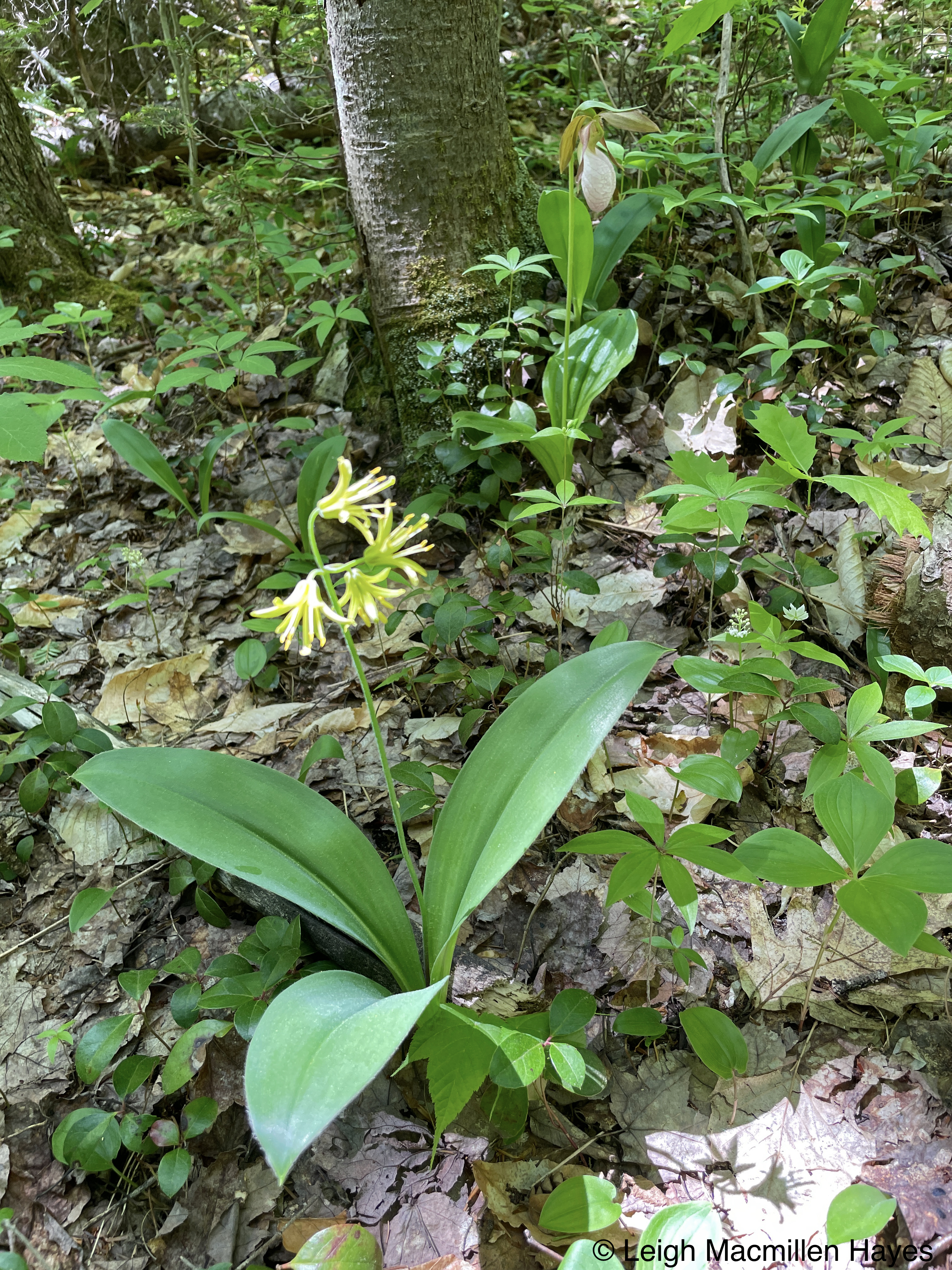
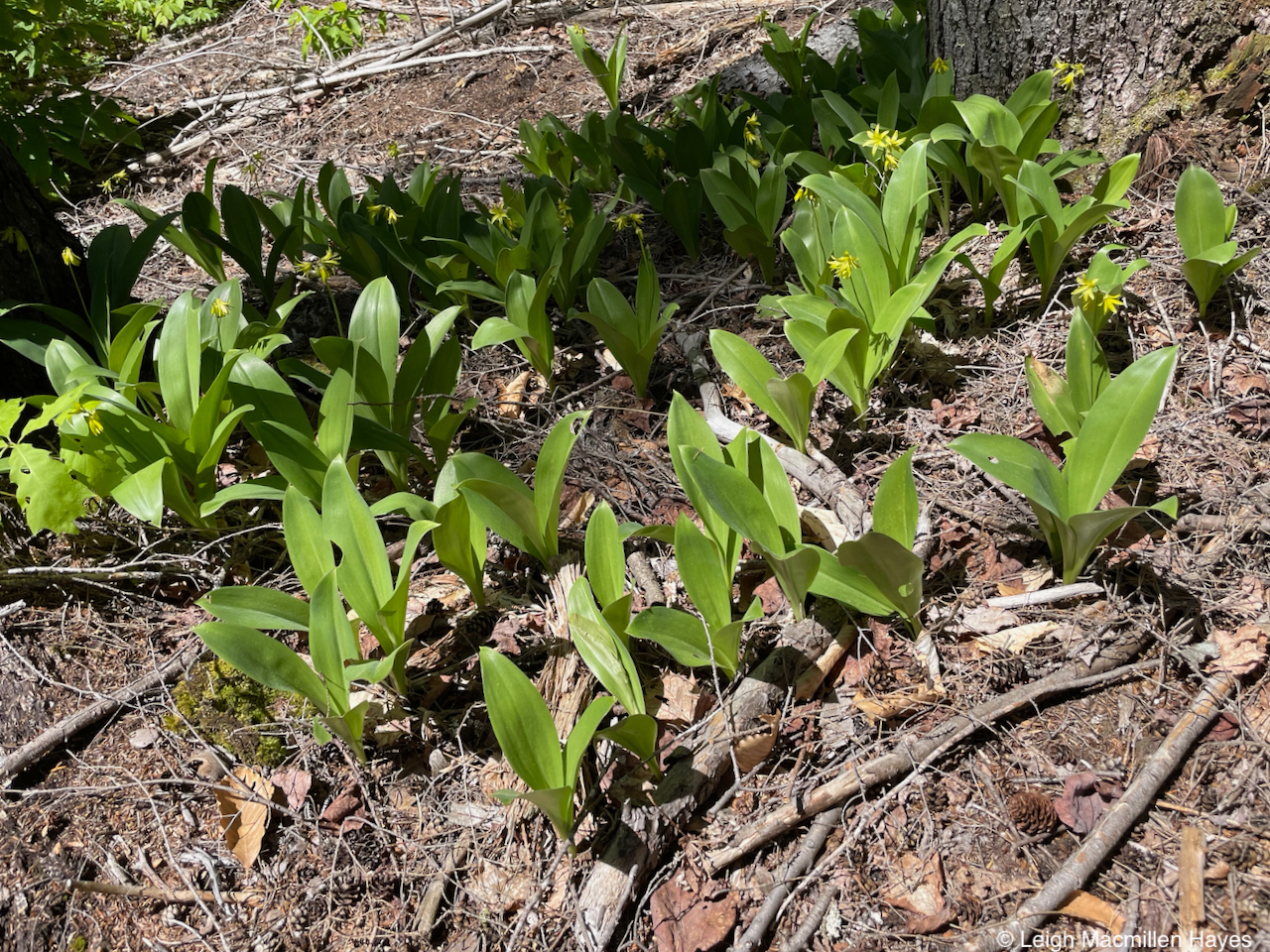
It’s acidic soil that they are rather fond of, just like Yellow Clintonia, the beacons of many a forest trail. But while Clintonia seems to bloom anywhere and everywhere, Lady’s Slipper need Rhizoctonia fungi in order to grow and show off a blossom. According to Jack Sanders, author of The Secrets of Wildflowers, “Unlike most seeds, the minute and dustlike Lady’s Slipper seeds contain no food to allow them to grow. However, the outside of the seed is susceptible to attack by Rhizoctonia fungi, which digest the outer cells. If things balance out just right, the inner cells escape digestion and absorb some of the nutrients the fungus obtained from the soil. Not until this happens can the seed germinate and begin growing . . . The symbiosis with the fungus doesn’t end there. In order for the infant corm (or ‘proto-corm’) to obtain minerals and other soil foods, it must use the ‘go-between’ services of Rhizoctonia fungi. The fungi, in turn, take from the seedling Lady’s Slipper foods that are photosynthetically manufactured. These sensitive and complex relationships make native orchids of all kinds relatively uncommon . . . What’s more, in the wild, it takes from 10 to 17 years for a Lady’s Slipper seed to become a mature plant capable of blooming.

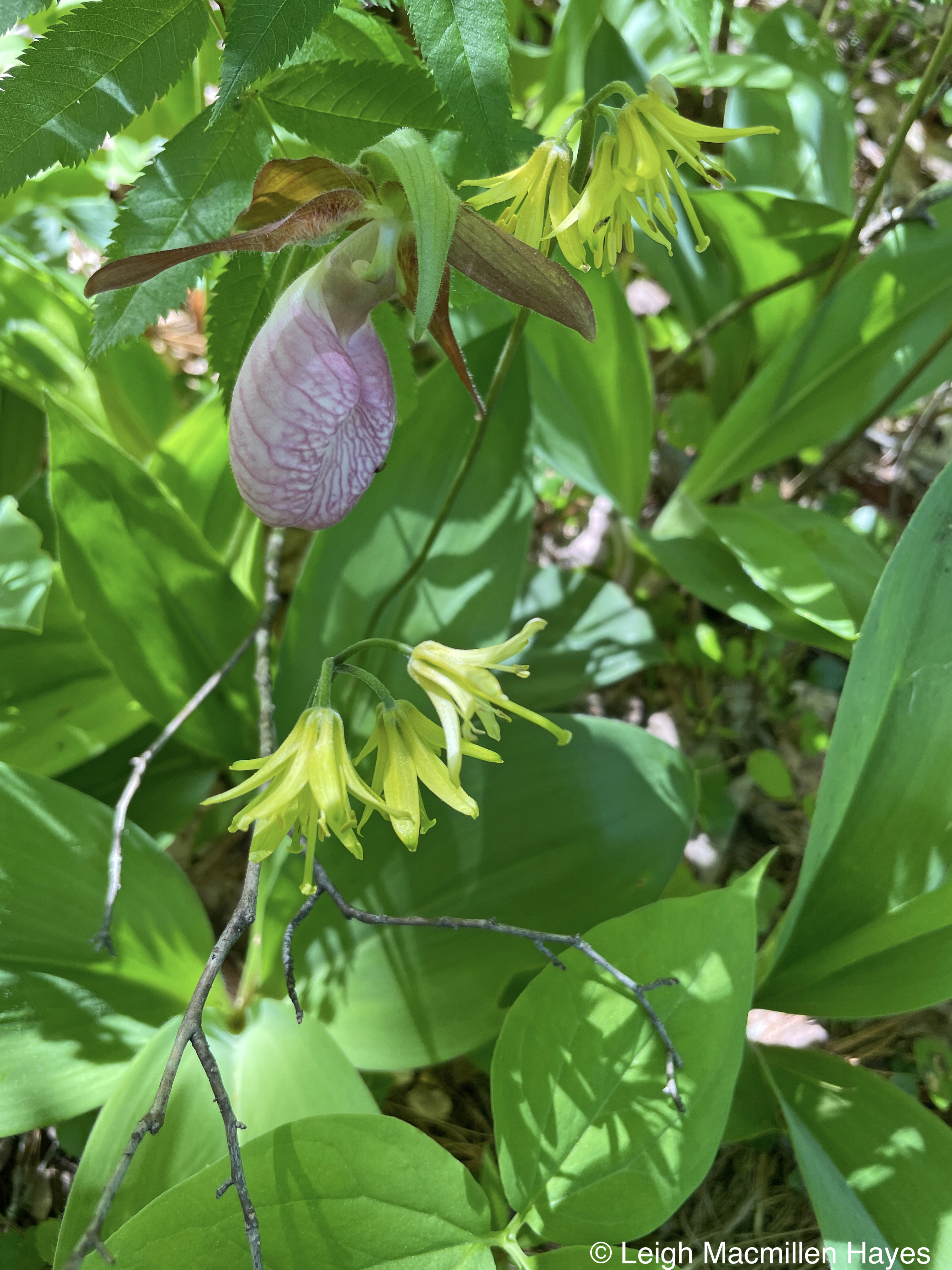
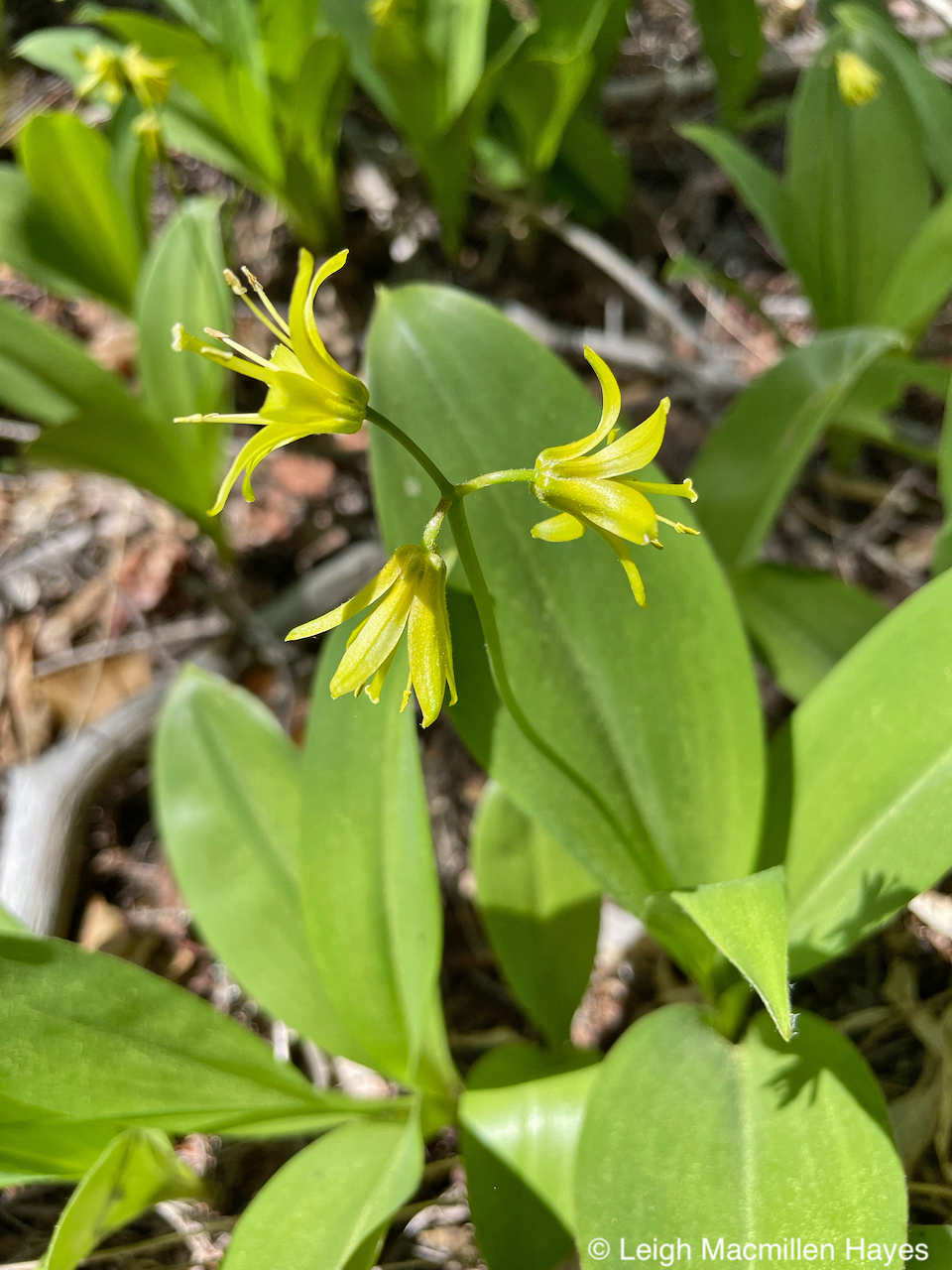
So here’s the thing. Yellow Clintonia and Pink Lady’s Slipper flowers look nothing alike. But their leaves–that’s a different story and when there are no flowers to confirm, one like me, must slow down and notice the features. Do you see what I mean? Clintonias are members of the Lily Family, with six lily-like tepals (segment of the outer whorl in a flower that has no differentiation between petals and sepals). And their leaves can be folded in half with the inner vein forming the fold line.

Lady’s Slippers, on the other hand, are orchids. The flower is a moccasin-shaped, inflated pouch, but also two lateral petals that twist outward. And the leaves–take a look. Remember folding paper in an accordion-like manner to create fans, or tissue paper to create flowers? That’s what Lady’s Slipper leaves look like to me. Multiple pleats.

Lest you think nature didn’t distract us, there was a male swallowtail puddling in a wet seep that we had to pause and admire.

And we certainly didn’t want Indian Cucumber Root, in the same lily subfamily as Clintonia, to think we were ignoring it for it has just begun to offer its unique flower to the world.

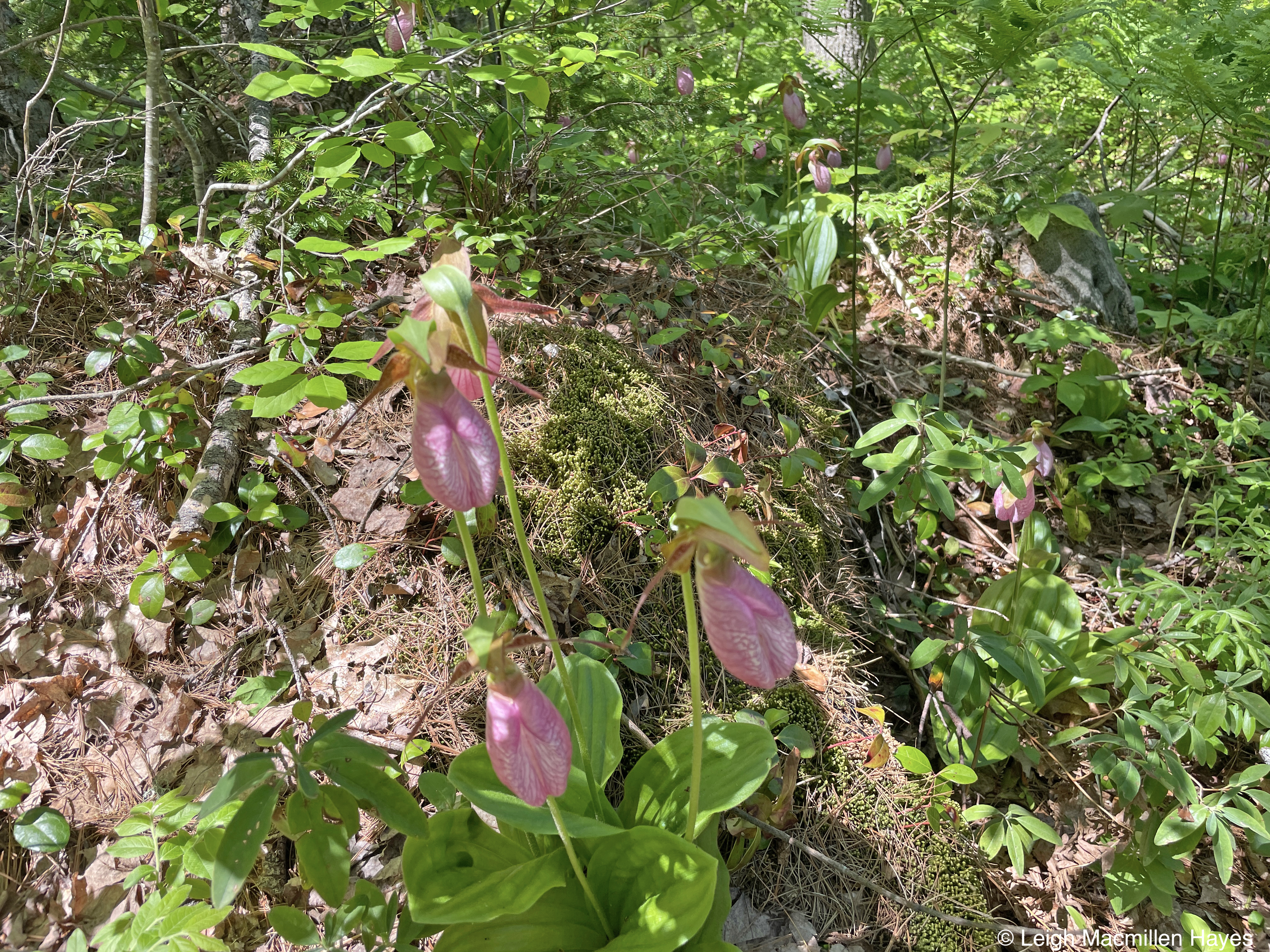
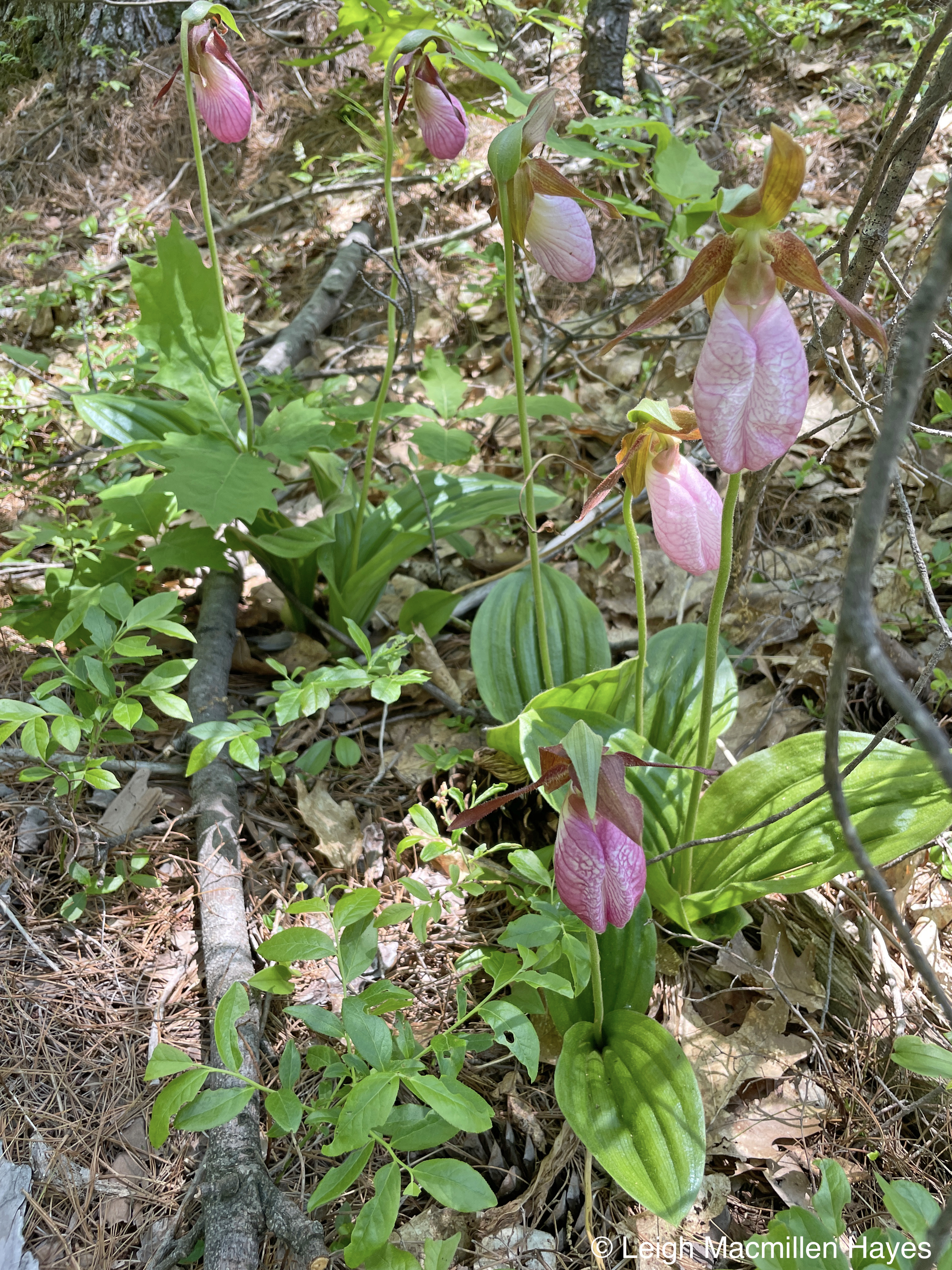
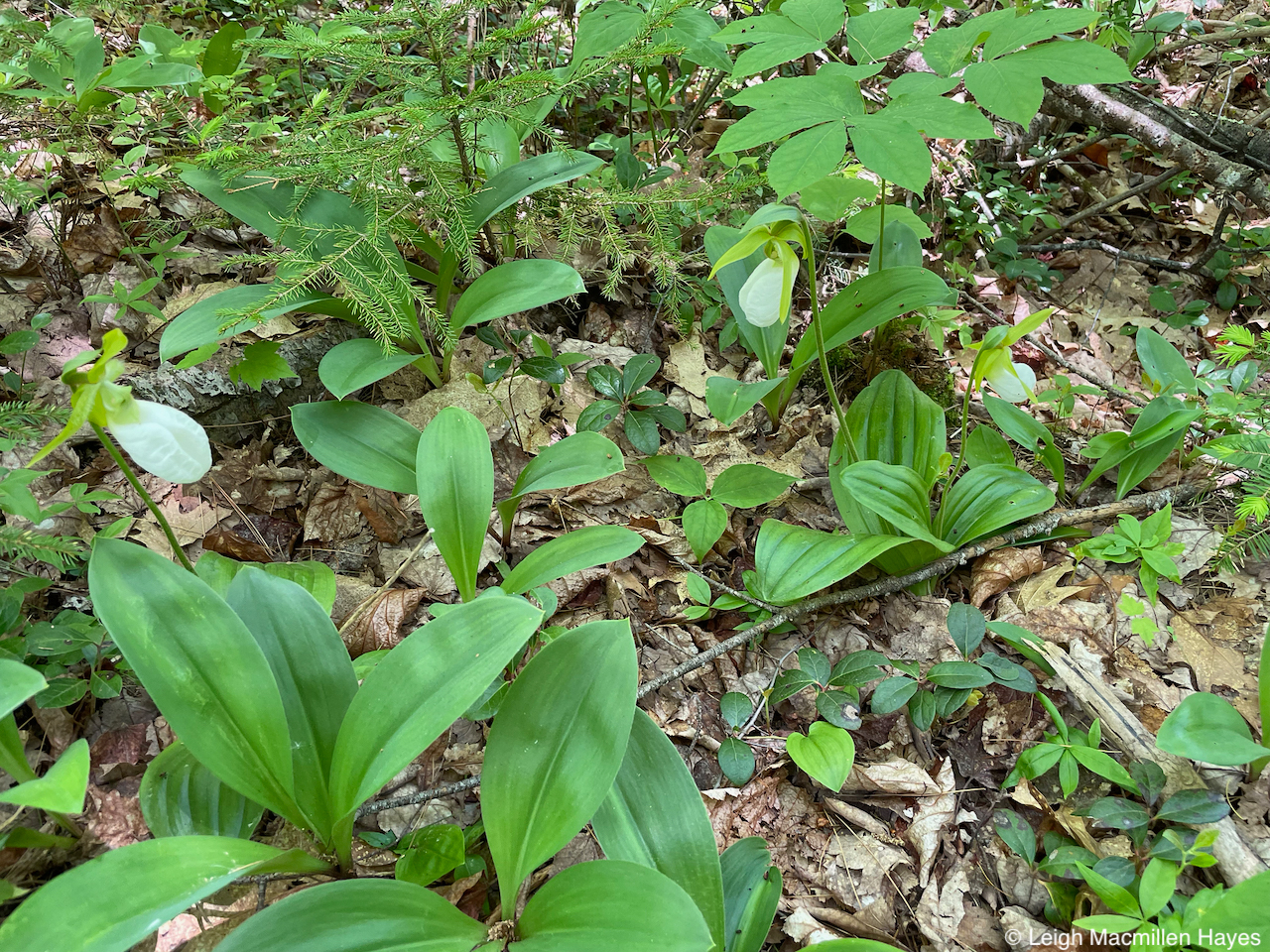
But our real focus, of course, were the slippers, even those decorated in white, which is a form of the pink.

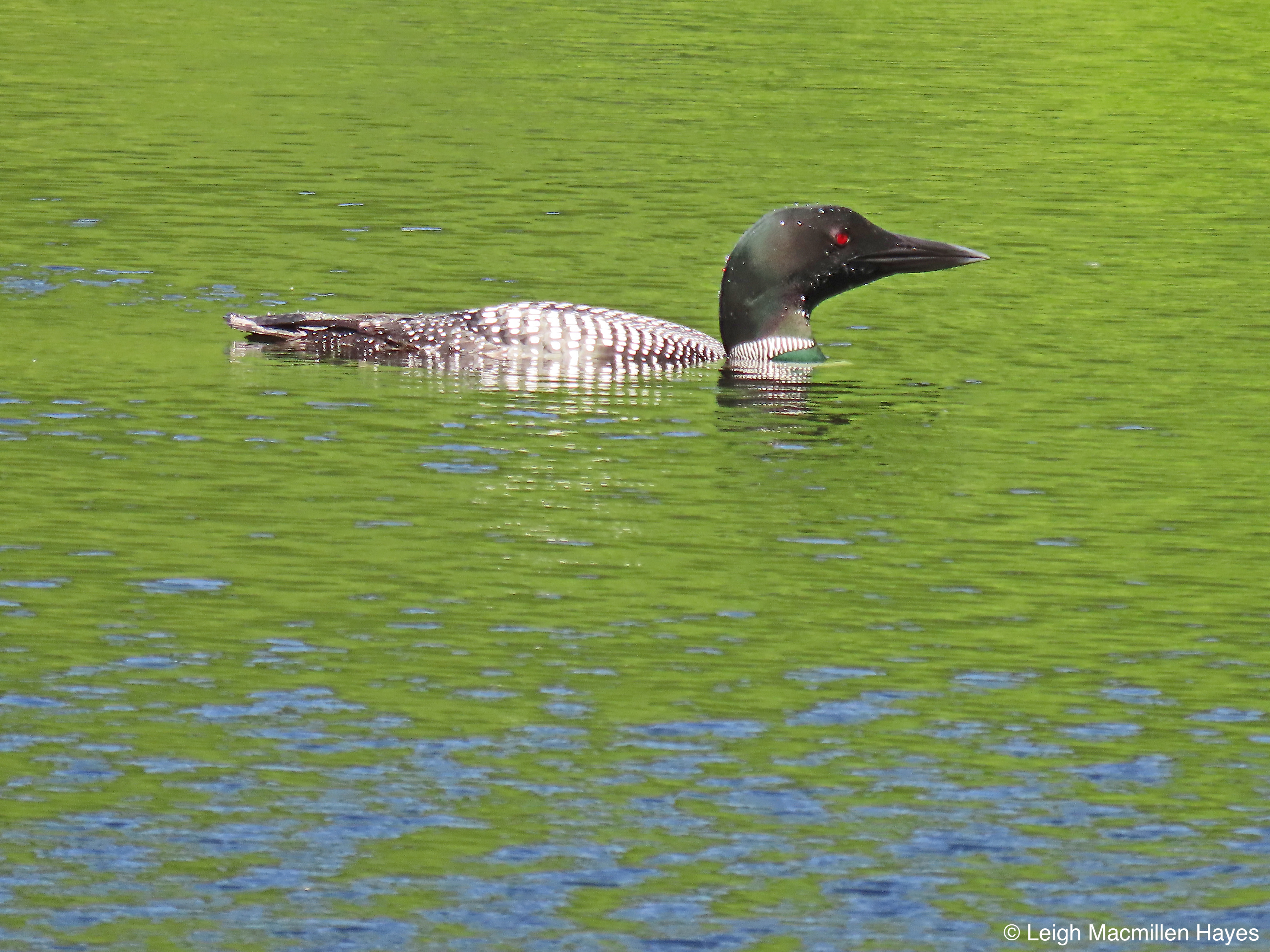
Until, that is, the Common Loons begged to be noticed and so we did.

A few miles into the hike, we reached one of My Guy’s favorite spots. Just the other day I heard him describe it as a field of Lady’s Slippers. I’m pretty sure he was thinking football field. I happen to think it’s closer to the size of my office. But, it does produce about fifty flowers each year.

While he was meticulously counting those fifty, a Bald-faced Aerial Yellowjacket flew in and started chewing some wood. My attention was indeed diverted.

Heading to the summit, we didn’t find as many, but still they were there and we paused to admire this grouping. I wonder if there was a nurselog below them that offered the right growing conditions and thus the line.

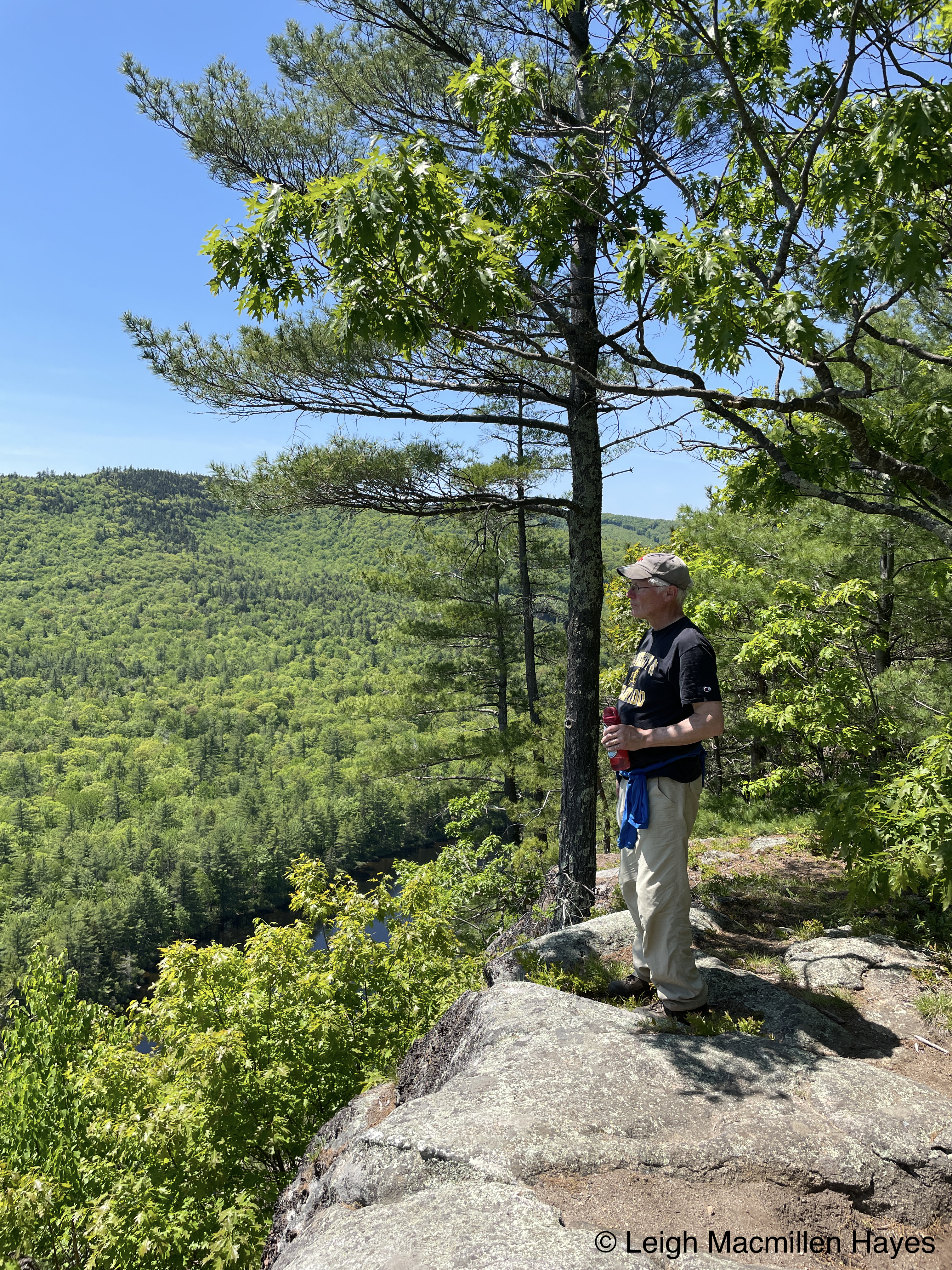
At the summit, after finishing dessert (we’d eaten our sandwiches below by the pond), someone had to survey his kingdom.

It’s always worth a look.

We found some more as we descended and then followed a different trail out, where another lady made herself known.

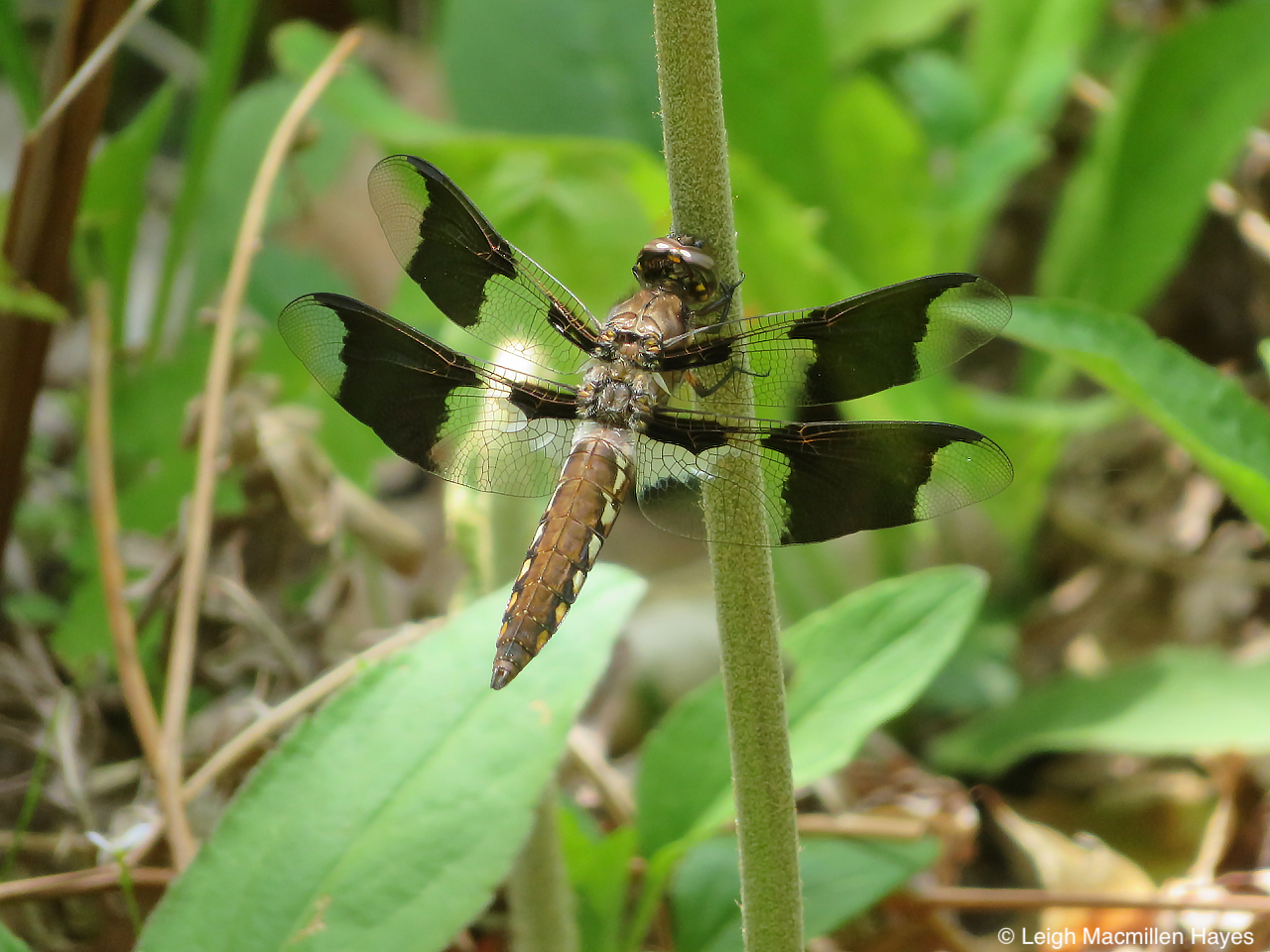
Meet a female Common Whitetail Skimmer dragonfly, who is hardly common with her tail markings, and spots on her wings.

We were almost finished when we spotted this Lady’s Slipper blowing in the breeze. Note the curve in the stem, and the closed moccasin.

I don’t know if removing the leaf will help the flower to fully develop, but it made me think of today, Memorial Day, and the fact that so many have in the past and do presently work so that we can enjoy the freedom of going for a hike in the woods–thank you to all who have served our country, past, present, and future, including our dads, uncles, cousins, and friends.

The question remains: How many Lady’s Slippers did we honor on this Mondate? 351. And those were only the ones we could spot from the trail. I’m sure we missed some. Can you imagine how many more might be out there.

Stars Among Us

Saturday found My Guy and me doing some trail work in the rain along a local path that we’ve helped maintain for probably close to twenty years. On Sunday we went on one of the buggiest hikes we’ve endured in a while. But there was a prize to be had. And today. Ah today. What a gorgeous day. And few bugs. There was a reason for that.

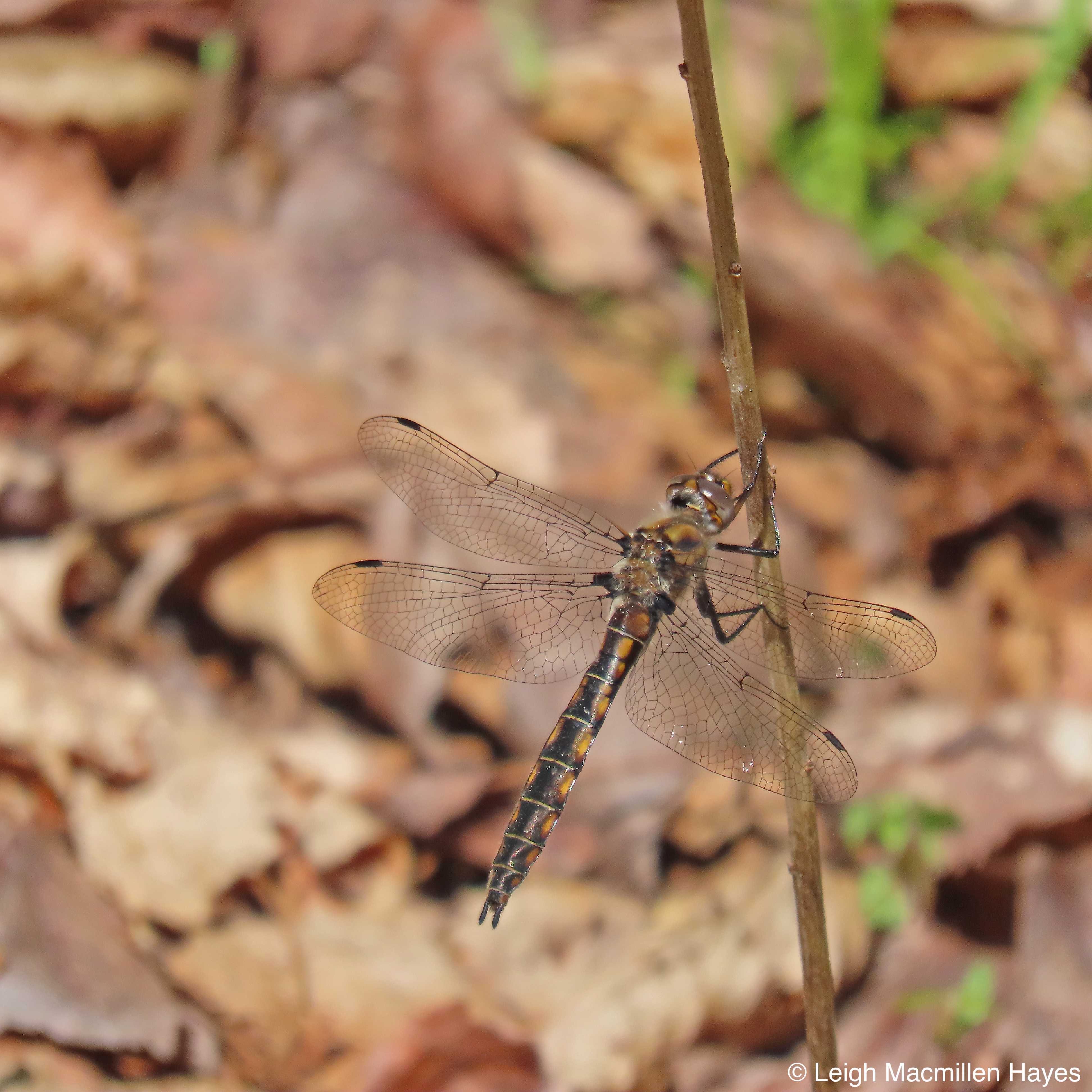
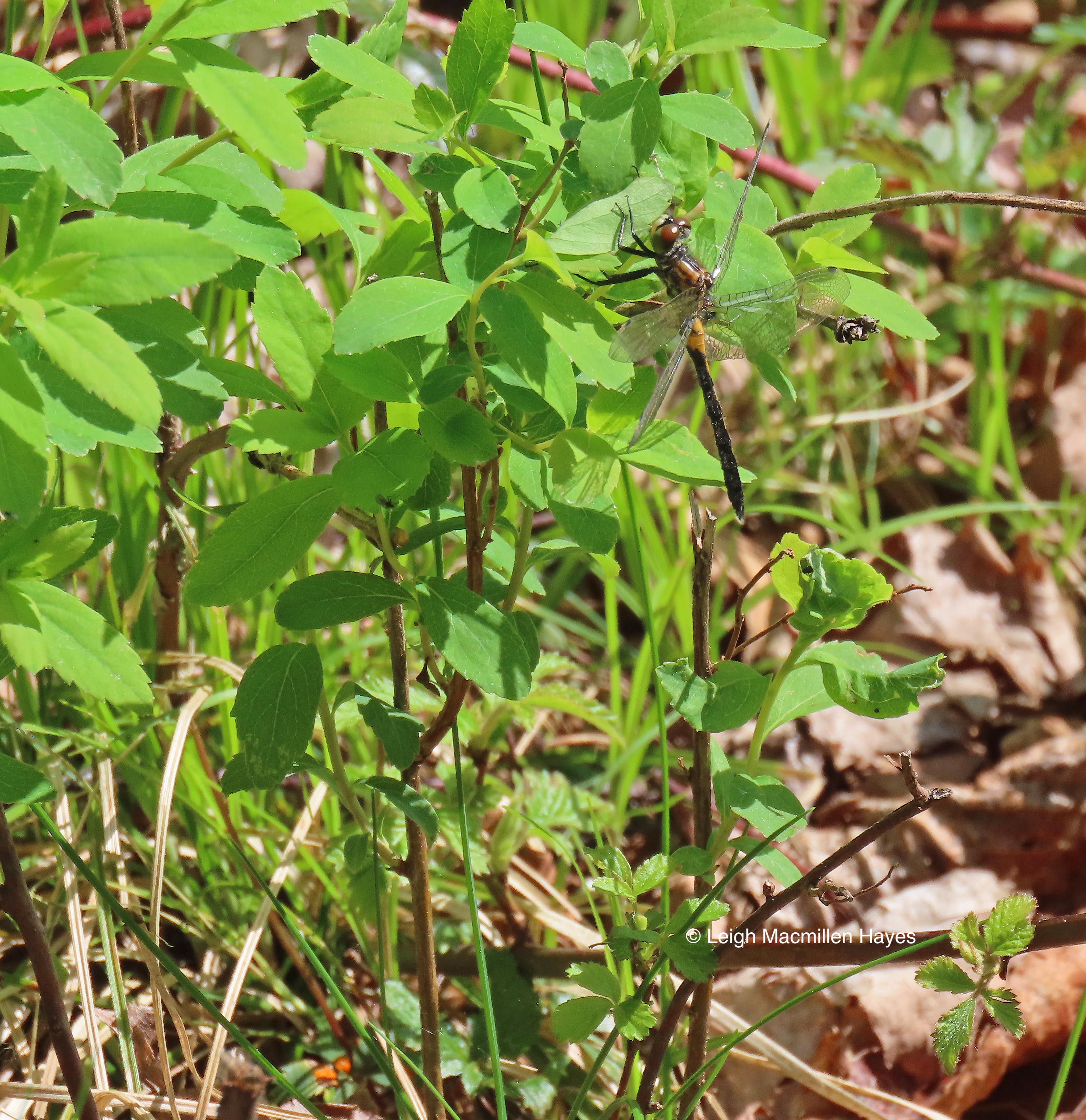
We were in a wetland where the dragonflies were emerging. So this is a member of the Baskettail family. I’m just getting my dragonfly eyes back on and need to refresh my memory.

Looking at it from a different angle, my brain wants to call it a Spiny Baskettail rather than Common for it seemed dark behind its head and the dark basal marks on the wings seemed to match up, but . . . if you think otherwise, I’m open to clarification.

We also spotted Belted Whiteface Skimmers seeking meals, and there were damselflies on the hunt as well. If these Mosquito/Black Fly/Deer Fly-eating predators haven’t reached your backyard yet, know that help is due to arrive any day.

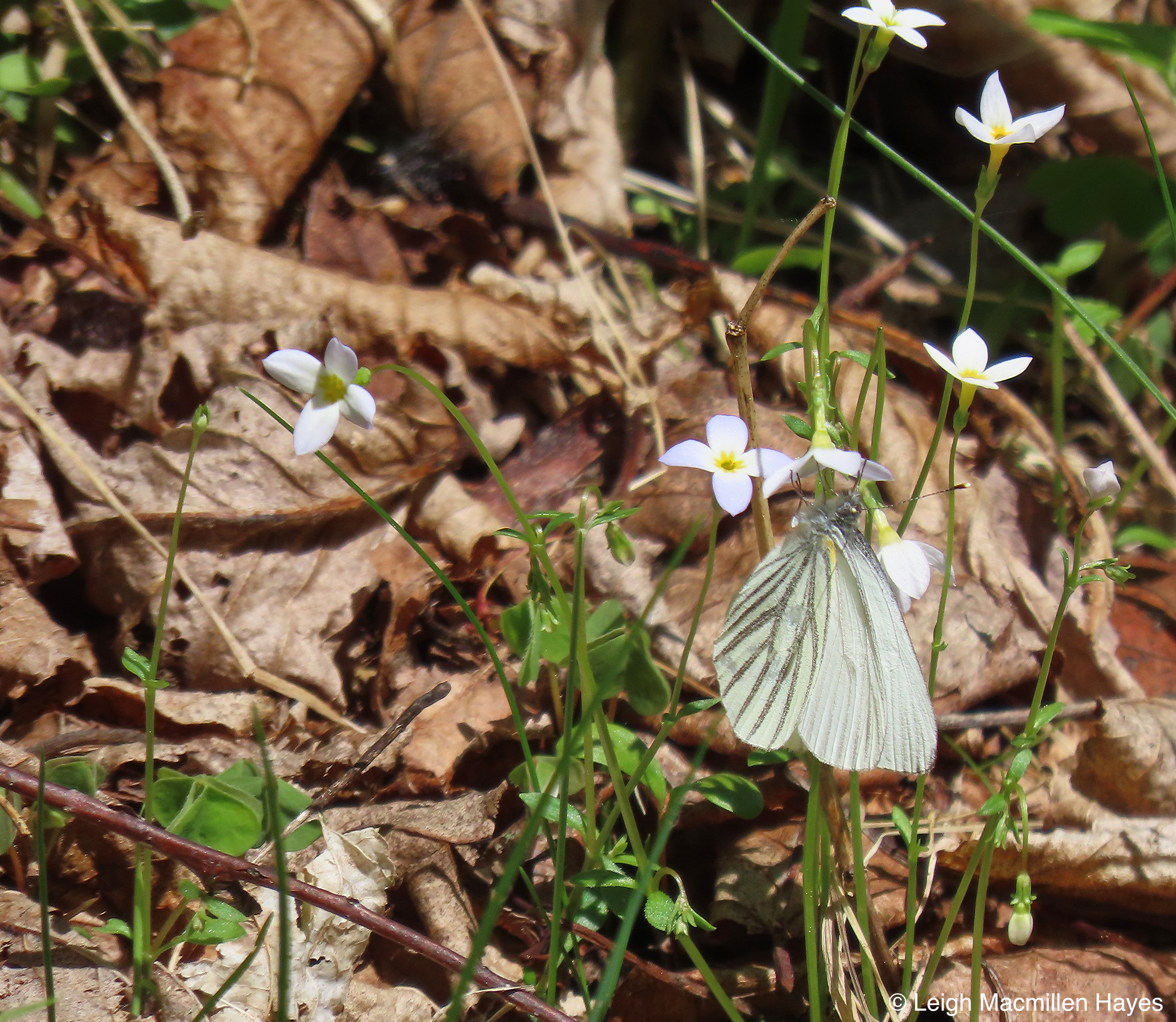
Not all the sights we saw were predatory and so we delighted that a few new butterflies of the season were in our midst, including this Mustard White, with its striking venation a feature of the spring brood. The coloring has to do with developing in the chrysalis during shorter spring days versus the pure white or mustard-color which occur in summer broods.

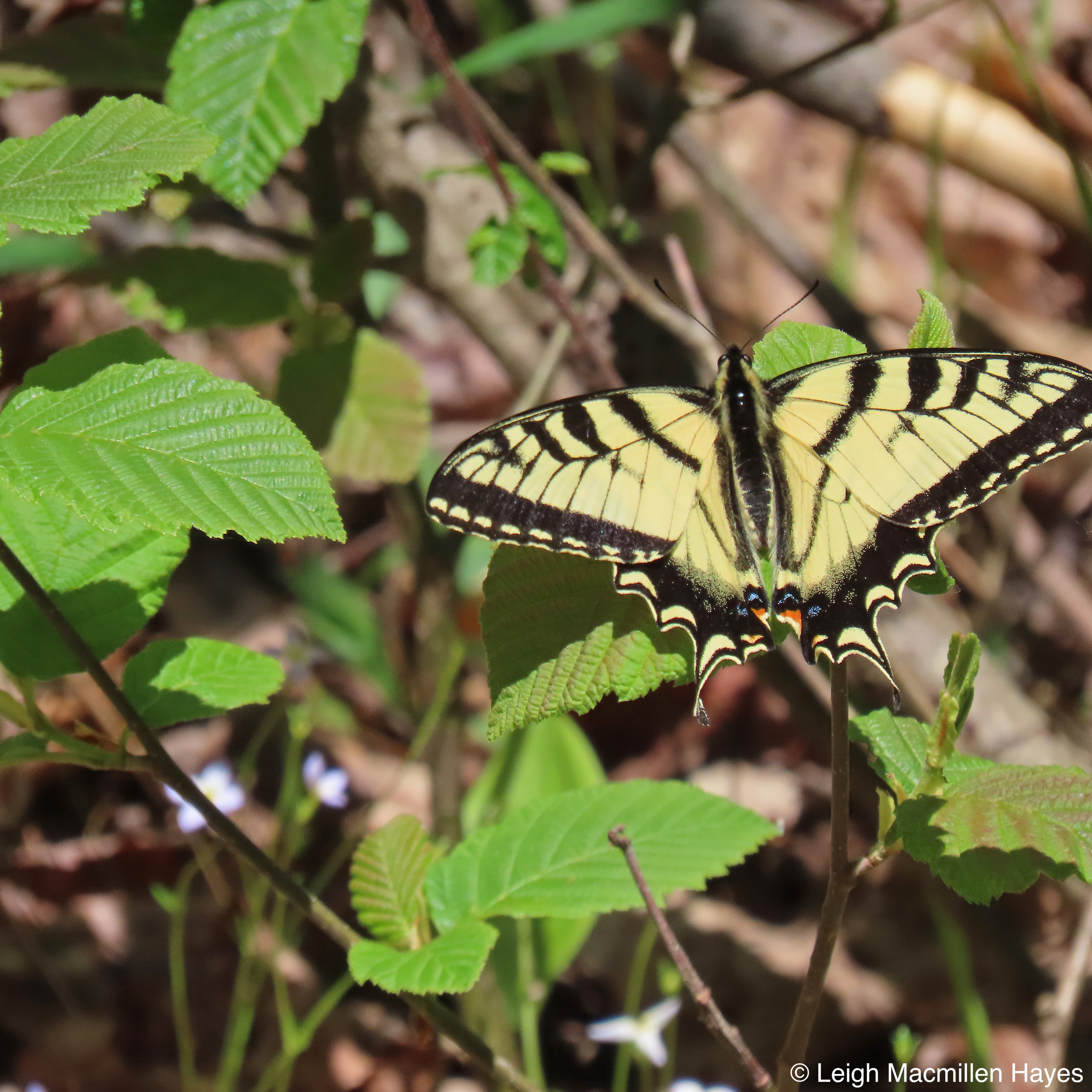
Also fluttering about were a few Canadian Tiger Swallowtails, adding bright dashes of color in a woodland growing ever so green.

While the butterflies help with pollination, this humongous Bumblebee was hosting a pollen party for one and if you look closely, you may see the yellow specks flying in the air and all over its face.

It was no surprise to see the pollen sacs on its hind legs filled to overflowing.

There was so much to take in everywhere we looked and we were glad we’d driven an hour and a half to spend time in this special place where one of My Guy’s favorite flowers grows. Though not in bloom yet, they are preparing and we can’t rush the season. I know some have blossomed closer to home, but think our location a bit further north meant things are delayed by a week or so.

Equally as fun to find was evidence of last year’s flower in the form of a football-shaped seed capsule–and we can only hope that some of those seeds will find the right conditions and show off their showy blossoms. Of course, those seeds might remain dormant until conditions are just right, so it could be years before we can enjoy them. We’re willing to wait.

Today’s journey found us enjoying the mountains and wetlands in Whitefield, New Hampshire, where there was still some snow on distant peaks. Look below the clouds and you’ll see what I mean.

So many stars we enjoyed and really have only honored a few here.

But the real star among us we spent some time with yesterday . . . until the insects drove us home, literally!

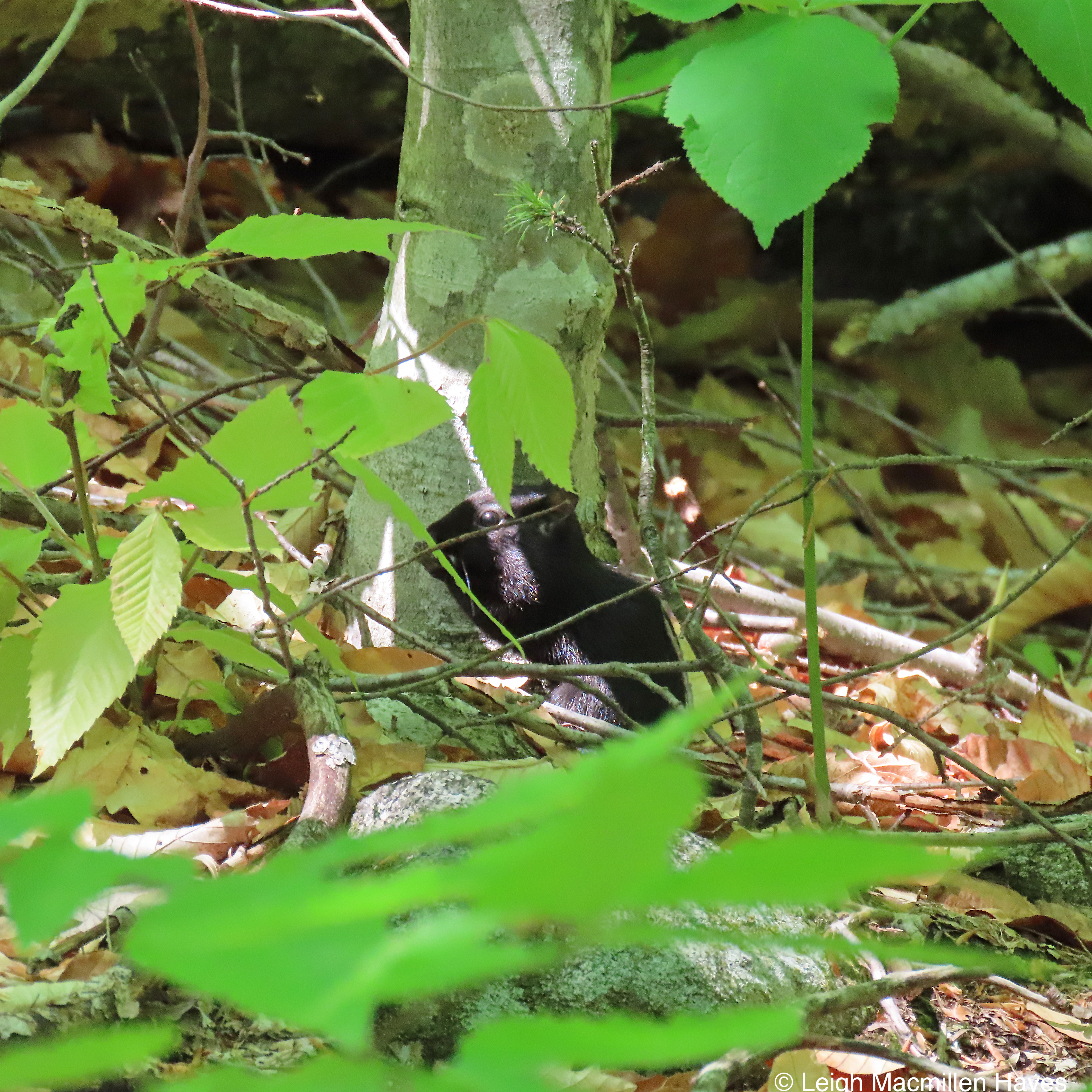
This Black Chipmunk and its forebears have been rather reliable residents on a certain trail and though I don’t spot one every year, it’s always a treat to meet it again. This was the prize.

As we watched, the chipmunk behaved as one would expect, dining upon seeds it had cached, then running along a log, jumping down to the ground, and disappearing into a hole beside a tree. I have to wonder how many more it may be feeding with its stuffed cheeks. And having observed 315 15-second game camera videos of a Red Squirrel a couple of years ago, and watching this particular chipmunk, as well as those who live around our house, I know that it repeated its routine from hole to food source and back to hole from sun-up to sun-down.

Melanistic mammals have an increased amount of the dark pigment melanin in their hair, and though they are considered rare, I know of at least three local areas where Black Chipmunks have been spotted for years.

There may be stars in the sky as this beautiful day gives way to night, but indeed there are many more stars at our feet if we take the time to notice.

Where The Moose Led Us Mondate

It seems there are never enough rainy days to complete home chores so when today dawned as such I thought that all the contents I’d been sorting from a closet would finally make their way to new homes like the dump store or community clothing closet or back into containers to be stored for another rainy day.

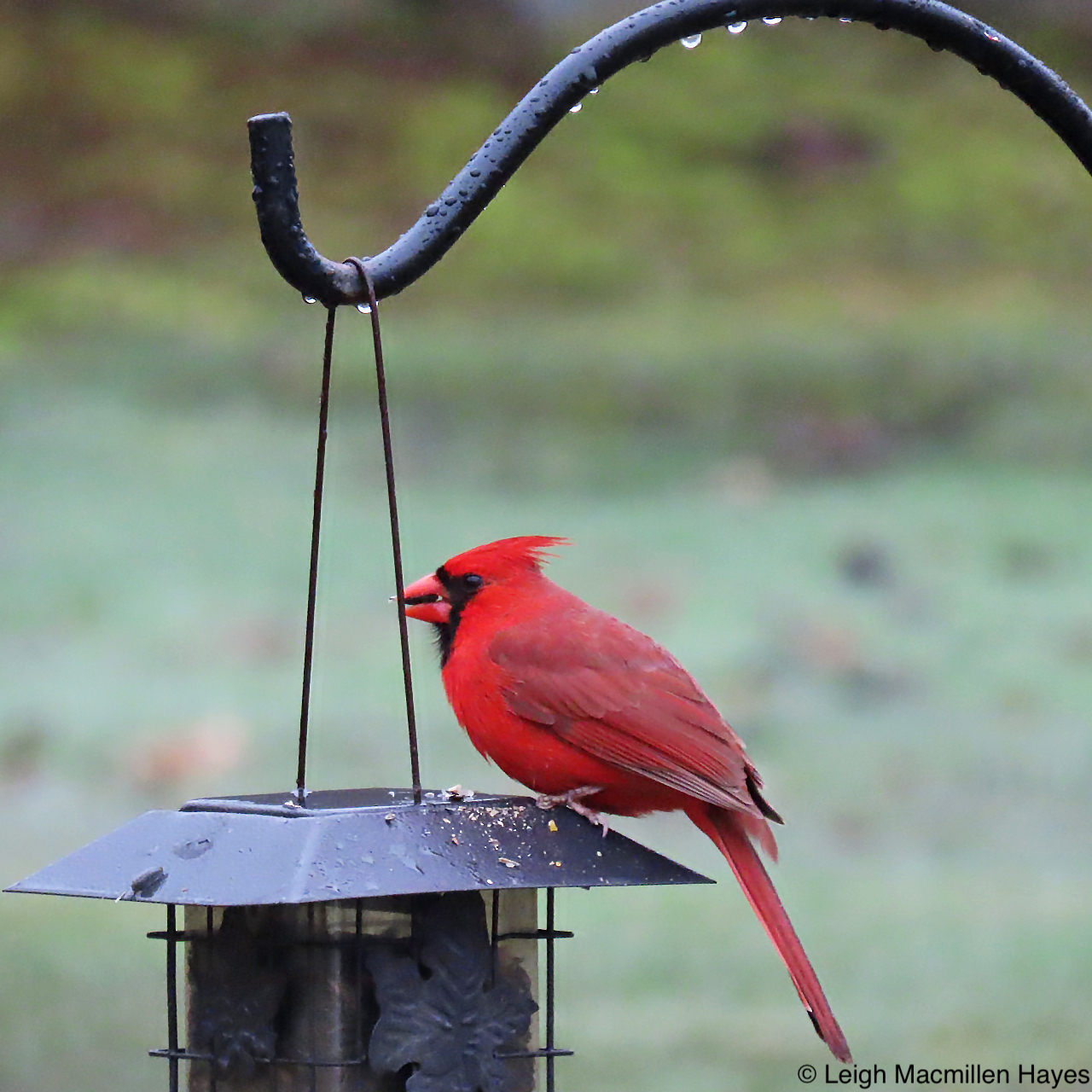
Apparently, I thought wrong for the Cardinal beckoned and we answered the call to head out the door.

When I mentioned a location for today’s hike to My Guy, he agreed that it sounded good, though come to find out, in reality he thought we were going someplace else and even when we arrived at Great Brook, he couldn’t recall our last visit, which was in 2016. Fair enough. I’ve been there many more times.

It soon became apparent that we were in Moose territory and our excitement rose. Actually, on another trail in this same neck of the woods we once spotted a Moose, so all we could do was hope that today we’d receive the same honor.

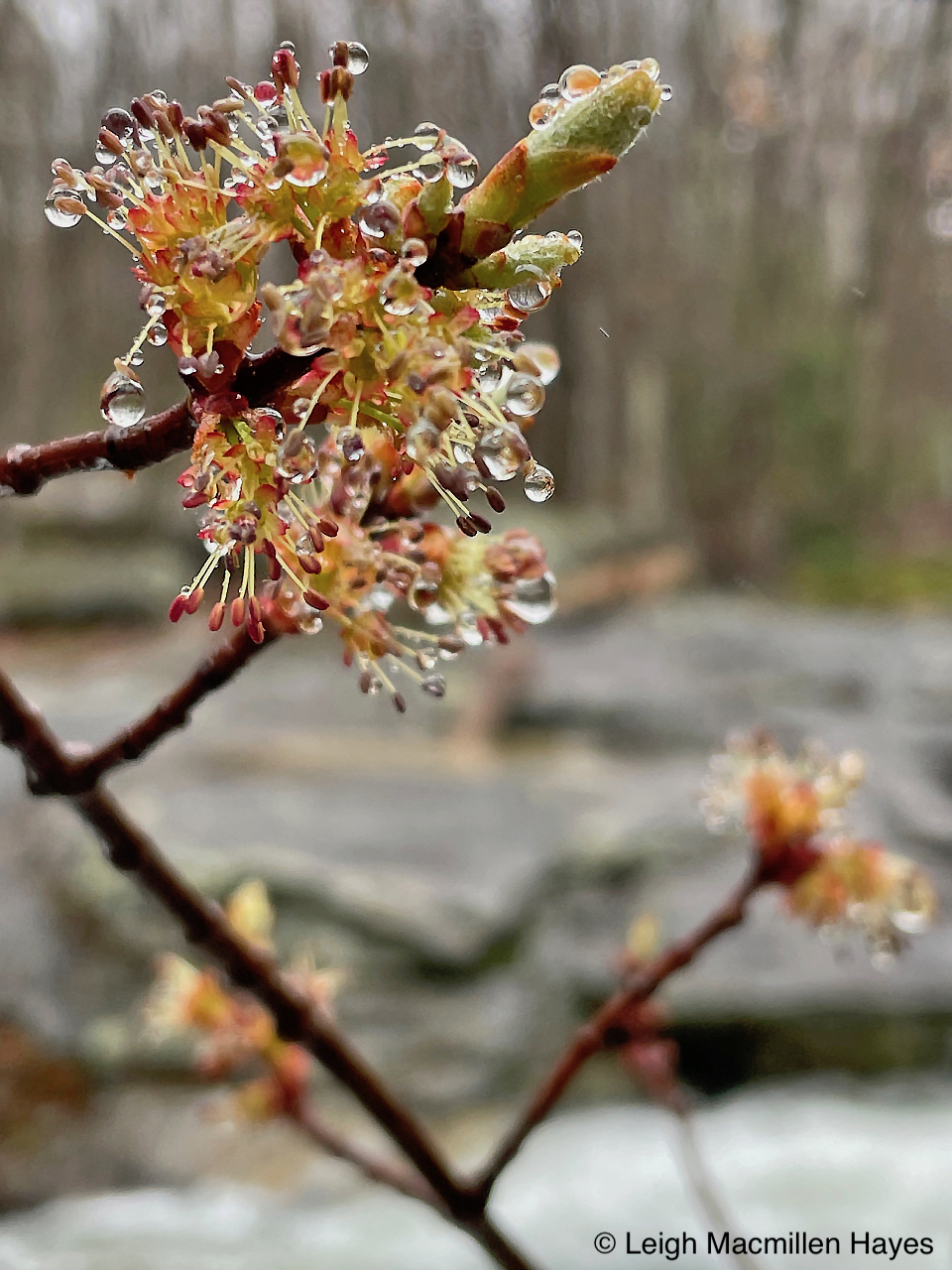
But first, there were other honors to receive, such as this bouquet of flowering Red Maple.

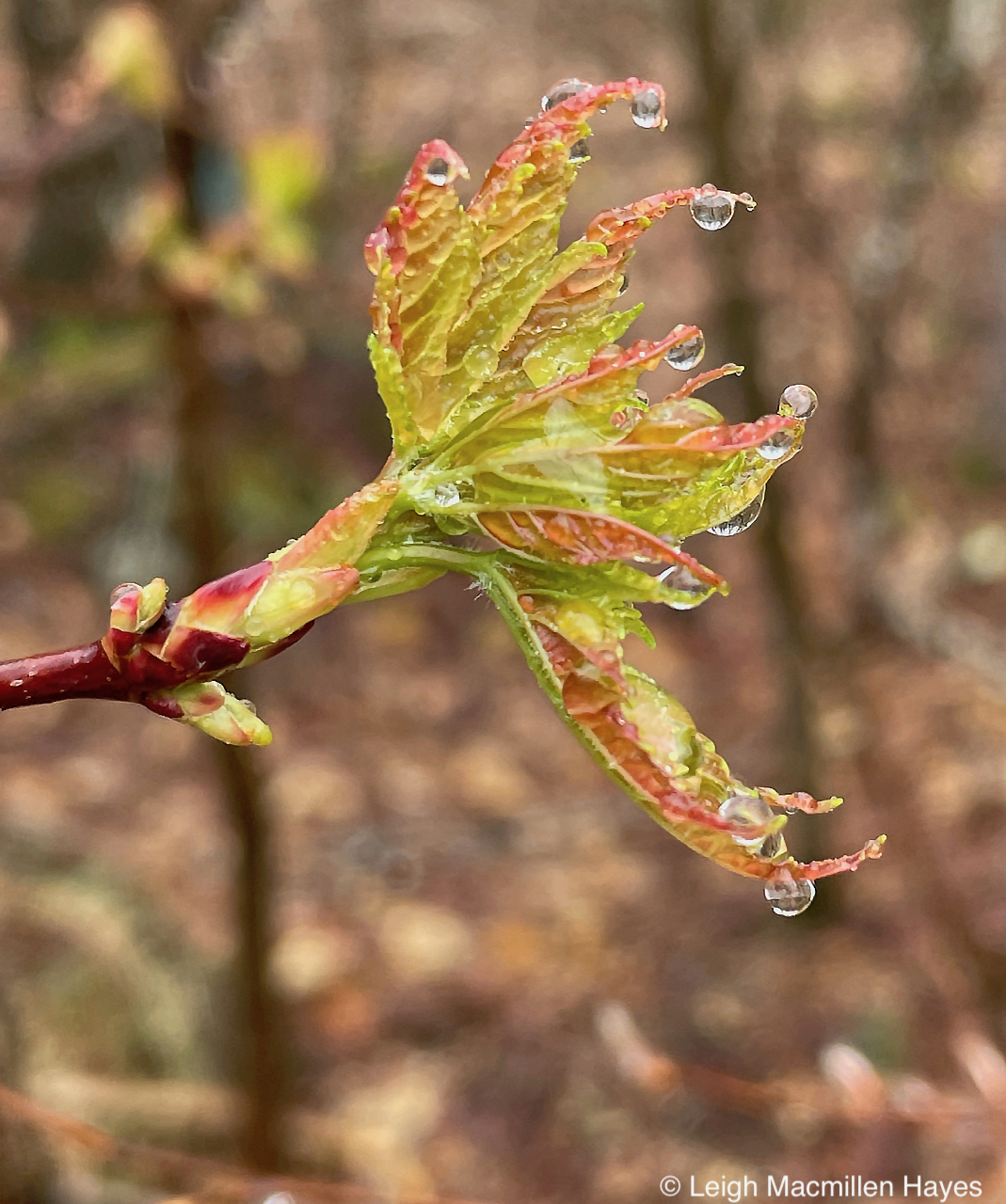
And the first of the season for us, maple leaves bursting forth in all their spring glory of color.

Onward we hiked deeper into the woods where a place one might think of as no place was once some place. This particular foundation has long been a favorite of mine because within is a root cellar.

It’s one I can’t resist stepping into because you never know what tidbit might have been left behind.

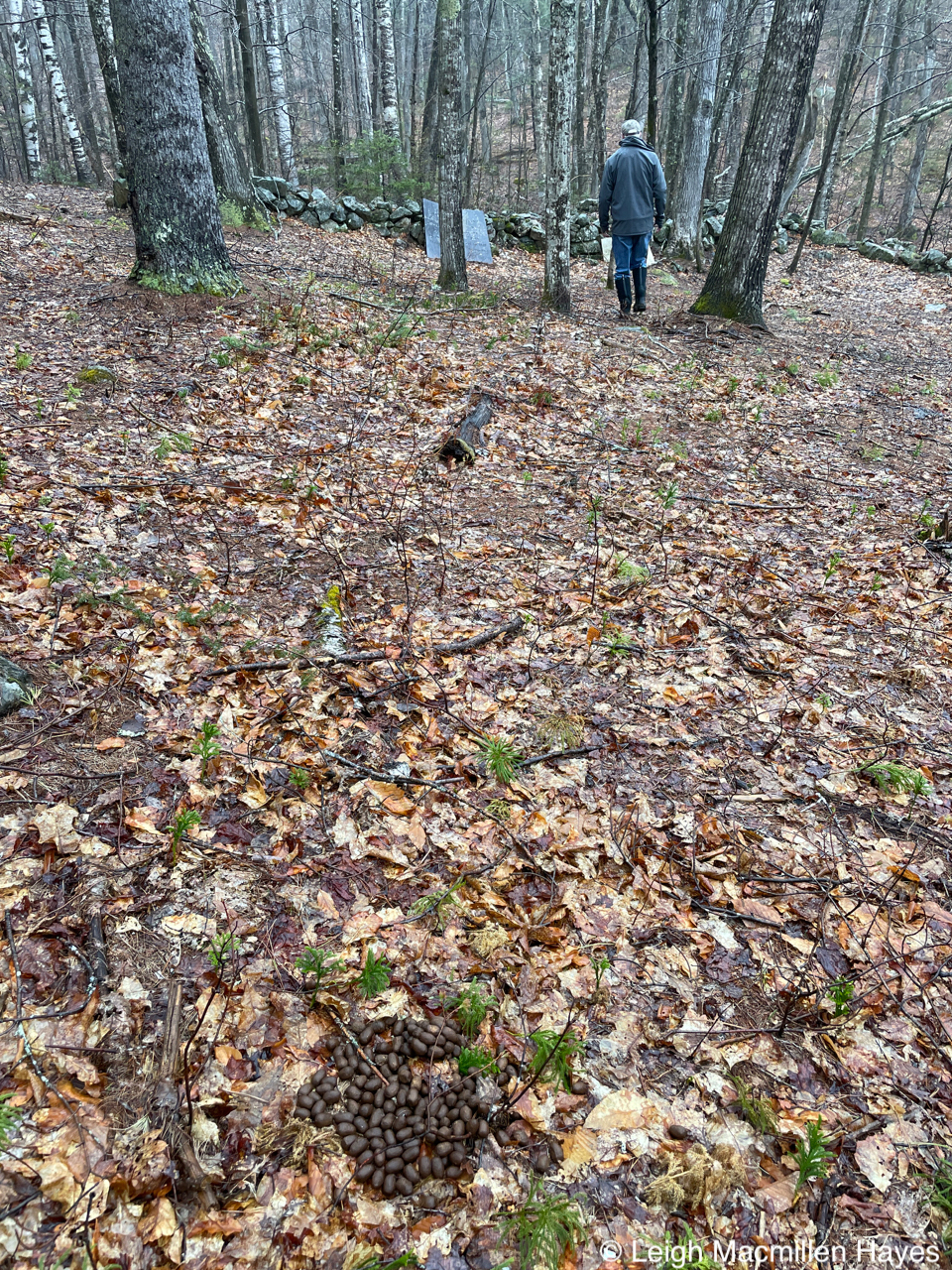
Porcupine scat! Rather old, but still.

My friend, Jinny Mae (RIP), was a talented techie and though the red line isn’t the entire route we followed today, it’s one she and I explored back in 2016. The map is from a section of the 1858 map of Stoneham. And we were at E. Durgin’s old homestead.

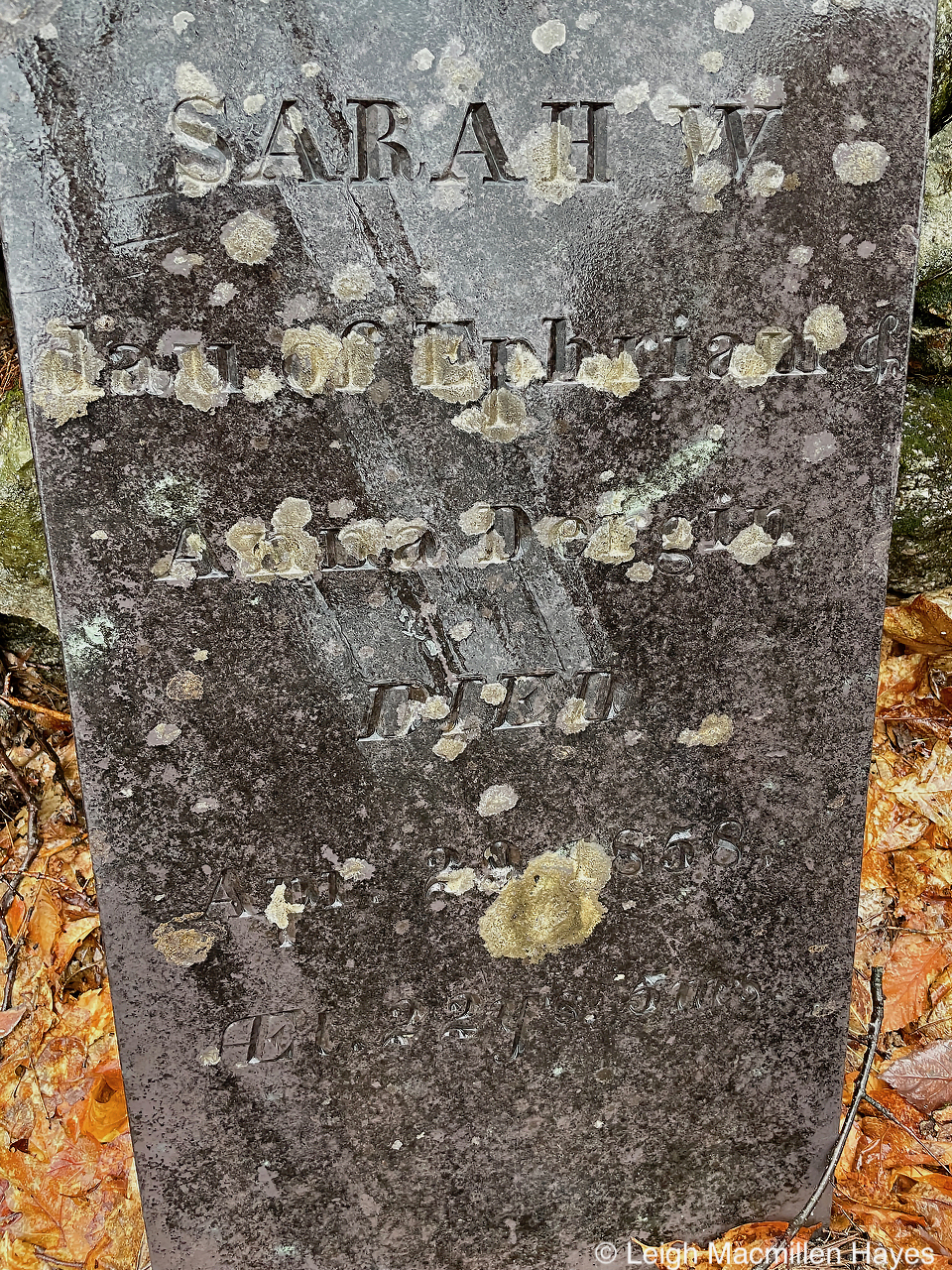
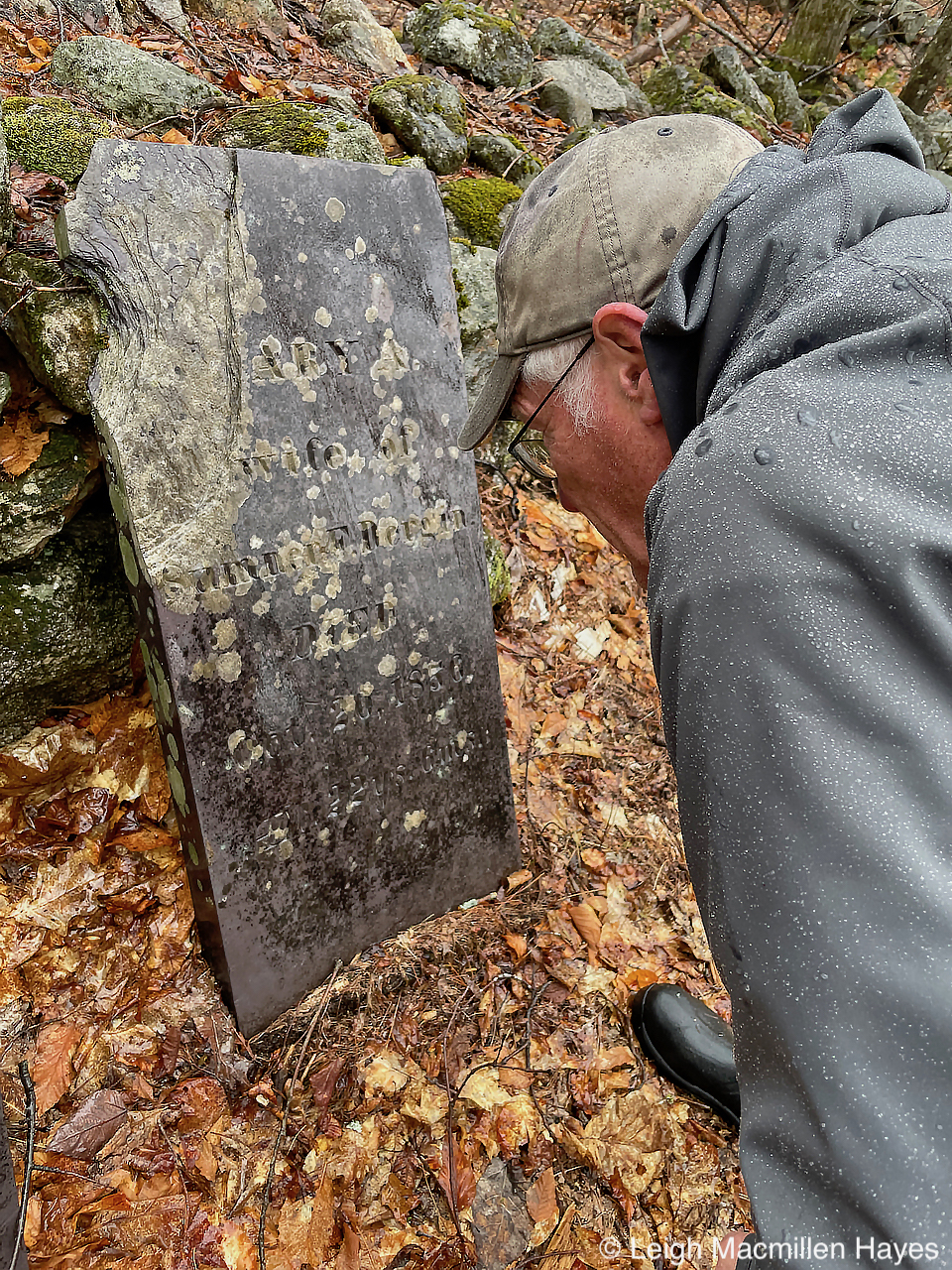
Knowing that there were some gravestones in the woods behind the house, we once again followed the Moose who led us directly to the family cemetery. Someone has cleared the site a bit, so it was easy to spot, especially since the trees haven’t fully leafed out.

Sarah, daughter of Anna and Ephraim Durgin, is the first tombstone. She died in 1858 at age 22.

Beside her is the stone for Mary, wife of Sumner Dergin, who died before Sarah–in 1856. She, too, was 22 years old. As best I can tell, Sarah and Sumner were siblings.

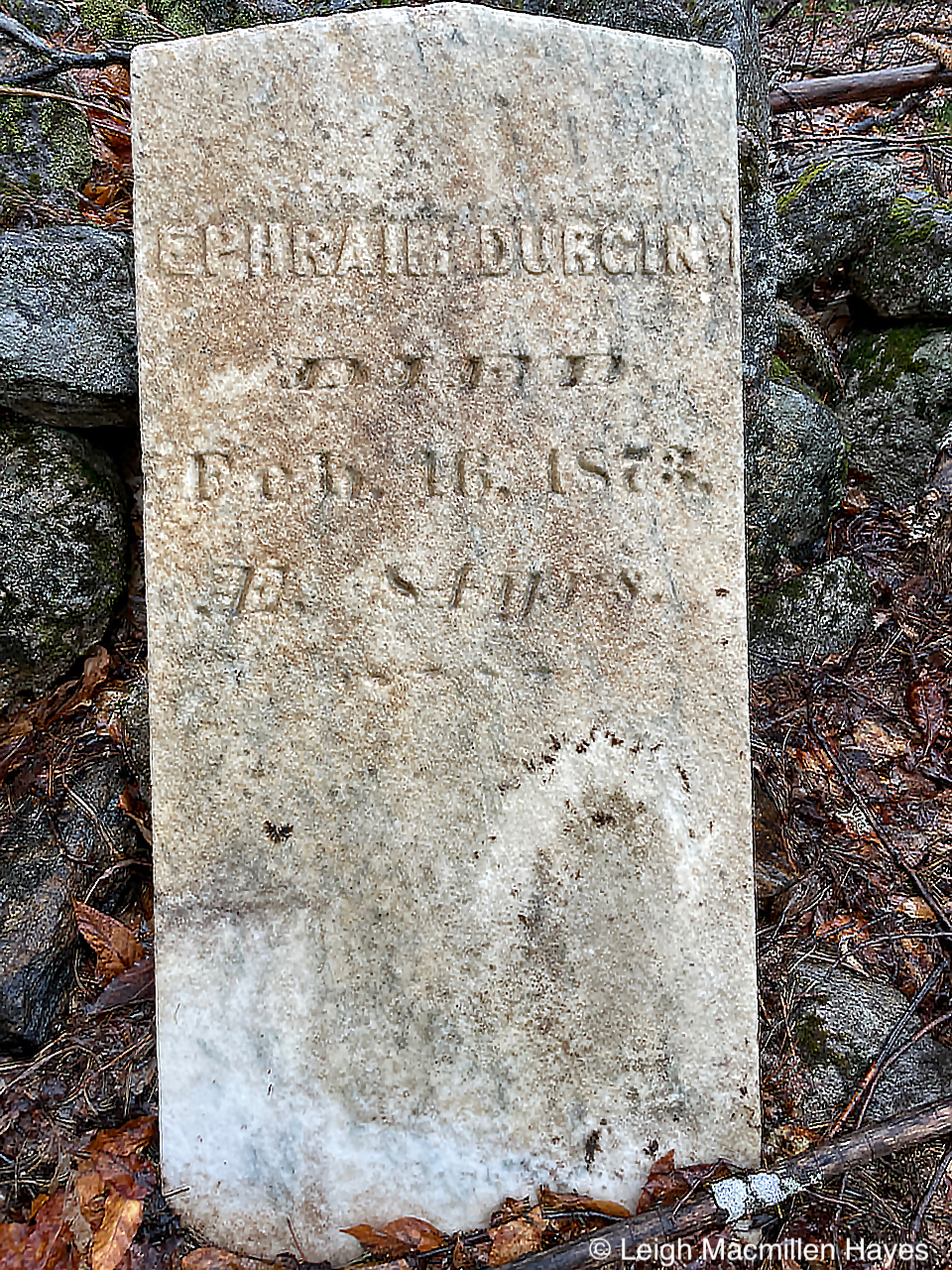
And Ephraim, Sarah’s father, died in 1873 at age 81. Notice the difference in stone from the two girls to Ephraim? Slate to cement. And the name spelling–Dergin and Durgin. As genealogy hobbiests, we’ve become accustomed to variations in spelling.

I found the following on RootsWeb:

8. ANNA3 FURLONG (PATRICK2, JOHN1) was born 1791 in Limerick, Maine, and died 1873 in Stoneham, Maine. She married EPHRAIM DURGIN June 18, 1817 in Limerick, Maine14. He was born April 13, 1790 in Limerick, Maine, and died in Stoneham.

Children of ANNA FURLONG and EPHRAIM DURGIN are:
i.OLIVE4 DURGIN, b. 1811, Stoneham, Maine; m. DUNCAN M. ROSS, April 11, 1860, Portland, Maine.
ii.SALOMA DURGIN, b. 1813.
iii.ELIZABETH DURGIN, b. 1815.
iv.SALLY DURGIN, b. 1817.
v.SUMNER F. DURGIN, b. 1819, Of Stoneham, Massachusettes; m. MARY ANN DURGAN, July 11, 1853, York County, Maine; b. Of Parsonsfield, Maine.
vi.CASANDIA DURGIN, b. 1821.
vii.EPHRAIM DURGIN, b. 1823.
viii.FANNY DURGIN, b. 1825.

Sarah isn’t listed above. But . . . Sally and Sarah were often interchangeable.

By 1880, there had been a change in ownership of the neighborhood homes and the Rowlands had moved into the Durgin house.

Again, we followed the moose, this time in the form of a Striped Maple browsed upon, curious to see what might be ahead.

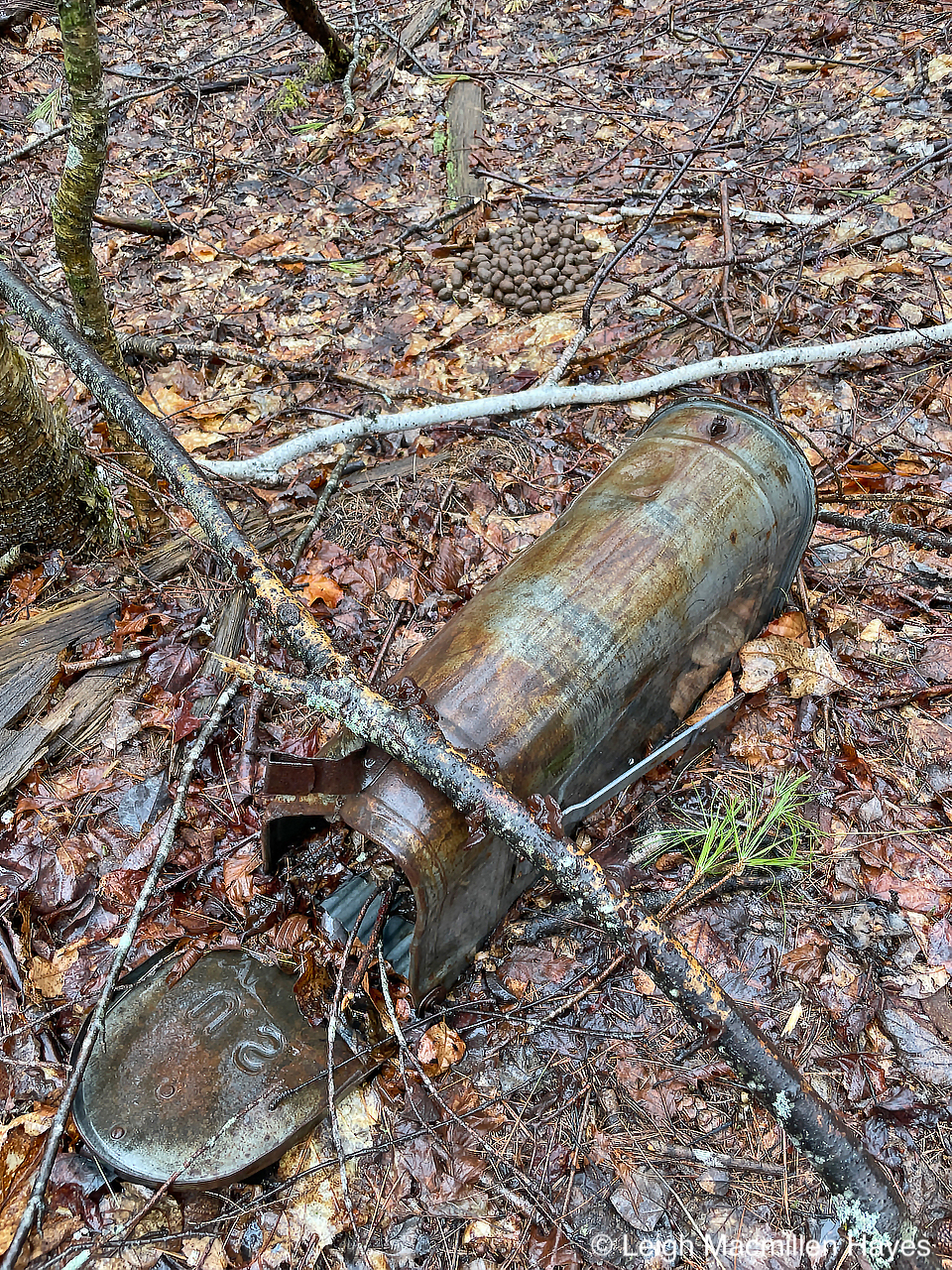
A chuckle. Yes, a mailbox in the middle of nowhere, this spot being a place where someone once had a camp. Our Moose tried to send a letter, but missed by a couple of feet.

Willard Brook was our next stop and I was reminded that when I first started wondermyway.com, a post about this brook initiated some discussion about the Indigenous stonework found throughout the area. I’ve explored it looking for such and convinced myself in the past that I saw the turtles in most of the stonewalls. In fact, I see them everywhere, but today I was looking at different subjects.

Beside the brook, lots of Hobblebush looked ready to burst into life and we thought how fortunate that the moose hadn’t decided to dine. Yet.

There were even tiny Hobblebush leaves to celebrate for their accordion style.

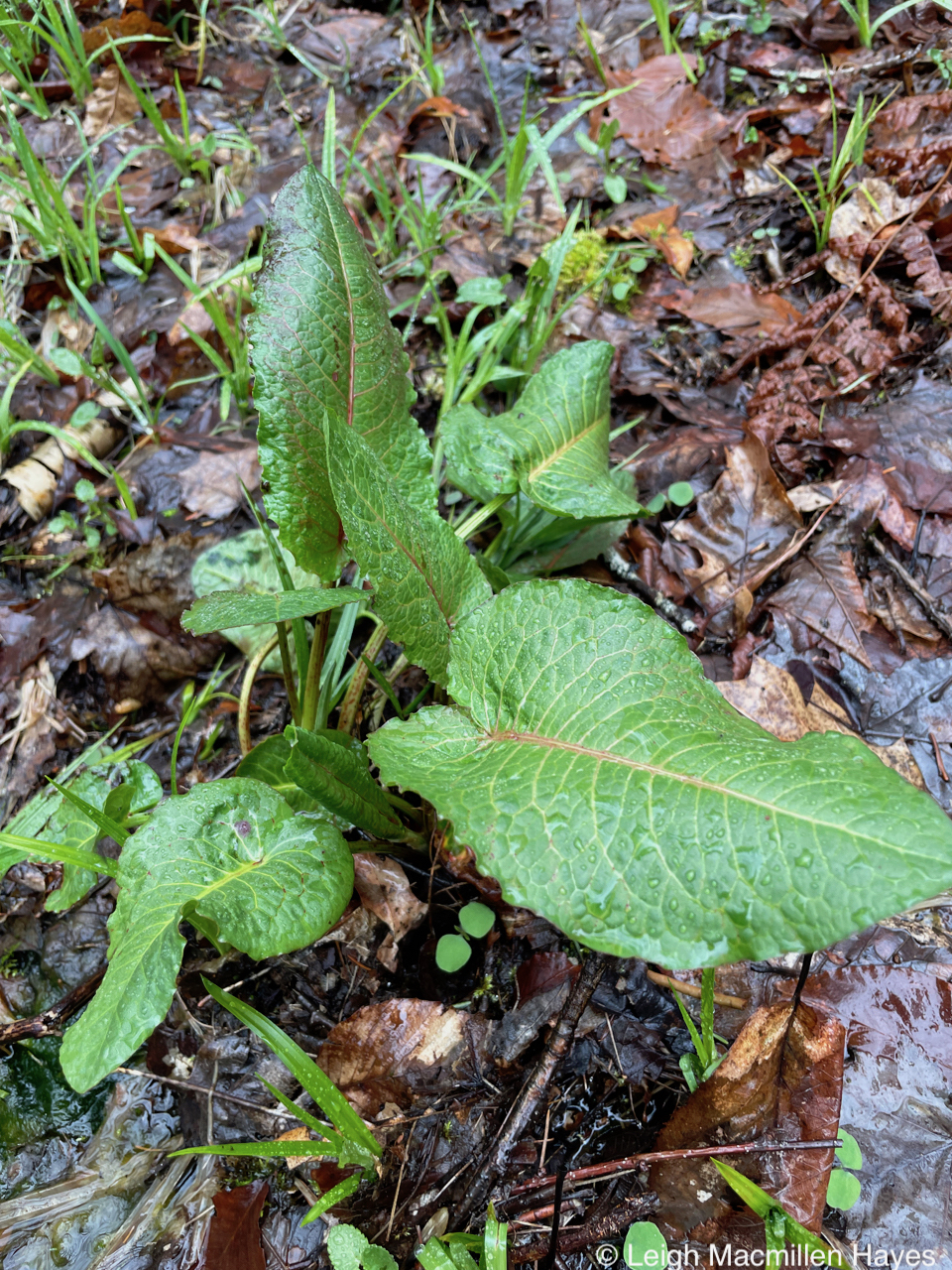
And Broad-leaved Dock looking quite happy and healthy.

Back to Great Brook we eventually wandered, still with no actual Moose in sight.

But beside the brook I did spot some Trailing Arbutus buds preparing for their grand opening.

As we walked back on the dirt road we’d walked in on, we paused beside a beaver pond where Spring Peepers sang their high-pitched love songs. I made My Guy scan the area with me because just maybe . . .

or maybe not. We did spot a Mallard couple. Oh well, We still had fun discovering everything else where the Moose led us on this rainy day.

And when we arrived home I had an email from an acquaintance double-checking with me that the print he found on his shore front of Kezar Lake was a moose print. Indeed it was!

(And now it’s time to prepare for Big Night. Finally. The temperature is in the 40˚s; it’s been raining all day and will continue tonight; and though lots of amphibians have moved to their native vernal pools, I think there will be some action tonight and we’ll be able to help them cross the road safely.)

Lost and Found Mondate

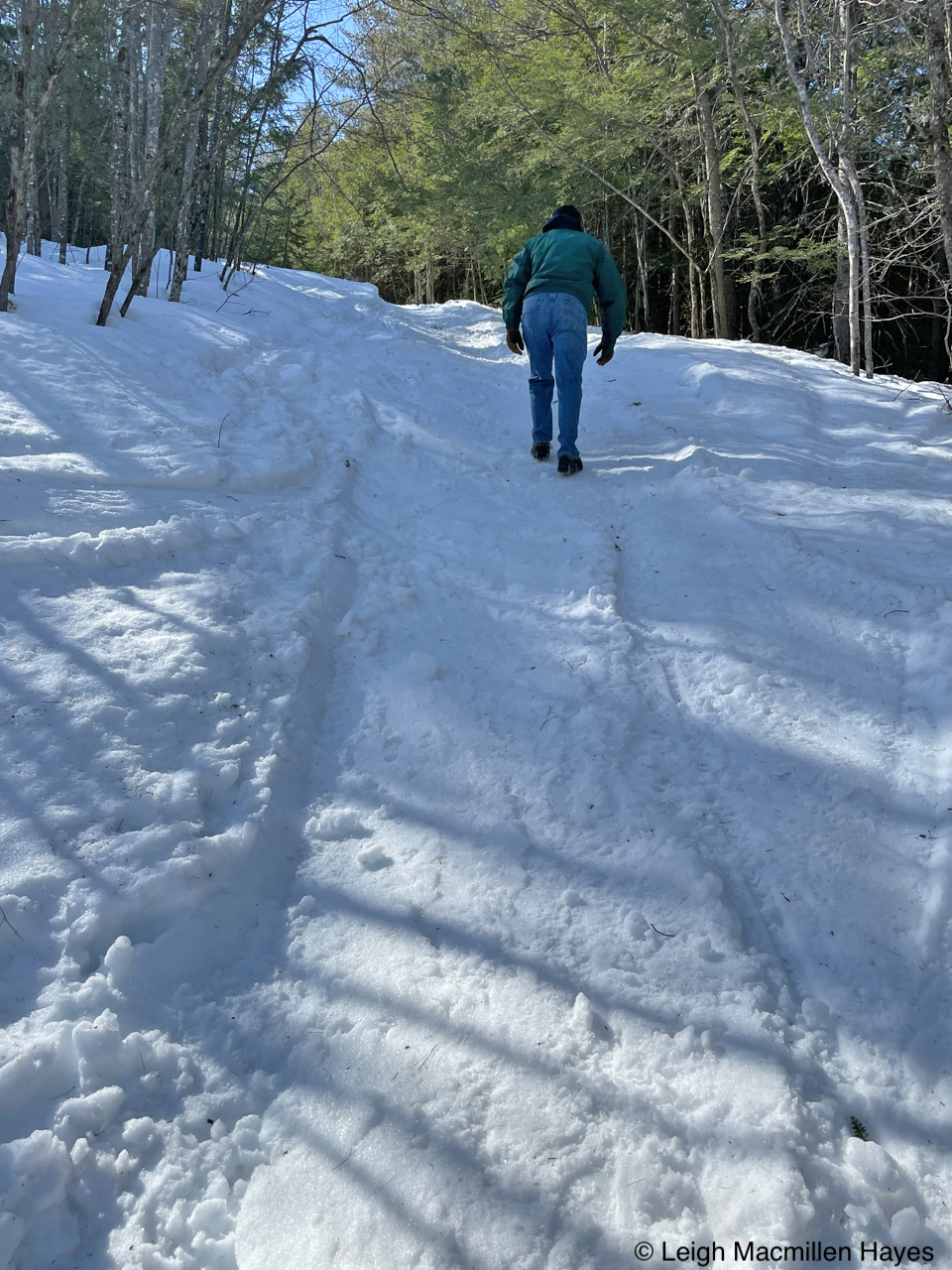
We chose a trail we’ve never hiked before, though we’ve conquered this mountain from two other trails many times over the years. Today’s choice was based on an email from Allen Crabtree, leader of the Denmark Mountain Hikers. The lovely thing about it was we walked along a snowmobile trail to the summit and so were happy to be on micro-spikes and not snowshoes or postholing. And the temperature was crisp enough to keep the snow firm, at least on the way up Burnt Meadow Mountain.

After passing by what I think was an old barn foundation, the trail continued on fairly level ground for a bit and we worried that I may have misunderstood the directions.

But that didn’t really matter because we were in the woods, together, and enjoying the fact that a fisher had loped across the landscape probably last night when the snow was still soft enough to leave impressions before this morning’s temp of 17˚.

At last the trail began to get steeper and I gave great thanks that it was such a packed trail for it made for an easy ascent. We had no idea what conditions might be under the snowmobile trail, but I suspect on a summer day this isn’t an easy way to go. Not that the other two trails are either.

My real reason for suggesting this hike to My Guy was because I wanted to revisit this site, which we’d reached previously on a exploration down from the summit in 2012.

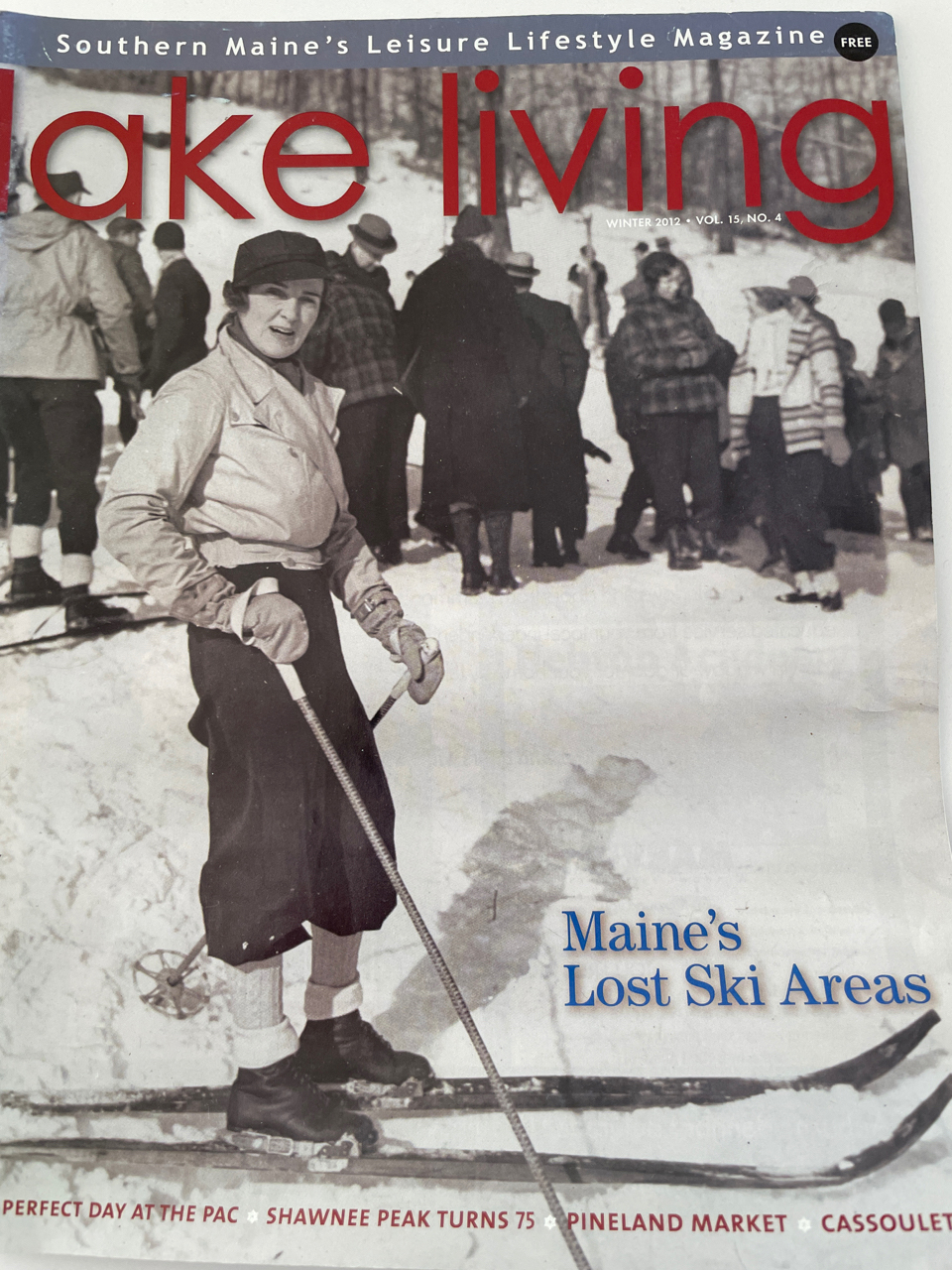
At the time I was working on an article for Lake Living magazine entitled “Maine’s Lost Ski Areas” and interviewing various skiers and making MG tag along with me as I visited the former ski areas. “Trails hidden in the forest provide us with clues that our town fathers worked hard to create recreational areas, but also to boost the local economy,” I wrote in the article. “You can still find some of the trails and remnants of rope tows and chair lifts. When you unexpectedly come upon cement pads and towers while hiking, it’s a bit like entering a ghost town, a place that has seen a livelier day. So many people have a history with these legendary ski areas. They learned to ski at this one, met their spouse at that one, or won first place in a race.

The skiing industry began in the lakes region in 1936 when a group of ten businessmen each invested $25 and considerable labor to build the first rope tow in Maine. The Jockey Cap Ski Tow helped make Fryeburg ‘The Ski Capital of Maine’ for a brief time.

According to newspaper articles and brochures preserved by the Fryeburg Historical Society, the Fryeburg Winter Sports Committee hired Paul Lamere, a ski instructor, to run a branch of the Lamere School of American Skiing. Lessons were offered one day a week.

Because the Maine Central Railroad had a station in town, Fryeburg residents saw the ski area as a means to support businesses during the Depression. Leaflets proclaiming “Weekends for Your Winter Sports” mentioned “good motels, good restaurants, good rooms in private homes, all prices reasonable . . . use the lighted ski-tow, Friday and Saturday nights, a brilliantly lighted slope and rope to pull you up the hill, a new thrill for winter sports enthusiasts” were distributed in the Portland area. The cost for a ride on the snow train from Portland to Fryeburg was $1.50 and a ski ticket was about $1.00.” (I should mention that the photo above was made possible to Lake Living by the Fryeburg Historical Society.)

But we weren’t at Jockey Cap today. And this ski area was a wee bit newer as I quoted former Lake Region High School principal Roger Lowell telling me he’d skied at Burnt Meadow Mountain, which had one lift and a lodge. If you look below the arrow, the top tower was the end of the line and skiers had to exit off the T-bar at that point.

From my article, “According to NELSAP (New England Lost Ski Area Project), in 1967 the Burnt Meadow Mountain Recreation Area received a loan from the Farmer’s Home Association to create a ski area that opened for the 1971-72 season, but saw its demise when several bad snow years followed. In 1980, Wendell Pierce, owner of a northern Maine ski area, purchased Burnt Meadow and renamed it Zodiac Skiway.”

“‘It had pretty good skiing from the top,’ recalls Roger, ‘but three quarters of the way down it flattened out and you had to get up steam to make it all the way without poling.’ He and his team got into trouble for going too fast. ‘WE were bombing the thing so we wouldn’t have to skate to the lift,’ he says.

While there on his own one day, Roger learned about a race. After discovering he couldn’t inspect the course, he found himself last in line. ‘I figured what have I got to lose so I went fast. It didn’t matter if the gates were down a bit. You would have thought I was Jean-Claude Killy.’

Roger won the race and received a blue ribbon similar to what they award at the Fryeburg Fair. ‘I think it said something like FIRST on it,’ he says, a wry look on his face. ‘It was very generic. A conversation piece.’ That was the last race held there. The ski area continued to lose money and closed in 1982. The T-bar still stands intact.” That was 11 years ago, but today’s photos speak to the fact that it still stands intact.

It didn’t take long for us to reach the summit, where we walked around taking in the views beyond, this a look toward Stone Mountain, which is accessible via the Twin Brook Trail.

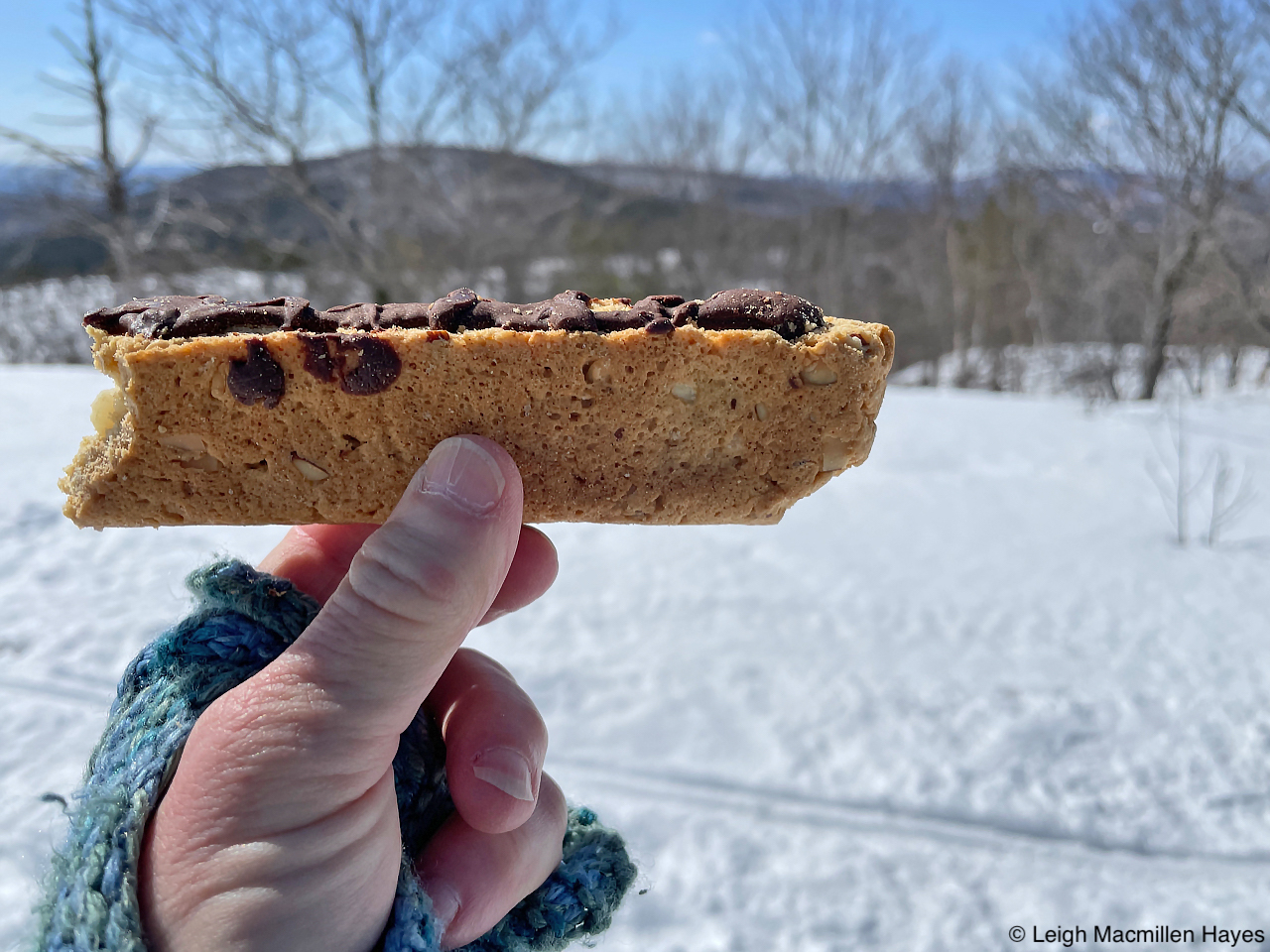
Finally, we sat upon lunch rock to enjoy our sandwiches, followed by Fly Away Farm’s Almond Biscotti with Mocha Drizzle. MG just thought it was chocolate so let’s keep that secret between us.

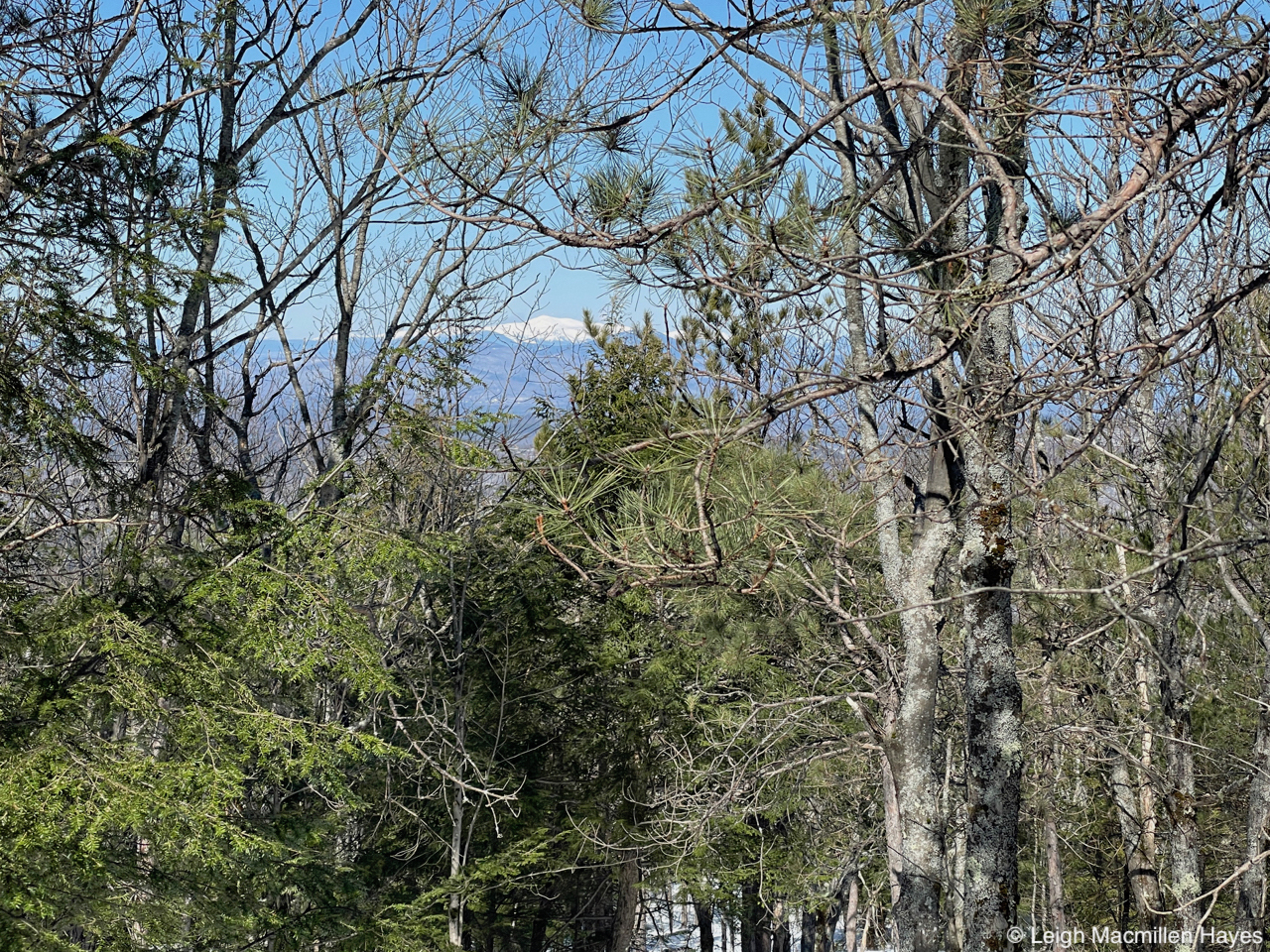
At last we began our descent, with a goal to find Mount Washington. And we did. Do you see it between the trees?

And then we found it again when we slipped off trail to take in the scene from a ledge. We always love to know where we are in the world. Our little world.

As we continued downhill, I was stopped in my tracks. That happens occasionally. (Insert smiley face) But this tree that leaned across the trail begged to be noticed and I’d missed it on the climb up the mountain.

Its manner of growing needles upon the trunk like no other evergreen that I know of gave me an immediate identification.

Add to that the number of needles that grow in short individual bundles: 3. Three strikes and you are out. Pitch Pine. Get it?

In the end, we thought we’d lost winter, but we found it alive and well and holding on for a wee bit longer. And even longer than that if you are at the summit of Mount Washington.

At the same time, because we are on the cusp of a seasonal change, we found spring in the form of swelling Red Maple buds . . .

and Striped Maple.

We also found some stuff left behind by other recent hikers. We left the sunglasses on a cairn at the summit.

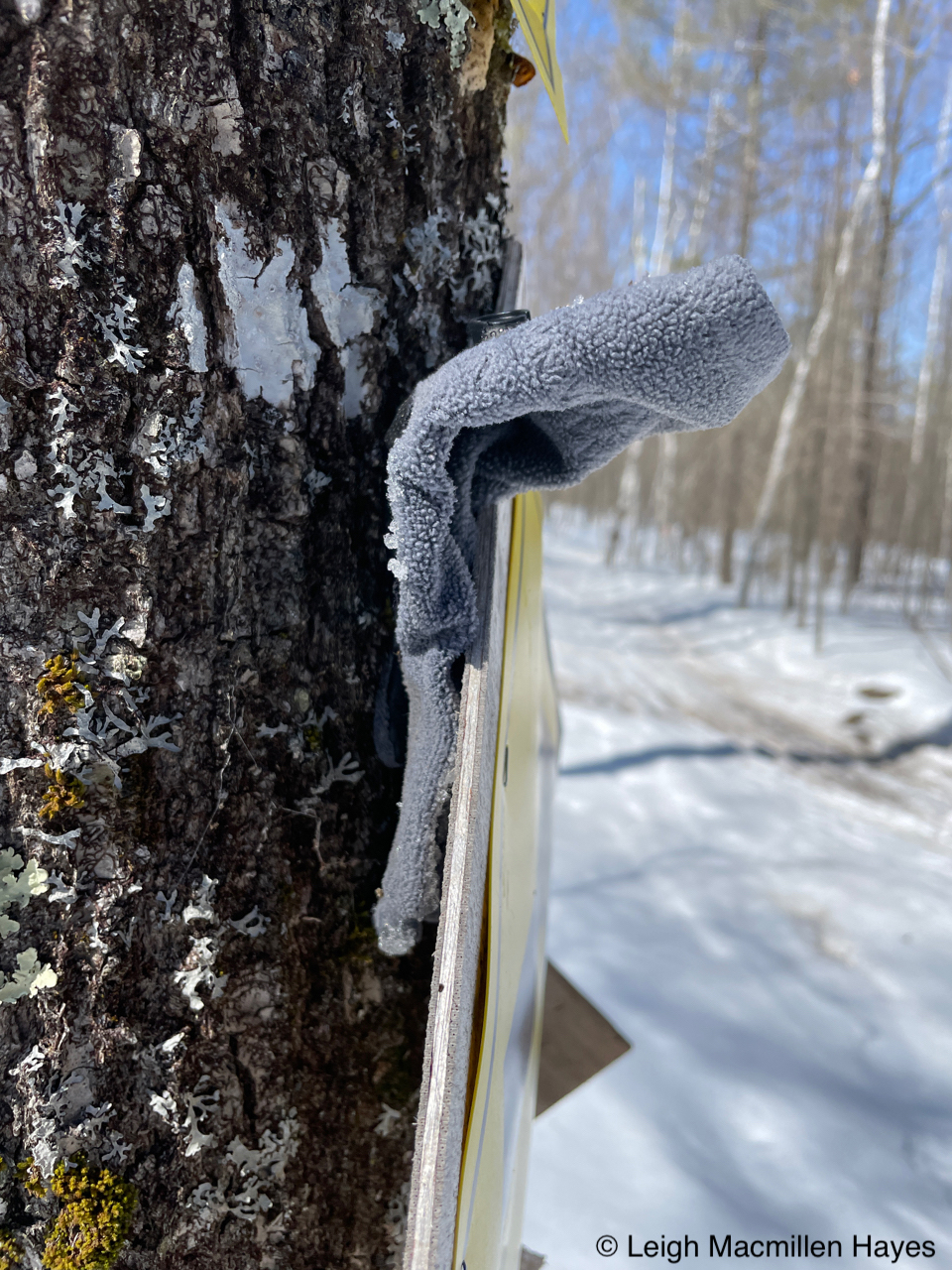
And a glove at the trail intersection.

In fact, just after putting the glove on the sign we found an optic cleaning clothe–maybe to clean the sunglasses?

This was indeed a lost and found Mondate.

Oh, and thanks again to Allen Crabtree for his write-up and directions to the trailhead and mention of my friend Marita Wiser’s book: Wrote Allen: “The origin of the name “Burnt Meadow” is not clear.  Most trail guides attribute the lack of large trees on the mountain to the Great Fires of 1947 which also burned more than 80% of the old homes in Brownfield.  Marita Wiser, in her Hikes in and around Maine’s Lake Region says,”…the name of Burnt Meadow was established long before [1947].  It is shown on…an 1858 map of Brownfield.’”

Searching for a Tiger Mondate

We didn’t know what to expect when we headed off on a trail today. Or even what to wear on our feet–besides winter boots that is. And so we donned snowshoes initially in hopes that should we locate a Tiger, we’d be able to move easily across the snow rather than posthole and get slowed down.

Ah, but there were things that did slow us down. If you are a long-time follower of wondermyway.com, then you know I can’t resist a Pileated Woodpecker tree . . . among other subjects that repeatedly slow me down. This one was fun because it was obvious that the bird stood on the snow to excavate at least the bottom hole. In my mind’s eye, I could see it using its tail feathers as the third leg in a tripod while its beak pounded away at the tree, excavating a hole. Did it find any food?

Indeed it did and several healthy looking cylindrical scats full of the indigestible parts of the Carpenter Ants it sought were waiting to be discovered like little piles of treasure.

Was the Tiger hiding among the wood chips? No, unfortunately not.

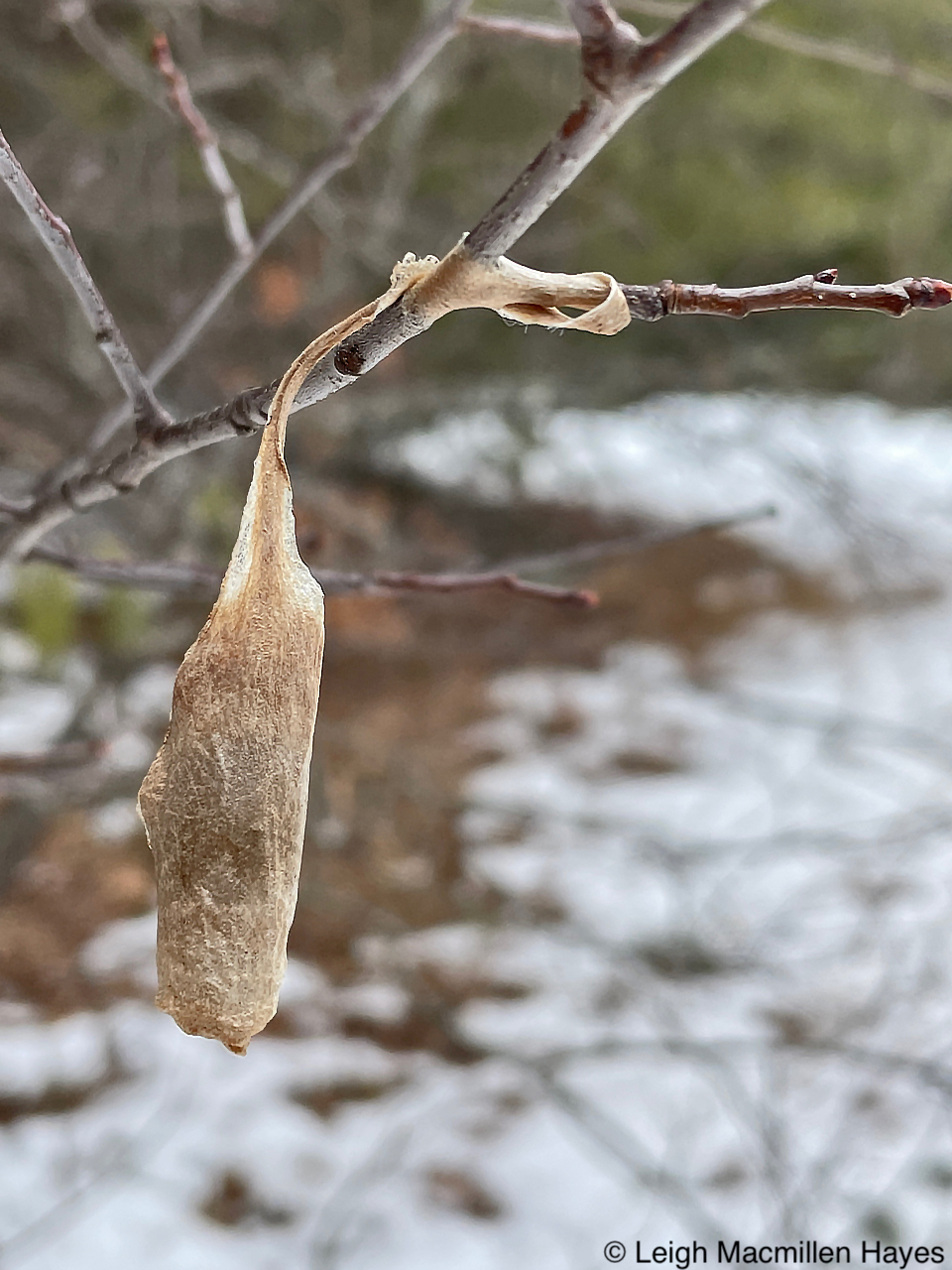
The next great sight was the cocoon of a Promethea silkworm moth. When the caterpillar or larval form of the moth was ready to pupate at the end of last summer, it strengthened the stem, or petiole, of a leaf with silk, and then attached the silk to a nearby branch as you can see, assuring that the leaf would remain attached to the tree rather than fall off. It then spun the cocoon inside the curled leaf.

This species overwinters as pupae in a state known as diapause. During pupation, the larval structure breaks down into a soupy form and then restructures so that by the end of the process (in late May/early June) adult structures, including wings appear before its time to emerge and fly.

Was the Tiger hiding behind the cocoon? No, unfortunately not.

And then there was the Hickory Tussock Moth Caterpillar–climbing a tree to look for food on a winter day? Hardly. At a certain point in its growth, it lightly locked its legs into mat of silk it had produced on the branch. It then released enzymes that dissolved the inner layer of its cuticle, and a day or so later, much like a dragonfly or cicada emerging from exuviae, the caterpillar’s cuticle split above the thorax and the caterpillar literally crawled out of its skin. This is an old cuticle left behind.

Was the Tiger hiding amid the HTM’s cuticle? No, unfortunately not.

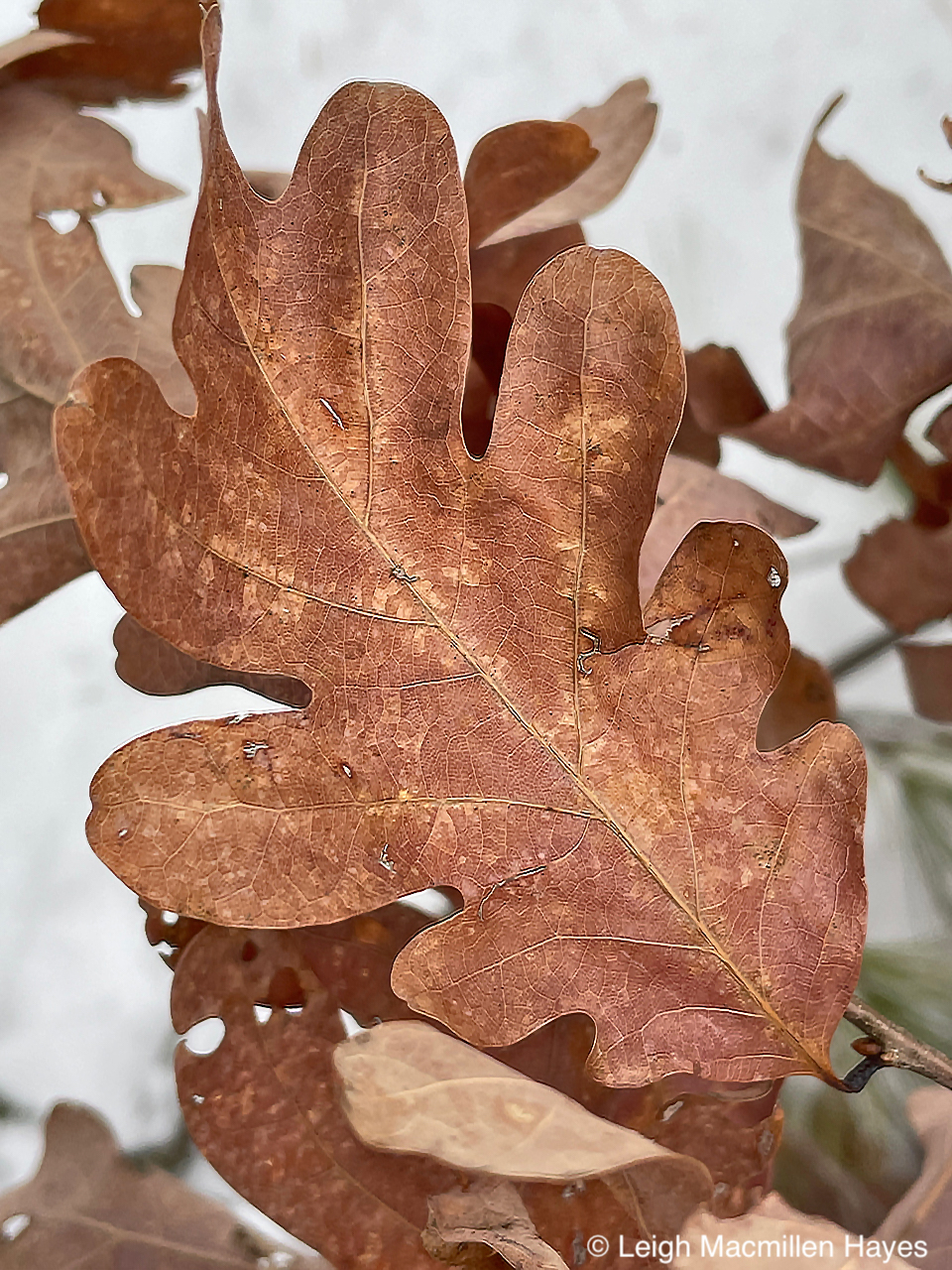
As we hiked along the snowshoe trail, we had to work our way around, over, and under downed trees, but this one encouraged me to pause for it’s one I don’t encounter on an everyday basis, much like its cousin with bristles on its leaf lobes. The cousin in Northern Red Oak, but the leaves we met today belonged to White Oaks. Oh, there were red oaks along the way, and I don’t mean to downplay them, but I’m forever in awe of the marcescent (leaves that wither but remain attached to the stem) of White Oaks. Those veins. That color. And the shape. Always curled in winter as if an open palm.

Was the Tiger masked by the downed tree? No, unfortunately not.

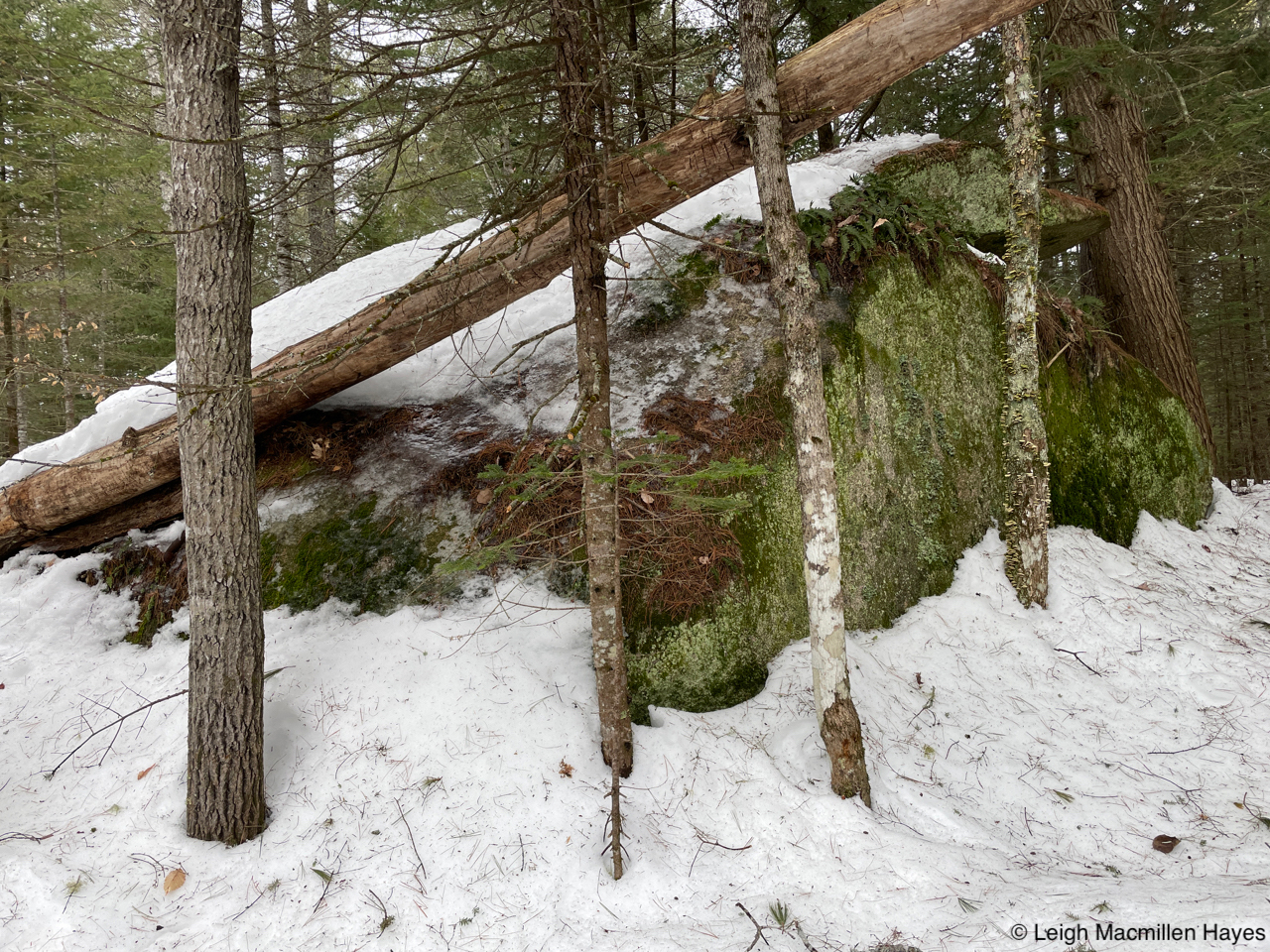
At an erratic the size of a small house, I had to take a closer look and convinced my guy to pause. He did and circled the boulder in search of the Tiger.

Did he find the critter? No, unfortunately not.

It was next to a Speckled Alder that our attention, well, my attention turned. What initially stopped me in my tracks was the woolliness of Woolly Alder Aphids. Those fuzzy aphids feed on the sap of the shrub and produce white wax, or “wool,” filaments from their abdominal glands.

They drink volumes of sap in order to get enough nitrogen, which they then exude as honeydew. In the summer, I find ants farming them to sip the honeydew.

But that’s not all that is interested in the sweet liquid. A Black Sooty Mold loves the honeydew as well.

The funny thing is that I was just discussing this yesterday with Land Steward Leah of Dartmouth Natural Resources Trust in Dartmouth, Massachusetts. The Black Sooty Mold is actually a Poop Eater! What? Yup. A poop-eating fungus. The natural world is more otherworldly than one can even imagine.

The Sooty Mold’s name comes from the dark threadlike growth (mycelium) of the fungi resembling a layer of soot or rather, a bit like elongated coffee grounds, and within my hands, its brittle structure quickly splintered into tiny specks.

Was the Tiger hiding among the Sooty Mold? No, unfortunately not.

Eventually, we returned from whence we’d come because one of the snowshoe trails is an out-and-back, found a rock upon which to sit for lunch, and the same served as a storage hide-away for our snowshoes while we donned micro-spikes, for the rest of the journey would be along a snowmobile trail. The thing about snowmobile trails in our area–they were closed a few days ago, just at the start of Spring Vacation, oops I mean Winter Vaca, but such have been the temps of late and the trails are not safe–especially where they cross waterways or boggy areas.

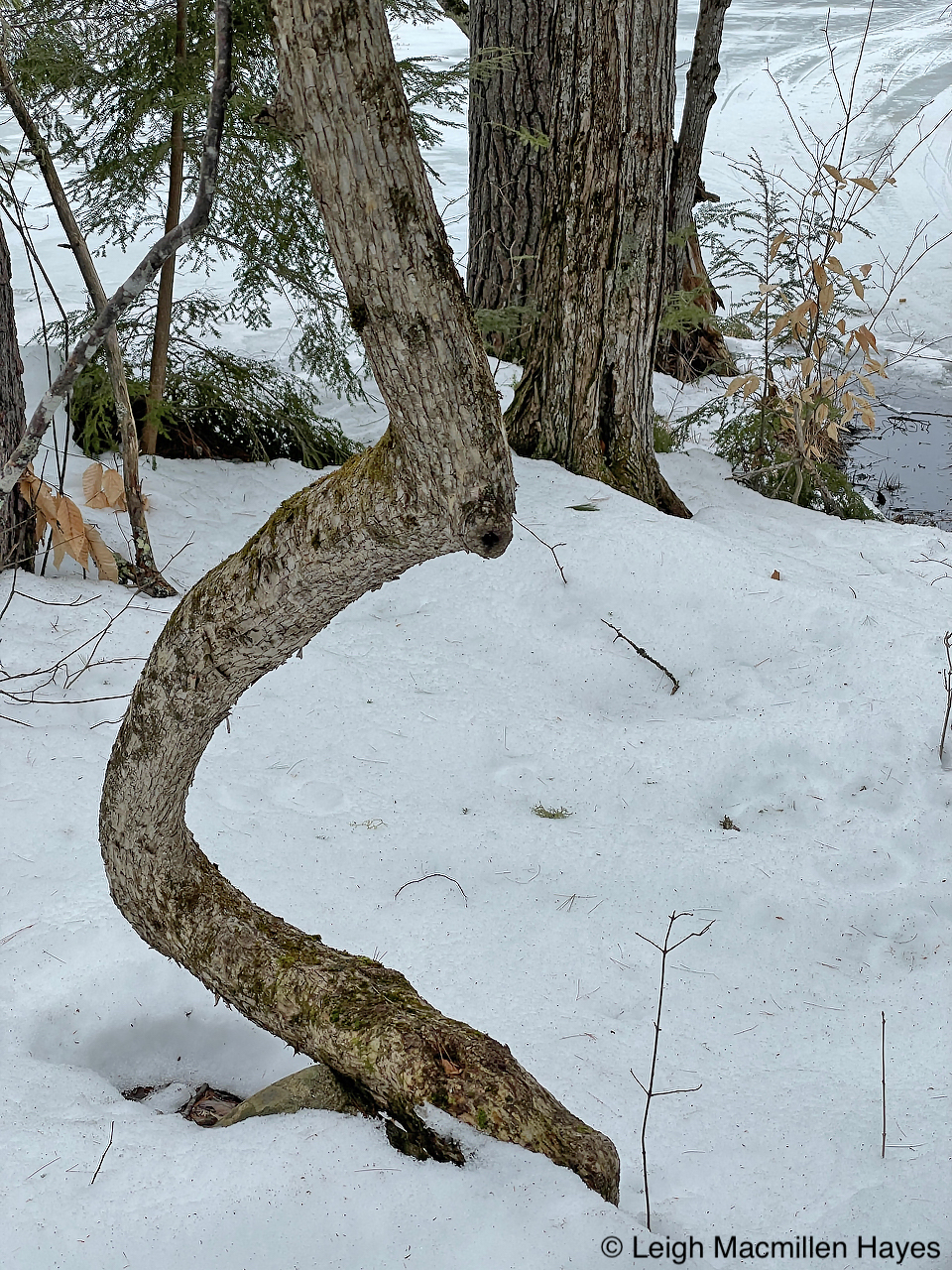
That said, I stepped off the trail and located this tree–a wonder unto itself. For those who know the species, it’s a Hophornbeam gone astray. Typically, these trees of sorta shaggy, yet tight bark, if one can be such, grow straight and strong, but obviously there was an interruption in the growth of this tree, though eventually it found its way skyward as is its normal behavior.

Was a Tiger hiding among the trees? No, unfortunately not.

I discovered the disfigured Hophornbeam because I’d gone closer to the water to spy on a couple of Beaver lodges. And I’m happy to report that based on the mud and fresh branches, they appeared to be active.

Was there an active Tiger in the area as well? No, unfortunately not.

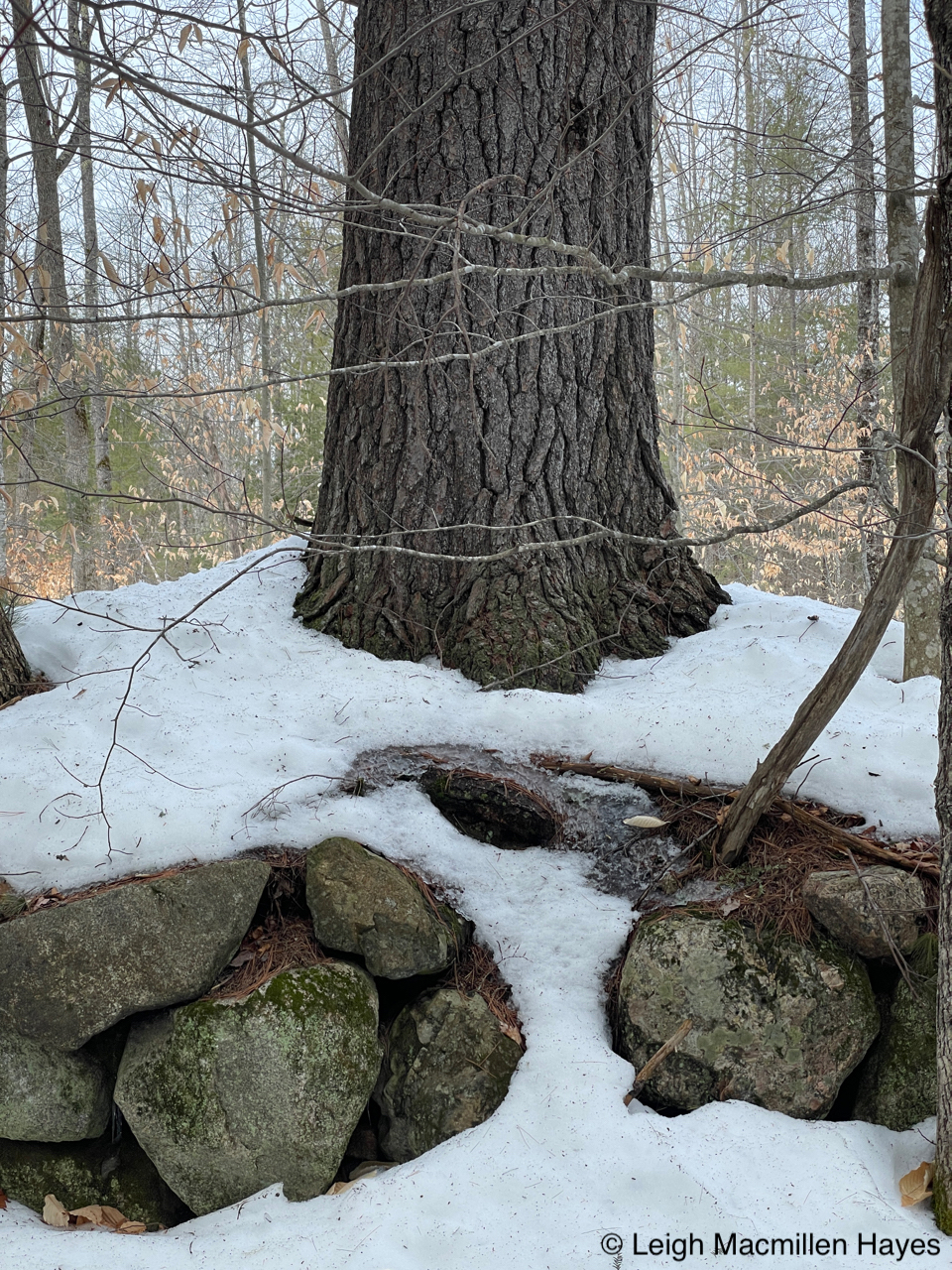
Shortly after reaching Snowmobile Trail ITS 89, we noted the double-wide stonewall, a hint of days gone by when the property was probably plowed for agricultural reasons. We also noted that it’s been a while since that practice occurred for so old did the Eastern White Pine that grew atop the wall appear.

Was it large enough to hide a Tiger? No, unfortunately not.

So the next spot brought a smile to my face, for often, when I’m leading a hike my mouth gets ahead of my brain and I know I mean birch when I say beech, or visa versa, but here they were representing as one in the same for over time they had rubbed against each other for so long that they rubbed together.

Here’s a new word for me: Inosculation–when the friction between two trees causes the outer bark of each to scrape off at the point of contact. The trees respond by producing callus tissue that grows outward, thereby increasing the pressure between the two. This pressure, along with the adhesive nature of sap or pitch that exudes from their wounds, reduces the amount of movement at the point of contact. But the question remains: Does the cambia layer from the two trees come in contact and the vascular tissues become connected, allowing for the exchange of nutrients and water? Maybe if they are trees of the same species, but these were two different species and I suspect they are actually false grafts, which means the two trees have not formed a union of conductive tissues. Going forward, when I say Birch and mean Beech, or Beech and mean Birch–I shall remember these trees.

As for the Tiger, did he know them as well? No, unfortunately not.

As the sun began to shine, we found ourselves pausing beside Cold Rain Pond, where Sheep Laurel showed off its plans for the future. I want winter to continue, and apparently it might, for such is the forecast for later in the week when temperatures are supposed to dip to more seasonal numbers and snow is in the forecast, but note those buds.

Did they obscure the Tiger? No, unfortunately not.

As we backtracked our journey and followed the snowmobile trail out several hours later, I found the evidence we sought. A footprint. Certainly that of a Tiger. A very big Tiger for our area.

Your mission, should you choose to accept it, is to locate the Tiger. We knew it was there somewhere, but just like our Bobcats, it chose to remain elusive and hid among the shadows. Do you see it?

After all, we had traveled over 7 miles of Loon Echo Land Trust trails at their Tiger Hill Community Forest.

There must be Tigers in the midst, indeed. For why else would it be named such?

Disclaimer: the Tiger print is actually a bleached out Bobcat print–made larger as the temperatures rise.

Mondate with a View

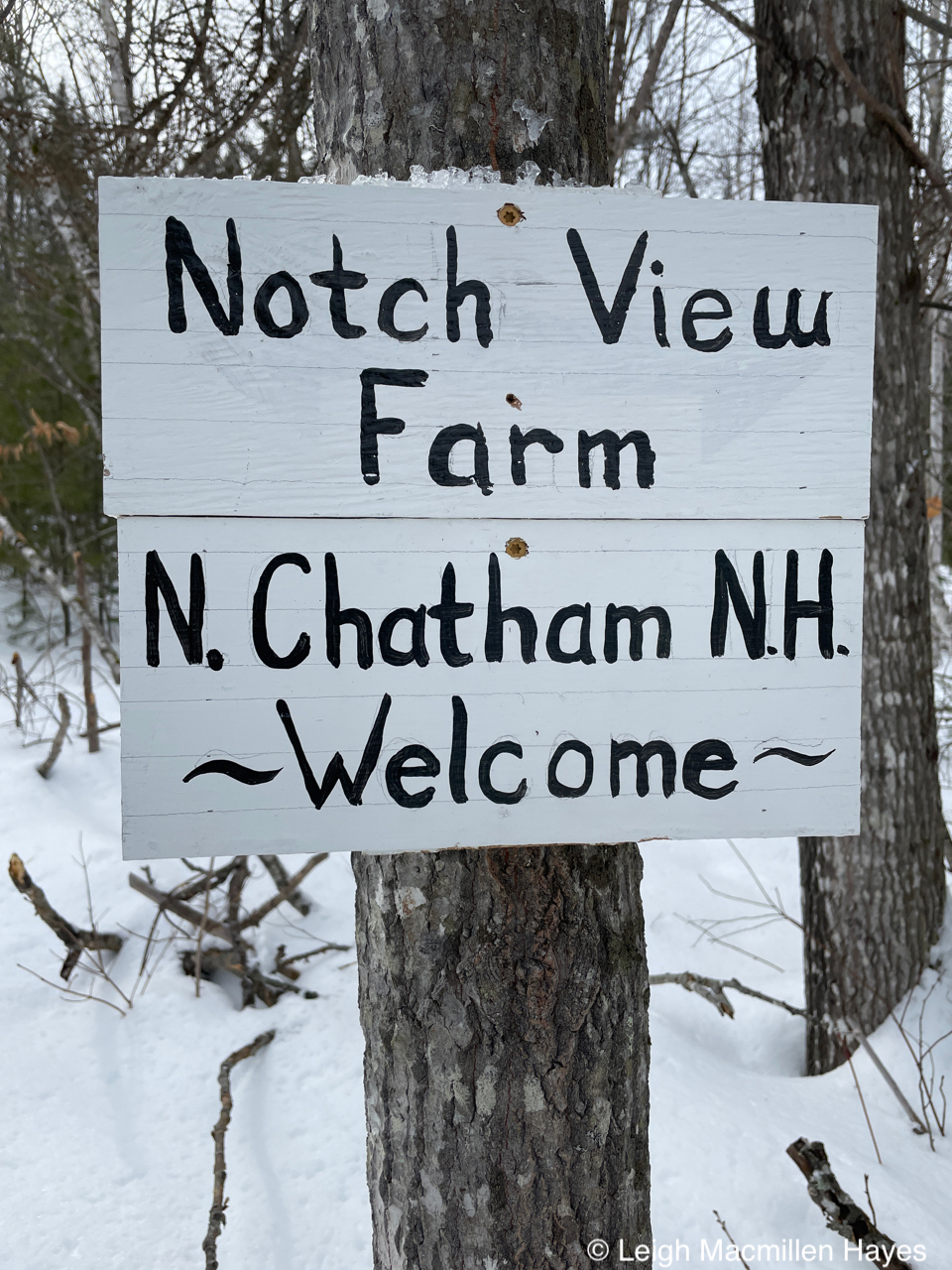
I’ve been wanting to take My Guy to a certain place in North Chatham, New Hampshire, for the last few years and today was the day that the stars lined up.

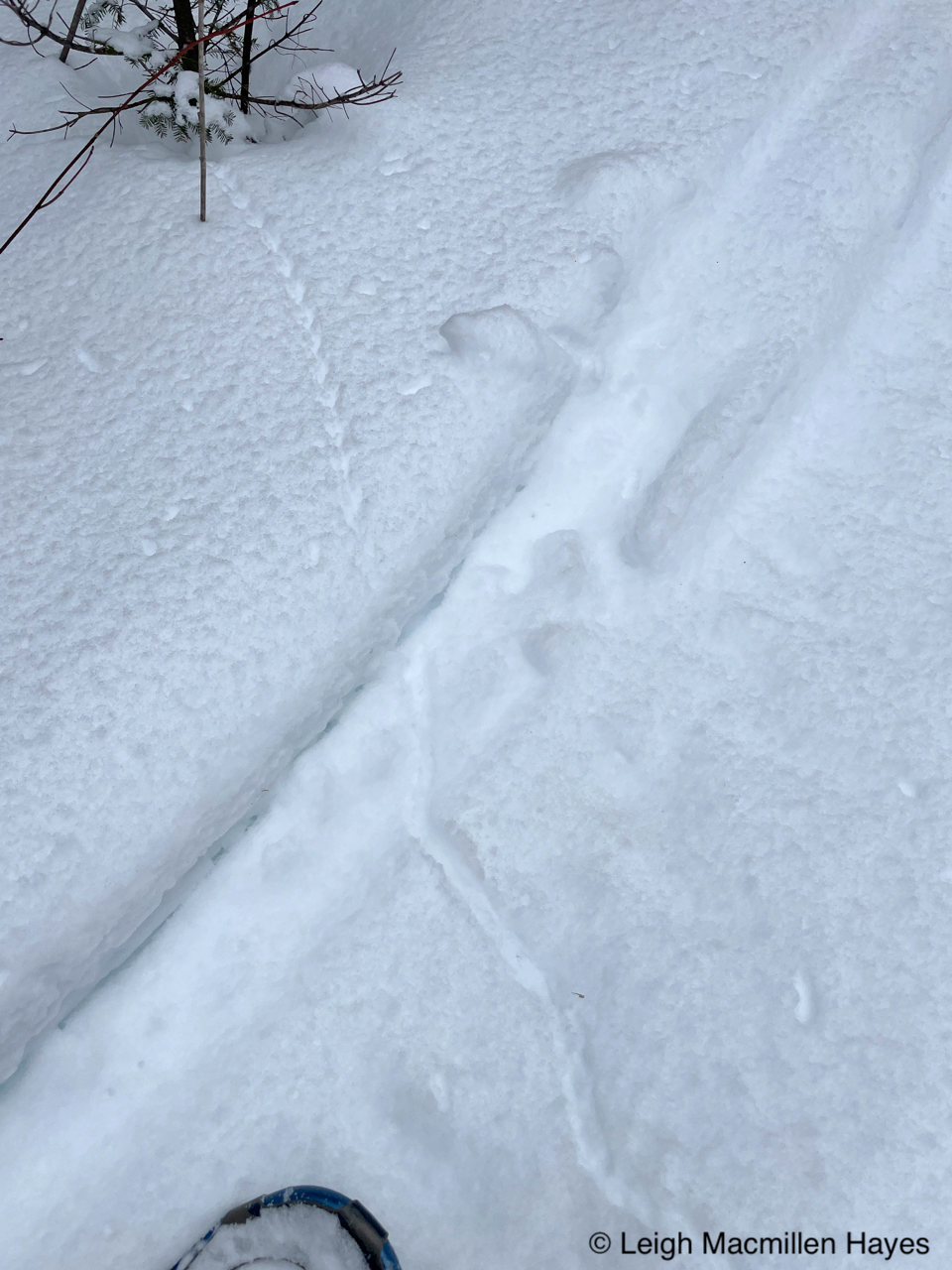
Though it appeared we were the second and third humans to head out on the trails this morning, for at the start we spotted only one set of snowshoe tracks, it was obvious that so many others had followed or crossed before us–such as this vole, who tunneled through the fresh inch or two of snow that fell yesterday and then changed its gait.

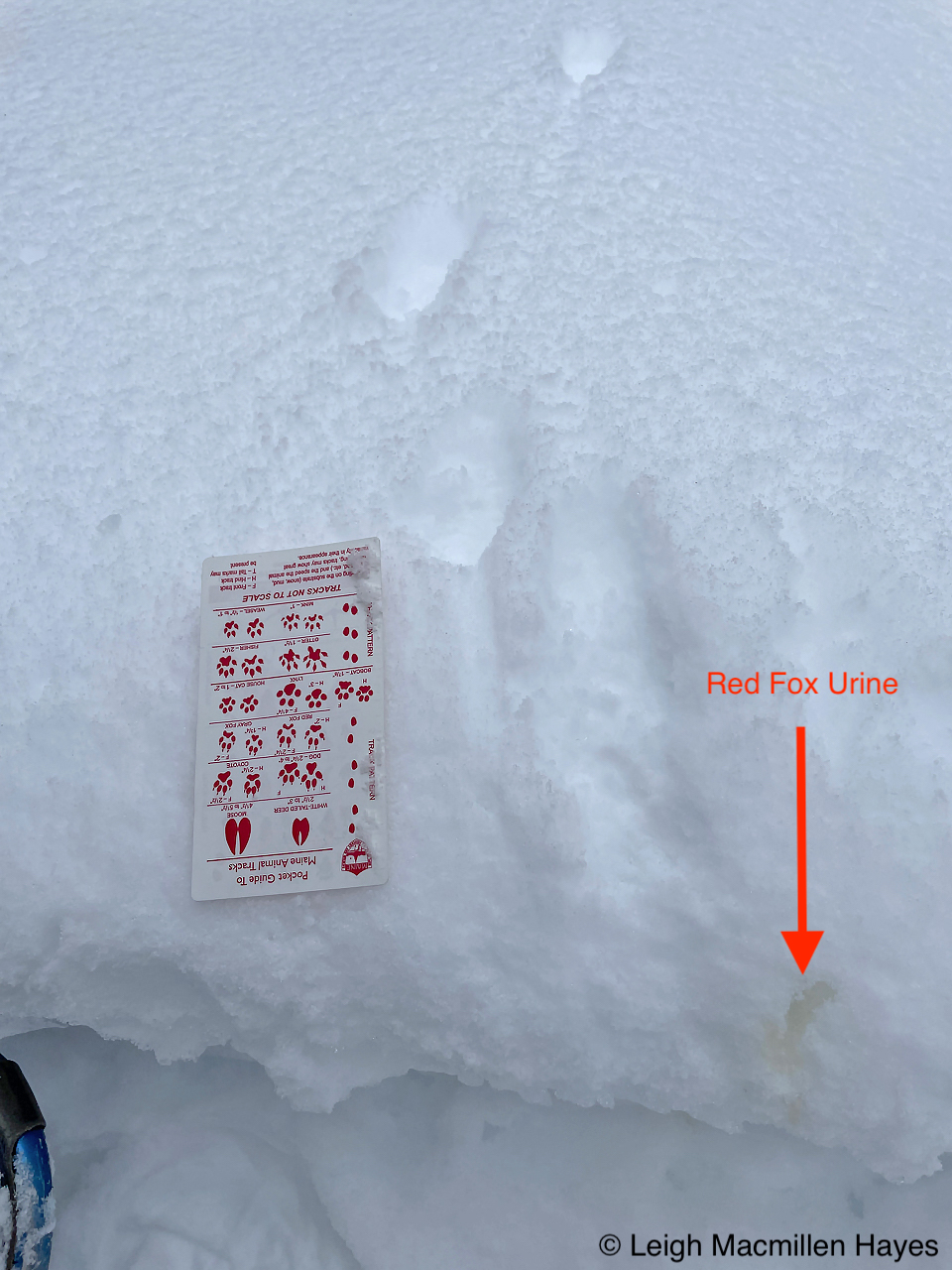
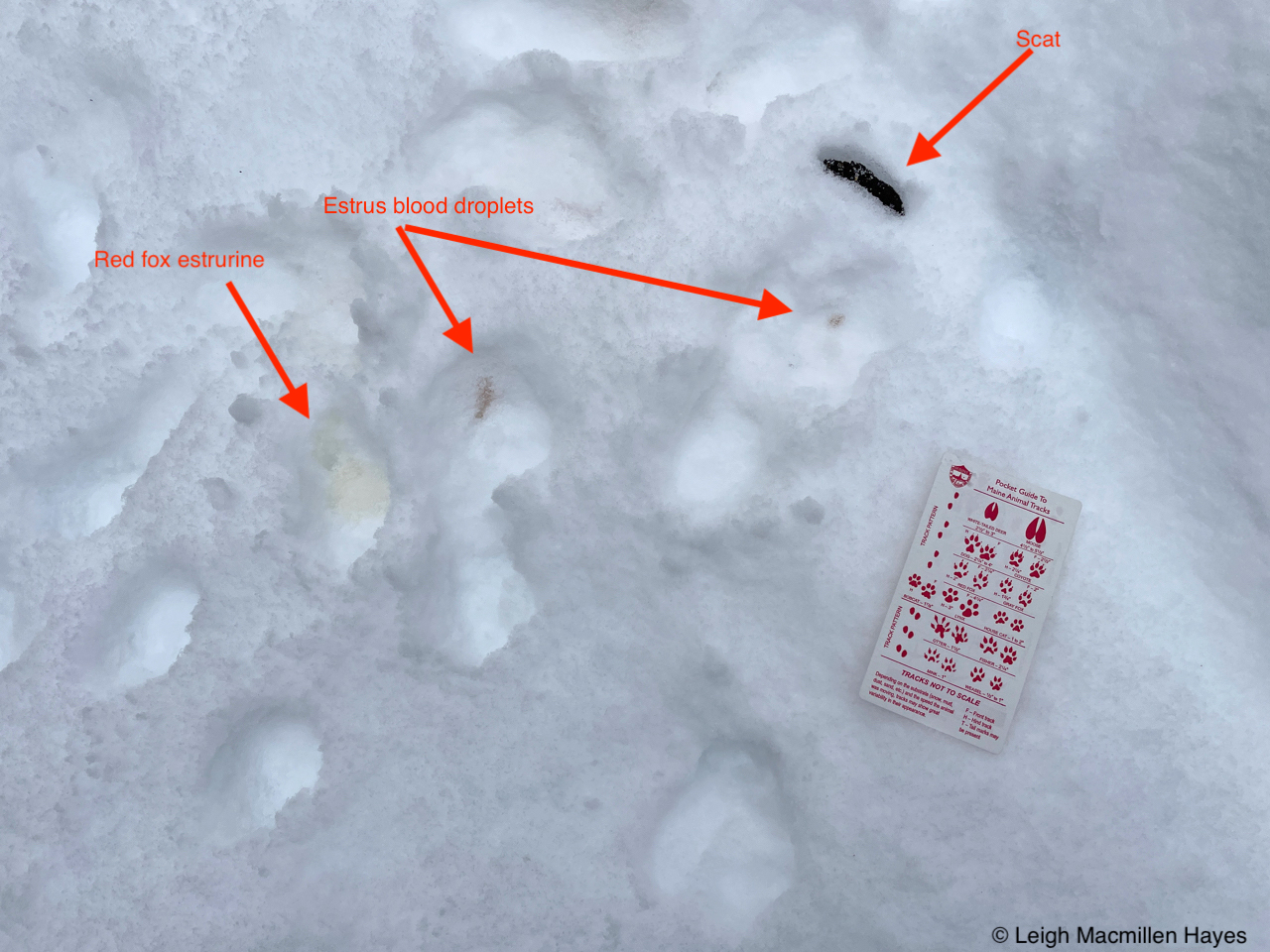
And then I spotted a sign that always brings me to my knees–fox prints and a dash of urine, probably that of a male in search of a date. Confirmation that it was a fox, and a red one at that, came in the form of the urine’s scent–rather skunk-like. I asked My Guy if he wanted to take a sniff, but he passed on the opportunity.

A wee bit farther and we came upon a smattering of activity, where two foxes had left their dancing cards and I think at least announced their intentions for each other as a date.

These classified ads could be that of the male stating his desire, while the vixen left her own marks of estrus blood as she perhaps investigated his intentions and decided to say yes. The scat? It came from one of them. Another advertisement of health and age and vitality.

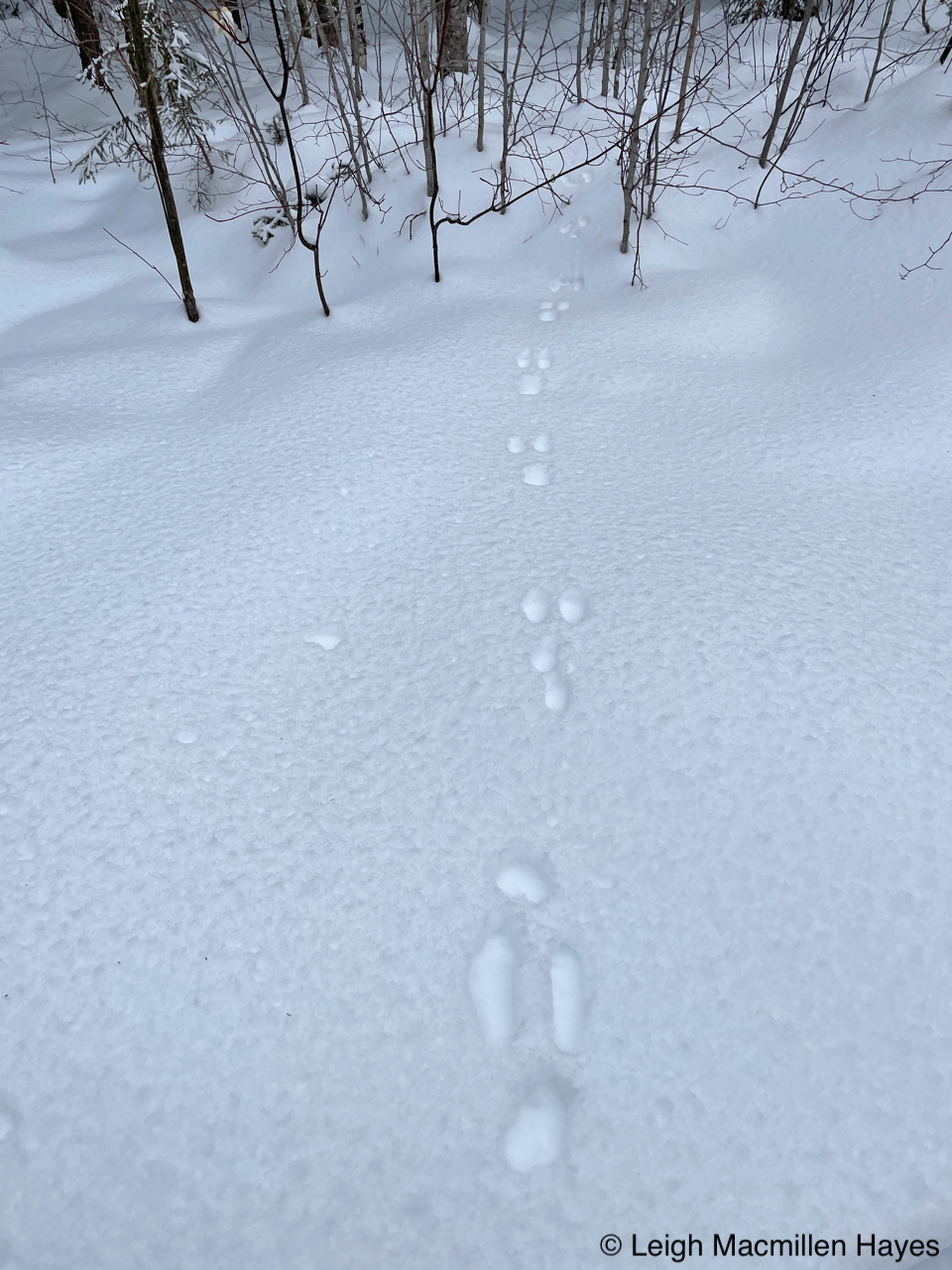
While I suspected a meal was not on their minds as she’s only ready to mate for about a week or less, by the amount of snowshoe hare tracks we spotted, we knew that there was plenty of food available. Other offerings on the pantry shelf included ruffed grouse and red squirrel.

Most of the trails at this place are well-groomed by the owners, but we also tried one or two that weren’t.

For the first time in the four or five years that I’ve traveled this way, I finally found the Old Sap House. The owners still tap trees, but obviously this is not where they boil the sap to make maple syrup.

So . . . this was my first journey on the network of trails with My Guy as I mentioned. And I had no idea that it is possible to circle Moose Alley in under an hour. In the past, when I’ve gone with a couple of friends, it has taken us hours and hours because we stop to look at every little thing. And go off trail to follow tracks. And make all kinds of discoveries. But today was different, and that was fine.

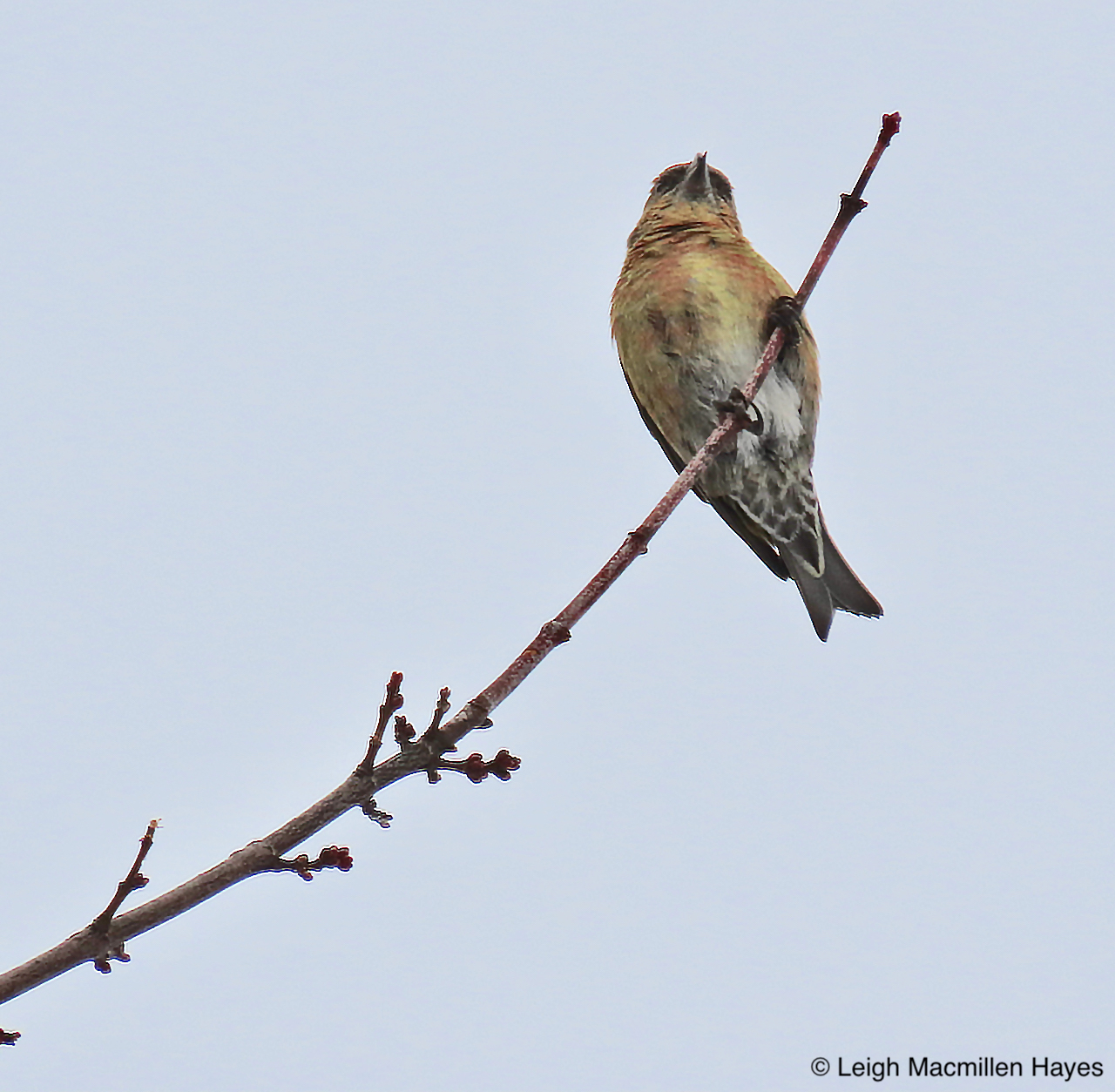
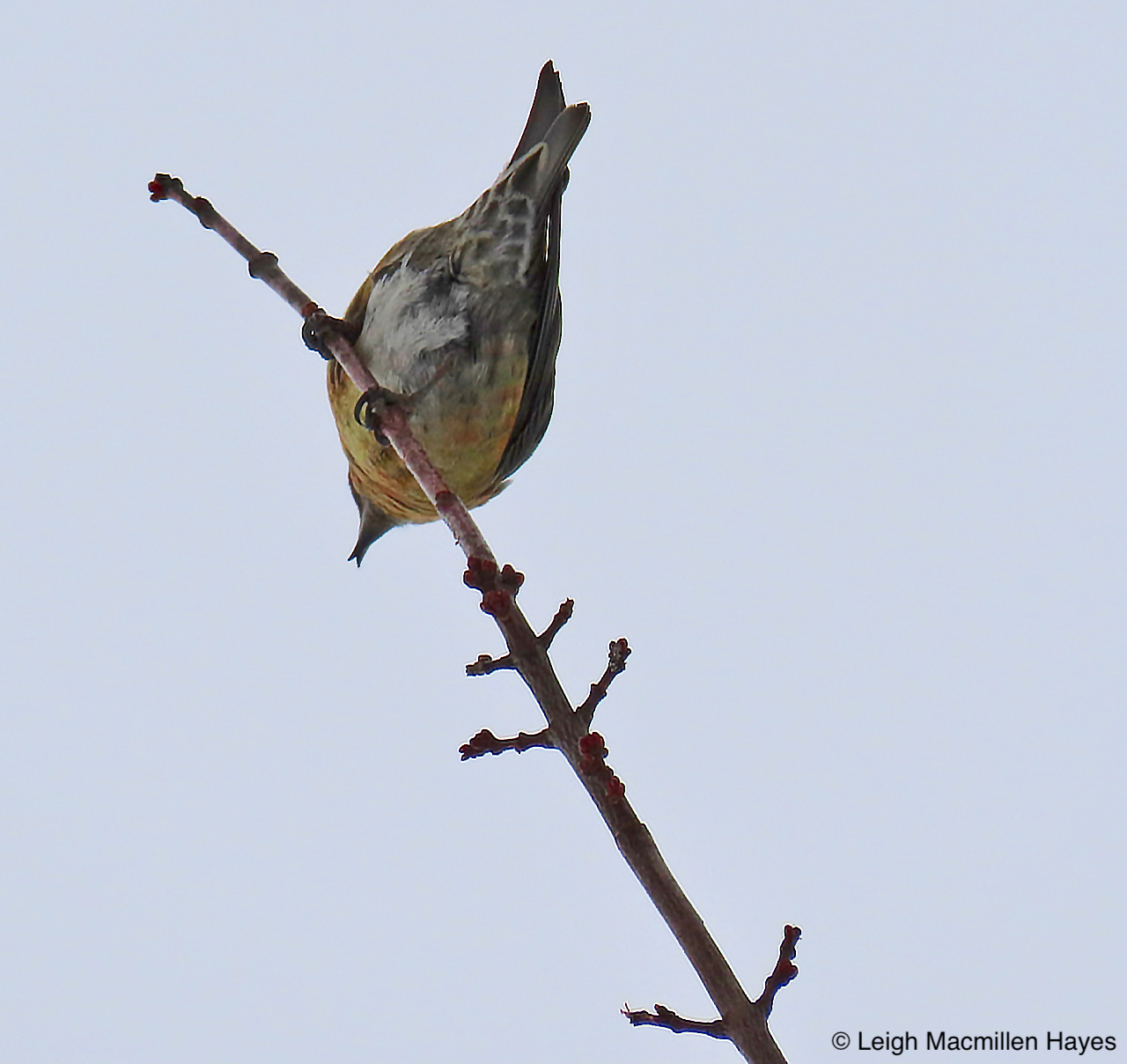
I’d also never been on the Sugarbush Trail, which brought us back to the Route 113 and an intersection with Snowmobile Corridor 19. It was here that we heard Chickadees and Red Crossbills singing and I finally located one of the latter in a maple tree.

Crossbills are finches with specialized bills that let them break into unopened cones. Can you see how the top of the bill cross over the bottom?

My intention was that we would eat lunch at one of the benches along the trail system, but we’d hiked most of the system before I knew it and so we sat on the back of my truck and ate. And then we headed back out on Corridor 19, a super highway through Evans Notch.

Only about a quarter mile from the farm boundary, we spotted moose tracks showing two had passed this way recently. We knew they’d been seen on the farm and hoped we might get to spy them, but just seeing their tracks and knowing they were still in the area was enough.

Can you imagine sinking two feet down with each step? Well, actually I can, because I’ve post-holed through snow many a time, but moose and deer must do this daily. For them, it’s routine.

Our reason for continuing on the snowmobile trail was that we had a destination we wanted to reach, that we hadn’t even thought about before reaching the intersection of Corridor 19 just prior to lunch. Eventually, we had to break trail again, and this time it was all uphill, and rather steep at that.

But our real plan was to climb to the Millard Chandler Feldspar Mine (aka North Star Mine) in Evans Notch.

Millard Chandler was a descendent of one of the founding families of Chatham. Originally, mica was mined from the pegmatites but prior to World War II, Whitehall Company, Inc, focused on feldspar.

From the top of the cavern, where life on a rock was evident as the trees continued to grow up there, the water flowed and froze and formed stalactites of sorts. Icicle sorts.

StalacTites grow down from the ceiling of the cavern–think T for Top.

StalaGmites, on the other hand, grow up from the floor–Think G for ground.

In this case, they looked like little fingers reaching up.

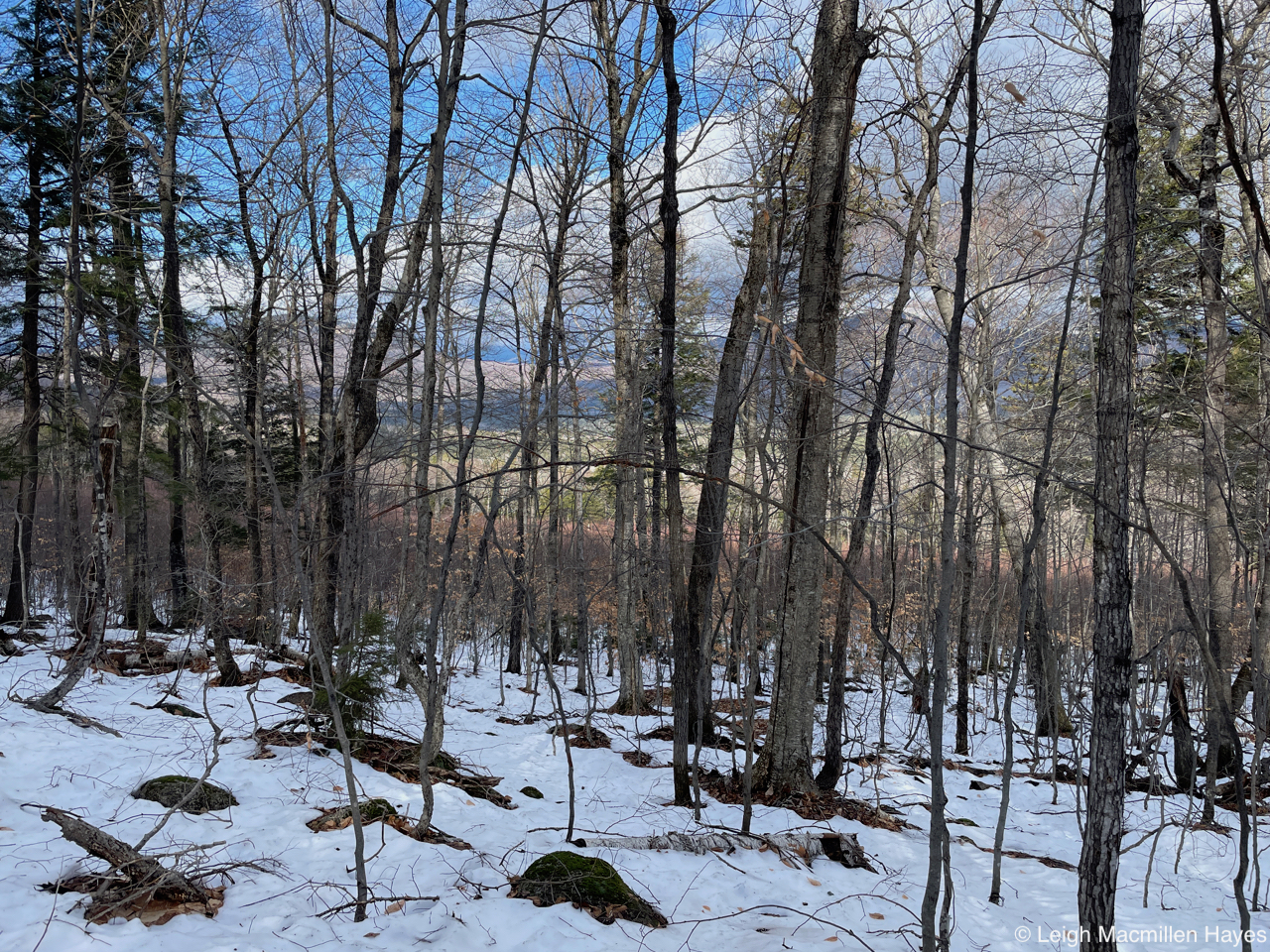
This was definitely a Mondate with a view, including Evans Notch from the mine . . .

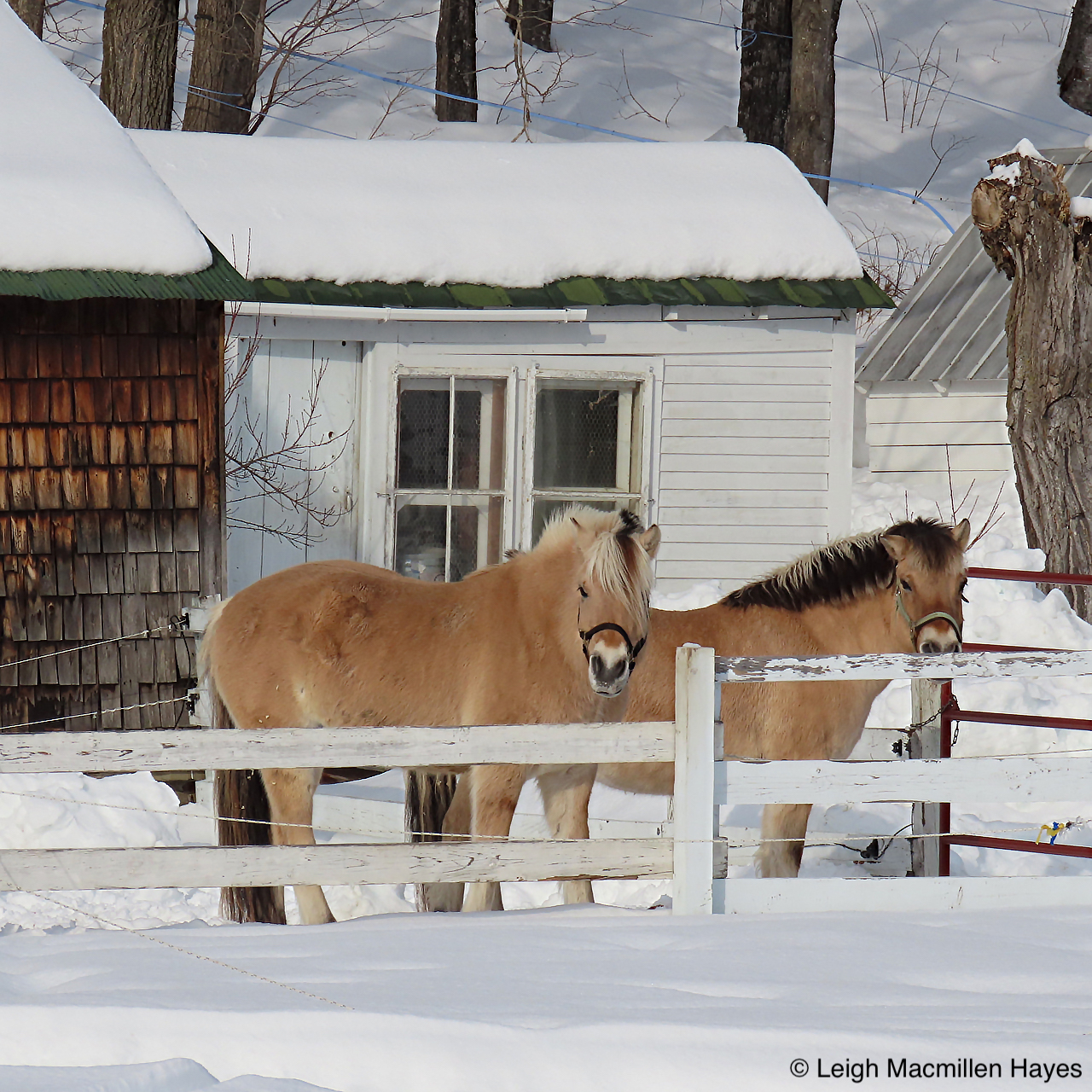
Norwegian Fjord horses Kristoff and Marta at the farm . . .

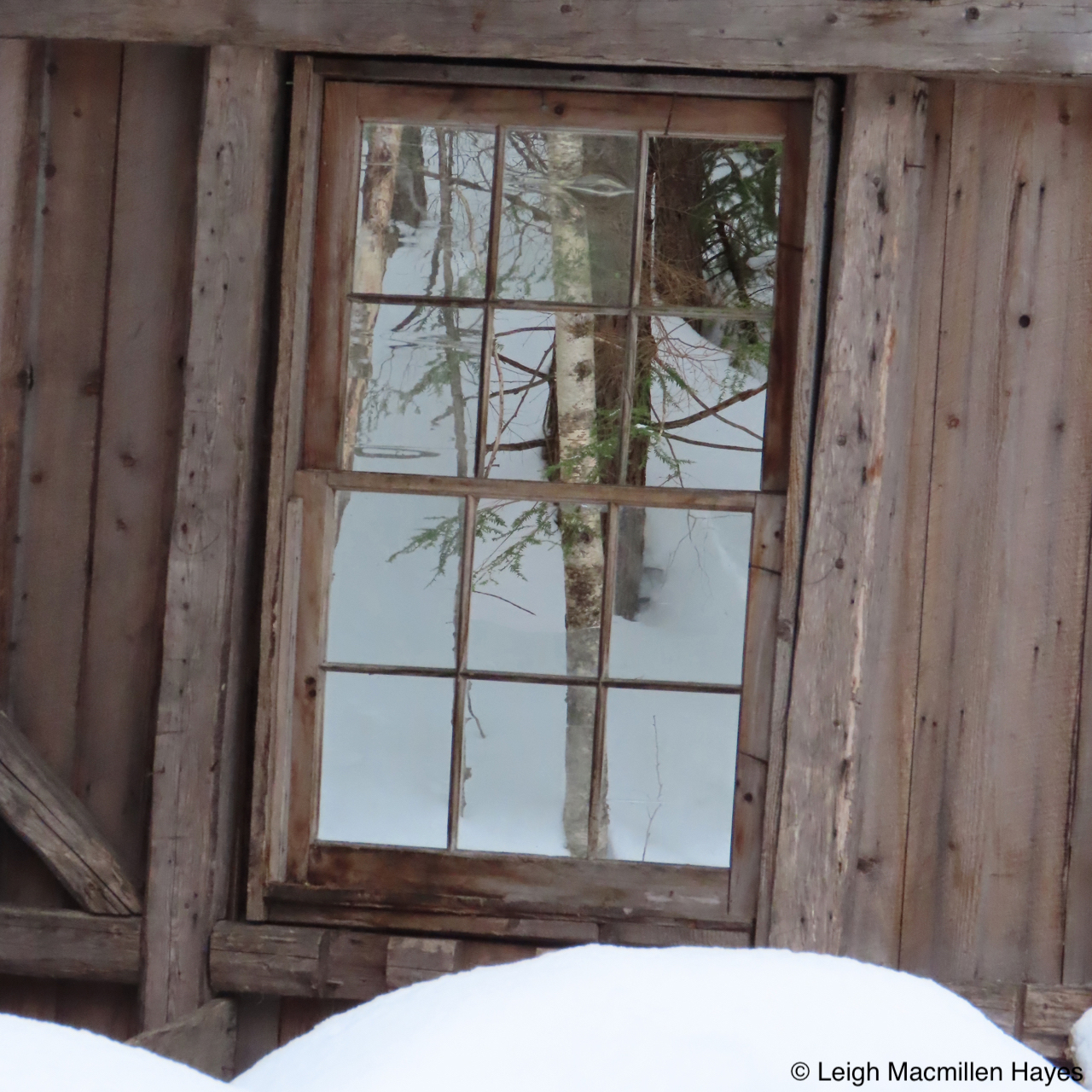
and a window that caught my fancy at the sap house.

Our many, many thanks to Becky and Jim for sharing Notch View Farm with all of us. And thank you to Jim for chatting with us twice today. I’m still chuckling about the story of the women from Lovell who visit several times a year and spend hours upon hours on the trail. And then one of them writes long prose and includes pictures of every little thing spotted along the way. Yes, that would be Pam, and Pam, and me! Once, Becky even came looking for us on the snowmobile because we’d been out there for so many hours.

Today, with My Guy, it was a different adventure, but still a fun one and we appreciate that both of you work so hard to share your land with the rest of us.

First Day Substitute Mondate

A mountain on The Kanc (Kancamagus Highway, aka Route 112 that stretches from Conway to Lincoln, New Hampshire) has been calling our names for some time. We’ve hiked neighboring Hedgehog Mountain on several occasions, but never Potash–until today, that is.

Well, actually, that’s not true. We last hiked Hedgehog in early fall and after finishing thought we’d attempt Potash since the trail leads from the same parking lot. That is, until we met Downes Brook, which is about 35 feet wide and my brain-over-matter would not allow me to make the crossing. Another couple had arrived at the brook moments before us, and while both our guys ventured across the rocks, she and I thought it best not to go forth. And so it was today, knowing how much rain we’ve had recently, that we decided to follow the recommendation in the AMC guide and instead park near a gated logging road about a half mile beyond the trailhead lot. After hiking up the logging road, the intersection with the hiking trail isn’t marked and is very subtle, but we were grateful for people who had gone before and left their marks on the snow. Suddenly, we were in the woods and as we paused to look through the trees, the colors afforded us reminded us of spring. As they should, for today felt like a spring day. Actually, too many days have felt like such lately, so when it does freeze every few days, our bodies go into shock.

That spring feeling was evidenced by the lack of snow on the trail and lack of ice on the rocks. What should have been . . . wasn’t.

Even the streams along the way flowed with vigor and no ice had formed. Oh, it probably had, but then melted.

The trail starts out rather tame, but soon becomes rocky with lots of intersecting roots seeking to trip hikers.

Until I looked at the map, I thought we’d reached the summit in good time, only to realize it was a false summit, as so often happens. And we were only at the halfway point.

This would have been a great place to eat lunch, if we hadn’t already done so before leaving the truck. We had visions of Orange KitKats dancing in our heads, but promised ourselves a summit treat and so we had to continue–but first, we waved to Hedgehog Mountain in the foreground.

This photo doesn’t do it justice, for the last section of trail to the summit gets quite steep following a series of already steep switchbacks, and then one has to scramble over granite slabs.

We met the wind at the summit and the swirls in the snow showed that’s always the case. It was time to celebrate with a KitKat or two. Oops. We searched through the backpack and came up empty. Somehow we’d left them in the truck.

One quick look at the Sandwich Wilderness and then it was time to head down so we could reach the truck before darkness set in.

The descent was slow going, but that worked for me. Picking the right spot to place a foot always takes time.

Because I was spending so much time looking down and hugging trees as well as kissing some rocks, I spotted Cladonia squamosa, or Dragon Horn lichen.

Squamosa means covered in scales, which is apropos. And the brown tips are the reproductive parts or apothecia.

I also found some ice I’d missed on the way up. While it made me happy, I still am dismayed by the current conditions.

Here’s another curious thing. We spotted numerous Red Squirrel caches and middens, mostly of spruce cones. And then I spied this Ruffed Grouse scat, indicating the bird had roosted in this spot not too long ago. But other than hearing a few nuthatches, wild critter sign was non-existent. I can walk into the woods behind our home and find much more than this–why is that?

I pondered that thought as we once again turned onto the logging road, and hoped that a mammal would surprise us as we walked, out, but because I was expecting such, it didn’t happen.

Ah well, it was okay. In the end, My Guy and I were delighted we’d enjoyed this First Day Substitute Mondate. First Day Substitute? Whoever heard of that? But I guess that’s what the Monday following a holiday is called.

Oh, and we did gobble up the KitKats when we reached the truck. They tasted extra special.

Making Tracks Mondate

A dash of snow and an opening in our afternoon. What better way to spend it than hiking? And so we did. On Bald Pate Mountain. We followed the Moose Trail to South Face Loop to the summit to Bob Chase to Foster Pond Lookout. And tucked in a few miles.

Though there were tire tracks in the parking lot, we soon realized we were the only ones who had ventured onto the trails today. Or were we?

Within seconds, we encountered Red Fox prints, that chevron. on the back of the feet appearing in the snow if you really look. And remember, a fox is a perfect stepper so typically one foot falls onto or almost onto the spot where another foot had been.

The pattern left behind indicates that like us, this mammal was walking and following the man-made trail. Or did it? Perhaps we followed the critter’s trail.

In a wet spot, we discovered the prints of another who chose the high road to avoid the ice and water–certainly a smart Red Squirrel decision, unlike those poor decisions made when trying to cross one of our roads.

Climbing up the South Face Loop toward the Bob Chase Trail was new for us, as we usually continue along the base of the mountain toward the eastern side before heading up to the summit. We struggled with slippery conditions on a few rocks and soon discovered we weren’t alone for this coyote had also slipped a few times.

Approaching the summit, we were still surprised to find that our prints were the first on this beautiful autumn day.

We enjoyed the view toward Foster Pond . . .

and the same toward Hancock (and yes Faith, we waved to your camp).

It was up there that we spotted not only more Red Squirrel tracks, but also these Chipmunk prints. And you thought the little ones had snuggled in for a long winter’s nap, but truth be told, they don’t go into true torpor and we’ve spotted them or their prints occasionally in winter. Plus, despite today’s chill, it’s been such a mild fall and we haven’t had a decent snowfall yet, so there’s still plenty of opportunity to gather food for a cache.

Finally heading out to the Foster Pond Lookout, we found Snowshoe Hare prints and a very classic track left behind by a Meadow Vole.

Meadow Voles intrigue me because they can hop like a squirrel or hare, or walk with the zigzag pattern of a perfect walker like a fox.

And furthermore, Meadow Voles tunnel! We usually don’t see the tunnel, which tends to be in that subnivean zone between the snow and the ground until spring melt, but with last night’s dumping of maybe an inch of snow, it was quite visible.

Continuing toward the lookout, we spotted more Coyote tracks intersecting with those left behind by a squirrel. Up to that point, the squirrel was still alive since their tracks were headed in opposite directions. Good luck, Red!

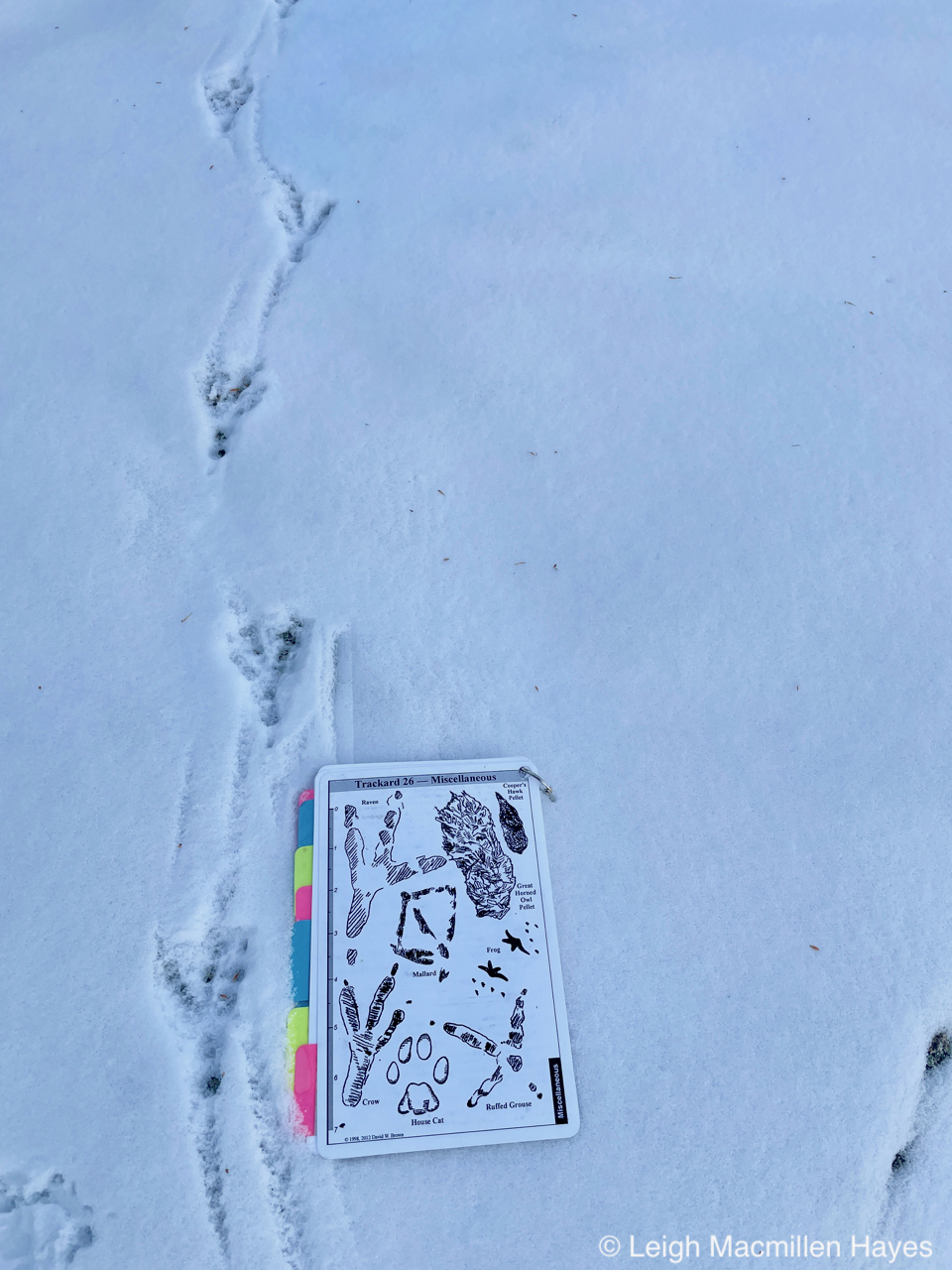
And then on a ledge just before the lookout, we spotted feather and foot prints. A bird had landed and then it went for a walk.

And turned and went the other way before lifting off again. Based on size, we agreed it was a Crow rather than a Raven, though we often hear Ravens, especially on the other side of the mountain.

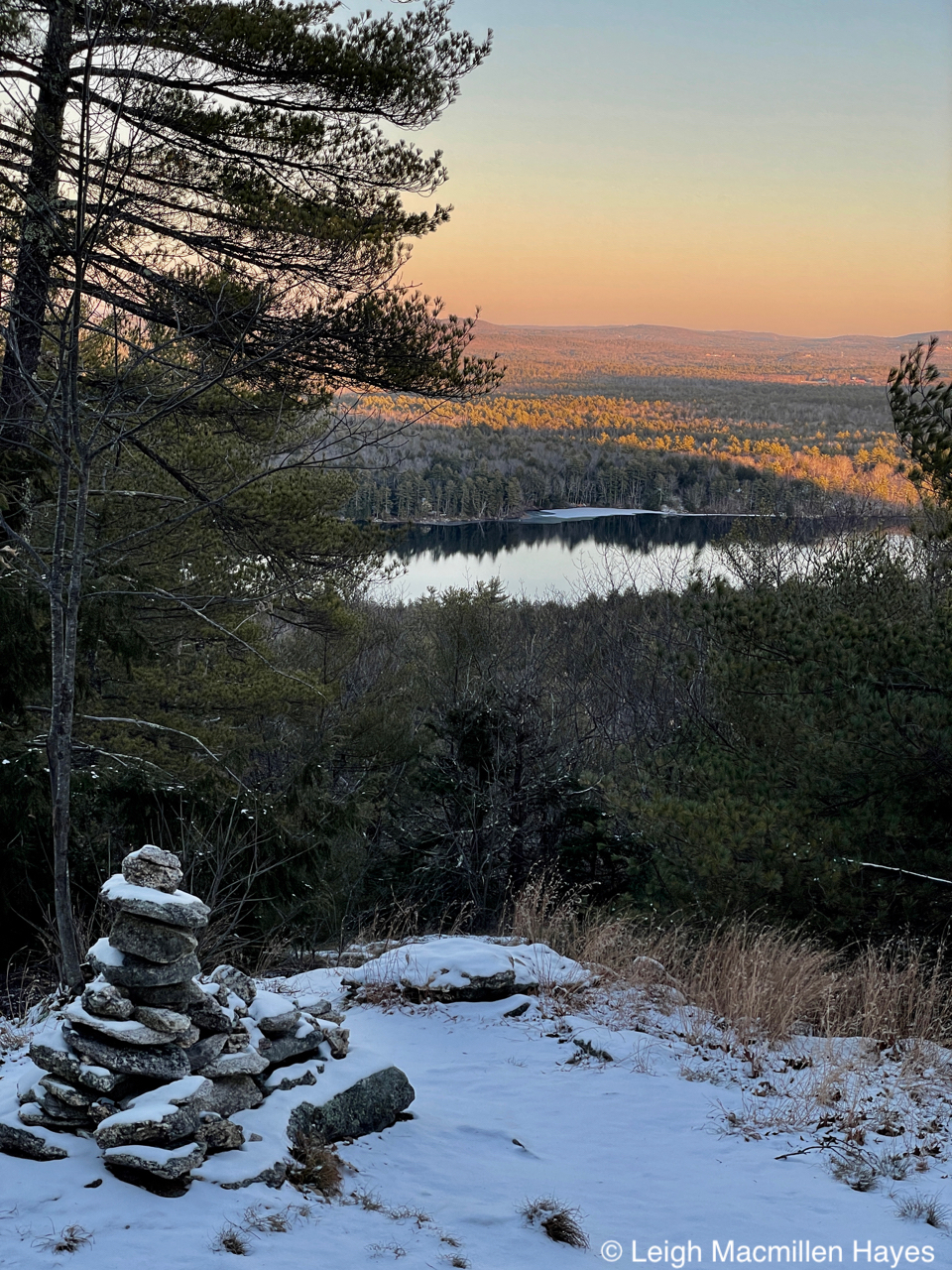
Finally, we reached Foster Pond Lookout, where the setting sun behind us made it look like the forest beyond was washed with color.

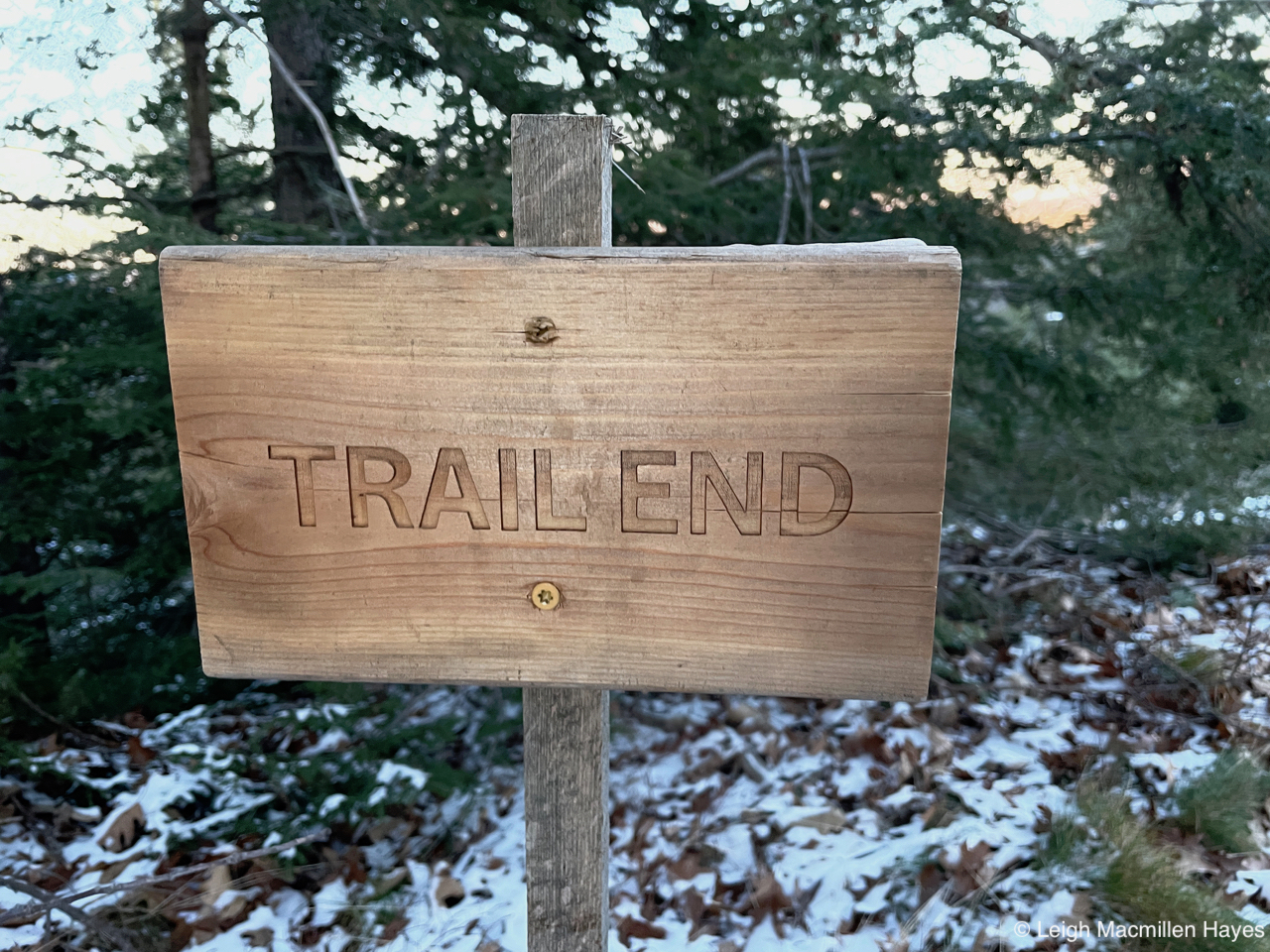
We had reached Trail End, but it wasn’t the end of the trail. Not for us anyway. Turning 180˚, we retraced our steps and headed back toward the parking lot.

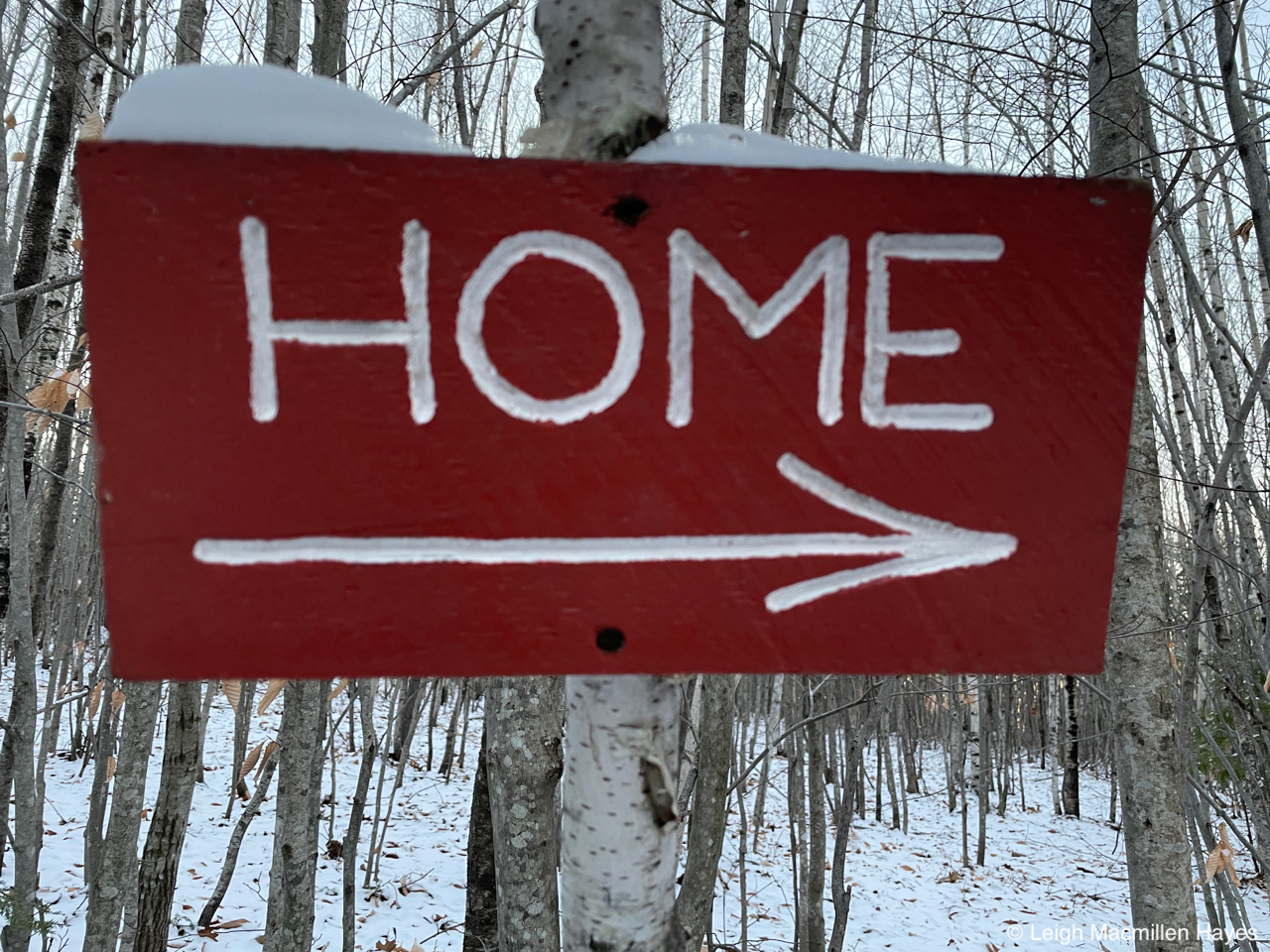
As the sign indicated, it was time to go home. But we rejoiced–for we were back in tracking mode on this Mondate and grateful for this opportunity to head out on a slightly snow covered trail and embrace the brisk air, which made us feel so alive.

A Montage of Mondates

I didn’t realize sixth months had passed since I’d last shared a Mondate adventure until I went back and checked. Never fear, my guy and I have continued to hike or paddle almost every Monday, but most of the trails I’ve written about before and really, I didn’t feel like I had a story to tell on each of them. But . . . put them all together and tada. So hang in here with me. I won’t write much, but do have a bunch of photos to share and hope you enjoy the journey.

Sometimes it was the root way to heaven that we’ve followed upon an ascent.

Other times a brook crossing that added a little tension to the adventure.

And in the mix there were a few granite scrambles to conquer.

We stepped out onto ledges,

rediscovered the rocky coast of Maine,

walked beside water racing around boulders,

stepped from the trail out onto the summit of a ski area,

paused beside a teepee that has withstood man and nature,

strolled across an airstrip,

followed more ledges,

took in the view from a spot where a fire tower once stood,

spotted the ridgeline of our hometown mountain on the cloudy horizon,

danced with hang clouds,

looked back at a summit we’d conquered a half hour before,

considered taking a chilly bath,

and always found lunch rock with a view.

Our journeys found us hiking in to mountain ponds,

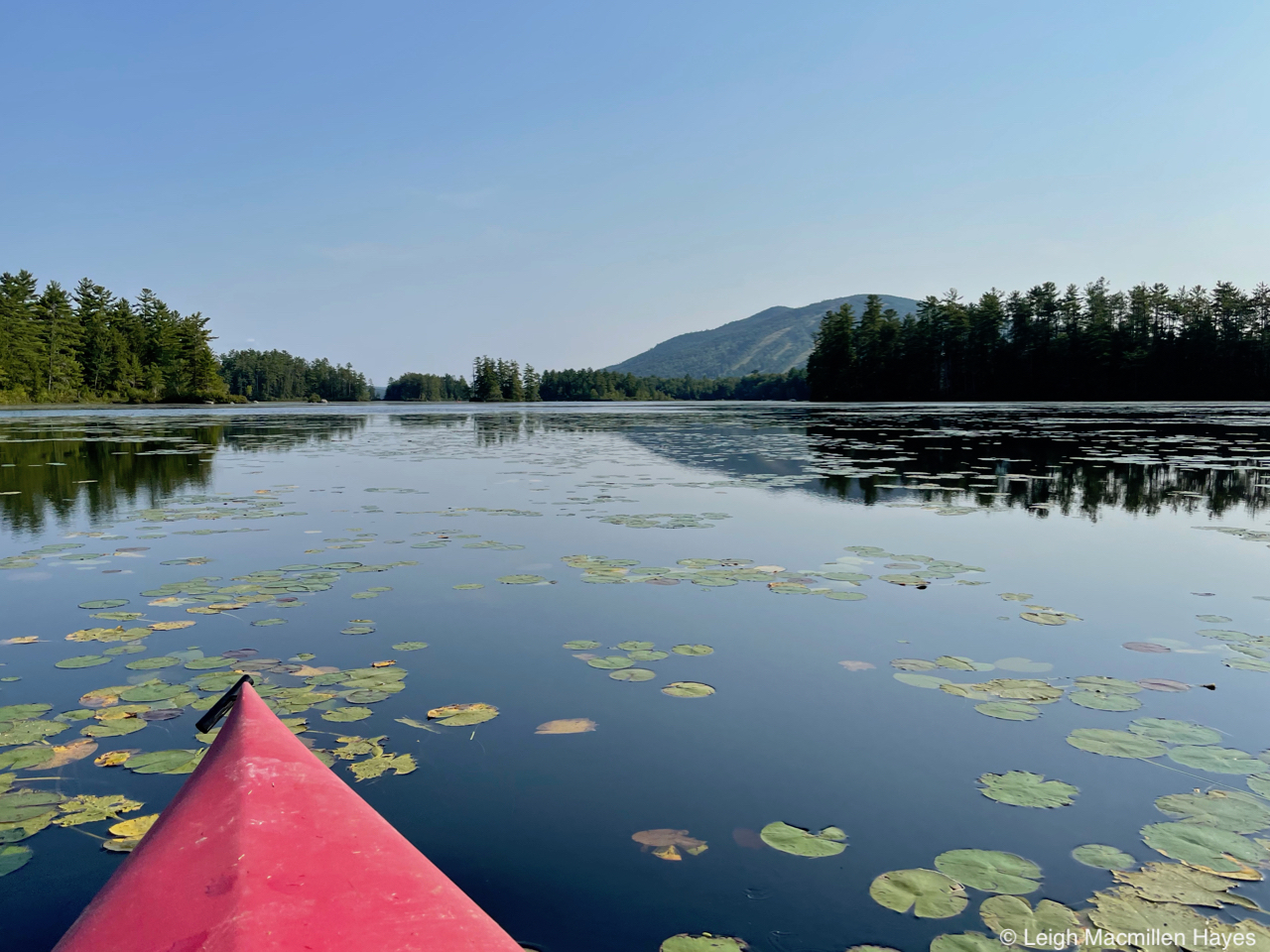
and paddling upon a pond by a mountain.

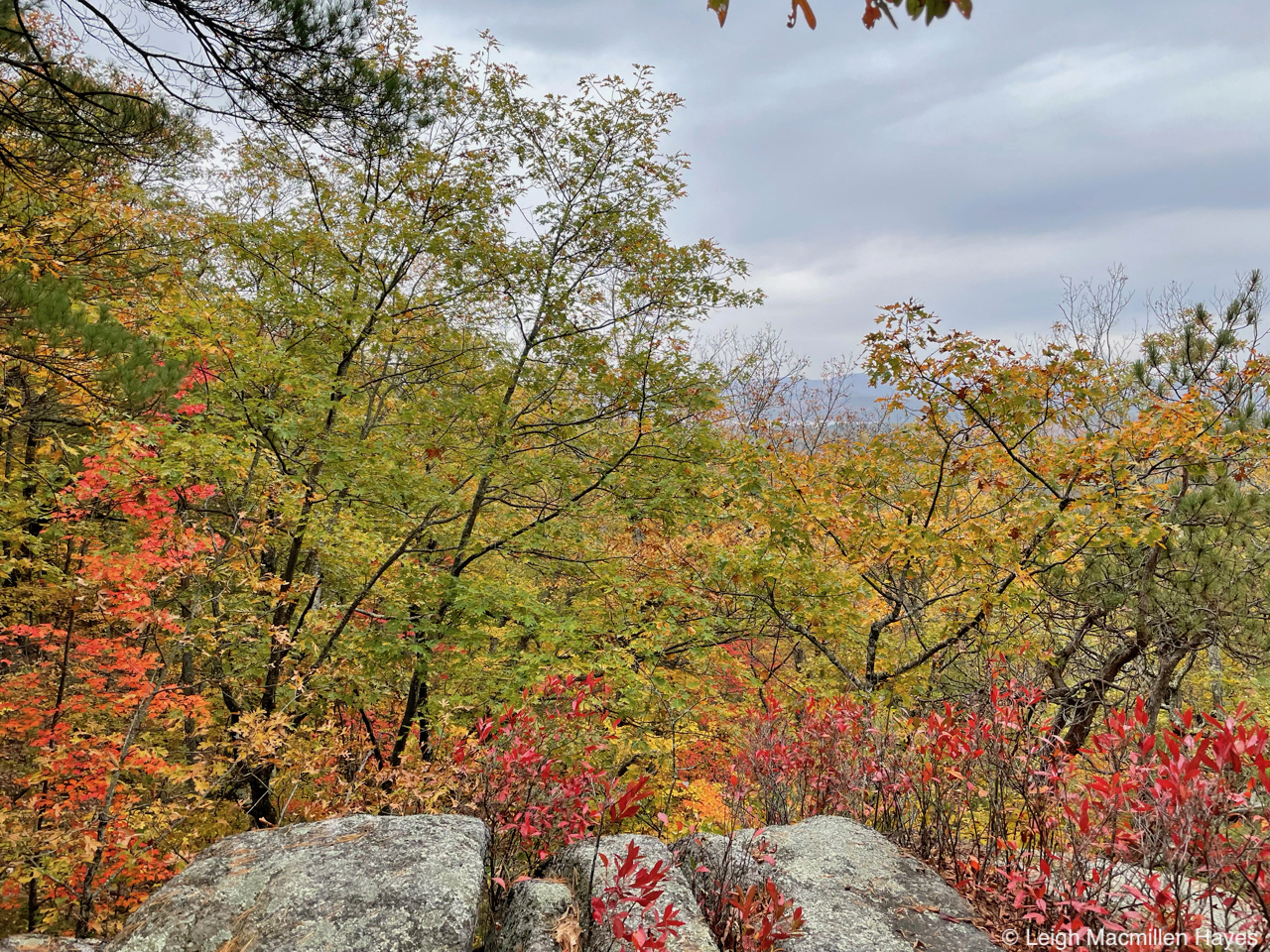
During fleeting moments we enjoyed fall foliage.

On each hike/paddle we saw so much including this Northern Pygmy Dragonfly,

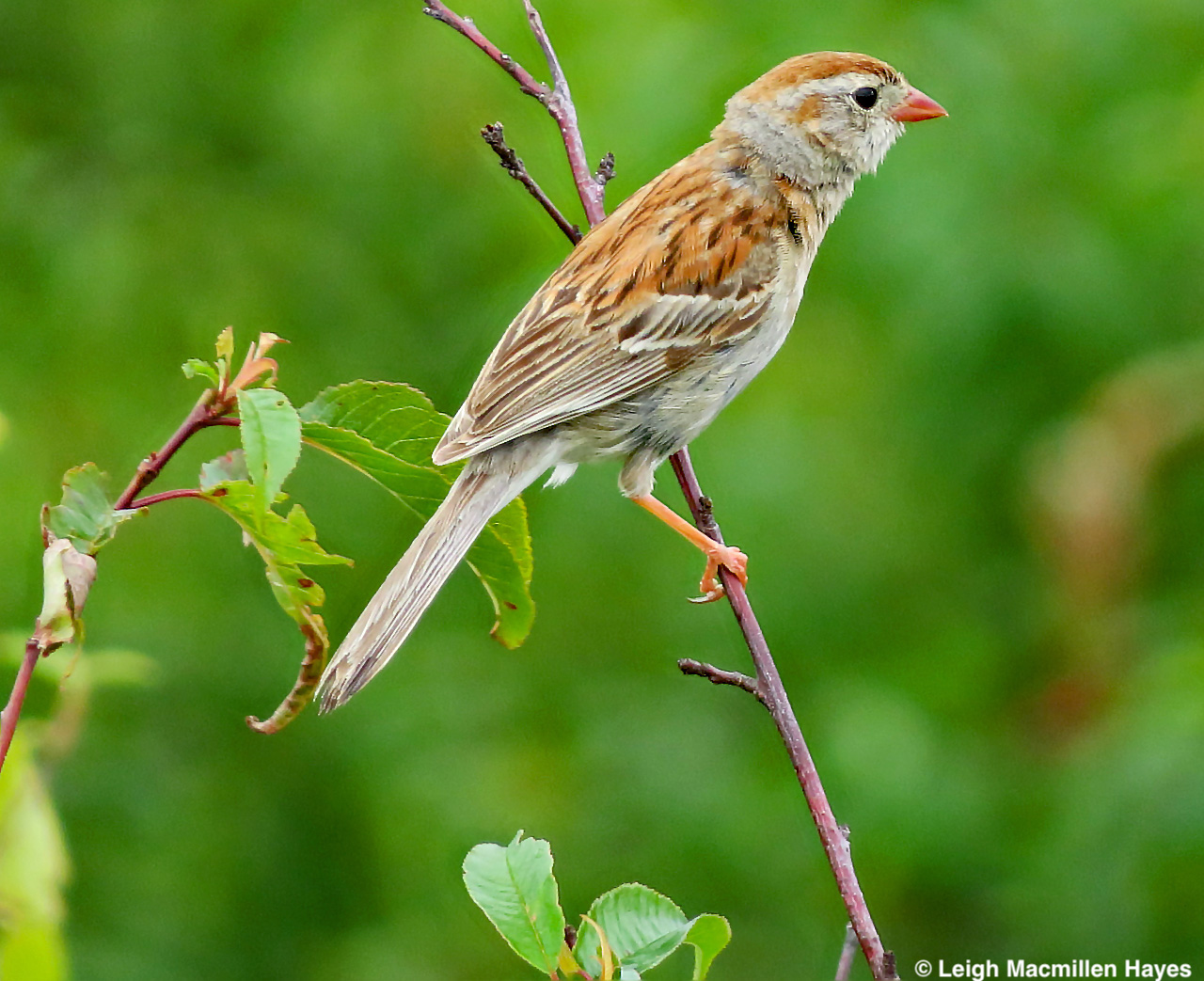
a Field Sparrow,

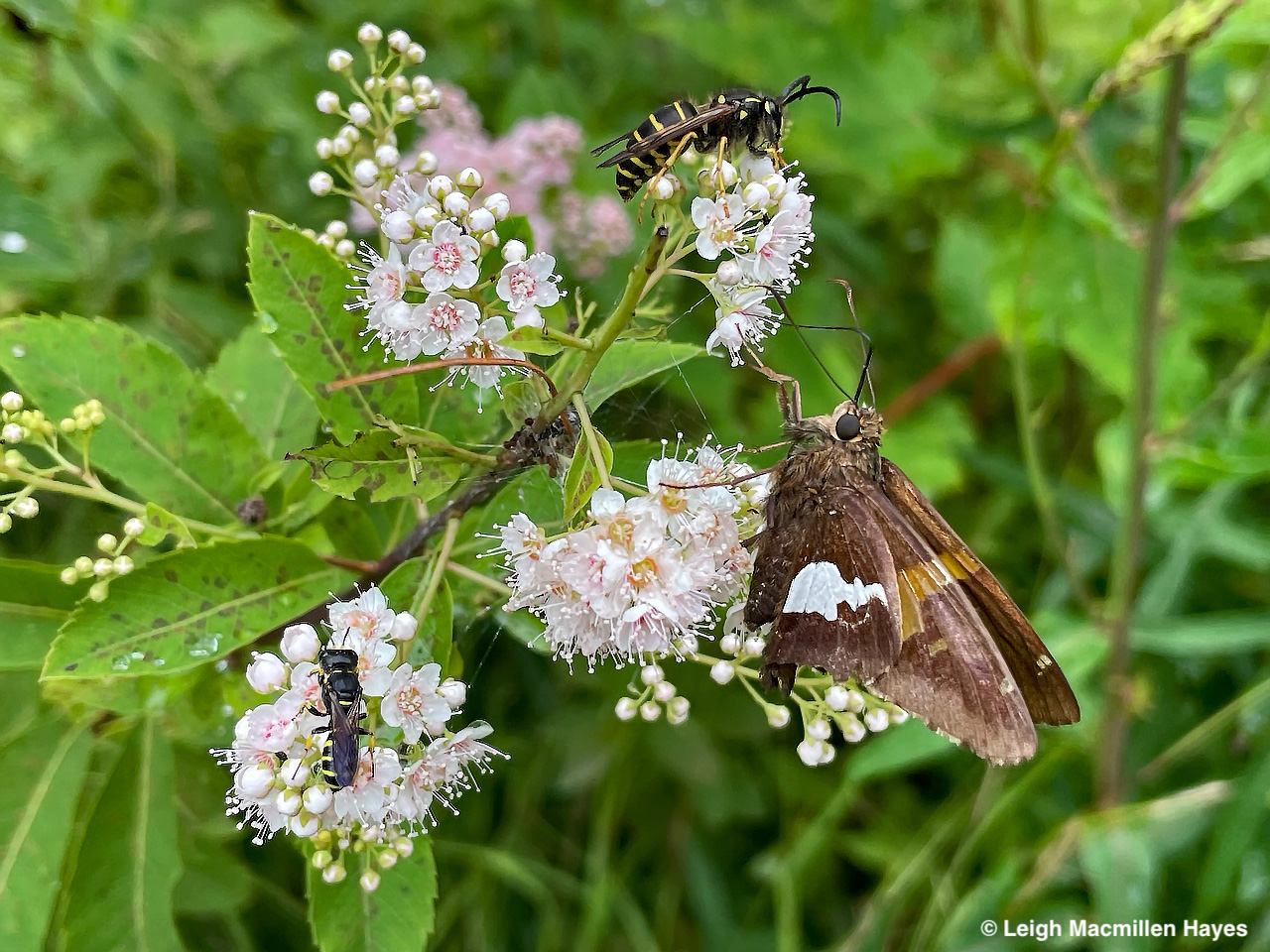
a Silver-spotted Skimmer Butterfly,

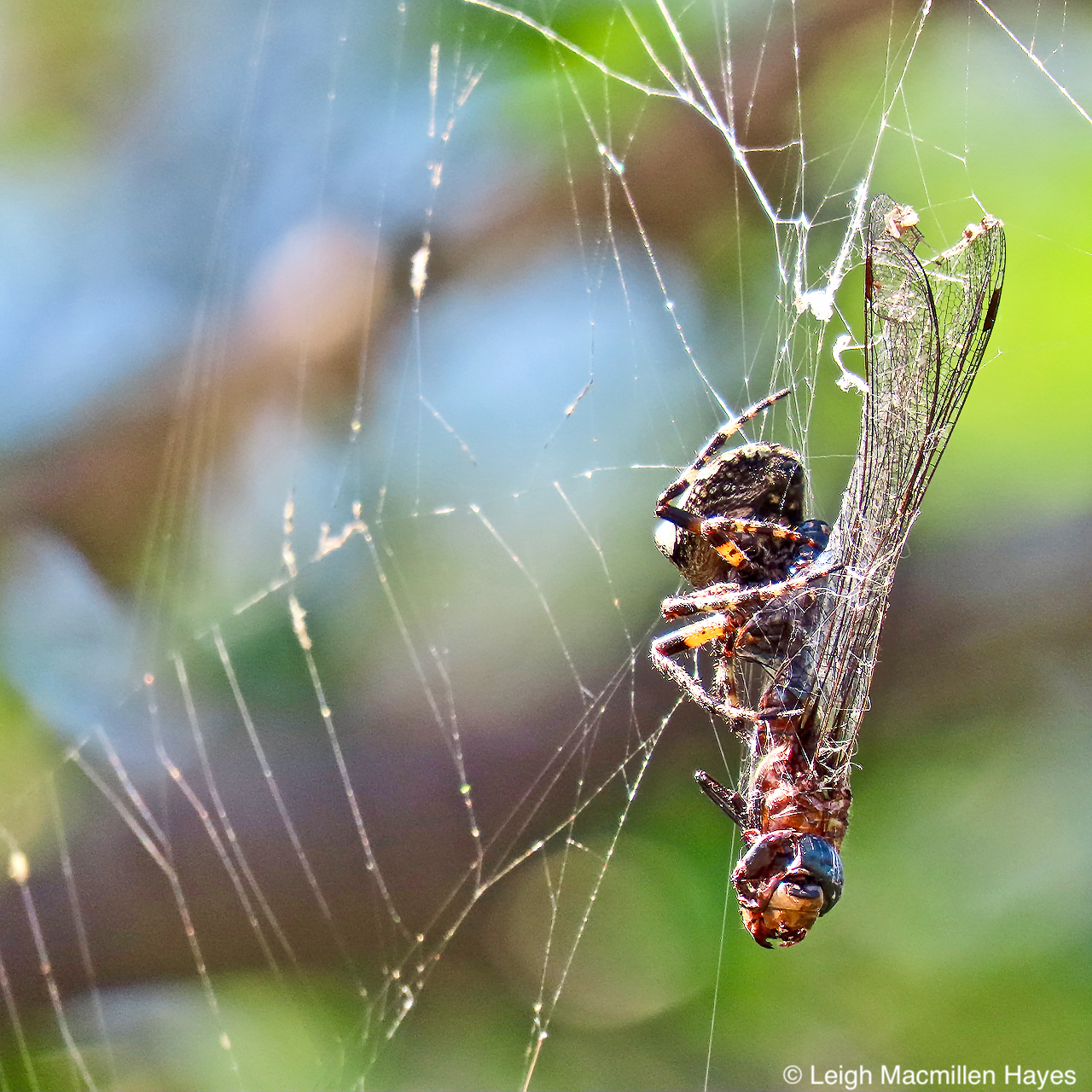
and a spider wrapping a dragonfly feast,

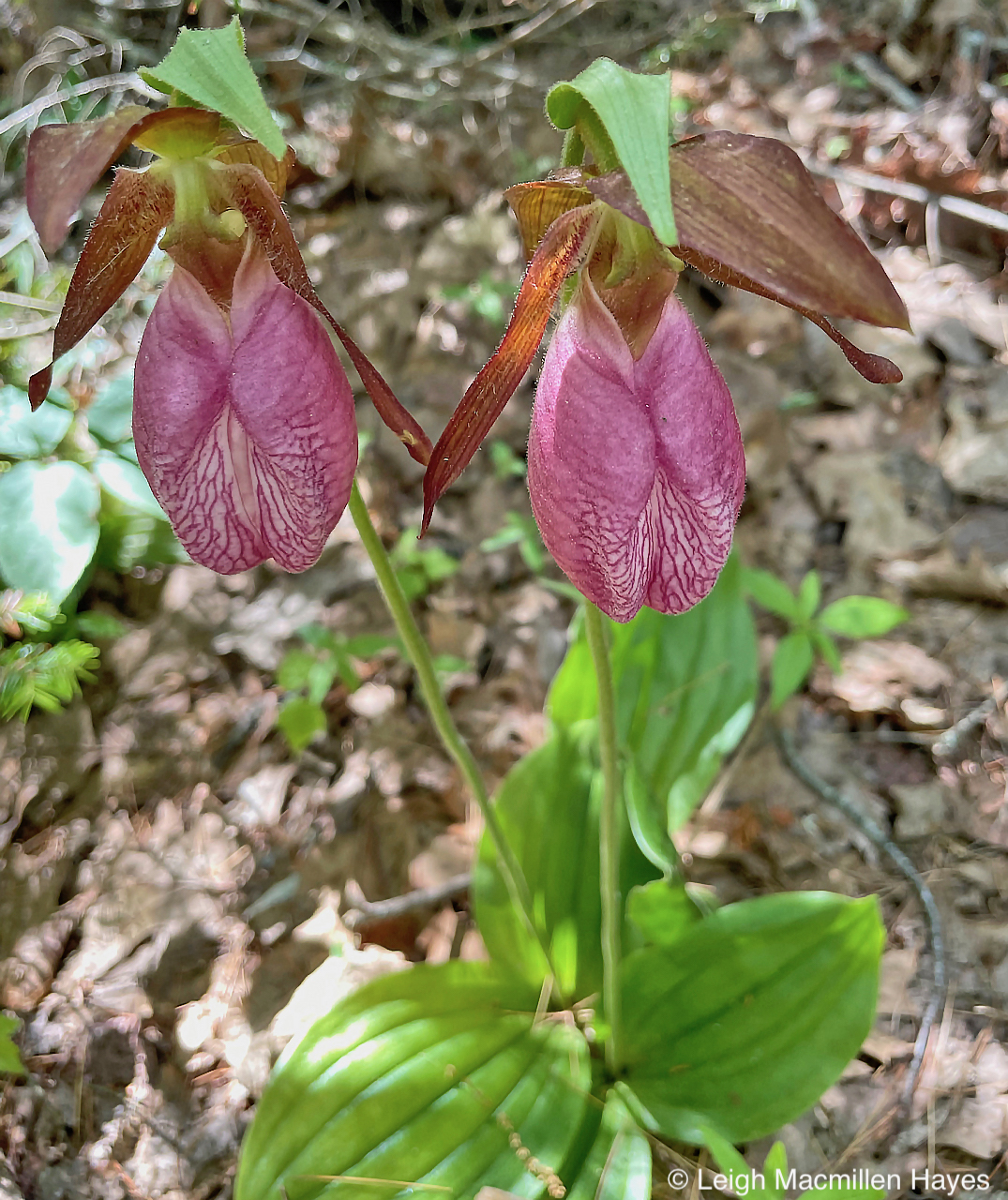
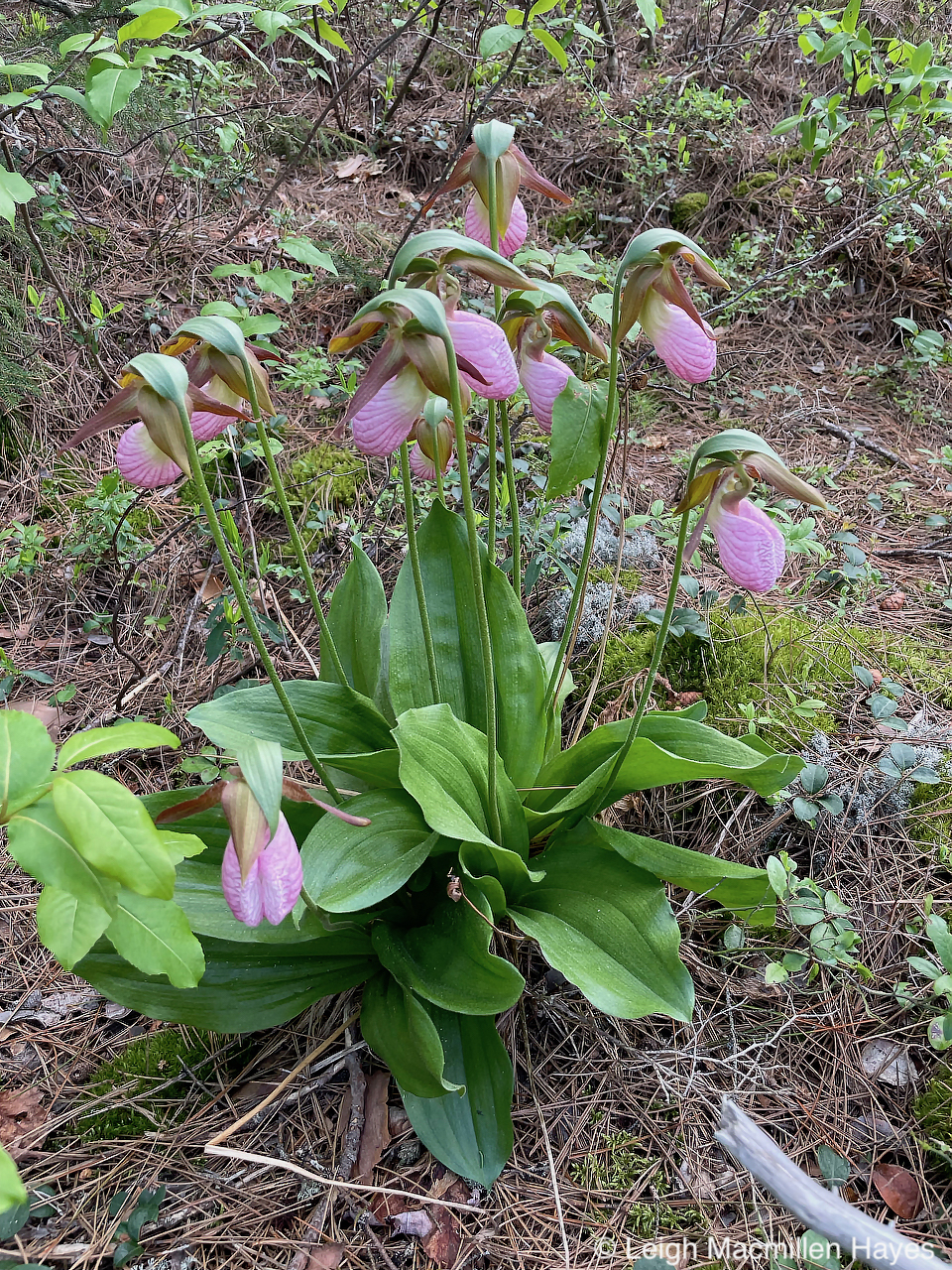
And did I mention Lady’s Slippers?

Over the course of three hikes in one week, we counted 963 of these beautiful orchids.

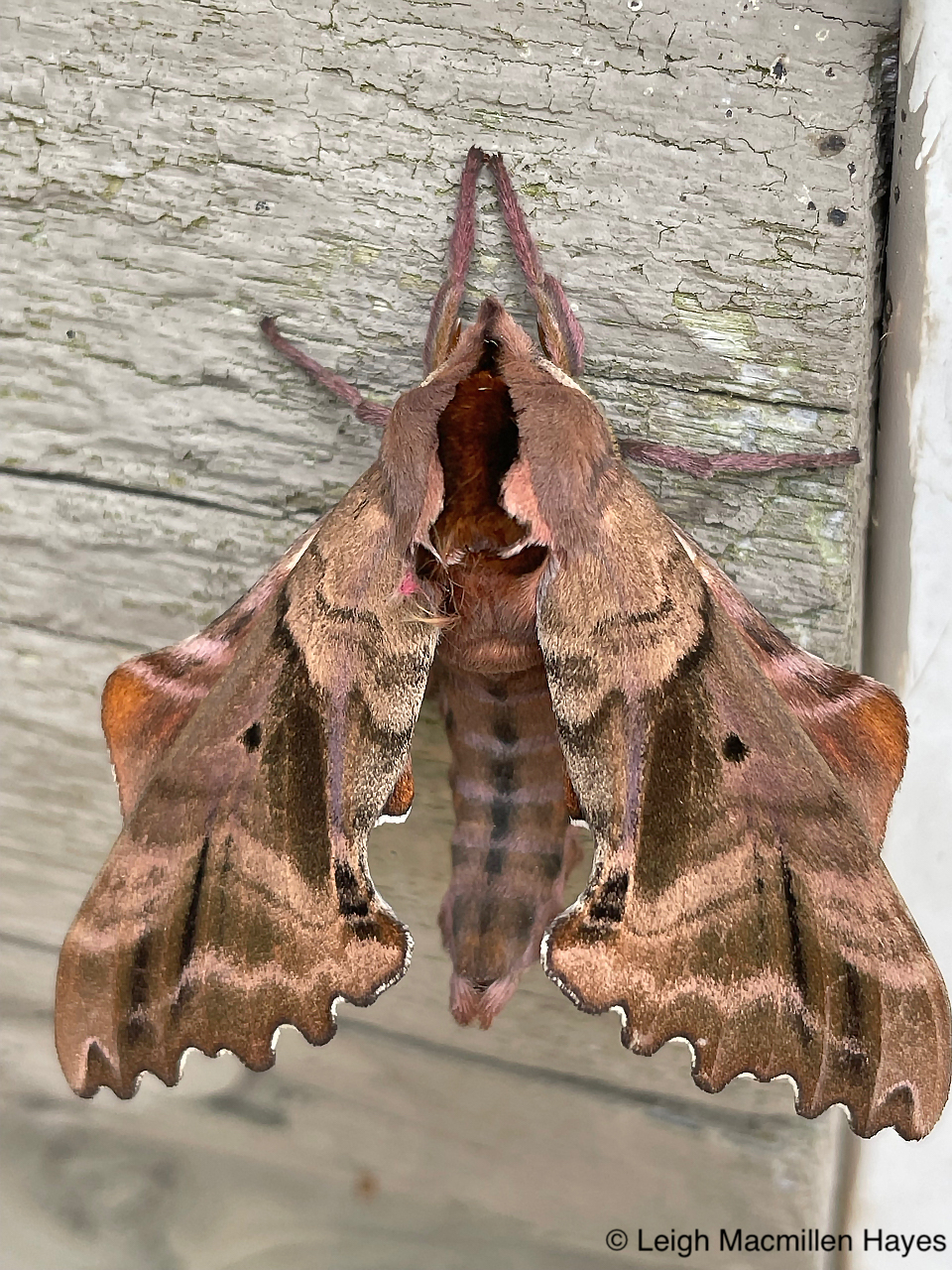
And then there was the Blinded Sphinx Moth,

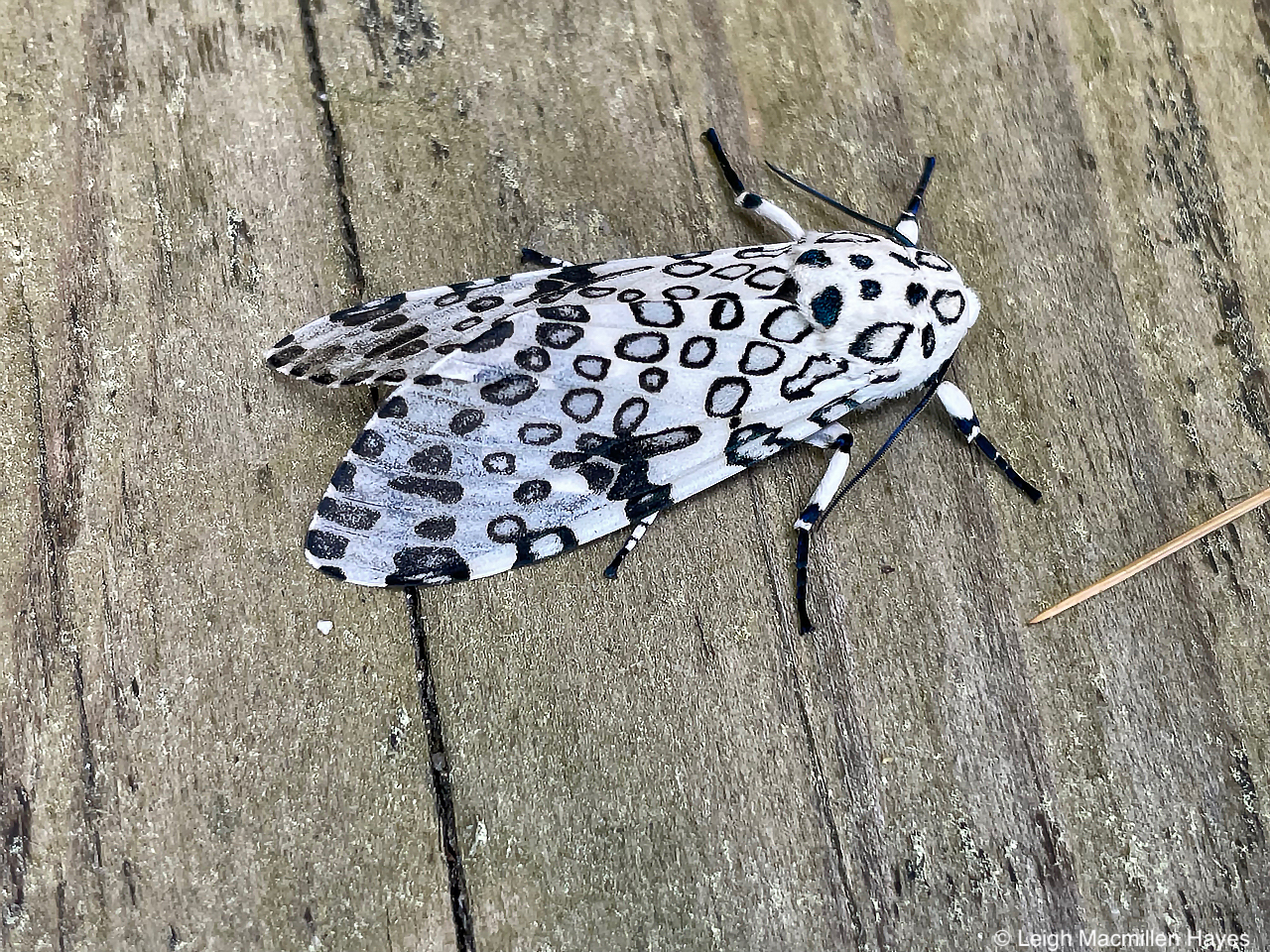
a Giant Leopard Moth,

and a Green Lacewing pretending to be a leaf.

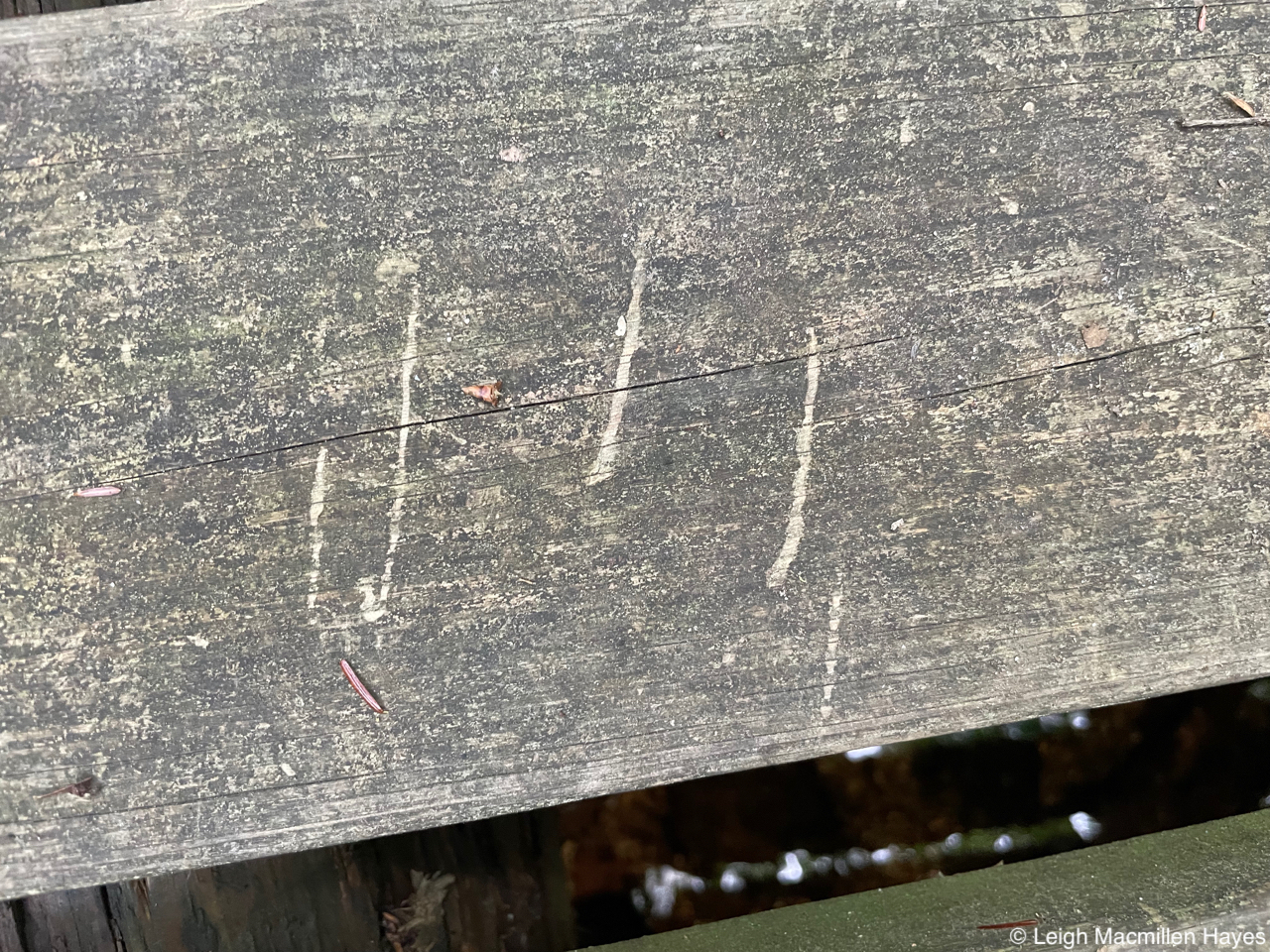
Our hearts ticked a little faster with the spot of bear claw marks upon a bog bridge.

And occasionally we were honored to spend some time with one of nature’s great engineers.

There was work to be done as the Beaver’s dam also serves as part of the path to a summit and people kept ruining it for the rodent.

Often, we’d spy a stick that suddenly slithered because it wasn’t really a stick at all but a Garter Snake.

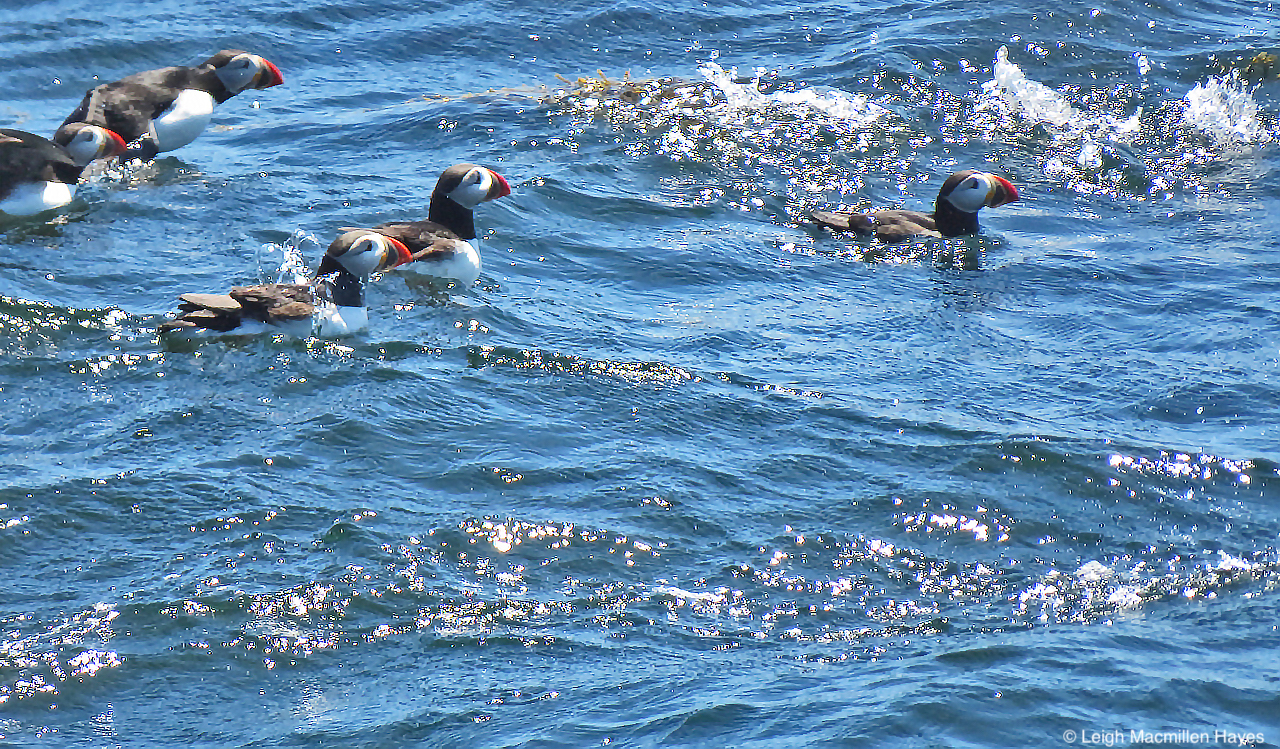
One day we even had the pleasure to go on a Puffin Watch and spotted over a hundred of these colorful seabirds.

Today, we actually spotted a Doe who posed for about five minutes before giving us a huff and dashing off.

And a post from me wouldn’t be complete without a photo of scat–this being classic Red Fox–tapered at the ends, twisted, and located upon a rock in the middle of a trail.

We had the pleasure of hiking with our youngest (though we missed his girl),

and relaxing after another hike with our oldest and his gal, plus their pup.

My guy posed as a lobster,

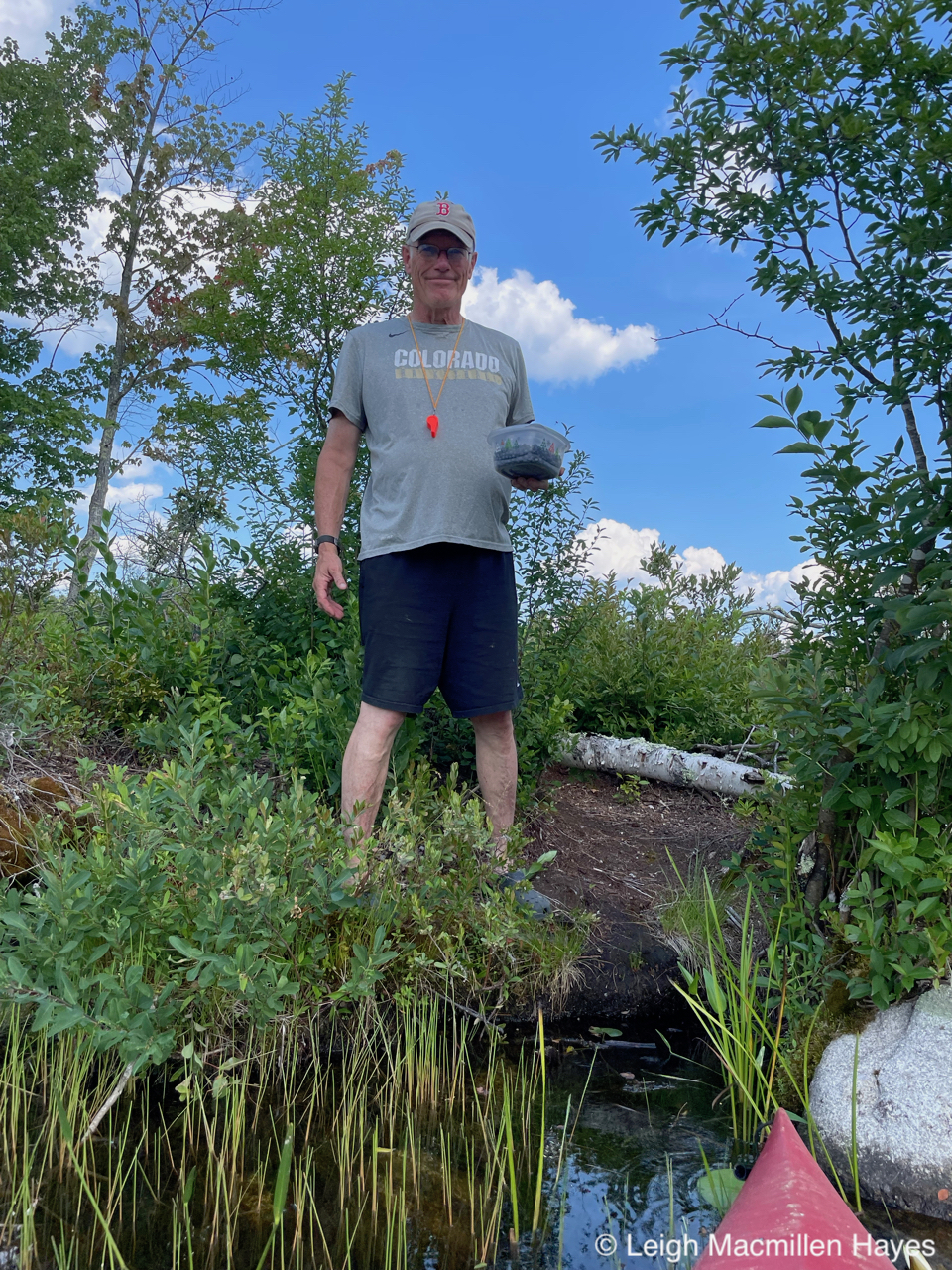
and a picker of blueberries beside the water’s edge,

and across a mountain ridge.

Recently, I was talking with a friend about wondermyway.com and how it serves as a diary of our adventures as well as all the cool stuff I learn about almost daily in the world out the door.

And she replied, “Your blog is a love story.”

She’s right for it is a love story on so many levels like this one. He’ll forever be a Maine Black Bear and if you are looking for me, I’ll forever be following him into the next adventure wherever our Mondates lead us.

Understanding the Blues

Our Sunday became our Mondate and rather than hike, we went for a paddle in the tandem kayak. It was a long but fruitful paddle, though that fruit differed depending on perspective.

My blues began with the sighting of many Slaty Blue Skimmers with their burgundy brown heads, gorgeous slate blue bodies and aggressive personality once a competitor appears on the scene. A male will perch for moments on end, but when another male enters his territory, he as owner of that particular line of shorefront, zips into action, circling the intruder before giving chase. And then, as if nothing has happened, he returns to the same perch. And sits for moments on end until the next intrusion occurs.

A smaller, but equally aggressive skimmer is the Blue Dasher, who will take off after any dragonfly featuring blue pruinosity. Pruinescence is the frosted or dusty-looking coating on top of a surface and in the case of the dragonflies, some feature this as they mature.

And then there was the Bumblebee and Silver-spotted Skipper to watch as they gathered pollen and nectar from Pickerelweed, which in my mind its lilac coloration counts in the blue category.

Because we were in shallow water, there was an abundance of Swamp Spreadwing Damselflies flying and perching, their wings spread as the name suggests, much like a dragonfly, but their slender bodies and dumbbell-style eyes proving they are Zygopteras (damselflies) rather than Anisopteras (dragonflies).

While its thorax and abdomen are metallic green, its those blue-green eyes that spoke to me.

The more I looked, the more I realized that I need to spend time getting to know the damselflies a wee bit better. I knew that these two in their typical canoodling wheel position were bluets, but it took some study at home to determine that they were Familiar Bluets. And upon reading about them, I learned that copulation lasts about twenty minutes and then they remain together in tandem as she tests sites to lay eggs. She actually goes underwater to lay her eggs upon stems while he releases her and waits, hoping to reattach before moving to a new egg-laying site, though she doesn’t always allow him to do such.

The Skimming Bluet was my next great find, but again, I didn’t know its name at the time. This is one of only two species of bluets where the abdomen terminates with black appendages below segments 8 and 9, which are blue. The other is the Turquoise Bluet, which prefers a stream habitat. Here’s hoping I remember that fact.

While the American Bluets, the largest and most numerous genus of damselflies, are named for their bright blue coloration, not all have this color pattern. Some bluets are actually orange, red, yellow, green or black.

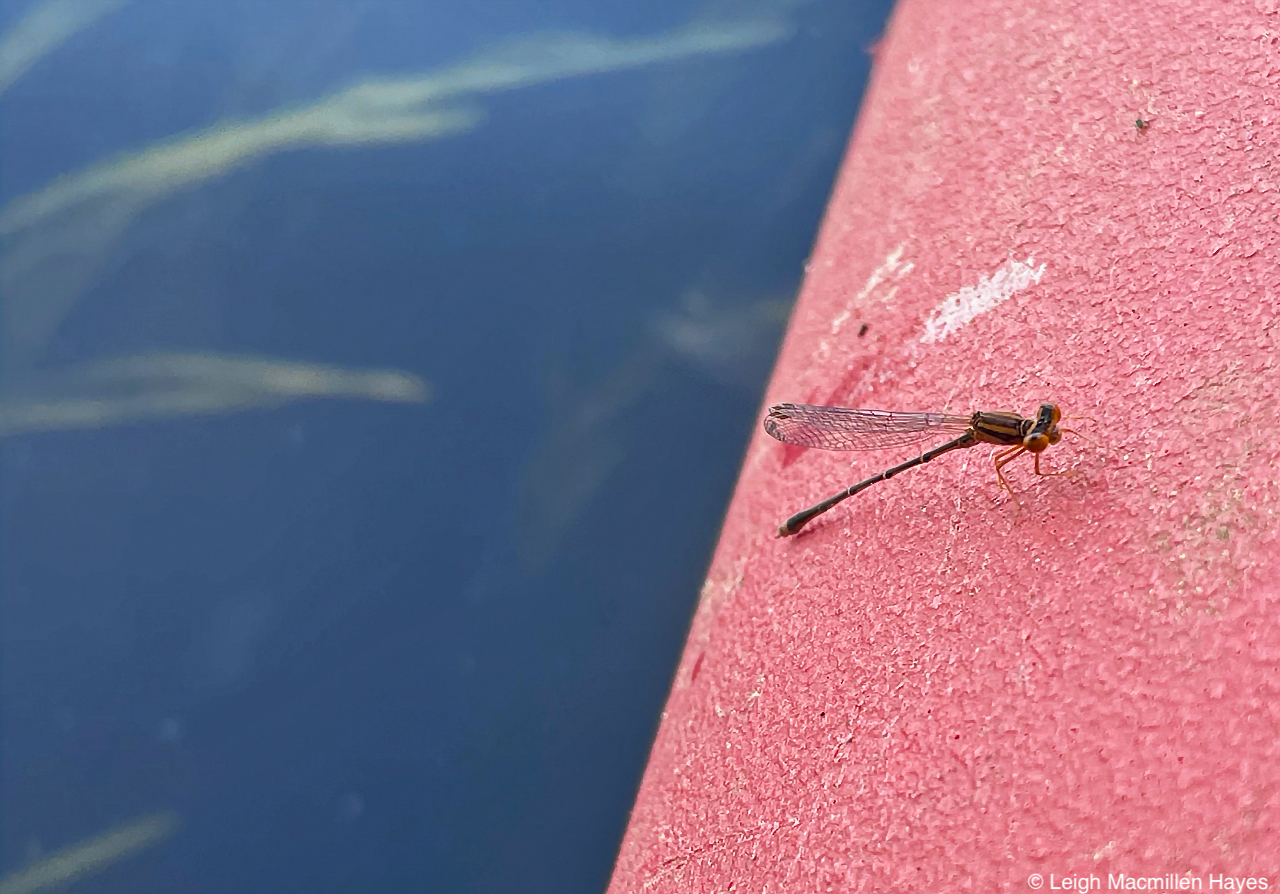
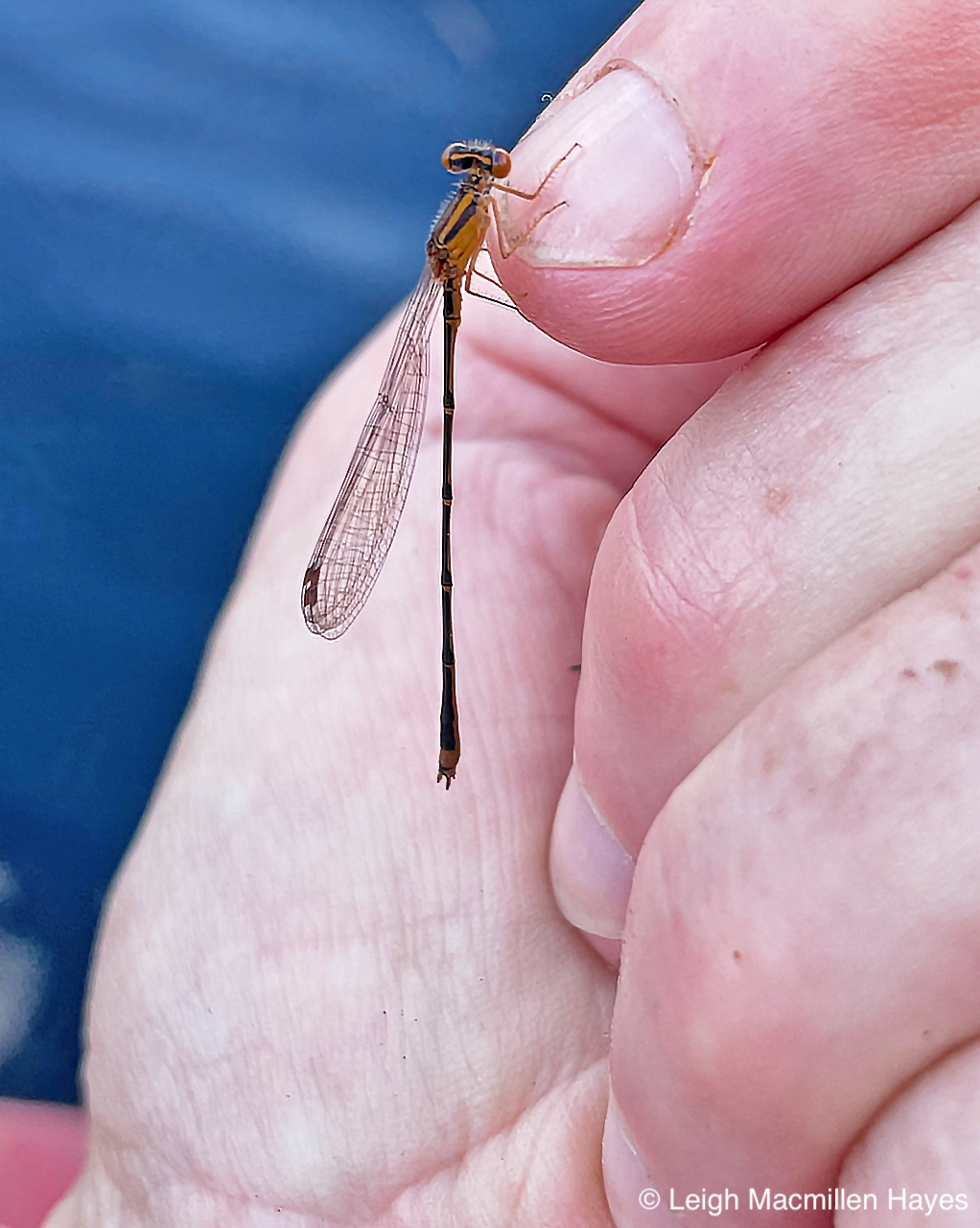
The Orange Blue actually begins life as a pale blue damselfly, but gradually turns orange like this one that landed on the kayak. It stayed perfectly still for quite a while, so I thought I’d channel my inner damselfly whisperer self and offer it a finger. This works for some dragonflies, but I can’t recall a damsel ever taking a ride until this one climbed aboard much to my delight.

We spent a long time getting to know each other. I was quite taken with the orange occipital bar that connected its two eyespots and had a bit of a chevron shape.

I’m sure it found something about me to admire as well. As we looked at each other, in flew one of many Deerflies. I still have a few welts to attest to their abundance. My great hope was that the damselfly would decide to do me a favor and eat the Deerfly.

Granted, the Deerfly was quite robust. And eventually flew off without the Orange Bluet giving it any notice, which should have been a bit of foreshadowing I didn’t know how to read at the moment.

Twice I put O.B. back on the boat and the second time was as we started for home. He seemed a bit sluggish.

As we moved around a bend and the wind picked up he took cover and slipped down out of the breeze. Eventually, he dropped onto my leg, and I’m sad to say, died. Damselflies have a short lifespan–living between two and four weeks. I was sad to say goodbye, but trust that he had done his duty and I’ll meet future generations of the bluet that in adulthood isn’t blue. Given that, however, he is easy to ID in the field.

And as luck would have it, a few minutes later I spotted a newly-emerged damselfly waiting for its wings to dry and pumping its bug blood back into its body. Life circles about in the aquatic world.

As for my guy, he often departed the kayak ferry and went in search of his own favorite shade of blue. He found some favorite bushes missing due to the fact that the local beavers built a new home and needed construction materials. But still, he found plenty and left plenty for others, including the birds and other critters who eat blueberries.

We were together, but each understood blue in our own manner. It was a perfect Sunday Mondate.

Getting Close to a Black Bear Mondate

Our day began with a remembrance of our fathers and uncles and cousins and friends and all who have served and continue to serve our country. Growing up, my hometown celebrated Memorial Day with a parade and I remember riding or marching or watching–depending upon the year. And after there was a picnic topped off with Strawberry Shortbread. But in my adopted hometown, July 4th is the date that receives all the attention.
And so, that’s a long introduction as to why My Guy and I headed off to Overset Mountain for today’s hike. We were on a mission.

Said mission was not to count all of the Indian Cucumber Root plants we could find in flower, though My Guy did point to this one at the start of our journey because just a week ago I introduced him to their double-decker structure necessary for extra sugar creation and therefore flower followed by fruiting form.

Nor was said mission to marvel at the water as it flowed over the rocks in Sanborn River.

Instead, it was a bit of a treasure hunt that motivated us as we sought the ones who liked to hide along the trail. Um, kinda like My Guy is hiding in this photo. Can you spot him?

Success at last. The first success that is–a Pink Lady’s Slipper in full bloom. #1. Henceforth, had you been with us, you would have heard us stating the number of each Lady’s Slipper we spied and honored.

At first, there weren’t many but we did what we like to do when faced with a challenge such as locating bear claw trees–we scanned both sides of the trail in hopes of being the one to announce the next number.

Oh how they hid!

To spy one often required a sharp eye. The question was thus: what determined where a Lady’s Slipper would grow? I knew it was a certain fungus, but the US Forest Service clarifies it more than I can: “In order to survive and reproduce, pink lady’s slipper interacts with a fungus in the soil from the Rhizoctonia genus. Generally, orchid seeds do not have food supplies inside them like most other kinds of seeds. Pink lady’s slipper seeds require threads of the fungus to break open the seed and attach them to it. The fungus will pass on food and nutrients to the pink lady’s slipper seed. When the lady’s slipper plant is older and producing most of its own nutrients, the fungus will extract nutrients from the orchid roots. This mutually beneficial relationship between the orchid and the fungus is known as ‘symbiosis’ and is typical of almost all orchid species.”

Turns out, we weren’t the only ones on the hunt. This Garter Snake crossed the trail and then paused, certain that it was so well camouflaged by the leaves and the twig it passed under that we couldn’t possibly spy it. But we did.

Sometimes, it was the white version of the pink that we spotted. As I mentioned, Lady’s Sippers orchids in the genus Cypripedium in the Orchidaceae family. The genus name Cypripedium is derived from the Greek words “Cypris,” an early reference in Greek myth to Aphrodite, and “pedilon” for sandal, so named for the fused petals that form the pouch and their resemblance.

There were other white flowers to also admire, such as the Canada Mayflower or Wild Lily of the Valley that decorated a boulder.

Ah, but we reminded ourselves that Lady’s Slippers were our focus. Though most stood upon straight stems, there was the occasional one such as this that had a mind of its own. What had this flower endured to create such a curvature?

At last we reached Overset Pond with the mountain of the same name beyond. This became our lunch spot and while there we watched a Common Loon and a Snapper Turtle swim underwater, for so clear it is.

It was after that, however, that our Lady’s Slipper numbers began to increase. We were at 47 when we reached the pond. But then, it felt like we were constantly taking turns announcing a number and pointing to make sure the other saw the same flowers.

When one is noticing, one notices. And so My Guy pointed out this Tiger Swallowtail taking a break, its proboscis rolled as it should be when not seeking nectar.

The next flower we spotted chose a different orientation, as if it had done something wrong and needed to show its backside to the trail. But really, perhaps it was honoring the tree beside which it grew.

We soon reached one of My Guy’s favorite spots where he counted 50 in bloom in a ten-foot-square area. And that’s just what we could see from the trail.

We found some who stood tall.

And others barely overextending the height of Bunchberry.

At the summit of Overset Mountain, we paused for a dessert break before making our way down.

On the descent there were still others to admire, though for a wee bit it felt like we’d entered the desert, but once closer to the pond, the natural community changed and apparently the fungus did as well for such were our finds.

The last of the day appeared to be the richest in color, though I’m not sure we had an overall favorite for each offered a different hue of the same theme from pale white to this rich pink.

We were on our way back to the truck, when things got even more exciting–if that can be so given all the Lady’s Slippers we’d spotted. Say hello to an immature male Common Whitetail Skimmer Dragonfly. By the time he matures, his tail will turn whitish blue, but those wings will remain the same. Oh my.

And then for the final oh my . . .

Oh My Guy! This was the closet I’ve been to my favorite Black Bear (UMaine grad–though known as UMO grad back in his day) on any hike . . . ever. And for this I give thanks to the Lady’s Slippers for slowing him down to my speed. All together we counted 286 flowering Lady’s Slippers today and know that we missed some and beyond the trail there are probably a million more.

A Whisperer’s Mondate

Where to begin? Perhaps at the beginning? Or better yet, half way through. And so that’s where today’s story starts.

My Guy and I had some errands to run, but then it was time to have fun. To that end, we chose the Weeks Brook Trail up the backside (or maybe it’s the front side depending on your perspective) of Mount Kearsarge North in New Hampshire. We last climbed Kearsarge in November, which I recorded in What’s To Come Mondate, via the Kearsarge Trail that starts on Hurricane Mountain Road. We knew we didn’t have time to go to the summit today, but Shingle Pond, halfway up the trail offered a fine lunch log date and turn-around point.

Along the way we had many to honor and so we did, beginning with a colony of Clintonia showing off bright yellow blossoms.

Each cheery bloom offered an explosion of sunshine radiating from its flaring bell shape and six long stamens with yellow tips and a long style.

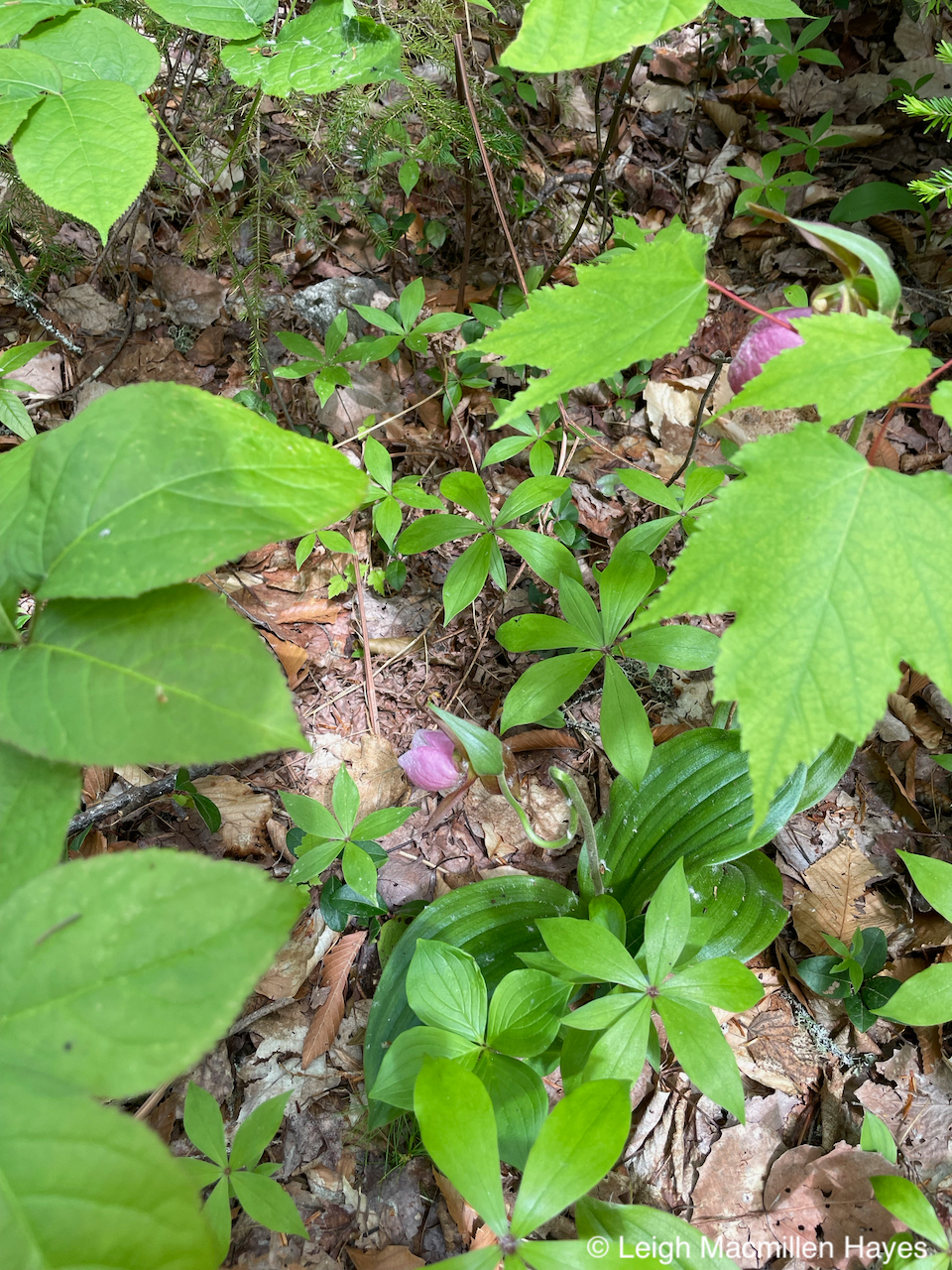
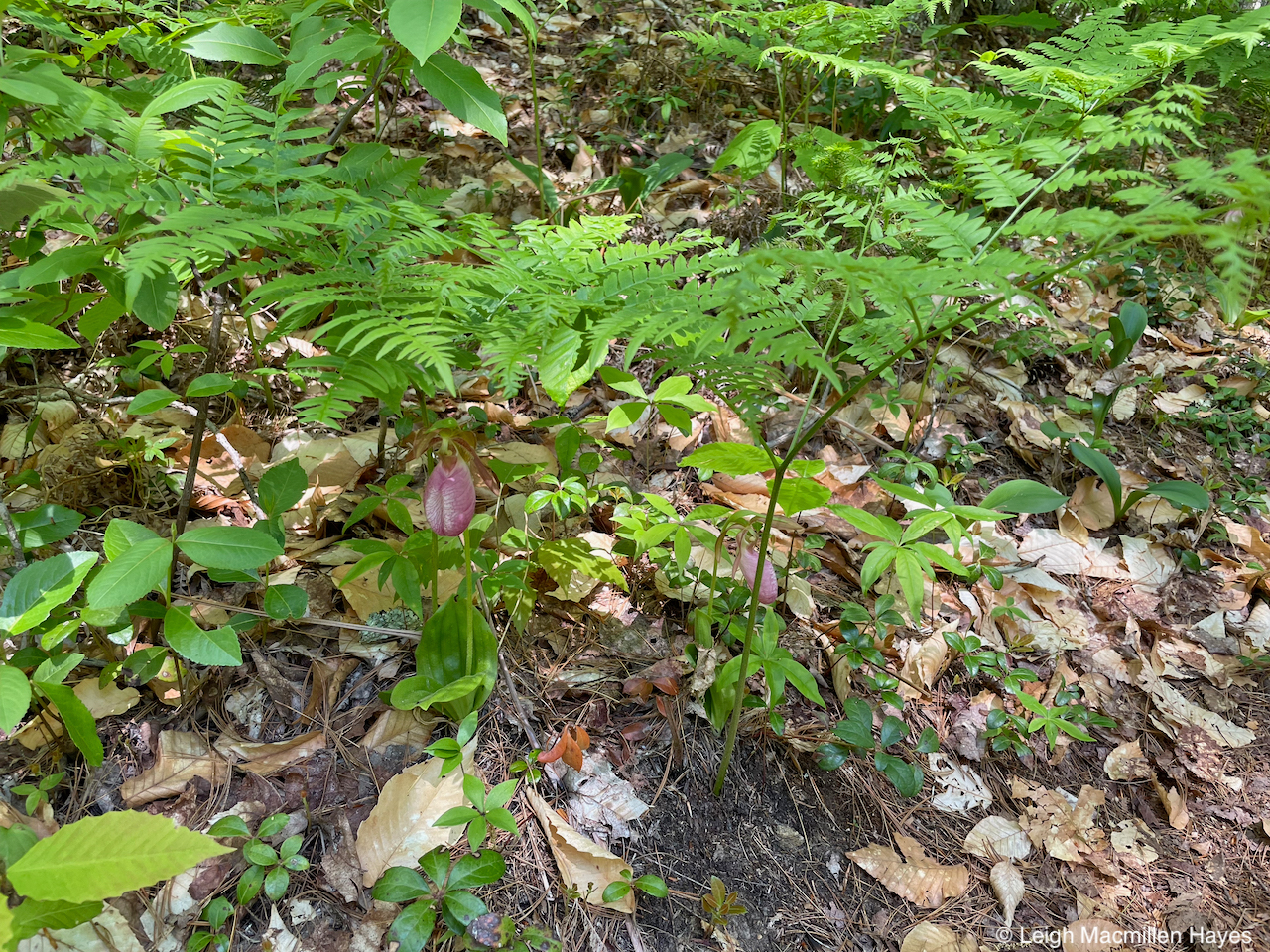
Sharing the trail were Pink Lady’s Slippers offering a variation of hues sharing a color scheme.

Since My Guy loves to count slippers, an activity that forever surprises me, he noted only eight in bloom today, but this one was extra special because it featured not only today’s blossom, but also last year’s fruit in the shape of a capsule that once contained thousands of tiny seeds.

And then there was Wild Sarsapirilla with its whorl of three compound leaves at the tip of a long stem.

The globe-shaped flowers that grow upon a stem of their own below the umbrella teemed with pollinators of all shapes and sizes.

My joyous heart kept growing larger and larger with each wonder-filled find enhanced in a few cases by being the first of the species I’ve spotted this year. Indian Cucumber Root topped that list with several in flower. To some, the flowers are inconspicuous as they nod below the plant’s second tier, but to me they are among nature’s most amazing constructions as the petal-like segments turn backward and the stamens stand out in reddish purple offering a contrast to the yellow pistils.

By the time we reached the Swamp Beacon Fungi, my heart was full, but like any sweet treats, there’s always room for more. These little yellow mushrooms love a wet seep and there were a few along today’s trail. I was reminded of my first encounter with this species in 2015 when I posted Slugs, Bears and Caterpillar Clubs, Oh My! (RIP PV. I’ll miss you forever)

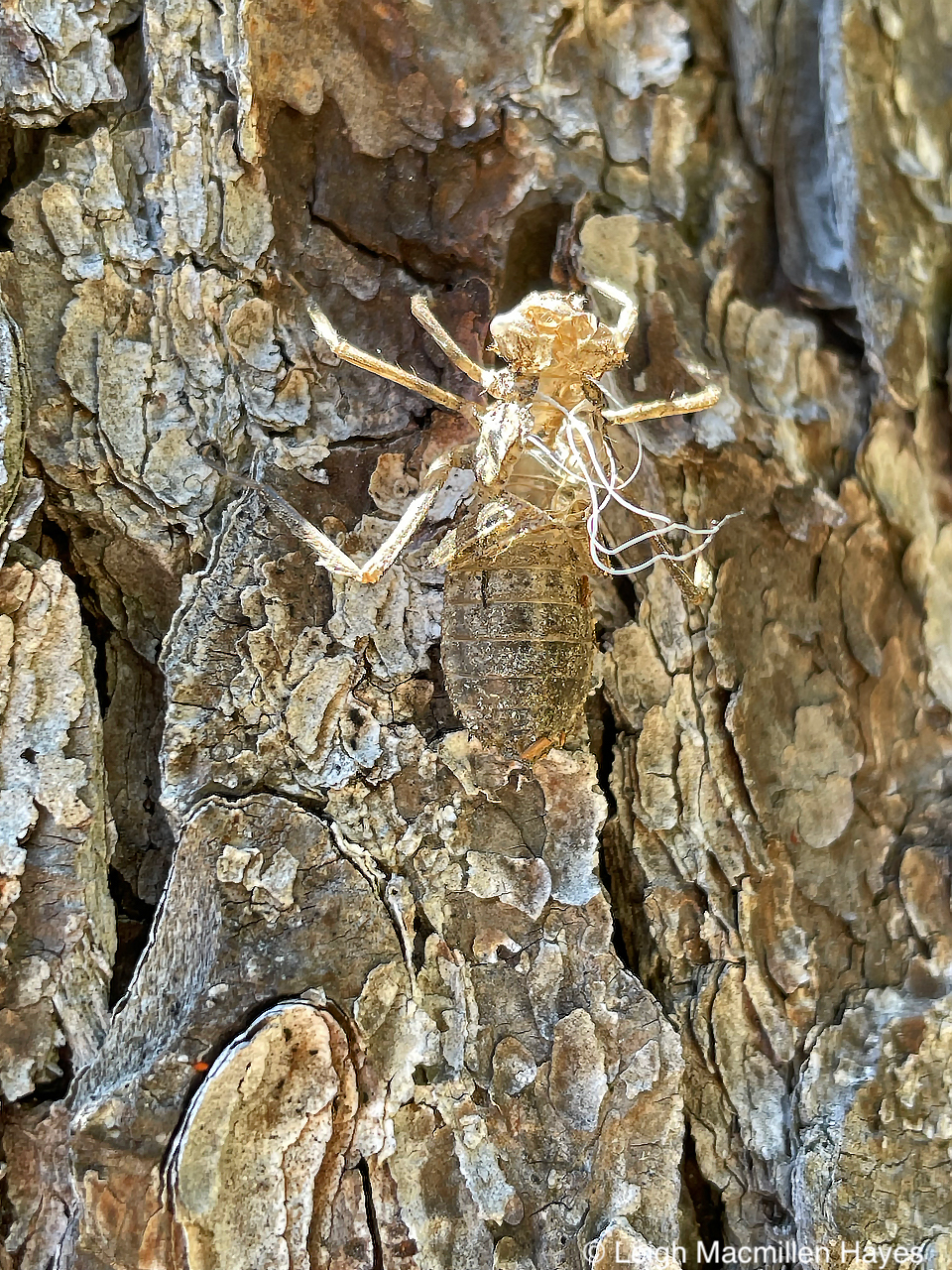
At last we reached the pond and immediately my focus changed from flowers to other structures all belonging to the Odonata family, this one in particular being the left-behind exuviae of a Skimmer Dragonfly. I found it at eye level–my eyes that is and not My Guy’s.

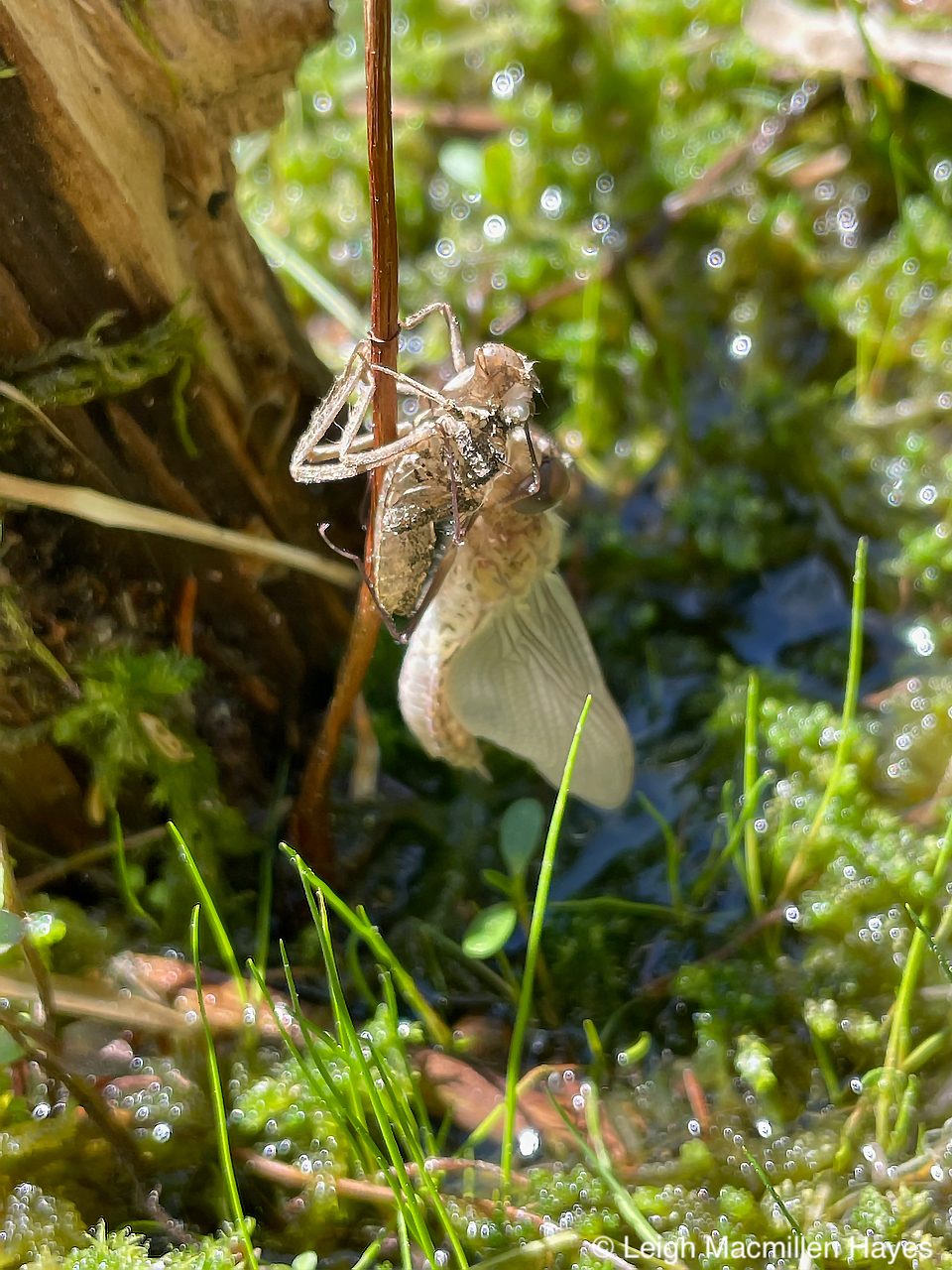
I really wanted to introduce him to a dragonfly eclosing and the best I could find today was one that had already split out of its aquatic form and was still pumping hemolymph (bug blood) from its wings back into its expanding body. “Isn’t that cool?” I asked. His response somehow turned a basketball move he expected to see on tonight’s Celtics game into a cooler situation. Hmmm. I’ll win him over yet.

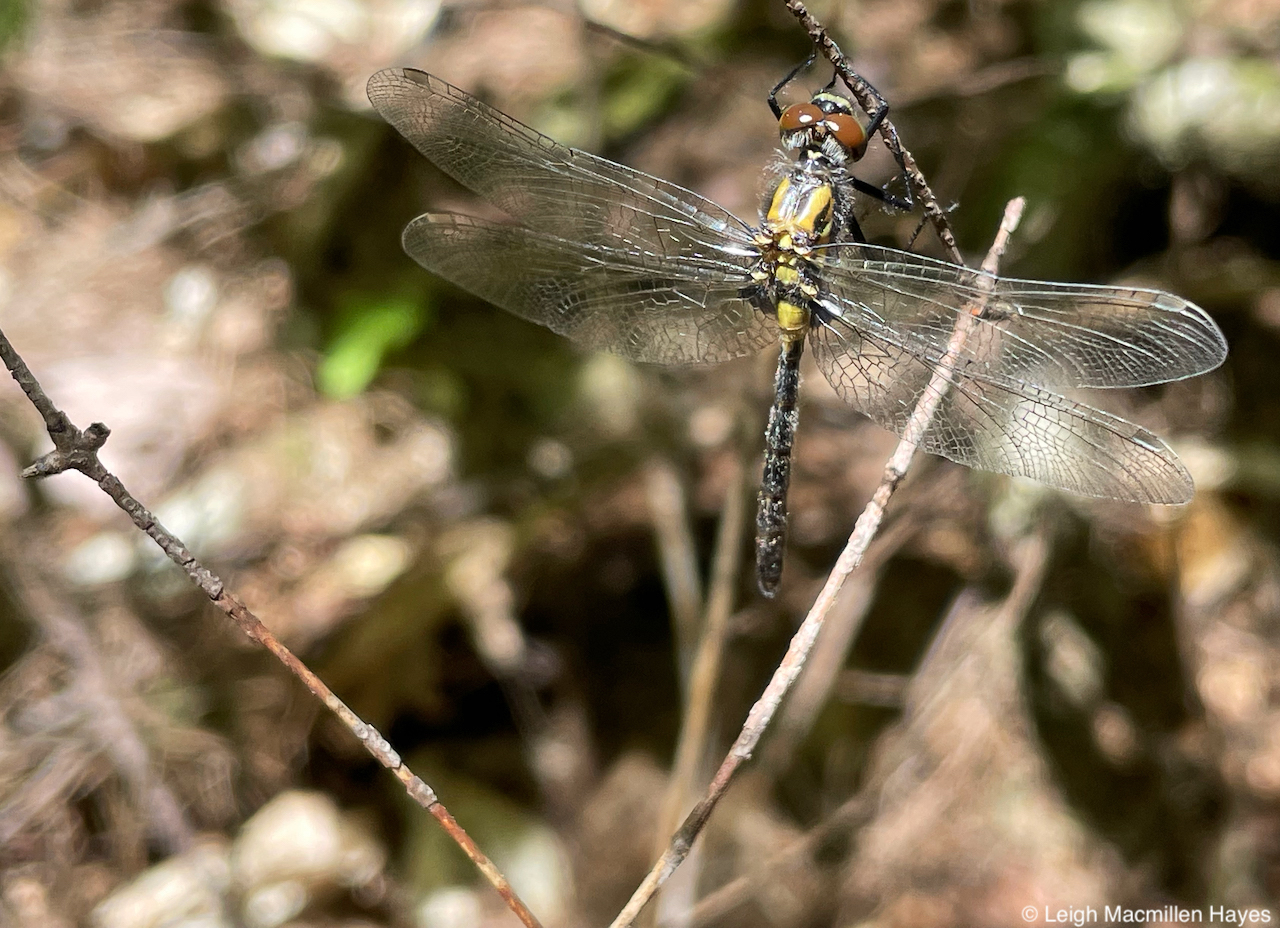
Despite that, I did win another one over. It was an immature Skimmer Dragonfly who had recently emerged for a wee bit cloudy were its wings still.

I knew it to species as a Whiteface for such was the color of . . . its face.

Whether it was a Belted Whiteface Skimmer or a Crimson Whiteface Skimmer, the jury is still out and based upon wing venation. My gut leans toward the former, but I’m open to learning so if you think otherwise, please explain.

That said, it was the first dragonfly that easily climbed upon my offered hand this year and I rejoiced that the Dragonfly Whisperer had joined today’s Mondate. Even My Guy was impressed.

Just Another Boring Mountain Mondate

No need to read on. You know it will be photos of today’s finds. Ho hum.

Our day began as it always does, with a shared piece of CraftonMain Lemon Meringue Pie topped with a raspberry, while we sat and watched this pair enjoy a meal of their own. Wait. We don’t always begin with the pie–but sure wish we could. Cardinals, however, have been blessing us with their appearance for years.

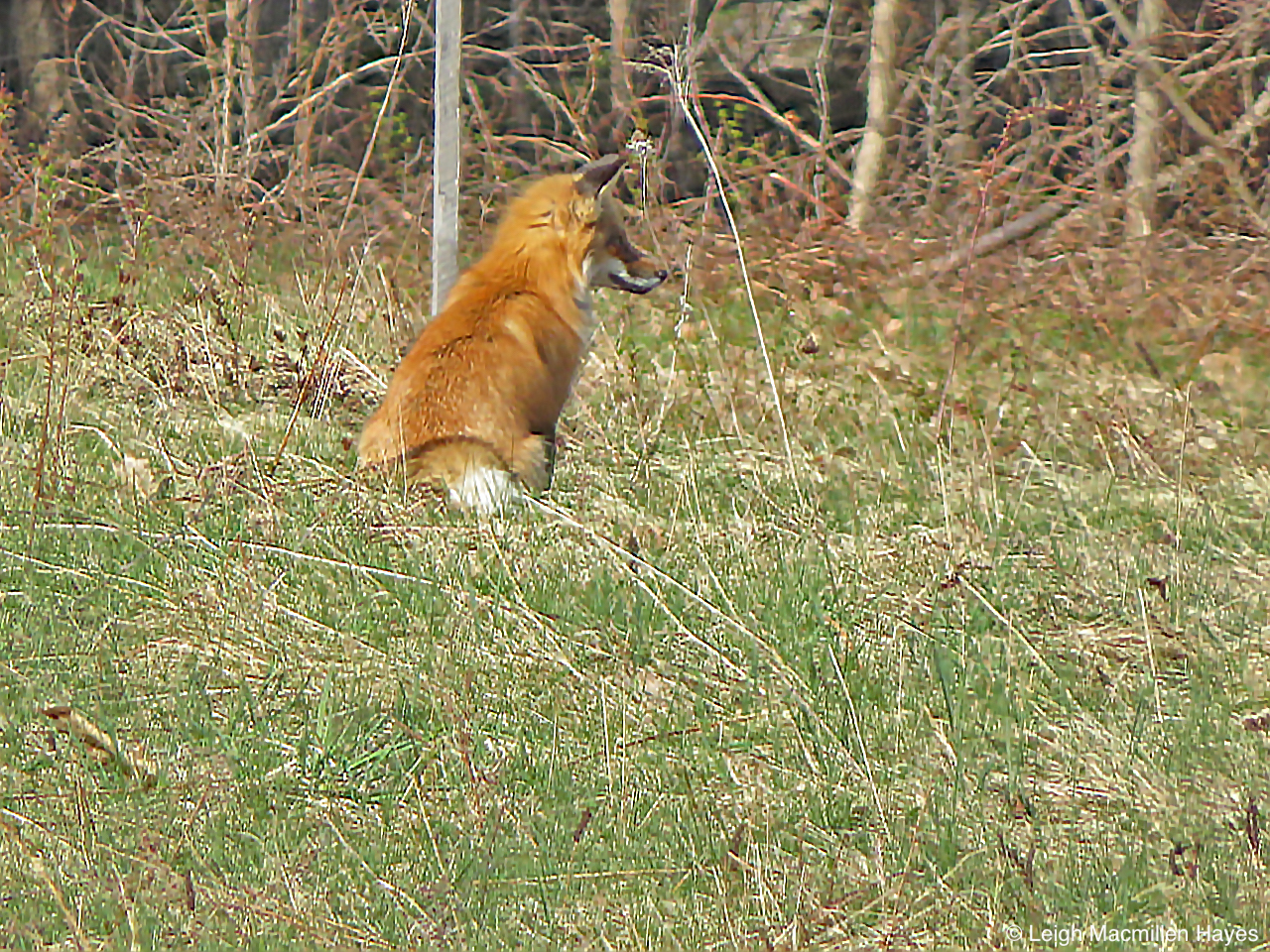
And then there was the sighting of the neighborhood fox in the field beyond our stonewall; it had its eyes on the neighbor’s dogs while we had our eyes on it. Don’t worry, the dogs didn’t become breakfast. In fact, as their mistress began to walk toward the fox (we don’t think she spied it, nor did the dogs or they would have given chase), the fox turned and dashed across the field, over another stonewall and into our woodlot.

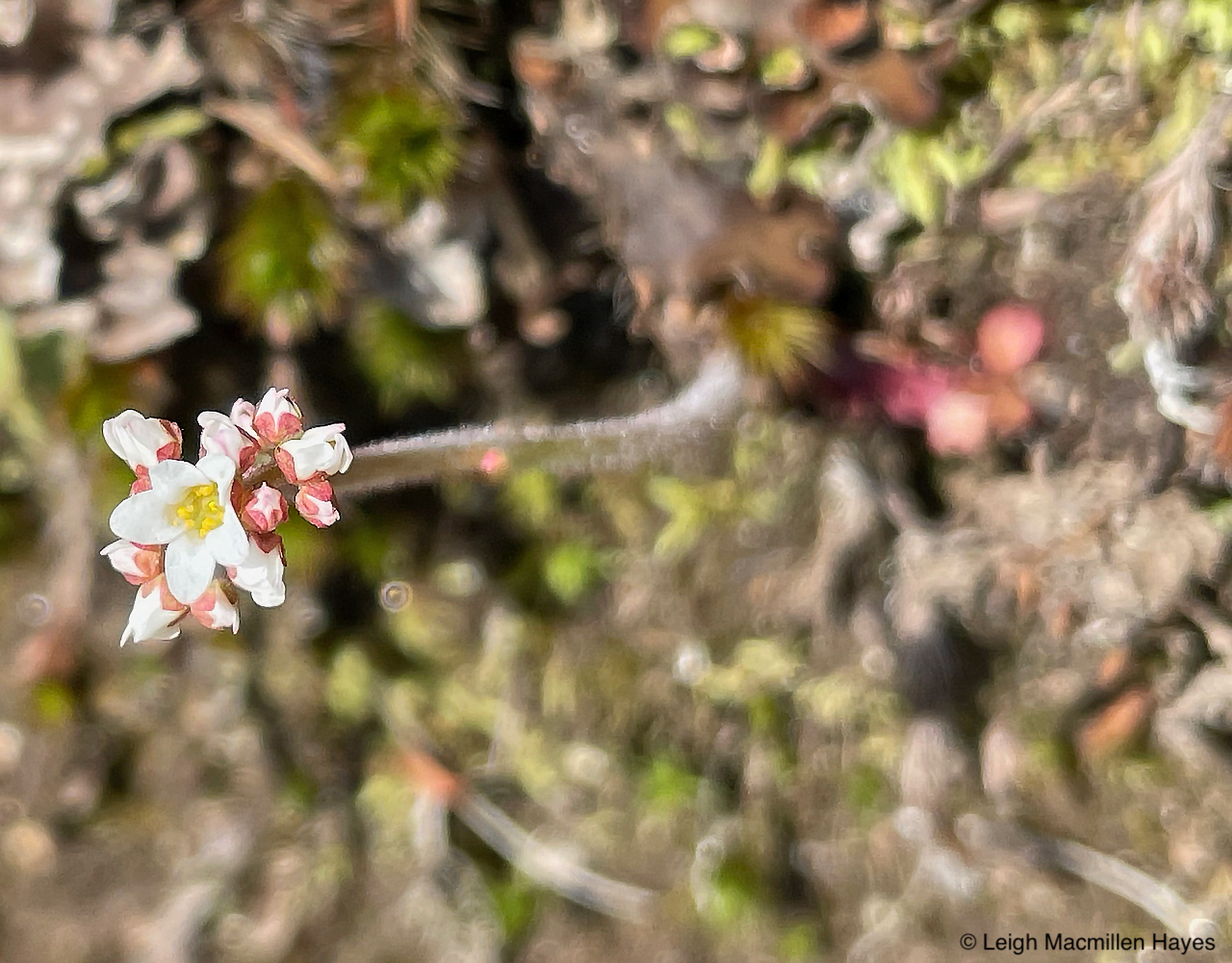
At last, it was time to begin our hike along a trail we haven’t visited since August 2019. Our intention had been to climb it in 2020, but during the first year of the pandemic, it was closed and then we never considered it . . . until this morning. And as we started up, I remembered . . . this is the mountain where the Early Saxifrage grows.

 It’s also known as rockbreaker for its habit of cleaving to the rocks, and perhaps suggested the Latin name–Saxifraga virginiensis. Saxum-rock and frangere-to break.

A funny name for such a diminutive and delicate display.

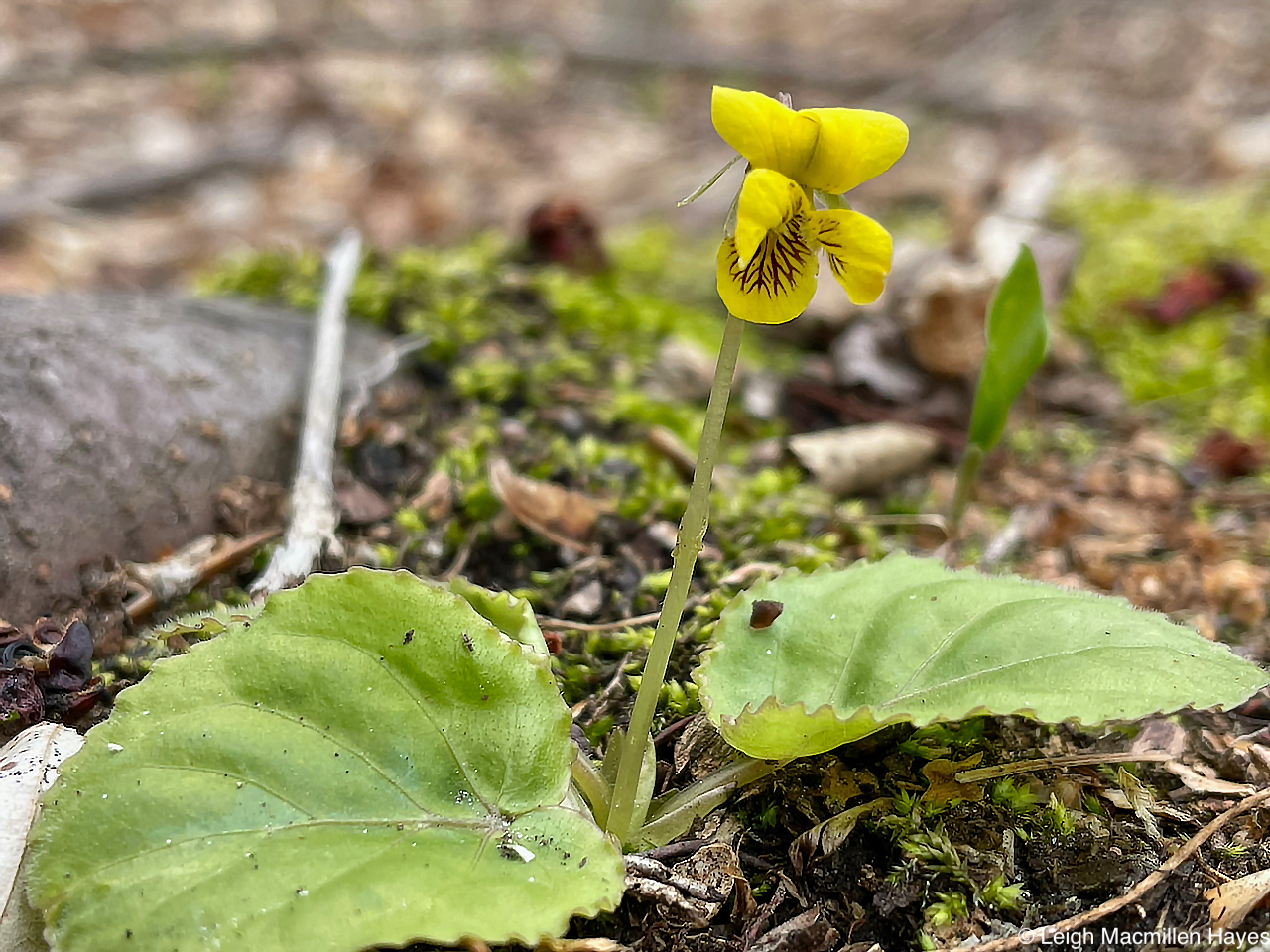
Round-leaved Violet with its scalloped-rimmed leaves more heart shaped than its name suggests also grew along the trail. Spying these tiny offerings of yellow with those incredible magenta runways meant to attract pollinators always brings a smile as if they were meant to brighten the day of all who hike this way.

Our journey found us enjoying the sound of the water’s rhythm as we climbed higher . . .

and contemplating each step once we turned away from the brook.

At the summit, the view from lunch rock included a look to the southeast where the sky predicted the forecast of a front moving in.

Meanwhile, our hometown mountain stood out in the sun.

But the grand lady, Mount Washington, was starting to disappear into the clouds.

It was windy and a bit chilly at the summit, but that didn’t stop the Brown Elfin butterfly from flirting with a few others where the blueberries grow.

I also spotted one Spring Azure. Both are rather small butterflies and if you look closely, you might spot that their antennae are patterned white and black.

On the way down, we did what we often do–looked for bear claw trees because we know they exist here. And because I know such an activity will slow my guy down. ;-) Bingo. He spotted one that was new to us.

I went in for a closer look and couldn’t believe all the marks on display.

And so I began to circle around the trunk.

One can only imagine the crop of Beech Nuts this tree must have offered.

But enough is enough. It’s just another bear claw tree, after all. Nothing to write home about. Or is it? Think about the bear and the blueberries the Brown Elfin Butterfly will help pollinate and the Beech Nuts the trees will produce and all the connections that will be made, which will include the Cardinals and the Red Fox and the flowers and all that is part of the forest. And be wowed like us. It was hardly just another boring mountain mondate on Burnt Meadow Mountain in Brownfield, Maine.

Reading the Signs

Make each mind-filled step count as it presents reminders of wonder . . .

whether beside rushing waters that nourish with sight and sound,

or along mountain ledges where one is reminded that gravity holds us down.

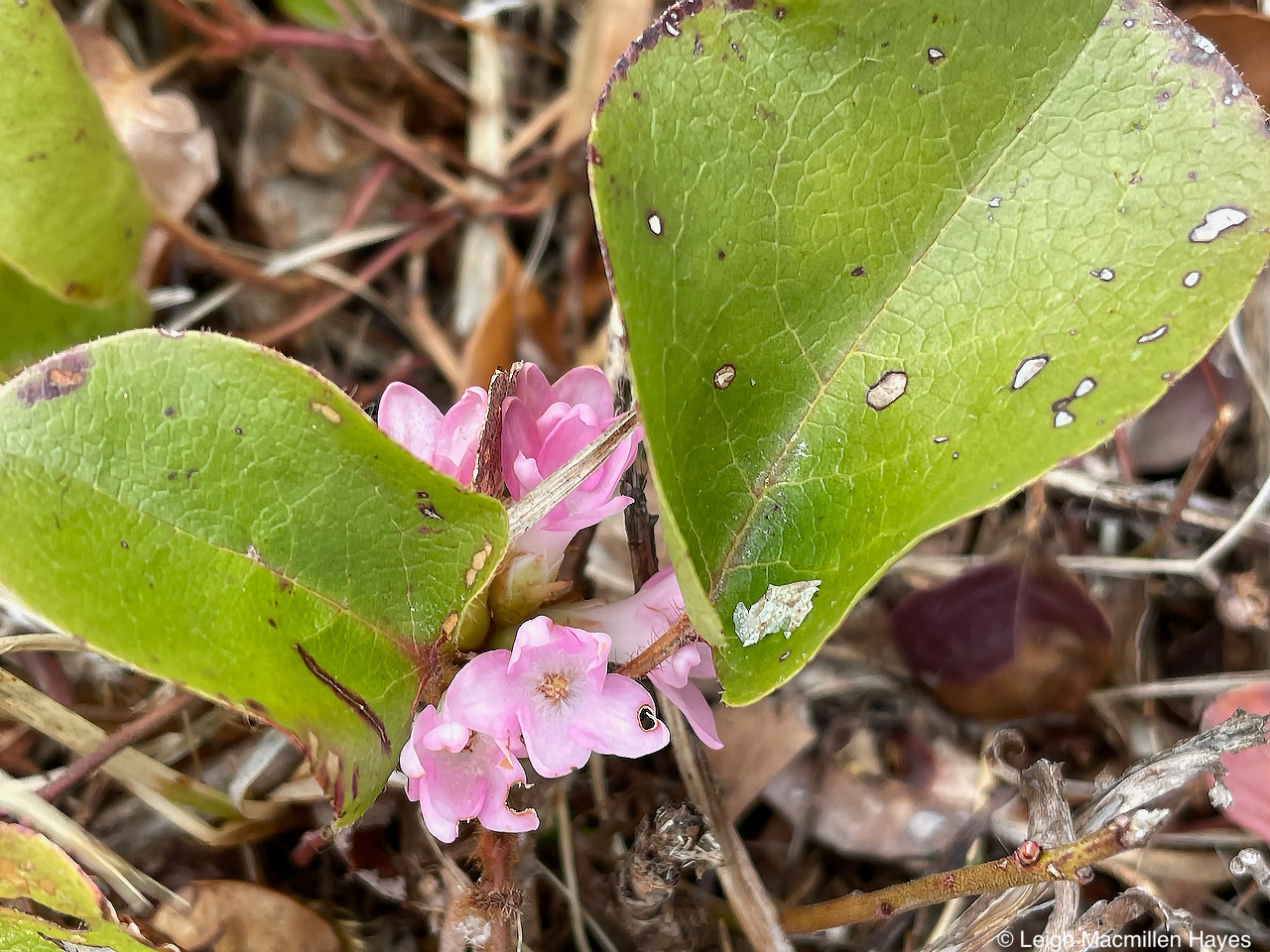
Admire first the Trailing Arbutus as you drop to a knee to take in the sweet scent of spring enclosed within its delicate petals.

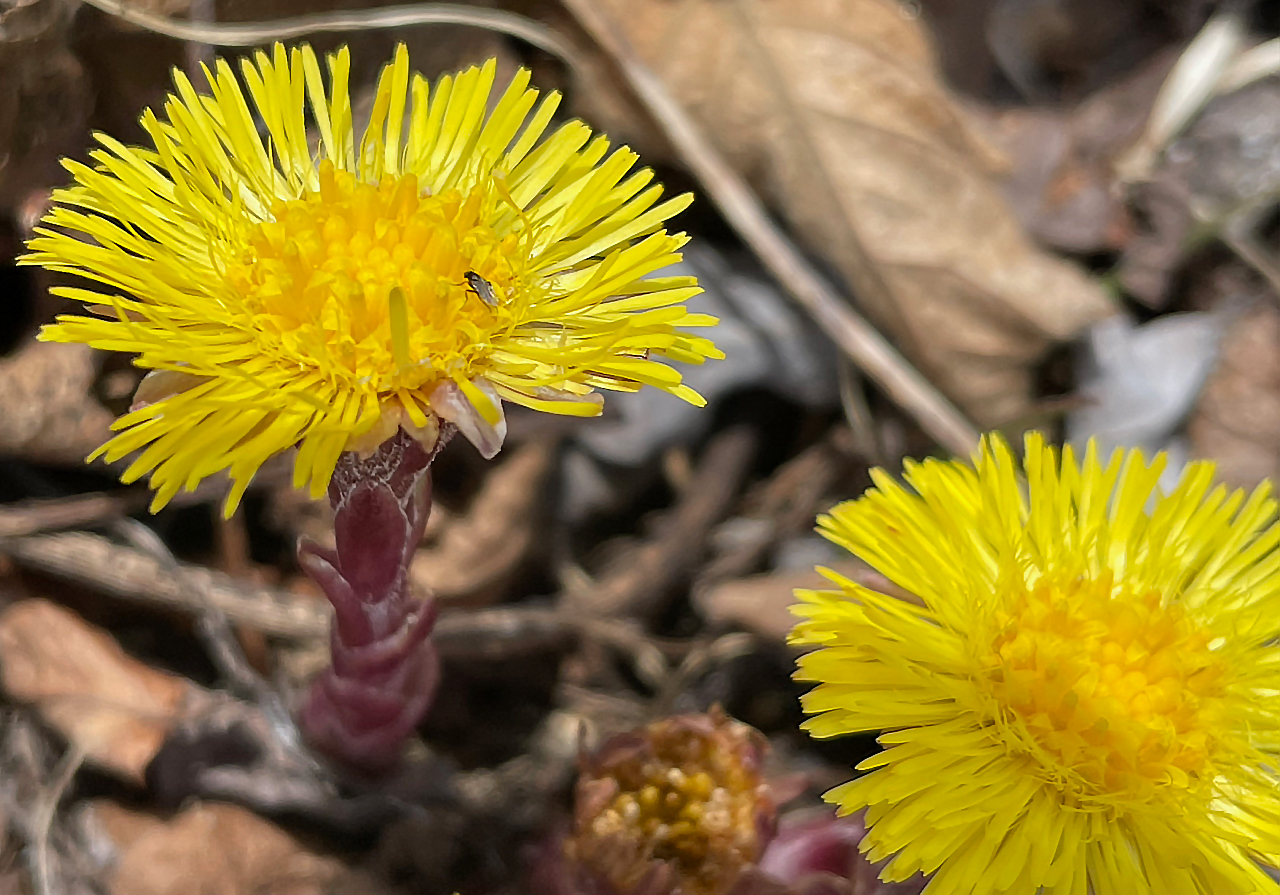
Don’t overlook the tiny fly seeking nourishment from Coltsfoot, pollinator at work upon a flower whose modified leaves give it an otherworldly appearance.

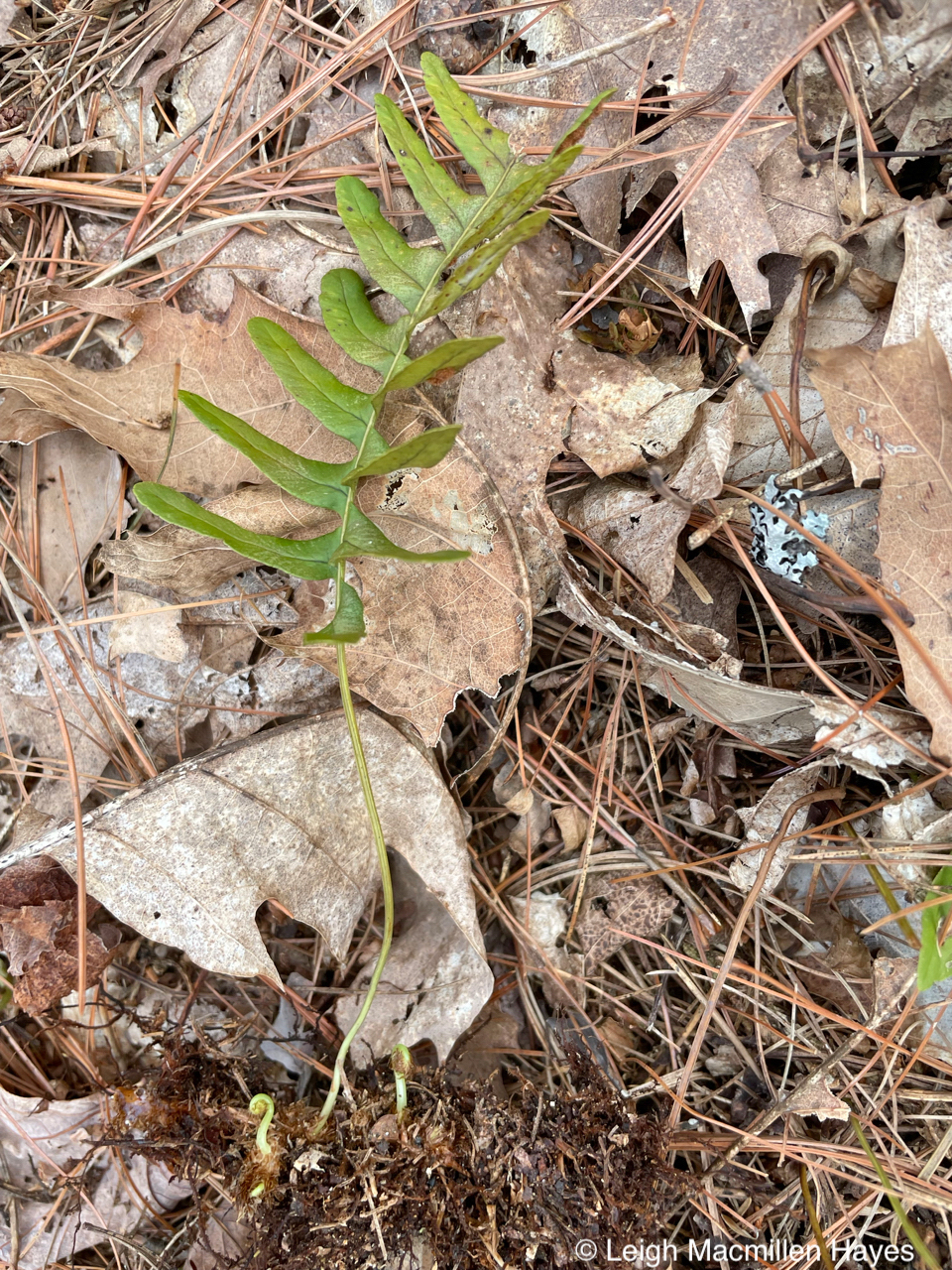
Notice the wee fiddleheads rising up beside Polypody ferns,

their hairy crosiers so minute that if you don’t search under leaves and moss, you’ll surely miss them.

Let the Eastern Comma Butterfly entertain as it dances up and down a forest trail,

occasionally pausing to allow onlookers to spot the tiny white comma, for which it was given its name, on its hind wing.

Let the past also astound in the form of last year’s Ghost Pipe flower appearing now as an intricate woody capsule.

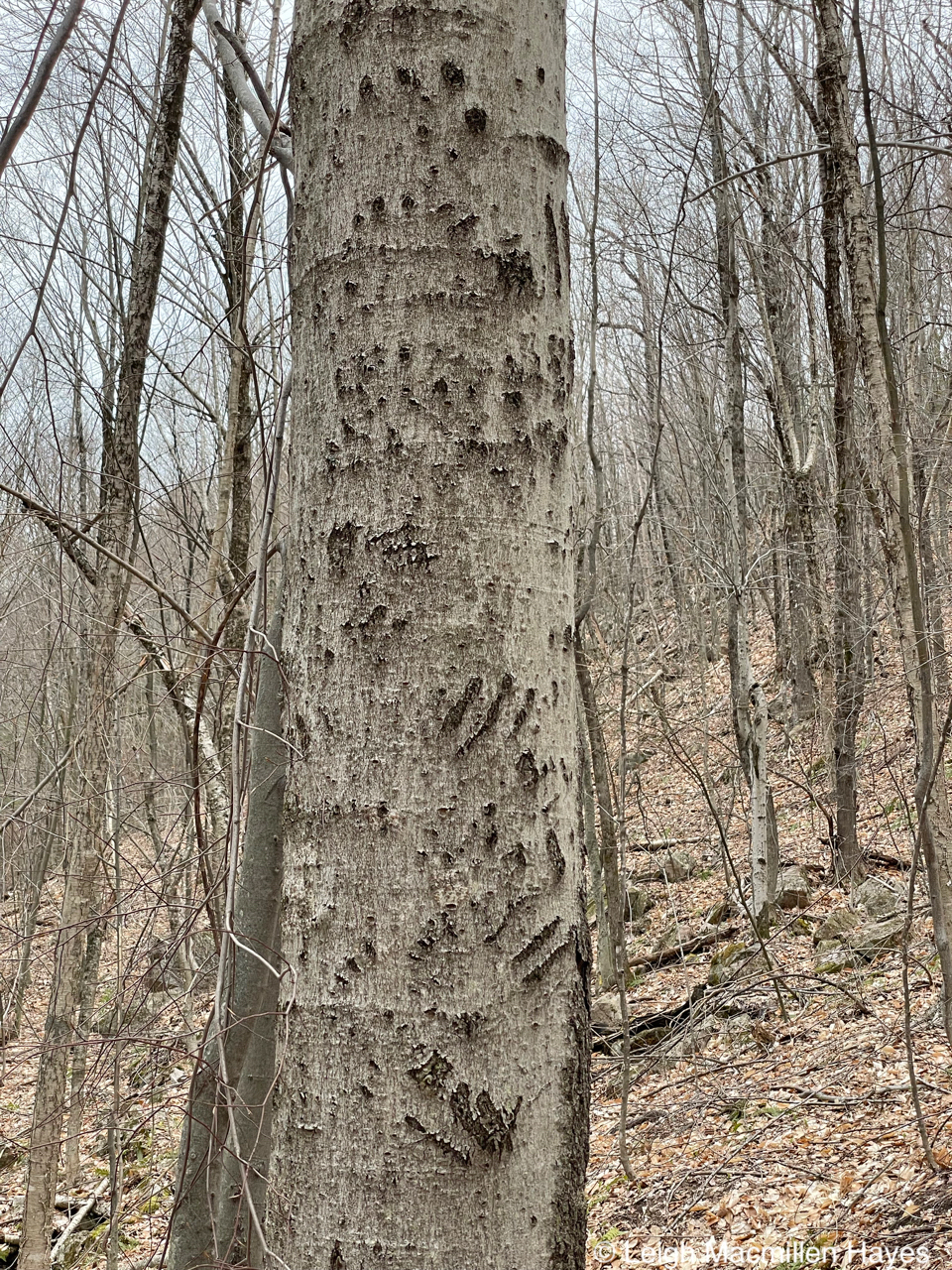
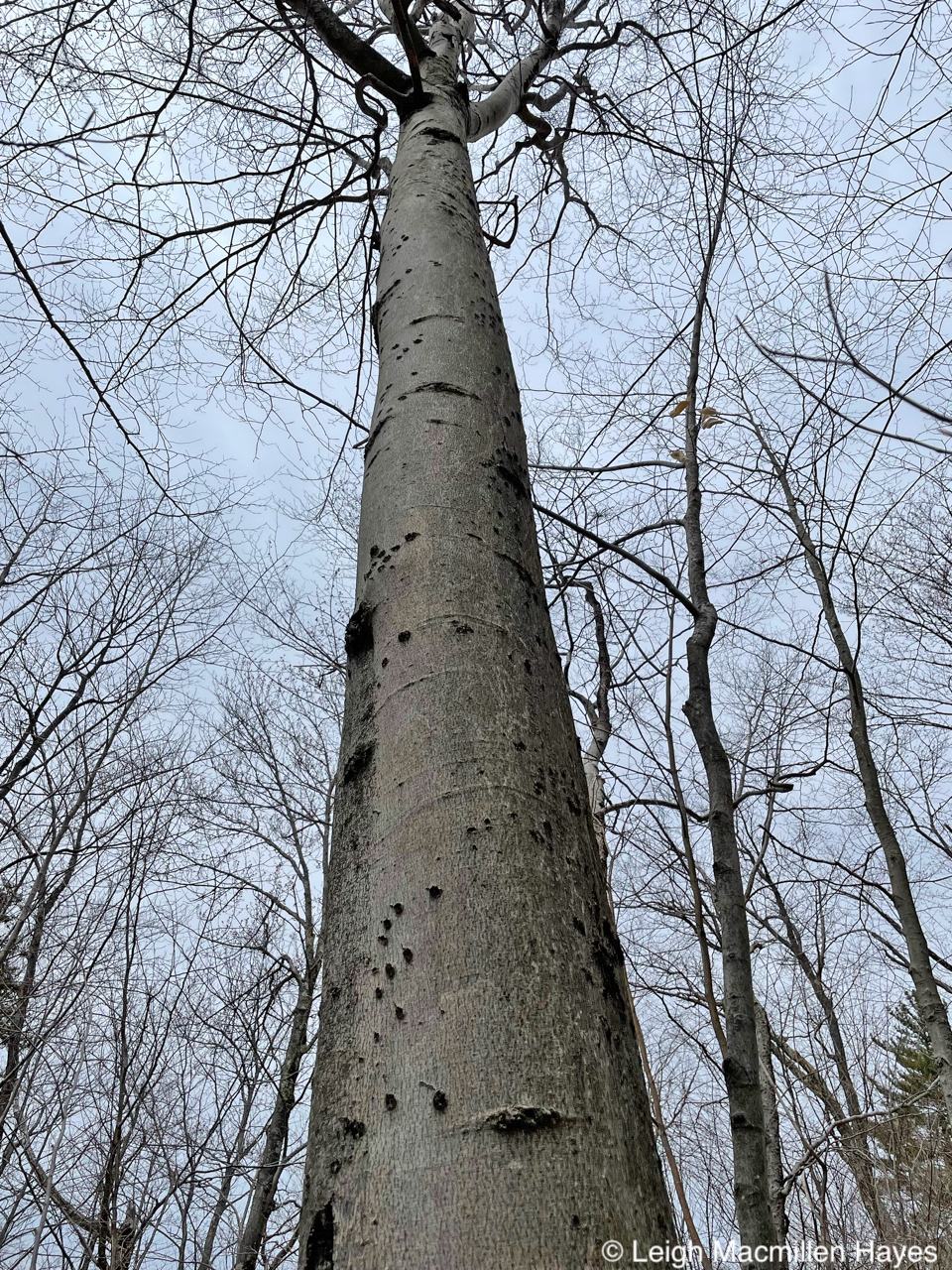
Consider the American Beech with its canopy a bit askew, especially when compared to its neighbors.

And then gaze down the trunk until claw marks left behind years ago by a very hungry Black Bear make themselves visible.

Look with awe at the granite so evenly and naturally sliced and delight in the hues once hidden within now on view.

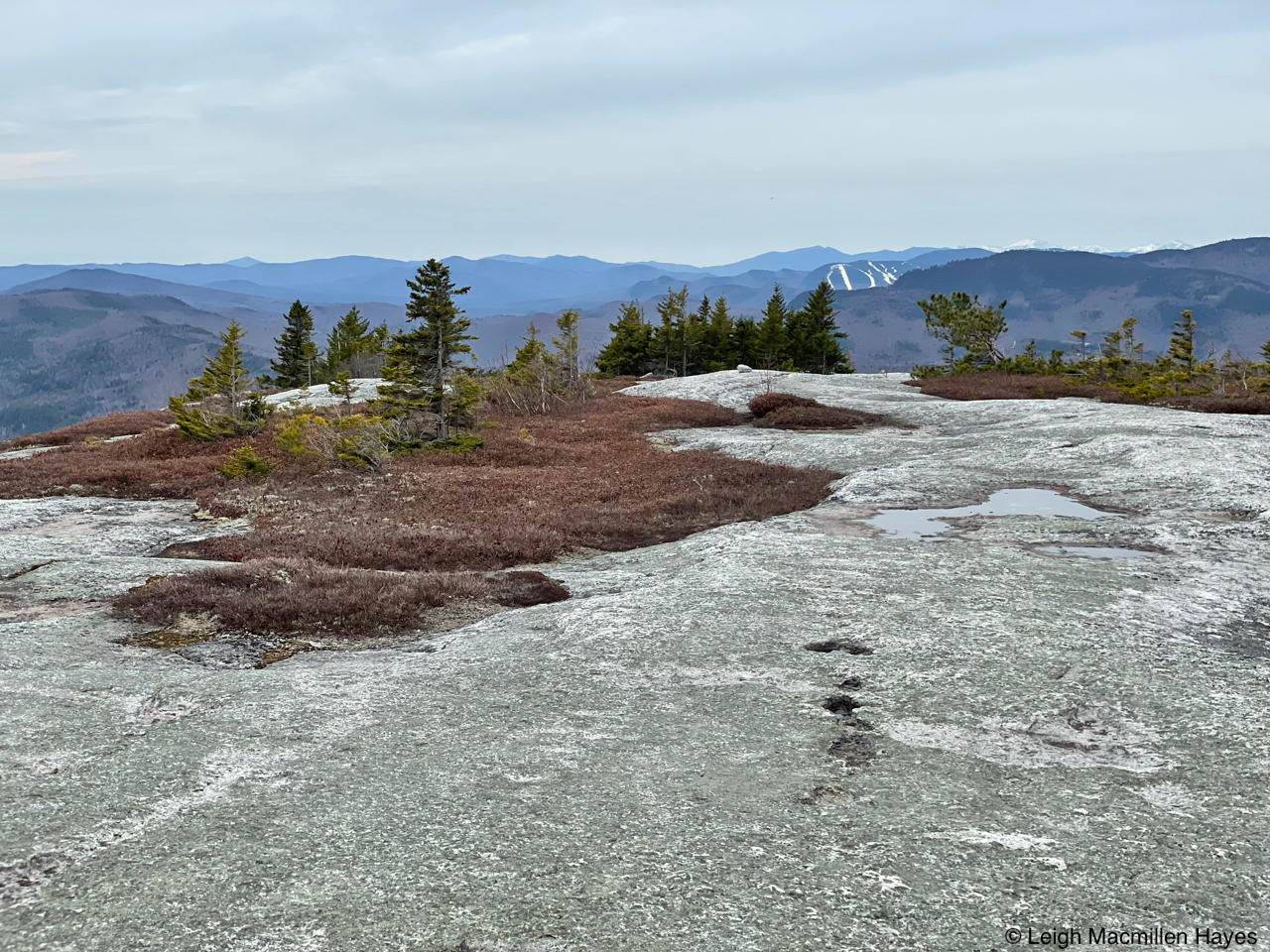
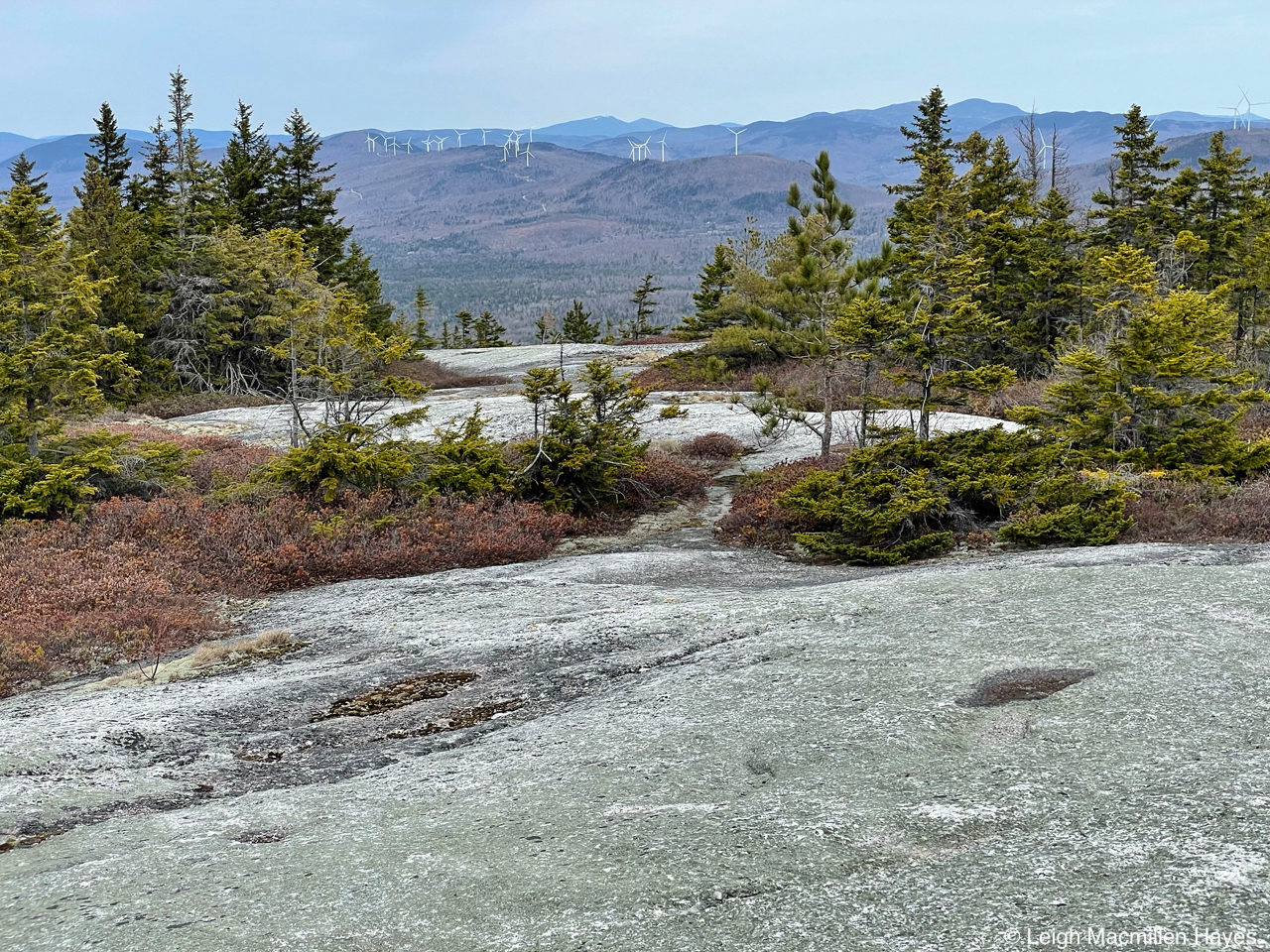
Embrace the panorama from a windswept summit where turbines producing energy define a nearby ridge line.

See also the old mill town that continues to produce paper products from its location nestled among mountains.

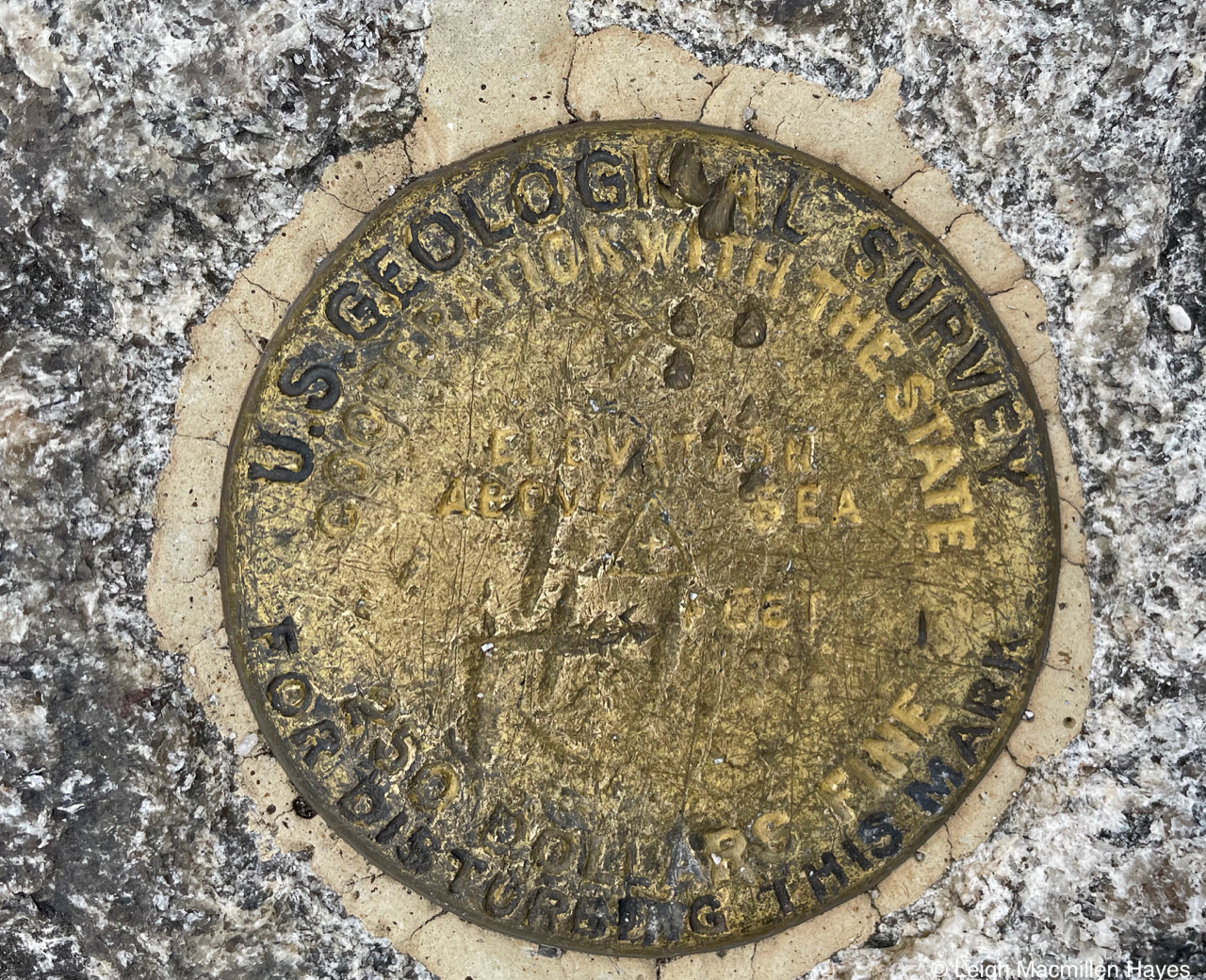
Note also the bronze geological monument used by surveyors since 1879 for mapping purposes as our forebears laid stake to the land that we can never truly claim.

And on the way home, don’t forget to take a few steps toward the barn that features memories of the past.

Try to make time to be present in the moment and see the wonders of life that surround us. Be awakened by reading the signs and not just whizzing by, no matter how or where you travel across the Earth.

Hug An ASH Mondate

My guy and I began this day with a list . . . of things to do and places to go, all within about 15 miles from home. Our starting point was our camp, where I wanted to do a few things inside, while he picked up branches that had fallen over the winter.

Once our chores were completed, we paused for a moment and enjoyed the view of Shawnee Peak Ski Area at Pleasant Mountain and the almost iced-out northern basin of Moose Pond.

Maybe the ice finally went out this afternoon, but the longer it stays, the better in my opinion. Not all that long ago we could predict the event to occur in mid-April, but sadly everything is happening earlier than it should.

From there we hiked up a hill on some land we own behind his store because he’d recently spotted a site he knew I’d appreciate: a carpet of Eastern Hemlock twigs. We looked up, but no porcupine was in sight.

Following a quick lunch at home, we headed off for a quick hike up Mount Tir’em where another porky tree greeted us beside the trail.

From the summit, we spied first Keoka Lake to the east, its ice still in.

And Bear Pond to the south, also still covered in ice. And yes, toward the west, that is Pleasant Mountain and the ski area of the earlier photo.

No trip up this mountain is complete without a visit to the glacial erratics that our sons, back in their youth, called The Castle. I’ve always thought of it as offering a great bear cave and so we went in search.

We did find the neighborhood bear who has been keeping an eye on this spot for a number of years now. My, what long, sharp claws you have.

In the best cave though, only this momma bear emerged and she seemed kinda friendly ;-).

Our final adventure of the day found us following several Yetis into the woods.

They led us to this tree, which bespoke a long and gnarled history.

On one side it sported a burl, that strange-looking collection of tree cells. Known as callus tissue, the burl forms in response to an environmental injury such as pruning, disease or insect damage.

On the other side, a tree spirit smiled. They often do if you take the time to look.

Its bark was so stretched that though it remained a bit corky, its diamond pattern had stretched into sinewy yet chunky snakes of furrows and ridges.

Upon the ground a shed limb ready to give nutrients back to the earth that will continue to aid the tree sat in its shadow.

Holes in the tree offered further intrigue . . .

and so my guy climbed up and looked in first.

I followed and couldn’t believe the site within. This tree is still producing leaves, thus the xylem and phloem still function, but almost entirely hollow and I fully expected to see a bear or two or a slew of raccoons in residence. Certainly, it would have created a delightful hideaway to sit and read and sketch, and watch . . . life inside and out.

By now you’ve possibly figured this is one mighty big tree . . . and I found this information about it: On October 30, 1969, the Maine Forest Service stated that it was the largest of its species in the state. And in 1976, the bicentennial year, it still held that honor. The dimensions in 1969 were these: circumference 17′ 81/4″, height 70′ and crown spread 77′. I’m not sure if any of those measurements have changed, but I learned last week that is still the biggest of its kind.

So this blog post is entitled “Hug an ASH Mondate.” I actually hugged two ASHes today–this White Ash that deserves to be honored for who knows how much longer it will be around and I was so excited to meet it, but my own ASH as well for if you look at the watermark on the two photos of me you’ll see © ASH. You may have thought that my guy’s initials were M.G., but really they are A.S.H. Hug an ASH. In any form, what an honor.

Patience as the Season Unfolds Mondate

We do LOVE winter, my guy and I, but really, we appreciate all of our seasons and can’t imagine living in a place where we can’t experience each in its own right and the change from one to the next.

And so today, with the temp in the low 20˚s and wind chill making it feel even colder, we donned our micro-spikes and headed up a snowmobile trail to begin our search for the current season.

Icicles that we were sure had formed overnight, since the weekend temps had been much warmer, formed along a stream that flowed toward Slippery Brook, for our trail of choice was in the White Mountain National Forest.

In other seasons, one can either drive to our destination, or go via snowmobile, but for the time being the gates to Forest Road 17 in Chatham, New Hampshire are closed to vehicular traffic. That was fine with us.

At about 2.5 miles, we took a slight detour to take in the sounds and views of Slippery Brook.

It was there on a crossbeam of the bridge where my guy was about to sit that I noticed British Soldier, a common lichen with bright red caps that remain so year-round, but have been hidden from view by snow all winter. It was like meeting a cheery old friend for the first time . . . this sighting.

Along the road also grew many a Hobblebush, another old friend, their naked leaf and flower buds swelling in anticipation of what is to come.

And then we spotted these prints, made by the largest mammal around and though we saw more in other places, this set of four made us wonder if the moose had come in for a landing and then flown off again.

At last we reached the trailhead, and as we approached the pond we noted an immediate dip in temperature, plus an increase in wind. Thankfully, we’d expected such and had dressed for the occasion. That said, it’s hard to search for spring when your cheeks sting with the wind.

A rocky and rooty trail that circles the pond, though fairly flat, requires hikers’ attention at all times of the year and today was no exception. That said, the trail itself offered a snippet of spring.

We reached Mountain Pond at last and by the outlet found some open water, but other than a few chickadees and nuthatches, there were no birds or other forms of wildlife to spy upon as we’d hoped.

Even so, our focus was rewarded in other forms, such as other buds growing larger, like upon this Speckled Alder. And notice that lateral leaf scar–a happy face indeed.

The longer male and shorter female catkins, which are the flowers of the alder, swayed in the breeze, waiting for a future date when they could do just that . . . date.

A few actually seemed ready to mate, though not with each other. While the pendulous male flowers open and extend when their pollen is ready to be dispersed, just above them the tiny, maroon female flowers “bloom” at the same time on the same shrub. In this case position counts and so with the female flowers above the males, self-pollination is discouraged and cross-pollination occurs instead thanks to wind.

Also beside the pond’s shore, the woody structures of last year’s Rhodora flowers, but also its buds enlarging by the day, with promises of exquisite displays making us suddenly want the time to push the clock ahead.

The same was true for the Sheep Laurel, that plump pinkish bud ready to burst open when the time is just right.

As we headed back toward the Forest Road at last, we began to notice exposed trails of Red Squirrels that led from one spruce cone cache to another. Those feisty ones were quiet today, but we suspected they are happy to have more food offerings on the horizon.

Nine miles later as we once again passed by the stream with the icicles and noticed that more had formed, we realized we’d found spring on this Mondate . . . she’s just taking her time and we should follow her example and be patient as this next season unfolds.

Worth the Wait Mondate

It took us a while to get out the door today, but perhaps that was because we knew we weren’t traveling far and we’d have plenty of daylight in which to explore.

Today’s destination: Sebago Lake State Park, a locale whose existence we take for granted and seldom make time to actually visit. But when we do . . . ah. We hiked over five miles today, with a few false starts, but never really getting lost.

It was a blustery but beautiful day and conditions switched from snow to ice to puddles to ice under water to bare ground. And somehow, at exactly noon we reached the summit of the Lookout Trail, where a picnic table painted brown from my guy’s hardware store awaited. Looks like maintenance will need to return to the store for some touchups this spring.

After lunch, we found our way down to the water, which in this neck of the woods looks like the ocean. That said, the Atlantic Ocean is only about thirty minutes away. Sebago Lake State Park, at 1,400 acres, opened in 1938. The lake itself, at 45-square miles, is Maine’s second largest. It’s a place with diverse natural communities, which makes it a jewel.

All of that is fine and well, but my favorite habitat of all we saved until the end. Horseshoe Bog on the park’s west side always has something to offer. It’s called Horseshoe Bog because of its shape. The question was: what would today’s offerings be?

It soon became evident when we began to notice lodges.

And chew sticks floating in a raft-like manner in a wee bit of open water. Because beavers don’t hibernate, they cache or stockpile sticks underwater so they can nibble on them once the pond freezes over in winter.

As pure herbivores, beavers subsist solely on woody and aquatic vegetation.
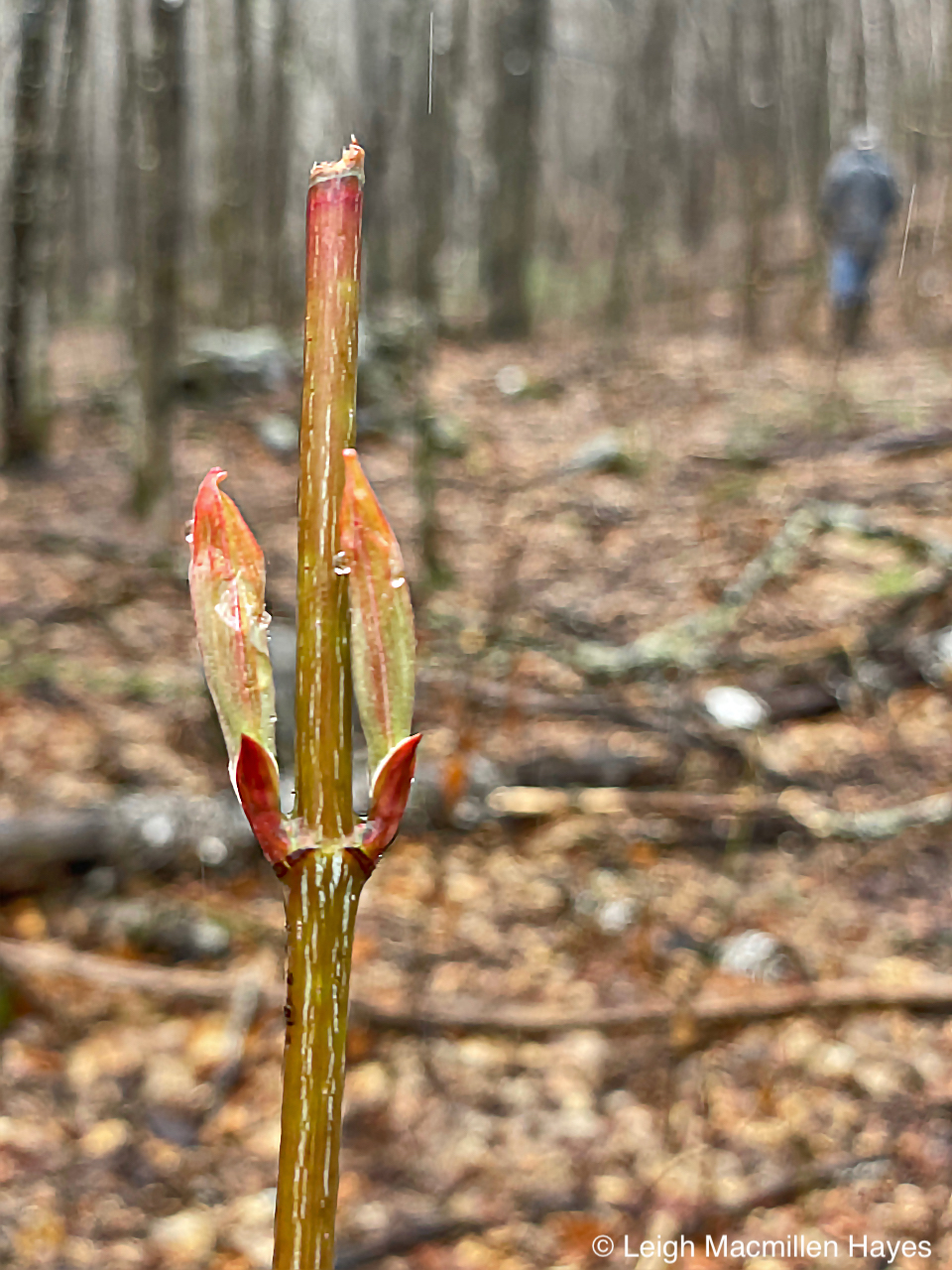
As we continued along the path, we paused frequently to admire their previous works, some of which hadn’t been successful in terms of felling the trees. Yet.
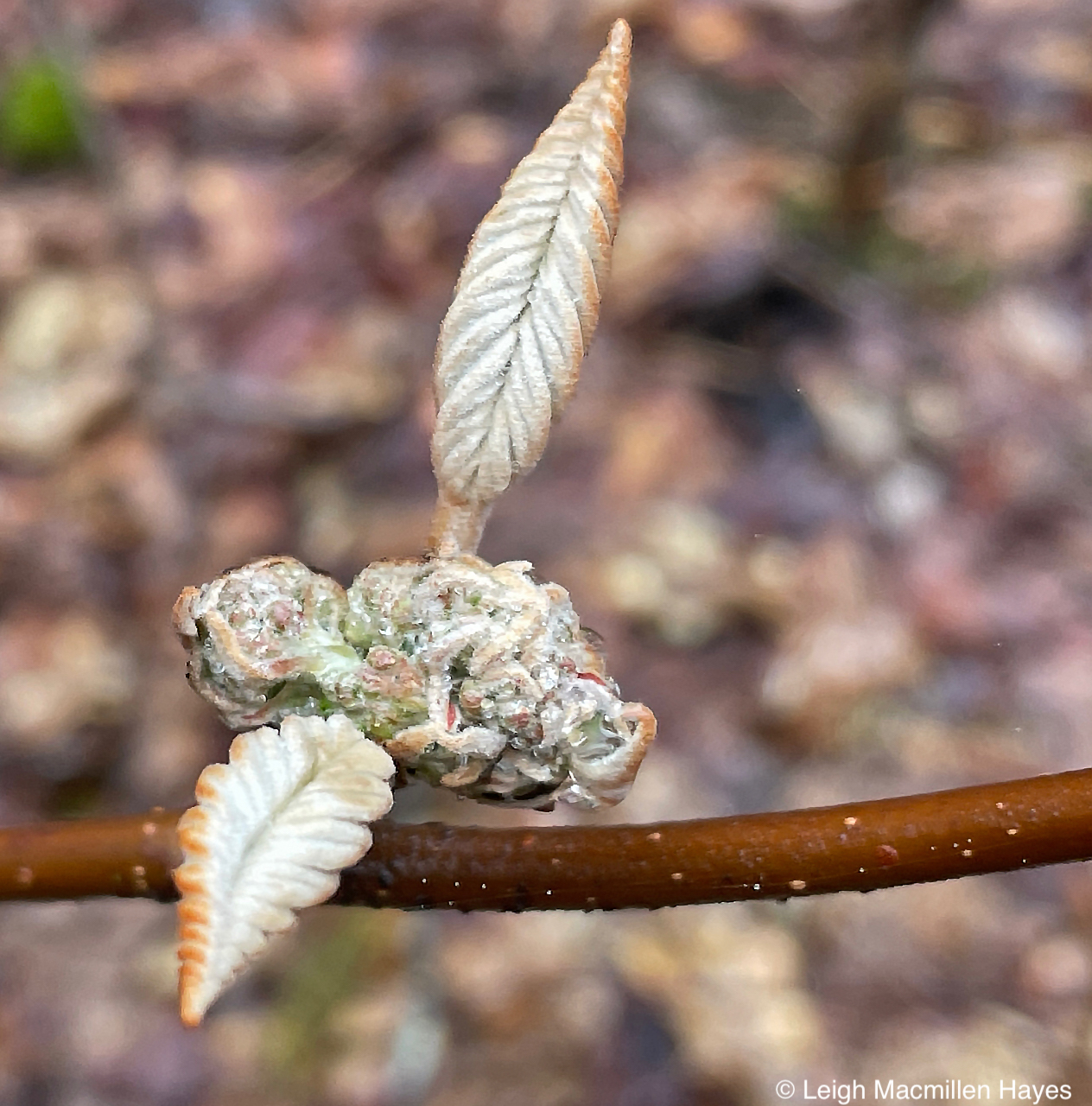
Others seemed like attempts to perhaps consider on some future date.

And still others made us feel as if we were walking through an art gallery for so unique were their forms.

Though a beaver will chew on any tree, its preferred species include alder, aspen, birch, maple, poplar and willow. 

I’m always in awe when I think about how beavers obtain their food by toppling large trees with no other tools than those specially adapted incisors and powerful lower jaw muscles. Even after years of chewing wood, their teeth don’t become too warn and never stop growing. The four incisors (two top; two bottom) are self-sharpening due to hard orange enamel on the front and a softer dentin on the back. That means the softer backside wears faster, creating a chisel-like cutting surface. And chisel they do.

Moving rather slowly, for I’d asked my guy to change his pace when we began to circle the bog, we counted five lodges, and figured that at least two of them were active. The two bookmarking this photo we weren’t sure about.

Suddenly we spotted some action in the water and my guy caught a glimpse of a critter that swam under the ice and out of our sight. All I saw were the ripples on the water. But . . . that meant that we stopped. For a while. And in flew a small flock of Pine Siskins.

And so they garnered my attention for a few moments.

When I wasn’t searching for more beaver action, that is.

At last we reached another lodge and both of us chose trees on either side of it to hide beside and remain quiet. I have to say that I’m so impressed with how still my guy can be . . . thank goodness for that earlier half-second sighting because he was as eager as I was to spy more activity.

Unfortunately, it was in that moment that my guy finally walked toward me that the beaver did show. He missed the sighting, but for me, it was well worth the wait on this first Mondate of spring.