Thinking Big

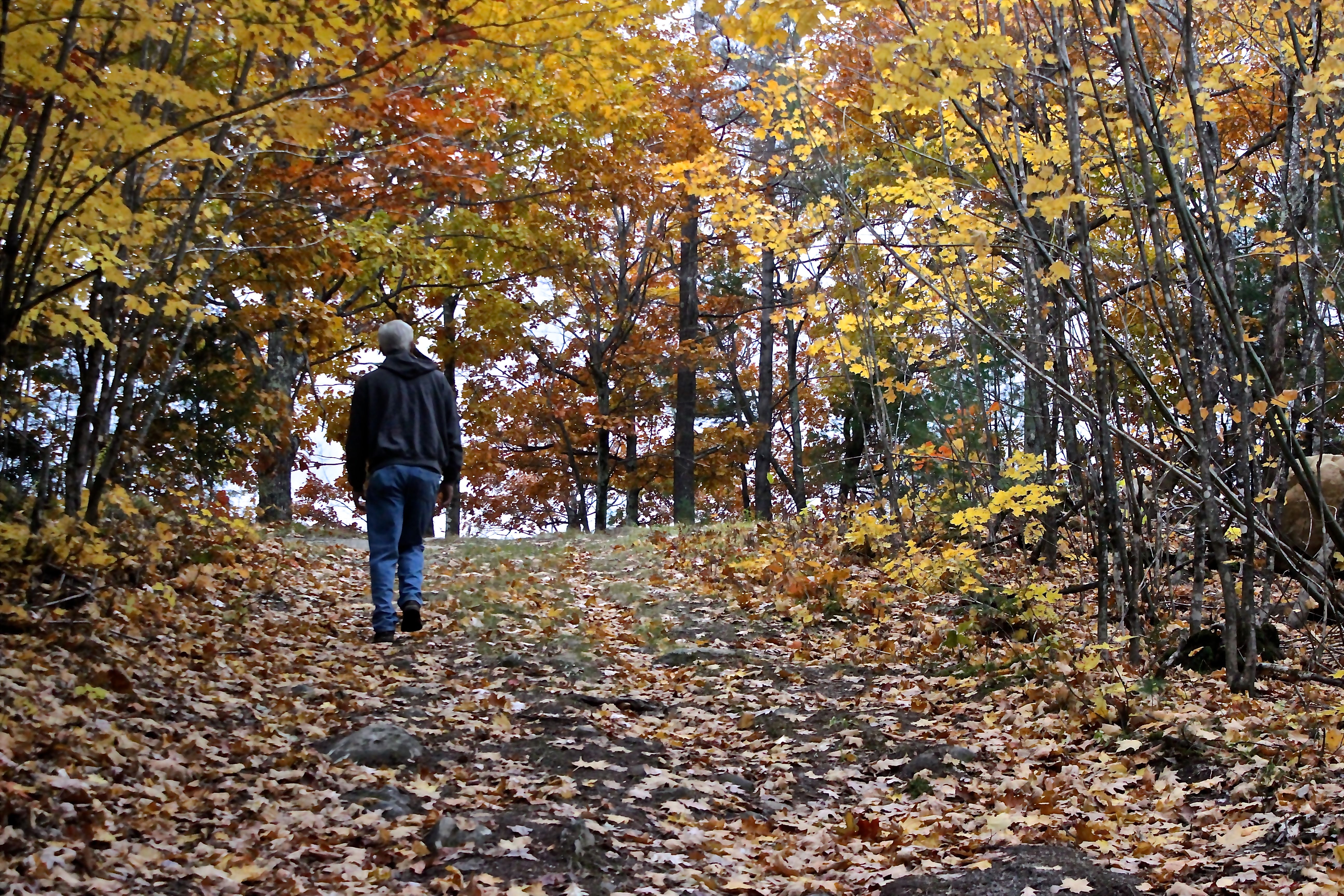
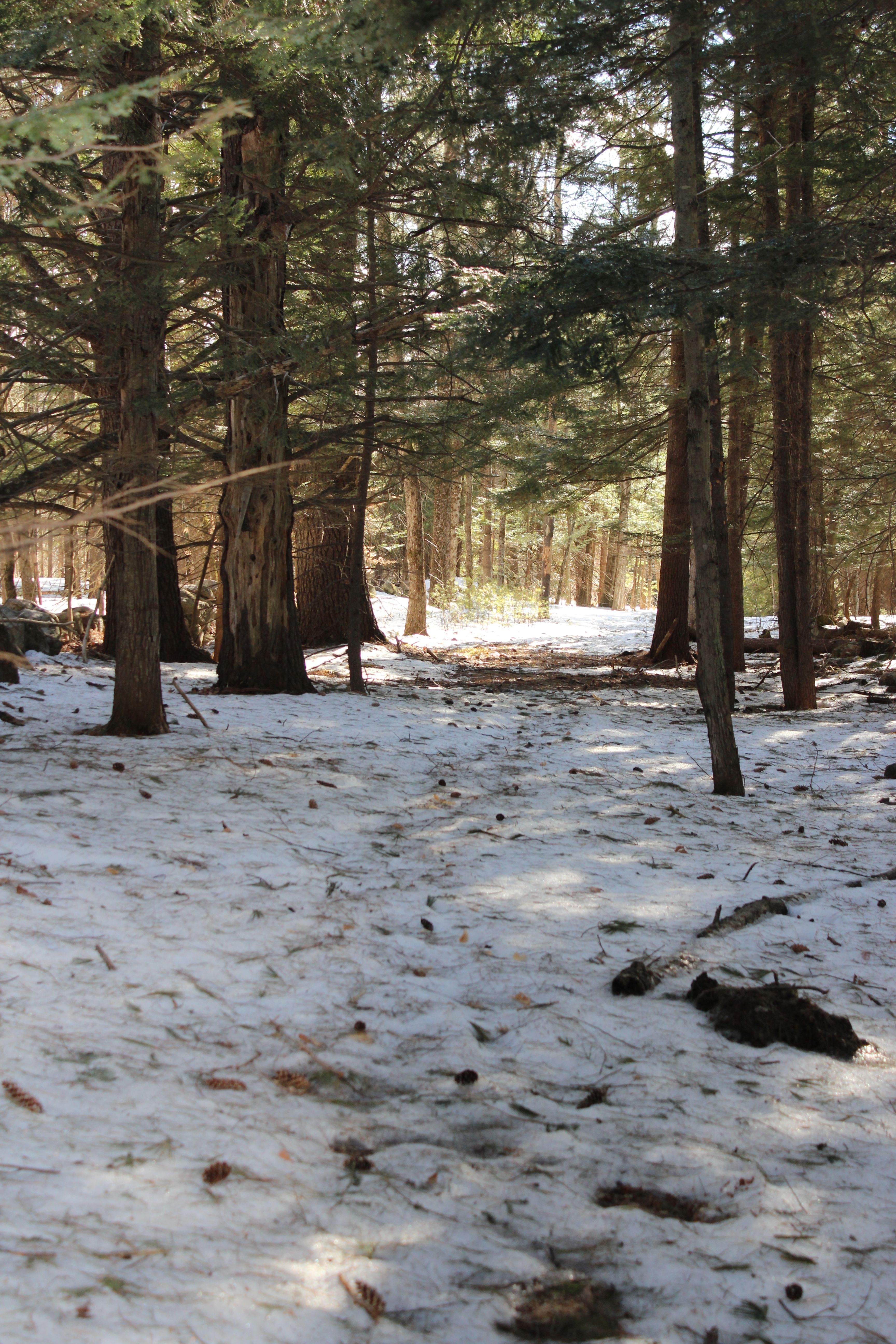
A return trek to the old neighborhood off Hut Road in Stoneham left me thinking big.

J.M joined me for this exploration and it’s a wonder we got any further than our parking place beside Great Brook.

Great Brook

It was a sensational, albeit too warm for this time of year, December day. We could have spent all our time taking in the sounds and smells and sights as the water coursed over the rocks.

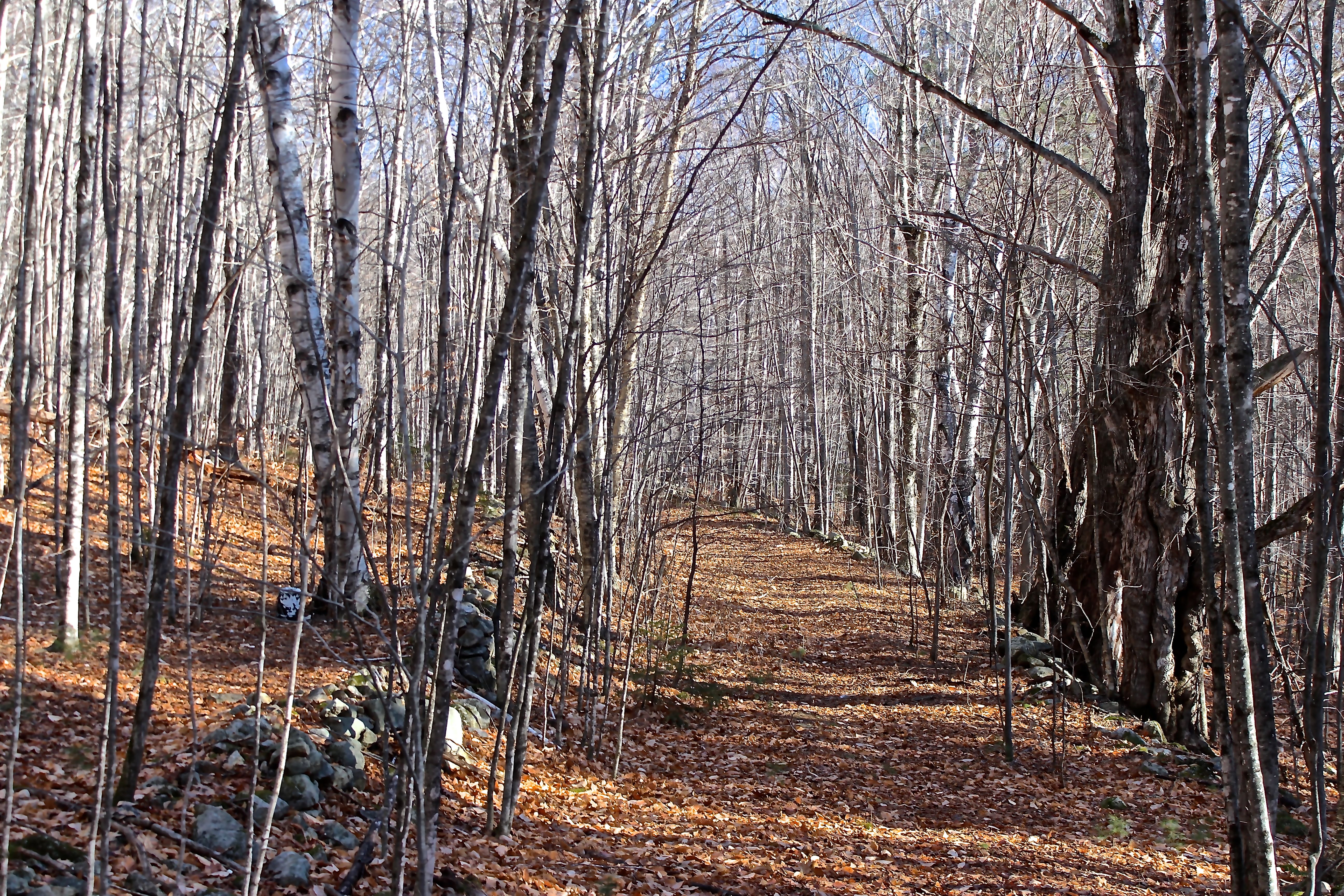
road

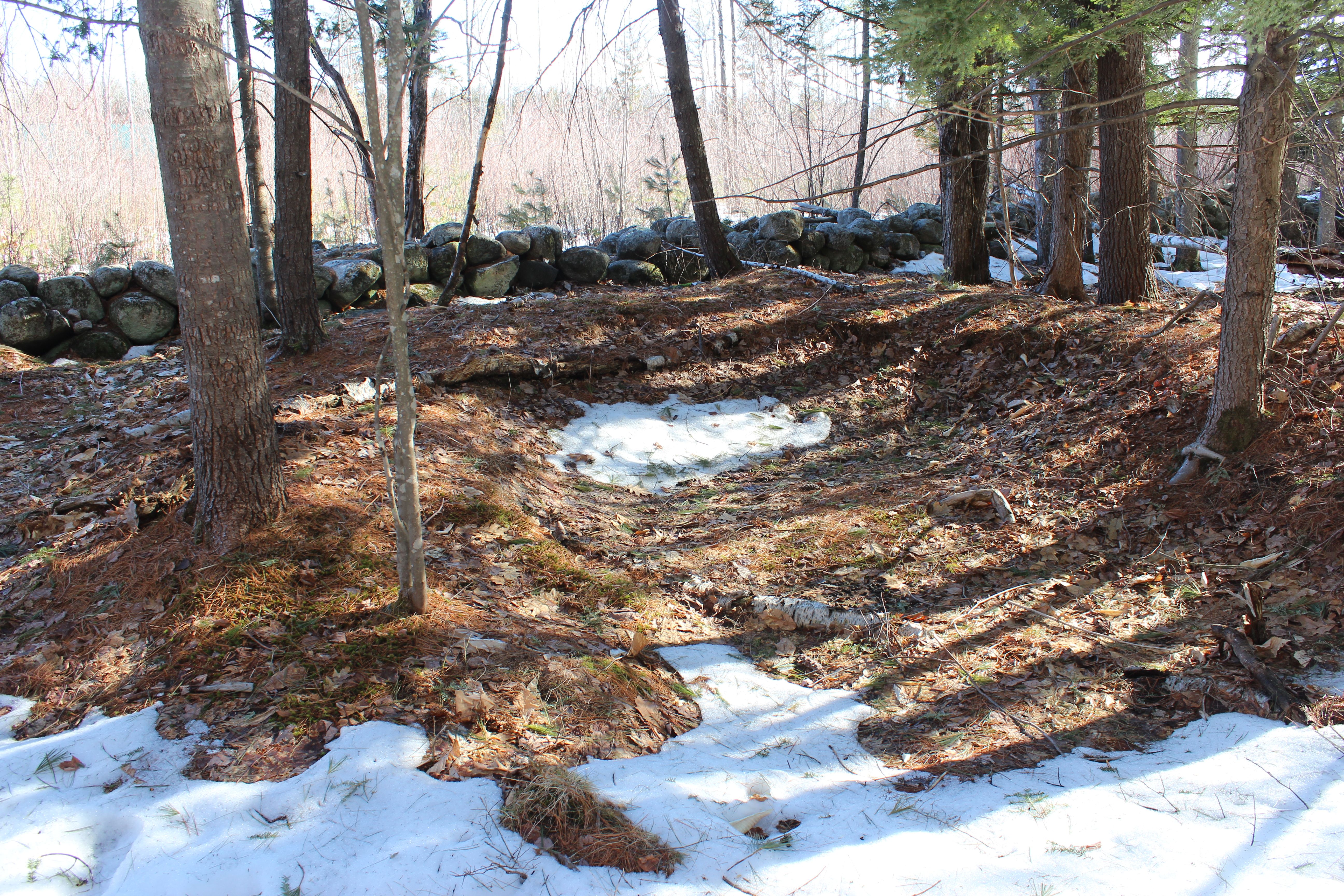
But we pulled ourselves away and went in search of a time gone by. Single and double-wide stone walls line the old road and mark pastures and gardens. Miles of walls.

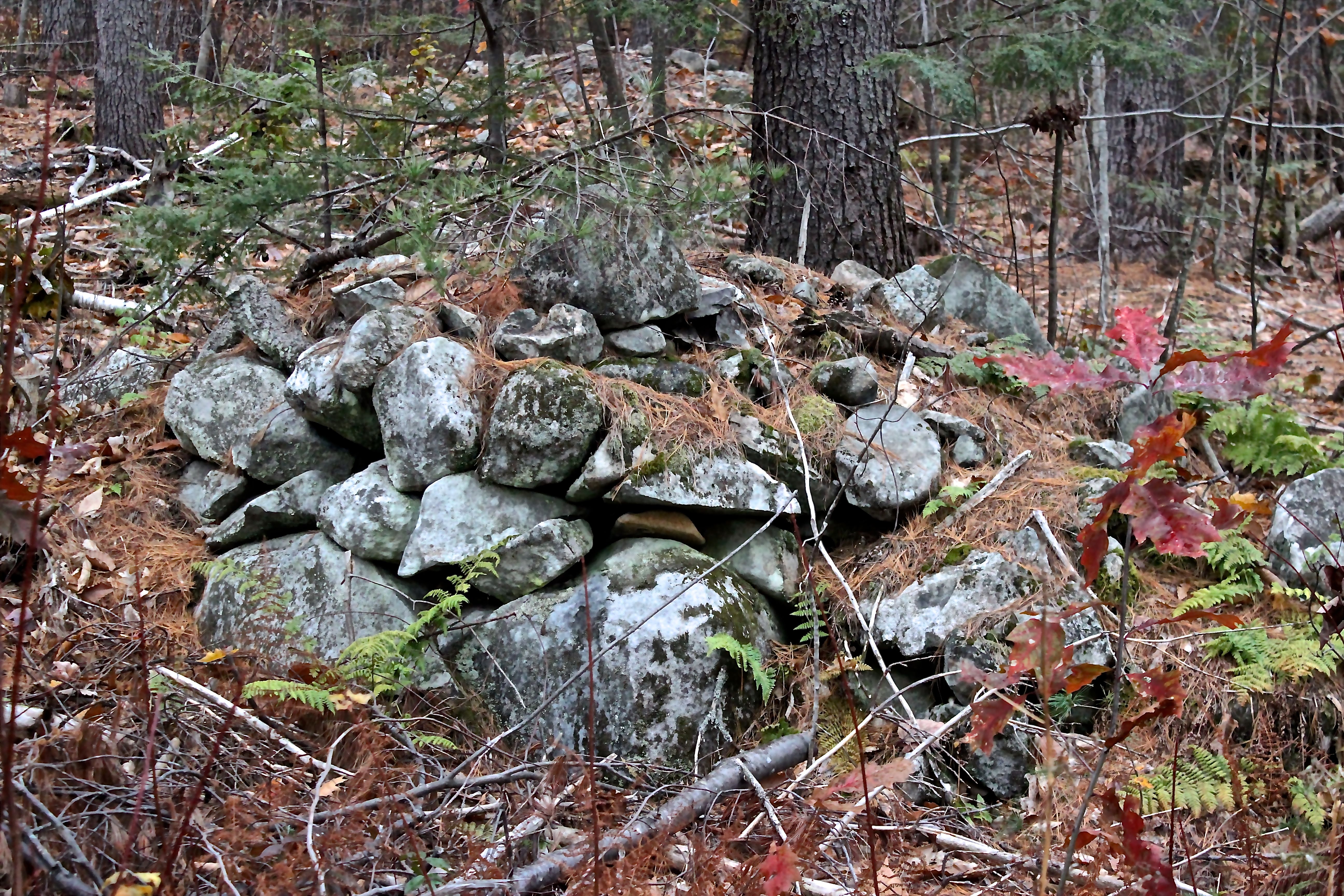
rock pile

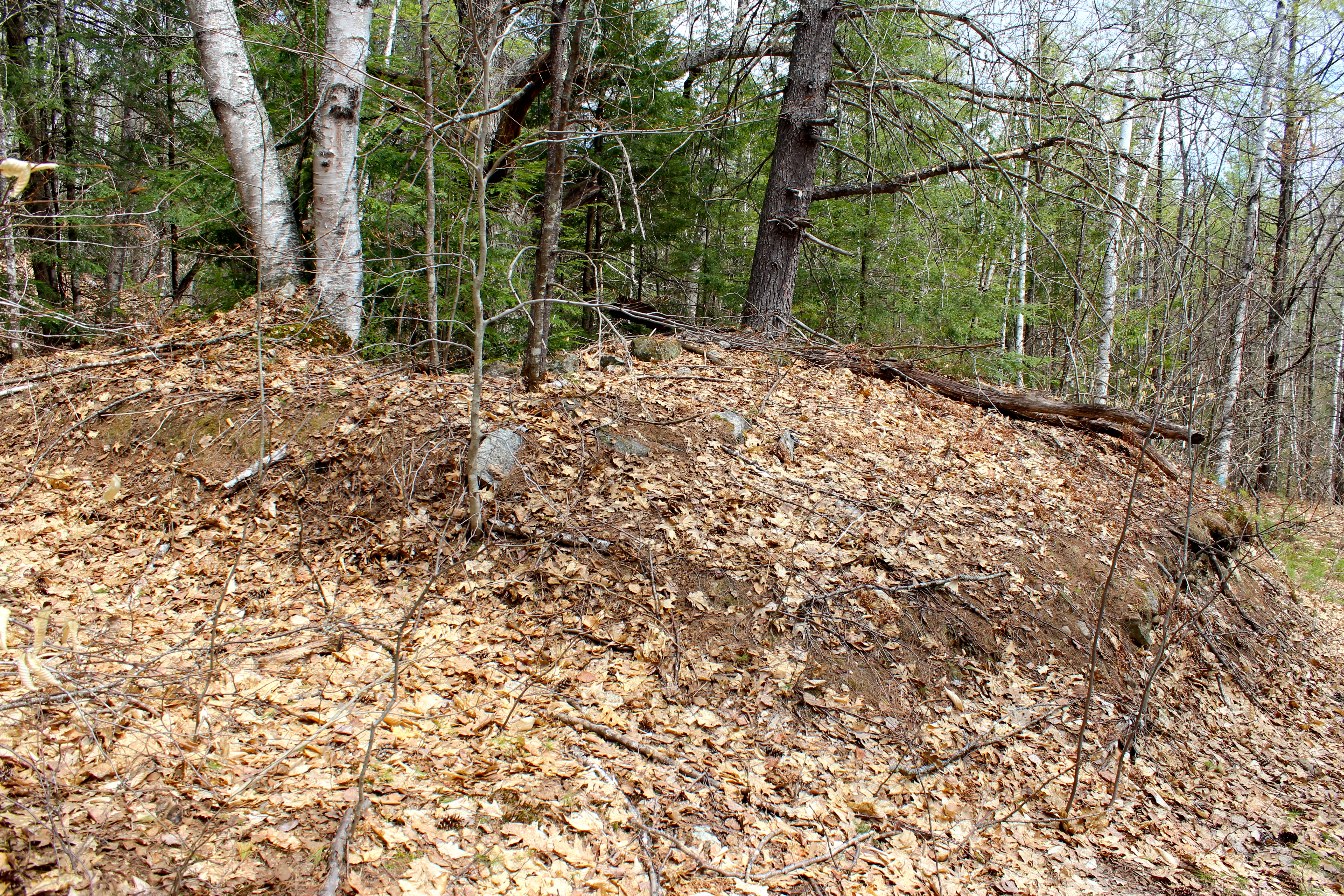
And dotting the landscape–piles of rocks picked from the ground. This was farm country before the forest took over.

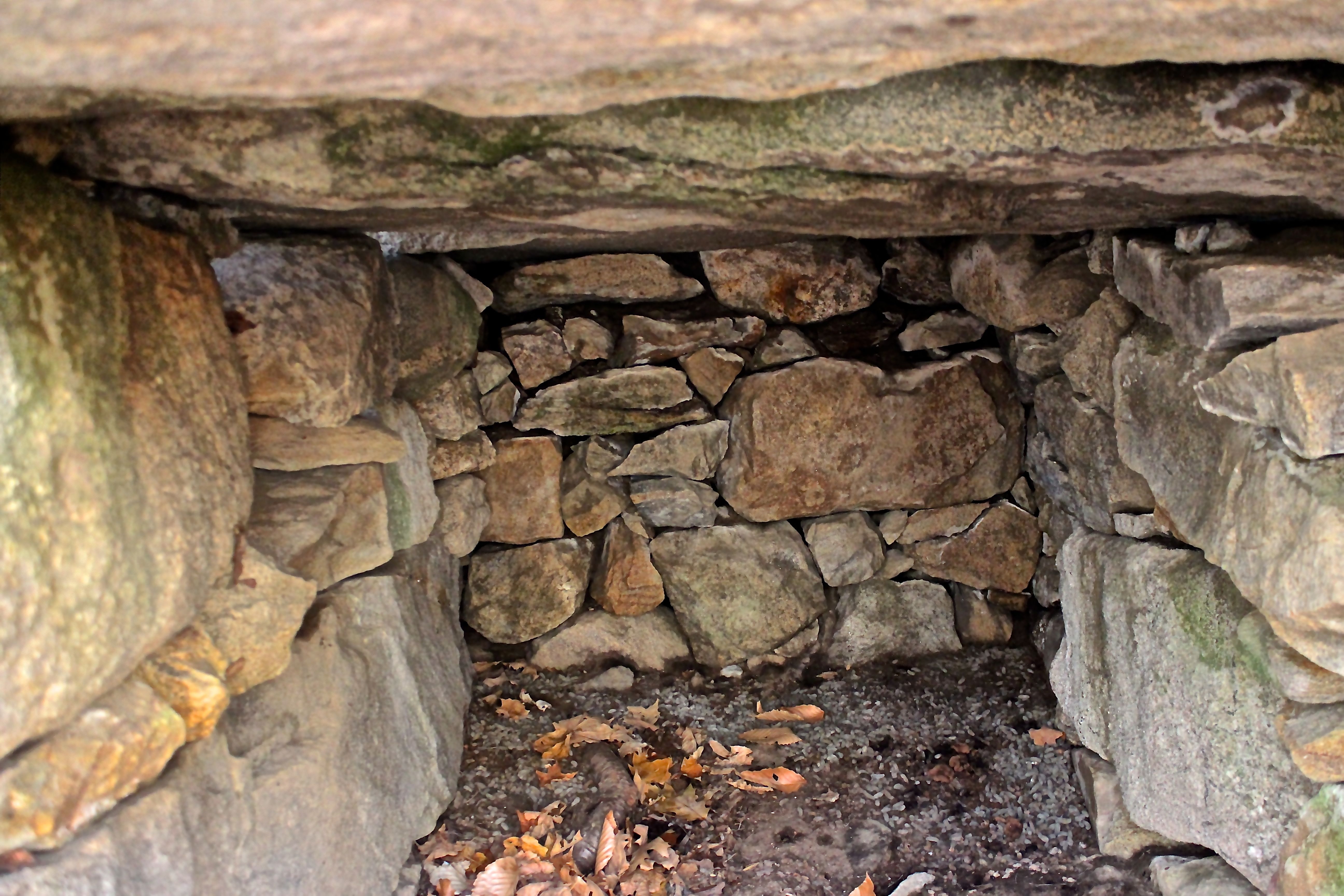
fdn 1root cellar

We called on the neighbors and were glad they didn’t mind us examining their root cellar. The only contents–old porcupine scat in the back corner.

tree

The foundation is big and must have supported a large family. Today, it’s home to a large family tree.

well

It always excites us to find other signs of life–including a stone-lined well; it’s a deep subject.

fdn 2

The neighbors lived up the street in an equally large home. Were they related? We’re still trying to figure that out.

Red Rock Brook

We paused beside Willard Brook before turning back.

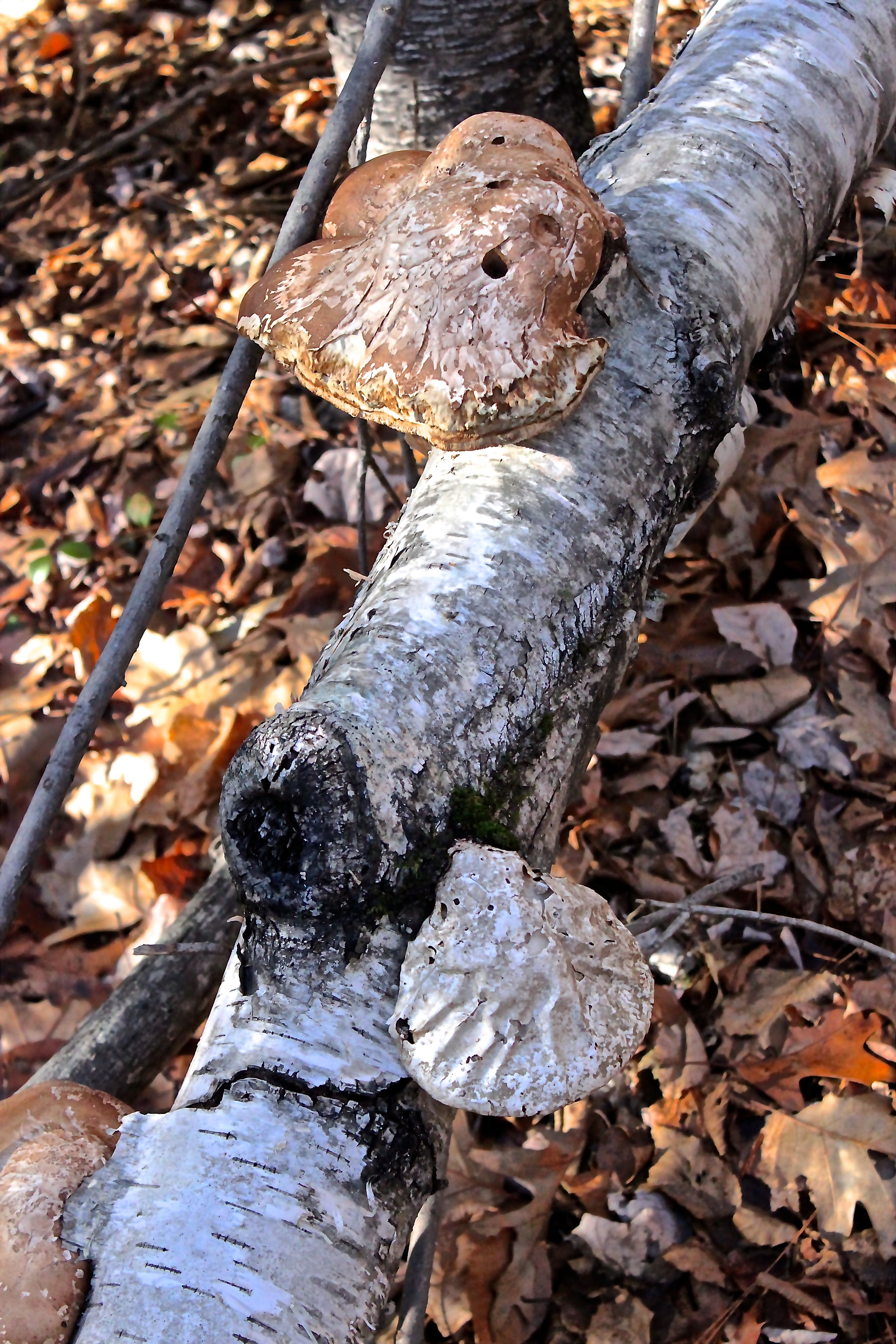
polypores chaga

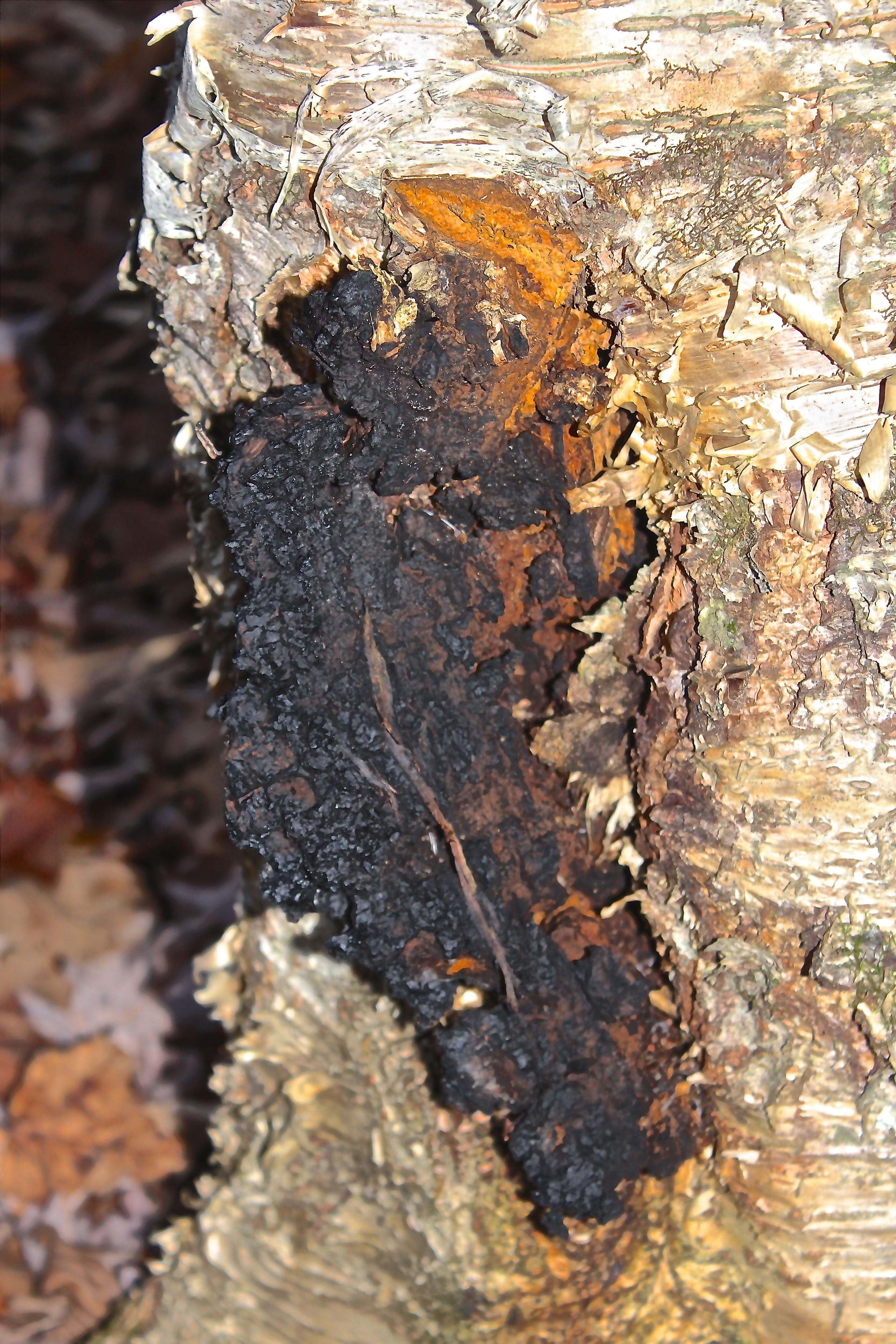
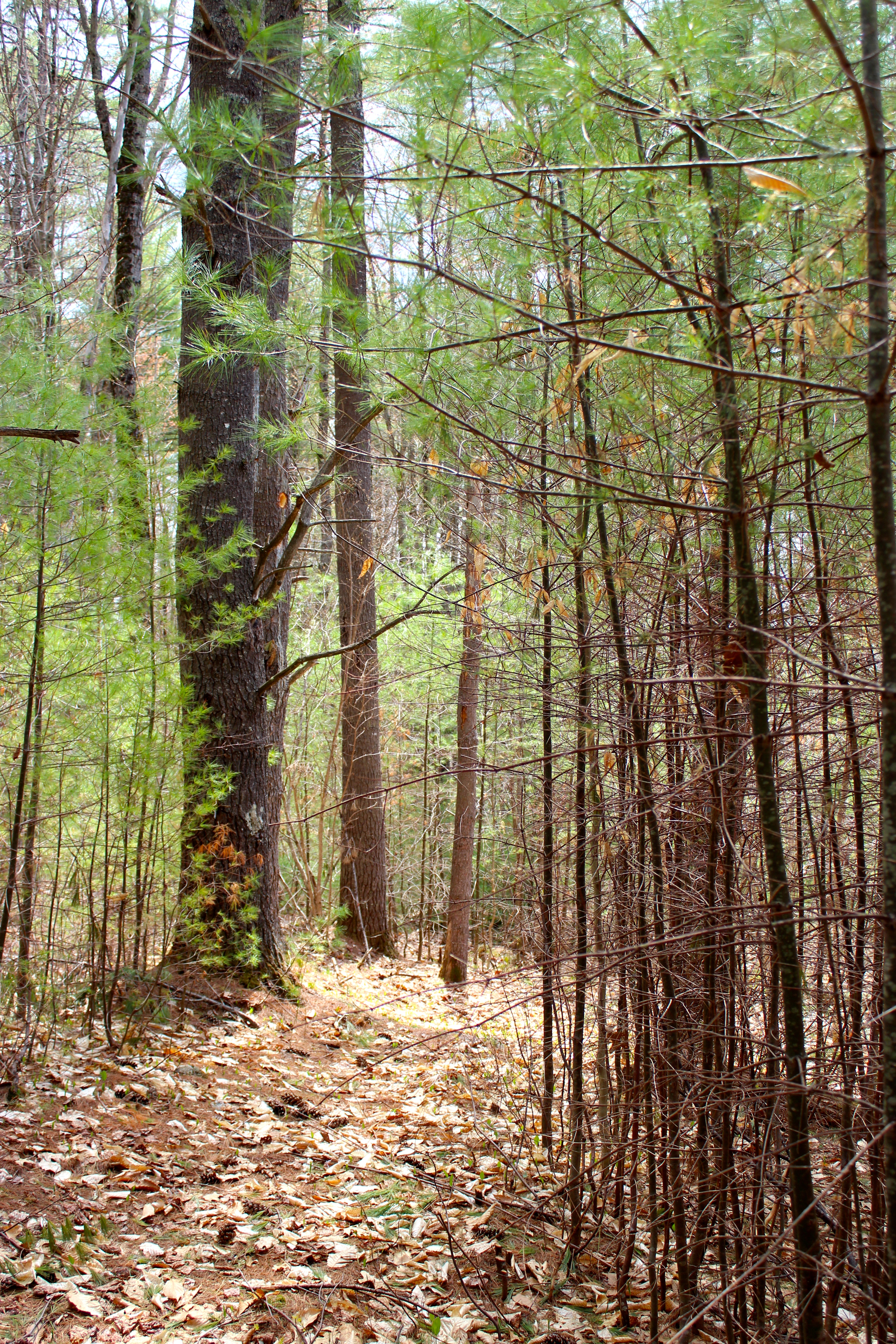
Passing through rich woods, we found ourselves in the land where giant polypores and chaga thrive.

moose scat

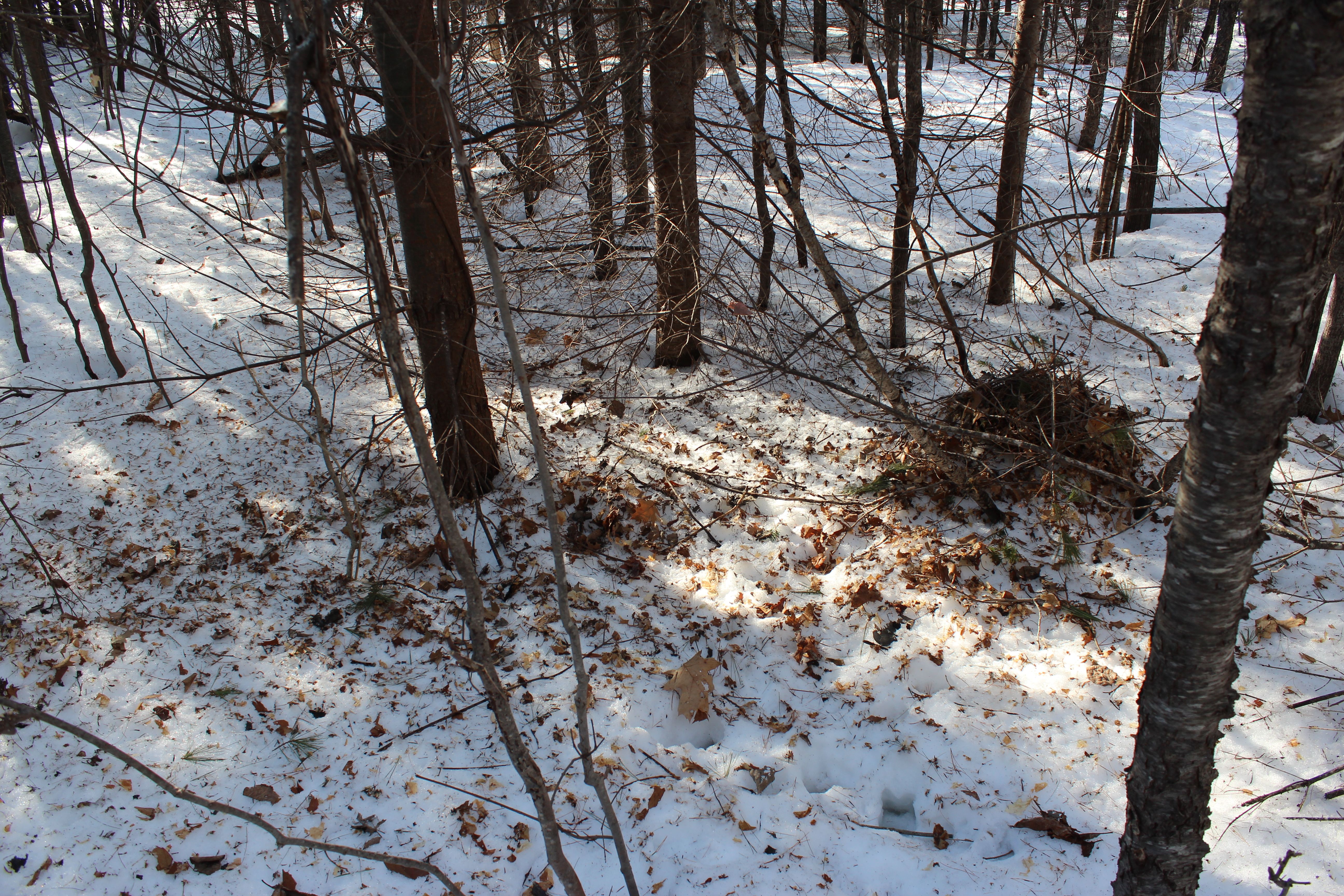
That’s not all that thrives here. Moose browse on striped maple and piles of scat were abundant.

bearblack bear scat

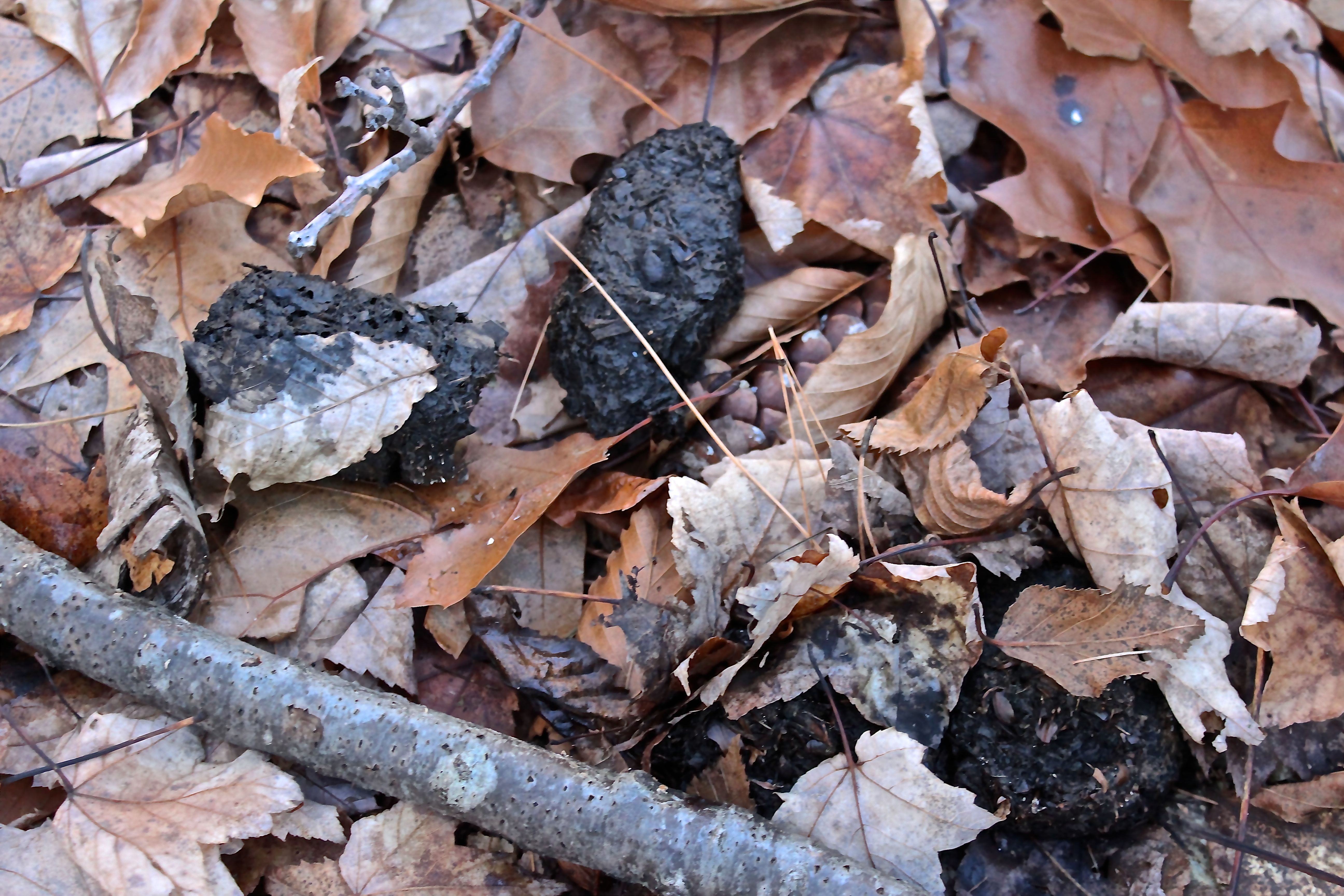
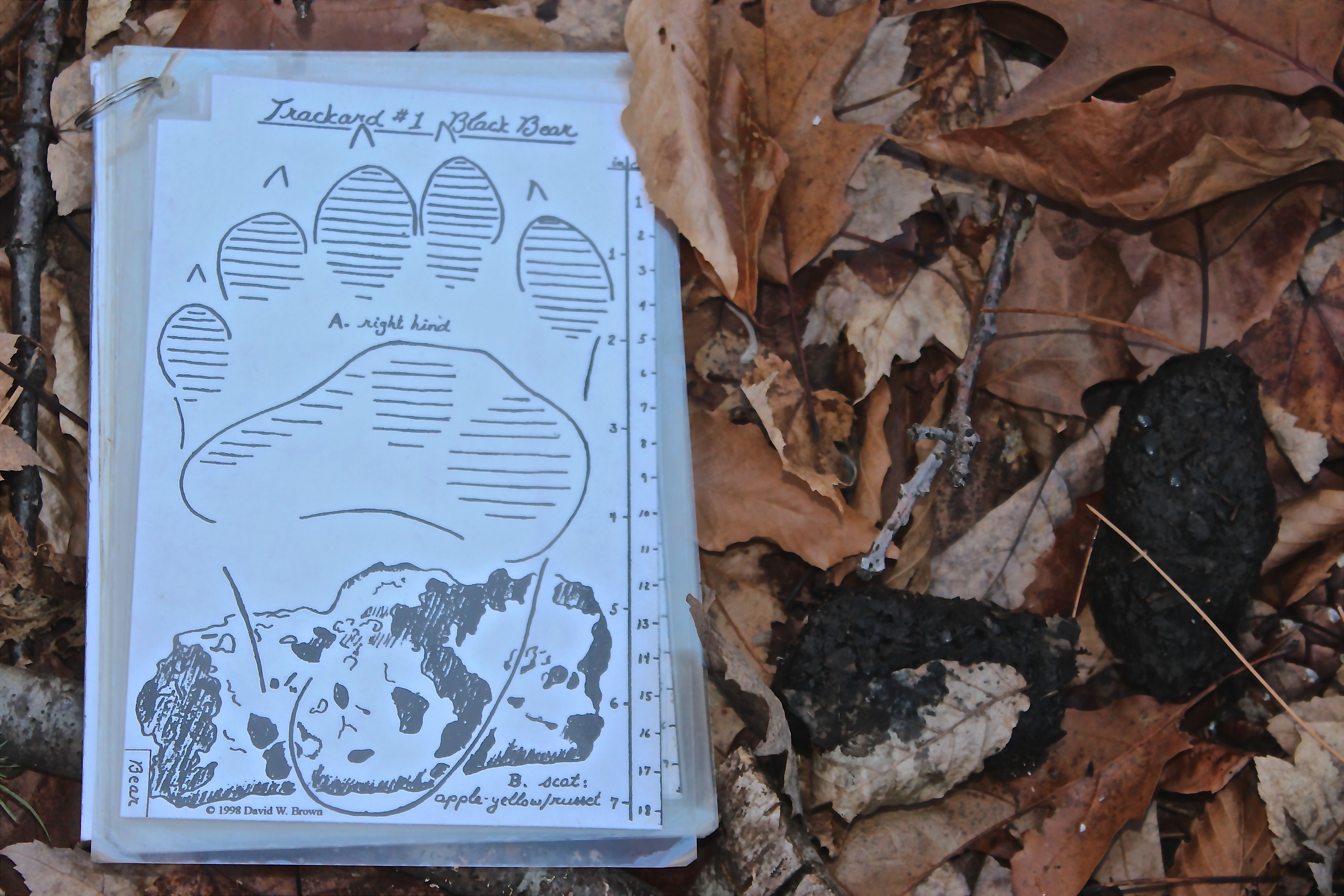
We practically tripped over the biggest scat of all. Well, J.M. tripped. And that’s how it caught our attention. Classic. Love it.

sugar maple

Equally impressive in size and perseverance. And age. The sugar maples.

leaves

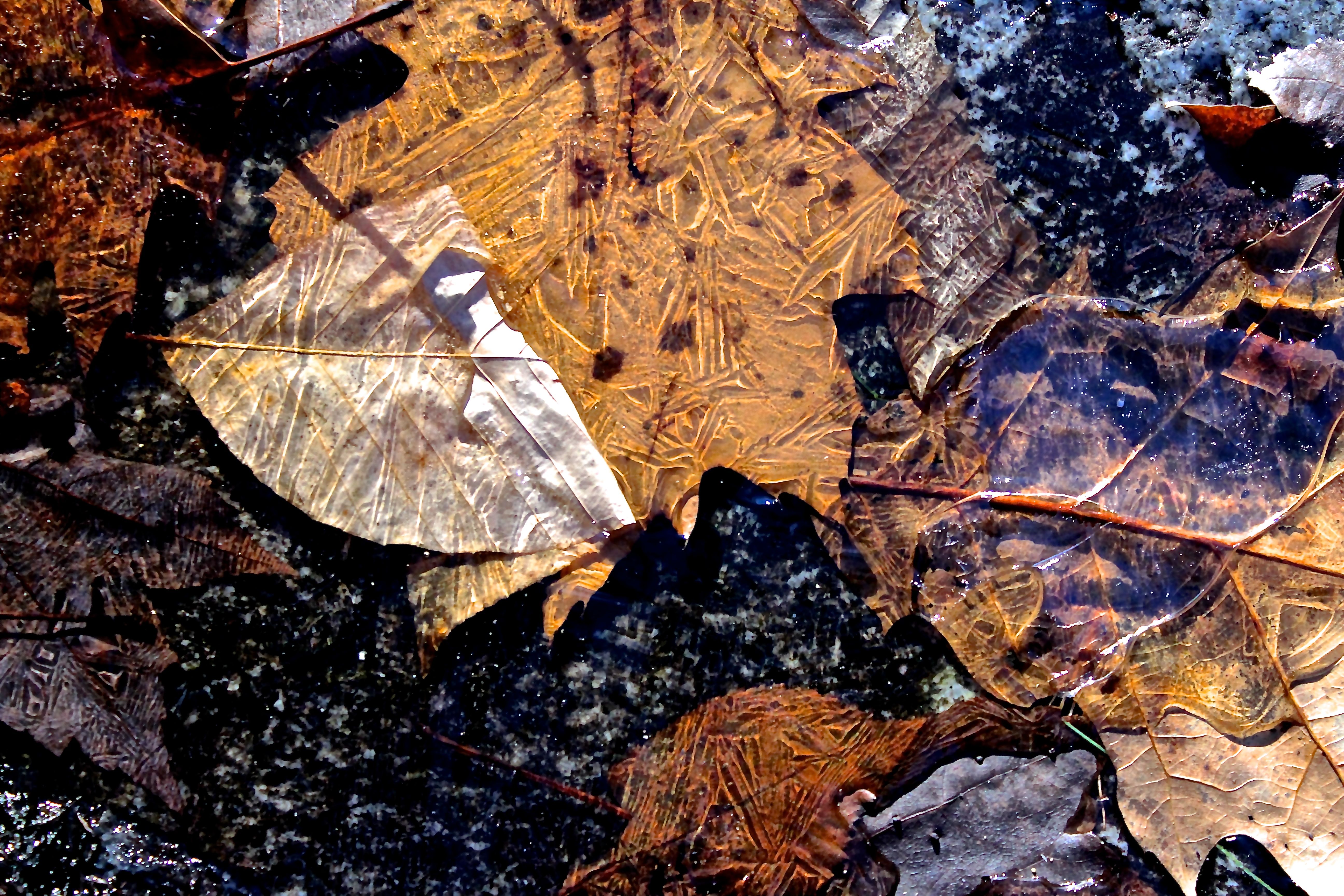
And because J.M. was with me, we saw things I may have passed by like the ice patterns on leaves. We celebrated hiking together knowing that the small things in life are the biggest.

Work We Must Mondate

Today was a day made for some writing/editing work and yard work, but . . . my guy and I managed to squeeze in a hike–yesterday.

Last week, our friend, Dick B., excitedly shared with us a hiking location we’d never explored–Notch Mountain in Porter. He had recently walked the trail with the Denmark Mountain Hikers, a local group that ventures off each Friday.

So it was, we followed Dick’s directions and drove to Porter in search of the trailhead. An easy miss, but we spied the wood kiln he spoke of as we drove past it and turned around at the Hiram town line, knowing we’d gone too far. Backtracking, the trailhead was across from Clemons Point Road and the kiln.

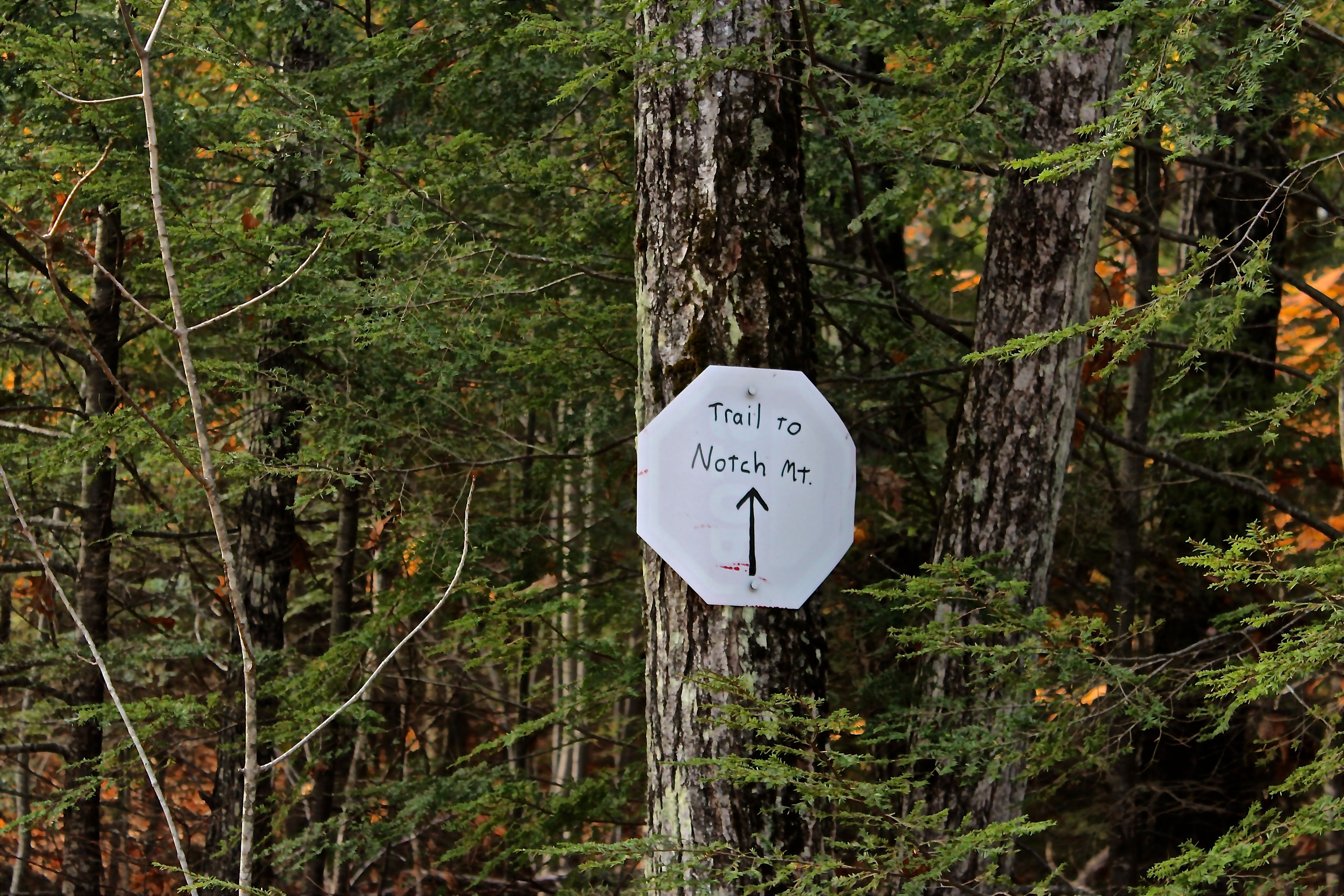
.Notch sign

The sign–about twenty feet in from the road. Unassuming to say the least.

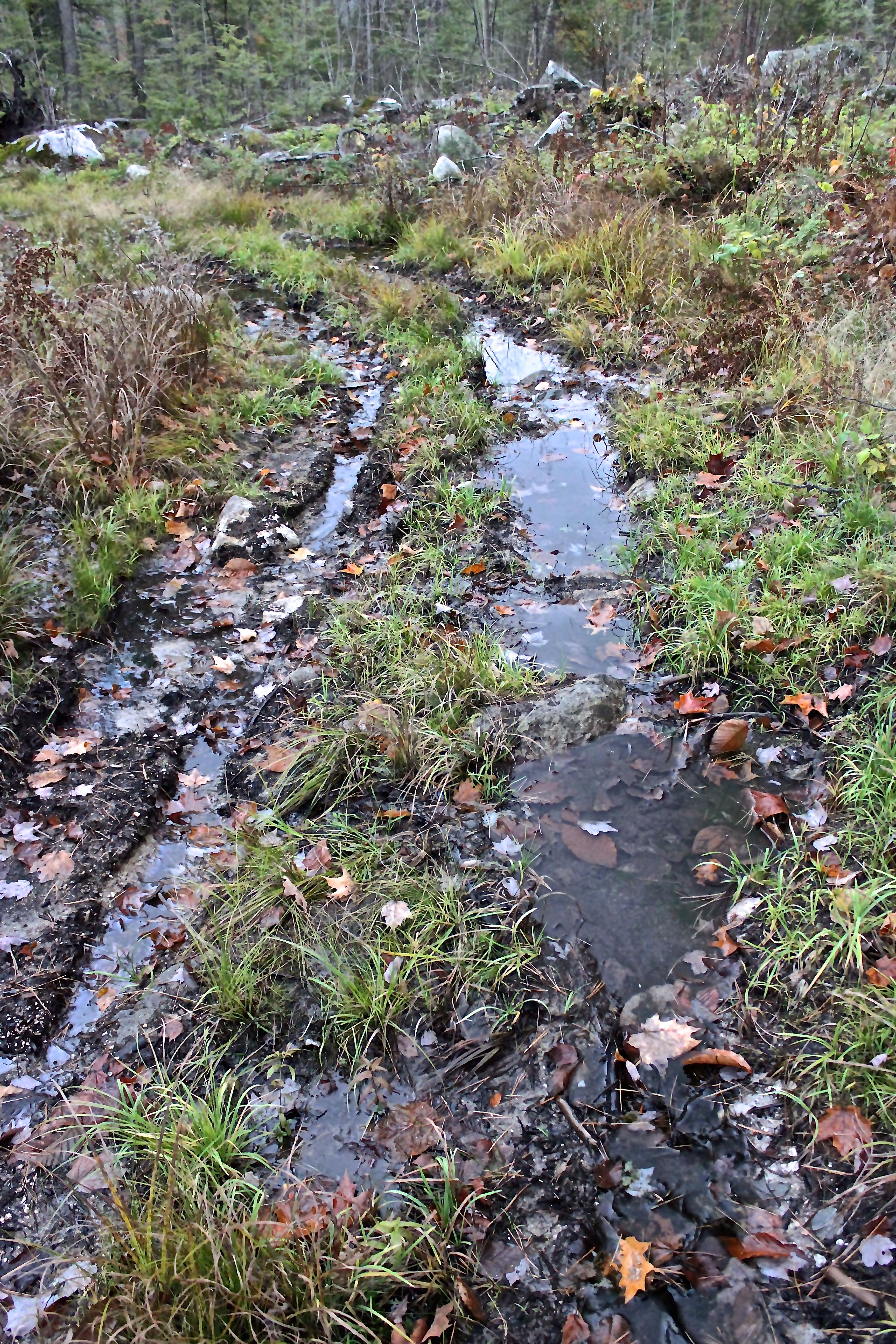
Notch trail wet

As we played dodge the water and looked at the slayed trees, we turned to each other and grimaced. What was Dick thinking?

Notch foundation 1

But we journeyed on and the muckiness abated. Then, this foundation practically jumped out at us.

Notch foundation 2

We weren’t sure exactly what we were looking at, but felt that this was a large house and there was either an attached barn or large shed, or the other structure was located quite close to the house.
Notch fdn bricks

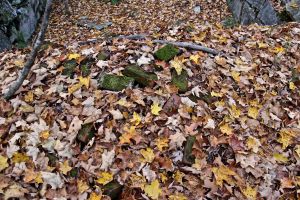
Buried beneath the leaves, bricks indicated a chimney on an outside wall.
Notch tool shed?

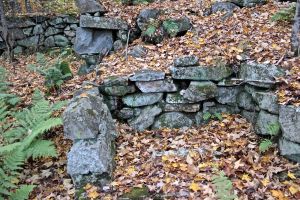
We discovered what may have been a tool shed–a separate, three-sided room.
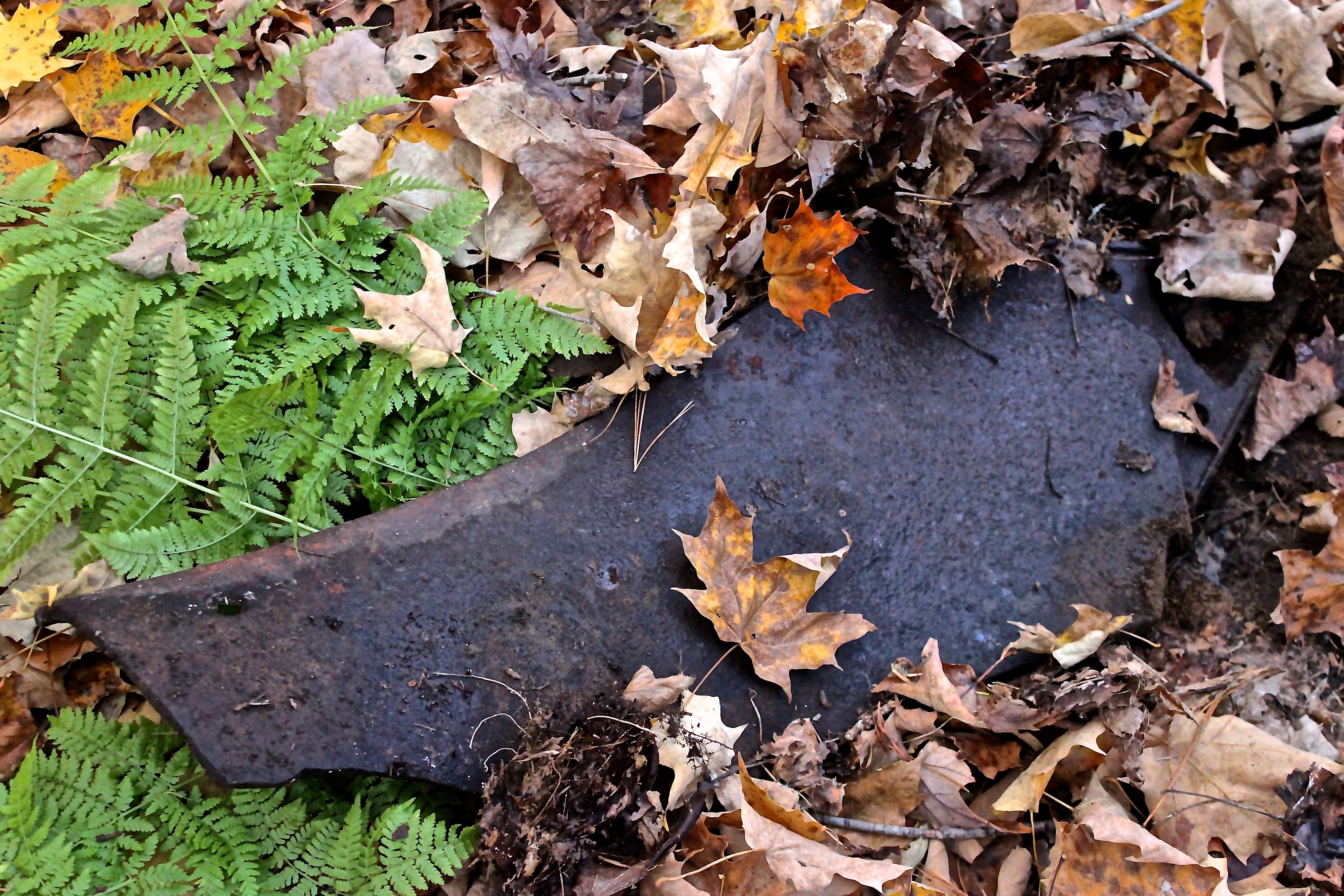
Notch farm remnantNotch plow 2

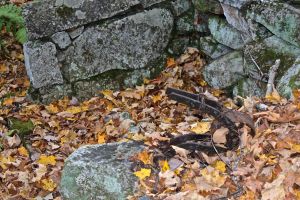
Indeed, we even found a few tools, including a plow, which became significant as we continued to explore along the trail.
Notch fdn feather:wedge

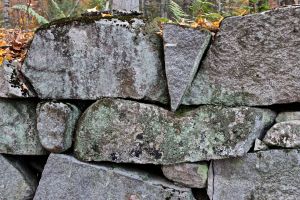
In the barn foundation, I like how one stone is wedged between the other two. It offers a reflection of how these rocks came to be in this place. The minerals, like quartz and feldspar, that are an essential part of granite’s make-up, interlock like pieces of a jigsaw puzzle. The end result: granite is one of the strongest and most durable rocks.

Using the plug and feather method practiced in the 19th century, small holes were hand drilled every six or seven inches across the stone. Two shims, called feathers, were placed in the hole and a wedge or plug was hammered between them. The farmer probably built this house in the winter when his farming duties weren’t as plentiful. And by drilling then, ice formed in the holes and helped to complete the work of splitting the granite. He and his family would have used a stone boat or sledge pulled by oxen to move the stones into place.

Notch mound of stones

A little further along, we came upon a massive wall of medium-size stones. This farmer must have cleared many, many acres, thus producing an incredible stone potato crop. And then moved them all so he could plow. My fingers twinge and my back hurts just thinking about all the work involved–makes our yard work look so easy.

Notch trail

On either side of the trail were stone walls, indicating this was more than a logging road at one point in time.
Notch big rocks

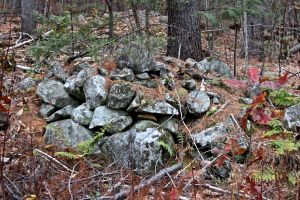
Throughout the woods, we found more piles of rocks, some with small stones and others, like this with medium-size stones. Rather than quilting bees, this family must have enjoyed stone bees–an exercise to remove as many stones from the ground as possible.
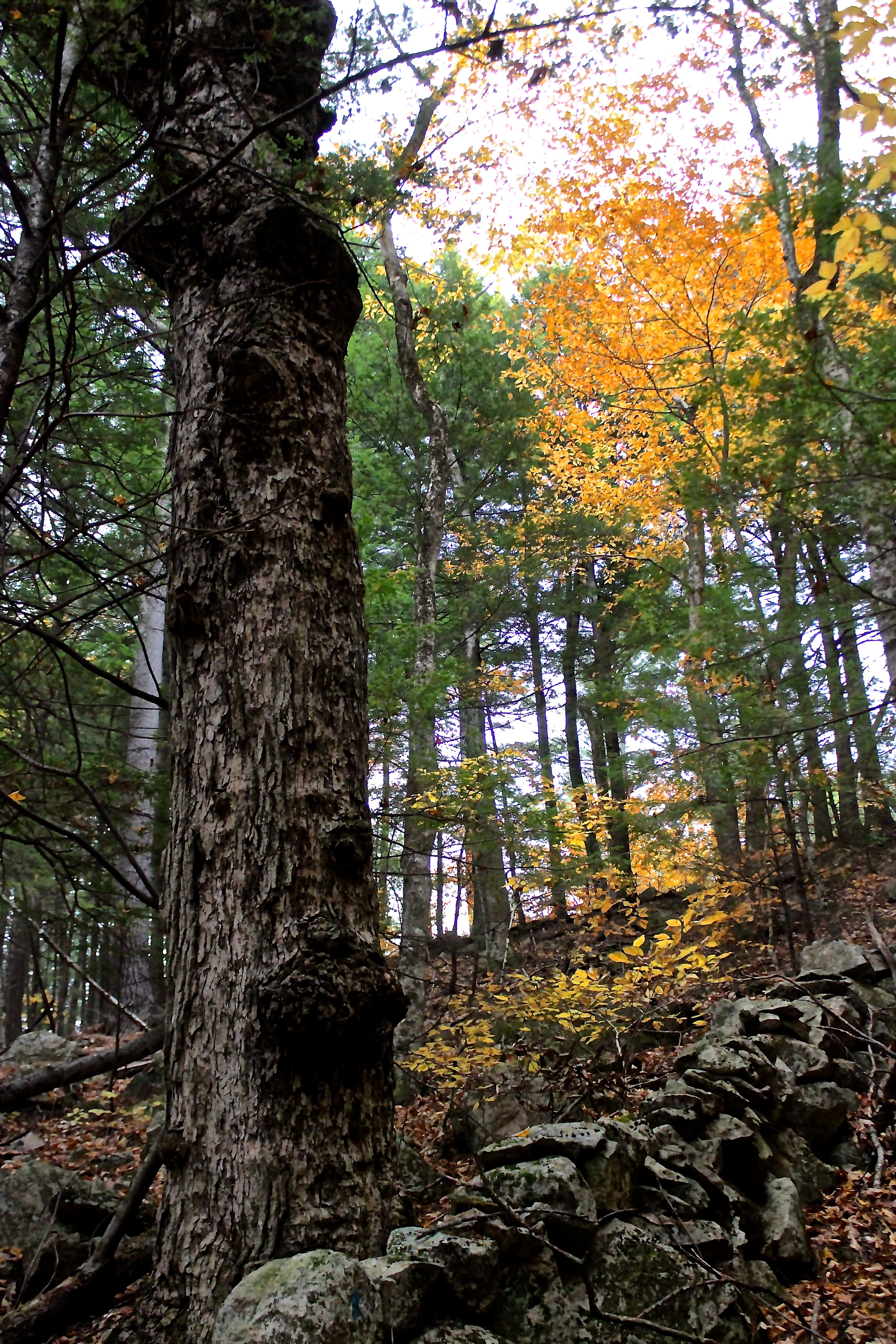
Notch wall:gnarly old maple

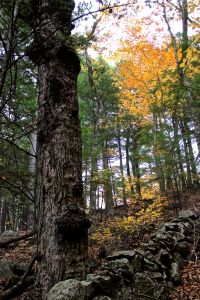
The stone wall frenzy is evidenced all along the trail. Sometimes double-wide garden walls, and other times single walls, also called farmer or pasture walls that were built as boundaries, and to keep animals from destroying crops.
Notch cemetery

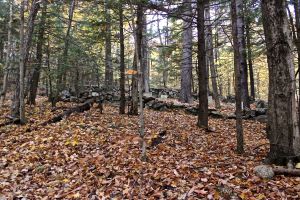
Dick had mentioned the Wormwood cemetery, but we were still surprised when we happened upon it.
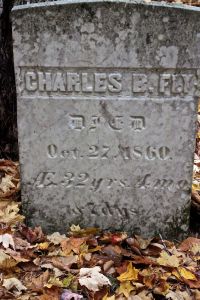
Notch grave 2

Charles B. Fly

b. Jun. 20, 1828; d. Oct. 27, 1860
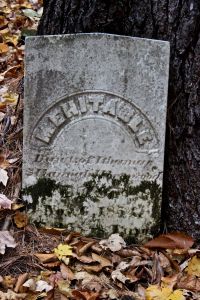
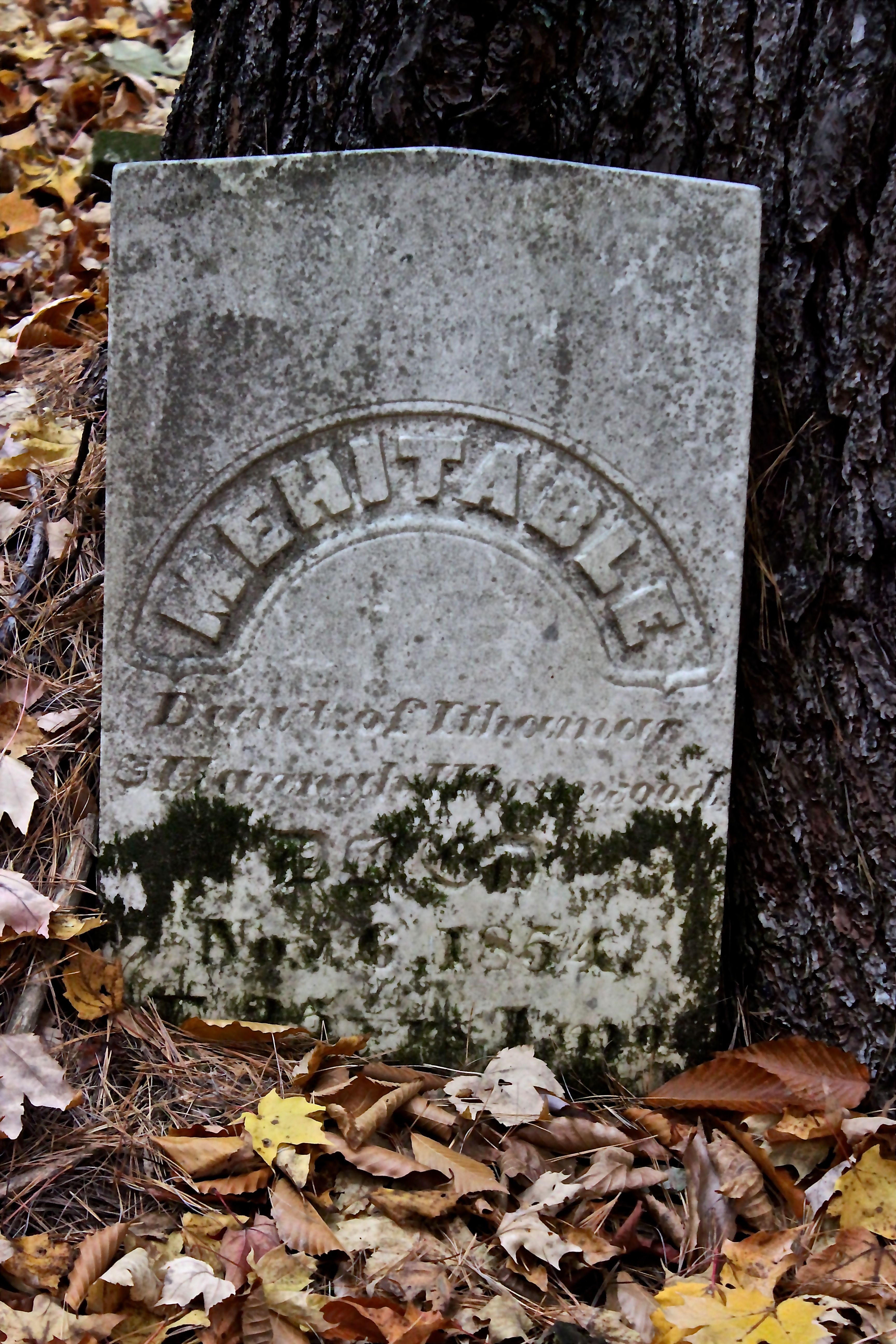
Notch grave 1

Mehitable Wormwood

b. Oct. 16, 1825; d. Nov. 27, 1851
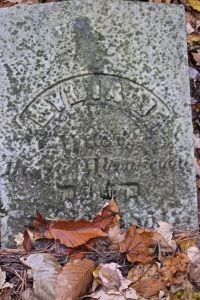
Notch, stone 4

Lydia Jane Osgood Wormwood

b. 1826; d. Dec. 27, 1851
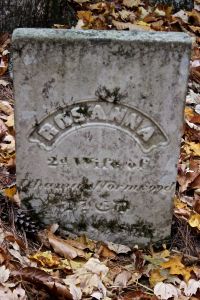
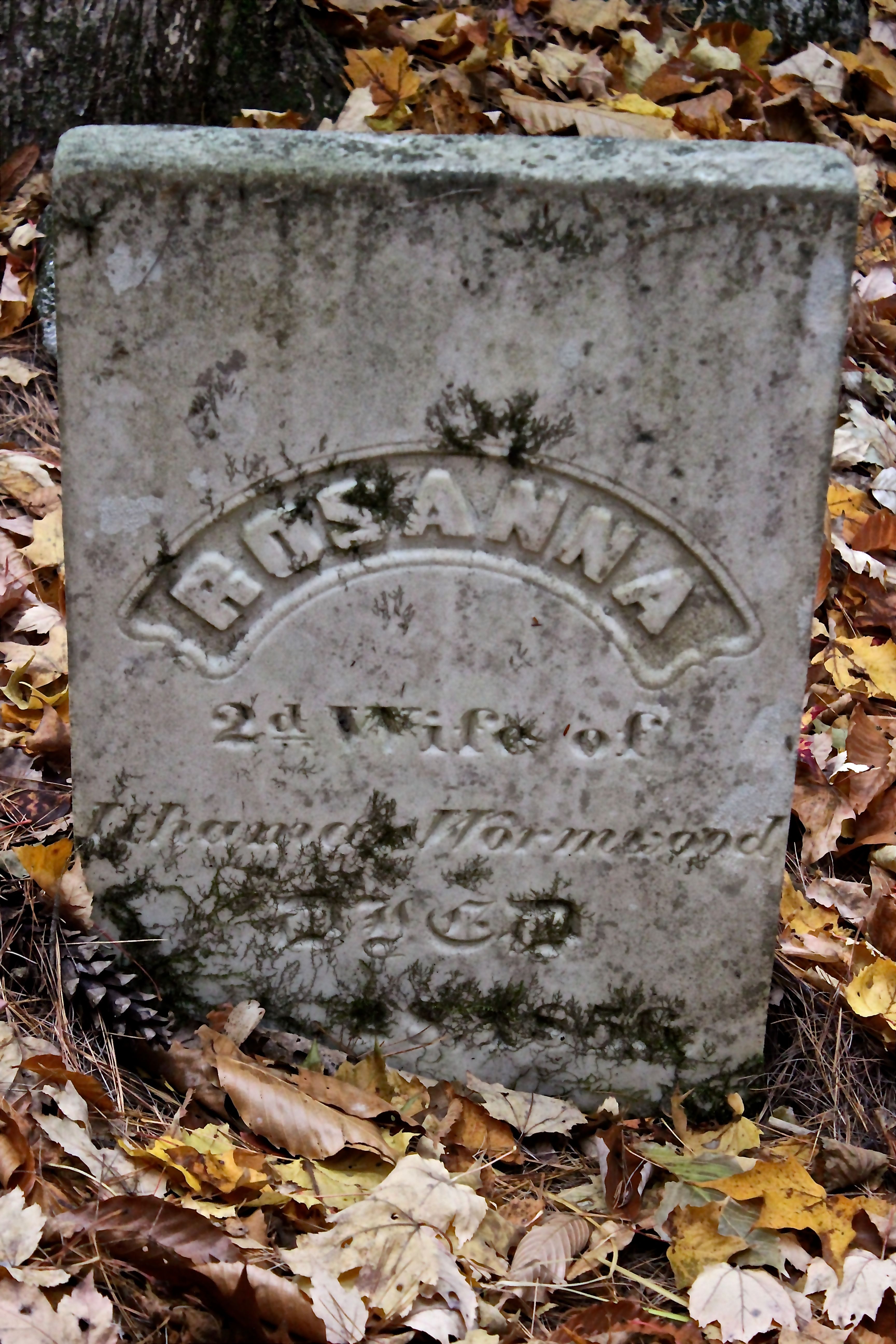
Notch, stone 3

Rosanna Warren Wormwood, 2nd wife of Ithamar Wormwood

b. Oct., 1791; d. Feb. 28, 1856
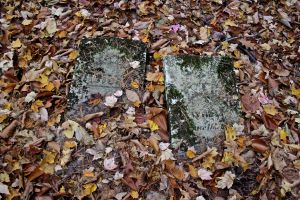
Notch, 2 stones

Hannah and Ithamar Wormwood (b. May 29, 1791; d. Jul. 16, 1865). Two-year-old Jason Fly was also buried here.

Apparently the Flys were related to the Wormwoods, which makes sense. I suspect that there are other foundations to be discovered, but I was with my guy–Mr. Destinationitis, and so we continued toward the summit.
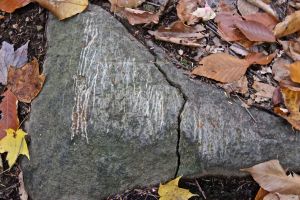
Notch glacier

As we climbed, we noticed glacial striations on rocks (aka snowmobile etchings),

Notch, beech contortionist

beech trees that think they are contortionists,

Notch oaks

and a mix of white and Northern red oak leaves.

Notch summit 1

Then the summit came into view.

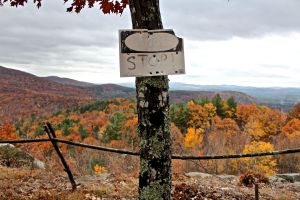
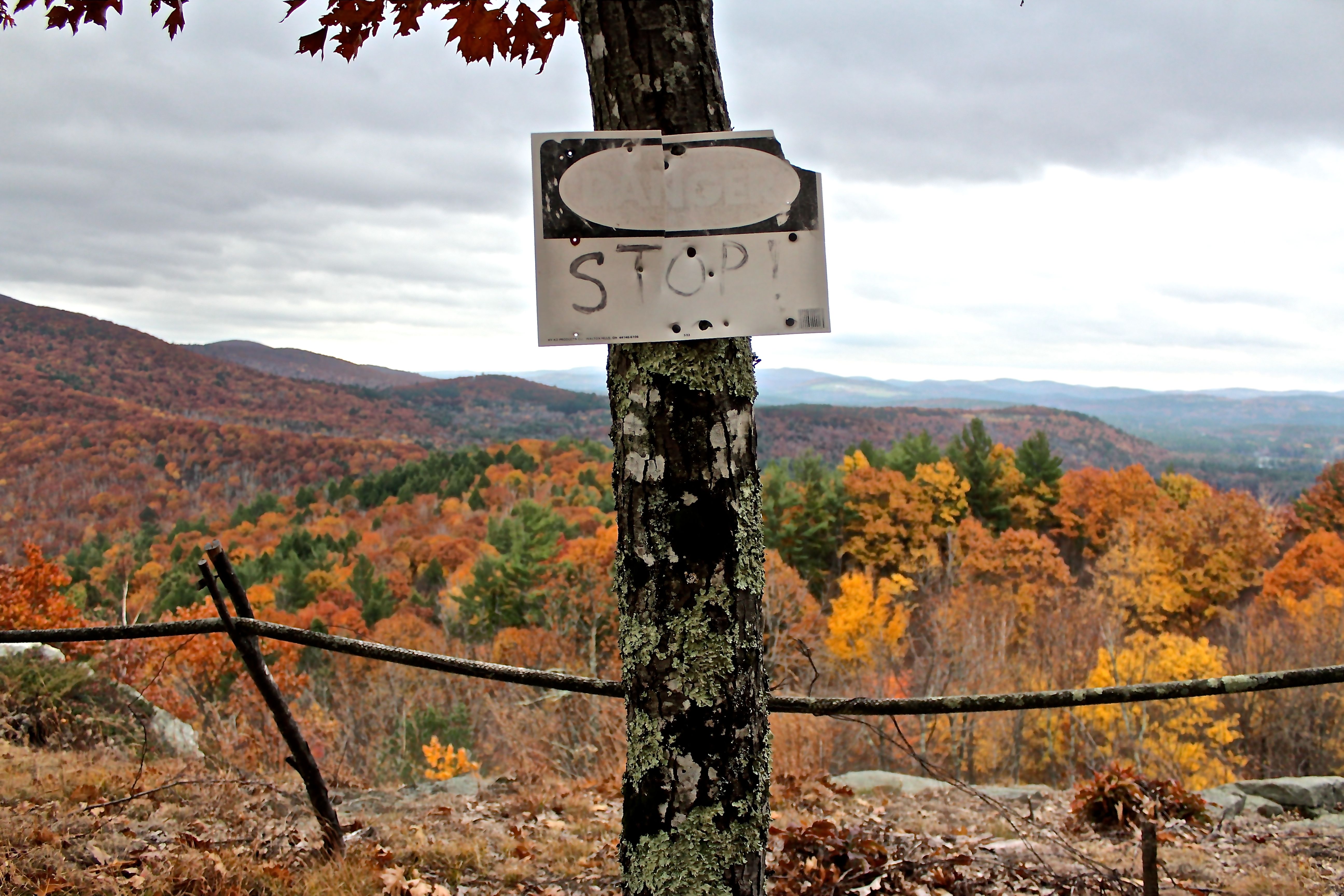
Notch stop sign

Thank goodness for the faded stop sign
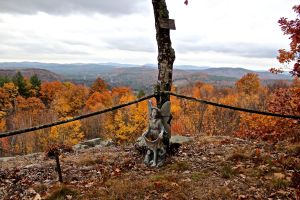
Notch summit fairy

and the fairy who watches over all who step too close to the edge.

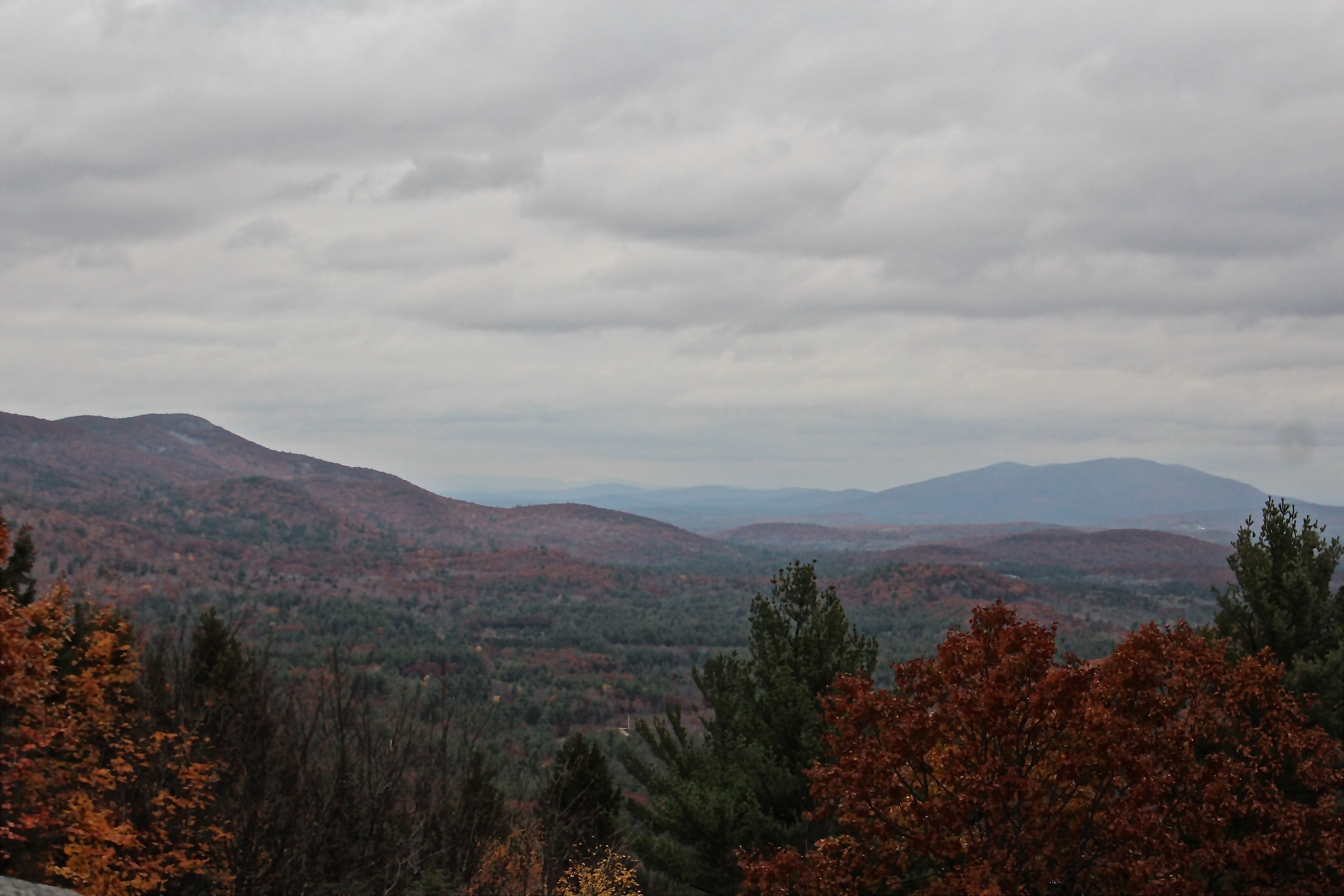
Notch view

As the rain clouds gathered, we ate our PB&J sandwiches, this time topped off with Halloween candy and views of Clemons and Little Clemons ponds.
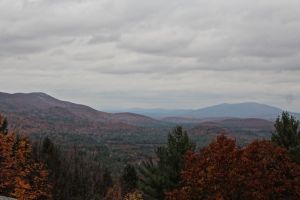
Notch, burnt meadow and pleasant

Burnt Meadow Mountain and Pleasant Mountain formed the backdrop.

We hiked down among rain drops, but the sun shone once we arrived home.
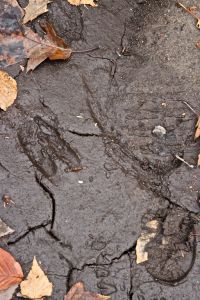
mansion, hunter and hunted

I was restless and didn’t want to deal with yard work, so I went for a walk and came upon evidence of the hunter and the hunted.

Today, while our work continued, I had the opportunity to escape to Pondicherry Park for a stewardship committee meeting–now that’s my idea of a great meeting place.
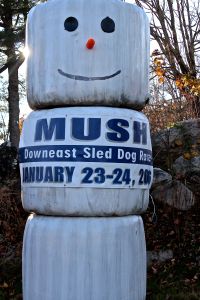
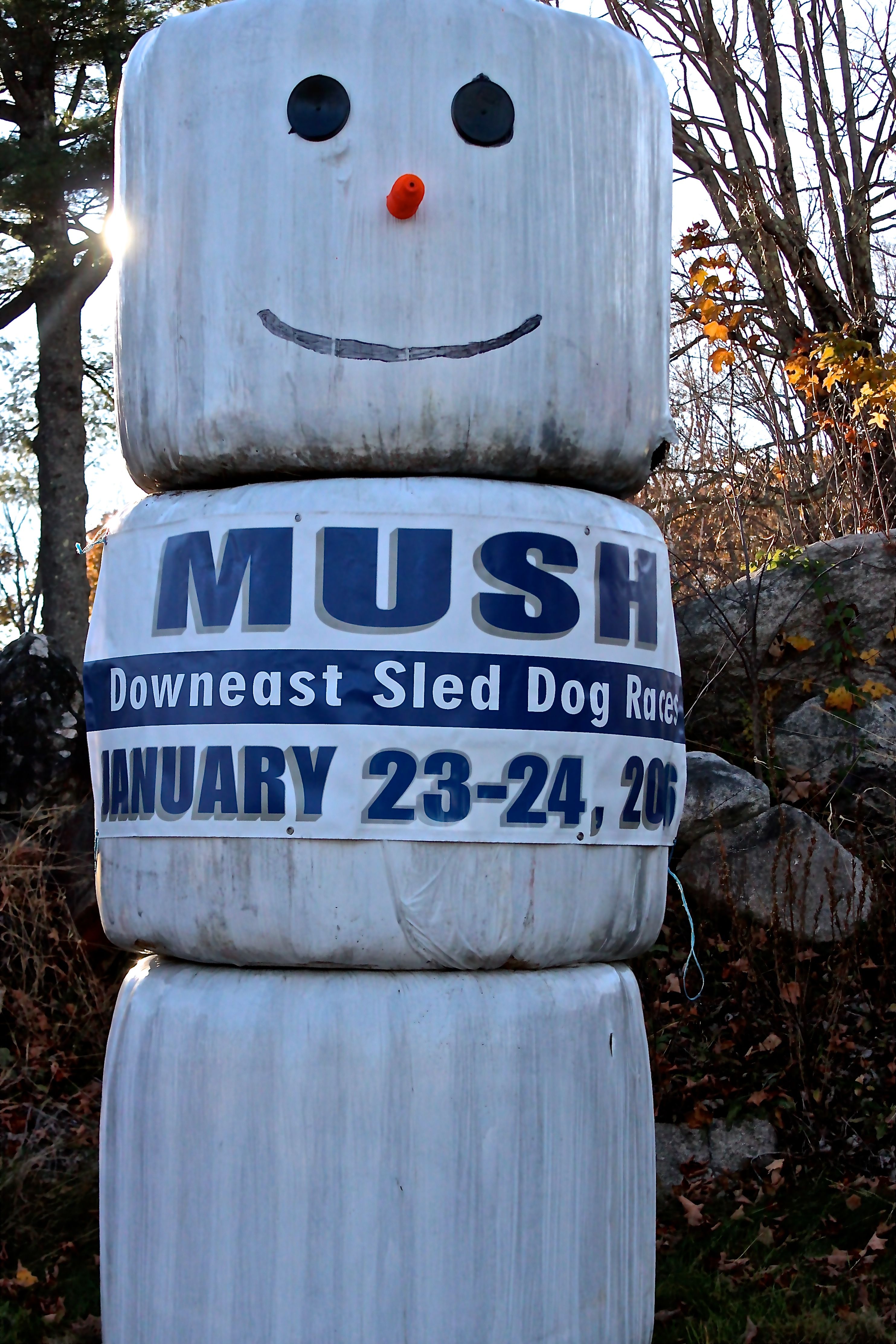
snowman

On my way, this guy reminded me that the next season is right around the corner (literally).
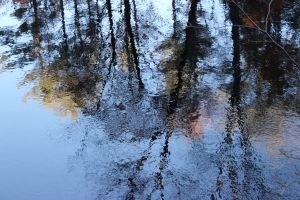
Pondicherry Reflection

And in the park–still plenty of color to reflect upon.

We know we have to work, whether to earn a living or maintain a home, but we do love our opportunities to explore new and old places. Thanks for sharing this one with us, Dick. It warrants further exploration to wander and wonder.

Nature Works

Sometimes when you walk off the beaten path you discover that you are actually on the beaten path. A path once created by those who walked before. Such was the case today for ten of us from the Greater Lovell Land Trust.

We began our journey by carpooling from the main road, Route 5. One side road led to another, much curvier and bumpier. Eventually, that road became a dirt road. And finally, it ended at a gate where we parked.

There were several choices of paths to follow and we choose the one closest to the brook.

early fall day

As we crossed the brook, my eye was drawn to the changing color of the maple leaves. The days have been warm and sunny, but the nights are beginning to cool down and so sugar made in the leaves during the day gets trapped there. As the leaves begin to stop their food-making process, the yellow, red and orange carotenoids that are masked by the green pigment all summer slowly become visible.

downy woodpecker's feathers

One of our docents had a keen eye today. While the rest walked past, she spotted this dinner site. Downy woodpecker feathers and body parts. Good find, Ann.

got mail

Got mail? Though this mailbox wasn’t our intended destination, it’s on the way. We wondered about its purpose, knowing it was beside a former logging/hunter camp. But still . . . it struck us as odd.

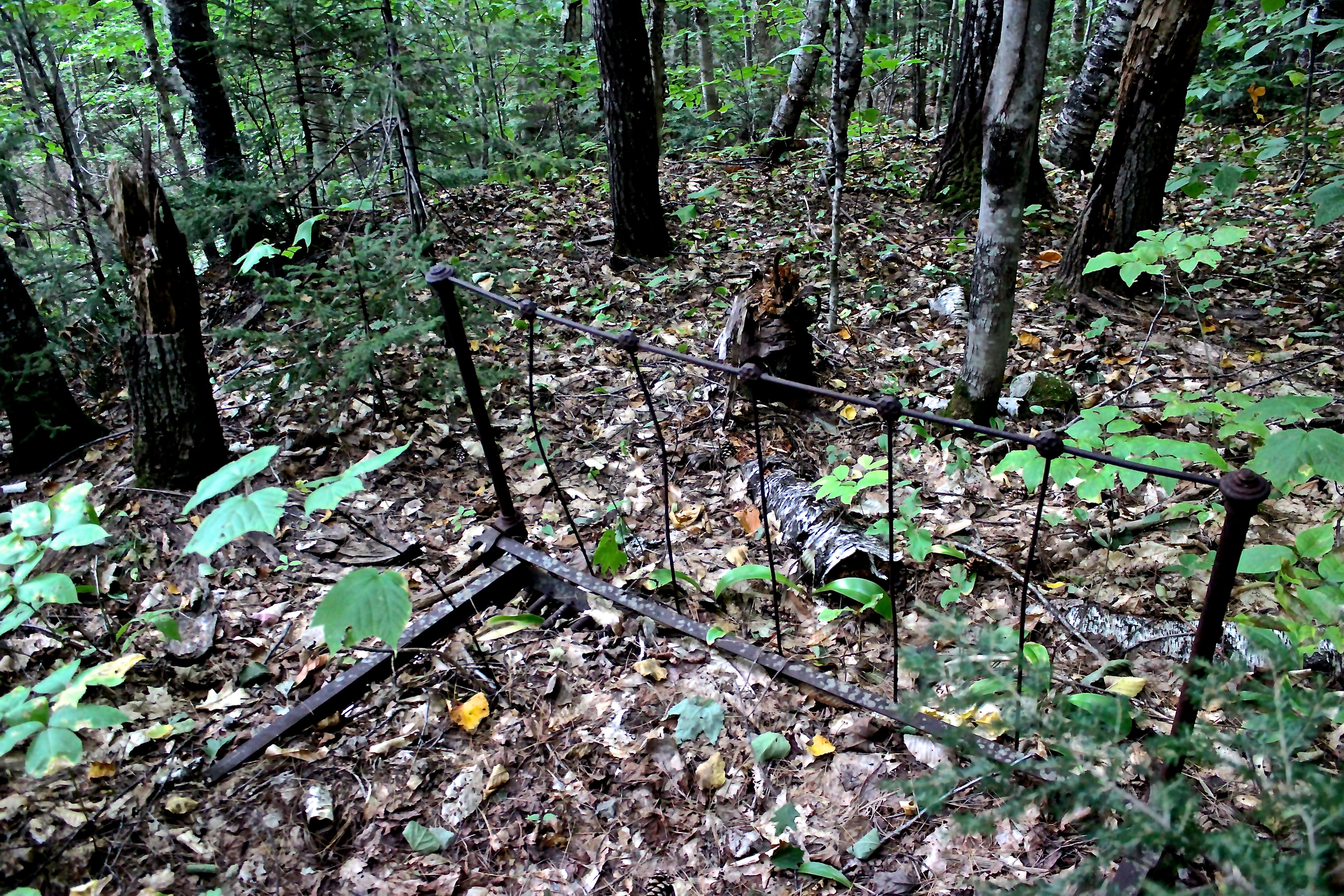
bed frame 1

Nature slowly reclaims that which was left behind.

massive yellow birch

We turned right at this yellow birch. Though we didn’t hug it, I think it would have taken two or three of us to embrace this tree. There were others equally as big or bigger–mostly sugar maples, which led a few to surmise that they were left because of their importance for sap production.

country lane

At last we were in the old neighborhood, where the path existed between two single-wide stone walls. The farmland is bordered by numerous walls that stand stalwart, though some sections are more ragged that others.

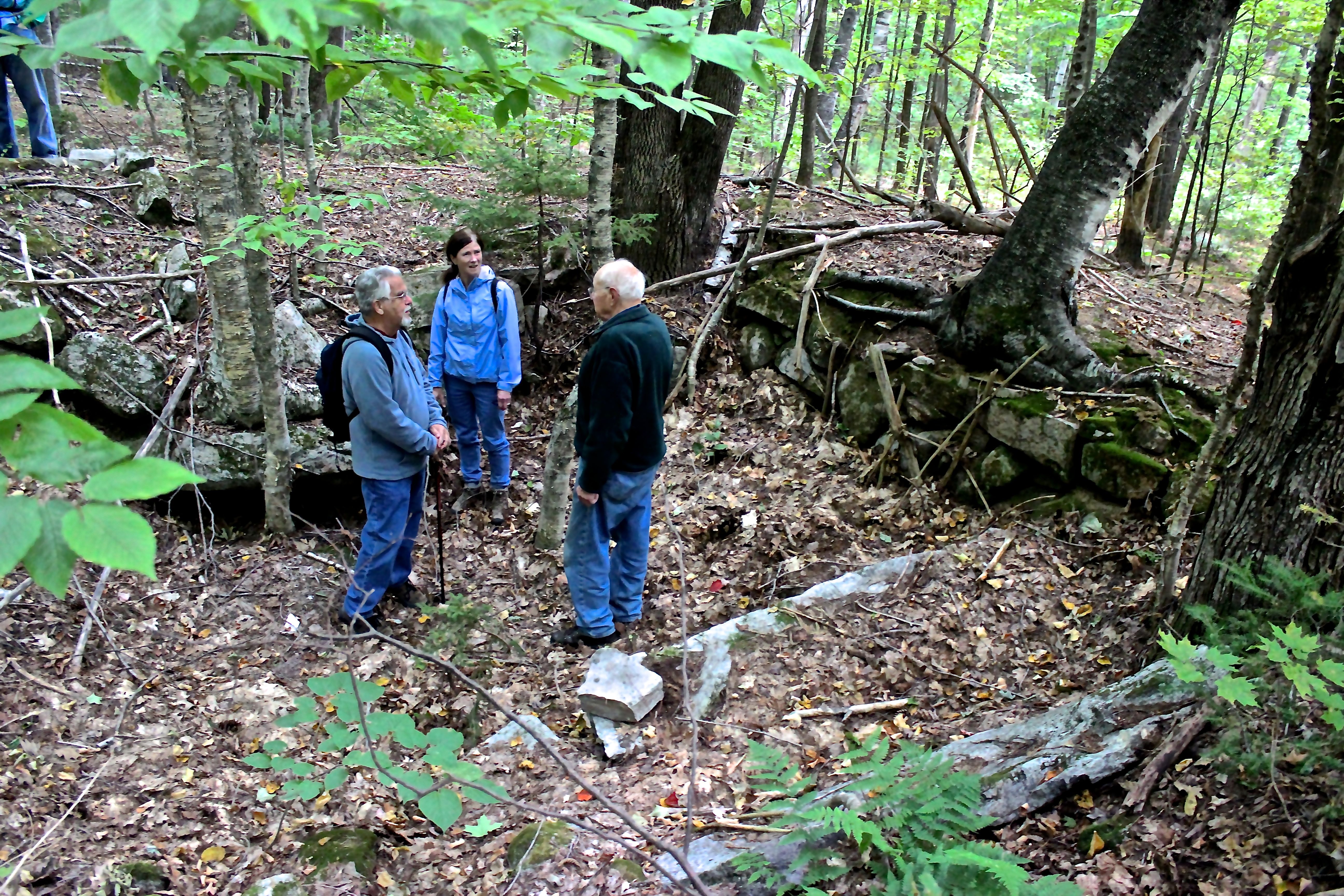
chatting in the parlor

Standing in the parlor, my friends tried to make sense of an old foundation. Trees, roots, frost, weather, critters and humans have added to the foundation’s demise, but what remains left us in awe of those who had lived on this land. We suspect the neighborhood was abandoned post Civil War, when soldiers/farmers discovered that there was fertile ground elsewhere where stone potatoes were not the number one crop.

root cellar

Within the cellar of a neighboring foundation was a root cellar.

root cellar 2

Taking a closer look, we learned that someone else has made use of it. Or should I say something else–a porcupine. The back corner is filled with scat.

snapping turtle headshape

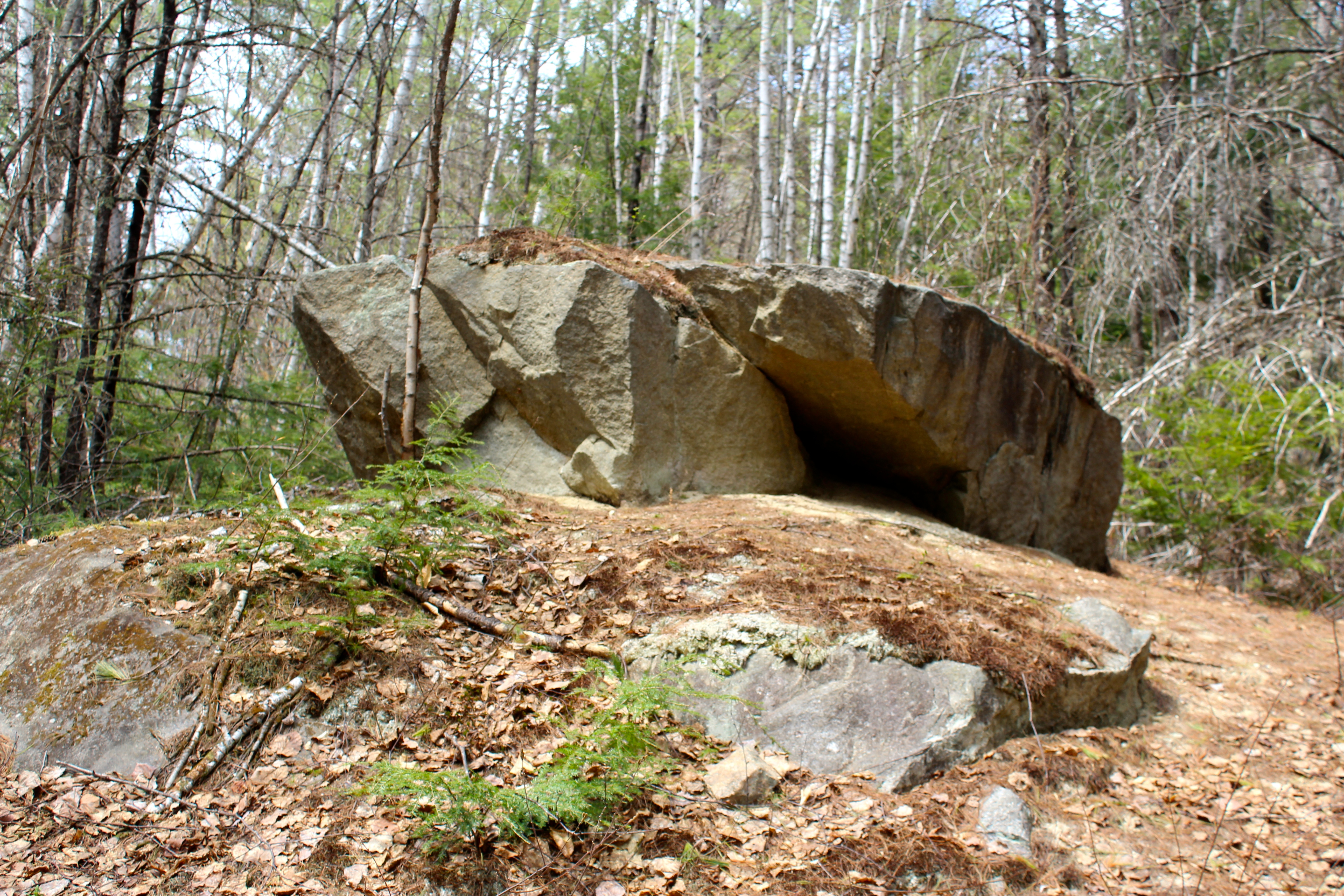
We explored the hillside and checked out some boulders taller than us. The ragged edges reminded us that this didn’t get rolled about by the glacier, but may have been part of a boulder field left behind. Sometimes our imagination turned from the historical nature to whimsy. I see a snapping turtle head; someone else saw a frog in this stone formation.

moose femur

Another great find by the woman in blue (Ann, you had eagle eyes today!) was the femur of a moose. It had some nibble marks–evidence that a rodent had been gnawing it to get the benefit of the calcium. The circle of life dictates that something will then eat the rodent, and the calcium will continue to make its way through the food web.

Sarah's stoneMary's stoneEphraim's stone

We bushwhacked to the site of a cemetery. It was interesting to note that the two stones on the left are slate. Hmmm . . . it would have cost more money for slate since it’s not a local stone.

barbed wire

On the way back, someone spotted barbed wire growing through a tree–or rather, a tree that grew around barbed wire, another indication of this land’s use once upon a time.

shrew 2

And a dead shrew–easy to identify by its elongated snout. It was killed but not consumed, probably because it has a musky gland that makes it smell unappetizing–but it’s not until the animal has died that the smell is evident. Why after death? One of my mentors, Kevin Harding, was with us today and so I posed this question to him. He and Naturalist David Brown theorize that one shrew takes a hit for the whole team. In other words, its predators might recognize the next shrew and decide to let it live. Maybe so.

Hobblebush

If you’ve been following my wanders, you know I can’t pass by a hobblebush without admiring it.

GB 3A

Three hours later we returned to the trailhead, thankful for a chance to spend time together on an autumn day and wonder how nature works.

Window on the World

Friends and I explored a property that the Chebeague and Cumberland Land Trust is trying to purchase. Though in many ways it is similar to the natural communities of western Maine, there are some noted differences. And now that I’m home and can reflect upon it and check my reference books for more information, it’s all beginning to make sense. With every walk in the woods, the vision before me becomes clearer.

white oak leaf

I’m always happy to encounter these round-lobed leaves because I don’t see them often. White Oak abounds at the 215-acre Knights Pond & Blueberry Hill property in Cumberland and North Yarmouth.

white oak crown

The crown of a parent White Oak presents itself with joy.

shag leaf

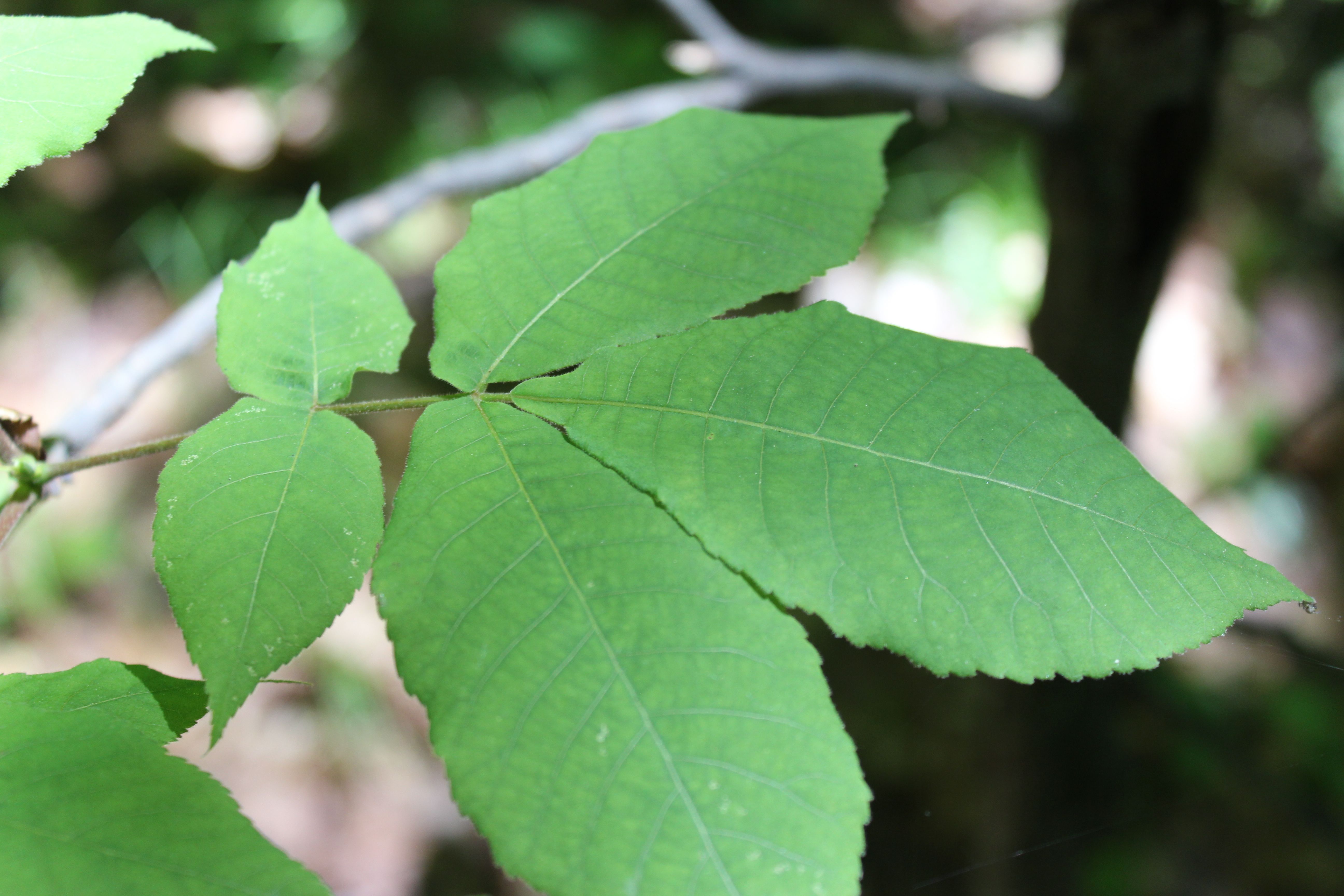
Another species I don’t get to see every day–Shagbark Hickory with its compound leaves. Actually, they are pinnately compound. Hmmm, you say. Compound in that the blade consists of 5 leaflets  and pinnately because the leaflets form in a row on either side of the common axis–think feather-like formation.

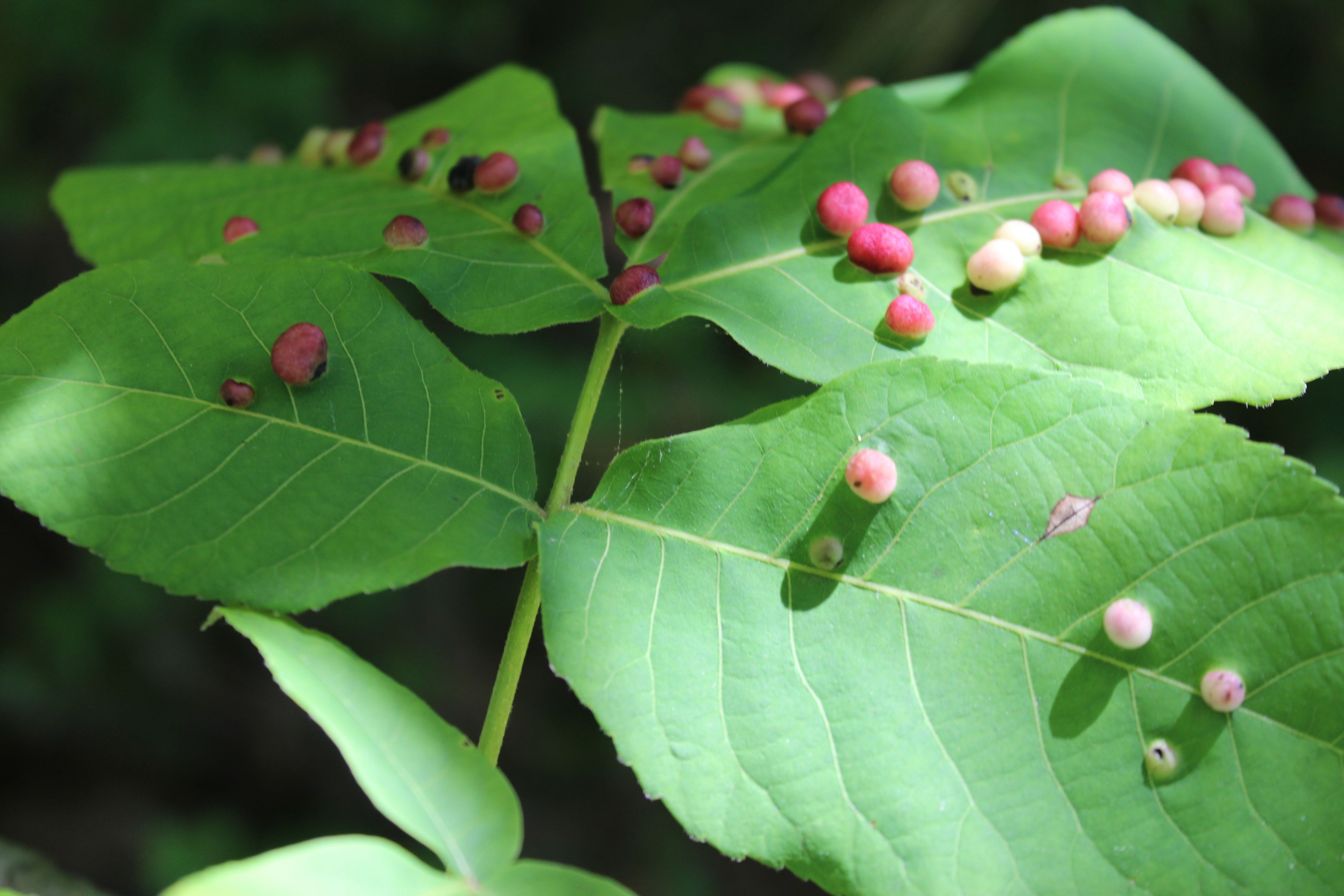
shagbark hickory leaf and galls

Interestingly, some hickory leaflets were covered with galls, giving them a warty appearance–in a miniature candy-apple kind of way. I was thinking they might be caused by a mite, but turns out it may be either a midge or fly that makes these little balls.

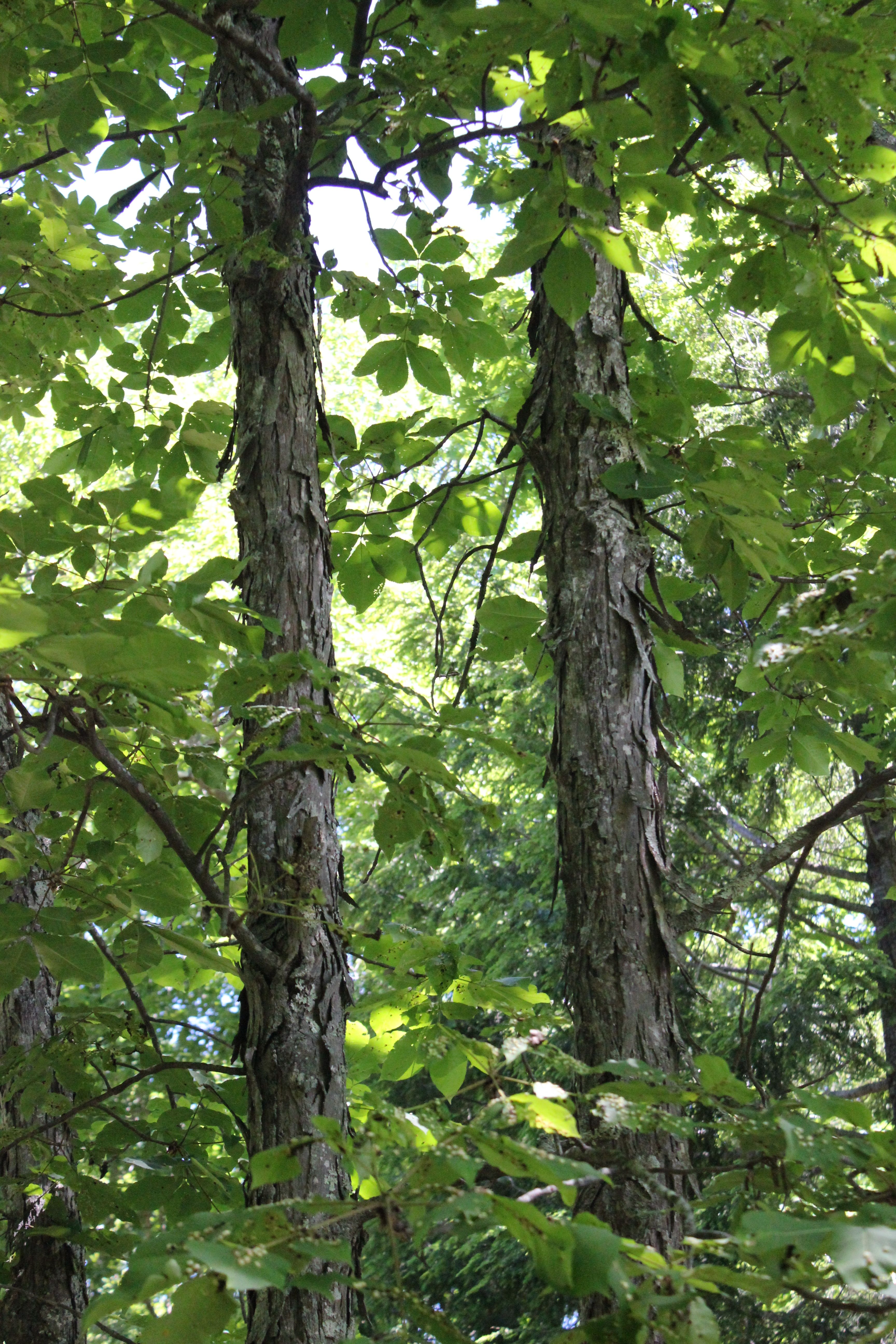
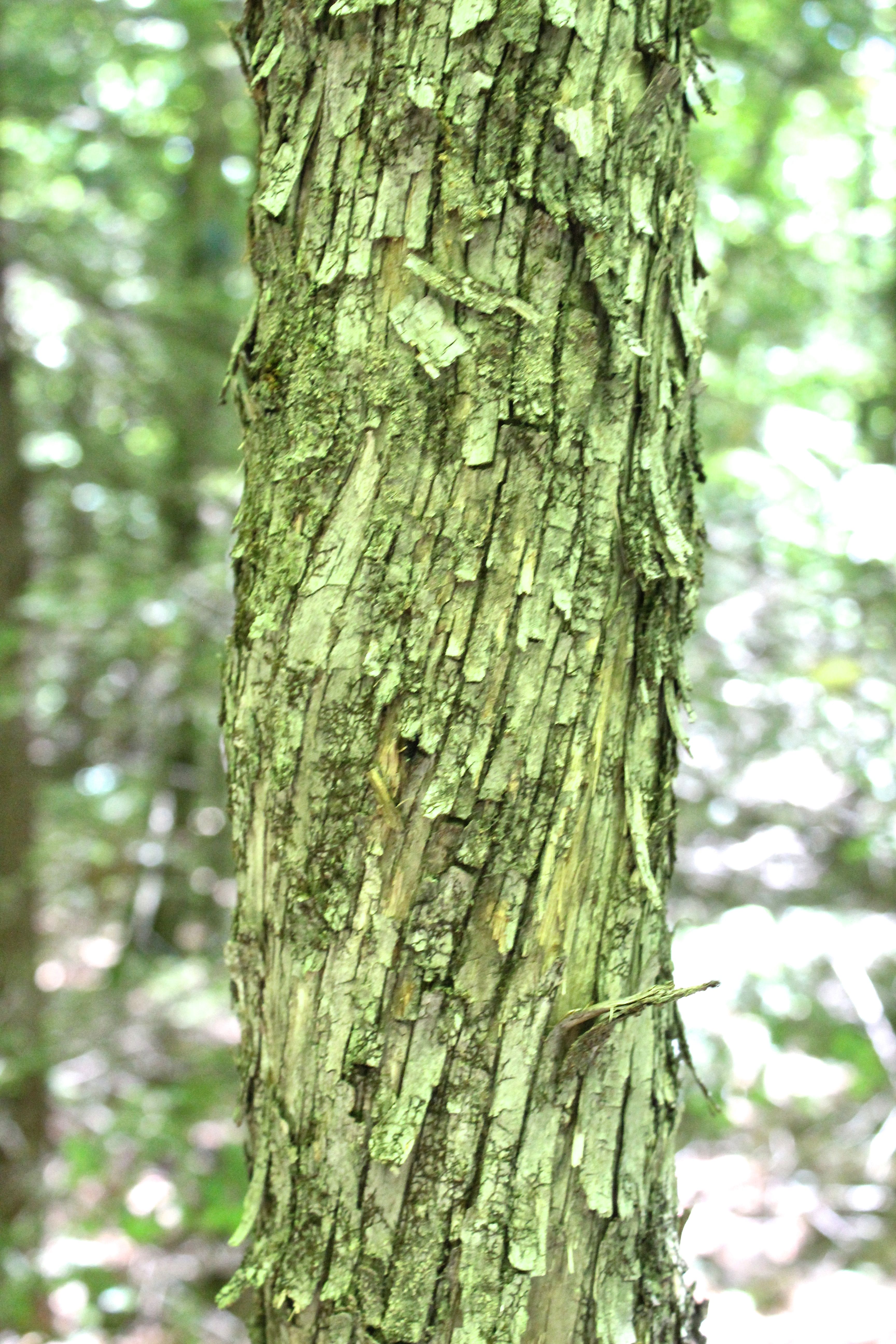
shagbark hickory

Shagbark Hickory certainly is a shaggy looking tree, with gray-brown bark that curls away from the trunk in long, thin strips.

hop hornbeam

Near the hickory trees are numerous Hop Hornbeams with their flaky bark.

shag and hop

In the grassy glade, they grow together. I love it when trees stand together, making it easy to compare and contrast their features.

In Natural Landscapes of Maine: A Guide to Natural Communities and Ecosystems, authors Gawler and Cutko rank the Oak-Hickory Forest as S1–the rarest of communities.

“This dry forest type, characteristic of the Central Appalachian Mountains, occurs in small patches or as inclusions within broader expanses of oak-pine forest.”  Yikes, I think the authors may have been walking with us today.

“It is dominated by a mixture of shagbark hickory and oaks (white, black, red or chestnut) over park-like sedge lawn. Sugar maple, white pine or white ash may be canopy associates, and hop-hornbeam is a characteristic sub-canopy species.” Bingo.

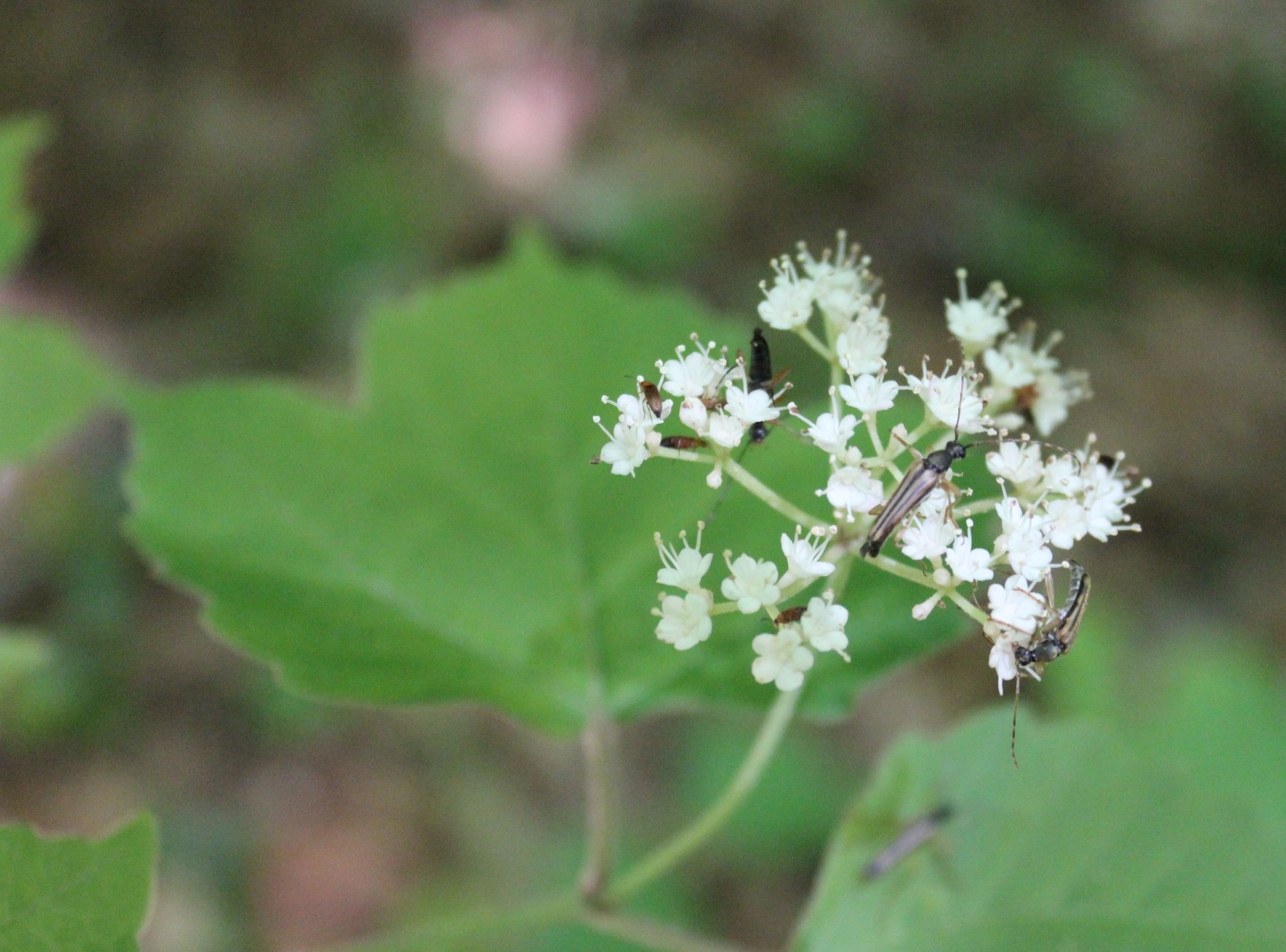
Other associated species that we saw included Witch Hazel, Maple-Leaf Viburnum and Striped Maple, Low-bush Blueberry, Asters, Canada Mayflowers, Sarsaparilla, Wild Oats and probably more that we didn’t note.

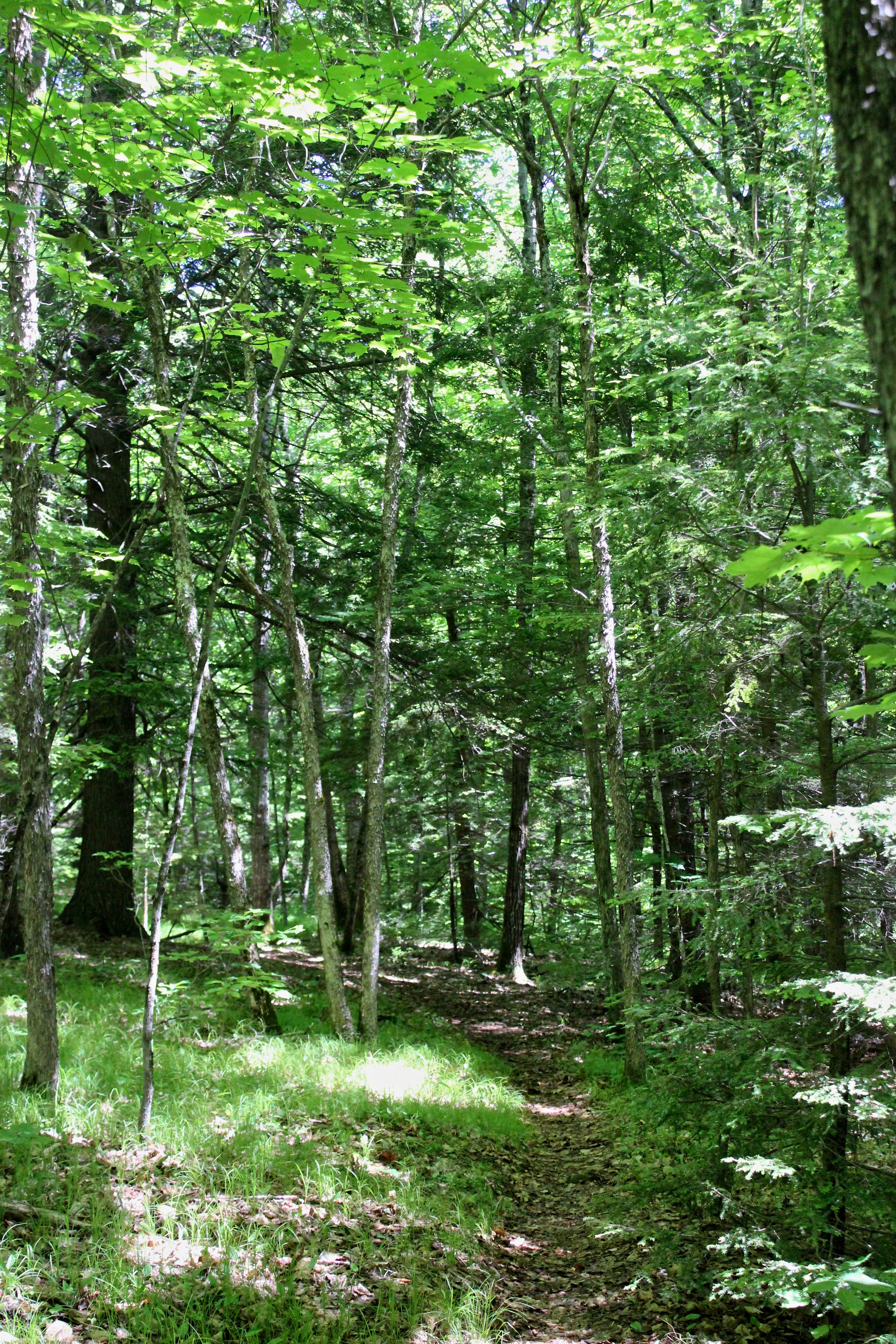
trail

As usual, it took us forever, but occasionally we continued down the trail.

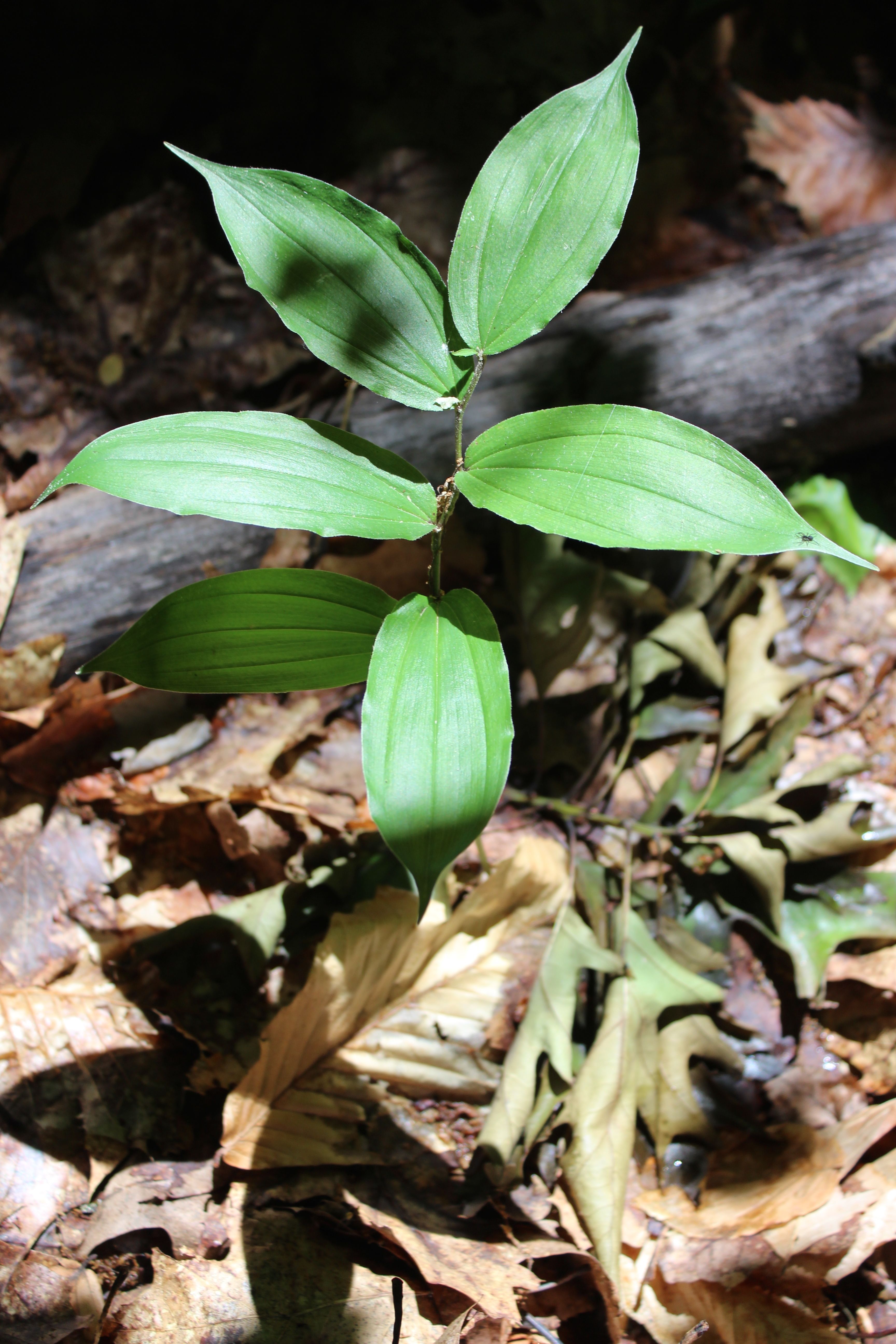
Indian Cucumber Root

Our frequent pauses included stops at Indian Cucumber Root,

maple leaf vibur2

Maple-Leaf Viburnum,

New York fern

New York Fern,

lady fern

Lady Fern

hairy solomon's seal

and Hairy Solomon’s Seal.

stone wall

Stonewalls crossed in a couple of places, making us reflect on their construction and purpose.

snake

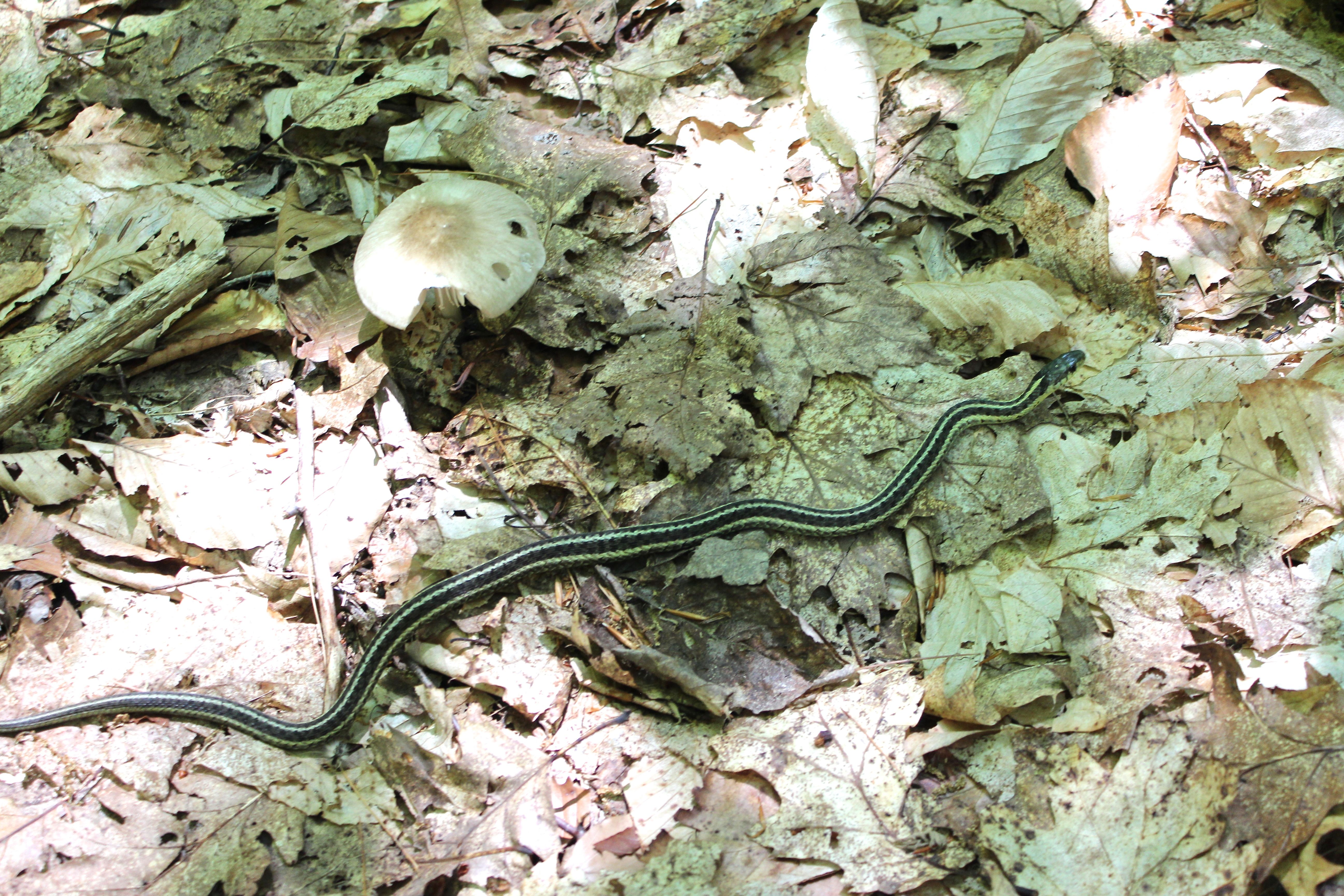
And a snake paused for a photo shoot.

bog 1

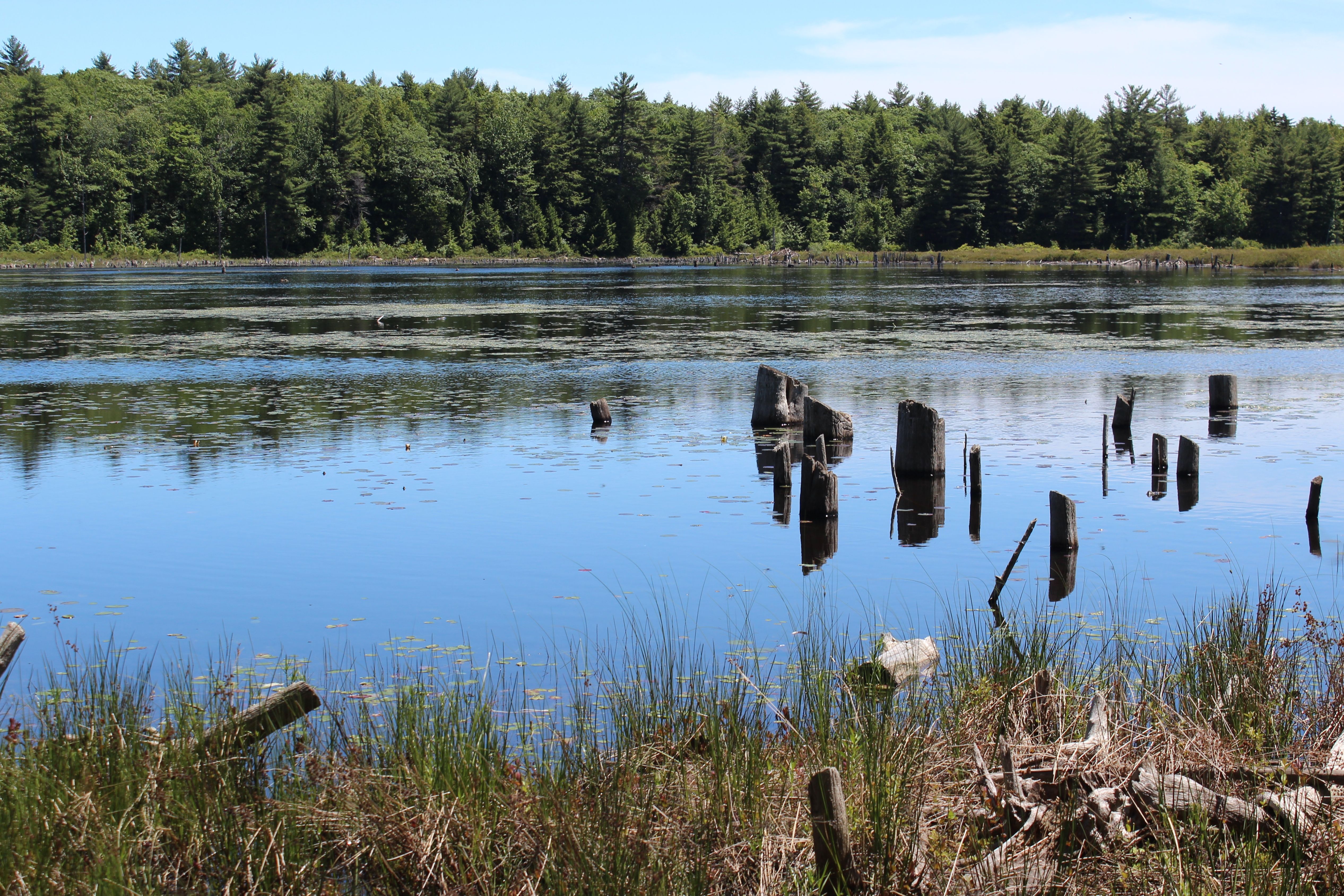
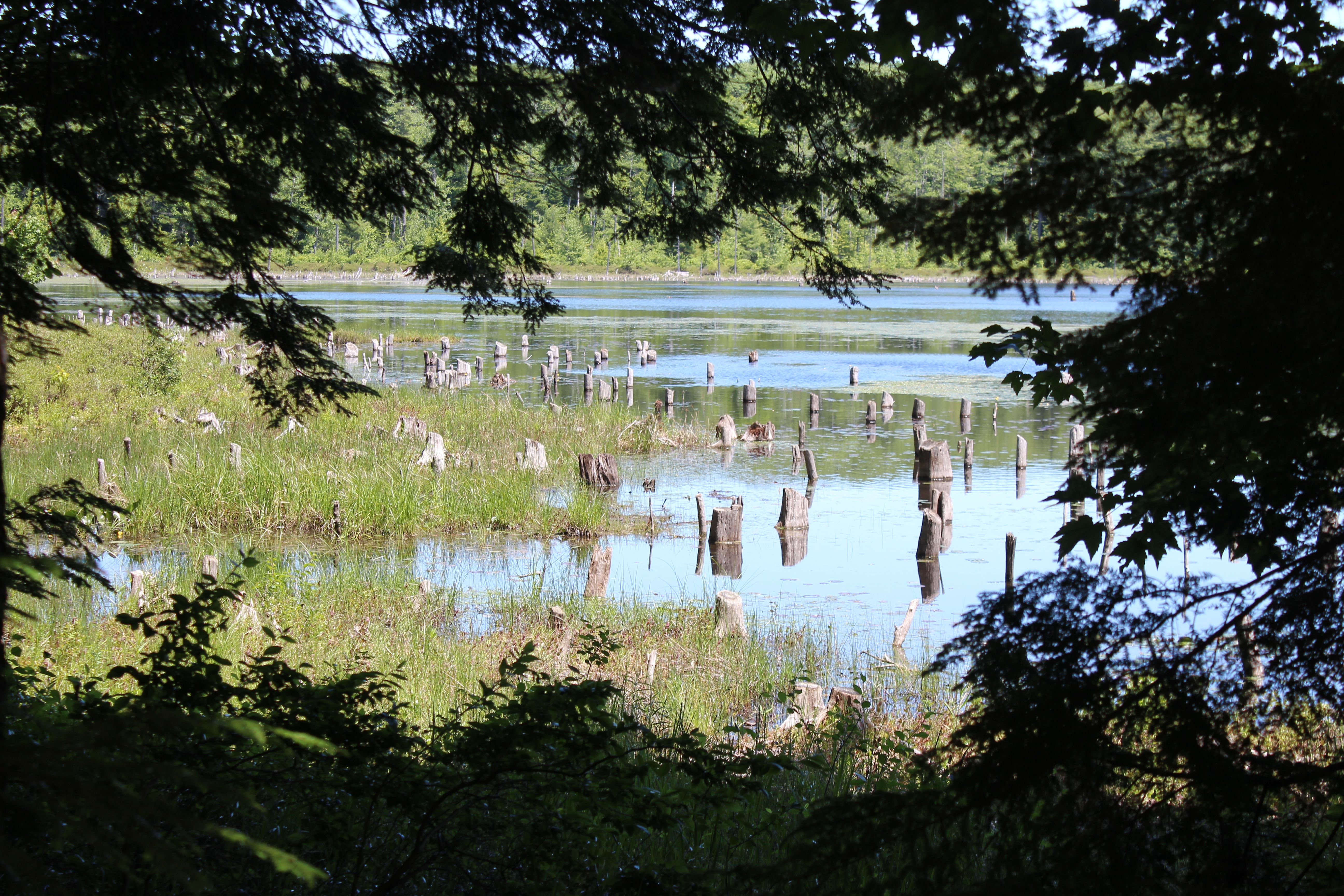
Suddenly, the trail opened to Knight’s Pond, a 45-acre, dammed pond. According to the brochure, “The pond is a significant breeding ground for waterfowl and wading birds and is an important refueling spot during migration.”

sundews

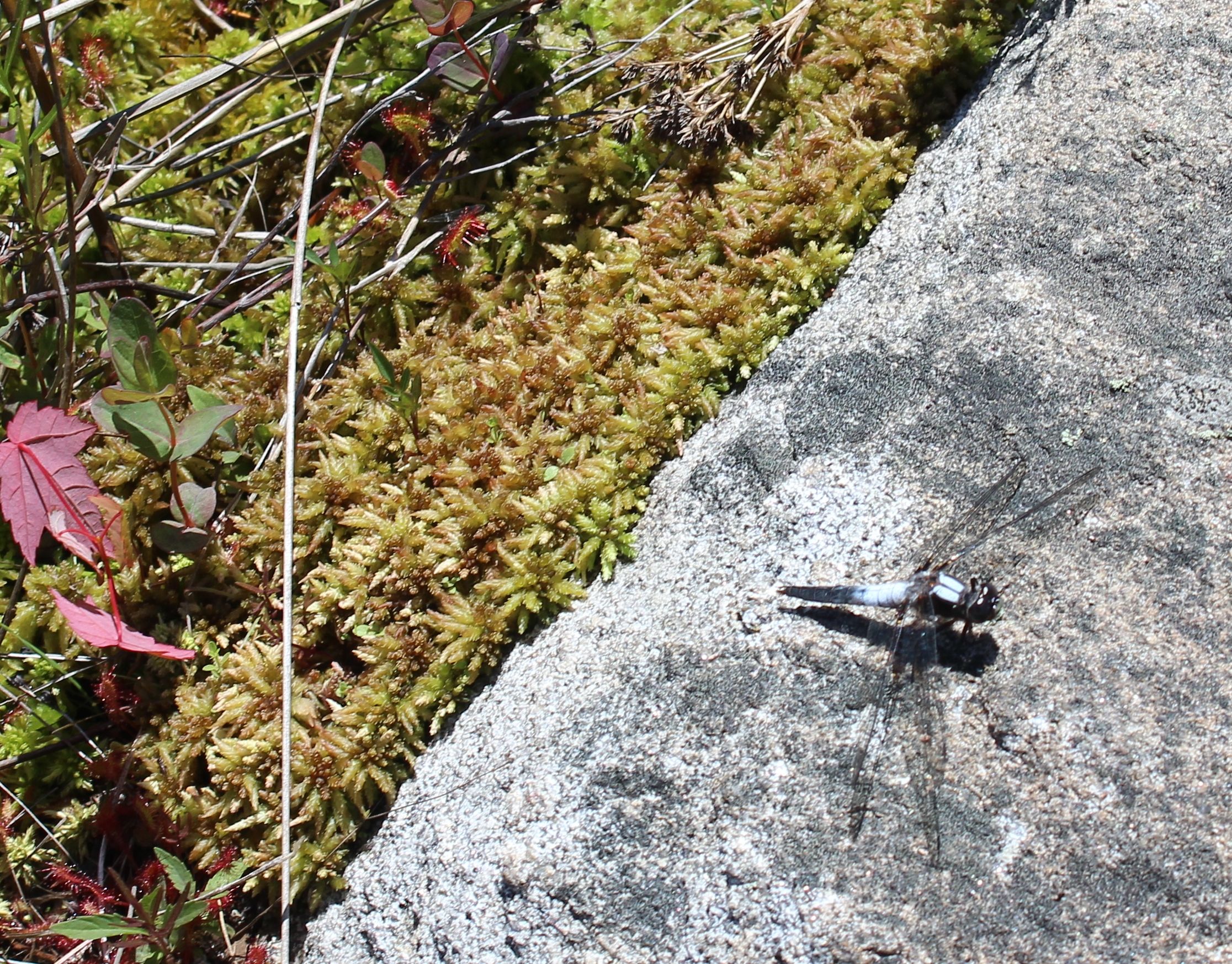
Among the life at the pond, a zillion carnivorous Sundews, with their nectar-tipped tentacles waiting to trap insects.

dragonfly

Dragonflies and damselflies were also on the hunt for prey.

 window on the world

We had stopped frequently along the way to key out species or share our stories related to them. By the end of our wander, I was in awe of the beauty and thankful for the opportunity to glance through this window on the natural world.

Thanks be to The Trust for Public Land, Chebeague & Cumberland Land Trust, the Royal River Conservation Trust, all of those individuals who have contributed to the purchase, and my friend, K.H., for sharing it with us today. May you receive the Land for Maine’s Future funding soon.

Taking In The Views

The Pequawket Indians of Fryeburg, knew the 1,100-foot mountain in Waterford as the mountain that would “tire um out” because climbing its steep side wasn’t easy. Fortunately, a much gentler trail that is only a bit steep at the start, has led to the summit of Mount Tire’m for many moons. And that was my trail of choice this afternoon.

While my guys (and a girlfriend) toiled at the family business, I snuck off to the mountain to enjoy the views.

green

It’s located up the street from the quintessential New England village known around these parts as Waterford Flats. Think white clapboard houses, all of which are listed on the National Register of Historic Places. And a triangular green. To the right of the sign is the former Lake House, which for many  years was a high-end restaurant and inn. It’s for sale now. And comes with an interesting history–in 1847, it was known as Shattuck’s Hygienic Institution, or “Maine Hygienic Institute for Ladies” and offered a water cure.

Another house on the  green was home to Artemus Ward, pen name of Charles Farrar Browne, a favorite author of Abraham Lincoln and Mark Twain’s mentor.

Then there’s the  Waterford Library designed by John Calvin Stevens and his son, John Howard Stevens. And the former town office and meeting hall–ladies sat on one side of the room facing their menfolk during town meetings and were not allowed to vote or even speak. Can you imagine?

church

The Waterford Congregational Church was one of Stevens’ designs.

trail head

It’s easy to miss the nondescript trailhead located up the road from the church.

trail sign

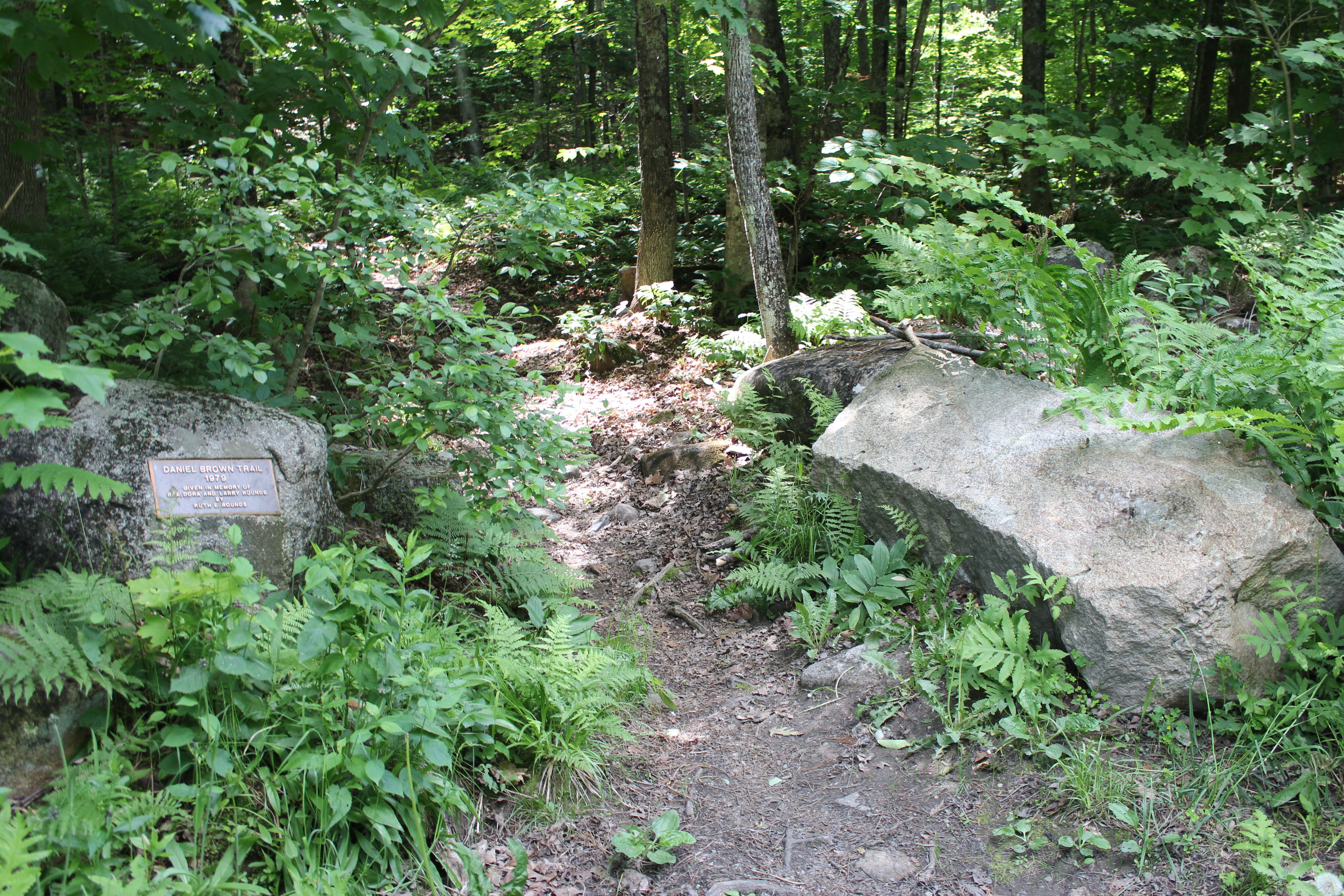
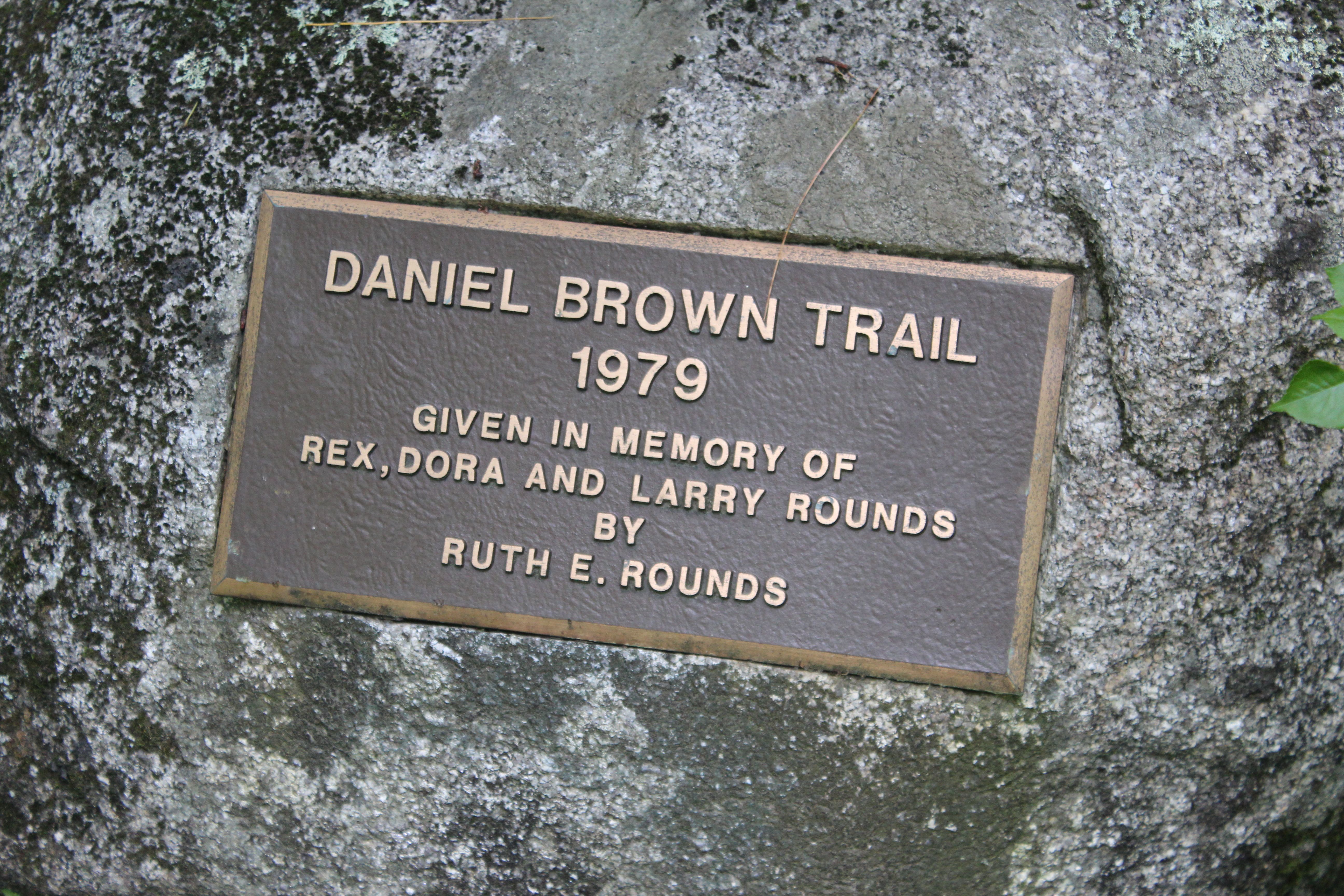
The public path that has traversed the mountain for many years was apparently known as the Old Squire Brown Trail. From what I gather, Daniel Brown owned a large house and farm near Bear Pond–perhaps the Lake House? He was involved in town politics and went on to serve in both houses of state legislature, becoming known as Squire Daniel Brown.

Red trillium

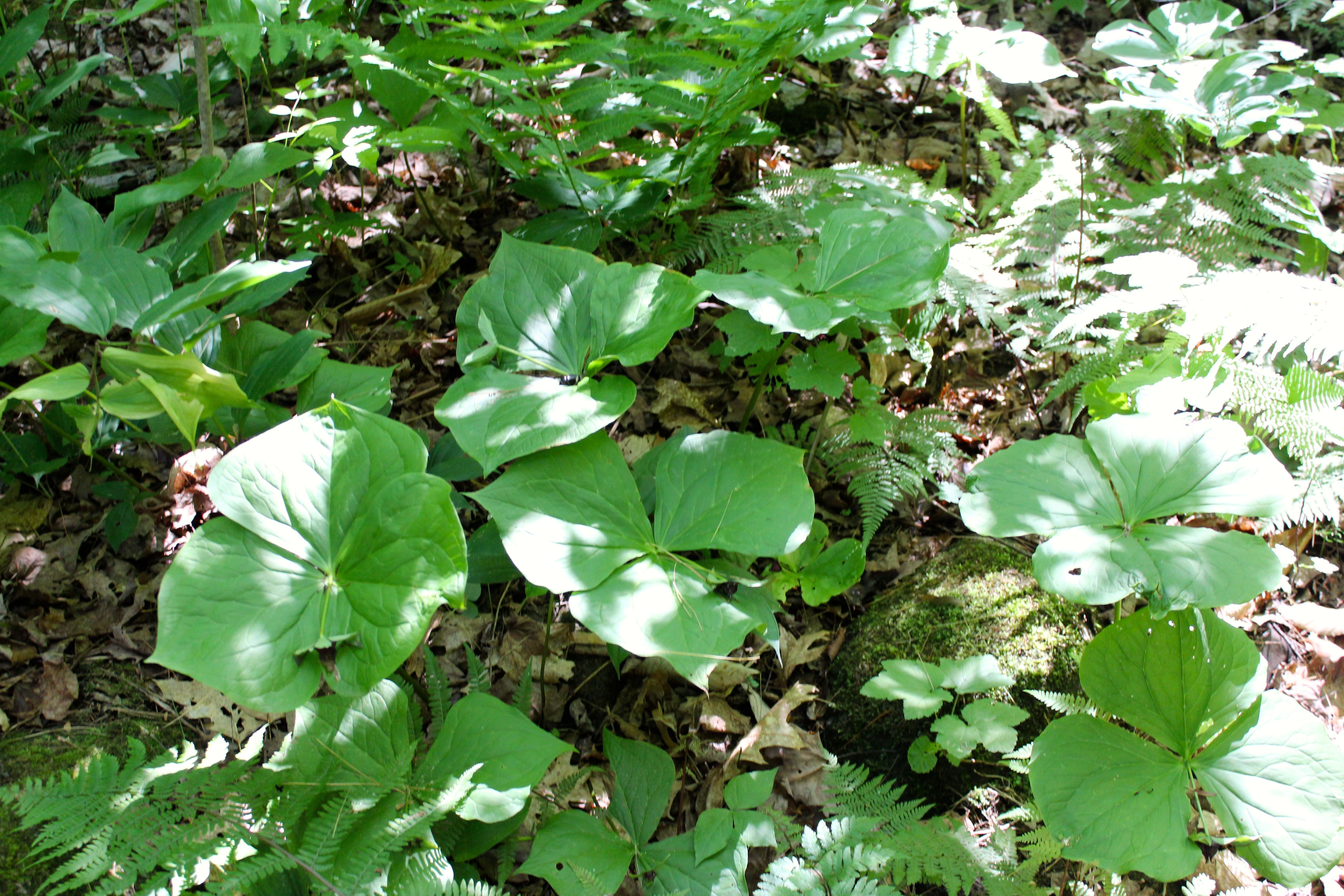
Though the flower is long past, the leaves of Red Trillium reminded me that I need to hike this trail earlier in the spring.

 stonewall

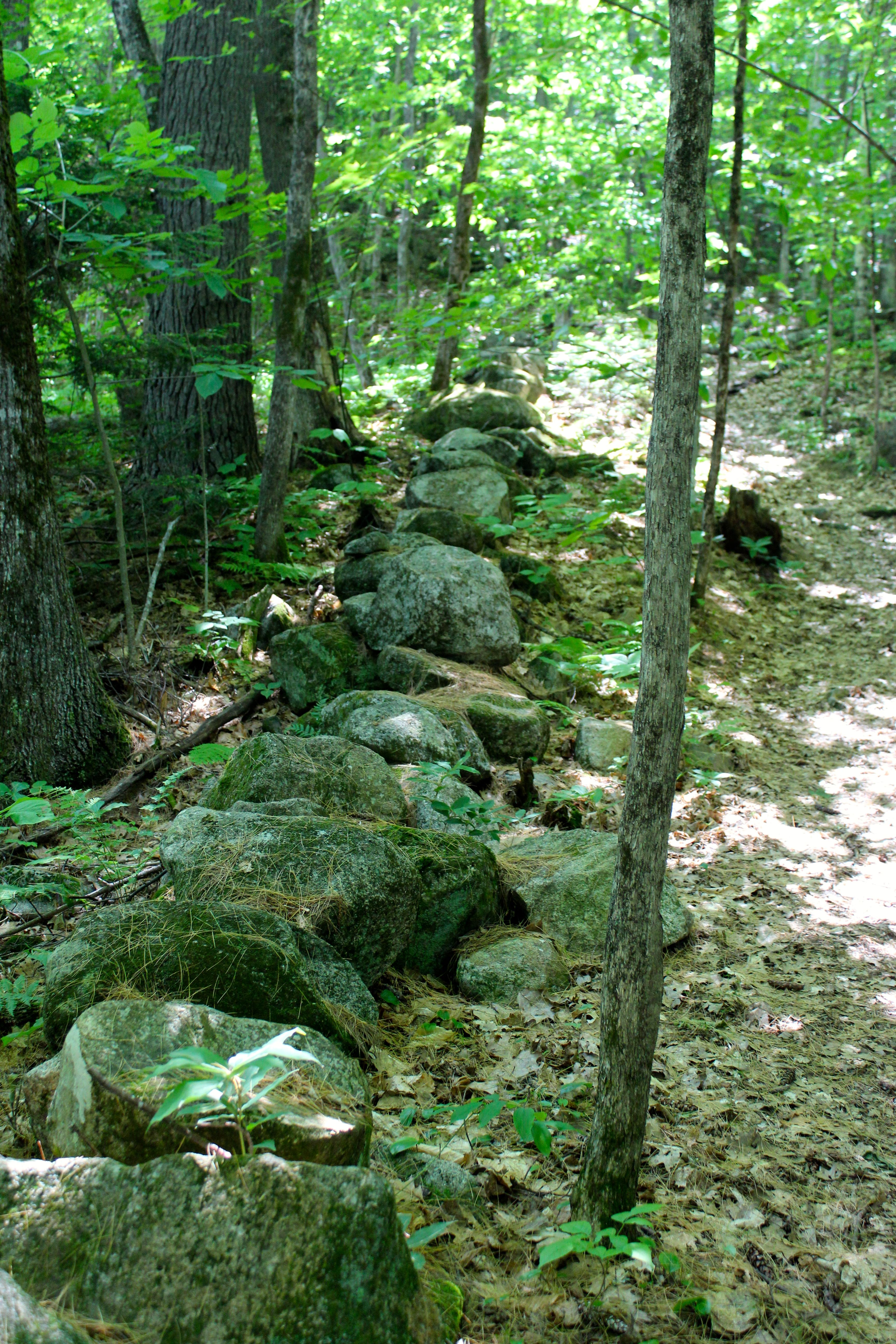
Stonewalls announce that this land was once upon a time used for agriculture.

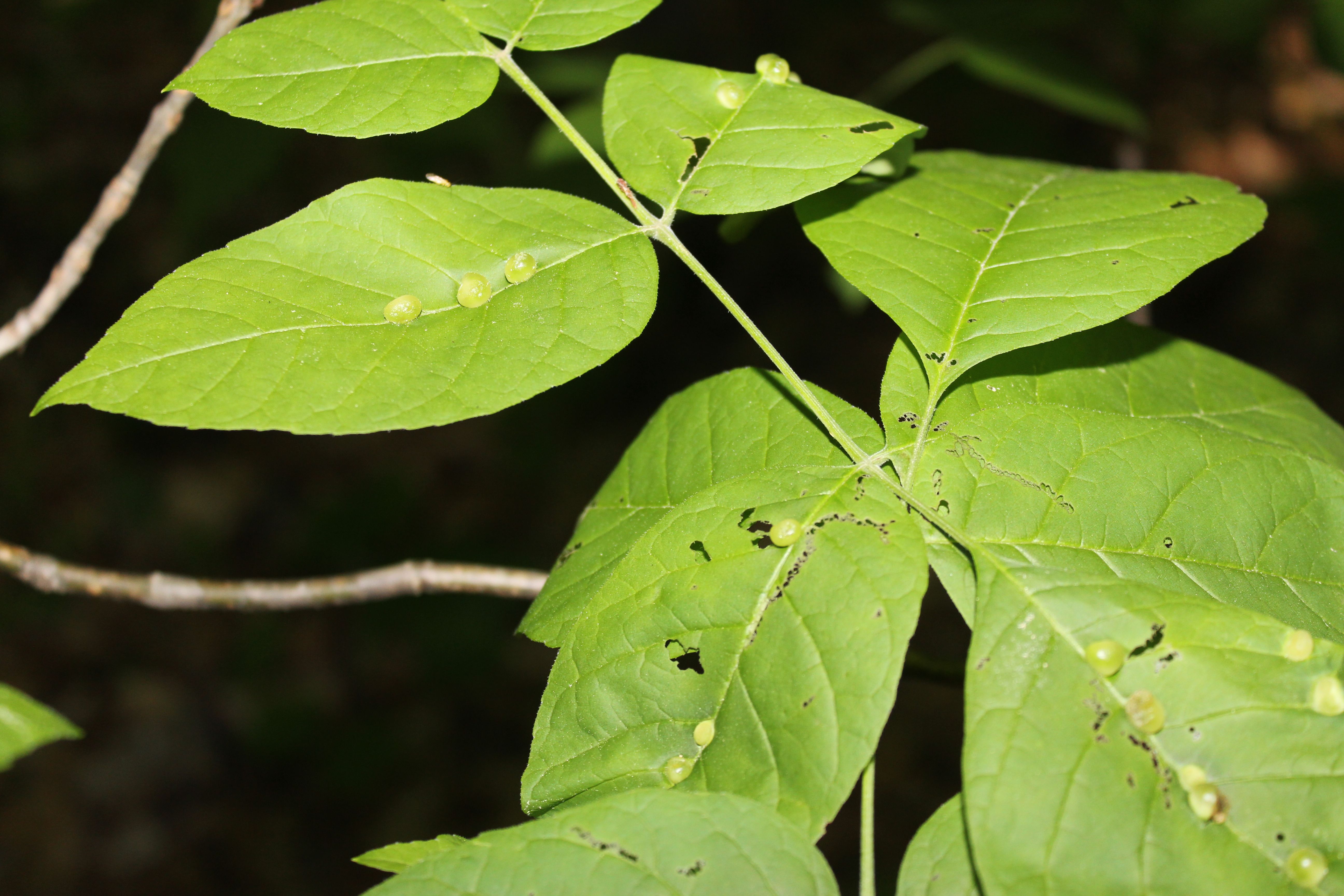
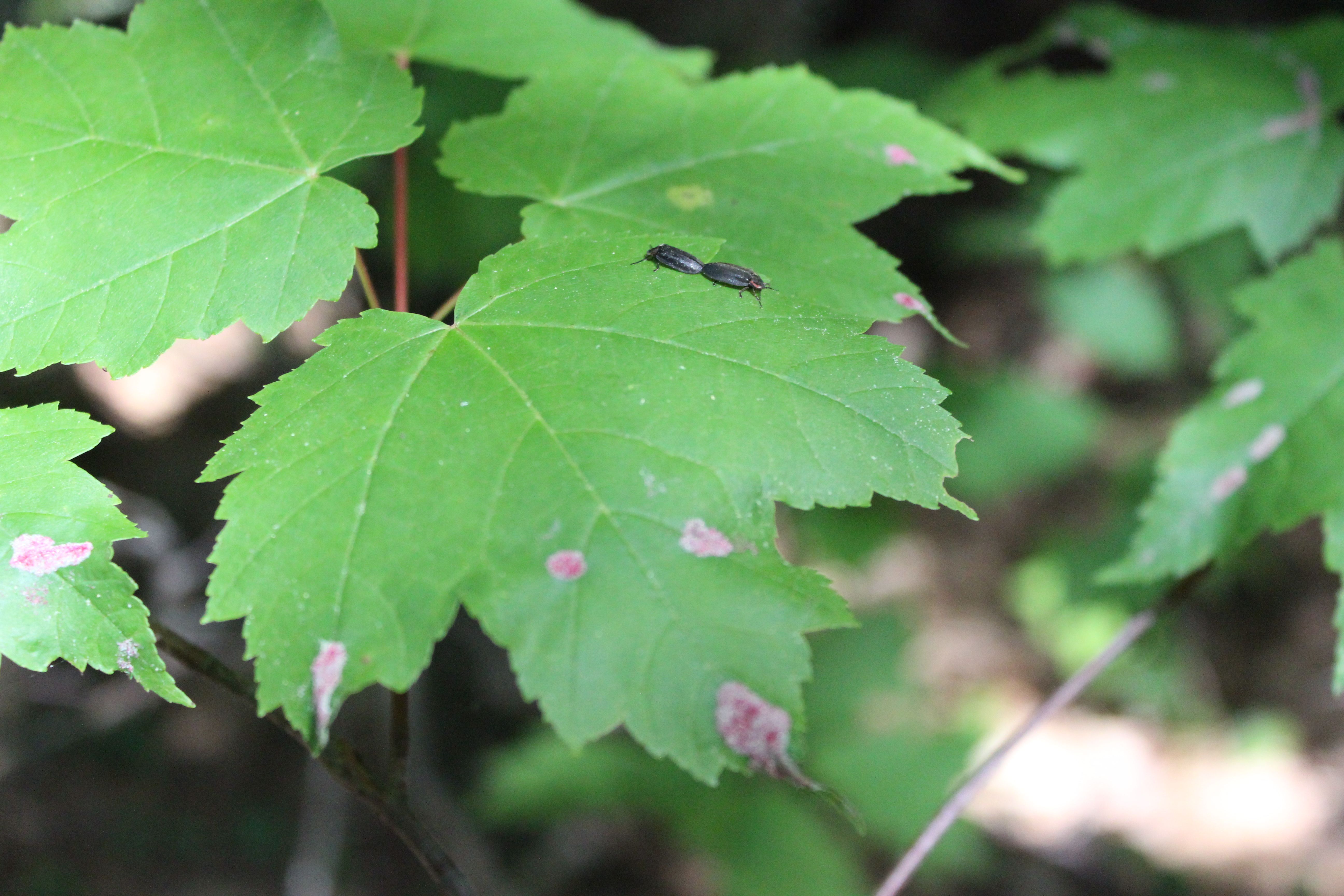
ash leaves 2

The odd leaf formation of this young ash tree made me stop. It has become host to either a fungus or insects who  are using the leaves as protection while they complete their lifecycle.

ash 2

Another ash has been invaded by mites that cause the raised galls.

challenges along the path

Like most trails, this one provides the rocks and roots that draw my eyes downward, so I pause frequently to look around. It’s just as well that I was alone, because not only was I taking my time, but my mind was so filled with chatter that I doubt I would have heard anyone else speak.

pine needles

On the drive to Waterford, I’d noticed that so many of the white pines are once again suffering from the needle drop fungus. The same was true on the trail. In the newspaper, an article about climate change referred to the needle drop as occurring for only the past several years. Methinks more like ten years. The fungus infests trees during a wet spring, such as we had last year and the resulting defoliation is seen the following year. So–I’m thinking out loud here–though we haven’t seen much rain lately, the needles are dropping because of last year’s infestation. While they look so pitiful right now, within a few weeks, they’ll finish dropping. But . . . do the trees have the energy to survive? And what about next year? Will it be a good year for white pines? And then I think about all the pinecones the trees produced last year–it was certainly a mast year, so maybe it doesn’t affect them to such an extreme. Yeah, this was the sort of chatter I was experiencing.

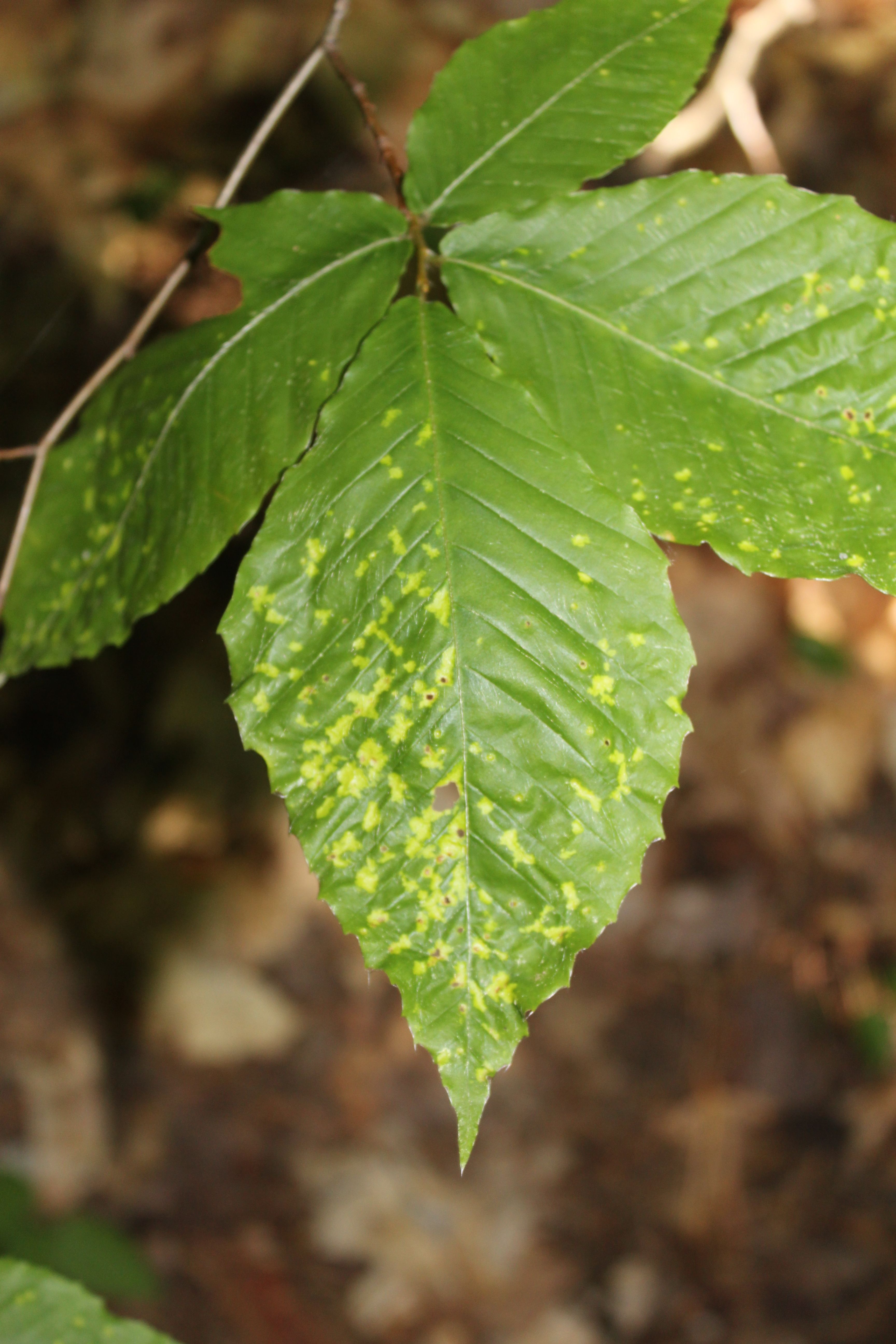
beech spots

Some beech leaves are displaying their own relationship with a fungus. Where only weeks ago, they were the site of beauty as they opened and their hairiness kept insects and others at bay, they can’t fight off everything. Nor can we.

candy pink insects

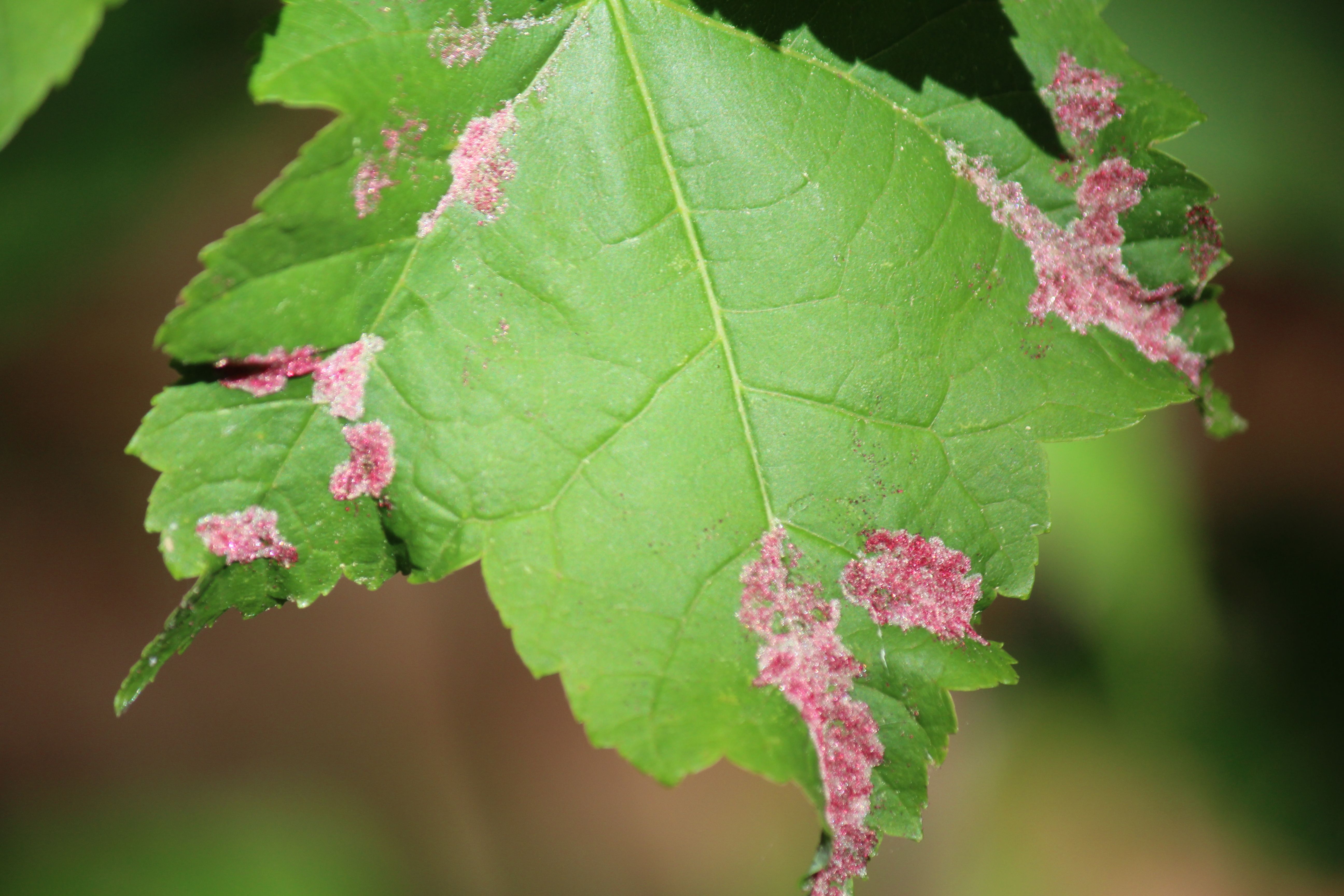
Through my hand lens, the bright pink on the Red Maple leaves has a crystal-like formation. It’s actually quite beautiful.

candy pinkcp2

I had no idea what caused this until I looked it up. These are maple velvet erineum galls, also caused by mites. Apparently they won’t harm the tree, so they aren’t considered parasitic. It’s all a wonder to me. If you do find this, take a close look.

spittle on hemlock

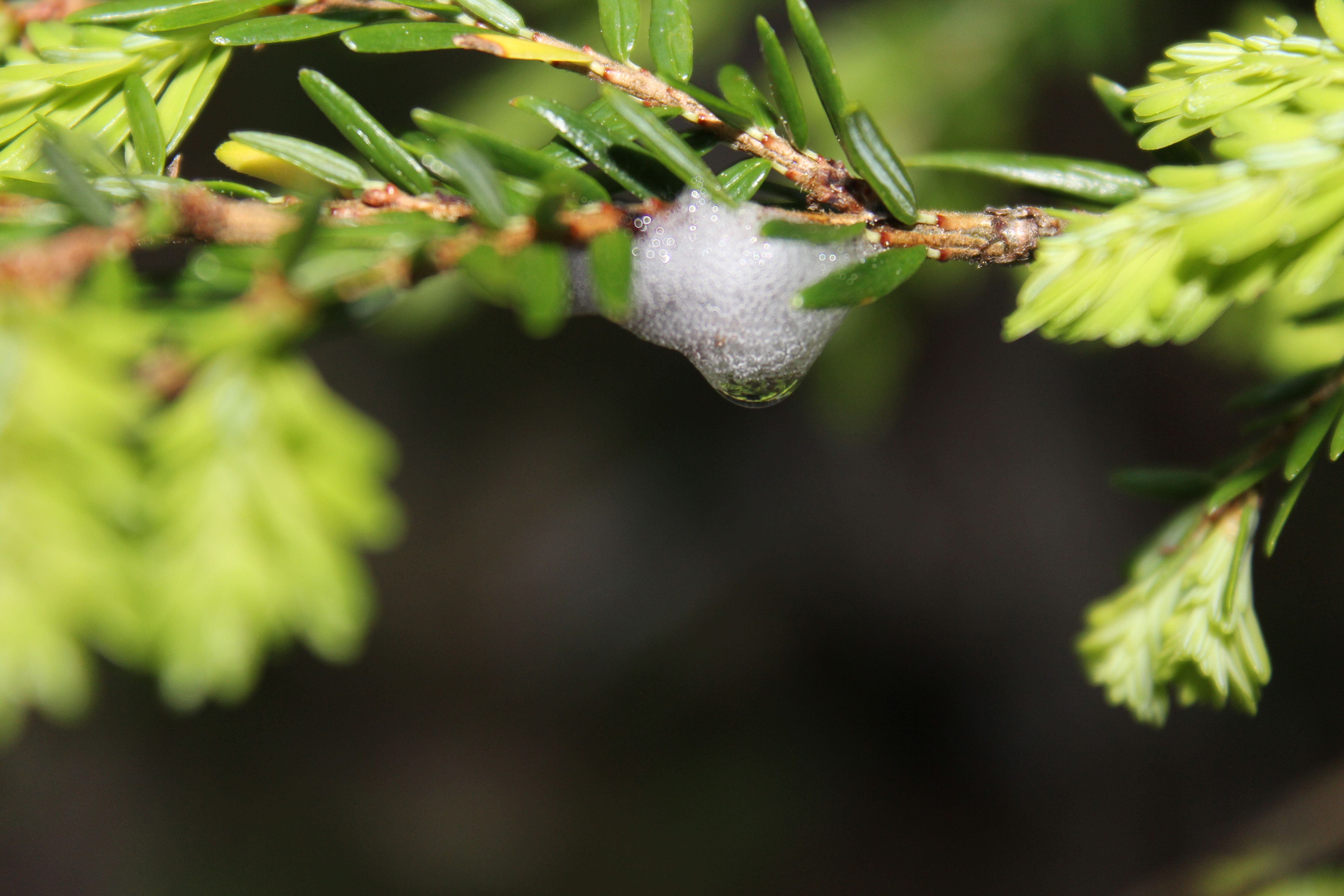
Growing up, whenever we saw spit on wildflowers and grasses, we assumed it was from snakes. A rather scientific observation. Do snakes even spit? And a foot off the ground? I’ve since learned that the foamy substance is the work of Spittlebugs. As the nymphs feed in the spring, they excrete undigested sap and pump air into it.

spittle 2

But I didn’t expect to see this on a hemlock. Turns out–there’s a pine Spittlebug that attacks evergreens. More reasons to keep my eyes open.

Keoka Lake and Oxford Hills

Enough about hosts and fungi. It was time to take in the views. About halfway up, Keoka Lake and the Oxford Hills are visible through a cut in the trees.

gnome home

Gnome homes are everywhere.

view

And finally, the summit with Pleasant Mountain in the background.

BP from summit

And Bear Pond and Long Lake below.

the rocks

No visit is complete without a stop at the glacial erratics.

the rocks split

Maybe I shouldn’t use the plural form as it’s obvious this was all one rock

the rocks 2

that split apart.

tr 5

Perhaps there’s more to come.

As the saying goes, “so much to see, so little time.” Thanks for joining me to take in the views.

Close to Home

It’s a no-Mondate Monday since we just returned from vacation. My guy felt the need to work and I felt the need to stick close to home.

Stepping outside, the aromatic smell of lilacs and honeysuckle envelope me. It reminds me of my childhood home, where the lilacs grew outside the bedroom I shared with my sister. And that reminds me of Mom and Dad and the fact that it’s Memorial Day and we always went to the parade in town and sometimes we marched in it and other times we rode in the back of our neighbor’s car because she was the head of the VNA and the school nurse, and we always bought crepe paper poppies from the veterans to honor them and my father, grandfathers, uncles and cousins. Thank you to all who have and do serve.

Lilacs

We purchased our home 22 years ago. The previous owners had green thumbs and though the house had been empty for ten years before we bought it, their toil was still evident. I have a green pinky, so the gardens aren’t what they once were. I am excited, however, that some of the flowers they nurtured continue to thrive. Such is the case with this white lilac.

purple lilac

And the purple, that forms part of the windscreen on the edge of the yard.

The fragrance is mixed in with . . .

honeysuckle

that of the honeysuckle. Both buzz with pollinators seeking their sweet nectar.

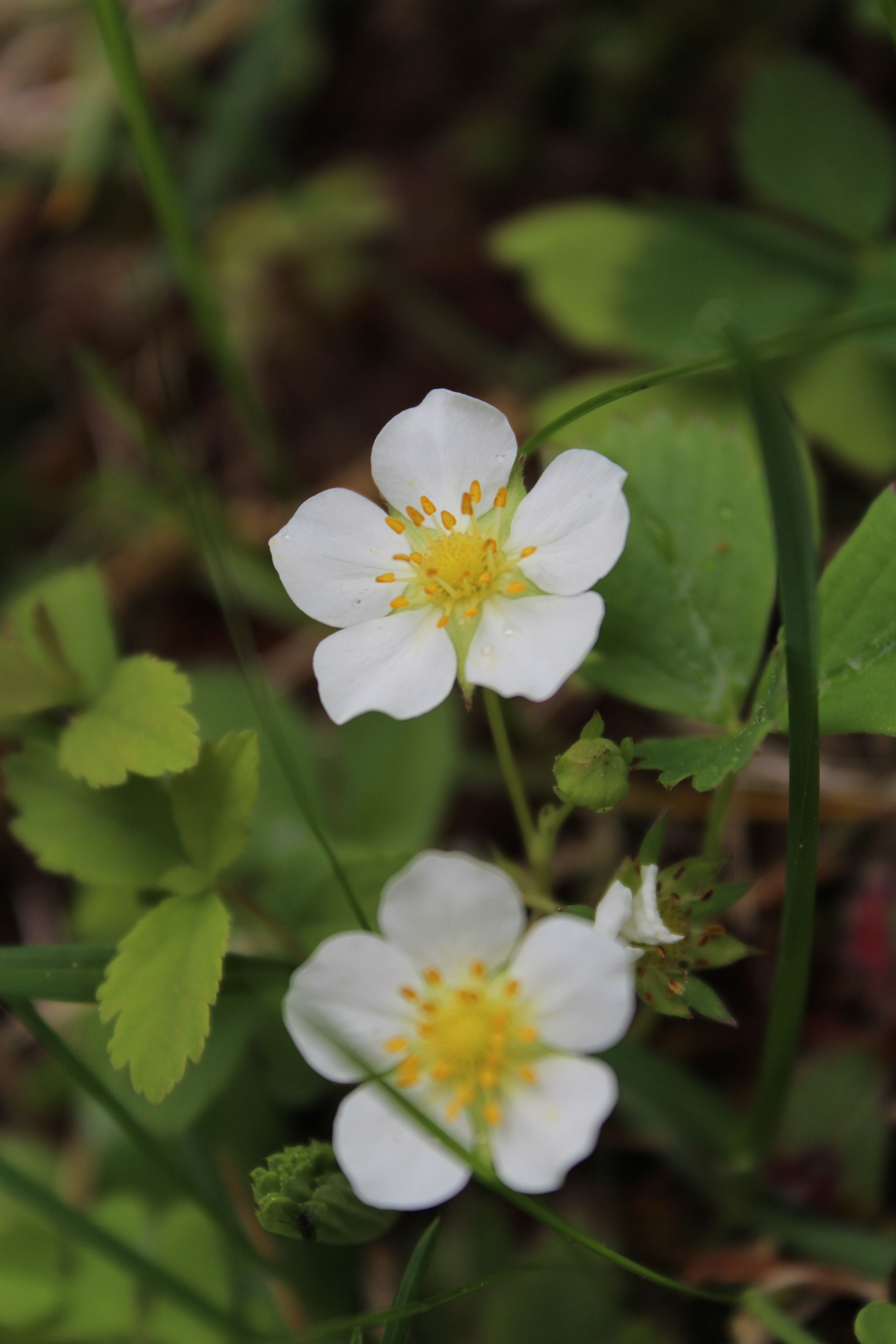
strawberry 2

Wild Strawberries are just that as they creep through the gardens and lawn.

Flowers and leaves grow separately on long, slender stalks.
With milk-white flowers, whence soon shall sweet
Rich fruitage, to the taste and smell
Pleasant alike, the Strawberry weaves
Its coronet of three-fold leaves,
In mazes through the sloping wood.
—Anonymous

blueberries

Another edible, the Highbush Blueberries.

Canada Mayflower

Atop one of the stone walls, at its base and below many trees, the Canada Mayflower blooms.

star flowers

A wildflower that some consider common is the Starflower. Look closely and you may see that there are seven stamen, seven petals and seven sepals. How common is that?

Interrupted 2

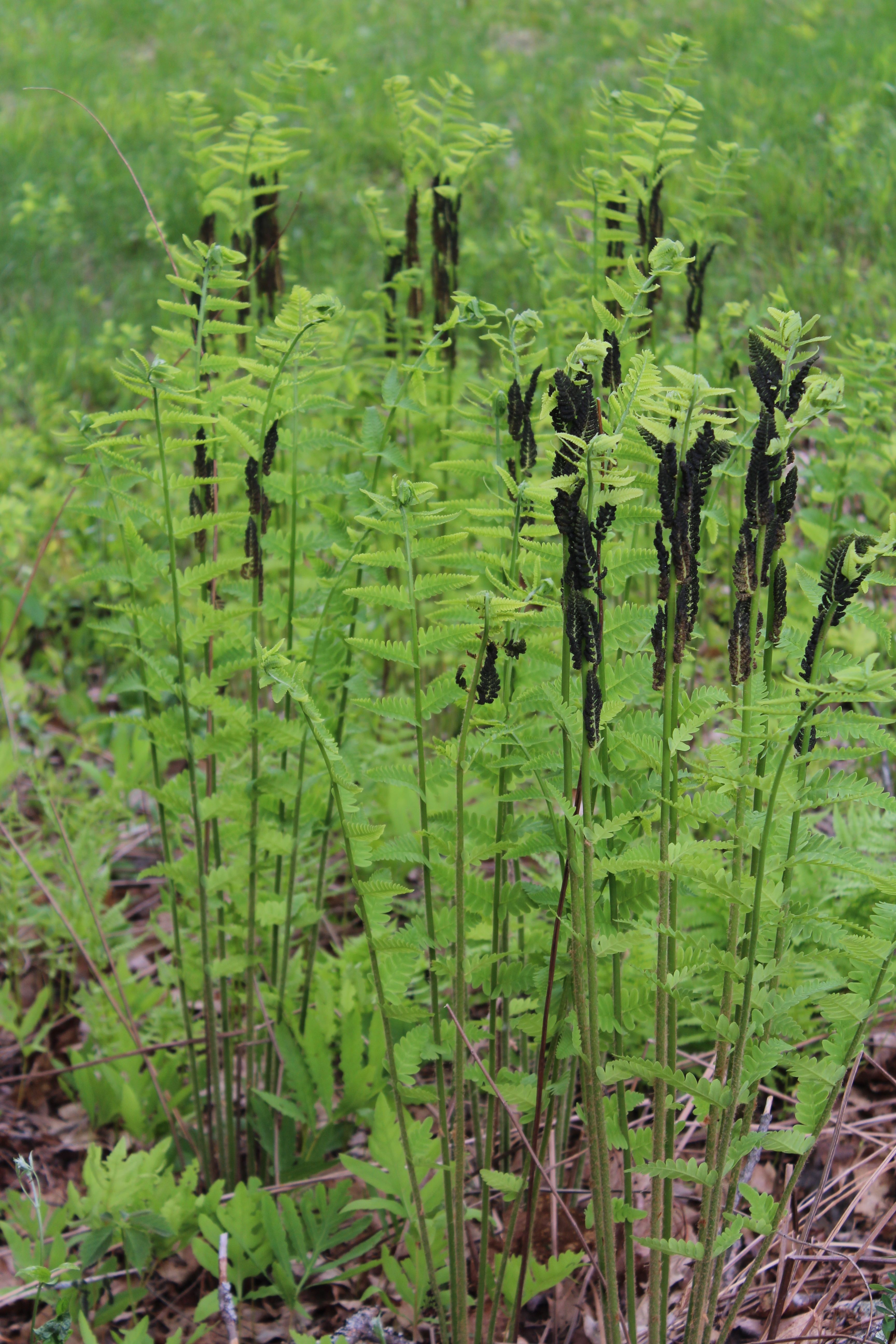
We have plenty of ferns throughout the yard and woods, but I like this one–the Interrupted Fern. It speaks its name.

Interrupted fern

On larger fronds, brown fertile pinnae or leaflets interrupt the green sterile leaflets.

Lupine

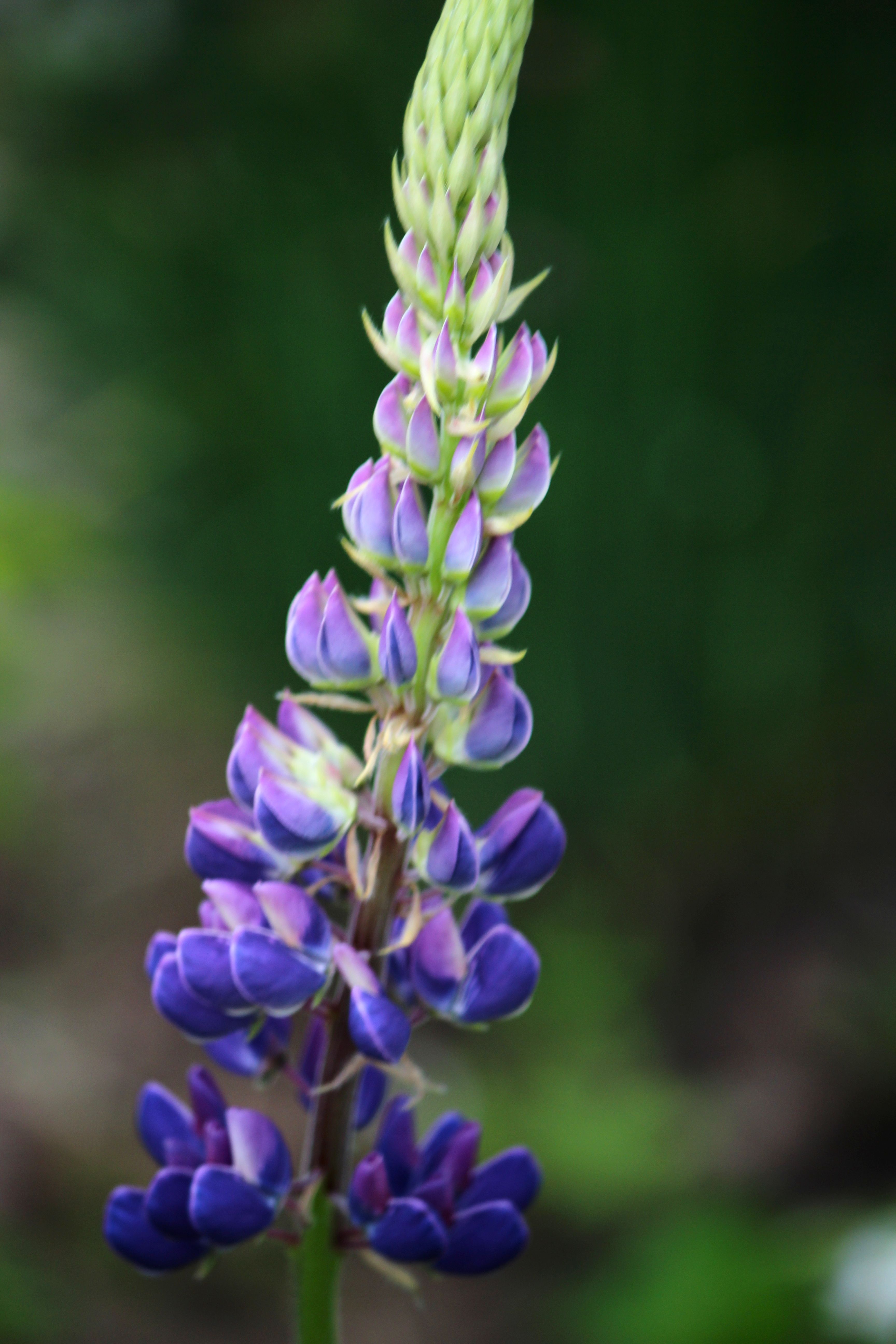
And then there is that hitchhiker, the Lupine. Each year it moves to a different spot.

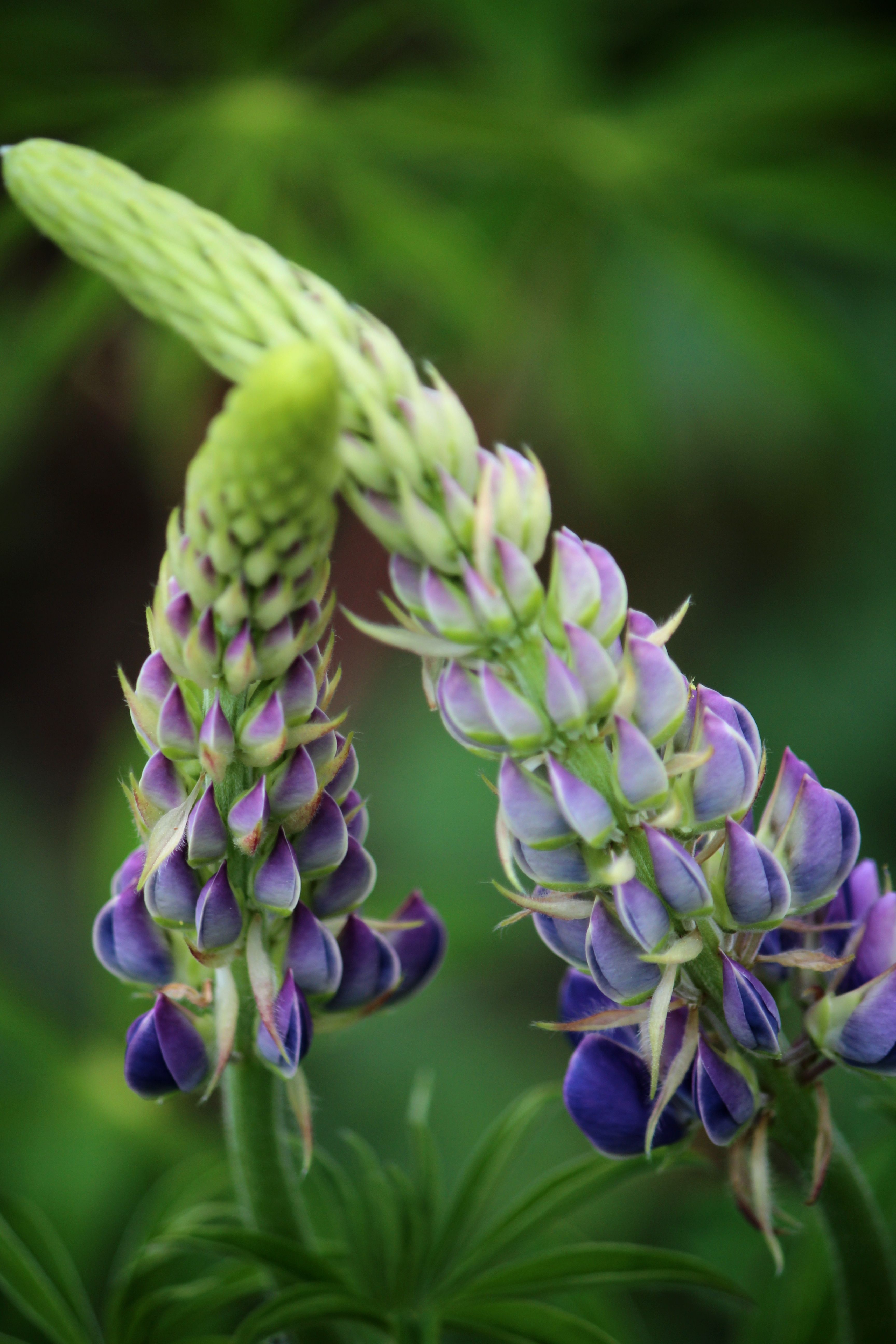
Lupine 2

I love to watch the flower open from the bottom up.

lady slipper

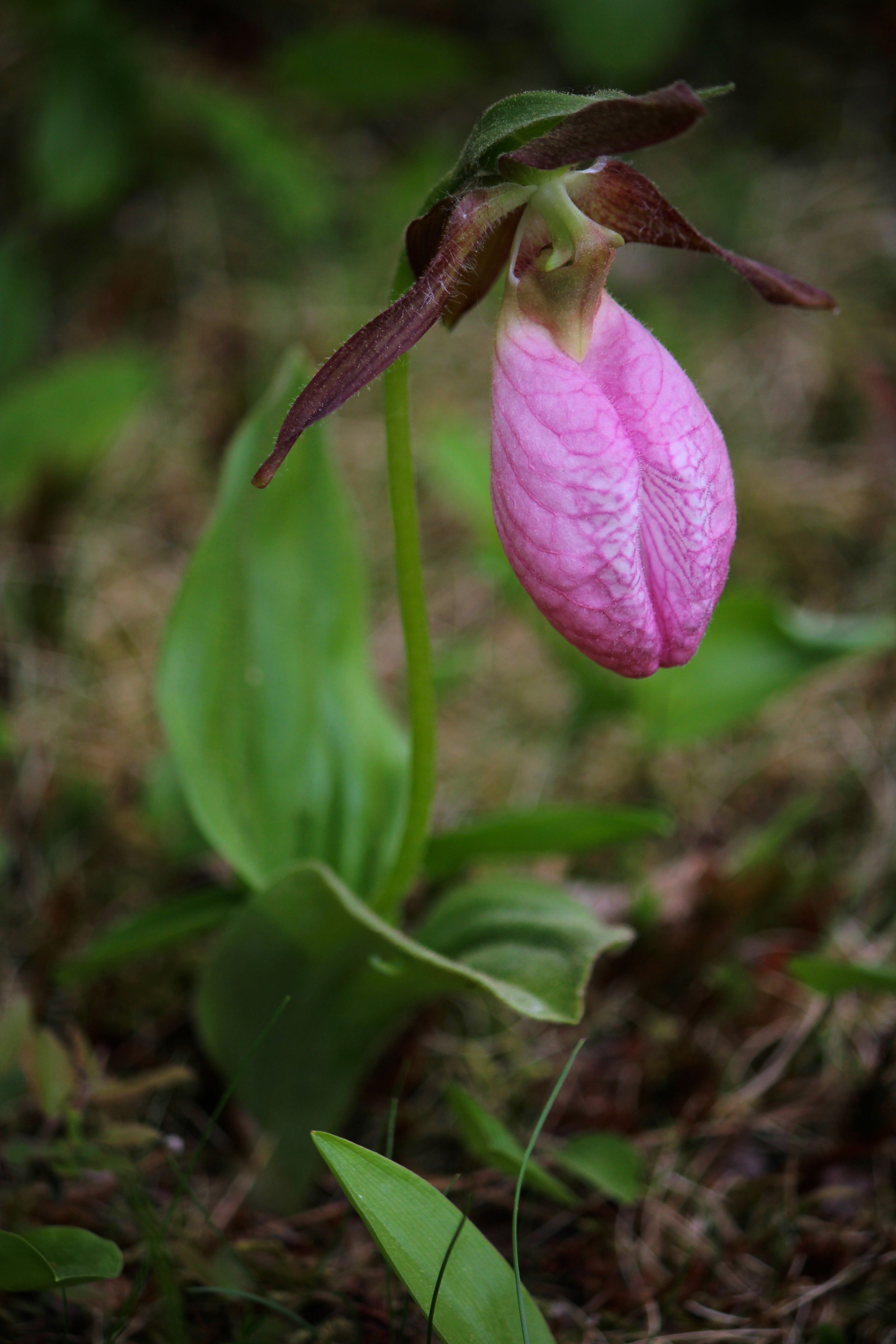
I saved the best for last. As I mentioned earlier, we’ve lived in this house for more than two decades and though I’ve seen Lady’s Slippers in other places, today I stumbled upon this one in our yard. A member of the Orchid family, it features the typical three petals in an atypical fashion. The pouch (or slipper or moccasin), called the labellum, is actually one petal–inflated and veined as you can see. The two remaining narrow petals twist and extend to the sides. Overall, it reminds me of a lady holding out her skirt as she curtsies.

Though bees help with pollination, they hardly reap the rewards of sweet nectar. It’s a symbiotic relationship with a fungi that helps the Lady’s Slipper germinate. And then, it still takes a few years for the germinated seed to produce leaves and about 3-5  years before it produces a flower. Once established, however, it may live for 20-30 years or more. So apparently this wildflower has been present for at least eight years, but I only discovered it today.

Staying close to home certainly offered sweet wonders.

This Lady’s Delight

There’s something about the Chip Stockford Reserve on Ladies Delight Road in Lovell that keeps pulling me back. I think it’s the history associated with this property that fascinates me. And the questions it raises.

From the start, there is a cellar hole and barn foundation. foundtion 1

About seven years ago, during a visit to the Lovell Historical Society, I learned that  Eldridge Gerry Kimball had purchased 200 acres on January 31, 1880 from Abraham E. Gray.

Various journals from that time period include entries about driving cattle over to the Ladies Delight pasture, picking cranberries over by The Pond, as they called Kezar Lake, picking apples, driving sheep to pasture, picking pears, mowing oats and trimming pines.

large pines

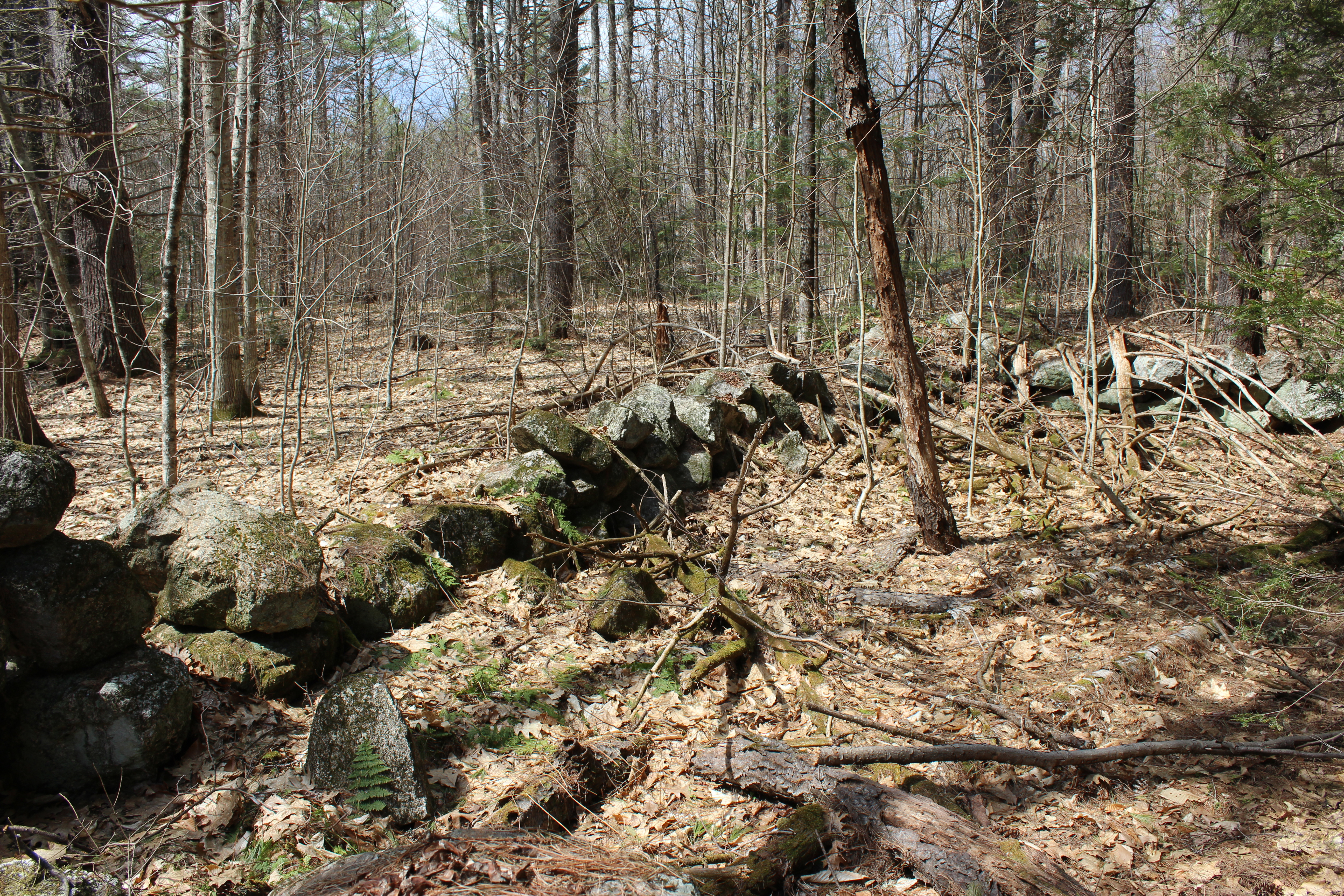
Today, it’s the huge pasture pines, stonewalls and a couple of foundations that tell part of the story. I’ve also heard that this area was used as a cattle infirmary. According to local lore, diseased cattle were brought to Ladies Delight to roam and die, thus preventing disease from spreading to healthy cattle.

pileated condo

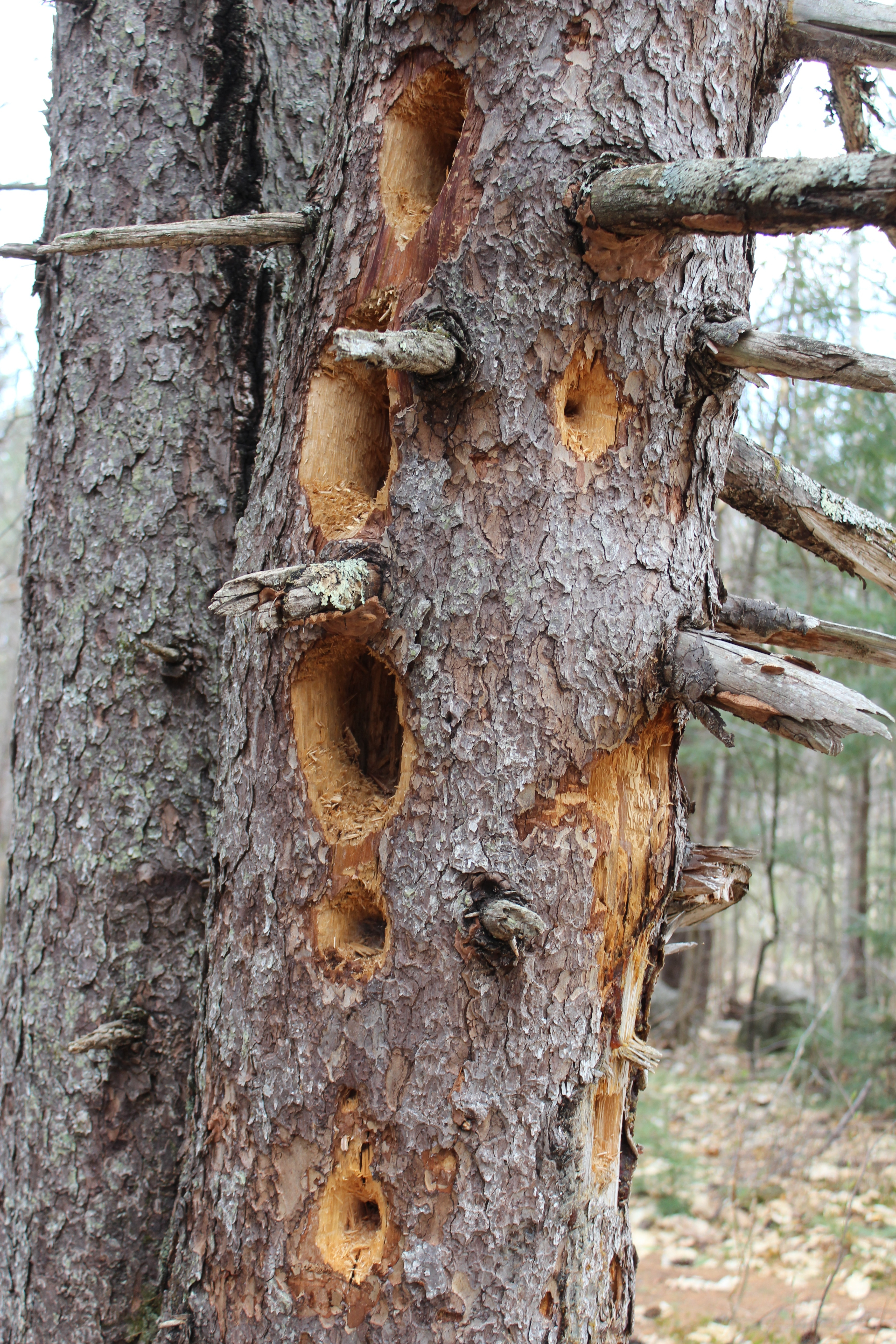
The big old pines provide investigation for others.

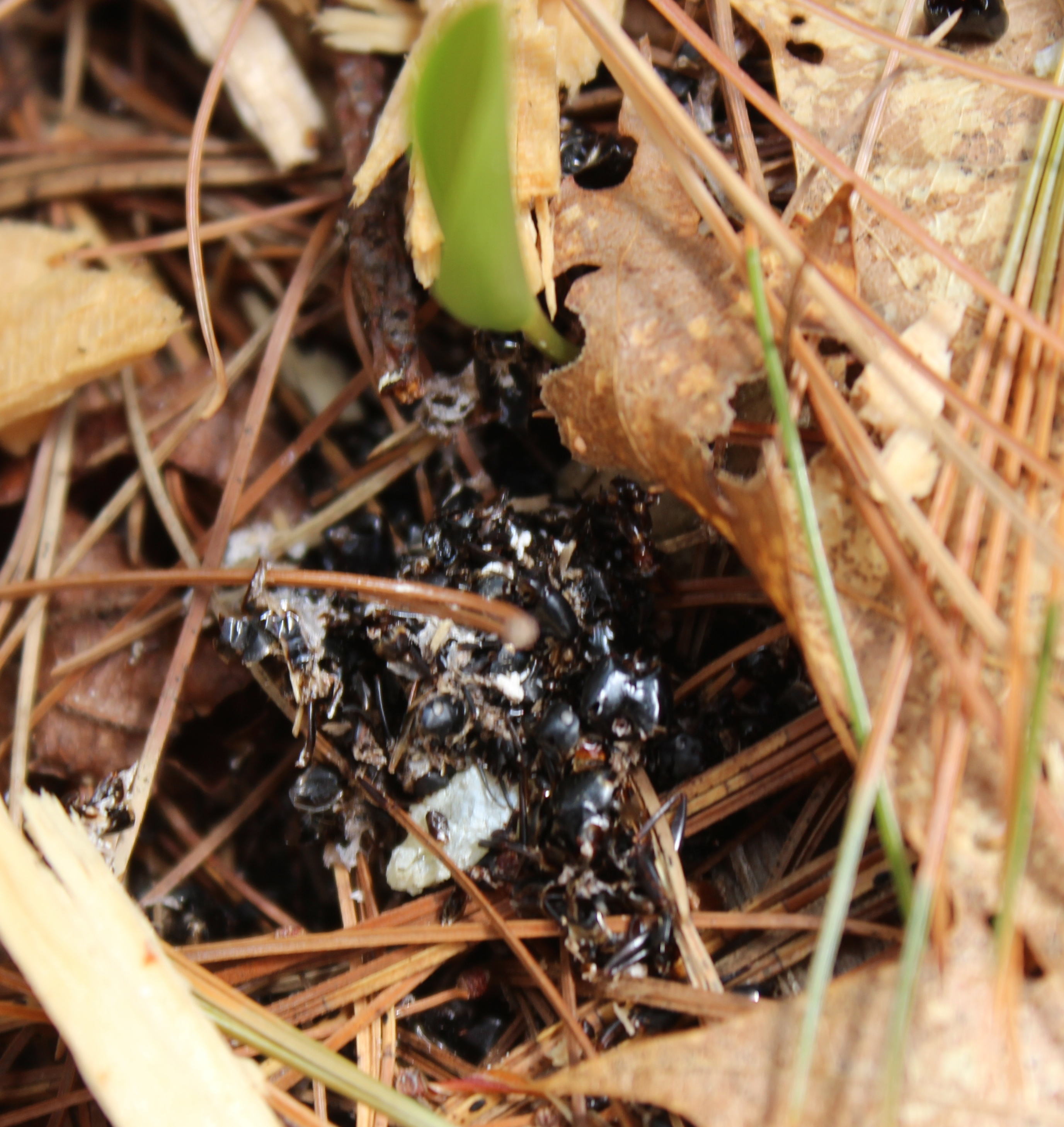
p scat

Who sometimes leave presents. Can you see the ant bodies?

cs

Yup, that’s snow. I took this photo in December because I was impressed with the stock pile of cones a red squirrel had made.

midden

It took me a few minutes to locate the tree today. I wanted to see what the midden looked like and wasn’t disappointed.  In trying to find the tree, however, I developed an appreciation for the red and gray squirrels who cache their food and then return to it. Of course, if a gray squirrel doesn’t remember where it stored an acorn, then a turkey or deer may find a treat, or a tree may grow. No matter how you look at it, it’s all good. As for me, I need to learn how to use our GPS.

Another story about Ladies Delight hill is that this is the place where people would come to picnic in the 1800s. Did the women get dressed up to enjoy a day out, a break from their farming duties? I have visions of them wearing long dresses and bonnets and carrying picnic baskets. But could they really afford a day away from their chores?

red spur

The blue trail loops around the 155-acre reserve, and a spur trail (red) leads to the vantage point–a view of Lower Bay on Kezar Lake and the White Mountains.

chip stockford

A bench at the outlook was placed in memory of Chapman “Chip” Stockford, a founding officer of the GLLT who lived in the neighborhood.

view

Spring color–more subtle than fall foliage.

white pine

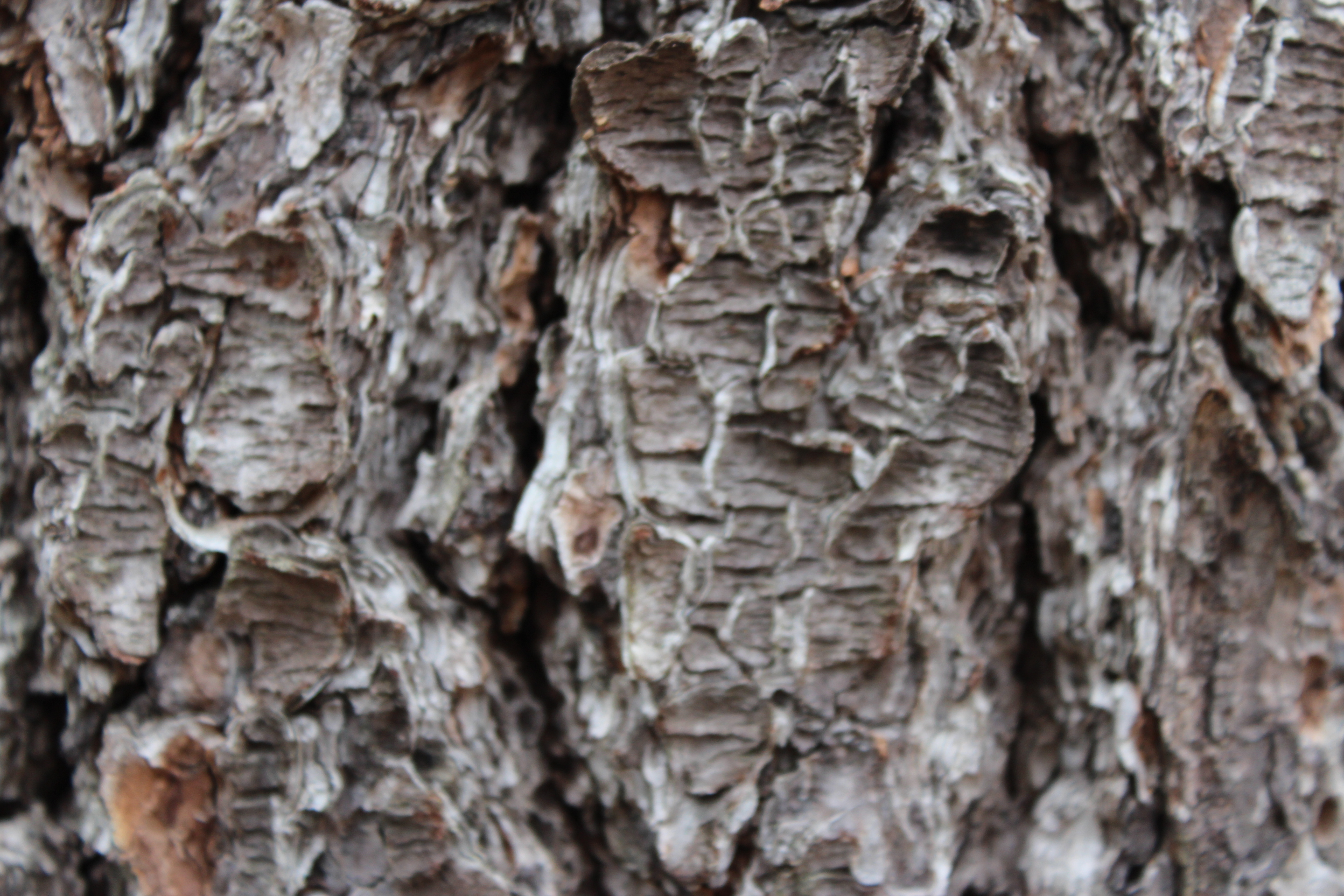
On the short spur between the red arrow and the outlook, the variety of trees offers a study in bark. Eastern White Pine–with horizontal lines on the scales.

hemlock

Flaky, cinnamony-gray (is that a word?) scales of Eastern Hemlock.

ash

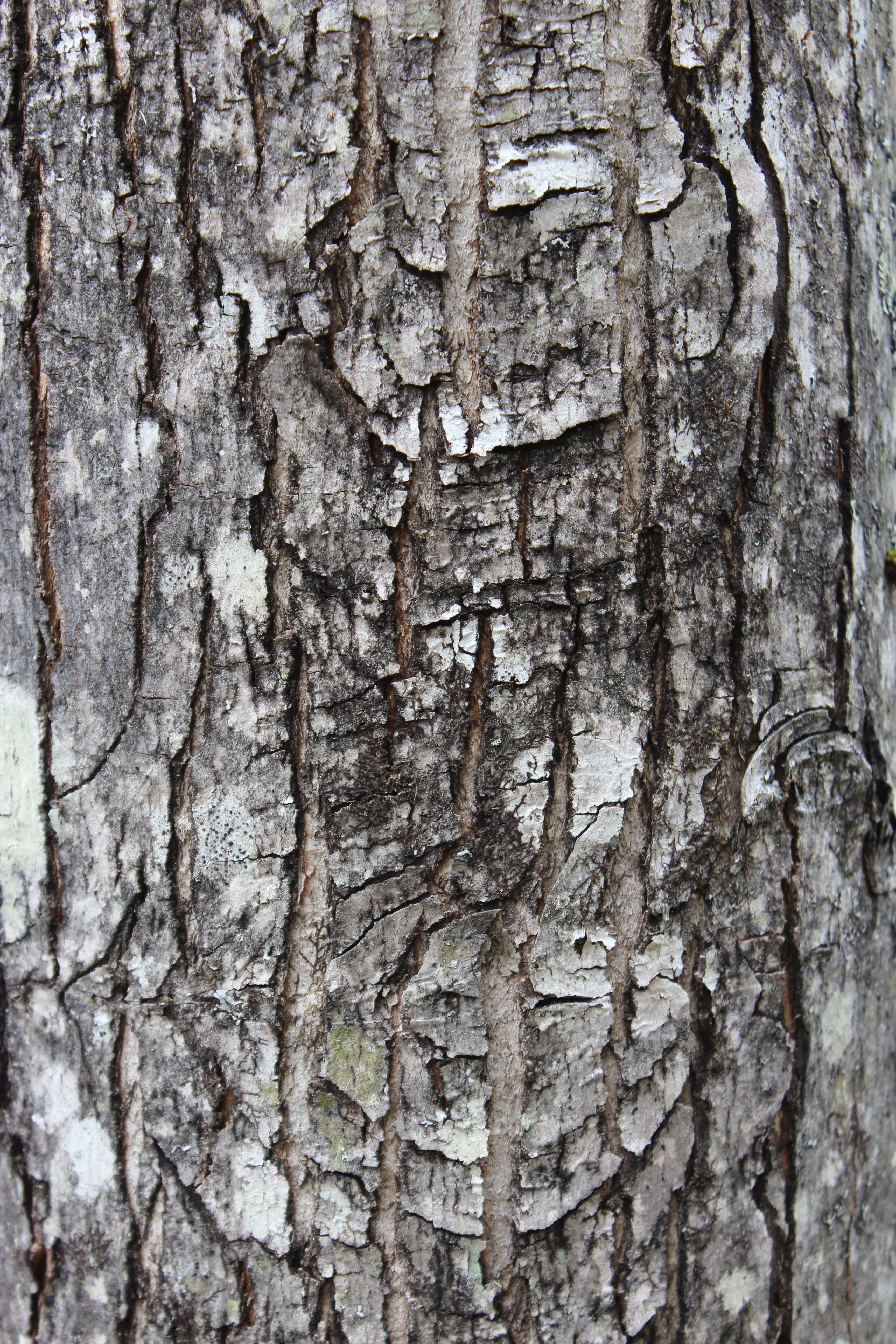
Ash’s diamond-shaped furrows.

beech

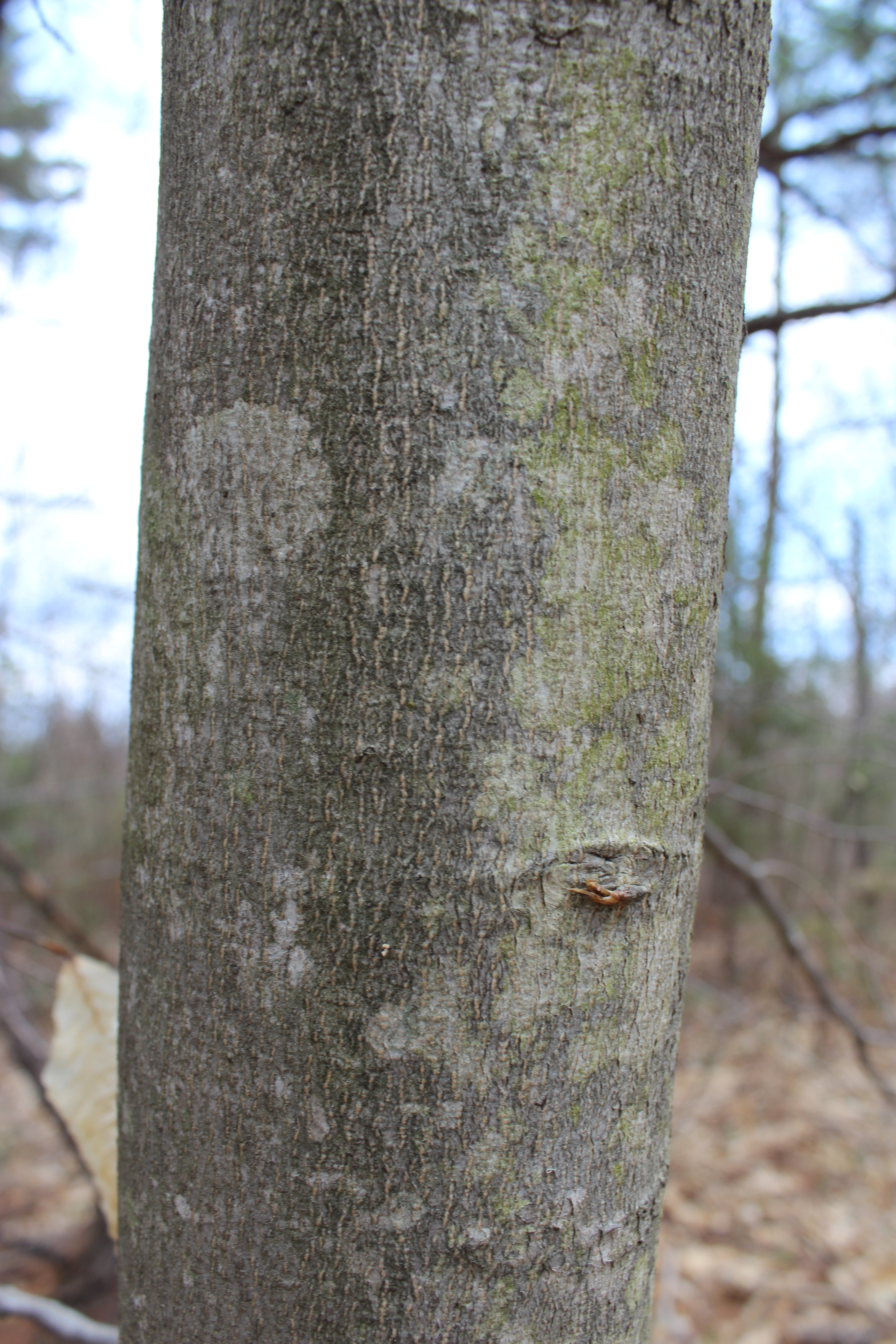
And the smooth, silvery-gray American Beech–with some blotches of lichen adding a dash of green and white.

hop hornbeam

Hop Hornbeam’s shaggy strips.

red maple

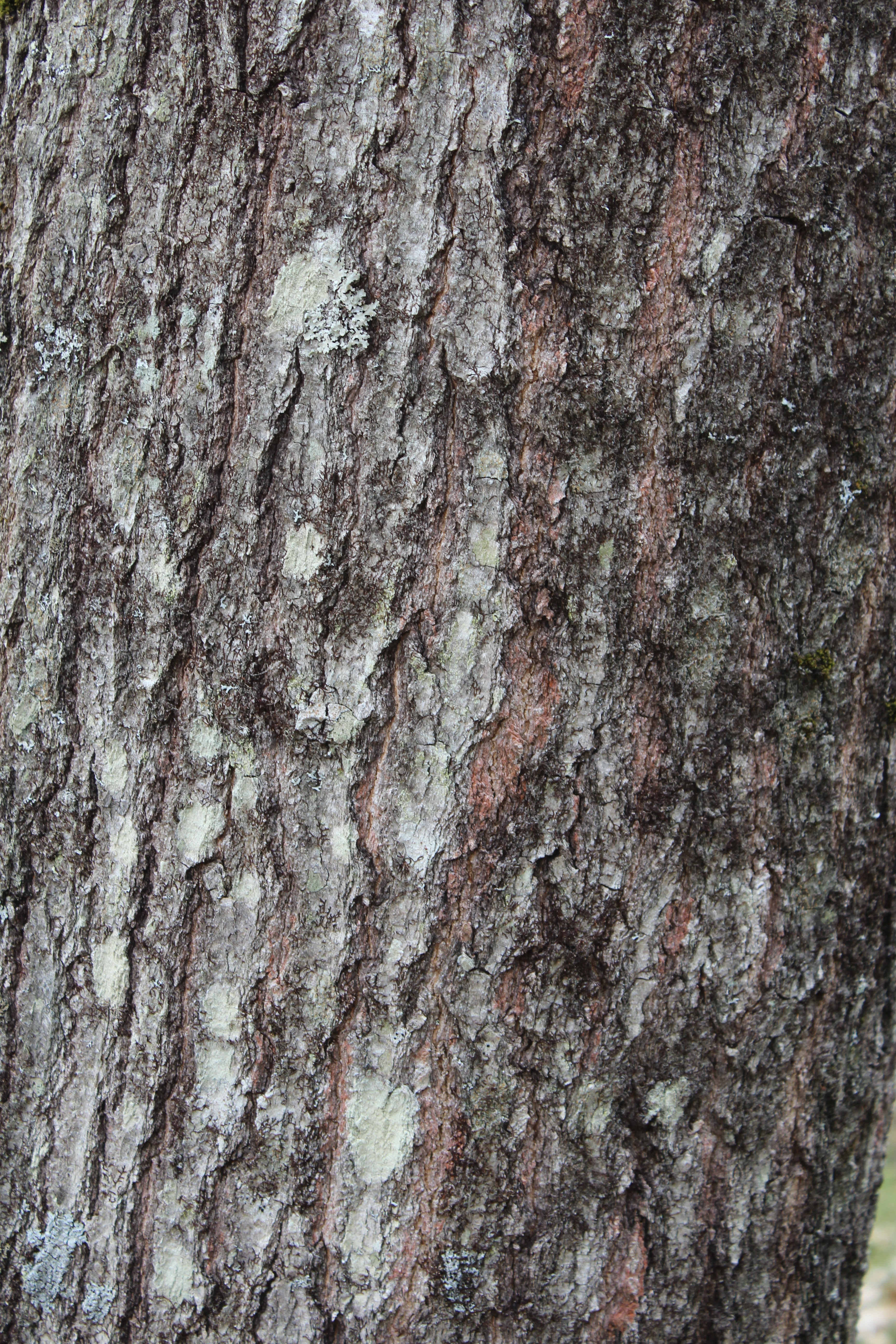
And the bull’s eye target on Red Maple.

red oak

Finally, the flattened ridges of ski tracks that run down a Northern Red Oak.

pine age

Back on the blue trail, the sun poked through the clouds, shining on pines that represent a variety of ages.

found 2

I’m not sure who lived in the house above this cellar hole, but it’s always fun to visit and wonder.
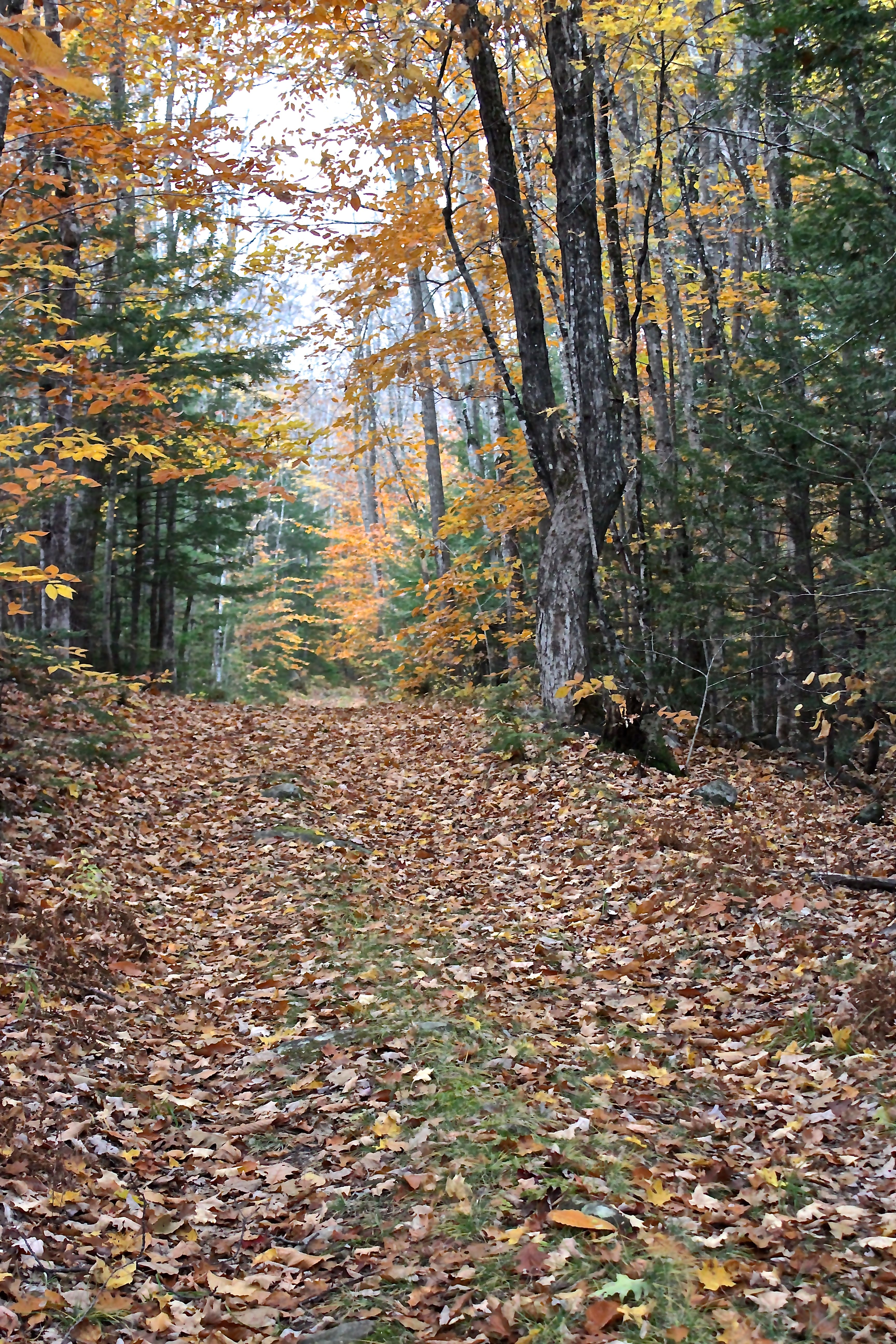
In her book, Blueberries and Pusley Weed: The Story of Lovell, Maine, Pauline W. Moore wrote that Ladies Delight, “was not named for the view. Nor because it made a delightful walk for ladies to take on a Sunday afternoon or because it was covered with wonderful blueberries . . . (It was) named in sarcasm because women who tried to live in two houses built there could not endure the loneliness and isolation.”

Was this one of the houses?

found 3

It’s been a long time since any vegetables were stored in this cellar.

As I was told at the historical society,  the bridge across The Narrows wasn’t yet built when the ladies lived there, so the only way to get to the other side was walking across the ice.

the rock

No visit to Chip Stockford is complete without a visit to The Rock. Today, I startled two grouse that flew up from behind it.

grouse dust

Dust bath? Nest site?

sweet fern

A few more things to see as I headed out. Sweet fern, which is really a shrub.

baubles

Baubles on pine saplings.

paper birch bark

Young Paper Birch bark.

striped maple

Swollen Striped Maple buds.

phoebe nest

And a phoebe nest under construction.

This lady was delighted to have time to wonder and wander. Thanks for taking a look.

Seeking Hope

My heart is heavy with thoughts of recent events both here in the US and abroad, especially in Baltimore and Nepal. It all makes me feel so insignificant as I head outside. And it makes me all the more thankful for the opportunity to head outside and wander freely along the path and through the woods.

red maple 1

My hope is that you’ll never pass by a Red Maple tree again and dismiss it as just another tree.

striped maple

The same is true for a Striped Maple.

pussy willows

and willow.

vp1

My hope is you’ll relish the life of a vernal pool

vp eggs

as it supports a variety of species for such a short time,

wb 2

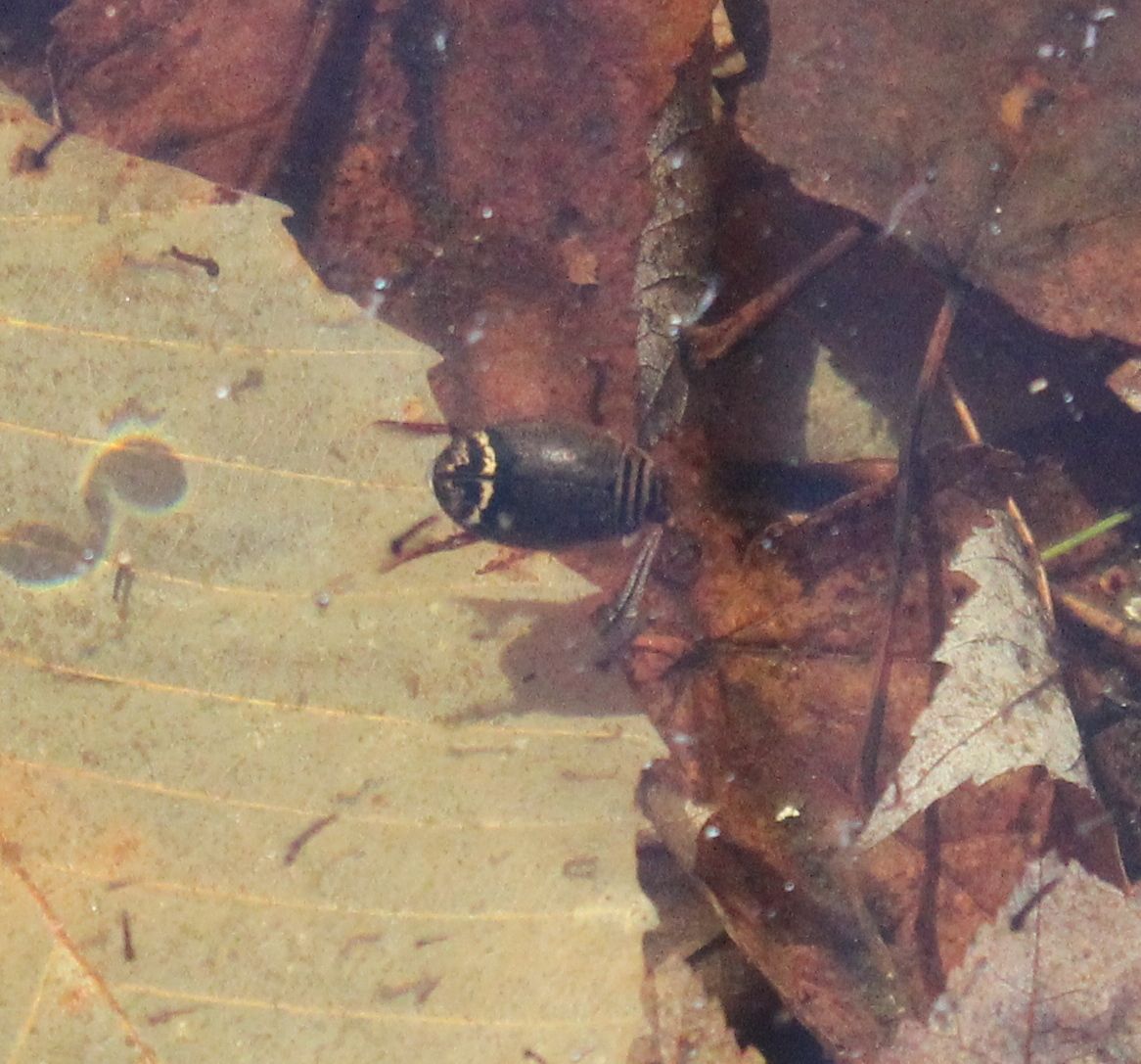
including this predaceous diving beetle and wiggly mosquito larva.

vp 2

Visit soon, because they are already drying up.

porc tree

My hope is you’ll look around and notice the subtle signs

porc damage

of mammal activity.

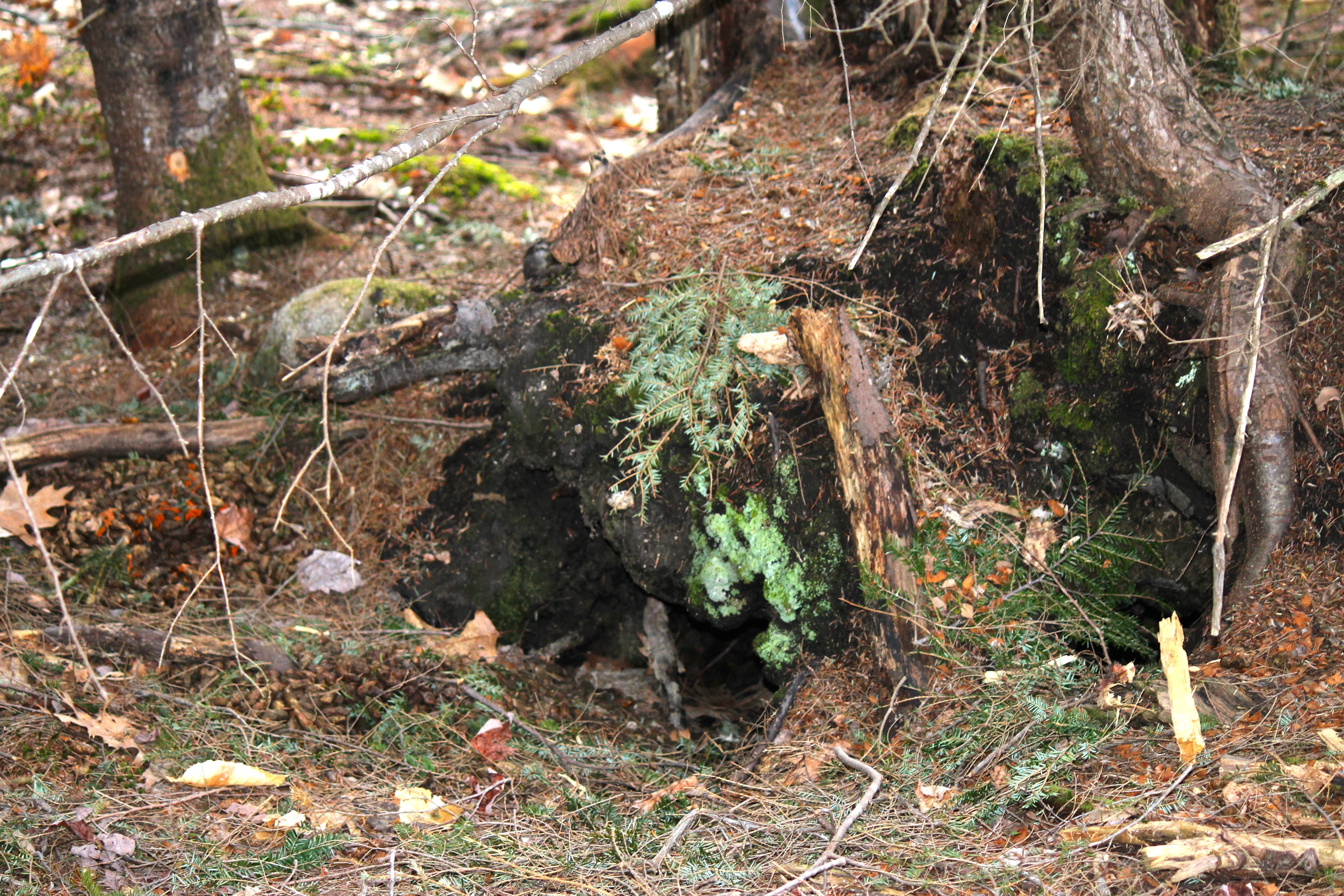
porc den

And have the good fortune to see a den and scat up close.

stone wall

My hope is you’ll come upon stone walls

trash 3

and objects in the woods that will make you wonder about those who came before.

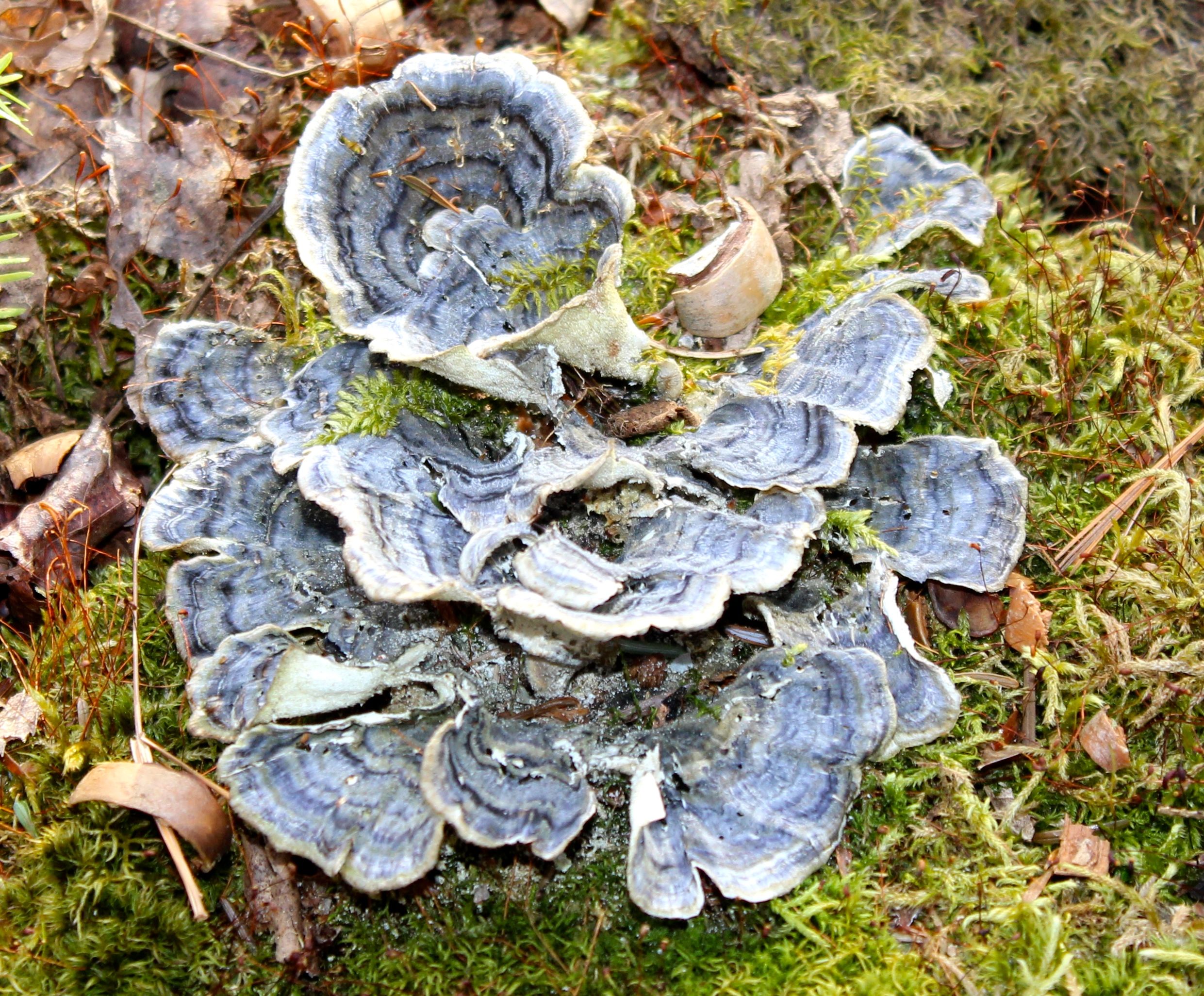
turkey tail

My hope is you’ll notice the abalone colors of turkey tails

stump

and see castles in tree stumps.

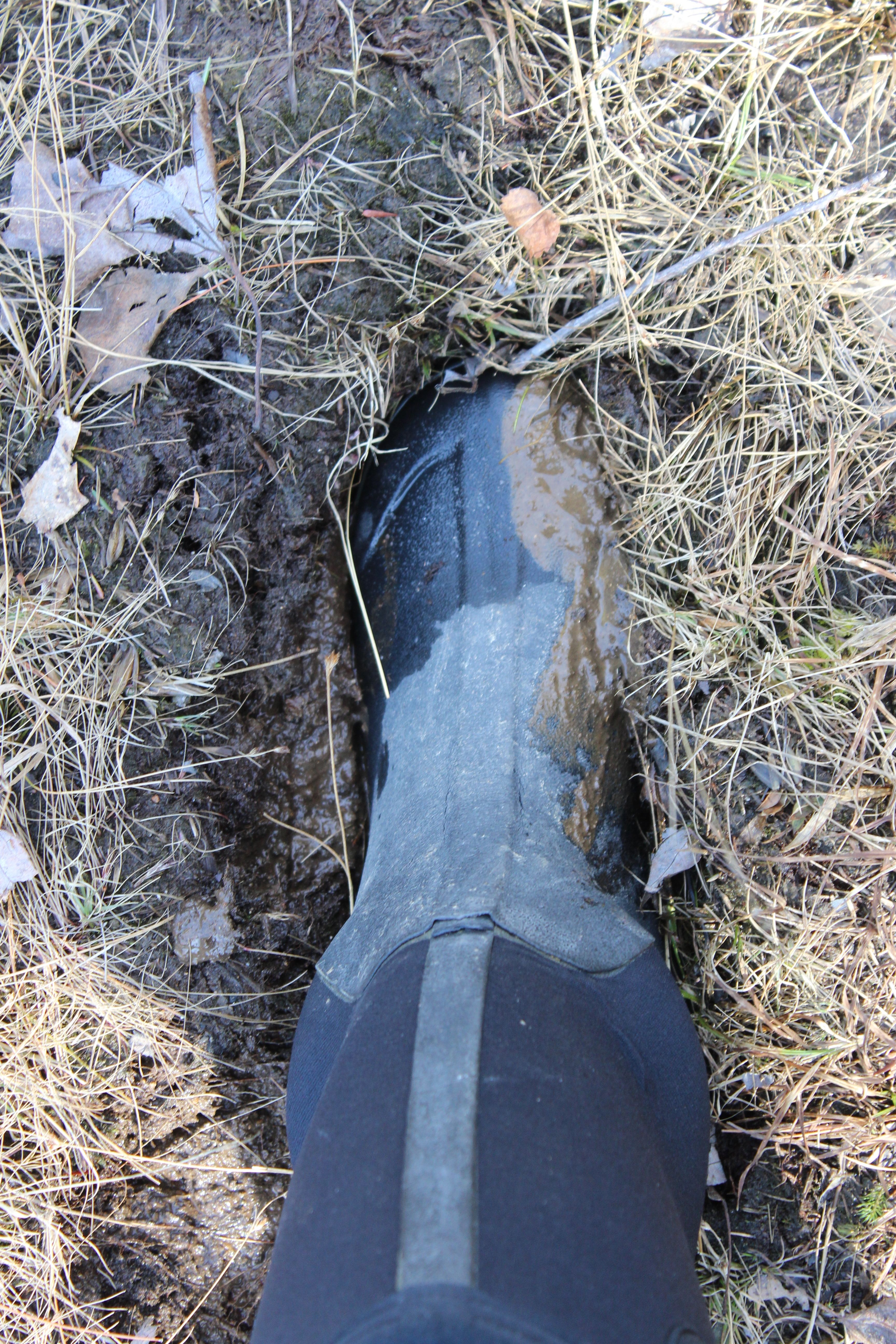
sinking feeling

My hope is you’ll sink in the mud

trail

as you travel along the trail.

May those who suffer find hope and wonder.
The Joy of Wonder

cowpath 1

It rained last night and this morning, but we never did get the snow that was mentioned in a few forecasts. And the sun came out so I wandered down the cowpath, headed for the snowmobile trail. Instead of walking toward Mount Washington, I turned left.

vernal pool 1

At the vernal pool, I was excited to see the slush. And I was sad to see that it’s been disturbed–rather recently. Not by wildlife either. It’s such a fragile environment.

shed site

On my way to look at the nearby well, I realized that some land about ten feet from the pool had been carved out. It’s not a root cellar or foundation. Perhaps the site of a farm shed. It appears to be three-sided, maybe the fourth side being an opening.

well 1

And another ten feet away, the well. I didn’t realize last month that there’s a large stone cap over it.

well 2

The well has the signature of a Colonial stone cutter–the drill mark left from a feather and wedge routine to split stone. Granite is a hard, coarse-grained rock that consists of minerals  including quartz and feldspar. Interlocked like the pieces of a jigsaw puzzle, the minerals make it one of the strongest and most durable rocks.

During the 19th century, stone cutters used the plug and feather method to hand drill small holes every six or seven inches across the stone. Then, two shims, called feathers, were placed in a hole and a wedge, or plug, was hammered between them. Drilling took place during the winter months when ice would form in the holes and help complete the work of splitting the granite.

pussy willows 1

I continued along the trail, letting it share its moments of wonder. Suddenly, a sparkle of white light caught my attention.

pw2

Pussy Willows in all their glory. I love how one branch reflects the other, don’t you?

British soldiers

And then this–a colony of British Soldier. This one is for my friend, Em.

property marker

All along the trail there are stone walls and occasionally other boundary markers like this one. Notice that it also has the feather and wedge signature of a stone cutter.

disturbance

Then I saw this disturbance just off the trail. I needed to take a closer look so it didn’t matter that the snow was over my boots.

squirrel drey?

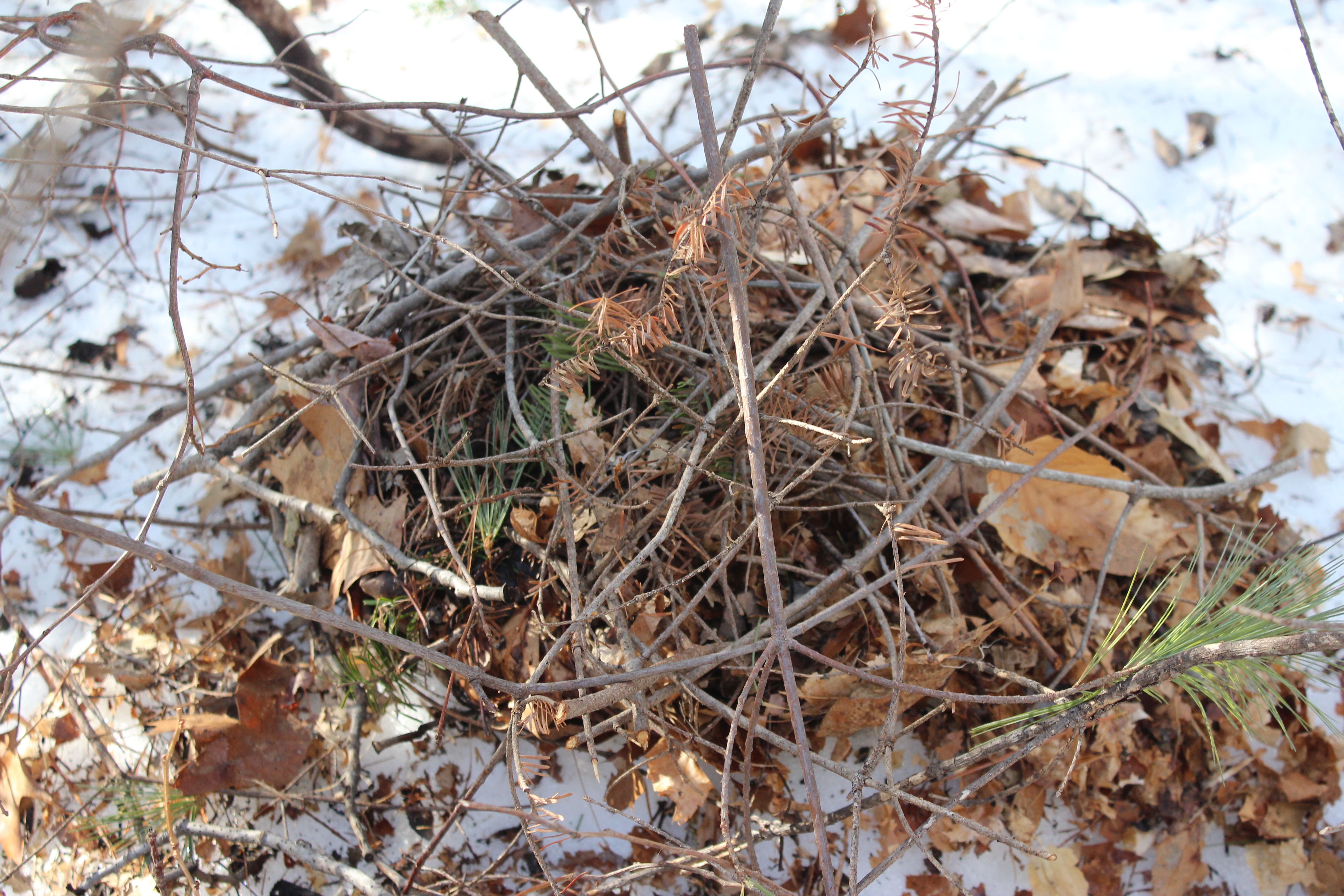
Maybe a toppled red squirrel drey? If it is a squirrel drey, why is it down? Something isn’t quite right here.

vernal pool 2

Because we live in a very wet area–oh heck, all of Maine is wet–I don’t always walk this trail during the spring months. But . . . today I ventured off trail and took a closer look at another vernal pool located about a half mile from our house. It invites further exploration as the season evolves.

poplar

One of my favorite trees beckoned to me. Um . . . that could be any tree in the forest. But this one is super cool. It looks almost oak-like on the lower portion and birch-like above. It’s an aspen. Big-toothed or Quaking is always the question. I spent some time exploring the woods with a couple of foresters last fall to hone my bark identification skills. I asked them how to tell the difference between the two. One admitted that he didn’t know and the other was sure he knew until I showed him a leaf on the ground that contradicted what he thought. My quest is to figure out the answer to this.

bark

The lower bark is worth observing . . . and touching. While Northern Red Oak bark has fairly smooth ridges, aspen, or poplars as they are also known ’round these parts, has gnarly bark.

big tooth

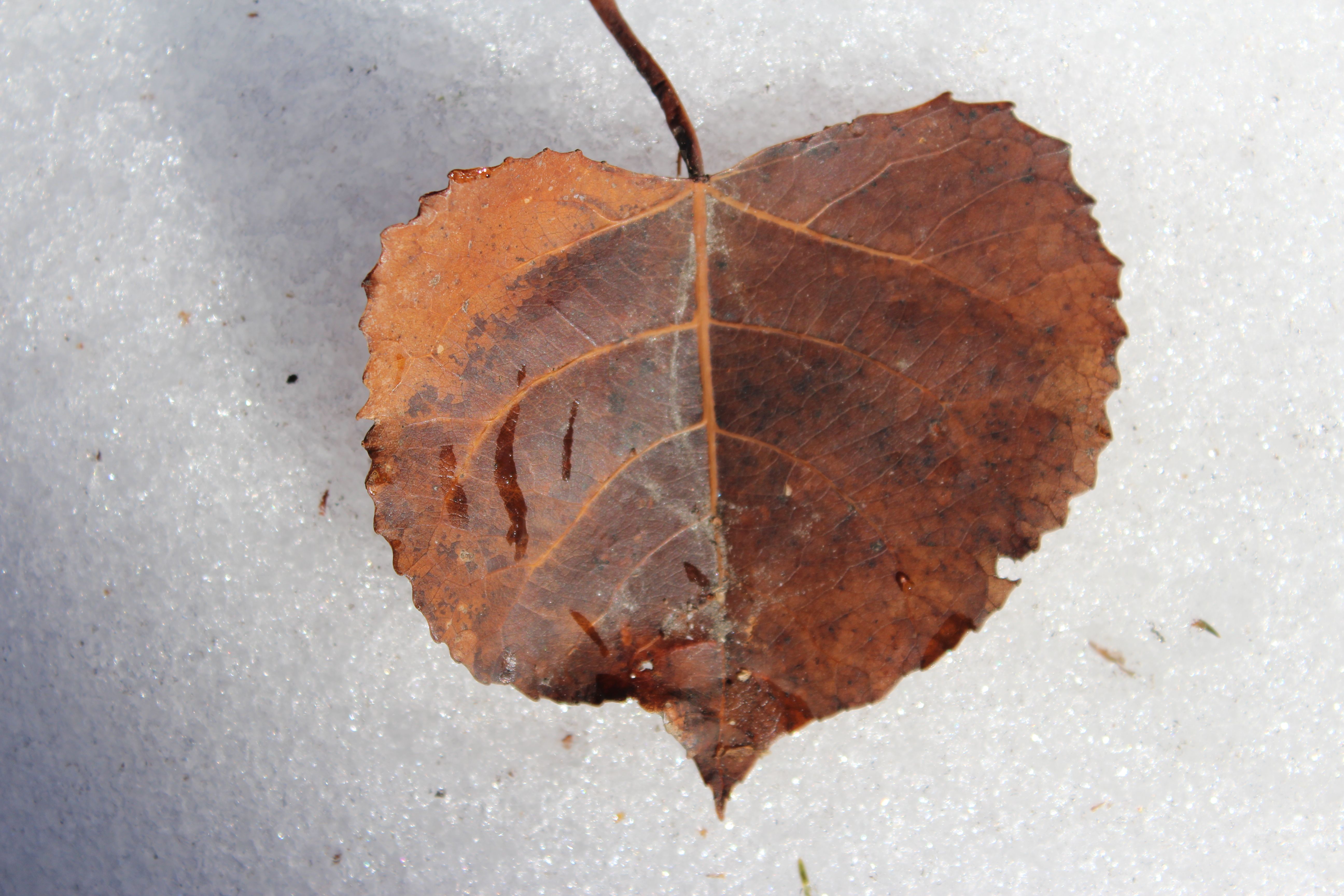
And then there are the leaves. Big Toothed Aspen.

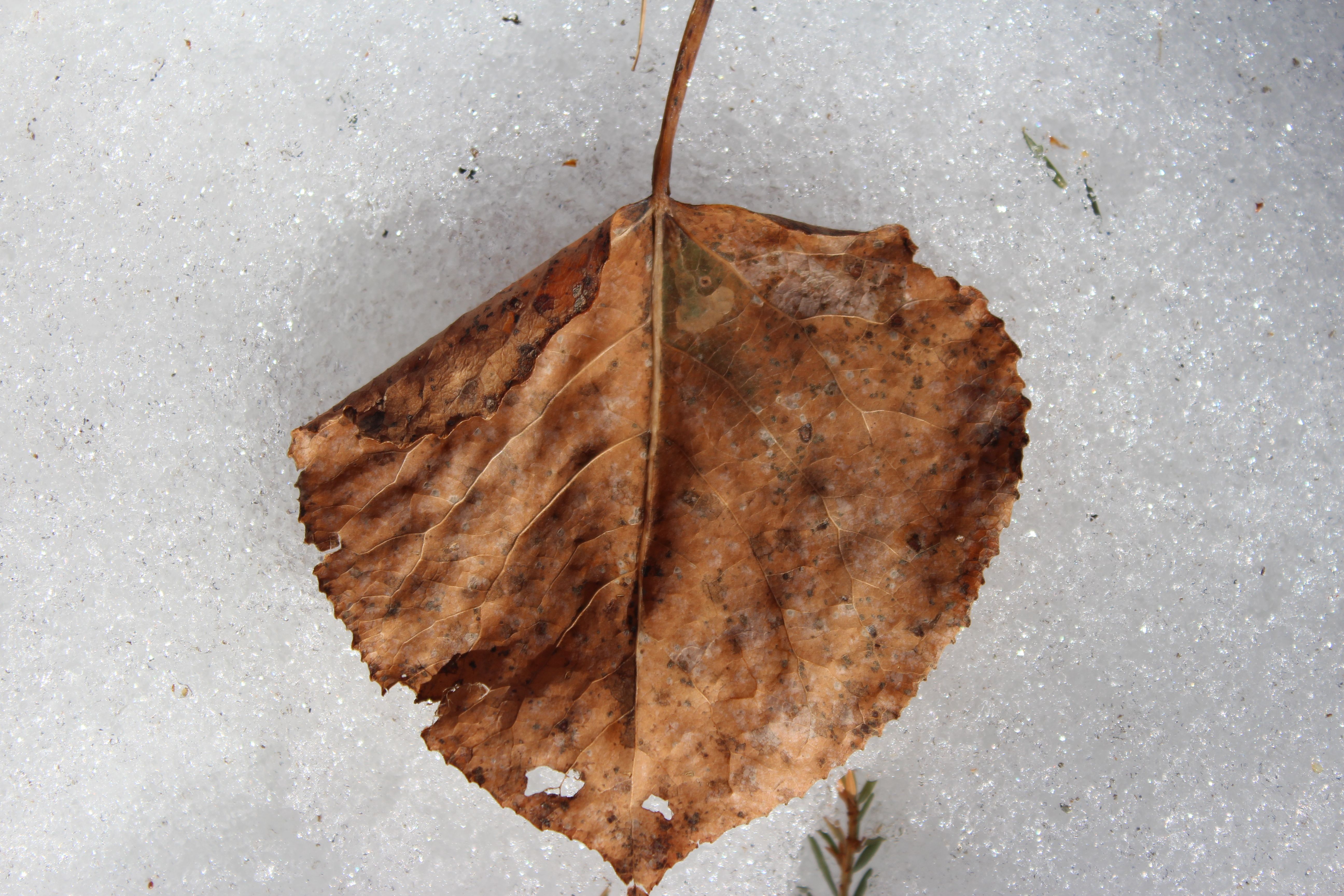
quaking

Quaking Aspen. Yup, I found both of them below this tree.

big t and quaking

Comparisons make me happy. Teaching moments. Big teeth. Little teeth.

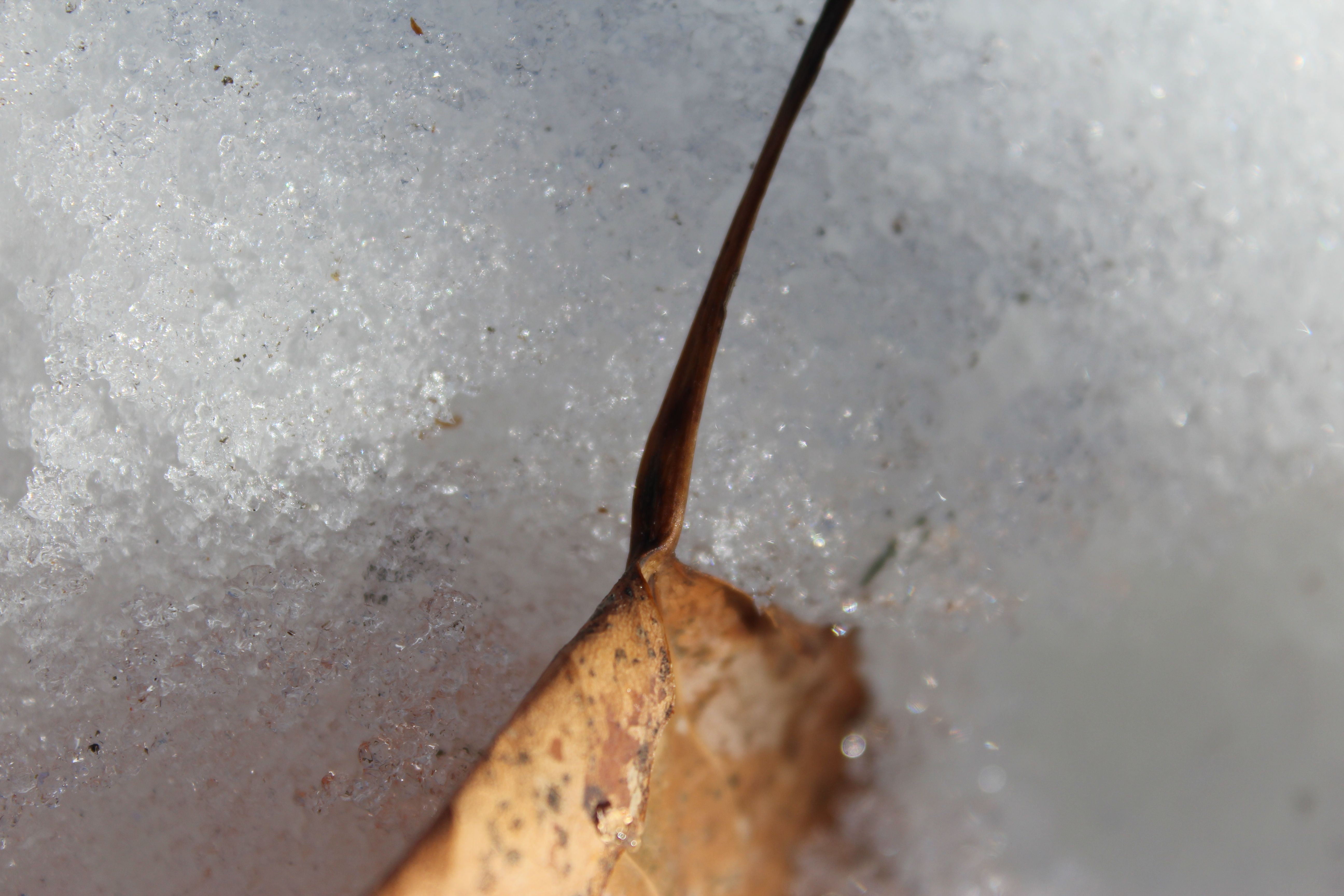
quaking stem

Then there are the stems. Aspens leaves feature flat stems–giving them that ability to quake or tremble in a breeze.

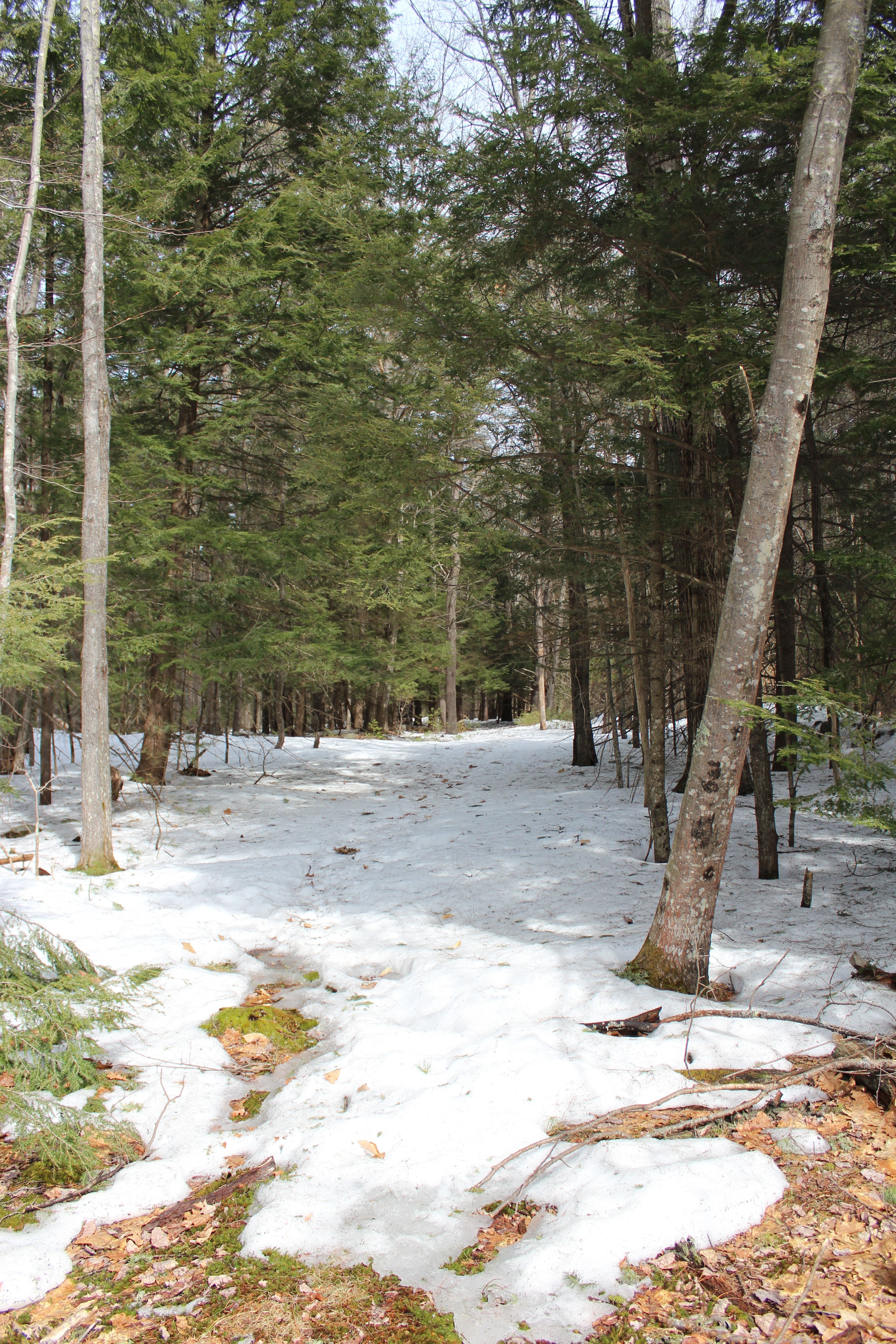
trail

I continued along the trail, which was sometimes covered in snow and other times ice, slush, grass or mud.

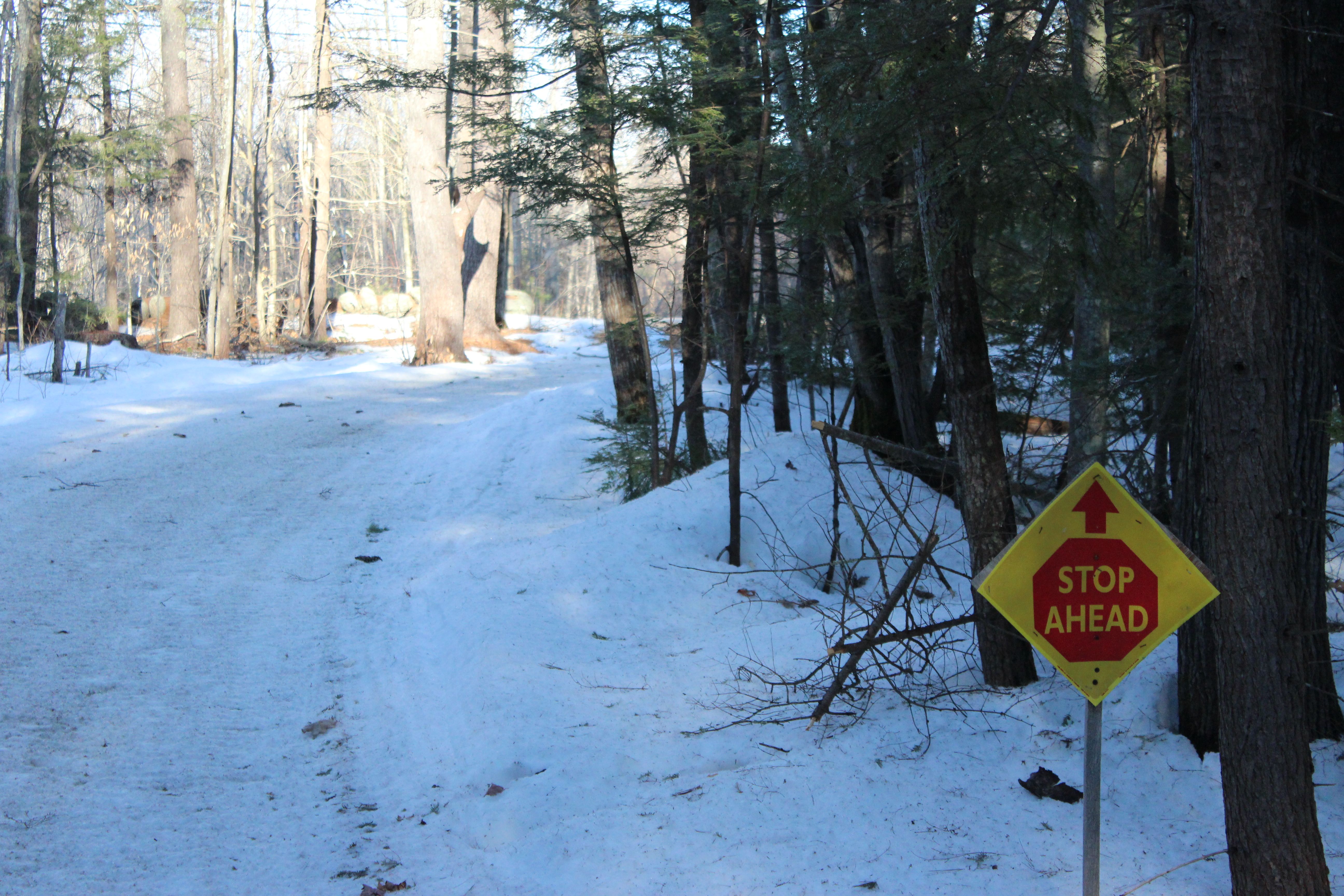
stop sign

About a mile and a half later I reached signs of today’s civilization, though I’d seen plenty of signs along the way indicating yesteryear’s activity. A main road was in front of me. I could walk home via that route or turn around and follow the trail back. I chose the latter.

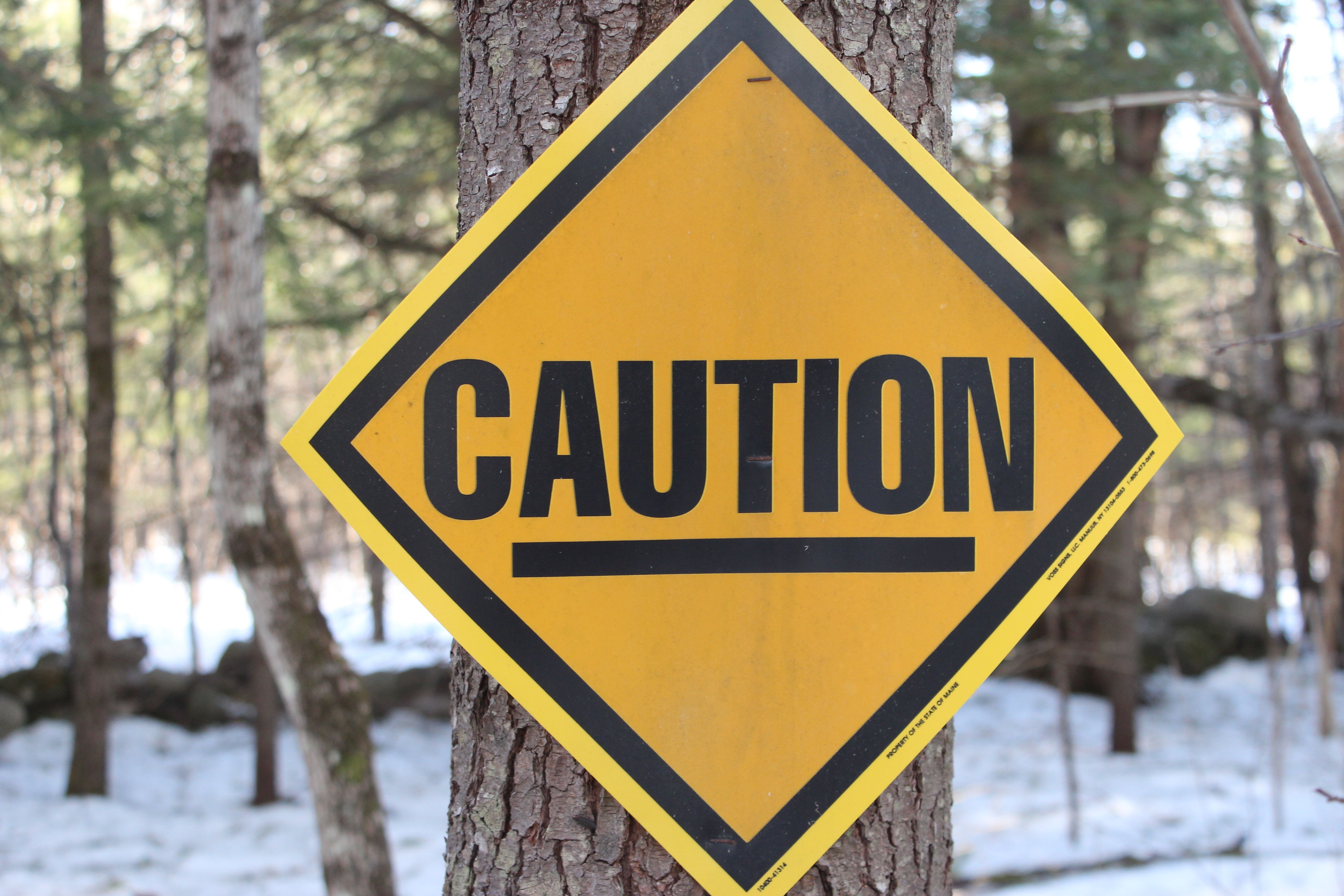
caution

Signs tell it all.

turn left sign

Sometimes they told me to turn this way.

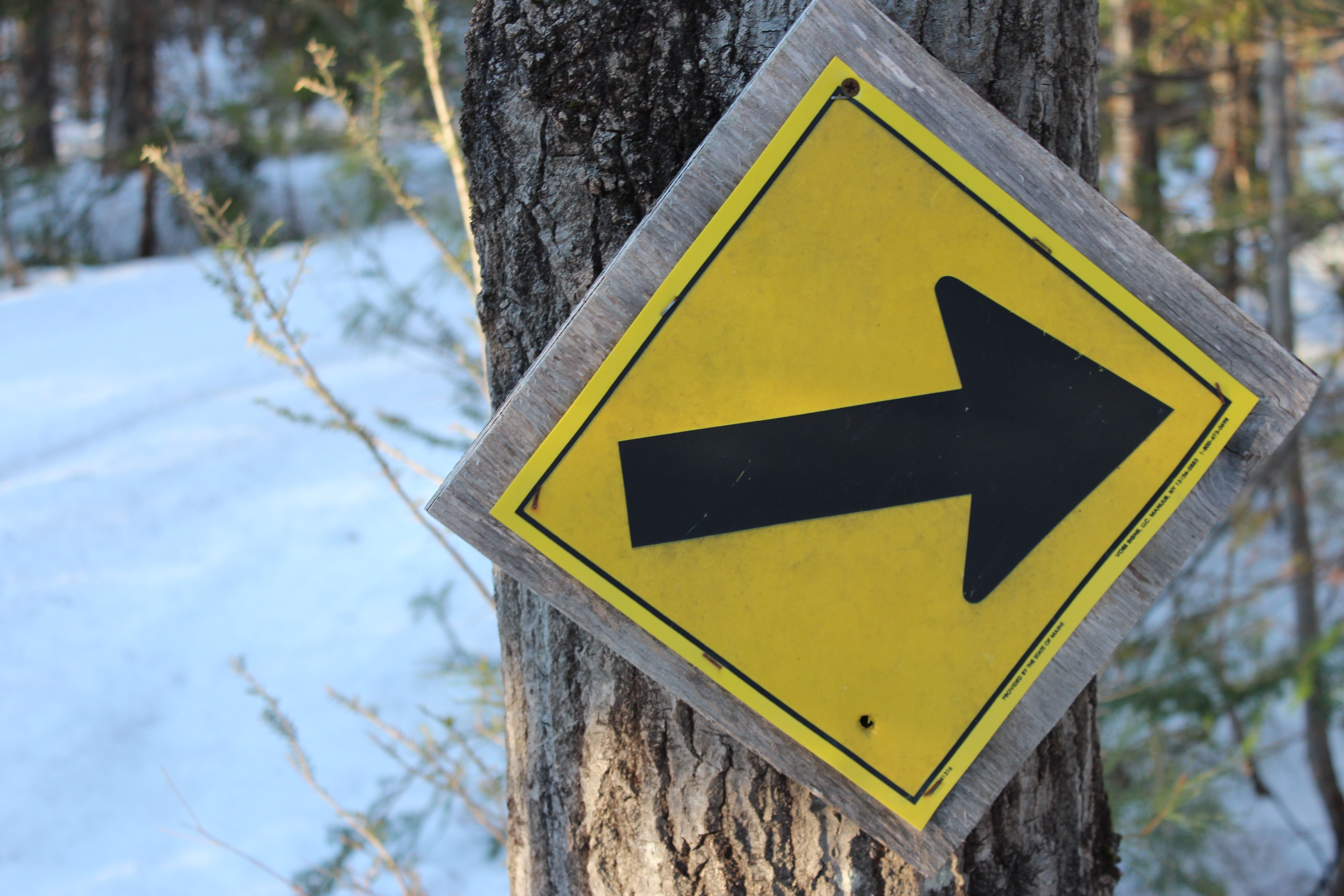
right hand sign

Other times they indicated that I should turn that way.

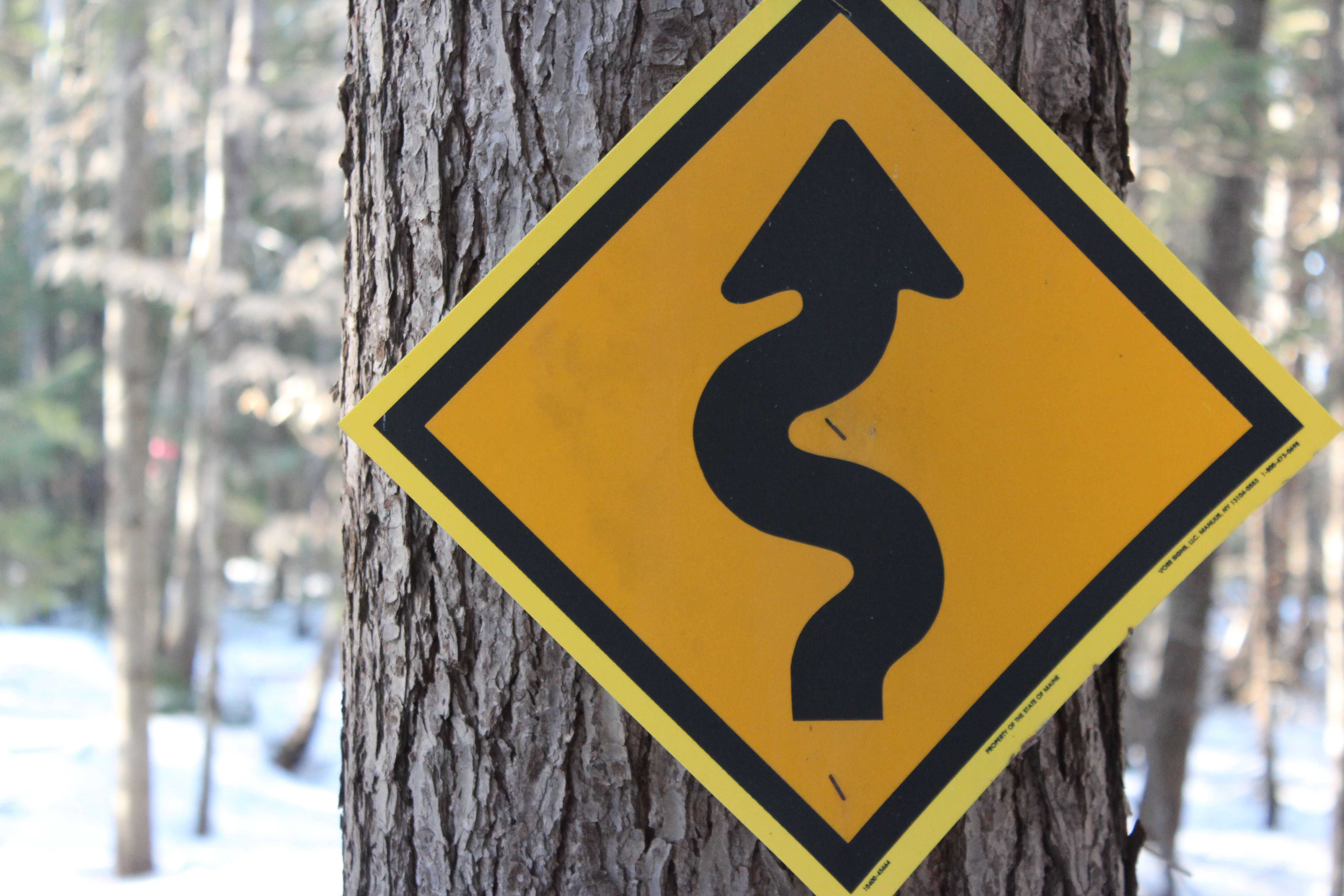
squiggly sign

But my favorites are those that let me know the route I follow isn’t always straight ahead.

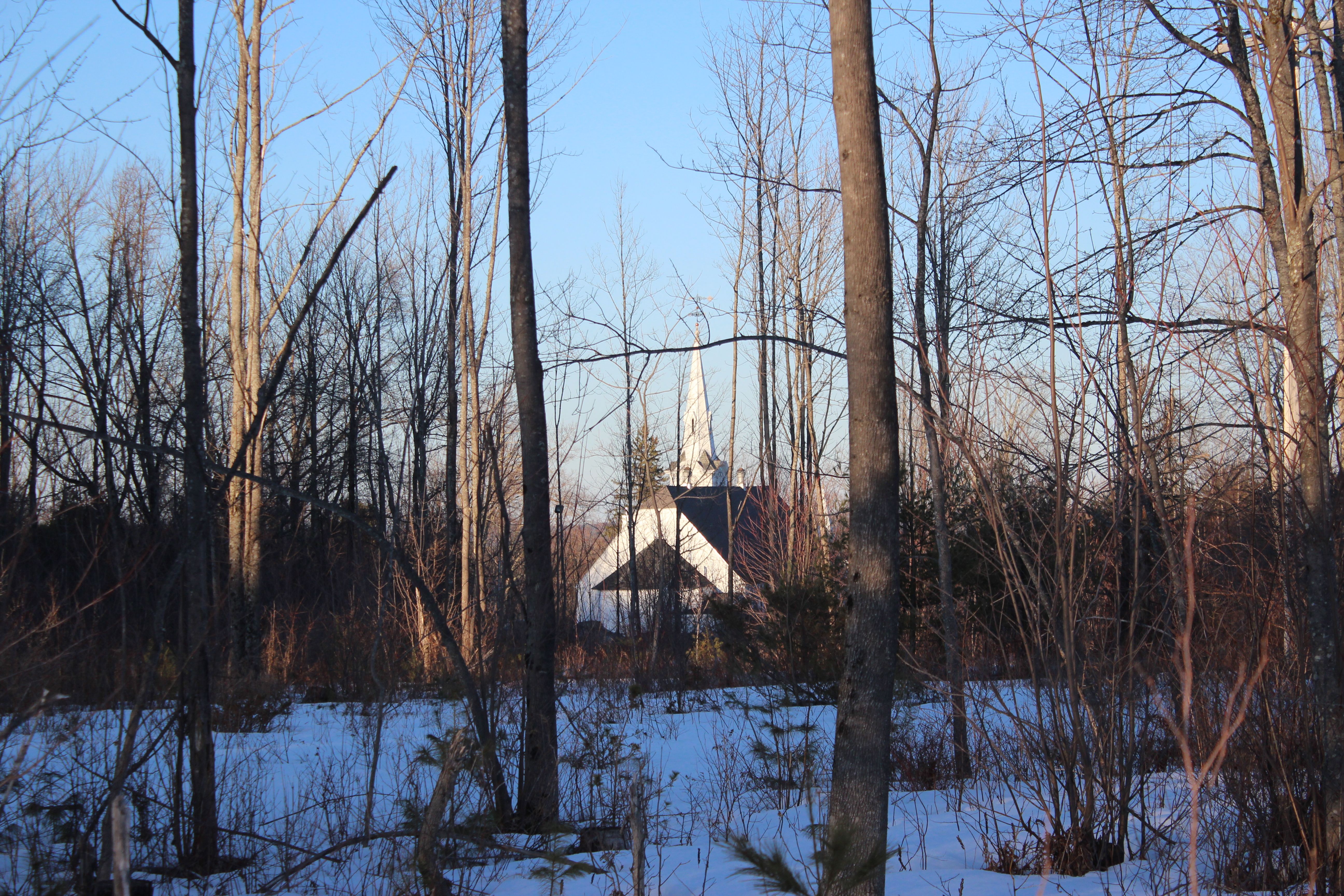
church

And then I was almost home. Tomorrow is Easter–the joy of wonder.
Quiet Beauty

Sixty-five degrees in the shade. Time to shed a few layers. And so I did before I stumbled through the snow to my sit spot. I didn’t feel like wearing snowshoes, so it felt like I was digging post holes again.

cowpath

I set up camp at the opening of the cowpath. Shades of green, brown and white surrounded me. Once in a while I spied a touch of contrast–one red berry on a Wintergreen and a few weathered purplish-red berries of a Canada Mayflower.

canada mayflower

The deer had moved through yesterday afternoon and again this morning. We watched them cross the field, which is still snow-covered. They paused by the stonewall to browse before climbing over it and into our woods. Their presence was noted everywhere.

stone wall deer

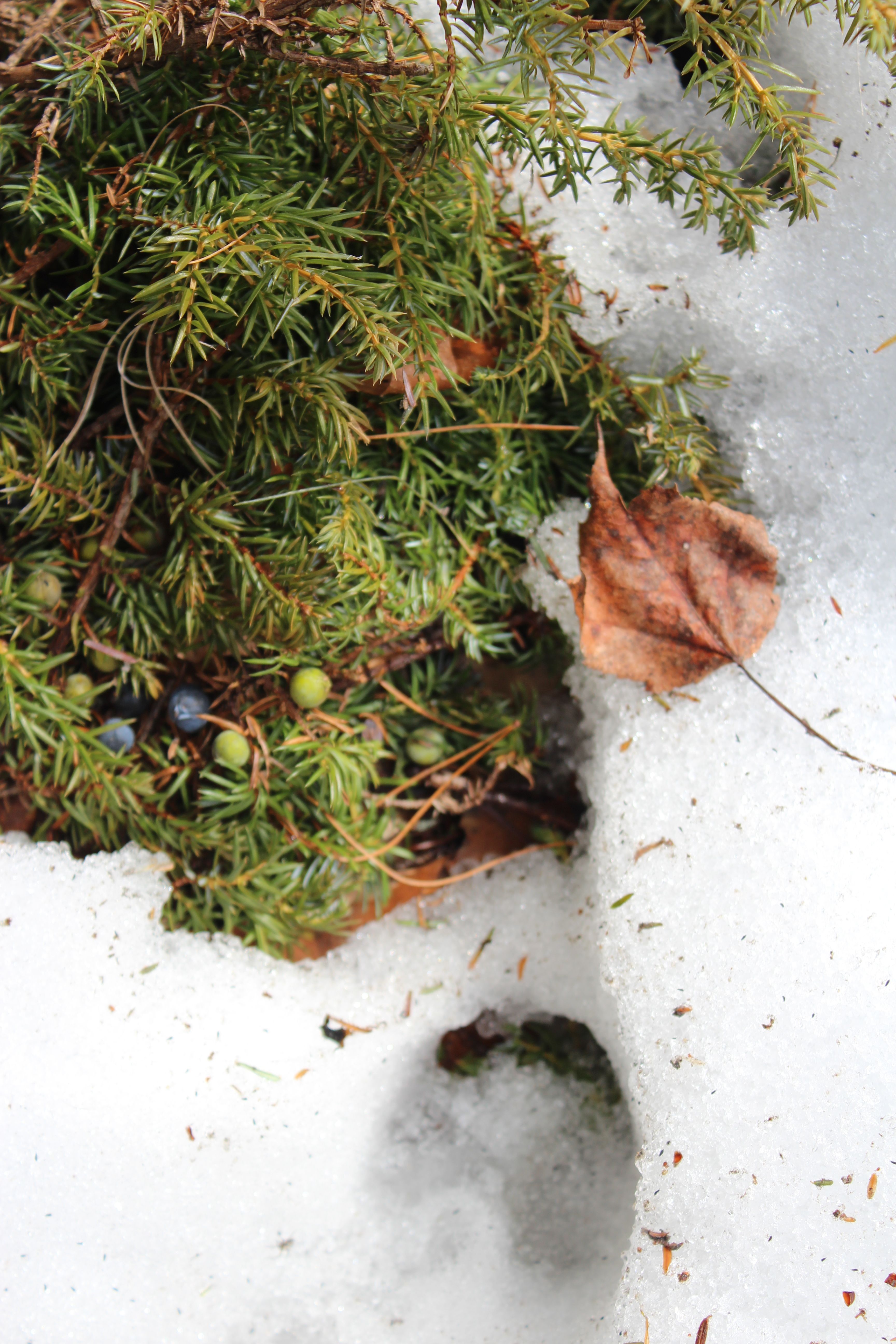
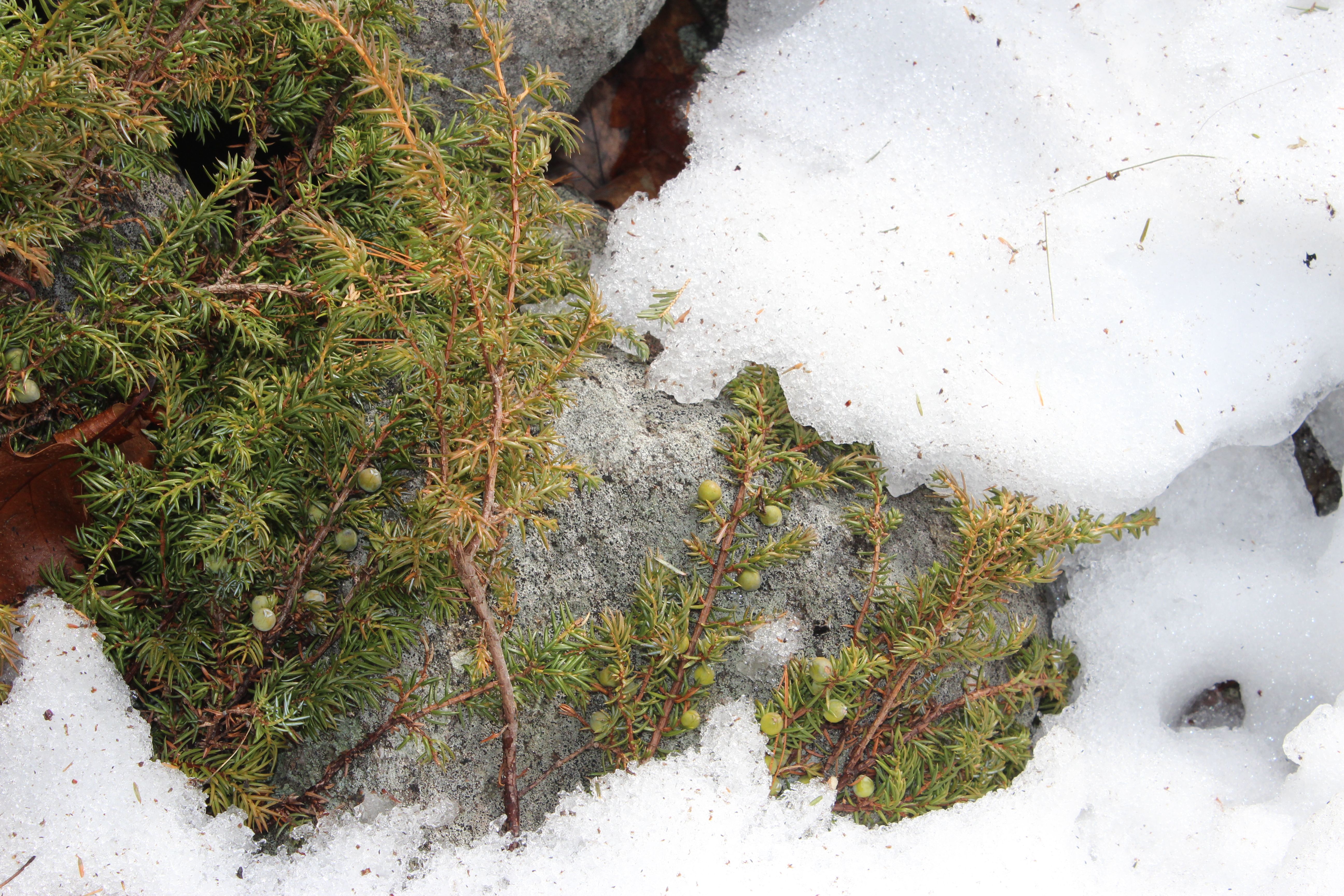
juniper 2juniper 3

Before moving on, they stopped at the junipers that grow along one section of the stonewall. The shrubs are filled with berries–green, blue and even gray. I find it curious that these berries are supposed to provide food for deer and yet, there are still so many there. All of the exposed juniper bushes are laden with berries.

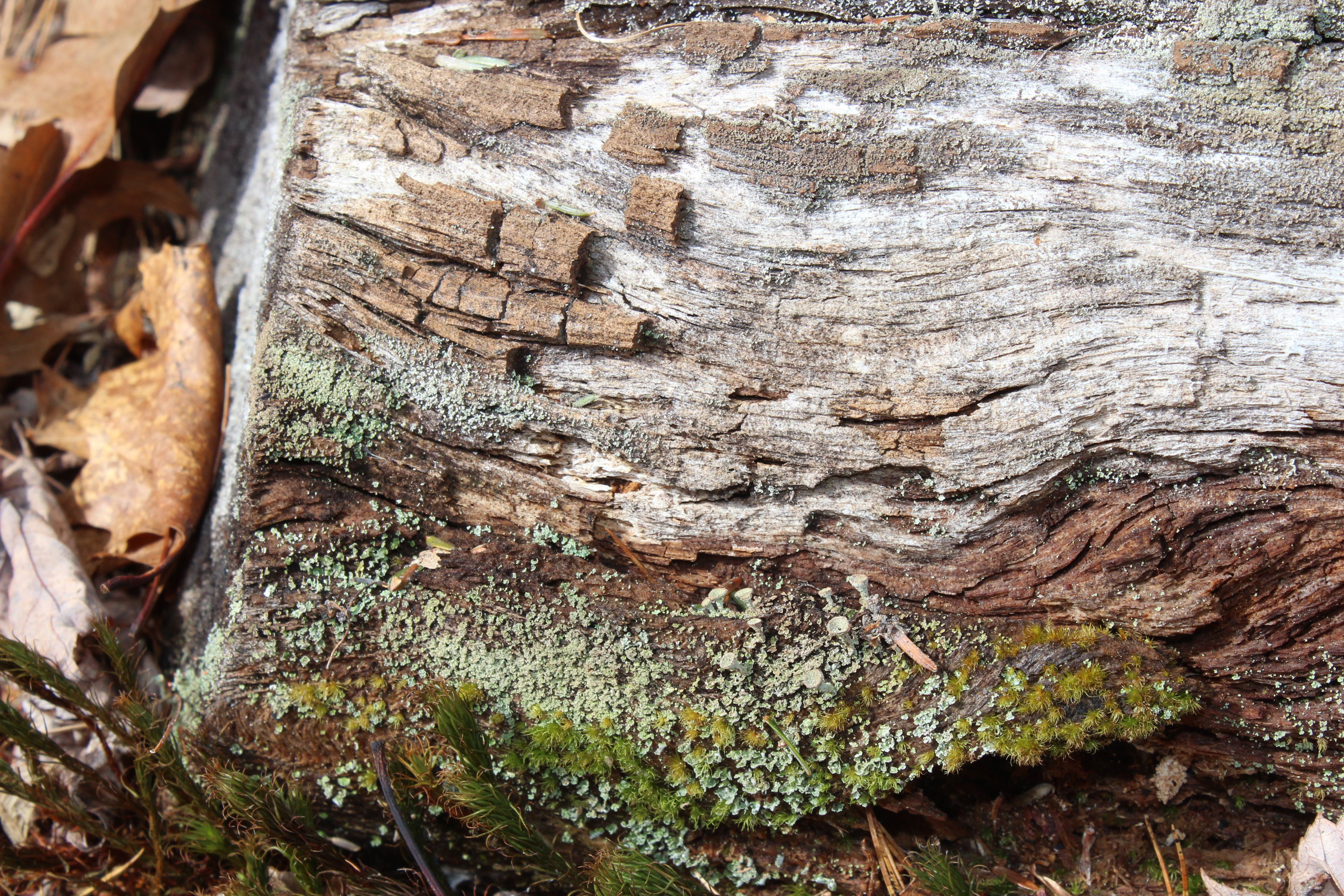
Log

Right at the opening of the cowpath is this decaying log. I’ve observed the life it supports for the past few years. It reminds me of a similar log below a tree in my childhood backyard. My two playmates and I named the tree “Treetonic” and we each had a chosen branch that served as our home. Mine was the lowest one–I was the more cautious of the three. We used to dig small chunks out of the log below to create our “meals” of meat and vegetables. Wow–I can’t believe I remember that.

Back to the present–two years ago I found a couple of tiny white pine saplings growing on this log, but today there was no sight of them. Often, I’ve discovered acorn shells. And once, close to Halloween, I found plugs of red squirrel hair–lots of it. It was extremely soft, about an inch or more long, white at the base, then black, and topped with reddish brown–which had some black specks. I called it the Frankenhair Mystery in honor of Halloween and the fact that “Frankenstorm” Sandy was on the horizon.

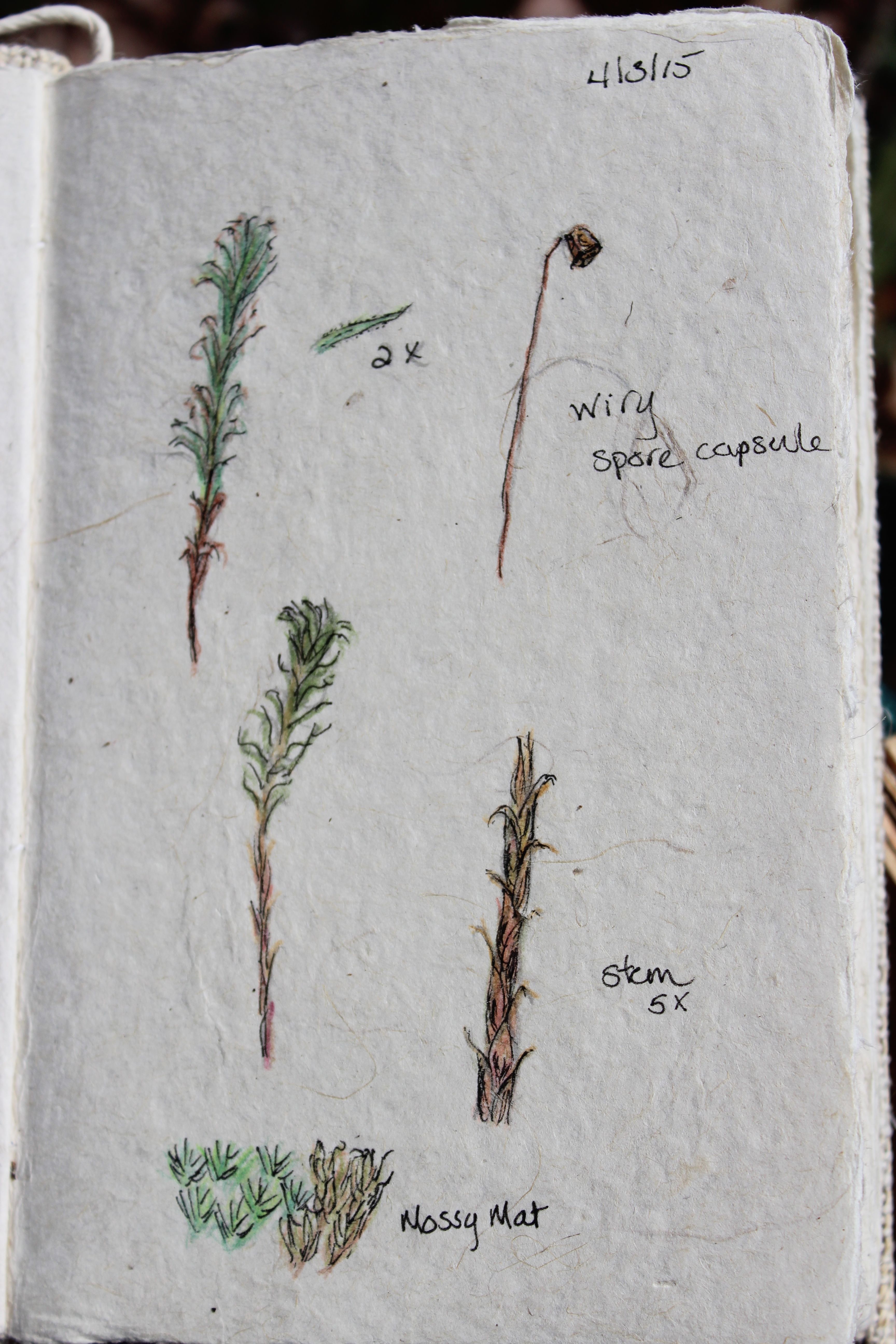
Today, it was the mossy mat that made me pull out my colored pencils. A tree dies, falls to the ground, begins to decompose. Lichens colonize it, blown in as spores in the air–a topic for another day. Moss grows over the lichen, taking advantage of moisture trapped in the organic matter. Eventually, the moss adds to the organic material and helps build a soil base. Once the moss mat is established, grasses, sedges, ferns and herbs invade–arriving by wind-borne spores or seeds (or perhaps even via rainwater and spring tales, aka snow fleas, as suggested in “A Chemical Romance . . . Among the Mosses” in the winter 2012 issue of Northern Woodlands magazine.)

common haircap

The moss mat, like that created by this Common Haircap Moss, takes on vertical complexity–soil,  moisture, organic matter all build up. Plant richness increases. If the soil builds up sufficiently, it can support more extensive root systems of woody plants, like the white pine sapling.

sapling

Common Haircap Moss grows in thick patches everywhere I look. Using my hand lens, I can see that the narrow, lance-shaped leaves have toothed edges. I love getting a closer look through the lens. I can see how the leaves clasp the stem. Then I looked at the spore capsule with its copper-wiry stem and four-sided hood that looks like it’s seen better days–because it has.

moss?

I’m not sure about this photo–I thought I was looking at two different mosses, but it may be that one is a moist form of haircap and the other is a dry form, with the leaves drawn in–but it does seem to have a wilder appearance. What wowed me when I looked through the lens was the color of the stem. Without the lens, it looked like it was basic brown. A closer look revealed reds, and pinks, and yellows and greens. And scaly leaves hugging the stem. Maybe as time goes on I’ll have a better idea of what it is–but I’m so glad I took the time to view it up close, where it quietly revealed its beauty on a day dedicated to quiet reflection.

sketch

Days when I make time to wander and wonder and discover the quiet beauty that surrounds me are my favorite kind of days.

Thanks for tagging along to enjoy today’s wonder.

My Native Land

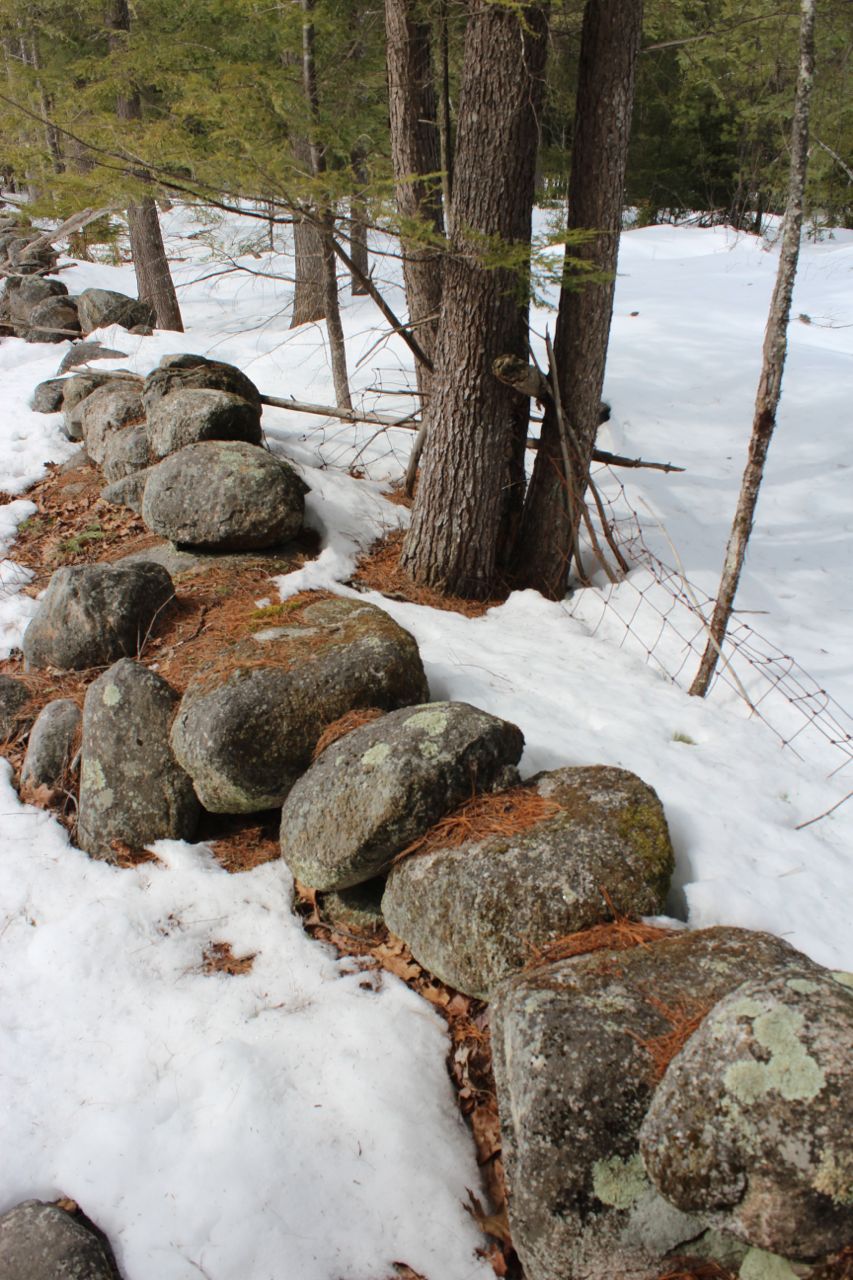
stonewall

As winter draws to a close, I head out to capture its fleeting moments. The snow is here today, and will be tomorrow, but it’s changing in texture and amount. And all that has been covered and protected is slowly emerging.

vernal pool

It won’t be long before the vernal pool teems with life. Already, deer and skunks have stopped by.

bobcat

I ventured deeper into the woods behind us, into my smiling place, without snowshoes. That meant I had to follow my old tracks, which deer and a coyote had also used. And then I saw signs of commotion on the snow and some tracks that crossed my trail. Drats–without snowshoes, I couldn’t follow it. Will I ever learn? I certainly wouldn’t make a good Boy Scout! “Be, be, be prepared, the motto of the Boy Scouts.”

Anyway, bobcat tracks always make my heart jump with joy. I’m not sure why. Perhaps it’s their wildness. Or beauty. The fact that they are solitary, elusive and oh, so clever. Coyotes are cool too, in their own way, but they are loud and gregarious.

old beech

As I walked back, I paused by this old beech. Mr. Cretella, my high school Spanish and Latin teacher, popped into my head. No, not because he’s old now, if he’s still living. It actually had nothing to do with the tree and everything to do with the tree. In my yearbook, Mr. C. wrote, “Never lose your desire to learn.” Those words have reverberated with me over the years. I don’t remember what anyone else wrote, but his sentiment struck a cord. Pretty amazing, given that when I took Latin I my senior year, I was forever substituting Spanish words if I didn’t know the answer on a quiz or test.

Back to the old beech tree. I guess it was the realization that this tree is in the process of breaking down and giving back and I never would have understood this before I took the Maine Master Naturalist class. Tomorrow I’m going to attend an MMNP advanced seminar and learn about bone biology. Huh? Me? Don’t worry–I won’t be able to astound you with my knowledge after a three hour class. But it’s that desire to learn that Mr. Cretella encouraged all those years ago. Thank you, Mr. C., wherever you are.

beech life

One more thing about the old beech. It still has signs of life as evidenced by the twigs with buds.

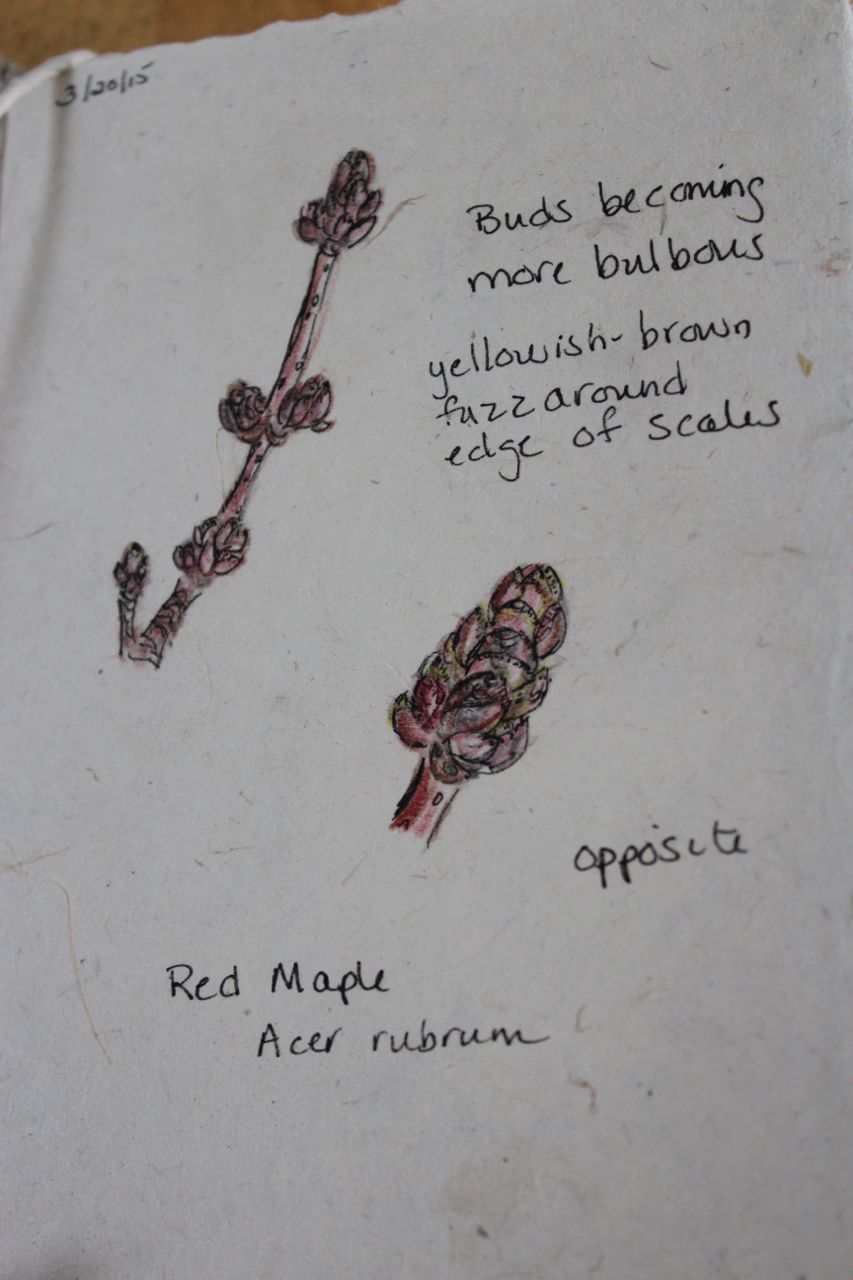
red maple

Finally, I settled down at the edge by the cow path and did some sketching because I don’t want to miss the grand moments in the lives of these trees.

red maple 1

Red Maple, Acer rubrum

red oak

red oak1

Northern Red Oak, Quercus rubra (oops, I forgot the “s” in the sketch)

beech

beech 1

American beech, Fagus grandifolia

Winter will draw to an end in an hour and 30 minutes (6:45pm). To celebrate spring, I’ve started reading a new/old/used book: Springtime in Britain by Edwin Way Teale. On page 2 (so I haven’t read much yet, but it isn’t spring yet), he writes, “Three centuries ago, an old English writer admonished the prospective traveler: ‘Know most of the rooms of thy native land before thou goest over the threshold thereof.'”

I’m still learning those rooms of my native land. I’m thankful for the opportunity and glad that you joined me on today’s wonder-filled wander.
P.S. Lake Living magazine is now being distributed throughout the Lakes Region of Maine. I’ll let you know when the Web site has been updated.