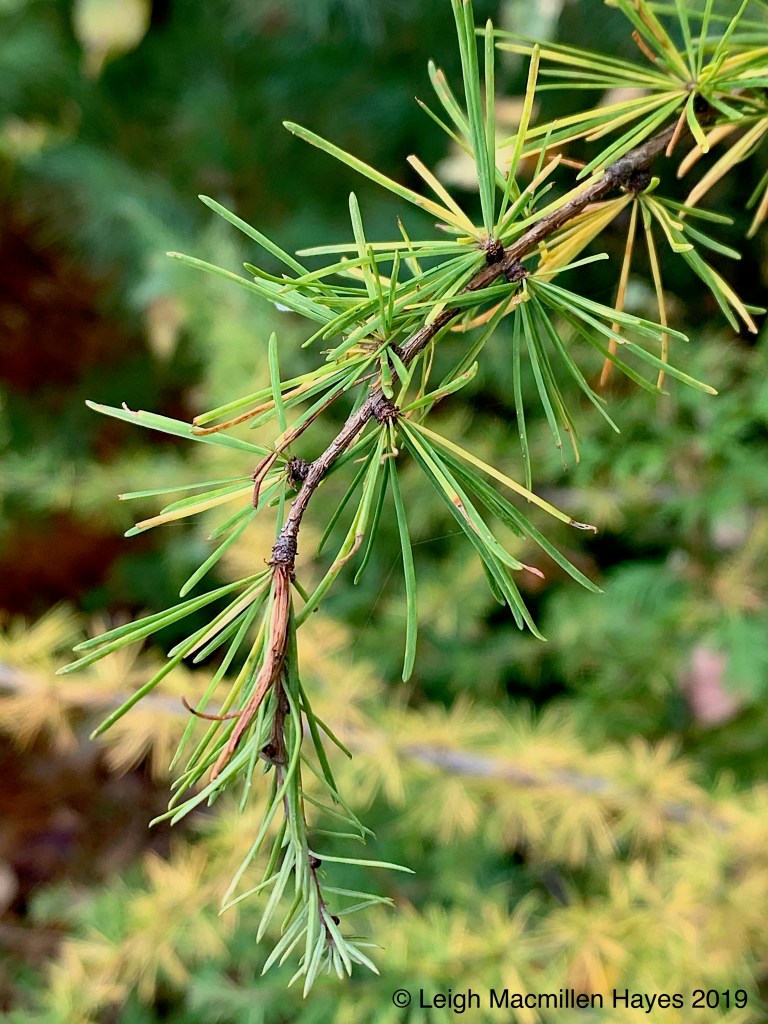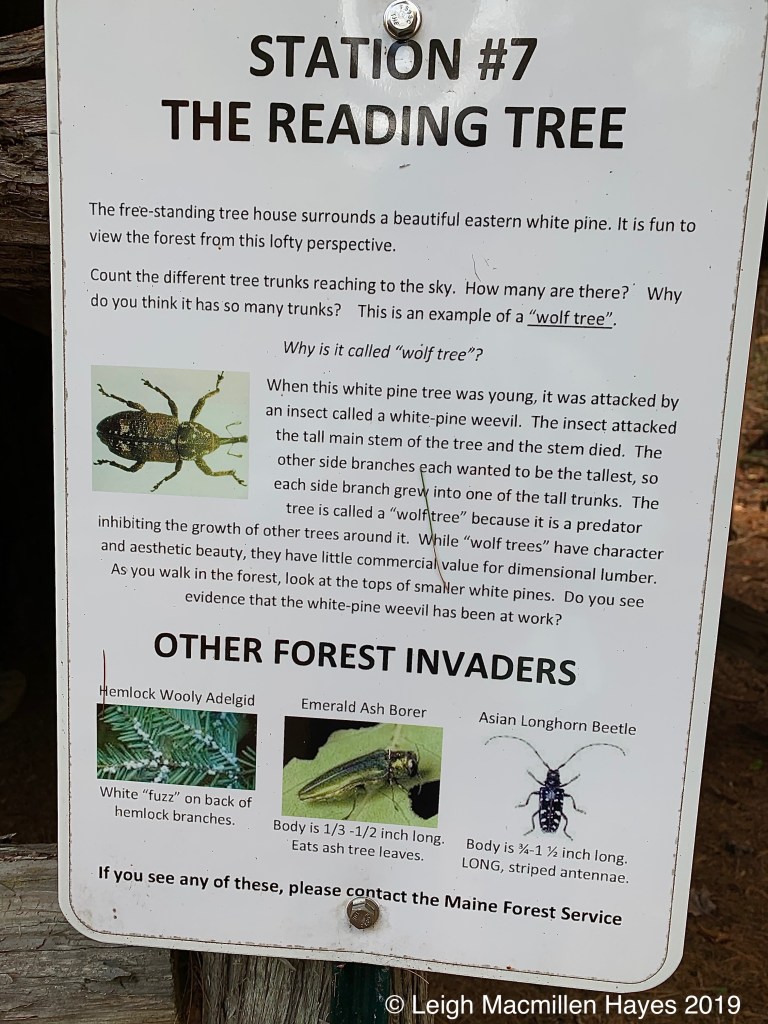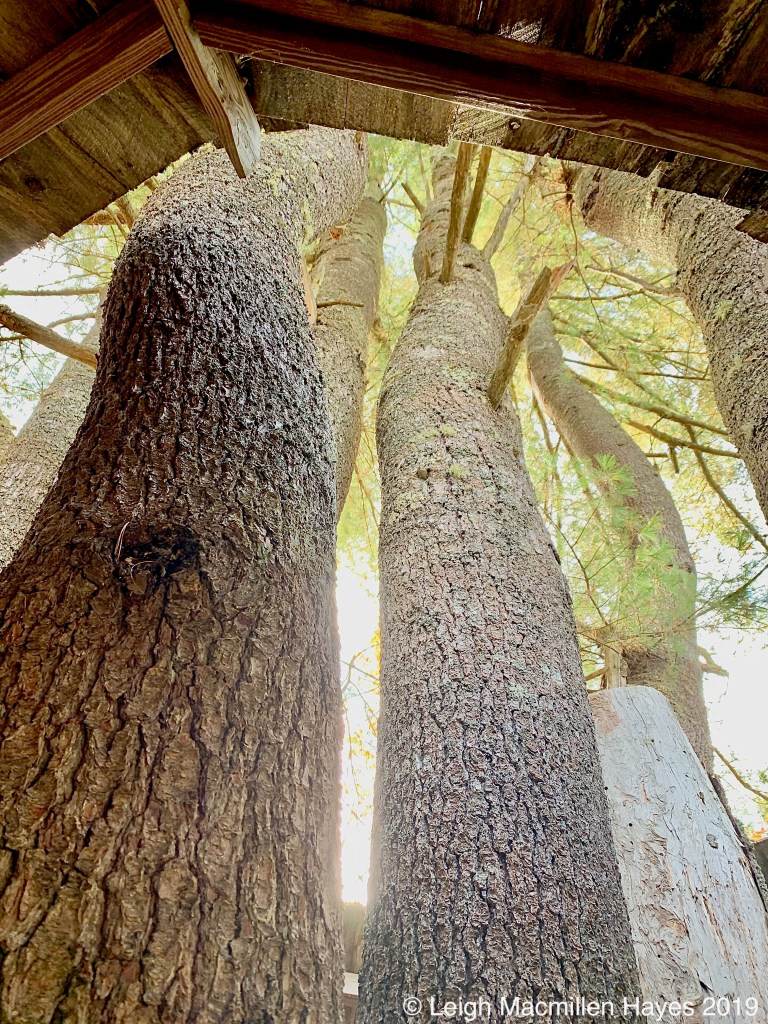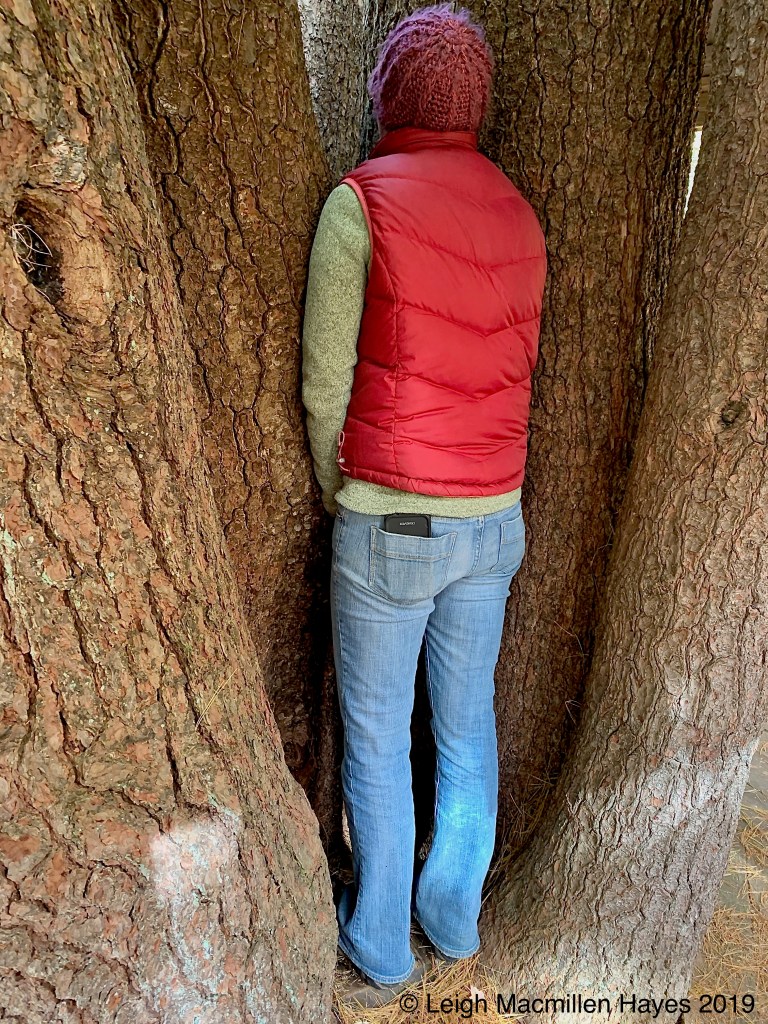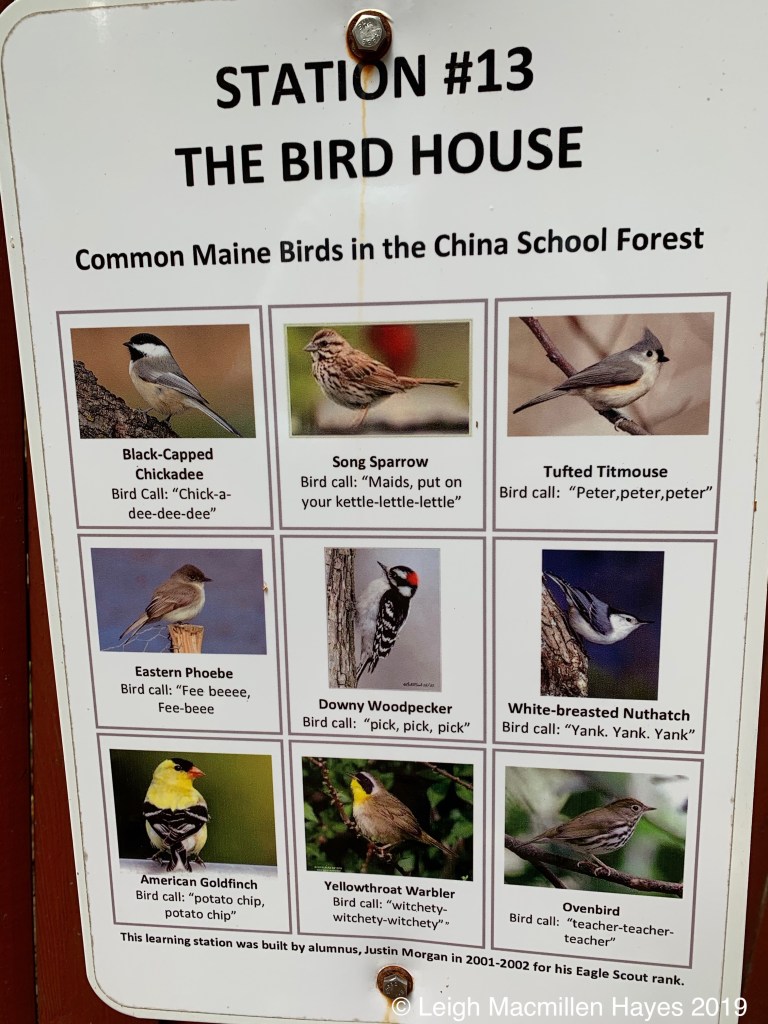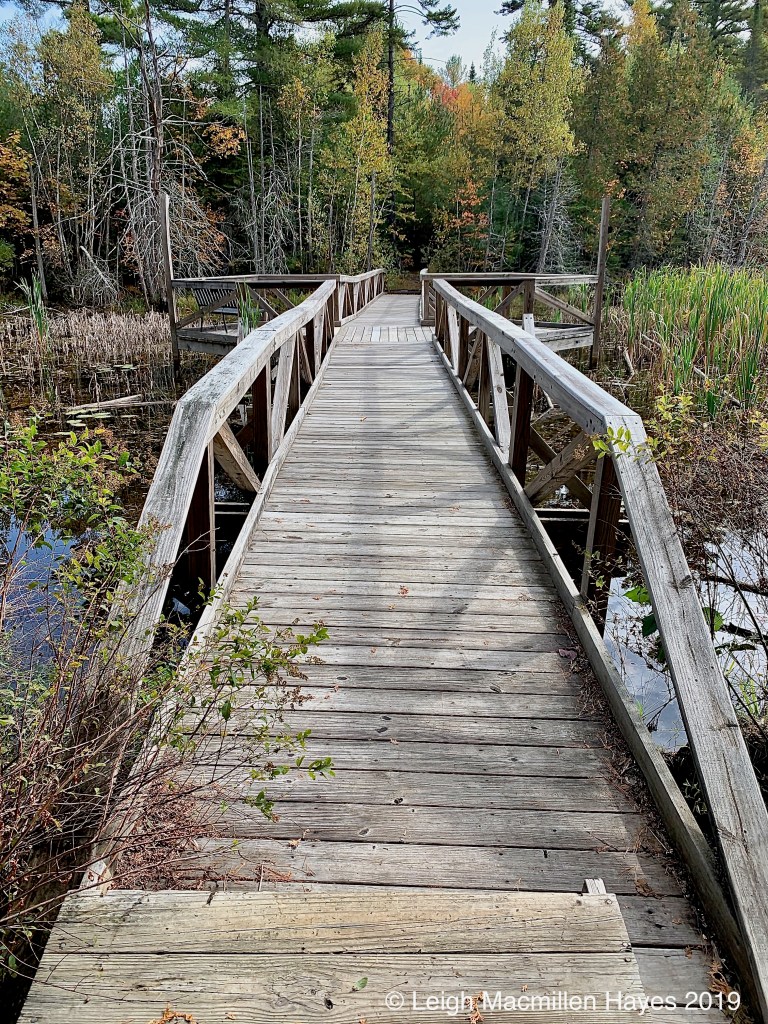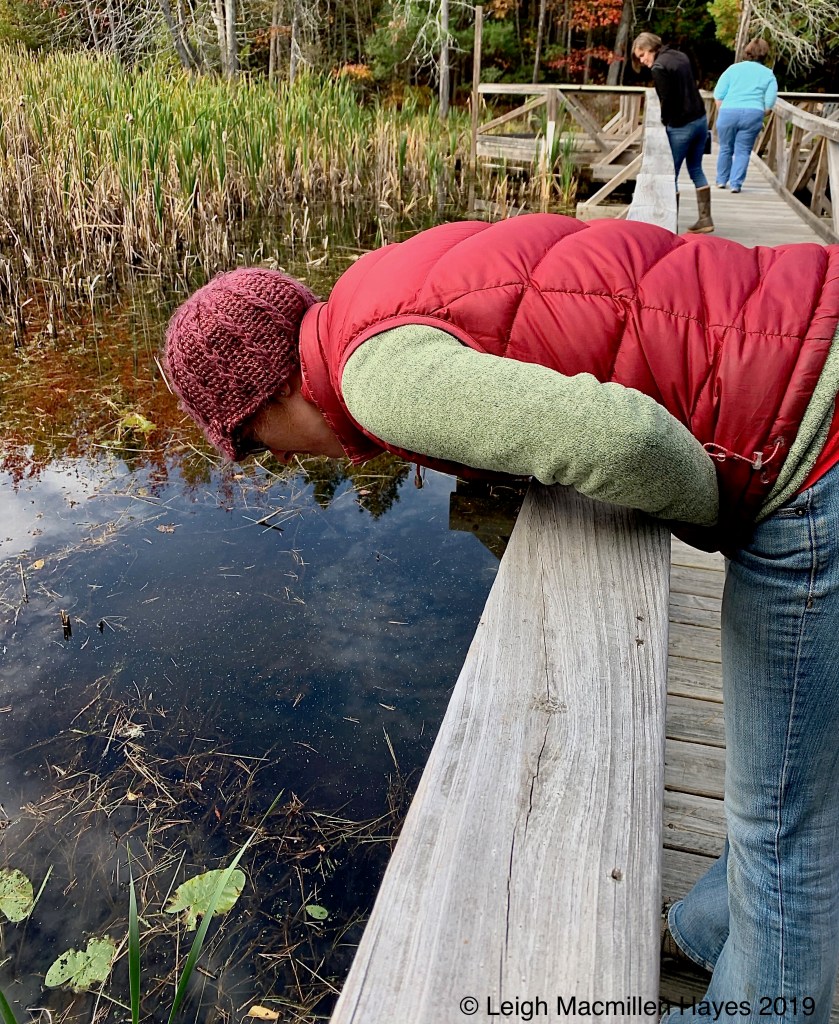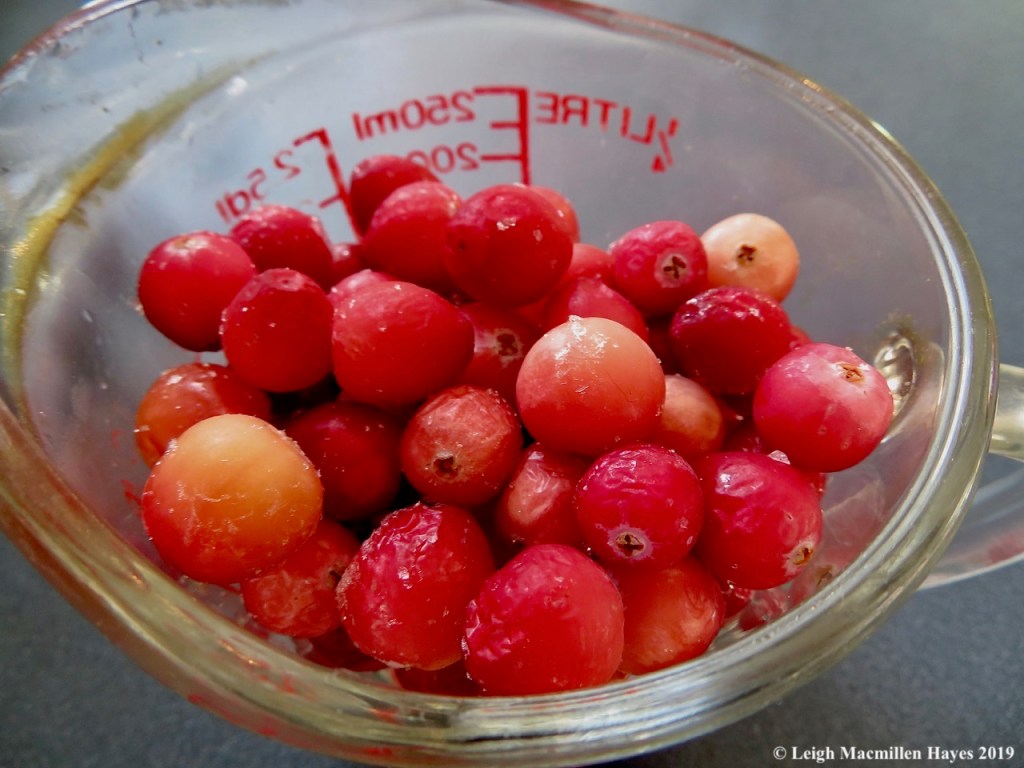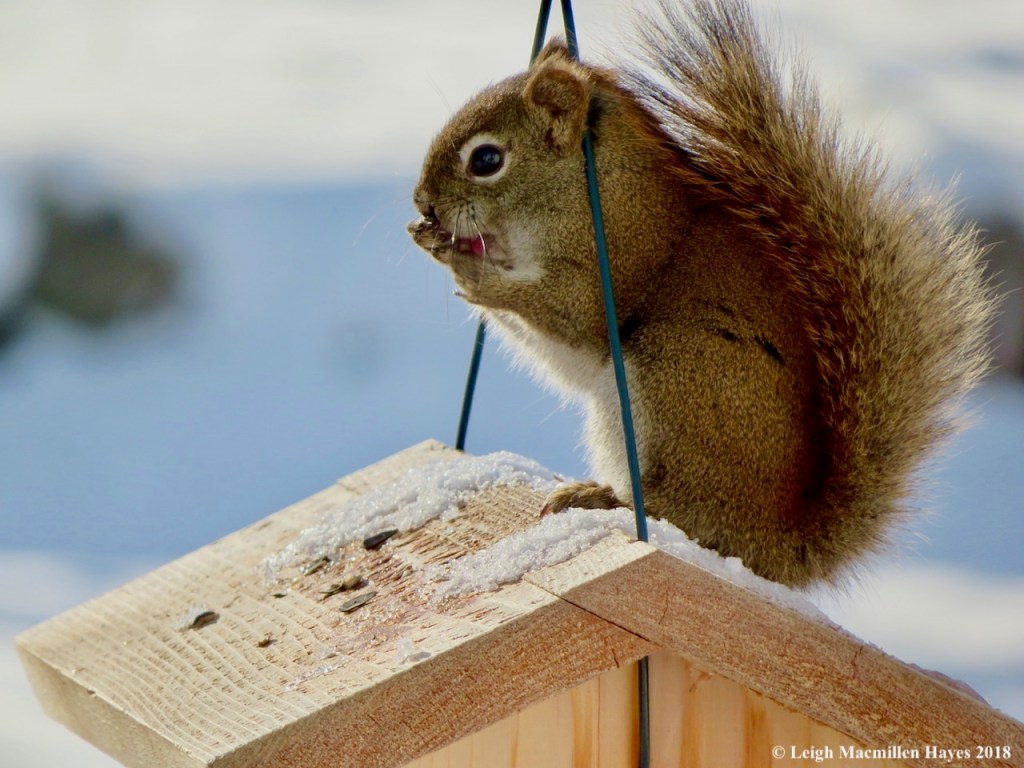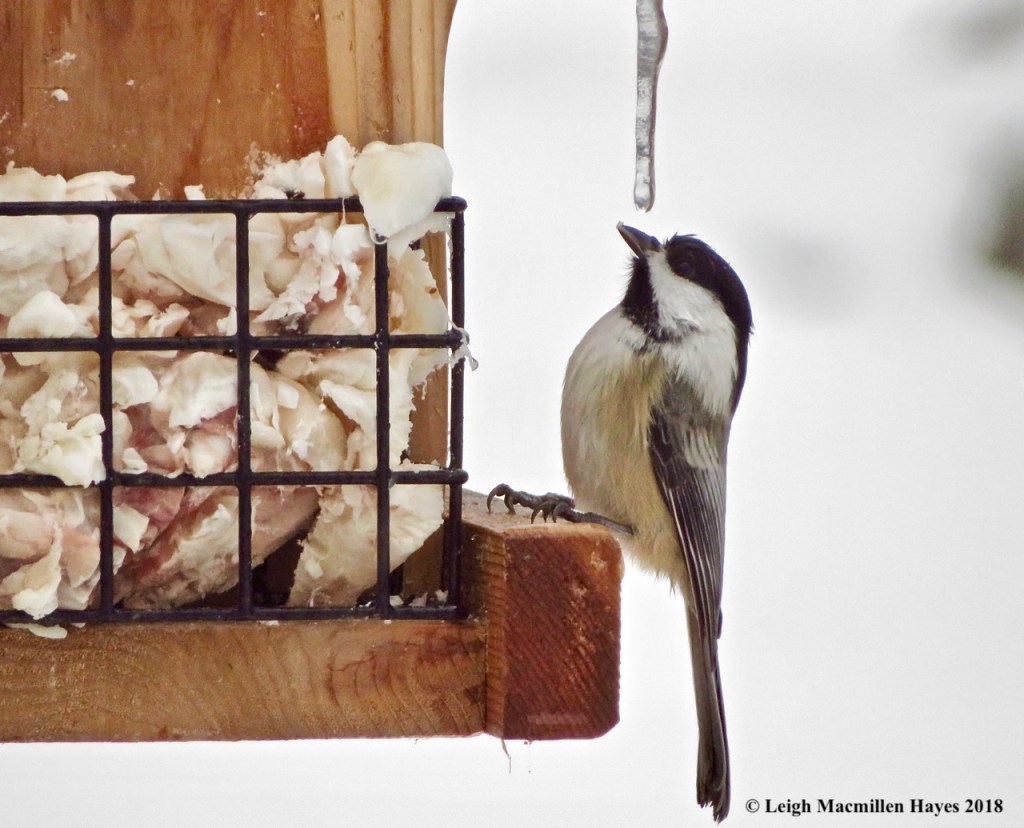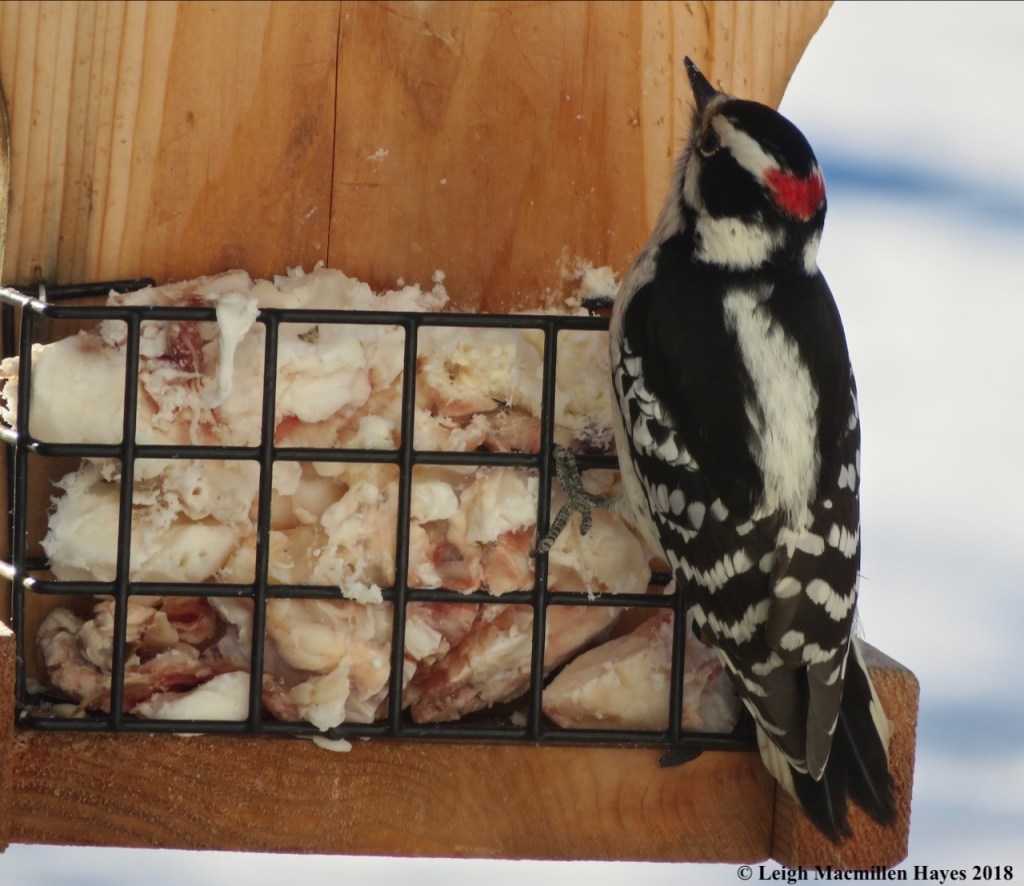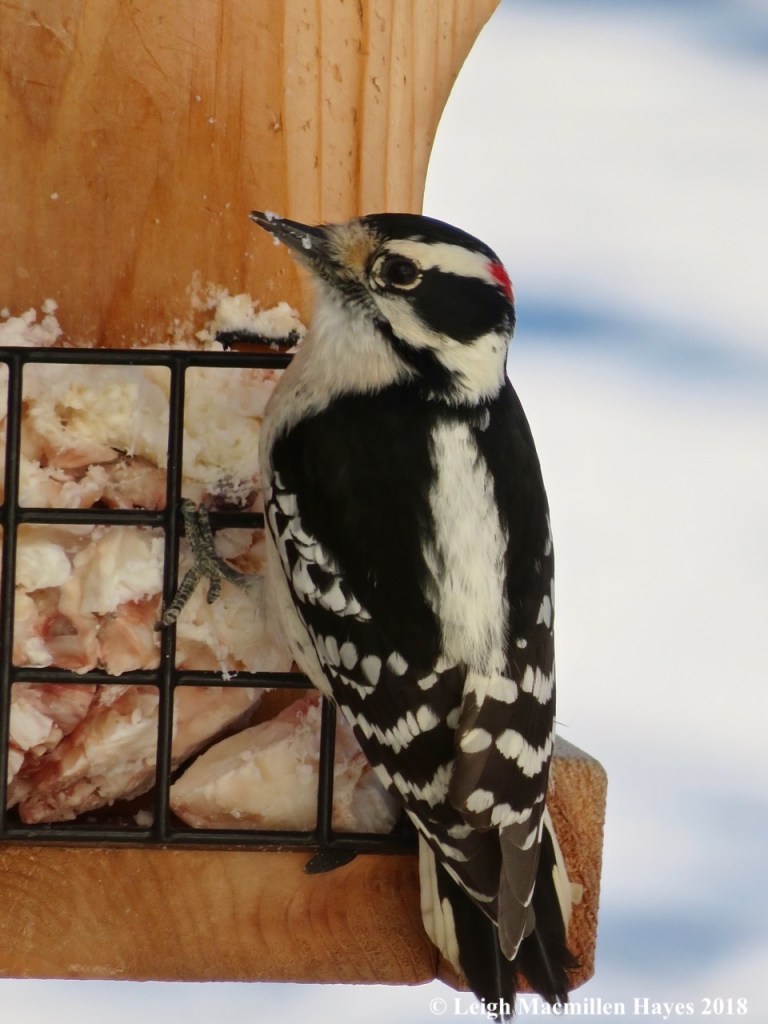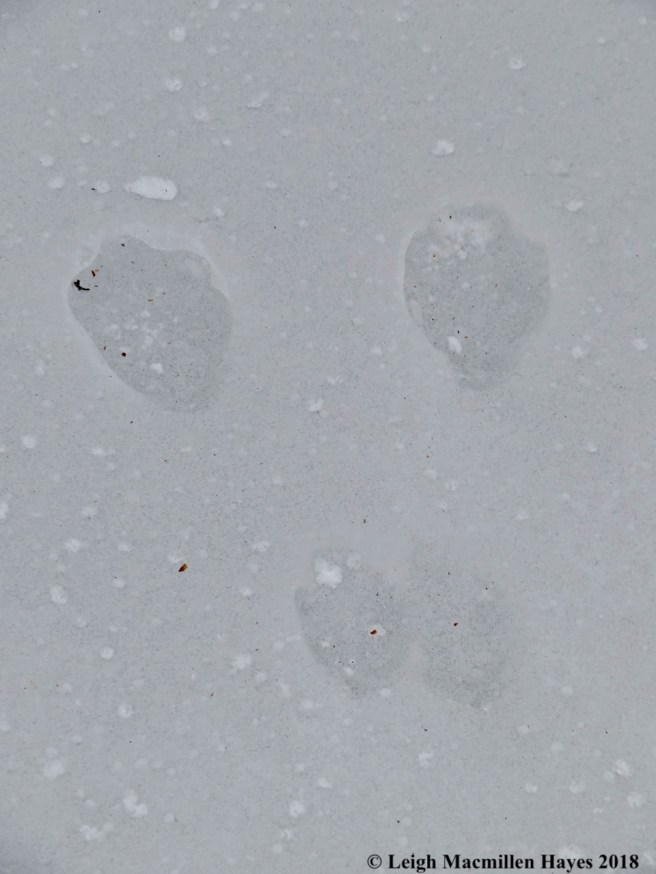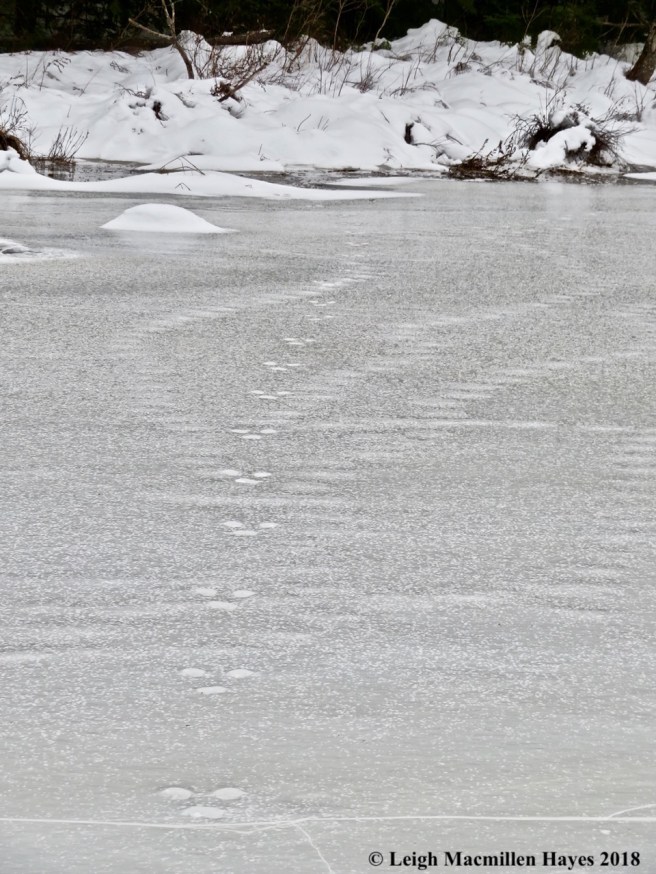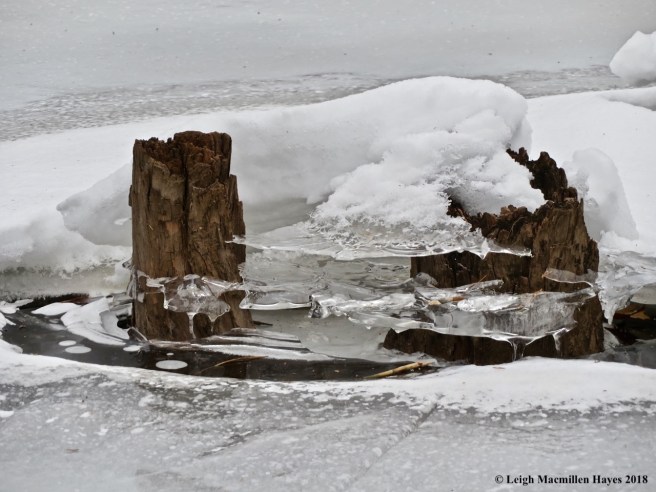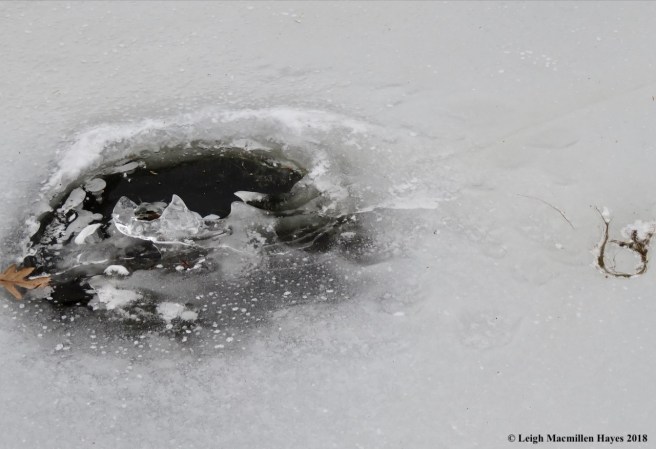
It’s amazing how a simple act such as taking cranberries out of the freezer and transforming them into a relish can take one back in time, but so it did today.
My family knows best that I’m not a foodie, and cook only because we can’t survive on popcorn alone (drats), but one of my favorite flavors brings a burst of tartness to any meal. And as I concocted the simple cranberry orange relish we so enjoy, moments spent picking them kept popping up.
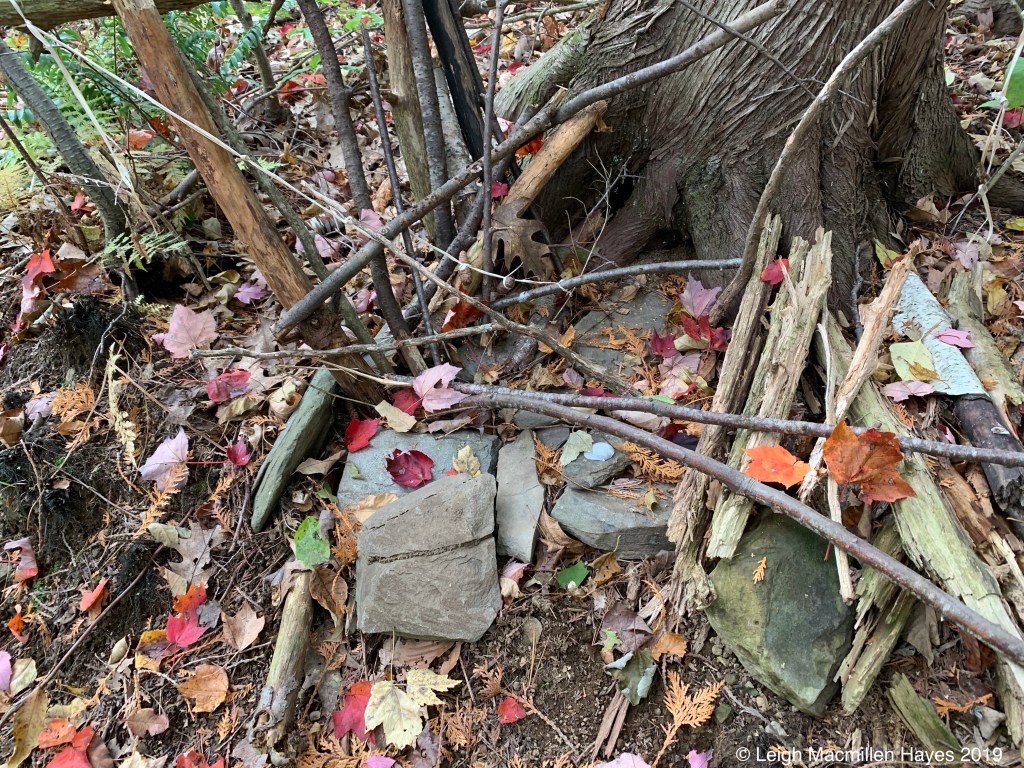
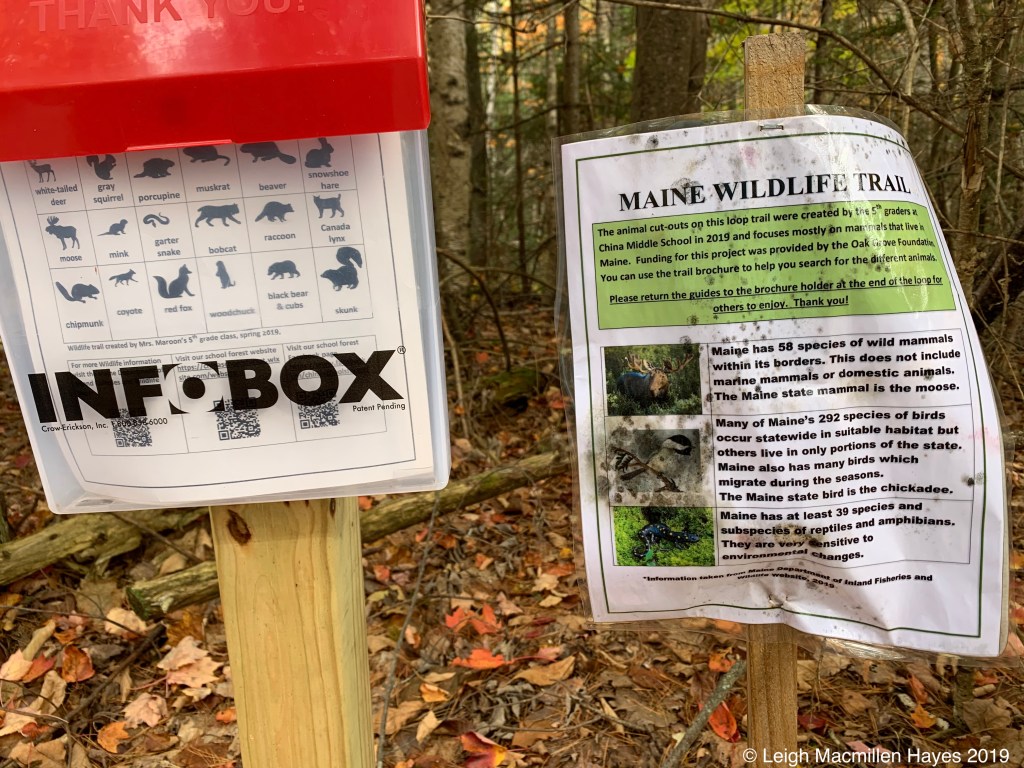
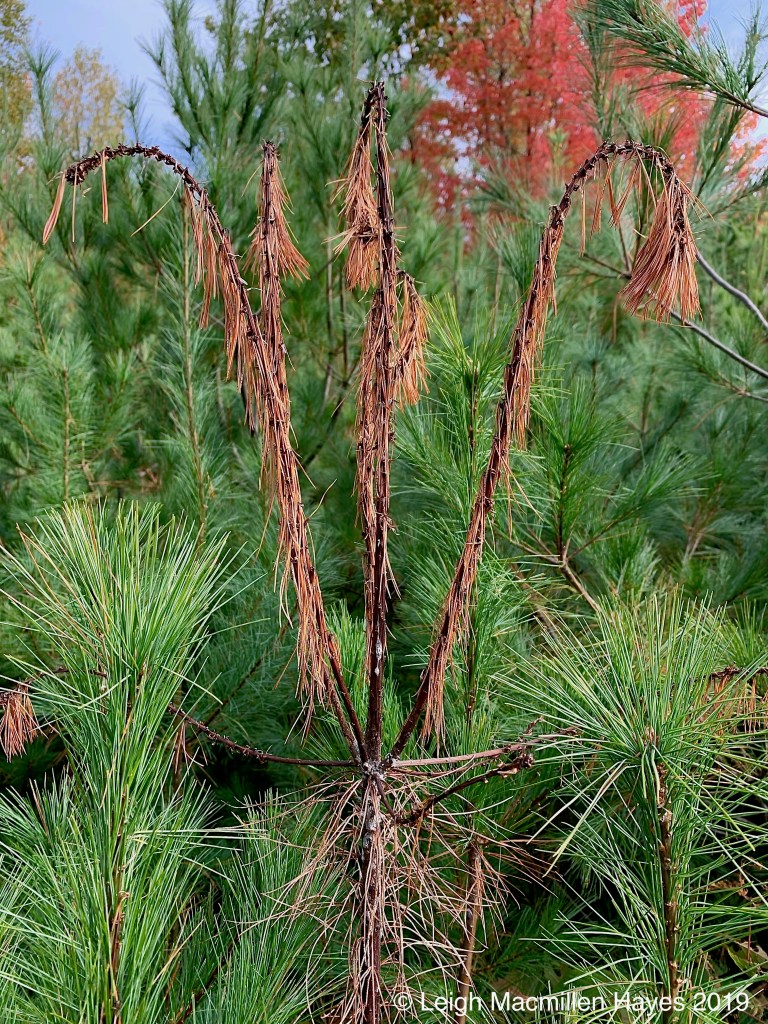
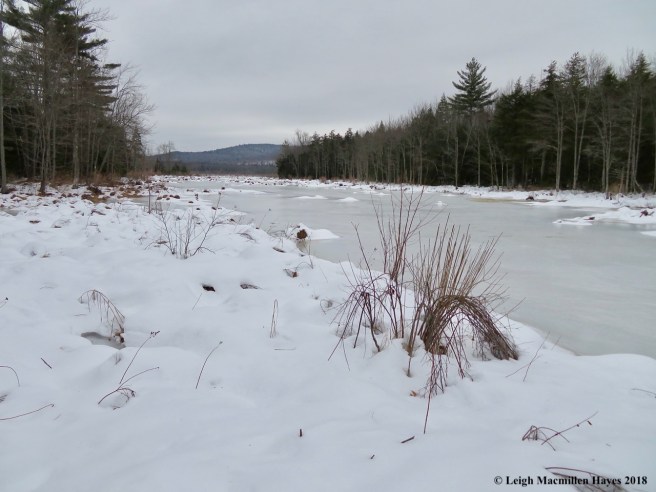
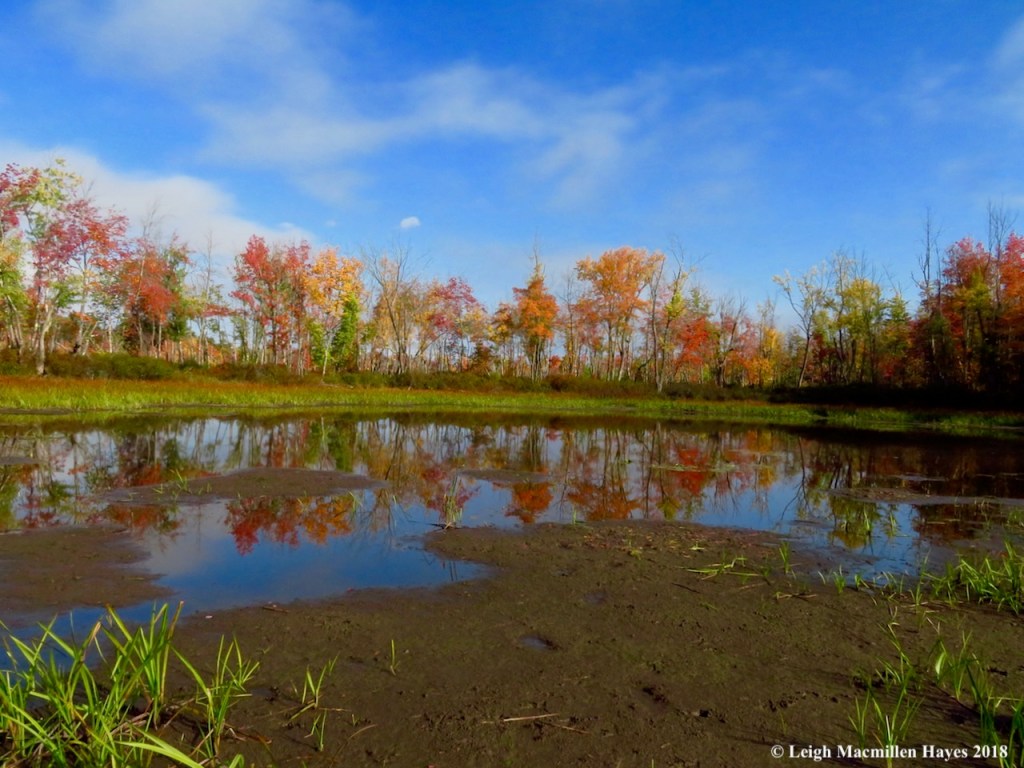
On several occasions last fall, I bushwhacked toward the fen, stopping first to explore the kettle holes that dot the landscape.
And though I love tracking all winter, it’s those unexpected moments in other seasons when I recognize the critters with whom I share the Earth that make my heart quicken.
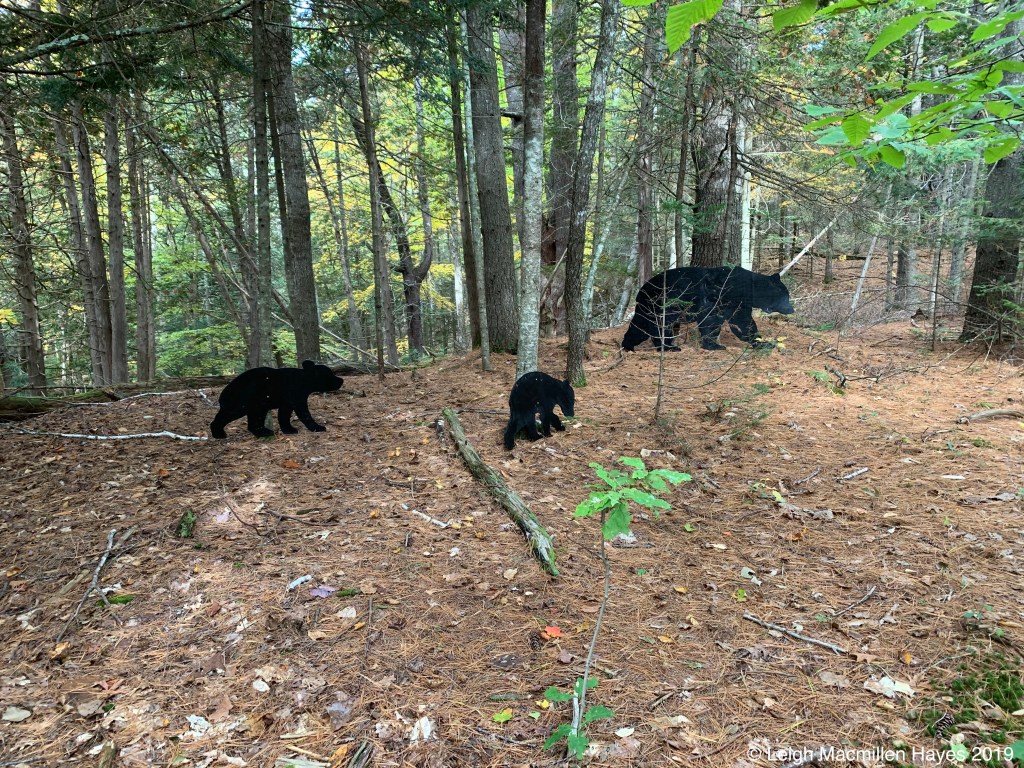
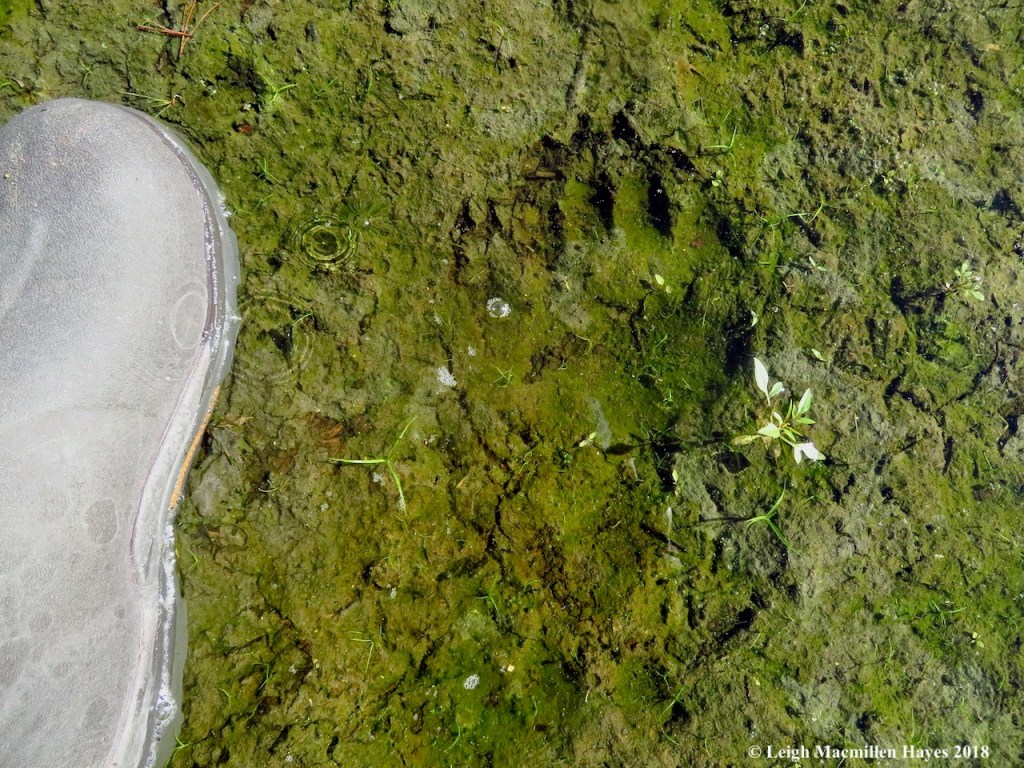
Especially when I realize that one of my favorites has also passed this way, stomping through the water . . .
and then onto the drier land. Yes, Ursus americanus had been on the hunt as well.
He wasn’t the only one fishing for a meal, though of a much smaller spidery-style scale.
And then there were my winged friends, the meadowhawks.
I remember the mating frenzy occurring as that most ancient of rituals was performed both on the leaf and in the air.
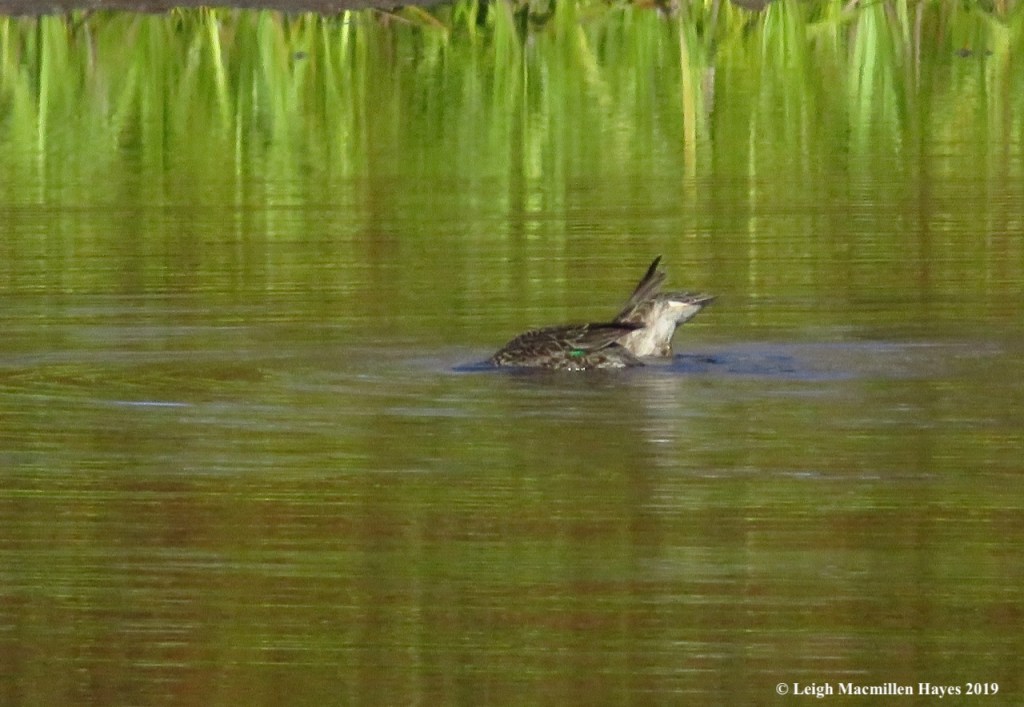
Other winged friends, showing off a tad of teal, dabbled nearby.
Eventually, I tore myself away from the kettle holes and tramped through winterberry shrubs filled with fruits and cinnamon ferns ablaze in their fall fashion.
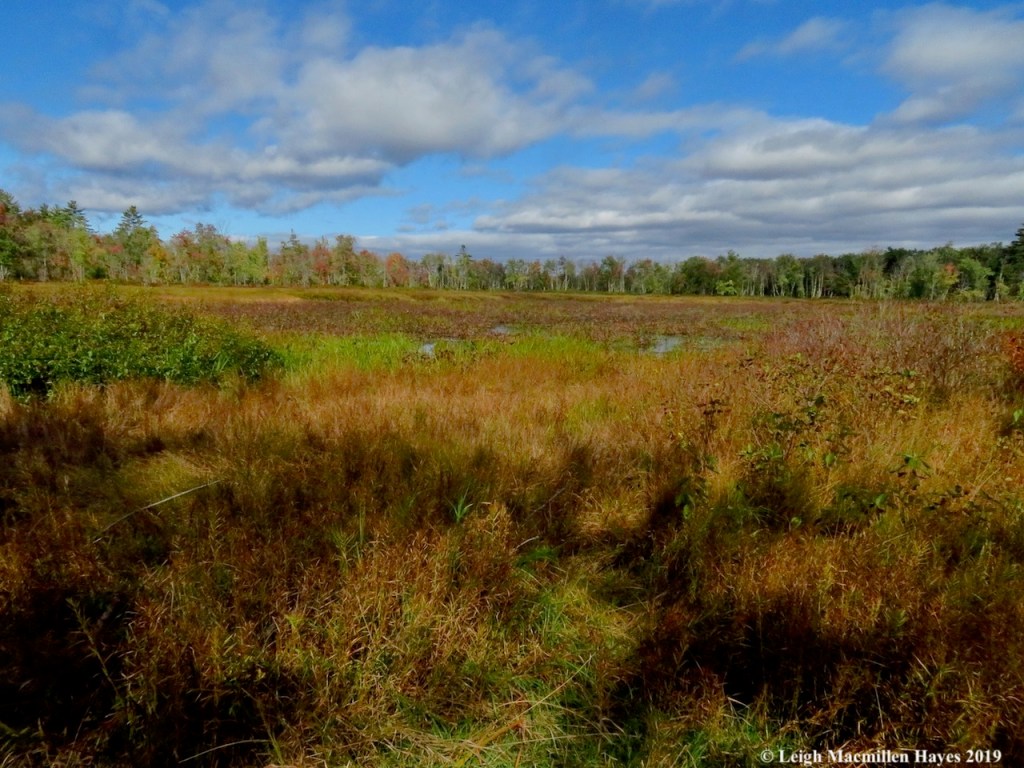
After all, my destination was the cranberry fen.
And last year was a mighty fine year for those little balls of wonder that hid below their green leaves. I filled my satchel to overflowing before taking my leave, knowing that in the coming months I’d share the foraged fruits with family and friends and remember time well spent.
Not only did the abundant fruit make it so special, but on my way out I stumbled upon another kettle hole and much to my delight spotted two Sandhill Cranes, part of a flock that returns to this area of western Maine on a yearly basis.
While the cranes foraged on the ground, a Great Blue Heron watched them approach.
And then in flew a Bald Eagle who eventually settled in a pine tree beside a crow.
With that, the cranes flew off and a few minutes later so did the heron. And then I left, trying to find my way out, but I’d gotten a bit twisted and turned and ended up cutting through someone’s yard to get back to the road. Because I was a wee bit confused, I couldn’t find my truck right away, and in the process of looking I dropped a few cranberries. It was all worth it! And still is as we’ll enjoy that relish in our chicken salad sandwiches tonight.
Ah, cranberries. And bears. And spiders. And dragonflies. And birds. Ah, cranberry memories.
A few weeks ago I’d contacted my friend Parker Veitch of White Mountain Mushrooms, LLC, to make sure he was willing to co-lead a couple of fungi walks this summer and in his response he included this paragraph: “I have a book for you. Should I leave it at the office? The first 20 or so pages are a little slow, but I think you will really like it.”
Like it? I LOVE it. And I haven’t even finished reading it. So you must be curious by now. As I was when I saw it sitting on the table at the Greater Lovell Land Trust office. You see, I was sure the book would be about fungi because Parker is always trying to help me learn about the principal decomposers of the world. Ah, but one should never assume.
May I present to you the Book of March: Entering the Mind of the Tracker by Tamarack Song.
This book is like no other tracking book that I’ve read. As I wrote back to Parker, “Thank you so much for sharing the book with me. I’m in the midst of reading Eager by Ben Goldfarb, The Invention of Nature by Andrea Wulf, which is about Alexander von Humboldt, and a book of essays by E.B. White (thanks Judy and Bob for gifting me that gem), but right now I’m most captivated by the teaching of Tamarack Song and I am going to have to ask Bridgton Books to order a copy for me. I want to be him and have the understandings and slow down and ask the questions he asks. And teach others to do the same.
At first I couldn’t put the book down. But now I’ve changed my tune a bit because I want to savor it. Typically, when I read a book such as this I underline key phrases, write notes in the margin and turn page corners up. But, because I’m only borrowing this copy I’m not doing that. (Did I have you nervous for a minute there, Parker?) And that’s making me soak it all in and savor each chapter more fully than I might.
You see, Tamarack, according to the back cover blurb, “has spent his life studying the world’s aboriginal peoples, apprenticing to Elders, and learning traditional hunter-gatherer survival skills. He has spent years alone in the woods as well as living with a pack of Wolves. In 1987, he founded the Teaching Drum Outdoor School in the wilderness of northern Wisconsin, where he runs the yearlong Wilderness Guide Program.”
In each of the sixteen chapters, Tamarack plays the role of guide, but not by telling. Rather, he takes the reader along on an exploration with one of his students, and encourages all of us to question what we see. In other words, to never assume, which is what I did when Parker first mentioned the book and what I often do when I’m tracking.
Instead, he wants us to notice and think about why the animal might be behaving in a particular manner, even if we know what it is by its tracks and its sign. What’s the rest of the story?
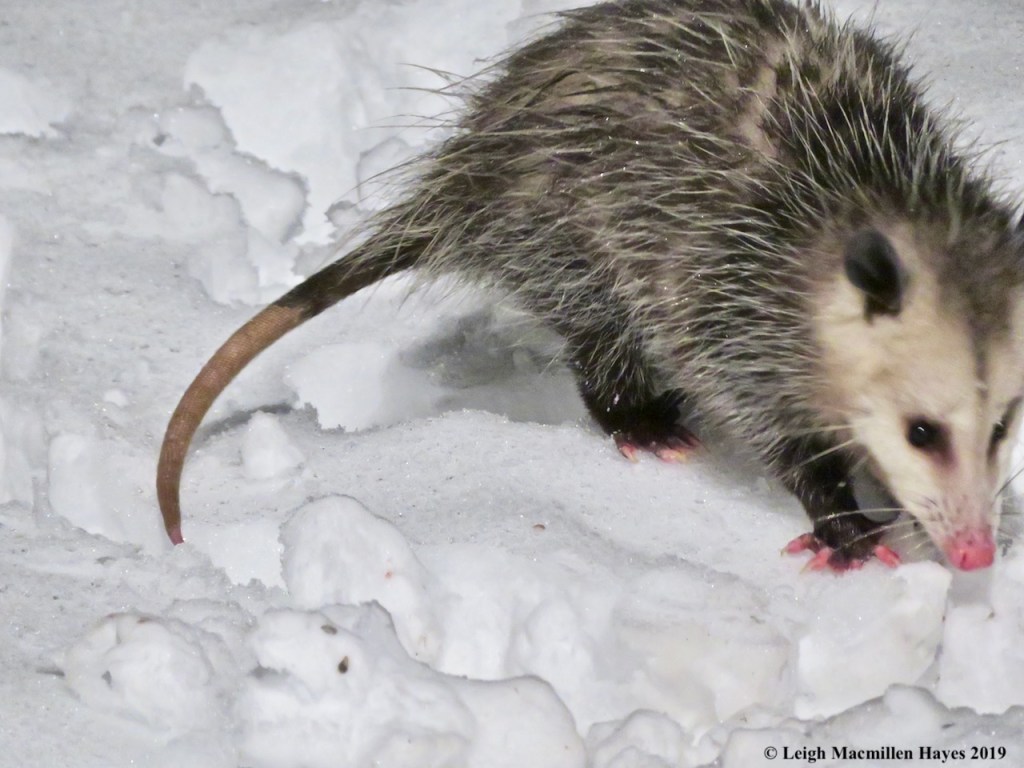
In fact, why did Opossum suddenly appear toward the tail end of the snowstorm on Sunday night?
And why is he in western Maine? How has he survived this winter with its frigid temps (mind you, it’s finally starting to warm up a tad). Where has he been since I last saw his prints in the snow a few months ago? What brought him to our yard again? Does he live under the barn with the rest of the neighborhood?
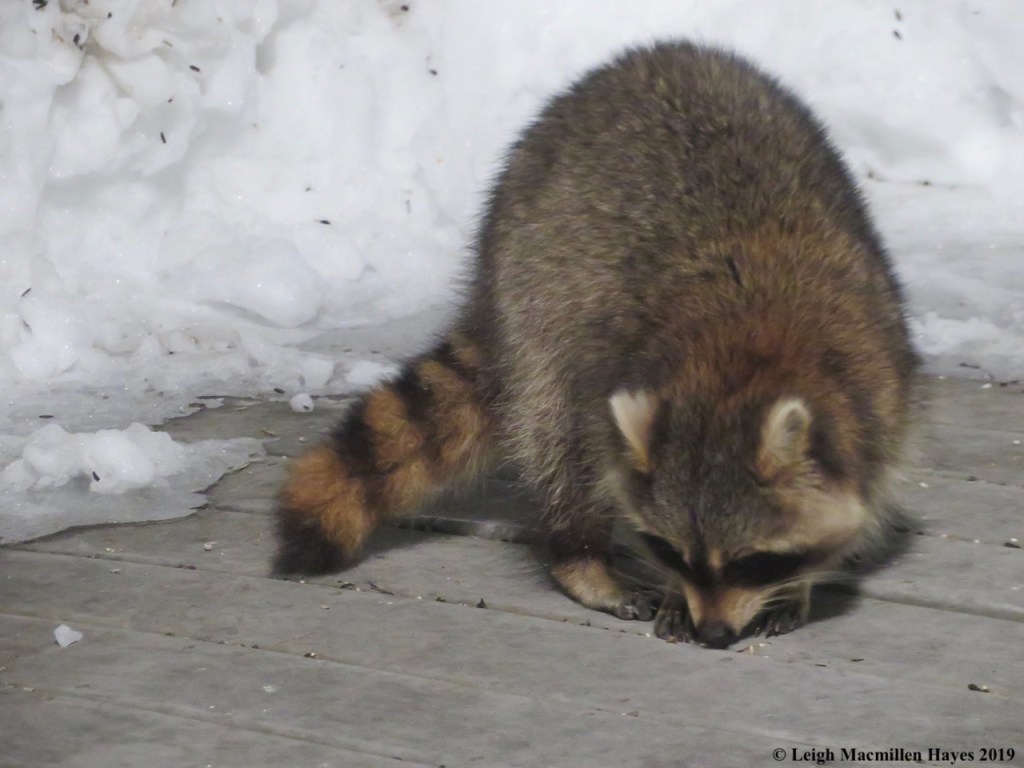
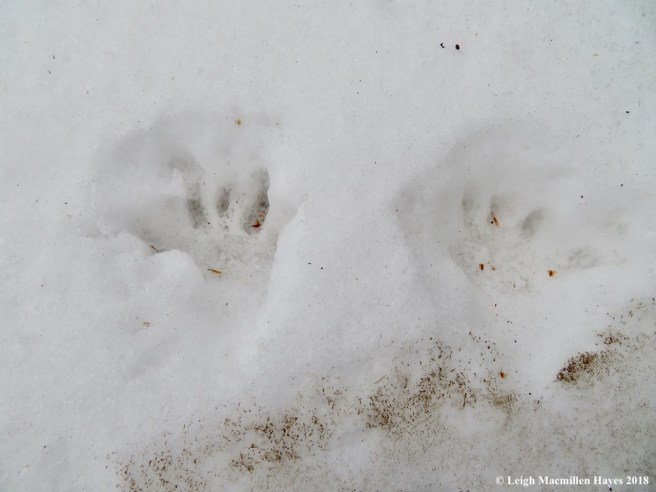
And what about last night’s visitor, Raccoon. Where has he been all winter? What brought him out? I have to say I wasn’t surprised to see him as once the temps do begin to rise the slightest bit, he appears. I also know that the bird seed attracted him, though he surprised me by not stealing the suet.
Tamarack encourages us to become the animal, especially if we don’t see it, but do see the signs it left behind. Had there been snow on the deck, I imagine I would have recognized the raccoons prints, but I would have wondered about other lines that probably would have appeared. Having the chance to watch Raccoon as I did, I now know that those lines would have been his nose and tongue as he tried to vacuum the seeds.
But then there was Raccoon’s coloration. Why the mask? Why the striped tail? I have so much to think about and learn.
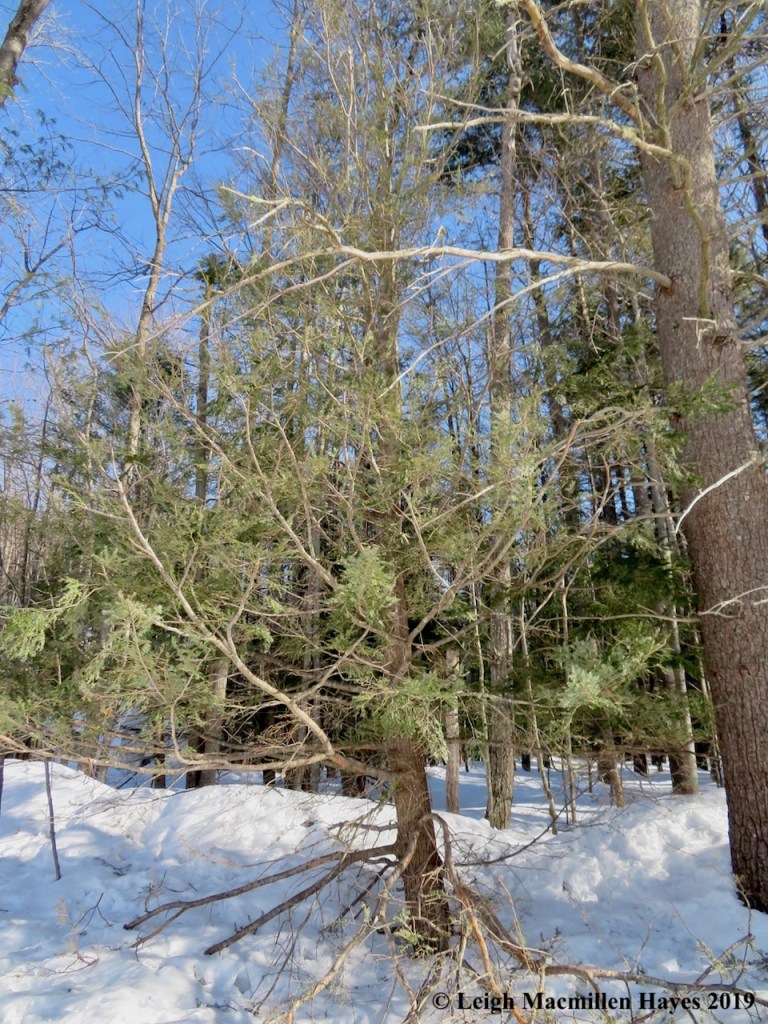
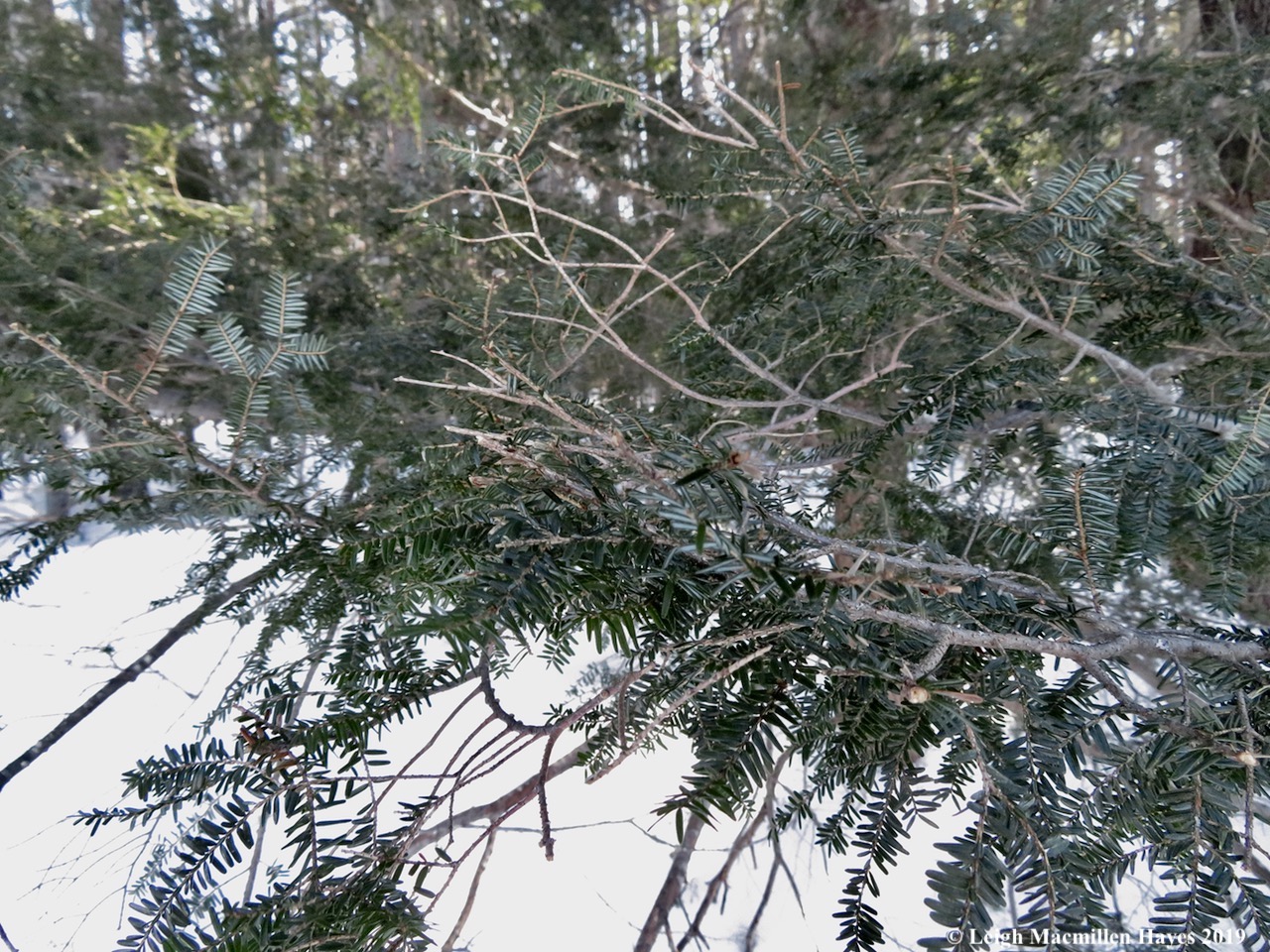
And then late today, I headed out the door through which I’d taken those photos the previous two nights, and noted the Hemlock tree that Porcupine had denuded this winter. It used to be one of my favorites in the yard. But today it occurred to me that though we pay taxes on this property and try to “maintain” it, it really isn’t ours. It never has been. It belongs to the animals and the trees, and yes, even the fungi. Maybe especially the fungi.
One thing I have noticed is that all of Porcupine’s activity has aided Deer who also stops by daily.
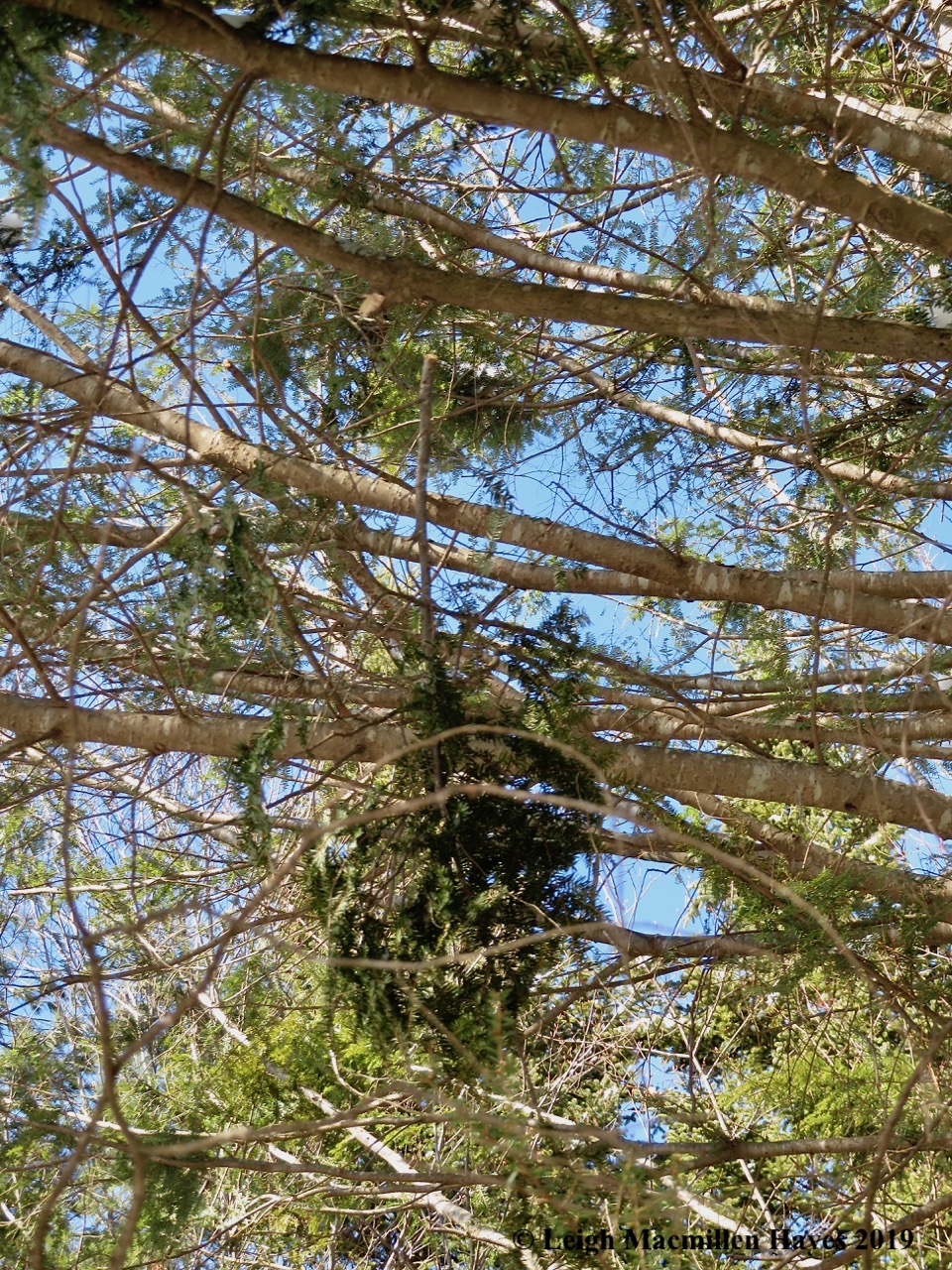
As I continued over the stone wall, noting the six or seven other Hemlocks Porcupine has visited, a shape high up in one tree caught my attention.
I moved under Hemlock for a better look. Well, not all the way under, for I sometimes know better than to stand below such an exhibit.
As I looked with the aid of a telephoto lens, I noticed that Porcupine had apparently dined briefly and then fell asleep. Hmmm. I know some people who do that.
But the sight of Porcupine got me thinking–was this friend who lived under the barn a he and not a she after all?
And how did he/she sleep as the breeze swayed that not so thick Hemlock bough upon which Porcupine was balanced?
I did gain a better appreciation for the various types of hair that cover Porcupine’s body.
But still, so many questions, some that haven’t even formed in my mind yet.
I give thanks to Tamarack and his stories within Entering the Mind of the Tracker for that. Now I must practice the art of slowing down and paying more attention.
And I give special thanks to Parker for the offering of this book. In many ways, he emulates Tamarack Song, for both are hunter-gatherers and Parker understands the ecological systems in a way I will never know. At less than half my age, he has already slowed down and learned to pay attention.
To be attuned to the hidden nature–that is my wish. To that end, I shall purchase a copy of this book. And hope you will consider it as well.
Book of March: Entering the Mind of the Tracker: Native Practices for Developing Intuitive Consciousness and Discovering Hidden Nature.
Entering the Mind of the Tracker: Native Practices for Developing Intuitive Consciousness and Discovering Hidden Nature, by Tamarack Song, Bear & Company, a division of Inner Traditions International, 2013.
At 6am, a flock of crows outside our bedroom window drew me out of bed. There were three birds in the quaking aspen by our back deck, and all were squawking as they stared at the ground.
I peeked about, but saw nothing. That is, until I went down to the kitchen and looked out the door.
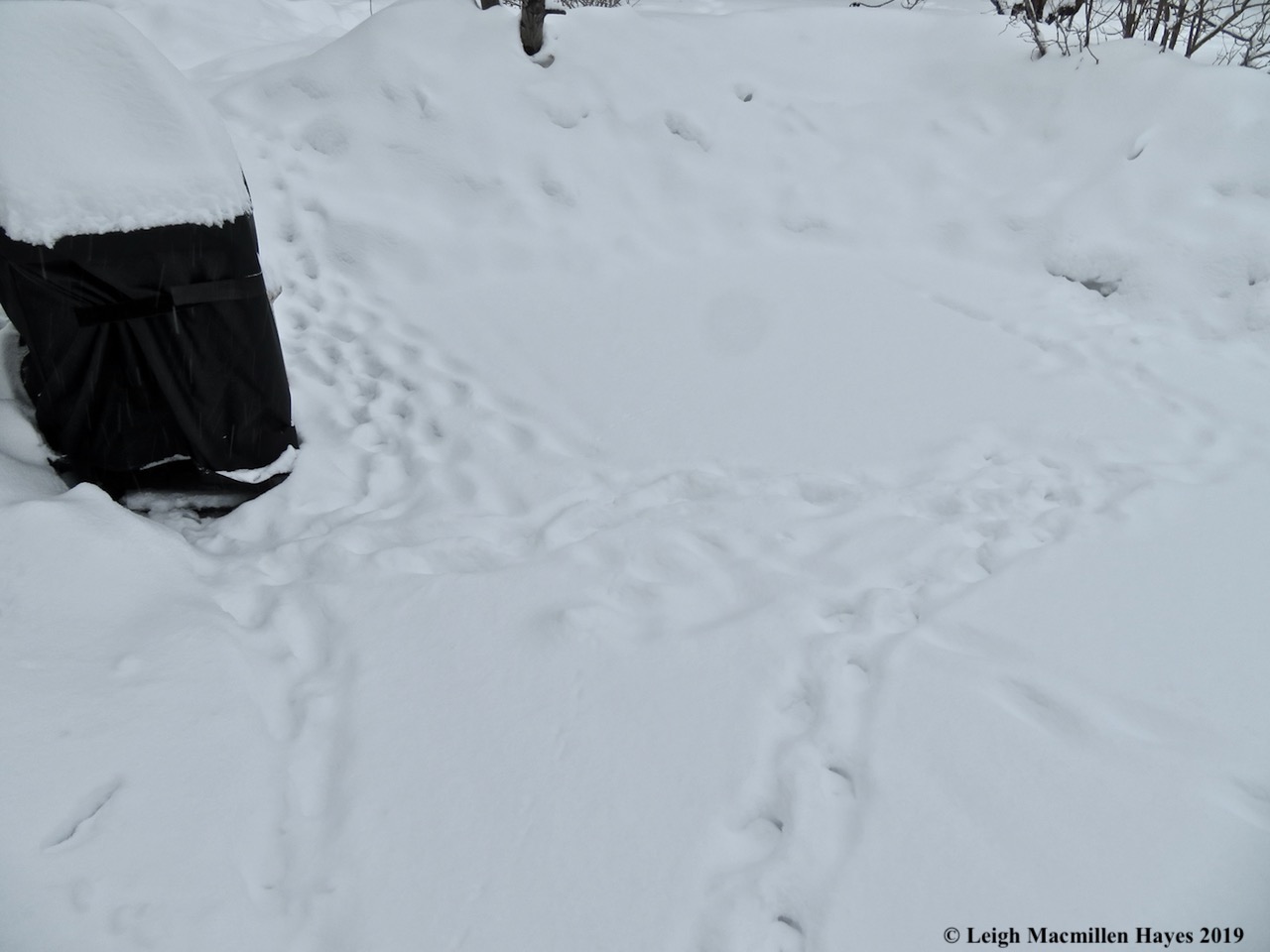
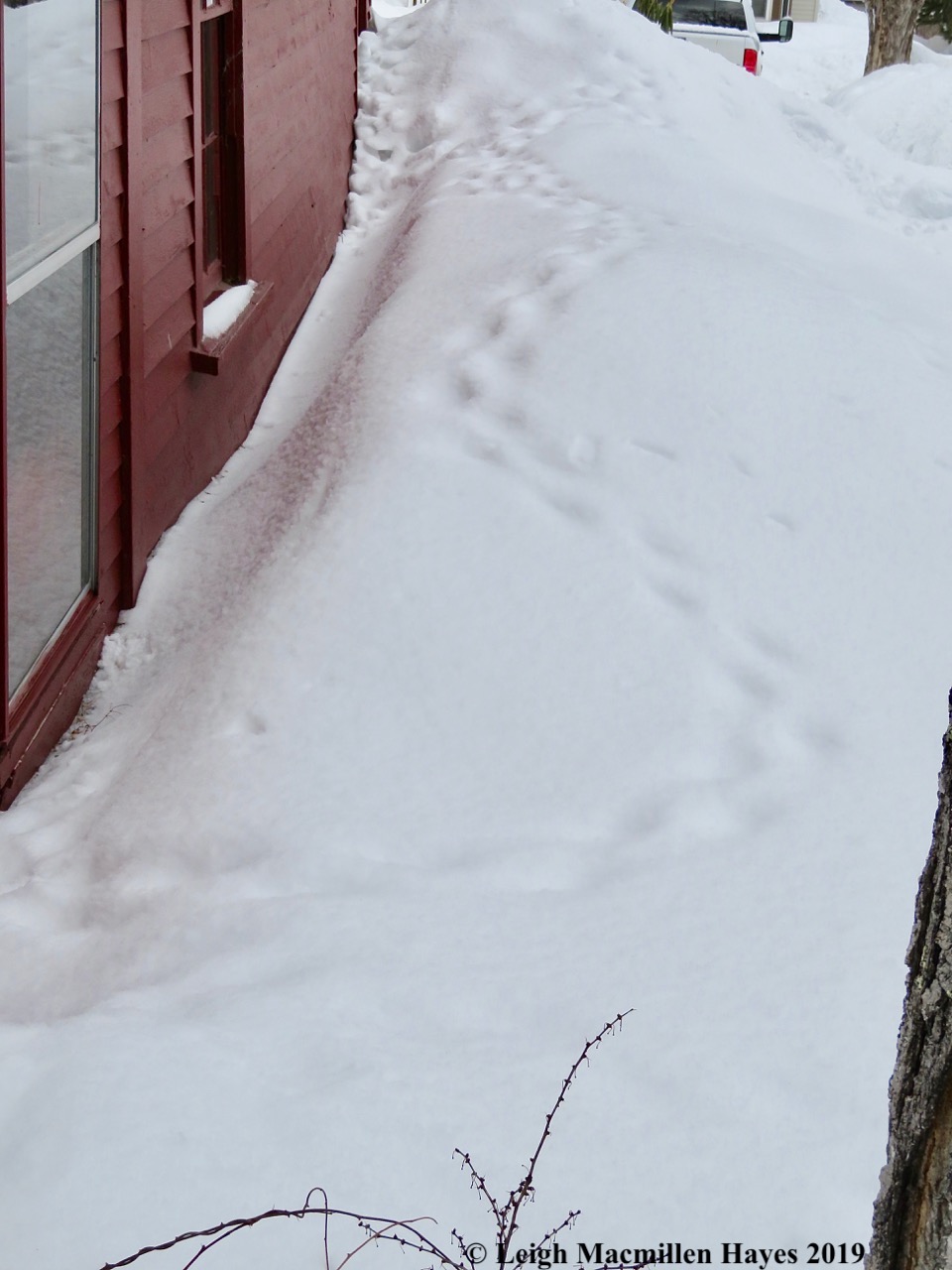
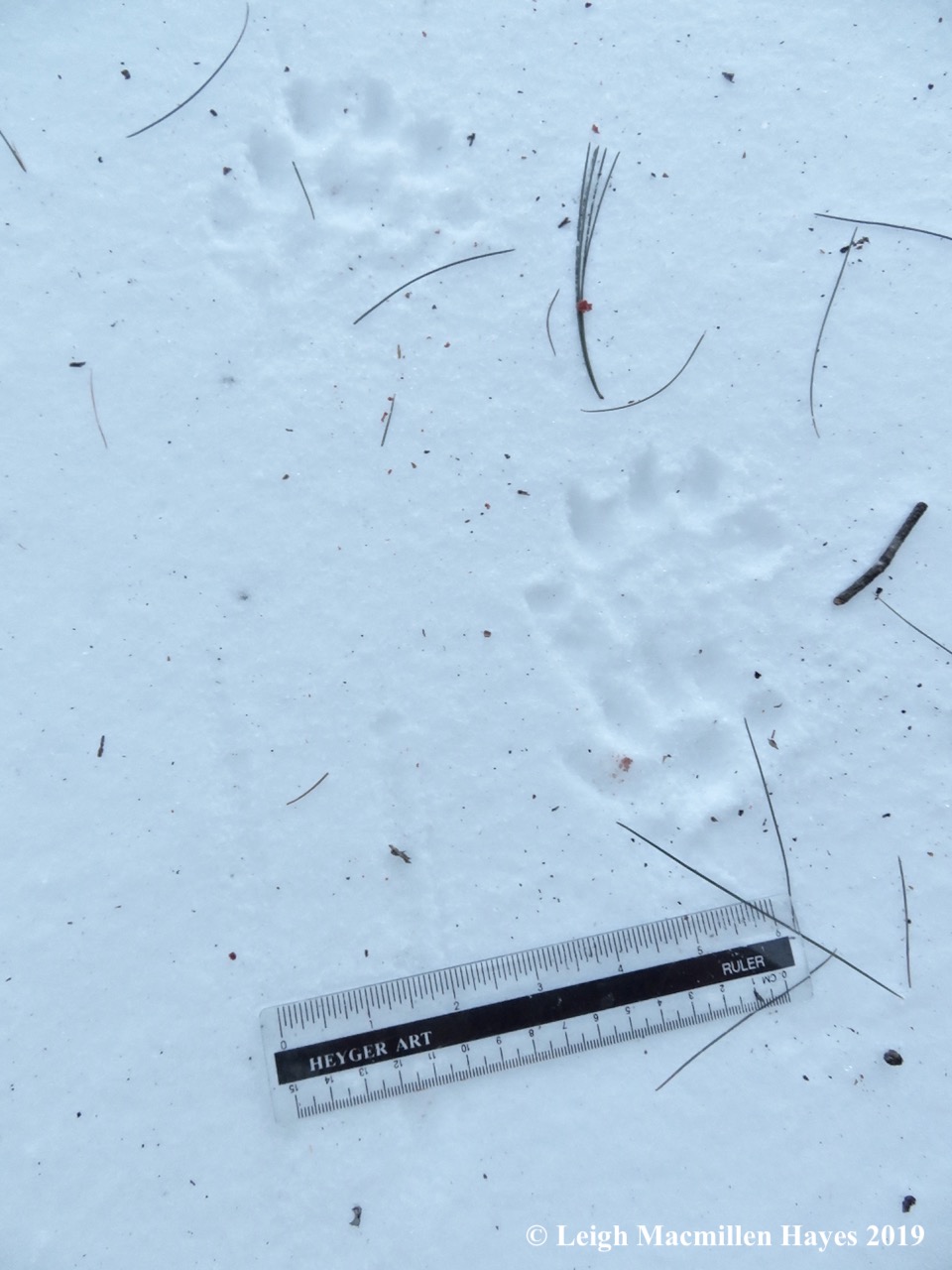
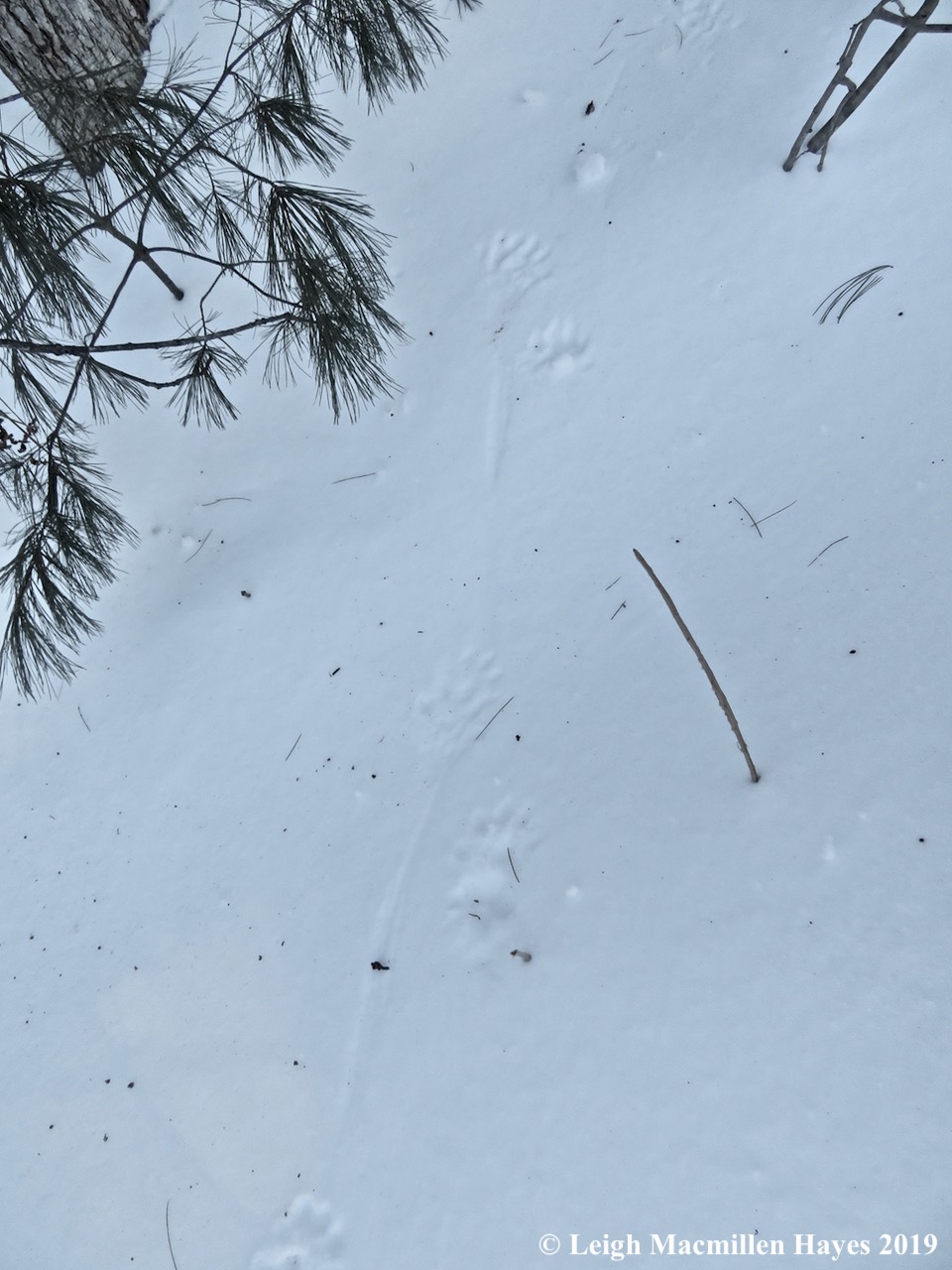
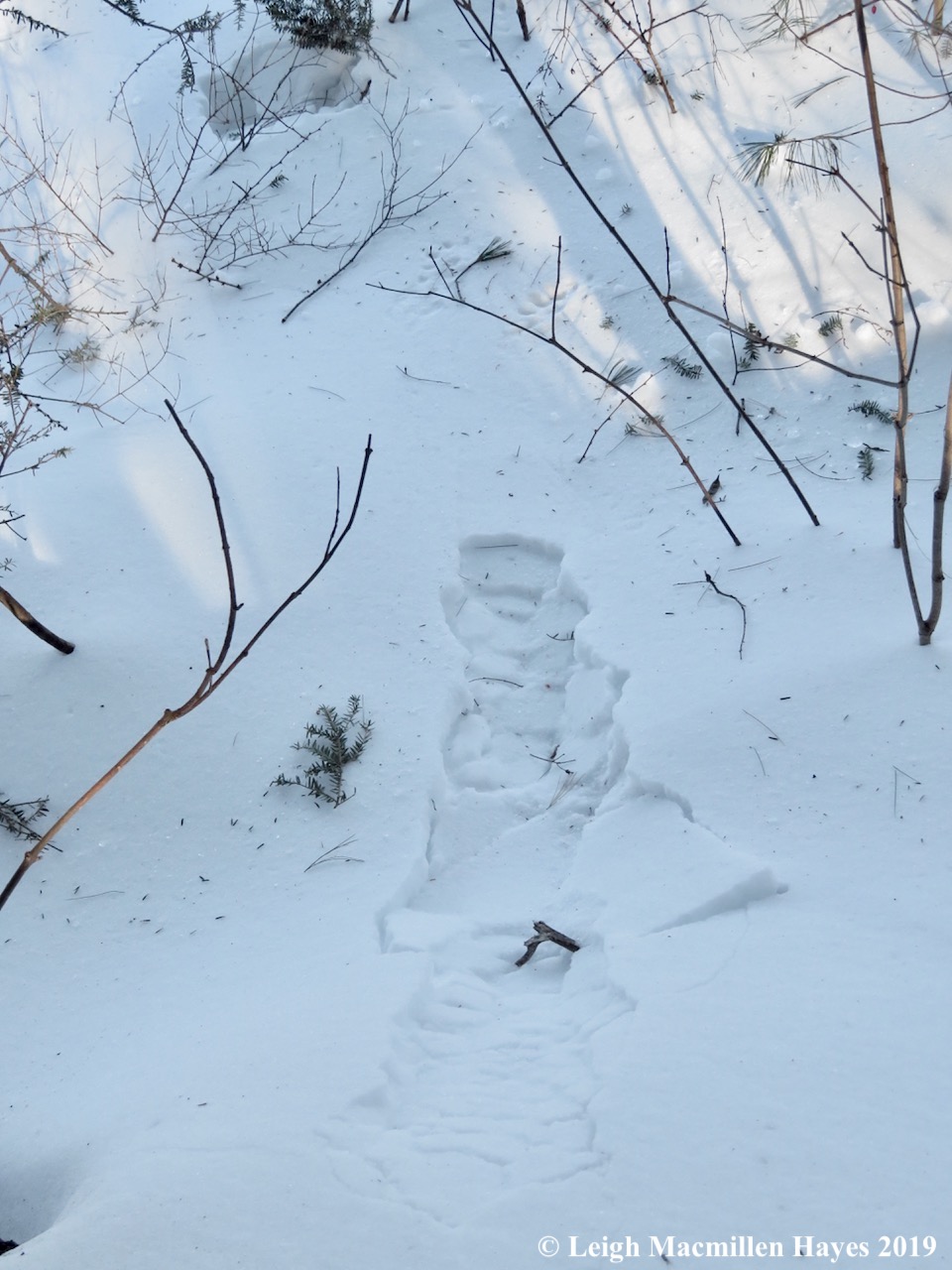
That’s when this set of tracks drew my attention. It took a moment for my sleepy brain to click into gear, but when it did I began to wonder why the critter had come to the back door and sashayed about on the deck. Typically, her journey takes her from under the barn to the hemlock stand in our woodlot, where she visits several a night before returning to her den. I say she for two reasons. “She” includes “he” so I can’t possibly be wrong and it’s my understanding that the males of this particular species are more likely to spend the day outside than the female. She returns home every morning and I never see her. Until . . .
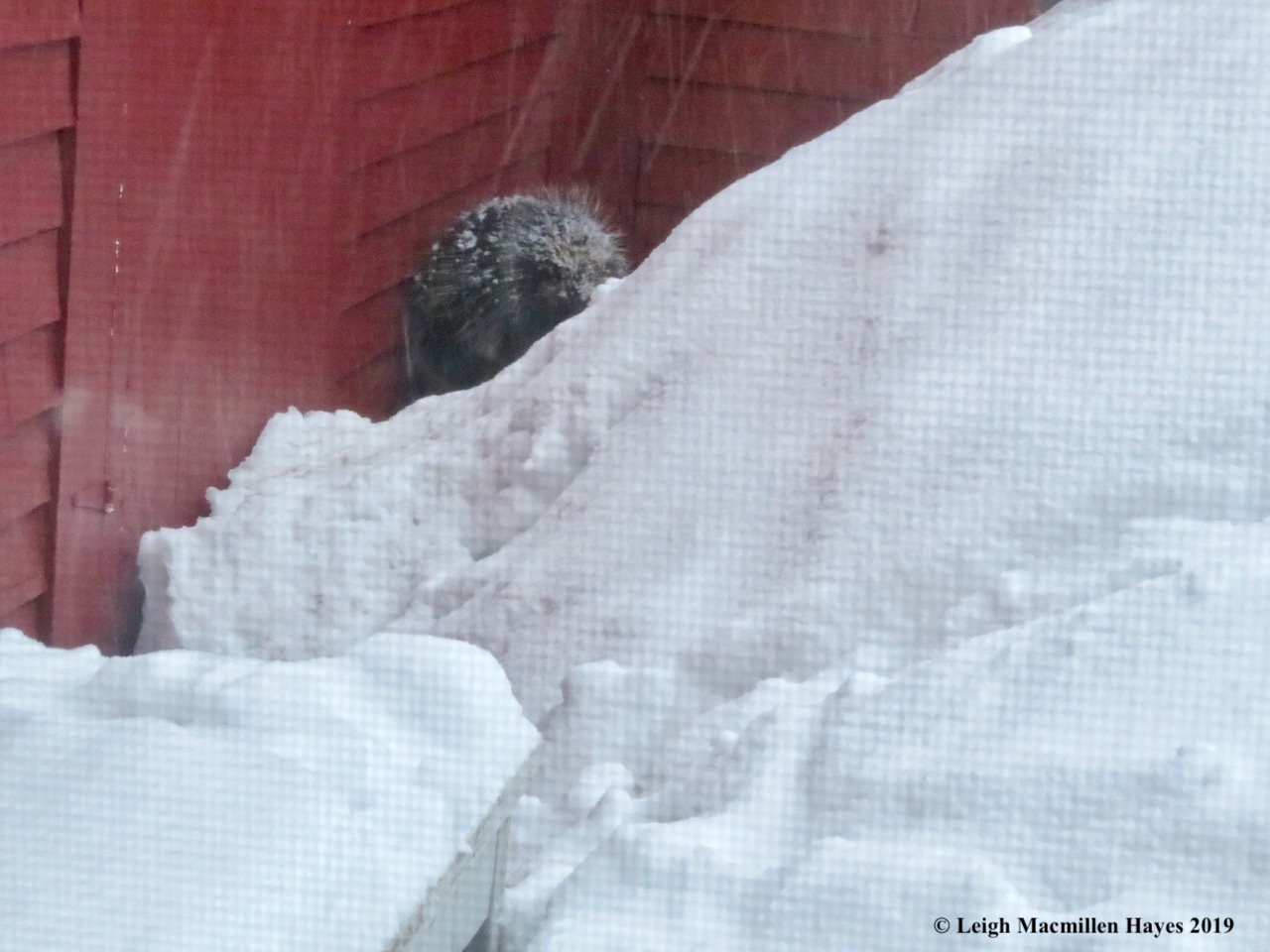
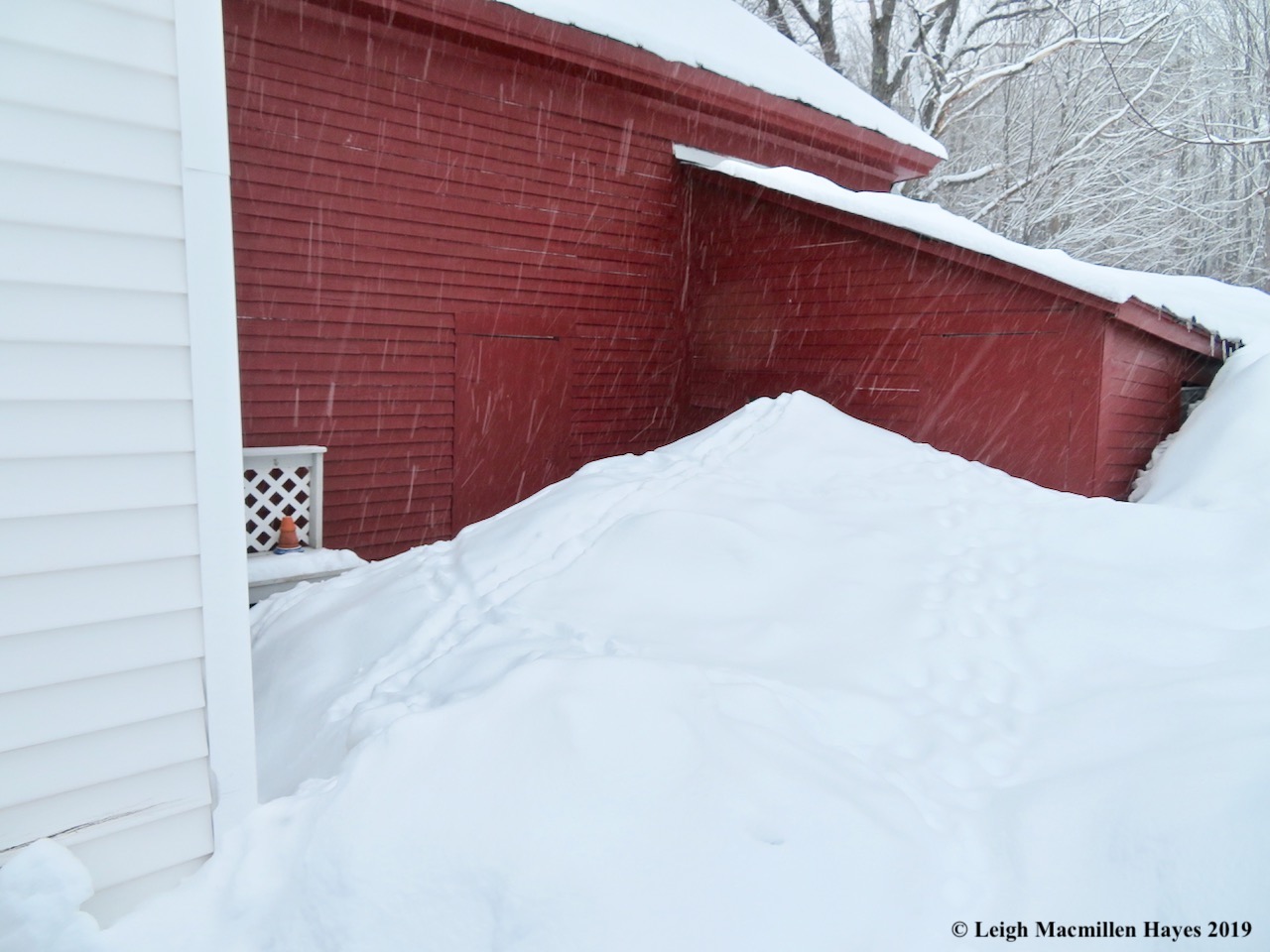
This morning for when I stepped into the summer kitchen that serves as my office, there she was in the corner, near her entryway to her under-barn den. And numerous other sets of her tracks decorated the snowbank.
The birds continued to scold, but not quite as vehemently as they had ten minutes earlier. And the snow continued to fall. Why hadn’t she headed down under?
The thing about porcupines is that they are rather lackadaisical, so maybe she didn’t care about the birds?
My interest in her was far greater I’m sure than she cared and so I stood and watched every move. And noted that in her dance she’d also crossed over the potting table that’s almost hidden by the snow. Why so much movement for such a slow-moving critter? Was it because of the birds? And why did they care about her presence?
Eventually, she did what I expected and disappeared under the corner between the barn and shed.
And so I headed out the door, where I discovered even more tracks. It’s not like its mating season, for porcupines mate in the fall. So why all this movement, including a visit to the grill. Was she pacing?
Peering toward the barn, I couldn’t see her, but I did hear some mini-grunts coming from the corner.
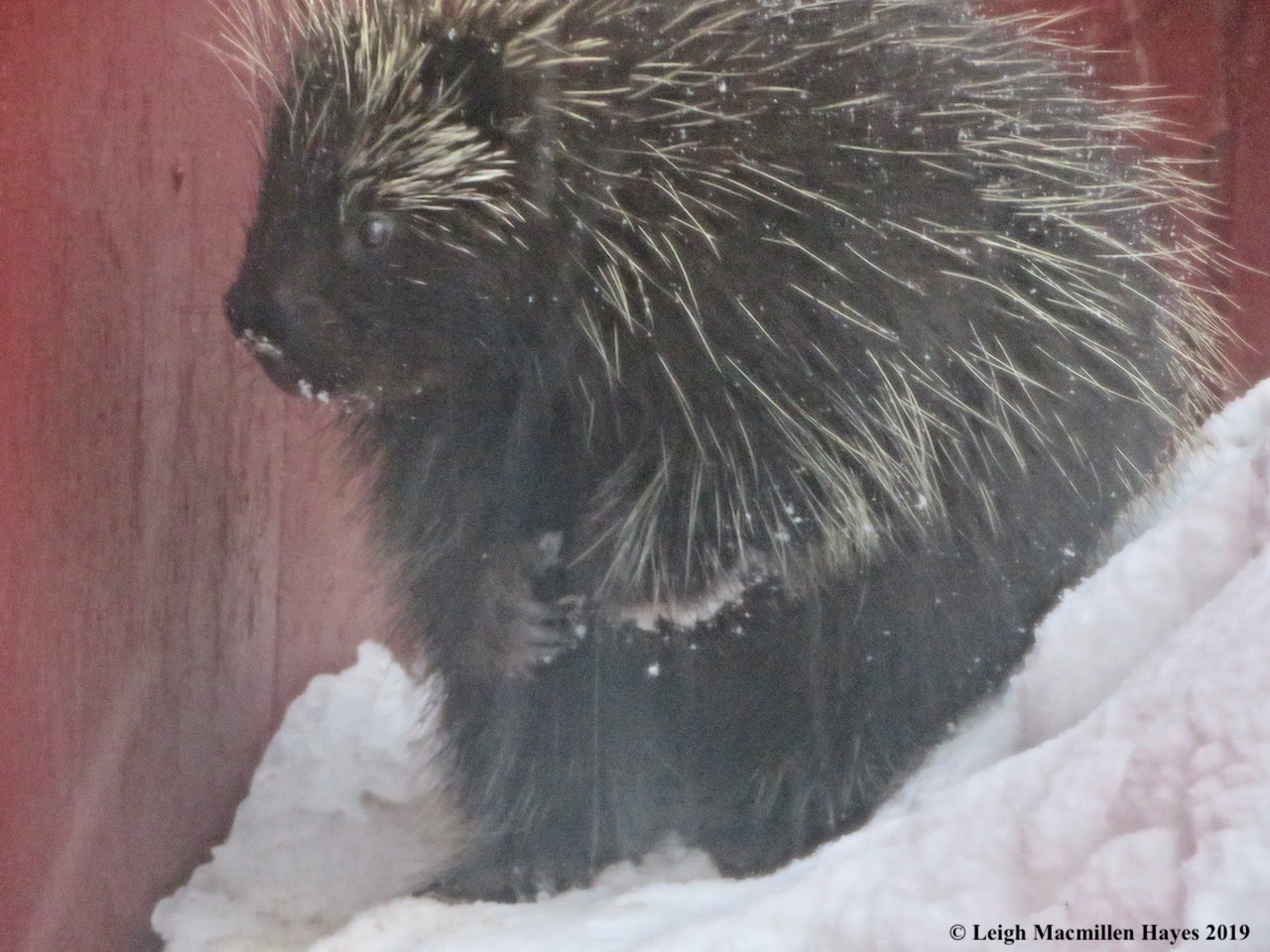
And then she emerged and I headed back in to give her space. Check out those quills. Did you know that they are a form of hair. In fact, from Mary Holland’s Naturally Curious Day-by-Day, I learned that a porcupine has five forms of modified hair–each with its own purpose: dark, woody underfur serves as insulation, which is important as she journeys outside her den every single night no matter the weather or temperature; long guard hairs sensitive to touch that help her maneuver; stout whiskers also sensitive to touch; short, soft bristles on her tail’s underside provide stability when she grips bark; and then there are the roughly 30,000, yes 30,0000, quills that cover all but her face, ears, and part of her belly.
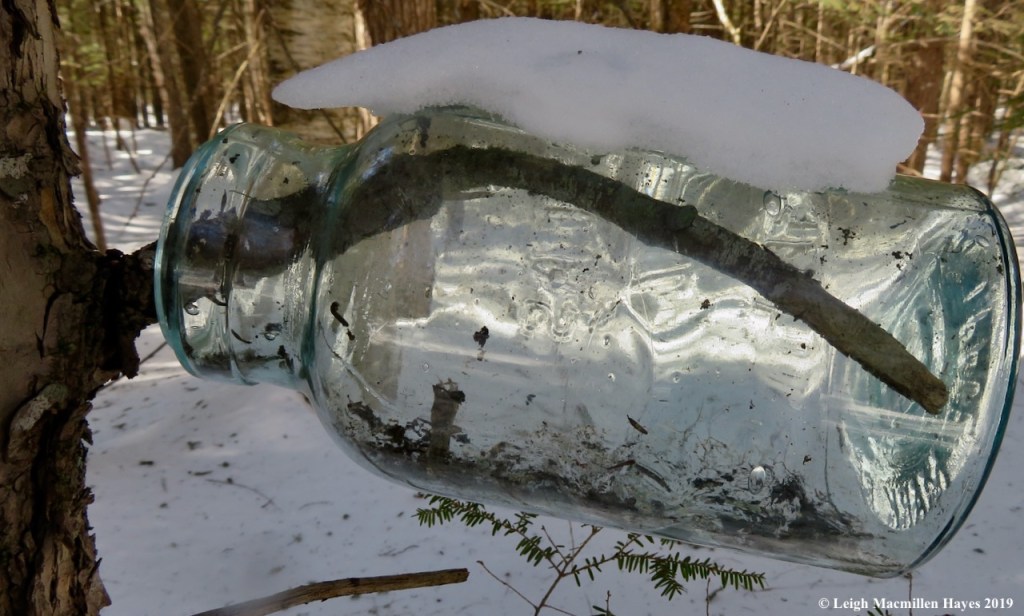
It’s those 30,000 quills that provide me with the most awe. So here’s another “did you know” fact: Within one square inch on her back, she has 100 quills. I got to thinking about that recently and cut out a square inch (well, sorta as it’s not exactly straight) of material that I glued to the top of a Ball jar.
And then I filled it with 100 toothpicks left over from a Valentine’s Chocolate Fest the PTA put on when our sons were in elementary school.
One hundred quills/square inch. Talk about prickly! Of course, she looses some especially when she squeezes into tight places, like under the barn. And others detach easily when touched (no, porcupines do not shoot quills).
There’s also her coloration to consider. Like a skunk, the black and white of the quills should be a STOP sign to her predators, who are colorblind as well as nocturnal. BEWARE is subtly written in that black line up the middle of her tail that is bordered in white.
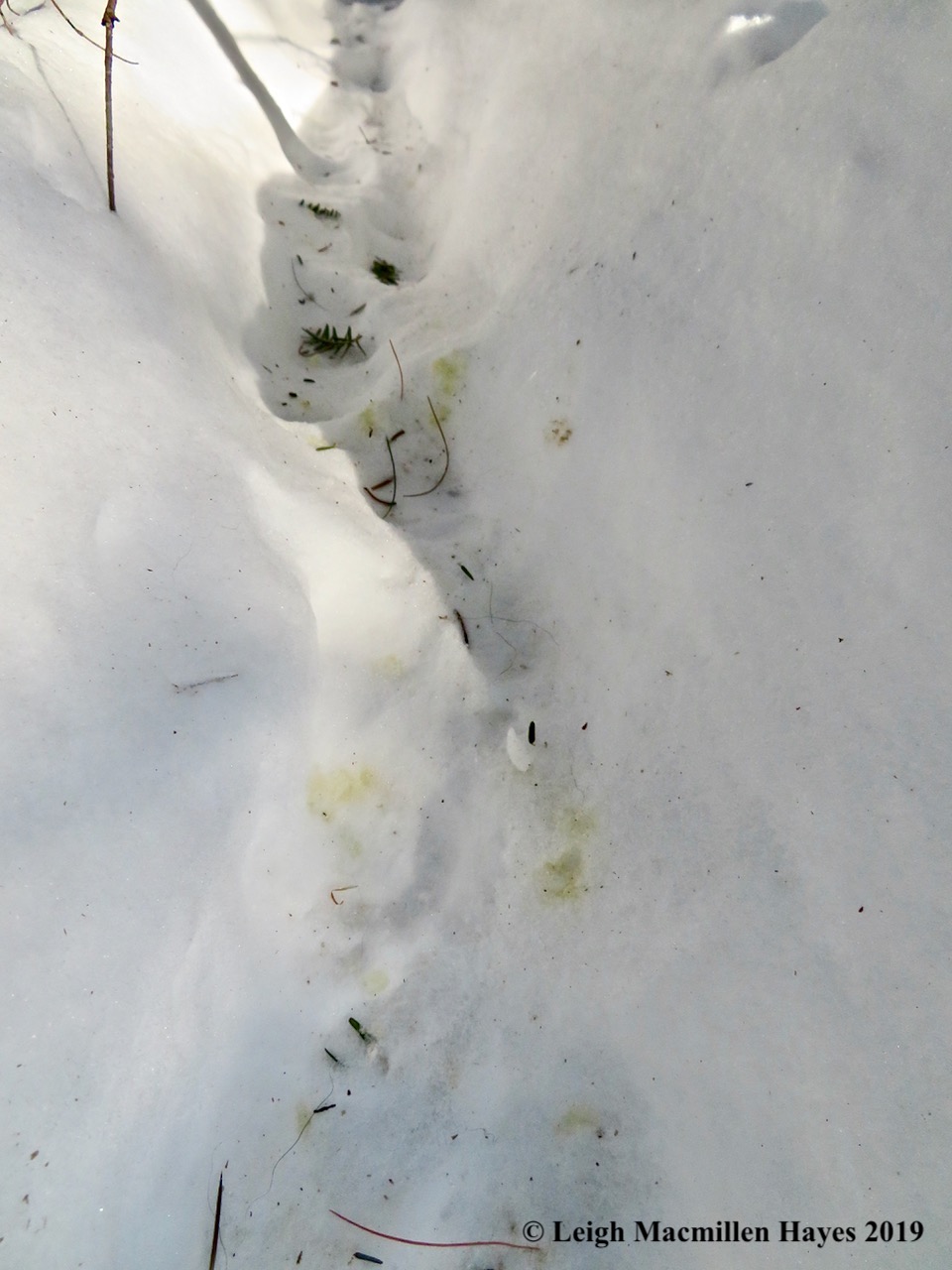
After we’d spent almost an hour together, sometimes with window glass and a screen between us, my porcupine finally disappeared under the barn. And so I stepped into her space for a closer look. Notice the mud and scat in her track. She is the pigpen of the woods who scats and urinates at her den entrance, which perhaps helps provide further insulation.
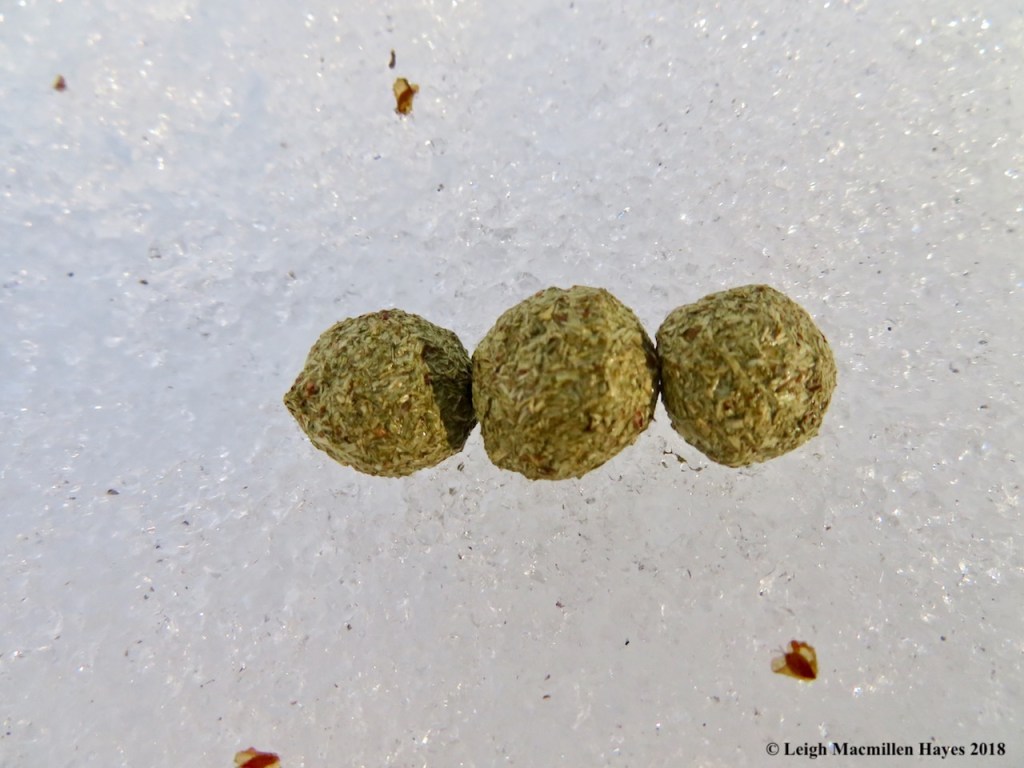
Scat Happens! 75 – 200 times per day does she eliminate and depending on what’s she’s feeding on determines its structure. Of late, it’s the bark and twigs of hemlocks that constitute the fibrous structure. I’ve heard them described as macaroni or cashews. I prefer to think of her scats as commas, perhaps indicating a brief pause in her routine.
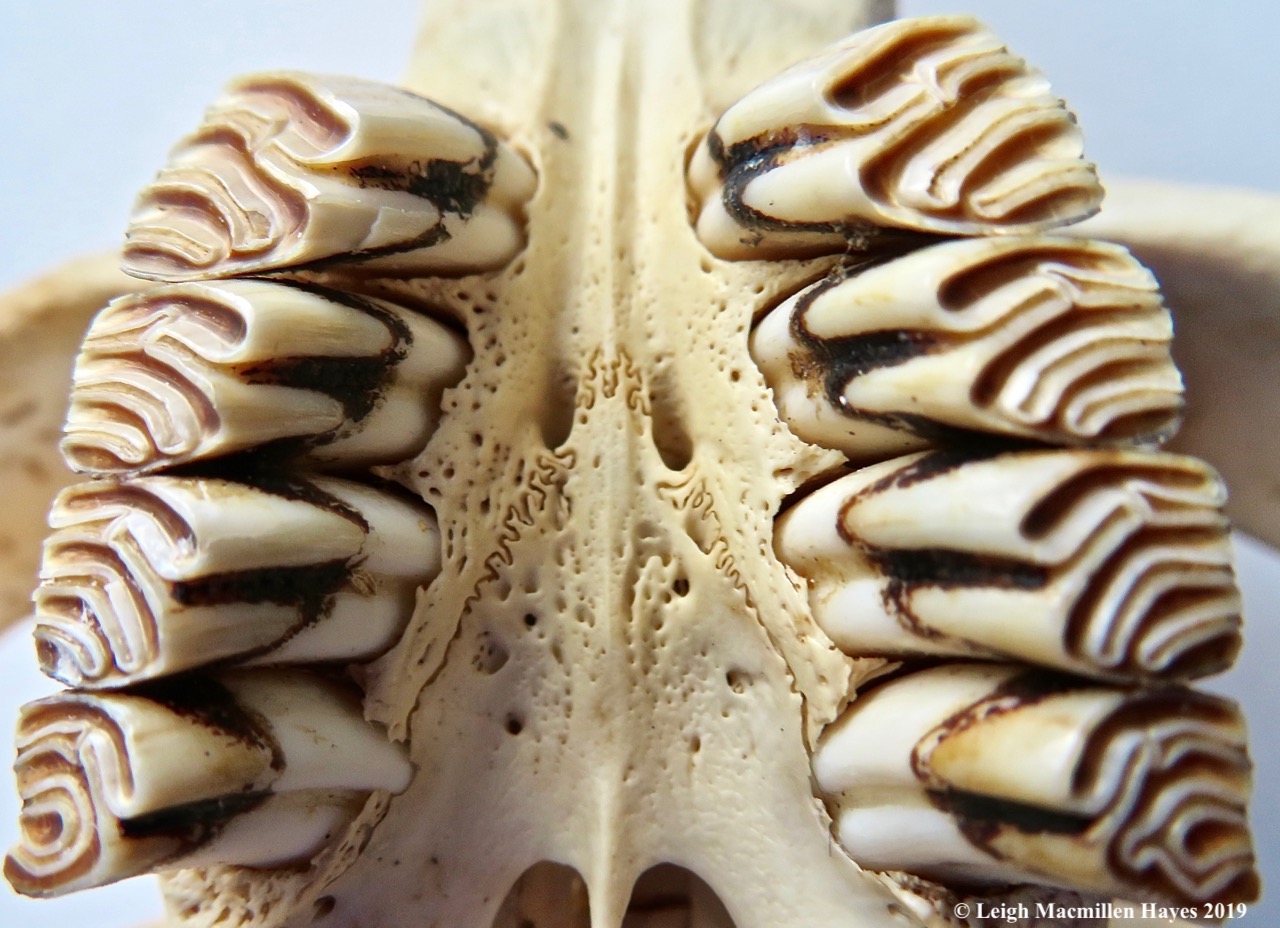
As strict herbivores, porcupines have strong, flat molars that are good for grinding plant material. This is the skull of a beaver, but it provides a good example for a porcupine’s check teeth are similar.
Also from the beaver skull are these prominent incisors. The difference is that a porcupine’s incisors are a bit thinner. For both, the front surface is enamel, while the back is a softer dentine. Their incisors are rootless and grow continually–up to twelve inches per year. Gnawing, therefore is rather important to wear down those chisels.
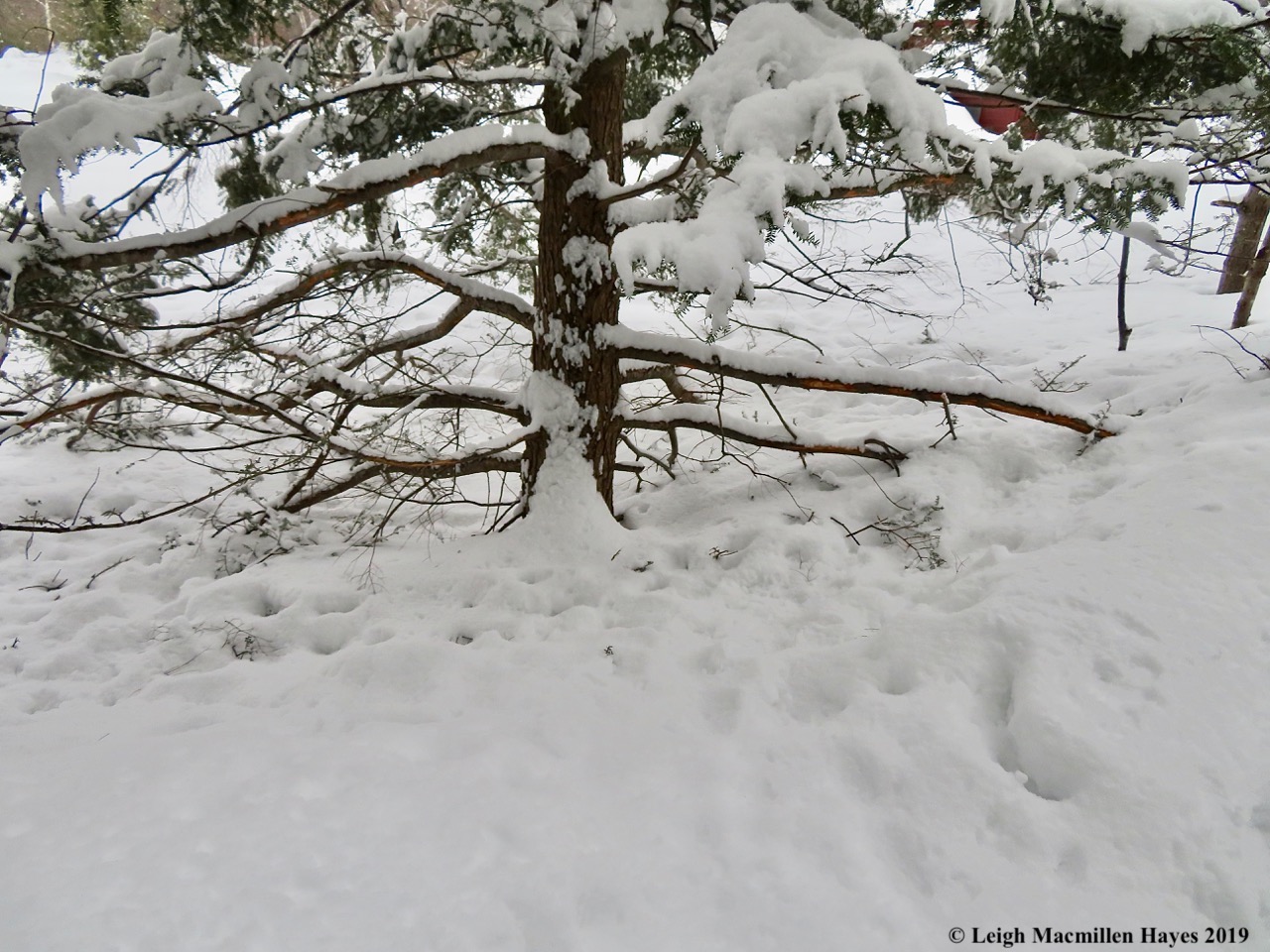
She’s managed to maintain normal dental wear by working on this hemlock in the corner of our yard and others in our woodlot.
As the day progressed, I wandered around looking for her tracks and those of any others. Strangely enough, she didn’t visit the hemlock last night, but rather checked on the sugar maple in our front yard–perhaps a sign that the season is changing and she’s ready to feast on some sweet buds for a while.
She also circled the barn in a random style. Was she seeking other entryways that are now well hidden below the snow? What was she thinking? Was she thinking? Or acting by instinct? I didn’t see any predator tracks to speak of, but perhaps there was an aerial predator she strived to avoid?
I don’t know. What I do know is that because I climbed up the snow mound, I discovered that she’s been sharping her teeth on the barn clapboards. And where the corner between the shed and barn has long had a cut-out presumably created by her and probably her ancestors, it appeared today that she’d munched a wee bit more and come spring’s meltdown, we’ll be surprised by the damage. My guy reminded me that she and her family members have been dining below the barn for more than the 26 years that we’ve lived here and the structure’s integrity has long been compromised.
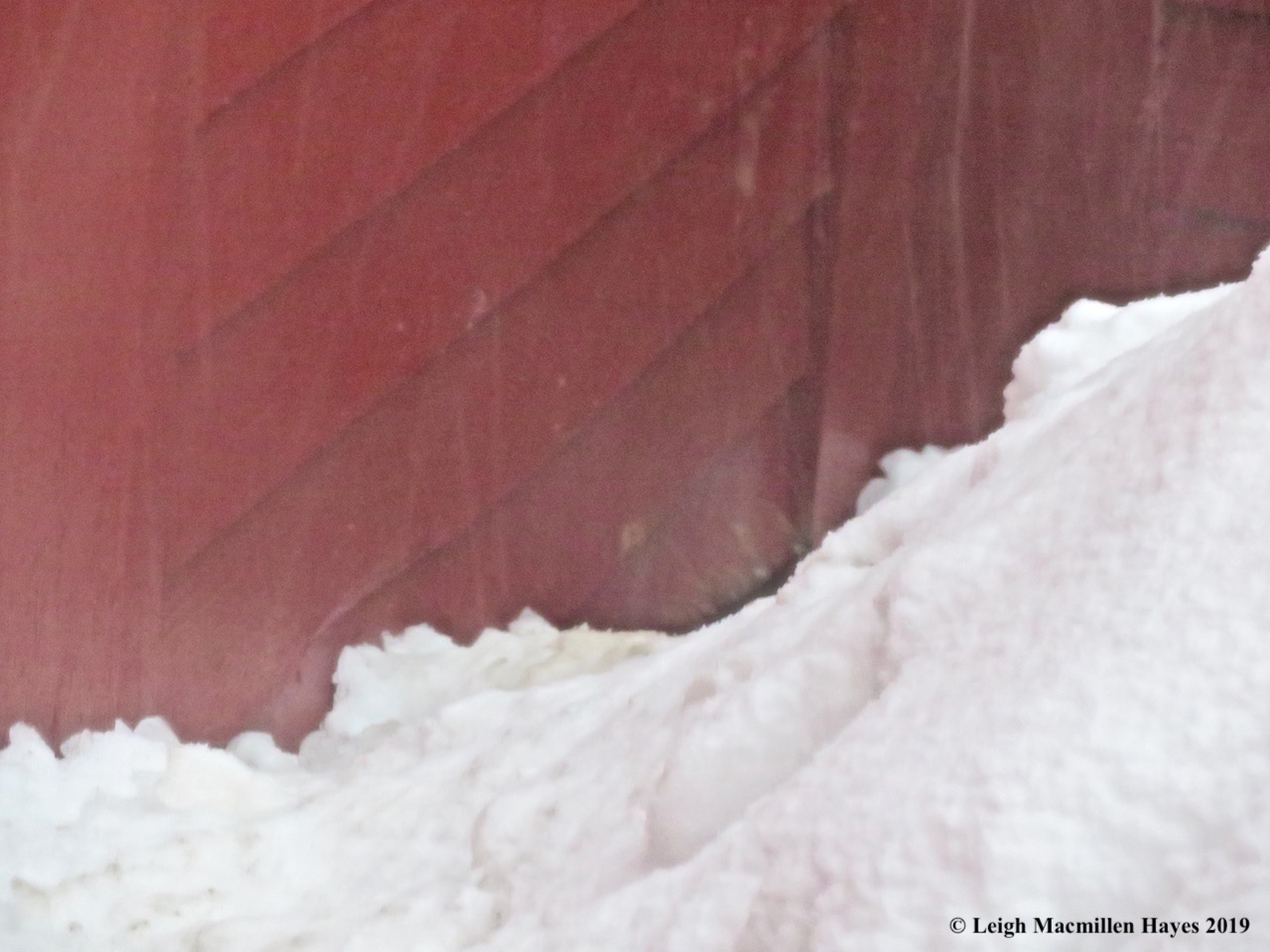
As the snow slid off the barn roof, the hole began to disappear.
Until finally, it was only a memory.
I went out again at dusk in hopes of seeing the grand lady dig her way out, but her time schedule was not the same as mine. In the morning, however, I’ll check on her trail as I do every day. I can’t wait to see where she went–will she give me any more clues as to her strange behavior this morning? Was it a reaction to the crows? I don’t know.
But this I do know: when the crows caw–listen. And look. And wonder.
When Pam and I stepped into the woods this morning, I don’t think either one of us understood the enormity of the task before us. You see, our job was to gather all the pieces of the forest through which we’d pass.
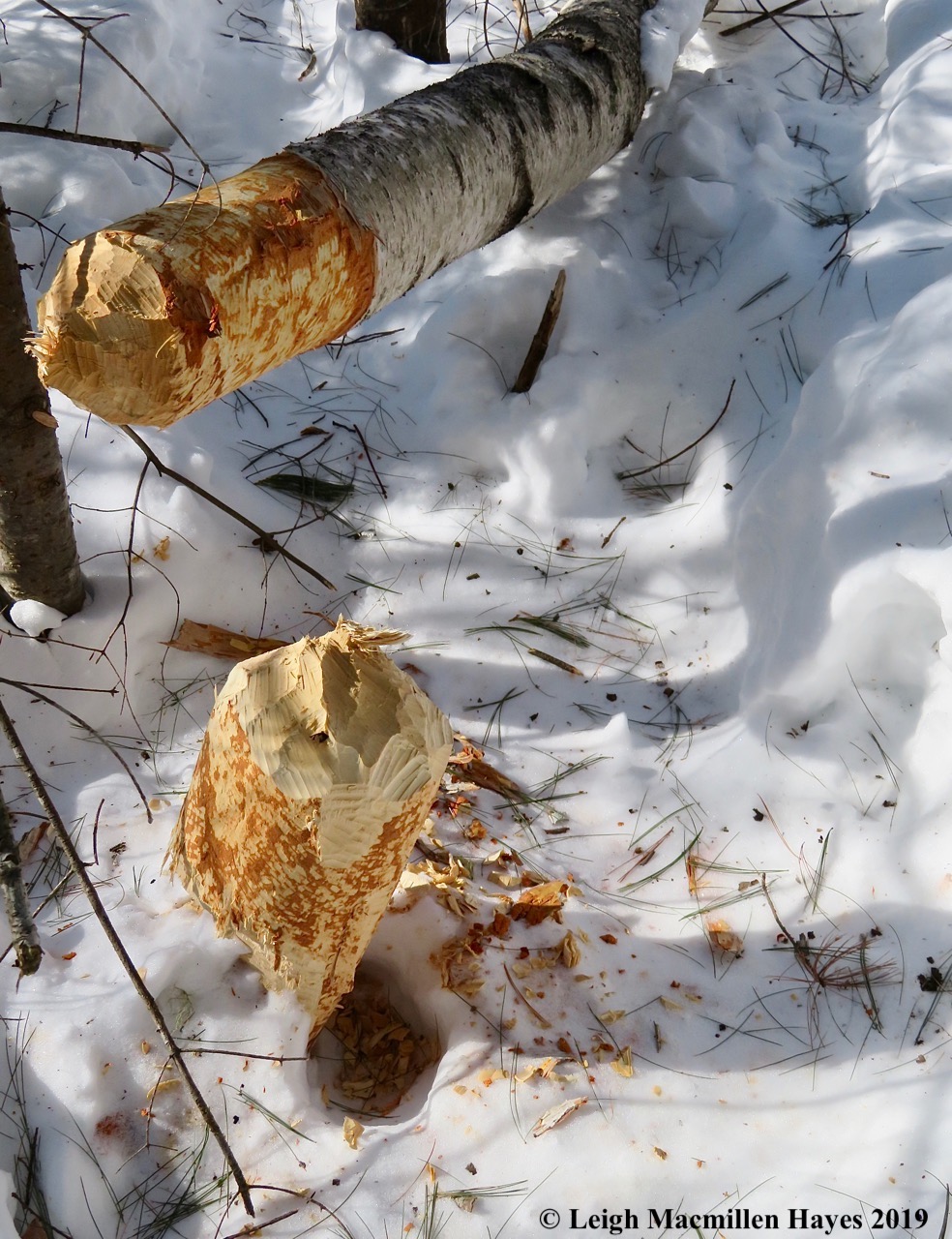
And so we began by collecting a recent beaver masterpiece with fresh wood chips below.
There was a beaver sculpture as well, those tooth grooves deep and distinctive.
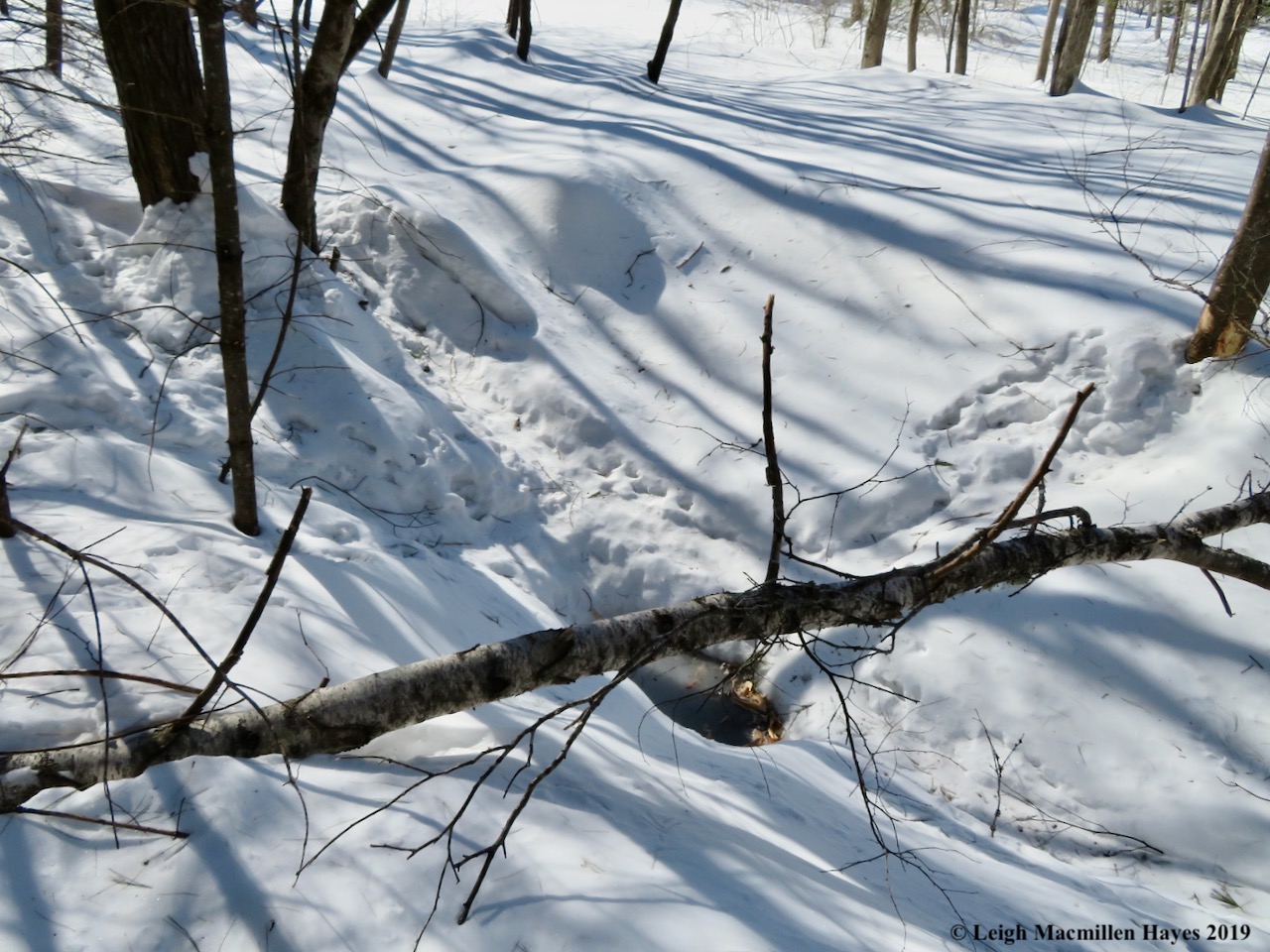
And their tracks, which all emerged from a recently frozen-over hole. The tracks were a few days old, but we added them to our findings just the same.
Because we were in beaver territory, to our delight we found otter tracks and slides galore–many of them fresh.
There was even an otter hole that we wondered if the beavers had used as well. We decided we might as well throw it in to our bag.
And we couldn’t resist our favorite otter activity of all–the spot where the infamous slider slid.
Following the trail to a different part of the forest, we spotted a diptera pupa that gave us pause for quite a while as we admired its structure and the perfectly formed circle where the fly had chewed its way out. We were so in awe that it seemed only obvious we would want to include it in the collection.
Further on, we reached a brook and spied a muskrat, that dark body in the center. As it turned out, it was a stone muskrat and we left it behind as we chuckled about our mistaken ID.
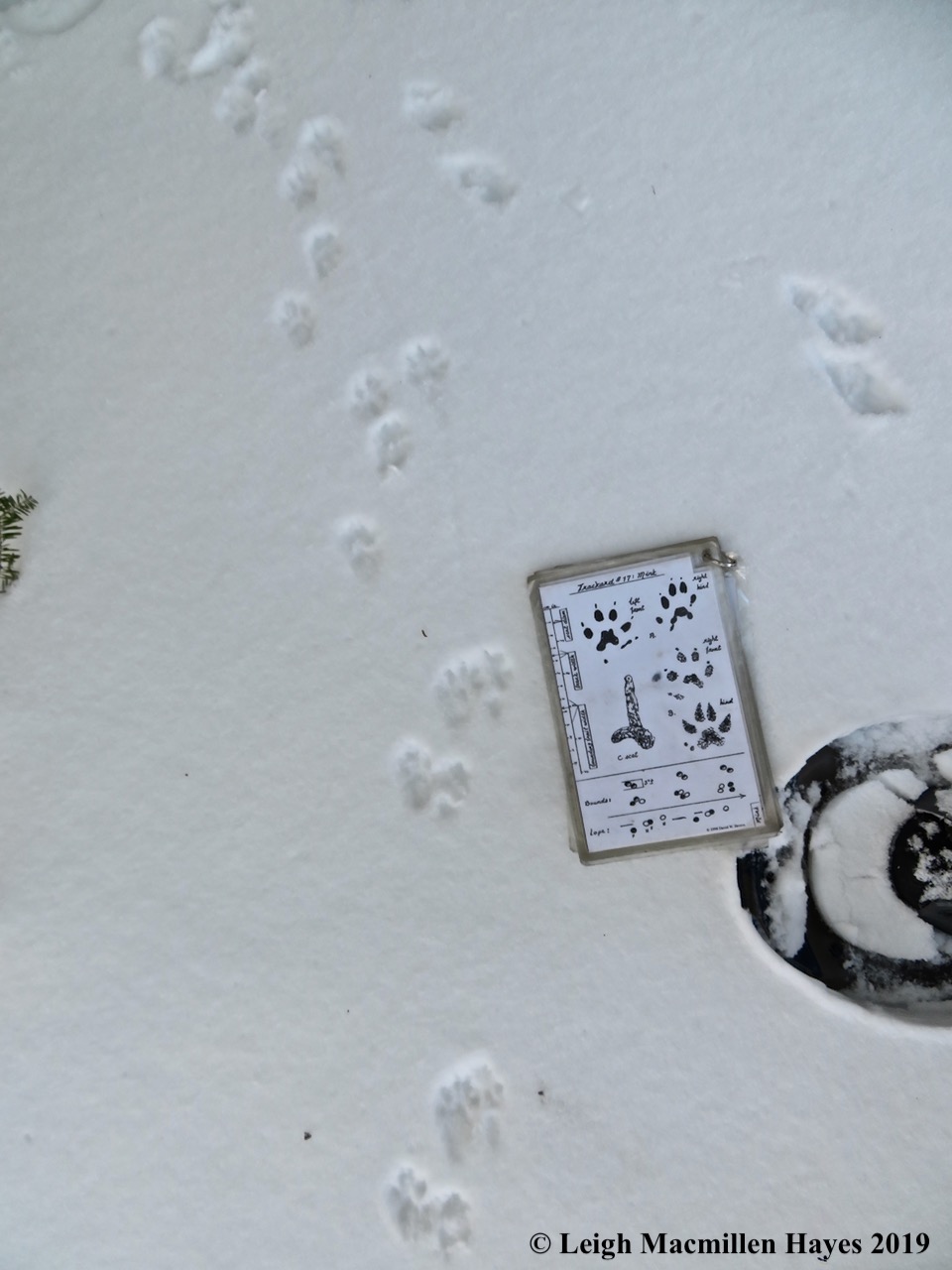
By the brook, we did, however, find mink prints in the dust of snow that had settled upon thin ice. Those were certainly worth capturing.
We also gathered more otter slides, and then stumbled upon an apparent otter roll, an area where the playful critter made a lot of fuss and left behind some urine and tarry-looking scat. We were sure we’d hit the jackpot.
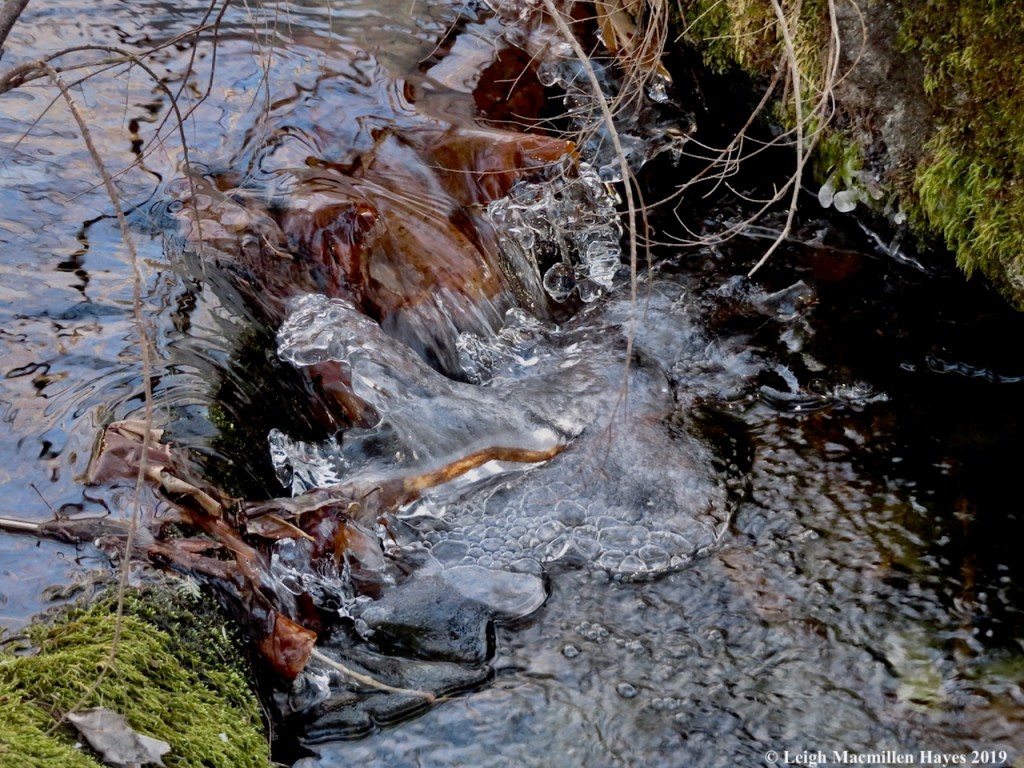
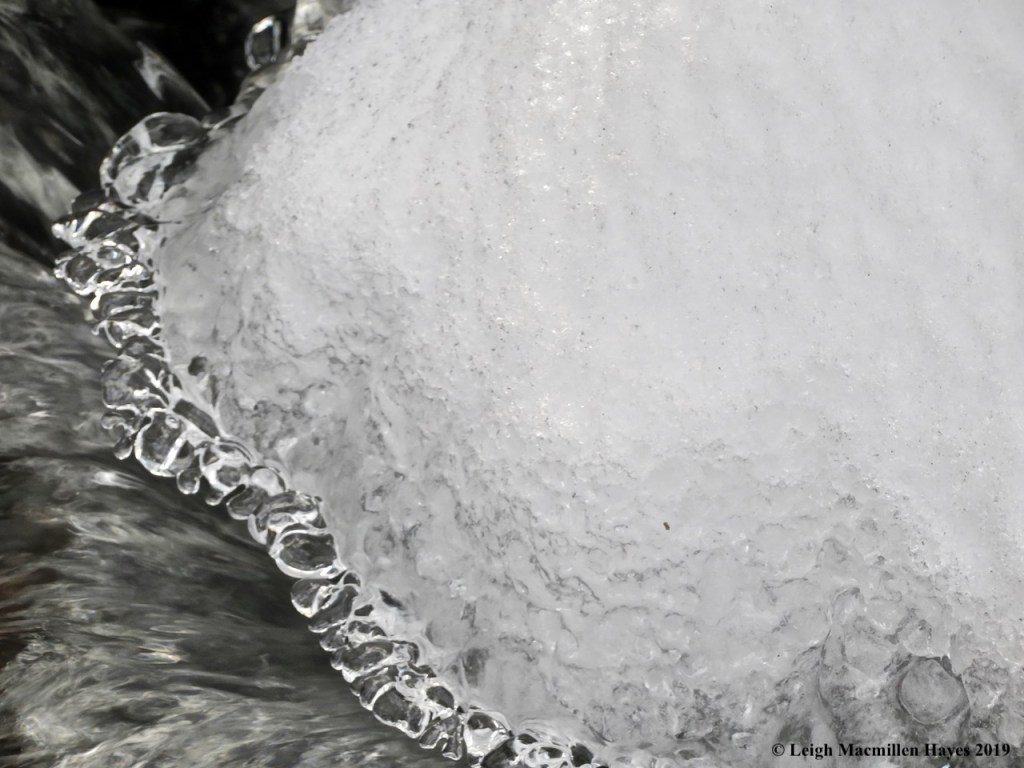
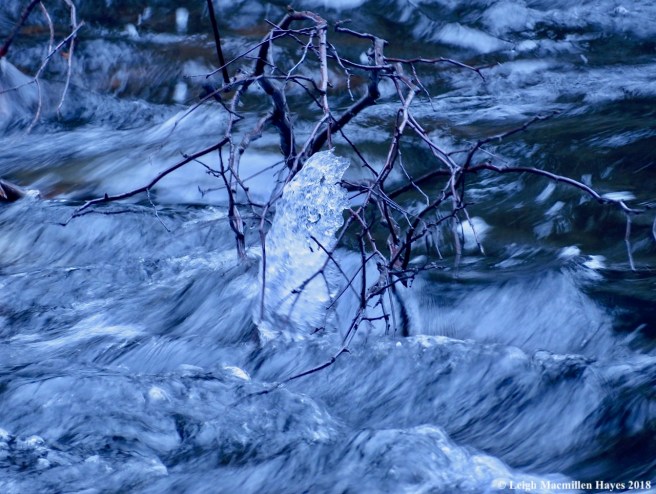
Because we were beside running water, the icy baubles were not to be ignored.
Nor was the snow depth, which we determined to be close to four feet deep.
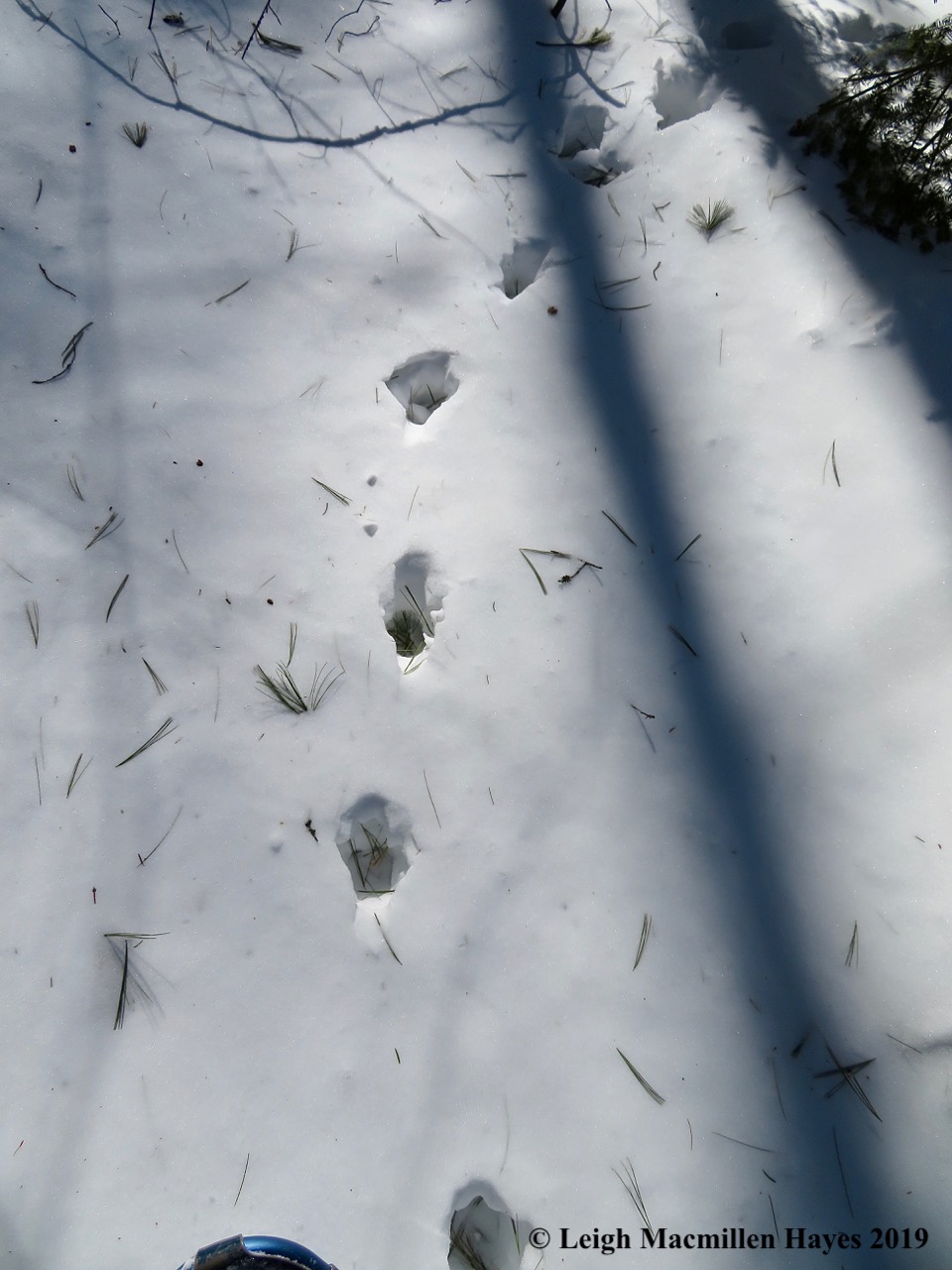
And then we marched onto a wetland, where we were stumped for quite a while about some mystery tracks. Should we take them or leave them, we wondered. The pattern indicated a perfect walker, as in a candid or feline, but the depth was deep and the toes threw us off.
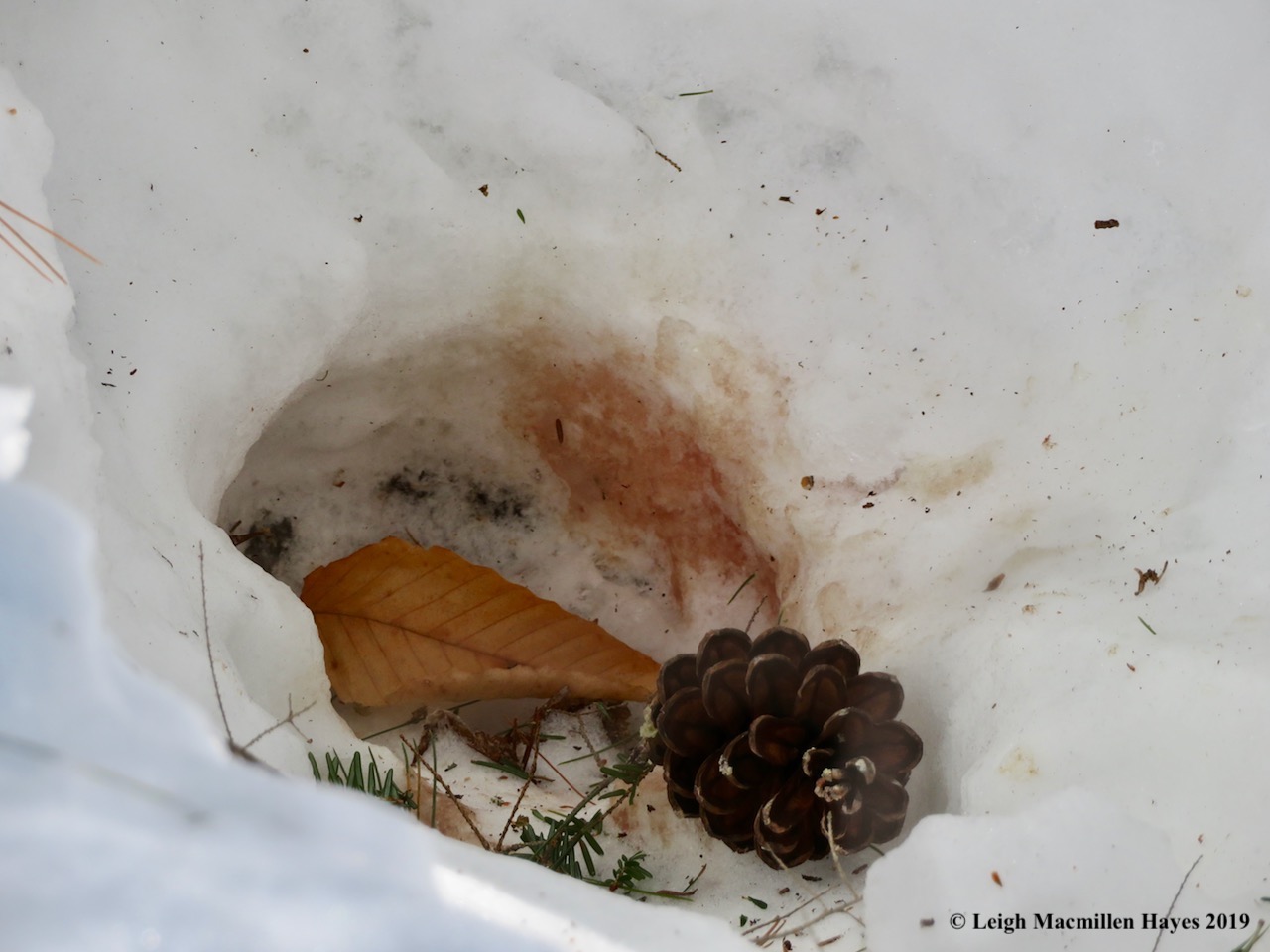
The curious thing was that those tracks and others left behind by a mink and a fox led to a deep hole beside a tree.
I thought the frozen fluid within was blood, but Pam leaned more toward urine. One thing we knew for sure, if it was a kill site, there were no remains. Had the mammals been on the hunt to no avail? Take it or leave it–we put it in the same category as the mystery prints.
The mystery tracks also led to a beaver lodge and it appeared that the mystery track maker had tried to locate another meal. Given that there was no air vent at the top of the lodge, we doubted anyone was at home at the time of its visit, and so we left the lodge behind.
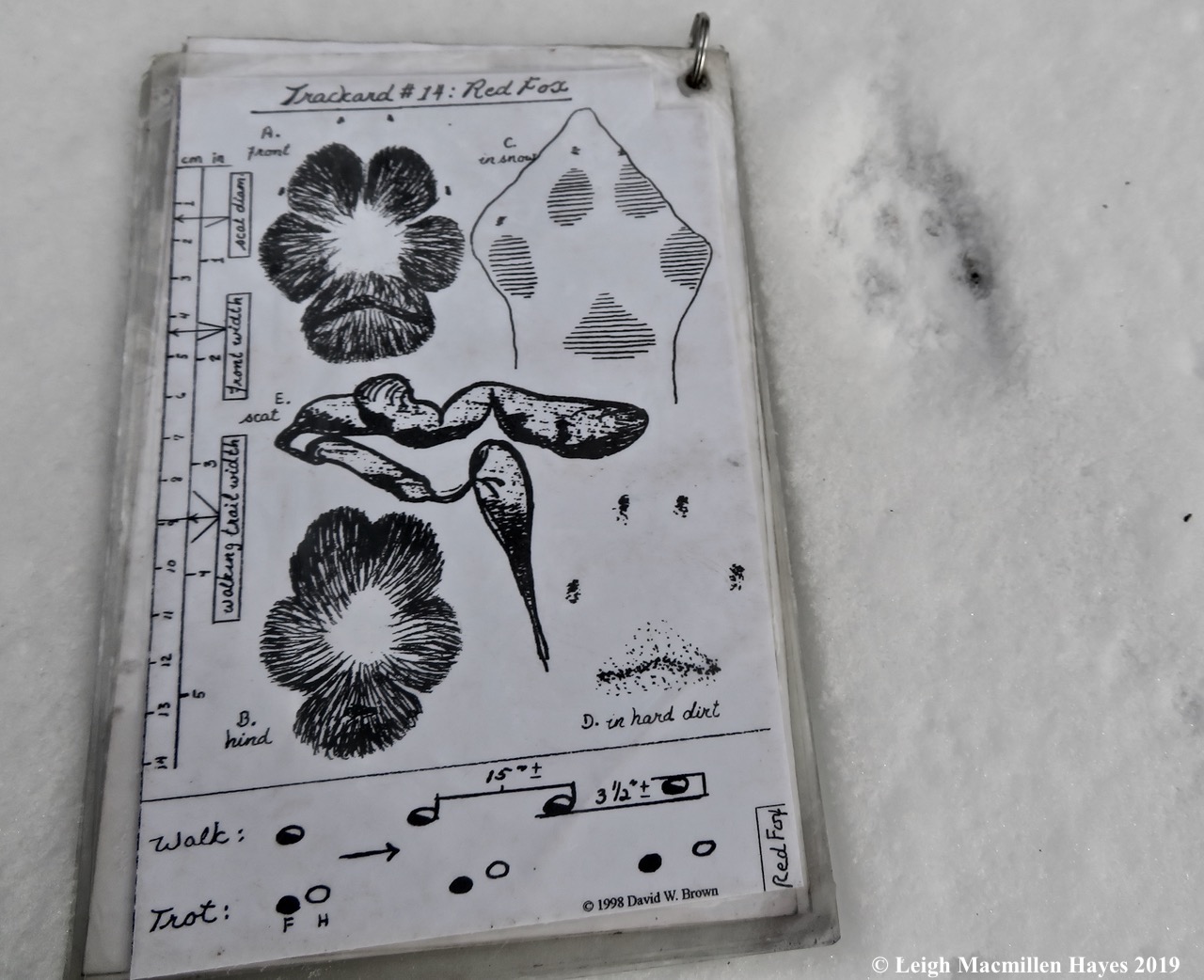
After standing in the middle of the wetland and eating our own lunches, we discovered a set of perfect red fox prints that we just had to include in our collection. The top print in this photo is actually the hind foot and the lower print is the front. Can you see the chevron in the foot pad?
There was another lodge we considered grabbing because the top of it appeared to possibly have a vent, but like the fox, we took a closer look and discovered that it, too, was abandoned so we left it behind.
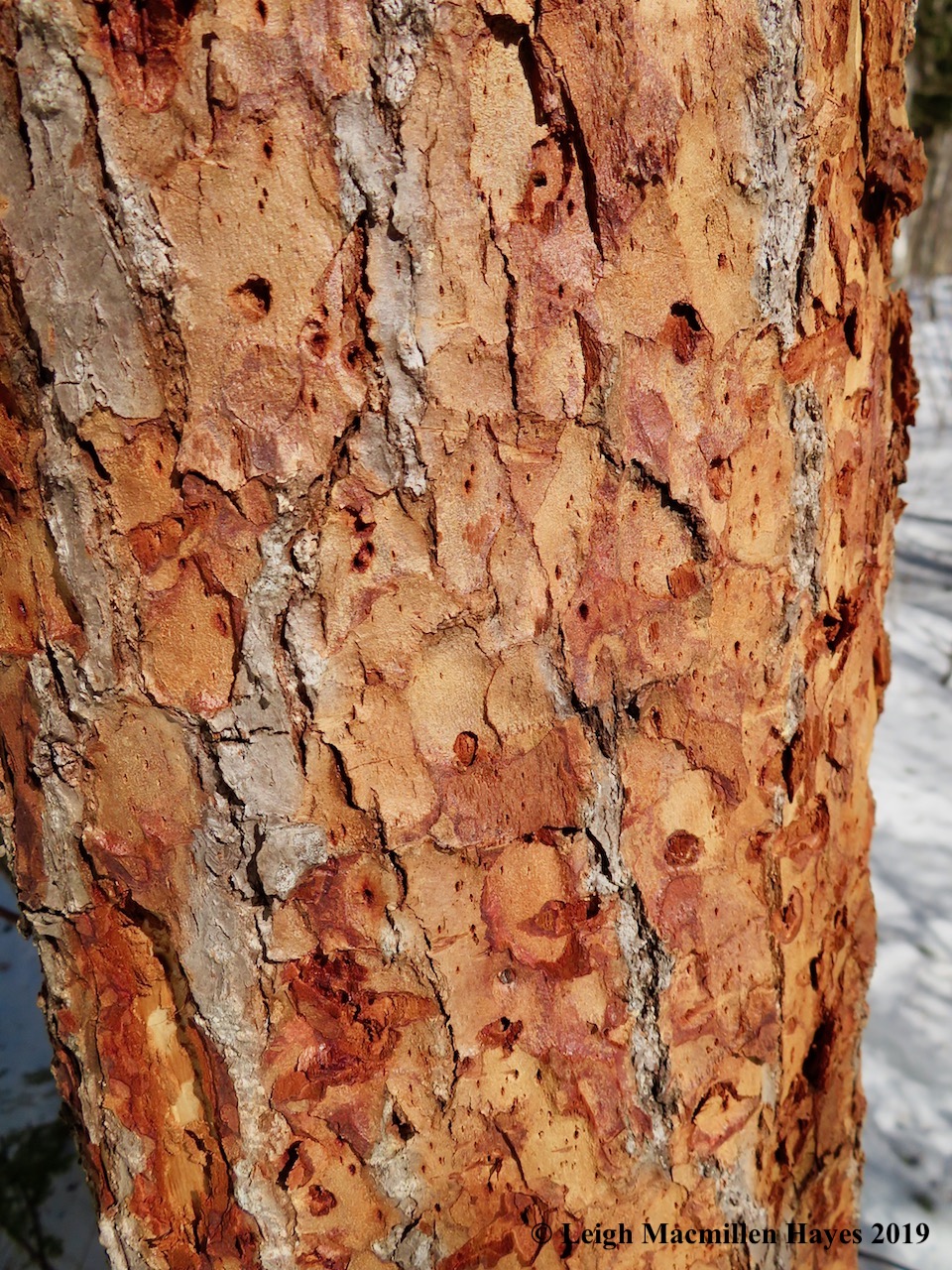
Instead, we made our way off the wetland and back into the woods where a debarked hemlock tree stopped us in our tracks. Nuthatches and woodpeckers are known to scale trees–removing the outer bark to get at the insects underneath. Can you see the insect holes? And the cinnamon color of the inner bark? This one was a keeper, for sure.
Especially since a section where the inner bark had been removed revealed a polished layer like one might find on a table top.
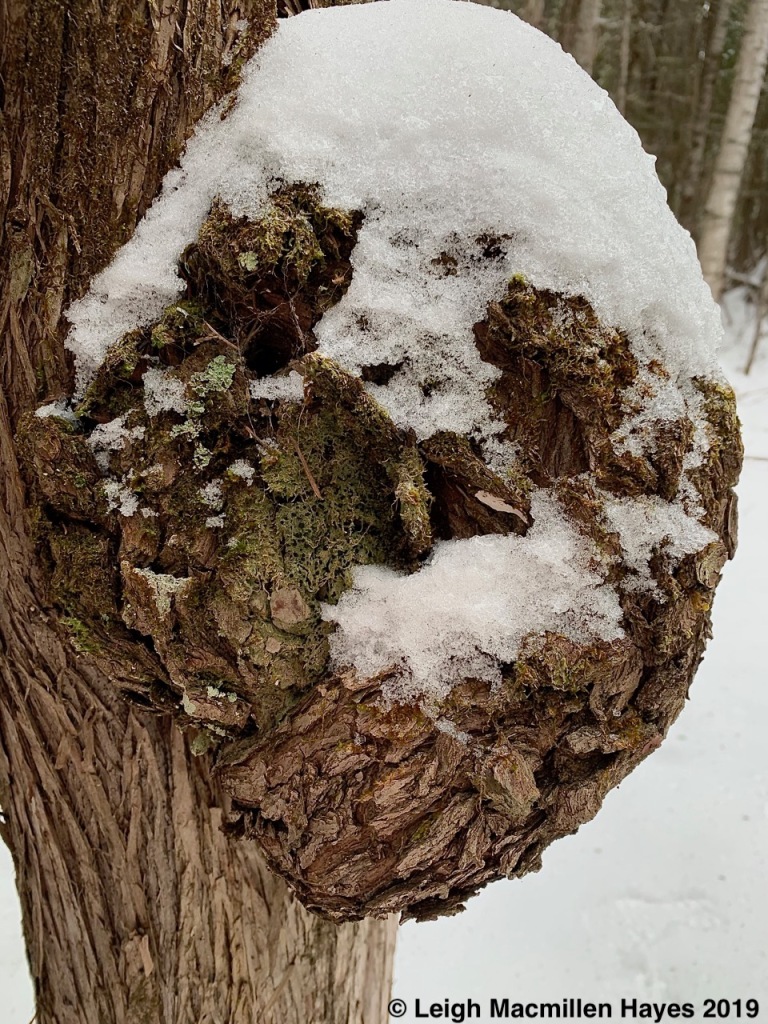
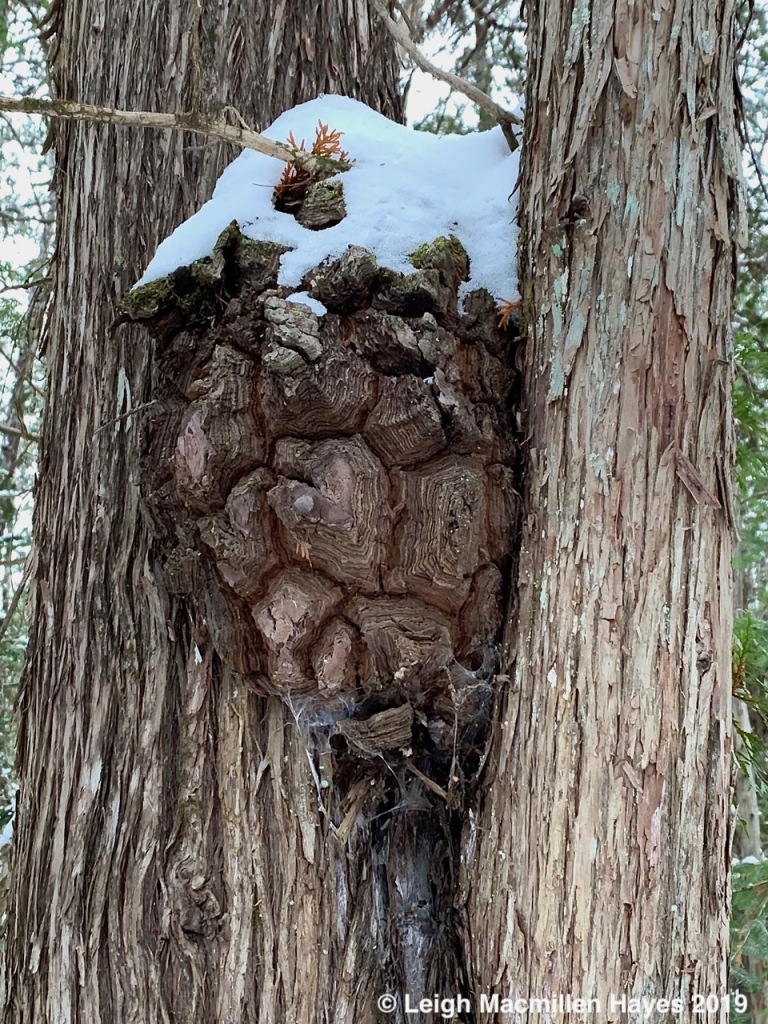
There was also a huge snow-capped burl to pick.
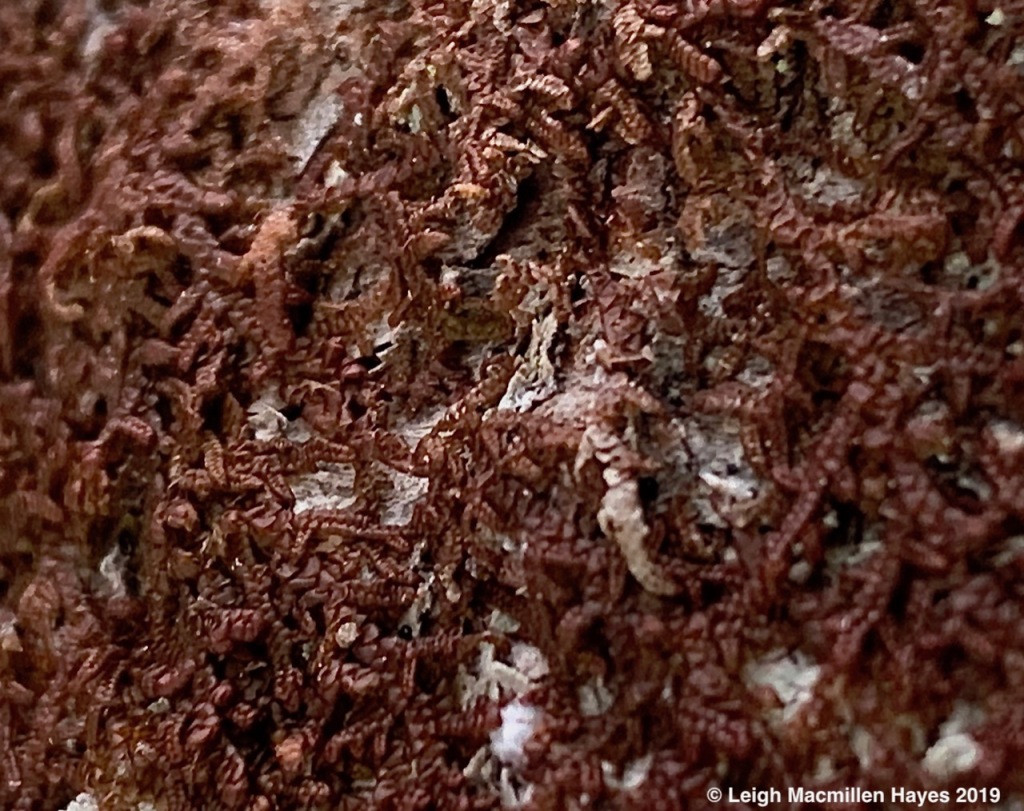
And a small cross-section of the liverwort Frullania juxtaposed beside script lichen. Everyone should have a sample of those two.
Two old heron nests were well worth adding into the mix. They’d been used in the past until two years ago. If the herons do return to the rookery, we suspect they’ll build new structures so we didn’t feel so bad gathering these.
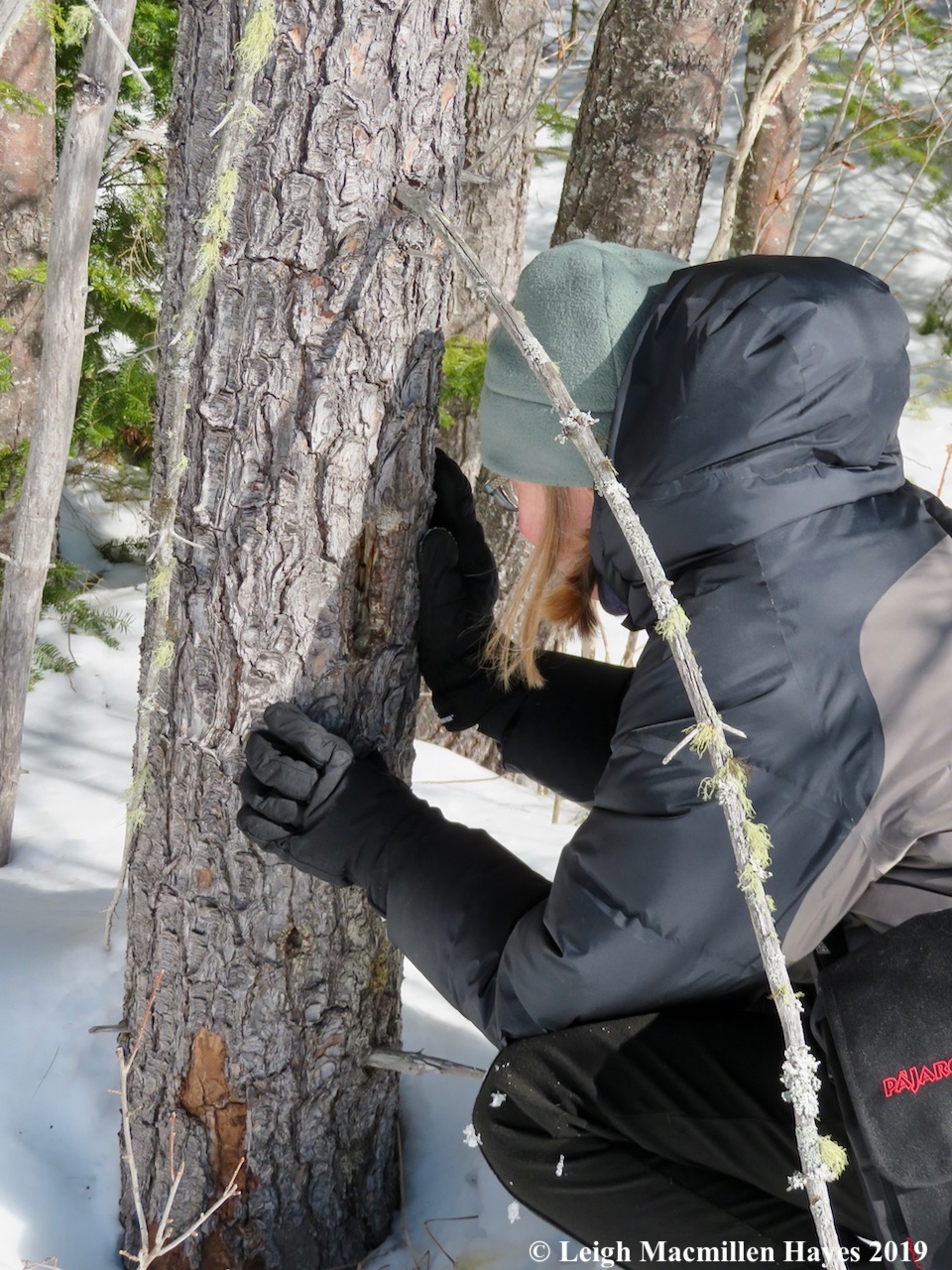
And then there was a pileated woodpecker hole that would have to represent all woodpecker holes in these woods. Before tossing it into the bag, Pam made sure that no other critter had set up housekeeping within.
Our final finding was one that made us think back to the mystery tracks. The more we studied these and later met the mystery tracks again and followed them for a while, the more we understood that not only did beavers, otters, foxes, deer, mink, and snowshoe hare romp in these woods, but so did coyotes.
The best thing about this coyote was that it made a coyote angel in the snow! We most definitely scooped that up.
For you see, our mission was to put it all together–in a glass jar. Haven’t you always wondered about the magic involved with placing a ship in a bottle? Well, today, we spent six hours amassing various items in the woods and then assembled them–creating a forest in a bottle. Can you see it?
When Alanna Doughty, education director of Lakes Environmental Association asked me to join her in co-leading and co-sponsoring a tree identification walk during Great Maine Outdoor Week(end) at LEA’s Highland Research Forest in Bridgton, I jumped at the opportunity. Alanna, you see, is a great joy to be in the presence of and I knew she’d make it a fun and unique experience.
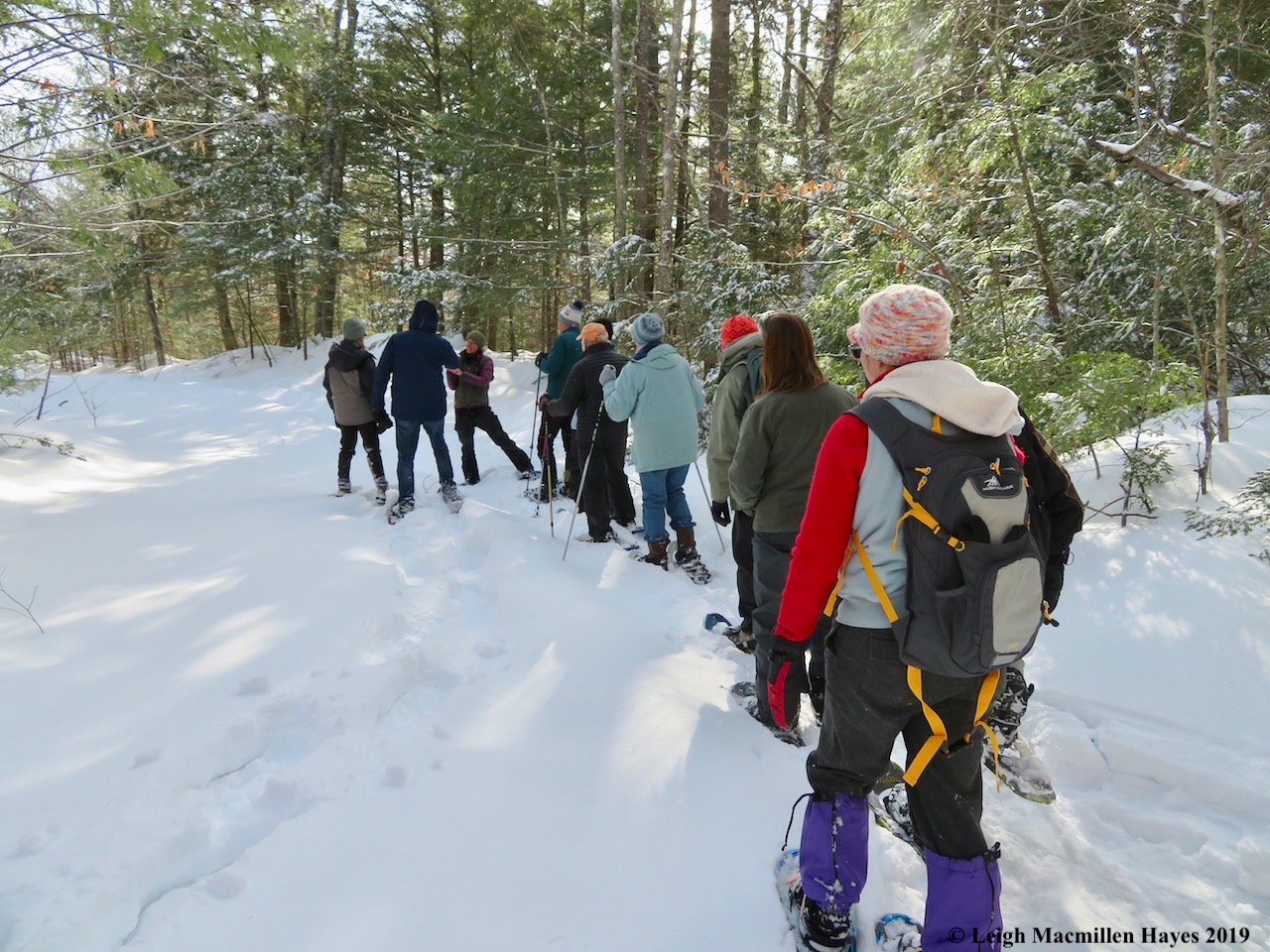
I wasn’t disappointed; nor were the thirteen others who joined us this morning for a two-hour hike that turned into two and a half and even a little bit more.
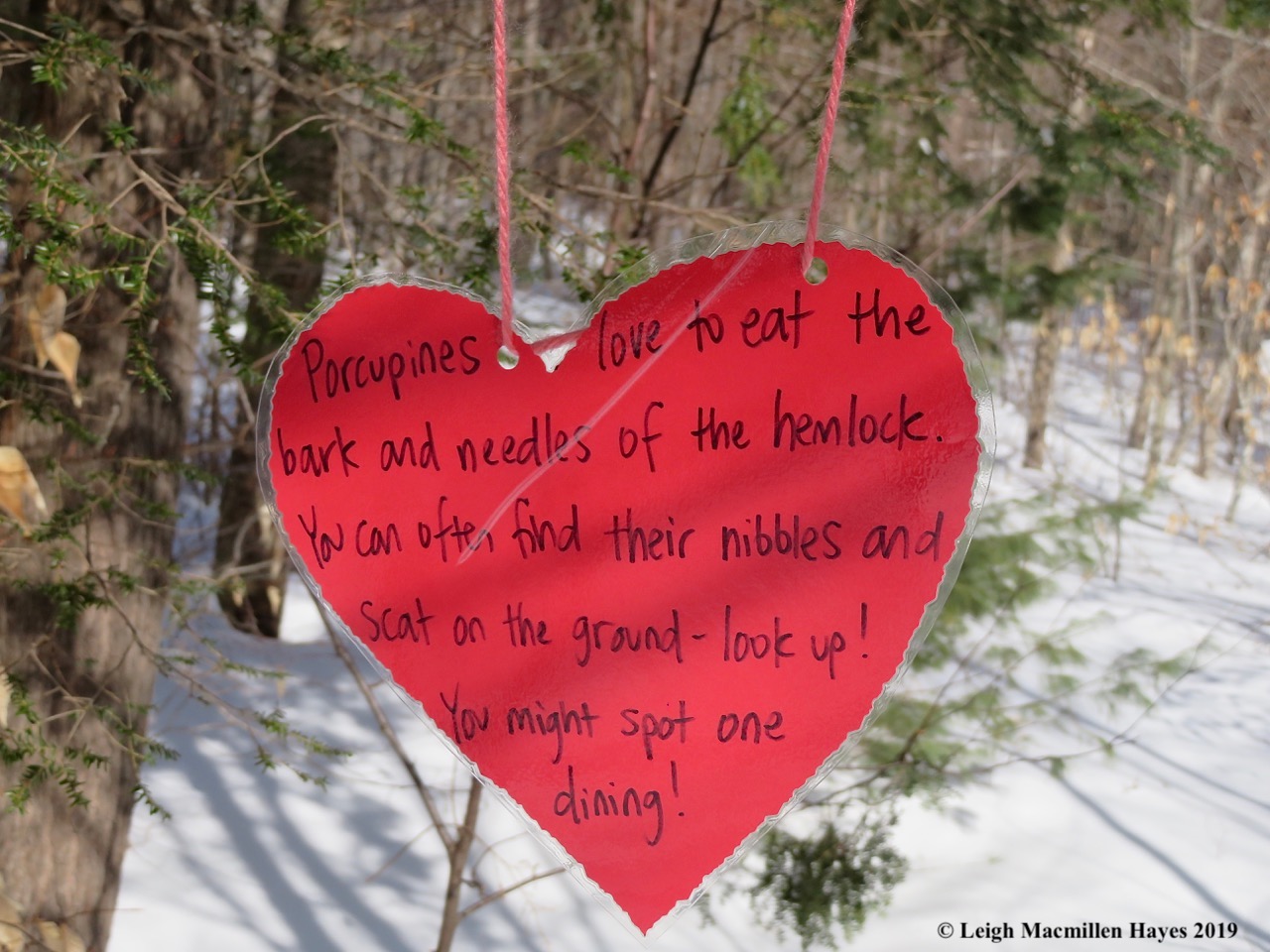
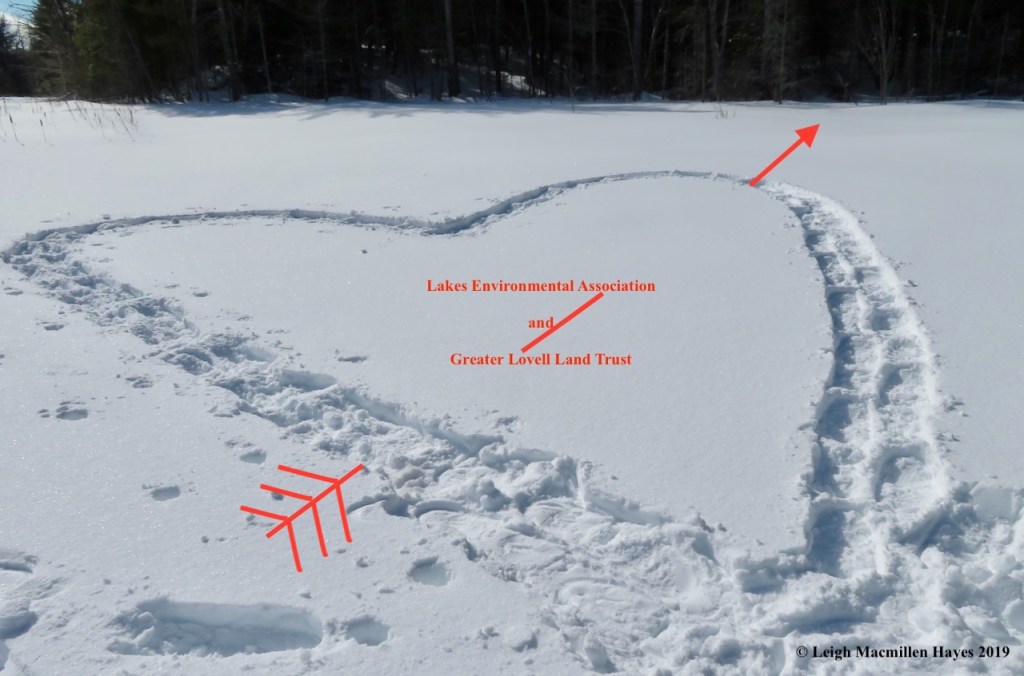
Alanna had gone out ahead of us and placed hearts with tree-related information along the trail we’d travel. Our crew was a delightful mix that included young and old, with members of LEA and the Greater Lovell Land Trust, which I was representing, as well as a woman from North Conway and man from Portland. Yes, Linda and Henri–that would be the two of you.
The first heart provided information about hemlock trees and after she read it, we encouraged everyone to channel their inner hemlock and so they leaned as this particular evergreen does. Check out those smiles. Don’t you want to be a hemlock too?
Of course, because we were among the trees on this property that the David and Carol Hancock Charitable Trust donated to LEA several years ago, and the snow was super soft from yesterday’s storm, the mammal tracks were outstanding.
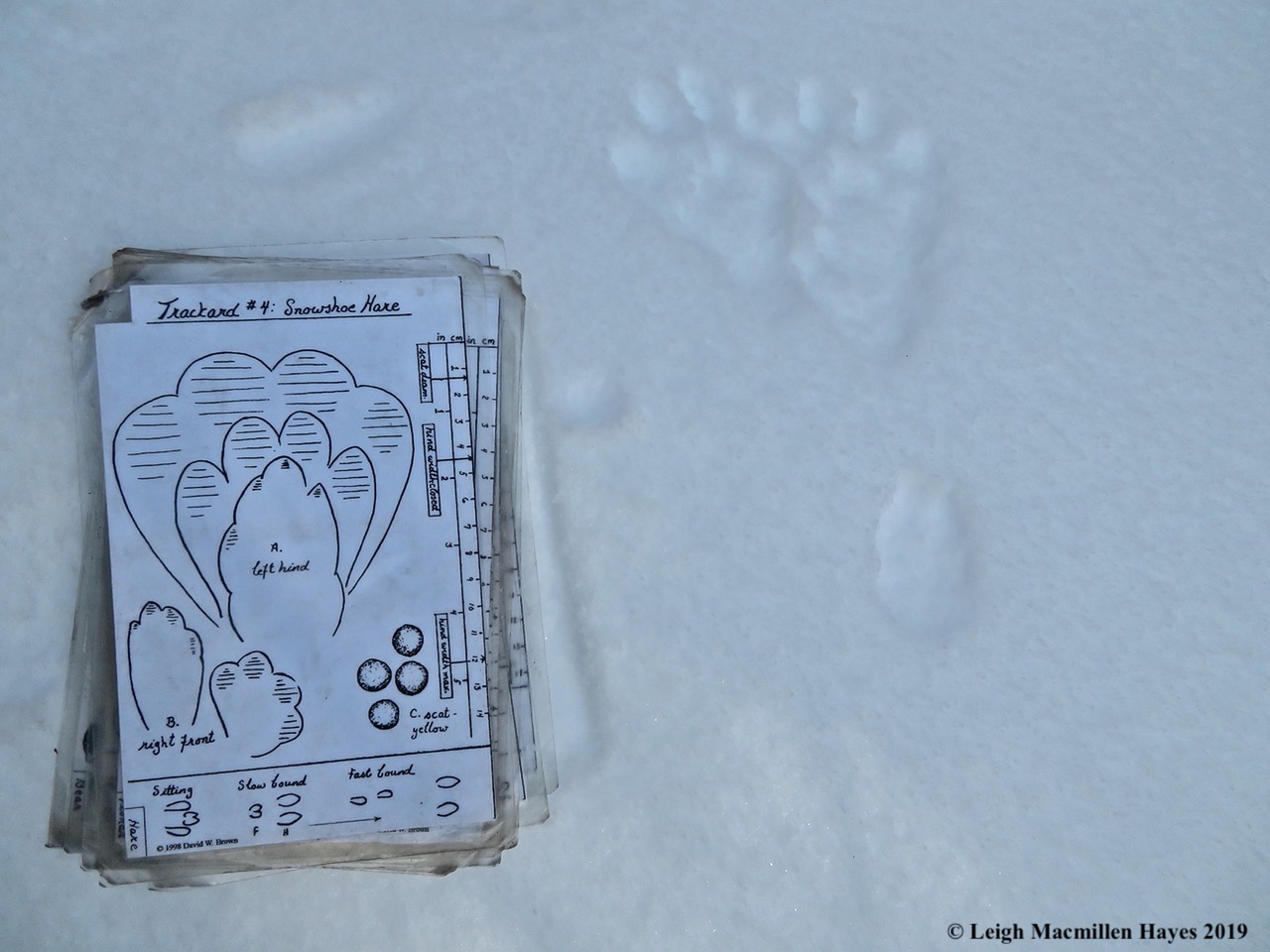
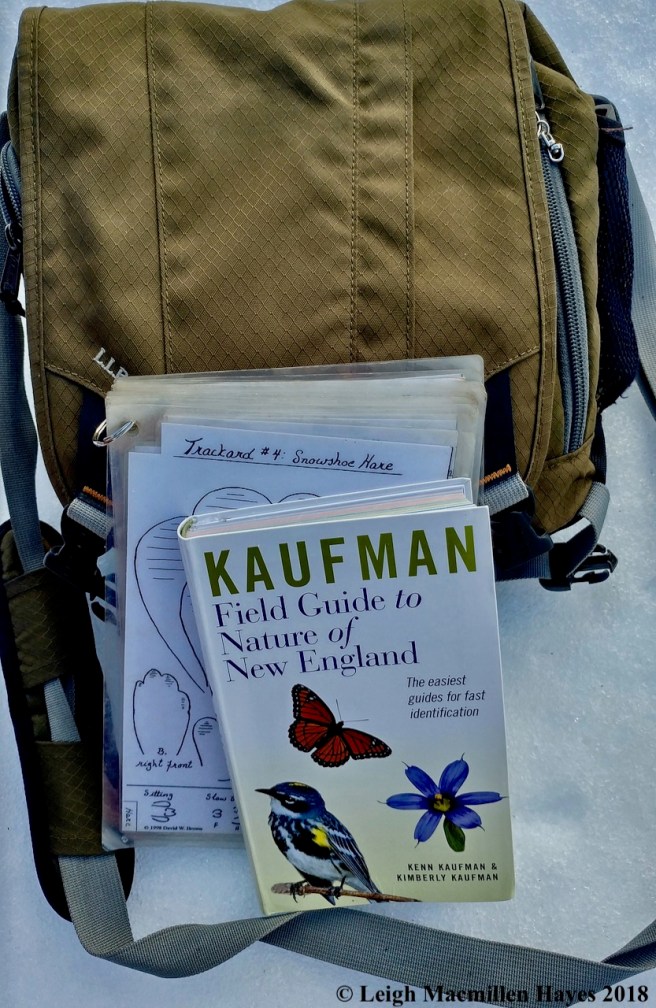
One of the favorites of the day–that of the snowshoe hare. It’s not often that one can see the hare’s toes so clearly, but today was the day. And as David Brown’s Trackards indicated, the footprint size depends upon the conditions.
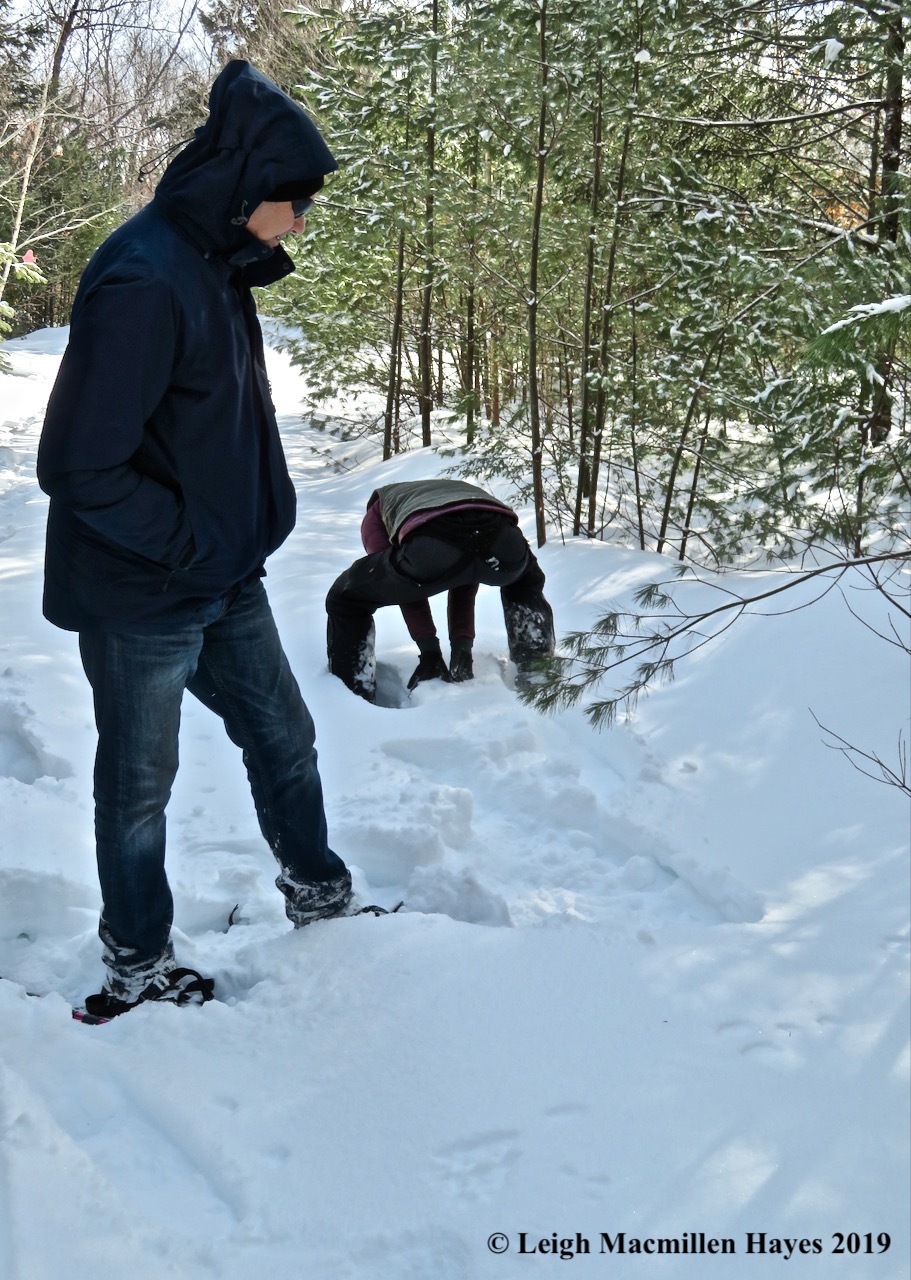
When it came to demonstrating and identifying the action of the mammal there were two rock stars among our group. Alanna was one for she got down on all fours and demonstrated how a hare moves (before she sorta fell). And Pam Marshall was the other for she correctly identified and shared information about how to recognize all of the track and print patterns that we saw. Pam only began tracking this year with the GLLT’s Tuesday Trackers, but she’s a quick study.
Onward we trekked, pausing whenever we saw a heart of red. And each time, Alanna’s voice came through in the message. Love at first bite! Indeed.
At a beech tree, we paused for a bit longer as we noted not only the twigs and buds that are beginning to swell, but also talked about how bear claw marks are most visible on them and how the beech scale insect has altered the once smooth look of the bark. The word marcescent, meaning withering but remaining attached to the stem, also entered the conversation.
After a bit of time, we emerged onto a wetland where only last week Alanna and a couple of people including one in our midst, Anne, had spotted a hole and lots of tracks and scat left behind by an otter. Today, no sign of that member of the weasel family, but still . . . we enjoyed the warmth of the sun.
And I took advantage of the time to dress Alanna as a twig. She was the perfect Miss Twiggy model and Henri took time to pose with her.
Back in the woods, we were stopped in our tracks by the tracks of another weasel–a mink.
And then as we retraced out steps and paused by a speckled alder to admire its male and female catkins and last year’s cones, someone honed in on something that wasn’t a remnant of yesterday’s snowstorm.
The cottony white masses of wooly alder aphids decorated a couple of branches. As Alanna explained, in a symbiotic relationship, during the warmer months, ants stroke the aphid with their antennae, while the aphid releases a drop of honeydew, much like a cow being milked. It’s actually rather creepy. Today, there were no ant farmers about, but a few like Justin, did step forward to take a closer look.
After that, we were confronted with a math problem. And you thought we were just out for a walk in the woods.
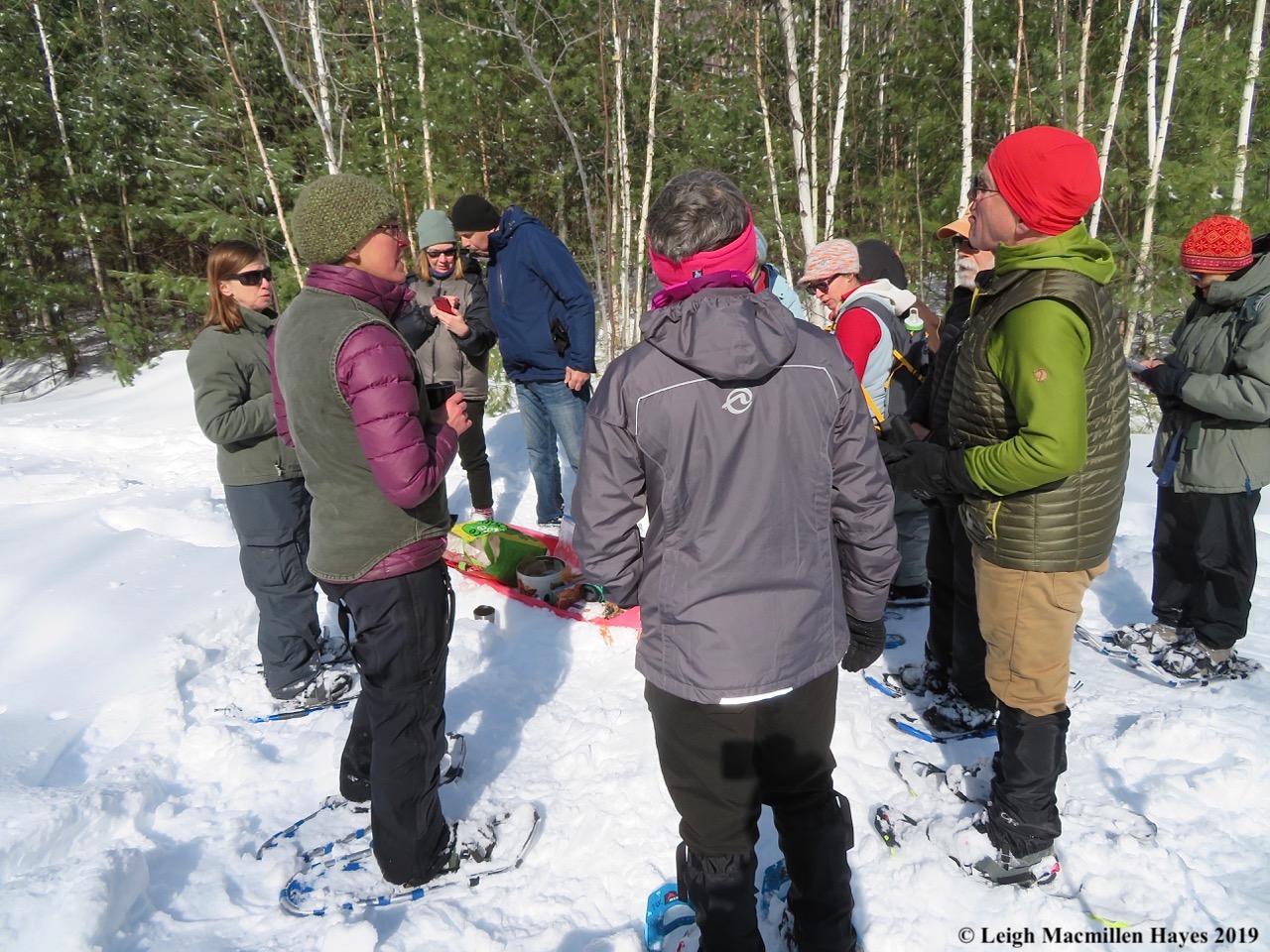
Finally, well sorta, we made our way back to an opening and stood around enjoying hot cocoa and tea, plus some goodies, and each others company.
Sherpa Anne had been kind enough to haul the supplies to the opening for us as our trek began. I know she was thankful she didn’t have to pull the sled all the way out to the wetland. And we were thankful for the good tidings it bore.
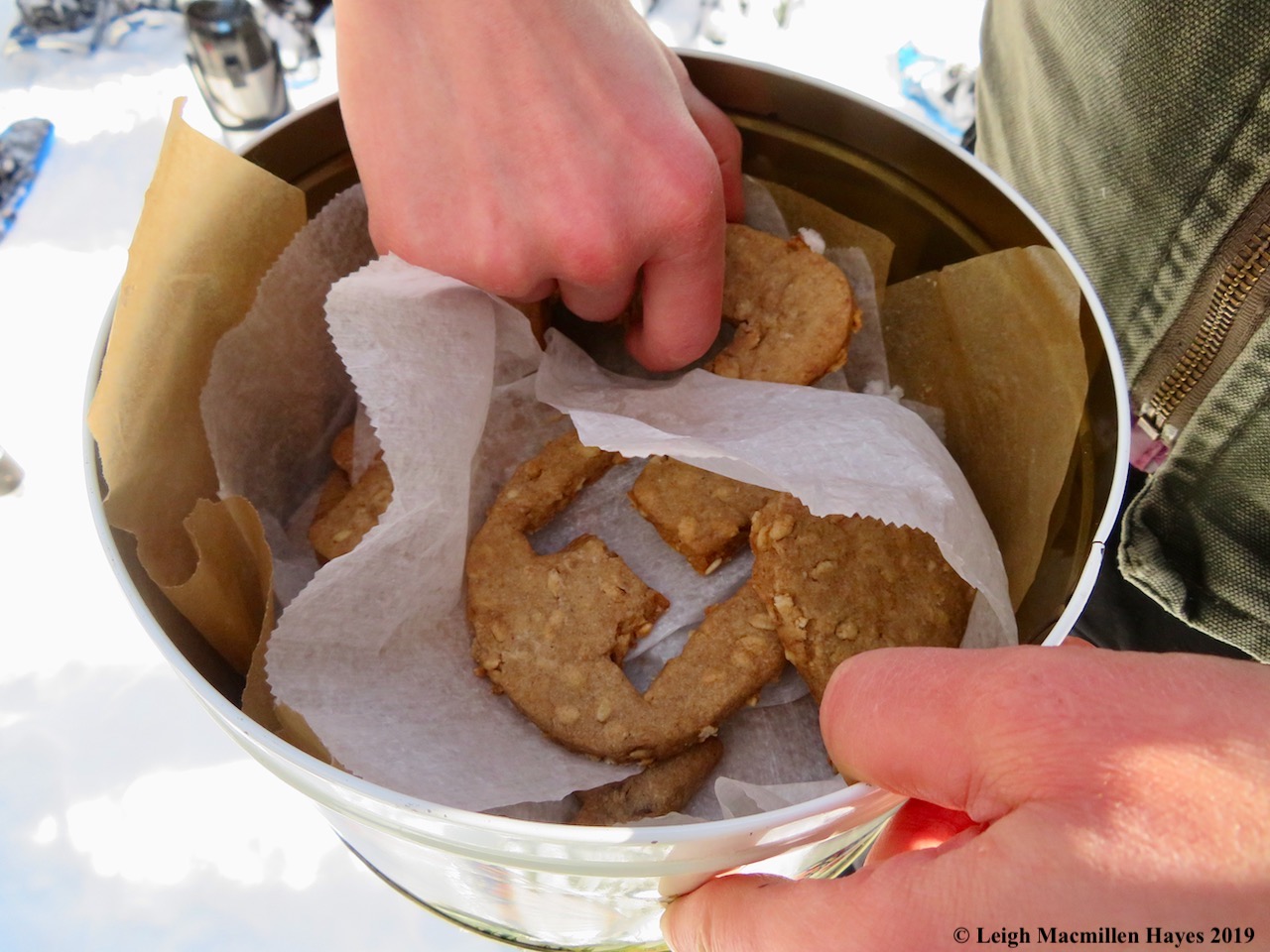
You see, Alanna is a woman of many, many talents, and baking is one of them.
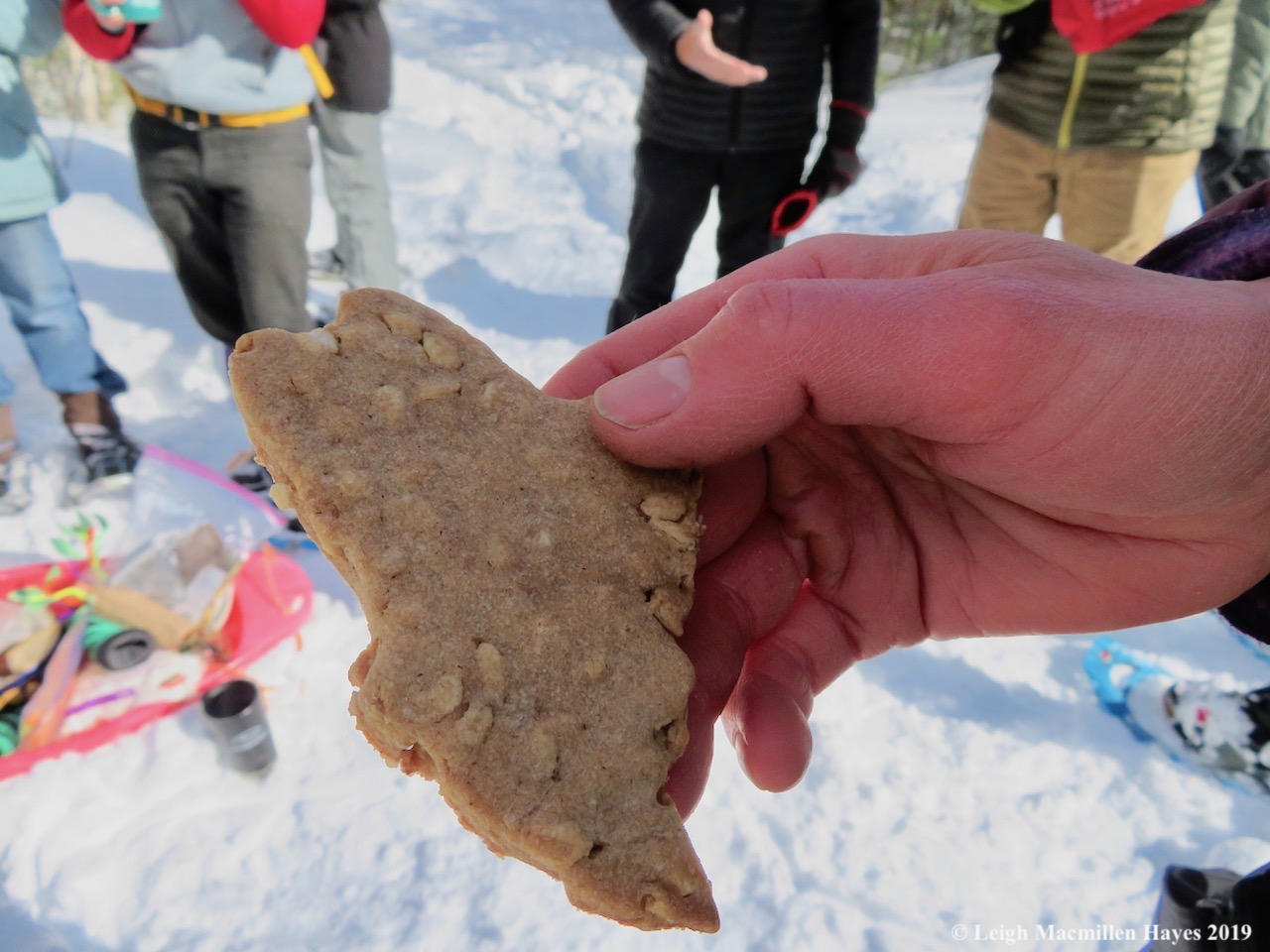
Did she get carried away with the cookie cutters?
We didn’t think so for we all love Maine.
And we also love trees, including red oaks with their bristly-tipped leaves and acorns.
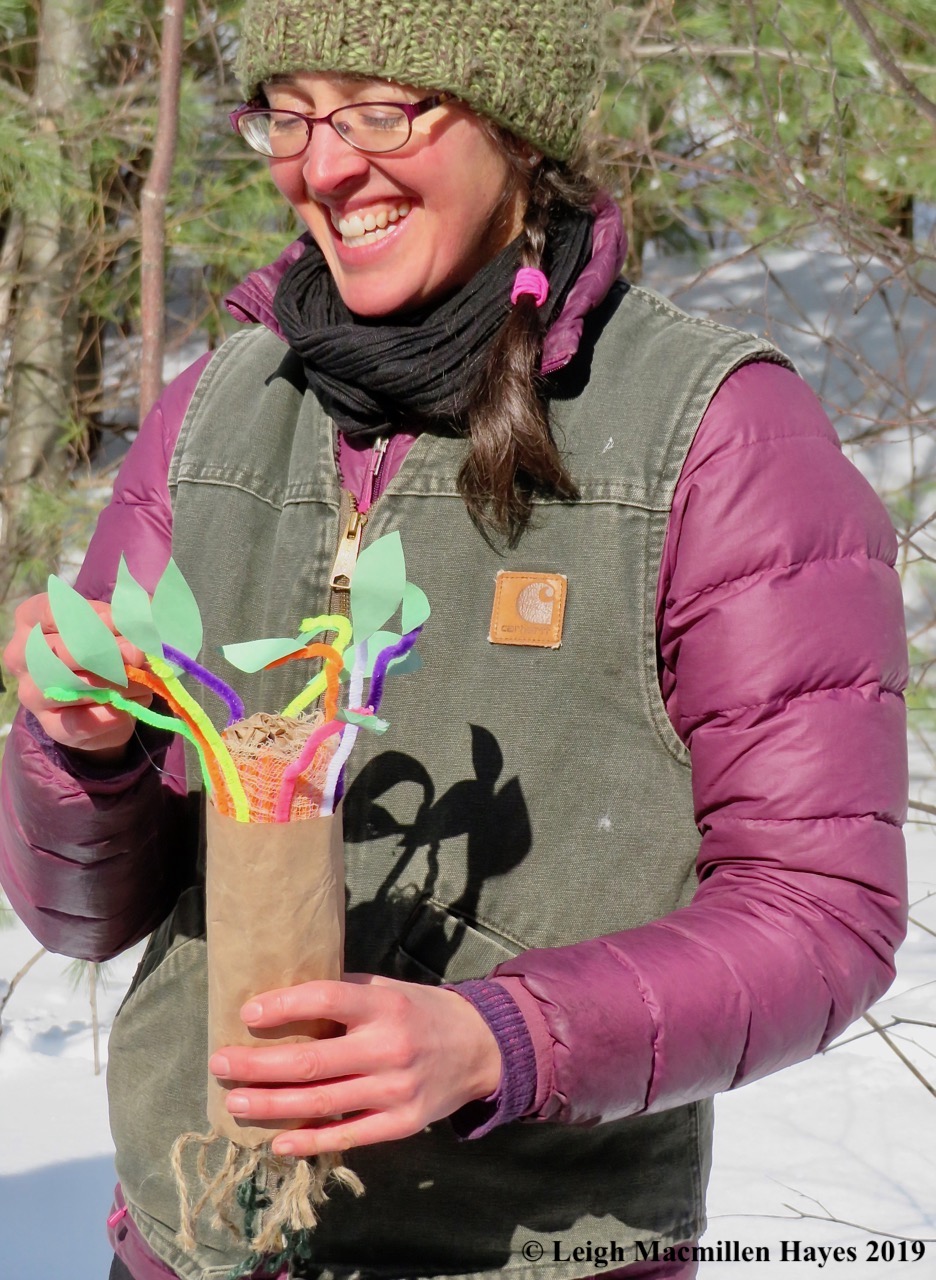
That wasn’t all Alanna had created.
Her tree model was to be envied (at least by me). And she explained the different functions, from roots to leaves and outer bark to inner workings.
And just in case you are interested, I’ve come up with a new mnemonic, because we love memory aids.
Xylem is the vascular tissue in plants that conducts water and dissolved nutrients upward from the root and also helps to form the woody element in the stem.
Phloem is the vascular tissue in plants that conducts sugars and other metabolic products downward from the leaves.
My mnemonic: Xy high (think upward); Phlo low (think downward).
Of course, that didn’t occur to me until several hours later.
Before we finished off our delightful morning, there was one last heart with tree information to read. Hmmm. Porcupines, bark, needles, scat, look up? “You might spot one dining!”
And so up we looked.
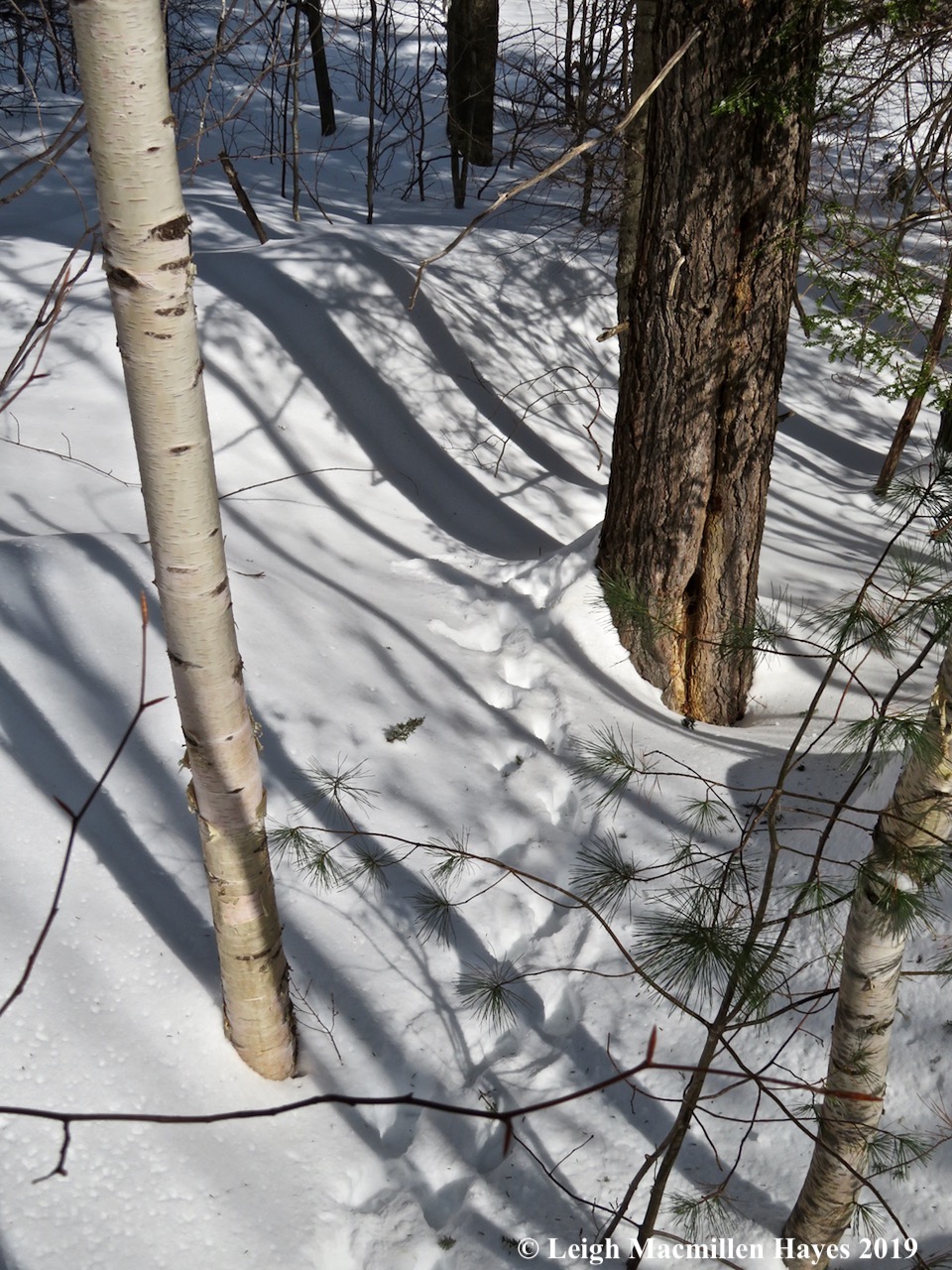
And down as well. We found some tracks and even took a closer look at some comma-shaped scat.
Because . . . the resident male was high up in the tree! Look at that handsome fella! We did. Over and over again. Henri was sure we had planted him and that he wasn’t real.
But he was. And if you look closely, you might see his orange teeth which one (like me) could almost mistake for a Valentine heart. Check out those toe nails. And can you see the rough soles of his feet, the better to grip the tree with?
Male porcupines are known to hang out on a tree during the day. I know we’re particularly thrilled about this one because he hasn’t let us down yet.
Think about this–while the male was hanging out in the sun, porcupines (like the one that lives under our barn) typically stay in their dens until dusk and then head off to munch on bark and needles in the darkest and coldest hours of a day. That’s to be admired.
So is the work of our two organizations, Lakes Environmental Association and the Greater Lovell Land Trust. Both of us are with the Trees and we loved sharing the trail together this day.
We’re doing the same again on Sunday at 12:30 in Lovell, where we’ll go on a Porcupine Prowl–will we actually see the rodent as we did today? Who knows, but we’ll have fun as we join together again to celebrate Great Maine Outdoor Week(end).
Midmorning found us driving down a lane in Stoneham, Maine, made extra narrow by high snowbanks. At the second entrance to the Greater Lovell Land Trust’sFive Kezars Reserve we were delighted to discover the driveway had been plowed just enough to allow a vehicle or two to park. And so we did.
Our initial plan had been to wear micro-spikes and carry snowshoes, but as we’d passed by the first entrance, we noted that no one had climbed the Mountain Trail, and the road leading back to it had been well sanded, so we left the spikes behind.
Walking back up the road was easy, but then . . . we had to conquer what was probably the most difficult part of the entire journey–the snowbank between the road and the trail.
Thankfully in northern New England, those who drive plow trucks know to knock the snow back a day or so after a storm, thus leaving room for the next storm. (In this case, there’s one on the horizon for tomorrow night with another 8-12 inches predicted). The result is a shelf that makes the snowbank easier to climb up and over.
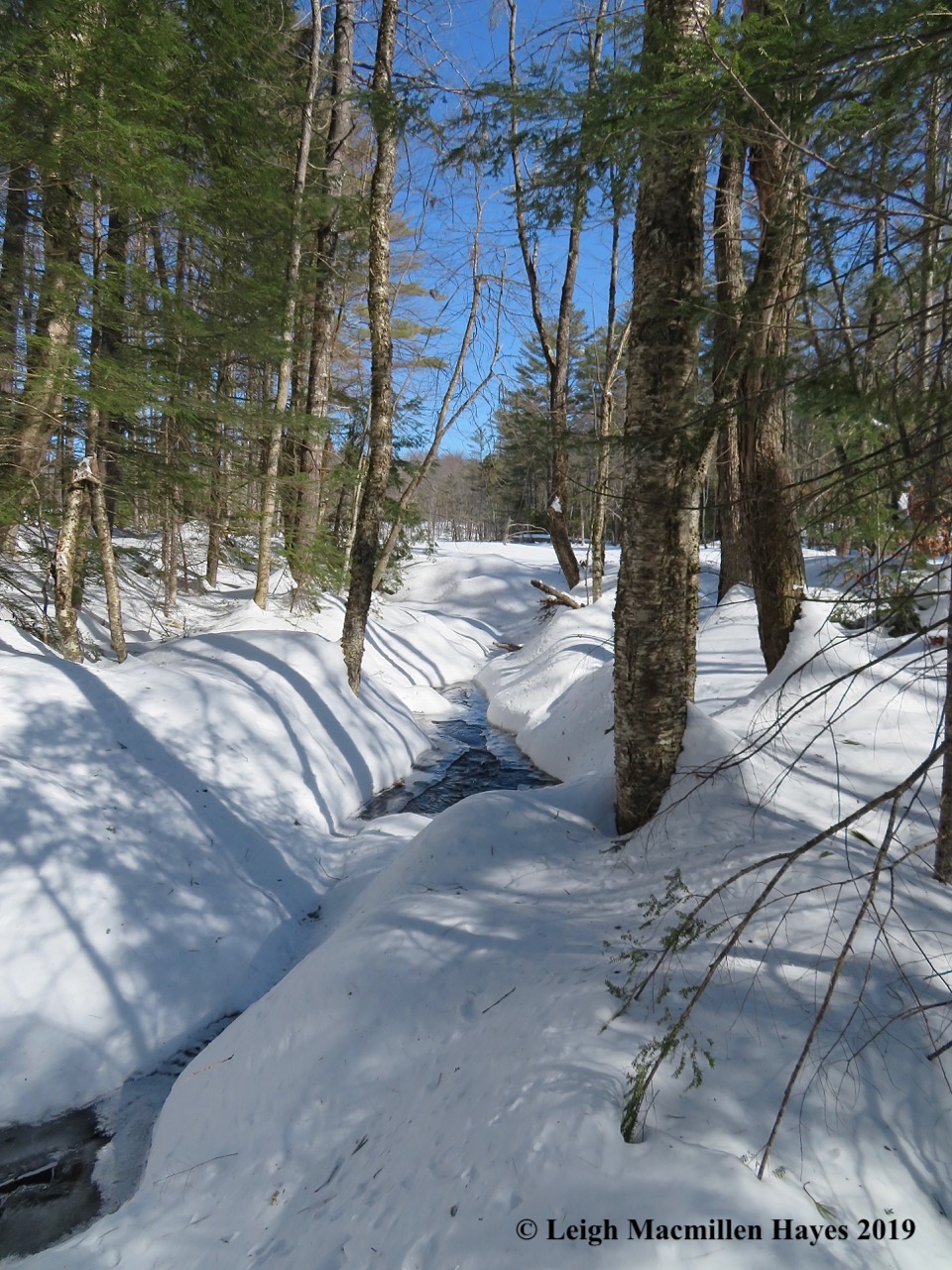
We did just that with the utmost grace in our steps.
Once on the other side, where the sign gave an indication of depth, we donned our outer footwear.
And walked up to the kiosk where we stood eye to eye with the roof rather than the map.
We did study if for a moment as my guy had not been on the new spur trail overlooking all five of the Five Kezars.
The trails are incredibly well blazed and blow down wasn’t much given the winds of winter, but . . . we did note one small beech that had fallen off trail and taken the signs with it.
A little further up we found another sign encouraging us to climb even higher–as in skyward. Perhaps it knew something we didn’t know.
For the first half of the trail, we mainly focused on our feet, making sure that the cleats on our snowshoes dug into the slippery surface.
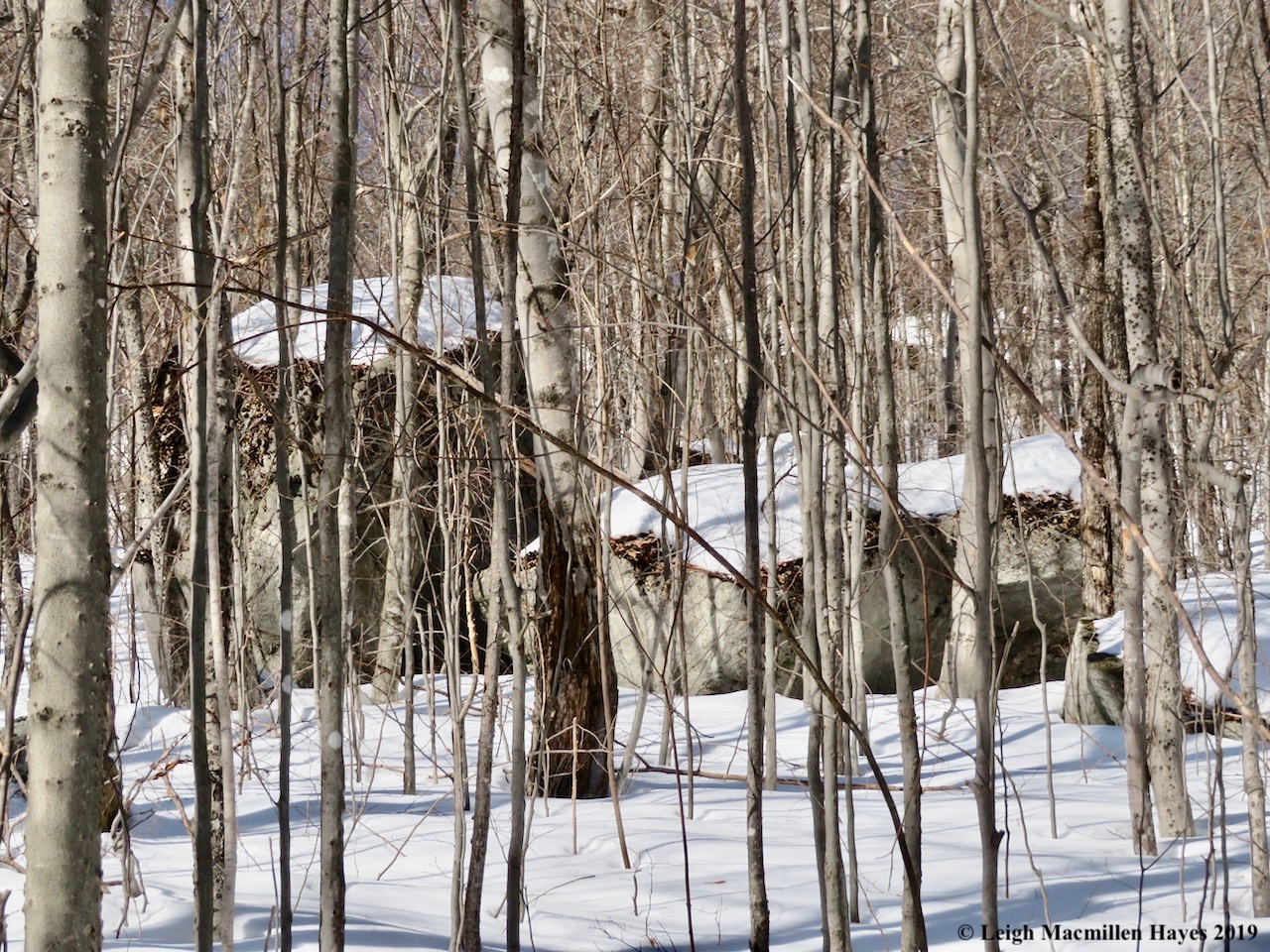
Once the trail leveled off, we started looking around. And being winter with no leaves to distract one’s view, the snow-topped boulders stood out like tiny homes in the woods.
About halfway up the Mountain Trail, where it turns left and joins an old jeep road to the summit, a new path was carved last summer–Tom’s Path so named for the late Tom Henderson, who had long served as the land trust’s executive director.
My guy had walked about on the ledges there with me on previous excursions, but this was his first time actually following the new trail and so he studied the “You Are Here” spot on the map.
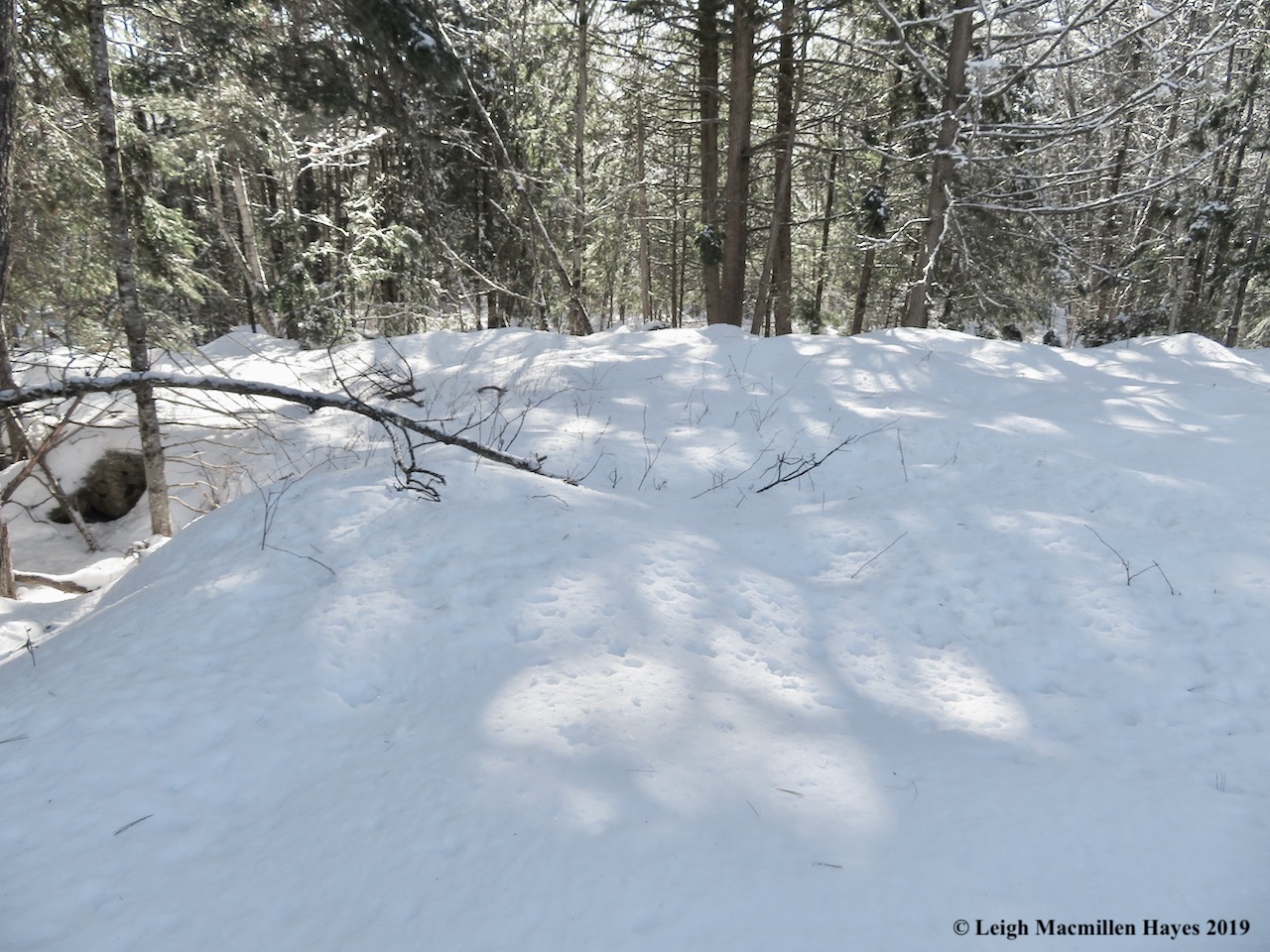
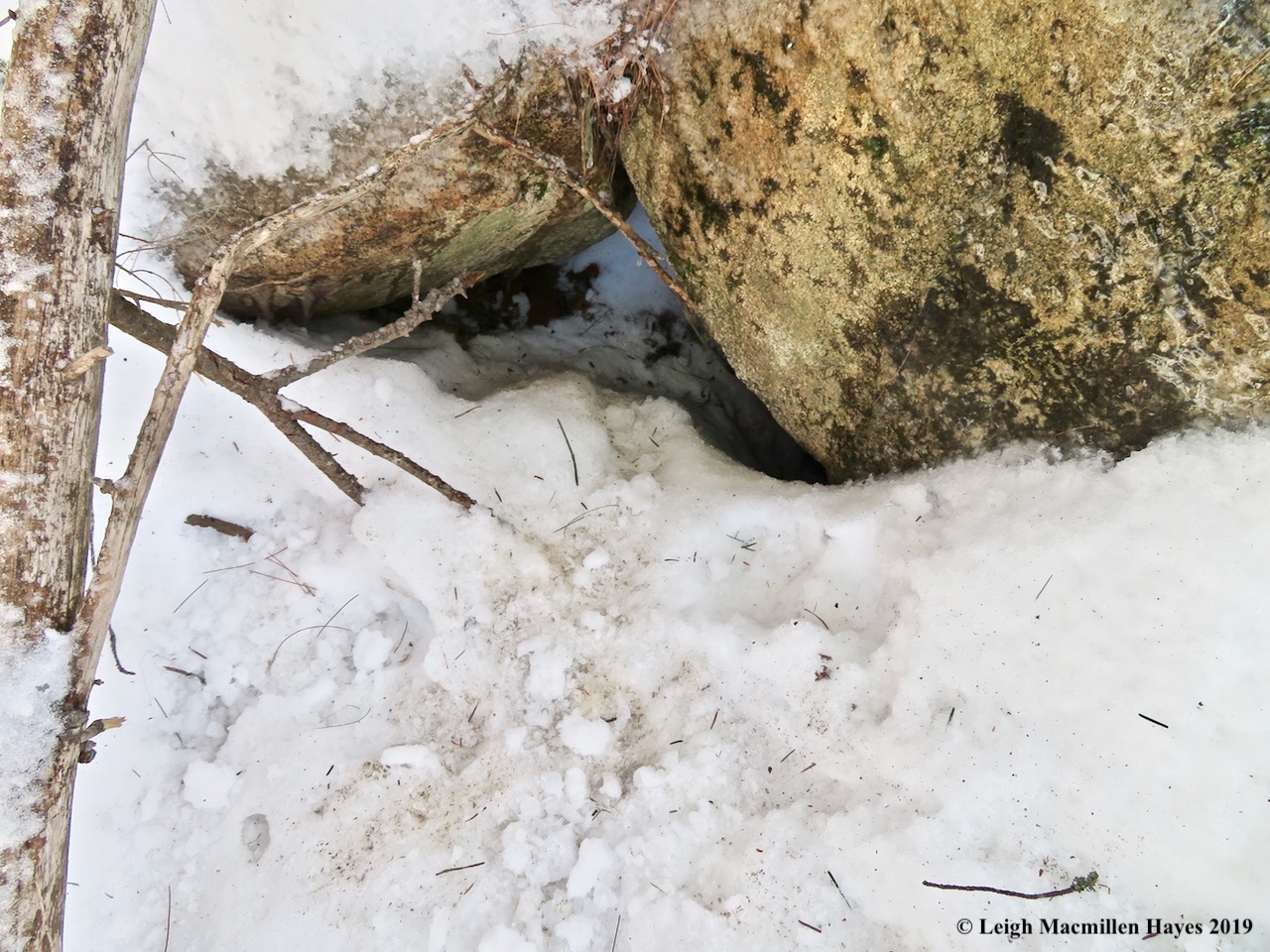
Along the way, I wanted to pause just before the trail turned left for I had a suspicion about the area below the rock. My suspicion proved correct; a porcupine had created a den under the ledge.
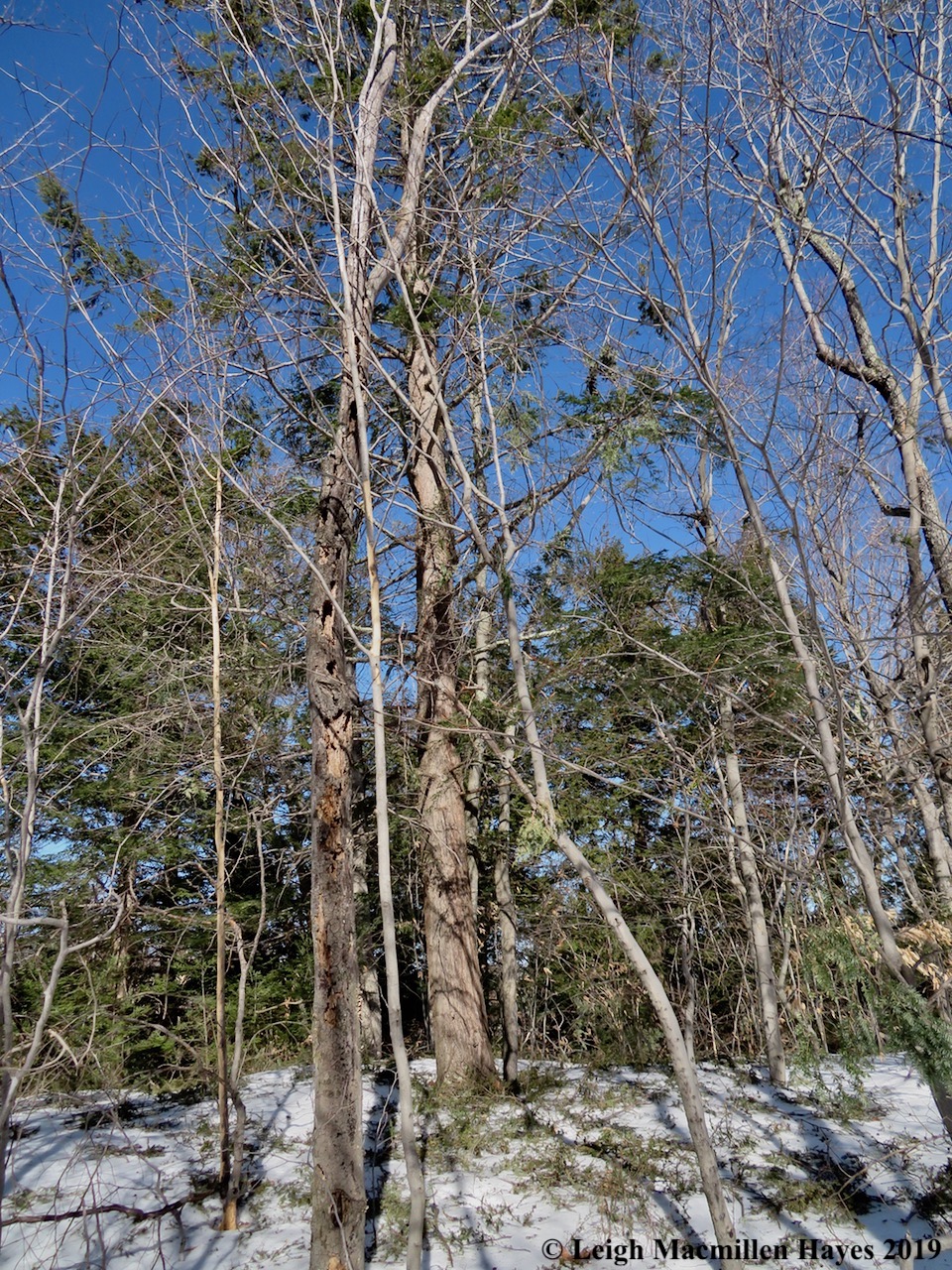
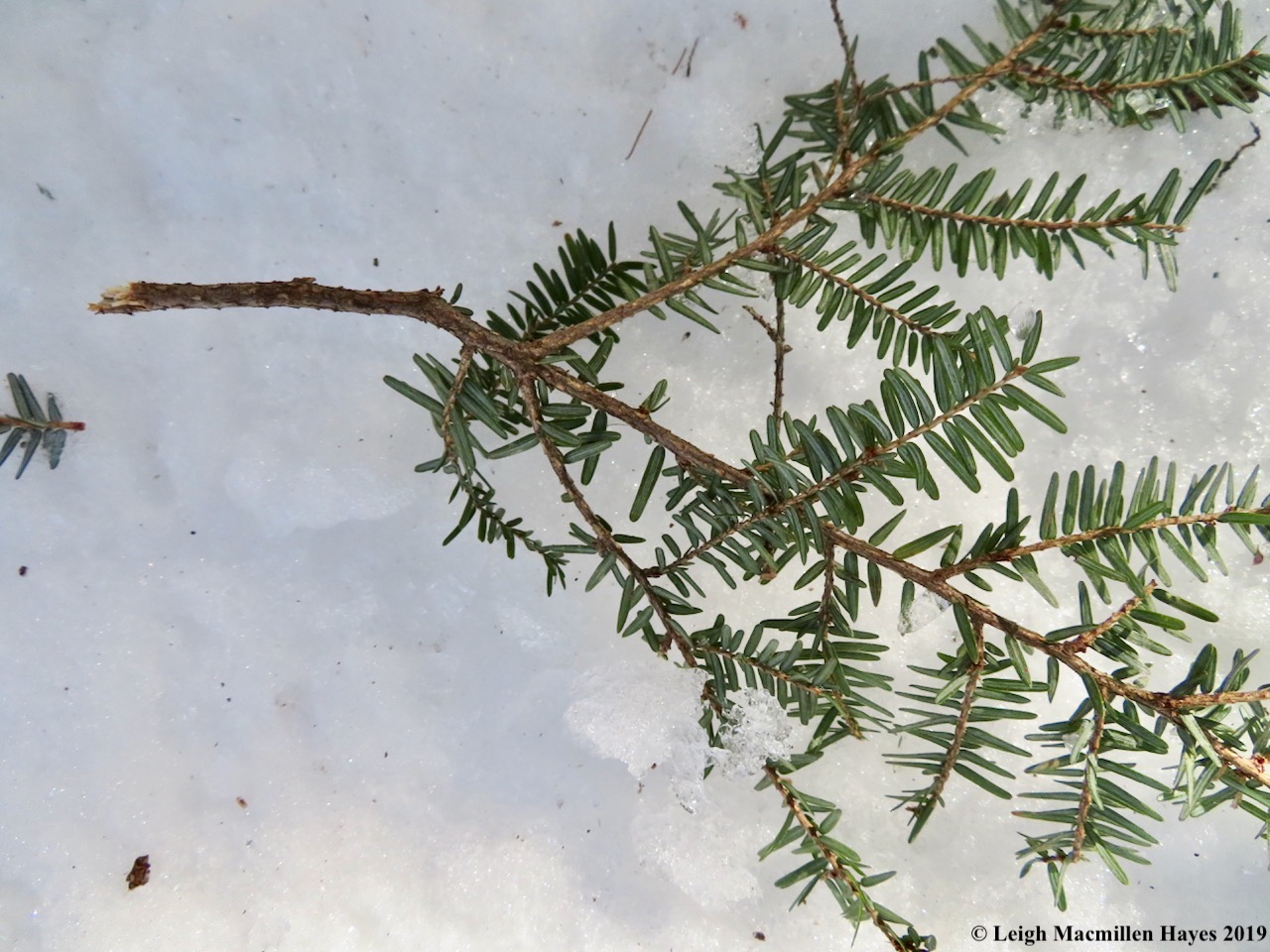
That was further verified by the downed hemlock twigs.
A bit further up the trail we found even more evidence of porcupine activity for many of the trees showed off the tooth scrape marks left behind as the critter sought the cambium layer below the bark.
Recently I saw bark under a porcupine tree that confused me for I’ve always thought of them as eating the bark completely and leaving no mess–unlike a beaver. But today’s findings indicated that all had been consumed.
Behind all of the porcupine artwork trees stood another much larger that will probably be naked by spring.
The debris was the typical–nipped twigs cut at an angle . . .
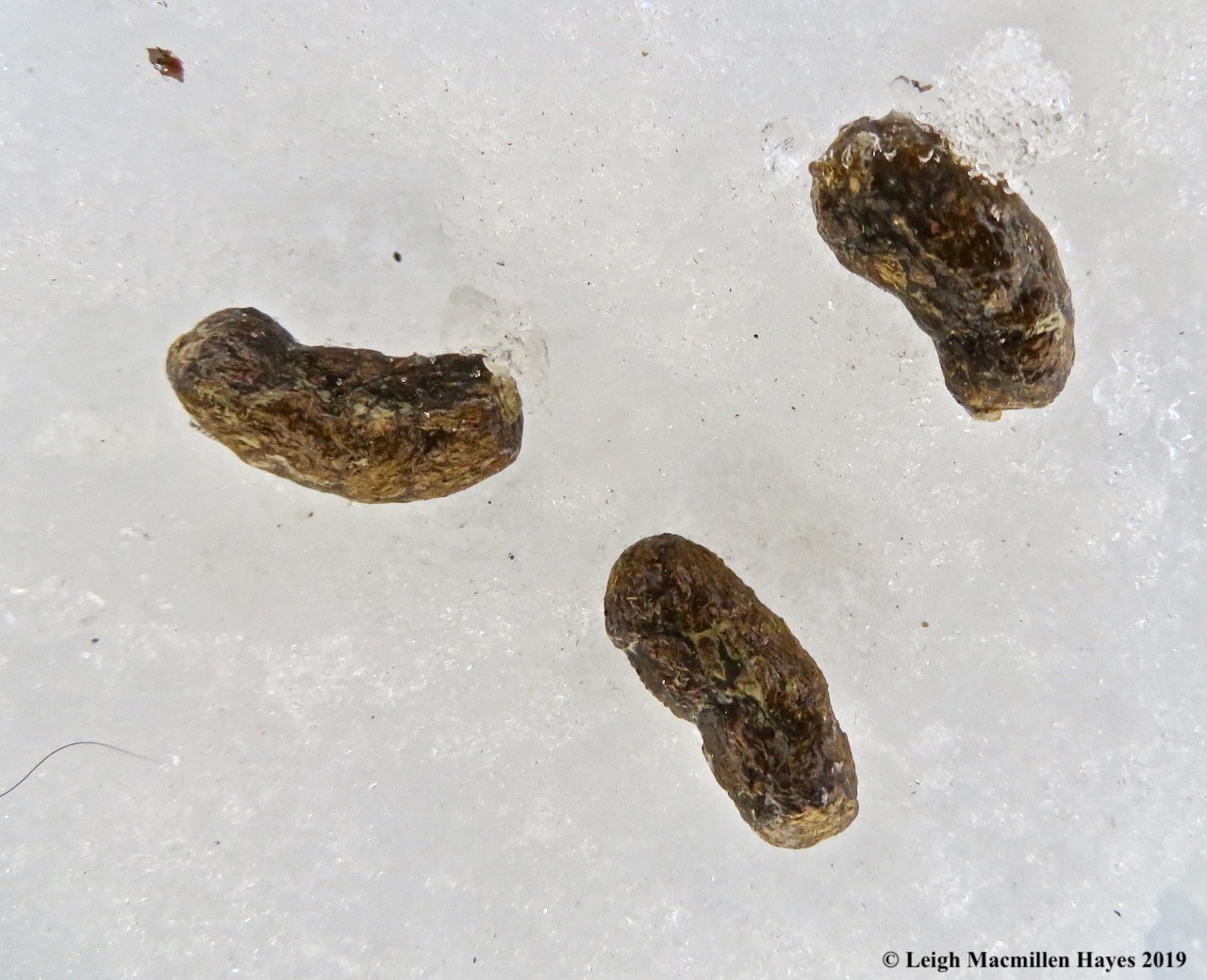
and plenty of healthy looking scat. ;-)
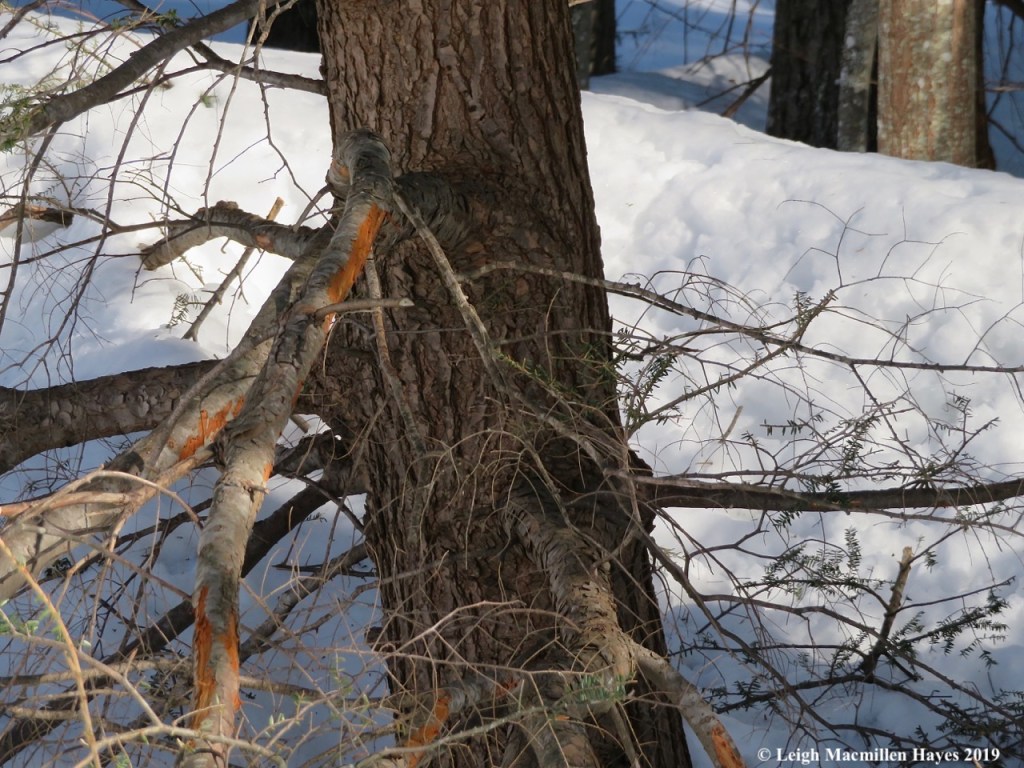
The bark on the big old hemlock, however, had flaked off revealing its cinnamon color beneath for the porcupine had created a regular climbing route.
From below, I looked up in hopes of seeing the rodent, but realized all the evidence had to be enough. I did wonder–Tom always said he wanted to return as an otter, but just maybe he’s a porcupine right now. He was a forester, after all, and loved anything tree related.
A few minutes beyond the porcupine area we found our way to the termination of the spur and took in the view of four of the Five Kezars below: Little Mud, Mud, Middle and Back.
Being winter, a few more steps to the left revealed the fifth of the Five: Jewett.
Retracing our steps, we returned to the Mountain Trail and followed it to the summit where lunch rock had been graciously cleared . . . just for us.
There was no wind and the sun felt delightful–so we sat for a bit taking in the view of the ponds below and Pleasant Mountain with Shawnee Peak Ski Area in the distance.
When we finally decided to move on, we first stepped out to the north so we could get a glimpse of Mount Washington in the backdrop.
And then we pulled it in with a telephoto lens.
Following the orange connector trail down, we began to notice more mammal activity. We’d left the porcupines behind, but the snowshoe hare always seem to dine in one particular location.
And scat ;-)
We also noticed bobcat tracks like these, muted though they were, crossing over the trail, while we followed coyote tracks down the trail.
And twice we encountered engravings in the snow that at first glimpse we thought were wing marks, but changed our story to one of the predators playing with a prey as it dangled from the mouth. Hmmm.
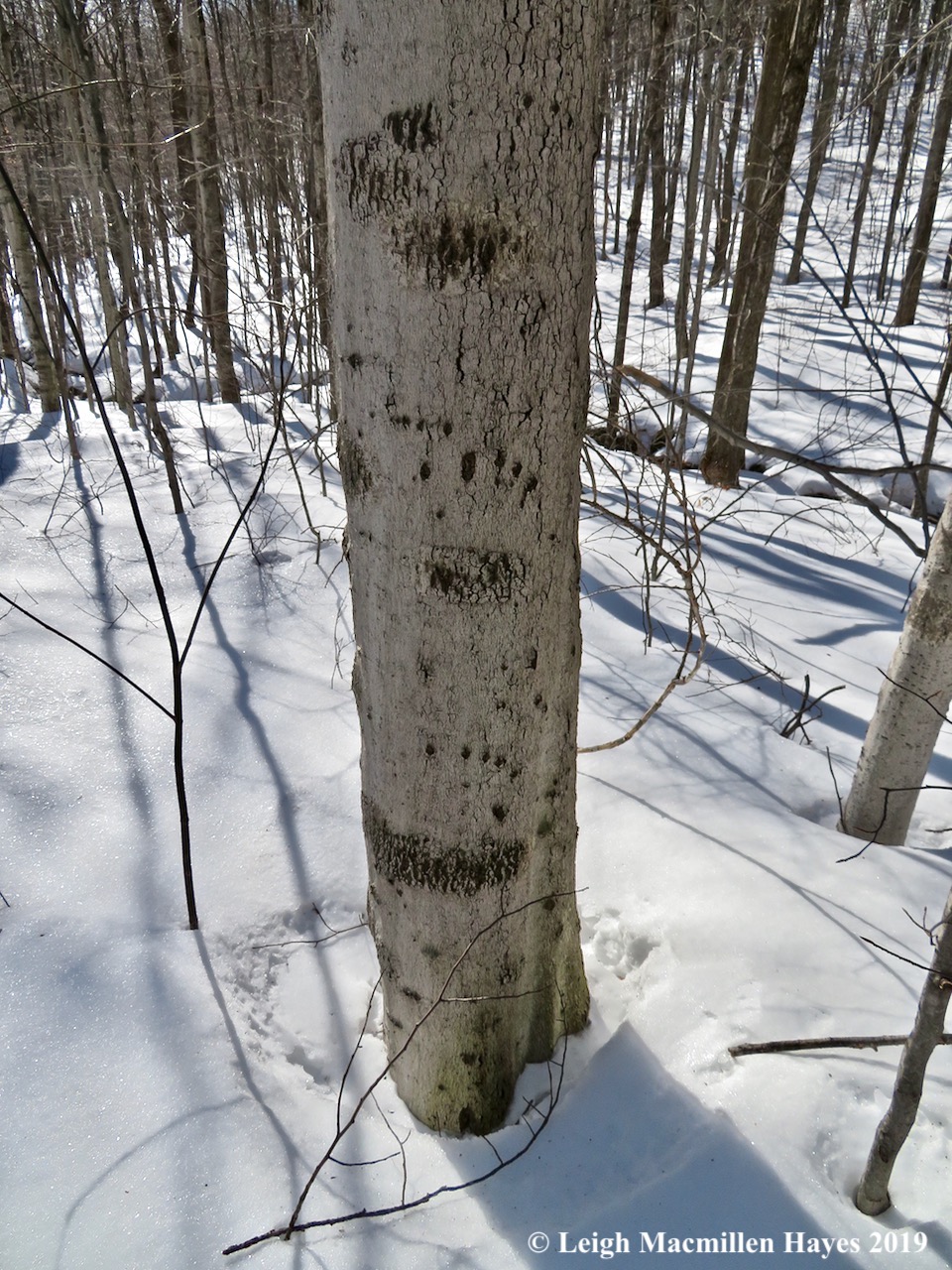
Continuing down, we constantly looked up–at beech trees for we knew many revealed bear claw marks. Sometimes we had to look extra closely because the cankers on the tree hid the possibilities.
Though this wasn’t part of the Christmas present to my guy in the form of Bear to Beer Possibilities, it could have been a contender.
Our eyes scanned many a tree and we know we missed a bunch today, but we’ll save those for another day. I did think about returning and creating waypoints to mark each one on GPS, but then we wouldn’t have the fun of looking.
And because we were doing such, we found a new one today. Chances are the next time we look, it will be new to us all over again–if you know what I mean.
One other tree also drew my attention. Well, really, they all did. But yesterday I was explaining this very pattern to some folks on a guided walk, and wish I’d had such an example: target fungus on red maple. Indeed!
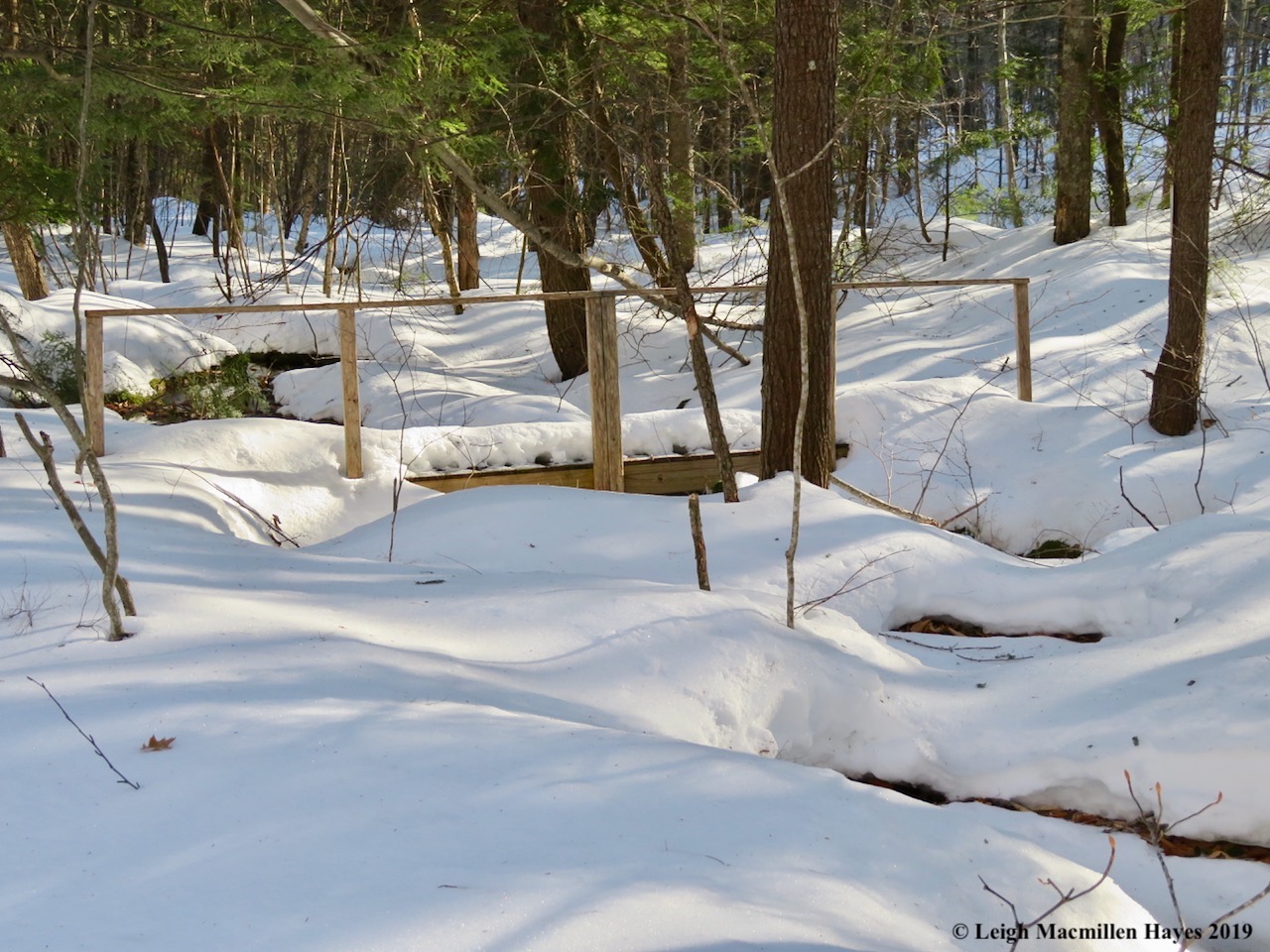
Eventually we reached the bridge crossing at Ron’s Loop, so named for Ron Gestwicki who was the first president of the Five Kezars Watershed Association and driving force behind creating this reserve that we could enjoy upon occasion, but the mammals know best.
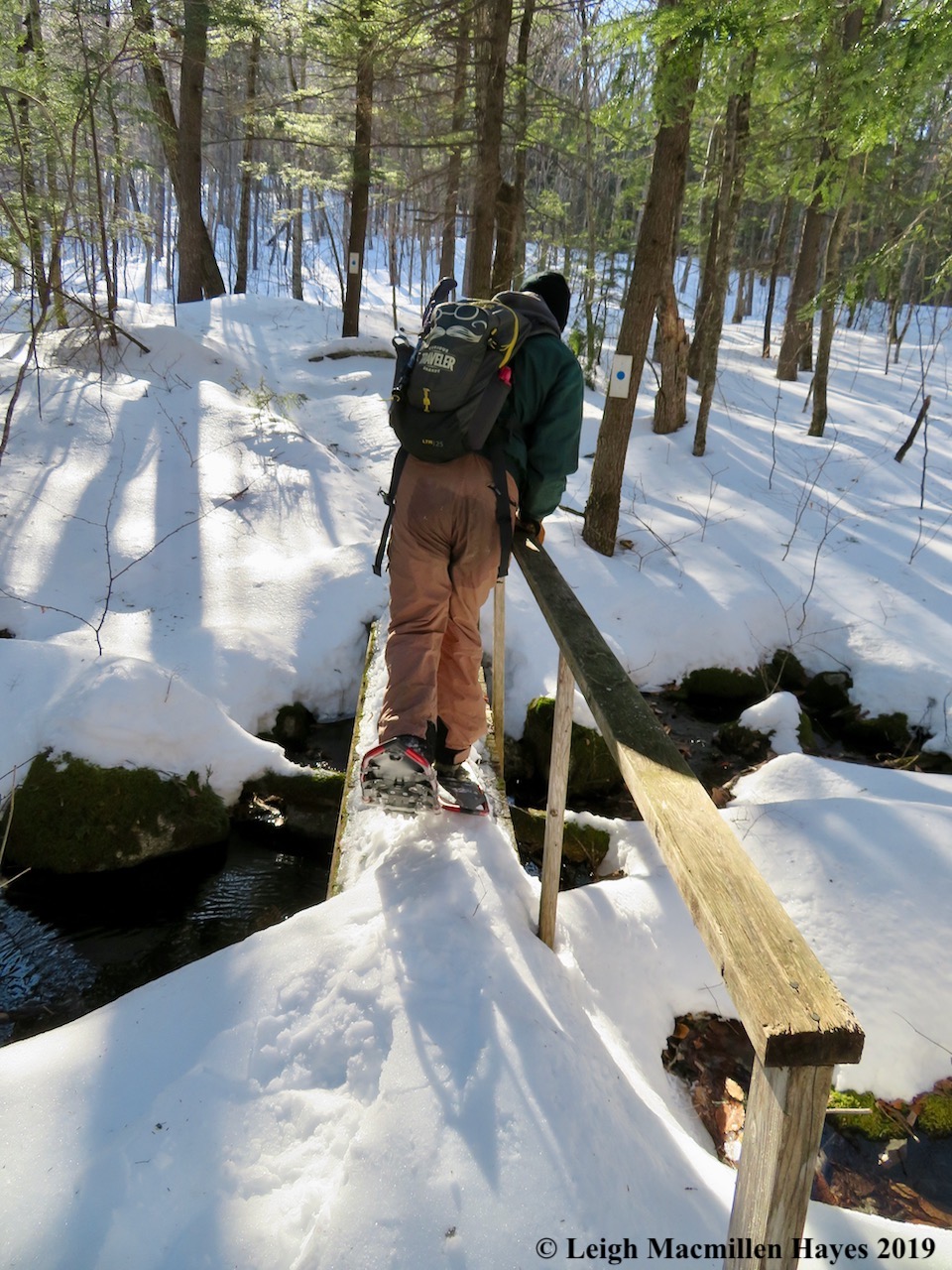
While my guy sashayed straight across the bridge, I chose to go forth in a sideways pattern. In the middle, I remembered once slipping down under the rail, but thankfully today I reached the other side without incident.
The mammal activity continued along the half of the loop that we traveled. Other travelers included the coyote that left its mark on a high spot in the middle of the trail and several more crossings by the bobcat.
I was hoping for an otter slide because sometimes we are so blessed, but instead we found a few tracks of fisher passing through, their five tear-drop shaped toes on display.
Though we’d spent several hours on the trail, it seemed we reached the final bridge crossing in no time and my guy performed a chivalrous act of stomping down the snow to make for an easy crossing.
The water below offered a hint of every season as it flowed forth: summer’s blue sky, autumn’s dried leaves, winter’s clear ice, and spring’s fresh greens.
As we passed by the kiosk for Ron’s Loop on the way back to my truck, we gave thanks to the two men for which the trails were named: Tom Henderson and Ron Gestwicki. We were grateful for their leadership and the opportunity to continue to share the trail with them, especially on our Monday Date or Mondate.
While the ground hog won’t see his shadow in Maine tomorrow because he’s a true hibernator, his rodent cousin the porcupine may have to serve as a stand in. And ’round these parts, there are plenty of stand ins available.
A couple of friends and I searched for one today. We had barely begun tramping when we recognized its telltale sign of discolored snow.
Truth be told, we knew the porcupine lived there, but weren’t sure how this past week’s snow storm had affected it. And so we journeyed closer to take a better look. The hole is actually an old bank burrow that had once belonged to a beaver. Porcupines are known to take advantage of such if it’s high and dry.
One of the things that always grabs my attention is the action of the animal as evidenced by its means of entry and departure. Standing there, I could envision it emerging from the hole, using its long claws to get a grip, turning to the left and then swaying to the right. The waddling motion of its hair and quill covered body adds a dimension to the story for if you look carefully you’ll see the wavy impression left behind.
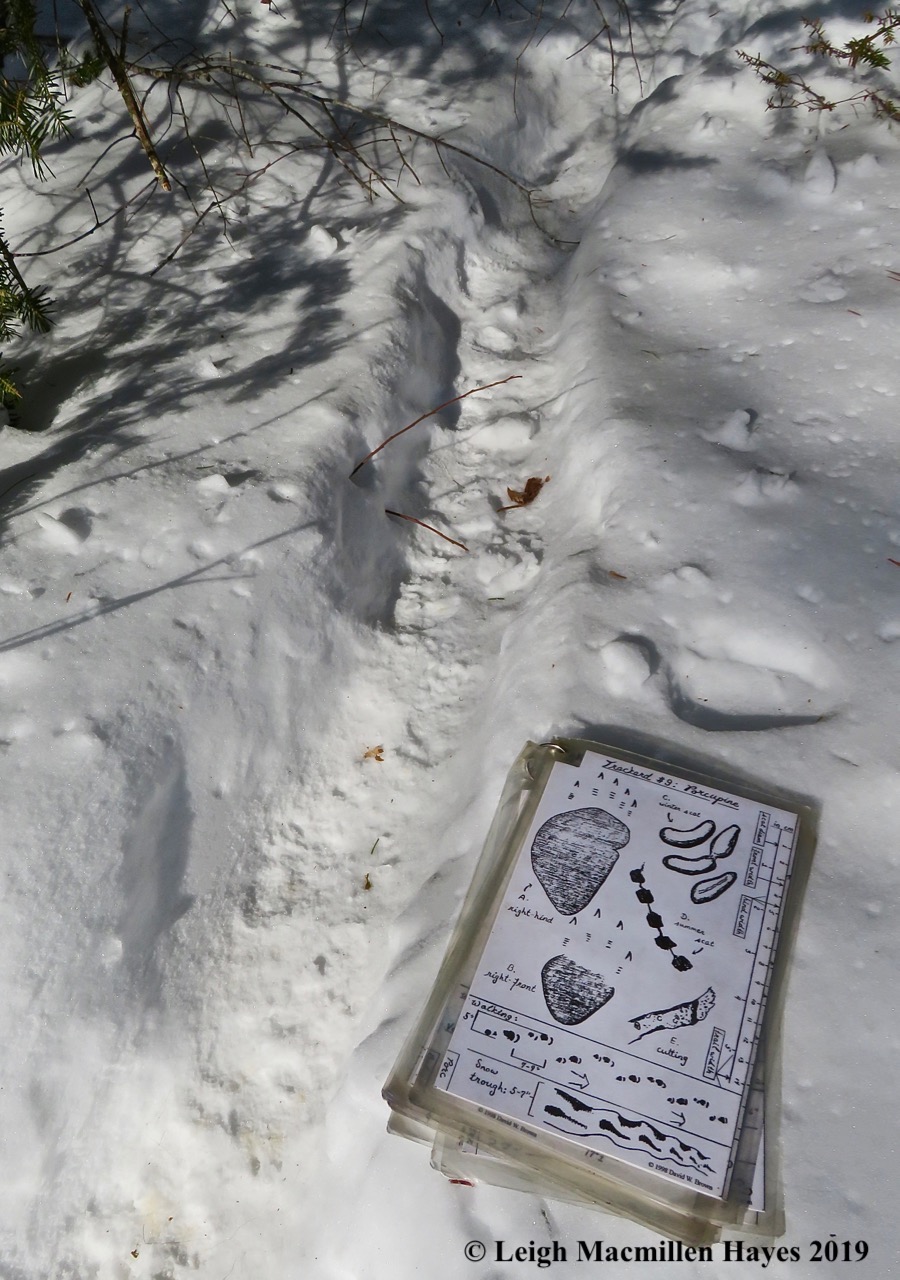
Because its a frequent traveler from den to preferred trees, the entire body, that weighs anywhere from seven to forty pounds, can form quite a trough. Typically the trough is up to nine inches wide in the snow. Within those we saw today, recently cast prints showed the bumpy bottom surface of the foot pad and the five nail marks that extended across the front.
The mammal’s identification was further enhanced by other evidence–quills. The hollow structures were tipped with black barbs. Paul Rezendes, in his book Tracking and the Art of Seeing, states that “the porcupine’s scientific name [Erethizon dorsatum] can be loosely translated as ‘the animal with the irritating back.'” Indeed, many domesticate dogs and their owners would agree with that description.
Because we were on our hands and knees looking, we also noticed soft, wavy hair on the snow. A porcupine’s body is covered with at least 30,000 quills on its back, shoulders and the upper surface of its tail, but it’s not only those large stiff hairs that complete the animal’s coat. Their fur also includes fine hair found on the face, belly, and insides of its legs. In deep snow it’s easy to find the delicate hairs within the trough. Oh, and do you see the little yellow birch seed that looks like a teeny, tiny, brown insect?
We followed one of several troughs that led from the hole and kept looking up into the hemlocks in search of the critter. We never saw it, but we did see some recently nipped branches dangling from above.
Our search led us to a second hole that we’ve watched transform over the last couple of months. And again, we could see the action of the animal as portrayed in its journey.
We wondered about the tunnel from the wider opening in the woods to the smaller opening at the brook bank. Though both had seen recent action, we didn’t see any major amount of scat, which was a surprise. Then again, we didn’t climb in and search further. Perhaps it had moved toward the center of the tunnel during the storm.
Another sign of porcupine’s activity was the dribble of urine that marked the trail. That made me realize that I often refer to them as the pigpens of the woods for they scat and urinate with abandon, but . . . all mammals pee, some with more purpose than others.
We followed the porcupine’s pathways for a bit and noted that they led to the nearby hemlocks and beyond.
But as often happens, we were distracted and stepped back out onto the brook where we followed deer tracks for a while.
Eventually, our curiosity about the porcupine gave us a reason to get out of the wind and we headed back into the woods, where we soon discovered another one of its trails. Curiously, the porky had ventured out toward the frozen, snow-covered brook, but turned and retraced its steps. Why?
Perhaps it smelled a coyote in the area. A porcupine has poor eyesight, but an excellent sense of smell. And coyotes will go after a porcupine, but they prefers other food sources. Fishers are the porcupines least favorite predator. A fisher will grab the porcupine by the nose. Once it dies, the fisher will flip it and expose the stomach. Remember that the stomach is covered with that soft wavy hair–and therefore unprotected.
The coyote didn’t appear to go near the porcupine. Our porcupine study, however, led us to what was probably a bear bait barrel. With no bears to worry about at this time of year, the barrel had been repurposed as evidenced by the tracks that led into and out of it.
And the pile of comma-shaped scat within. Was this where our porcupine weathered out the latest storm? It certainly got me thinking about those two holes to the beaver burrow and how the porcupine must have had to plow the snow out with its body. The barrel was a much better choice. And with the scat as an insulator, what a great place to wait out a winter storm.
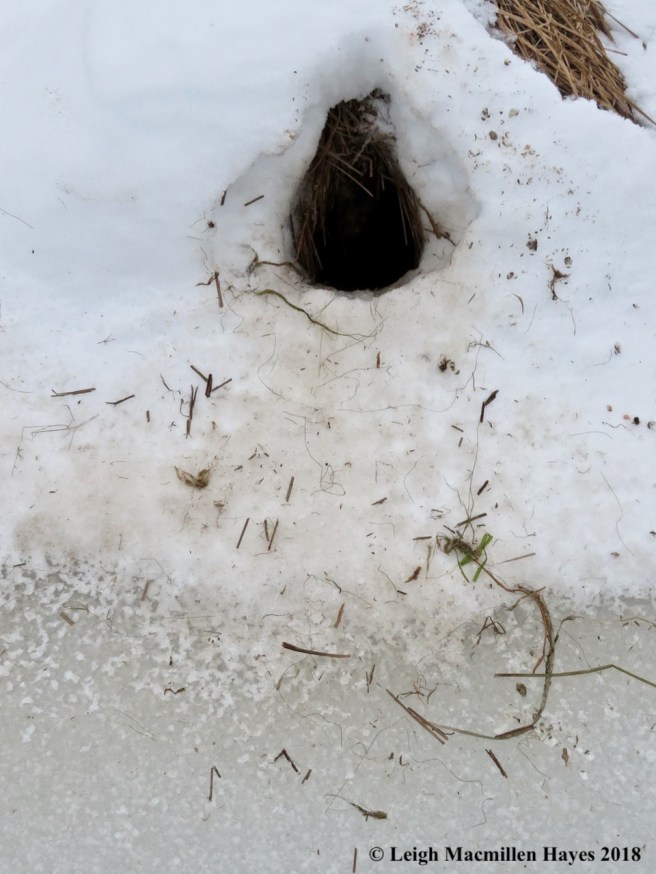
Not far away, but perhaps with more luxurious digs, either a mate, or relative had apparently set up home under a barn.
While the porcupine by the brook traveled between an underground tunnel and a barrel buried in the snow, the one up the road preferred the high road. Wouldn’t you like to be there to witness its journey? I know I would.
Porcupine: down low, up high–worth a wandering wonder.
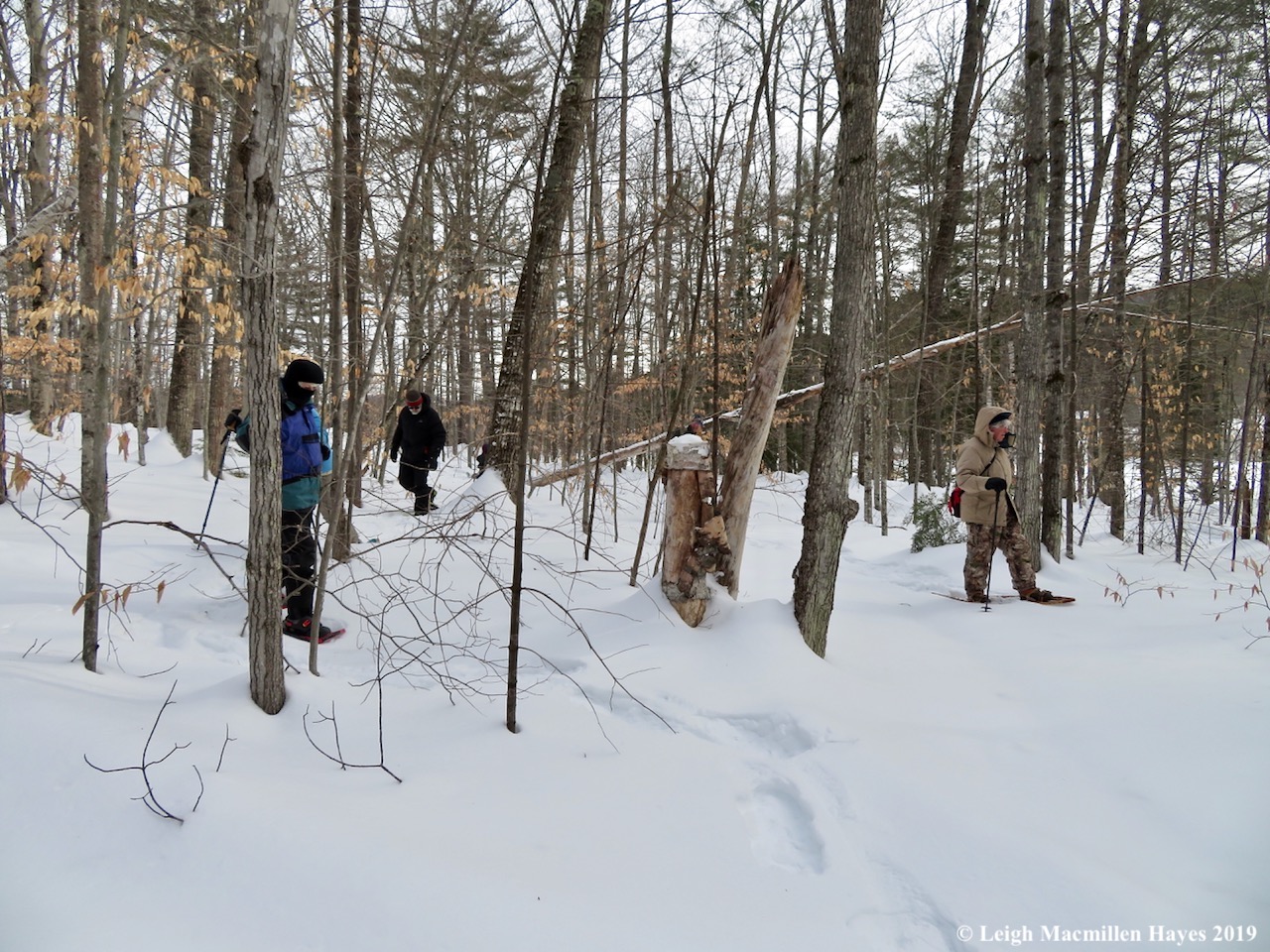
When we gathered at the Greater Lovell Land Trust’s Fairburn parking lot on Slab City Road at 9:30 this morning, the thermometer registered 4˚. But the good news–no wind. And . . . the six Tuesday Trackers who decided to join me and brave the elements were dressed for the occasion.
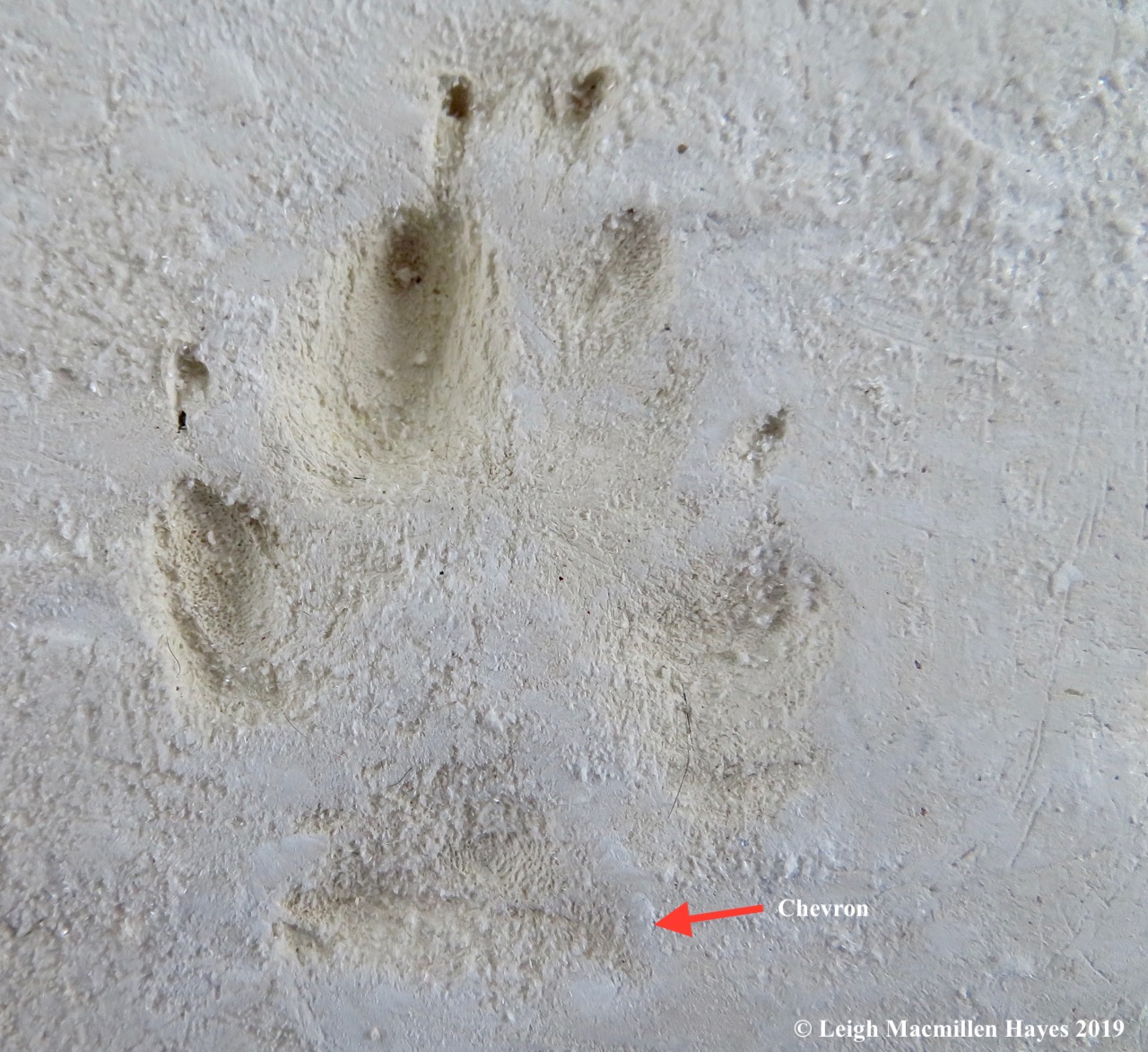
First though, it seemed I wanted to test their endurance so we circled up for a few minutes and they used mirrors to see how a deer might see (and I should have taken a photo, but didn’t) and then I shared some casts I’d made of track prints. This one was a red fox and not only was the hair a bit visible, but so was the shape of a chevron, which some see as a boomerang in the heel pad of the front foot. I should note that this particular cast was made from a road kill specimen, so the toes and nails aren’t exactly as close together as they typically would be, especially on a cold morning in January.
The next cast to view–a coyote in mud. I love this one because it demonstrates the direct registration of a back foot stepping into the impression made by the front foot. And the X we always associate with the canines, including Eastern coyotes, red and gray foxes, was visible. Notice the parallel toes close together and nails that point inward–all for the sake of retaining heat.
And finally in this morning’s demonstration, a bobcat cast with more of a C shape between the toes and heel pad.
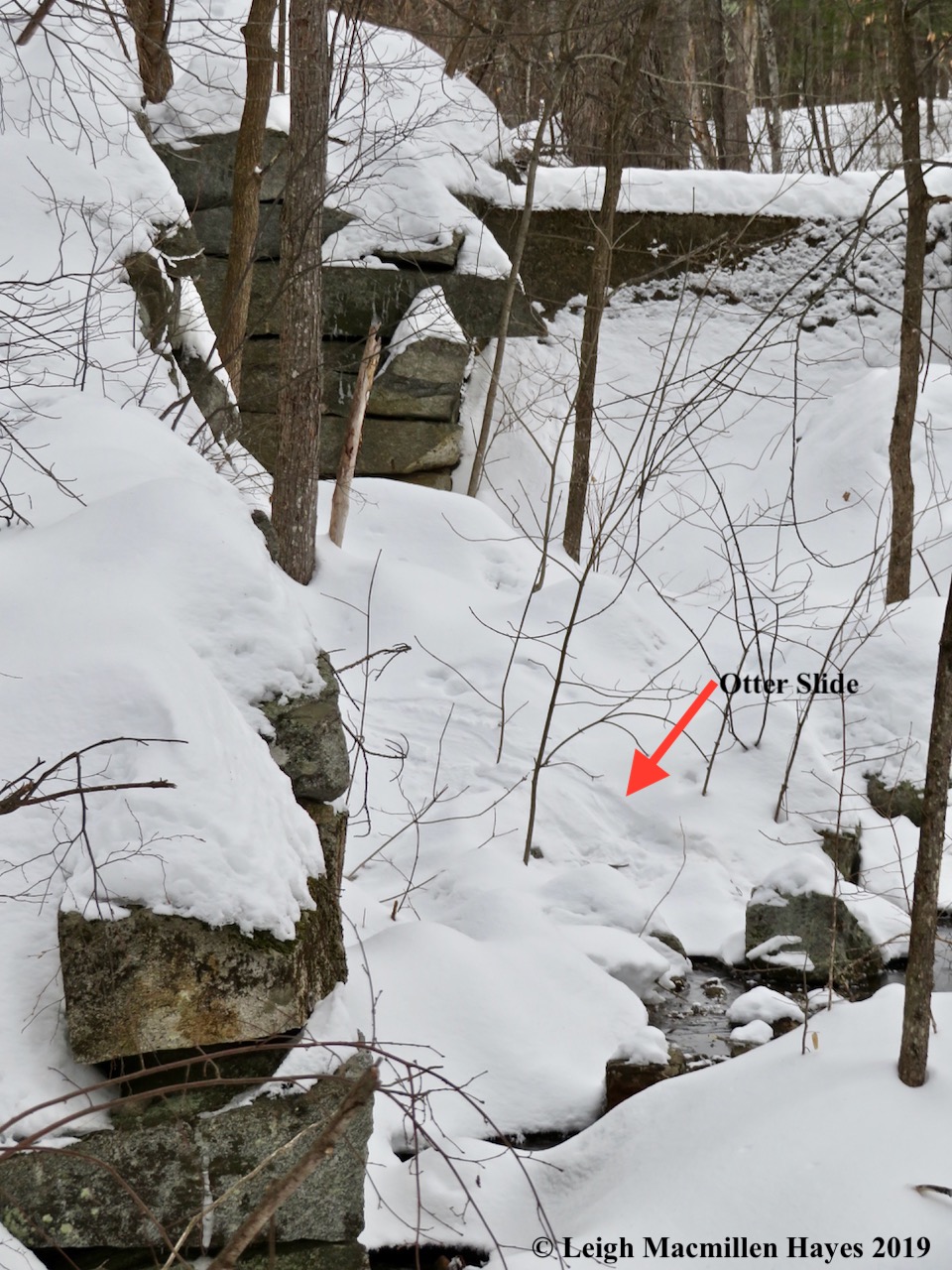
I chose this trail for today’s adventure because I had a feeling we might see what we saw–an otter slide! It’s a rare winter day when such activity isn’t visible there.
I was thrilled to note that a few people had beat us to the sight and observed the same. As we stood above the dam, we spied where the otter had come up out of the water, made its way around several trees . . .
then slide down into Mill Brook below. By the tracks and impressions in the trail we could envision his motion. And if folks had wanted to quit then, it would have been okay because we’d been so honored already.
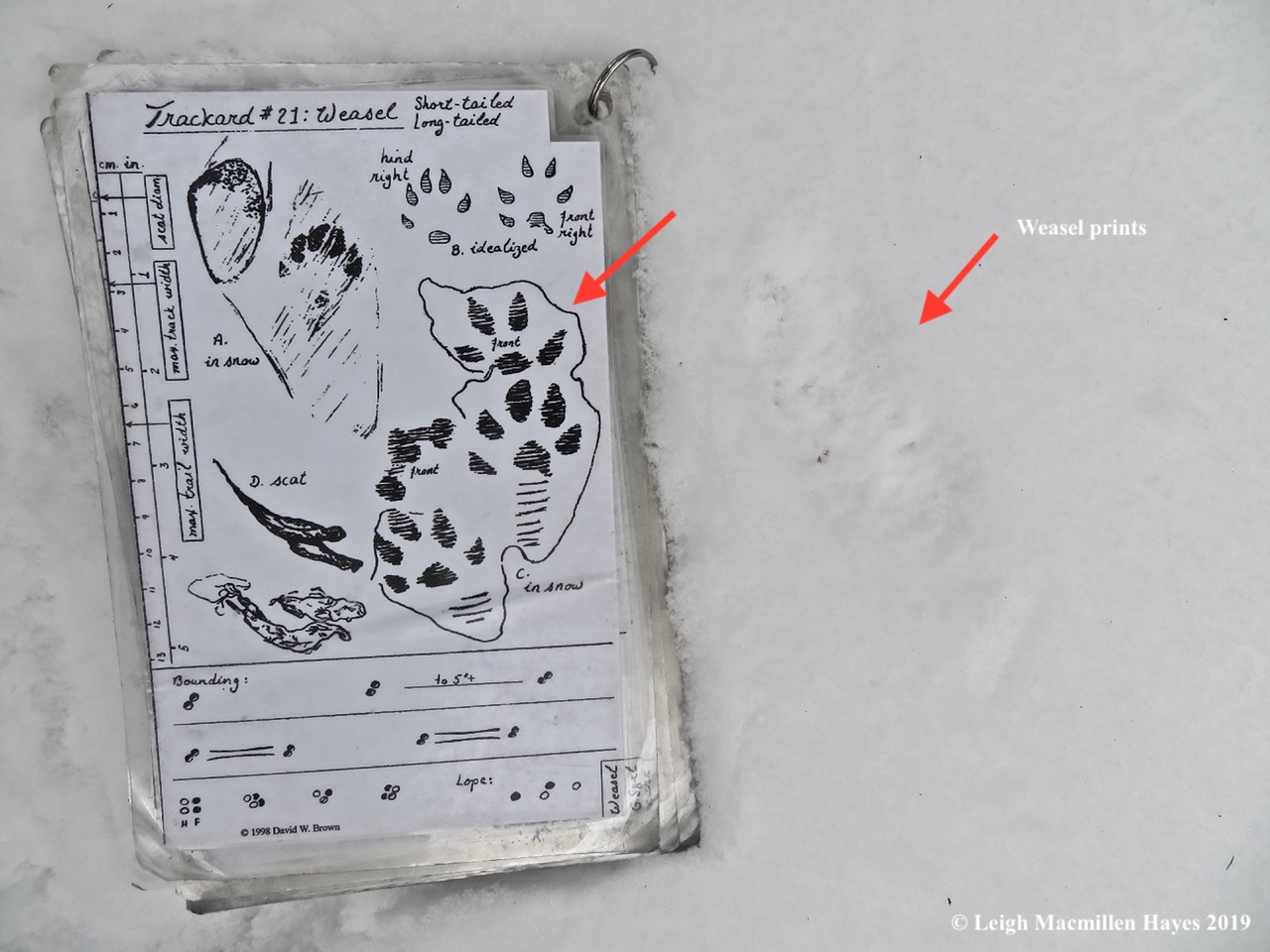
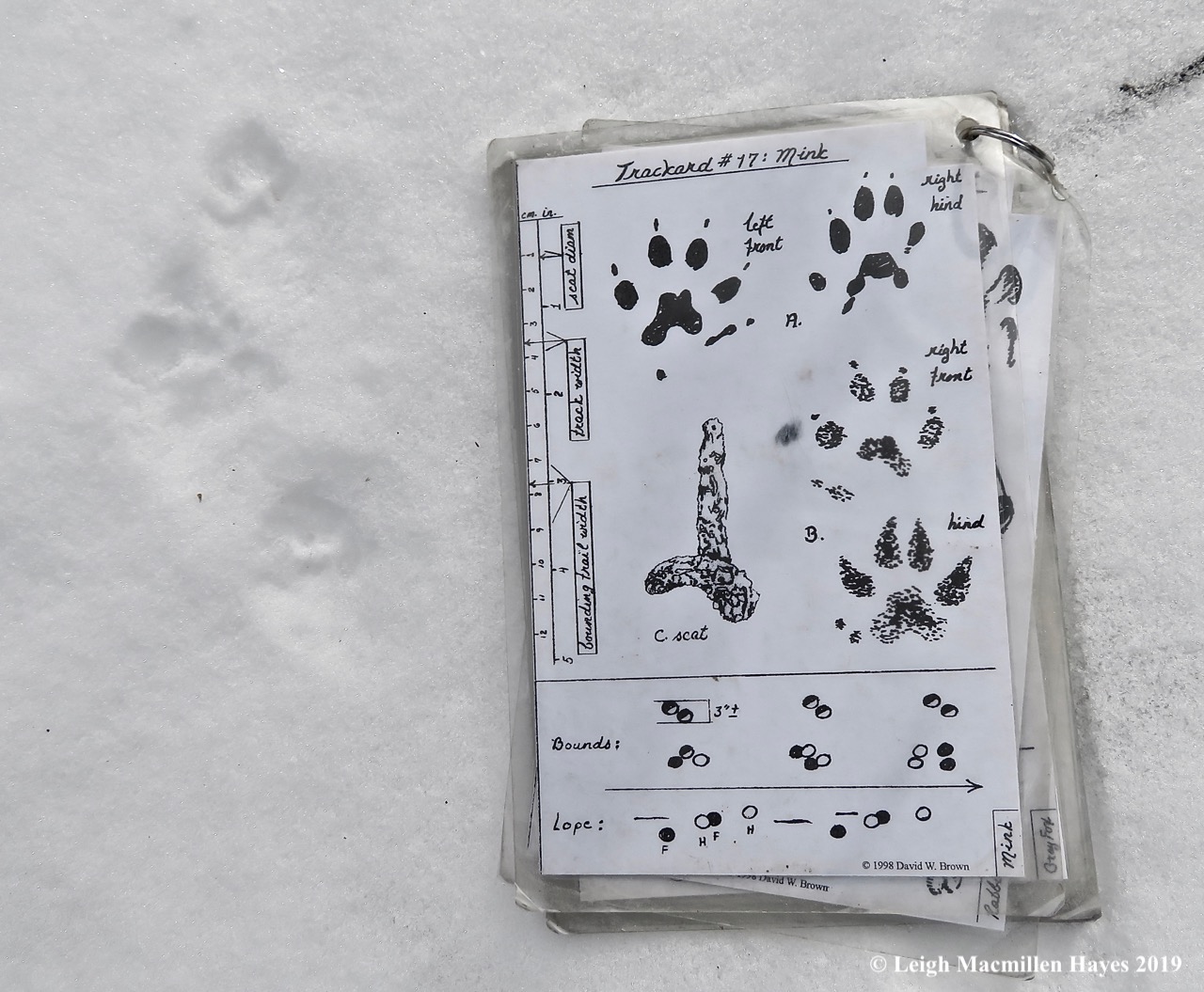
But they are a hardy group and right near the otter slide, prints of another were noted and based on their wee size and the diagonal angle of their presentation we knew we were looking at the track of either an ermine or long-tailed weasel. It’s difficult to tell the difference between the two by the print size. But the cool thing was that though they appear light in the photograph, the prints that we saw were a mirror image of what David Brown drew on his Trackards. (I think I should get a commission for promoting his cards, but really, they are the best.)
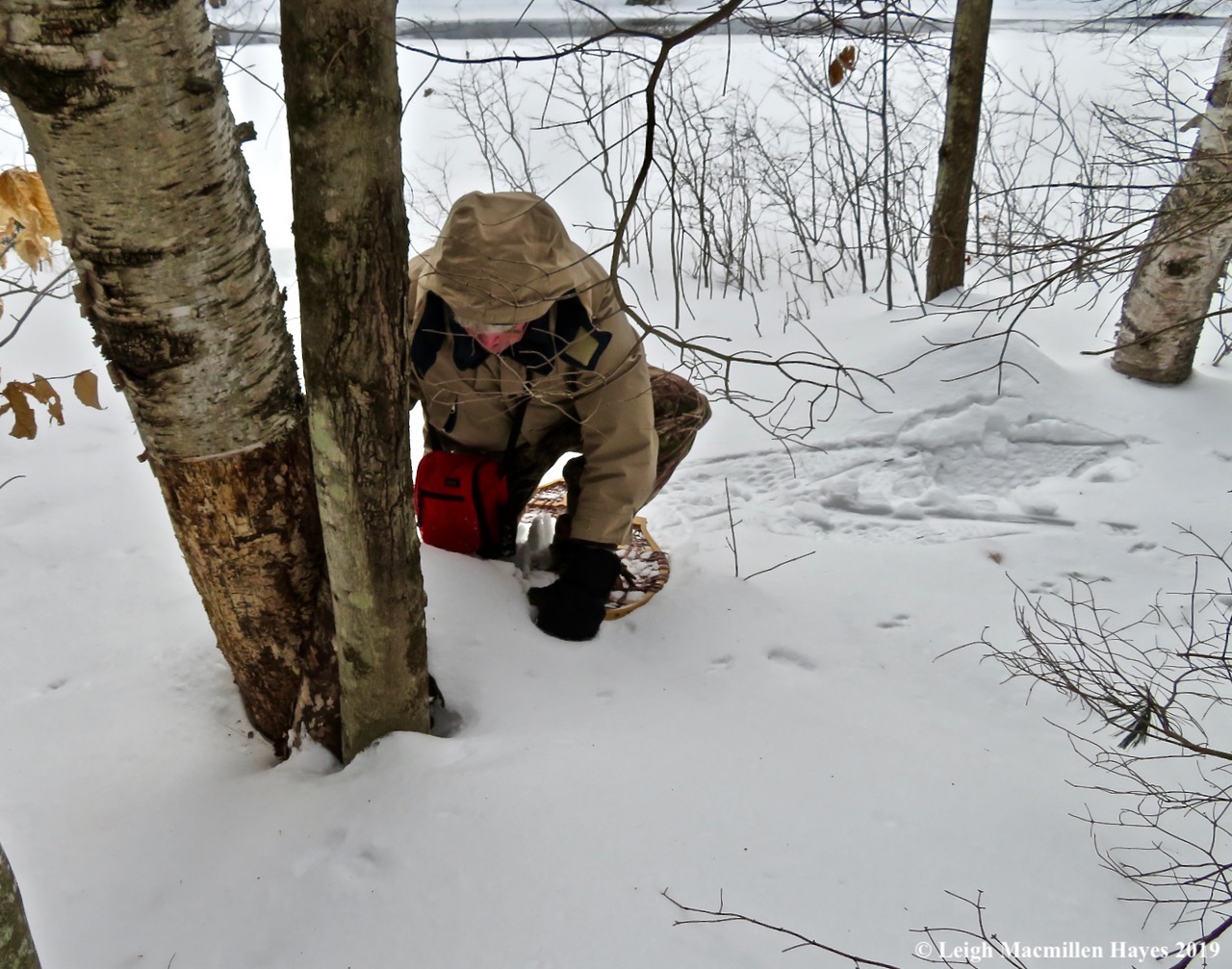
Following the weasel prints, Tom found a hole by a tree and got down to check on any activity within. His report came with a grin: “It’s deep.” Was the weasel successful in finding a meal? We don’t know. But we do know that it’s typical of them to check out every little hole and make some of their own.
Continuing our journey, we’d hardly gone far from the dam when we happened upon another creator of fine tracks. Bingo! A red fox by its shape, size, and chevron.
And then. And then we found prints left behind by a mink, their size a bit larger than the weasel. By now, we were in seventh heaven. Or so we thought. For there was more.
I’d just said to one of the group that we’d seen otter, weasel and mink–all members of the Mustelid family. It was due time for a fisher . . . and what to our wondering eyes should appear?
Tell-tale prints left behind by a fisher that had loped through the woods. Do you see the five tear-drop shaped toes?
Being good trackers, we decided to back track it, for one shouldn’t follow an animal and put stress on it. And so we headed toward the pond.
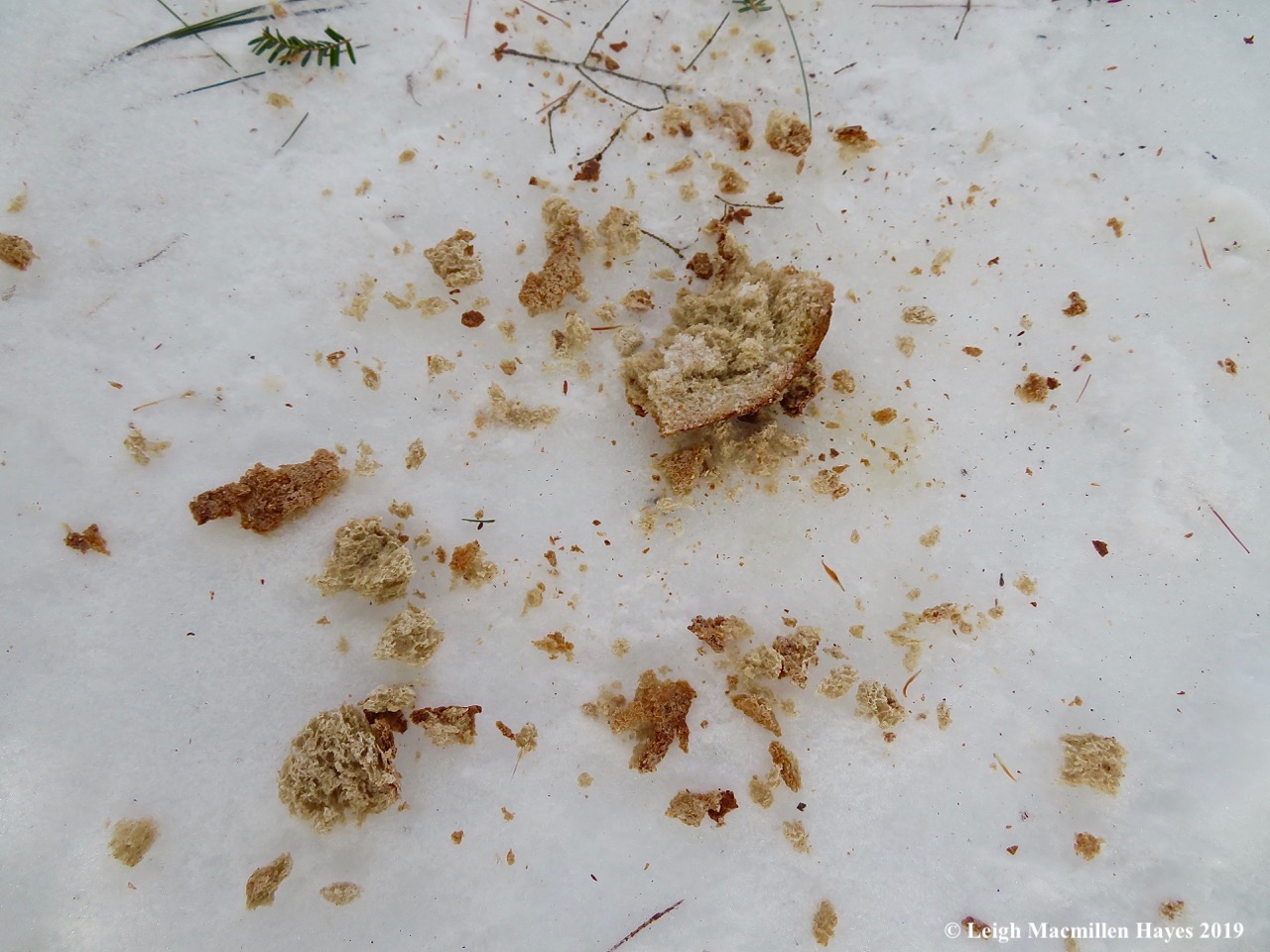
One in our group had gone ahead and under a hemlock Heinrich discovered a meal partially eaten. The fisher prints led directly to and from it. A mushroom? That was my first thought until I took off my mitten and played with it. A roll? Whole wheat? Had the fisher stopped at Burger King or raided someone’s ice fishing party? Did he eat the meat and discard the roll? Not into whole wheat? Certainly he prefers a gluten-free diet.
Behind the hemlock, we followed his tracks and noted a spot where he’d sat and fussed about for a bit. Was this his lunch site? If so, he’d at least not left any wrappers behind.
As the morning went on, one set of tracks led us to those made by another and near the fisher we found more red fox impressions.
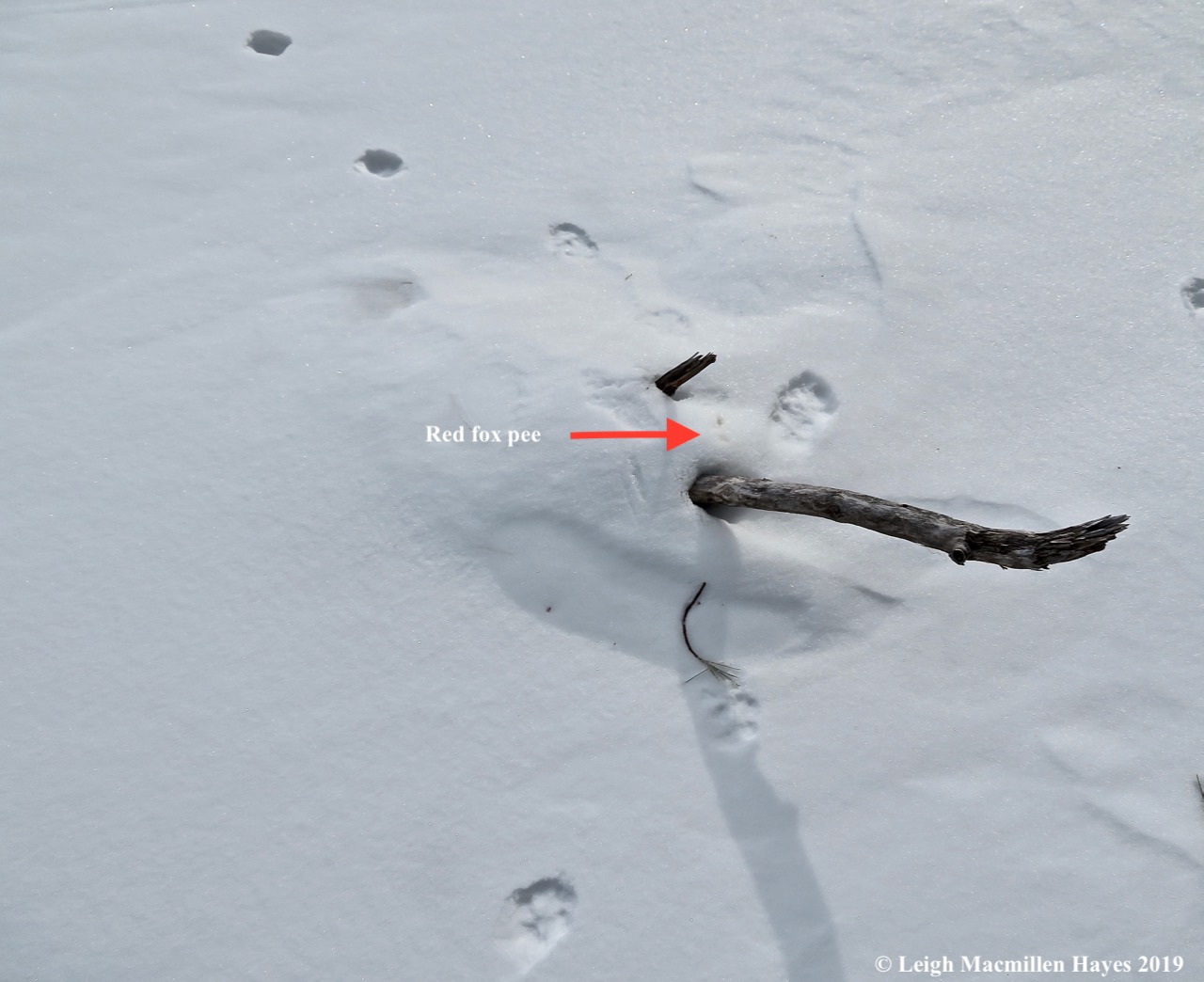
Astute eyes for we’re all so trained, also noted a dash of pee by a broken branch. Typical red fox behavior, especially given that this is mating season. But . . . in the air we couldn’t smell that delightfully skunky scent we associate with fox pee.
That is . . . until Pam got down. It was not as strong as we sometimes notice so we wondered if it was because of the cold air.
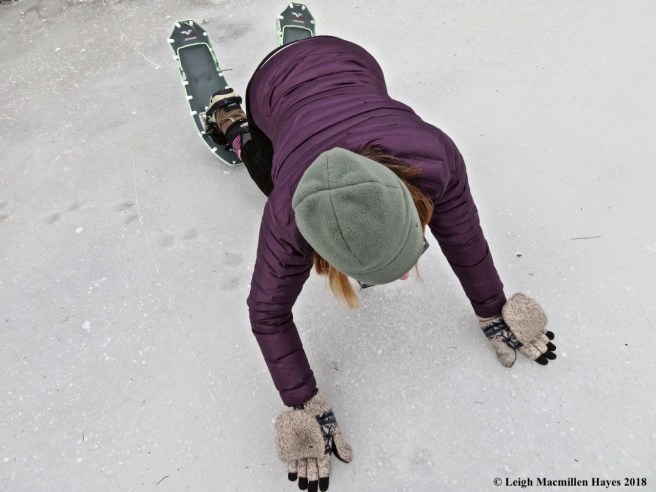
Despite that, Tuesday Tracker initiation involves getting down on all fours like Bob did. . .
and sniffing just like Paula. Come on–you know you want to join us and gain some bragging rights.
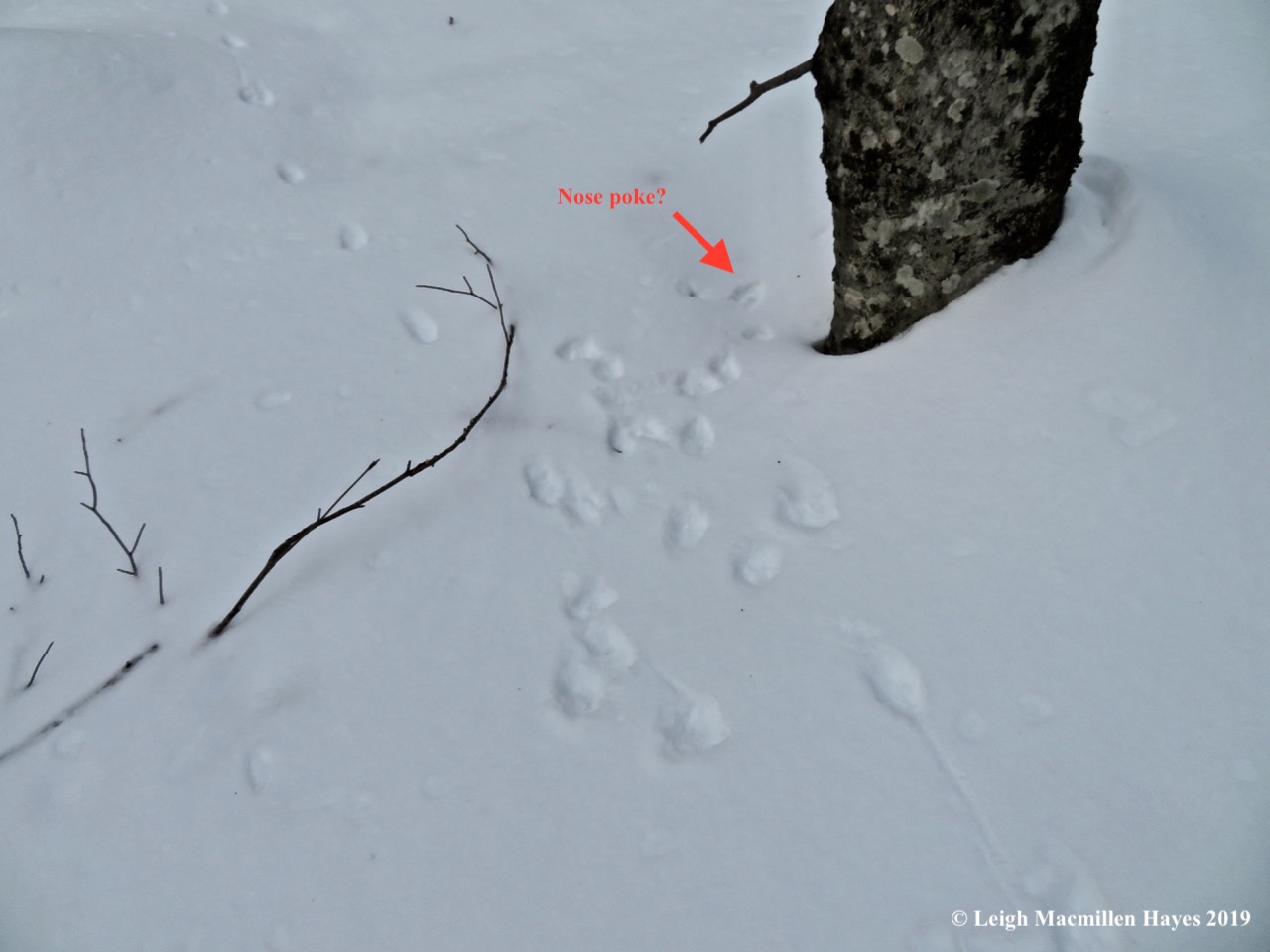
We decided to follow the fox for a while doing what we shouldn’t have done as we followed its forward motion rather than back, but suspected it was long out of range. We weren’t sure if it was one or a pair. At a tree, rather than pee, it or they seemed to dance around and possibly poke a nose into the snow. By now, the cold could have been getting to us and we were making up the story we read on the powdery page.
Eventually we did come to two sets of fox tracks and split our group in half, each following one set to see if they’d intersect again.
Well, the fox tracks led us back to the fisher and suddenly to the snowmobile trail. We saw that the fisher had headed up hill and thought we might spy it again if we followed the trail that leads toward Whiting Hill, so up we did climb. In no time at all, we found a pattern left behind by a little brown thing (LBT by tracking standards) and knew it was either a deer mouse or white-footed mouse out on a risky mission in search of seeds.
Next, a snowshoe hare had crossed the trail and we recognized it by its snow lobster shape. If you look at the second set of prints in this photograph, you’ll note that the animal was moving toward me and the two larger prints in the front were of its hind feet which had wrapped around and landed as the two smaller front feet leaped forward. Thus the overall impression looks like a lobster–at least in our minds.
Just beyond the hare, we met what we’d been looking for, the fisher. And then on a stone wall, Paula discovered two holes where it must have dug down looking for a meal. Was it successful? We so wanted a kill site to know what the critters had been eating, but saw no signs of blood or hair or bones or carcasses.
What we did see–a dribble of fisher pee that Pam checked out.
In the midst of fisher tracking, we came upon intersections, including one of a coyote and red fox. What kept us guessing was the apparent foot drag of the coyote. Was some of it tail drag? The snow under the powder was quite crusty so most of the fresh prints we found today didn’t require the mammals to break through the snow. But . . . had this coyote injured a foot on a previous journey when it was breaking through?
As the morning went on, the Trackers had to leave one by one and two by two until it was only Pam and me still on the prowl. We followed the fisher for a long way, and noted where it paused momentarily upon humps, but never discovered any sign of eating.
Eventually, we too, had to find our way out of the woods. It was rather easy for we followed the tracks the others had left behind. And chuckled at the patterns we all left in the snow. Not exactly discernible. What will the mammals say when they pause and study our prints?
Crazy humans! Ah, but I think they’ll also call us intrepid travelers, for like them, we prowled about on a frigid winter day.
We all left thrilled for we’d seen the tracks of so many in this mammal corridor. And curiously we noted those we hadn’t seen: deer and squirrel in particular, as well as moose and bobcat. Another day perhaps.
Today’s Tuesday Trackers included Pam, Heinrich, Nancy, Paula, Bob, Tom, and yours truly. Intrepid indeed.
This morning dawned bright and brisk and offered a brilliant background for a journey through the almost Peabody-Fitch Woods that Loon Echo Land Trust hopes to add to their holdings. The 252 acres of the proposed project surrounds Bridgton Historical Society‘s Narramissic Farm.
Jon Evans, Loon Echo’s Stewardship Manager and board member of the historical society had asked me to join the walk that would highlight the Peabody-Fitch Homestead built in 1797 and introduce Loon Echo’s new executive director Matt Markot. In the morning light, we circled the house as Jon shared some of the farm’s story.
On the northern side of the house, we paused to enjoy the view, including Pleasant Mountain just beyond the trees to the left of the field. The land trust also owns and protects over 2,000 acres of the mountain that defines this area of western Maine.
Measuring the effect of the cold on the hike’s participants, Jon chose his stop points, where he shared his keen knowledge of the farm and the lands that surround it. For me, it’s always a joy to tramp with him because his connection to the land is personal, and this particular piece even more than most for Jon’s family long ago farmed an adjacent acreage and he grew up traipsing through the very woods we snowshoed today. (And this photo includes Margaret Lindsay Sanborn, mother of Matt Markot, LELT’s new ED who stands to his mom’s right.)
As we circled behind the barn I shared with Jon a bit of knowledge that adds to the lore of what’s always been known as the Temperance Barn, supposedly constructed during prohibition without the usual swigs of rum for all who helped in the building process. Following a blog post I wrote in December 2018 about this very property, a granddaughter of Margaret Monroe who gifted the property to the historical society in 1987 wrote the following message: Hi – I am glad you enjoy my grandmother’s property. A heads up that there is no written documentation from the period re: the barn actually being built without alcohol. My grandmother was prone to making up history. I want to give respect to hardy native Mainers: Monroes were largely summer people. My grandmother also said sherry wasn’t alcoholic and would drink a big glass of it every night before dinner, Lark cigarette in her other hand. Happy Holidays! Rebecca Monroe
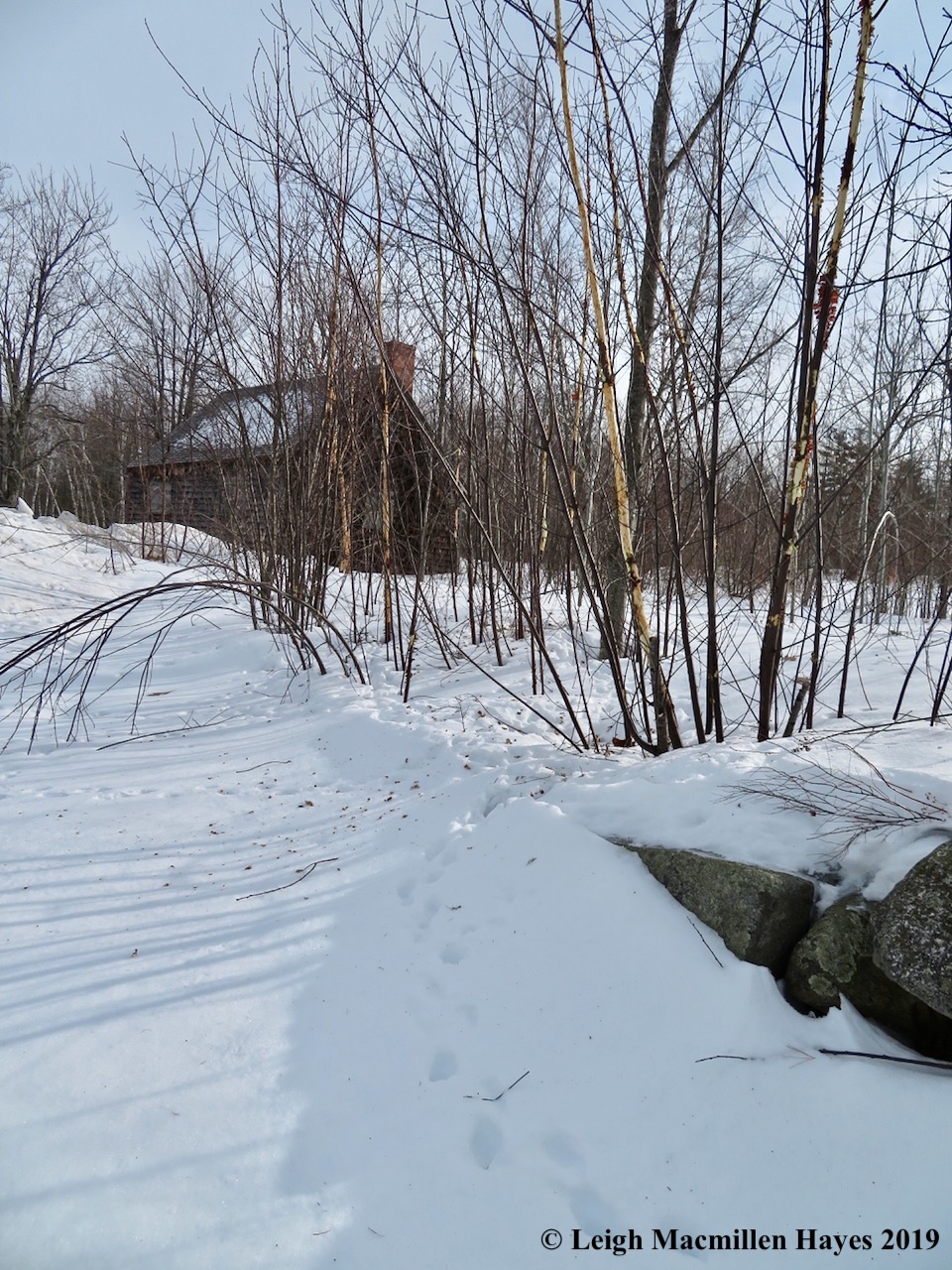
It turns out that wasn’t the only story that had more to offer than I’d originally thought to be true. As we were about to pass through a stonewall behind the barn, my eyes cued in on debris below some trees. Certainly it was the work of woodpeckers and I stepped onto the wall in search of scat. Nada.
Looking up at the pin cherry tree, I found not pileated works, but the incisors of another that gave a clue.
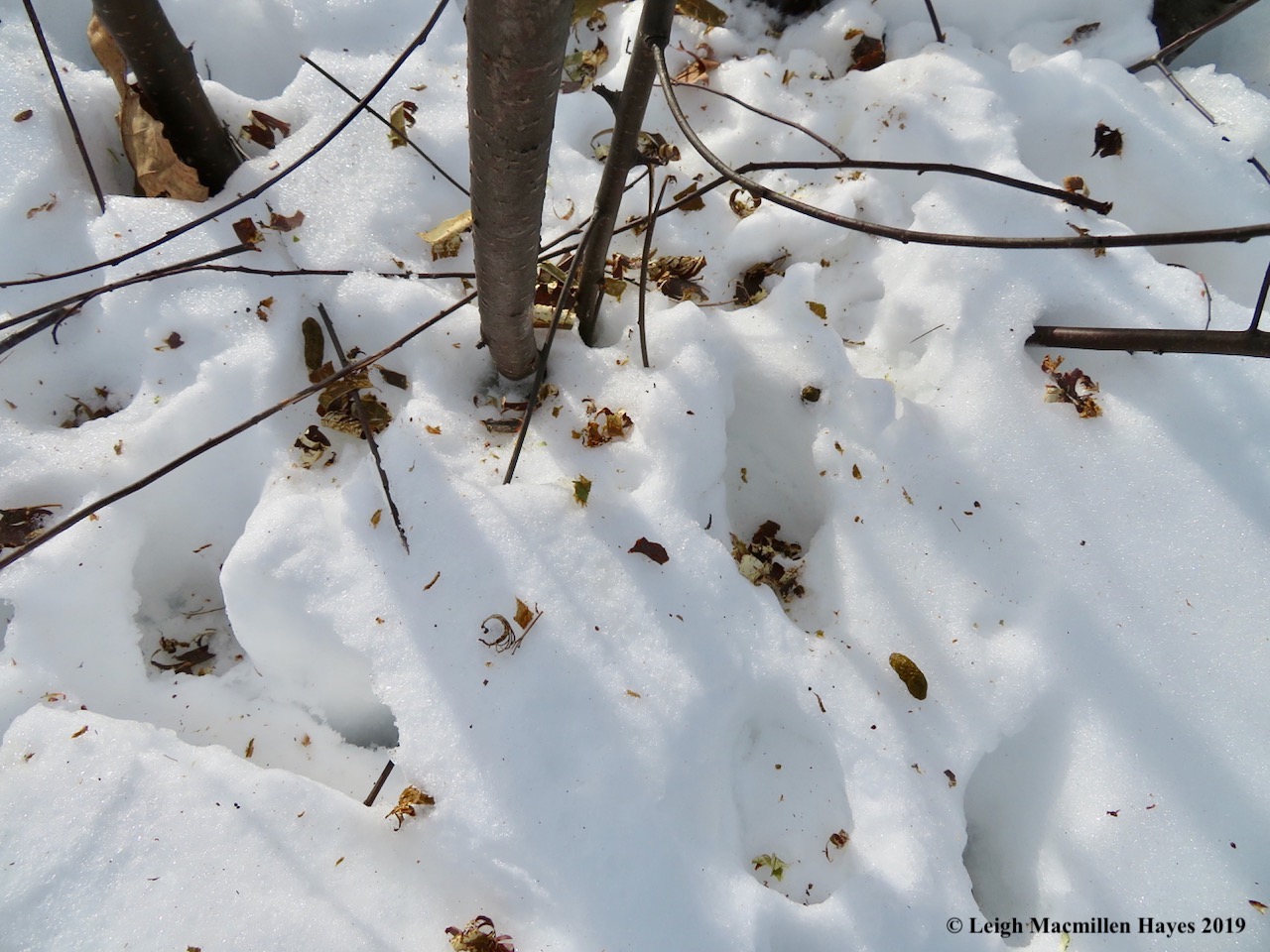
And below, pigeon-toed tracks. Between the incisor marks and tracks I knew the creator, but it didn’t make sense to me, for though I find hemlock twigs below such a tree when a porcupine has clipped them, I couldn’t recall ever seeing bark chips below a porky tree. In my brain, the rodent ate the bark as it sought the cambium layer within. I dismissed it as a lesson to be considered and we moved on.
Jon led us along a colonial road from the historical society’s property to a stonewall that delineated the Peabody-Fitch Woods. We turned onto a trail I’d never traveled before and made our way along another farm road. Periodically, Jon, Matt, and I bounced off of each other as we shared our knowledge about the trees and forest succession that had occurred since the farm was last a working land. We also spied a few mammal tracks, including those of a bobcat.
At last, we circled around and found our way back toward the border between the P-F Woods and farm.
Close to the Temperance Barn again, porcupine tracks crisscrossed to the stonewall where we’d seen their activity at the start of our journey.
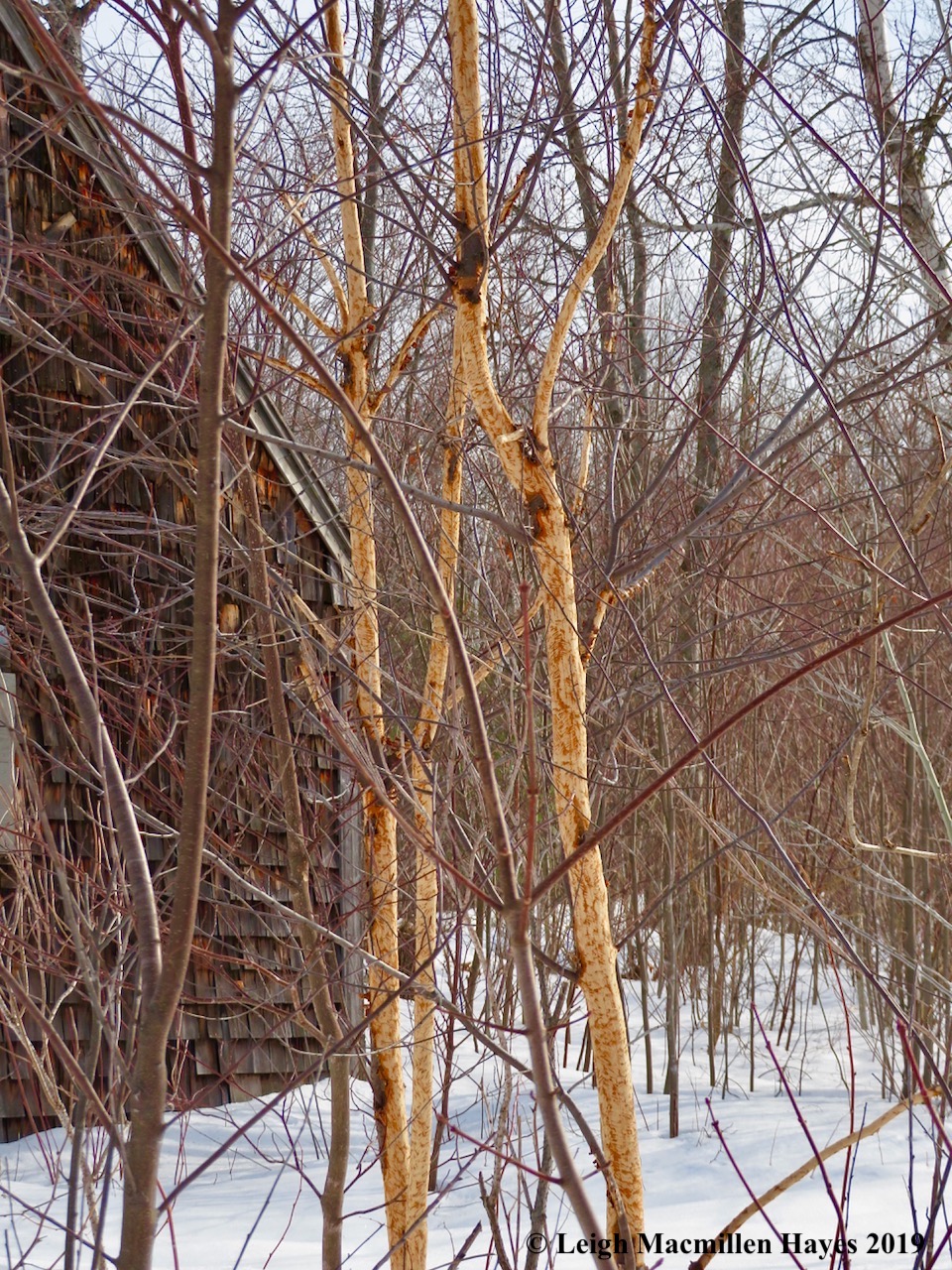
Near the parking lot and Blacksmith Shop, more porcupine works made themselves evident–by their tracks and the debarked trees.
Incredibly debarked trees. I’m always amazed by the fact that porcupines, given their size, can find support on trees and limbs that seem so flimsy. I’ve been told that they’re known to have many broken bones and it makes sense given the precarious choices they make to seek winter nutrients.
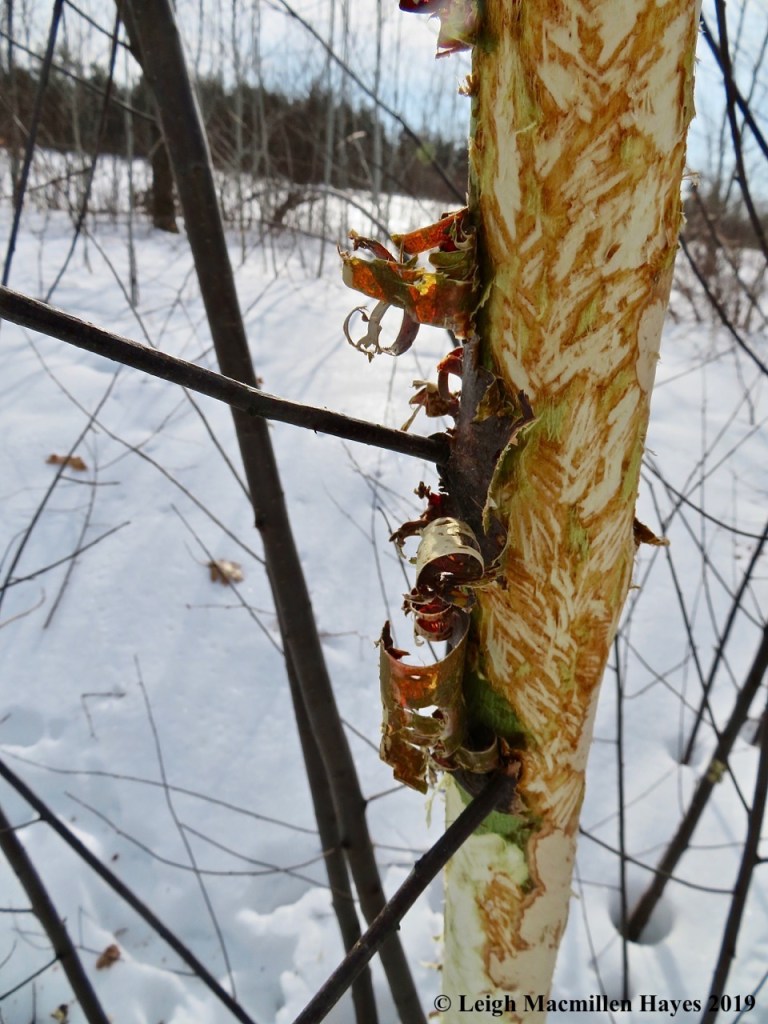
Once again, there was bark debris. In the past I’ve always said that beavers leave wood chips, but porcupines eat the bark and cambium layer.
The evidence was obvious given the prints and comma-shaped scat. But the bark debris proved me wrong today.
And I loved that. When Jon first introduced me as a Maine Master Naturalist, he asked how long I’ve been such. “Six years,” I said. And though I’ve spent my sixty years wandering and wondering in the woods and along the coast of southern and northern New England, it was the Master Naturalist class that taught me how to take a closer look.
Do you see the green of the cambium layer? And those incisor marks–how they are at opposing angles? Those I recognized.
But . . . the porcupines taught me something new today.
Winter Storm Harper left its mark in the form of snow and wind upon our little spot in the universe.
And I was certain that any tracks I might encounter in the woods would have been erased by dervishes that whirled across the field yesterday, overnight, and into today.
Consequently, it was a pleasant surprise to discover porcupine tracks leading to and fro our barn and woodlot in their typical pigeon-toed pattern.
As delighted as I was, I was equally dispirited as I noticed that the tips of my favorite hemlock had been nipped to oblivion.
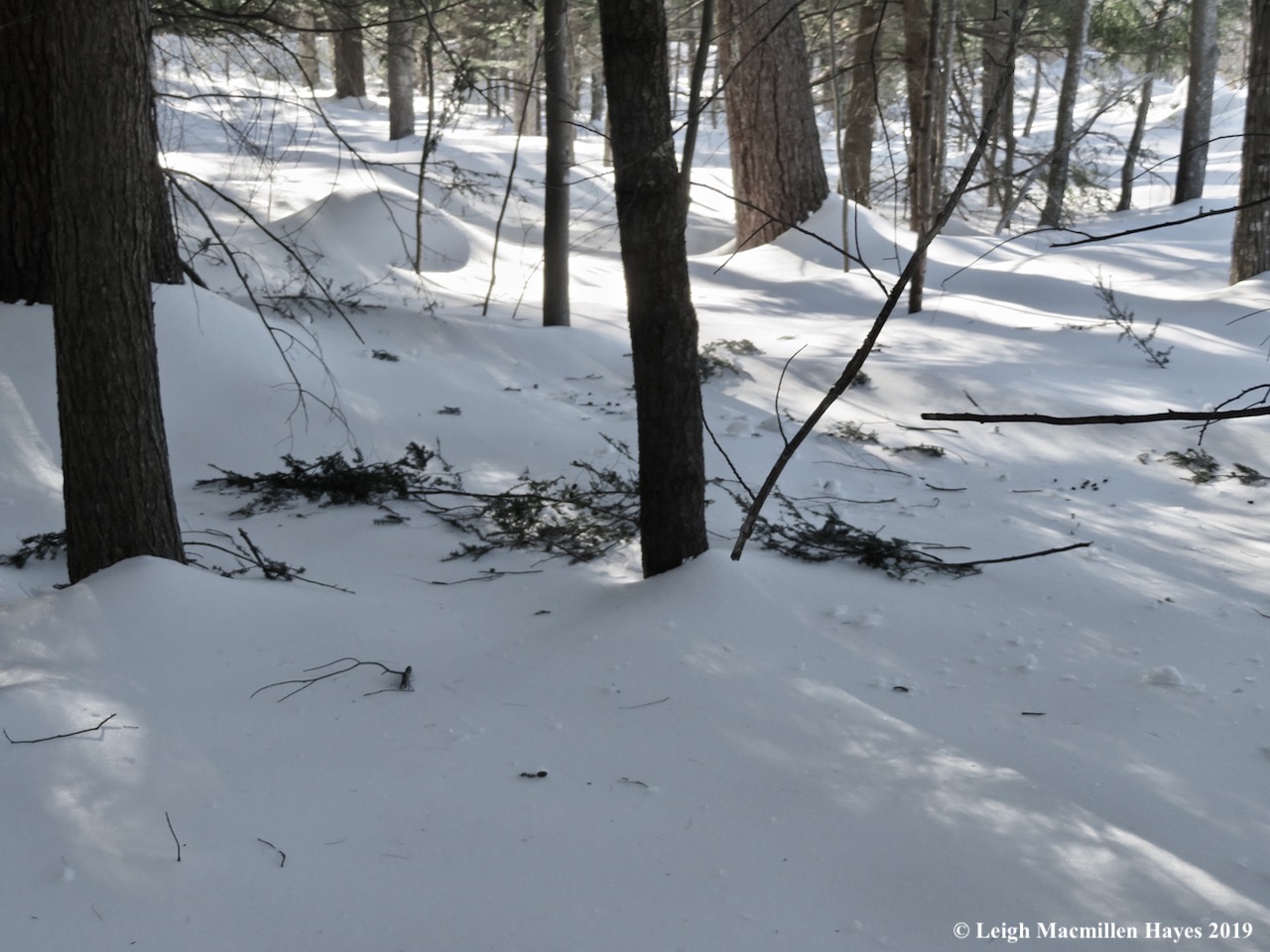
But, the porcupine had moved on from that tree, crossed over a stonewall, and visited several other trees in our woodlot, as noted by the downed twigs that decorated the snow’s surface. Like the tracks, the twigs were freshly cut in the past twenty-four hours or less actually.
Of course, I couldn’t overlook the woody commas amid the debris, much as they break up a sentence such as this, that added to the list of evidence that a porcupine had been present. Some call them scat.
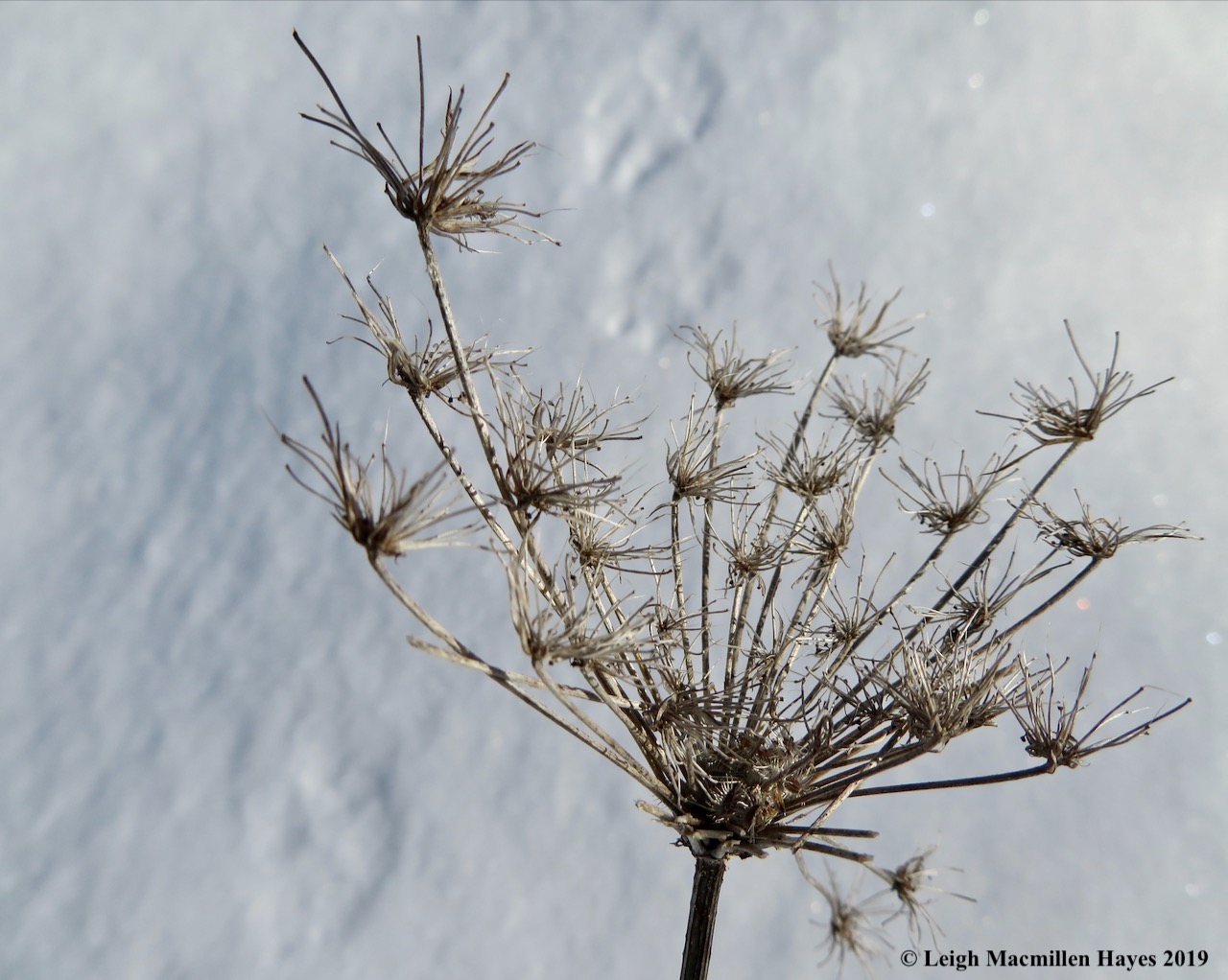
And then, as I continued onward, I followed the tracks of two others that frequent our yard. Even as I delighted in the winter structure of a Queen Anne’s Lace florescent, did I notice the red fox prints on the snow below.
The tracks led me to Stevens Brook, which has a journey of its own to trace.
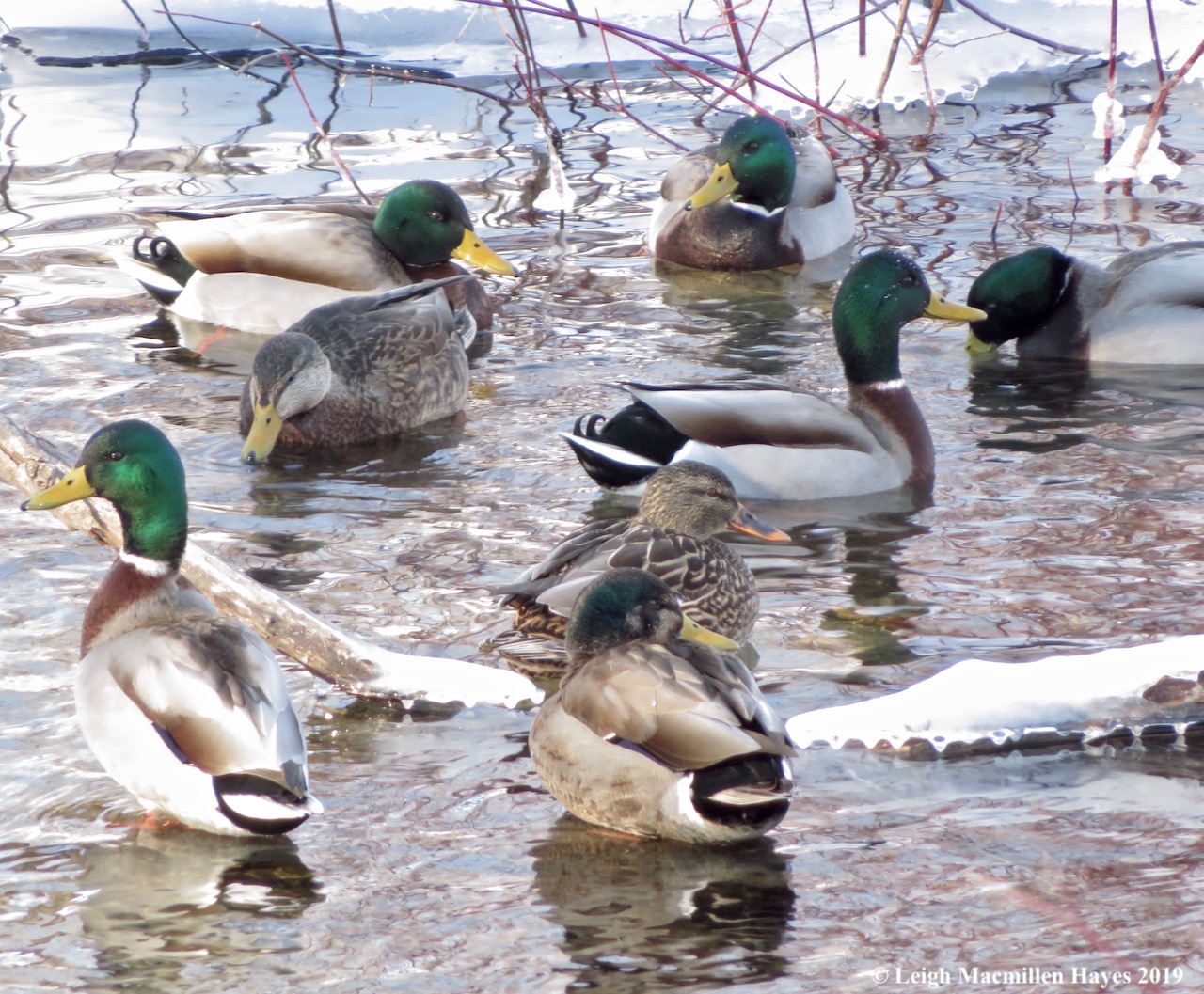
I went to look because I felt the need to add a bit of color to this wintry day and knew that the local congregation of Mallards would contribute not only that, but sound as well.
And then, as I snowshoed beside the trail that follows the brook, I began to notice tracks made by another–this one a member of the weasel family with tear-drop shaped toes of five on each foot.
The more I followed it, the more I realized it had walked and then loped and appeared to drag something along the way.
Sometimes it chose to slide on the downhills.
And equally left an impression as it journeyed up and over a stonewall.
Meanwhile, within the wall, I surmised another of a different species quivered as silently as possible so as not to attract attention, with the hope of creating hoar frost for another day.
Wherever I went, the weasel had also trekked. And frequently I noticed signs of blood as if something had been dragged and the life dripped out of it.
In some places the frozen vital fluid bespoke a meal perhaps waiting to be cached–the perfect sacrifice of one to nurture another.
So few were the tracks of mankind on the virgin snow and so abundant the weasel.
Soon I found myself beside another brook, this one named Willet, and I glanced about expecting to see evidence of action, but instead found ice and snow and shadows disappearing into the bend.
And then . . . upon the edge of the brook’s high bank, a sudden turn my weasel had made, choosing to not slide downward.
A bit further along, I was following its tracks again when I spied fresh woody debris upon the snow’s surface and knew that a pileated had been at work this day.
Rounding the tree, I discovered a series of holes made over a series of days or weeks or years.
From the woodpecker tree, it took a few minutes, but again I found the tracks of one very busy fisher. I never did find any kill sites, but suspected that it had a cache somewhere and let its fresh groceries dangle from its mouth as it carried them back to the pantry.
Making my way toward home, I didn’t need to rest, but had I intended upon such, it wouldn’t have been at the bench for so deep was the snow.
That was okay, for my movement kept me warm and I knew that I’d soon be stripping off my winter layers once I reached our kitchen. But first, there was a pasture to pass through, and while I seemed to have left the fisher behind, I came upon the tracks of the two red foxes I’d met earlier.
In typical red fox behavior, one of them had paused at the tip of a downed tree and urinated. One of these days perhaps it will finally get lucky.
In the meantime, I felt lucky for I’d seen the prints and tracks of so many on this day when I wondered if I’d see any–including those of the Mallards beside Stevens Brook.
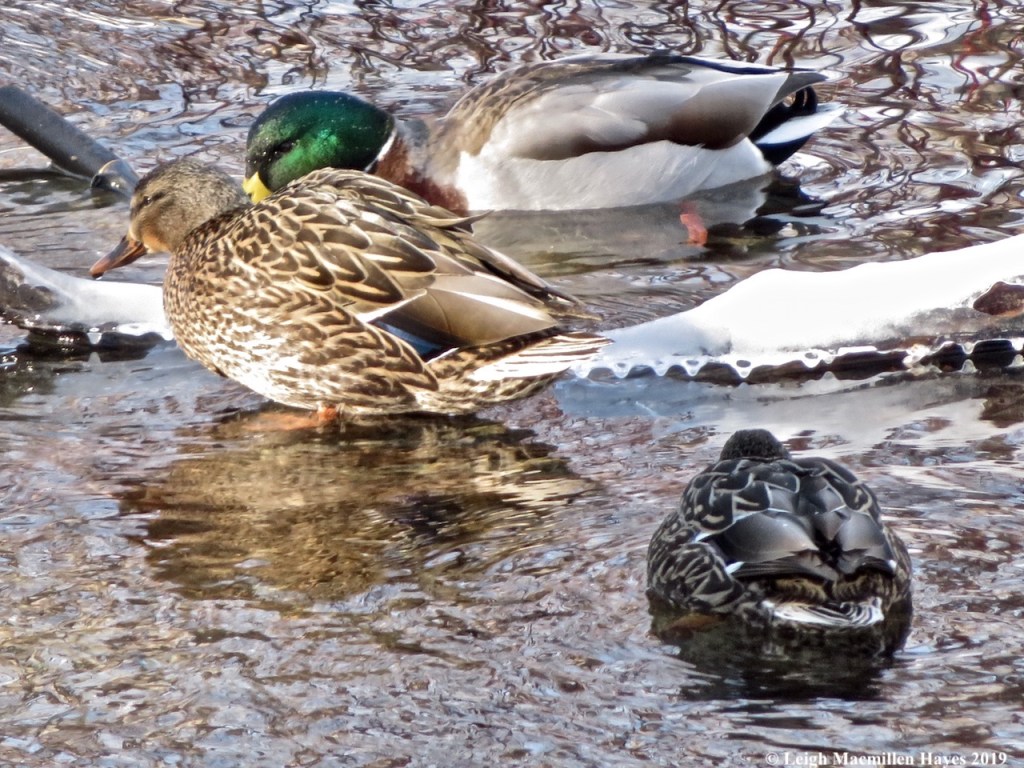
And of all the winter wild out my door, today the ducks were my favorite because I not only got to watch them for a while, but I also appreciated the colorful display they added to the landscape.
(Warning: Some photos in this post may be disturbing.)
A couple of friends and I didn’t let this morning’s brisk air keep us inside and so at the designated time and place we met, strapped on our snowshoes and journeyed forth.
Almost immediately we were greeted with evidence that others had had the same idea. And though we knew they were turkey and fox tracks that intersected on the snow-covered ice, we weren’t positive about the fox ID until a few minutes later. As it was, the prints were muffled in presentation, which led us to red versus gray fox, but the stride seemed a wee bit short.
And then we found the calling card and both friends were thrilled to get down on all fours and take a sniff. Indeed, the skunky scent made us certain that the fox’s color was red.
Everywhere, whether atop a snow-capped rock or sapling or winter weed, we found that calling card–most of it a mere dribble, but enough.
Everywhere we also found the fox tracks and wondered–one or two? It seemed likely that she followed he, but we couldn’t be absolutely certain.
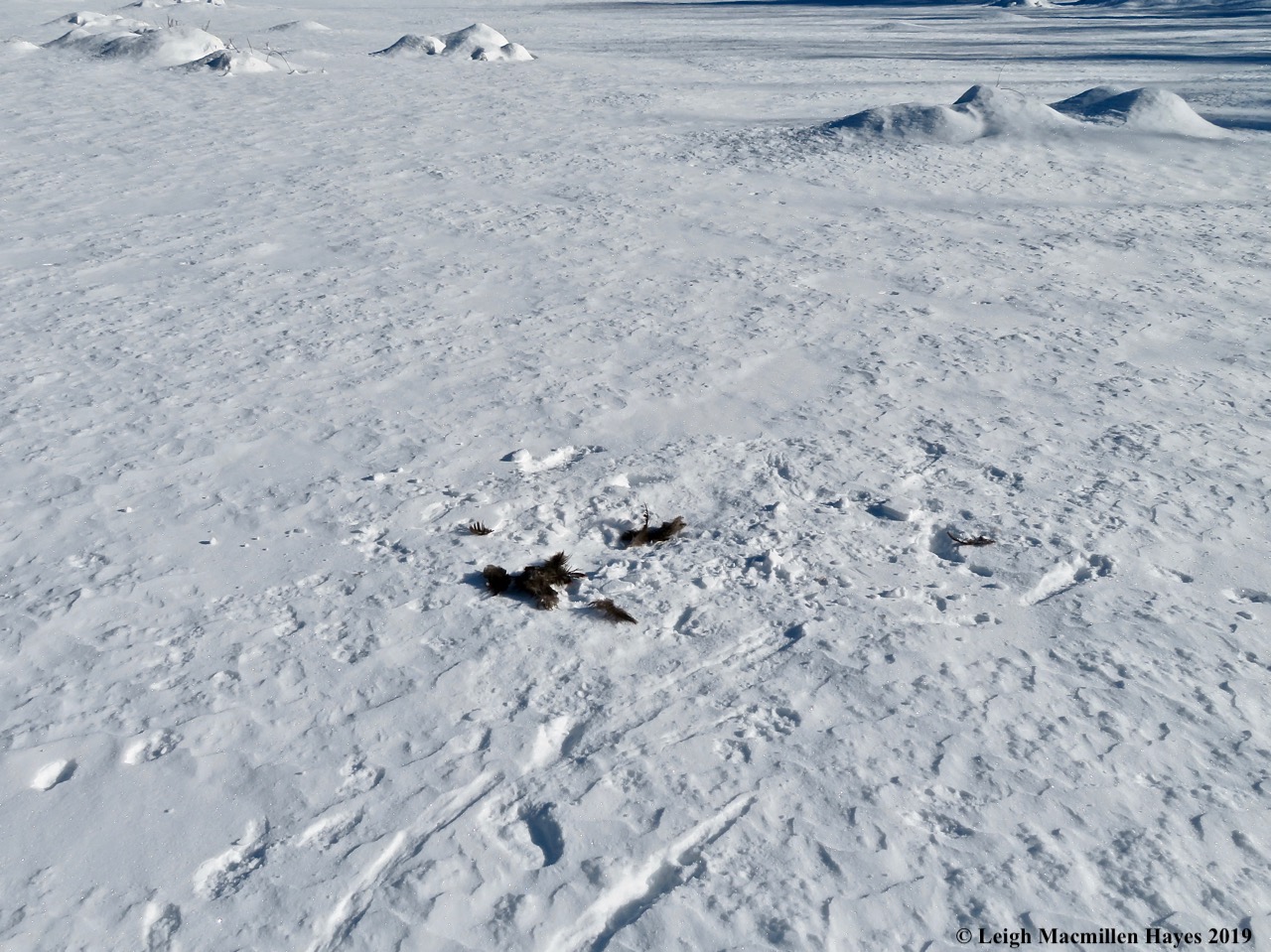
And then something in the distance atop the snow called our attention and we quickly followed the fox tracks to the dark sight.
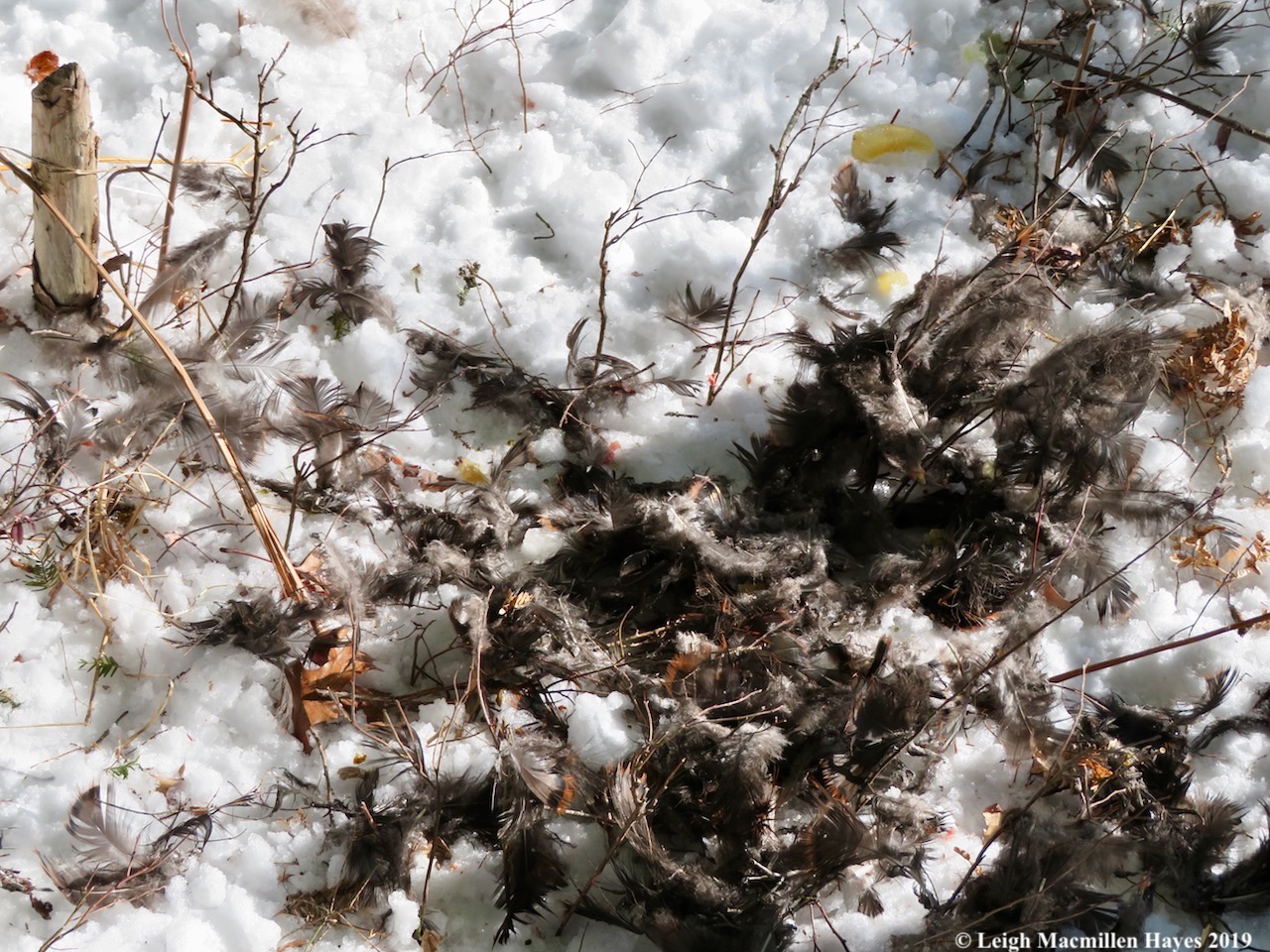
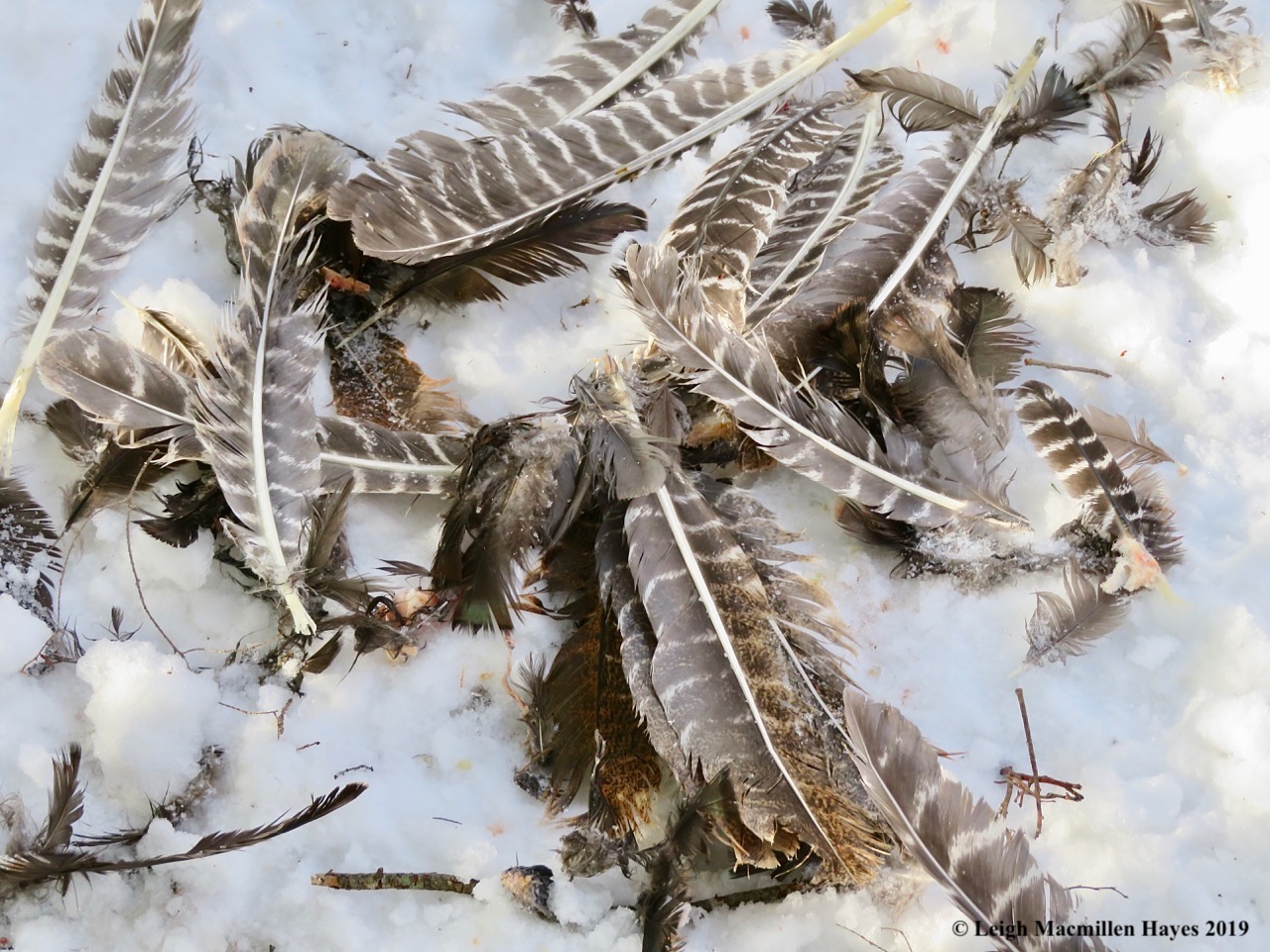
It turned out to be turkey feathers. And we got to wondering again. There were no turkey tracks nearby, only fox. What had happened?
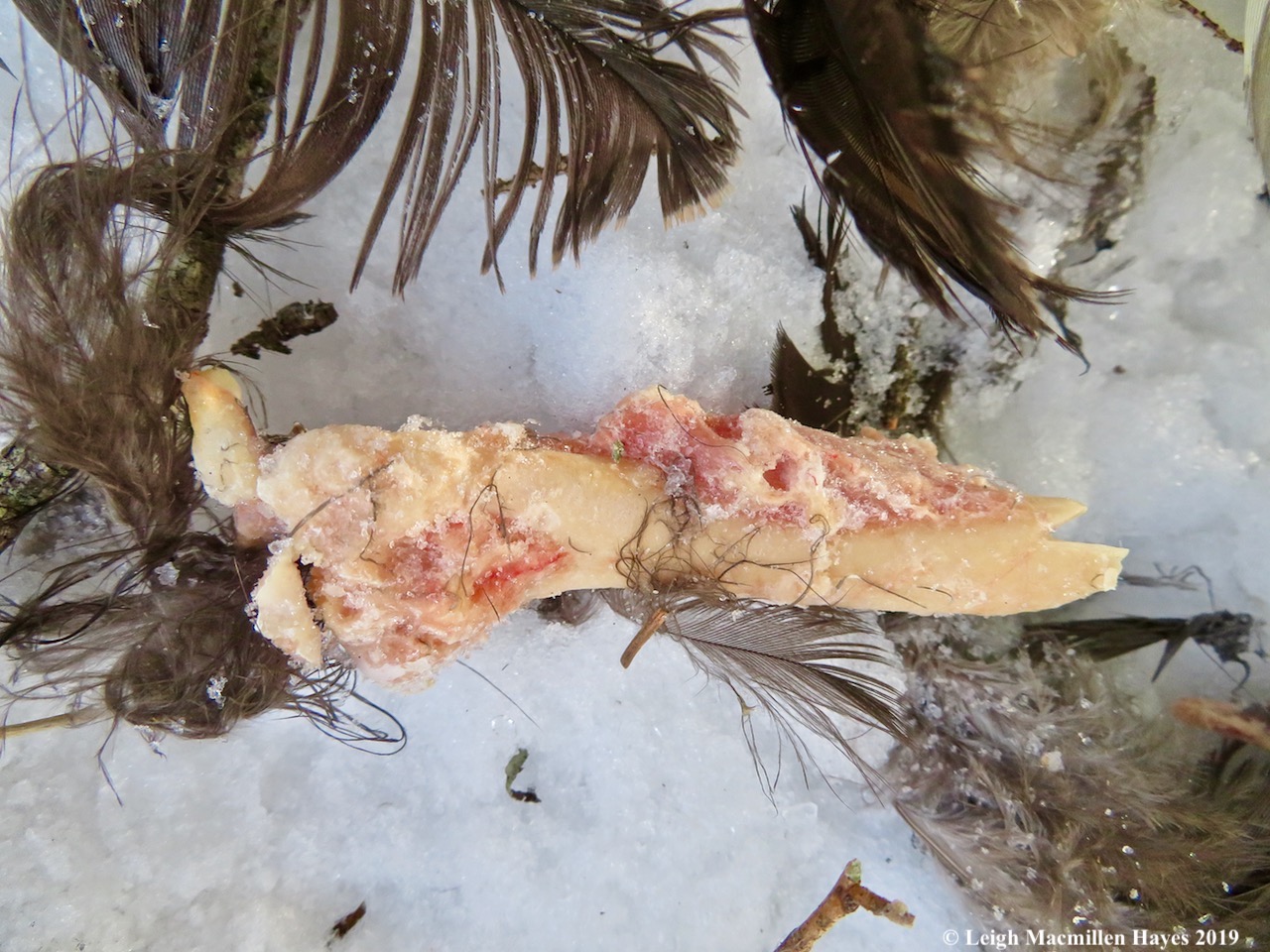
Toward the shore we tramped and suddenly one of us found a display of feathers and cartilage.
And then another about ten feet away.
And still another.
Beside it all, we found the calling card of the red fox to be even more prominently displayed.
Later, after one of our group departed, two of us revisited the kill sight and realized that there were some black and gray hairs left behind. My assumption was coyote as we had also seen their tracks. And we found a rather robust coyote scat not far away.
So here’s the story as we pieced it together, though we know some pages are missing: The fox(es) stealthily sneaked up on the turkeys who were scratching about for food on the ground under some hemlock trees where the sun had melted the snow. They pounced on one who wasn’t able to fly off quickly enough, for if you’ve ever watched a turkey take off, you know it’s awkward motion in slow speed. We hoped that the kill was quick and the turkey didn’t suffer as its feathers were plucked. The body was dragged here and then there, and the fox urinated to stake his claim. Maybe he shared some meat with his girlfriend. Along came the coyote who didn’t care about the fox’s territory and perhaps he scared them off and helped himself to a tasty treat. We had to think about it as nature’s way and jules of energy being passed on from the insects and birds to plants and seeds to the turkey and on to the canines. They, too, need to eat.
We searched all over for a head and maybe leg remnants or other body parts, but found not much, though we did find a bony structure and wished our veterinarian friend had been with us to perhaps enlighten our understanding.
Finally, we moved on and a few feet away another sight made itself visible.
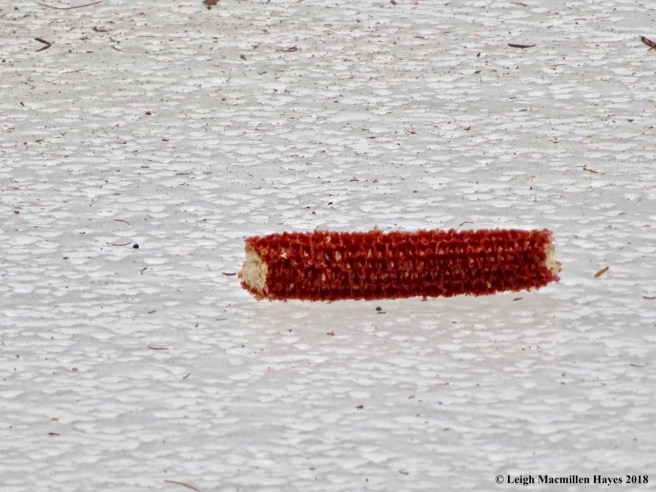
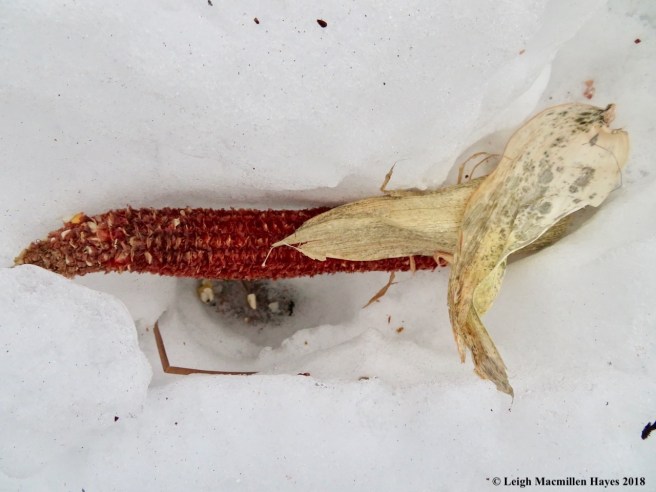
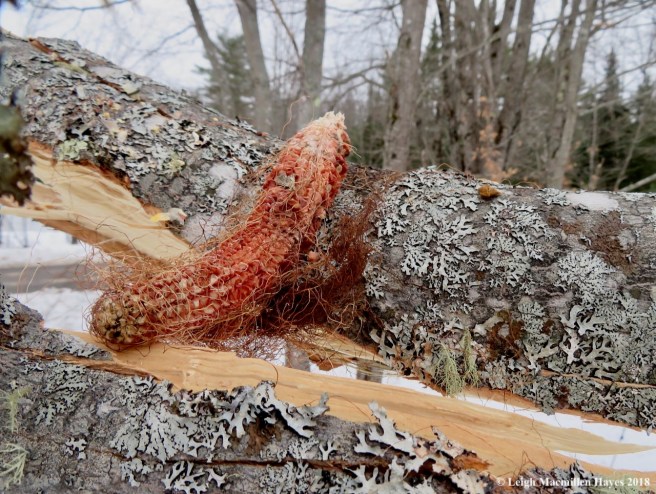
Tucked into the top of a tree snag was a partial ear of corn. The refrigeration obviously worked for it looked as fresh as one might eat on a summer day.
How did it get there? We know it came from a nearby corn field, but who was responsible for its placement? Perhaps a squirrel? Or a bird? It didn’t seem likely that a raccoon could climb the snag, but then again, in nature the impossible often happens when we aren’t looking.
Today, we looked and even when it wasn’t pleasant, we were excited for we gained a wee better appreciation for and understanding of nature’s larder.
People often ask me this question: Aren’t you afraid of hiking alone? My response is that I’m more afraid to walk down Main Street than through the woods, the reason being that it’s a rare occasion I encounter another mammal. Oh, I do move more cautiously when I’m alone and today was no different. But . . . there’s something uniquely special about a solo experience.
Perhaps it’s that my mind wanders with me and I see things I might otherwise miss when I’m distracted by conversations with dear friends and family members. That doesn’t mean I don’t like to travel with them, I just equally enjoy going forth on my own.
Today’s exploration of the Greater Lovell Land Trust’s Long Meadow Brook Reserve and the adjacent private property protected under a conservation easement with the land trust allowed such a wander, both literally as I only occasionally followed the trail, and figuratively as I was sure that the two-headed tree spirit chuckled with me, not at me. You’ll need to let your own imagination wander to see the spirits within the split tree–believe me . . . they are there.
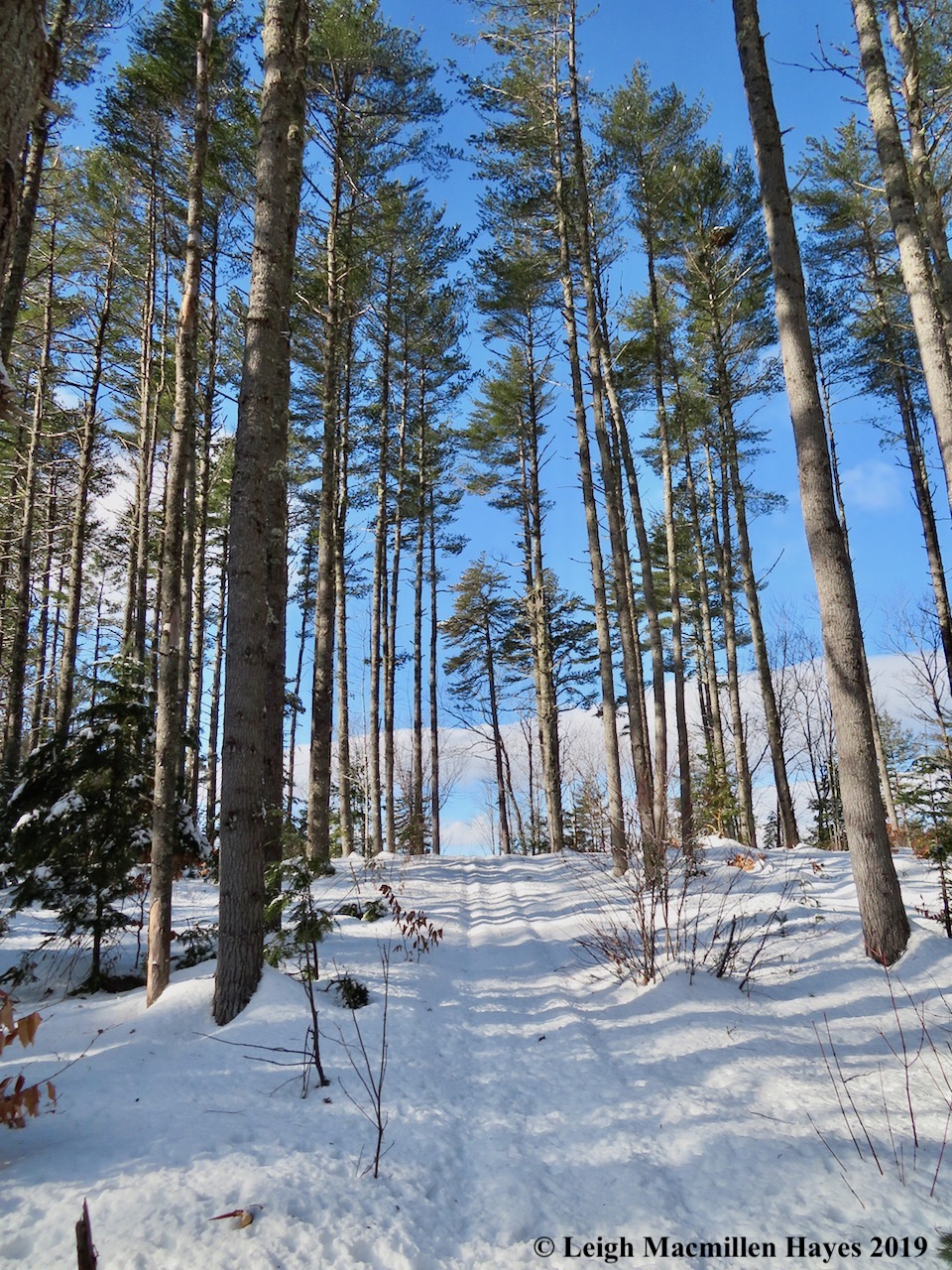
One of the things I love best about the Long Meadow Brook Reserve is its cathedral of pines–and the route I chose today appeared to lead to infinity. It’s not the blazed route, but someone had obviously been that way before.
When I reached the first bench, I heard the voices of fellow travelers and the laughter of the Lovell Recreation Summer Campers who often clamber for a seat. For the time being, their good-natured chatter was buried until they return again.
From the bench I moved across the field as many a deer had done, and found my way down to the namesake for this property, Long Meadow Brook. I’ll never forget my first visit several years ago–and the awe when discovering this view in the summer. In every season, I welcome the opportunity to have my breath taken away.
The view by my feet also garnered my attention, for it was obvious that a red fox had walked this way before me.
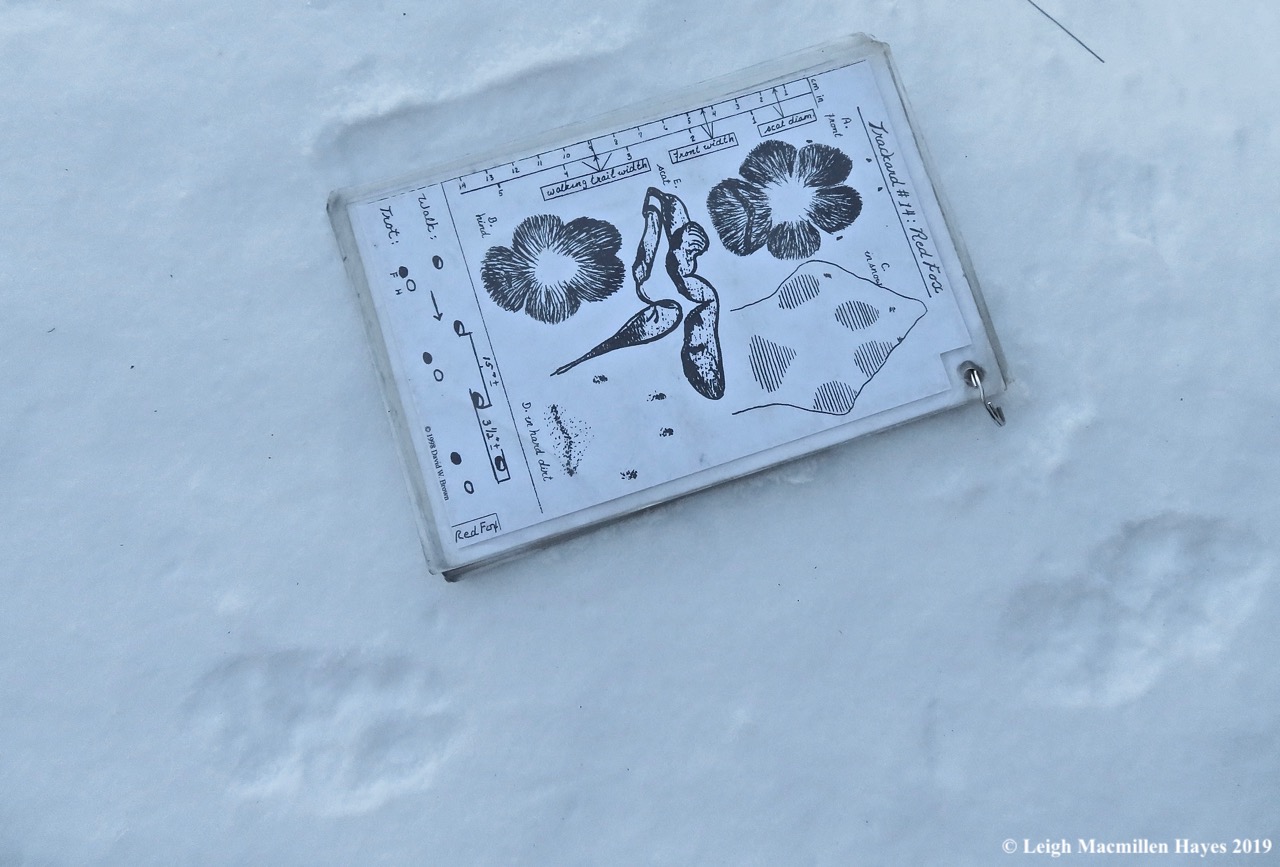
How did I know it was a red fox and not gray? Well, first I measured the print size, straddle, and stride. And then I looked at the foot morphology as presented in the snow. The prints were a bit muffled, which is one aid in identification, for a red fox has hairy feet. And . . . I spied the chevron, a little indented ridge that appears in the foot pad. If you look at David Brown’s Trackard in the previous photograph, you’ll see the chevron as a dark line.
There were other clues as to the maker of the tracks–for some frozen urine by a sapling spelled his name. And its skunky scent added a flourish to his penmanship. It’s mating season and this boy had an announcement to make.
I suspected his words were heard for it appeared that more than one fox had traveled across the old beaver dam and I found more pee at each little post.
I desperately wanted to cross as others had, but I was alone and knew it was best to stay on the eastern side.
That didn’t stop me from looking and noticing what may have been a recent otter or mink slide in the midst of the fox tracks.
Or the remains of a snowball fight that I imagined the fox affectionately tossed as his date.
Looking south, I couldn’t see any action, unless you consider the cattails. But I had to wonder, were the fox and the mink and the otter and any others at the edges keeping watch over me?
I couldn’t be sure, but I did note that the cattails parachuted seeds were eager to set off on the breeze and start their own lives.
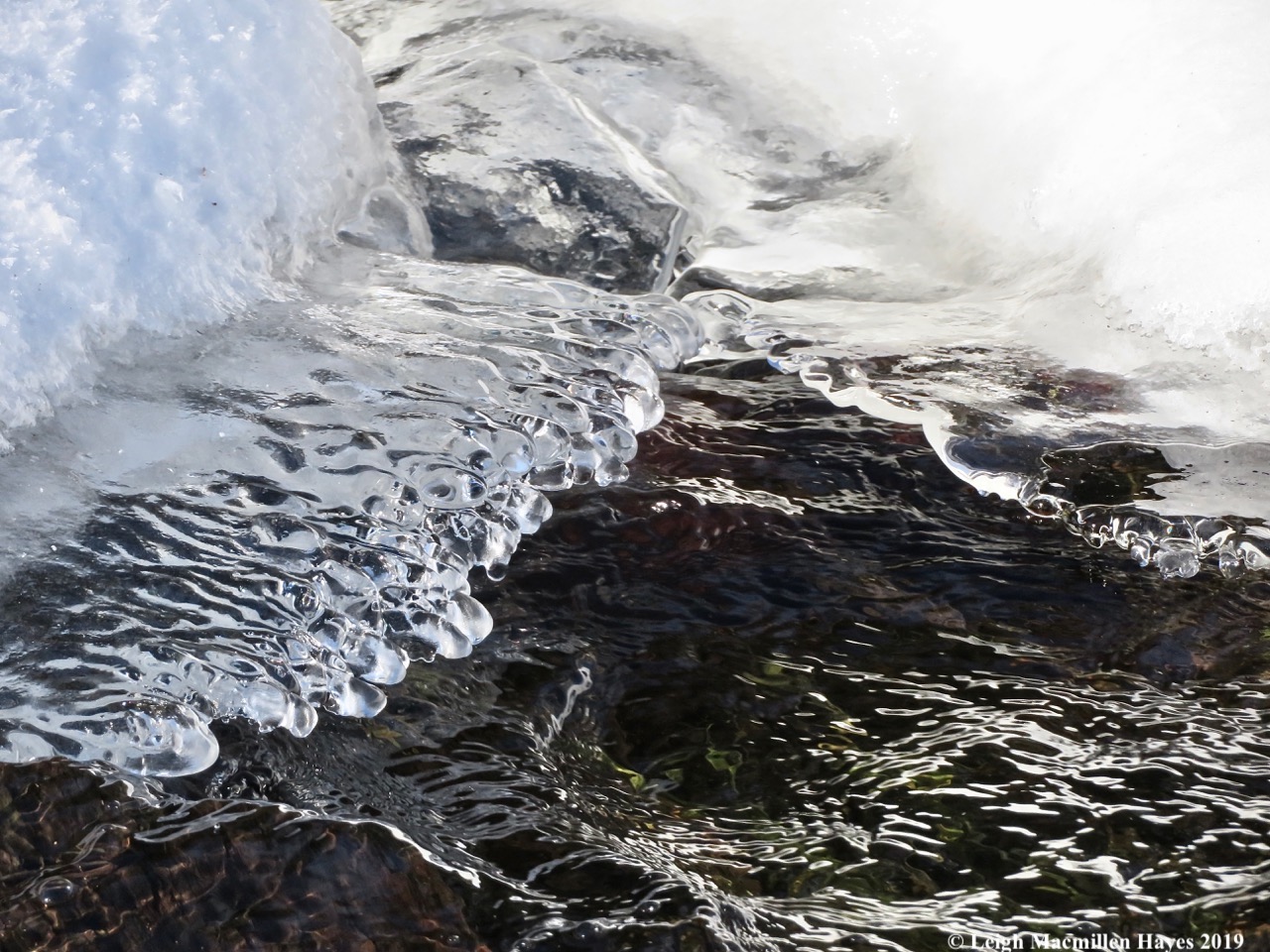
Likewise, the water at the dam added its form of action and color and texture and sound–in as many renditions as possible.
At last I moved on, followed the blazed trail and climbed to the second bench on the property, along a route the deer know so well. Where were they? Also at the edge, again keeping watch?
Had I startled them from browsing the red maples? Missing buds and long tags represented their mark on the land.
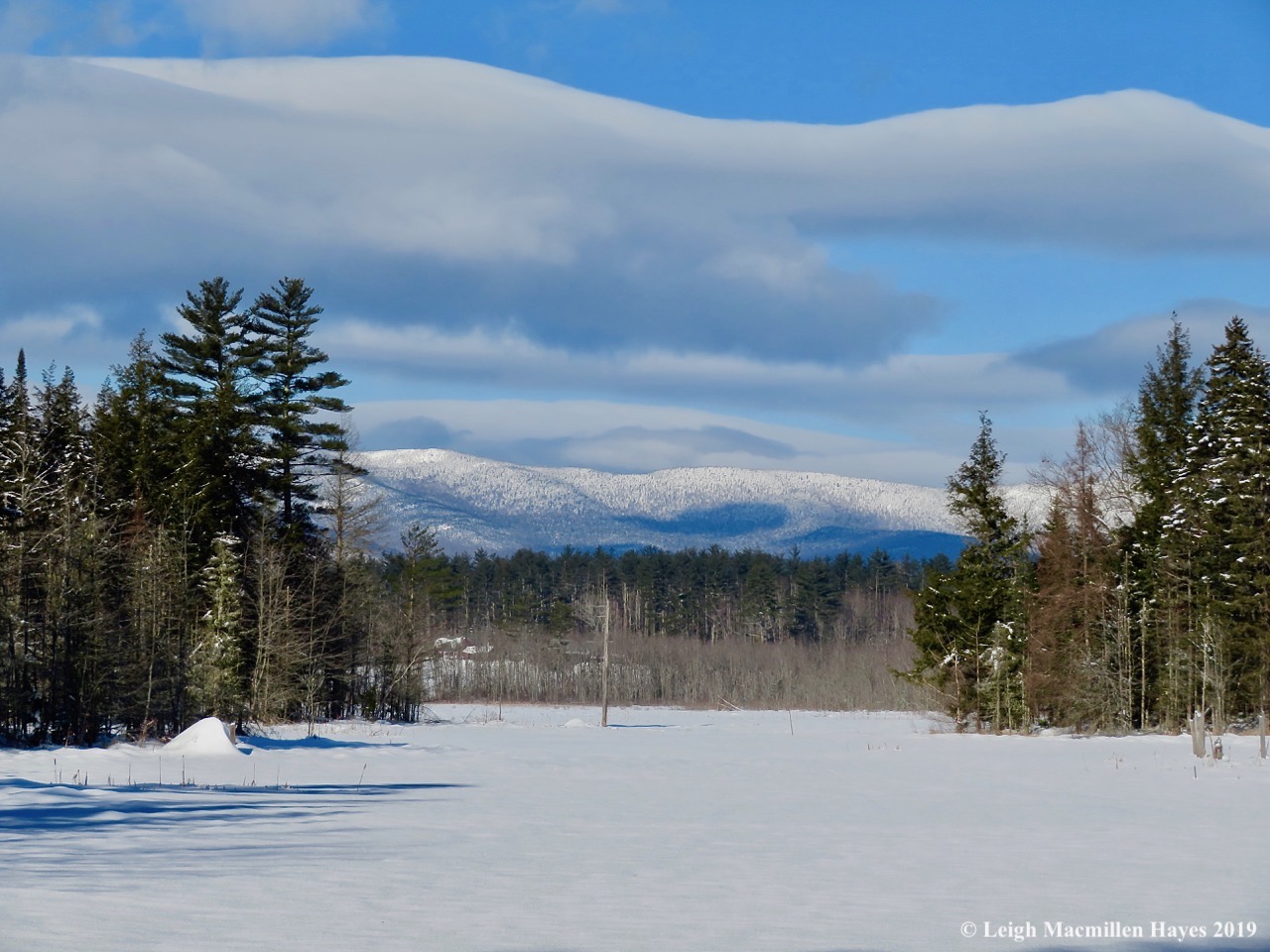
Before moving on again, I stood behind the second bench where the mountains in Evans Notch looked as if they’d been coated with frosting; and in the way of the winter world, they had.
And then I followed a seldom used trail back down to the brook, where I spied a fox track. Do you see it? It’s about in the lower middle of the photograph.
I was even more excited when I noticed mature tamaracks growing along the brook’s bank and gave thanks.
For you see, several years ago some young tamaracks that grew along the beaver dam had been inadvertently chopped down to make a pathway for the snowmobiles. I was saddened by the discovery because this is one of the few GLLT properties with this deciduous conifer that looses most of its needles each fall. And that spot had also featured balsam fir, hemlock and white pine, making it the perfect outdoor classroom.
Add to that the pitch pines that grow by the first bench, and voilà! A lesson completed.
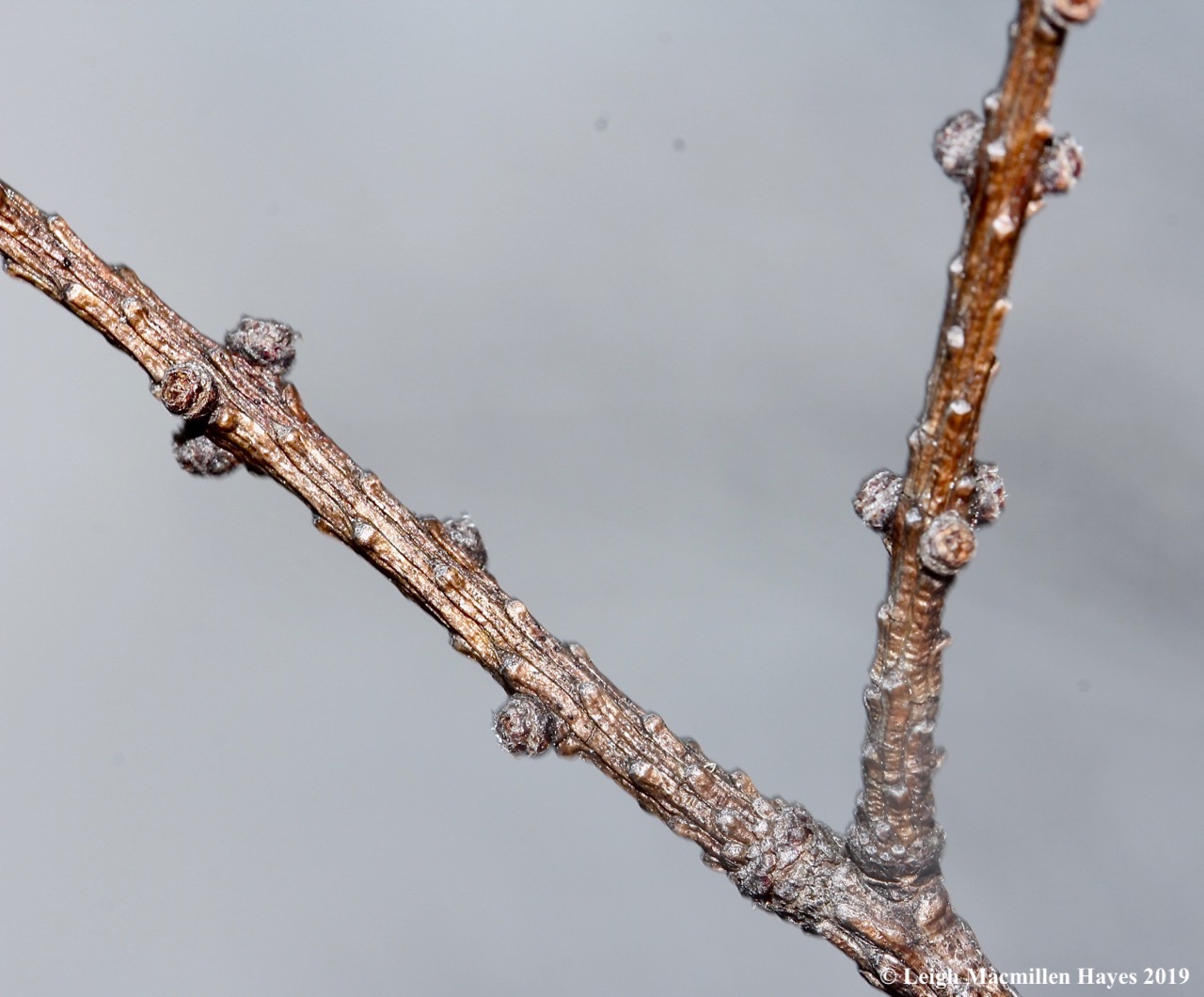
That made today’s discovery of the tamarack’s nubby twigs extra special and I knew that the tree spirits weren’t making fun of me, they were smiling upon me.
With that in mind, I was going to follow the trail back, but decided instead to journey for a bit beside the brook, where I found a deer bed in the sunniest of spots.
Eventually, I climbed up a hill and back to the trail, crossed through a stone wall to the neighboring property, continued on to a field and across that to a stump dump. Why go to such effort to reach a stump dump?
Because it’s actually a porcupine condominium hidden among the rocks and decaying tree stumps.
There were several entry ways–all showing the telltale signs of the pigpens of the woods.
Nipped twigs covered with a tad bit of fallen ice made me think the creators were snug inside and not over my head.
I did look up, but I did the same thing last week and didn’t see what others saw from a few feet back. That day, a porcupine was right over my head. Today, I didn’t think so, but the sun was bright and I couldn’t be absolutely certain. One may have been observing my actions from above.
And wondering what my fascination was with its scat. Check out those woody commas.
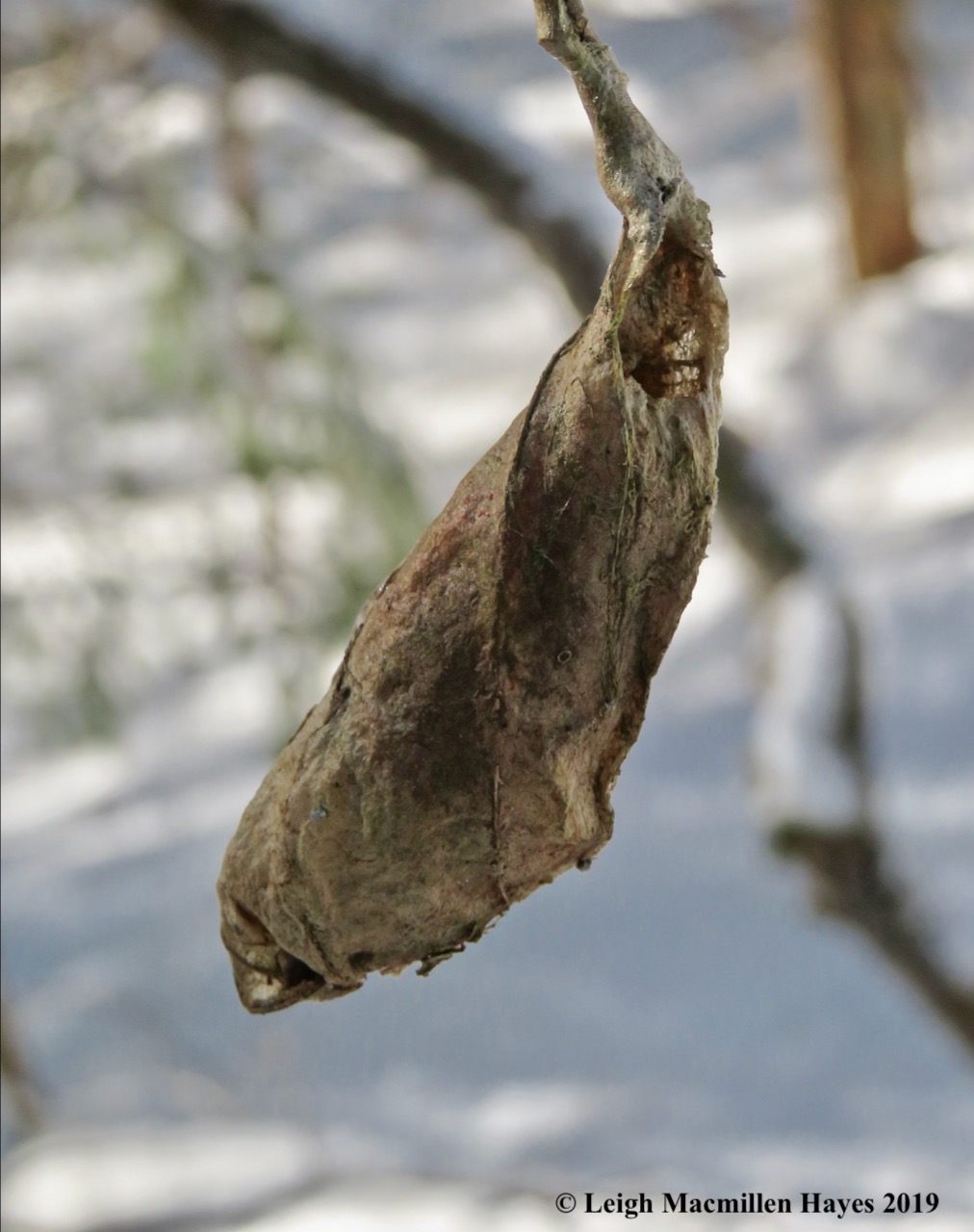
As I wandered about by the stump dump, something else also caught my eye–a promethea silkmoth cocoon.
At last I climbed back on to the porcupines’ rooftop and had to watch my step for there were several frosty vent holes and I didn’t want to land inside the humble abode.
As I stood there, I searched again for any quilled critters, but saw none. What I did see–that only a skeleton of a hemlock remained. It’s a tree the porcupines have spent more than several years denuding.
And in the tree next door, I noticed that they’d not yet reached the tip of one branch. Word has it that porcupines have many broken bones from falling out of trees. I’d love to be present when one returns for this leftover.
At last it was time for me to make my way out. I’d made a silly mistake today and thought that because it was so cold the snow would support me so I hadn’t worn snowshoes. Instead I created post holes with each step I took.
As I started across a five-acre field, my own spirit led the way–encouraging me not to give up despite the fact that I was tired.
And by the edge of the field, I did find a spirit hanging out. What was the cairn thinking? Maybe its expression as reflected at the base of the tree was one of disgust that I’d ventured forth in its space. Or perhaps it was forlorn that I was now taking my leave.
I chose to believe the latter and gave thanks for the opportunity to wander among the spirits of Long Meadow Brook.
We’ve wandered there before, my friend and I, and we’ll wander there again. For as she said, “No matter how often we come here, there’s always something new to see.” And so it was that we found ourselves crawling over the crusty snowbank to get onto the trail of the Greater Lovell Land Trust’s Wilson Wing Moose Pond Bog Reserve.
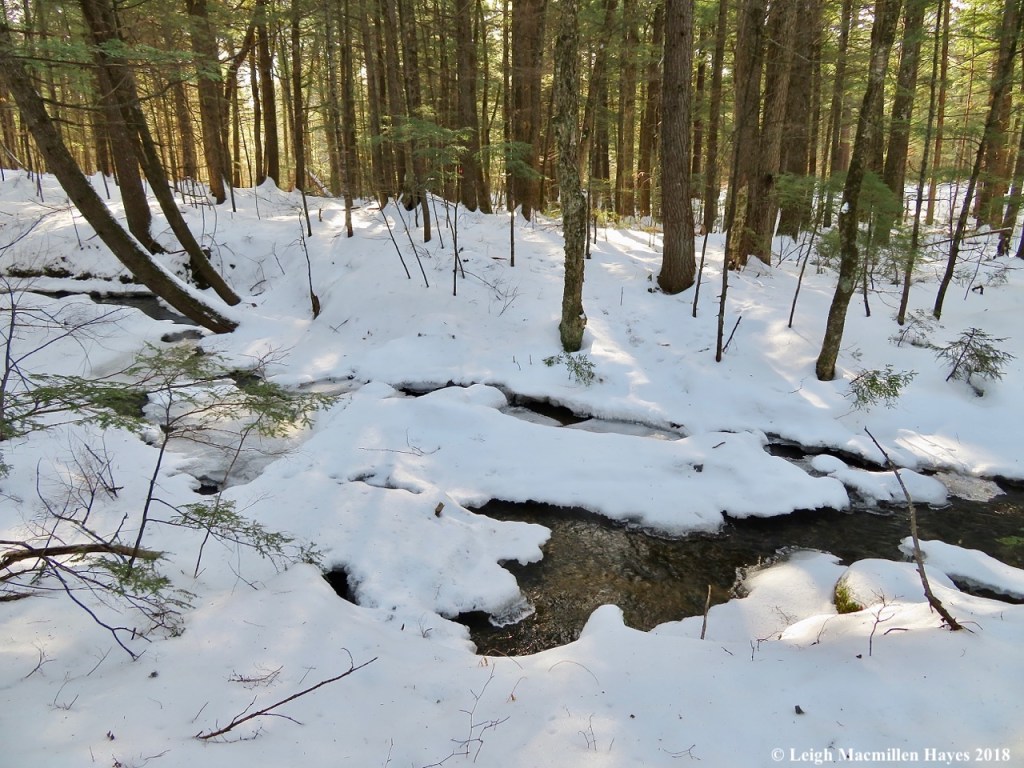
Virgin snow greeted us as we sauntered ever so slowly beside Sucker Brook, which drains out of Horseshoe Pond. All along, we were serenaded with water songs, but bereft of such from any birds, which seemed eerily odd.
We did, however, have plenty of sights to admire, including the beaded fertile fronds of sensitive fern standing stalwart in the cold water. And then it dawned on us. Yes, the fern was standing in water. We know it prefers the edges of wetlands, but today’s offerings were at least ankle deep. And then we remembered. During the summer, it would have sprouted at the margin for the brook barely trickled through the landscape prior to the rain and snow that have fallen since then.
As we stood there, we noted reminders of others, such as the basal leaves of the Cardinal flowers that grace the brook in late summer. Visions of their red heads danced through ours.
And within our crowns, we mentally gathered the fertile fronds of royal fern. Already the days are lengthening and in a flash we’ll wonder how winter passed so quickly (well, some of us will) and dried brown leaves gave way to lush green.
Then we let the brook gather our attention again. The late morning sun played with the water and snow-covered mounds, casting shadows to its liking–and ours.
Beside the brook grow hardwoods and soft, but none were as brilliant as the yellow birch. Perhaps it was the glow of a winter day that encouraged their golden sheen to stand out among the rest.
For a few moments we stood before one of my favorite yellow birches. I love how its spindly legs stand tall above the rocks in the middle of the brook. Today, all were but another memory as they stayed snug below the blanket of white.
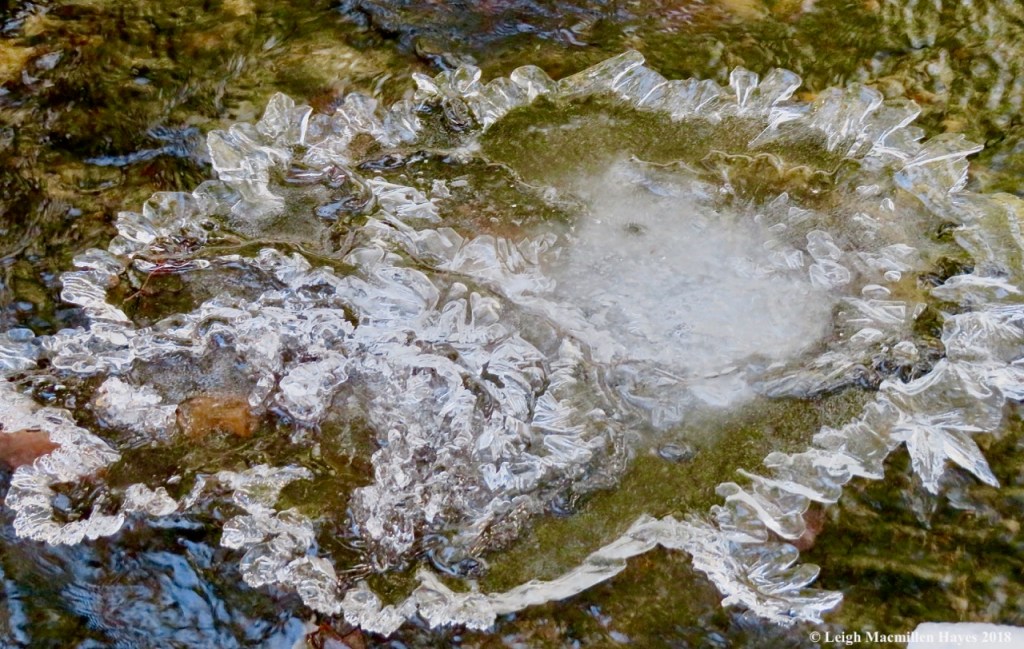
The boulders were also skirted in a coating of white, and hemmed with an icy floral display.
Eventually, we moved on–but only a few steps at a time. In this wintry landscape one might think there is so little to see. And one might be wrong. The trees know, their bark displaying crustose lichens of various shades and shapes overlapped by frullania.
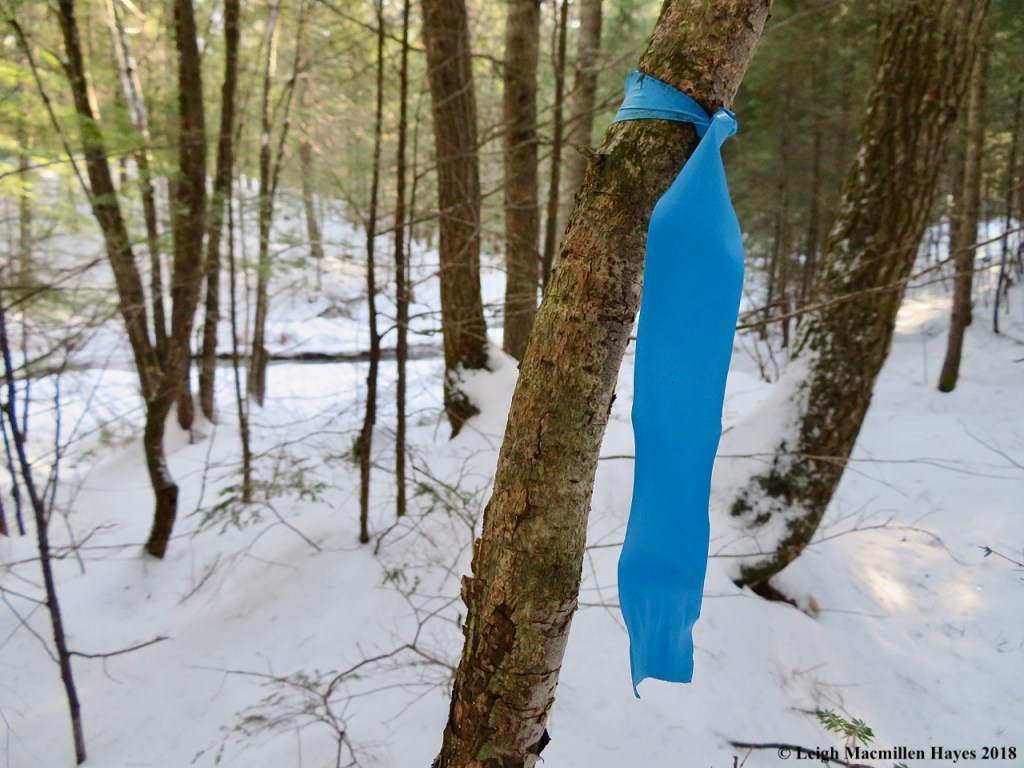
Frullania is a genus of leafy liverworts that you’ll see on many a tree as it splays across the bark in a spiderweb-like manner. Each leaf consists of two parts, giving it a three-dimension look. On this particular tree it could have been a work of art–a scene that included the branching arms of a tree against a blue sky, the blue being a trail blaze.
Given the conditions, the blazes were hidden by many works of nature. But staying on trail wasn’t always our focus.
Between the two of us we spied one sight after another that begged to be noticed, like the fruiting bodies of a lichen possibly called Snag Pin that topped small stems sticking out perpendicular to an old tree stump.
And then there was the fungi to note, like witch’s butter, this particular specimen reminding me of a duck posing in a frilly gown and crown.
Almost hidden by the snow, an old false tinder conk with its cracked black upper surface sporting a velvety margin below.
We also found tinder conks with their equally velvety spore surface, concave as opposed to the convex form of the false tinder conk. Both are known as a hoof fungus for their shape somewhat resembles that of a horse’s hoof. Somewhat. Perhaps this particular horse high stepped through the woods.
My friend’s affinity is more to the fungi, but she knew I was equally drawn to the hobblebush, their leaves tucked inside praying hands embracing the global flowerhead. Do you see the touch of green peeking out? Again, for those of you who would prefer to wish winter away, spring isn’t far off.
It took us a while to reach the viewing platform along this not so long trail and we chose not to climb up.
Instead we opted for the view beside the brook as it flowed forth into Moose Pond Bog.
Our main reason for such was that we were curious to know if any others had traveled beside the water as well. And we weren’t disappointed when we immediately spied mink tracks.
If you look closely, you’ll also note a slide, for why bound all the time when occasionally you can take advantage of the snowy landscape and save some energy. And have a little fun.
The Wilson Wing Moose Pond Bog Preserve was born prior to the organization of the Greater Lovell Land Trust. Outside the White Mountain National Forest, it was the first parcel to be conserved in the area. Behind the scenes, retired Episcopal Bishop and outdoor enthusiast George Cadigan, who summered in Lovell, encouraged his Lower Bay of Kezar Lake neighbor Wilson Wing to purchase some acreage along Sucker Brook in the early 1970s and donate it to The Nature Conservancy since the GLLT didn’t yet exist. Additional acreage was added in the late ’70s, but because the nearest office of the conservancy was located closer to the coast and the GLLT was beginning to take shape, the land was deeded to the land trust with the request that it be named for Mr. Wing.
The 32 acres beside the brook is a preserve managed primarily in its natural state for preserves are deemed to be forever wild due to fragile ecological conditions. That means that when a tree falls at Wilson Wing, its voice will resonate in a variety of ways before it finally decomposes because it can’t be touched. It will serve as habitat to a variety of species whether on land or in water.
Across the street, the Bishop Cardinal Reserve is managed to protect water quality and provide recreation and habitat.
Today, I had the pleasure of meandering beside Sucker Brook with Jinny Mae in a fashion that I imagine Wilson Wing would approve–wandering the Wilson Wing way.
I should have known it would come to this as nothing lasts forever. My guy and I had driven to Lake Environmental Association’s Highland Research Forest and the sight at our feet when we stepped out of the truck might have been the first clue.
It was a vole tunnel–covered only by a thin layer of snow and it showed the different directions the little rodent had taken as it searched for food in the subnivean zone, that rather warm (think 32˚) space between the ground and snow where one might be protected from the harsh realities of winter. It looked like first the vole wanted to go this way and then that and there were even holes where he’d come to the surface. But what about her? Had she followed him? Or taken her own route?
Maybe it was because I’d said before we’d started that we’d check out the trails LEA had designed, but within minutes I thought it was better that we bushwhack instead for I’m forever curious about wetlands.
Or was it the fact that I said, let’s go out on the ice just after I said we need to be careful? But if we hadn’t done so, we might not have seen the small beaver lodge that we spied through the tree carcass.
Could it have been that he really wanted to get back on the trail while I wanted to look for the heron nest?
I will say he didn’t seem to mind that we saw the larger beaver lodge, though we didn’t cross too close to it.
He did seem excited about the rather fresh beaver works we discovered when I finally did what he wanted and climbed up the hill away from the ice.
But he certainly wasn’t as excited as I was about the lungwort that grew all the way up the trunk of the old sugar maple the beaver was in the process of chopping down and made me realize that the tree had survived the past history of this land . . . until now.
Below the tree was the beaver dam and I thought for sure he’d want to go down and take a look, but he didn’t have that desire.
Instead, he wanted to try to relocate the blue-flagged trail and so he followed deer tracks and headed inland.
But, my heart was drawn to the water and I really wanted to follow the brook.
For I had a feeling it would feature some cool finds. And it did.
His heart wasnt filled with joy at the sight of those five tear-drop shaped toes or the diagonal orientation of the fisher prints.
What did excite him? The discovery of blue flagging.
He did seem a wee bit enthused by another set of prints–that of a bobcat.
A burl covered in violet-toothed fungi, however, was not a view he needed to pause under.
Instead, he moved on quickly and discovered water we might need to ford.
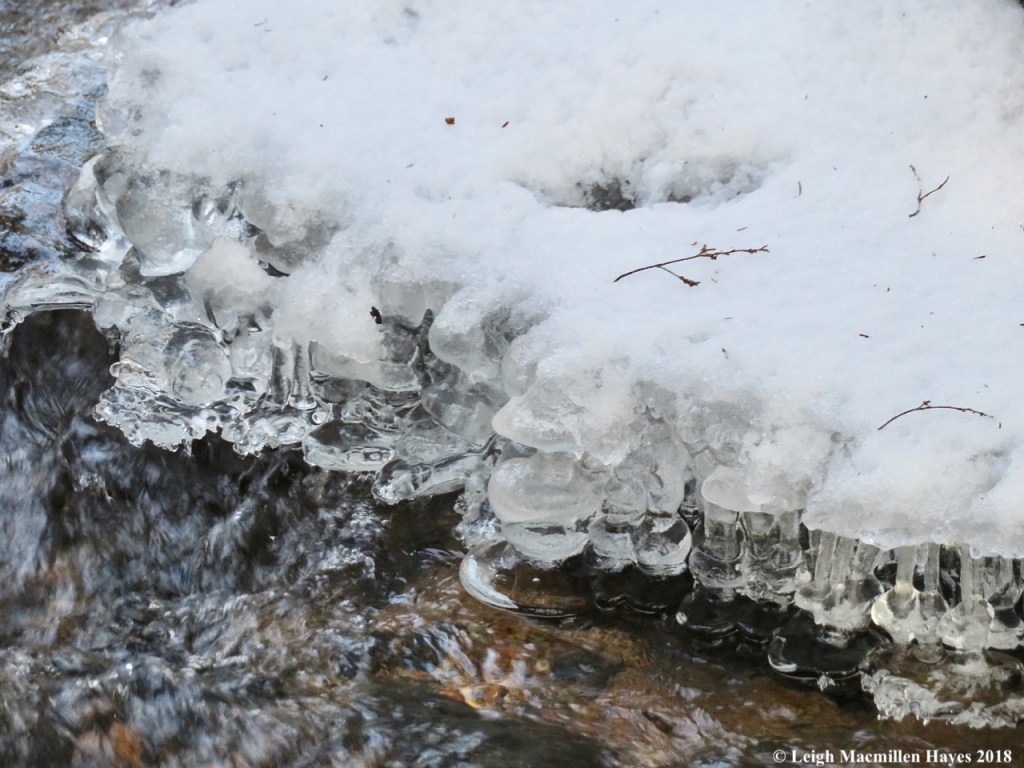
I, on the other hand, took a few moments to get my fill of ice sculptures dangling over the rushing water.
Ice. It’s so fleeting, like a summer flower. And like a flower, every day it opens up a little more and changes and then . . . whoosh. A day too warm and it dries up.
As he looked for a place to cross the brook and then realized we should just follow it, barbed wire growing through a tree drew his attention for he’d been wondering if anyone had wandered this way a hundred years ago.
As it went today, we followed the trail and one another sometimes and bushwhacked across the landscape in other moments.
We didn’t exactly stay within the forest, for eventually we found ourselves sitting on a privately owned association beach overlooking Highland Lake.
We actually sat on lunch rock together as we topped off our PB&J sandwiches with a shared Guinness in honor of this being the birthday of Arthur Guinness’ St. James Gate Brewery in Dublin. Oh, and piece of shortbread from the Shortbread House in Scotland added a sweet touch to this: Our Final Mondate . . .
of 2018. And then I followed my guy back into the forest.
For three hours this morning I wandered across the crusty snow in the forest behind our home, all the while wondering what I might see. Occasionally, I sat on a stone wall or tree stump and let the sun’s warmth embrace me on this brisk day as I listened.
There were a few sights that gladdened my heart, including the woody capsules of pinesap, Monotropa hypopitys.Monotropa means once turned, while hypopitys refers to its habitat under pine or fir trees. This one had grown under white pines by a stone wall. And from the looks of it, the capsule had not yet split open from the tip to the base, thus the seeds hadn’t been released.
As I sat there, I looked across into an area of forest succession. About 15-20 years ago, one section had been almost clear cut and pine, beech, oak, and birch saplings now vie for air space. They aren’t the only ones, for wasps had apparently flown their own route among the branches as evidenced by the nest that was now in disarray.
I’m not sure if the wasp nest was from this past summer or a previous year, for some of the pulp had been threaded into a nearby bird nest. But then again, I’ve found other wasp nests in these woods in previous years.
Within minutes, I changed my focus from tree branches to the icy snow carpet. Where the forest was young, snowshoe hare scat was abundant. Oh, how I wanted to see one. But, my movements were too loud and quick.
Where the forest was a bit more mature, but still included coppiced trees (coppiced means a trees ability to make new stems from the roots or stump after its been cut down), moose tracks and scat were equally abundant. My favorite sight was of a moose print filled with scat–including the two dew claws a the back of the foot. Since this is a sideways photograph, the dew claws would be those two little scat-filled circles, one atop the other, just right of the center.
Oh, how I wanted to see a moose. But, I had to settle for the prints, scat, and possibly another sign. Many coppiced red maples’ terminal buds had been heartily consumed and so I studied the branches. An voilà, hair stuck behind one lateral bud. You many not be able to see it, but the fibers were tubular, as the winter coat of our northern mammals usually is–thus allowing the critter to trap air inside and remain warm(er). Moose and deer don super-insulated jackets of long, hollow hairs. They also sport a dense, soft undercoat that allows them to stay cozy and warm. I’m not certain, but some of the hair specimen may have included the wispier undercoat.
I was grateful for my findings, but all along I kept thinking about the fact that I really wasn’t seeing anything exceptional and perhaps my sense of wonder had disappeared. And so I decided to head home and along the way I recalled a few fun sights I’d made from behind the glass in our back door. Can you see the red squirrel’s tongue?
And do you spy the gray squirrel that tried to hide during a recent icy rain storm?
That same day a chickadee watched intently as an icicle dripped from the feeder’s overhang.
Then there were the red foxes. One or two pass through our yard almost every day. Sometimes we see them more than once in a day. During our most recent snowstorm (when all of one inch or so coated the snow we already had) the duo graced us with a lunch time visit (our lunch time, that is).
The bird feeding station is always one of their stops for it’s a gathering place day and night of birds and other mammals.
And then, on Christmas Eve morning, one of the foxes got down on all fours in anticipation, ready to pounce . . . on a gray squirrel that ran up a tree. Red foxes don’t climb trees, but had it been a gray fox, it could have outsmarted the squirrel for they do climb.
I was almost home, and indeed back in our woodlot, when I remembered first hearing and then watching a male pileated woodpecker the other day. How do I know it’s a male? Because it has a red “mustache” on its cheek, and the red crest on its head extends to its bill.
At last I was back behind the window in the back door and periodically I checked on the activity. A downy woodpecker didn’t let me down. Check out the red heart on the back of its head–thus it was a male.
The downy’s bill is about a third the size of its head and rather narrow when compared to other woodpeckers that frequent western Maine. What I find fascinating are the light brown rictal bristles as the base of its bill, which are thought to offer some sort of sensory mission.
And then as if on command, in flew a hairy woodpecker, so named apparently for the long, filamentous white feathers in the middle of its back. I find that a curious distinction because the downy seemed to have a similar feature. But the differences I do recognize are the red color–in the male you’ll see two bars on the back of the hairy’s head, not joined together as on the downy; and the bill again–for the hairy, the bill is thicker and almost as long as the bird’s head. And easy mnemonic: huge hairy for the huge bill.
It was a while before the hairy left the long-damaged quaking aspen in the yard. Have you ever watched one? It can stay in one position for a long time, all the while looking about. Was it listening for insects? Looking for something? I don’t know, but eventually it flew to the feeder and began to eat the suet. And if you look closely, you’ll see the rictal bristles that looked like a bushy mustache atop its upper mandible.
Squirrels too, attracted my awe. Earlier in the day I heard one chastising me and thought, “Oh, it’s just a red squirrel.” Then I reminded myself that I like squirrels. I’m fascinated by them. And am having fun watching them move across the landscape, which is bringing a new understanding to my mind and will possibly be the topic for another post.
You wanna know one cool fact about red squirrels? Of course you do. Do you see the tufts of hair on the tips of its ears? During early fall, the tufts grow like a crown on their heads. It seems apropos since despite their size, they think they are the kings of the forest.
One of the resident gray squirrels (possibly the one that survived the fox treeing episode) joined the feeding frenzy out the door. It showed an outline of white fur behind its ears, but no tufts at the top–more visible if you look at her left ear.
And then there was the titmouse–a tufted titmouse to be exact. Yes, it too has a tuft . . . all year round. And the largest eyes. But why the tuft? And isn’t a cardinal also tufted? Why isn’t it called a tufted cardinal?
At the end of the day, I know there’s more for me to see and notice and question and I realize that I’ve returned to wonder. Thankfully.
It all began with a photo sent to me by a friend two days ago. “Any ideas? 8 inches wide. 20 yards from a bog,” he wrote.
I asked him about tracks in the area, but other than deer, he saw none. He did, however, see two track makers–a fisher and a weasel.
And so, I contacted a few other friends and invited them to join me on a quest to figure out what the hole was all about.
We met at the designated location, determined it would probably be in our best interest to wear snowshoes rather than Micro-spikes, and set off to search for the hole and clues.
But first, something else stumped us. Oh, wait. I wasn’t stumped. I knew it was sumac and a bird must have been munching on the seeds. But . . . I didn’t remember sumac having such long hairs and there certainly were strands associated with the droppings.
The color, however, made it incredibly obvious. Sumac indeed.
Until . . .
it wasn’t! Corn on the cob? On ice? And then we remembered that there was a cornfield located directly across the road. So . . . that made sense. But, how did it get to the other side? We’d noticed plenty of turkey tracks. Would turkeys carry cobs of corn? Not the ones that visit my backyard on a daily (sometimes twice daily) mission to eat as much bird seed I’ve tossed on the ground as possible. They scratch about and eat whatever is available on the spot rather than carrying it–as far as the four of us knew anyway.
Did the deer bring it across? Again, we’ve always seen them dine on site. And . . . we noticed that the cobs, and even occasional husks, were left within their prints, so the corn arrived after the deer.
As we continued to look around, we began to see kernels in small piles everywhere.
And with that, we suddenly spied something else that looked oddly familiar.
The hole! Notice its spiral shape. Discernible tracks? No. Dirt? Yes. Hoar frost? Yes. Hmmmm . . .
We looked around for signs. “So and So lives here” would have made it too obvious. But, we found hoar frost on an adjacent hole, which raised a few questions: 1. Were the holes connected? 2. Was a critter breathing within? 3. Or, because we were near the bog, was there warmer water below that was creating the frost?
Then we found something none of us had ever seen before. A smattering of sawdust on the snow located about five feet from the hole. Scat? Upset stomach? Two of us got down with a loupe to take a closer look and came to no conclusions.
As we continued to look around, we noticed that though there wasn’t a discernible track, it did seem that activity led to two hemlock trees.
And there were snipped off twigs cut at an angle below the trees, plus some comma-shaped scat.
With that in mind, we returned to the hole in question.
Bingo! There was a sign that clearly read “So and So lives here.” A quill! When I first looked at the photo the other day I’d suggested porcupine or fox. Porcupine it was.
Within the hole which we could tell was deeper to the left, we spotted more quills.
Mystery solved–almost, for we didn’t know about that smattering of sawdust. Porcupine scat consists of sawdust because their winter diet includes tree bark and needles. Did the animal have a bellyache?
Our excitement at finding the hole wasn’t diminished by the unsolved portion of the story. And still, we continued to find corn cobs as we moved closer to the water in hopes of finding tracks.
Indeed, there were some and we tried to figure out the pattern to determine what mammal had crossed the ice.
But before taking a closer look, there was ice on the bog’s edge to admire and we each found artistic displays to our individual liking.
Back to the tracks on the ice.
At first, with porcupine on my mind, I thought I recognized the pigeon-toed behavior.
But my companions couldn’t see it. And then I realized that I was seeing a different pattern instead. Opposite diagonals became important in the overall look of two feet together.
Studying that one pattern of a waddling animal, we soon realized another had crossed over it–in a leap and a bound. Do you see the intersection of the two in the middle of the photograph?
And, there were a couple of corn cobs on the ice.
It was all too enticing, and so we got up the gumption, threw risk to the wind, and stepped out. One of us, stepped onto all fours as she slid across, the better to distribute her weight. It also gave her a better view of the tracks.
Another came forth with caution, though she admitted she’d hoped we’d go for it.
Her husband was the smart one and he stood on shore–looking at tracks in the snow created by one of the critters we were examining on the ice. And ever ready to call for help should we need it.
Back to the pattern–do you see three sets of two feet? In the lower set the diagonal is higher on the left and lower on the right. It switches with the middle set of prints. And goes back to the same with the upper set.
Where debris had frozen into the impressions you can almost see the toes. The smaller, almost rounder right hand print is a front foot and the longer left hand print is the opposite back foot. That’s how it goes with a waddler such as this.
We’d actually seen clear prints near where we’d parked and so we knew this mammal had been in the area–those baby hand-like prints belonged to a raccoon. Raccoon tracks and corn on the cob. Hmmmm. We were beginning to make some connections.
With that figured out, we moved on to the next set of tracks and determined they belonged to a snowshoe hare–the larger front prints actually representing its back feet as they had landed after the front feet bounded forward.
As we studied the hare track, we noticed lots of movement had previously been made by another critter and I’m going to go out on a limb to say based on its size and behavior that it was related to the next mystery we encountered.
First, there was a hole around a couple of tree stumps and it was the layers of ice that drew our admiration.
Right near it, however, was another frozen over hole and we could see some tracks that were difficult to read.
But the ice was glorious and there was another small tree stump in the center.
We weren’t sure who had made the holes until we spied another and some prints in the snow.
The five tear-drop shaped toes provided a huge hint.
And a bigger hint–a hole nearby.
As usual, it commanded a closer look.
And what did we find? Fish scales. With that signature, and the prints and even the pattern of the older tracks near the snowshoe hare activity, we knew a river otter had recently eaten.
Eventually, we made our way back to the road, crossed over and checked the cornfield for we still weren’t sure who had brought the cobs to the bog. It made sense that the raccoon may have, but all of them?
We found plenty of deer tracks, many of which were again filled with either kernels or nearly complete cobs.
But it was the one stuck up in a broken red maple limb and the chitting nearby, plus scat below, and the actual sighting of a particular mammal that we think gave us the answer as to why so many piles of kernels–red squirrels.
With that, it was time for us to take our leave. First, we gave great thanks, however, to Parker for sending me the photo of the hole. When I’d shown it to another friend, he asked why the spiral. I think that was the lowest point and the porcupine climbed out and then made its typical swath around until it reached the higher ground each time it exited and entered.
The question none of us could answer–what about that sawdust smattering?
Ah well, we saved that for another day and left thankful for the opportunity to solve most of the holey mysteries.
All month I’ve been thinking about which book to recommend and then a recent purchase came to the forefront. Finally. It’s a good thing given that this is the last day of November.
Here’s the scoop: I was scanning book titles at Maine Audubon’s Gilsland Farm Bookstore and happened upon Kaufman’s Field Guide to Nature of New England. Since I already had National Audubon Society Field Guide to New England on my bookshelf, I wasn’t sure I needed Kaufman’s guide. But my friend Karen Herold highly recommended it and said she preferred it to the other book. I’m am hear to state that I wholeheartedly agree.
Kaufman Field Guide to Nature of New England was written by husband/wife team Kenn Kaufman and Kimberly Kaufman. Both are naturalists extraordinaire, he being the author of other field guides (which I don’t yet own) and she the executive director of the Black Swamp Bird Observatory in Ohio.
The Kaufmans have color coded each section of the 7.75 X 4.75-inch book, making for easy reference. And though it’s a wee bit heavy (no heavier than the other book), it fits easily into the small pack I carry for explorations of the natural world. Of course, David Brown’s Trackards, accompany it.
Speaking of tracks, the Kaufmans do offer a few identifying features of such, but they also recommend two other sources: the Peterson Guide to Animal Tracks and Paul Rezendes’ Tracks and the Art of Seeing. I highly recommend both as well,
which just happens to include me in the acknowledgements. But . . .
my go-to guide in the field remains David Brown’s Trackards.
Back to the Kaufman guide: I wish I’d had it with me this past summer when I encountered sulphur butterflies puddling on a dirt road in the western Maine town of Fryeburg. First off, the section on butterflies and moths begins with an explanation of their life cycles and the differences between the two, including an illustration of their antennae.
In addition, a feature I really like is the view of the upper and underside of the wings since . . .
some butterflies “keep their wings tightly closed above their backs when at rest,
showing their bright undersides mainly in flight,” state the Kaufmans on page 302.
I could have fluctuated between Clouded Sulphur and Pink-edged Sulphur in my determination, but the description on page 302 reminded me that the latter prefers bogs and blueberry barrens and I was standing in the midst of a farm where milkweed, other wildflowers and hay grew. The other thing that supported my attempt at ID was that though my butterflies did have pink-edged wings, the dots matched those of the Clouded in the book.
And since it is now winter, the guide will be handy to pull out when showing others what a critter looks like–especially if we have the joy of spying one.
Occasionally that happens, such as on one occasion last winter when a few of us saw this mink. Please forgive the fuzziness–a result of my excitement.
And had I purchased the book sooner, I could have pulled it out as two friends and I watched an otter frolic in early summer.
But . . . now I have it and it is the perfect addition to my pack, whether for solo hikes or with others when we question what we’re seeing.
I think one of the things that I really appreciate about this book is the voice of the authors, which echoes my own thoughts. (And their sweet dedications to each other on page 4.)
In the introduction, Kenn writes, “Once a person goes outdoors with senses attuned to nature, the sheer diversity of living things is both delightful and maddening, both reassuring and overwhelming.” Just this morning, Alanna Doughty, education director of Lakes Environmental Association, and I exchanged an email conversation about the very same thought and gave thanks that we still have so much to learn.
Kaufman continues, “If we try to look at everything in nature, we find so many things that we never get past the edge of the parking lot.” I chuckled when I read that because my peeps and I have said the same thing, whether I’m tramping with the docents of the Greater Lovell Land Trust or a group of Maine Master Naturalists.
Does the book cover every single species to be discovered in New England? That would be impossible–or at least too heavy to tote along on a tramp. “Our intent has been to cover those things that people are most likely to notice, so we have exercised a bias toward the most conspicuous plants and animals.” With that in mind, my suggestion: purchase Kaufman Field Guide to Nature of New England and throw it into your pack. Then purchase any other guide books and refer to them when you get home.
Book of November: Kaufman Field Guide to Nature of New England by Kenn Kaufman & Kimberly Kaufman, Houghton Mifflin Harcourt, 2012.
The other day a sign caught our attention as we drove to Overset Mountain and we realized we had new trails to explore. But, we, or rather I, drove by so fast that we didn’t know which local organization owned the property.
If my guy read these posts he would chuckle or guffaw at my comment about driving too fast for he is of a different opinion. But suffice it to say that we didn’t read the name of the land trust on the sign and so this morning I contacted Loon Echo Land Trust because in my online research, their name was associated with the property. Maggie quickly let me know that I needed to contact Lee at Western Foothills Land Trust and violà.
Both have been involved in the Crooked River Forests Project for as is stated on the LELT website: The Crooked River has been identified as a priority for conservation as it is the largest tributary to Sebago Lake, with 38% of the inflow, and it offers local recreational opportunities and is situated above high quality sand and gravel aquifers. The river has been identified in the state’s Natural Resources Protection Act as an Outstanding River Segment with AA status; free flowing with the best water quality. This trout fishery is home to one of only four native populations of landlocked salmon in the state and is known to host one species of anadromous fish (American eel) and is thought to historically host Atlantic salmon and sea lamprey.
As I pulled up to the sign today, however, the ownership was obvious. The name, Two Bridges, was not so. The area has long been named such, and all we could imagine is that twin bridges once spanned the Crooked River in the area where we stood.
Since the parking lot was under construction, for the property won’t officially open for another two weeks, we parked on Plains Road rather than Route 117 in Otisfield.
At the start, the trail was wide and straight, and we both hoped for a change. Oh, don’t get me wrong. It was lovely and we had fun naming all the evergreens, including white and red pine, hemlock, balsam fir and red spruce, for those were the most abundant species, with a few young beech, red maples and red oaks thrown into the mix. But . . . we wanted diversity. And we wanted to walk beside the river.
Soon, thankfully, we came to a Y in the road and a new sign post, or so we imagined it to be. We chose the trail to the right since it was closer to the water.
And within minutes our reward awaited. That being said, we’d followed a spur to the riverbank and since there were no telltale pieces of flagging we suspected it won’t be marked as a public trail.
Further along, we again spent time by the river, and noted its sculptures made of decorative roots . . .
and splashes of ice.
And in the mix–a rare sight indeed: an ice disc, this one being about three or four feet in diameter and spinning in an eddy.
Eventually, the trail took us across a bridge constructed by the land trust in October 2017 that will provide the landlocked salmon and brook trout with another mile of spawning habitat.
And that’s not all. We saw plenty of evidence that mammals inhabit the space from deer . . .
to fox . . .
to bobcat!
There were several intersections, and we kept turning toward the river, which took us along trails more to our liking as they narrowed and twisted and turned through the forest.
At one point, a tree arched over the trail and its purple crust fungi added a different color to the display. I think it was Phanerochaete crassa.
My guy pointed out the hugging cousins–a white pine and hemlock and I was reminded of my finds on Black Friday. “I knew you’d like it,” he commented. He knows me well.
Because we were in an evergreen forest, we noticed several examples of witches’ brooms. No, they were not the variety that one might have expected on Halloween night. Instead, dense masses of shoots rose from a single point on an otherwise normal branch and created a nest-like structure. Their cause: fungi, viruses, bacteria, mites or aphids.
Speaking of the latter, aphids created the cone galls we knew as witch’s hats on witch hazels that grew near the river. The little structures provided both food and shelter for the critters that developed within.
We also spied lungwort on a few hardwoods, its leafy structure springtime green as it photosynthesized in response to the flurries that floated earthward during the morning hours.
And then the forest’s canvas began to draw our attention, from snowcapped artist conk (Ganoderma applanatum) fungi . . .
to icy reflections, . . .
man-made sculptures, . . .
and dazzling trail markers. We spied another made of pipe cleaners and a soggy feather and wondered.
We didn’t walk the entire trail system, but left knowing that we’d return for further explorations.
Because we were in the neighborhood and my guy had never seen it, I drove along Plains Road to the Ryefield Bridge. Listed on the National Register of Historical Places, the structure was built in 1912 as a double-intersection Warren truss bridge.
The bridge spans the Crooked River between Harrison and Otisfield and is still used today. In fact, we walked and drove across it.
One of our favorite parts was the sign at the top, which not only stated the construction company, but also honored the selectmen of the day.
My excitement about the bridge was equally matched by some prints I spotted when I stepped into the snow to take a photo from the river bank. Beaver prints! Like the ice disc in the river, beaver prints have always been a rare find. Often, I can see their pathways, but not decipher their tracks for their tails swish out the features.
But today, not only the tracks and a trail down to the water, but beaver chews, their snack sticks, left behind on the ice.
We took one final look before heading home–Crooked River framed by the bridge. And we both gave thanks on this Mondate for a land and a bridge preserved.
Winter hiking is our favorite, but what to wear on our feet is always a question. Today, we chose our hiking boots over winter boots and micro-spikes rather than snowshoes.
We trusted L.L. Bean would have approved, especially given that we would be hiking in his hometown of Greenwood, Maine. We were, after all, wearing hiking boots purchased in his flagship store and various other products featuring his name. Don’t tell him that while our snowshoes, which remained in the truck came from his place, we’d purchased our micro-spikes at EMS.
Before turning onto Willis Mills Road and heading toward the trailhead parking area, we first past by a cemetery of sorts, where old trucks and various truck-related equipment have gone to rest.
And then, in a matter of minutes we were on the trail and our focus changed to all things natural, including weasel tracks. Notice the diagonal orientation in the pattern.
It made perfect sense to see weasel prints because we were near the Sanborn River and though I didn’t take the time to measure them, but the size of the straddle I assumed mink.
For over a mile we walked beside the river and loved the sights and sounds it offered, and especially the splash-created icicles.
When we weren’t focused on the river, we noted its neighbors including snowshoe hare prints that were rather fresh. Some will remember that I refer to them as snow lobsters, for quite often the impression of the four feet (front two being their hind feet which swung around and landed parallel; back two on an angle being the front feet) looks rather like the large marine crustaceans visitors often equate with Maine.
With David Brown’s Trackards as a reference, it was easy to imagine the hare’s motion. (Note: visit my book review linked to Trackards in the sentence above and you can locate David’s website. His books and ID cards are available for sale and he mentions that you can get a good deal just in time for Christmas.)
It wasn’t only tracks and ice that drew our attention. As we crossed from the river to the pond via a connector trail, we noted a huge burl that looked like two bear cubs holding fast to a paper birch.
Along the way there were also some examples of my favorite shrub, hobblebush. We always refer to their buds as being naked for they aren’t covered in waxy scales like most. And look at those leaf and bundle scars. Following them down the twig, its fun to note the changes in age from the fresh tan scars to the two below getting grayer and more wrinkled in age–much the way we do.
As we continued on, the snow depth increased, but fortunately a family of four had passed through before us and created a trench.
We knew we were close to the pond when we began to see canoes tucked among the trees and snowed in for the season. I’d say “for the winter,” but winter is still a month away.
At last, Overset Pond stretched out before us.
And Overset Mountain in the background became our next destination.
But first, we had to walk the length of the pond as it narrowed, and then cross over a series of bog bridges below an old beaver dam.
As I waited for my guy to get to the other side before I ventured forth, I noticed something on the dam that brought yet another smile to my face.
But first, I had to get to the other side–which I surprised myself and did without hesitation. Prior to this crossing, we’d walked on at least ten other bog bridges, some easier to conquer than others. This was the longest and featured several different levels, but we were both successful in our attempts.
And so I rewarded myself with another look at the dam–and the otter slide that crossed up to the pond. Do you see the otter’s prints?
Feeling great about the crossing (because I’d been dreading it), we began the upward climb. Our spikes were a good choice because they gave us some traction on slippery leaves and rocks, but they did gather occasional clumps of snow. We got into the habit of banging them against any available rock to declump the frozen snow. As we moved upward, the snow depth deepened to about a foot.
The family we’d passed on their way out had told us the mountain had been challenging, but they had neither snowshoes or micro-spikes and we could see where they’d slid frequently on rocks hiding below the snow. We moved with relative ease even as our heart rates increased and at last my guy looked down over his kingdom. Actually, it’s the kingdom of Mary McFadden and Larry Stifler. Through their generosity, many trails in the area are open to the public. And through the work of their employee, Bruce Barrett, those trails are well maintained.
Below . . . Overset Pond in the shape of a heart. What’s not to love.
After a brief apple and water break, we began our descent on the loop trail. The trees growing beside and on the boulders reminded me of the truck graveyard . . . naturally.
Our overall descent passed quickly. In no time at all, we came upon more canoes swamped with snow.
At last the trail came to an end and we followed a snowmobile trail for at least a mile back to the truck–our six mile journey completed.
We’d planned to enjoy a brew and burger at Norway Brewing Company after the hike and were thrilled with our choice. He sipped Life’s a Peach on the left–a new brew just released today and made with Maine peaches. My choice on the right–Left Turn.
We played Rummy while we waited and then ate our burgers with gusto. We knew they’d serve as lunch and supper, a meal we’ve named lupper in the past.
At the end of the day, we were beat (still are) but happy. Thought I’d hoped to see some wildlife other than the occasional squirrel, that wasn’t to be. But we saw plenty of tracks and I was especially pleased with those of the weasel, hare and otter.
With a mantra of “Shop Locally,” I did just that on this Black Friday 2018. Thankfully the time to take advantage of the doorbuster sales wasn’t limited and so it was okay that I didn’t pull into the Flat Hill parking lot until 1pm.
Turns out, as in any shop today, the aisles were a bit crowded with customers searching for items on clearance and other great deals.
I paused for a bit in aisle one, where I contemplated the Made-in-Maine artwork and thought about those on my Christmas list. Perhaps a water scene for Marita because she likes the gurgling sound of a brook.
For Pam K., I decided on an ice sculpture to add to her winter home.
And for Pam M., I was sure that an abstract piece would be just right–especially as it echoed the mountain range and transformed into a bird, only sorta/kinda M.C. Escher in style.
There were others on the list to consider and the decisions became more difficult as the selection increased in aisle two. Mouse, vole, squirrel both red and gray, deer and coyote tracks all were on display and the sign indicated I could buy one and get one free. But which one to buy? And for whom?
And then just like that, it became clear–the coyote track for Simon because he’d caught on quickly to the squirrel patterns and appreciated that the predator was hungry.
For every one set of tracks, there were fifty others, especially those of the mice and squirrels. But I chose the porcupine trough as my “get one free” when I saw it on the climb up the hill.
The trough with its pigeon-toed prints and sashaying tail would be perfect for Bob.
Of course, I could have mixed and matched the prints, but thought it best to keep them separate.
Continuing the dash for more must-have gifts, I spied a mossy maple polypore on a lower shelf and thought immediately of my guy. He doesn’t like to consume mushrooms, but there’s something about the mossy maple that draws his attention.
And then on an end cap I saw the kissing beech/maple out of the corner of my eye and turned to read the sign: Limited in Quantity. On impulse I purchased it. Maybe I’ll stick it on my guy’s bureau and he can wrap it up for me. I’ve done that before ;-)
There were a few free surprises. Not all freebies are created equal, but I really liked the bronze ornament that would be a nice addition on our Christmas tree.
At last it was time for a little break at the Flat Hill Cafe. Today, the view offered more bang for my buck as Mount Washington glistened white behind the other mountains.
Also enjoying the view and the oxymoron of the name Flat Hill were fellow shoppers Bob, Pam K., Marita, Simon and Pam M. I made sure they didn’t see what was in my pack and visa versa. I do so hope they are as excited as I am about the gifts I purchased for them.
When the cafe got crowded, we decided to walk back down the main aisle together toward the check out. And then a few of us remembered we had coupons for the seasonal section. But . . . alas, we were too late. It was the only part of the store that was closed because everything had sold out. The stepping stones were covered with water and ice to keep us from venturing any farther. We turned around, only a bit disappointed that our shopping adventure was about to come to an end, but understood that being a three-season section we had taken our chances by arriving so late in the day.
No matter. The view from Perky’s Path thrilled us. All afternoon, we enjoyed the lighting, and especially the sun as it lowered–making this Black Friday light up, naturally.
I highly encourage you to visit; the doors are open all hours and it’s a great place to shop in style.