
We marked the Winter Solstice yesterday, but truly . . . winter arrived early this year. And those who have followed me for years know that this is my favorite season. The cold air. The fresh air. The creaking trees. Even the early darkness. It all makes me feel alive.
And most of all, tracking. Well, add insects to that, though tracking them isn’t a skill I’ve acquired . . . yet. And probably never will. But finding them on the snow and feeling reverence for their ability to survive (most do) despite days like today when the temp is in the teens but feels like single digits, what a wonder!
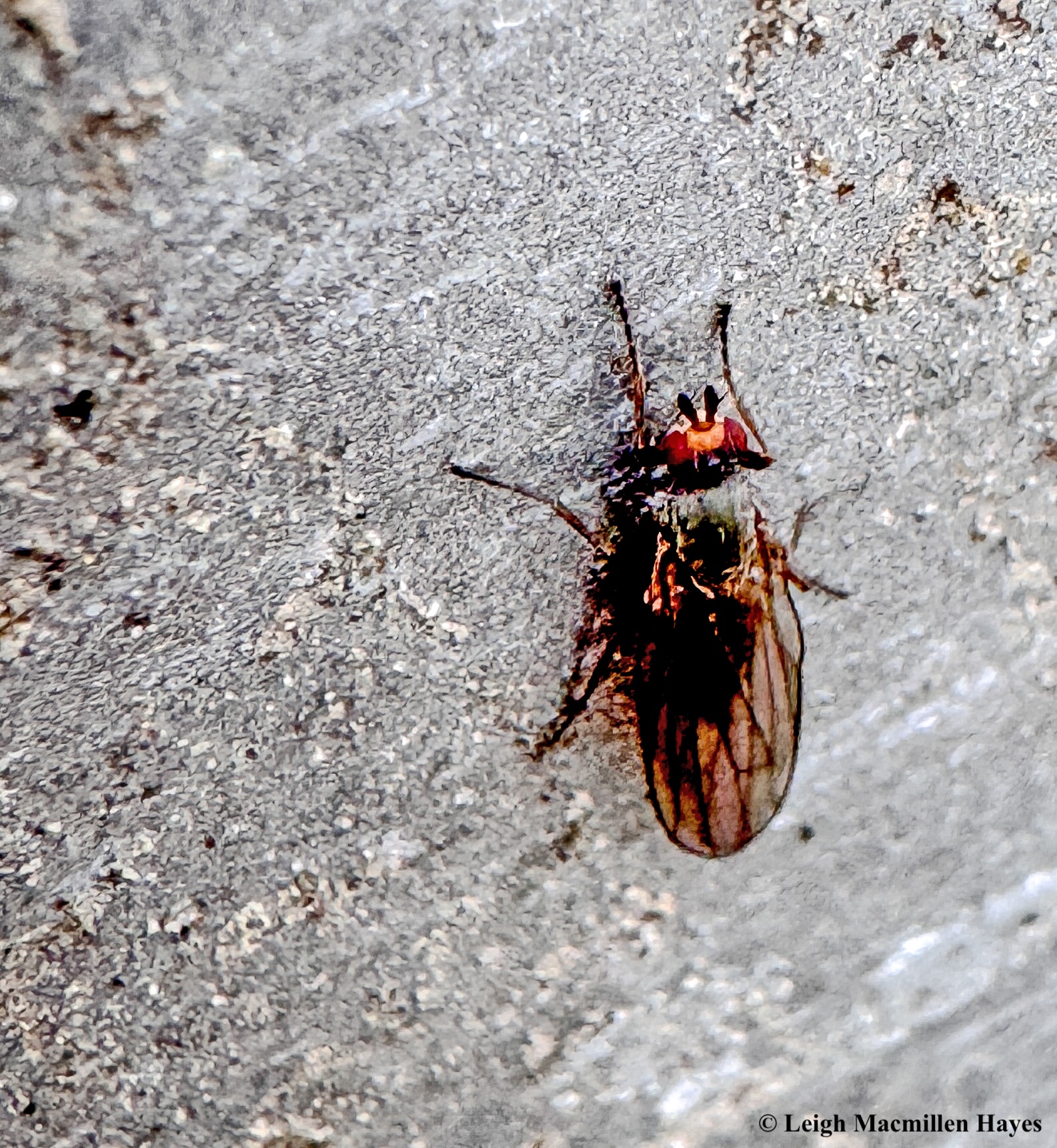
Some even surprise me by appearing on the door of my dirty truck. This is a Winter Fly and I’m in awe of its orangey-ish face with those big red button eyes.
Mind you, this fly is teeny, tiny. And still . . . it was out and about.

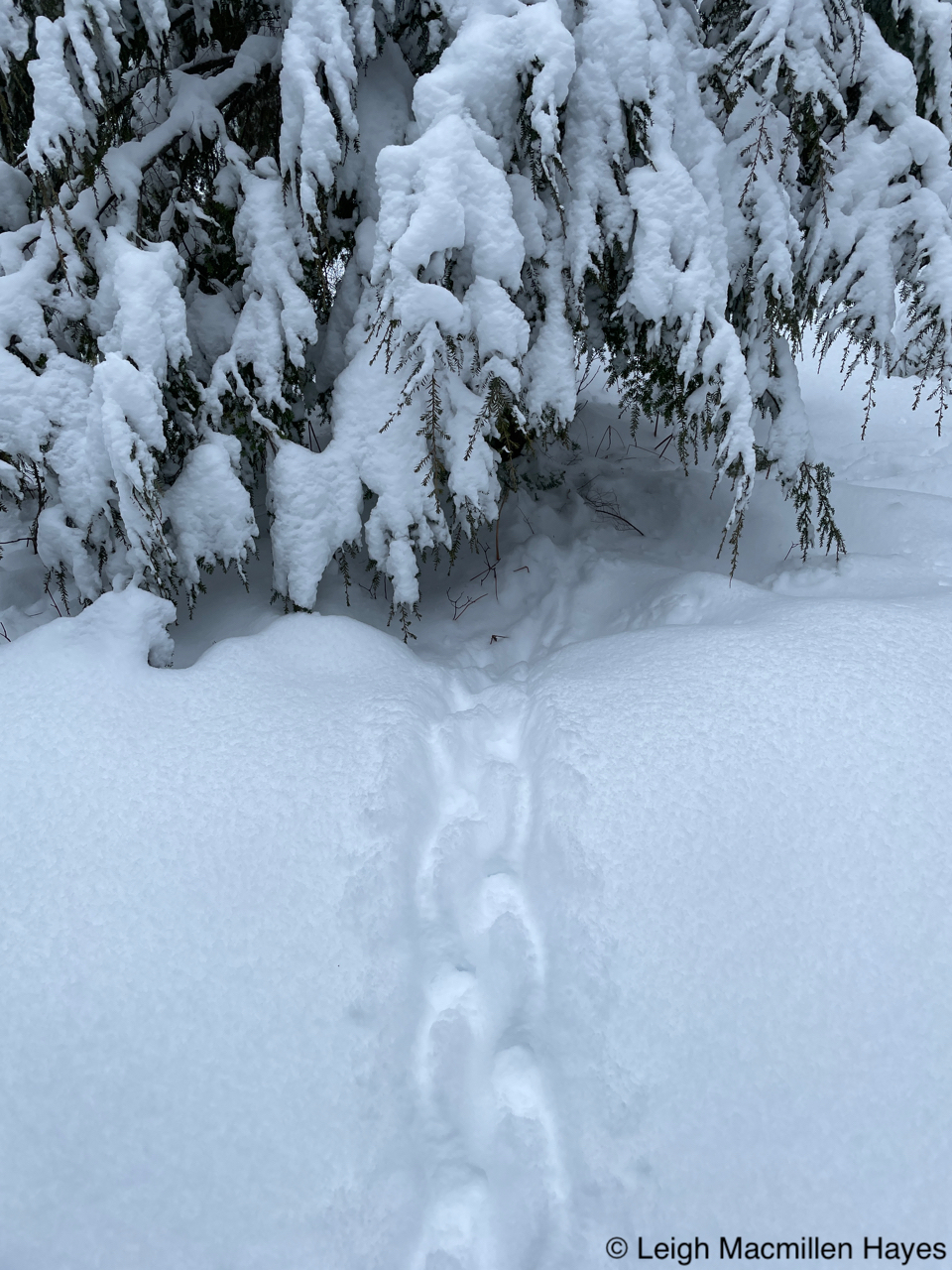
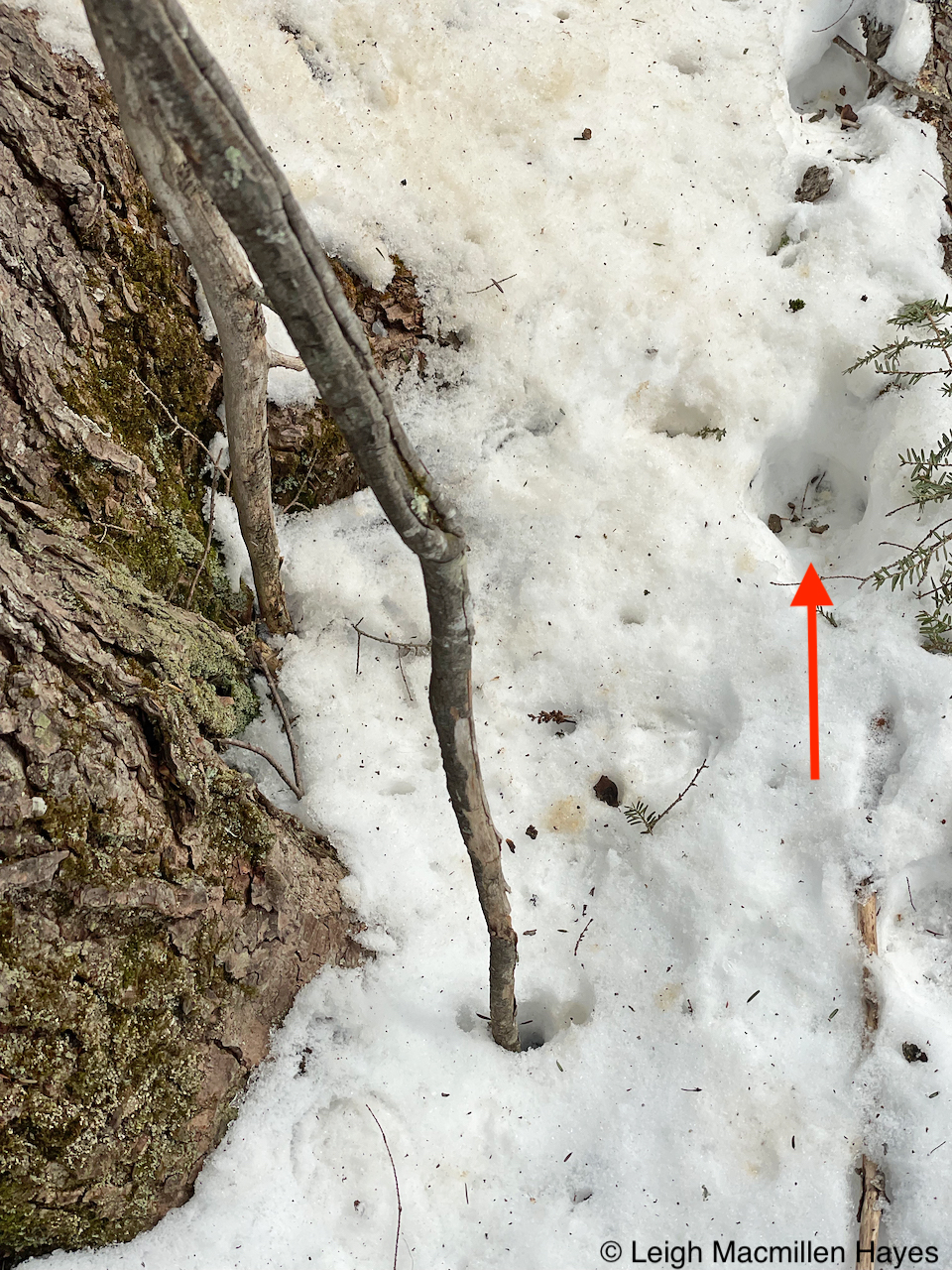
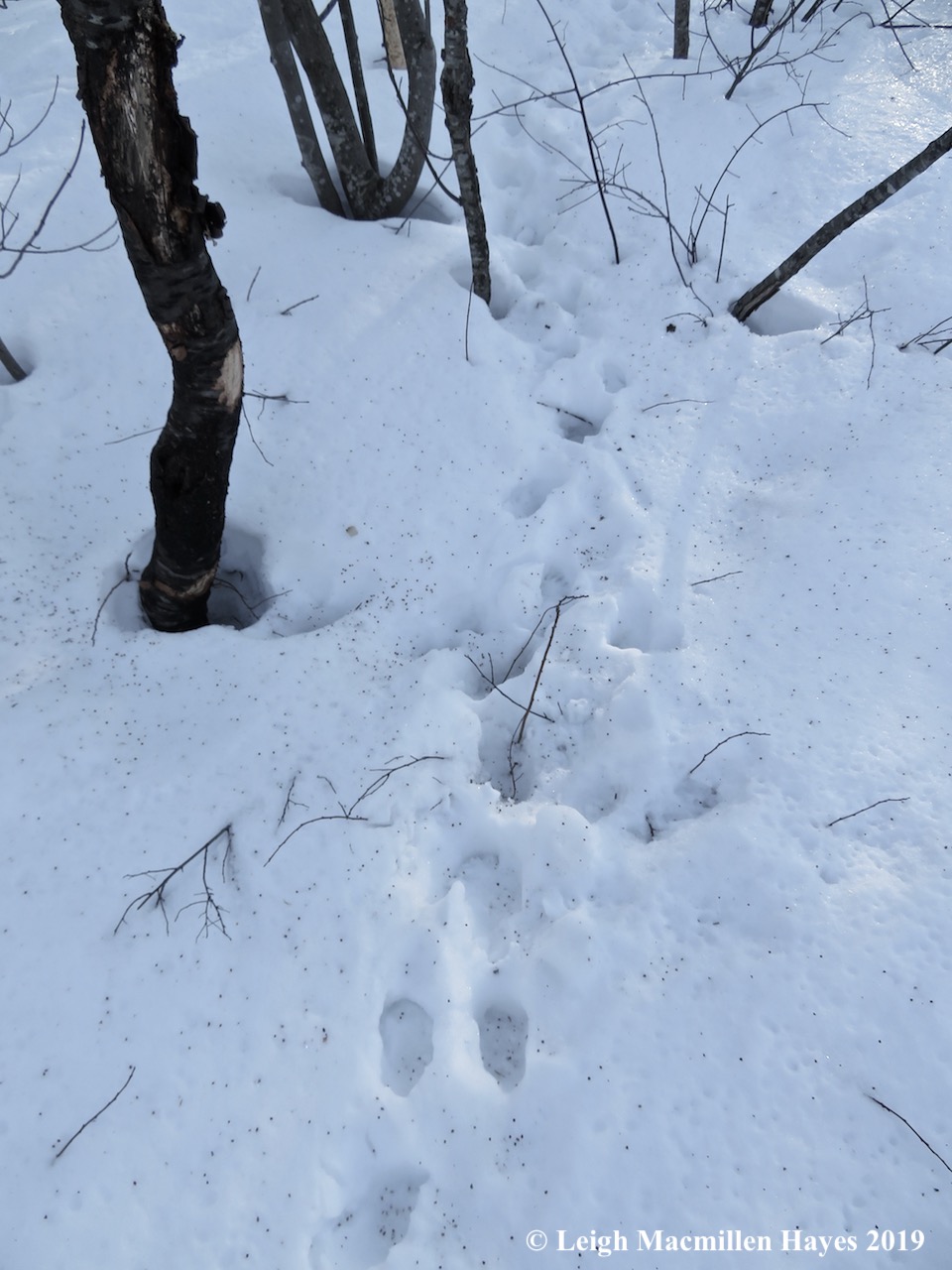
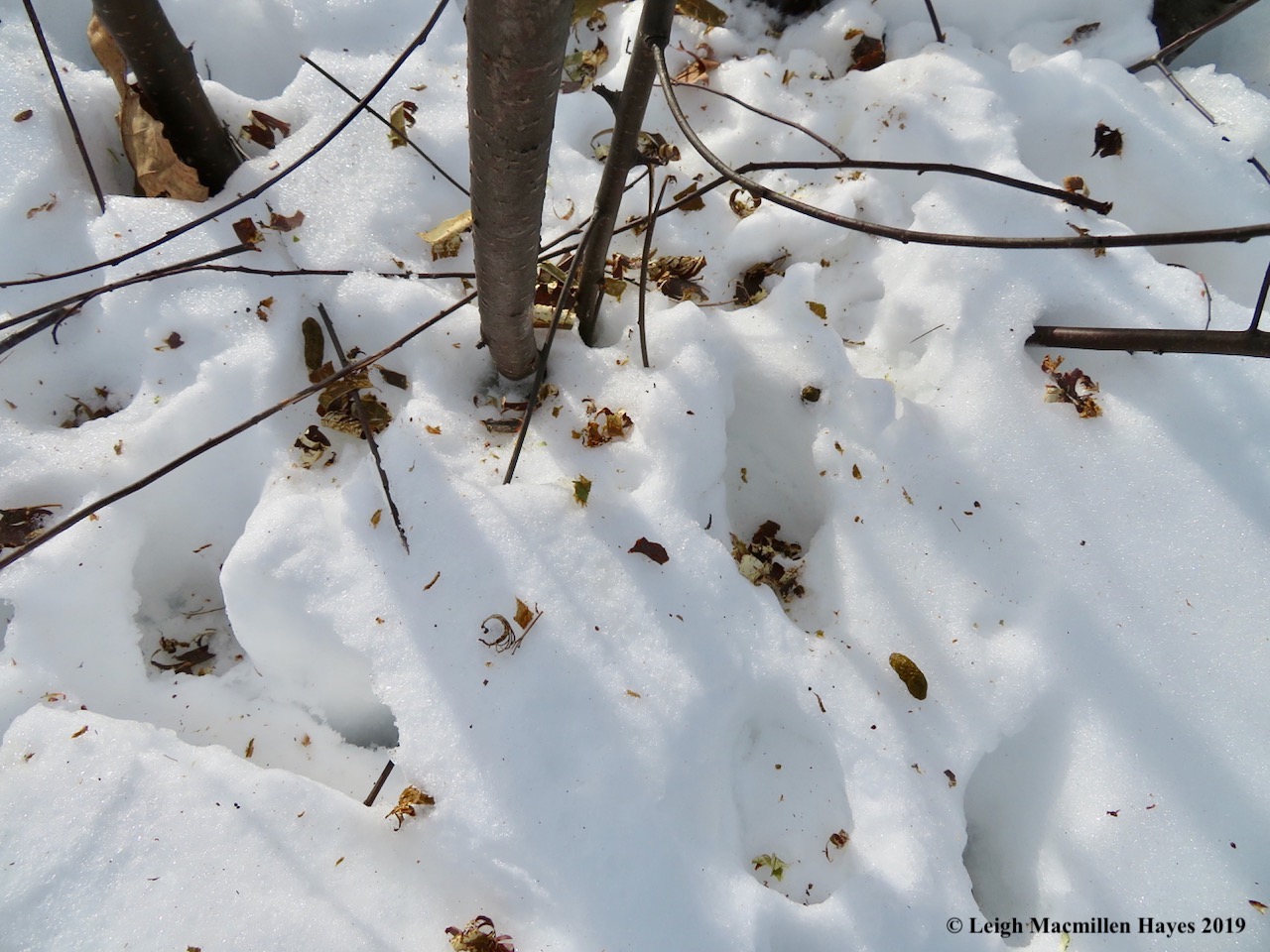
Porcupines have also been out and about and by their sashay fashion of moving through the snow, it’s easy to know where they are present.

And leave presents, they do! Dribbles of pee can often be found along the route they travel.
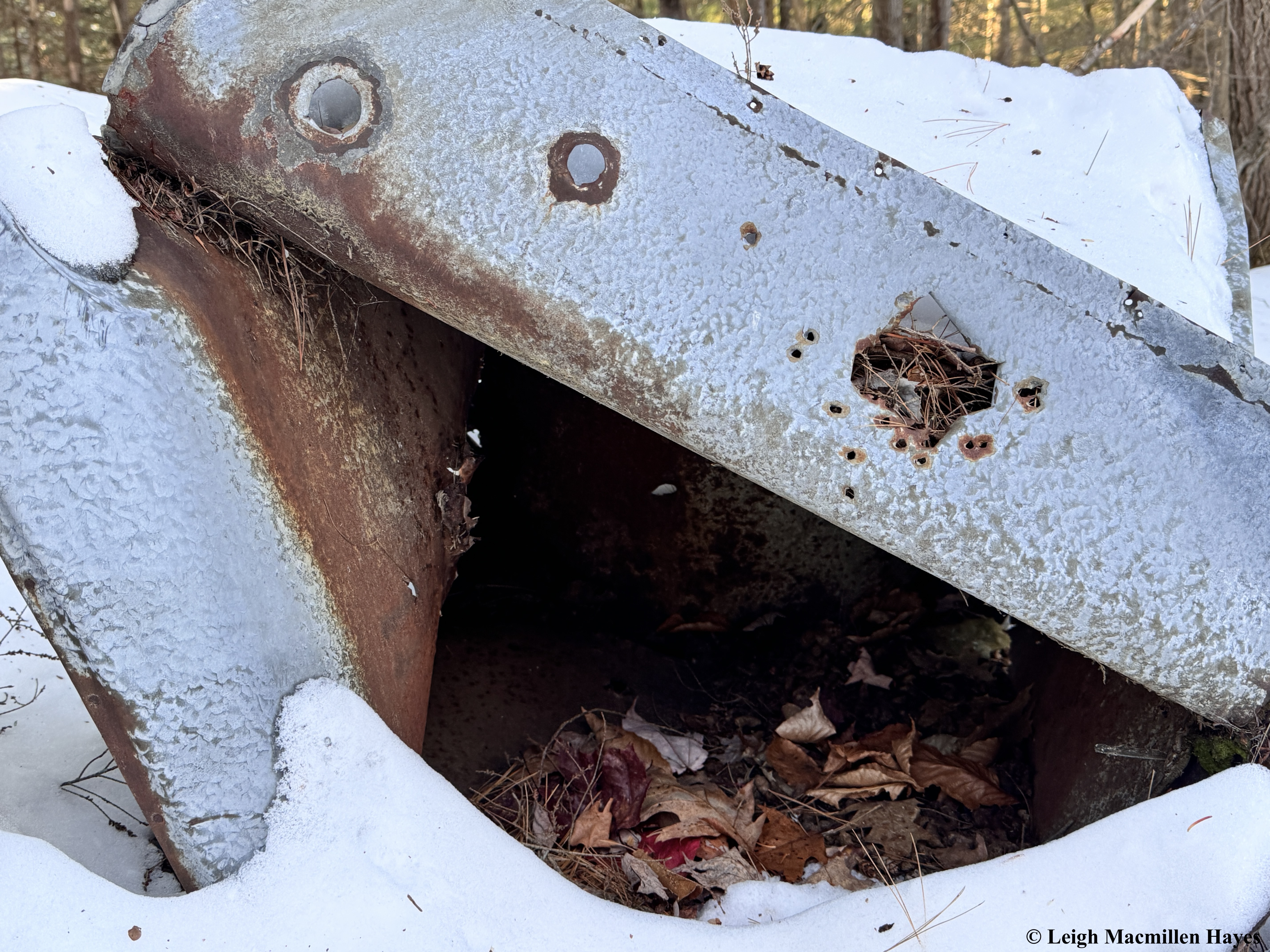
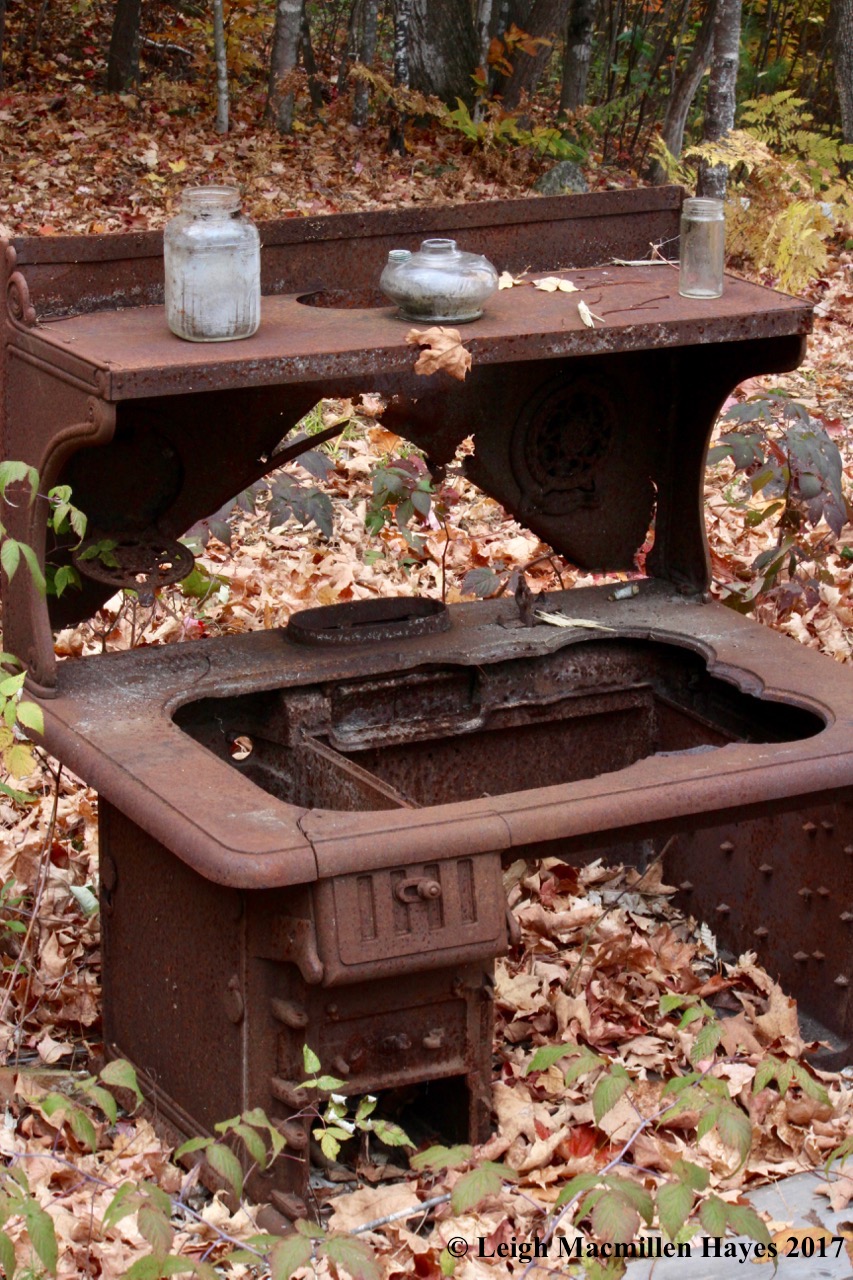
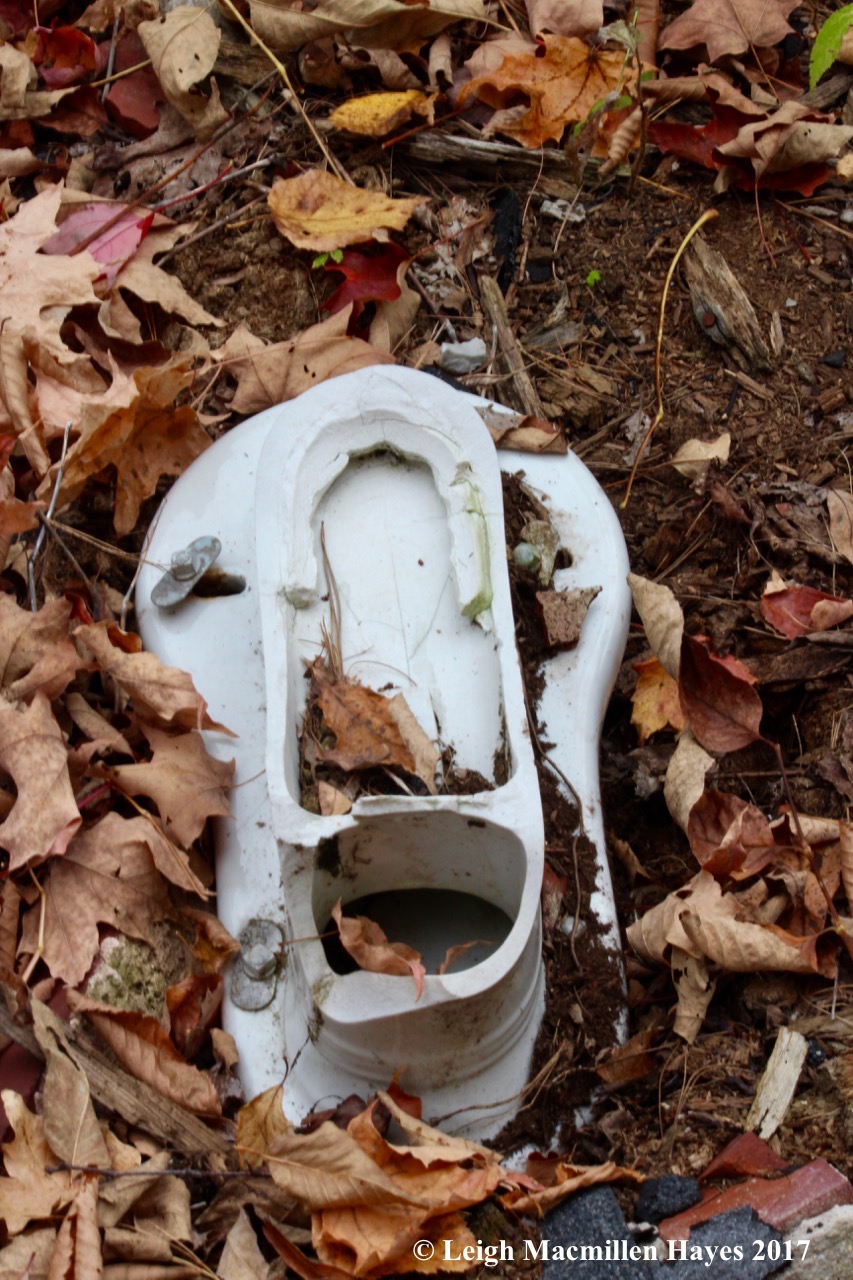
Dens can easily be discovered . . . sometimes. And other times . . . it might just be an old den, such did this old stove serve.
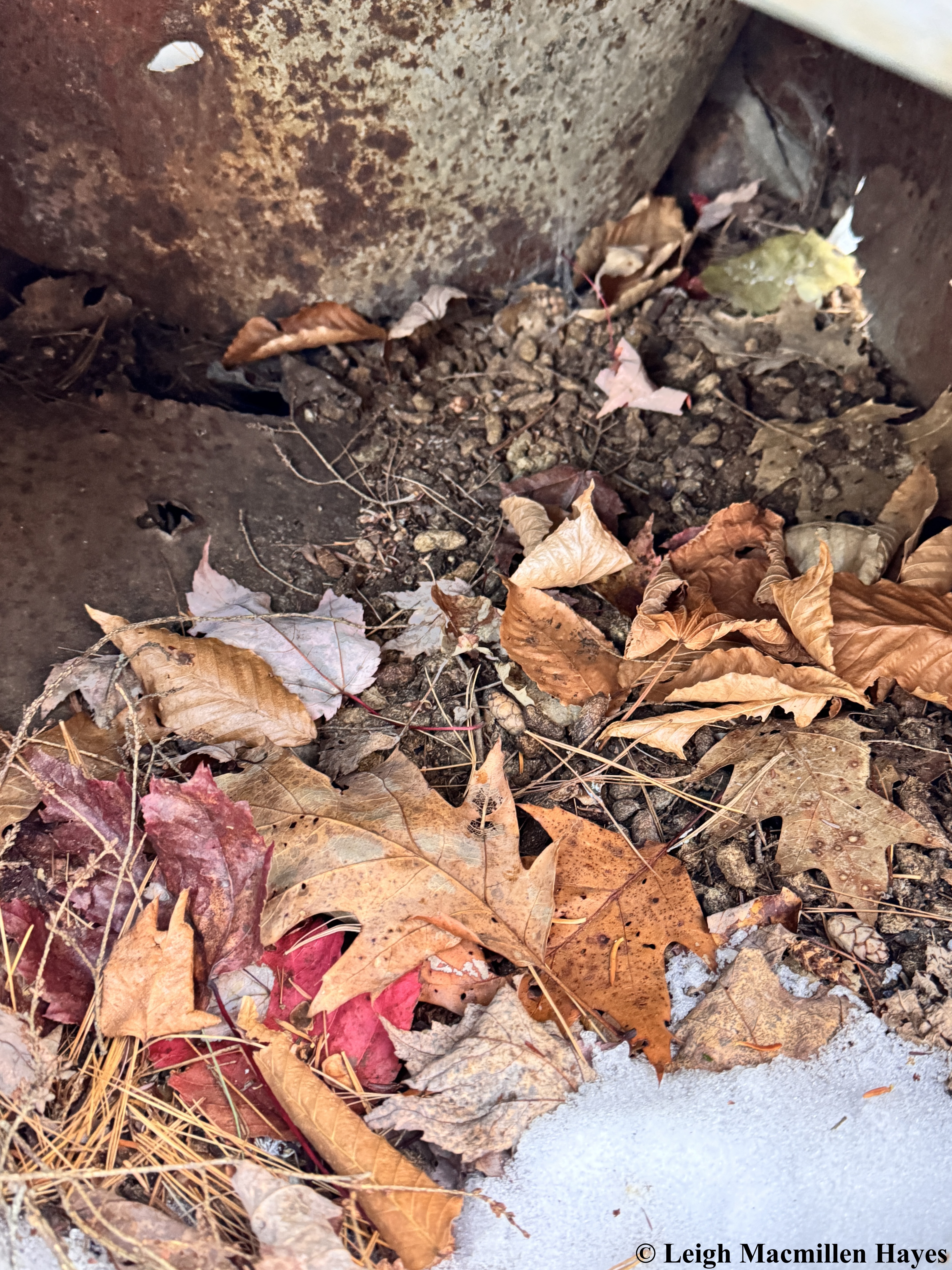
A peek into it and you might find a mix of both Hemlock cones that look like Porky scat, and the real deal, especially toward the back.
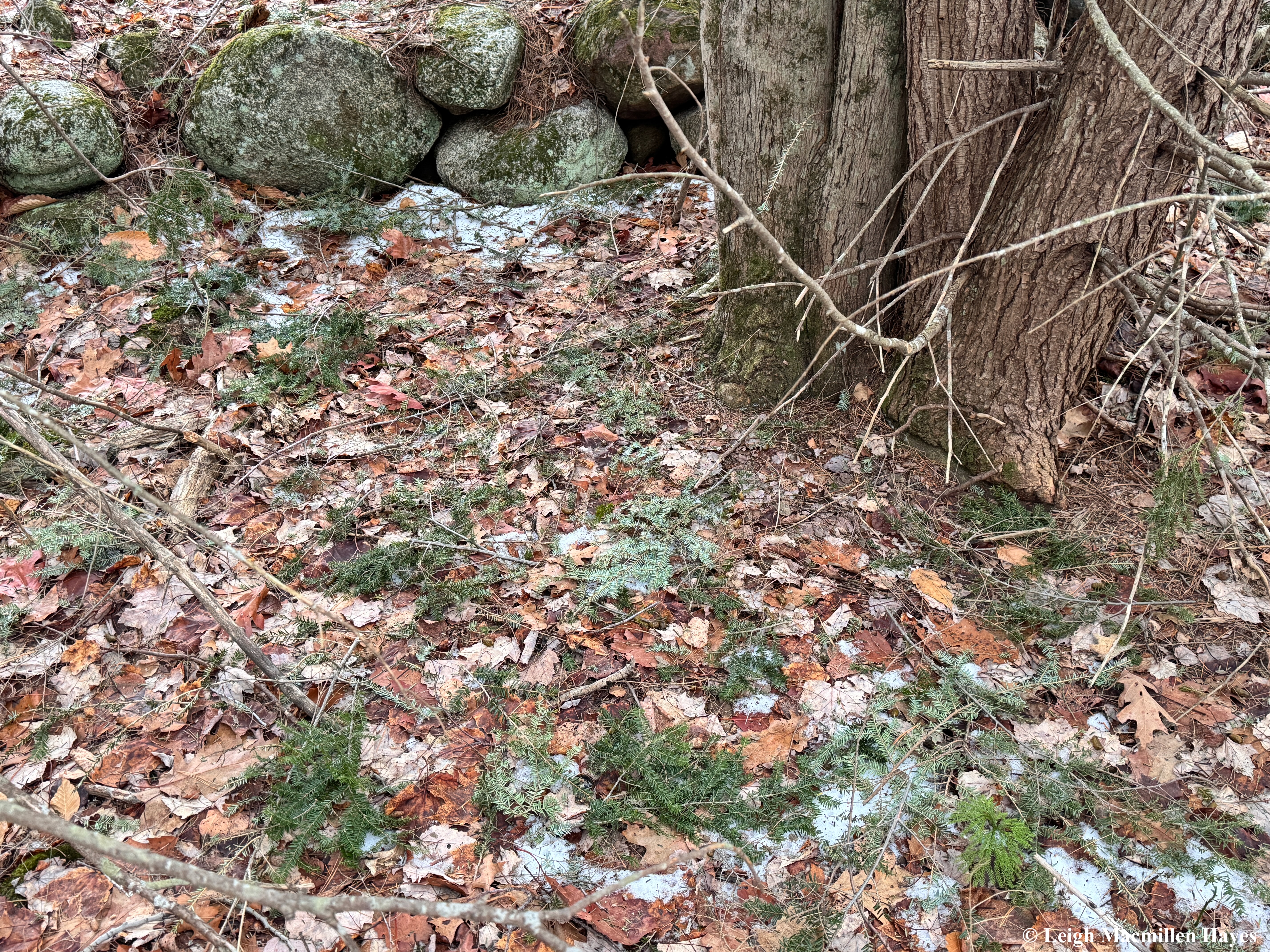
Large twigs scattered upon the ground below a Hemlock tree is another indicator of one of my favorite critter’s dining room.
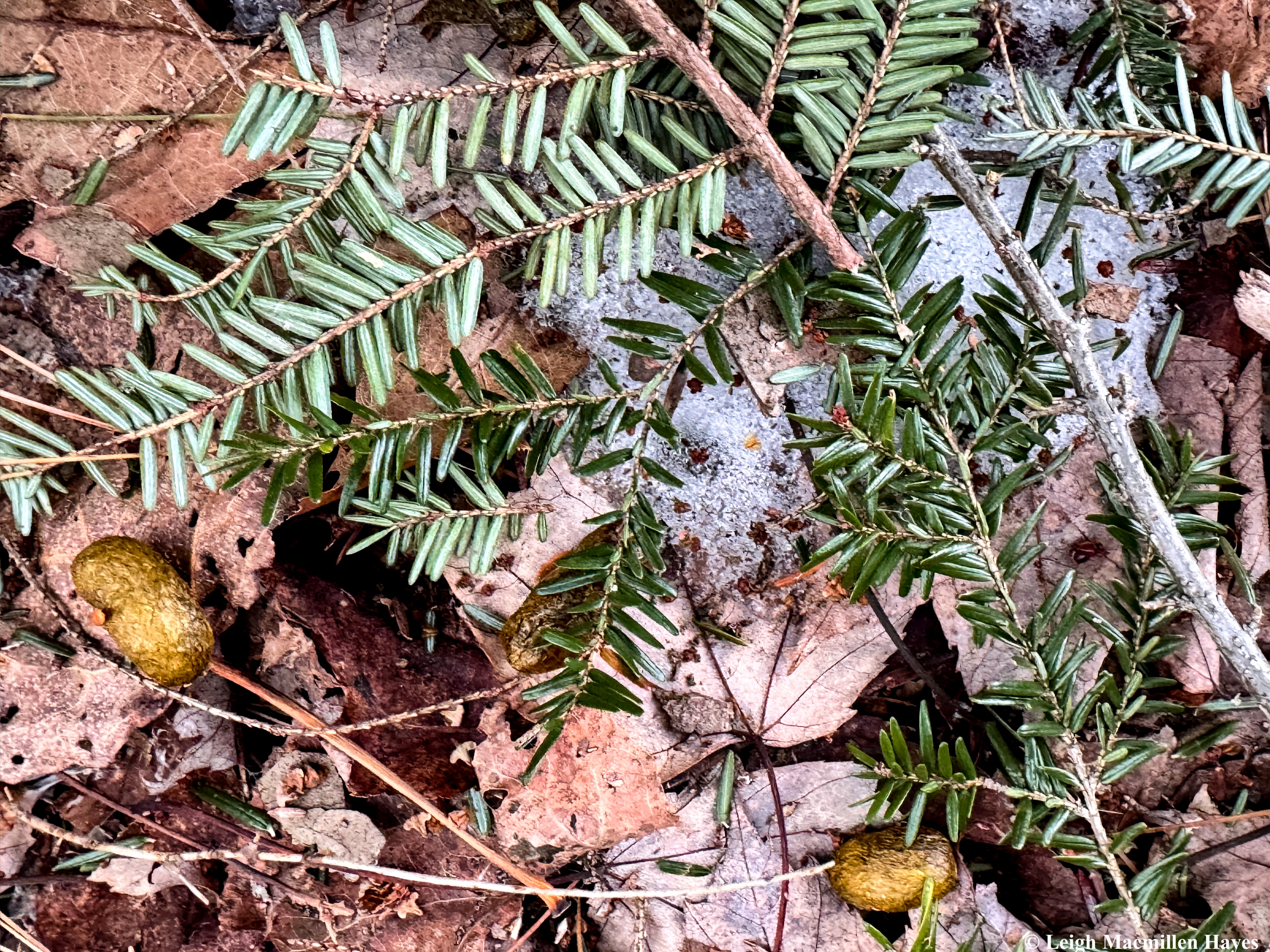
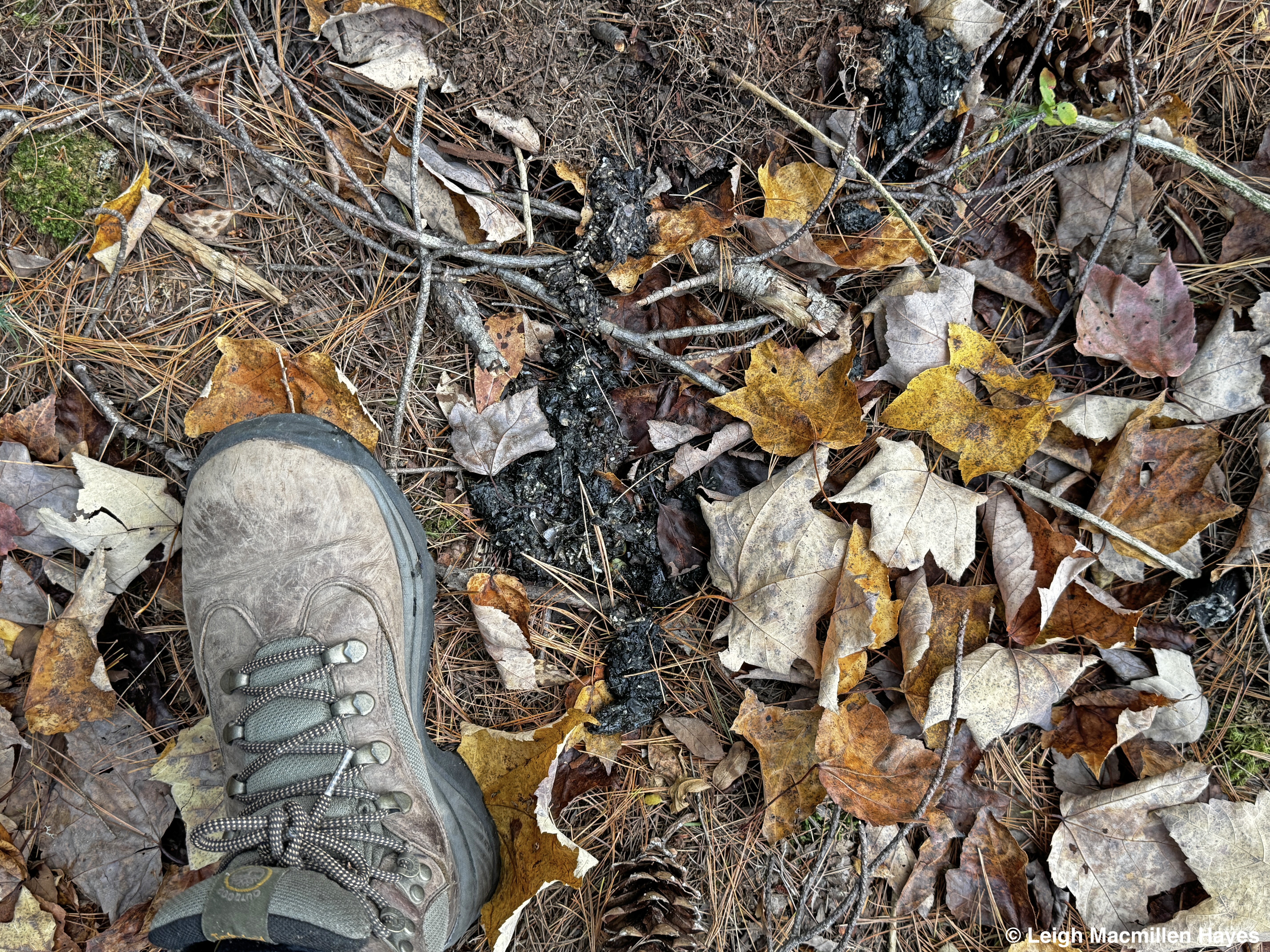
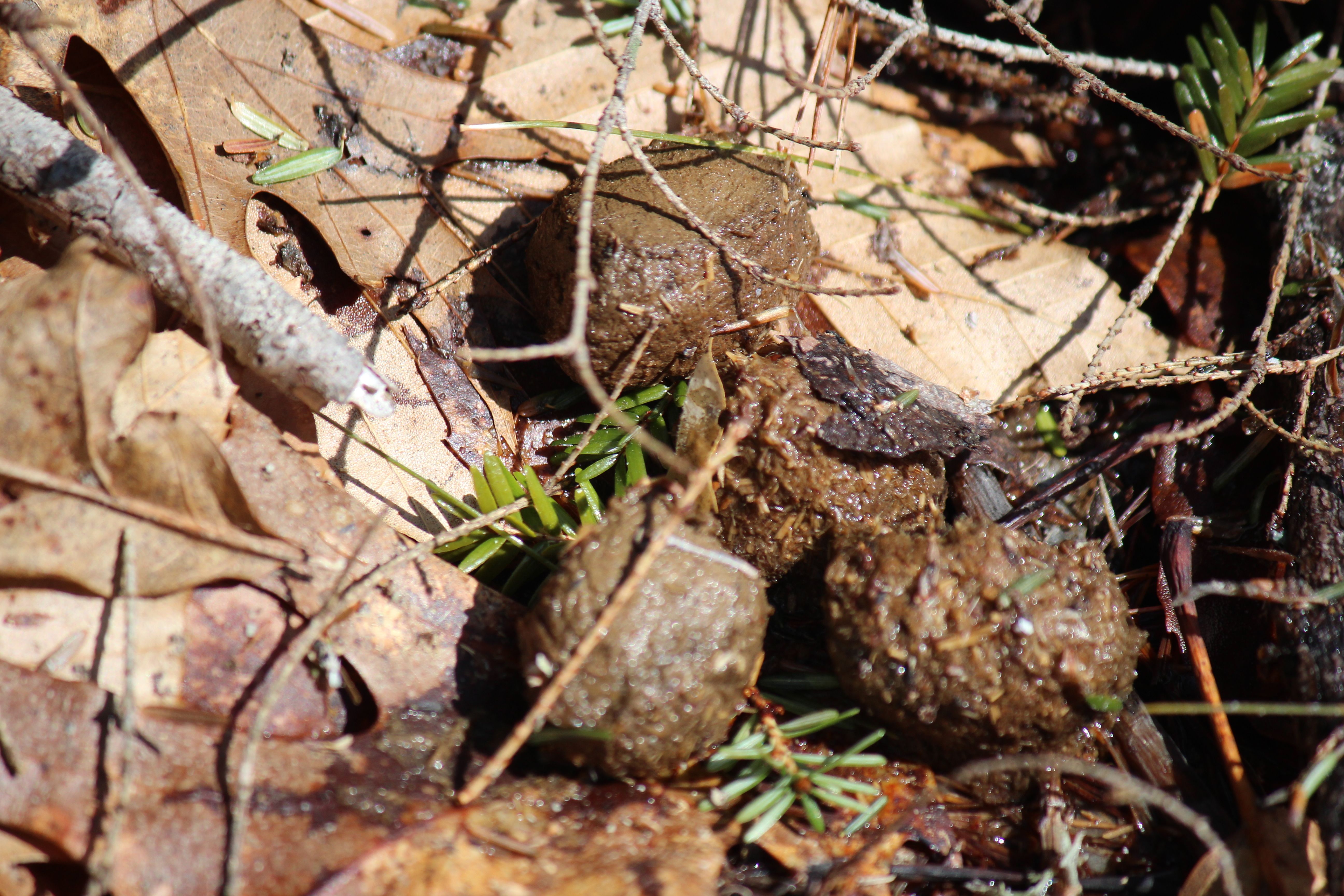
Among the twigs with their 90˚ cuts, fresh scat stating that Porky had visited the kitchen pantry and made a meal the night before.

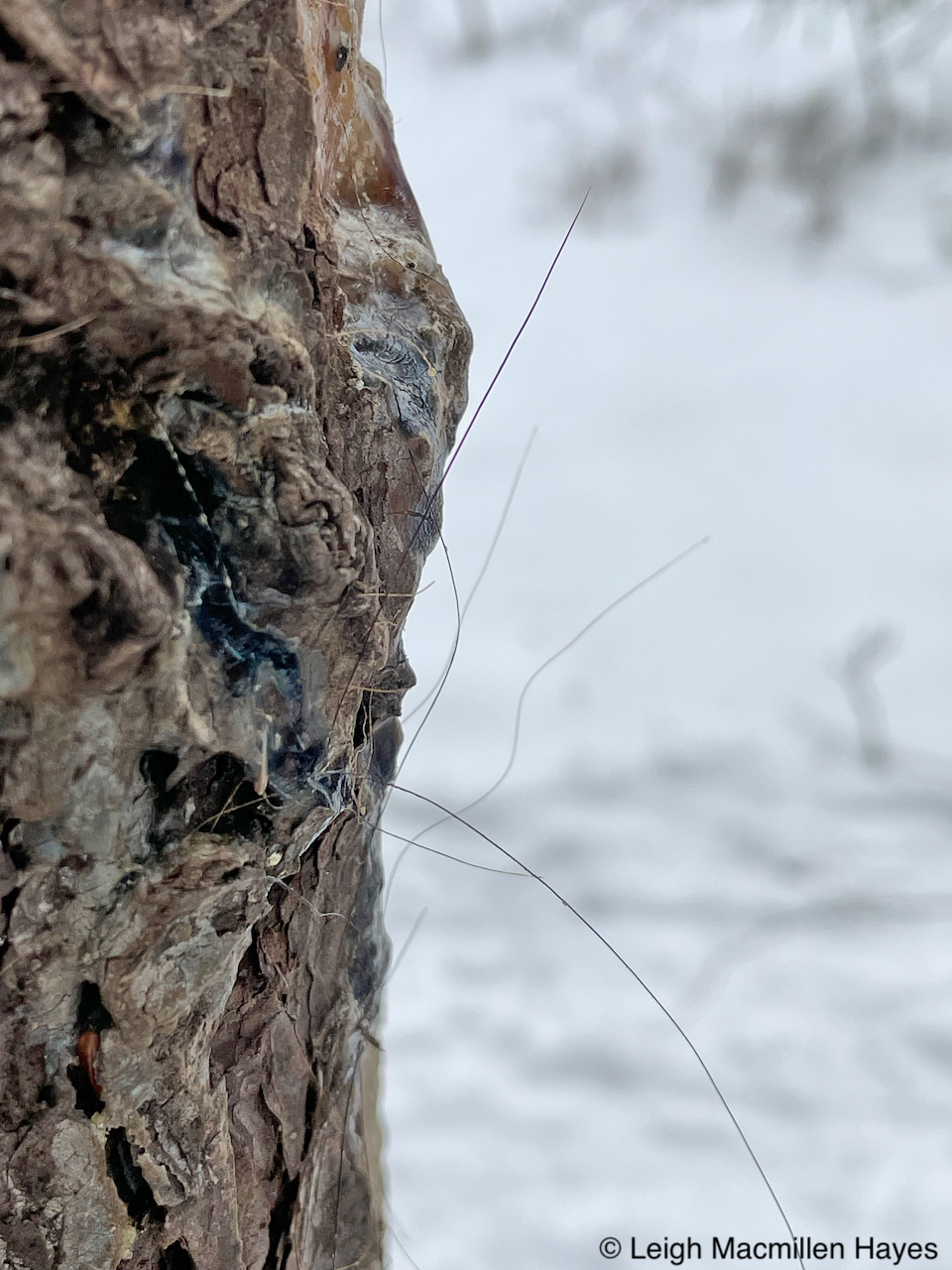
And at a nearby tree, I’m occasionally lucky enough to spot a chain-linked necklace, again the owner of this gem being my friend Porky, who had some fiber in his diet that held the scat pieces together.
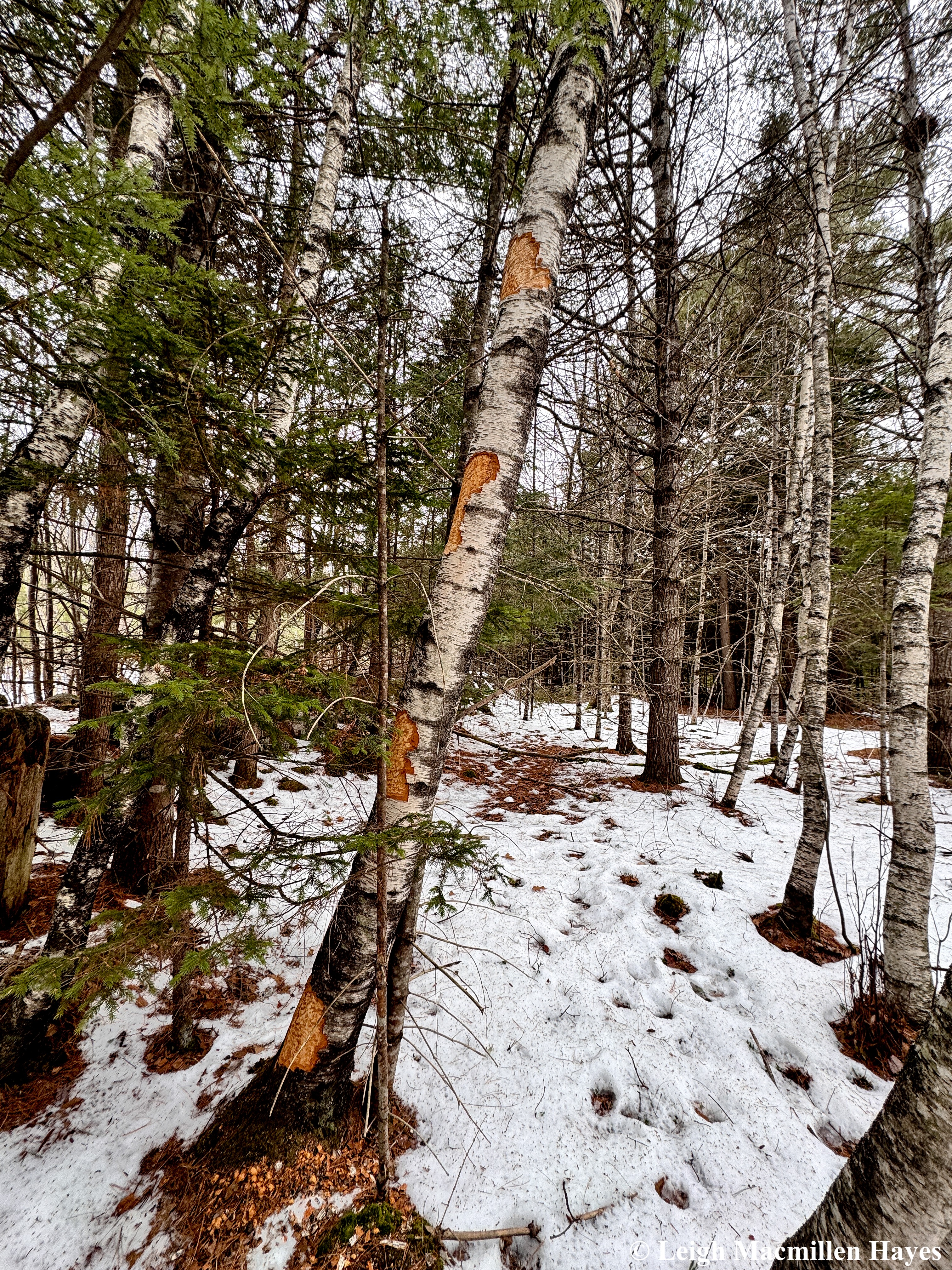
Just when one might think that that all is enough, there’s more to be discovered, for this particular Porcupine created a few signs to indicate that this is his living room and he’s very much at home in this area.
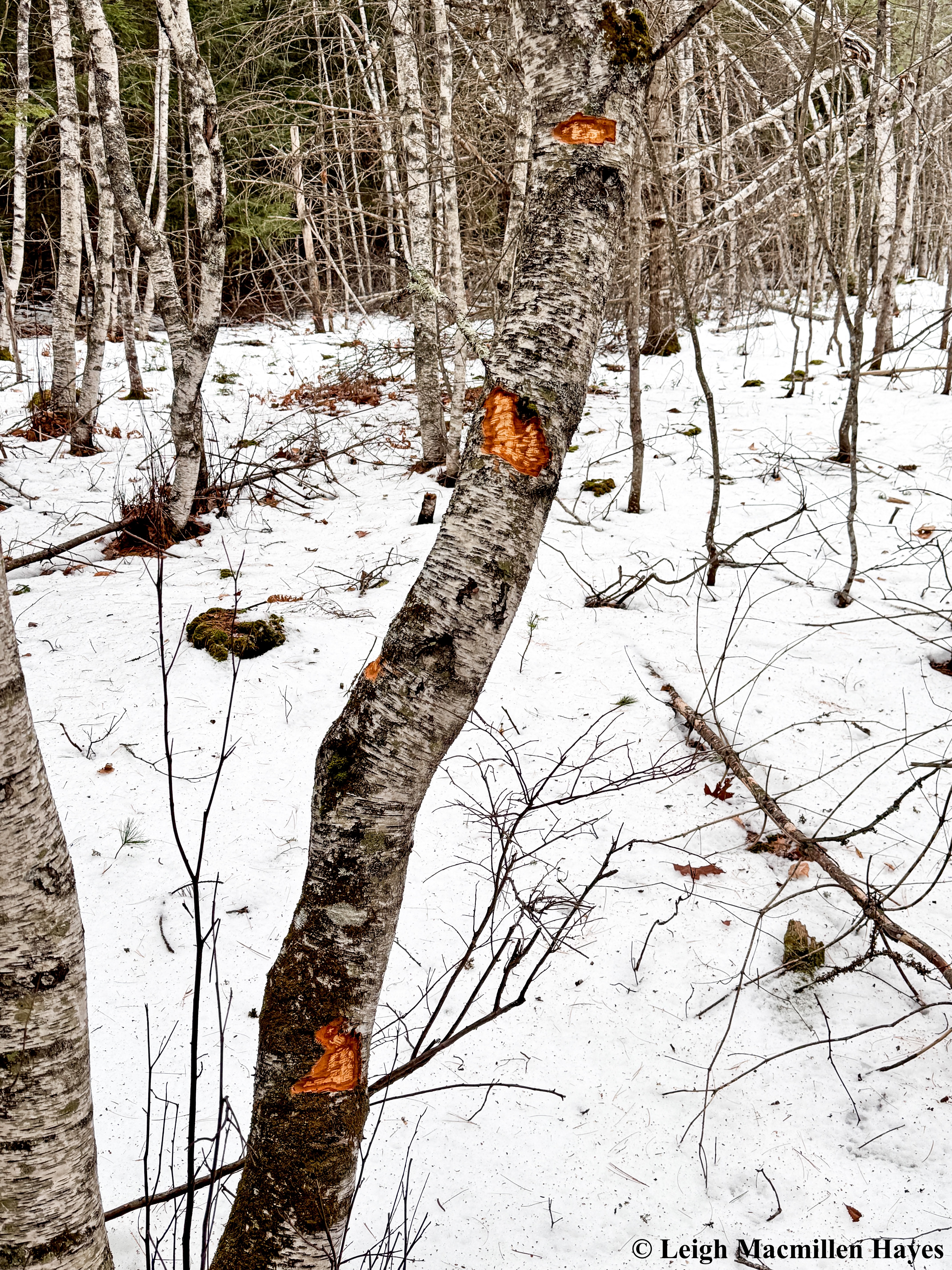
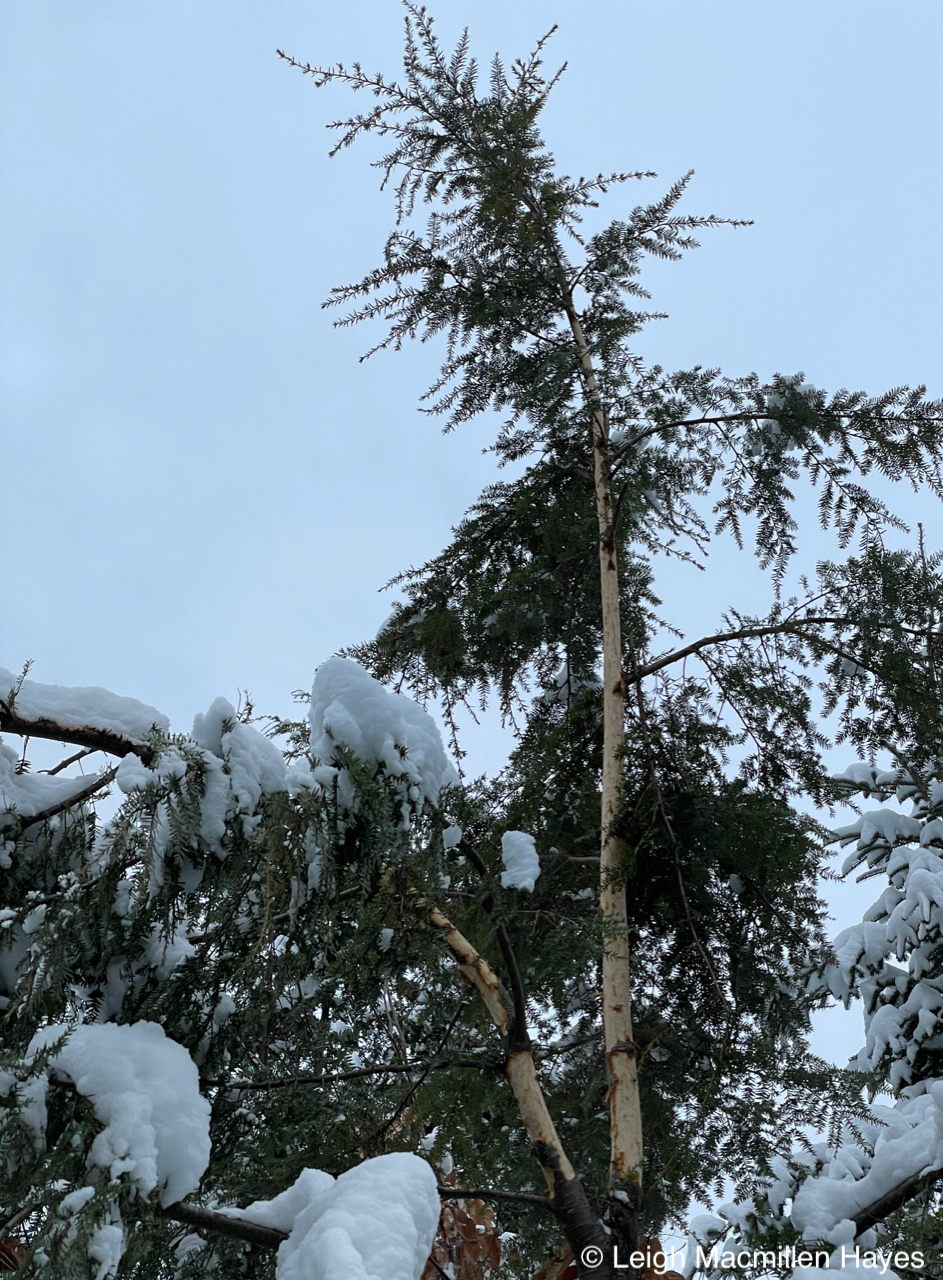
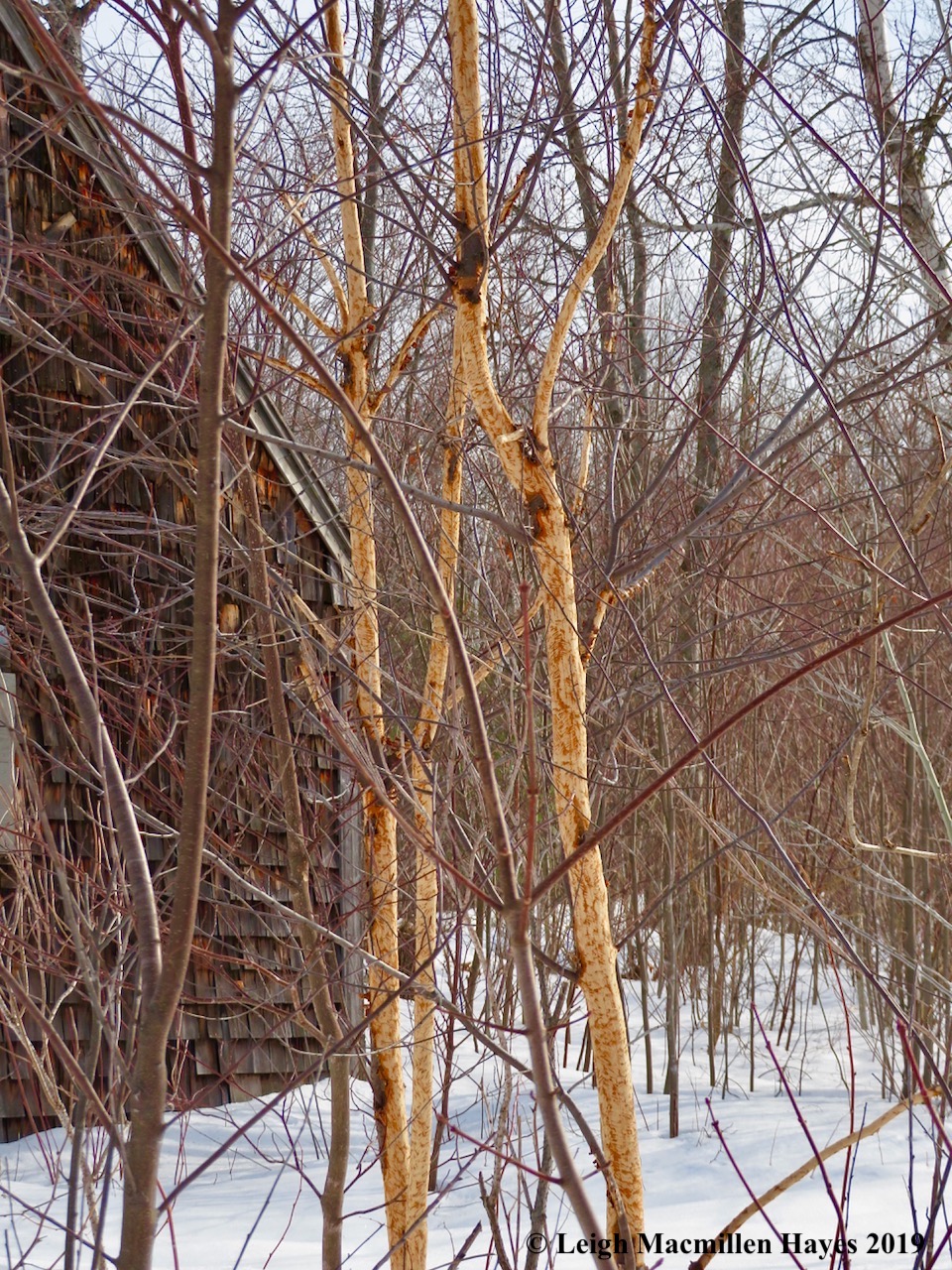
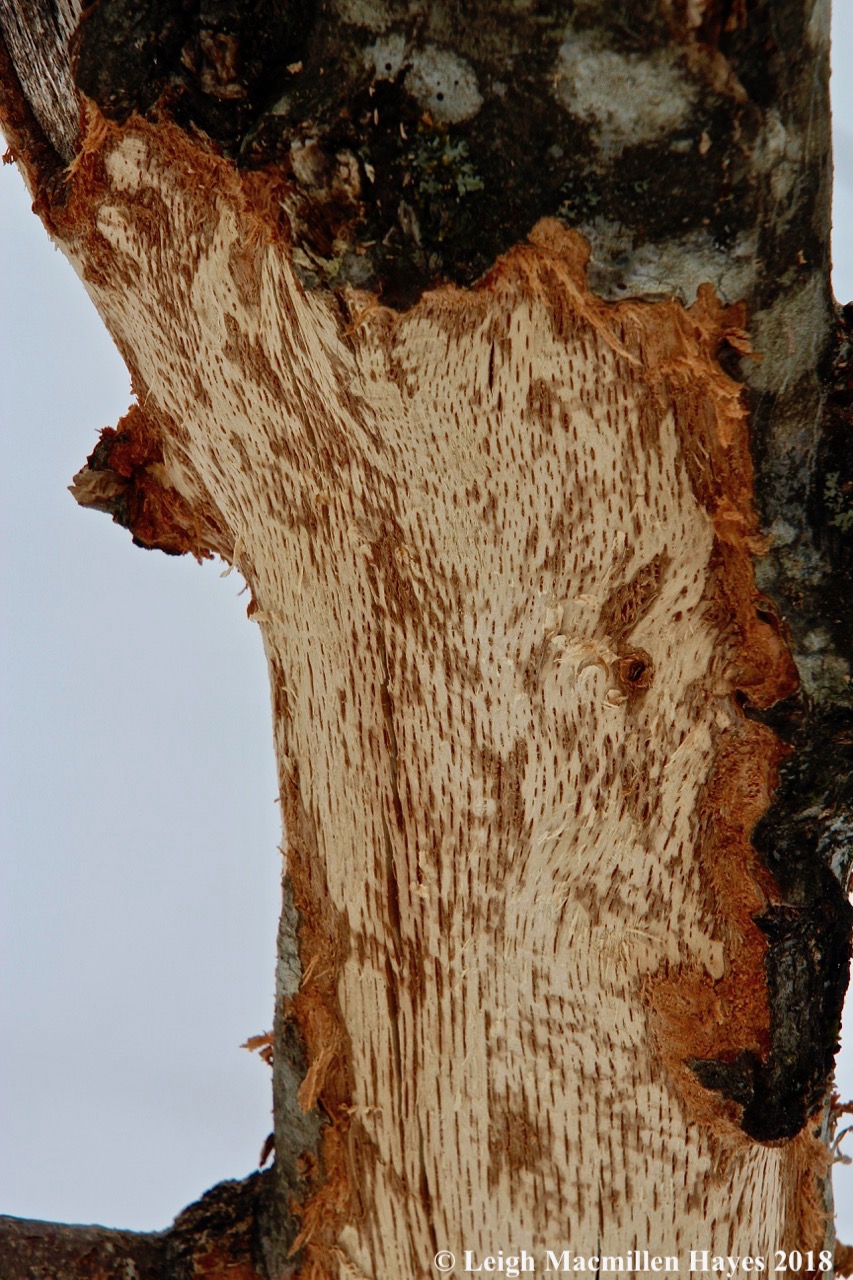
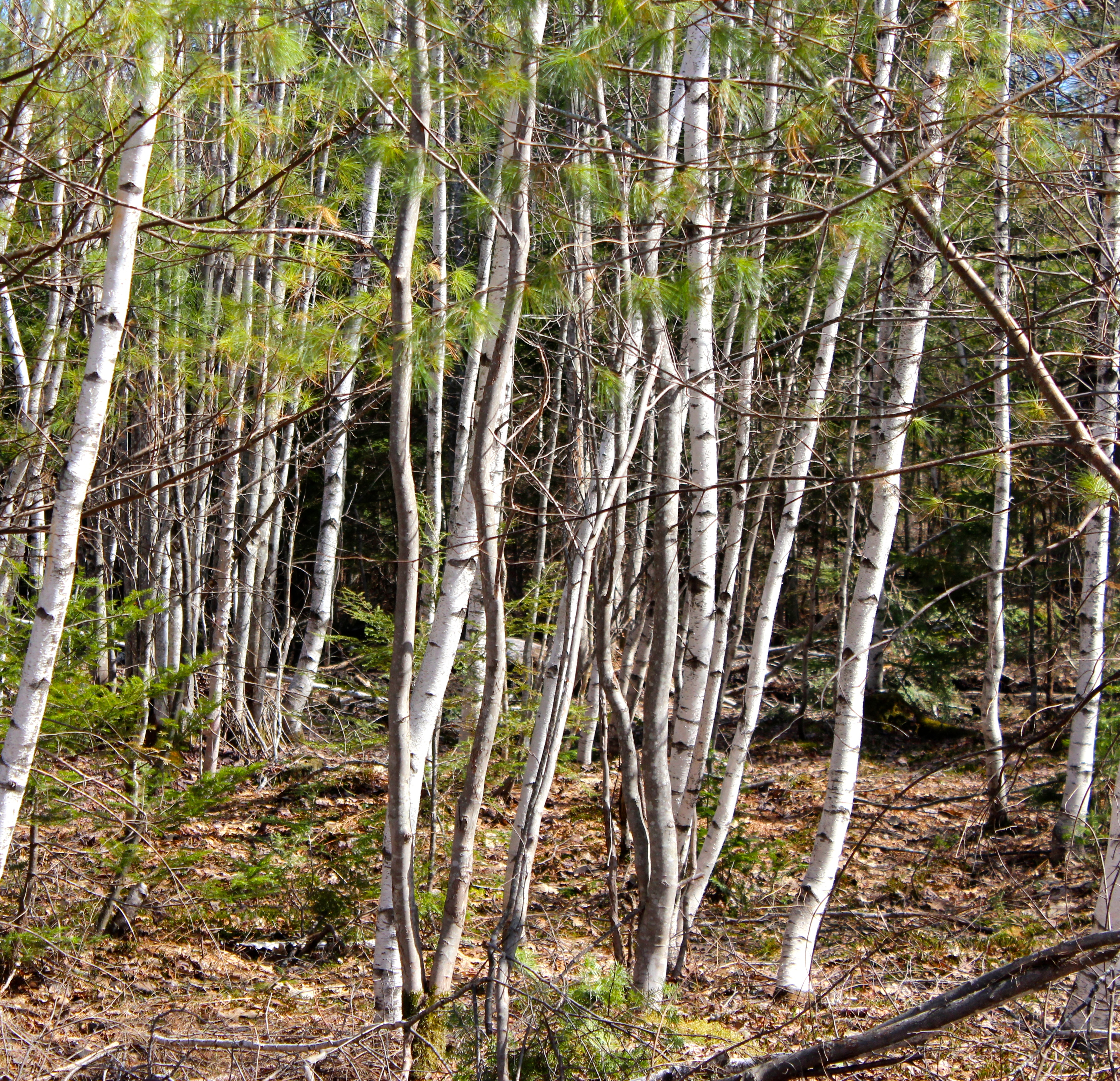
In fact, he chose to decorate several Gray Birch trees.

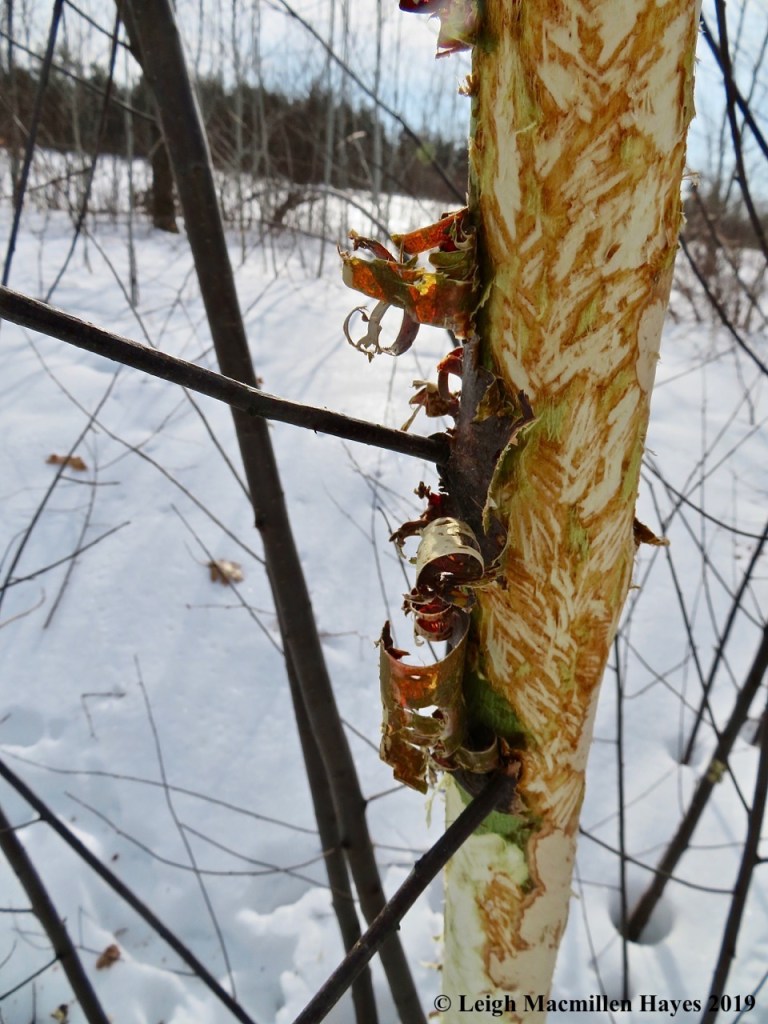
To create his works of art, he turned his head this way and that while pulling his upper and lower incisors toward each other over and over again in order to break through the bark and get to the tasty inner cambium layer.
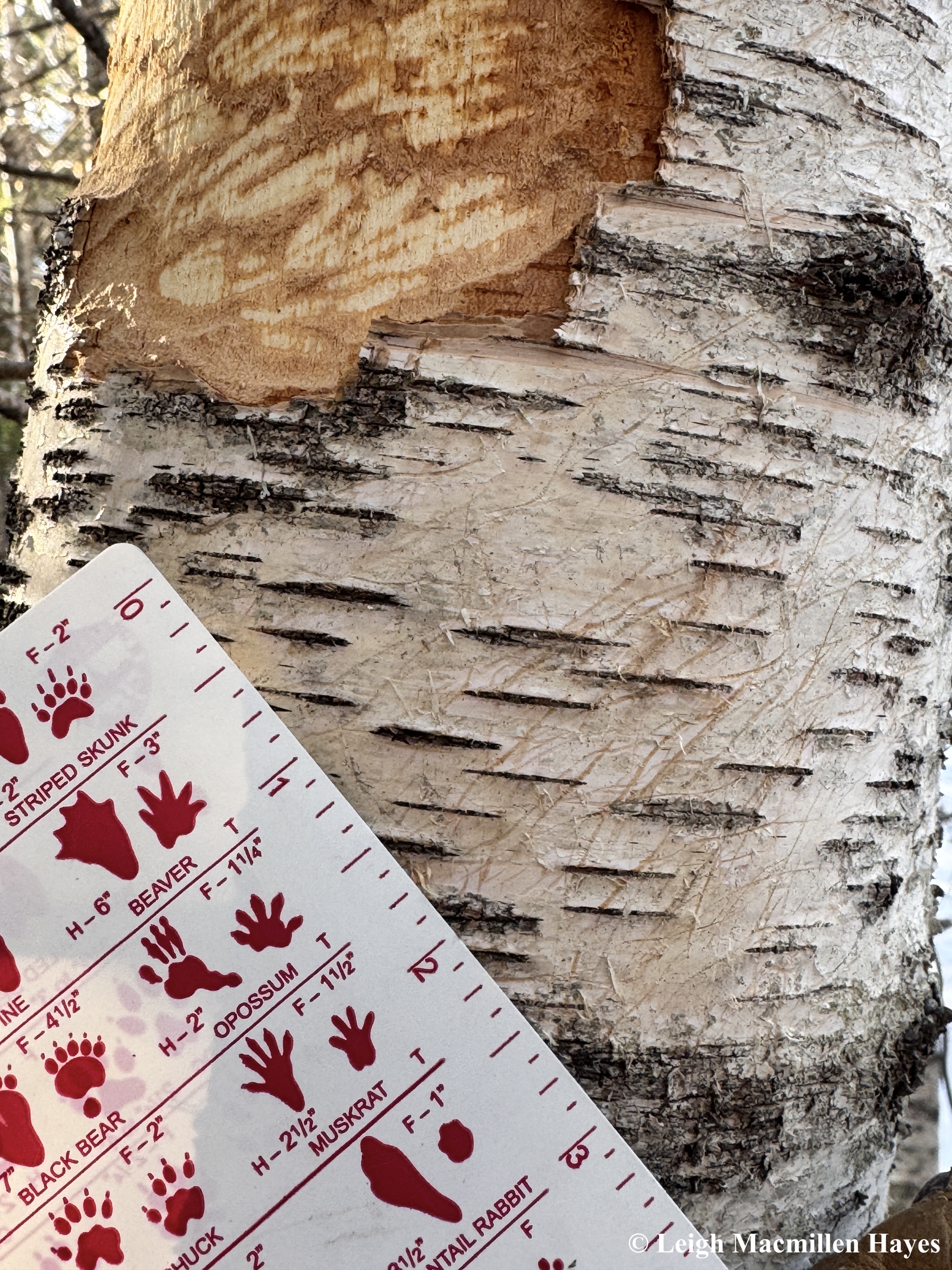
And in the process, he created a Porcupine Claw Tree! Do you see all those scratch marks left behind as he chewed? On each foot, five toes with sharp nails that aid in climbing, run across the top of the pad, and he had a lot of work to do to create the sign above, and so you can almost pick out five lines for each time he turned his foot to stabilize his body.
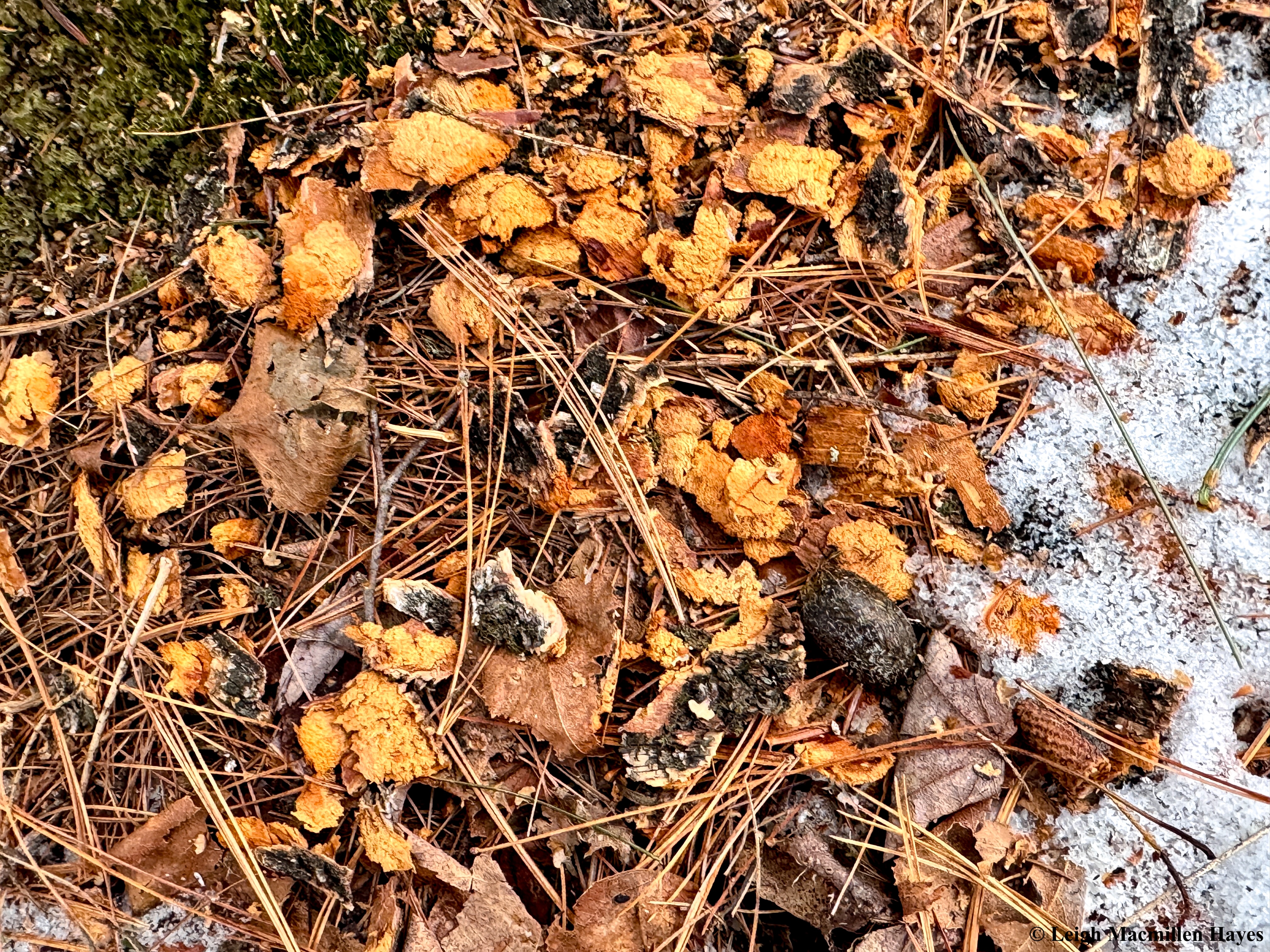
At the base of the tree, the thicker chunks of bark that he didn’t eat. And at least one pellet of scat.
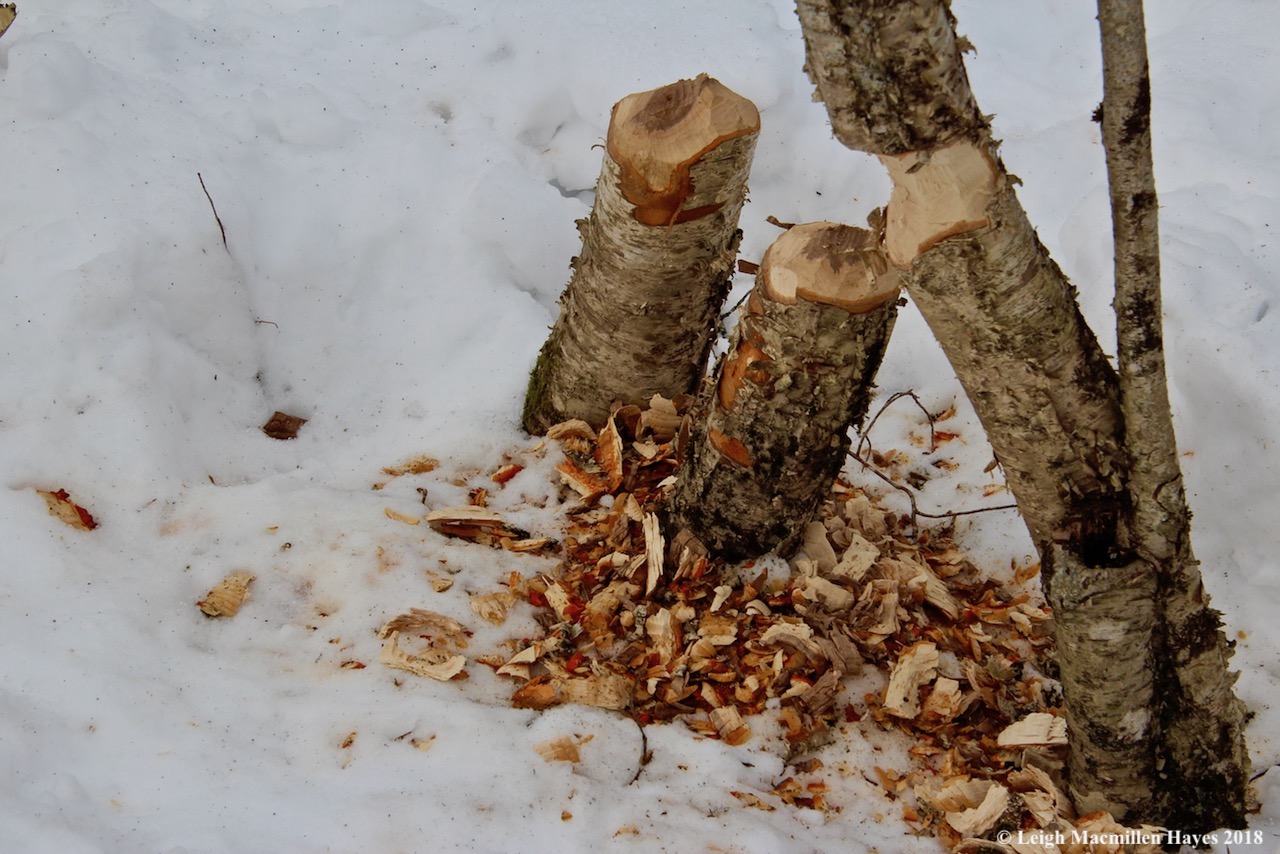
I remember the first time I discovered bark below a Porcupine tree and I was totally confused because I always associated that behavior strictly with Beavers.
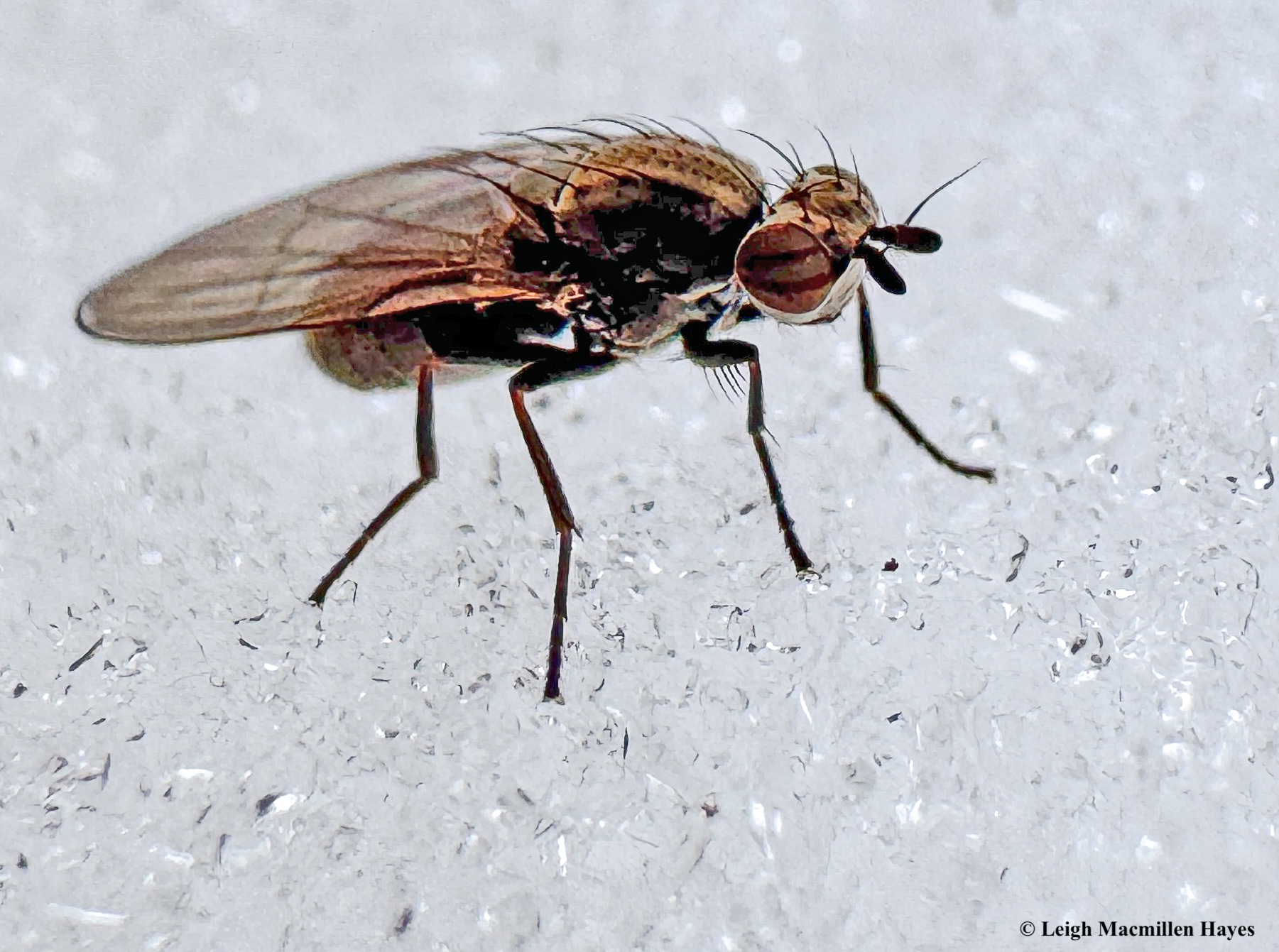
Where there are Porcupines, there also may be Cluster Flies. Who knew that they have antifreeze components that allow them to walk on snow and ice like some other insects?
This winter I’m adding to my insect and spider sightings like never before, and it’s such an amazing lesson each time I make a new discovery.

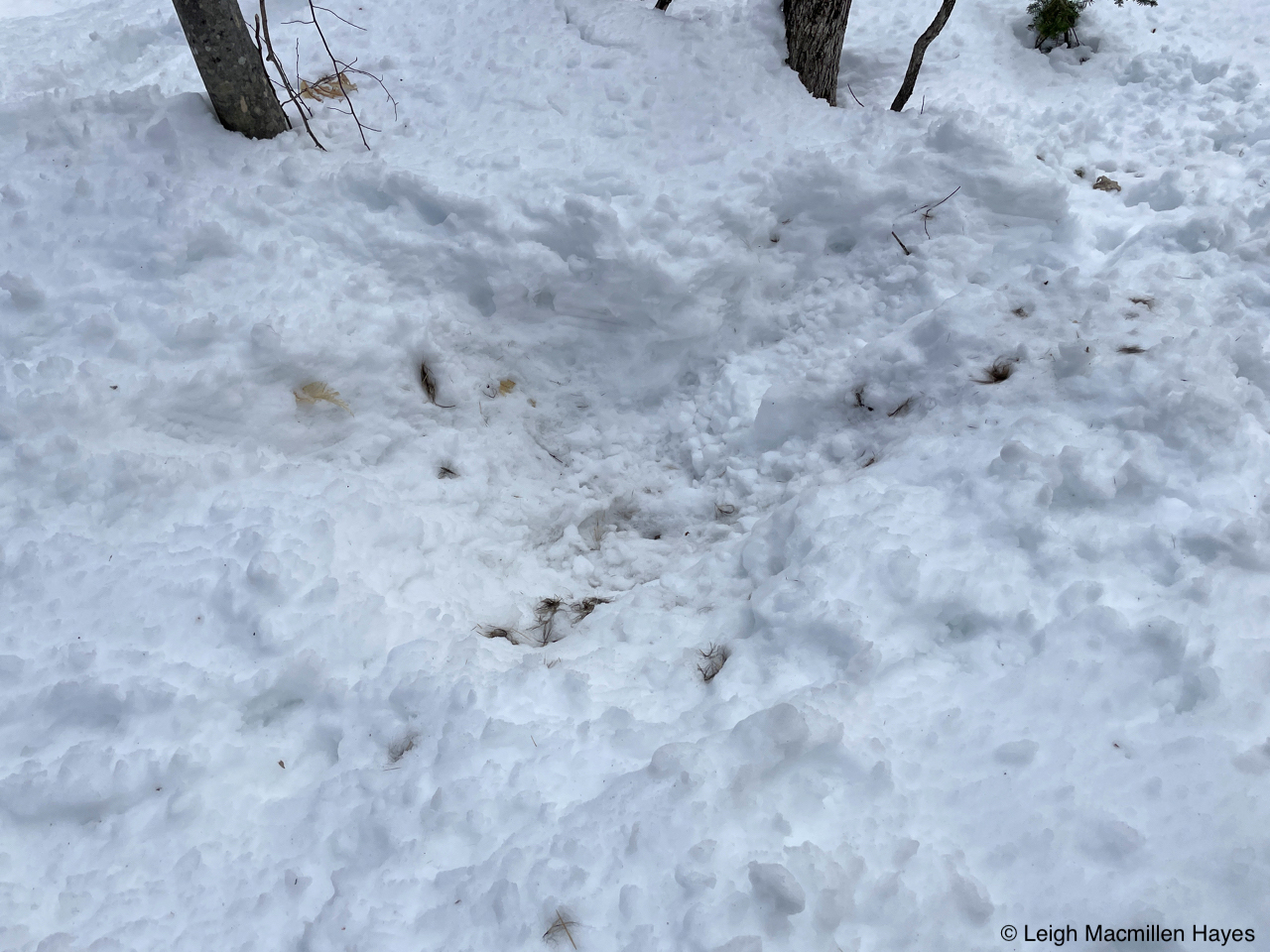
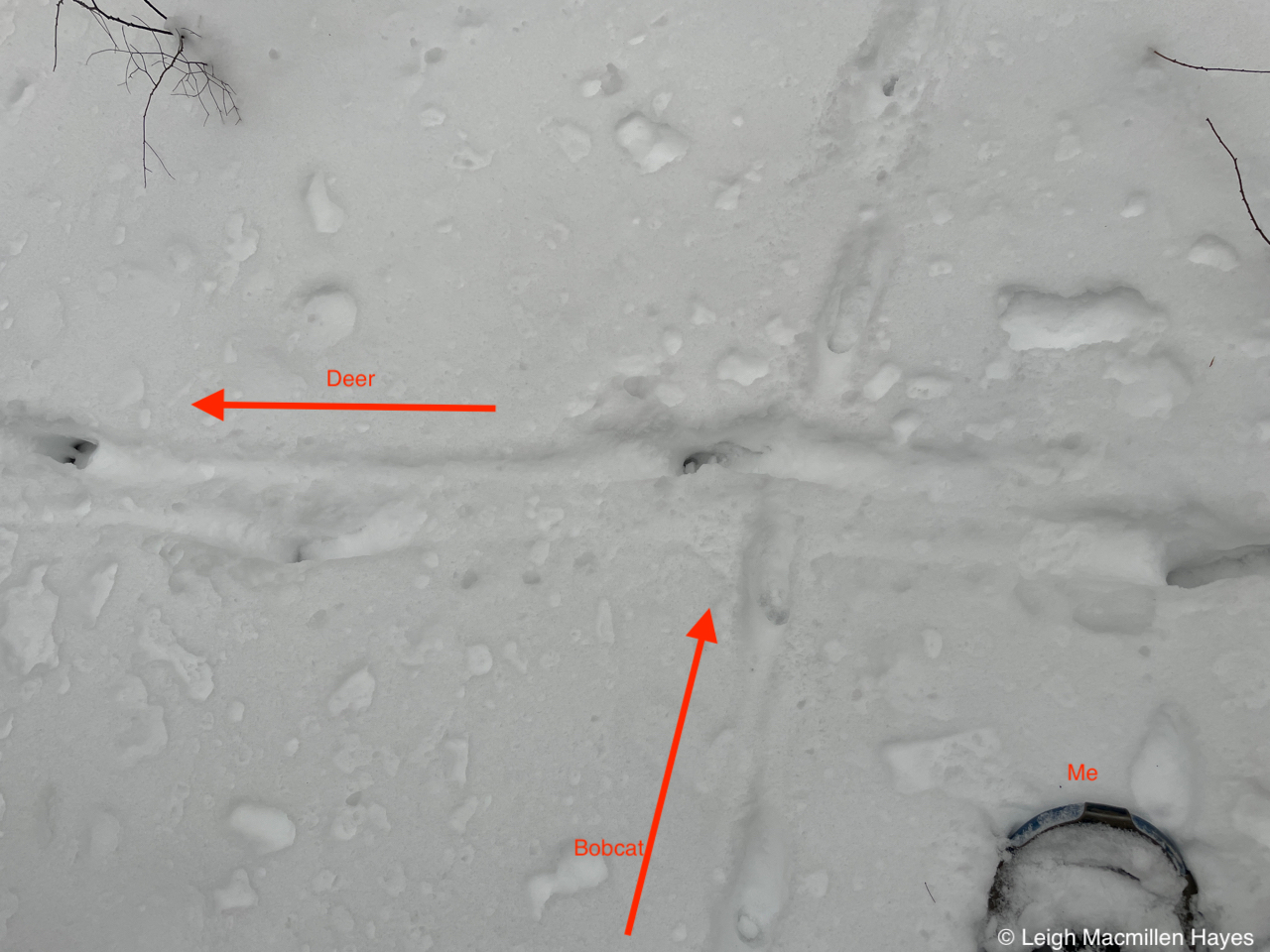
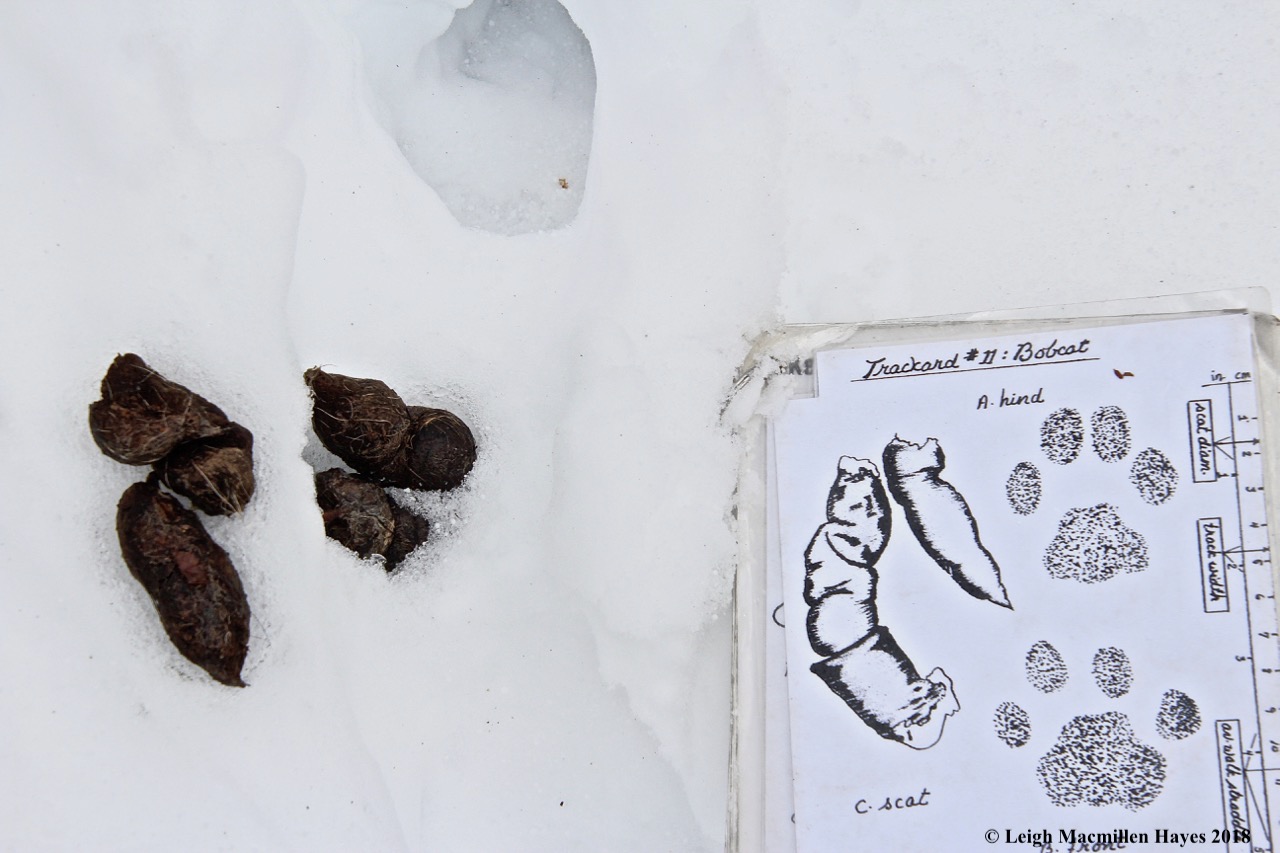
And then . . . and then . . . cuze there always has to be an “and then,” what I believe to be a Bobcat’s cache site. One day I saw a bit of disturbance in the middle of the trail, and blood. Lots of blood. But indecipherable prints.
Two days later and the area had been revisited and more disturbance.
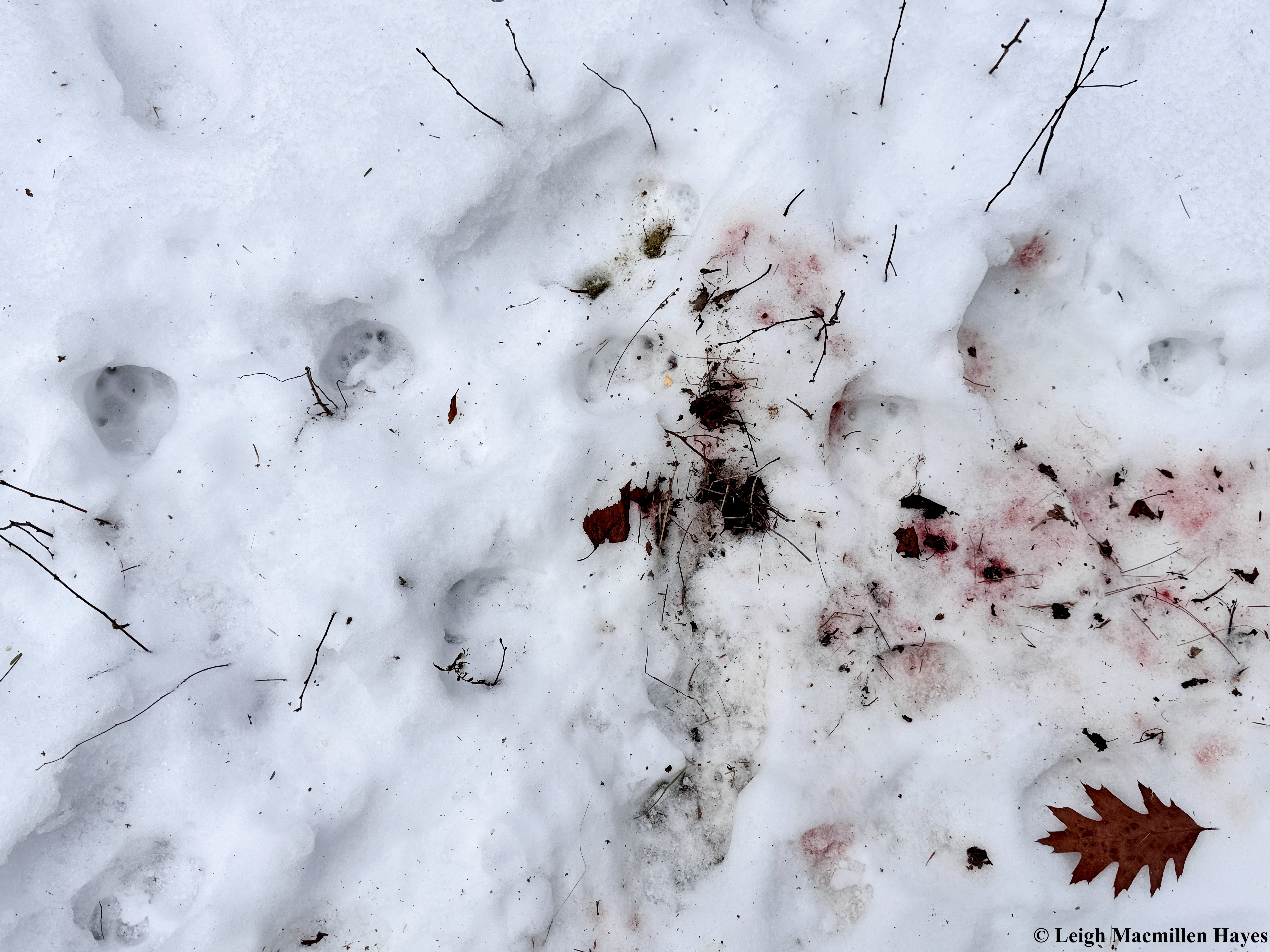
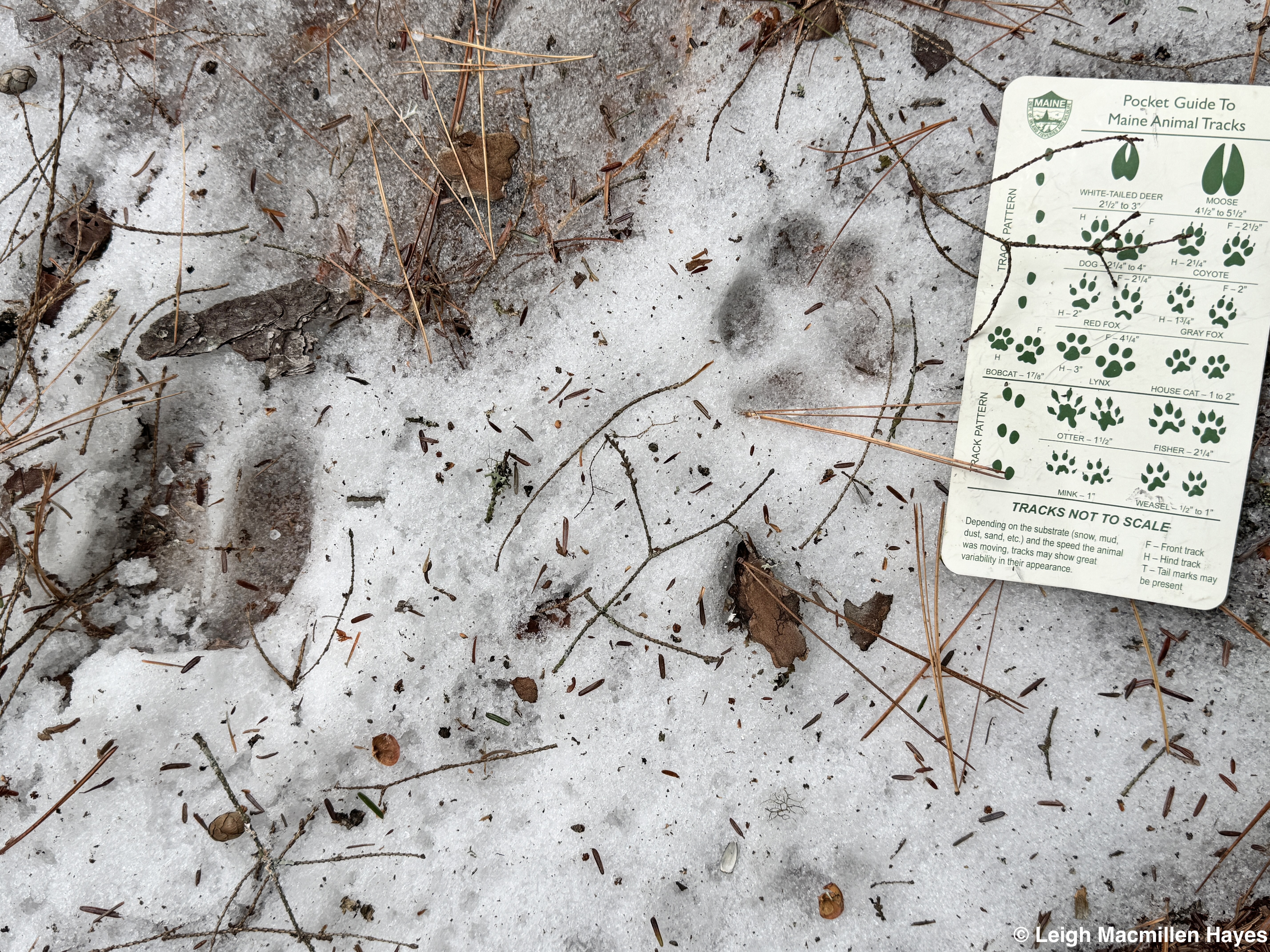
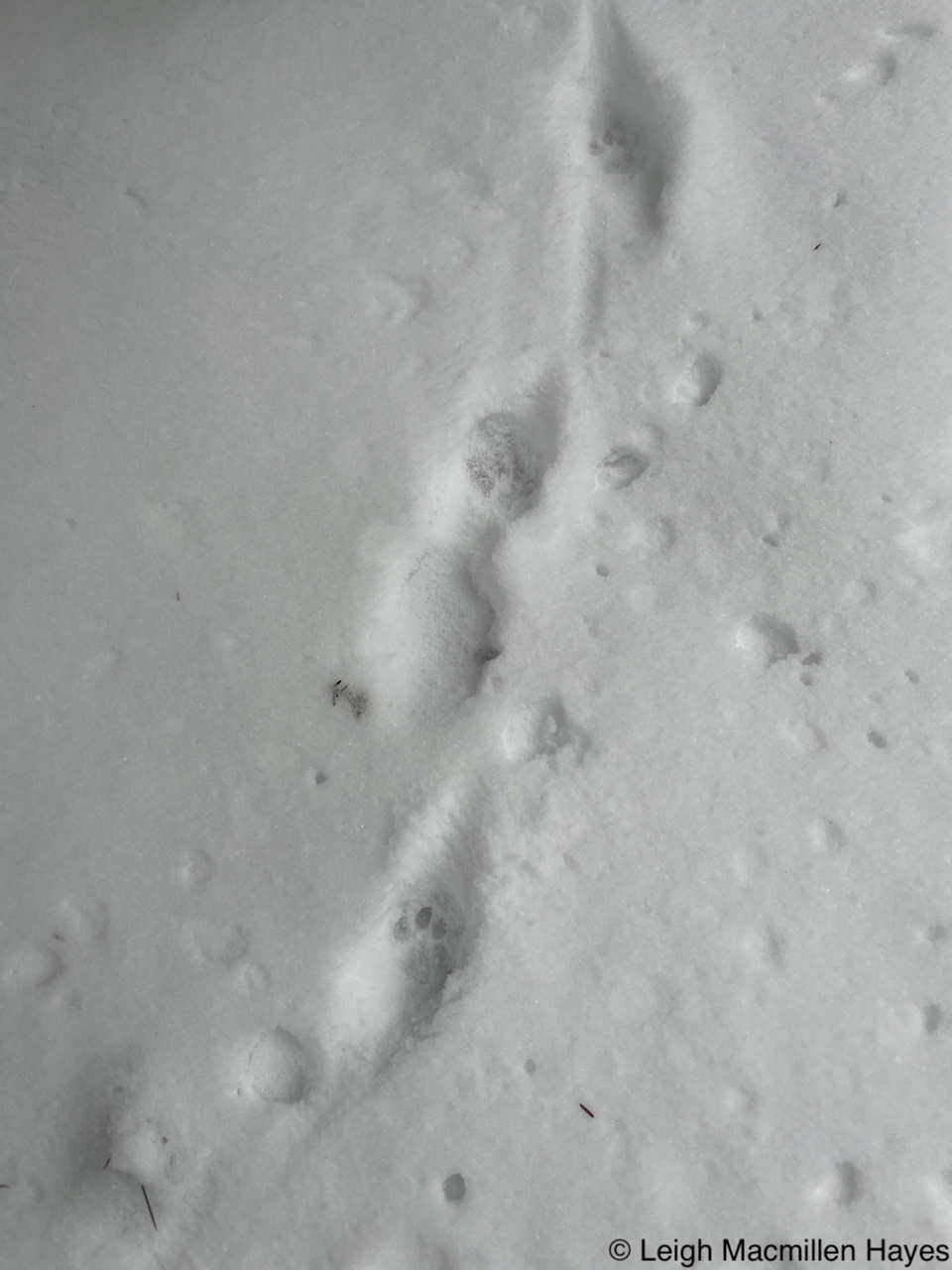
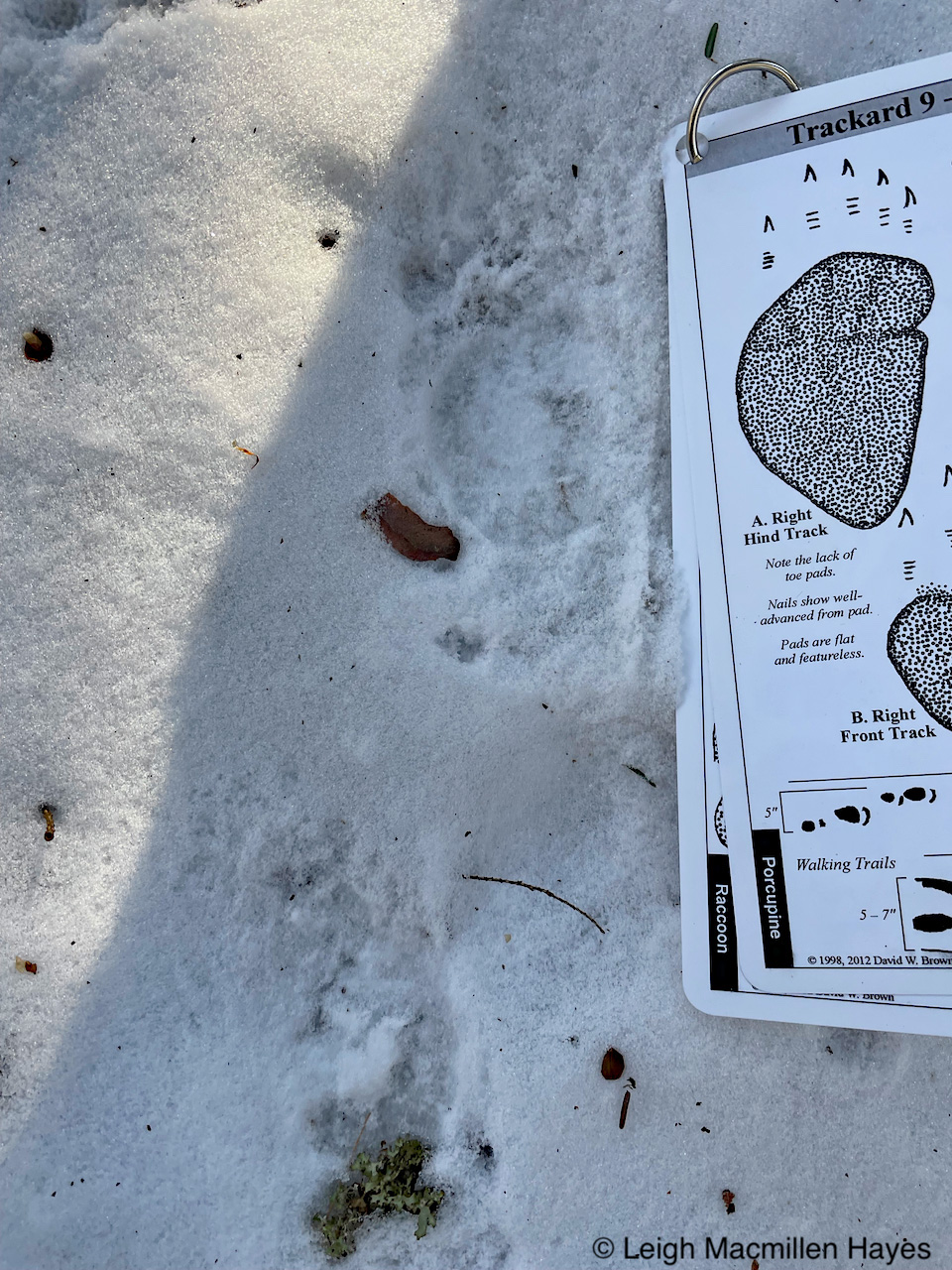
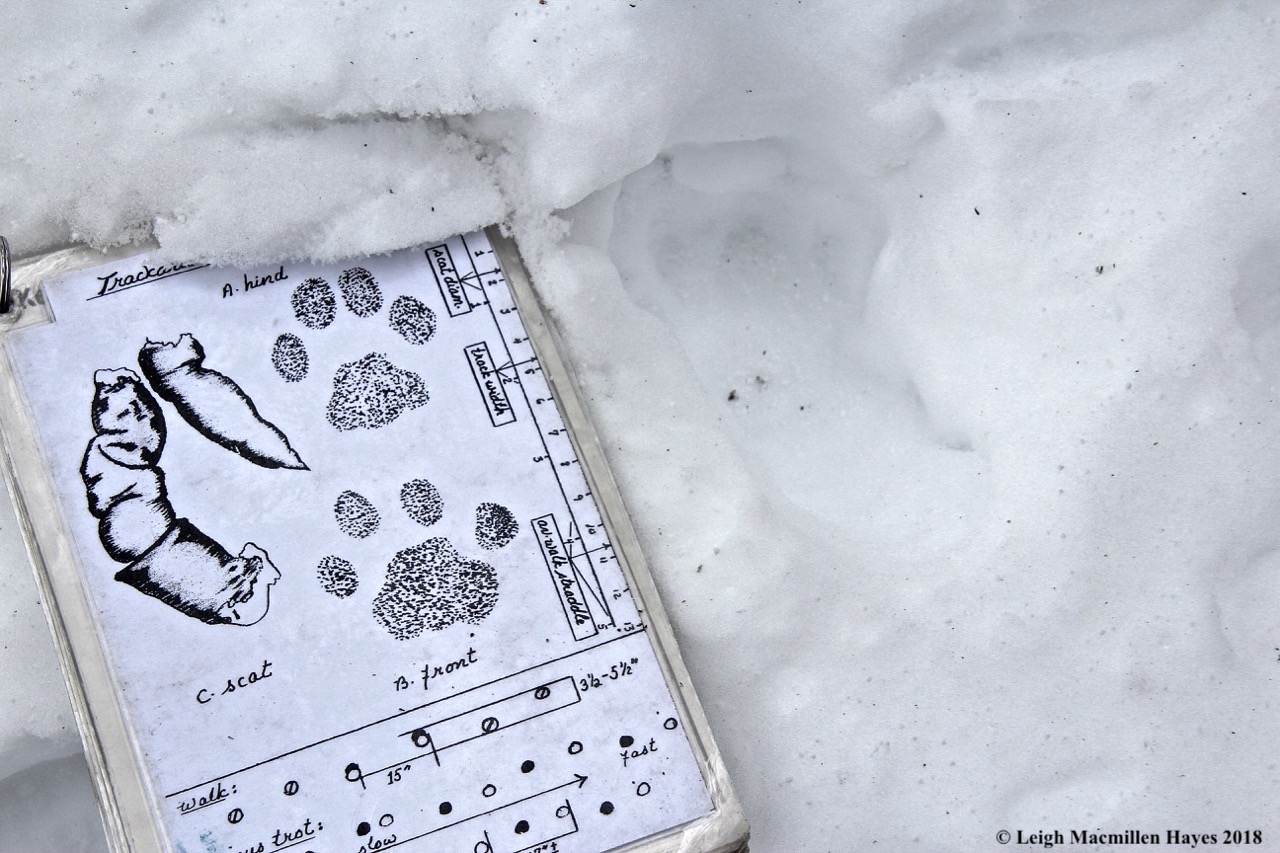
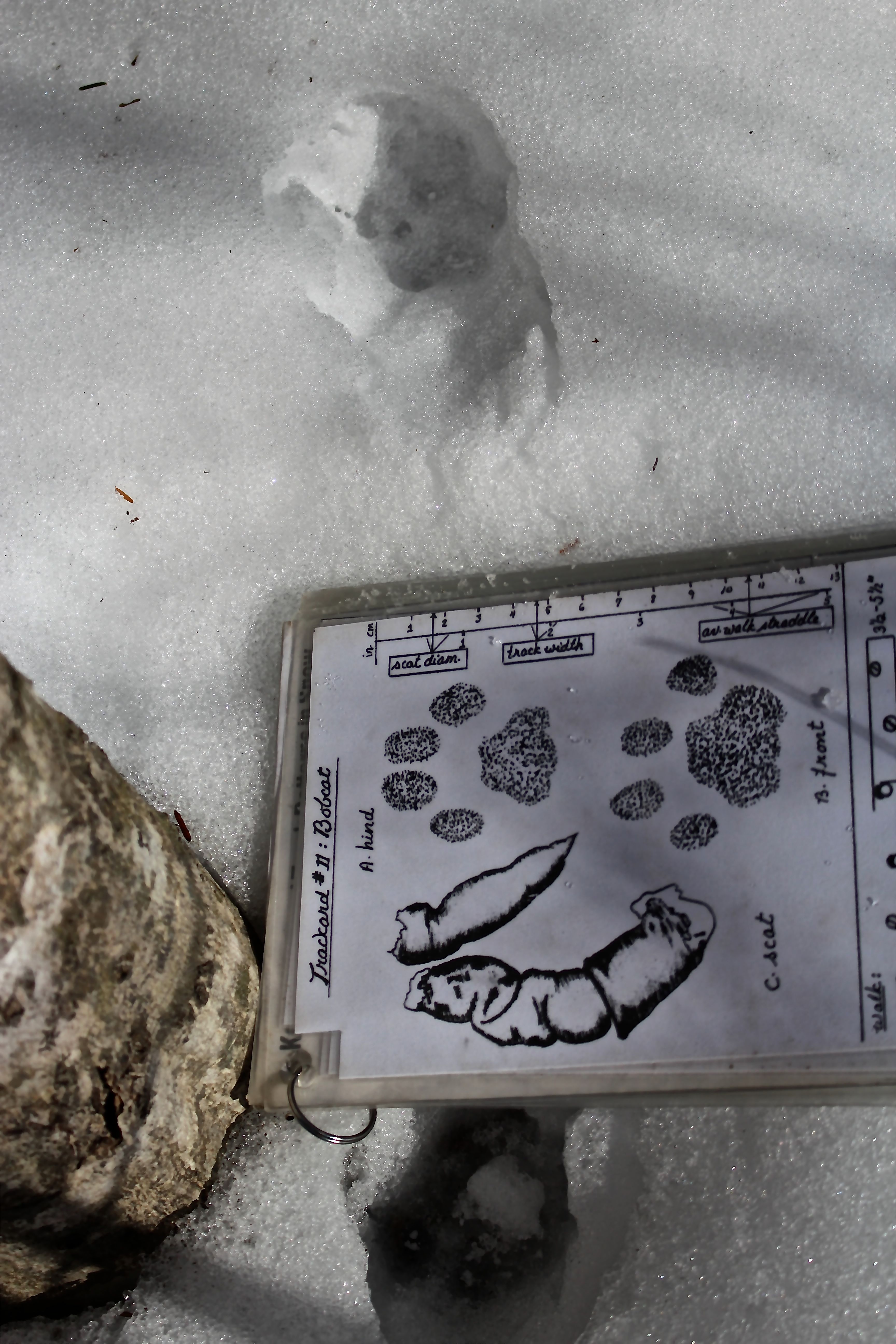
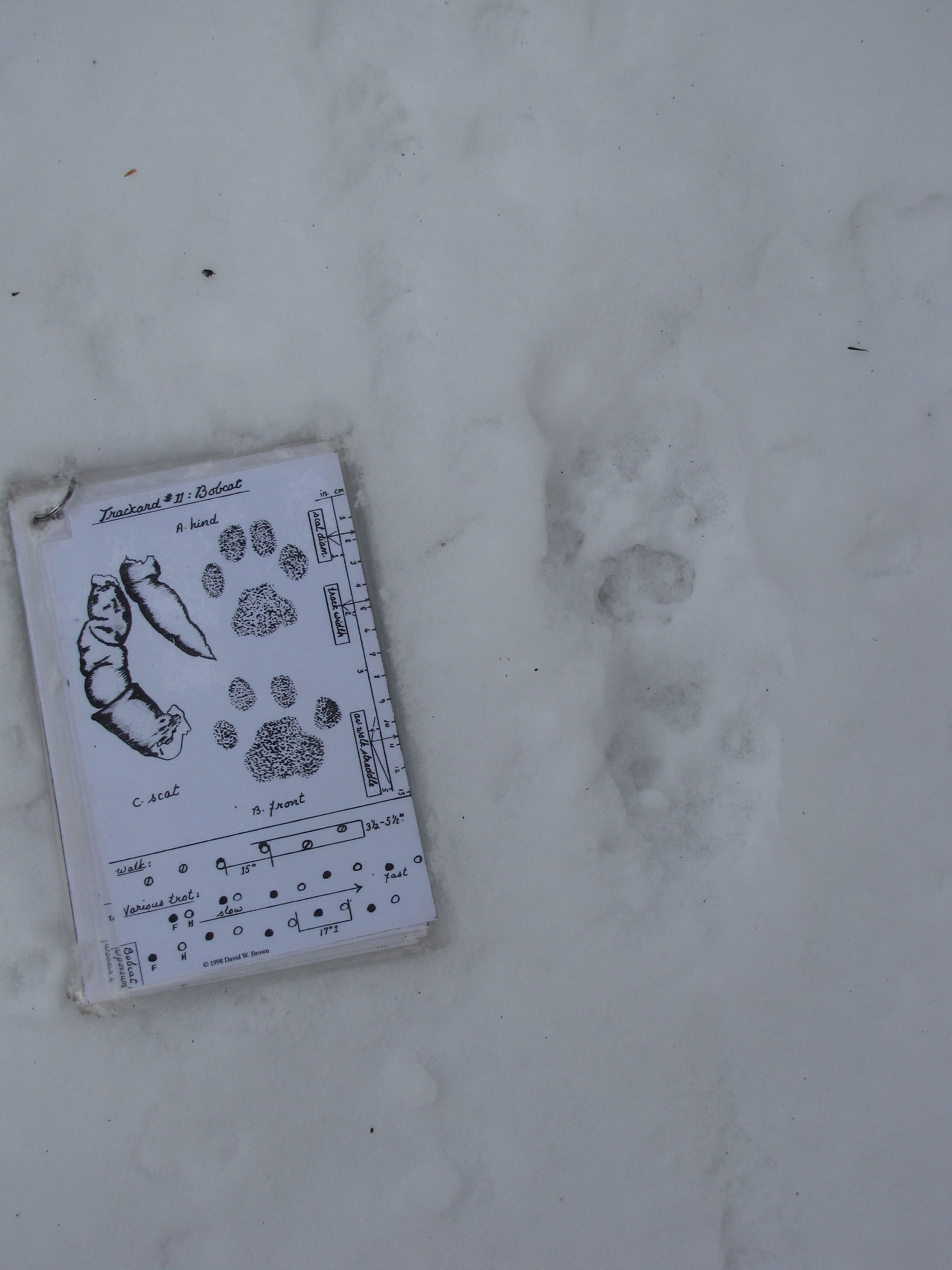
And a Bobcat’s prints surrounding the main evidence.

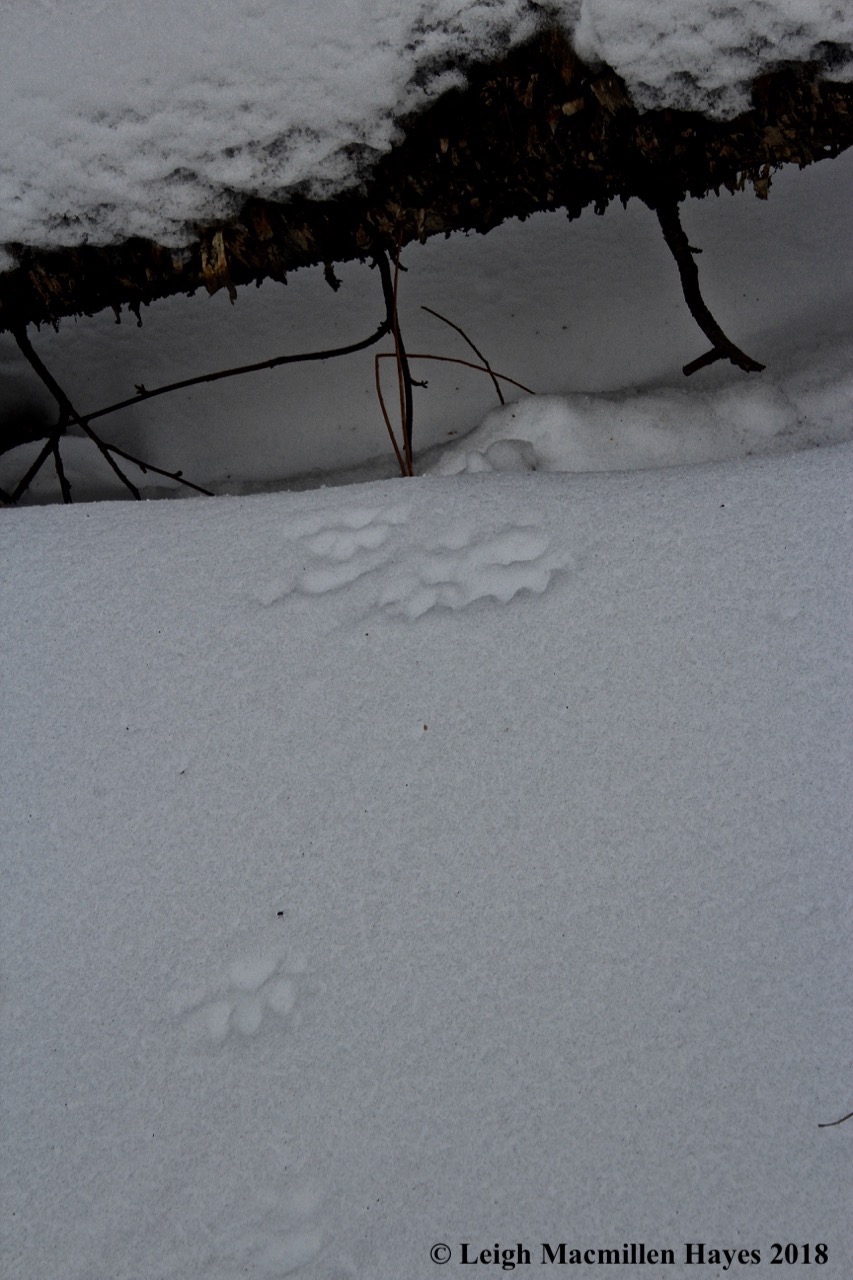
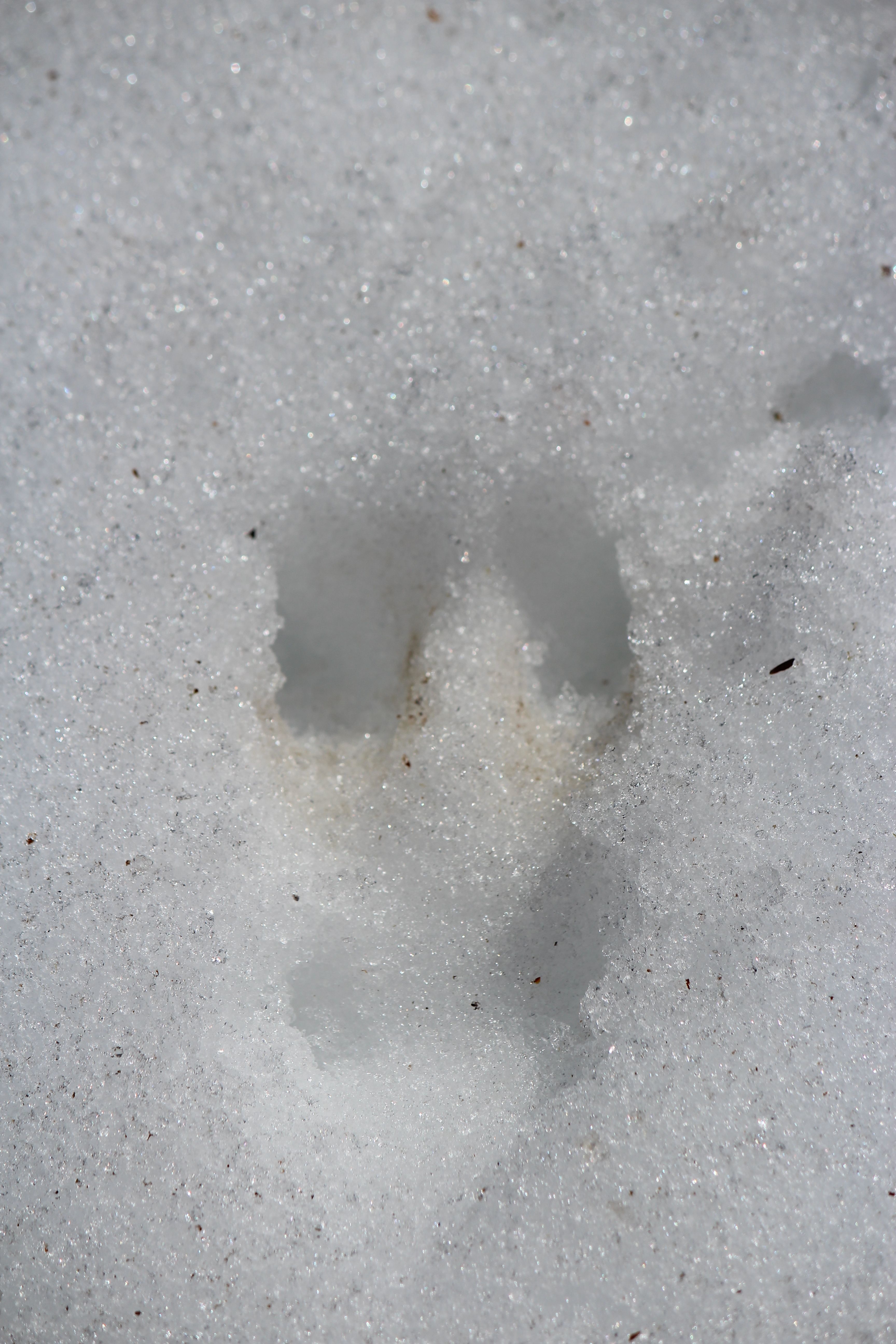
That classic round shape with four toes showing. But, for the discerning eye, there is one toe on the far left that is over another toe–telling me that this print actually represents two feet! First the front foot packed the snow and then the hind foot on the same side stepped into almost that very spot.

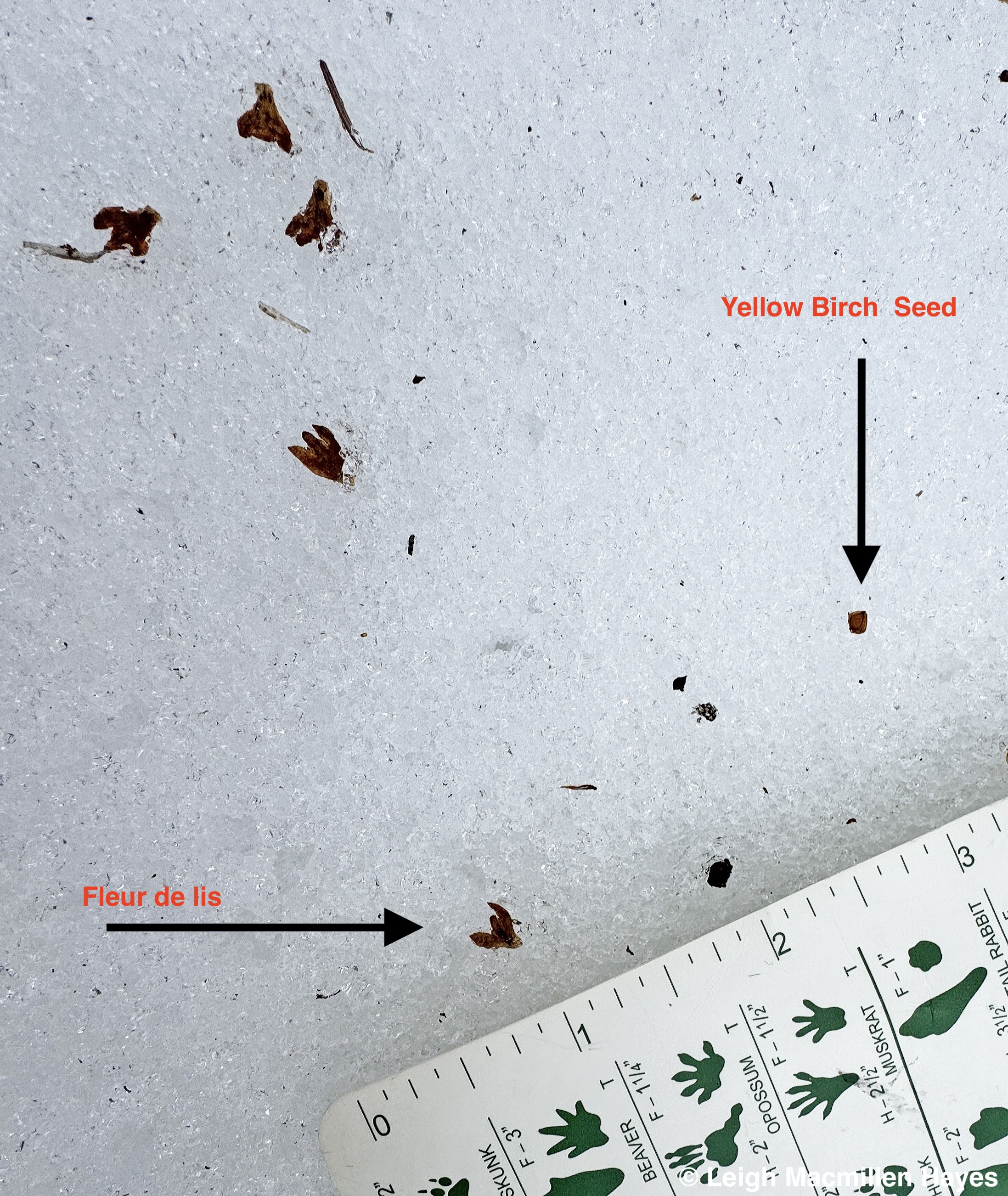
And after that a Winter Firefly entered the scene. Notice his bare feet, but again, he’s made for winter and not made to light up the way his summer cousins do and this past summer we had the pleasure of spotting many Fireflies each night.
But I love the Winter Firefly for the orangey-pink parentheses that mark the pronotum or head shield. And the fact that they can move across the snow, though they prefer to be just under the bark on a winter day.
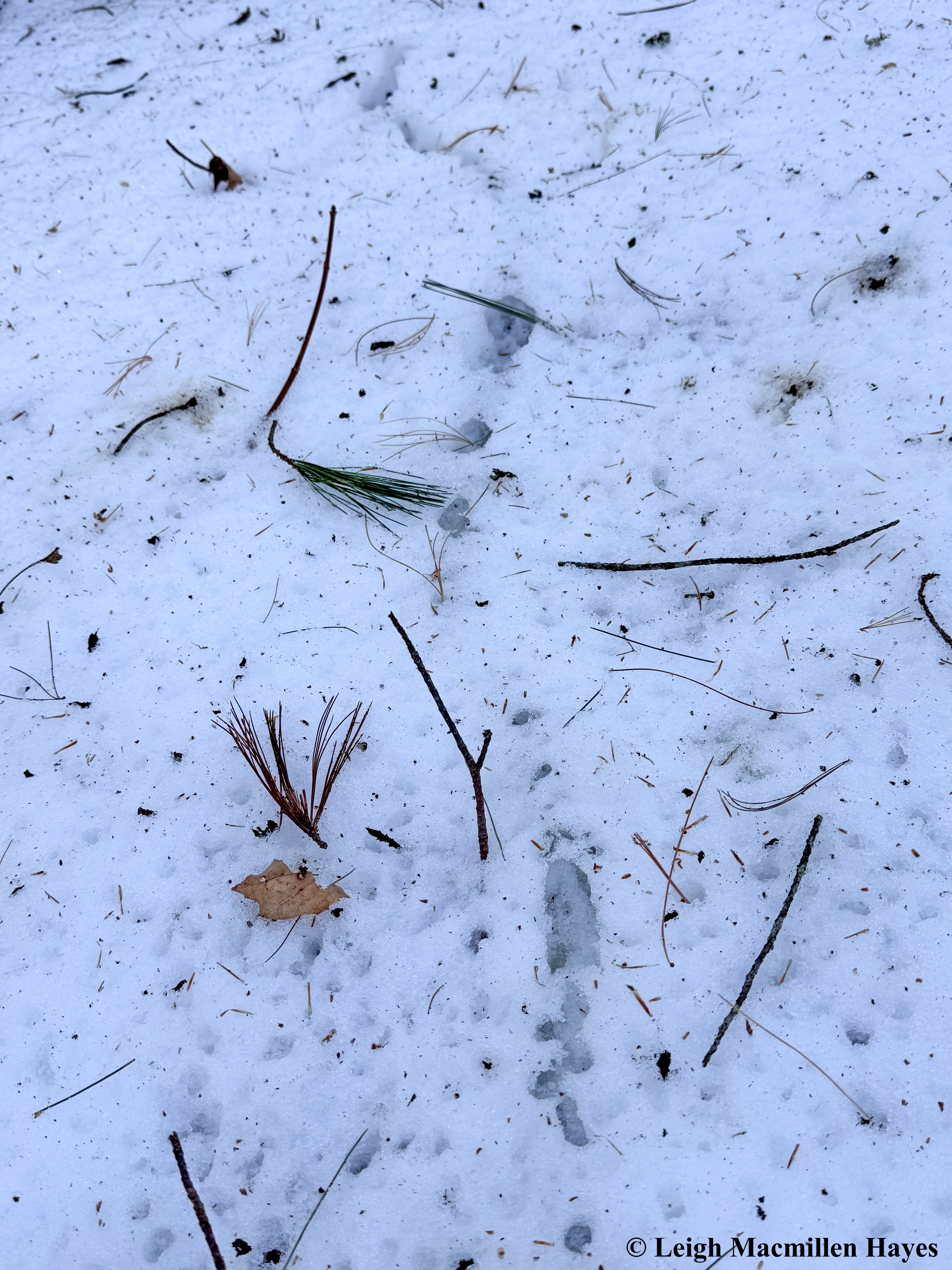
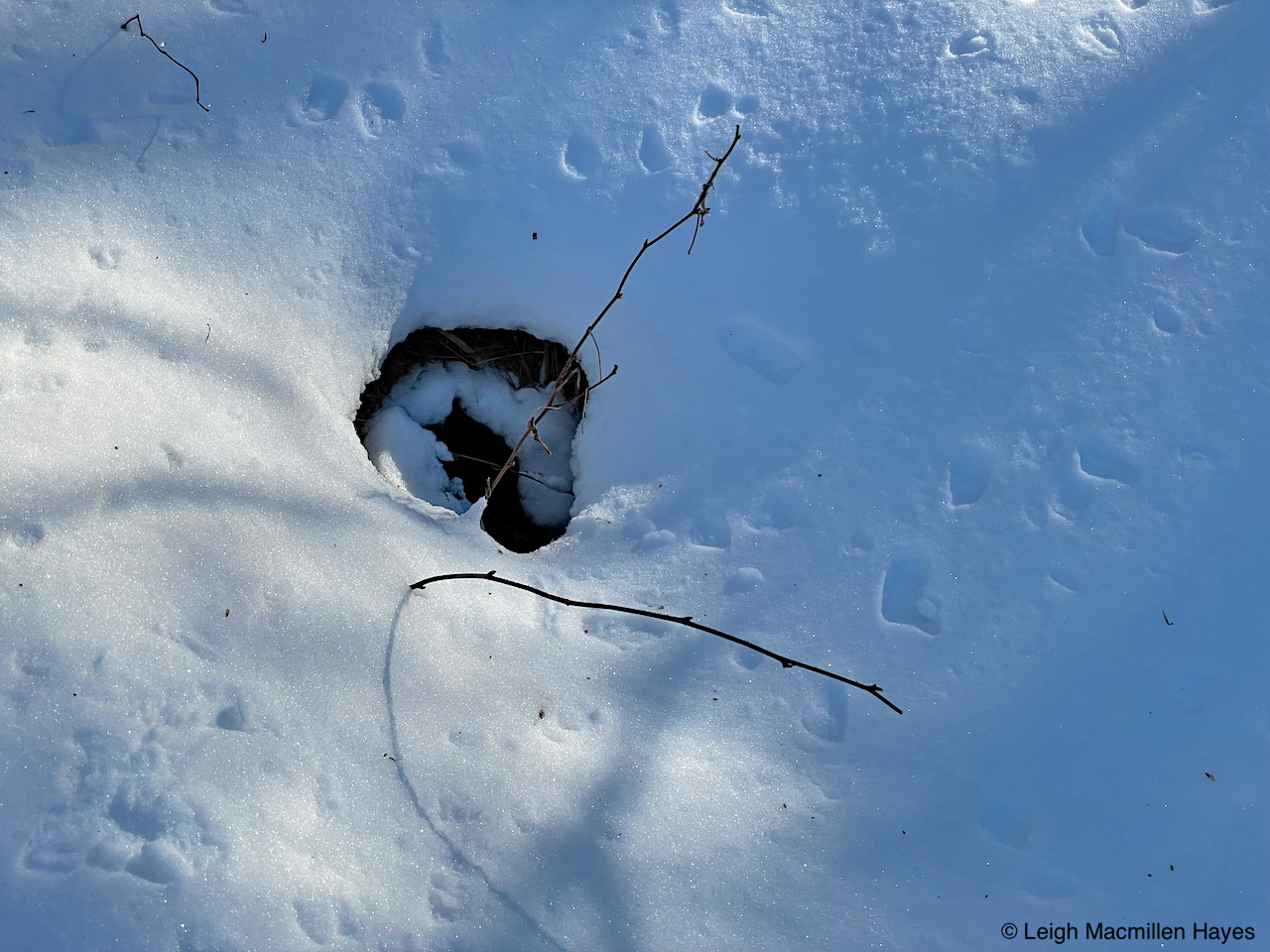
It’s the sign of still another that has been drawing my attention frequently because . . . that sign can be seen in almost any habitat and quite often. The “another” in this case is a Meadow Vole. If you’ve ever spotted one moving across leaf matter or plowing through the snow, you know they are like little gray torpedoes, quick and trying to go undetected.
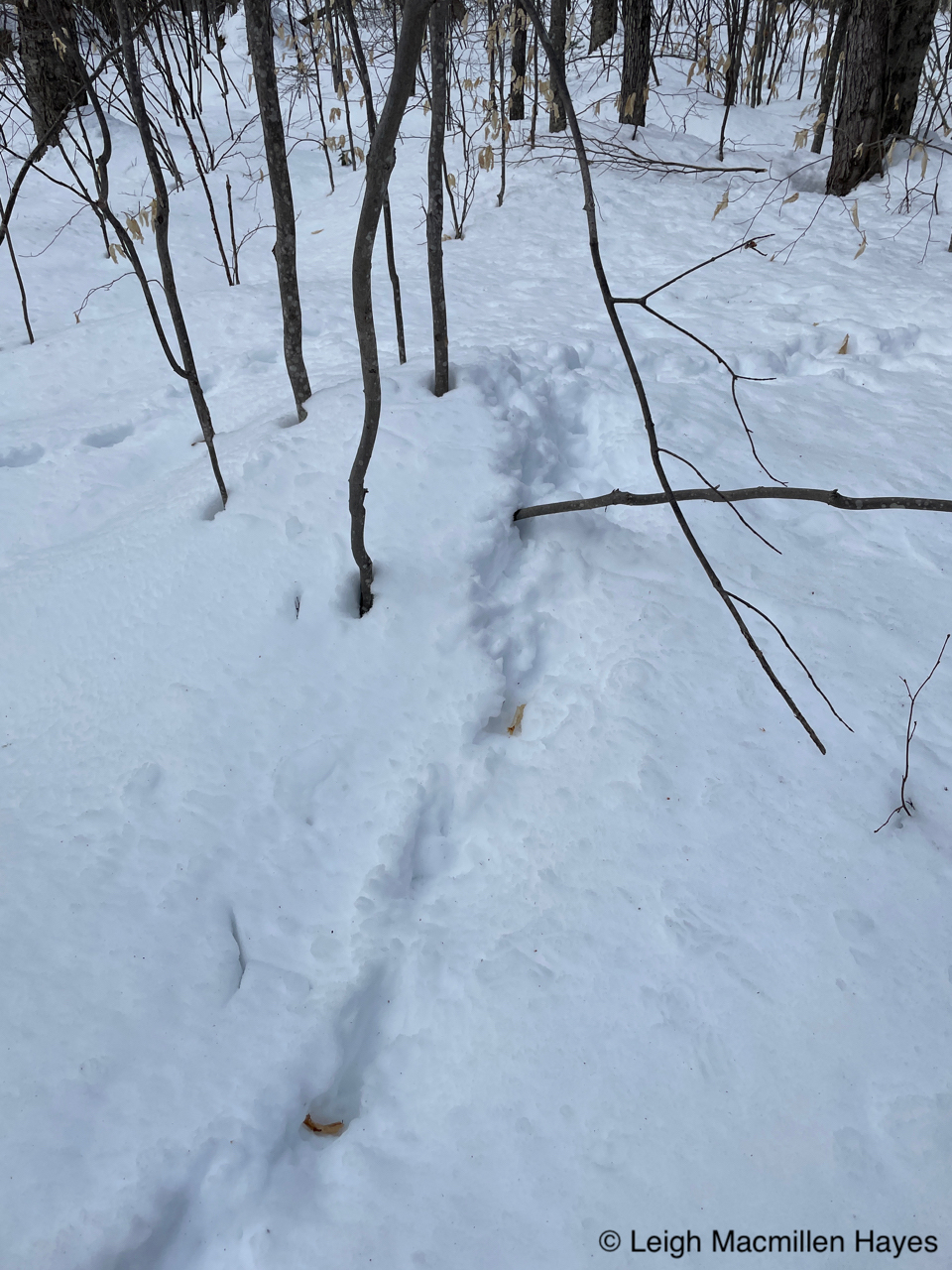
Being one of a predator’s favorite food sources, Voles are shy of airspace, and thus tend to travel below the snow surface whenever possible. And while they are hoppers/leapers most of the time, occasionally they become perfect walkers and this track shows the essence of that in the lower zigzaggy portion of the tunnel. At least that’s my interpretation. Like the Bobcat (and canines), a Vole can pack the snow with the front foot and then the hind foot lands in the same spot. He may walk like this for a few steps and then revert back to hopping/leaping but in a super fast fashion.
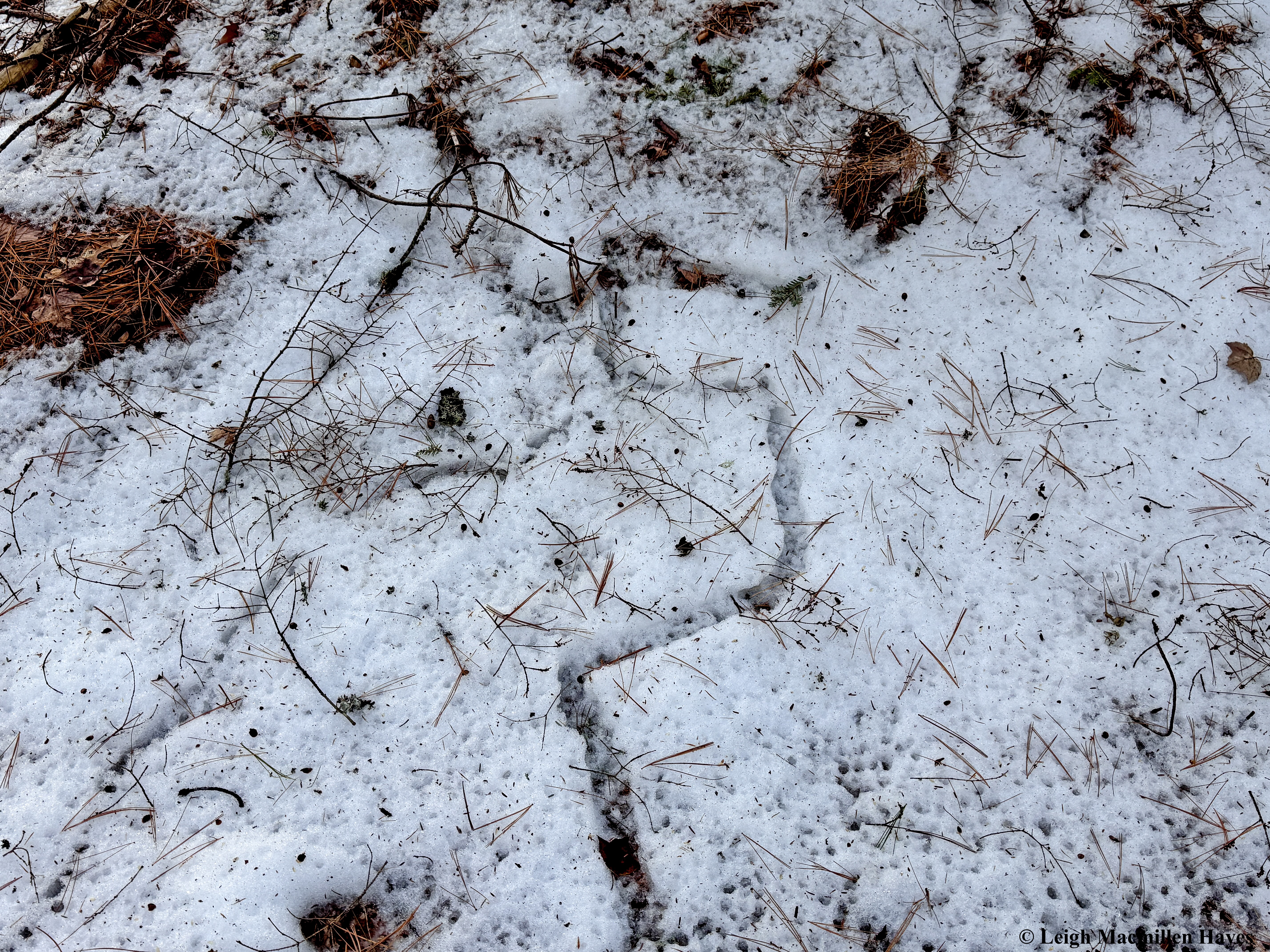
As the snow melts, the tunnels become more and more apparent and I get the sense of this little guy moving here, there, and everywhere, probably on a seed quest.
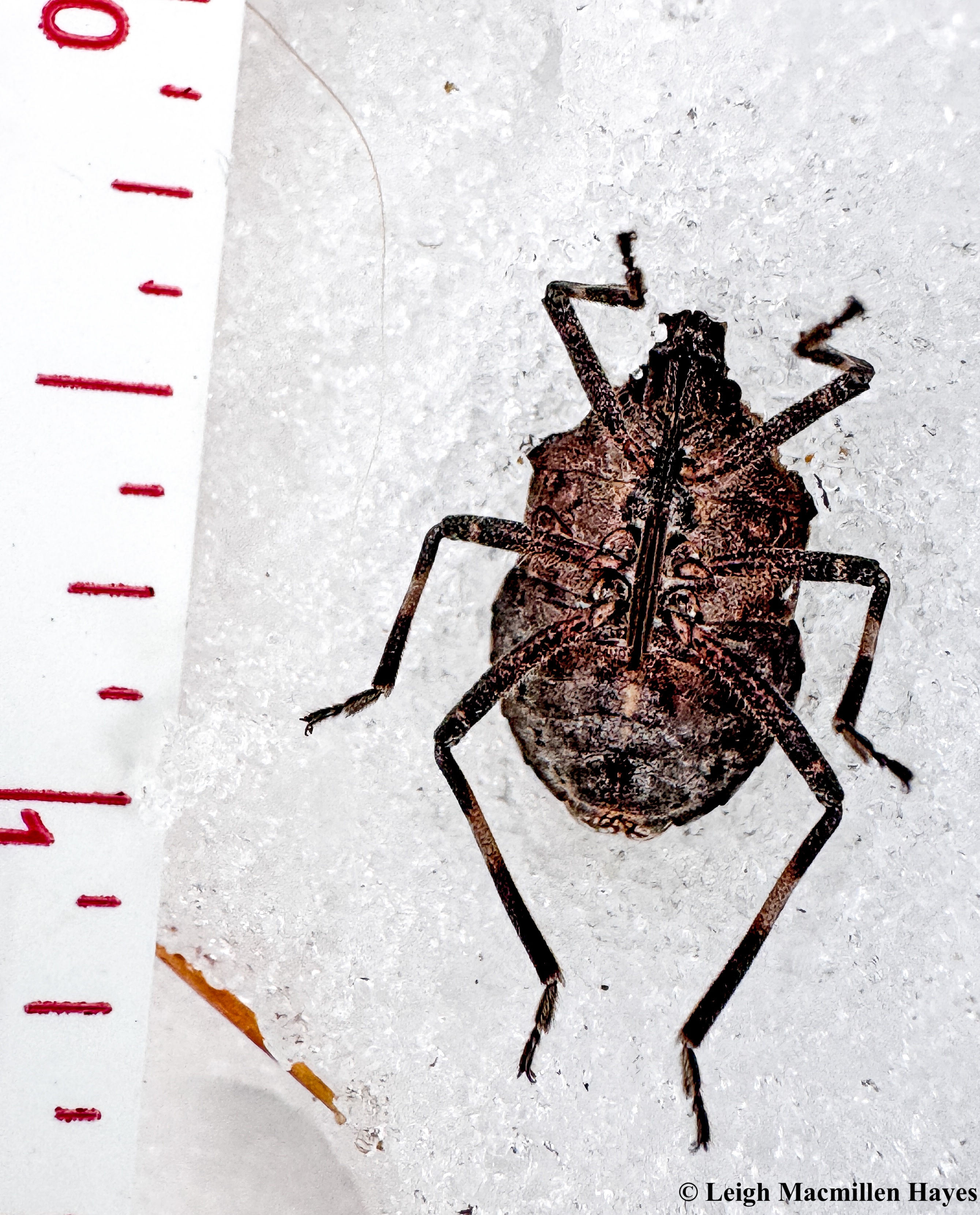
Occasionally, the winter weather takes its toll, and such was this case for this Shield Bug that went belly-up. They much prefer to find their way into our homes for the winter, and so far the temps we’ve been experiencing of late, except during last week’s rain storm, have been quite frigid, and this guy made the wrong choice.
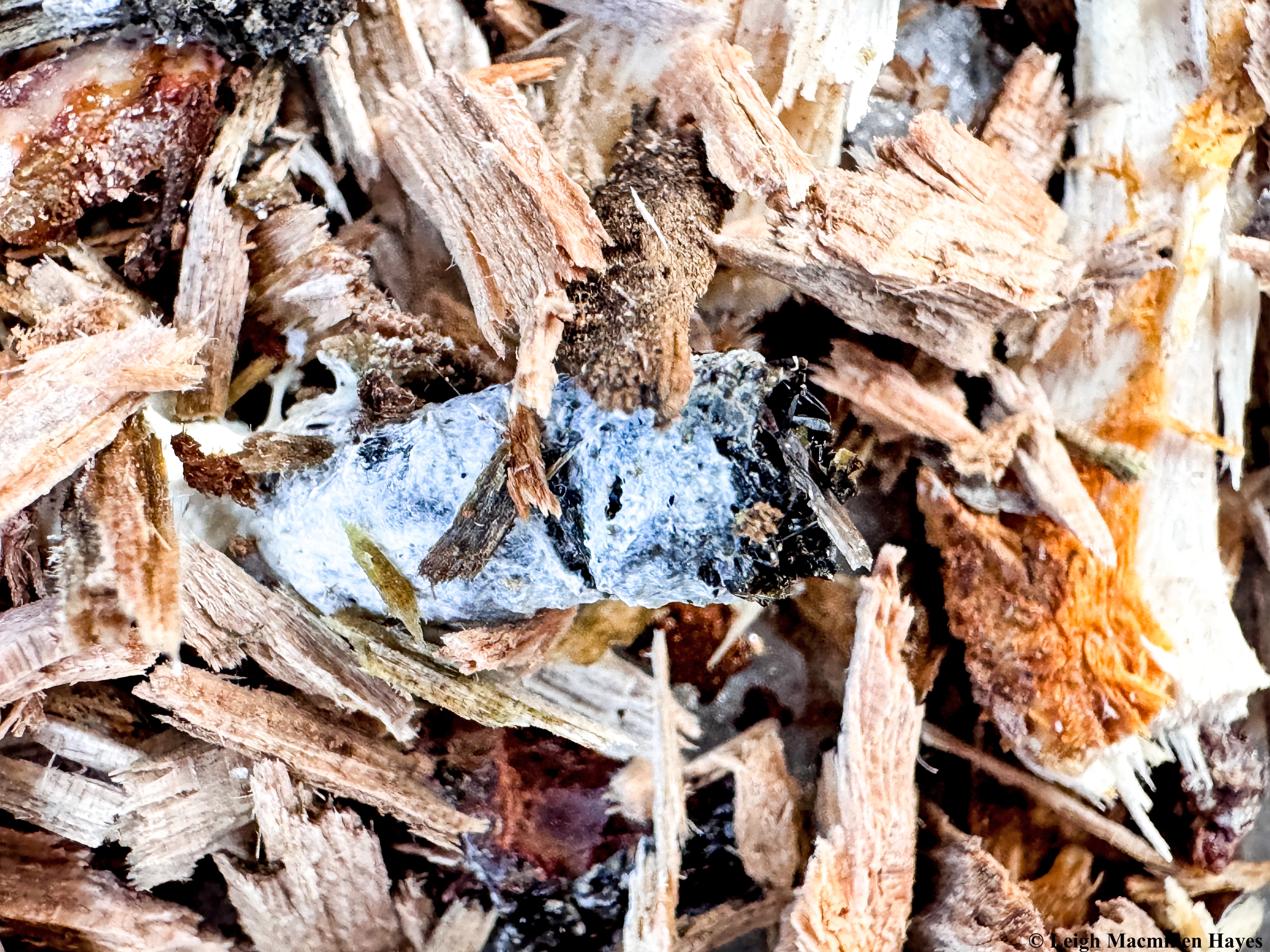
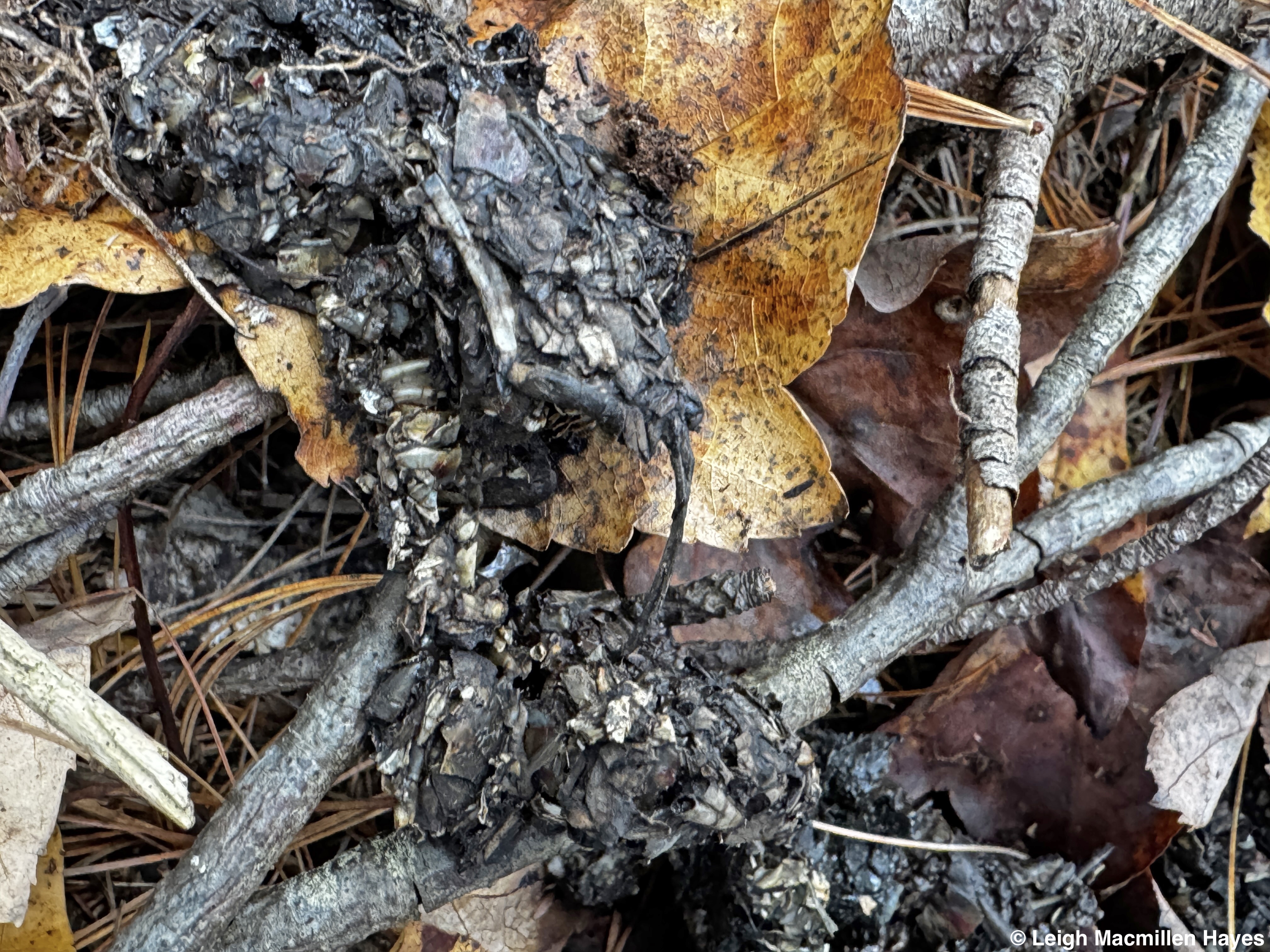
Winter isn’t just about insects and tracking, well, wait, yes it is for here is the result of another type of insect that had been consumed and the undigestible parts excreted–in the form of Pileated Woodpecker Scat filled with Carpenter Ant body parts.

Oh, and then there are spiders, but though I’ve seen plenty of them alive and moving with grace across the snow, occasionally they freeze to death despite their antifreeze and what happened here is that the spider lost a front limb and I have to wonder if the frost entered its body through the stub that was left behind. I have no proof, but it’s always good to wonder.
And how do I know this is a male? Do you see the “boxing gloves” on the pedipalps? There’s a vocabulary word worth looking up. :-)
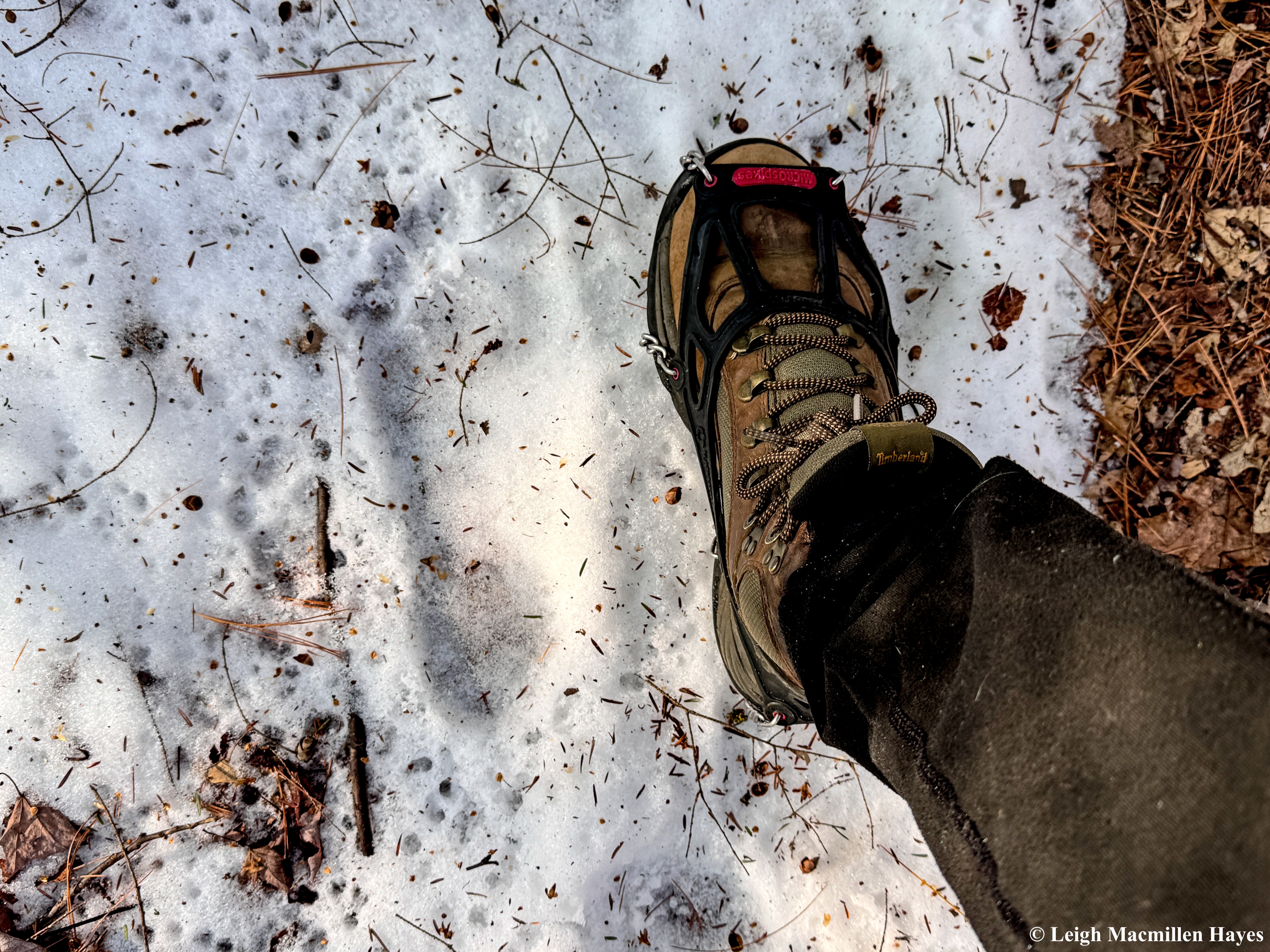
But wait. The temperature was in the teens, with a wind chill in the single digits and I spotted the print of . . . a human being. A bare footprint. It was a few days old, given that there was some tree debris on top of it.
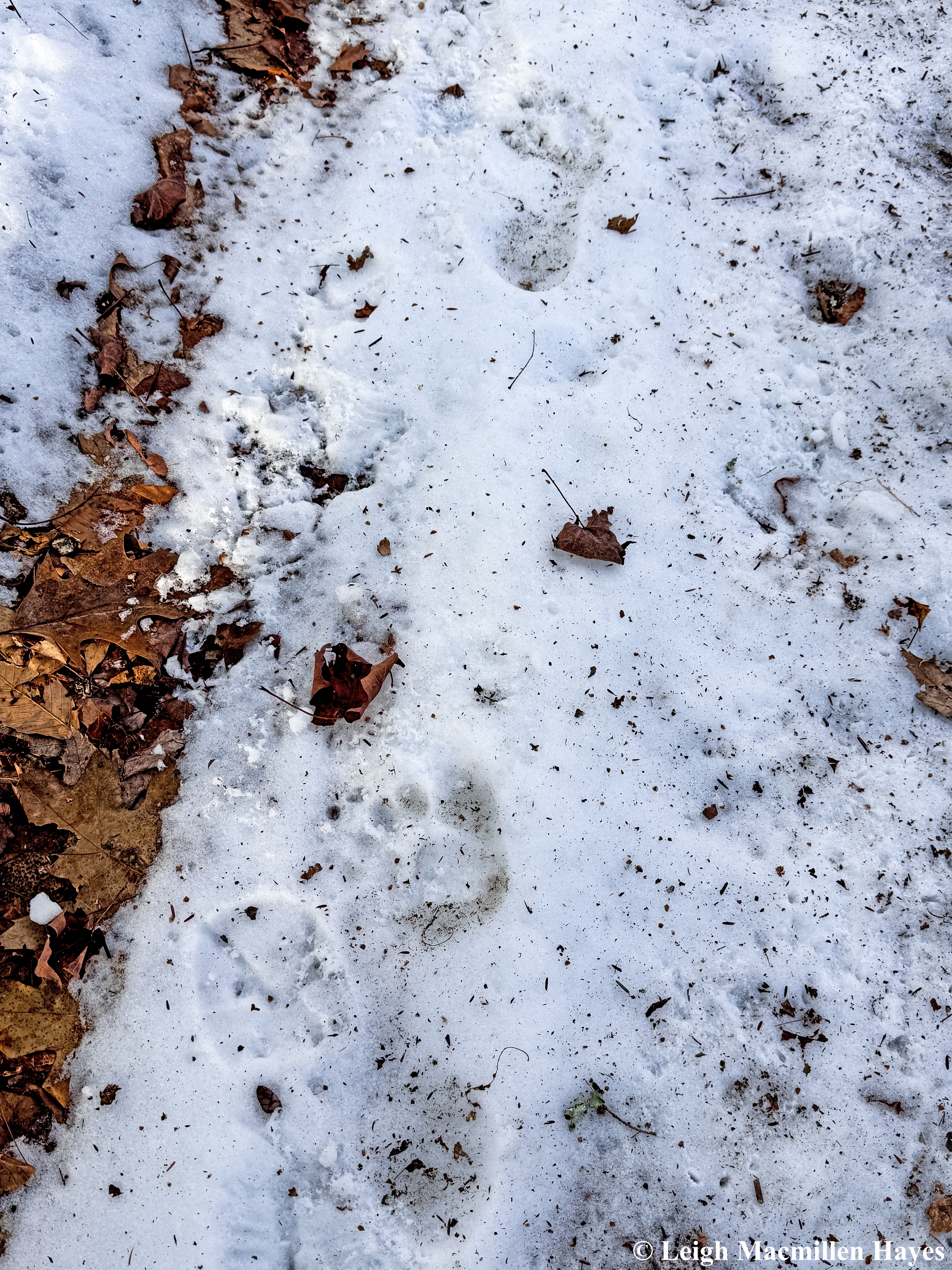
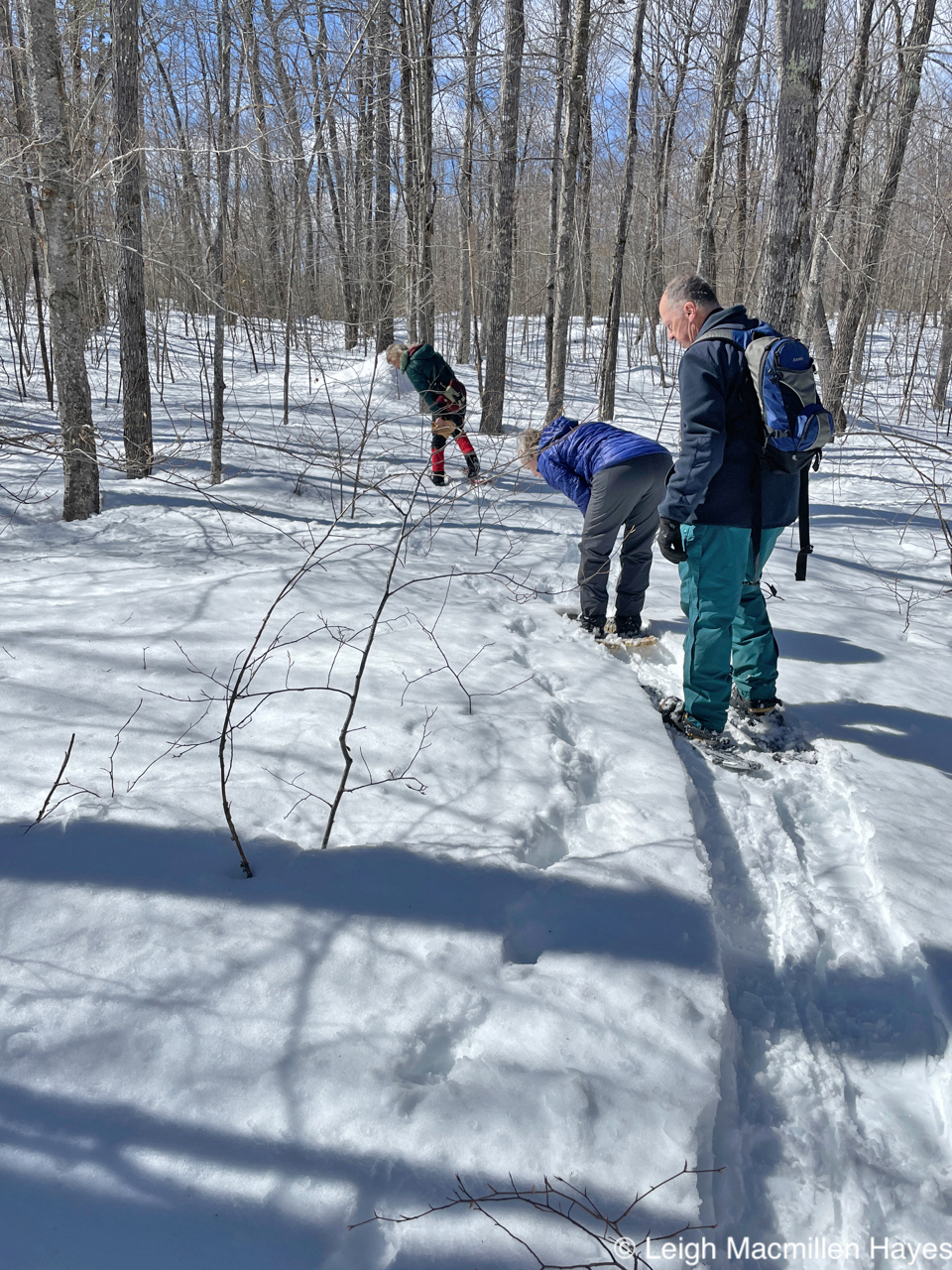
Of the almost six miles that My Guy and I hiked on a loop trail today, we followed these tracks the entire way.
It brought to mind this poem:
Footprints in the Sand
One night I dreamed I was walking along the beach with the Lord.
Many scenes from my life flashed across the sky.
In each scene I noticed footprints in the sand.
Sometimes there were two sets of footprints,
other times there were one set of footprints.

This bothered me because I noticed
that during the low periods of my life,
when I was suffering from
anguish, sorrow or defeat,
I could see only one set of footprints.

So I said to the Lord,
“You promised me Lord,
that if I followed you,
you would walk with me always.
But I have noticed that during
the most trying periods of my life
there have only been one
set of footprints in the sand.
Why, when I needed you most,
you have not been there for me?”

The Lord replied,
“The times when you have
seen only one set of footprints,
is when I carried you.”

~Mary Stevenson
Can you imagine welcoming winter by walking barefoot in the snow?
I’m pretty sure I was carried today! And not by My Guy! Though he was beside me the entire way.


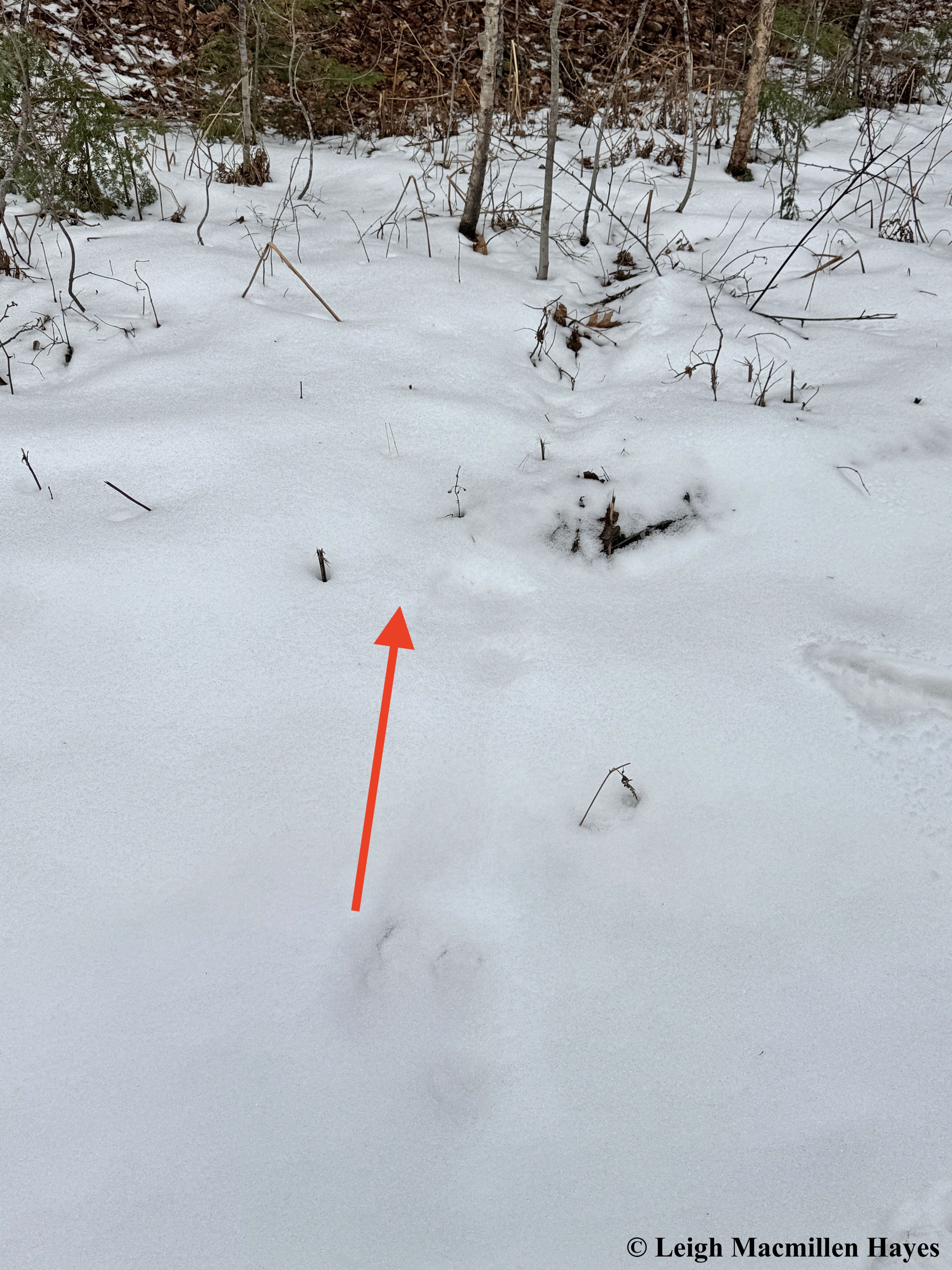
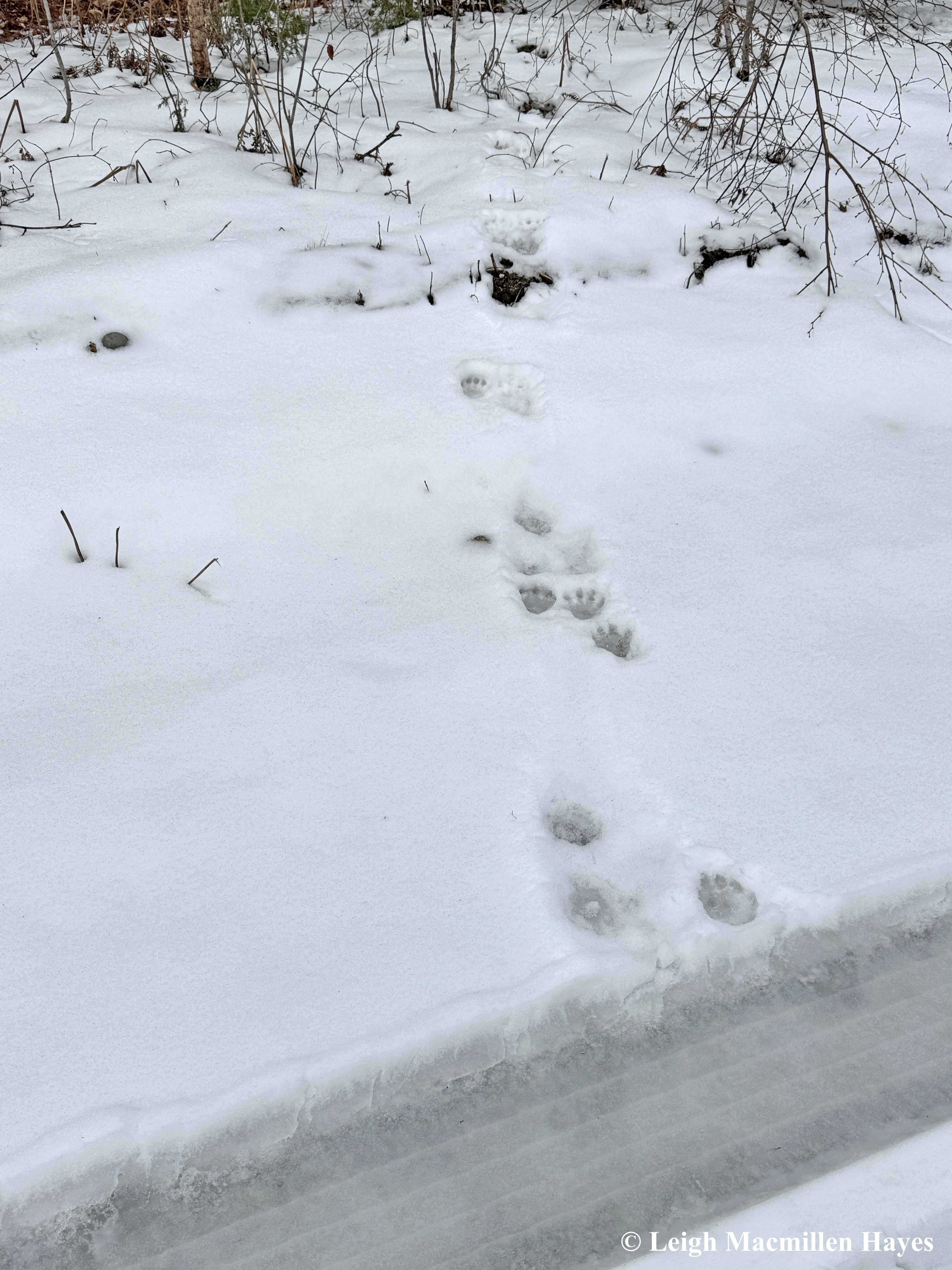
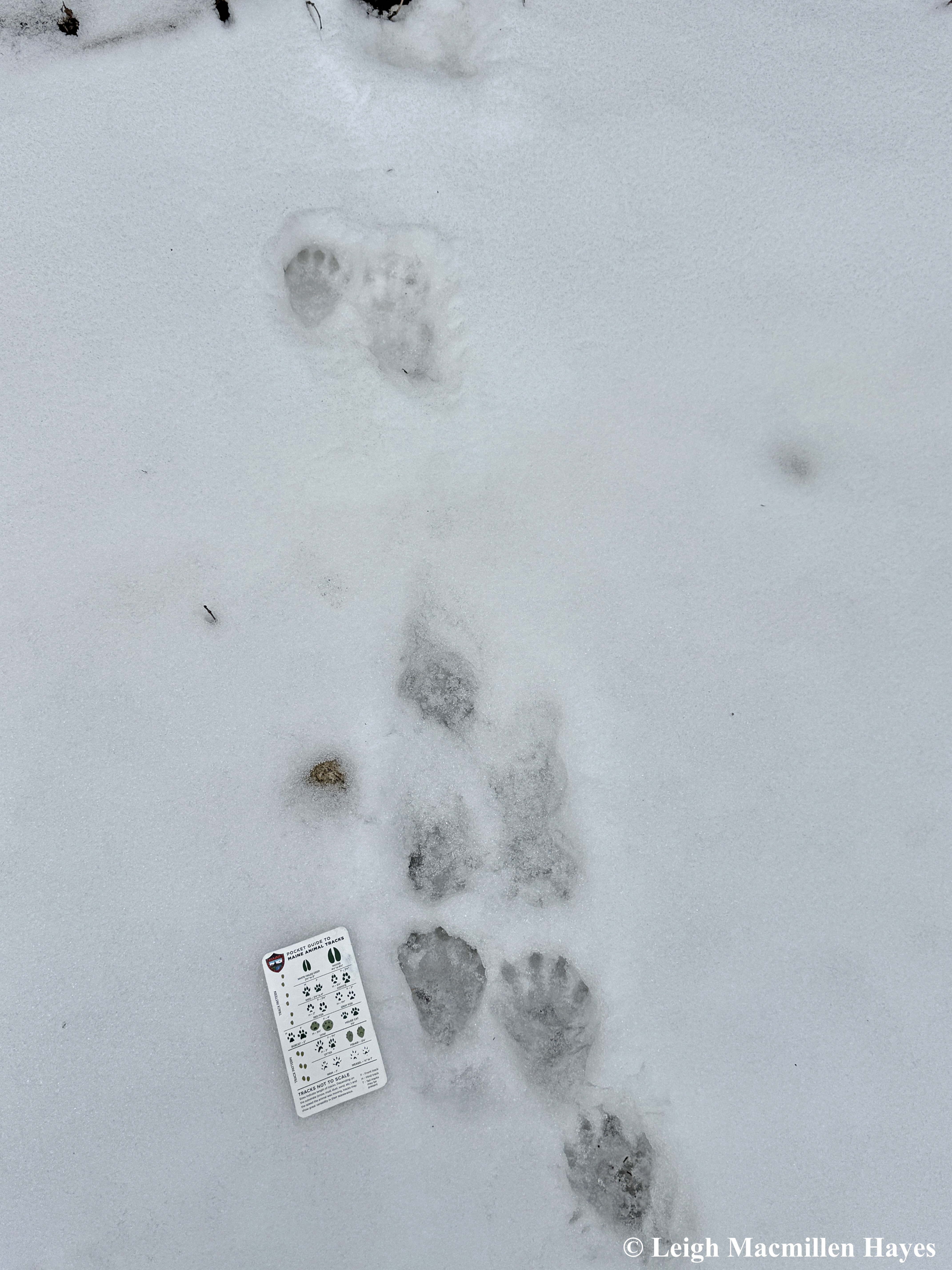
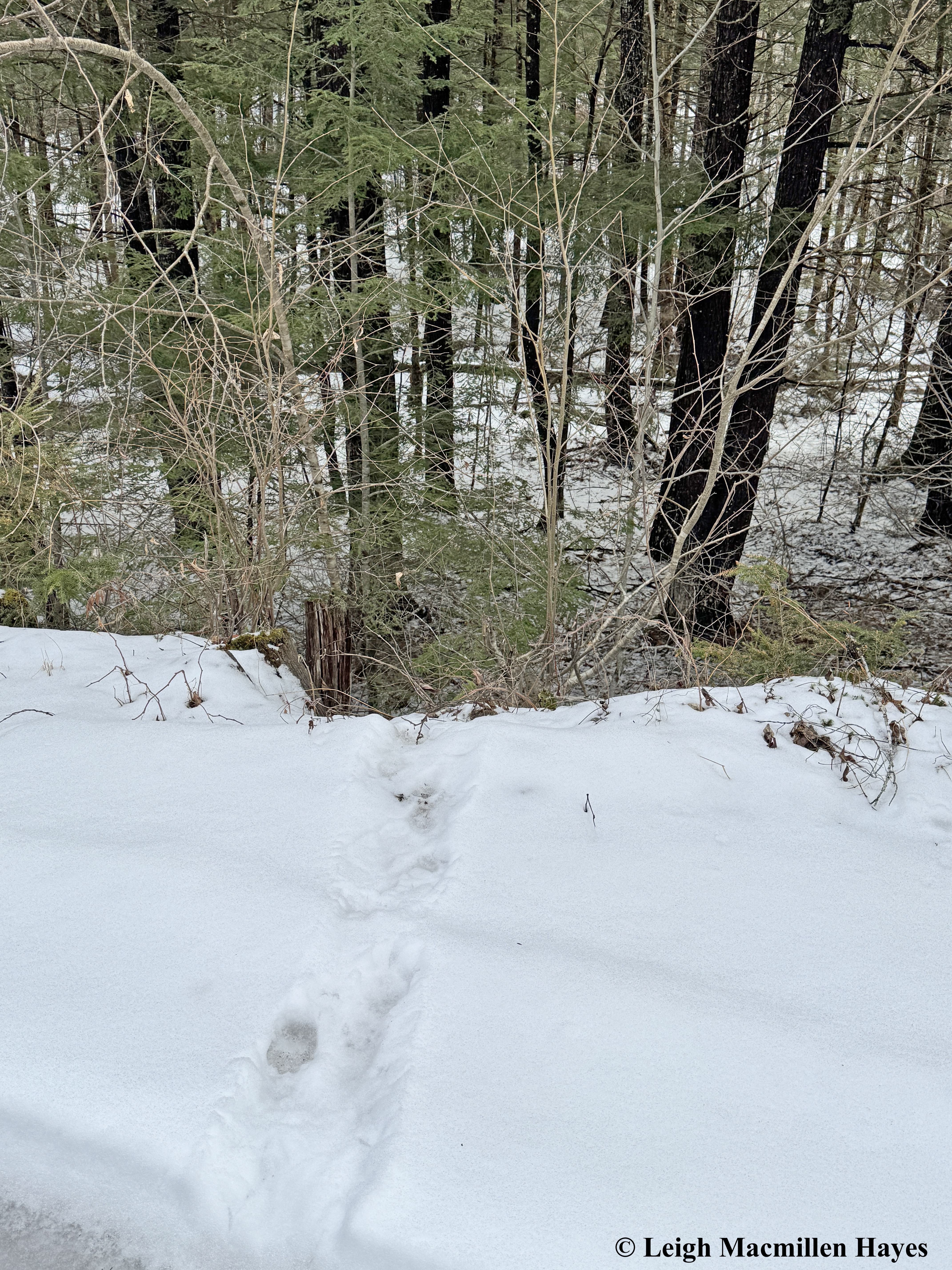






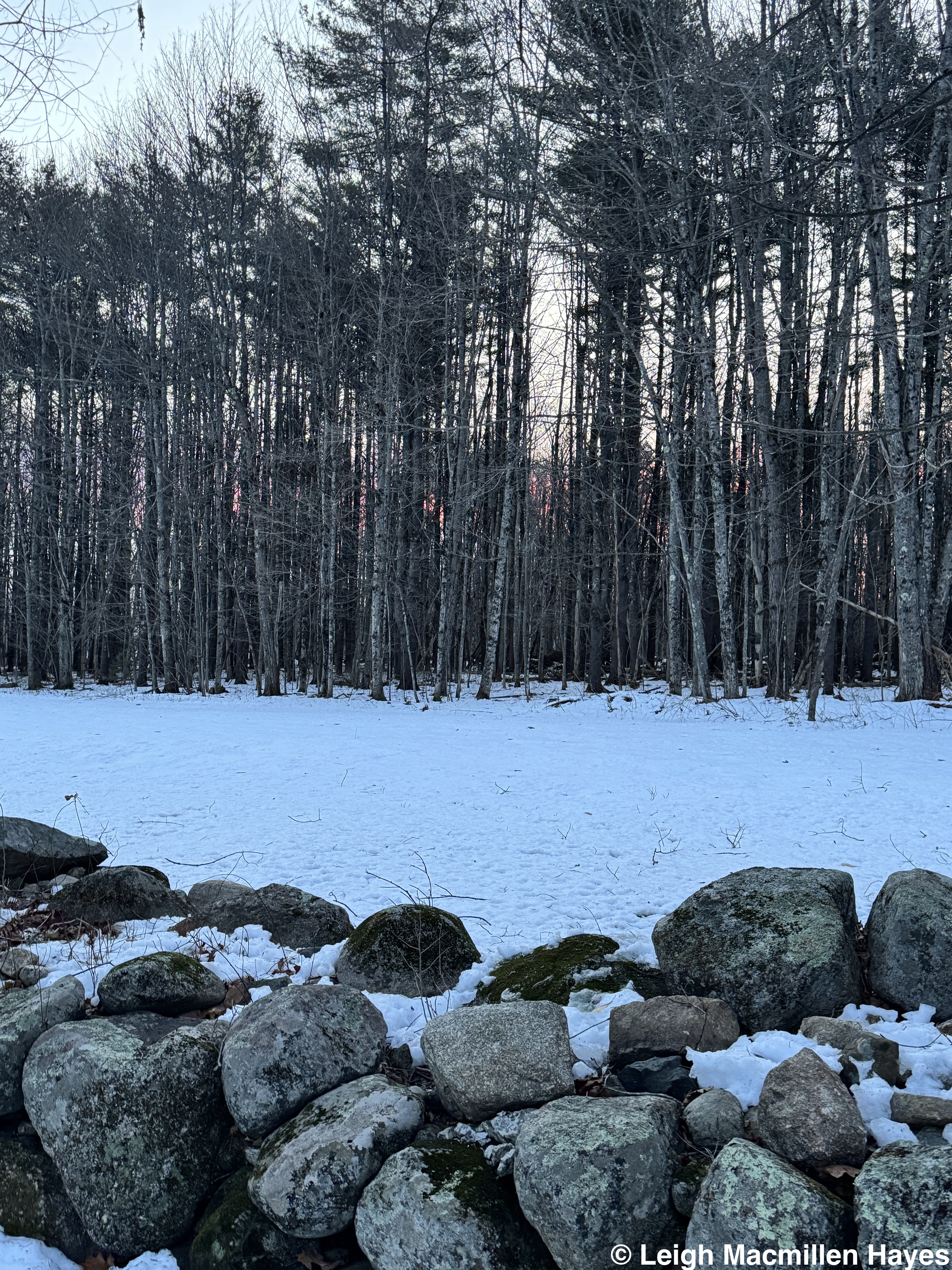

















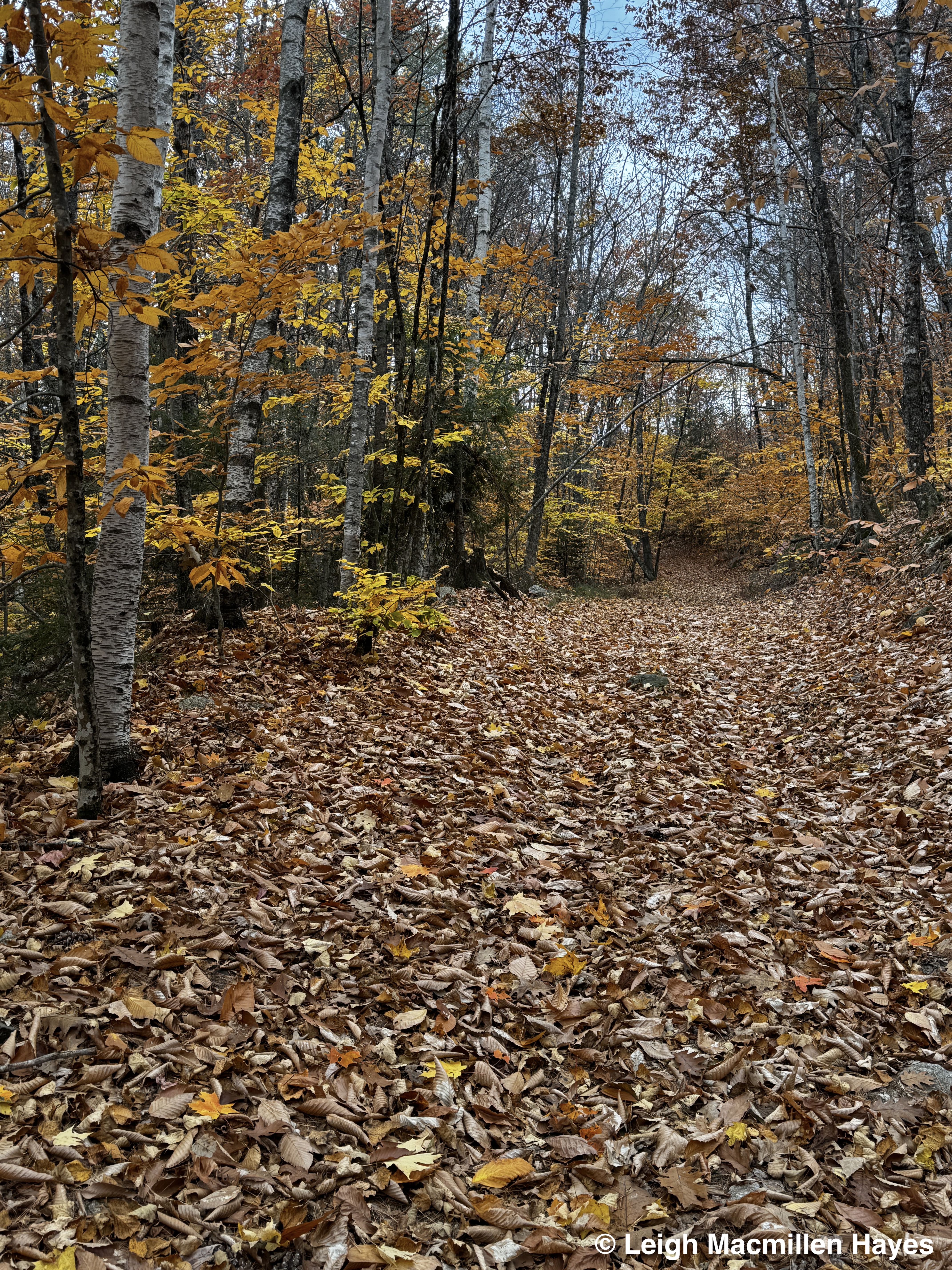














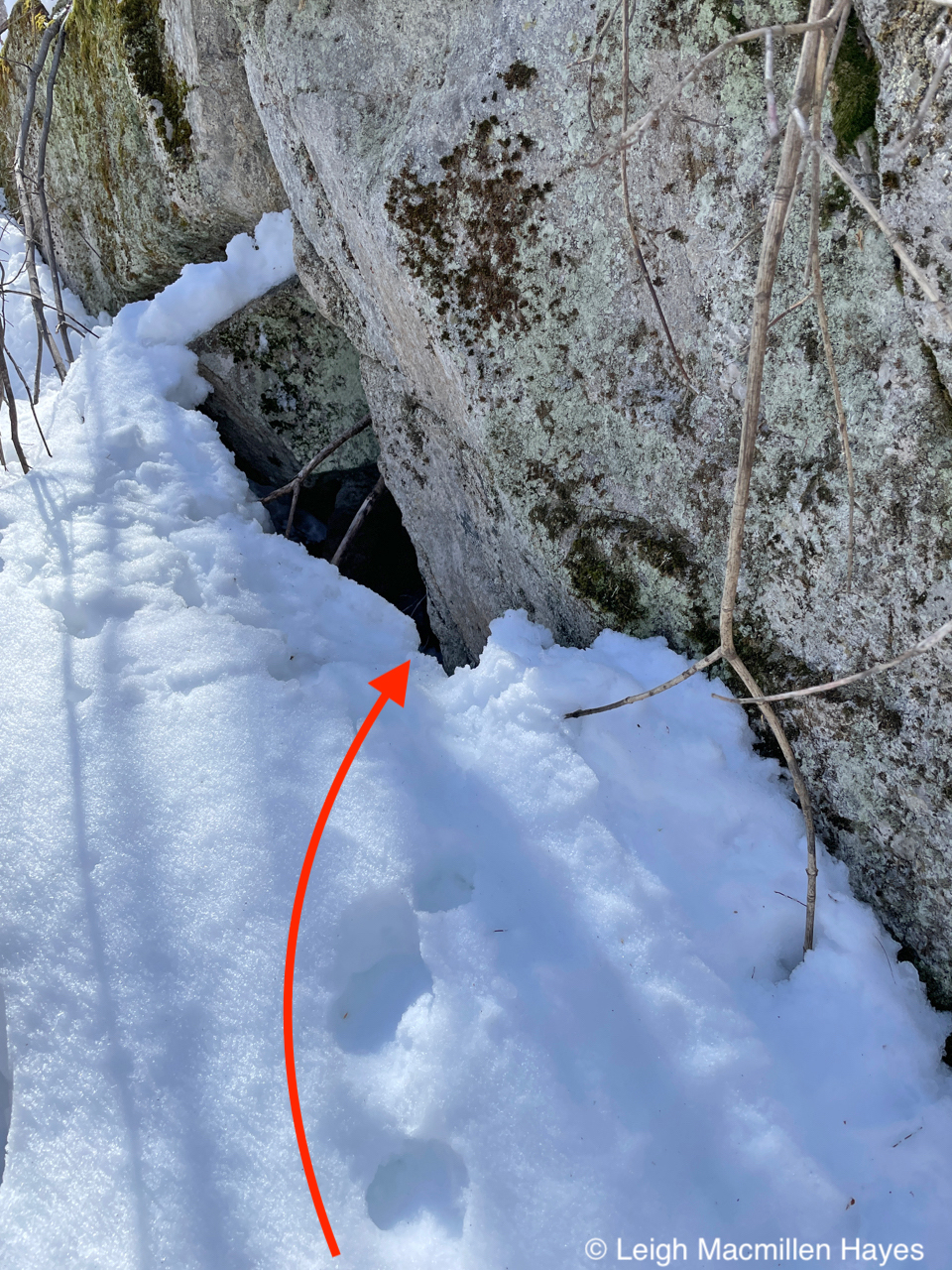
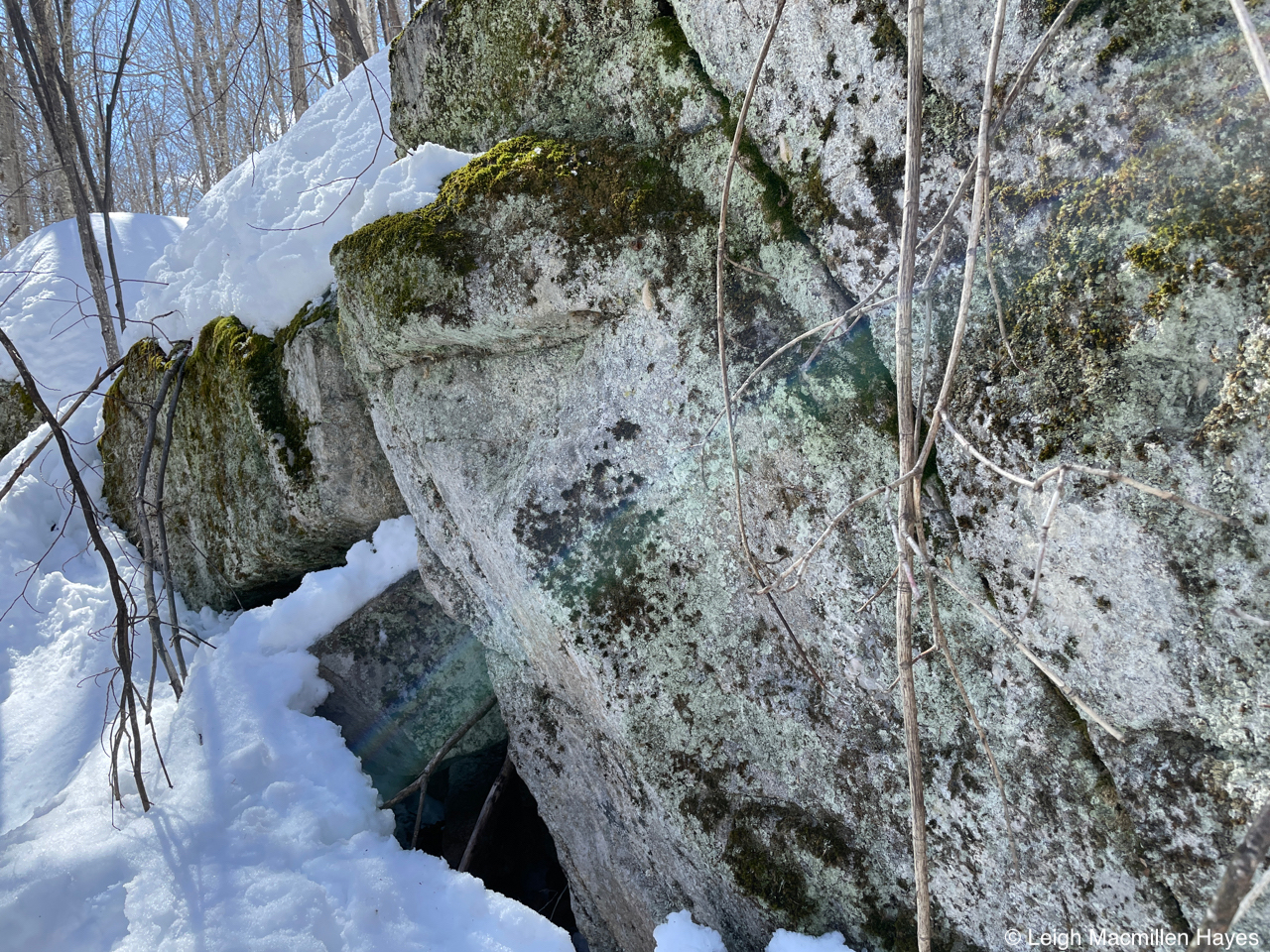


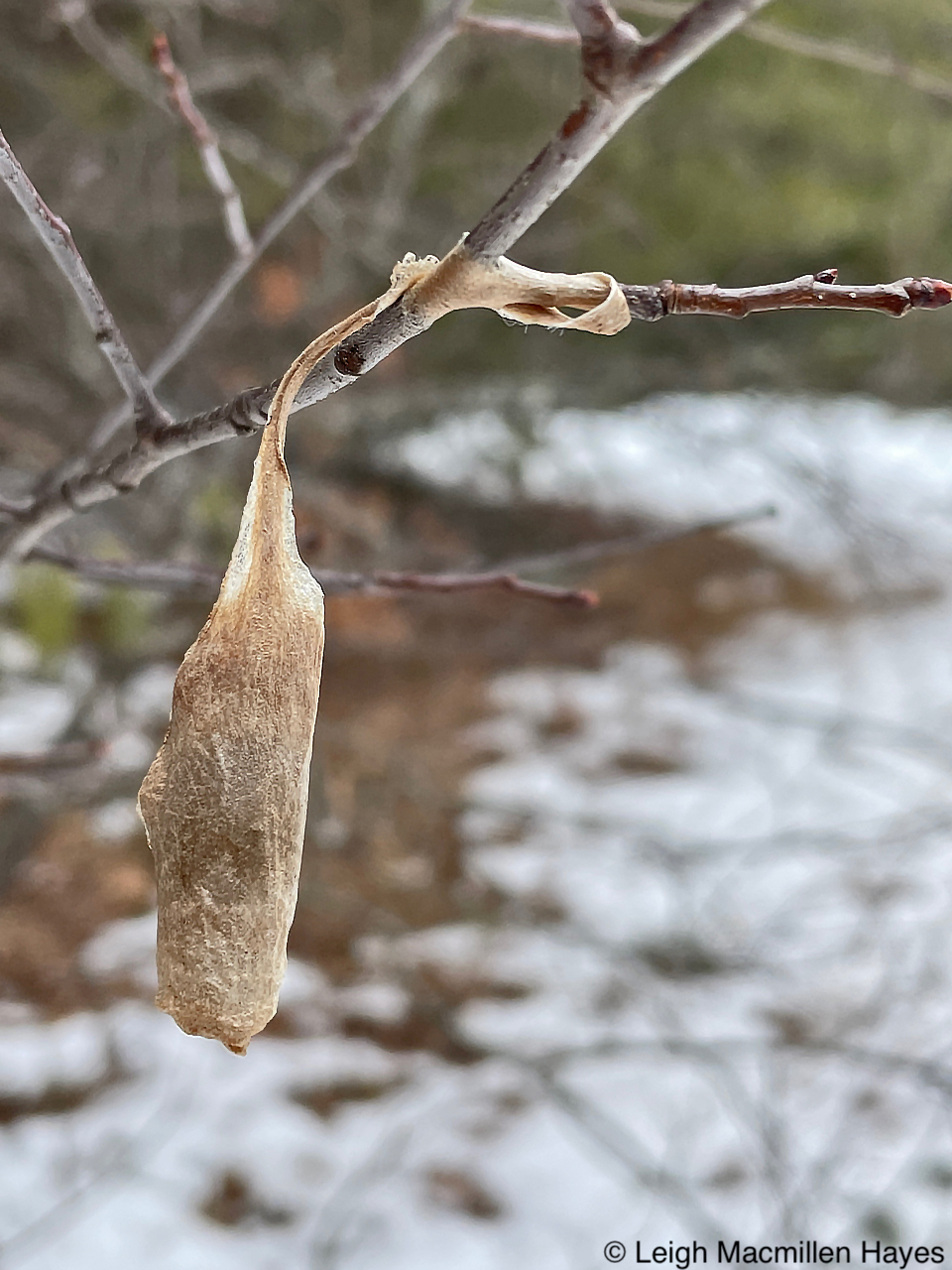

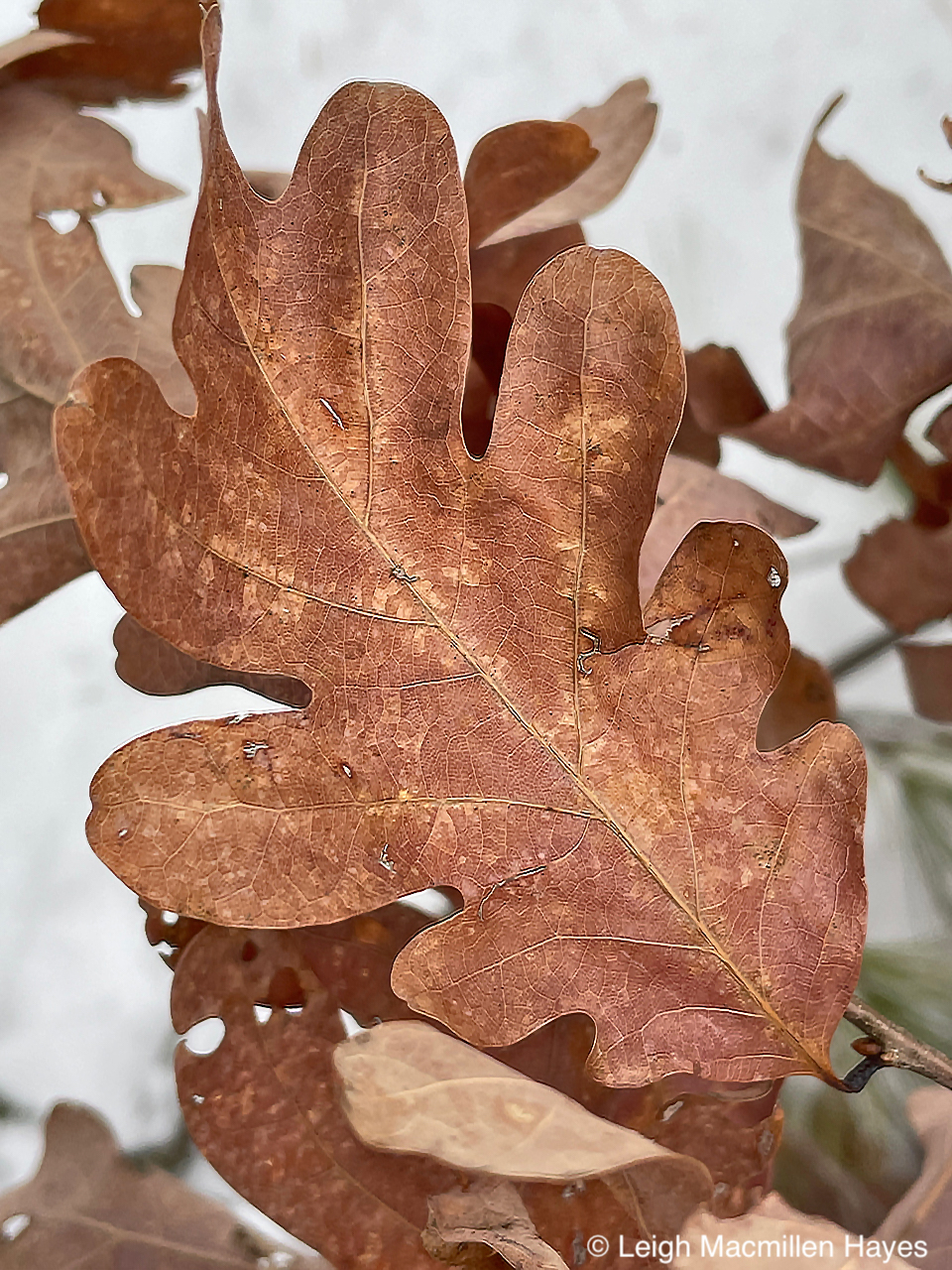




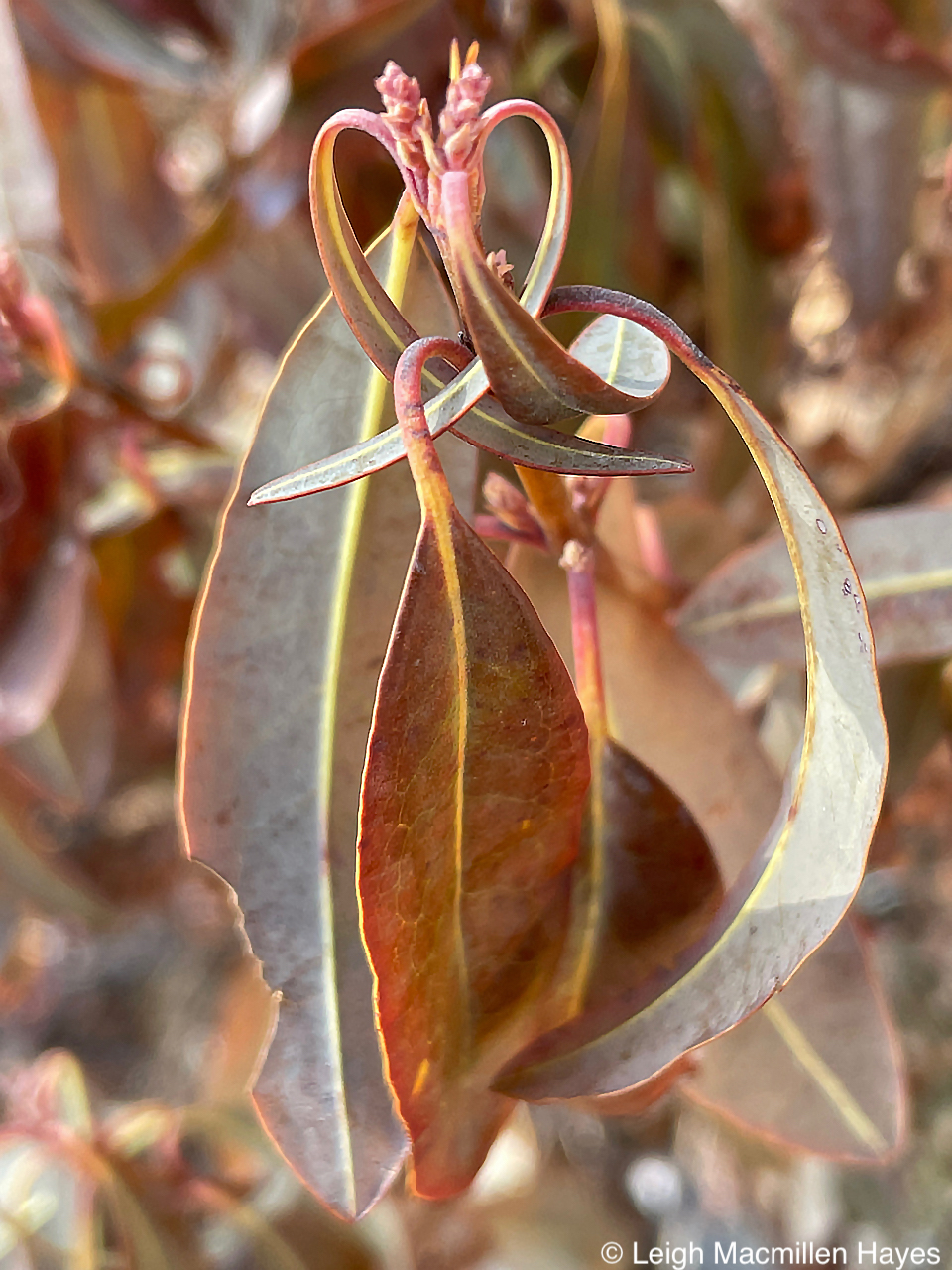



























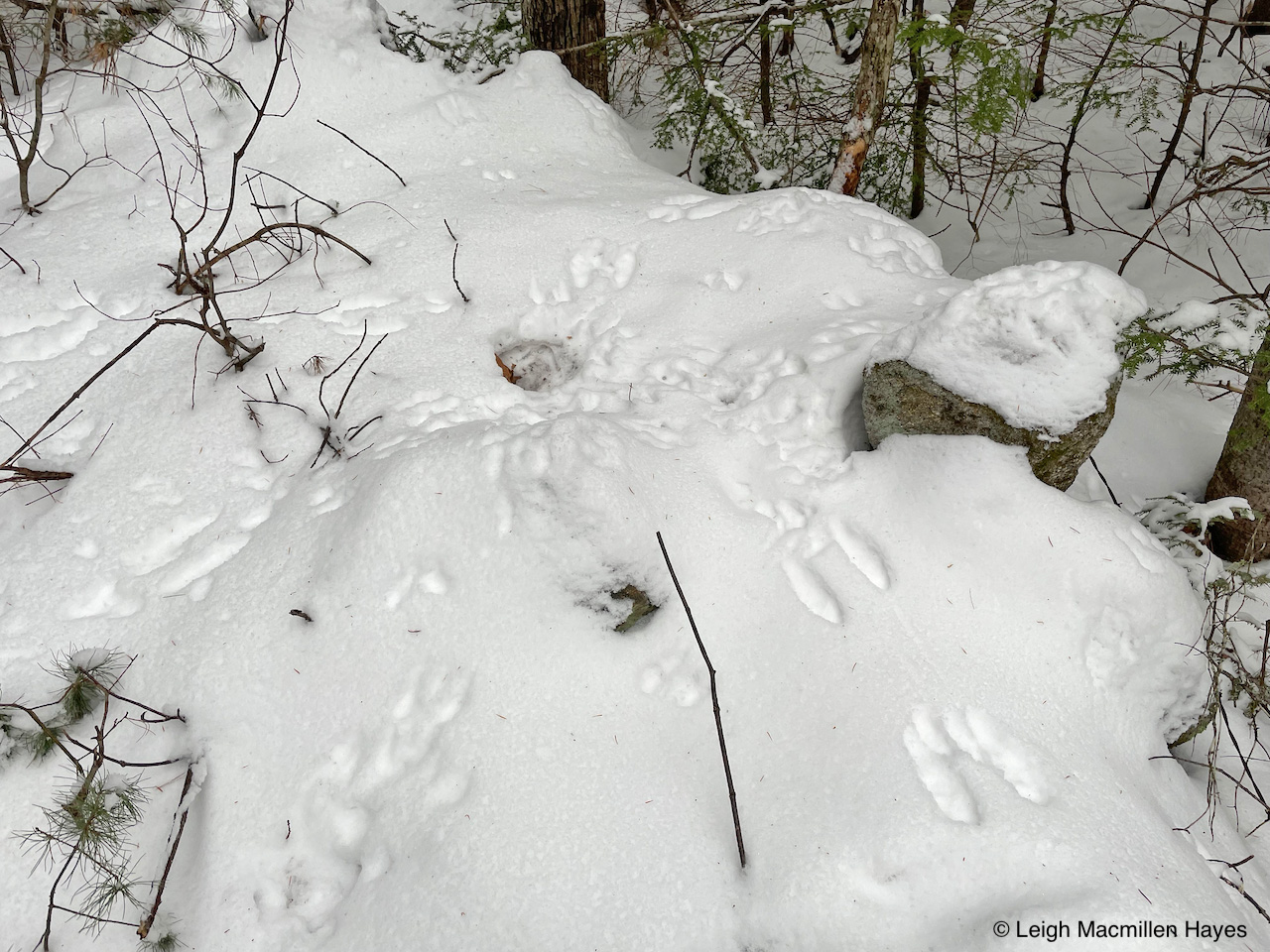

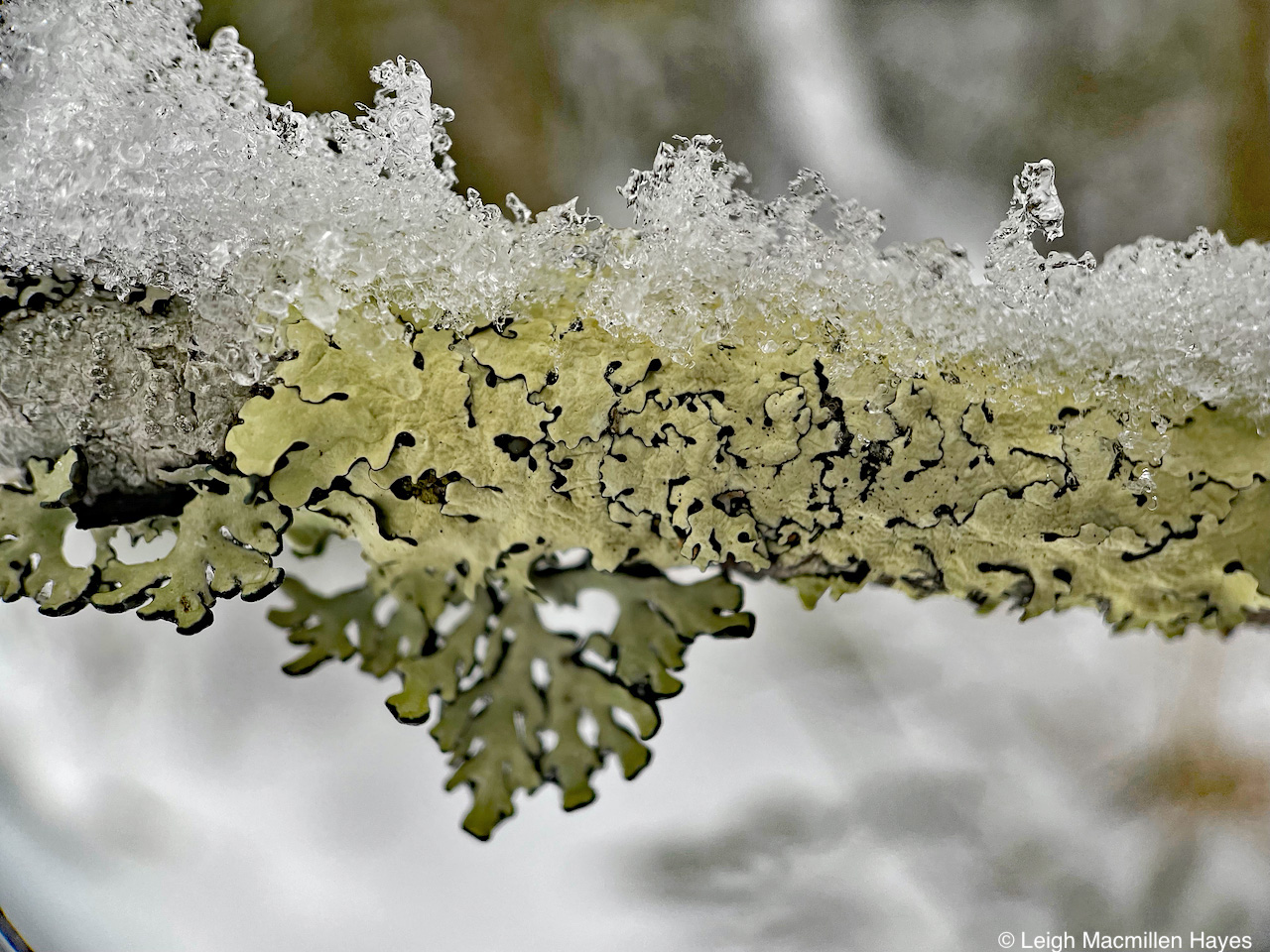


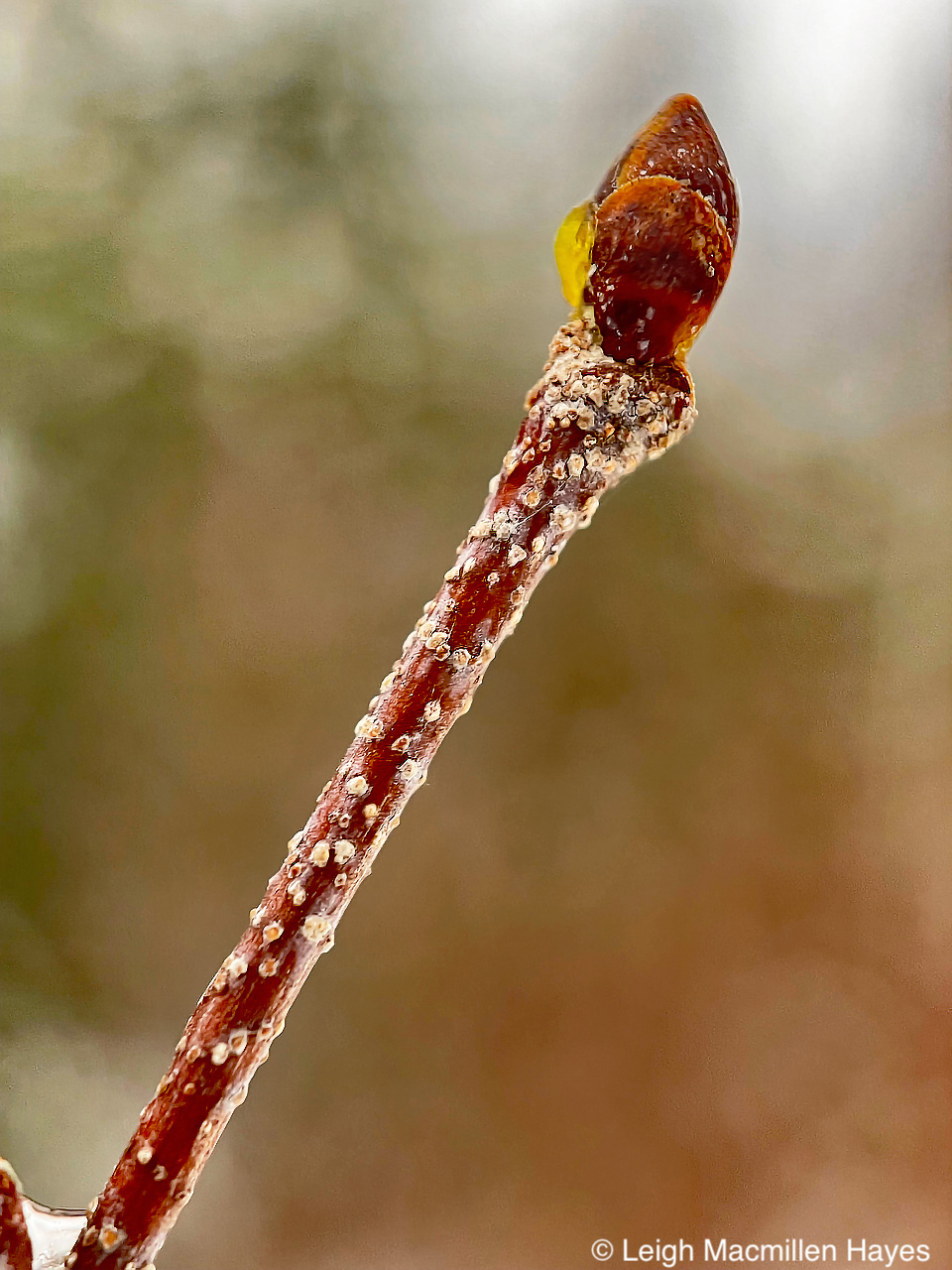

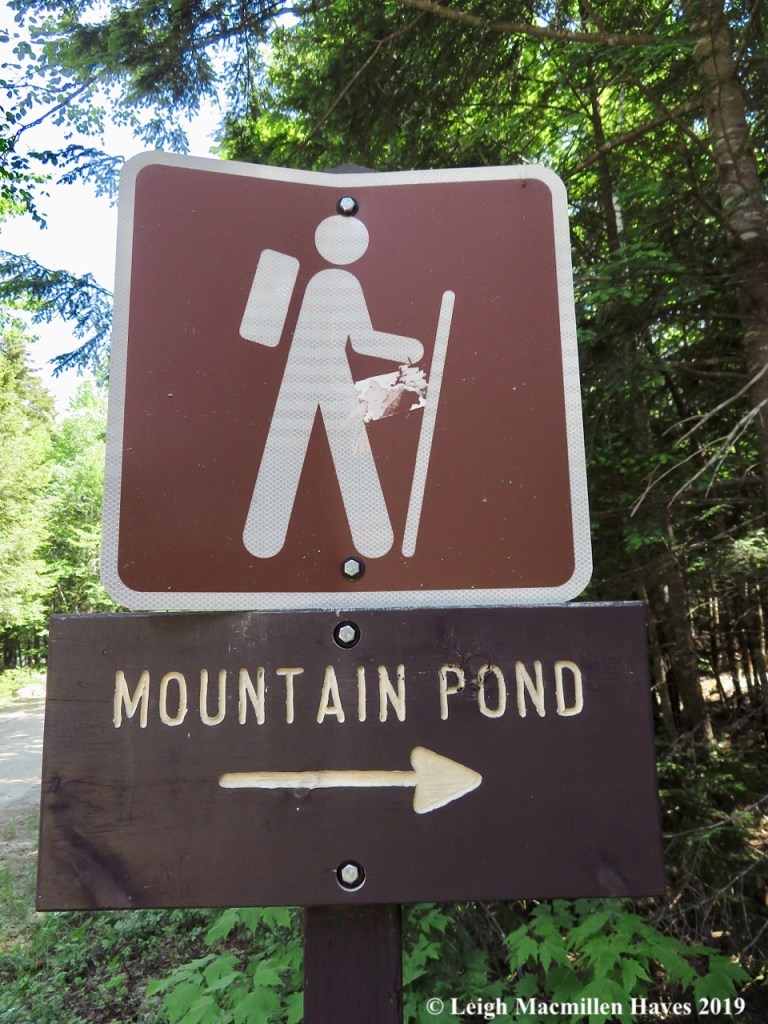



























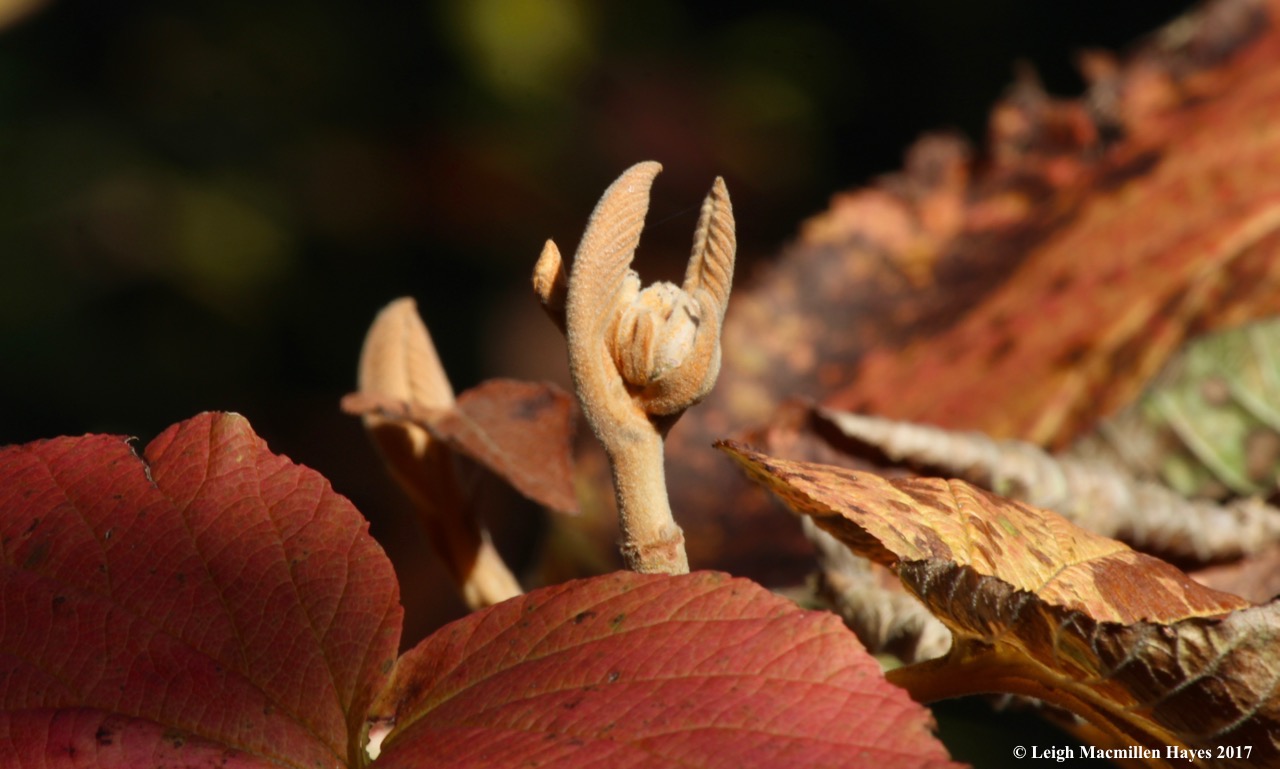
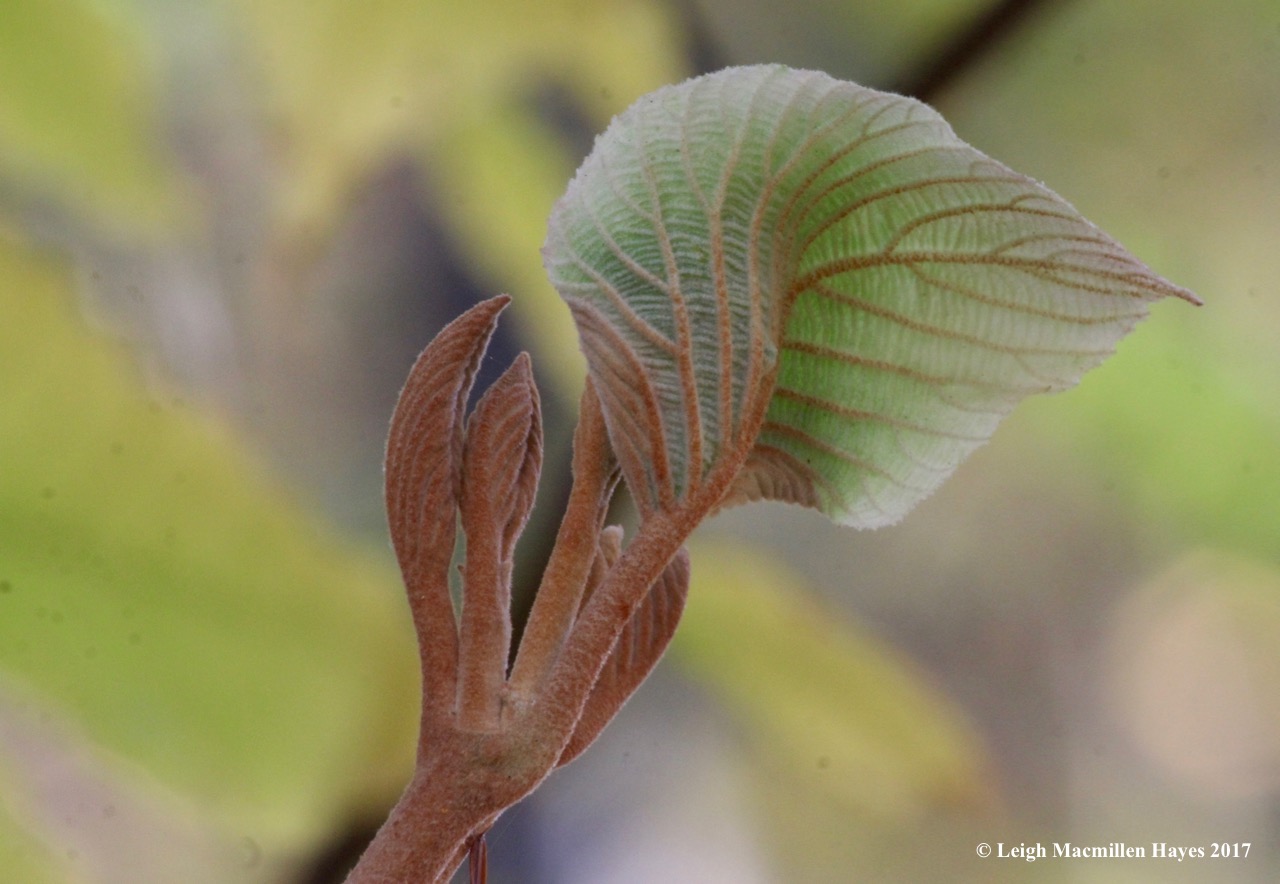
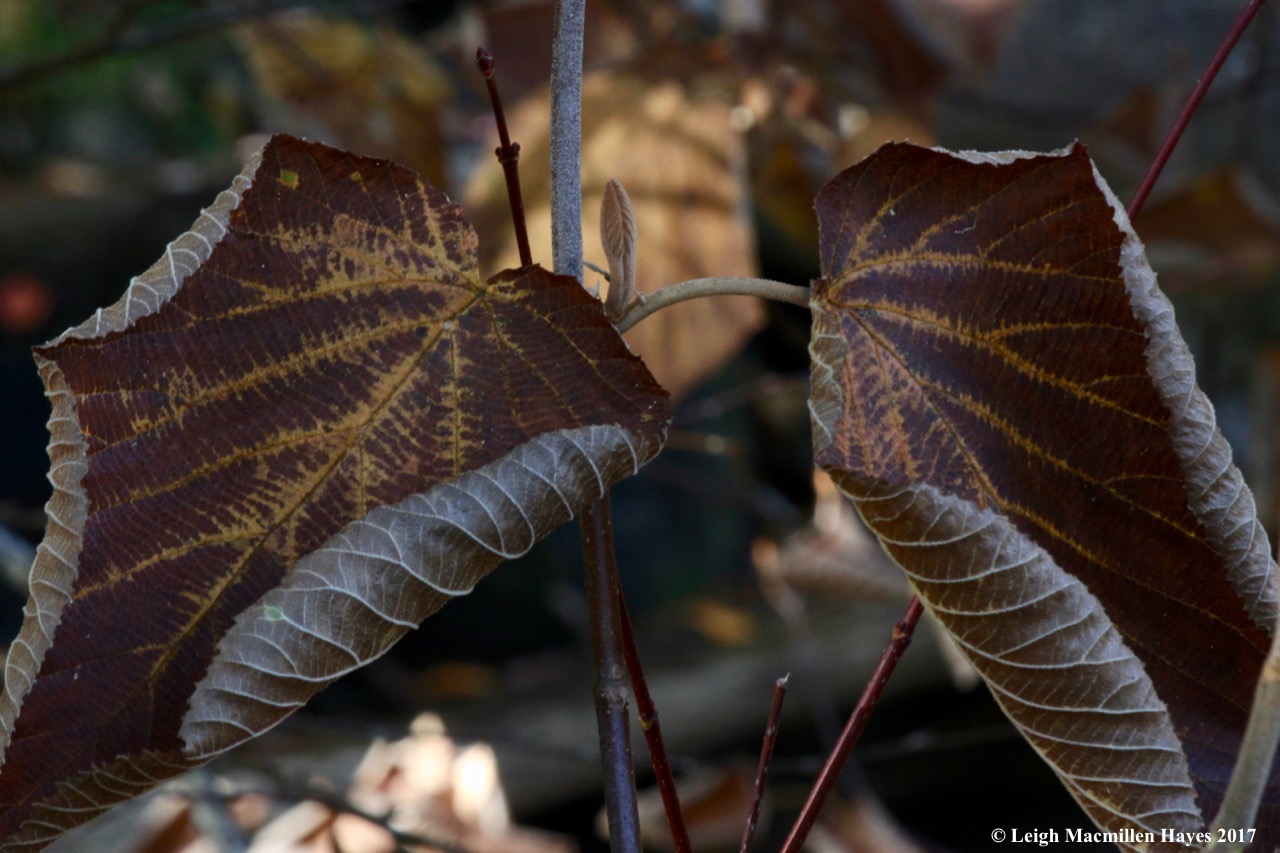
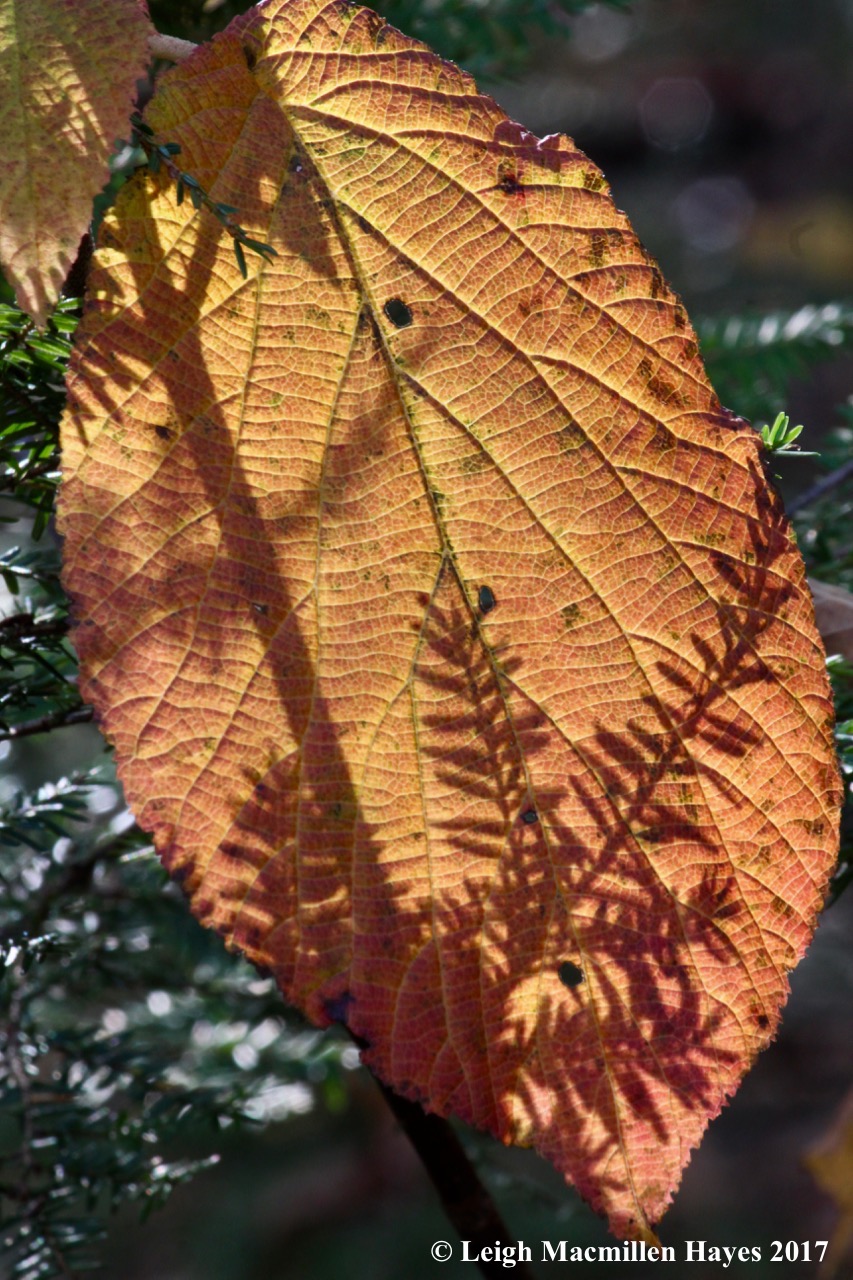
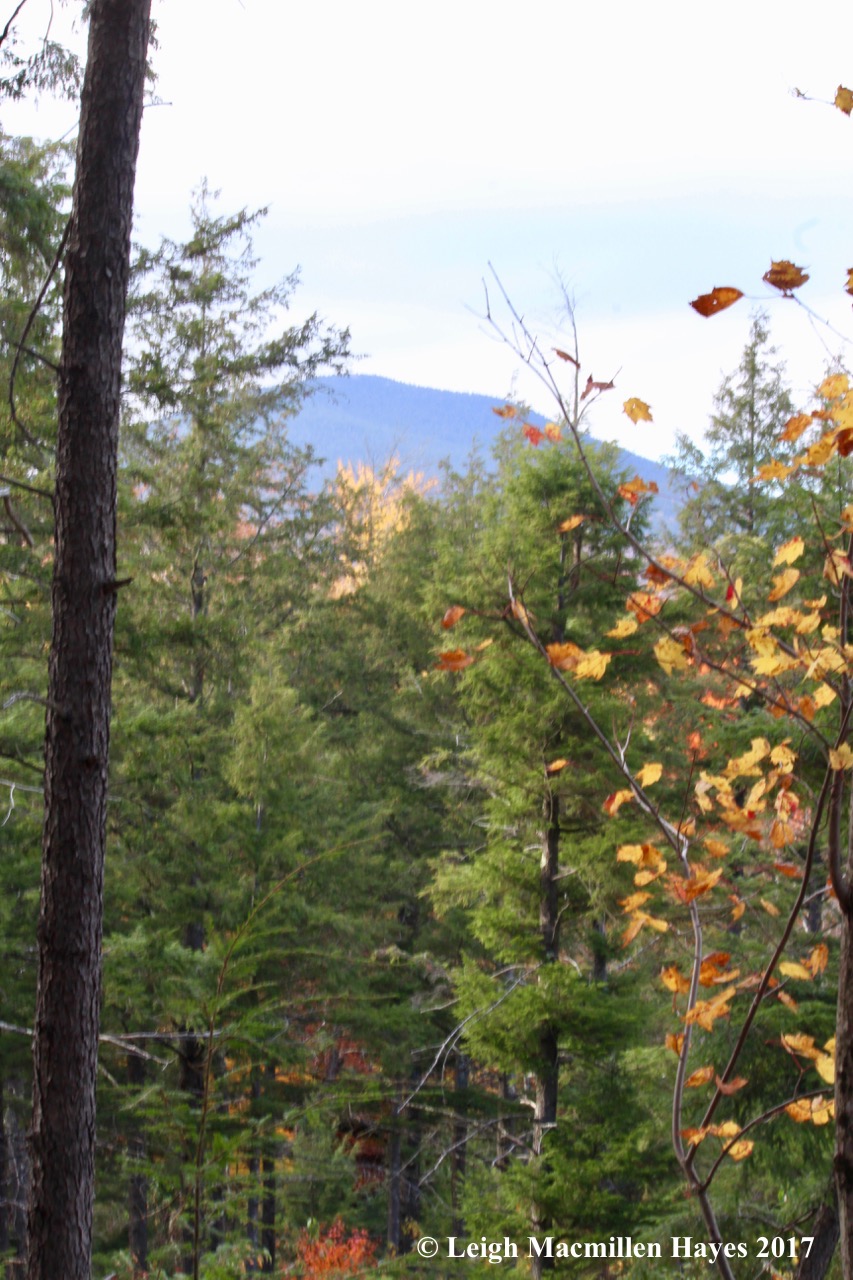
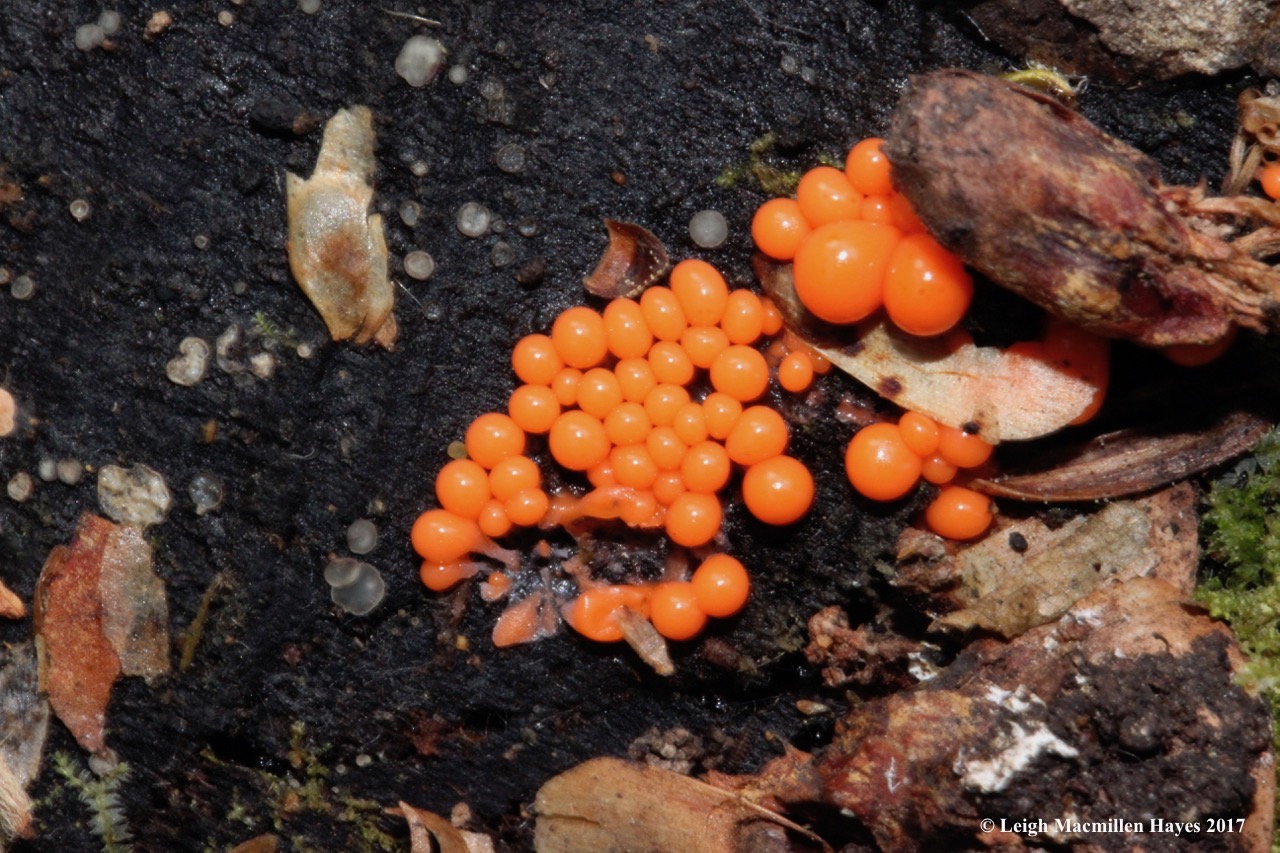
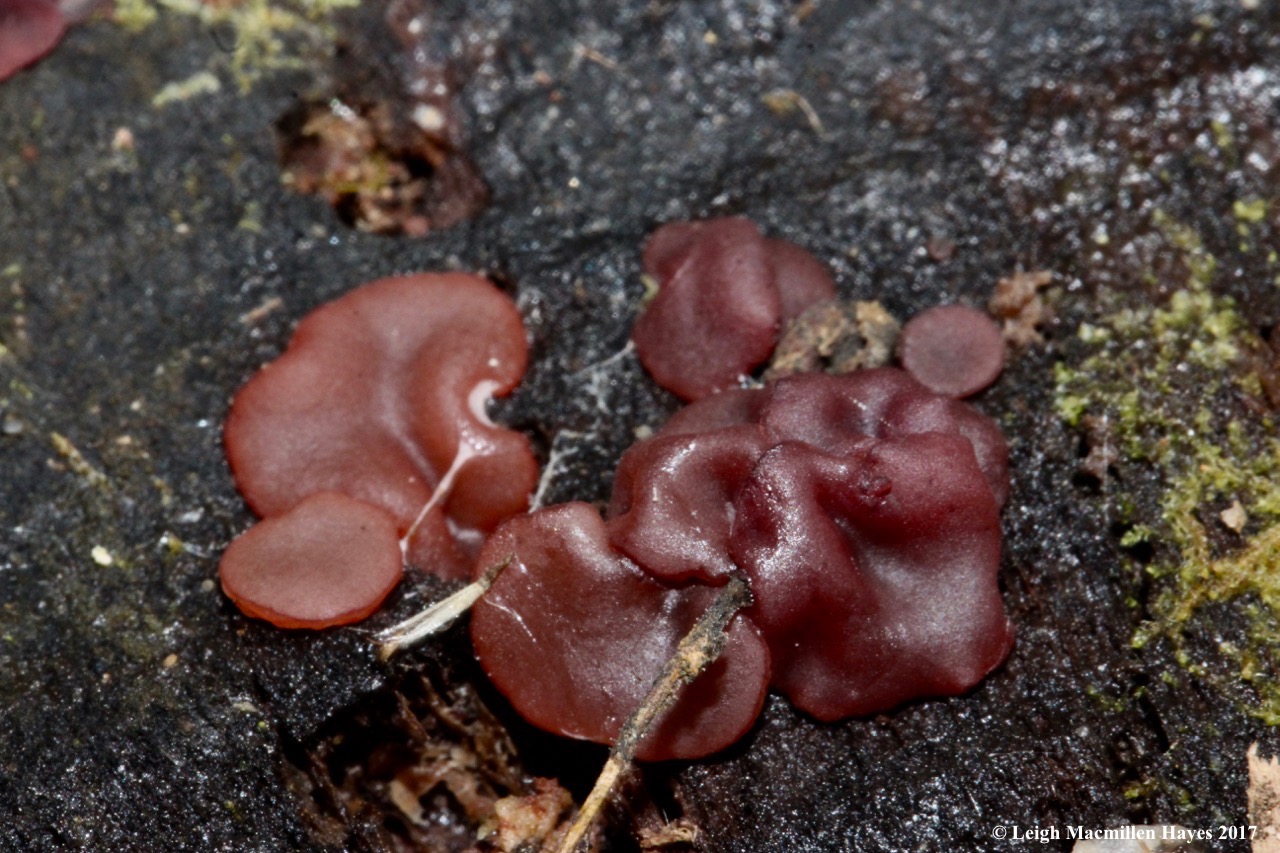
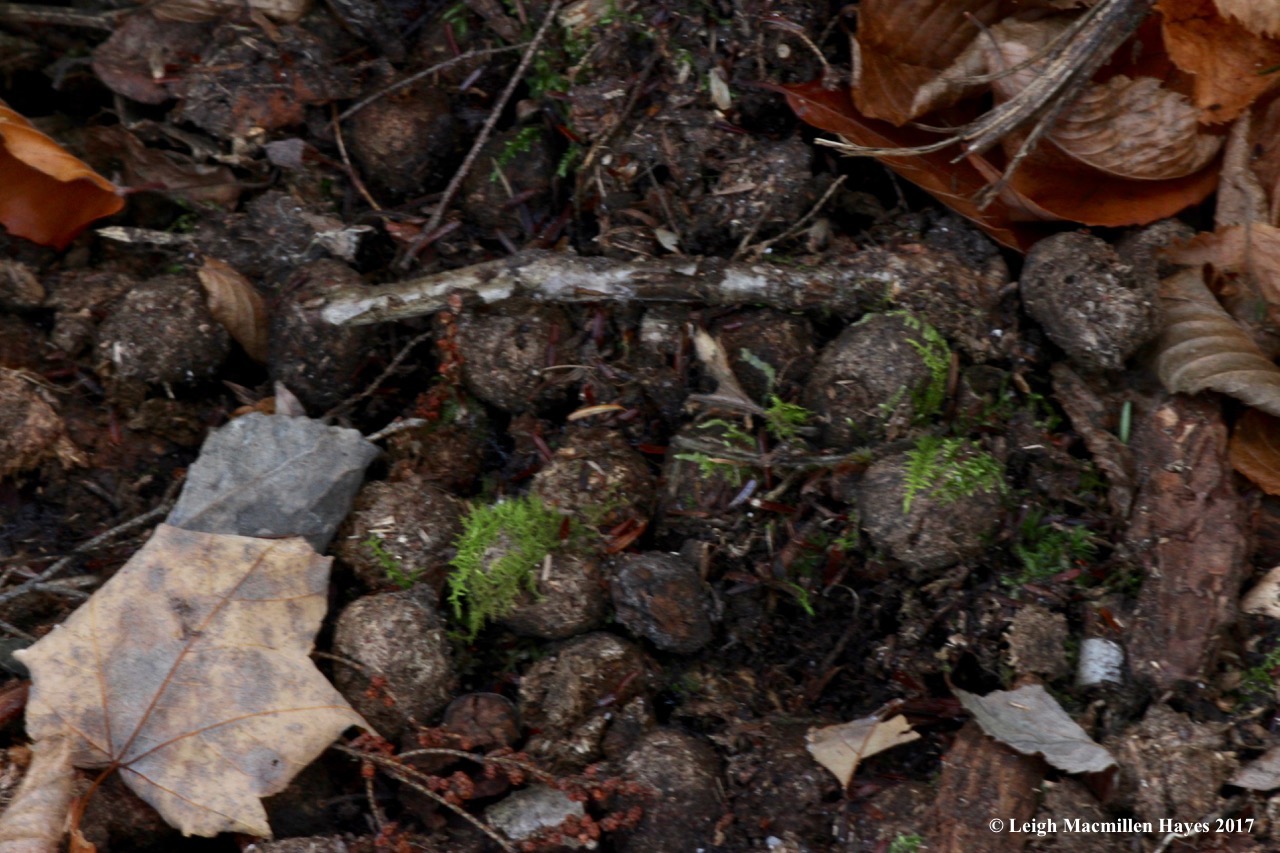
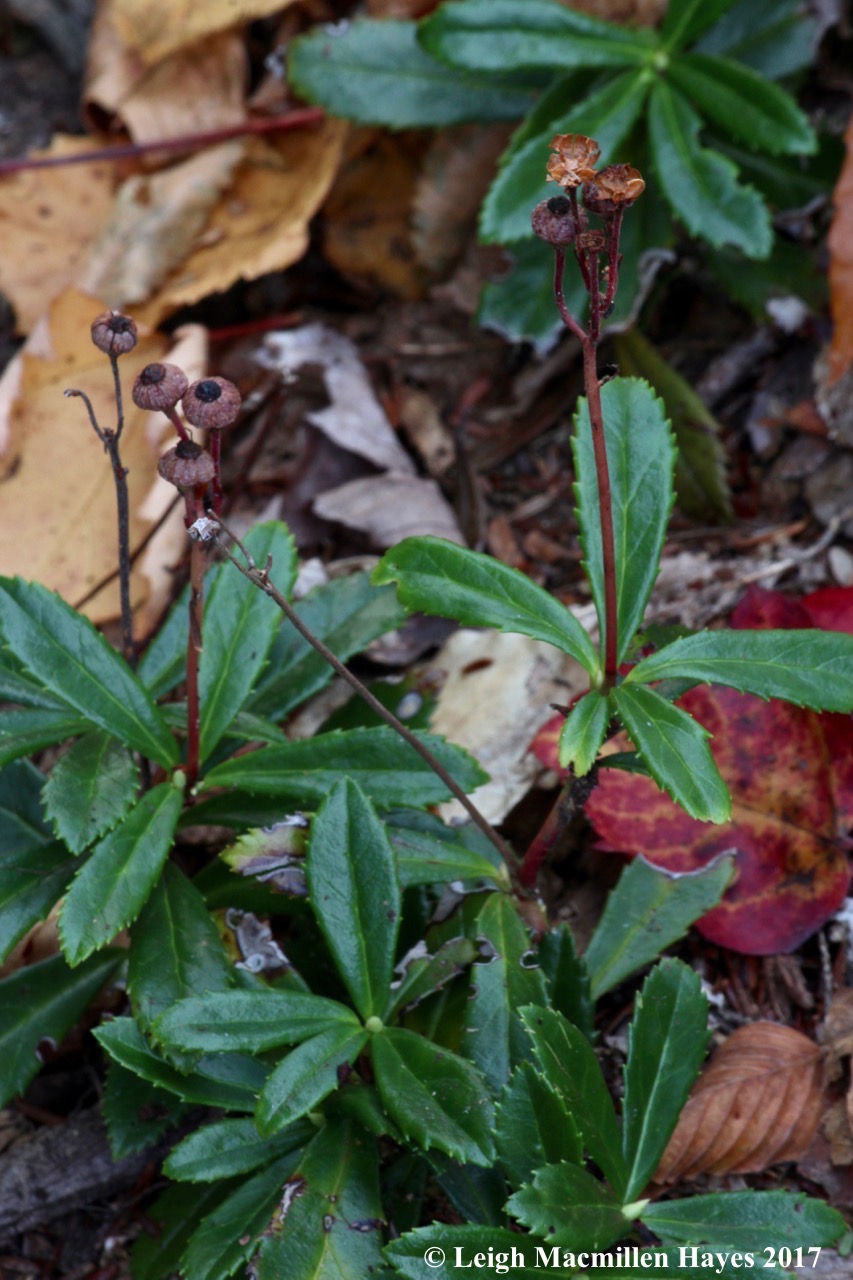
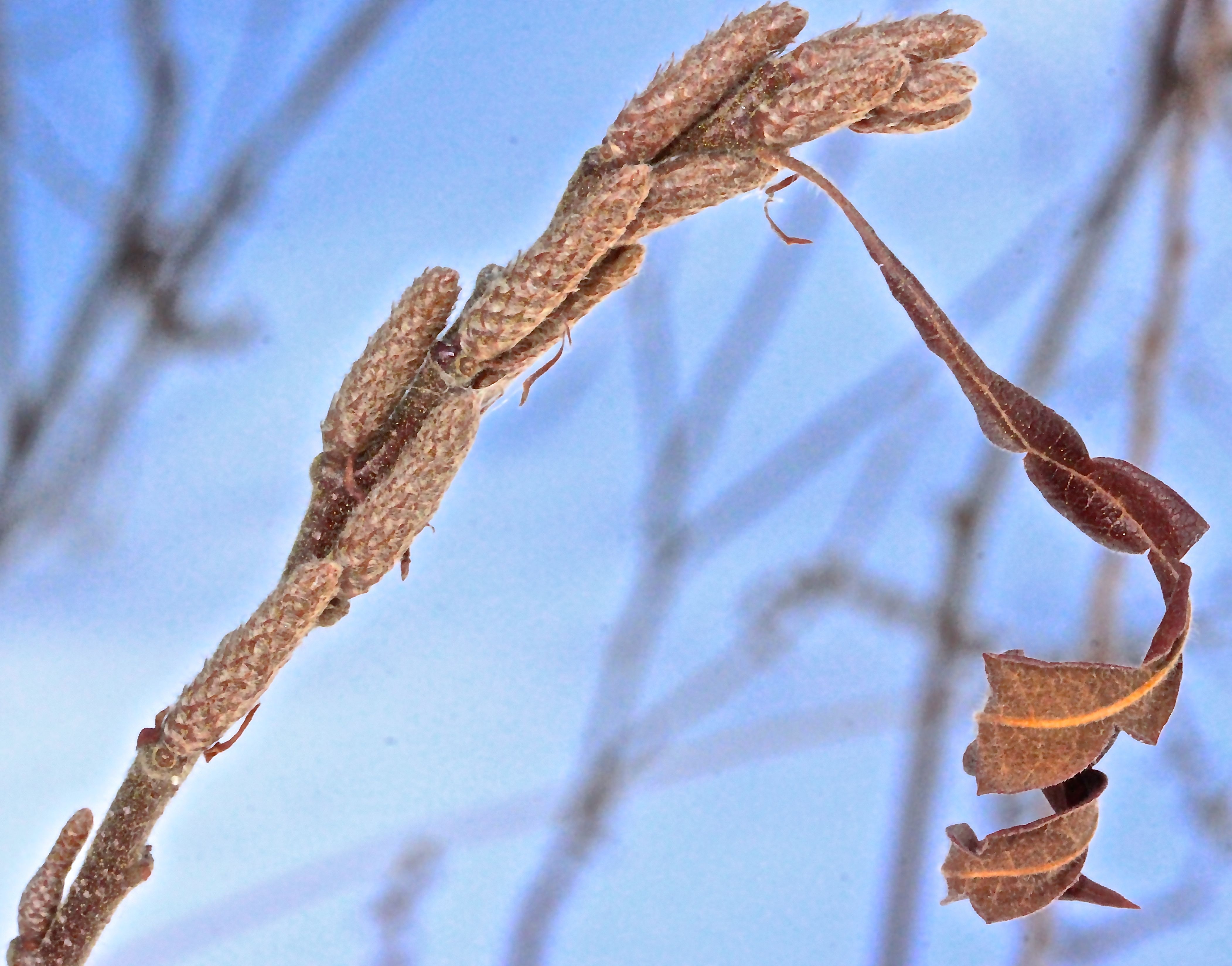
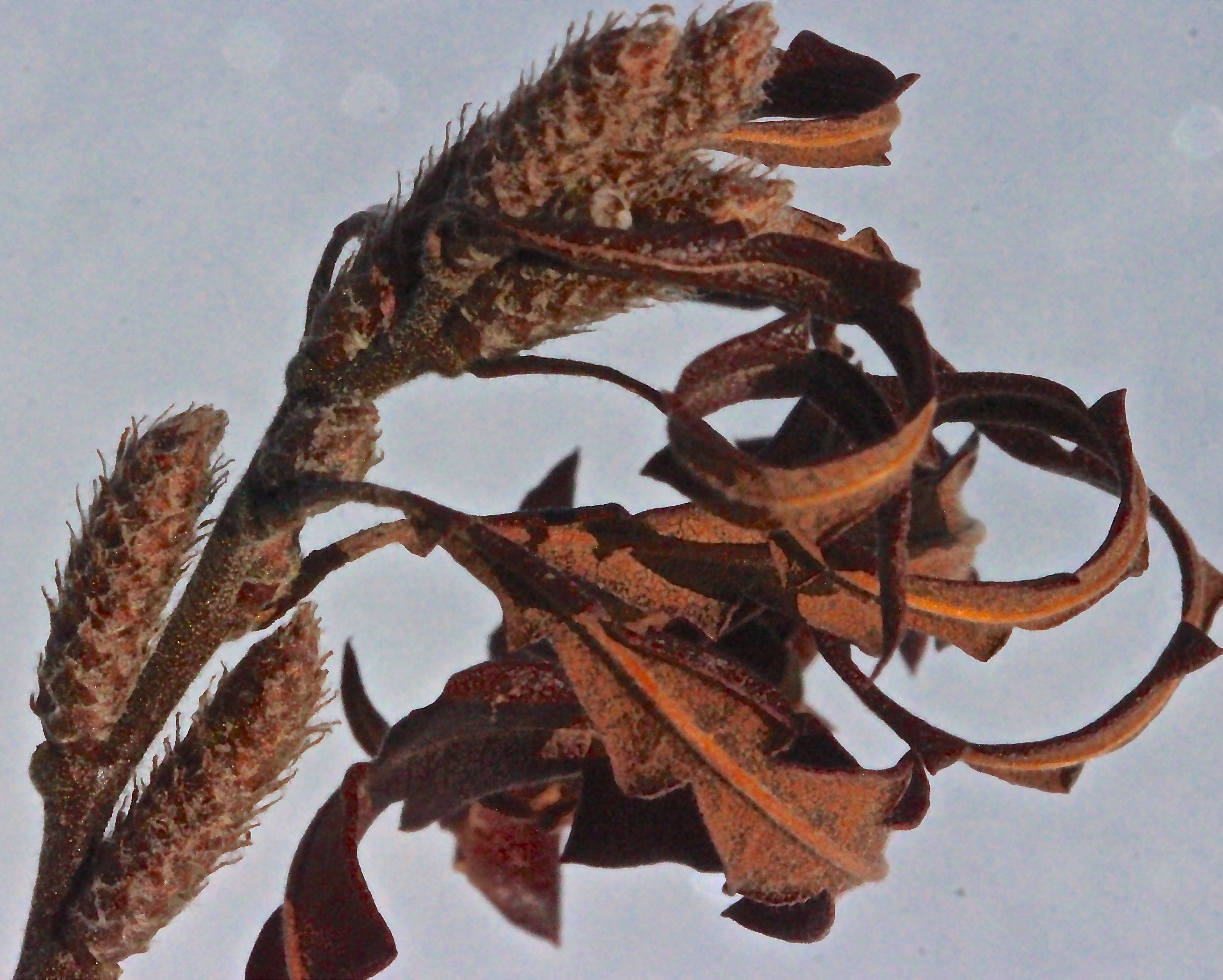 From the parking lot, I decided to begin via the blue trail by the kiosk. It doesn’t appear on the trail map, but feels much longer than the green trail–possibly my imagination. Immediately, I was greeted at the door of the shop by sweet fern, aka Comptonia peregrina (remember, it’s actually a shrub with foliage that appear fern-like). The striking color and artistic flow of the winter leaves, plus the hairy texture of the catkins meant I had to stop and touch and admire.
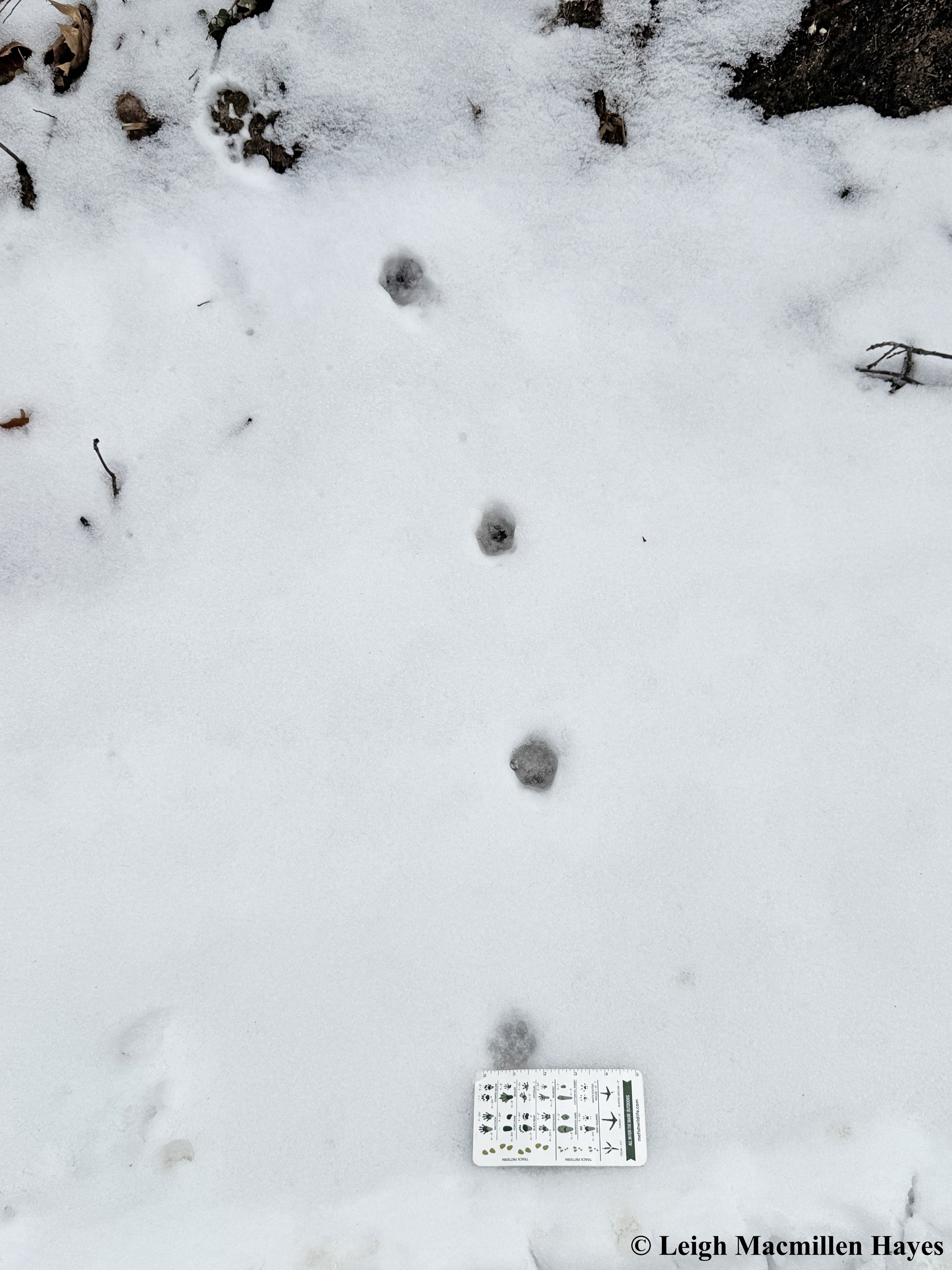
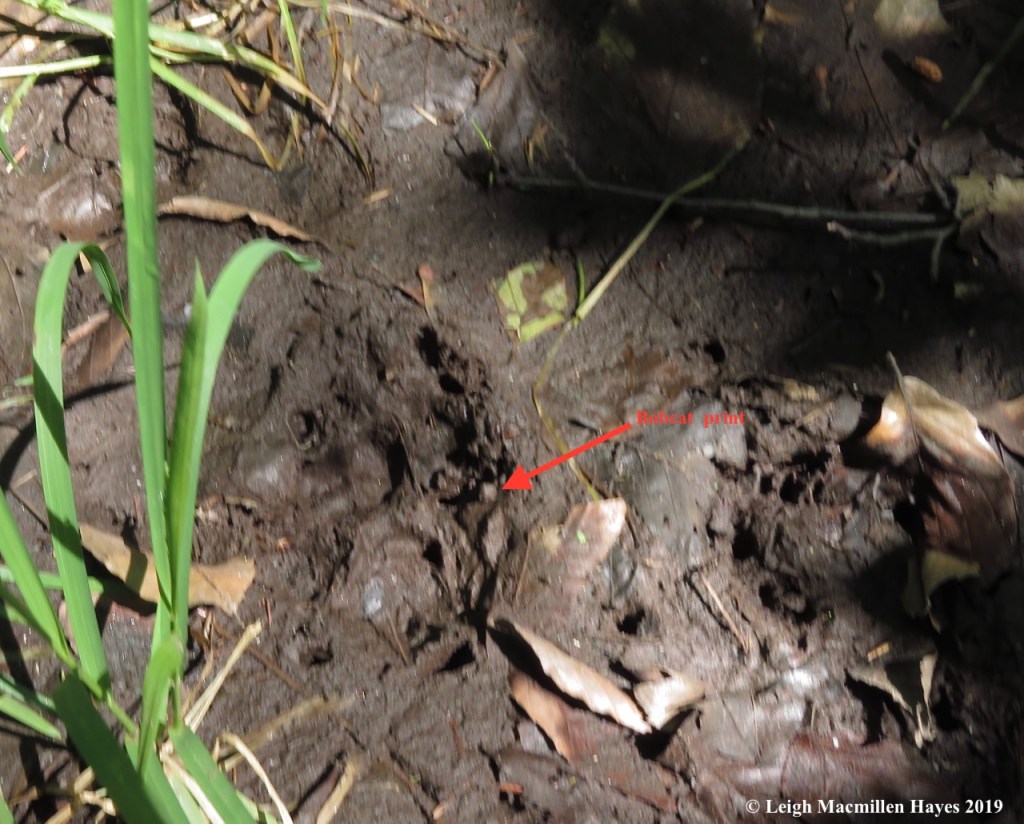
 And only steps along the trail another great find–bobcat tracks. This china shop immediately appealed to moi.
 My
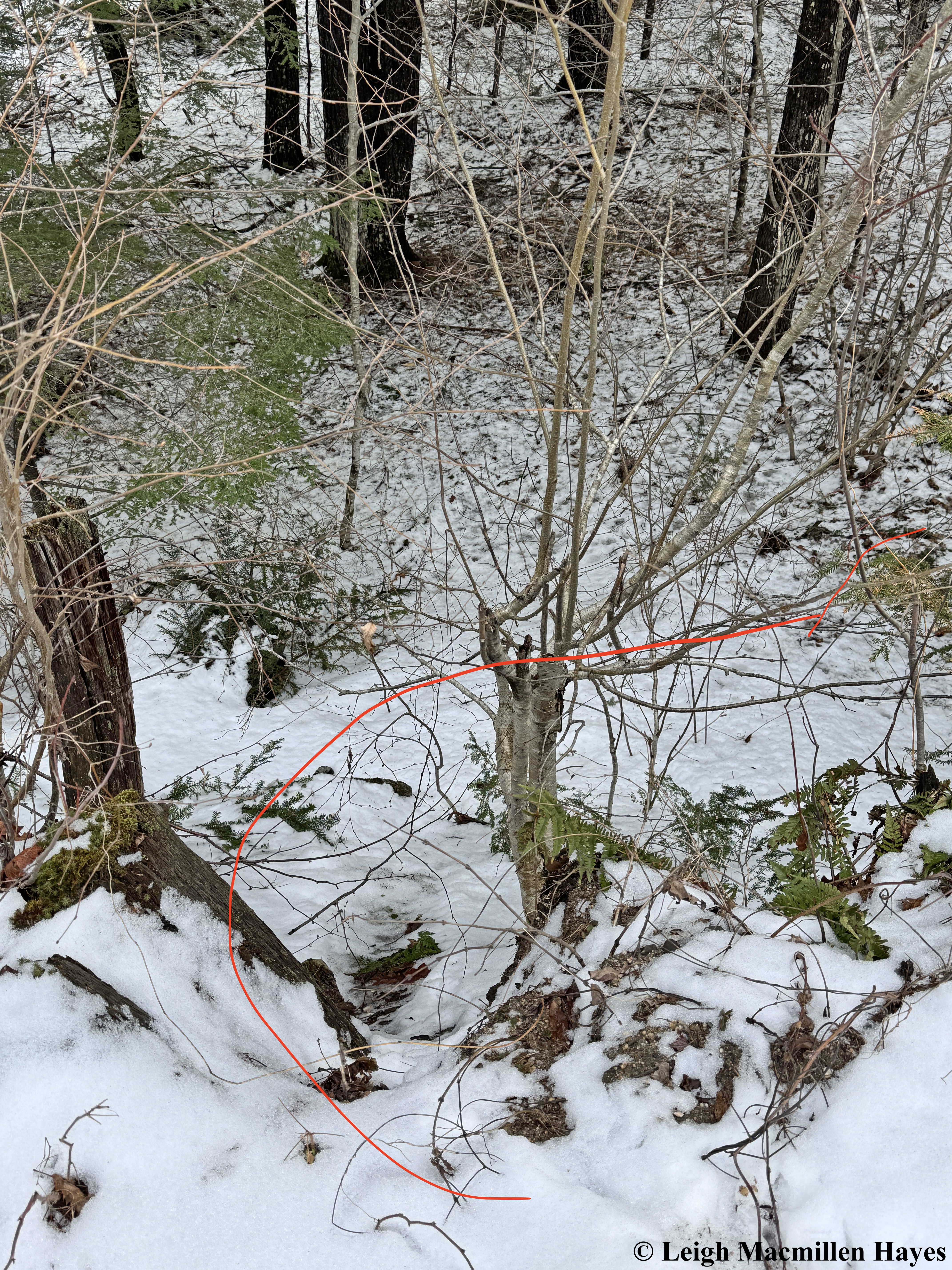
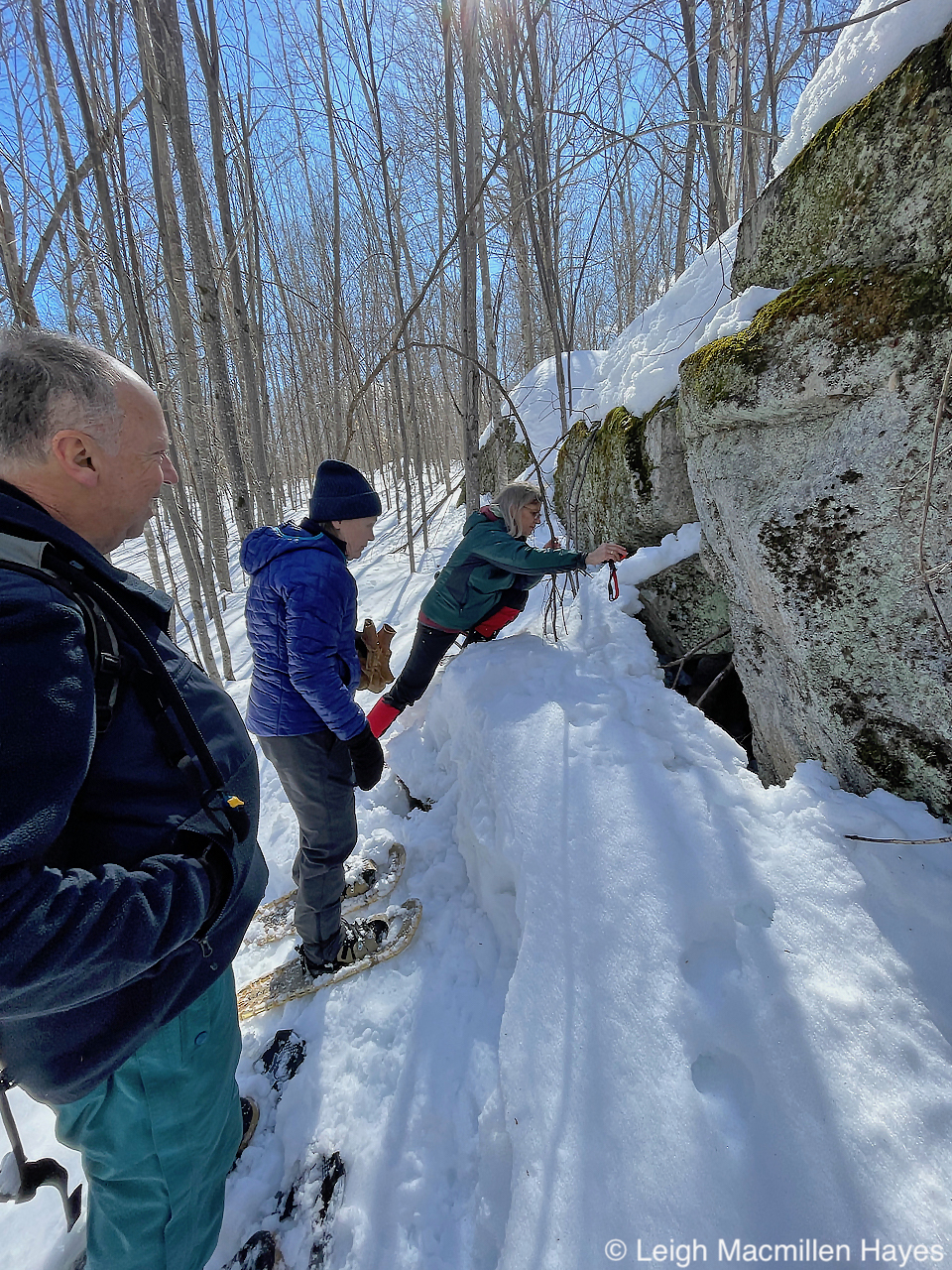
My  When I got to a ledgy spot, I decided to explore further–thinking perhaps Mr. Bob might have spent some time here. Not so–in the last two days anyway.
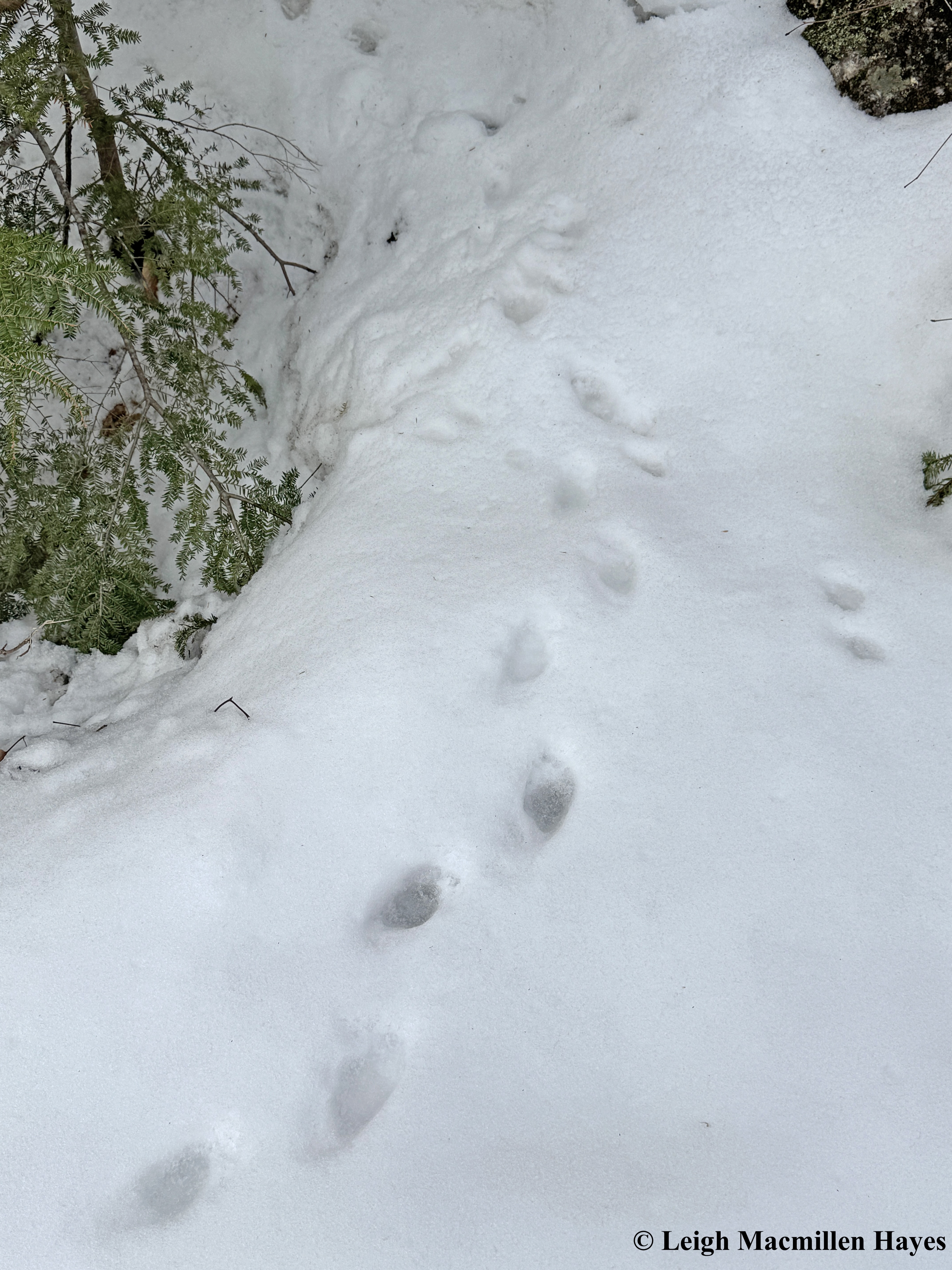
 The best find in this spot–red squirrel prints. A few things to notice–the smaller feet that appear at the bottom of the print are the front feet–often off-kilter. Squirrels are bounders and so as the front feet touch down and lift off the back feet follow and land before the front feet in a parallel presentation. In a way, the entire print looks like two exclamation points.
 As I plodded along, my eyes were ever scanning and . . . I was treated to a surprise. Yes, a beech tree. Yes, it has been infected by the beech scale insect. And yes, a black bear has also paid a visit.
 One visit, for sure. More than one? Not so sure. But can’t you envision the bear with its extremities wrapped around this trunk as it climbs. I looked for other bear trees to no avail, but suspect they are there. Docents and trackers–we have a mission.
 And what might the bear be seeking? Beech nuts. Viable trees. Life is good.
 Exactly where is the bear tree? Think left on red. When you get to this coppiced red maple tree, rather than turning right as is our driving custom, take a left and you should see it. Do remember that everything stands out better in the winter landscape.
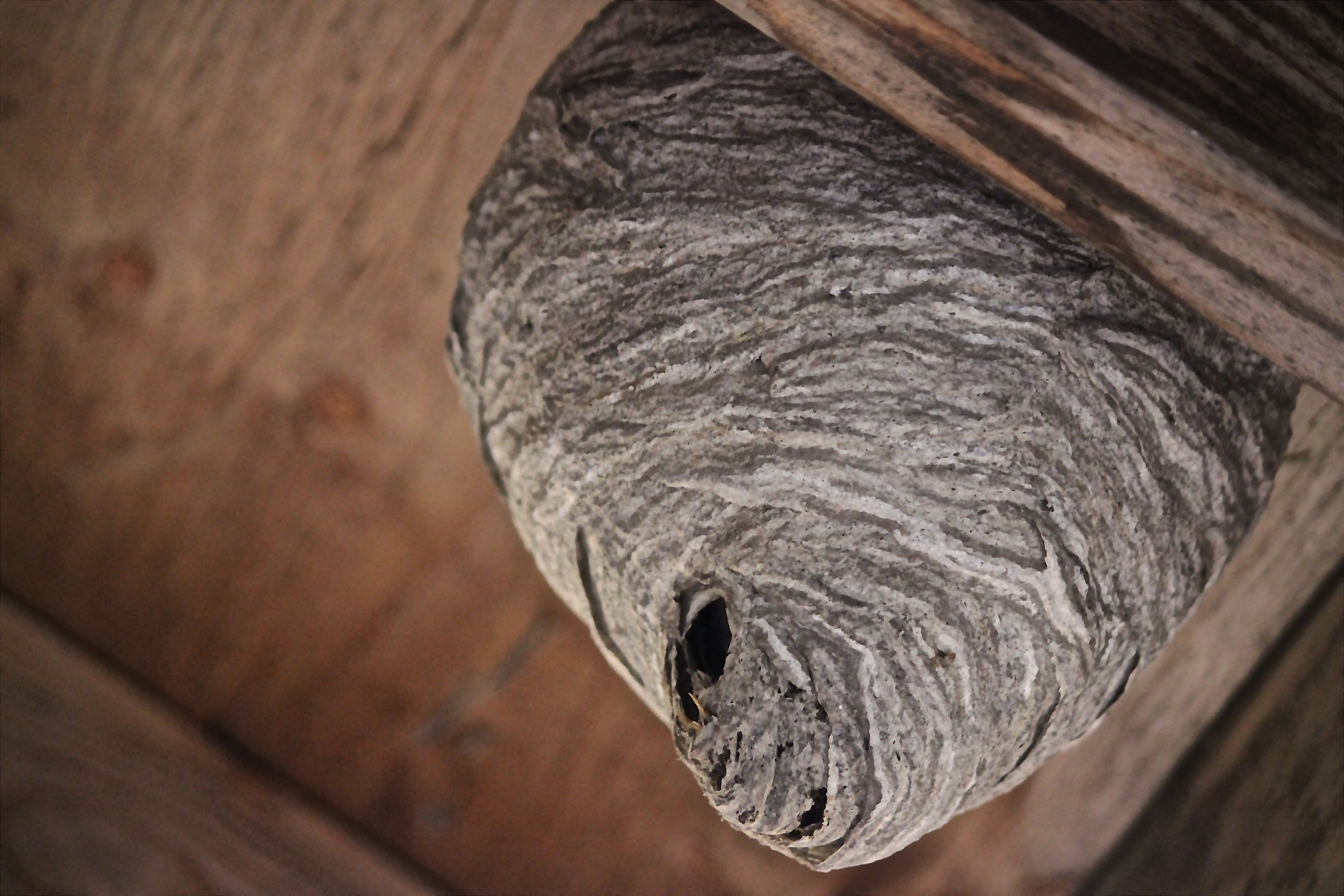
 As delicate as anything in the china shop is the nest created by bald-faced hornets.
 Well, it appears delicate, but the nest has been interwoven with the branches and twigs–making it strong so weather doesn’t destroy it. At the bottom is, or rather was, the entrance hole.
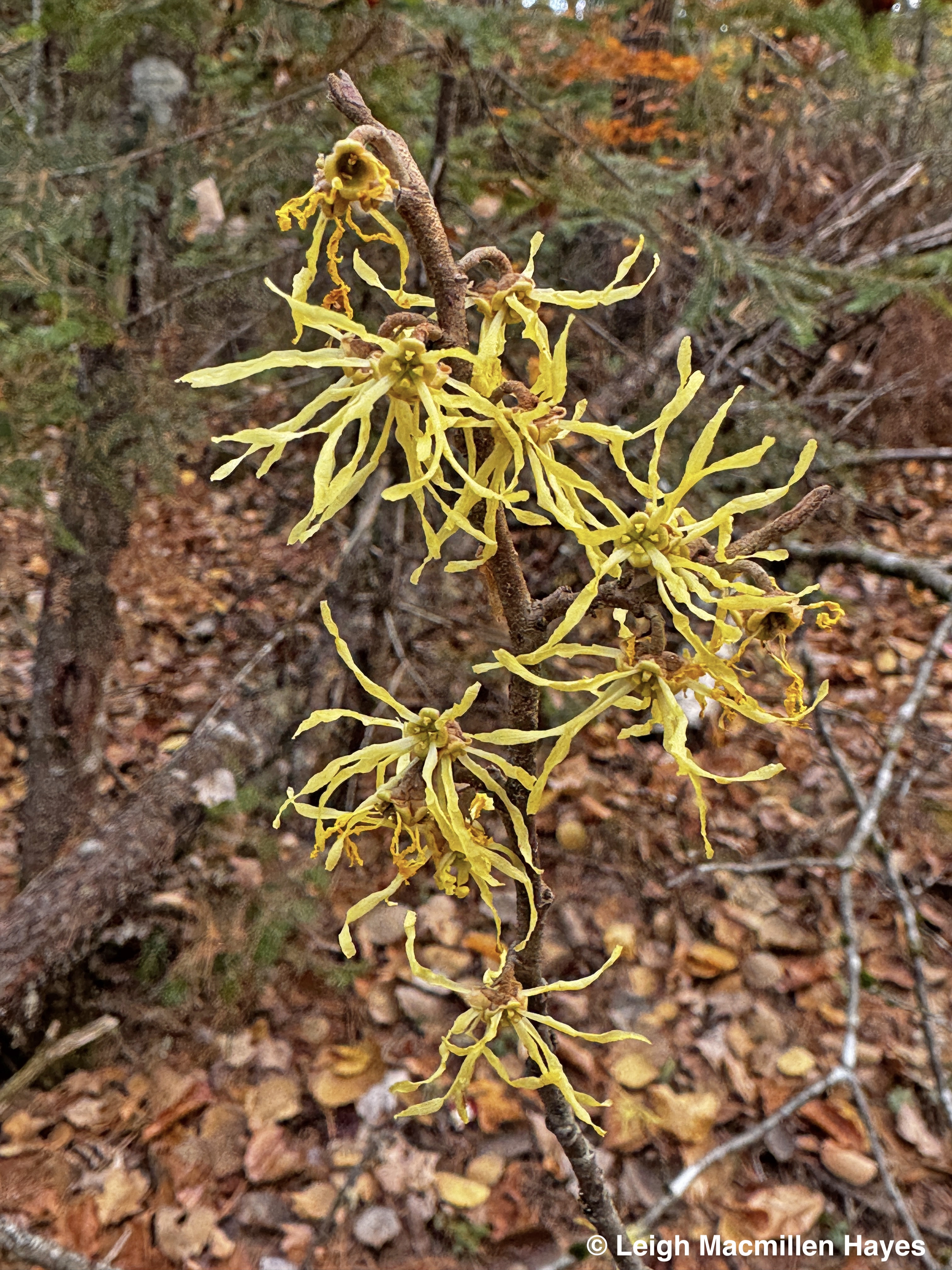
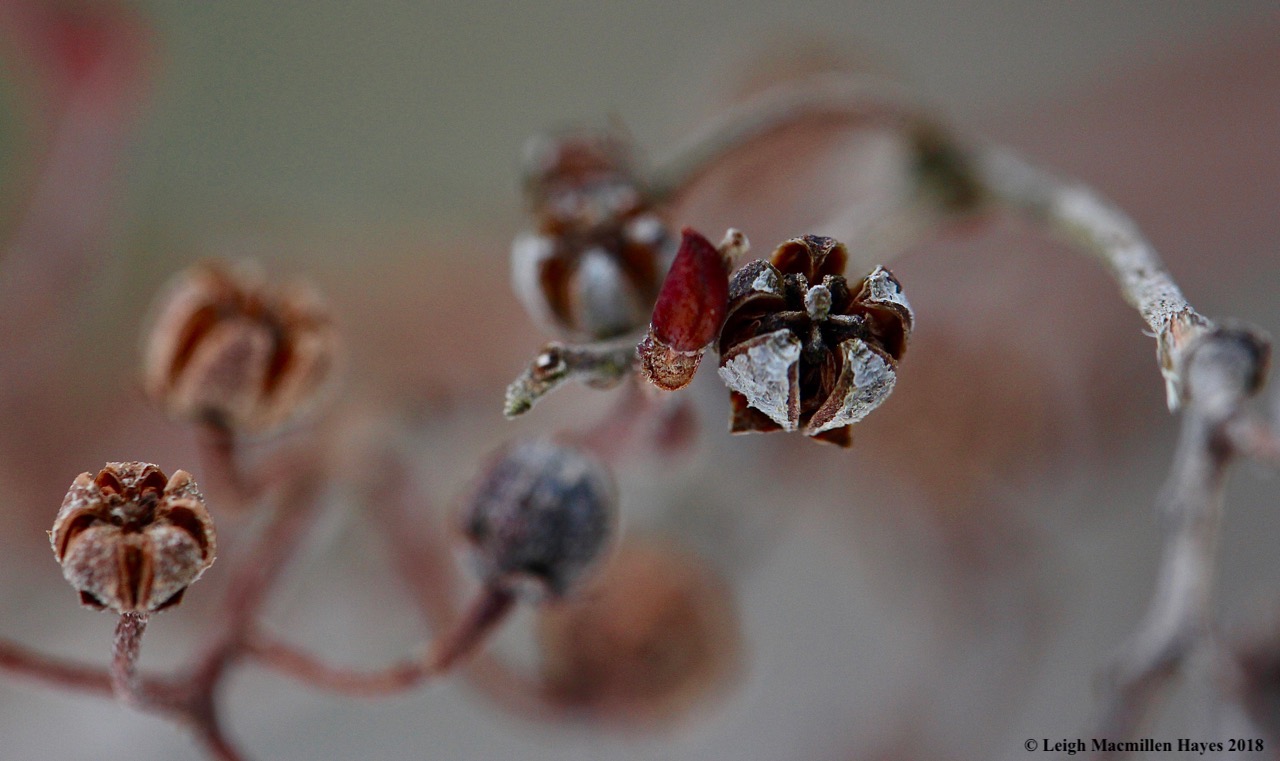
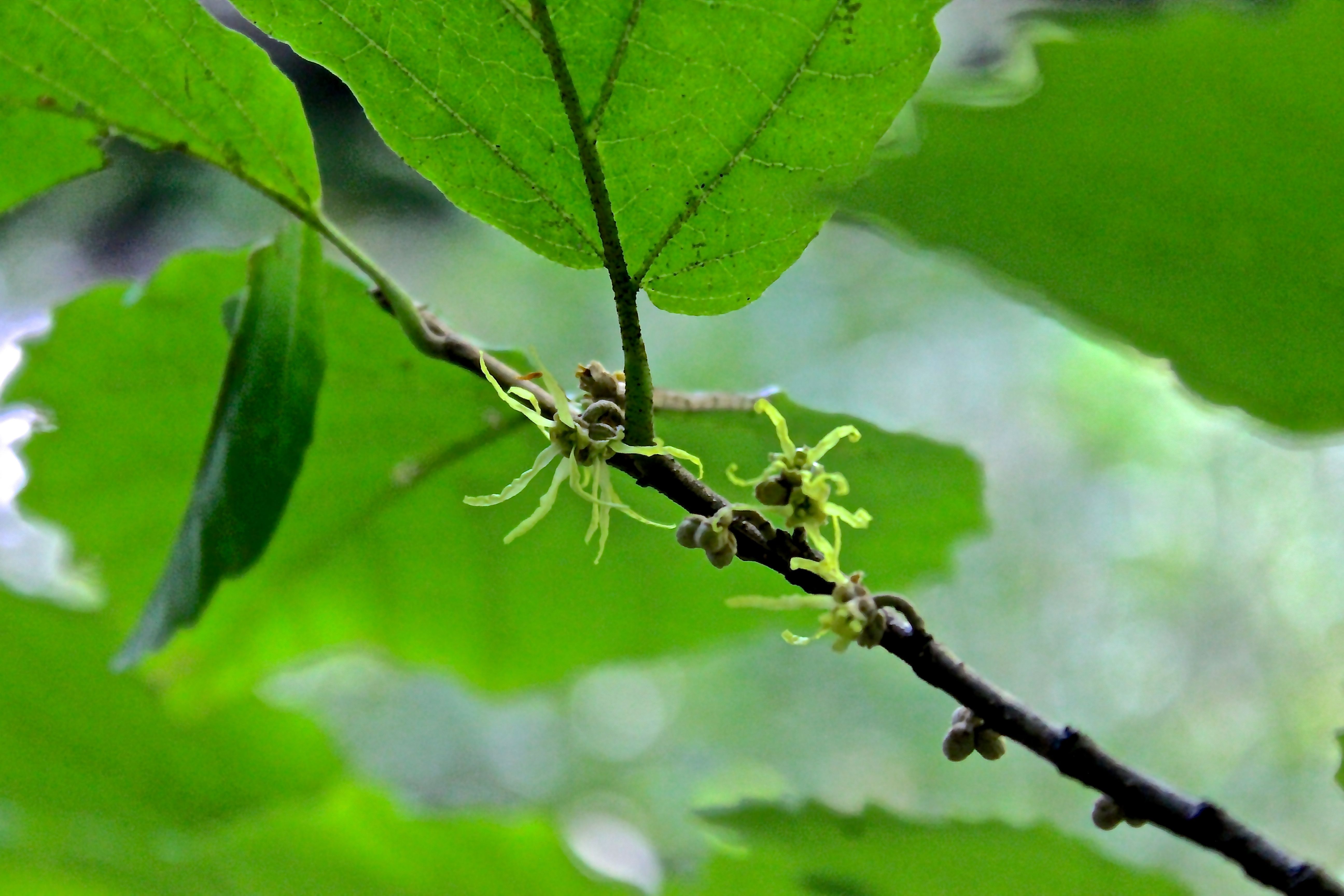
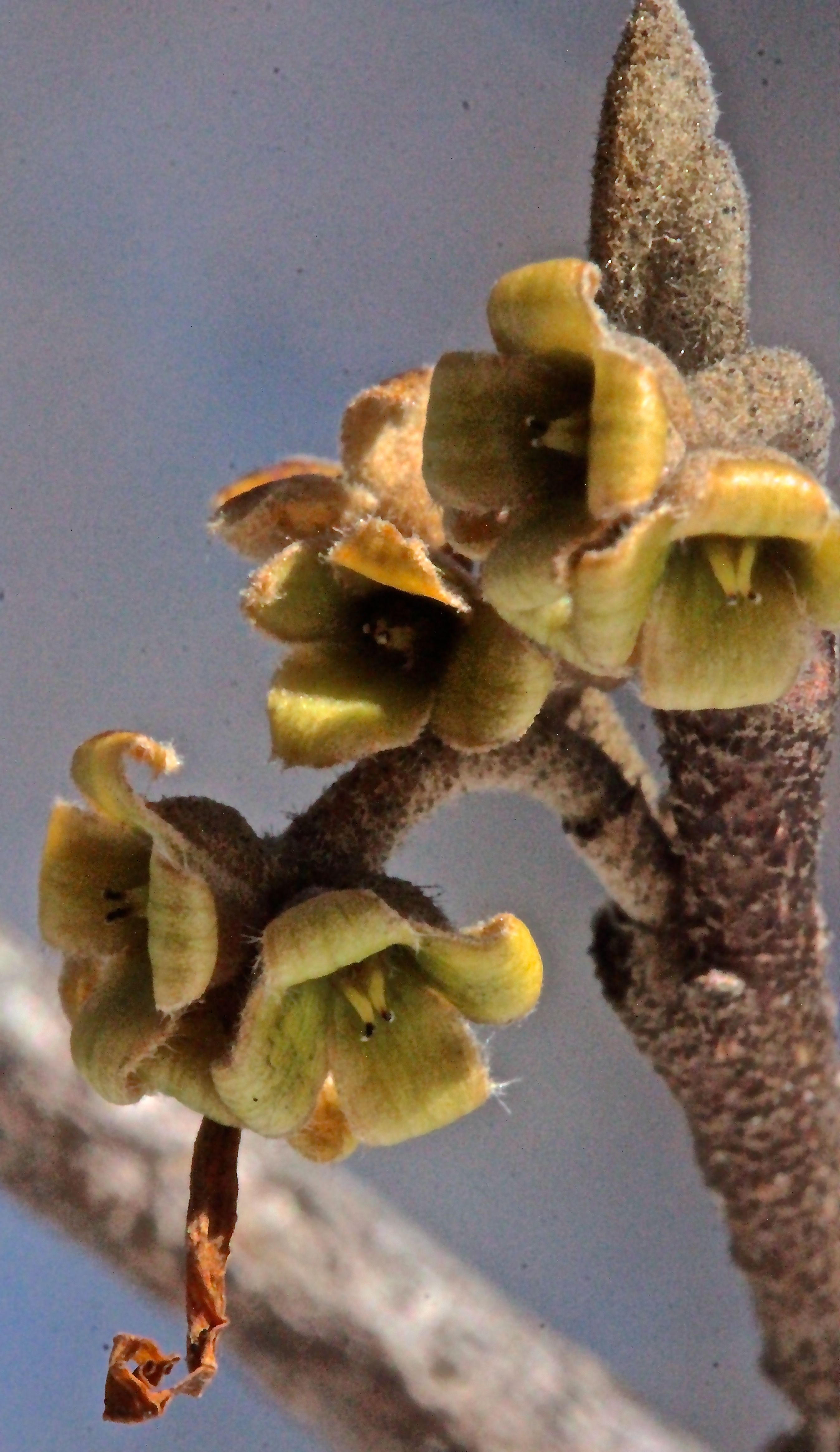 Witch hazel (Hamamelis virginiana) grows abundantly beside younger beech trees. Though the flowers are now past their peak, I found a couple of dried ribbony petals extending from the cup-shaped bracts. China cups? No, but in the winter setting, the bracts are as beautiful as any flower.


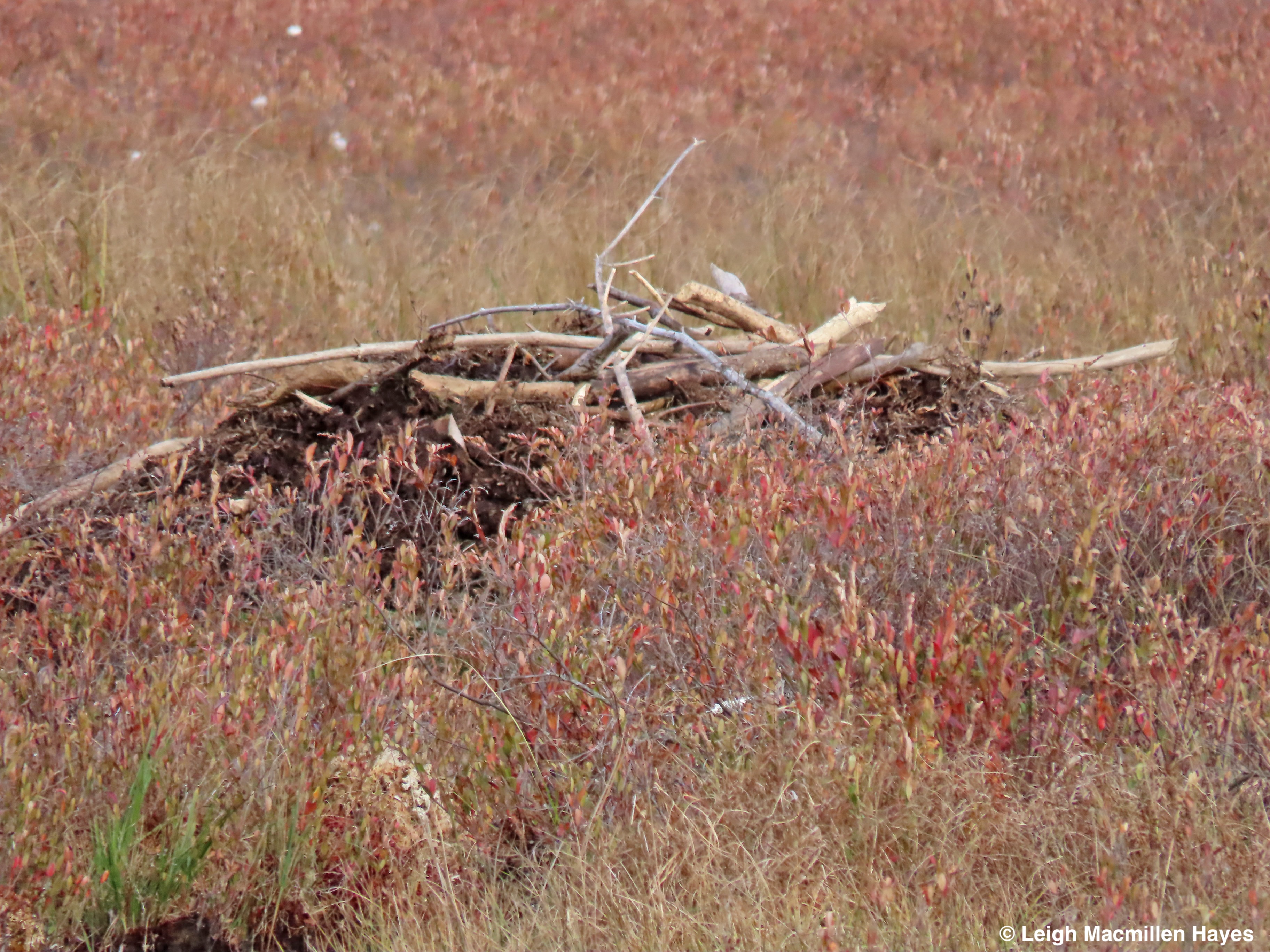
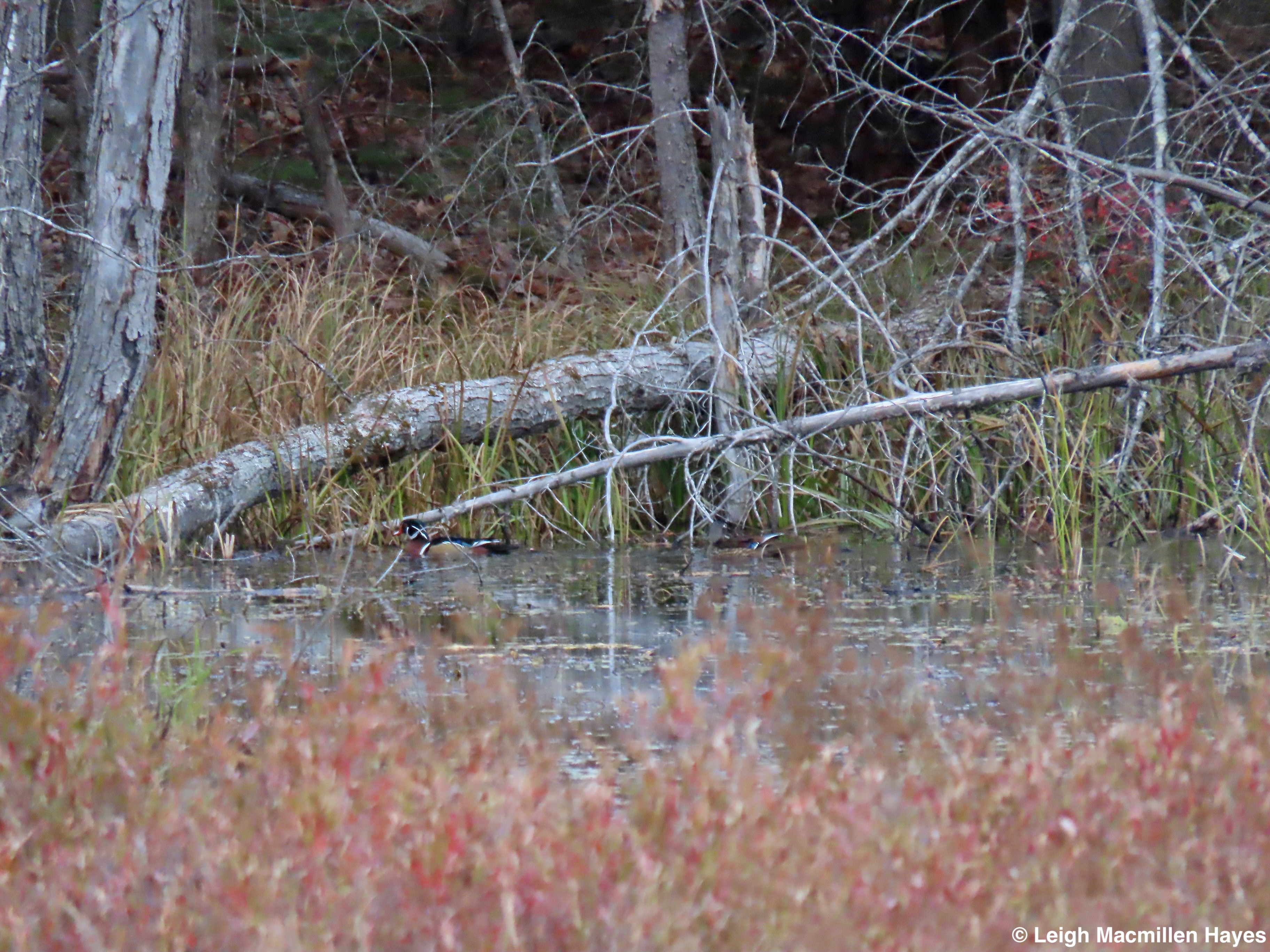
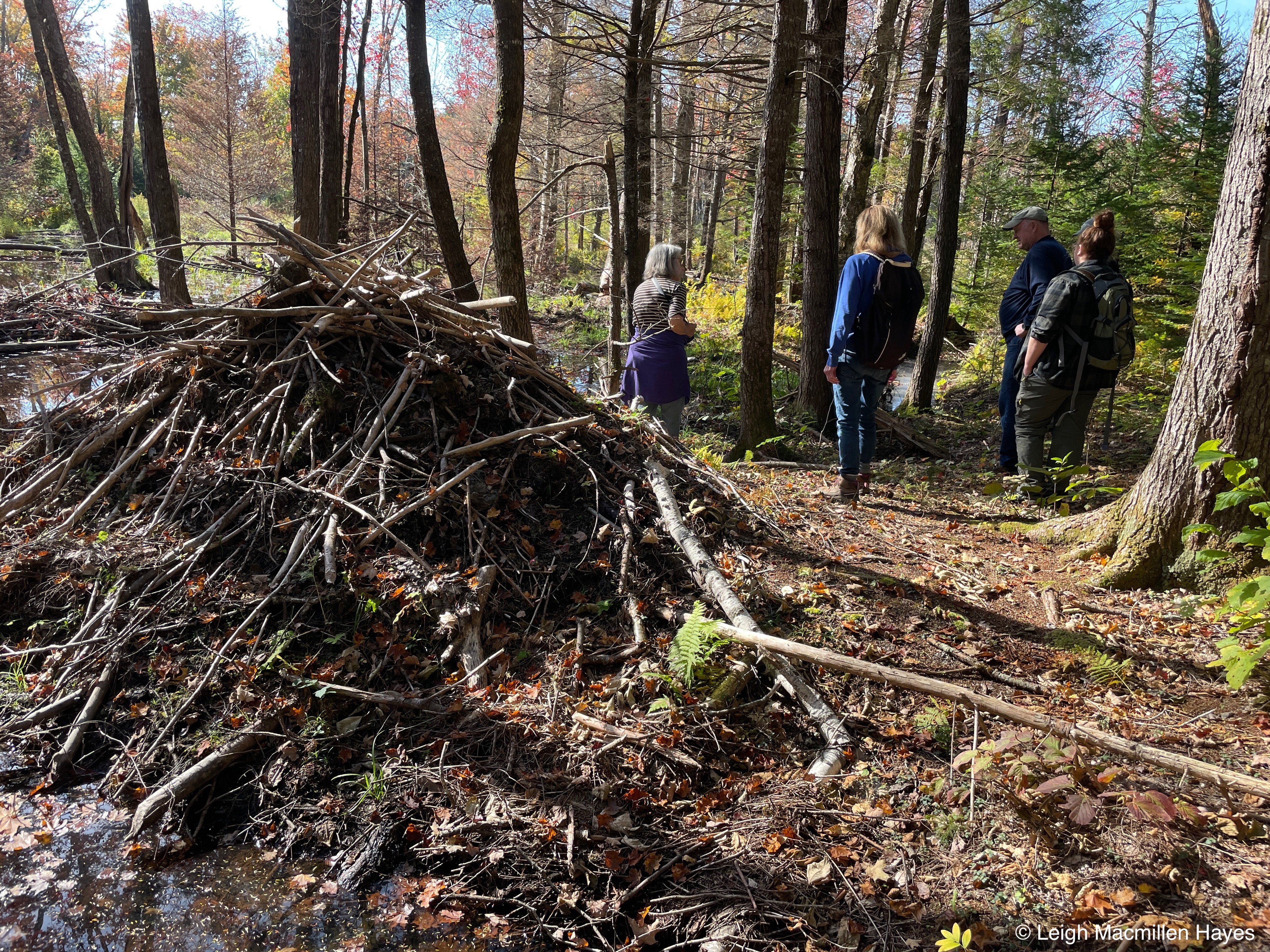
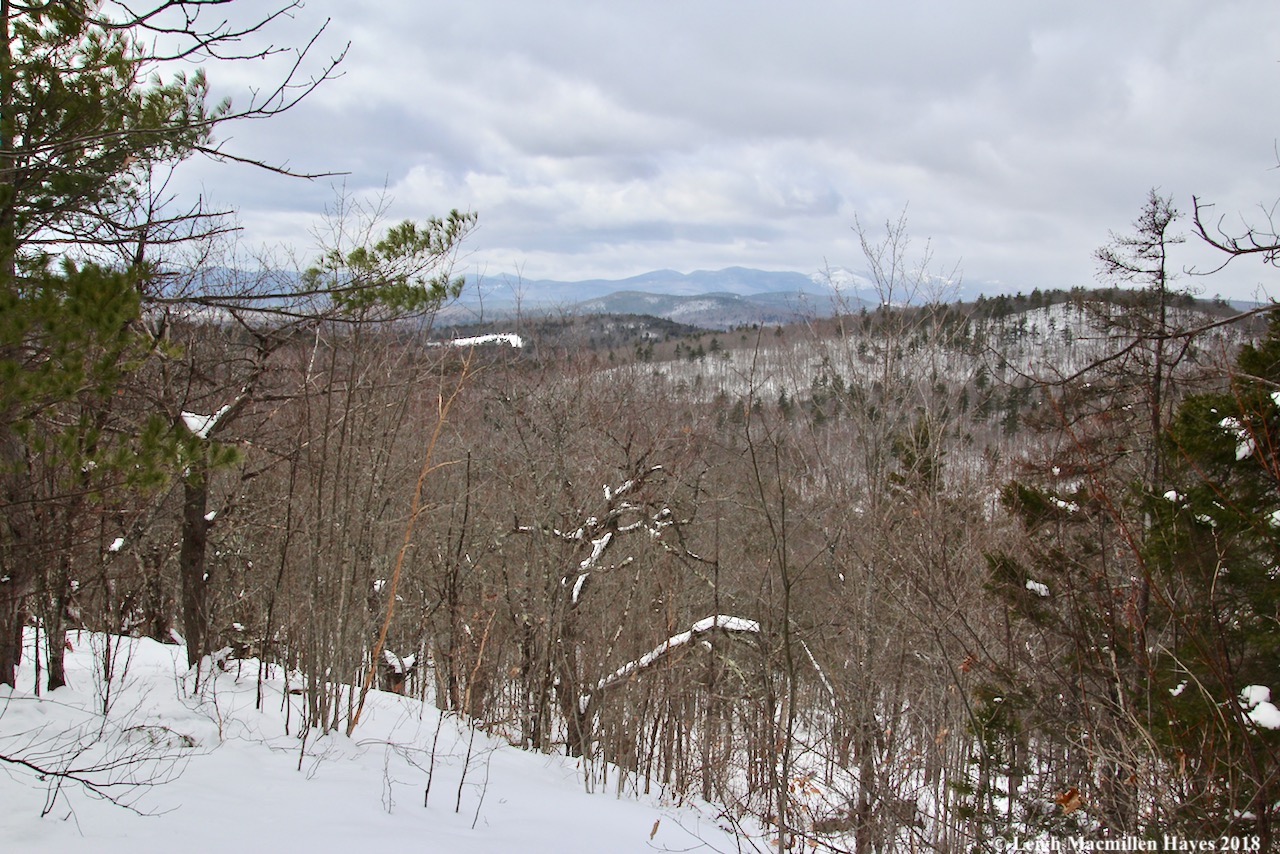
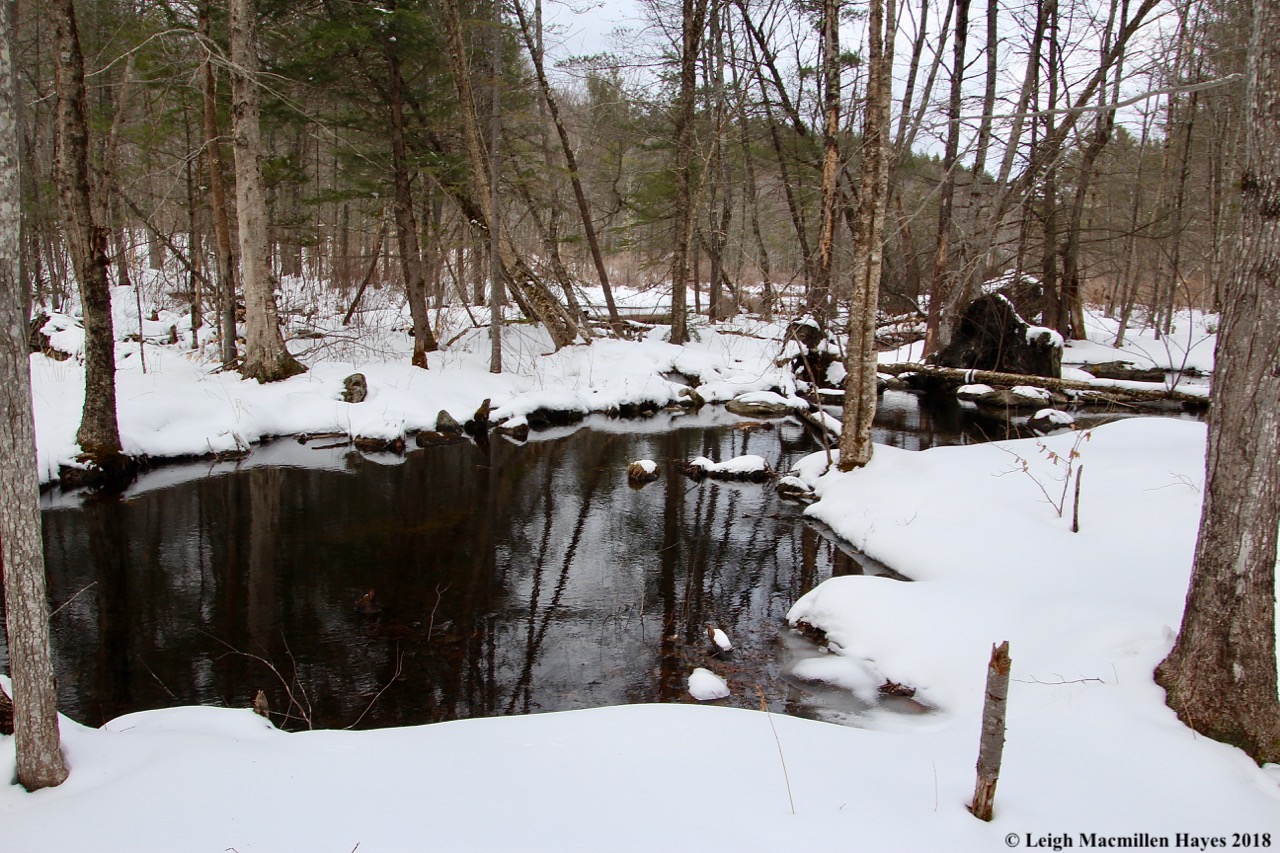
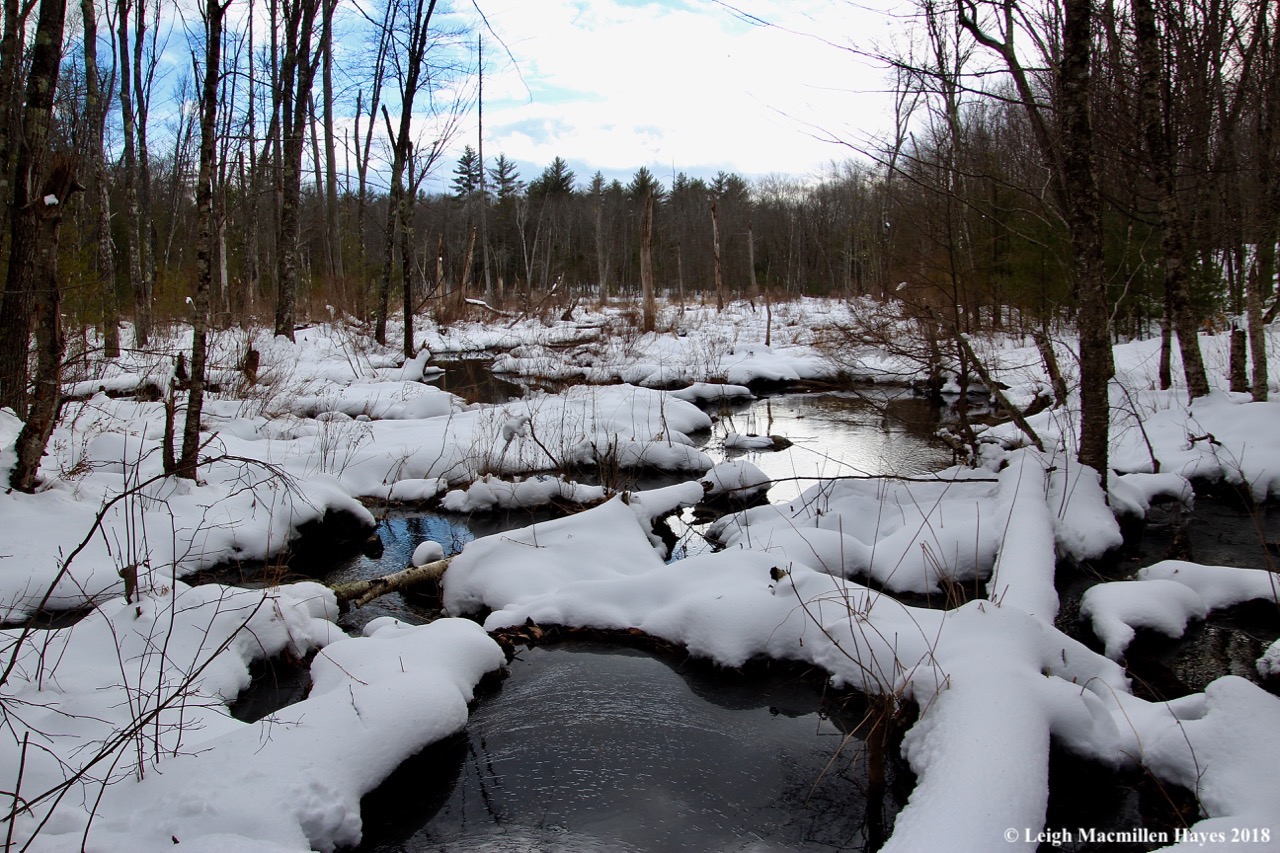
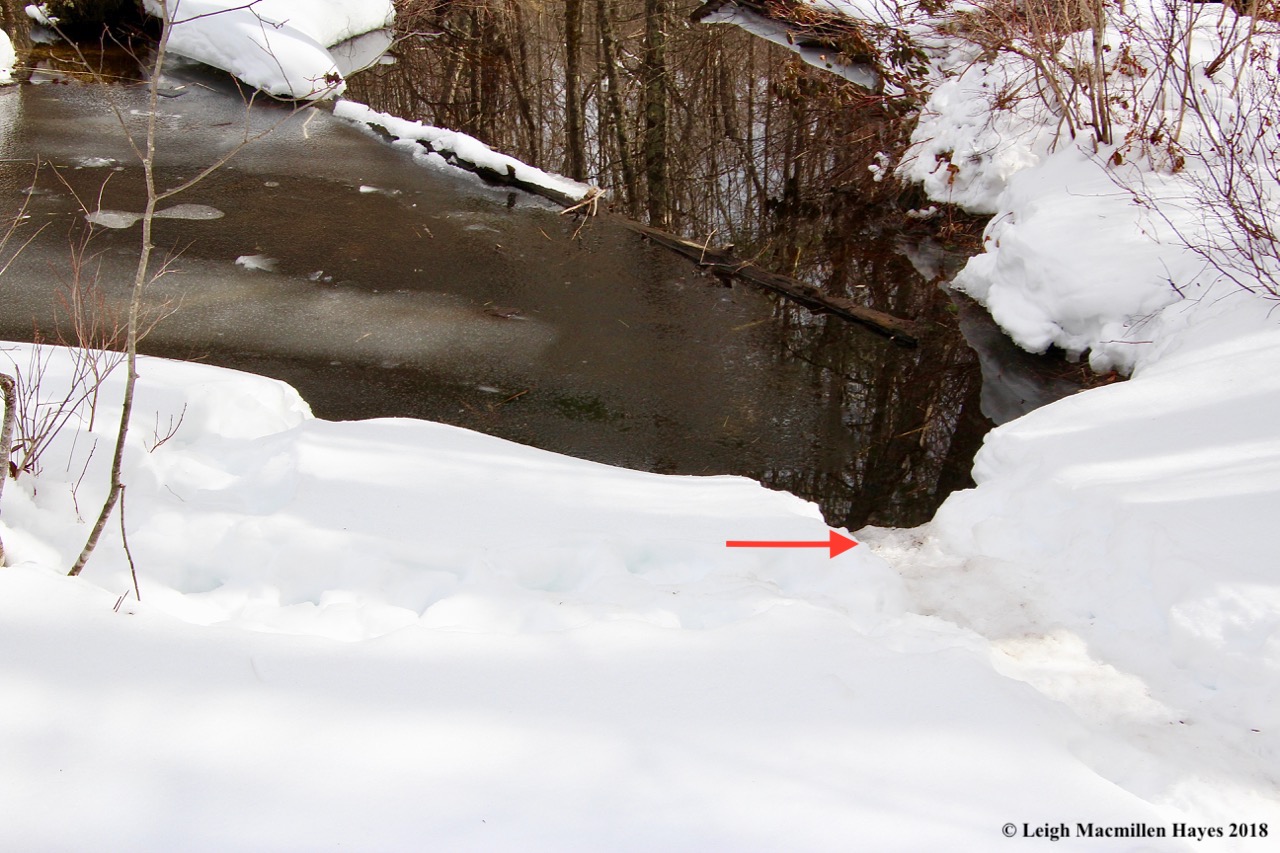
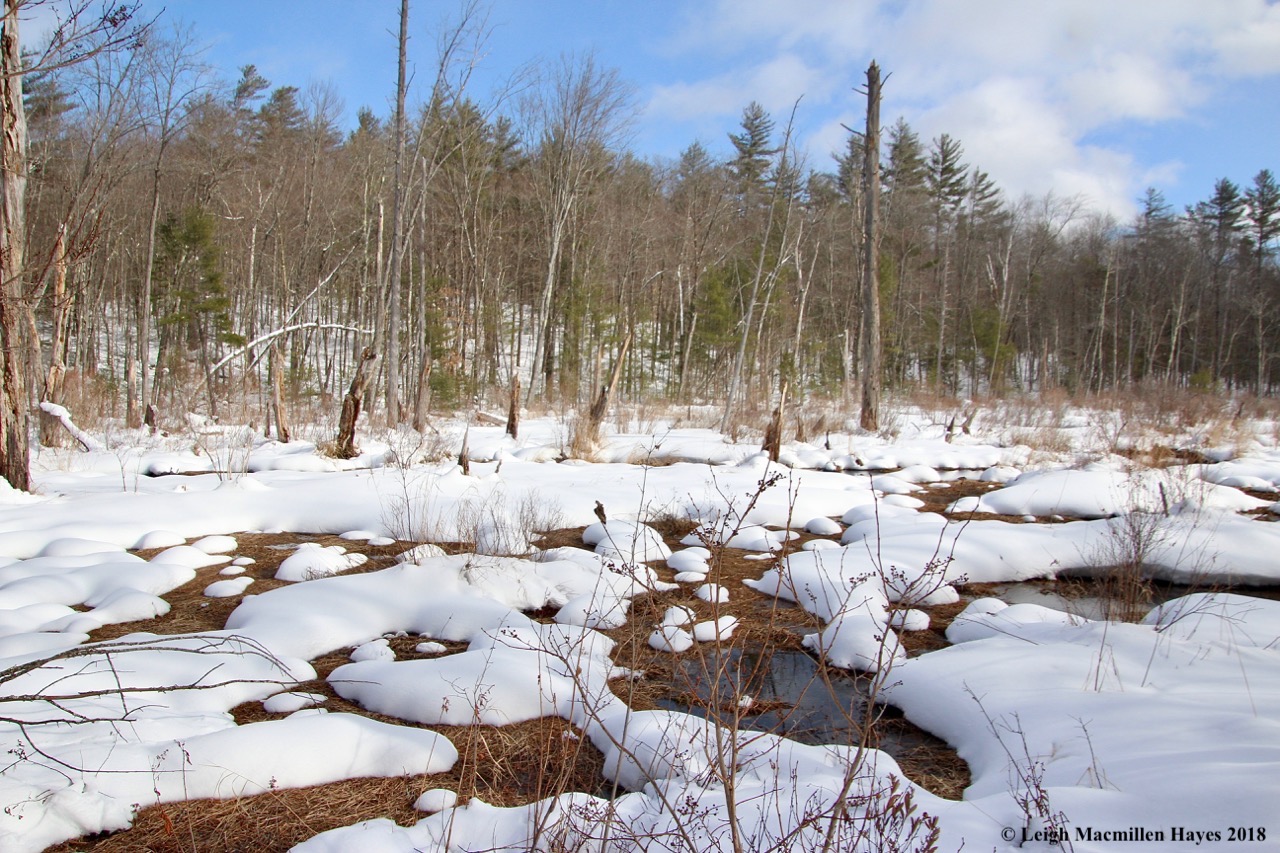
 With the Balds in Evans Notch forming the backdrop, the brook is home to numerous beaver lodges, including these two.
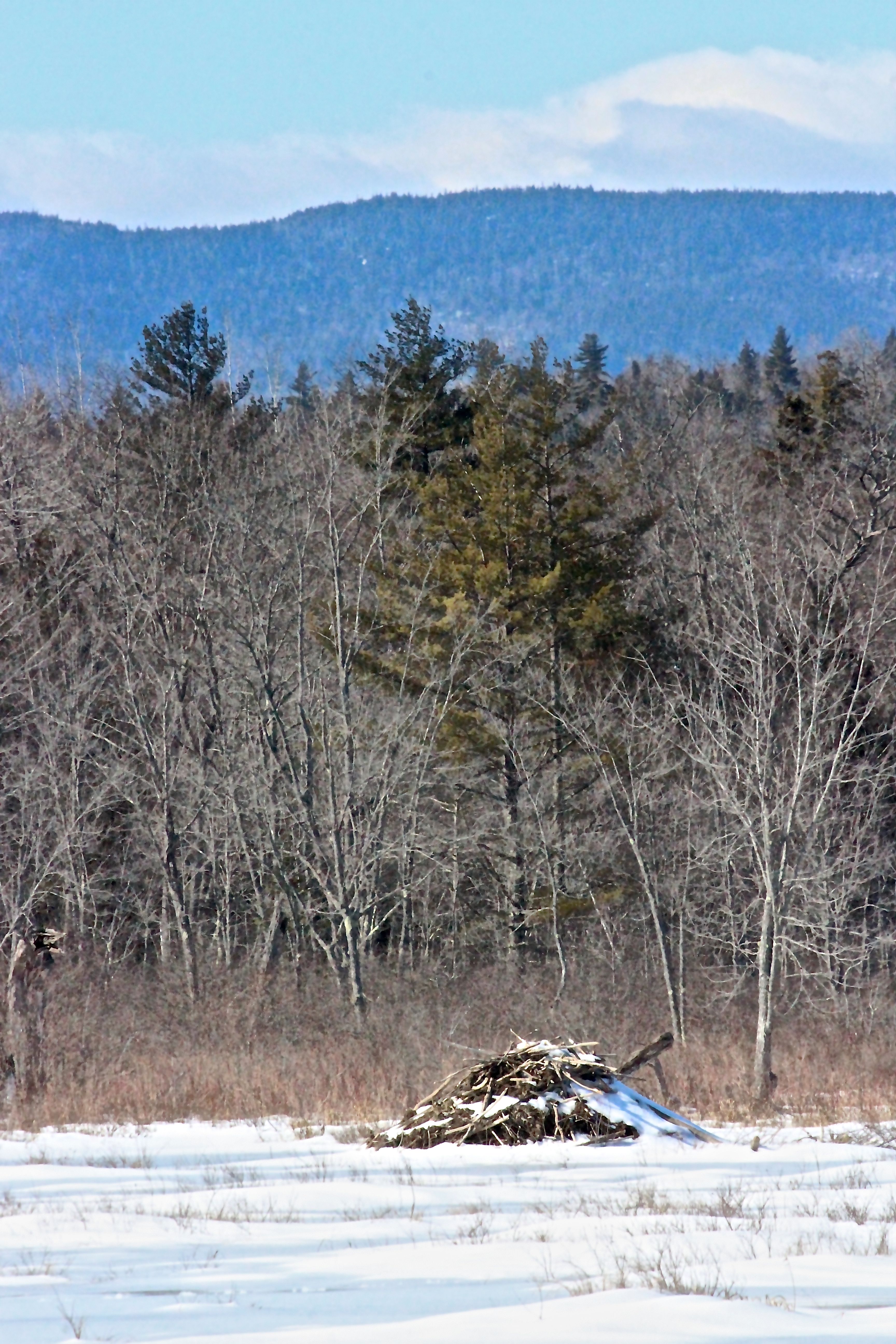 Layers speak of generations and relationships.
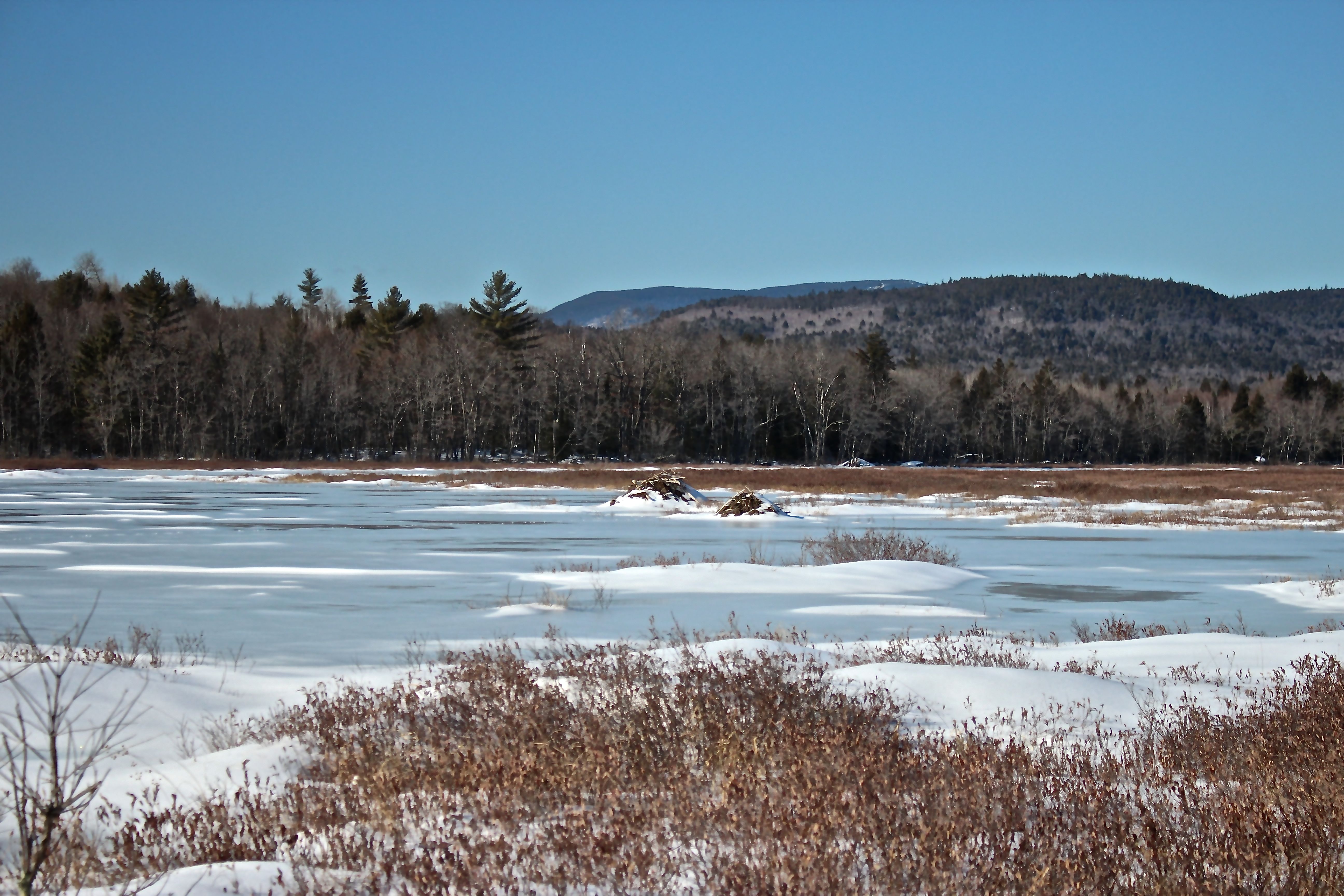 Close proximity mimics the mountain backdrop.

 And sometimes, I just have to wonder–how does this tree continue to stand?
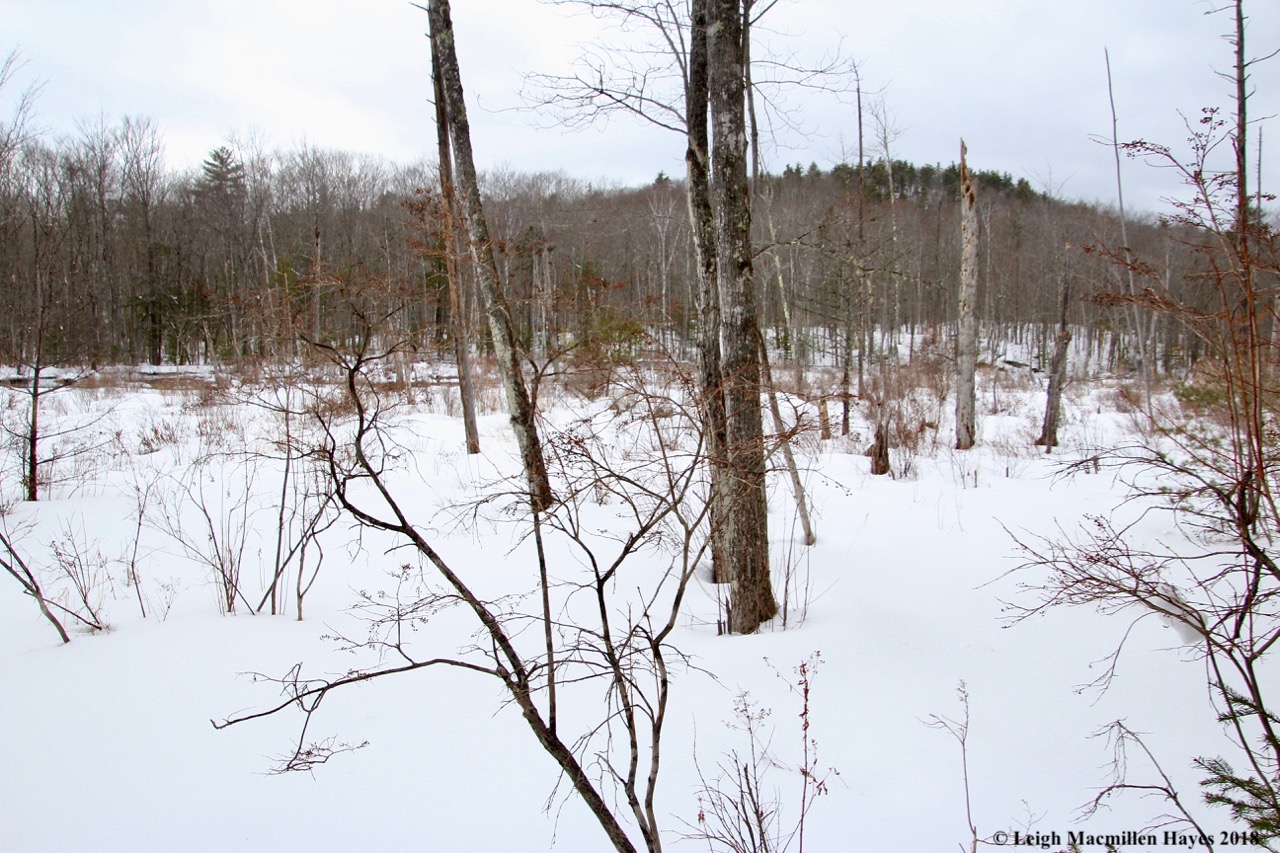
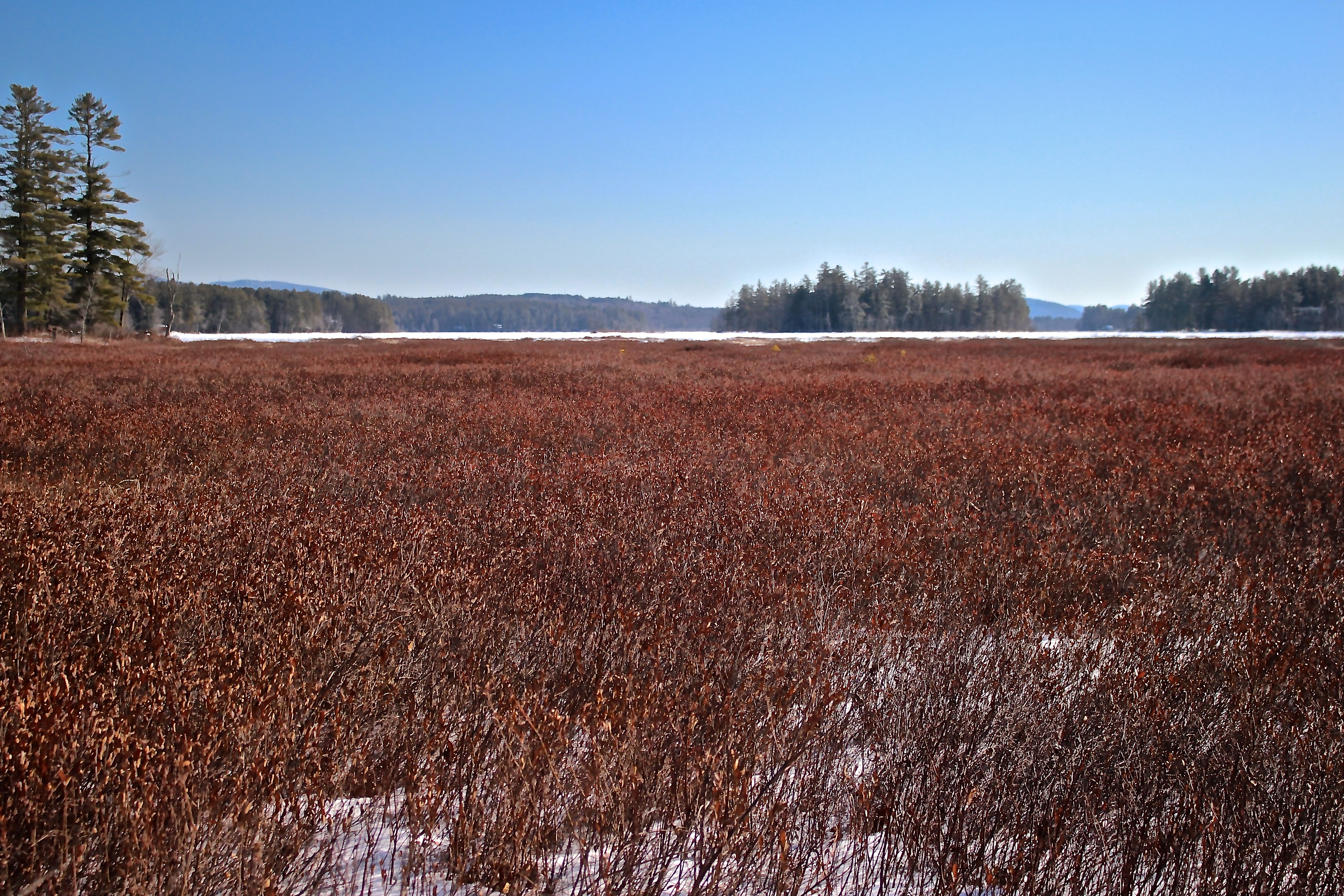 Leatherleaf fields forever.
 Spring is in the offing.
 Wintergreen offers its own sign of the season to come.
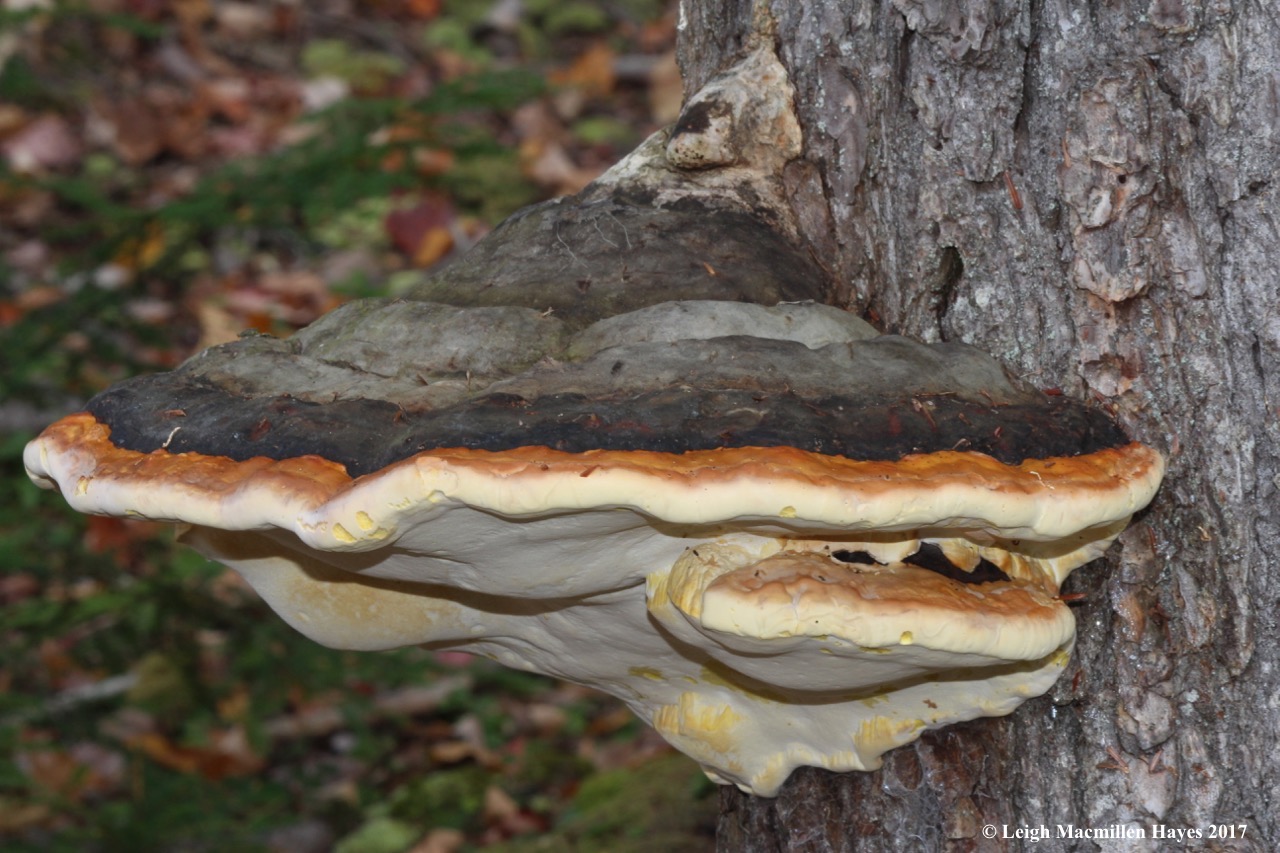
 In the meantime, it’s still winter and this hemlock stump with a display of old hemlock varnish shelf (Ganoderma tsugae) caught my eye. By now, I was on the green trail.
 But it’s what I saw in the hollow under the stump, where another tree presumably served as a nursery and has since rotted away, that made me think about how this year’s lack of snow has affected wild life. In the center is ruffed grouse scat. Typically, ruffed grouse burrow into snow on a cold winter night. Snow acts as an insulator and hides the bird from predators. I found numerous coyote and bobcat tracks today. It seems that a bird made use of the stump as a hiding spot–though not for long or there would have been much more scat.

 Apparently it circled the area before flying off.

































 wondermyway