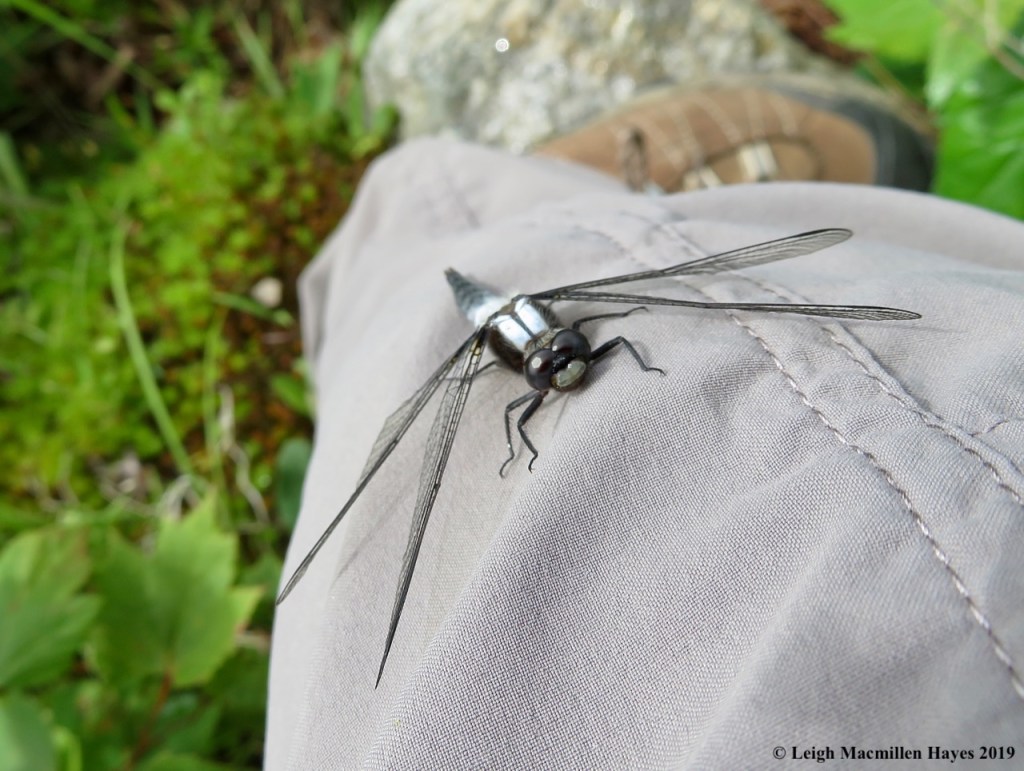
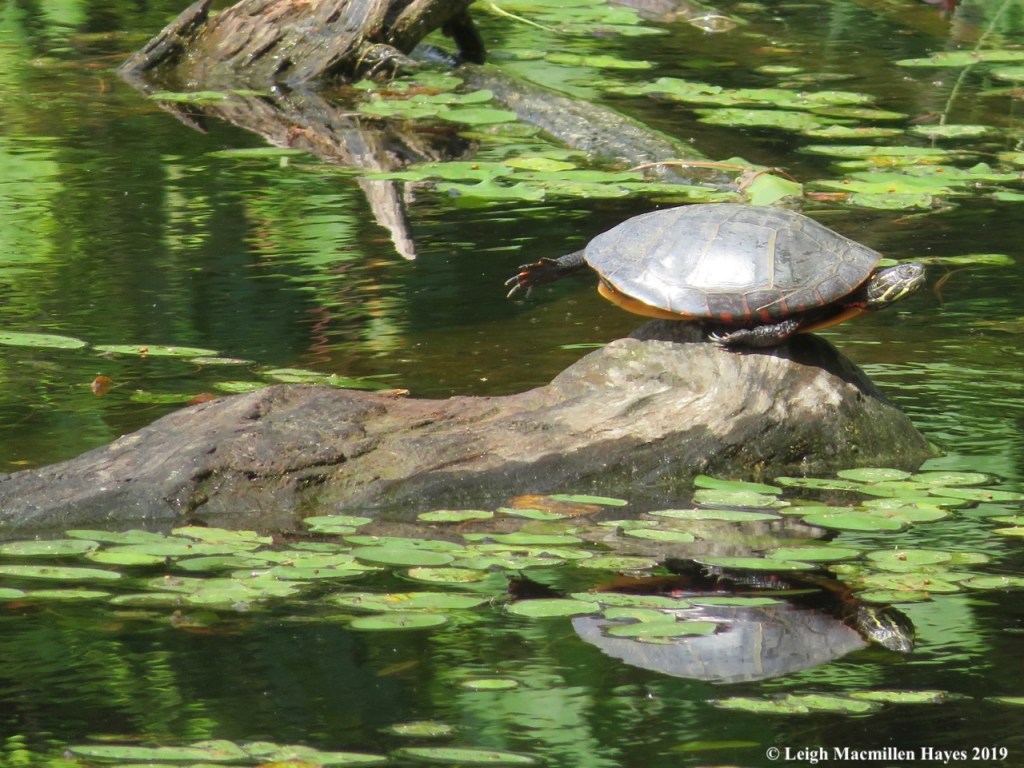
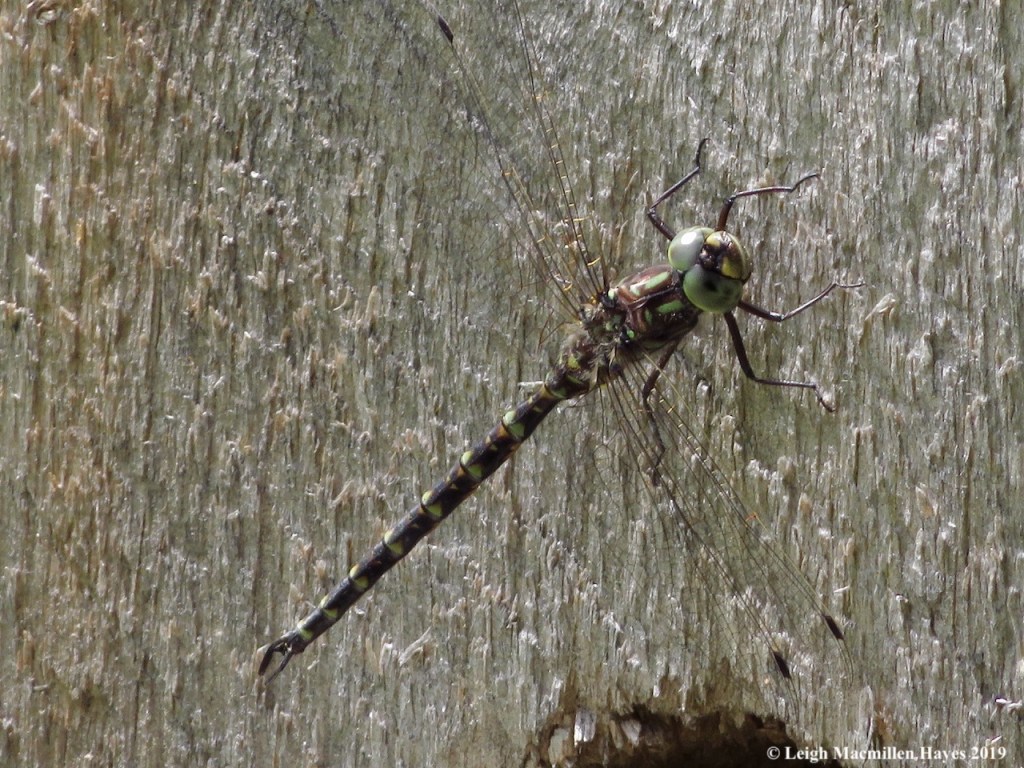
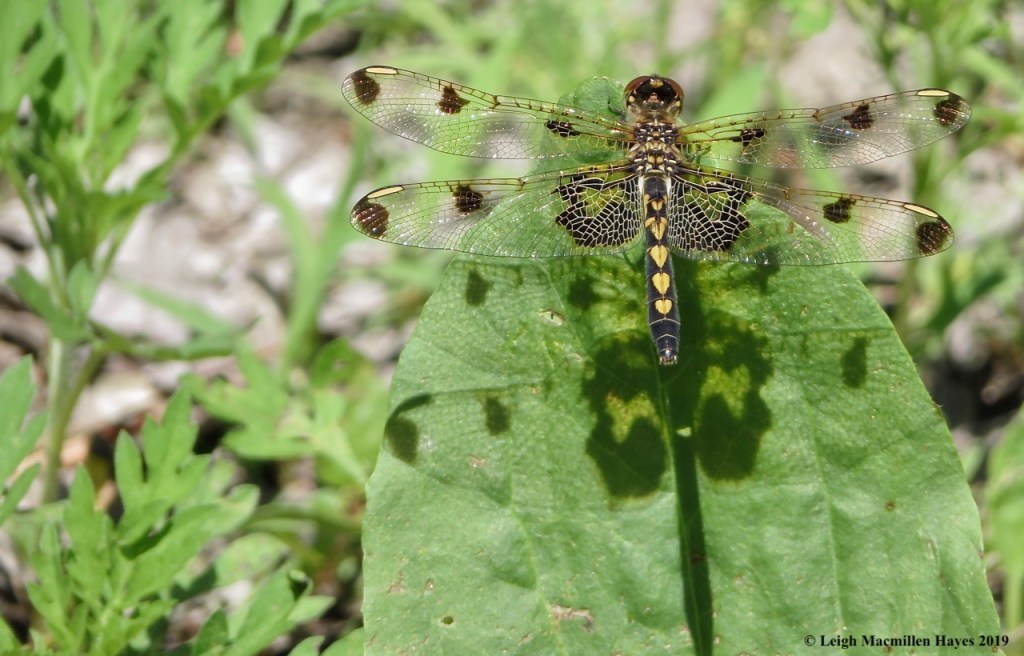
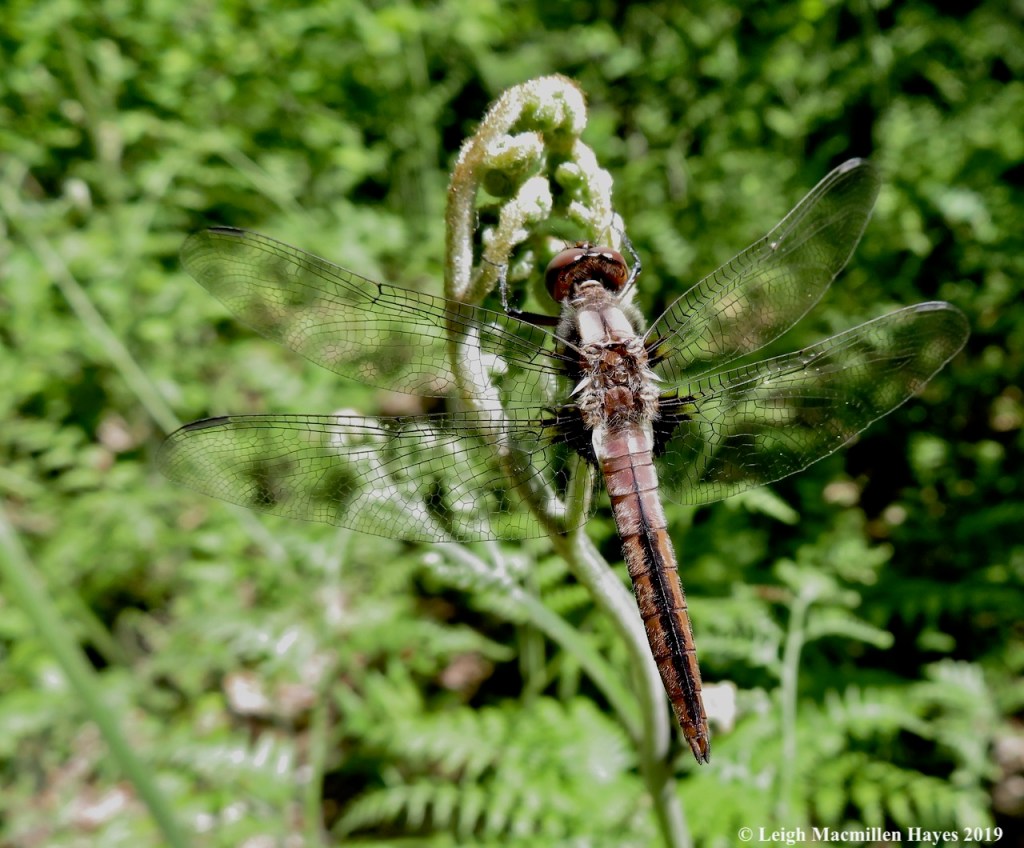
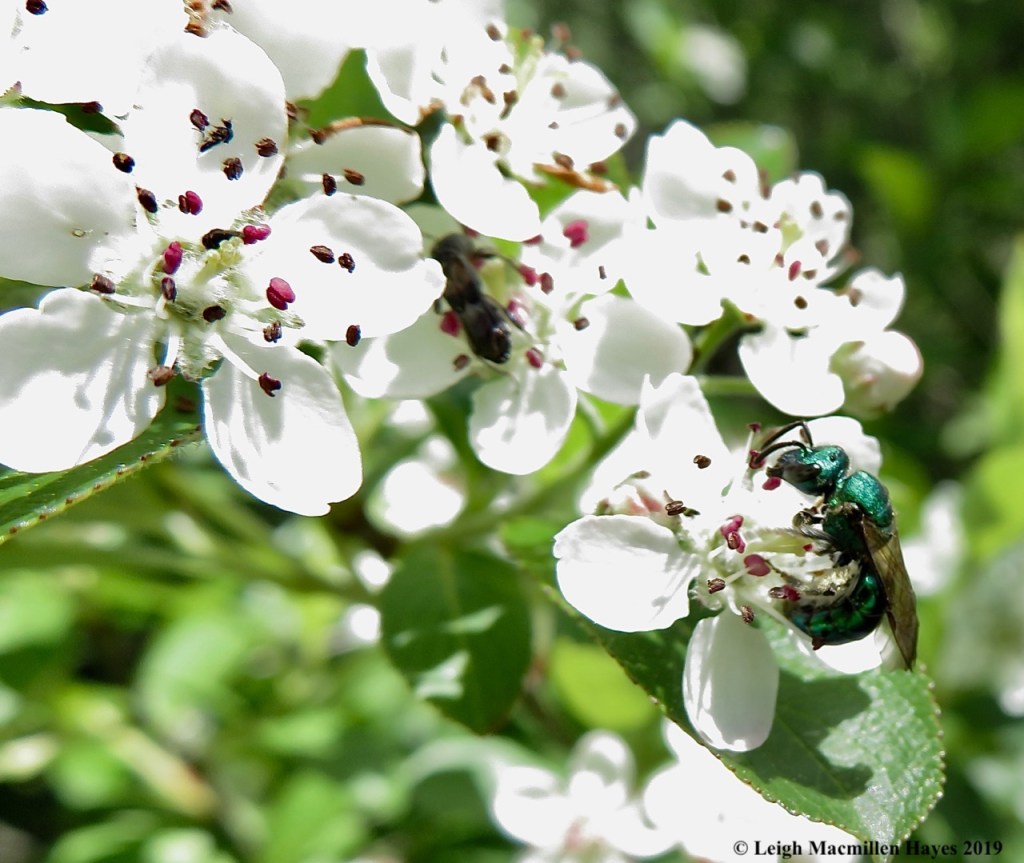
Bear to Beer Possibilities: Brownfield’s Burnt Meadow Mountain

It’s been a while since my guy and I have ventured on a Bear to Beer Possibility hike, but today dawned bright and even a wee bit chilly. A perfect August day. A perfect hiking day.

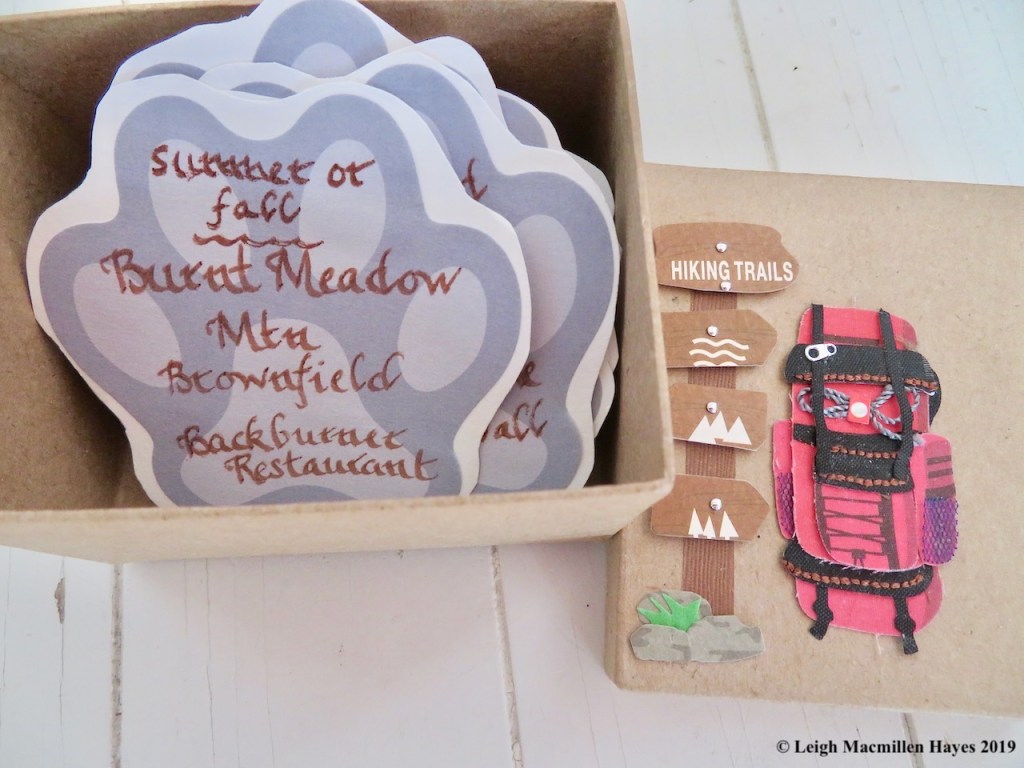
As he dipped his hand into the little box filled with potential, Burnt Meadow Mountain in Brownfield surfaced.

And so it was that we decided to hike up and down the Twin Brooks Trail rather than doing the loop to the North Peak. Though a bit longer, it proved to be a good choice as we came upon a couple of bear trees we hadn’t met previously. The first was the best for so many claw marks did it feature.

Even from the back side there was proof that not only was this our favorite bear tree, but it was also some bear’s favorite.

A little further on we found another we hadn’t met before. Or . . . perhaps we were meeting it for the first time all over again. That happens to us sometimes and, after all, we were approaching from a different angle than is our norm.

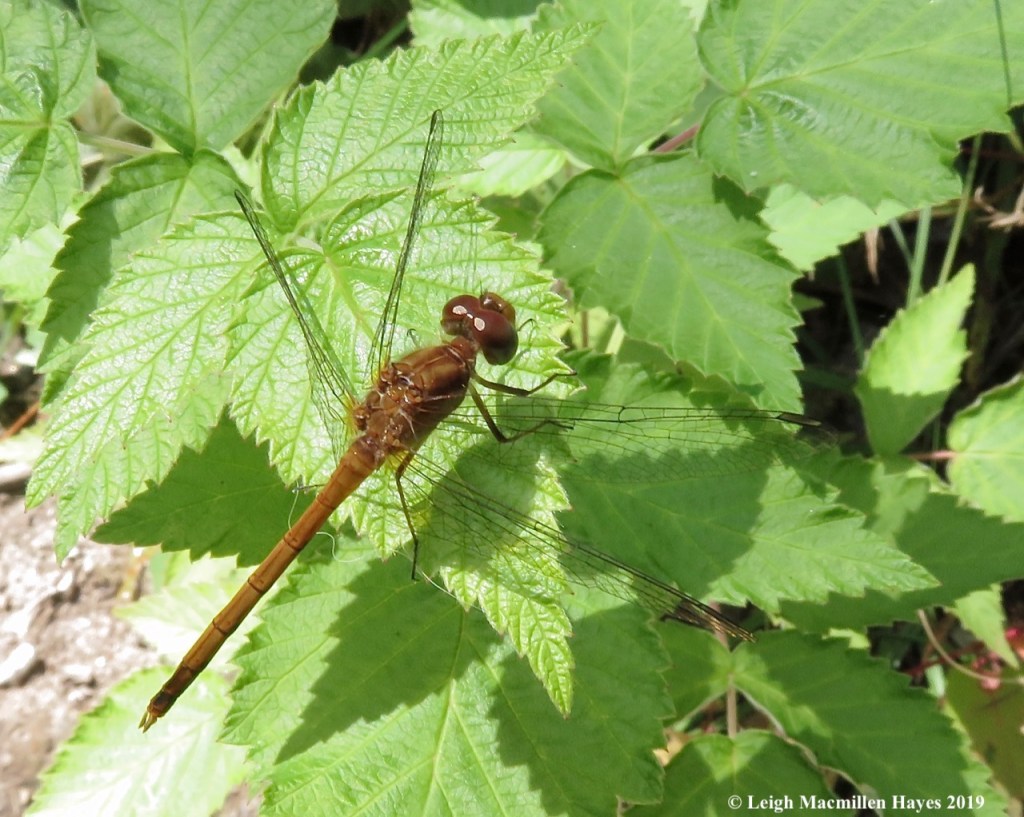
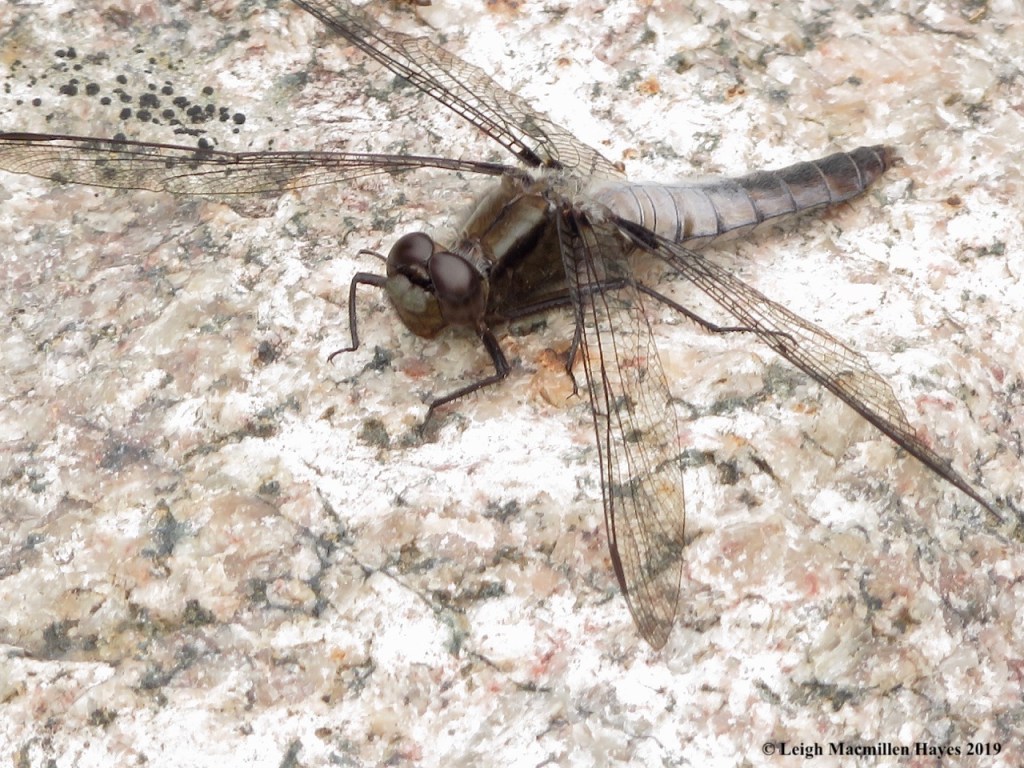
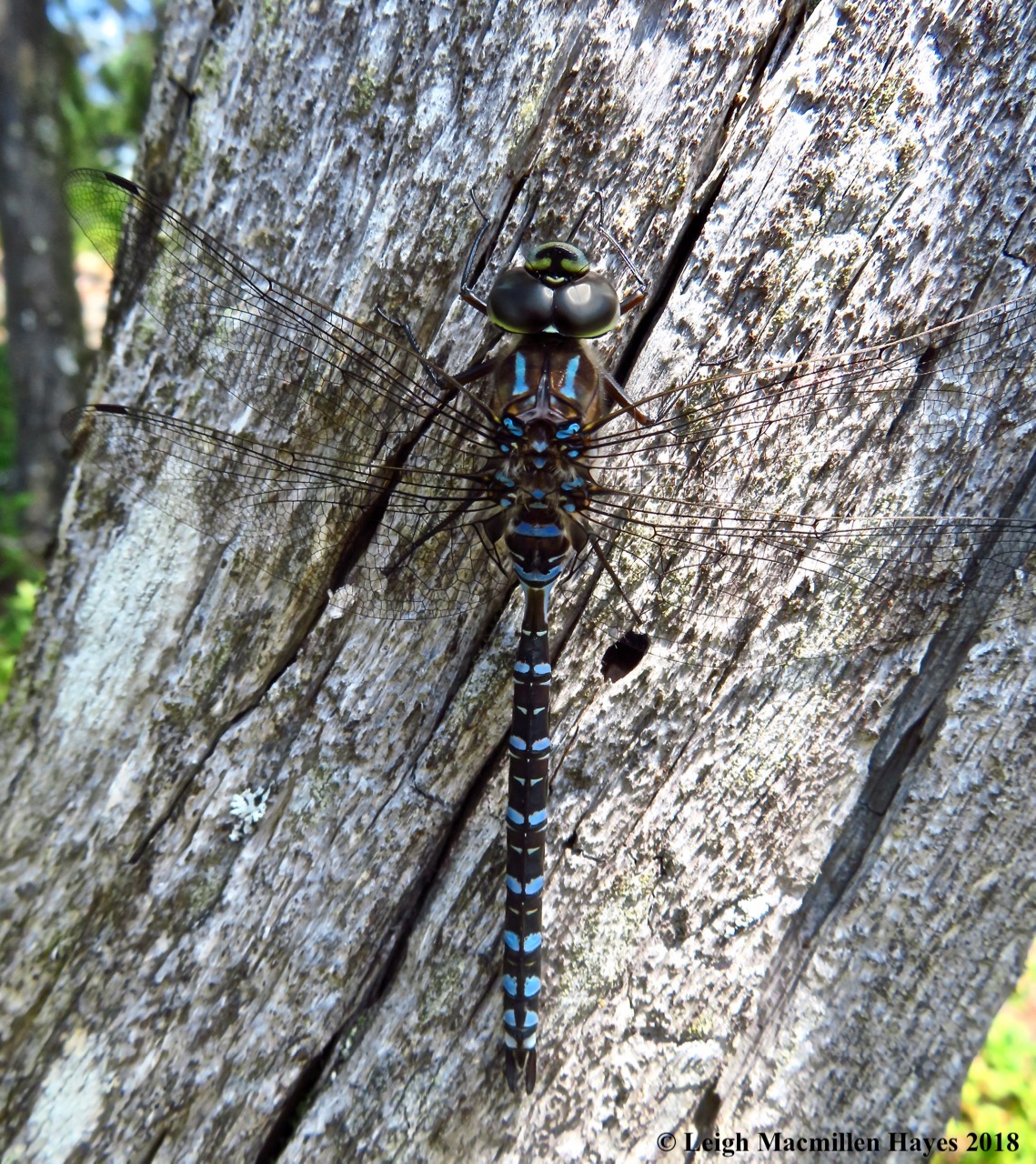
There were other things to slow us down, like the occasional Autumn Meadowhawk Dragonfly, especially in an area where the trail had been rerouted a few years ago during a logging operation and most of the growth is early successional.

And a Bald-faced Hornet nest that was quite active. “How does your nest grow?” I asked the lady of the house. “With chewed wood fibers mixed with saliva,” she responded. The result was an impressive condominium a few feet off the trail.

Continuing on, there was a cave that deserved a visit so my guy peeked in. Fortunately, no one peeked out.

And then . . . another bear tree, though not nearly as impressive as those we spotted previously.

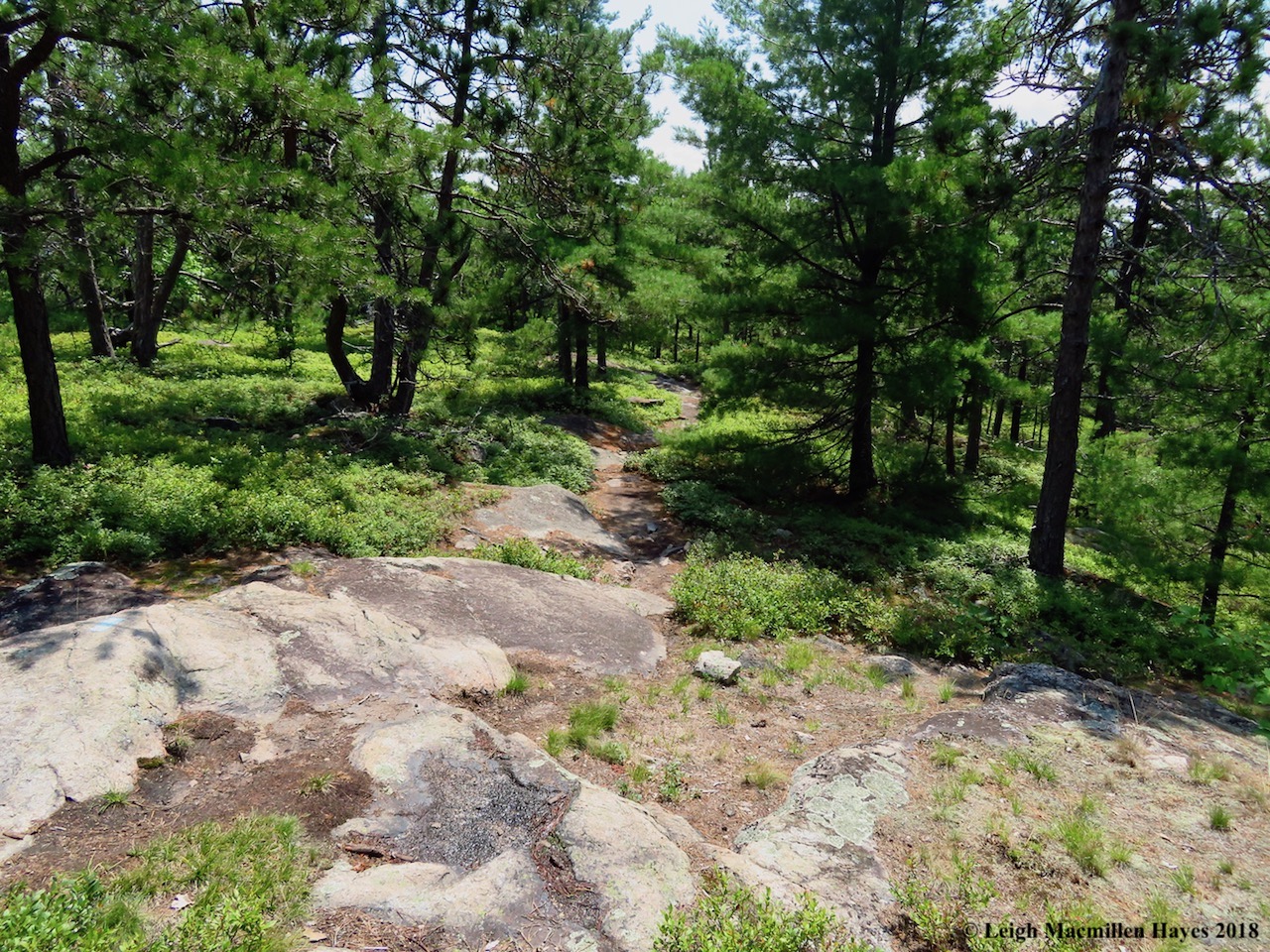
Onward and upward we climbed. Thankfully, we didn’t have to partake of the heart-throbbing scramble of the North Peak Trail that sometimes gives me pause, but we still had some scrambling to do on the trail of today’s choice.

It was worth it, for we paused at one point and turned to take in the view of Mount Washington.

At last we reached the flat top of Burnt Meadow Mountain. It always amazes us that with all the boulders and ledges we encounter on the way up, the summit is rather like a mesa.

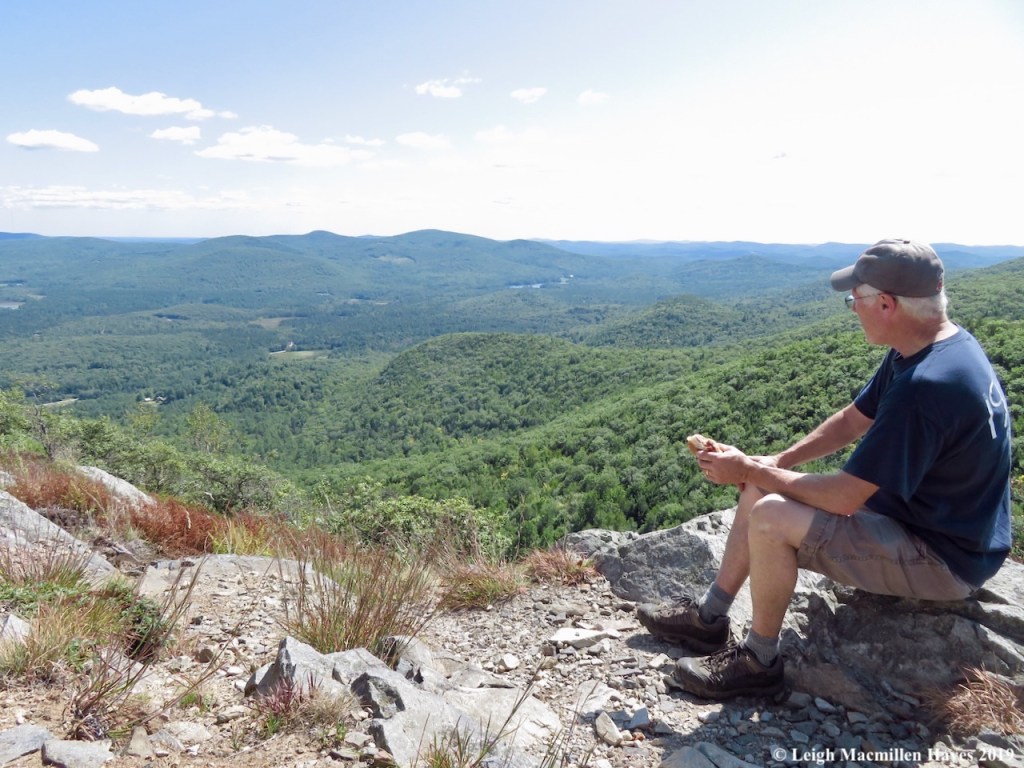
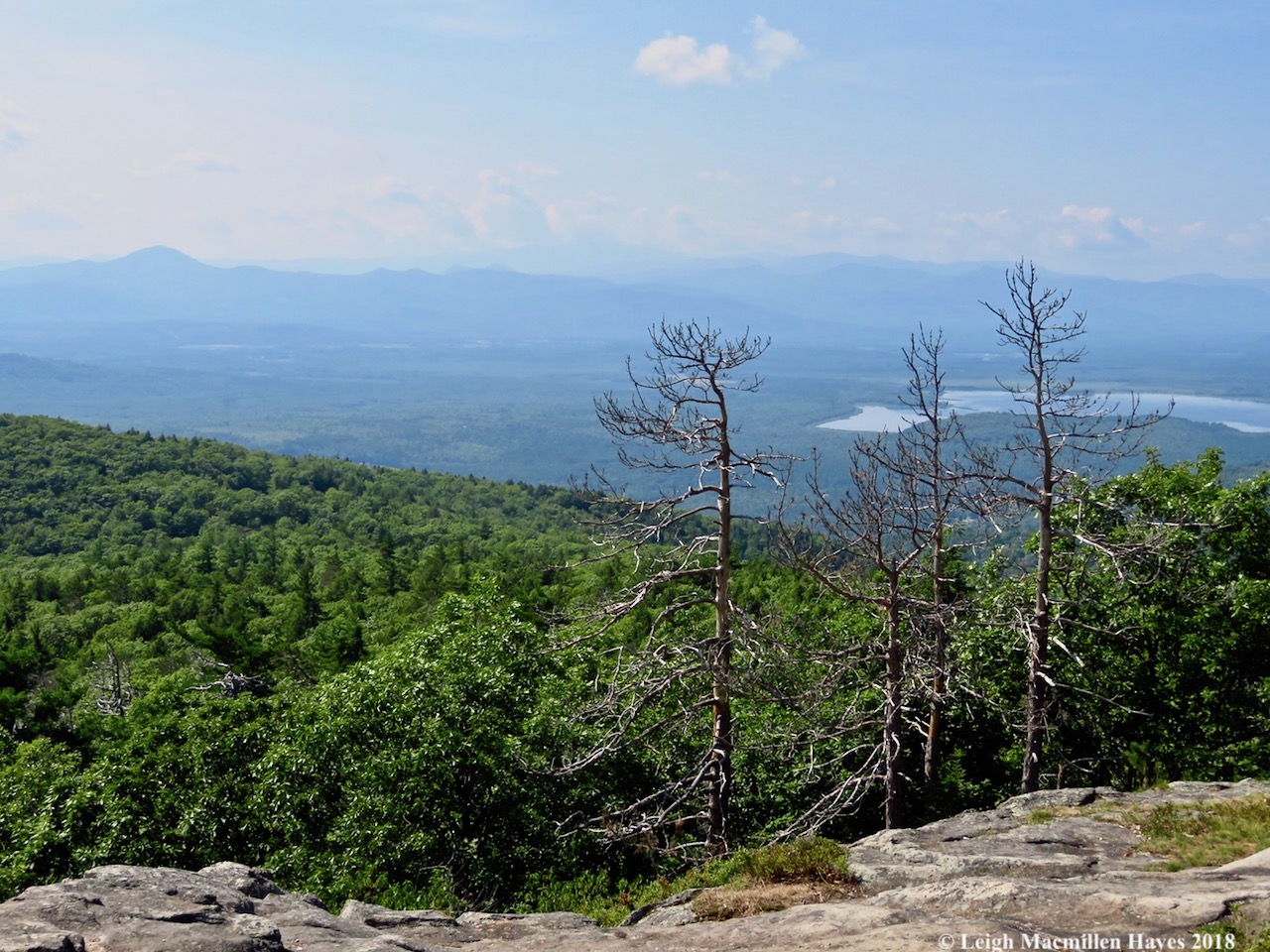
Lunch rock found us taking in the view to the east. The Atlantic Ocean is somewhere beyond the sea of trees.

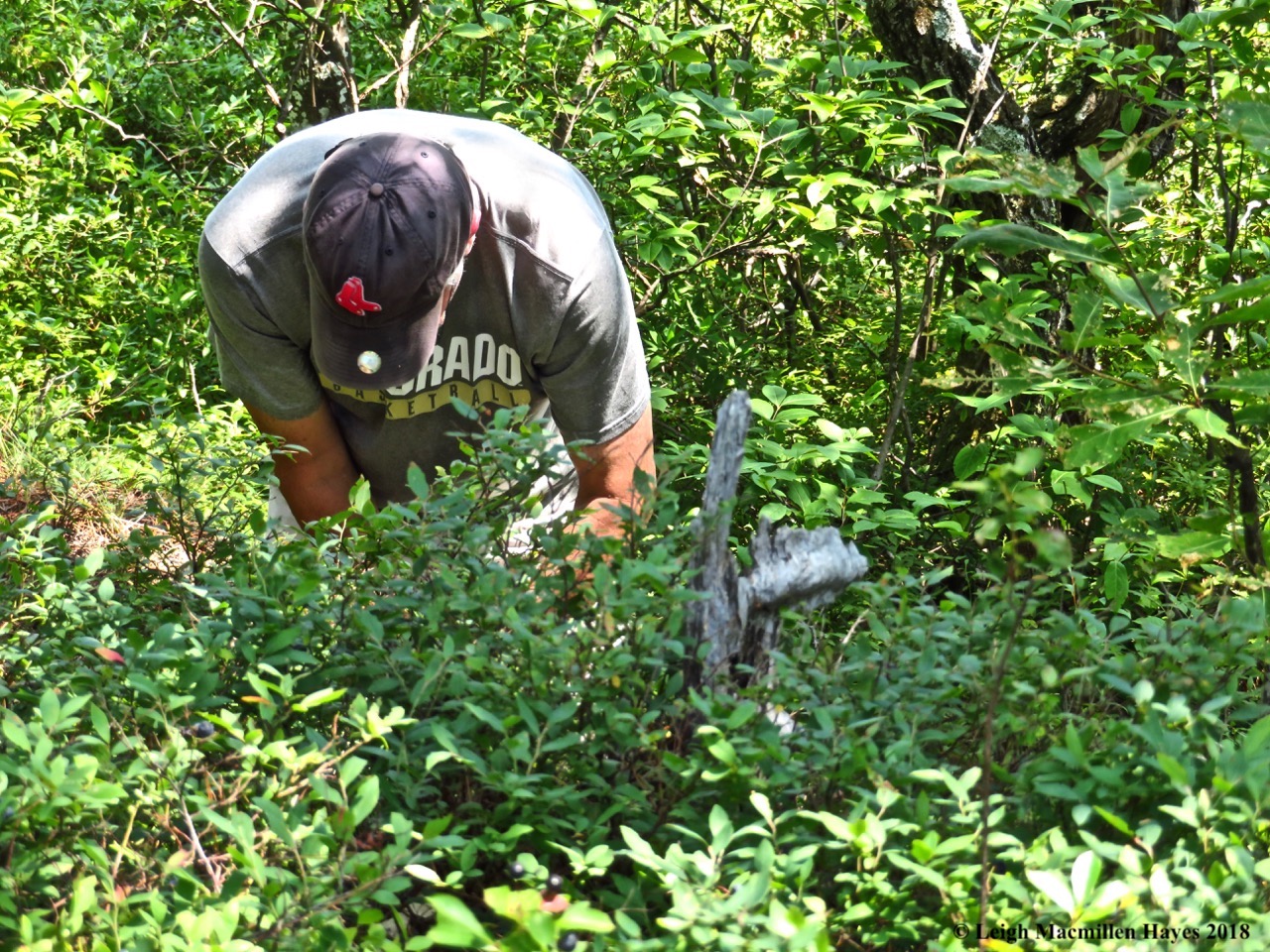
And though there were still plenty of berries at the top, we never met an interested bear. (Almost 20 years ago, we did when hiking there with our sons.) Nor was my guy interested in what I typically call his blue gold.

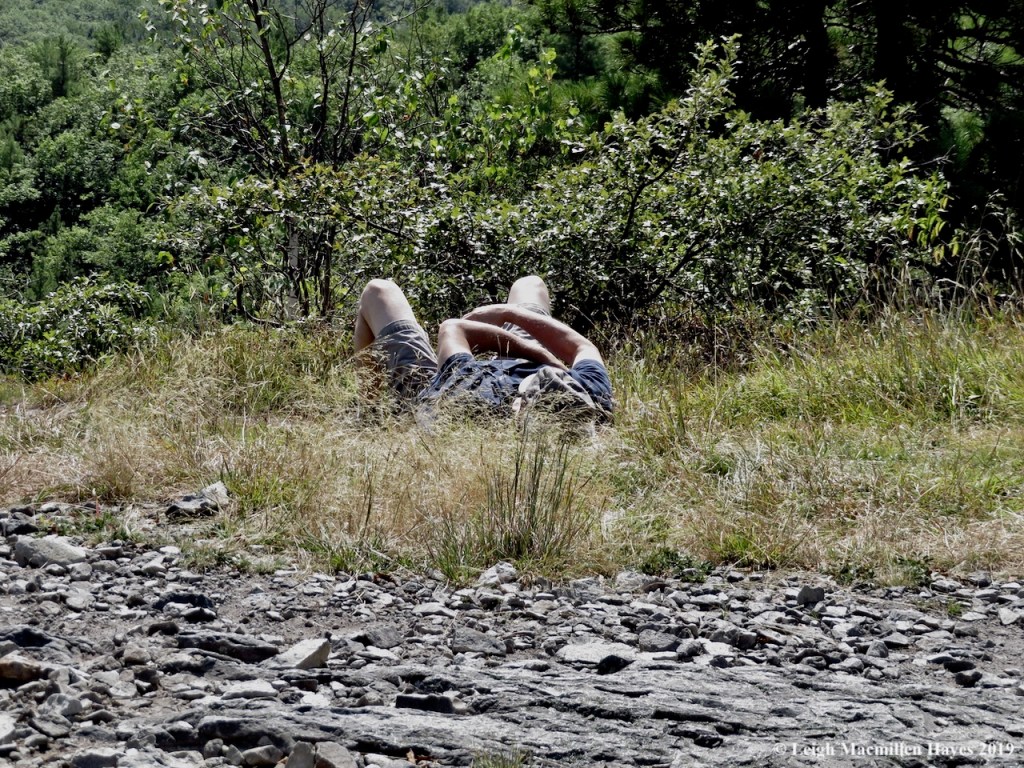
Instead, he chose to nap.

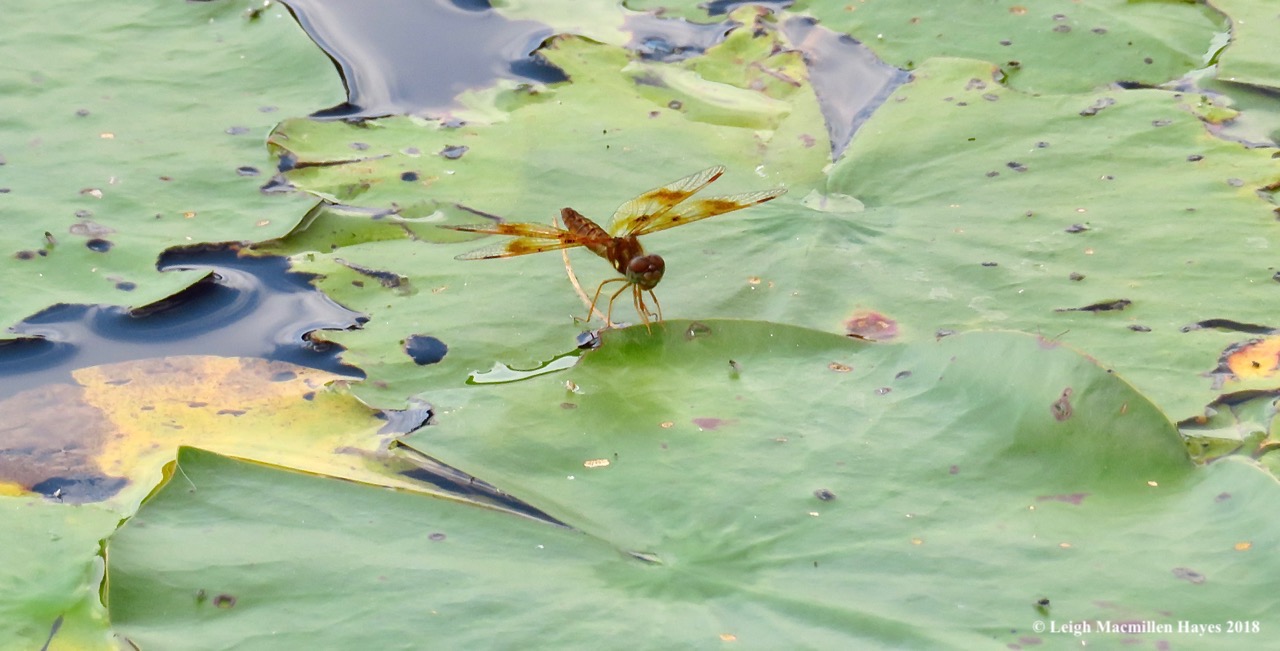
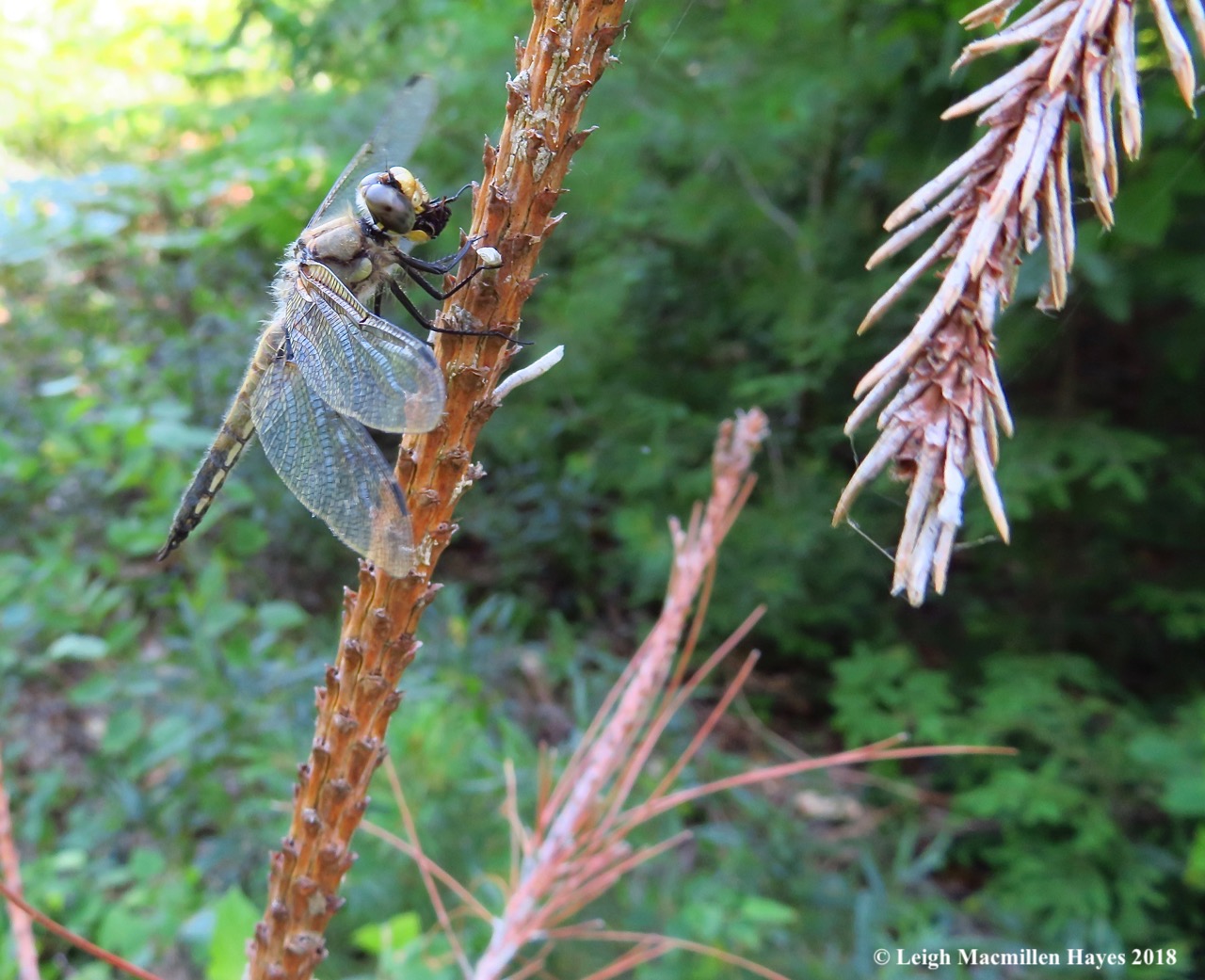
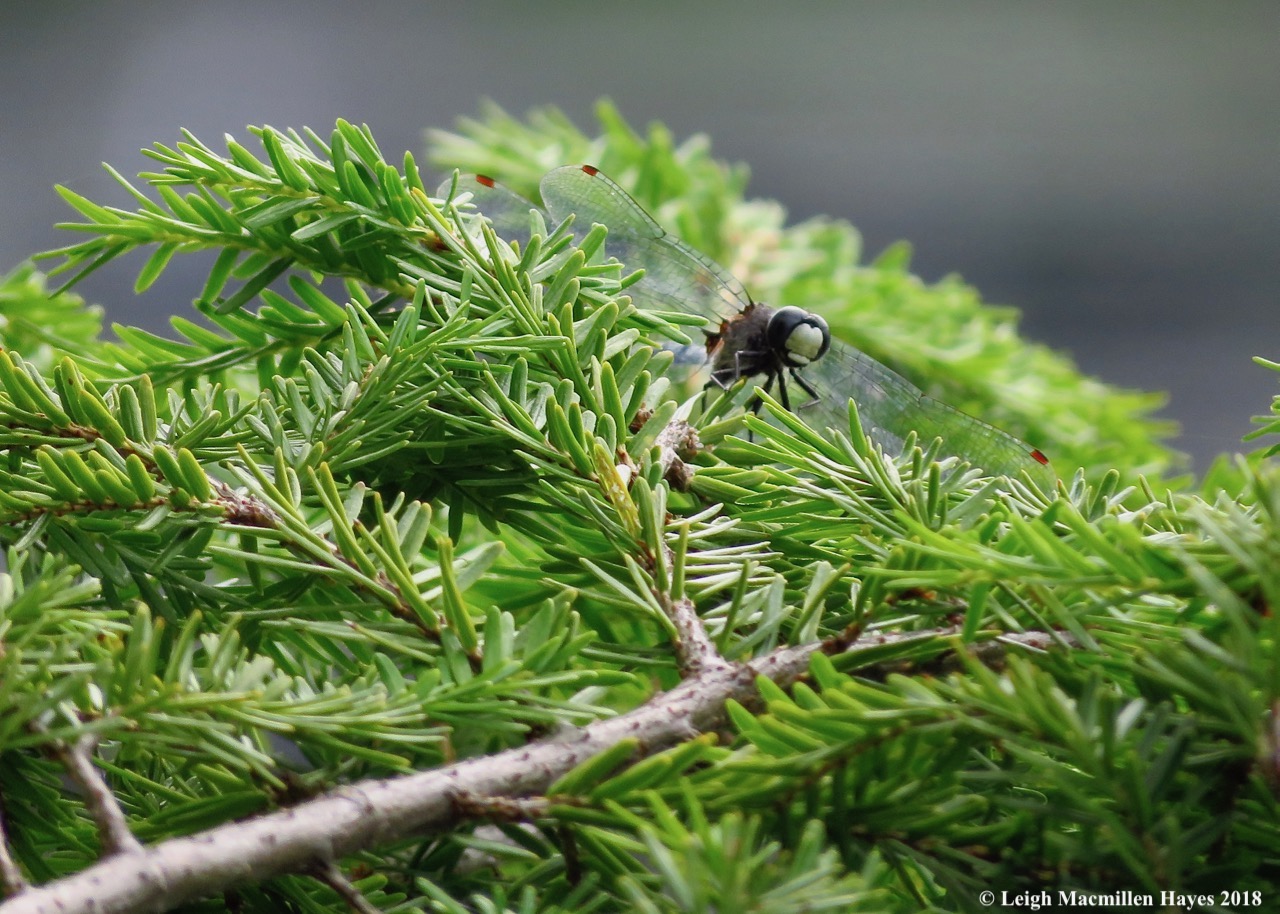
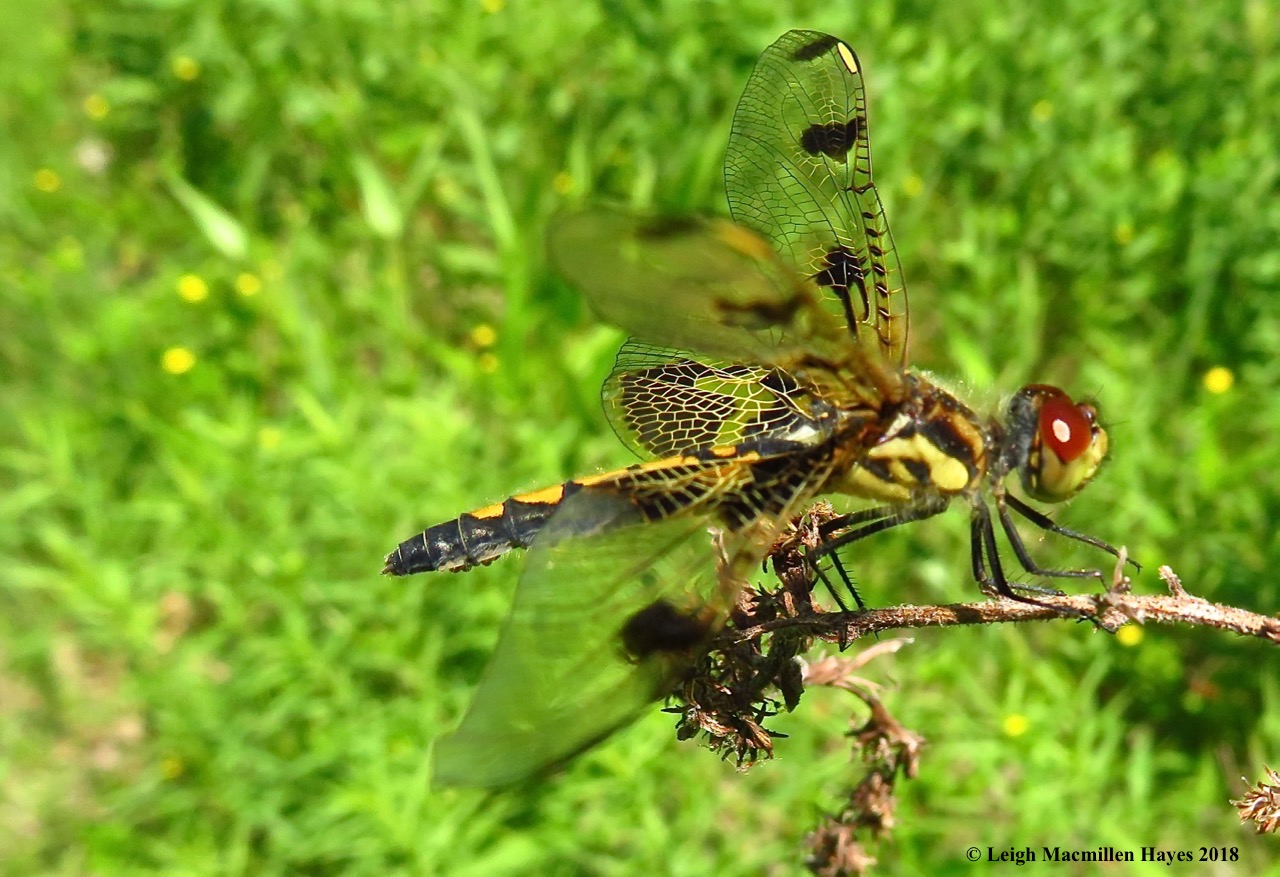
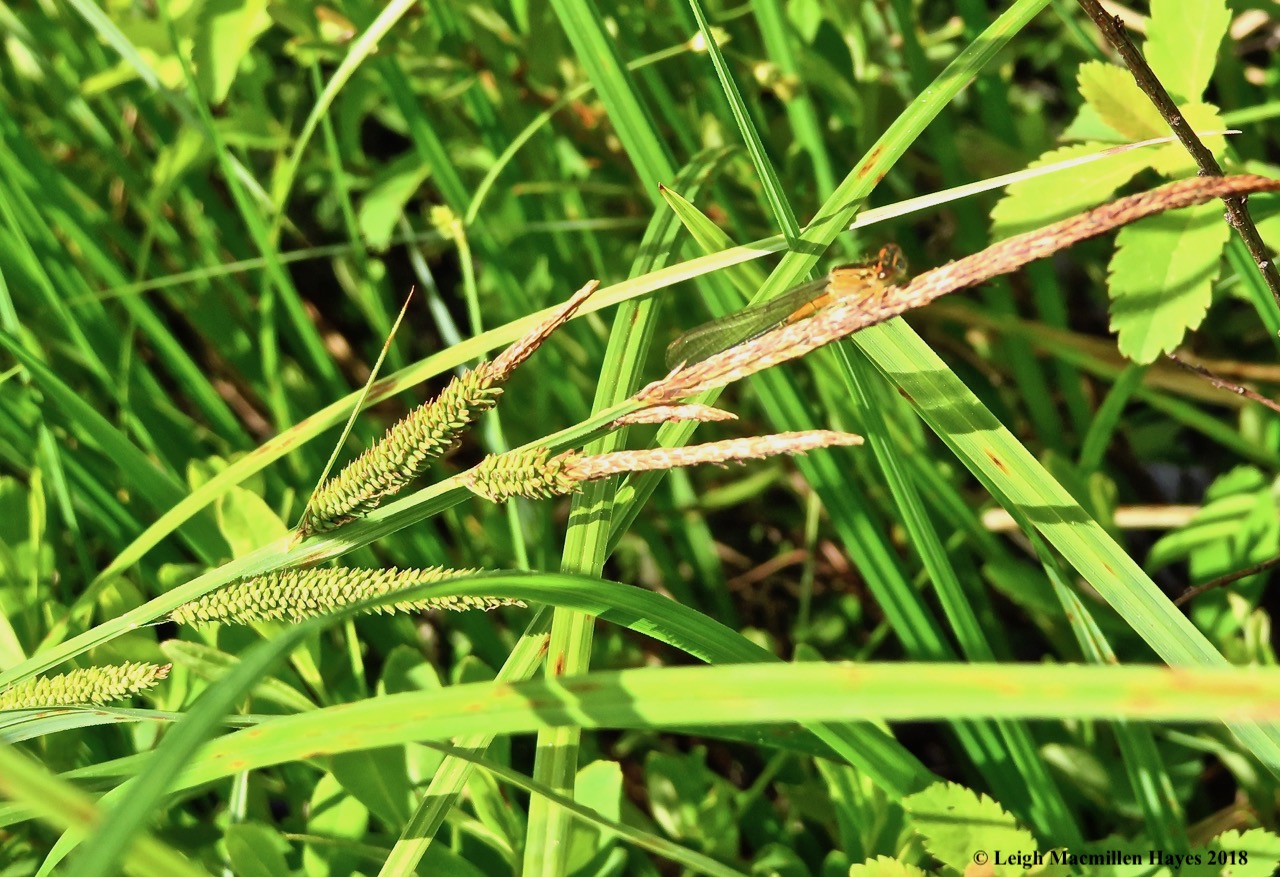
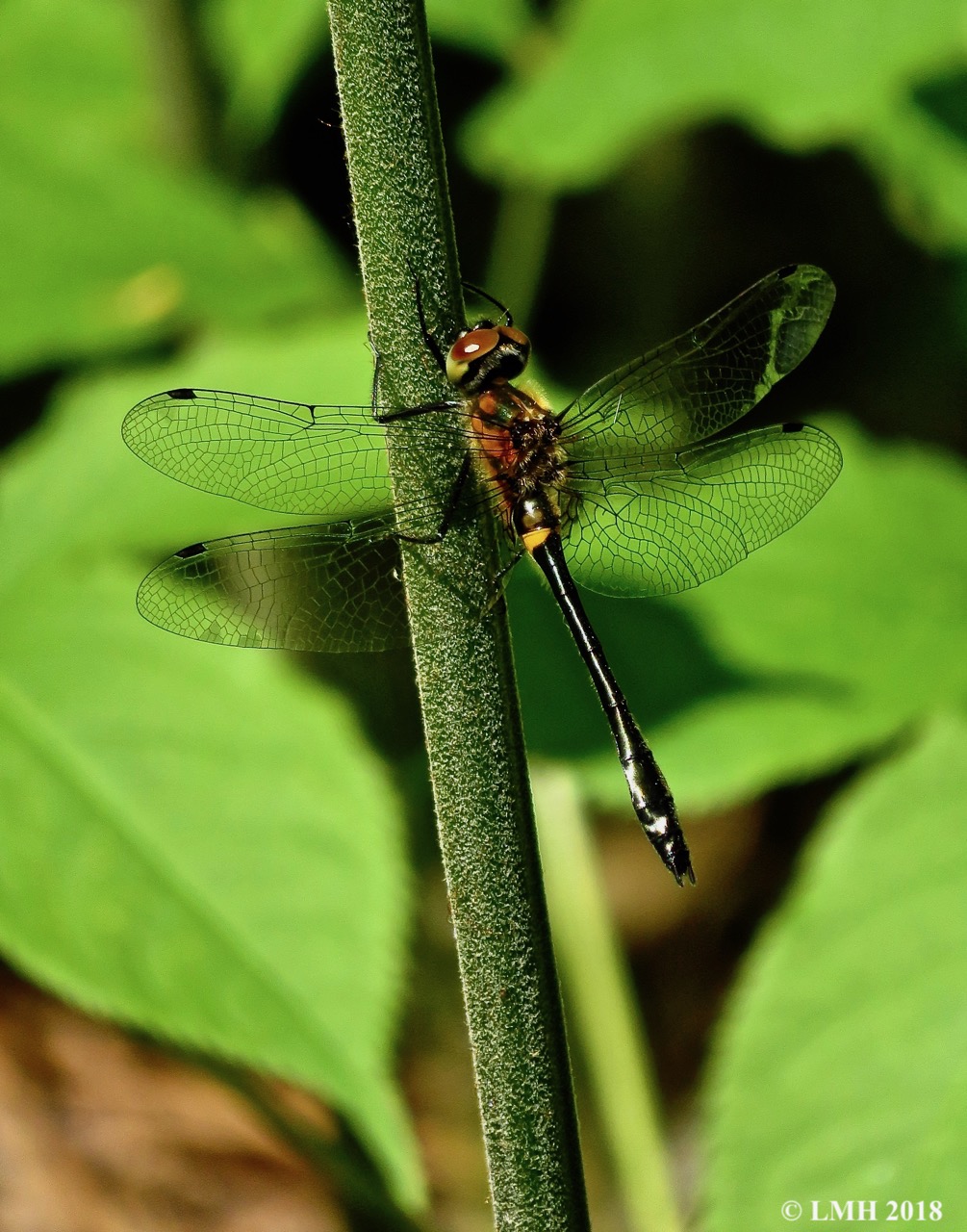
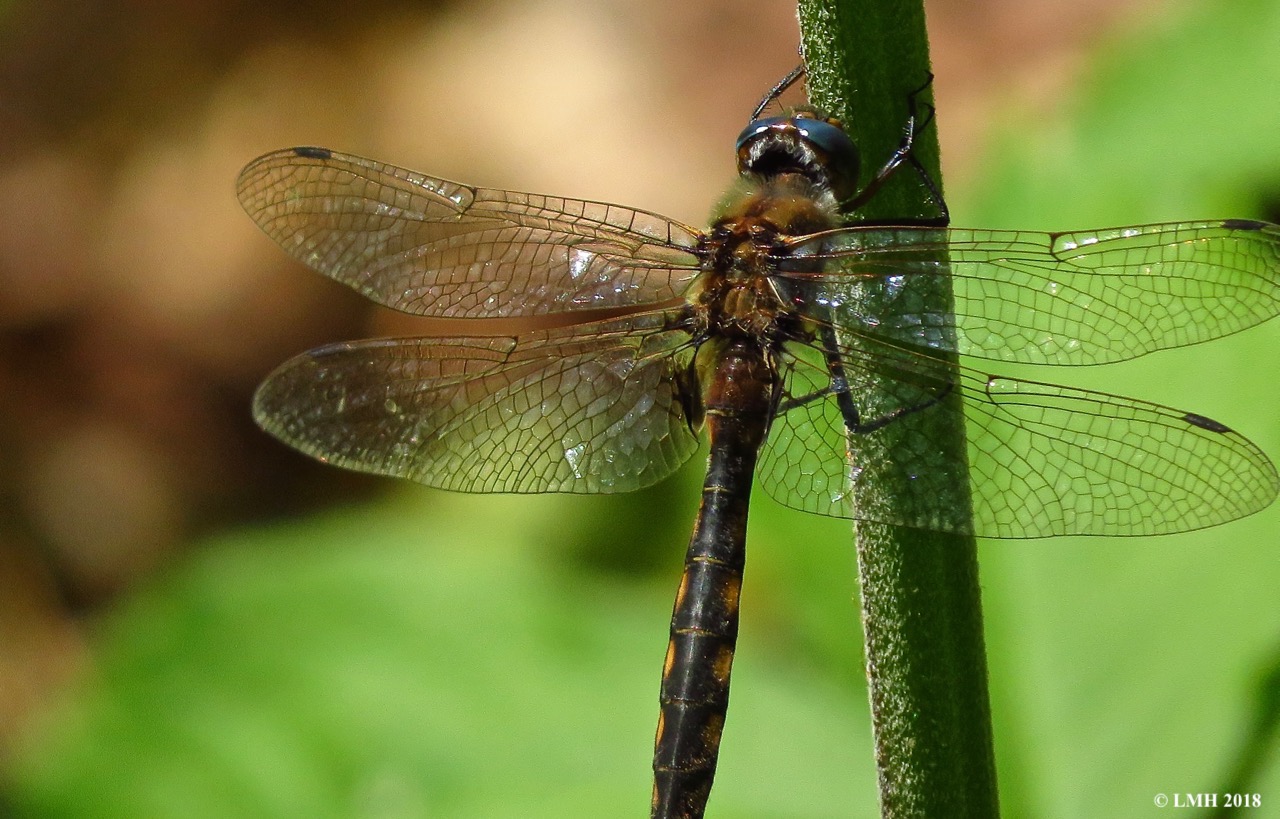
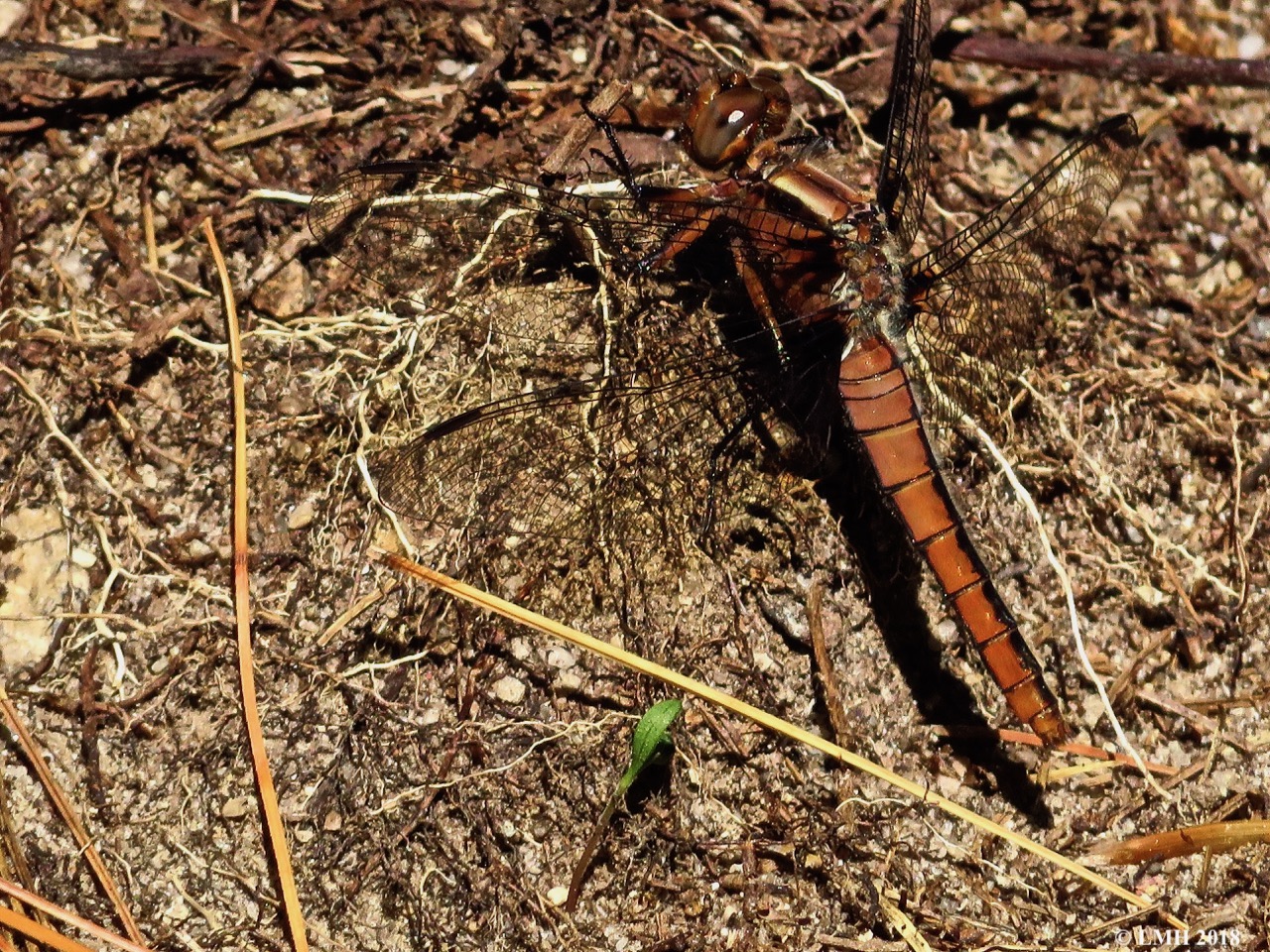
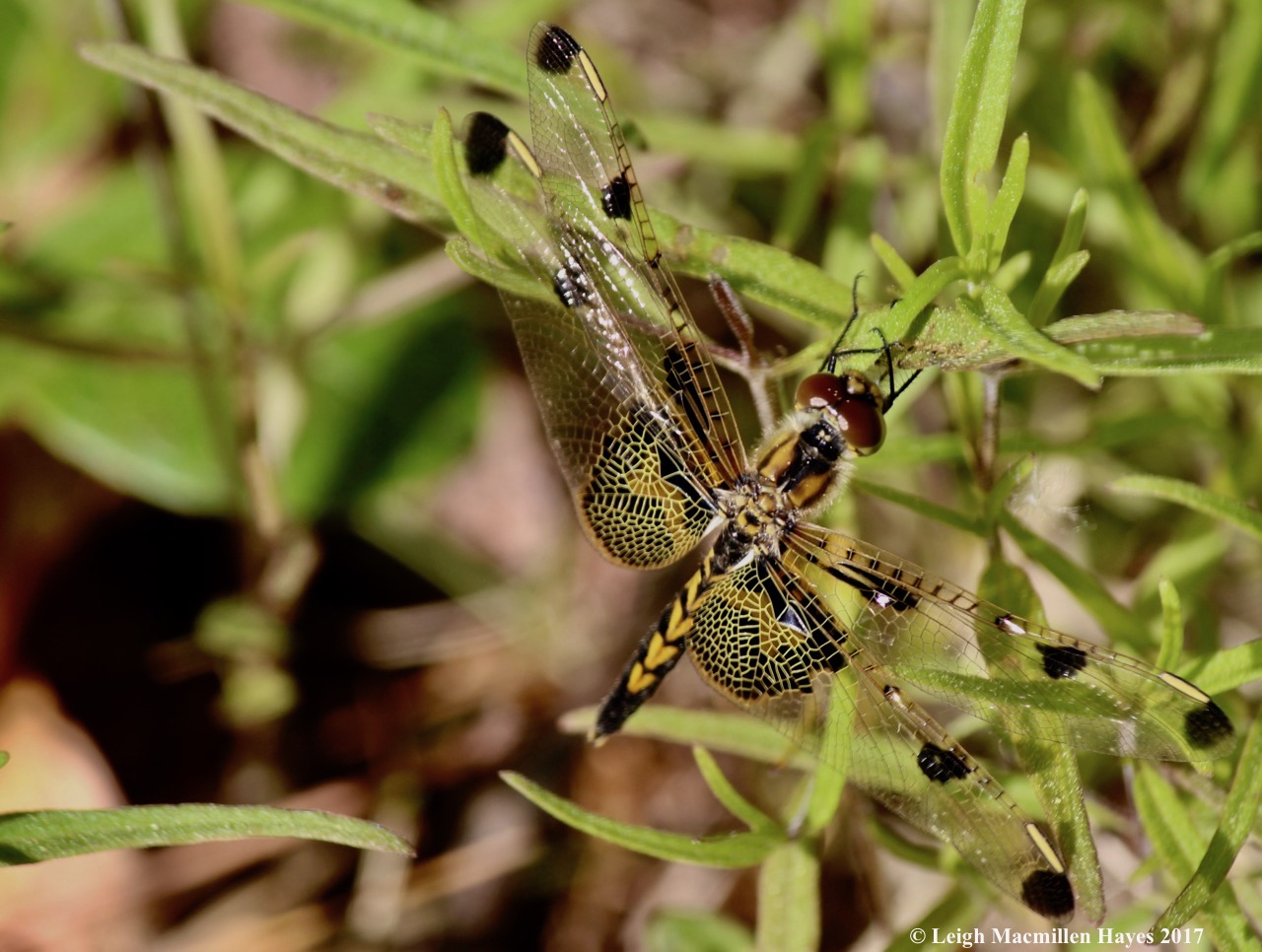
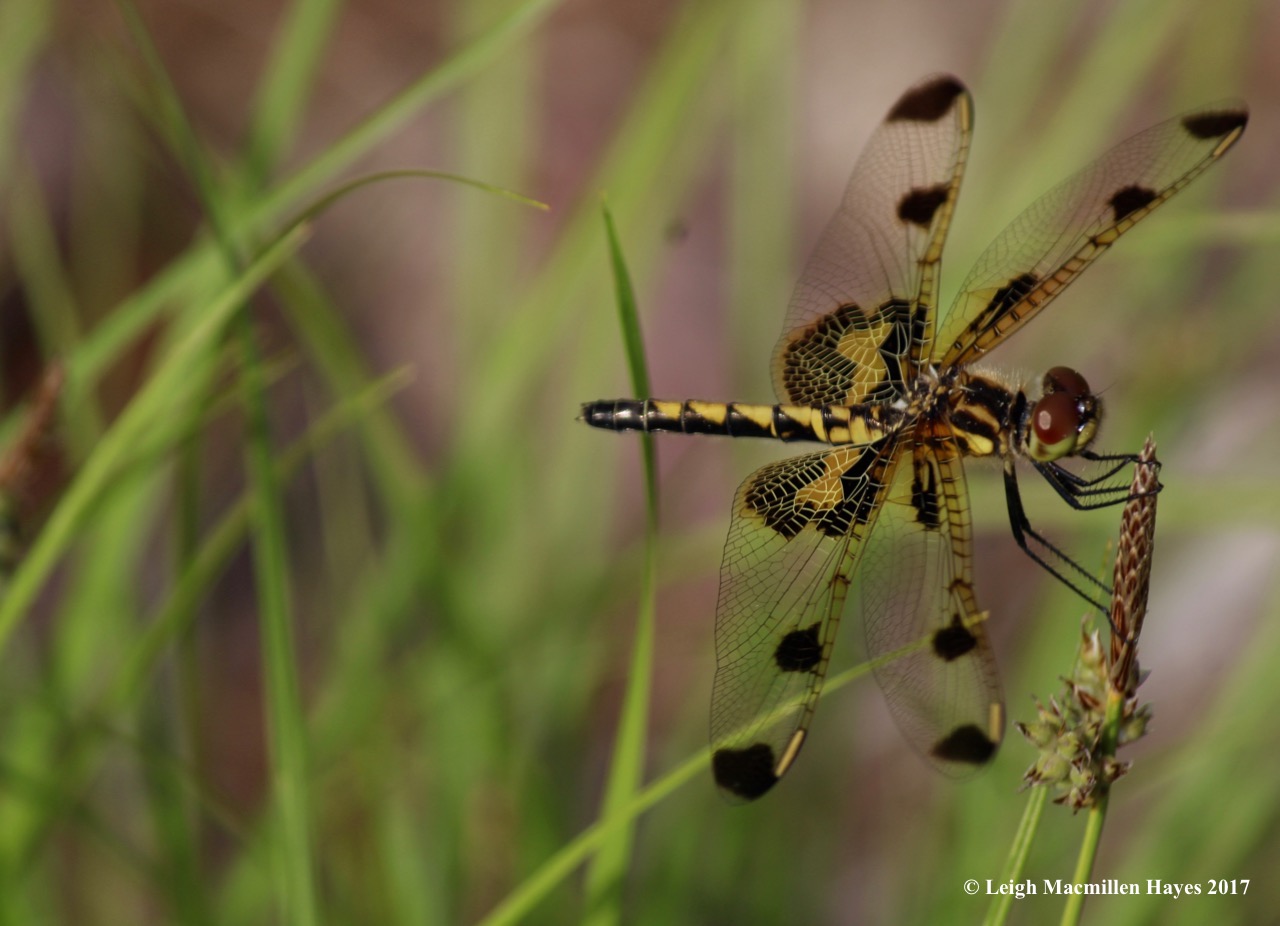
As for me, well, you can guess what I was doing before we descended. This tiny dragonfly is a female Eastern Amberwing and this was our first meeting. I first met her male counterpart last month in NYC’s Central Park.

She wasn’t a bear, but in my book, she was the next best thing.

And the Backburner Restaurant in Brownfield wasn’t open when we passed by on our way home, so . . . our bear to beer possibility this time included bear trees but not beer. Even so, it was a great hike.

Mondate with Pam and Charles

Don’t tell her husband who wasn’t able to join us today, but Pam fell fast and hard for another guy. His name is Charles.

It was supposed to be just the three of us kayaking when we launched this morning, Pam, my guy, and me.

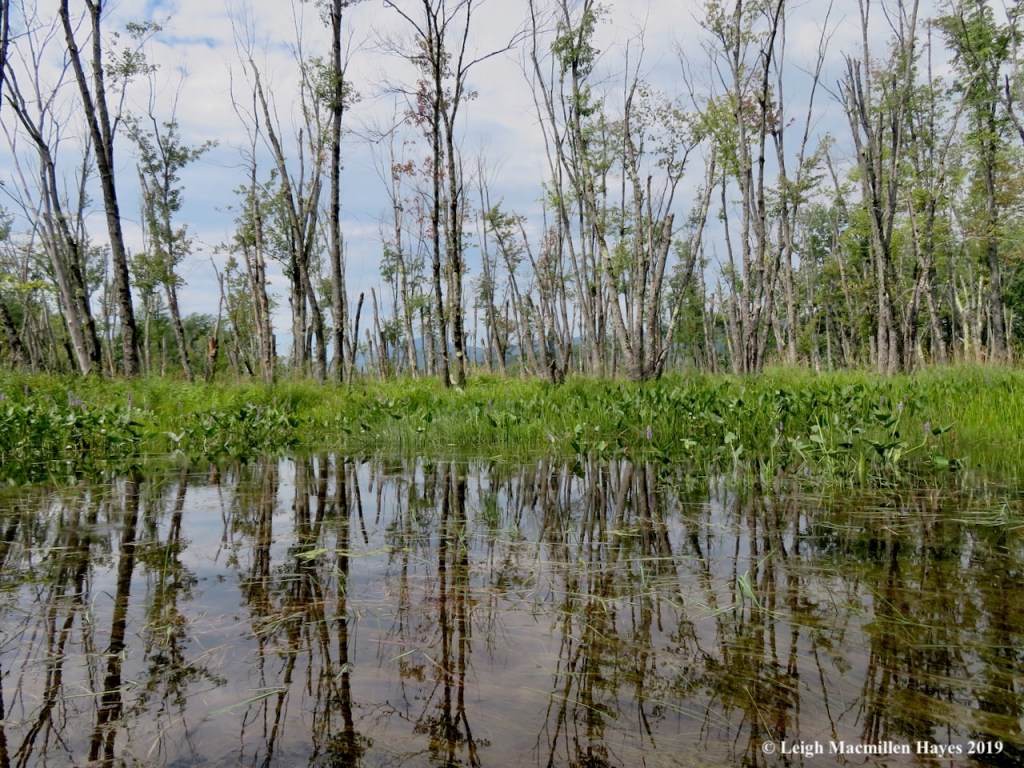
But it soon became apparent that this other guy was trying to woe her with bouquets of wildflowers, including Cardinals so red,

Turtleheads so white,

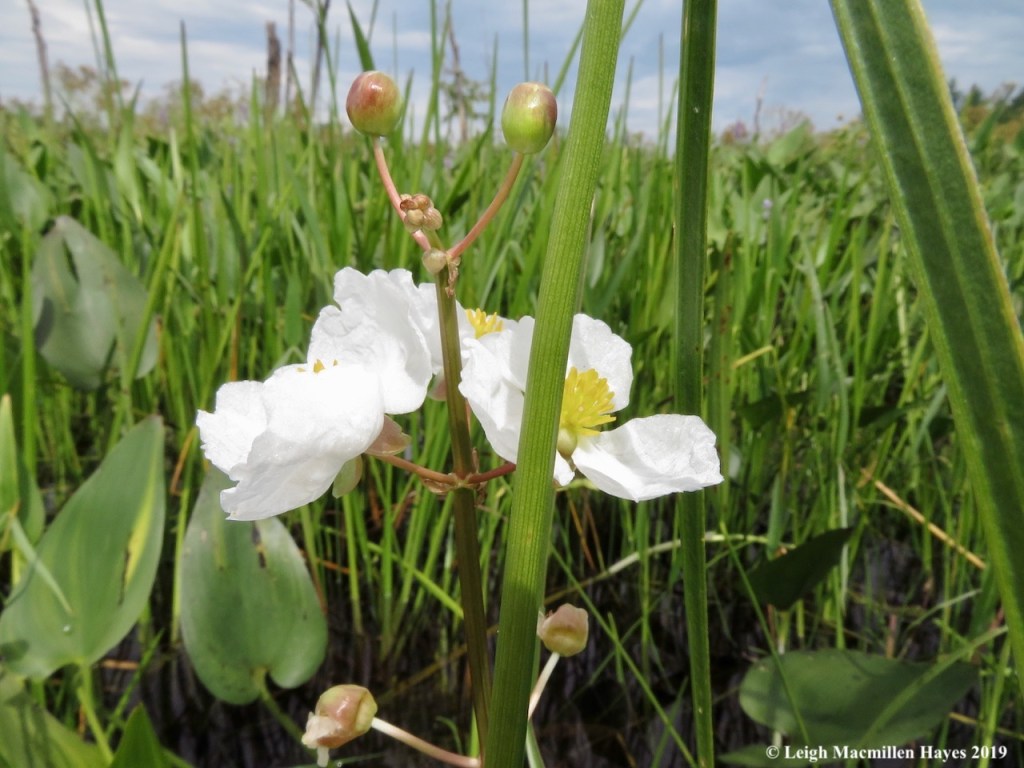
Arrowheads with broad leaves,

and those whose leaves overtopped the flowers.

But I think Pam was most wowed when he presented her with Ground-nut, its maroonish flower with a pair of upper petals forming a hood or keel, a pair of lower lateral wings, and a lower keel that curled upward.

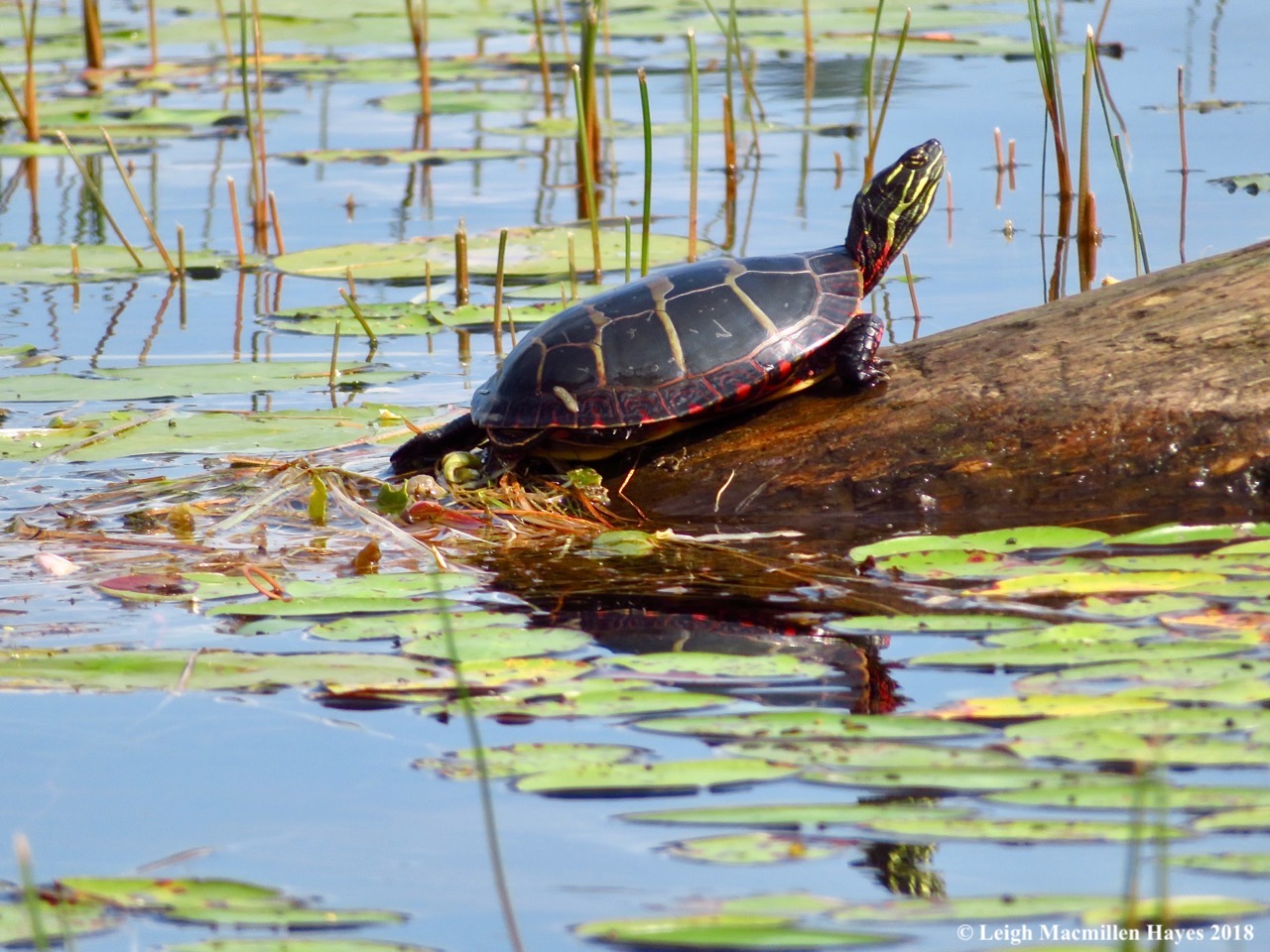
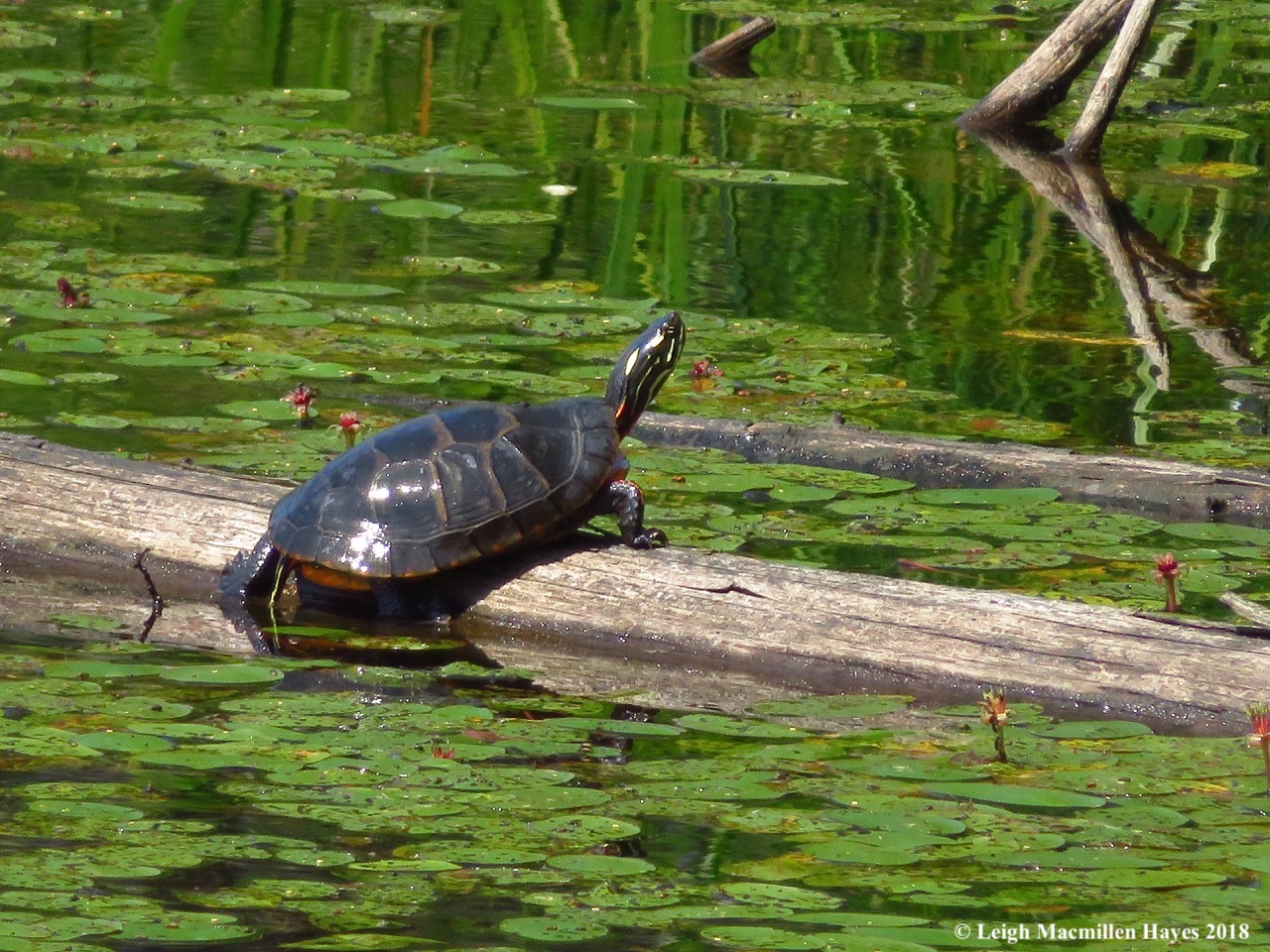
And then Charles made a point of inviting his friends to meet Pam, though we wondered if the Painted Turtle always grimaced or if perhaps he was jealous of all the attention bestowed upon her.

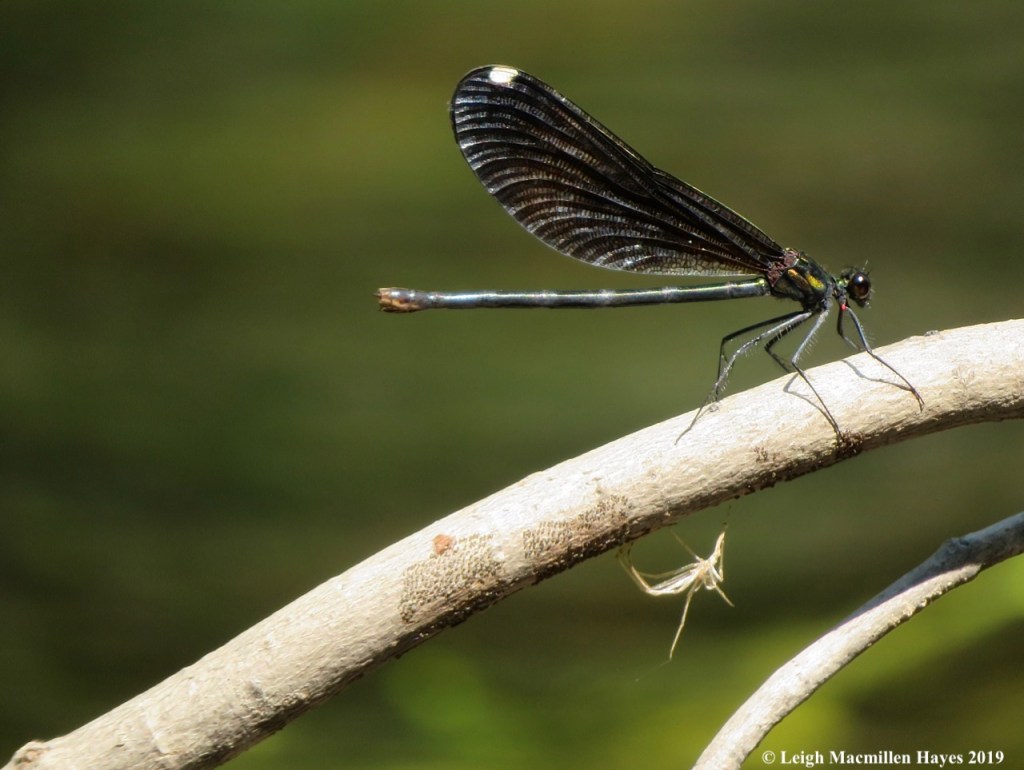
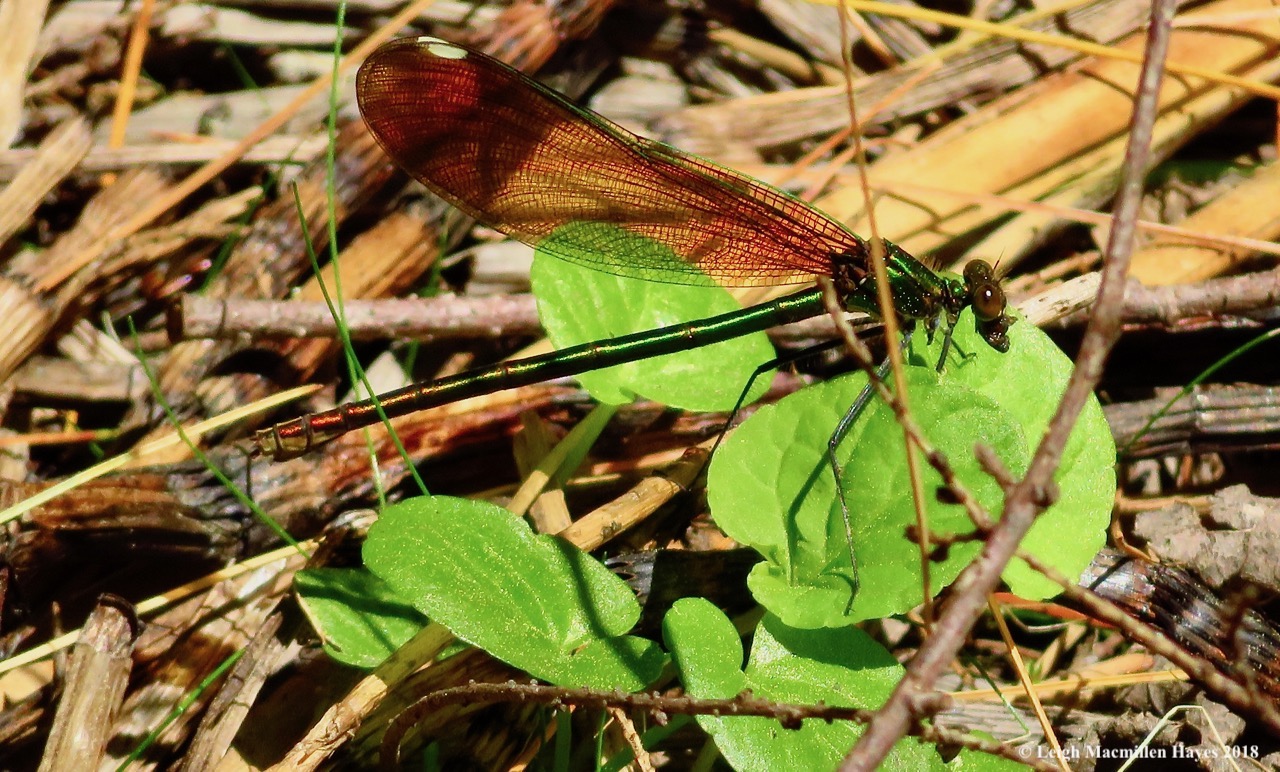
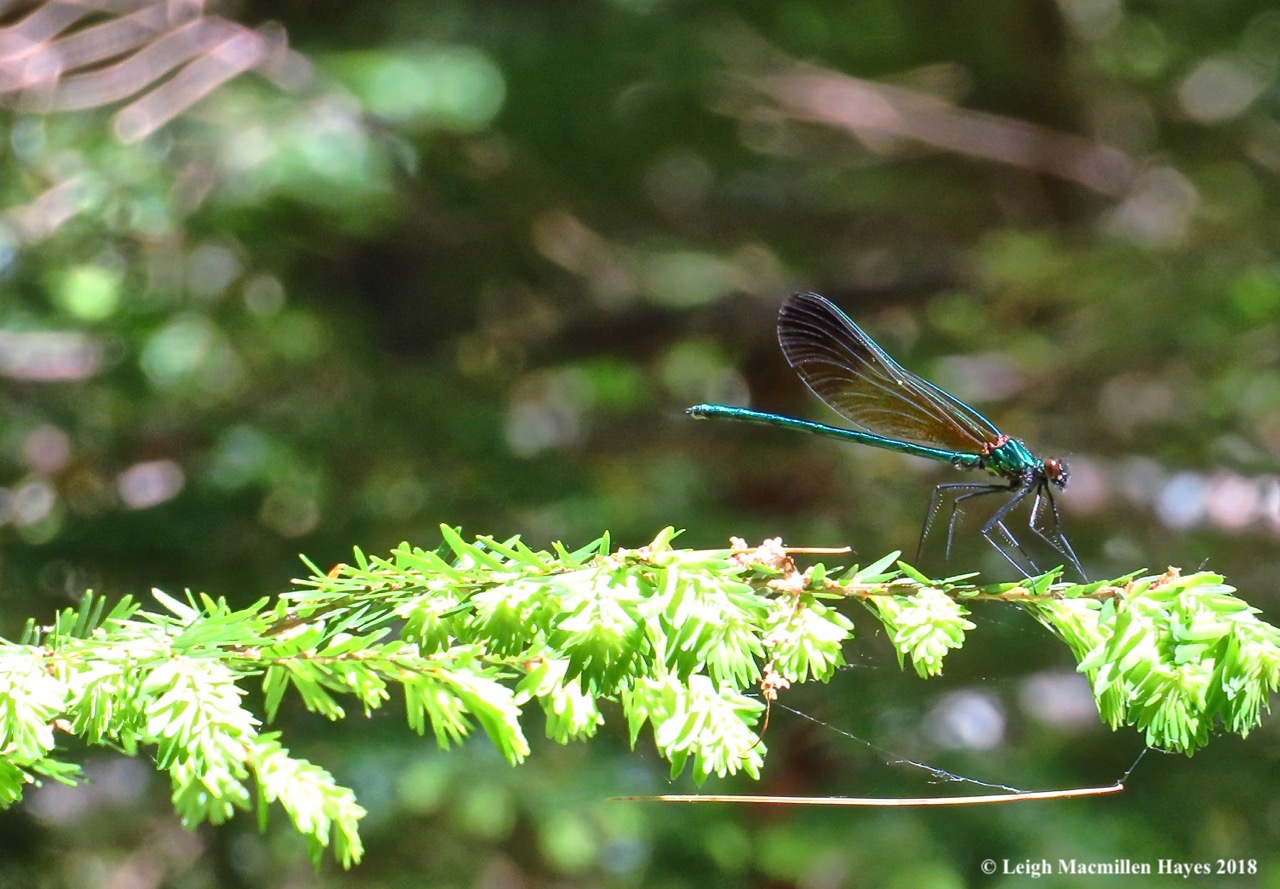
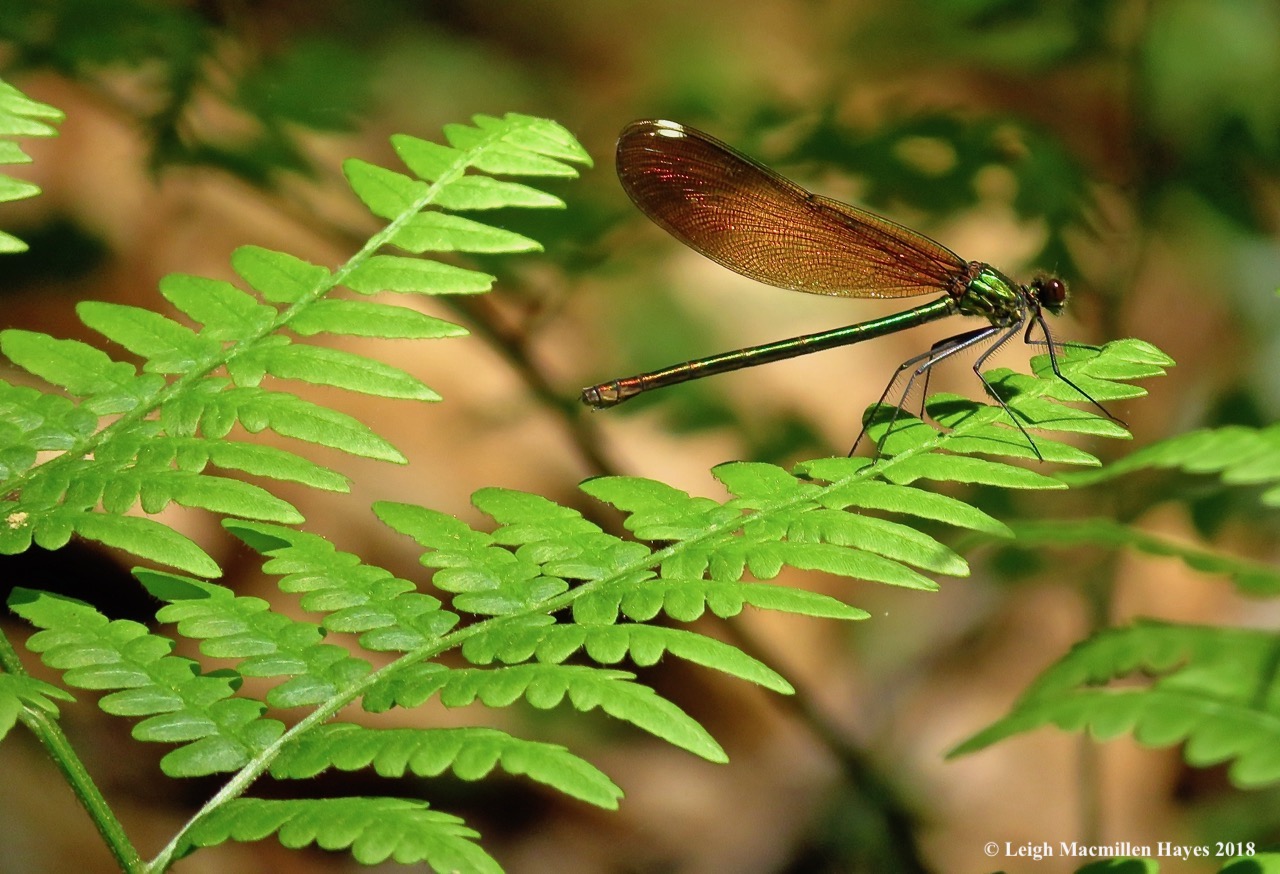
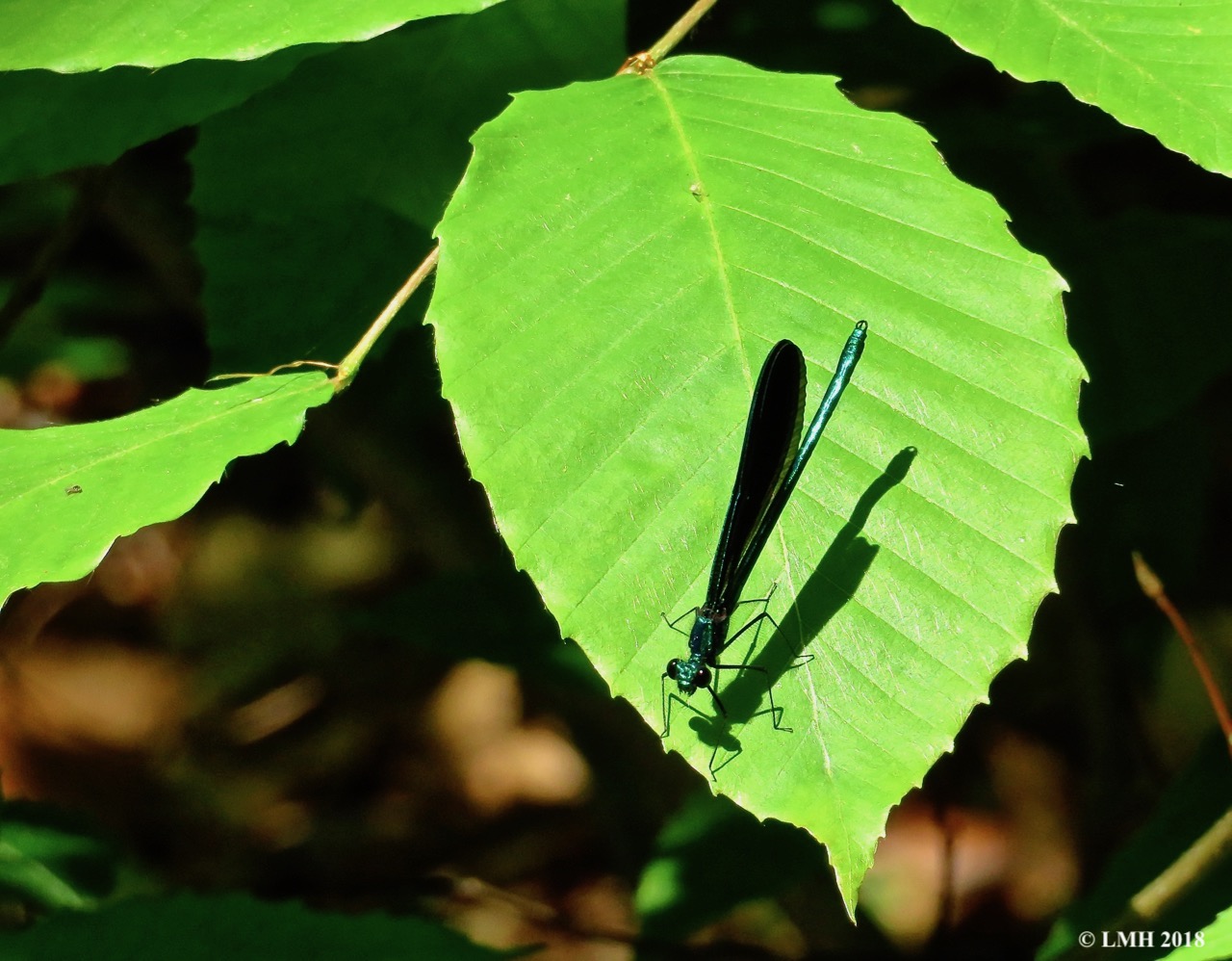
The female Ebony Jewelwing Damselfly was much friendlier and happy to say hello in its lighthearted manner.

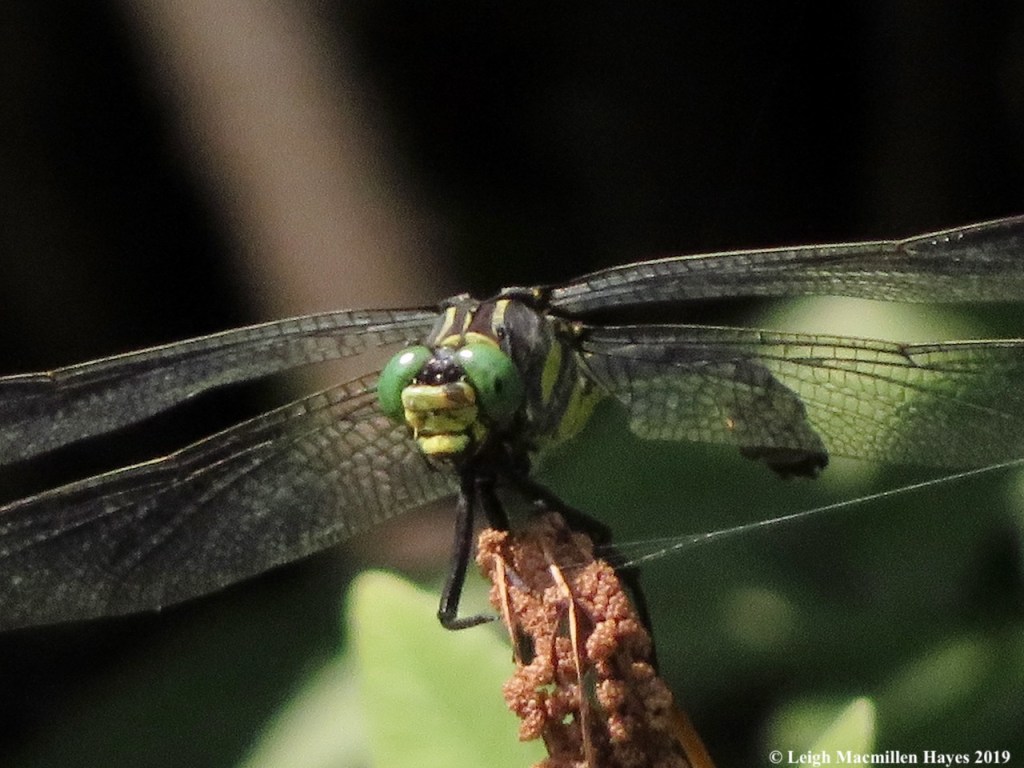
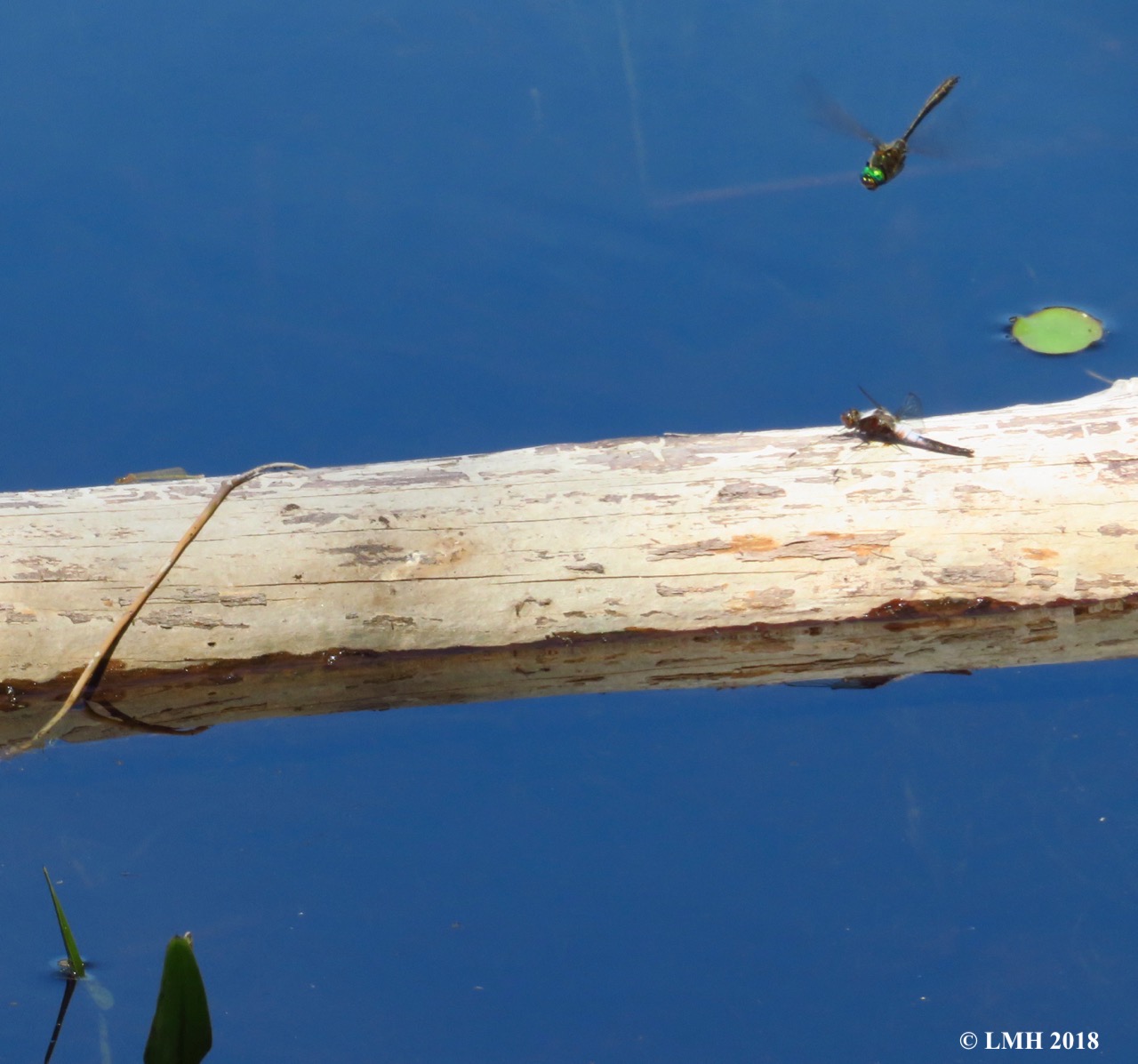
And the Dragonhunter Dragonfly made frequent visits to get . . .

to know . . .

Pam better. We’re grateful he didn’t decide to gobble her up.

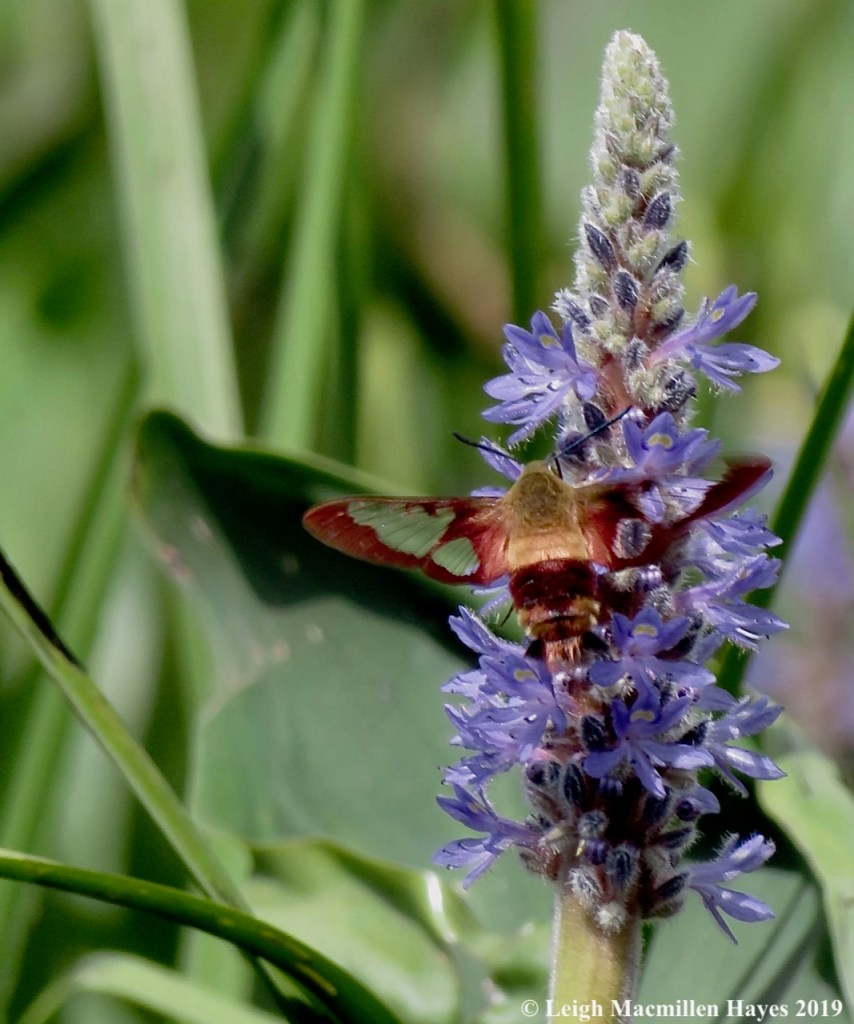
But perhaps Pam’s favorite moment was when Charles presented not just a Pickerel Weed in flower, but also a Clearwing Hummingbird Moth pollinating it.

Oh, he wasn’t one to make things super easy, that Charles.

But he’d asked my guy to help us portage around the dam, and so we never had to get out of our kayaks. Chivalry at its best.

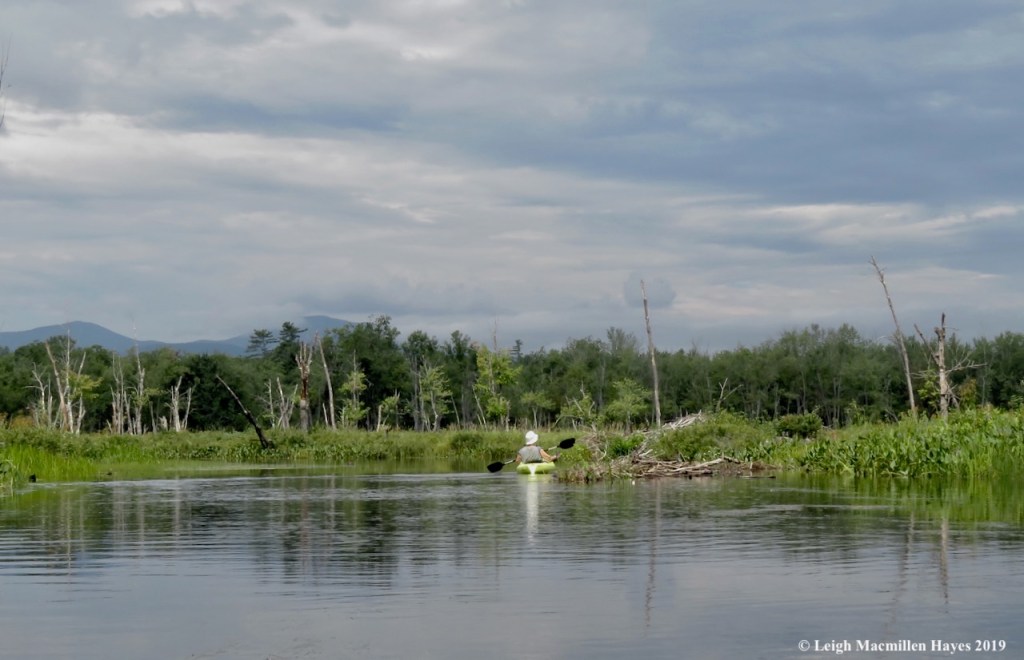
Continuing our paddle, we began to think of Charles’ estate as Brigadoon for such were the colors each time we rounded a bend.

Around a final corner, Charles revealed his mansion with promises of many happy days to come.

It was so large that we knew it was an example of a big house, little house, back house, barn, which made sense given that Charles’ family had long lived in the area.

On one of the walls inside, he’d painted a scene that reflected the outdoors, including the mountains in the background.

From the backdoor it was a straight shot and suddenly we emerged onto his pond. The man was wealthy, but we told Pam that if she was going to fall for him, she had to do some serious thinking for her guy Bob is really the one who holds the strings to her heart.

In the end, though she thanked him for sharing his place with us today, Pam did inform Charles that they could remain friends, but not get any closer than that. And she added that the next time they meet, Bob will be with her.

My guy and I were thankful that she introduced us to the kind man as the three of us explored his property: Charles River and Charles Pond in Fryeburg, Maine. But we’re equally grateful that their relationship will remain merely aquatic.

The Nature of New York

We pounded the sidewalk this weekend in a style not quite ours, but visiting the Big Apple always finds us realizing that the world around us is larger than our little speck on the map in western Maine. And yet, we found similarities everywhere we turned.

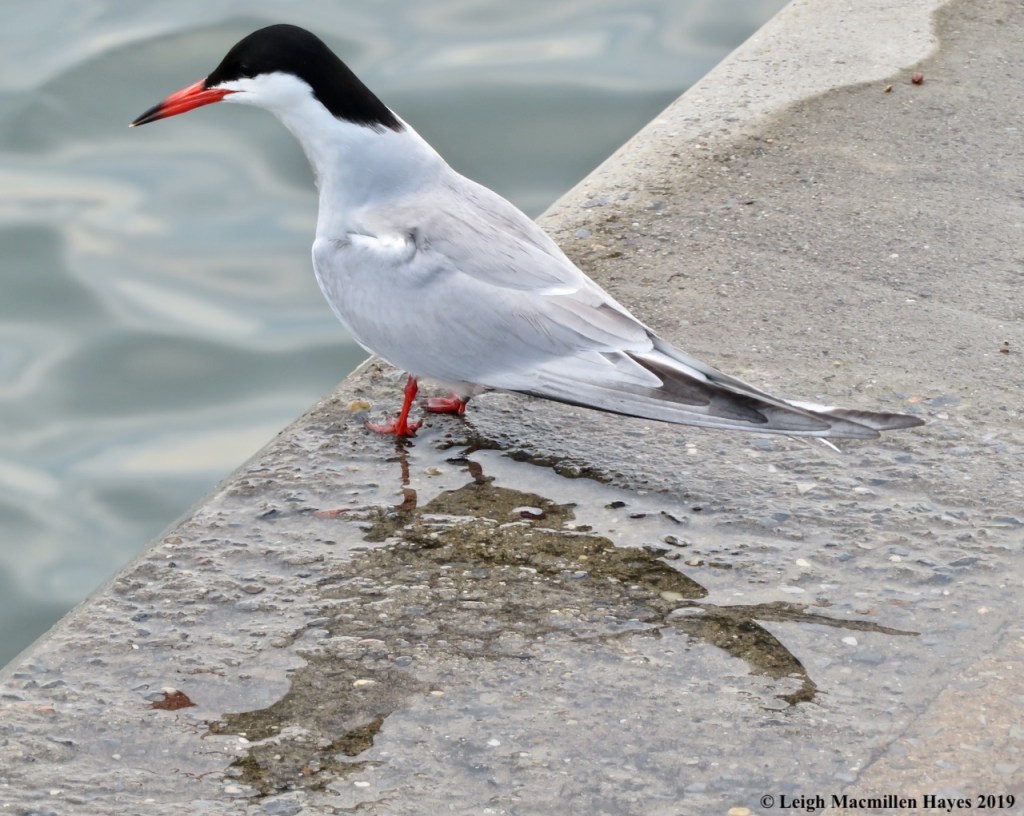
Birds of various shapes, colors, and sizes like the Common Tern with its bright two-toned bill, offered watery reflections as they stood in front of us and pondered life in the East River.

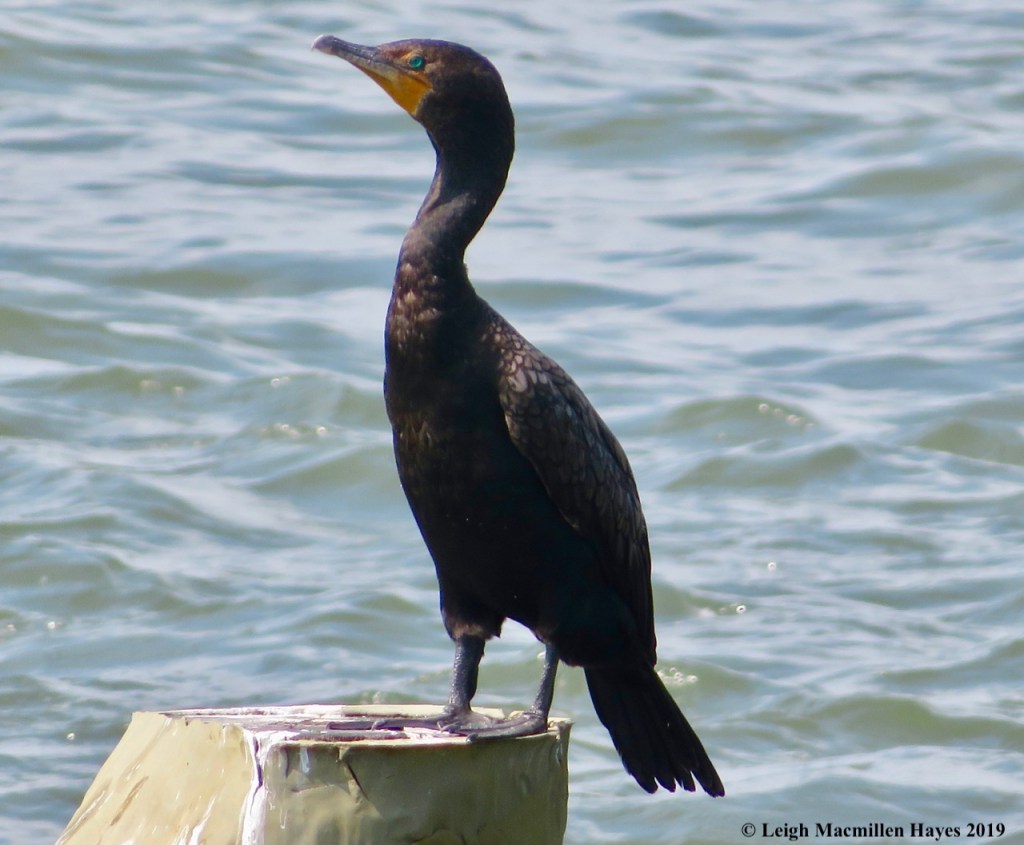
On a much larger scale was the raven of the sea, the Cormorant, with its eyes so blue and bill so long and hooked.

There were a variety of gulls as well, plus sparrows, and of course, the exotic pigeons, all enjoying life along this place where the Statue of Liberty welcomed us from her distant, yet ever distinguished pose upon Liberty Island.

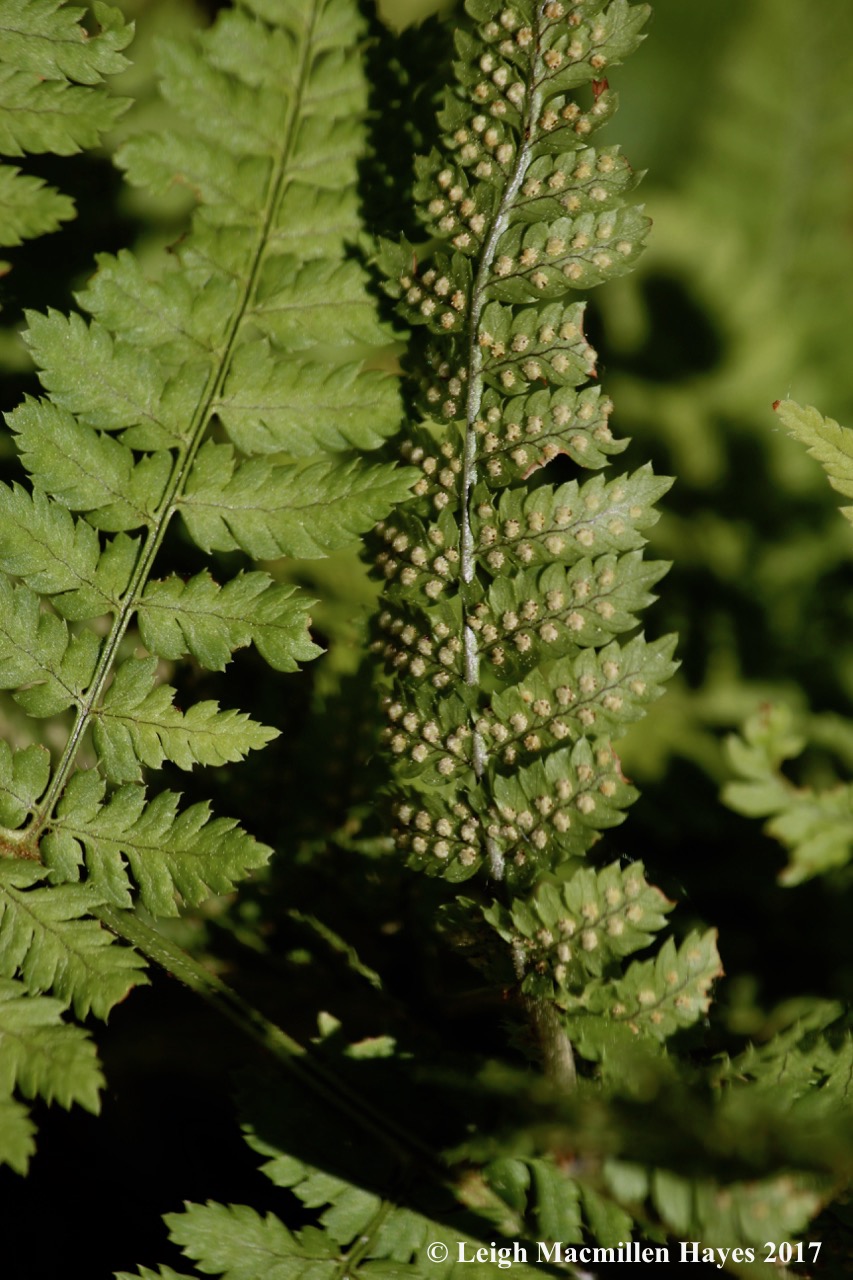
We spent some time in the morning and again in the afternoon beside the river and it dawned upon me as we gazed at the surrounding architecture, here positioned behind the Brooklyn Bridge, that the form of each structure was rather organic in style. Just as all ferns might be viewed as “just ferns,” so might buildings be viewed as “just buildings.” But then one day, you wake up and begin to notice the idiosyncrasies and suddenly you recognize the sensitive fern in its once-cut form with its separate fertile frond and the lady fern with her hairy legs and comma-like “eyebrow” sporangia on the back of her pinnules and voilà, you realize that each one has its own characteristics worth noting. Somehow, the buildings began to feel the same to me–their different forms and colors and sizes took on new meaning and though I don’t yet understand them all, I can at least appreciate their artistry.

The other thing I began to realize is that from our stance in Brooklyn, as we looked across the Manhattan Bridge, the community on the other side had suddenly changed or so it seemed based on the size and style of the buildings, much like natural communities change based on location–whether its a riverbank, forest, pond, cliff, or bog, etc. Fortunately, we were accompanied by our youngest son who lives in Brooklyn and works in Manhattan, and he could point out that the view below the Brooklyn Bridge was of the Financial District of Manhattan, while the view on the other side of the Manhattan Bridge was toward Chinatown.

Even the bridges themselves were meant to be celebrated for their lines, whether straight, curved, or angular–all working together to create monuments out of stone and steel.

Against the sky, their geometric shapes drew our eyes up and down and up and down again as we glanced upon the individual spans.

A few steps beyond the bridge, in DUMBO, we spied more geometry enhanced by color and while some might see crystals in rocks, I kept thinking of insects and their “mechanical” structures of antennae and legs and thoraxes and abdomens and wings.

Our walking tour included The Fence, the largest public photo exhibition in North America that moves from one city to another and will be on display in the Brooklyn Bridge Park through September.

The photographs are displayed in categories. In the Farm-to-Camera category, it tickled me to see that photographer Adrien Bloom had included Garlic Scapes from a farm in Maine.

Beside each set of photographs within a category, an explanation was provided. In this case, we read the following: “Farm-to-Camera honors the pure and simple beauty of the bounty that comes from our farms. Billions of years in the evolutionary making, each item we pick up at the farmers market, or directly from the farm, is a perfect piece of art and deserves to be treated as such.”

One last gaze across the East River provided a sight that looked more poster-like than real. And yet it was . . . real. And in its realness, it appeared that some buildings in the canopy had crowded out the saplings and shrubs and definitely those in the herb layer.

According to our son, the reality of the unfinished building in the center is that the structure is off by two inches between the top and bottom and it has been left as is for months now. Perhaps it will be the tree that can’t survive in this forest because of the crowded conditions.

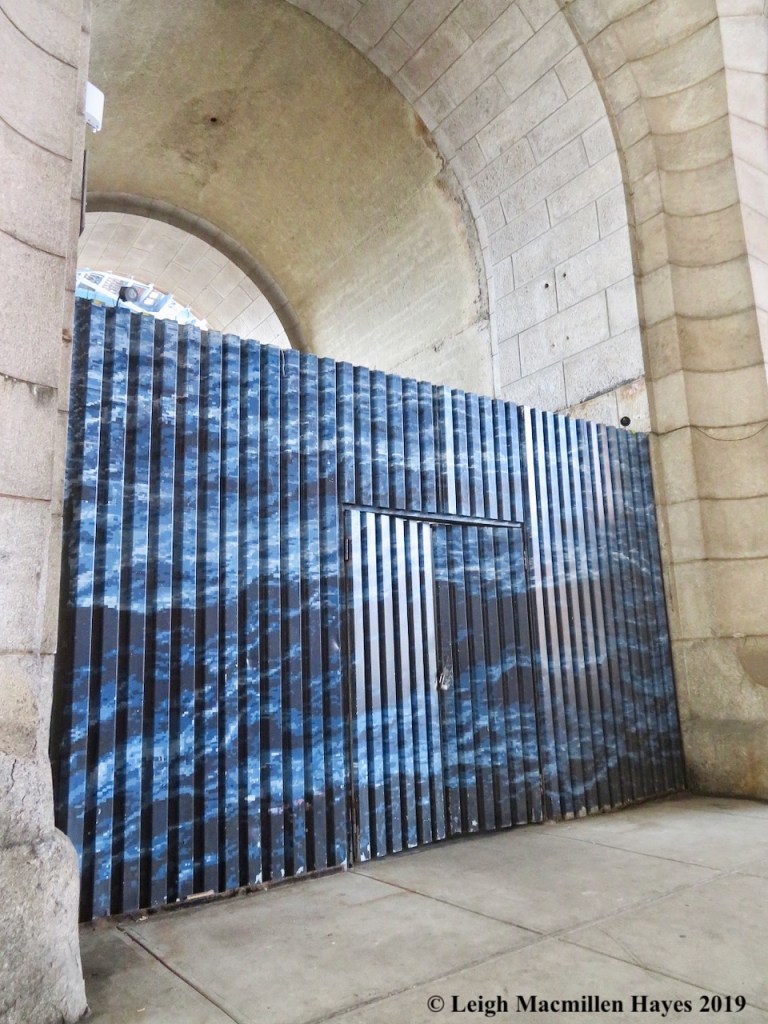
Before we left the DUMBO area, he showed us a different view of the river, actually this one a representation as it blocked off a location where “Gotham” is set. He was able to point out changes they make during the filming season as he knows it from a work perspective in his job at a film editing house.

Our first day ended with the three of us enjoying a delicious dinner at French Louie under a break in the sky–a heart meant for us.

The next morning called for a trip to Manhattan and a walk in Central Park where the ornate architecture was framed by a break in the trees.

It was near there that we paid our respects to Friedrich Wilhelm Heinrich Alexander von Humboldt, aka Alexander von Humboldt, the famous geographer, explorer and naturalist. His publications, which were prolific, had a mission to encourage scientific inquiry as well as a wonderment of nature. And to him we gave thanks.

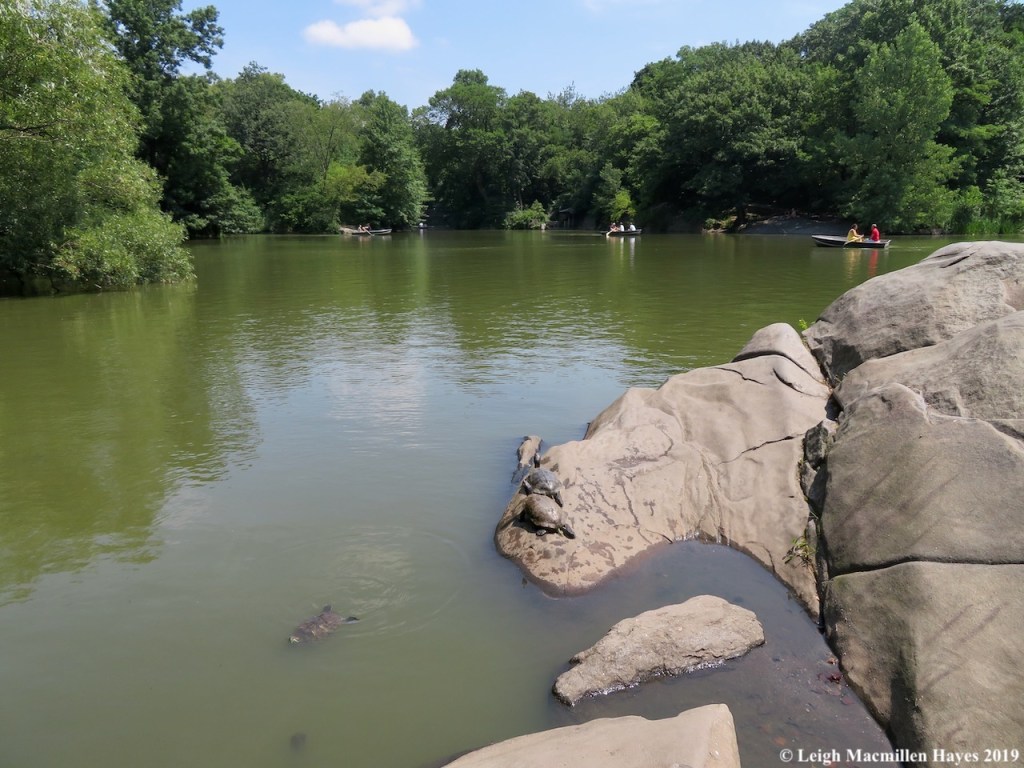
Within the park we stood by The Lake for a bit, watching lovers in boats . . .

approaching each other in the water,

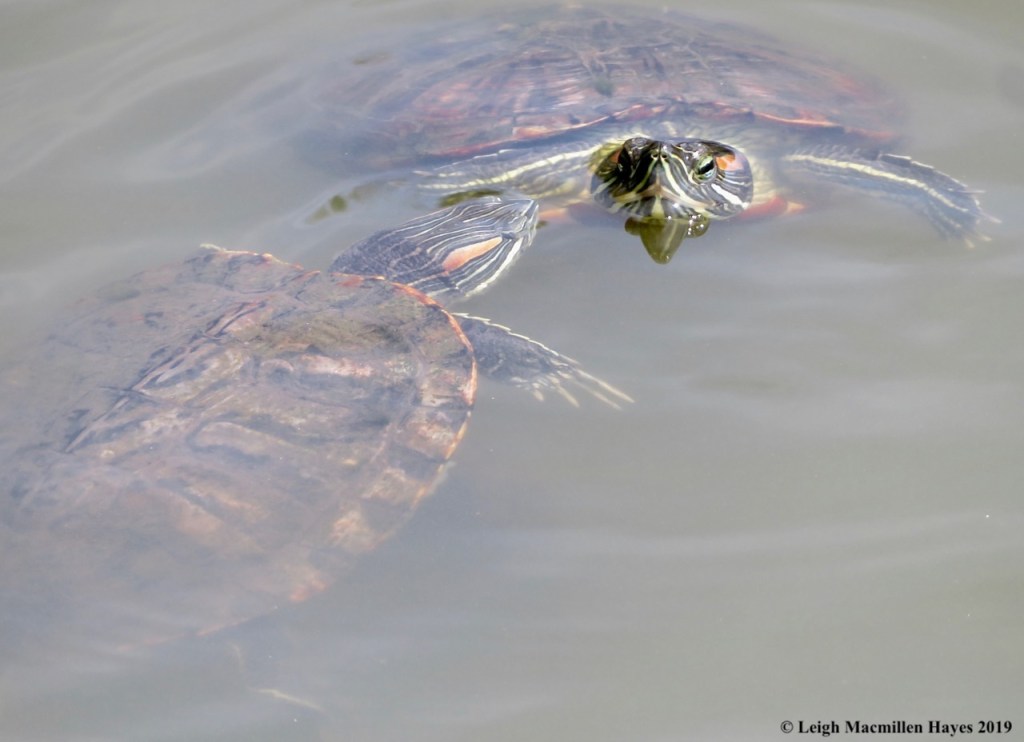
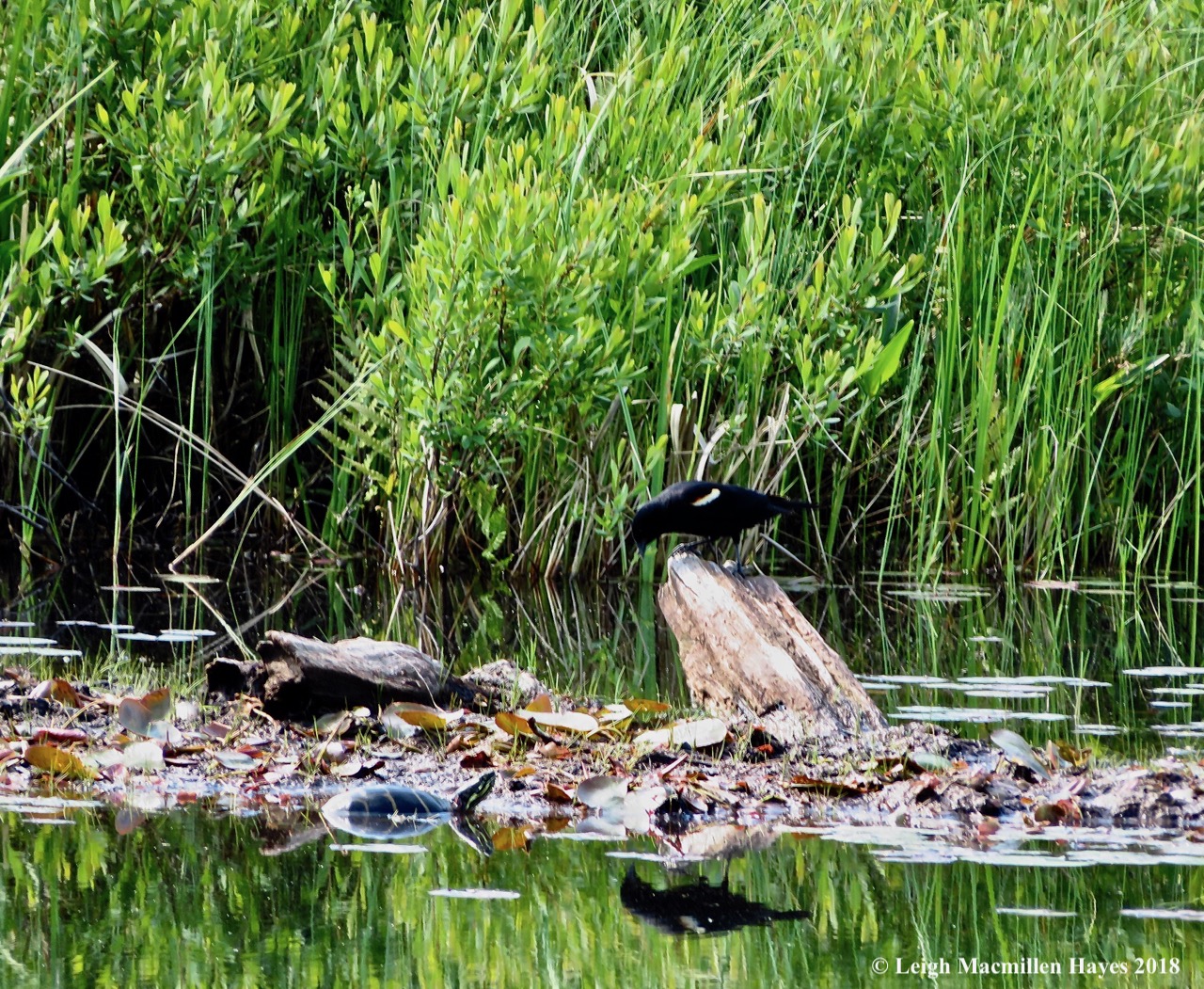
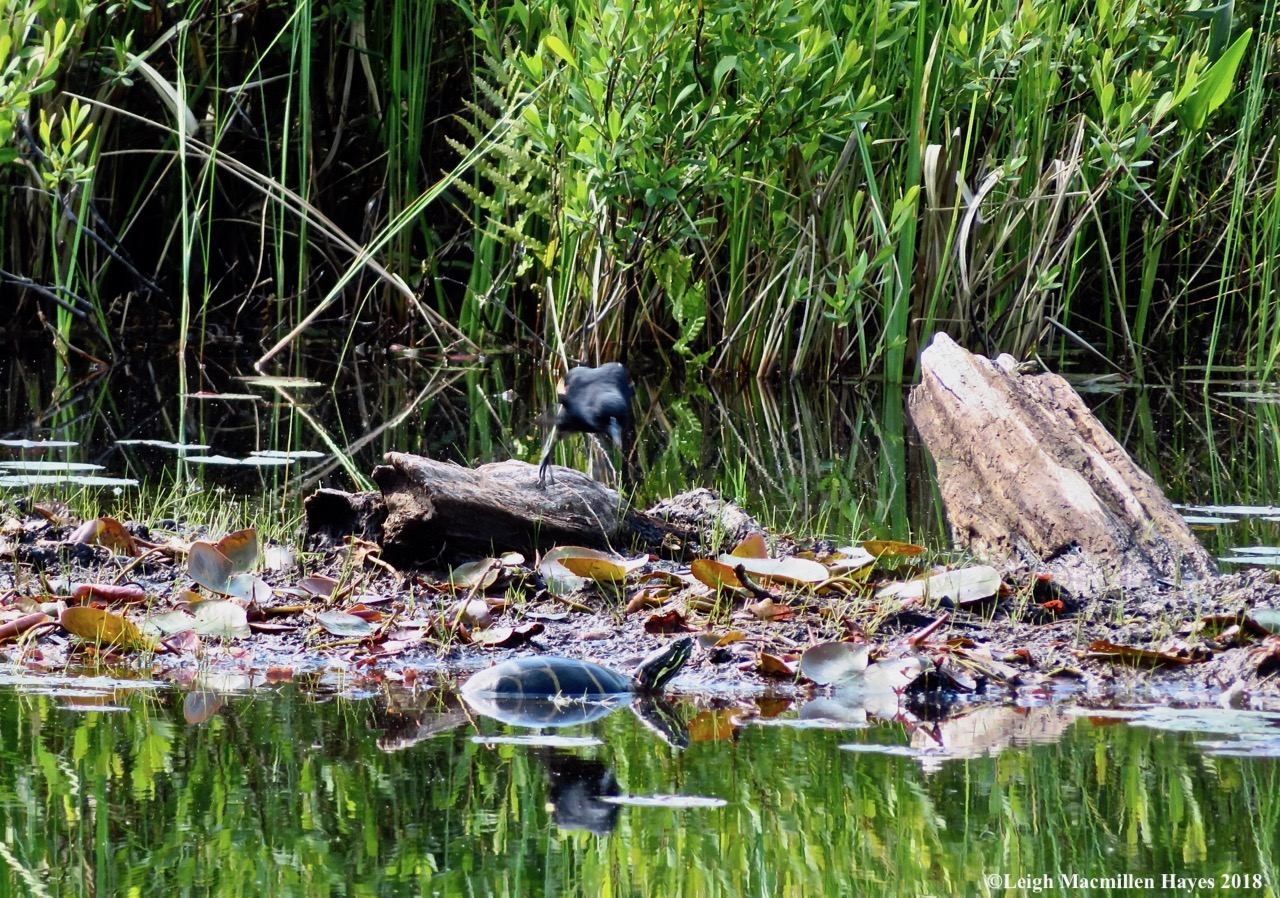
and basking in the sun. Interestingly enough, if you scroll up to the first shot of The Lake, you may notice that the rock upon which the Red-eared Slider Turtles sunned themselves actually looked like a turtle.

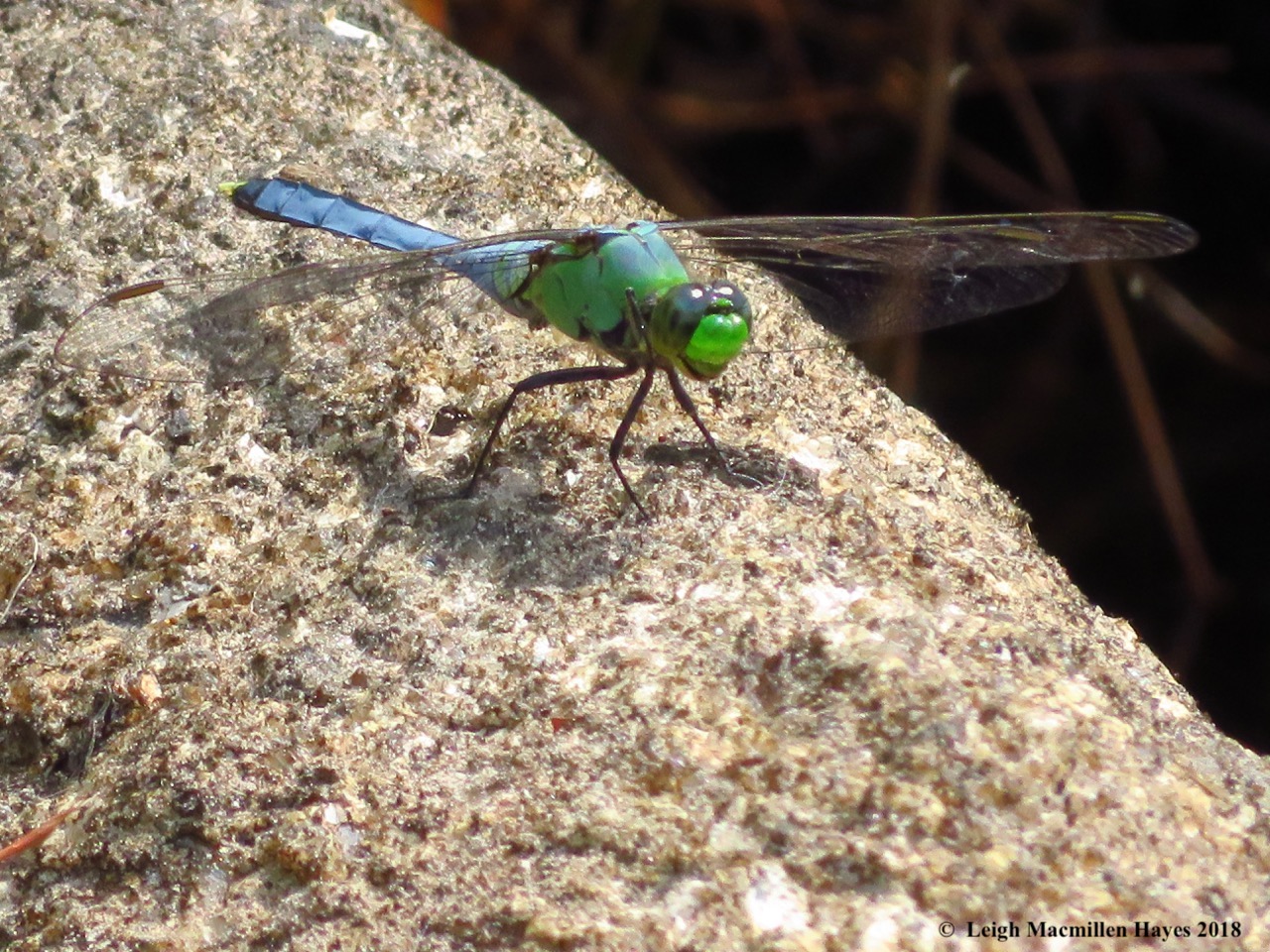
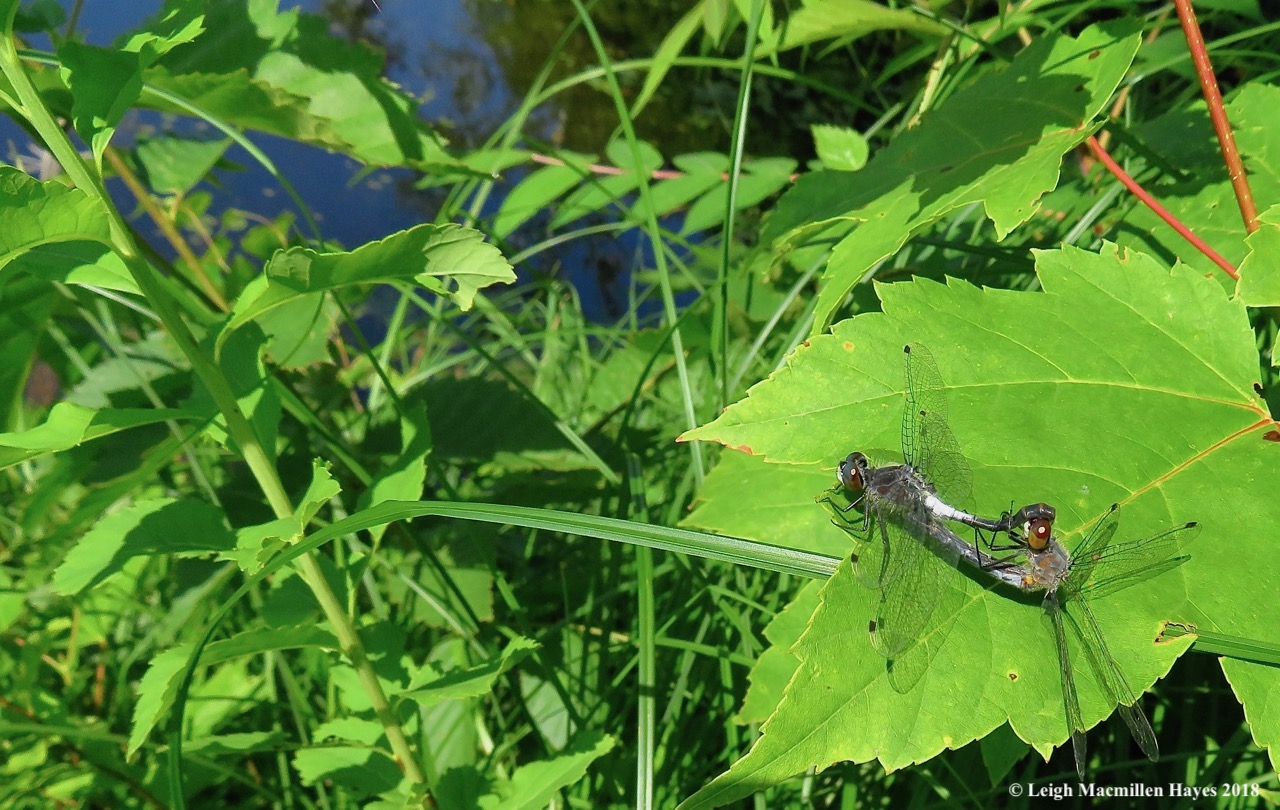
It was there that we also spotted dragonflies new to my knowledge–the Eastern Amberwing. I think I may have called it the Topaz Wing had I been the first to ID it, but perhaps that’s because I’m partial to the stone that represents my birth date.

Inside the Museum of Natural History we wandered and wondered for hours and hours. I’m not a city girl, but I sure did wish from time to time that I lived closer for I would purchase a pass each year and spend time in various sections–visiting repeatedly to gain a better understanding.

Oh yeah, these are the two variations of a snowshoe, aka varying hare.

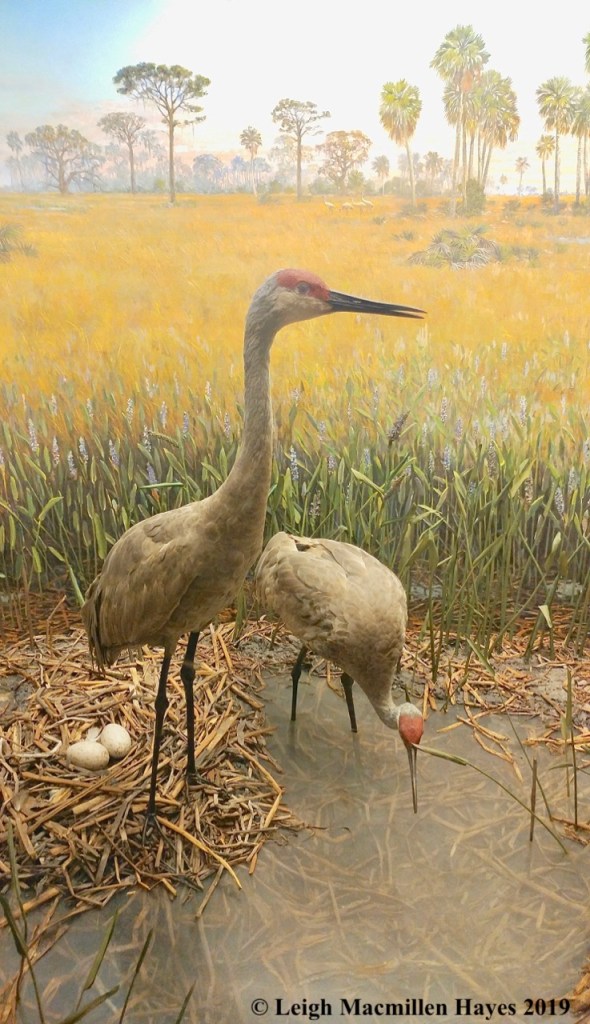
And did I mention that we spotted Sandhill Cranes and their nest. It looks like three little ones should hatch any day now. That is . . . if it’s possible to emerge from their plastic forms enclosed behind the glass wall.

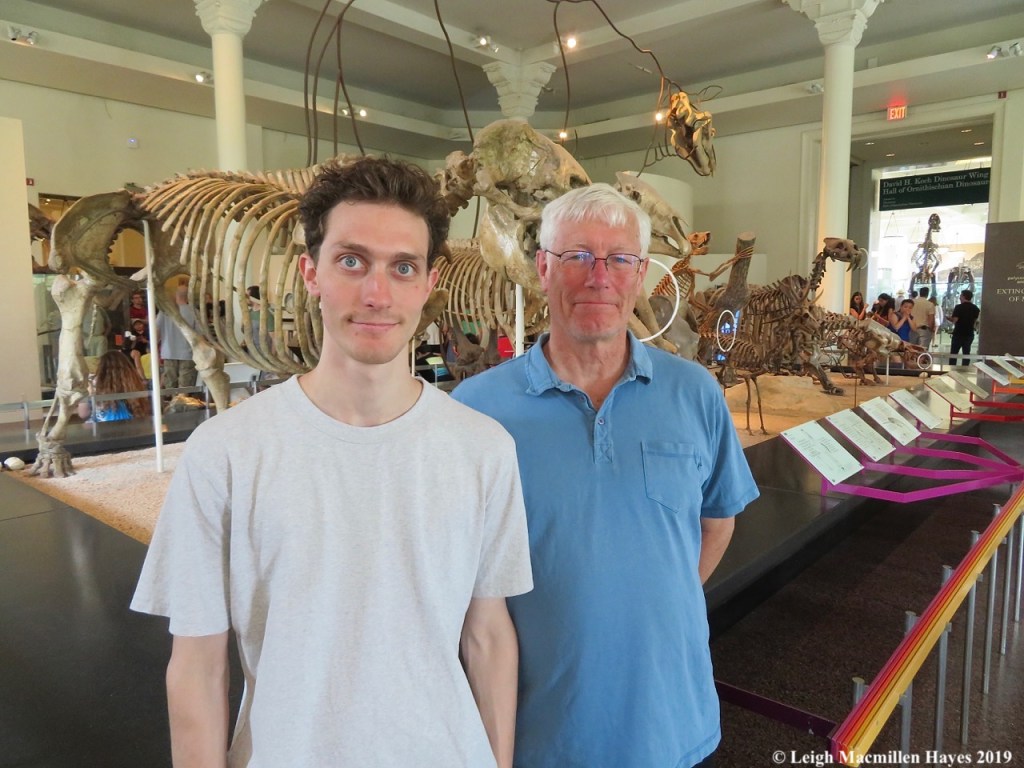
Though I enjoyed the river and park and museum, and especially breaking bread together, the best part of the weekend was spending time with my guy and our youngest son, both of whom actually posed for me beside skeletons of extinct mammals.

We were there to wish this young man a happy 25th birthday. We are so proud of him and the work he is doing and person he has become.

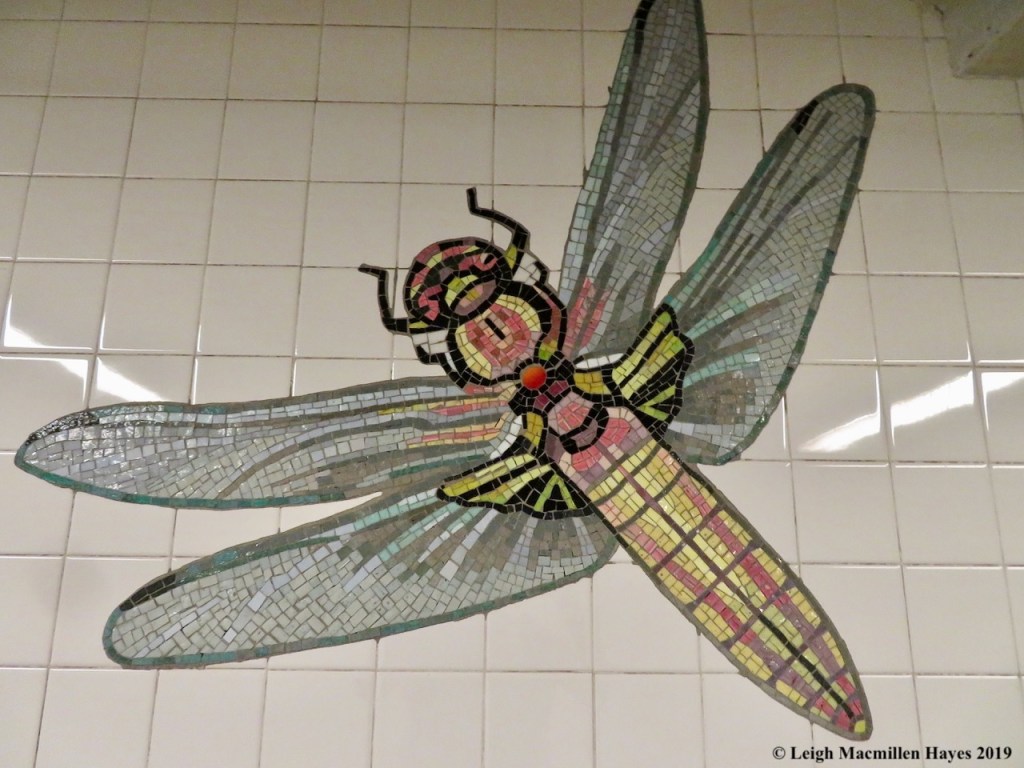
He loves New York for all its city ways and quirky offerings. We love that we can visit from time to time and get to know his place a wee bit better–right down to the artwork on the walls of the subway. The more often we go, the more we begin to realize that in the midst of all its city-ness, moments of wonder can be found.

Ahhh–the nature of New York.

P.S. Happy 25th Paddy Mac!

Wonders of the Bog

My wish was granted. I had hoped to have the bog to myself, and except for three cars that passed by headed east and two headed west, which I could only hear and not see from my stance in front of the “blind,” not a soul disturbed my solitude.

That’s not completely true. Many souls actually disturbed the peace from low-pitched bellows to squeaks and whistles and croaks and splashes. But . . . they were all to be expected in such a place as this.

I new I’d made the right decision to visit when I spied a shed snake skin on the path to the front of the blind. Just maybe I’d get lucky and see one.

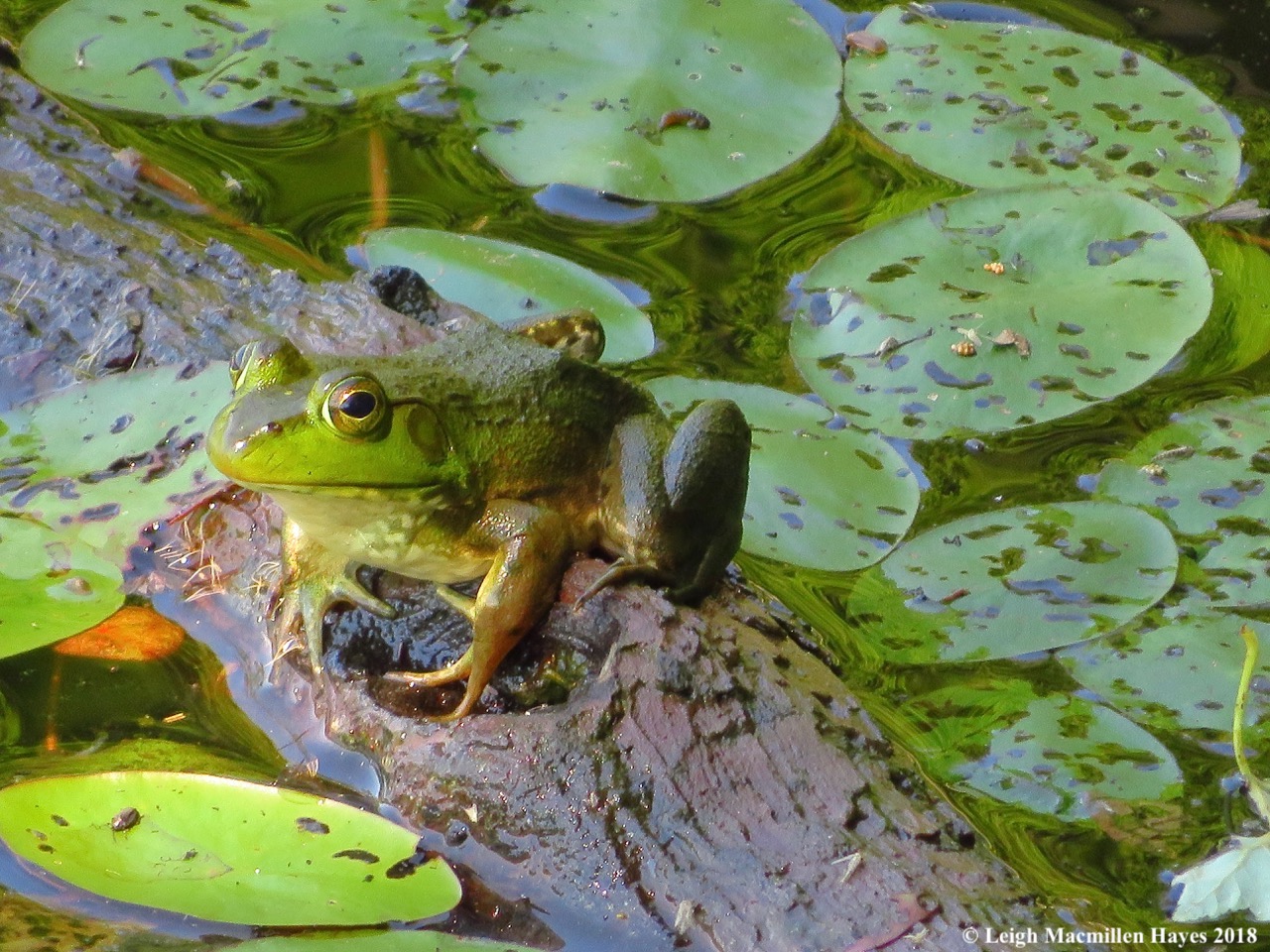
At last I found a spot from which to channel my inner bullfrog and watch for the next insect to snatch . . . though in my case it was to snap a photo.

And I didn’t join the chorus of GA-DUNK, GA-DUNK, GA-DUNK, GA-dunk, GA-dunk, ga-dunk, ga-dunk each time it rose and fell, beginning in one corner of the bog and eventually extending all the way around.

My other thought was that perhaps I should be like a sapling and then I might encourage a dragonfly to land upon me.

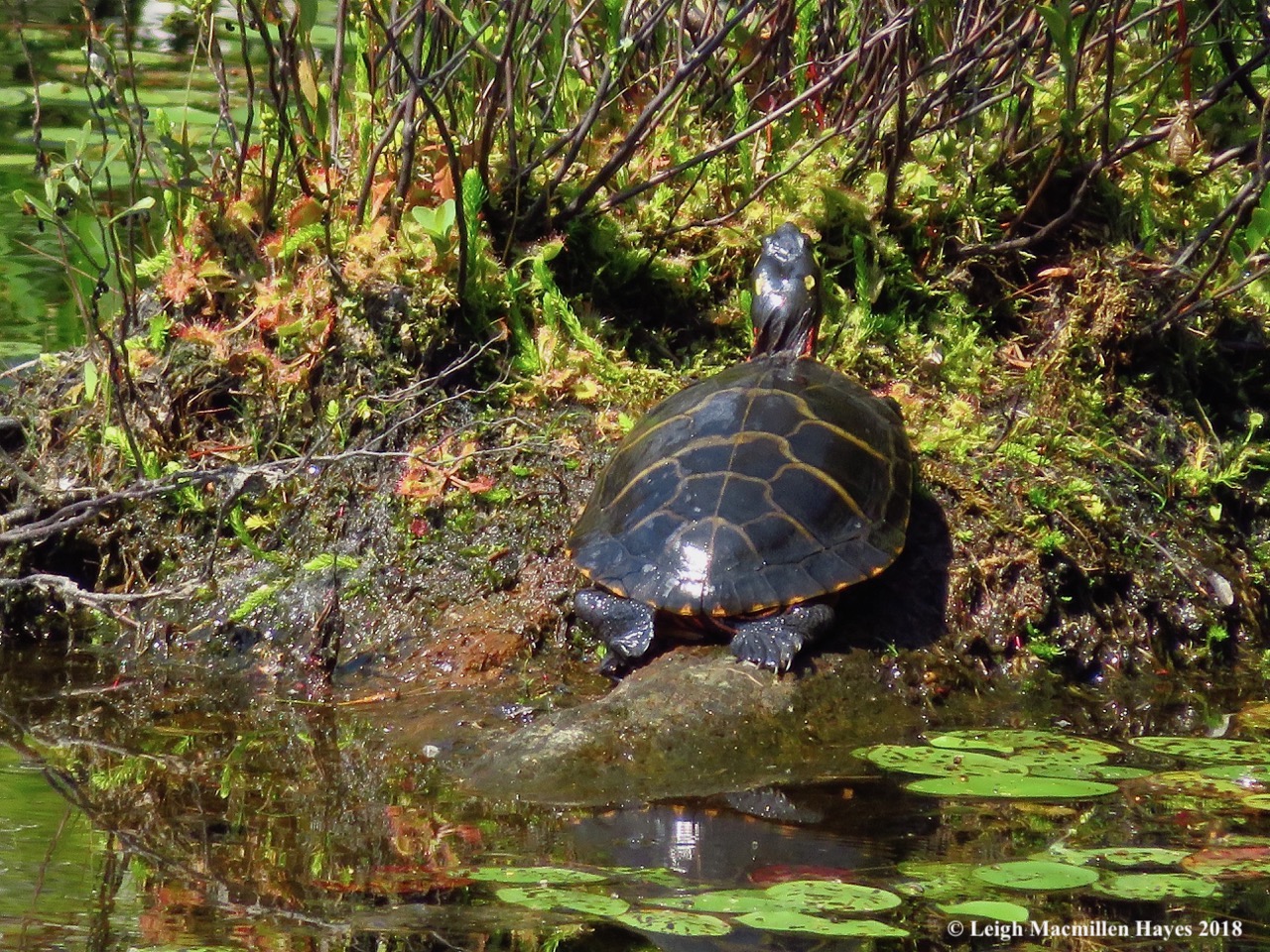
It was a good thought, but I wasn’t sure it would work. Instead, I began to slowly scan the area to see what I might see–and the painted turtles didn’t let me down. Can’t you just hear the one in the front tell the other to stop following her?

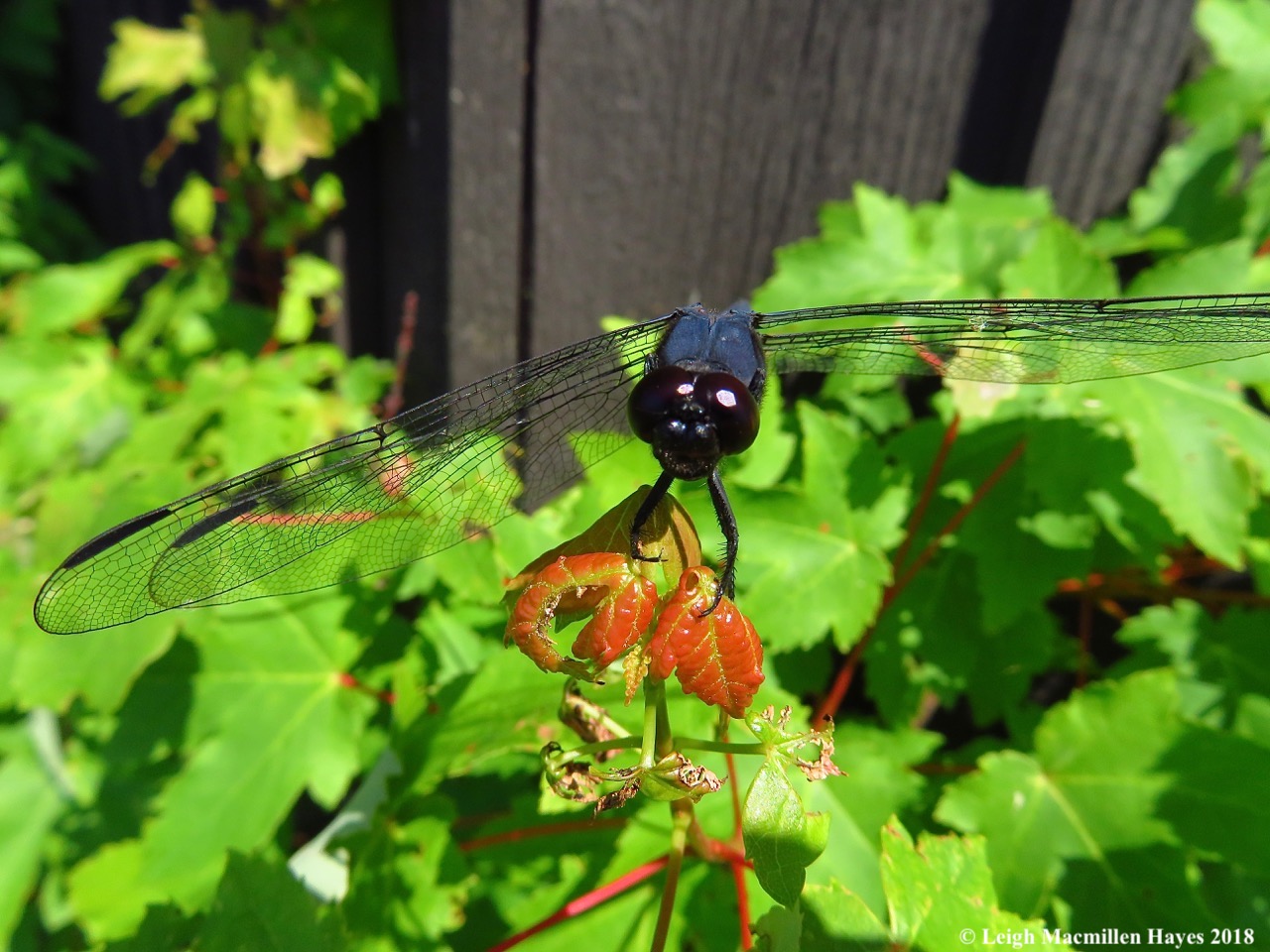
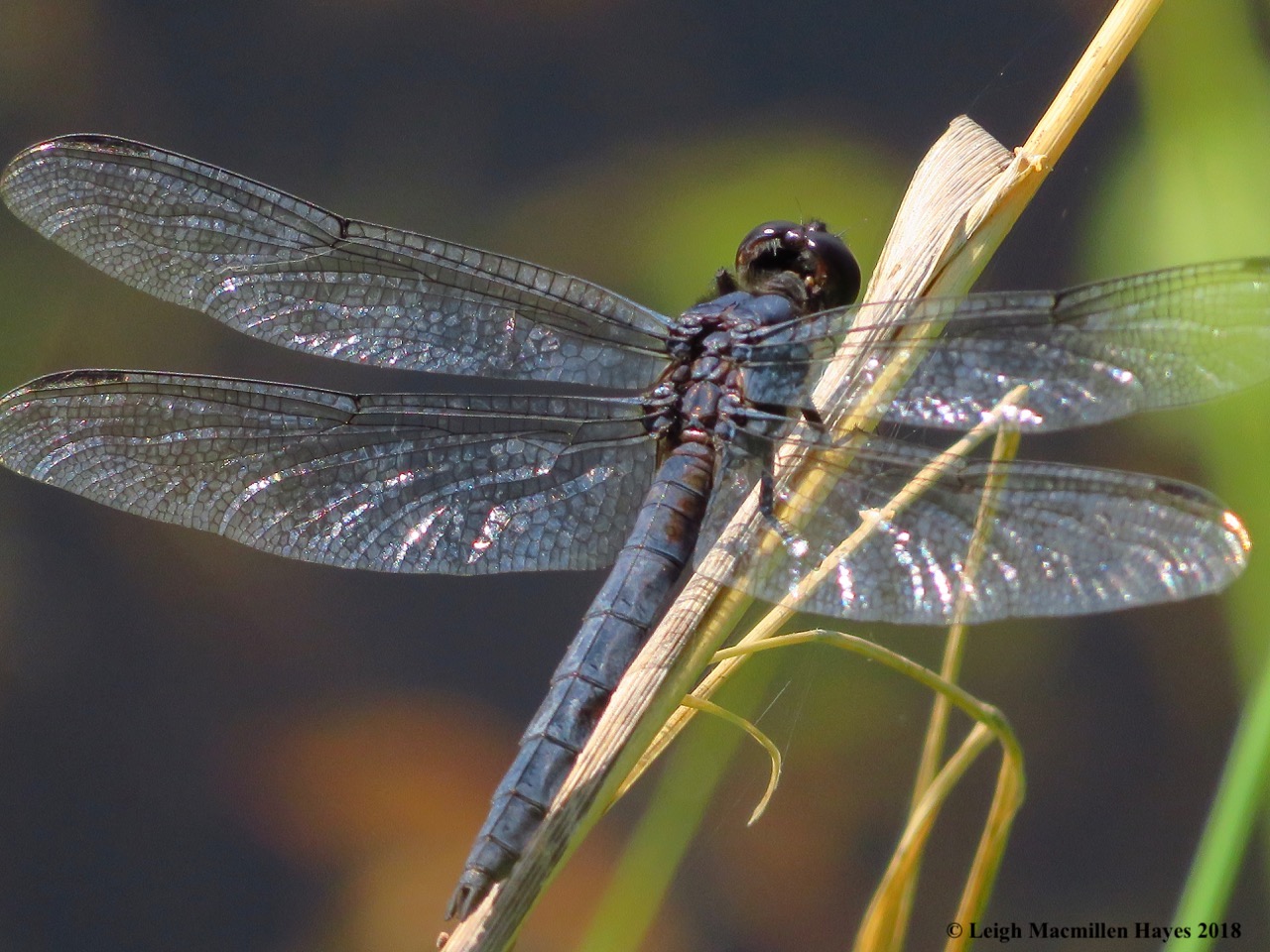
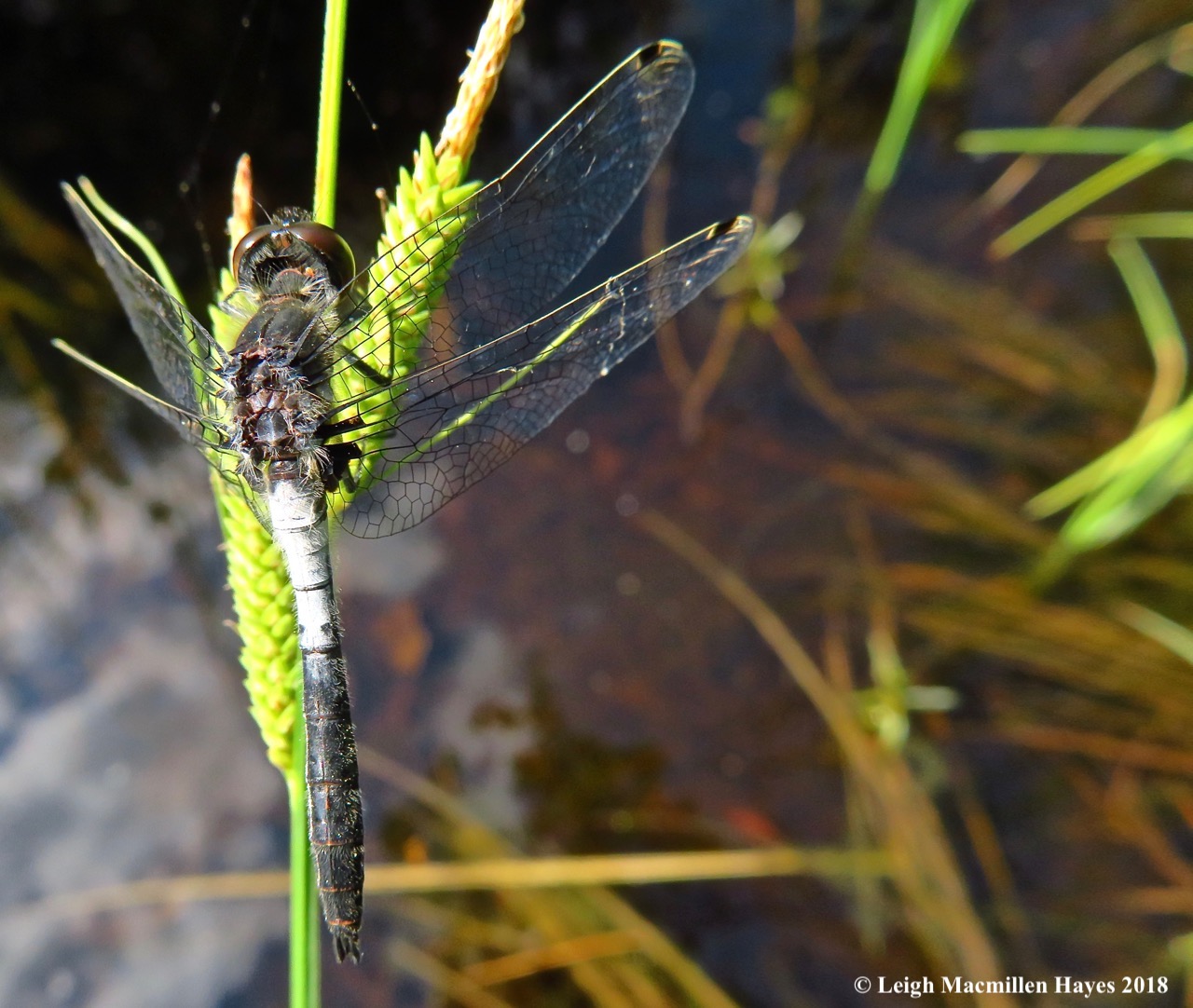
From water to foliage, everywhere every minute there was something new to focus on and I rejoiced with the sighting of my first Slaty Skimmer of the season. He’s an easy one to ID with his body entirely blue, enhanced by those dark brown eyes and black face. And then there’s that long black stigma toward the tip of his wings. A handsome guy indeed.

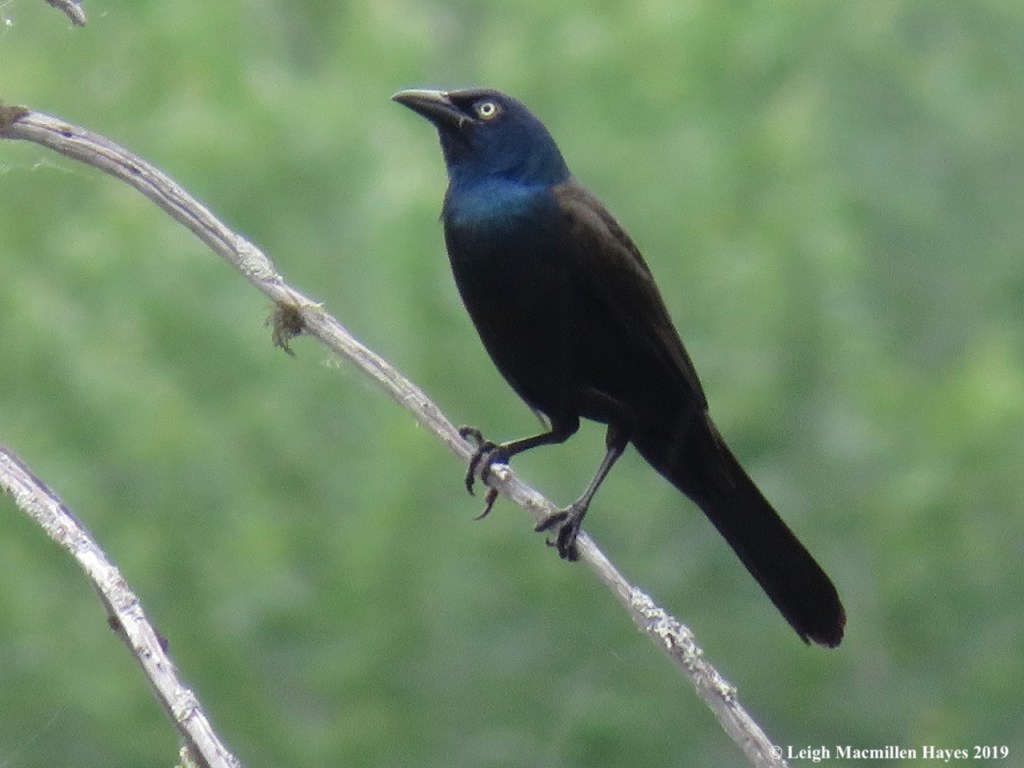
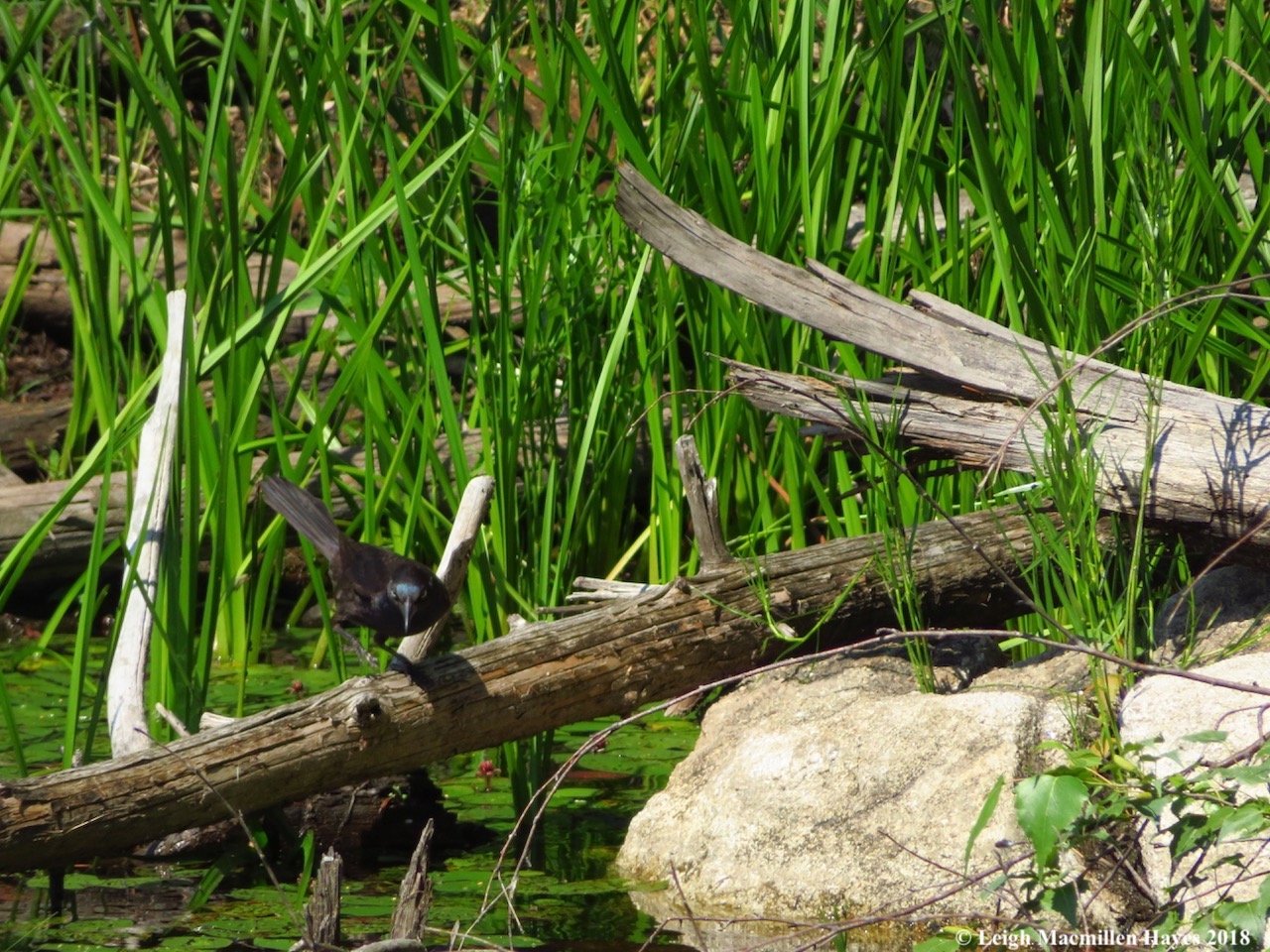
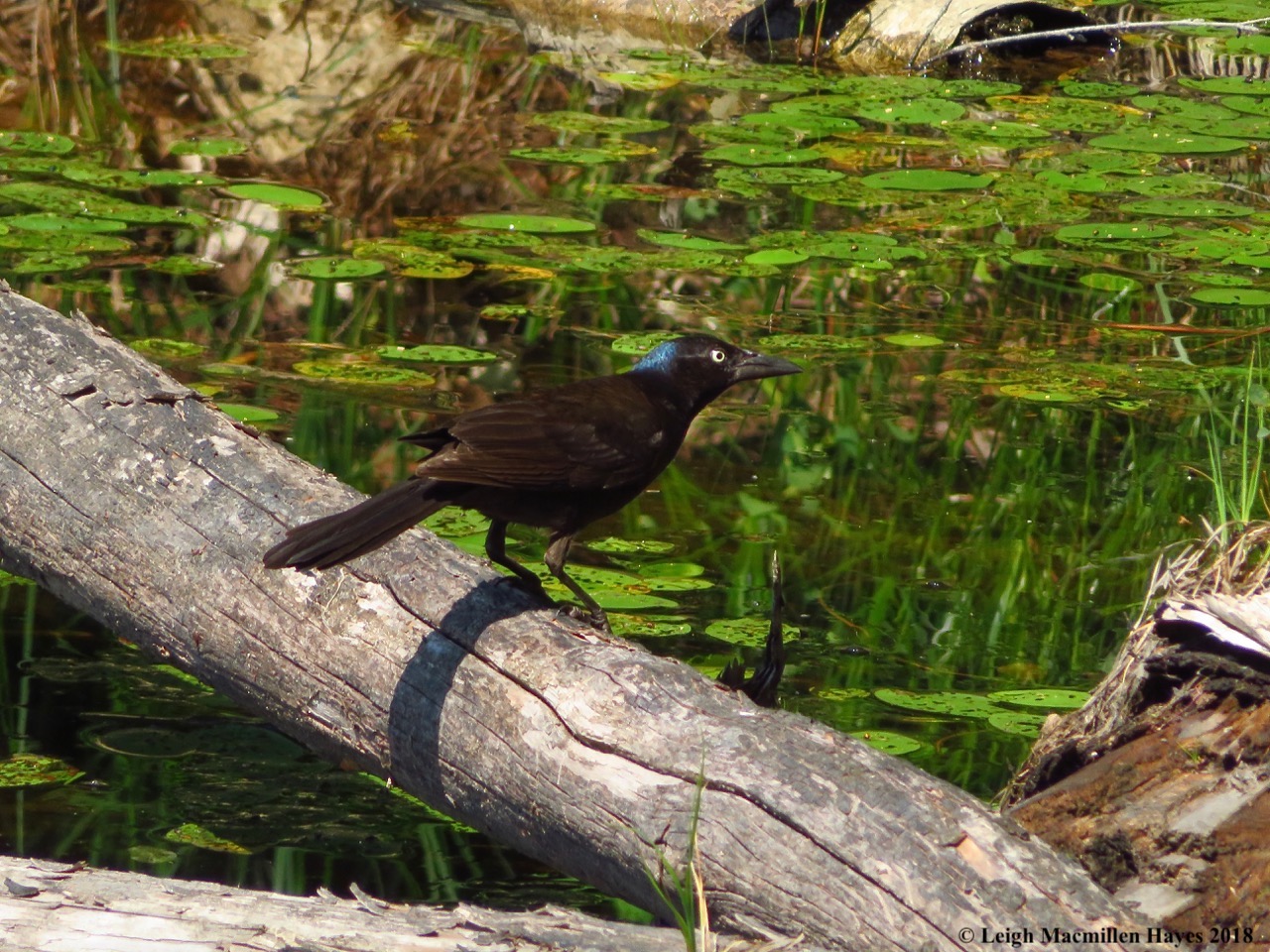
Another handsome guy was the Common Grackle with his seed-eating bill so big and thick. And that iridescent bluish head accenting the bright yellow eye. The Tree Swallows were too quick for me, but they frequently chased the Grackles and I suspected there was a swallow nest in one of the dead snags in the water.

My pose as a sapling seemed to be working for the Corporal kept landing right at my roots. There were so many and they all zipped about before taking breaks such as this.

Meanwhile, on another log another turtle basked, soaking up the warmth of the sun’s rays on this delightful morning.

Not every log served as a sunbather’s lounge chair, but they all had something of interest upon them, such as the Round-leaved Sundew bouquet, its flowers not yet in bloom, but standing tall and curled like crosiers.

Also scanning the stumps and any small hummock were the Grackles as they sought their next meal. Typically, they are seedeaters, but the insects, spiders, frogs, and salamanders of this place can also provide tasty morsels.

With my legs as the sapling’s trunk, finally the Corporal did land.

And if that wasn’t exciting enough, then I spotted a turtle in a surfing pose ;-).

Actually, according to Mary Holland, author of Naturally Curious, “Being cold-blooded, or ectothermic, they need this external source of heat to warm their body, but the UV light also regulates their metabolism and breeding as well as helps produce Vitamin D3, which is essential for the health of their bones as well as their internal organs.

Basking can also help relieve aquatic turtles of ectoparasites. Leeches are a blood-sucking ectoparasite that can cause anemia in reptiles. Drying out in the sun causes the leeches to shrivel up and die. Algae on basking aquatic turtles can also dry out and fall off, allowing the shells to retain their aerodynamic nature.”

While the turtles took care of themselves, the Grackles had other business at hand. If you look carefully at the right hand side of the snag, on the burl you may see tail feathers sticking out. Each time a Grackle entered, it had food in its mouth. And a few seconds later when it departed, it had fecal matter which it deposited in the water. I couldn’t hear the babes calling for food among the din of all the other sounds in the bog, but it soon became obvious that they lived within.

As for my own tree-like stature, it worked. All morning the dragonflies landed on my pants, shirt or hat and their wingbeats reminded me of Hummingbirds as they flew onto or off quickly, always in competition with others.

And then, one blessed me by landing as soon as I stuck my limb out. He looked at me in as much a curious way as I looked at him.

The wonders of the bog. Deer Hill Bog.

Thanks to the Hare

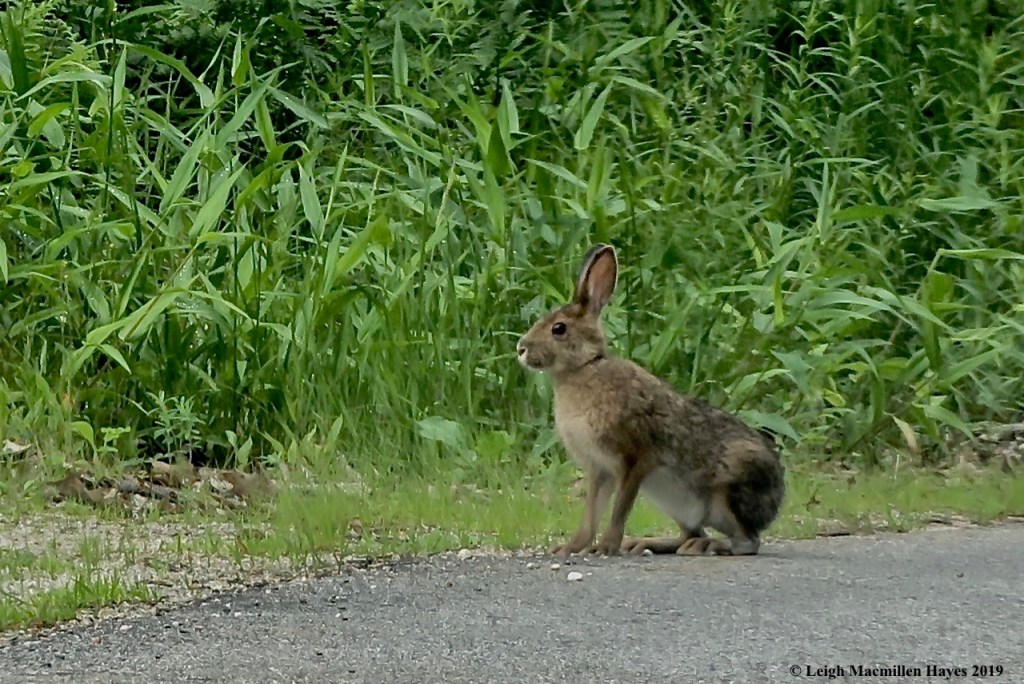
I should have known it would be this kind of a day when I spotted a Snowshoe Hare on the road. It’s a rare spot for me, though all winter long I see their tracks and scat. Only occasionally do I get to glimpse one and even then, it’s just that . . . a glimpse.

But today was different. As I drove to a Greater Lovell Land Trust property, movement on the pavement slowed me down. To. A. Stop. Not wanting to scare it, I took a photo from behind the windshield and then watched as it hopped on the road for a couple of minutes and then off into the grass.

My destination was just around the corner where the Sundews grow. Carnivorous Round-leaved Sundews. Check out the glistening droplets at the ends of the hair-like tendrils that extend from each round leaf. The droplets are actually quite sticky. Just like a spider sensing a bug on its web, the tendrils detect the presence of prey and then curl inward, thus trapping the victim.

The whole leaf will eventually wrap around an insect and in the process of digesting it, the plant will absorb the bug’s nutrients. Can you see the action in process of the lower leaf on the left?

Sundews tend to grow in areas that lack sufficient nutrients, so this is the plant’s way of supplementing its diet. And if that isn’t enough–it’s just plain beautiful.

When I first ventured onto this wildlife refuge with others for a morning of trail clearing, the sky was overcast and mosquitoes plentiful. But . . . the sun eventually burned through the clouds and with that, some of my favorite over-sized, prehistoric looking insects did fly. Thankfully, they also paused so I could admire their structures, colors, and habits. This member of the Odonata family loves to skim across the land at low level and pause on rocks or leaves. Sometimes I feel like I’m walking with them for such is their behavior to lift off from one rock as I approach and settle on the next just a few feet ahead. That is, until I approach that one and then they move on to the next. Over and over again. Of course, all the time they’re hunting for a meal.

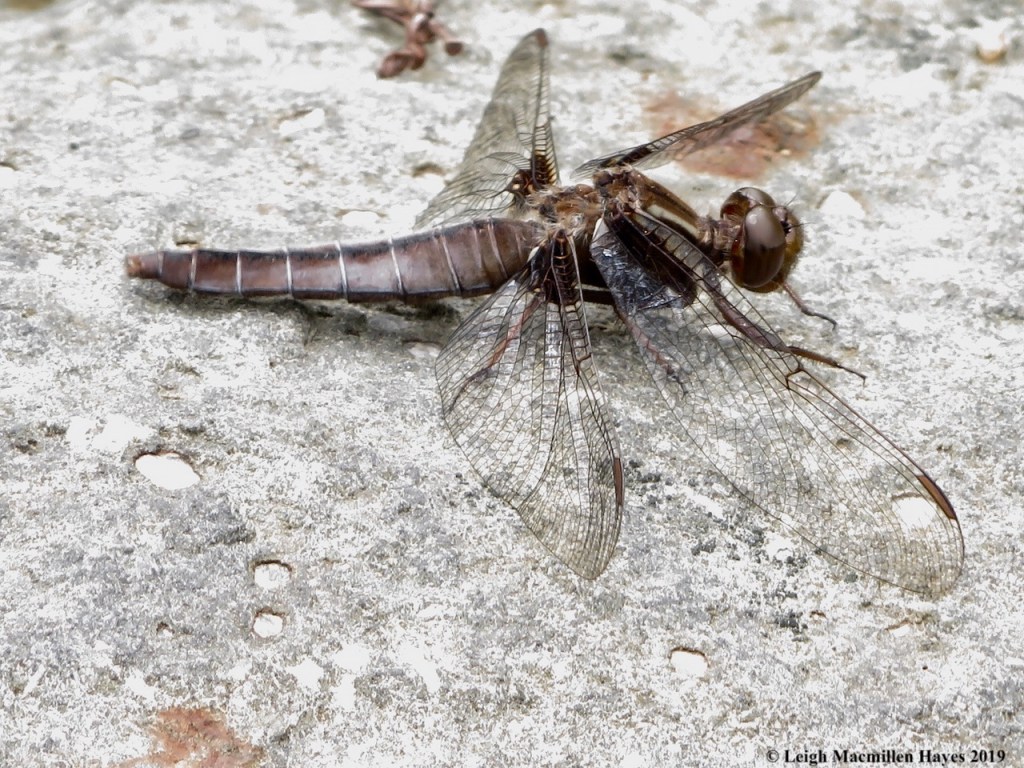
The two photographs above are of the same species and same gender. Both are females of the Chalk-fronted Corporal sort. But notice the cloudier abdomen of the second. There’s just a bit of the grayness in the first photo. So here’s a word to stick under your hat and remember: Pruinescence–meaning a “frosted or dusty looking coating on top of a surface.” The female’s abdomen turns chalky gray with pruinosity. In my under-educated brain, I’d say the second is older than the first for her pruinose markings are more obvious.

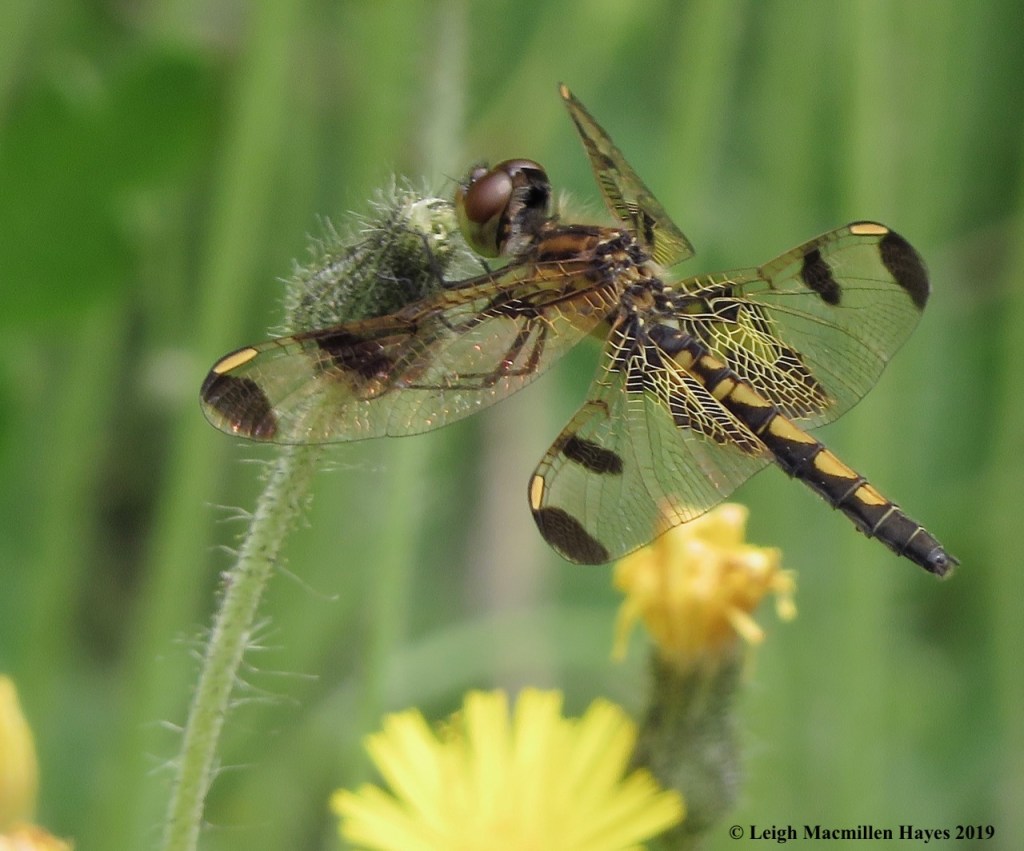
I was standing in the middle of a former log landing when I began to notice the insects. It’s an area where forest succession is slowly occurring and may need to be addressed. But for now, the wildflowers include Yellow Hawkweeds. And because their resting position is different from the Corporals, upon the flowers perched Calico Pennants. The first I saw was a male, so identified by the red markings on its abdomen.

In many male/female contrasts, be it dragonflies, damselflies, or even birds, the female is in no way as attractive as the male. But for the Calicos, both are worth celebrating. Check out those wings–their basal patches like stained glass windows.

It wasn’t just dragonflies that visited the field, for as I said it’s a land once stripped of vegetation that now plays hosts to flowers and shrubs and saplings all competing for space. And Syrphid flies also competed, their focus not on other insects, but rather pollen and nectar.

Equally stained-glass like are the wings. And notice the hair on its body. The natural world is incredibly hairy. Looks rather like a bee, doesn’t it? I was fooled, but my entomologist friend Anthony corrected me–thankfully.

Notice the lack of pollen baskets on those big funky hind legs, lack of antenna with “elbows,” and the shape of the eyes. Similar to a bumblebee, yes, but with subtle differences.

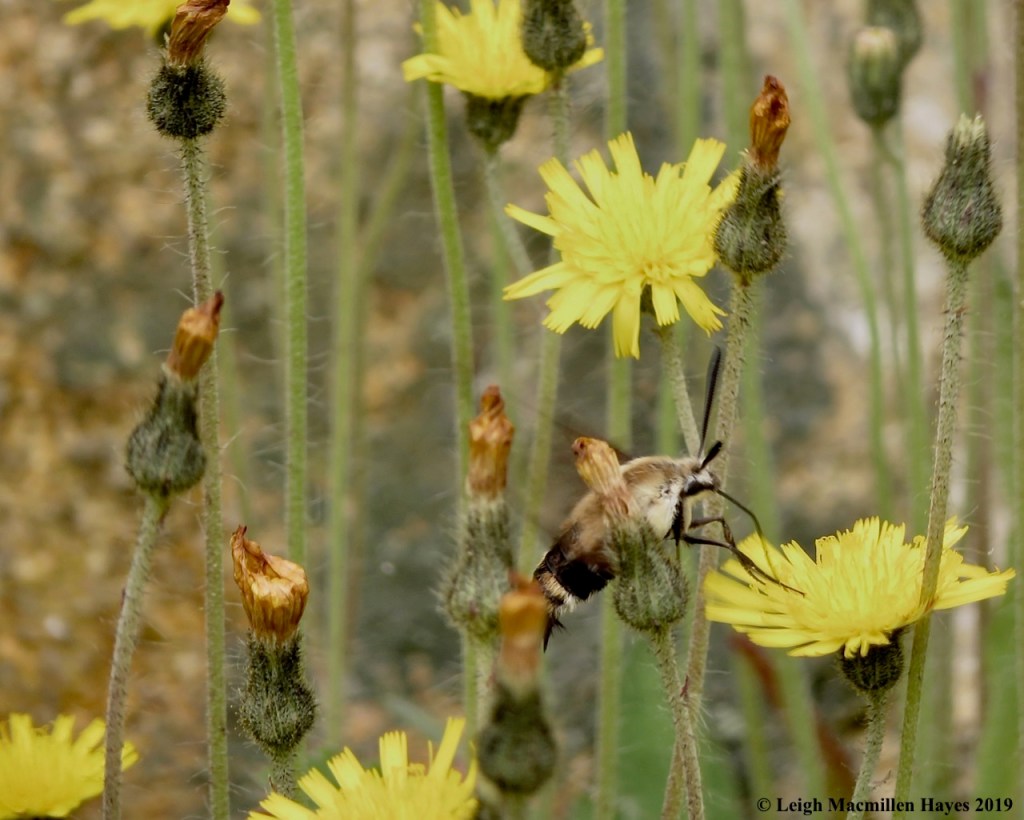
Other visitors who sampled the goods in a much faster manner included Hummingbird Clearwing Moths. The wings of this one pumped so quickly that it appeared wingless. If you look closely, you may see the comb-like structure of its antennae, which helps to differentiate moths from butterflies with their club-like antennae.

I had been feeling rather blessed for all I’d seen to this point and then an old friend made itself known. This dragonfly is one that I know I’ll eventually photograph on my hand or leg this summer and it honors me with those landings for I feel like a Dragonfly Whisperer in those moments. Today we were merely getting reacquainted. And instead of landing on me, it let me photograph its face. Take a look and wonder.

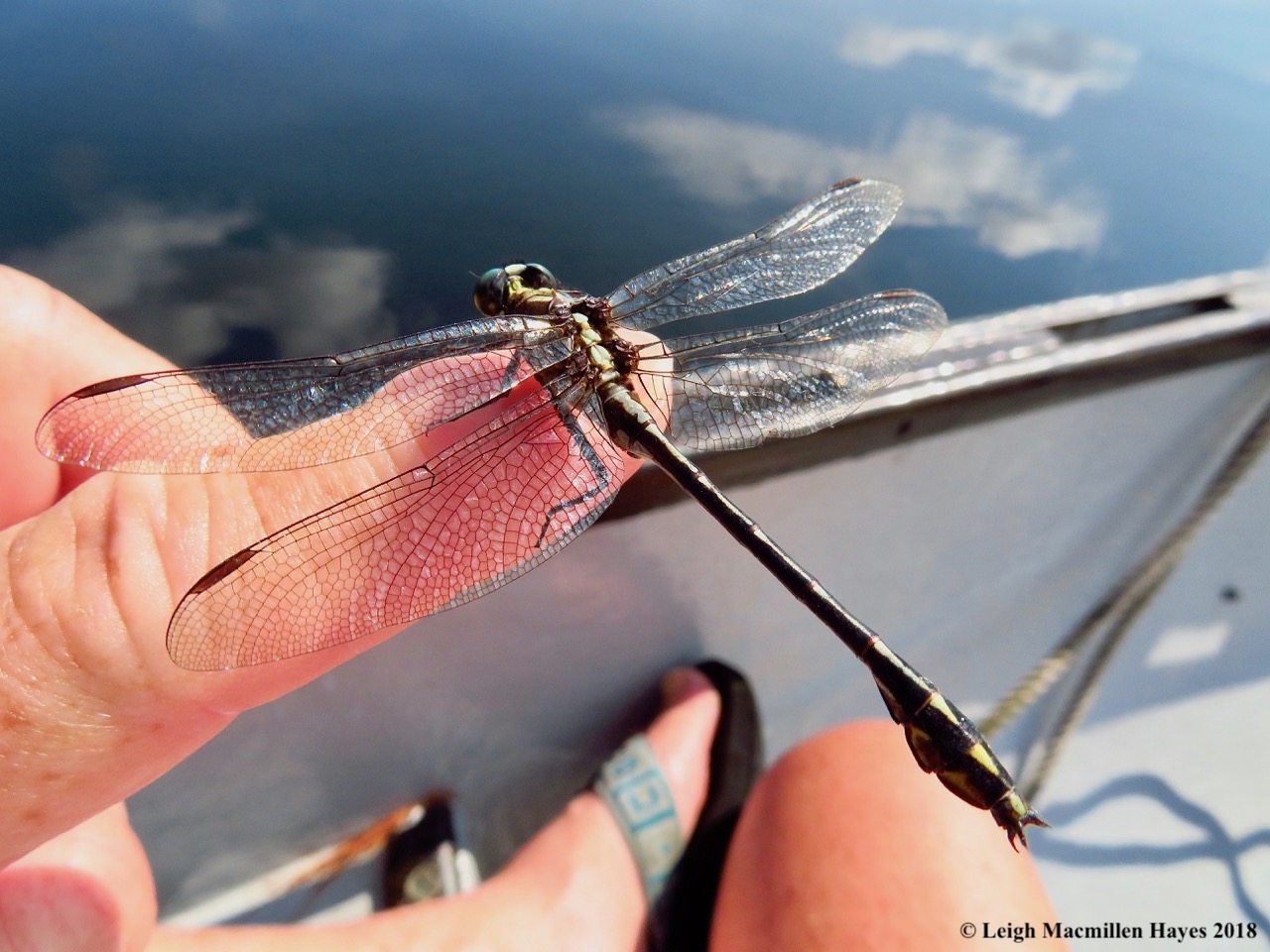
And then look at the abdomen of the same dragonfly: a Lancet Clubtail. By its bluish gray eyes that remind me of my own, and narrow yellow daggers on each segment of its abdomen, I hope you’ll recognize it going forward should you have the opportunity to meet.

Butterflies were also among the visitors of the field, including a Tiger Swallowtail with a tale to tell of how it lost a part of its tail.

And then I spotted a skipper or two moving just a wee bit slower than the Hummingbird Clearwing Moth. My what big eyes you have.

As I slowly made my way back up the trail, it was the Kennedy’s Emerald, named for Dr. Clarence Kennedy, a renowned Ohio State University professor and odonatologist that asked to be noticed. I knew we’d met before when I realized it had two downward-arched yellow spots on the first two segments of its otherwise dark abdomen. The yellow coloration indicated it was a female.

Then I watched a most curious thing as I stood by a fence that stands beside a short portion of the trail. Do you see the dragonfly crawling along the fence?

It seemed to be on a mission that I couldn’t understand.

Perhaps it had its sight on an insect I couldn’t spy.

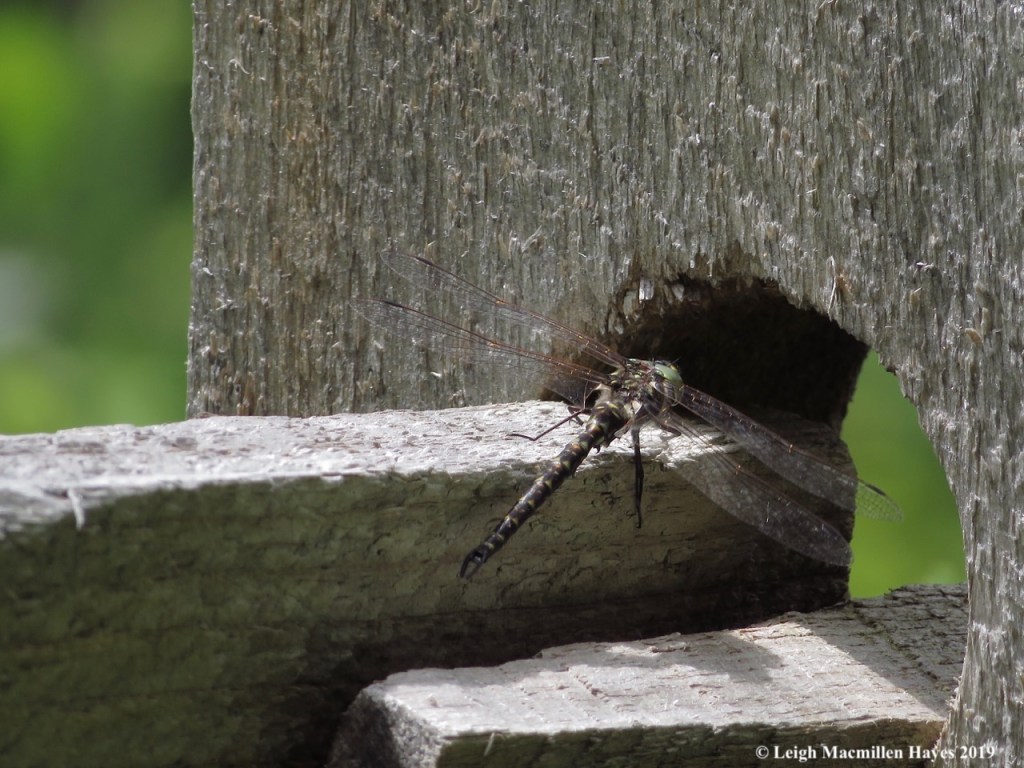
For a few minutes it posed and gave me time to at least decide it was a darner, though I keep changing my mind about which one. But notice its markings. The venation of its wings was rather fine compared to so many, yet the markings on its abdomen were well defined. Oh, and do you see the paddle-like claspers–used to hold the female’s head during mating? And then it flew off.

My heart was filled by all that I’d been seeing. And then . . . in flew another that seemed to top the rest. A Twelve-spotted Skimmer. Count each one on all four wings–twelve dark spots. Crazy beautiful. And to think that I always used to think dragonflies were dragonflies and they were wonderful because they consume mosquitoes and make our woodland hikes so much more bearable. But like ferns that I always thought were all the same, they are not. Slowly I’m learning them by their names and give thanks for every moment I get to spend in their presence.

What’s not to wonder about and love–notice the yellow hearts on the female Calico Pennants abdomen. And her reflection on the leaf below.

I knew that hare brought me good tidings. And will be forever grateful.

Walking with Dragons

As I drove down the dirt road into Brownfield Bog today, I began to notice ruts on the side where previous vehicles had gotten stuck in the mud. And then I came to a puddle the looked rather deep and to its right were several rocks that I didn’t feel like scraping the truck against to avoid the water. That’s when I decided I’d be much better off backing up and parking at the beginning of the road. Besides, I knew if I walked I’d have more chance to see what the road and bog had to offer. But . . . back up on that curvy narrow road–for a quarter mile or more? Yup. Thankfully, no one drove in or out and somehow I managed to get myself out of that predicament.

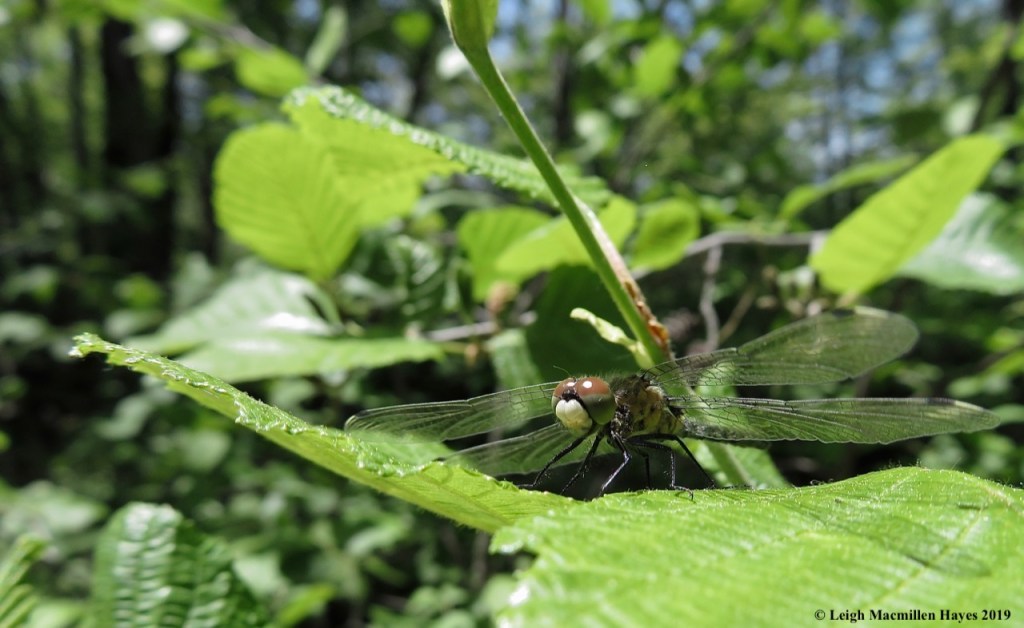
I knew I’d made the right choice when I was greeted by an immature Chalk-fronted Corporal. First it was one, then two, and then so many more. And the mosquitoes and black flies? Oh, they were there, but not in abundance.

Also helping patrol the roadway was a Spring Peeper, the X on its back giving reference to its scientific name: Pseudacris crucifer–the latter meaning cross-bearer. Notice his size–about as big as a maple samara.

A more mature female Chalk-fronted Corporal perched upon an emerging Bracken Fern was my next point of focus. She’s larger and darker than her young counterparts, her corporal stripes on the thorax marked in gray.

And then there was a June Beetle, also maple samara in length with its thorax and abdomen robust.

My own eyes kept getting larger and larger for every step I took I felt like there was someone new to meet. Practicing ID was helped a bit as I’ve begun to recognize certain traits of the different species. Of course, each year I need a refresher course. By the green eyes, I knew this one was in the Emerald family, and with its green and brown thorax, black abdomen with a narrow pale ring between segments 2 and 3, and the fact that the abdomen is narrow to start and finish with a widening in between, I decided it was an American Emerald.

Reaching the bog at last, I was glad I’d worn my Muck boots, for the water flowed across the cobbled road and in several places it was at least five inches deep.

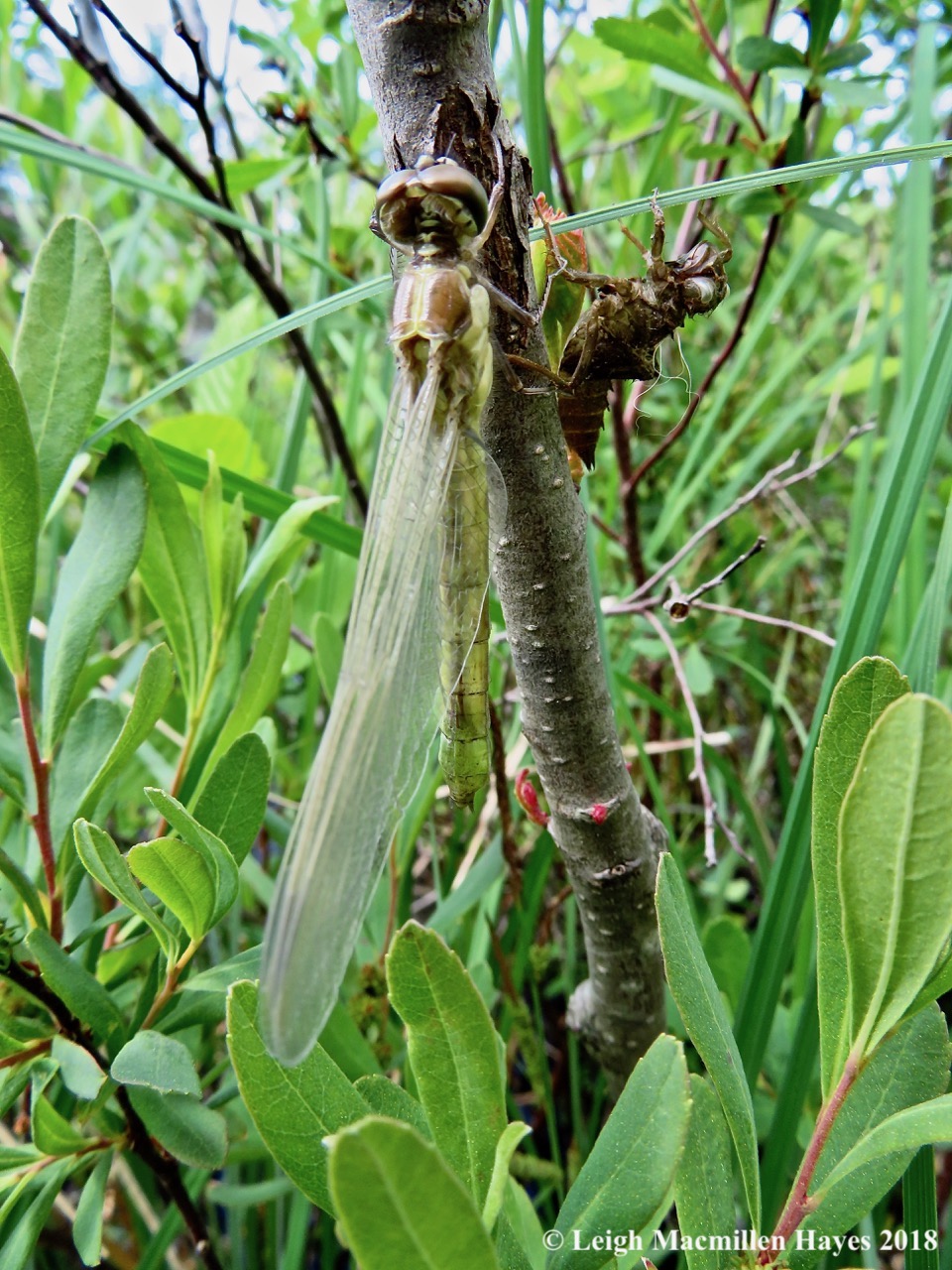
Within one puddle floated a dragonfly exuvia, its structure no longer necessary. I will forever be in awe about how these insects begin life in an aquatic nymph form, climb up vegetation or rocks or trees and emerge as winged insects.

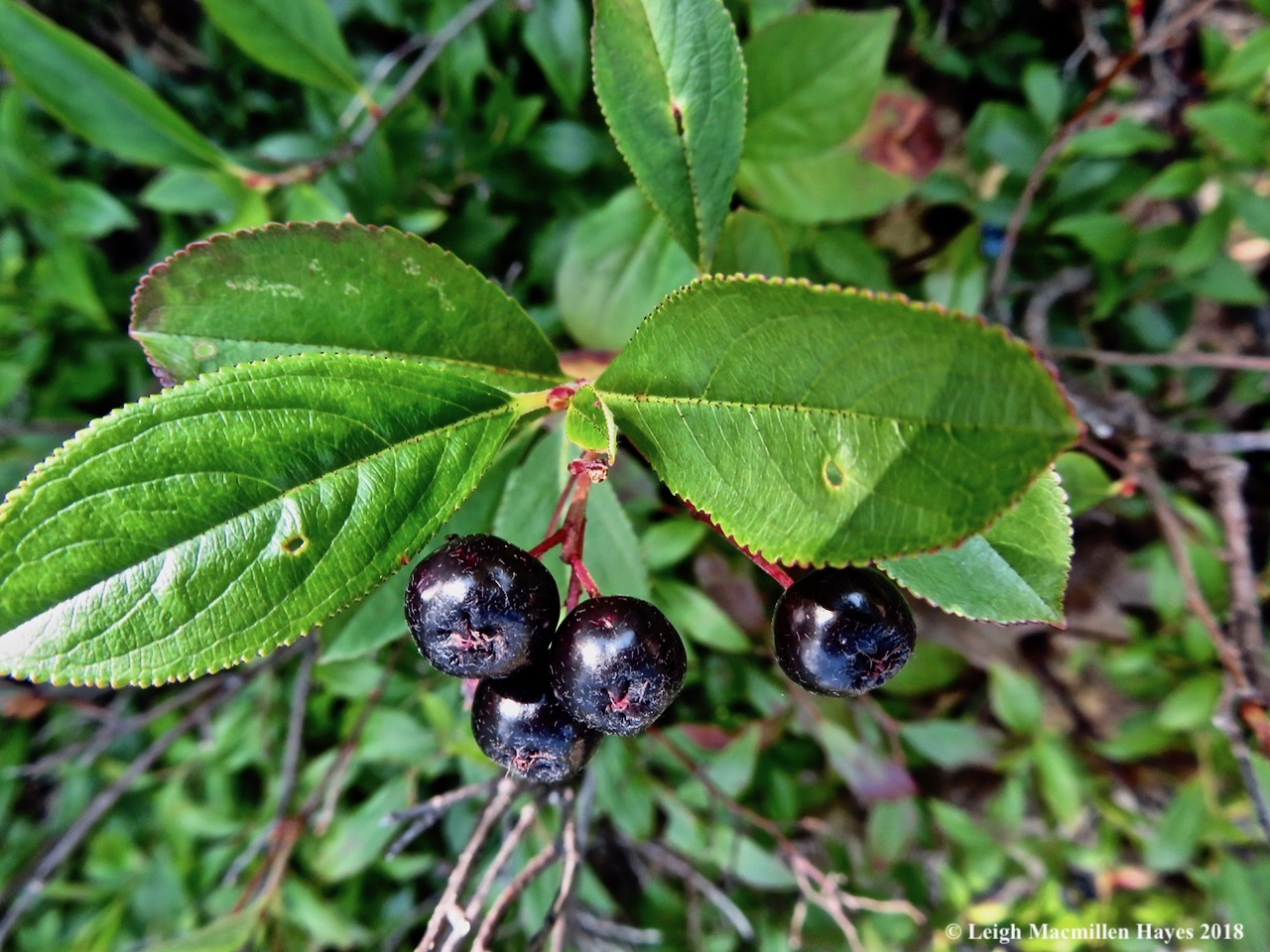
As I continued to admire them, there were others to note as well, like the metallic green Orchid Sweat Bee pollinating the Black Chokeberry flowers.

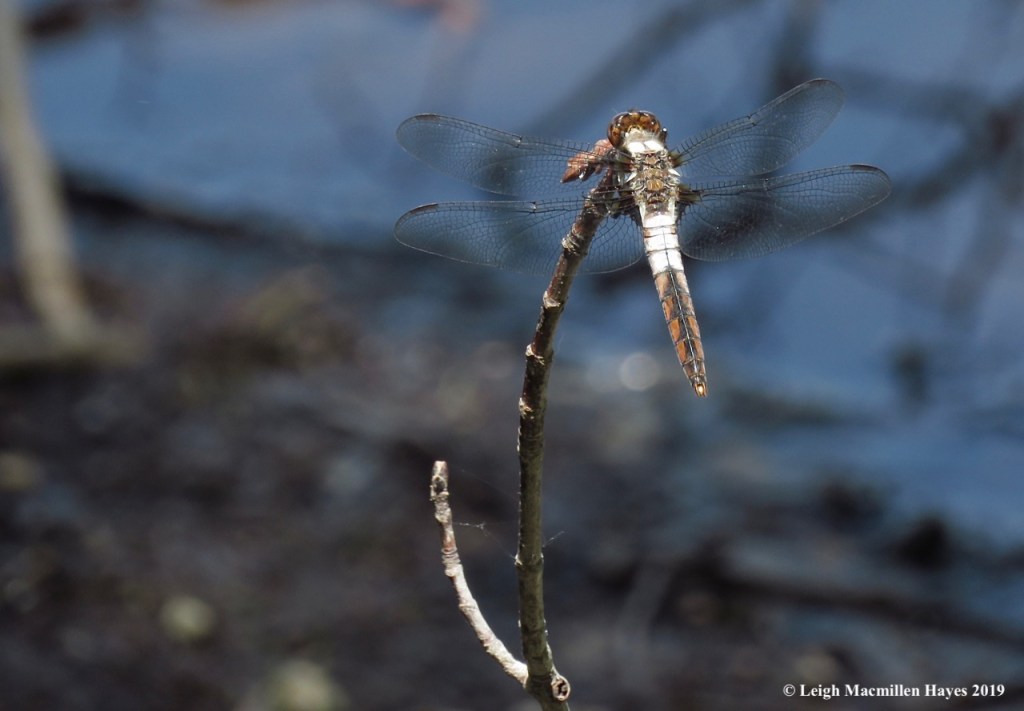
The next flyer to greet me had a white face that you can’t quite see. By the yellow markings on her abdomen, I think I’ve identified her correctly as a Frosted Whiteface.

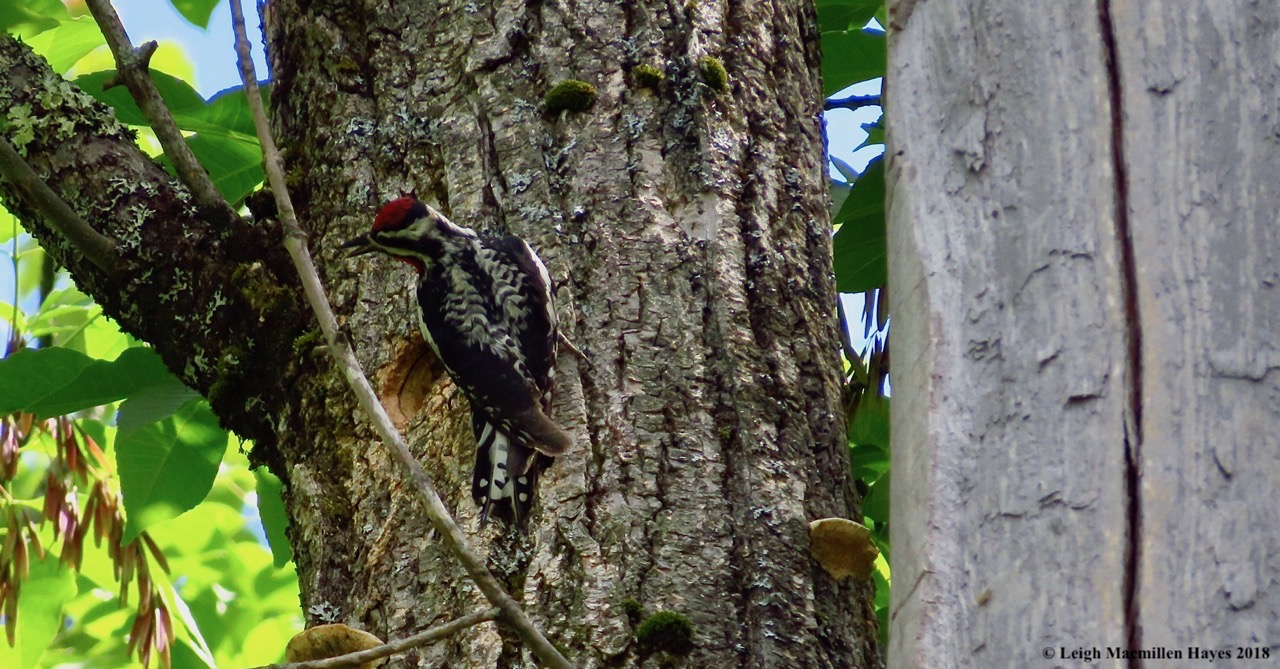
Birds were also abundant by their song and calls, though actually seeing them was more difficult since the trees have leafed out. But . . . a Yellow-bellied Sapsucker did pause and pose.

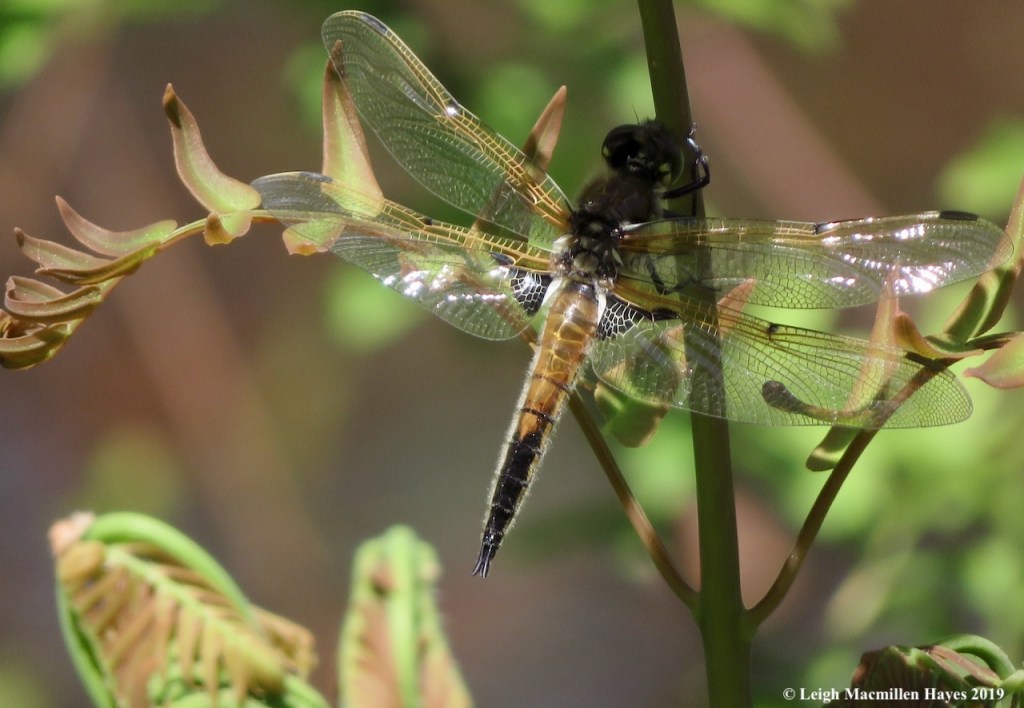
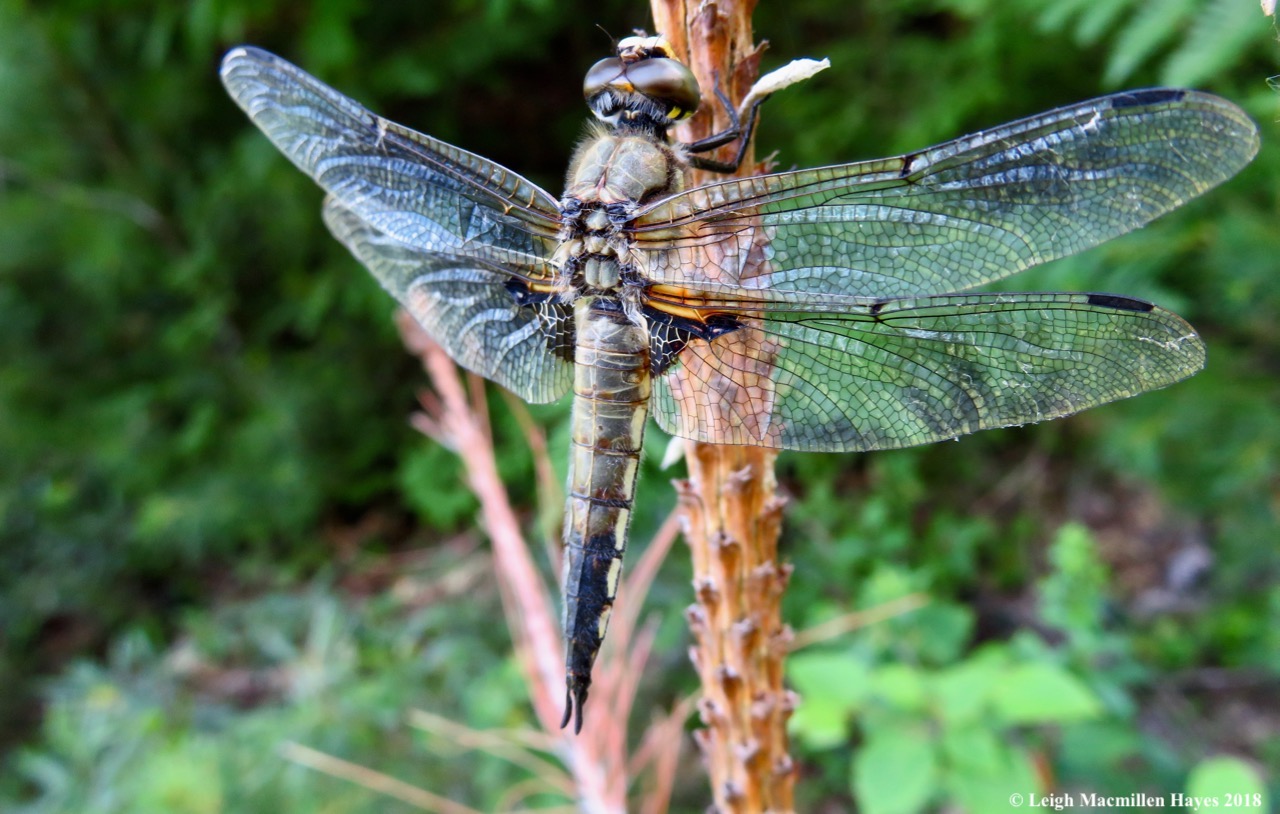
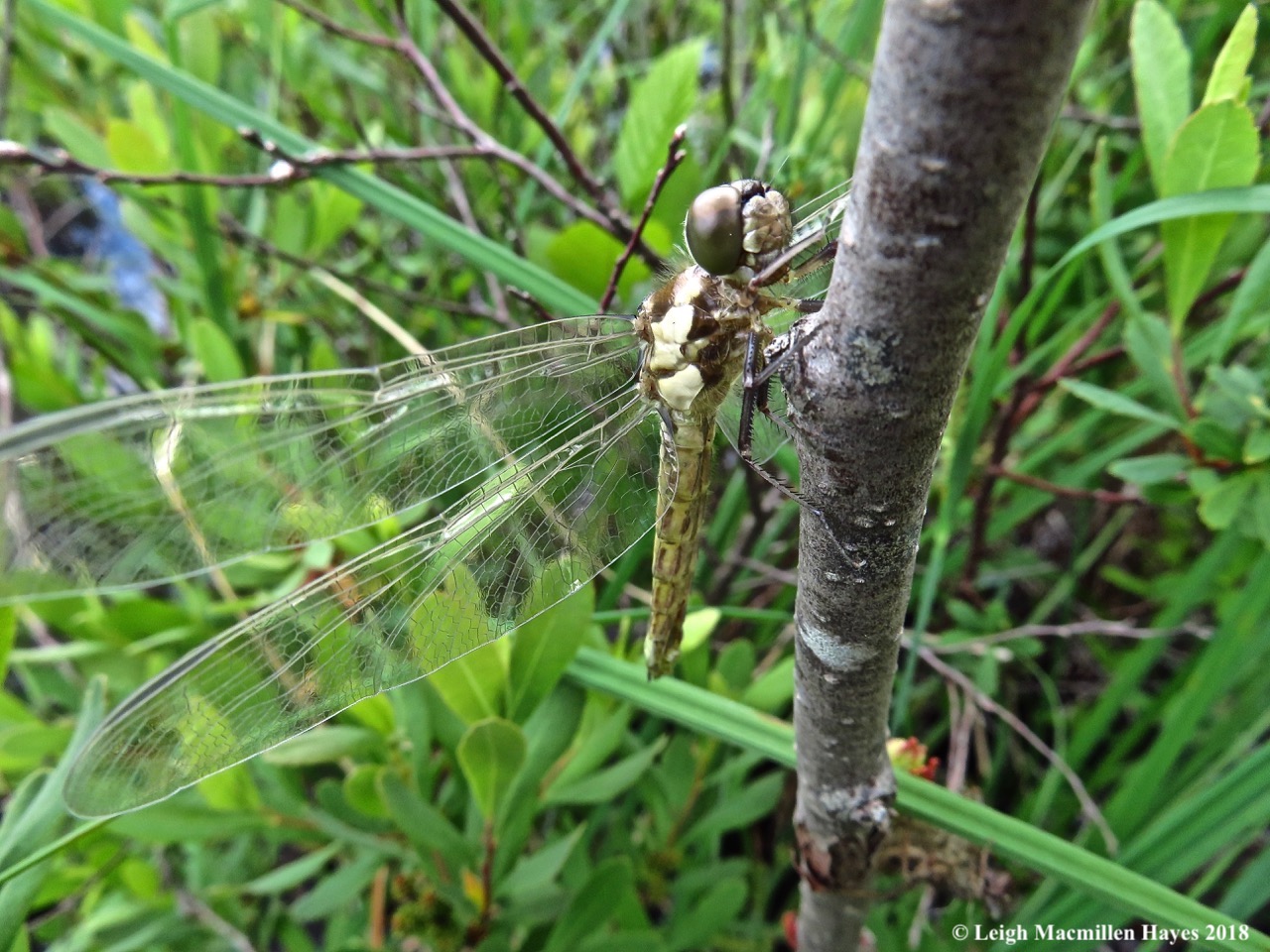
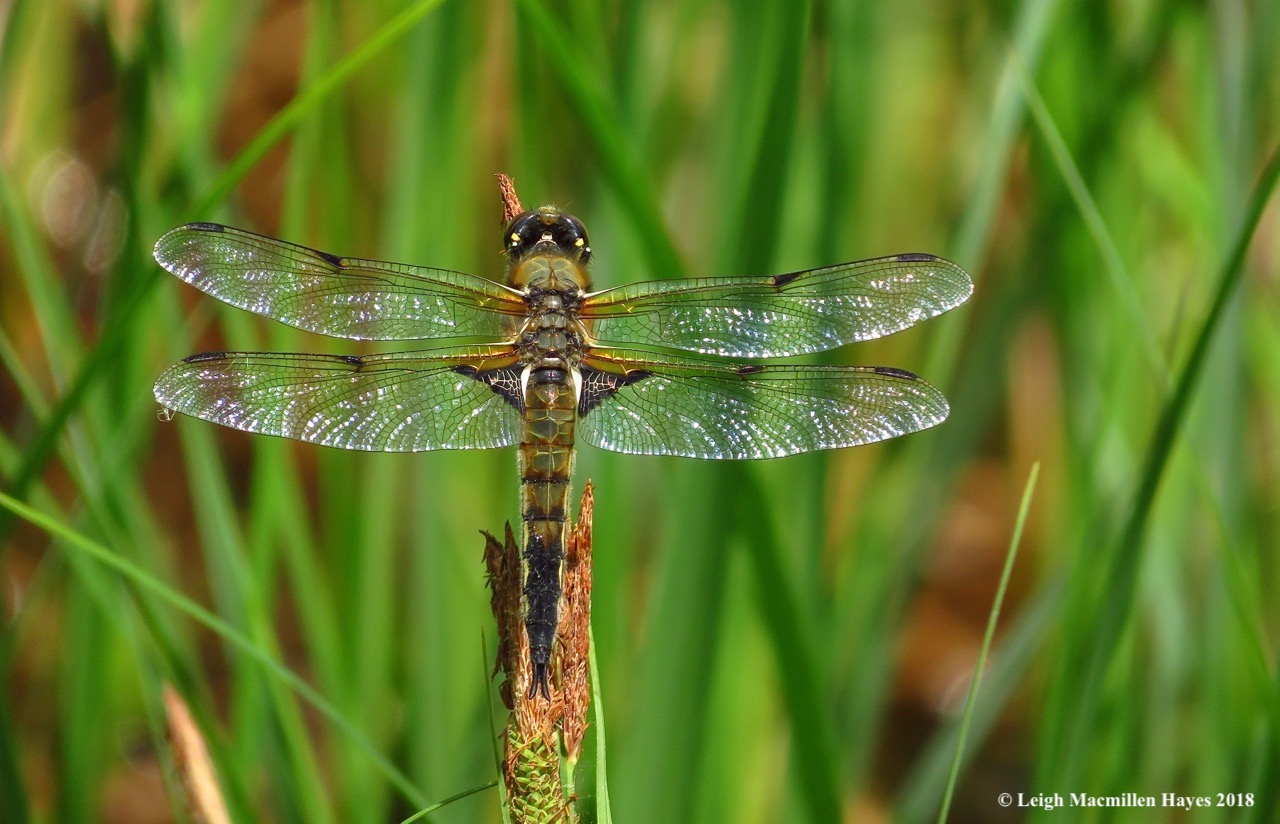
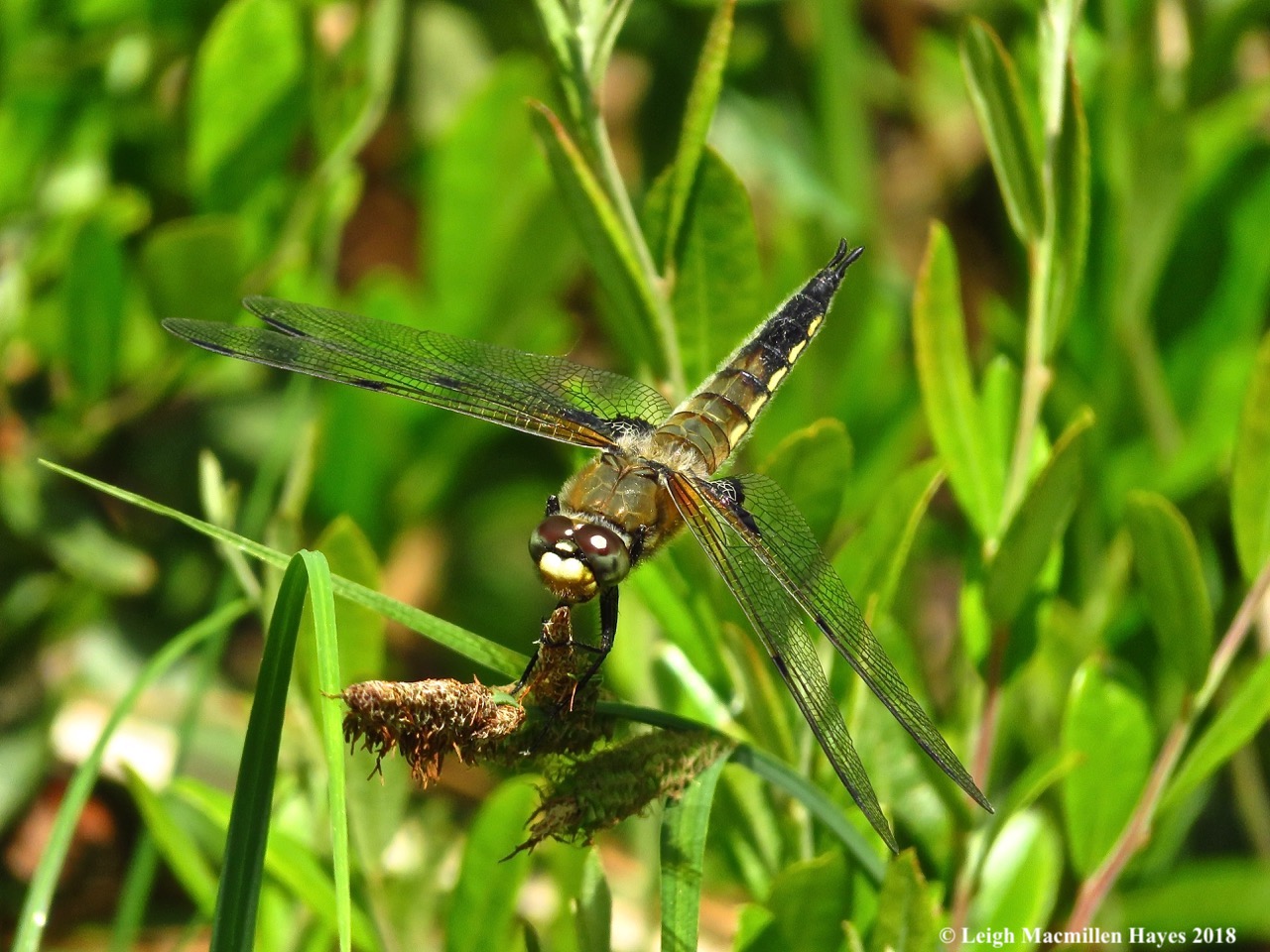
Again, shadows blocked the face of this species, but the wings and abdomen were far more worthy of attention as it clung to a Royal Fern. In fact, with so much gold, I felt like I was greeting a noble one. The Four-spotted Skimmer is actually quite small, yet stocky. The four spots refer to the black nodus and stigma (Huh? nodus: located midway between the leading edge of each wing where there is a shallow notch; stigma: located toward the wingtips). But notice also that the amber bar at the base of its wings and black basal patch on the hind wings–giving it an almost stained glass look.

By now, you must be wondering if I was really at the bog for I’ve hardly shown any pictures of it. Yes, I was. And alone was I. When I first arrived by the water’s edge, I noted two vehicles that had braved the road and as I stood looking out at the old course of the Saco River, I heard a couple of voices which confirmed my suspicion that they’d gone kayaking. But other than that, I had the place to myself. Well, sorta.

Me and all the friends I was getting reacquainted with as I walked along. The name for this one will seem quite obvious: White-faced Meadowhawk, its eyes green and brown.

Nearby a pair of Eastern Kingbirds, perched, then flew, enjoying such a veritable feast of insects spread out before them.

I worried for my other winged friends, including the female Bluet damselfly.

And the Common Baskettail. How long will they survive?

I also wondered about reproduction for I saw so many, many female Chalk-fronted Corporals, but not a male in sight. Until, at last, before I left the bog, I spied one.

And for a long time we studied each other. Have you ever realized how hairy dragonflies are?

The Brownfield Bog (Major Gregory Sanborn Wildlife Management Area) can put the brain on nature overload as all senses are called into action. But today, because with every step I took at least fifty dragonflies flew, they drew my focus and I gave thanks to them for reteaching me about their idiosyncrasies, as well as eating the smaller insects so I came away with only a few love bites behind my ears.

Walking with dragons. As life should be. In western Maine.

Cranberry Memories

It’s amazing how a simple act such as taking cranberries out of the freezer and transforming them into a relish can take one back in time, but so it did today.

My family knows best that I’m not a foodie, and cook only because we can’t survive on popcorn alone (drats), but one of my favorite flavors brings a burst of tartness to any meal. And as I concocted the simple cranberry orange relish we so enjoy, moments spent picking them kept popping up.

On several occasions last fall, I bushwhacked toward the fen, stopping first to explore the kettle holes that dot the landscape.

And though I love tracking all winter, it’s those unexpected moments in other seasons when I recognize the critters with whom I share the Earth that make my heart quicken.

Especially when I realize that one of my favorites has also passed this way, stomping through the water . . .

and then onto the drier land. Yes, Ursus americanus had been on the hunt as well.

He wasn’t the only one fishing for a meal, though of a much smaller spidery-style scale.

And then there were my winged friends, the meadowhawks.

I remember the mating frenzy occurring as that most ancient of rituals was performed both on the leaf and in the air.

Other winged friends, showing off a tad of teal, dabbled nearby.

Eventually, I tore myself away from the kettle holes and tramped through winterberry shrubs filled with fruits and cinnamon ferns ablaze in their fall fashion.

After all, my destination was the cranberry fen.

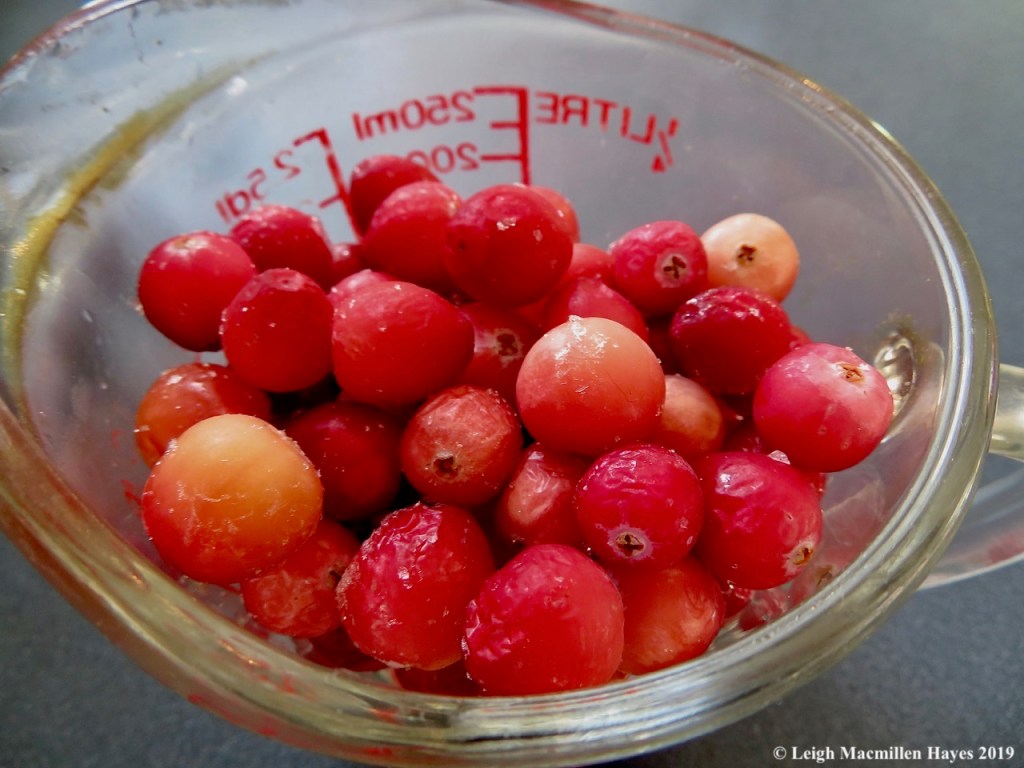
And last year was a mighty fine year for those little balls of wonder that hid below their green leaves. I filled my satchel to overflowing before taking my leave, knowing that in the coming months I’d share the foraged fruits with family and friends and remember time well spent.

Not only did the abundant fruit make it so special, but on my way out I stumbled upon another kettle hole and much to my delight spotted two Sandhill Cranes, part of a flock that returns to this area of western Maine on a yearly basis.

While the cranes foraged on the ground, a Great Blue Heron watched them approach.

And then in flew a Bald Eagle who eventually settled in a pine tree beside a crow.

With that, the cranes flew off and a few minutes later so did the heron. And then I left, trying to find my way out, but I’d gotten a bit twisted and turned and ended up cutting through someone’s yard to get back to the road. Because I was a wee bit confused, I couldn’t find my truck right away, and in the process of looking I dropped a few cranberries. It was all worth it! And still is as we’ll enjoy that relish in our chicken salad sandwiches tonight.

Ah, cranberries. And bears. And spiders. And dragonflies. And birds. Ah, cranberry memories.

Our Home is Their Home

As I sit in my rocking chair on the camp porch, the cicadas still buzz, with chirps of crickets thrown into the mix and somewhere in the background a constant trill from another. Tree frog? Perhaps, but it seems to carry on for longer than usual. Grasshopper? Maybe. And then there is the occasional call of the loon.

1-camp

What truly attracted my attention earlier today, however, were the other members of the household. Whose home this is, I think I know. Or rather, I thought I did. I thought it belonged to my guy and me. But really, I should have known better for it has never just housed the two of us. There were the boys growing up, and family, and friends, and renters, even. Actually, the latter three knew it before the boys. (Oops, I suppose I should call them young men, mid-twenty-somethings that they now are.)  But, through all these years, it has also housed many others. And so today, I got acquainted with some of its other residents. Rather than the mammals that we know also share the space, e.g. mice, squirrels, and bats, it was the insects and arachnids that I checked out.

2-cicada exuviae

My first find along the foundation was an exuvia of one I listen to day and night–that of a cicada. In their larval stage, cicadas live down to eight feet underground. When the time comes to metamorphose into winged adults, they dig to the surface, climb up something, in this case the foundation, and molt. The  emerging winged insects leave behind their shed skin, aka abandoned exoskeleton or exuvia. It’s a rather alien looking structure, with the split obvious from which the adult emerged.

3-cruiser 1

The cicadas weren’t the only aliens along our foundation. It seemed like every few feet I discovered a dragonfly exuvia dangling from the porch floor and now encased in spider webs.

3b-cruiser

One of the cruiser exuviae had dropped to the ground below. But still the structure remained intact. And I now realize that my next task is to head out the door once again in the morning and collect these beauties, the better to understand their nuances.

4-cruiser hiding

I found cruisers hiding under the logs . . .

6-cruiser and cast off spider

and even one tucked in by a basement window that had a shed spider exoskeleton dangling from it.

6a-lancet clubtail dragonfly

There were others as well, but nowhere did I find the exuvia of the one with whom I’ve spent the most time, Sir Lance(t) Clubtail. I suspect his shed skin is attached to some aquatic vegetation for he spends so much of his time by the water, even today, pausing only briefly to rest on the dock ladder.

7-bag worms and pupal case of a pine sawfly

There were other species to meet, including the most interesting of structures, those of the evergreen bagworm cases. I assumed that the young had already emerged, but their homes consisted of material from the trees on which they fed, e.g. pine needles. They struke me as the terrestrial form of the aquatic caddisflies.

And beside the two bagworms was a small, rounded brown case–the pupal case of a pine sawfly. The sawfly had already pupated and in this case no one was home.

8-pine sawfly caterpillar on screen

Oh, but they were and have been for a few weeks. I first realized we had an infestation when what sounded like the drip-drop pattern of a summer rain on a perfectly sunny day turned out to be little bits of green caterpillar frass falling from the trees. Everything was decorated. And then I began to notice the caterpillars–many falling out of trees and landing on the surrounding vegetation, and the house. As would be expected, they climbed toward the sky, hoping, I suppose, to reach the top of the trees. Good luck with that.

9-pine sawfly caterpillars

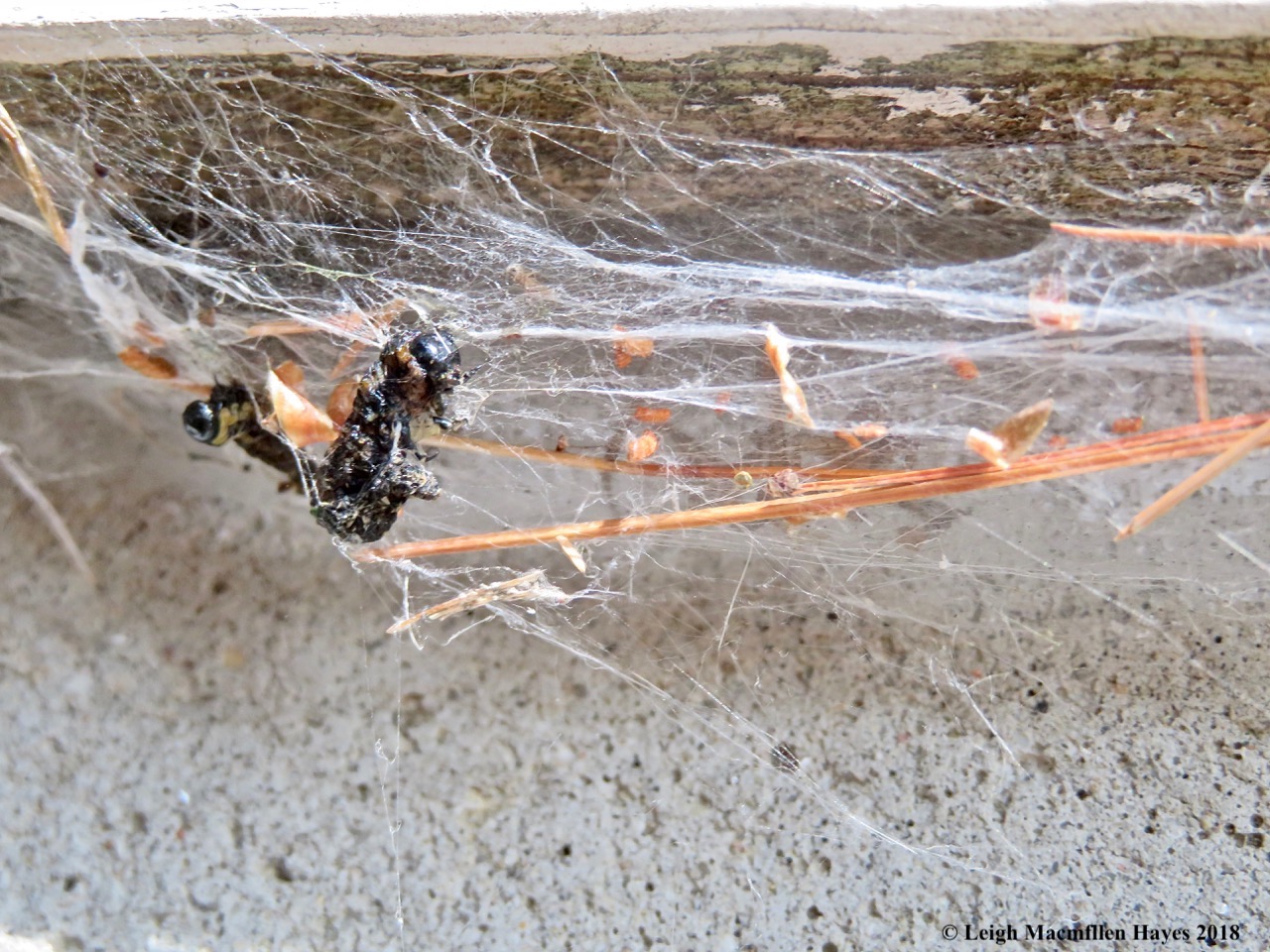
Some didn’t make it above the foundation, where they encountered spider webs and soon had the juices sucked out of them. Such is life. And today, a winter flock of birds including chickadees, nuthatches, goldfinches, hairy woodpeckers, young robins, and even a brown creeper flew in and some fine dining took place. The raindrops have nearly ceased.

10-Northern Pine Sphinx

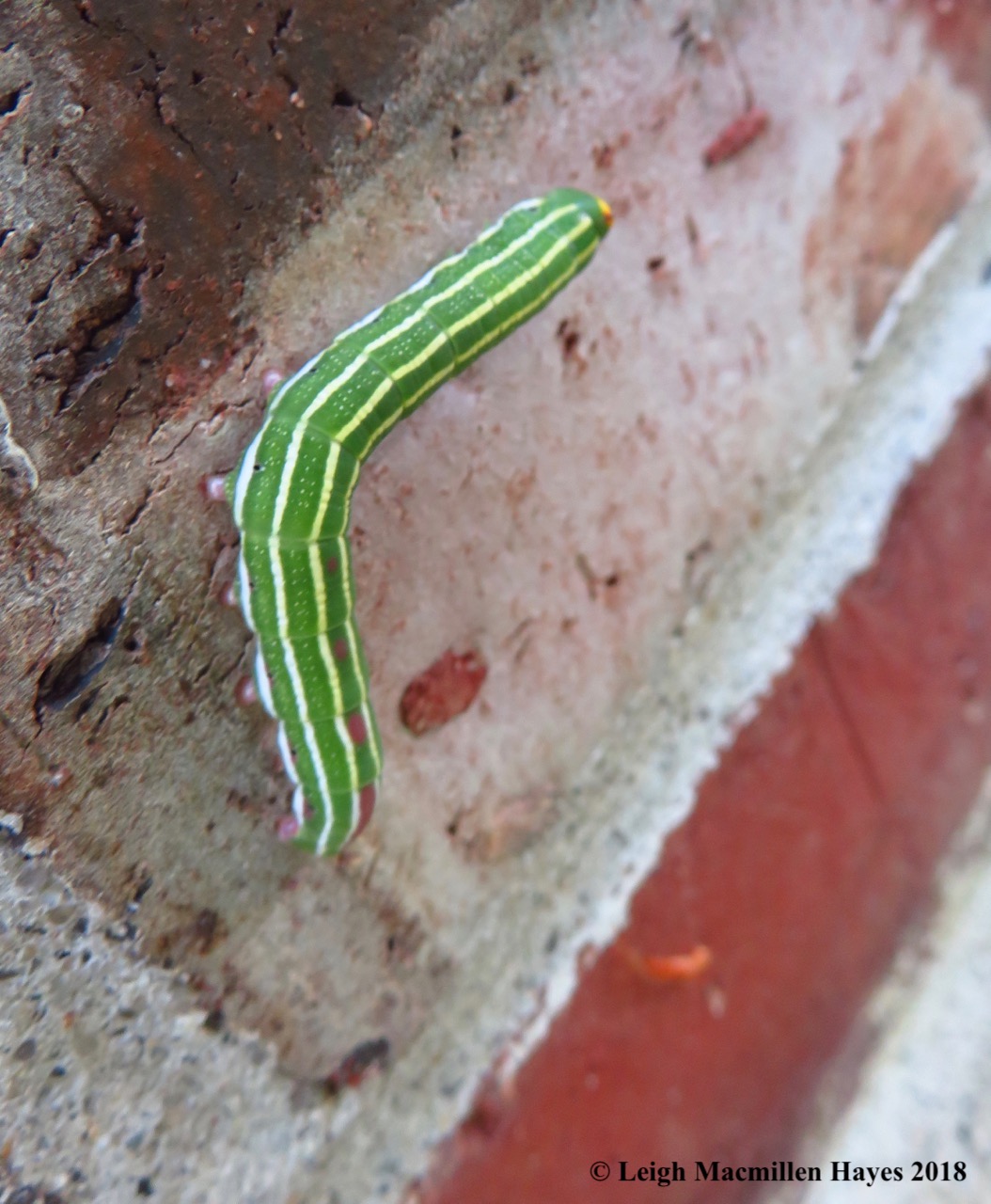
That wasn’t the only pine-eating caterpillar to make its home here. On the chimney, I found a northern pine sphinx caterpillar moving full speed ahead.

11-orbweaver

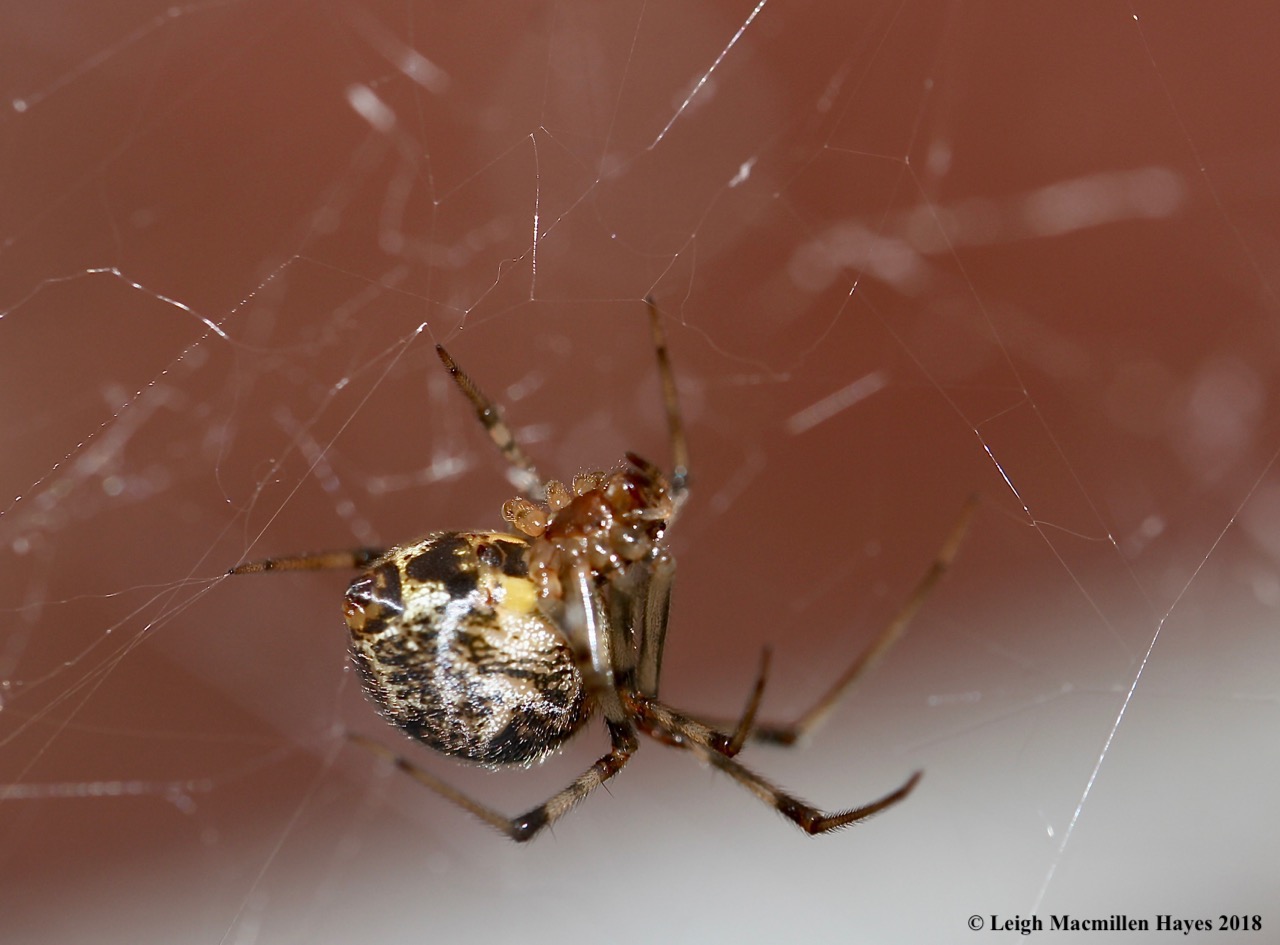
And around the bend, where the chimney meets the camp, an orbweaver spinning some silk in the hopes of fine dining.

14a-calico pennant dragonfly in web

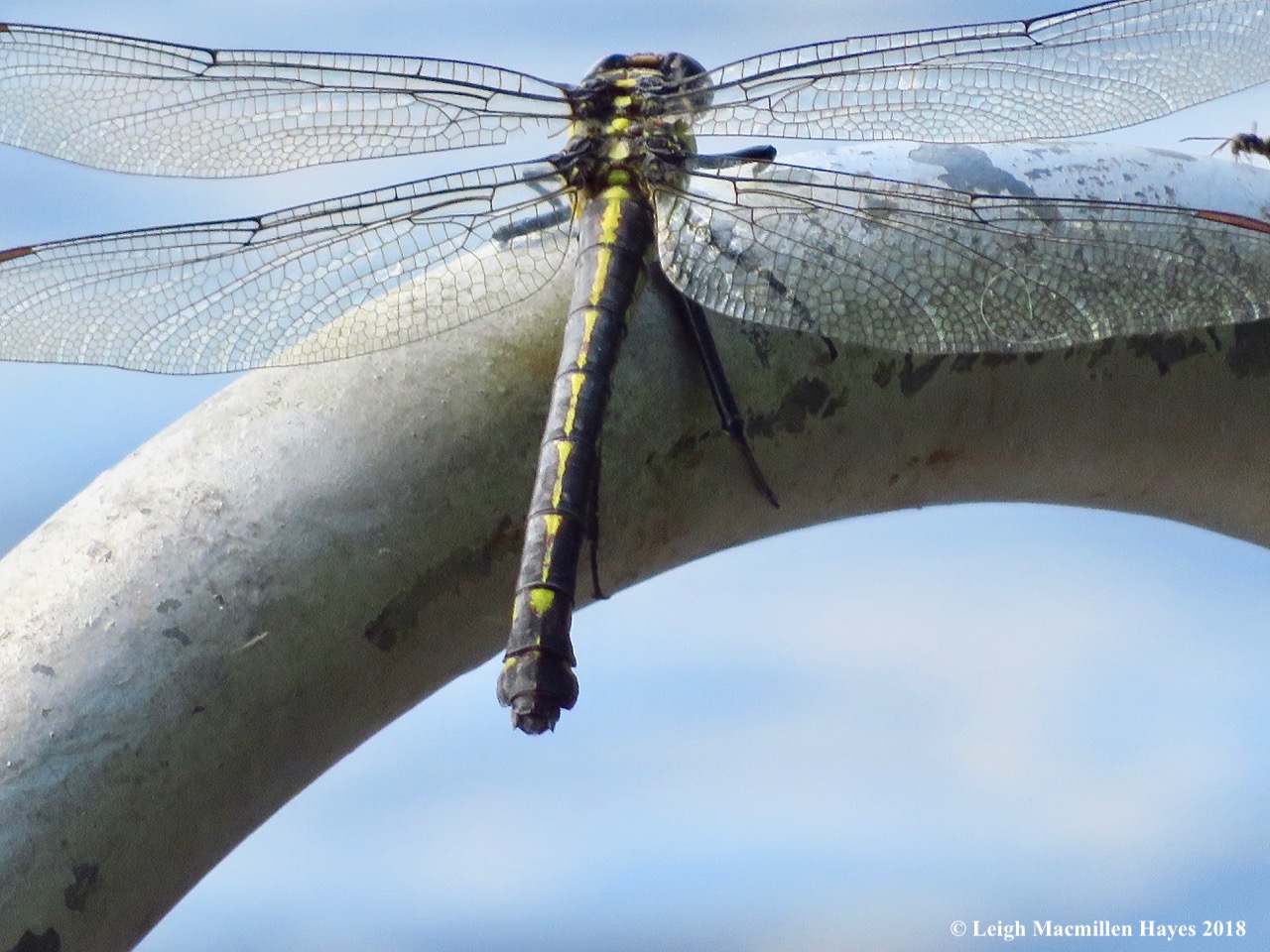
One meal had obviously been consumed–a calico pennant dragonfly. I’d seen a few of those on the vegetation a few weeks ago, but none recently. Apparently, one flew too close to the building. The only way I could ID it was by its wings for the head, thorax and abdomen had been eaten. But the wings have no nutritional value.

11a-Northern Pine Sphinx 2

A short time later I returned to the chimney in hopes of locating the northern pine sphinx caterpillar again. I did. And he wasn’t. He’d apparently turned the sharp corner on the chimney and met his fate.

13- Northern Sphinx 4

Eye to eye. I’m amazed at the size of the insects that find their way to her web. It’s not like they are attracted to it. Instead, they come upon it quite by surprise and she makes fast work of their mistake.

14-pine tree spur-throated grasshopper

Rounding the corner back toward the porch door, one last insect drew my attention. And again, it was related to the pines, such is the local community: a pine tree spur-throated grasshopper on one of the logs that forms the outer wall of our wee home.

Our home is their home and we’re happy to share the space with them. Provided, of course, that they leave space for us to live as well. So far, all is well.


Eagle-eyed Mondate

It was the call of the loon that pulled me onto the dock early this morning, my coffee and camera in tow.

1

As it moved about not too far off, I noticed that it started turning in circles. It appeared to be listening and looking . . . and not for fish.

2

Suddenly, from behind me, there was movement in the sky and I began to understand. If you look carefully, you will also begin to understand.

3

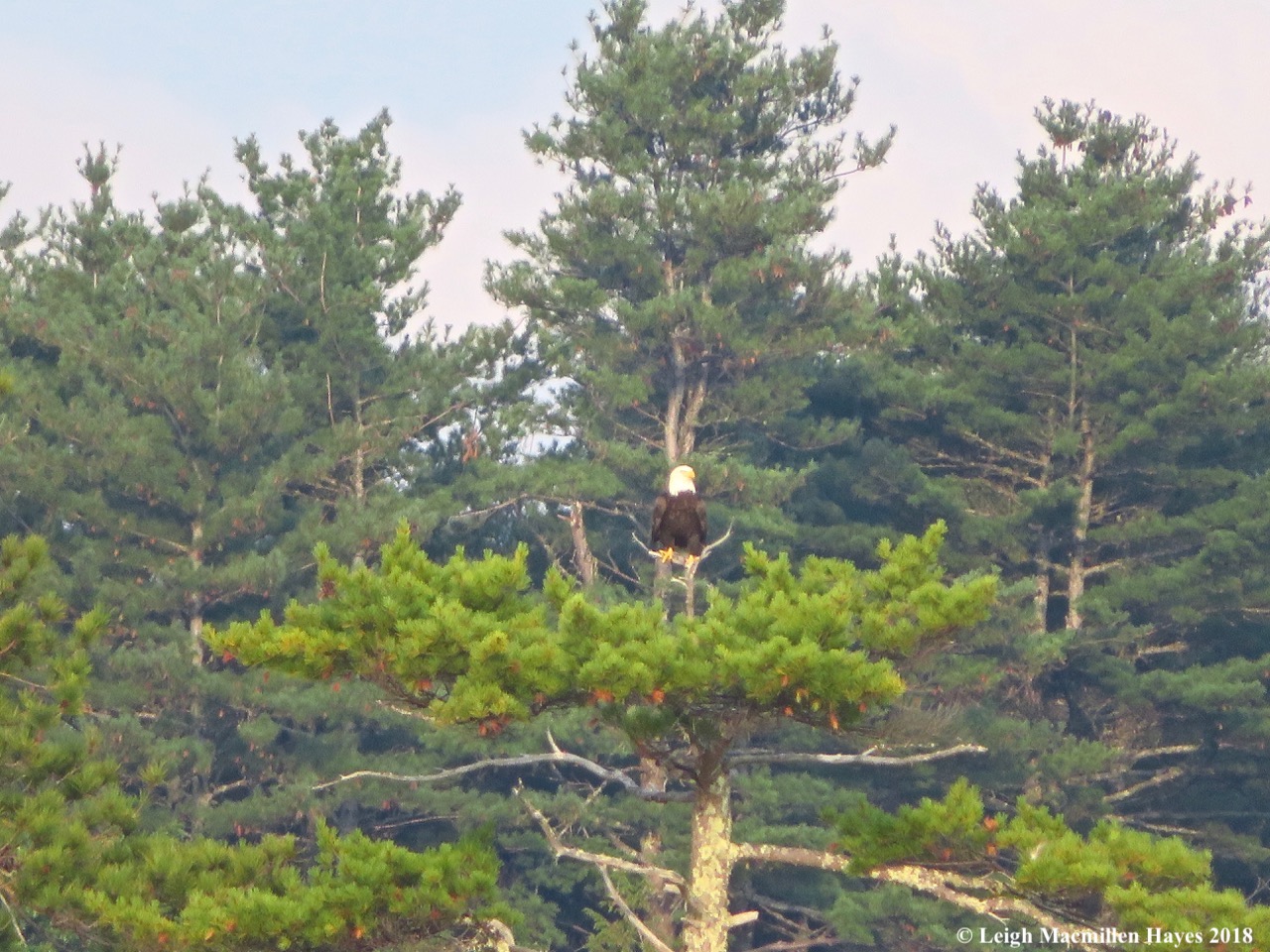
A mature eagle had entered the neighborhood.

4

For some reason, the loon moved closer.

22

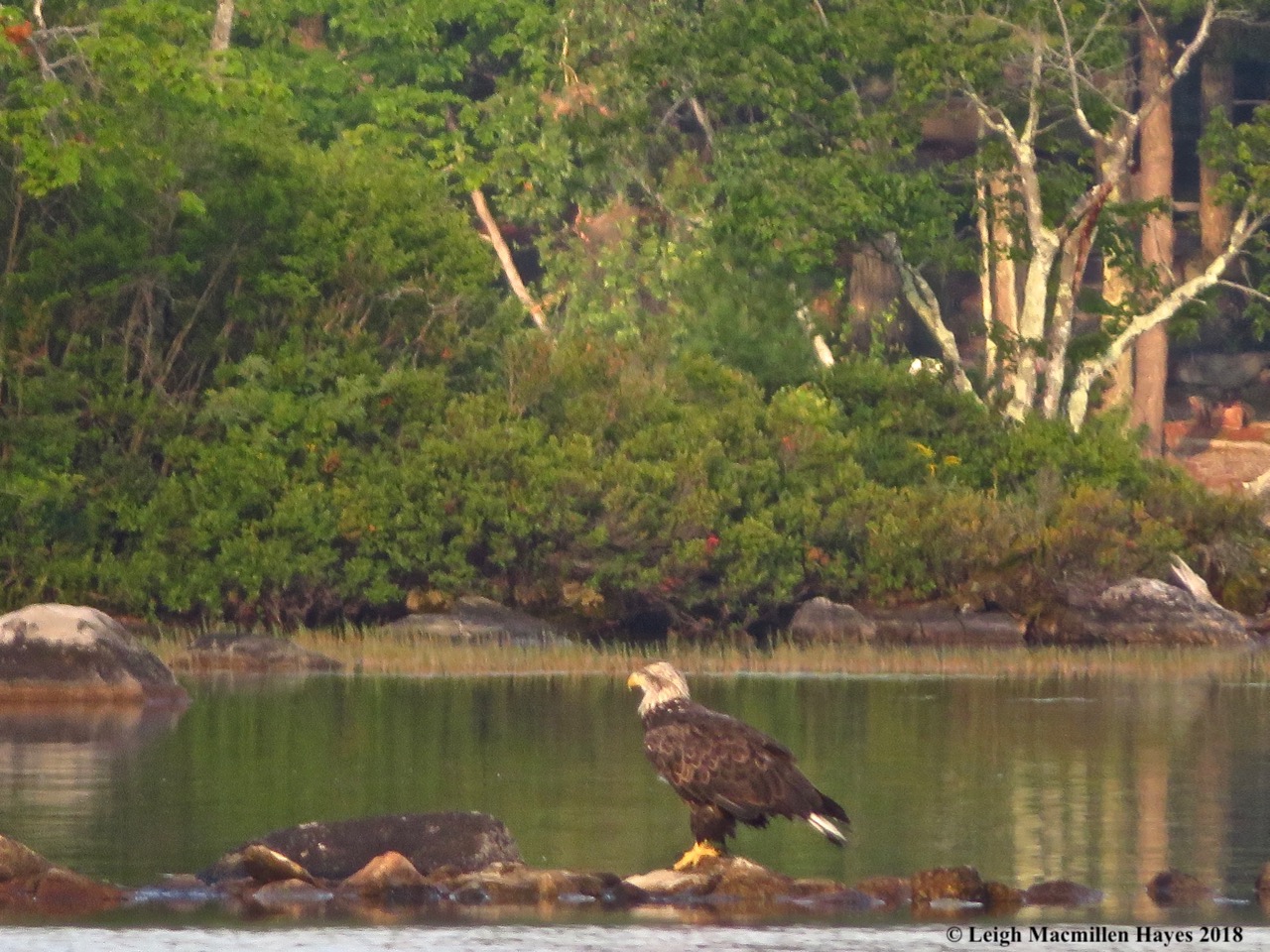
And then an immature eagle appeared. So did my next-door-neighbor, who walked quietly onto the dock with her camera. Together, we watched, barely exchanging any words as we didn’t want to disturb the scene.

23

Eventually the older bird flew up to a perfect viewing spot on a nearby island, rearranging a couple of twigs to create a mini-platform from which to watch the world.

5

The younger bird stayed a bit longer and then it flew toward the north end Moose Pond.

6

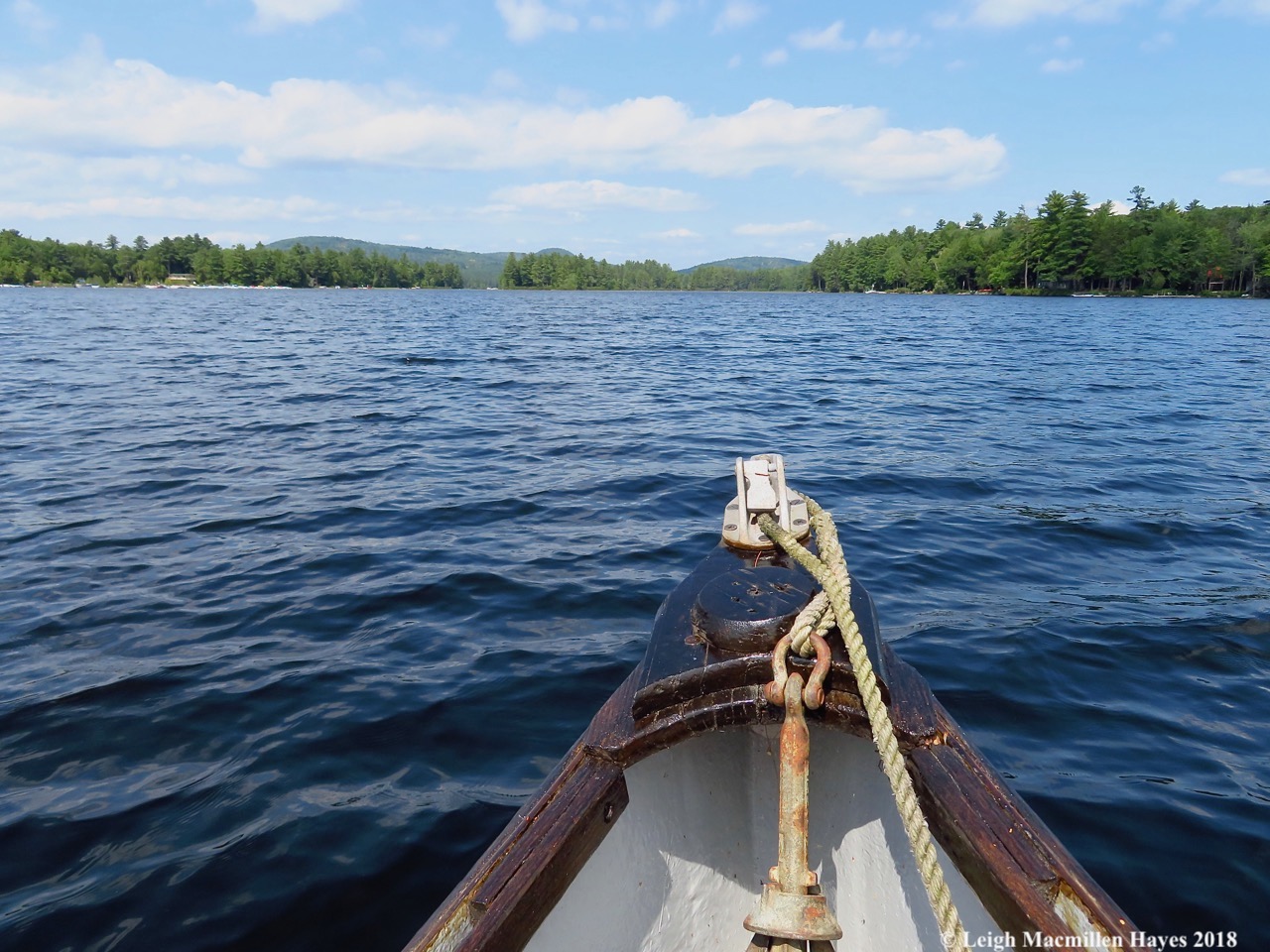
A few hours later, my guy and I also headed north, traveling a route we typically follow with our kayaks. Our mode of transportation on this day was the S.S. Christmas, our Maine Guide boat.

7

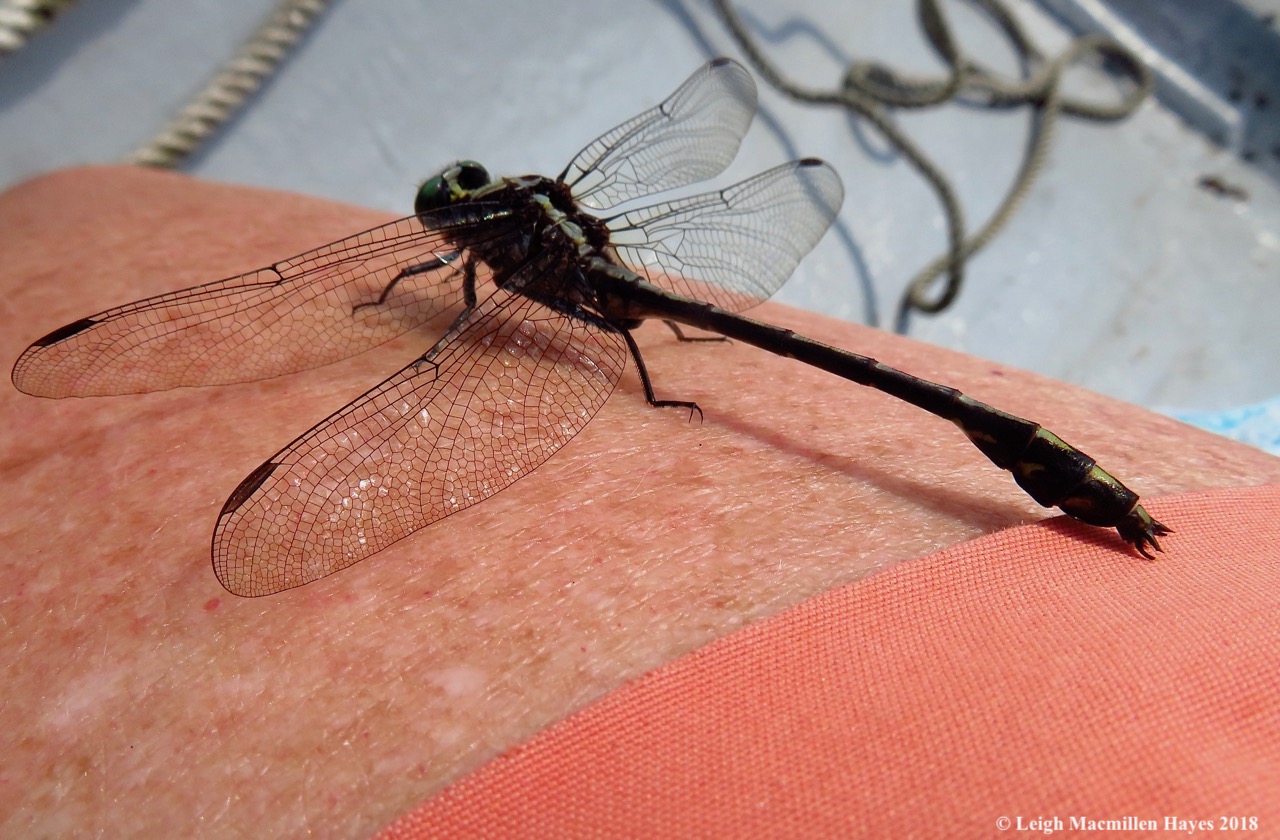
As we moved along, I felt a tickle on my leg and looked down to see that Sir Lance, the lancet clubtail dragonfly, had joined us for the journey. He came and went several times and then left us alone as we moved into a territory occupied by other species of dragonflies.

8

Among the islands we moved, keeping an eye on the bottom for the water is quite shallow and our boat precious. So are we. And the camera!

9

Eventually we ran out of mini-channels to follow for so carpet-like was the display of lily pads before us.

10

I would have been content to drift, but my guy is a doer and he needed to be doing something. And so he rowed.

11

As I turned around to see what I might see, I saw a hitchhiker up under the bow–a dock or fishing spider! The rule was, if it didn’t bother me, I wouldn’t bother it.  And so it went for the remainder of our journey together, though I’m not sure he departed when we returned to the dock.

12

Anyway, back to our adventure. We were approaching one of the islands we sometimes stop on when we snowshoe in the winter–it’s a fine place to enjoy a PB&J sandwich. And then I spied something in the tall pine. An owl? I’ve listened to a Barred Owl the past few nights.

13

My guy rowed closer and we realized it was the immature eagle.

14

And so at last we sat still. For a long while. And watched. And waited. And listened. And saw calico pennant dragonflies.

15

But it was the eagle that really drew our attention.

16

Behind us fish jumped and we fully expected the bird to scream down our way with its talons extended.

17

But it didn’t. Instead, it panted like a dog. The day was warm, especially up in the islands where the wind was blocked.

18

It also preened.

19

And occasionally it looked our way–mostly when my guy’s feet moved a bit and his crocs squeaked, sounding rather like another eagle. Their highpitched call always surprises me for it seems rather weak for such powerful birds that draw our awe and wonder with each sighting.

20

At last the eagle flew south, apparently not at all interested in any fish . . . or painted turtles. And we made our way south as well.

21

We were almost back to the dock when Sir Lance landed on my leg again. I placed my pointer finger in front of him and he climbed onto it. How cool is that?

Another fun Mondate aboard the S.S. Christmas with my guy–and another opportunity to exert our eagle eyes!


A Berry Pleasant Mountain Hike

Thirty-two years ago I moved to Maine (the only place I’ve ever lived where the number of years counts as bragging rights) and Pleasant Mountain quickly figured into my life. The first day I drove past it on Route 302, I was killing time before a job interview and one look at Moose Pond with the mountain looming over it and I knew I very much wanted to live here. A couple of days later, I received the phone call I’d been waiting for and principal Larry Thompson said it was only a matter of formality that my name go before the school board. By the next week, I was packing up in New Hampshire and making my way further north. I’d found a place to live that meant I’d pass by the mountain on my way to and from school each day. And then that October I attended a Halloween party with friends at the ski lodge of what was then called Pleasant Mountain Ski Resort. I was an olive and I met this guy dressed as a duck hunter. Turns out he’d never been duck hunting, but had a great duck puppet and he could turn its head with the stick within. He certainly turned my head!

Thus began the journey with my guy. Our first hike together–up the Southwest Trail of Pleasant Mountain. That first winter, he taught me to downhill ski, well sorta. My way of turning that first time included falling as I neared the edge of the trail, shifting my body once I was down on the snow, begging for the components of a steak dinner, rising and skiing across at a diagonal to the opposite side only to repeat my performance. Dinner was great that night! And well deserved.

Time flashed forward four years, and at noon on August 4, 1990, we were married; our reception in the Treehouse Lounge at the Ski Resort. In all the years since we first met and then were married and beyond, we’ve skied (though I have managed to avoid that concept more recently) together and with our sons before their abilities outgrew mine, snowshoed and hiked and grown only fonder of the place we call home. Our intention yesterday was to climb the mountain in celebration of our 28th anniversary, but the weather gods outpouring of moisture was not in our favor.

Today, however, dawned differently and so mid-morning we made our way with a plan to hike up the Bald Peak Trail, across the ridge to the summit, and down the Ledges Trail. We’d left the truck at the Ledges, ever mindful that the last thing we want to do after climbing down the mountain is to walk 1.5 miles to reach our vehicle.

1-heading up

As I’ve done over and over again in the past 32 years, I followed my guy–over rocks and roots and bald granite faces.

2-Pinesap

Once in a while I announced the need for a stop because my Nature Distraction Disorder ticked into action. In this case, it was Pine-sap, or Monotropa hypopitysMono meaning once and tropa turned; hypopitys for its habitat under a pine or fir. Also called Dutchmen’s Pipe, this is a parasitic plant that obtains all its nutrients by stealing them from the roots of a host tree. It doesn’t enter the host directly, but through a fungal intermediary. And like Indian Pipe, it has no green tissues. It differs from I.P. in two ways, its yellow color as compared to white, and two to eleven flowers versus a single flower. In my book of life, both Pine-sap and Indian Pipe are great finds.

3-Moose Pond below

I didn’t let my NDD get the better of me too often on the way up. It was extremely humid and so we did stop frequently, but also kept a pace that worked for both of us and soon emerged onto the ridge where a look back through the red and white pines revealed a peek of the causeway that crosses Moose Pond.

5-hidden camp

Employing the telephoto lens, I spied our camp hidden among the trees, only the dock and our little boat showing. It’s amazing how obvious all the neighboring camps seemed when viewed from up high.

7-ridge line trail

After the climb up, the ridge always seems a cinch as the pathway wanders through blueberries, pines and oaks.

6-lunch rock

At last we found lunch rock, a place to pause in the shade and enjoy our PB&J sandwiches. We’d packed cookies for dessert, but decided to save those for later. My guy, however, had accidentally unpacked my work backpack and discovered a few pieces of a dark chocolate KitKat–my stash when I’m tired at the end of the day and need a pick-me-up before driving home. It looks like the purchase of another KitKat is in my near future for we topped off the sandwiches with a sweet treat.

8-picking blueberries

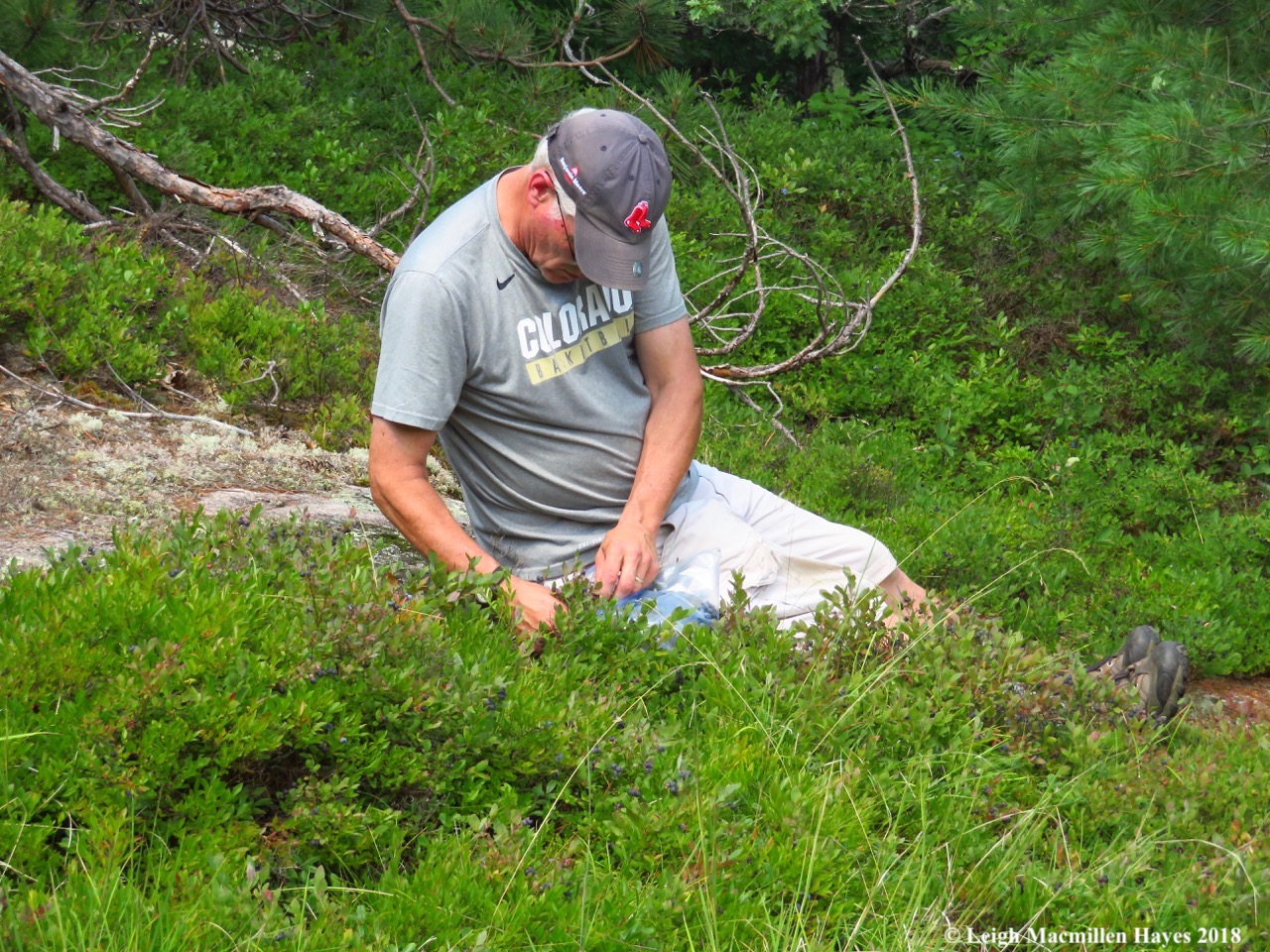
After lunch, my guy’s eyes focused in on one thing only. That is after he moved away from his original spot behind the rock we’d sat upon for our repose. Unwittingly, he’d stirred up a yellow jacket nest and managed to walk calmly away, only one bee stinging his leg.

14-blueberries

While his attention was on the gold at his feet–in the form of low-bush blueberries, I turned my lens in a variety of directions. Oh, I helped pick. A. Wee. Bit.

9-Lake Darner Dragongly

But there were other things to see as well and this dragonfly was a new one for me. A few highlights of this beauty: Do you notice the black cross line in the middle of the face. And on the thoracic side stripe, do you see the deep notch?

10-Lake Darner Dragonfly

Both of those characteristics helped in ID: Meet a Lake Darner. Even the male claspers at the tip of the abdomen are key, for they’re paddle-shaped and thicker toward the end. Though he didn’t pause often, Lake Darners are known to perch vertically on tree trunks. I was in awe.

11-grasshopper

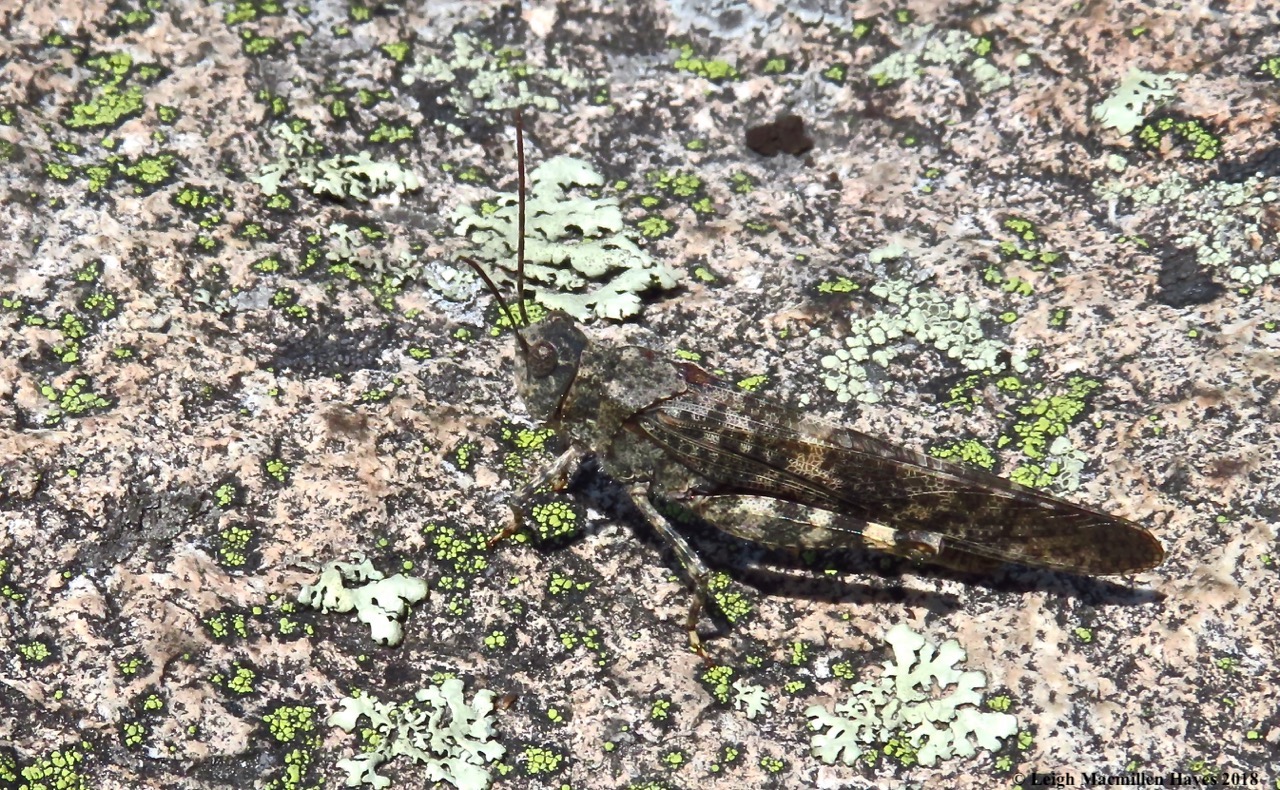
All the while we were on the ridge, the Lake Darners flew about, their strong wing beats reminiscent of hummingbirds, so close did they come to our ears that we could hear the whir. And then there was another sound that filled the summer air with a saw-like buzziness–snapping and crackling as they flew. I couldn’t capture their flight for so quick and erratic it was, but by rubbing pegs on the inner surface of their hind femurs against the edges of their forewings, the grasshoppers performed what’s known in the sound world as crepitation. Crepitation–can’t you almost hear the snap as you pronounce the word?

12-coyote scat

It wasn’t just insects that caught my eye, for I found a fine specimen of coyote scat worth noting for it was full of hair and bones. It was a sign bespeaking age, health, availability, and boundaries.

12A

Turns out, it wasn’t the only sign in the area and whenever we hike the trails on Pleasant Mountain these days, we give thanks to Loon Echo Land Trust for preserving so much of it. According to the land trust’s website: “Currently, Loon Echo owns 2,064 mountain acres and protects an additional 24 acres through conservation easements.”

13-picking some more

Our time on the ridge passed not in nano seconds, for my guy was intent on his foraging efforts. I prefer to pick cranberries, maybe because they are bigger and bring quicker satisfaction as one tries to fill a container. But, he leaves no leaf unturned. And enjoys the rewards on yogurt or the possible muffin if his wife is so kind, until late in the winter.

15-middle basin of Moose Pond

As we slowly moved above the middle basin of Moose Pond, I found other berries growing there.

14-lingonberries

Among them, lingonberries were beginning to ripen. They grow low to the ground, below the blueberries, and resemble little cranberries. In fact, some call them mountain cranberries. Like blueberries, they like acidic, well-drained soil. For all the leaves, however, there were few fruits and I had to wonder if the birds were enjoying a feast.

16-huckleberries

Huckleberries also grow there, though not quite as abundantly as along our shorefront on Moose Pond. They’re seedier than blueberries, though the local squirrels don’t seem to mind. Both red and gray harvest them constantly as they move throughout the vegetated buffer in front of camp.

17-summit fire tower

It took some convincing, but finally my guy realized that we needed to move on and so we gradually made our way to the summit, where the once useful fire tower still stands as a monument to an era gone by.

18-summit view in the haze

Our pause wasn’t too long for so strong was the sun. And hazy the view, Kearsarge showed its pointed profile to the left, but Mount Washington remained in hiding today.

19-ledges view of Moose Pond's southern basin

The journey down was rather quick. Perhaps because we were so tired, it felt like we just rolled down. But we did stop to admire the view of the southern bay of Moose Pond in Denmark. Our intention was also to eat the cookies we’d packed once we reached this point. Through both bags we hunted to no avail. I remembered packing the cookies under our sandwiches. And then moving the sandwiches to the second pack, but leaving the cookies. Did we accidentally take them out after all? Were they on the kitchen counter? In the truck? The final answer was no on all fronts. We think we must have taken them out at lunch rock and they never made it back into the pack. I had moved the backpacks with great calmness once we discovered the yellow jacket nest. Just maybe the yellow jackets are dining on some lemon cookies. Perhaps it was our unintended peace offering.

20-hiking down following this guy

After a five plus hour tour, filled with blueberries and sweat, I followed my guy down. We’ve spent the greater part of our lives following in each other’s footsteps and it’s a journey we continue to cherish, especially on our favorite hometown mountain.

Here’s to many more Berry Pleasant Mountain Hikes with my guy.


Island Hopping Mondate

Paddling together in “Big News,” our double kayak so named for it was a gift from the Neubigs many moons ago (thank you, Carissa and Bob), is one of our favorite summer pastimes. With wrist almost fully mended, it’s an even sweeter journey for me because it means I don’t have to work hard.

1-prepping the kayak

And so it was that my guy prepped Big Red for today’s journey–an exploration of the northern basin of Moose Pond. The “pond” is a 1,697 water body with a 33.3 mile perimeter that’s broken into three sections. We know the north best, which offers about a four-mile round-trip journey from camp up into the islands of Sweden. The other section that we don’t visit as often, but do enjoy exploring, is the southern section in Denmark, for it’s equally interesting.

2-BLUEBERRIES!

Today, though, my guy had a mission worth gold in mind–to make some headway on his blueberry greed.

6-yellow-necked caterpillars

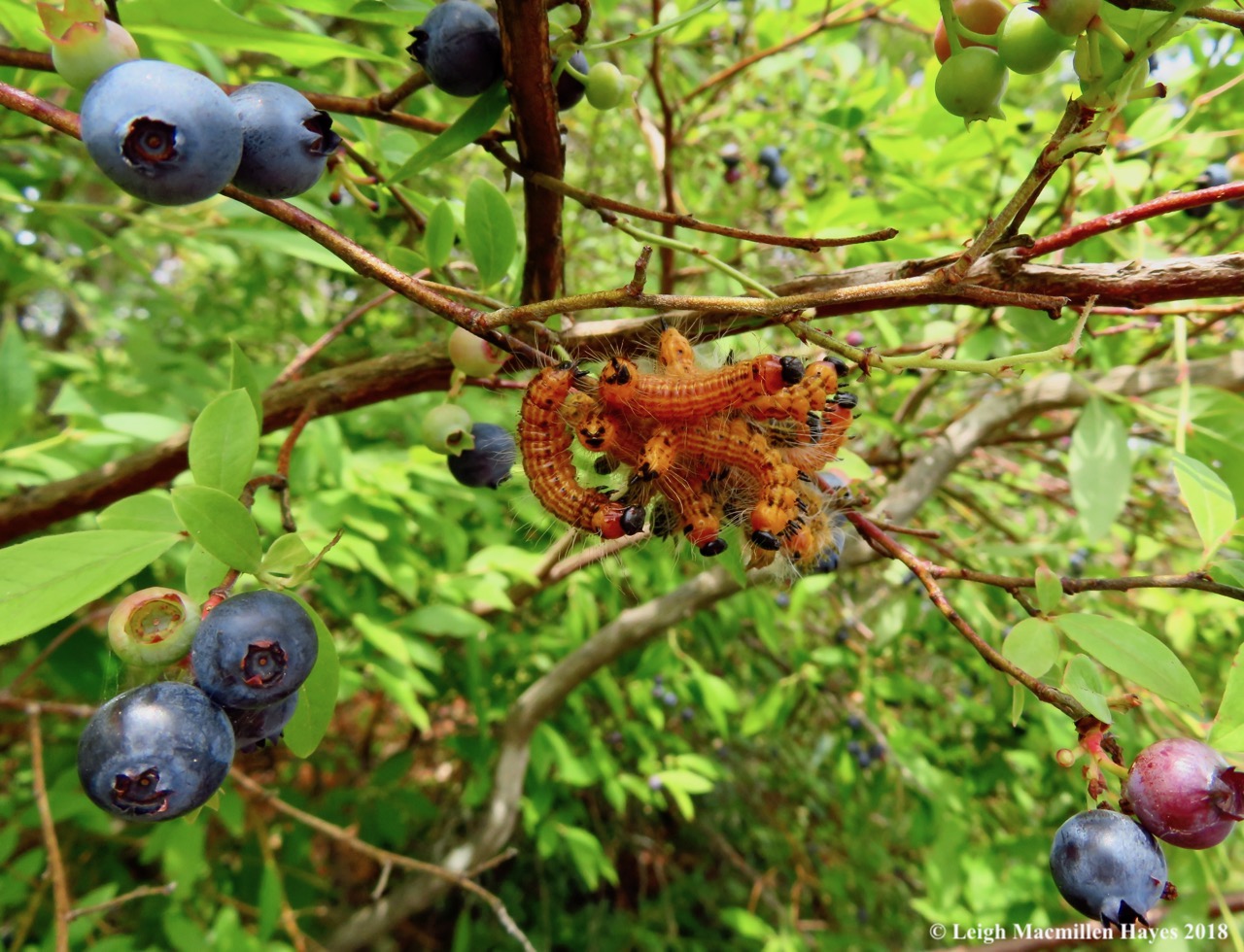
Along the way we discovered an interesting sight. Our friend, and pond neighbor from the western shore, Lili Fox, asked yesterday if I could identify some yellow and black caterpillars. After a wee bit of research, I suggested Yellow-necked Moth Caterpillars. I didn’t expect to meet them quite so soon myself, but immediately recognized the group that clustered at the tip of a blueberry twig. At first, they seemed immobilized, but then I realized they were in the defense form that I’ve witnessed with other caterpillars, curling outward to form a U. I’d just picked a few berries below and so they saw me as prime predator. Fortunately, no attack was made.

8-yellownecked 2

Overall, they have yellow and black stripes, but it’s the yellow segment or neck behind their black heads for which they were named. These very hungry caterpillars were reaching maturity and soon should drop to the ground. They’ll apparently overwinter burrowed below as pupa and emerge in adult form next year.

10a-fluffy yellownecked

I assumed that those with the most wiry hair were the oldest. We probably should have shaken them off the branches and into the water, but we didn’t. Nature knows what to do and some will become a food source for wasps or birds, passing along the energy contained in the blueberry leaves to another level.

3-variable dancer damselfly

In the meantime, I became the Yellow-necked Lookout Warden as my guy continued to pick. Accompanying me with his own bulbous set of eyes was a male Variable Dancer Damselfly.

4-spreadwing

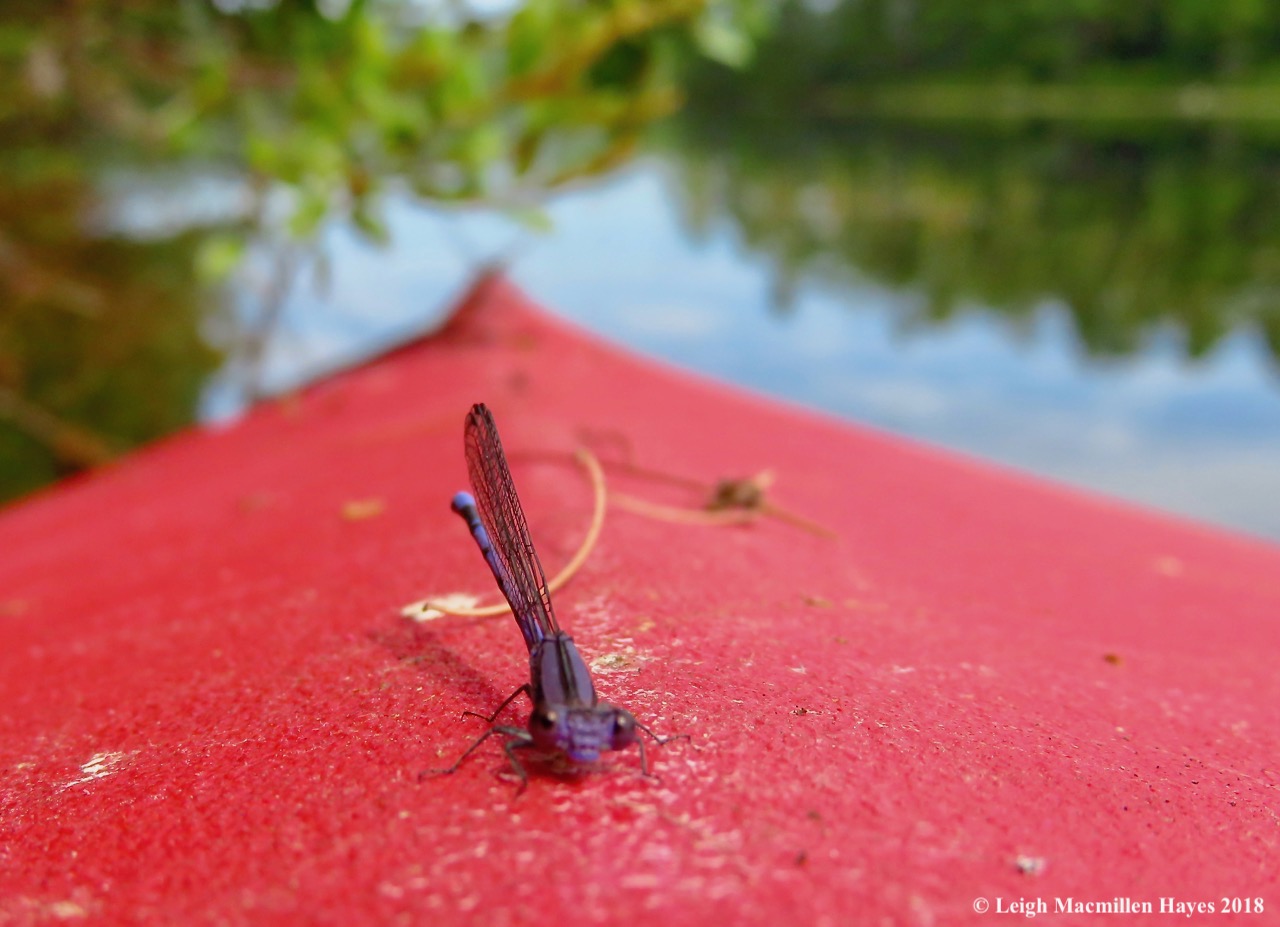
The damselflies actually could care less about the caterpillars and more about finding a mate and so they all posed, either on the kayak, or nearby vegetation.

5-orange bluet damselflies

Both turned out to be the right substrate on which to perform mating rituals, this being a pair of Orange Bluet Damselflies on the kayak.

7-emerald spreadwings canoodling

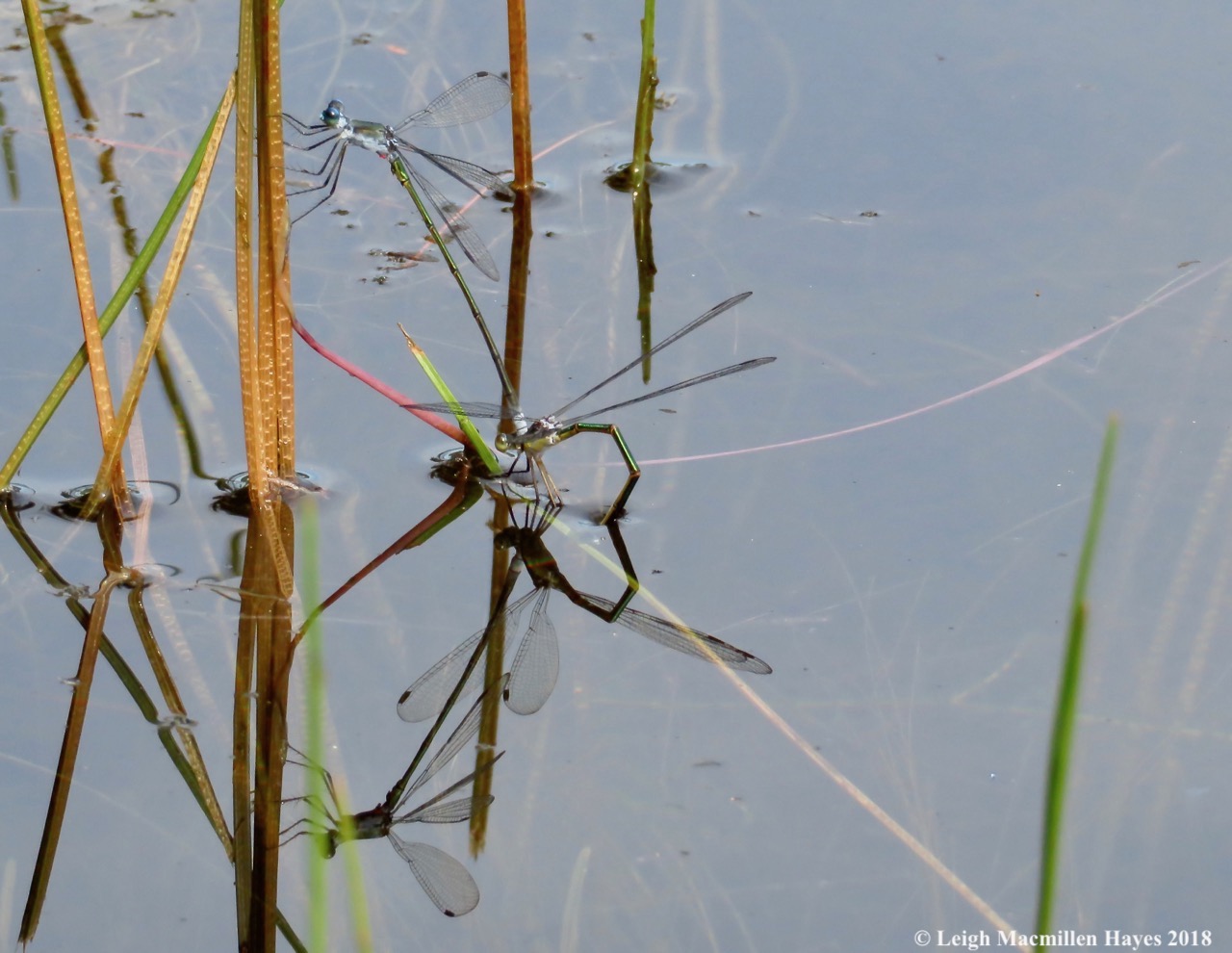
And Emerald Spreadwings offering a reflection on the pond of their canoodling efforts.

10-heading north

At last we continued further north, island hopping along the way.

12-Eastern Pondhawk Dragonfly

Though their natural communities all looked similar, with each stop came a different offering, including the Eastern Pondhawk that displayed one of my favorite combinations of color-sky blue pond green.

13-EAstern Pondhawk

Eye to eye, we contemplated each other. I have no idea what he thought of me. Well, actually, I’ve no idea if dragonflies can think. Is all their action instinctive? As for my thoughts, I didn’t want to gobble him up in a literal fashion, but wish I could have taken him with me so I could continue to stare, infatuated with his colors as I was. On his thorax I saw a watercolor painting reflecting a sunny day by the pond.

14-Floating Heart Plant

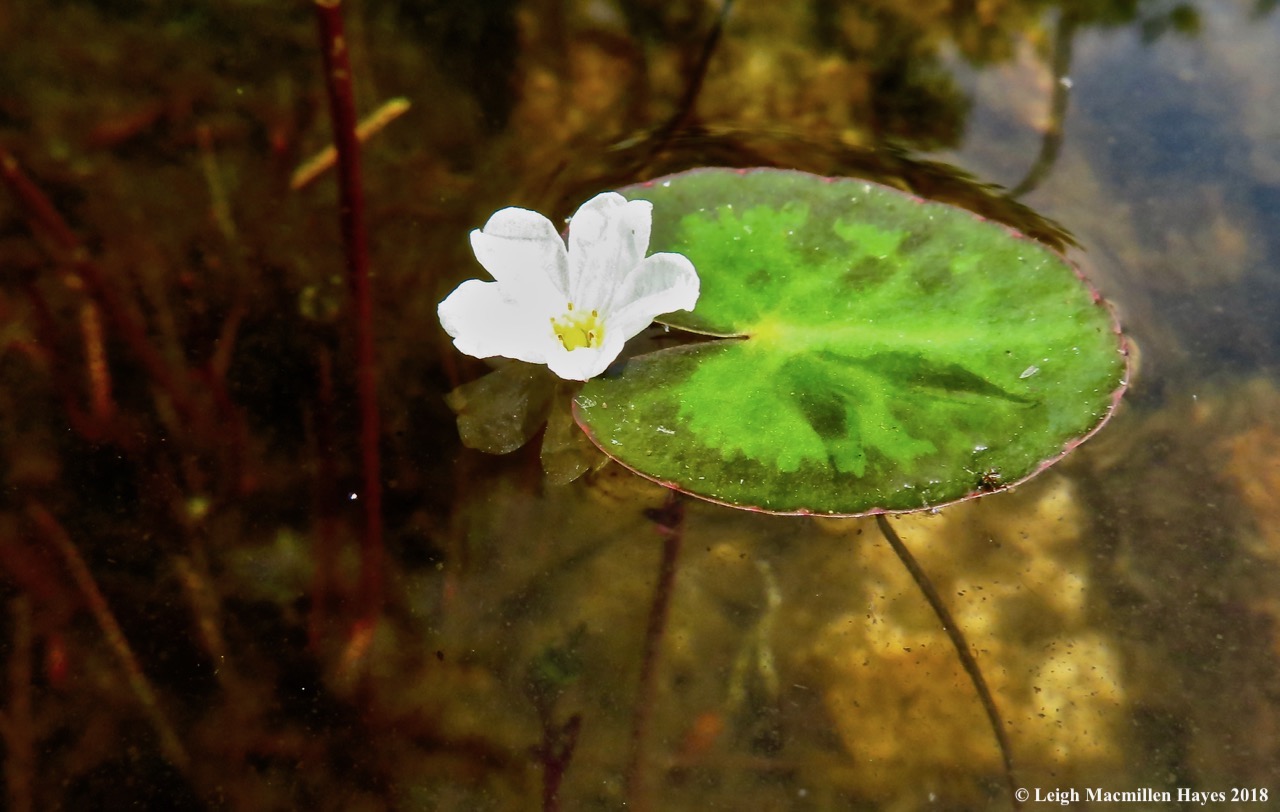
Another island and another find–the delicate flower of a Floating Heart Plant.

14-bullfrog on lily pad

And then a frog on a lily pad, a young frog that is.

15-bullfrog froglet

If you look closely, you may see her tail extending behind. I couldn’t help but think that she’s got big feet to grow into.

16-beaver lodge

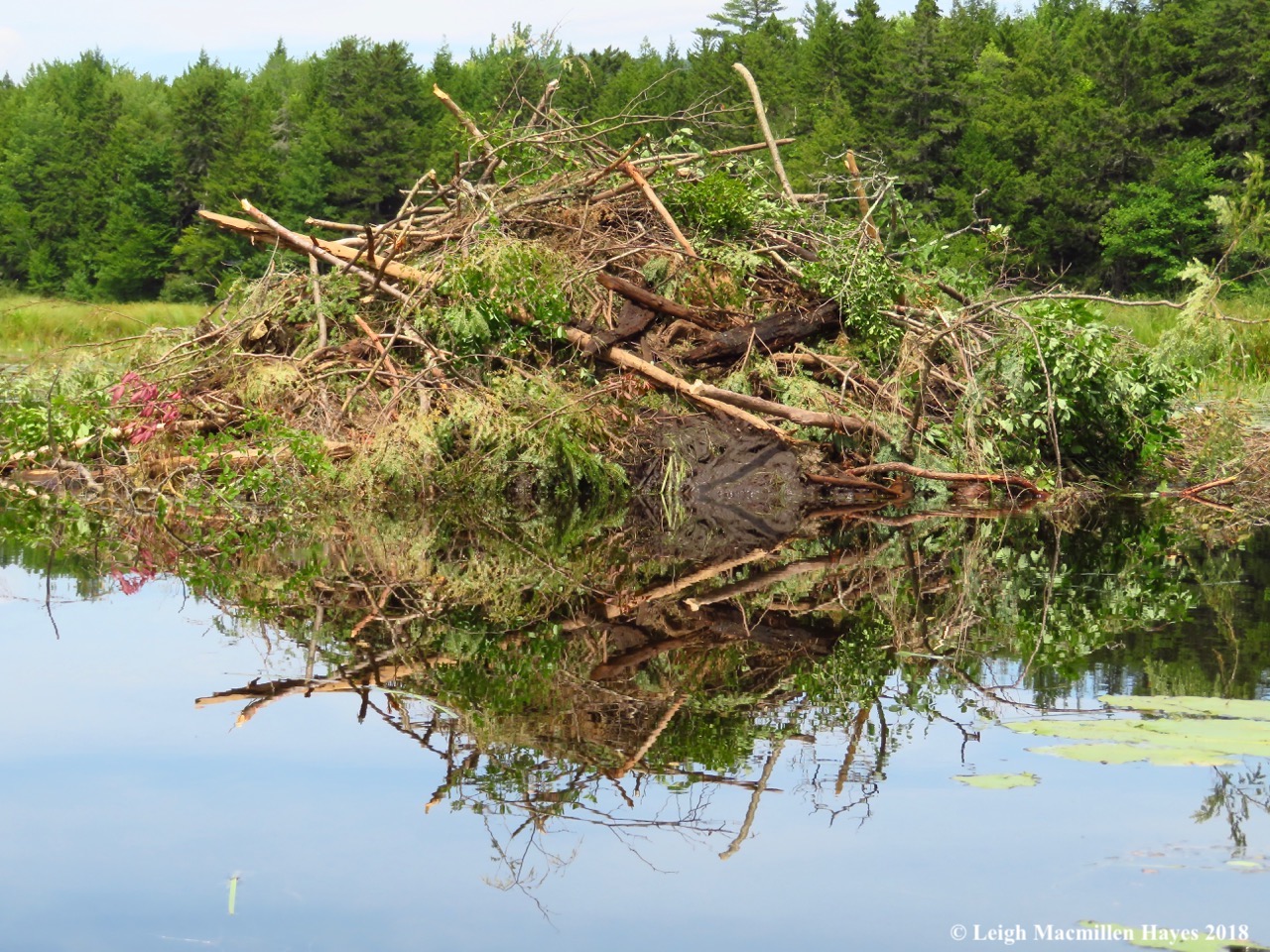
Beside one of the last islands we visited, we saw that the neighborhood had changed quite recently and a new house had been built. Though none of the residents came out to greet us, we weren’t surprised. Based on the greenery and wet mud we suspected they’d been busy as beavers all night and needed a rest.

17-beaver island

A quick look around and we knew the source of their building materials. It reminded us that they’ve been secret visitors to our land in the past and have helped themselves to young saplings much to our dismay. Then again, it is their land as well. We’re just the ones who pay the taxes.

11-spadderdock with damselfly exuvia

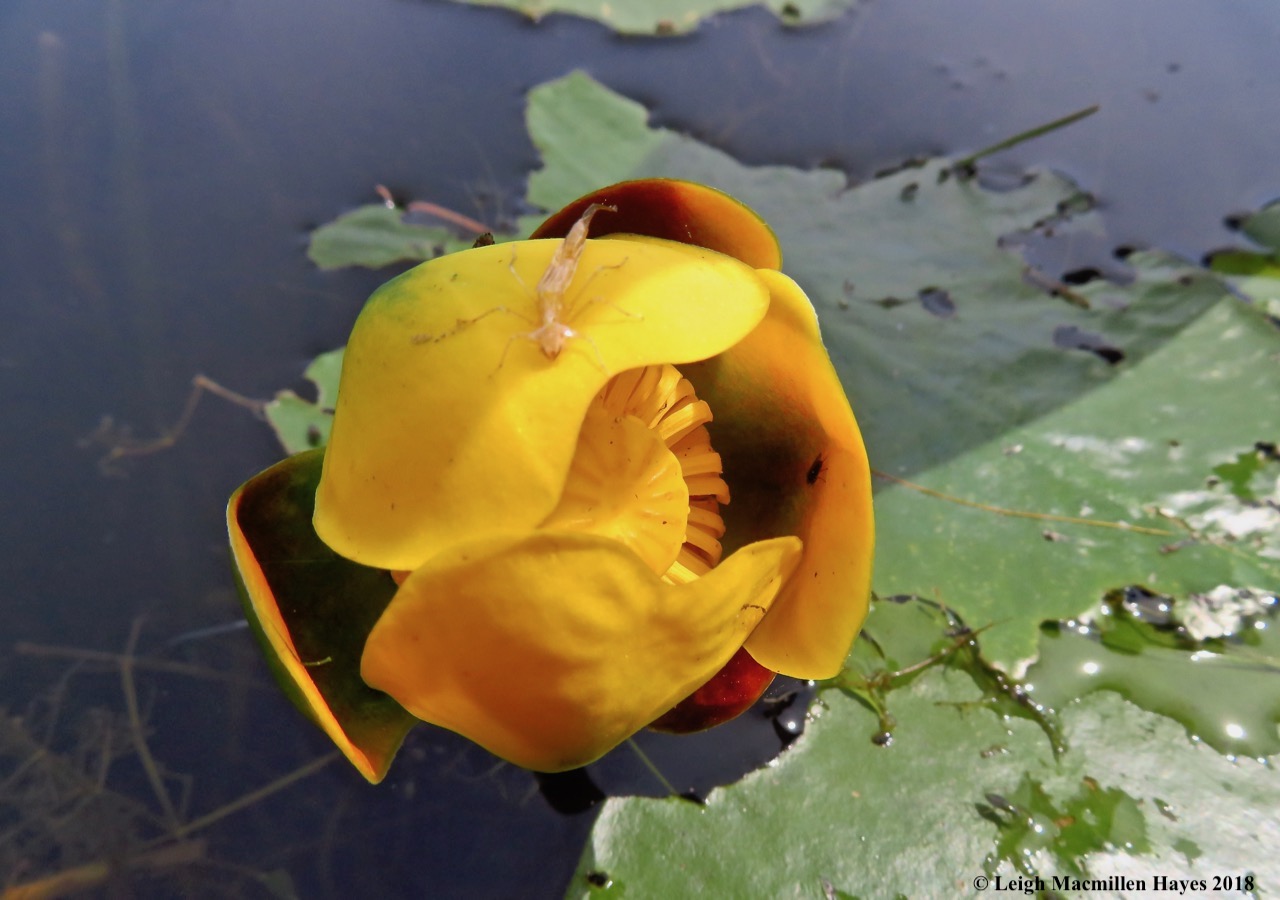
Of course, no water adventure is complete without a photo of Spatterdock, this one featuring a damselfly exuvia.

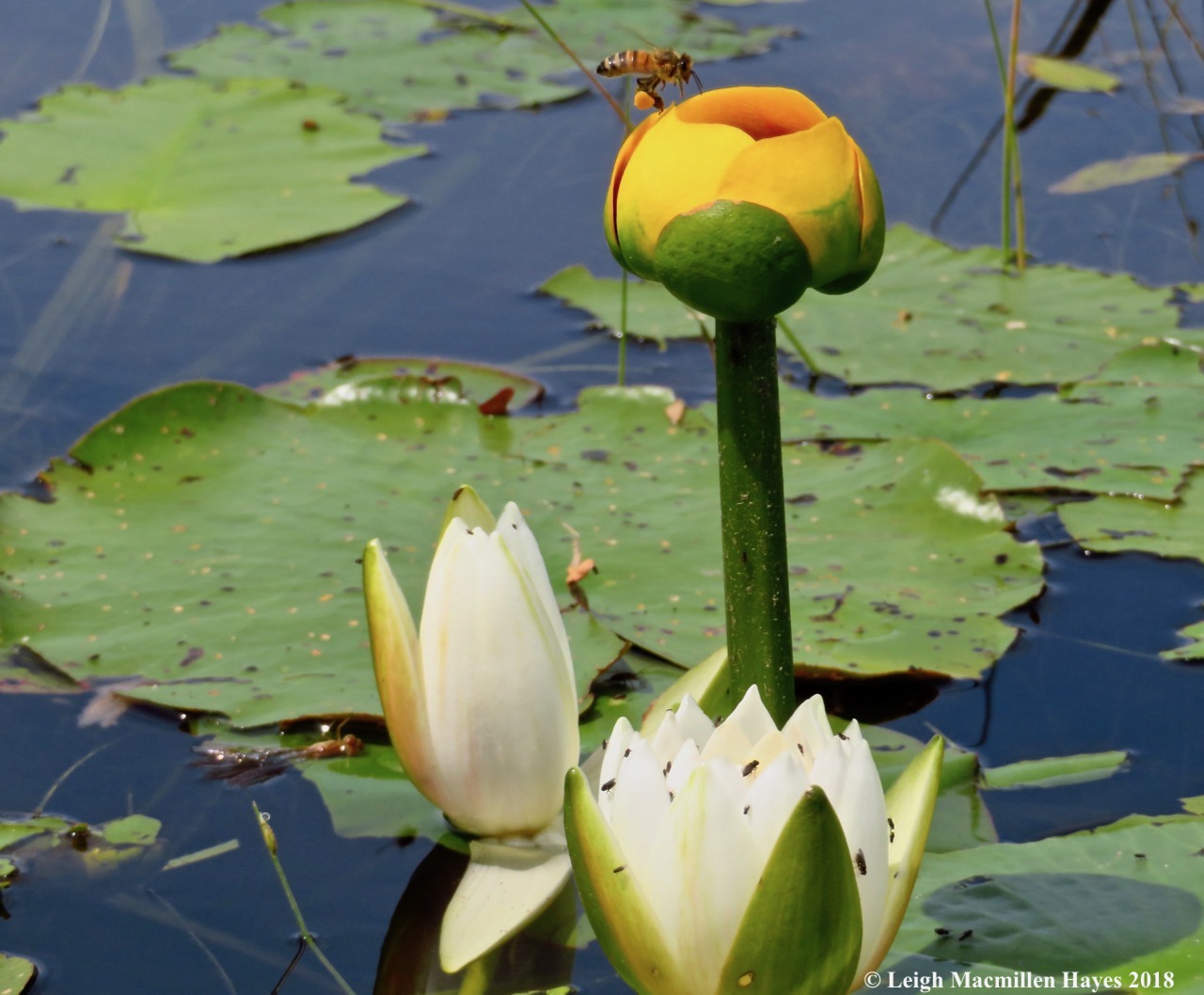
17-fragrant water lily

And Fragrant Water Lily. That rayed presentation. Those prominent yellow stamens. The symmetry. And, of course, the fragrance.

18-honeybee

What could be better than the two together? The two together with small flies on one and a honey bee, its buckets full, visiting the other.

19-painted turtle

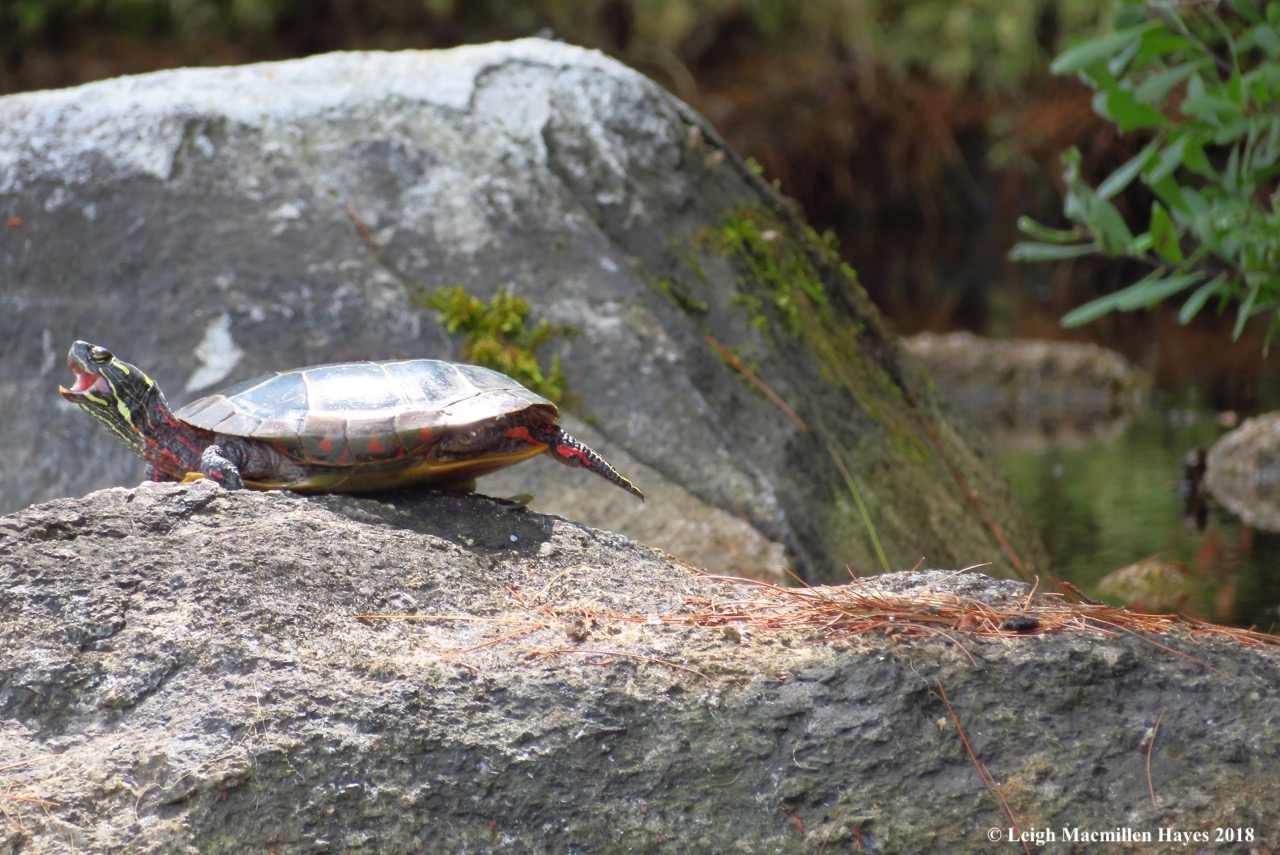
At last, it was well after lunch, which we’d neglected to pack and my wrist was sore, so my guy said he’d paddle us home. And because we’d startled a turtle earlier, he said he’d find one for me. Wow! Both the turtle and I were impressed.

20-turtle basking

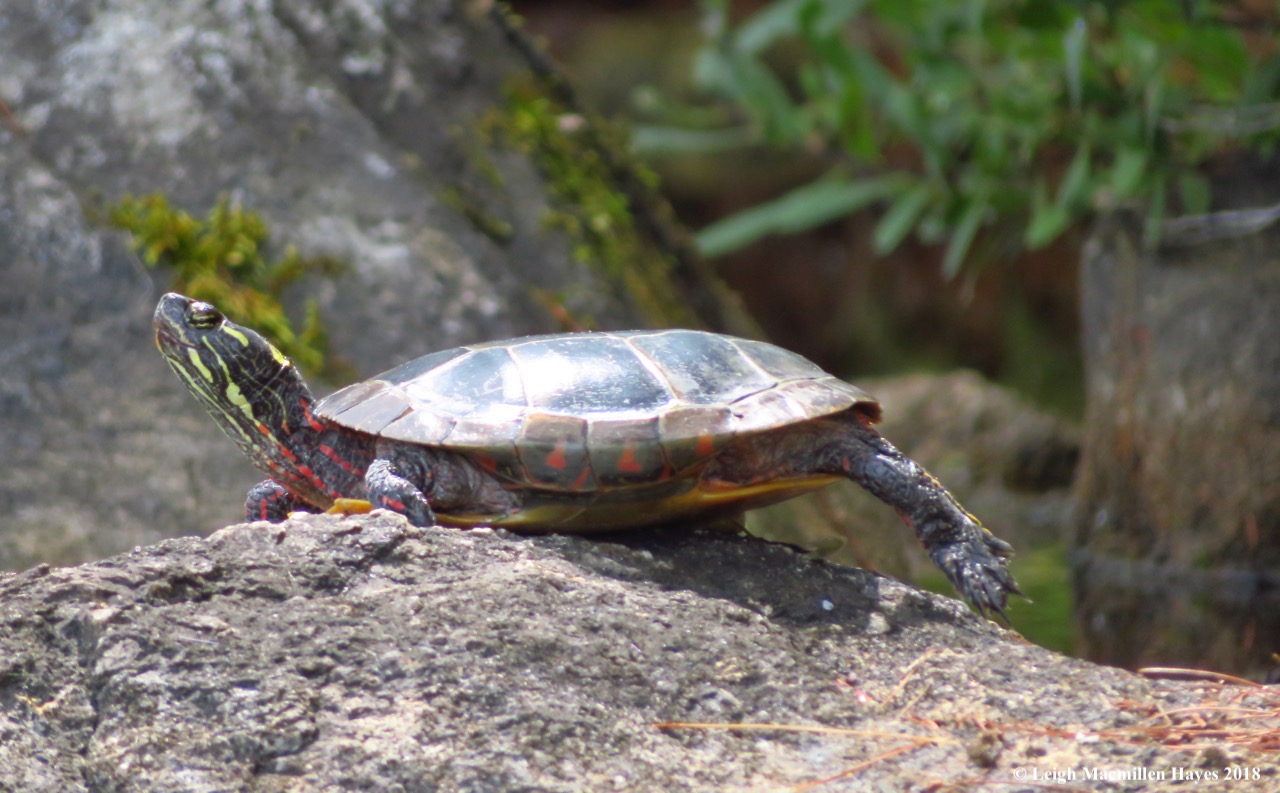
As turtles do, he stretched out his back legs demonstrating how they need to capture additional heat given that they are cold-blooded animals. Basking helps them to absorb warmth and vital UV rays.

21-waving goodbye

What he did next surprised us. He began to wave his front left leg–I took it as a goodbye, but it was probably either a way to push an insect toward his mouth or an aggressive move telling us to move on. We did, heading back to camp as we finished up our Island Hopping Mondate.


Flying With John A. Segur

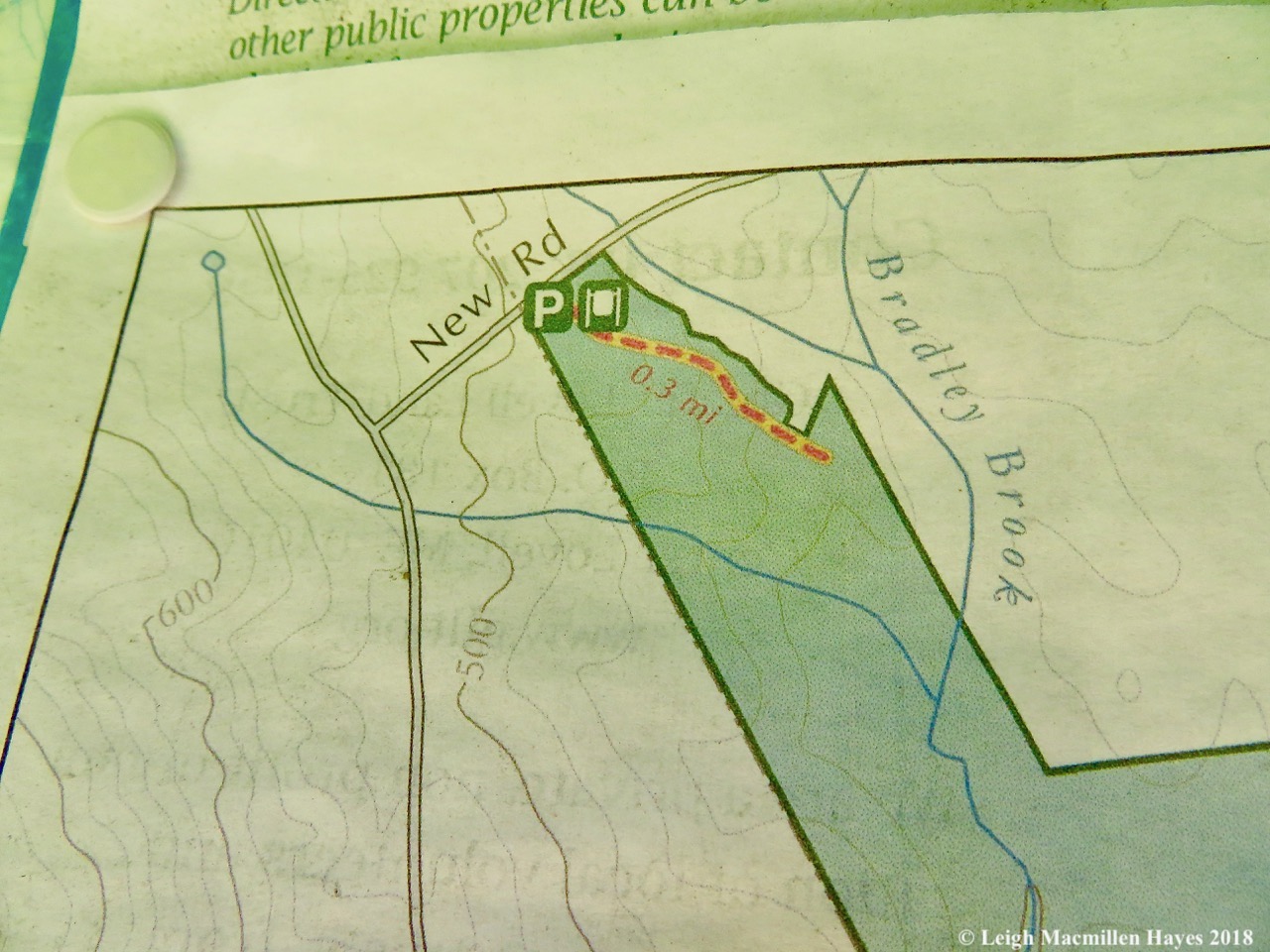
I never had the honor of meeting Mr. Segur, but it was my honor to be his eyes for a short time today as I wandered down the short trail off New Road in Lovell at the Greater Lovell Land Trust’s John A. Segur Wildlife Refuge. Upon his death, a bequest in his name was left to the land trust to preserve habitat for native wildlife to thrive.

The JAS Wildlife Refuge actually encompasses 592 acres and I only explored the .3 mile trail on the western section of the property, but on an extremely hot summer day my finds were enough. Follow me and I think you’ll see what I mean.

j1-Across from the sign and telephone pole

First off, you need to locate the small undefined parking lot. It’s about a mile beyond Foxboro Road, but I don’t pay attention to that. Rather, I look for the “No Thru Trucks” sign and turn on my left-hand blinker as soon as I spot it.

j2-trail and kiosk

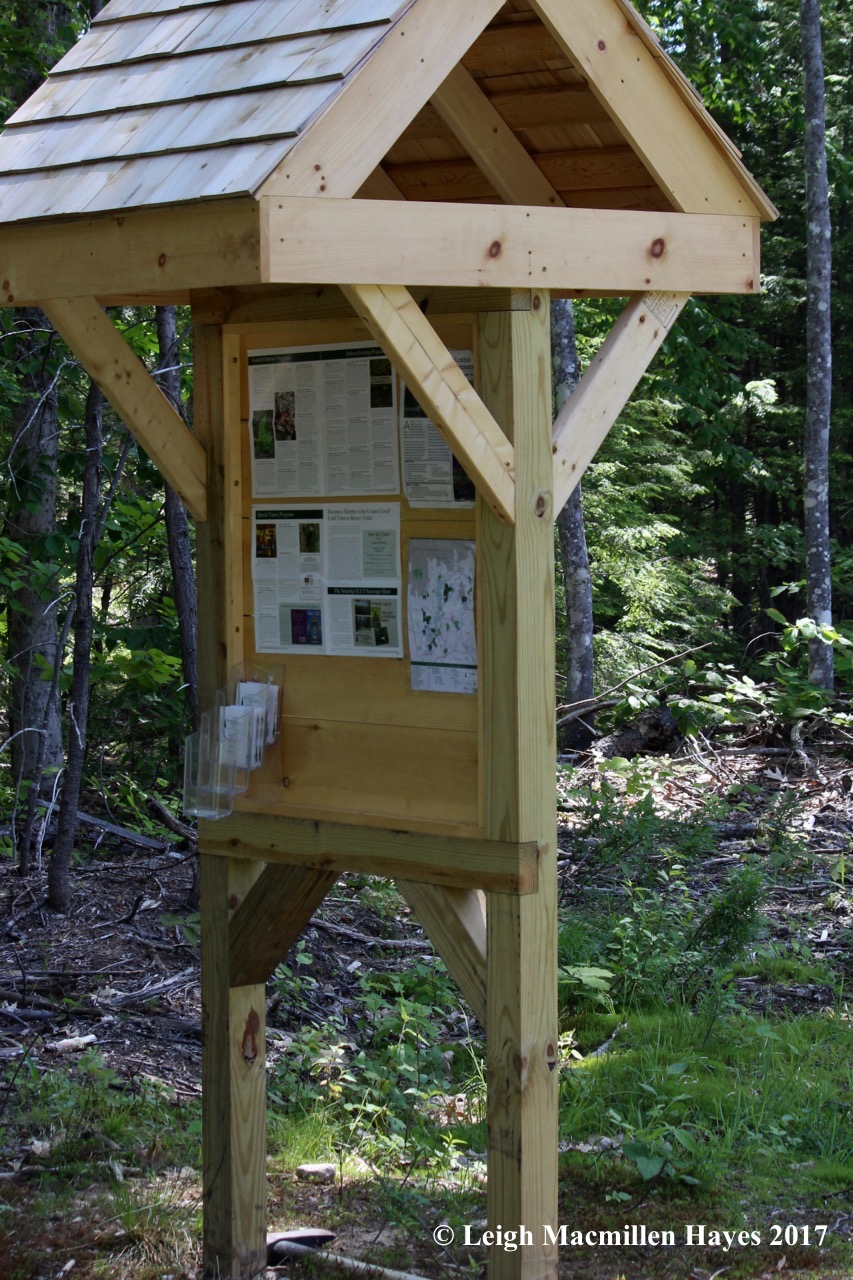
Just beyond a couple of boulders placed to keep vehicles from driving down the old skidder trail, stands the kiosk where you can take a look at the trail map and check out some other GLLT materials.

j3-map

As I said, this is just a small part of the overall refuge, but it’s well worth an exploration, especially if you don’t have much time (though some of us have been known to spend at least three hours making our way down and back).

j3a-the trail mowed

Recently, the GLLT’s Associate Team and Intern mowed the trail, making it passable and not quite so tick-infested. But . . . still take precautions. Always! The trail is rather level, so it’s an easy one to travel.

j4-daisy and crab spider

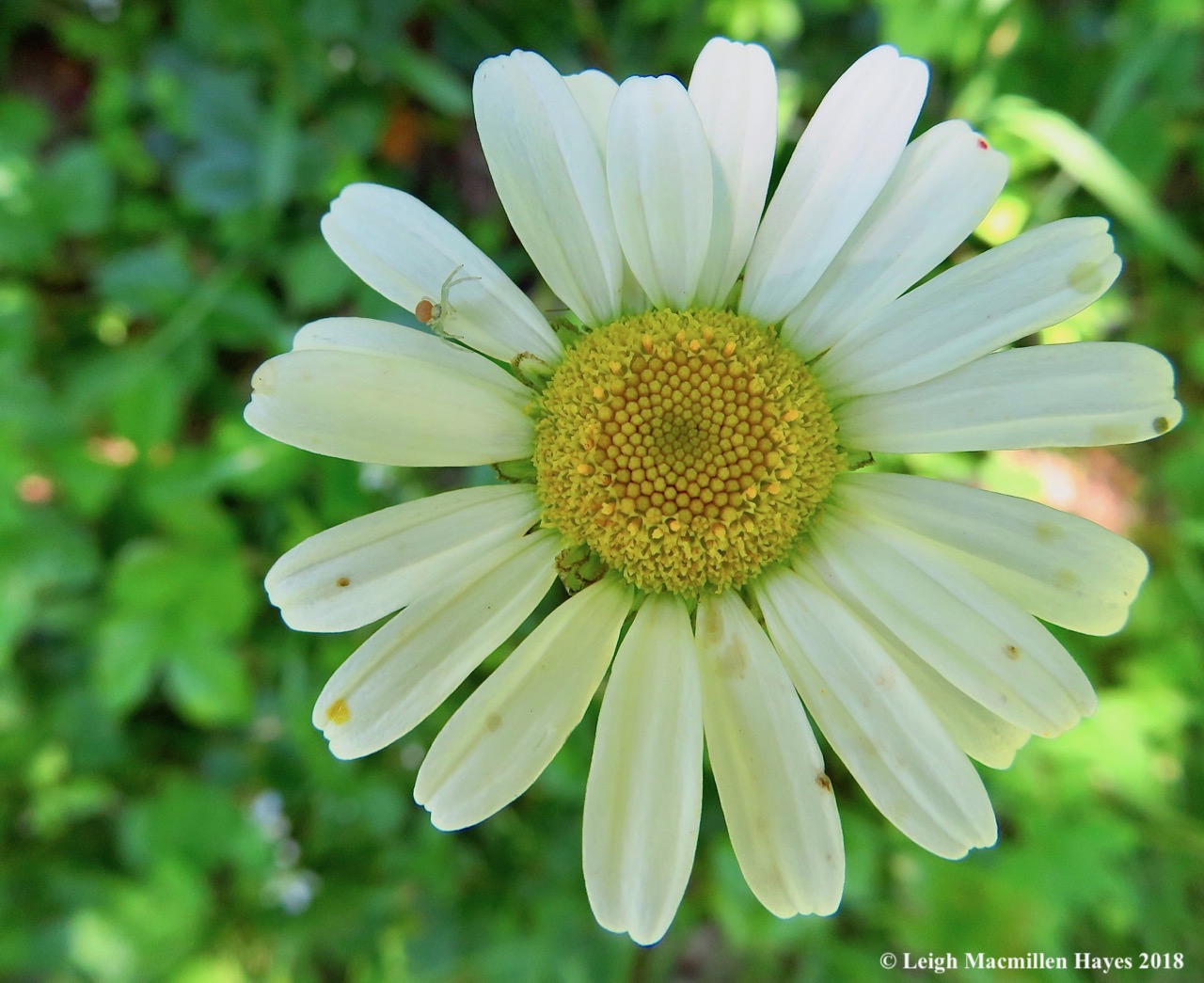
This is a place where you’ll find the ordinary, like a daisy. And trying to decide if “he loves me, he loves me not,” you might see a small crab spider.

j5-sundews

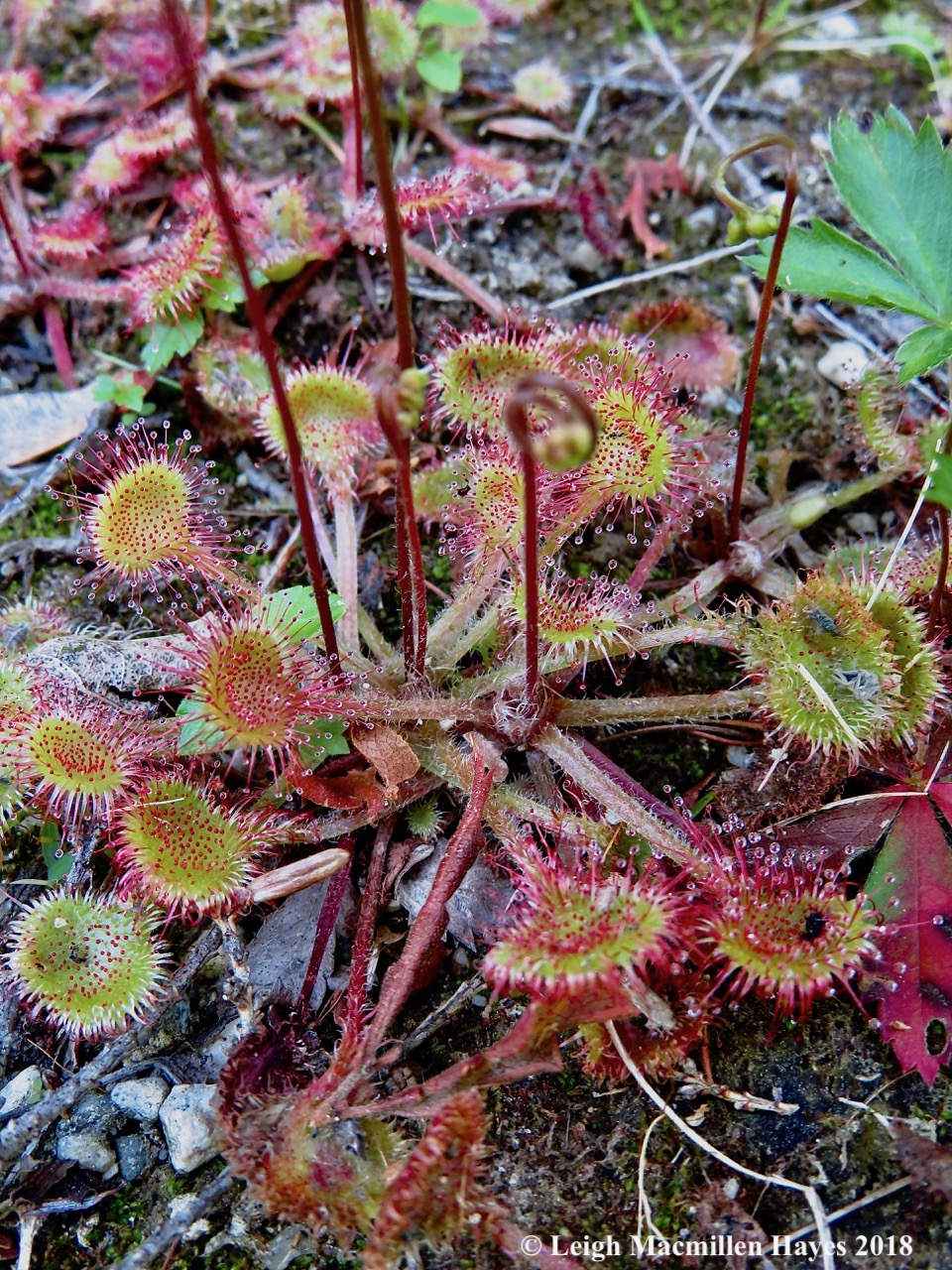
This is also the land of the extraordinary–in the form of the carnivorous Round-leaved Sundews. Check out the glistening droplets at the ends of the hair-like tendrils that  extend from each round leaf. The droplets are actually quite sticky. Just like a spider sensing a bug on its web, the tendrils detect the presence of prey and then curl inward, thus trapping the prey.  The whole leaf will eventually wrap around the insect and in the process of digesting it, the plant will absorb the bug’s nutrients. Sundews tend to grow in areas that lack sufficient nutrients, so this is the plant’s way of supplementing its diet. And if that wasn’t enough–it was just plain beautiful.

All that being said, this is a tiny plant and right now preparing to flower. So, if you travel this way, about a tenth of a mile into your journey, look down at your feet for these minute gems, take a closer look, and then walk with care.

j6-sweet-fern

Further along the trail you’ll see a few species of ferns, as well as the fern that isn’t a fern. Sweet-fern is so named for it’s fern-like appearance, but it has a woody stem and is actually a shrub. It’s yellowish green flowers that first appeared in spring were giving way to greenish brown, burr-like nutlets. In any season, this shrub has such variation to offer, that like hobblebush, I can’t resist honoring it with a million photographs.

j8-raspberries

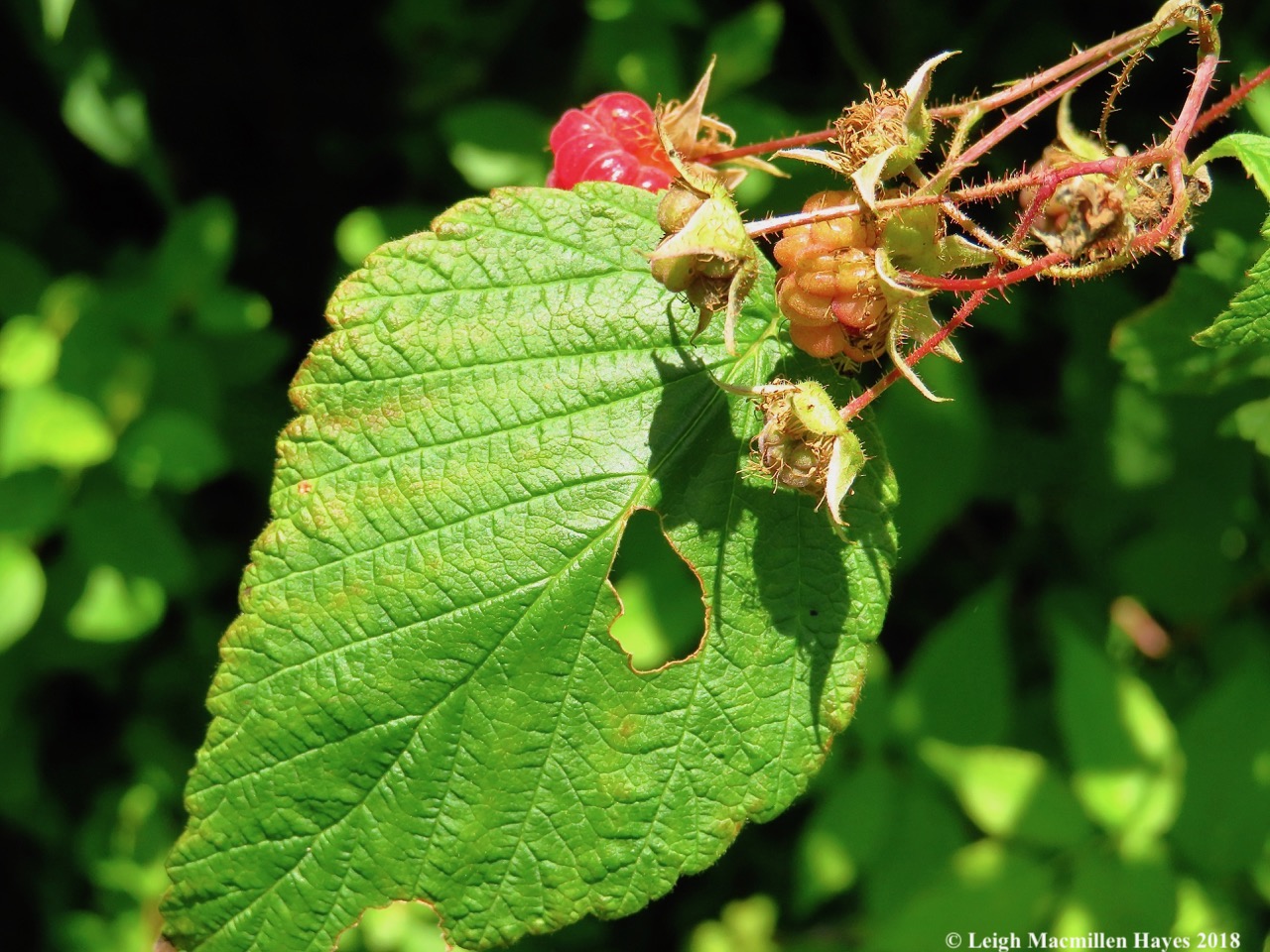
One of the sweet joys of this trail is that because of previous logging, early succession is taking place in terms of the plants and trees that grow beside the trail, including blackberries not quite ripe and these raspberries already offering a delightful reprieve on a humid summer day.

j14-the field

Eventually, the trail leads to the turn-around point, the old log landing, which also displayed signs of forest succession, for its there that some wildflowers and sweet-ferns grow in the center. At the perimeter, white pines, gray birch and blackberries crowd each other.

j10-four-spotted with food

And on the edge, the dragonflies fly. And dine. This Four-spotted Dragonfly settled on a dead red pine to consume an insect.

j11-4 spotted eating

Ever so slowly . . .

j12-feeding frenzy

the body disappeared into its mouth.

j13-4 spotted, back view

While it was busy eating, I was busied myself in getting as close as possible to enjoy all of its nuances, from the four spots on its wings, to the basal display on the hind wings to the placement of its eyes and colors on its thorax and abdomen. All of those details help in ID.

j15-old coyote scat

And then into the field I went, with a memory of a winter expedition when we noticed that a shrike had deposited a mouse in a tree. Today’s finds included a pile of old coyote scat probably also deposited this past winter that indicated a territory repeatedly marked.

j16-turtle?

I also spied lots of recently made depressions. While one might suspect dust baths by a turkey or grouse, feathers are usually left behind in the process. Instead, the ground was more disturbed and because the landing is close to Bradley Brook, I determined I was looking at recently dug holes made by turtles. Snappers and painted turtles have been depositing eggs recently and these may be the incubation nurseries for their offspring.

j16-racket-tailed emerald

As I turned back toward the trail, I noticed a dragonfly seeking shade, for so hot was it. Notice the bright green eyes of the Racket-tailed Emerald. Thank goodness for those emerald eyes that always help in narrowing down the choices.

j18-common dewberry:sphinx moth

I found it a bit more difficult to ID the sphinx moth that paid a visit to the Dewberries. There are only 1,450 species in the Sphingidae family, but my leaning was toward Nessus Sphinx, though I could be totally off on that one.

j20-Northern-bush Honeysuckle

I was much more confident about my ID of the native Northern-bush Honeysuckle with its greenish-yellowish-orangish flowers. The plant is actually a shrub with a woody stem, and one that moose and deer like. I’ve yet to see a moose print along this piece of the property, but I know its part of a deer yard.

j21-Spotted St. John's-wort

Also springing forth with yellow blossoms was Spotted St. John’s-wort, with its translucent spots on the leaves and tiny black dots outlining its petals.

j22-whorled yellow-loosestrife

And not to be overlooked, the Whorled Yellow-Loosestrife with its cheery flowers extended in a whorl from the stem by long petioles.

j23-hitchiker

My journey wasn’t long, but with all that I saw, I was thankful for the spirit of Mr. Segur that flies over this place.

Just possibly, he graced me with his presence today . . . in the form of Spangled Skimmer.

Capturing Peace at Deer Hill Bog

The minute I stepped out of the truck, a loud, rather unharmonious musical performance, greeted me at Deer Hill Bog in Stow, Maine. Rather than the Peeper and Wood Frog chorus of spring, the summer symphony was performed by Bullfrogs and Green Frogs, but mainly the former.

d1-approaching the bog

It was about nine a.m. when I caught my first glimpse of the bog, a result of man and nature working together. An old wood dam combined with a beaver dam created the 25-acre body of shallow water. From moose and Great Blue Herons to aquatic plants and tiny organisms, over 90 species call the bog home. Though I truly expected to spy a moose, that opportunity was not meant to be. I did go, however, because of the Great Blue Herons. Friend JoAnne reminded me the other day of the old rookery, so I decided to check on it.

d2-heading toward the blind

But first, I made my way toward the wildlife viewing blind.

d3-bird blind

The blind featured benches, cut-outs for viewing and informational posters–a quiet place to watch nature in action.

d5-inside the blind

It was built in 1993 by the Maine Conservation Corp and is maintained by the White Mountain National Forest. Two more panels described some species of wildlife one might expect to see.

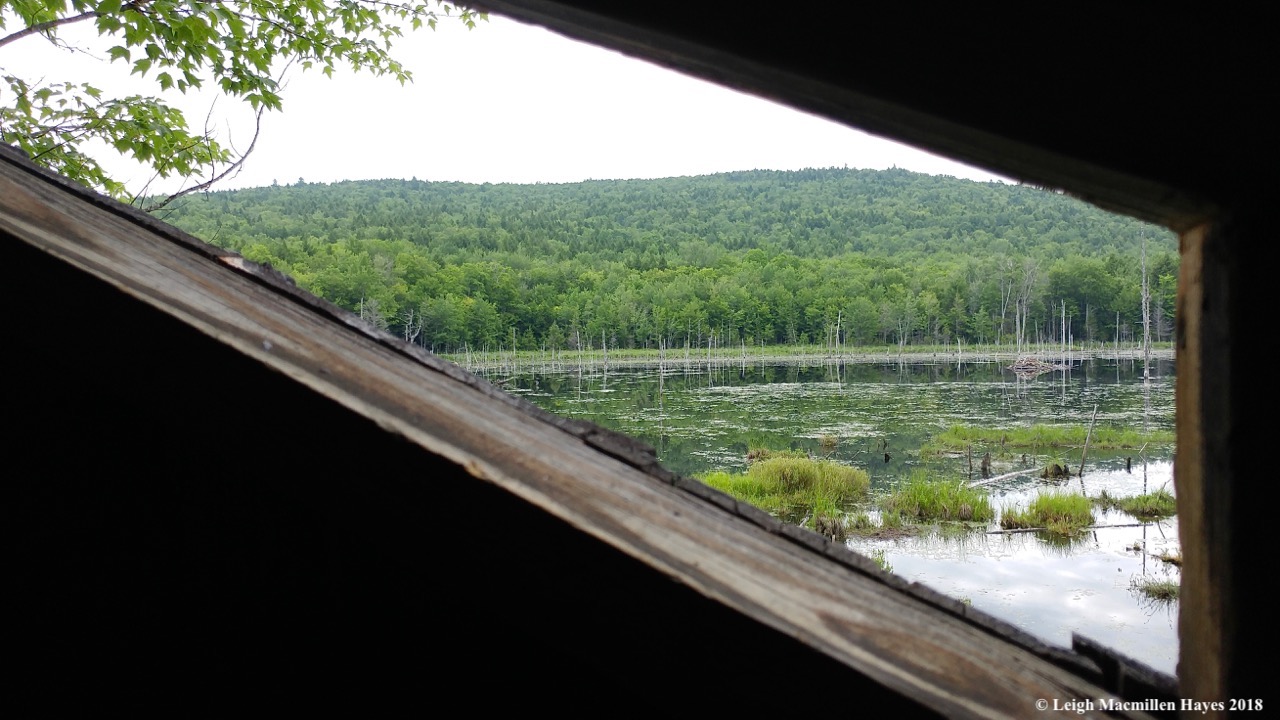
d6-view from the blind

And, of course, the cut-outs provided a bird’s eye view . . .

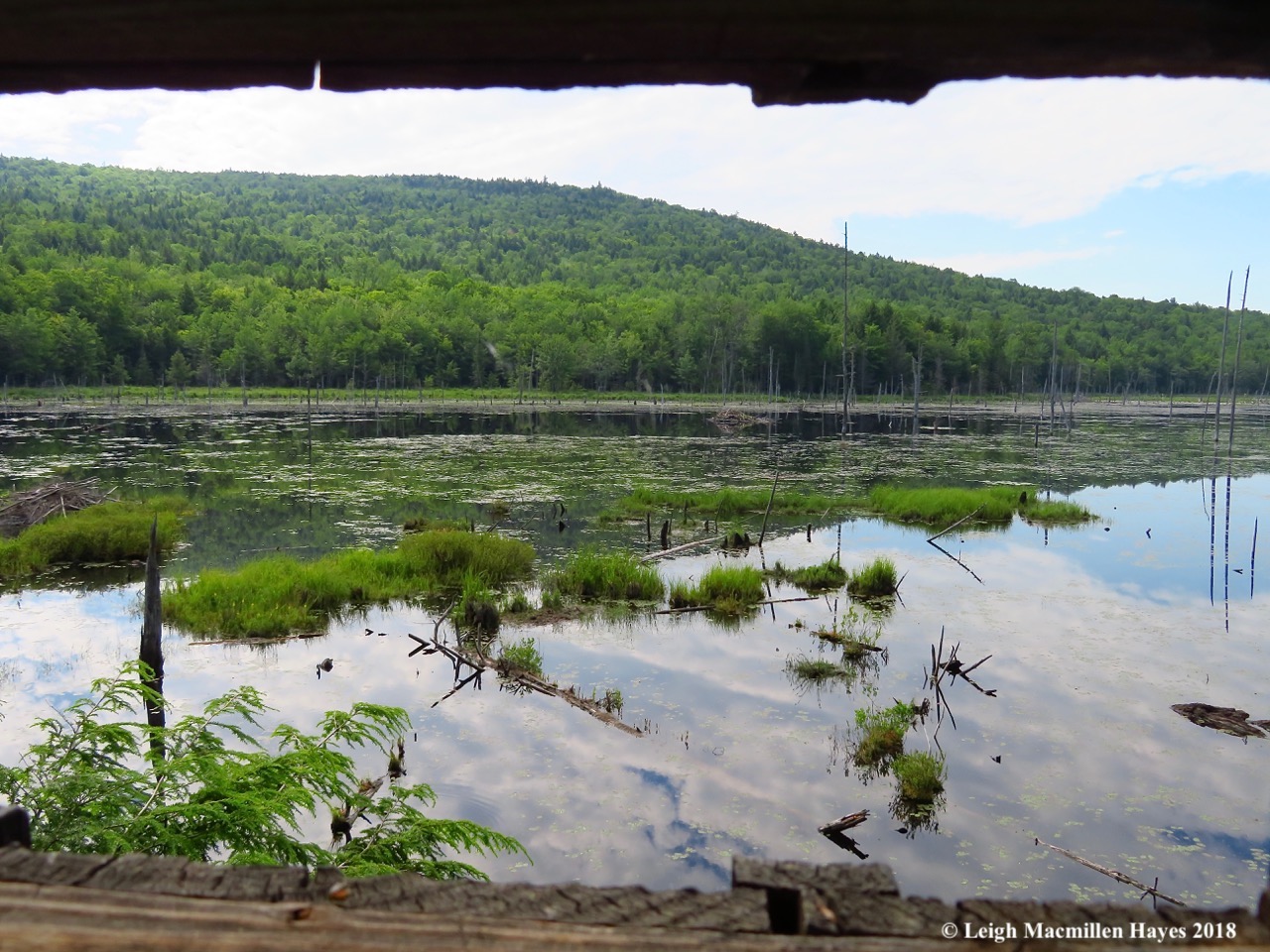
d6a-another view

of life in the bog.

d12-bullfrog

But, I’m not very good about staying undercover, and so around to the side and front of the blind I went. And stood as still as possible, for the Bullfrogs quieted upon my approach, as I expected they would. A few minutes later they again sang, “rumm . . . rumm . . . rrrrrumm,” the notes all in bass.

d30-fish

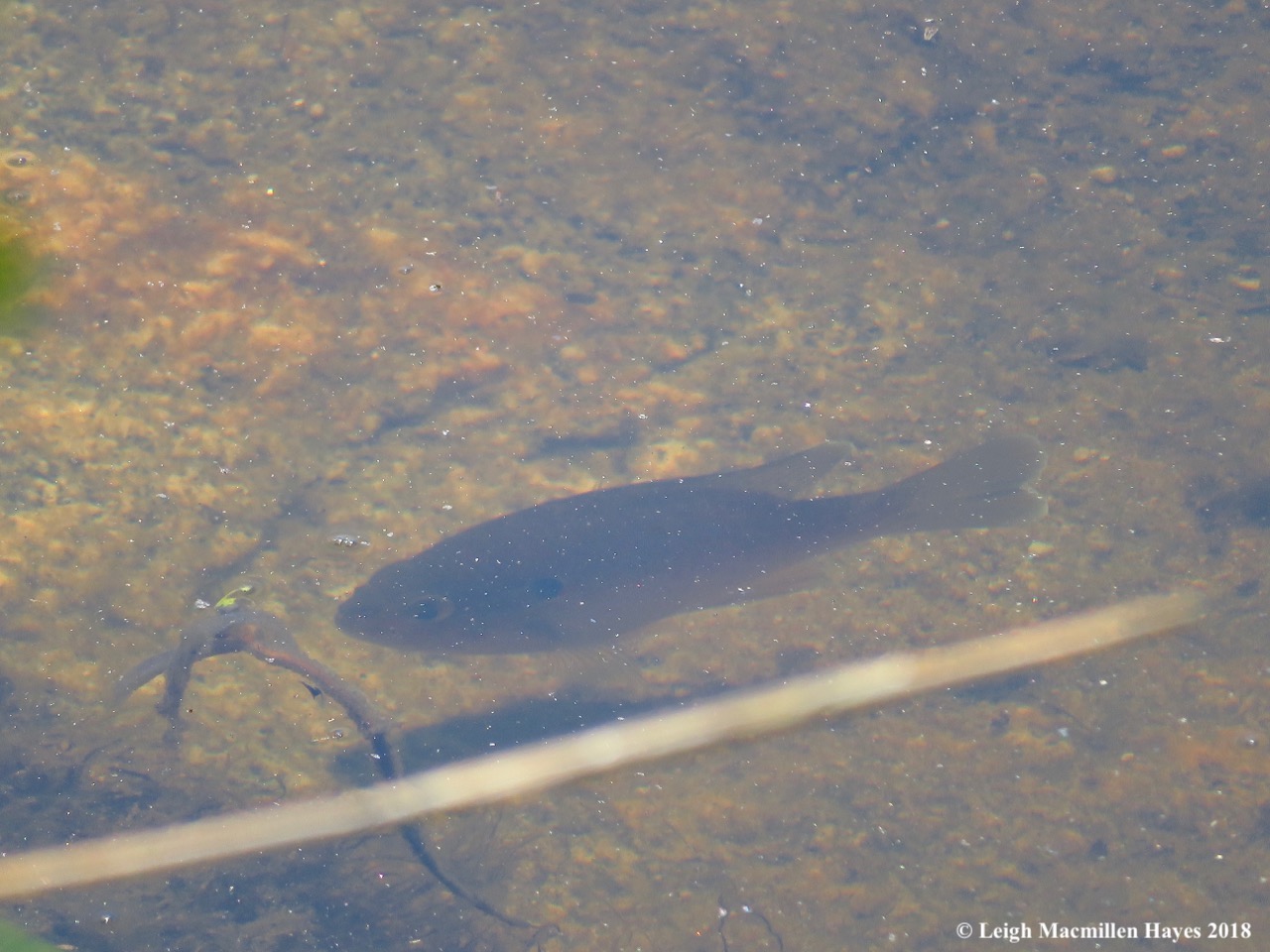
The water practically boiled with small fish jumping, but my freshwater fish knowledge is limited and my best guess was that they were bait fish of some sort.

d8-three lodges

Looking around, I noted three beaver lodges, each of a different size. None looked active, but it was a warm summer morning and perhaps they were sleeping inside.

d8-adult heron

And then I spied two heron nests–on the first I saw only an adult who spent much time in preening mode.

d13-heron feeding

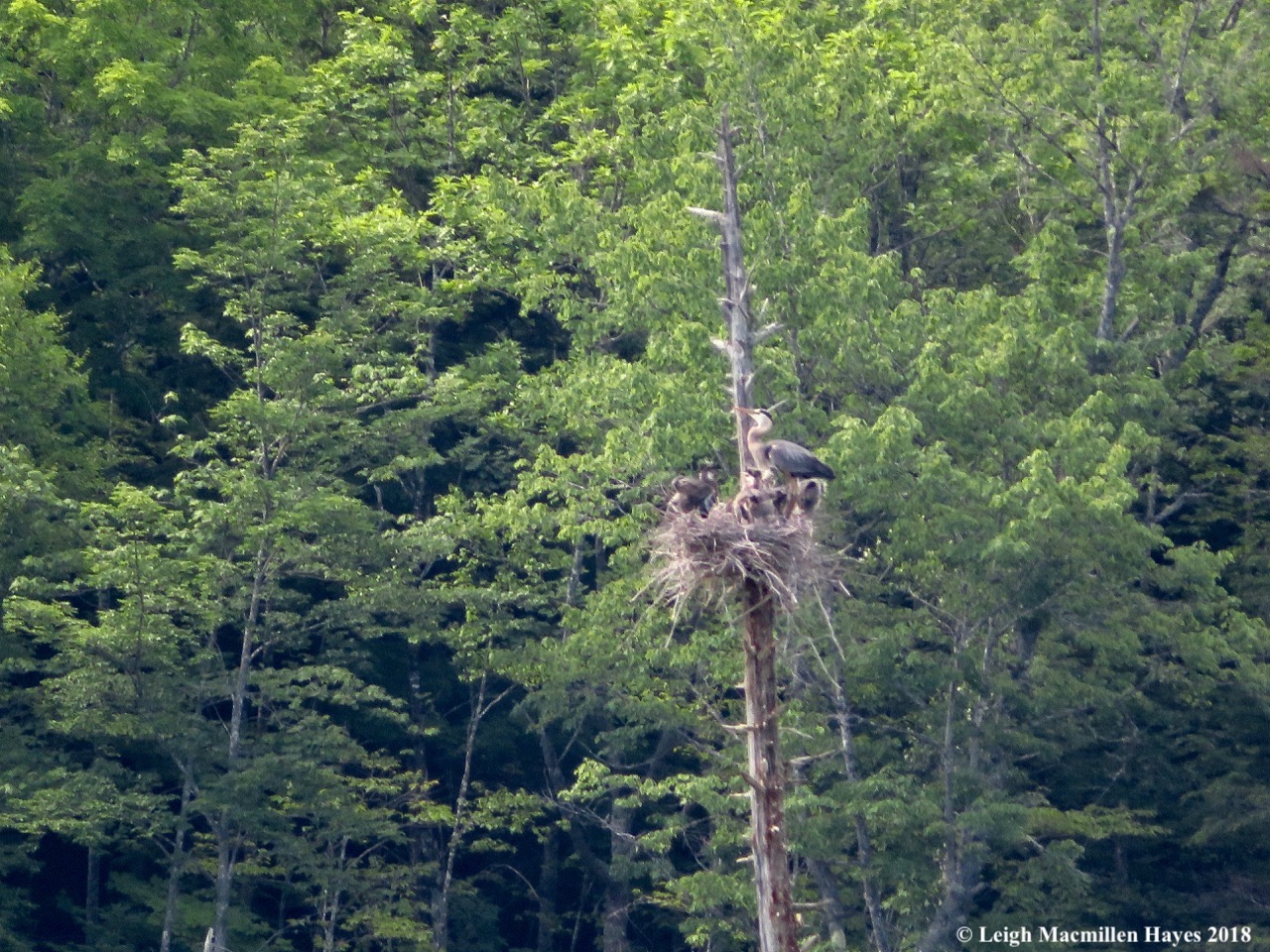
The second nest I was sure was empty–until an adult flew in and three immatures squabbled for the food about to be regurgitated by the parent.

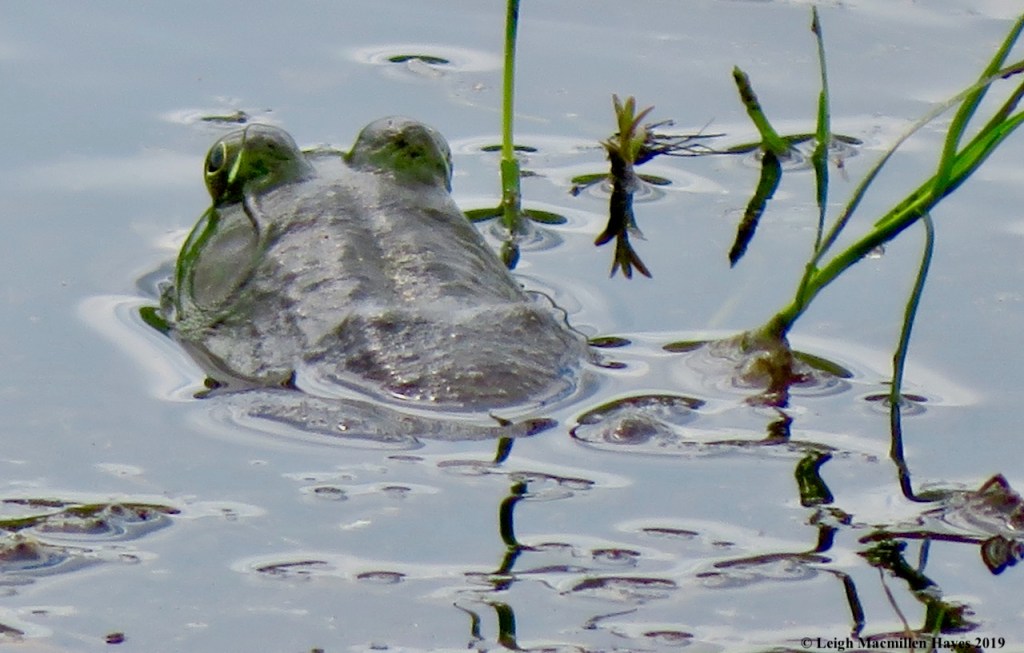
d14-bullfrog

And back down to bog level, another Bullfrog doing what they seemed to do best–waiting patiently, with nary a rumm, though the sound seemed to travel in waves down the bog.

Frogs are ectothermic animals, which means they depend on the environment to maintain their body temperature, therefore many jumped onto fallen logs to catch a few rays. It may also have been that the height gave them a better view of the local action.

d15-bullfrog

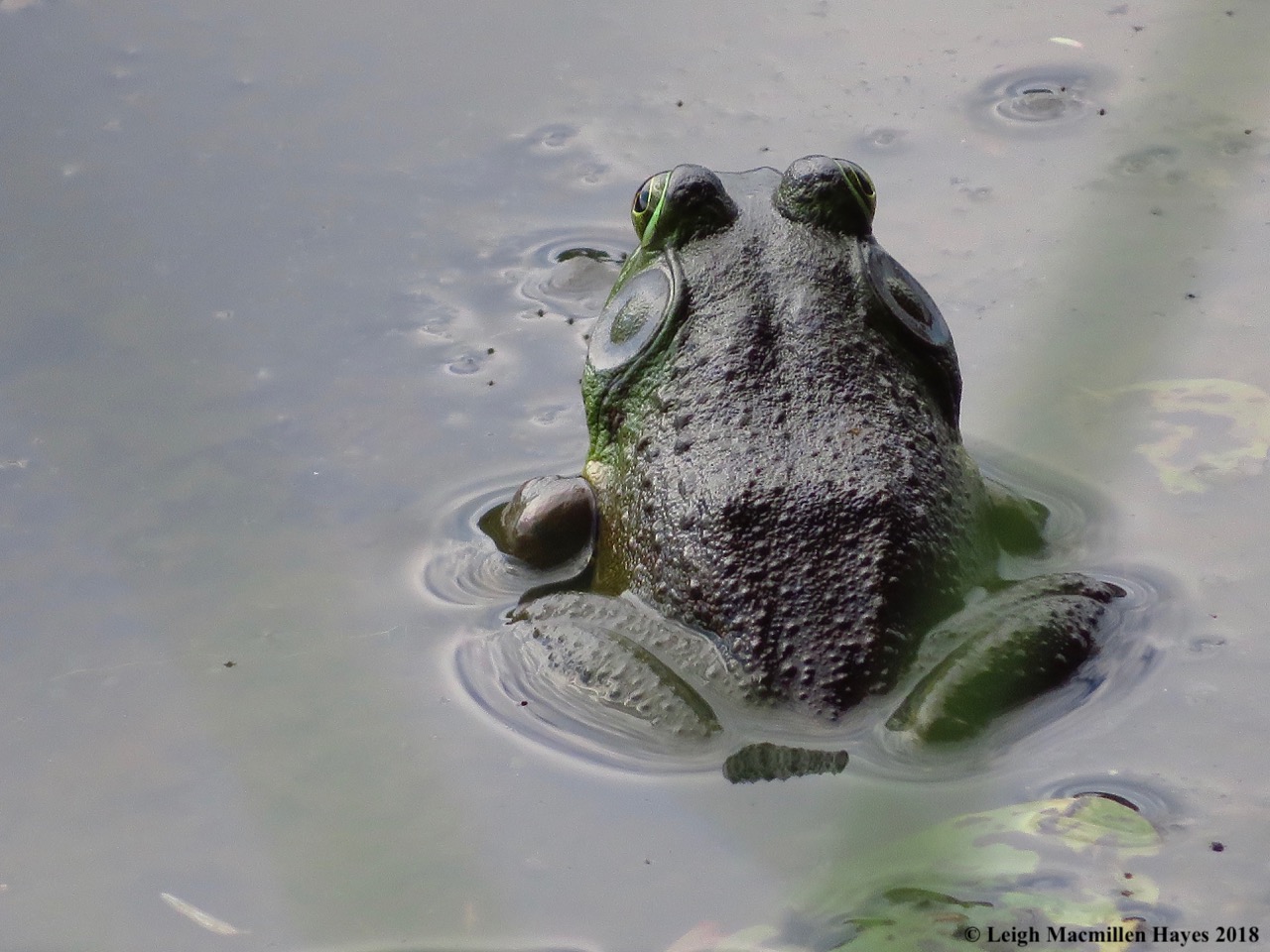
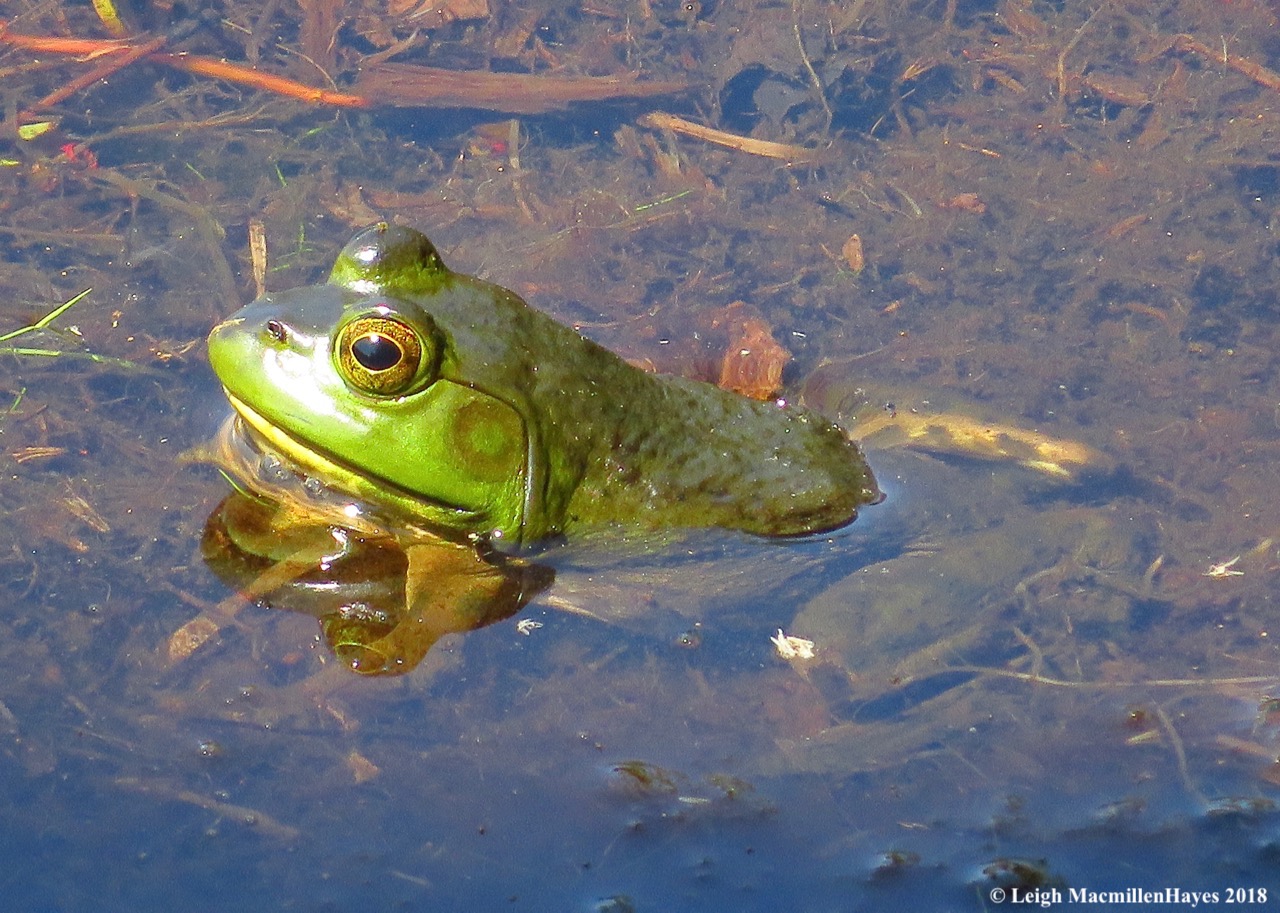
This one did eventually turn, making it a fine time to examine his body a bit. How did I know it was a male? His eardrums or tympanums, those circles located directly behind the eyes, were larger than the eyes. In females, they are about the same size.

d10-clubtail exuvia

There were other things to look at, like the exuviae of a clubtail dragonfly. Notice how far apart the eyes were. Eye position is one key to determining species.

d11-frosted whiteface dragonfly

Other characteristics included the white face of the Frosted Whiteface.

d16a-slaty skimmer dragonfly--black face:brown eyes

And the black face and brown eyes of a Slaty Skimmer.

d16-slaty skimmer dragonfly

The slaty part of its name came from the fact that male’s body is entirely blue–slate blue.

d17-bullfrog

Again a rumm-rumm-rrrrummm.

d24-bullfrog

It seemed there were female frogs around, but they didn’t care about the males’ singing talents–at least not in my presence.

d16-red-winged blackbird

And an o-ka-leeee.

d18-frosted whiteface dragonflies

In the midst of it all, some canoodling by a pair of Frosted Whitefaced Dragonflies connected in their love formation.

d20-green frog

Plunking rubber bands to the beat of plunk-plunk-plunkplunkplunk were the Green Frogs. This one was so identified by the dorsalateral folds that ran from its eyes along the sides of its back and down toward its former tail.

d21-grackle

Wood Ducks and Merganzers swam further away from my spot, but Grackles flitted in and out, up and down on the ground, fallen trees, and rocks, ever in search of fine dining.

d27-grackle

In between foraging for insects, crustaceans, mollusks, fish, and frogs, oh my, they sang their guttural song that was often followed by a high-pitched whistle.

d22-painted turtle

There were also painted turtles to admire. Well, I only saw one, but suspect there were others.

d25-painted turtle

It slipped into the water and then came up on a nearby log, another species that valued the sun’s warm rays.

d26-bullfrog

And another. Really, they were everywhere. Did you know that a frog’s pupils are horizontal so it can look forward, backward, and up and down. The better to see me,  dinner, and predators on the quick.

d28-two frogs

Sometimes frogs yelp, and it was such a sound that brought these two to my attention. Because of the sun’s position, I couldn’t get a clear take on their gender, but I watched them both jump onto the log simultaneously. At first they were side by side, but then one shifted further to the right. Had they been mating? Had one male tried to jump onto another thinking it was a female? Had something bigger than them been on the hunt?

d31-water snake with tongue extended

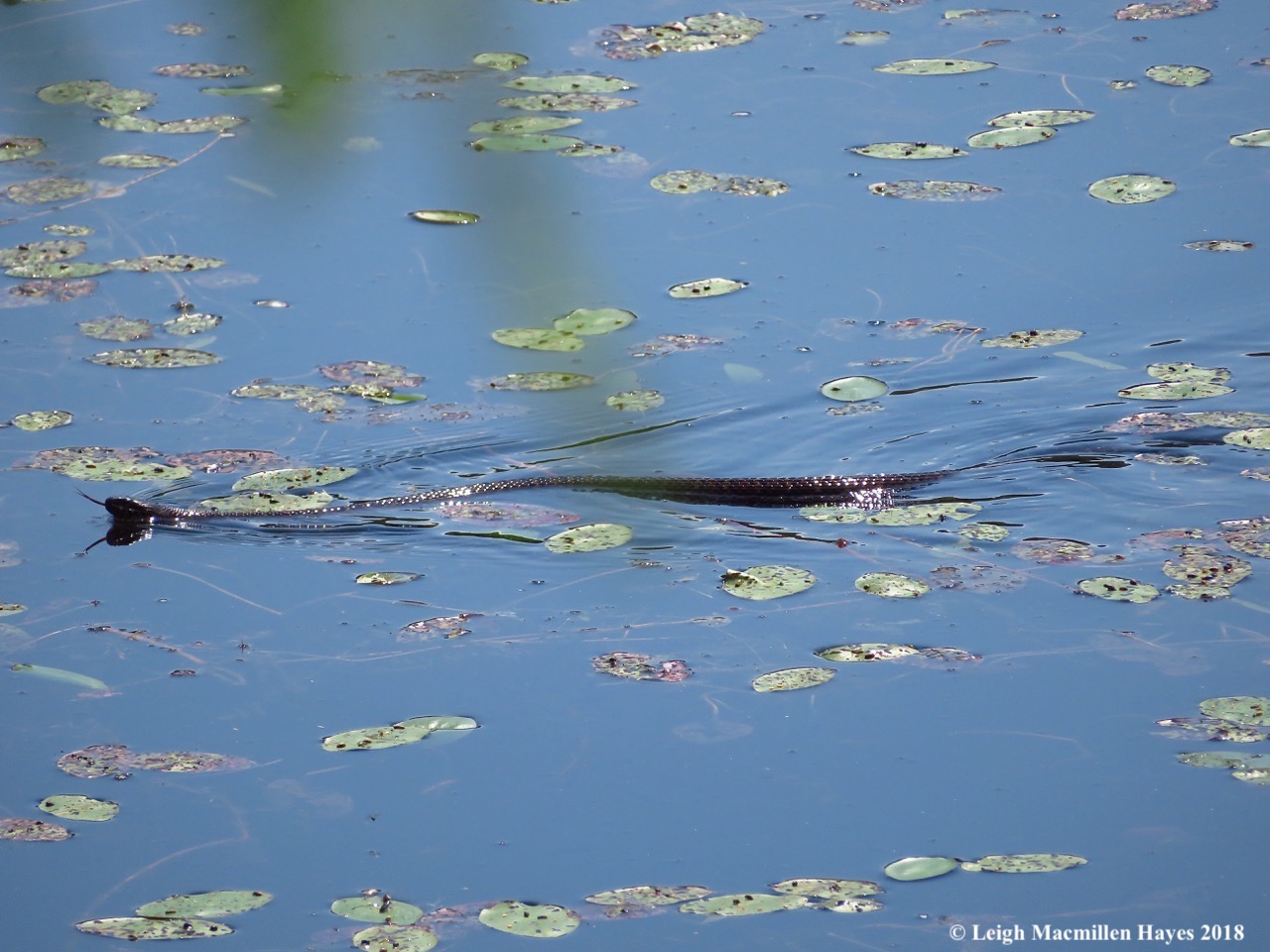
I may never know why the frogs jumped, but this water snake was making the rounds. Every once in a while it made the water boil and I knew something was consumed. Can you see his forked tongue sticking out?

d29-sundew about to flower and marsh st.john's wort

At last my bog time was drawing nigh, and yet there was so much more to see, including Round-leaved Sundews and Marsh St. Johnswort on log islands.

d30-bullfrog

And one more Bullfrog to provide a last note to the morning’s wonder.

d32-bog

Though to some, the bog may look like a place of death, and death does happen there, it’s also full of life. It’s a place of biodiversity and hidden beauty. And this morning I was thankful to have it all to myself–the only human sounds I heard were of my own making. Deer Hill Bog–a magical, wonder-filled place to capture peace.

Maybe everyone needs a bog visit.

P.S.  The frog sounds were borrowed from https://srelherp.uga.edu/anurans/sounds as I’m not tech savvy enough to have recorded them. But do click on them, because it gives you a sense of this place. You’ll need to turn up the sound on your computer and possibly will need to press play when you click on the link.


One Wing, Two Wing

Whether I look up, down, or somewhere between, all that fly have captured my attention lately.

l6-river jewelwing

My heart flutters when a female River Jewelwing, with her iridescent body flies into my space.

l26-female river jewelring

But it’s those two-toned wings with their white spots or stigmas (indicating it’s a female for male’s don’t feature the spots) folded over their backs that wow me the most. Though their wings may appear to be two different colors, and these were taken in two different river locations, they are really the same. It’s the very nature of being iridescent, where all colors of light are reflected, that makes them appear as either black or bronze. You know what else I like about this damselfly–it was eating an insect.

s6-four-spotted skimmer

And then I turned on my dragonfly eyes. Ever so slowly over the last few years I’m beginning to recognize some of the perchers by name, like this Four-spotted Skimmer. It certainly helps that they pause frequently and hold their wings out to the side, which is a dragonfly characteristic.

l12-four-spotted skimmer

It’s the wings that are the defining points for me. All four feature a beautiful amber patch on the upper or leading edge. Do you see the golden veins? And then there are the black spots. Those in the middle or elbow of the wing are referred to as nodal, while the stigma is at the leading edge, the same as the female damselfly’s. Why four-spotted and not eight? I don’t have an answer, but perhaps it’s just plain easier to quickly count the four spots on the forewings before the insect flies off.

s8-calico pennant

Last year it was the Calico Pennant that became one of my new species to recognize each time we met. This is a rather small skimmer with the most amazing wing pattern. Notice the dark patch near the tip of the wings, just beyond the yellow stigma. What I love most though is the stained-glass patch on the hindwings. This one was either a female or an immature for its coloration was yellow; the male stands out in red. I have yet to encounter a male this year, but trust it will happen.

s7-dusky clubtail

Sometimes it’s not the wings that are the showiest part, like on this Dusky Clubtail,

l27-green-faced clubtail

Green-faced Clubtail,

l25-racket-tailed emerald

and Racket-tailed Emerald, but there is beauty in simplicity.

l17-Large Flathead Pine Heartwood Borer Beetle (Chalcophora virginiensis)

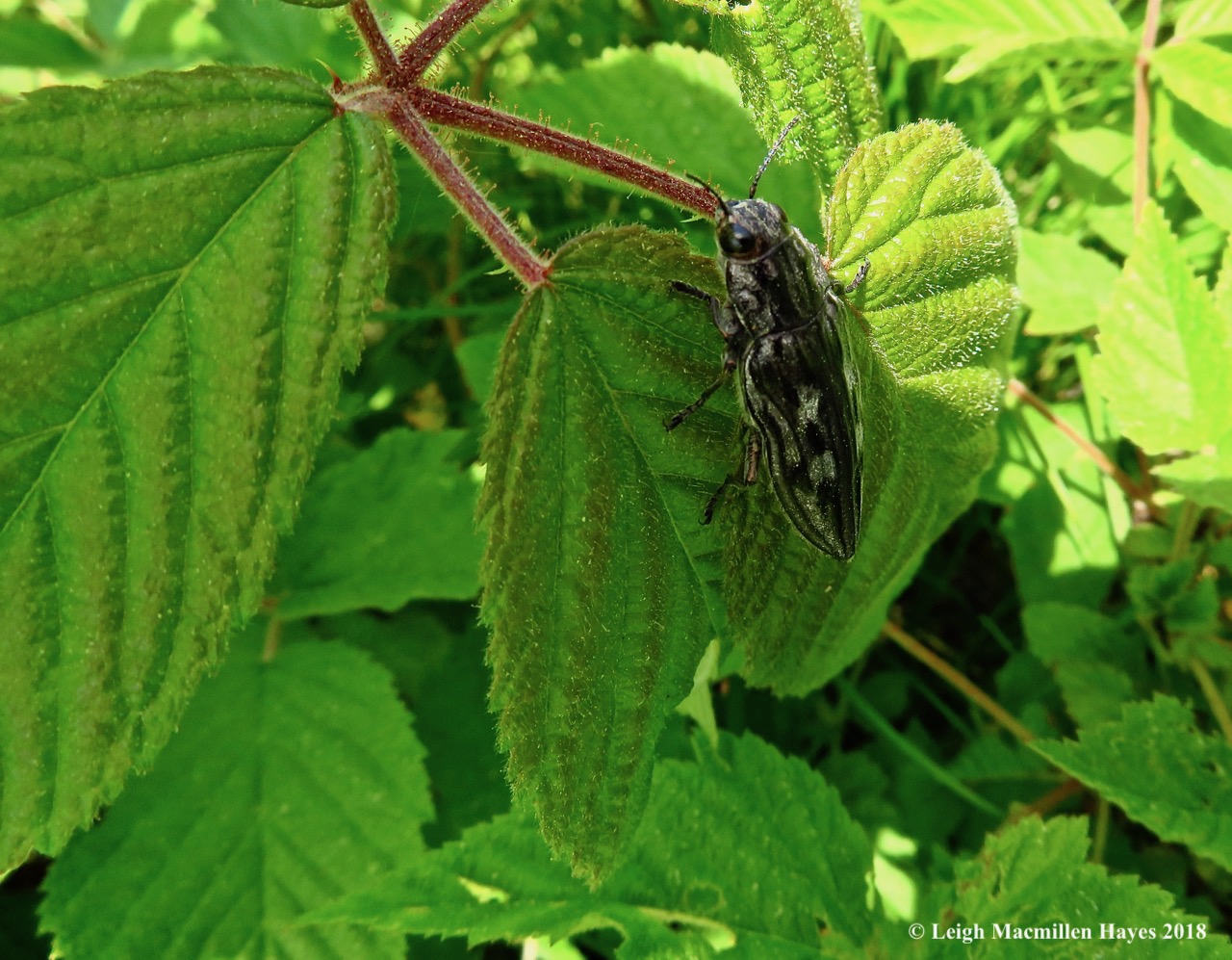
Wings on other insects are also worth observing, like the purplish ones on a Large Flathead Pine Heartwood Borer Beetle, aka Metallic Wood Boring Beetle. Though it’s supposed to be a noisy flyer, I only saw it clinging to a leaf on a recently harvested hill–meaning there’s lots of dead pine heartwood nearby.

l18-click beetle

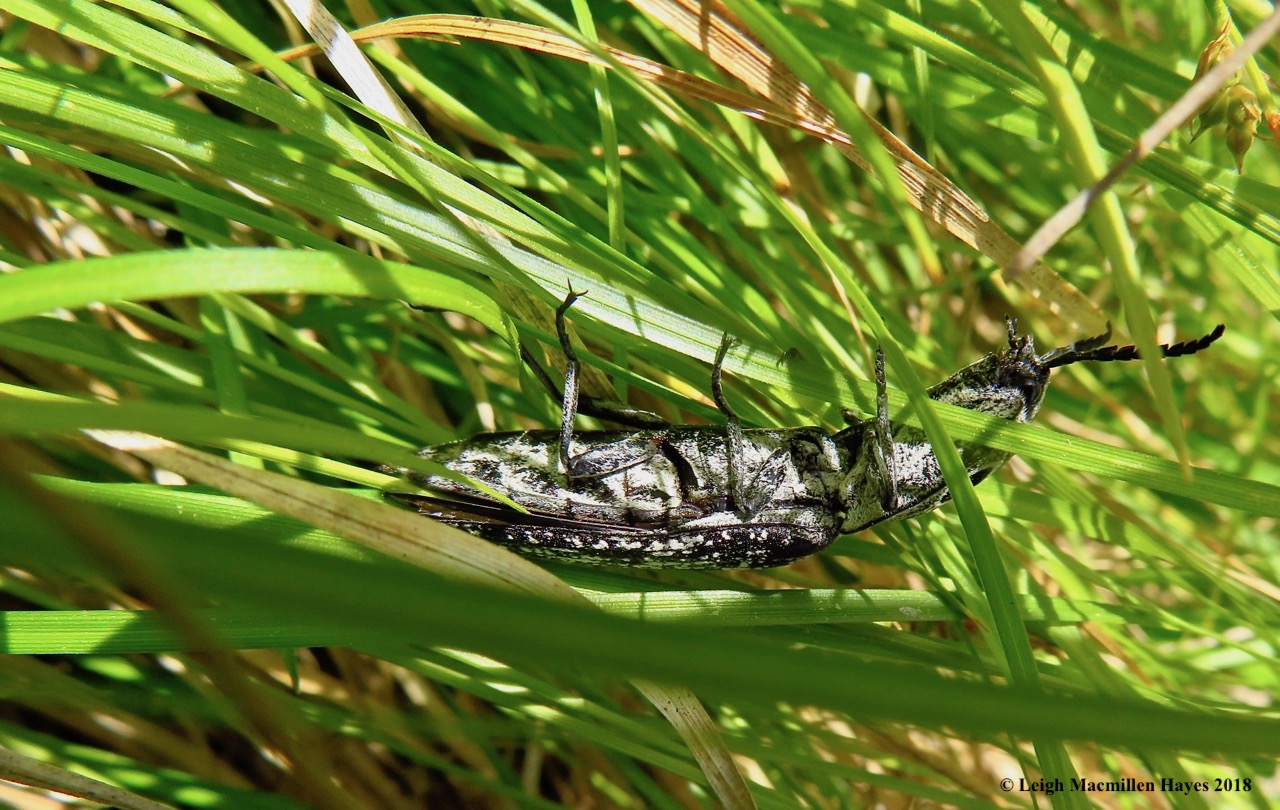
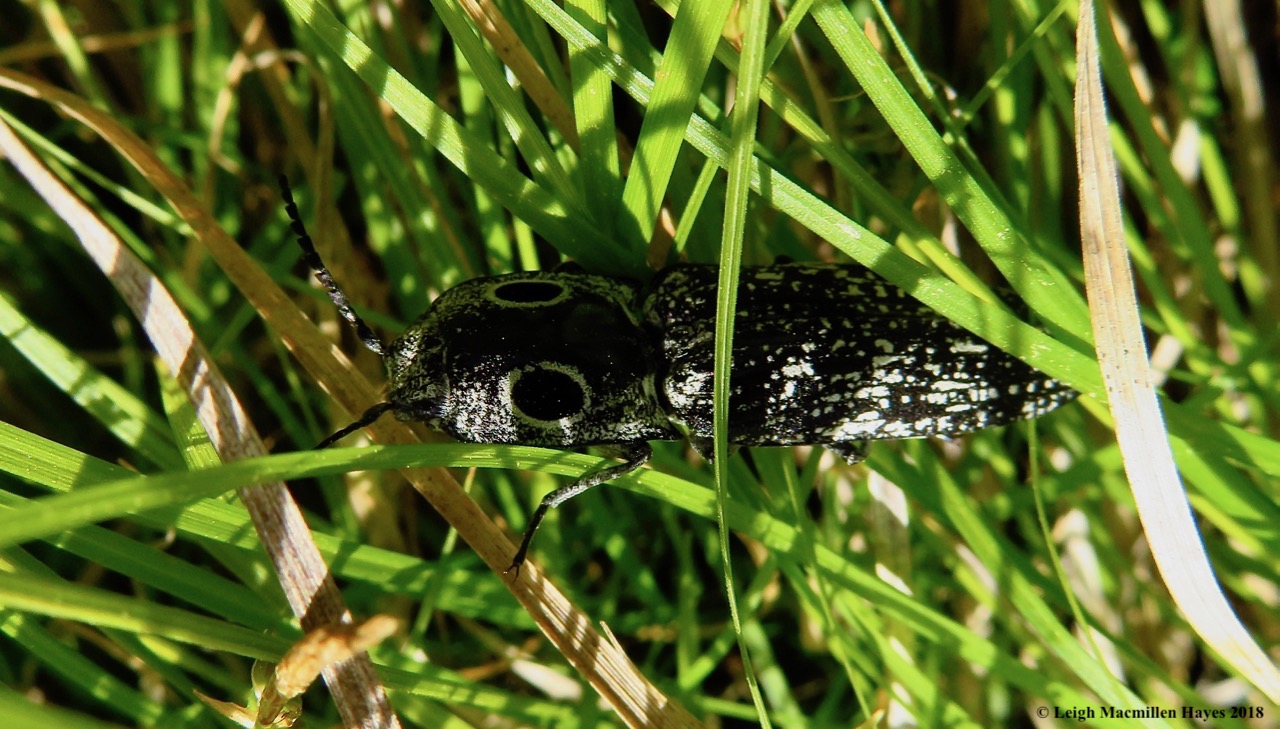
Only a few feet away, I had my first encounter (at least that I can recall) with an Eastern-Eyed Click Beetle. Click beetles get their names from the sound they emit when they flip themselves upright. I didn’t have the opportunity to hear that sound for I’m actually sharing these two photos out of order.

l19-click beetle

When I first met him, he was upright and may have flipped over to pretend to play dead. So I saved this photo to show second because of those “eyes” on the thorax and then the mottled black with white specked wings. The “eyes” are intended to frighten away predators. As an adult, the click beetle doesn’t dine on much, though occasionally it feeds on the larva of wood-boring beetles–thus there existed the possibility of an interesting intersection.

s21

When a Canadian Swallowtail flew in to my range, backlighting by the sun helped me see the overlap of its fore and hindwings as evidenced by the deeper yellow arch. I also noticed a tattering on one forewing. Butterflies are so beautiful and take such a beating both from their surroundings and any predator.

l21-luna moth wing

The same can be said for Luna Moths and by a hindwing left behind, I wondered when this one met its demise for so faded was it. But the “eye” on the wing was still evident, as well as the downy coating of this giant silkmoth. Of course, I would have preferred to see it alive, but was still thrilled with such a delicate find.

s13-yellow-bellied

Another great find was the discovery of a Yellow-bellied Sapsucker who has been feeding its young throughout each day. Do you see the hole in the tree right beside the bird’s breast? I could hear the young located inside and have spent more minutes than I should admit to watching the parents fly in and out.

l22-veery eggs in nest

Soon the baby sapsuckers up in the tree will prepare to fledge.  Likewise, if all goes according to plan, these four Veery eggs found in a ground nest (mom and pop were accidentally flushed out, but we trust they returned) will hatch and four more sets of wings will take to the airways.

One wing, two wing, clear wing, metallic wing, butterfly wing, beetle wing–so many wings worth noticing.


Otherworldly in Nature

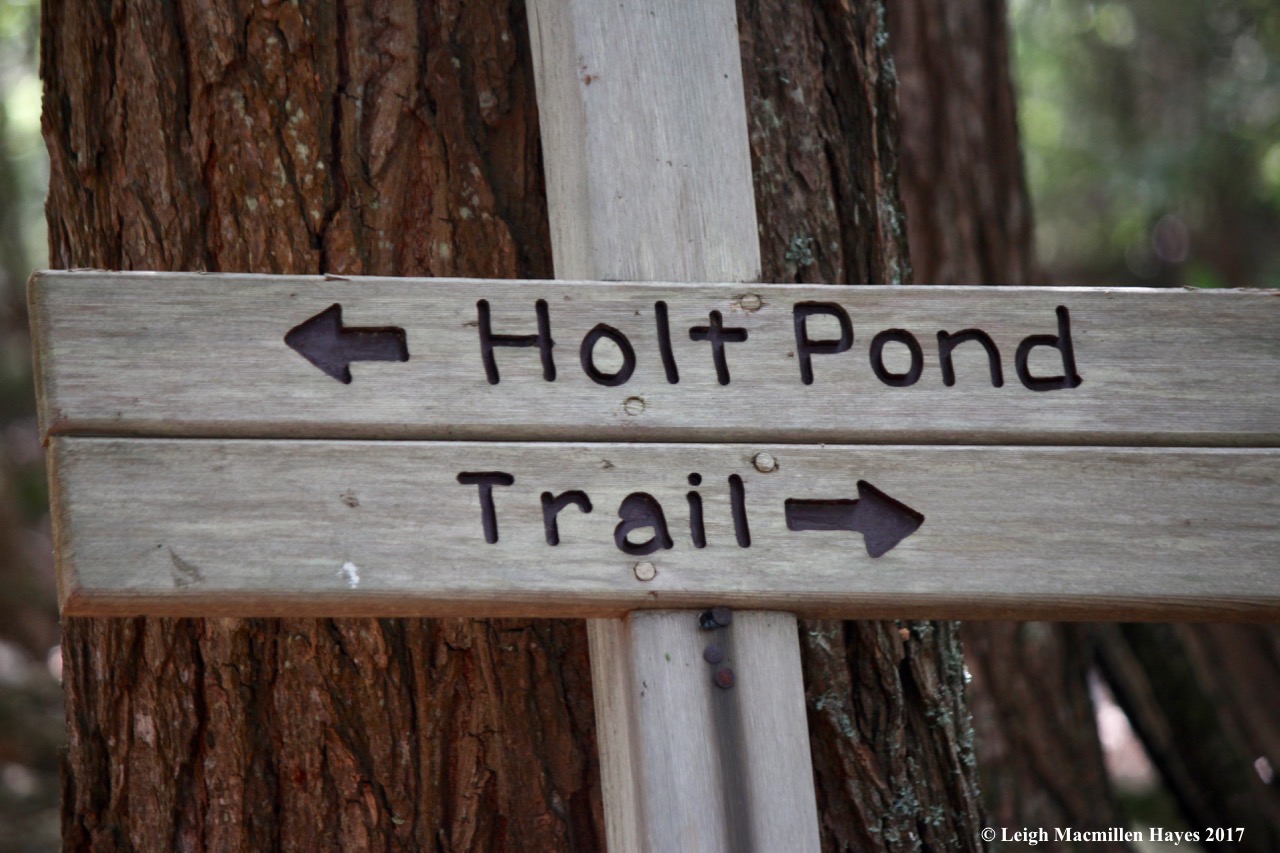
One doesn’t necessarily step into the woods and expect transcendent events to occur, but then again by learning to live in the moment one never knows what to expect. And so it was that I traveled the trail at LEA’s Holt Pond Preserve with my friend Ann this morning–both of us delighted to just spend some quiet time exploring together.

o1-bunchberry

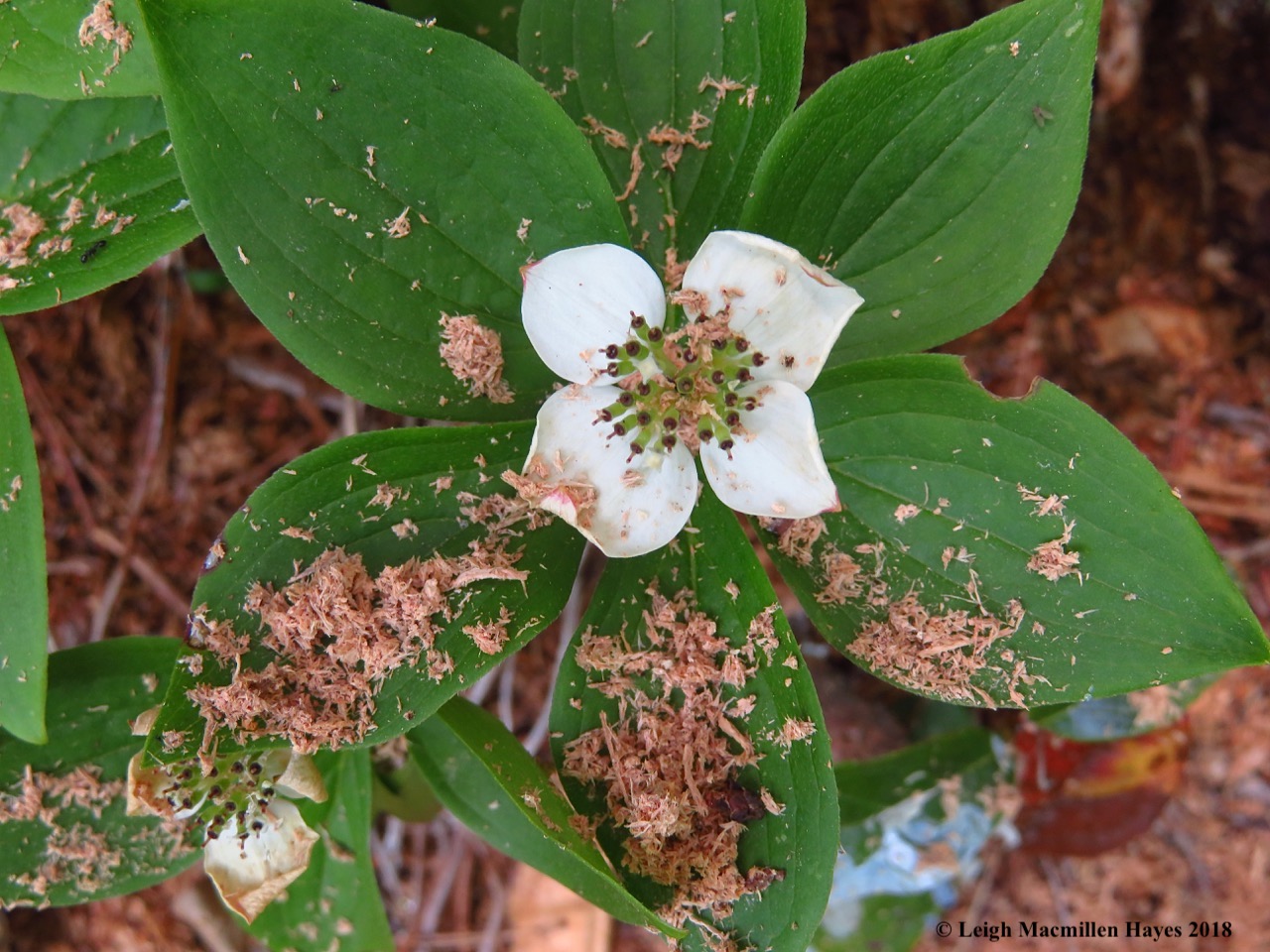
Our tramp began with a pause beside bunchberries because it’s a plant I always associate with Ann due to her trailside teaching about its finer points years ago. Today, as the flowers began to morph into fruit, it was the points of the four white petal-like bracts and green leaves that asked to be noticed in the most subtle of ways for each was decorated with a dewdrop.

o2-red maple swamp

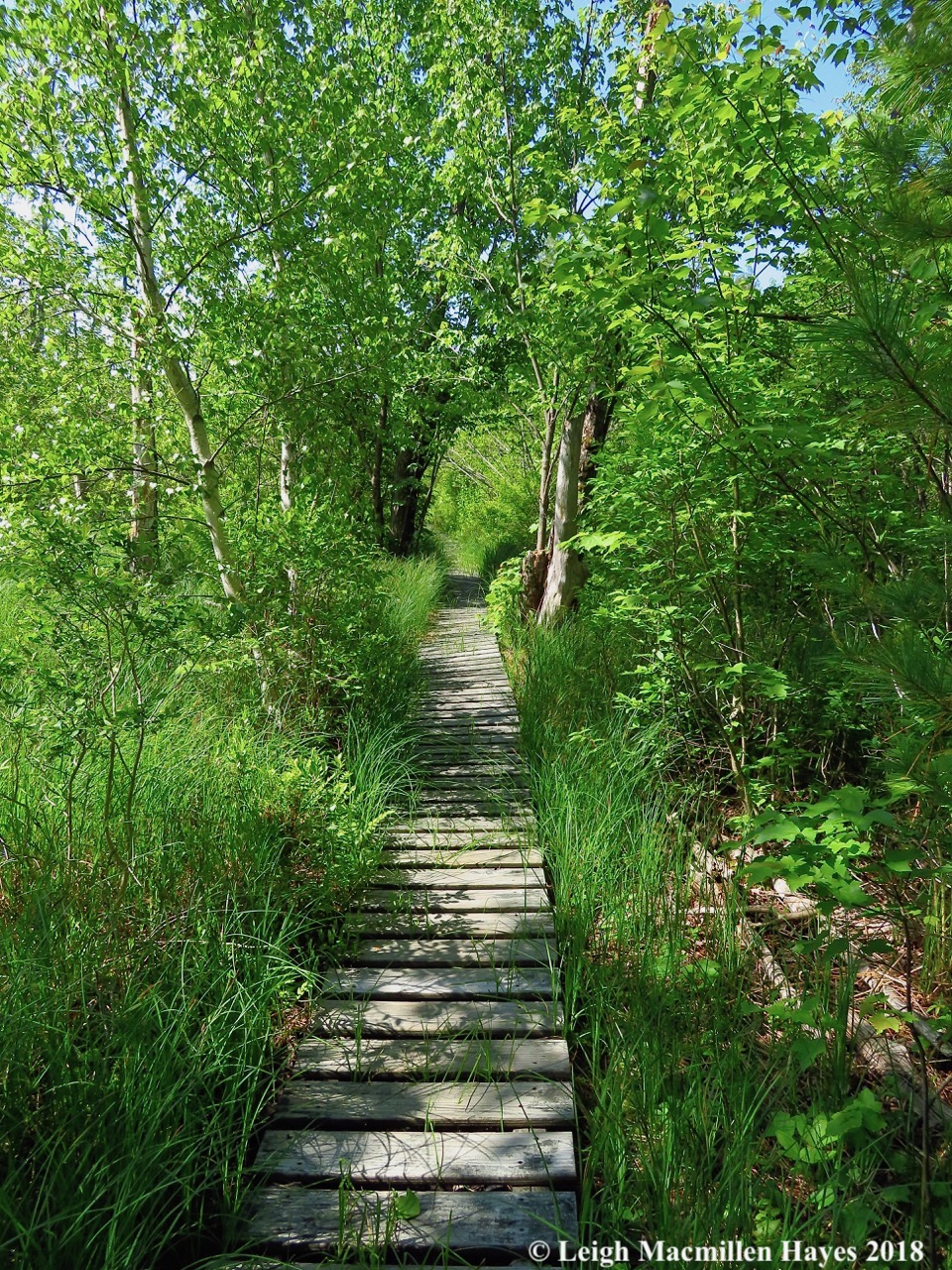
Not far beyond where the bunchberries grew, we stepped onto the first of the boardwalks that provided for a delightful amble through the red maple swamp.

o3-green frog

Just off the edge of the wooden walkway, we spied some eyes starring up at us and realized we were the subject of the green frog’s discontent.

o4-green frog male

His camouflage almost worked as he tried to hide among the sphagnum moss . . .

o5-green frog and insects

but again we found him. How did we know he was a he? By his tympanum (ear), the circle behind his eyes. We really wanted to see him feed and if you look closely, you may see a mosquito and other insects nearby, but he seemed focused on us–in case he needed to defend his territory we supposed.

o6-pitcher plants

A wee bit further we met the first of many of their kind–the incredibly unique pitcher plants with their strikingly beautiful magenta flowers that stood like the wind spinners we used to create as kids.

o7-pitcher plant leaves

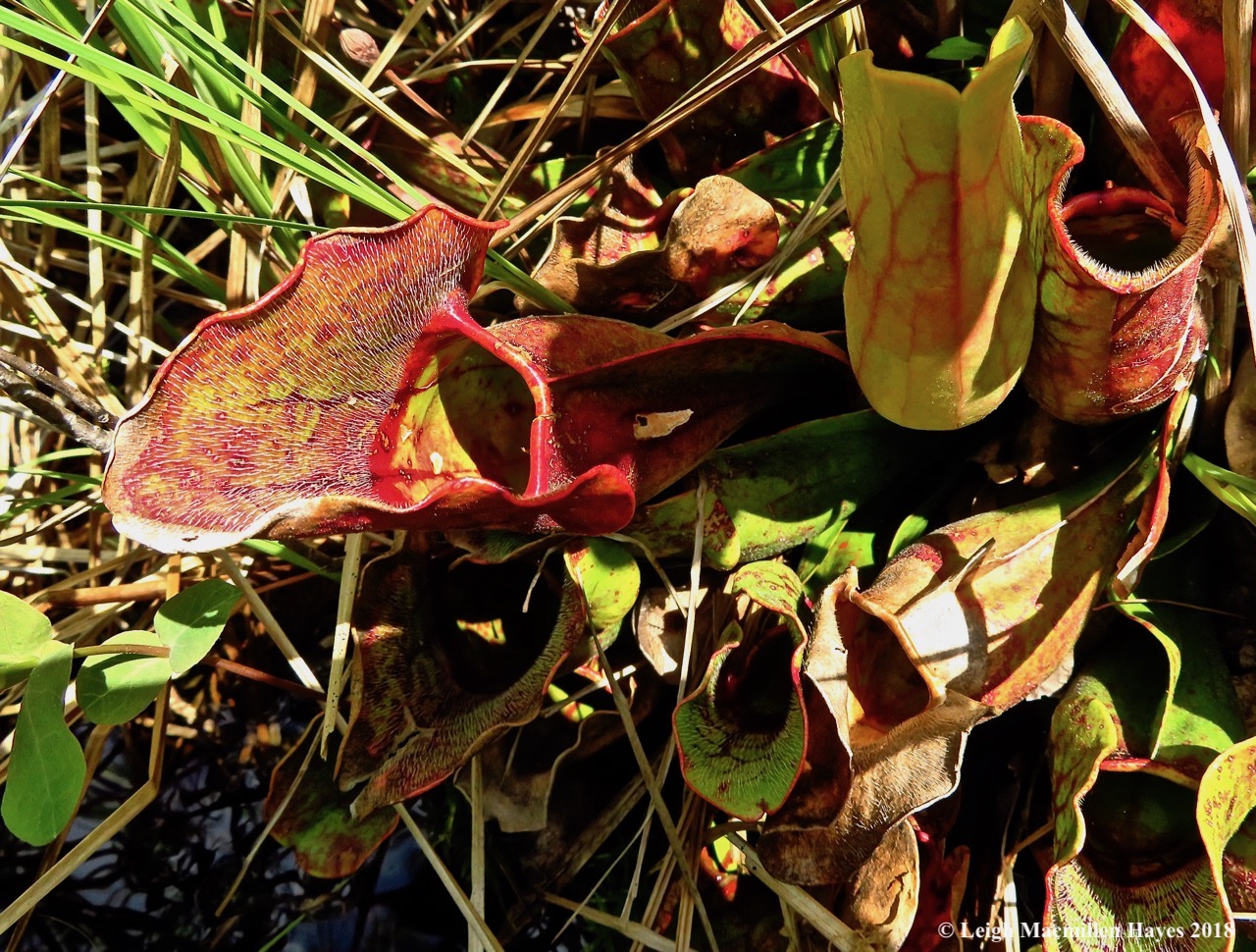
In the water below were the pitcher-shaped leaves that gave this plant its common name.

o17-pitcher pitchers

The carnivorous pitcher plant obtains nitrogen and phosphorus by eating insects. Its oddly shaped leaves form a pitcher partly filled with water and digestive enzymes. The spout is a hairy landing platform for insects attracted by its red venation and nectar glands. Imagine this: An insect crawls to the edge of the leaf, aka pitcher, slips on the downward-sloping hairs and plunges into the liquid below where enzymes and bacteria break it down. Any chances for escape are zapped by those stiff hairs.

o8-frosted whiteface dragonfly

As we paid attention to the plant, damselflies and dragonflies, like this Frosted Whiteface Skimmer, flew in the surrounding airspace. We appreciated that he landed so we could take a closer look at the details of his body, including the golden outline of the upper edge of his wings.

o8-red maple leaf

Moseying along, our next great find was a red maple leaf, which made perfect sense given that we were in the midst of the red maple swamp. What didn’t make sense was the fact that it donned its autumnal coloration, but ours was not to make sense of everything.

08a-muddy river

At last we reached the boardwalk to the Muddy River, where we embraced stillness and listened to the green frogs strum their banjo voices and red-winged blackbirds sing their conk-la-ree songs.

o9-red-winged and painted

One blackbird, in particular, stood out as if he were the king of the river. We didn’t realize it at the time, but the photographs tell the story for he did have a subject in mind–in the form of a painted turtle.

o10-red winged :painted

Off his high horse he flew, but continued to squawk from a lower pulpit. What did it all mean?

o11red winged blackbird

While we’ll never know, he did seem pleased with a gaze into his own reflection.

o12a-

Our gaze also became more focused when we realized we stood in the midst of a newly emerged dragonfly. By its cloudy wings folded over its back damselfly-style and the abandoned exuvia on the other side of its perch did we realize what we were witnessing.

o12b

We felt a sense of caretakers for suddenly it was our honorable duty to stand watch and protect this vulnerable being from becoming prey. With wonder, we watched as it slowly changed position and suddenly spread its wings. For at least an hour we stood sentry and noted the slightest changes while we delighted in how the breeze occasionally fluttered through its wings.

o13-female eastern forktail damsel

Oh, we looked around and spied a female Eastern Forktail damselfly . . .

o14-chalk-fronted corporal

and many a Chalk-fronted Corporal dragonfly among others.

o15-spreading his wings

But our attention continued to return to the subtle beauty before us. How did it know to climb the vegetation? How did it know to emerge? How did it know today was sunny? How could such delicate wings support its meaty body? Where do dragonflies hang out on rainy days? How long would it take before it flew off? Our questions were numerous, but . . .

o15-dragonfly exuvia

in a flash, as I moved in for a closer shot of the exuvia, the dragonfly decided it had posed for enough photos, and Ann and I watched with continued fascination as it flew off. Really, we felt like proud parents who had sent our offspring into the world. And we rejoiced. We had just witnessed one of nature’s greatest spectacles. It wasn’t only thrilling to watch, but was an all-encompassing experience that pulled us in with our sight and minds.

016-pitcher

After such an awe-inspiring opportunity, we couldn’t imagine anything else, but as we moved along the boardwalk through another section of the red maple swamp we again encountered pitcher plants.

o18-pitcher flower

And this time we decided to take a closer look at the flower structure, which was umbrella-like with those five broad and waxy sepals situated above. Unless you physically turn it and take a peek, it’s difficult to see what is going on beneath where five more bright red, oval petals, curved in at the base and covered the ovary.

o19-pitcher anthers

Within, yellow stamens surrounded the base of ovary. Below, a slender style extended from the round ovary and flattened out into an angled yellowish green structure like an inverted umbrella that curved back over the center of the flower. Certainly another novel spectacle for us to behold.

o20-four-spotted skimmer

Along the same stretch we were equally wowed by a Four-spotted Skimmer.

o21-four-spotted face

He gave us the opportunity to take in his mightiness from more than one vantage point.

o25-quaking bog

At last we reached the quaking bog and despite the water that filled our hiking boots, we moved forward toward Holt Pond with some caution. (Think right wrist still in cast.)

o26-caddisfly case

Along the way we discovered an abandoned caddisfly larva case,

o23-blue flag iris

blue flag irises,

o24-green frog

another green frog,

o27-tadpole

and a huge tadpole swimming over the boardwalk.

o28-muskrat works

At the water’s edge, though we sought sundews and could find none where they used to grow in abundance, we did realize someone had come with a different quest and because it seemed the pickerel weed roots had been foraged, we suspected a muskrat.

o29-hp northwest

After enjoying the view and trying to make the bog quake by jumping to no avail, we journeyed on.

o32a-Muddy River

Our walk back via the road passed much more quickly and in what seemed like no time, we were at the parking lot. But I had one more site to show Ann and so we headed down to the Muddy River, our circle completed–though we were a wee bit east of our first river encounter.

o32-canoe

It’s there that LEA has long left a canoe for anyone to use–just bring you own paddles and pfds.

o33-sawdust

And as our walk had begun, so it ended . . . with us again looking at bunchberries. but these were different for they were covered with sawdust and we suspected carpenter ants were busy residents in the pine tree behind them.

o35-exuvia

Because we were looking we were again rewarded as we noticed something else–a dragonfly exuvia.

o36-ghosts

And behind the tree two ghosts stared up at us in awe–completing the picture of this morning filled with the otherworldly so often encountered in nature.


Book of June: Dragonflies of the North Woods

Head, thorax, abdomen, abdomen!

Head, thorax, abdomen, abdomen!

Big eyes, four wings, and an exoskeleton,

Head, thorax, abdomen, abdomen!

Okay, so maybe I tweaked the words a bit to suit the celebration of my favorite season, but it’s what I do. And it’s a fun way to think about the body parts of dragonflies, those mini helicopters that have finally emerged and started dining on the pesky mosquitoes.

cover

I can think of no better way to honor this special season than to look at dragonflies (and damselflies) up close by purchasing a new field guide: Dragonflies of the North Woods by Kurt Mead.

Of course, his north woods is different from mine since he’s located in Minnesota and I’m in Maine, but our habitats are similar enough that we share many of the same species.

Before I say anything more about the contents of the book, I have to share the “About Kurt Mead” from the back cover because it may just be the top reason to own a copy: “Kurt Mead is a naturalist at Tettegouche State Park on the North Shore of Lake Superior in Minnesota. (He finally knows what he wants to be when he grows up.) He has also worked in a pea canning factory, as a garbage man, an animal control officer, an urban wildlife trapper, an aquaculturist, a security guard, an acid rain monitor, a substitute teacher, a waiter, a delivery driver, an elected township supervisor, a DNR Fisheries creel surveyor, a log home builder and carpenter in Sweden, a naturalist at environmental centers, an itinerant naturalist throughout the Midwest, an instructor at folk schools, was a stay-at-home dad for 15 years, and he founded the Minnesota Odonata Survey Project, which has since become the Minnesota Dragonfly Society. His scavenging habits lead his wife to believe that he is a reincarnated Turkey Vulture.”

The second paragraph describes his university credentials, wife and daughters, and ends with this line: “Kurt is also passionate about good donuts.”

Indeed, that’s why this guide flew off the shelf and perched in my hands at Bridgton Books not long ago.

immature chalk fronted corporal 2

The size of the book is 8.5 x 4.5 and it’s a half inch thick so it doesn’t take up a lot of space in my over-the-shoulder field bag. Like all good guides, Mead begins by describing a dragonfly–well actually, he begins with a Lewis Carrol conversation between Gnat and Alice, but you’ll need to purchase the book to read the quote.

In his explanation, he briefly describes the difference between dragon and damselflies, including the most obvious ones as demonstrated by a Chalk-fronted Corporal (Ladona julia) I saw at the Greater Lovell Land Trust’s Kezar River Reserve this afternoon: dragonflies have a stout build, eyes in contact with each other, and wings held flat when perched.

superb jewelwing male

Mead doesn’t devote much space to damselflies, which overall are easy to differentiate  within the order Odonata because their build is slight, eyes separate, and wings held over their backs when perched. I understand why he doesn’t include more than one page with photos of distinctive damsels because the guide would have been too long, but I had the pleasure of making two new acquaintances today . . . Mr. Superb Jewelwing (Calopteryx amata) and his mate.

superb jewelwing female

Meet the Mrs. Notice the white dots on her wings–that always makes for easy gender ID of the jewelwings. These two–superb indeed.

thorax and wings

Looking at the Corporal again, Mead includes an excellent diagram of the body parts, the head including those compound eyes, thorax with six legs and four wings, and segmented abdomen.

Four-spotted skimmer

Mead further describes the life cycle and behaviors of these awesome fliers. Before getting into the nitty gritty of specific species, he offers a Quick “In the Hand” Key to help viewers differentiate family traits. The family key is followed by a Quick Wing Pattern Key. As you can see from this Four-spotted Skimmer (Libellula quadrimaculata), some wings have spots and bands.

Lancet Clubtail

The main part of the book is divided by families and on the back cover colored tabs indicate those, making for easy reference. At the start of each family section, Mead devotes two pages to specific information that makes them unique. And he includes a sketch of the nymph stage, Within the family, the dragonflies are again divided by genus and two pages are devoted to each species. On each two-page spread, the reader will find photographs, habitat, descriptions and more. This Lancet Clubtail (Phanogomphus exilis) is described on pages 80-81.

American Emerald

Within the spread for this American Emerald (Cordulia shurtleffii), I read about its hunting technique: “Will feed on relatively defenseless and weak teneral (newly emerged) damselflies and dragonflies. Fortunately, Mr. and Mrs. Superb made it past the teneral stage. (I like that word.)

Calico Pennant

The end of the book includes a glossary, field checklist, dragonfly synonyms and names in languages other than English, phenology flight chart, and other info.

I never knew until I began to pay attention that there are so many beautiful species flying about in mosquito land. One of my favorite finds today was this Calico Pennant (Celithemis elisa). If you’re curious about the species you encounter, then I highly recommend Kurt Mead’s Dragonflies of the North Woods. Again, I purchased my copy at Bridgton Books.

Dragonflies of the North Woods by Kurt Mead, Kollath+Stensaas Publishing, 2017.

The Trail To And Fro

The heron rookery was our destination and so friends Pam and Bob journeyed with me, our expectations high.

M1-KENNEDY'S EMERALD

But as nature would have it, we’d barely walked fifty feet when our typical distraction disorder set in–and the focus encompassed the dragonflies that perched on foliage beside the trail. Our first was a Kennedy’s Emerald, named for Dr. Clarence Kennedy, a renowned Ohio State University professor and odonatologist.

M2-BEAVERPOND BASKETTAIL

Among the same fern patch was a Beaverpond Baskettail. It’s the eyes of this species that appealed to me most for I loved their teal color.

M3-IMMATURE CHALK-FRONTED CORPORAL

Every step we took seemed to produce a new combination of colors and presentations, all a variation on the dragonfly theme, including this immature Chalk-fronted Corporal.

M4-MUSTACHED CLUBTAIL

And their names were equally intriguing, this one being a Mustached Clubtail.

M6- SKIMMING BLUET

It wasn’t just dragonflies patrolling the path and one mosquito at a time reducing the biting insect population–for damselflies also flew. When they weren’t canoodling that is. But canoodle away we said, for each interaction resulted in even more predators of our favorite kind.

M7-GRAY TREE FROG

And then . . .

M8-GRAY TREE FROG

and then we discovered a predator of another kind. And we rejoiced even more because for all the time we spend in the woods, sighting a gray tree frog is rather rare.

M9-EBONY JEWELWING MALE

Not quite so rare, but beautiful in its unique form was the Ebony Jewelwing and her metallic colors. We spied one male with a white dot on his wings, but he escaped the camera lens.

M10-GARTER PARENT

It wasn’t just fliers and hoppers that caught our attention. Movement at our feet directed us to one who preferred to slither through the woods in garter formation.

M11-GARTER BABY

And about a foot away from the parent–one of the young’uns.

M12-ROOKERY SITE

At last we reached our destination and the real purpose for our journey. We were on a reconnoissance mission. Our job was to count nests, young and adults at a heron rookery for the Heron Observation Network of Maine–a citizen science adopt-a-colony network managed for Maine Inland Fisheries and Wildlife by biologist Danielle D’Auria. The project began after a significant decline in the number of nesting pairs of Great Blue Heron was realized in Maine from the 1980s to 2007, and MDIFW listed the bird as a Species of Special Concern.

M13-HERON ROOKERY

Sadly, our count was zero for each category. While last spring the nests were active, something occurred and the colony collapsed before the young fledged last summer. Bald Eagles were the likely suspects of such a decline and as nature would have it, we thrilled with the resurgence of one species at the expense of another. Despite the current failure of the community, we’ll continue to visit each year . . . just in case.

M140WHITE CHALK CORPORALS

But guess what? As we stood there, we noted the activity, or lack thereof, of mature Chalk-fronted Corporals–the female relaxing on the left and male on the right.

M15-DARNER

Every few seconds a Green Darner conducted its own reconnaissance mission.

M17-CANADA GEESE

And then some serious honking from upstream called for our attention.

M18-CANADA GOOSE

And we were reminded of Bernd Heinrich’s book, The Geese of Beaver Bog, for we were in such a place.

m19-immature KENNEDY'S EMERALD

At last, we pulled ourselves away, though I suspect we could have easily spent hours being mesmerized by the magic of the place. Such magic was reflected in the opaque wings of a newly emerged Kennedy’s Emerald dragonfly.

M20-INDIAN CUCUMER ROOT

And on the way back, as often happens, we were privy to sights we’d missed on the way in. So it was that an Indian Cucumber Root displayed its unique flower–nodding pale green petals folded back, like a Turk’s cap lily, and from the center emerged three long reddish styles (think female reproductive parts) and several purplish orange stamens. Those styles gave the flower a unique spidery appearance.

M21-GRAY TREE FROG

And then . . . and then one more time not far from where we’d seen the gray frog on our way in, and mere moments after Pam said, “Where there’s one . . .” we found a second.

The heron rookery was our destination, but the trail to and fro offered so many moments of wonder.

Thank you to the family that conserved this land. Thank you to the wildlife in many forms who call it home. And thank you to Pam and Bob for not only accompanying me, but for insisting that I borrow your lightweight Canon Powershoot SX720HS. I might get hooked.

Orchid-Maine-ia

m-bald eagle 2

I took it as a sign when I first heard and then spotted a bald eagle on a white pine towering over Moose Pond. It seemed apropos that it should serve as a token of good luck, or at least a push out the door to spend some time wandering and wondering. And so I made the instant decision to drive to Holt Pond, where tomorrow I’ll join Ursula Duve and Kathy McGreavy as we lead a guided walk.

p-grasspink2

Our focus will be on orchids, such as the grass pink, which seems such a common name for this blooming beauty.

p-grass pink 1

The magenta flowers or Calopogons I spotted today are a wee bit off the boardwalk in the quaking bog, but even still I could see their showy formation with knobbed hairs on the upper lip. It is thought that the yellow crest on that lip imitates pollen, to attract pollen-seeking bees. But the real deal for orchids is that a collected mass of pollen grains are gathered together in a pollinium or anther lobe and thus deposited onto the bee’s abdomen.

p-rose pogonia 1

Rose pogonias were also blooming abundantly. In a way, their formation is opposite that of the grass-pink, with the fringed lower lip providing an attraction for pollinators.

p-pitcher leaf

Also on display as the water receded a wee bit despite a beaver dam on Muddy River–my favorite carnivorous pitcher plants with their urn-like leaves that serve as pit traps appeared quite robust.

p-pitcher flower

Carnivorous plants are orchid companions as they both prefer the bog habitat, like to fool their pollinators and are otherworldly beautiful. There is one aspect in which they differ–the orchids like to attract insects for pollination and the pitcher plants for nutrients. But first, the pitchers may use the insect as pollinators, thus fooling them into a visitation. Pollinators beware!

p-sundew

Equally seductive are the spatula-leaved sundews visible at the end of the quaking bog boardwalk. Until now, they’d been under water and difficult to see. The scent of sugary liquid on the leaf tips attracts unsuspecting insects who get stuck to the tentacles, which then curl inward and thus digest the nutrients from their prey. Again–beware.

p-trail sign

Orchids and their bog companions weren’t the only thing on view today.

p-painted turtle by Muddy River

When I stepped onto the short boardwalk to the Muddy River intent on hunting for dragonflies, I discovered a painted turtle sunning at the edge.

p-blue dasher 1

And then I found what I’d hoped–blue dashers dashed about, although occasionally one stopped so I could take a better look.

p-bluet love

And familiar bluets canoodled on a stem.

p-variable dancer

I discovered a female variable dancer damselfly on a small twig,

p-ebony jewelwing

a male ebony jewelwing fluttered and paused on red maple leaves,

p-flyby

and slaty blue dragonflies buzzed about Holt Pond in record-breaking speed.

p-slaty skimmer1

Finally, one stopped long enough for me to soak in its gray-blue color.

p-steeplebush

There were other flowers to enjoy as well, including the spirea,

p-swamp rose

swamp rose,

p-cranberry flowers

cranberry,

p-cowwheat

cow-wheat,

p-blue flag iris with hoverfly

and blue flag iris. If you look carefully, you may see a hoverfly following the runway on the left lobe.

p-blueberries ripening

I noticed blueberries beginning to turn blue,

p-cinnamon fern

cinnamon ferns with shriveled fertile fronds,

p-hobblebush leaves turning purple

and a few hobblebush leaves already taking on the fall shade of purple. Uh oh.

p-Holt Pond to the south

The wonders of Holt Pond . . .

p-Holt Pond west

never cease to amaze me.

p-quaking bog boardwalk

I hope that you can venture there yourself and discover your own Orchid-Maine-ia. Who knows what else you might notice along the way.

Flying on the Wild Wind of Western Maine

My intention was good. As I sat on the porch on July 1st, I began to download dragonfly and damselfly photographs. And then the sky darkened and I moved indoors. Suddenly, and I mean suddenly, the wind came up. Torrential rain followed. And thunder and lightening. Wind circled around and first I was making sure all screens and doors were closed on one side of the wee house and then it was coming from a different direction and I had to check the other side. Trees creaked and cracked. Limbs broke. And the lightening hit close by. That’s when I quickly shut down my computer and checked my phone to see how much battery life it had. And saw two messages. One was an emergency weather alert. Tornado Watch. And the other was from my friend Marita, warning me that there was a tornado watch for our area. I stood between the kitchen door and the downstairs water closet, where a hatchway leads to the basement. But, there was stuff in the way and I really wanted to watch the storm. At the same time, I was frightened. Of course, in the midst of it all, the power went off.
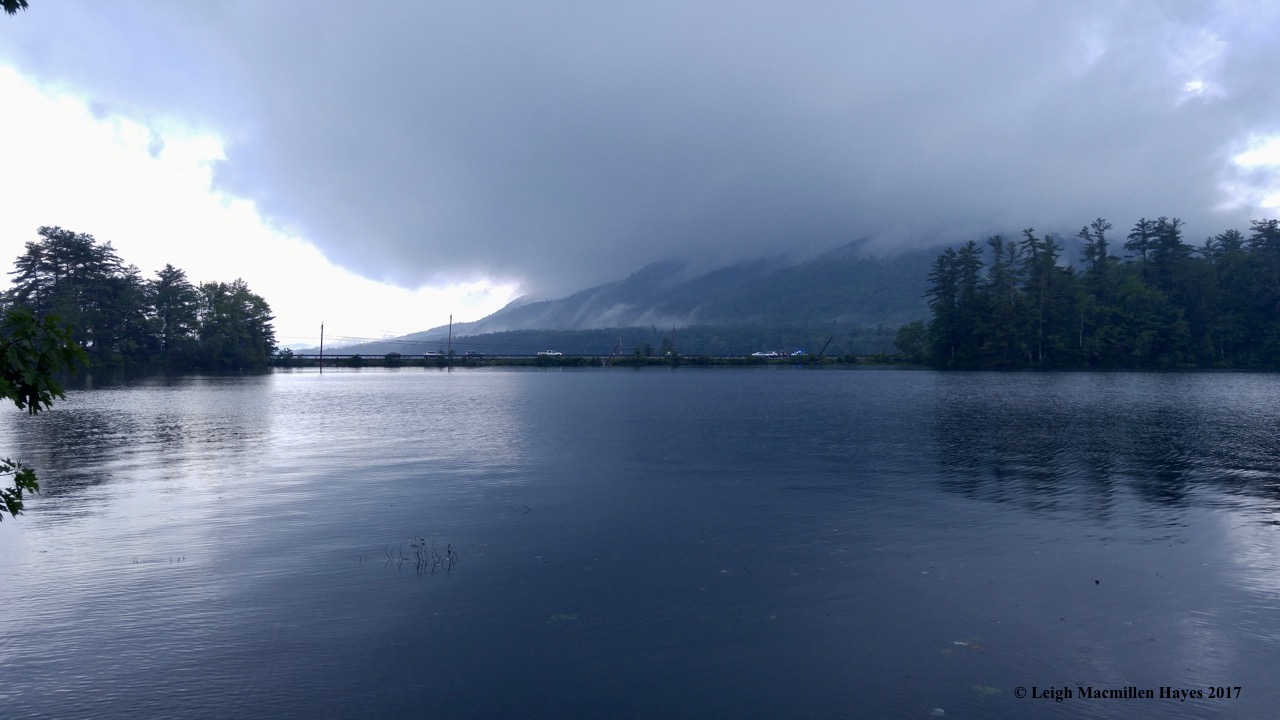
ph 3 (1)

It didn’t last all that long, as storms go, but the damage was incredible, including telephone poles left standing at 45-degree angles. Soon, the neighbors and I assessed our properties. We somehow lucked out and only two branches plus a bunch of twigs fell. Others were not so fortunate. Trees uprooted along the shoreline or crashed onto houses, sheds, vehicles and boats. Our neighbors float shifted about thirty feet north from its usual anchored spot. And the National Weather service did indeed determine it was an EF-1 Tornado with winds of 90-100 miles per hour.
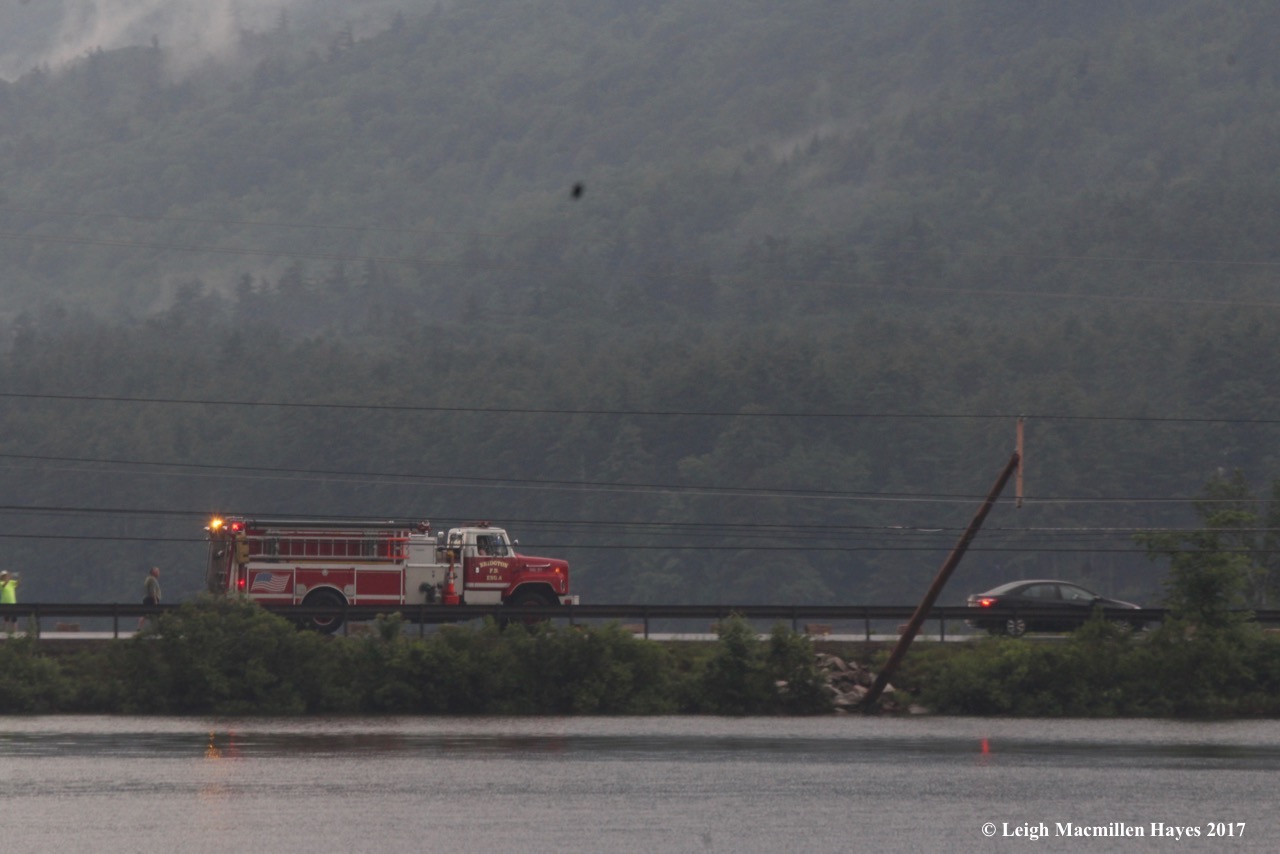
d-firetruck on causeway

At first traffic along the causeway moved extremely slowly because fallen trees had closed the south-side lane, but eventually the police shut the road down and the fire crew arrived to begin the clearing process. After the first storm, it rained on and off, but once my guy got back to camp (he dodged a detour–don’t tell), we still managed to grill a steak and sat on the porch in the dark, which is our evening habit anyway. Central Maine Power worked most of the night and they’ve been at it all day–resetting poles and lines while neighbors’ generators and the buzz of chainsaws filled the air.

And my focus returned to others who also fill the air–though in a much more welcome manner, to we humans that is. Damselflies and dragonflies. Other insects don’t necessarily agree with us–as they become quick food.

Therefore, it seems apropos that the Book of July is the Stokes Beginner’s Guide to Dragonflies and Damselflies by Blair Nikula, Jackie Sones, with Donald & Lillian Stokes.

d-book

It’s not a big book by any means, and doesn’t include all species of the insect order Odonata, but for me right now, it’s enough. And it fits easily into my pack. I can not only try to give a name to what I see, but more importantly to recognize the subtle differences in these favorite of insects.
d-book key

One of the features I really like is that it has a key on the inside cover, first divided between damselflies and dragonflies, and then further divided by families based on size, percher or flier, flight height, wings, body colors, eye position and other clues. As you can see, there are color tabs and I can quickly move to that section and search for the species before me. I’ve discovered that I’m now looking at eye position and colors as a quick key, with other features falling into place.

The book also discusses the life cycle and behavior of damselflies and dragonflies.
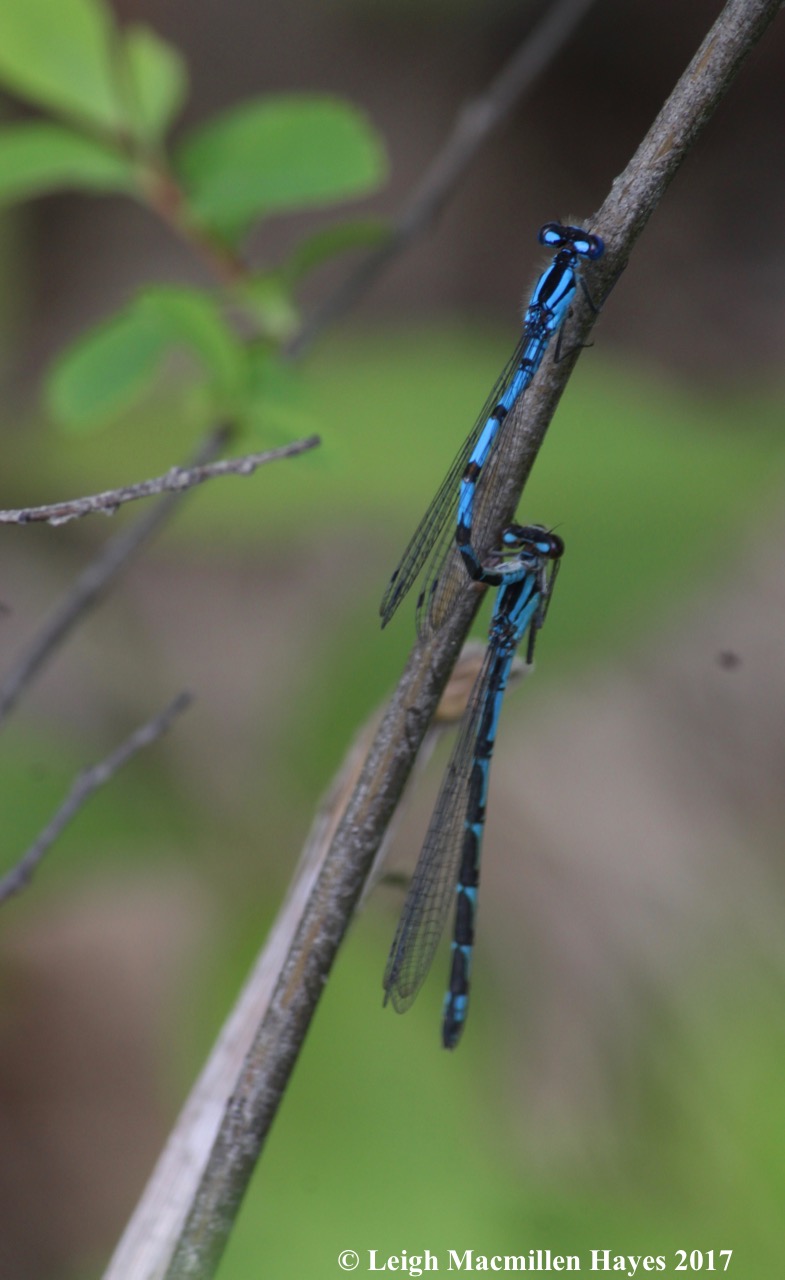
d-pond damsels mating, Marsh bluets 1

Of course, it all begins when he grabs her–for damselflies such as these marsh bluets, he clasps her by the neck. Dragonflies do the same, only he clasps his female of choice behind the eyes.
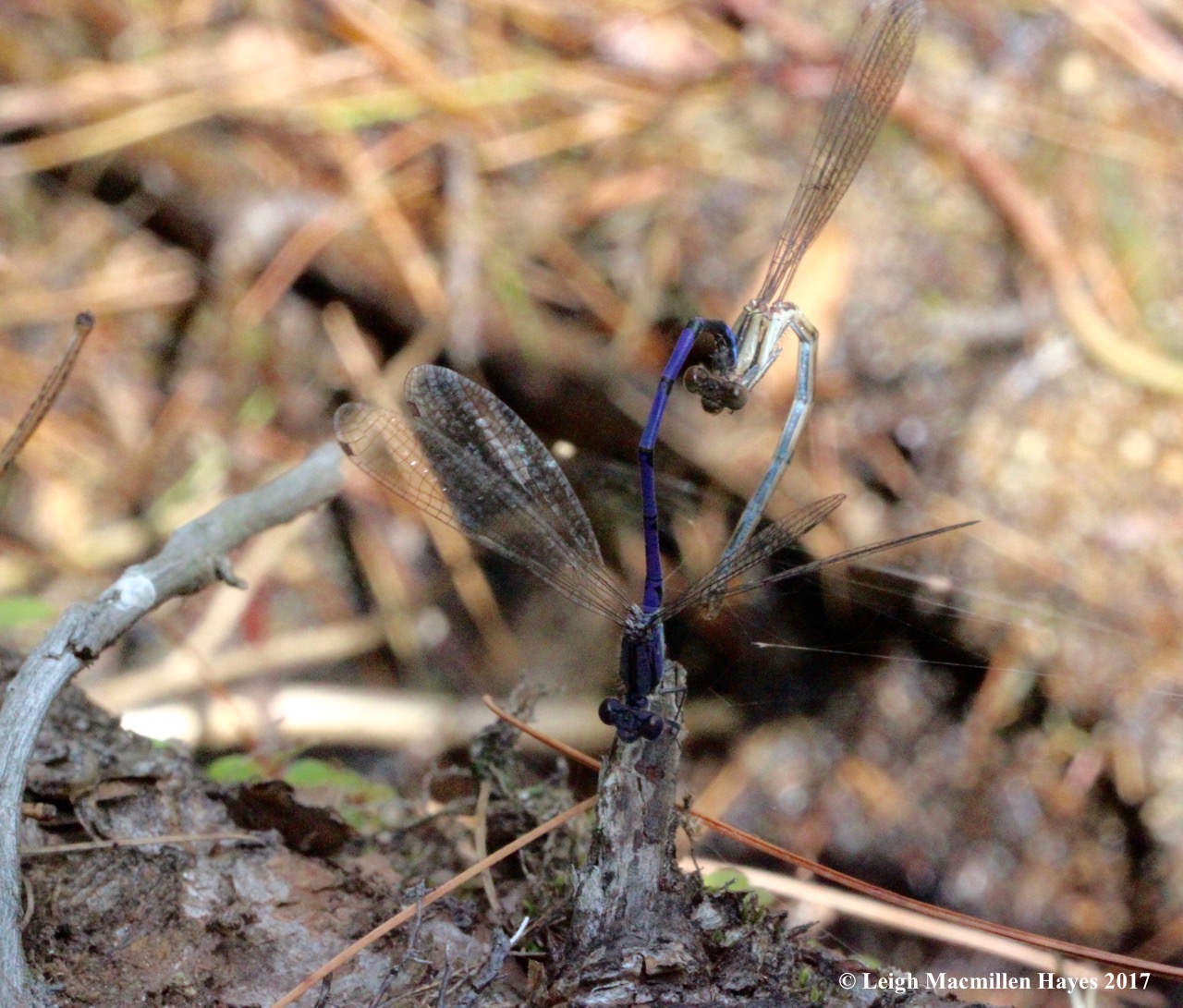
d-damsel love, variable dancers

Eventually damsel love occurs as the mating couple forms a “copulation” wheel, thus allowing him to remove any sperm she may have already received from another, and replacing it with his own. Sneaky dudes. Soon after, hundreds to thousands of eggs are deposited, either in the water or on vegetation, depending on the species.

d-damselfly nymph1

Emerging from an egg, the larvae develop underwater. Damselflies such as this one, obtain oxygen through the three tail-like projections at the end of their abdomens. From 8-17 times, they molt, shedding their outer shells, or exoskeletons.

d-exoskeleton shrubs

In the spring, the big event happens. We all celebrate the emergence of the last stage in the larval skeleton, when the insects climb up vegetation or onto rocks, or even the ground, and make that final metamorphosis into the damsel or dragonfly form we are so familiar with, thus leaving their shed outer shell (exuviae) behind.

d-emerging dragonfly

On a warm, sunny spring day toward the end of May, there’s no better place to be than sitting in the presence of an emerging adult.
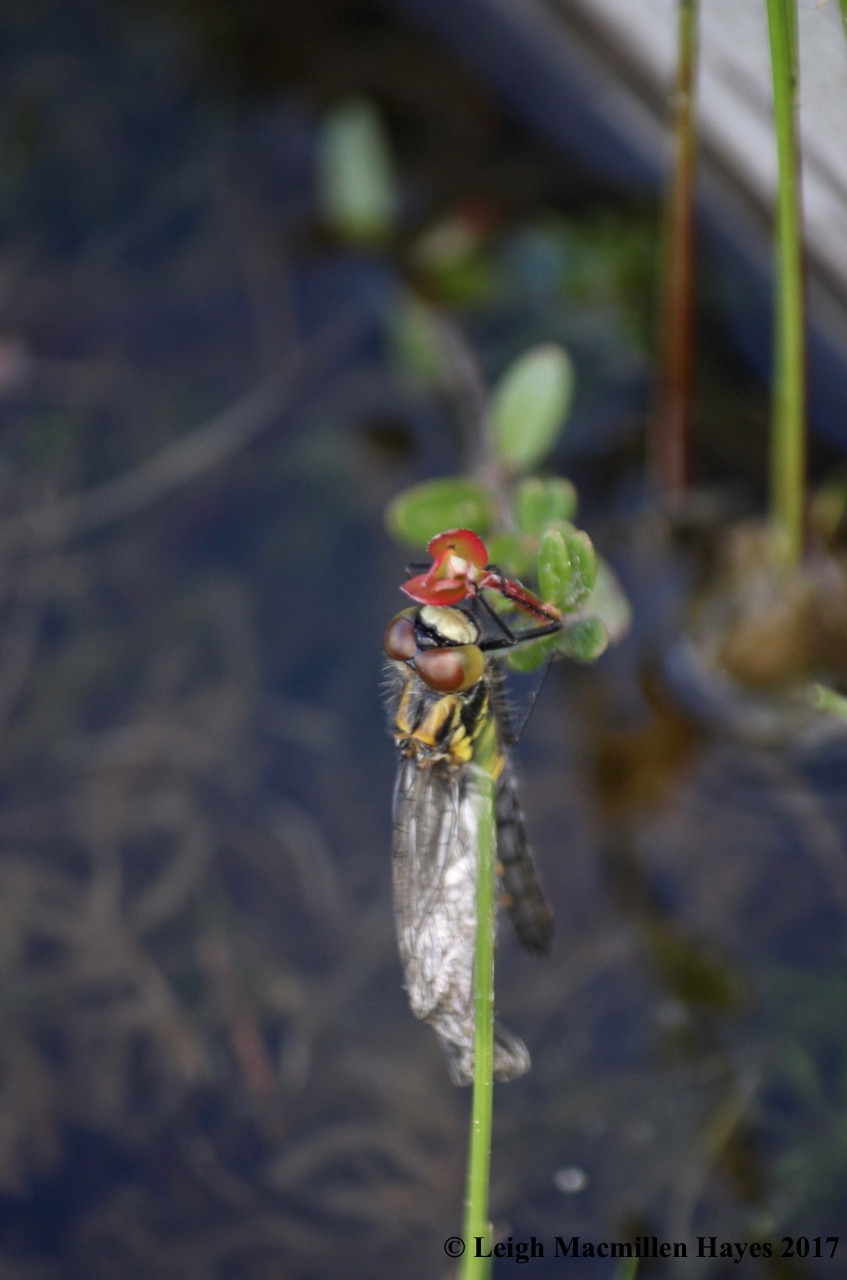
d-emerging 2

I encourage you to look around any wetland, even as the summer goes on, for you never know when those moments of wonder might occur.

d-Broad-winged damsel, River Jewelwing 1

In the guide, the authors include all kinds of observation tips. And then, the real nitty gritty. The first thirty-six pages of the Identification section are devoted to damselflies. And those are divided into Broad-winged damsels, Spreading, and Pond damsels. This is a river jewelwing, and for me it was a first a few weeks ago. I spotted this beauty beside the Saco River in Brownfield Bog–its iridescent green body showing through the dark-tipped wings.

d-pond damsel, ebony jewelwing, male

In the same category, the ebony jewelwing is equally stunning with brilliant green highlighted by black accents. This was a male; the female has a white dot or stigma toward the tip of her wings.

d-spreadwing, common spreadwing

Spreadwings are next and so named for their spread wings. This one happened to be a common spreadwing, though really, I don’t find them to be all that common.
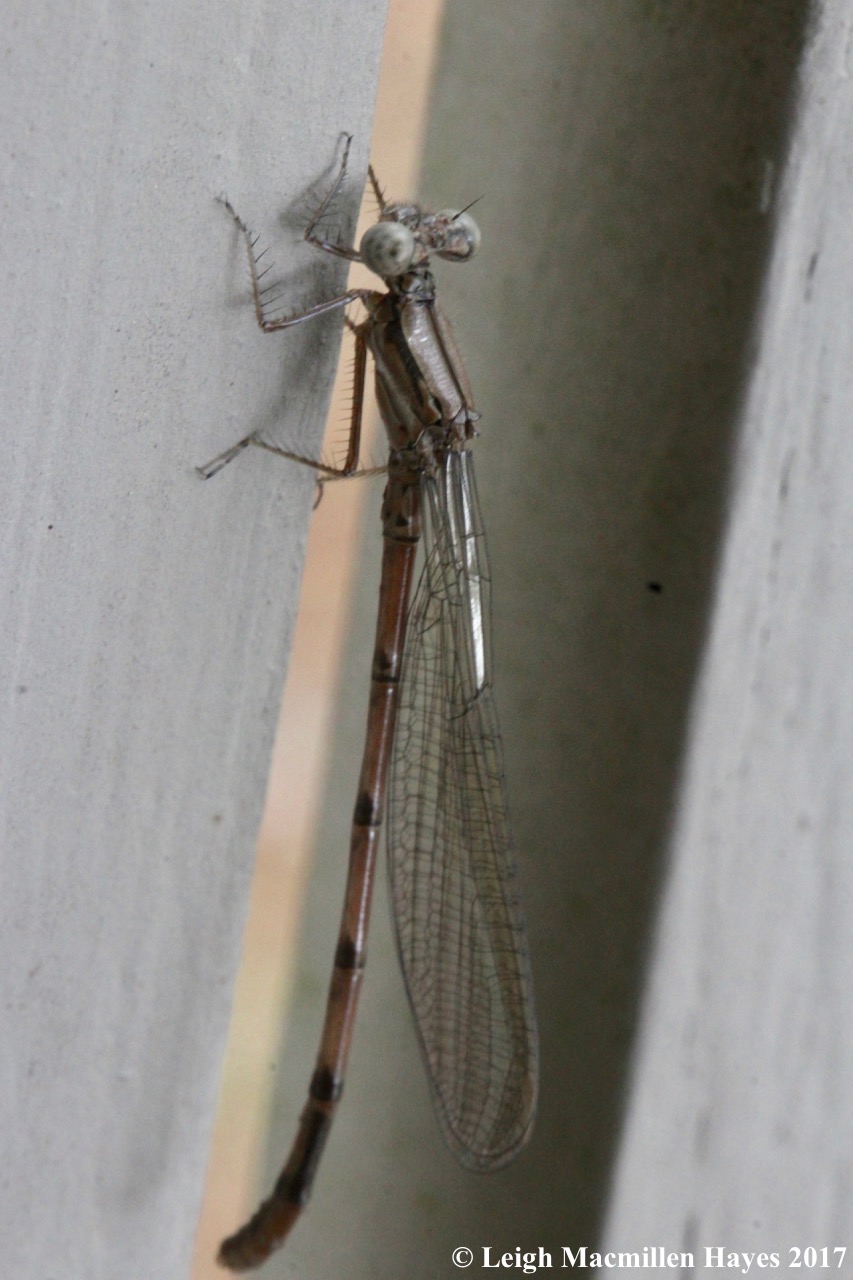
d-pond damsel, variable dancer

The pond damsels are the ones I do see often, including the female variable dancers. Check out her spotted eyes.

d-pond damsel, sedge sprite 1

And one of my favorites for its colors and name–the sedge sprite. If you noted the dancer’s eyes, do you see how the sprite’s differ?

From page 79-155, dragonflies are identified. I don’t have one from every type, but I’m working on it.
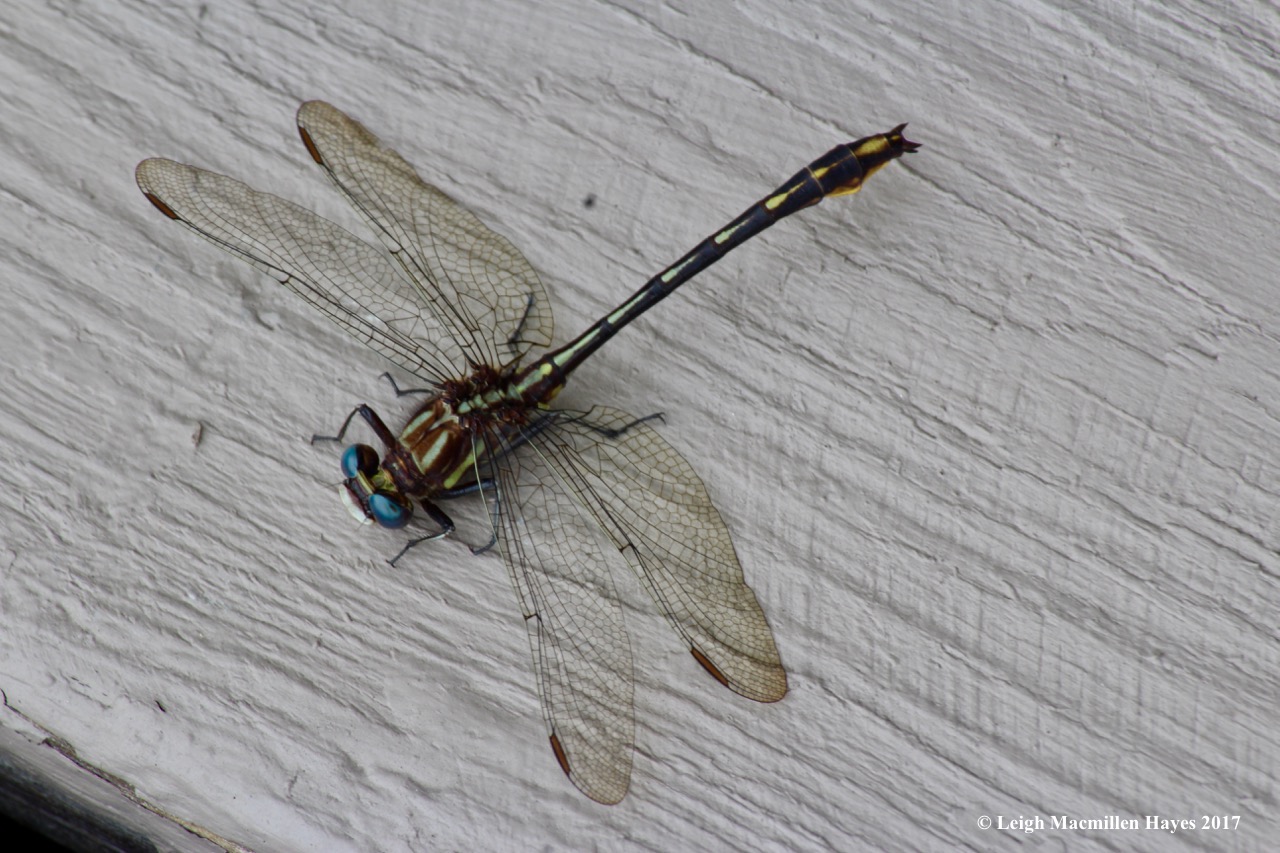
d-clubtail, lancet clubtail, male

Clubtails have clear wings, and their coloration is often green, yellow or brown. Check out those eyes–and how widely separated they are. Meet a lancet club tail, so named for the yellow “dagger” markings on its back.

d-Emeralds, Ameican Emerald 2

The emeralds are known by their eyes, which are often green. This American emerald has a black abdomen with a narrow yellow ring at the base near the wings.
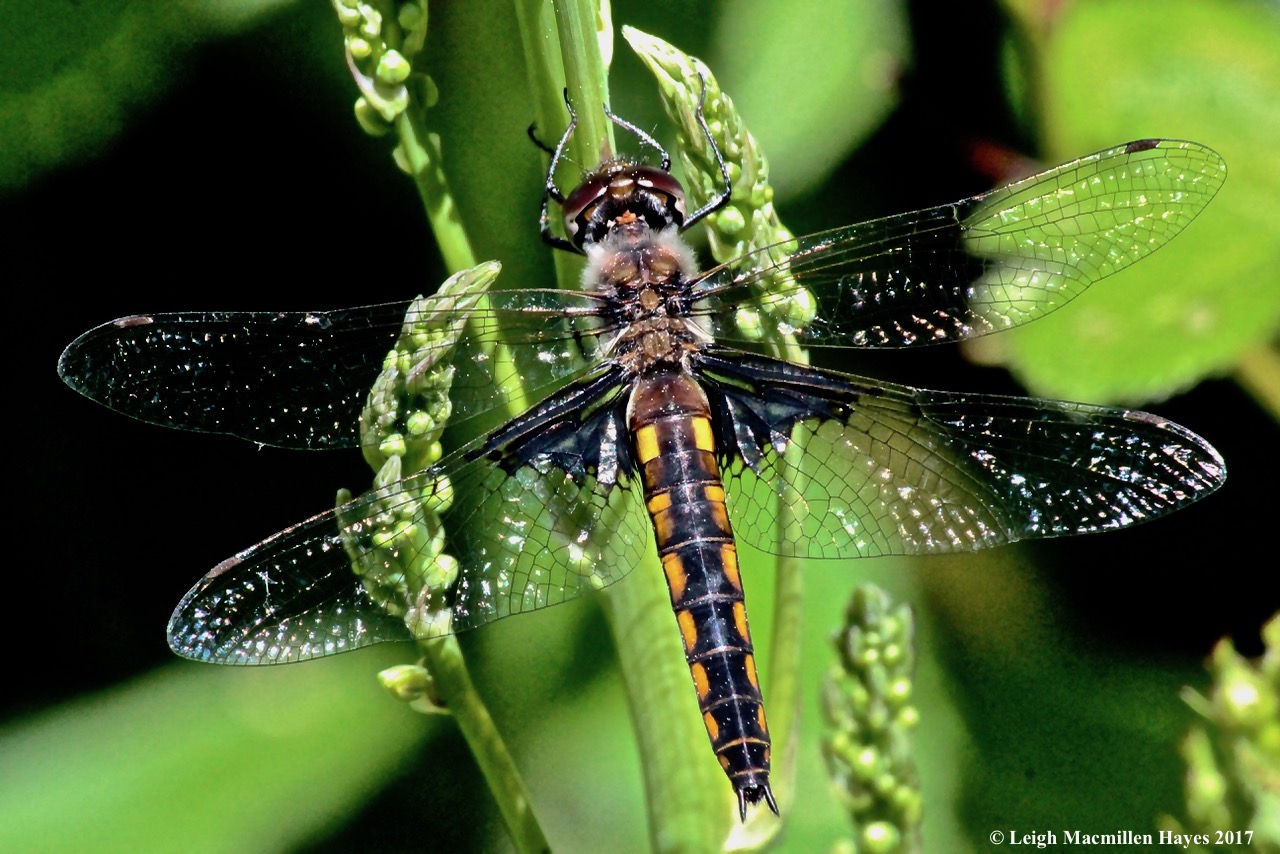
d-baskettail, common baskettail 1

Also included with the emeralds is the common baskettail. Notice how stout this handsome guy is.

d-skimmer, chalk-fronted corporal male

Among the easiest dragonflies to actually get a good look at are the skimmers. And it seems that on many paths I follow, the chalk-fronted corporals are there before me. His thorax has two bluish-gray stripes with brown on the sides. And his wings–a small brownish-black patch.
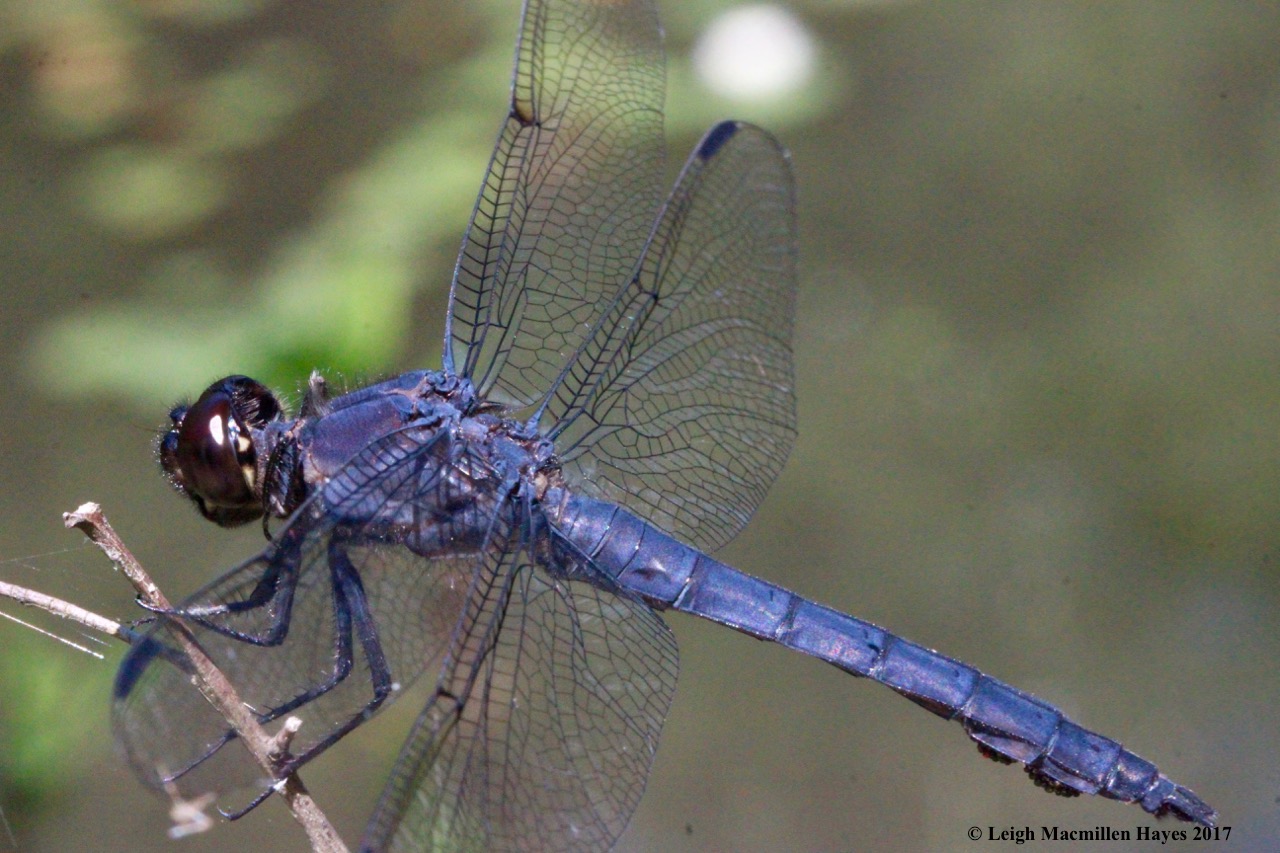
d-skimmer, slaty blue 2

Then there’s the slaty skimmer, in a shade of blue I adore. His wings are clear, except for the black stigmas toward the tips.
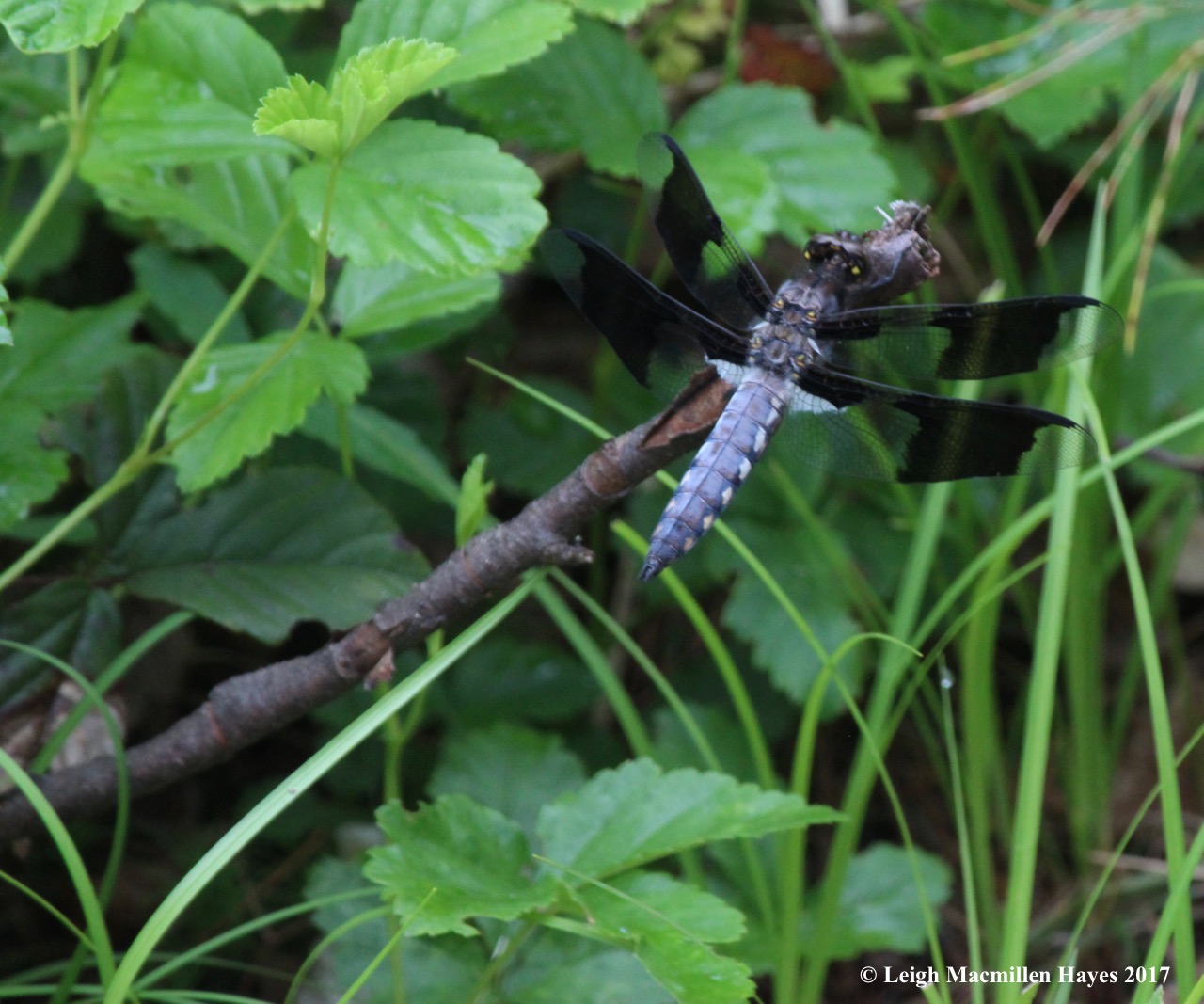
d-skimmer, common whitetail

The common whitetail is also a skimmer. Not only is his abdomen different–with white markings on the side, but he has wings with black and chalky white bases and broad black bands in the middle.
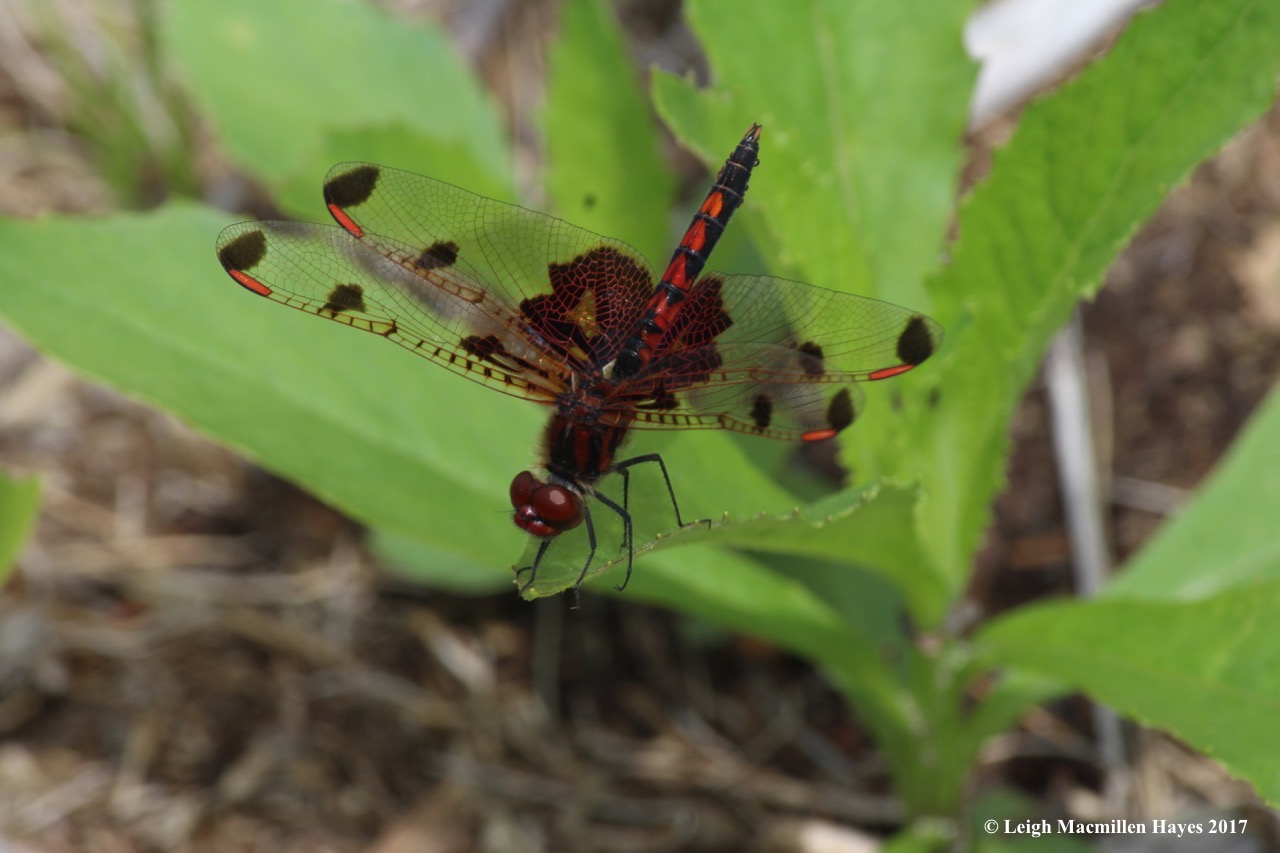
d-skimmer, calico pennant, male

They’re all pretty, but I think that so far, my all time favorites are the calico pennants; the male with red highlights including stigmas on his wings and hearts on his back, plus a hint of red everywhere else.

d-skimmer, calico pennant female

For once the male isn’t to be outdone in the color department, and the female looks similar except that she’s yellow.
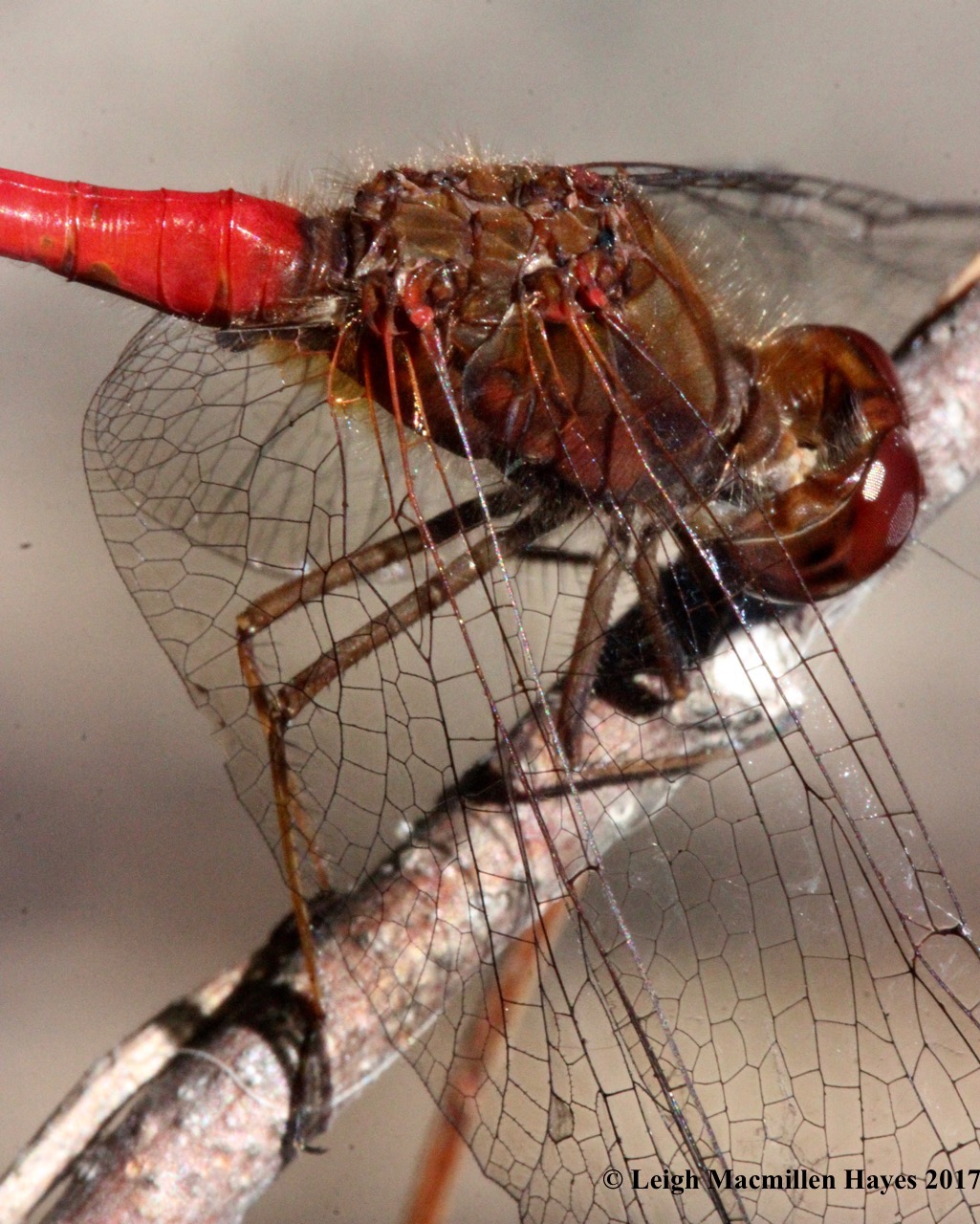
d-skimmer, yellow legged meadowhawk, wings

There’s so much to admire about damselflies and dragonflies. I mean, first there are those compound eyes. But look at the thorax–where both the three pairs of legs and two pairs of wings attach. I find that attachment to be an incredible work of nature. It’s awe inspiring at least.

d-ending, female calico pennant on screen

Then again, nature is awe-inspiring. When I awoke as the sun rose yesterday morning, I wondered about the damsels and dragons. Did they survive the storm? I stepped outside to once again check for damage and look who I spotted on the porch screen. Mrs. Calico stayed for about an hour or two, letting her wings dry off before heading out to perform today’s duties–flying on the wild wind of western Maine.

Damselflies and dragonflies are one more point of distraction for me these days. I won’t always get their ID correct, but I’m thankful for the Book of July, Stokes Beginner’s Guide to Dragonflies and Damselflies, that I found at Bridgton Books.

Stokes Beginner’s Guide to Dragonflies and Damselflies by Blair Nikula, Jackie Sones, with Donald & Lillian Stokes. Little, Brown and Company, 2002.
Keeping an Eye on Long Meadow Brook

My intention yesterday afternoon was to focus on the plants and trees at the Greater Lovell Land Trust’s newest reserve, Long Meadow Brook. But I also wanted to check out the new parking area created as part of an Eagle Scout project by Bridgton’s Troop 149.

l-parking lot 2

While the logging road cut by the previous owner to the landing during a 2014 thinning was untouched for the creation of the parking area, some of the log landing (staging area to remove logs from the site) was used to create a smooth space for vehicles. Kudos to the Scouts and other volunteers for building the lot.

l-kiosk 2

To the left of the parking area stands a kiosk. If you go, please note that the trail was first tagged last summer and though trail work was done this week, it’s brand new and not yet well tramped.

l-sloppy trail marker

Your best bet is to keep an eye on the trail signs. Most are blue circles painted on a white background and nailed to the trees. But . . . at least one offered a more creative take as it appeared someone was thinking outside the lines. ;-)

l-coltsfoot

So yes, I went to make an initial inventory and began on the driveway to the parking lot, where the blossoms of coltsfoot have now turned to seed. Remains of the former flower continued to exist among the white fluff of the seeds’ parachutes.

l-dandelion seed head

In the same place grew dandelions, providing a comparison as their seed heads were fancier in form.

l-common mullein rosette

It was on the driveway also, that common mullein showed off its soft leaves as it grew among the equisetum or horsetail.

l-common mullein

One in particular was ready to spring forth with new life.

l-common mullein--cacti

Though there were examples of last year’s mullein flowers along the driveway, it was on the trail that I spied a group of them, looking much like the cacti of the north.

l-equisetum 1

There were other look alikes to note–this being a woodland horsetail that can be mistaken for a pine sapling.

l-pine sapling

Both have whorled branching, but pine featured packets of five straight needles , while the horsetail branches were divided and dangling.

l-spittlebug

A spittlebug larva took advantage of one pine sapling and covered itself with froth to keep predators away.

l-pine grove 1

White pine saplings are numerous on this 98-acre property, where the former owner left many older pines that create a cathedral-like space.

l-pitch pine

One of my favorite species were the pitch pines, though this one appeared to have been used perhaps as a turning tree, with its bark on one side scraped off.

l-common speedwell

At my feet, I also found common speedwell,

l-cinquefoil 1

common cinquefoil,

l-pipsissewa

and pipsissewa–though not common, not un-common either.

l-wintergreen sporting new growth

There was wintergreen showing off its new growth with tiny blossoms forming between light green leaves,

l-red trillium

and a red trillium, its flower passed by and fruit production in the works.

l-lowbush blueberries

Speaking of fruit, lowbush blueberries were loaded with future treats.

l-Indian Cucumber Root

And then there were those species that feature other-worldy presentations such as the Indian cucumber root.

l-greater bladder sedge

Likewise, the great bladder sedge with its fruit sacs pointed up and out.

l-wood fern with sori

A variety of ferns grow there, including wood ferns with sori maturing on the underside of the blades.

l-striped maple leaf

I found a small striped maple with leaves as big as a dinner plate.

l-maple-leaved viburnum

And multiple maple-leaved viburnums in flower, this one with . . .

l-beetles canoodling on maple-leaved viburnum-2

beetles canoodling. ;-)

l-oak apple gall

Because I was looking down so much, and no walk is compete without such a find, I saw an oak apple gall.

l-snowshoe hare scat 2

And similar in shape for its round form, snowshoe hare scat.

l-bench view

On the preserve are two small clearcuts. A bench has been installed at the two-acre lot.

l-wildlife blind

This is also the spot where a wildlife blind provides its own point of view.

l-field view

The six-acre opening faces the Baldface Mountains to the west.

l-Long Meadow

But my favorite view was at the old beaver dam, where Long Meadow Brook passes through. I wanted to spend more time there because there was much to see and ID, but the mosquitoes thought I was sweet.

l-chalk-fronted corporal

Fortunately, there were plenty of dragonflies, such as this chalk-fronted corporal, who thought the mosquitoes were sweet.

l-chalk-fronted female

That’s not all chalk-fronted liked, for this was his female counterpart.

l-lancet clubtail 1

Long Meadow Brook is the perfect place to meet some dragonflies, including the lancet club tail with yellow daggers running down the back of its abdomen.

l-eye to eye with dragonfly--white-face?

And a white face-so named for the whitish face below the bulging eyes.

l-stream cruiser

Hanging vertically as was its custom, a stream cruiser.

l-familiar bluet

Damselflies, too, flew about, including familiar bluets.

l-sedge sprite

But it was the metallic green of the sedge sprite that wowed me.

l-calico dragonfly 1

And when I thought I’d seen all that the land had to offer, I suddenly found myself in the place of the calico pennants.

l-calico 3

Its their wings that amazed me the most and made me think of stained glass windows.

l-calico 2

I happened upon them just before I passed back through the cathedral in the pines, as seems apropos.

While they focused on the abundant prey and each other to do their own canoodling (my guy and I heard that term mentioned recently and it made us chuckle), I had to finally pull my attention away. But . . . I’ll be keeping my eye on Long Meadow Brook Reserve. With pleasure.