Ec-lec-tic

Not one to ever be bored,
I follow my brain
in a million different directions
every day.
Sometimes the thoughts are broad-winged,
and even if I try to hide them,
they catch up
and stare me down.
Other times they are quick
and race through my head
in such a manner
that I can hardly capture them.
And then there are those 
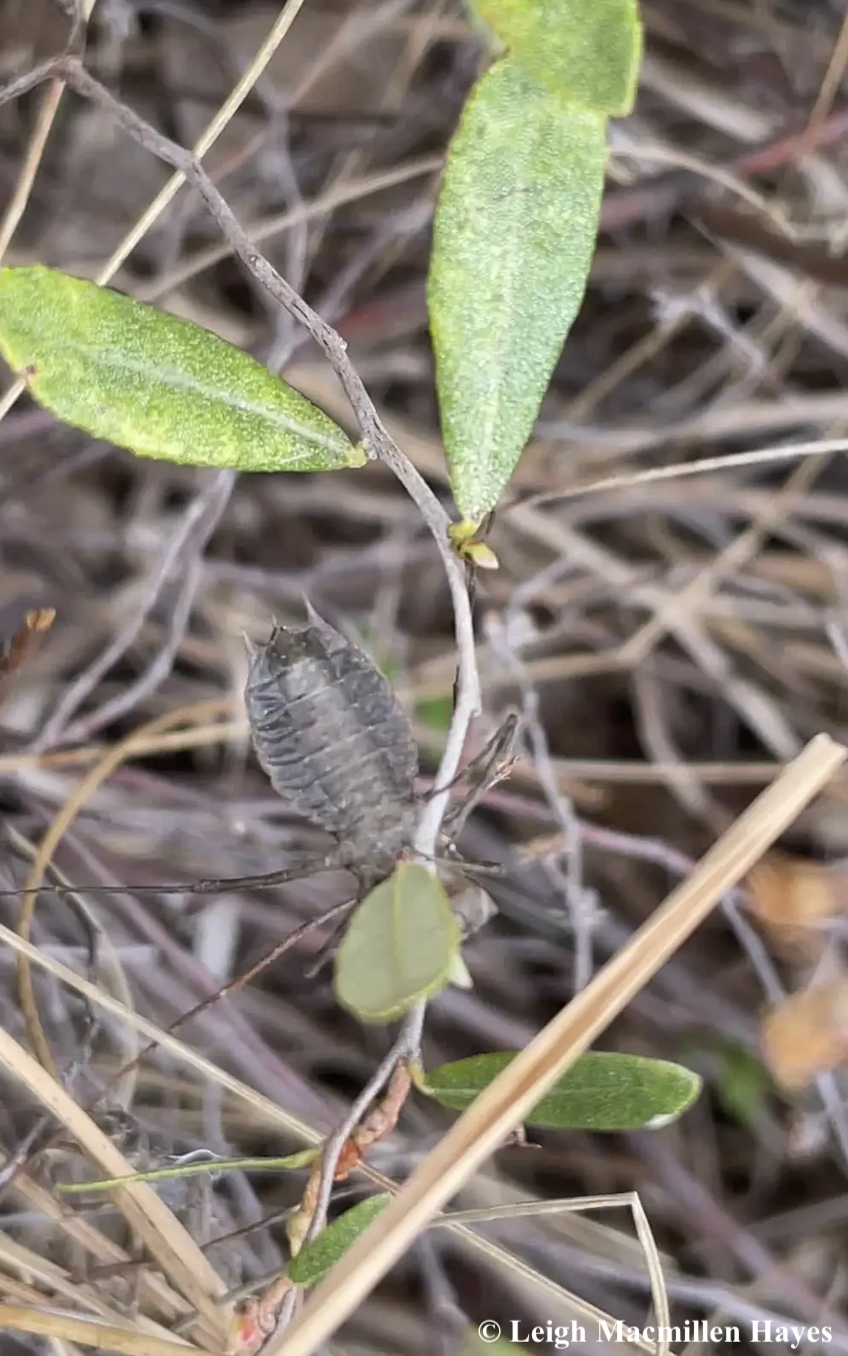
that are as small as a Spittlebug
but still worth considering
because everything counts.
Some moments I get to share with others
and together we wonder
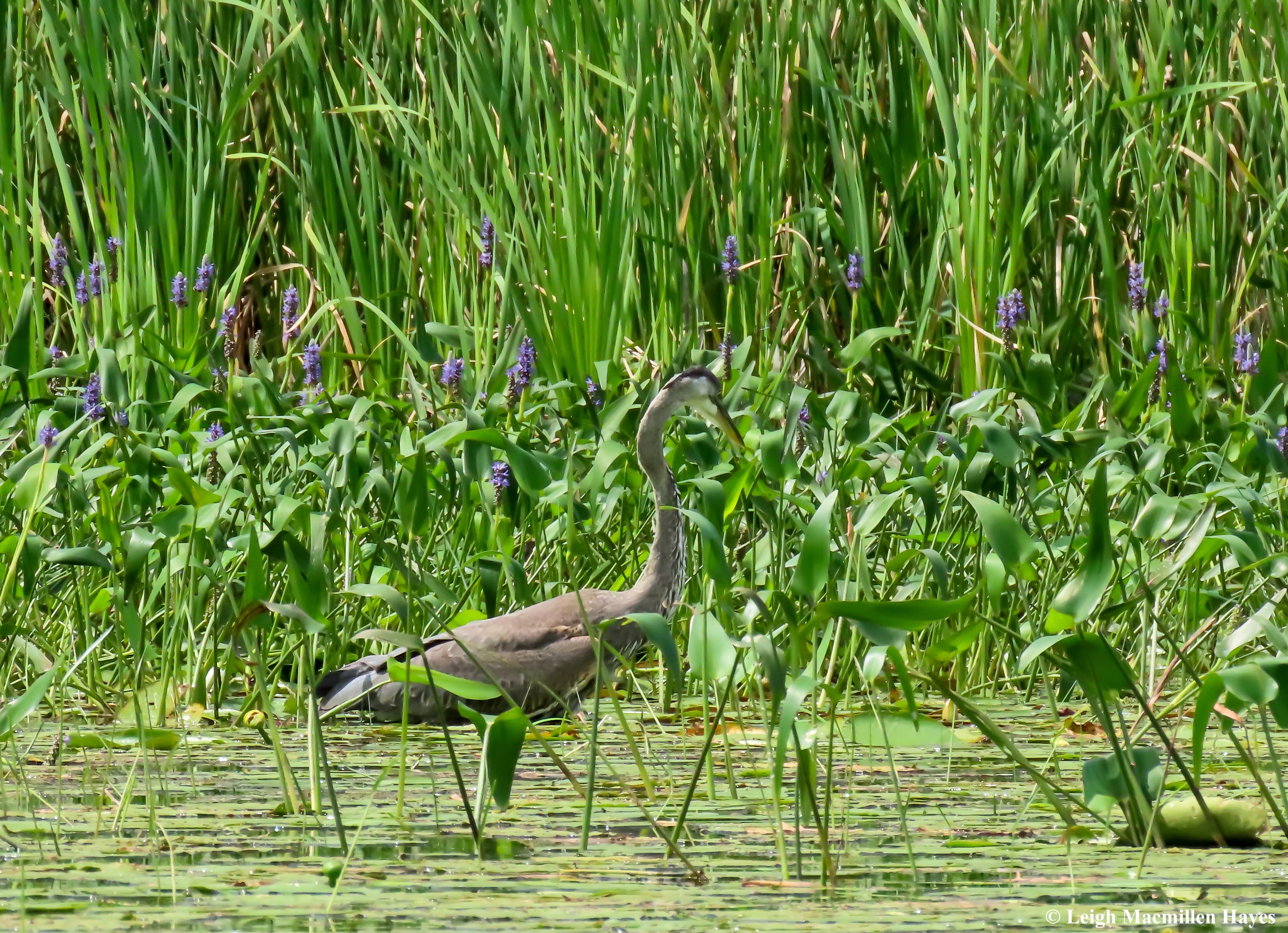
how long the Heron
will wait before taking the next step.
In that same space named for Otters
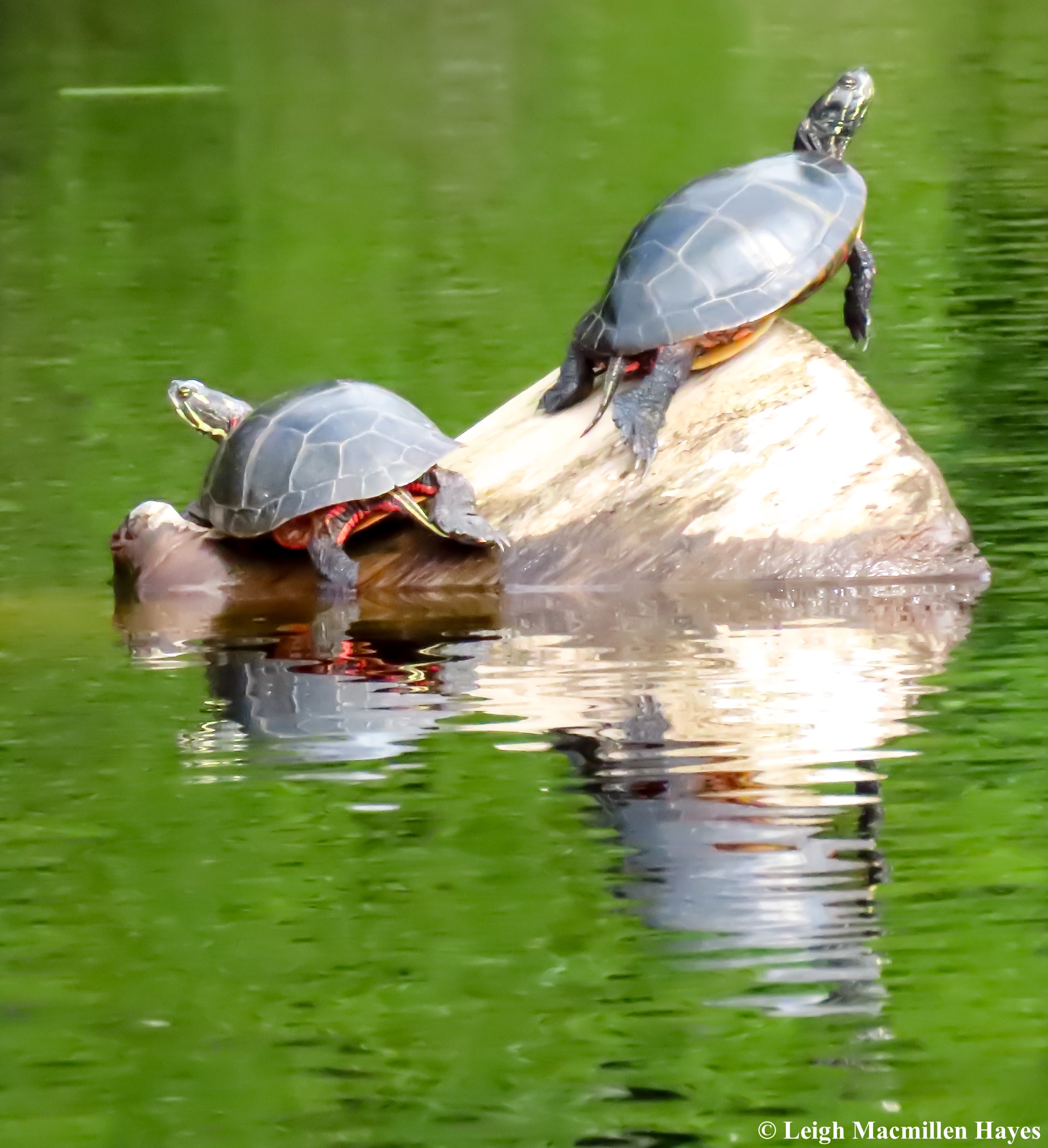
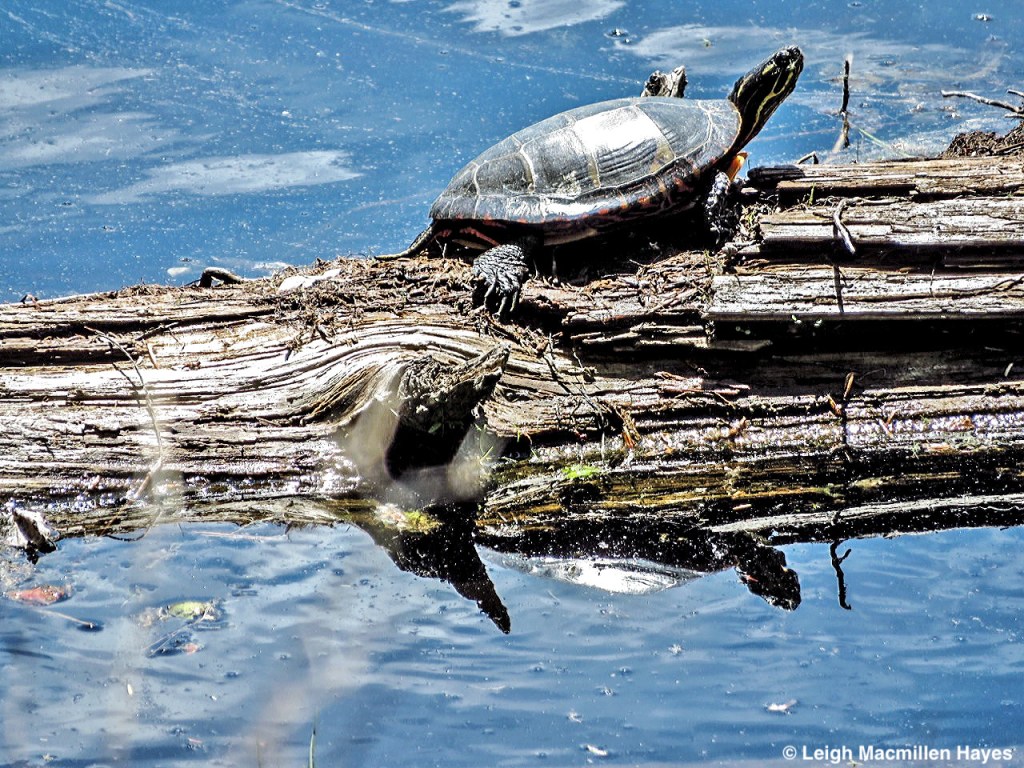
we spy basking Painted Turtles
who remind us we don't always need to
slip into the water and disappear from the scene.
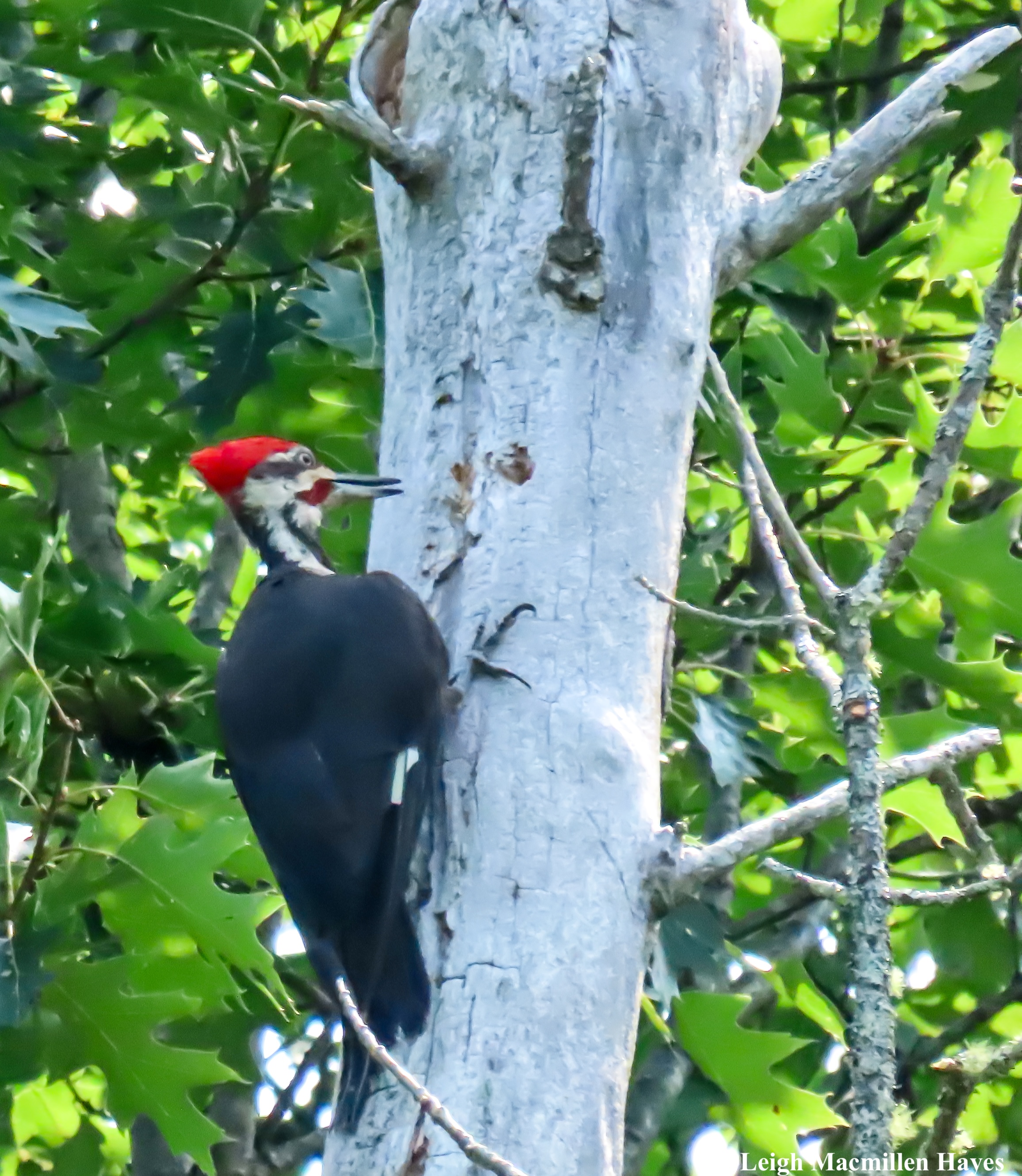
And then the Woody Woodpeckers 
of the North Woods
Rat-a-tat messages
best interpreted by their mates and I can only listen.
They may get a wee bit ruffled
in their Pileated fashion,
but I soon realize
that's because his she was nearby. And then they flew.
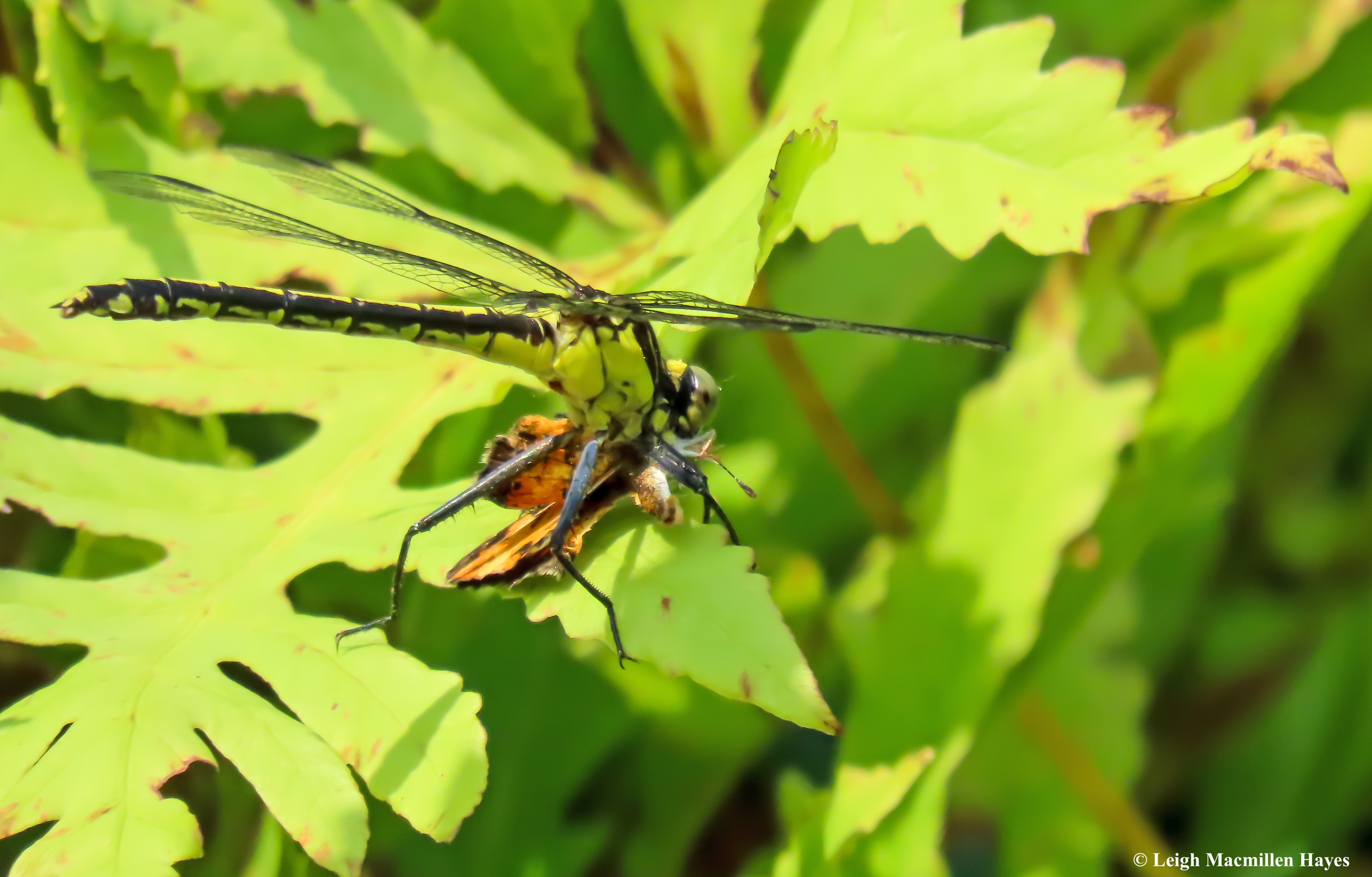
Next, upon a fern so Sensitive,
one with Spiny Legs doth land,
a Northern Crescent in its mouth
meant to provide nourishment.
Meanwhile, strung between other ferns
of the Sensitive sort,
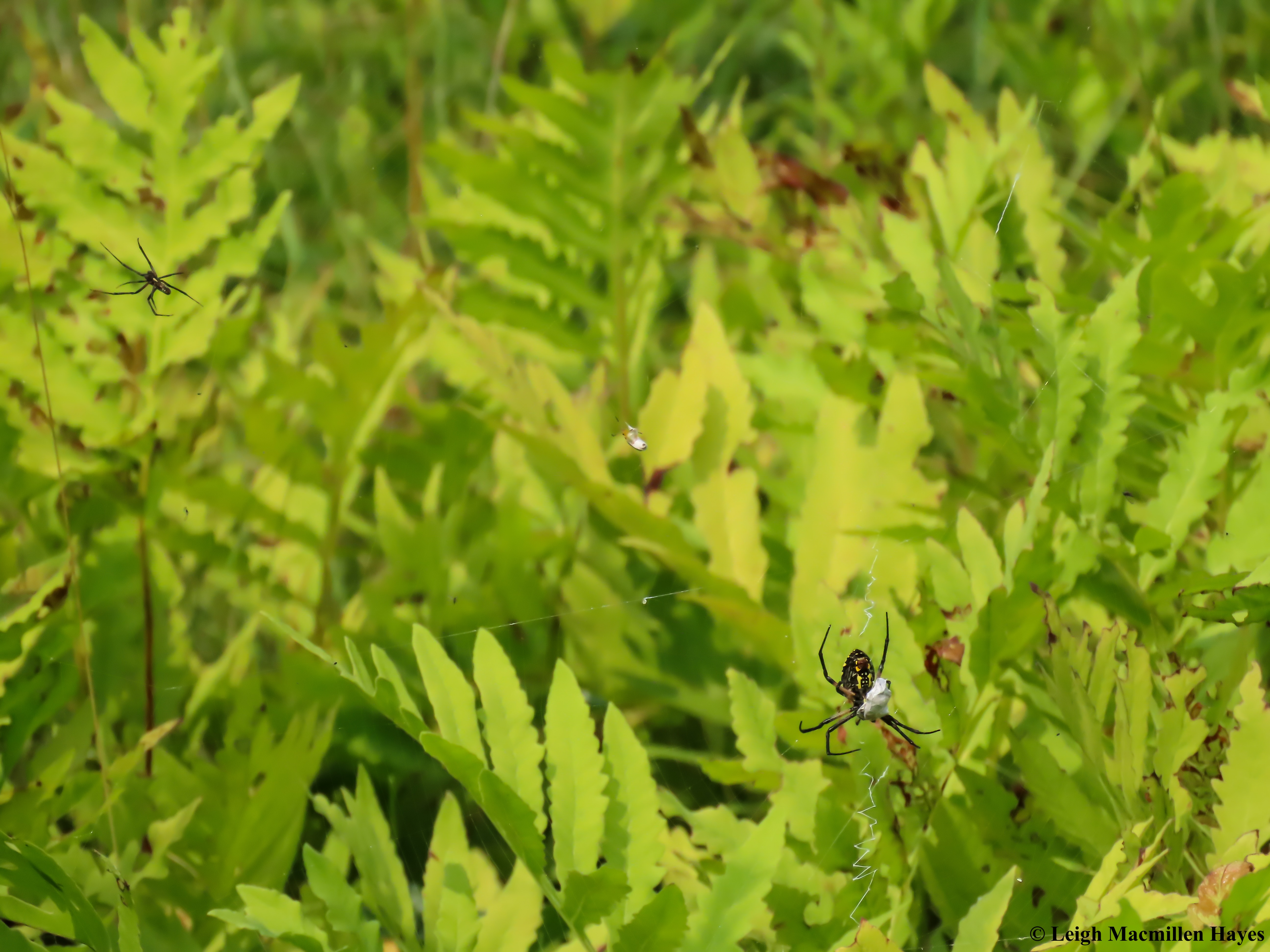
a large Black and Yellow Garden Spider
packages a meal as a smaller one looks on.
And I realize I've never seen 
such a small female
and wonder why she hangs
onto the web of her bigger sister.
Across the path
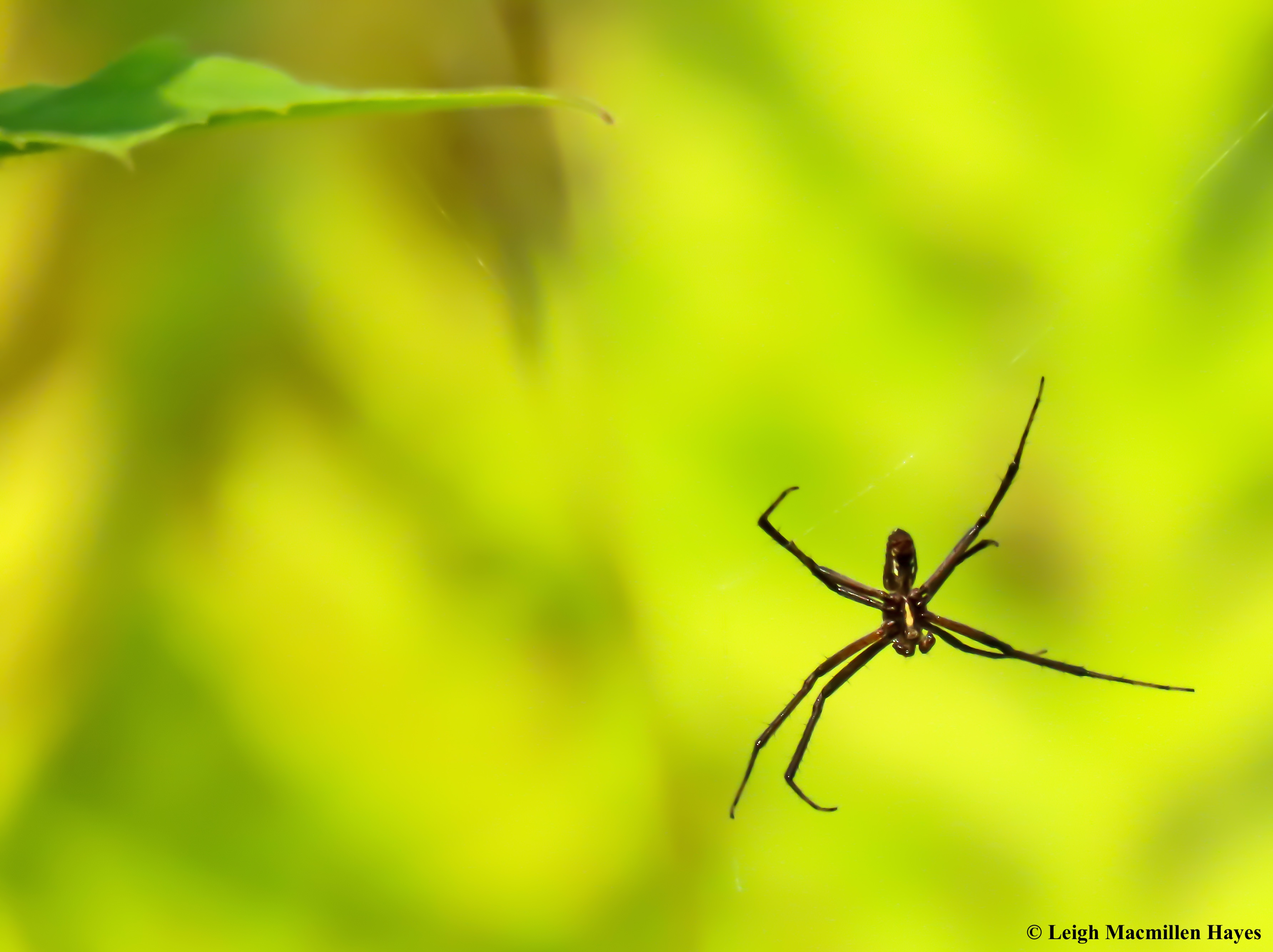
another Black and Yellow has several packaged meals
that may be a betrothal gift
for her Guy dangles above her, he being much smaller and drabber.
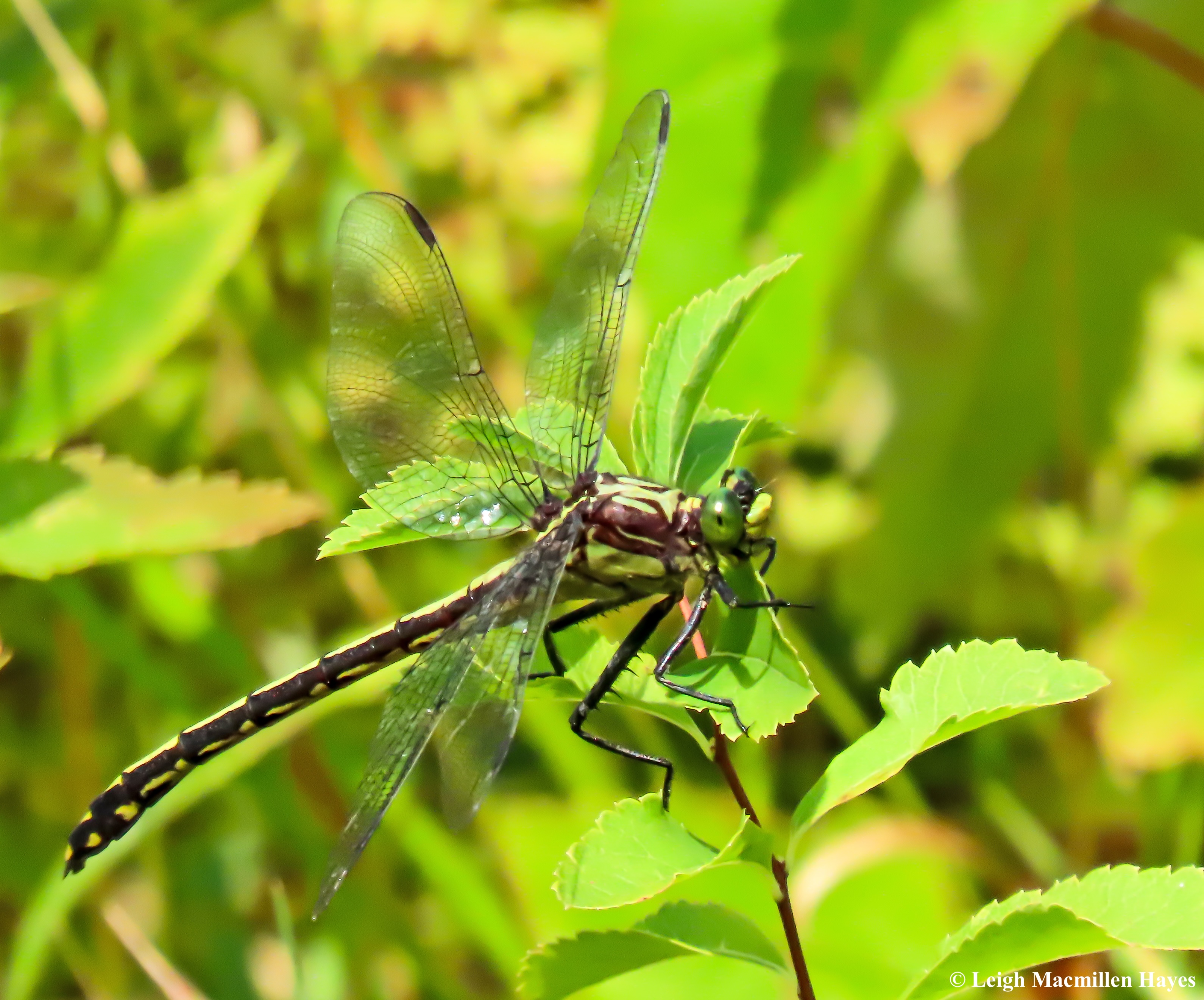
And the Black-shouldered Spinyleg
finds me again
and practically smiles,
if dragonflies can do such a thing.
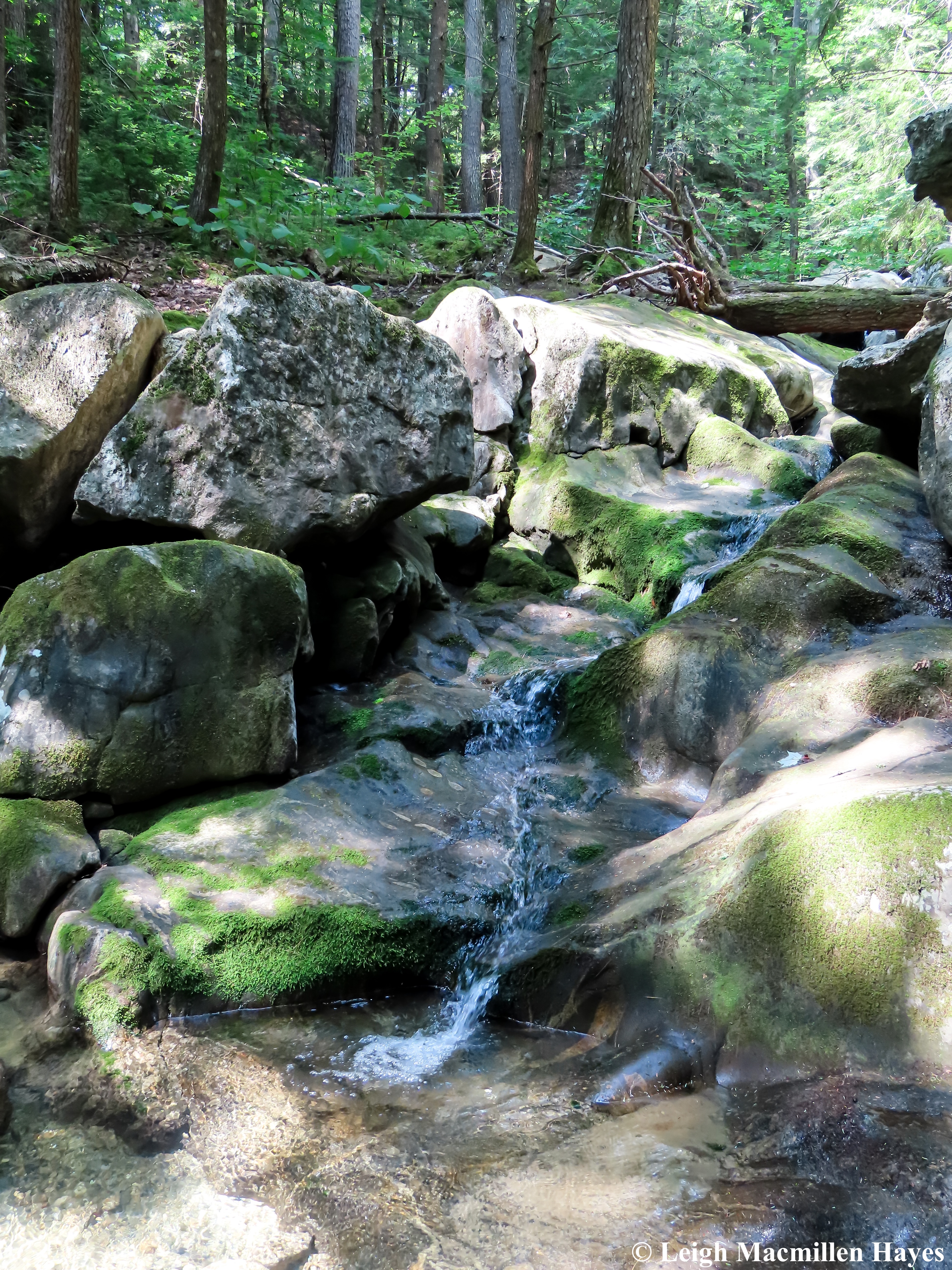
Water also flows into the scene
as it should
for it is life giving
even if its merely a trickle.
But the delightfully curious thing
is that upstream
the mosses imitate
the water's action even where it is practically non-existent.
Upon the ground just above,
the Big-toothed leaf that most recently
gathered energy from on high
chose to shut down and show off its colors before giving back to the earth.
It's in this same place 
that My Guy and I notice a Bear Claw Tree,
the marks located just below a trail blaze
and we wonder if the blazer was aware of the bear sign.
Back to a garden planted for Pollinators
I wander alone
and listen as a million bees buzz
and watch the clear wings of the Hummingbird Moth remain almost stationary.
It's in this same place, 
just above a sign bearing the name of its adult form
that I spot a caterpillar
so many of us revere.
While spotting Monarchs 
has been a bit of a challenge these days,
I rejoice that occasionally
I have the thrill of being in their presence.
All of this
and oh, so much more,
as the hawk shouts that being ec-lec-tic
means deriving a taste from a broad and diverse range of sources.
I'm so grateful 
to enjoy an eclectic view of the world
on so many fronts,
and to share with you just a smattering of what matters.

There Is No Planet B

I was asked to give the homily at church this morning and have spent the past month or more reflecting on what to say. Of course, it was to my blog that I turned for inspiration for I knew that parts of the story were tucked within these posts.

Driving home from a recent Trail Snails walk, I spotted this statement on a roadside sign: “There is no Planet B.” And I thought it was an apropos title for what I want to share with you this morning.

On Sunday, March 23, in Forward Day by Day, Tyler Richards, a priest serving St. Anne’s Episcopal Church in De Pere, Wisconsin, responded to Exodus 3:vs 3-4: Then Moses said, “I must turn aside and look at this great sight, and see why the bush is not burned up.” When the Lord saw that he had turned aside to see, God called to him out of the bush, “Moses, Moses!” And he said, “Here I am.”

Reverend Richards commented, “I do not have an accurate account of the things that have caused me to stop and look again. Solar eclipses, northern lights, sunrises, and sunsets are a few of these.”

He continued, “God asks us to turn aside and experience wonder. God’s creation is a source of endless contemplation, and, at times, so is human ingenuity. But these great wonders that take our breath away prompt me to ask: What are they for? Are they an end to themselves, or are they there to remind us that God is even more incredible? Indeed, God is so great that God inspires and colors the very creation itself. It might not always be a burning bush that causes us to gasp at God’s greatness.”

In response to that I invite all of you to join me as I share a few of the thin places I have visited, where I see the light more on this side than the other. These are not burning bushes, but they do make me gasp at God’s greatness. The first I call “Emergence.”

Emergence

Oh dragonfly, oh dragonfly.
In your infancy,
You laboriously
Climbed upon a slender stem.
Ever
So
Slowly,
Seams split.
Soft and squishy,
You spilled forth
Into this sunlit world.
Perched upon your former self, 
Wispy strings recalled
Aquatic breaths.
Moments slipped
Into an hour.
Your body of velvet pulsed
As blood pumped
Into cloudy wings.
Standing guard watching you,
I noted preparations
For first flight.
Eyes bulging, 
You chose a spot
Of viewpoint advantage.
Colors changing,
You gained the markings
Of generations past.
Wings drying, 
You offered a reflection
Of stained glass.
Beyond understanding,
You flew,
A dance of darting restlessness.
Odonata, Odonata, 
You have known both worlds.
First playing beneath the watery surface.
Then in a manner so brave, 
Climbing skyward
To ride summer breezes
On gossamer wings.
Forever in awe
Of your transformation
From aquatic naiad
To winged adult,
I can only imagine
The wonder of emergence.

******

Drawn by the Sapsuckers is next.
Along a path
Through a cathedral in the pines,
It seemed apropos
That I should spy
The works of
An Oak Apple Gall wasp.
For it is believed
That circa 800AD
Irish monks used such galls
To create the green colorant
Of their artwork
As displayed
In the Book of Kells.
My first intention of wander
Upon this special day
Was soon verified when I was
About twenty feet
From a maple tree
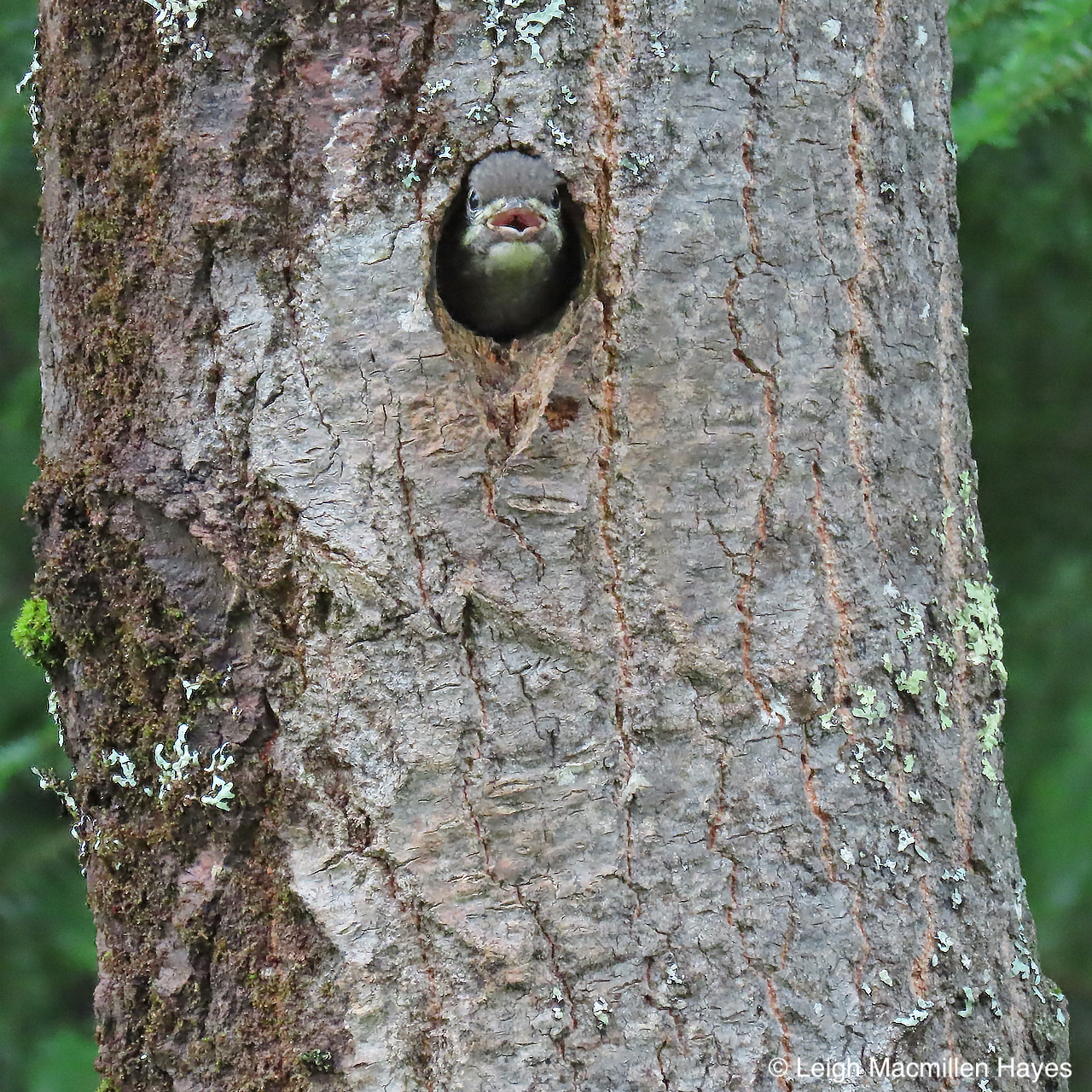
For I could hear peeps
From the ever hungry
Babes within.

Only two weeks prior
Father Sapsucker entered
The nest hole every few minutes
To nurture his offspring, but today
Things had changed.
No sooner did he toss in a meal
When a nestling popped its head out
And begged for more.
Finally, with the urging 
Of the ever present deer flies,
I moved on
To the neighboring meadow
And gave thanks when
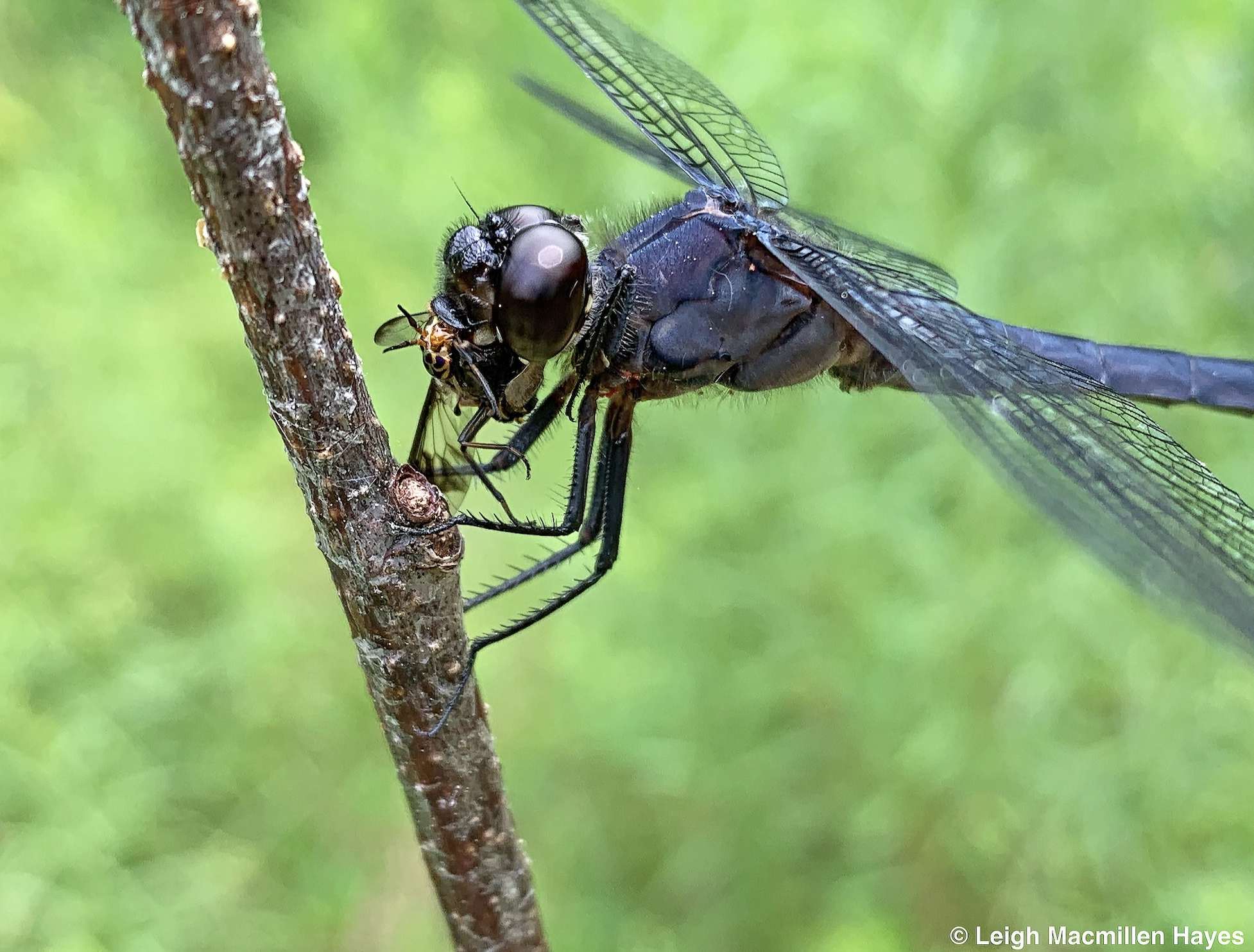
A Slaty Blue Skimmer Dragonfly
Snatched a pesky insect
From my head
And settled upon a stem to dine.
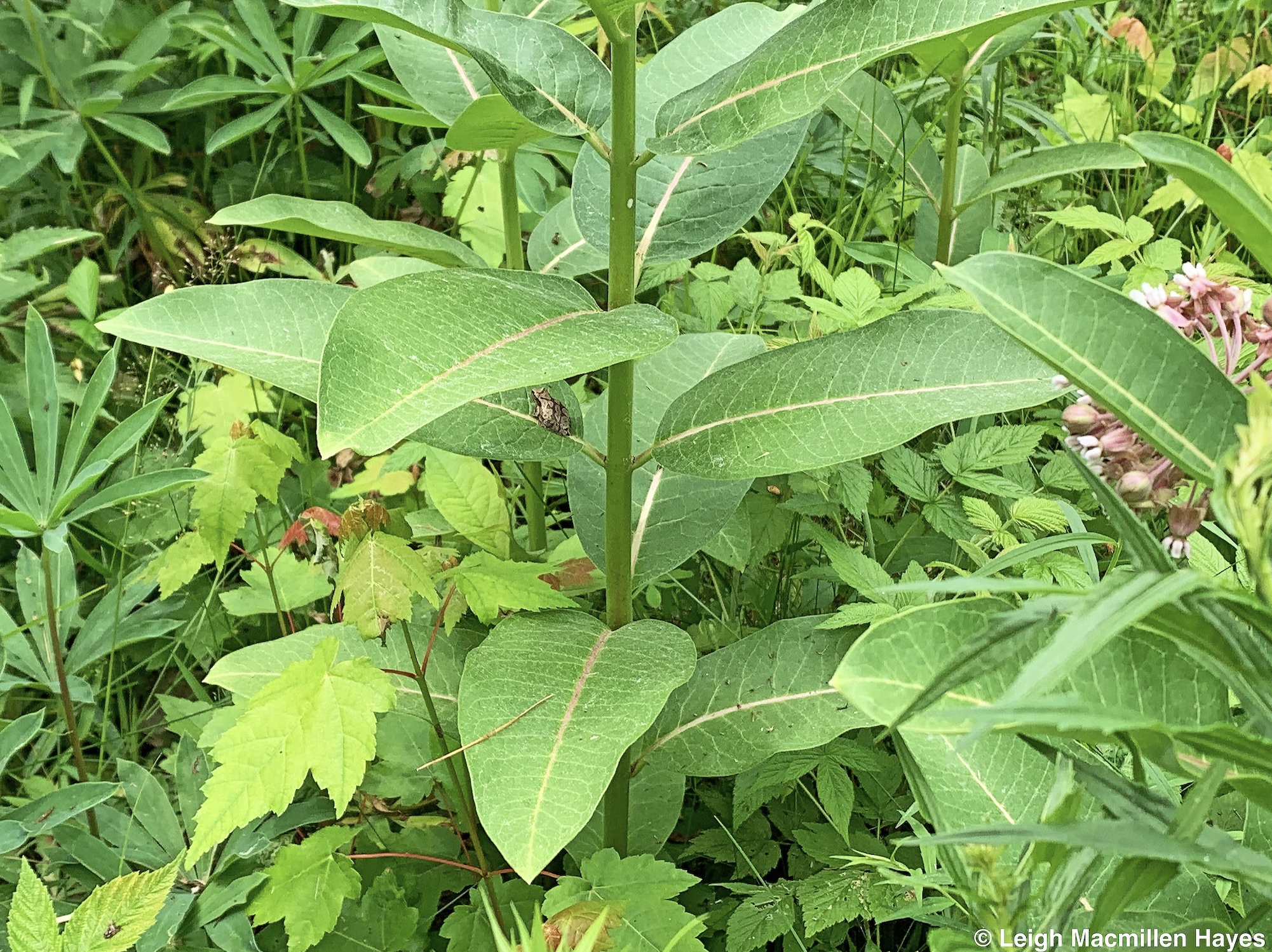
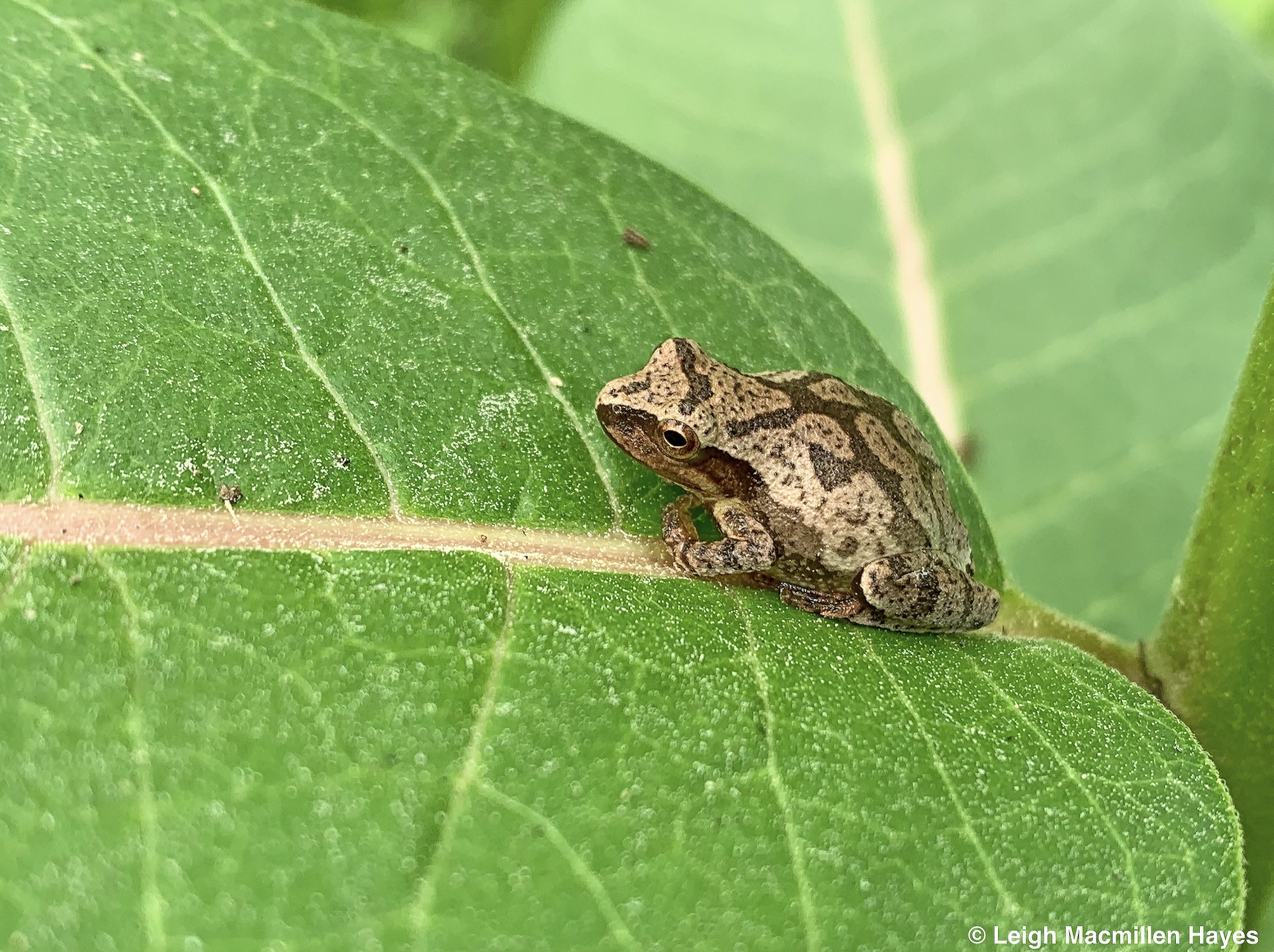
Nearby on a milkweed leaf
I spied something tiny.
By the X-shaped pattern
On its back,
I knew it was
A Spring Peeper.
Sitting two feet
Above the ground,
This little frog
Hid from predators
During the day
As it waited for dusk
To crawl down
The plant's stem
And munch a meal
Of its choice.
Behind the wee frog
A dash of color
Brightened the background.
Bedecked in orange and black,
This being a Fritillary butterfly,
It flew
Down the path
And out of my vision.
In this same place,
Tiger Swallowtail butterflies
Added their yellow wings
To the tapestry.
Plentiful in number, 
Skimmer dragonflies,
Each with a uniqueness
All its own
From Spangled to
Dot-tailed and Great Blue
Chased down meals
And hunted for mates.
Before departing
I checked
On the nestlings
In the Red Maple trunk,
While their papa
Did the same
From a tree
Ten feet away.
Was he teaching them patience? 
Perhaps.
Sensing our time together
Was waning,
I gave thanks
That it was the Yellow-bellied Sapsuckers
Who drew me to this place.

******

Finally,

"The way to be heard isn't to shout," said the Reverend Sam Wells of St. Martins in the Fields, London. "It's to whisper."

But, I ask you, who are the whisperers?

As you go forth this spring . . .
Listen for the slightest murmur
Of Beaked Hazelnut
Sharing its most
Beautiful, yet minute
Magenta blossoms
That so many never see.
Hear also
The soft words
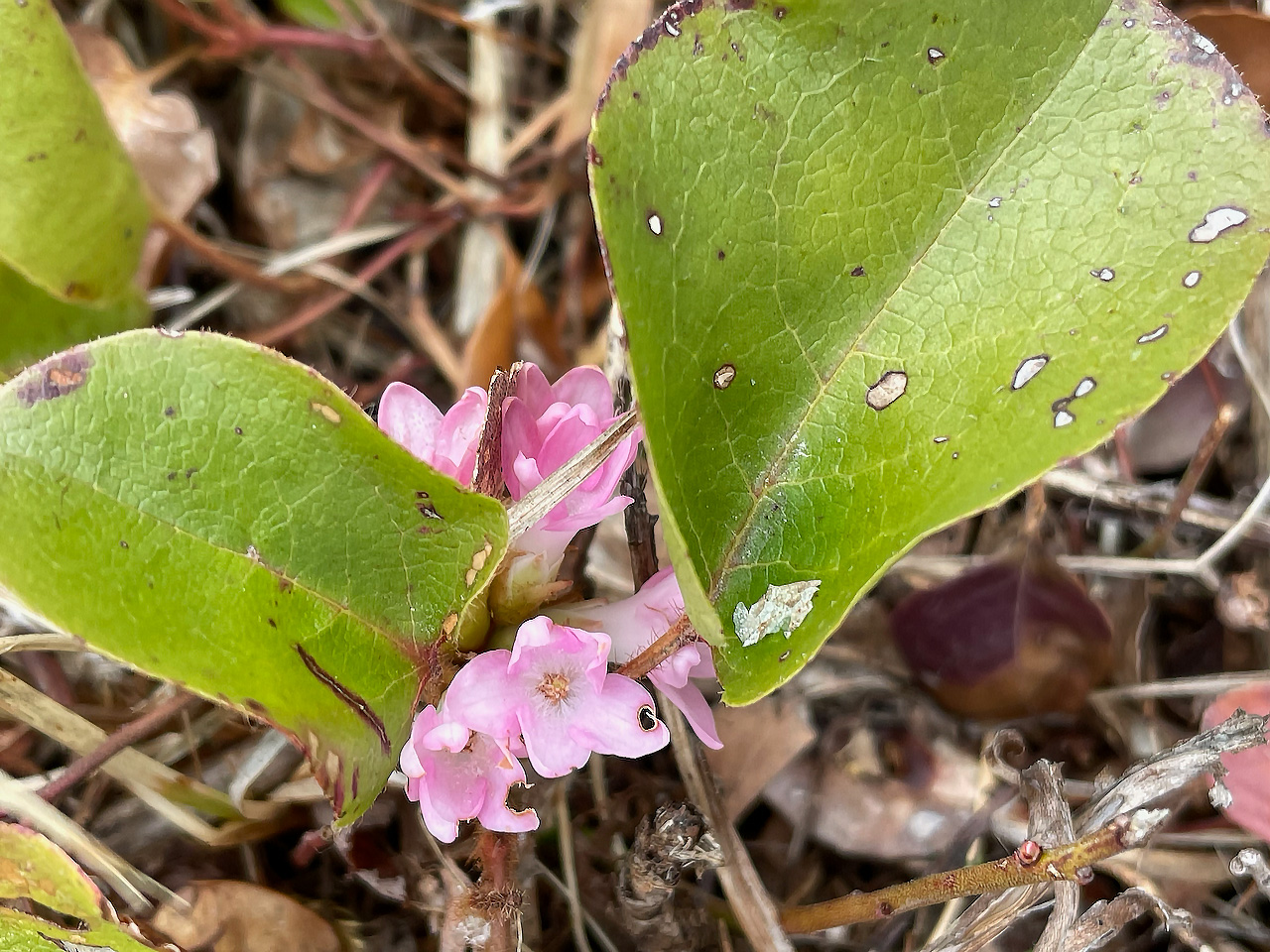
Of Trailing Arbutus
Hiding its delicate flowers
Beneath leathery leaves.
Be attentive to Hobblebush
No matter how much
It makes you stumble,
For it always
Has more to offer
Including corrugated leaves unfurling
And a flowerhead silently forming.
Give audience
To Rhodora's woody seed structure
Of last year
Before her brilliant pink flowers
Soon distract.
Pay attention 
To the male Hairy Woodpecker
Who speaks
In hushed pecks
As two females
Squabble for his attention.
Focus on 
The soft cheers
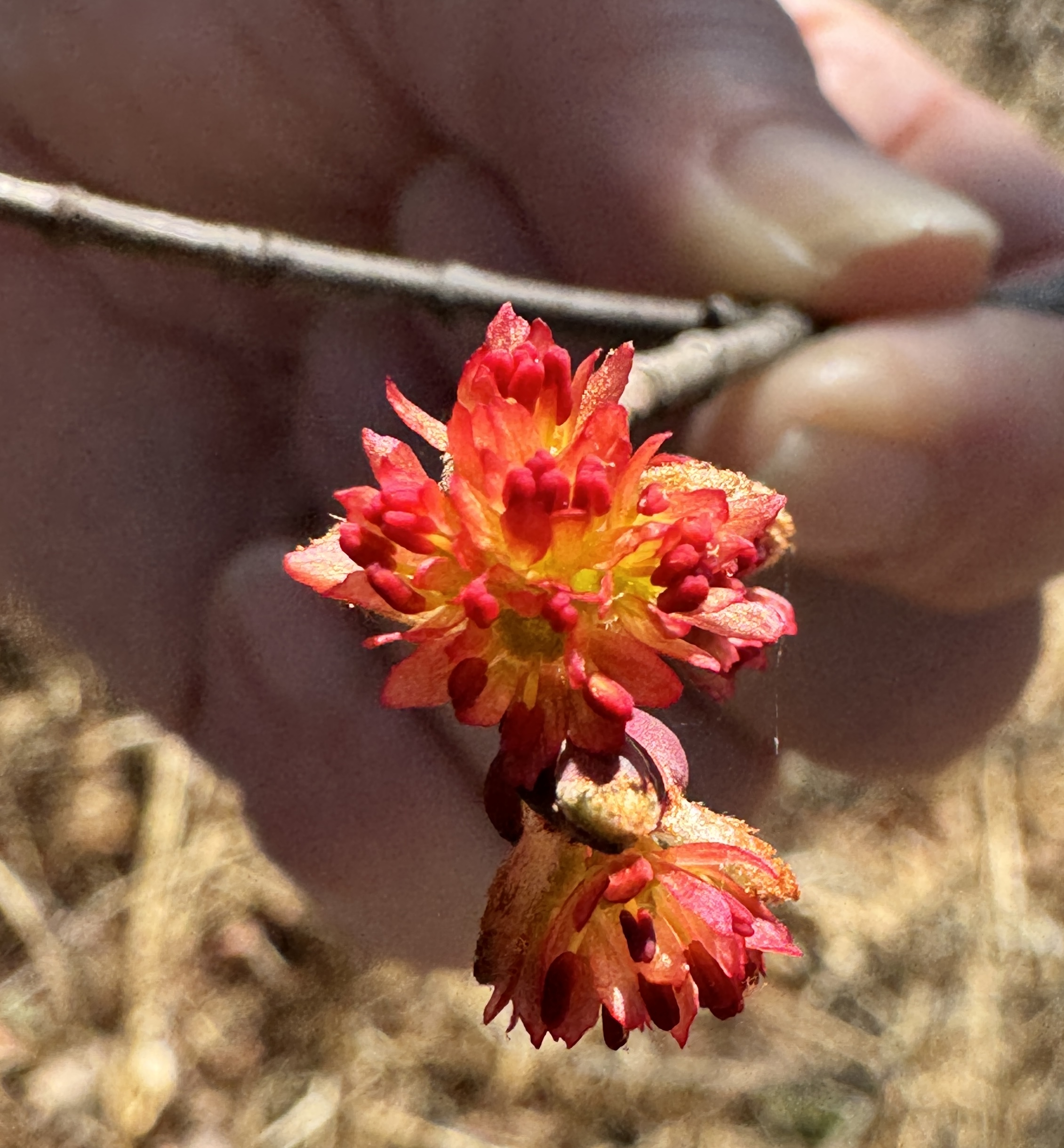
Of Female Red Maple flowers
waiving their pompom stigmas
in hopes of meeting . . .
Male pollen 
Blowing in the wind.
Remember to 
Keep your voice low
As you spy
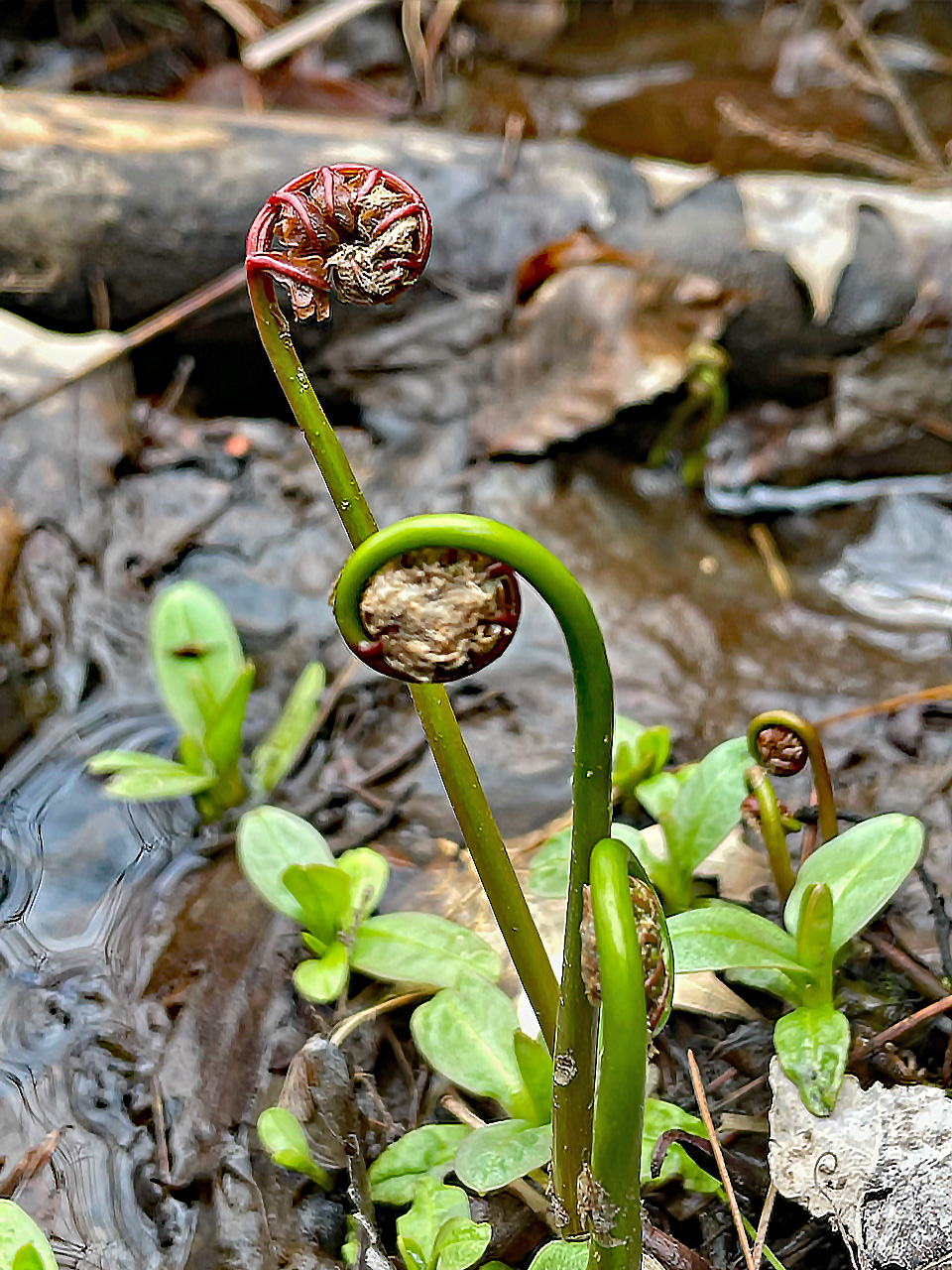
The first crosiers
Of the most Sensitive Ferns.
Heed the inner voice
Of Mystery
And Be Present
With your heart and soul.

I invite you
To walk in silence
Throughout the forest and wetlands
While listening intently
To all
Who whisper along the trail.

******

I’ll end with part of an entry from Creation Justice Ministries’ Seeking Creation: Lent 2025 Devotional.

Referencing Ezekiel 37:21-28, the authors wrote, “God’s goal is not to abandon Creation that God has made. It is to live with us among that Creation. A theology that suggests that God’s good Creation was made solely for us to deplete it and hoard resources from one another ignores the long line of biblical witness that cast a vision of a united humanity where the Creator lives among the creatures, us included.

That God would want to live among Creation should tell us something of Creation’s Worth to God. It is not disposable. It is not replaceable. It is not profane. The dream of a Holy God is to live among Holy people within the holiness of Creation. May it be so.”

And remember: There is no Planet B. This is all we have.

May hushed voices shout from every corner of the Planet AND as those voices uplift your spirits, may you realize God’s greatness and never lose your sense of wonder. ~Amen.
Happy 9th Birthday, wondermyway!

Thank you to all who read and comment and share wondermyway.com. Some of you have followed my blog posts since the beginning, February 21, 2015. A few have joined the journey as recently as yesterday. I’m grateful for the presence of all of you in my life.

To mark this occasion, I thought I’d reflect upon those moments when my wonder gave me a glimpse of the “Thin Places” that I’ve experienced either by myself or in the company of others.

To quote my friend, Ev Lennon, “A Thin Place is a spot of beauty, loveliness, space–an example of the wideness and grandeur of Creation.”

I think of them as places that you don’t plan a trip to visit, but rather . . . stumble upon.

I had
the track of
a bobcat to thank,
for it showed me the way
to a special friend.
It was without expectation 
that we met
and spent at least
an hour together.
And then I realized
though its sight is not great,
it was aware of my presence
and I hightailed it home,
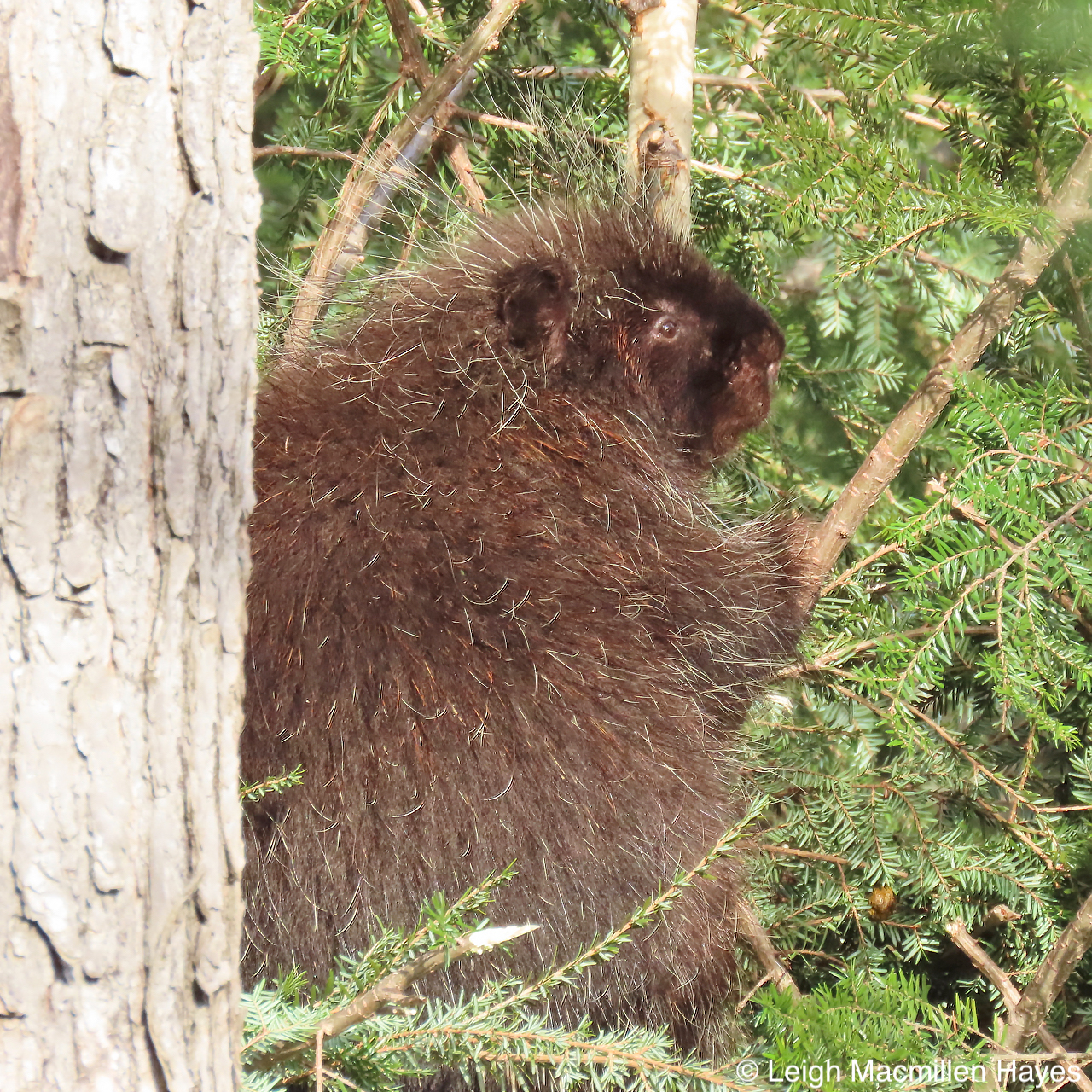
but I will always
celebrate time spent
with the Prickly Porcupine.
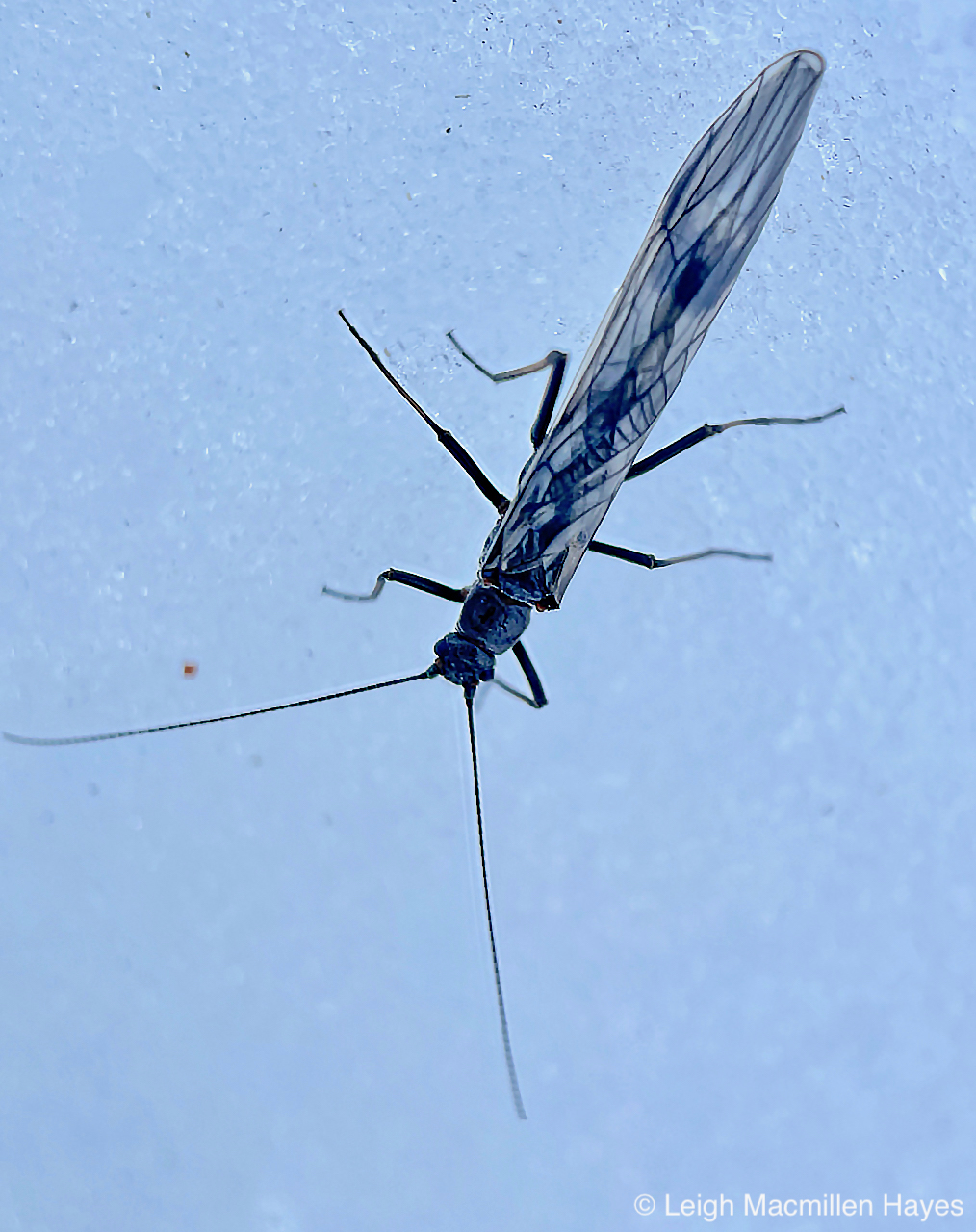
Something quite small
scurrying across the snow
captured my attention
and suddenly
there was a second
and a third
and then hundreds
of Winter Stoneflies.
All headed west from the brook
toward mature tree trunks
to beat their drum-like structures
against the bark
and announce their intentions to canoodle.
Though I could not hear
their percussion instruments,
I am grateful
to learn
with those who
march to the beat of a different drummer.
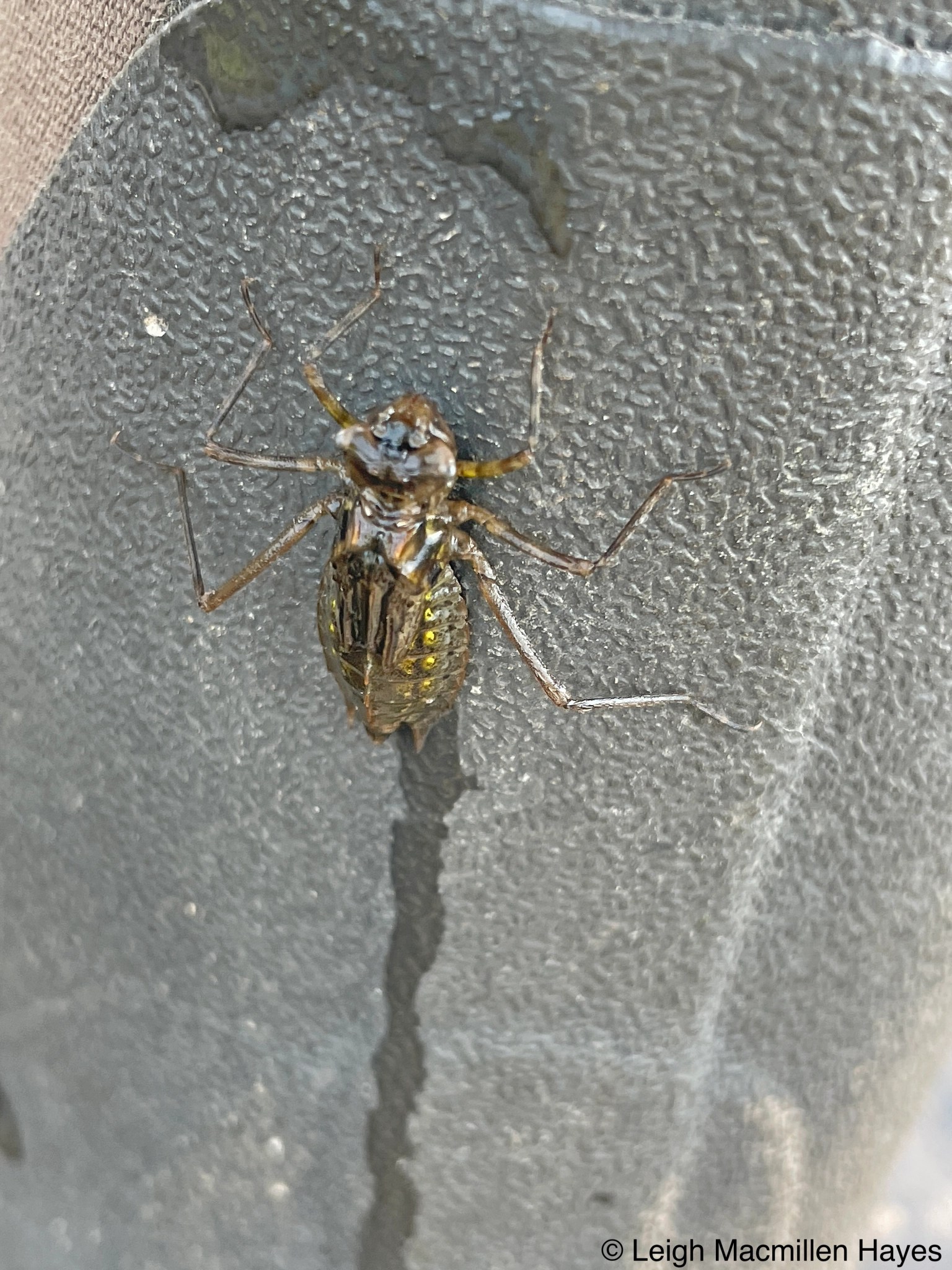
Standing beside quiet water,
I was honored
on more than one occasion
to have my boot and pant legs
considered the right substrate
upon which to transform
from aquatic predator
to teneral land prey
before becoming
a terrestrial flying predator.
It takes hours
for the dragonfly to emerge
and I can't think of a better way
to spend a spring day
than to stand witness
as the mystery unfolds
and I begin to
develop my dragonfly eyes
once again.
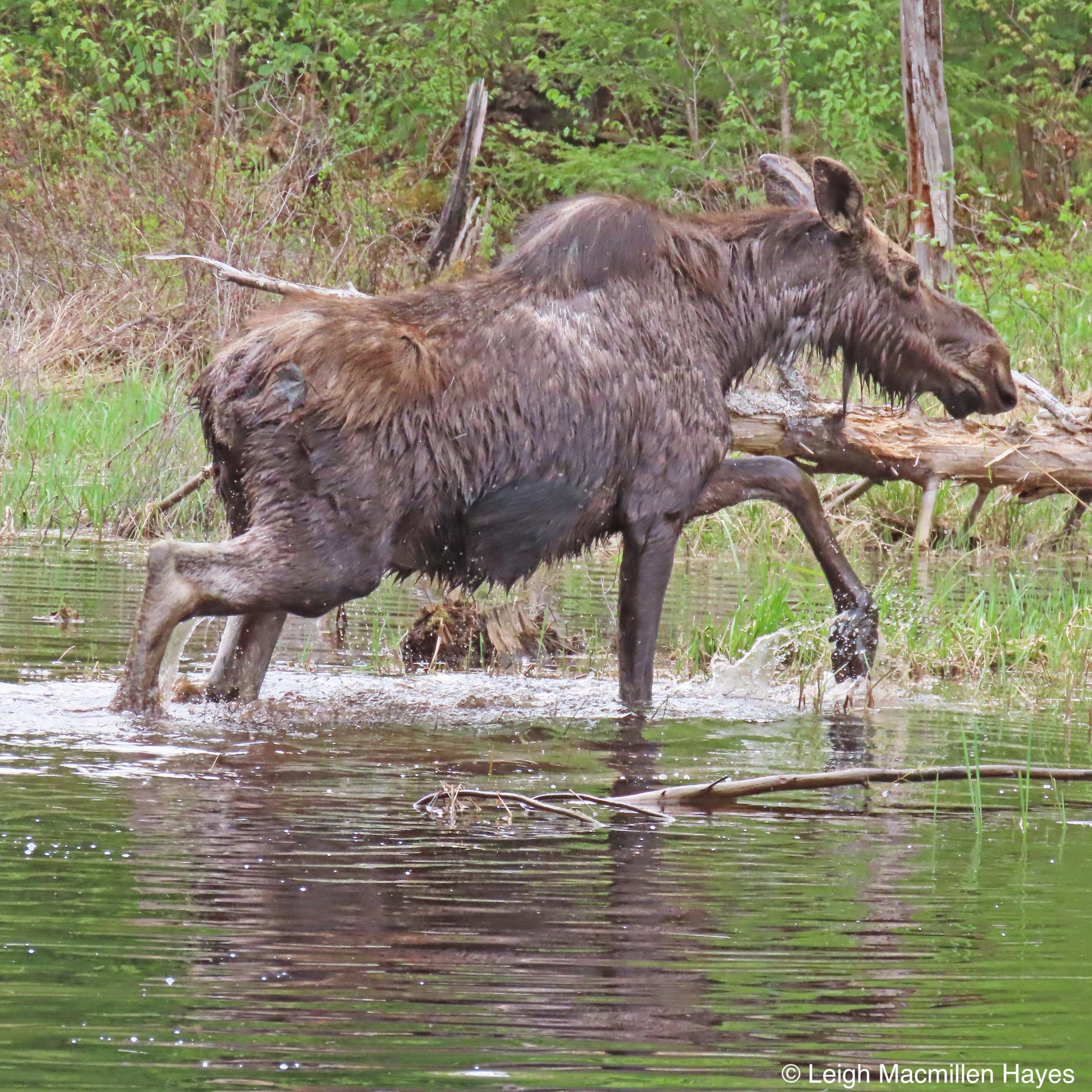
It took me a second 
to realize that I was
staring into the eyes
of a moose,
and another second
to silently alert My Guy
while grabbing my camera.
She tip-toed off
as we relished our time
spent in her presence
and at the end of the day
had this Final Count
on a Moosed-up Mondate:
Painted Trillium 59
Red Trillium 3
Cow Moose 1
One was certainly enough!
Some of the best hours
I spend outdoors
include scanning
Great Blue Heron rookeries
to count adults and chicks
and get lost in the
sights and sounds
of rich and diverse wetlands.
Fluffy little balls
pop up occasionally
in the nests and the
let their presence be known
as they squawk
feverishly for food.
And in the mix of it all
Nature Distraction
causes a diversion of attention
when one swimming by
is first mistaken for a Beaver
but reveals its tail
and morphs into a Muskrat.
I give thanks to the Herons for these moments.
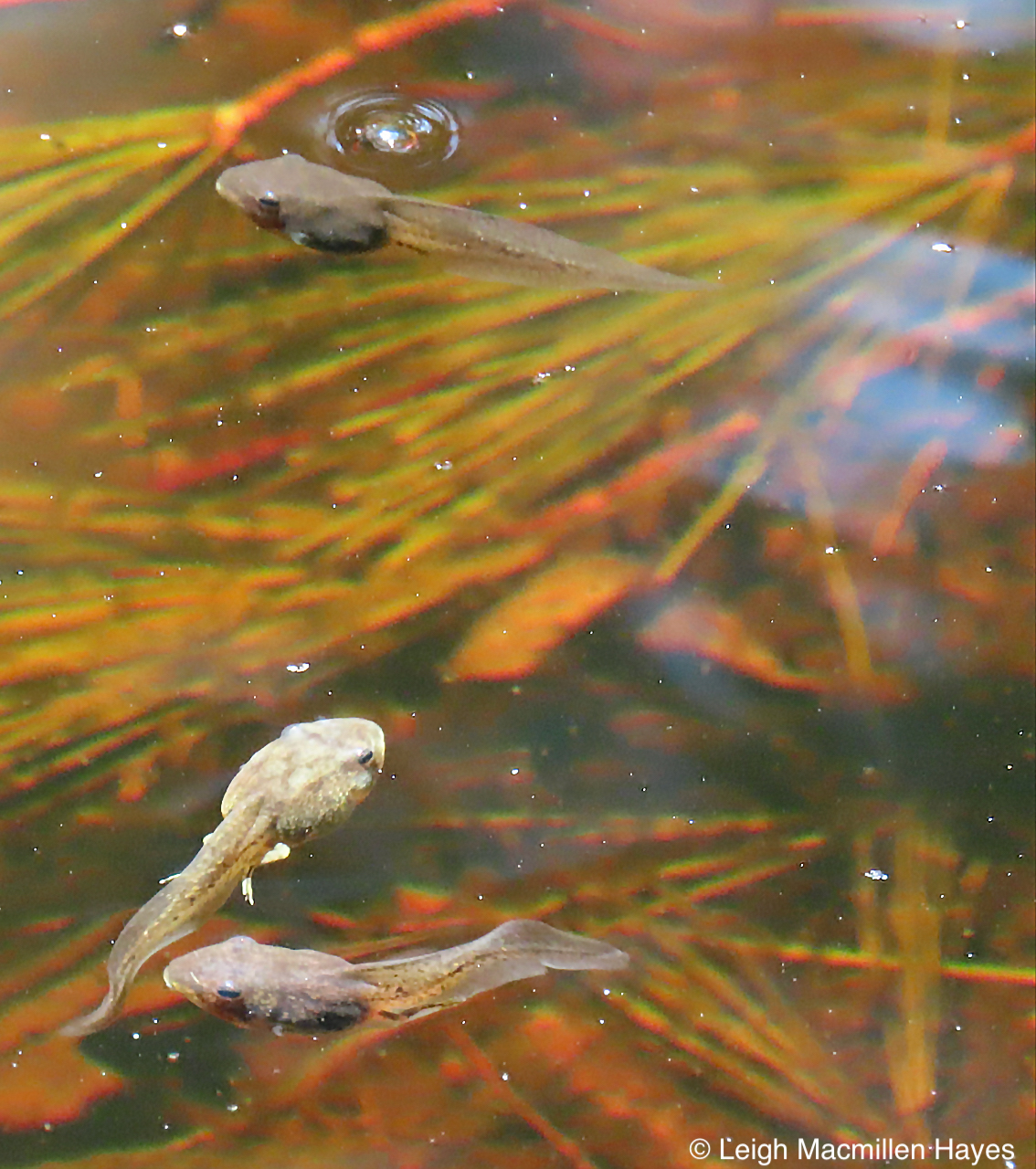
What began as a "Wruck, Wruck" love affair
continued
for longer than usual
and due to
a rainy spring and summer
I was treated to a surprise
in the form of developing frog legs.
In the midst of my visits
one day I heard
the insistent peeps
of Yellow-bellied Sapsucker chicks
demanding a meal on wings,
which their parents
repeatedly provided.
Walking home 
from the pool
another day,
I was honored
to spend about ten minutes
with a fawn,
each of us curious
about the other
until it occurred to me
that its mother
was probably nearby
waiting for me to move on,
so reluctantly I did,
but first gave thanks
that something is always happening
right outside my backdoor.
While admiring shrubs
that love wet feet,
I counted over
one hundred branches
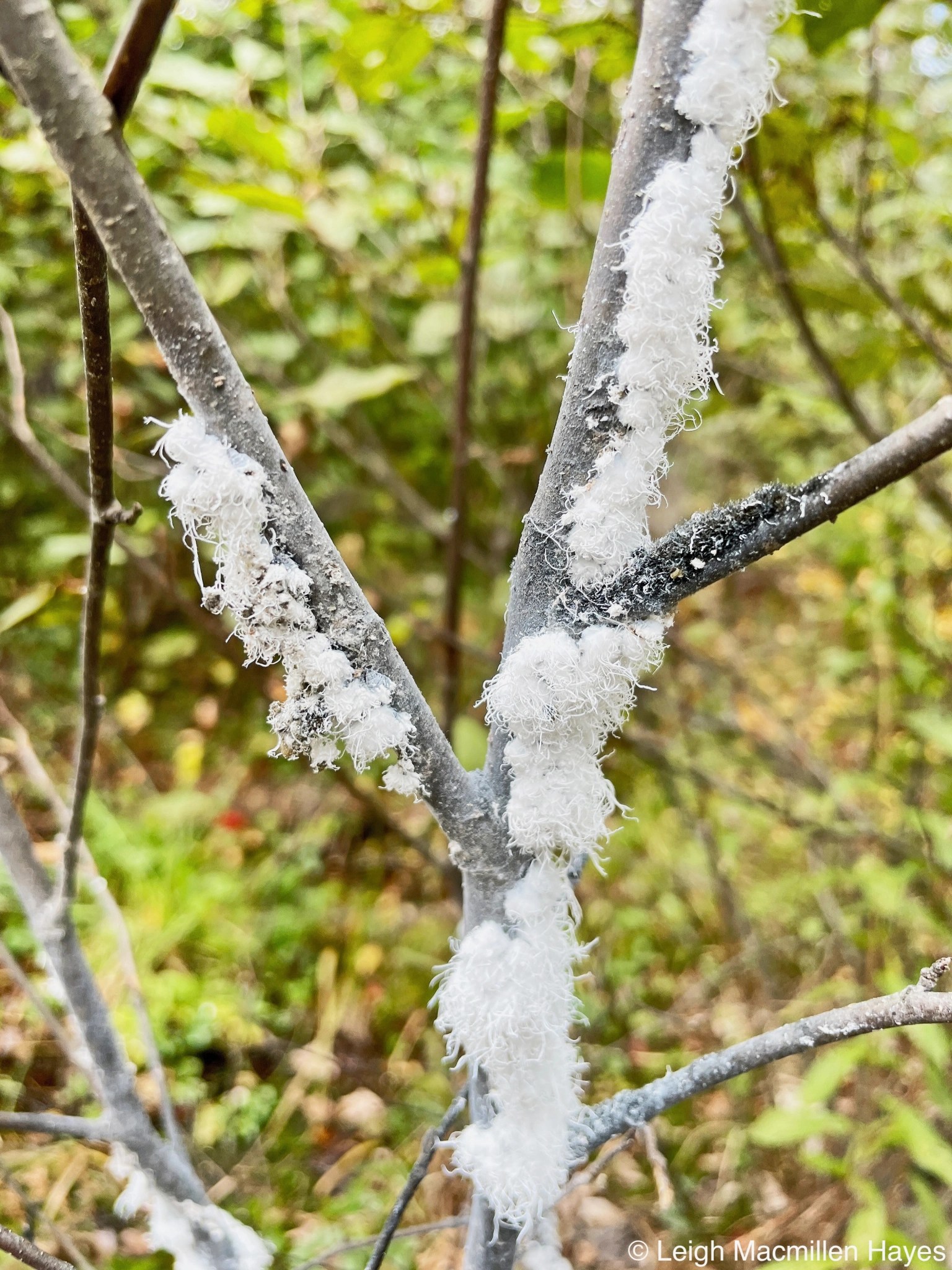
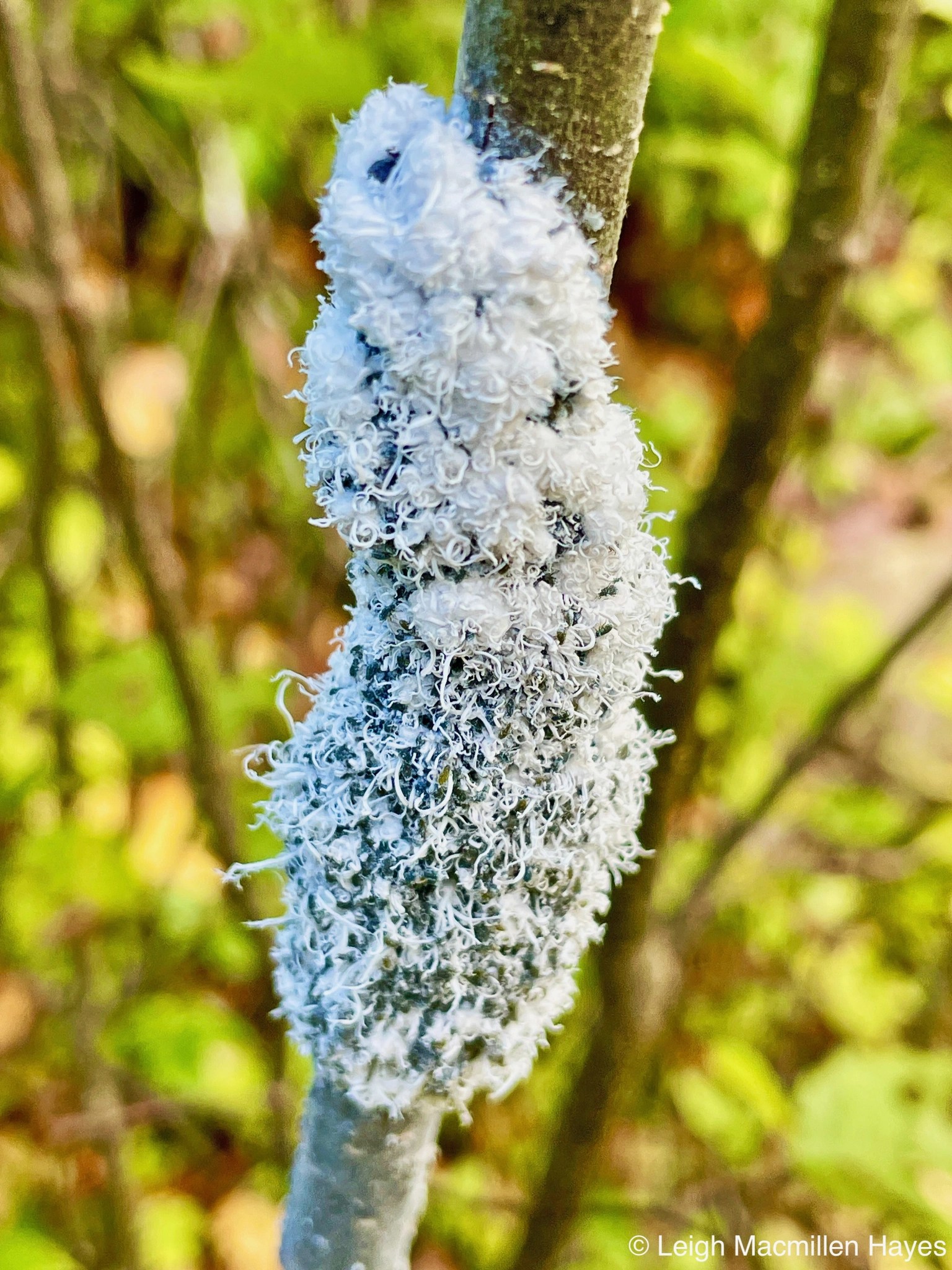
coated with white fluffy,
yet waxy ribbons.
Theirs is a communal yet complex life
as the Woolly Alder Aphids
suck sap from Speckled Alders.
Communal in that
so many clump together
in a great mass.
Complex because
one generation reproduces asexually
and the next sexually,
thus adding diversity
to the gene pool.
Along with the discovery
of coyote scat,
and Beech Aphid Poop Eater,
a fungus that consumes
the frass of the Aphids,
it was an omnivore, herbivore, insectivore kind of day.
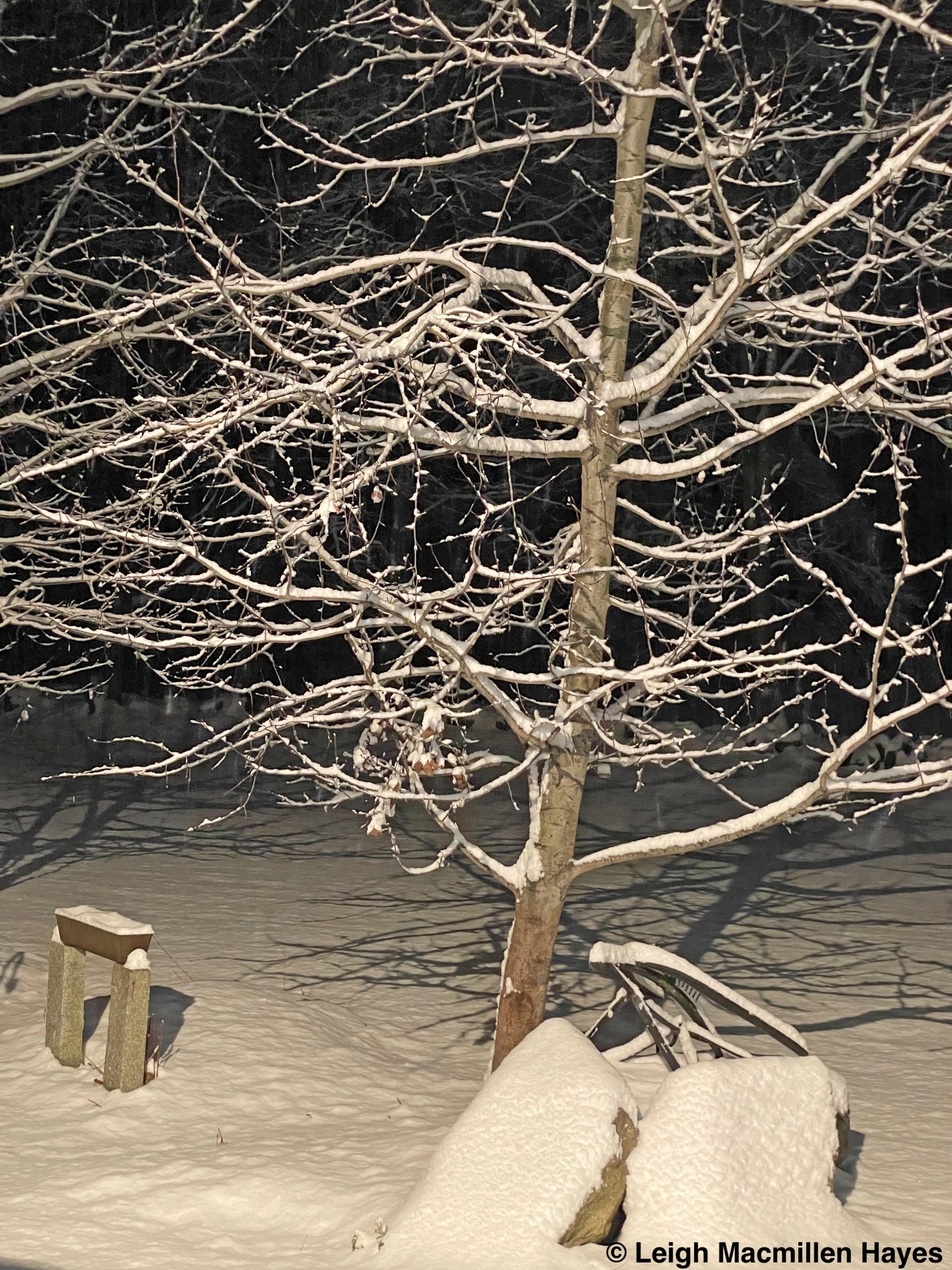
Awakening early, 
a certain glow
in the sky
pulled me from bed
and I raced downstairs
to open the door
and receive the quiet
that snowflakes create.
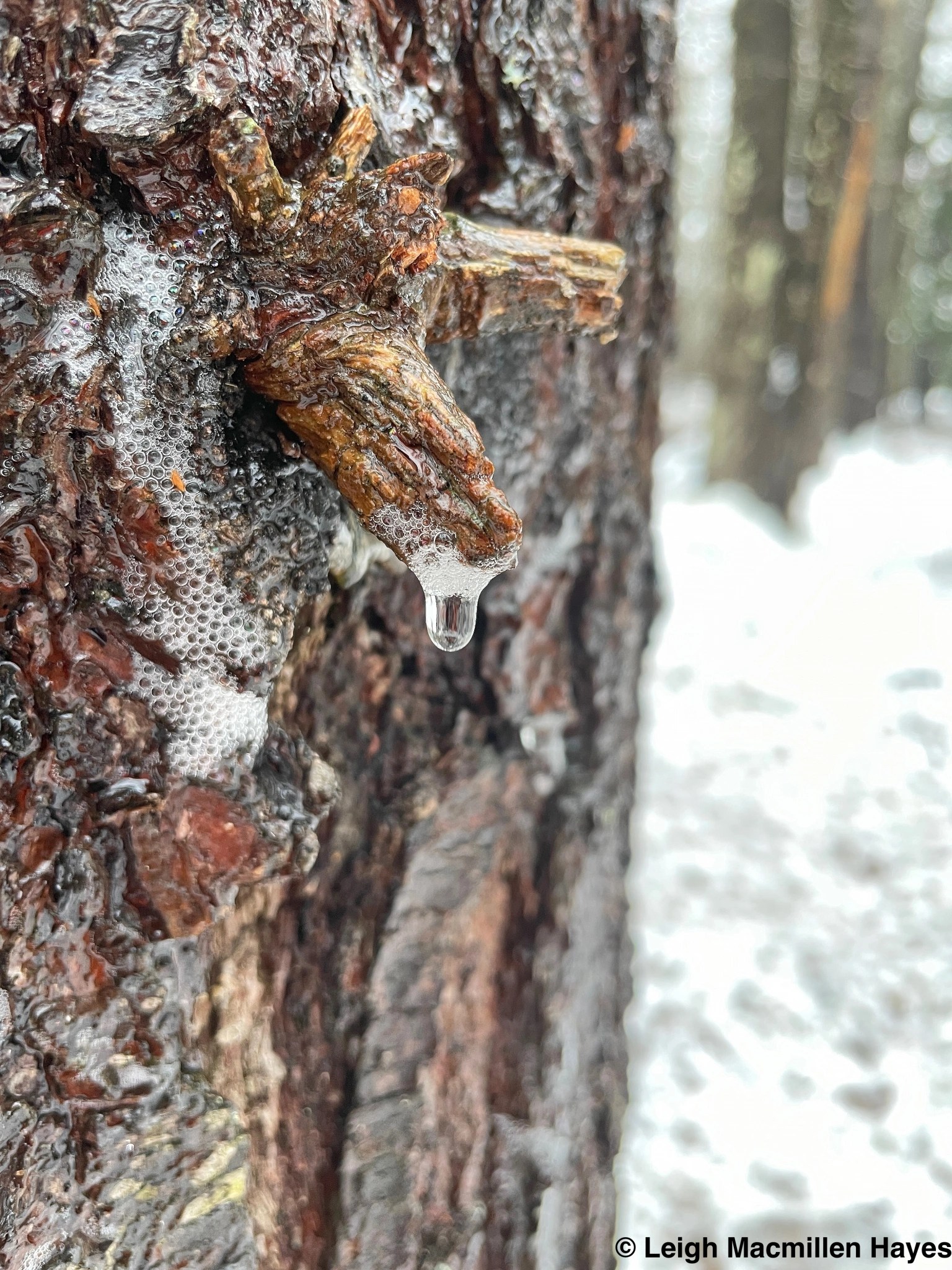
The snow eventually
turned to rain,
which equally mesmerized me
as I watched
droplets elongate
and quickly free fall,
landing on bark below
in such a manner
that caused them
to mix with sap salts and acids.
The result was
White Pines foaming
in the form of
Pine Soap
with its hexagonal shapes:
worth a natural engineering wonder
and I gave thanks for being present.
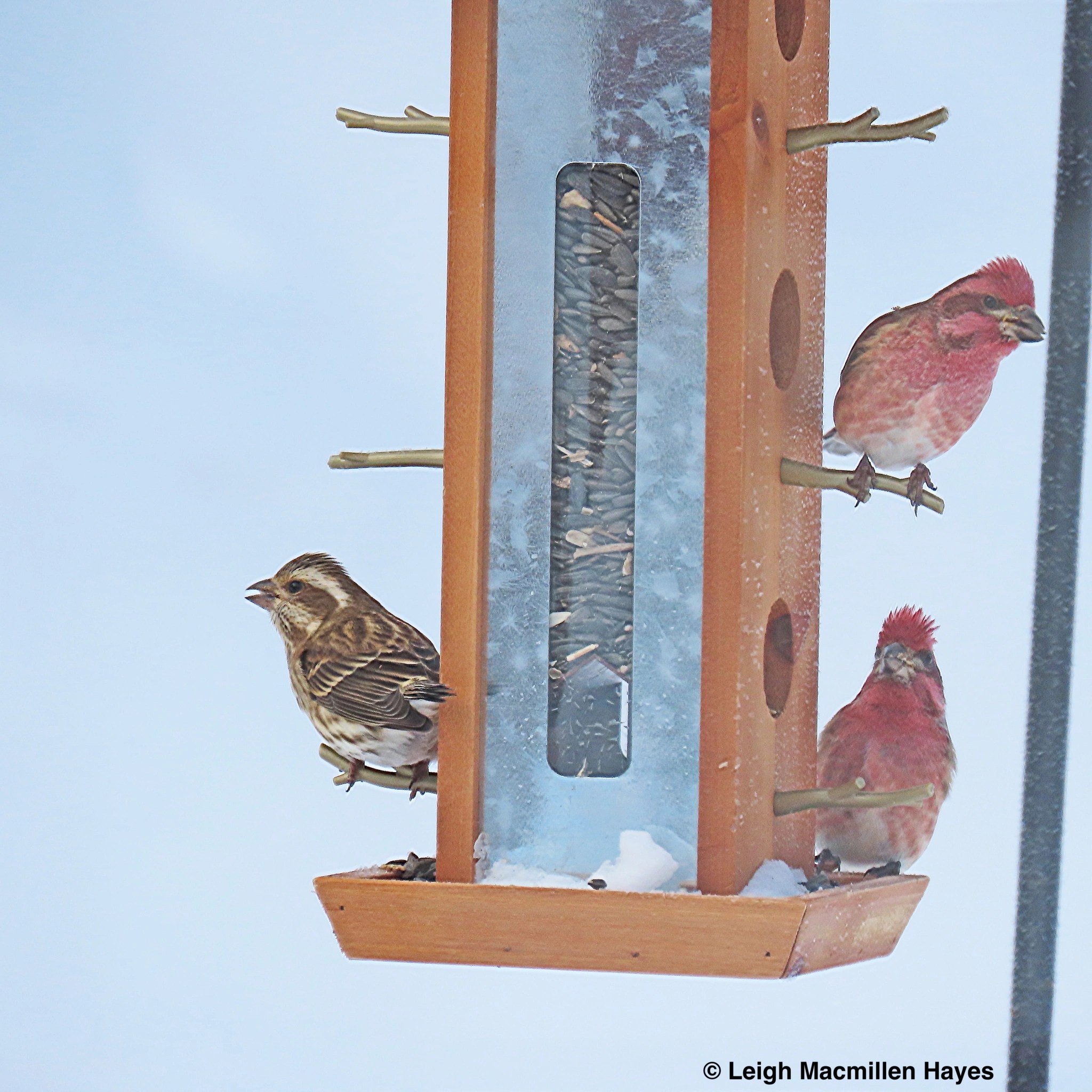
Occasionally, 
it's the action
outside the backdoor window
that keeps me standing sill
for hours on end,
as a variety of birds fly
in and out
of the feeding station,
such as these Purple Finches,
the males exhibiting
bad hair days.
Bird seed is not 
just for birds
as the squirrels prove daily.
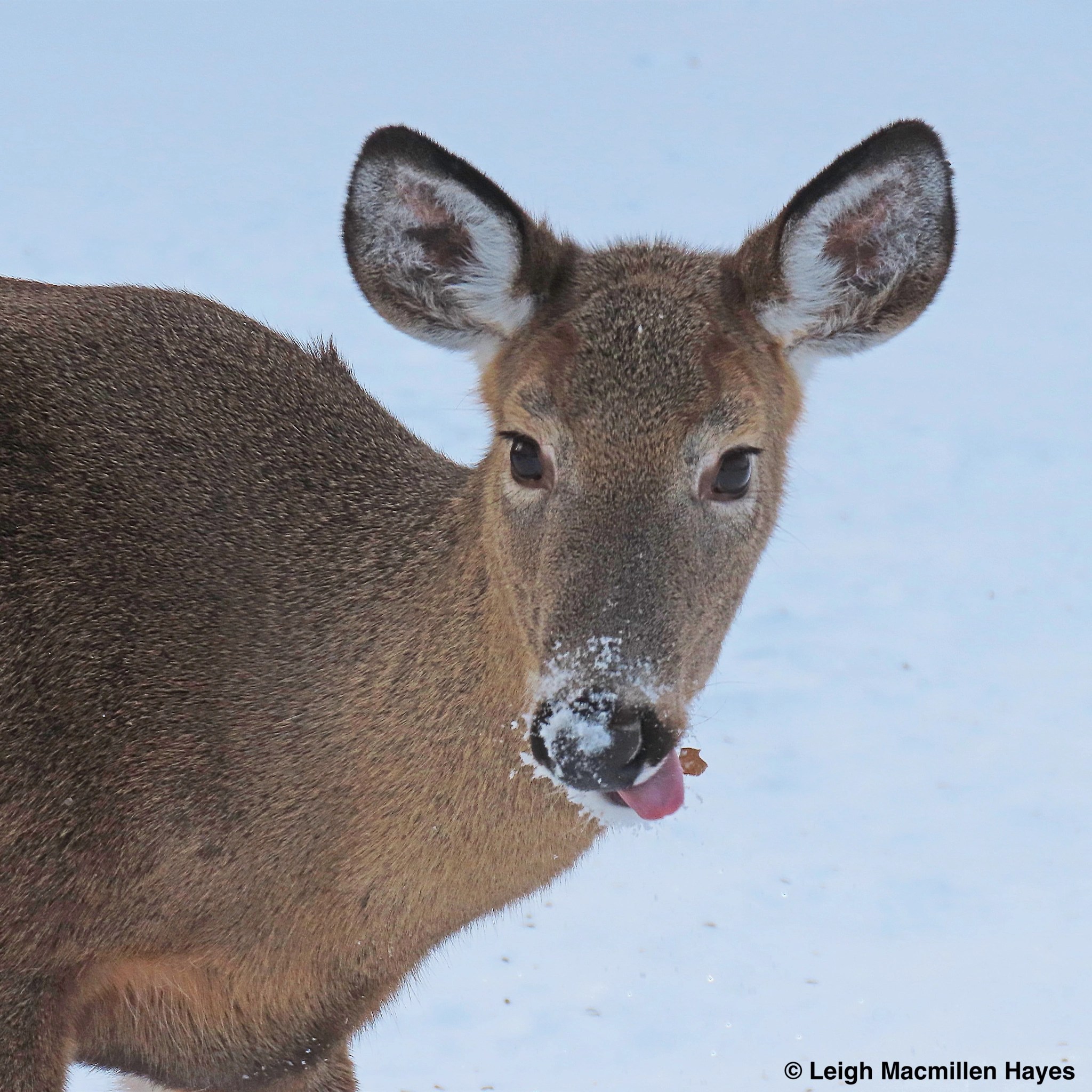
And White-tailed Deer
often make that
statement at night.
But this day was different
and they came
in the morning
using their tongues
to vacuum the seeds all up.
At the end of the day,
my favorite visitors
were the Bluebirds
for it was such a treat
to see them.
But it was the mammals
who made me realize
not every bird has feathers.
These are samples 
of the Thin Places
I've stumbled upon
this past year.

They are a
cause for celebration,
participation,
and possibility.
My mind slows down
and time seems infinite
as I become enveloped
in the mystery.

I give thanks
that each moment
is a gift
and I have witnessed
miracles unfolding
that did not
seek my attention,
but certainly captured it.

And I thank you again
for being
one of the many
to wander and wonder my way.

Dragonfly Whisperer Whispers

We had no intention of eating lunch in this spot today, but while looking for a mountain to climb, we kept encountering full parking lots and so our backroad meander put us beside a bog at lunch time and voilà, we managed to walk all of less than two tenths of a mile. Total.

But in that short distance, our eyes feasted. First it was all the Painted Turtles basking in the sun.

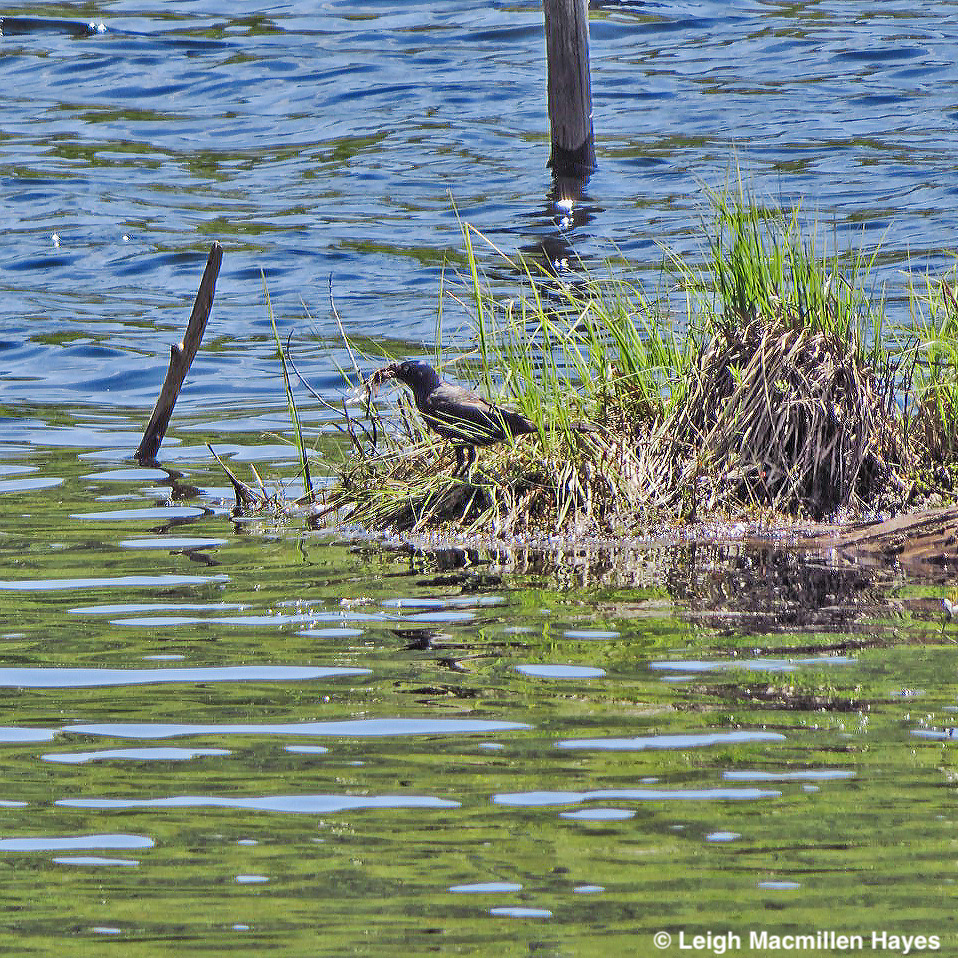
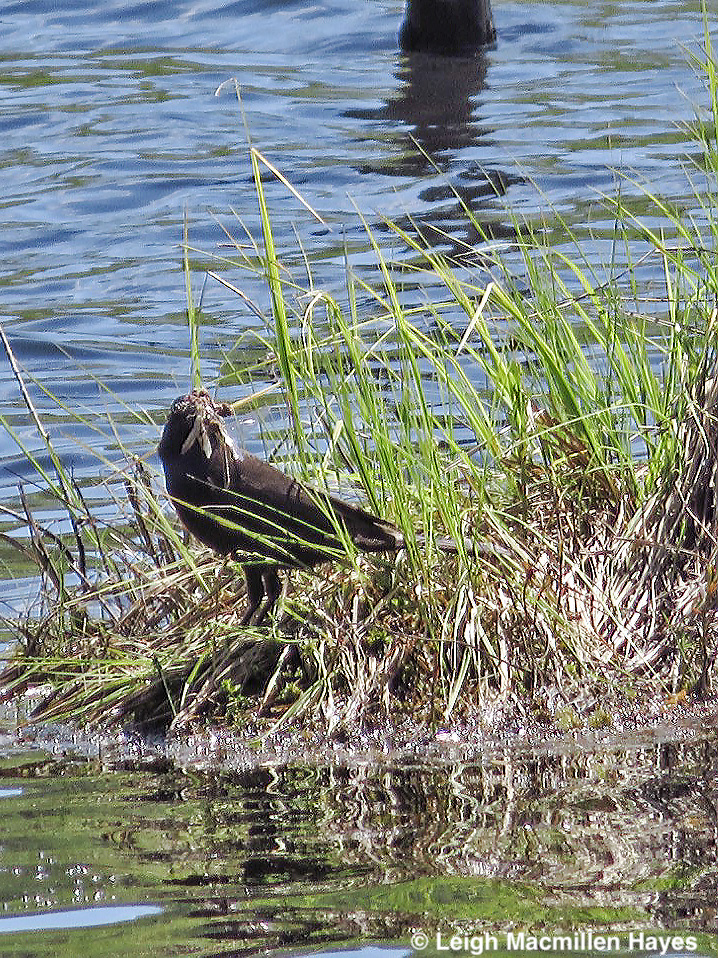
And then a Grackle flew in with a meal in beak.

I didn’t realize what that meal was until . . .

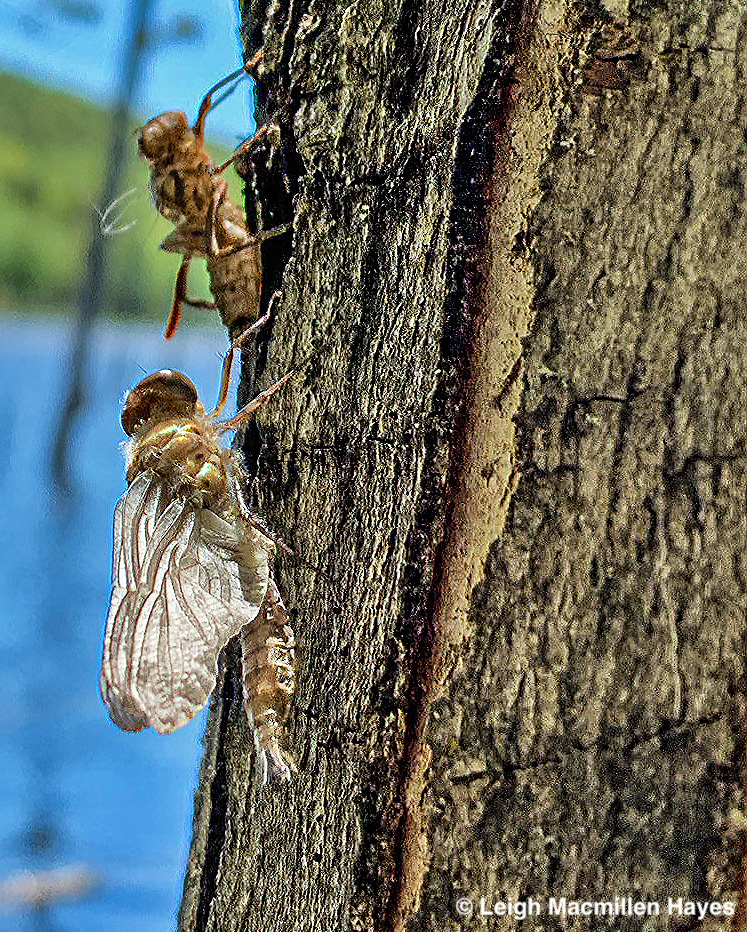
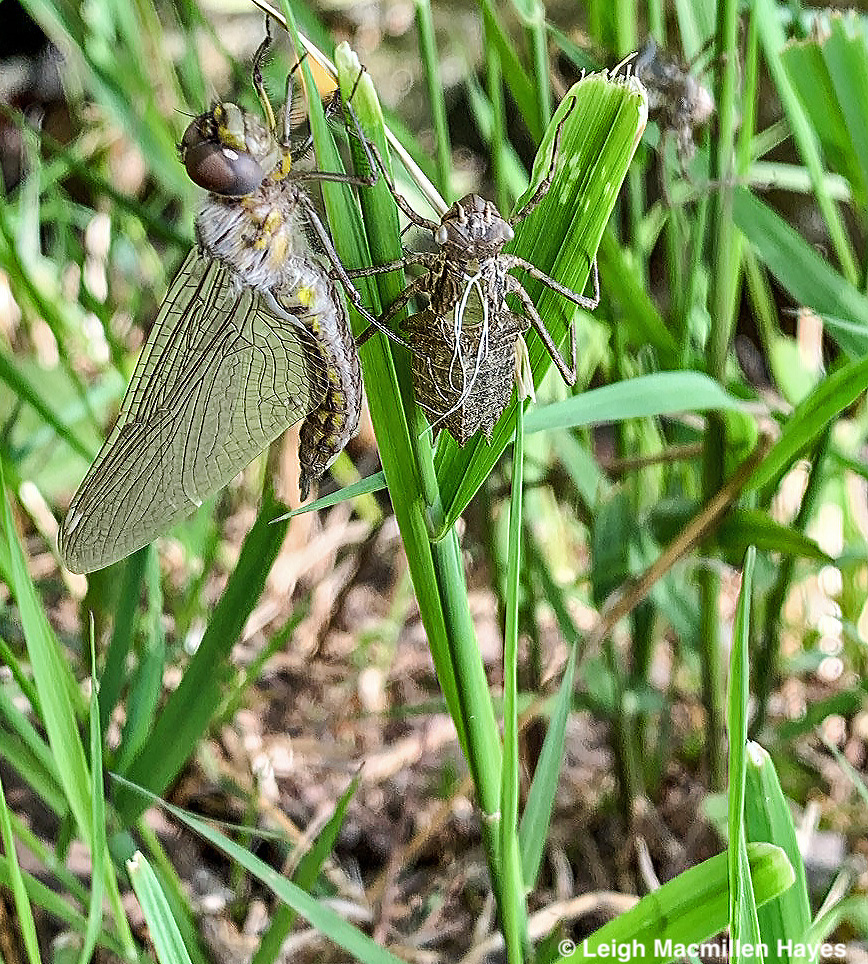
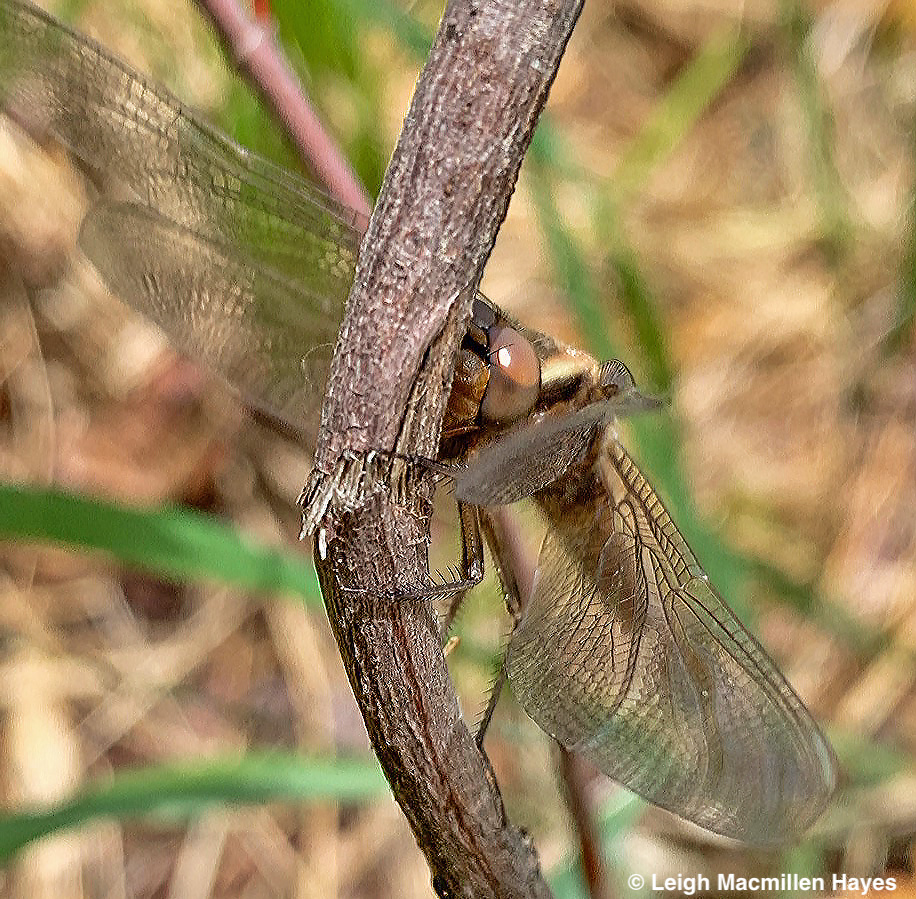
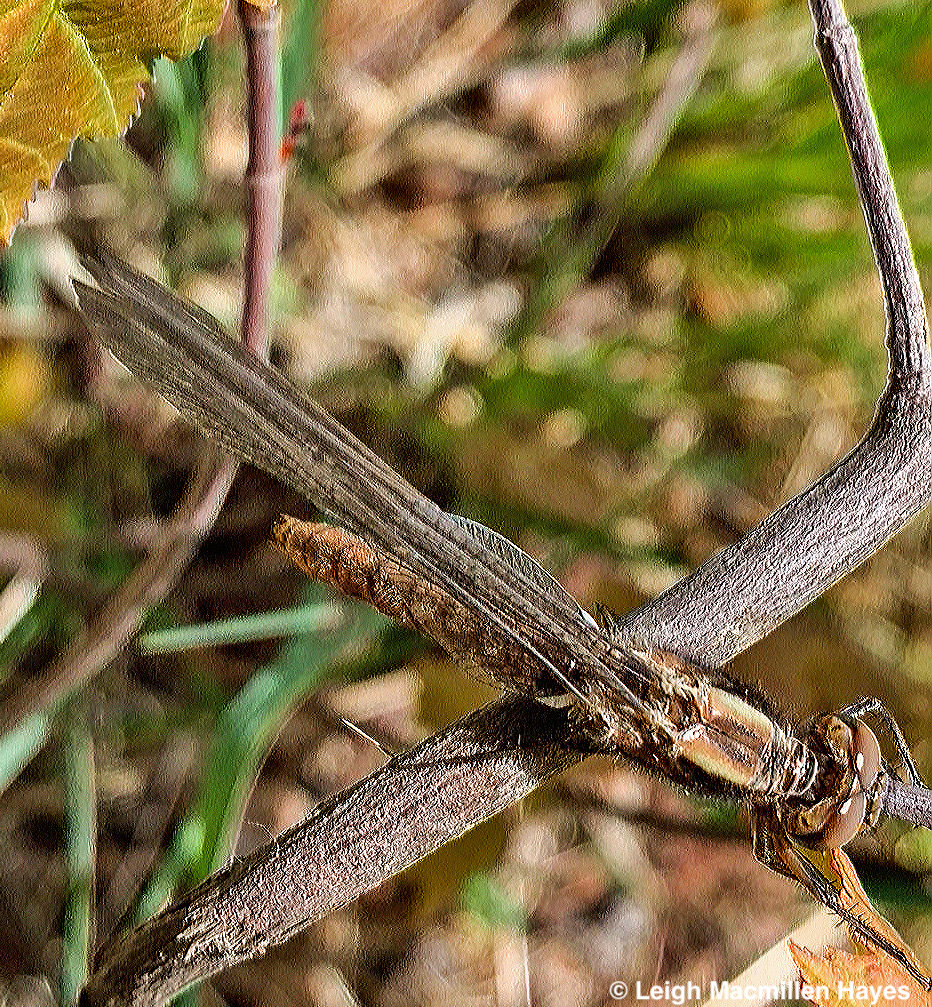
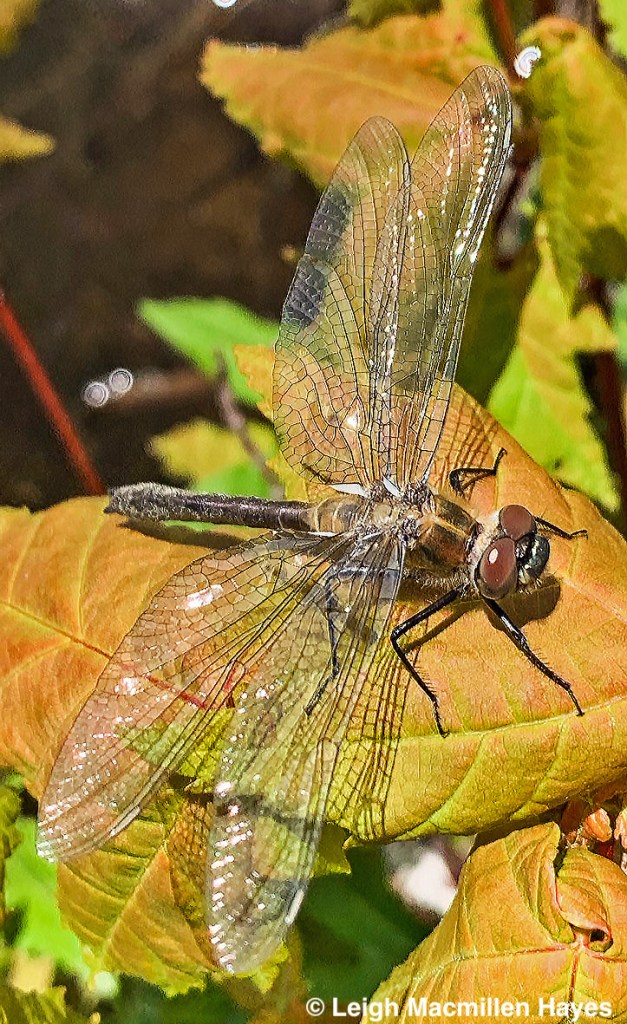
while expounding on one topic or another of which I’m sure I thought I was the authority, I stopped mid-sentence with a mouth open wide in surprise for upon a tree trunk a newly emerged dragonfly showed off its slowy unfolding wings as it moved back toward the exuviae from which it had just emerged. Why did it move back? I don’t know, but they often cling on nearby as they let their wings dry before flying. It was at that point that my lecture changed focus and suddenly I knew that our being there was important for we were saving this vulnerable being from becoming the Grackle’s dessert.

As for our lunch, my guy found a spot and . . . dined alone. I was beside myself with joy and knew there were more discoveries to make. Thankfully, he has the patience of Job in many situations, and this was one of them.

A brisk breeze blew, which kept the Black Flies at bay, a good thing for us, and perhaps it was also a welcome treat for the dragonflies as they dried their wings in preparation for first flight.

Some managed to keep wings closed over their abdomens, but again, that was another sign of new emergence for as adults, wings are spread while resting.

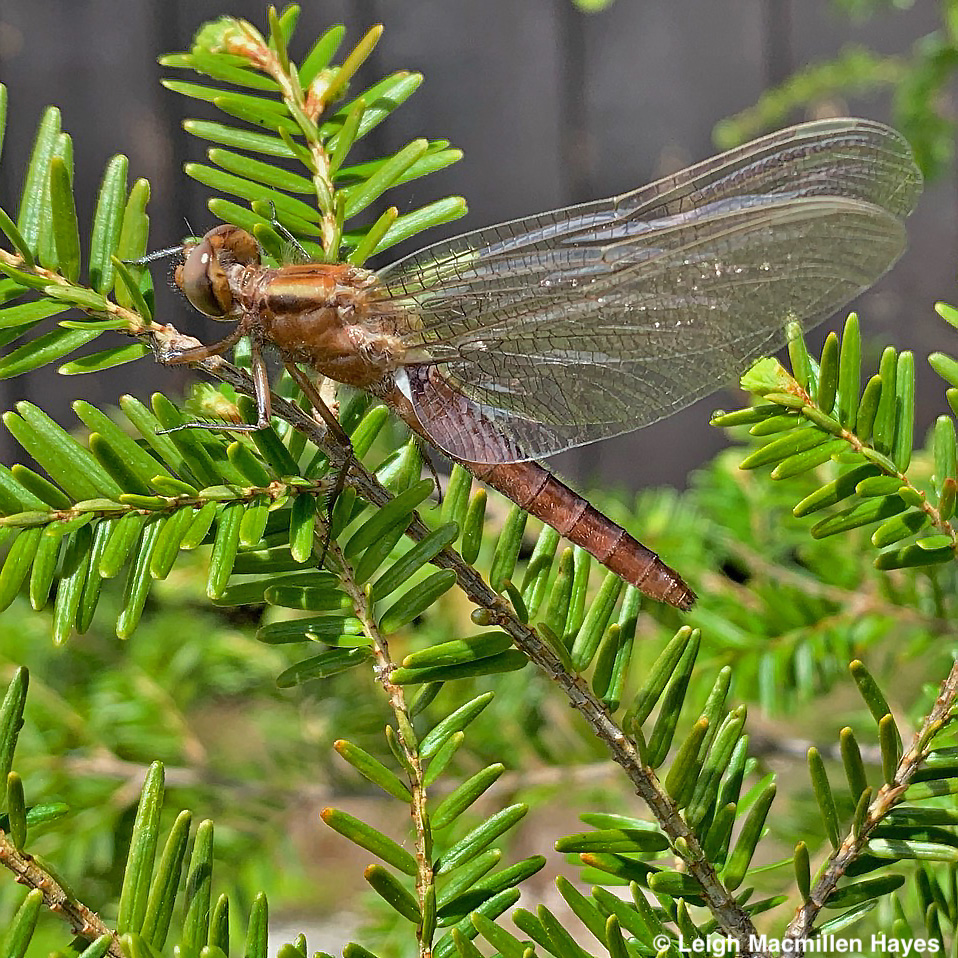
In the sunshine of the early afternoon, those cloudy, moist wings glistened and offered a rainbow of subtle colors.

Upon a variety of vegetation different species clung in manners of their ancestors until ready for takeoff.

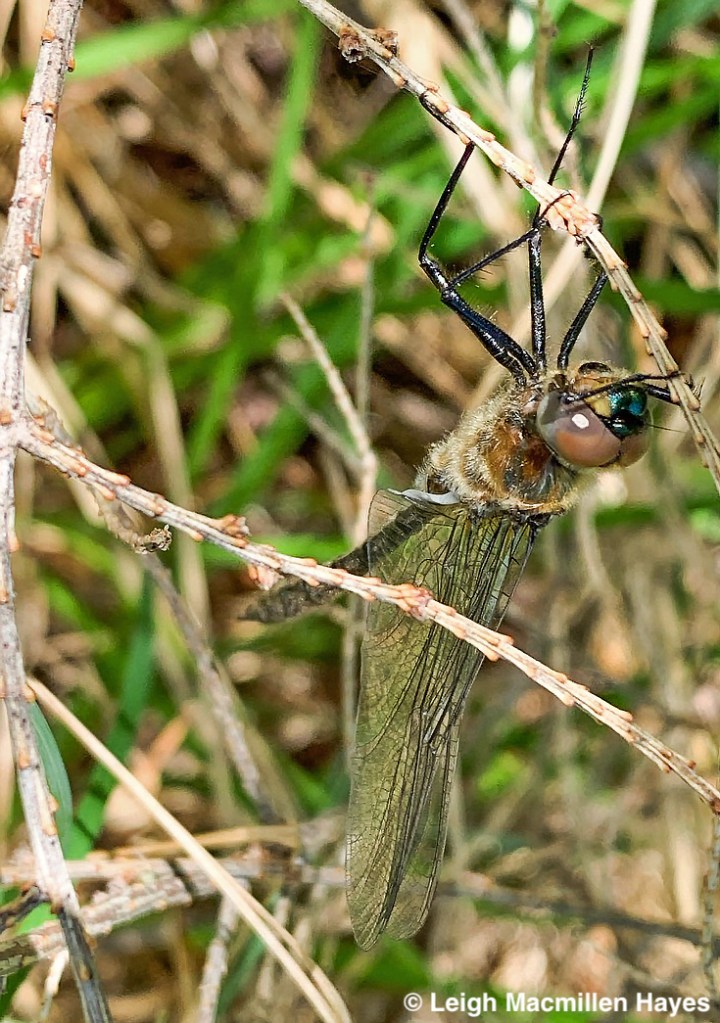
At one point I turned and was surprised to find this friend upon a sapling beside my knees.

And so we began to chat . . . until he’d heard enough and flew off.

But in that same second another flew in even closer, and I just had to find out. Would he or wouldn’t he?

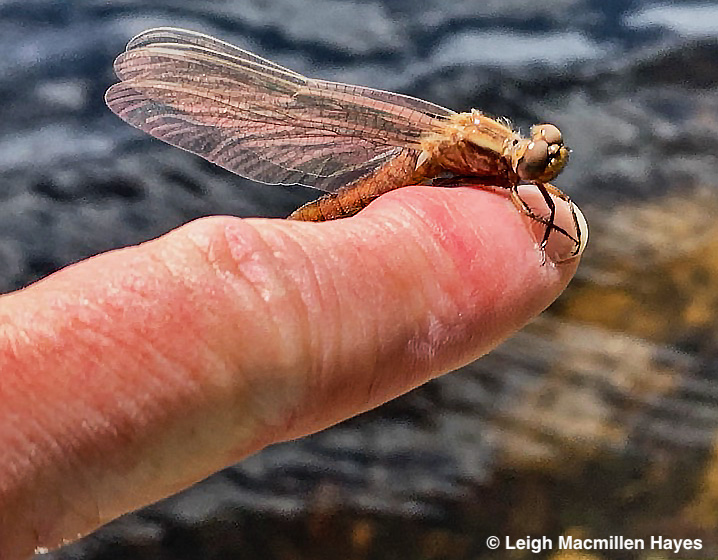
He would and did. Yes, I quietly placed my finger on the leaf and he climbed aboard, then struck a rather relaxed pose.

The Dragonfly Whisperer whispers once more.

Afternoon Dragon Delight

I never expected it to be so, but stalking insects has become a favorite pastime. And this beautiful fall day, with temps in the upper 60˚s, provided plenty to admire if one took the time to look. The best way to spy the insects, for often so camouflaged are they, is to stand still for minutes on end and try to cue in on your surroundings.

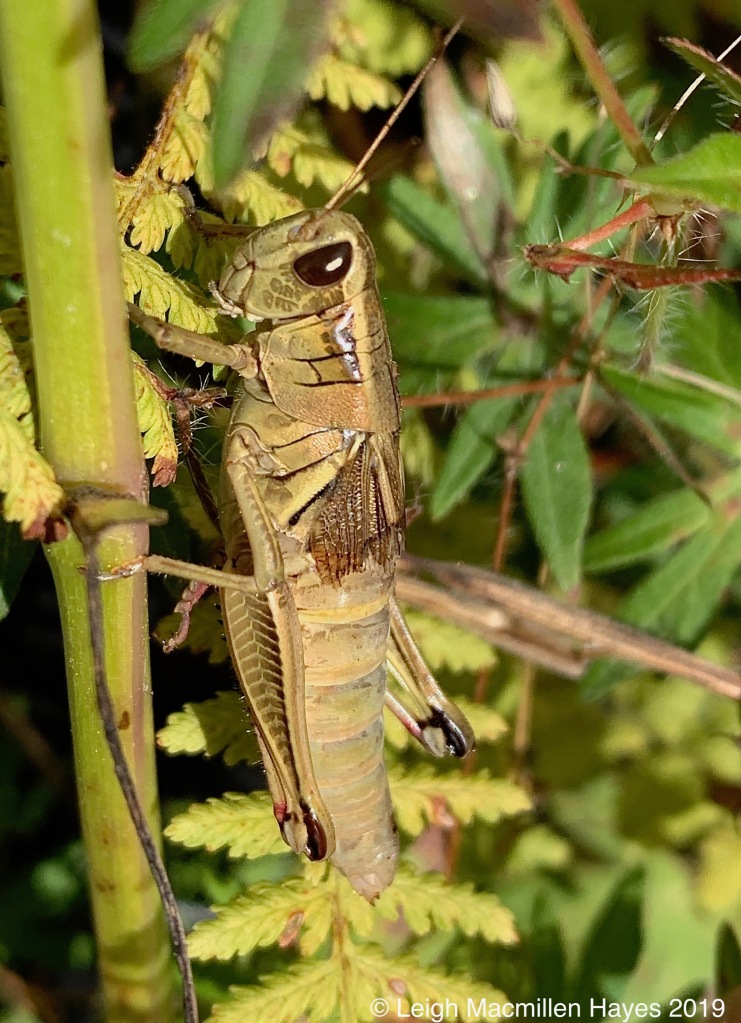
Grasshoppers, their armored bodies so intricately designed, drew my attention first and I spent an hour on and off watching a male and female in hopes that they might set a date. On my clock, they never did, though I suspect when I wasn’t looking, they snuggled under a leaf.

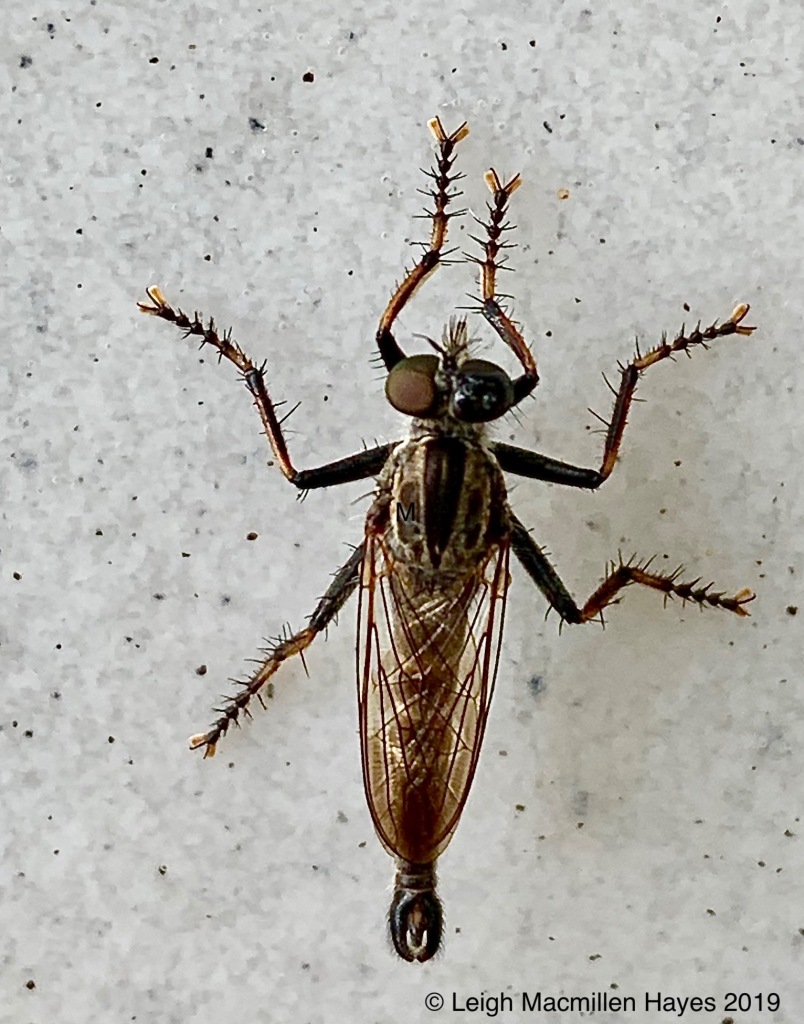
Another was a Robber Fly that flew from boat to boat and root to root as is its habit in this habitat. So named for its ferocious manner of pouncing from the air onto its prey, I didn’t have the good fortune to observe that behavior. But do check out that bristly body.

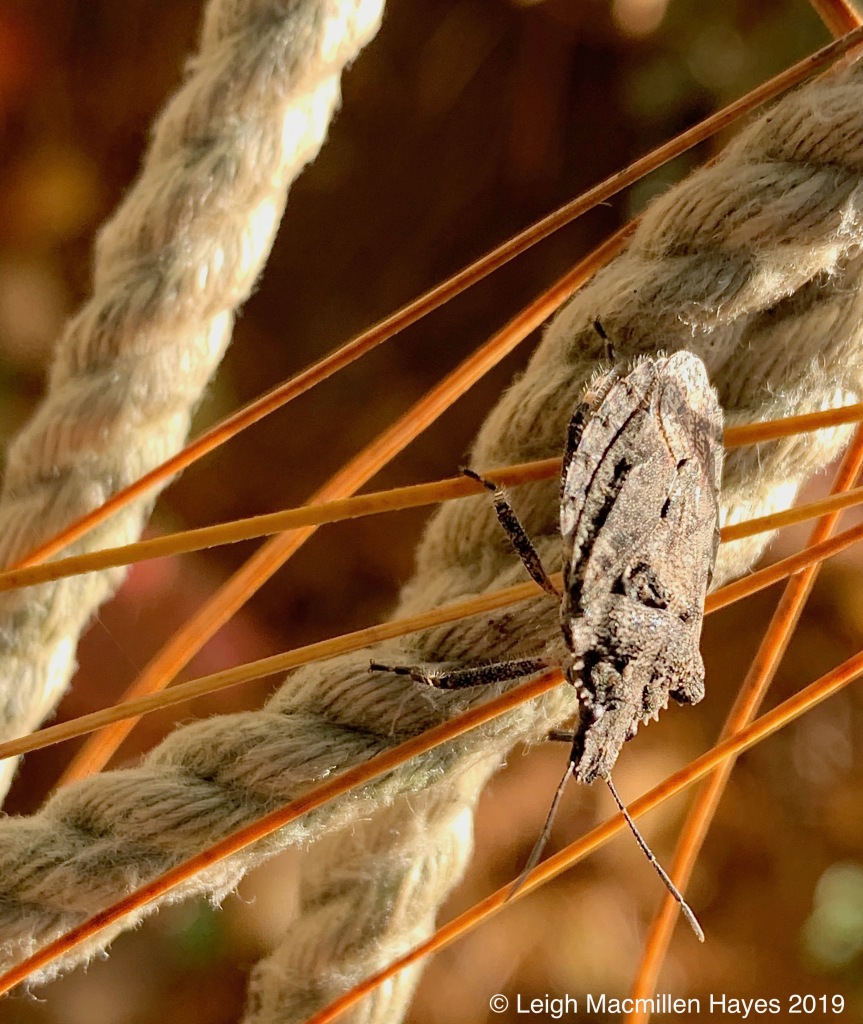
And then I wandered over to the hammock and a Stink Bug made its presence known. I surprised myself with the find for it was almost camouflaged as it moved upon the ropes.

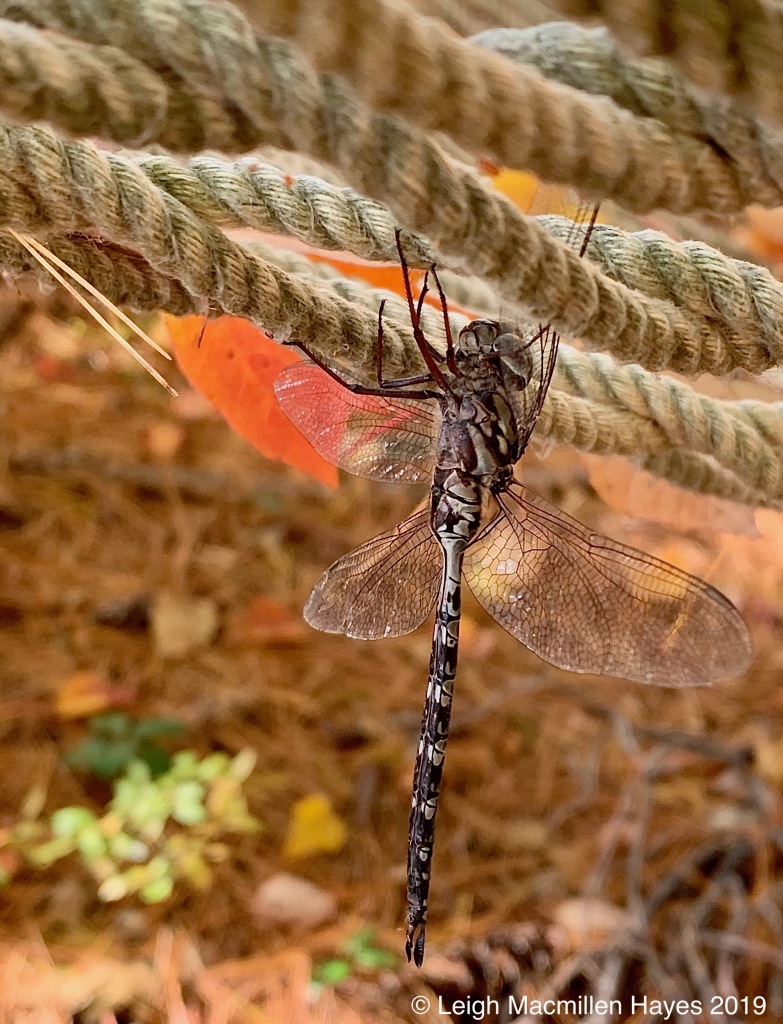
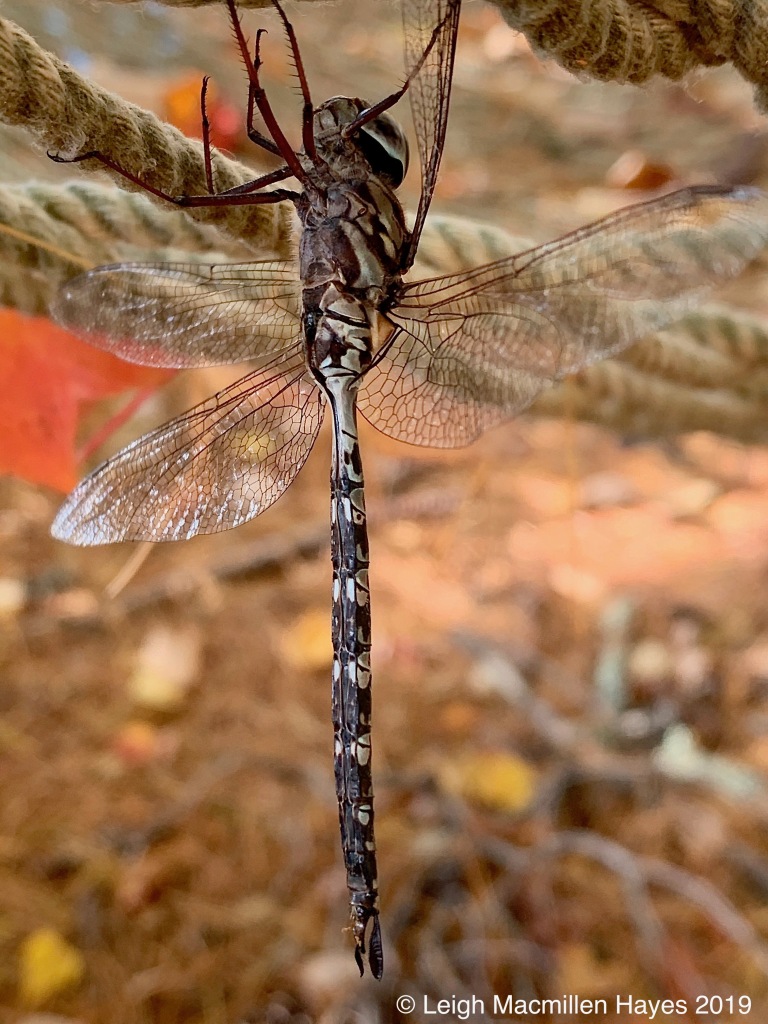
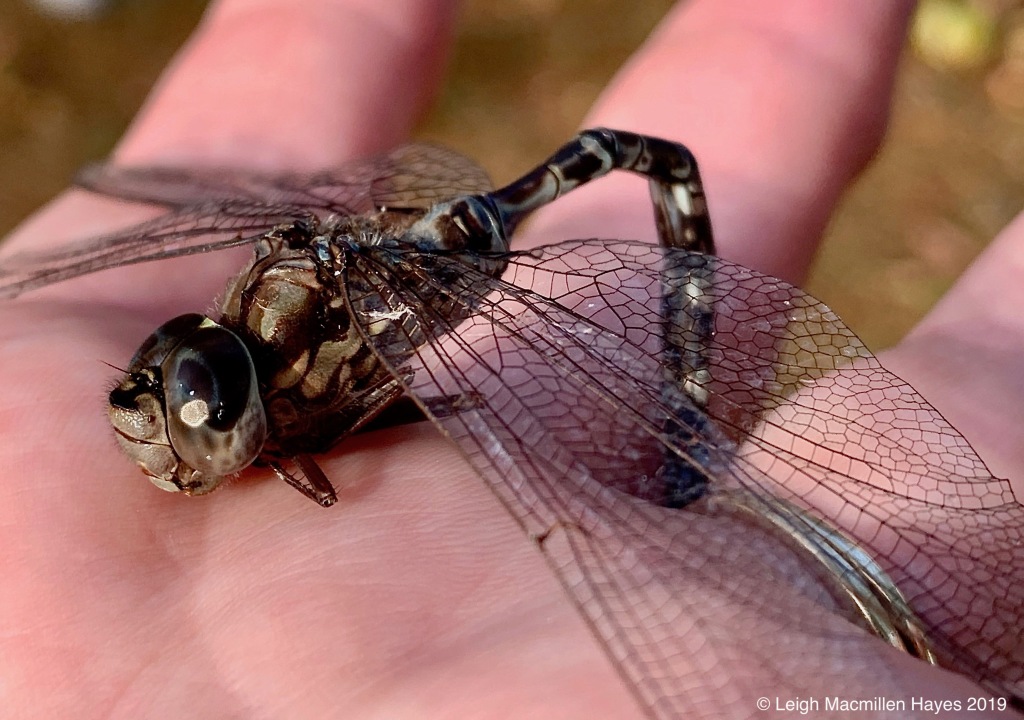
And somehow, cueing in on the Stink Bug provided the opportunity to see another dangling below the ropes. I thought I’d been in insect heaven up to this point, but the position was cinched when I spotted the dragonfly.

It didn’t move and so I was sure it was dead, and gave thanks for the opportunity to snap photos of it.

Really, it was a perfect specimen, its body and wings in immaculate shape. I had visions of my insect collection growing by one.

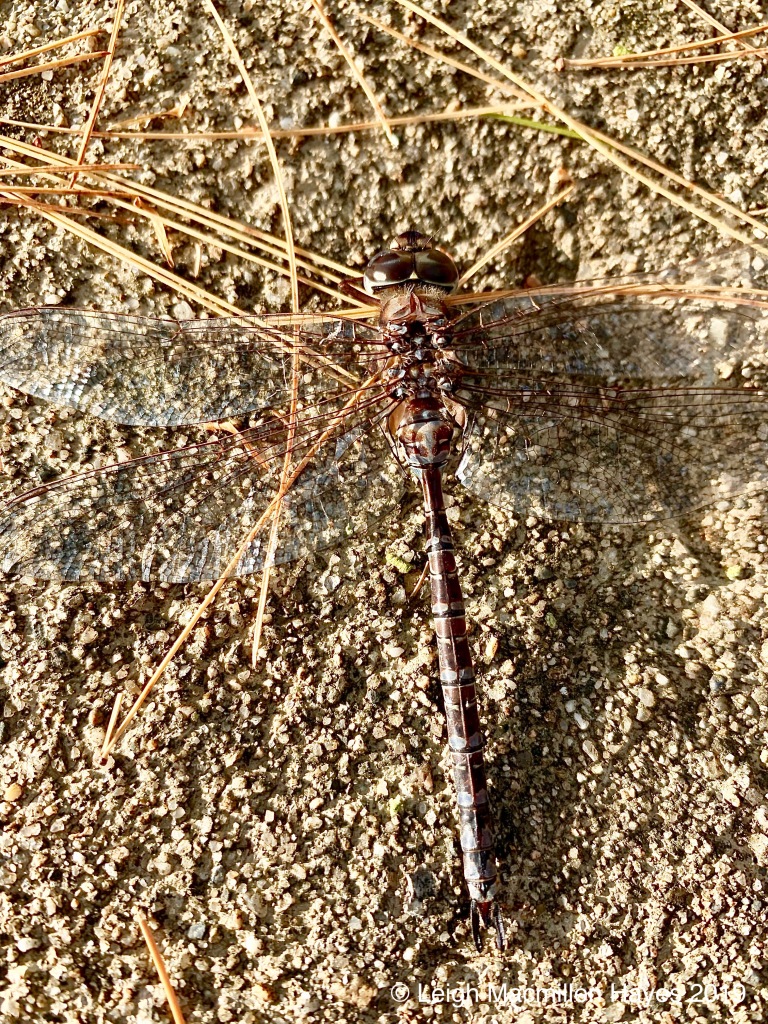
To that end, I took the dragonfly from the hammock and placed it on the cover of the well. Giddy as could be at my good luck in locating such a fine specimen on a mid-October day, I began snapping photo after photo as I took the opportunity to get to know this guy better.

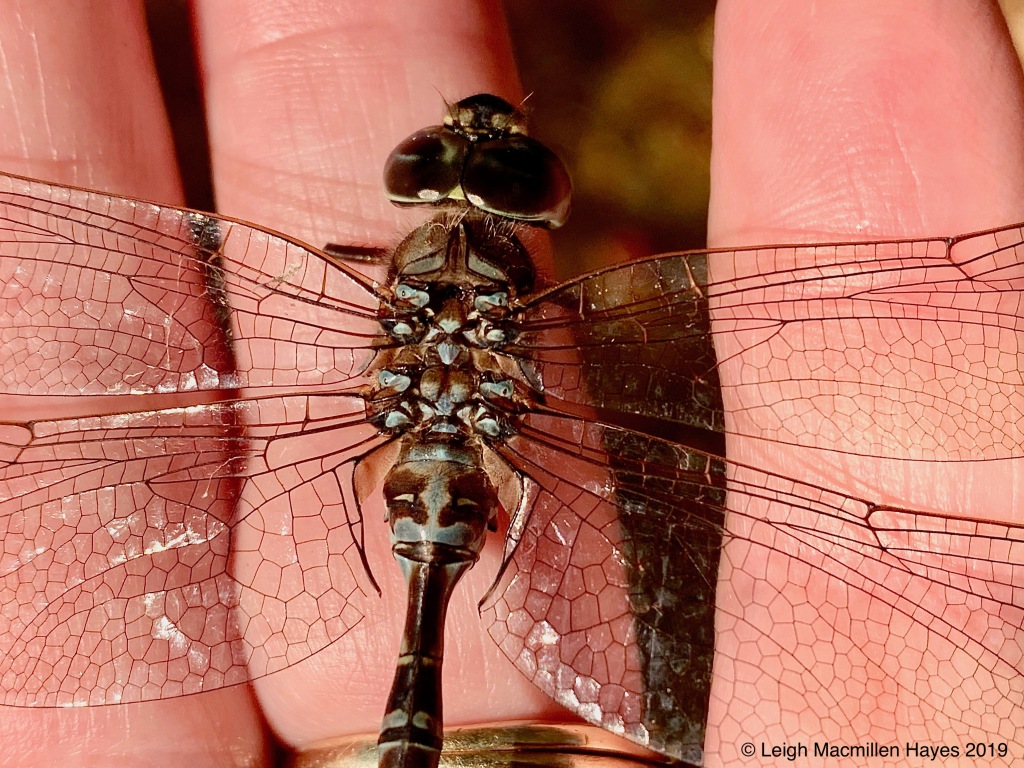
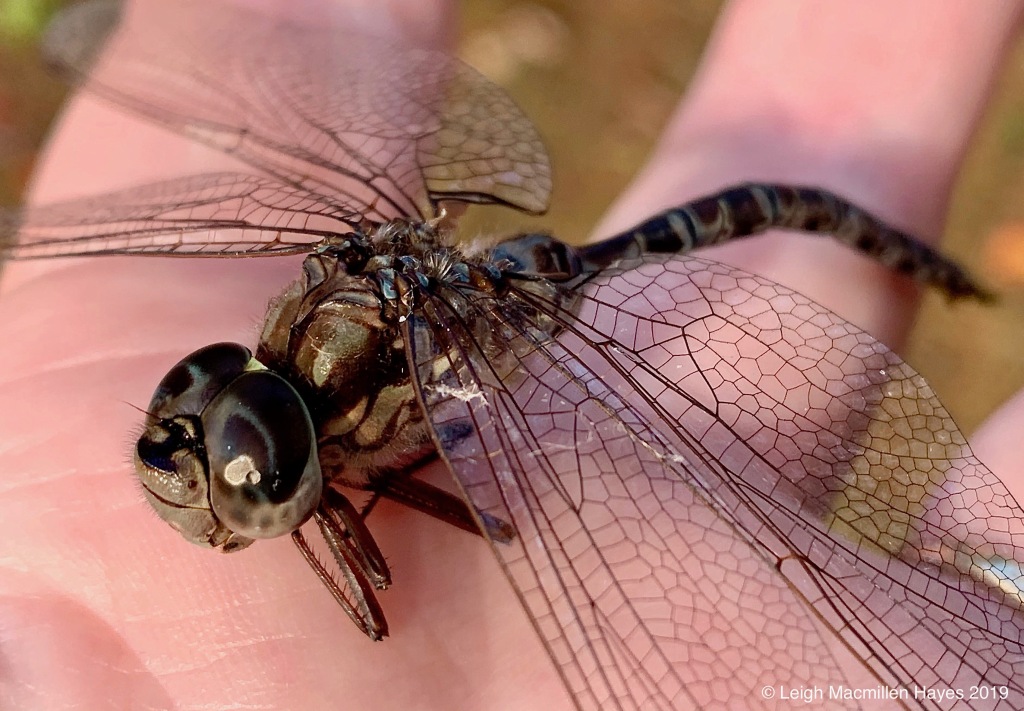
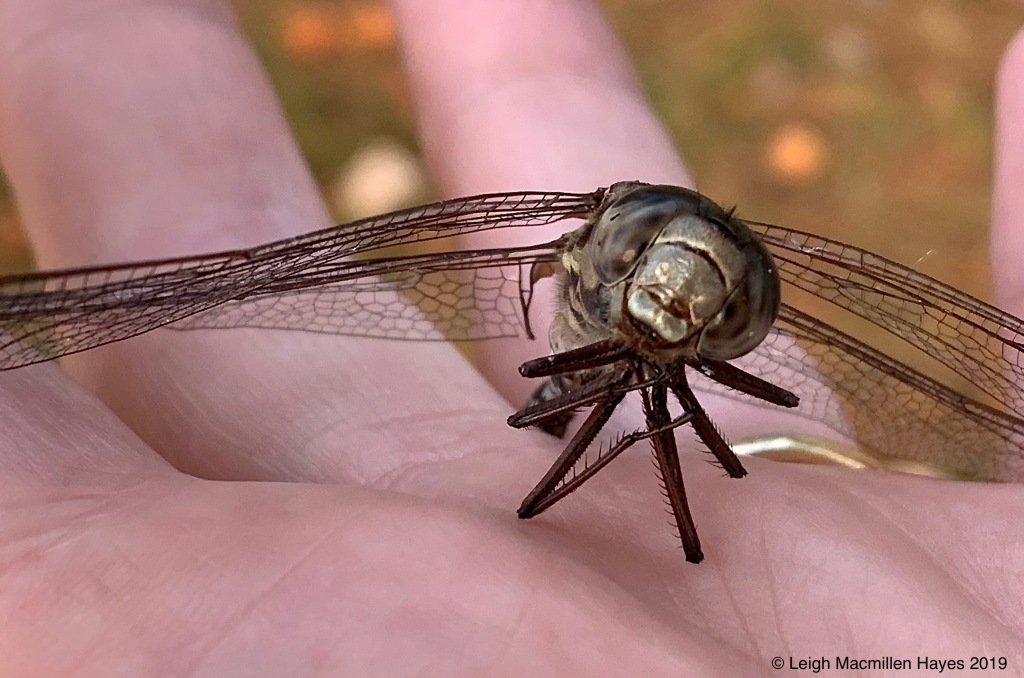
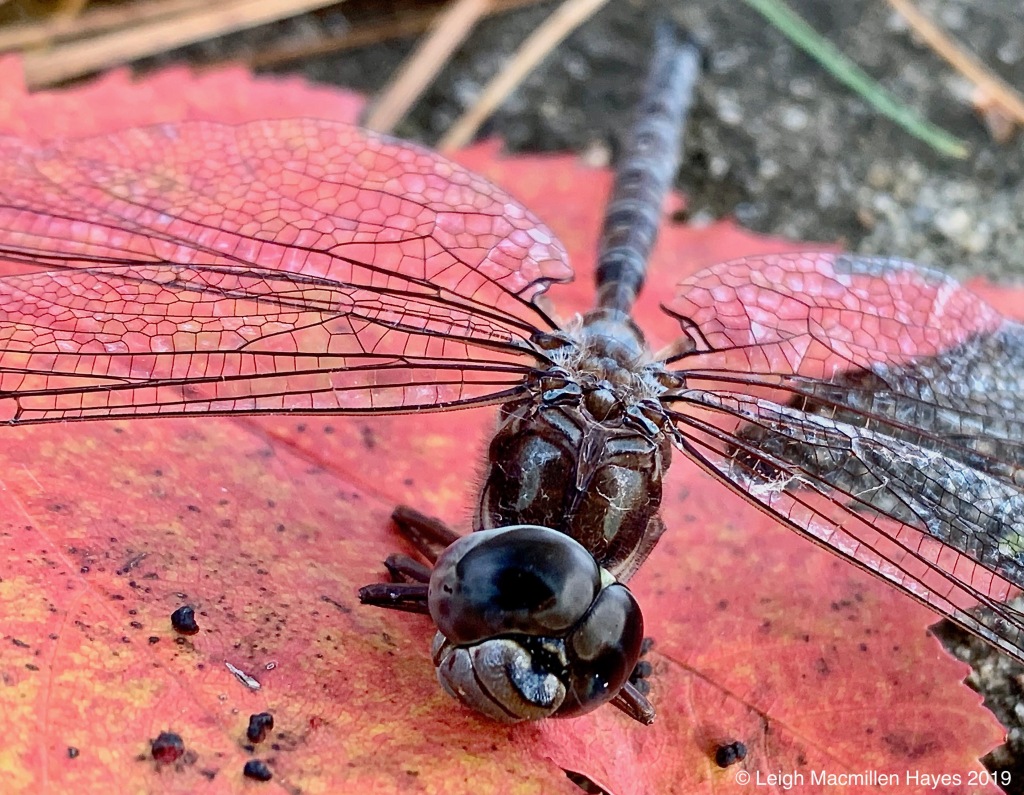
It wasn’t until I placed him on the palm of my hand, however, that I began to notice more than its mosaic thorax.

Suddenly, his wings began to beat, ever so slowly and methodically. And yet, he remained in the same spot on my hand.

I gave constant thanks for I couldn’t believe the opportunity I’d been gifted to examine this magnificent being at such a close perspective. My typical encounter with a darner dragonfly is that they cruise over water in almost constant motion and rarely land. And yet . . . here one sat upon my hand with no intention to move on any time soon.

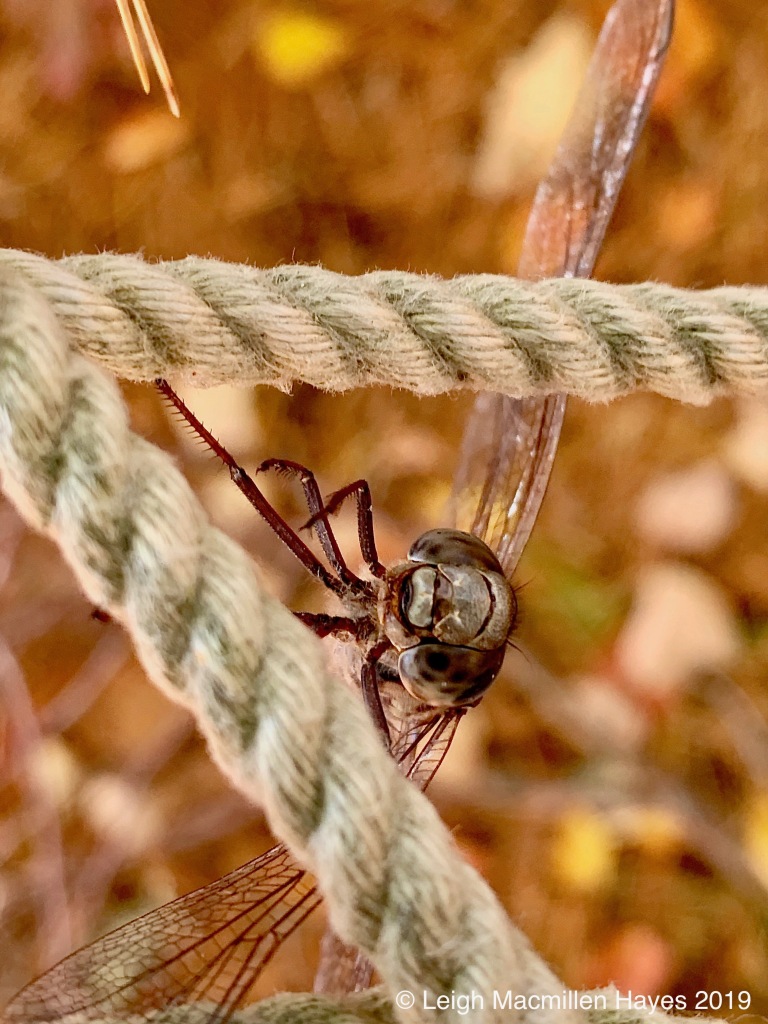
Have you ever looked at a dragonfly in such close proximity? And taken time to notice all the hair on its thorax?

Even its underside is covered in hair. And those folded legs. Remember when I found it dangling below the hammock? Its legs were extended back then.

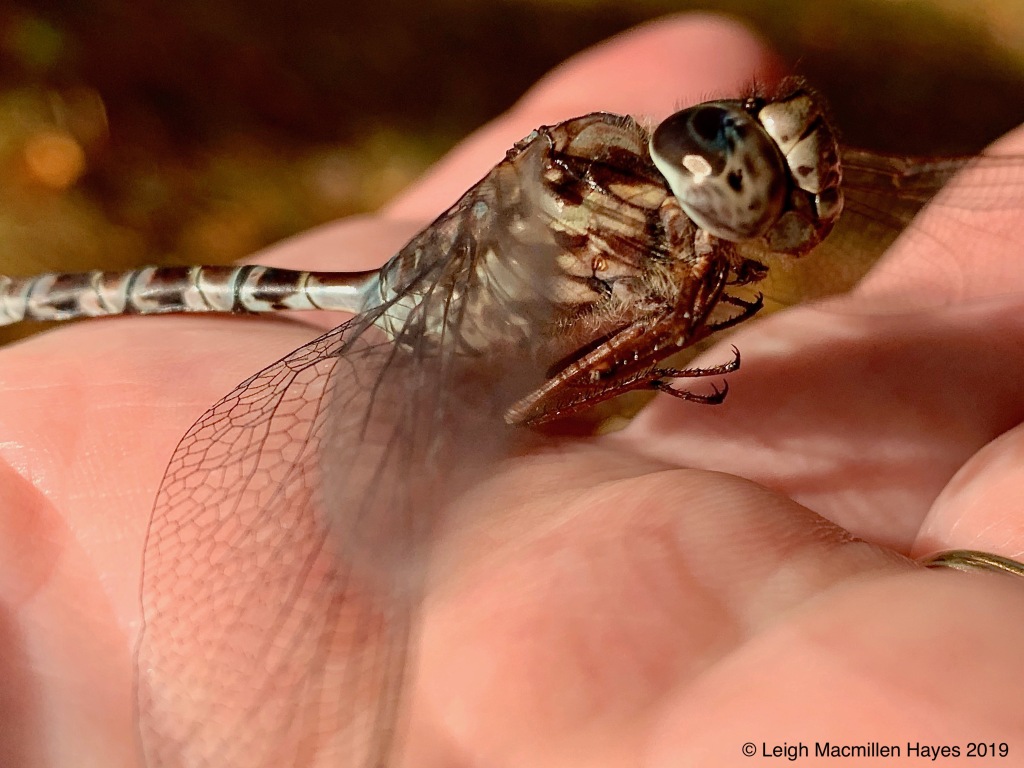
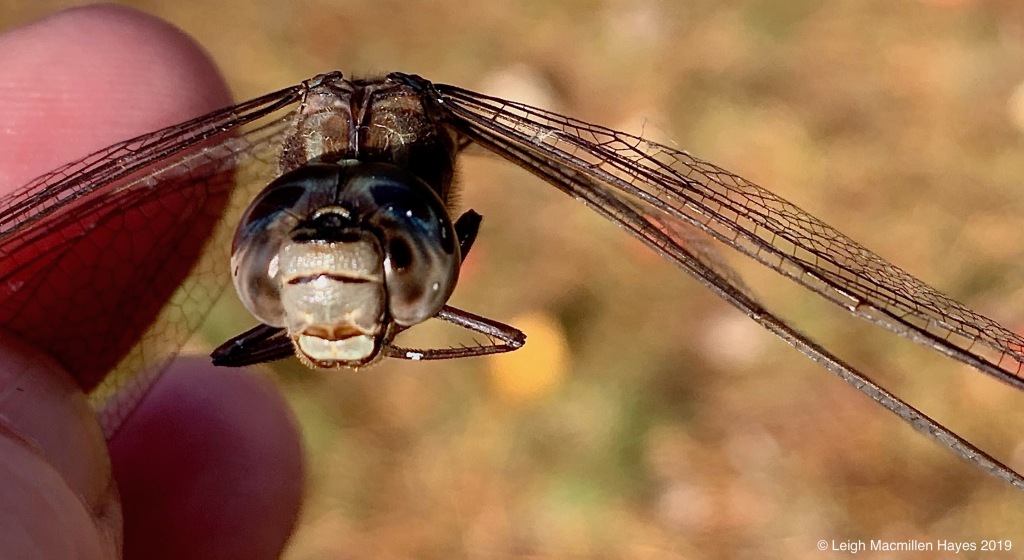
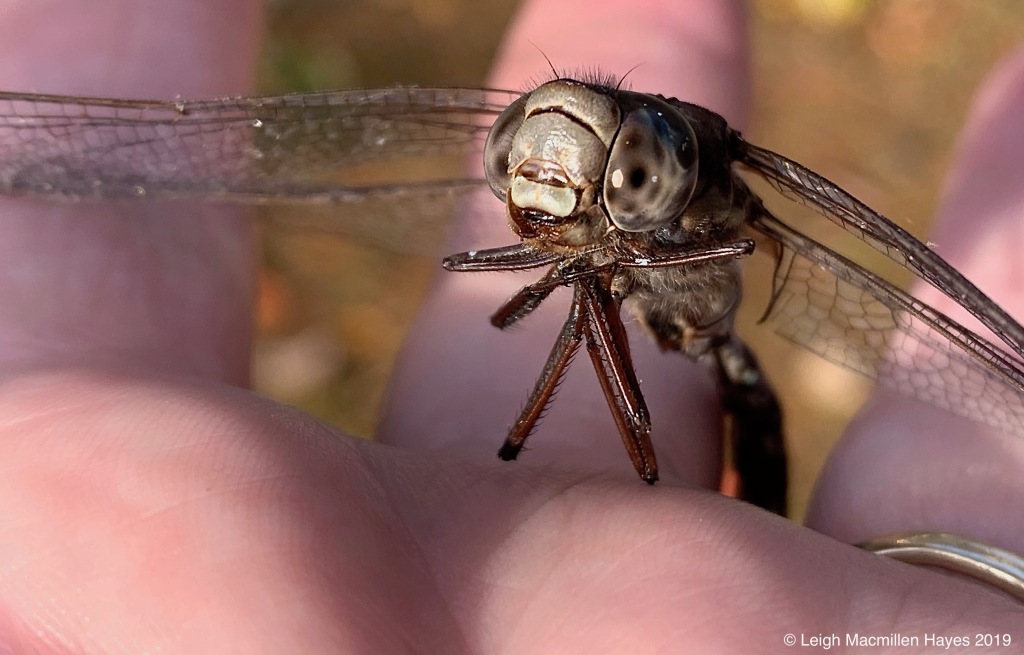
My handling of the dragonfly was gentle for I wanted it to fly off, but at the same time, my fascination got the better of me. The face provided part of its identification for it had a thick black crossline stripe in the middle of the face that looked rather like a mustache.

I assumed it had been caught in a spider web under the hammock, and really, it did seem a few pieces of silk were stuck to one wing. With extreme caution I tried to brush them away, but feared I’d tear a wing in the process.

Back in my hand, I noted another facial idiosyncrasy–a T-spot with a robust upright and a top cross-piece–almost like a cat face upon its “nose.”

But what was really noticeable was the fact that suddenly my friend arched his body as he might when meeting his love. Was he as in love with me as I with him?

Just as suddenly as he arched, he began to relax.

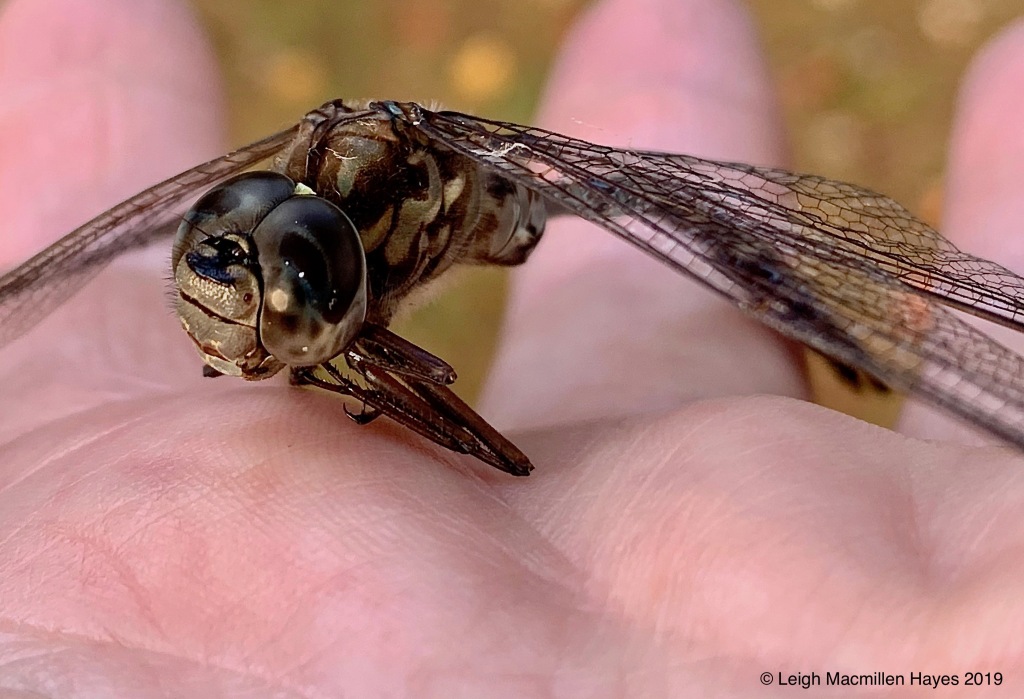
And then, another movement . . . his bent legs that had been folded close to his thorax moved and he stood upon his knees.

What I couldn’t understand was why he didn’t extend those legs.

Rather, he started to do something else. Keep an eye on his head.

He cocked it as if to say, “Hey lady, it’s getting late. What are you going to do about me?”

I did what I hope was the right thing even if it wasn’t what I wanted to do. I placed him on a leaf upon the well cover. Yes, I so wanted to take him inside, but he wasn’t meant to be inside and whatever happens to him, happens. I can’t control his world, despite that questioning face that tugged at my heartstrings.

What was our encounter all about? And why didn’t he behave in typical darner fashion? I’ll never understand, but I will forever be grateful for the opportunity to enjoy today’s afternoon dragon delight. Indeed.

Making a New Friend, Naturally

I don’t always find it easy to get to know someone upon our first greeting, especially if our time together is brief. And sometimes it takes me a year or even longer to feel comfortable in the presence of another. But there was something a wee bit different about today’s encounter that encouraged me to break down any false barriers.

Maybe it was because at first glance I thought an old friend had stopped by for the clothing it wore on its back looked familiar.

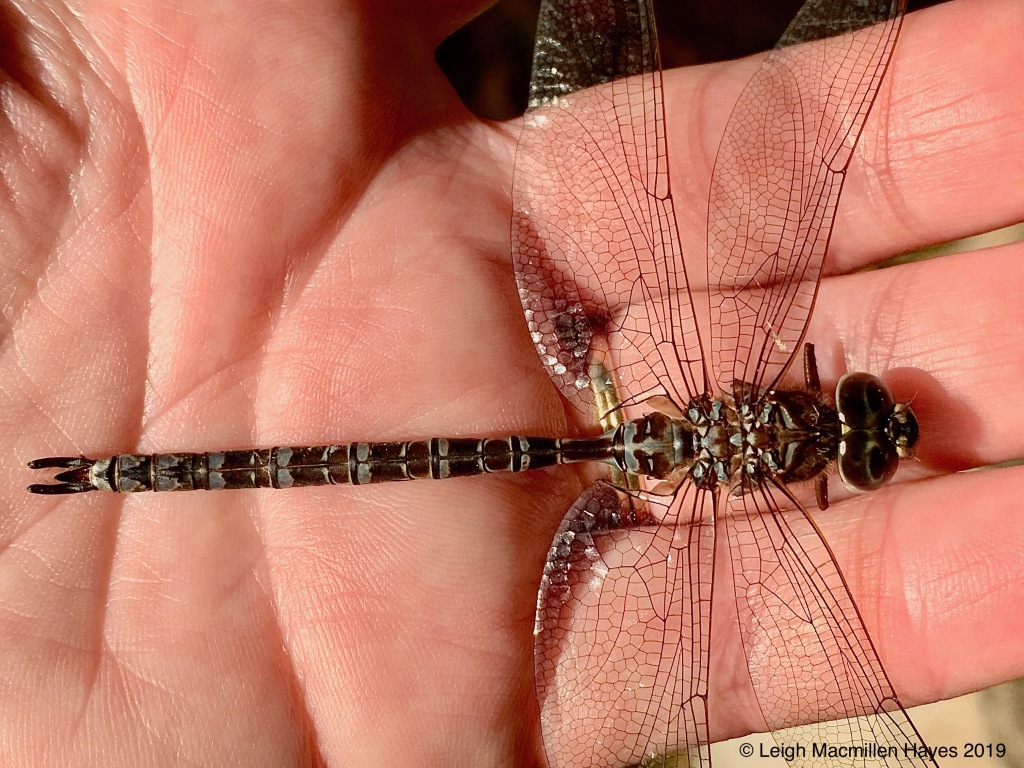
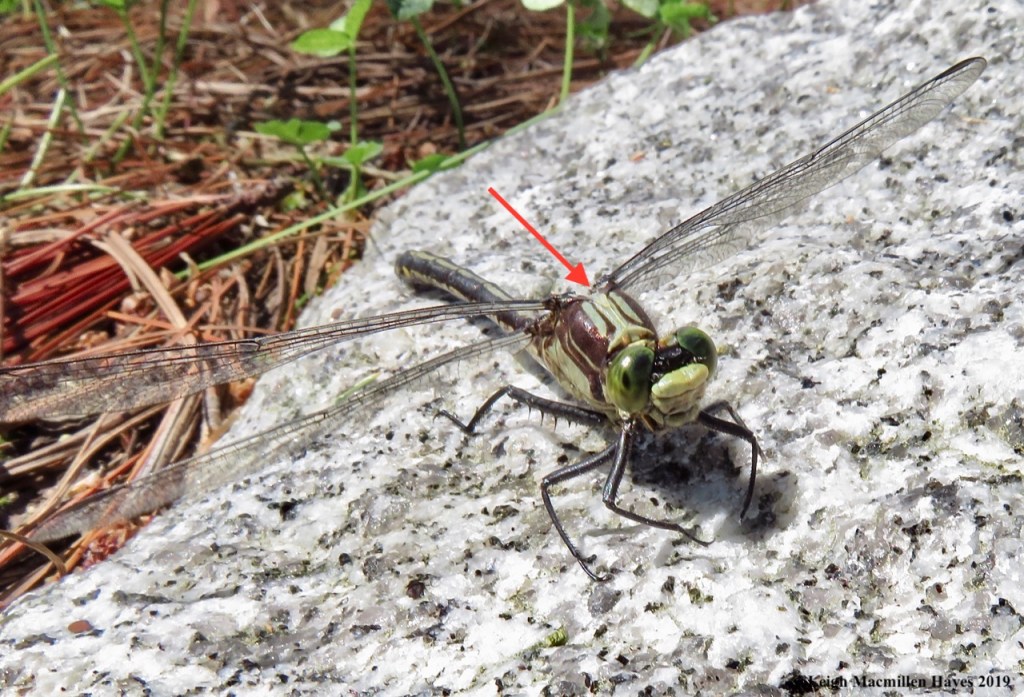
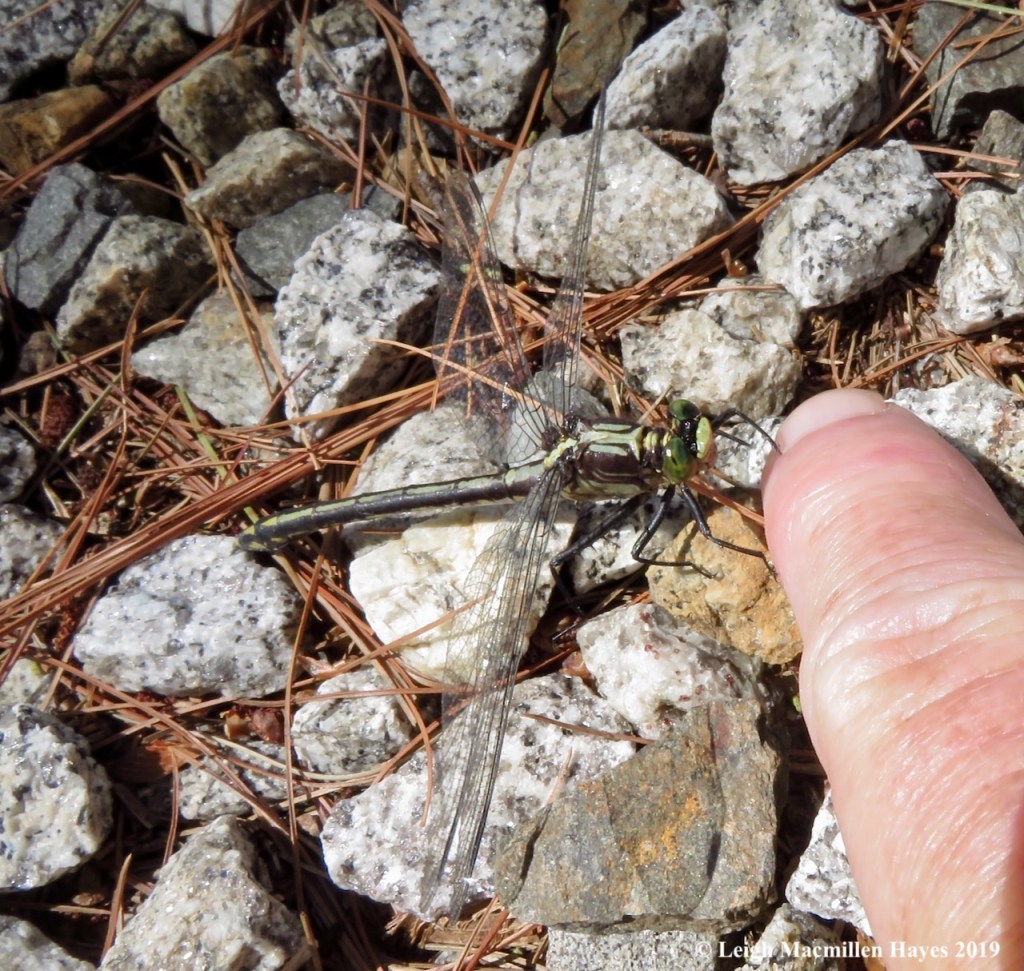
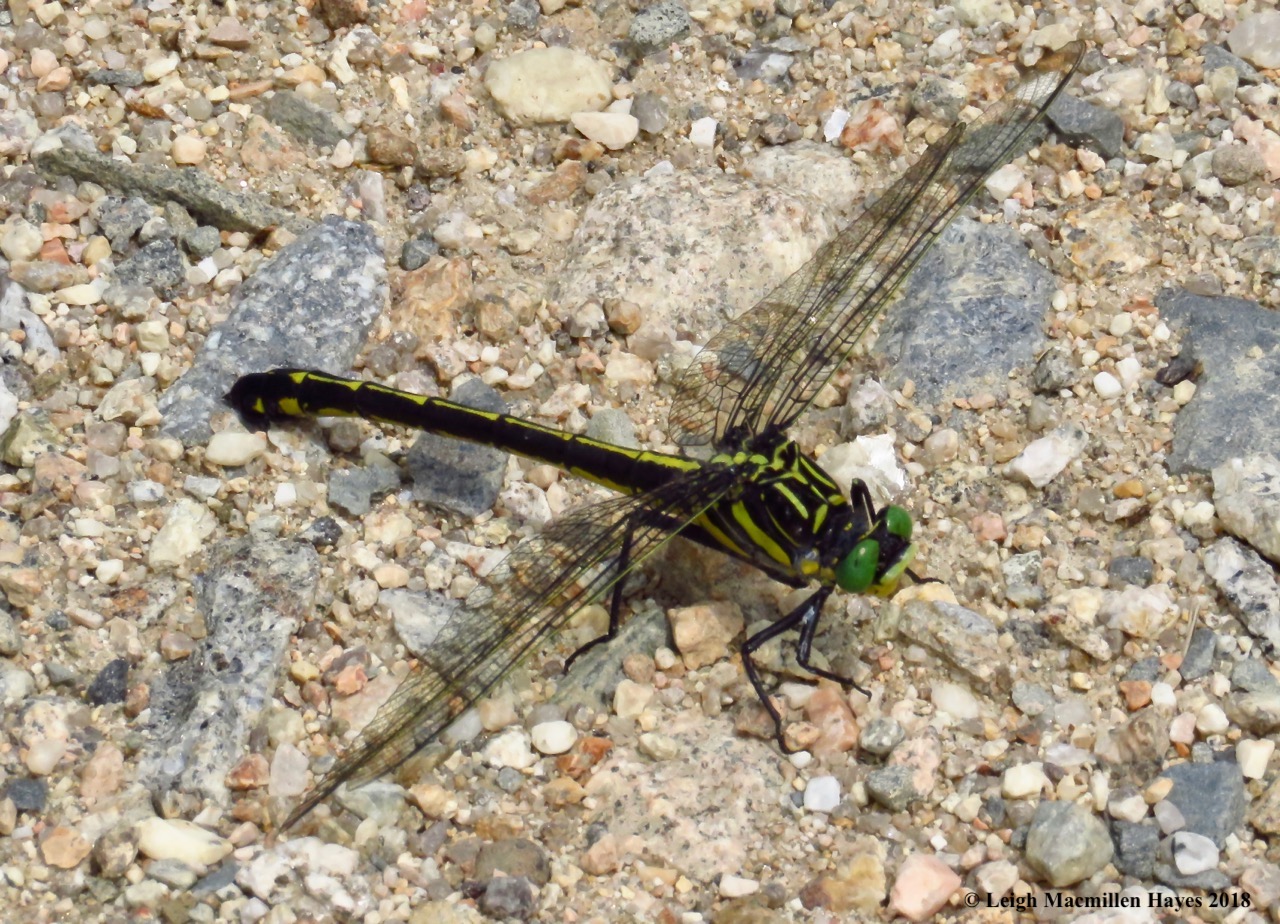
But my old friend, Ashy, wears a cloak with a yellow triangular spot on segment eight on the coat tails and segments nine and ten have no coloration above.

If you look back at my new acquaintance, you’ll realize that the pattern is quite different all the way to the hem line.

That’s when I began to realize I was in the presence of someone I hadn’t had the pleasure to meet before. Or, if I had, perhaps I hadn’t taken the time to notice the idiosyncrasies that earned it a name. To really get to know him.

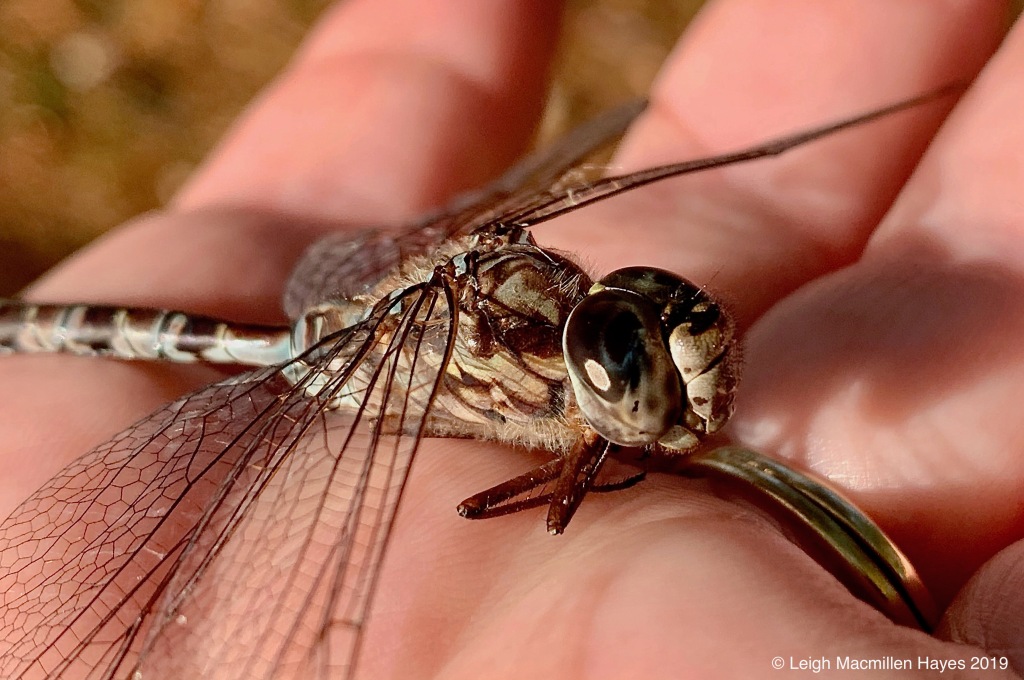
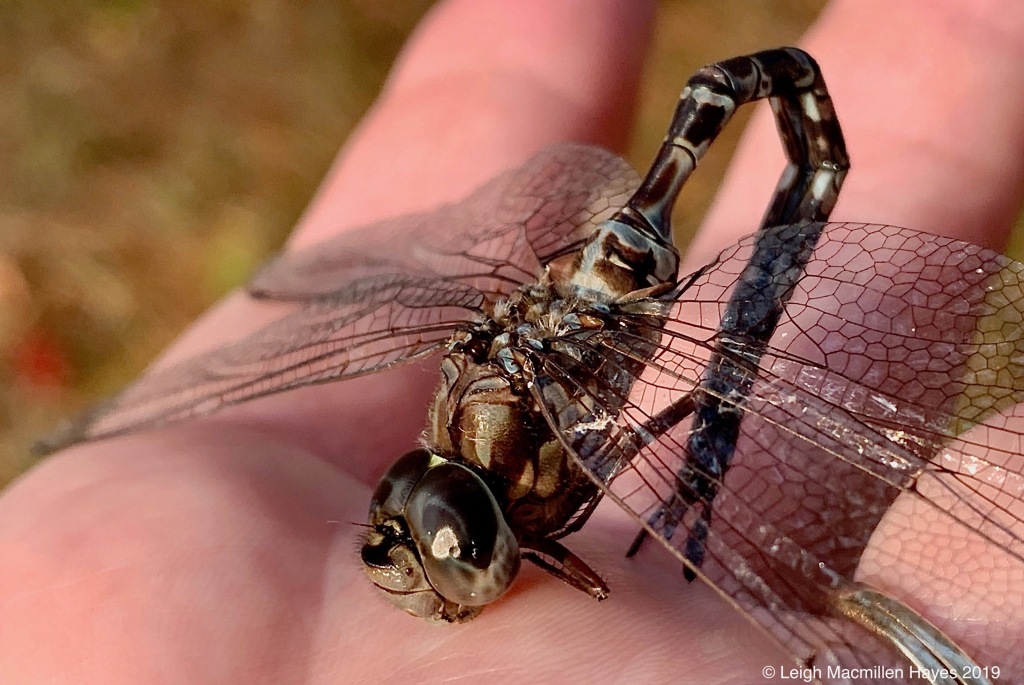
Notice, for instance, the wide black shoulder stripe on the side of his thorax.

And the spines along the thigh of his hind leg.

Those two features were key, but there was more to see: look at the thorax again. Can you see two long, thin bluish-green ovals and the “I” that separates them?

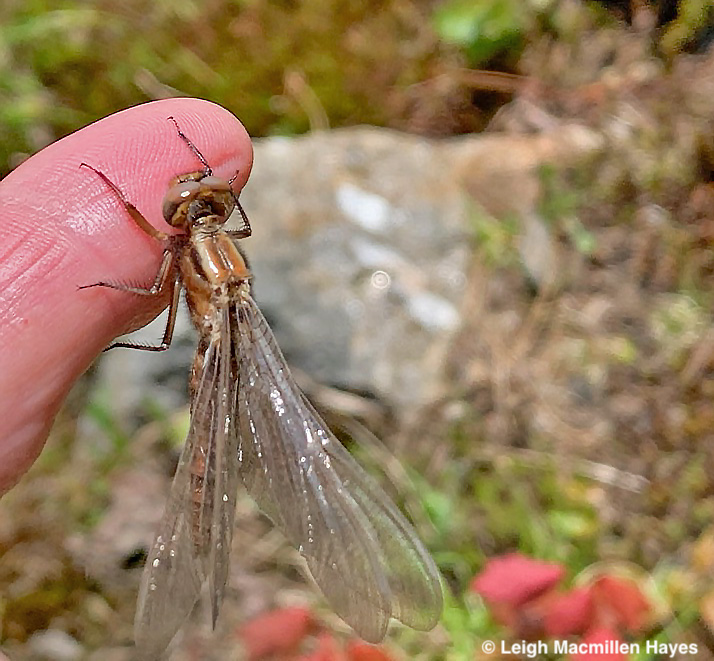
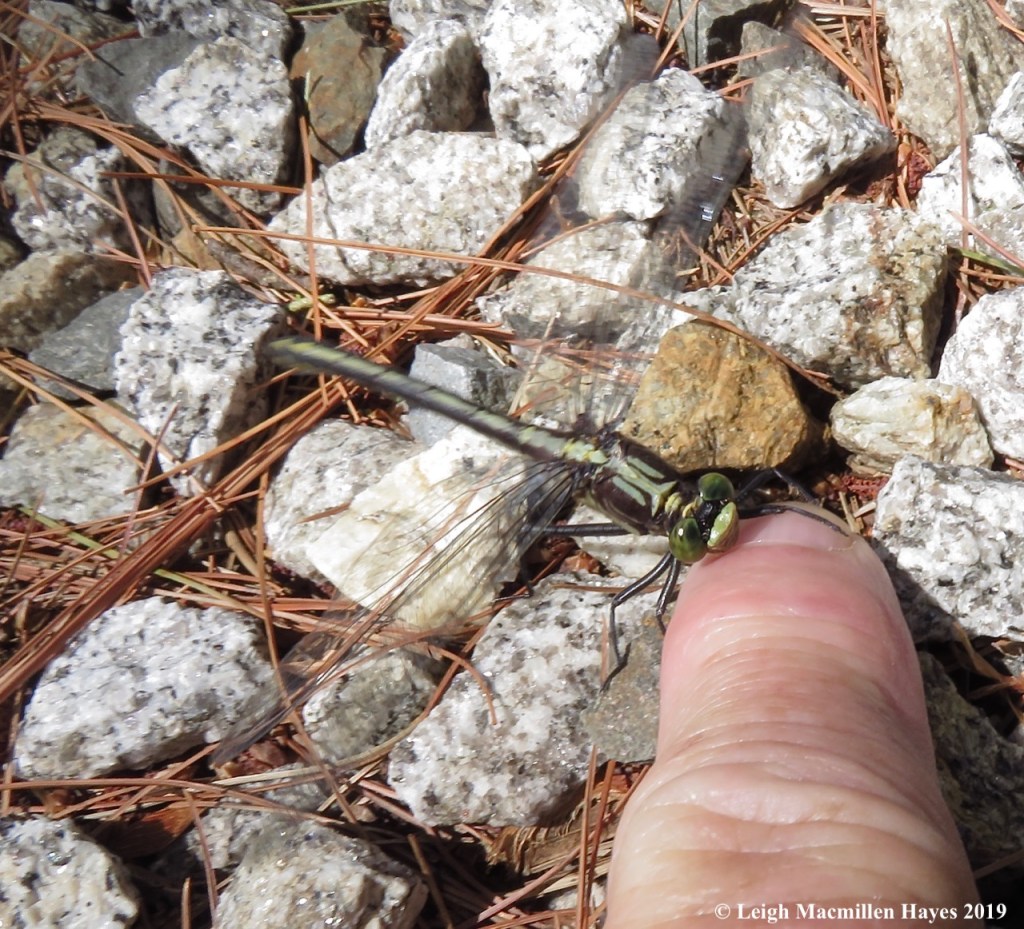
Because he looked similar in some ways to Ashy and another friend I know as Sir Lancelot, I wondered if he’d be comfortable with an up close and personal meeting.

It appeared he didn’t mind as my steel-gray-blue eyes peered into his of vivid green.

He didn’t stay on my finger long and despite the fact that he was at least a half inch longer than his cousins, he felt like a lightweight.

I, of course, could not let the chance encounter pass without another opportunity to gain a closer perspective.

He seemed to feel the same . . .

and ever so slowly climbed aboard again. Three times we stared at each other, but each time it was only for a brief period.

At last he flew off and I could only hope that he felt as excited about our meeting as I did.

My only other hope is that the next time we meet, I remember his name: Black-shouldered Spinyleg Clubtail Dragonfly or Dromogomphus spinosus.

Today, I made a new friend, naturally. And it wasn’t so hard after all.

Emergence


Oh dragonfly, oh dragonfly
In your infancy, you laboriously 
climbed upon a slender stem.
Ever
so
slowly
seams split.
Soft and squishy, you spilled forth into this sunlit world.
Perched upon your former self, wispy strings recalled aquatic breaths. 
Moments slipped
into an hour. 
Your body of velvet pulsed as blood pumped into cloudy wings.
Standing guard watching you, I noted preparations for first flight. 
Eyes bulging
you chose
a spot
of viewpoint vantage.
Colors changing, 
you gained 
the markings
 of generations past.
Wings drying 
you offered
a reflection 
of stained glass.
Beyond understanding
you flew 
a dance
of darting restlessness.

Odonata, Odonata,
You have known 
both worlds. 
First playing 
beneath the surface.
Then in a manner 
so brave,
climbing skyward
to ride summer’s breeze
on gossamer wings.
Forever in awe 
of your transformation
from aquatic nymph 
to winged adult, 
I can only imagine
the wonder of
 emergence.

Insect Awe

I never intended to like insects. They weren’t really my thing. At all. And if I encountered one in the house, I’d either ask someone to smoosh it or do the dirty work myself, though sometimes that meant my hands clenched together until I got up the nerve.

But one day I began to look. I’m not even sure when that day was, but for quite a while now, it has become a daily habit.

What I am about to share with you are some finds from this past week. Some were new acquaintances while others were old friends I was meeting all over again.

For starters, I discovered this tiny, cylindrical structure on an oak leaf. Notice how it was right beside the main vein. I had to wonder, was the top rim also a vein, for so thick it appeared.

It’s my understanding that after creating the third role of the leaf, a single egg is laid. What triggers the insect to lay the egg then? Why not on the second role? And how many roles are there before the nest is completed?

What is this? A Leaf Roller Weevil nest, which is called a nidus.

In another place I spotted the first of what I suspect I’ll see repeatedly as spring gives way to summer. The wasp who built this global structure also used an oak leaf.

I’d love to see one of these being created and I am humbled not only by the perfectly round orb, but also the interior. This one happened to be split open so I could peek inside. The wasp used the leaf tissue to surround a single larva located at the center. Fibers radiating from that central larval capsule supported the exterior. How could it be that an insect could create such?

What is this? An Oak Apple Wasp Gall.

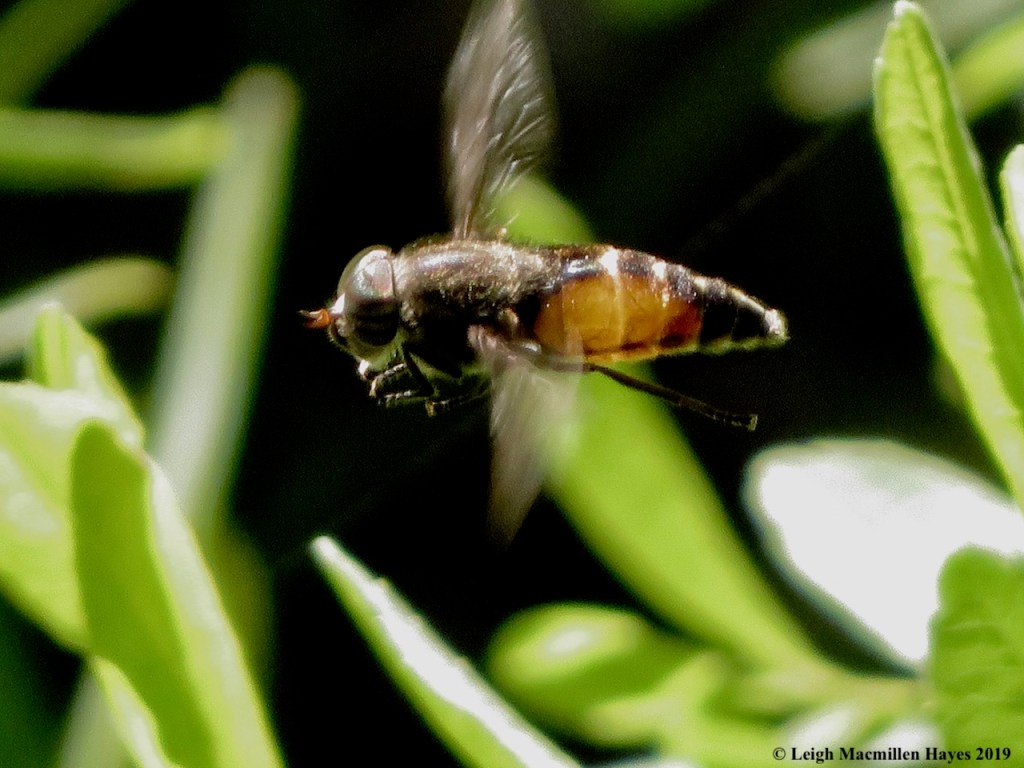
Standing with others beside water as we listened for and spotted birds, I noticed the largest insect remaining in one place for minutes on end as if suspended midair.

It’s rather scary looking, but that’s all an act for this impersonator likes to look like a wasp or bee in order to avoid becoming prey (think Batesian mimicry where something looks dangerous but is actually good).

In reality, despite its “fierce” presentation, it’s actually harmless. And beneficial. While it consumes nectar, honeydew and pollen, but doesn’t actually collect the latter like a bee, in the process of visiting a flower may get some pollen on its body and transfer the goods from that plant to the next.

But that controlled flying? You can see by the photo that the wings were moving, but with the naked eye it appeared motionless.

What is this? A Hover Fly.

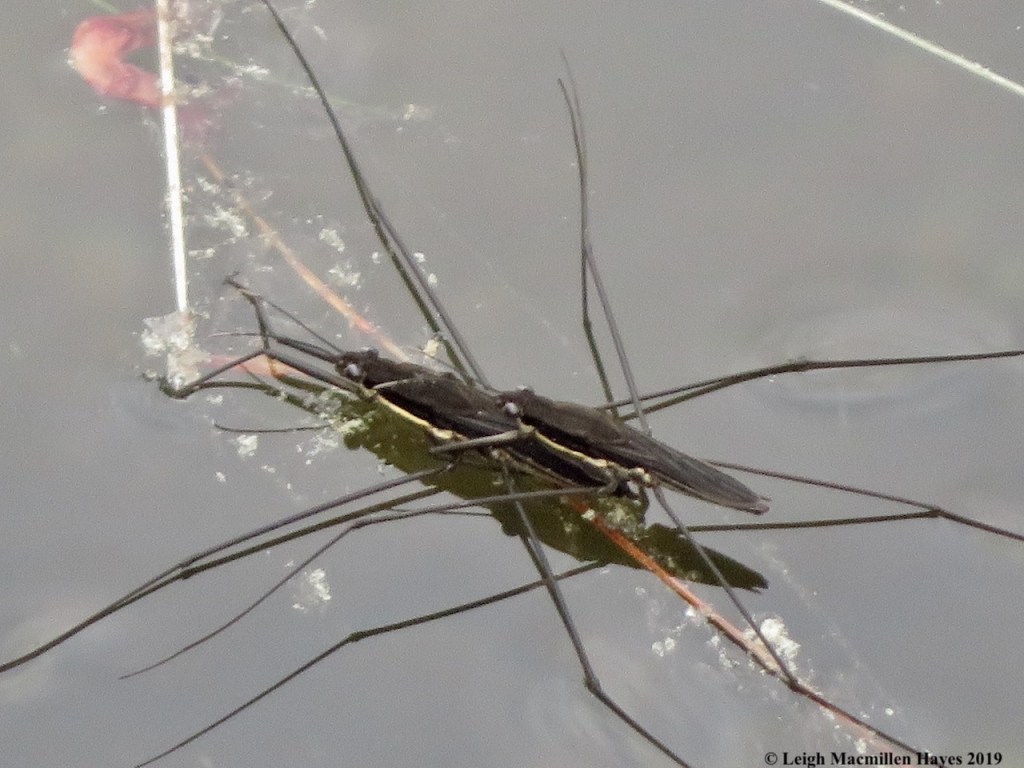
I was standing about ten feet above a pond when I spied and first thought that these two insects were one. In fact, I was sure I was looking at the largest example of this species. And then I saw all the legs and realized something more was going on.

Indeed, a lot more was going on. She was on the bottom and as you can see, he had a tight clasp. Theirs is a mating habit that’s quite unique and if she doesn’t give in, it can go on for a couple of days. And might mean doom for her.

You see, she has a genital shield to guard against him if she doesn’t think he’s the man she wants. But, he has a counter behavior–he taps the water in a pattern that might lure predators such as fish. And since she’s beneath and closest to the fish’s mouth, it behooves her to submit quickly to his endearment.

What are these? Water Striders.

This next one was discovered when some young naturalists I was hanging out with lifted a rock upon a rock beside a brook. Burrowed in to the humus was a segmented insect.

In its larval form it would have had protective filaments, as well as gills to help it absorb dissolved oxygen. And a set of mean-looking mandibles. Ten to twelve times it would have molted before leaving the water and finding this moist environment under the rock upon a rock where it dug a cell within which it spent up to fourteen days before pupating. Under the same rock was the exoskeleton it had shed. In this next stage of life, it develops wings, legs, antennae and mouth parts. We covered it back up and I suspect that by now or very soon it will dig its way out of the cell and emerge as a winged adult.

What is it? A Dobsonfly Pupa.

One of my favorite finds was beside a river–and though I didn’t get to see it emerge from its exoskeleton, I did watch it pump some blood into its body and grow bigger and longer over the course of an hour or more.

Its cloudy wings needed time to dry out and lengthen, as did its abdomen. And eventually, its colors would help in a determination of its specific name, though I wasn’t there that long.

Just across a small inlet, another had also emerged and while it had almost reached maturity, it was still waiting for its wings to dry. Notice how in the previous photo, the wings are held upright over its back, but as demonstrated here, when they dry they extend outward. That’s actually a great way to differentiate these from their Odonata cousins who wear their wings straight over their abdomens.

Meet the cousin–the damselflies.

And now back to the others, who also begin life as aquatic insects that molt a bunch of times before becoming adults. When the time is right, they climb up vegetation and undergo an incredible metamorphosis as you saw above. Left behind as skeletons of their earlier life are the delicate structures that remain on the vegetation for quite a long time.

I’m always amazed when I discover one atop another, and as far as I know it’s all just a matter of this being a good spot to go through the change of life.

What are these? Cruiser Dragonfly Exuvia above a Darner.

Also recently emerged as indicated by the still cloudy wings (and fact that I saw the exoskeleton a few inches away) was another that wasn’t a damsel or a dragon. Instead, it has the longest and thinnest legs that look like they can hardly support the abdomen, but they do. In flight, people often mistake them for Mosquitoes, but if such, they’d have to be considered giant Mosquitoes.

As it turns out, however, they are not, nor do they bite. In fact, in their adult stage, which only lasts for ten to fifteen days, they do not eat. Anything. Their sole purpose at this stage of life is to mate.

What is this? A Crane Fly.

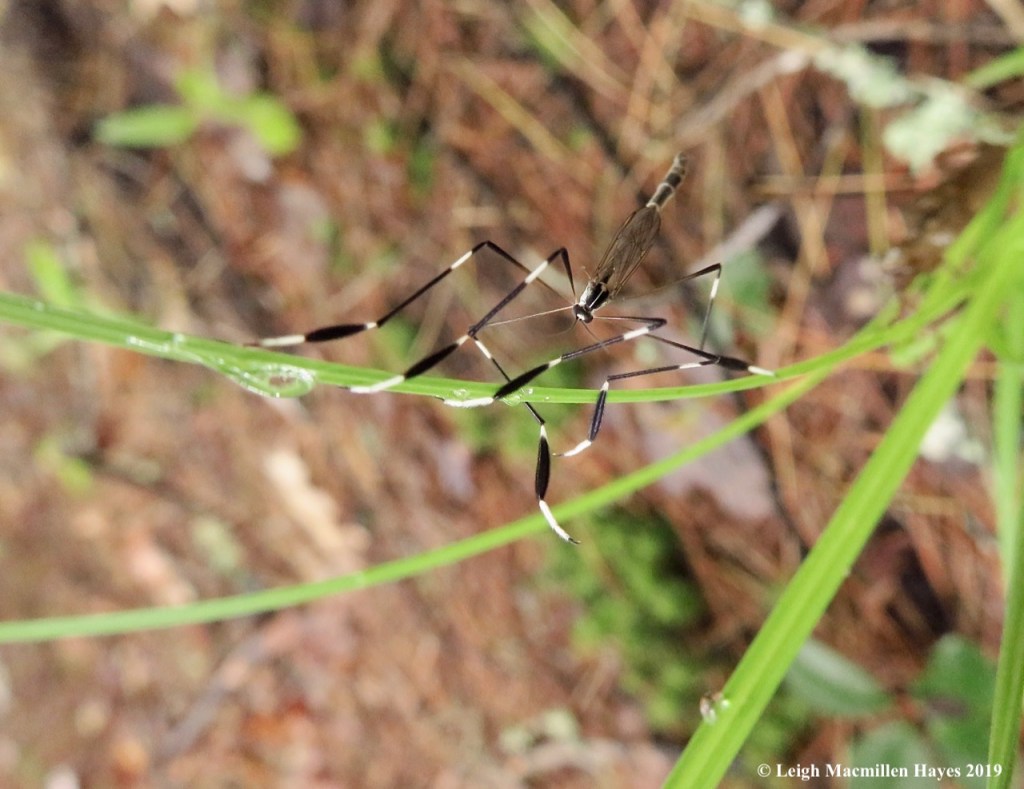
I have saved my favorite for last. Oh, I think they are all fascinating, but this one . . . oh my. Notice that needle-thin abdomen and the zebra-like appearance of those long, skinny legs. I think they have at least three joints which give each leg a zigzaggy appearance.

The legs become important as it flies through the air–or rather drifts. Or maybe swims would be a better verb to describe its movement. You see, each leg is hollow. And each foot (a teeny, tiny tarsomere) is filled with air. Crazy? Yes. As it lifts off, it spreads its legs, but barely moves its wings, and disappears into the vegetation beside the brook in a ghostly fashion.

I’m really not sure how I spotted it, but I’d never seen one before and then this past week twice it made its presence known and I felt honored for the meeting.

What is this? A Phantom Crane Fly. (And if you hear me say Phantom Midge while we’re walking together–feel free to correct me. It’s like birch and beech, and so many others–my mouth jumps before my brain kicks into gear.)

Insect Awe. Who knew I would ever experience such. I can only hope our paths cross again soon.

The Day The World Passed By

I love those days when I have a few moments and can pay attention to the world around me. It never ceases to fill me with awe and wonder. And today was such as I had a free hour that I chose to spend on the dock.

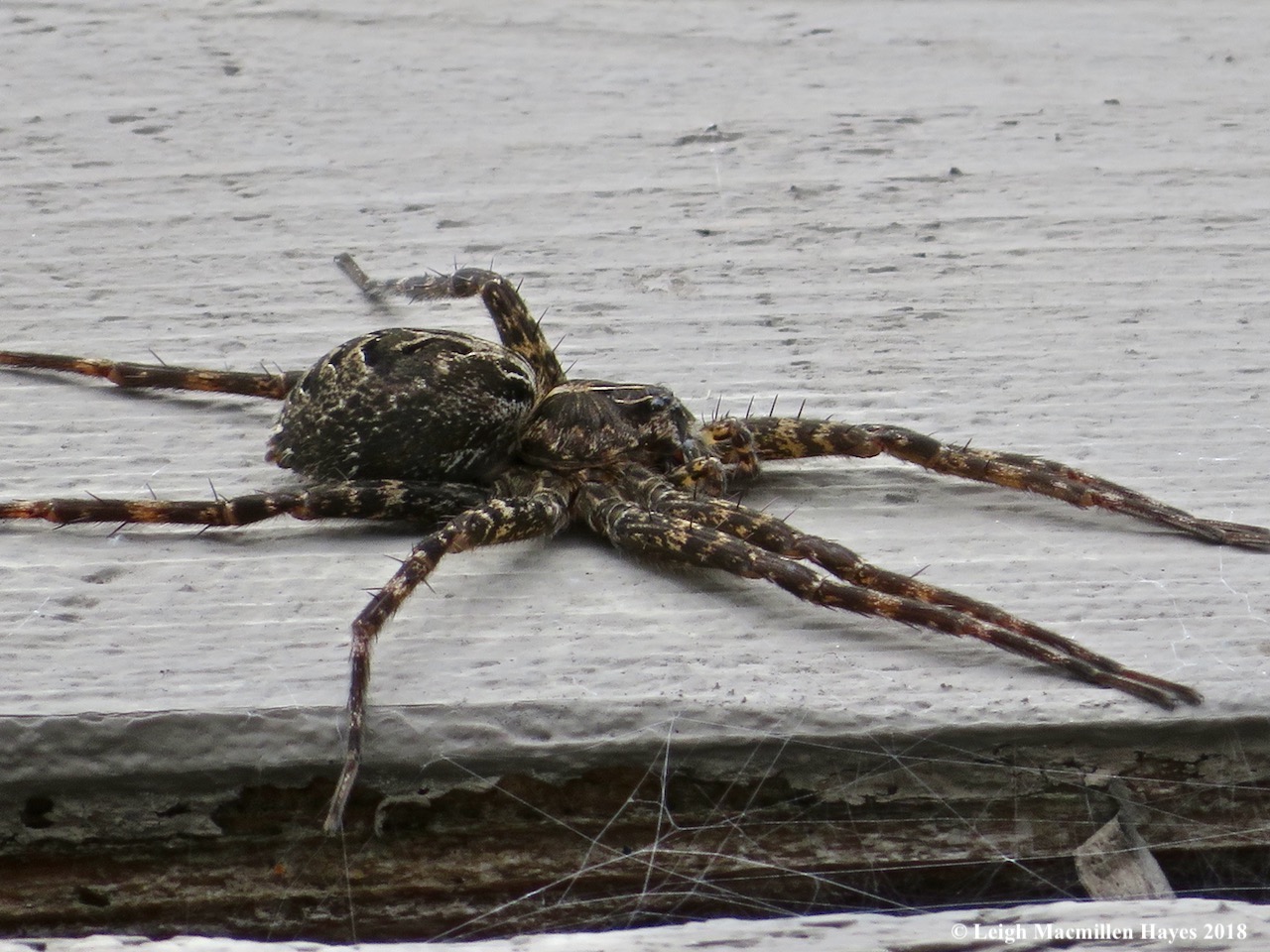
1-fishing spikder

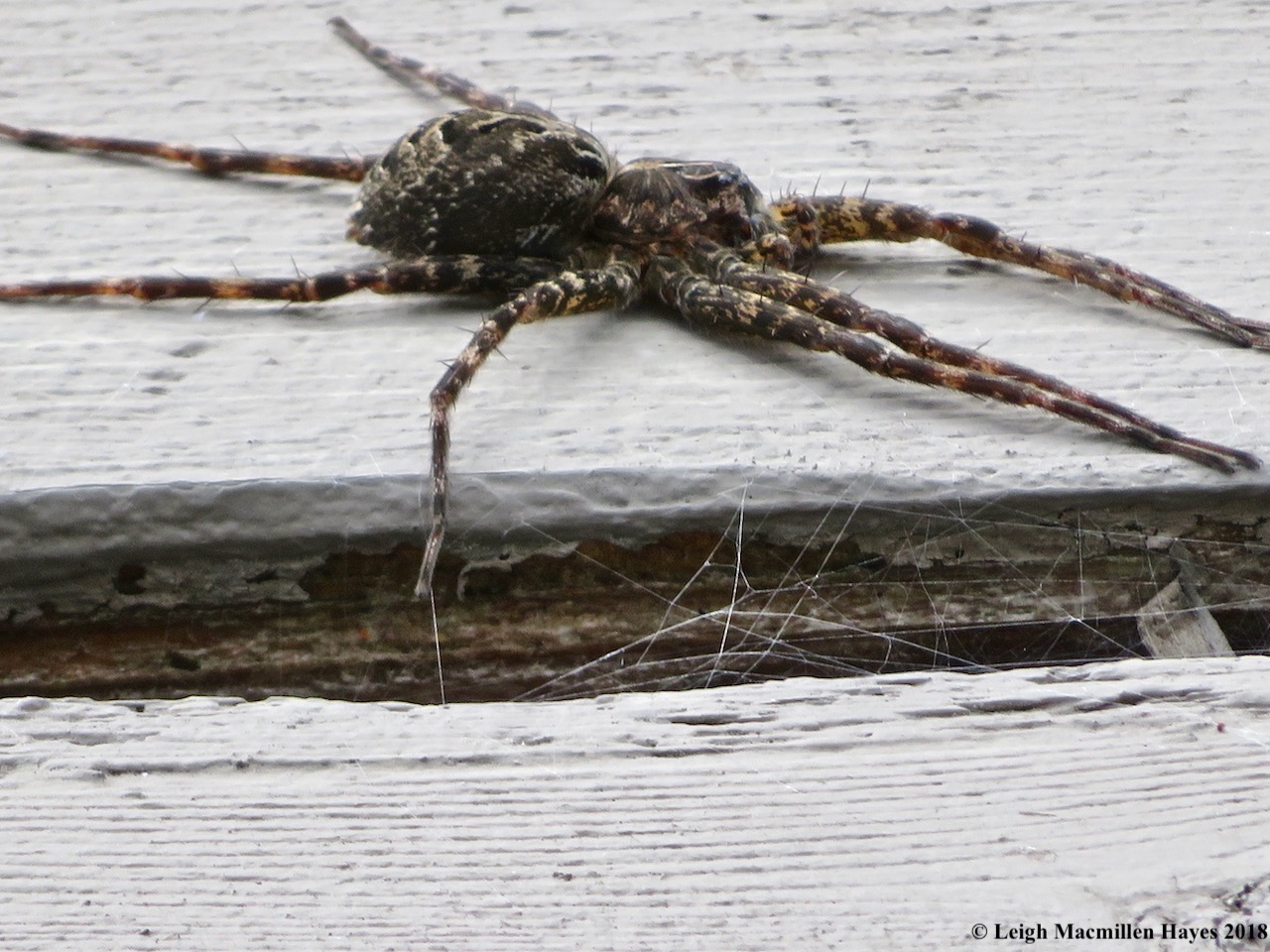
I shouldn’t have been surprised to see a fishing spider the size of my palm resting there, but I was for it was my first sighting of one this year. True confession, indoors I’m not a huge spider fan and as a kid I used to holler for someone to come kill any arachnid I spied. But . . . with age comes appreciation. And perhaps understanding.

2-fishing spider bristles

And so I appreciated this spider’s pattern and understood the need for its hairy body that gave it such a scary look. Fishing spiders hunt by sensing vibrations. The hair is hydrophobic, meaning it repels water. It also allows the spider to actually walk on water to get its prey. Those bristly hairs also trap air bubbles that the spider uses to breathe when it waits underwater to ambush a meal, be it insects, tadpoles, or other invertebrates.

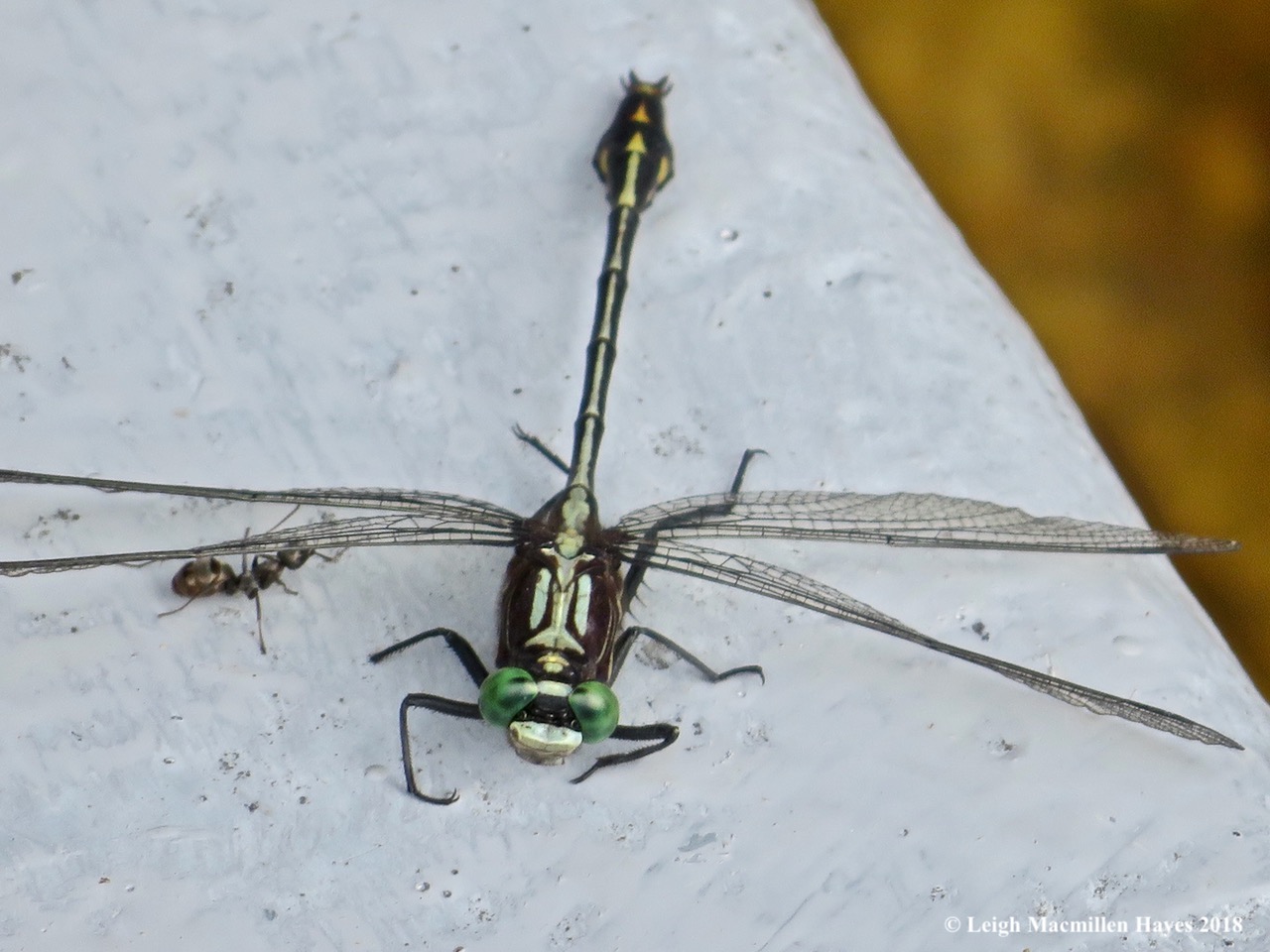
3-lancet clubtail and ant

When I heard wing beats behind me, I turned my focus away from Charlotte and toward a Lancet Clubtail dragonfly that had landed on a seat of My Guy’s boat. An ant marched right over to check it out.

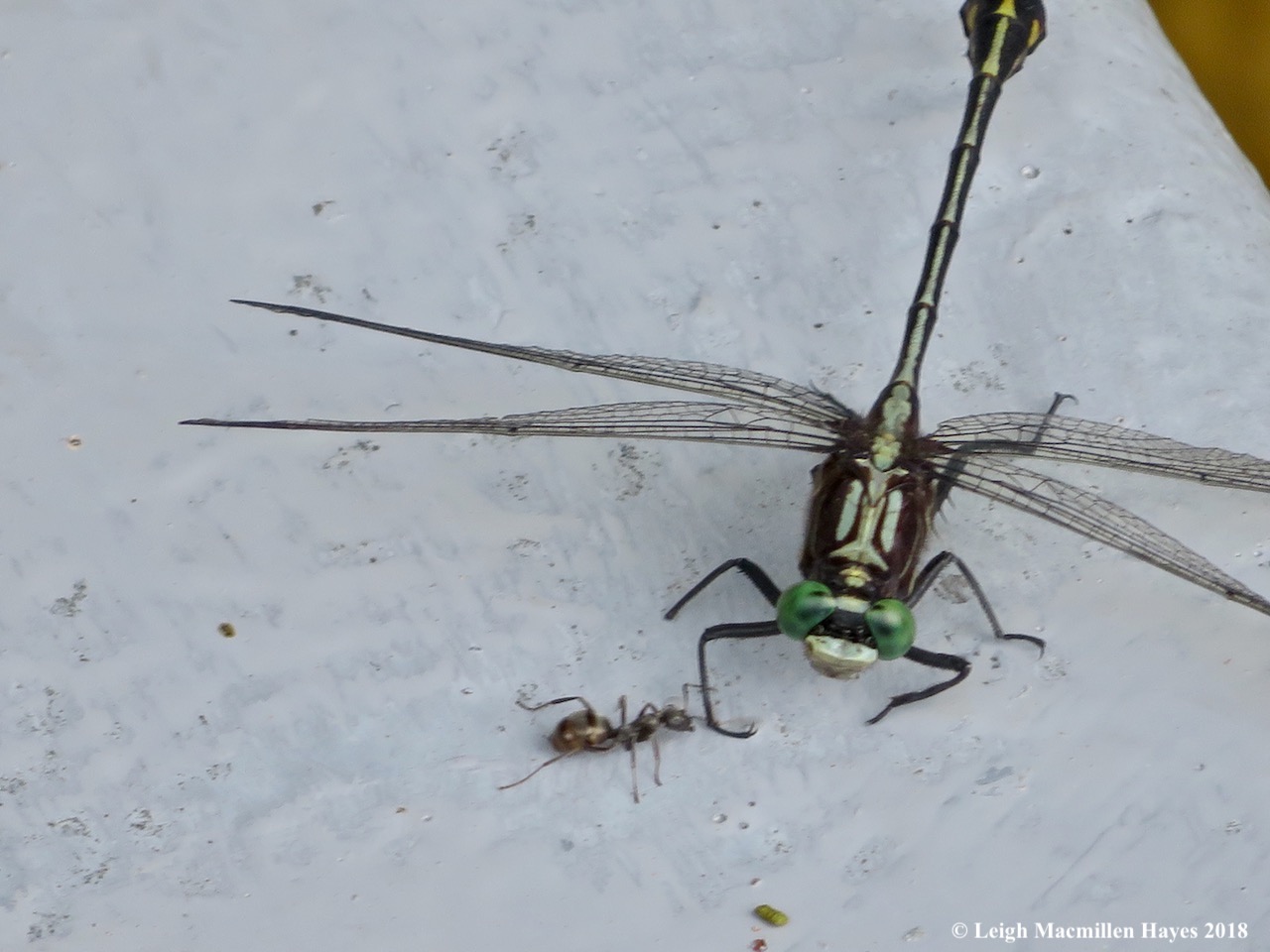
4-ant tickling dragonfly

And I fully expected the Lance to eat the ant. But . . . he didn’t. Drats.  I like watching them consume their prey.

5-lancet minus one tarsus

The more I looked at this guy, and it was a guy based on its cercus, the more I noticed, including the fact that it was missing the tarsi or claw-like foot of one leg.

6-dragonfly_anatomy

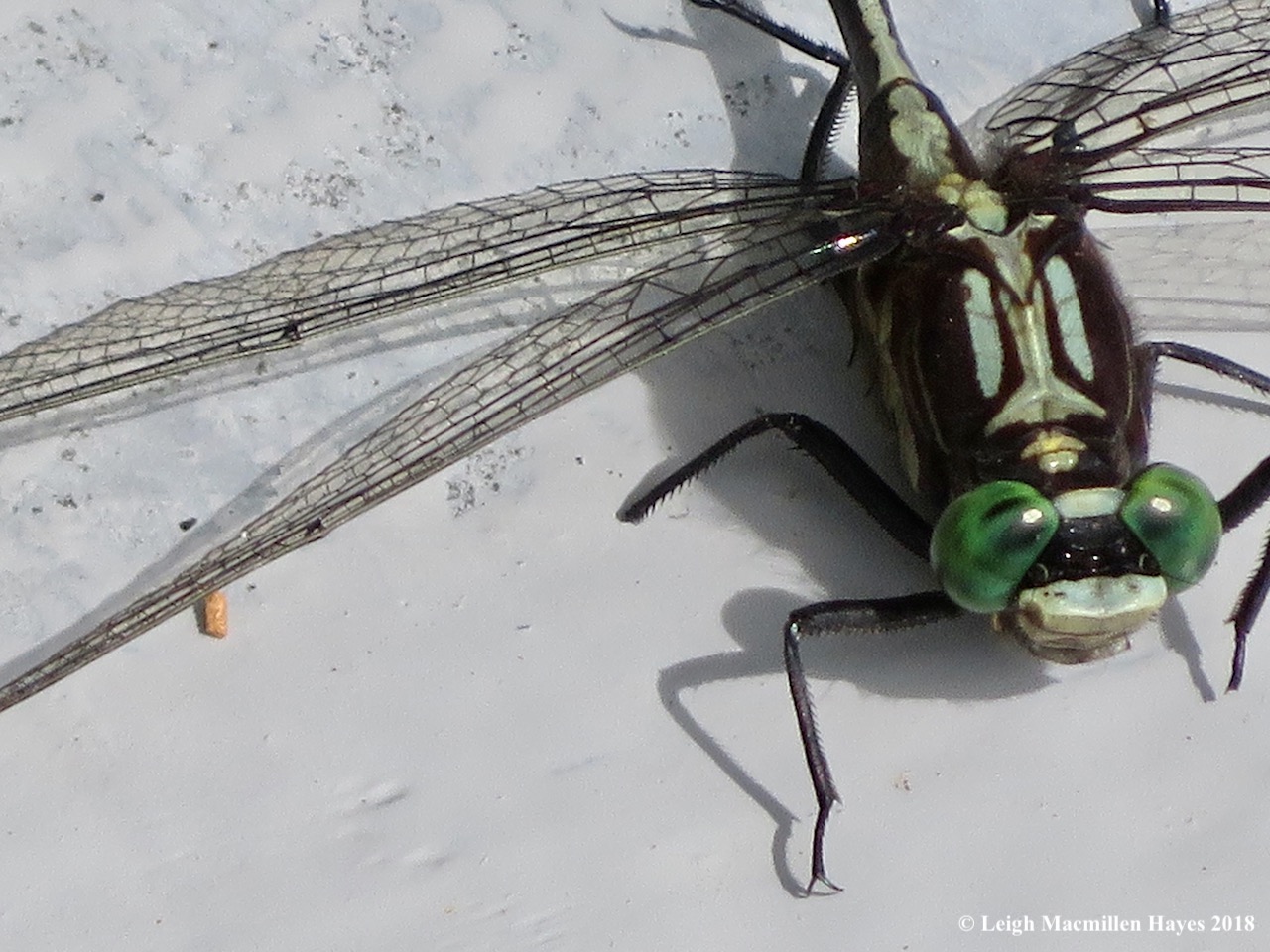
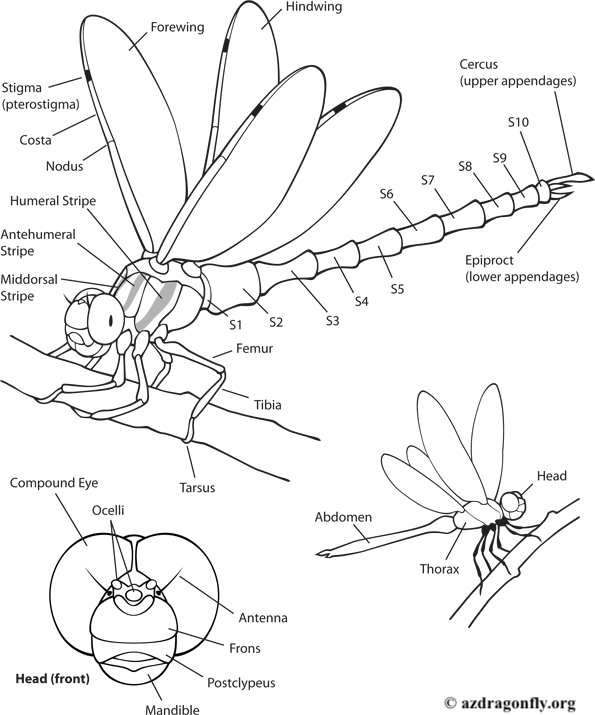
It was his face though, that I really wanted to study. I found this simplified picture at arizonadragonfly.org, and though it’s not complete, it provided enough information for my purposes.

7-facial features of a dragonfly

There’s so much to learn, that to add more detail would be more than overwhelming. Look at the mouth parts. And those eyes–each is composed of 30,000 lenses. Apparently, they can see ultraviolet and polarized light. And then there’s the ocelli, or visual organs, that probably work along with the antennae. Prey don’t have a chance.

8-fishing spider

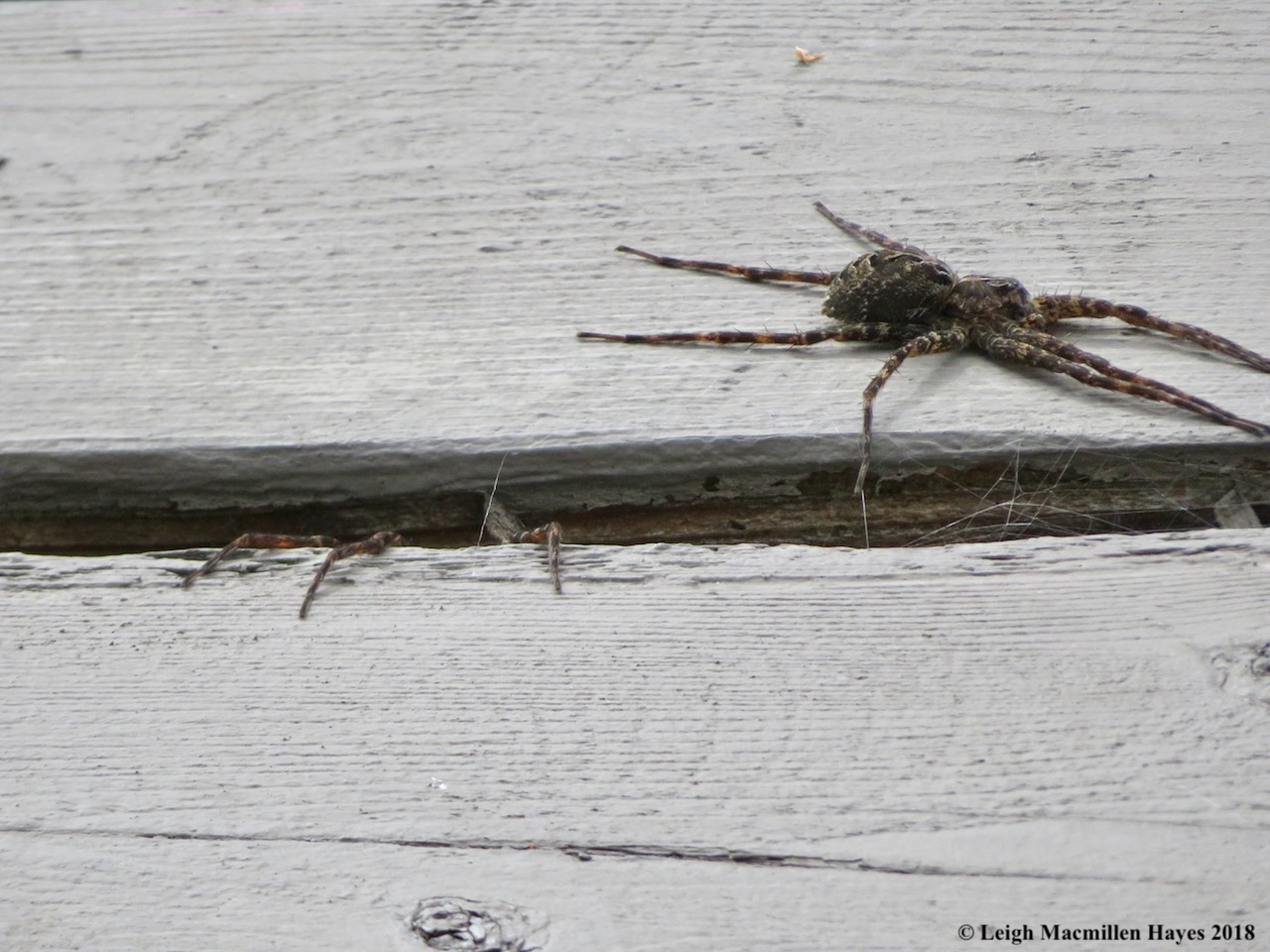
When the Lance flew away, I checked on Charlotte again. Still she sat, one leg dangling below the dock board and touching a web. I figured she was waiting for movement to announce that a meal had arrived.

9-Ted had arrived

And then I noticed that it wasn’t a meal, but perhaps a mate she’d been expecting.

11-spider movement

Suddenly, he darted under the dock and she started across the gap–toward me!

12-Charlotte the spider

Then she stopped, seemed to make an adjustment,  and quickly disappeared.

13-spider nursery

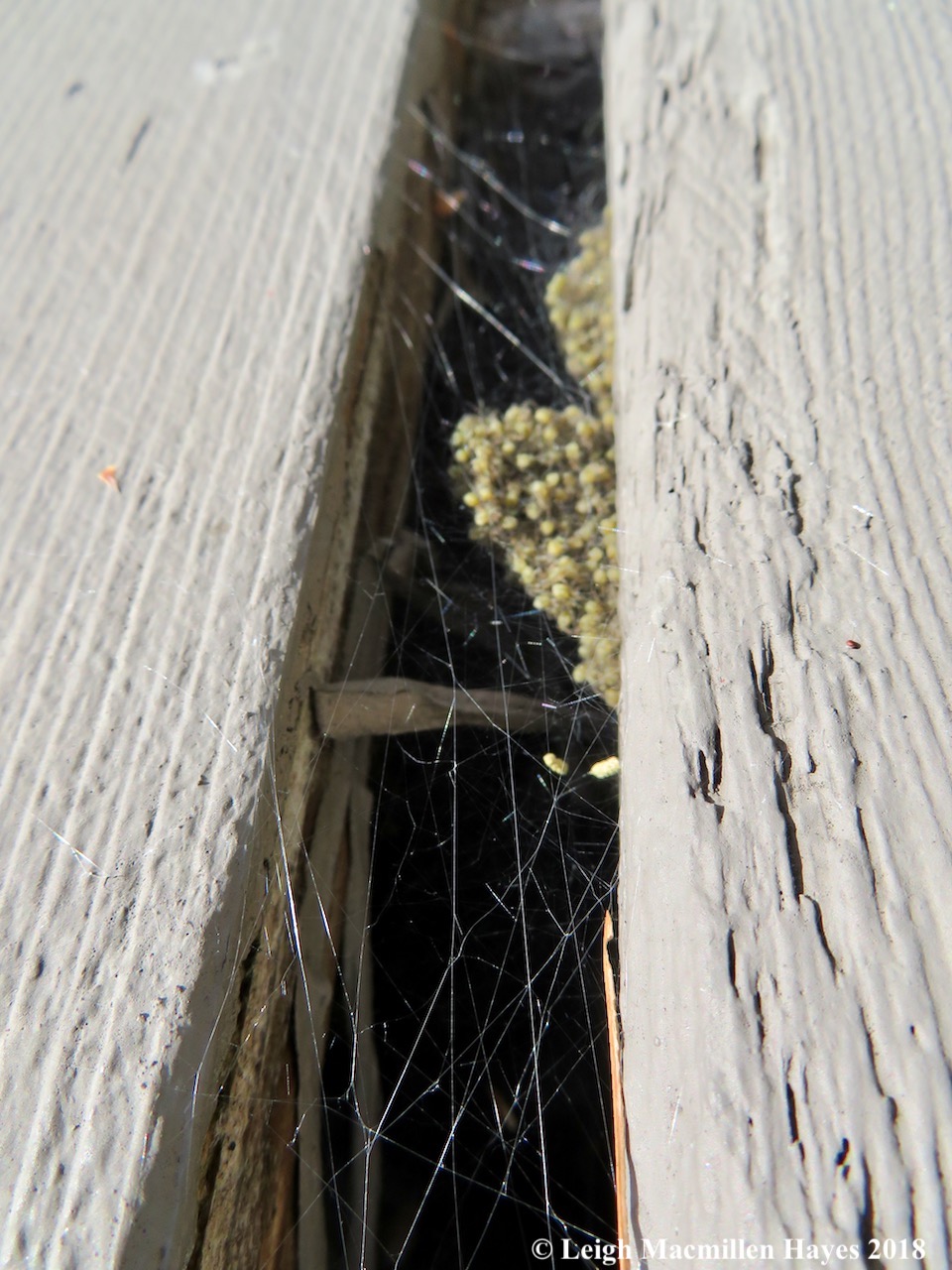
I moved in for a closer look and made a discovery.

14-spider nursery

Her nursery! Fishing spiders are nursery web spiders. She must have wrapped her eggs in a silken sac and carried it to the gap between the outer two boards of the dock, where she constructed the web. And she was standing guard waiting for her spiderlings to emerge–until I came along. Now the question remains, will I be around when they do hatch and disperse on their own silken threads?

15-bubble on water

I don’t know. But today, I was there to notice so much in such a short time–as the world passed by.


Taking Flight

Morning had broken . . .

h1-morning has broken

and Pleasant Mountain’s reflection marked a new day.

h2-variable dancers conducting variable dance

New life was also in the making as the Variable Dancer Damselflies practiced the fine art of canoodling. I’d never noticed an oviposition aggregation before, but it made sense if it minimized the threats a couple receives from unattached males. Plus, if the spot was good enough for one pair to lay their eggs, then it must be fine for another. And so I learned something new today.

h3-slaty skimmer

Perhaps it also cut down on predation, though I couldn’t stay long enough to note if the Slaty Skimmer that hung out above turned either pair into breakfast. If so, I hope they at least had a chance to leave their deposits.

h4-Hemlock covered bridge

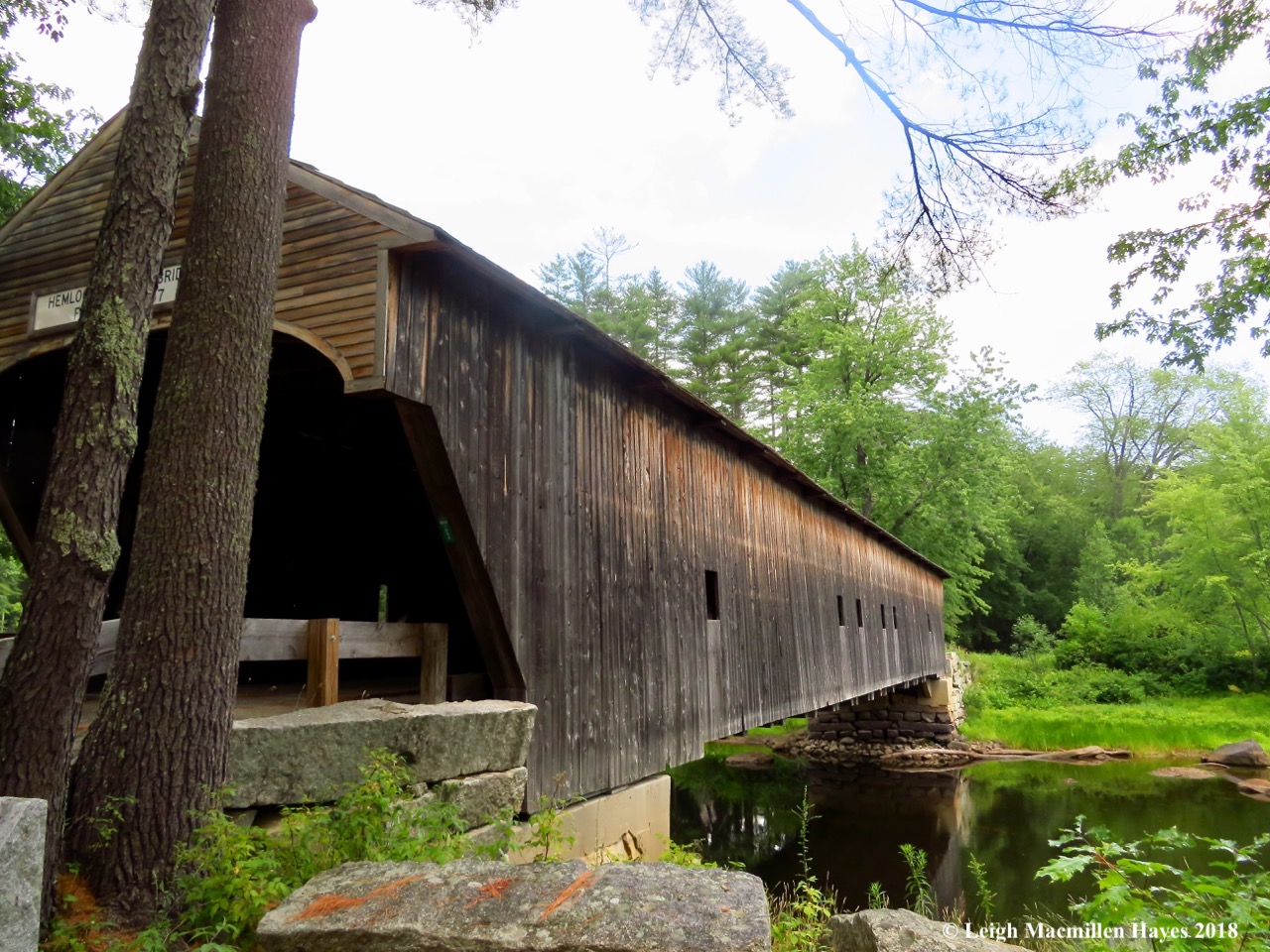
That was my morning view, but I changed it up a bit this afternoon and darted across the Hemlock Covered Bridge that spans the Old Course of the Saco River in Fryeburg. Built in 1857 of Paddleford truss construction with supporting laminated wooden arches, the bridge is a quaint and charming reminder of days gone by.

h5-bridge

Though reinforced in 1988 so you can drive across, it’s even more fun to glide while admiring the work of our forefathers and . . .

h8-water low

peer out a window at the river from Maine’s oldest remaining covered bridge.

h6-LOVE

The handiwork of more recent travelers . . .

h7-love lasts forever

was also clearly visible.

h9-river jewelwing-female, white dots in sync

Down by the Old Course, I spotted a female River Jewelwing, the white dots on its four wings showing off in the day’s light. Just prior, a few sprinkles had fallen and one teeny droplet rolled down her thorax. A few even teenier ones clung to her legs.

h10-Hemlock Covered Bridge

With one more look back to reflect upon the bridge, I was then ready to set sail again.

h11-Mt. Kearsarge

Heading toward Frog Alley, the view across the fields included Mount Kearsarge amid the summer haze that had developed.

h18-Mount Tom

Mount Tom was more clearly visible for it was so much closer.

h12-Dianthus armeria, Deptford pink

But what I really stopped to look at where those things closer to the ground, like the brilliant pink Dianthus with their petals all spotted and toothed at the tips.

h14-bindweed

Offering a lighter hue of pink, a bindweed twined its way through the roadside wildflowers.

h13-honeybee on milkweed

Also with shades of pink and the yellow complexion of those flowers already pollinated, milkweed was in full bloom and the ants and some flies were making the rounds, but I only saw one honeybee taking advantage of the sweet nectar. It reminded me that the same was true on the milkweed growing in my garden where, at most, I’ve seen four honeybees rather than the usual swarms.

h17-sulphur cinquefoil

And then there was the subtle yellow of the Sulphur Cinquefoil showing off its cheery face despite a few tear drops. Actually, it may have cried for only a few drops had fallen from the sky and we really do need a soaking rain.

h16-clouded sulphur butterfly

As if taking a cue from the cinquefoil, Clouded Sulphur butterflies flitted and danced along the road.

h16- clouded sulphurs puddling

And then I realized that they kept gathering in groups. It’s a form I’d read about but never observed before–puddling. This was a male habit and apparently their intention was to suck nutrients from the wet ground. I guess even a few raindrops served the purpose.

h15-dragonhunter

Before I moved on again, my heart was still as more yellow entered the scene in the form of a striped thorax and I realized I was watching a Dragonhunter Dragonfly. Though it wasn’t so easy to see the tip of tail once it landed, as it flew about in my vicinity it kept its abdomen curved down–a habit of these big guys.

h29-Fryeburg Bog

The Fryeburg Bog was my next landing and though I didn’t head out to the water that was more like an over-sized puddle, I found plenty to focus on.

h19-buttonbush

For starters, the Buttonbush had begun to bloom and I loved its otherworldly presentation.

h21-frosted whiteface

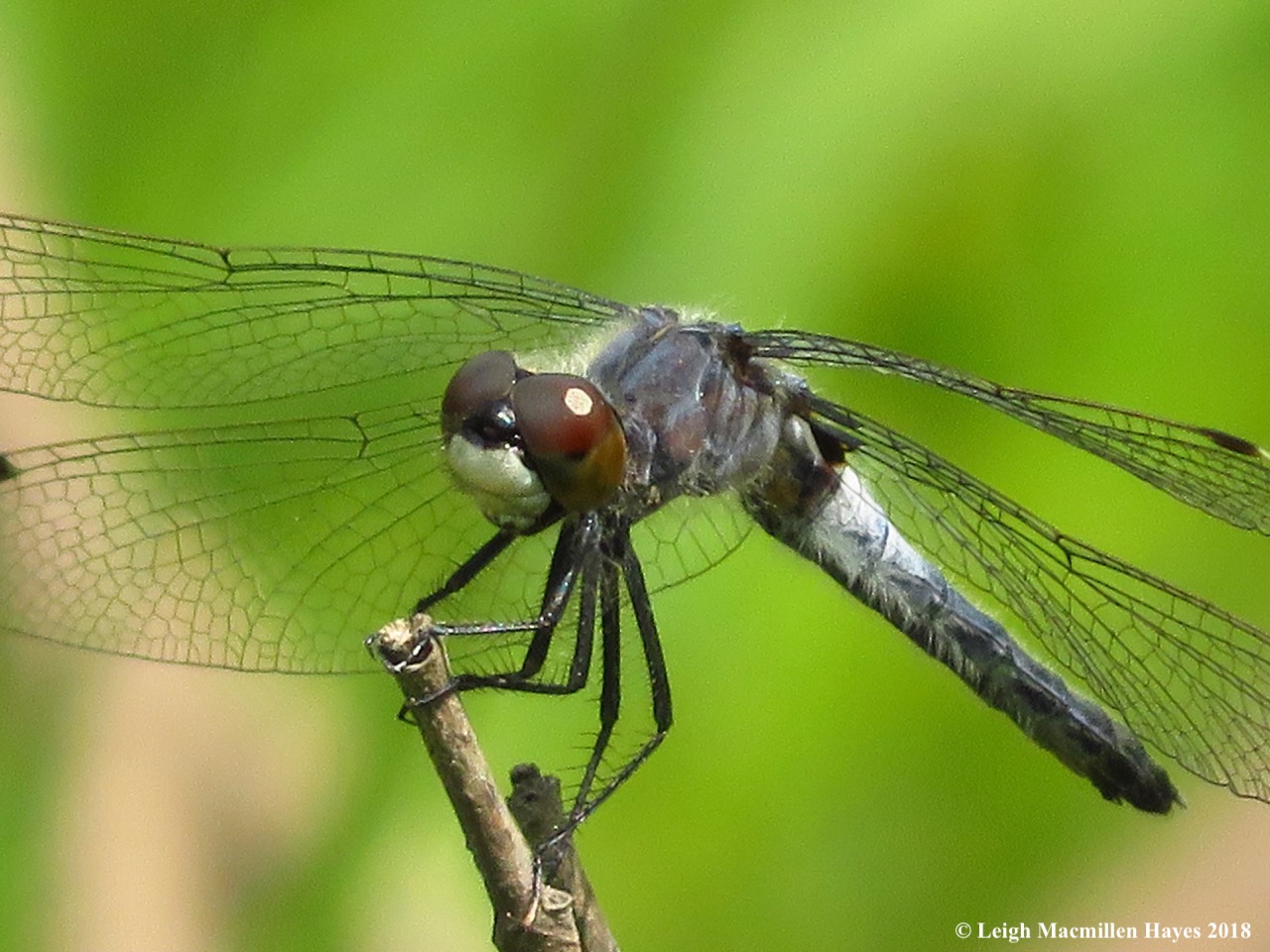
It was there that I saw the smallest of dragons, in the form of the Frosted Whiteface.

h22-frosted whiteface

At most, he was about 1.5 inches long–quite probably the smallest of the species that I know.

h20-ruby meadowhawk

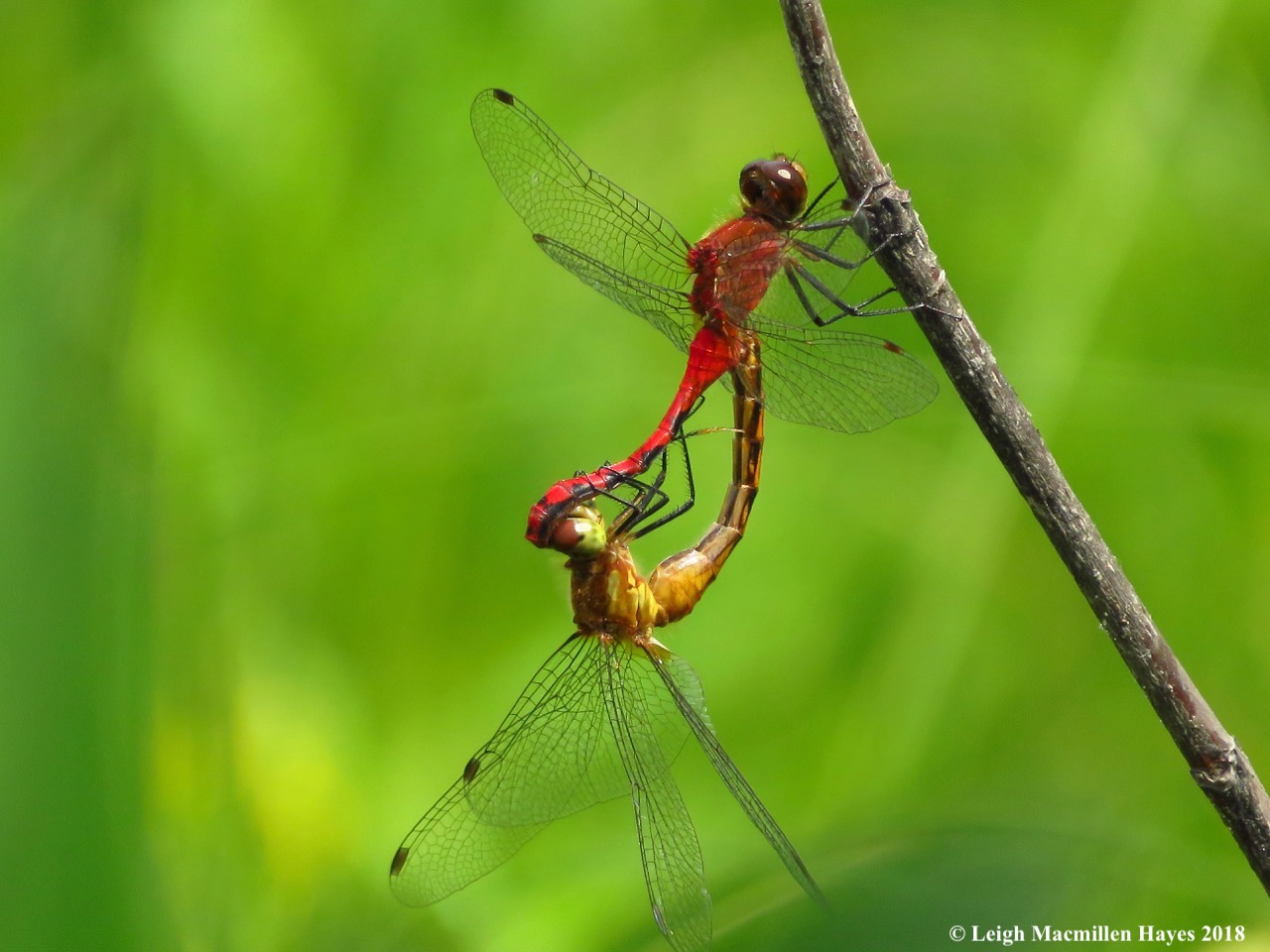
It was there that I also spotted my first Ruby Meadowhawk of this year.

h23-ruby meadowhawks canoodling

And then there were two! And in the future, obviously, there will be more.

h23--late afternoon snack

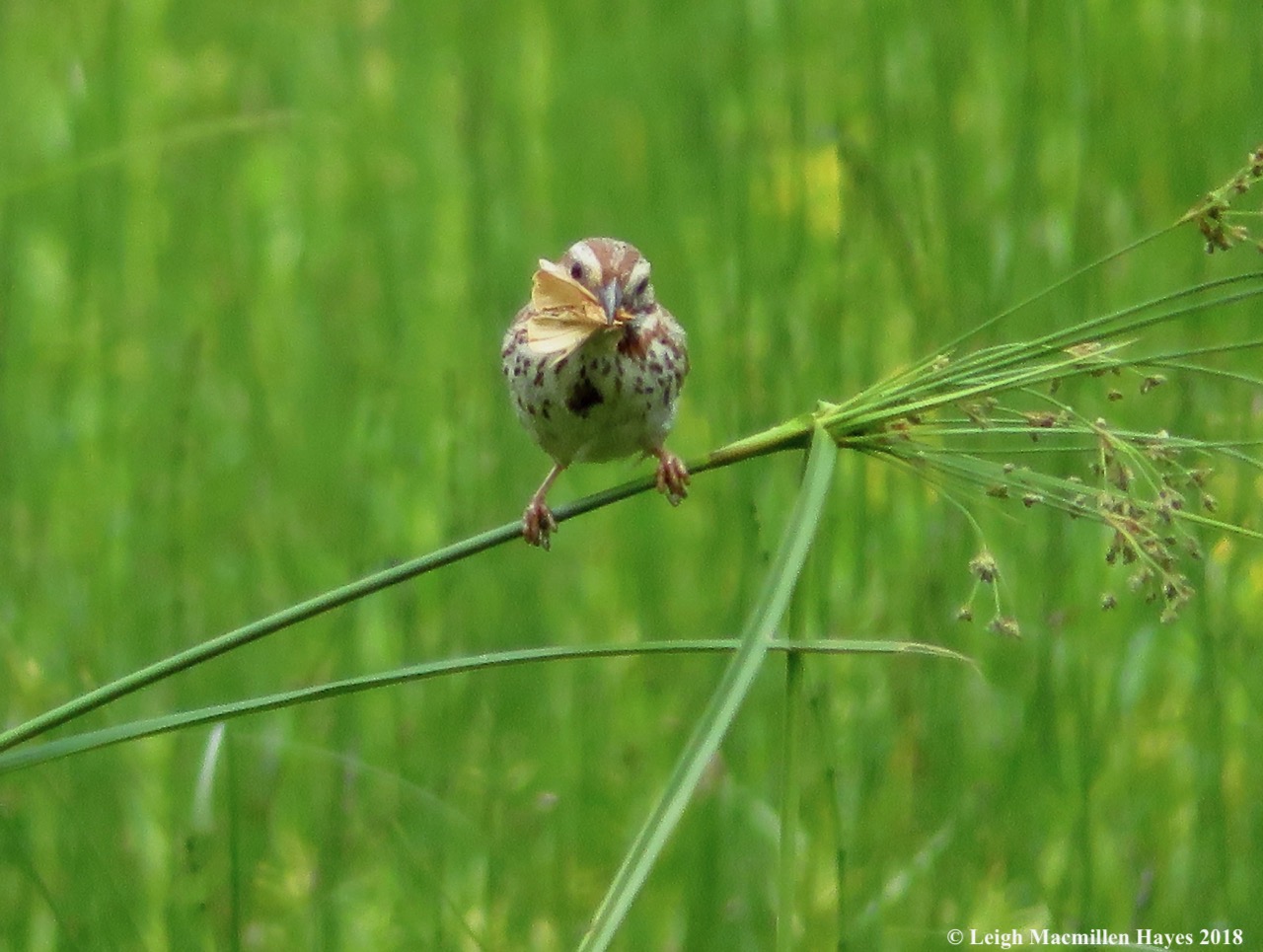
And finally, it was there that I noticed a Song Sparrow had nabbed a butterfly snack–all part of the circle of life.

h30-Smarts Hill

My final stop on today’s journey was at Popple Hill Brook along Smarts Hill Road in Sweden.
h25-variable dancer

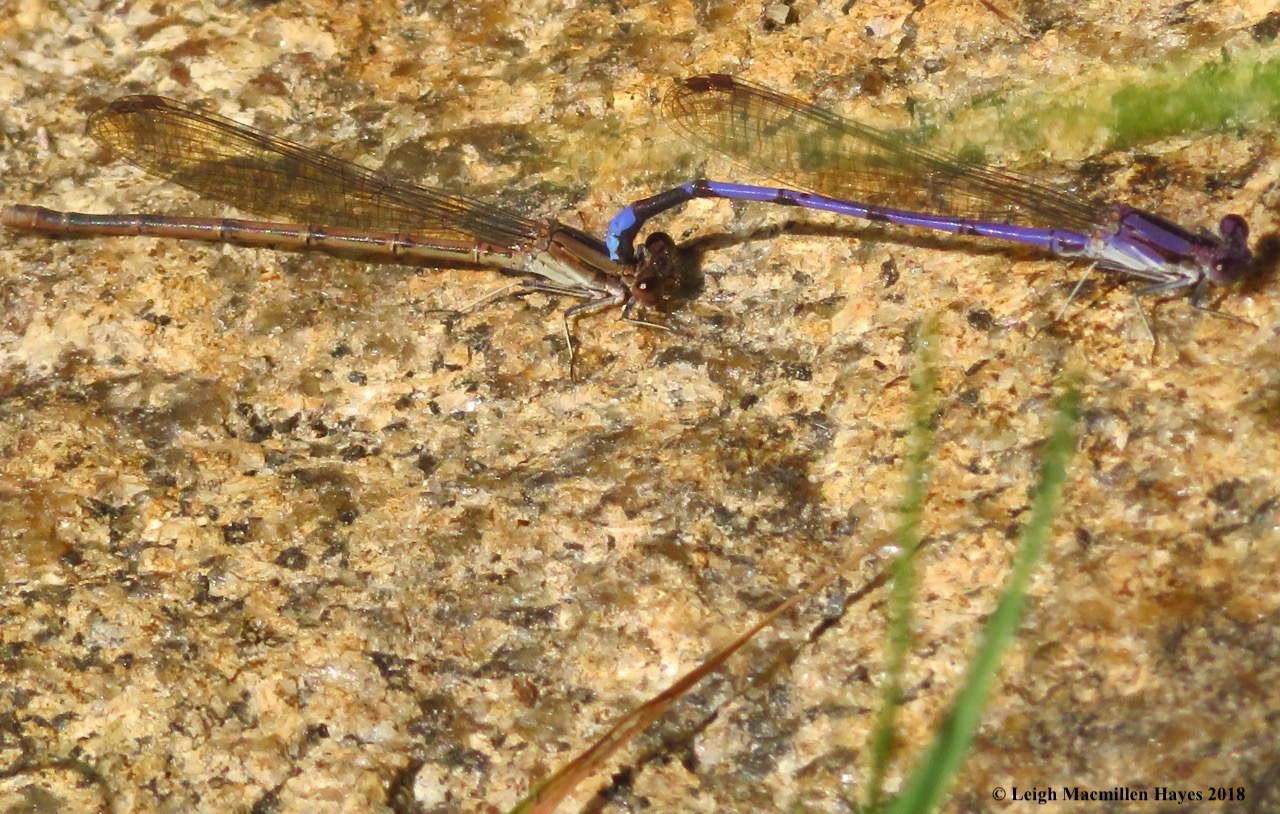
And like the Variable Dancers I’d seen this morning, I found many more beside the brook. Not only was the male’s purple coloring stunning, but notice those silvery legs.

h26-variable dancers canoodling

Of course, where there is more than one dragonfly or damselfly, there is love.

h27-variable dancers canoodling

As my tour began, it ended–with the Variables dancing to their heart song.

h28

And with that, I flew back to camp, where the mountain’s reflection was conducting its own dance routine as the sun began to slip toward the horizon.
h31-rainbow

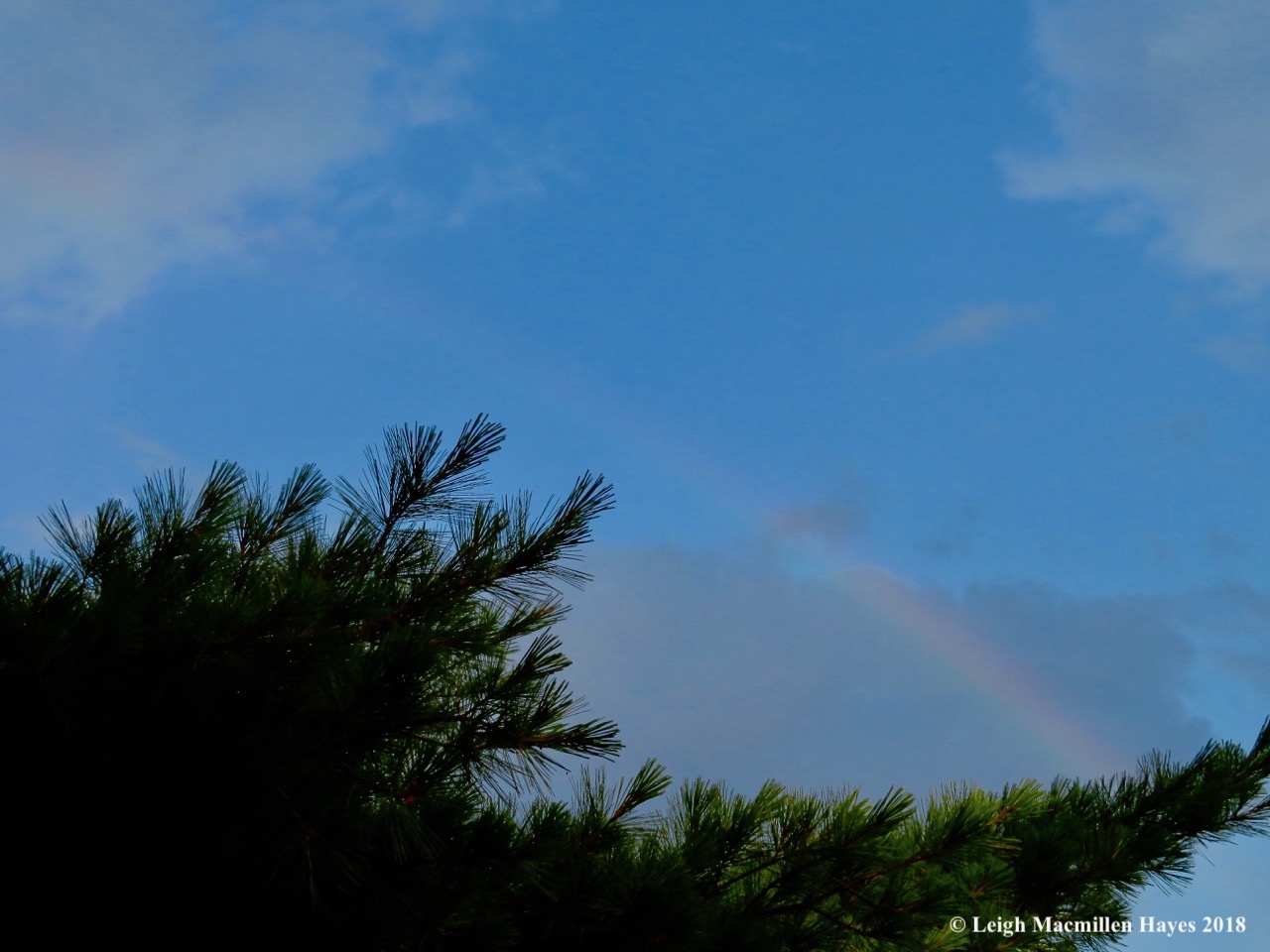
And a few more raindrops produced a rainbow in the eastern sky.
Thanks for taking flight with me on this wonder-filled wander and soaring above some of the areas that are so unique and yet we tend to overlook them.