Great Blue Herons COUNT

Community science, aka citizen science or participatory science, is an opportunity that allows laypeople like you and me to contribute meaningful data in a short amount of time that researchers can use to inform larger conservation efforts. And along the way, we get to learn more about a particular species, as well as those who share the same habitat.

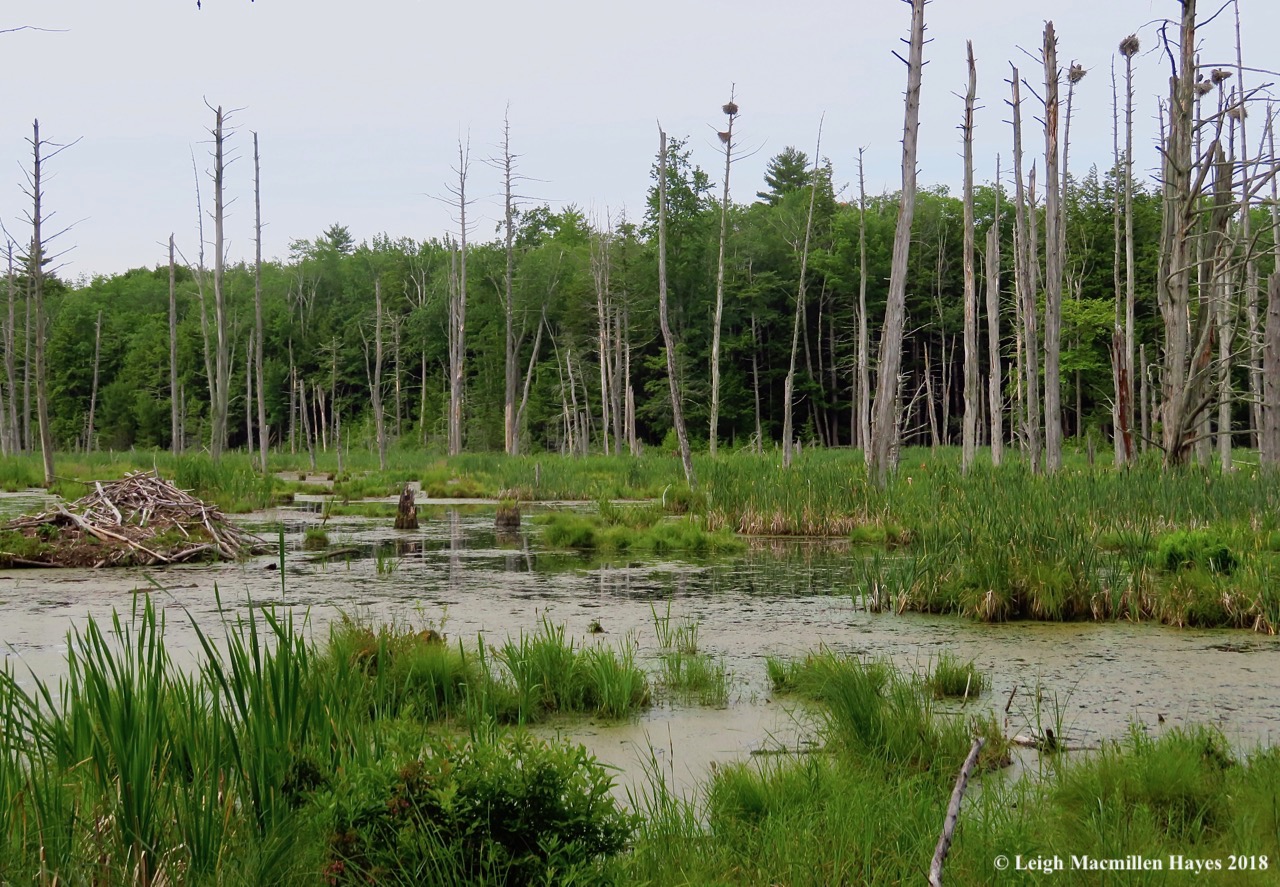
For the past 25 years, I’ve had the pleasure of being involved in a variety of such local research projects, and one of my favorites is HERON Observation Network of Maine. For the last 16 years, friends and I have monitored first one and then several Great Blue Heron Rookeries (colonial nesting habitats).
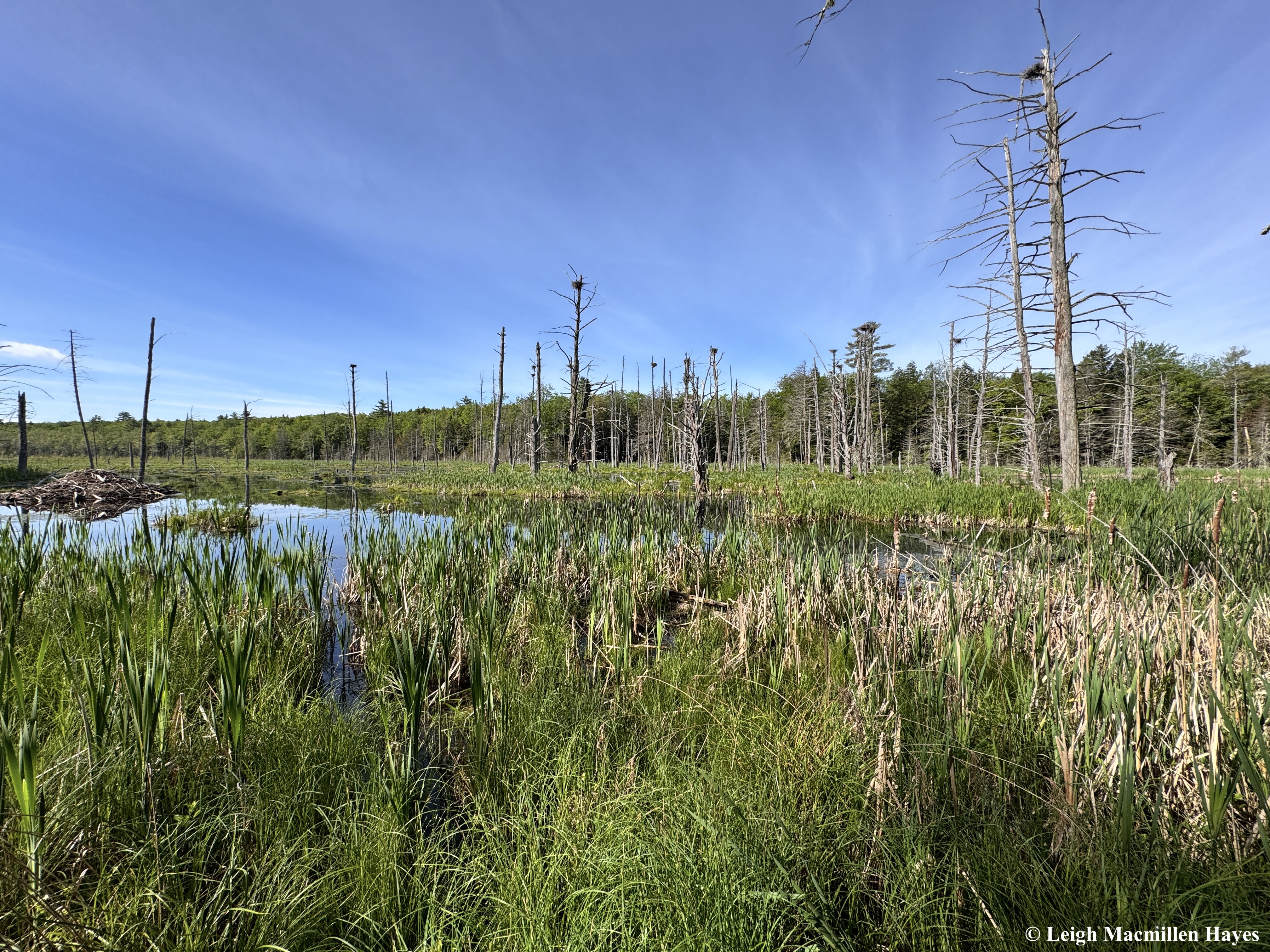
With landowner permission, we visit the rookeries several times between May and July and our job is to count the number of nests, number of active nests, inactive nest, adults, adults incubating, young, and fledglings. It’s rather intense work to move binoculars or cameras from tree to tree and some trees have double or triple-decker nests, and some nests are tucked into the background, and young can be difficult to see if they are so tiny that they are tucked down into the nest, and it’s easy to get confused and then have to start all over again.

Ah, but I can’t think of a better place to be on a summer morning than in these wetlands where aquatic life explodes in color and sound and texture and even life and death.
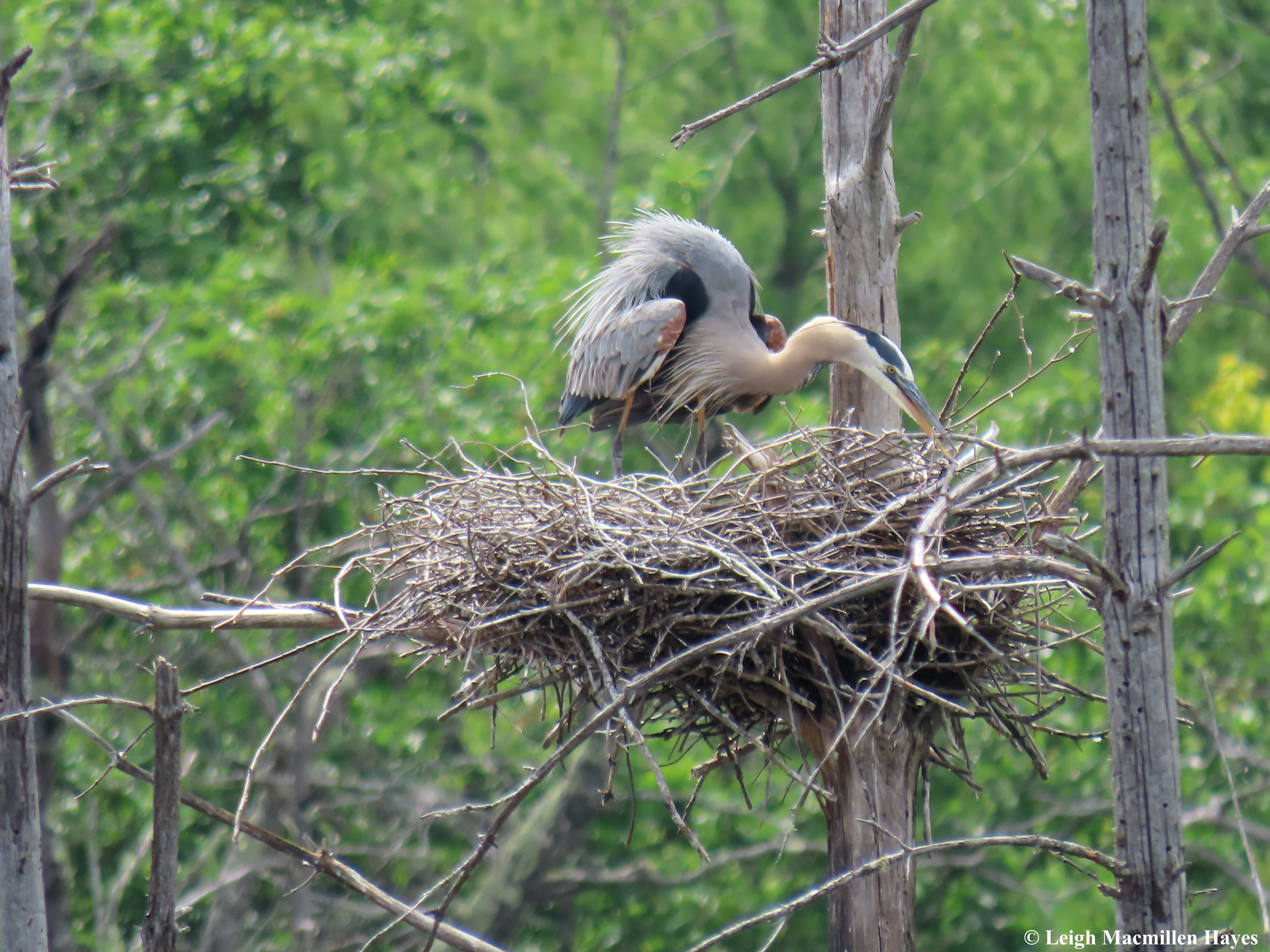
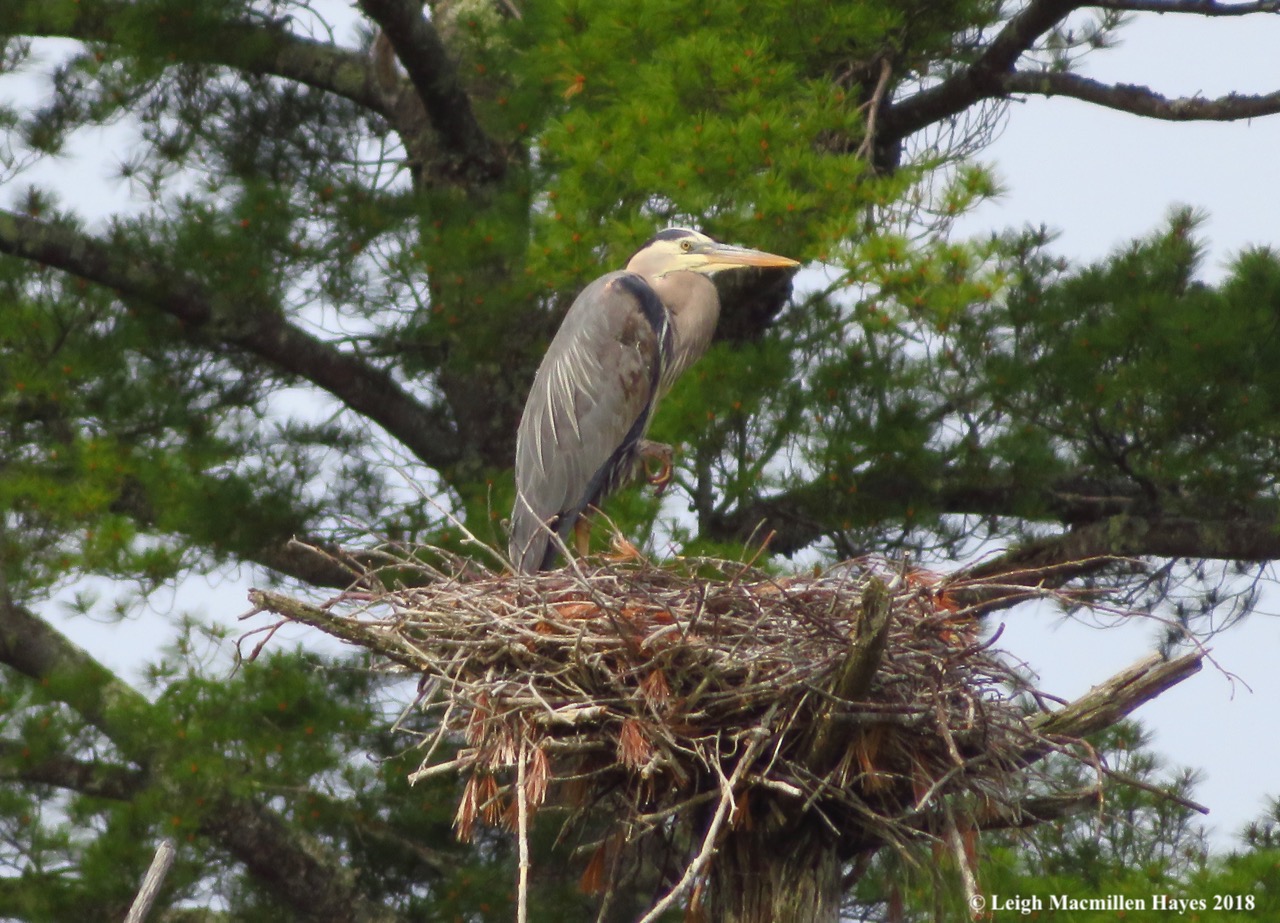
Sometimes it looks like a female is merely rearranging sticks to create a stronger nesting site.

But then . . . much to our surprise and delight, a fuzzy head is spotted and we know we have babes to look for, and suddenly that makes the job more difficult.

Especially when one head turns into two and we have to add another line to the tally sheet while the adult cools off and seemingly shades the youngsters.

The adults, meanwhile, not only take turns tending to their young, but they also take turns heading off to fish for meals. And when one is secured, that adult flies back to the nest and takes a few minutes to semi-digest the food.

At this point, the young begin to squawk, and I’ve often wondered if their sounds encourage the regurgitation that follows.

Ever so slowly, we can watch the food item come up the big bird’s throat and then with mouth open wide, it coughs and tada . . .

The young ones are happy to dine on their own form of baby food.

Even as they grow, the feeding ritual continues. One parent will fly in and join the family, while prepping the meal delivery.
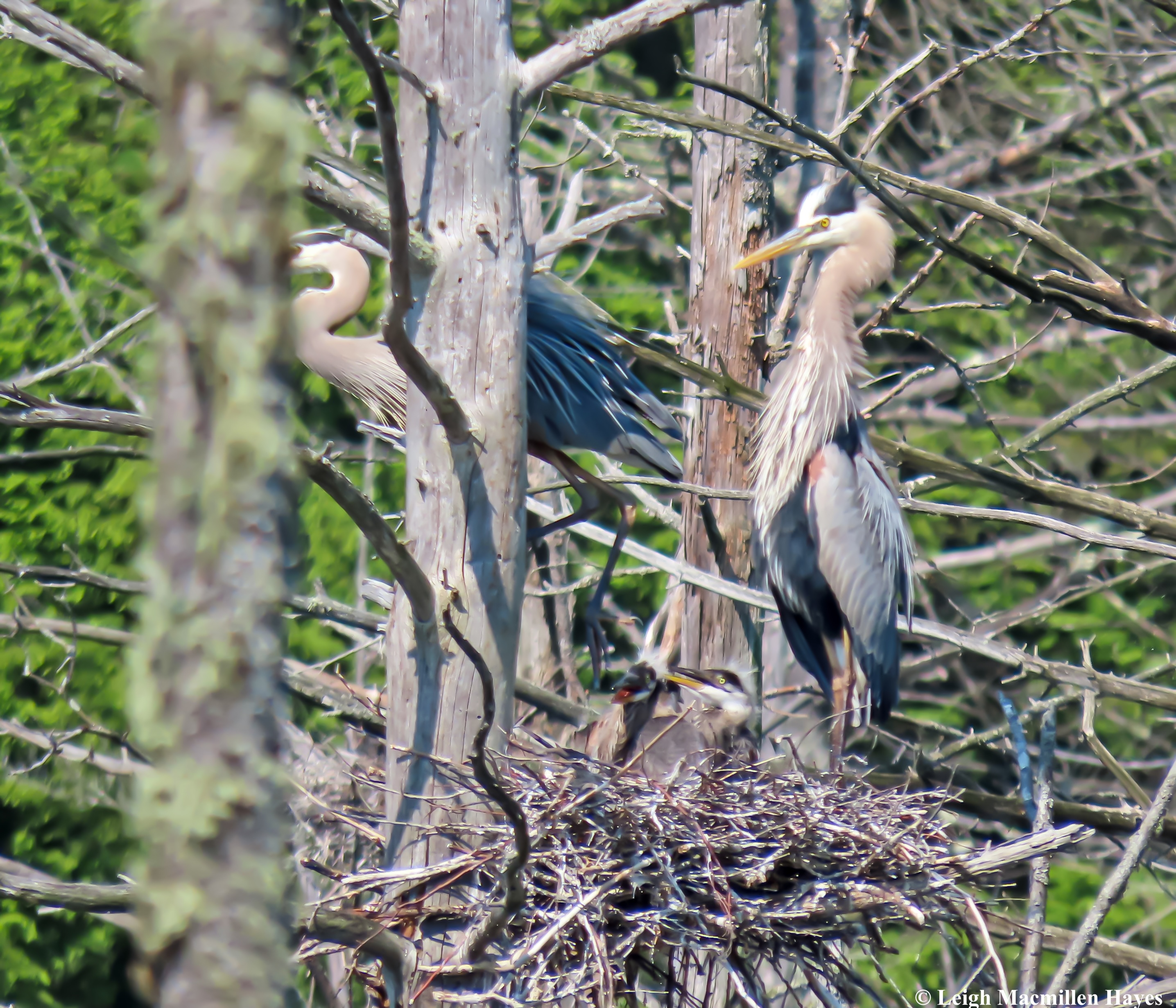
And the other will fly out the back door in search of more to fill those ever-begging mouths.

And the kids will squawk until the remaining parent provides.
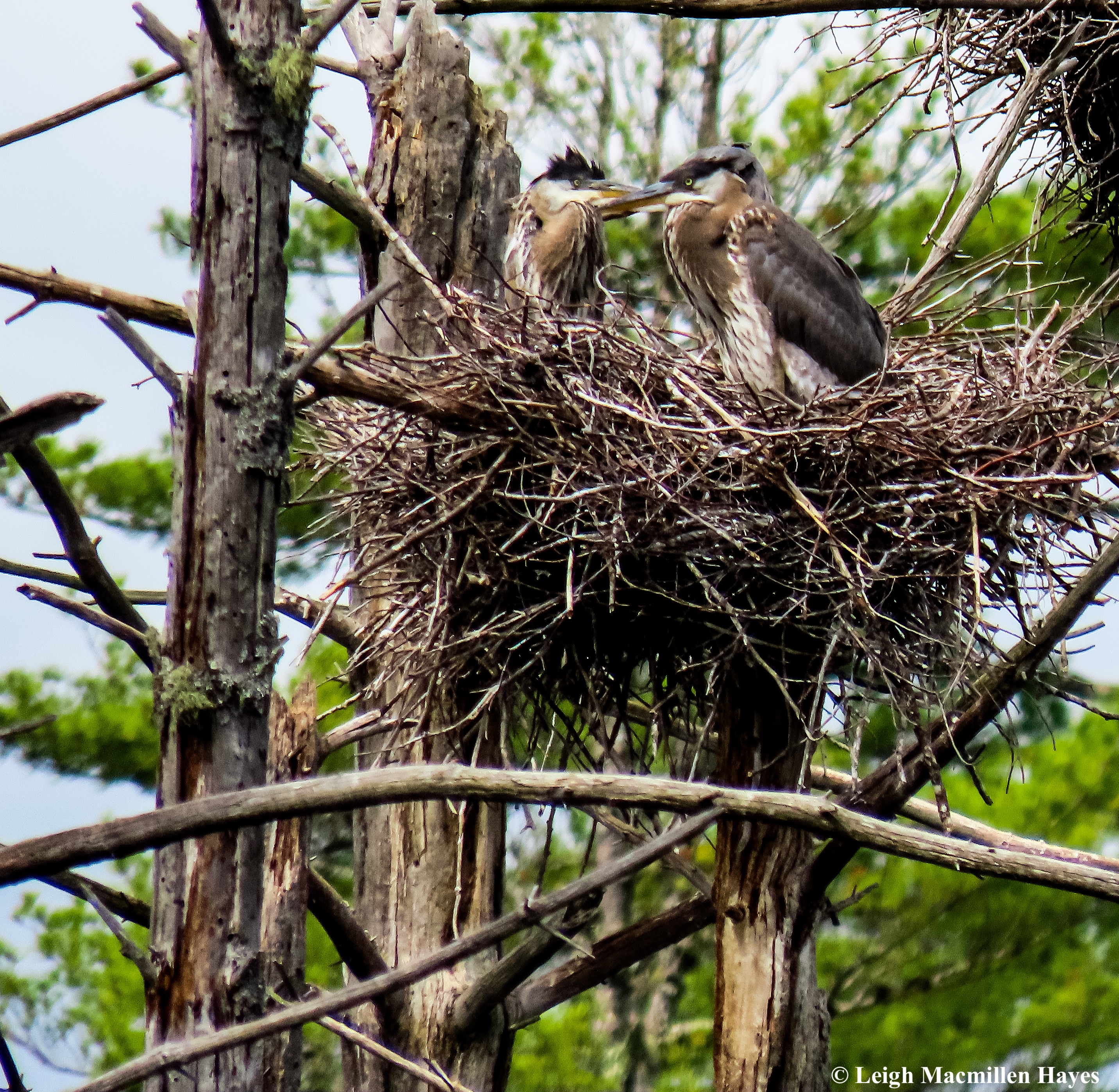
As weeks turn to a month or more, the birds turn into tweens, growing to the point where one wonders how they can all still fit in the nest, despite the fact that Momma built it to be about three feet wide, using sticks that Daddy provided.

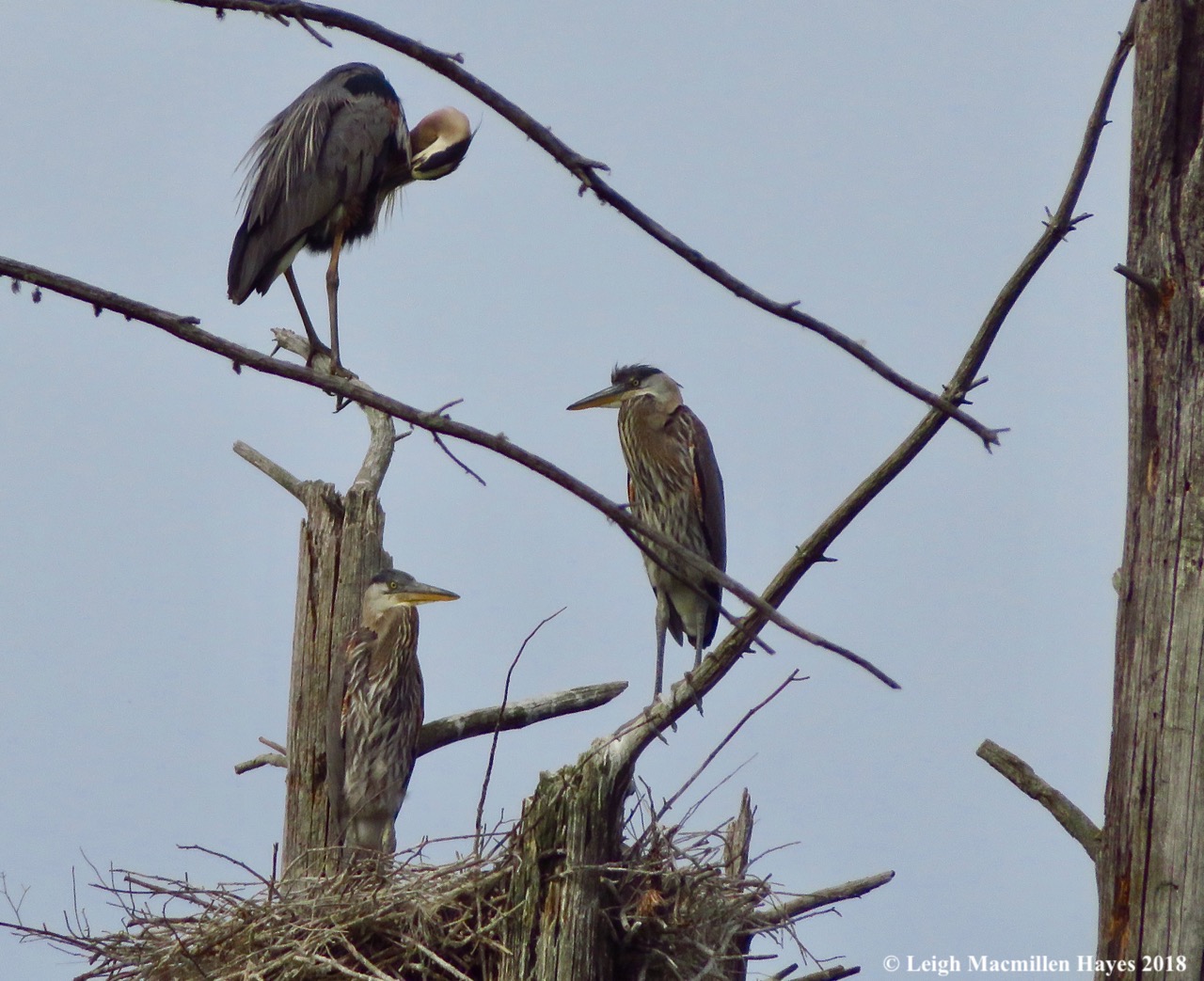
And those tweens, like so many of their human counterparts, start to preen between meals, fixing their feathers over and over again.
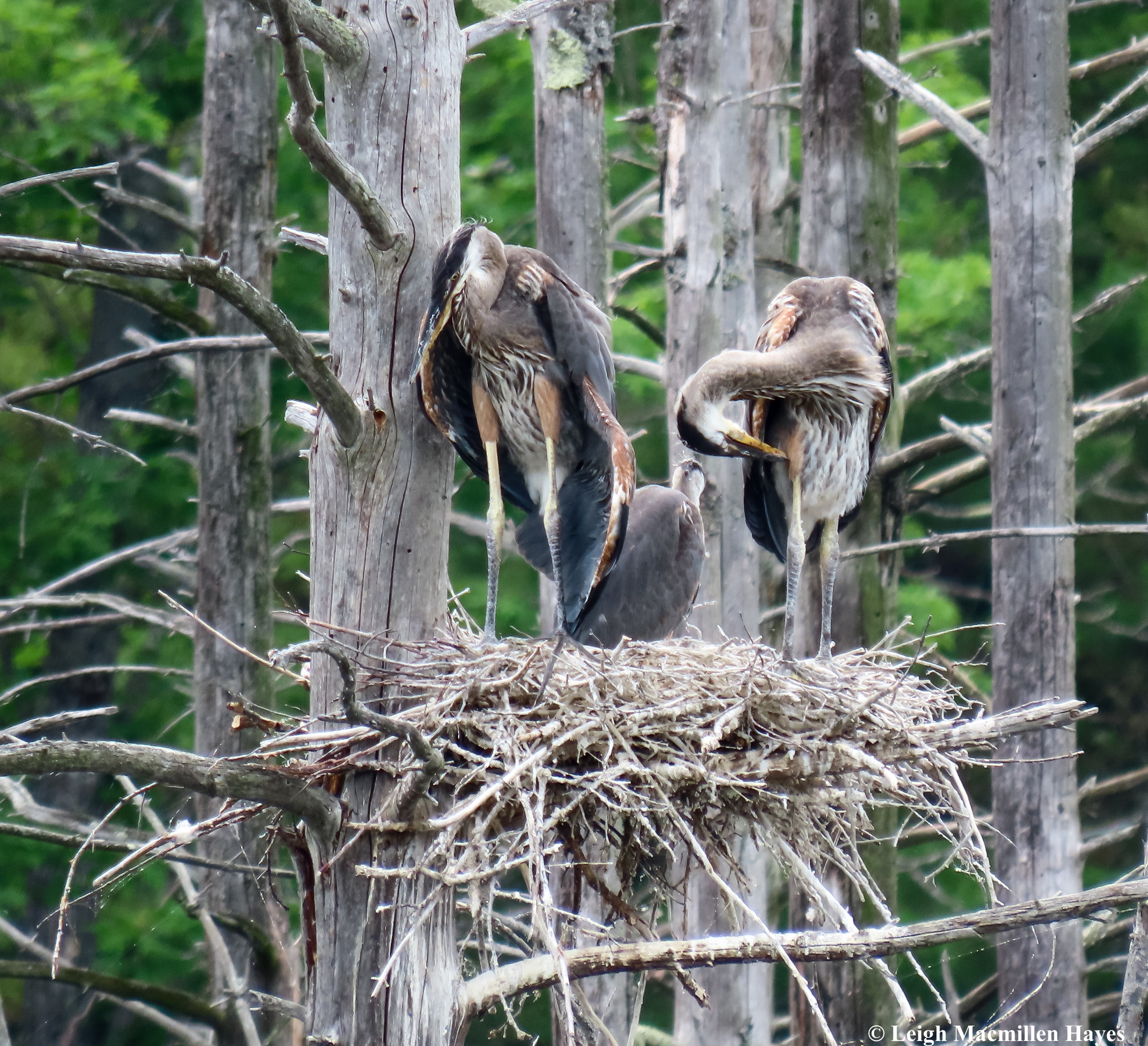
Preening is important for several reasons: to keep feathers clean, free of parasites, waterproofed, and properly aligned for optimal performance because that first flight is getting closer and closer.
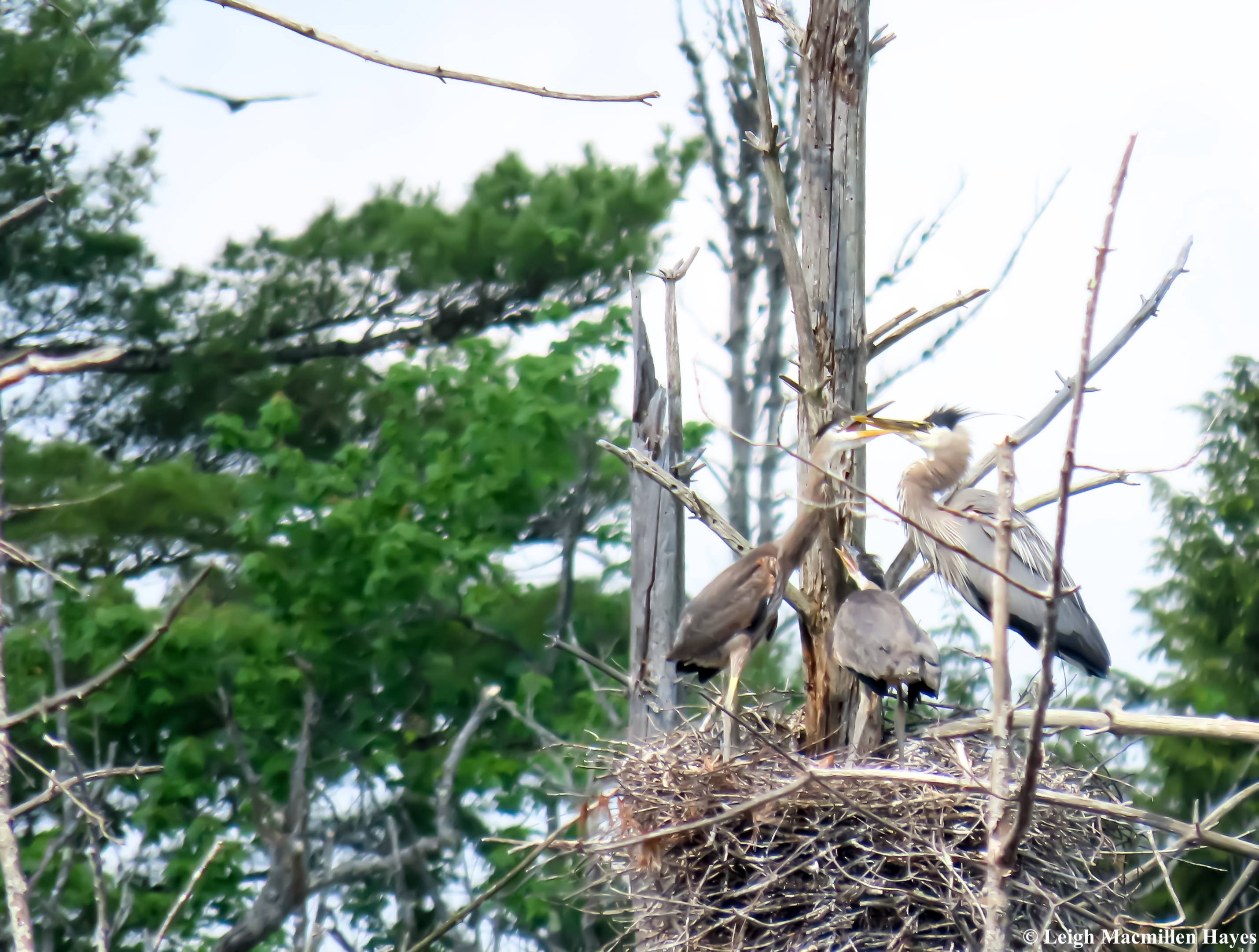
Despite all their preening, however, the younger birds are still dependent upon their parents for meals on wings because they haven’t yet fully fledged and started their own hunting habits.

In the midst of taking count, life happens all around us and we rejoice in any other sightings that might distract, even if it means starting the count again. That’s why, at one of the larger rookeries, we have a few landmark trees so we know if we get confused we can locate said tree and count from there.

We also try to keep track of where each nest is located in the landscape, but if you were to read my notes, you might get totally lost. I do!

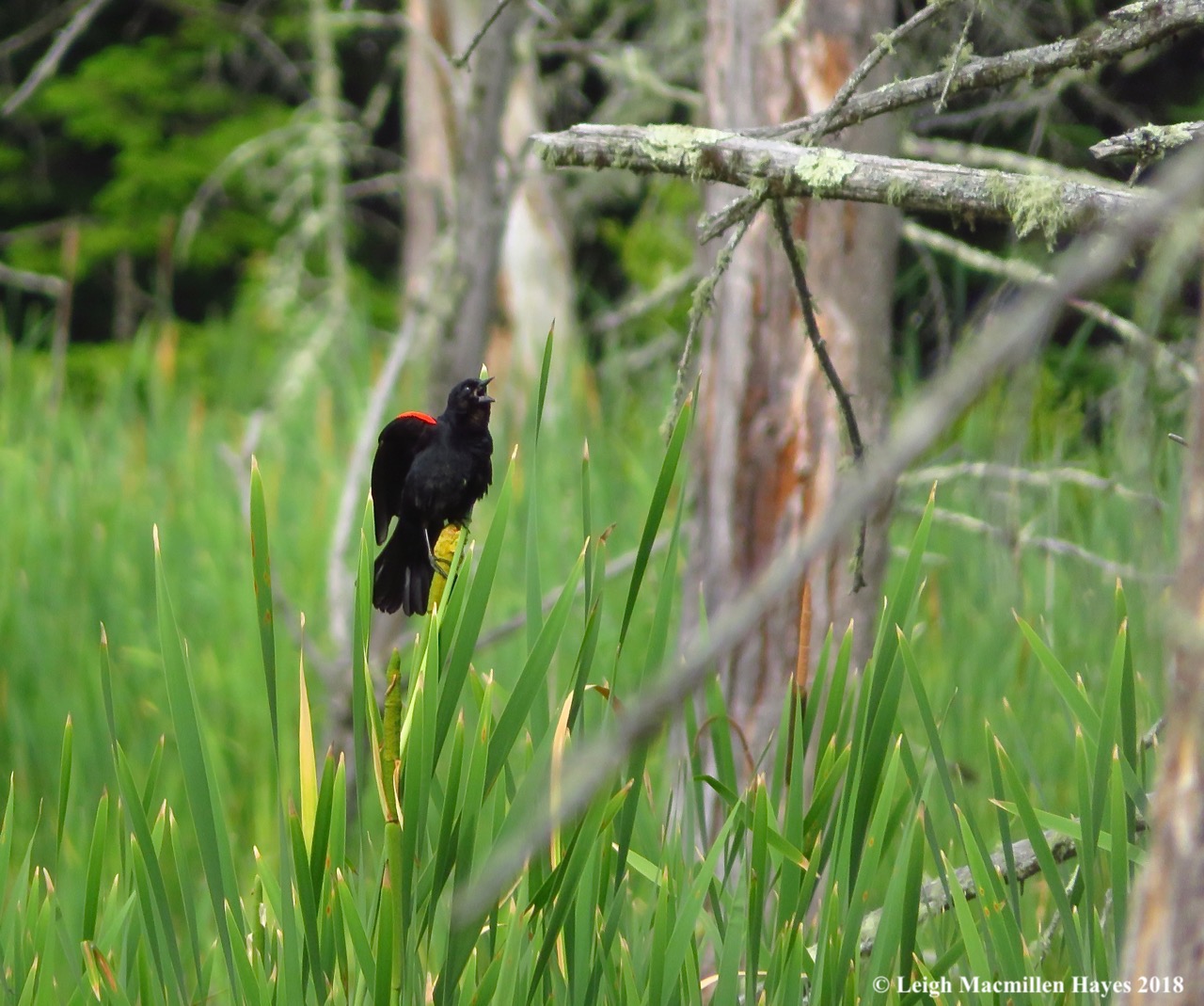
Other distractions include Red-winged Blackbirds, even if their meal of choice is one of our beloved dragonflies.
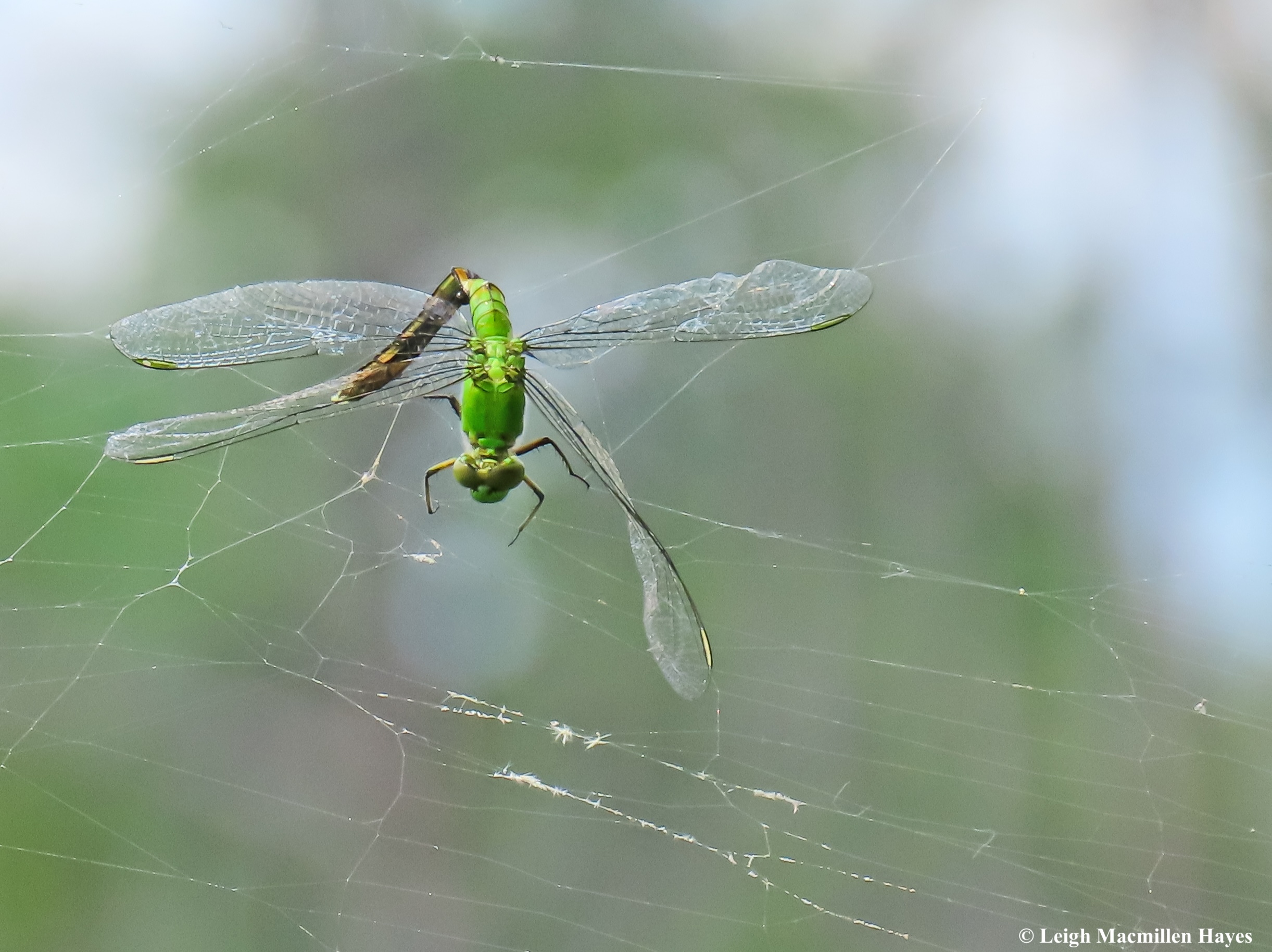
Spiders also make meals of dragonflies, but despite the fact that this female Eastern Pondhawk Dragonfly got snagged, she was still a picture of beauty.
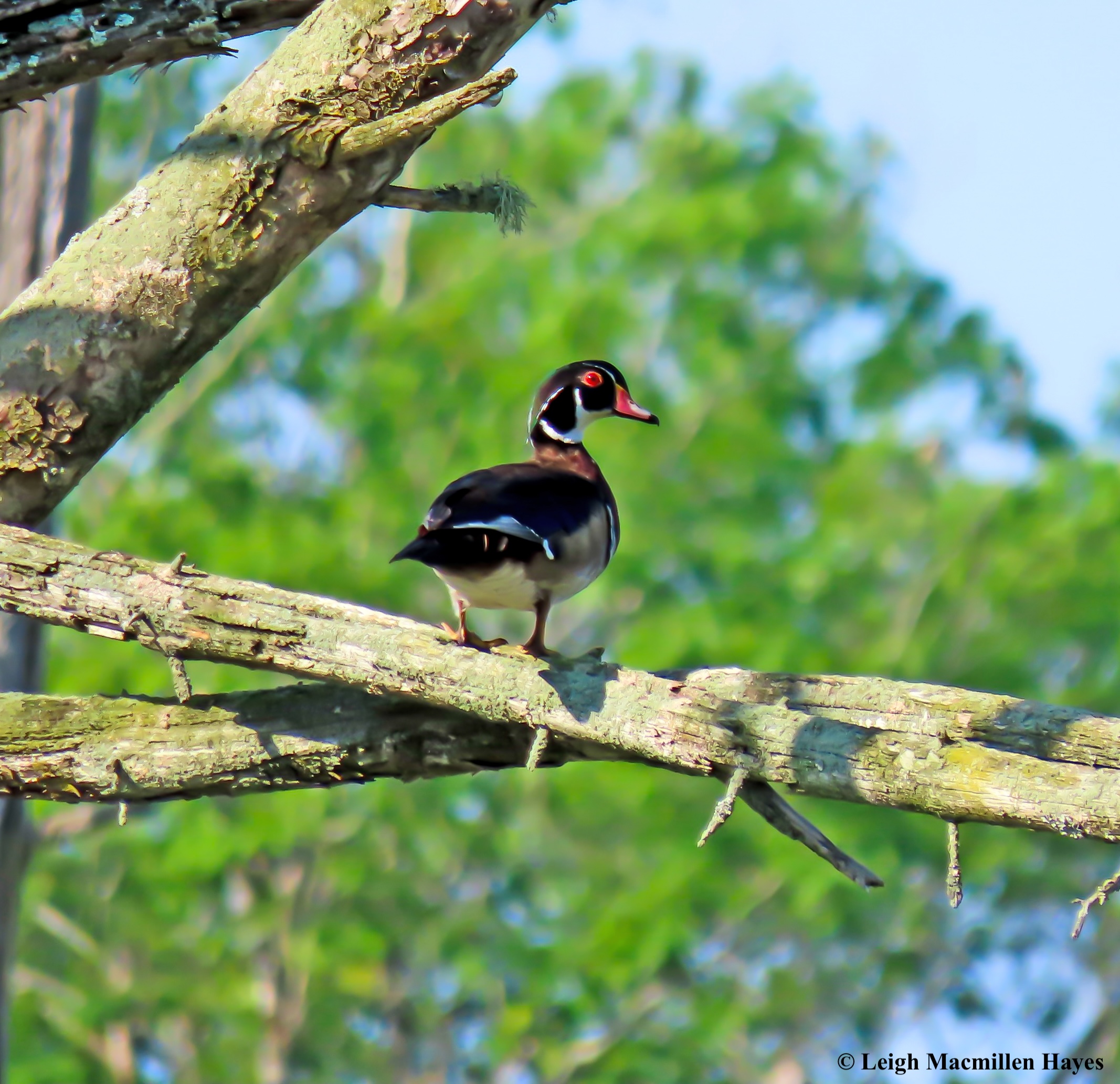
And usually when we spot Wood Ducks such as this male, they fly at the first inkling of our invasion into their space. But when you are far enough back and tucked into the trees beside the wetland, sometimes you are offered a glimpse, and this was one of many in an old snag.
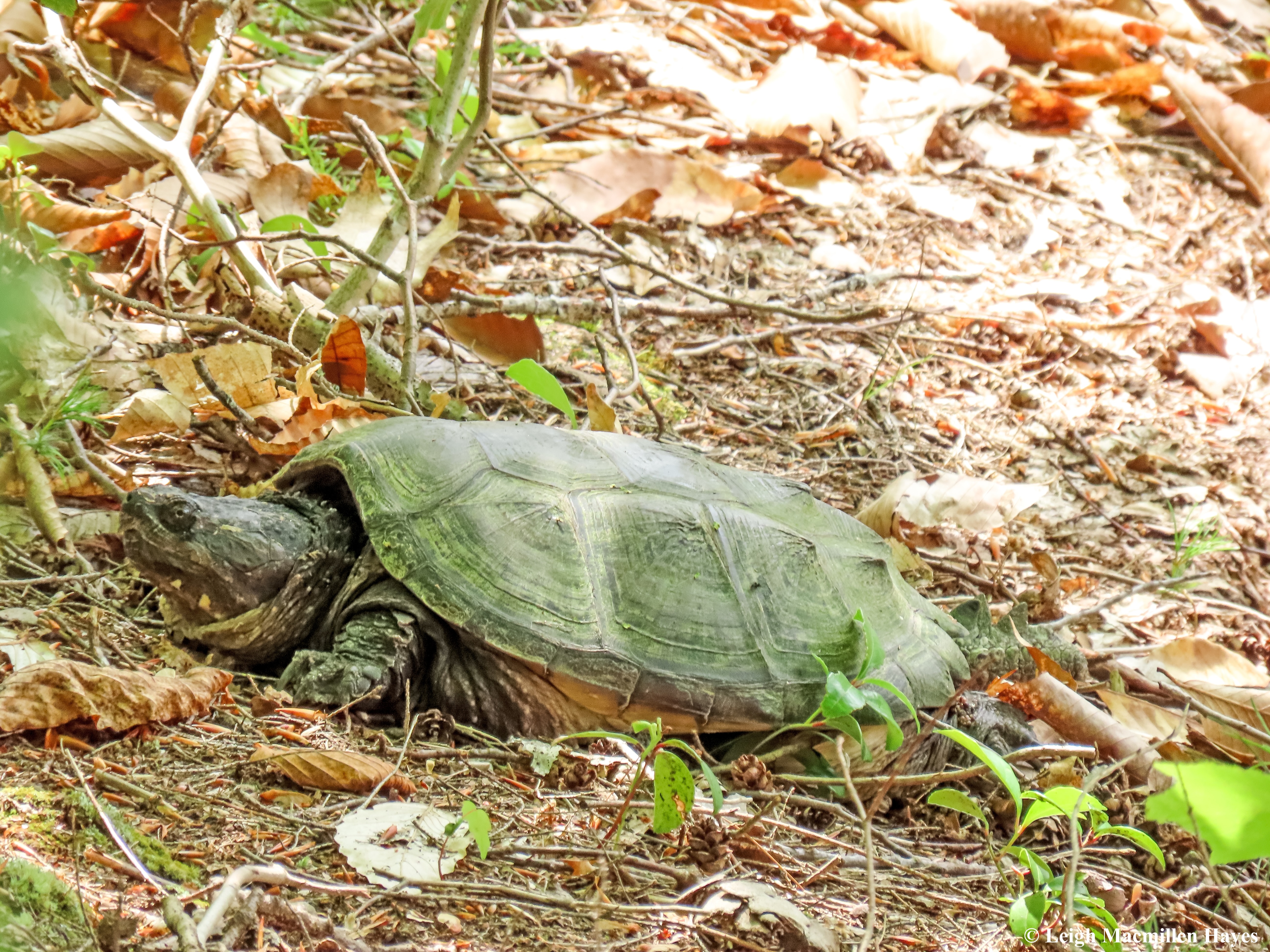
In the hike to and fro the wetland, there other offerings, like a Snapping Turtle on her way up a hill to lay eggs.
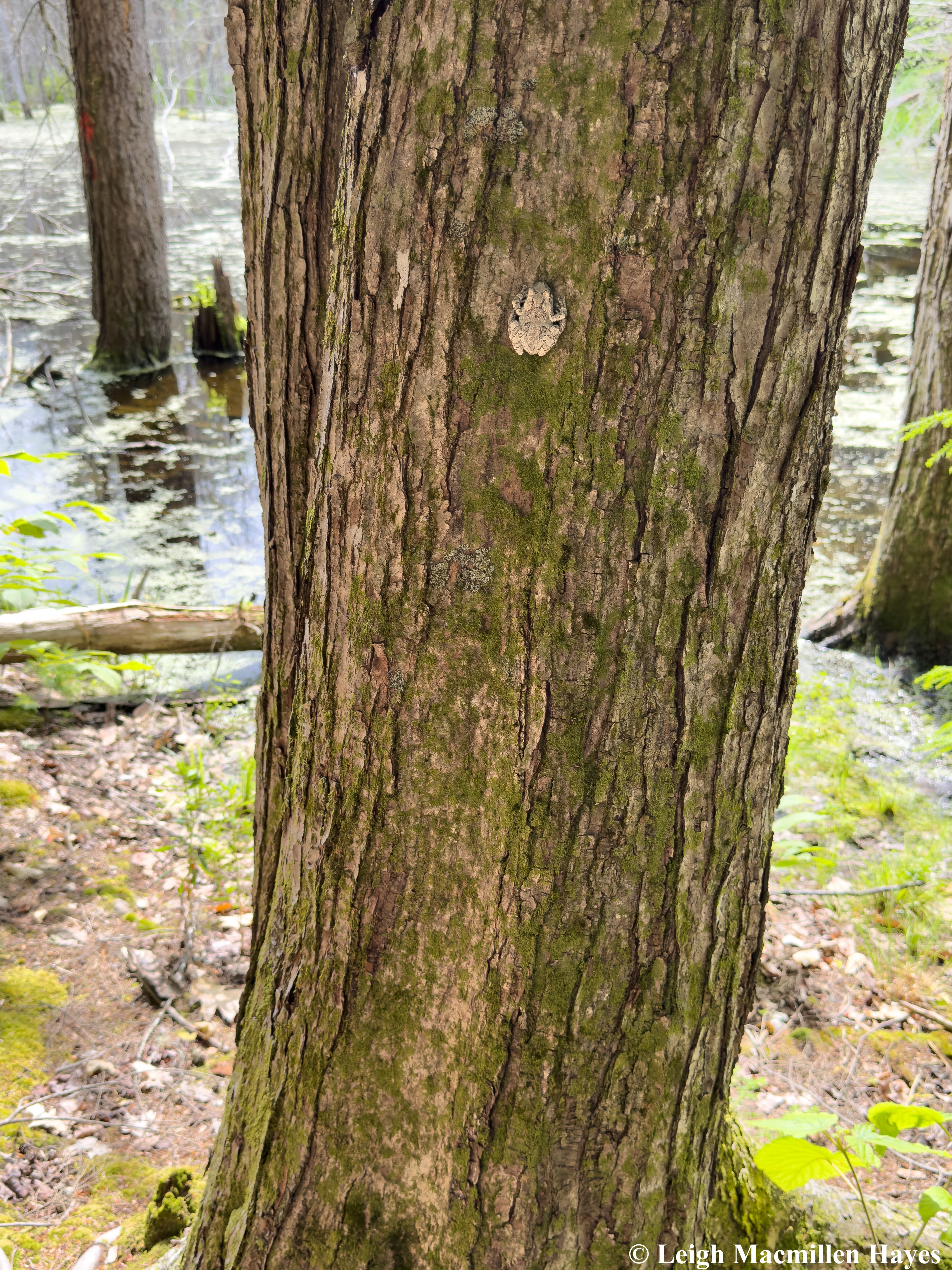
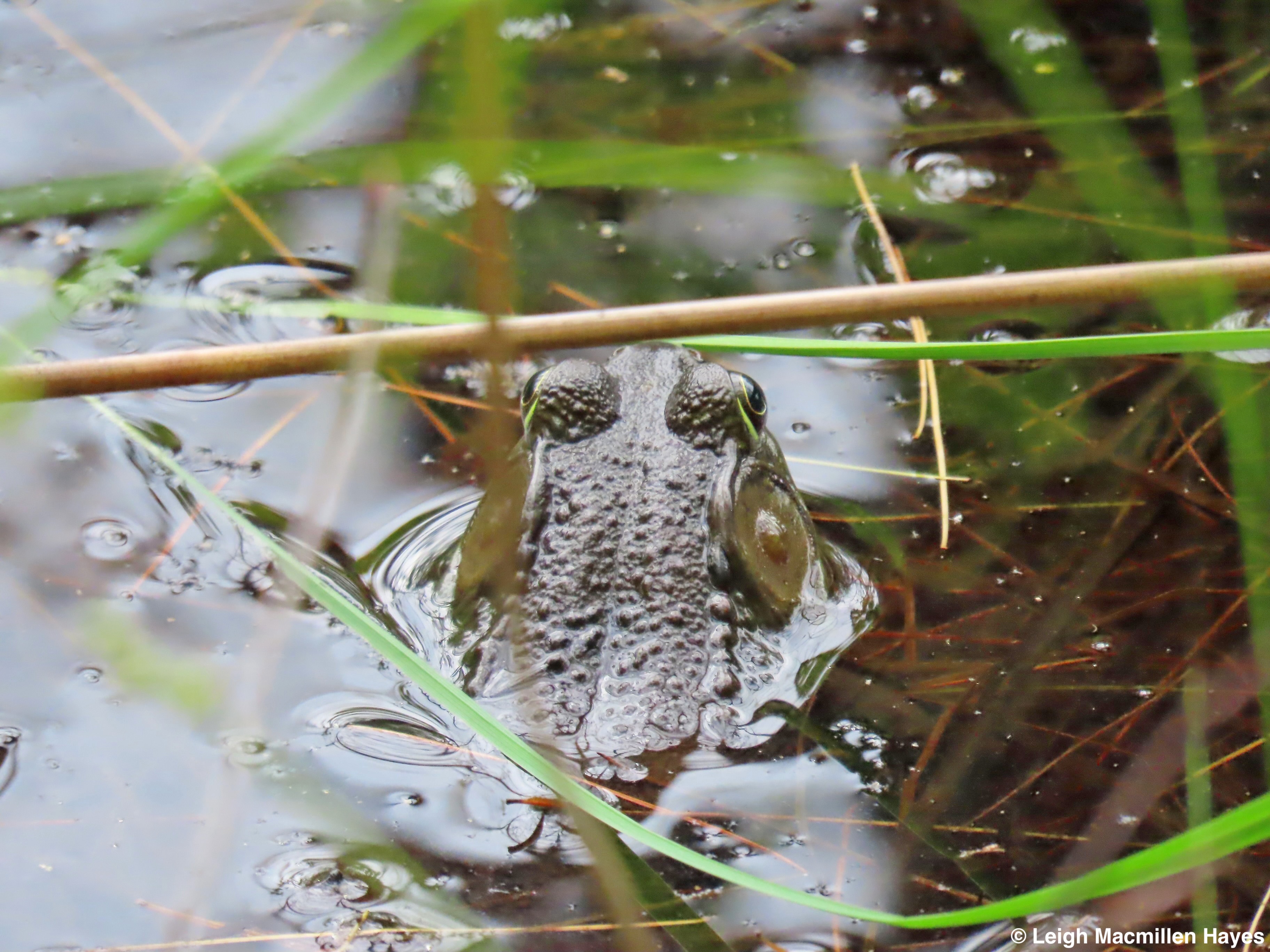
And while pausing to talk, a Tree Frog was spotted.
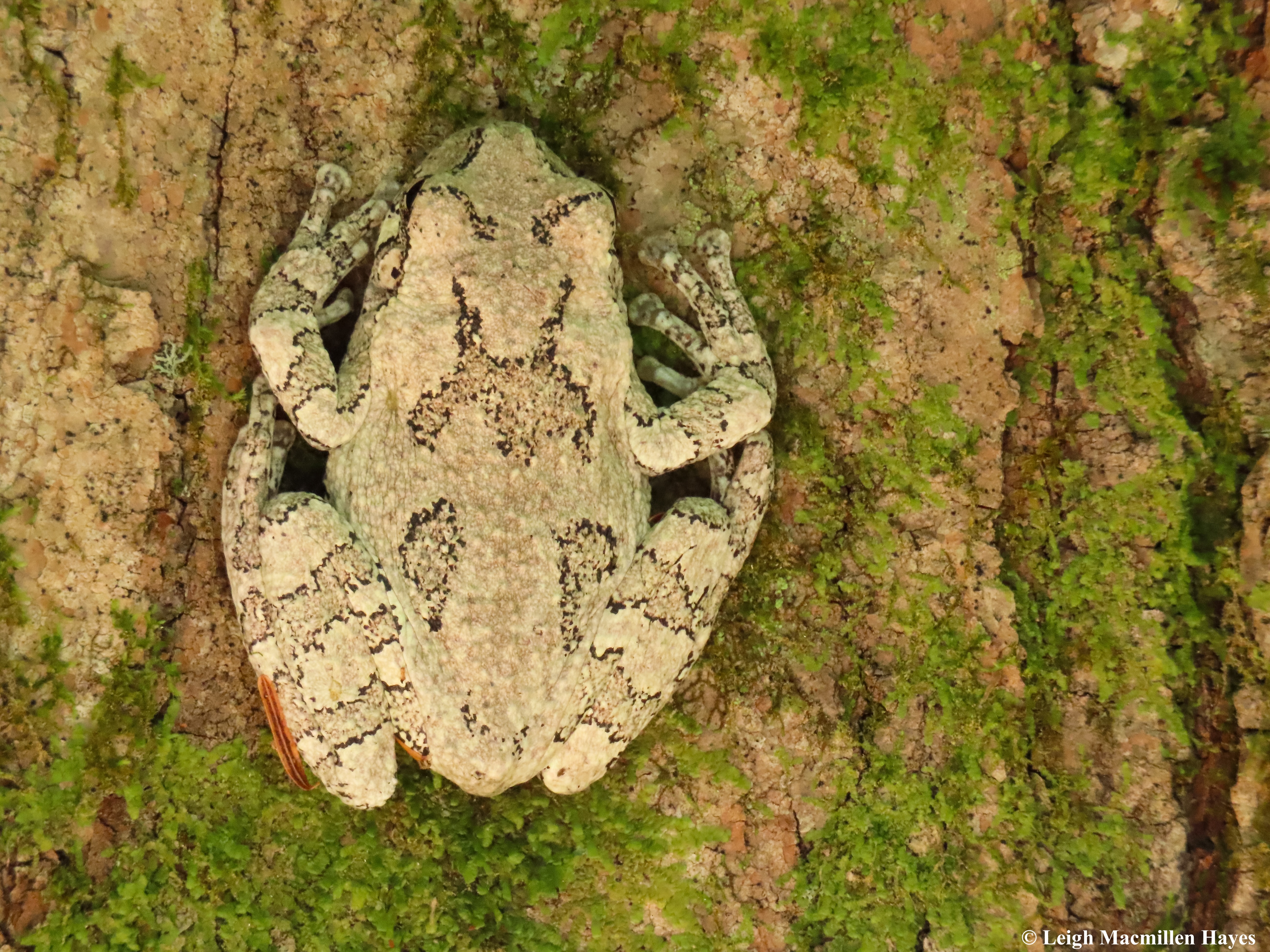
And we gave great thanks that it allowed us to invade its inner circle for a few moments. Look as those toes, the ginormous suction cups that they are.

Even a Little Wood Satyr added magic to the scene.

And under a tree we spotted a number of pellets full of bones. We don’t know the creator of the pellet, nor the food that was consumed, but someone had a favorite feeding tree.

And now the rookeries are empty and the tweens have turned to teens and must hunt for themselves. It’s a task that takes great focus, but those eyes are all seeing.

And the beak is quick to snag.

And though the meal may be small, its one of many to come and success is key.

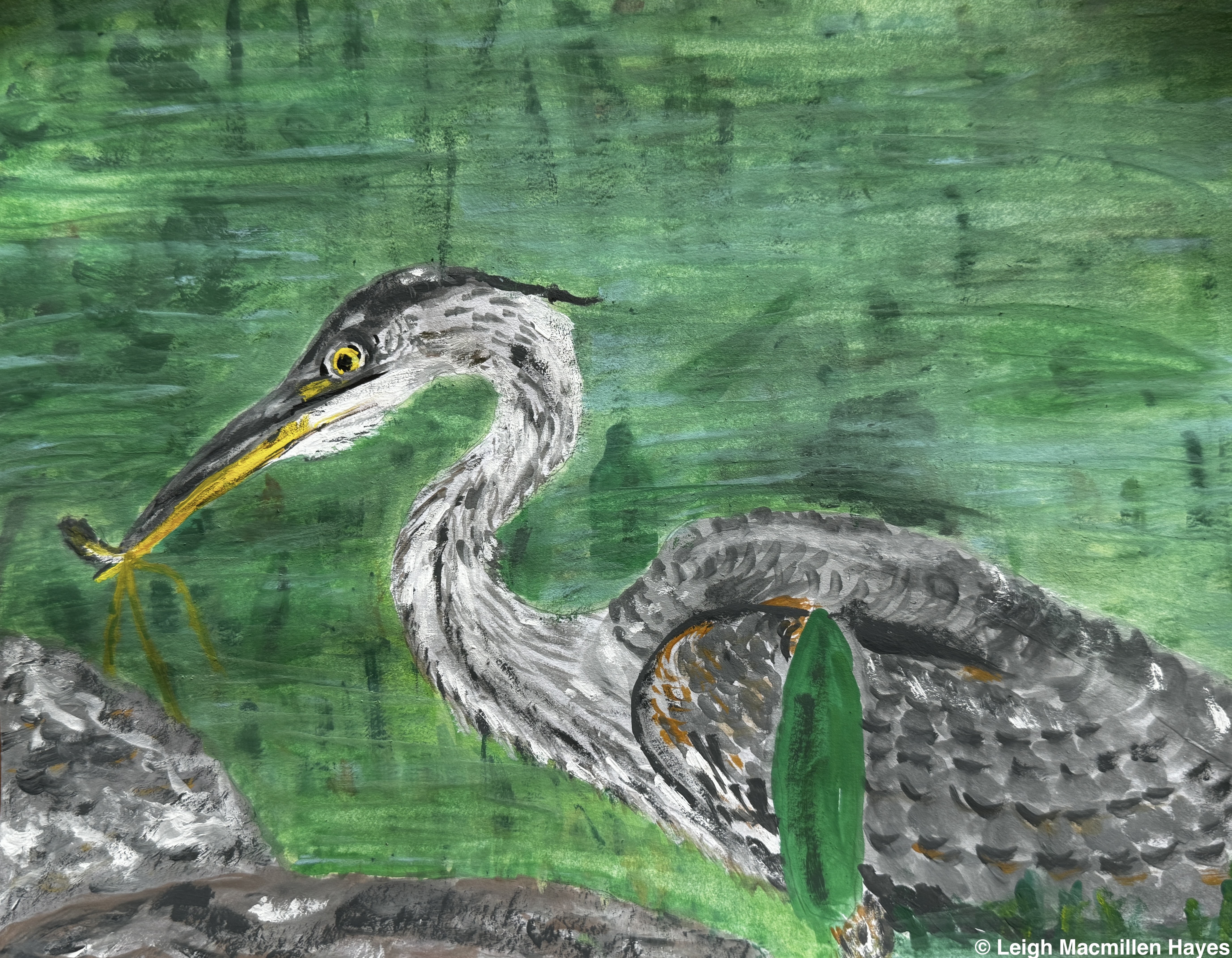
I’ve tried to commemorate these morning’s with a few paintings, including this teen and its catch.

And an adult on the hunt.

The Tree Frog.
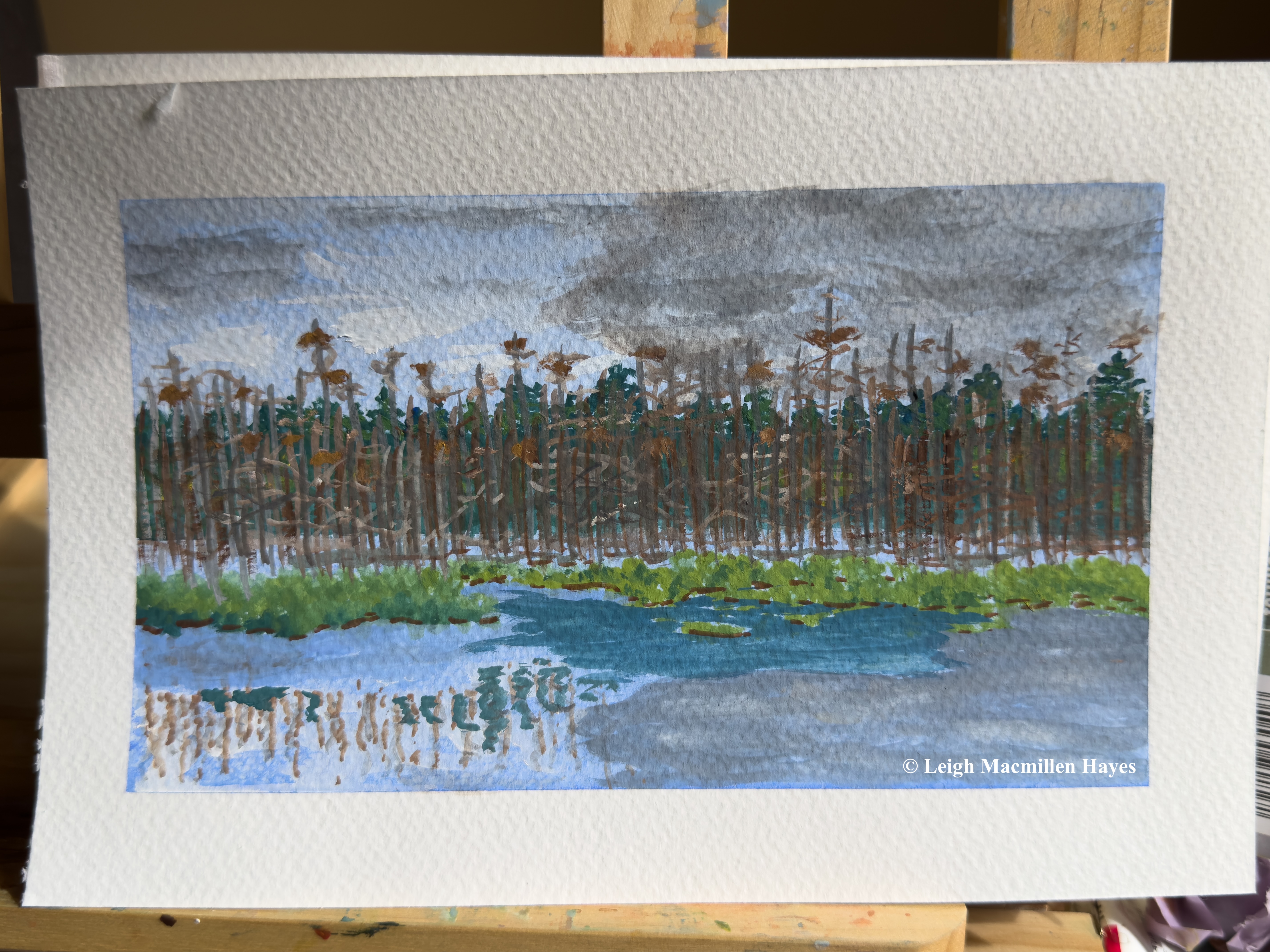
And one of the rookeries, this one being the most successful.

2025 numbers:

Rookery 1: zero nests as has been the case for about six years now and I suspect I’ll be told not to bother with that one next year, but then again, some other Great Blue Herons could decide it’s just the right place and build a new rookery. The last year that we saw nests and birds, a Bald Eagle was in the area and within a week there were no more Herons to count.

Rookery 2: 21 nests observed; 18 inactive; 3 active; 5 adults; 3 young upon the first visit in May.

21 nests observed; 21 inactive. Yes, all nests were empty two weeks later. We knew when we didn’t hear any squawking as we approached that things were not good, but we were totally surprised to not spy any Herons. What had happened during the two week interval we’ll never know. But we suspect maybe a Bald Eagle in this locale as well. Or maybe an owl? Last year, the rookery had declined drastically from the first visit to the second, but not to this extent.

Rookery 3: 1 inactive nest; 59 active. YES! 60 nests in all, an increase of 7 from last year. And of 2024’s 53 nests, only 46 had been active. So 59 was a huge number! Have you ever tried to count birds in a wetland, where the nests are at least a football field or more away from you? It is not easy. And takes about two hours plus the hike in and out to complete. Oh, and the count: the number of adults varied with each visit, becoming less and less as the weeks went on because they were out hunting for larger fish to feed their growing brood. The youngsters at our last count: 122, plus 7 fledglings. That’s a lot of mouths to feed. And think of size of those birds, some nests with 4 kids, plus the two adults. Talk about tight living quarters.
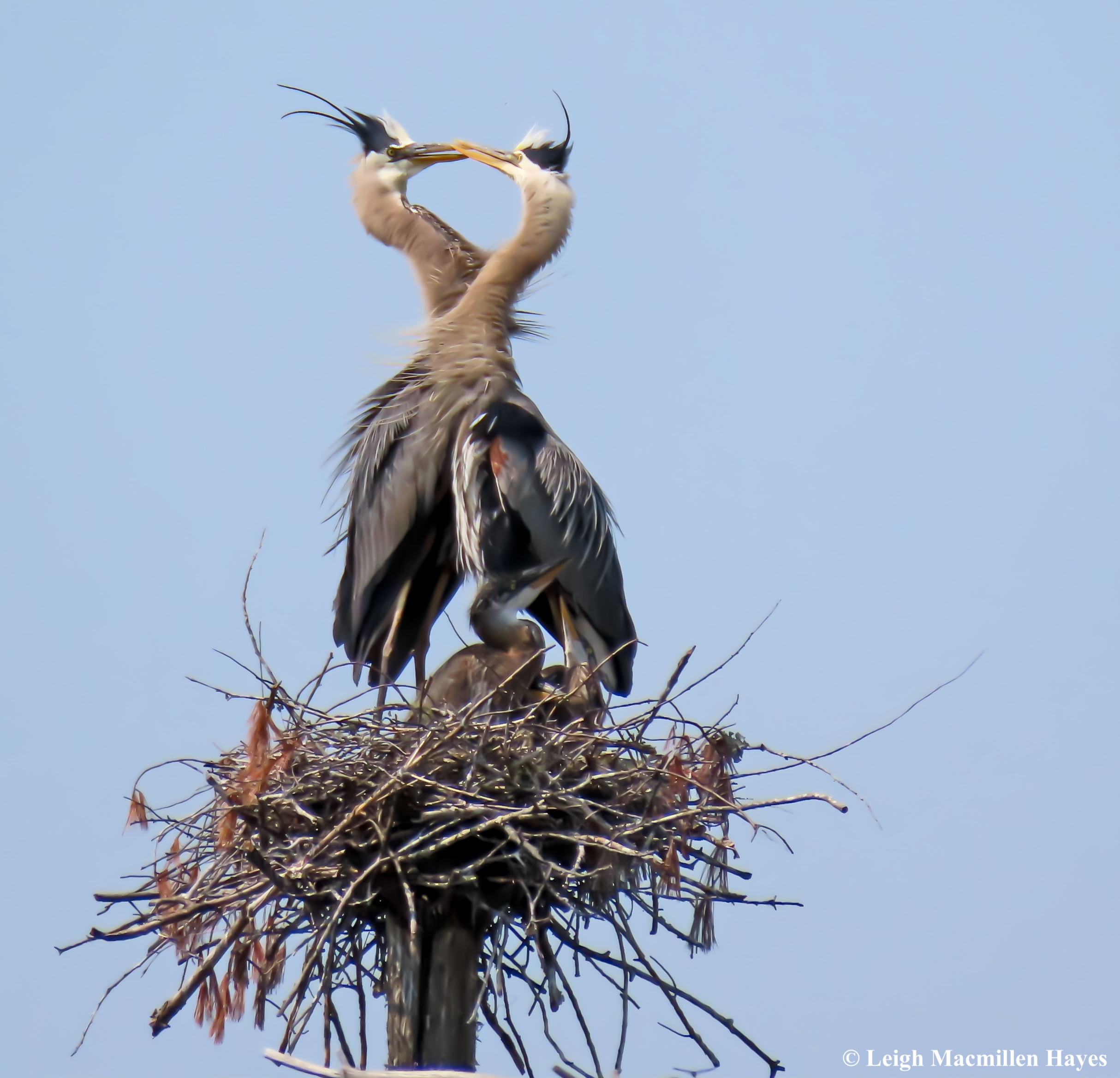
Shoulder and neck muscles tense. The brain gets befuddled. Mosquitoes buzz in our ears.

But at the end of the morning, I can’t think of any place I’d rather be than spotting these two sharing a moment and give great thanks for all the moments we get to witness because we take part in monitoring the rookeries and making the Great Blue Herons count.

Thanks also to my companions. I won’t name them because I don’t want anyone to bug them about locations, just like I won’t name the actual locations or their State ID numbers because these are special places that need to be left undisturbed.
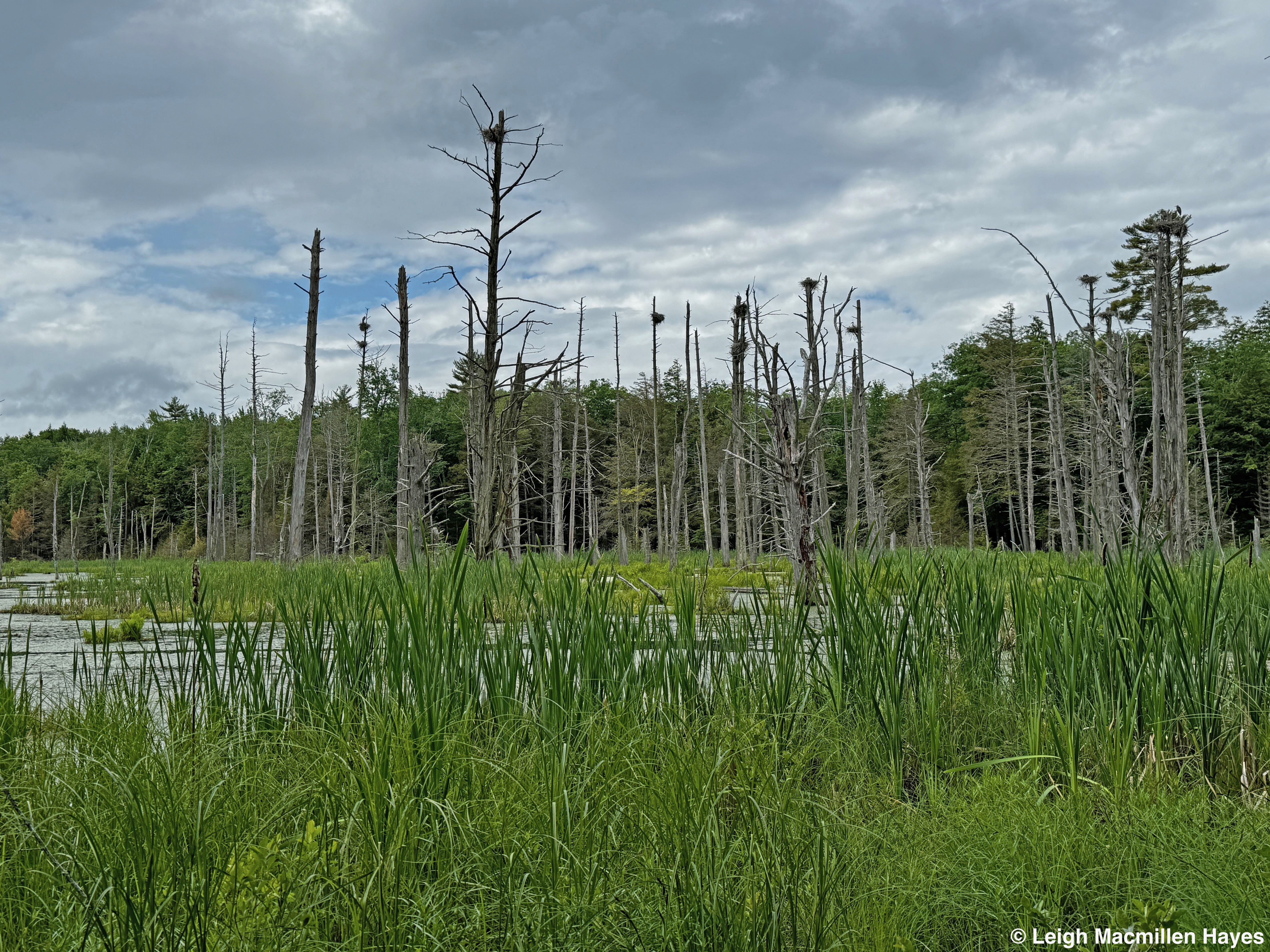
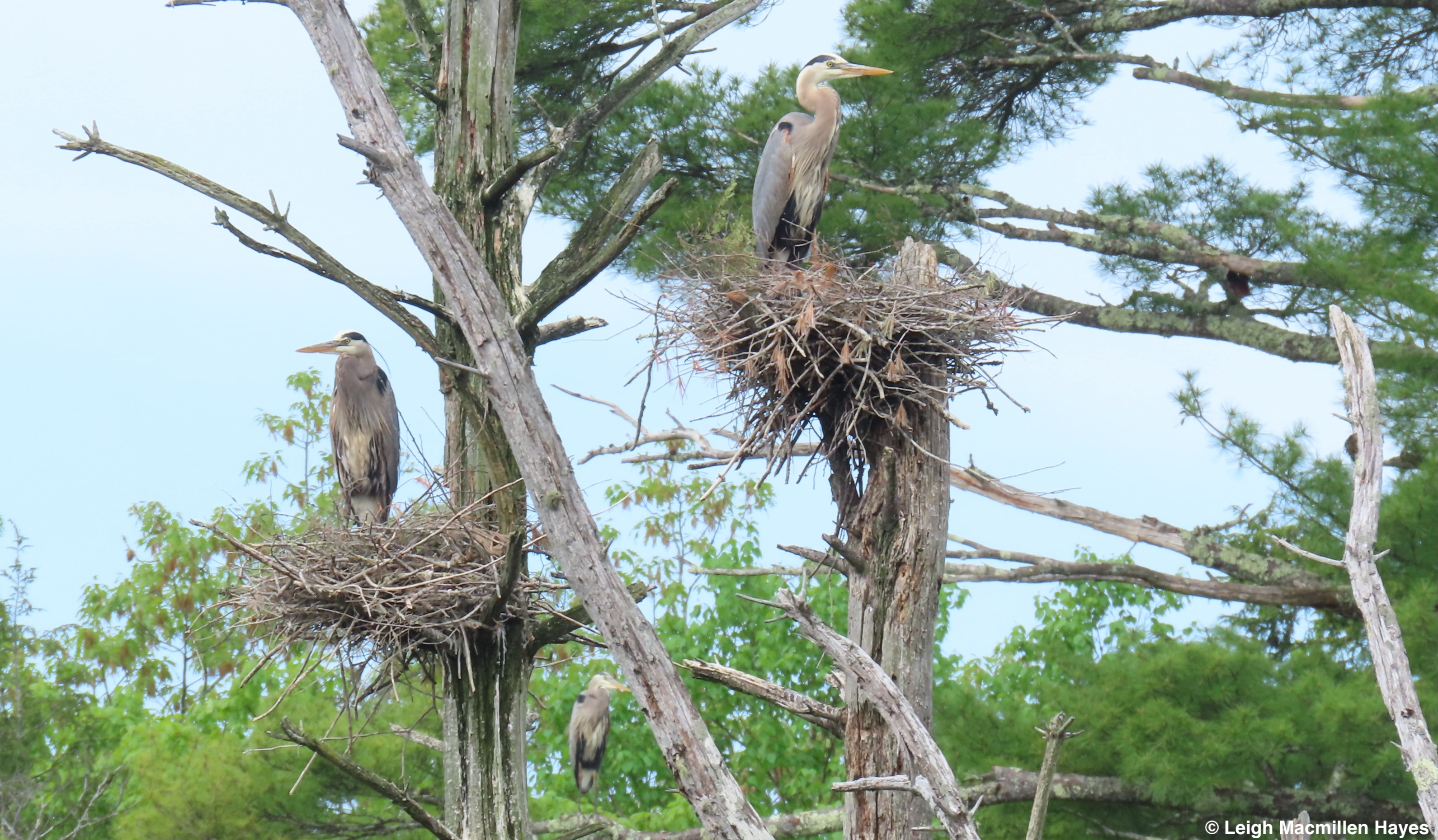
Heron Accomplishments

For the last fifteen years I’ve had the honor of stepping into a wetland or two early in the morning on a regular basis for at least six weeks to check on the activity of heron rookeries. It’s a community science program called HERON that the State of Maine runs: “HERON” is short for the Heron Observation Network, a network of volunteers across Maine who monitor nesting areas, or colonies, of wading birds such as the Great Blue Heron. HERON is managed by the Maine Dept. of Inland Fisheries and Wildlife.”

Herons are colonial nesting birds, meaning they nest in groups. Their nesting community is known as a rookery.

If I could get away with it, I’d spend all day in this place where the wild things go about their daily duties as co-observers and I stay on the edge in hopes of not disturbing them.

I think what amazes me most is that they build their stick nests high up in trees and I always expect the wolf in The Three Little Pigs to huff and puff and blow their homes down. Or at least the wind to do such.

The most difficult day of the count may be the first. May be. First, the number of nests must be counted. Then the number of active nests, those with birds in them. Next, it’s the number of adults and then young, if visible. If the adults are incubating, for how long?

And that’s where it gets tricky. If eggs aren’t visible because one cannot get close to the nests, since they are anywhere from about 50 to 200 feet from land, and high up in dead snags, this is a challenge. Spotting adults on the nest, however, indicates there possibly are eggs within.

Nest building and rebuilding is a constant, and a clue that there’s hope for a new generation. Adding sticks with one’s mouth sounds difficult to us, but it is the way of life for a bird.
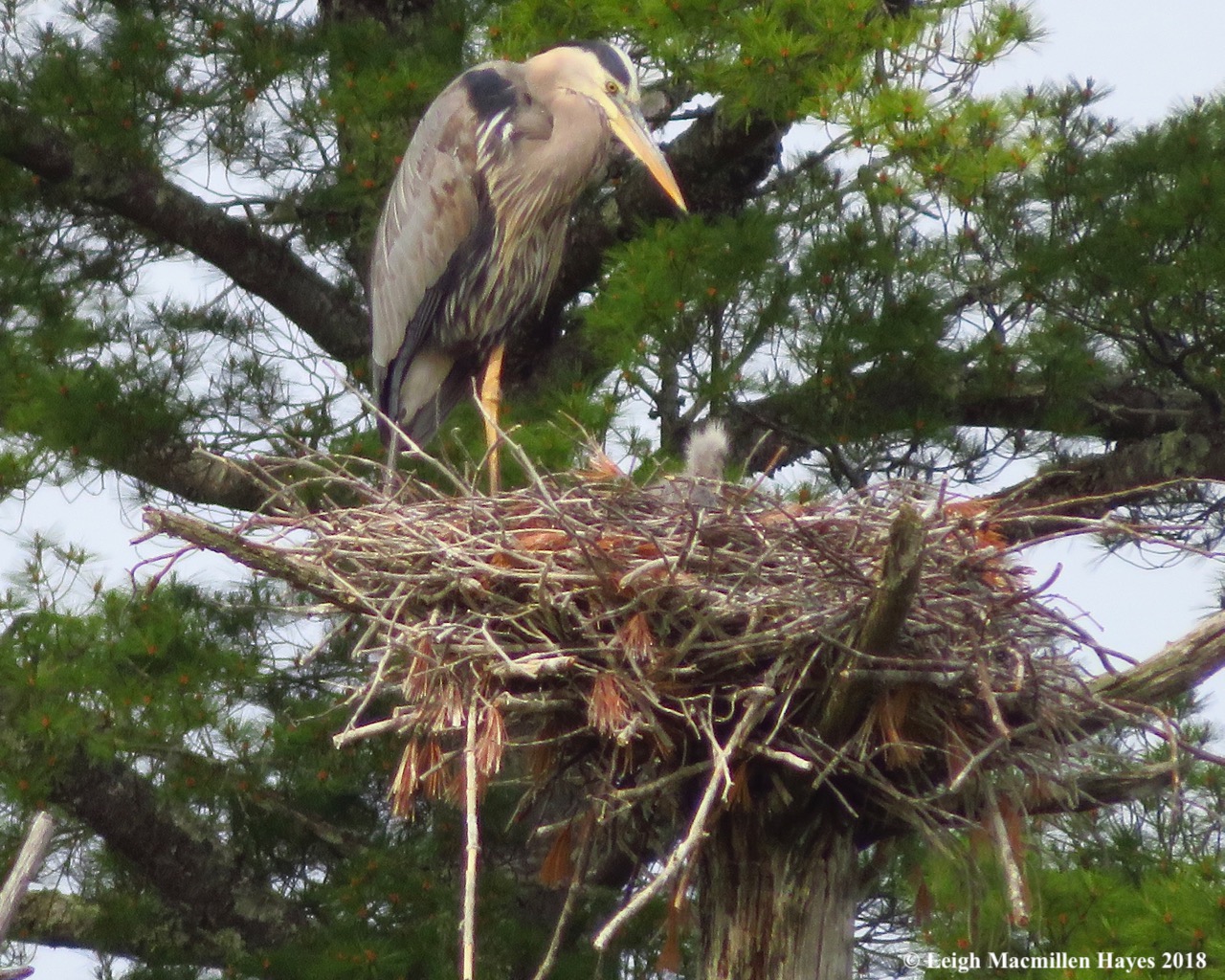
Spotting little bundles of fuzz brings smiles to observers’ faces–as if we have given birth or are at least the grandparents of these bouncing babies.

Two weeks later and they already have Great Blue Heron markings and crazy hairdos and the counting gets a wee bit easier. Of course, the youngsters hop up and down and so nests have to be reviewed several times to make sure the number is at least close to accurate. It’s not unusual for a nest to support three, four, or five youngsters.

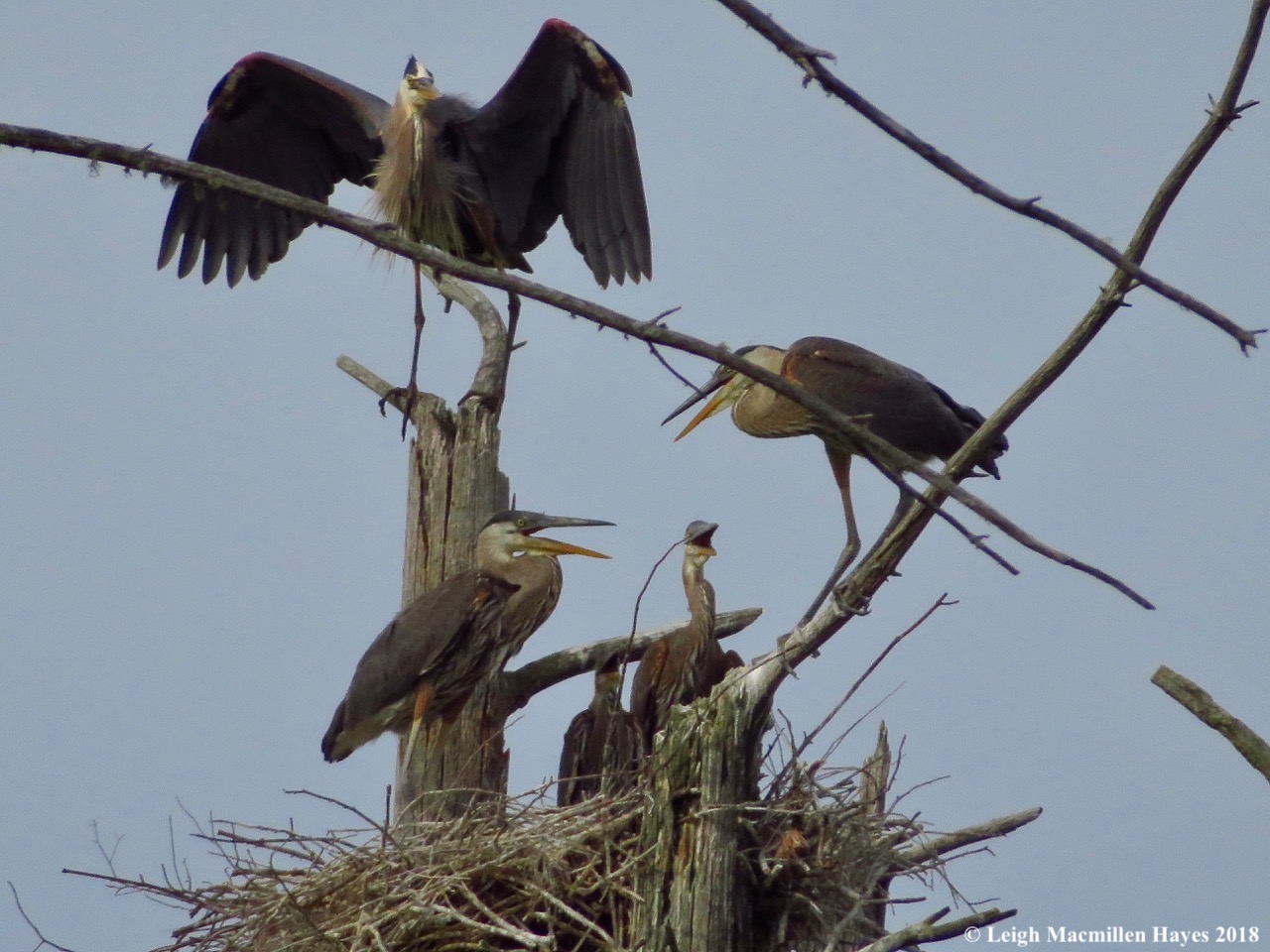
If you’ve never been near a heron rookery in those early days, you haven’t experienced the pterodactyl fly ins as adults arrive with food or the intense and loud and constant squawking of the youngsters demanding to be fed.
Once the adult has landed, the birds still must beg, sometimes for ten or more minutes and I can’t help but wonder if the squawking encourages adult regurgitation.

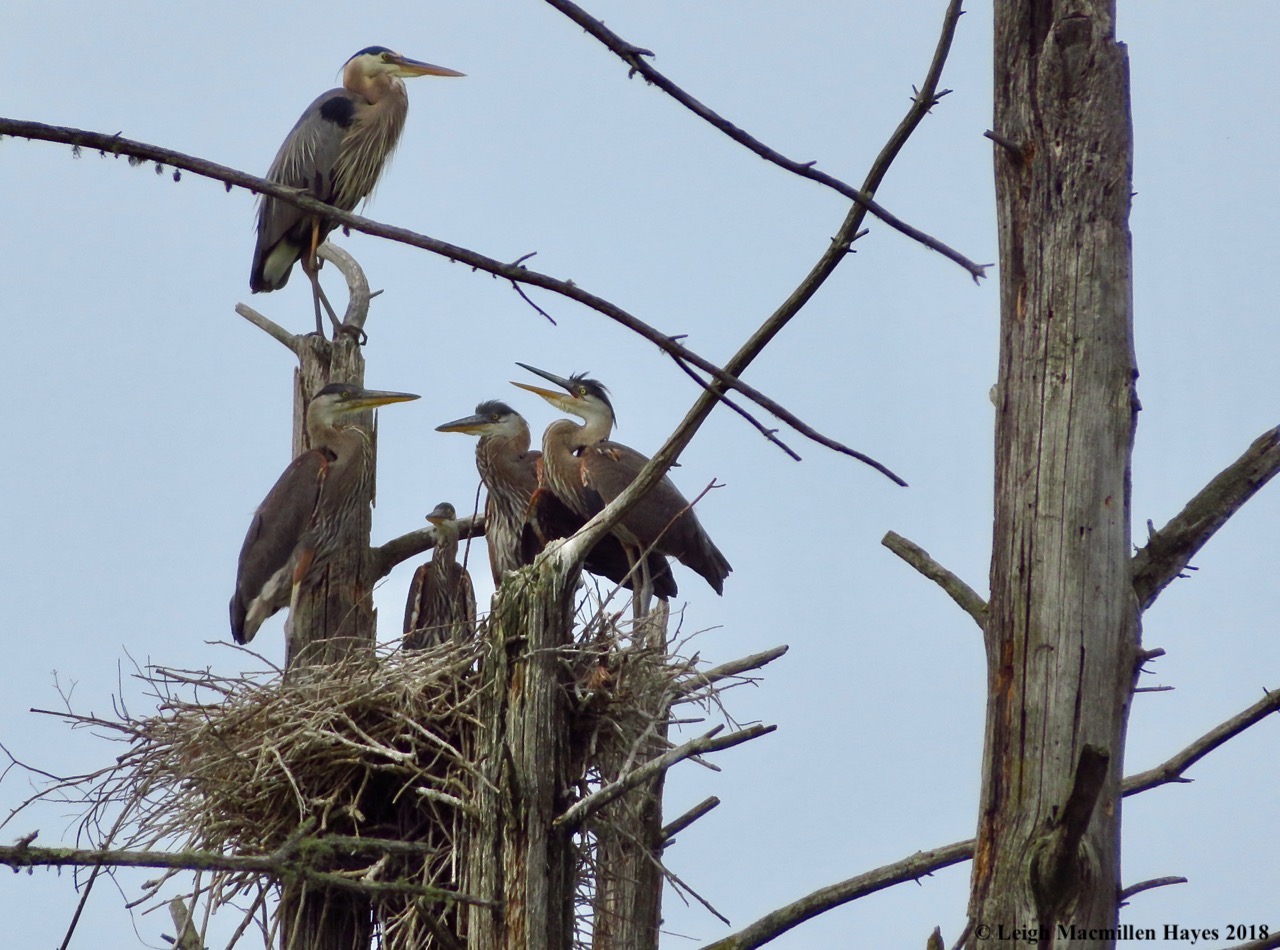
If you look closely at this photo, you’ll notice the two on the left are in one nest waiting ever so patiently for an adult to return with a meal, while the nest in the back to the right hosts two beggars waiting for the food to slide up the adult’s throat and down into their mouths.

Those awkward tween years only last a few weeks in a bird’s life, for so rapidly must they grow given the short season of our northern clime. Hairdos are a good indication to separate adult from young.

Remember when I said that the first day was the most difficult day to count. Well, that is debatable, for as the weeks go on and the youngsters grow, it becomes difficult sometimes to distinguish parent from child. If the plume on the head is spotted, then it’s an adult, but sometimes the lighting or angle isn’t right.
That said, the count is completed about six weeks after the first visit for the birds begin to fledge and the nests won’t be used again . . . until next spring.

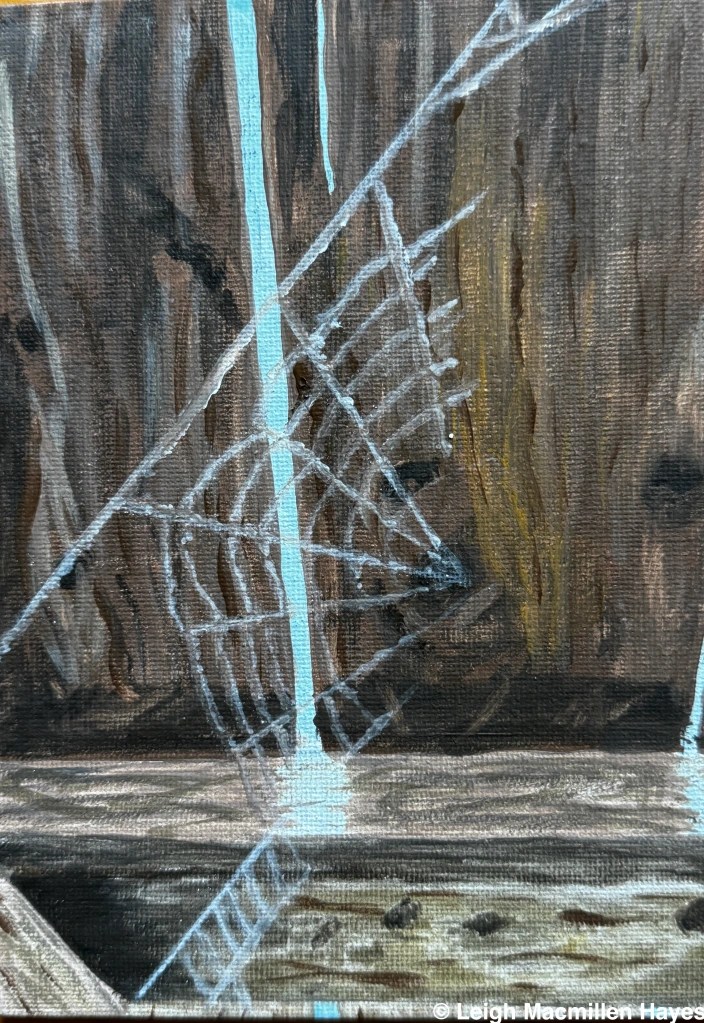
There are so many joys about spending time in the wetland, but a few include dew upon spider webs,

Frogs who ga-dunk, ga-dunk at our feet,

a young Robin calling for its parents,

and the spotting of four Wood Ducks on a snag.

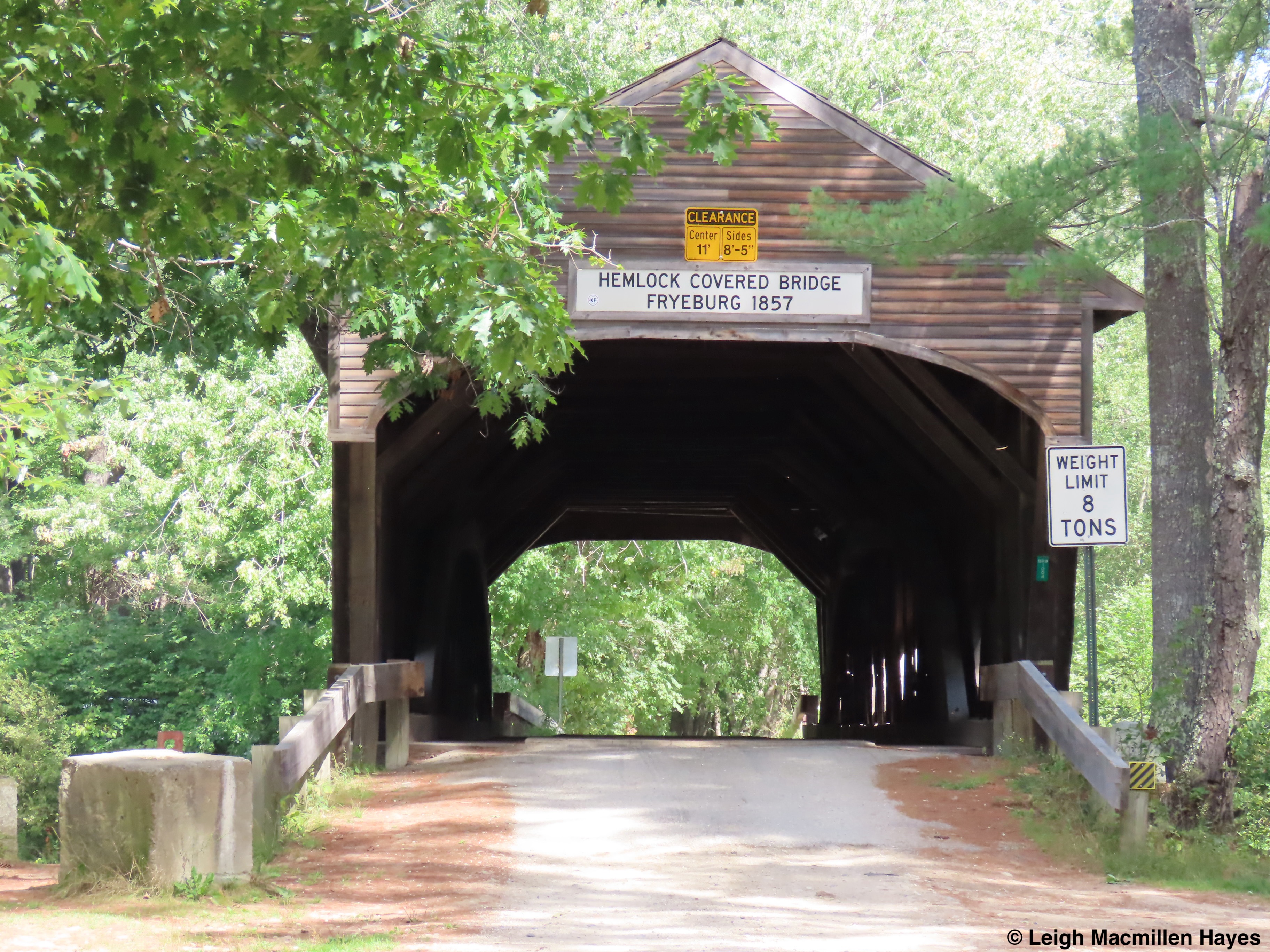
Fast forward two months and this afternoon found me walking the roadway on either side of Hemlock Bridge, my eyes darting here and there taking in flora and fauna with each step.

I love the Paddeford construction of this bridge. Or maybe it’s just that I love that we live so close to a covered bridge. And recently, because I’m taking a painting course, I tried my hand at showing off some of its beauty.

Spider webs did not go unnoticed by me. I didn’t spot the creator, but trust that an orb weaver was hiding somewhere nearby.

As I walked along the old course of the Saco River, I spotted a few Painted Turtles basking in the sun, but also noted all the debris clinging to branches, a sign of the high water we had this past spring.

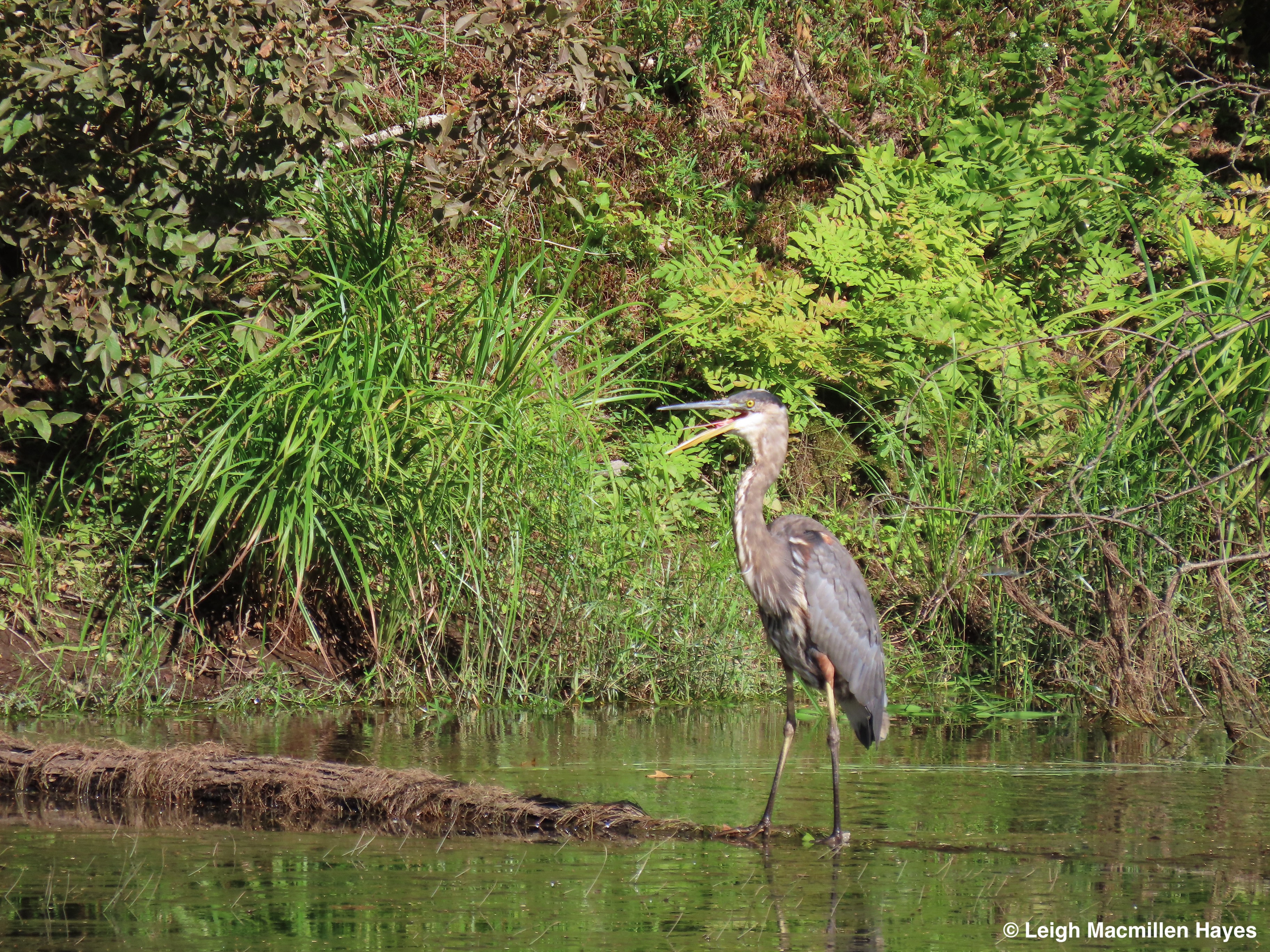
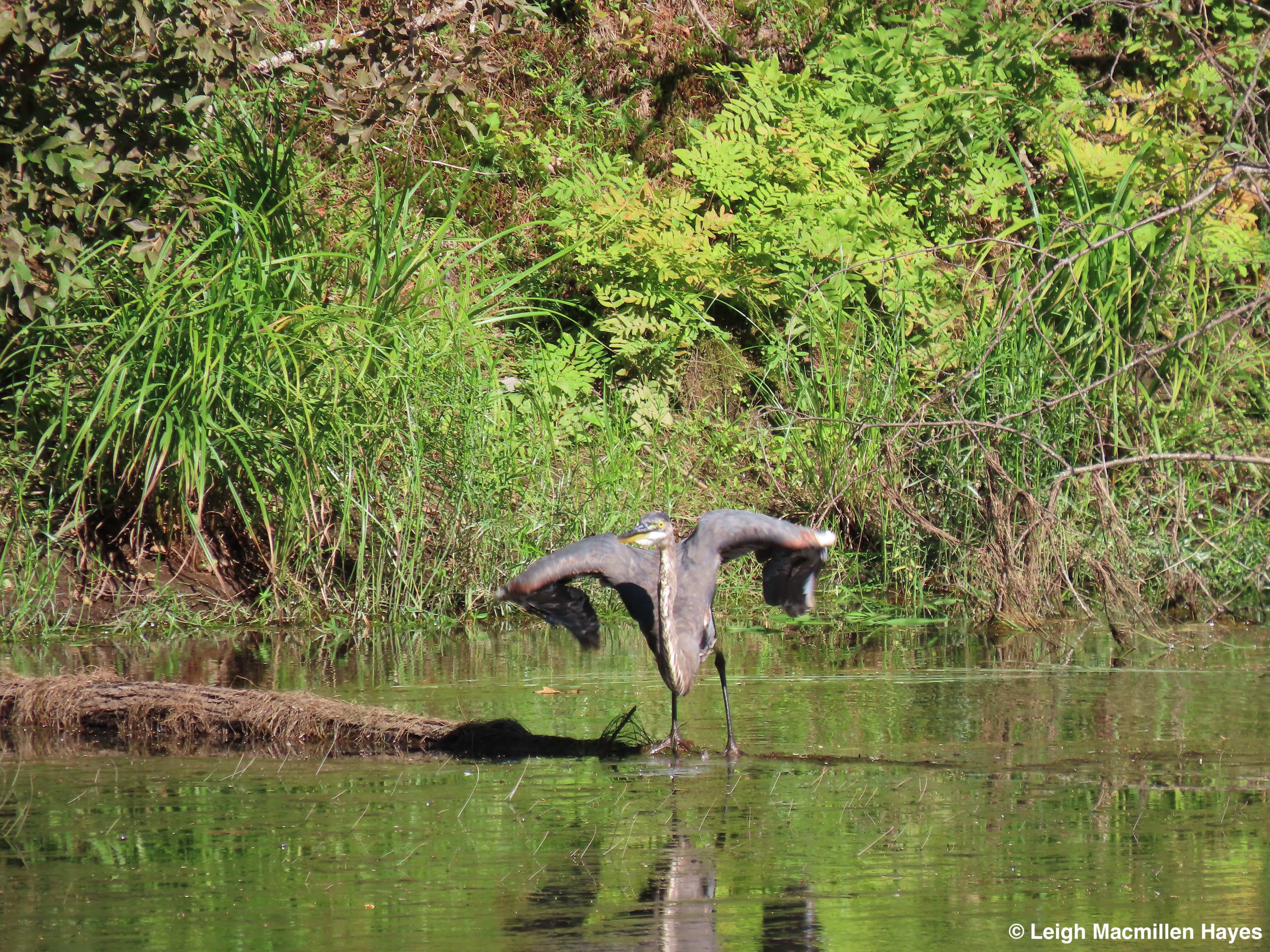
And then something else caught my eye. One of my teenagers was on a fishing expedition. And panting to cool down.

I got excited when it seemed he’d spotted a meal.

Apparently that didn’t pan out and he turned his attention in the other direction. As I watched, he tiptoed ever so gently for such a big bird, and I was certain he was on to something.

But then he stood there and panted some more.

Until there was a bit of a tussle and I realized he and a snake had a brief encounter. Both survived. And left each other alone.

And then the bird flew and I was bummed. I wanted to witness a meal being taken. But I have to have faith that it found success somewhere else upon the river. Just as I trust that the sun will rise tomorrow, and the day after that. This bird will not go hungry.

Instead, upon arriving home I pulled out a painting I completed a couple of weeks ago of a Great Blue Heron I watched snatch a fish last summer.

Just as the young heron’s accomplishments may take time, so do mine as a painter. But it sure is fun trying.

As for the count:

One rookery featured 19 active nests at the start, but only three toward the end, and I have to wonder if a predator found many a meal high up in those trees.

The other rookery featured 53 nests, with all but a few being active and lots of youngsters produced.

That, in itself, is a great heron accomplishment.

A Slice of Life in the Rookery

We only had an hour and we had a task to accomplish as citizen scientists for Maine IF&W’s Heron Observation Network. Our mission, which we chose to accept, was to count the number of nests, the number occupied, the number not occupied, the number with residents, the number of immature, the number of mature, the number of . . . you get the picture.

h1b-rookery

In the past, this was the largest inland rookery in the state and supported 40+ active nests, but over the last few years the numbers had dwindled and today we found only nine. Of those nine, three were inactive. Where have all the birds gone, we wondered.

h1-wood duck

As we started to focus on the scene before us, one member of our team spotted a wood duck surveying the beaver pond from a limb on one of the many old snags.

h2a-heron chick

And then we looked upward. Counting isn’t always easy–in fact, it’s never easy. One immature–check. More than one? Well, we could see a lump representing another bird. Was it one lump or two? Over and over again, we counted.

h3-standing still

And then there was this nest that was hidden from our sight at first, only because it seemed to blend in with the pine tree behind it. Again we wondered–why was this adult standing on it? Was this a sentry watching over all of the nests why the other parents were off fishing? Usually, though, experience told us that sentrys stood on higher branches–the better to watch for predators.

h29-sentry

Like this.

h2-otter

Suddenly we heard a commotion in the water and noticed action near the beaver lodge. What was it?

h4-incoming

And then the sound of the youngsters crying frantically made us look upward again, where we spied an incoming adult.

h5-landing

The kids exclaimed their excitement because a meal had certainly arrived.

h6-begging for food

We could almost see their smiles as they anticipated the goodness they were about to receive.

h7-what? No food?

But . . . no food was regurgitated despite the kids’ squawks.

h9-meanwhile-mouths have closed

Finally, they quieted down and looked rather disgusted.

h10-preening

And Momma preened.

h11-wood duck family

Back in the pond, a family of Wood Ducks swam among the flowering Watershield.

h12-movement above

And up again, we noticed slight movement in the nest.

h13-a chick with downy feathers

Could it be?

h14-red winged

Before we answered the last question, a Red-winged Blackbird paused . . .

h15-singing

sang . . .

h16-did you hear me?

and looked around as if to say, “Did you hear me?” We did.

h17-another incoming

More squawks from above and we saw another adult fly in.

h18-what did you bring?

It seemed Dad had joined Mom and the family was complete.

h19-I'm off

But only for a second, as Mom took off.

h20-snacks?

“Where’d Mom go?” and “What’s to eat?” was all Dad heard.

h21--watching from nearby

She didn’t go far, but like all mommas, she needed a few minutes of time to herself.

h21-baby chick revealed

Meanwhile, back by the pine, that little bit of fluff moved some more.

h22-stretching my wings

And someone else needed to stretch his wings.

h24-otter again

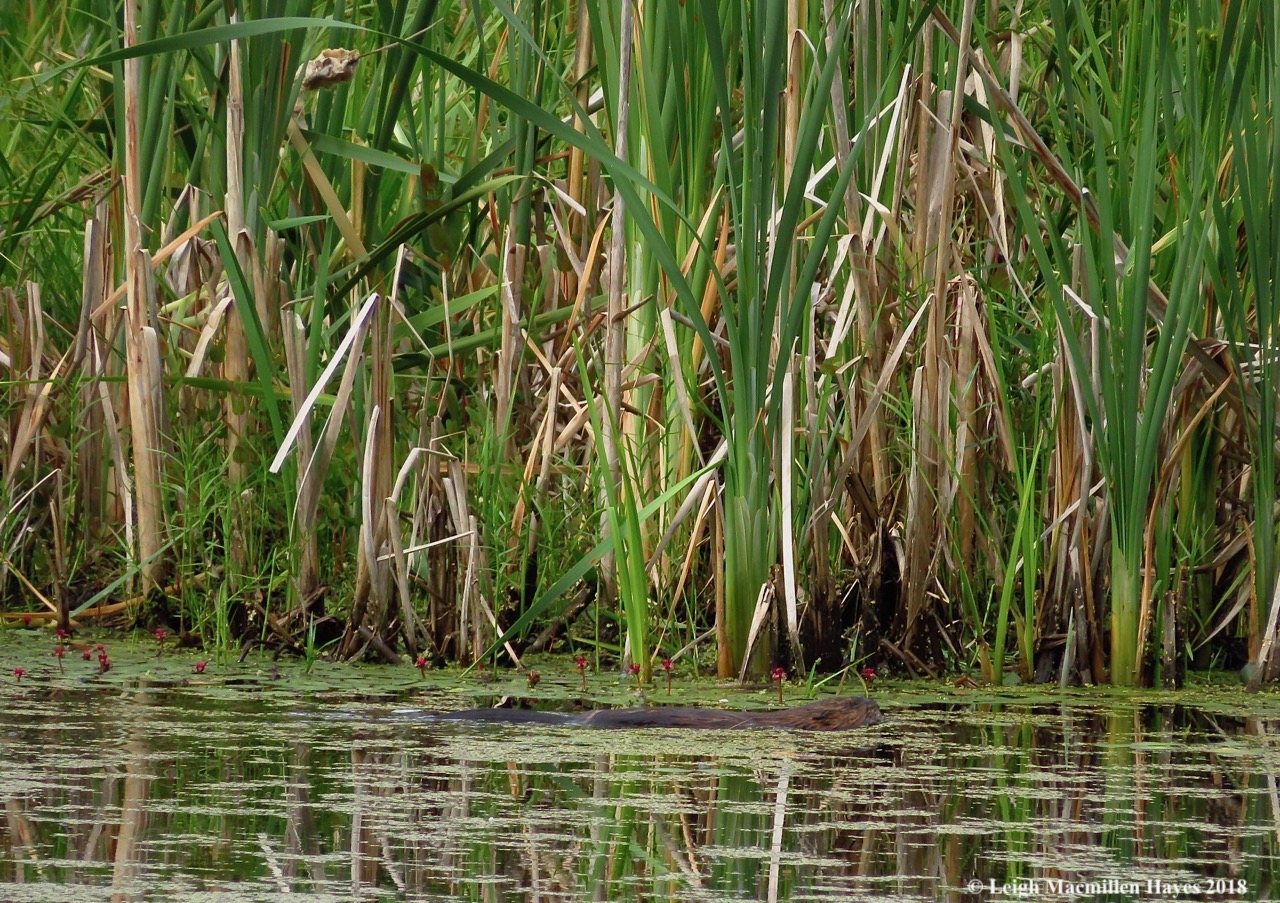
It was like watching a tennis match, for our eyes moved back and forth, up and down–especially when we heard movement in the water again and saw the same something undulating through the water.

h26-water snake

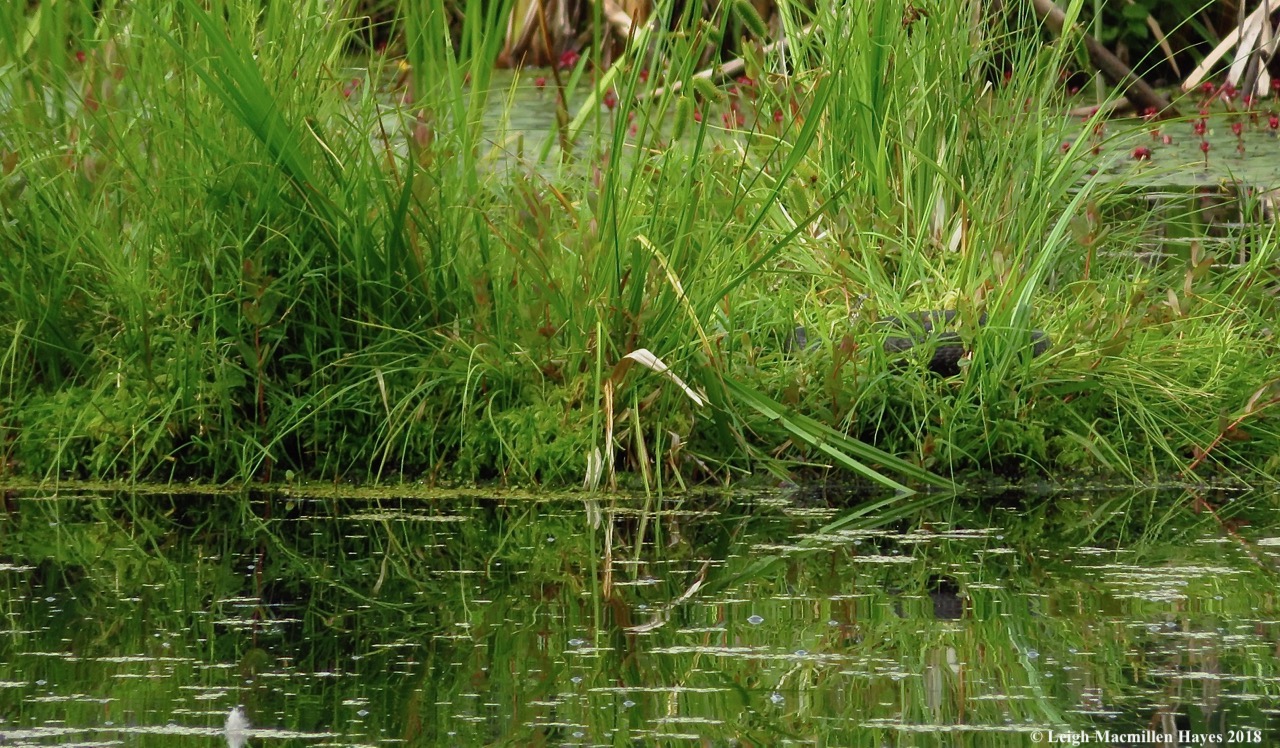
We weren’t the only ones watching all the action from a hidden location–a water snake on a hummock across the way did the same.

h28-don't you have any food?

Skyward, the family unit came together again. And still no food. The kids were getting impatient.

h30-have a stick

And then one parent left briefly and returned–with a stick for the kids to add to the nest, perhaps heron-speak for clean the house first and then you’ll get a snack.

h31-what's he thinking?

“We did it,” they tried to tell her, but Mom had her eyes on something else.

h27-beaver again

Her focus wasn’t on the beavers that swam back and forth below. Oh, and if you think this is the hump that had been making the water boil, you are mistaken.

h32-there he goes again

“Mom, bring back lots of fish . . . pleeeeease,” the kids cried as she took off again. “We’ll even eat frog legs.”

h33-picking twigs

But she had her eyes on other things–sticks from one of the abandoned nests.

h34-got one

She pulled one out.

h36-did you see what he just did?

And the kids looked away and one complained to Dad about all the housework they were expected to do and they still hadn’t received their allowance.

h25-checking us out

Unfortunately, it was time for us to head to work, but our undulating friend returned.

h37-otter

Great Blue Herons, Wood Ducks, Red-winged Blackbirds, Water Snakes, Beavers . . . and a River Otter! A slice of life in the rookery.


Kinship With All Forms of Life

I walked today with intent, as I sometimes do, only that intention morphed between the beginning and ending of my journey. You see, I awoke with a need to reach a certain heron rookery that I’ve helped monitor for the Heron Observation Network of Maine during the off-season,  before the owner of the land returns. It’s a bit of a bushwhack to reach the site and in the past, I’ve accompanied Tom for this citizen science effort. Each spring, we’ve visited it at least once to count the number of nests and adults. Sadly, Tom won’t be joining me this year and so I headed off this morning to see what I might see–and be his eyes.

m1-squirrel

They were big eyes to fill–as big as the red squirrel who paused to watch me and then dashed along a stonewall on a mission of its own making.

m2-brook peek

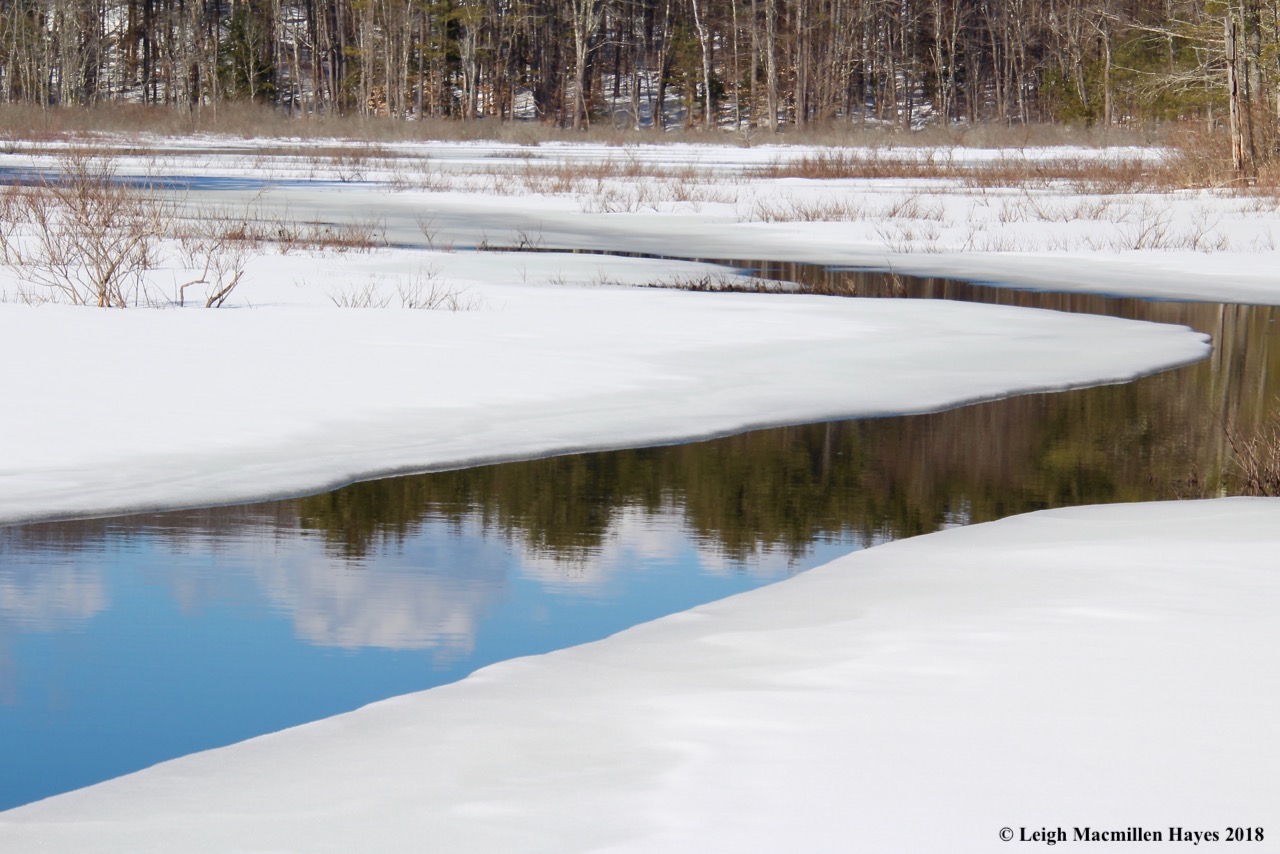
Initially, the journey was a bit of a bee line as I followed a snowmobile trail. It was there that I delighted in the color of the sky and realized that most of the ice had melted on the beaver pond and brook below. I could have headed down to the water’s edge then, but chose to continue toward my destination.

m3-beaver dam inactive

I was almost there, when an old beaver dam forced me to stop. And then I heard a loud crash. I scanned the area and stood still–listening, waiting, wishing.

And then another noise–of movement. Again, I stood still. Nothing.

m4-land bridge

Finally, I arrived at the land bridge that would lead me to the rookery, but . . . my journey stalled and I realized I’d have to save the crossing for another day. Water rushed over the mossy mounds and because I was alone I decided not to risk falling in. As I stood and admired the flow, I thought some more about Tom and the crossing he is making from this life to the next.

m6-more ice bubbles

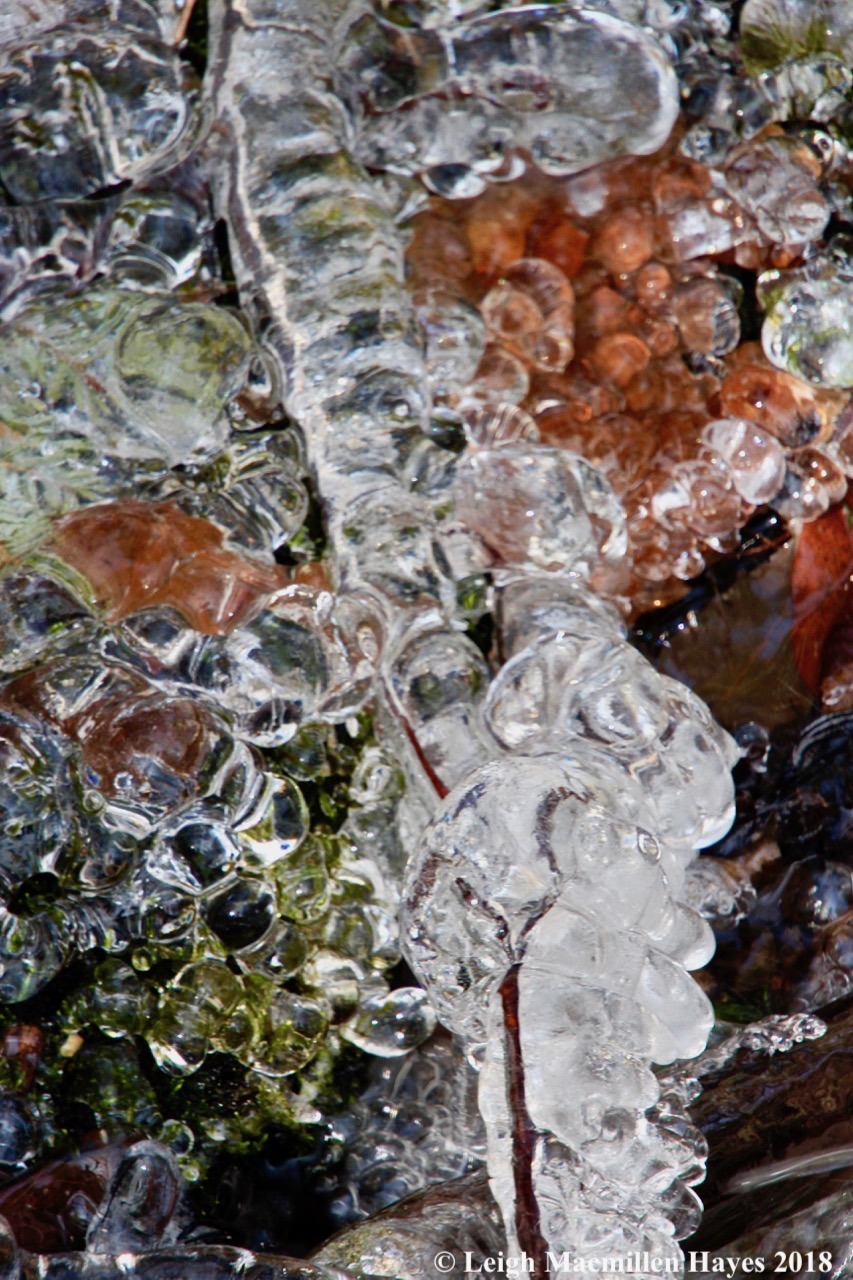
And I thought of his sense of wonder and ability to instill such in others, even over something as simple as ice baubles.

m 5-ice bubbles

I could hear an eloquent explanation flow forth from him about the movement of bubbles within an icicle formed on a branch.

m7-ice fingers

And I knew he would appreciate the artistic rendering before our shared eyes–in this case a wee bit reminiscent of M.C. Escher’s Transformation Prints.

m27-forest

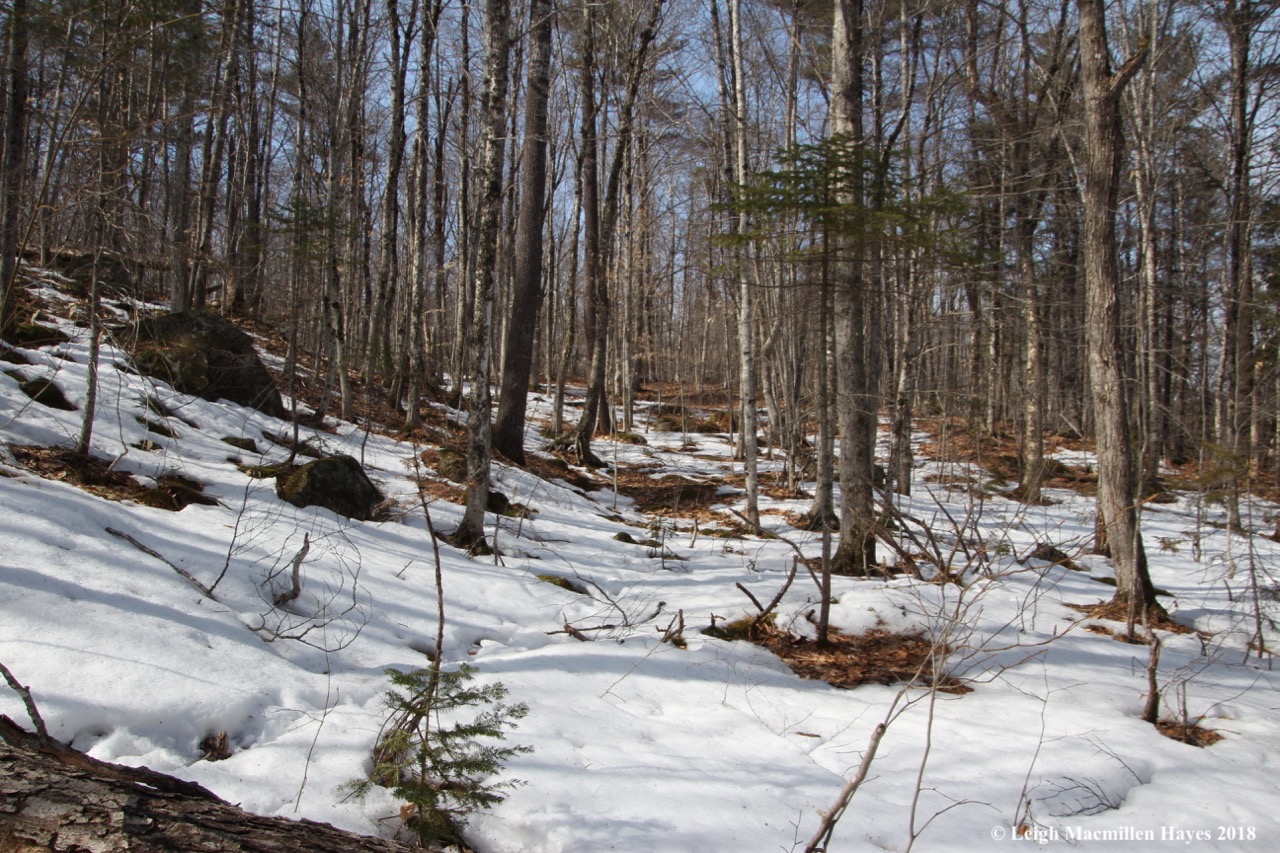
At last I pulled myself away from the crossing I couldn’t make and turned back toward the forest from which I’d come. Tom had a hand in the vision of these woods–as a forester and as the executive director of the Greater Lovell Land Trust. His vision included forest management that would benefit wildlife. From where I stood, I saw turkey, deer, bobcat, and squirrel tracks.

A third time, I heard a sound and knew that I wasn’t alone. We never are, are we?

m8-mergansers

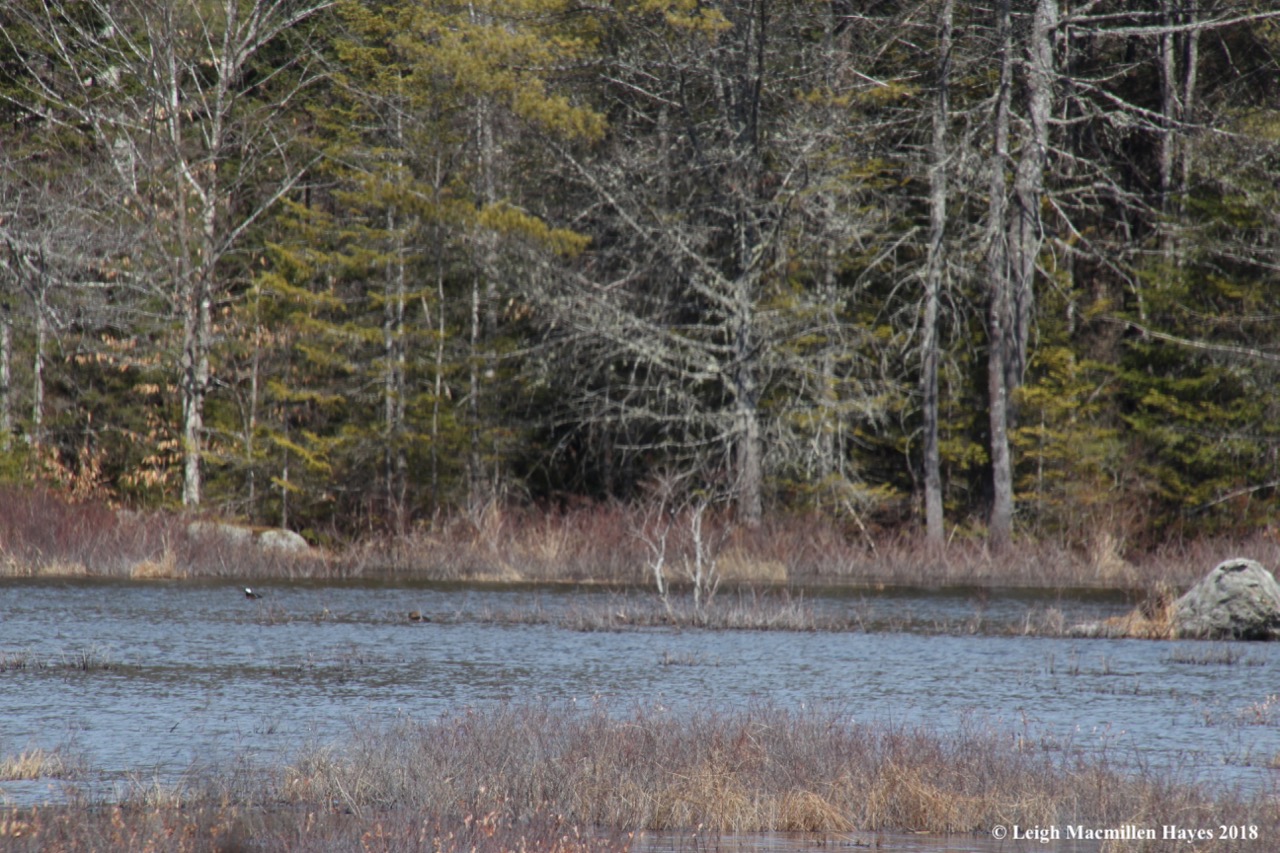
Eventually I made my way to the water’s edge and noted Hooded Mergansers in the distance. Around another bend, I spotted Wood Ducks. Tom would have loved it for birding was also one of his passions.

m10-beaver works

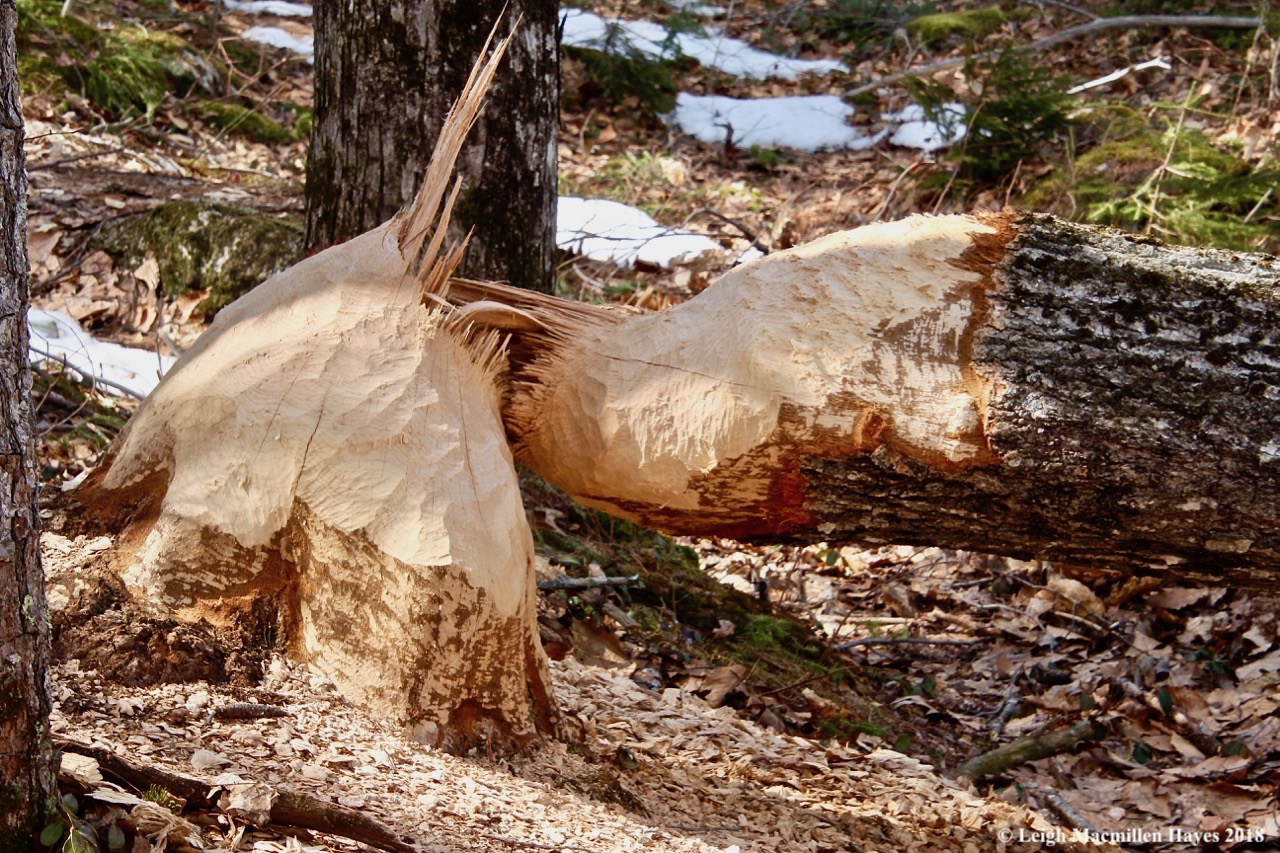
Within footsteps I admired the work of another forester who called this place home.

m11-beaver attempt

It seemed he’d sampled some trees and they weren’t to his liking–at that moment. Or perhaps something had startled him and he quickly retreated to the water. Either way, he treated this land as if it were his. For it was.

m12-more beaver

Everywhere, beaver works both old and new decorated the forest.

m18-lodge

And a lodge stood tall still partially surrounded by ice.

m7a-goldthread

But there was more of  the woods to see this day, like goldthread’s evergreen leaves that reminded me of cilantro. And also of Tom’s garden, for which he actually has some seedlings that will be ready to plant in another month and its produce will be enjoyed at a later date by those he loved most. Their dinners will be enriched for one last season by his green thumb.

m13-tiny shell

Next, I spied a tiny, fragile shell that was iridescent on the inside and brown on the outside. It couldn’t be a bird egg. Was it from a snail?  Tom would have known.

m14-holy leaf

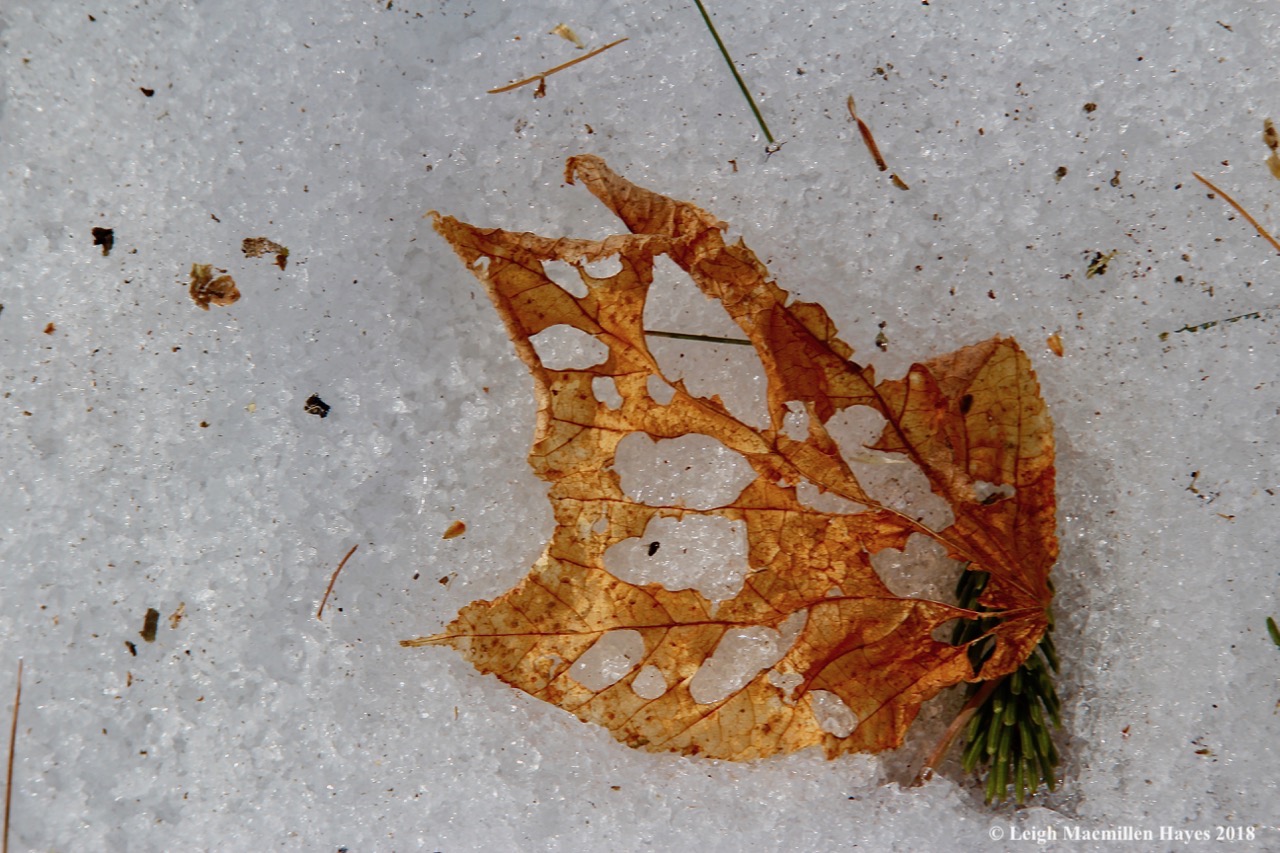
And then there was a striped maple leaf like none I’ve ever seen before–almost stained-glass in its offering. It only made sense that it be so hol(e)y for in its life cycle it had provided energy to insects and as it continues to break down it will nourish the earth. Tom would recognize the significance of such–renewal, rather than devastation.

m15-hobblebush

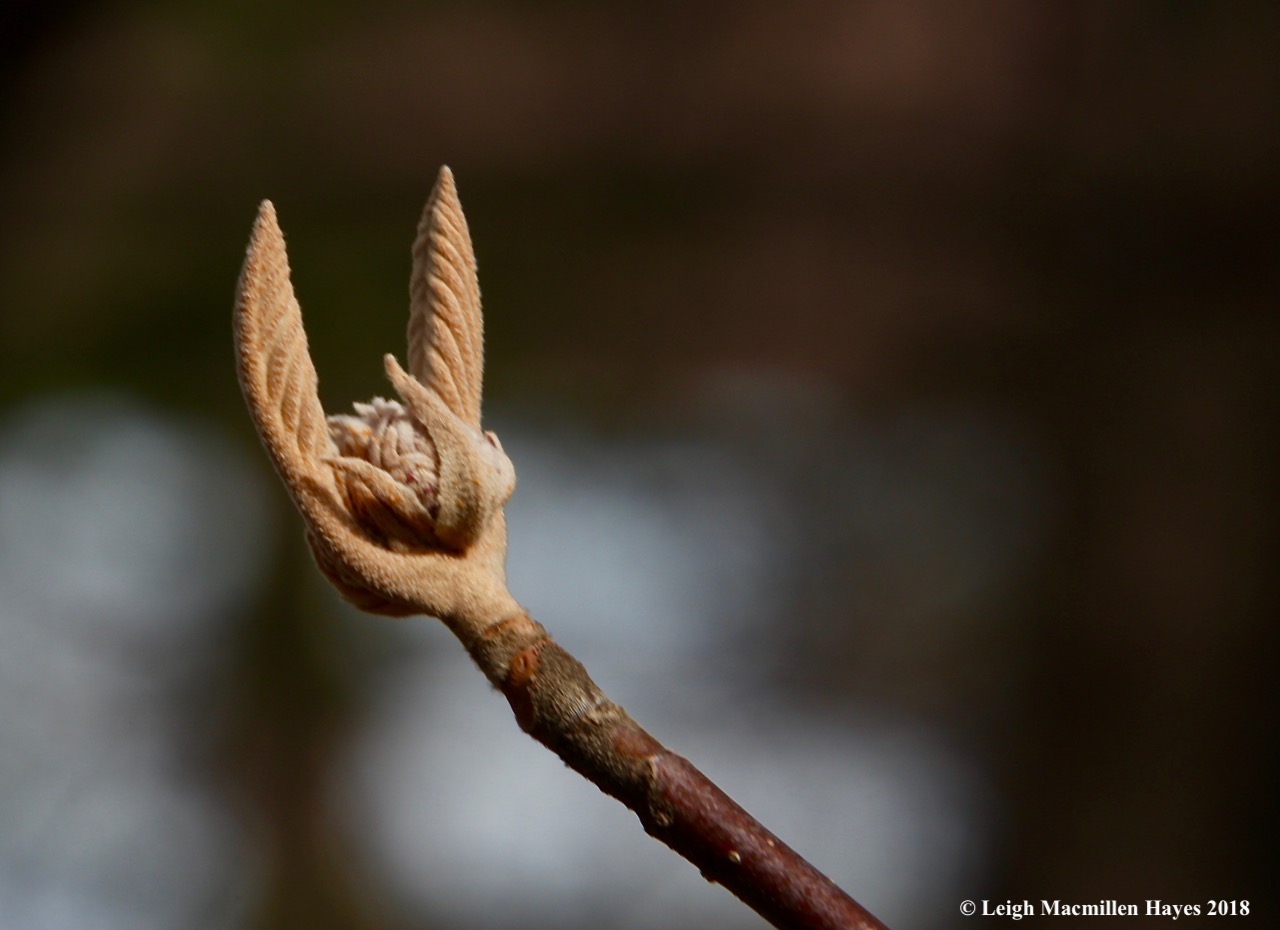
There were other things to note, including a hobblebush flower bud that formed between its praying hand leaf buds.

m21-lungwort

And lungwort that served as an indicator of a rich, healthy ecosystem. Indeed.

m19-heron

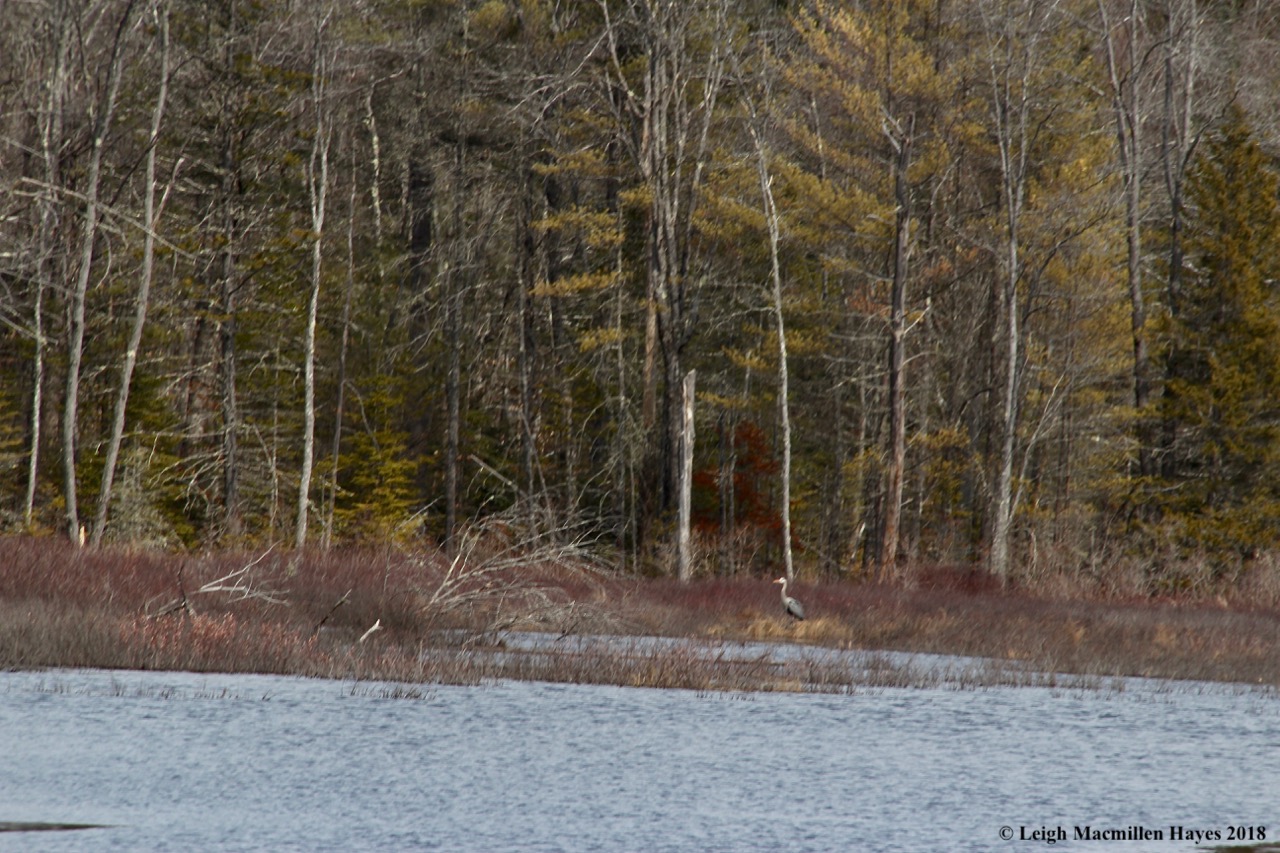
I stood for a long time by the water’s edge, thinking of Tom and then I spied it. A Great Blue Heron flew in and landed across the way. My intention was honored. And Tom’s.

m24-rotten apples

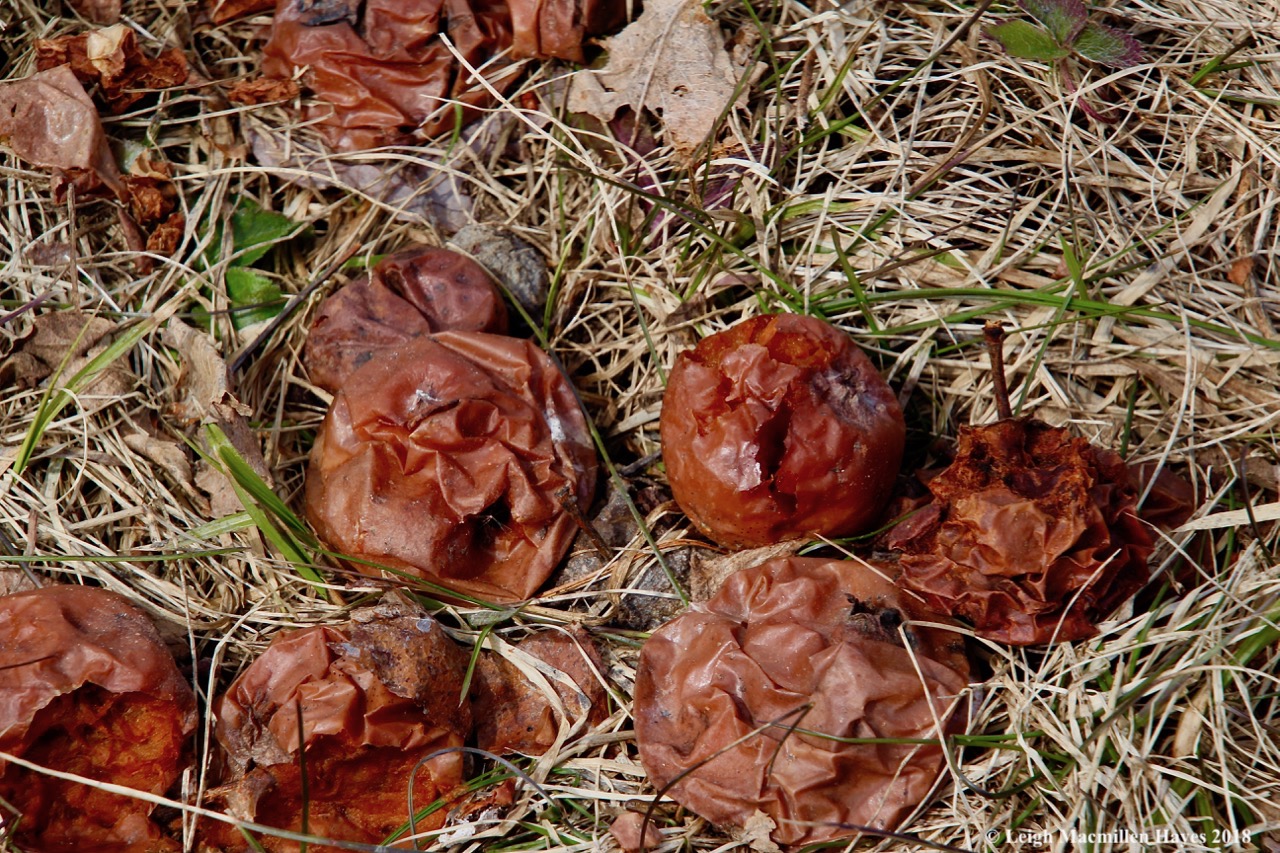
At last I headed back the way I had come and passed through a field where a couple of apple trees grow. As I’d journeyed I had noted scat after scat–some filled with apple chunks and seeds. Of course, I rejoiced because I have an affinity for scat.

But Tom, too, would have rejoiced for what he set out to do so many years ago was to create wildlife corridors–those links of joined natural habitat. For Tom, that’s what it’s all been about–maintaining the ecological processes that allow mammals of all kinds to move and continue to be viable. And for the land on which they traveled to also be viable.

His has been a kinship with all forms of life beginning with the minute, like his shiitake mushrooms and the earth within his gardens and ending with . . . there is no ending, only new beginnings. May Tom’s next beginning be through the eyes of a Golden Eagle. As he soars above us, may he approve of the continued good works of others who try to emulate the legacy he will leave behind.

Godspeed Tom. And thank you.


Otter Spotter Mondate

Fresh snow. Blue-bird sky. Mid-range temperature. Day off. All the makings for a fine Monday date with my guy.

m1-apples

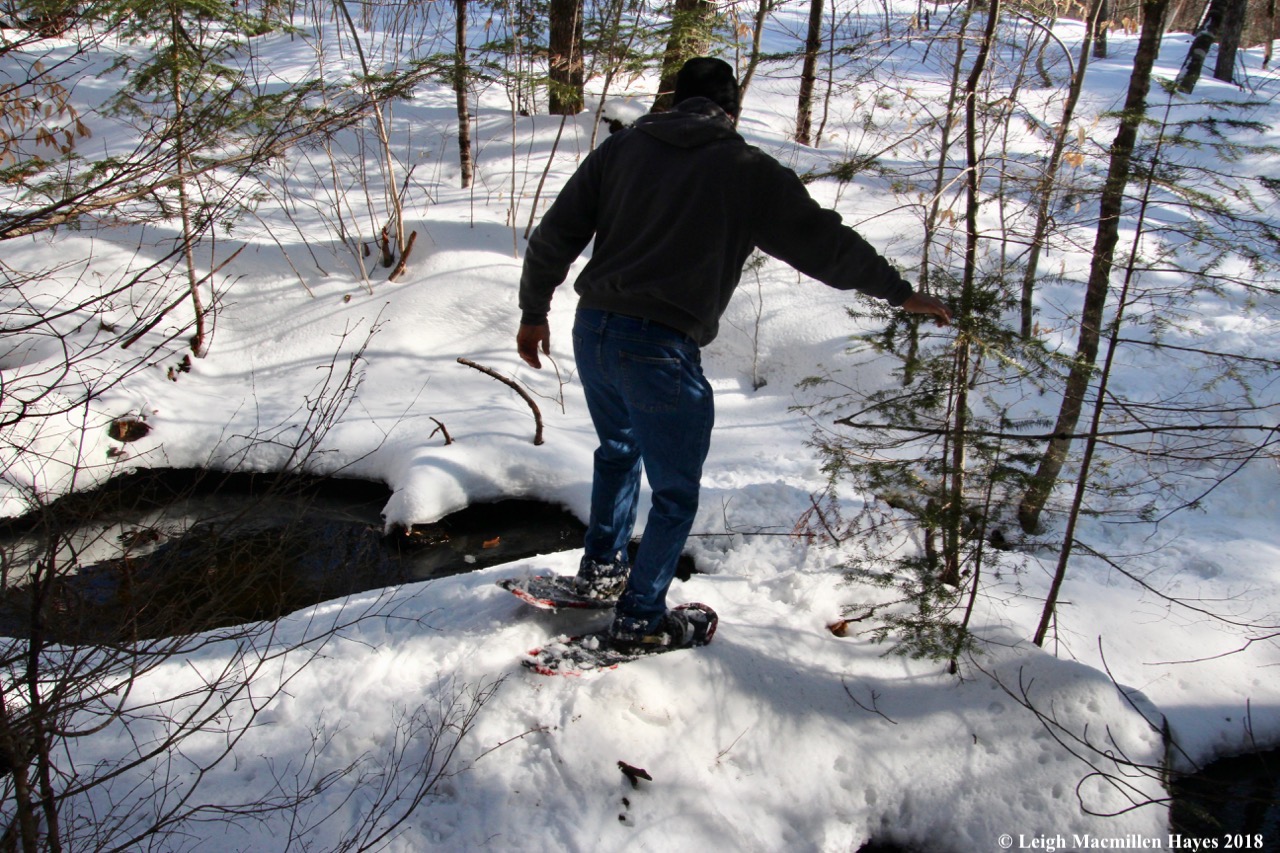
We weren’t sure if snowshoes would be the right choice as we feared the snow might stick to the cleats and make us feel like we were walking on high heels–hardly our style. But, actually, conditions were perfect. Of course, my guy tried going without at first, but after creating one post hole after another, he strapped his on while I headed over to an apple tree to enjoy the view.

We were on a private property in Lovell that is under conservation easement with the Greater Lovell Land Trust.

m2-coyote track

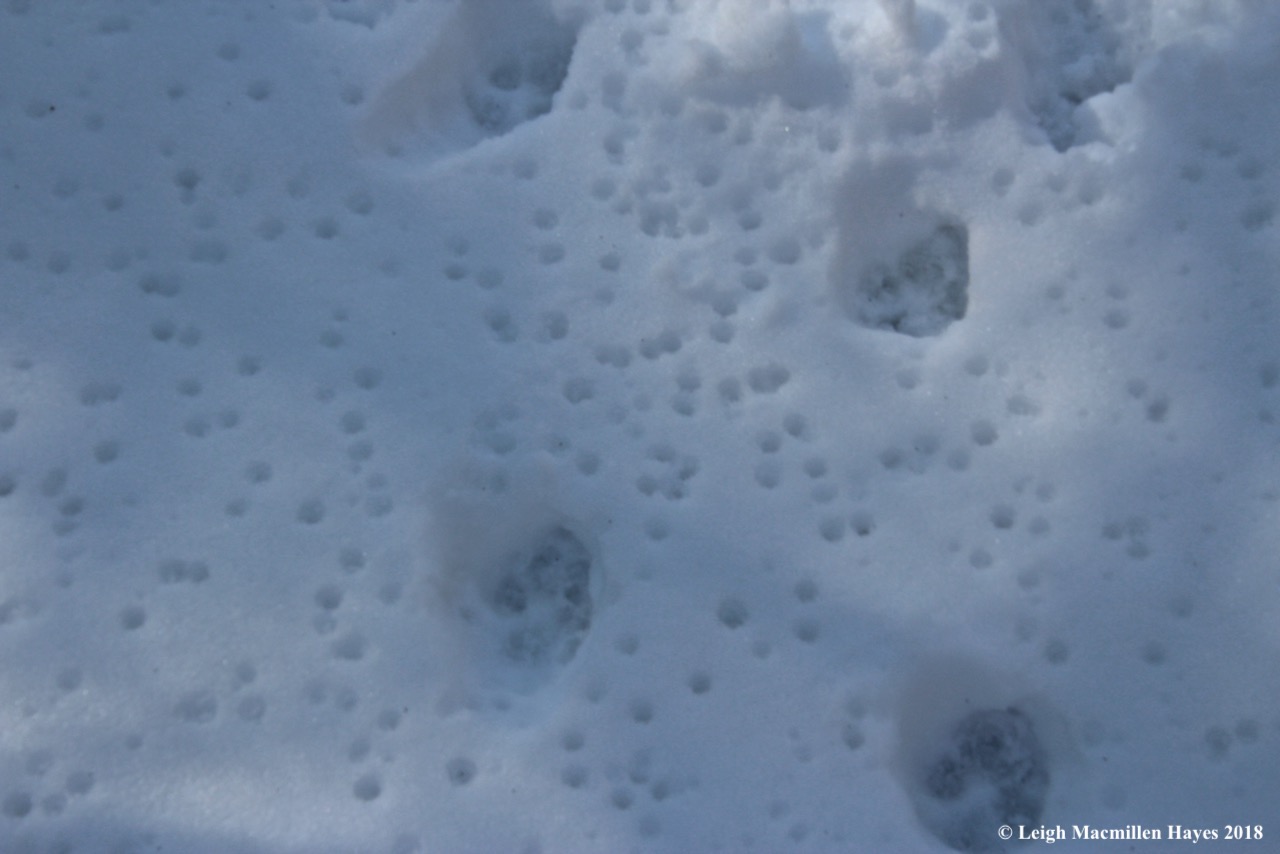
I’d been on this property only a few days ago and the tracks were many, but with the advent of yesterday’s snow, we found only a few. One set was that of a coyote. And fairly fresh was it.

m4-brook below

We moved quickly (of course we did for I was with my guy–but I was equally anxious to get to two destinations) and in no time found ourselves walking along beside a brook.

m5-brook crossing

As we approached we wondered how open the brook might be and decided we’d cross that “bridge” when we got to it. But really, there was no bridge.

m3-icicles at brook crossing

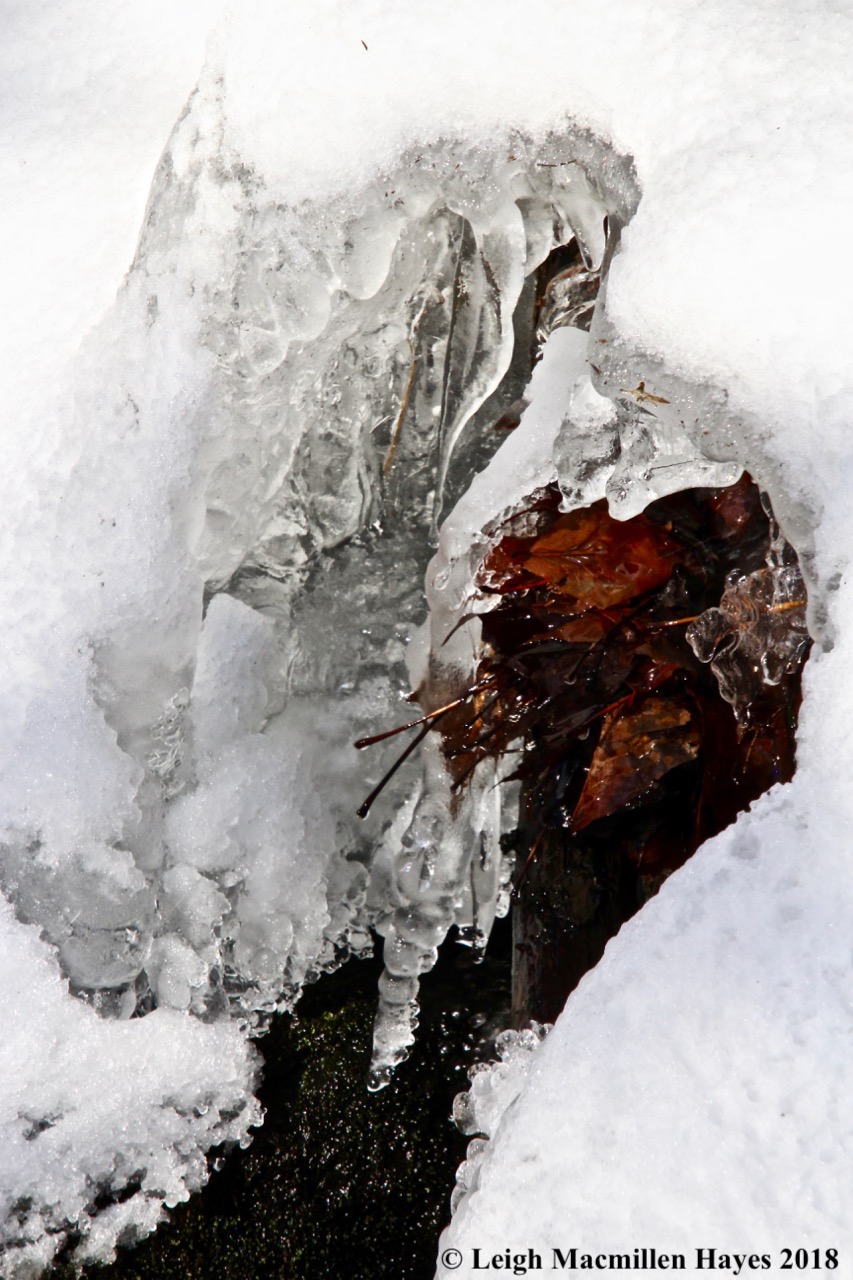
The ice, however, delighted our sense of sight, understanding, and artistic form. Like the water from which it was created, it flowed in much variety.

m6-one coyote became 2

Without any problems, we found our way to the other side and realized we were in the company of others who had done the same. One moment it seemed we’d followed one, but then realized we were on the trail of two coyotes when their path split.

m8-porky body

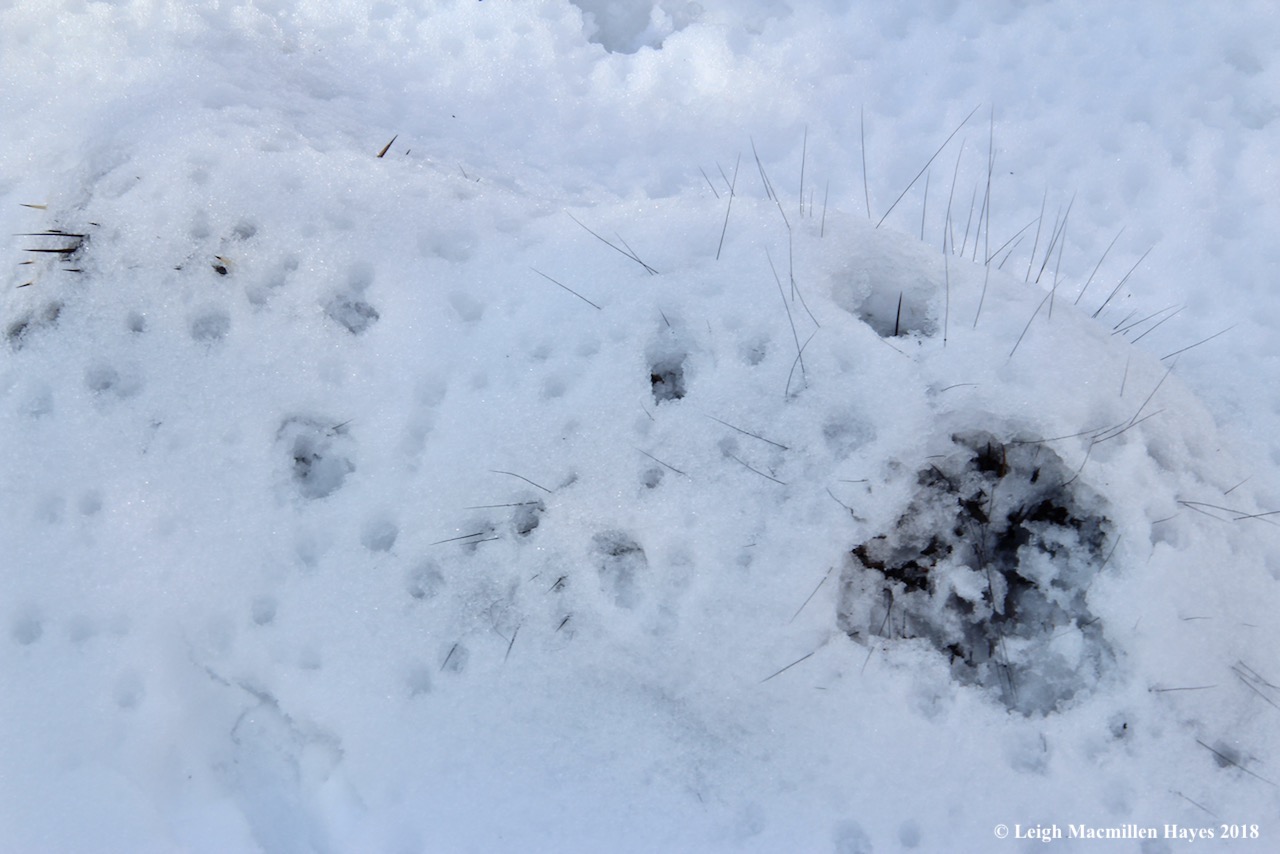
And it split for a reason. To check out a previous kill site. But they only seemed to sniff and not partake.

m9-porky tail

Just as well for it was a porcupine. But really, I was surprised they didn’t try to flip it over to get at the stomach. Maybe somebody else had already taken the pleasure.

m10-rookery and coyote track

On we trekked, until we reached water again. And this time we stopped to look around, while the coyotes moved on.

m11-heron nests

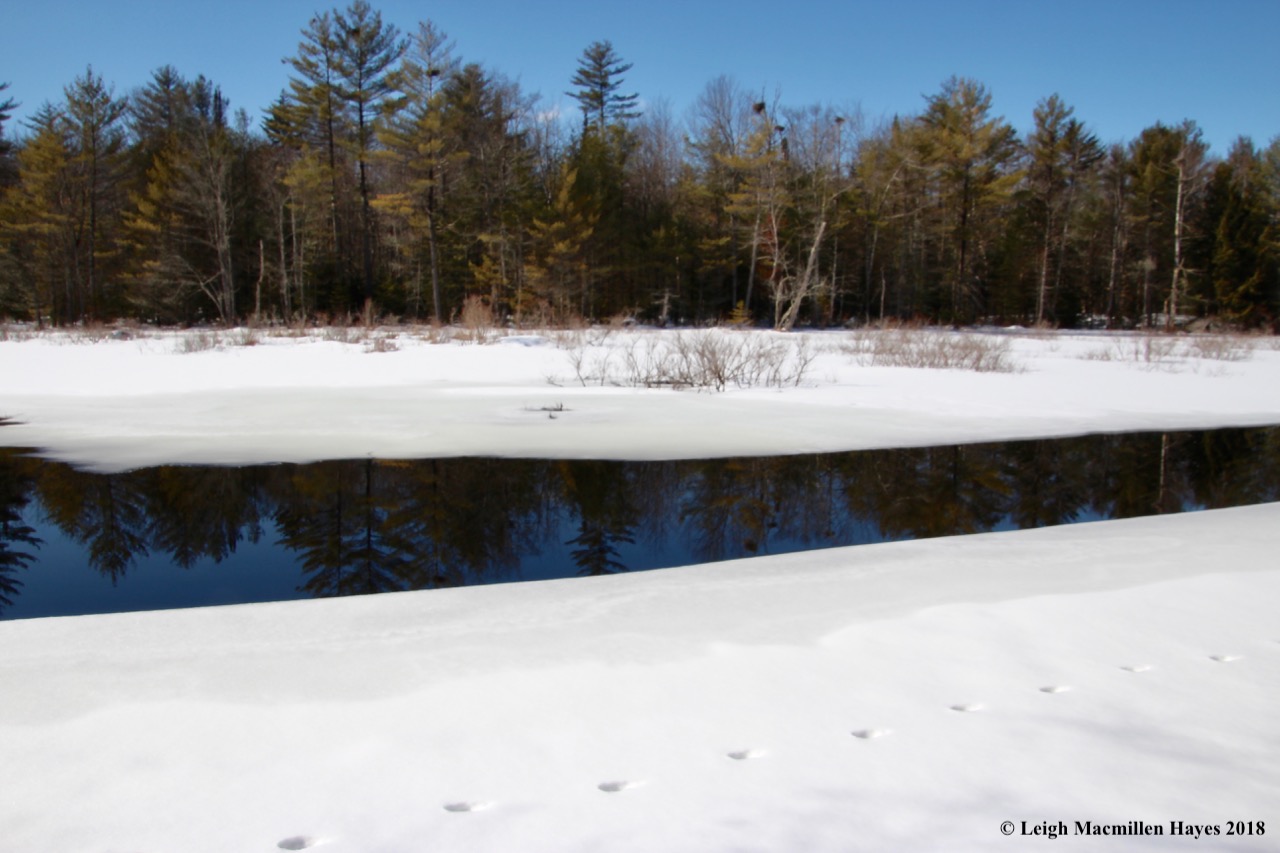
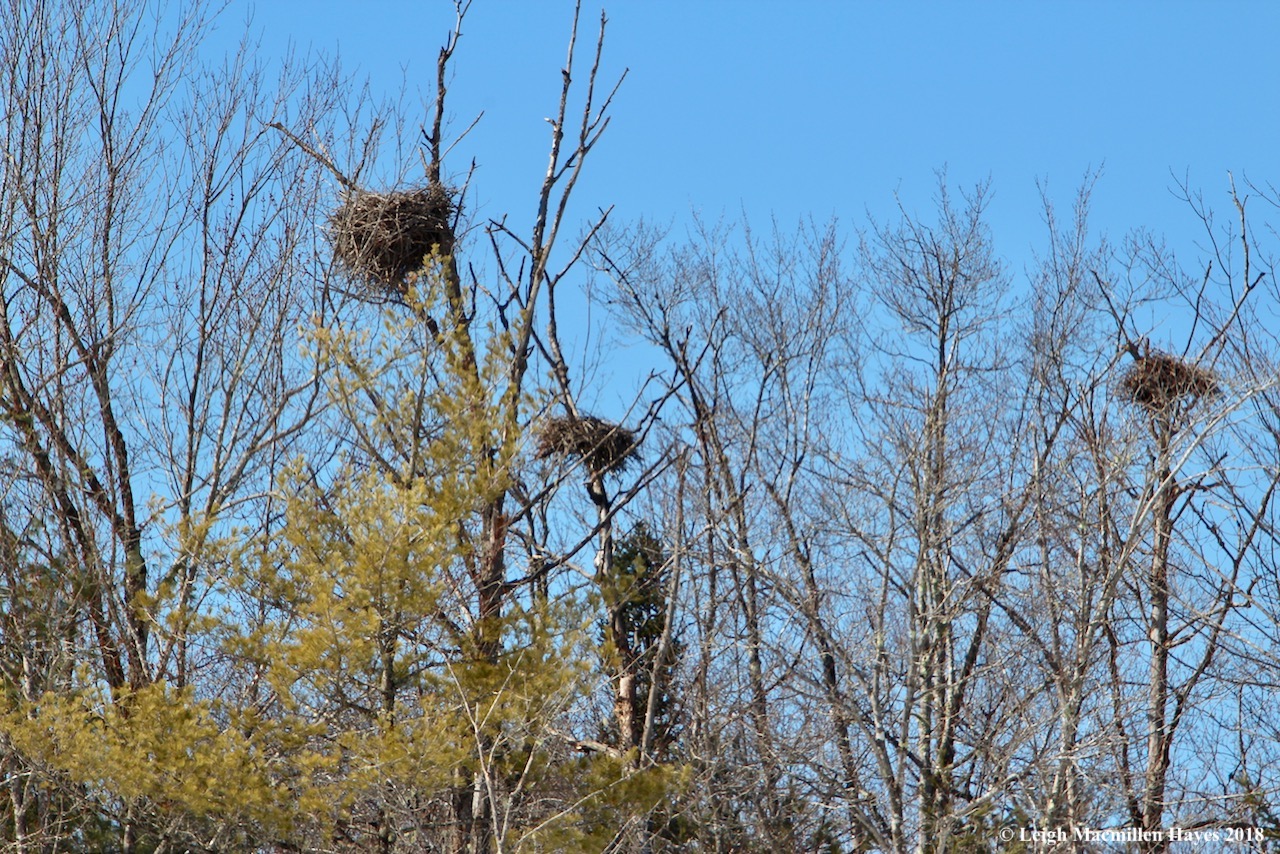
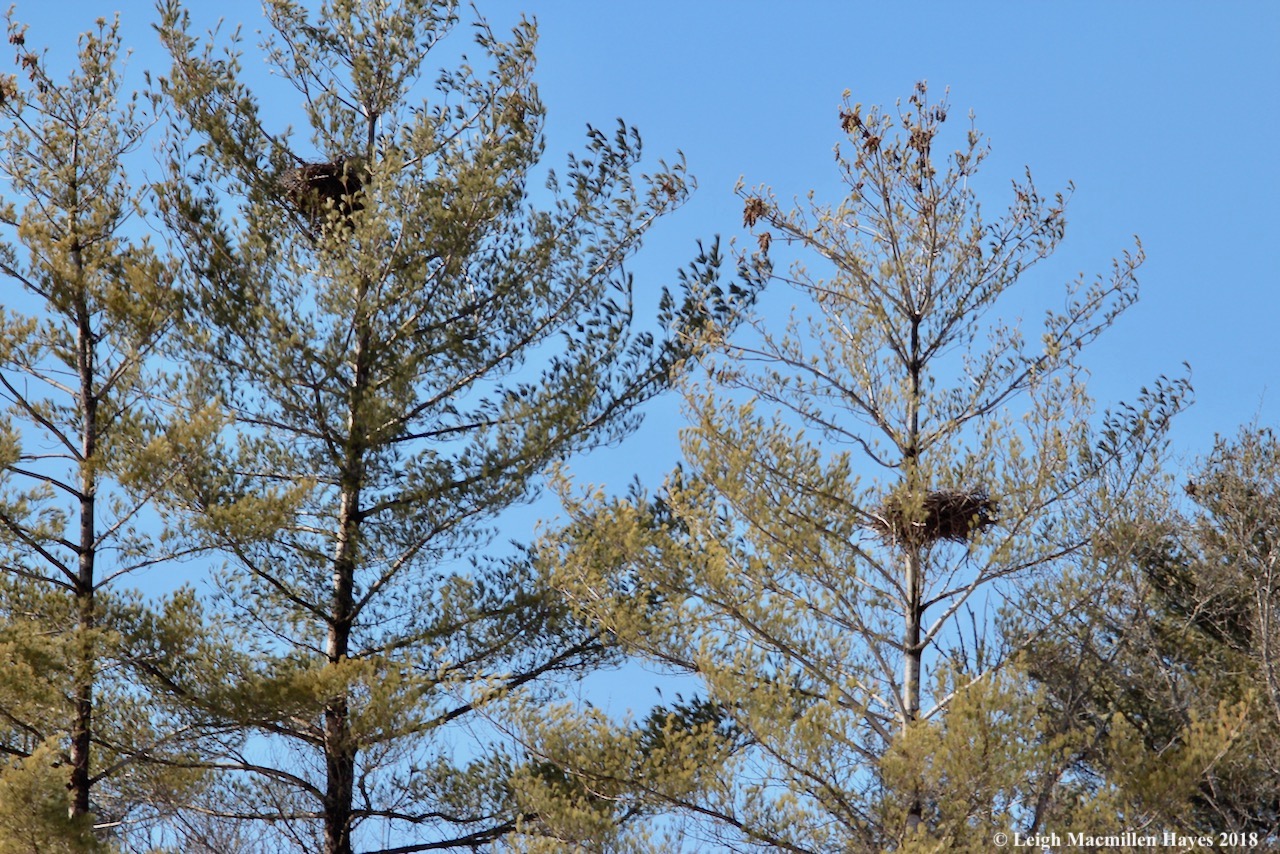
High in the trees across the way we spied the heron rookery–one of our reasons for visiting. We knew the nests would be empty, but still, it’s fun to take note.

m13-heron rookery

And they’re easier to see in the winter than spring/summer when this rookery is monitored for the state HERON project: the Heron Observation Network of Maine. I’ve had the honor of visiting this particular rookery in the past and helping to document the number of residents. Though it was active last April, something happened later to upset the neighborhood and so I’ll be curious to see what the status will be in the future.

m14-heron rookery

For today, the nests looked like they were in great shape and even two in the condominium were awaiting the return of the snowbirds who’d spent the winter south of this location.

m16-lungwort

Because we were there, I also turned to check on another tree–which sports a healthy colony of lungwort–photosynthesizing because it had been snowed upon.

m15-mesmerizing scene

We stayed for a while, my guy and I, enjoying the peace and quiet and colors and textures of the afternoon that curled around us.

m18-crossing over

At last, we pulled ourselves away and crossed back over the brook. It was a piece of cake. Well, at least we didn’t fall in.

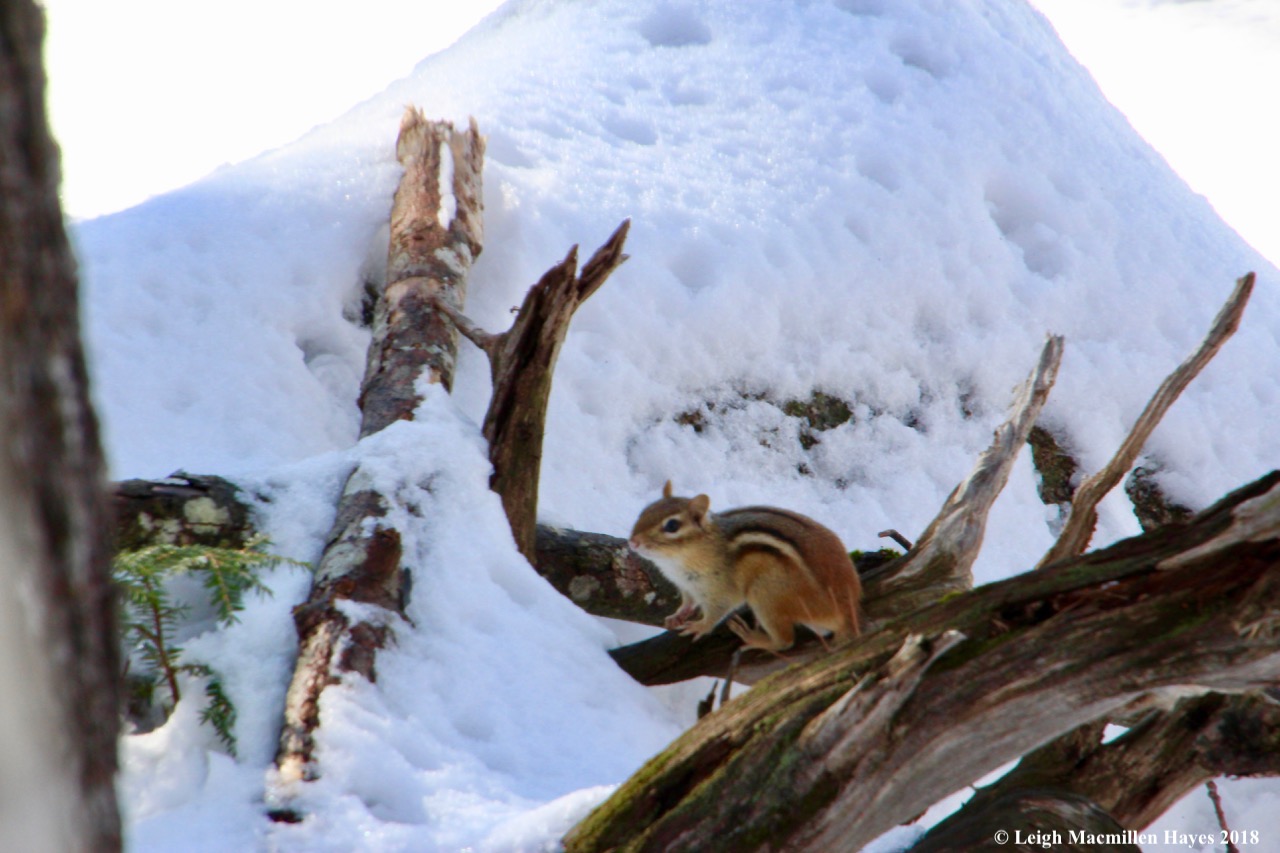
m19-chipmunk

Our next destination took us past a condo of another sort–one created by a chipmunk who kept an eye on us, then swiftly disappeared. We could only wonder about the inner chambers of its home.

m17-striped maple beaver works

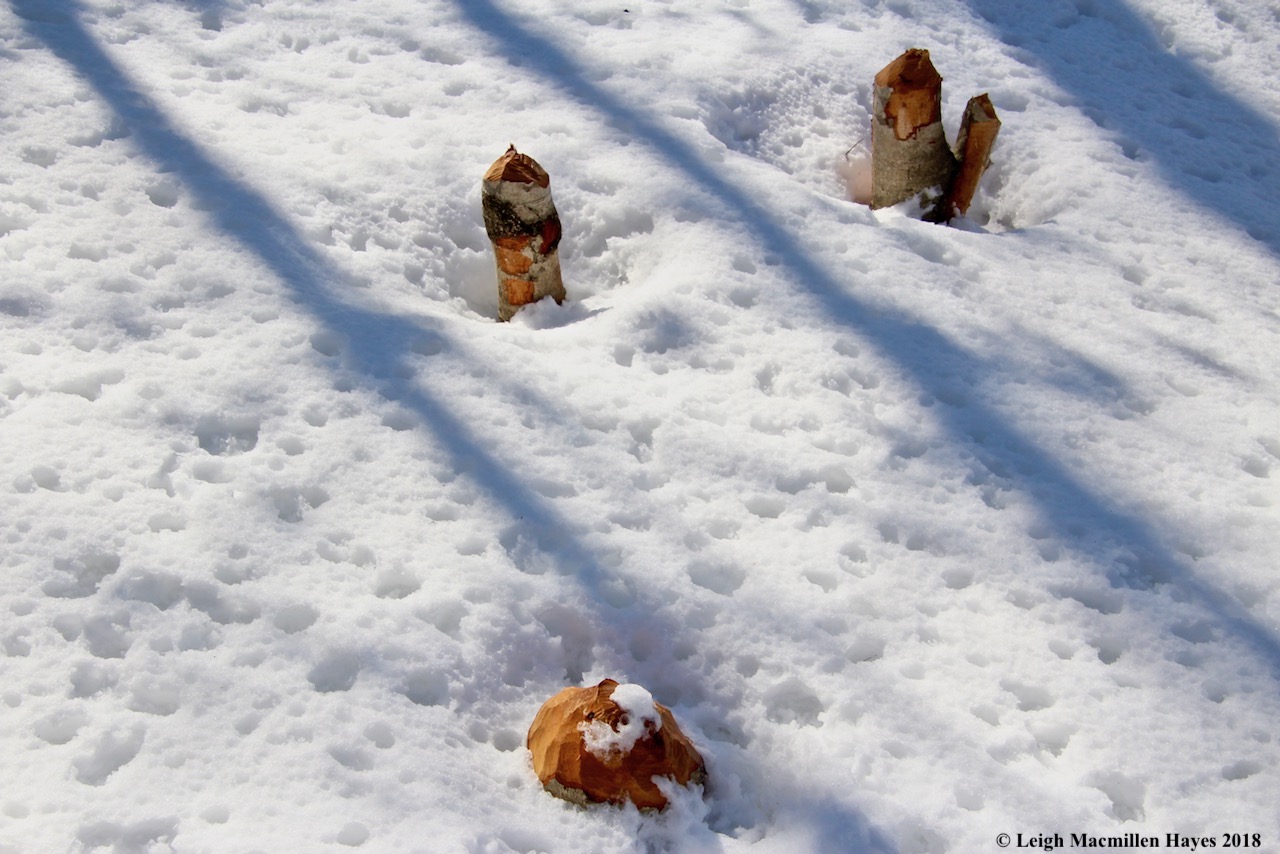
It was after that that we began to encounter the works of another rodent, this time upon striped maple.

m20-beaver works

The art pieces were sometimes large,

m21-beaver works small

other times small,

m23-beaver works mistake

and sometimes mistaken–as in logistics of the felling.

m22--false lodge

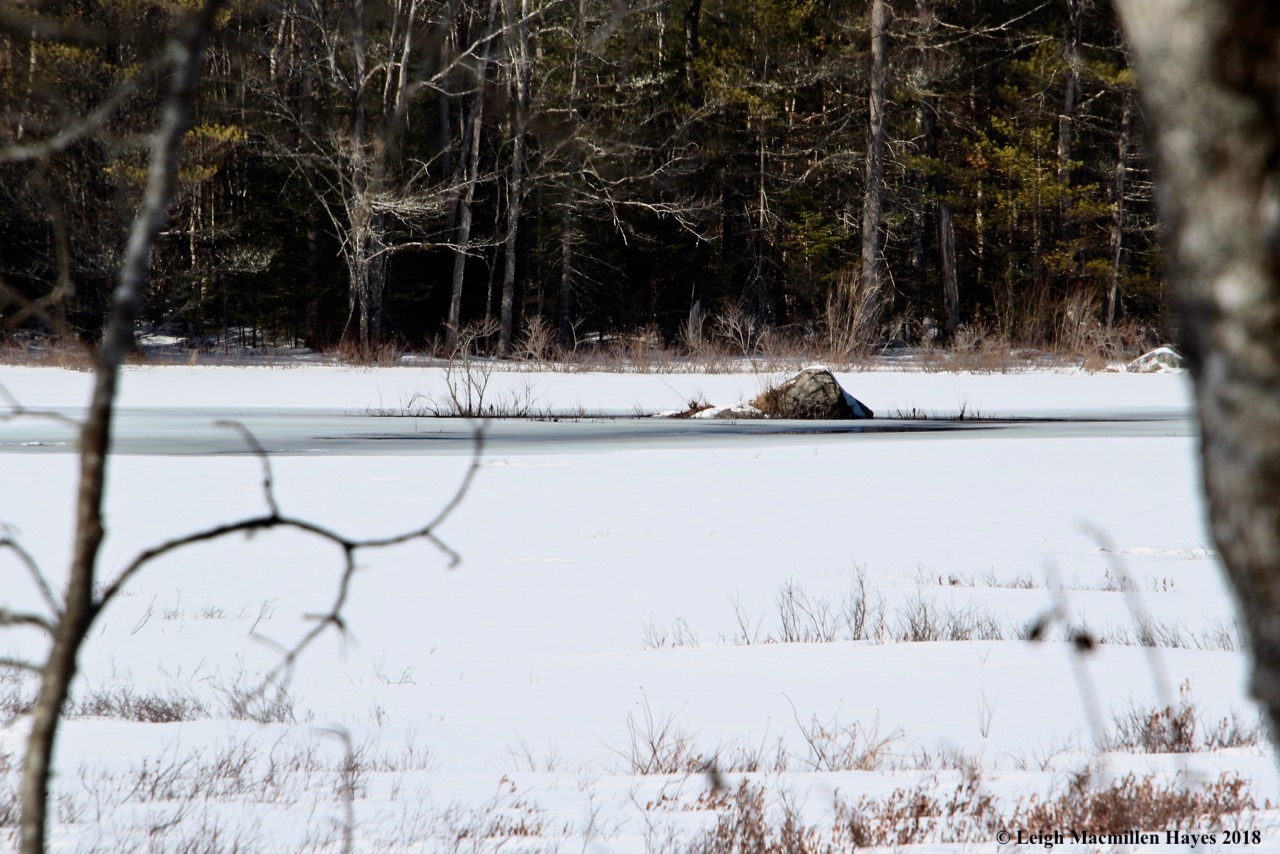
But that didn’t matter for their buildings were many. Oops, the first one we spied was actually a boulder.

m24-beaver lodge 1

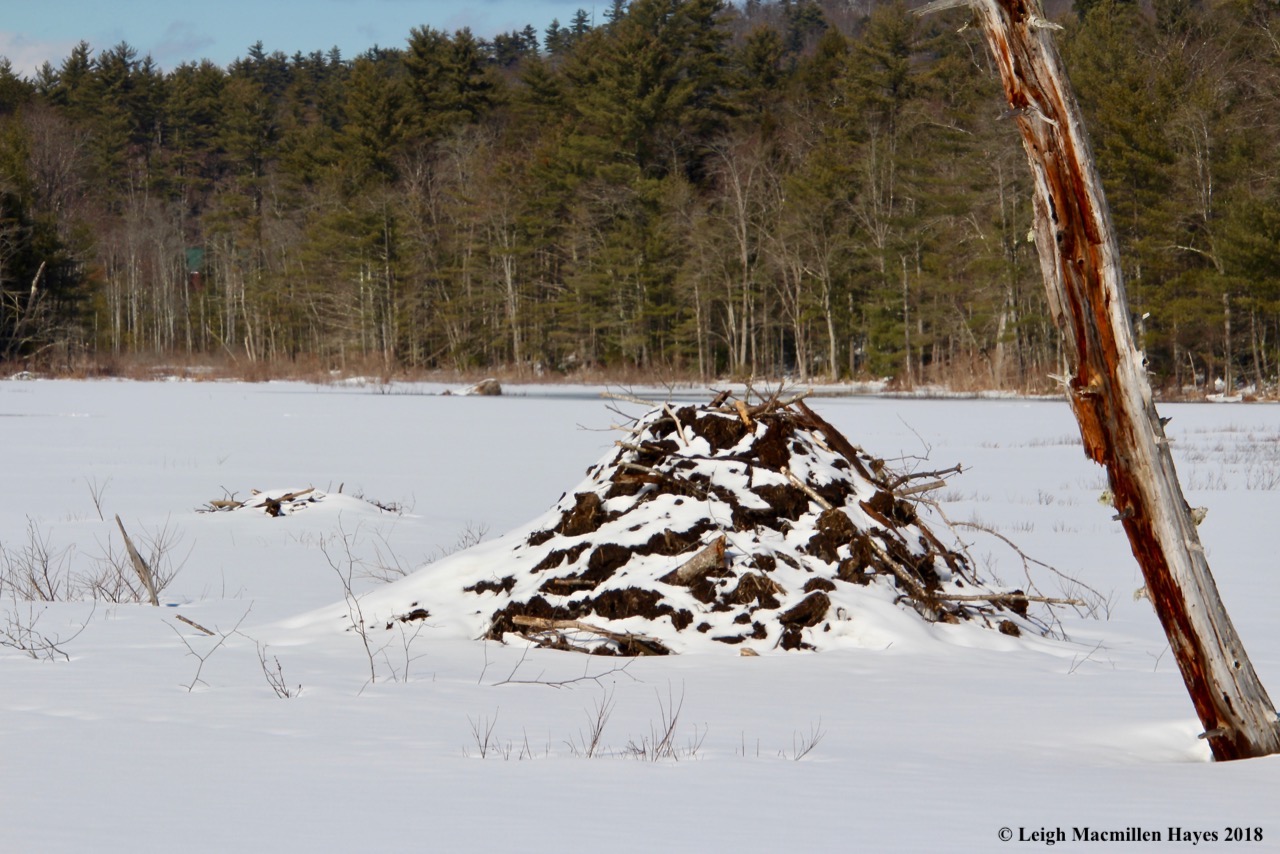
Further along, however, we found the main building. It was topped with fresh wood and well mudded, so we assumed warm bodies dined and wined within.

m25-beaver lodge 2

There was another nearby, and we could see indentations denoting visitors had stopped by prior to yesterday’s storm. We also noted that the ice had melted all around it. Was someone home? We knew not.

m26-looking back from the dam

On we moved and then turned back to enjoy the view as shadows grew long.

m27-beaver dam

Turning 180˚ again,  we looked toward the beaver dam that stretched before us. I’d last visited in late November and wondered what it would look like today.

m28-below the beaver dam

It looked . . . snow covered.

m30-otter track

But . . . in that snow we spied our critter. Do you see him?

m32-otter moving from brook to land

We followed him downstream–he was on the other side of the brook, but moved in his telltale manner . . .

m33-following the brook

across the landscape . . .

m35-otter again

in and out of the water . . .

m43-otter slide and bound

bounding and sliding . . .

m42-otter slide

and sliding some more . . .

m40-prints, trough, scat

leaving behind fresh scat and prints . . .

m44-ice and tree and water and reflection

for our pleasure. We had the time of our lives watching the otter–did you see him?

Truth be told, we never did actually see him, but in our minds eyes we knew his every motion. When we first spied the prints and trough on the other side, we thought he had moved in the same direction as we did. But when he crossed to our side, and we could get an upclose look, we realized we were traveling in opposite directions. He had moved through not long before we arrived. Was he also checking out the beaver lodges? Probably. And hunting for his next meal.

Though we didn’t get to actually see this member of the weasel family, the signs left behind were enough to tickle our fancy and on this Mondate we were indeed otter spotters.