Our bear to beer tour was supposed to last a year, but here it is February 18, and we’ve already completed three of the treks. I think my guy really likes this Christmas present.
If you aren’t aware, for Christmas I gave him a small box I’d decorated with hiking stickers. Inside were thirteen pieces of paper (actually bobcat prints post-its) upon which I’d written the name of a trail where I thought we might find what we call bear trees for they are trees with bear claw marks, plus a place to grab a pint after the hike.

Because it was snowing today, we decided to stay closer to home and visit a property we hope Loon Echo Land Trust will soon own. It surrounds the Bridgton Historical Society’s Narramissic Farm and is one of our favorite places to wander in any season.

Rather than cross through the field as we usually do, I suggested that we follow the former road (current snowmobile trail) behind the barn. At the first stone wall, we passed from the Narramissic property on to what we hope will become the 252-acre Peabody-Fitch Woods that Loon Echo will own once they reach enough dollars to make the purchase.
Another part of my guy’s Christmas present was a donation toward said purchase, which an anonymous foundation will match. It seemed like a win-win deal when I sat down with Thom Perkins, former executive director of LELT to discuss the property proposal. And then last month I co-led a walk along part of the route we followed today and had the joy of learning more about it from Jon Evans, Loon Echo’s Stewardship Manager, and Matt Markot, LELT’s new executive director.
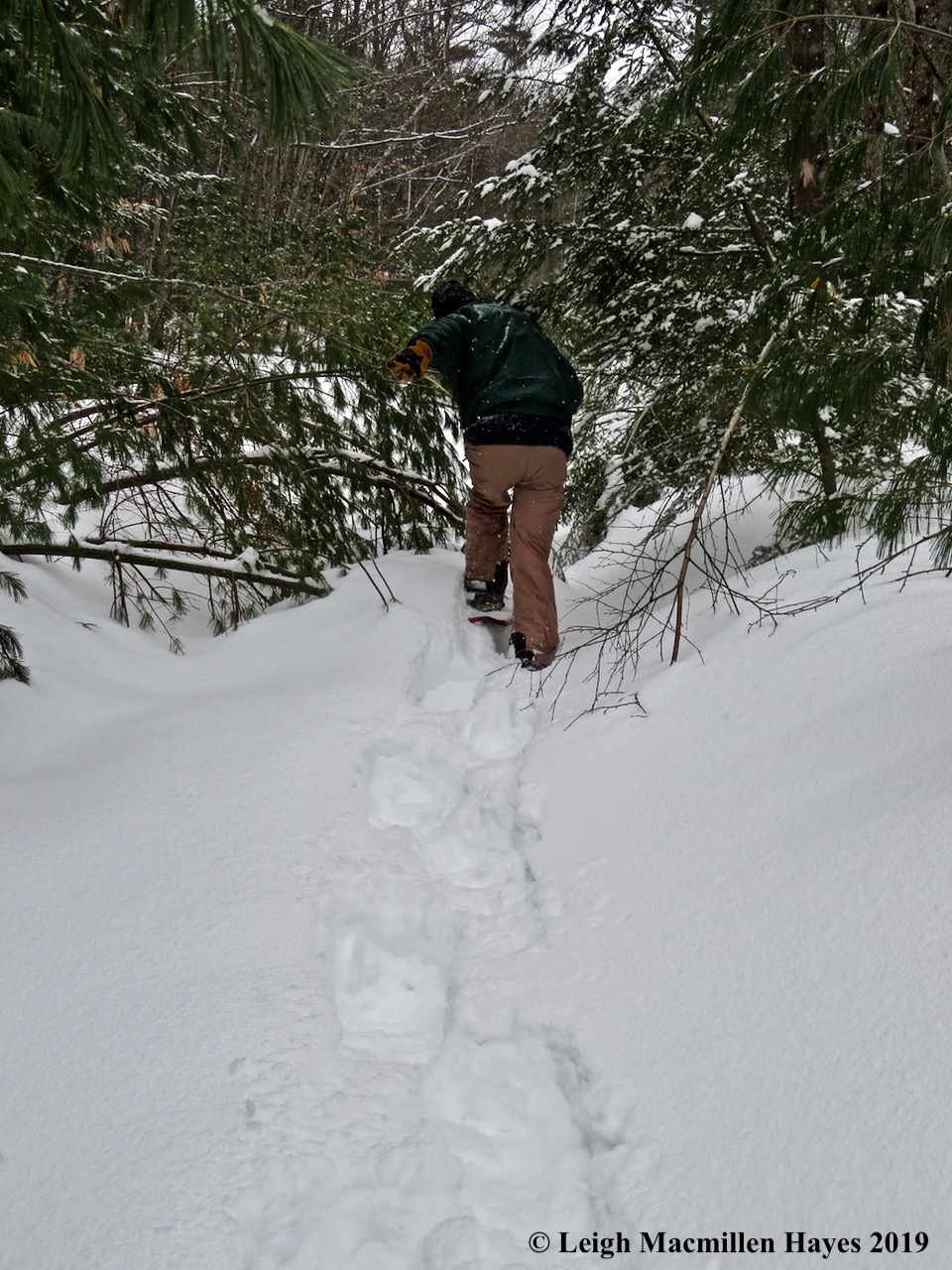
Not far down the snowmobile trail, we turned left at a stone wall, the same as we had during the LELT walk in late January. I was sure this was a route new to my guy, but it turns out it used the be the snowmobile trail and so he knew it. Right away, as we hobbled over and pulled up some downed trees, we began to see a variety of mammal prints muffled by the morning’s snow. Both prey and predator make their homes there and the property’s importance as part of the animal corridor was obvious.

Eventually, the trail swung around and rejoined the snowmobile trail. We followed it for a bit, then turned off at the blue arrow for that was our chosen way for today. It appeared that someone had an eye on my snowshoes.
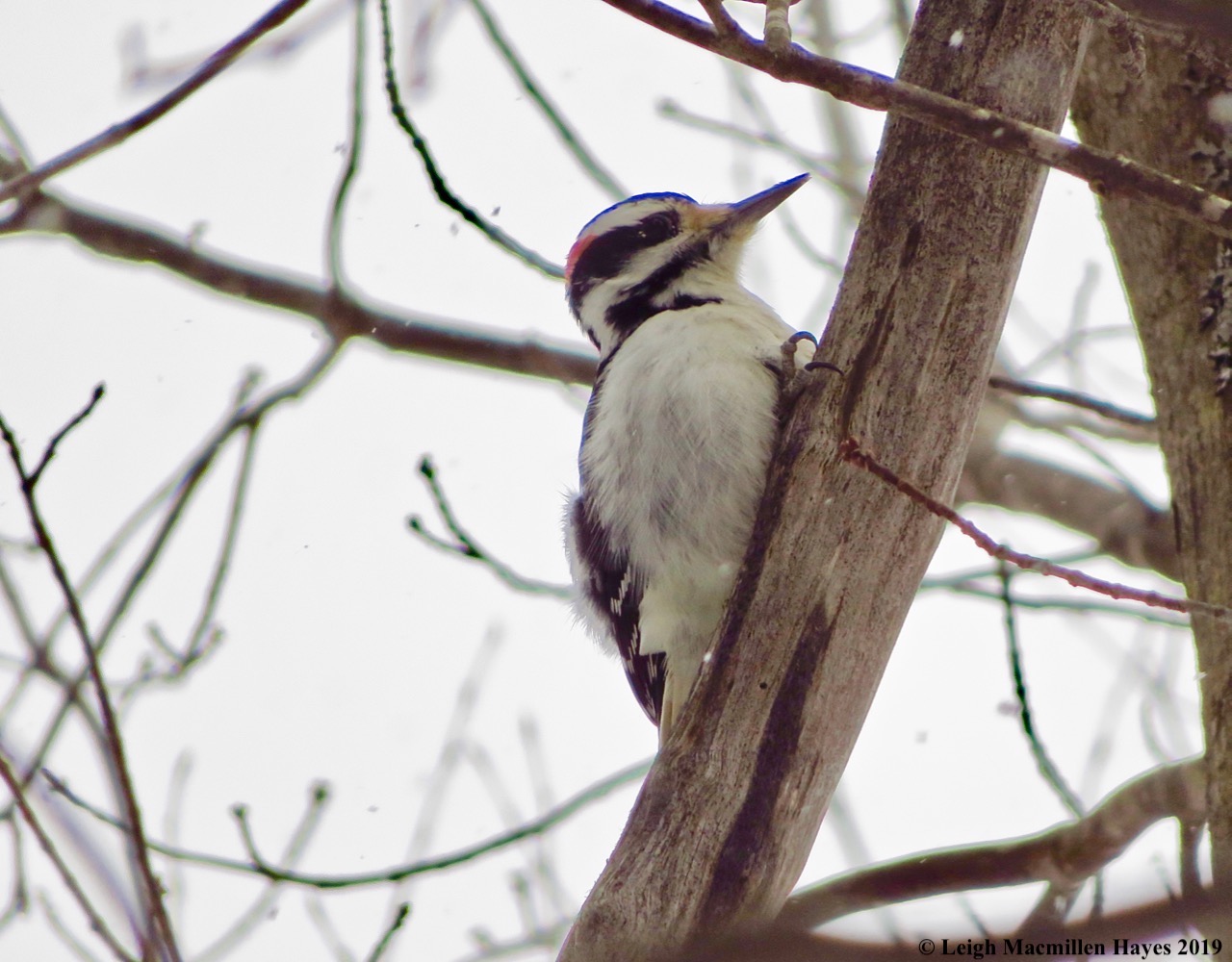
We’d no sooner started along the trail when I heard the rat-a-tat drumming of a male hairy woodpecker. Of course, I needed to pause and watch him for a few minutes. And wonder about the purpose of his drumming. Was he establishing territory? Trying to get a date?

My guy was patient with me, but our mission was about more than the birds, and so we journeyed on. Mind you, we kept looking at the trees along the way, but suspected we’d find bear evidence on our return trip when we planned to go off trail. In the moment, we were eager to get to the quarry and find lunch rock.

It was buried, but my guy in his chivalrous manner, wiped the snow off and we each ate a slice of cold, homemade pizza and drank some water.

Behind lunch rock, plug and feather holes served as reminders of an earlier time–much earlier than either of us remembered. The quarry was the source of the stone foundations for Narramissic, the Peabody-Fitch Farm, which dates back to 1797.
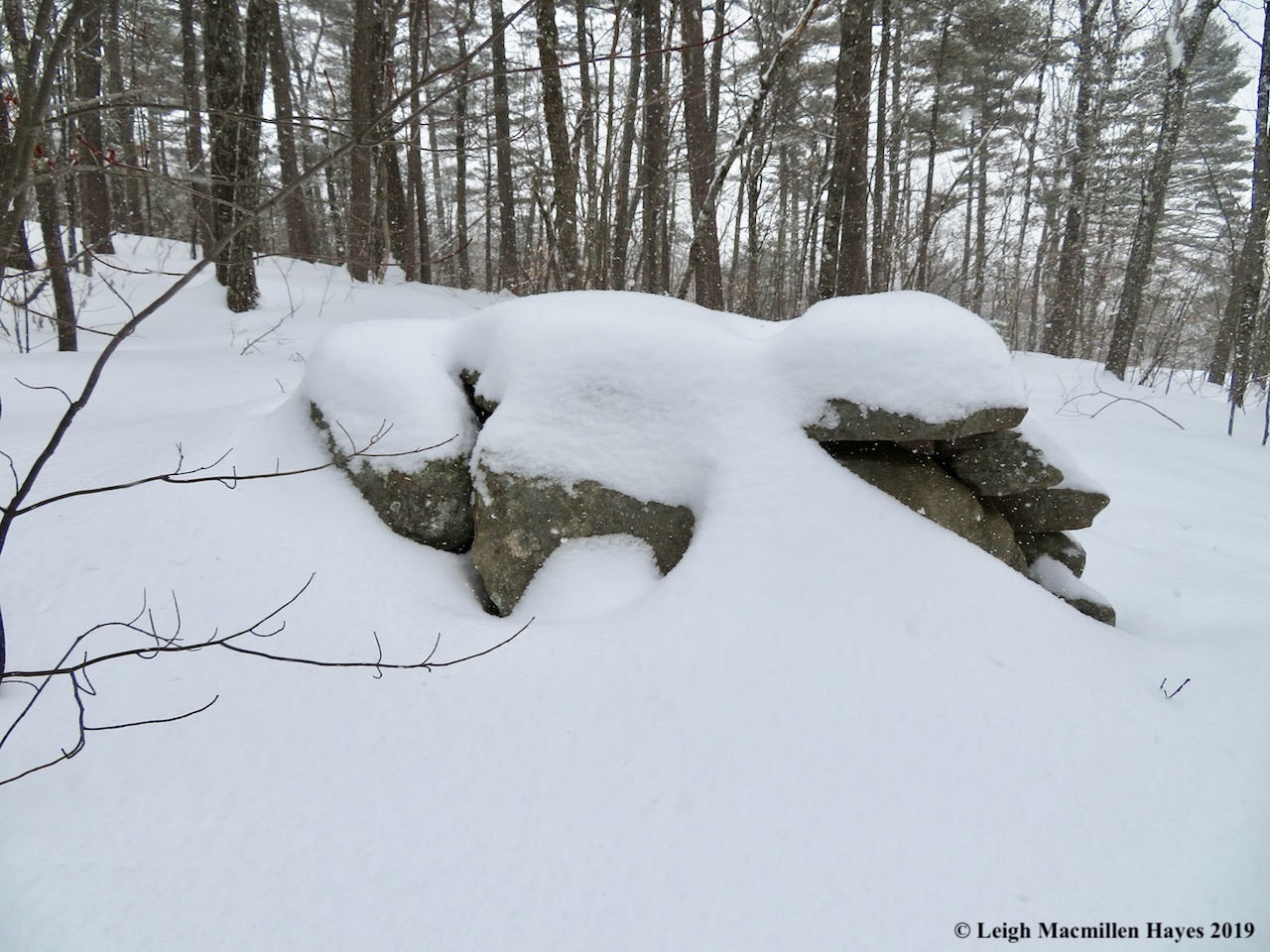
With lunch under our belts, onward and upward we hiked until we reached a certain stone pile.
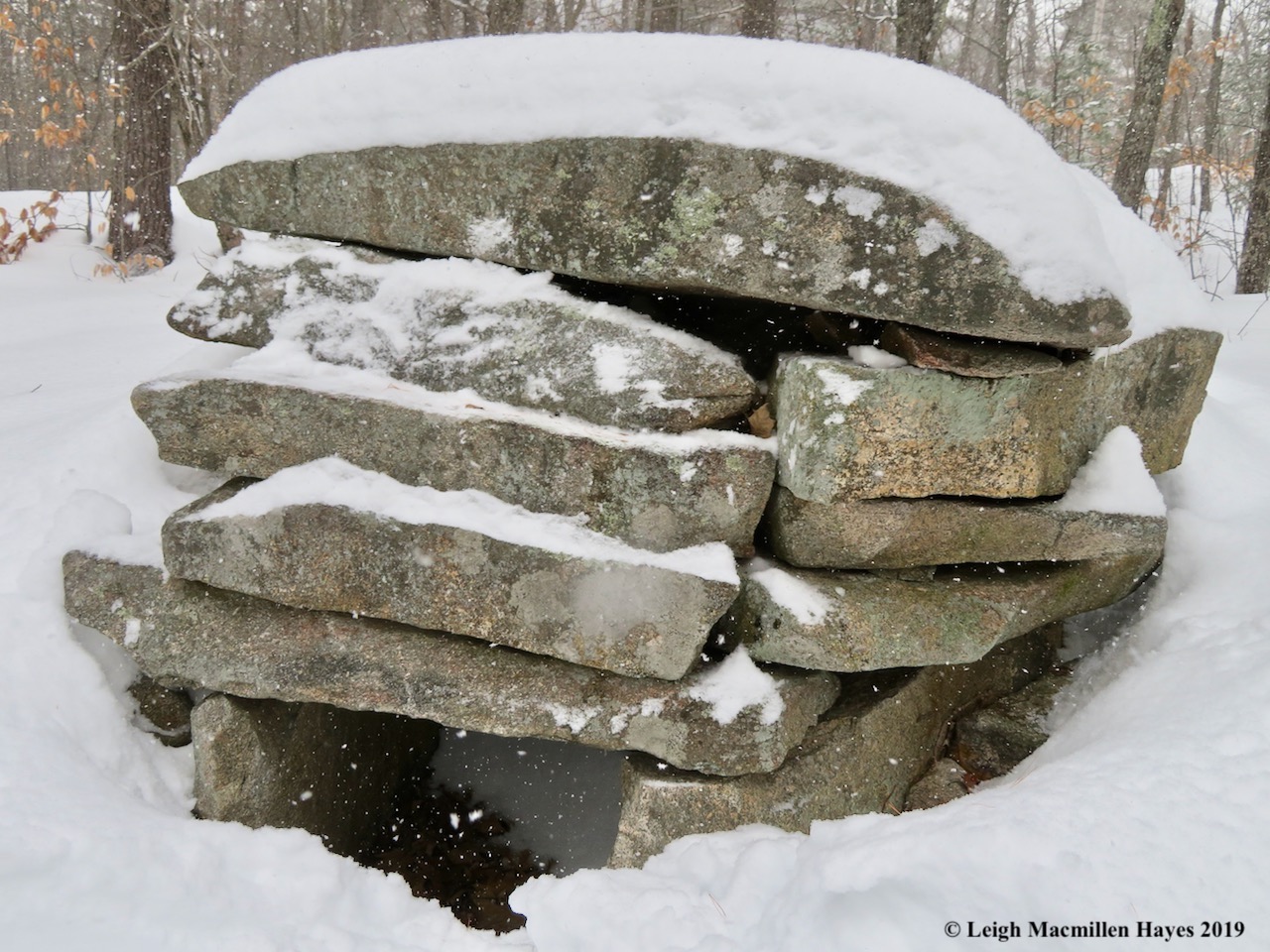
Mind you, it’s located a tad from the proposed Peabody-Fitch Woods, but still, we love to visit bear trap and imagine the past.
I’ve quoted this before, but it’s worth sharing again.
How did the bear trap come to be? According to an August 17, 1963 article in the Bridgton News, “Enoch Perley, early settler of South Bridgton, built his first house in 1777 and brought his bride to their new home in 1778. [I believe this was at Five Fields Farm.]
As Enoch acquired livestock, he was much troubled by depredations from bears. He built a bear trap on the hill back of his first home . . .
Tradition says that four bears were caught in this trap–not enough! So Mr. Perley later had an iron bear trap made which took care of eight bears. Without a doubt, many were disposed of by him personally. A story is told that in an unarmed encounter with a bear and two cubs beside a wood road at dusk, Mr. Perley allegedly strangled the mother bear with his garters . . .”
The article continues, “The bear trap is built of stone. A large stone door is suspended and as the bear takes the bait, he trips the lever and is caught in the stone enclosure.”
In a December 1954 issue of the Bridgton News, a brief article states: “The old stone bear trap on the mountain in South Bridgton known as ‘Fitch’s Hill,’ unused for more than one hundred years, has been reactivated by Dr. Fred G. Noble and Gerald Palmer and put in readiness to capture a bear.” As the story goes, they never did succeed.
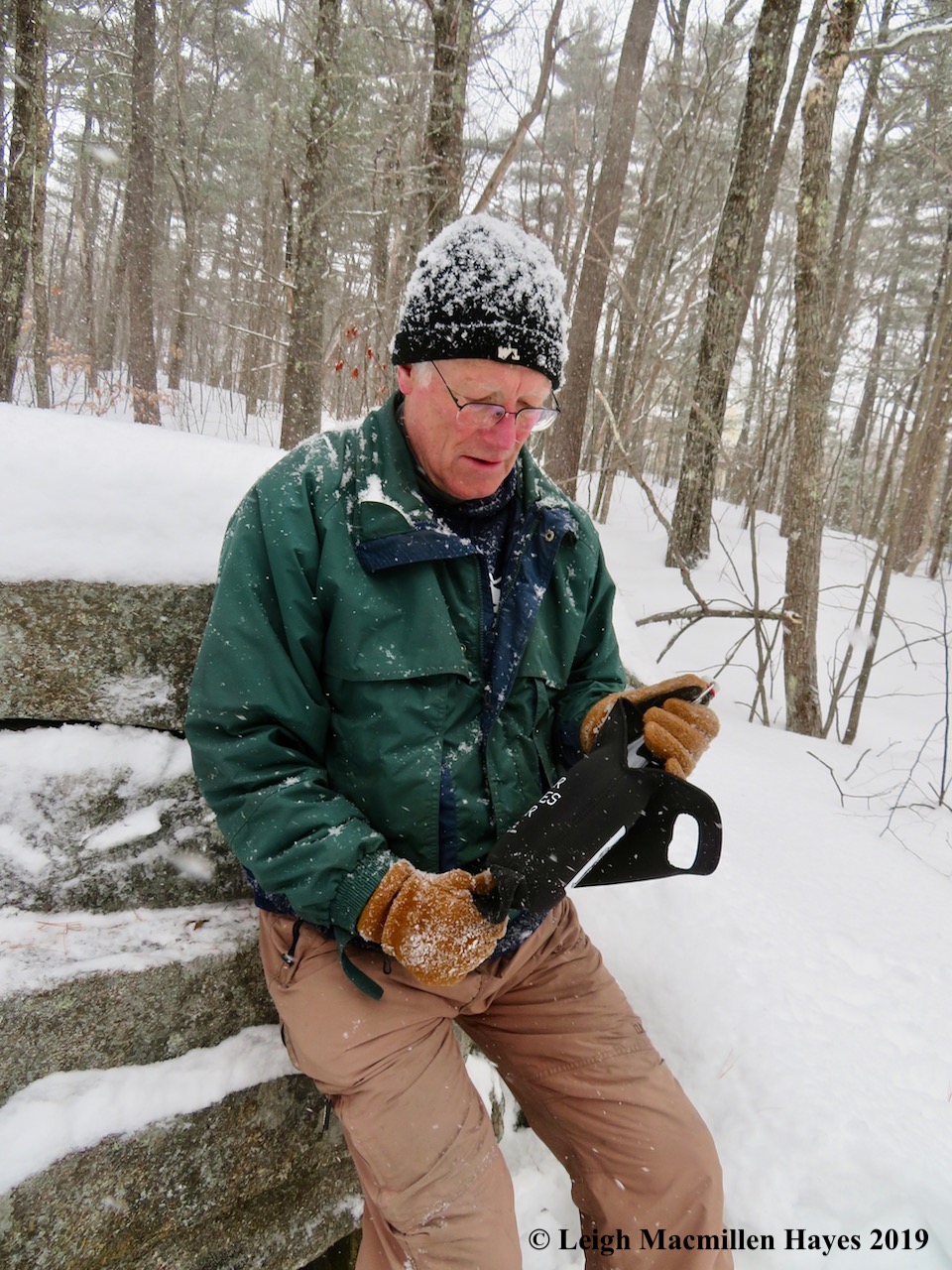
In honor of the Perleys, Peabodys, Fitches, and the bears, we’d brought along a growler, a Valentine’s Day present from my guy to me.

We each enjoyed a few sips and then peered inside the trap to see if anyone had taken up residence. Perhaps we should have done that first! Thankfully, no one was home.

Eventually, we headed back to the trail, but didn’t spend long on it.

Instead, we began looking for bear trees. To test your visual acuity, can you spot my guy?
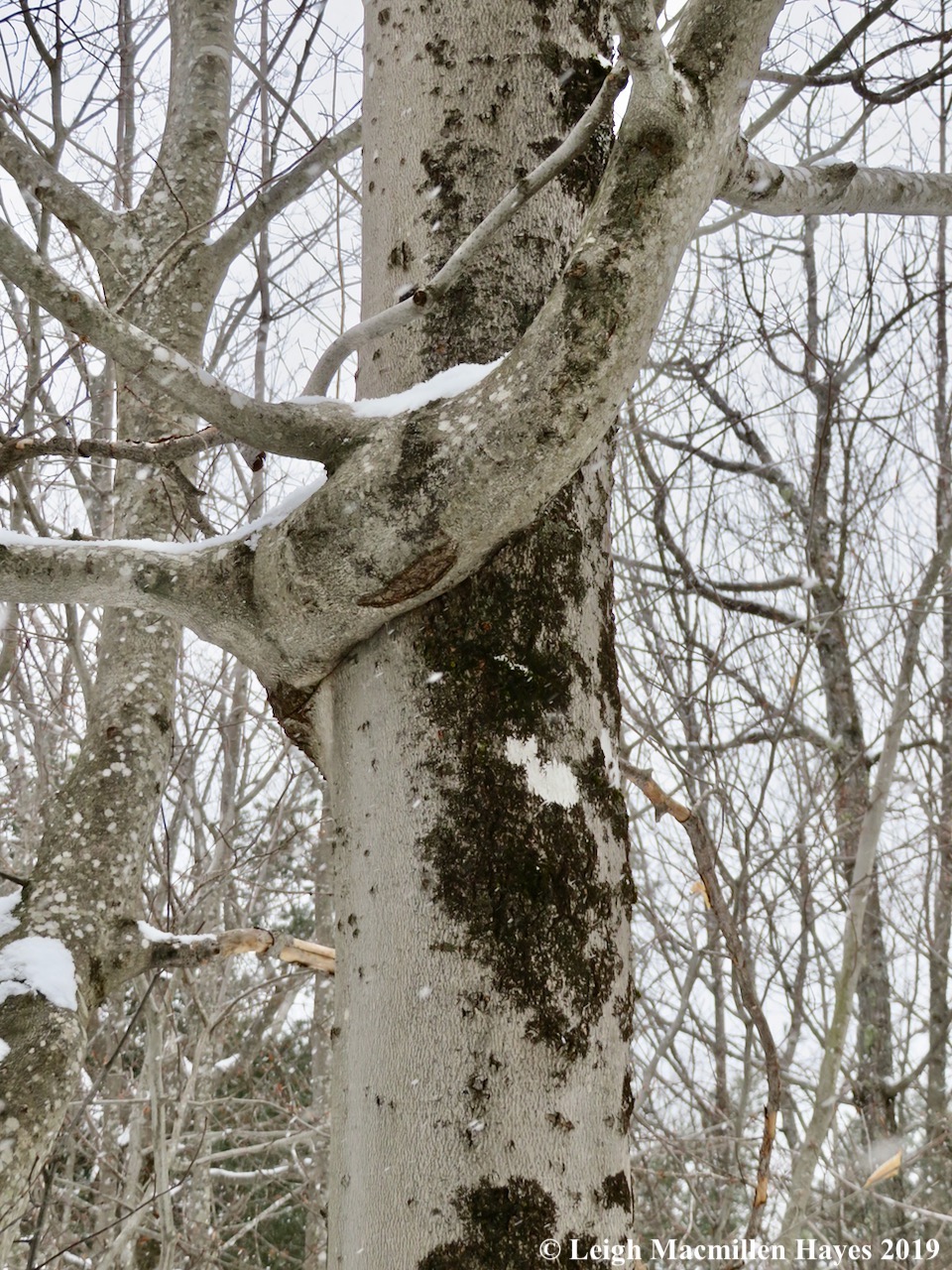
I couldn’t always see him for we split up for about an hour and zigzagged our way from one beech tree to another. I found one that gave itself a hug.

There were those with false lines. Well, they weren’t really false, but they weren’t caused by a bear either. Instead, surrounding saplings blowing in the wind had scratched them.

Then there was the tree that seemed to have stitch marks on the outside of its wound. Unfortunately, the stitches didn’t help.

One of my favorites was the beech that made me think it was a deer bending over as if to take a bow.
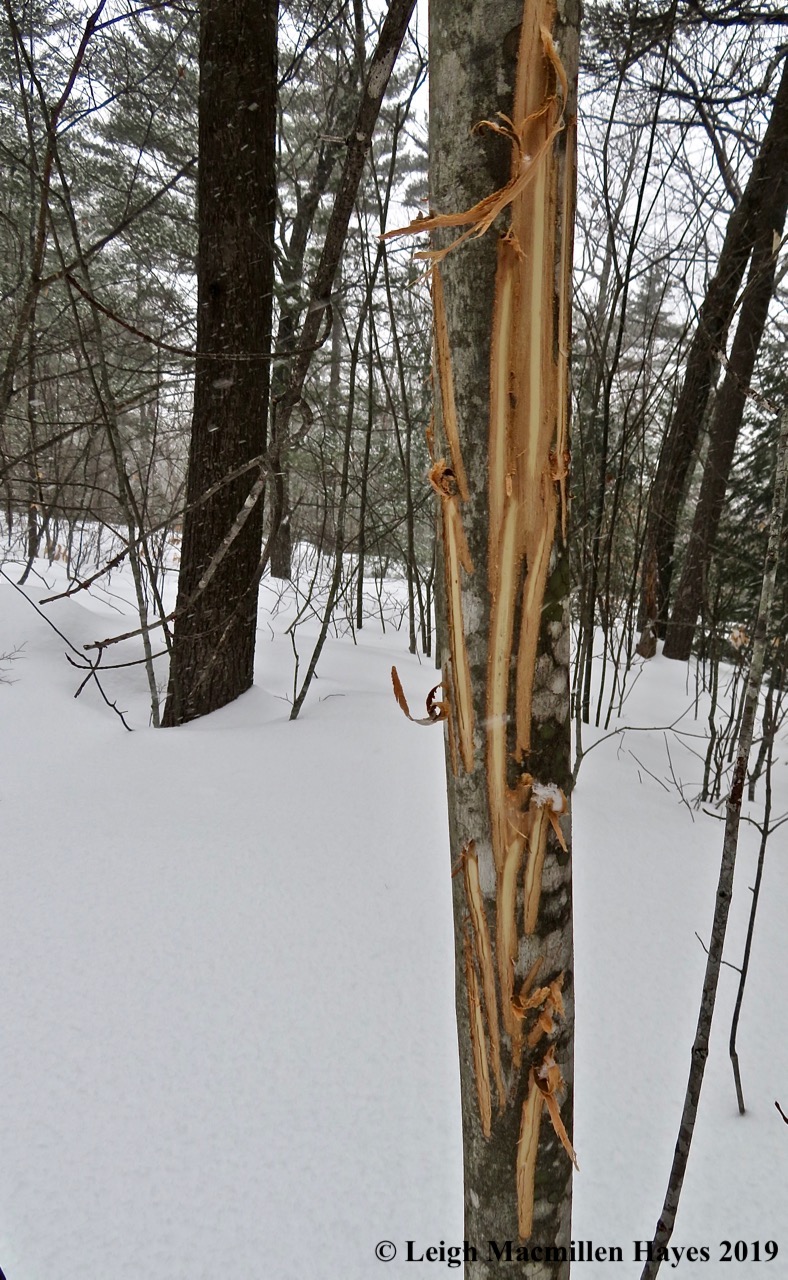
That made perfect sense in these woods where the deer did dine.

And at least one rubbed its antlers.

Suddenly, from a distance I heard my guy call to me. He thought he’d found what we sought. A bear tree. The growth at the top certainly leant itself to that assumption.

I’m not one hundred percent sure that he was right, but there were some marks that looked consistent with bear activity–a bear with a very big hand.

Closer to the trail, we did find another tree with bear sign–left behind by Teddy Bear and K.F., whoever that might be.
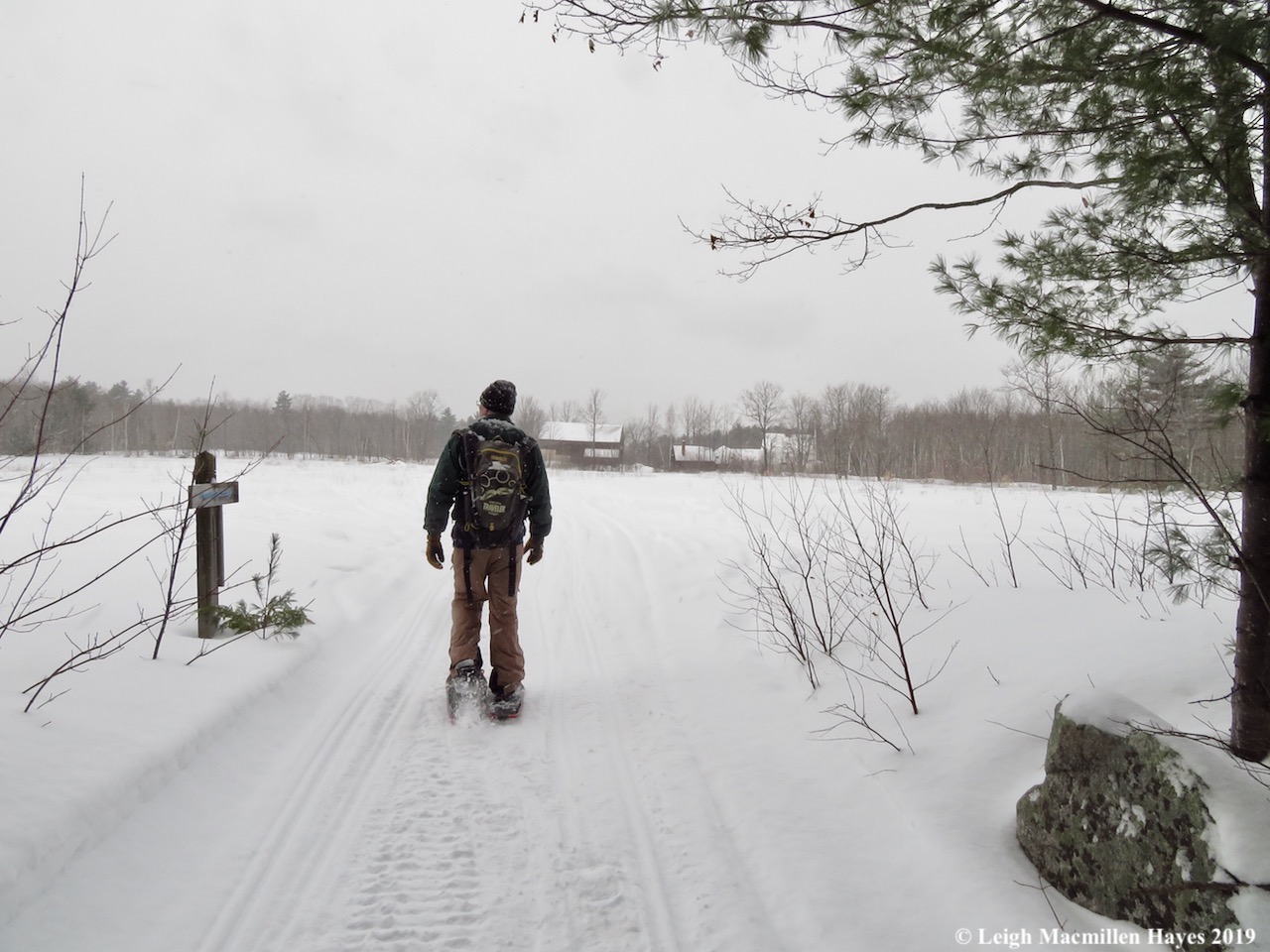
About three hours after crossing through the stone wall behind the barn to enter the future Peabody-Fitch Woods, we did the same at the far end of the farm field.
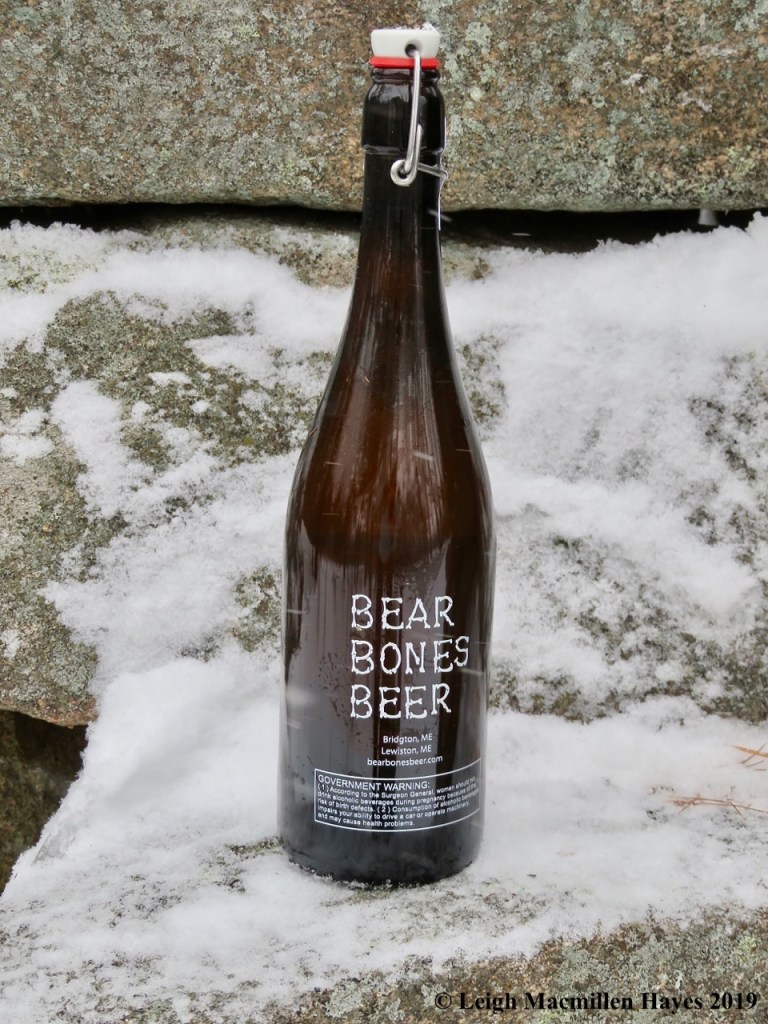
And in the end, even if our bear tree wasn’t exactly that, we’d still had a bear sighting–in the form of the trap. Today’s brew was Double C.R.E.A.M. Ale from Bear Bones Beer Brewery. Bear to beer possibilities: Peabody-Fitch to Bear Trap.







 wondermyway