Beware the Ides of March

As I write, snow flurries float earthward landing atop the almost two feet of snow we received yesterday. Perhaps I should have heeded the soothsayer who warned Julius Caesar to “Beware the ides of March,” in Act 1, Scene 1 of Shakespeare’s play about the Roman politician. 

But I didn’t. I stepped out the door this morning and took my friend, Judy Lynne, with me for today is her birthday, thus making March 15 a day of celebration rather than one to be dreaded.  

As for “ides,” that word refers to the day in the middle of the month. Every month has a day that divides it in half, therefore, every month has an ides. But still, in the play it sounds so ominous–and is eventually.

And as for Judy, she missed the blizzard (and all our winter weather) because she teaches in China. And she is not at all like the Roman soldiers. Rather, Judy embraces every person and critter around the world and sheds love wherever she goes. 
p-porky

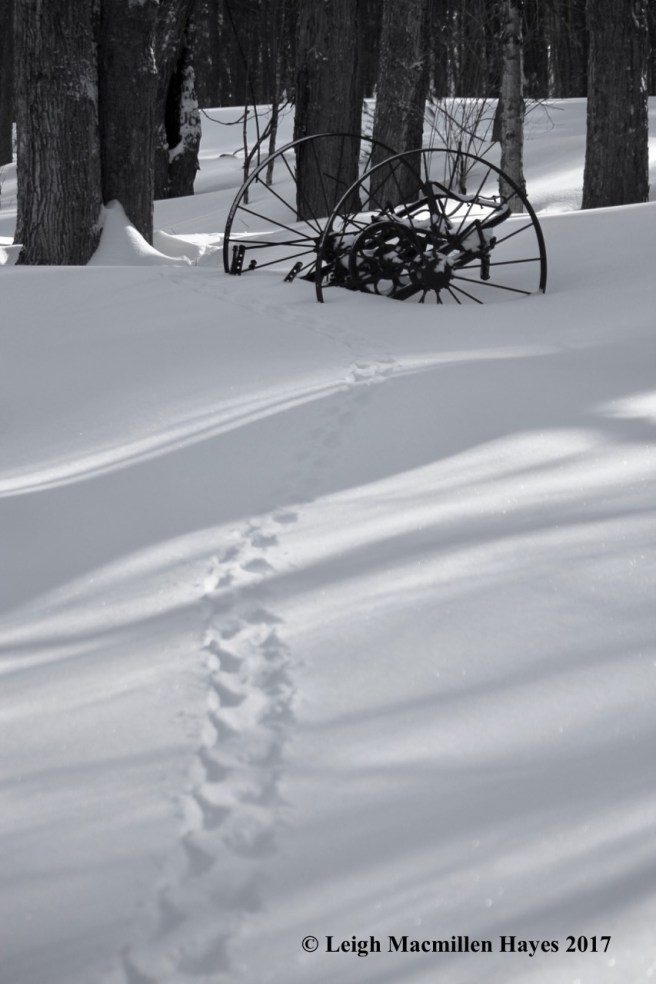
Since she can’t be in western Maine to enjoy the results of a late season storm, she’ll have to travel vicariously–beginning with the porcupine who didn’t let a little snow stop him from plowing through. Those of us who know Judy travel in a similar manner as she shows us parts  of the world we may never actually visit. 

p-Mount Wash

The view of Mount Washington will help her get her bearings. It is this and Pleasant Mountain and our orientation to them on the horizon that help us recognize our place in the world.

p-snowshoe hare

I didn’t expect to see many tracks this morning, but was pleasantly surprised. Besides the porcupine, I saw deer, mouse, red and gray squirrel, chipmunk and these. I can’t give you lobsters for your birthday, Judy, but I can give you the lobster-like prints of snowshoe hare. 

p-AMC bridge

I often don’t know where I’m headed when I walk out the door, and today was no different. This journey took me into Pondicherry Park where I stopped by the AMC bridge and thought about Judy’s ability to cross bridges with people of other cultures, no matter how deep the snow may be.
p-AMC bench

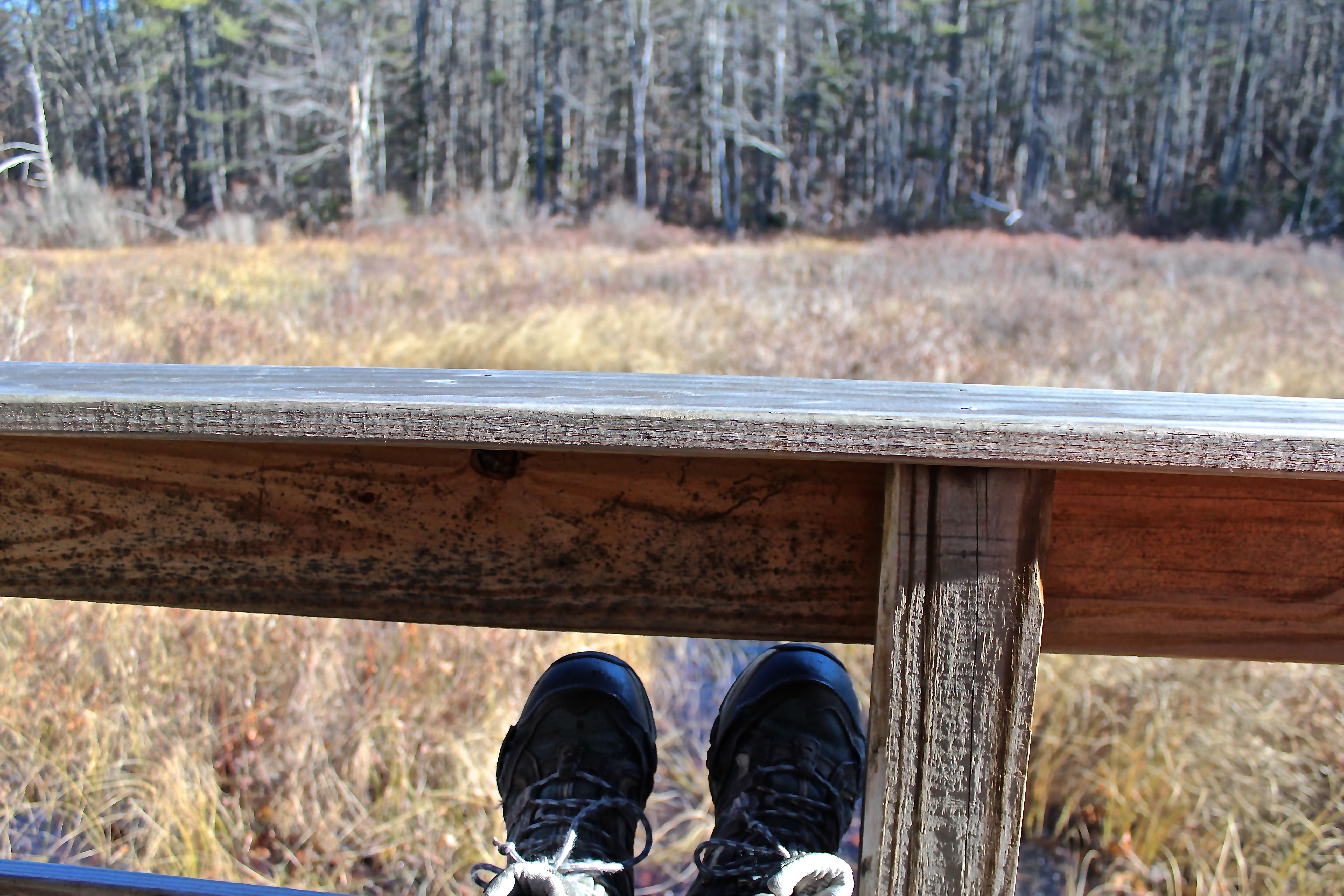
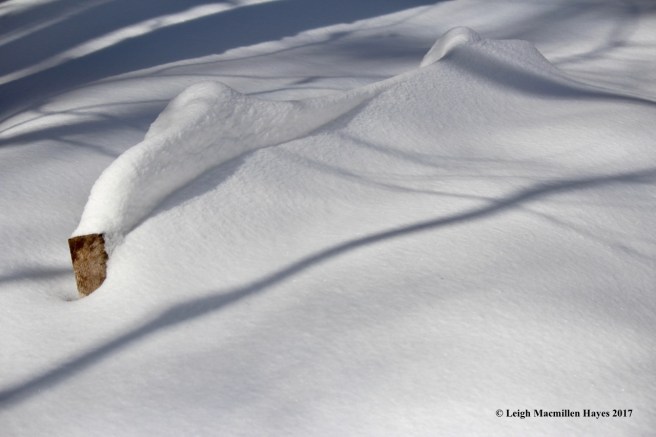
Today, however, if she wanted to pause after making such a crossing, she’d need a shovel, such was the depth on the bench by the bridge.

p-willet brook from bench site

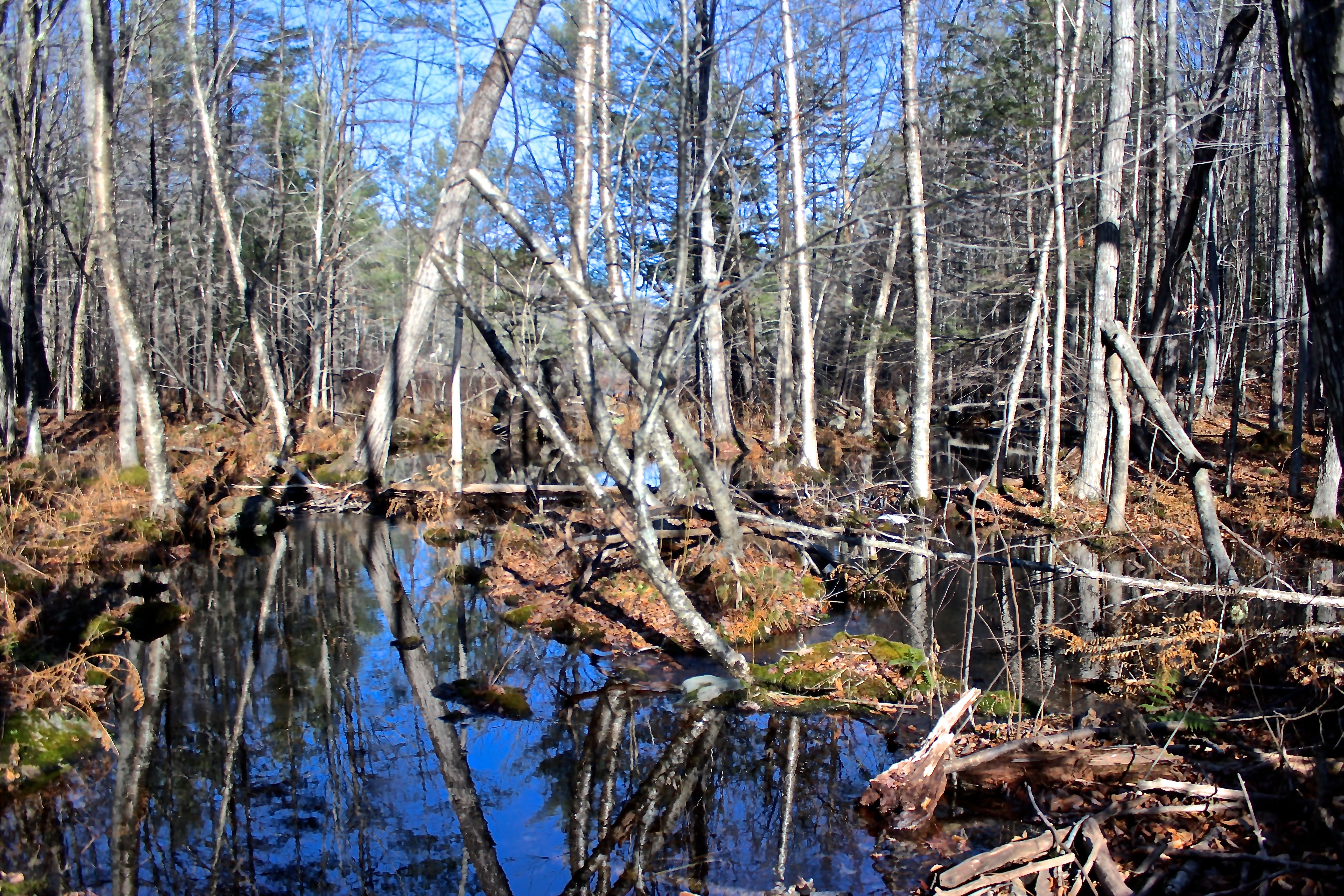
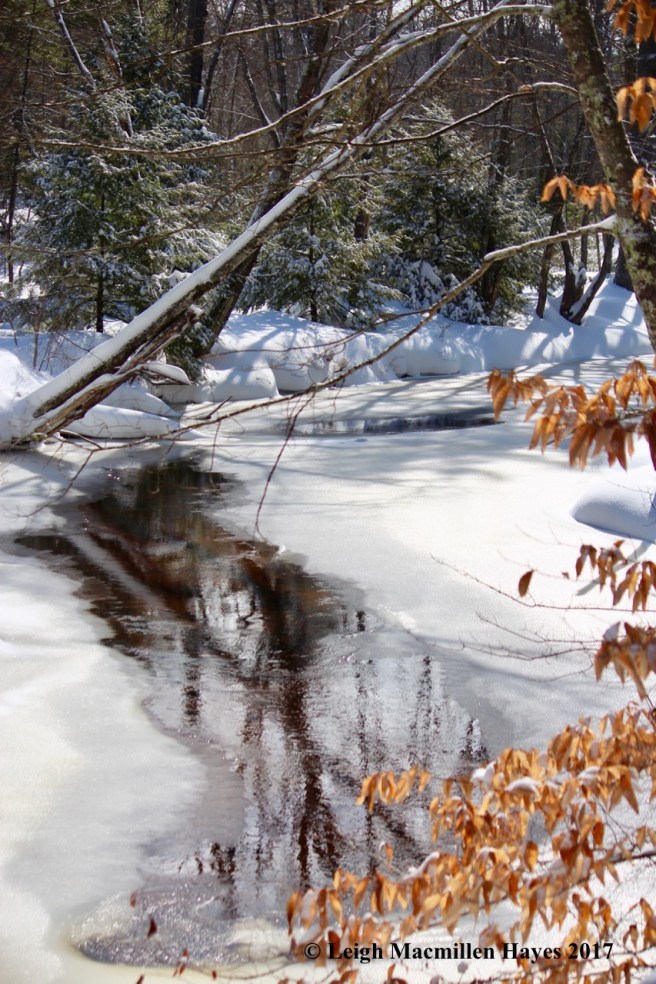
Together, we headed down the trail to the viewpoint beside Willet Brook. Judy is an artist and I had visions of her recreating this scene of winter snow and spring ice. This picture of transitions reminded me of the changes in her life as she interviews for jobs in other countries.
p-Willet 2

The change will be difficult as she leaves behind friendships formed in the last five years, but I trust in reflection she’ll know she’s making the right choice.
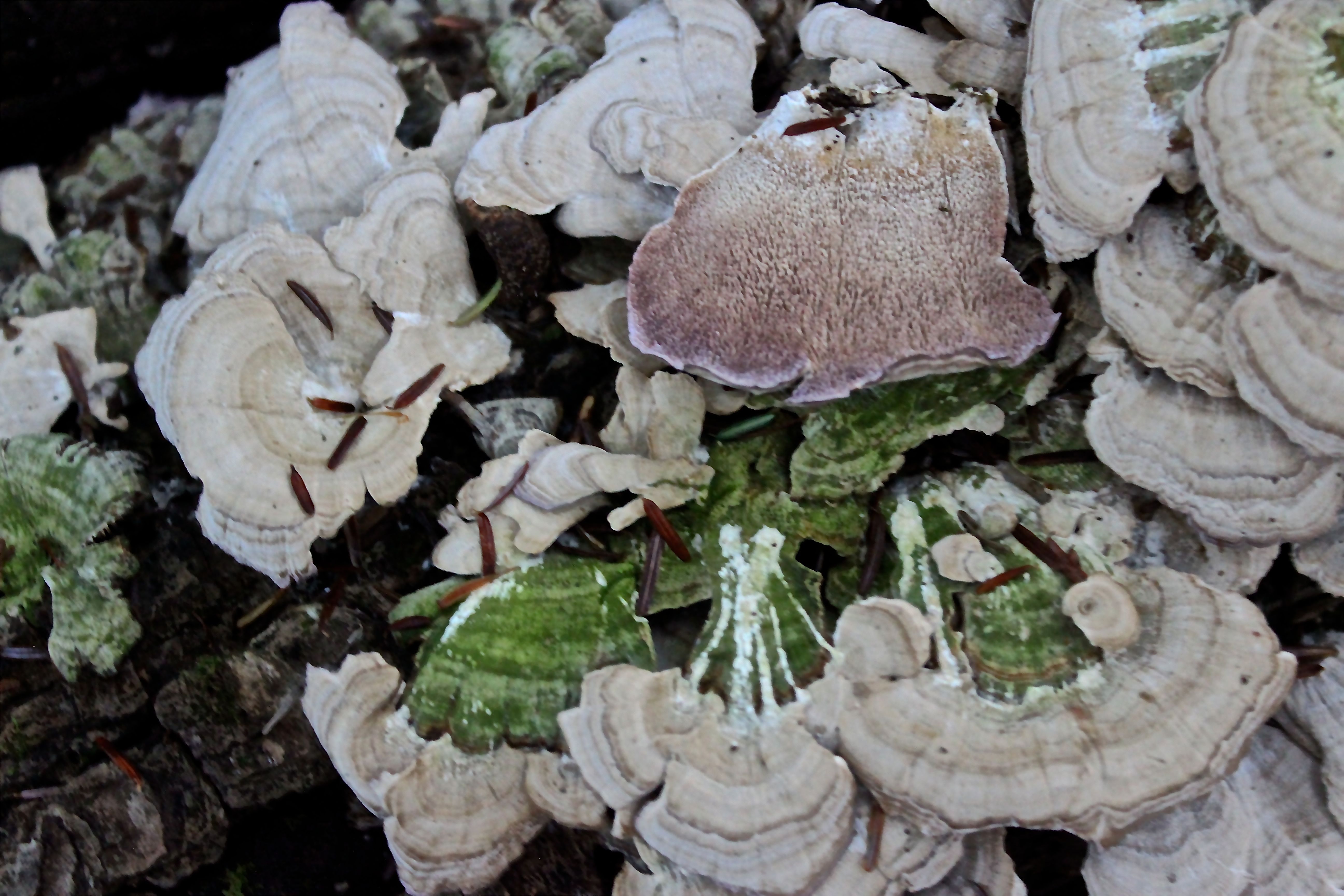
p-false tinderconk

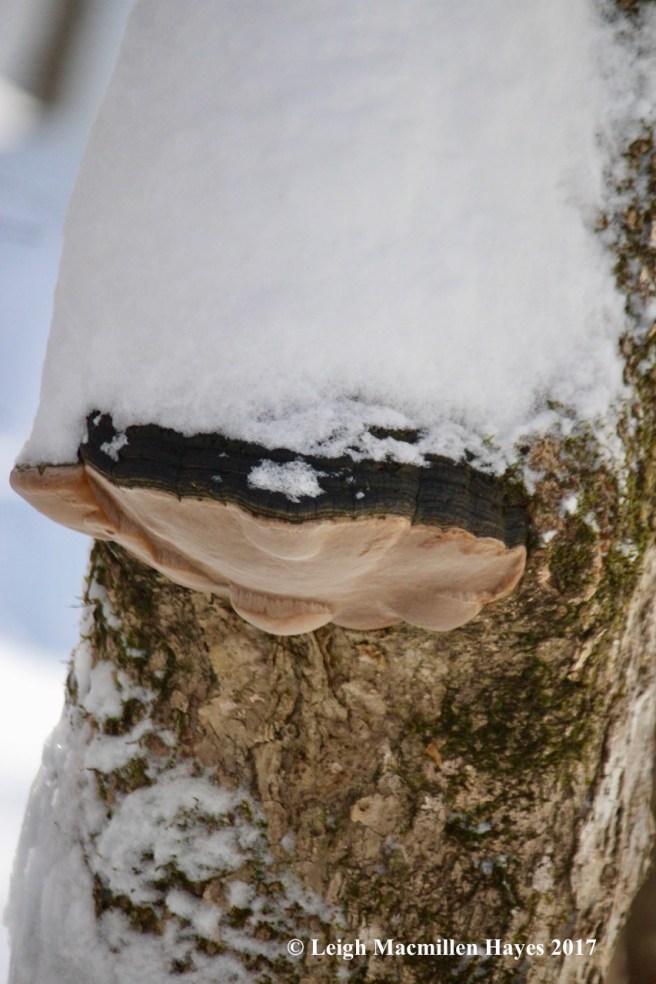
As I snowshoed, I found a few things I knew, but didn’t necessarily understand. Bumps in the road you might say, Jude, or at least on the spore surface of a false tinderconk.
p-hammered, green shield and cocoon

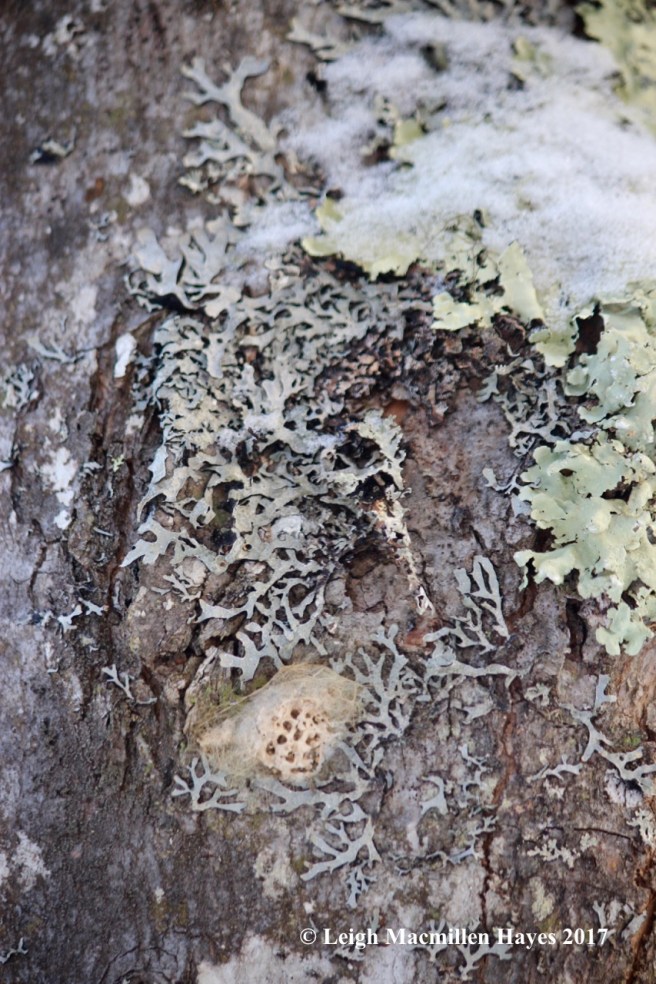
Because she loves design and has an insatiable curiosity, I knew she’d enjoy taking a look at the shield lichens, both hammered and common green.
p-cocoon 2

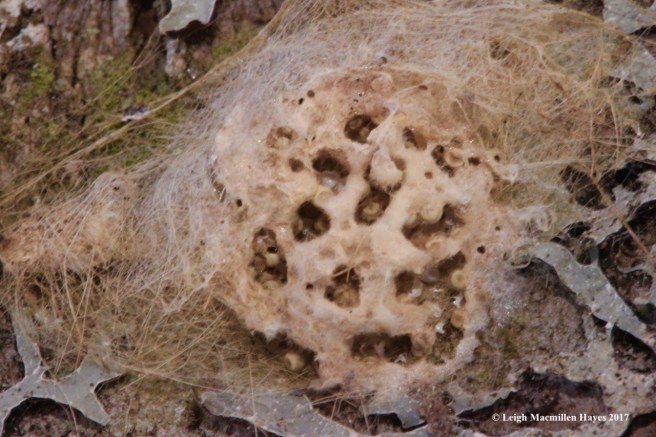
And that would have brought her to notice something else on the bark. She’d have laughed as I stuck my chin against the tree to get a closer look at the silky-hair cocoon embedded on the lichen. Perhaps a tussock moth?

p- Hooded Merganzer

As I wound my way back, I checked Willet Brook again–and spied a hooded merganser swimming away, its crest described as a hammerhead. Hammershield, hammerhead. Methinks Judy will nail down a new job soon.

p-beech bud breaking

And then there was the beech bud already breaking–I’ve seen this happen in previous years; a few scales bursting open before their time.  For Judy, it would have turned into a science lesson for her Chinese high school students. And perhaps a drawing lesson for art class.

p-deer, maple leaves on ground

Throughout the park, I didn’t roam alone for deer tracks were obvious everywhere and I saw three of the creators. But it was the leaves atop the snow that made me pause and I’m sure Judy would have done the same.

p-maple leaves

Occasionally I spot a single withered maple leaf on a tree, but this tree was covered and it made no sense. Maples aren’t typically marcescent–they don’t retain their leaves like beech and oak. It wasn’t until I stepped back and looked at the tree that I finally understood; this was a branch that had fallen when the tree was still in leaf and the deer browsed the tips of some branches, though I trust they didn’t find much nutrition for they moved on. I laughed again and heard Judy roar with me.

p-deer crossing stream:watercress

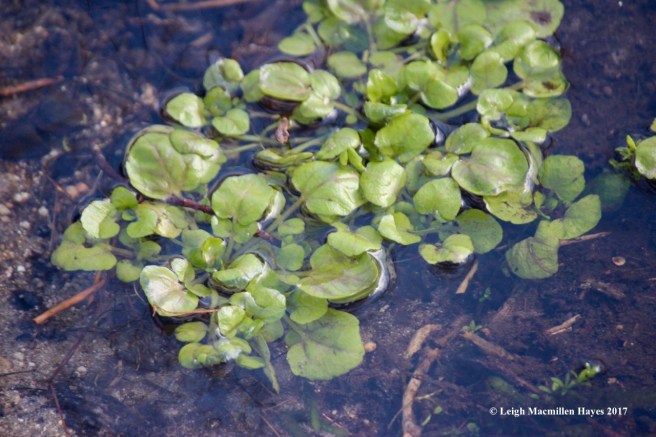
At the stream below the spring, I noticed the deer had walked right through the water to get to the other side.
p-watercress 1

I couldn’t tell for sure, but trust they sampled some wild watercress that grows freely there. And I thought of the foods Judy has sampled during her time in China and other travels.
p-deer crossing bridge

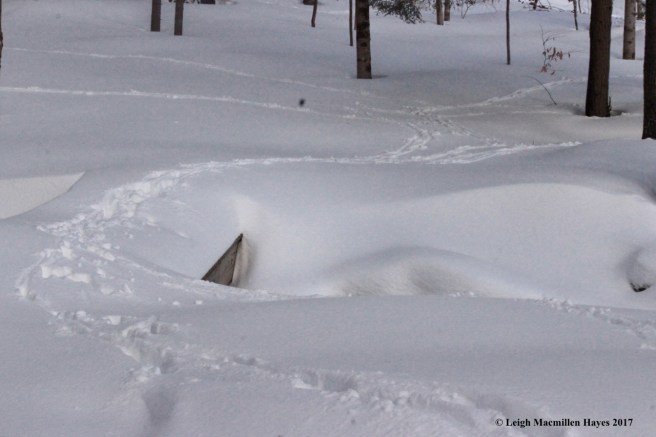
Not all of the deer chose to walk through the water. Some actually crossed the bridge. It struck me that they learned to use it to get to the other side. Judy has learned so much about herself and the world as she’s crossed bridges I’ll never set foot on.

p-dunning bridge 1

The best bridge of all awaited, its roof supporting the weight of the snow. This bridge was built by many to honor a community member, whose wife just happened to be the reason Judy and I met 25 years ago. Wow–it’s been that long since we practiced breathing techniques in Lamaze class .
p-snow on Dunning bridge

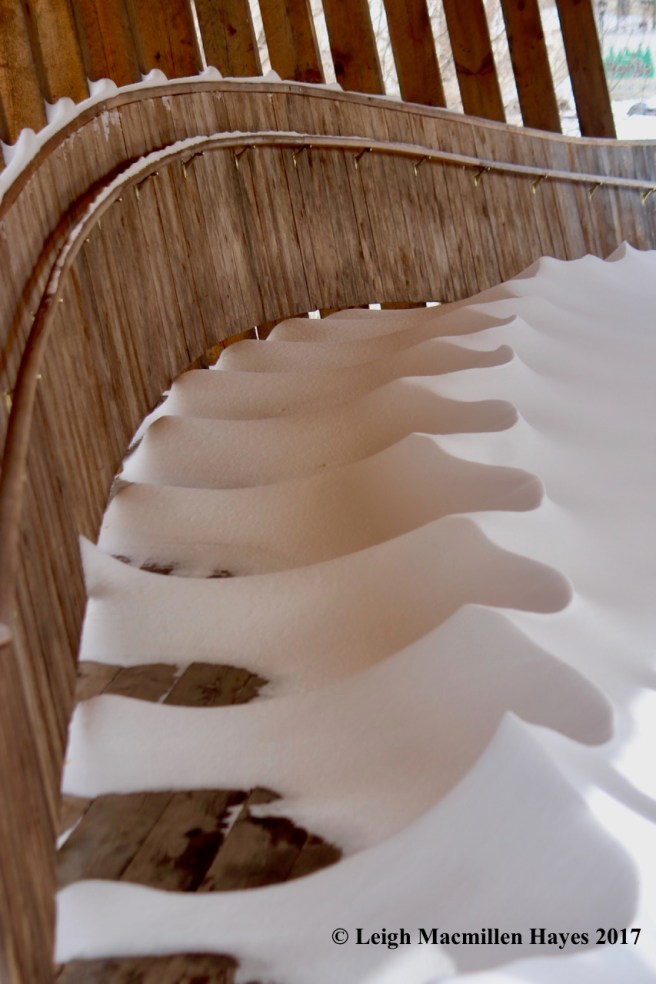
One of the cool things this morning because I was the first one there, the peaks and valleys left behind by the storm. If she’d been here, Judy would have taken the very same photo.

p-ducks 1

I went to the bridge to see the other ducks that frequent this location. The sight of the snow-topped rocks and vegetation made me think of frosting and guess who also teaches a cooking class–yup, Judy.
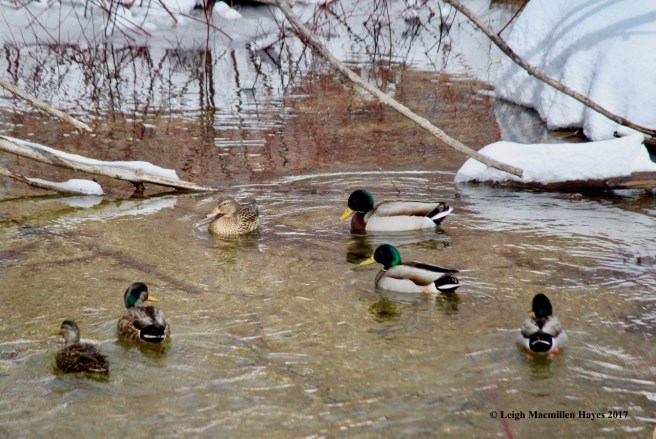
p-ducks 4, black:mallard hybrid?

Within the mix, what I think are two black ducks. I’m still learning my birds, but it did look like one may be a hybrid–a cross between a black duck and a mallard. Of course, I could be wrong on all accounts. No matter–what does matter is that they all get along and that’s what is important to Judy. She’s also a great believer in random acts of kindness and has performed so many good deeds for others.

p-robins 2

I was almost home when I saw some color in the gray birches–more color than the berries being eaten.
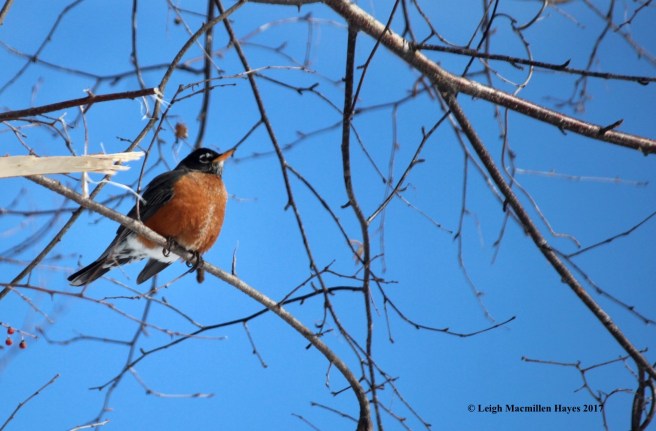
p-robin 3

A flock of robins dined on the “junk” food of the bird world–bittersweet berries.
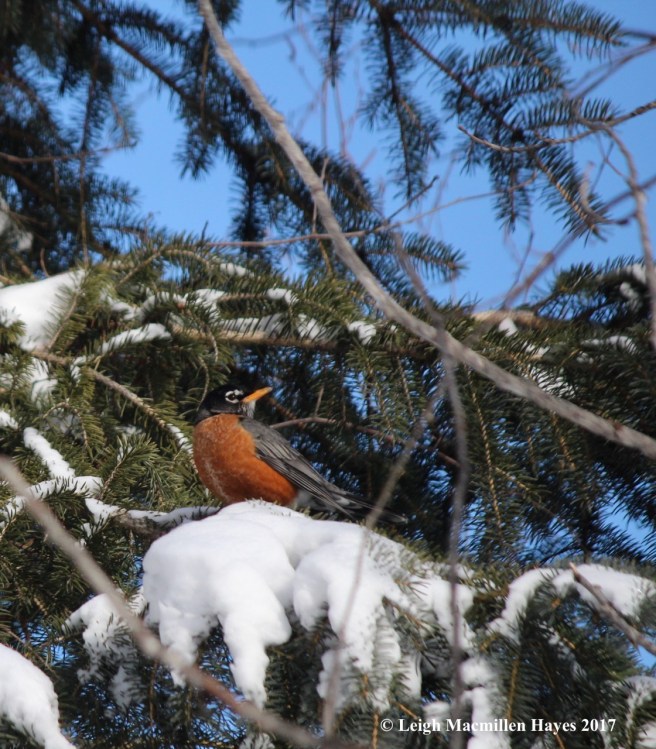
p-robin 1

After one drank some snow, it showed off its rufous-colored breast, reminiscent of Judy’s red hair.

This one posed atop the snow-covered branch seemed a mighty fine representation of our move from one season to the next. (Or might it be one country to the next, Jude?)

In the end, today’s journey reminded me once again to Be Aware–the eyes of March. And be thankful.

I am thankful for my friend, Judy Lynne, born on the Ides of March, but not actually reading this until the day after her birthday. I’ll be forever in awe of her.

Book of August: BARK

IMG_2913

Book of August

It was my journey through the Maine Master Naturalist class several years ago that lead me to this book of the month: BARK–A Field Guide to Trees of the Northeast by Michael Wojtech.

The book actual evolved from Wojtech’s work, under the tutelage of Tom Wessels, toward a Master’s degree in Conservation Biology at Antioch University New England.

Between the covers you’ll find information about bark structure, types of bark and bark ecology. There is a key for those who are so inclined.

And then the biggest chunk of the book is devoted to photographs and descriptions for each type of tree that grows in our New England and eastern New York State forests. These include the common and Latin names, family, habitat, range maps, leaf and branch pattern, leaf shape and notes.

For me, there are two take away items from this book. First, I learned to categorize bark based on its pattern from smooth to ridges and furrows, vertical strips, curly and peeling to others covered in scales and plates. He breaks bark type into seven varieties that I now find easy to identify.

Second, I came to realize something that I may have known but never gave much thought to–except for  American beech bark, which remains smooth all its life (unless it’s been infected by the beech scale insect), bark differs from young to mature to old for any particular species. Oy vey!

Though this book is useful in the winter, now is the time to start looking. To develop your bark eyes. The leaves are on and will help with ID, thus you can try the key and you’ll know if you’ve reached the correct conclusion or not.

Go ahead. Purchase a copy and give it a whirl. I must warn you, it becomes addictive and can be rather dangerous when you are driving down the road at 50mph. As Wojtech wrote in the preface, “If you want to experience a forest, mingle among its trees. If you want to know the trees, learn their bark.”

While you are at it, I encourage you to visit the small western Maine town of Bridgton, where the Bob Dunning Memorial Bridge leads into Pondicherry Park. Each of the sixteen bridge beams is constructed from a different tree and the bark is still on them. Test yourself and then grab one of my brochures at the kiosk to see if you got it right. If there are no brochures, let me know and I’ll fill the bin.

And while you are there, stop by the independent bookstore, Bridgton Books, to purchase a copy of BARK.

BARK: A Field Guide to Trees of the Northeast by Michael Wojtech, University Press of New England, 2011.

Every Day is a Gift

It’s Earth Day and yet, I wanted to hibernate. That didn’t go so well. First, I looked out the living room window this morning and noticed a skunk staggering as it walked in circles–like a dog chasing its tail–only the skunk kept falling to the ground and then getting up and continuing in the same fashion. So I called the game warden. A neighbor did the same and a short time later an animal control officer put the skunk out of its rabid misery.

a-blues1

And then I was supposed to co-lead a hike in Pondicherry Park, but still in hibernate-mode, I managed to get out of it. My excuse–work load. Which was true, but staying focused wasn’t happening. So, I headed out the back door and decided to change my point of view. The high bush blueberry leaf buds began to do the trick as they offered their gift of quiet beauty.

a-red map2

a-red maple 1

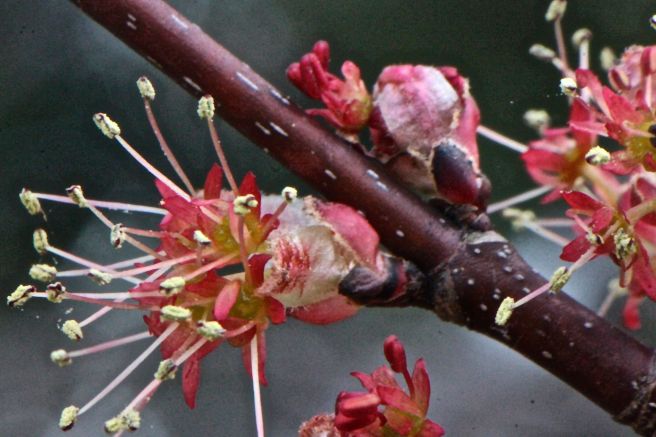
Nearby, red maples practically screamed for attention. Male flowers have long, extended stamens that are coated in dusty yellow-green pollen. The females have a well developed ovary with two long stigmas but the stamens are reduced in size and non-functional. Just seeing them lifted my mood.

a-ta1

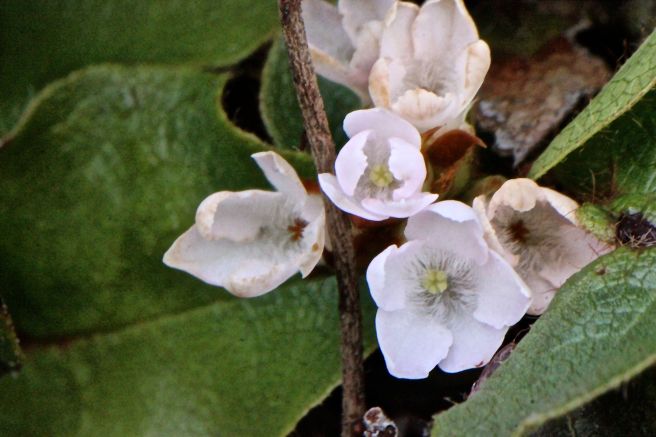
As I made my way to the vernal pool, I stopped to smell the trailing arbutus, aka Mayflower. But sniff as I did while squatting on all fours, I couldn’t smell the soft scent people rave about. And I have a good sniffer. For me, the gift of this wildflower is all in the joy it brings as one of our first to bloom.

a-tad 4

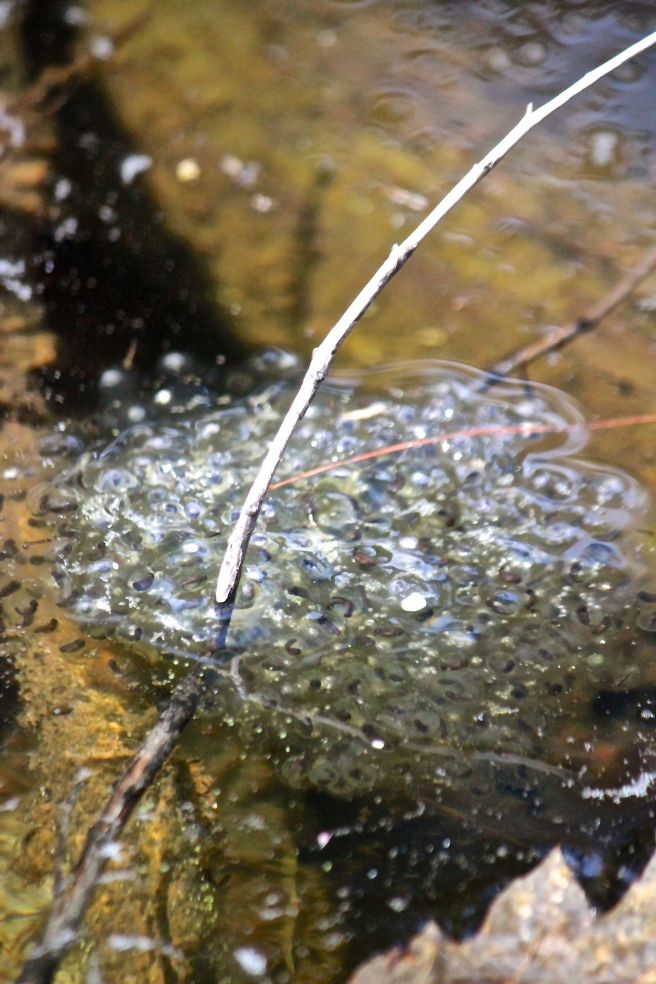
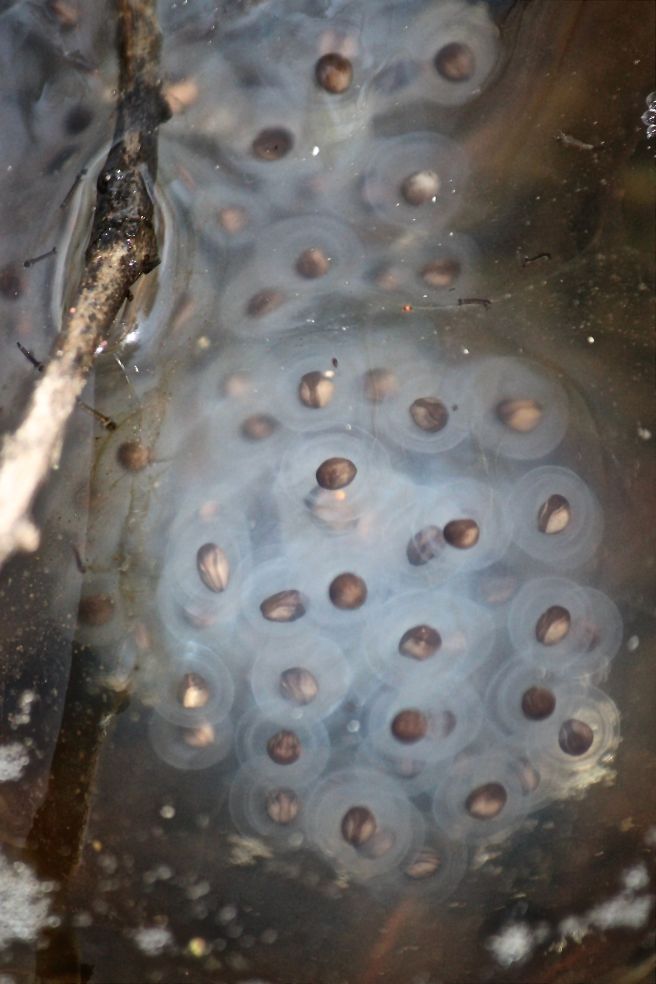
My next stop, was of course, the vernal pool that I frequent on a regular basis. While something has been disturbing some of the egg masses, others continue to develop.

a-tadpole 1

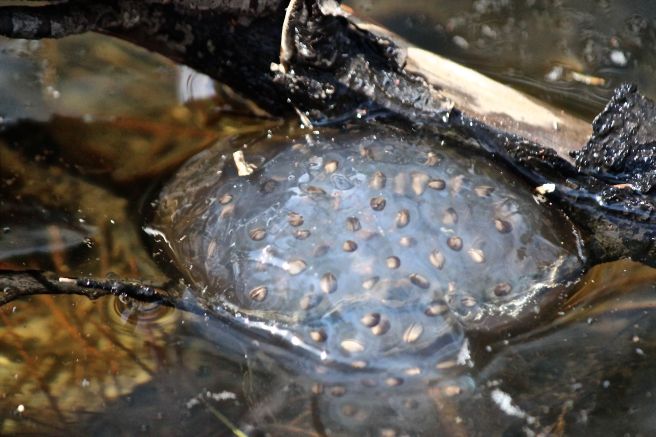
Each little tadpole swims about in its jelly-covered egg, offering a gift of hope.

a-sally3

Salamander eggs also are enjoying the warmth of being encased in jelly–especially where the sun shines upon them. It’s most helpful for development when the egg masses can float to the top of the pond and take advantage of the sun’s heat.

a-sally 1

For now, each little pod within the orb reminds me of coffee beans.

a-water st2

While standing silently beside the pool, I began to notice other forms of life, including the water striders. Do you see the two mating? These wonders of the natural world appear to skate on water, but really its the water-repellant hairs on their hind and middle legs that allow them to glide nimbly across the surface. They offer a gift of amazement.

a-mosquito1

Their favorite food happens to be abundant in this pool–mosquito larvae. I have to say it’s a food offering, but also a gift to all of us–we should celebrate the water striders as much as we do the dragonflies.

a-tom 2

I left the pool and realized I was among the turkeys. Tom was ready to offer his gift to his harem. Such a handsome dude.

a-grady 4

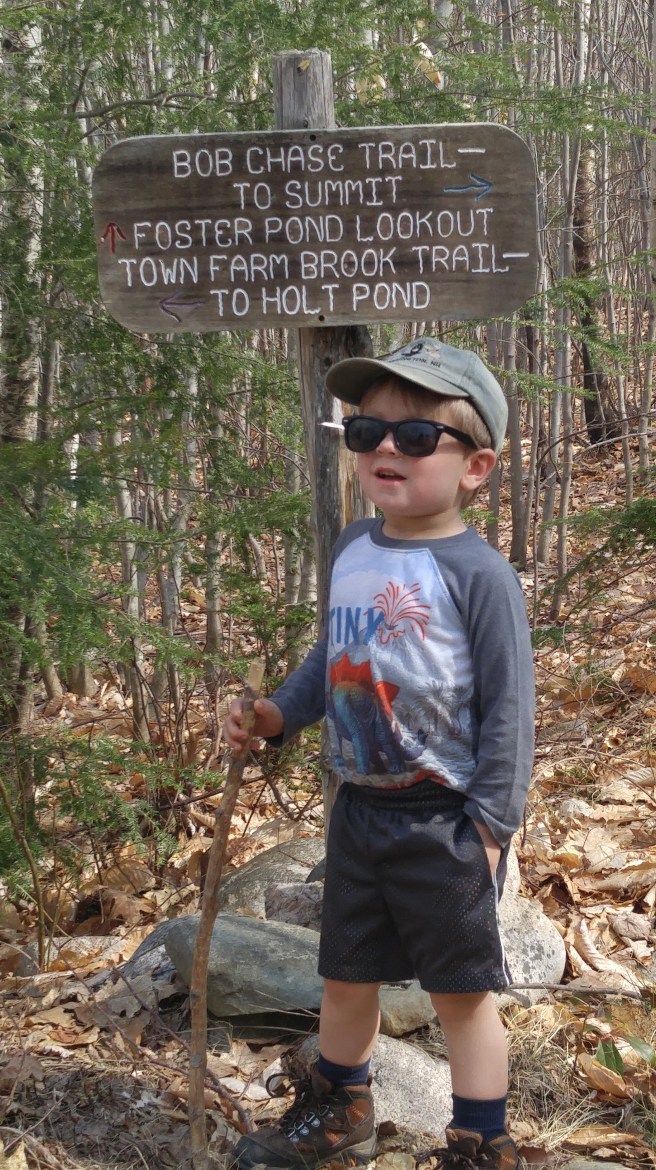
And with that, I realized that I was ready to join the world again so I drove to the trailhead for Bald Pate to join Loon Echo Land Trust for an Earth Day hike. The leader of the gang was this precocious tyke. At three years old, I kept insisting he’s 33. He kept telling me he’s only three. It can’t be. Though this was his first mountain to climb, I suspect there are many more in his future. He offered just the right tonic today and I fell in love.

a-view

As we climbed, we paused to look west and admire the view. Though the sun wasn’t truly shining, the day was getting brighter, literally and figuratively.

a-pitch cone

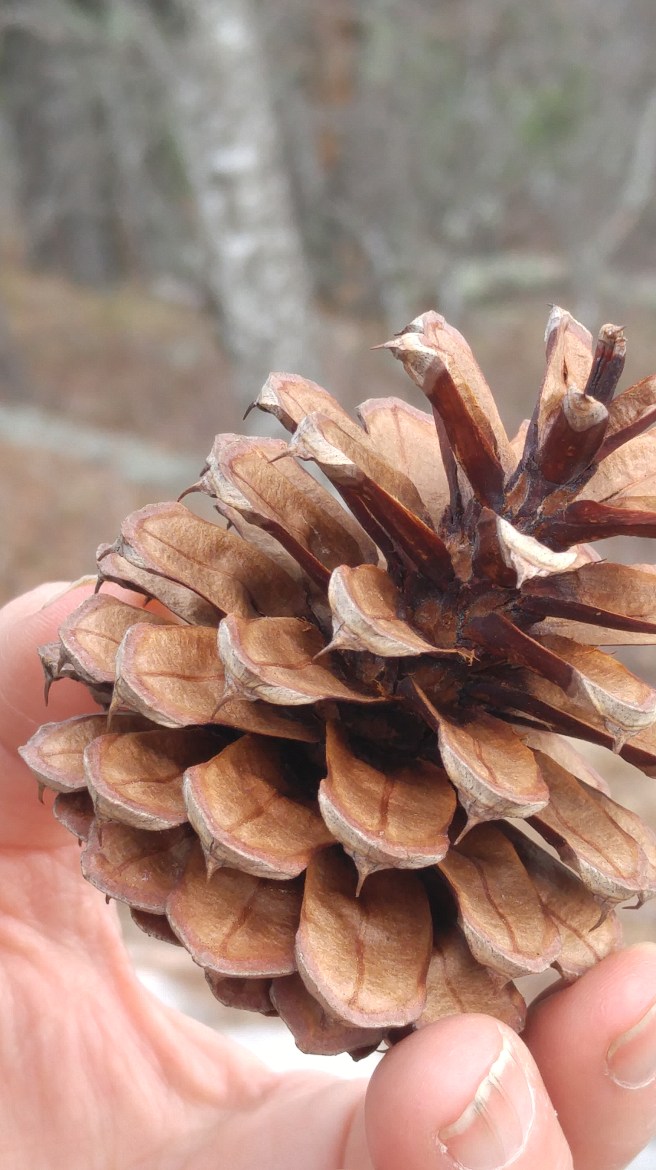
At the summit, we took time to examine the pitch pine cones with their prickly scales. Sometimes beauty has an edge.

a-grady and carrie mean pose

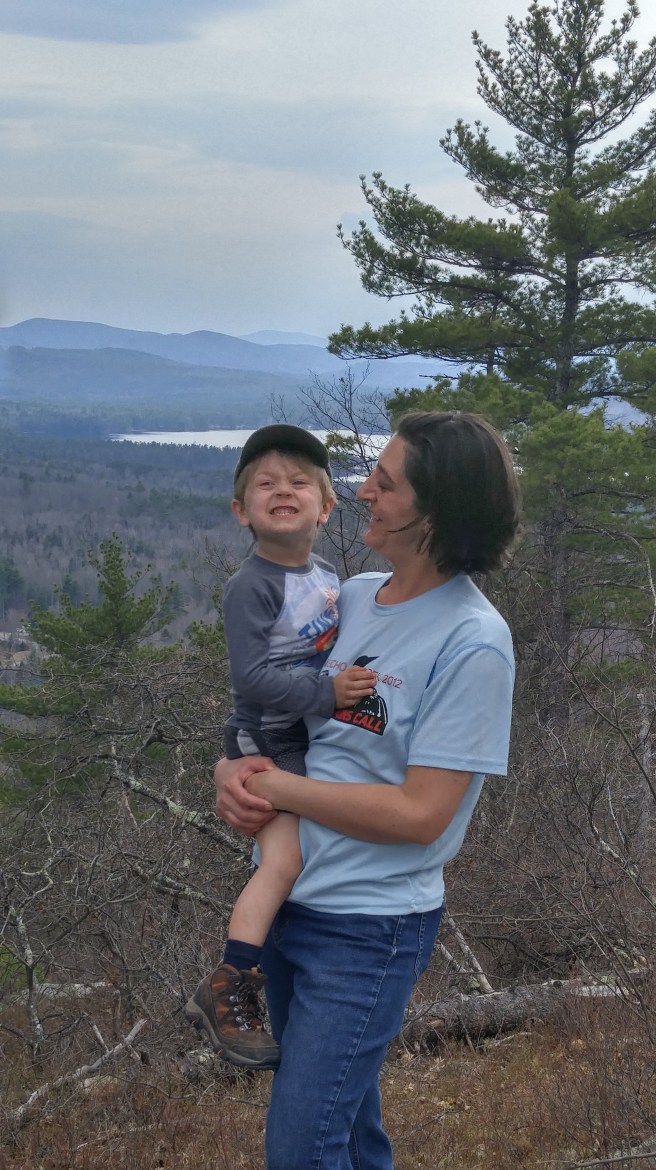
Before we descended, our little hiking buddy posed with his mom, the outgoing executive director of Loon Echo. Carrie will be missed and we wish her and her family well as they prepare for their move to Wisconsin in a couple of months. Her dedication to land conservation is to be admired. And that mean-looking grin–oh my.

a-adam 1

Also to be admired and the reason our local community and those beyond have been dealing with extreme shock these past couple of days–Adam Perron, who’s life was snuffed out two days ago in a tragic accident. Adam was the milfoil dude and a naturalist/educator at Lakes Environmental Association in Bridgton, where I serve on the board (and chair the ed cmt). He was also a student in the Maine Master Naturalist Program (Falmouth 2014) when I served in my first year as a mentor, so we spent many hours carpooling to classes and field trips and solving all kinds of environmental problems–in our opinions at least.

a-adam2

He was most at home in places like Holt Pond, where he loved to share his knowledge with others. R.I.P. Adam. I’m grateful for the gift of time spent in your presence. It strikes us all that your candle was snuffed out way too early, but as a friend reminded me today, we never know when it is our turn. Here’s to you, Beth and Abby.

And to everyone else, hug the ones you love and don’t forget to wonder. Every day is a gift.


Snow Be It

The action at the bird feeders was crazy busy this morning–as if a snow storm might be on the horizon.

goldfinch 2

goldfinches, mid air squawk

Some goldfinches managed to dine together in peace, while others displayed a midair squawk over perch choice.

male hairy woodpecker

The hairy woodpecker often had the suet to himself, until, that is, the nuthatches, titmice and chickadees flew in.

female cardinal

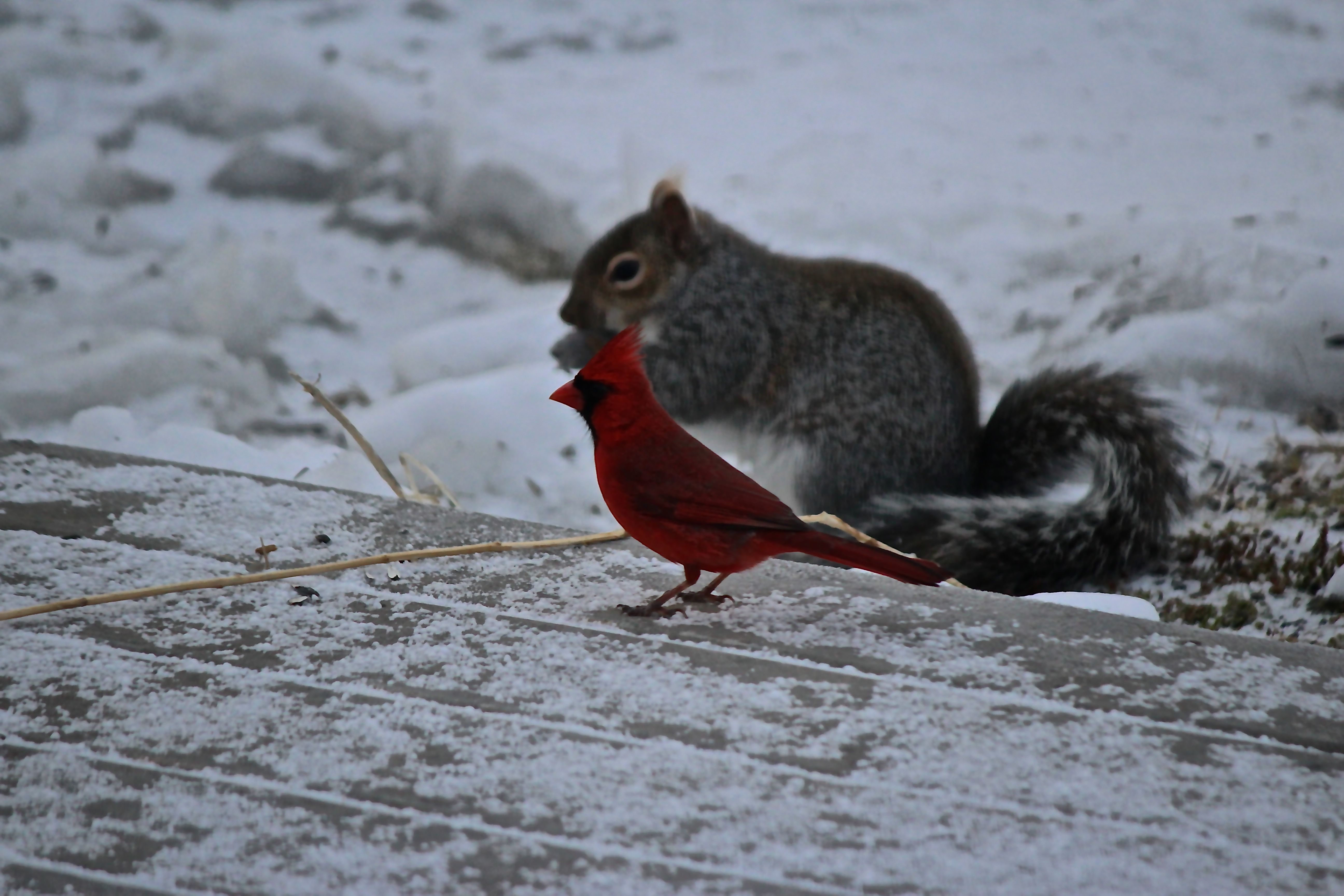
And somehow the female cardinal managed to pose upon a perch across from a chickadee. She never looks quite comfortable up high.

male cardinal

cardinal and squirrel

Her guy always checks out the local scene before foraging for seeds on the ground. He’s not the only forager in the neighborhood.

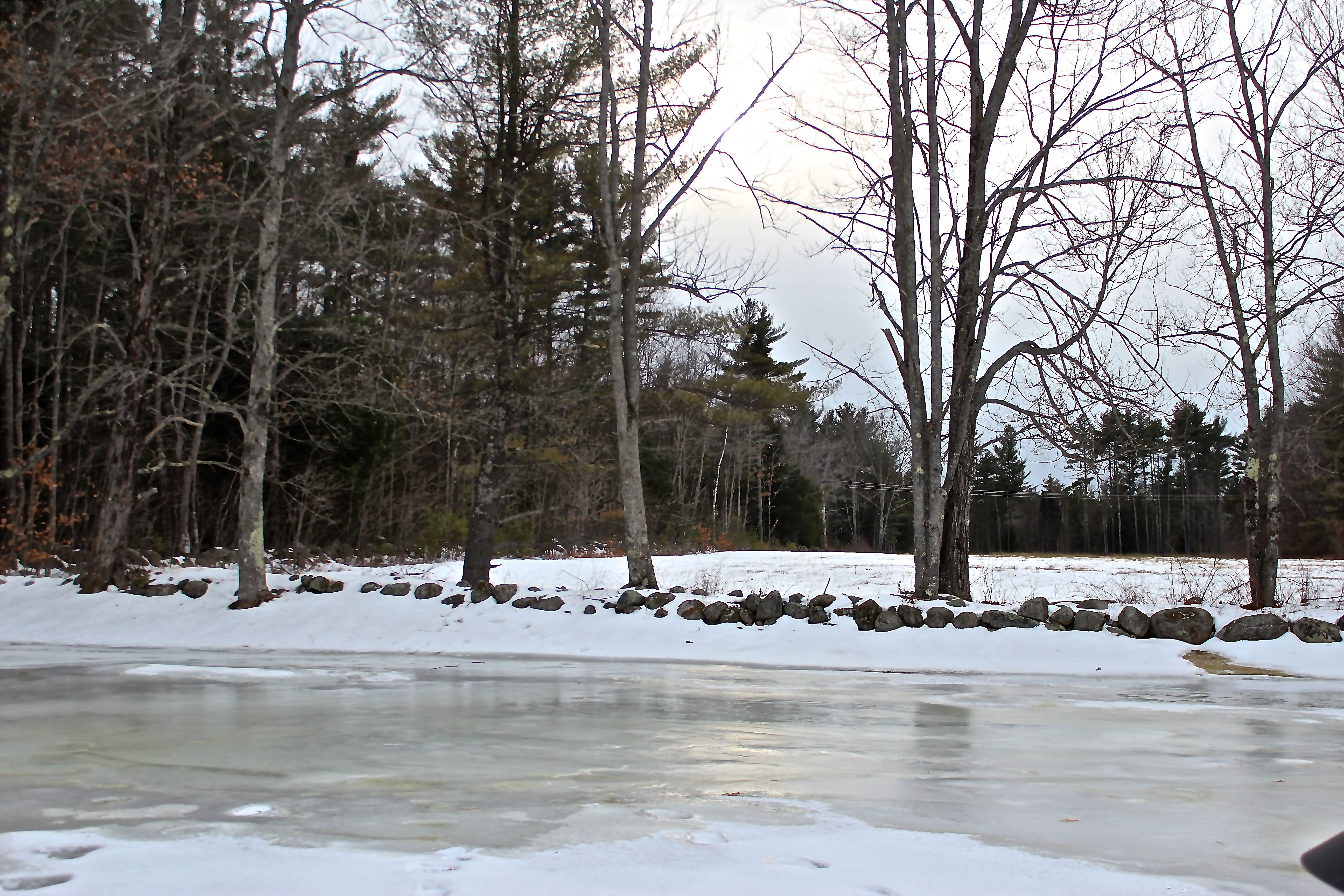
ice rink 2

And beyond the feeders, the ice rink is open. Of course, if you want to use it  you need to bring your own shovel. My days of being the human zamboni ended a few years ago.

raccoon prints

I’d intended to join friends in Falmouth for a tramp today, but with the impending storm, I decided to stick closer to home. And so this afternoon found me exploring familiar grounds, wondering what I might see. What could possibly be different?

Ah, the intrepid raccoon had passed this way. I love the pattern it leaves behind, with each set of prints on the opposite diagonal.

vernal pool 1

And then there’s the vernal pool. Nothing new about that, but at the same time, it’s ever changing.

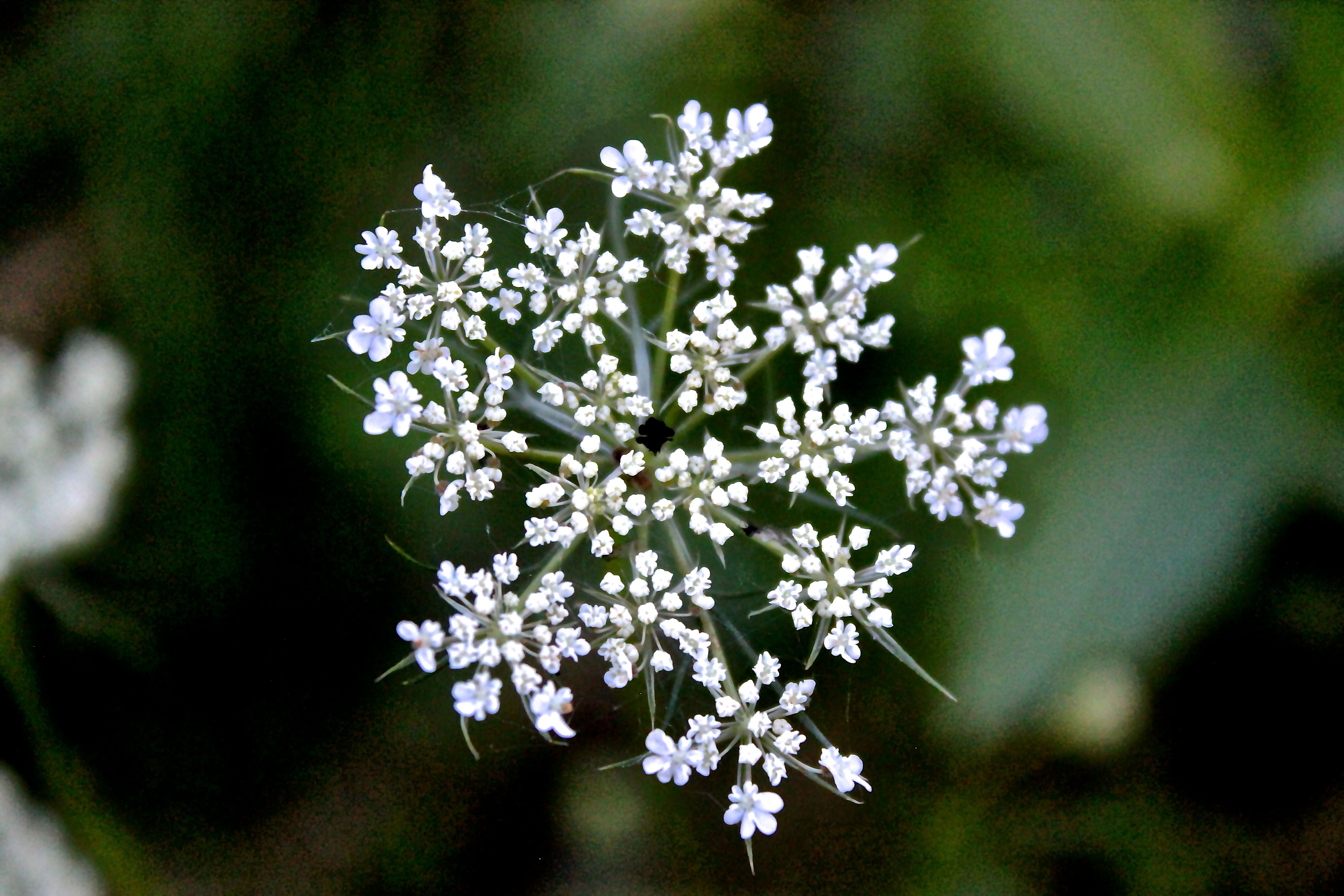
Queen Anne's Lace 1

The fact that dainty Queen Anne’s Lace is filled with spiky seeds seems almost an oxymoron. A beautiful one.

The snow was just starting to fall when I happened upon the QAL. And so I continued on, crossing the road and disappearing into a familiar place–Pondicherry Park.

ice form 2ice form 3ice formation 1ice rays

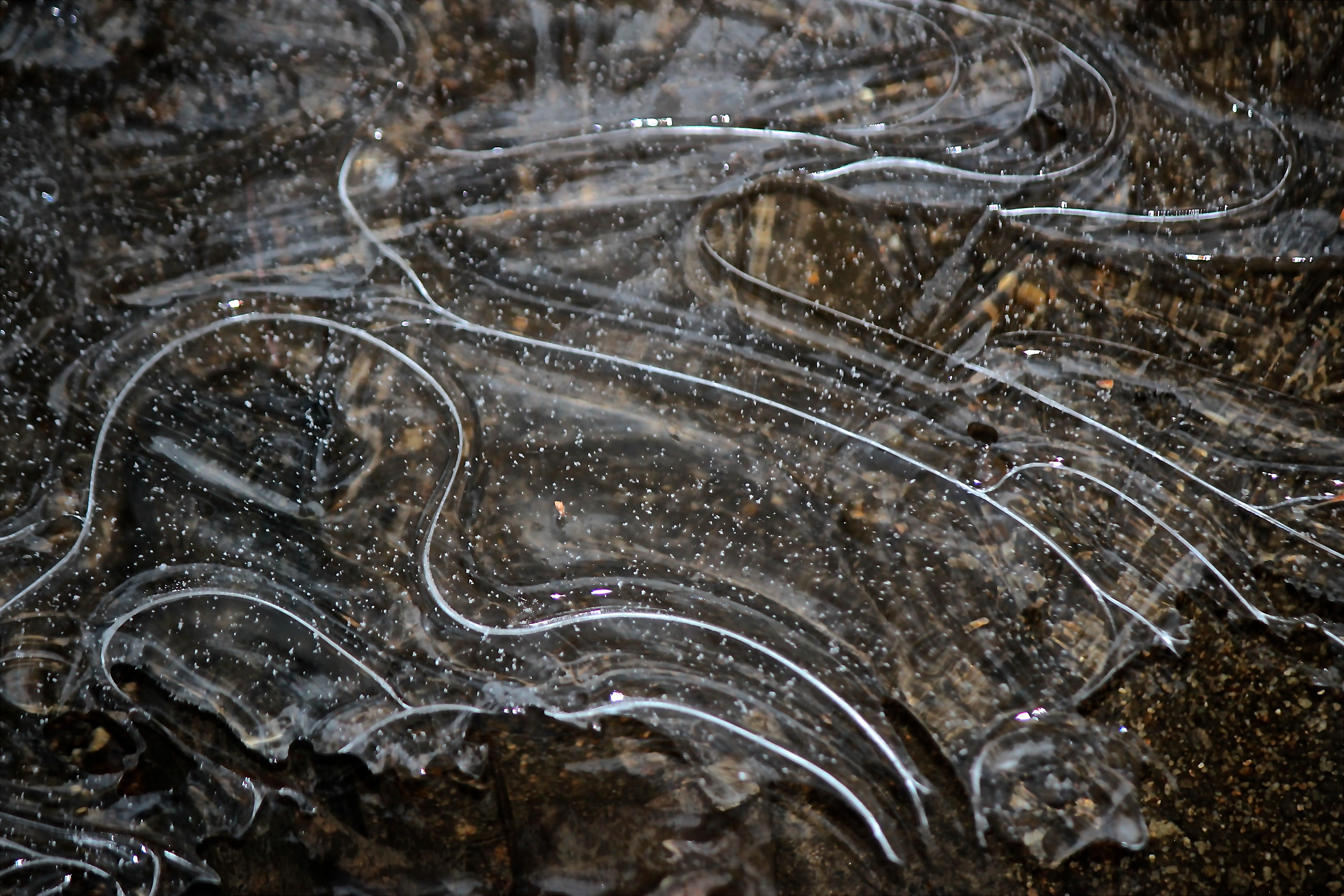
With every step, I needed to be mindful of where I placed my foot to avoid slipping. Though I’m weary of ice, I never tire of the formations it manifests.

ash 1 Ash 2ash seeds 3

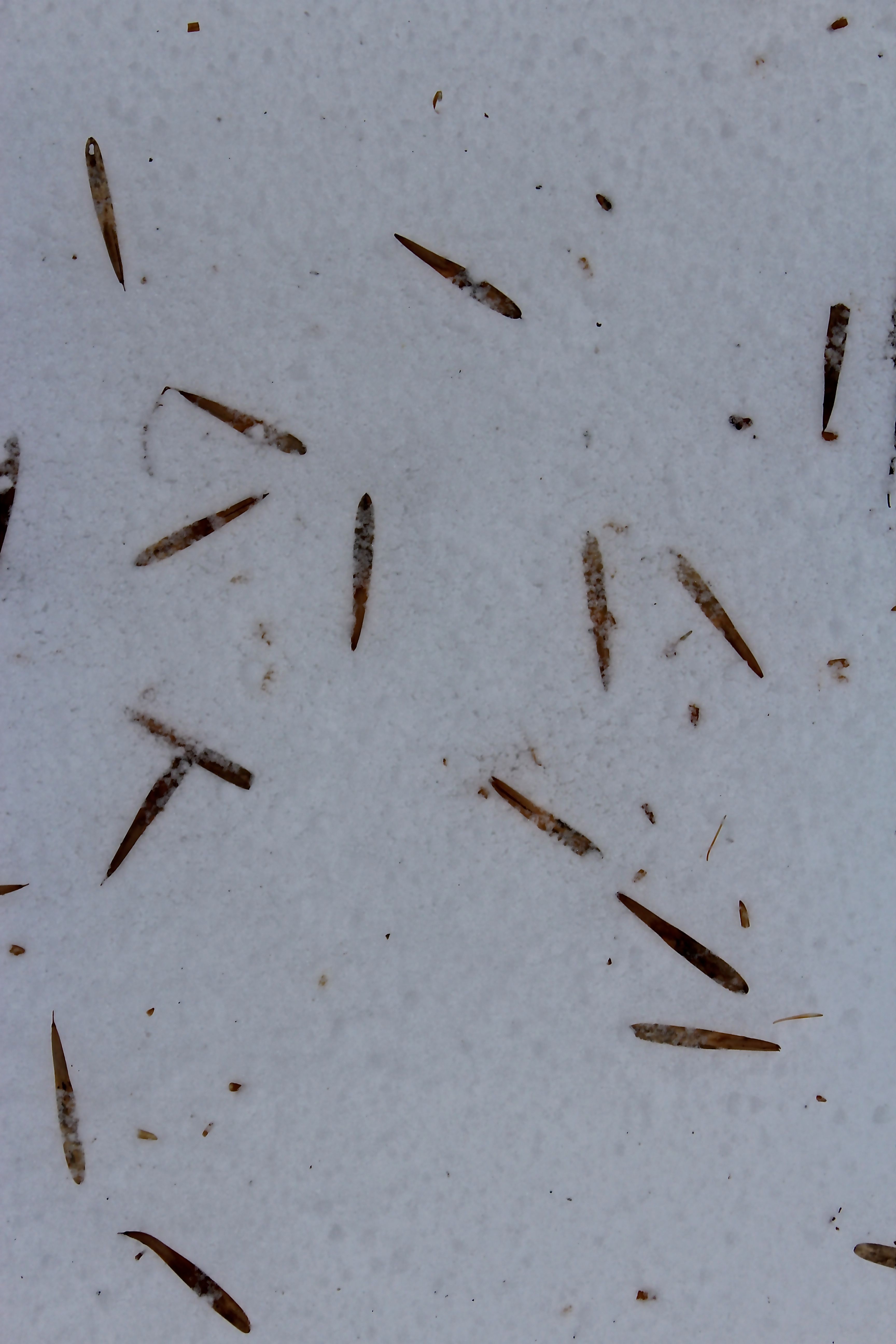
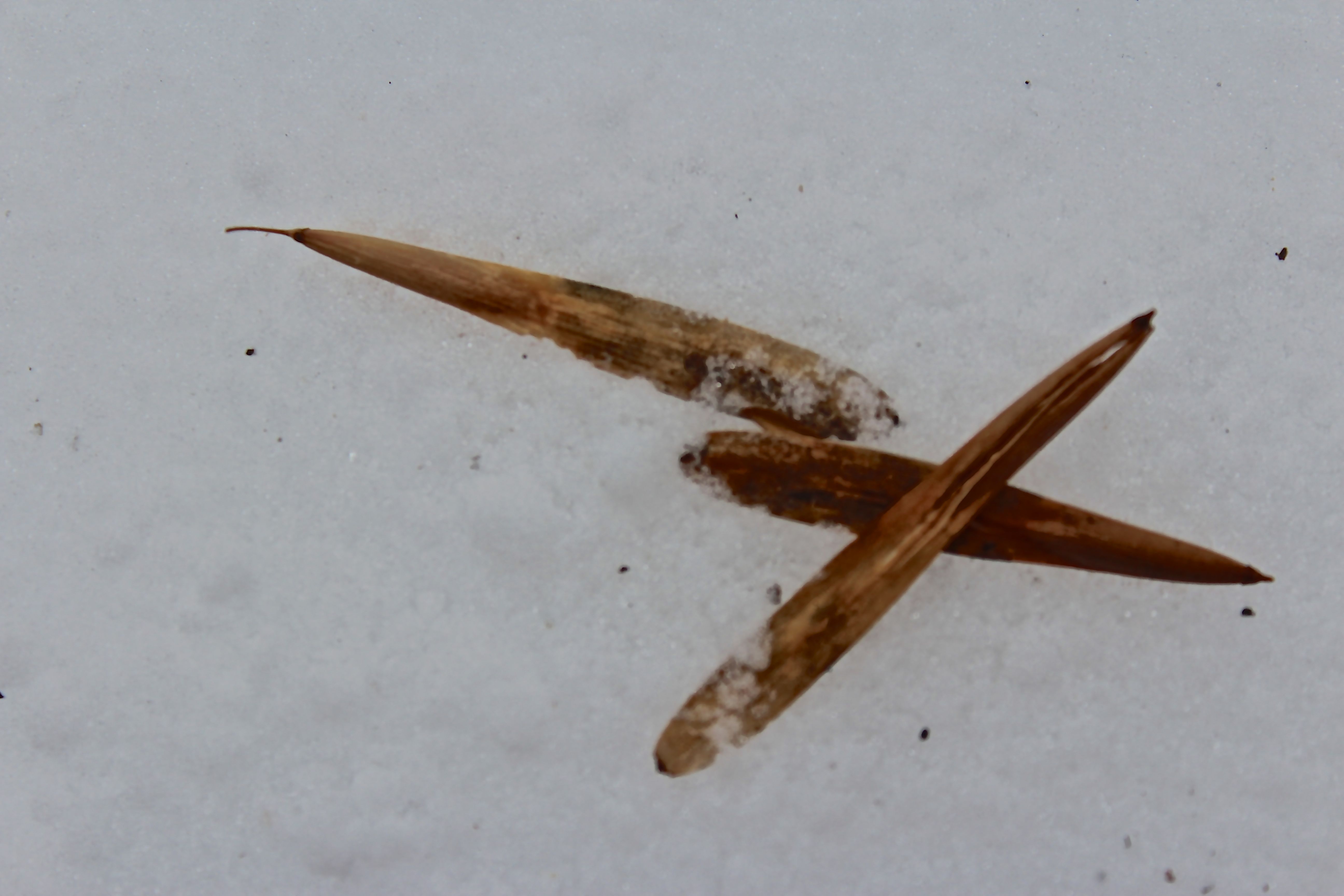
I’m going out on a limb here, but believe based on the structure of the single winged samara that these are green ash seeds that litter the ground. As the wing surrounding the seed tapers toward the tip, it is straight versus the slight curve seen in a white ash. In addition, the white ash samara is wider than a green ash.

ash leaves 1

And then there is the ash leaf mystery. Leaves still on trees? Ash leaflets are not marcescent so why have these leaves withered and stayed attached to the twigs? Ah, but when some trail management was conducted this past summer, the cut branches that crowded the path were tossed aside. The leaves died then and there, thus not being “cut” off by the tree and falling in a normal manner.

 witch hazel color contrast

contrast beech leaves

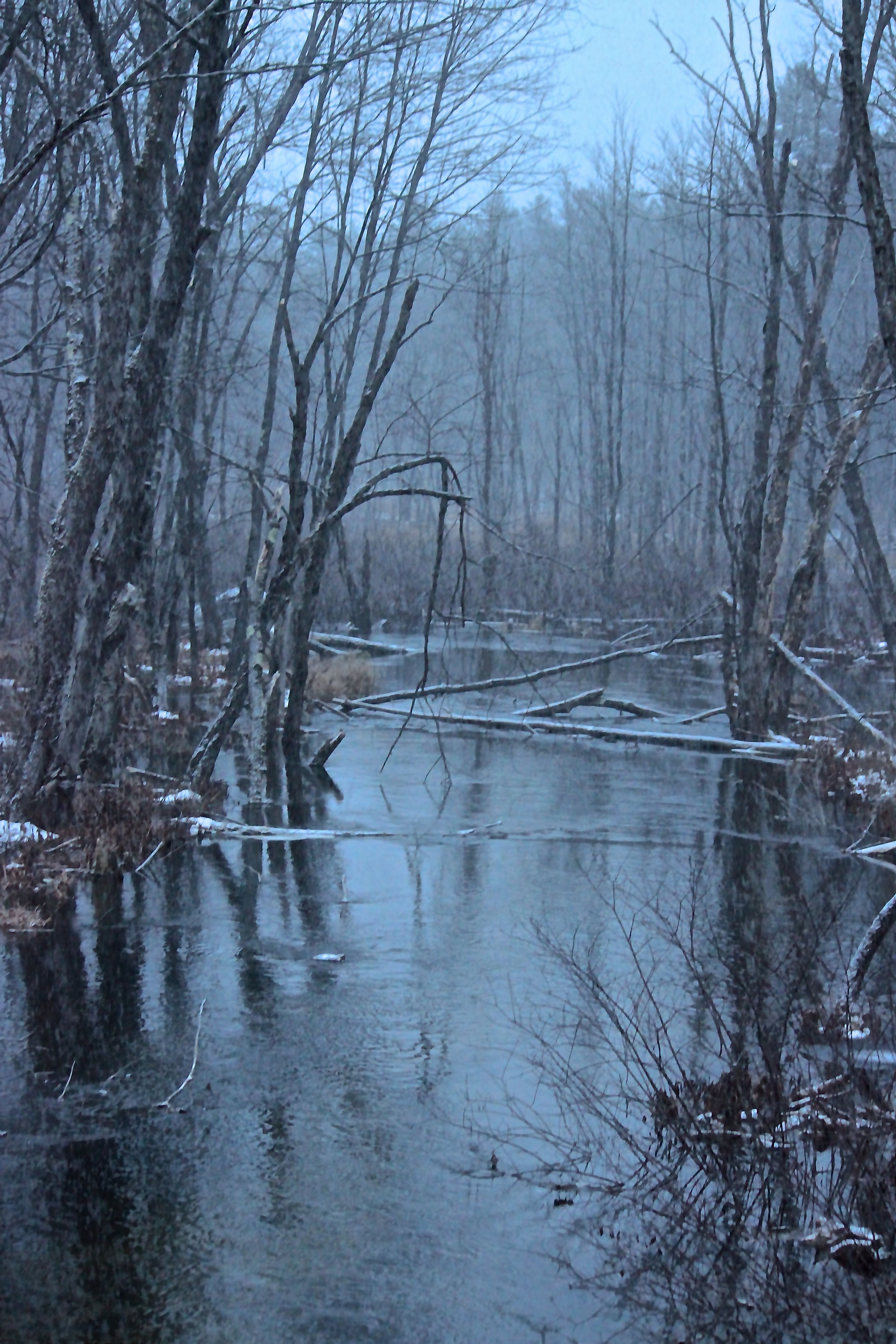
Of course, the marcescent leaves of witch hazel and American beech against the blue of Willet Brook provided a display worthy of attention as the snow began to collect.

witch's butter on red pine

Witch hazel isn’t the only witch in the park. Witch’s butter decorates a red pine trunk.

jelly ear fungi

Likewise, witch’s butter isn’t the only fungi. Jelly ears decorate a fallen oak branch.

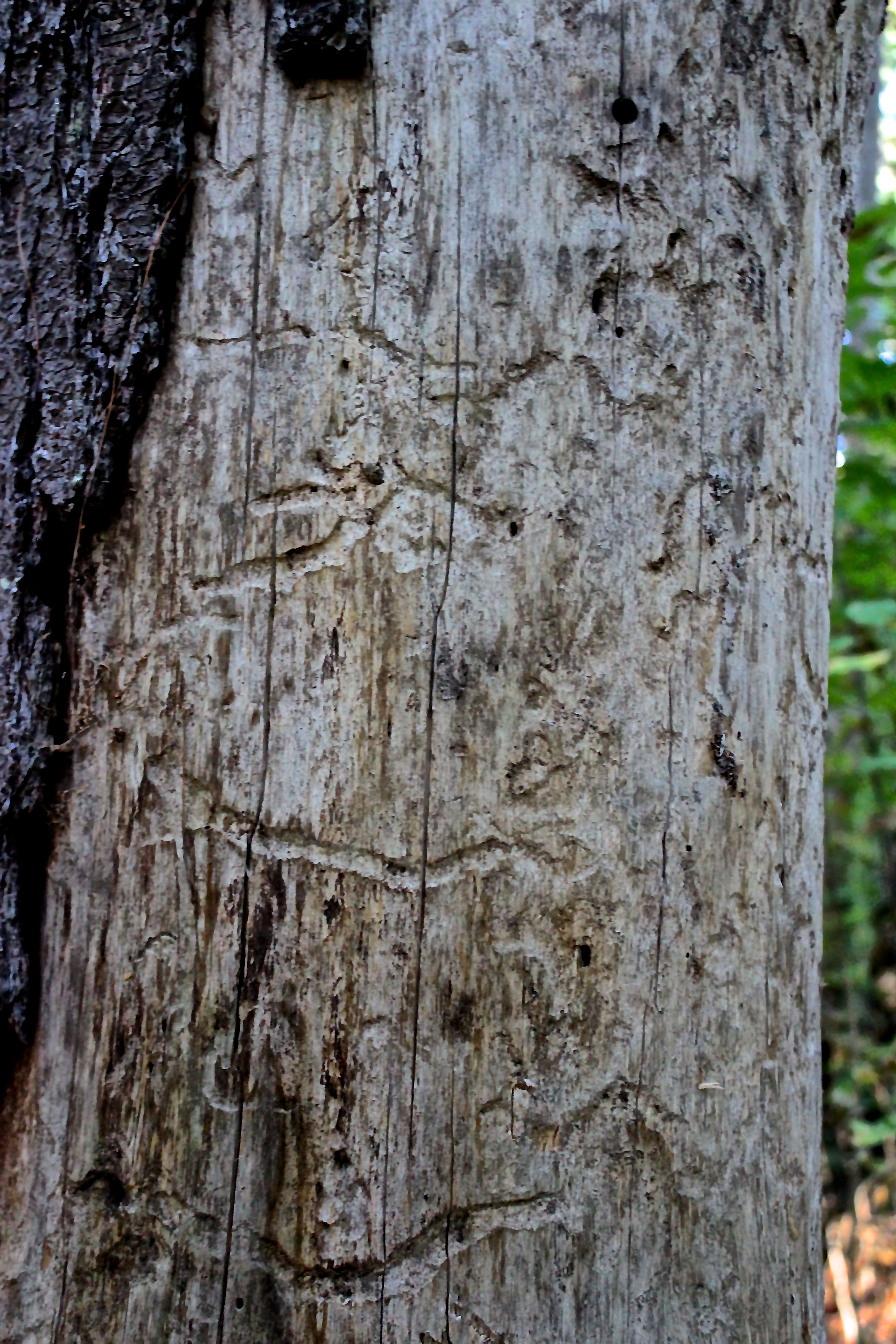
snag sap

There’s always plenty to wonder about. In this case, a very, very dead snag–leaking sap. How can that be so?

Willet Brook

The ice lining the banks of Willet Brook crinkled and crackled with the flow of the water, adding an eerie sound to the landscape.

mallards

Meanwhile, in Stevens Brook, several pairs of mallards quacked constantly, announcing their presence.

Stevens Brook

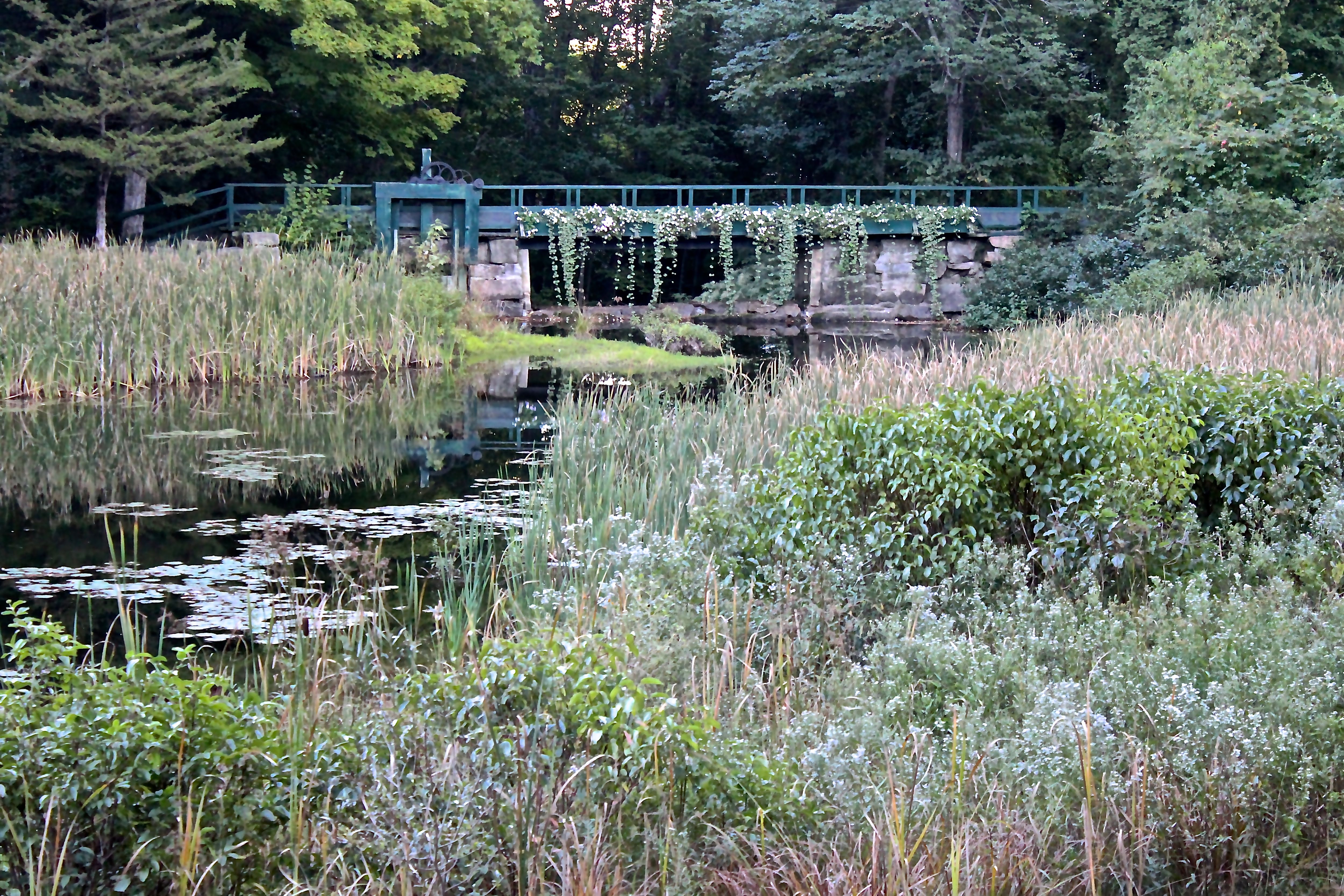
The snow increased as I crossed the Bob Dunning Memorial Bridge and

dam

walked past the Stevens Brook dam.

still Christmas 1

At home, it’s still Christmas. Snow be it.

Book of December: Fascinating Fungi of New England by Lawrence Millman

Fungi

Book of December

I never thought that I would develop a fondness for fungi, but alas, I have. Don’t get me wrong, I still don’t know them well, but am in the continual process of developing a deeper appreciation for the fruiting bodies I see and the mycelia that probes beneath the surface forever in search of nutrients.

For a beginner like me, Fascinating Fungi of New England by Lawrence Millman is the perfect guide. First of all, it measures 8 x 6 x .25 inches and slips easily into my pack. But what I like even more about this book is that Millman talks about mushrooms in a manner that a layperson like myself can understand. Combined with the artwork of Rick Kollath, whose visual cues aid in my learning, Millman compresses key points in this little book that has become one of my go-to sources in the field.

I think what I admire most is Millman’s voice. I’ve never met the man, but feel as if he’s standing beside me chatting about any particular species and telling the story. My friend and mentor, Kevin Harding, strongly advises that we should spend less time naming and more time sharing the stories of what we see in the woods. And that’s precisely what Millman does, with a splash of humor added to the mix.

To illustrate, in a sidebar about Birch Polypores, he writes the following: “Multi-faceted Fungus — 5,300-year old Tyrolean Ice Man Ötzi, discovered in 1991, had two polypores — the Birch Polypore and the Tinder Polypore among his possessions. He probably made a decoction of the former to rid himself of intestinal worms. Early New Englanders used the Birch Polypore as a razor strop; until recently, entomologists used it for mounting insect specimens; and the present-day Cree of northern Quebec (like Ötzi) make a medicinal tea from it. The Cree don’t like the polypore’s bitter flavor (due to a compound called Betlinic Acid), so they assume their alimentary parasites also won’t like the flavor and will thus vacate the premises upon coming into contact with it.

And I love this: “Non-Gilled on Other — In this catch-all category, the species are not only parasitic, but most of them would also seem to be emulating Hollywood mad scientists in the way they transform the ‘Other:’ the Hypomyces turns a Russula or Lactarius into an entirely different species called a Lobster; an Entoloma causes a Honey Mushroom to lose its characteristic cap-and-stem shape; Rhizopus stolonifer turns a bowl of strawberries into an inedible, gooey mess; and a Cordyceps eats away at its truffle host until that host completely falls to pieces. You would think a movie producer would approach one or more of these species with a contract, wouldn’t you? Well, it hasn’t happened yet . . .”

The book is divided in an easy-to-use manner. So easy, in fact, that recently an 8-year-old friend began using my copy within minutes to identify species we found on a walk through Pondicherry Park. Sections include Gilled on Ground; Gilled on Wood; Gilled on Other; Non-Gilled on Ground; Non-Gilled on Wood; Non-Gilled on Other; Slime Molds. There are sidebars and measurements, spore prints, details about habitat and season, plus a glossary and other resources for those who want to take the next step in fungi ID.

For me, for now, this is enough.

Fascinating Fungi of New England by Lawrence Millman, foreword by Gary Lincoff, illustrated by Rick Kollath, published 2011, Kollath+Stensaas Publishing.

Giving Thanks

I’ve so many reasons to give thanks and making time to wander, wonder and ask why is high on the list.

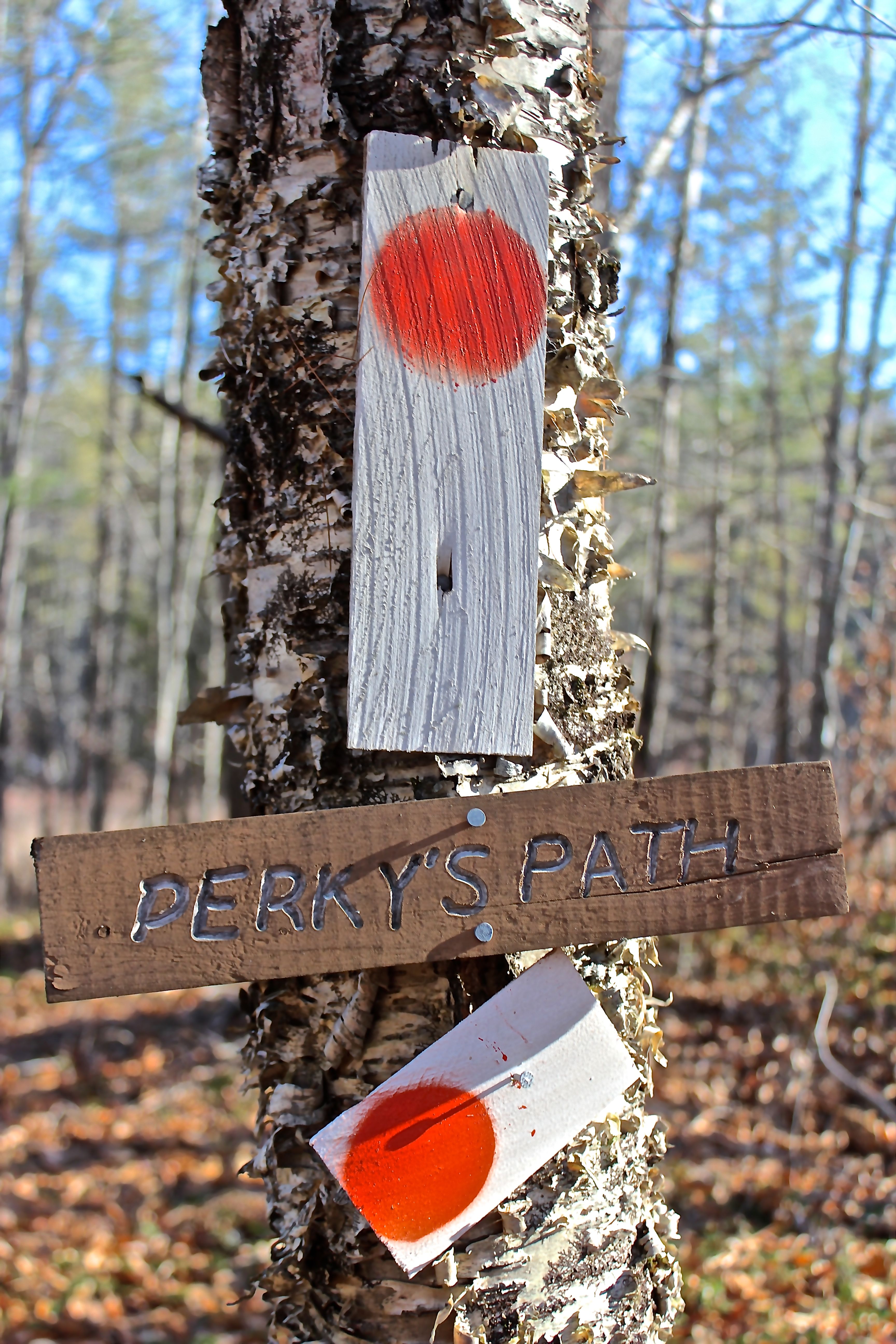
With that in mind, I headed to Perky’s Path in Lovell this morning.

perkys path

I love wandering along paths I’ve traveled many times before and making new discoveries.

dam 1

The path has two stream crossings, the first leading into a marsh. As I stood on the trail and looked toward the marsh, my eyes were drawn to a wall of sorts.

dam 2 infinity

I bushwhacked to get a closer look and was in awe. The wall is an old beaver dam that I’d never noticed before. Water trickles over it, but in the world of real estate, it has created an infinity pool. Wow–properties with such pools sell for a high price. Fortunately, this property is protected by the Greater Lovell Land Trust. 

fresh 4

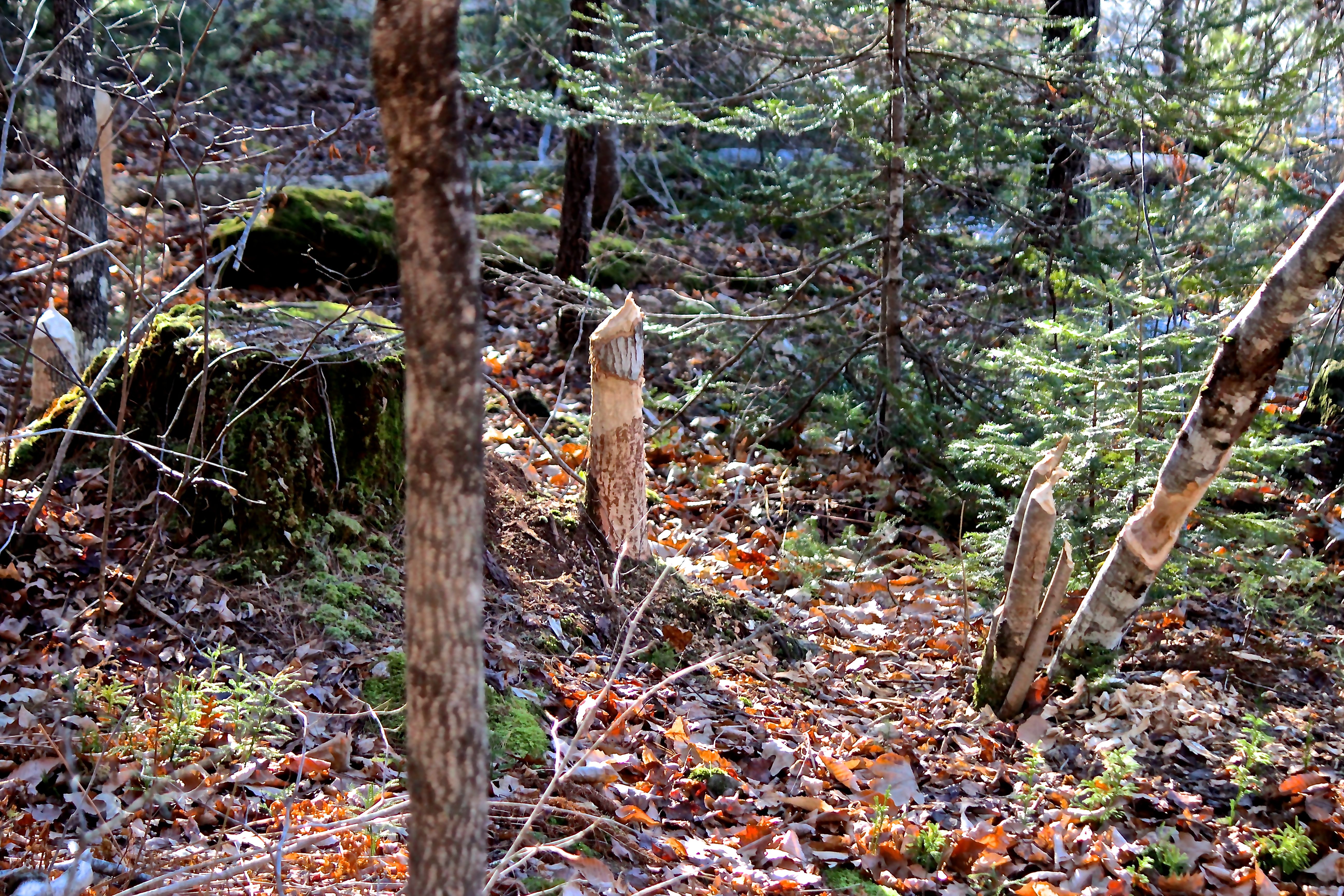
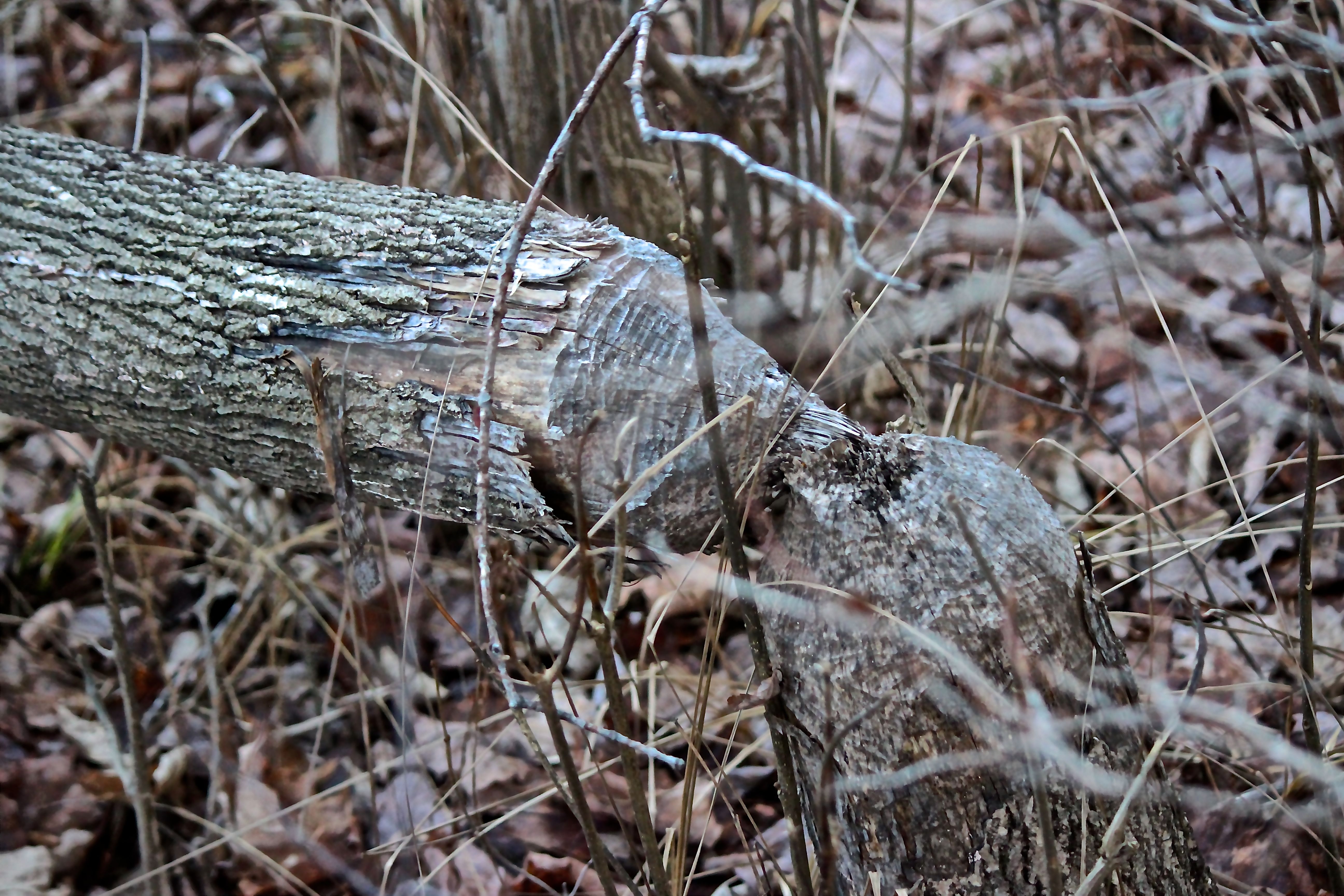
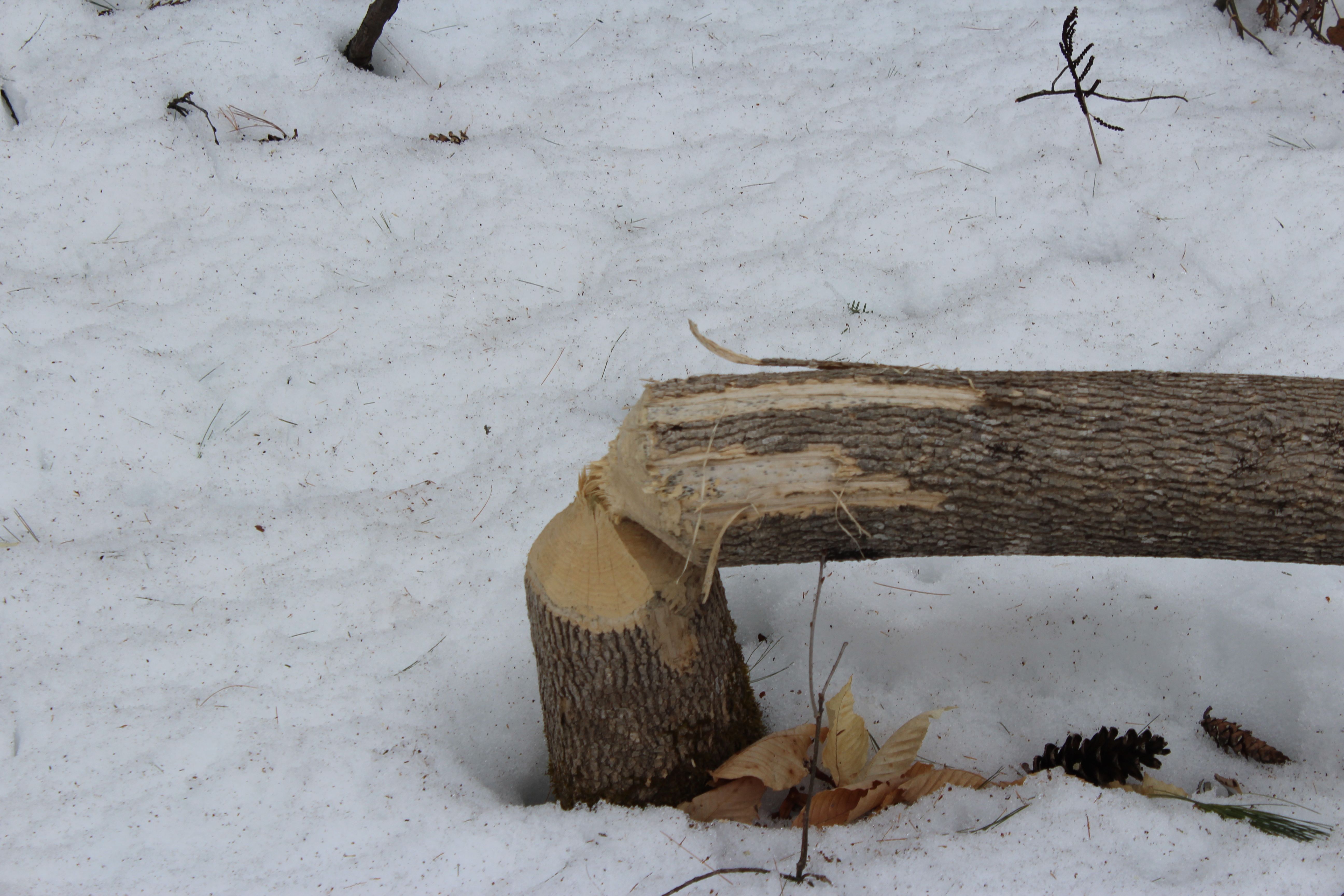
That discovery, however, led to more bushwhacking. Beaver works galore. All along the perimeter of the marsh they’d completed some selective cuts.

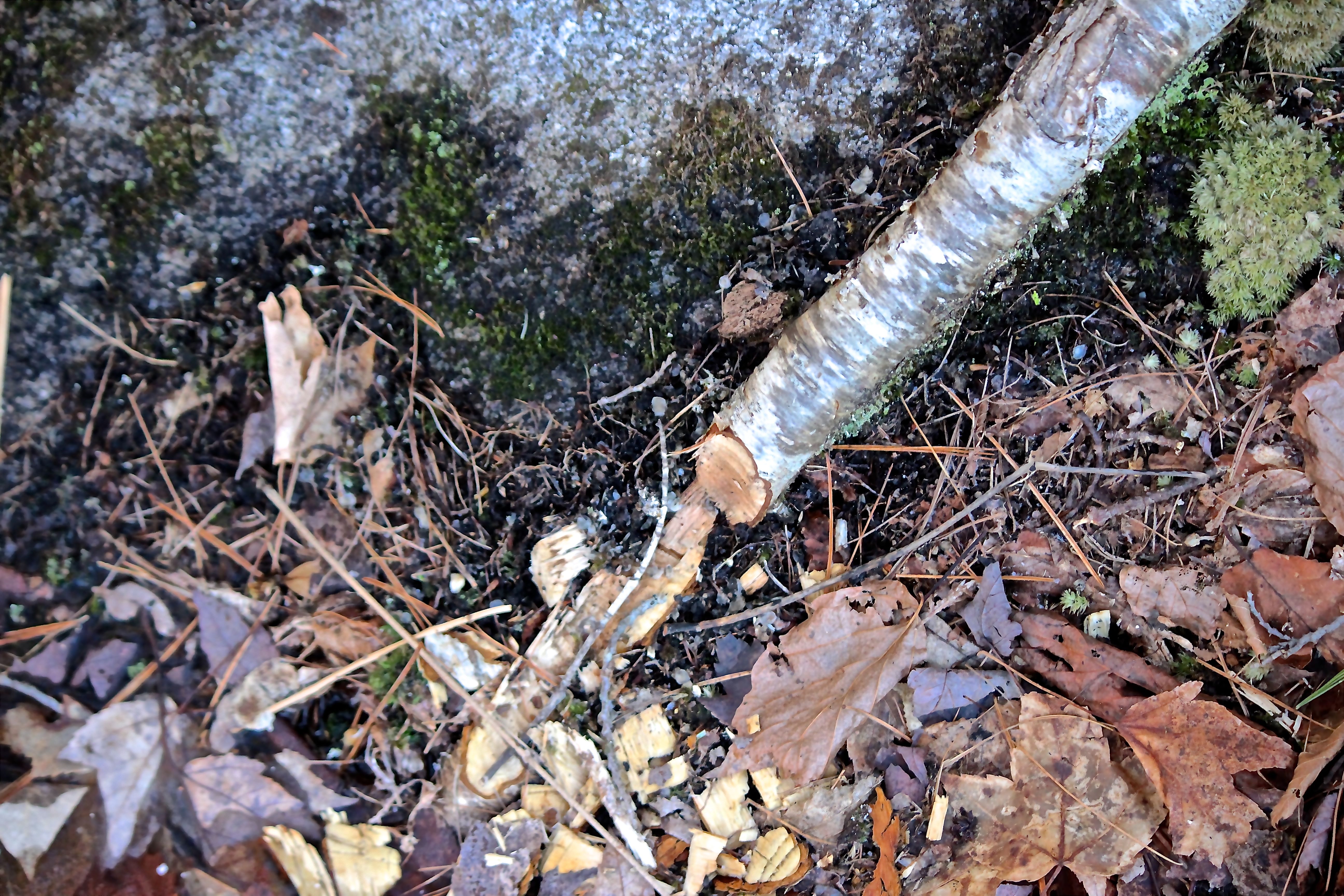
fresh beaver root

Even tree roots, like this yellow birch that hugged a slice of granite, were at the mercy of this industrious critter.

fresh beaver works 1

Big or small, it didn’t matter. If it could be felled, it was. Of course, some disappeared–to be added to the lodge, I presumed. I couldn’t see where they’d been taken. Larger trees were left where they’d fallen, but their branches became snacks.

fresh beaver, ironwood

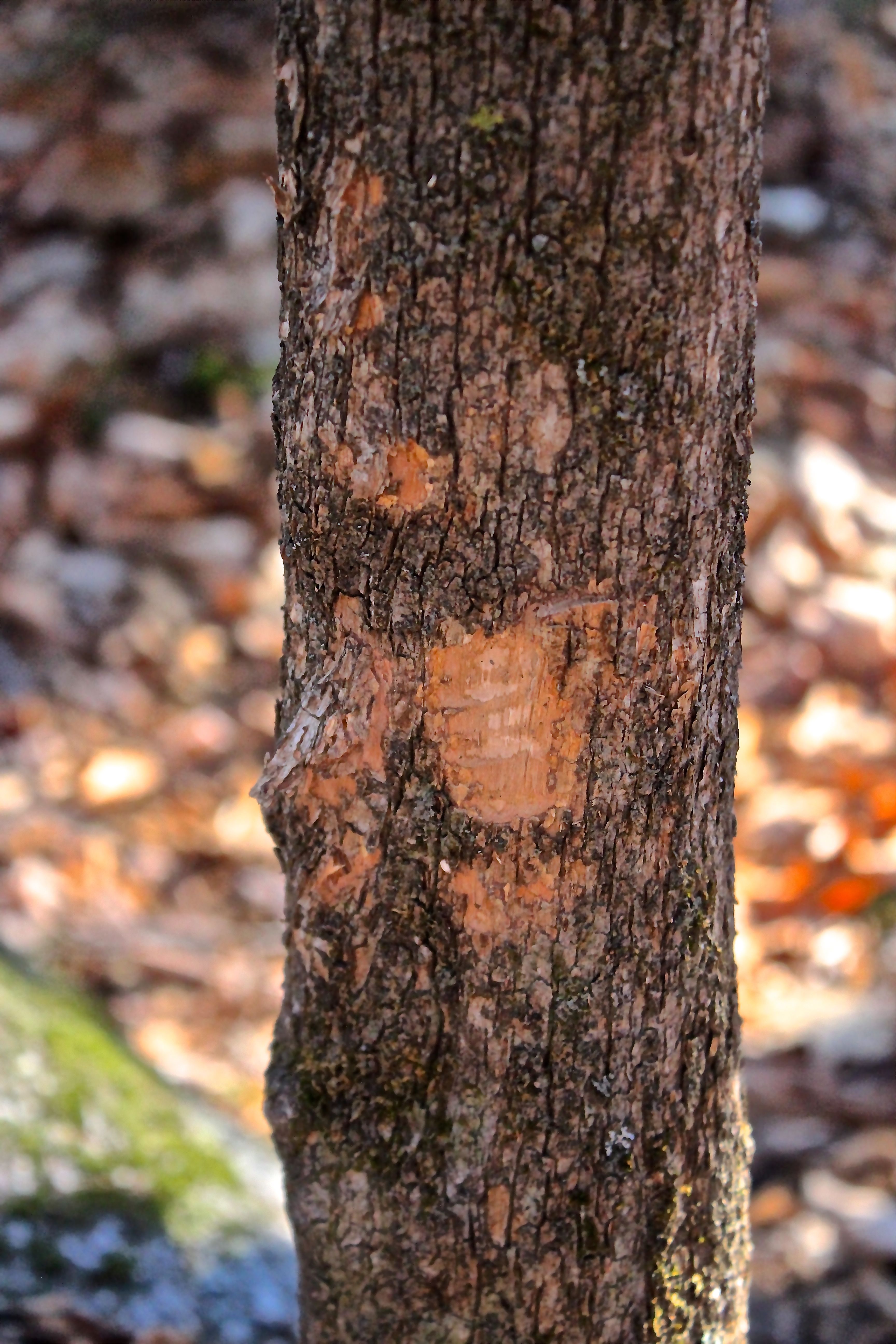
This beaver wasn’t fussy–Red Maple, Beech, Ash, Yellow Birch and Striped Maple all became part of the inventory. But . . . one tree proved its nickname–Hop Hornbeam, aka Ironwood. After an unsuccessful attempt at this hardest of hardwoods, it was left standing. Lucky for the hornbeam.

platform viewplatform 2

Moving along, I paused at the viewing platform to take in the view to the north and south.
sparkles 3The morning sun glistened on newly formed ice creating its own art statement.

ice sparkles 1

Amazing.

selfie

As I sat on the bench and soaked in the sun’s warmth, I wondered about the mysteries before me, the mysteries behind me and the mysteries to my sides. And I gave thanks for the opportunity.

perkys

There was more to see, so I moved on. At the second stream crossing, I looked around for more beaver evidence. Last year there was some, but none this year.

perkys 2

The water was high, however, and so I again began exploring the perimeter of the marsh.

woodpecker

A pileated woodpecker left its sign and lots of chipped wood below, but no scat. Drats.

wintergreen wintergreen berry

Wintergreen grows abundantly in this forest, and so I foraged a few berries. Remember Teaberry gum–this is the source. Both the leaves and berries are the source of the flavor (before it was created artificially). Try one. You’ll like it.

bristies

bristles

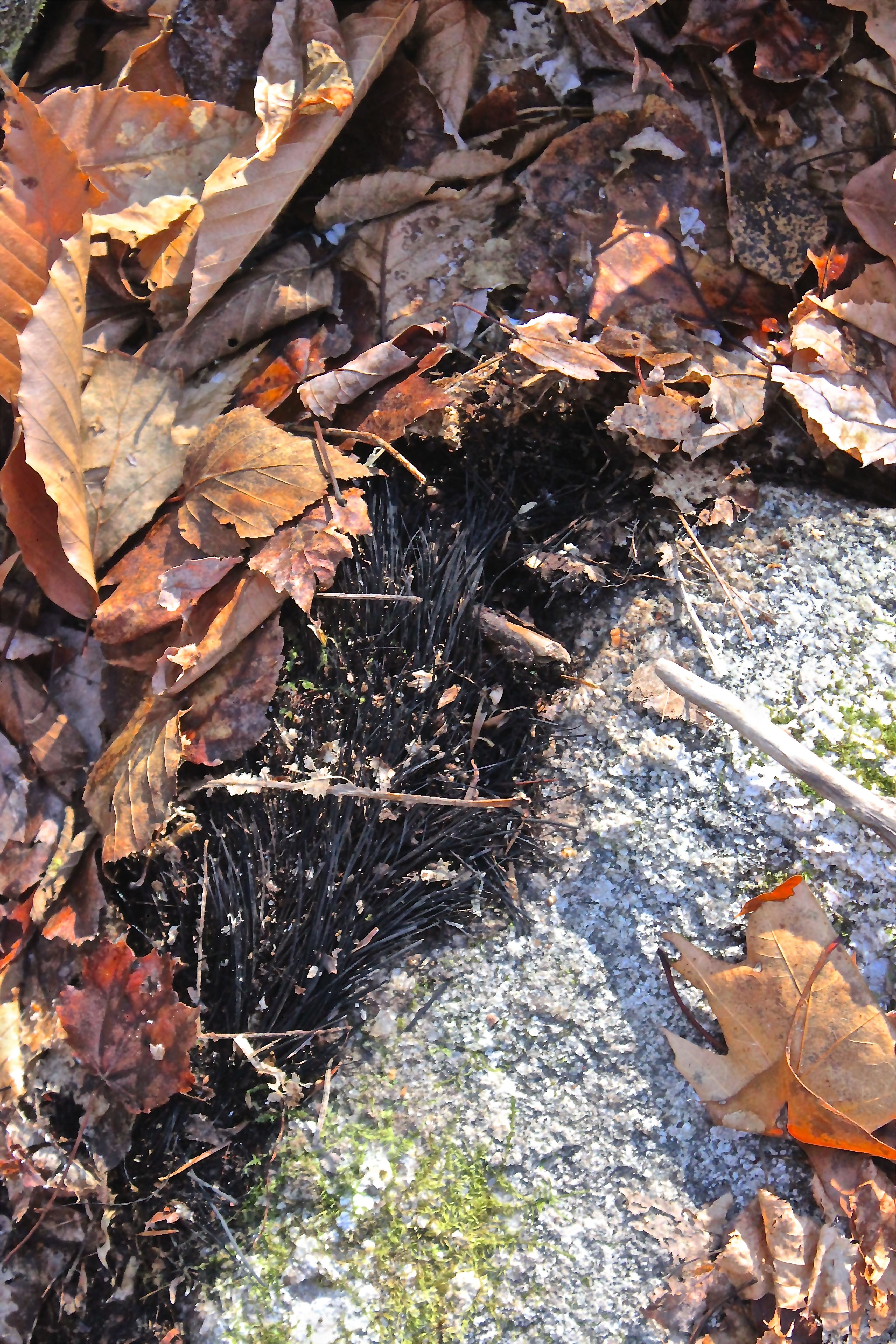
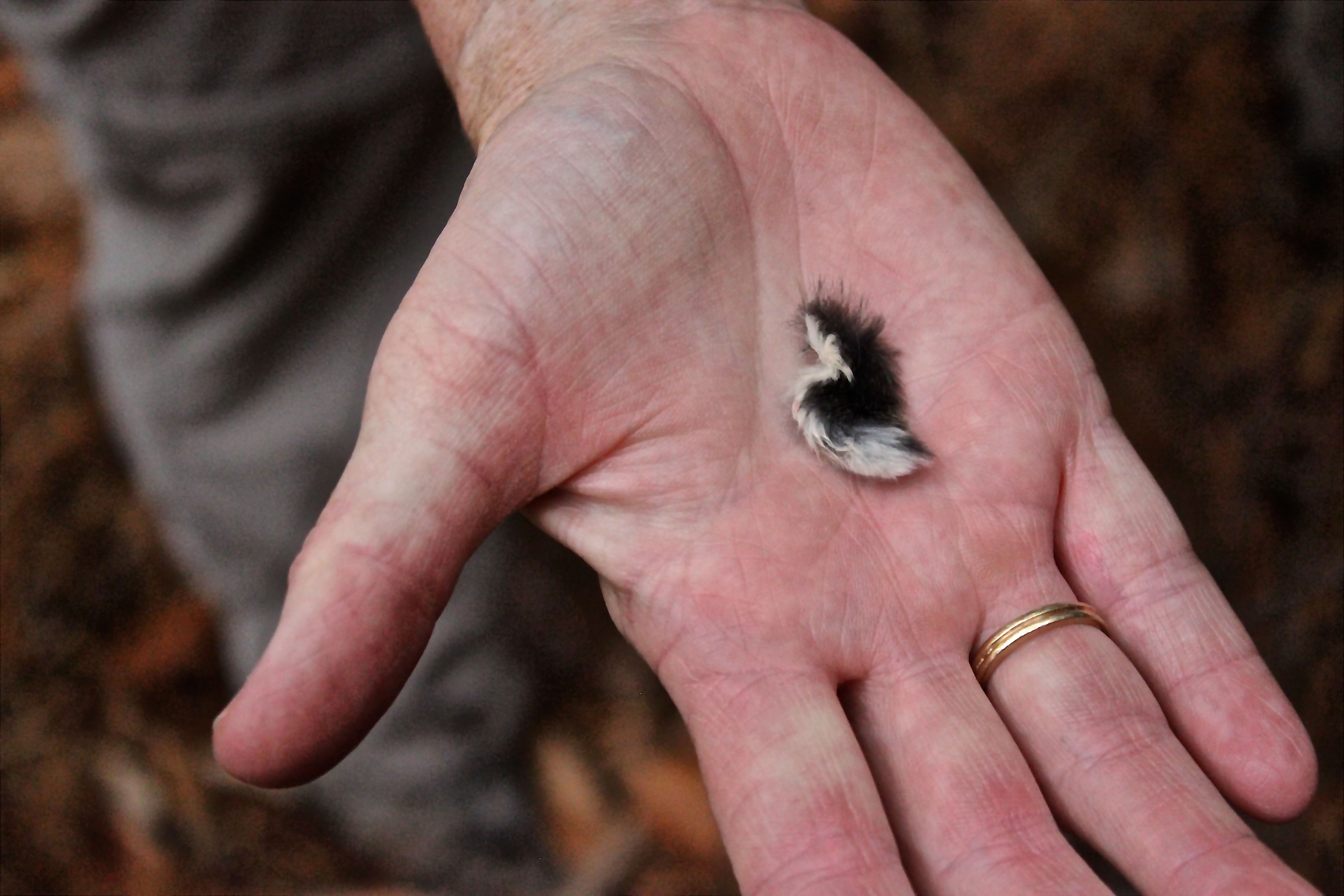
And then I came upon a mystery and feel like I should know this, but don’t. At first, I thought it was a mammal’s tail, left behind. But . . . it’s almost woody and quite bristly. (I found some at another property later in the day. ARGH!)

lodge 2

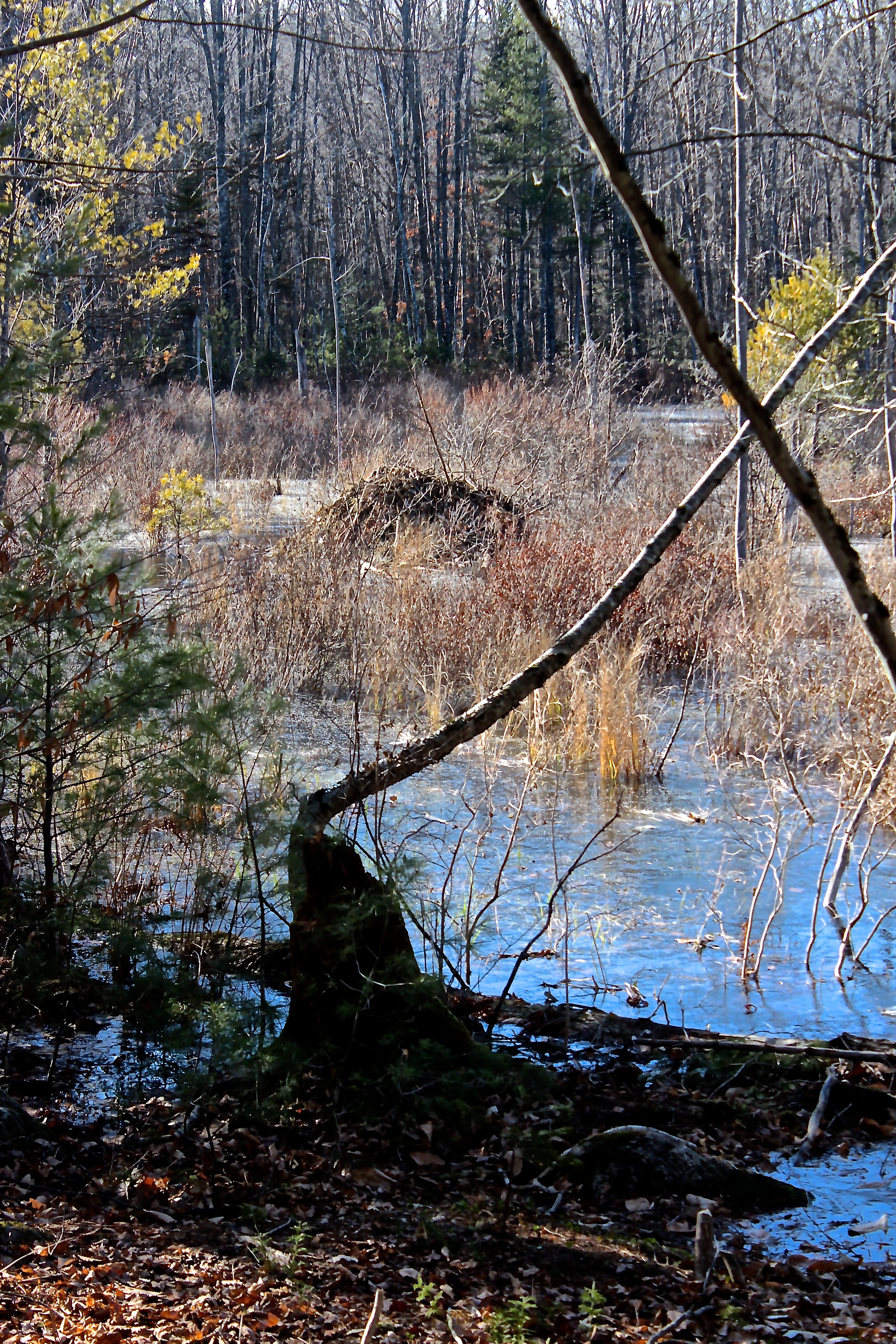
And finally, after wandering along the marsh, I found the lodge.

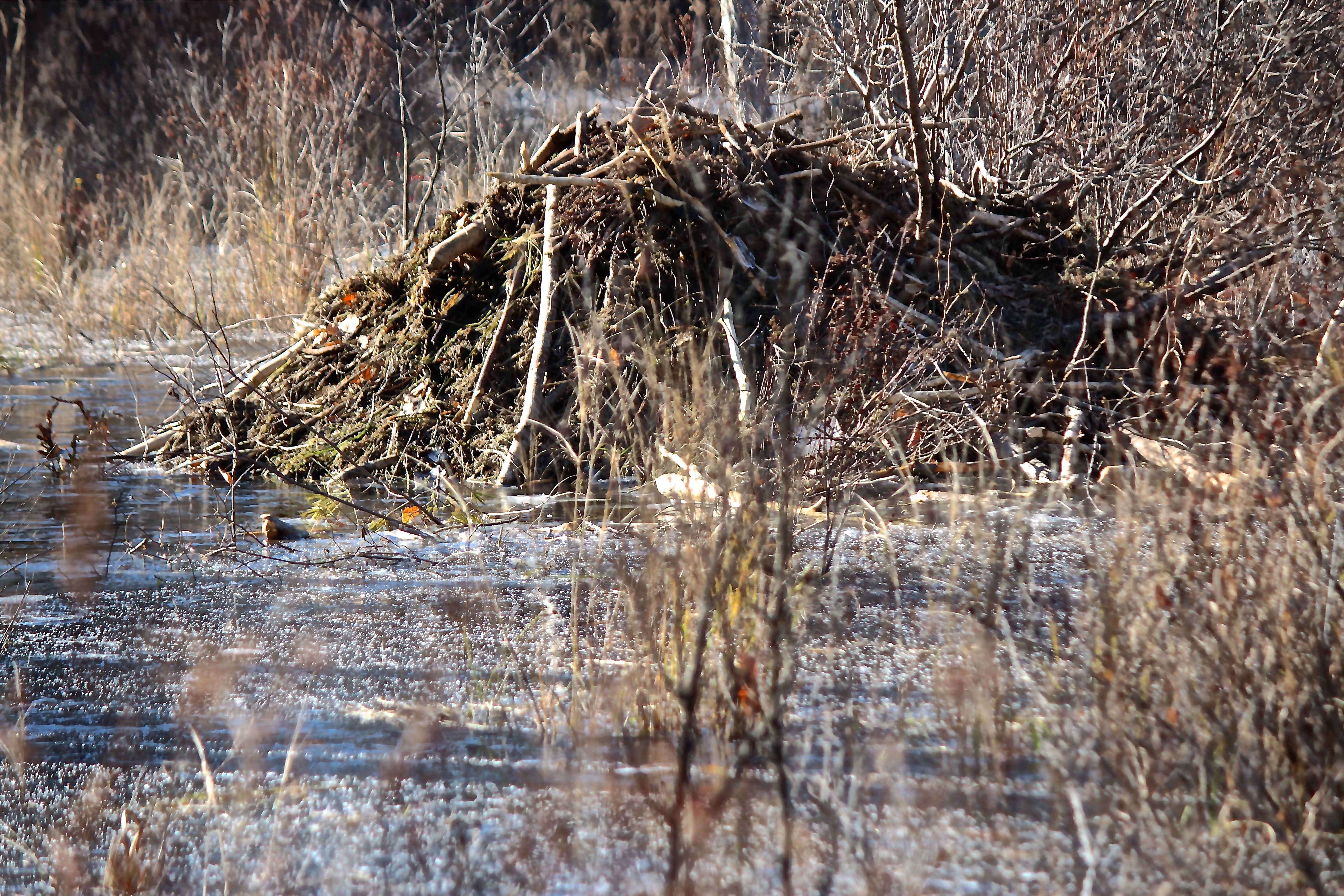
lodge, Perky's

It’s been recently mudded–well, before the ice formed, that is. A raft of chew sticks appears to the right front–ever-ready snacks.

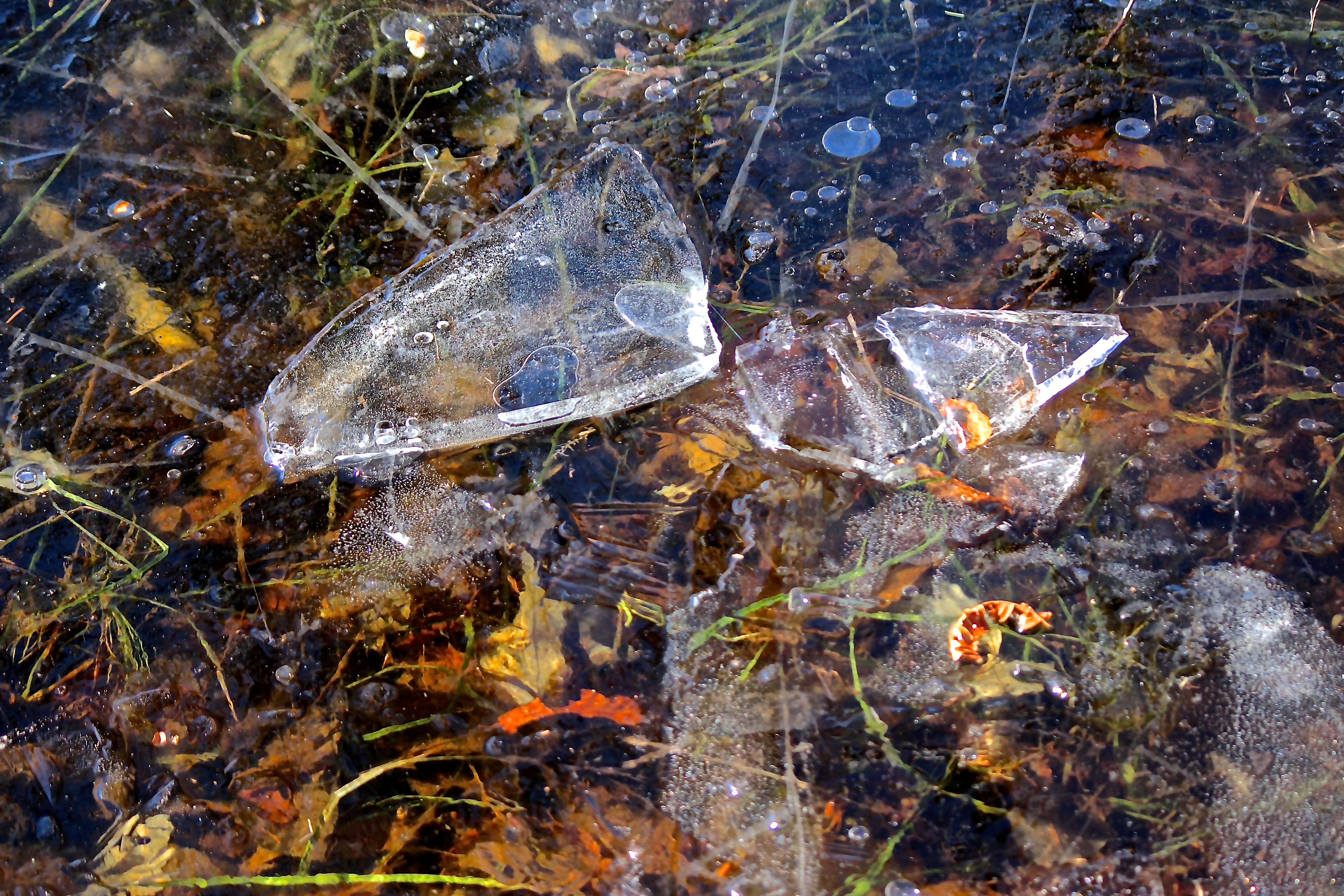
broken ice

Something caught me eye–chunks of ice on top of the ice near the water’s edge. What happened here?

otter 2

The area leading to the ice was a bit disturbed.

scat 2otter scat 1

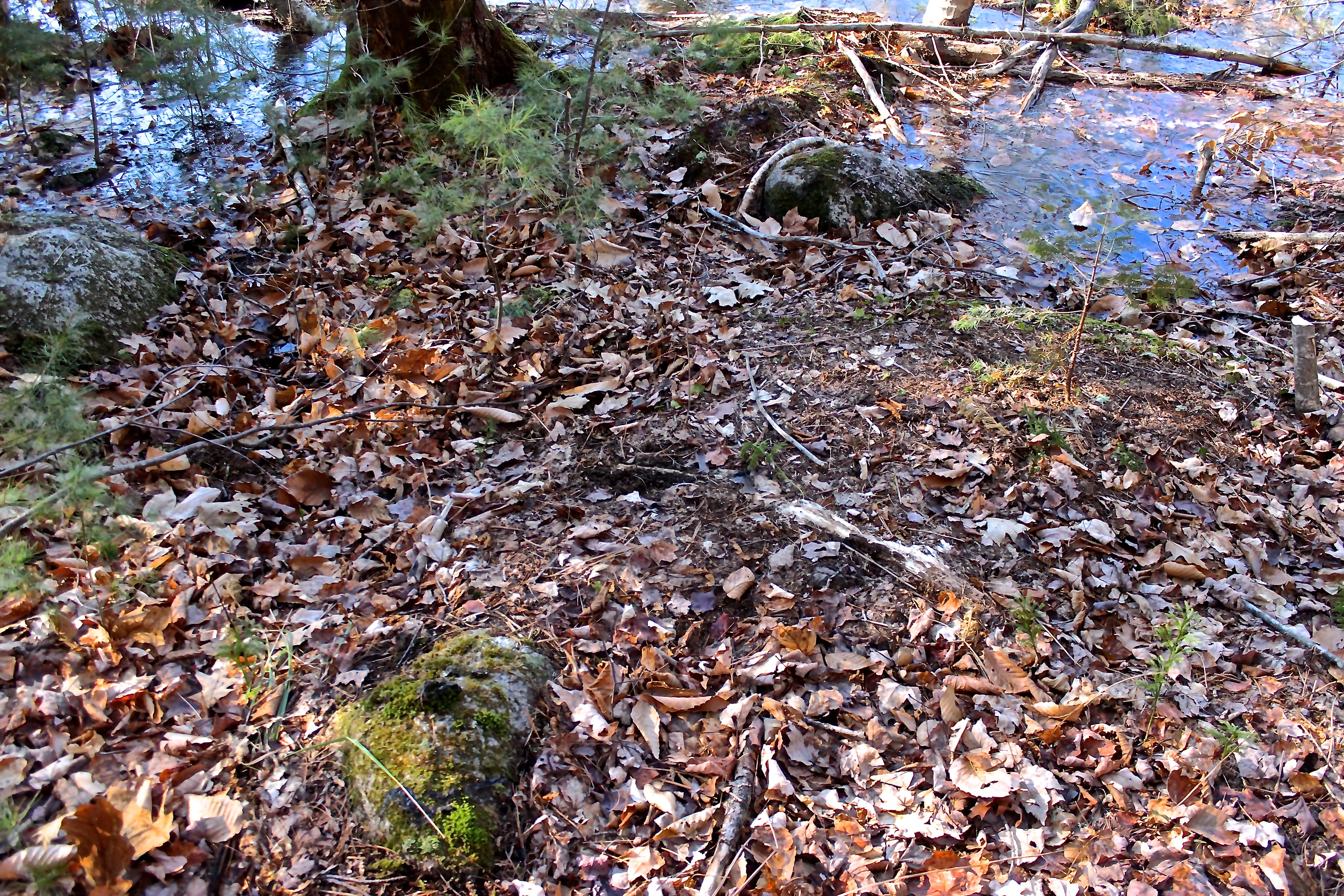
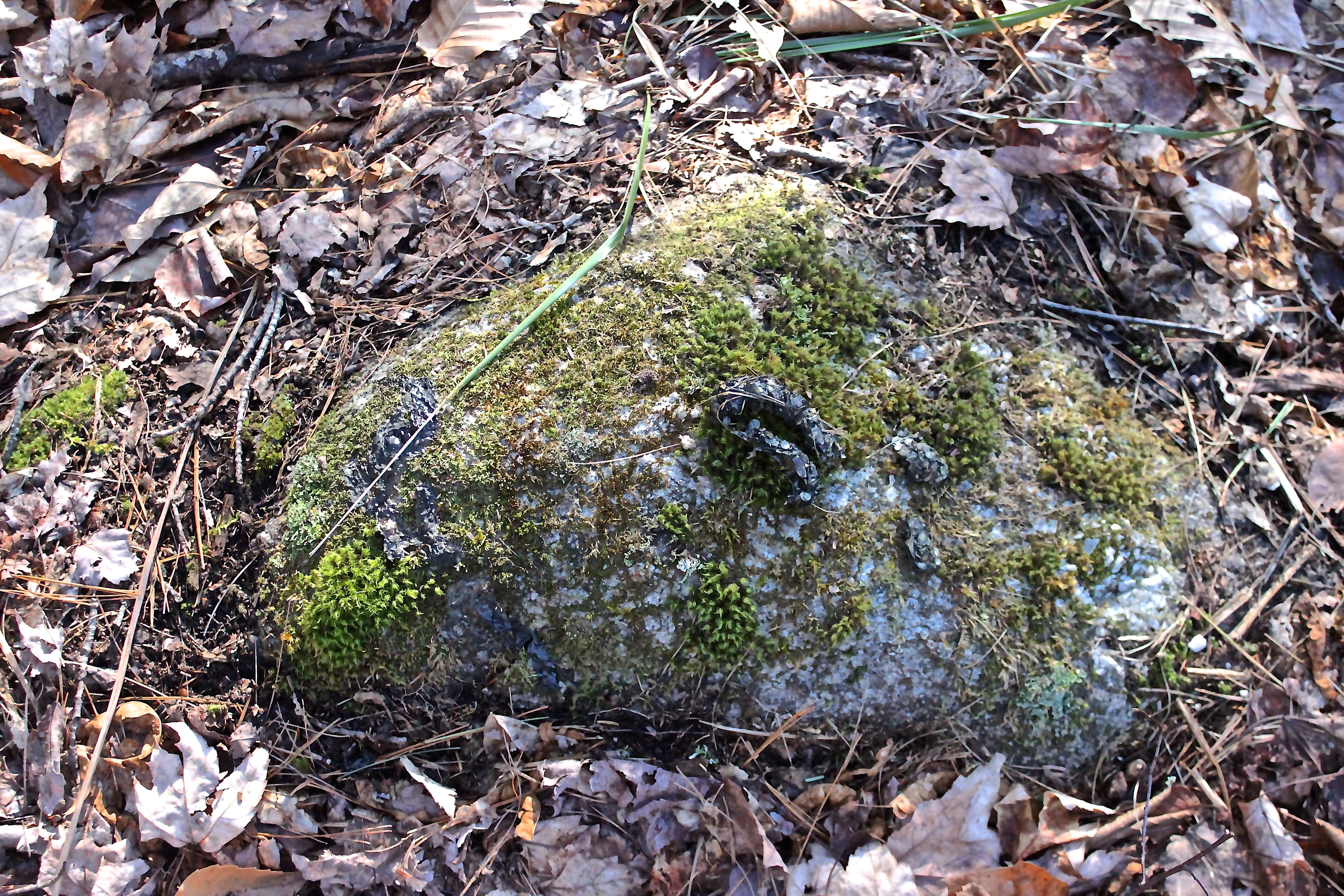
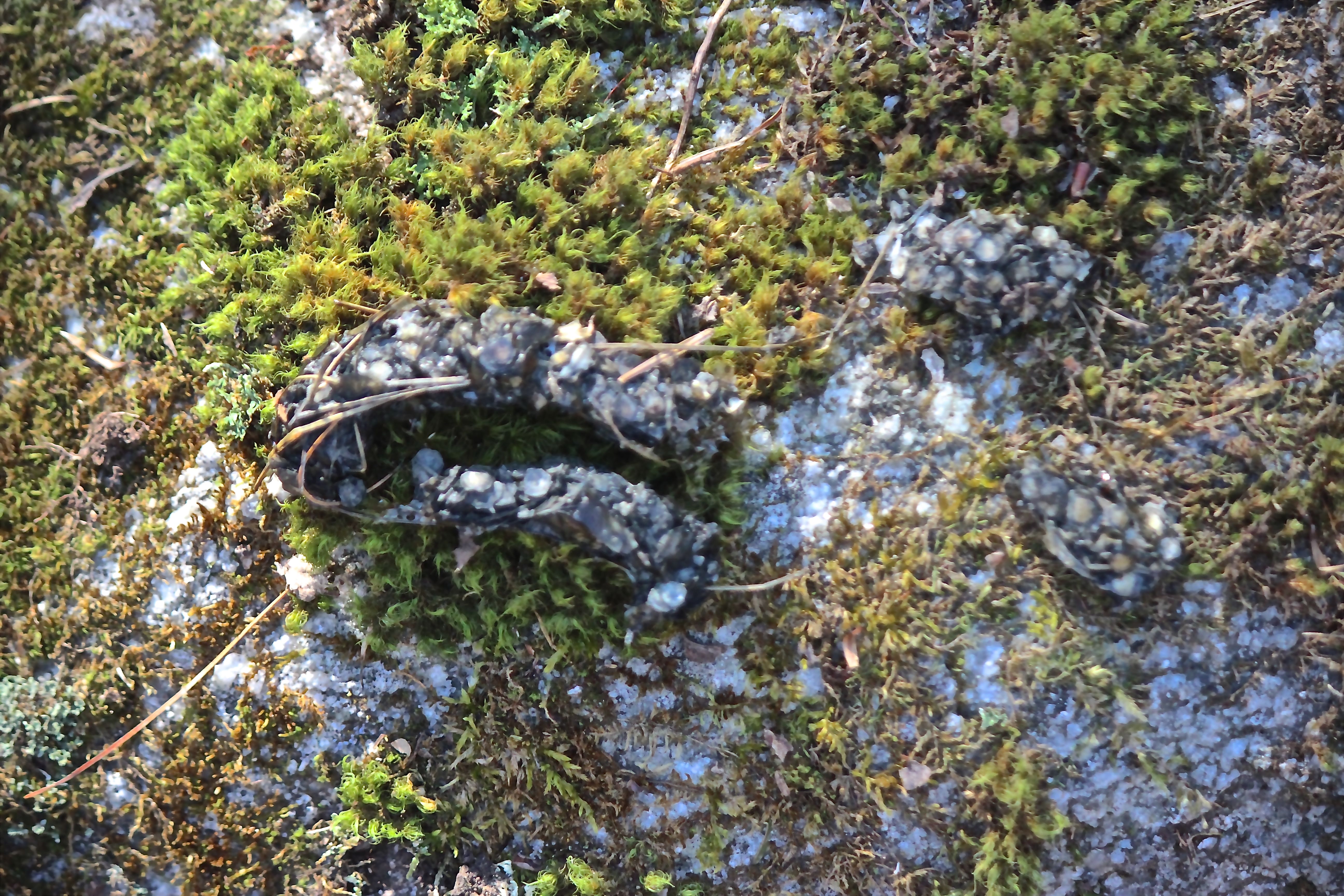
Then I realized I was in the presence of not one, but two aquatic mammals. Yes, the beavers may have made a hole in the ice, thus leaving the chunks on top, but someone else has also spent some time here and could be responsible for the disturbed area as well. A river otter. I knew this by the scat deposited on a rock–filled with fish scales. The thing is–otters prey on beavers. So . . . now I have to wonder.

old beaver 2

I left Perky’s Path with questions on my mind. Later in the afternoon, I walked to Pondicherry Park in search of answers but found only more questions. Old beaver works are still evident. Some were made last year at this time when several beavers inhabited this space. As of today, I have not seen any beaver activity here. Why? Where did they go? Did they move away of their own doing, or were they helped? Did a predator get to them–man or mammal?

old parchment

0ld crowded2

As I bushwhacked along the brook, I came across this Red Maple. I can’t remember when it fell, but crowded parchment has since taken up residence. One thing always leads to another.

mallards

Mallards swam about while the vegetation cast late afternoon shadows.

royal fern

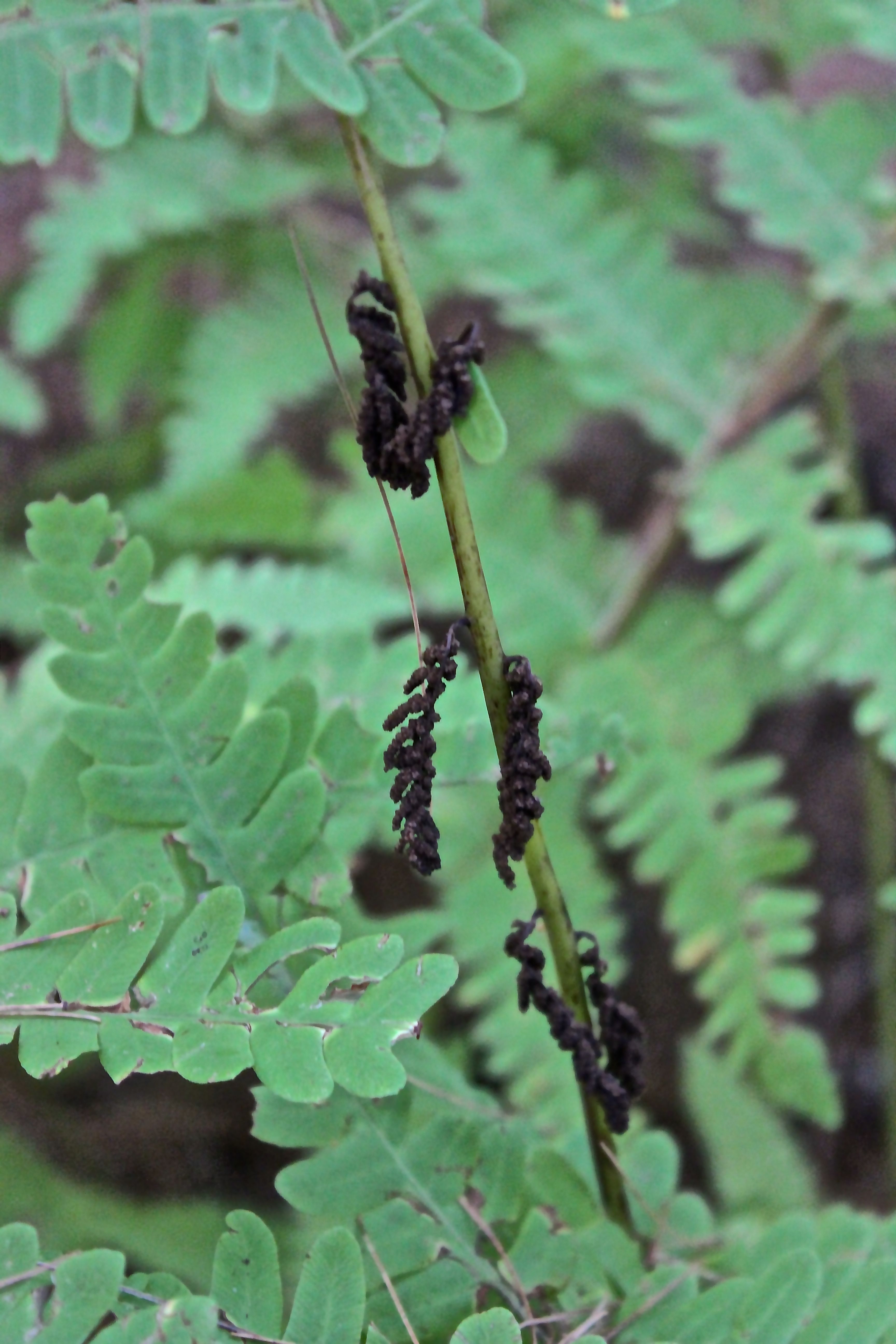
Beside the water, a few Royal Ferns still sported their crowns of sporangia, albeit withered.

winterberry

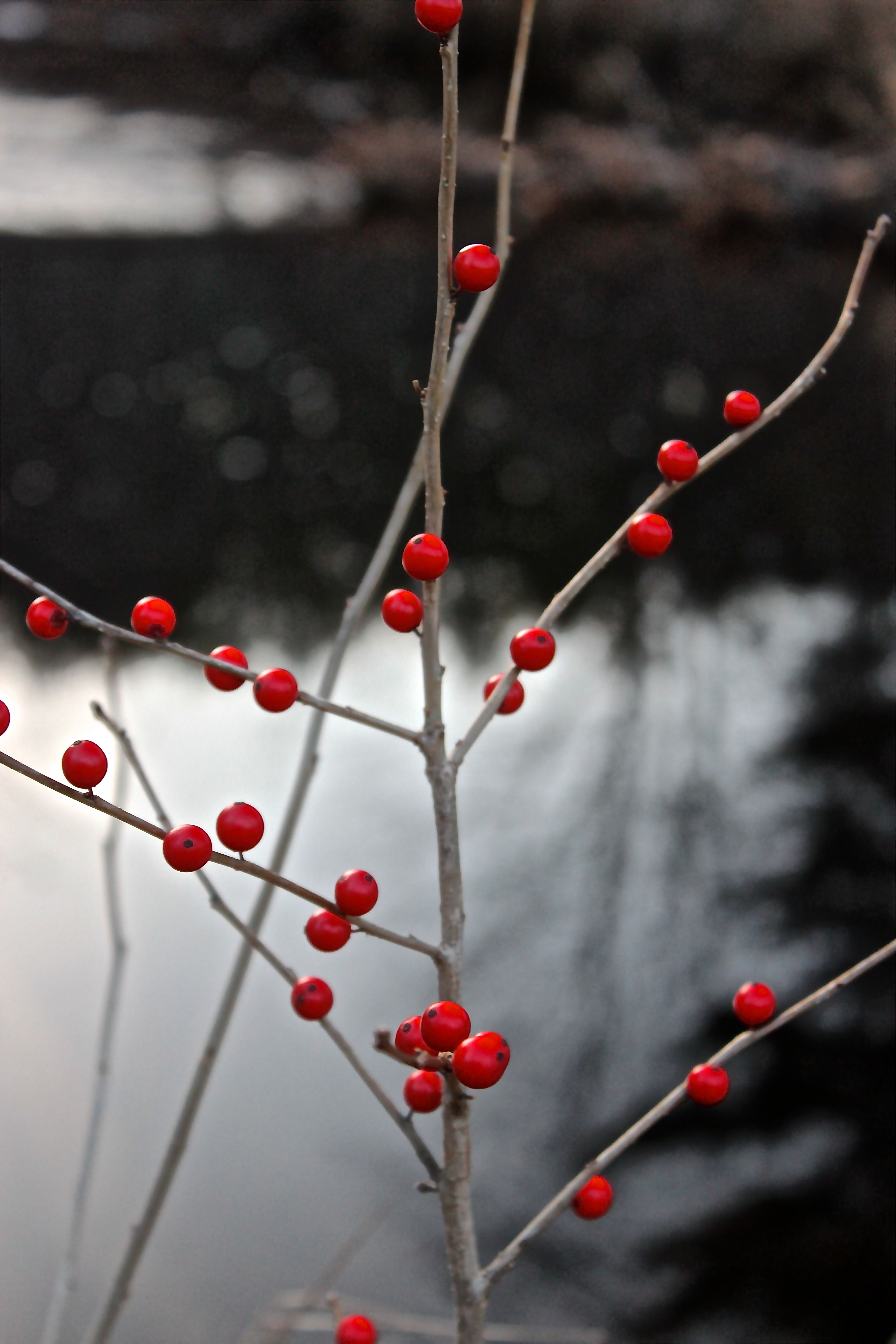
As is its custom, Winterberry has lost its leaves, making the bright red berries all the more showy in the landscape.

crosier

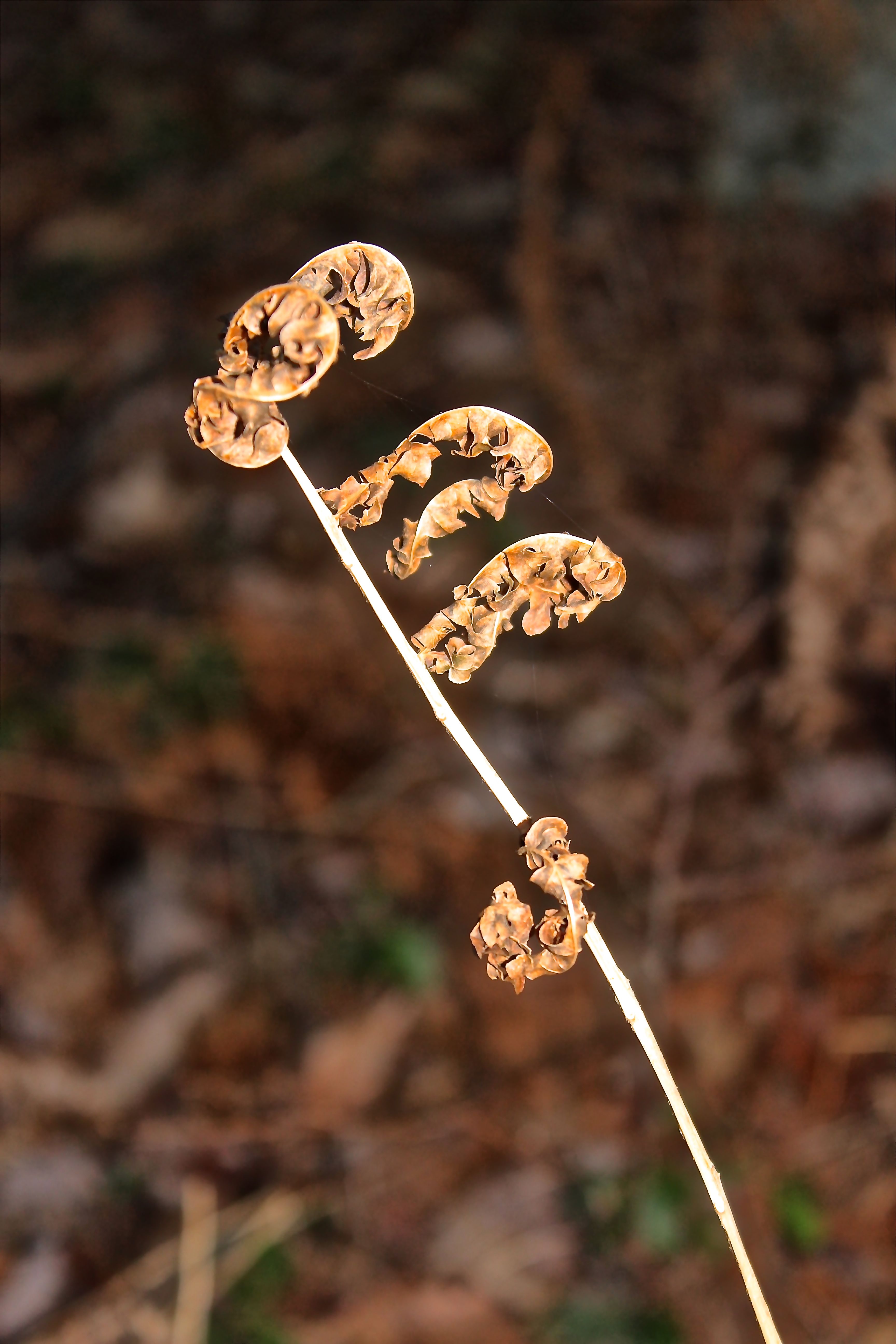
And Cinnamon Ferns are curling into themselves–appearing almost like the crosier form with which they begin life.

changing light, PP

The sun was setting as I headed home, thankful for the time I’d had to wander and wonder.
And thankful for my parents who always encouraged me to ask questions and continue to sit on my shoulder and nudge me today. I’m also thankful that they gave me life all those years ago.

cake

And I’m thankful for my guys, who helped me celebrate when I got home.

Wer-if-est-er-i-a-ing A-long

12074842_10153632630537731_2769008110586363497_n

Thank you to my friend, Judy Lynne, who shared this word with me today. I know I do it, but I didn’t know there was a word for it. And I love that it’s an Old English word–takes me back to college days and my History of the English Language Class where we learned to read in Old and Middle English.

And so it was that today I wandered longingly through the forest in search of mystery with five other naturalists–all MMNP grads who will bring the Master Naturalist course to Bridgton in the spring of 2016.

After a tour of Lake Environmental Association’s Maine Lakes Science Center, we took care of some housekeeping items (coursework) before heading out the door. I made them practically run through Pondicherry Park–well, maybe run is an overstatement, but we moved quickly for us–not much time for werifesteriaing.
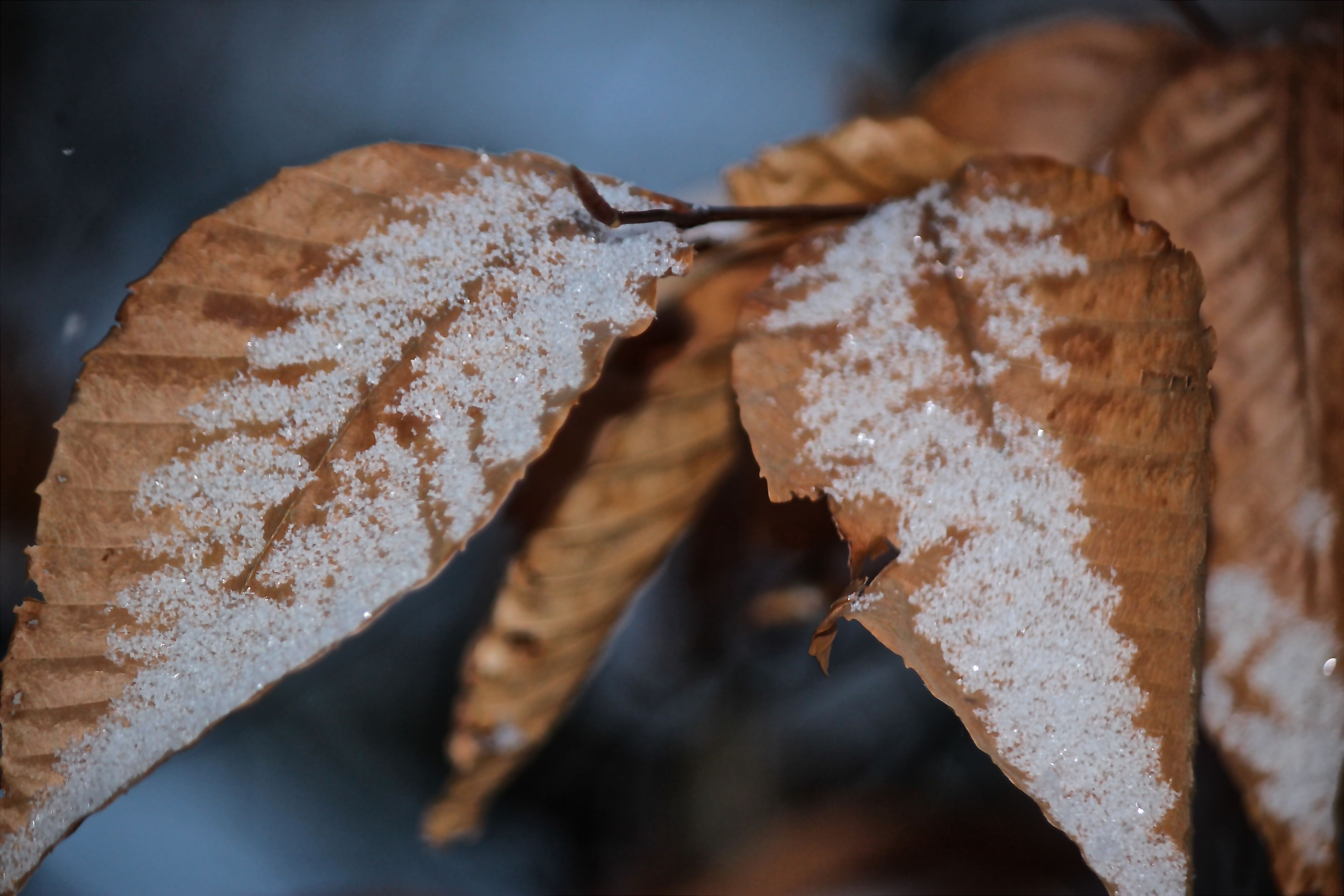
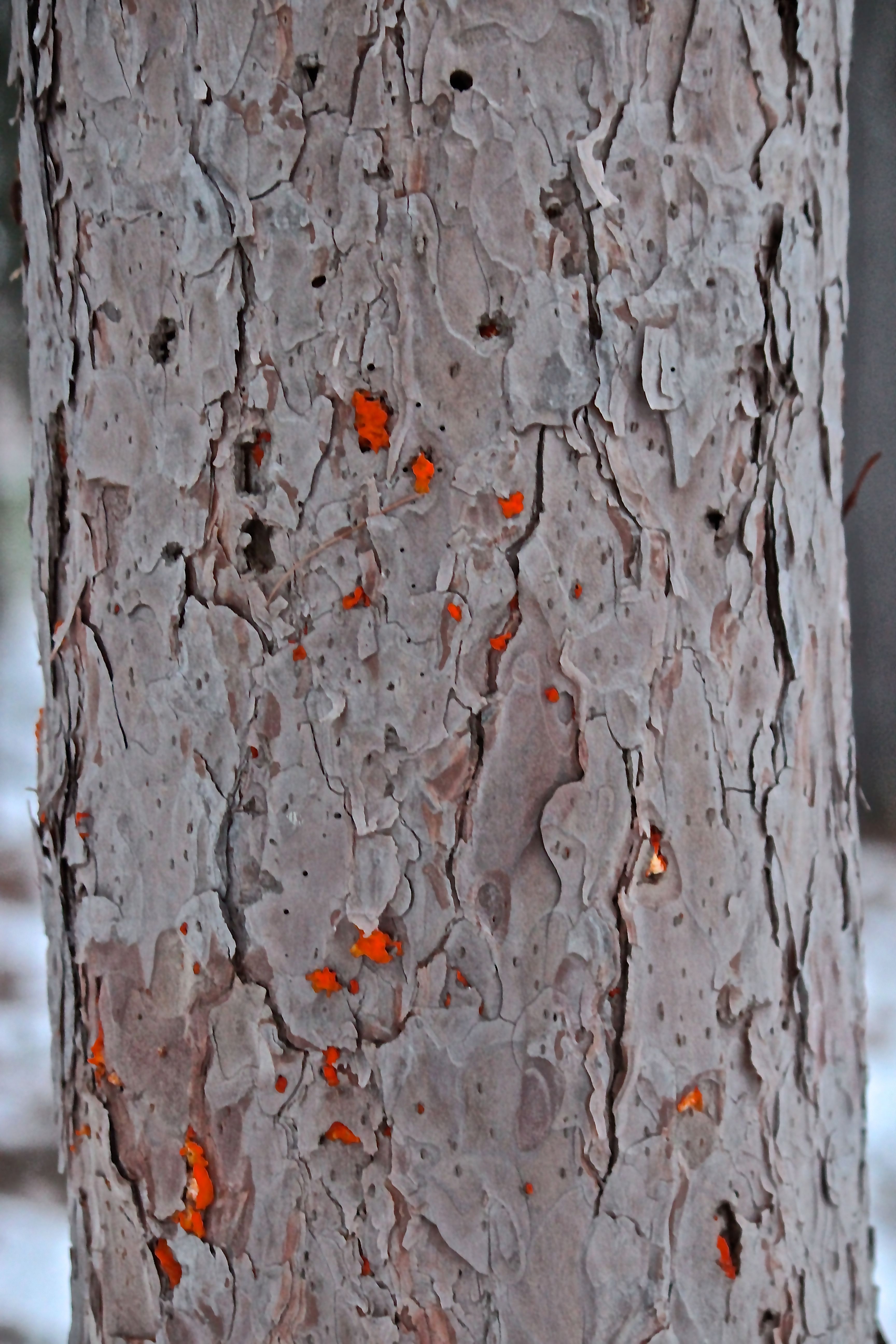
It was our afternoon tramp at Holt Pond when we allowed ourselves more time to pause and wonder.

HP snake

As we started down the trail, Beth saw this snake hidden among the leaf litter. It’s the third garter snake I’ve seen this week. The day was overcast and we weren’t sure if he was coiled up because he was cold or if something had attacked him.

HP Muddy River

We stepped onto the boardwalk to view the Muddy River and it almost sank beneath our weight. The water is quite high and I suspect I know why.

HP beaver works

Off to the side, we saw fresh evidence of beaver works.

HP beaver lodge, Muddy River

And in the river, a lodge topped with new sticks. I think the dam down the river has probably been rebuilt.

Looking from this vantage point, the layers of communities are pronounced, with the wetland plants like leatherleaf, sheep laurel and sweet gale growing low by the river, topped by alders and small red maple trees, topped by tamaracks, topped by white pines, hemlocks and Northern red oaks.

HP layers from Muddy River

Similar layers surrounded us with the bright red winterberries forming the creme between two wafers.

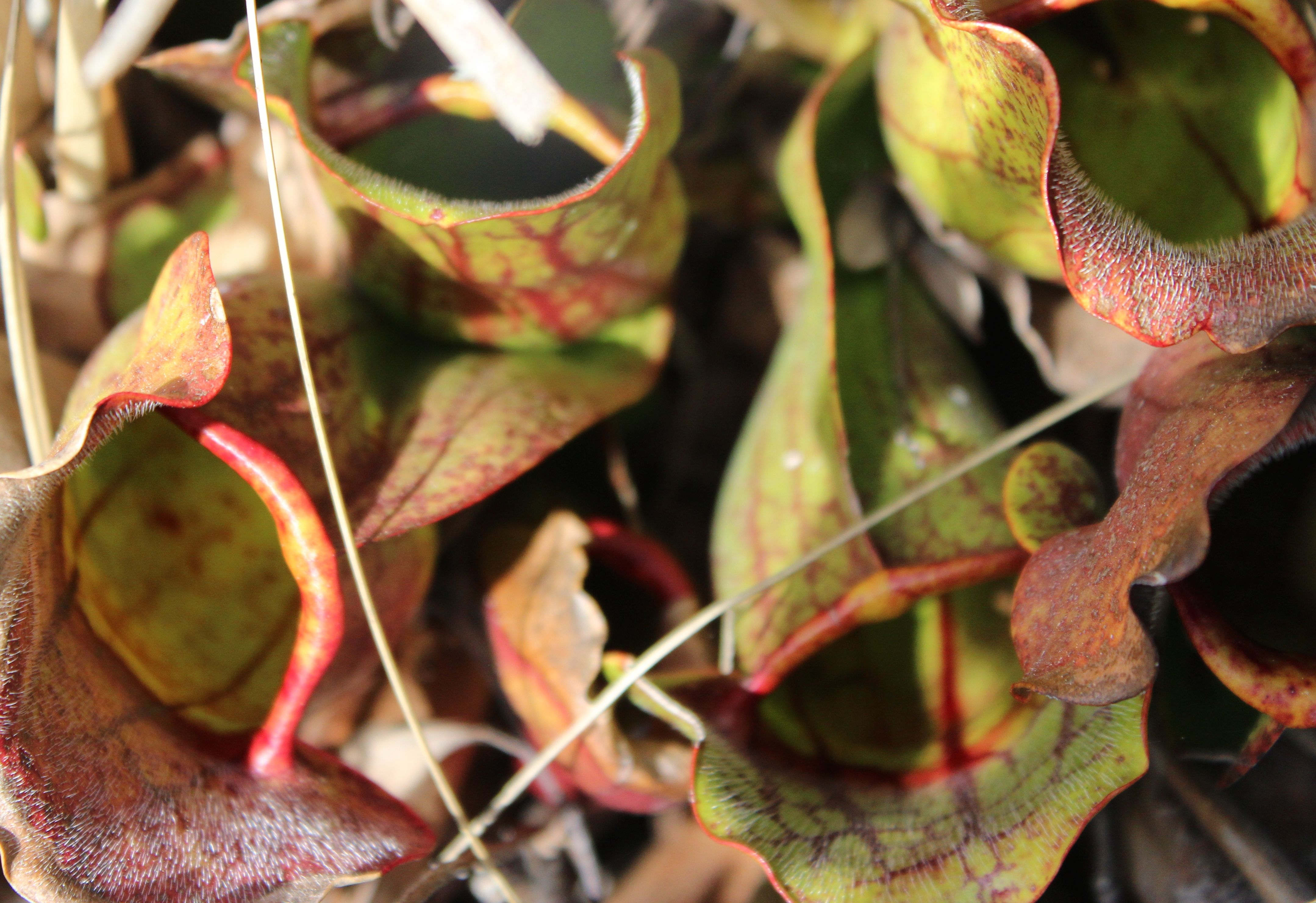
HP pitcher 1

As happens each time I pass this way, I am forced to photograph the pitcher plants.

HP pitcher 2, picture

Have you ever noticed the pictures on the hairy inner lip? Do you see what I see? A woodland landscape–trees with extended branches, a layer of colorful foliage and a grassy edge leading to the lake (water in the cup)? I know the hairs and design are important for the attraction of insects, but I never really paid attention to the actual design before.

HP Wooly aphid

We also found more woolly alder aphids, which Joan and Ann held in their hands so everyone could get an unclose look at the squiggly insects. Rather disgusting, yet fascinating.

Holt PondHP north 2

Even a single moment at Holt Pond translates into tranquility. (And I had to channel this moment for Judy Lynne.)

HP bog boardwalk, water

Gordon, Beth and Joan tried to keep their feet dry as we examined the plant life along the quaking bog boardwalk.

HP cranberries

Karen spotted one cranberry and then another, and another, so everyone could sample the tart flavor. Pucker up.

HP owl pellet

Our next fun find–a raptor pellet comprised of hair and bones galore. For the naturalist course, this will come into play.

HP raining leaves 3

Every once in a while, I’d ask if it was raining. It was–beech and oak leaves.

HP old hemlock varnish conk

While we stopped to admire several older hemlock varnish conks, something else caught our attention.

HP mystery bark

Do you know what it is?

HP fur

And then Ann spotted this little tidbit–leftover from someone’s dinner. We still don’t know who ate whom. Or if it was related to our earlier find of the pellet.

What we do know is that we spent a delightful day werifesteriaing along.

HP fun mystery

As for the mystery photo–the inside of hemlock bark. This is the bark that I think of when trying to remember how trees decay–hardwoods rot from the inside out, softwoods rot from the outside in, but hemlock bark often remains. In the 19th century, hemlock bark was used in the tanning process because the tannins found in the bark preserved a hide and prevented natural decay while giving it a brown hue. At the same time, the tannin left the leather flexible and durable.

Here’s hoping you’ll have the opportunity to wander longingly in search of mystery.

Barking Up A Bridge

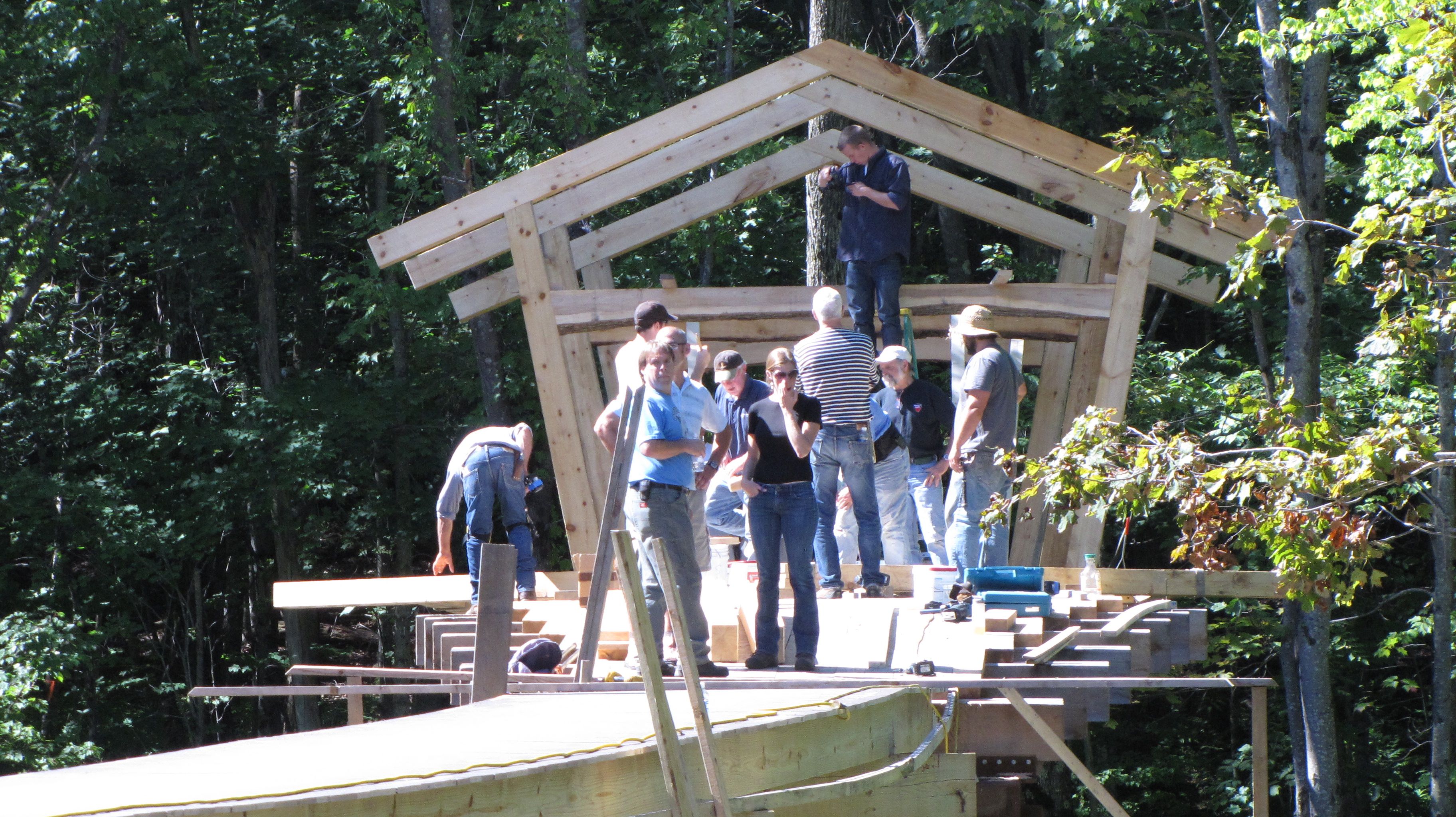
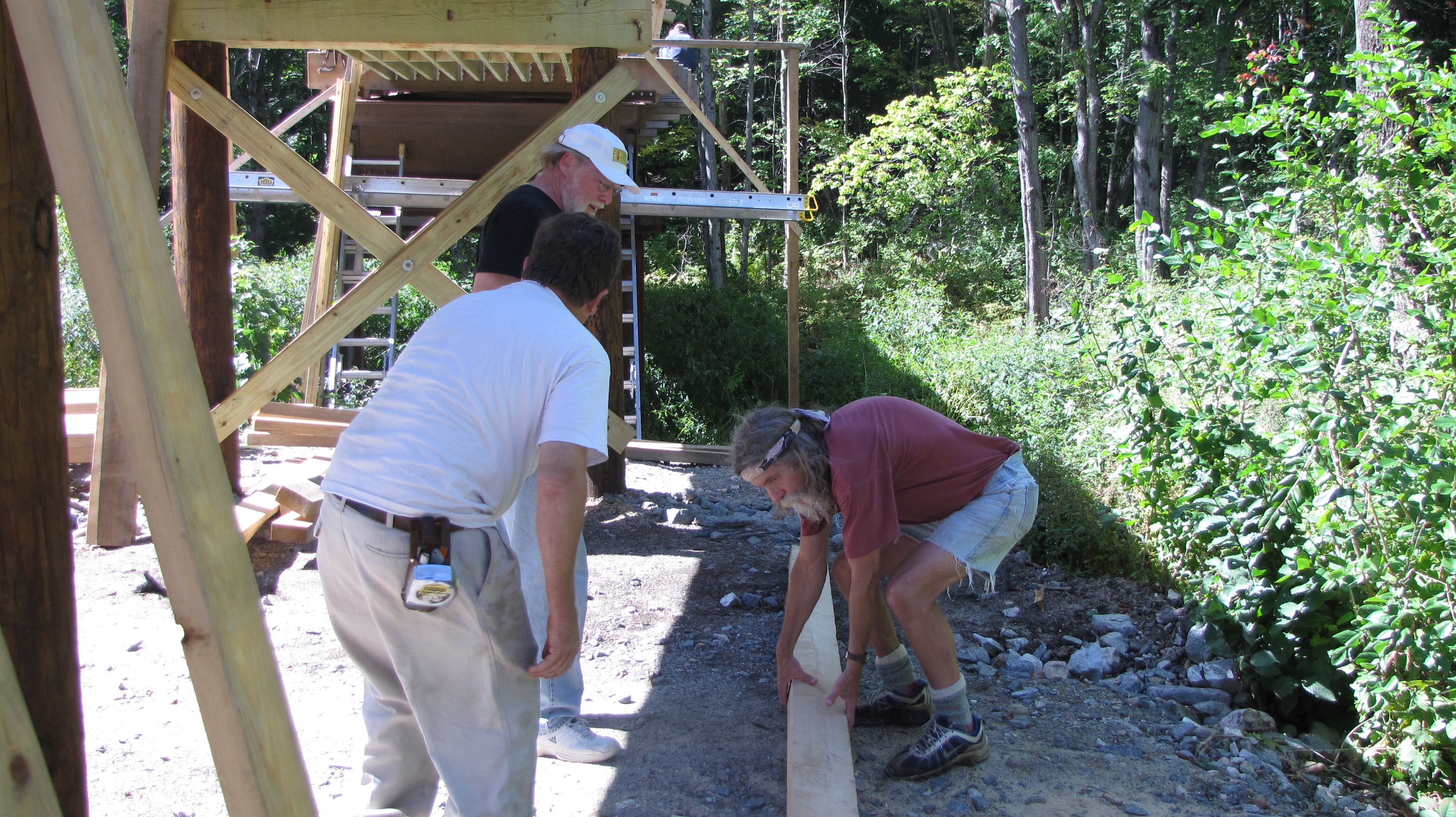
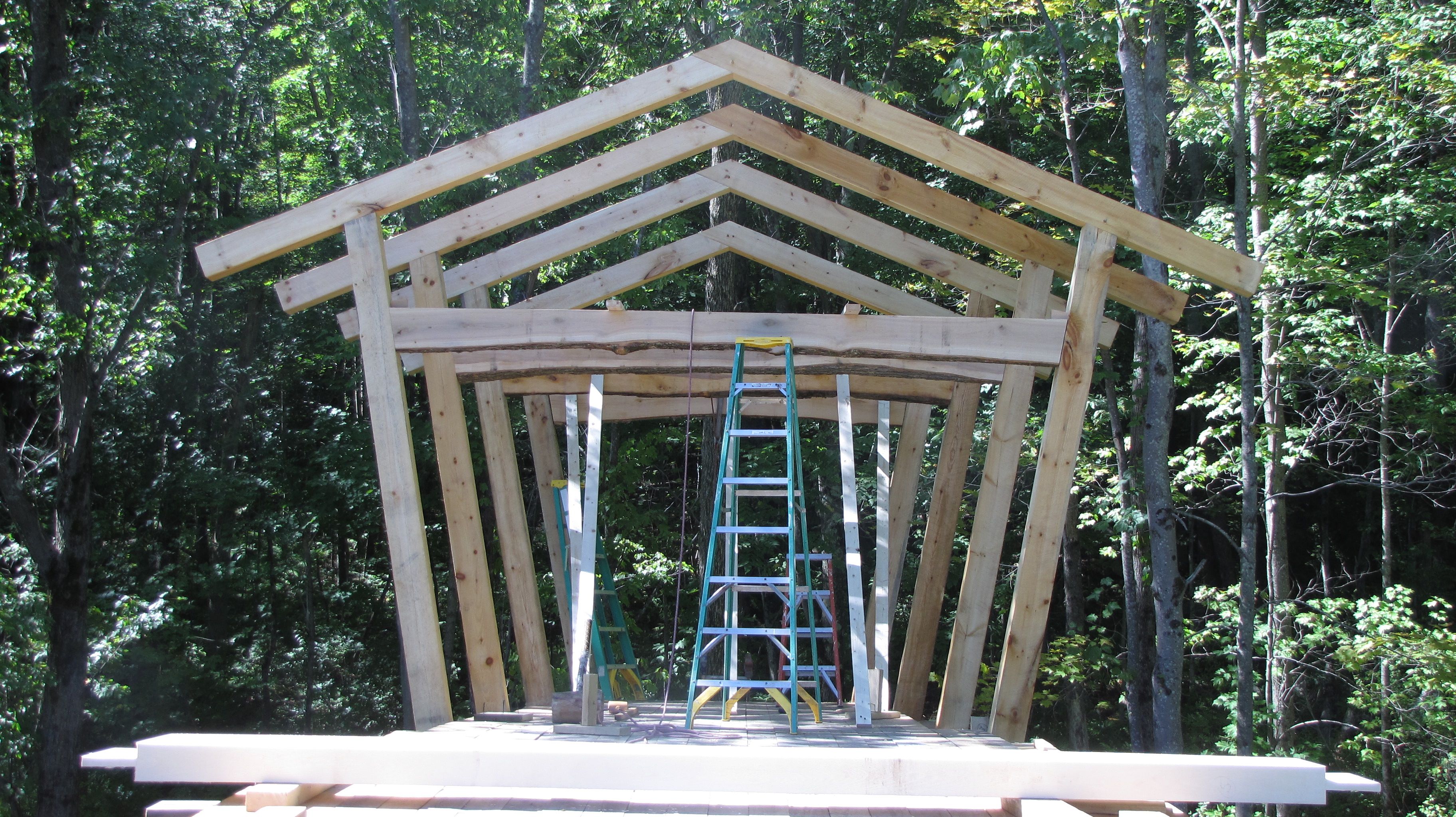
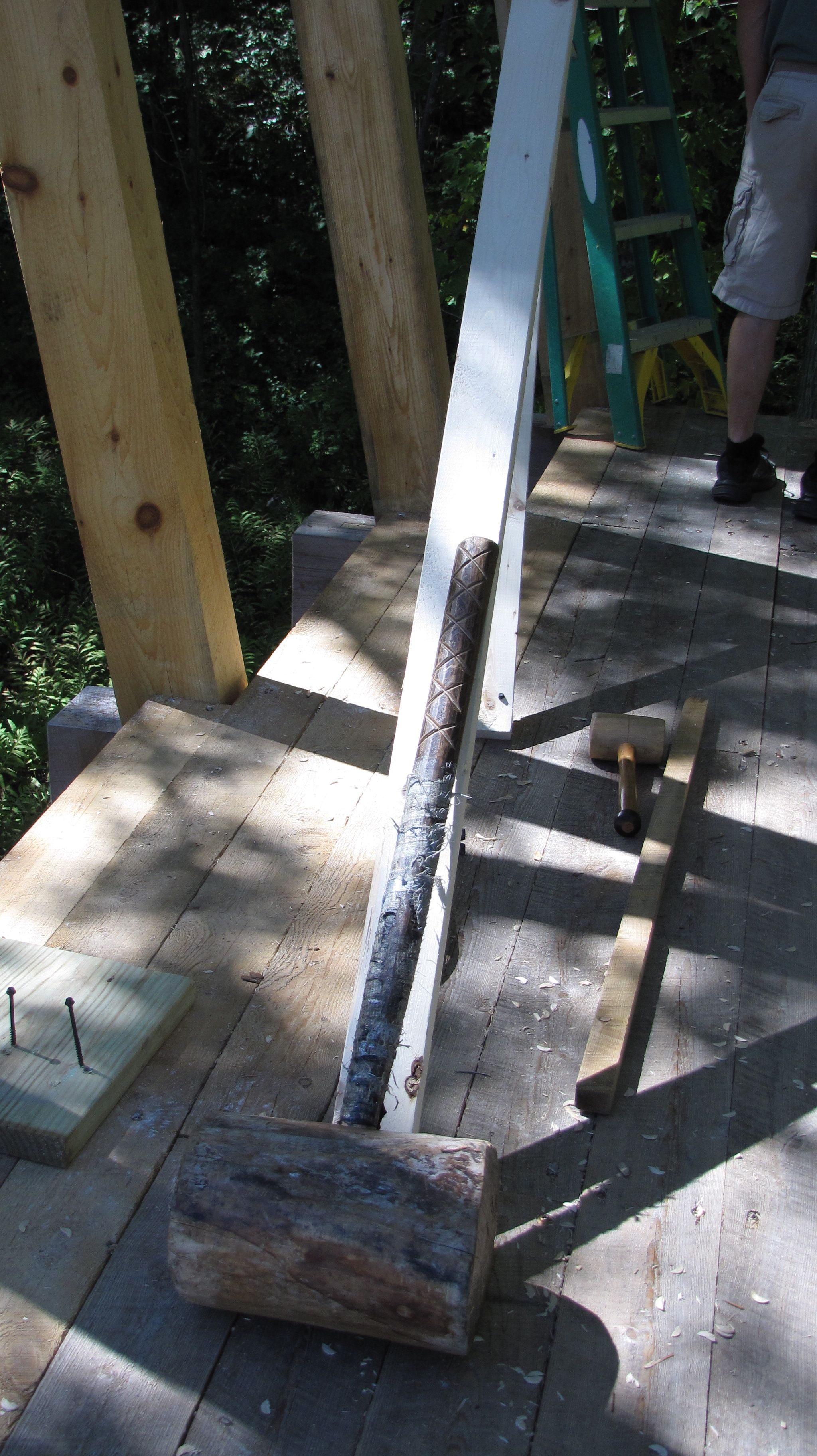
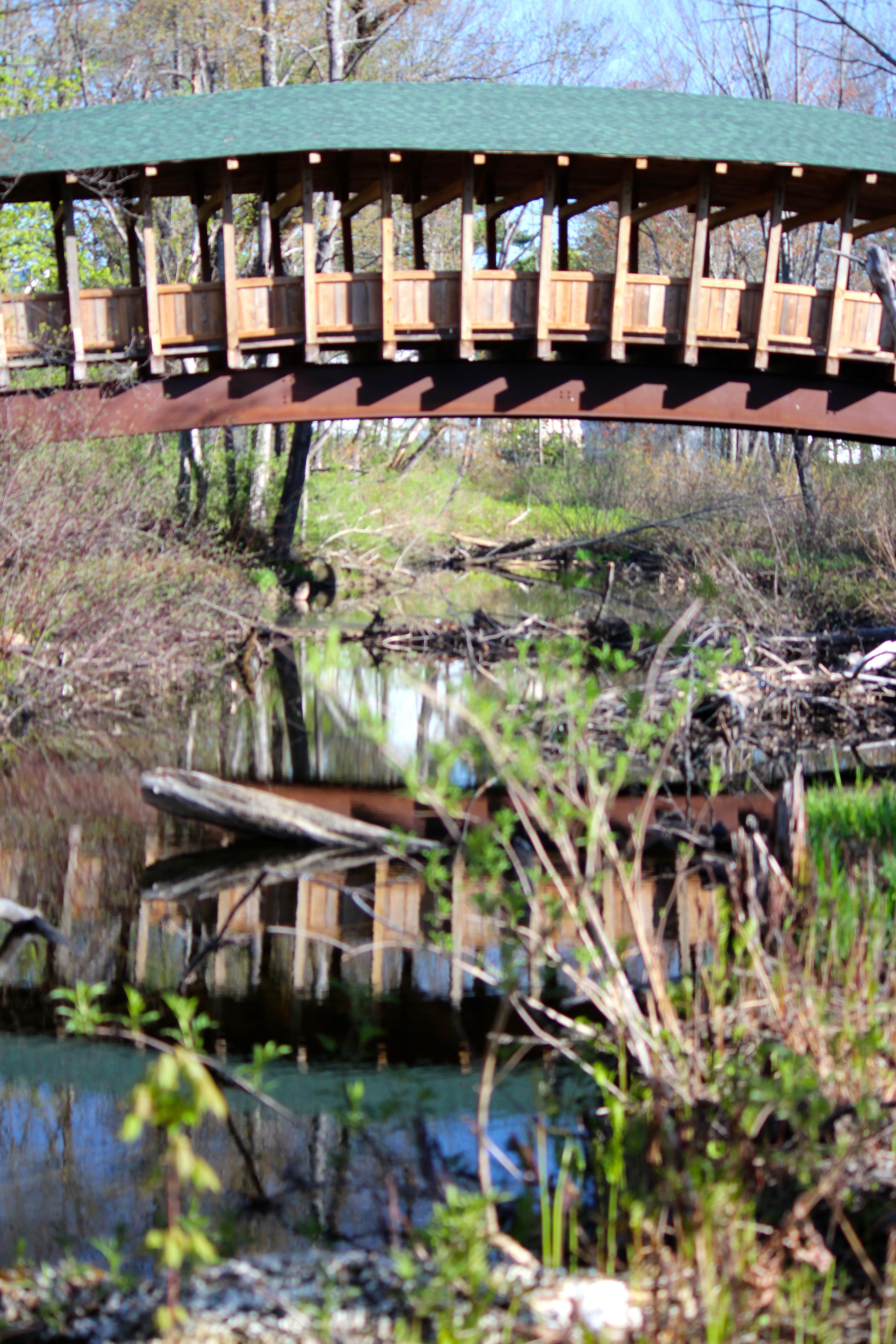
On September 11, 2010, the Bob Dunning Memorial Bridge was constructed in true barn-raising fashion. The bridge is a key feature of Pondicherry Park in downtown Bridgton.

bridge, summer

Bob Dunning, who died suddenly, was a builder, an artist, and among other things, a teacher–sharing his craft with students young and old.

bridge 1bridge 2

bridge 3bridge 4

bridge 7bridge 5

bridge 6

To honor Bob, who treasured traditional building techniques, his friends and fellow craftsmen designed and built a covered bridge leading into the park.

bridge beams

“As the poet said, ‘Only God can make a tree’–probably because it’s so hard to figure out how to get the bark on.” ~Woody Allen

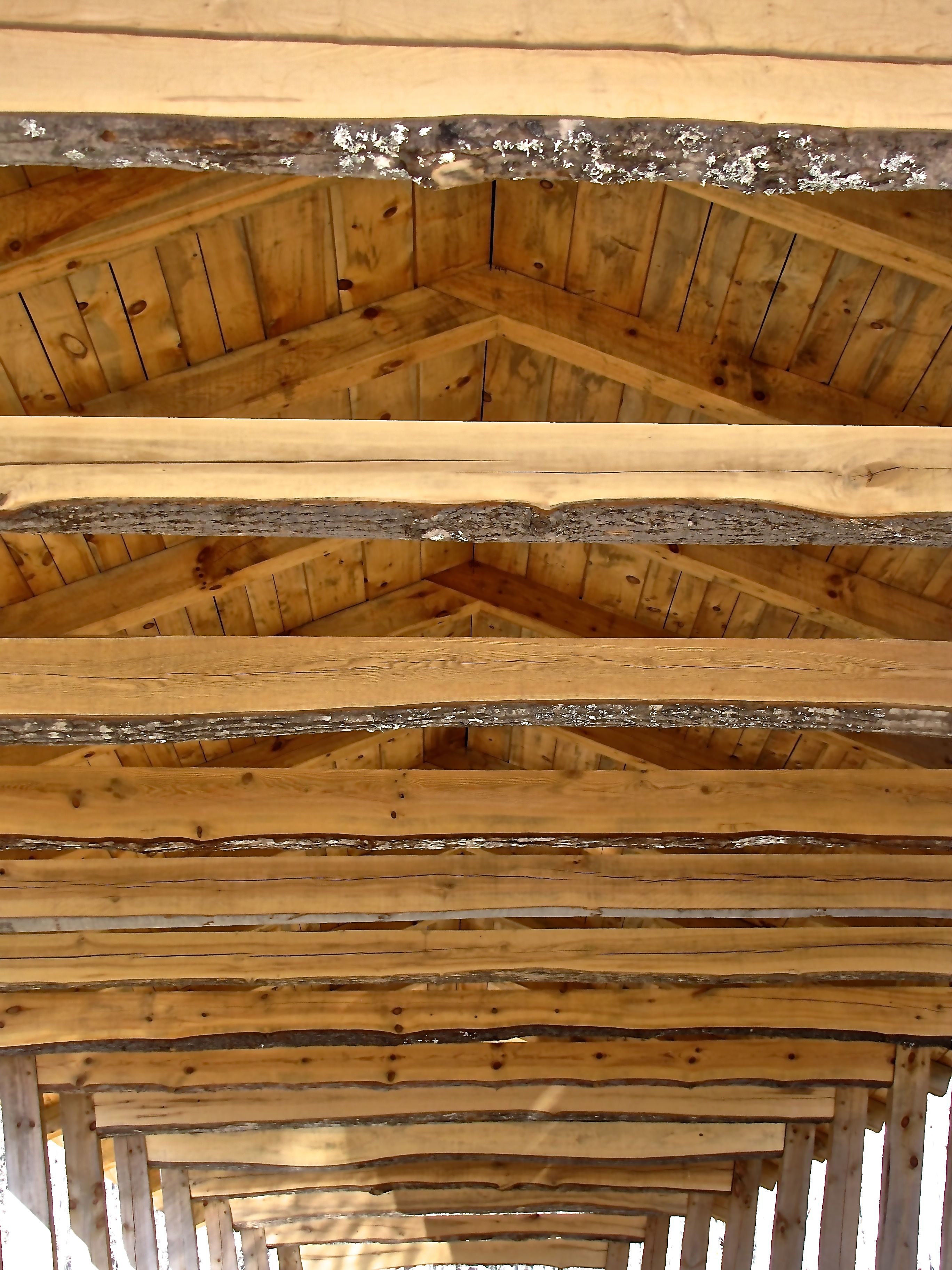
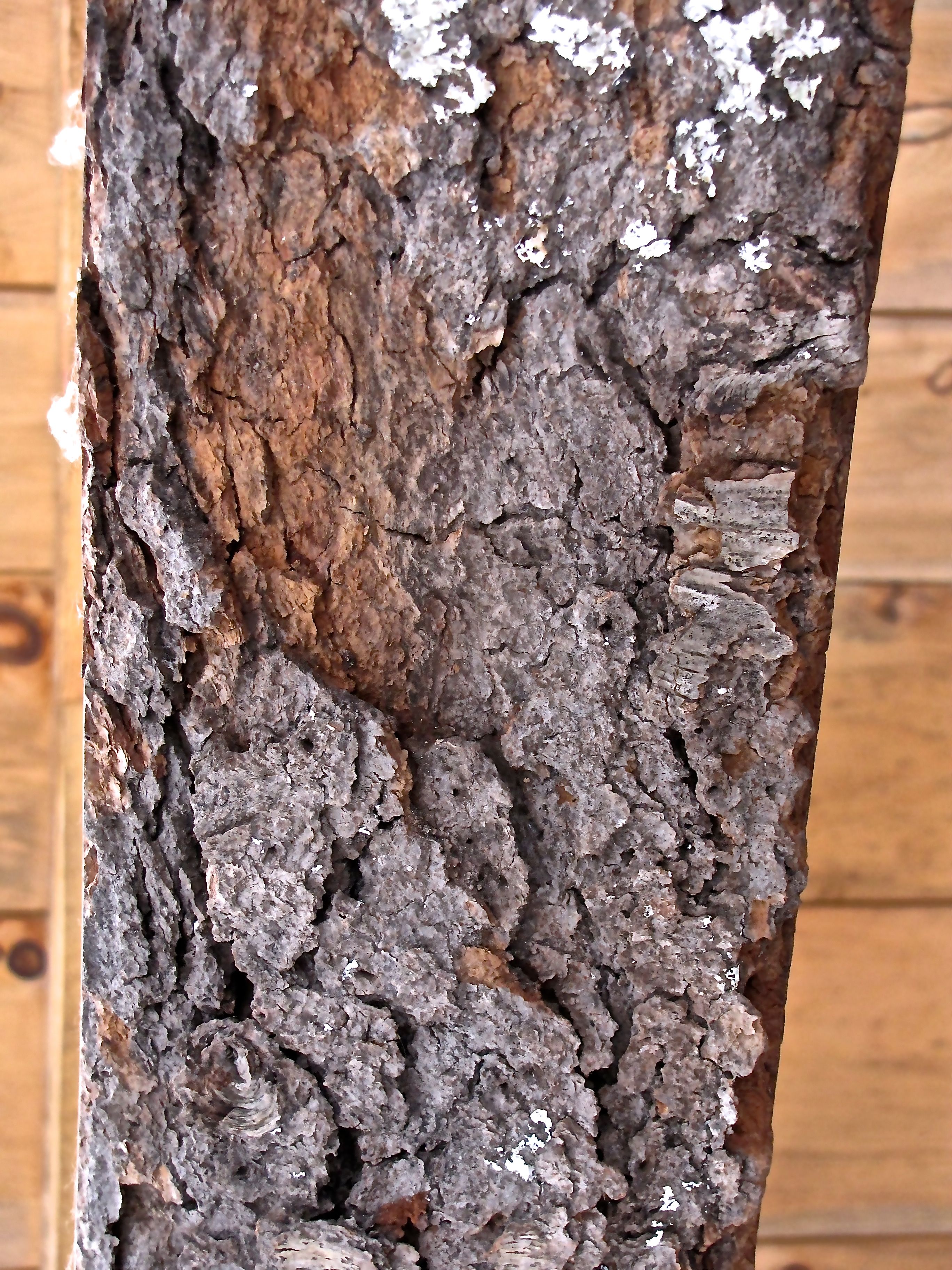
One of the unique things about the bridge is that each tie beam comes from a different tree species, with the bark left on. As I walk across the bridge, my eyes are always drawn to the beams.

Until I took the Maine Master Naturalist class, I recognized only a few species by their bark. But my eyes were opened to the fact that each species has its own presentation, which is true for everything in the natural world. I wanted to know all of them so I set out to teach myself, beginning with the species on the bridge. These became the focus of my capstone project for the class. I spent hours upon hours pouring over reference books such as BARK by Michael Wojtech, The Tree Identification Book by George Symonds, Manual of Trees of North America by Charles Sargent and Forest Trees of Maine by The Maine Forest Service.

I sat in front of trees and sketched them, trying to gain a better grasp of their nuances. I dragged foresters into the field and picked their brains. And I drove hiking companions crazy as I tried to point out clues.

The result was a brochure that you can pick up at the kiosk (let me know if you can’t find a copy) and a powerpoint presentation that breaks down the species by types of bark. Did you know that there are seven types of bark? I learned that from Wojtech’s book and it made it easier to note the differences.

image

Follow me now, as I take you across the bridge and give you a glimpse of each tree. We’ll begin on the east side (closest to Renys) and work our way west.

Beam 1, cherry, smooth bark breaks into scales that are curled outward on the edges. outer scales begin to flake off, revealing smaller, darker, irregularly shaped scales without prominent lenticels

beam 1 e, black cherry

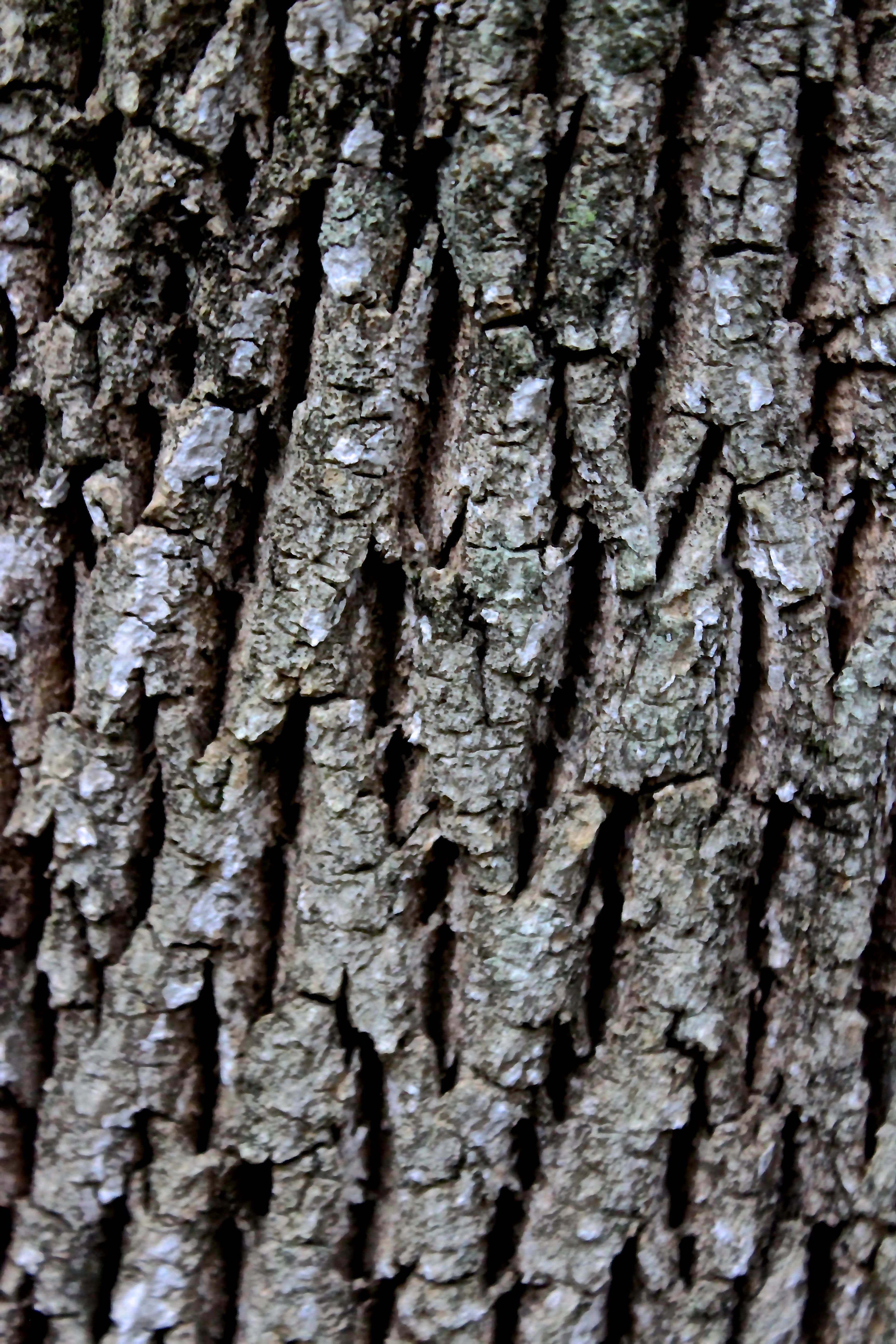
Beam #1: Black Cherry (Prunus serotina): Scales; gray-brown to almost black; small, rough scales randomly placed; curled outward like burnt cornflakes or potato chips.

Beam 2, yellow birch

beam 2 e, yellow birch

Beam #2: Yellow Birch (Betula alleghaniensis): Peeling/Curling; bronze to yellowish-gray; curls away horizontally into thin, papery strips; shaggy appearance.

Beam 3, red maple,smooth, light to dark gray, vertical cracks

red maple

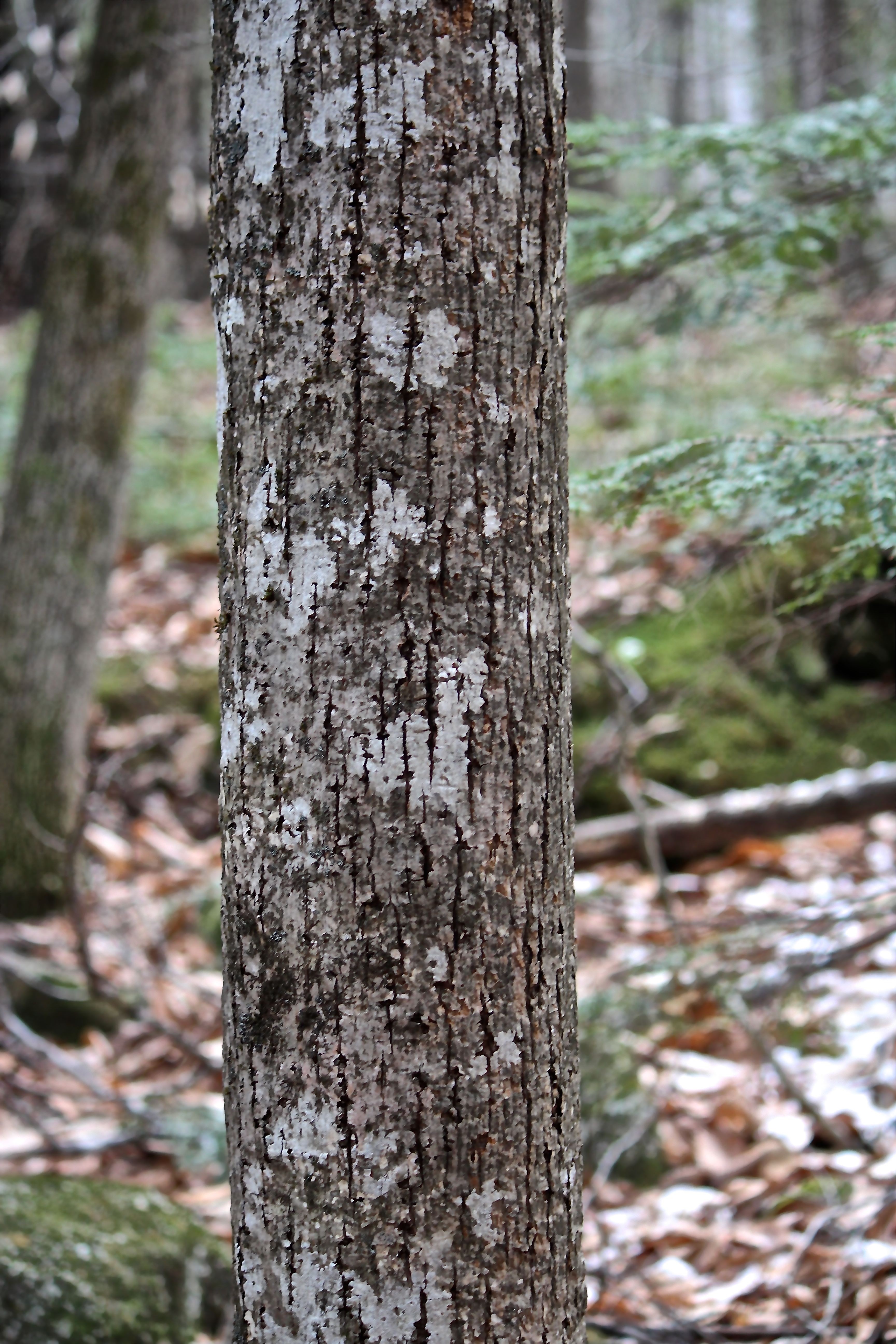
Beam #3: Red Maple (Acer rubrum): Vertical Strips; light to dark gray; almost smooth or cracked vertical, plate-like strips; curls outward on either side; sometimes bull’s eye target caused by fungi.

BEam 4, American BAsswood, GRay to brown, Narrow furrows form long, flattened ridges with parallel edges, ridge surface broken horizontally by hairline cracks, often into squarish segments, ridges loosely intersect

Basswood bark

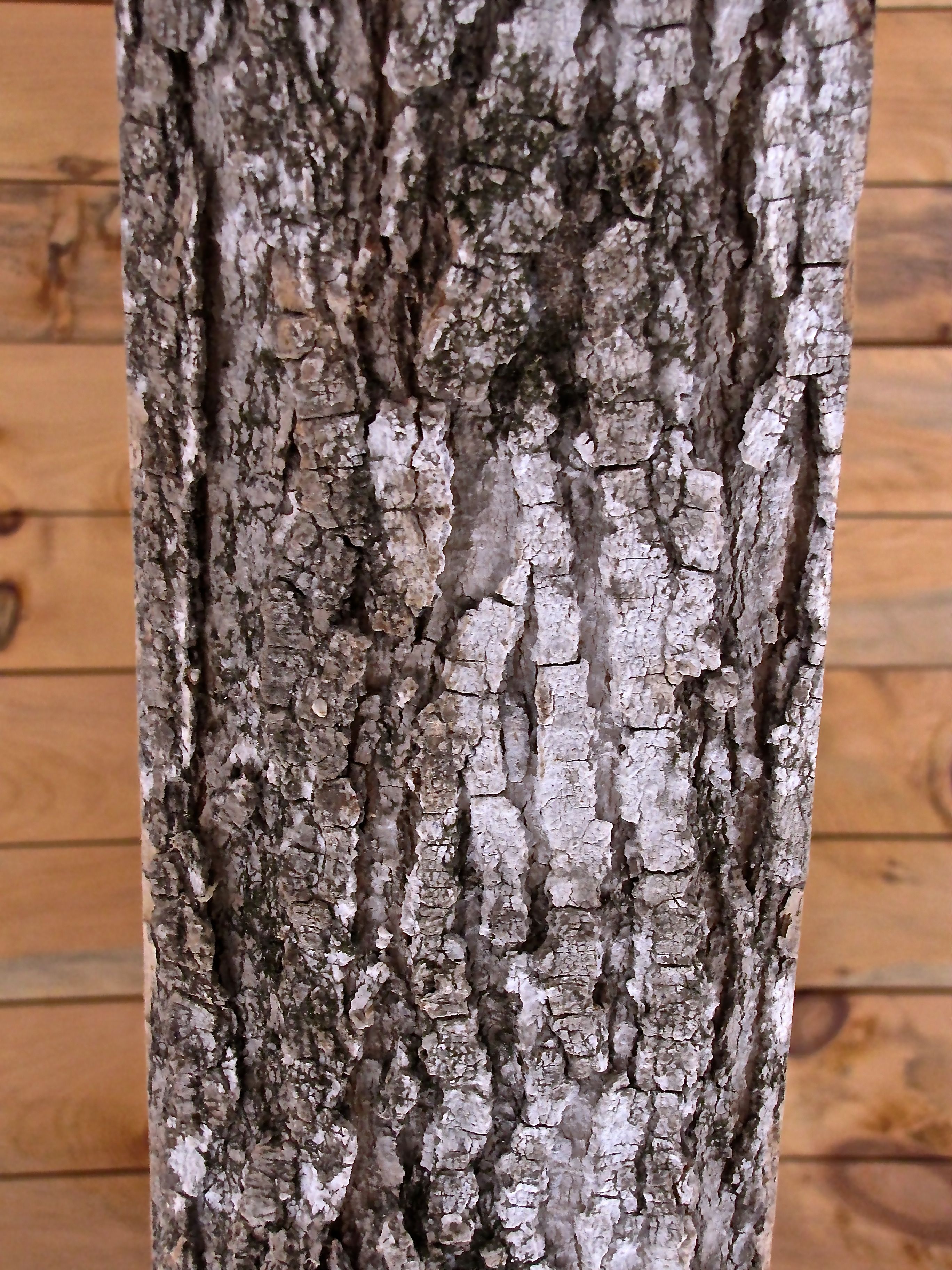
Beam #4: American Basswood (Tilia americana): Ridges; gray to brown; flattened, square-like ridges with parallel edges; may intersect like a woven basket every 6-12 inches.

Beam 5, red oak, rough, dark brown to blackish furrows, sepaprate smooth, light-colored, often lustrous ridges flush with circumference of trunk or slightly concave, ridges like ski tracks, loosely intersect

beam 5 e, red oak

Beam #5: Northern Red Oak (Quercus rubra): Ridges and Furrows; light colored, with rusty red inner bark; wide, flat-topped ridges run vertically parallel like ski tracks; dark, shallow furrows separate ridges.

Beam 6

hemlock

Beam #6: Eastern Hemlock (Tsuga canadensis): Scales; cinnamon-red to gray; rounded or irregularly-shaped scales; inner bark has purplish tint.

BEam 7, beech, light gray to bluish gray, smooth and unbroken

beam 7 e, beech

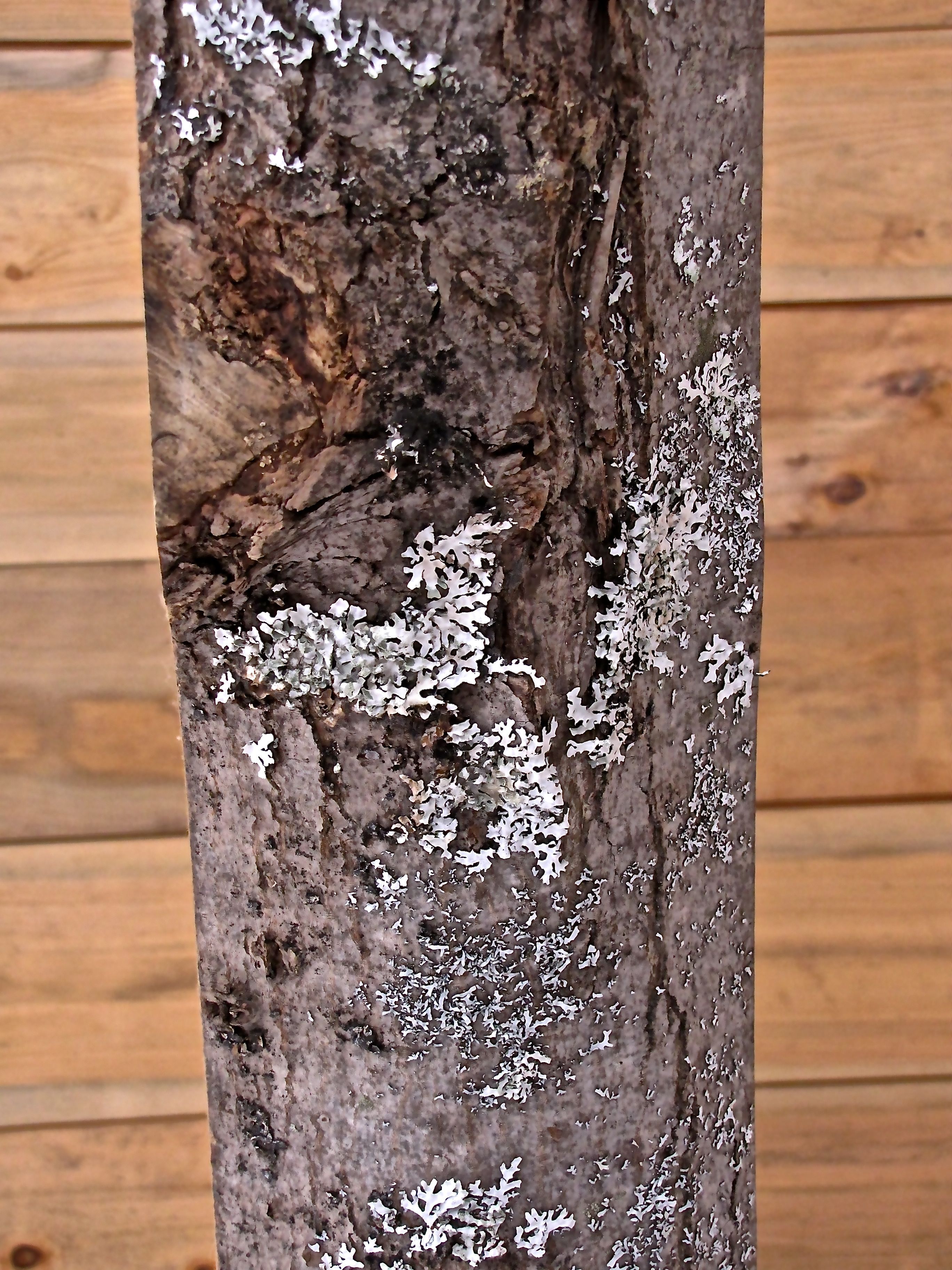
Beam #7: American Beech (Fagus grandifolia): Smooth/Unbroken; silver-gray or grayish-green; sometimes blotched with lichen; carved initials remain visible forever; often pockmarks caused by fungi.

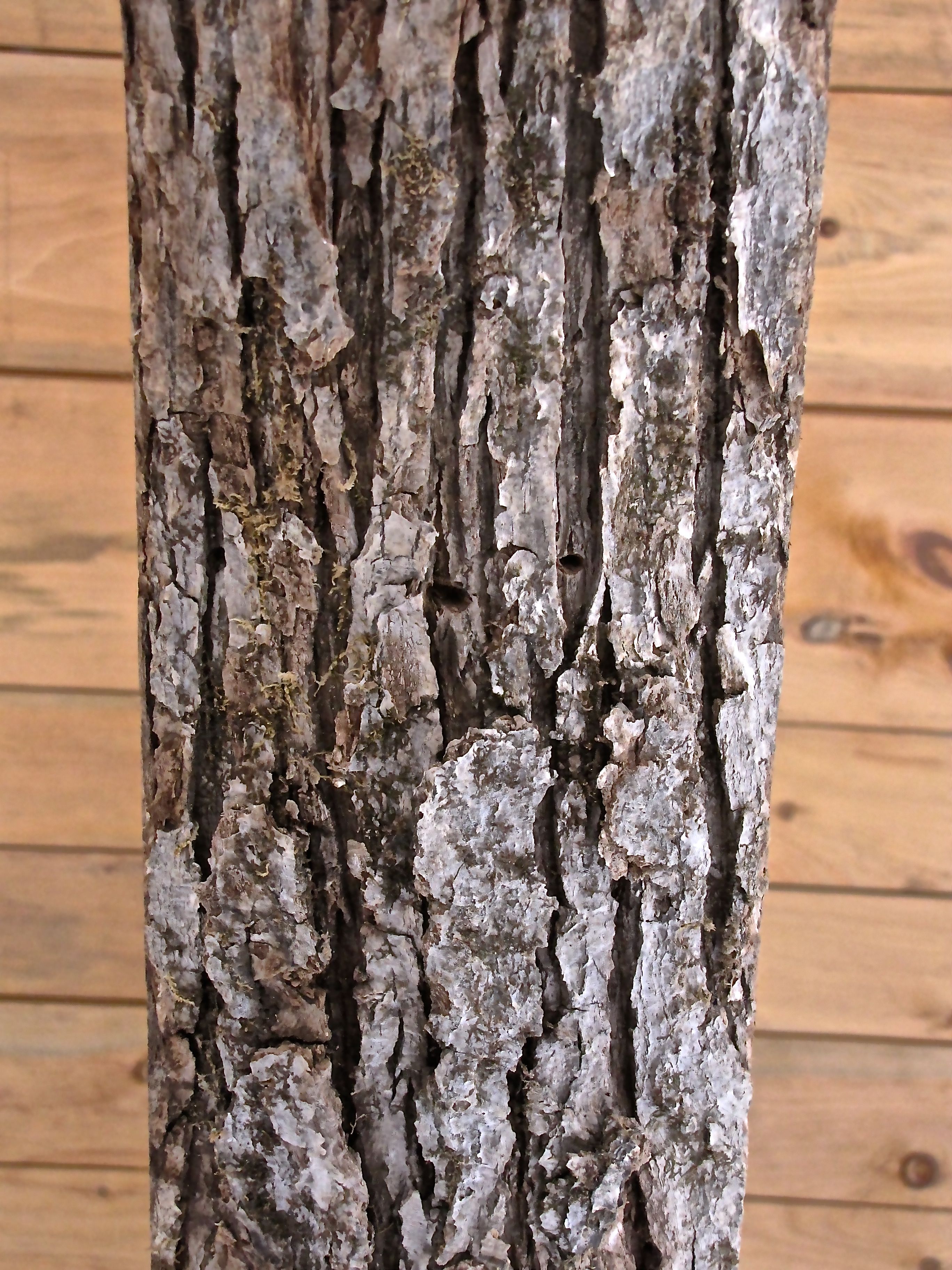
Beam 8, Ash, gray to brownish-gray diamond-shaped furrows, resembles woven basket.

ash

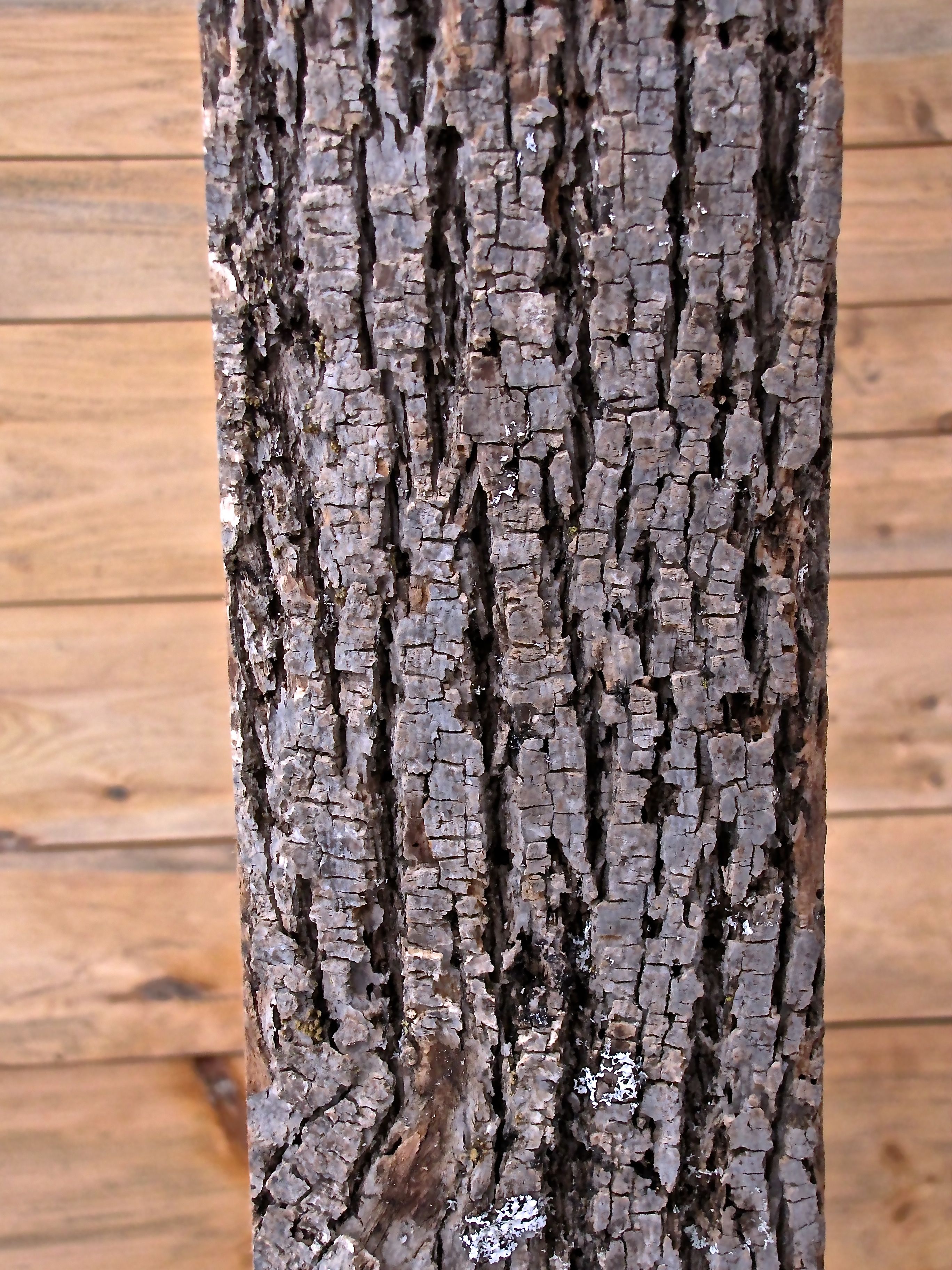
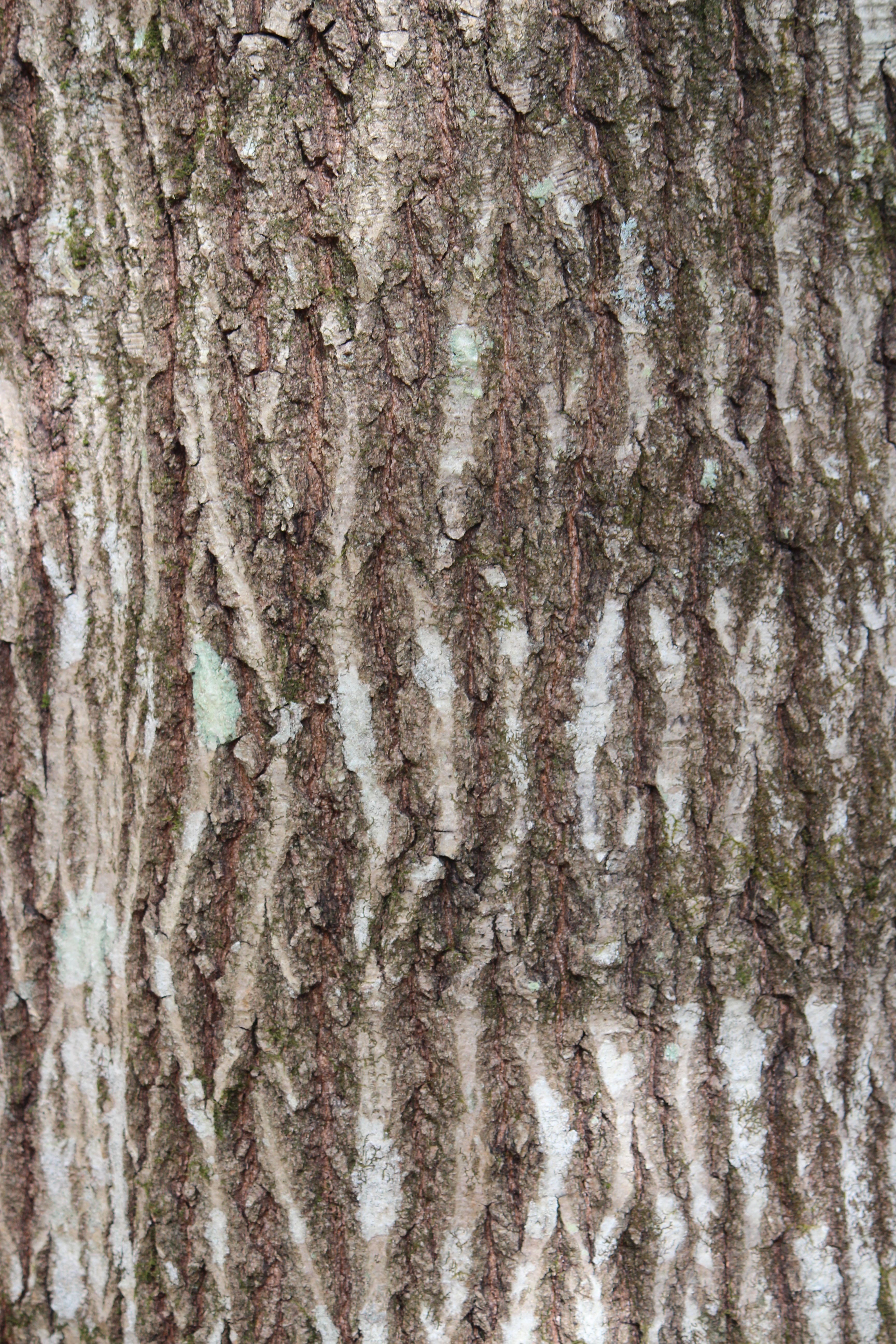
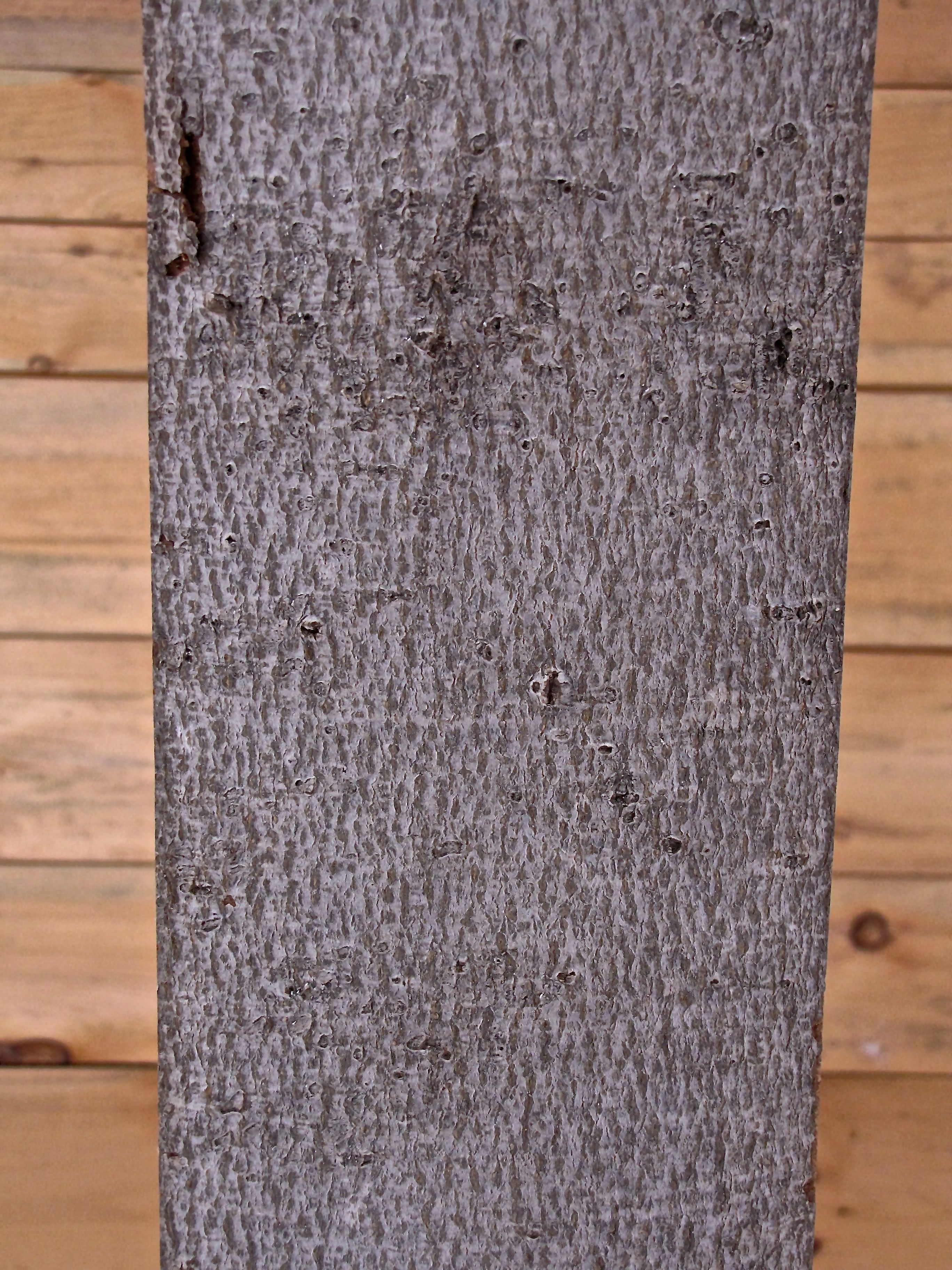
Beam #8: White Ash (Fraximus americana): Ridges and Furrows; ashy-gray to brown; intersecting ridges form obvious diamond-shaped furrows; look for letter “A” or pattern of cantaloupe rind.

BEam 9, white pine, dash-like lenticels, turns gray to reddish-brown, thick, irregular shaped scales, turn out, develops fine, horizontal lines/cracks consistently spaced like writing paper.

eastern white pine

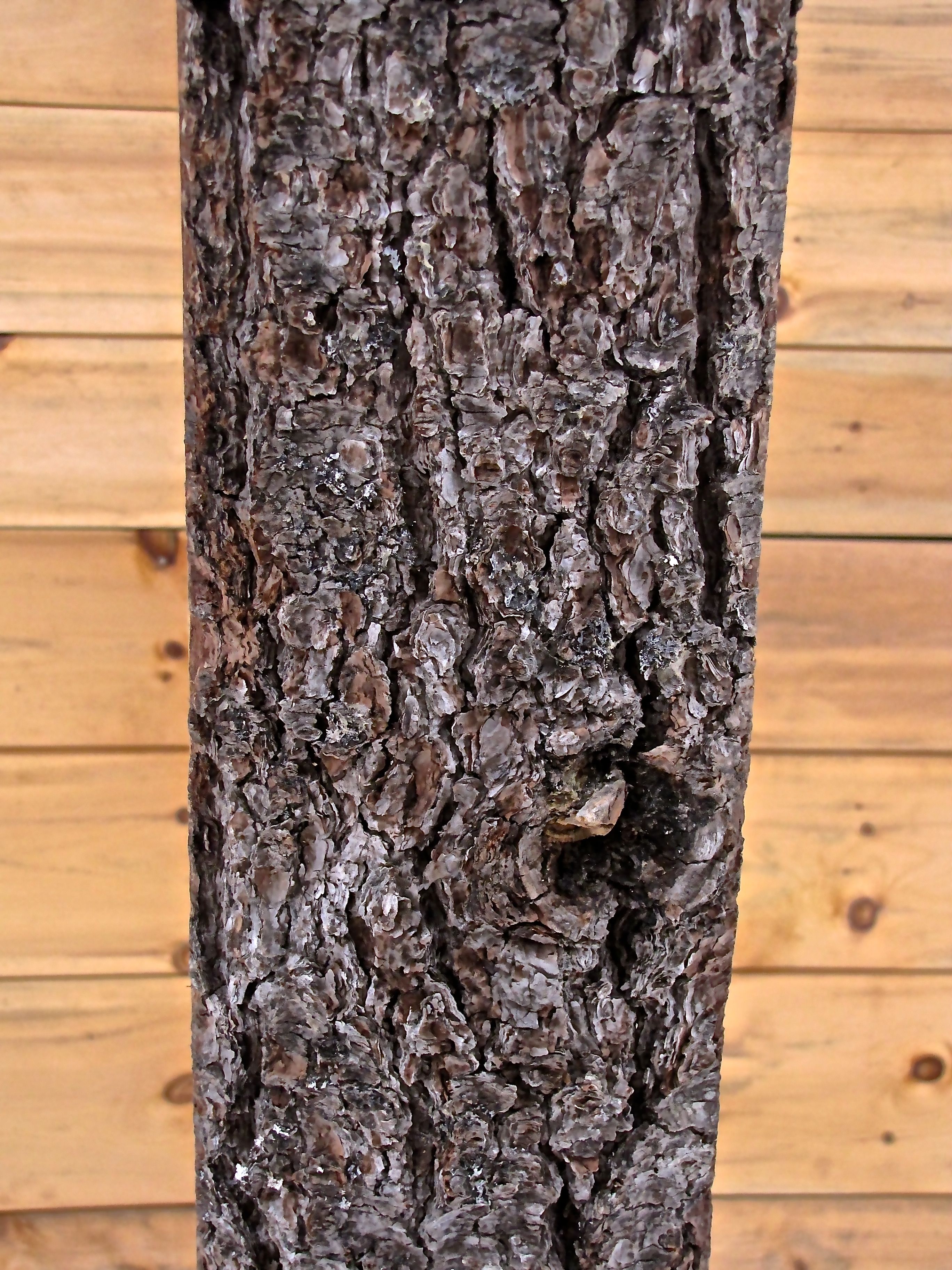
Beam #9: Eastern White Pine (Pinus strobes): Scales; dark gray to reddish-brown; thick, irregularly-shaped scales; fine horizontal lines evenly spaced along scales like lines on a legal pad.

BEam 10, Red Pine (Norway), reddish brown to pinkish, irregular, thin, flaky scales like jigsaw puzzle, surface of blocks roughly aligns with circumference of tree

red pine

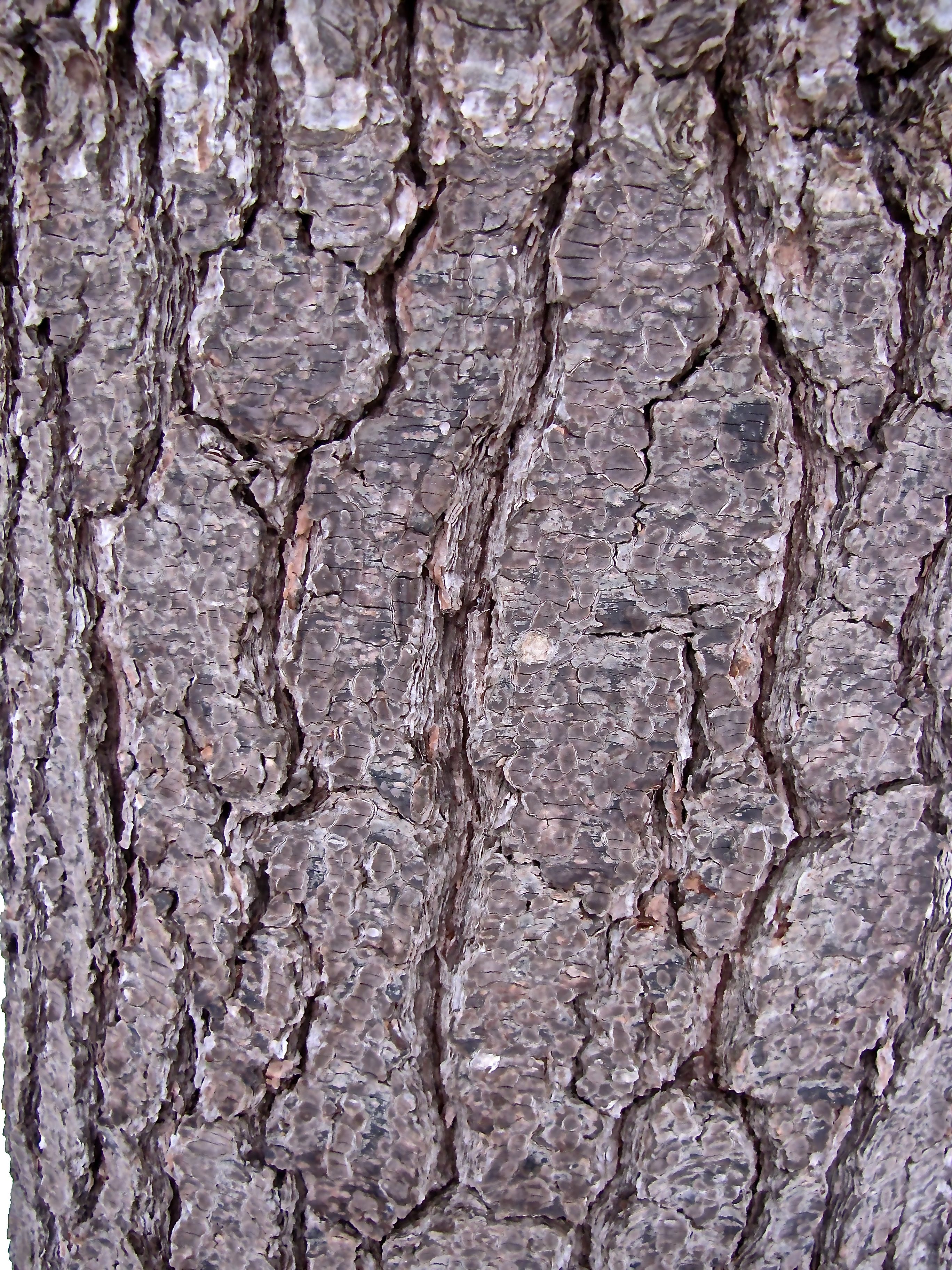
Beam #10: Red Pine (Pinus resinosa): Scales; mottled red and grayish-brown; flaky scales; jigsaw puzzle or sandstone appearance.

BEam 11, sugar maple

sugar maple

Beam #11: Sugar Maple (Acer saccharum): Vertical Strips; gray to brown; finely cracked; looks like old paint; curls away from trunk on one side; look for horizontal scars indicating work of maple sugar borer.

BEam 12, poplar, Big-toothed aspen, deep furrows, rough and more rounded?

beam 12 e, big tooth aspen

Beam #12: Big-Tooth Aspen (Populus grandidentata): Ridges and Furrows; greenish-brown to dark gray; V-shaped furrows intersect every 6-12 inches; flattened ridges appear sanded down; gnarly look; periodic horizontal lines; on older trees resembles Northern Red Oak at bottom and Birch toward top.

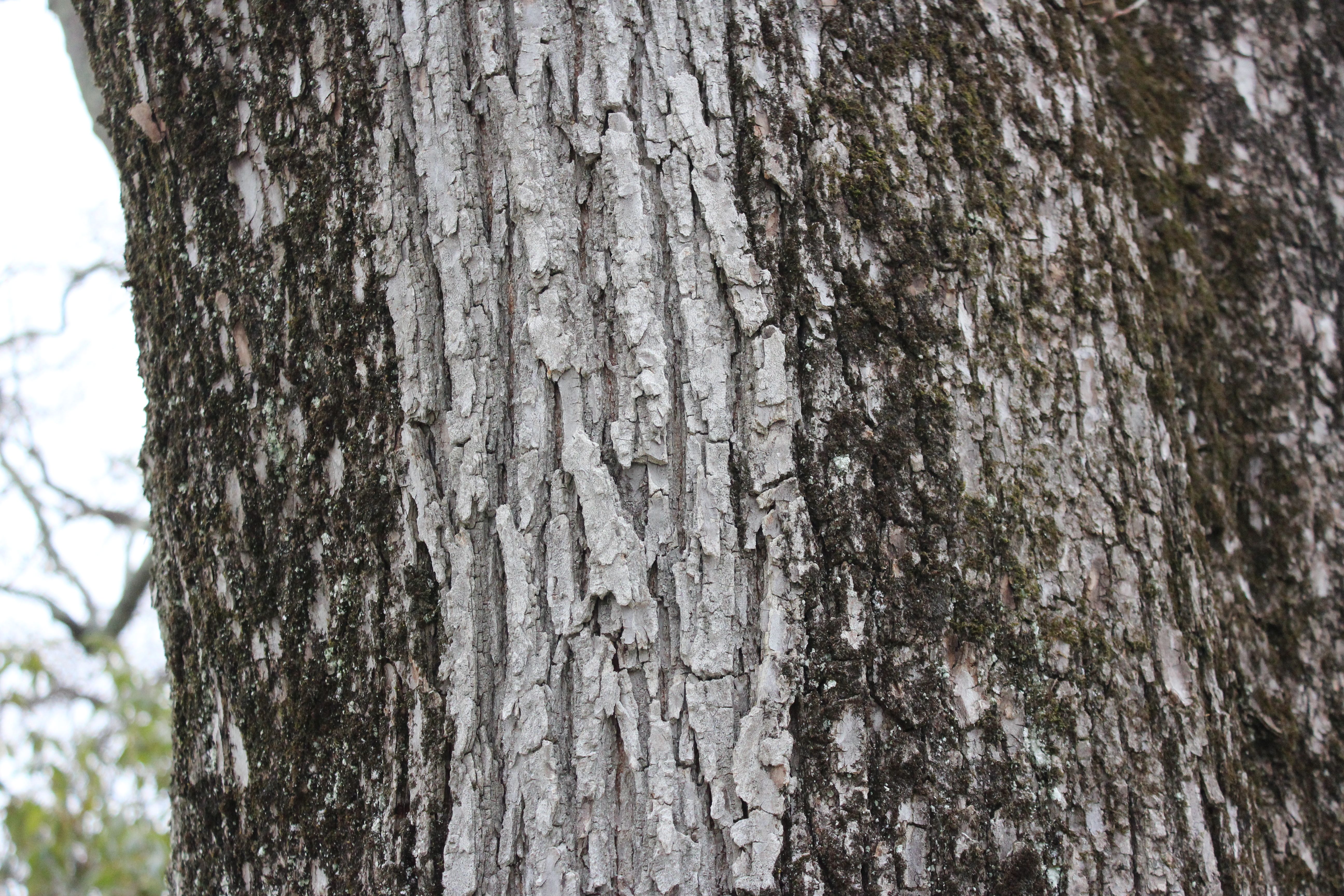
BEam 13, white oak, light gray, can appear whitish with a reddish cast, furrows form flattened ridges, broken into somewhat rectangular-shaped blocks, furrows steep and narrow, with sides of blocks often parallel, old bark+irregular in shape, might look like shingles

beam 13 e, white oak

Beam #13: White Oak (Quercus albra): Ridges; light gray with reddish cast; rectangular-shaped blocks with flaky surfaces; ends of blocks curl outward; feather-like in mature trees.

Beam 14, elm

beam 14 e, American Elm

Beam #14: American Elm (Ulmus americana): Ridges and Furrows; ashy-gray; diamond-shaped furrows; flat-topped ridges; alternating light and dark layers like vanilla and chocolate wafer cookies.

BEam 14, black birch

beam 15 e, black birch

Beam #15: Black Birch (Betula lenta): Lenticels Visible (note: all trees have lenticels, but they are more obvious on some than others. Lenticels are tiny slits in the bark that allow for gas exchange, just like our pores); gray to brown-gray to black; may crack and form scales that curl away from trunk; long, thin horizontal lenticels.

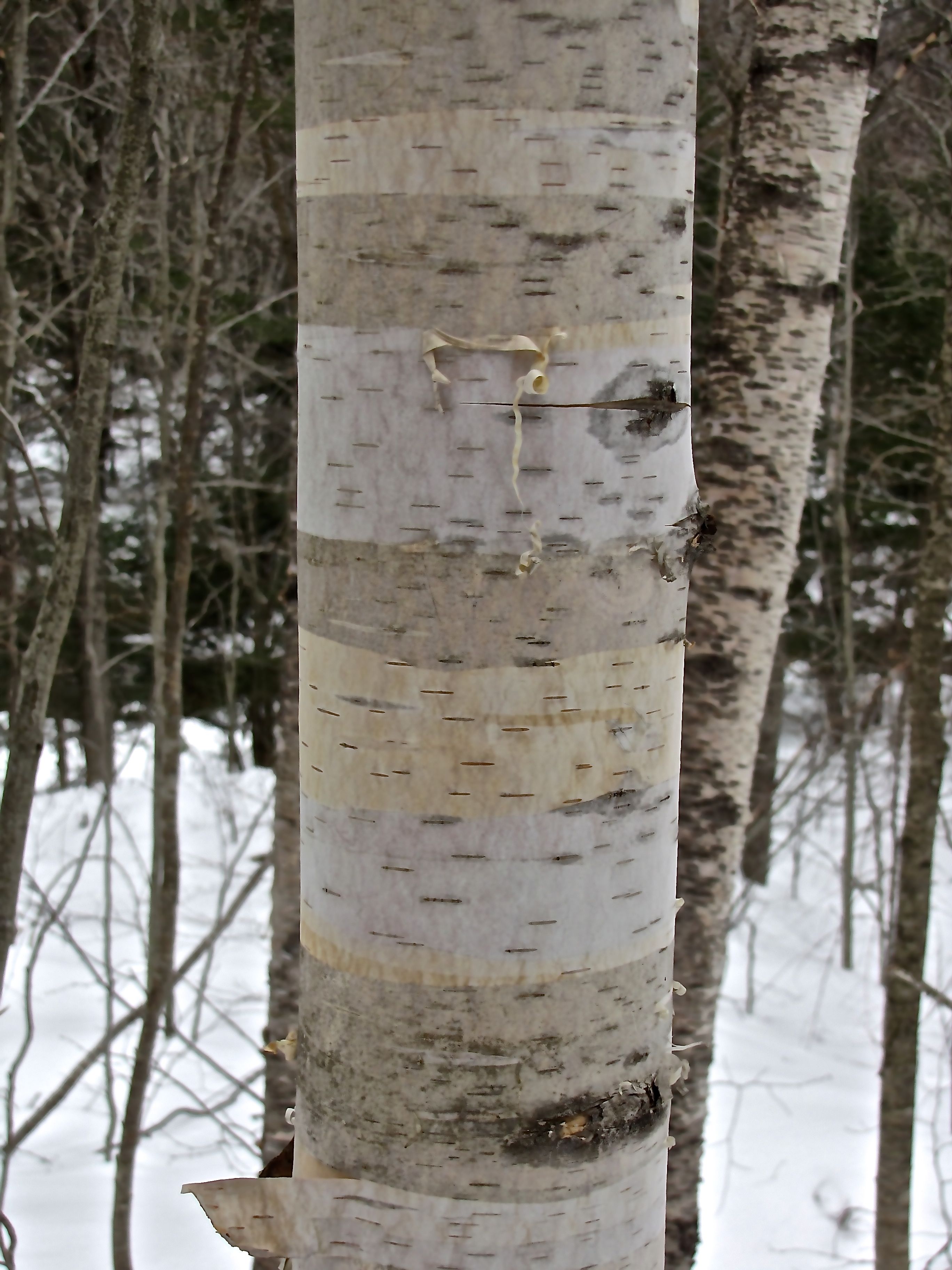
Beam 15, paper birch, white birch

beam 16 e, paper birch

Beam #16: Paper Birch (Betula papyrifera): Peeling/Curling; white to creamy white; peeled bark reveals pink or orange tints; small, horizontal lenticels visible.

That’s it in a nutshell. Ah, but here’s the thing. Except for the American Beech, tree bark changes as a tree ages. And beech trees can be equally confusing because some are severely affected by beech scale disease. So, just when you think you know a species, you may come upon a younger or older version and get totally thrown off. The key is to take your time, walk all the way around the tree, and look at other clues like the twig and bud formation. Touch the bark. Smell it.

And take a walk across the bridge and into the park during any season. Chances are, I’ll be there doing the same.

bridge to park

Thanks for joining me for this lengthy wander. I hope you’ll find time to wonder about bark.

Pondicherry Park Ponderings

I slipped into Pondicherry Park late this afternoon, my heart and mind heavy with thoughts of so many friends who have suffered in recent months.

In the quiet of this place, I recalled that a wise man once told me nature is a window on the world. (RIP: Bishop John–you are missed, but still with us)

I’m not sure that what I’m about to share is exactly what he had in mind, but nevertheless, this is how it looked to me today.

jigsaw puzzle

Life is a jigsaw puzzle and sometimes it seems that the pieces fit perfectly, while other times we try so hard to make them work together.
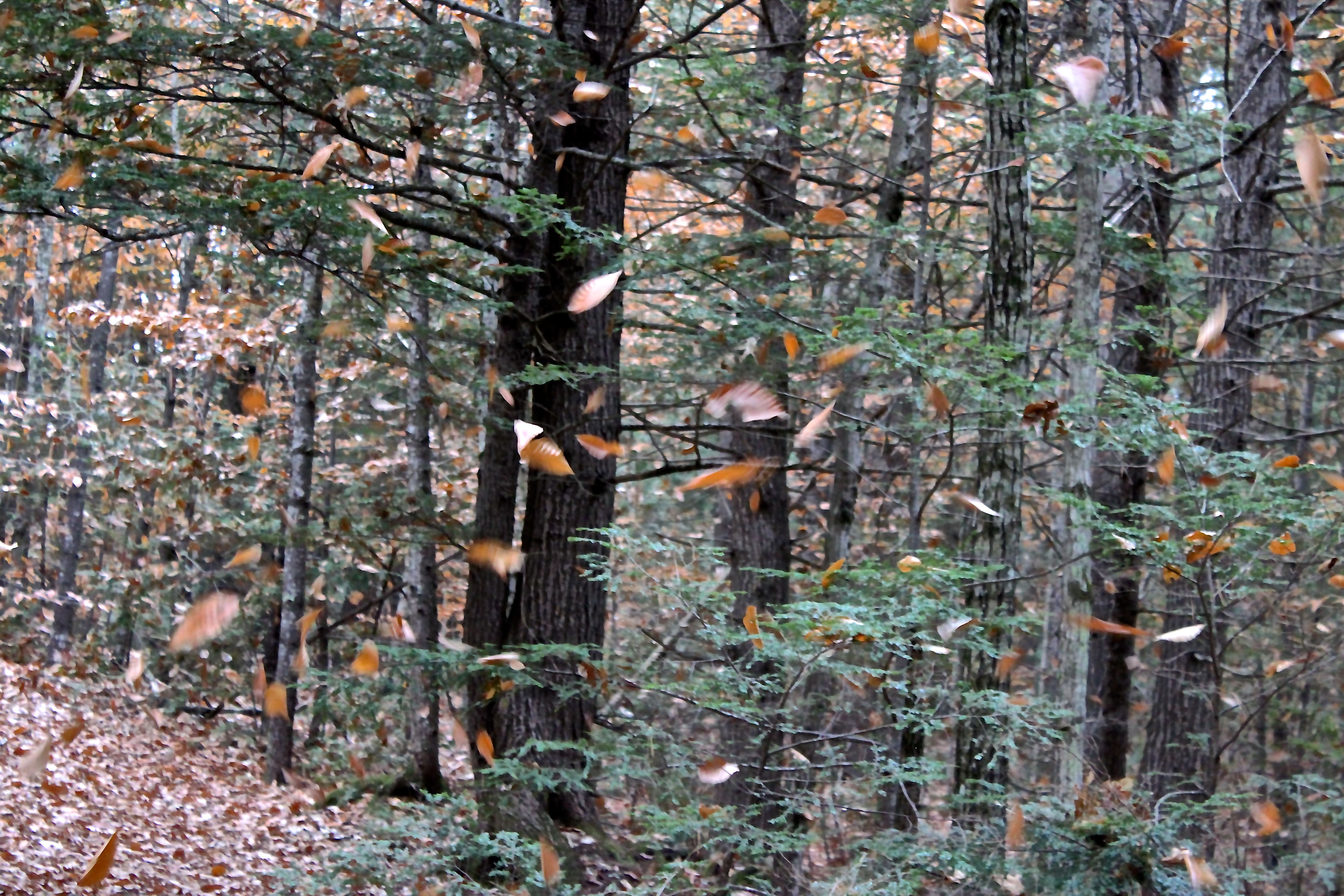
digging for answers

Always, we dig for answers.

be sensitive

Being sensitive to the needs of others and ourselves is key.

diamonds in the rough

Some moments (or hours or days or weeks) are diamonds in the rough–we just have to look for the glint.

interrupted plans

Interrupted plans are perhaps meant to give us time to pause and reconsider.

bittersweet tangles

Though it’s difficult to reconsider when the tangles are bittersweet . . .

forever scarred by the experience

and we know we’ll be forever scarred.

make the most of what life gives you

Sometimes we have to try our darnedest to make the most of what life gives us.

resilient tree 1 resilient tree 2 resilient tree 4

And be like this resilient tree that continues to grow despite the obstacles it met along the way.

unexpected growthsuse and abuse--I'm an OK leaf

There will always be unexpected forces at work that we can’t prevent.

sometimes the path is straight

We’d like to follow a straight and even path, but . . .

path changes texture

the texture may change and . . .

sometimes there's a new path to follow, not completely defined

there will be a new path to follow, not completely defined.

when life gives you stones, make stonewalls

When life gives us stones, we should build stonewalls.

displays of beauty 1

And cherish beautiful moments, no matter how small.

display of beauty 2

display of beauty 3

display of beauty 5

displays of beauty 4

things burrow their way under our skin

We need to let the moments when things burrow under our skin

water over the dam

wash away like water over the dam.

bridging the layers

The layers of life will forever keep us wondering.

sometimes even the stones speak--enjoy

Our best bet, listen to what the stone says.

Ten Fun Finds in the Last 24 Hours

jw2

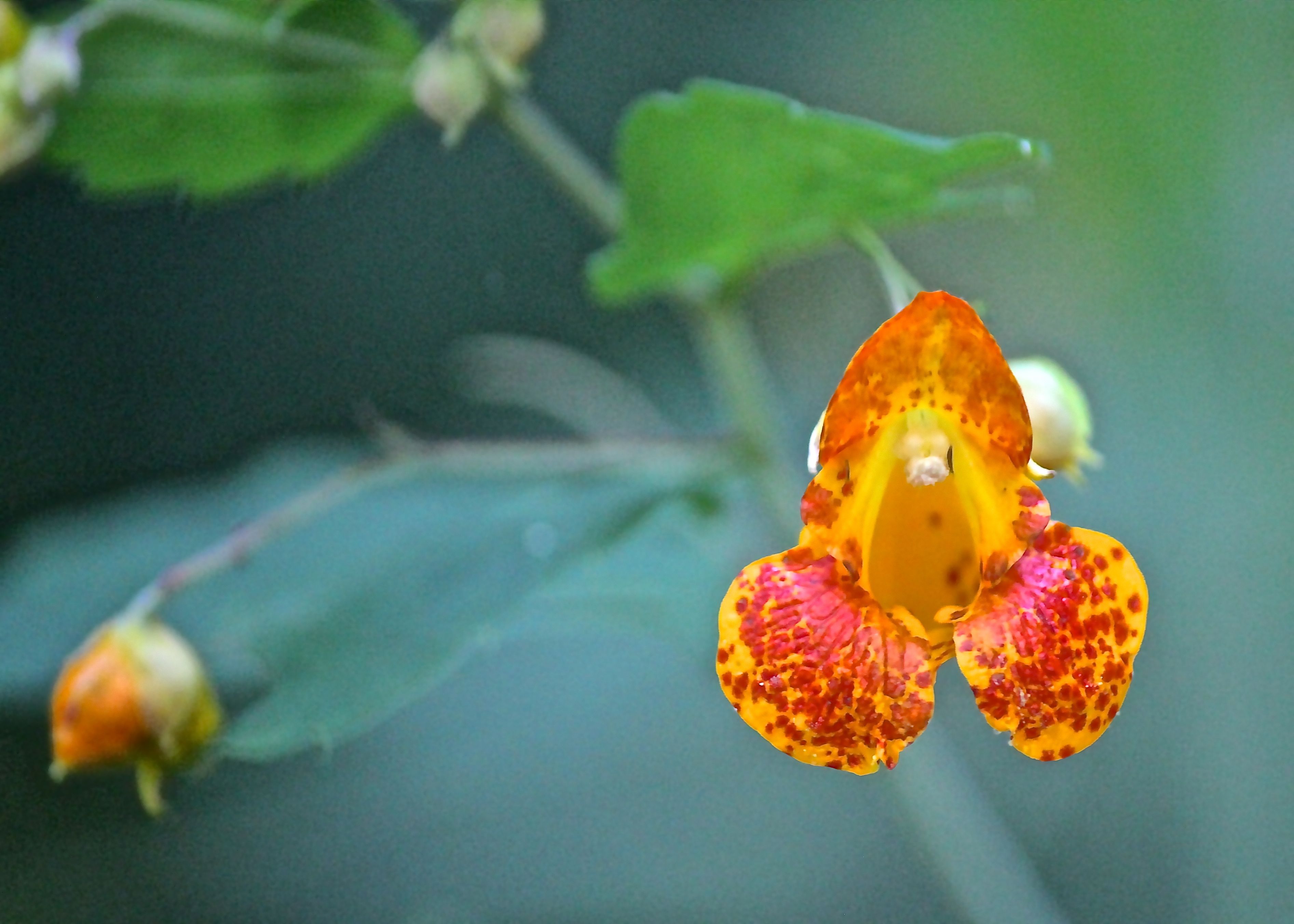
  1. Orange jewelweed, aka Spotted Touch-Me-Not. I found these lining the path during a quick walk through Pondicherry Park yesterday afternoon. The flower will form a capsule that bursts open and flings seeds when touched.

jewelweed 1

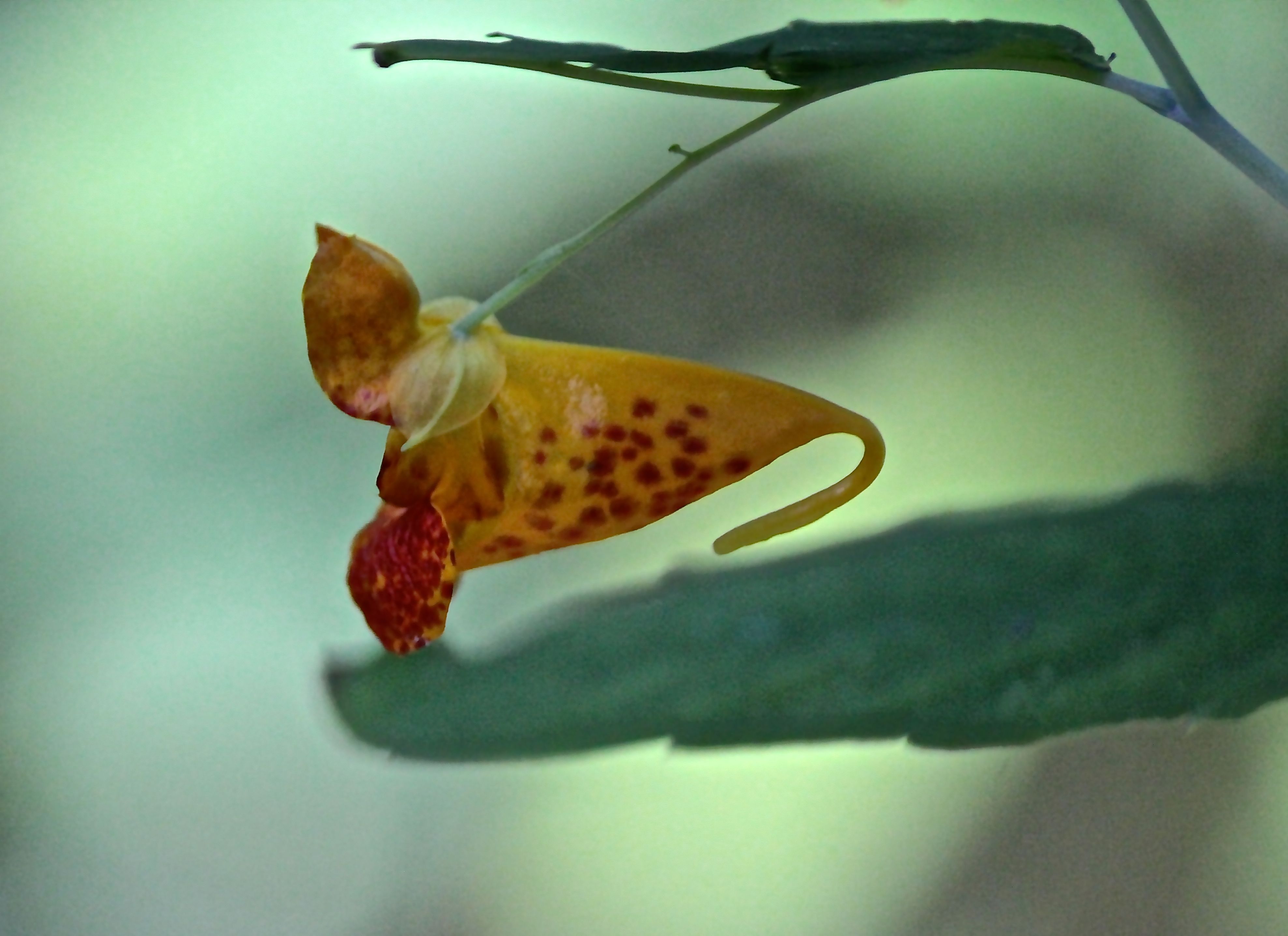
One of the cool things about jewelweed’s structure is its spurred sac that extends backwards.

jw3 on the wall

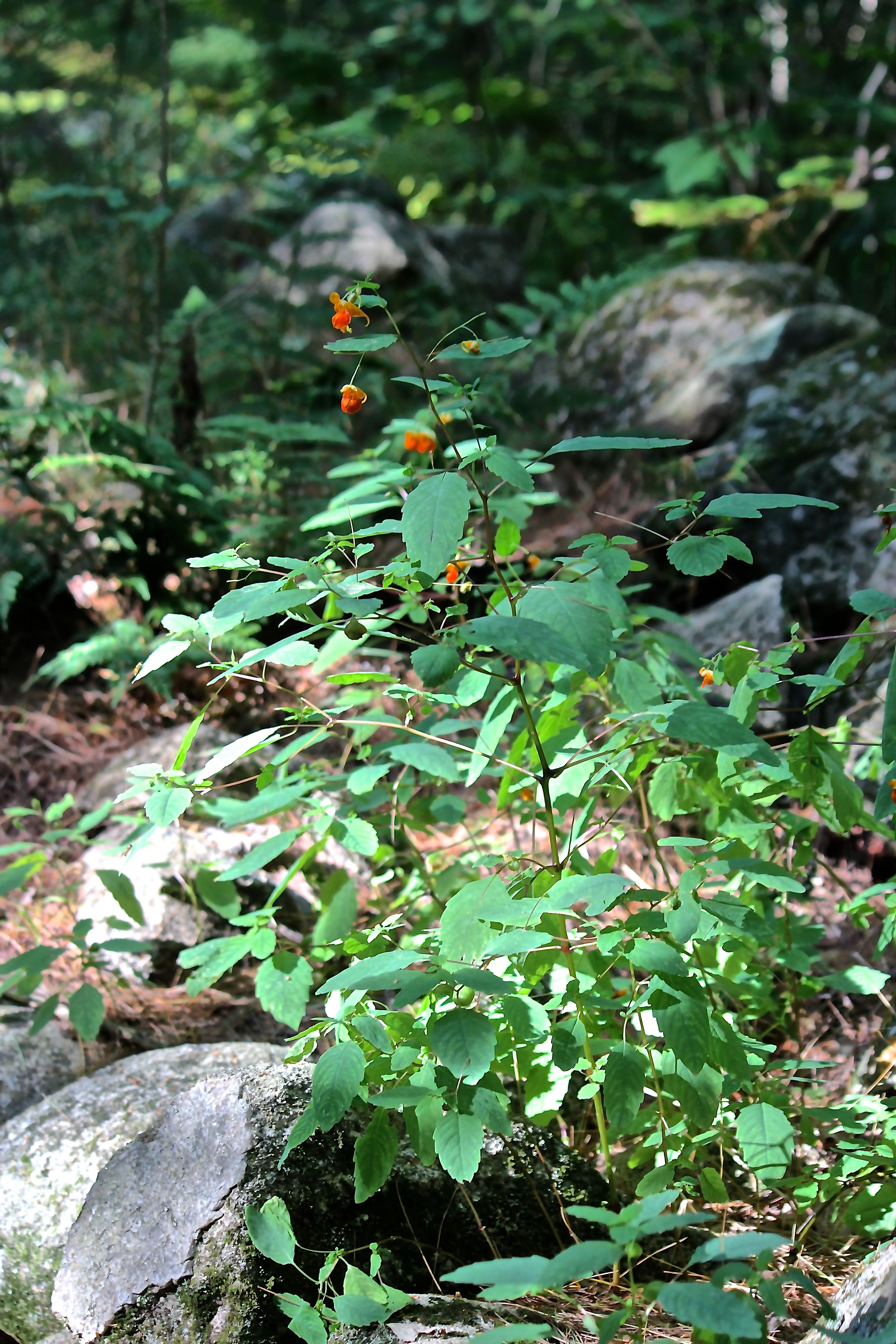
Though it likes the moist woodland paths in the park, I also found it in bloom atop a stonewall.

turtlehead

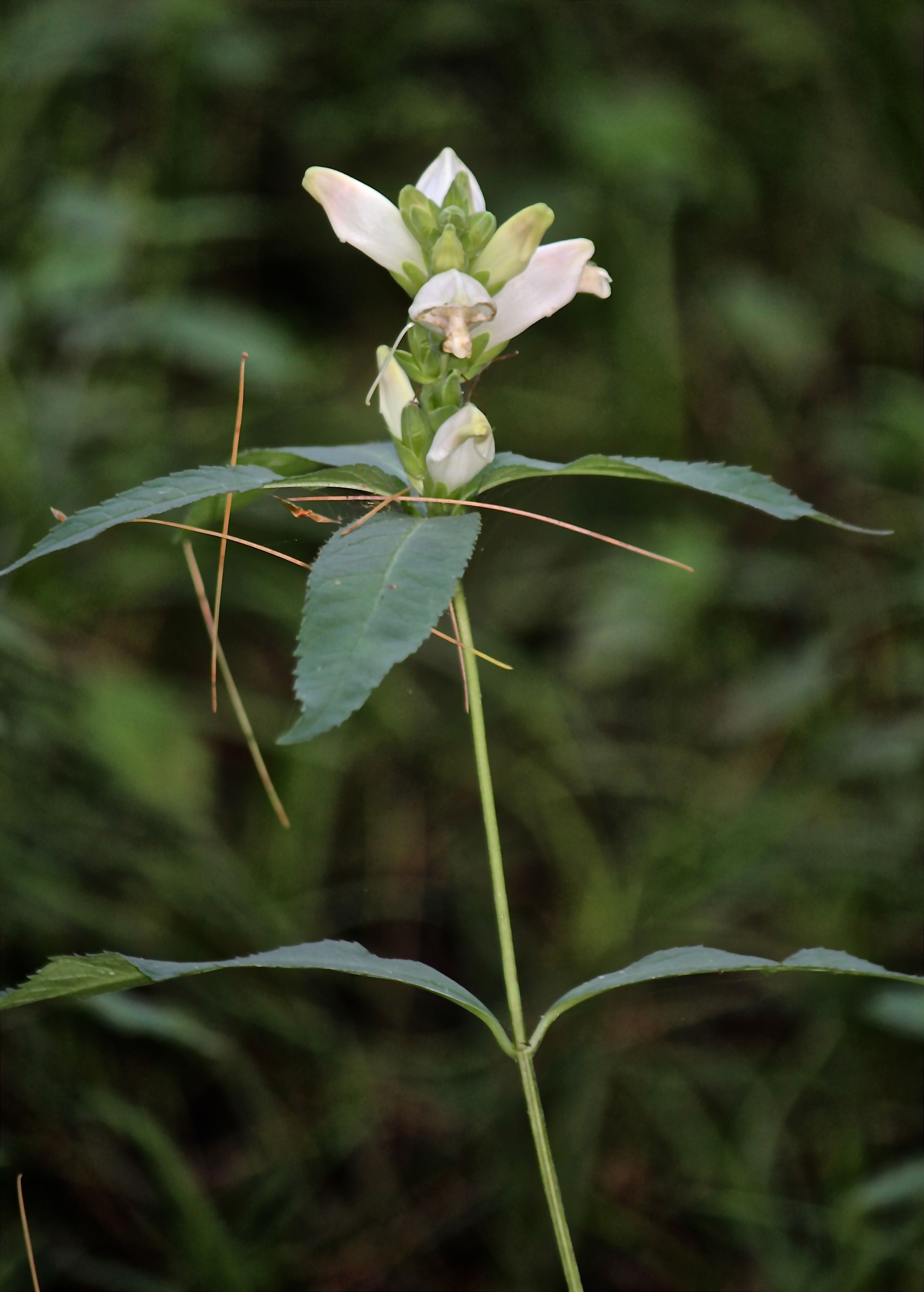
2. I’d never seen turtlehead until I moved to Maine. As a kid, I collected turtles–think stuffed, ceramic, wooden, glass. A neighbor even gave me a shell, which I still have. So, when we moved into our old farmhouse, I was excited to discover pink turtlehead growing in the garden. And on several occasions this past week, including yesterday’s walk in the park, white turtlehead was in bloom. It’s so named for the two-lipped appearance, with the upper lip arching downward and strongly suggesting a turtle’s head.

equisetum

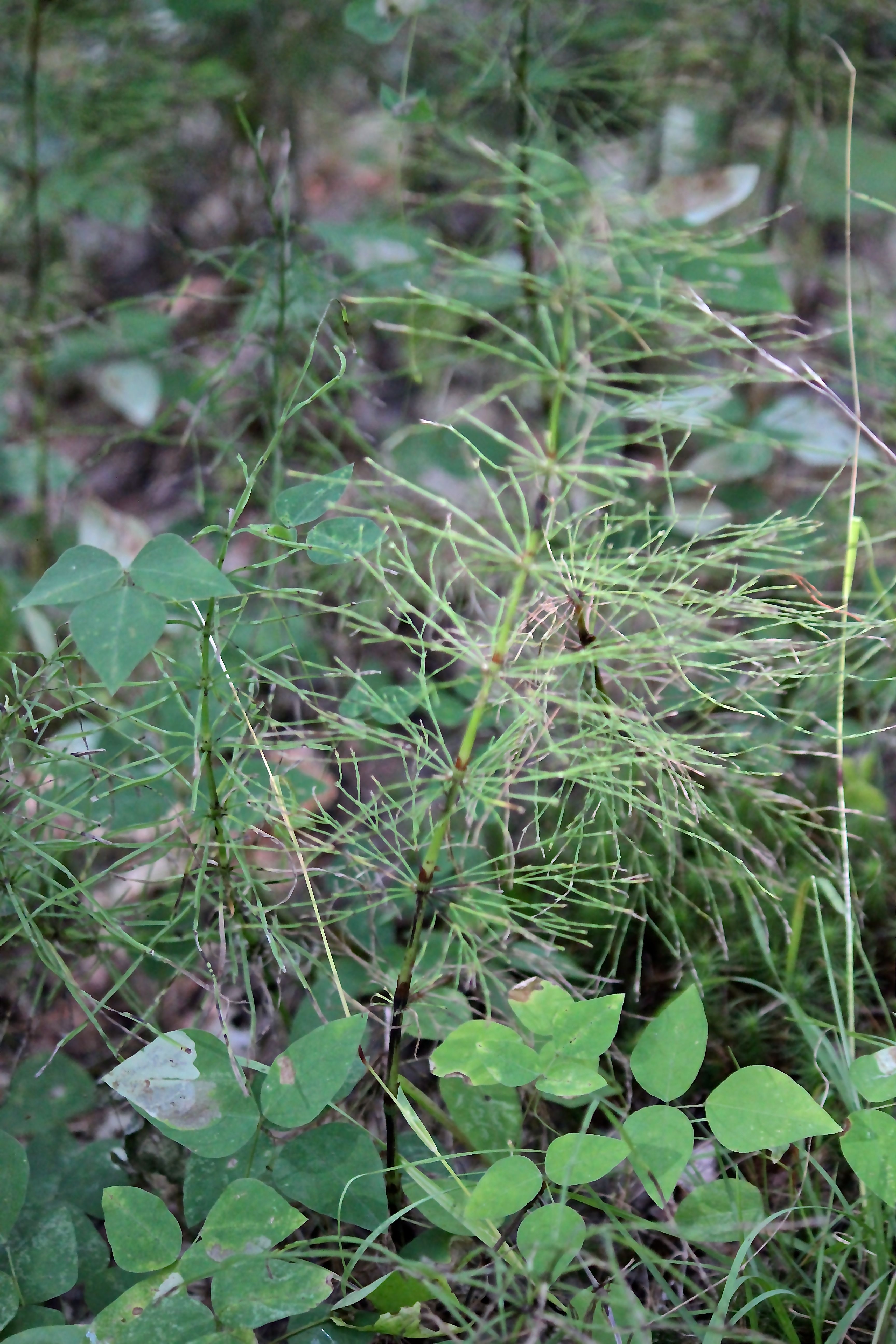
3. Woodland horsetail grows among the white pine saplings. It’s easy to confuse the two since they both have whorled branches, but the horsetail branches have a lacier appearance. Its “leaves” are reduced to a toothed sheath that surrounds the stem.

fogged inmorning dew

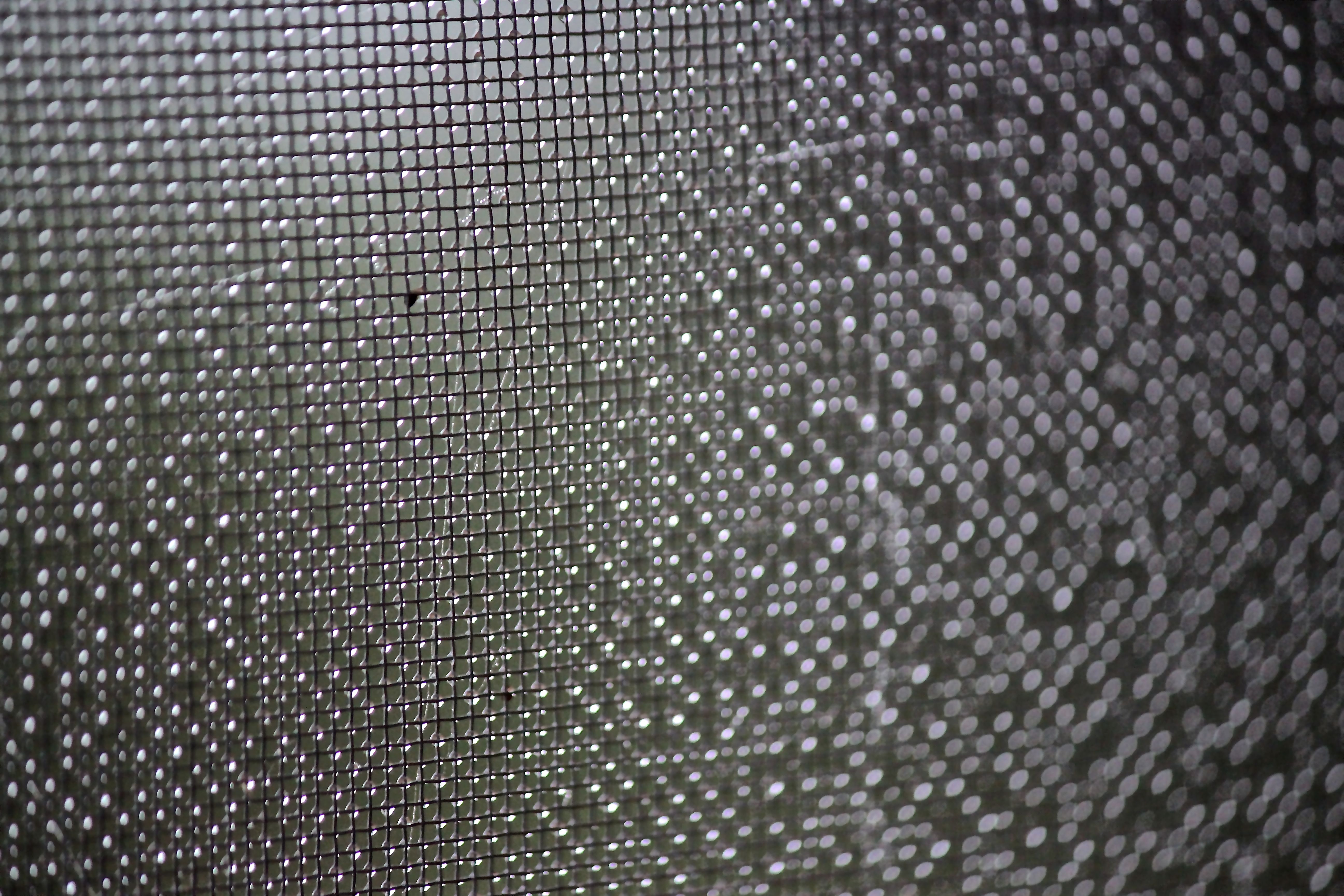
4. Morning fog on Moose Pond was almost the pea-soup variety until it began to burn off around 7:30 this morning. I was mesmerized by the patterns created by the moisture on the porch screens.

spider works

spider works 2

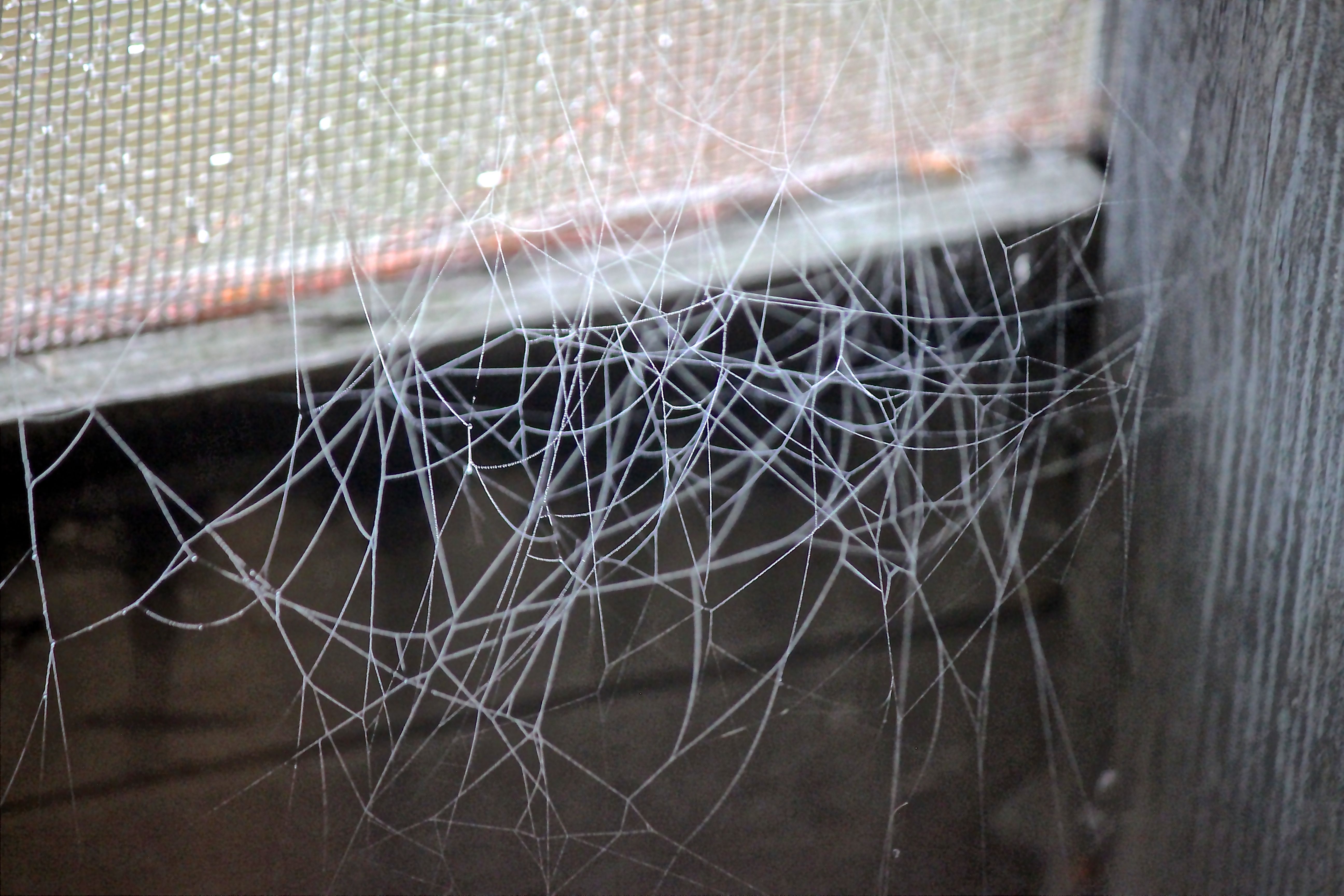
5. I was equally mesmerized by the spider works I found both on the porch and outside. Industrious architects are these. Mind you, I’m not a spider fan. I used to make family members destroy them. And I remember some mighty large and hairy ones that shared our flat in England back in ’79. That’s when I learned that the eensy weensy spider really does climb up the water spout. But, these webs are to be admired.

white oak leaves

6. As my guy and I climbed Burnt Meadow Mountain in Brownfield today (after the fog burned off), I realized for the first time that white oaks grow there. It’s the little things that excite me and seeing those rounded leaves made my heart flutter. I’ve now noted that white oak grows beside red oak in Casco, Denmark and Brownfield. I’m connecting the dots that form its northern line.
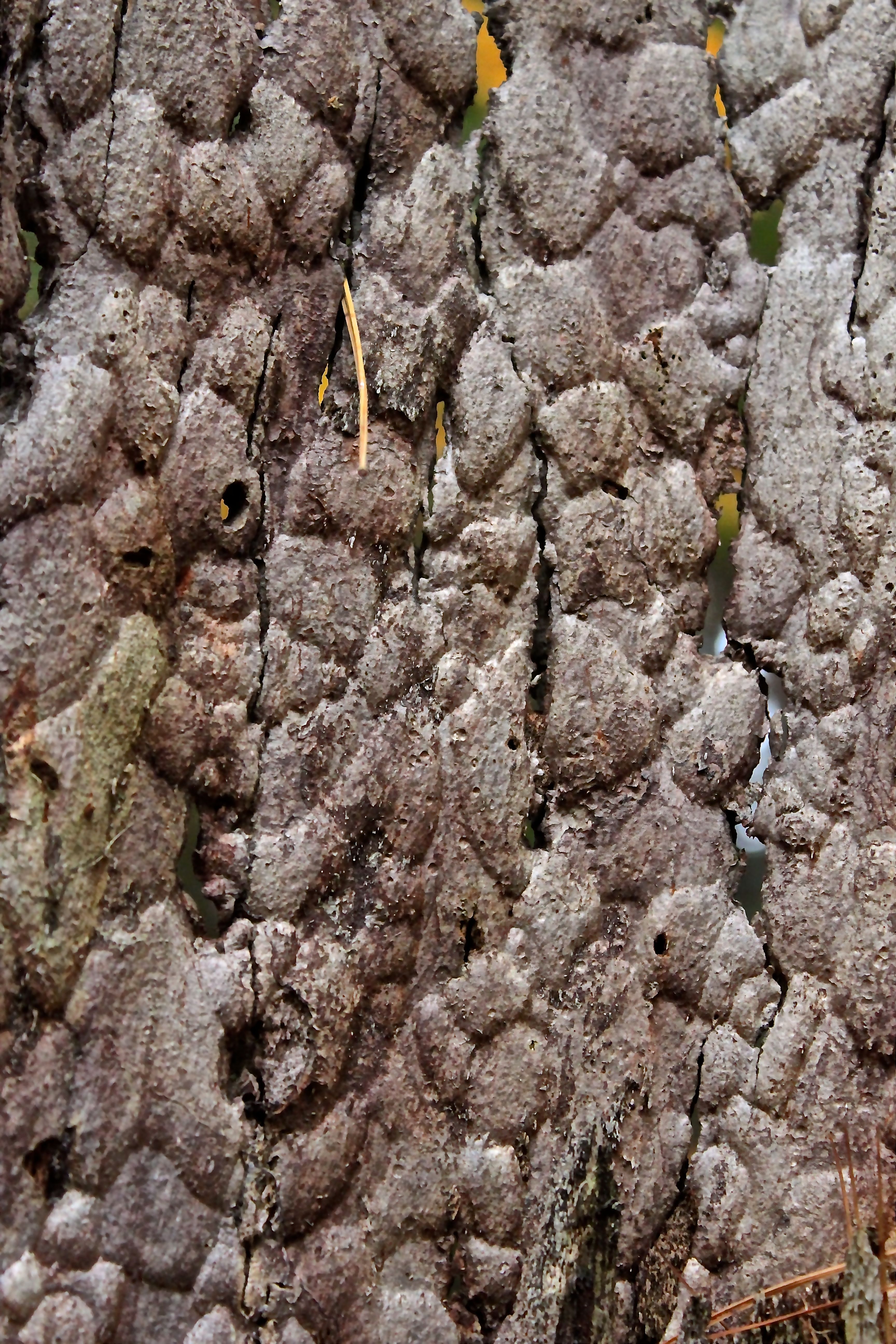
trailsignalmost to the summitsummit 1mount washington

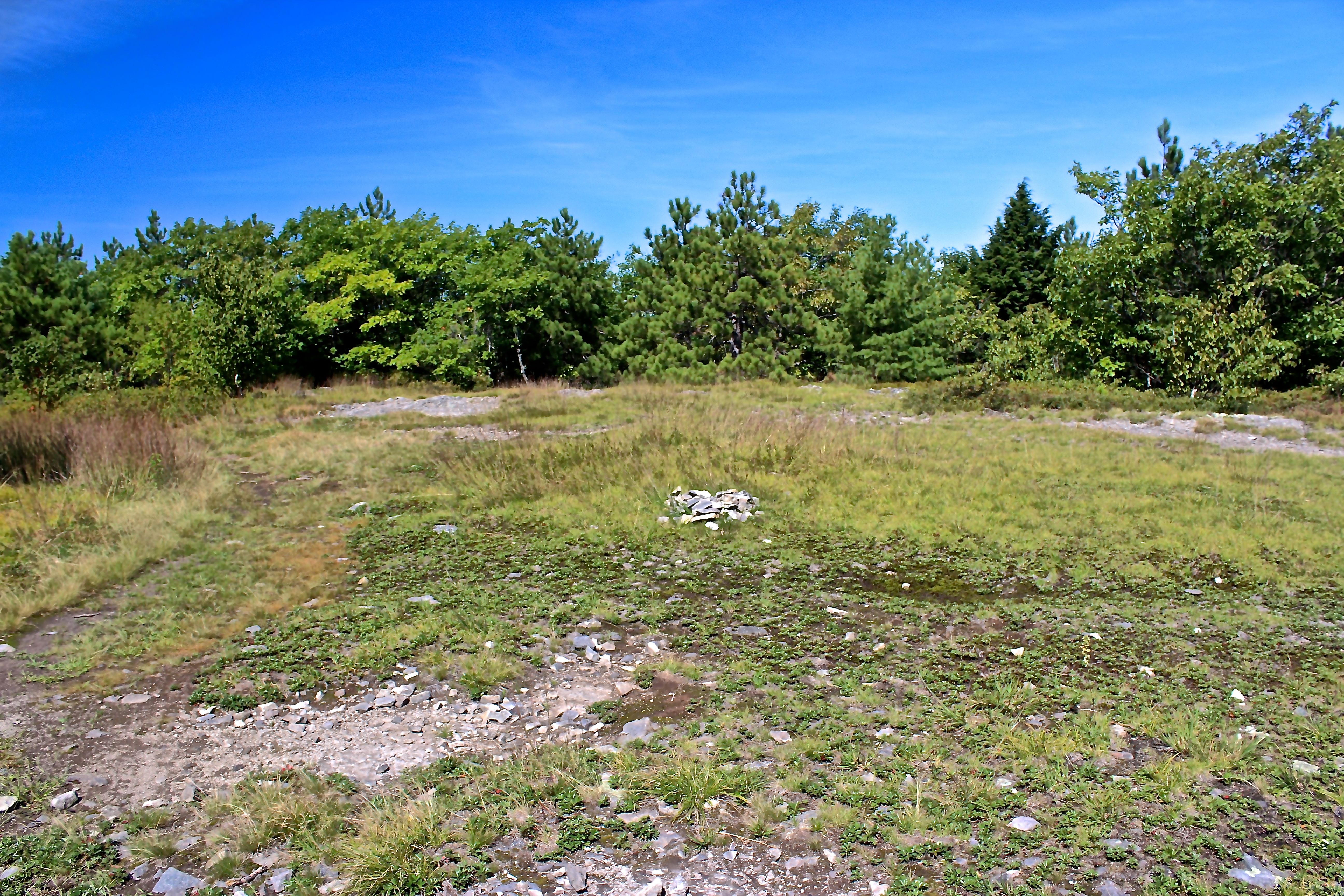
7. We followed the North Peak trail to the top. It’s always a joy (think: relief) to walk onto the large, flat summit after scrambling over the rocks to get there. Because we like a round trip, we descended via the Twin Brooks Trail, which offers some great mountain views, including Mount Washington.

summit grasshopper

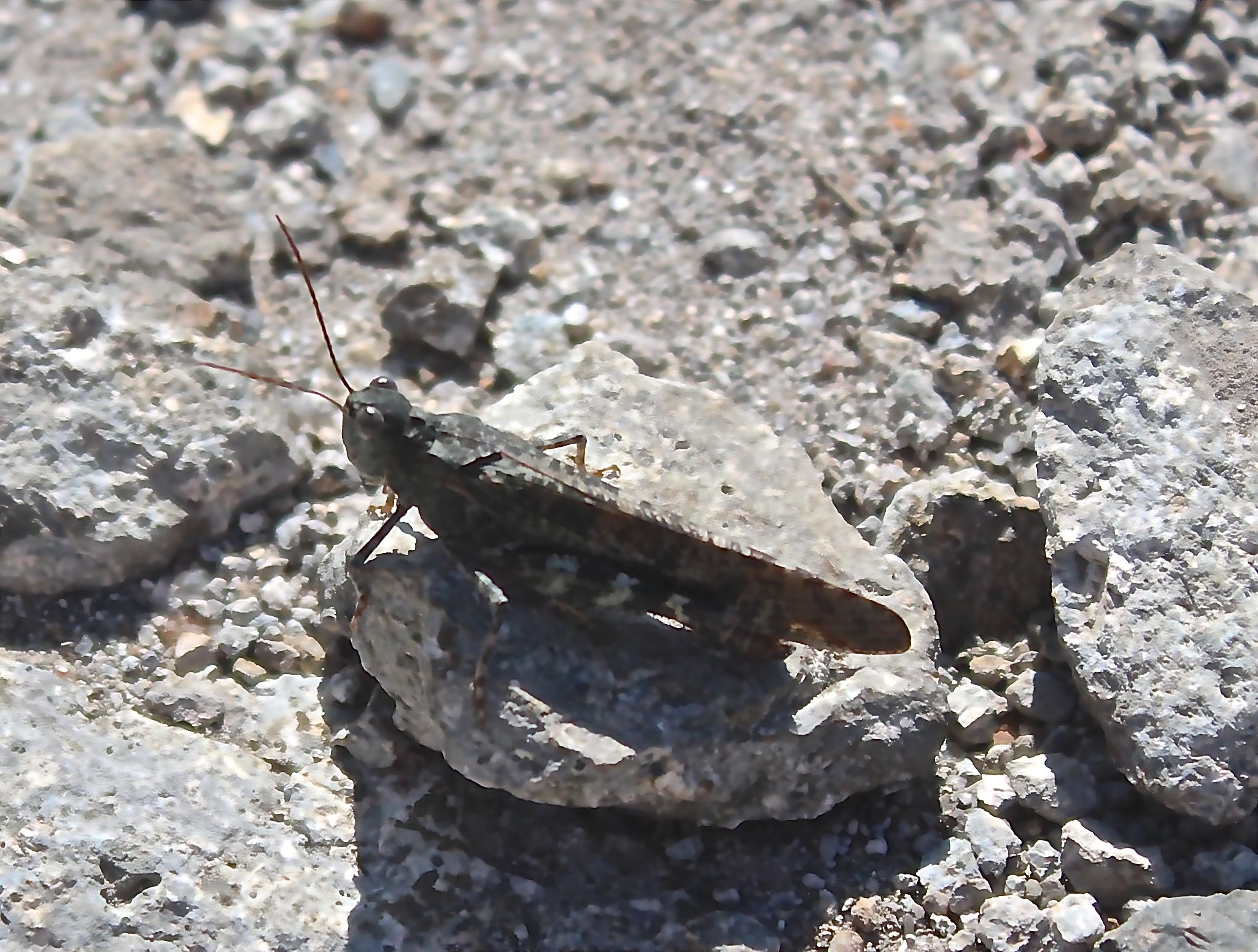
8. Grasshoppers are abundant at the summit. They’re known to feed on blueberries, and the crop is quite abundant, especially just off the summit on the Twin Brook Trail.

oak gall

9. Oak Gall. I think this is an oak apple gall growing on the red oak, but I’ve never actually seen one on the tree before. Usually, I find the dried shell of such a gall on the ground. My other guess would be the acorn plum gall. If you know, please inform me.

bear claws 1bear claws 2bear claw 3

10. I was looking for these and we found them. :-) Yes, more bear claw marks. It only made sense. Lots of beech trees. Lots of blueberries. And . . . a few years ago, we encountered a bear on the North Peak trail.

tree roots

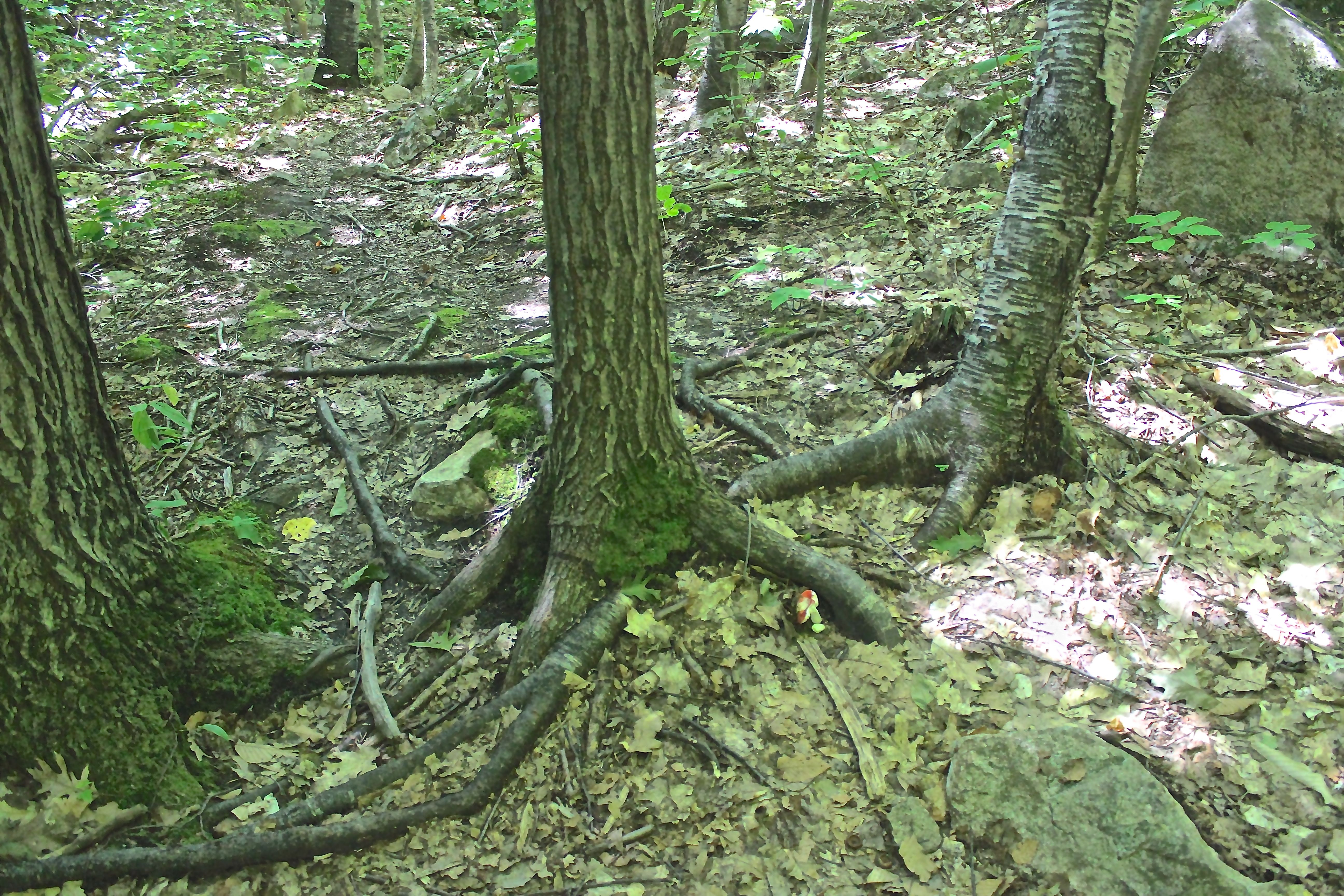
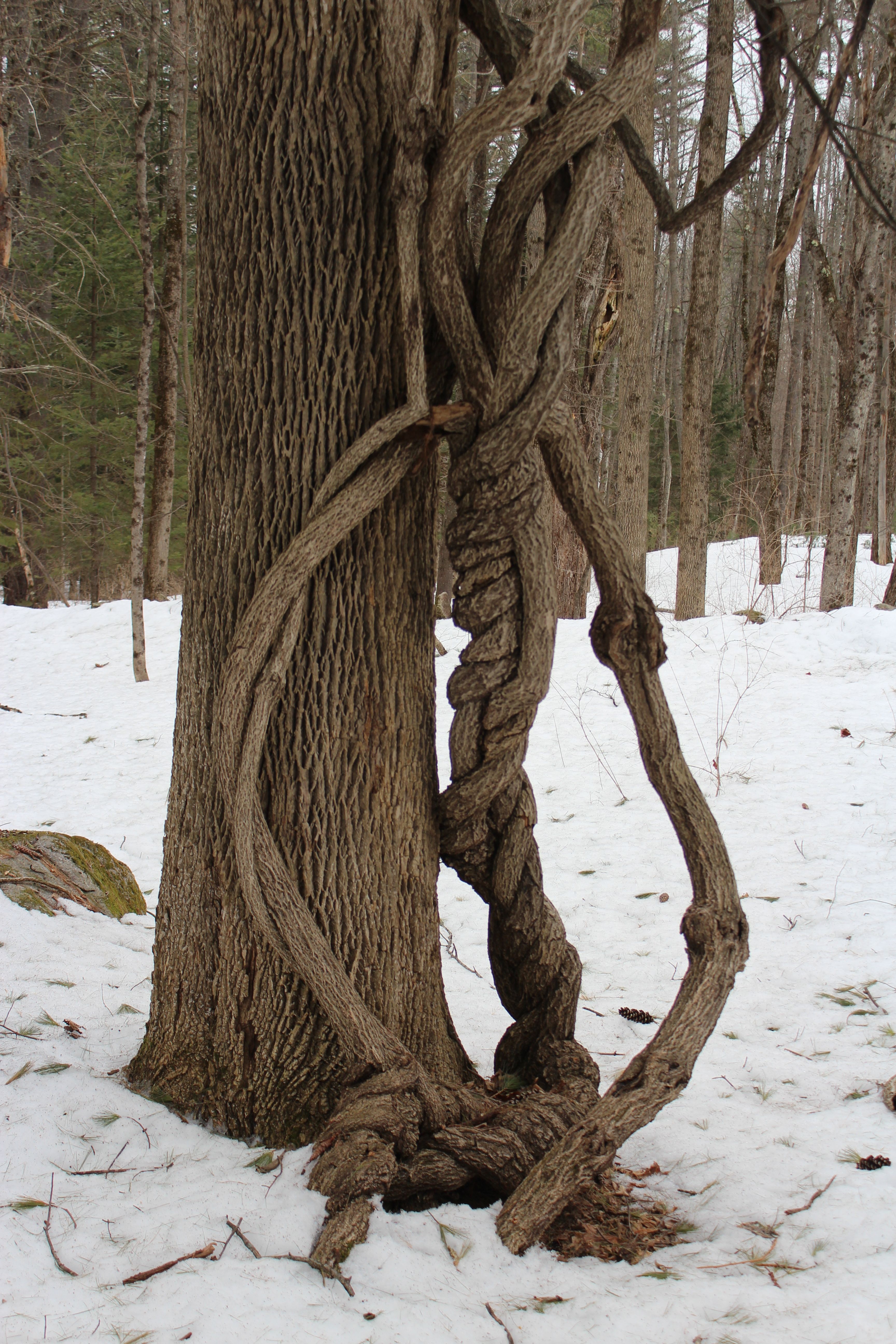
11. OK, so here’s my eleventh cool thing. Kinda like getting a baker’s dozen–11 for 10, such a deal. Anyway, I’m always fascinated by the manner of tree roots growing over and around each other and other things. Embracing. Supporting.  Layering. Call it what you want. The thing is, they find a way to grow together. Oh, it doesn’t always work out. Sometimes it’s a smothering relationship. I’d like to think that these two trees, an oak and a birch, have intertwined in support of each other.

Thanks for joining me to take a look at the past 24 hours. I hope you had time to wonder as well.

When I grow up . . .

I want to be like Ursula, my spritely little German friend who is a naturalist extraordinaire and loves to share her knowledge and stories.

Ursula

Always with a smile.

bridge

I had the pleasure of being in her company today, after an hour of birding in Pondicherry Park,

baltimore oriole

where a Baltimore Oriole serenaded us.

dwarf gensing

On to Holt Pond for Ursula’s wildflower walk hosted by Lakes Environmental Association, as was the bird walk. Looking a bit like a disco ball is the blooming Dwarf Ginseng.

cucumber root

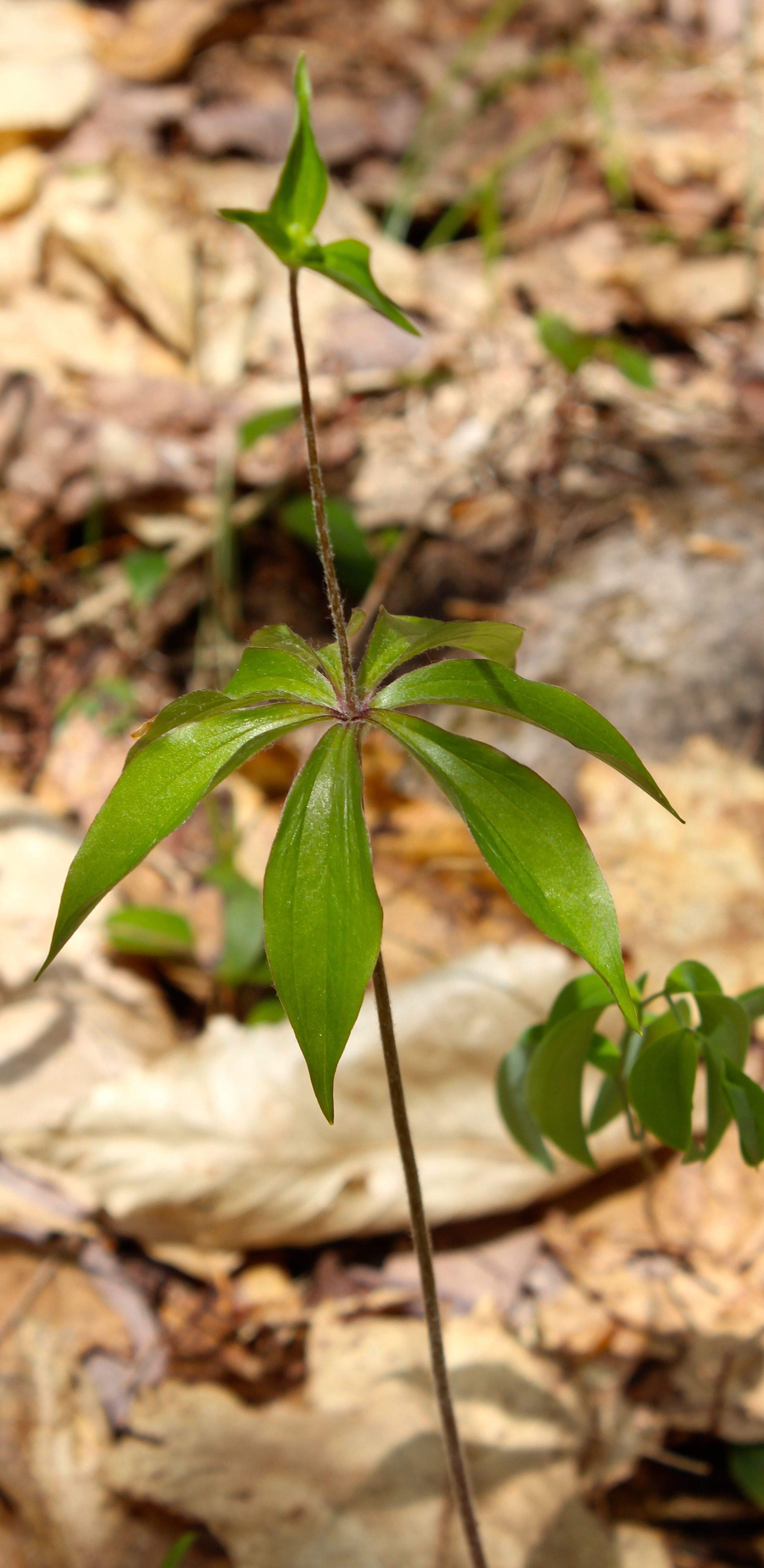
Though it isn’t in bloom yet, I saw lots more Indian Cucumber Root today and have a theory I’m questioning about this plant. I know that if it has only one level of leaves, it doesn’t flower or fruit. It needs that second deck to be productive. I’ve heard people say that when it has the second tier it is a two-year old plant, while the first level is a year old. Is that true? The Canada Mayflower, Bunchberry and Wild Oats all do the same. Does that mean that all the single leaves we see are one and all the doubles are two and none reach age 3? Or is it that some years some of these plants put more energy into producing sugar and thus are able to flower, like trees have mast years? And furthermore, am I making any sense?

blueberries

So many flowers and so many of them white or creamy yellow, like these Highbush Blueberries.

red maple 2

Since we were crossing the Red Maple Swamp, I can’t resist showing their development.

green frog

Along the boardwalk that winds through the swamp, we saw this banjo player–a Green Frog. Some call it a Bronze Frog because more than half its body is bronze. Thus the need for those Latin names–Rana clamitans.

hand 1

My friend, CC, squatted down to catch it.

hand 2

And came away empty-handed. :-)

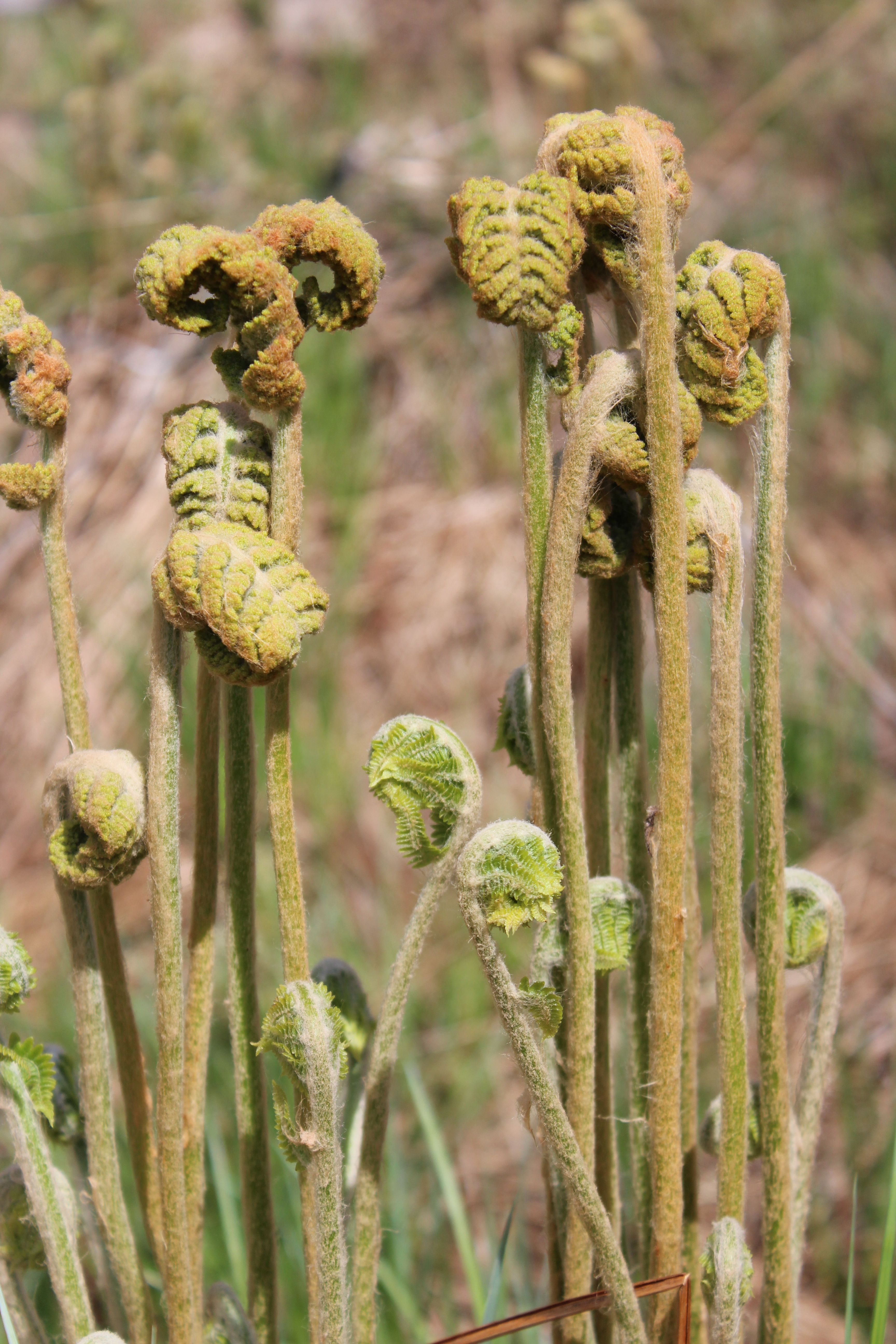
cinn 1

Who do you want to be when you grow up?

crosiers 2

I pose the question to these crosiers.

cinn 5

Do you see the fuzzy brown wool coat they wear?

cinn 6

Close up.

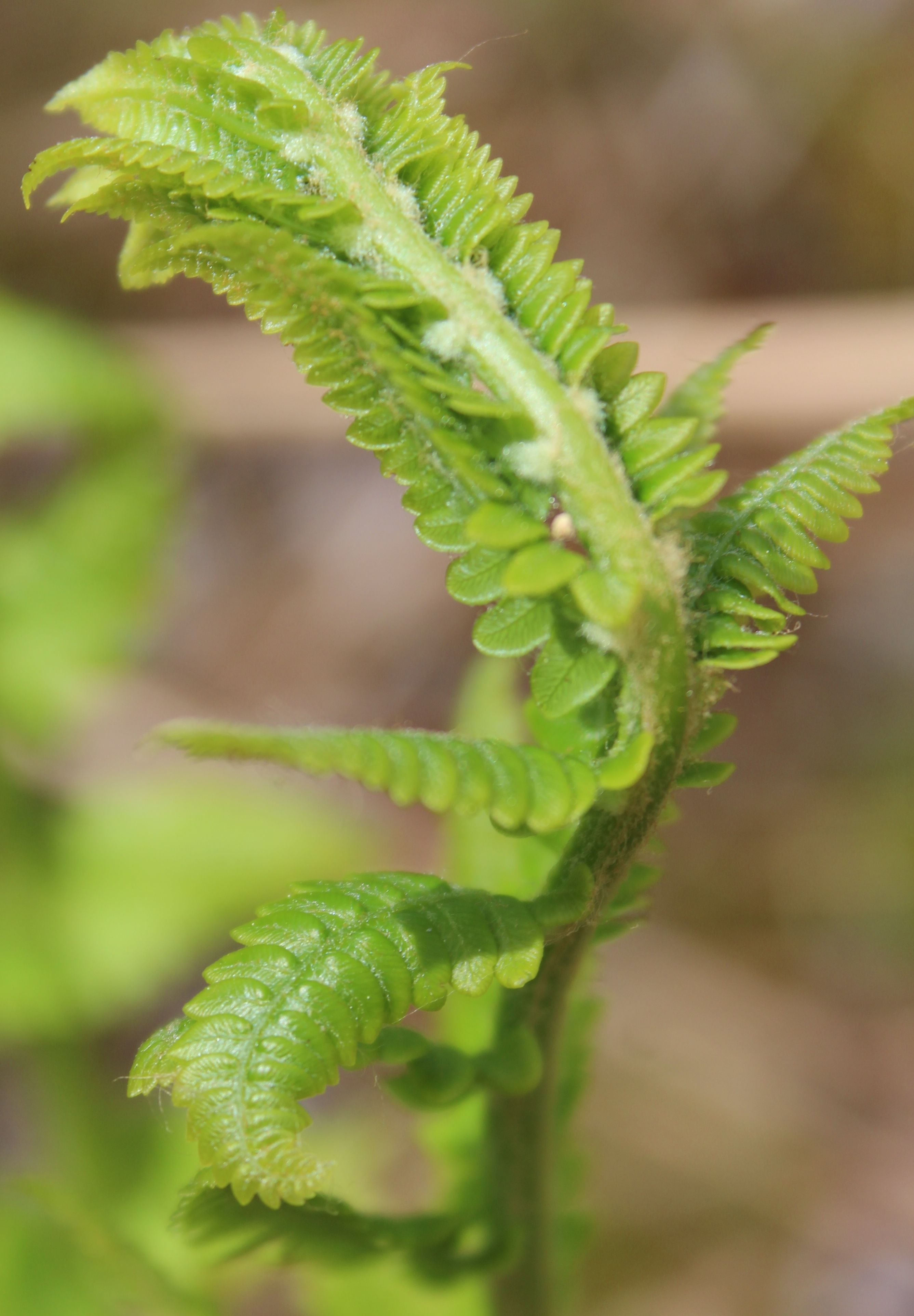
cinn 7

Ever so slowly . . .

cinn 8

Their fronds begin to unfurl.

cinn 9

And soon we’ll know them as the Cinnamon Ferns they are becoming.

rainbow

Continuing on, one of our leaders, Mary Jewett of LEA, spotted this rainbow around the sun.

pitcher plant

As is always the case, our heads were bobbing up and down, trying to take in everything there was to see. Pitcher Plants pull us in every time. Well, not literally, thank goodness.

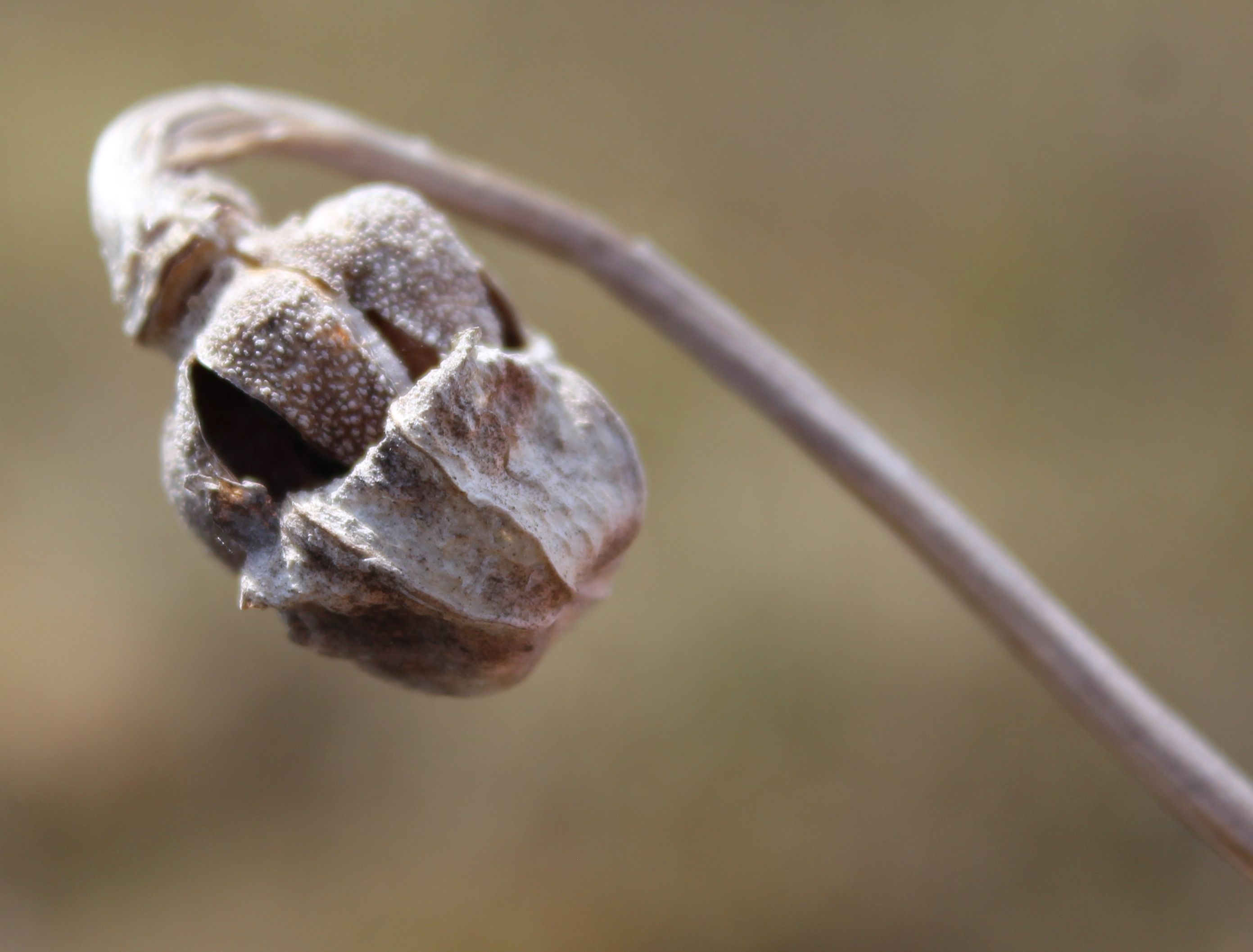
pp seed pod

CC found this old Pitcher Plant seed pod.

qb

We were on the quaking bog, a mass of sphagnum moss, flowering plants, shrubs and decaying vegetation that floats on the water. It looks safe to step onto, but . . . it too, would like to pull us in and preserve us for eternity.

hp

Holt Pond–like all of us, it’s ever changing as it matures.

It’s Ursula’s energy and engaging personality that wow me every time we share moments wandering and wondering. I don’t want to be her, but it would be an honor to emulate her even a tiny bit.

Speed Date

dunning bridge

Some Mondays we only have time for a quick trek. Such was the case today, so we walked down the  street and headed off on the trails in Pondicherry Park. We actually exited a couple of hours later via this bridge, but it’s the entrance most people use and a work of art. The Bob Dunning Memorial Bridge was built by master craftsmen and women, family and friends to honor Bob, himself a master craftsman who was taken from this world much too early. One of my favorite  features is that each of the sixteen crossbeams was created from a different tree species and the bark was left on all. For my Maine Master Naturalist capstone project, I created a brochure and slide show to help others identify the trees. The slide show is available on the LEA Web site and the brochure is available at the kiosk by the bridge (when I remember to fill it. My guy pointed out that it’s empty again–tomorrow, tomorrow.)

bittersweet

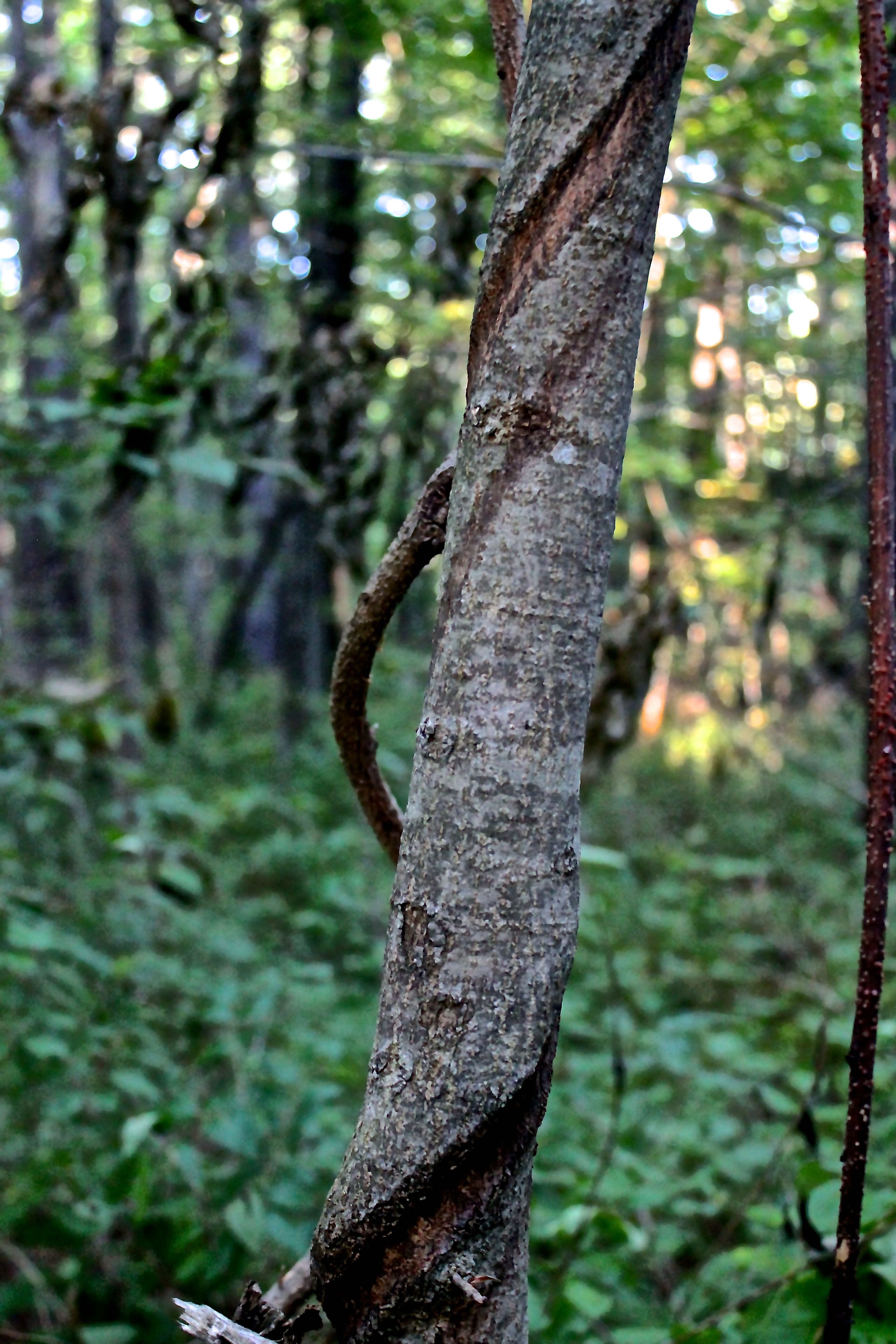
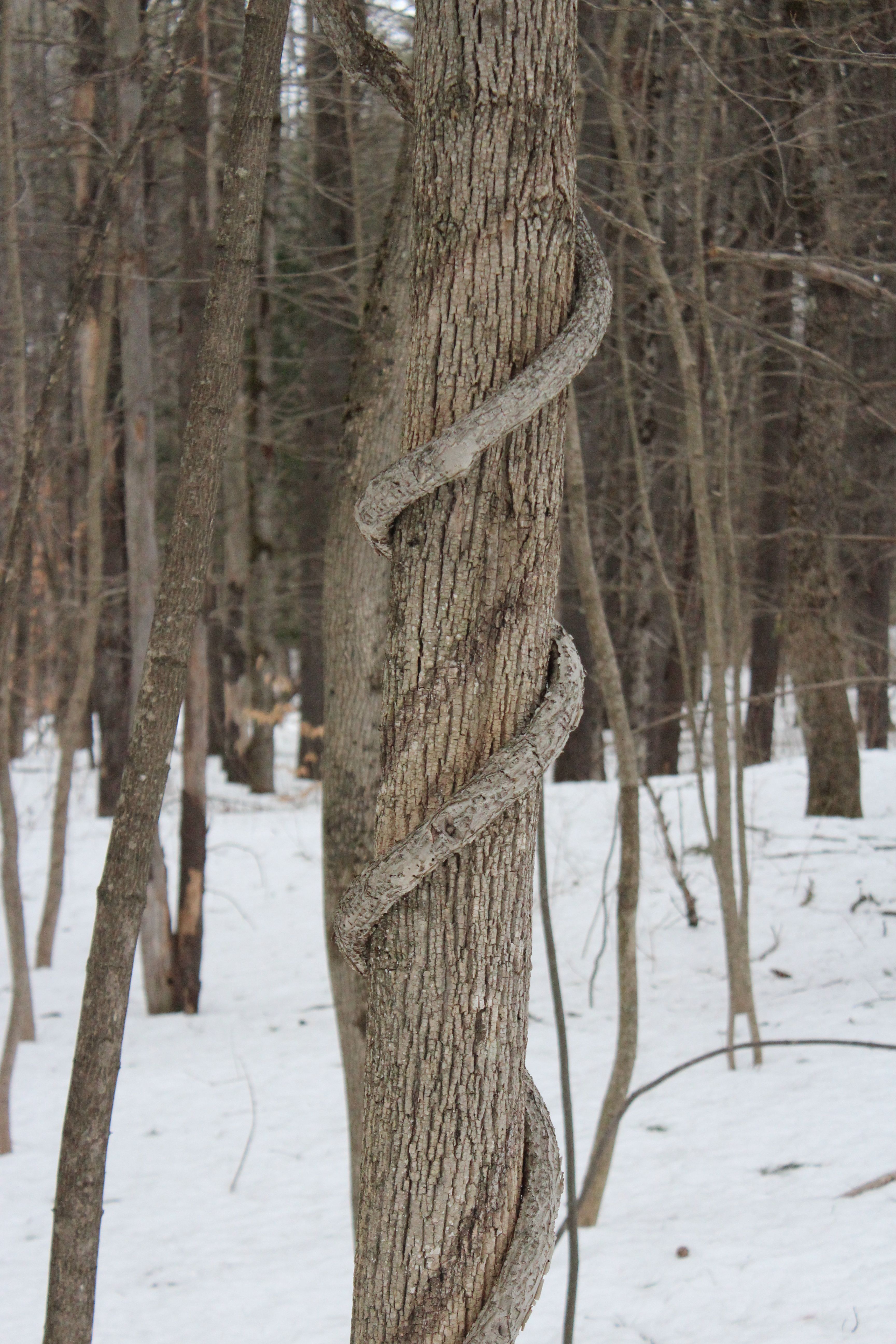
I know it’s an invasive species and this photo proves it, but I didn’t realize that for years. I used to cut it in November and use it for decorations. This is a bittersweet vine. It does make for an interesting scene. And provides the birds with lots of berries . . . which, um, provides the park and town with more bittersweet.

bittersweet up close

A closer look.

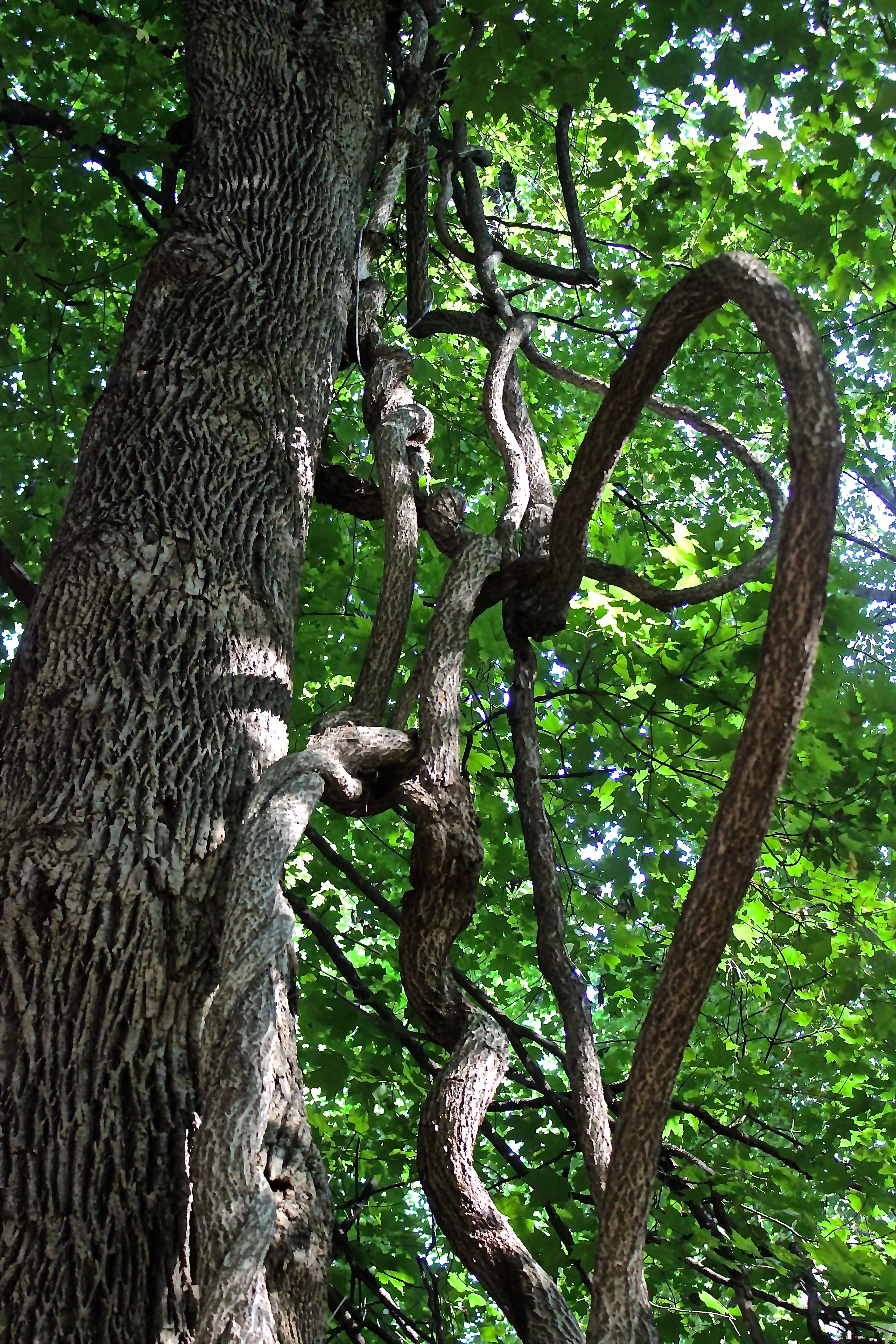
bittersweet on ash

It’s got a grip hold, that’s for sure.

MLSC1

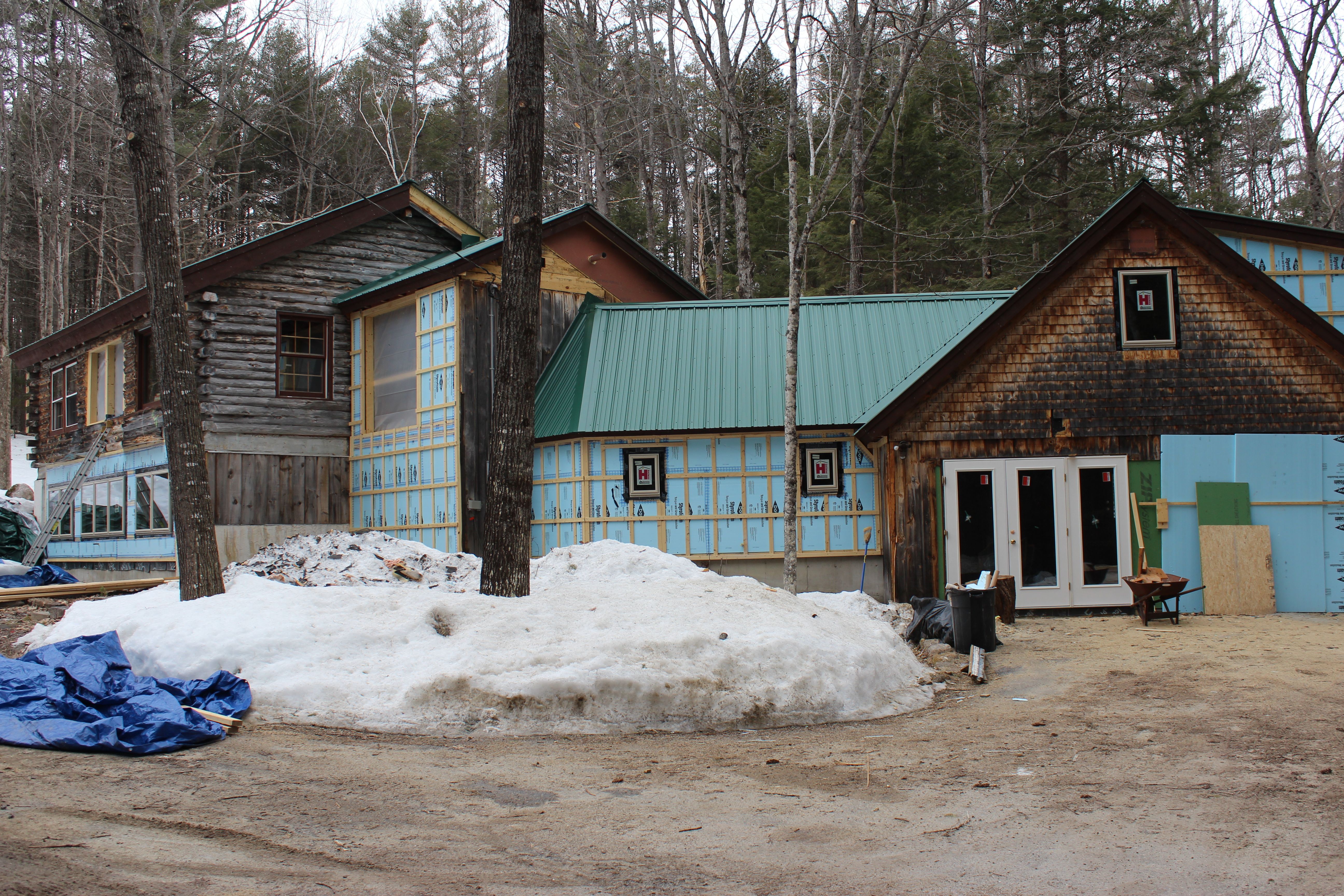
Because it’s too early for leaves, the new Maine Lake Science Center stands out among the trees. This is a pet project of LEA (Lakes Environmental Association), where yours truly serves on the Board of Directors.

MLSC2

Last year, LEA purchased a sixteen-acre lot with an existing building adjacent to Pondicherry Park. The building is being renovated to serve as researcher housing, a meeting room, lab, education center and a park welcome center.

This is destined to become a hub for world-class lake research by providing support to researchers in Maine and beyond who come to study our lakes. While Executive Director Peter Lowell will continue to head LEA, Dr. Bridie McGreavy will serve as the director of the center. I’m tickled about that because she has always been one of my mentors. In fact, she taught me the joy of sniffing red fox pee. Yup, it doesn’t get any better than that.

MLSC3

We are the Lakes Region of Maine, and the lake science center will serve as the voice of change. We are on the brink of something really big here.

MLSC Bridie's view

Though she won’t officially work here full-time until 2016, this is part of Bridie’s new digs.

MLSC main conf room

And what once was a living room, dining room and kitchen is being transformed into a conference room. When my guy and I stepped over the stonewall and onto the property this morning, Peter happened to be pulling in so we had another tour. The building is on schedule to open this summer.

beaver 1

We looped back into the park because I wanted to check on the beaver works.

beaver 2beaver 3

Yup, they’ve been busy. Some of this work was done in December. But the tree on the left has been worked on since then.

beaver teeth

My, what big teeth you have. Their teeth, which never stop growing, are like chisels.

Beaver tracks Dec 5

I have to be honest. I took this photo of beaver tracks in December.

Willet brook

We paused quickly at Willet Brook.

new uniform

But we had to keep moving. As you can see, my guy’s uniform is changing. It’s a wee bit warmer in these parts.

Stevens Brook

And then we were back on Main Street and heading homeward bound. Our speed date had come to an end. I didn’t even bother to make PB&J.

Thanks for stopping by and taking a quick wander with us today.