A Visit From Mom

We stood in her bedroom and peered into her closet, then I grabbed a shirt and was about to close the sliding door. It was Dad sitting on my shoulder, who reminded me, as he always does, to pull the string and turn off the overhead light.

Next I remember, she was getting ready to walk the three of us down the road to the bus stop. And grab the next-door neighbors on the way. We all always walked together.

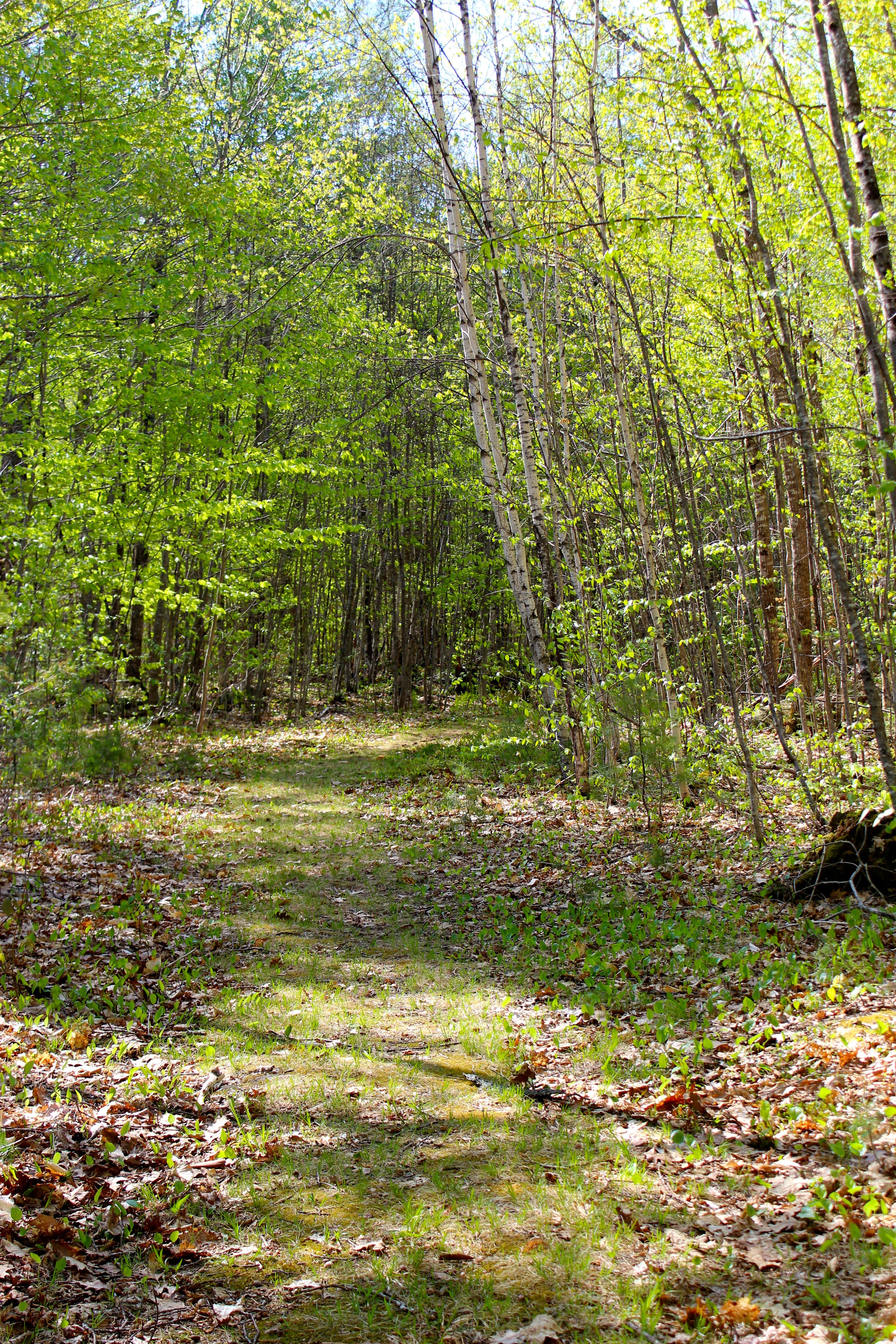
That was my childhood neighborhood. My adult neighborhood is a wee bit different, but in a way, really the same. The length of our road is the same, with the same number of houses lining the street. We live at the dead end as my family did growing up. And it’s nothing but field and forest beyond.

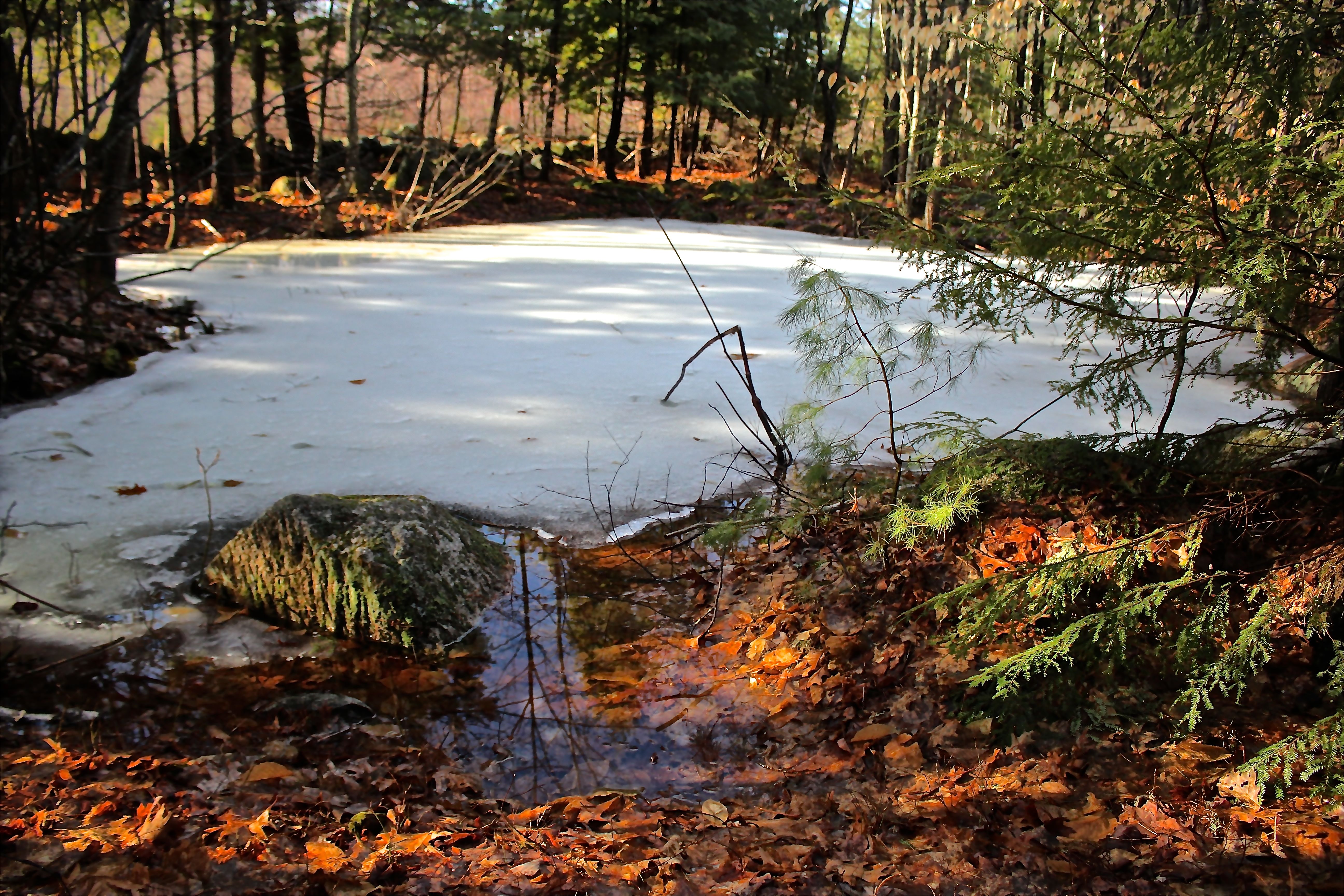
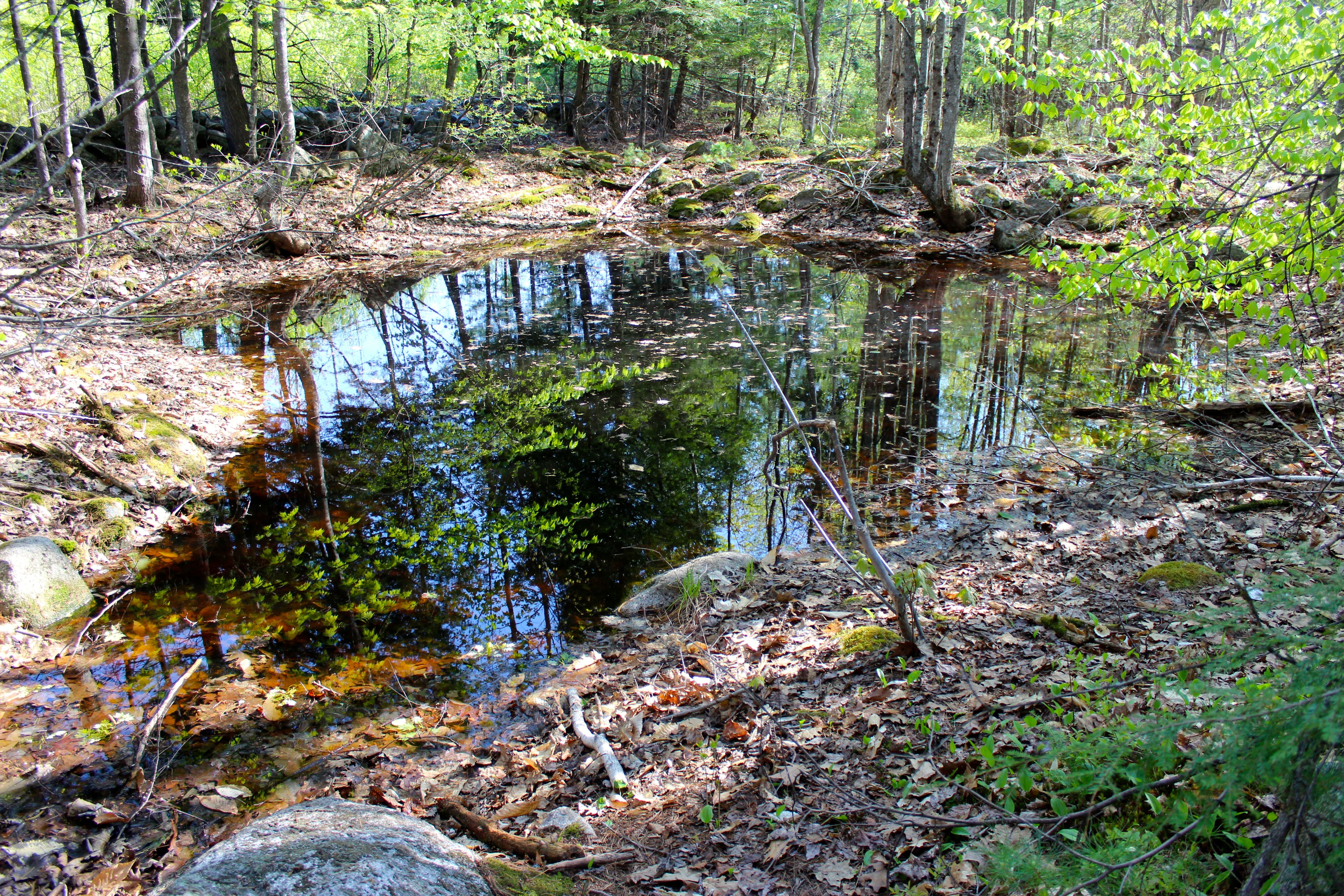
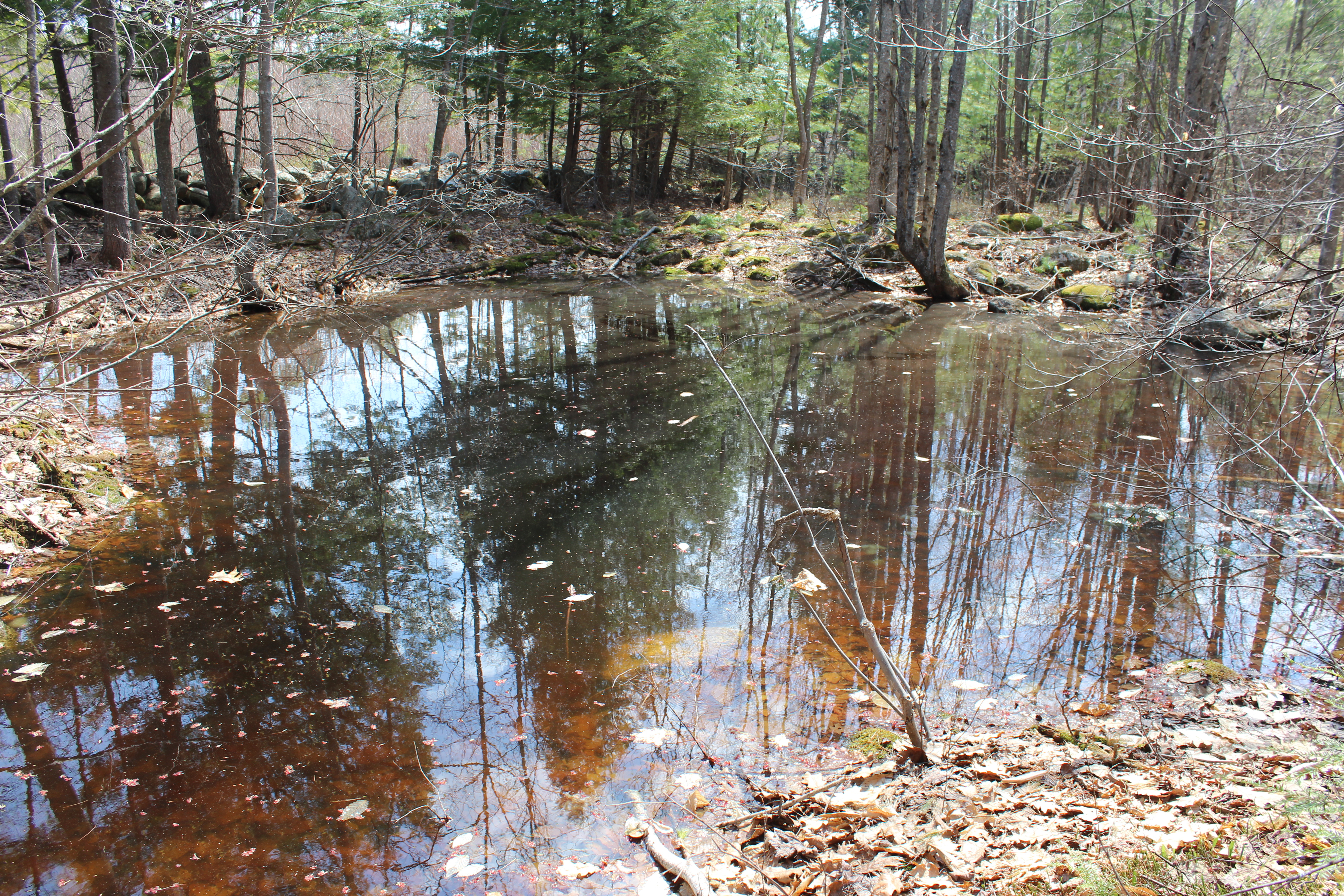
One of my favorite parts about my current neighborhood is the vernal pool that I refer to as “MY” vernal pool even though it’s on a neighbor’s property. So, neighbors are still an important part of my life.

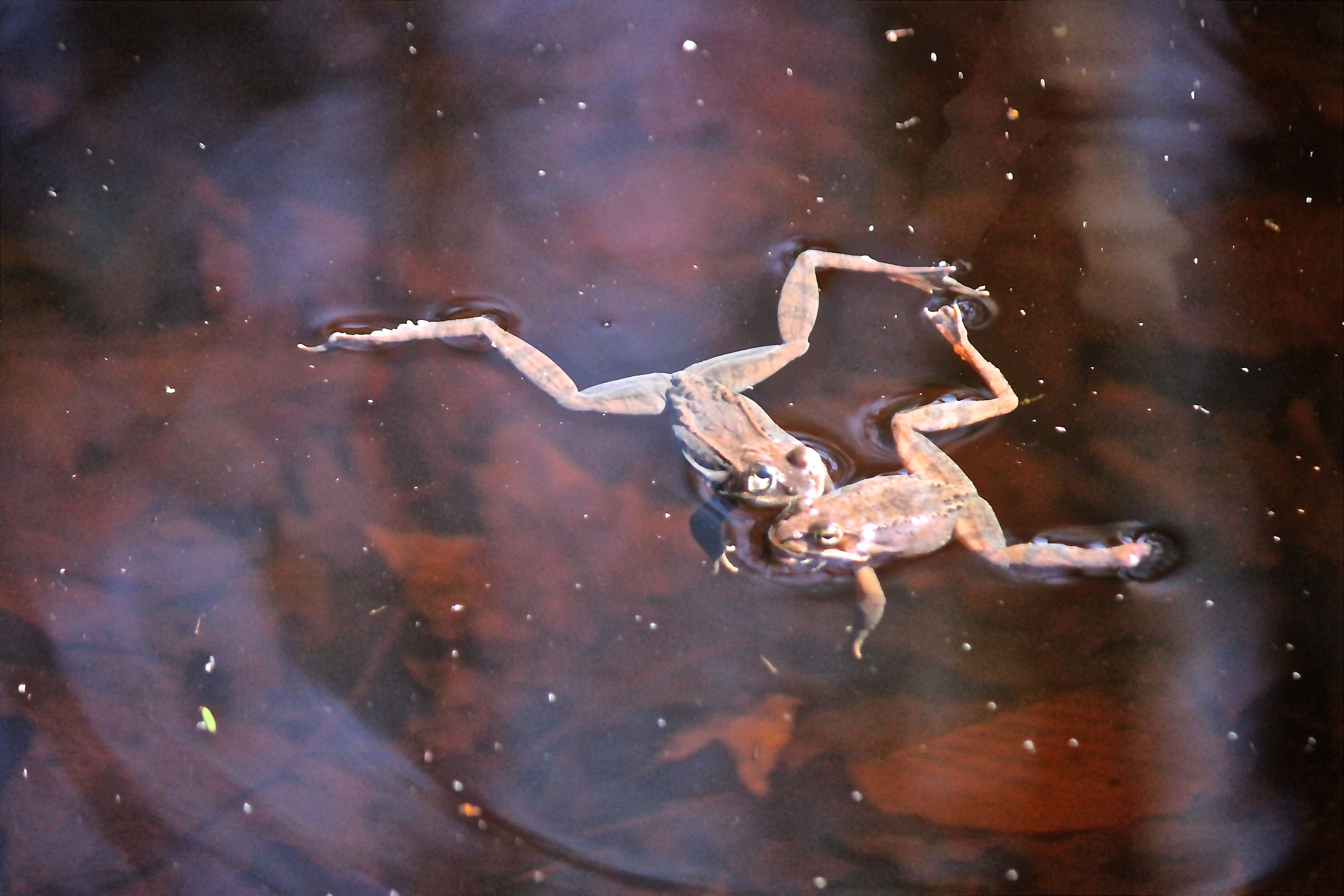
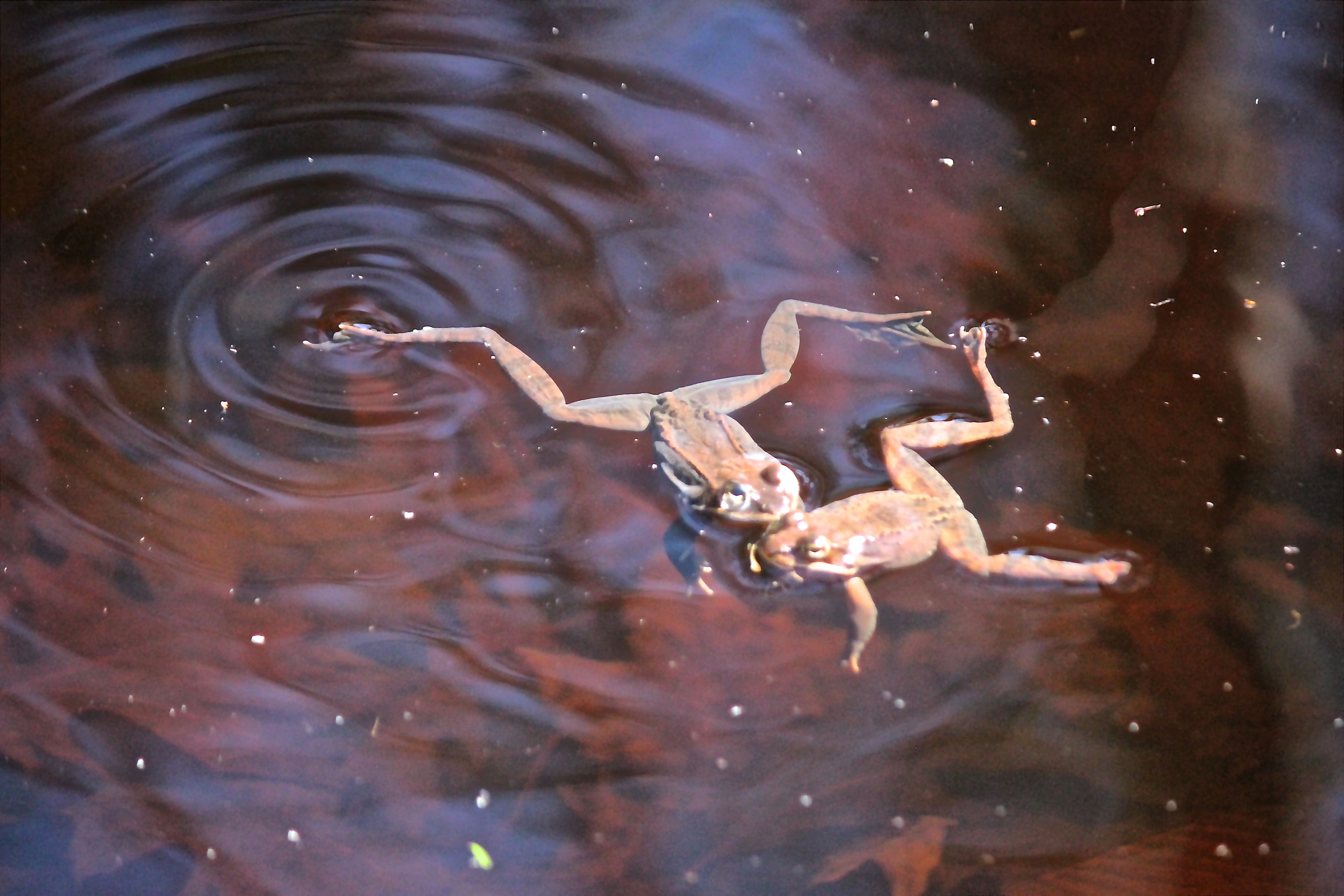
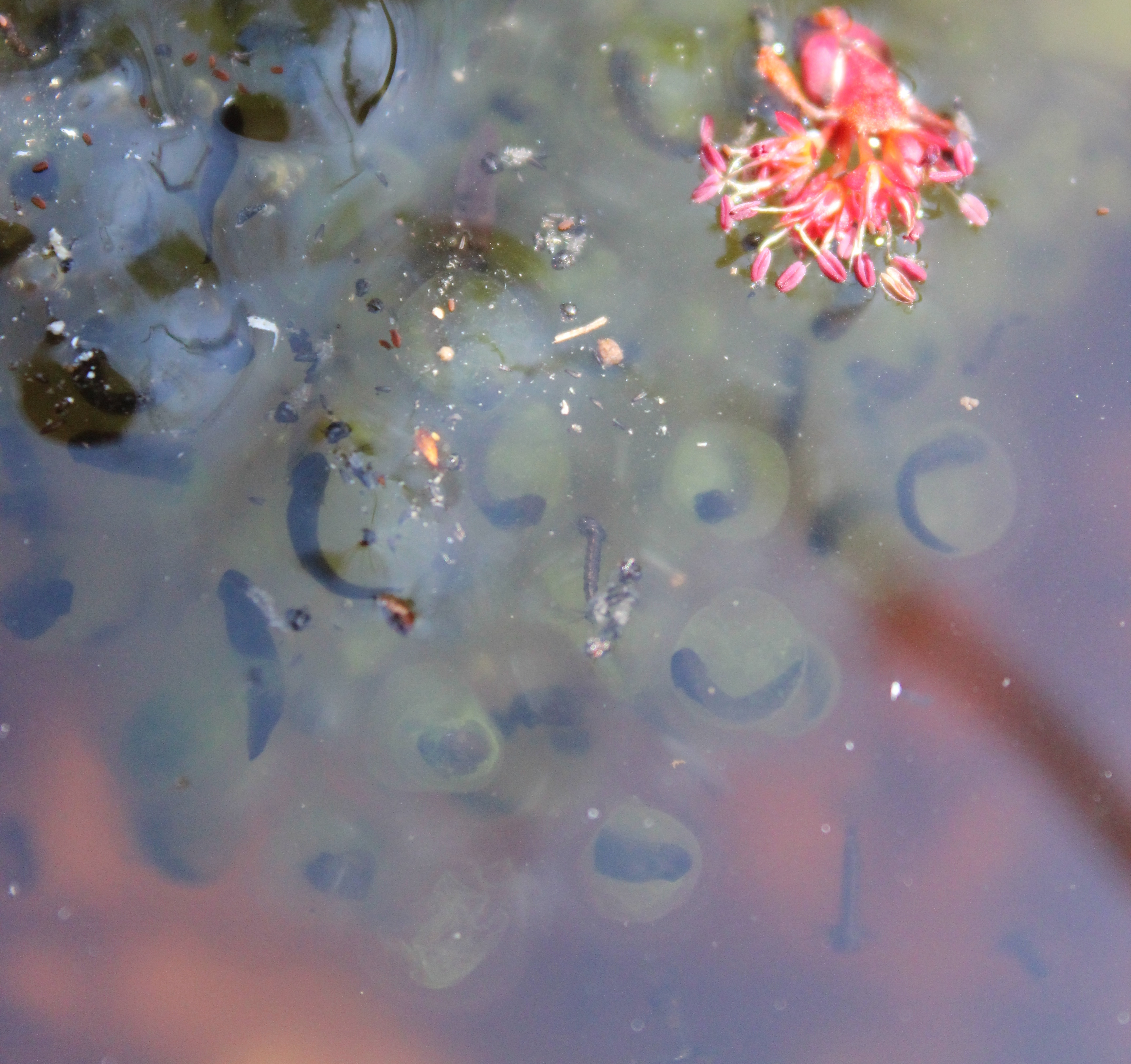
And while visiting the vernal pool to check on my amphibian friends yesterday as days of rain drew to a close, I discovered two new residents I hadn’t met in this space before.
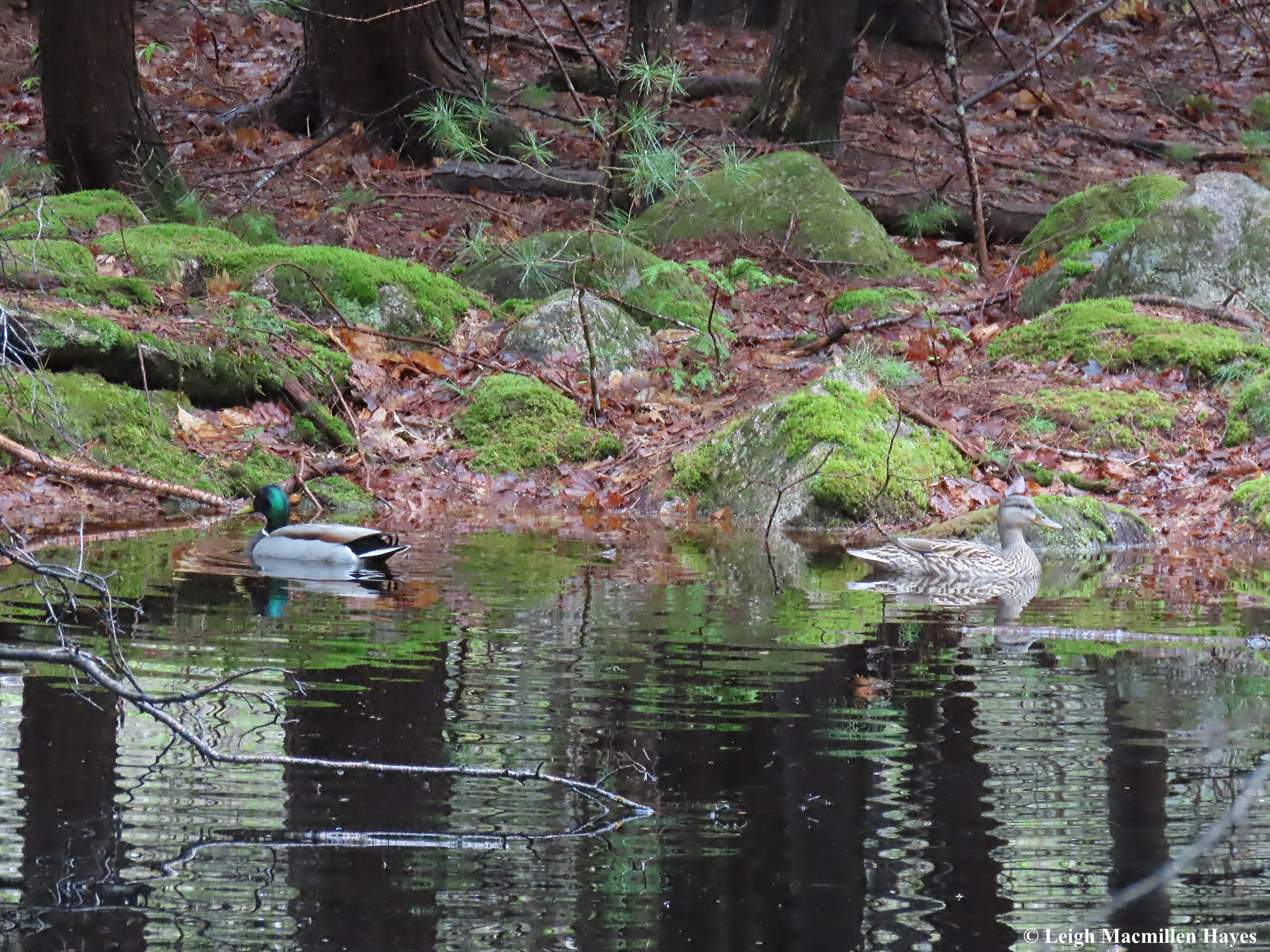
Maybe Mr. and Mrs. Mallard have visited before, but in 30+ years of my journeys to this spot, I’d never encountered them. My first response was to scare them away. Thankfully, I came to my senses quickly.

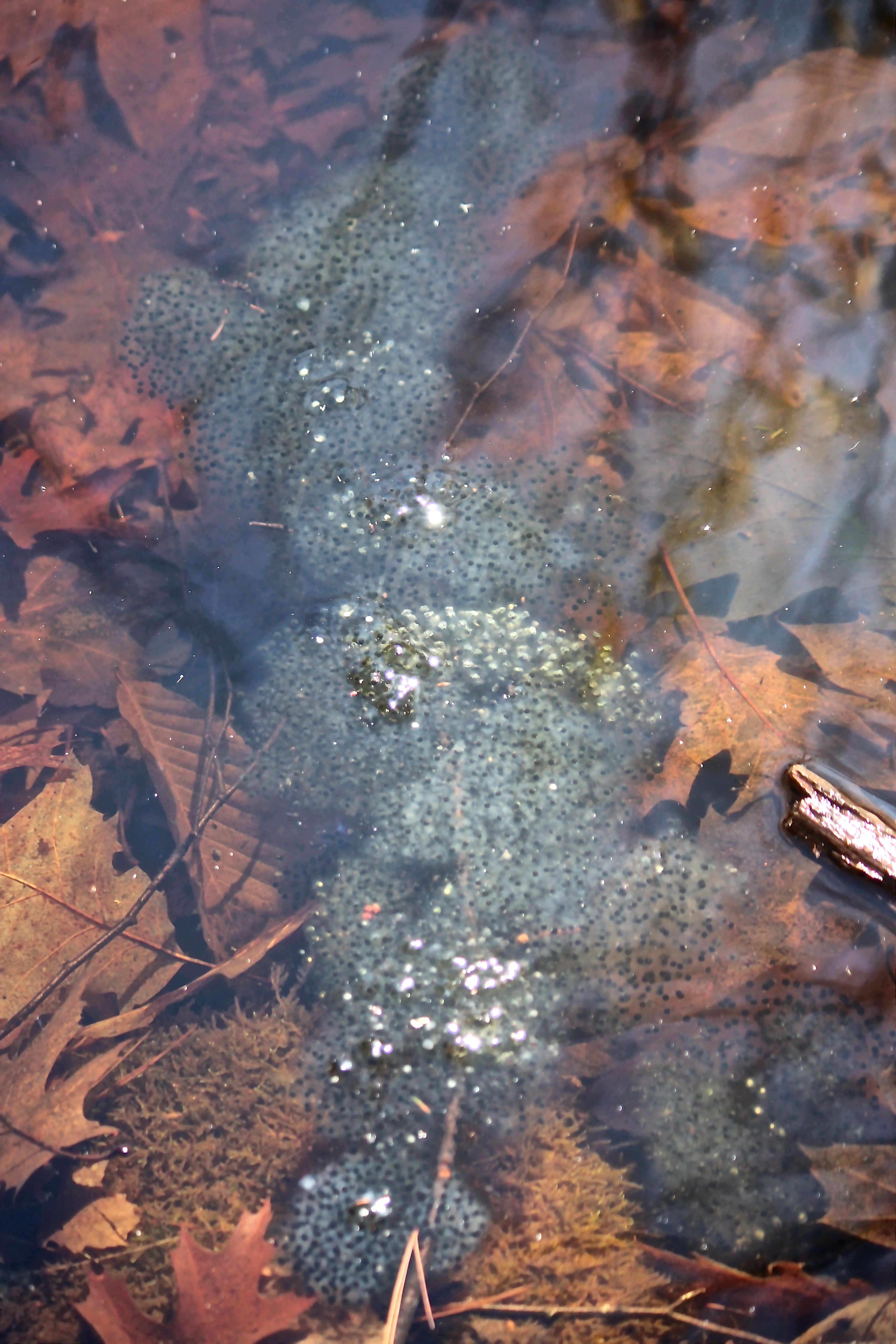
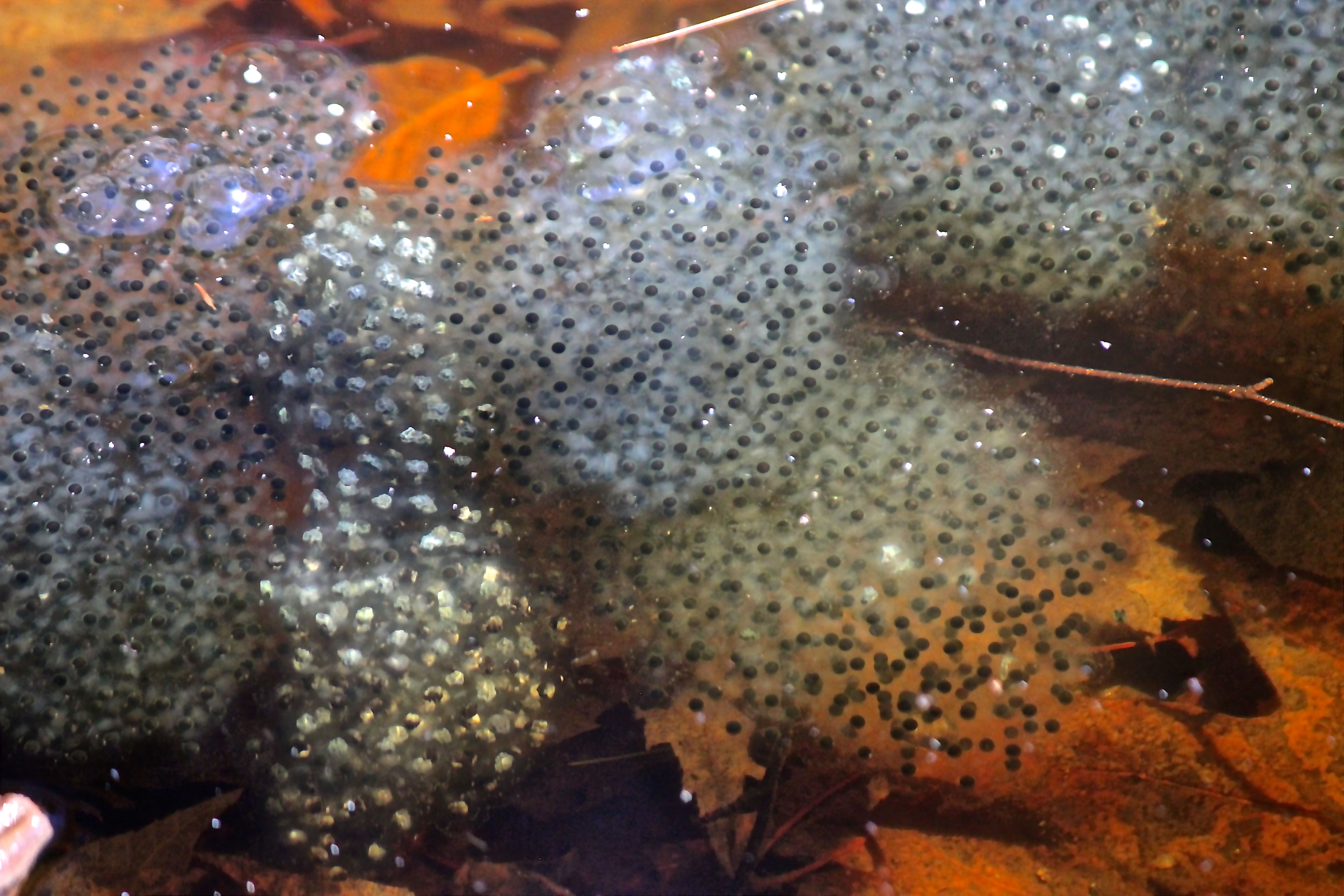
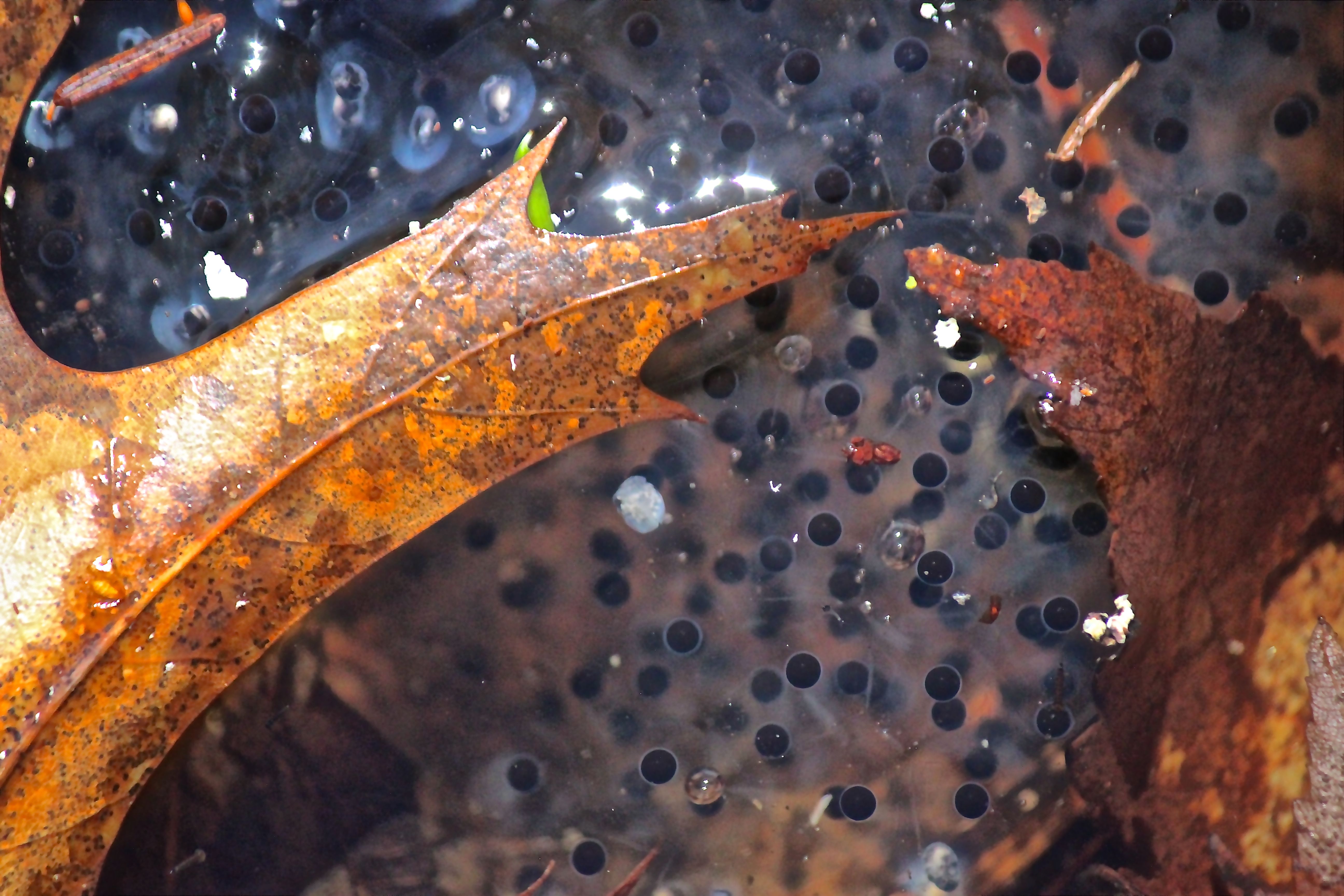
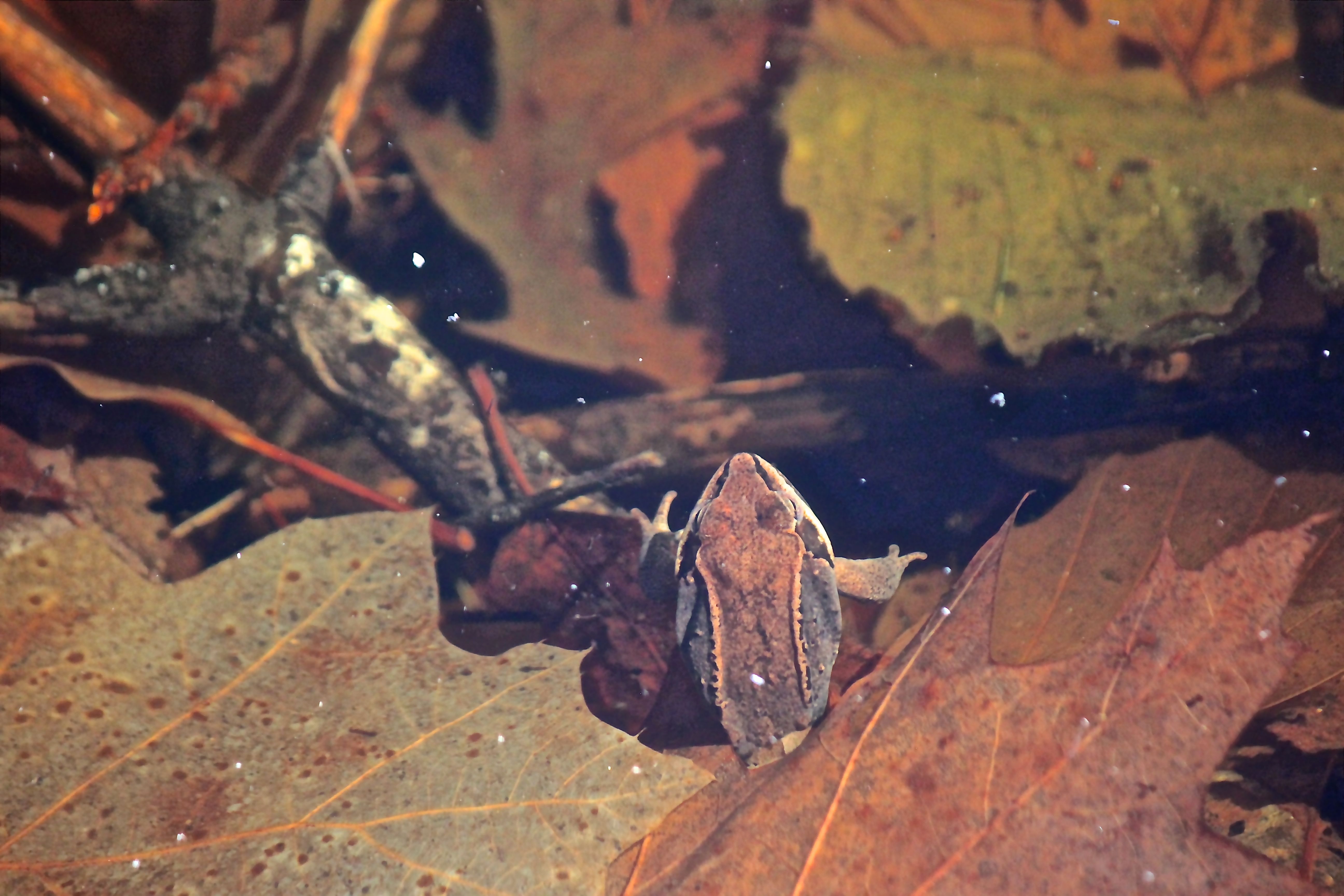
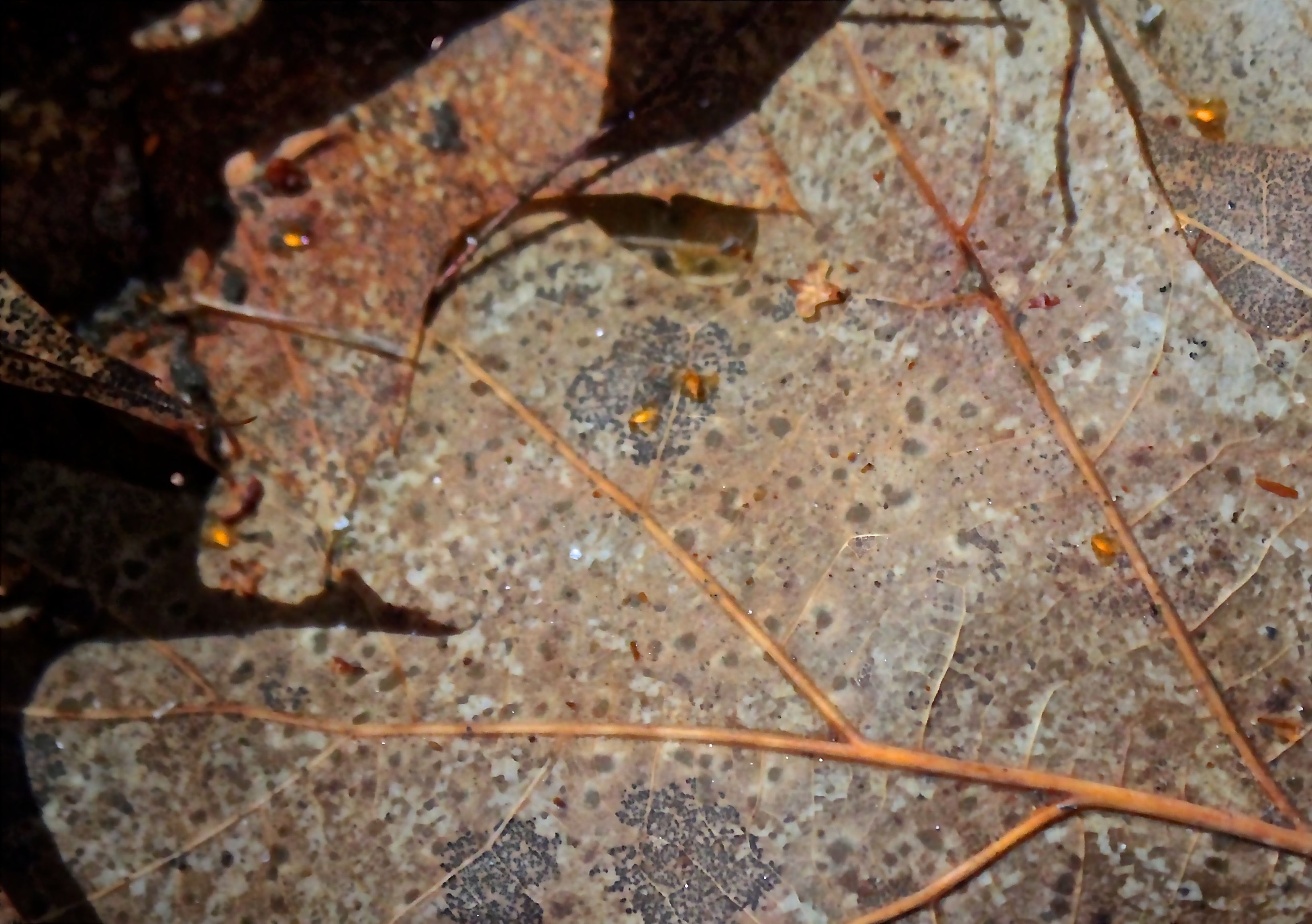
But in those first few moments, all I could think about were the tadpoles that were using the pool to develop. Their moms and dads had left the pool just after the eggs that contained embryos that turned into the said tadpoles emerged. And because those moms and dads only spend about two weeks in the pool and then return to their upland habitat for fifty more weeks of the year, I always feel it is my duty to watch over and protect them. And the ducks . . . might gobble them up.

But she excited the pool and looked tall and poised and I was certain their visit was just for a moment and so I gave thanks that I’d had the chance to spot them.

He added his own stature to the landscape. And my presence seemed not to annoy either of them.

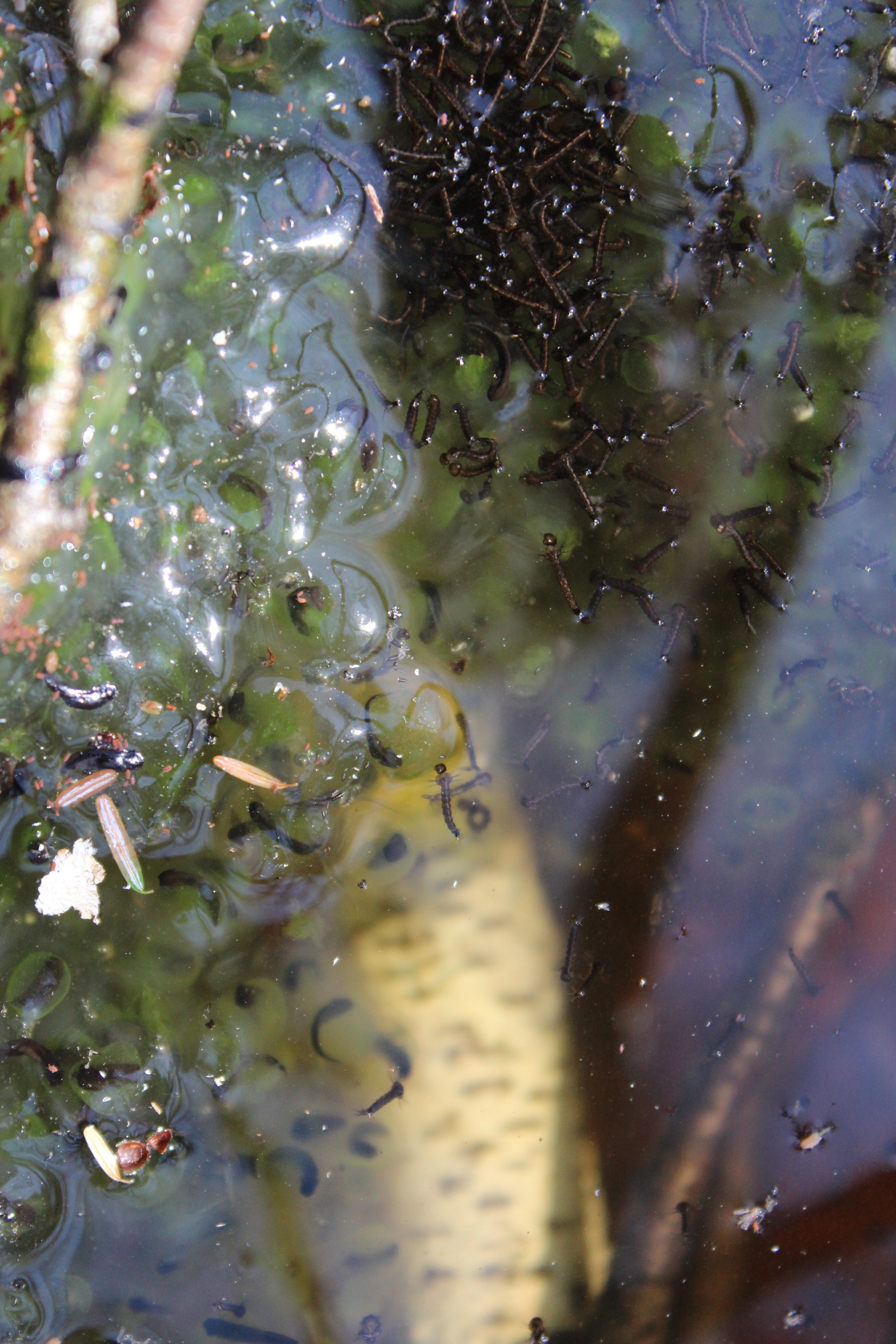
Though my concern was that they’d gobble all the critters I chose to protect, I did think that if they had any interest in the larval Mosquito wigglers or their pupal tumblers that looked like little bullet forms, then have at it and eat away. Just don’t touch my Wood Frog and Spotted Salamander tadpoles. “MY” tadpoles. Synonymous with “MY” vernal pool. Located on a neighbor’s property.
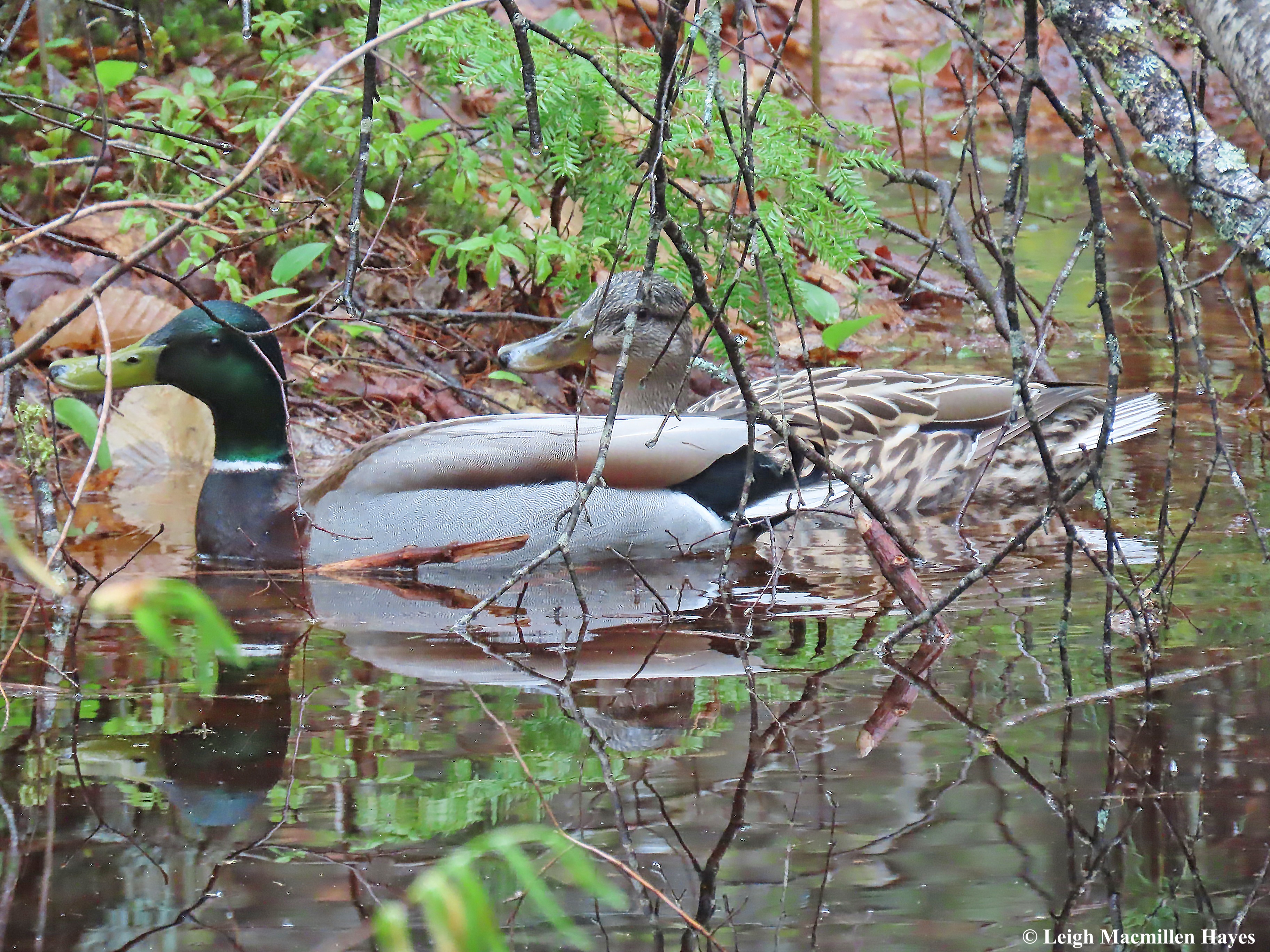
As I walked around the pool, the Mallards swam, and I realized that I’d forced them into the spot where the egg masses had been laid and I wondered how many they’d already eaten.
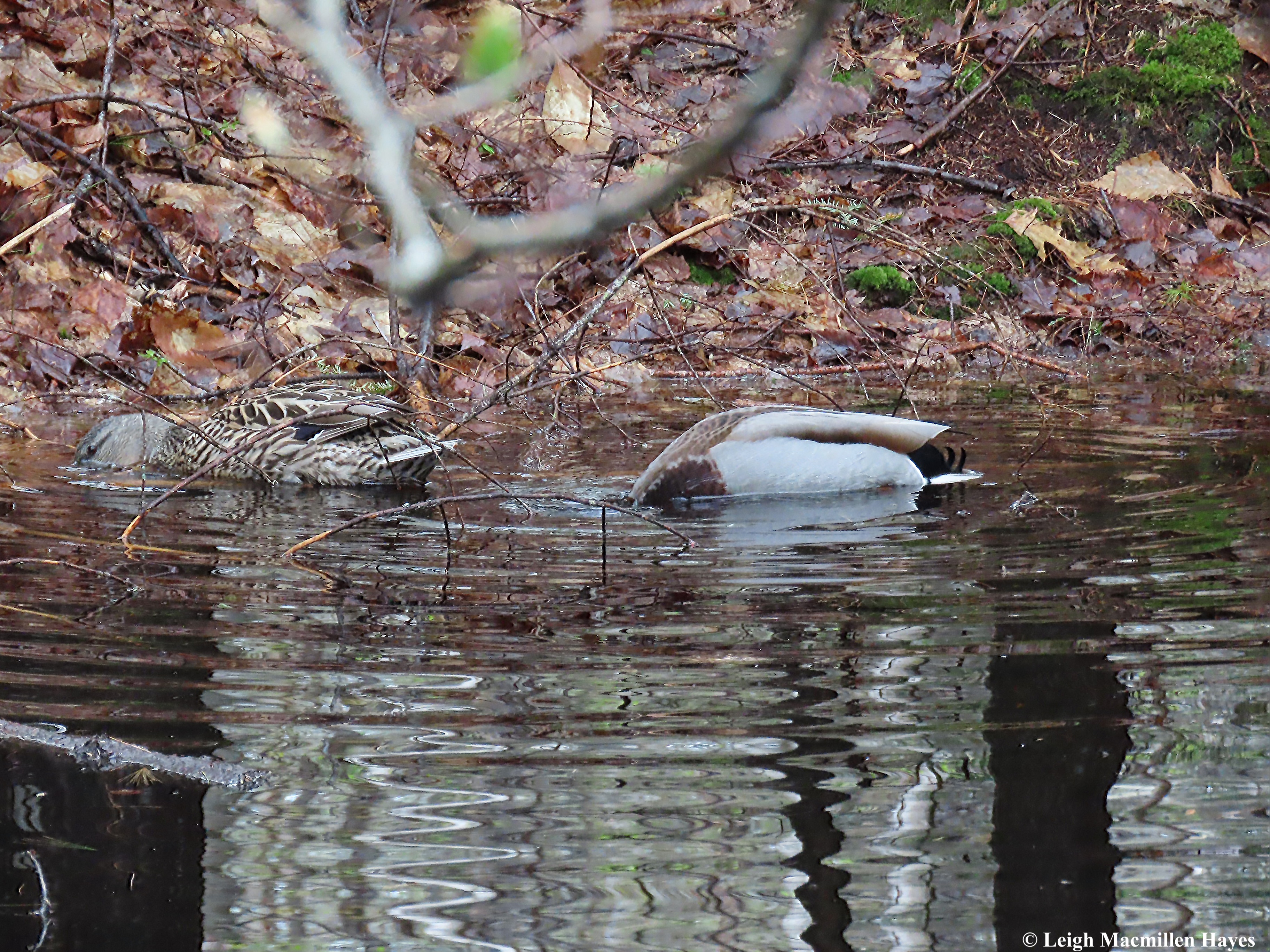
And then . . . they did start foraging. My only hope was that I know tadpoles quickly dart under leaves, so that might protect them. But what else could the ducks be consuming? Aquatic plants are few in this particular pool. Seeds, however, are abundant, so there was that thought. But really, I’m sure they were dining on my buddies as well as macro-invertebrates.

I tried not to think about it. Until I did.

Two years ago, we had rain all spring and summer and this pool, which typically dries out by mid to late June, was full until September, and for the first time in my memory of decades of visits, I witnessed the tadpoles developing hind legs first and then front legs.

Last year, however, due to drought conditions, all dried out in a short time, and if any tadpoles metamorphed, it was quick. And I think this year’s egg masses spoke to that for there were far fewer Wood Frog masses, but over forty Spotted Salamander masses. Perhaps the latter sensed the changing conditions last year and enough were able to develop quickly into adults.

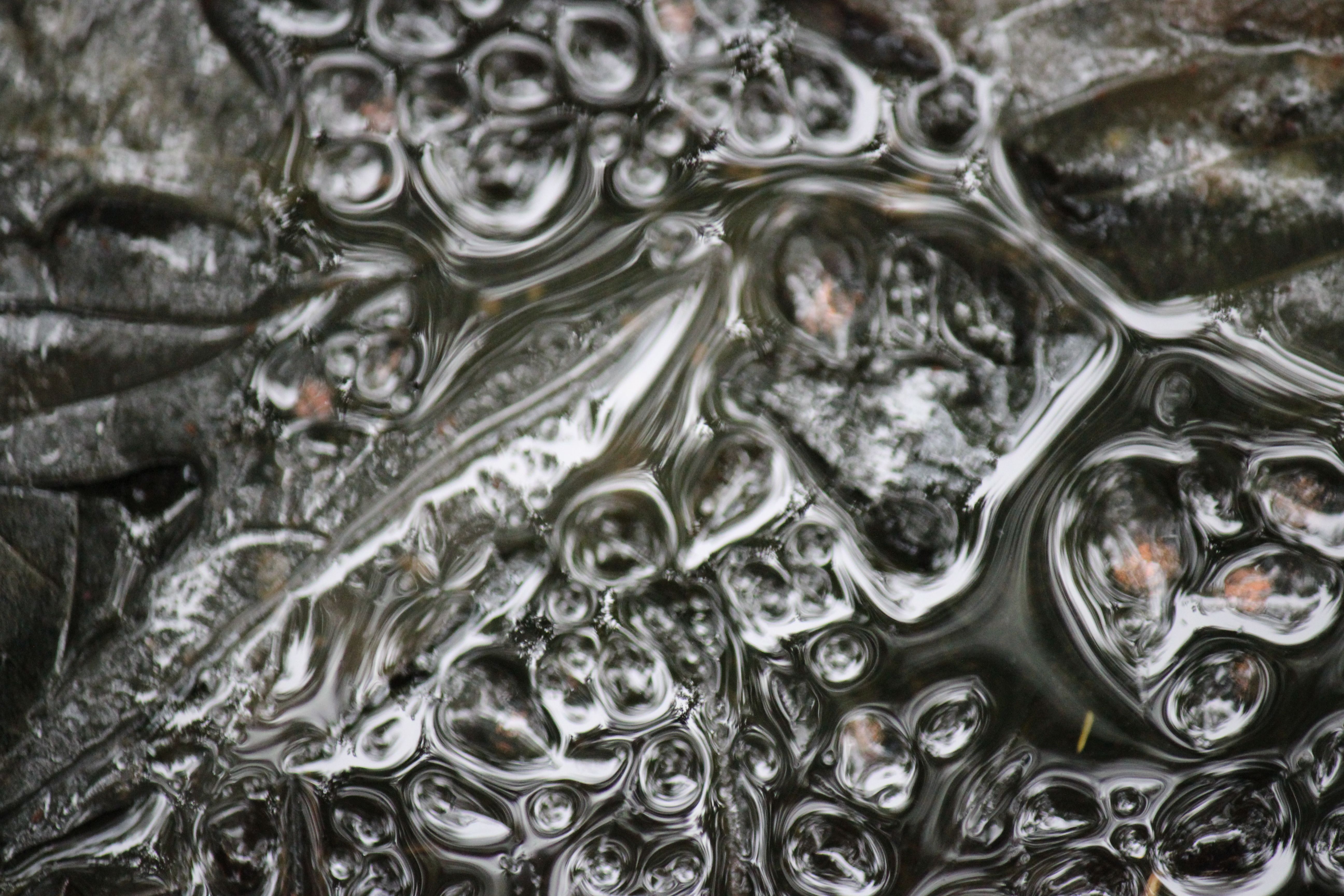
On the way home, I searched the trees in our woods and finally was rewarded with one showing off the suds of a rainy day–when pine salts turn into bubbles at the base of a tree.

The better surprise occurred just up the trunk, where I suddenly keyed in on intense activity, in the form of Crane Flies canoodling and jockeying for a chance to canoodle. They were fervent in their attempts.

Today dawned SUNNY, and after church I headed back out to the pool. At first I didn’t see the ducks, but within moments realized they were still present. And I began to come to terms with their presence because really I love them too. I just don’t want them to eat all my other friends.

While I looked down, a cat-like meow called my attention upward and there I spotted a female Yellow-bellied Sapsucker. And I was drawn back in time to watching Sapsuckers raise families in our yard and on land trust property and I wondered if this female was a momma and if so, where had she hidden her gang?

And then, because of the sunshine, I could peer into the water through my polarized sunglasses and tada, I still had tadpoles. This momma was pleased and proud. So, maybe I could share the space with the Mallards after all–as long as they promised to not eat all of my babies.
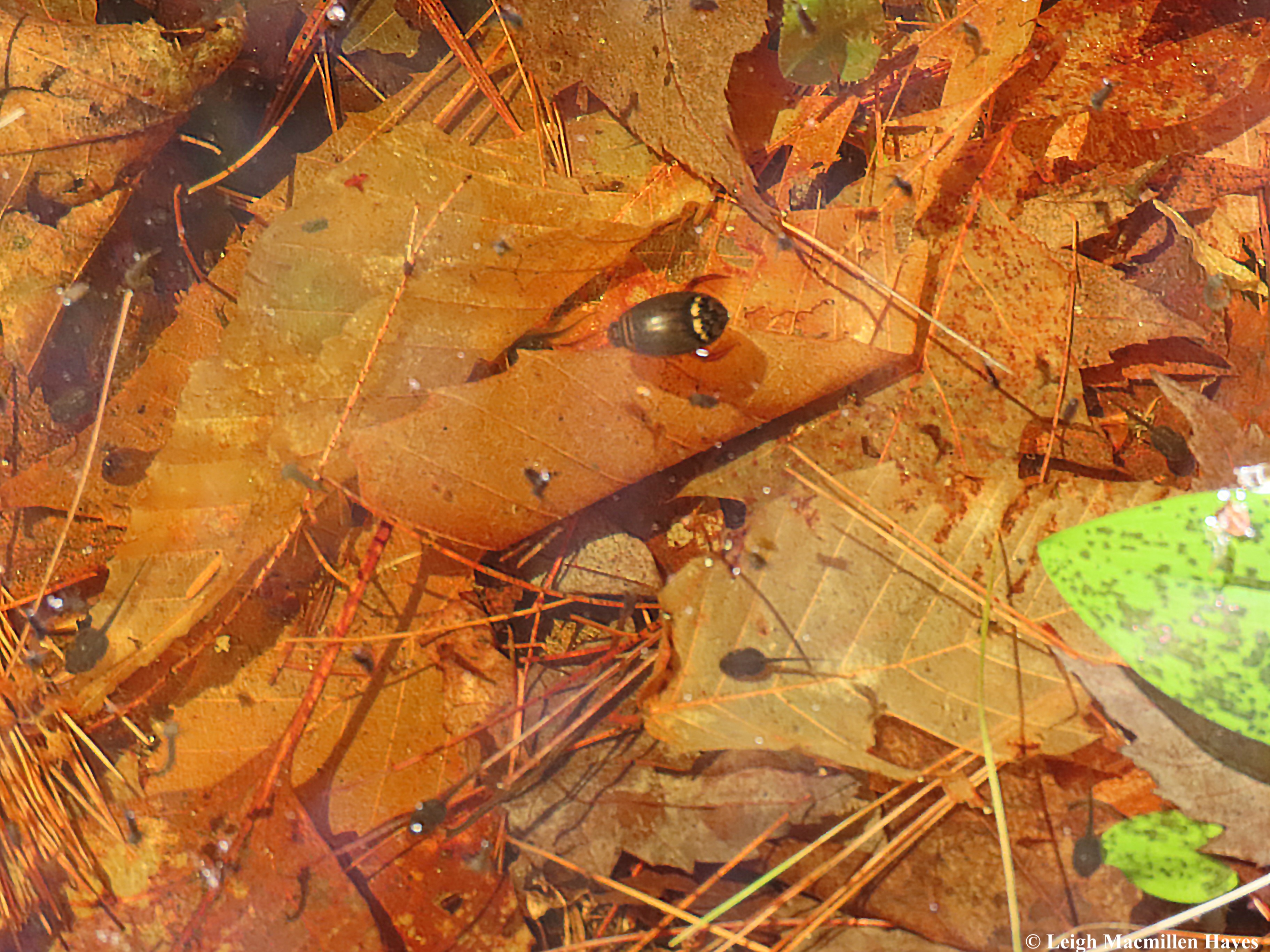
In the mix, I also spotted Predaceous Diving Beetles, and of course, the ubiquitous Mosquito larvae.

As for my ducks, ah yes, I’d now accepted them as mine. Really, they are a handsome couple. My next question for them is this: how long will they remain? That, I know, depends on how long the pool holds water. Which depends on how much precipitation falls from the sky. One thing leads to another, which leads to another, and so life goes on.

Upon a floating log within the pool, more life happened, this time in the Midges trying to canoodle with other Midges as a Crane Fly looked on.

As for the ducks, they again moved under the branches where the egg masses had been, but this time they preened.
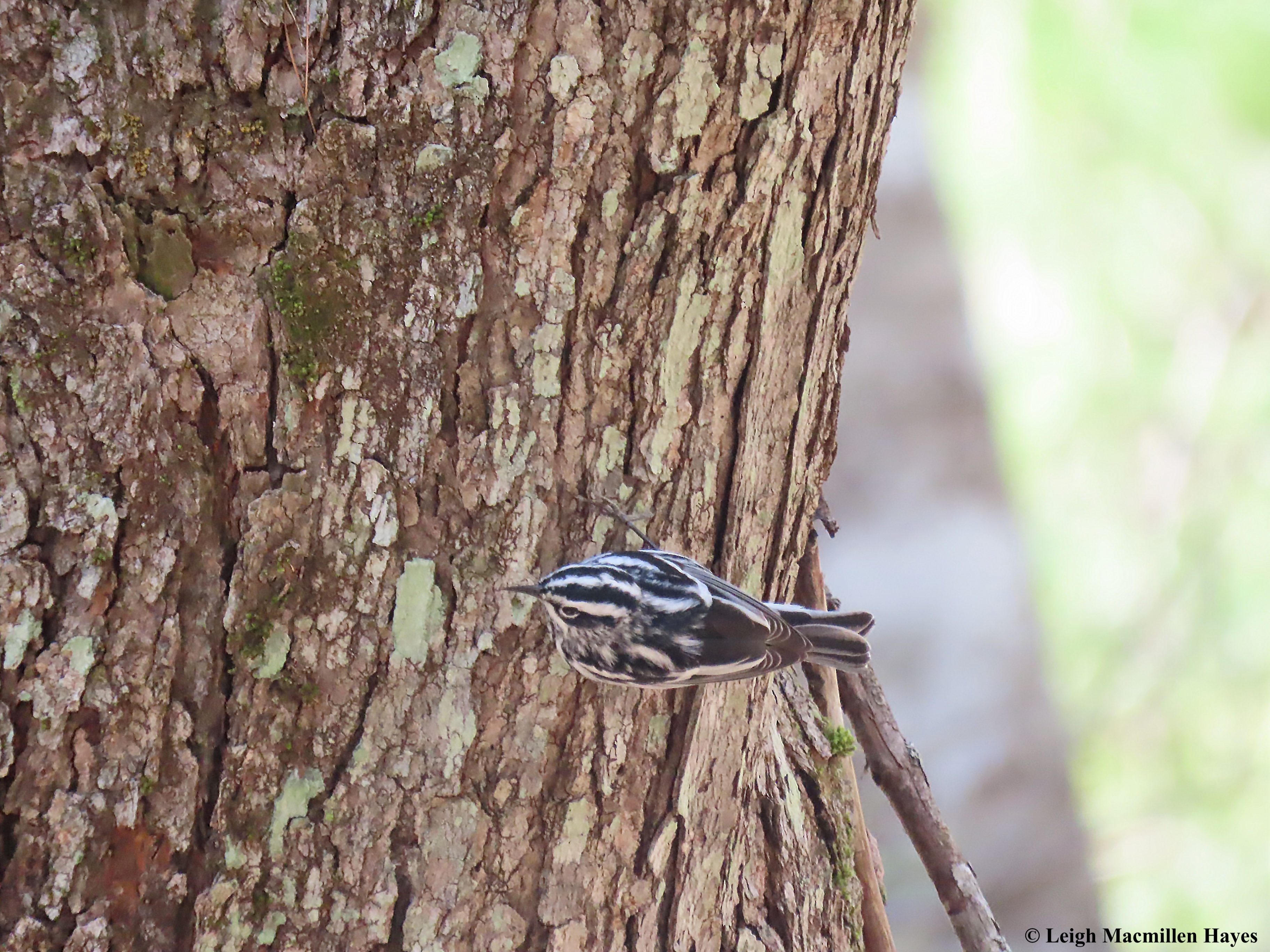
And into the midst of all, in flew a couple of Black and White Warblers, and I felt rewarded once again for being in this place at this time.
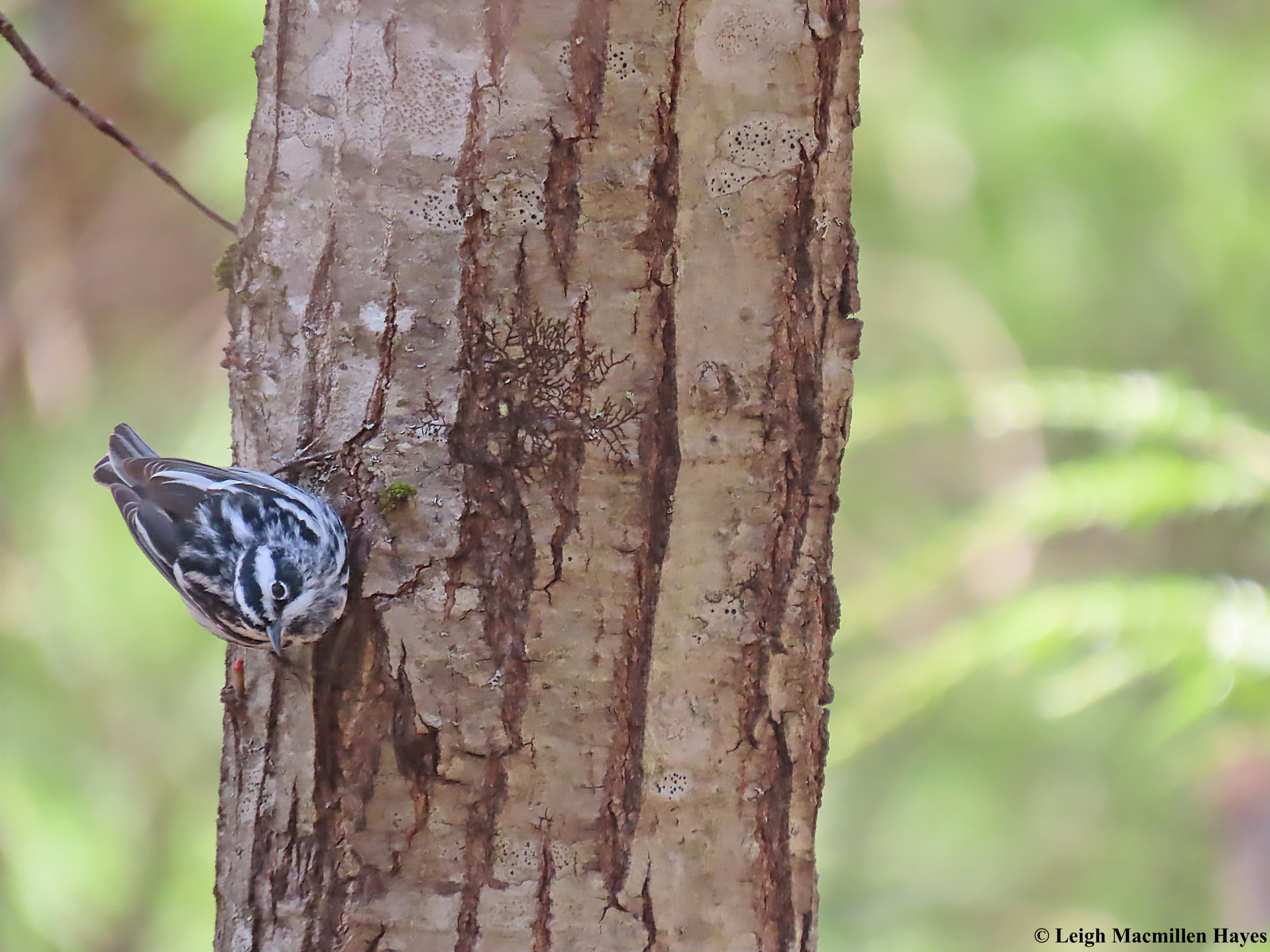
Zebra birds might be another suitable description.
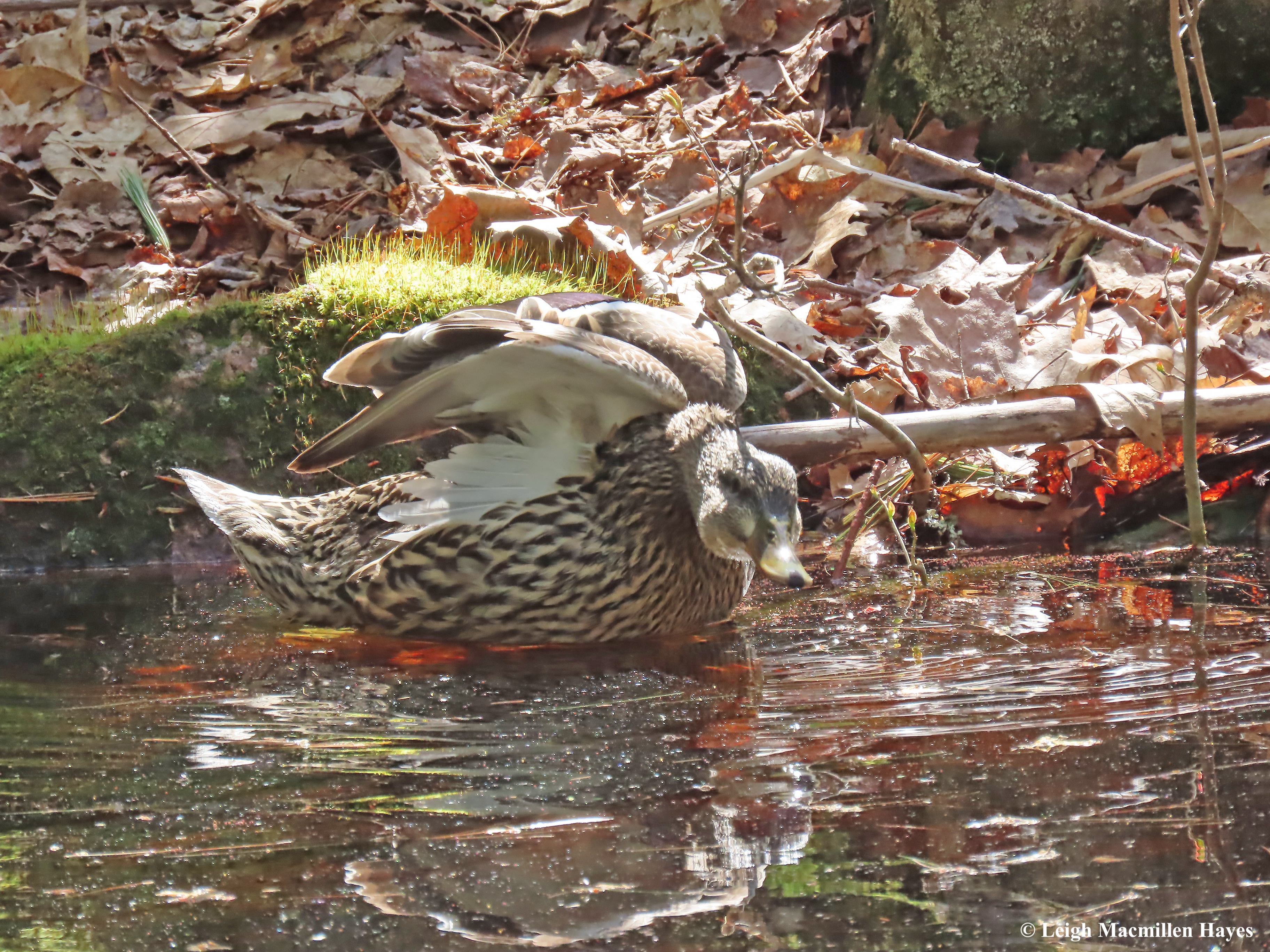
A few minutes later and Mrs. Mallard demanded my attention once again as she took a bath.

And then she climbed upon a rock in the pool, while he circled around for a while, protecting her or so it seemed.

She finally settled and he joined her, pausing to preen.

And then they both took a nap. Apparently my presence wasn’t a concern.

Thank you, Mom, for your visit. It was so awesome to spend some time with you last night. And thank you for making me realize that we don’t have to necessarily be moms to human children, though I do give great thanks for our boys who have been in touch throughout the day even though we couldn’t be together, to be nurturing. To all who guard and watch over human babes, and amphibians, and birds, and insects, including monarchs, and furbabies, and you name it: Happy Mother’s Day. Your efforts are gallant. Your souls are brave. Your hearts are full.

I love it when my parents show up in my dreams, but couldn’t believe my good luck today to wake up after a visit from Mom.

Marching into the Vernal Pool

I’ve lived in Maine for just shy of 40 years and can barely recall the month of March going out like a lamb, as the saying goes.

It’s certainly true that once again this year the ending of the month is more lion-like with an overnight and morning snowstorm, with freezing rain on the horizon for tonight and tomorrow, followed by a warm-up and rain on Monday.

That all said, March snow doesn’t last long.

But still . . . it has me dreaming. Remember, I LOVE winter, but am as ready for spring as the next person.

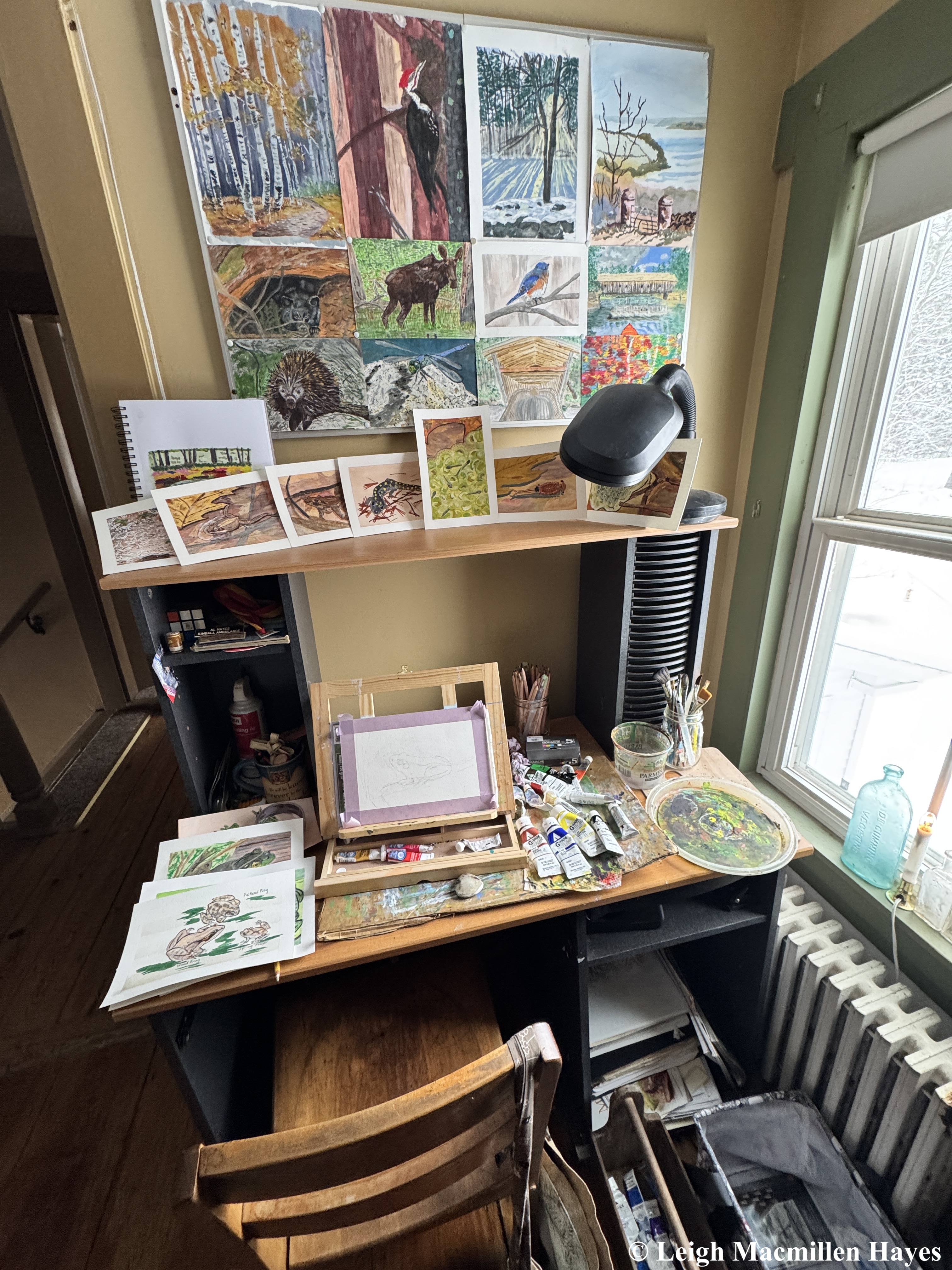
And so I spent much of today (when not shoveling, which really didn’t take long) holed up in my wee studio where I’ve been working on a vernal pool series of paintings.

The idea for this post actually came to me in a dream last night–why not turn those paintings into a blog post. Why not?

Because, it’s scary to share creative works with the world. But, I am probably my own worst critic. My instructor, Jessie, always reminds me to put my inner critic into a box, place the cover on top, and get to work. And besides, by sharing here, I can hide behind the screen. She wants those of us in her class to host an art show, but I refuse to do that. It’s much more comfortable for me this way.

I’ve only been painting since last May, but let’s not let that be an excuse. The thing is, working with gouache paints means I can easily edit, much like writing. And believe me, I have. My motto has always been that there’s no such thing as a final draft–whether it be an article for a magazine or a work of art.

Have you noticed that I’m procrastinating? And putting all of my excuses out there.

It’s snowing again.

All right, I’m almost ready. But here’s the other thing–in sharing these with you, may you be inspired to do something you never imagined and discover that the time you spend doing such is most enjoyable and it’s easy to get “lost” and just plain have fun and decide that even though the “end product” isn’t exactly what you first set out to create, it’s still half decent and you had the most delightful time sitting quietly as is my custom, doing just that: creating.

And now . . . for a look back as a way to look forward to a vernal pool as it emerges from winter or early spring, or mud season, or almost spring but still winter, or whatever season this is.

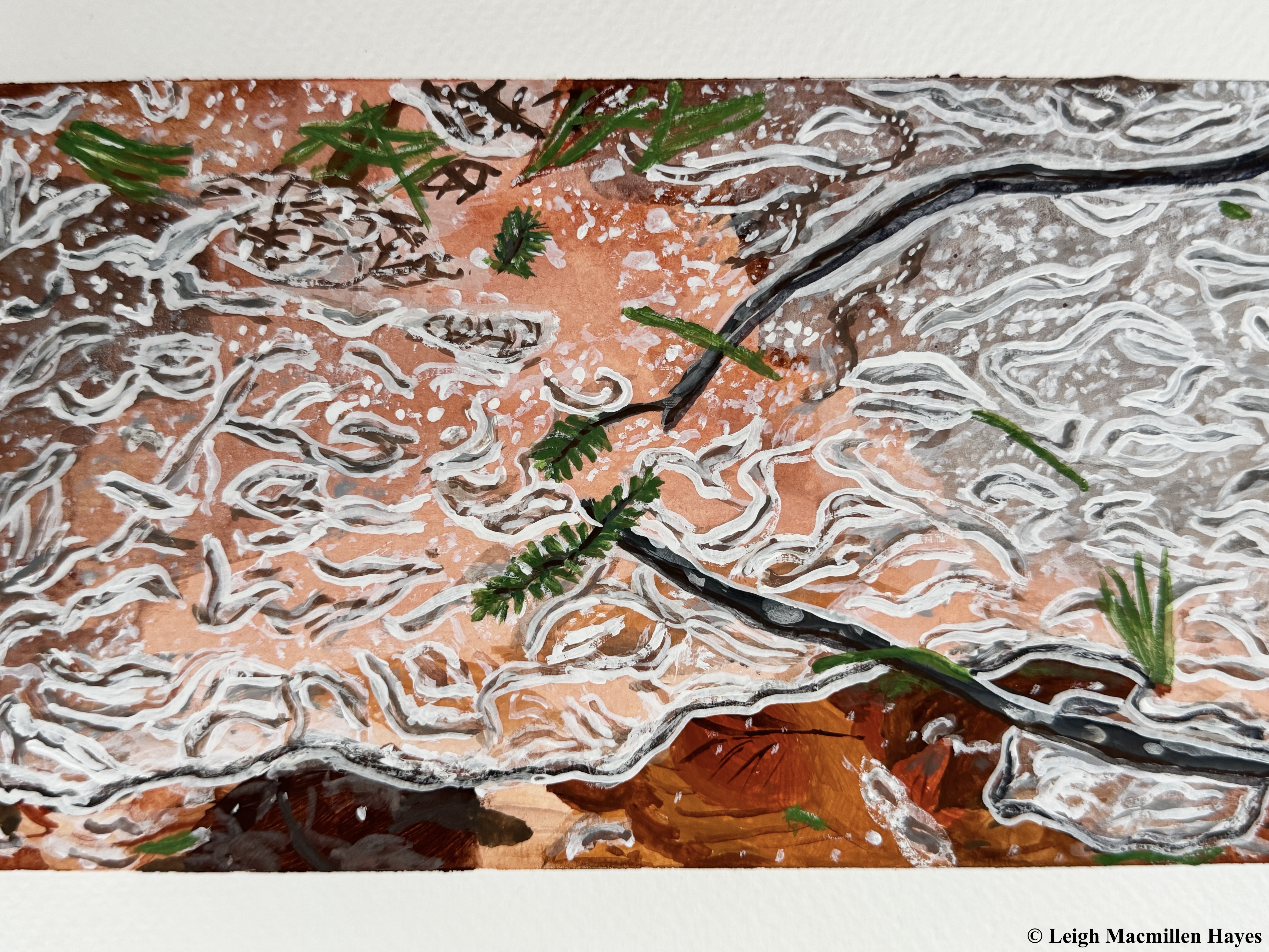
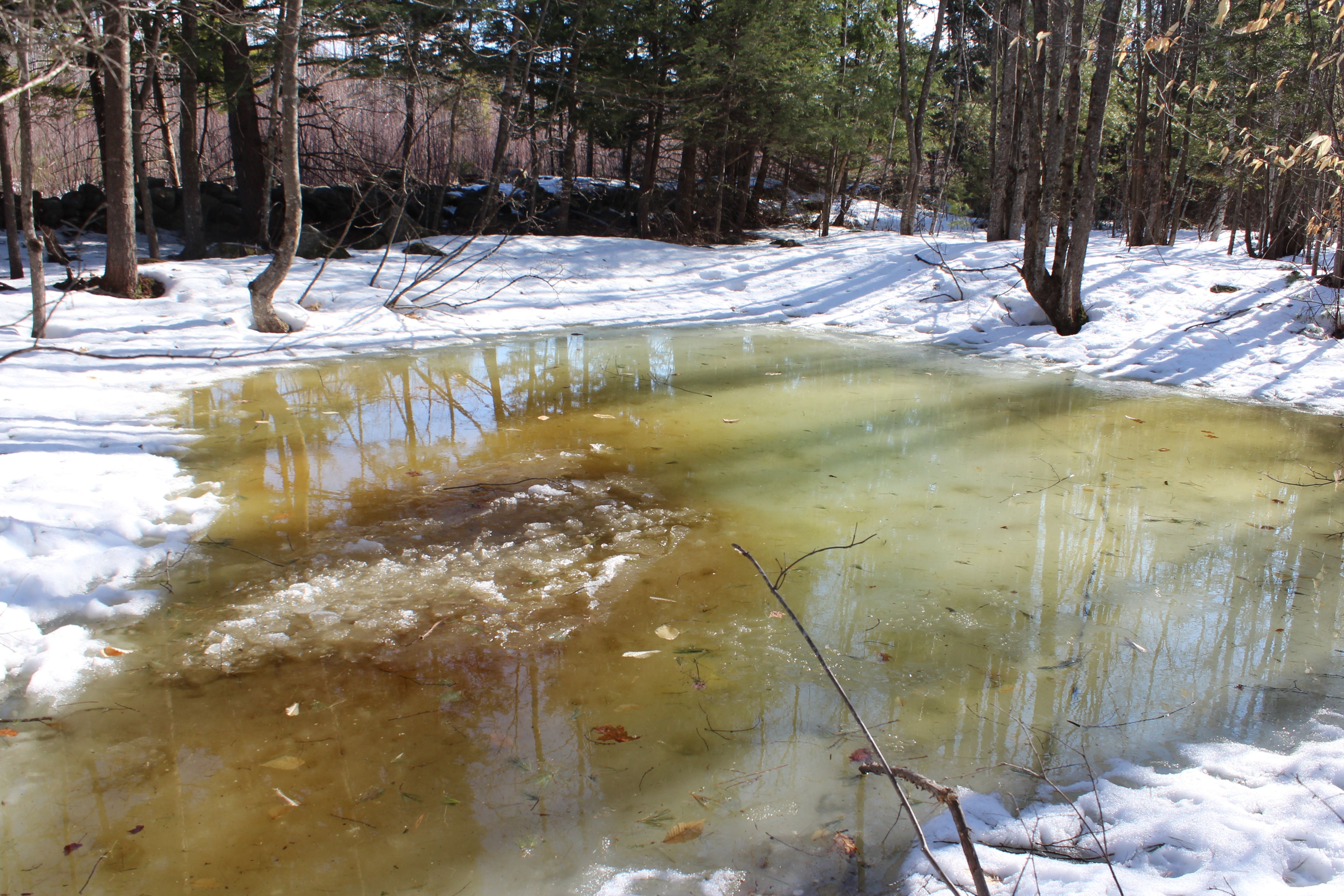
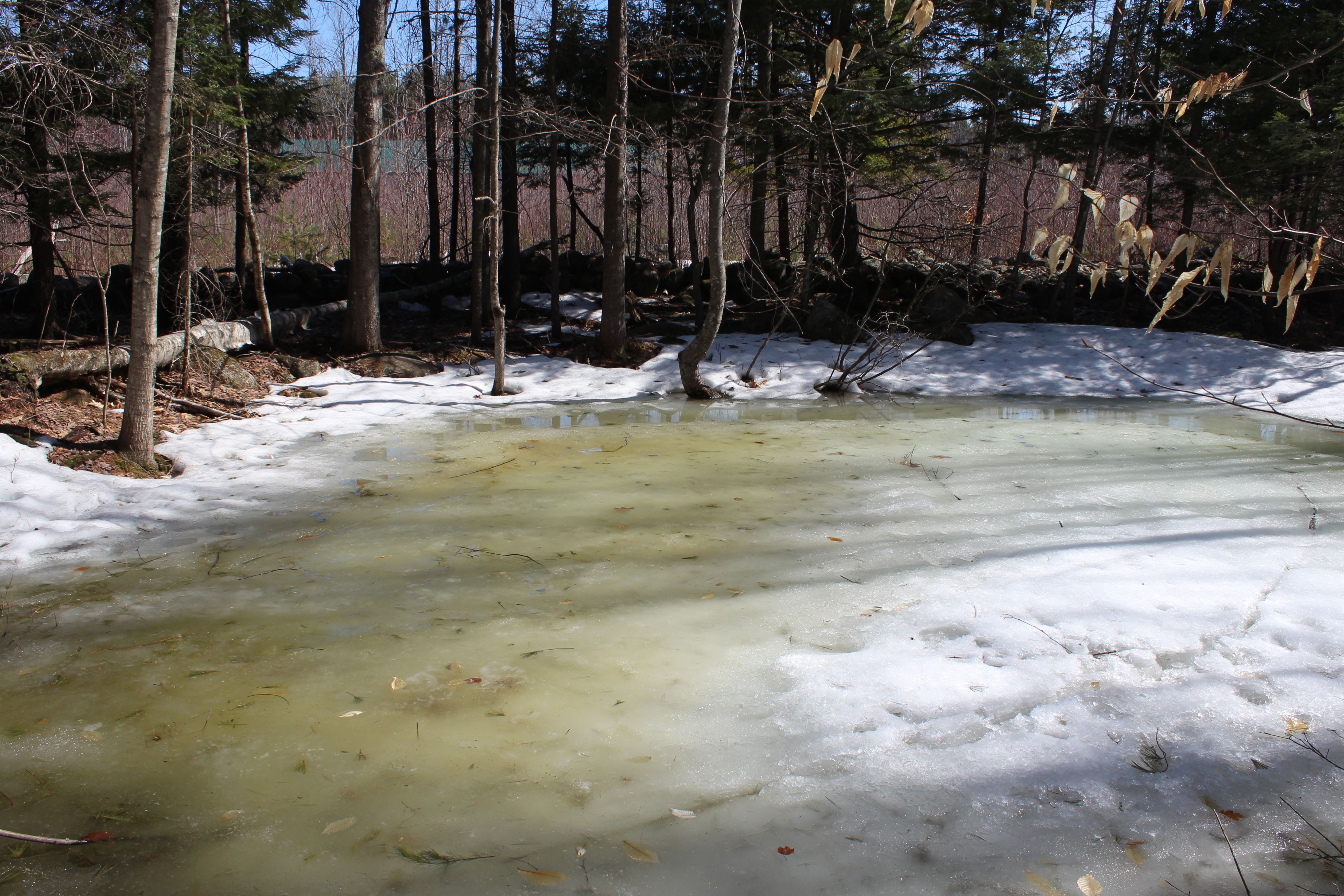
Pine and hemlock needles and branches from winter storms coat the ice as it slowly begins to melt along the edge of the pool, providing a glimpse of the sunken leaves below, where life awaits.

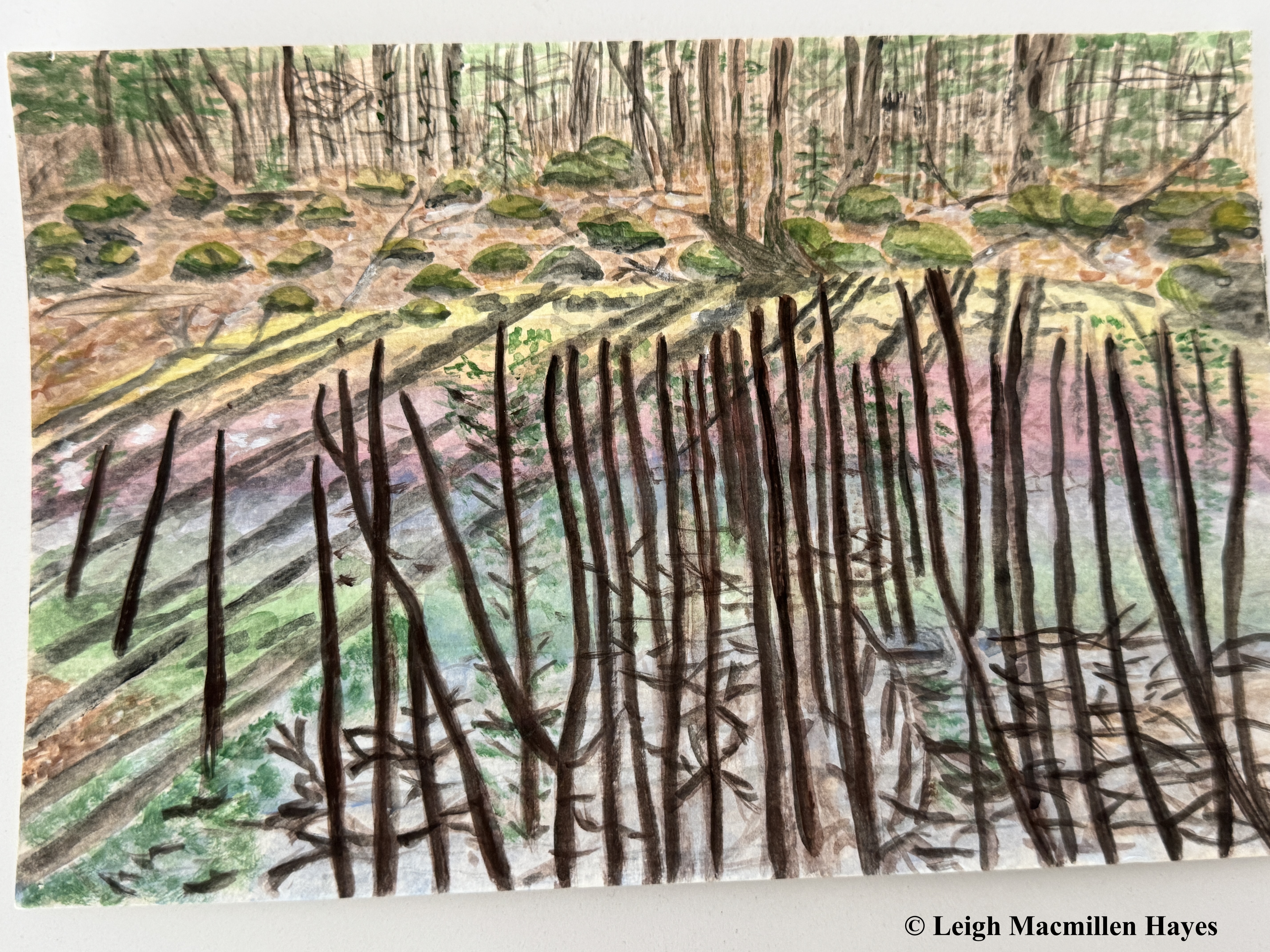
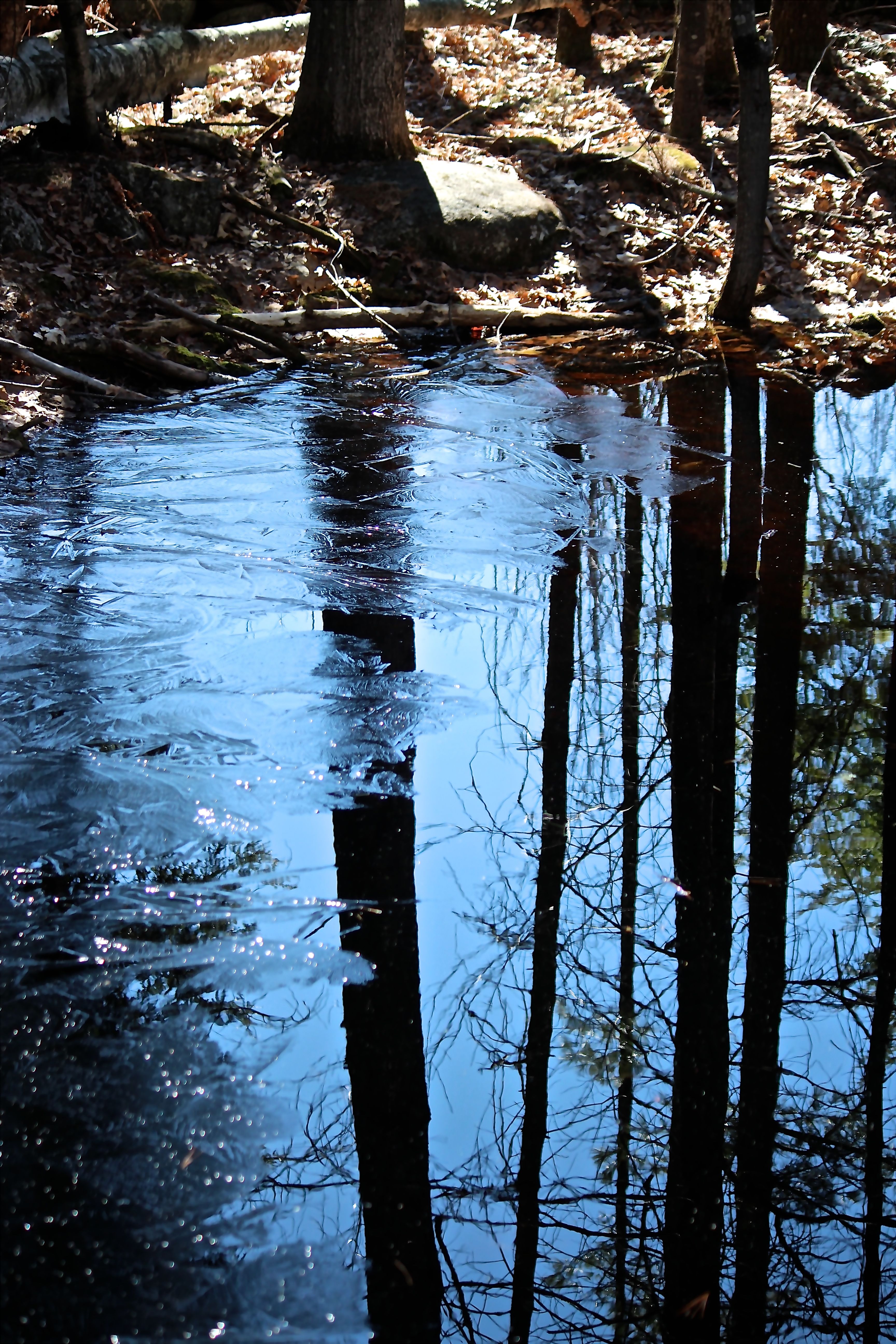
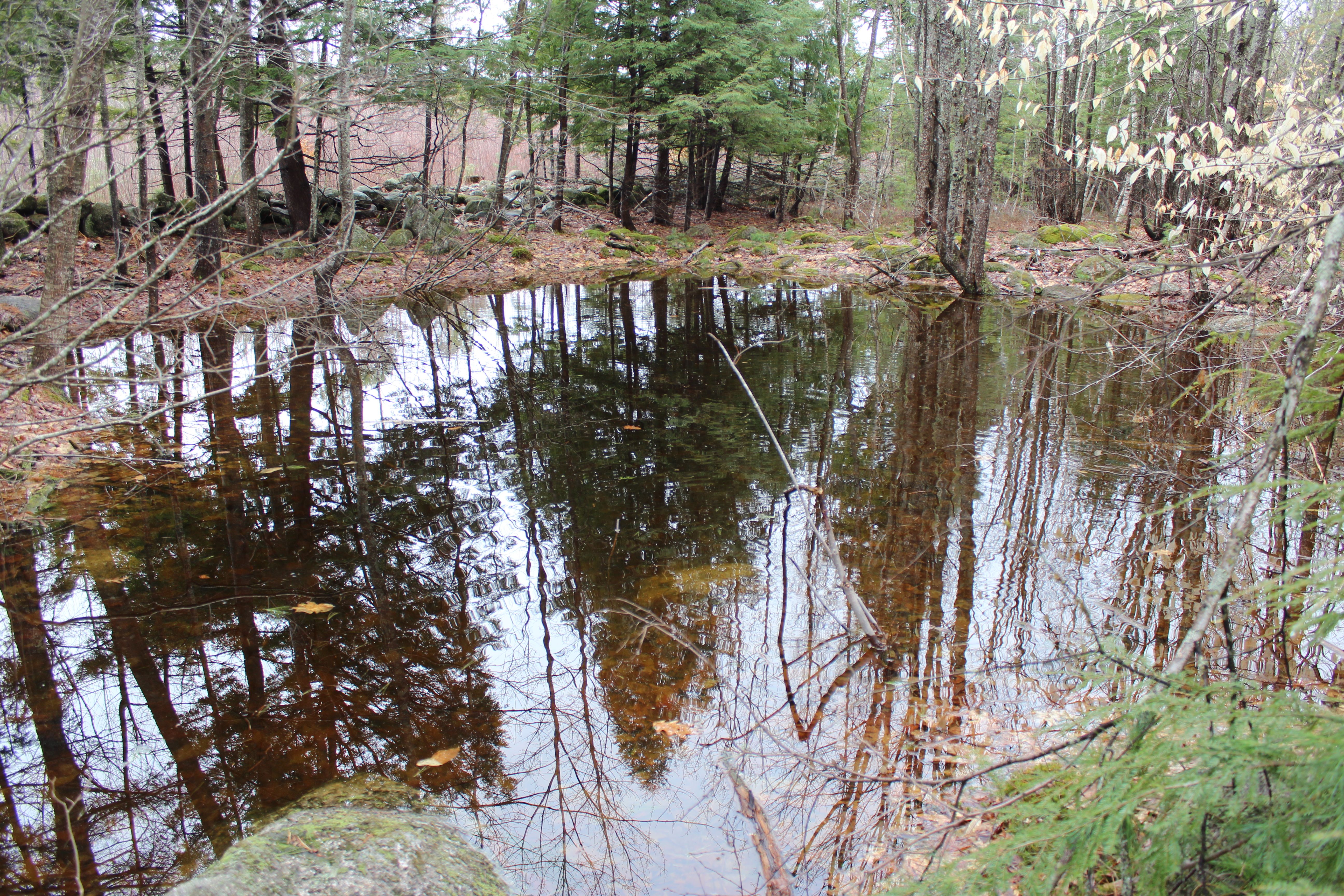
Once the ice finally melts, barren trees offer a reflection that speaks to winter, but there’s hope in their buds.

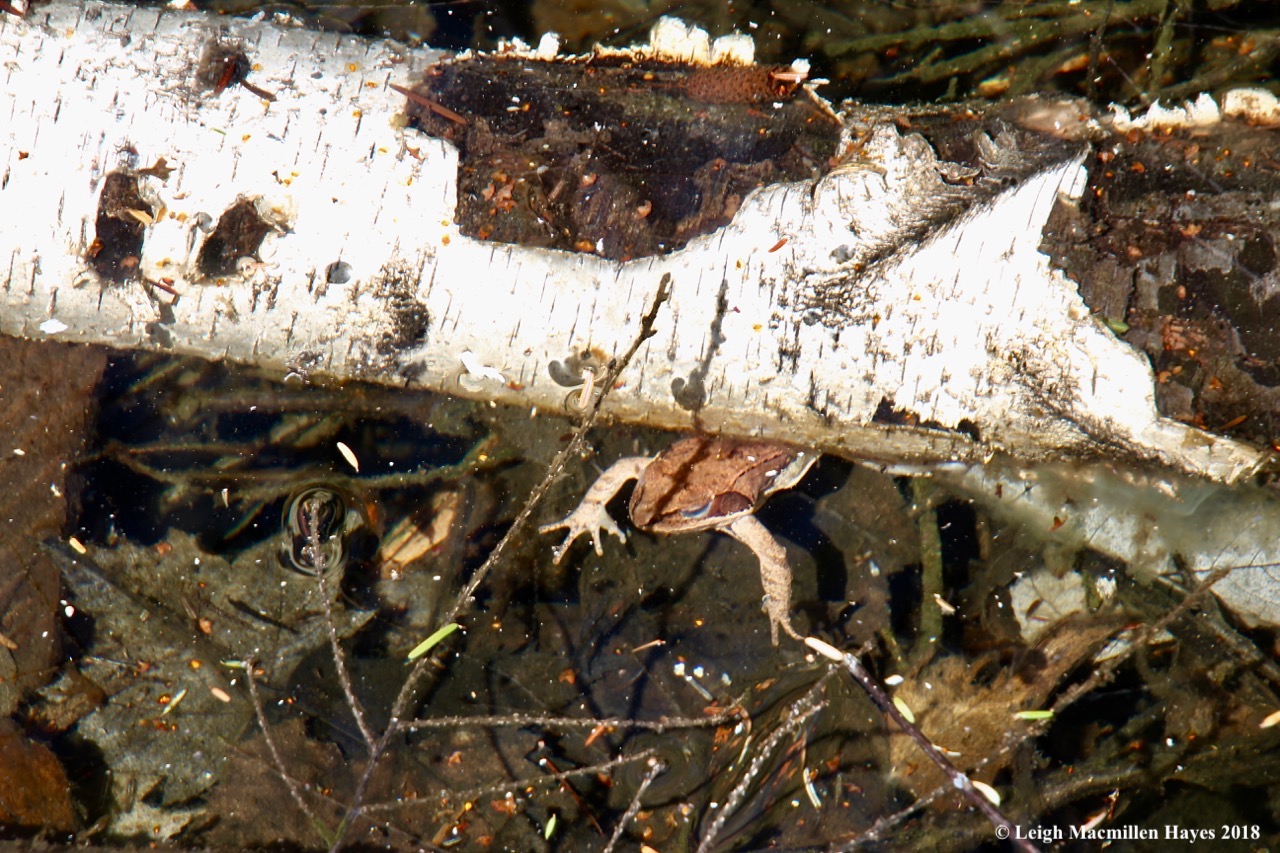
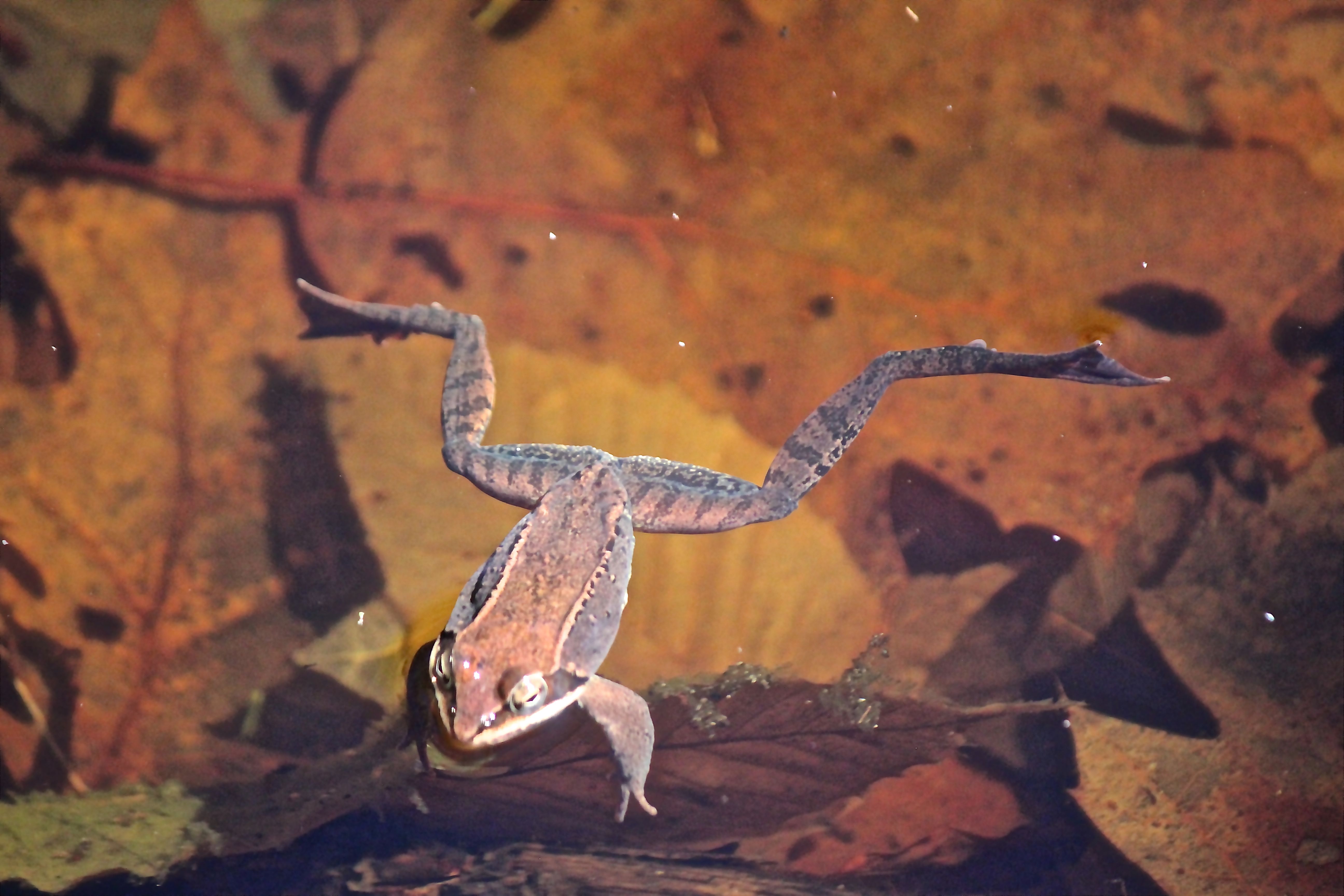
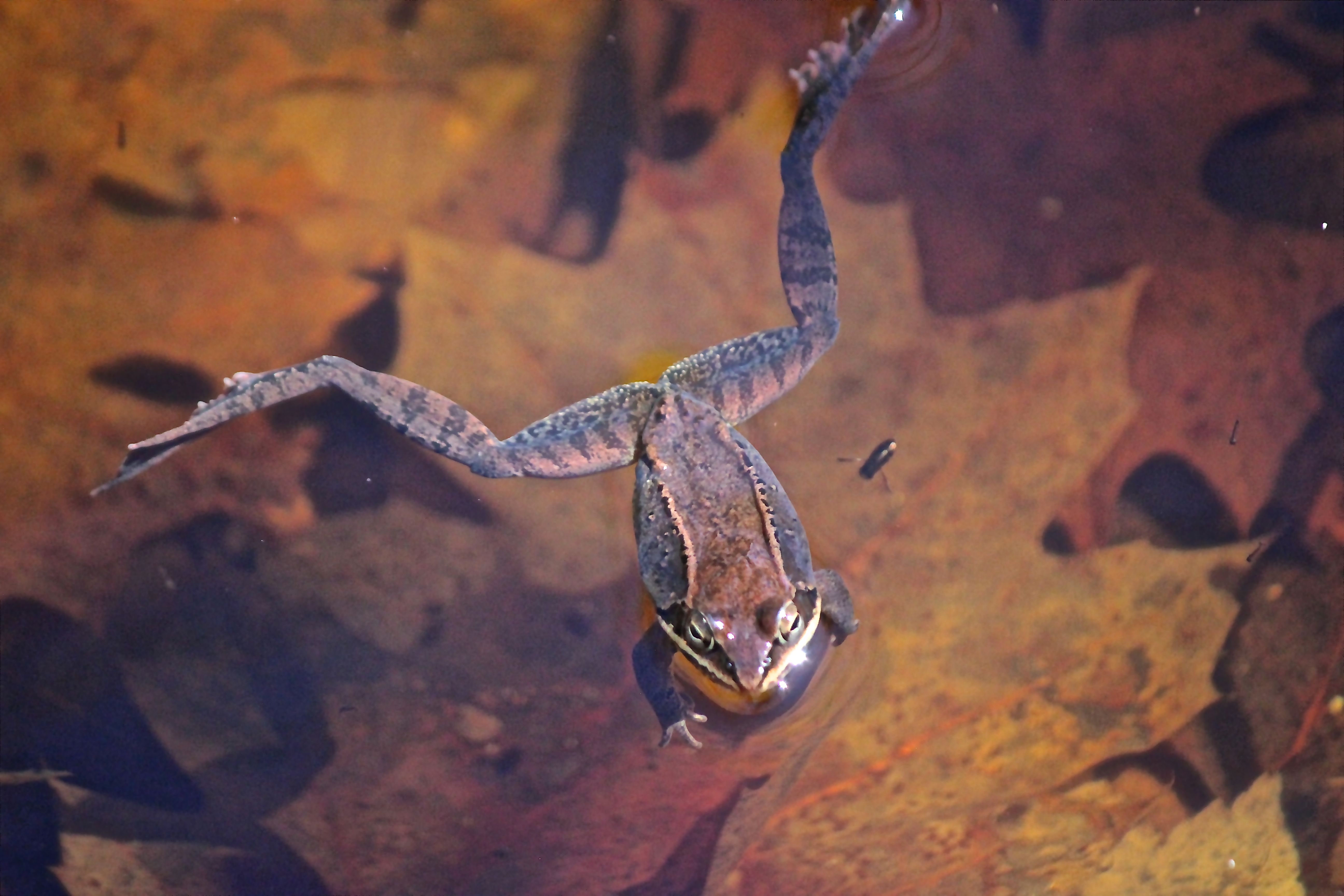
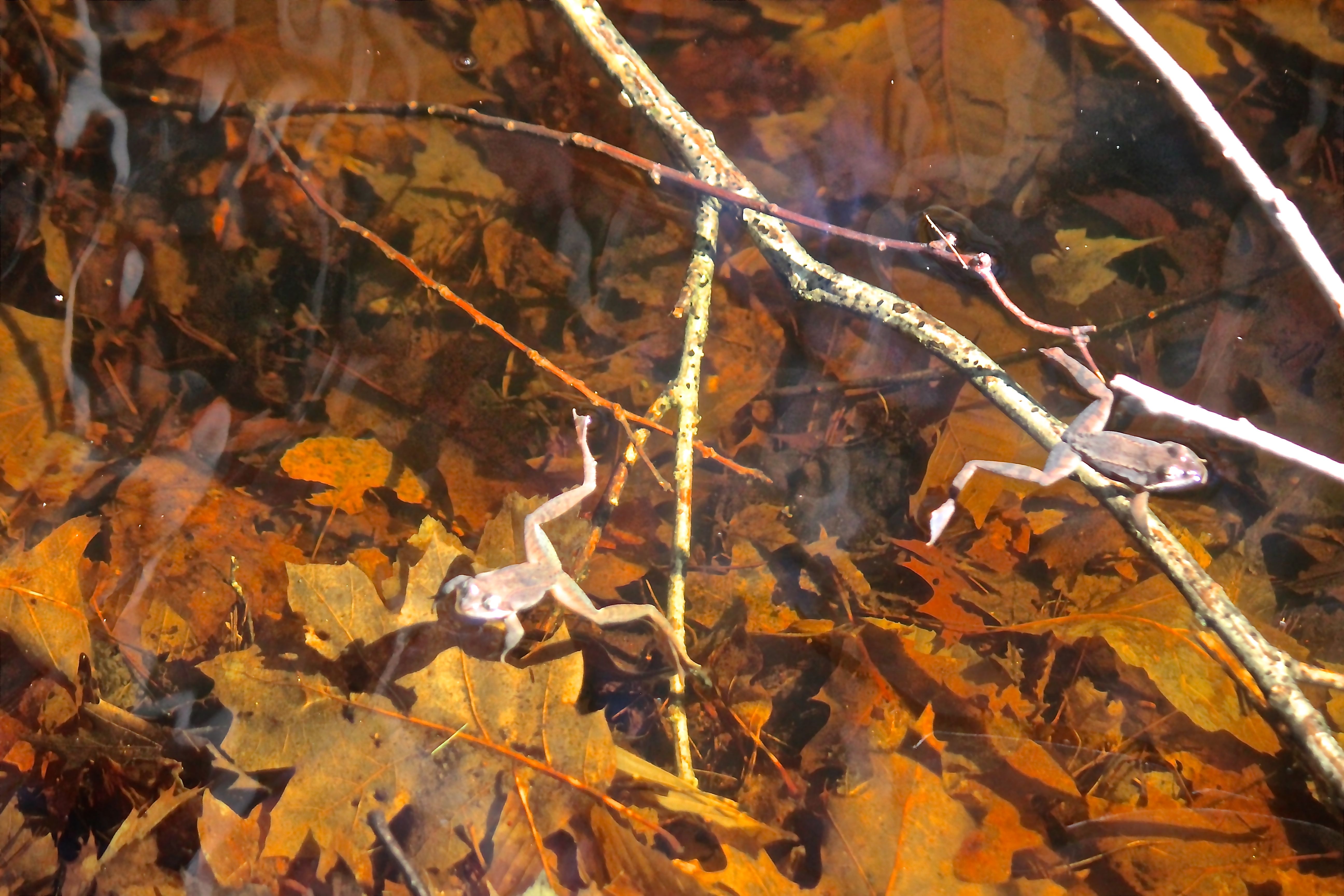
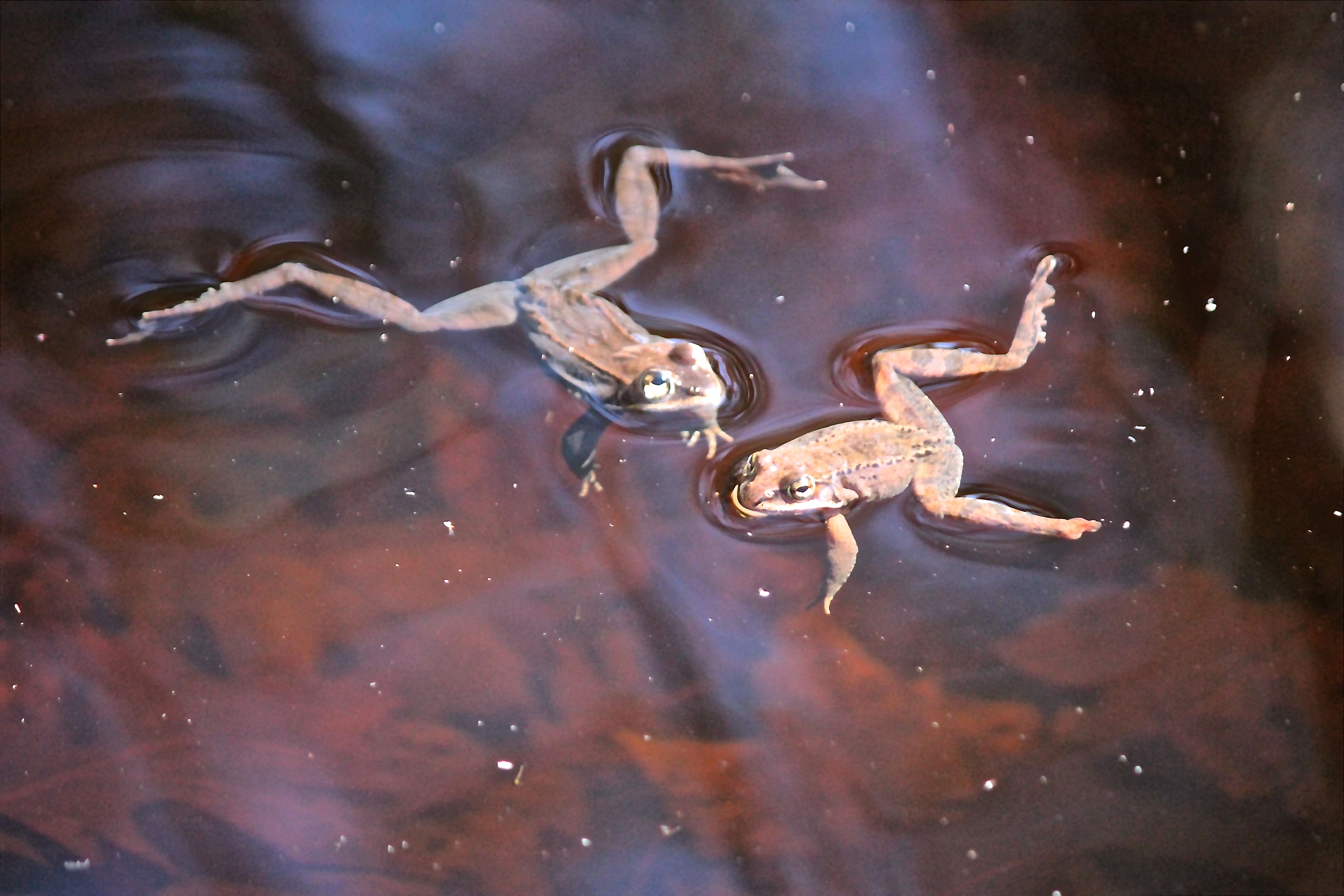
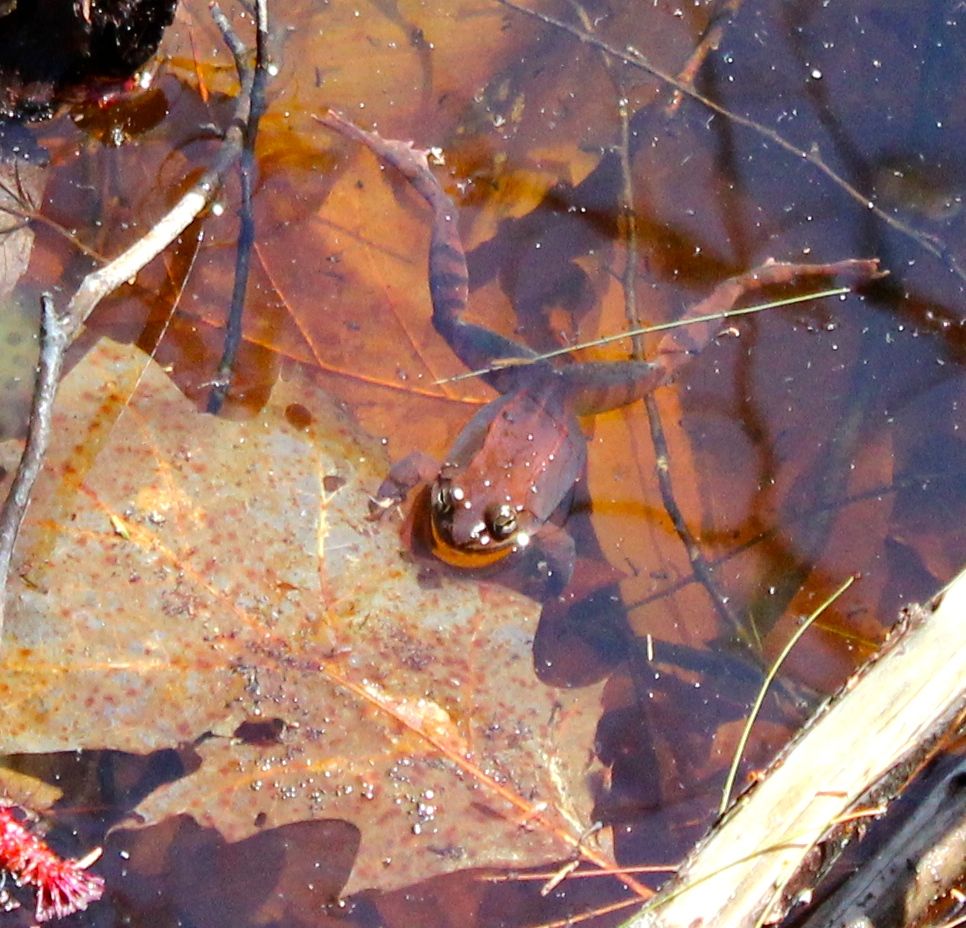
And no sooner has the ice gone out, when upon my approach I hear “Wruck, wruck,” and know that the Wood Frogs have returned to their natal breeding grounds. At first, they dive as soon as they hear me approach. But I stand still, sometimes for up to fifteen minutes, and ever so slowly, one by one, they rise to the surface and float.

It’s the lucky male who has the best “Wruck, wruck,” that finds a mate. He clasps her with his forelegs and as she begins to deposit eggs, he fertilizes them externally.

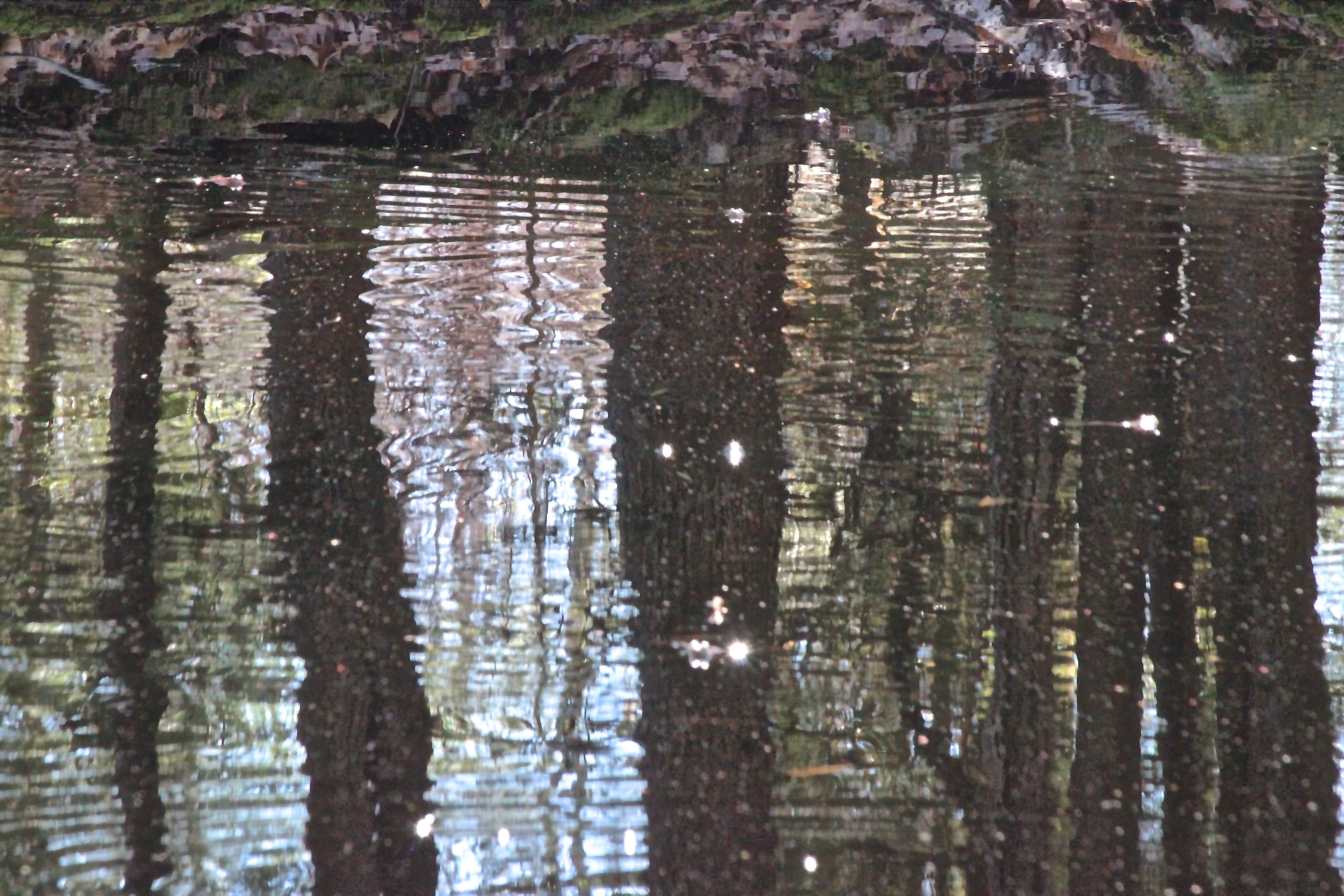
I return a couple of days later, in the late afternoon, and can’t believe my good luck. The pool is coated in pollen and the sun hits it in such a way that I see a rainbow of colors and love how the tree reflections are in two orientations upon still water.

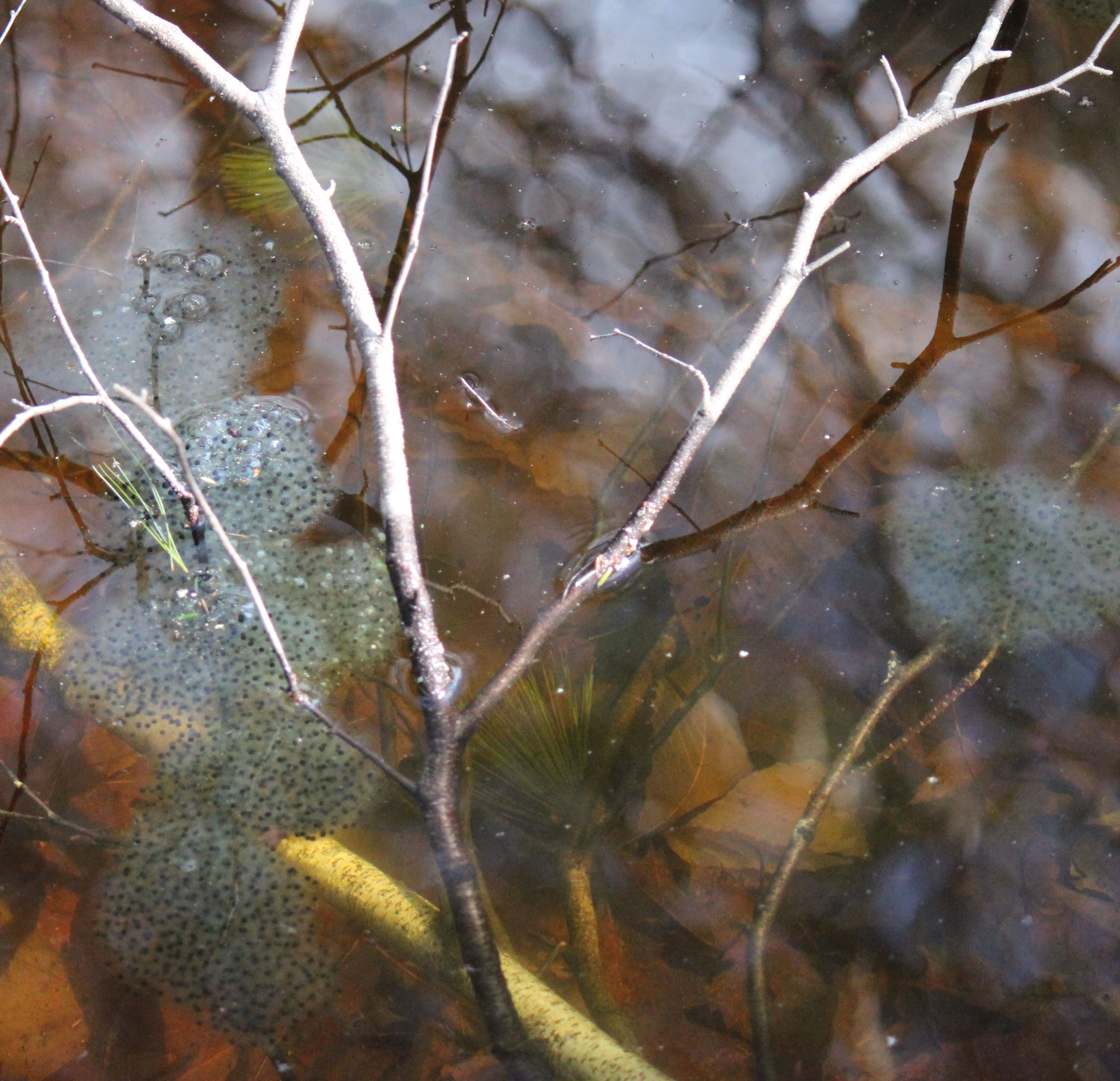
A few weeks later, looking deep into the pool, which isn’t really all that deep, I notice blobs of eggs clustered together in a mass that has a tapioca-like shape to it and notice little life forms moving about in the shape of tadpoles. I feel like a proud momma. The thing is, the Wood Frogs mate, she lays eggs he’s fertilized and within two weeks, the parents are long gone, back to their woodland setting. And so I do feel protective parent–or maybe foster parent–keeping watch and celebrating achievements.

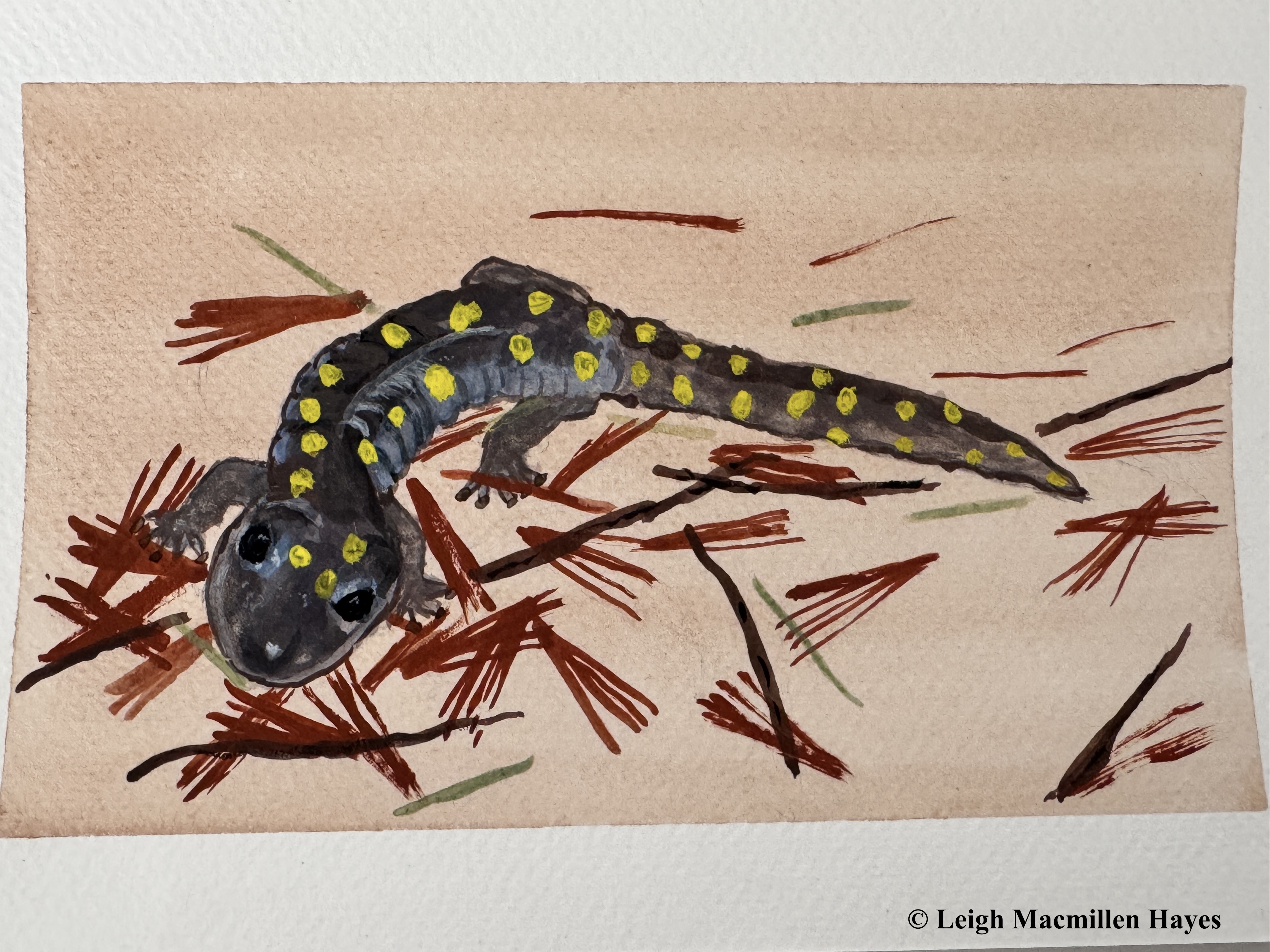
Another life form who uses the pool as a natal breeding spot is the spotted salamander and though I tend to mostly spy them on Big Night, I can tell by egg masses left behind that they have visited.

Their egg masses are a wee bit different from the Wood Frog masses, in that they have a gelatinous coating around the entire grouping, so they don’t look so tapioca-like. Mosquito larvae, tumblers at this stage, also wiggle about in the water.

And if I’m lucky, though this has never happened at the pool behind our house, I might see a fairy shrimp or dozens.

So here’s the thing: 40 Wood Frog egg masses make a pool significant; OR 20 Spotted Salamander egg masses; OR 10 Blue Spotted or Jefferson Salamander egg masses; OR a single, yes one, Fairy Shrimp. And this one is a female, as noted by the sac of dark eggs she carries.

Fairy Shrimp are cool because in order for eggs to be viable, the pool must dry out. And they can survive being dry for multiple years. And in any given year, not all eggs will hatch, thus saving some in the bank for another year or ten.

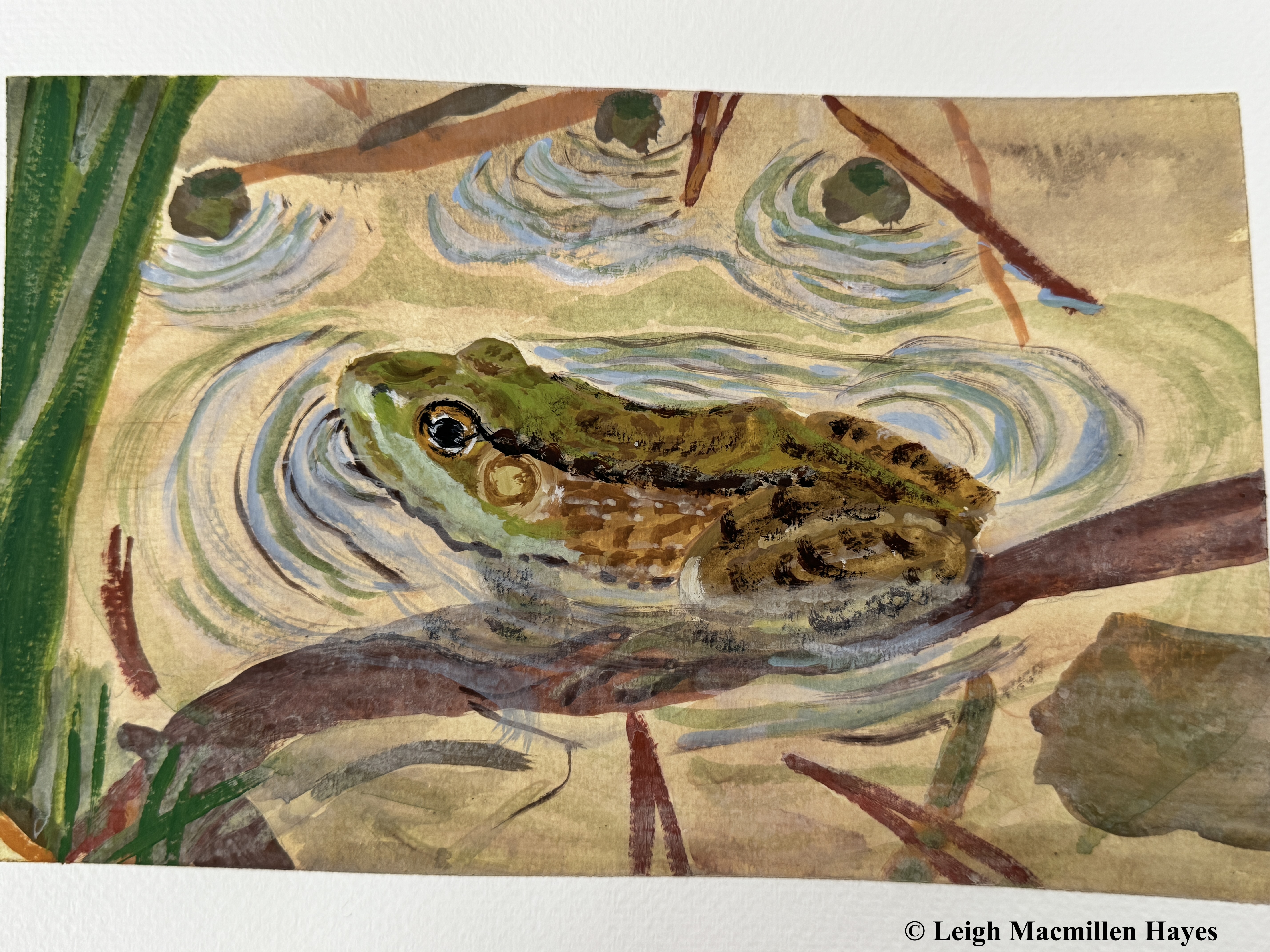
Hanging out by the pool, Green Frogs are always willing to dine on whatever is available. So the Green Frog has dorsal lateral folds (or bumps) along either side of its back that start behind the eyes.

The Bullfrog differs in that the line behind the eye circles around the tympanum (ear drum) and ends.

Here’s the other thing to remember: Males have tympanums larger than their eyes; females are smaller or equal to eye size.

And I like to think of this painting as a Frog-ersation.

This week I actually framed two paintings to send to friends, the Bullfrog being one of them.

There. I did it. Survived the art show.

As I bring this to a close, I realize there’s one more painting I should add to the collection, but I’ll save it to paint another day.

Thank you for marching into the vernal pool with me. I hope you are glad you did.

My Reawakening

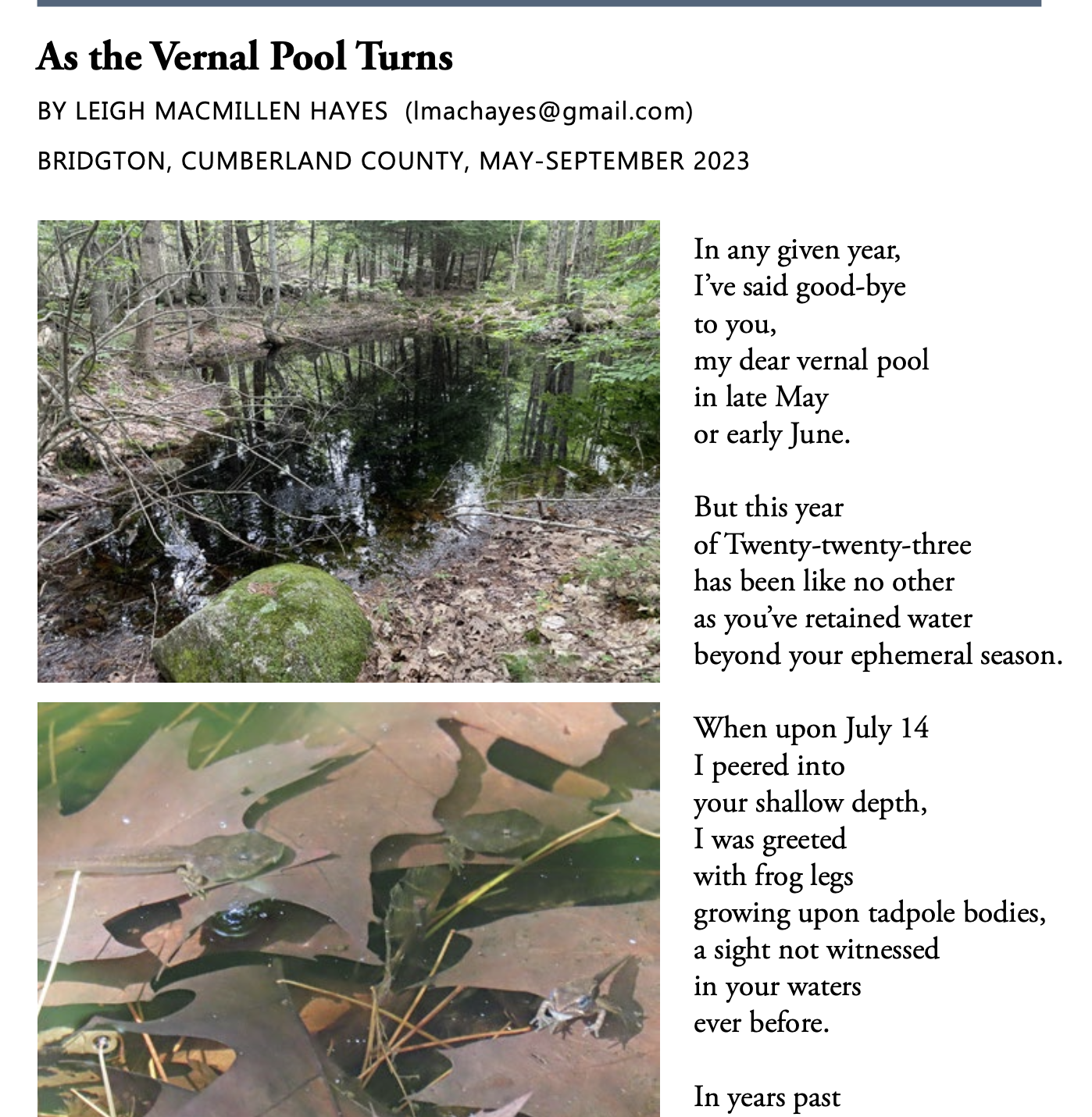
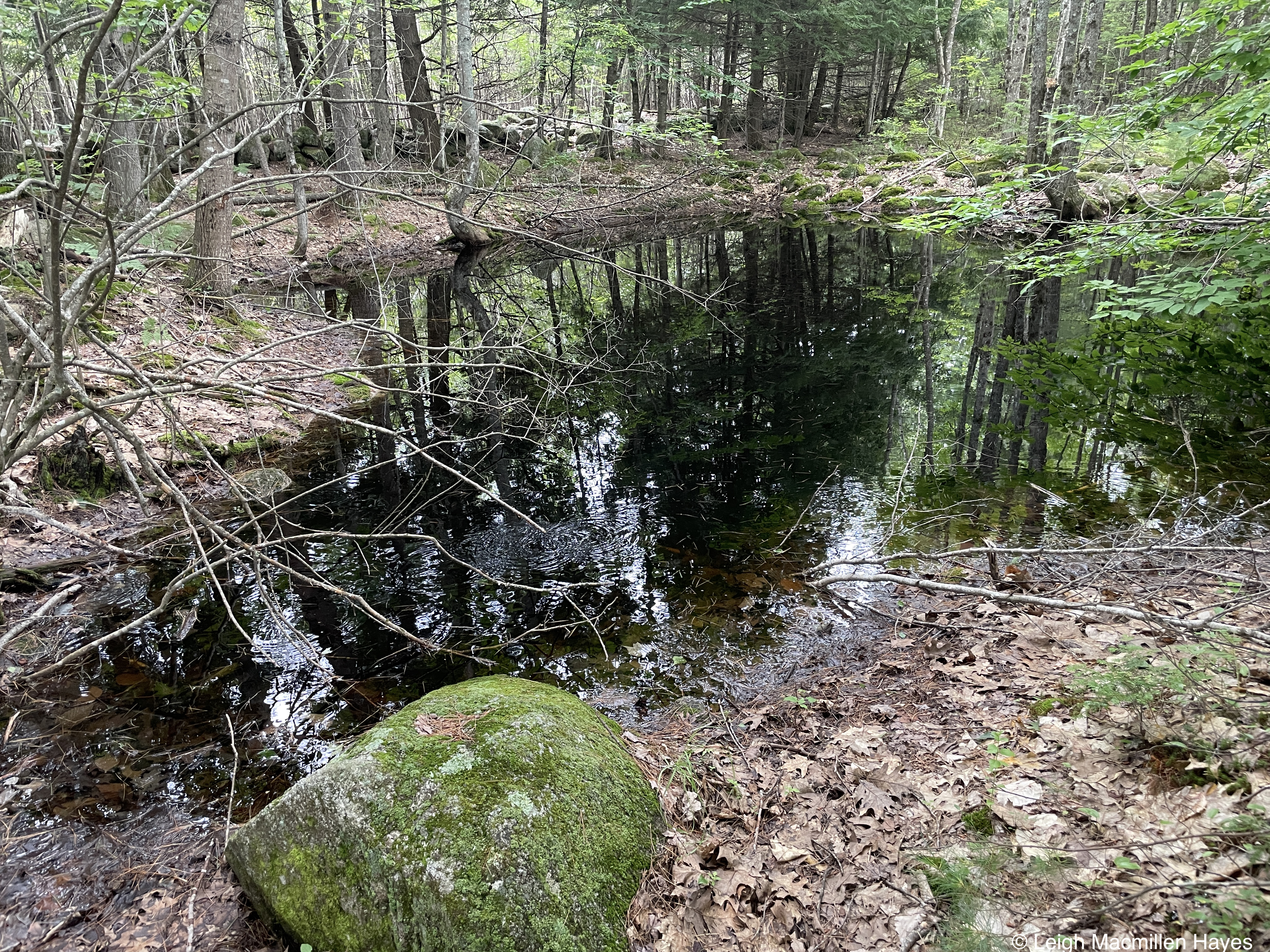
In any given year, 
I've said good-bye
to you, 
my dear vernal pool 
in late May 
or early June. 
But this year 
of Twenty-twenty-three
has been like no other
as you've retained water
beyond your ephemeral season.
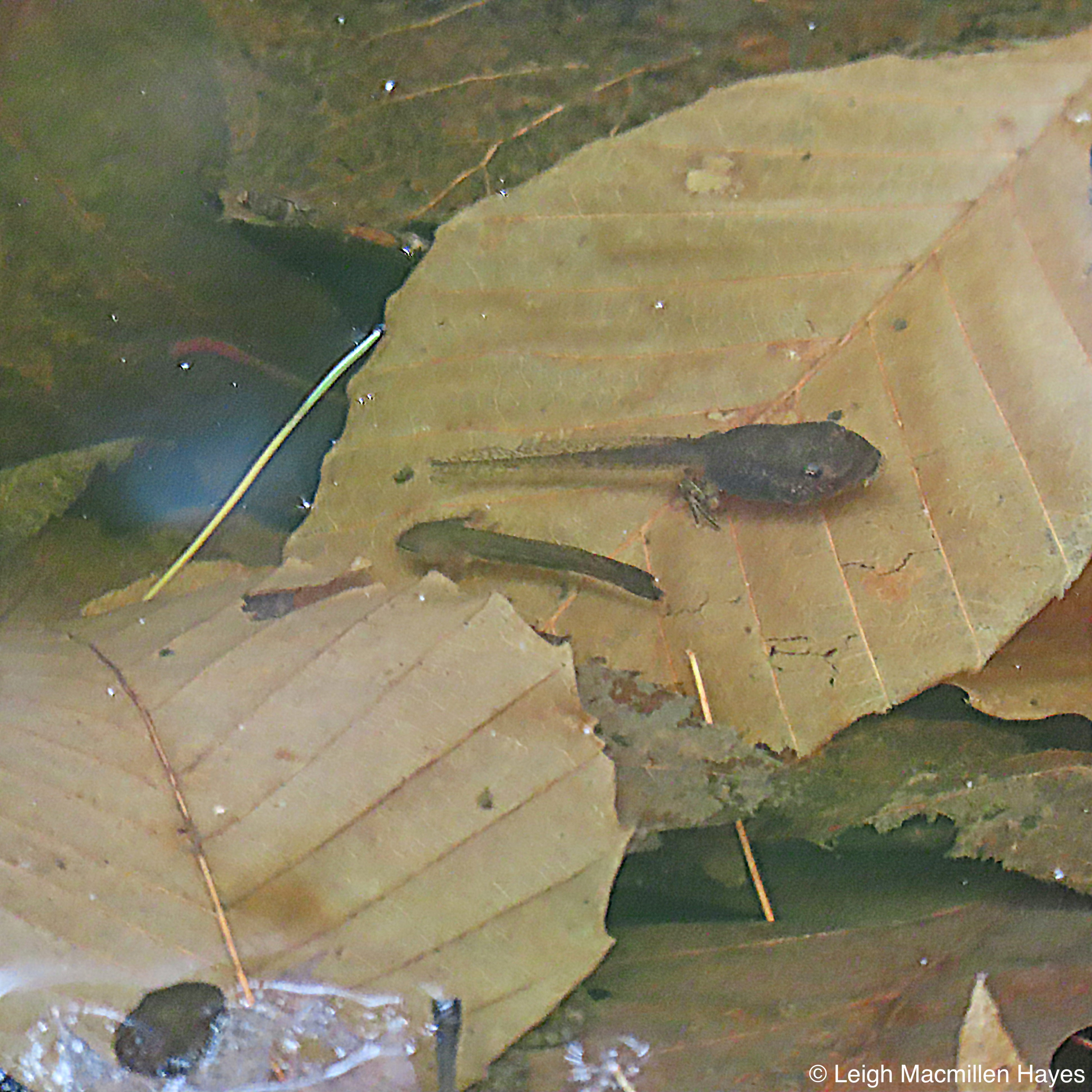
When upon July 14
I peered into 
your shallow depth,
I was greeted
with frog legs
growing upon tadpole bodies,
a sight not witnessed
in your waters 
ever before. 
In years past
miniature amphibians
had to mature quickly
or become scavenged tidbits
supplying energy
to insects and birds,
but this year, 
the Wood Frogs 
and Spotted Salamanders
who share birthrights
of your pool
took their time 
to metamorph.
As I stood quietly
beside you,
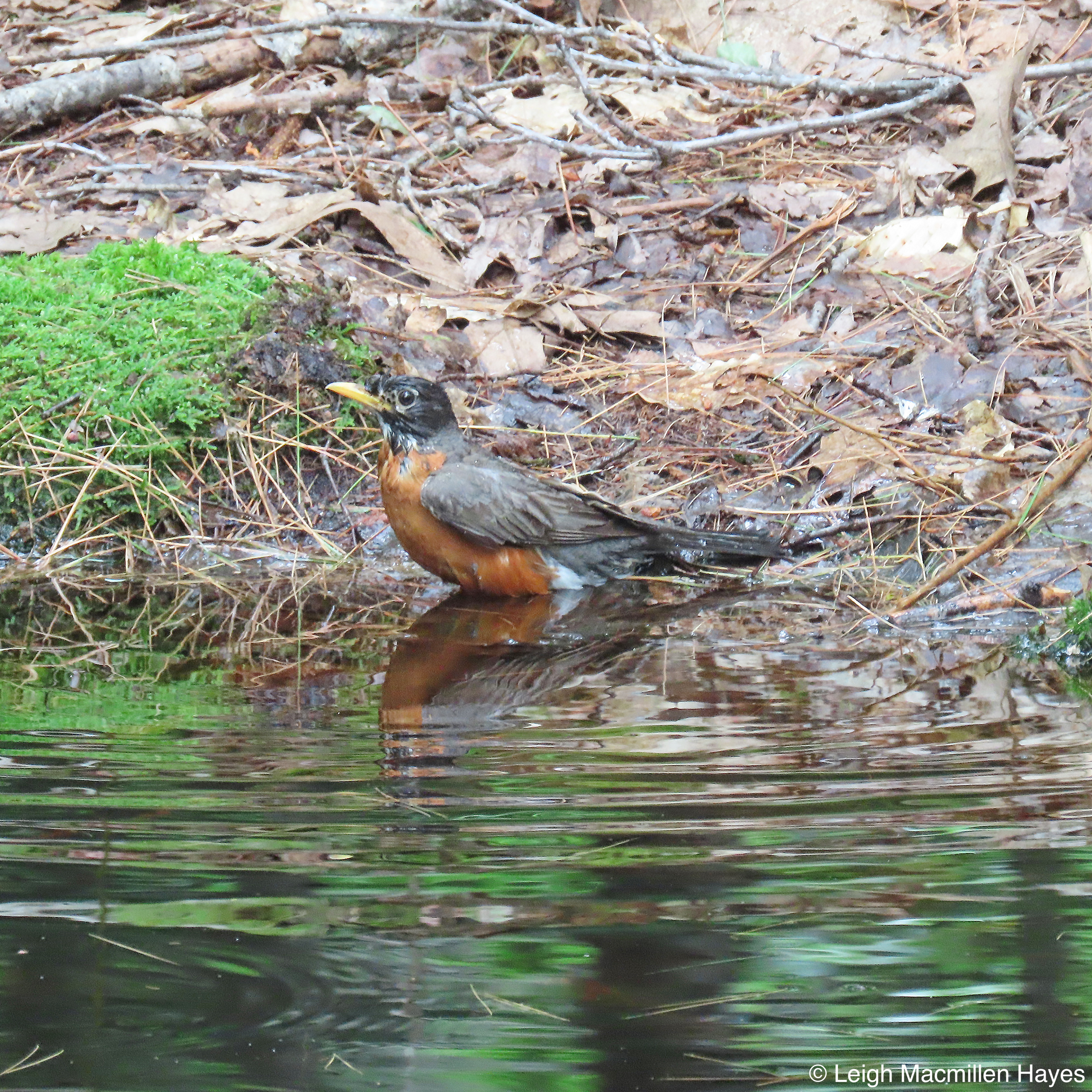
you invited an American Robin
to land on the opposite shore
and I could not believe
my good fortune 
to watch its behavior. 
Much to my amazement,
and despite my presence, 
for no matter how still 
I tried to be 
I still made noise,
the Robin
splished and splashed
in frantic birdbath form. 
It paused
and looked about . . . 
Then jumped in again
for a final rinse 
from your warm waters
before taking time 
to preen. 
Finally cleansed,
the bird posed
upon a moss carpet
and then 
we both took our leave
fully sated from your offerings
of that day. 
When next I visited you
on August 9,
wonder accompanied 
my approach
and I knew 
sudden movements
and resulting ripples
meant I would not be
disappointed. 
Below your surface,
I spied a live frog,
its hind legs formed 
and front feet developing. 
And there was another,
and another, 
and more legs,
and sometimes even
the tiny suction-cuppy toes
and my heart was full again.
I last made my way
down the cow path
to the trail
leading to you
on August 18
and again
the amount of water
you held in your grip
far exceeded
my expectations,
but other than 
Mosquitoes,
all was quiet. 
And then today dawned,
 and after listening 
to this morning's homily
about Celtic Thin Places
offered by Ev Lennon, 
I felt compelled
to pay you a visit again. 
On the way
I slowed my brain
by intentionally stepping
along the labyrinth path
I created a few years ago. 
And then . . . and then . . . 
as I approached you, 
my dear pool, 
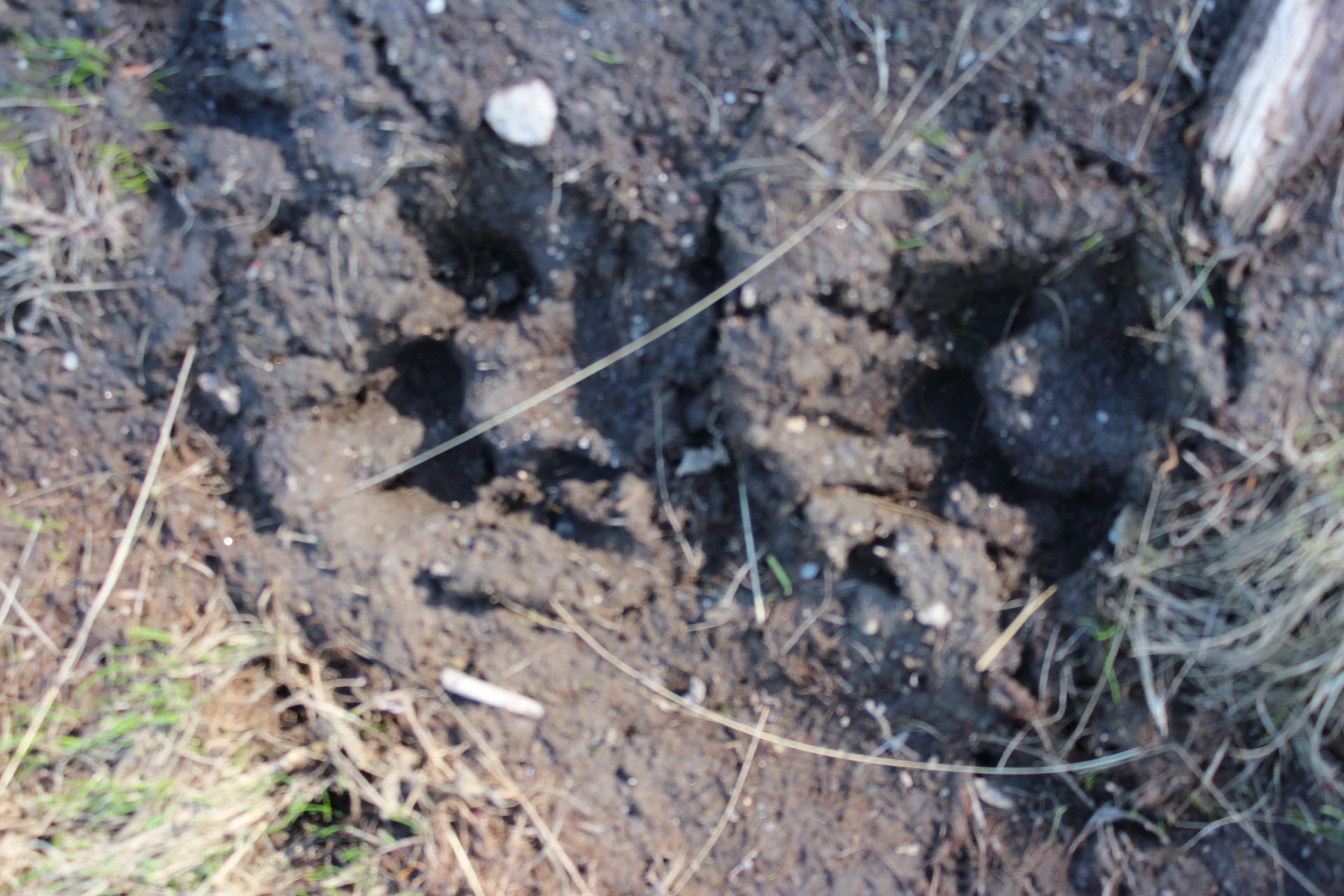
a pile of Black Bear scat,
full of acorn and apple pieces
from a neighborhood forage,
sat smack dab 
in the middle of the trail. 
And so it was 
that as I reached you, 
surprise again overcame me,
for though you are shrinking
to your traditional 
early June size, 
you still exist
on this day, September 3. 
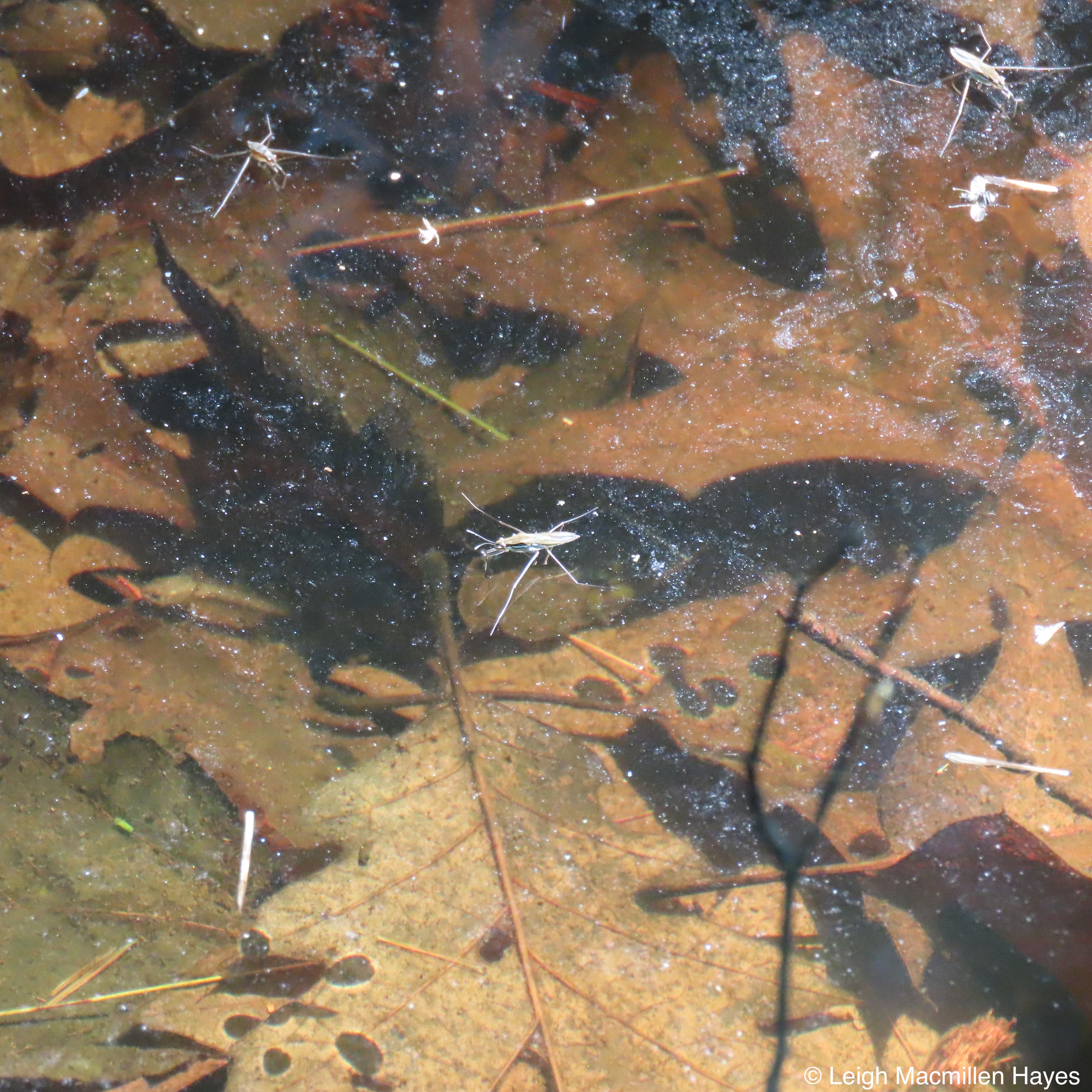
Small Water Striders skated
across your surface,
sometimes approaching others
who quickly
escaped any chance
for an embrace. 
As has been
my experience 
for the last month
you offered no evidence 
of Wood Frog or Spotted Salamanders
and I trust many 
hopped or crawled out
as is their manner. 
Green Frogs, however, 
squealed to announce 
their presence
before diving under 
the leafy bottom you offer, 
which makes a perfect hideout. 
When one frog resurfaced, 
we carried on a starring contest, 
until my attention
was drawn away. 
Ten feet from 
where I stood 
American Goldfinches 
poked the ground, 
foraging in the duff. 
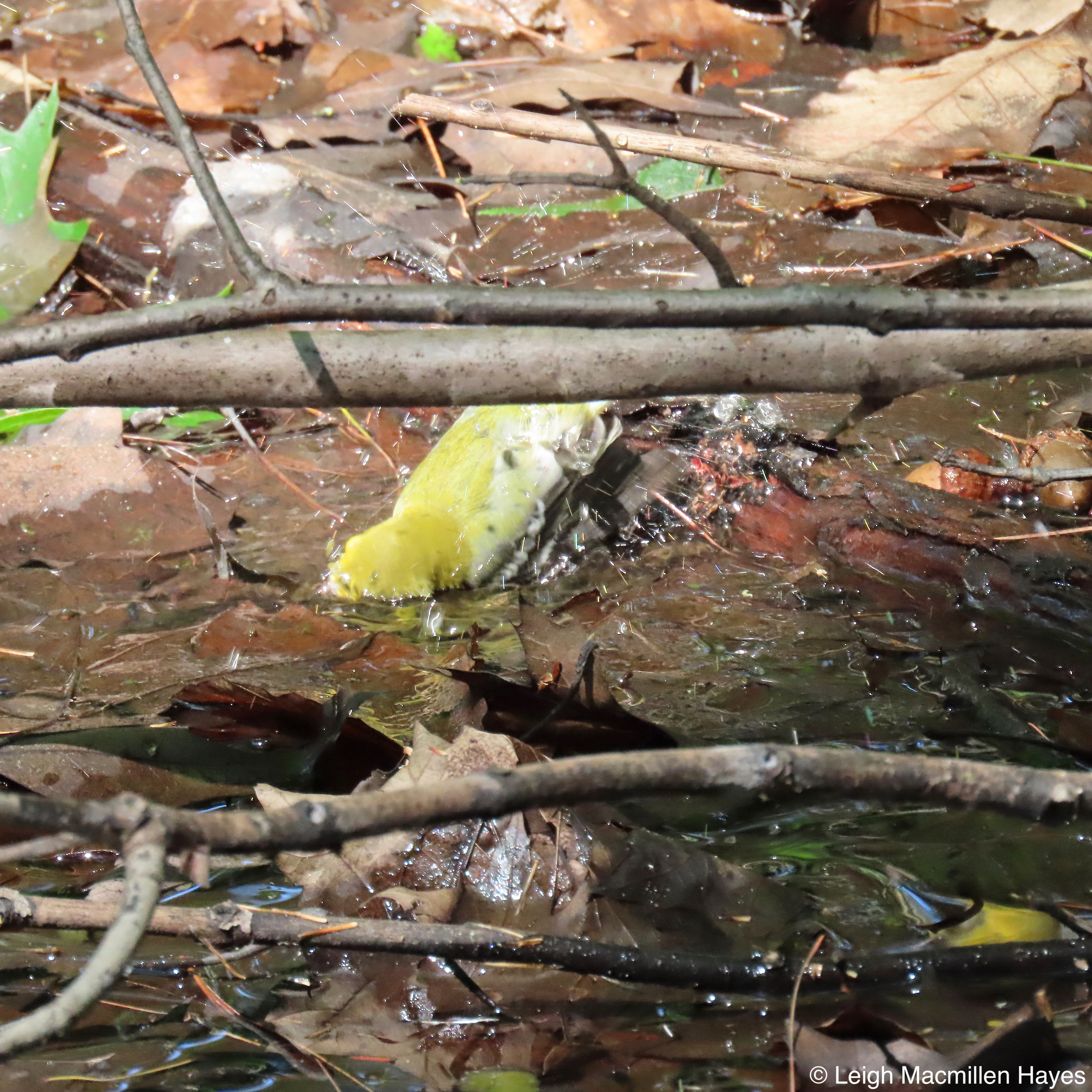
Then one took a bath, 
and suddenly it 
occurred to me
that this was 
the third time this summer
I've had the honor 
of watching birds 
make use of the watery offering
your pool provides,
even as it is now
a not-so-vernal puddle. 

Before I finally
pulled myself
away from you, 
I offered great thanks 
for all the lessons 
of life and love and even loss
that you have
taught me all these years. 

And thank you,
Ev, 
for being today's inspiration
and for reawakening 
my wonder, 
which occasionally goes dormant,
as the pool will soon do as well. 

Spring In Our Steps

Early spring, that time of transition when it feels as if the world has slowed down, is one of my favorite times of the year. Oh, besides all my other favorite times that is–like tracking time and dragonfly time and stalking insect time and . . . and . . . and.

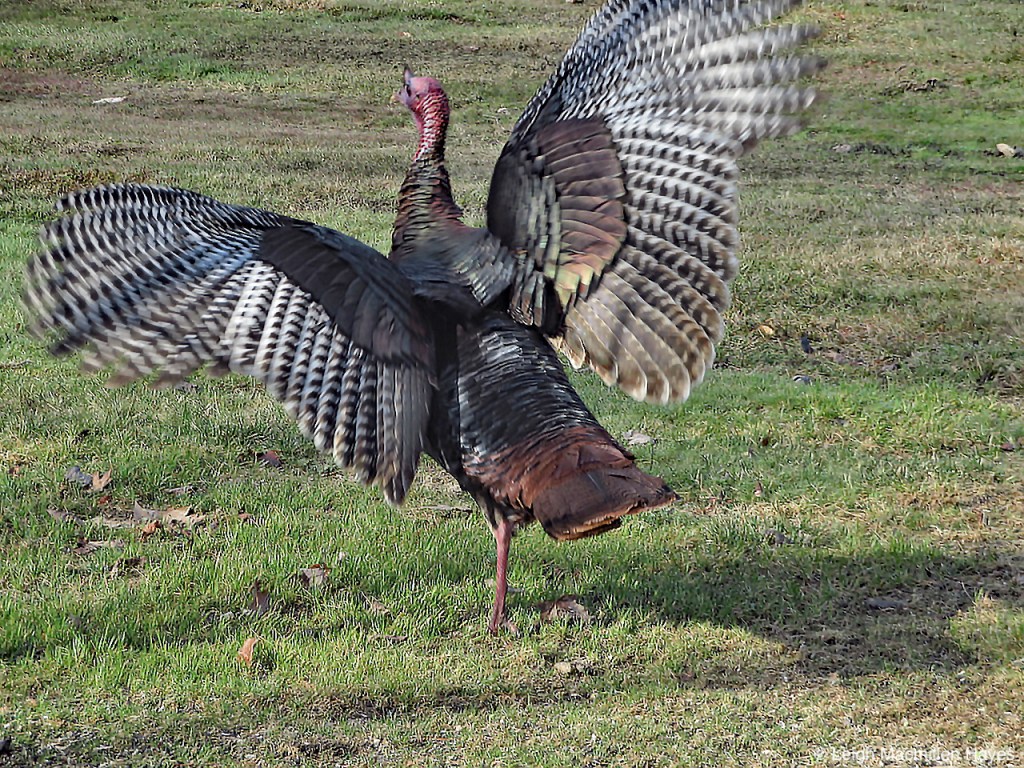
These days it seems my day often begins with a certain male visitor.

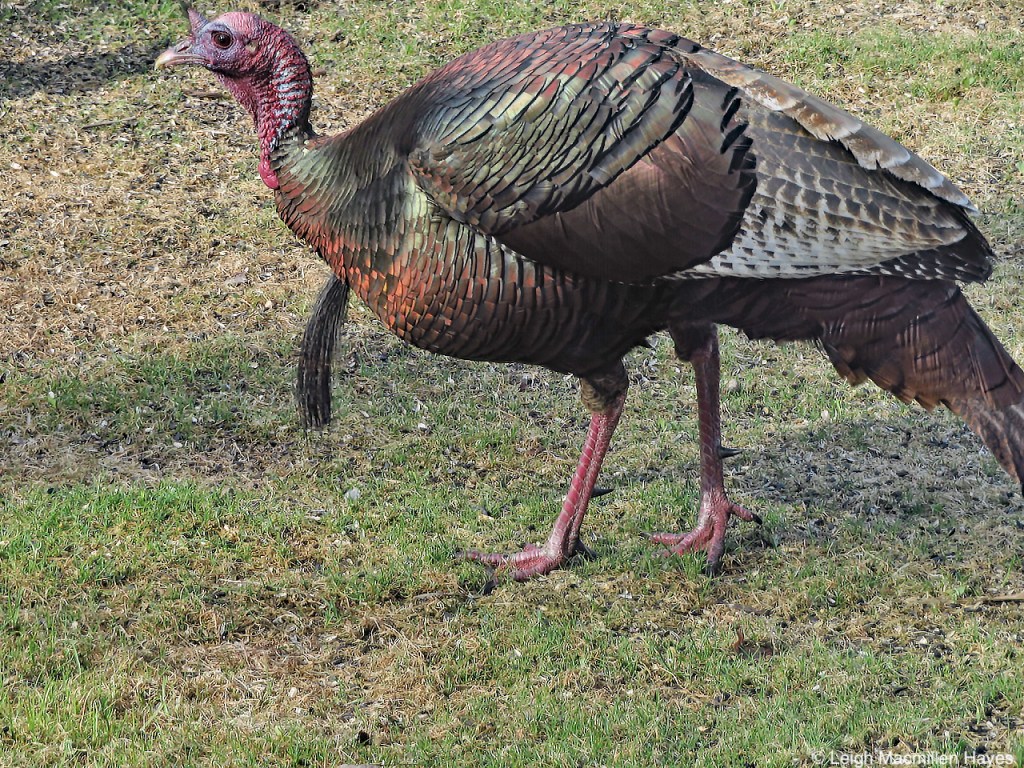
No, it’s not my guy, but another handsome fellow named Jake. At least I think that’s his name, based on the length of his beard, short conical spurs on the backs of his legs, and light red and blue head, which would be much brighter for his elder named Tom. It doesn’t matter for in the morning sunlight he gleams and makes me realize that he embodies every color of the rainbow.

We typically spend a few minutes together before he departs and I know that means it’s time for me to do the same.

To ensure there will be more of these little water tigers, I discover two adults canoodling.

In its adult form, the beetle backs up to the water’s surface and captures air under the elytra, or firm front pair of wings where the spiracles or respiratory openings are located. (Think external pores) The challenge is to carry enough air to breath, but not too much that might cause them to sink. That said, I frequently watch them surface and then swim off after an oxygen grab, but storing that air for at least ten minutes serves them well while mating for they certainly don’t have a plan to rise for a refill.

If you’ve never watched a pair of Predacious Diving Beetles mate, this is worth the eleven-second clip. It was a first for me, and what a frenzied time it was.

Ah, but there are other things to look at in a pool and so I pull myself away from the canoodlers and begin to focus on the result of some other interaction, this being egg masses of Spotted Salamanders. One evening in the past week, a male Spotted Salamander deposited spermatophores that look like tiny pieces of cauliflower on the pool floor. A few nights later a female picked up sperm from the small structures and internally fertilized her eggs, which she later attached to the small branch in the water. If you look closely, you might see the gelatinous matrix that surrounds the mass.

Likewise, Wood Frog egg masses have also been deposited and their overall structure reminds me of tapioca. In no time at all, the embryos began to develop, but it will still be about three weeks before the larval tadpoles hatch.

Because I was looking, I had the good fortune this week of spying another tiny, but significant critter swimming upside down as is its manner–a fairy shrimp. Fairy shrimp don’t feed on the embryos but rather filter algae and plankton with eleven pairs of appendages, which they also use for swimming and breathing.

Similar to the Predacious Diving Beetle, in order to digest food, a Fairy Shrimp produces a thick, glue-like substance to mix with a meal. My awe with Fairy Shrimp remains in the fact that after a female produces broods of hardy eggs called cysts, they lay dormant once the pool dries up and don’t hatch until it rains again the following spring or even years later.

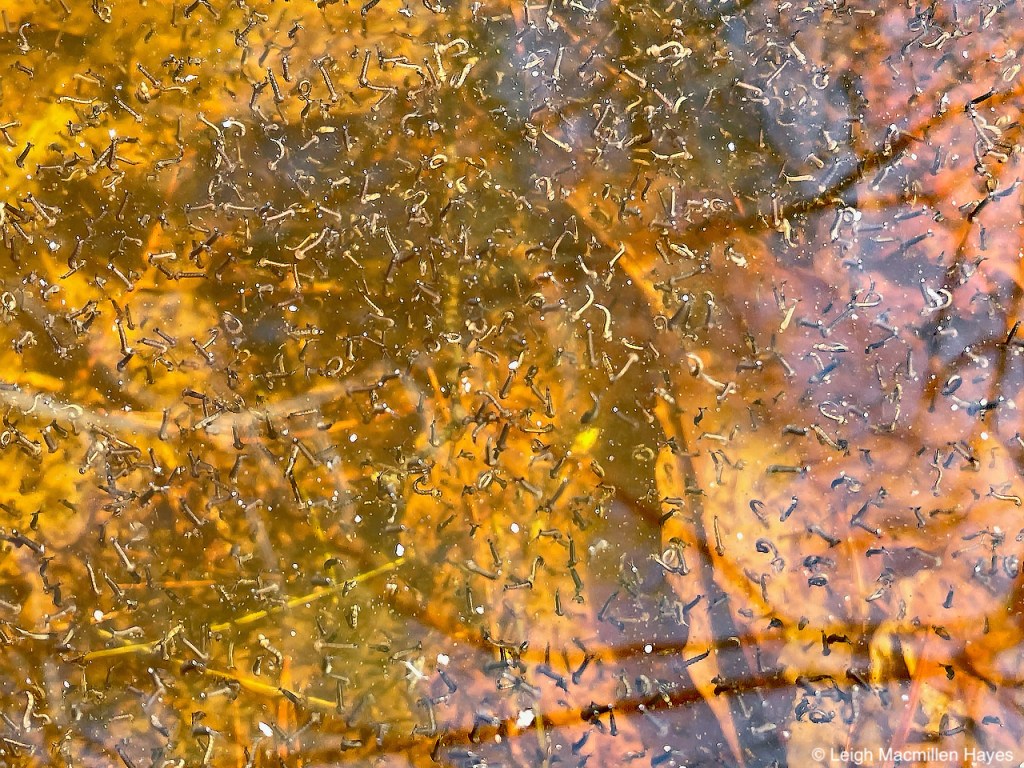
I could spend hours searching for Fairy Shrimp and other insects and in fact, do even marvel at the Mosquito wrigglers as they flip and flop their way around.

You, too, may watch them by clicking on this short video. And remember–they eventually become great bird and insect food.

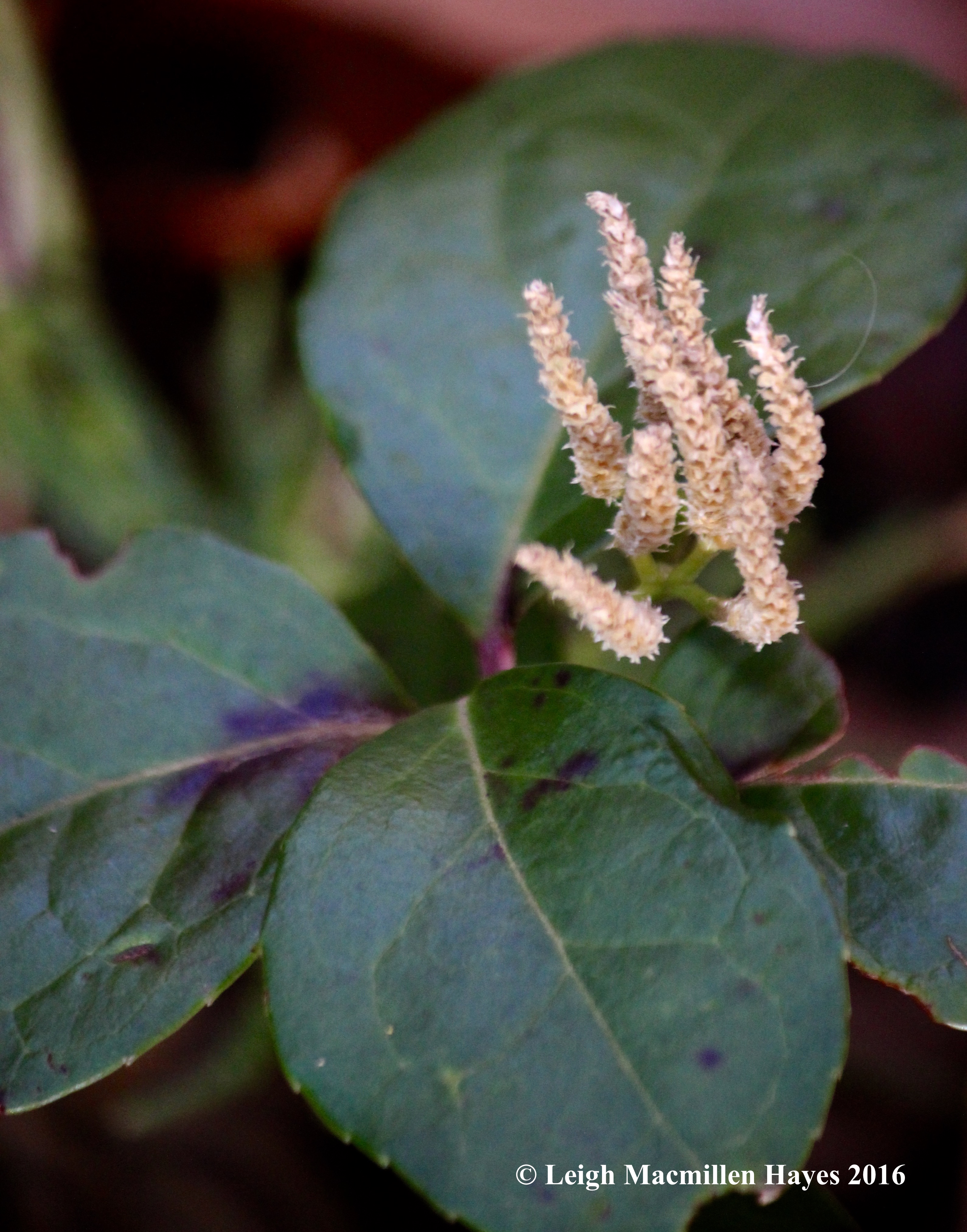
By now, I suppose it’s time to honor other more beautiful sights of spring, including my favorite first flower of the season, the tiny spray of magenta styles at the tip of Beaked Hazelnut flowers waiting for some action from the male catkins.

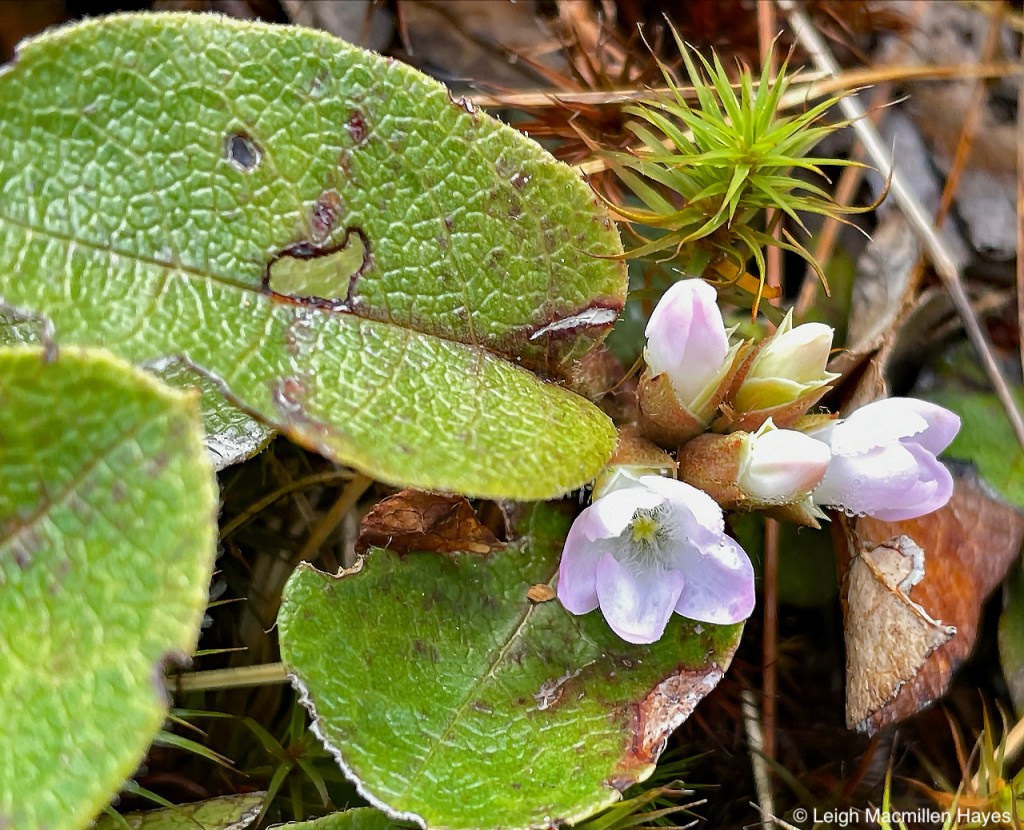
And yesterday’s most delightful surprise, the first blooms of Trailing Arbutus on the forest floor. Known as Mayflowers, they usually open in April. Just to confuse us.

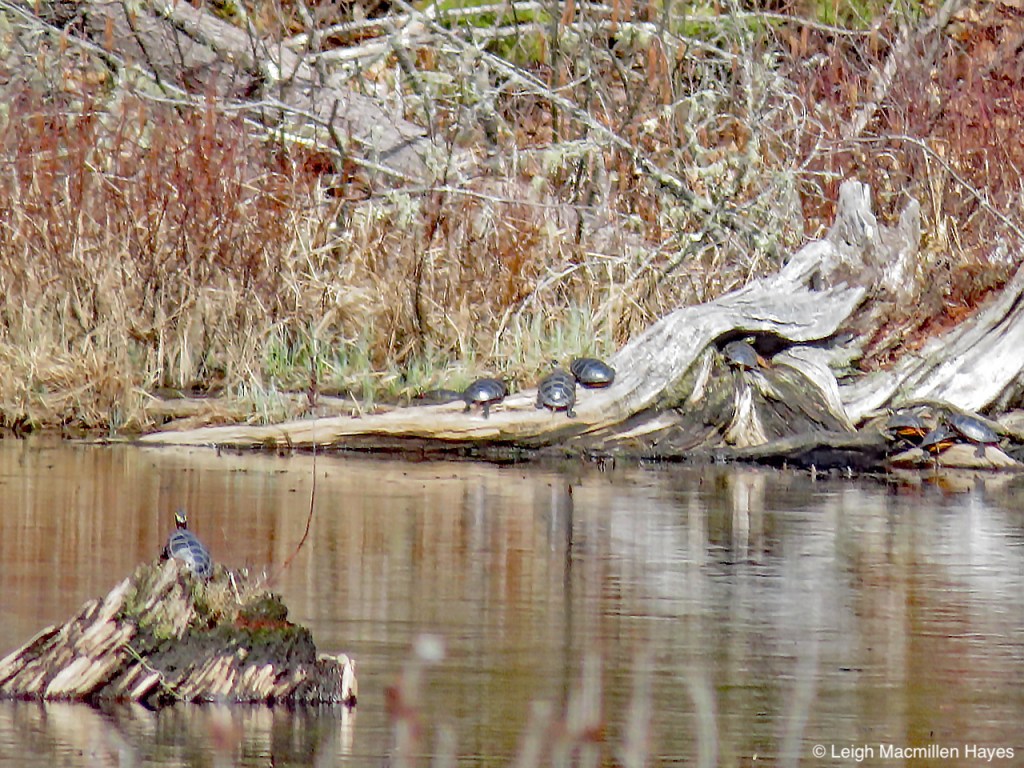
Standing for a while beside a river rather than a pool, another of my favorite sites was an abundance of Painted Turtles basking. No, they aren’t sunbathing to get a tan, but rather to raise their internal body temperature. Being cold-blooded, their body temperature is determined solely by the temperature of the surrounding environment.

In the same neighborhood a pair of Belted Kingfishers could be heard rattling as they do in flight and then seen preening and it seems that love is not only in the water, but in the air as well.

Likewise, a Song Sparrow or two or three trilled their lovely notes to announce their intentions to any who would listen.

And then today dawned–and with it a spring snowstorm graced this part of the world and all who live here, like this Sheep Laurel with buds still tiny.

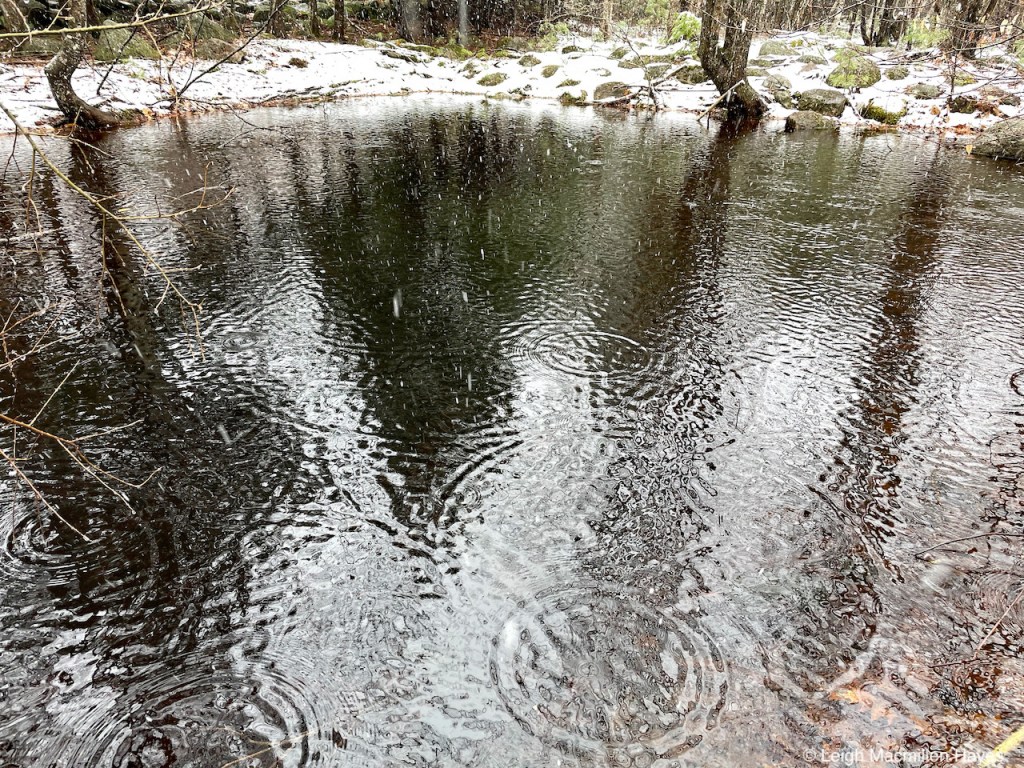
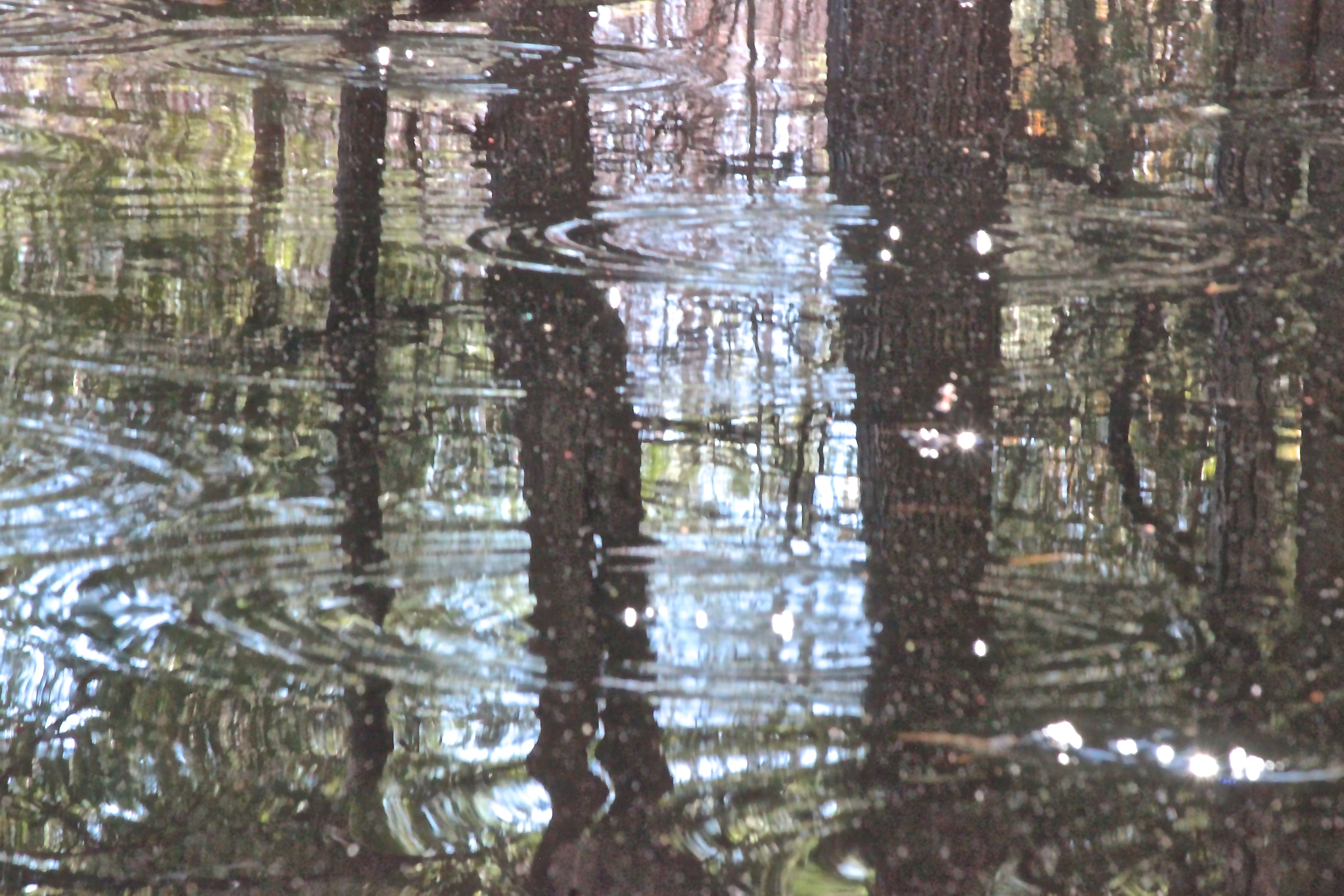
Back to the pool went I, where the only action seemed to be snow striking its surface and creating rippled patterns in constant flux.

Some of the snow drops were so large that bubbles reflecting the canopy above formed. Under water, I couldn’t see any action and finally turned toward home, trusting all the swimming critters were tucked under the leaves in an attempt to avoid the rawness of the day.

There was one more stop to make, however, before I headed in. On December 1st, 2020, upon this very same tree, I watched slugs for the last time last year as documented in a post entitled “My Heart Pines.” It was a squirrel midden that had attracted me to the tree, but so much more did it have to offer on that day.

Today, as I searched for slugs, I was equally surprised for just as I found last year, once again the froth that forms on pines as the result of a chemical interaction when rain drops pick up oils and air in the bark furrows bubbles through that oily film and the end result is pine soap never ceases to amaze me. Even in snow, I learned, it can occur. Plus there was a subtle rainbow of colors.

Ah, but it certainly didn’t match the colors Jake displayed.

Today’s snowfall will melt by tomorrow and only be a memory of that year it snowed on April 16. We’ve had much bigger April storms than this one turned out to be and henceforth Jake and I will walk with a spring in our steps.

Transformation of a Different Sort

Late afternoon found me heading to the vernal pool behind our home, mostly out of curiosity for we’ve had a week of dry, steamy days and I suspected the worst.

Not only by sight, but also stench did I know that my fears had come true.

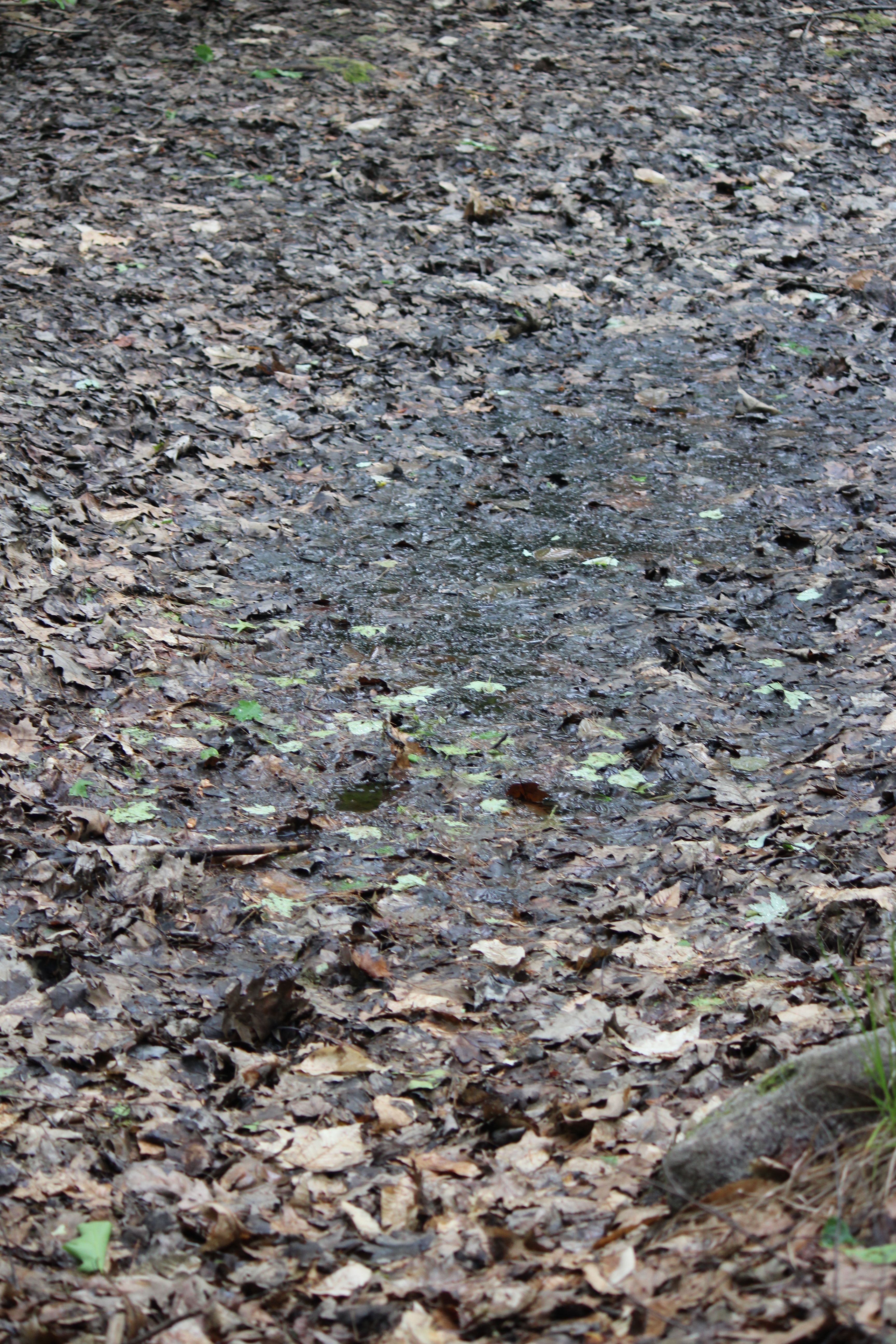
There was merely a drop of water left, hidden below the leaves as it were.

I stood in the center for the first time all year, where the odor reminded me of New Haven Harbor at low tide, though the pool was perhaps more rank. The harbor has a mud-flat smell that entered my nostrils as a youth and has remained in my memory since, becoming that upon which I judge all other such scents.

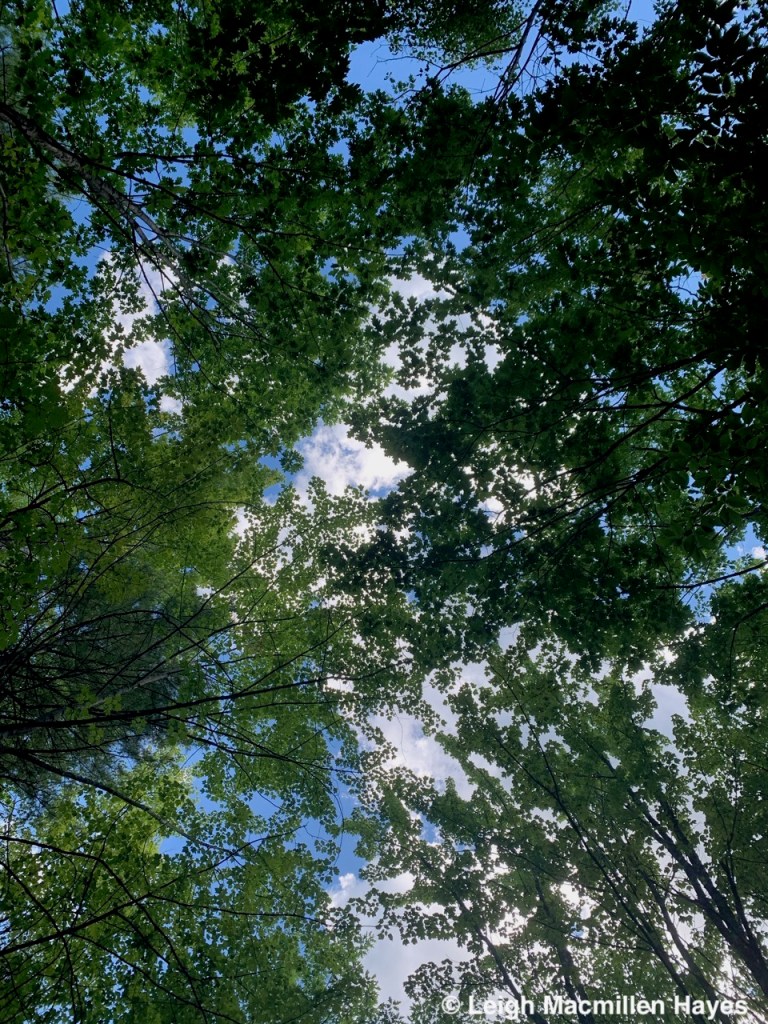
Directly above, the sky veiled only by the canopy, offered a few clouds to occasionally shade the hot sun, but not a drop of rain was to be felt as has been the situation of late.

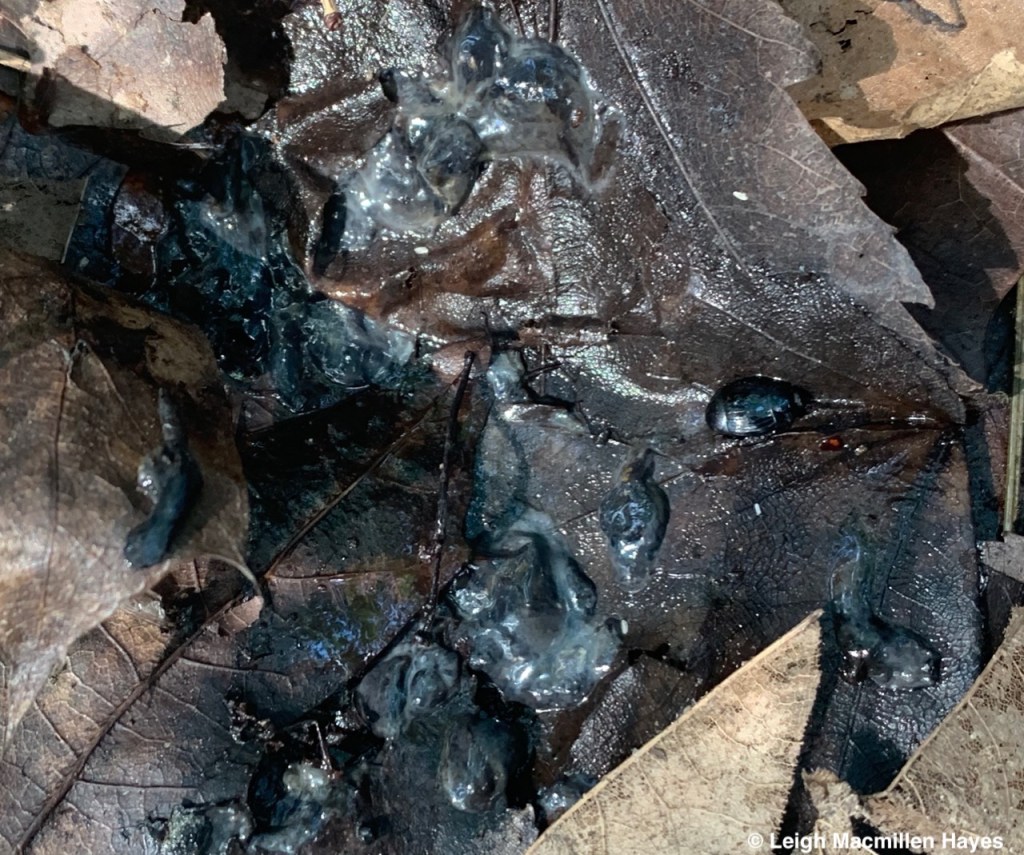
The source of the stench was my little friends who unfortunately didn’t get to hop out.

I could only hope that a few did leave the water of their own accord, but sadly most were fried.

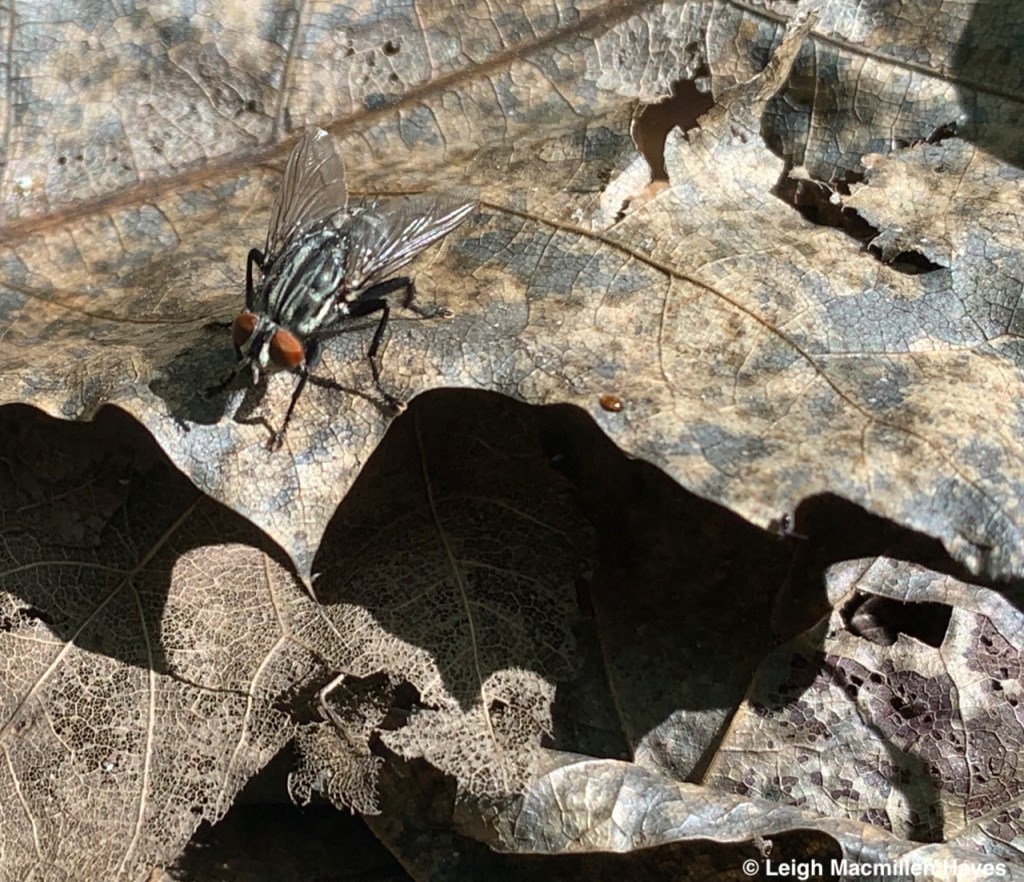
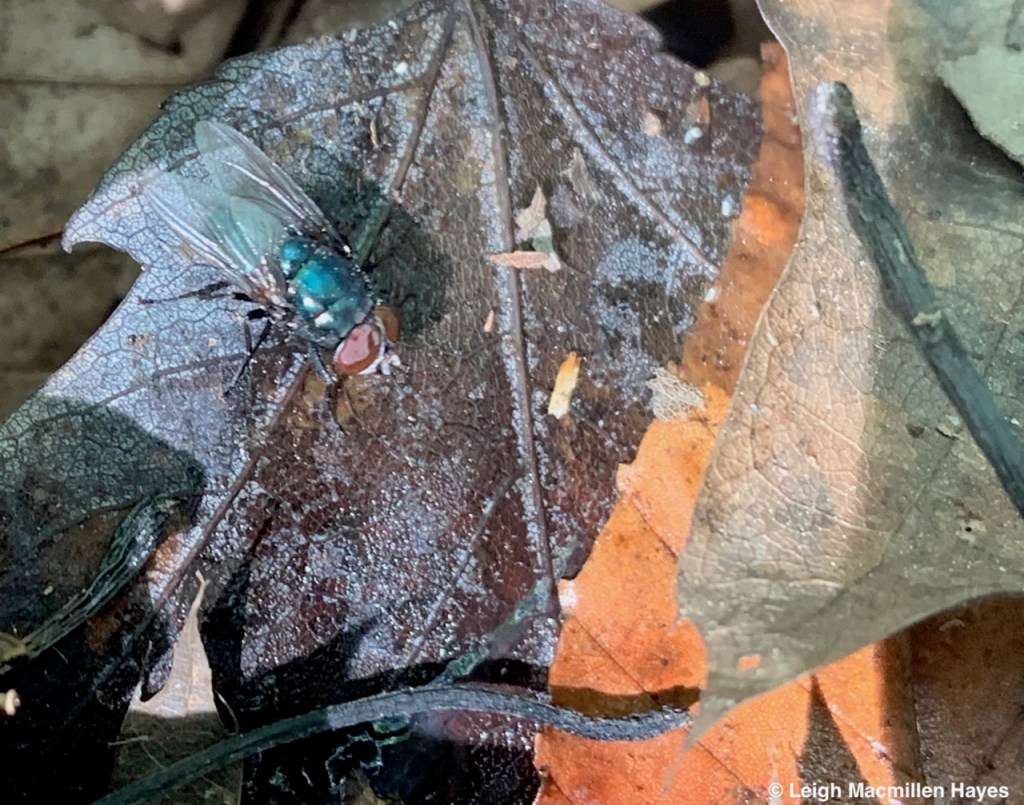
All that realized, it didn’t mean the pool was a static place. There were Flesh Flies with brick red eyes who found this habitat of tadpole carcasses to be to their liking.

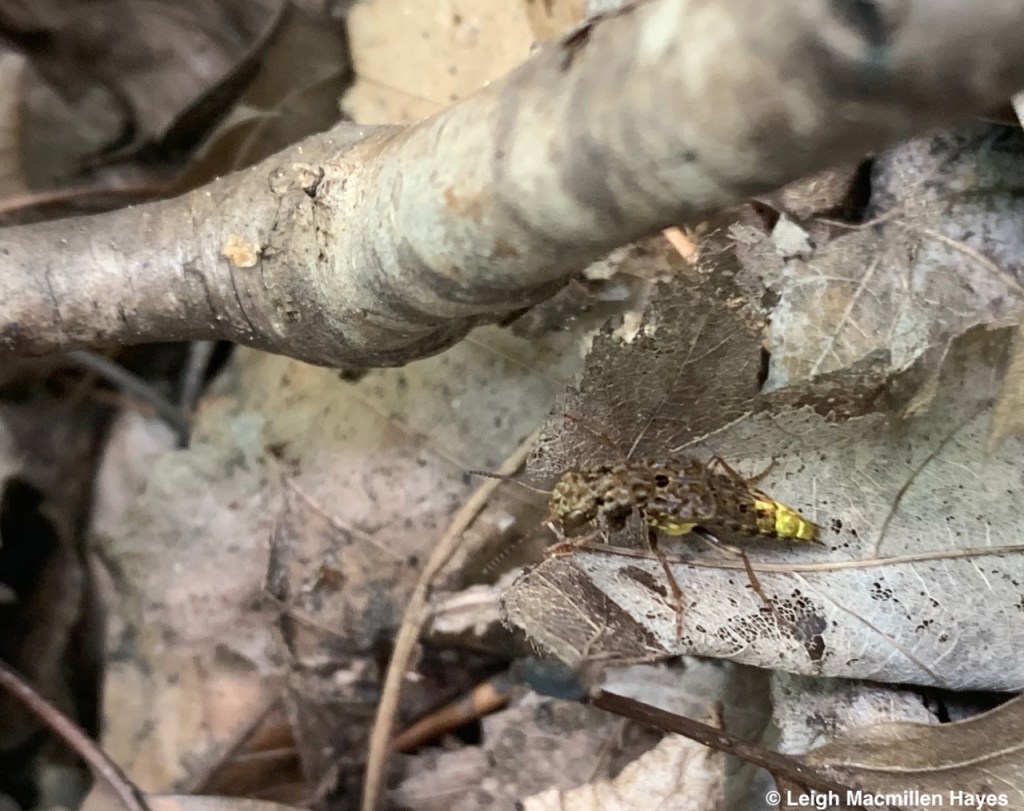
And Rove Beetles who surprised me with their presence, though they shouldn’t have for they also have a preference of feeding upon decaying matter.

Both the Flesh and Rove moved quickly through the neighborhood, but for a brief second each paused and posed, as if it was meant to be.

Others included the metallic Green Bottle Fly,

a cricket,

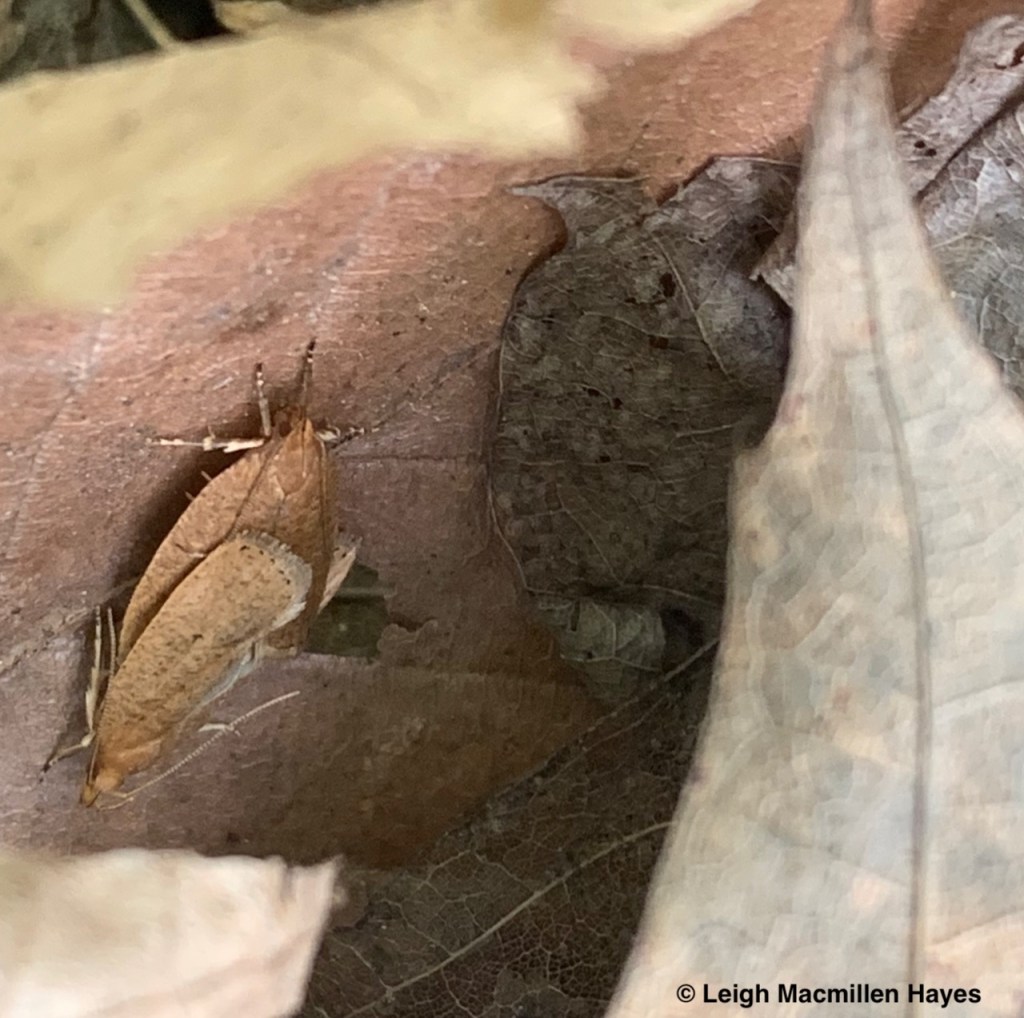
canoodling moths,

and a spider or two or many. There were also birds in the canopy and I suspected they were waiting for me to leave so they could bring food home to the nest.

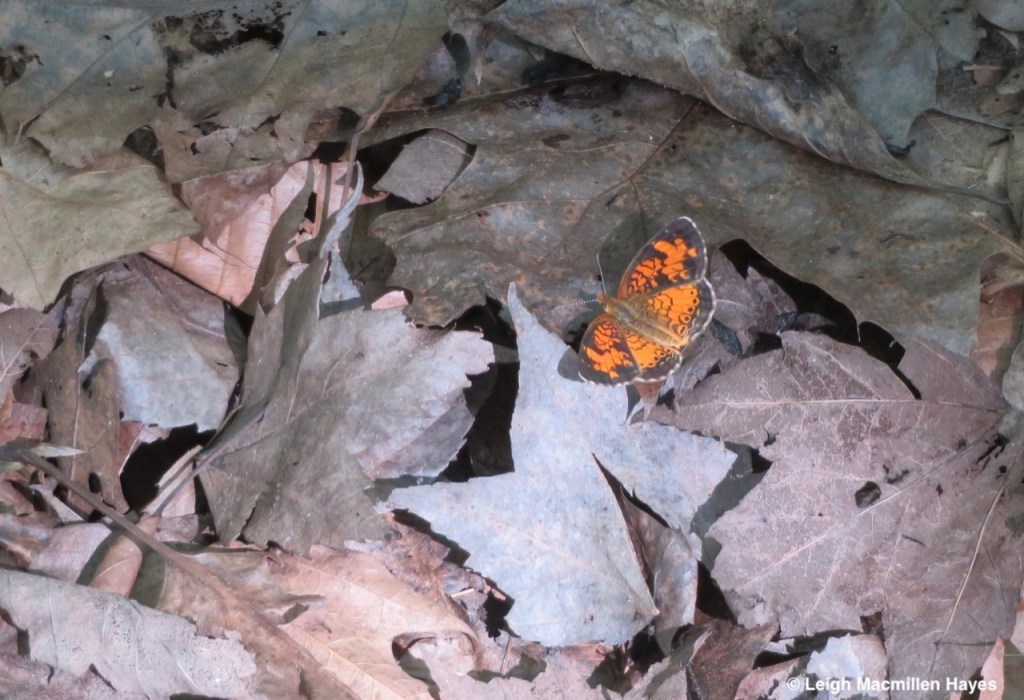
In the midst, a splash of color was offered by the wee Northern Crescent butterfly whose presence perplexed me at first . . . until I realized that the pool still held moisture and other nutrients, and it offered just the right habitat for butterflies who need to puddle or suck the fluid and minerals to enhance their breeding relationships.

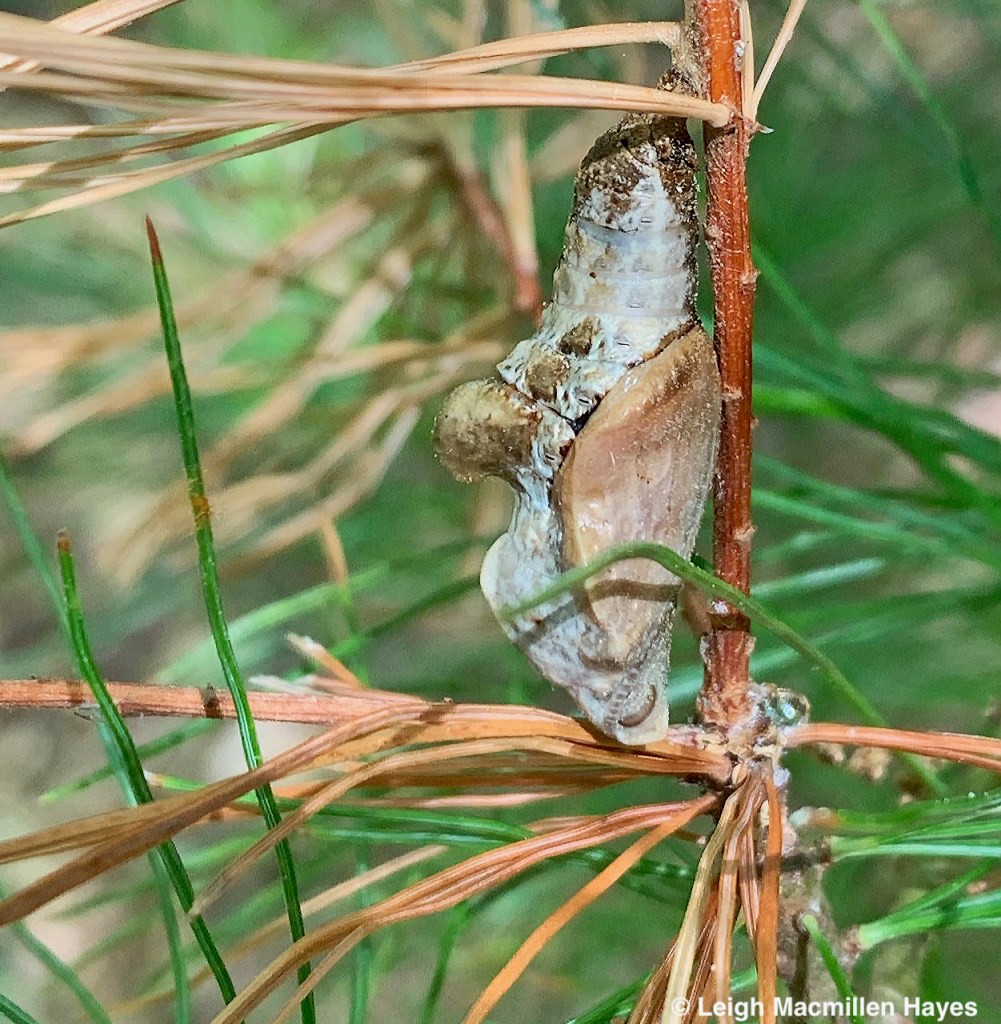
Right beside the pool I spied another of the order Lepidoptera in the pupal form of a Viceroy butterfly.

As has happened year after year, the vernal pool didn’t follow quite the path I had hoped since early April when the ice went out, but still, it’s a place where transformations of a different sort occur . . . and despite the demise of the tadpoles, life goes on.

Bluebird, Bluebird, Through My Focus

It rained. The sun came it. Rain drops continued to fall. Until they didn’t. Then the temperature rose to a degree we haven’t seen in over eight months here in western Maine. And we melted.

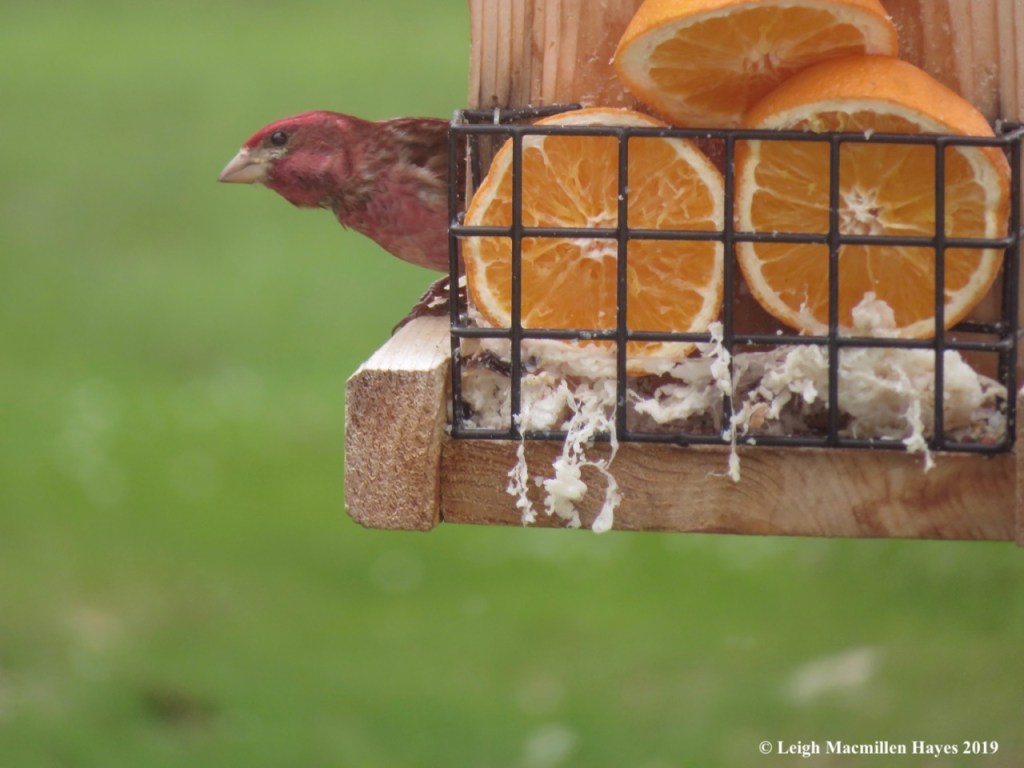
But, with the heat wave came some new visitors, including this male Baltimore Oriole, so named because his coloration resembled the coat-of-arms of Lord Baltimore.

The funny thing about Lord Oriole: he’d stopped by a few days ago when I had a sturdy chunk of suet in the feeder. After seeing him, I immediately added orange slices to the offering in hopes of enticing him to return.

And so when he did this morning, I marveled at the fact that he ignored the oranges and chose instead a small bite of the suet.

Adding more color to the yard was a male House Finch. He tarried not long for his gal paused in the lilac bush and then flew past and he followed in hot pursuit.

But I gave thanks to the finch for as I looked for him to return, I noticed movement on the outer edge of the garden below the back deck. Shuffling about the dried leaves looking to glean a meal was a Common Yellowthroat. My very own Common Yellowthroat. Certainly another reason to rejoice.

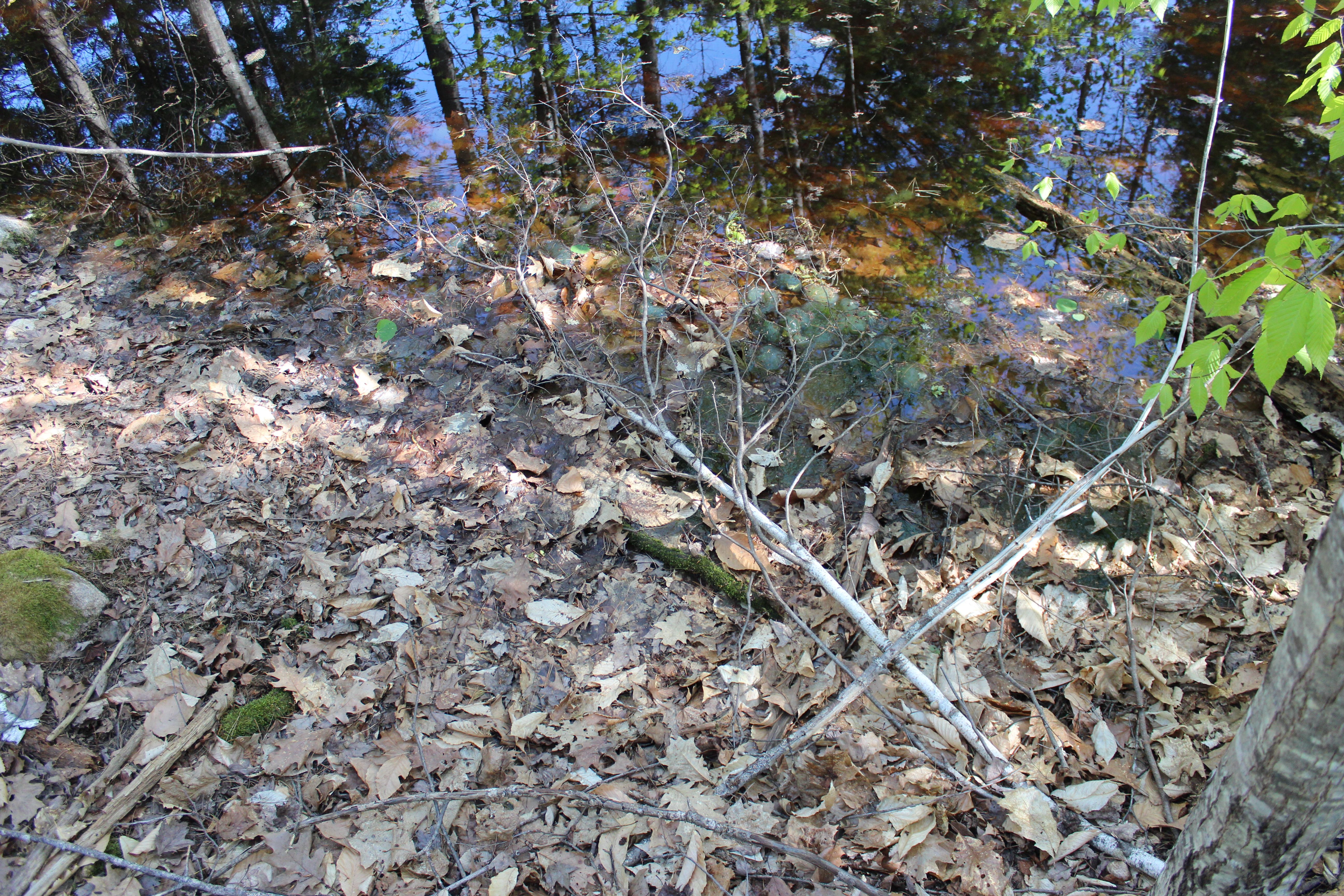
There was more rejoicing to be done for I eventually found my way to the vernal pool. I realized I’ve been avoiding it lately, ever fearful after discovering a few dead frogs that life had taken a turn for the worse within that small body of water.

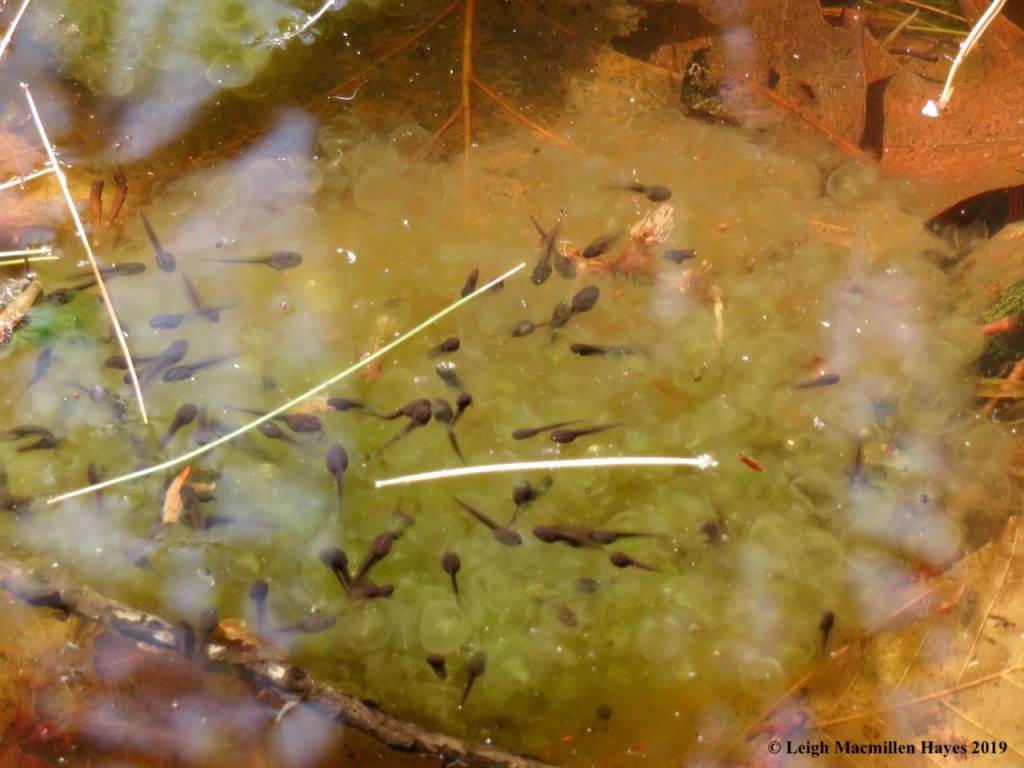
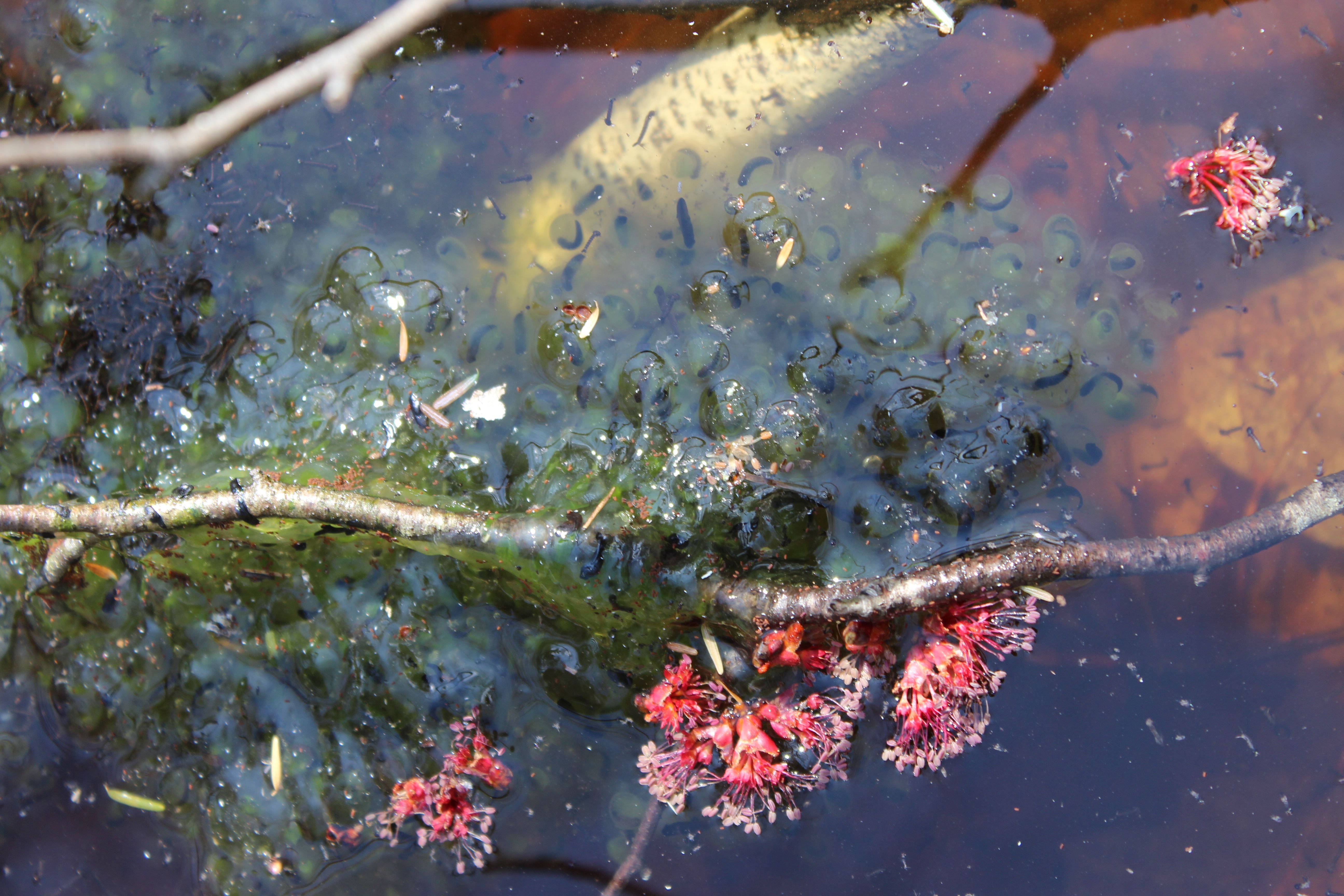
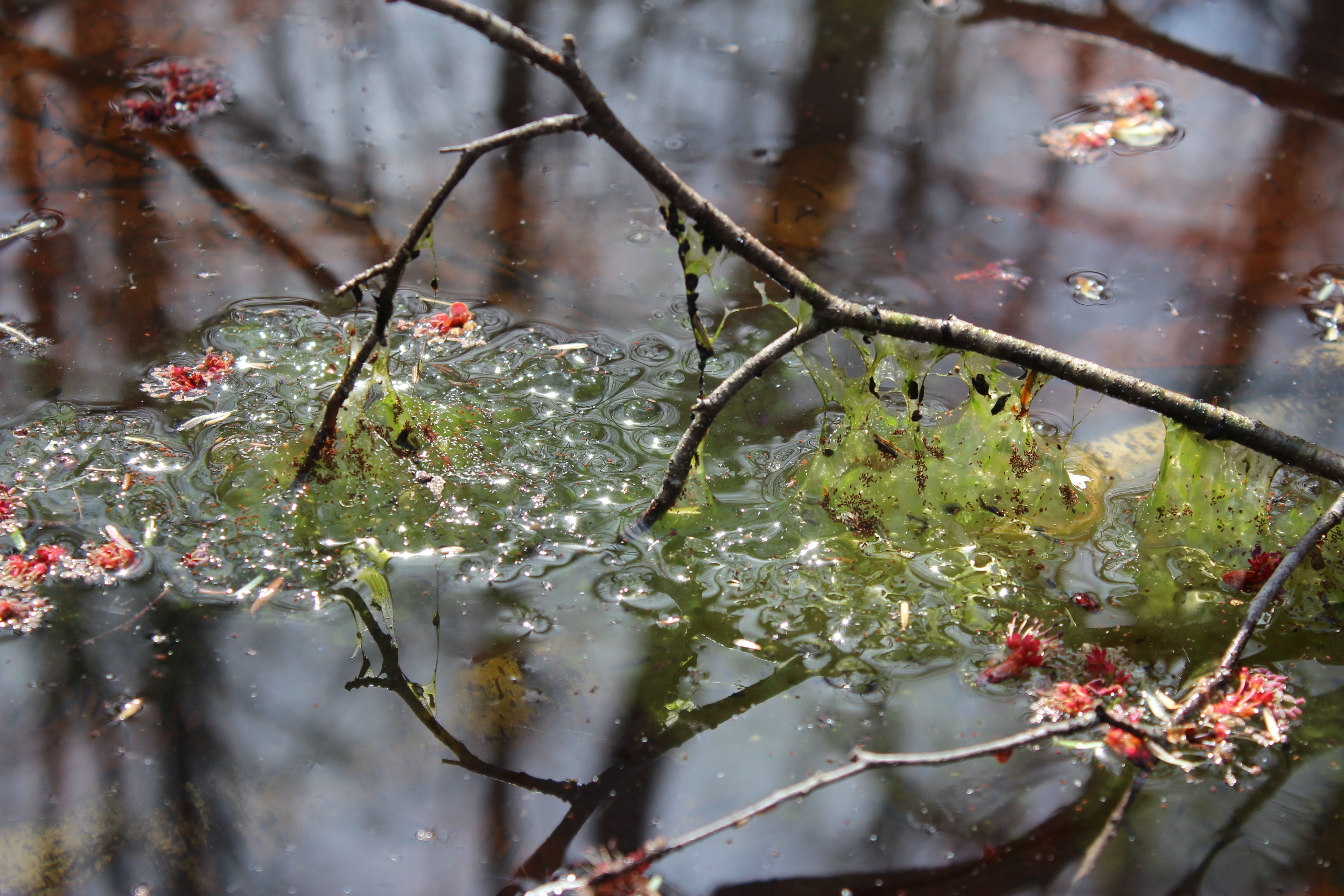
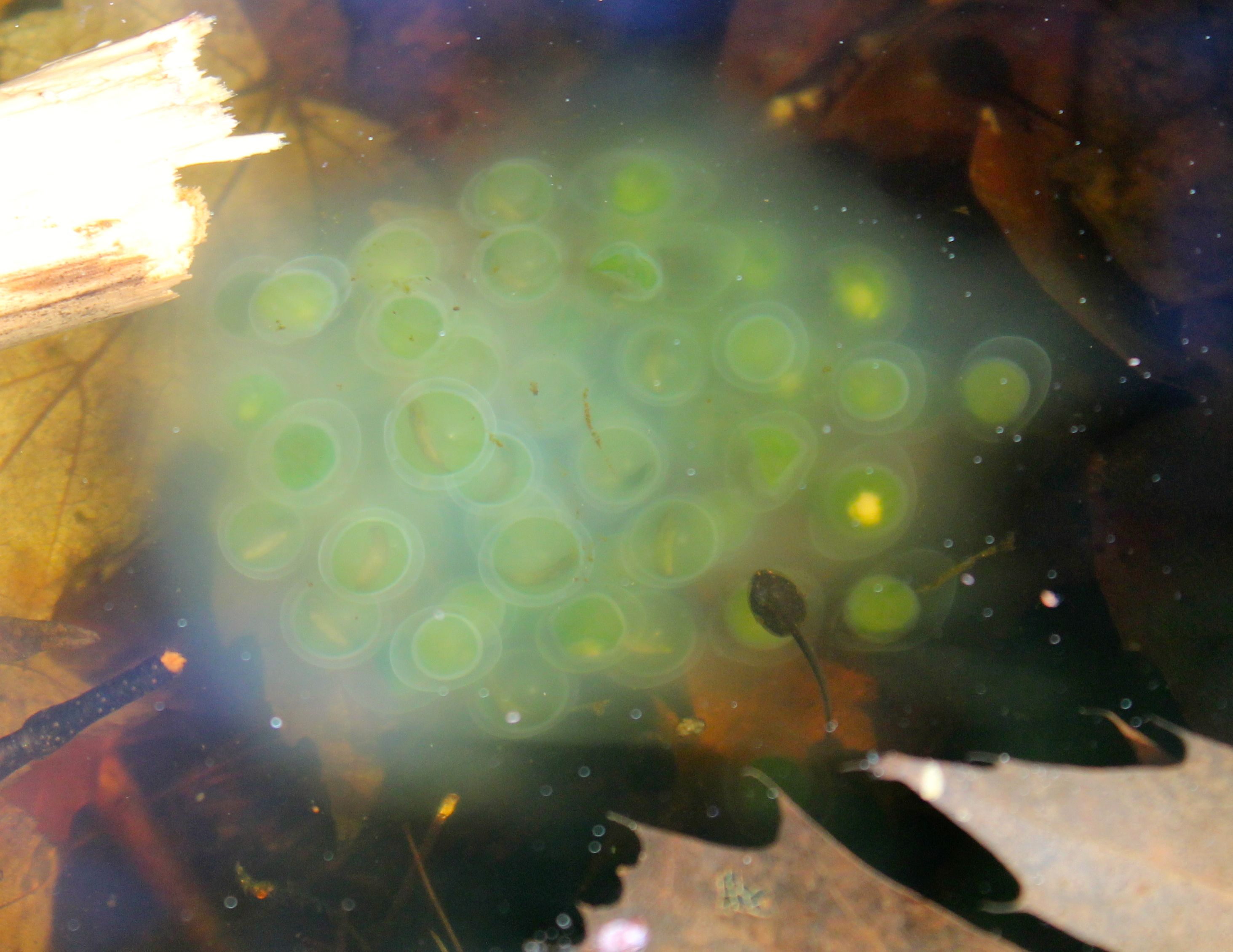
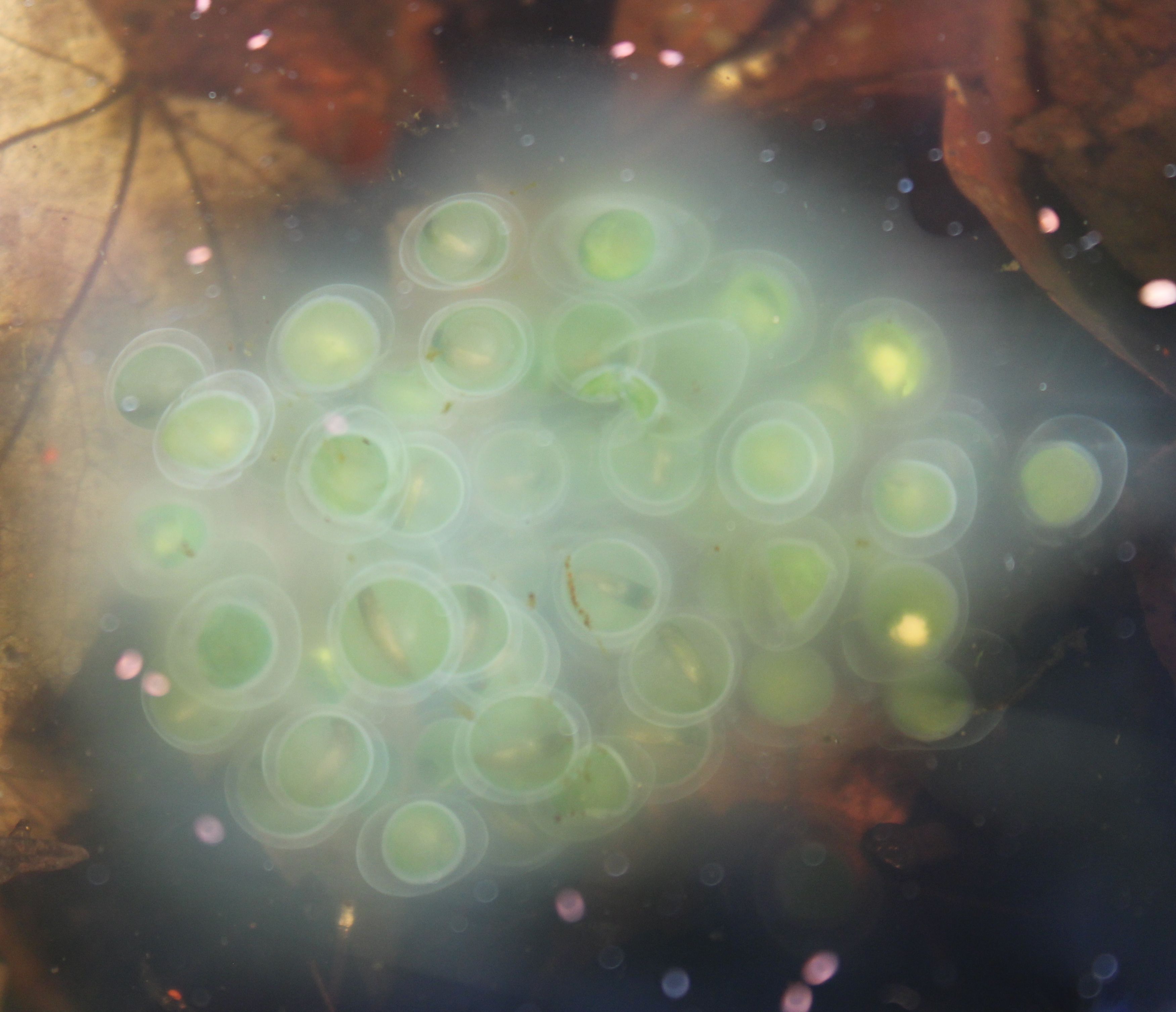
But the surprise was all mine when I discovered recently hatched tadpoles resting atop an egg mass. The green color is an algae with which they share a symbiotic relationship. The algae colonize the egg mass and produces oxygen. Being symbiotic, it’s a two-way street and the algae benefits from the eggs by gaining carbon dioxide produced by the embryos. The carbon dioxide is needed for the photosynthetic process. For a few days after hatching, the tadpoles feed on the alga.

Salamander embryos within their own gelatinous also took on that greenish hue due to the same symbiotic alga. My heart was filled with joy for there were numerous masses within the pool, most of them spotted salamander. And now I can only hope that the pool stays wet enough for them to mature and crawl out as their parents did.

Leaving the pool behind, I wandered toward home, but a familiar call beckoned. It took a few minutes for me to locate the creator, but eventually I saw him.

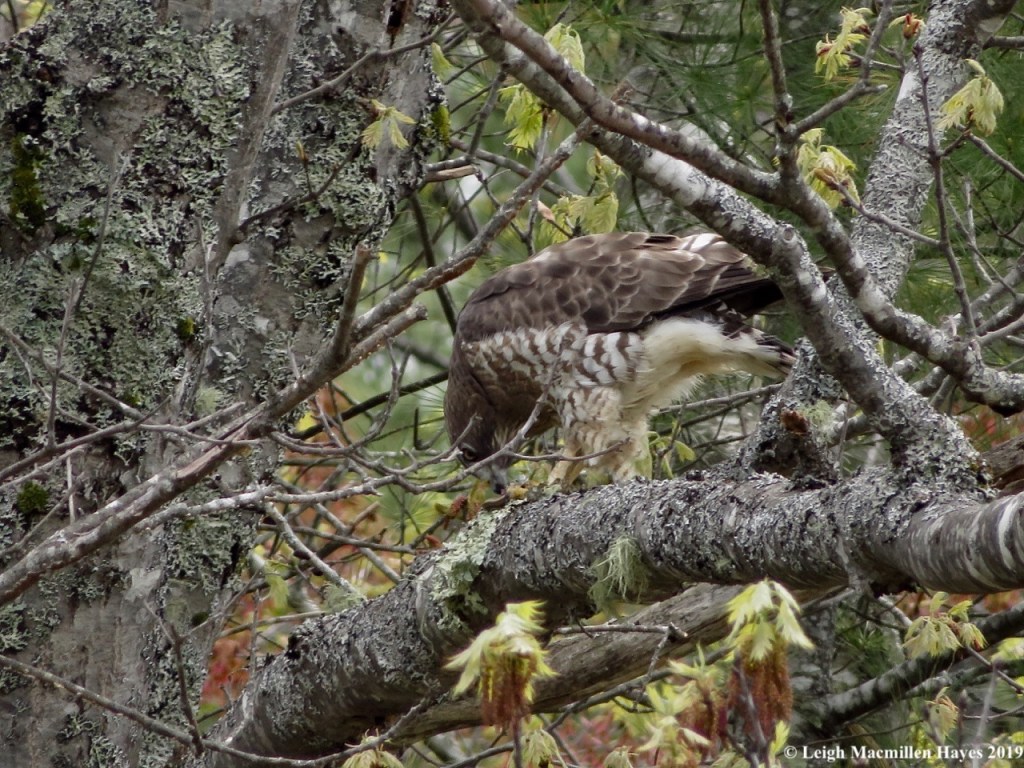
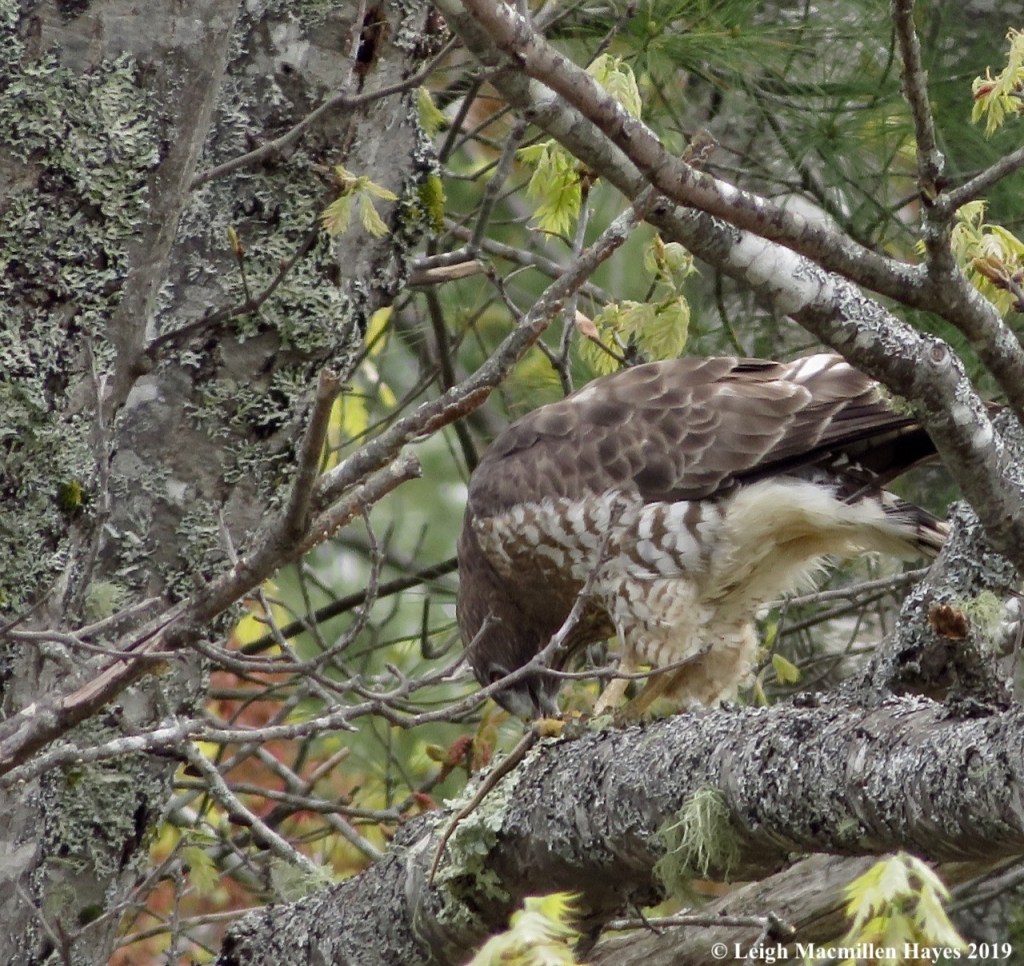
On a sturdy branch parallel to the ground, the Broad-winged Hawk did dine. He also frequently announced his presence with his high-pitched voice.

As a true carnivore, he’s known to eat reptiles, amphibians, birds, small mammals and even large insects. From my stance, I thought I saw a long tail that didn’t seem right for a vole. Instead, I wondered if it was a snake. I kept expecting to be greeted by one beside the vernal pool and the hawk wasn’t all that far away. I suppose that means that if the salamanders and frogs are able to crawl and leap out of the water, they’d better find good hiding places because this guy and a possible mate have been soaring above for a couple of weeks and probably have a nest nearby.

In the end, it seemed that whatever his meal was, it was lip-licking good. Upon finishing it, he flew south while I trudged across the field to the east. But I suspect our paths will cross again going forward.

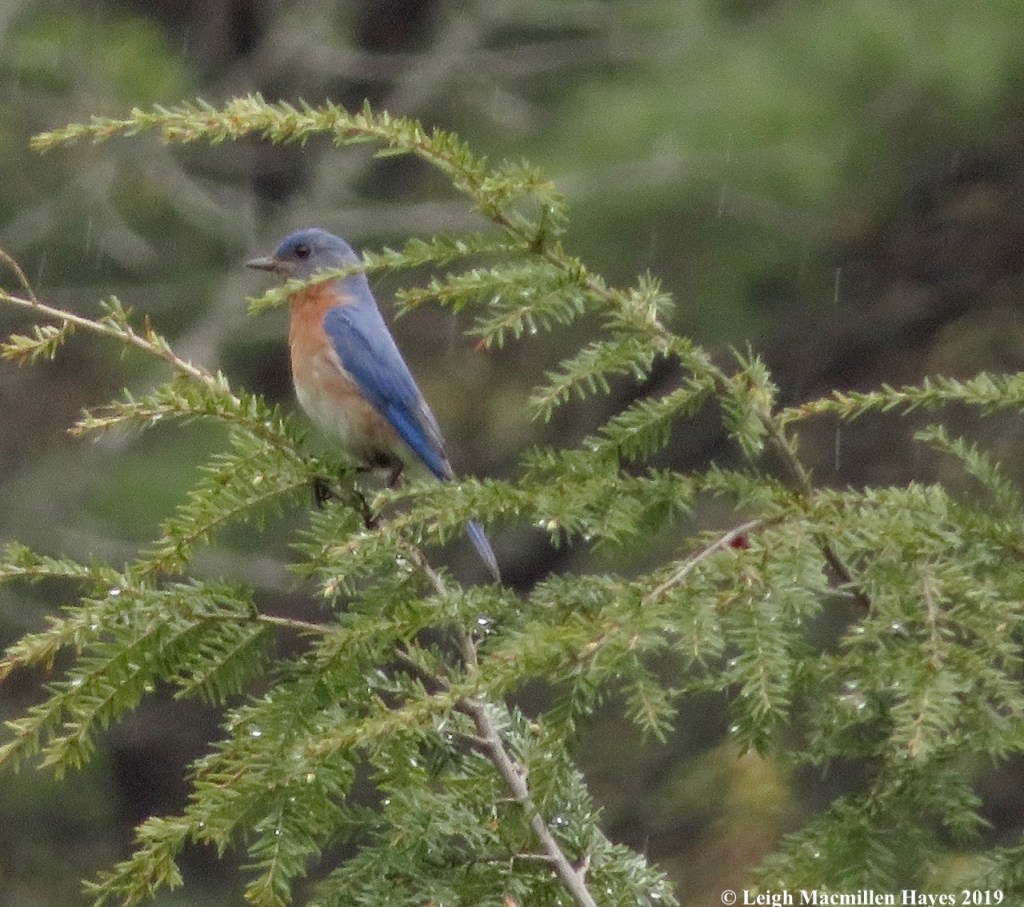
All of those finds were spectacular, but . . . one of the best parts of the day–watching Eastern Bluebirds in the yard. I first spied the male in this morning’s rain.

And then late this afternoon, I was surprised to discover that they were both here, the she and the he. For the most part, they stayed out by the stone wall, perched on branches above before flying down to catch a meal.

Then they flew closer to the house and landed atop the feeders where I don’t have any mealy worms that are much to their liking. I hadn’t even planned to still have the feeders out, but with each new day bringing new visitors, I’ve delayed taking them in for the season. That is, until a Black Bear arrives.

But no Black Bears yet. (Just wait, one will probably show up overnight or tomorrow.)

And so . . . Bluebird, Bluebird, through my focus. Thanks for taping me on the shoulder. ;-) And sharing this day with me.

Lessons from the Earth

Dear Earth,

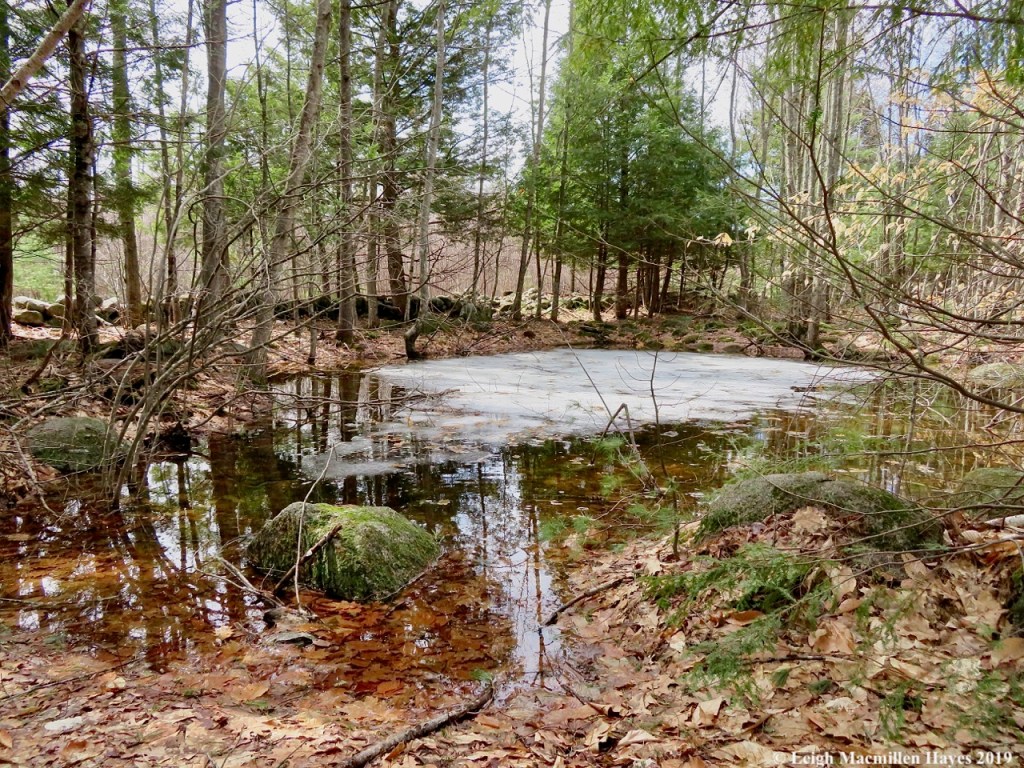
This year found me once again staying in my home territory to honor you and so while my guy did some yard chores, I chose to visit a few of your vernal pools.

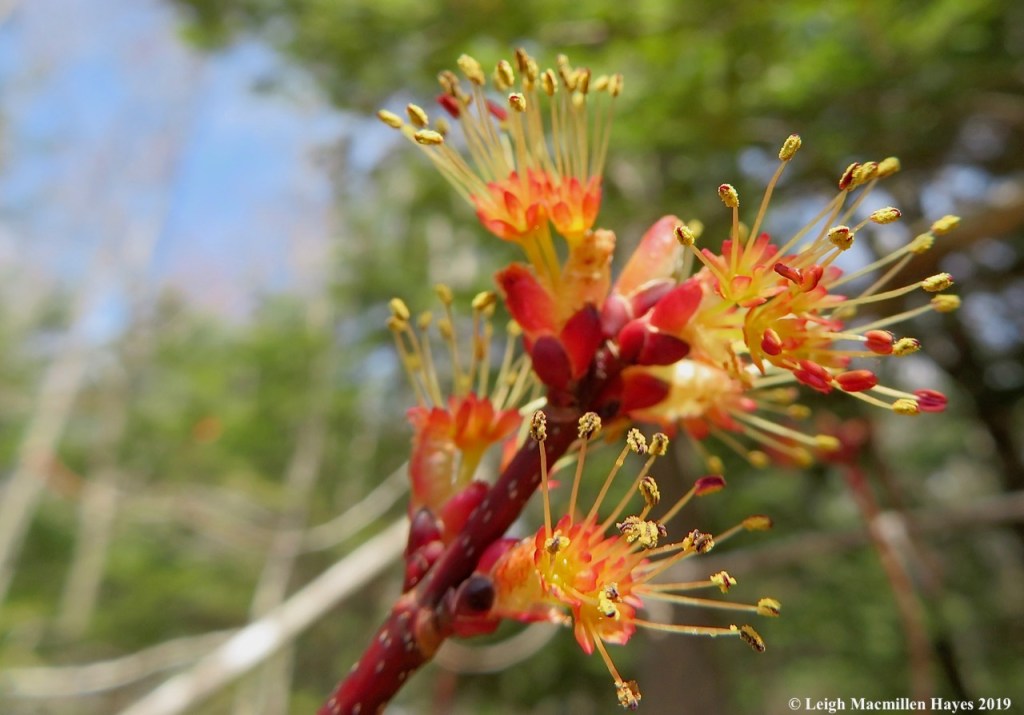
Along the way, I stopped to smell the roses! Opps, I mean admire the flowers of the Red Maples, their pistils and stamen all aglow.

As I approached the first and nearest pool, I new love was in the air for I heard the deep wrucks of the Wood Frogs. That is, until I got to within about ten feet, and then the only sounds were small splashes that barely created ripples as the frogs sought cover under the leafy pool lining.

But, as you’ve taught me in the past, I stood as still as possible and waited patiently. It was then that my eyes began to focus on the pool’s tenants. And I realized that the usual population of larval mosquitoes, aka “wrigglers” already somersaulting their way through the water. That may be bad news for me, but it’s certainly good news for the birds and dragonflies of the neighborhood. While I try to practice mind over matter when I’m stung by a mosquito, I have to remember that your plan to offer “Meals on the Fly” sustains so many others.

And then, and then I spied something disturbing. Actually it was two somethings. Frog legs of two frogs. And even a head. Dinner? For whom? Typically, I rejoice at a kill site for I realize that one species feeds another, but this one disturbed me. Perhaps, dear Earth, it was because I think of this pool as mine even though it’s located on a neighbor’s land, and I want to protect it and all that live within, as well as all who venture to it for nourishment. Eventually, I realized that perhaps someone had been nourished by the frogs, but why didn’t they consume the entire beings? Could it be one of their own species who went into attack mode? I don’t have the answer–but once again you’ve given me more to question. And so in the end I realized I should be grateful for having the opportunity to wonder.

The good news–right behind the two dead frogs was a recently deposited egg mass. Its form made me think Spring Peepers, but I’ll need to watch them develop.

Death. Life. The cycle plays out as if a best seller in this dramatic genre.

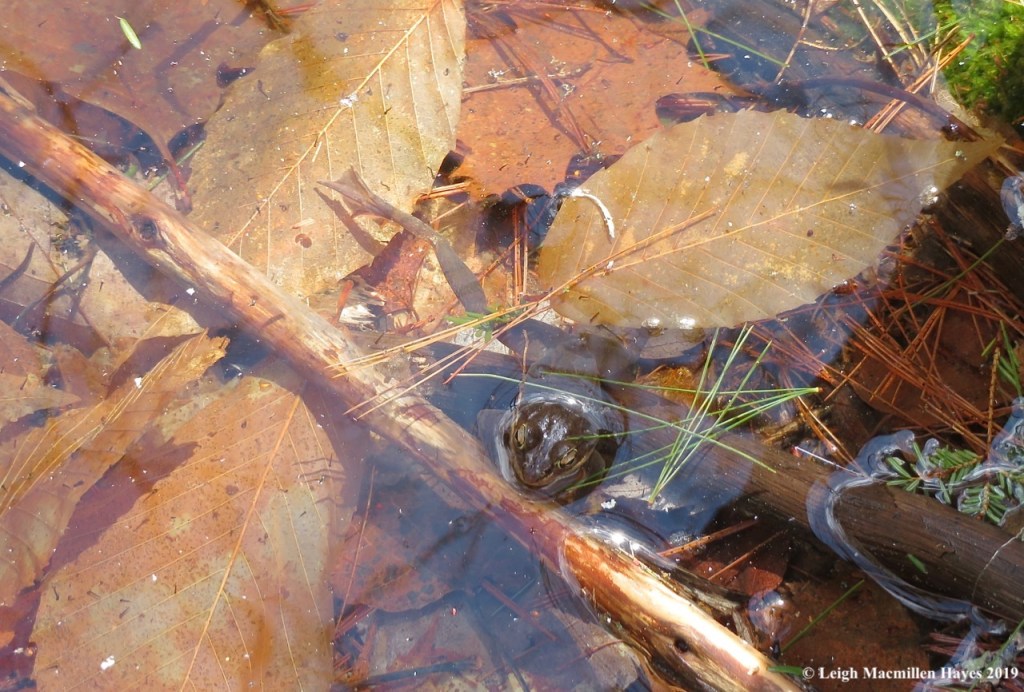
I circled the pool looking for any other unusual sights or clues, but found none. Eventually I stood on my favorite rock and appreciated that you finally rewarded me, dear Earth. A Wood Frog appeared by my feet and we both remained as still as possible–that is until my feet began to fall asleep and I needed to move on.

As you know, dear Earth, I located several more pools, their wruck choruses giving them away. And within one, it was obvious by the egg masses that the lover frogs had found their mates.

Walking back toward home, I got a bit nosey, as you know, and turned over some bark that had fallen from dead trees. To my delight: millipedes, earth worms, bark beetles, slugs, and . . .

At least five Red-backed Salamanders. That reminded me, dear Earth, that though I wasn’t able to join Lakes Environmental Association for Big Night on Saturday, that rainy night when the temperature ranges about 40˚ and the amphibians decide to return to their vernal pools to mate and folks try to help them cross our roadways to do so, I trust that you made sure the Red-backed Sallies and worms made their presence known in the grass behind the Masonic Hall. Did you?

As for my walk today, I followed our trails and then an old logging road, where the deer and moose and coyotes and foxes and turkeys also roam.

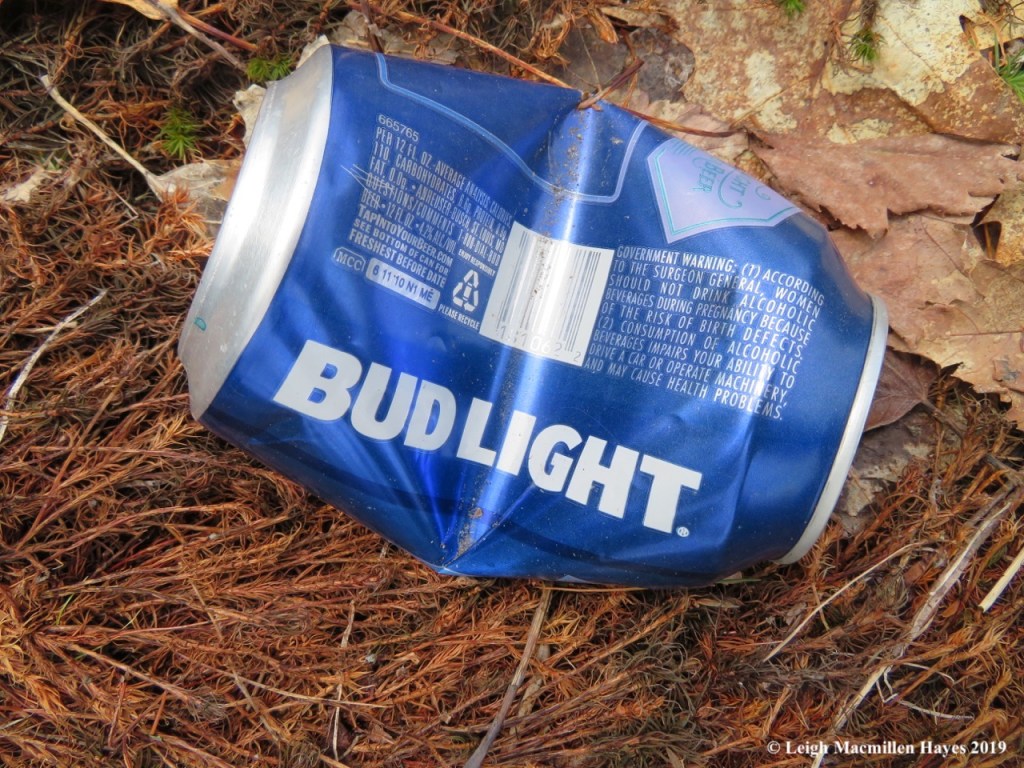
And because part of my journey took me along the snowmobile trail, I picked up some empties and realized that not all turkeys are created equal.

But you don’t judge, do you dear Earth. Nor do you pretend that the world is perfect.

That being said, the sight of my first butterfly of the season, the pastel colored Clouded Sulphur, was rather perfect in my book.

Thanks for once again taking the time to teach me a few lessons . . . lessons from the Earth on this, your day, Earth Day 2019.

Looking for Spring

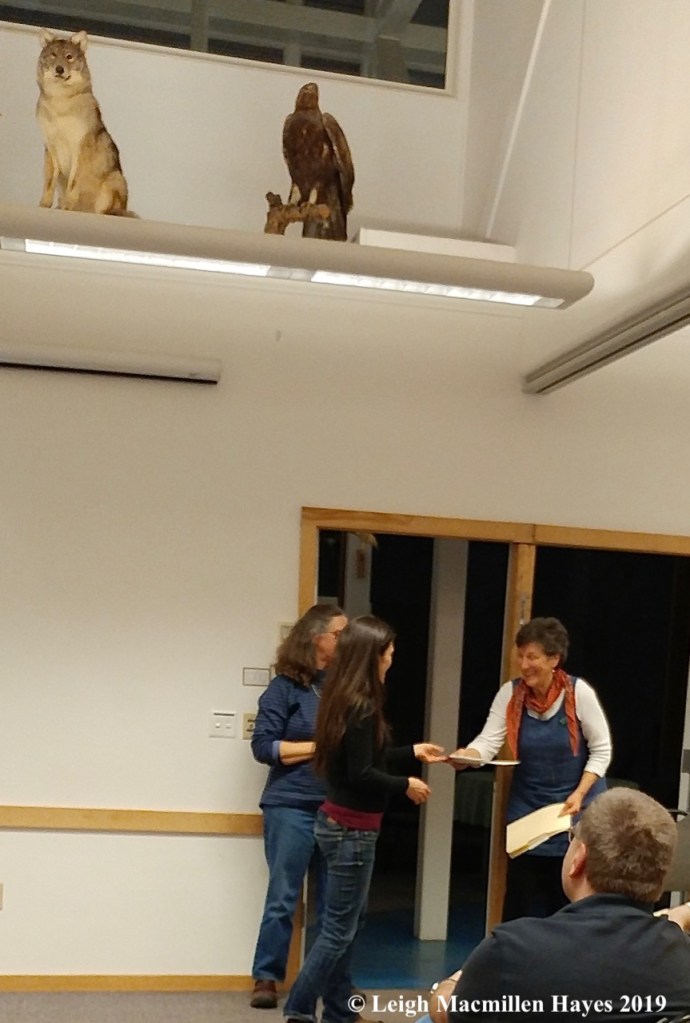
Last night one of the Greater Lovell Land Trust‘s volunteer docents earned her certification from the Maine Master Naturalist Program. The MMNP’s goal is to develop a statewide network of volunteers who will teach natural history throughout Maine. With hands-on training, the course provides over 100 hours of classroom and outdoor experience, focusing on geology, identification of flora and fauna, wetland and upland ecology, ecological principles and teaching methods. By the time students complete the program, which includes a final capstone project, they have developed the skills to lead a walk, present a talk and provide outreach. In the year following certification, each graduate agrees to volunteer 40 hours and thereafter must continue to volunteer to remain an active Maine Master Naturalist.

And so it was that Juli joined four of us in the GLLT’s docent group by becoming a certified naturalist last evening. And today, she was out doing what she does best–leading homeschooled families along a GLLT trail. You see, for her capstone project Juli created a group called Nature Explorers. On the second Tuesday of each month (and today’s was the third trip she’d led for this group), other homeschooled families join hers for a walk with a focus along a GLLT trail. Today’s focus: Signs of Spring.

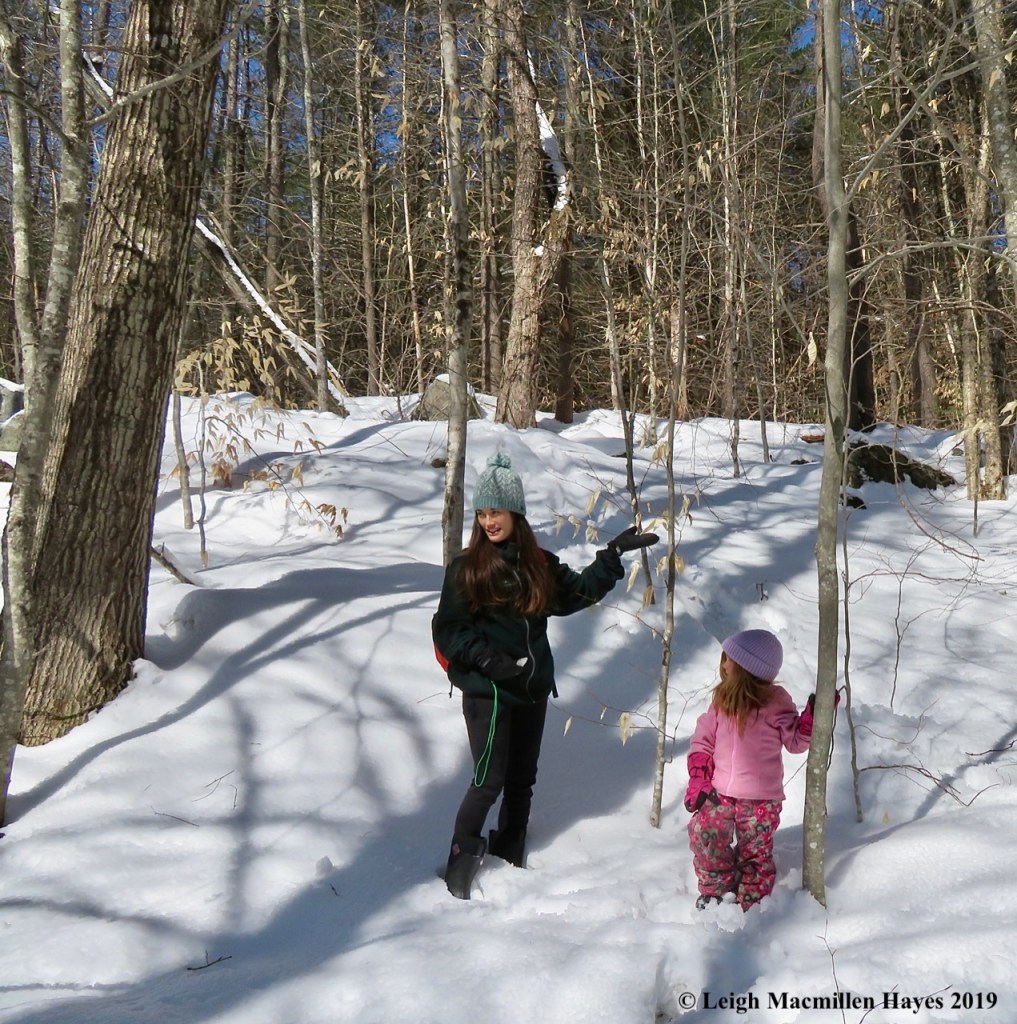
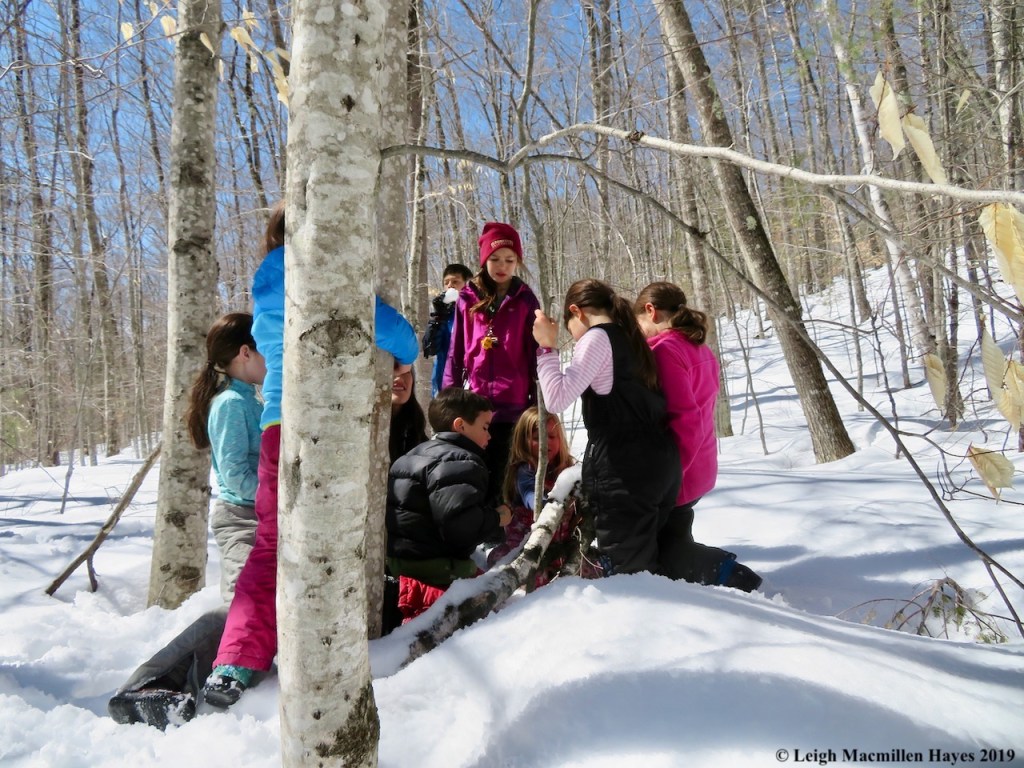
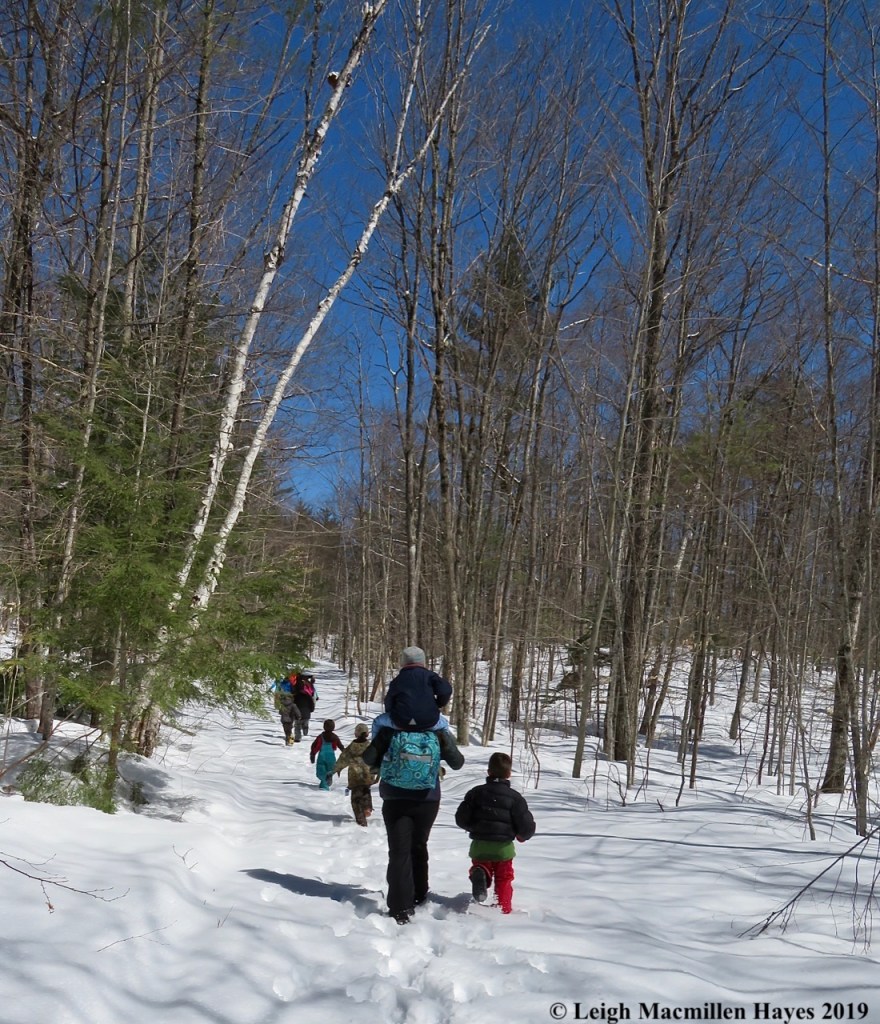
Given the fact that the snow is still at least knee deep, we knew it wasn’t going to be easy. But the day dawned bright, if a bit chilly to start, and so two of Juli’s kids waited for others by hanging out with the trees. Or rather . . . in the trees.

Once all had gathered, she led us down Slab City Road to the trailhead for the Heald and Bradley Ponds Reserve.

It was there that while we began our search for the season that often begins with a stubborn start in western Maine , we spied something that brought smiles to our faces and awe to our experience. Otter slides. On both sides of Mill Brook. Look carefully and you may also notice the slides–they look like troughs in the snow.

We tromped through (leaving our snowshoes behind, which we sometimes regretted) to take a closer look, noticing where the mammal had bounded and then slid down the embankment.

And then we moved on . . . to observe and learn, including fifty cent words like marcescent, which means withering but remaining attached to the stem. Juli pointed out the dried up leaves on the beech trees.

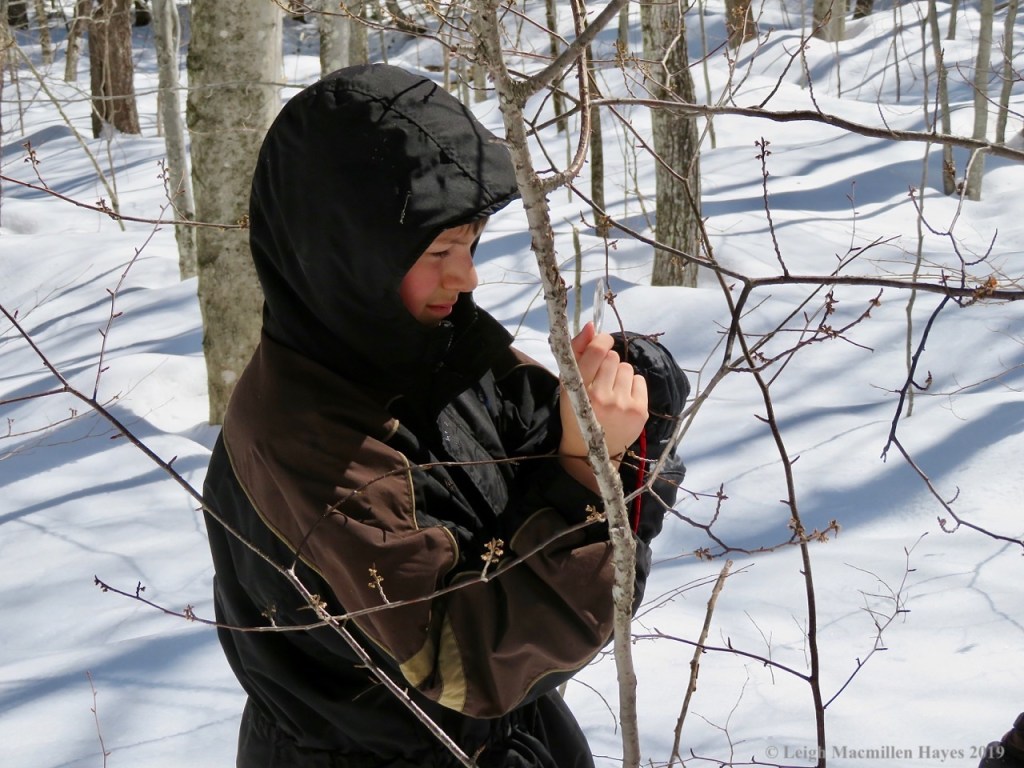
And the kids joined her to take a closer look–at the leaves, but also the buds, which had started to swell. Ah, sign one!

It was a Witch-Hazel which next grabbed the group’s attention. She explained that while the small, gray woody structures looked like flowers, they were really capsules that go dormant throughout the winter. Those will develop over the next growing season and then in autumn forcibly expel two shiny black seeds about 10 to 20 feet.

One of the boys noticed that the buds were hairy and so others came in to examine the structures.

From there, it was another beech tree to check out, but this time the discussion moved toward the alternate orientation of its branches and leaves.

And then, because they suffer from the best of syndromes we refer to as Nature Distraction Disorder, the group stopped at a Red Pine to admire its bark.

With hand lenses, they focused on the various colors of the thin, puzzle-like scales. Some had fallen to the ground as is the habit of the flakey bark, but Juli reminded everyone that it’s best not to pull it off for bark protects the tree much like winter coats protect us.

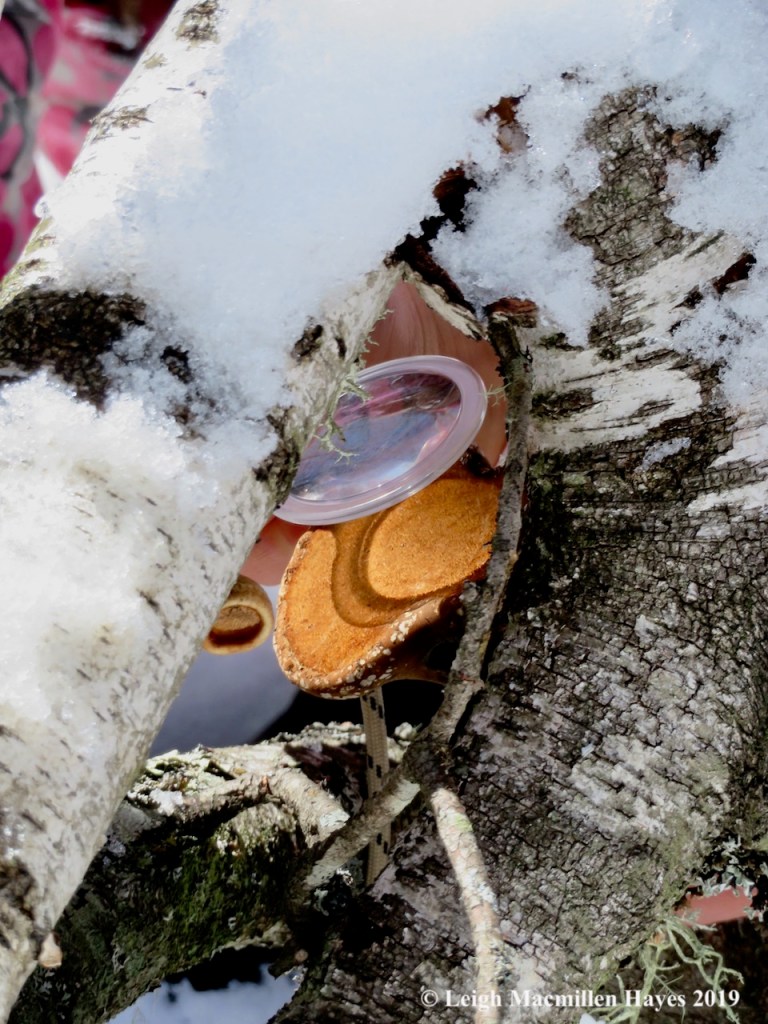
It was a fungi that next attracted the group.

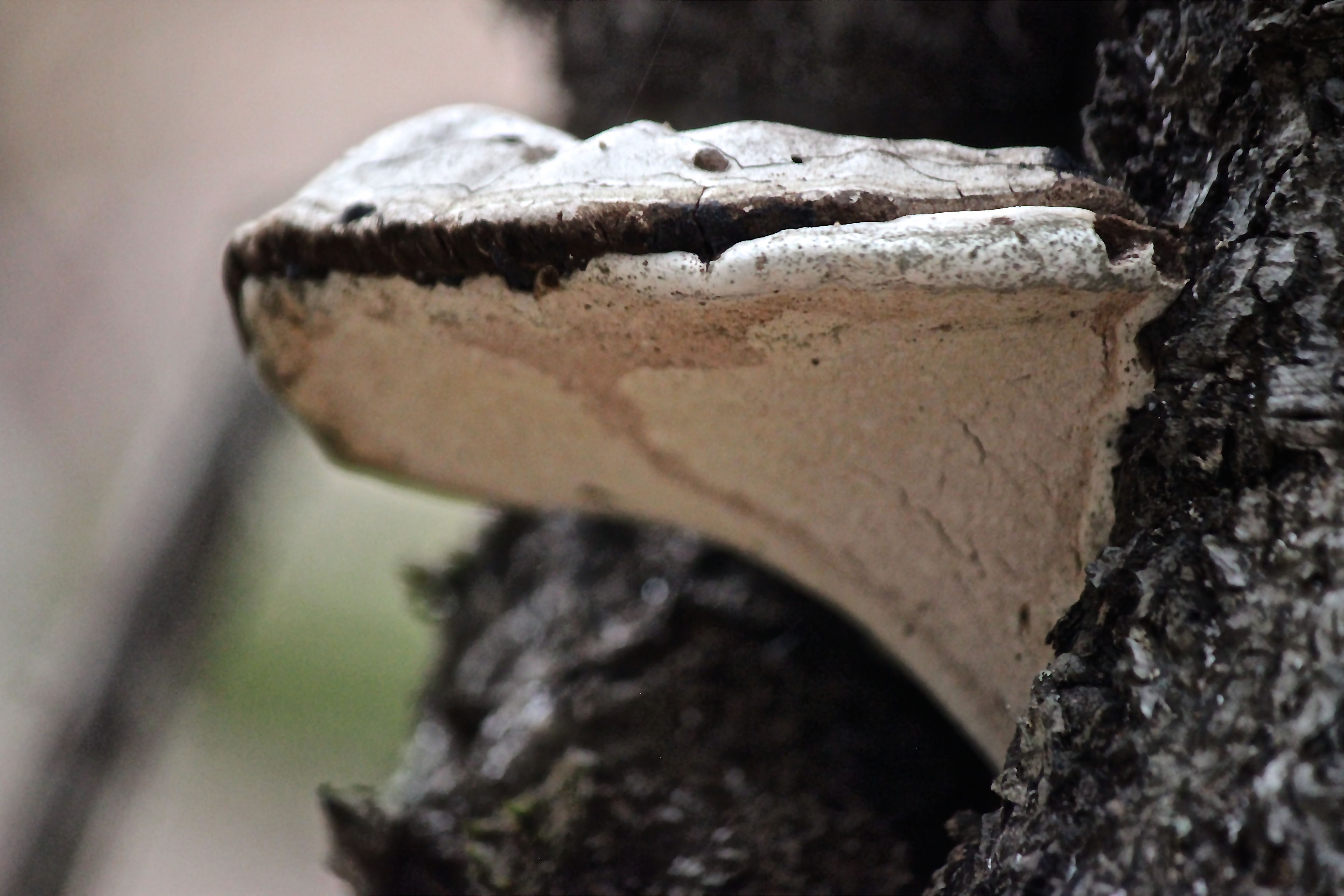
And so they pulled out the lenses again to look at the spore surface of several Birch Polypores growing on downed trees. The brownish underside was actually another sign of the season for they would have released their spores in late summer or autumn.

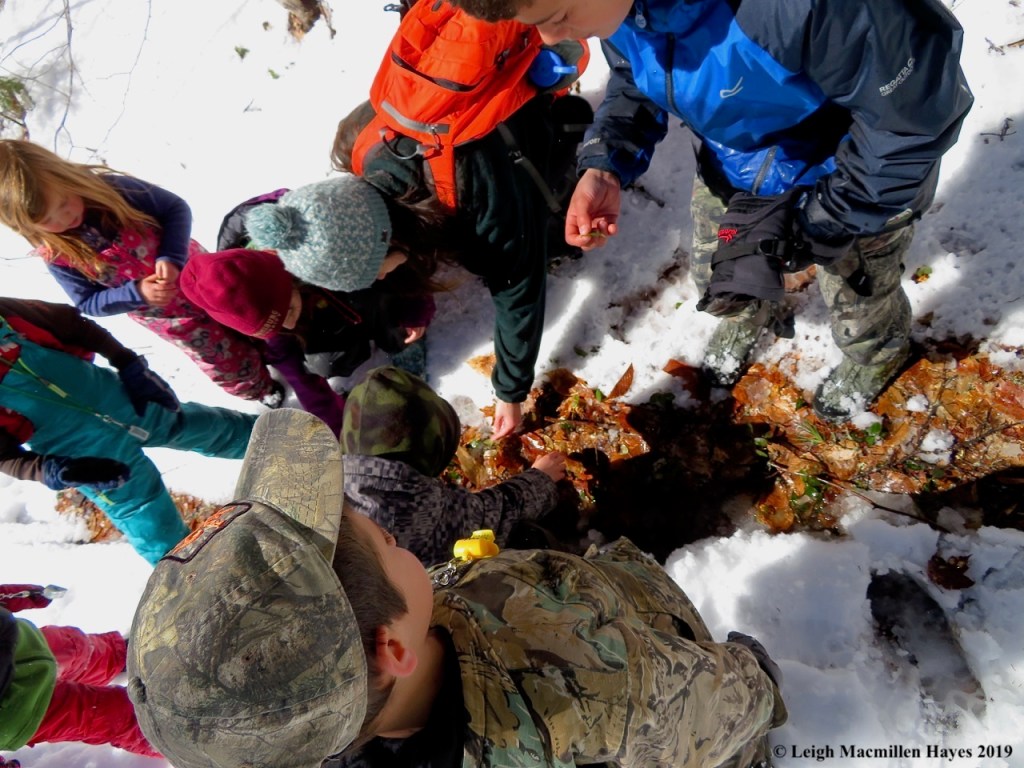
A wee bit further and a wet spot was noted where we could see some brown leaves reflecting the names of trees in the canopy above, but also, drum role please . . .

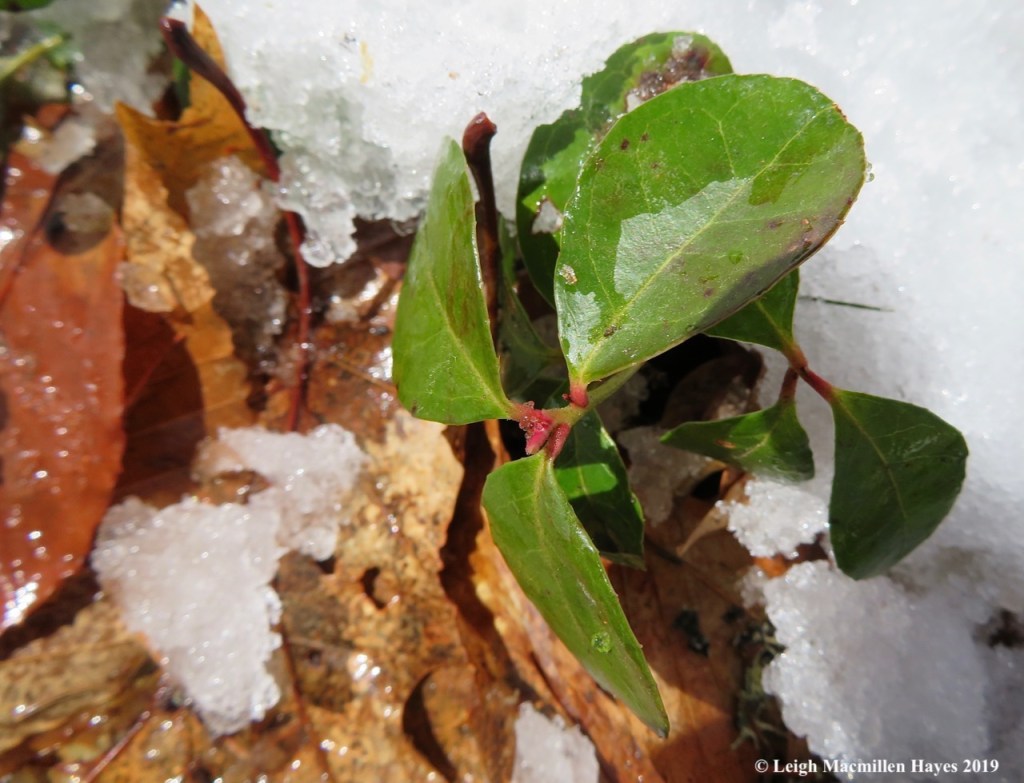
some greenery with buds beginning to form–in the shape of Wintergreen. One of the girls did point out that though it was a sign of the season, it did have the word “winter” in its name.

Another one of the girls looked up at an old Pileated Woodpecker excavation site, and noted the spider web within that had been created last summer by a funnel-web spider, so named because of the funnel-shaped web. Though no one was home today, the spider typically waits in the funnel for prey to fall onto its horizontal web. Then it rushes out, grabs its victim, and takes it back to the silken burrow to consume and hide in wait.

Since our signs were few and far between, and Juli really wanted to get to Otter Rock to show some fun finds, she challenged the kids to run with her.

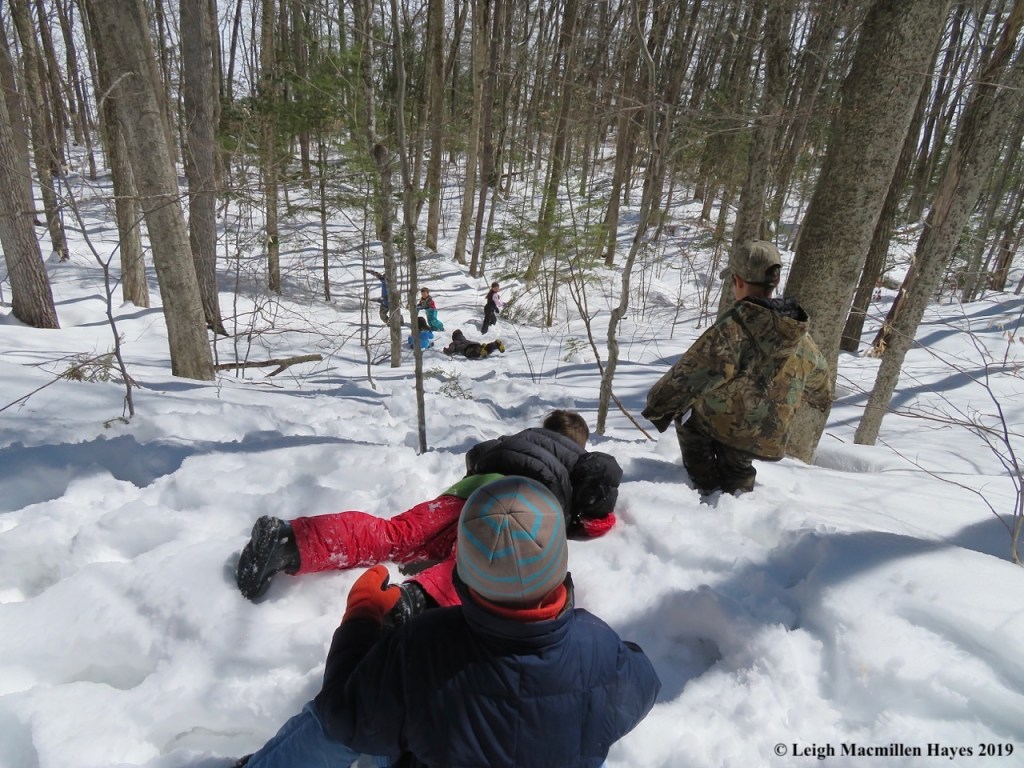
They did. And then they slid.

And looked.

And spotted.

And wondered.

And wondered some more.

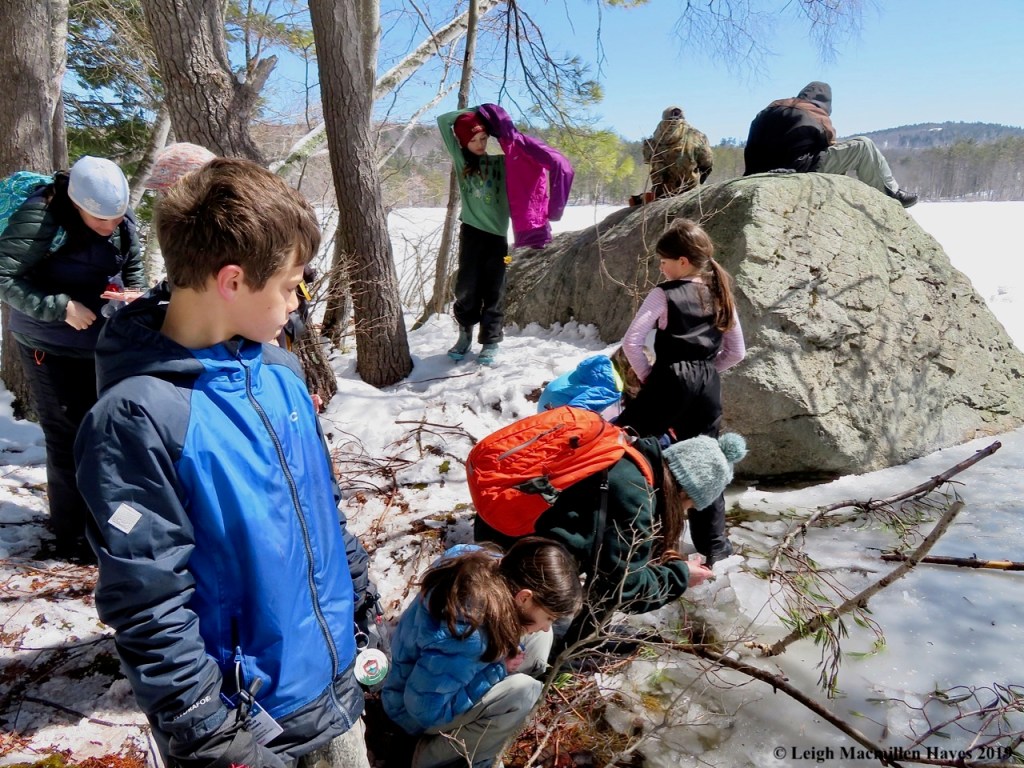
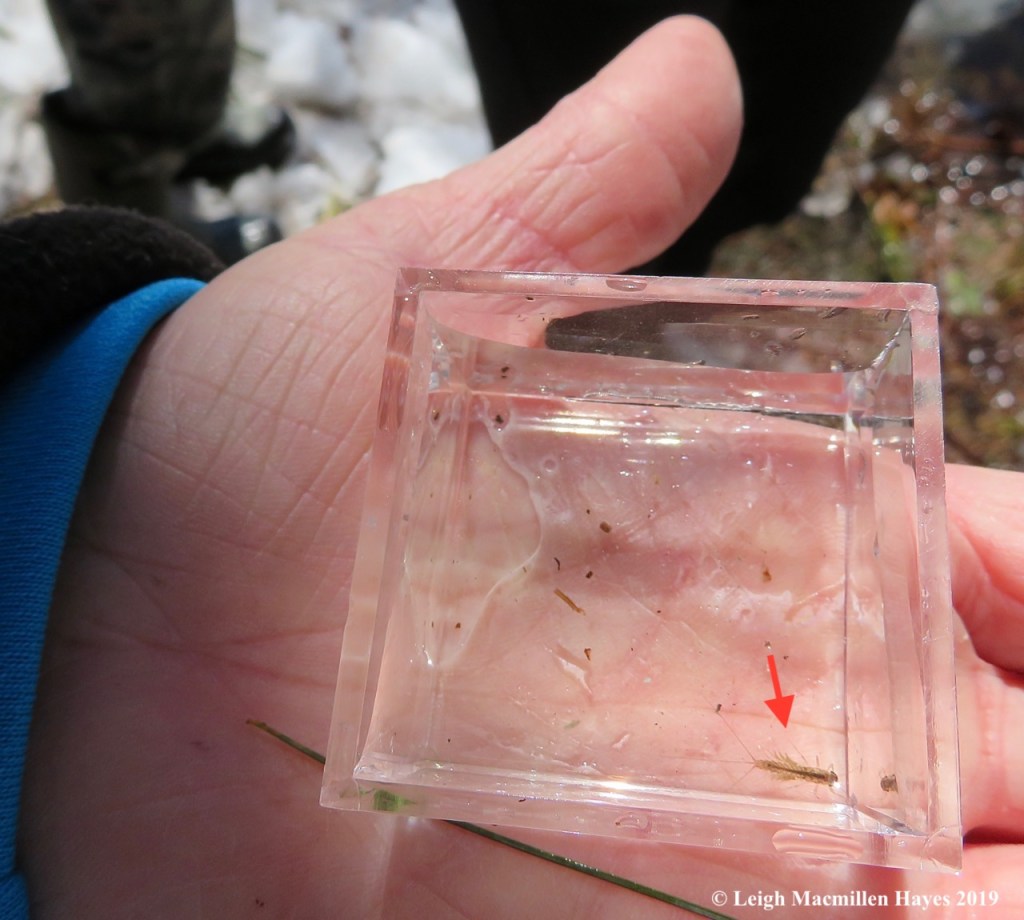
We’d reached our destination of Otter Rock and though we didn’t have any dipping containers, we made do with lucite bug boxes.

At the edge of Heald Pond, the kids found movement in the water . . .

in the form of Mayfly Larvae, with fan-like gills along the abdomen and three filaments at the tip.

Spring indeed! With that discover, we left with a spring in our steps, already looking forward to next month’s vernal pool exploration.

P.S. Thanks Juli for this wonder-filled offering, and congratulations on your achievement. You are now a member of the nexus of naturalists.

Lake Living–spring 2019 issue

If you are receiving this for a second time, I apologize, but the link to the magazine was incorrect.

I am beyond excited to announce that the spring issue of Lake Living magazine is now available on a store shelf near you . . . or right here!

It’s our At Home” issue, where we feature articles about home-related items and projects. One of the projects is very close to my heart:

Yup, that’s our current kitchen. But as you can see by the title, change is in the air. You’ll have to read about it. The plans continue to evolve as I write, but we’re close to finalizing them. All that being said, nothing will happen until this summer as we still have a couple of feet of snow in the yard and after that melts, it will be quite wet for a few months. But stay tuned for The Evolving Home, part 2 in the fall issue.

Also featured: “Finding Home” by Laurie LaMountain–about rescue dogs and organizations that place them in forever homes; “Shaker Inspired”–a collaborative effort by Laurie and me about furniture built in Bethel, Maine; “A Patch of Land, part ii” by the up-and-coming writer Marguerite Wiser–describing the efforts of a local couple who have worked hard to turn their farm into a vibrant, year-round enterprise; “Cooking with Clay” by Laurie–highlighting the ever-delightful and creative Rusty Wiltjer, a local potter, and also featuring some cooking with clay recipes; “An Improved State of Home” by Laurie–offering fresh ideas for organizing and getting rid of some of your “stuff;” and finally, “Dear Earth” by yours truly–a heartfelt and funny homage to our wise and wonderful, but challenged Earth.

Please, please, please support the magazine’s advertisers (including a certain hardware store). Without them, we can’t continue to produce this little gem of a magazine (yes, I’m biased.)

And get ready . . . for soon, I promise, the snow and ice will melt and the wood frogs and spring peepers will come to a vernal pool near you.

So Many Unknowns

On this historic election day, a few friends and I took to the woods with the intention of absorbing not only the sun’s heat, but the warmth of each others company. Yes, occasionally our conversation turned to politics and wonder about the future, but for the most part, we just wanted to wander together.

h-vp-1

Our first spot for consideration–a vernal pool tucked away in the woods.

h-vp-2

In true v.p. behavior, it dried up during the summer drought, though as we moved about we experienced a sinking feeling–muck obscured by grasses and leaves. This particular pool is home to fairy shrimp and their eggs cases are protected under the leaf litter until water returns. The amazing thing about fairy shrimp–those eggs can survive long periods of drying and freezing. We trust we’ll have the opportunity to meet the next generation.

h-wintergreen-1

Sometimes our eyes were tricked by what we viewed and we questioned how things could be so.

h-wintergreen-with-candelabra

But upon a closer examination of the facts, we realized that a club moss was merely growing near the wintergreen and the wintergreen hadn’t taken on a strange candelabra form.

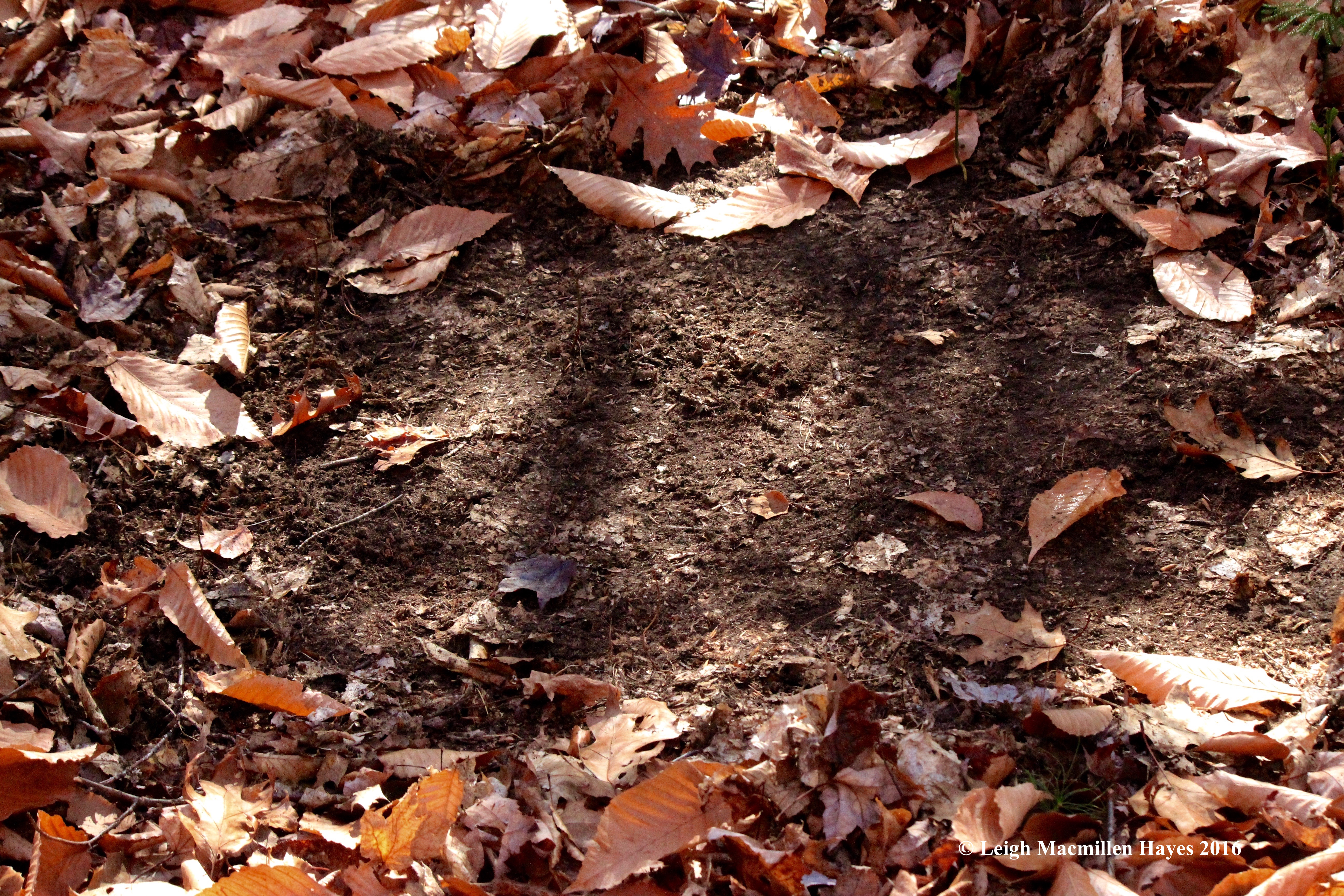
h-clearing

Our questions continued, however. Why was the ground completely cleared in the middle of the trail? Mammal behavior? We noted boot prints and wondered about human interaction. Finally, we moved on, unable to understand the reasoning, but knew that there are some things we’ll never fully comprehend.

h-green-oak-leaf

In another place, we noticed a green red-oak leaf. A holdout perhaps that preferred the way things had been and didn’t want to follow the rest of the group?

h-hawkweed-1

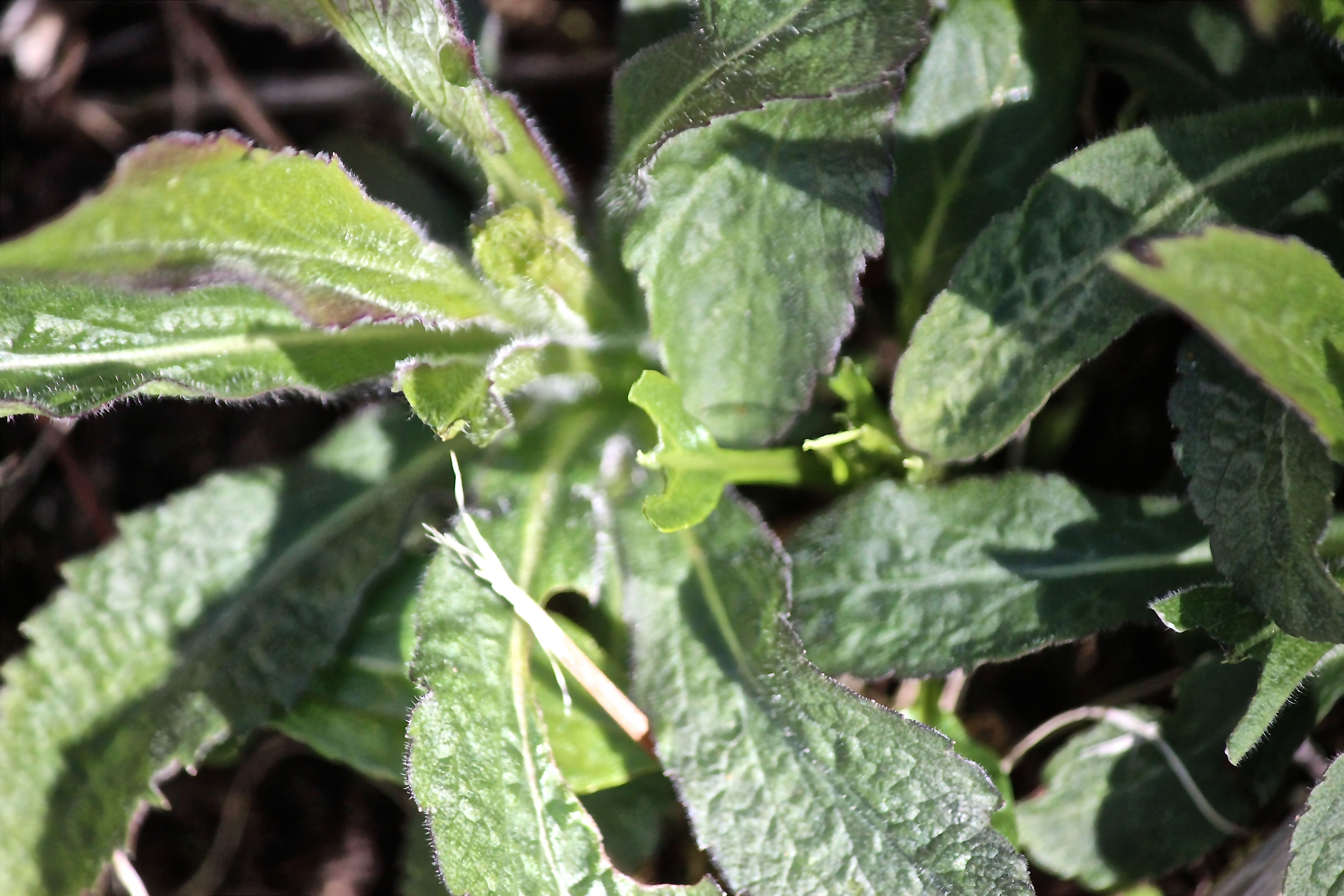
Occasionally, we calmly debated the structures before us as we considered shape and hairiness and growth pattern and location before we determined species–in this case, hawkweed.

h-wood-art-1

And other times, no need for questions, no need for answers. Pure admiration for the presentation was enough.

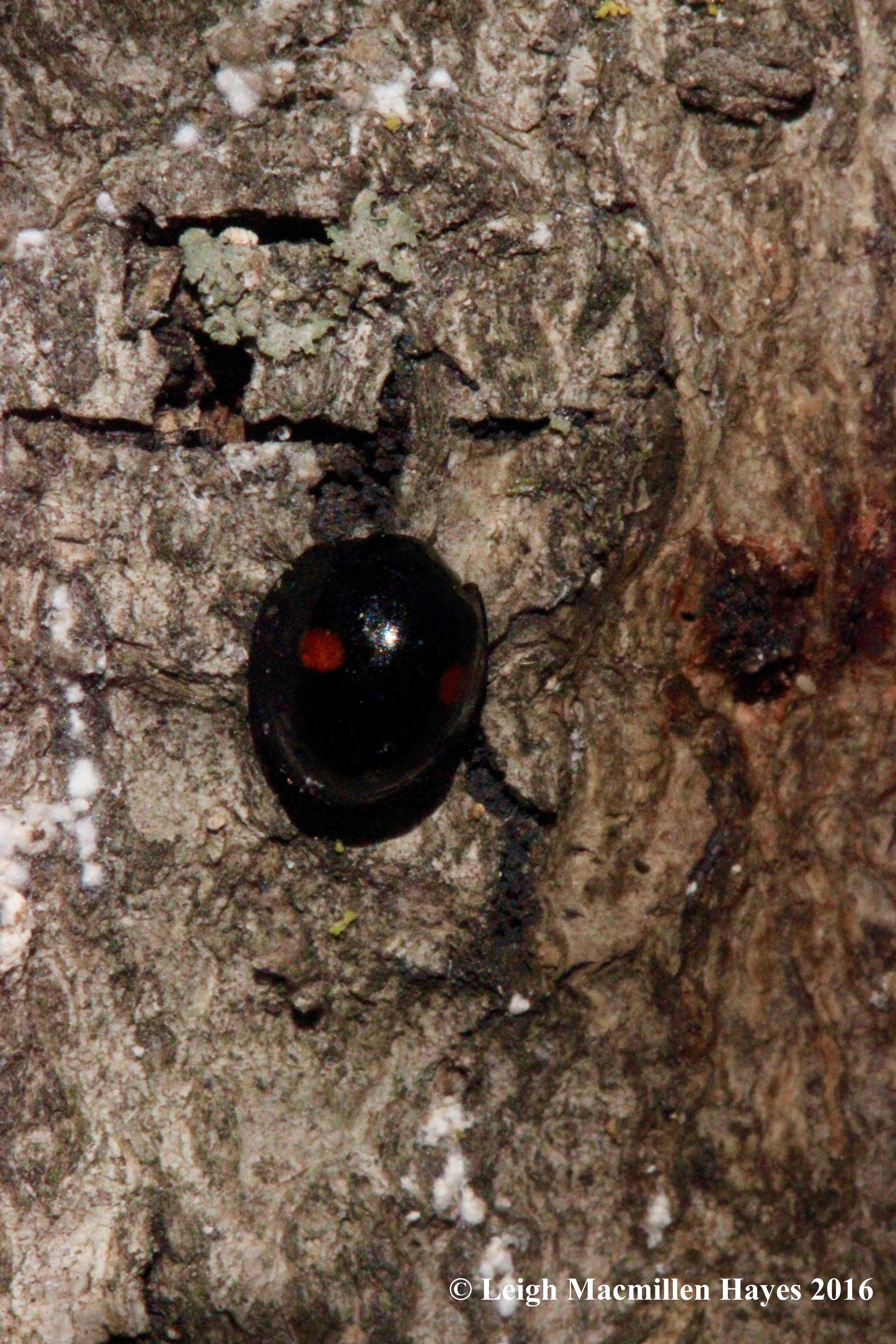
h-ladybird-beetle

When we were again drawn in for a closer look, in this case at the white fuzzy beech scale insect, we suddenly realized there was so much more to observe, such as the black ladybird beetle.

h-spiny-leaf-beetleladybird-hatching-from-pupa-stage

And then, something we didn’t understand at all. What was this spiny creature? And what was emerging from it? We left with that question floating among us. It wasn’t until doing some research later that I came to what may be the answer. Was it a ladybird beetle emerging from the pupa stage? How I wish we could go back and find it again and look at it with a different mindset.

h-alt-dog-lichen-1

Drawing close to the finish of our journey together, we spied something we’ve passed many times before, but never noticed.

h-alt-dog-lichen-2

Again, we’ll need to revisit the mossy boulder, but we determined it was a dog lichen. Why dog? Was it so named for the white “fang” like rhizines on its lower surface?  Or did the lobes remind someone of dog ears? Based on the large, fan-like shape, my leaning is toward Peltigera membranacea or Membrane Dog Lichen. But, I could be easily swayed on its ID.

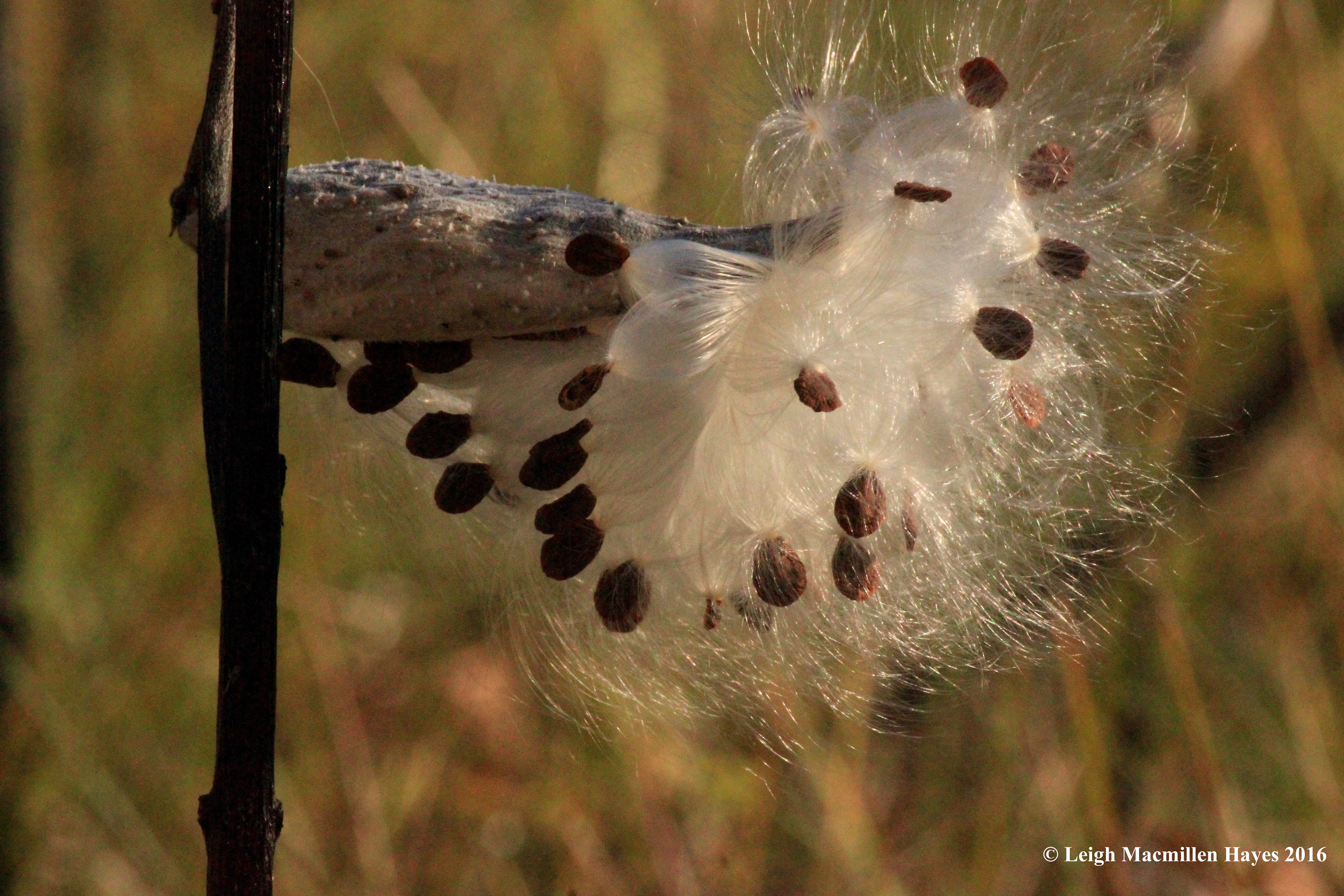
h-milkweed

A short walk and hours later, we finally passed a field of milkweed, their seeds blowing in the slight breeze like flags on a pole.

It was time to say goodbye to friends who will head south this weekend before I headed back to “reality” and colored in those little ovals.

I think we all came away thankful for the questions raised and knowledge shared, but still . . . so many unknowns.

America the Beautiful

This morning’s rain and overcast sky embraced the melancholy emotions of this day as we remembered  family, friends, acquaintances and strangers who have served our country, especially those who died during times of conflict.

And then the sun shone.  It didn’t mean that we stopped remembering. But it did shine a light on the beauty that surrounds us and that we have the opportunity to observe if we so choose. Because of the service of others, we’re fortunate in that regard–we get to choose.

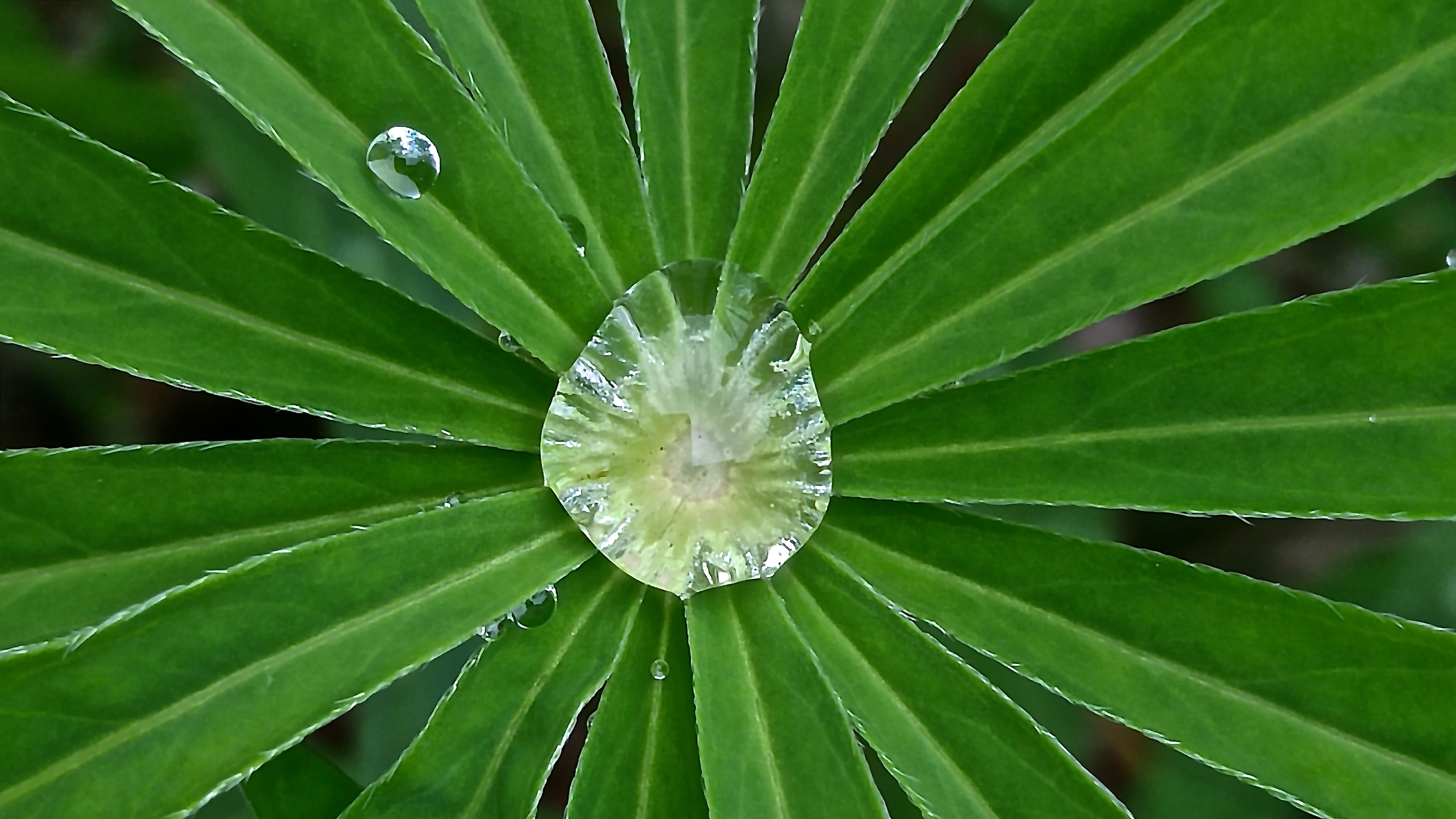
ph droplet on lupine leaf

I chose to step out the back door and notice.

ph-chives 2

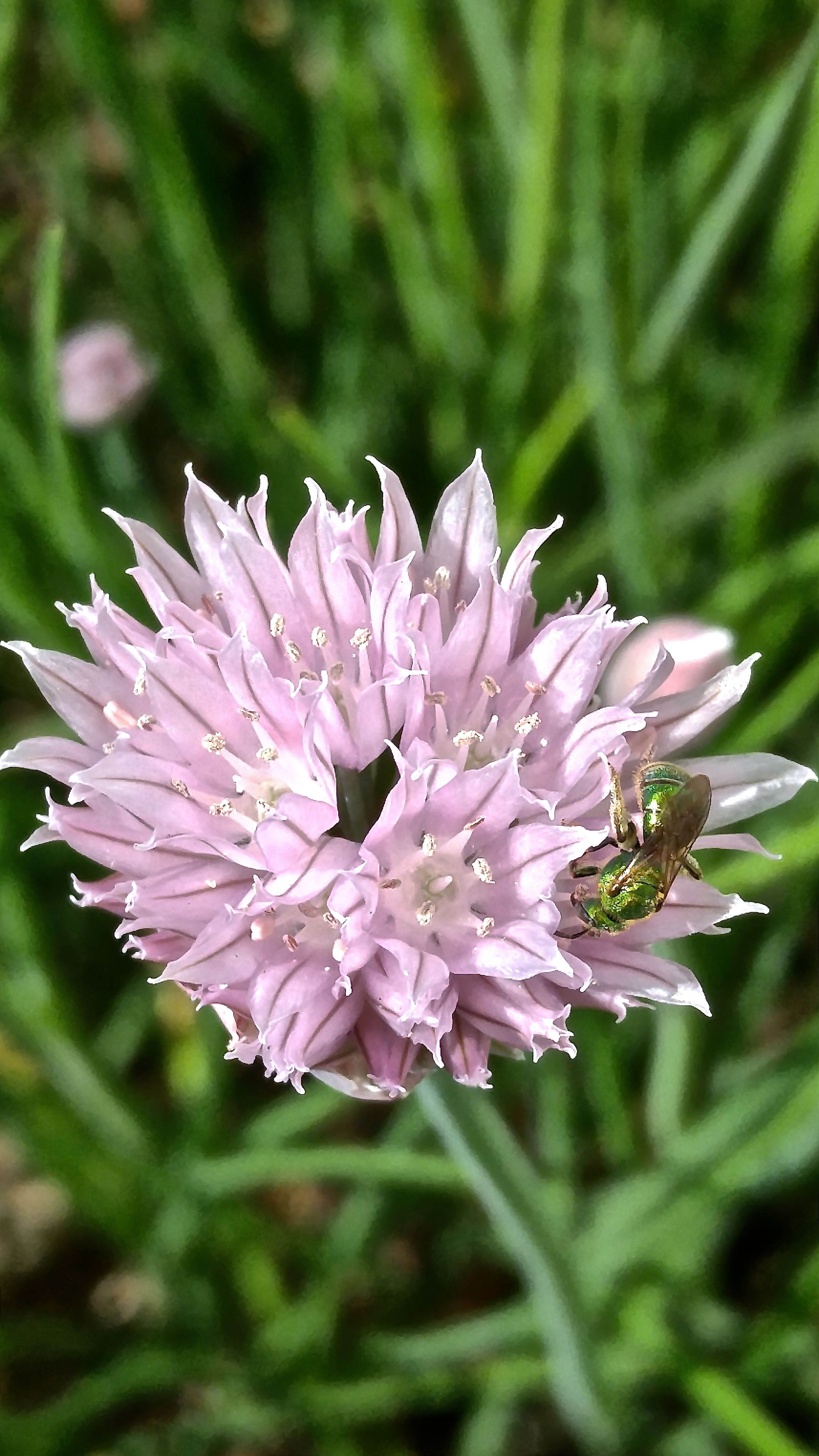
Visitors upon chive florets.

ph-anem2

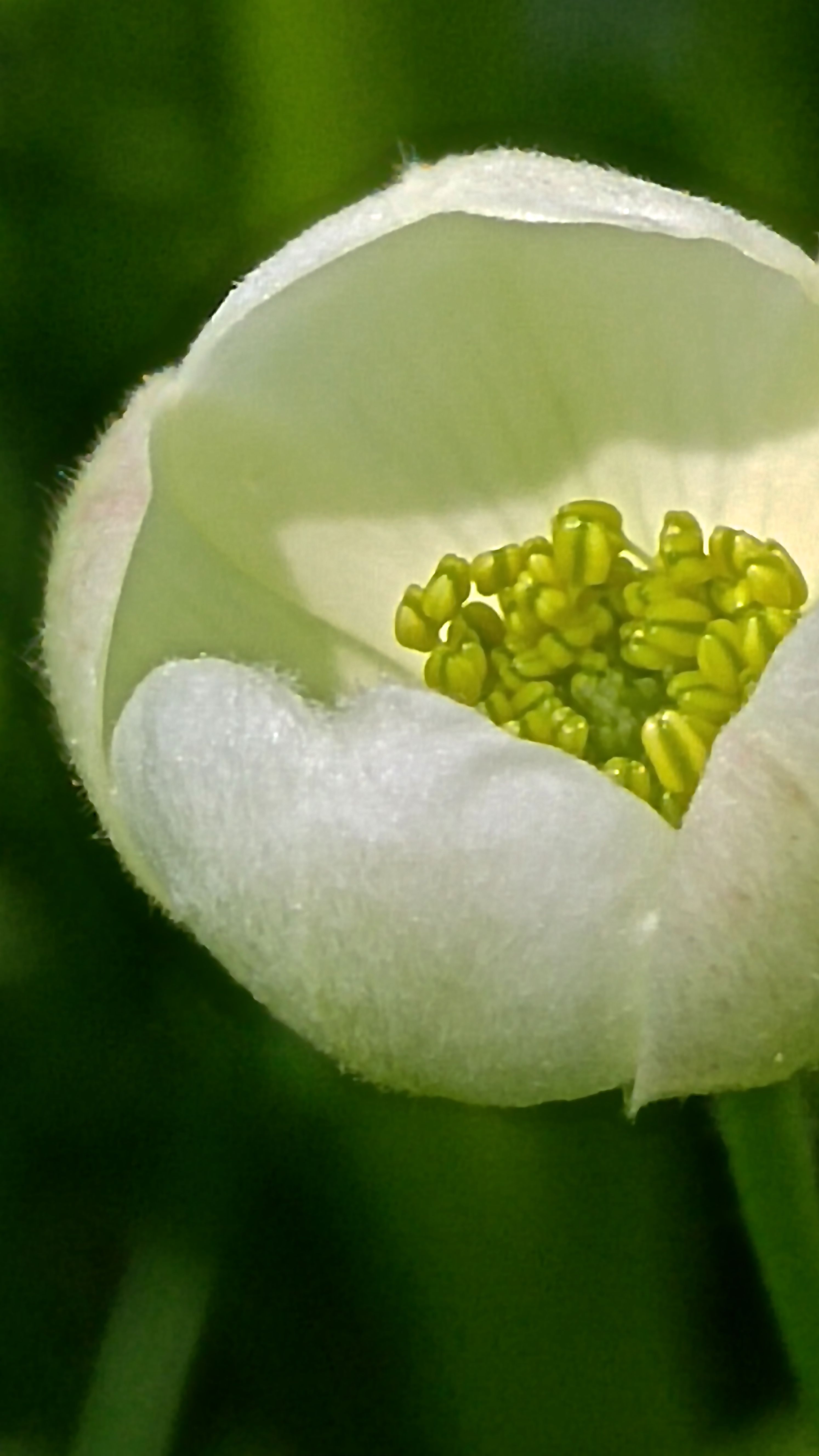
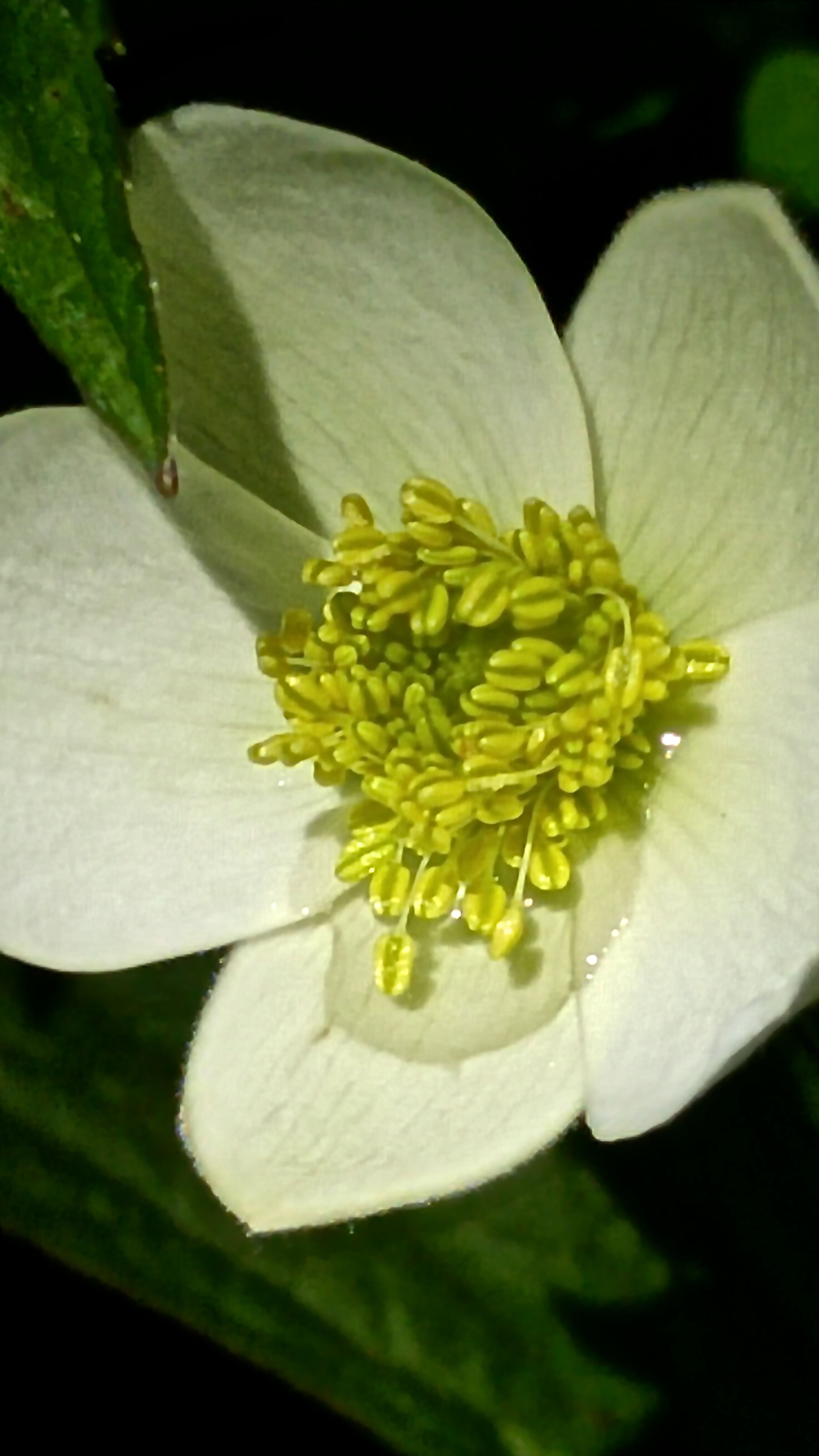
Unfolding Canada anemone.

ph-anem3

And the first to open.

ph-cherry

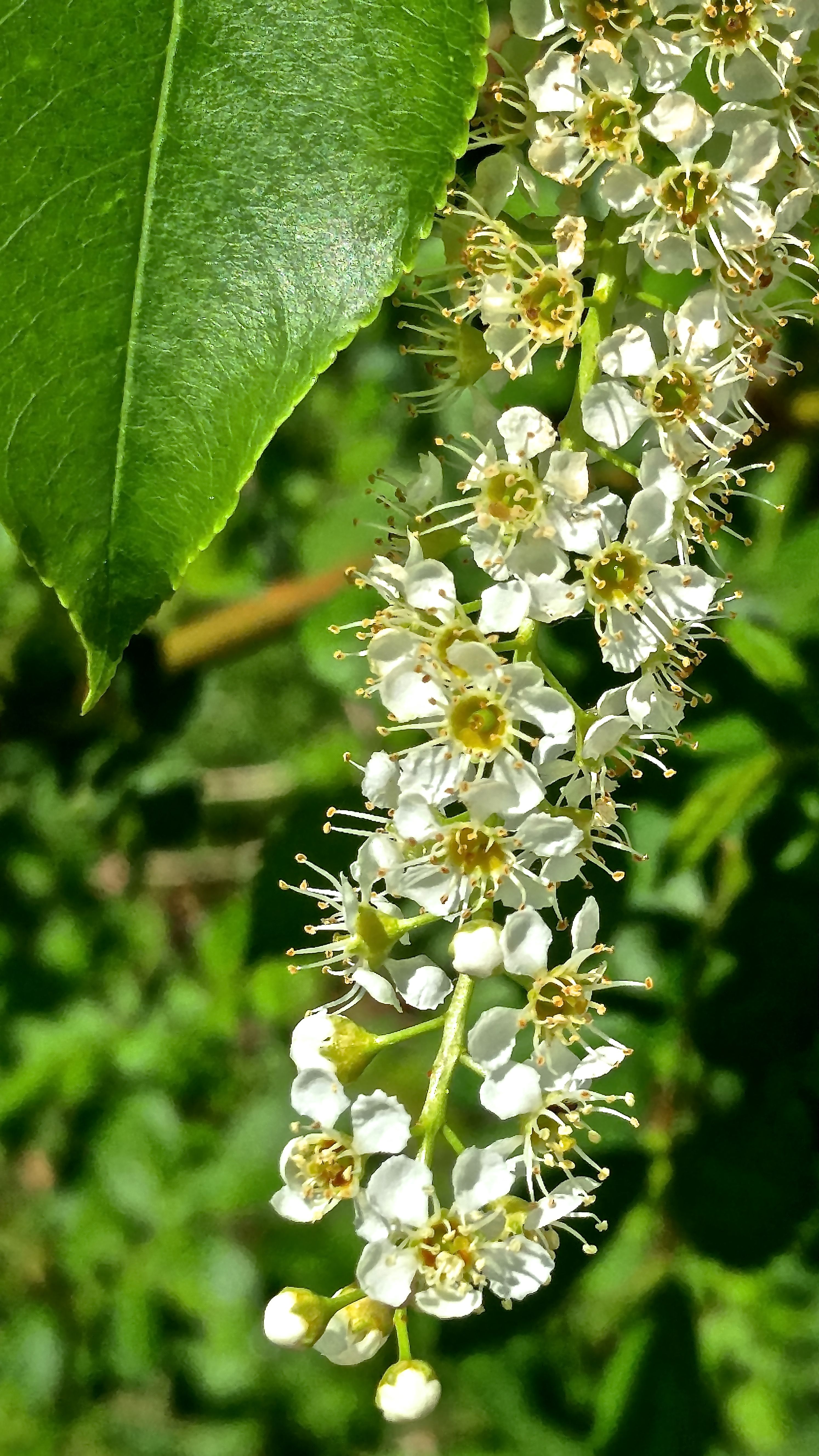
Black cherry blossoms all in a column.

ph-chokec2

And chokecherry blooms in terminal clusters.

ph-hemlock cone1

Blue-green baby hemlock cones.

ph tad 6

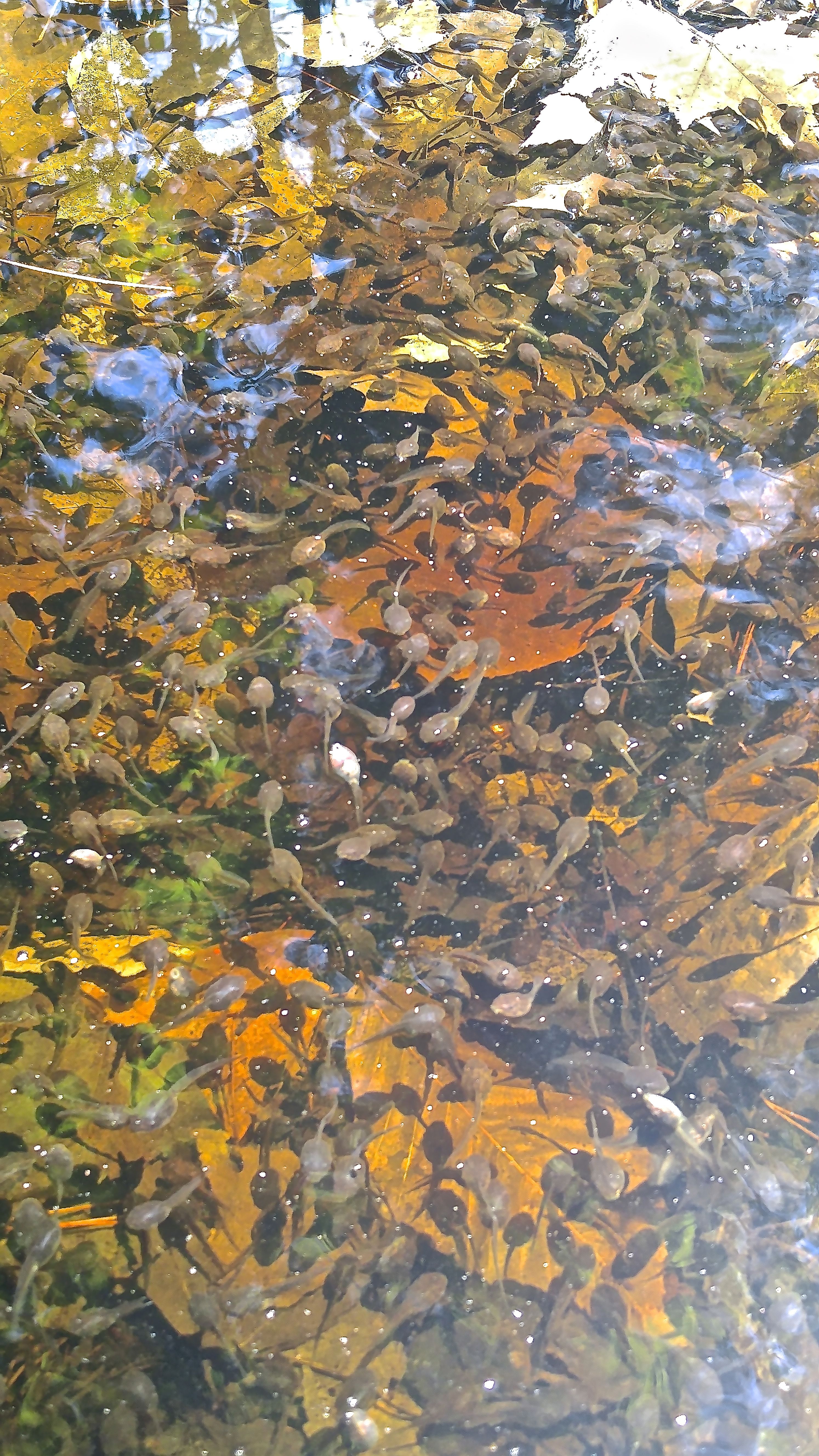
And life teeming in the vernal pool.

I’m thankful for the freedom of choice. America is beautiful.


The Big, The Little and Everything In Between

I stepped out of the shower after a walk around town with friend Marita and heard someone chatting away on the answering machine. Maybe it’s because I didn’t have my glasses on, though what that has to do with it I don’t know, but I couldn’t ID the voice. The male yammered away about something in the snow and it had come last night and I had to get there quickly. For some reason I thought it was our eldest and I  wondered what it was that needed my immediate attention. So, I cautiously picked up the phone and said hello. The voice on the other end continued talking desperately about me going somewhere. “Who is this?” I asked. It was friend Dick and I should have recognized his voice, but maybe not having glasses on is like not being able to taste if your nose is stuffed. Or maybe I’m overthinking as usual. Dick, however, was not overthinking or overreacting. He was excited and knew I would be as well. He was standing in a friend’s yard about a half mile from here and looking at bear tracks in the snow.

b-bear 7

As he knew he would, he had me on the word “bear.” His voice was urgent as he insisted I stop everything and get to his friend’s house. “I just need to dry my hair and then I’ll be right there,” I said. Deadlines loomed before me but bear tracks won my internal war. Dick suggested I just wrap a towel around my head. Really, that’s what I should have done because my hair has no sense of style whether wet or dry, so after a few minutes I said the heck with it and popped into my truck, camera and trackards in hand.

b-bear2

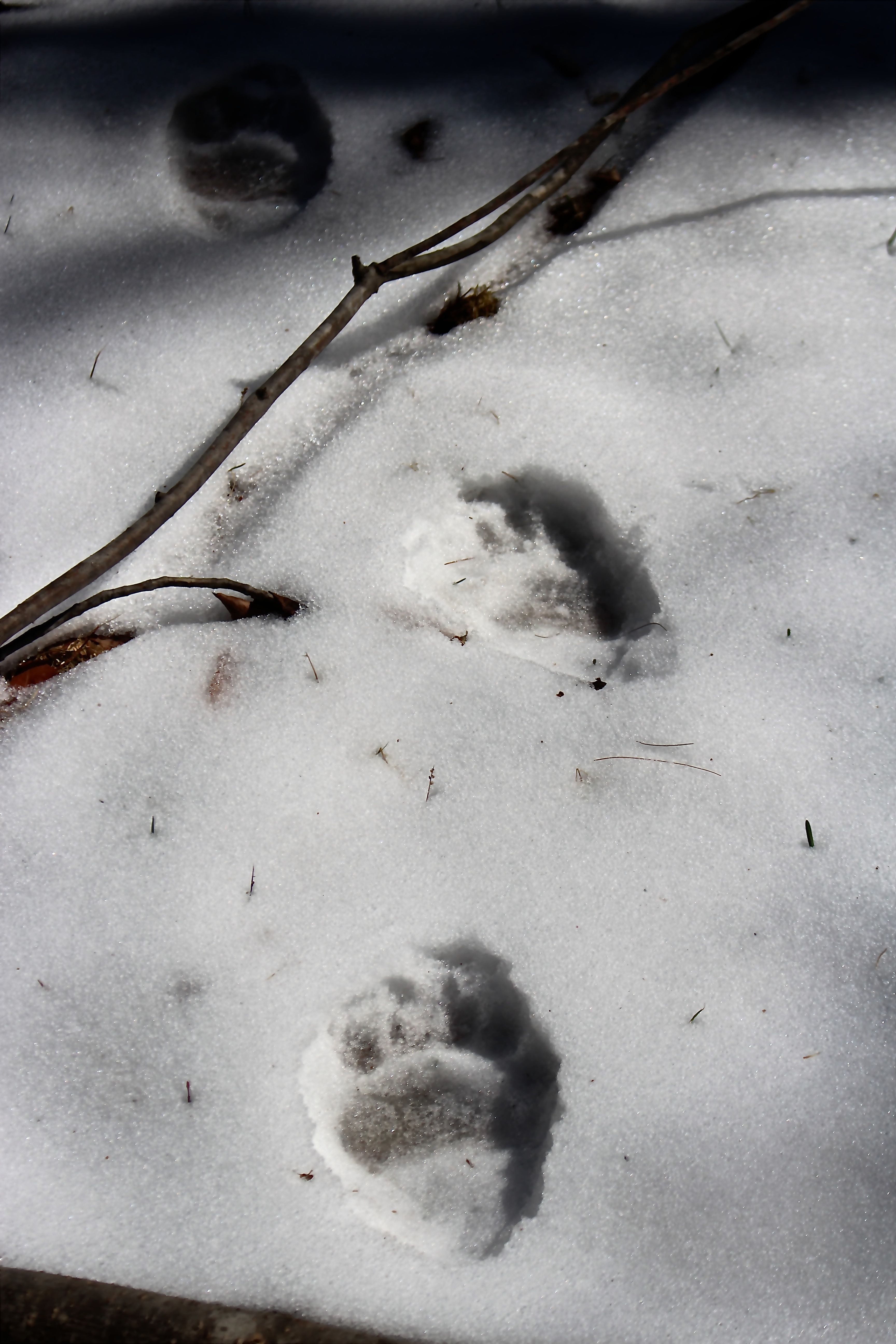
Yup–bear tracks. Classic, beautiful bear tracks. Even nail marks above the toes.

b-pigeon toed

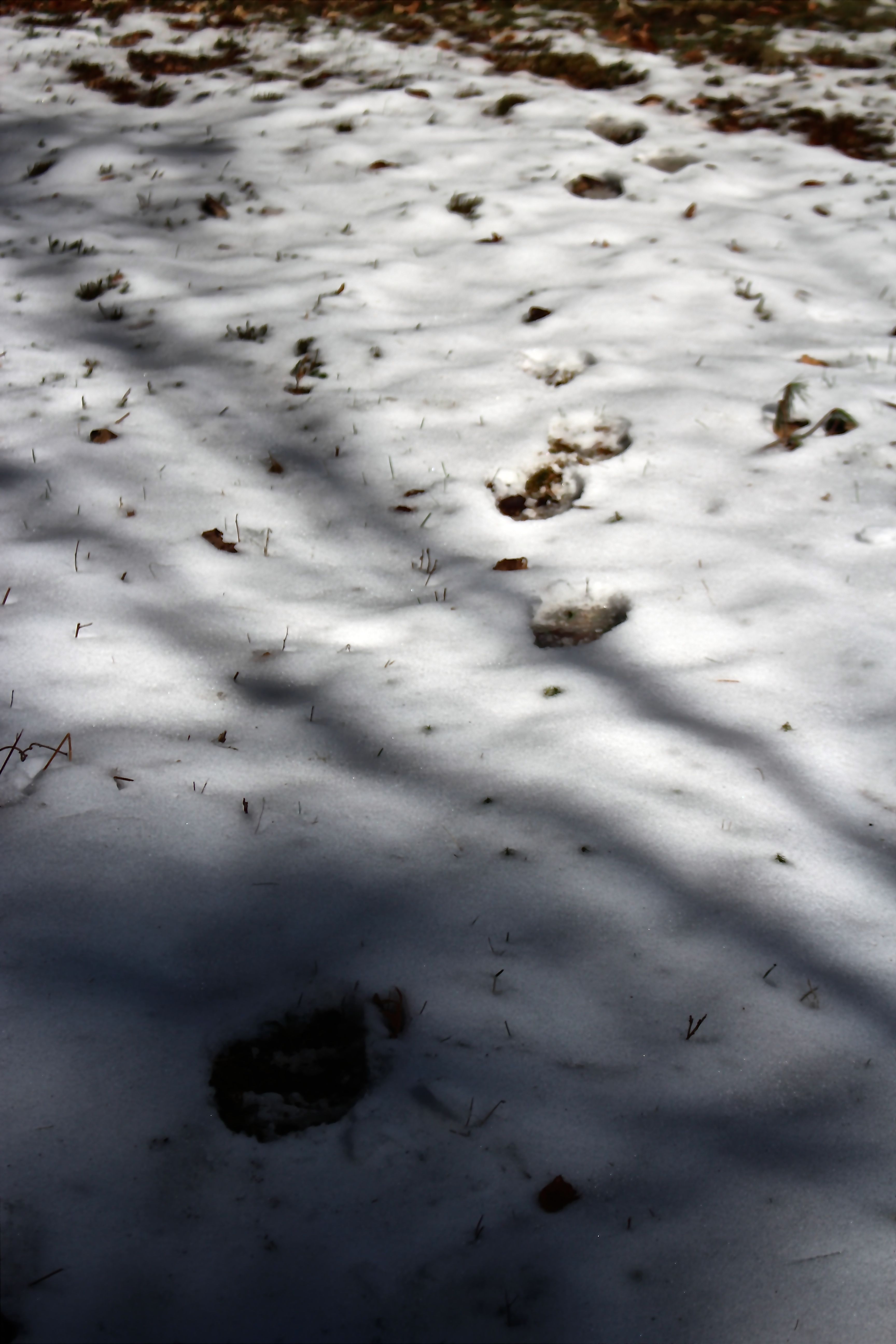
And the pigeon-toed gait.

b-bear 9

My heart be still. The bear certainly wasn’t.

b-bear fence

It trampled a garden fence.

b-bear 4

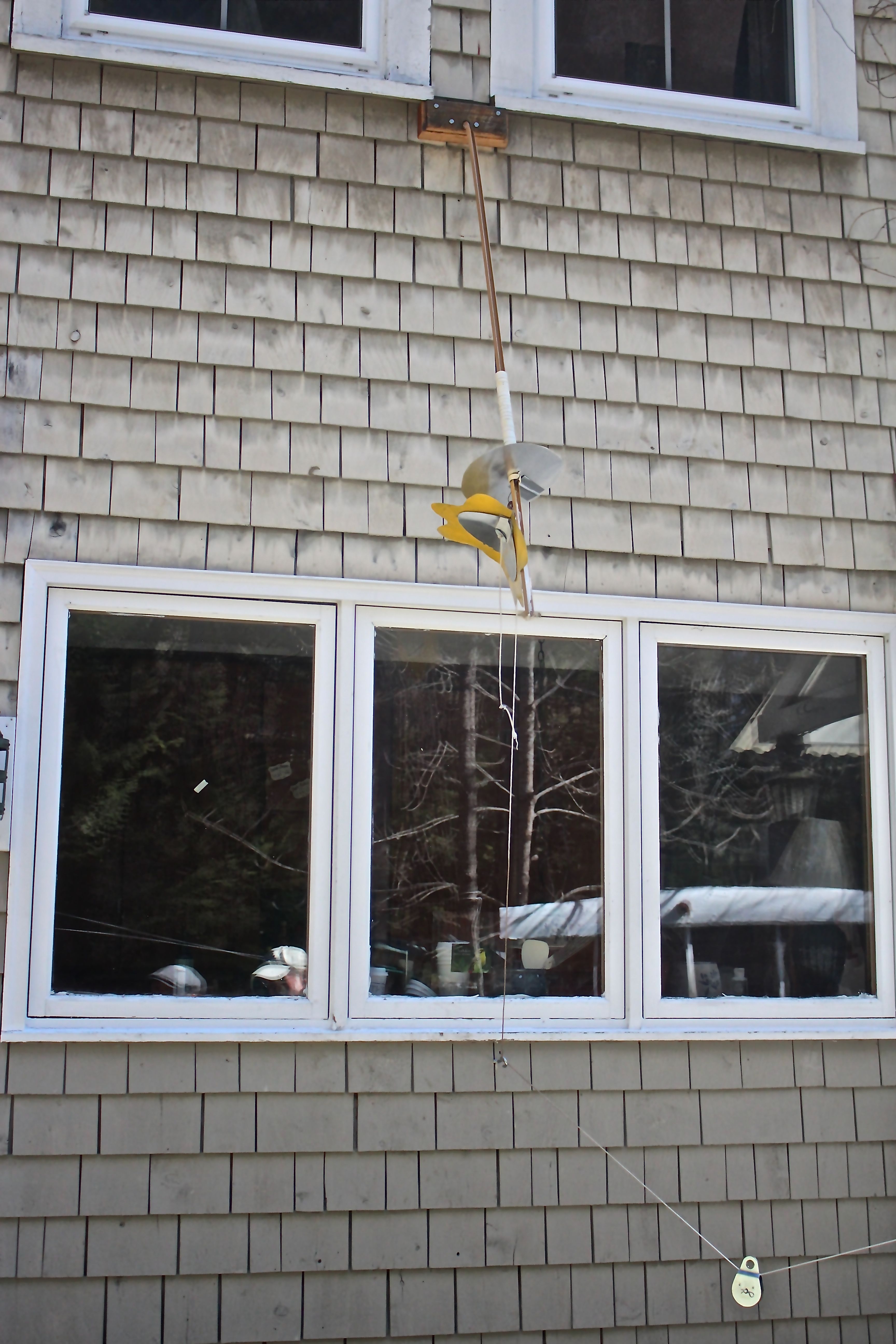
And yanked down a suet feeder that dangled from a wonderful rigging at second story height designed to keep the raccoons from stealing it. We couldn’t find the actual feeder.

b-feeder1

It toppled another feeder and consumed all the sunflower seeds. Oh, the squirrels may have helped, but apparently the feeder was stock full. Not any more. We looked for hair but found none.

b-trot

One of the mysteries to us was why did the bear suddenly trot. I’m now wondering if it was startled at some point and ran away.

b-bear 6

Before leaving, I enjoyed one more look. How sweet it is. And how thrilled I was to have seen it–especially knowing that it wouldn’t last long. The. Big.

b-feathers in circle

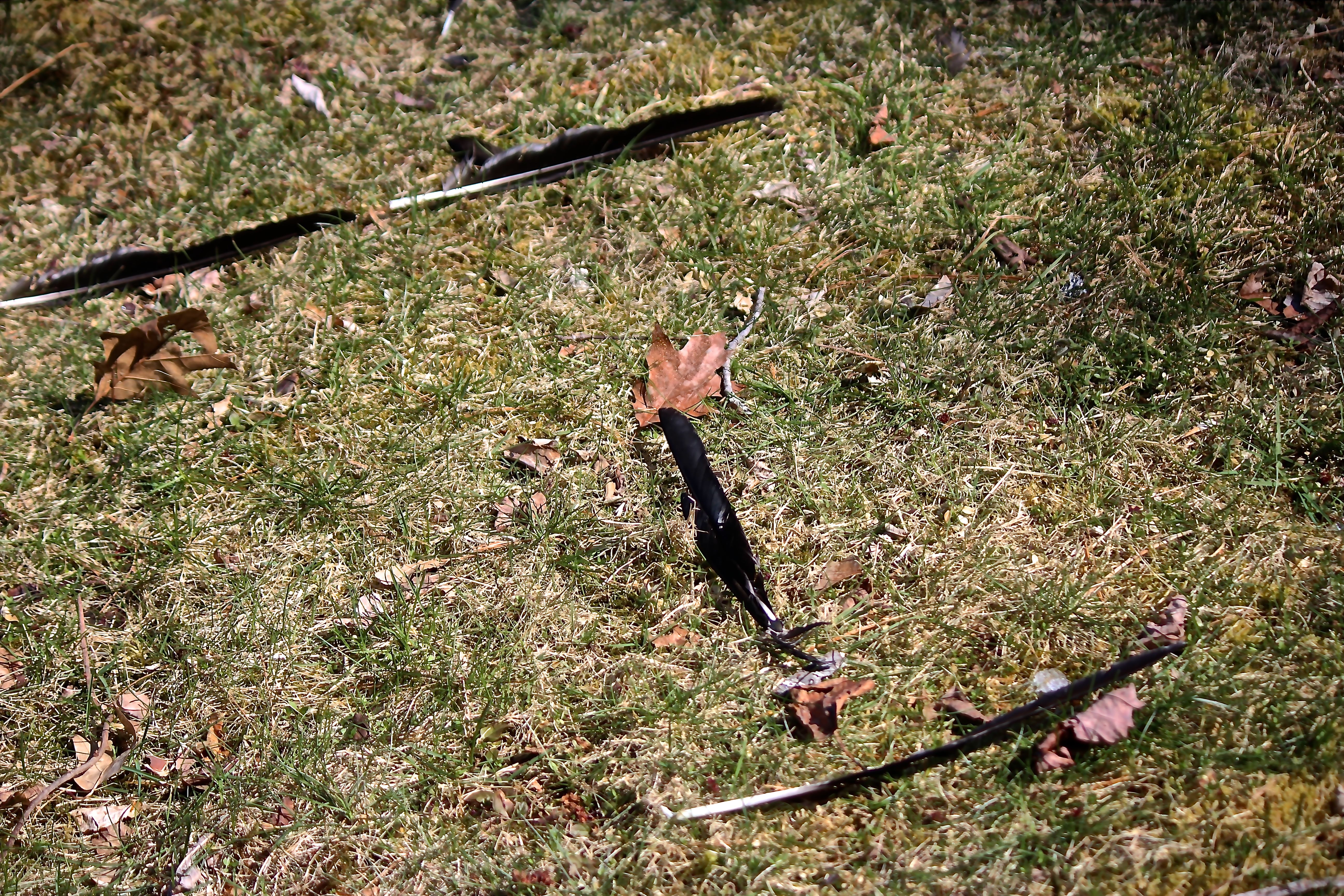
When I arrived home, I knew I needed to work, but figured a quick walk to check on the vernal pool was a great way to celebrate the bear tracks. And on my way–feathers. Long black feathers.

b-feather 1

Most were about a foot long.

b-feather 2

They appeared to be torn out rather than cut.

b-bird head

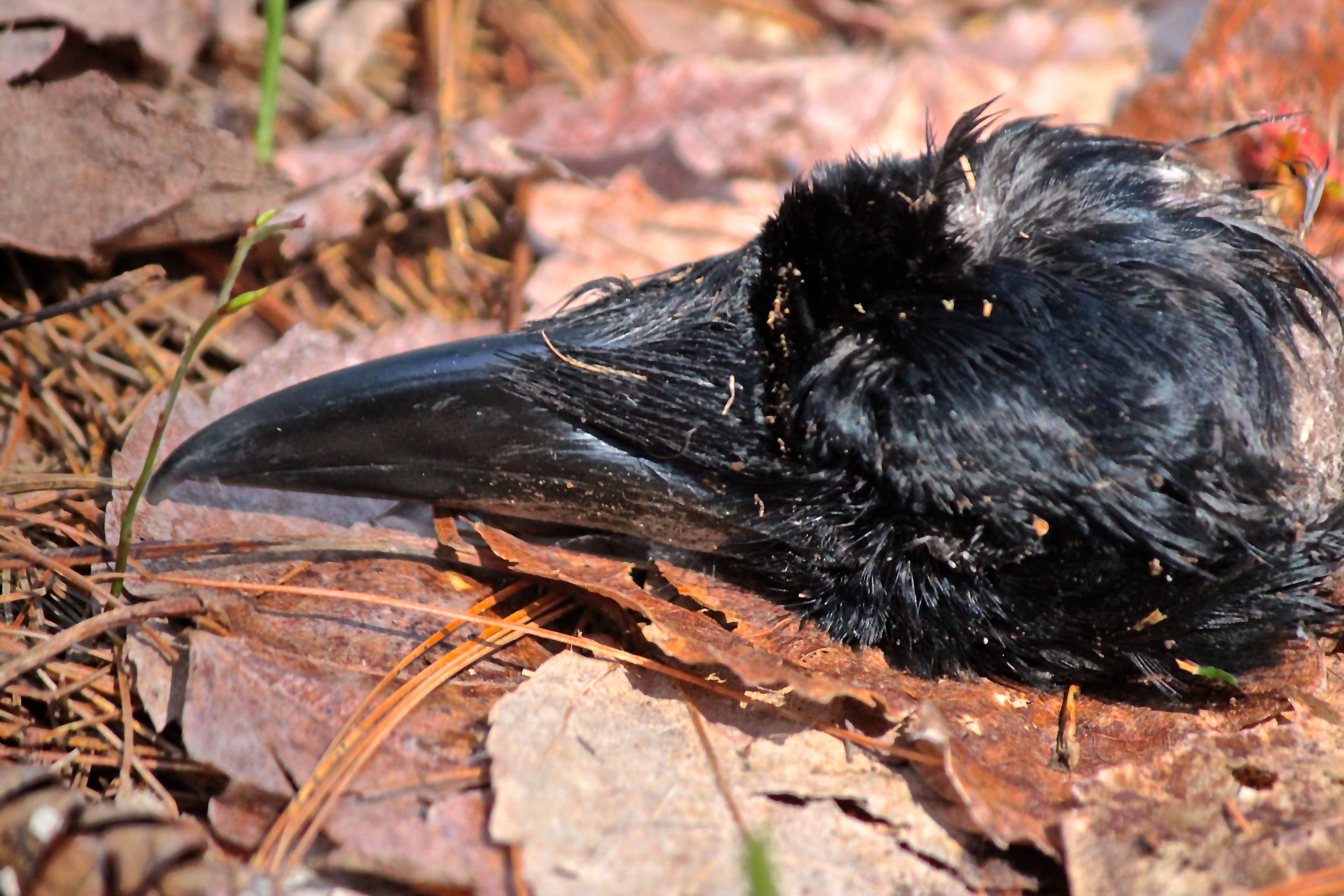
I know the neighborhood cats hang around our bird feeders all day–ever hopeful. But I don’t think they got this crow. I’ve a feeling a hawk was the culprit. The. In. Between.

b-snow on mount

It’s my neighborhood, so I always cast an eye toward the Mount. The. Big. Again.

b-vp1

The water level seems about the same as last week and a wee bit of Tuesday’s snow still decorated the  western shore.

b-tadpoles 3

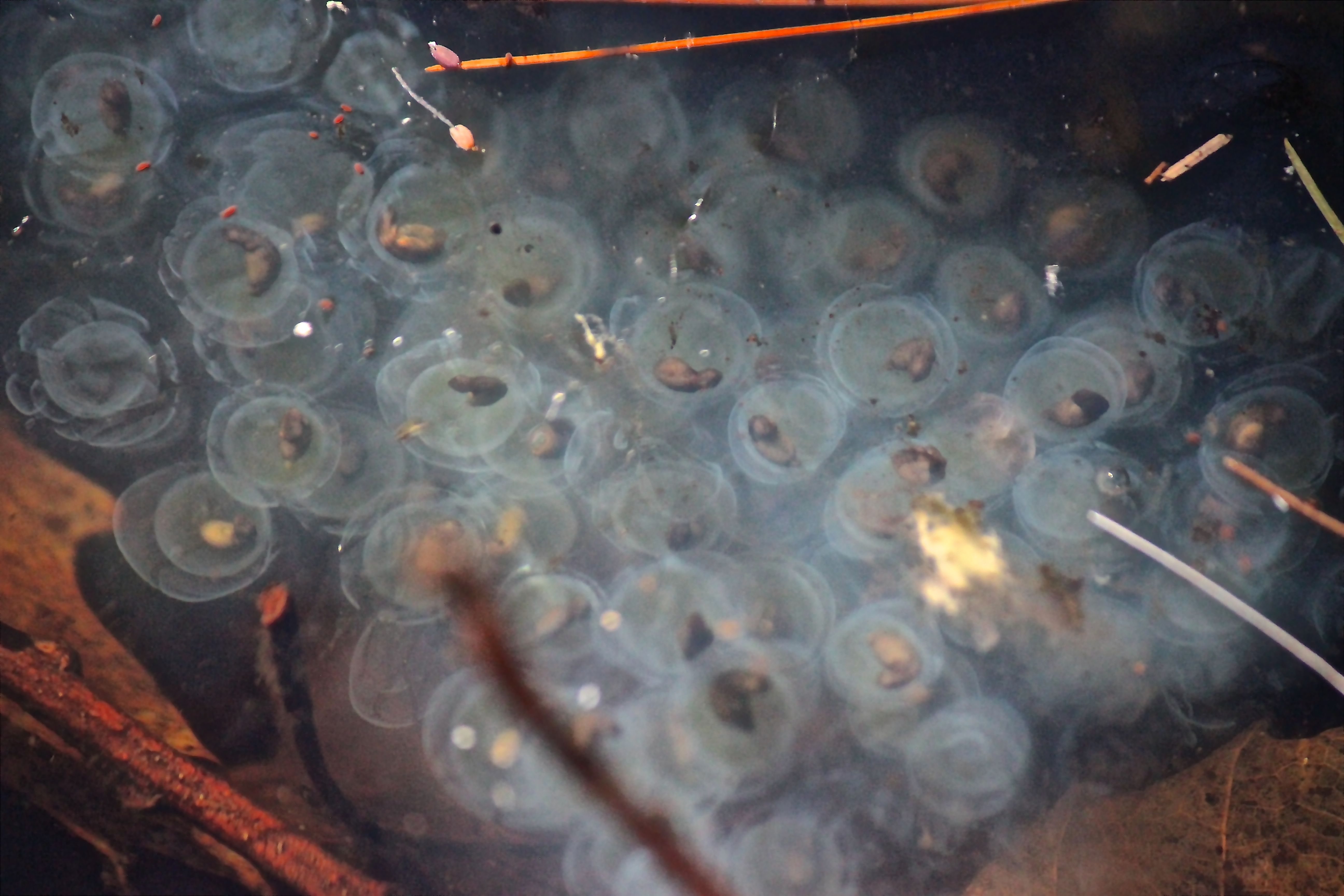
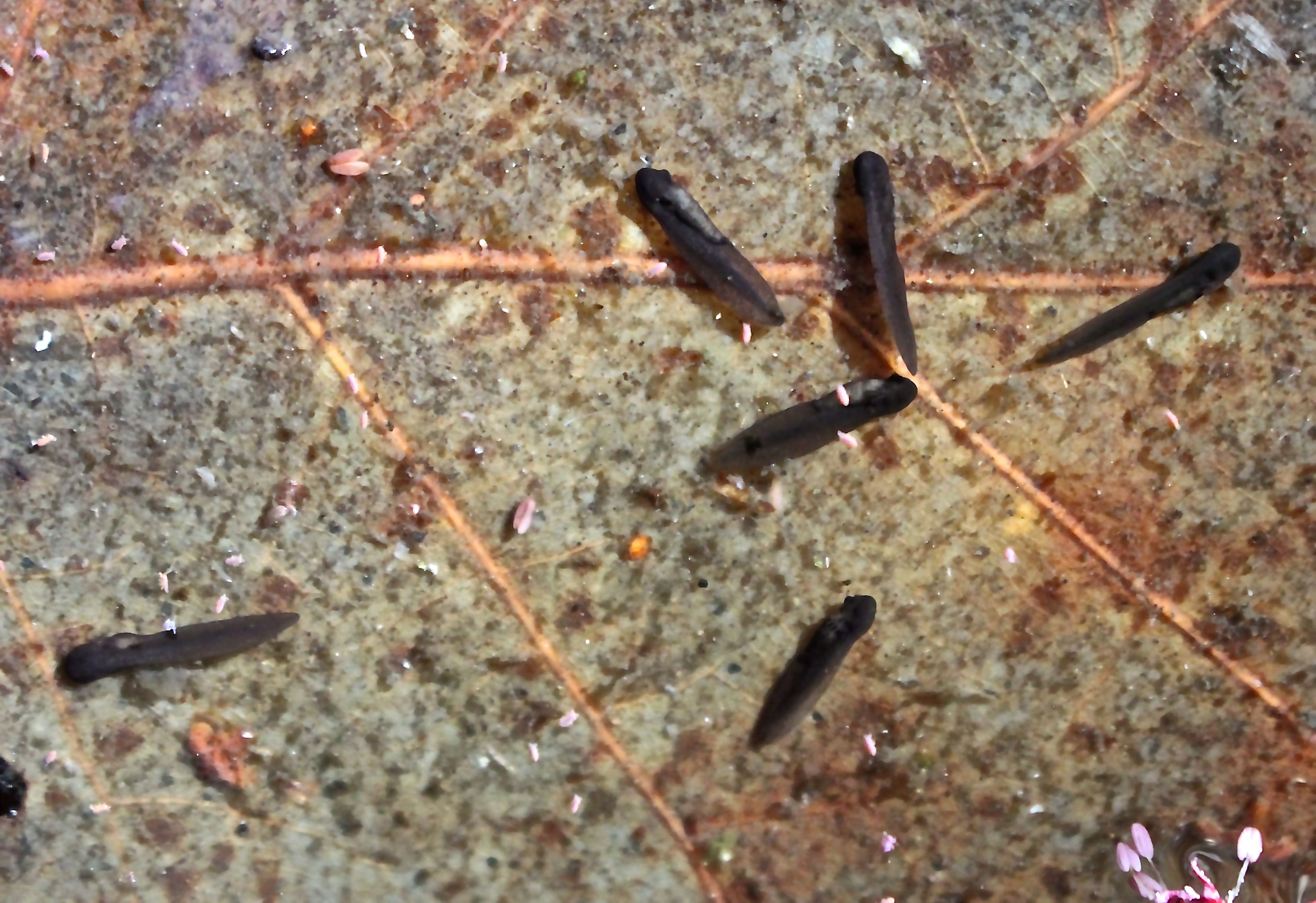
Though the lighting wasn’t great at that hour, it was obvious that the tadpole population had increased.

b-sally1

And the salamanders continued to grow within their protective covering. The. Little.

b-woody1

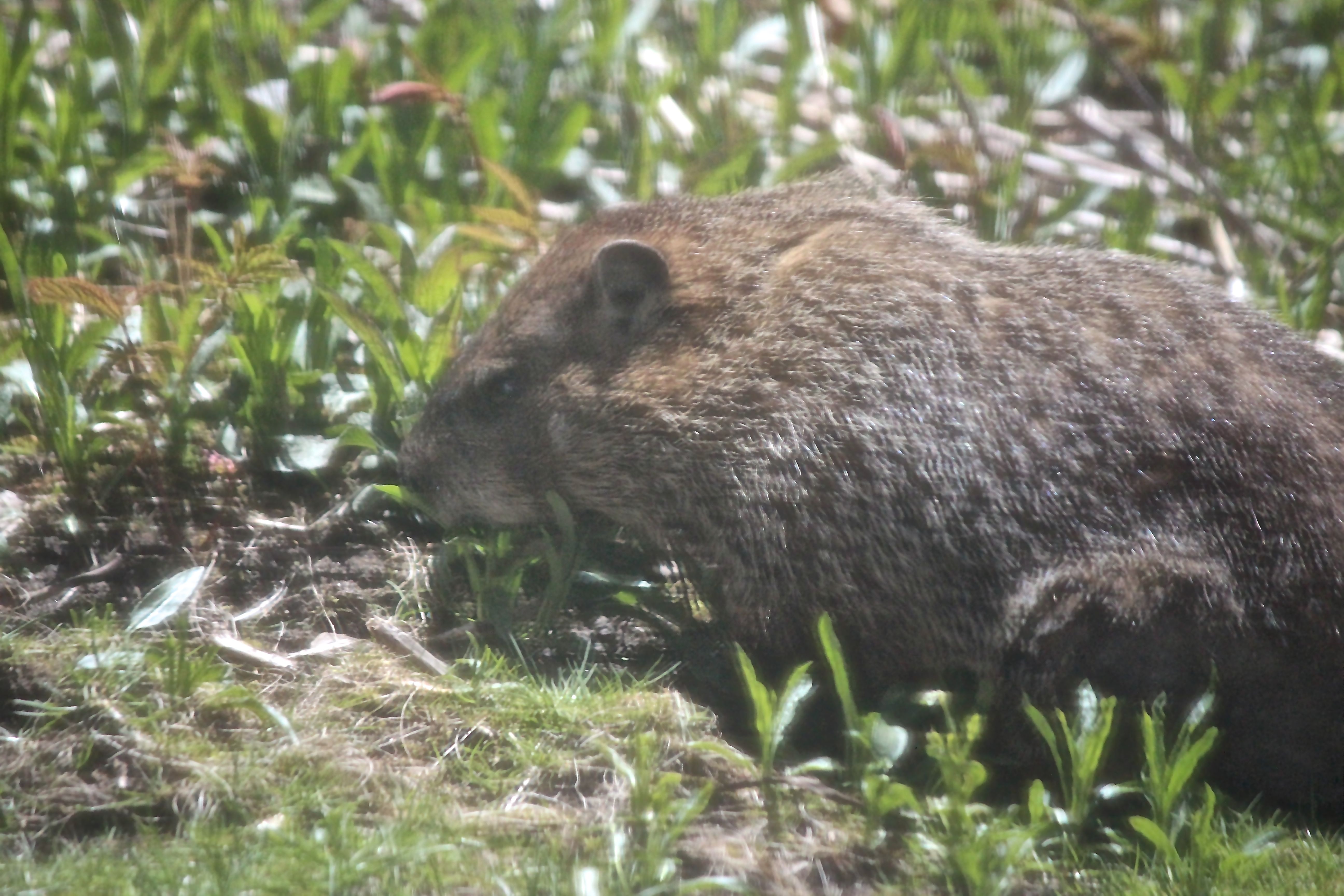
I did finally settle down to work. And then it was lunch time. My guy and I weren’t the only ones dining.

b-woody lunch 1

After I finished two assignments and before I walked to a meeting, I decided to visit the pool again and capture the action in the late afternoon light. But first, an examination of the woodchuck’s feeding site. Yup, those leaves were nibbled.

b-woody lunch 2

And so were these. The. In. Between.

b-vp no snow

And then it was back to the pool, where the snow had melted. But, I have to share a finding along the way. Or rather, a non-finding. I intended to grab the crow head because I wanted the skull. Not. It wasn’t in the path where I’d seen it in the morning. I poked around and couldn’t find it anywhere. Who stole it? Maybe one of those darn cats.

b-tads 7

In the warmth of the sun at the eastern side of the pool where most of the egg masses were laid, the population continued to increase.

b-tads 10

I felt the same glee about all of these little critters as I felt about the bear tracks earlier in the day.

b-tads on sallies

Tadpoles and salamanders. I may not see bears tracks every day, but for a brief moment in time, I’m honored to watch the transformation that takes place in the vernal pool. The. Little. Times. Two.

Giving thanks for the ability to wonder. The Big. The Little. And Everything In Between. Especially Everything.

Mondate on Mount Will

It’s been a while since we’ve actually had a Mondate. After two days of hiking the trails up Pleasant Mountain, today’s journey found us venturing a wee bit out of the neighborhood as we made our way through Bethel to Mount Will.

w-mount will sign

w-tree farm sign

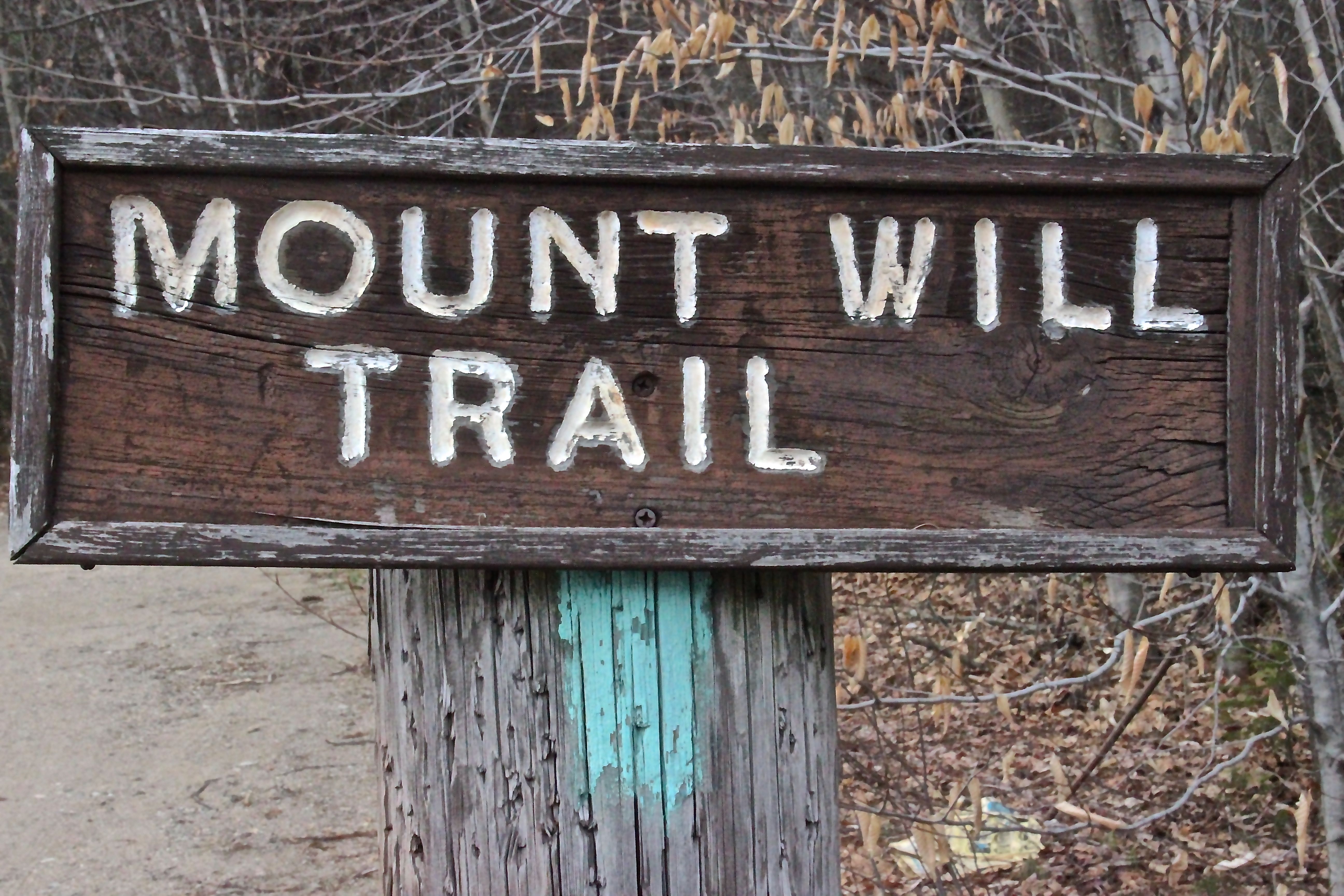
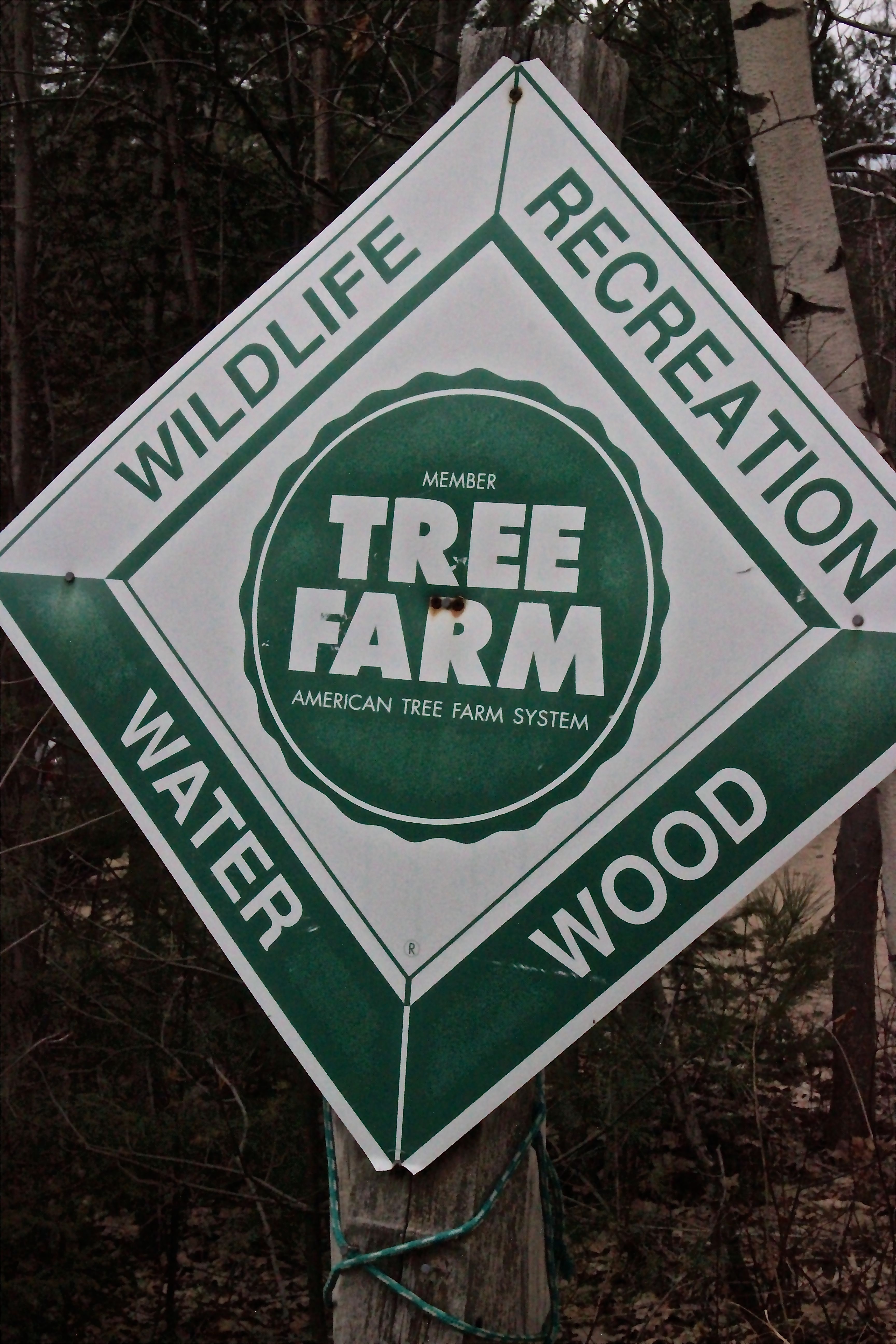
The parking lot is located between these two signs. Part of the Mount Will trail system is within the 115-acre Bethel Town Forest that had served as the Town Farm back in the day.

w-2 trails

The South Cliff trail leaves from the left, while the North Ledges is on the right. This is a loop and we decided on a counterclockwise trek. It had been at least five years since we last hiked here and we’d forgotten about some of the steep sections.

w-n-parklike

Of course, at the start, it seemed almost parklike. Three years ago, several local organizations including Mahoosuc Pathways, the Oxford County Conservation Corps, Outward Bound and the Bethel Conservation Commission rerouted this particular section of the loop.

w-n-switch

Now switchbacks wind their way up toward the North Ledge.

w-bear 8

When I wasn’t looking down, I scanned the woods, ever searching for my favorite species–bear claw trees.

w-bear

And I wasn’t disappointed.

w-bear 7

We saw them over,

w-bear9

and over again. Oh happy day! We found more than these, which leads me to believe that there are even more. Let the search continue!

w-gargoyle 2a

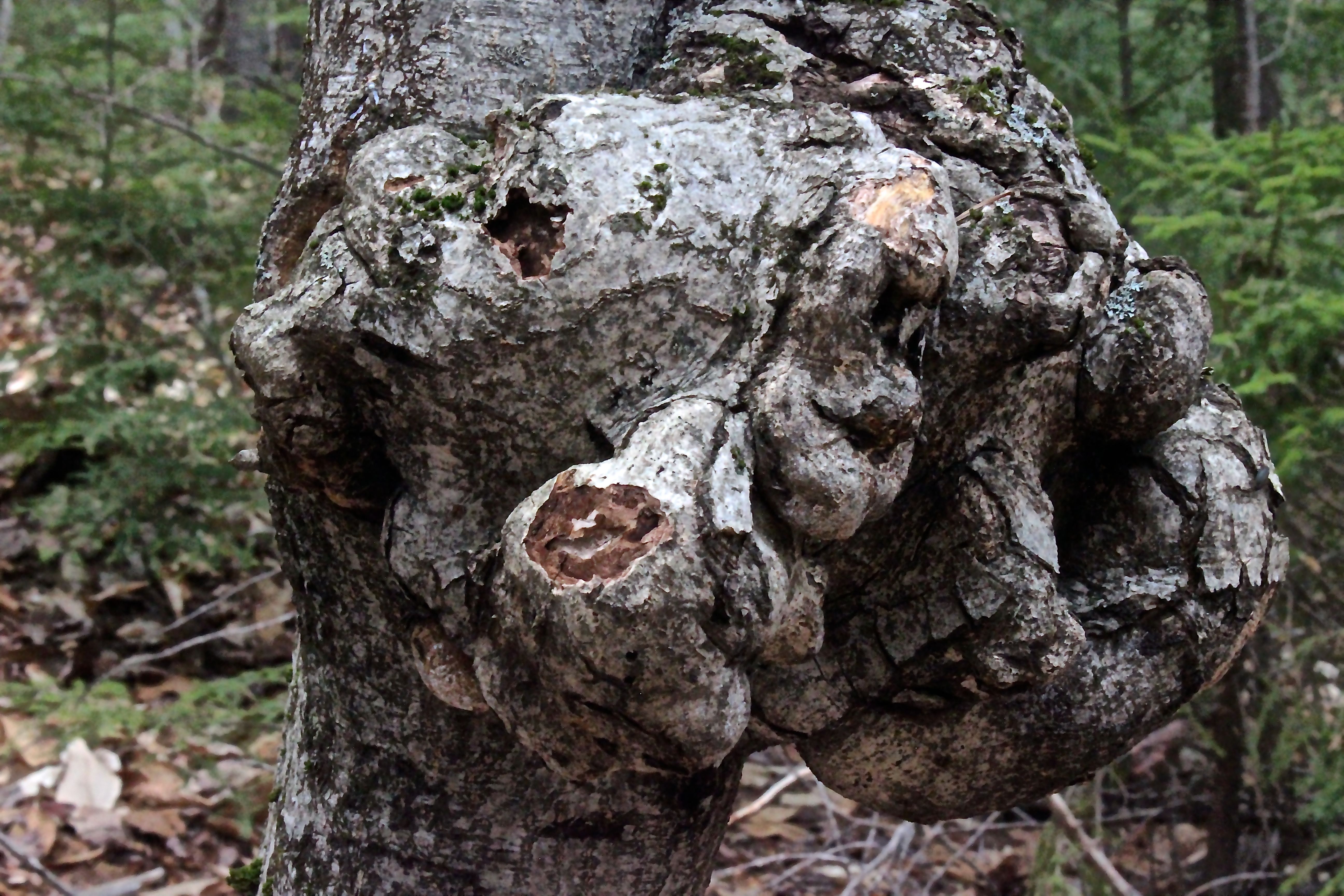
A few trees displayed other surprise packages–burls or warty growths caused by some environmental condition such as injury, virus, fungus, insect infestation or mold. Though this growth can put stress on a tree if it becomes too heavy, generally trees with these features are healthy. And woodworkers covet burls for the unique pattern and beauty found within. That sounds like a comment on the world–we all have hidden treasures, but they aren’t always visible.

w-n-artist conk

Other tree growths include artist’s conk and

w-s-redbelted polypore

red-belted polypores.

w-n-bobcat

The trail passed below rocky outcrops–and my imagination saw bobcats. But, what would they eat? The undergrowth is limited, so I doubted snowshoe hare. That being said, spruce and hemlock cones are many and red squirrels chided us constantly.

w-n-vp

Meanwhile, at a vernal pool just off the trail, all was quiet–and still partially covered in ice.

w-n-lunch rock

Lunch rock was the North Ledge. Below, the Androscoggin River wends its way through the landscape. The Androscoggin has a long history as a life-giving force–beginning with the Abenaki Indians who used it as a water trail and knew the nuances of this 170-mile river.

w-n-carters

The fertile, ancient floodplain has served many a farmer, including the Carters who own the farm across the river below where we sat. While we ate, we shared our memories of cross-country skiing across those fields, beside the river and into the woods.

w-spruce sap

We continued on across the ridge and through the spruce forest where the sap ran blue.

w-s-sunday river

Before turning toward South Cliffs, we caught a glimpse of the trails at Sunday River Ski Area in Newry.

W-gray 1

And then we saw a sign that had us wondering. The Gray Memorial? We had no previous memory of it, so we followed the detour and walked along a snowmobile trail for about a quarter of a mile.

w-s-gray memorial

The story is sad. The airplane remnants powerful in suggestion. Upon arriving home, I found an article in the Sun Journal referencing the event. Leroy was a state trooper and his wife, Brenda, an executive secretary who became head dispatcher for the Bar Harbor Police Department. With their 14-year-old daughter, Karen, they were flying their Cherokee Piper to Bethel to spend time with relatives when the plane “crashed nose first” into Mount Will about 7:30pm. Despite her own injuries, Karen hiked down the steep mountainside to seek help. A somber site indeed.

w-s-cliff view

We backtracked to the trail and continued on to the South Cliffs, where our view again showed the river, with Route 2 following beside and both leading to Bethel village.

w-s-mtn goats

Moving off the cliff, we were sure mountain goats had laid out the trail.

w-s-ledges

Again, we were in bobcat territory, frequented by chatty red squirrels who seemed to feel quite safe as they scrambled from tree to tree.

w-oz

And then we moved into the land where the monkeys in the Wizard of Oz jumped out upon Dorothy and her friends. My guy started humming the music from his favorite movie. The reality is that these trees knew the wrath of previous storms.

w-s-heading down

Once again the trail turned S curves as we continued downward and

w-s-brook

listened to water trickling over the mossy stream bed beside us.

w-s-logging

And then we found ourselves in the midst of a recent logging operation–remember, this is a working forest. Slash galore decorated the landscape, but we suspect that all of this will be chipped eventually. One thing we happily noted–bird song. Lots of bird song at this spot.

w-s-weather1

We were almost to the bottom of the trail when an anomaly grabbed our attention and forced us to investigate.

w-s-weather 1

w-s-weather tape

We’d stumbled upon a winter weather station. We only knew that because “winter weather station” was printed in faded paint across the box. So, we get the tape measure for snow depth, but the box? And the hole covered with mesh? Worth a wonder, so we did.

w-s-weather cocoon

Apparently, a moth appreciated the efforts of the citizen scientists who created this shelter. Our hike was over, but this chrysalis holds the future.

w-covered 2

We decided to complete our Mount Will Mondate with a visit to Artist’s Bridge over Sunday River–the perfect culmination of our love for nature and history.


So Many Quacks

Stepping as quietly as possible through the woodland, my heart quickened when I heard a particular chorus vibrating from the vernal pool.

v-ice 2

Three days ago a thin layer of ice still covered half of it.

v-ice 3

But I was happy to note that despite last week’s frigid nighttime temperatures, the wood frogs had been active.

v-many heads

While I stood and waited on Sunday, there’d been no movement or sound and I thought that the frogs had already moved on–mission accomplished. My ears and then my eyes knew differently today. I heard the quack of the males and then saw a number of heads on the water’s surface. Quickly, I snapped a photo–the little balls of light represent those precious heads.

v-ripples

They sensed my approach and began to make waves. Water rippled as they dove under the leaf cover below. And all was silent.

v-eggs 3

The community of egg masses, however, showed that their efforts continued to be fruitful.

v-egg masses 2

In general, each mass laid by different females is attached to a twig or branch. They tend to take advantage of the same site for attachment and usually in a sunny, warm spot. Already, some floated to the surface. Eventually, they’ll gain a greenish tinge from algae, which actually helps to camouflage them. One of the many wonders is that any given mass may contain up to 1,000 eggs–from a two-to-three-inch frog.

v-egg mass 1

A couple of masses were positioned independent of the rest, like this one–embraced in oak and maple leaves. It’s almost out of the water, though yesterday’s rain helped, but I questioned whether or not it will be viable.

v-frog and sally eggs

Then again, will any of them? Last year, the pool dried up before the tadpoles reached maturity. And it isn’t just tadpoles that begin life in this pond. Notice the white, gelatinous masses below those of the wood frogs? Spotted salamanders had also returned to this small body of water.

v-sally 3

They, too, attached clusters to vegetation. Smaller in number of individual eggs, salamanders lay 30-250 within each clear or opaque white mass. As they absorb water, the masses enlarge.

I walked around the pool looking for spermatophores produced by males and left on the leafy bottom, but saw none. Earlier today, my friend, JVP, and I walked along the Narrow Gauge trail and saw them in several pools. Unfortunately, though I had my camera in tow, I’d left the battery at home–still sitting on the charger. Oy vey!

v-beech leaves

As beech leaves continued to cling and blow in the slight breeze over the pool, I finally settled down at the edge and waited for action.

v-diving beetle

Moving with aquatic beetle speed, predaceous diving bugs swam about in constant motion.

v-water boatman

Also calling this small pool home were numerous water boatmen.

v-peaking out:blending in

But what I most wanted to see–the wood frogs themselves. Ever so slowly, they began to emerge from the leaf cover.

v-frog 1

Once by the surface, they floated.

v-frog 5

As long as I didn’t make any sudden moves, they stayed–showing off the dorsolateral ridges that run from the back of their eyes toward their hind legs.

v-frog 4

Color variation was evident–from rusty browns to gray and tan.

v-frogs hanging

Sometimes, several floated near each other–probably wishing I would leave so they could continue their serenade.

v-2 frogs

And then there were two that seemed intent upon one another.

v-2 frogs 3

I’m sure they spoke–probably cursing my presence.

v-2 frogs 1

With the flick of a frog leg . . .

v-2 frogs depart

they suddenly went their separate ways.

v-love 1

One couple, however, did hug. So that brings up another curious thing about wood frogs. Males cannot identify females by sight or sound, so he has to clasp the other frog. If the frog is thin, it’s either  another male or a female that has already released her eggs–thus he’ll release it quickly. Yup–females are generally fatter because they carry eggs.

My eyes were as wide as the frogs I watched–I’ve never had the pleasure of seeing so many in this particular pool. And I was sure that due to the ice, all the action was completed a few days ago. But the multiple chortles I heard upon my initial approach created a racket today–and sounded, of course, like a bunch of mallards. I rejoiced over the sound of so many quacks.


The Borrowing

My friend, Dick, sent me the following message yesterday: “from a novel, Northwest Angle by Krueger … who has a series which relates to the Objidwa (sp) of the upper parts of Michigan …

‘What’s a Mide?” — ‘A member of the Grand Medicine Society,’ Stephen explained. ‘A healer. Somebody who understands the harmony of life and how to use nature to restore harmony when it’s been lost.” p246

“Belongs.” Meloux (a very senior shaman type of the Native American ‘Mide’ of the Objidwe) seemed to consider the word. “I believe no one belongs to anyone else. You, me Waaboozoons, we are all dust borrowed for a little while from Grandmother Earth. And even that dust does not belong to her. She has borrowed it from all creation, which is the Great Mystery, which is Kitchimanidoo. And if you ask this old man, I would say that another way to think about Kitchiimanidoo is as a great gift. Kitchimanidoo is not about keeping. Nothing belongs to anyone. All of creation is meant as a giving.” p 269

While I haven’t read the book or any of Krueger’s works, these words resonated with me as I moved about this morning.

m-vp

My first stop was a visit to the vernal pool, where the ice is beginning to melt.

m-vp, birch seeds

I looked for insects and found instead birch seeds and scales–meant as a giving.

m-berries

Wintergreen berries remained prolific below the power lines. While this fruit is traditionally browsed by a variety of mammals, I had to wonder if its location is the reason it was left untouched–poisoned by the herbicides Central Maine Power uses to keep the land clear. What was meant as a giving revoked.

m-leaves thru ice

Not all was bad as I followed the trail for a distance and enjoyed the beauty that has begun to emerge.

m-sphagnum color

The pompom heads of sphagnum moss contrasted brilliantly beside the running clubmoss.

m-trail light

Looking back, I noticed that today’s sunlight was captured in yesterday’s raindrops–certainly a reason for thanks-giving.

m-mount 1

And before me–man and nature in the eternal struggle for harmony. An example of borrowing.

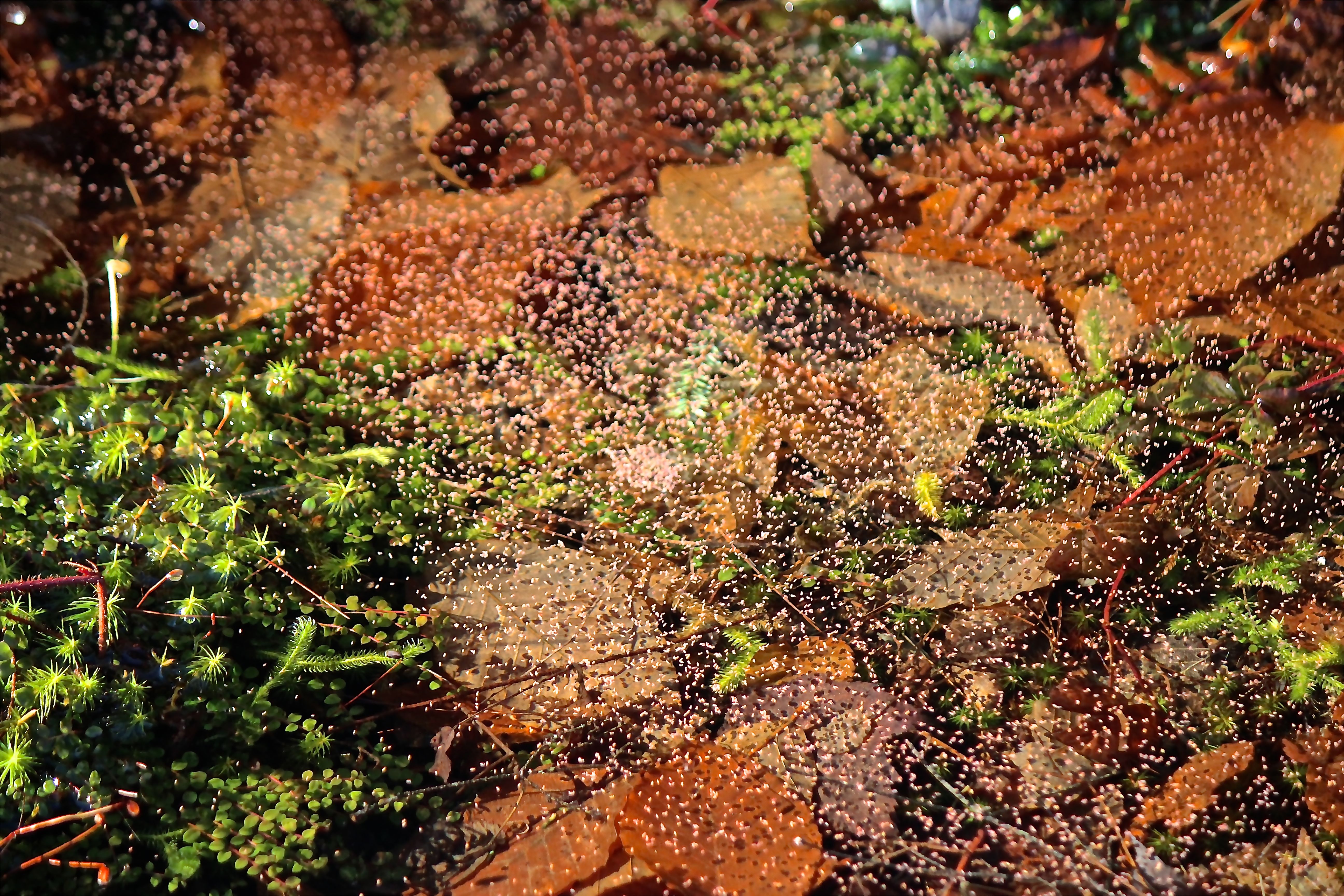
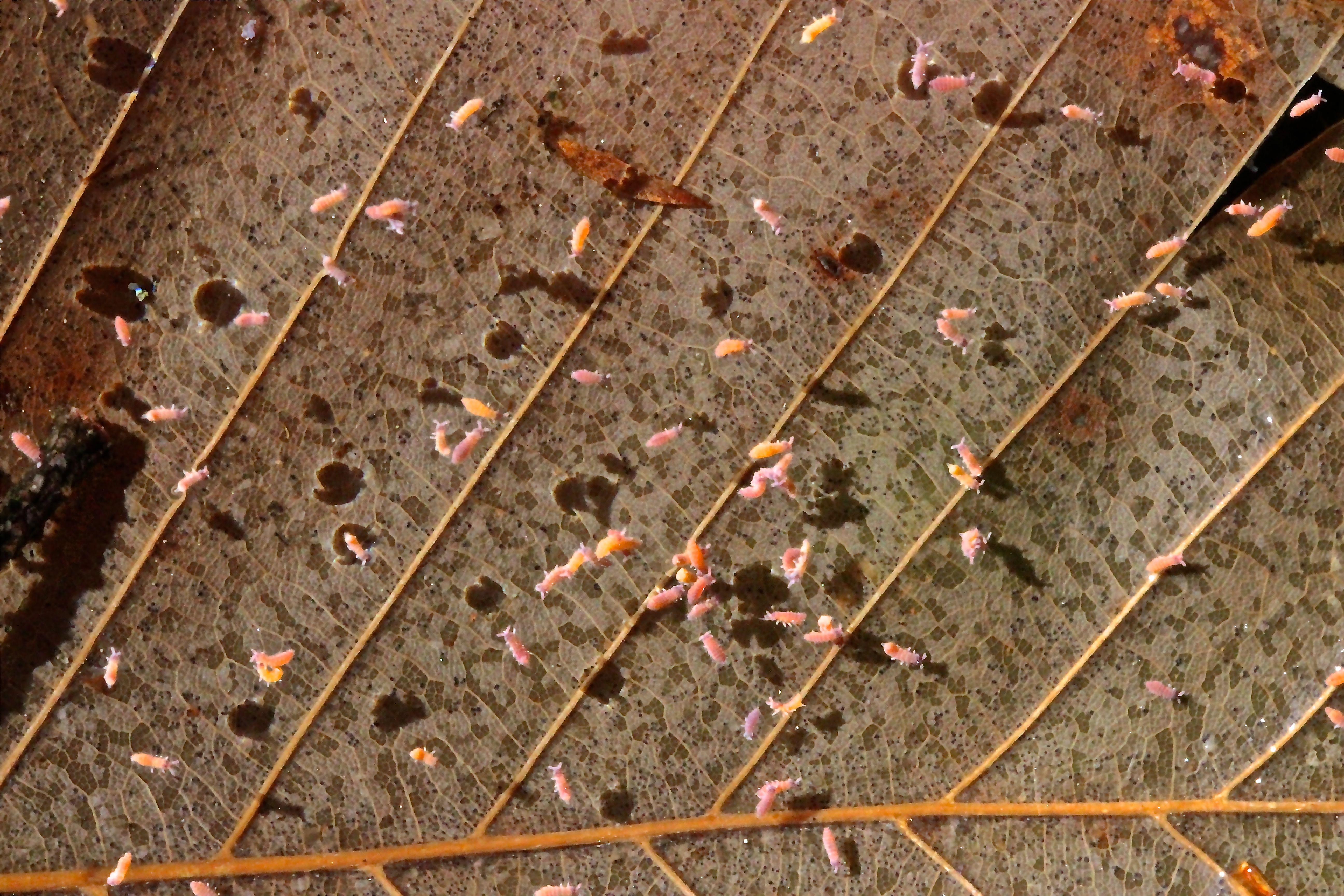
m-pollen?1

Before I turned onto a logging road, a puddle caught my attention.

m-pollen?2

My first thought was pollen, but as I approached, I realized the little dots were moving about much like spring tails because .  . . they were spring tails. So my learning increased as I noted their color and the fact that there are aquatic members of this family. Another giving received.

m-pin cherry warts 2

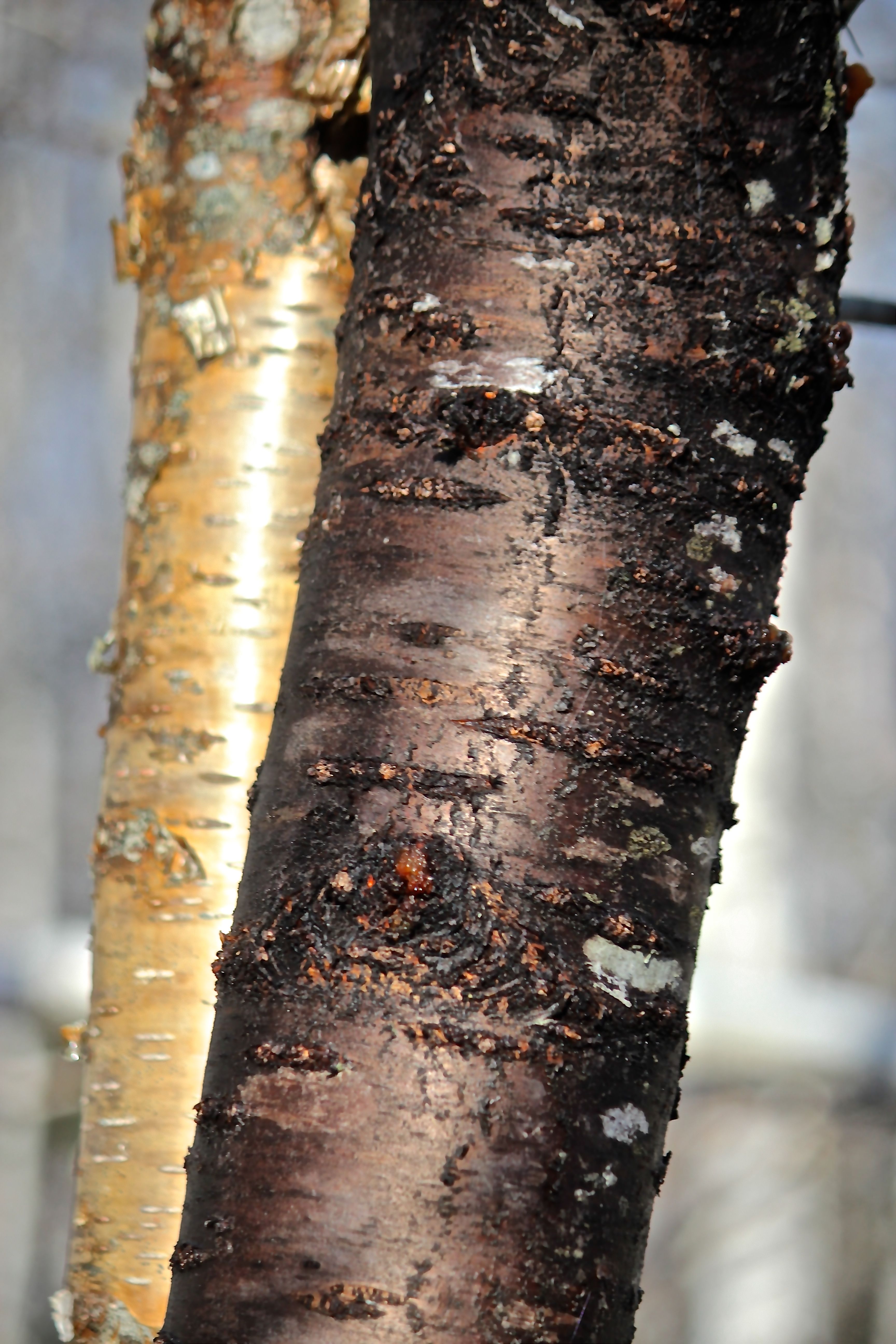
On recent treks, my bark eyes have been confused about two trees–black birch (aka sweet or cherry birch) and pin cherry. As youngsters, both feature reddish-brown bark. What has thrown me off is the association with other birch trees, including the yellow birch that grows behind this specimen. Today, I made a point of noticing–the warty orange lenticels, lack of catkins and no wintergreen scent. These are three features that helped point me toward pin cherry. Black birch bark features long, thin lenticels, catkins common to birch trees and when scraped, that delightful wintergreen smell.

m-pin cherry:birch1

Despite the fact that they are not of the same family, certainly they’ve found a way to give to each other and live in harmony. A lesson.

m-porky

Just beyond the birches, in one of many stump dumps along this logging road, something caught my eye.

m-porky 1

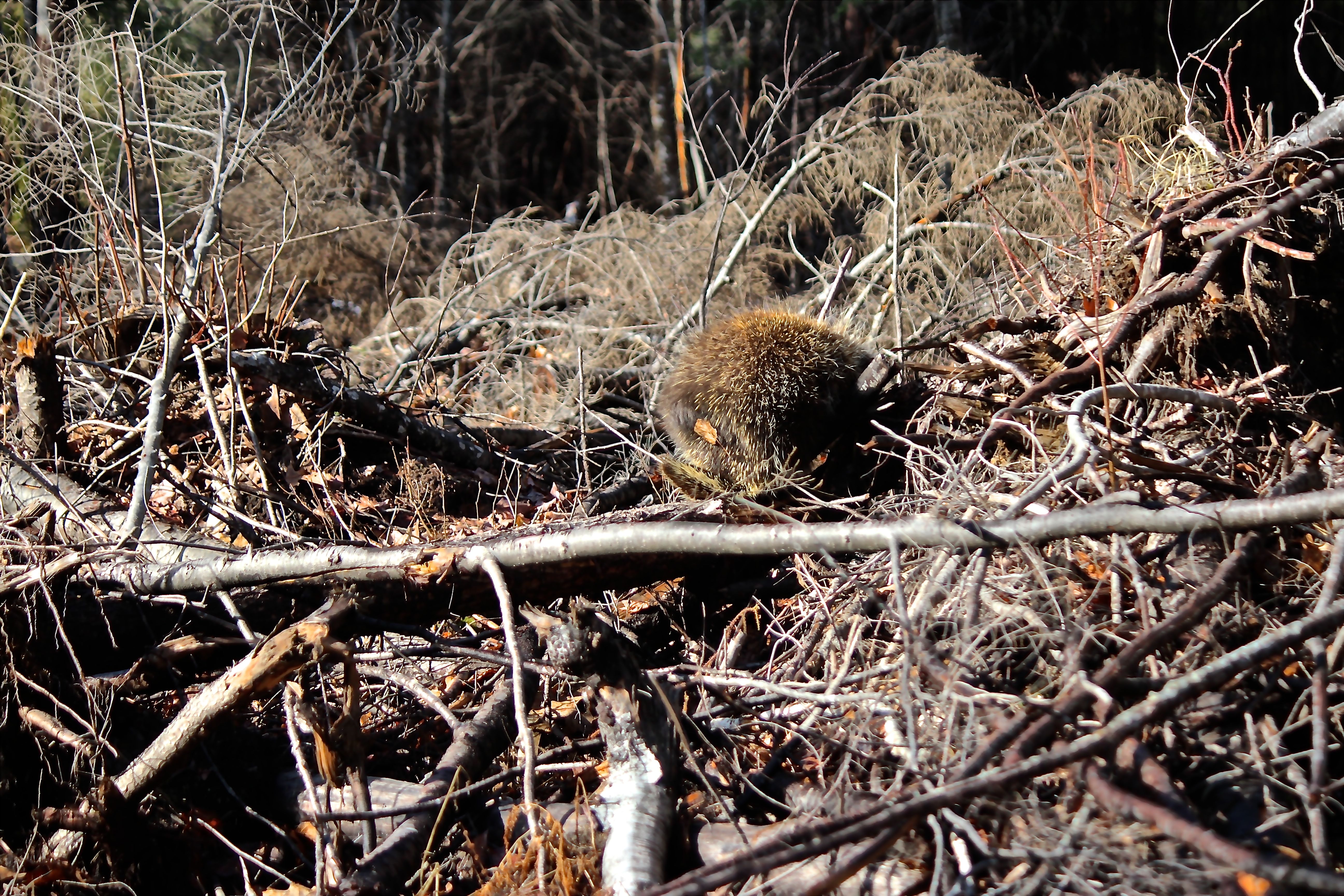
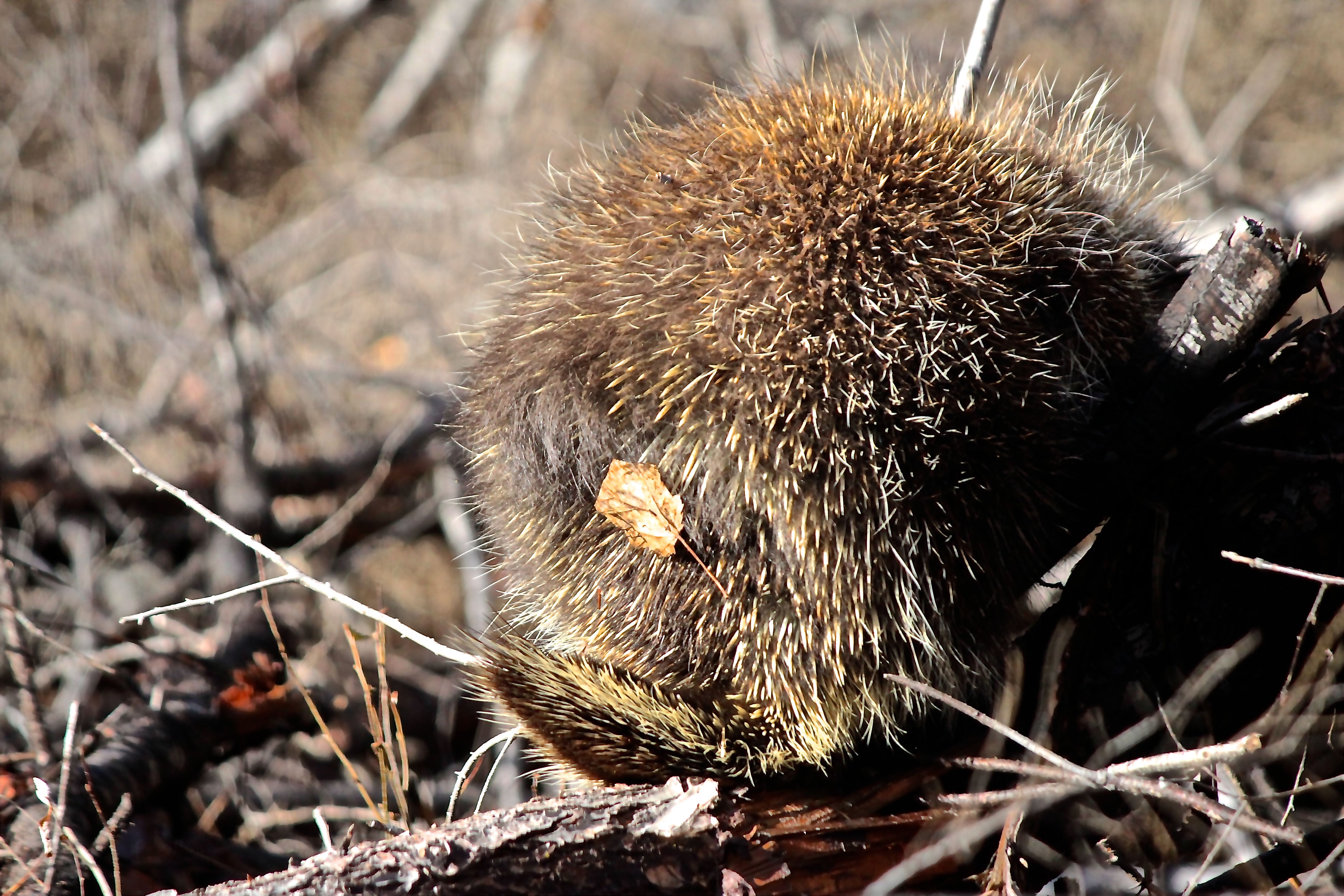
A porcupine worked over the bark of a fallen hemlock tree. I stood for several minutes and watched. Either it wasn’t aware of me or I didn’t pose enough of a threat.

m-porky again

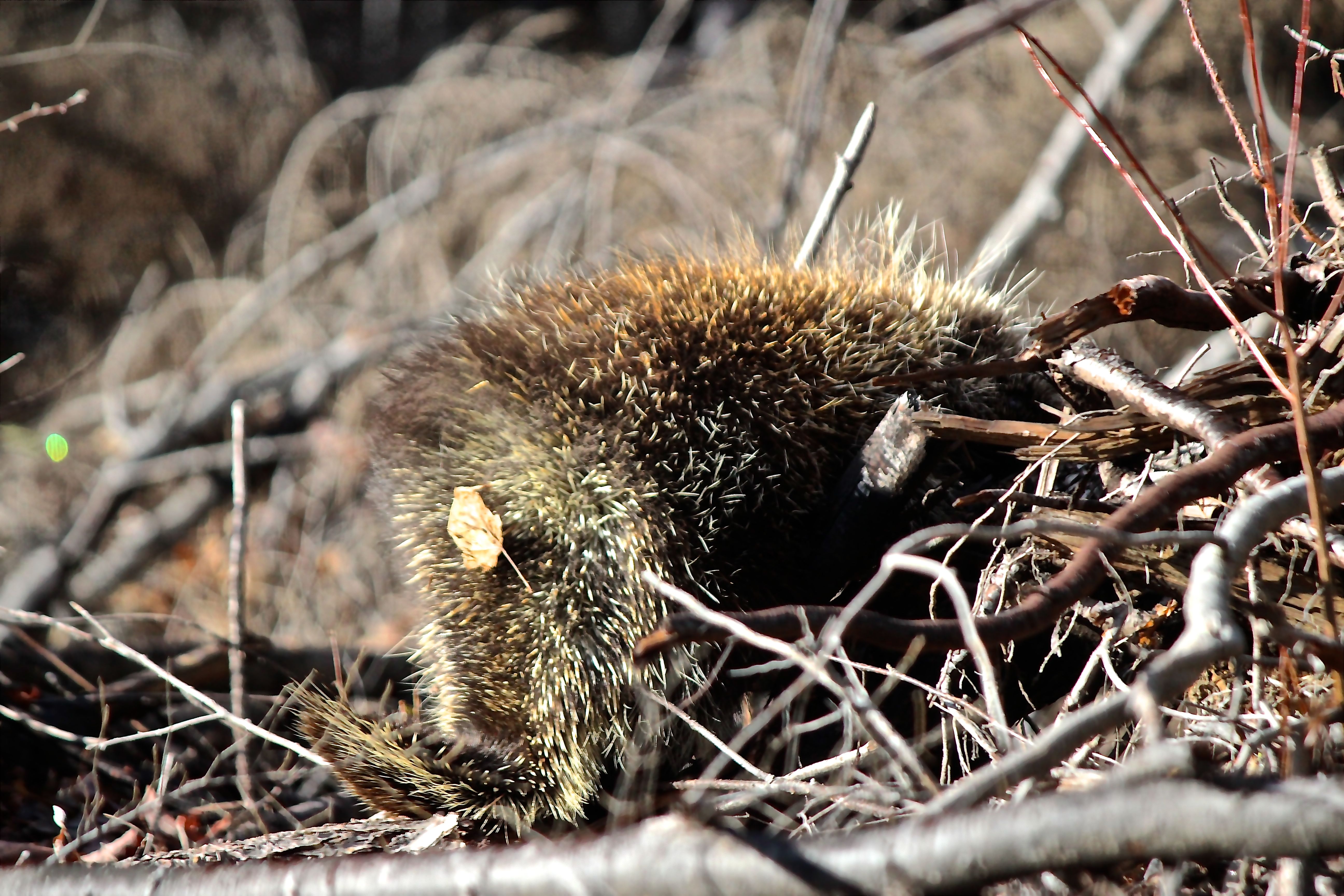
The leaf caught on its backside made me chuckle and wonder why we don’t see more of that.

m-porky like

I’m amazed that I saw it at all in this land that has been chopped up over the course of the last three years. Notice how leaves are similarly stuck to this shredded tree stump.

m-porky tree 3

m-porky tree 2

m-porky tree

Behind were the trees that have received the porcupine’s recent attention. While the logging is destructive, it helps heat homes, provides income to at least several people including the logger and landowner, and creates new habitat and food opportunities for wildlife. Change is difficult and I’d grown to love these woods the way they were, but they were that way because of prior cuttings. A borrowing.

m-bubbles

Most of the logging road was a combination of puddles and mud. At times, air bubbles rippled as I moved through and I was reminded of my youth years spent feeling for clams in the mudflats of Clinton Harbor on Long Island Sound. The memory itself was a giving.

m-deer 2

Like the deer that frequent this land, my boots got stuck in the muck. Sometimes, it seemed like I was being sucked in and told to stand still. But my mind wandered on and I followed it.

m-trail conditions

Going forward in time, I’ll be curious to watch the reflections in the puddles change as the pioneer species move back in and regenerate this land. The harmony.

m-spirit

In the end, as always seems the case, I was on the receiving end of the giving and grateful for the borrowing as the spirit of Grandmother Earth shared a few tidbits of the Great Mystery.


life IS good, but we NEED rain

Logger PHil 2

“Einstein said ‘The difference between stupidity and genius,” quoted Maine logger Phil Dow, “is that genius has its limits.'” Whether or not Einstein actually made that statement doesn’t matter. What’s matter is that on a beautiful day in May, Mr. Dow stood beside the reading tree at China Schools Forest in China, Maine, and in his soft-spoken way he informed the students sitting on picnic tables in front of him about Maine’s history and the logging industry. They were mesmerized. So was I. Life IS good. And check out his beard and that reading tree platform. Wow!

China Schools Forest

A friend and I had journeyed to China this morning to observe Forest Days in the 50-acre forest abutting the China Primary and Middle Schools. Six hundred, yes, you read that correctly, 600 kids participated in the program. With their teachers and parent volunteers, they moved from station to station, learning about forest management, pond critters, soil composition, tree id, flower dissection, and so much more from over 30 presenters. They were engaged, happy, polite . . .  and not in school. 600 kids roaming about. We loved hearing their voices wafting through the woodland.

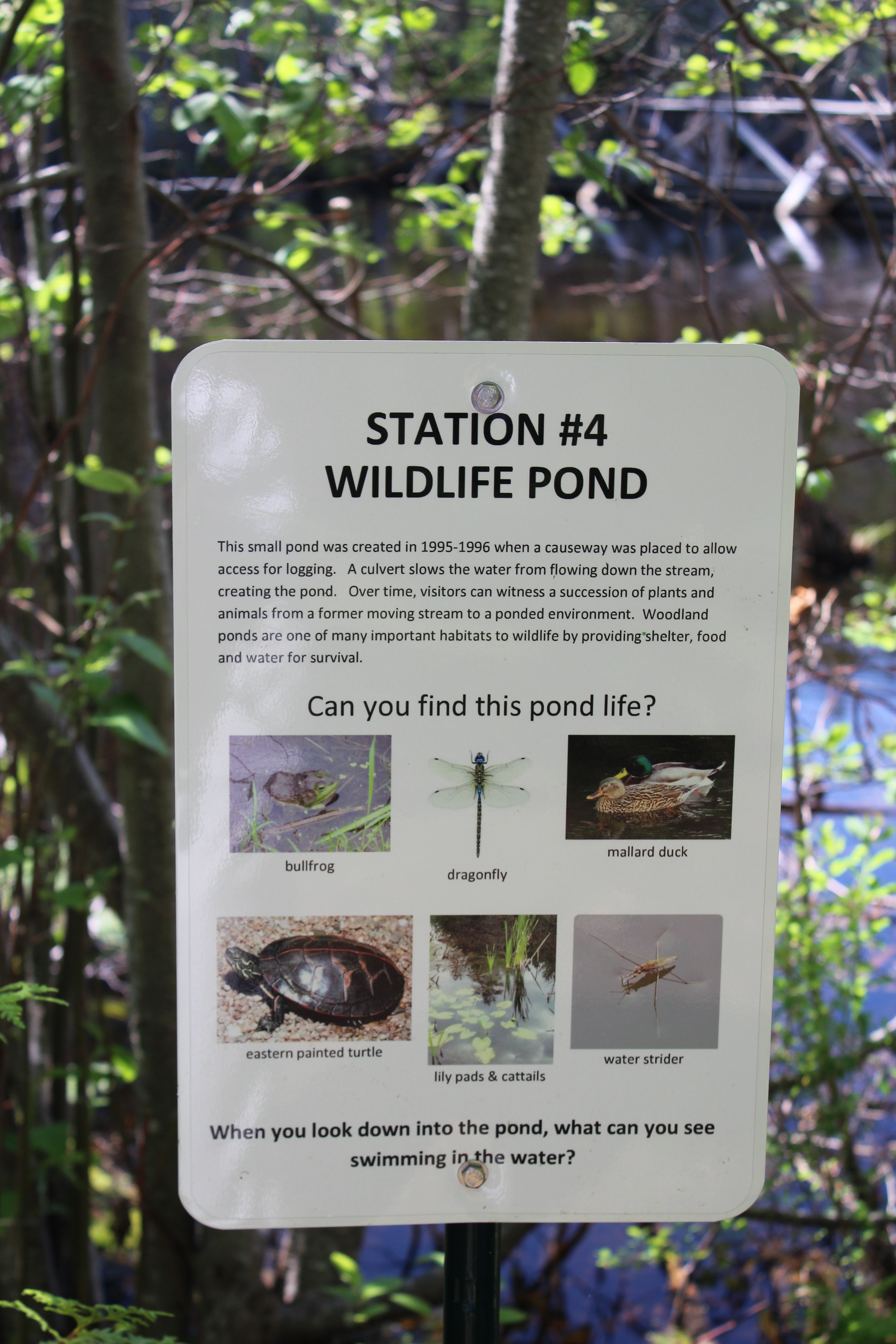
station 4, wildlife pond

We not only wanted to see how the program worked, but also to take a look at the outside classrooms. Created in the 1990s, this demonstration forest is an on-going project. To date, there are seventeen classrooms. At each, an interpretive sign explains what you should notice. (Disclaimer: the signs were created by Anita Smith, a former teacher at the schools and a Maine Master Naturalist graduate, who served as our most gracious guide today. Anita and a colleague have spent the last year developing today’s program. They offer Forest Day every other year, but the outdoor classrooms are always available.)

kids on bridge

There’s a silviculture classroom, a red pine plantation, a tracking pit, den tree and more. And across the man-made pond, is a bridge that expands at the center, creating plenty of room for an entire class of students. Today, they used nets to explore pond life from the bridge.

leach

My friend and I explored pond life as well. Check out this leach.

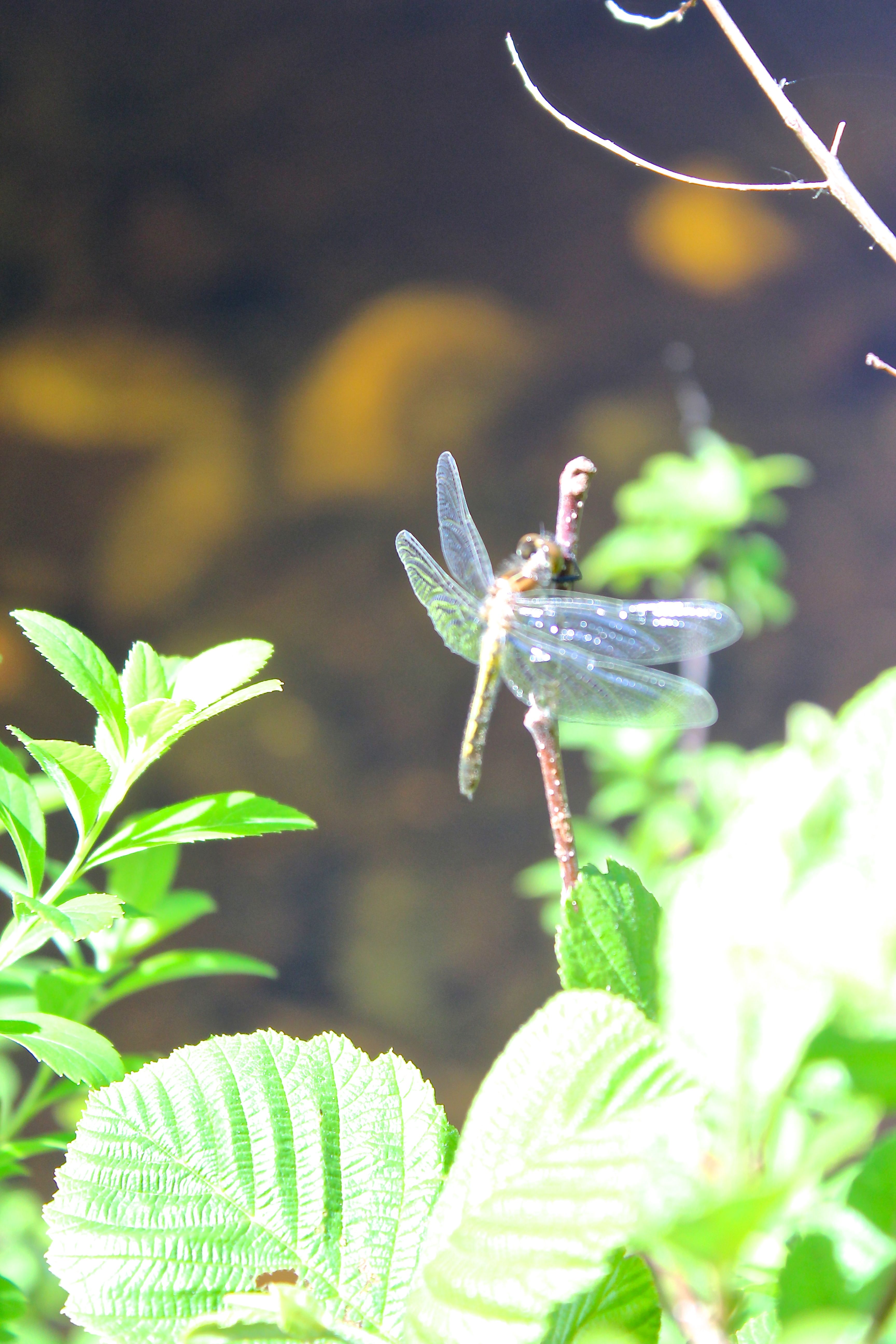
dragonfly

And a dragonfly. Dragonfly sitings–always worthy of a celebration.

measuring-wood-300x200

Though I didn’t see them work with this today, at the Forest Measurement classroom, they learn how to measure a cord of wood and board feet. And about the clinometer, a hand-held instrument used to measure ground slope, road grade and tree height, plus a biltmore or woodland stick used to estimate tree height and diameter. When we paused today, a local forester had middle school students simulate best forest management practices.

white lady's slipper

As we walked along part of the 1.4-mile path, we also noticed the flora–a White Lady’s Slipper. In Newcomb’s Wildflower Guide, this is listed as very rare.

pink

Pink Lady’s Slippers grow abundantly in these woods.

False Solomon's Seal

We also saw False Solomon’s Seal or Wild Spikenard.

job-started-300x200

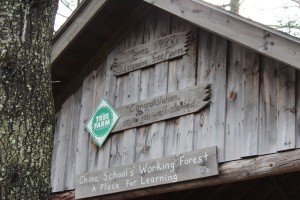
I have a lot of favorite things about this place, but the two that top my list are the reading tree where Logger Phil spoke and the signs above the pavilion–especially this one: “Congratulations on a job well started.” Indeed.

The driving was a cinch because we chatted non-stop and two hours later, I was home again, home again, jiggity jig.

If you read my post yesterday about the vernal pool, you won’t necessarily want to read any further. The life cycle is complete. Less than 24 hours after my visit yesterday afternoon, the pool has dried up.

VP 1

And, I’m afraid the tadpoles have succumbed.

dead tadpoles

To the earth they shall return in one form or another.

flies galore

The place was buzzing with flies.

Moose Pond

So on a brighter note, I visited my third “pond” of the day–Moose Pond. It was the perfect setting for a late afternoon interview.

life IS good, but we do NEED rain.

Observing the Cycle of Life

The Maine Master Naturalist class of 2015 graduated last night and for the second year in a row I had the privilege of helping students focus their eyes and develop a strong foundation about the natural communities of Maine. And now, they are ready to go forth and educate others.

In some ways, the year reminds me of life in a vernal pool.

And at the vernal pool I’ve been visiting on a regular basis since March, the transformation continues. I know I’ve included it in several (probably more than several) posts, but today seems like a good day to reflect upon its life cycle.

VP March 25

March 25: A snow-covered depression with some indecipherable tracks crisscrossing the surface.

VP April 4

April 4: Snow, water and slush. Something caused a disturbance.

VP April 12VP April 12 A

April 12: Freeze and thaw and freeze again, trapping newly fallen beech leaves.

VP April 21

April 21: Three days ago, this was still covered in slush. Suddenly, open water.

VP woodfrog eggs, April 21

April 21: The wood frogs didn’t waste any time.

VP April 24

April 24: More and more egg masses appear–attached to the branches or each other, as is their habit.

VP April 28

April 28: Though most are wood frog, there are some spotted salamander egg masses in the mix. All are taking on the green tinge from the algae with which they have a symbiotic relationship.

VP Predacious, April 28

April 28: Meanwhile, not even bothering to lurk in the shadows, a predaceous diving beetle swims about.

VP frog May 2

May 2: A well camouflaged wood frog still hopes for some action.

 VP wood frog, sally, May 4

May 4: Wood frog egg mass at top; spotted salamanders mass at bottom.

VP Babies May 4

May 4: Tadpoles at last.

Swarm

May 4: With communal living comes warmth.

VP, larvae, May 4

May 4: Mosquito and other larvae flip-flopping around.

VP, drying up, May 5

May 5: A sign that the pool is beginning to dry up–egg masses suspended in midair.

VP, life, May 5

May 5: Meanwhile, in the water, life continues. Tadpoles and others feed on the algae.

VP, May 12

May 12: Due to a lack of rain, the pool size decreases.

VP, lower, May 12

May 12: I can only hope that these blobs are just the remains and that most of the tadpoles have hatched.

VP, May 12, more life

May 12: A peek into the variety of life below the water.

May 14

May 14: Shrinking more and more.

VP, May 14, drying up

May 14: Some masses are left high and dry.

VP, May 14, tadpole:sally

May 14: A tadpole visits the salamander embryos.

VP, May 14, peanuts

May 14: Peanut shells. What? There hasn’t been much evidence of any person or critter visiting the pool . . .  until this.

vp 1

May 28: Almost completely dried up.

wet spot

May 28: The only wet spot left.

tadpoles

May 28: Tadpoles make the most of the wee bit of water.

tadpoles galore

May 28: The wet depression boils with action.

peanuts

May 28: And peanut shells are everywhere in the pool, but only one on the snowmobile trail. Another mystery.

With the end of class, eighteen new master naturalists are heading off into the woods to teach others. I hope the tadpoles have a chance to continue their development so that they, too, can hop away from the pool.

As for the vernal pool–vernal means spring and though spring isn’t over, unless we receive a substantial rainstorm, it has almost completed its cycle of life.

Thanks for wandering and wondering with me today.

Bookends

An absolutely gorgeous day in Maine began with a trek around Perky’s Path in Lovell and ended with a visit to the vernal pool behind our house. In between, I had numerous other things to accomplish, but it was the time spent exploring and wondering that added natural bookends to my day.

spring trail

Only a week ago, I was watching flowers and leaves emerge on trees. They still are, but what a difference a week makes. The trail suddenly seems illuminated.

striped maple

Among the shining stars–Striped Maple, known by some as goose foot because of its shape. (It’s also known as nature’s toilet paper.)

witch hazel

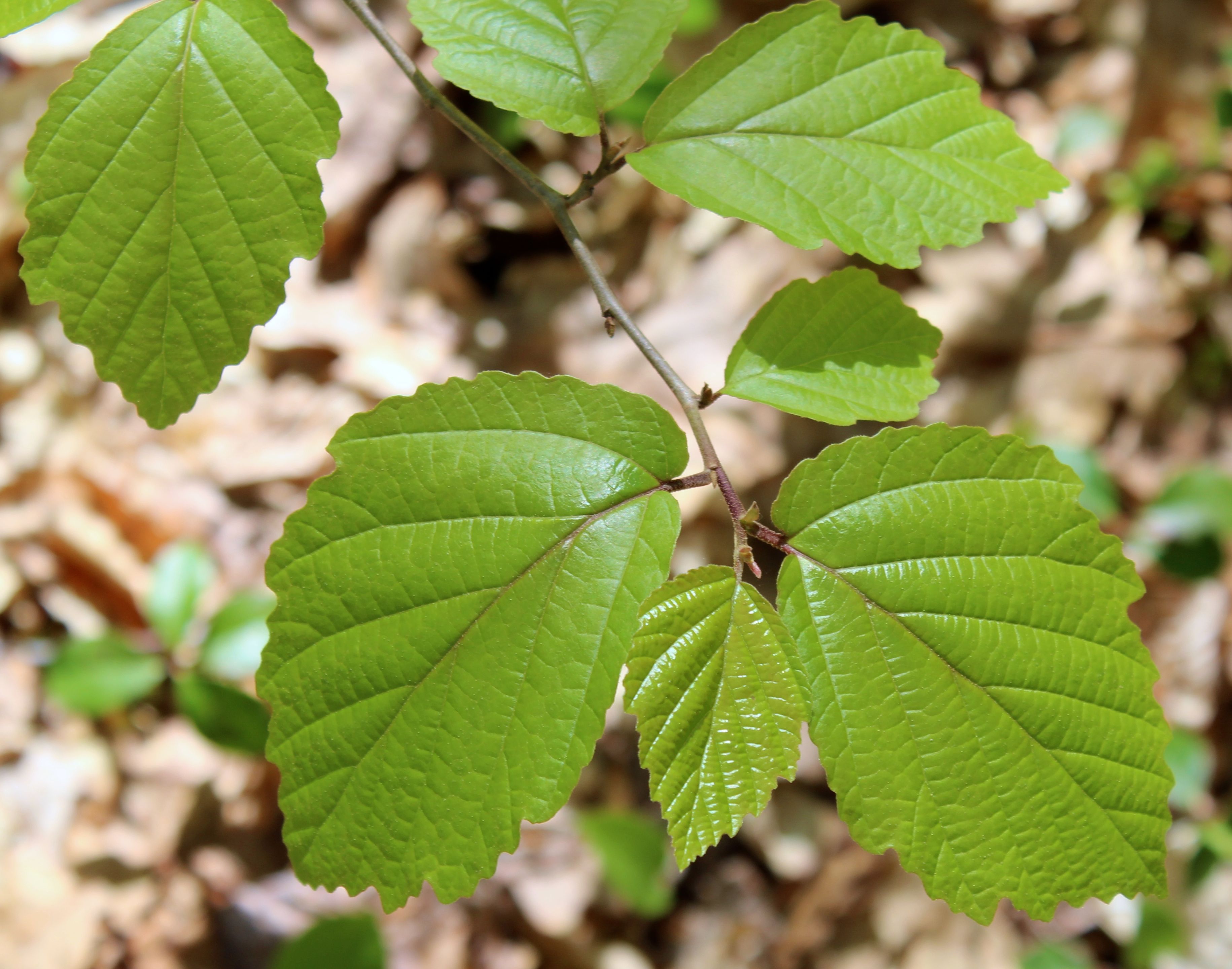
And Witch Hazel, which is easy to identify by its asymmetrical base and scalloped edges.

Red 2

And then there are the spring ephemerals, like this Red Trillium, that must flower before the tree leaves block the sunlight.

pt 2

Painted Trillium was also plentiful. Notice the reason for “tri” in the name? When I taught school, I forced my students to learn word cells–breaking the word down to understand the meaning. Tri=three, llium=referring to liliaceous or the lily family. (They had to learn tri, but llium wasn’t on their list.) I don’t know most of the Latin names, but even a few clues are always helpful.

fs3

Another member of the lily family–Hairy Solomon’s Seal. One characteristic of the lily kin–the parallel leaf veins.

goldthread

One of my favorite spring flowers is Goldthread. It personifies daintiness. While the scalloped, three-lobed leaves remind me of cilantro, Native Americans apparently used it to make tea. So why the common name? The root resembles a golden thread. Simplicity and beauty in a small package.

bunch

And yet to come, Bunchberries.

wild sars flowers

And the greenish white flowers of Wild Sarsaparilla, that grow under the umbrella-like leaves.

hb2

I would be remiss if I didn’t include Hobblebush.

stream

In the winter, friends and I usually find otter tracks and slides by this stream. Today, a variety of life spills forth.
brook

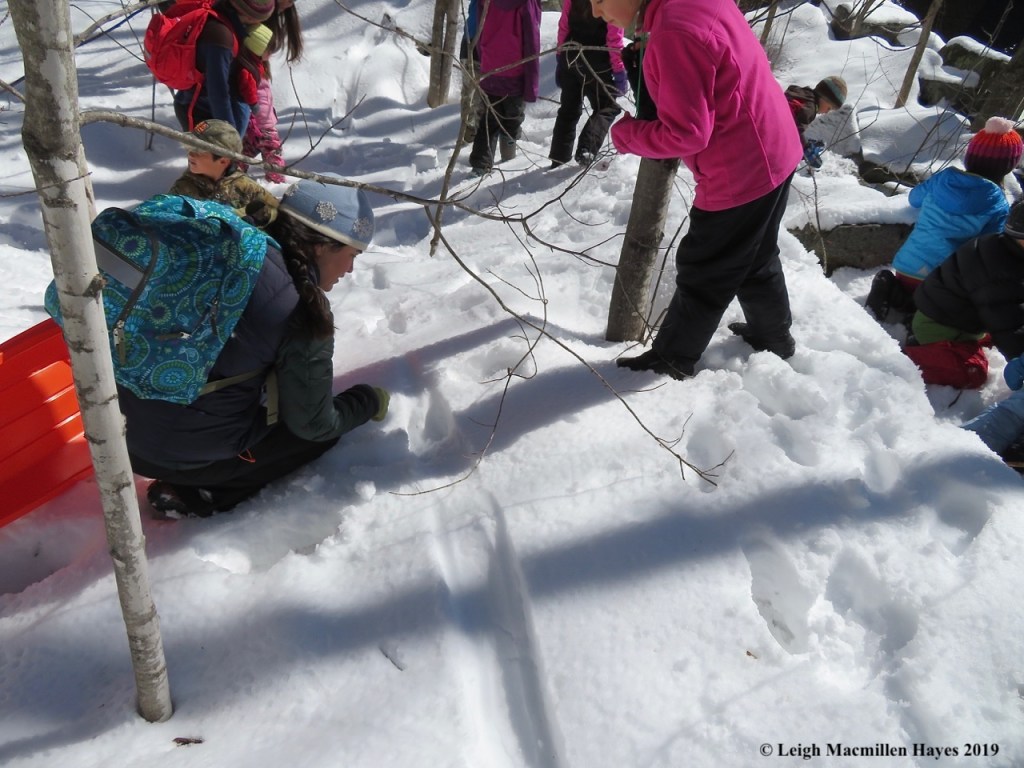
A brook flows from Heald Pond to Bradley Pond, and several years ago the Greater Lovell Land Trust constructed a bench to take in the sights and sounds of this place.

brook2

The view is ever changing.

bridge

Just down the path, a bridge also invites quiet contemplation. (When the black flies aren’t trying to sneak into your eyes, ears and mouth, that is. Protein consumption today? Check)

bridge 2 rock garden

And a rock garden.

swamp

One last look before heading out. Morning has ended.

rhodora

At the other end of my workday, I’m off to the vernal pool. Among a sea of junipers, an explosion of lavender erupts from one Rhodora plant.

bobcat

I’m so glad that the Rhodora attracted my attention, because as I turn from it toward the pool, I realize that a bobcat has walked in the direction of our cowpath.

vp

We’ve had little rain in the last few weeks, so while the snowmobile trail still has some muddy spots, the pool is drying up.

sally eggs

Will there be enough water for the spotted salamanders to survive?

water strider

And what will happen to the water striders?

twins

I’ll be curious to see how the tadpoles do. These two appear as bookends for me, holding everything in between in check.

Every day, it’s something new. I feel like I have to start all over again learning the features of this season and I’ll just begin to get it by the time summer rolls around, and then . . . so much more to learn. Though I have plenty of books to guide me, it’s the actual events that are happening right before my eyes that provide the most accurate information.

I’m thankful for any opportunity to wonder and wander, especially at both ends of the day.

One Step at a Time

The past few weeks I’ve felt like an expectant mother. Remember that 70’s Heinz Ketchup commercial? “Anticipation, anticipa-a-a-tion, it’s making me wait.” First it was the Red Maples. Look at them now.

red maple

Tender and colorful, their leaves begin to unfurl.

rm1

vp 5:4

And then there is the vernal pool where the rhythm of life changes with each day.

mosquitoes

Larval mosquitoes wiggle and waggle and somersault through the water.

beetle

Predacious beetles paddle along in this fertile hunting pool.

vp 1 5:5

Sunshine envelopes the wood frog and spotted salamander nursery

eggs 5:4

with a blanket of warmth for the growing embryos.

eggs formed

Their due date fast approaches.

teeming

The pond reverberates with each tiny step.

teem 3 5:4

Tadpoles, at last.

teem 2 5:4

The quarter-inch tadpoles feed on the green algae that has colonized the eggs. In their symbiotic relationship, the algae feed on the embryos’ waste and produce oxygen.

tad poles 1

I’m mesmerized.

drying up 5:5

And curious. The water level has dropped several inches already. The question is, will the gelatinous mass be enough to keep these embryos alive?

Canada mayflower

I turn away and by my feet, a Canada Mayflower about to bloom. Yet another step taken.

So much is going on in this place. I look around at the hardwoods and softwoods that hang over the pool and drop their flowers, leaves, needles, cones and sometimes branches. Moss and lichen cover the rocks. Plants are just emerging. And I’ve seen evidence that mammals stop here for water or food.

I want to protect the wood frog tadpoles so that in time they can hop away into the upland habitat as their parents did. They are my pride and joy. But only for a moment. They are not mine.

The web of life plays out right here and pulls me along one step at a time.

Thanks for stopping by to wonder as I wander.