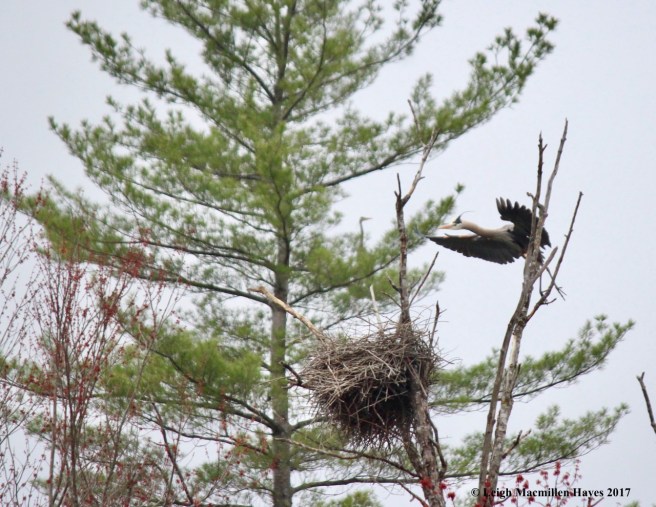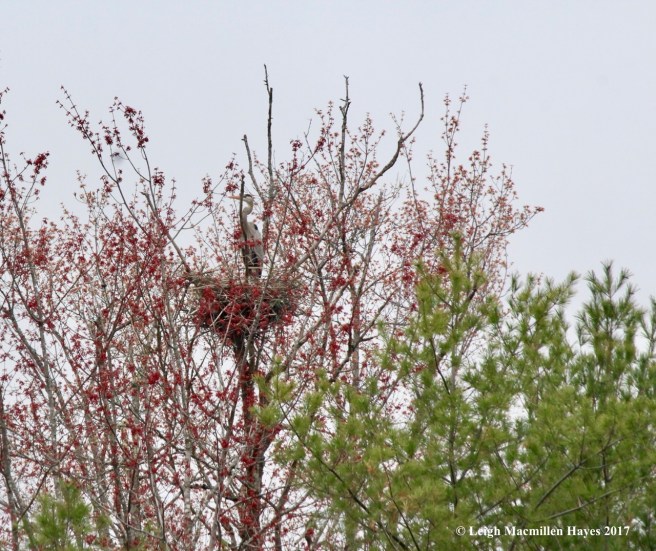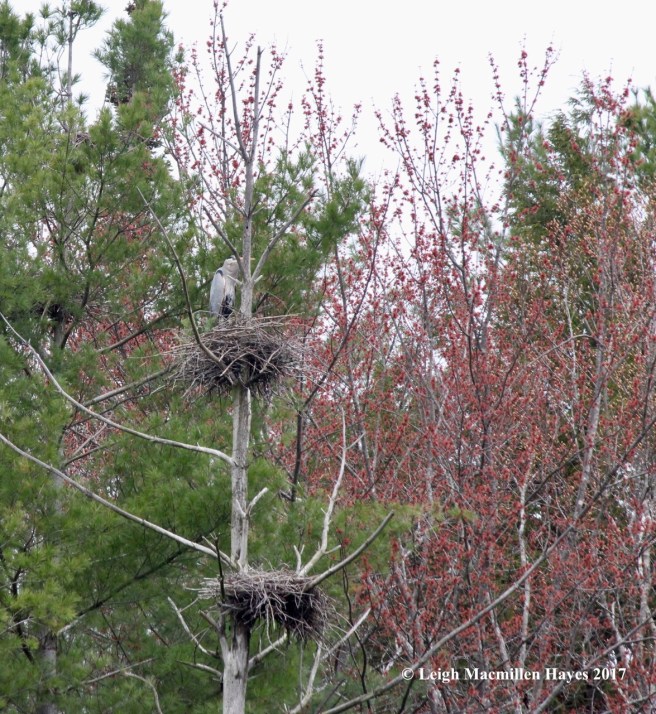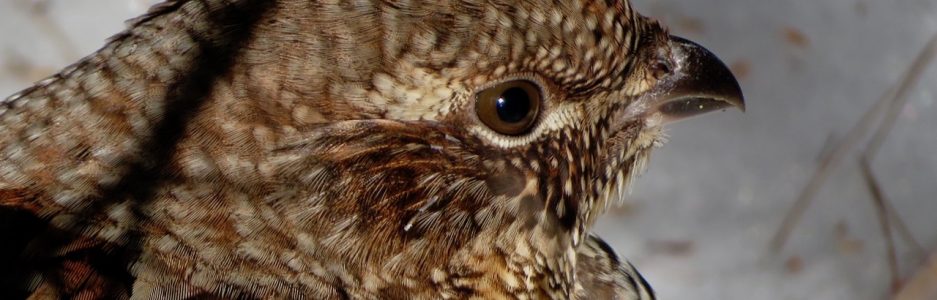
Outing on the Outlet

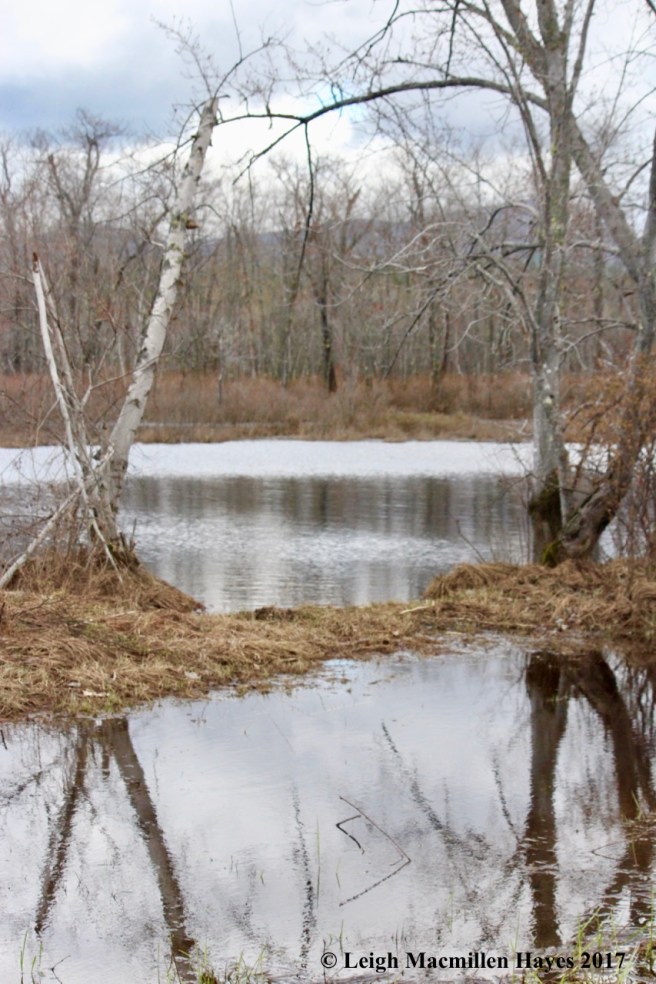
This morning dawned clear and chilly, with the temperature at 50˚ when I headed toward Lovell at 7:15. After placing some “Land Trust Walk Today” signs in pre-planned positions, I headed to the dam on Harbor Road in Fryeburg to wait for a ride.
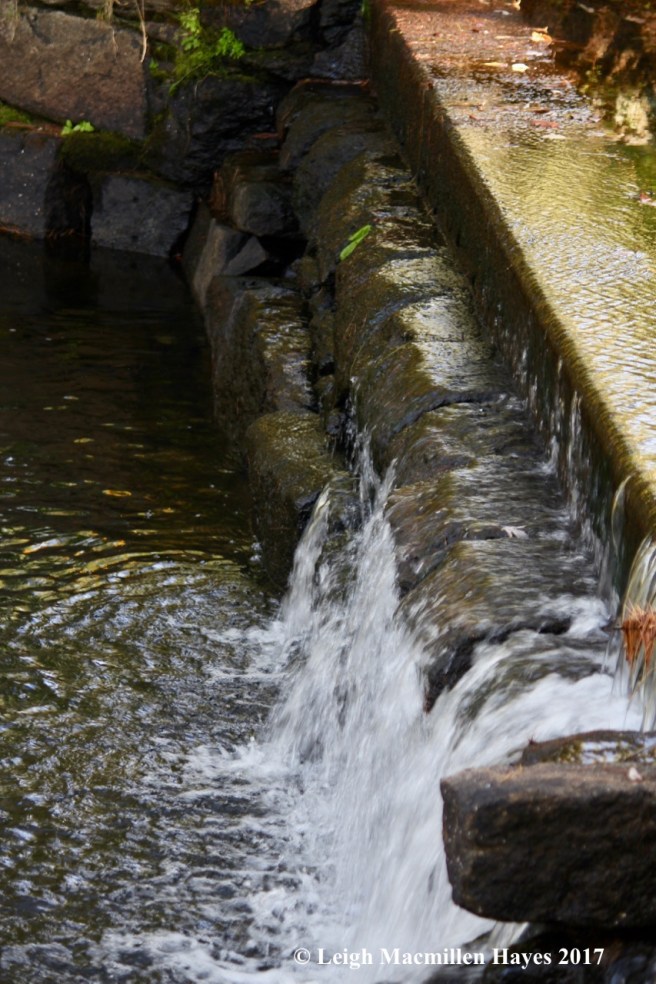
u1-outlet dam

Water flowed over the tiered dam, which was built in the early to mid 1900s at the request of the Pepperell Manufacturing Company in Biddeford. The townspeople contested its existence for it would raise the water level on Kezar Lake, but the textile mill located many miles away on the Saco River won the rights to construct such at the site of an 1800s saw & gristmill. Thankfully, though it did raise the level of the lake water, not all of the predicted problems came to pass.

u2-Harbor Road bridge

The dam was our intended take-out for today’s paddle co-sponsored by the Greater Lovell Land Trust and Upper Saco Valley Land Trust. Though it’s located off Harbor Road in Fryeburg, it’s owned by the Town of Lovell. No longer used, it still serves to provide a historic reference. And a great place to either portage and continue on to the Old Course of the Saco River and then the “new” course, or take out as we intended to do.
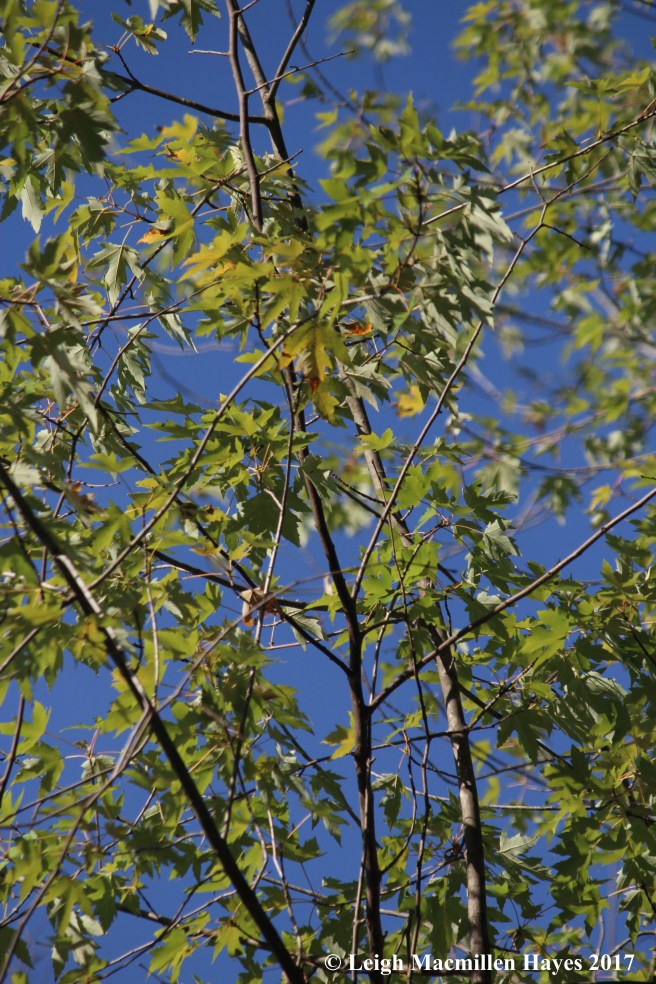
u5-silver maple

While I waited, I poked around, and rejoiced in the sight of trees that like wet feet. High above the dam, the leaves of a silver maple shown brilliantly in the morning light.

u3-green ash leaves

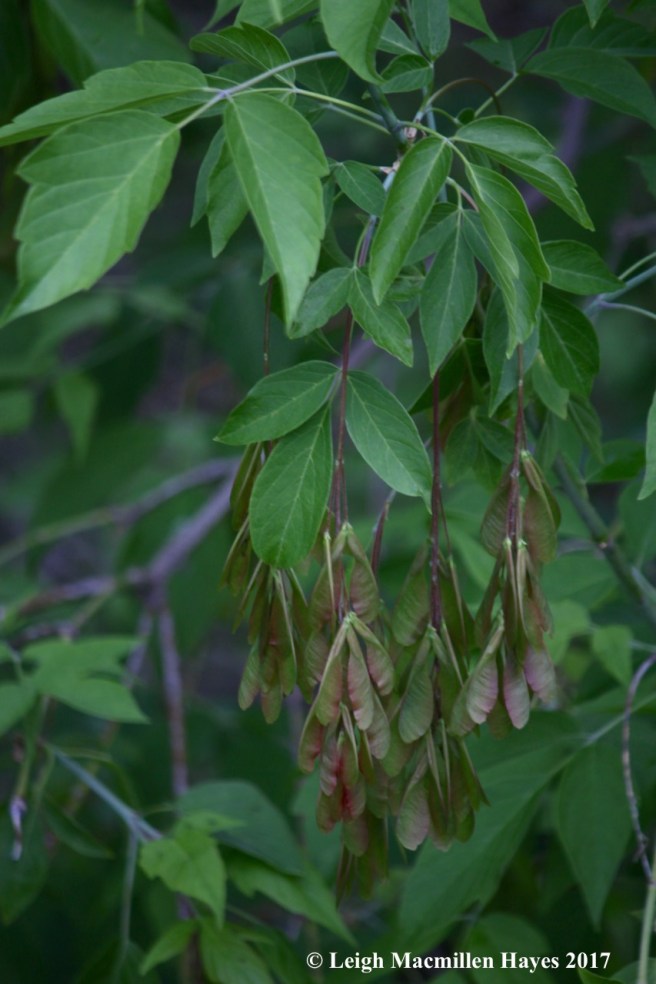
Other leaves also caught my attention for their coloration–with veins of red interrupting their olive greenness. Green ash, another tree that likes wet feet but isn’t as abundant as its siblings, white and black ash, also stood tall beside the dam.

u7-preparing to launch

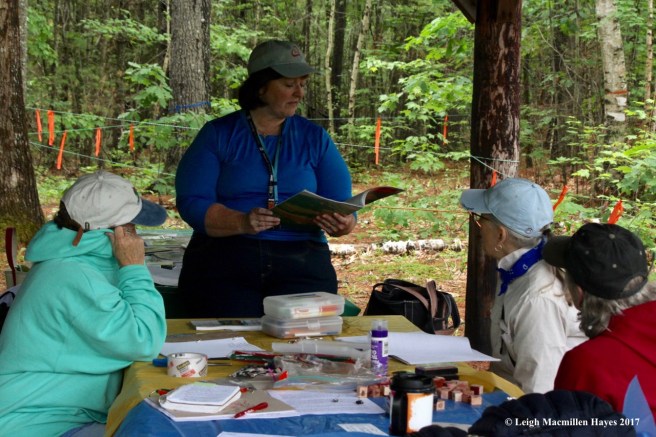
My dam-side exploration ended a few minutes later when Jesse Wright of Upper Saco Valley Land Trust and her friend, Shareen, pulled into the landing. We hoisted my kayak onto her already laden truck and found our way over the bumpy road to our intended put-in at a private residence–thanks to the generosity of its owners. Slowly the number of boats increased by the water’s edge as twenty-plus folks joined us.
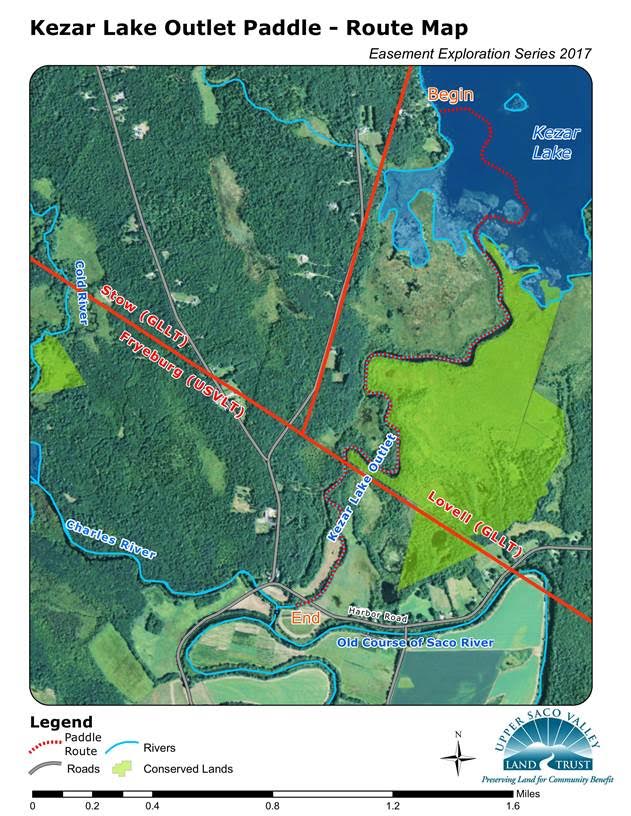
u6-map by Will from USVLT

Once all had gathered, Jesse showed off the map of our intended paddle, the red dots indicating our path from beginning to end, and I shared a bit of information about the fen, a GLLT property purchased in 2005. Today, the symbolic boundary between the two land trusts disappeared as we ventured off together.
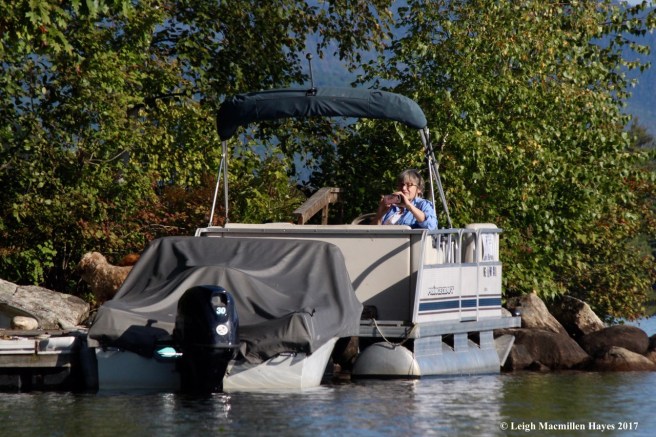
u9d-Linda 1

It takes good neighbors and lake stewards to pull off such an event, and the Wurms are such. They helped us arrange the put-in, gathered a couple of canoes for several paddlers and took photos at the start.

u9a-LInda's view 1

Linda’s view included Jesse heading off as our lead,
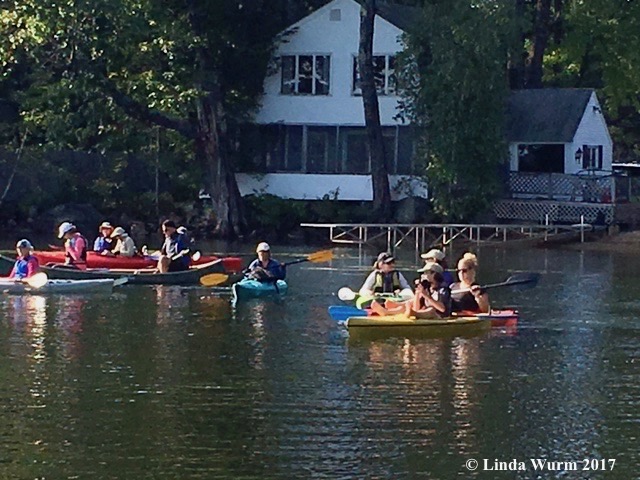
u9c-Linda's view 3

and the rainbow of colors once we hit the water.

u8-on the water with Jesse and gang

It took us a wee bit of time to get all the boats onto the lake, but it wasn’t a day made for rushing. And once in the sun, we began to warm up.

u10-send off by Linda

Before we headed off, we gave thanks to Linda (and Remy).
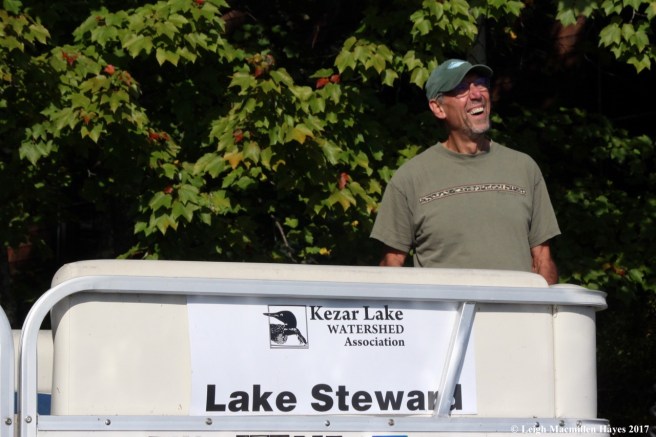
u11-and Heinrich

We also thanked Heinrich, who drew our attention skyward . . .
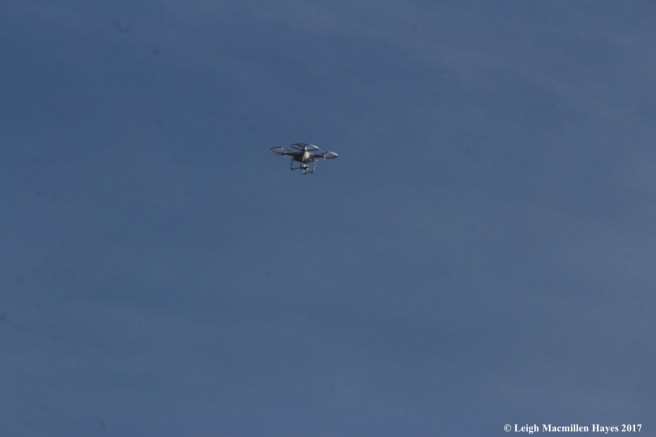
u12-drone

as he flew a drone above us.

DCIM100MEDIADJI_0056.JPG

Our first destination was to paddle north for the view.

DCIM100MEDIADJI_0061.JPG

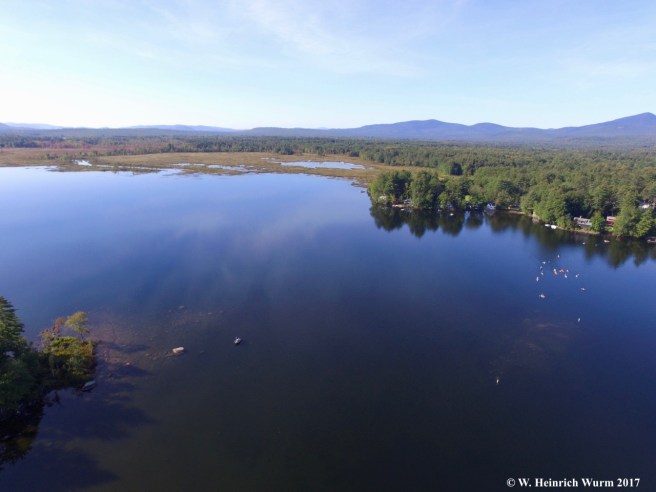
The drone spied the mountains before we did.
DCIM100MEDIADJI_0059.JPG

And spotted our intended course . . .

DCIM100MEDIADJI_0067.JPG

into the fen.

u18-veiws from the lake

A quick turn-around from the water gave us bearings as we noted the Baldfaces to the west.

u19-heading toward the fen

We circled an island that serves as an environmental study plot for the US Forest Service and then paddled southward.

u20-Jesse in the lead

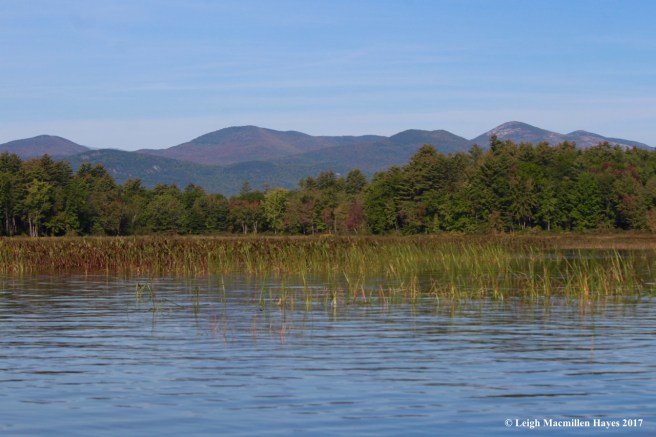
Jesse led the way through the pickerelweed.
u21-more mountain views

As we followed, the view got better and better.

u22-slowly we followed

Acting as sweep, I took up the rear while the group snaked along.
u25-early fall color

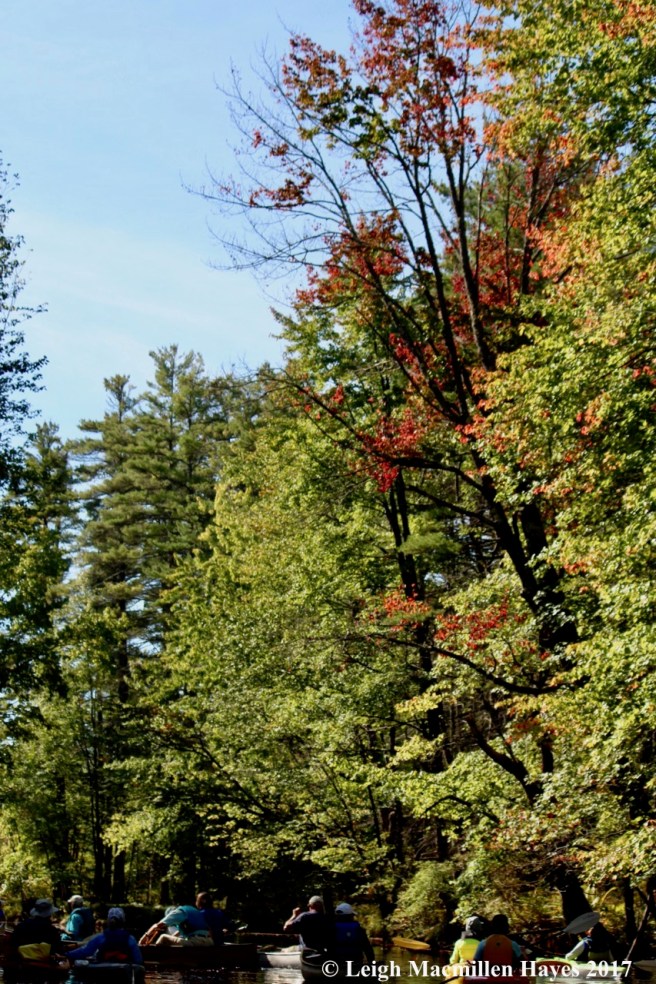
We followed the twists and turns of the water trail, where red maples showed off their autumn display from the canopy.
u28-red leaf

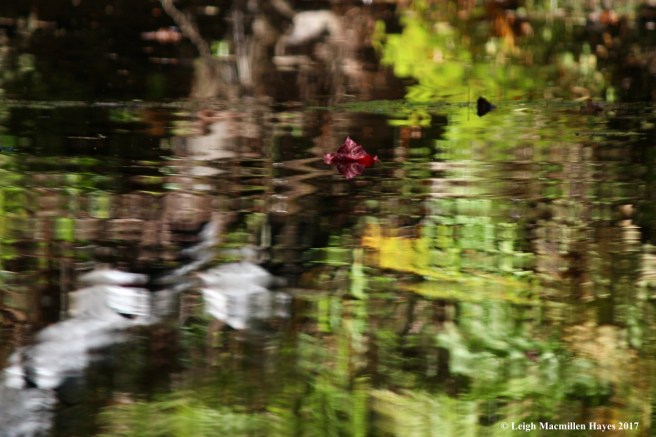
Occasional leaves fluttered down, begging to be noticed in their singularity.

u-cranberries 1

Though we didn’t get out of our boats and actually walk into the fen, we did stop to chat about what it had to offer. The GLLT owns 260 acres of the 500-acre fen, an acidic ecosystem with a deep layer of organic material including peat moss atop a sandy substrate. Several bird species of concern breed or hunt in the fen, including American bitterns and Sandhill cranes, the latter of which we had the good fortune to hear but not see. Long’s bullrush, a globally rare sedge, also grows here. But the crème de la crème for many are the cranberries. Folks on today’s paddle weren’t familiar with the plant and I couldn’t show them at the time, but I shared with them the experience of picking in the past with students from Molly Ockett Middle School in Fryeburg.

u-cranberries 2

On a fall day each year, about thirty students in the school’s MESA program (Maine Environmental Science Academy–an experiential place-based curriculum for 6-8 grades) visit the fen with the GLLT’s Executive Director, Tom Henderson.

u-cranberries 3

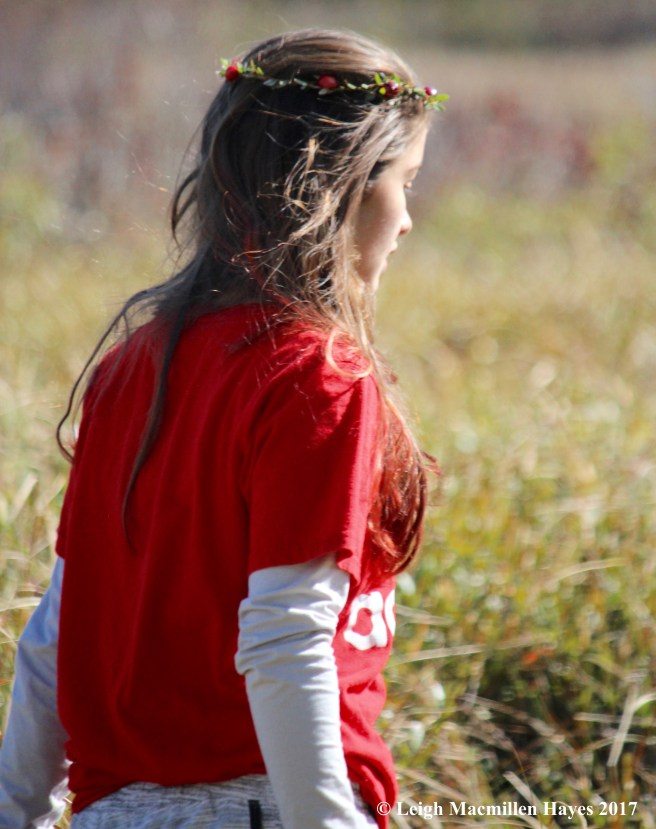
They learn about the hydrology of this place, but one of their highlights is to pick cranberries, and to that end, they become very possessive. As one student approaches another, a common statement is shared: “Don’t come over here. There aren’t any cranberries here.”
u-cranberries 4

Over the course of several hours, they fill their bags and sometimes even show off their creative talents in other ways–all in celebration of the cranberries.
u30-weir1

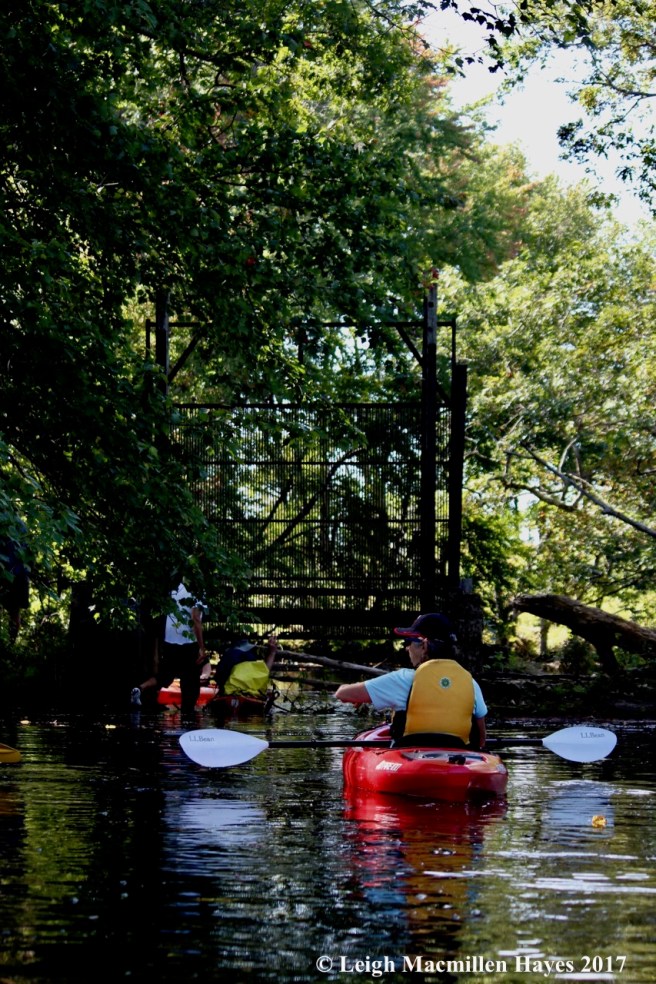
Continuing along the river this morning, we noted beaver activity and talked about scent mounds and their usefulness within the beaver community. And then we reached the fish screen.  Jesse had paddled the course last Sunday and made it under the screen without any issues.

u31-clearing a beaver dam

Since then, the beavers had been busy damming it up. One of our members worked to adjust some of the branches so we could all get through.

u34-offering a shove

Of course, sometimes a helping paddle was needed to push a boat forward.
u33-cow 2

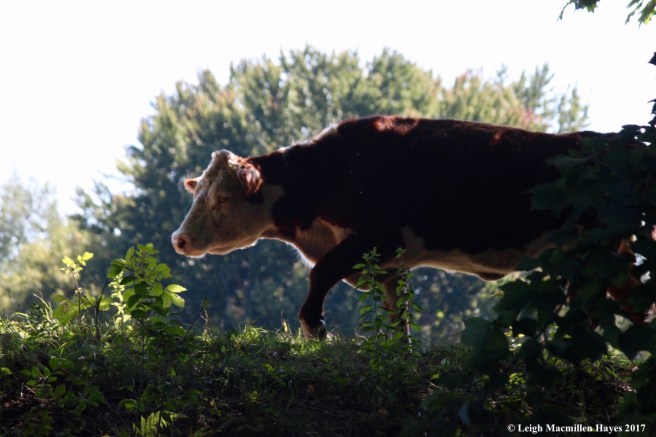
While we took turns, our efforts didn’t go unnoticed.

u35-other side measurement

On the other side, a ruler indicated depth.
u36-approaching the bridge on Harbor Road

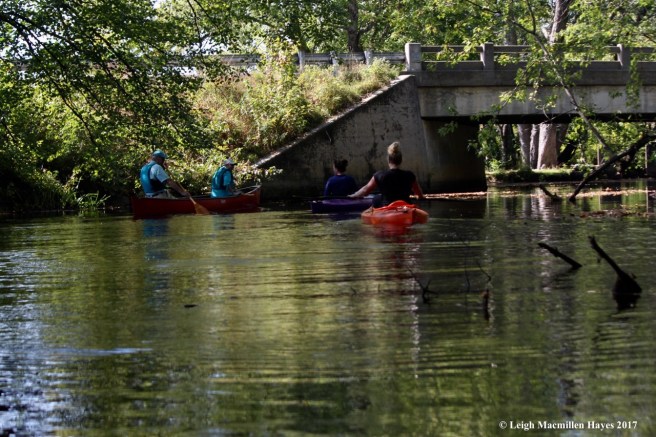
And then, and then, in what seemed like only minutes but was actually a couple of hours filled with camaraderie between familiar friends and new, plus a touch of natural history thrown into the discussion, we found ourselves at the bridge and the end of the journey for some. Others chose to paddle back rather than hitch a ride. We had come full circle.

As we pulled boats out, we were surprised at how warm it was since we were out of the shade, the temp having reached into the 80˚s.

Our outing on the Kezar Lake Outlet would not have been doable without Jesse Wright, who did the yeoman’s work of pulling it together, William Abbott, USVLT’s executive director who created the map, the Wurms and their neighbors who contributed land, boats, photographs and time, and all who ventured with us on this most lovely first full day of autumn.  Thank you all.
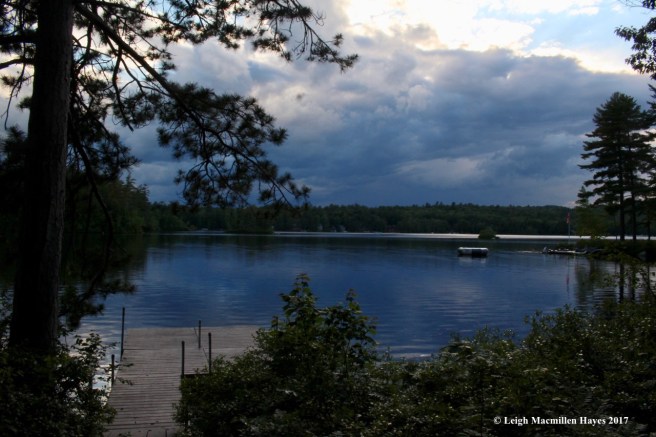


Homecoming Mondate

After months of waiting and an arduous drive, we arrived at our camp on Moose Pond late yesterday afternoon. It’s that anticipation following months away and the five mile road trip that always make the final turn into the driveway so sweet.

m-night sky 2

We unpacked and put everything away, ordered a pizza because our Sunday night tradition of making our own takes a hiatus for a couple of months, and then settled on the porch as dark clouds gathered, their hues enhanced by the water’s reflection. And then we spotted a friend from across the pond jumping into his boat and pulling away from his dock. He raced south and we thought perhaps he hadn’t seen the lightning that was visible to us. Suddenly the wind increased dramatically and then the rain came. We moved indoors and checked windows and looked to our south and assumed Brian’s boat was fast enough to get beyond the storm. When the rain began to teem, we realized he hadn’t outrun it for two boats came flying back into the North Basin, his being one. We knew he was soaked and probably had a story to tell. Such is life on the pond, where our focus switches from world news to the news of our immediate world.

m-loon off the dock

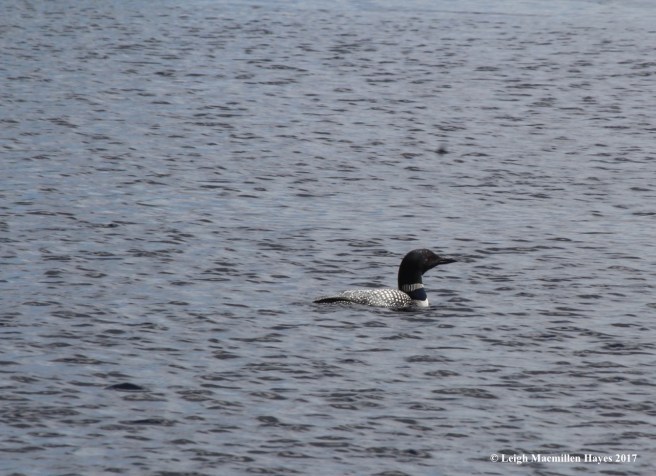
And so we awoke this morning to the announcer of said news–a pair of common loons calling. We answered as we headed outdoors.

m-robber fly 1

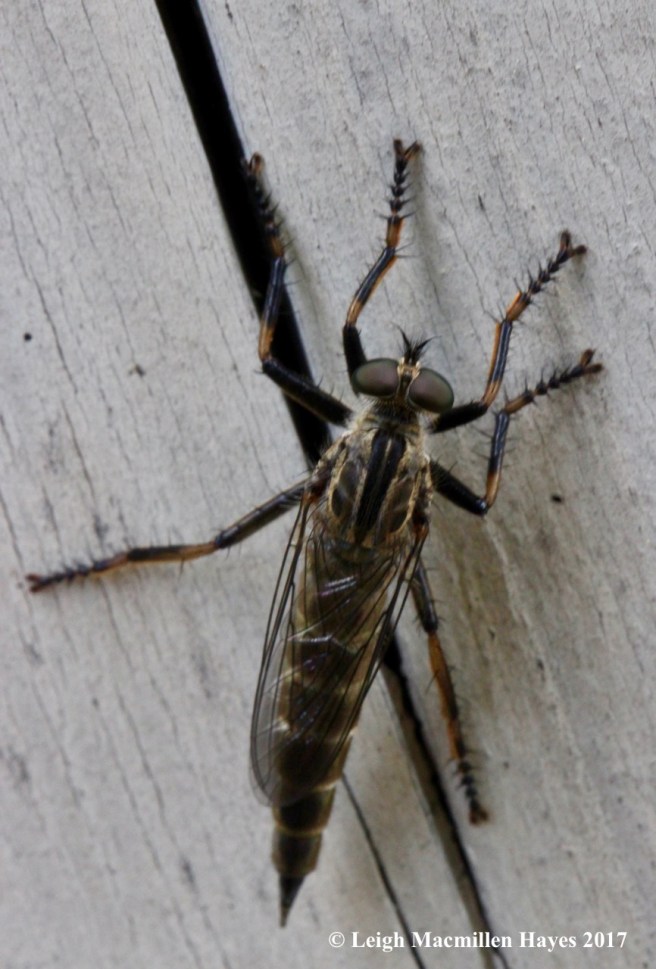
Of course, being back meant we had chores to complete, but most of them were outside. I finished mine first and so I began taking inventory–greeting old friends I hadn’t seen in a while. The first was a robber fly posed by the porch door.

m-robber fly side view

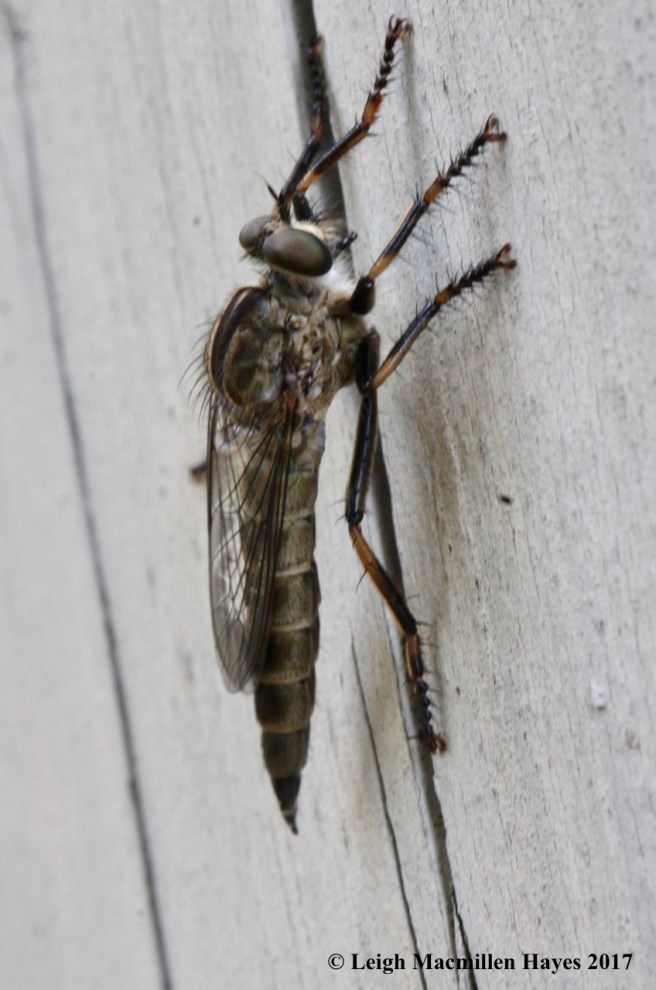
Its compound eyes aren’t as large as those of a dragonfly, but still . . . they are large enough and allow this mighty predator to spot and catch prey more than a foot away in a split second. I wanted to see it, but wasn’t privy. Instead, I admired his body features.

m-flesh fly

Then I headed to the pond. My first find beside the water was a flesh fly–and I wondered what dead insects his bright red eyes may have feasted upon.

m-familiar bluet 2

More to my liking was the sight of a male familiar bluet damselfly. I can’t see enough of these and I think it has something to do with the color blue–especially when it contrasts against a dark green leaf.

m-chalk-fronted corporal 1

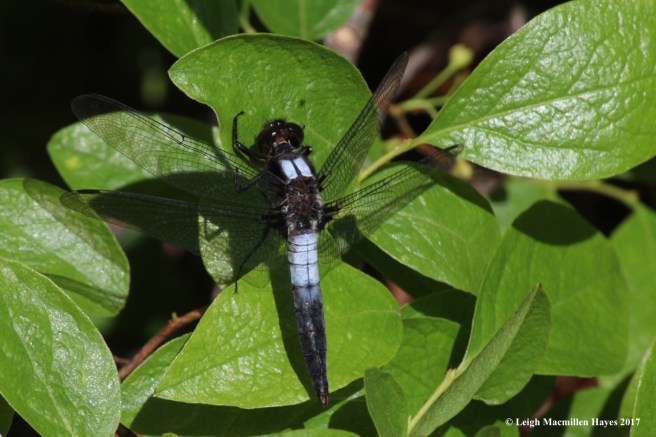
As I stood there, a perennial favorite appeared. It seems the chalk-fronted corporal dragonfly and I like the same habitats for wherever I go, at least a half dozen are also there. Perhaps that means that wherever I go, I’m always at home.

m-lancet 1

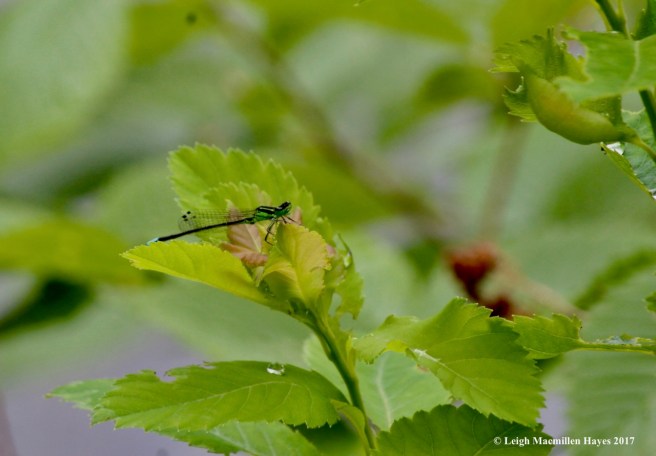
And then another dragonfly caught my eye and I recognized it as another familiar friend,  a lancet clubtail. But what surprised me was that a damselfly, possibly a familiar bluet, was exploring the underside of the same leaf.

m-lancet 2

That is . . . until I looked again.

m-lancet 3

And noticed the bend in the damselfly’s abdomen.

m-lancet 5

And watched the dragonfly move the damsel body with one wing attached and another dropped.

m-lancet 7

Ever so slowly . . .

m-lancet 8

the damselfly . . .

m-lancet 9

disappeared . . .

m-lancet 10

until only a bit of its abdomen,

m-lancet 11

a leg part and the wing were left. Wow. I felt privileged to have observed such a meal. Of course, I was sad for the damselfly, but also thankful for the energy it passed on to the dragonfly.

m-loon in Sweden, Maine 1

At last, my guy’s chores were completed. We pulled out the kayaks and paddled north to Sweden. Sweden, Maine, that is. And in the shallows of the northern-most end of the pond (Moose Pond is actually nine-plus miles long), we again met the loons.

m-eastern kingbird

A trillion damselflies and dragonflies darted about, some in mating position. And the kingbirds hovered above the water before making quick dips to retrieve insects.

m-rose pogonia driftwood garden 1

We floated around and noted that the water was deep enough for us to get almost to the very tip of the pond. At the same time, the old stump islands delighted us with their gardens.

m-rose pogonia 1

And within some of those islands another delight–rose pogonia in bloom.

m-looking south 2

At last it was time to leave our favorite section of the pond where all kinds of life thrived, knowing that we’ll return time and time again.

m-red winged blackbird

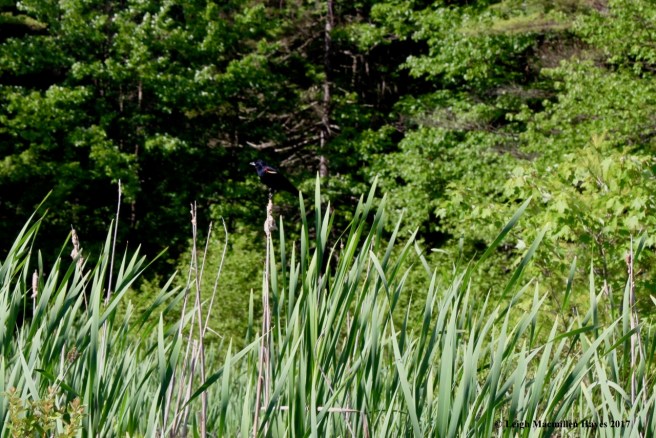
As we moved along, a red-winged blackbird began to turn circles above us–squawking as he showed off his shoulder patches in glaring scarlet form. He landed on a cattail and we paddled on, assuming there was a nest nearby. We also spotted Mrs. Red-Winged, who chose to go grocery shopping at that time. Even though we were headed away, the Mr. came after us one more time, so close that we could almost touch him. He was definitely a good dad–protecting the nest and/or young.

m-painted turtle 1

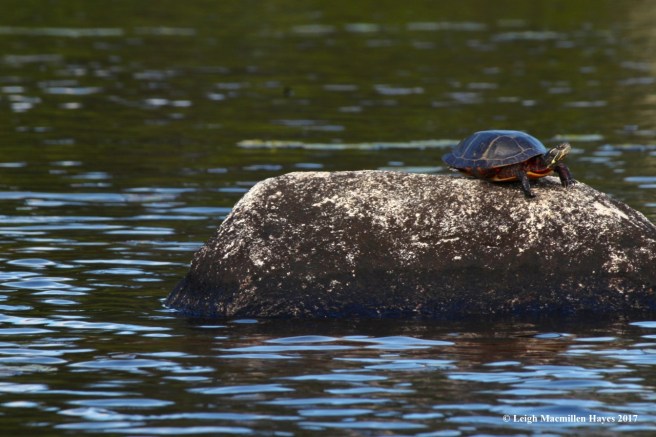
Continuing south, a painted turtle surprised us by staying atop a rock until we passed by, as if he wanted to welcome us back (or so we believed–after all, this is our story).

m-camp 1

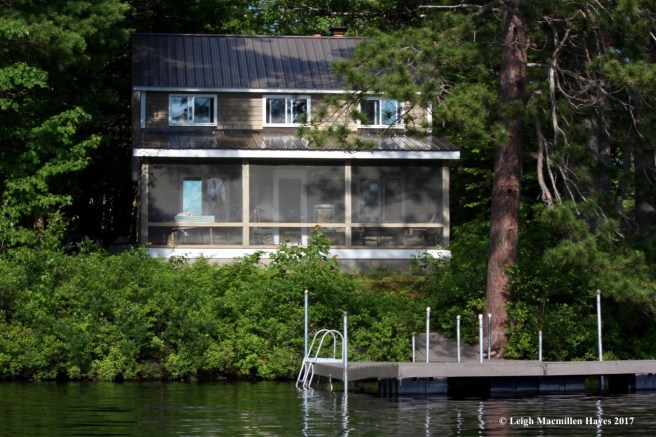
A couple of hours later and we returned to camp sweet camp, to this place that has marked many occasions in our journey together since we first started dating in 1986.

Camp will always represent a homecoming to us, made especially sweet when we can share a Mondate here as we rediscover the world that surrounds it.


The Magic of Maine

Our group was small but our experience enormous as five Maine Master Naturalists met in China, Maine, this morning to participate in a workshop about experiential learning presented by one of our own–the teacher of teachers, Anita Smith.

c-osprey 1

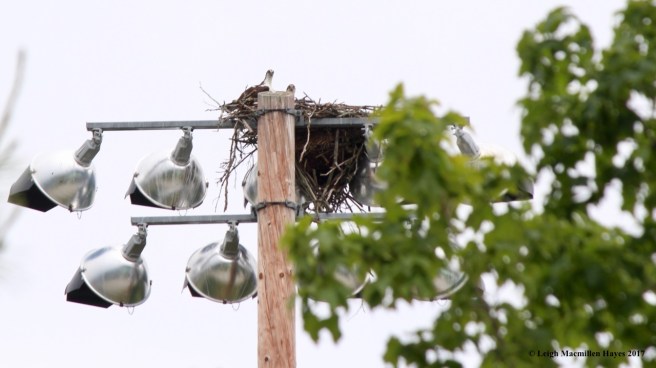
Upon arrival at the China School Forest where we met up, our nature distraction disorder (NDD) immediately kicked in for there was an osprey nest on a light post overlooking the ballfield between the middle and primary schools. The forest is a 50-acre tract behind the primary school that serves as a hands-on, outdoor classroom for grades K-8 and all of us really, for it is open to the public.

c-green heron 1

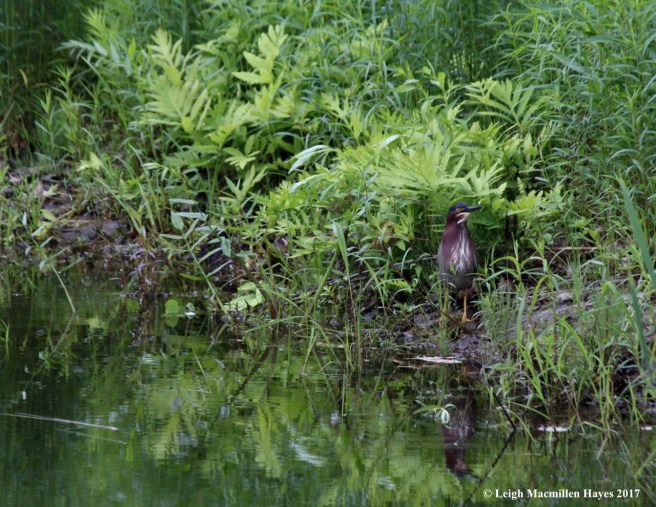
And then our attention was directed to the fire pond, where a stocky green heron displayed its streaked chest and dagger-like bill.

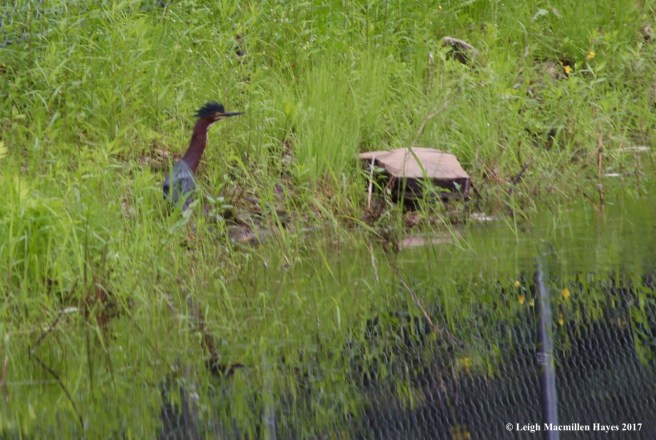
c-green heron crest

We watched him work the edge and loved when he showed off his crest–adding to our agreement about his ID.

c-trail map

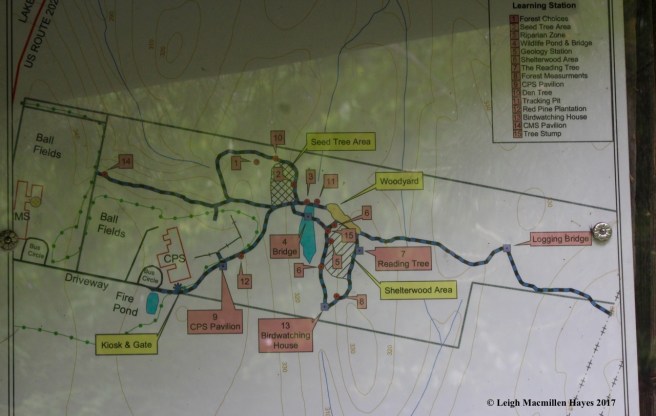
At last, we pulled ourselves away and let Anita begin, starting with an overview of the forest’s history and a look at the map posted on the kiosk.

c-yellow rattle 1

We headed off down the trail to a pavilion, but again were easily distracted. This was a plant I didn’t recall meeting previously, but its bladders and yellow faces reminded me of  fish faces. Karen later ID it as yellow rattle for when the seeds form in the bladders later in the season, they rattle.

c-lady's galore

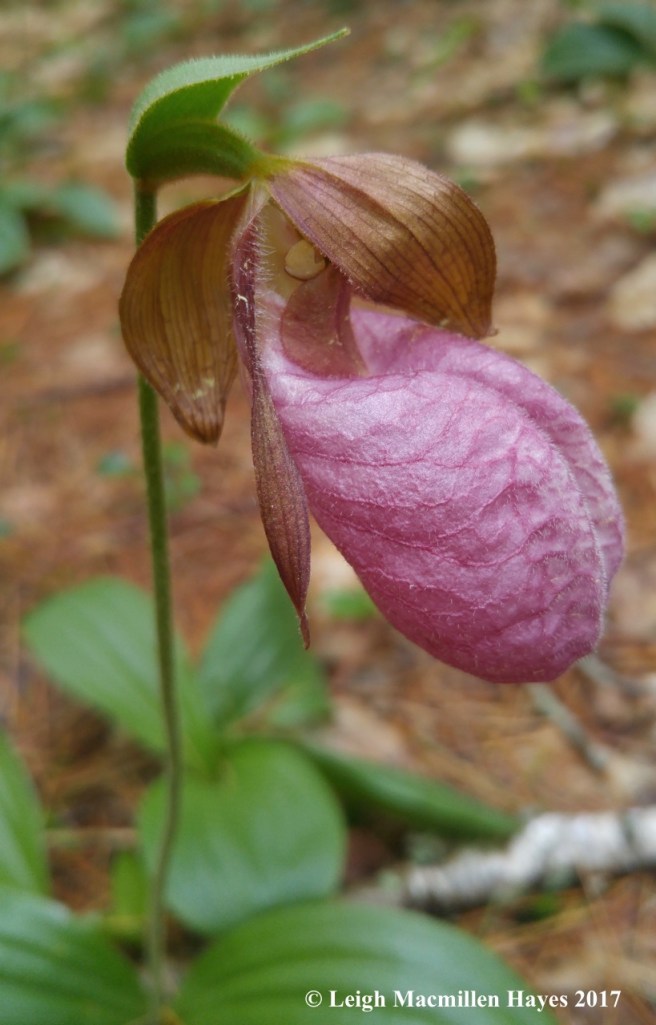
At last we arrived at the pavilion (only a few minutes walk down the trail if one wears blinders) where Anita had us help set up a work station and explained how she has students help cart the supplies. We started to help her, but within seconds Sally spotted the lady’s slippers and again we were distracted.

c-lady's by the dozens

They were so plentiful that we couldn’t resist admiring them.

c-pink lady's slipper

Most were princess pink.

c-white lady's slipper

But a few were pure white (not rare, just a form of the pink, but still . . . ).

c-lady's slipper pod

And even others spoke of transformation, with last year’s pods still standing.

c-nature journal

Again, she pulled us back to the subject of the day. Because we were there to learn about activities we might use in our work with children of all ages, Anita had us create our own nature journals. Stamps and markers and pipe cleaners and solar beads and fabric and we were happy campers–each expressing our own creativity in designing the covers.

c-phoebe babes1

While we worked, baby phoebes watched from above.

c-damselfly nymph1

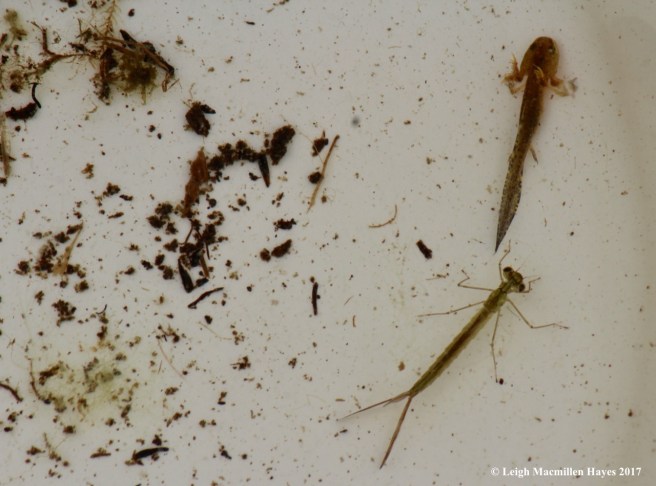
Our next stop was the wildlife pond and bridge, where we did some pond dipping and were thrilled with our many findings, like damselfly larvae and tadpoles,

c-caddisfly larva and salamander

damselfly and salamander larvae,

c-water scavenger beetle larva and salamander larva

and water scavenger beetle larvae beside a salamander. There was so much more and we again had a difficult time pulling ourselves away.

c-examining aquatic species

It was the water scavenger beetle larvae that stumped us most, but we had fun identifying as many species as we could and were wowed by the variety available.

c-bird nest

Leave we did at last–only first we checked out a nest Sally had discovered. While it sat upon balsam fir branches, we thought it had fallen from above. And marveled at its construction–balsam fir twigs, fruticose lichen and balsam fir needles, all in their own layers.

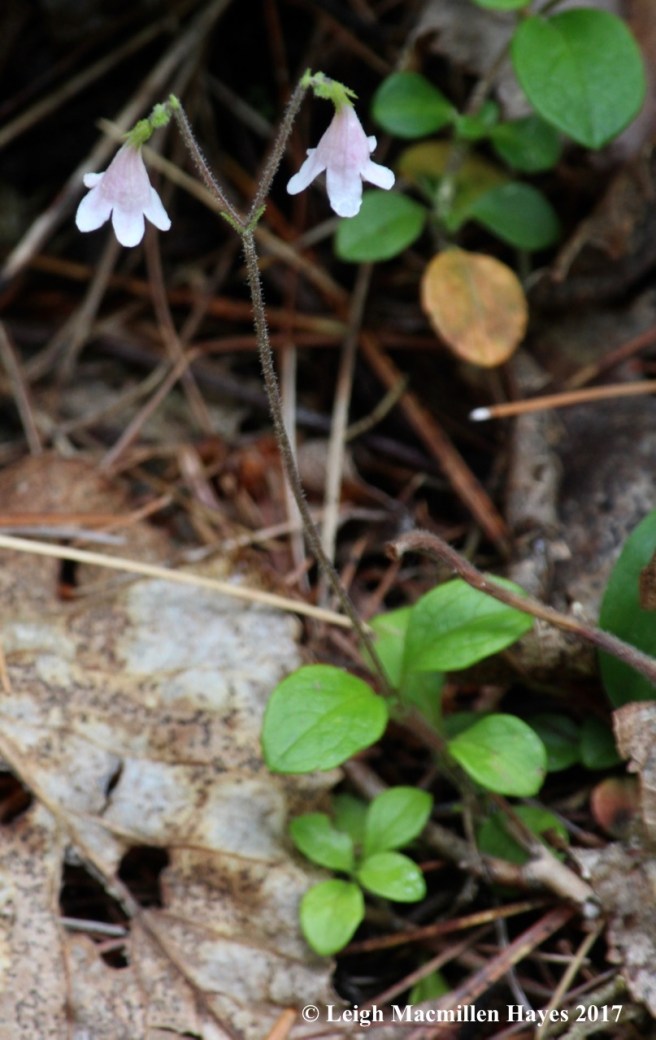
c-twin flower

There were other things to see before we moved on, like the delicate twinflowers that bloomed.

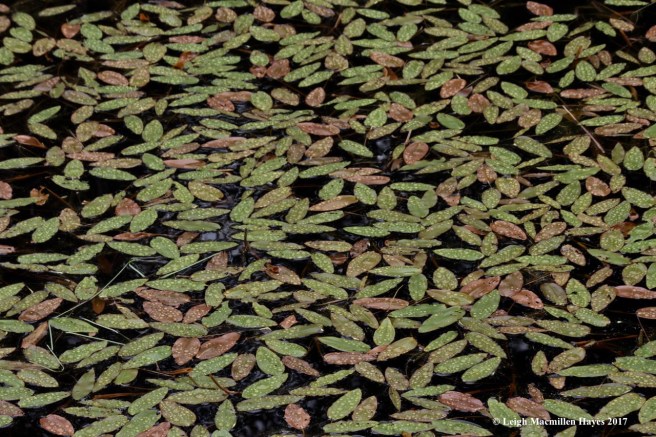
c-pondweed and raindrops

An artistic display of pondweed.

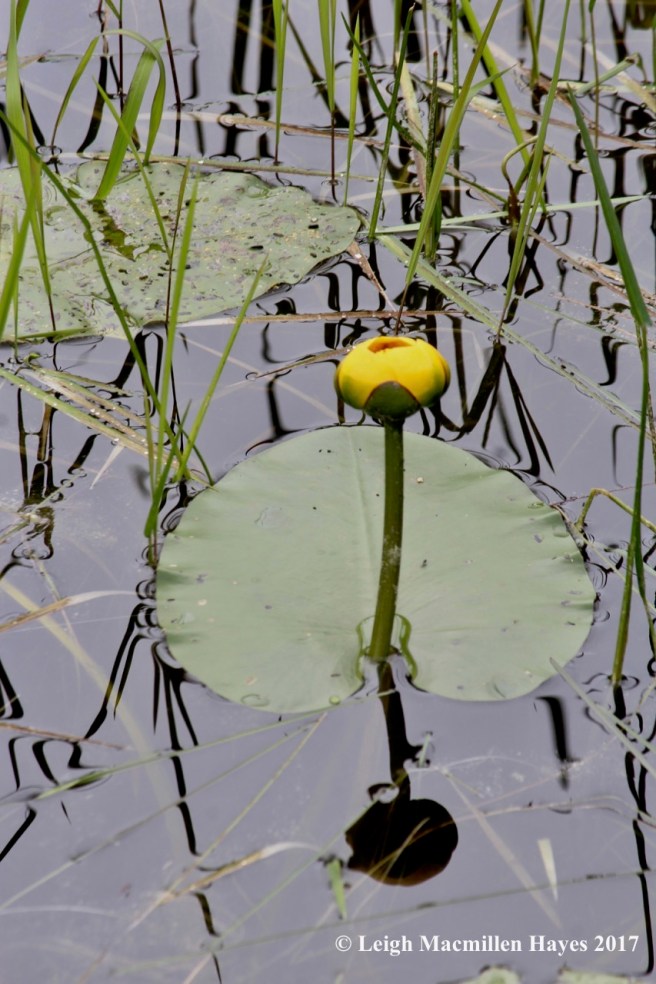
c-fragrant water lily

And spadderdock,

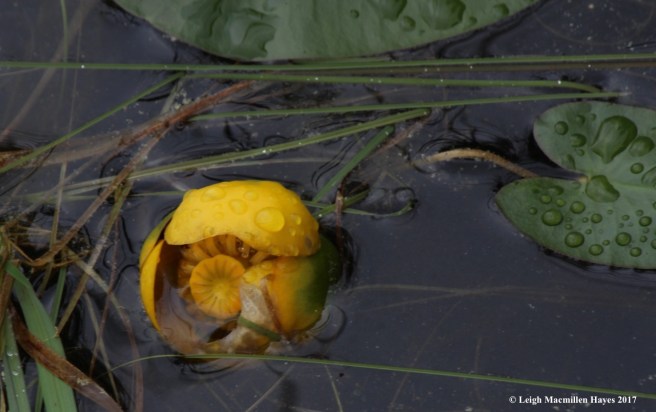
c-fragrant water lily 2

whose flower reminded me of the inner formation of pitcher plant flowers.

c-Anita reading to us

At last, lunch time arrived. And so we returned to the pavilion where Anita shared some of her favorite books. And then she read to us All the Places to Love by Patricia MacLachlan–warning us first that she would cry when she got to the end. Indeed she did, but we were touched for we got it.

c-board feet

After lunch, she took us on a tour to visit some of the seventeen learning stations, including the forest measurements station, where students learn about common measurements related to the forest and wood product industry, including board feet for dimensional lumber.

c-reading tree

Every time I visit the China School Forest, I’m in awe. And today, I knew others, like Kathy and Cathy, felt the same. The forest was full of diverse species and twenty years ago the Town of China and folks like Anita turned it into an incredible space for children and the child in all of us to learn. My favorite spot of all has been “the reading tree” built around a weeviled white pine. Even those in wheelchairs may access it and find a spot to read or watch or listen. After we climbed up, we climbed down, and Anita led us through several fun activities, the last ending with M&Ms. What’s not to love about a seminar that ends with chocolate?

c-Eastern forktail damselfly

On our walk back, our NDD was ever on alert. And so we’d not seen too many dragon or damselflies in the morning, perhaps given the cooler temp. But on our way out, an Eastern forktail damselfly drew our admiration for its green, black and blue coloration.

c-bridge classroom

We were beside the man-made pond when we saw it, where the bridge crosses and where we’d earlier done some pond dipping to observe the aquatic insects. It’s there that a bench sits in the midst of an outdoor classroom.

c-dedicated to Anita Smith

That very bench had been dedicated to our Anita.

c-baby robin 2

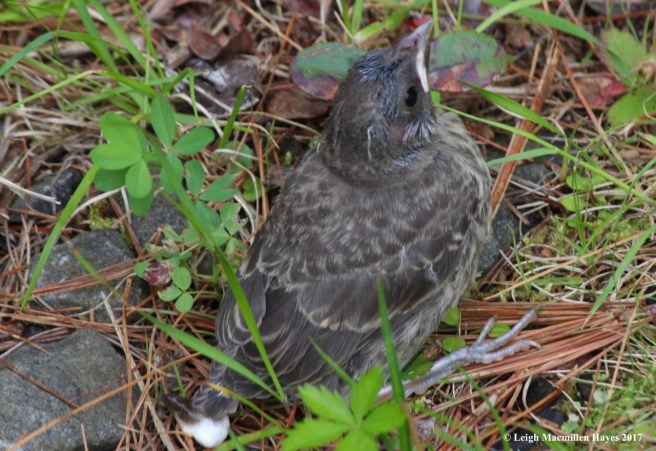
Back at the pavilion, we gathered all our gear and then followed the trail out. And that’s when Kathy called from ahead, telling us to watch our step. A baby robin sat on the path. We heard a parent nearby.

And wondered in the magic of the day. Another magical day in Maine.


Reverence Beside Holt Pond

There was a time when I’d either shout for my parents to kill a tiny spider in my bedroom or walk around the numerous apartments I lived in with my hands clenched, pacing until I built up enough nerve to do the critters in.

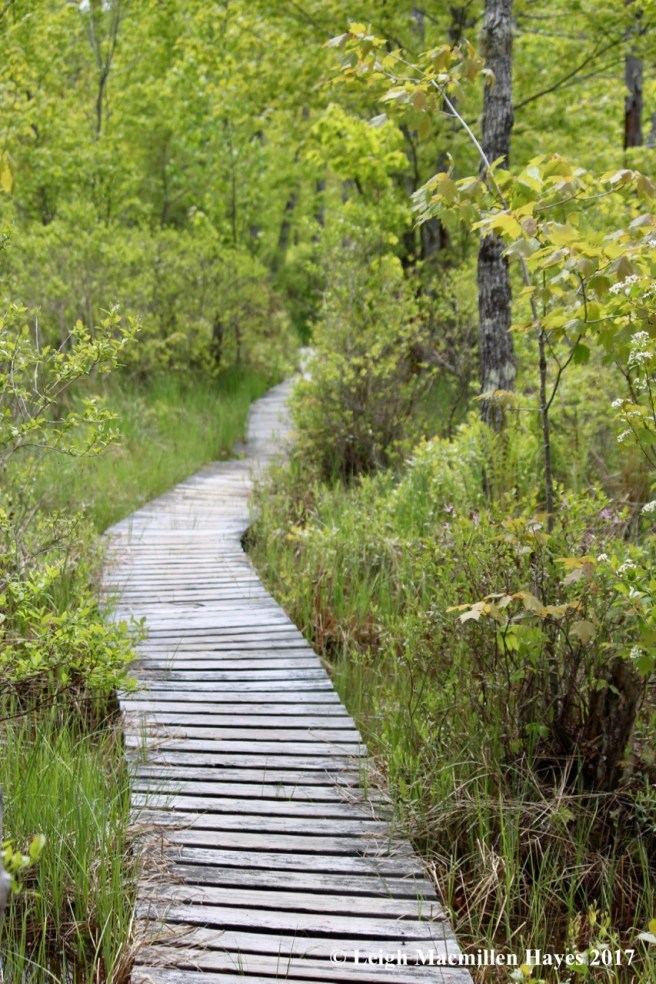
h-Holt Pond boardwalk

And today . . .

h-carpenter ants1

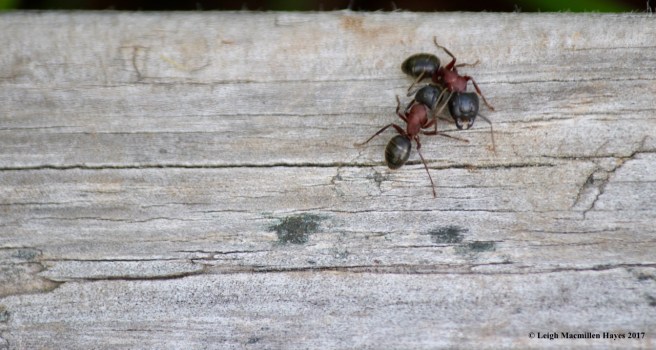
I stopped to watch carpenter ants dance with each other and was amazed by their mandibles, very large mandibles–the better to chew wood and create connecting tunnels in their nests.

h-lady beetles 1

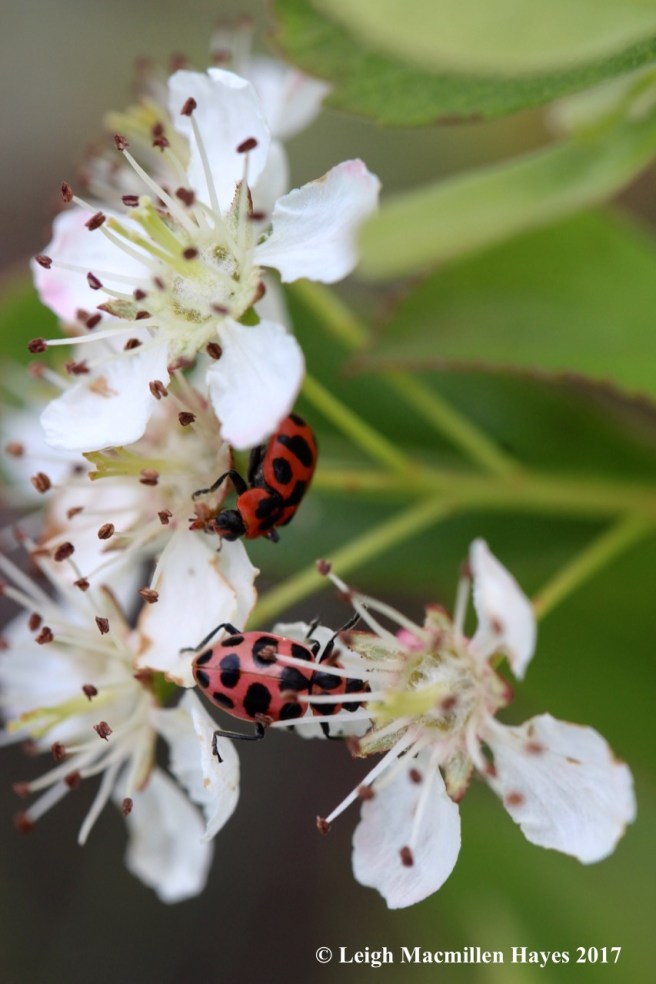
I admired convergent lady beetles feeding on pollen and nectar in the absence of prey.

h-wandering glider dragonfly

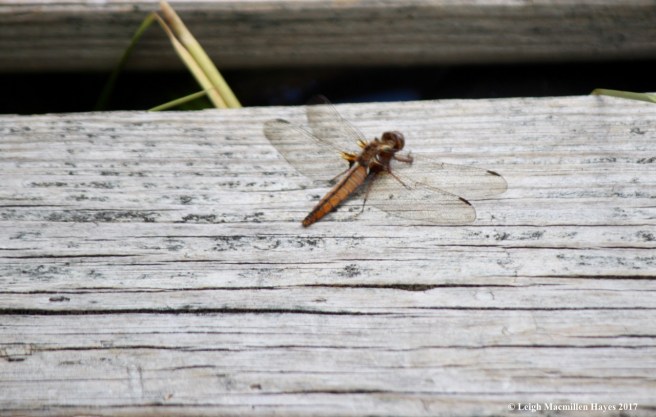
And celebrated the first dragonflies of the season.

hpp-boots

In hopes of seeing others, I got my boots wet.

h-dragonfly emerging

Thankfully, it was well worth it and I wasn’t disappointed as I had the opportunity to watch one dry its wings out before taking flight.

h-dragonfly nymph 1

Because I was beside water,  I knew to look for exoskeletons,

hp-dragonfly exo 2

and wonder about the transformation that took place.

hp-bog rosemary

But, it’s not just insects that were worth a wow moment. Bog rosemary bloomed.

h-blue flag iris 1

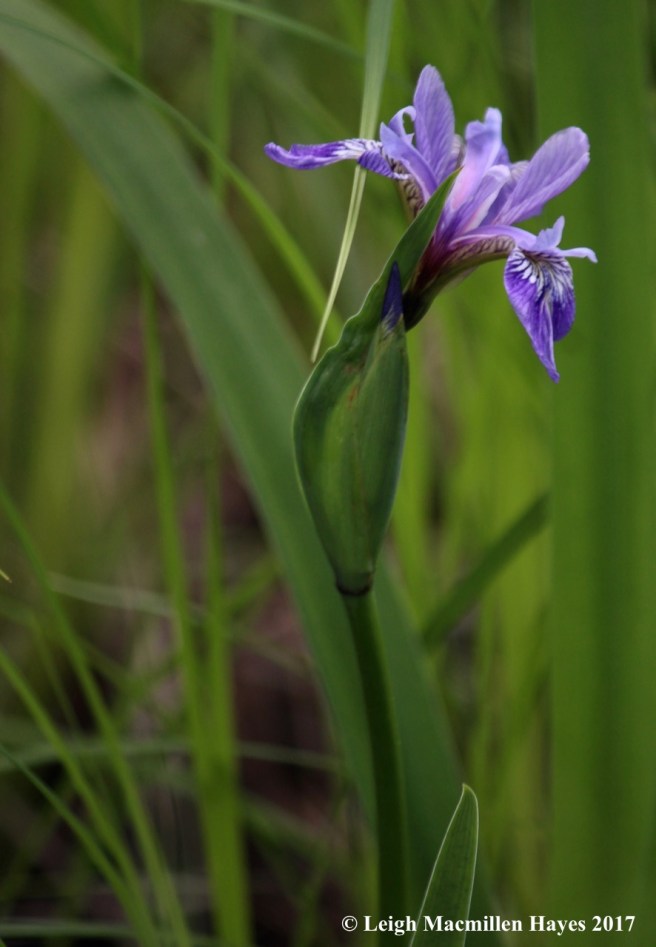
I spied my first blue flag iris of the season.

h-pitcher plant 1a

And awaited the blooms of pitcher plants.

h-cinnamon fern 2

The cinnamon fern’s fertile fronds also begged to be noticed.

h-royal fern

The same was true for the royal fern,

hp3-interrupted fern 1

and interrupted–all three members of the Osmundaceae family who, like me, don’t mind wet feet.

hp-tea bridge

As I moved through this wetland, I welcomed occasional glimpses of sun and warmer temps. But thanks to the coolness and breeze, the mosquitoes didn’t bother me–that and the fact that I finally started using Skeeter skidaddler, an all natural bug repellant made in Windham, Maine. (I bought it at my guy’s store a few years ago and have encouraged him to purchase more.)

h-tadpoles 1

Eventually, I left the trail and followed Grist Mill Road for a while, when what to my wondering eyes should appear in the newly created trenches–tadpoles galore.

h-aquatic larvae on rock

And aquatic insects climbing a rock as they prepared for their own metamorphosis.

h-veery 2

My intention was to follow the road all the way back to my truck, but at a side trail (the tire highway for those of you who know), I decided to retrace some of my steps and check on the dragonfly at the quaking bog. As I walked, I heard a spiraling song in the distance and then when I approached the bog boardwalk the veery showed its face–a sweet moment indeed.

h-red winged blackbird at quaking bog1

The red-winged blackbirds also sang, and my heart sank when I spied one near the dragonfly.

hp-dragonfly 5

But all was well and still he clung–in limbo. My hope is that his wings finally dried and predator he became, but I’ll never know for finally I had to leave and let nature take its course.

h-water spider 1

During my second visit, however, I had a chance to spy another who isn’t an insect, but is still worth a wonder–a water spider. I found it curious that there were dragonfly wings in the water. Oh my. Related to the spider’s presence? I don’t know.

And then I reminded myself that spiders aren’t insects, but both are invertebrates.

If you look back at the carpenter ants, you’ll see that they have a head, thorax and abdomen. And the thorax is where the three pairs of legs are attached. You can see it on the dragonfly as well. Insects also have eyes, antennae and mouthparts–like the ants’ mandibles. Most insects also have wings.

Spiders, however, have two main body parts–a combined head and thorax (or cephalothorax), and an abdomen. Their eyes, mouthparts and four pairs of legs are all part of the cephalothorax. Unlike insects, they can’t chew and they don’t have wings.

Insects belong to Insecta and spiders to Arachnida.

But in my book both are worth a wonder and so today I’m glad I had a chance to revere them.


At a Snail’s Pace

The mosquitoes were thick. The ground damp. But the rain held off and so four docents and I met at the Greater Lovell Land Trust‘s Flat Hill parking lot at the end of Heald Pond Road.

p-beaked hazelnuts forming

From the getgo, our fun began as we spotted numerous beaked hazelnuts forming–the trick is to pay attention to them and watch their continued growth, for in a flash, or so it seems, they’ll mature and . . . disappear. The nuts those hairy beaks cover are favorites for wildlife and we human folk also like them.

p-red trillium

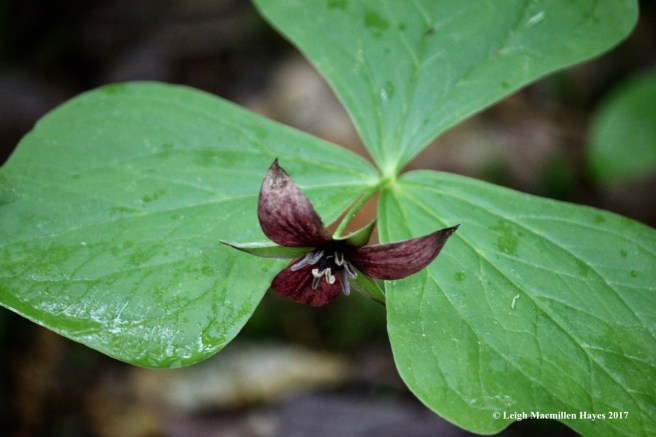
Our mission was to get reacquainted with the spring flowers–some being obvious to us like the red trillium, though the fact that it was still in bloom offered a delightful surprise. We chatted about the fact that its also known as Stinking Benjamin for its undelightful odor, but try as we might and we did again today, none of us have ever been offended by it. Apparently, they smell like rotting meat, but you can’t prove it by us.

p-fringed polygala

Here and there we were awed by the delicate fringed polygala, aka gaywings. They did remind us of birds with crazy head dresses taking off in flight.

p-false solomon seal

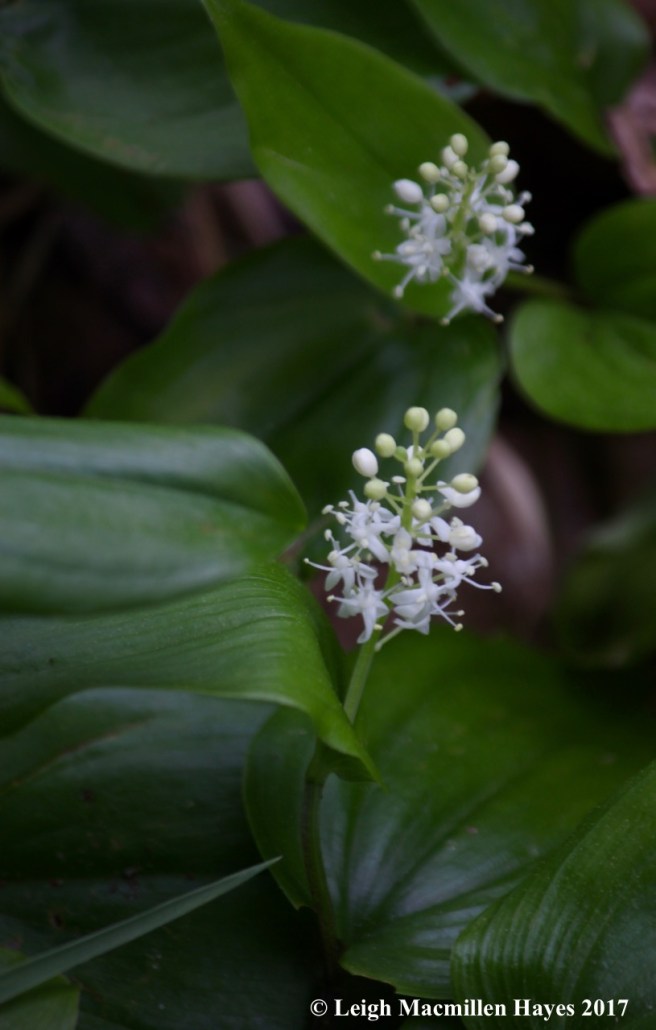
As we shared brains and practiced relearning species before the next season gives us even more, we felt proud to quickly ID a false solomon seal, aka wild spikenard, before it had fully flowered. It’s the cluster of flowers on the end branch, the arching, zigzag stem and long oblong leaves that stand out in our minds.

p-Rose Twisted Stalk or Rosybells

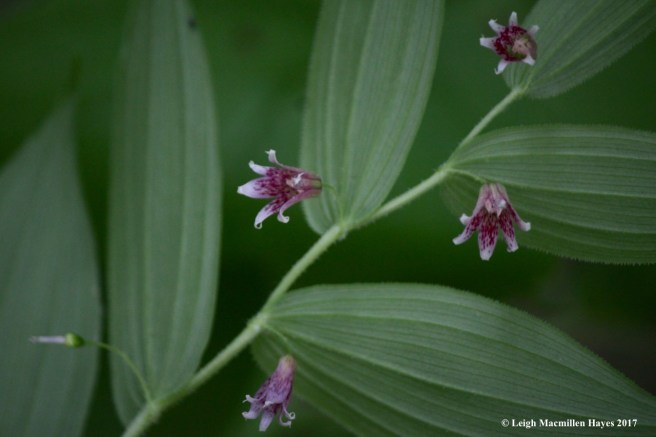
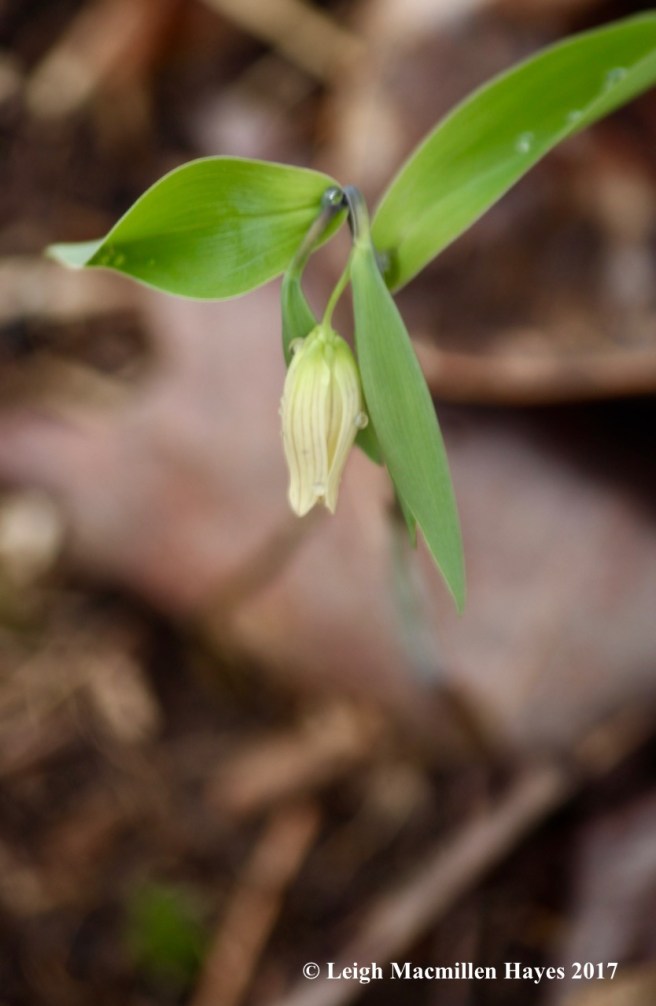
A seal of another sort, the rose twisted stalk, aka rosybells, also adorned the trail. Pam held the stalk up so we could look at the bell-shaped flowers that dangled below.  Notice how the leaves are green below and stalkless but don’t necessarily clasp the stem–as opposed to twisted stalk (white mandarin), which features greenish flowers dangling below and stalkless leaves that do clasp the stem. Plus the latter’s leaves have a white bloom on the underside. We didn’t see any twisted stalk, but were tickled with our rosybell finds.

p-raindrops all in a row

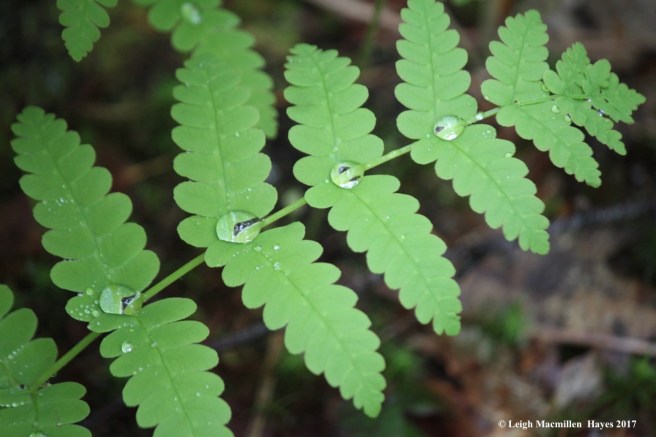
Periodically, we stopped to examine ferns, or quiz each other on the ID. But sometimes, it was just fun to notice presentations, including raindrops all in a row.

p-beech fern

And though a couple of our fern experts couldn’t be with us, Joan was and she loves nothing more than squatting beside them with the Fern Finder to determine a species, including the long beech fern.

p-clitonia 2

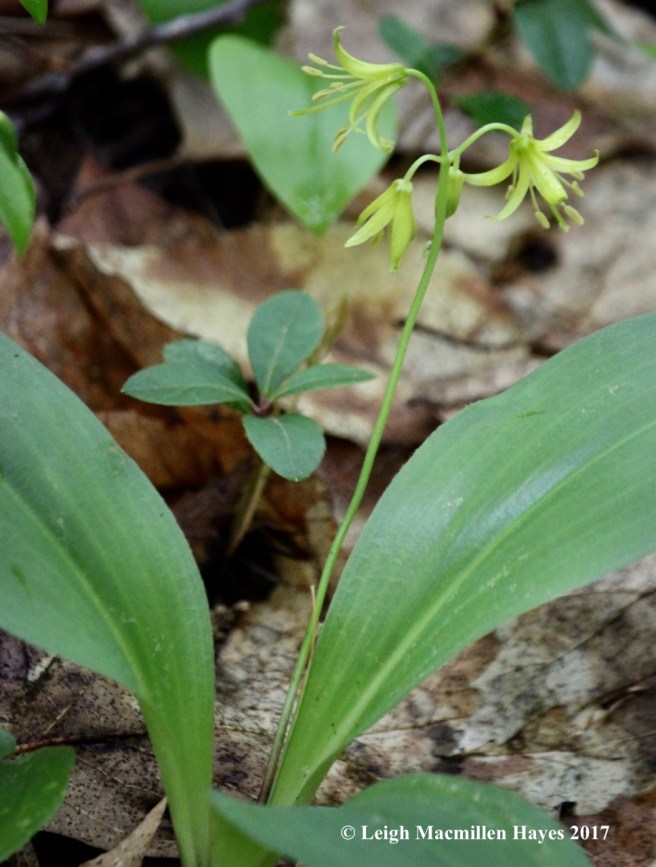
It was while looking at bracken ferns that Mary and Nancy spotted the greenish yellow flowers of clintonia. We were excited because we’d seen plenty of plants, but these were the first in flower, and they were well hidden.

p-clintonia flowers

Yellow clintonia is also called bluebead for the fruit that develops is a porcelain blue bead-like berry. Check out those pistils (she’s a pistil) dangling below the stamen, their anthers coated in pollen. Bring on the bees and the beads.

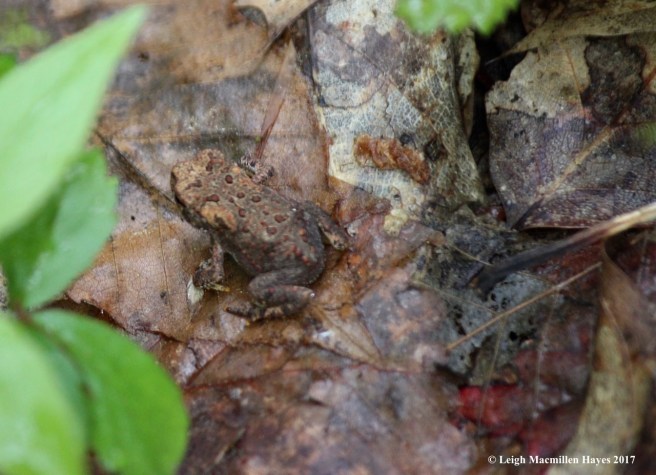
p-baby toad

Suddenly, we discovered movement at our feet and saw our first baby toad of the season. It’s diminutive size and obvious camouflage made it difficult to see, but unlike the adult members of its family who will freeze in position, thus allowing us to study them further, this little one wanted to escape as quickly as possible. Smart move on its part.

p-bench view

Only about two hours later we’d covered maybe a half mile and found our way to the bench that overlooks the swampy area surrounding the brook between the beaver pond and Bradley Pond.

p-red maple leaves

We sat below a red maple and listened to a chorus of birds–and gave thanks for the food supply. Let them eat bugs. We offered up a few mosquitoes.

p-red-winged blackbird

A red-winged blackbird flirted with us, showing off its bright red shoulder and yellow wing bar as it flew from shrub to shrub. The five of us swooned.

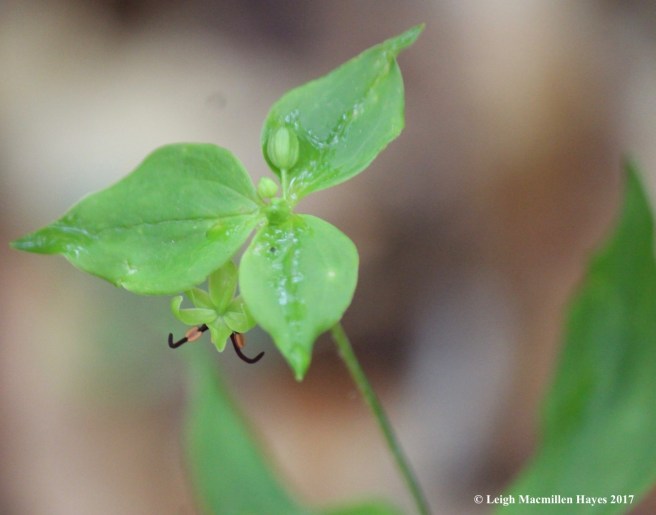
p-Indian Cucumber pre-flower

All along the path, we’d spotted Indian Cucumber Roots with their buds formed atop the second layer of their double-decker formation. When we finally stepped from the bench back to the trail, we noted a couple of the buds were beginning to dangle below the second story, meaning the blossoming season would soon be upon us.

p-Indian Cucumber flower 2

And just like that . . .

p-Indian Cucumber flowering

Voilà. I’m of the belief that if this flower doesn’t make you wonder, nothing will.

p-beaver pond view

Our next stop was at the bridges that cross below the beaver pond. We’d been looking for fresh beaver works all the while, but only discovered the work that had been completed over a year ago.

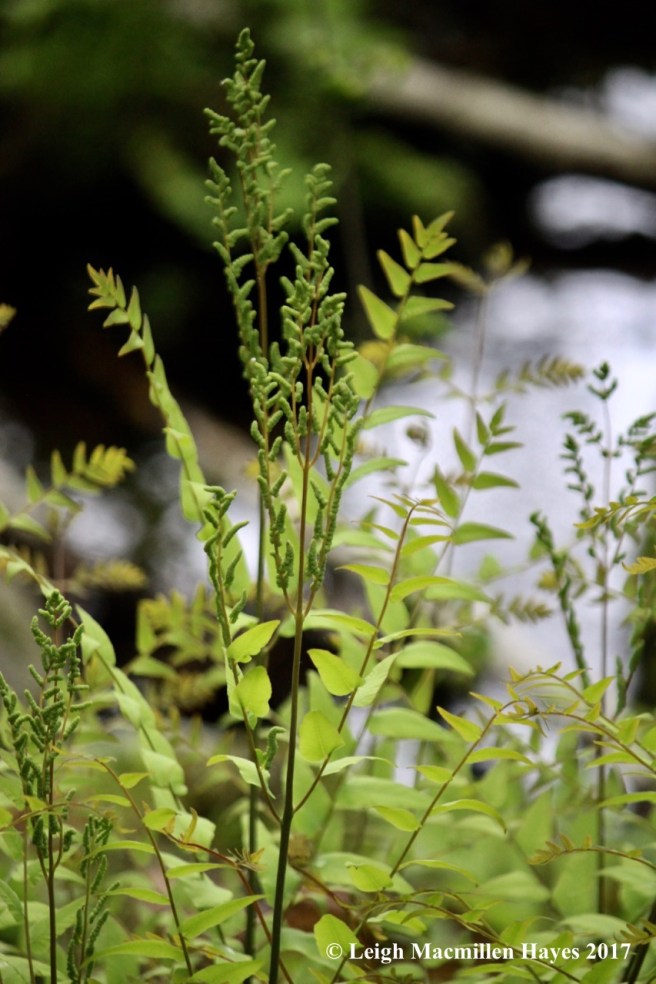
p-royal fern crown

There was still plenty to see, including the fertile crowns atop royal ferns,

p-jack-in-the-pulpit 2

a small jack-in-the-pulpit,

p-mayfly hitchhiker

and a mayfly that chose Pam’s jacket to rest upon.

p-foamflower 1

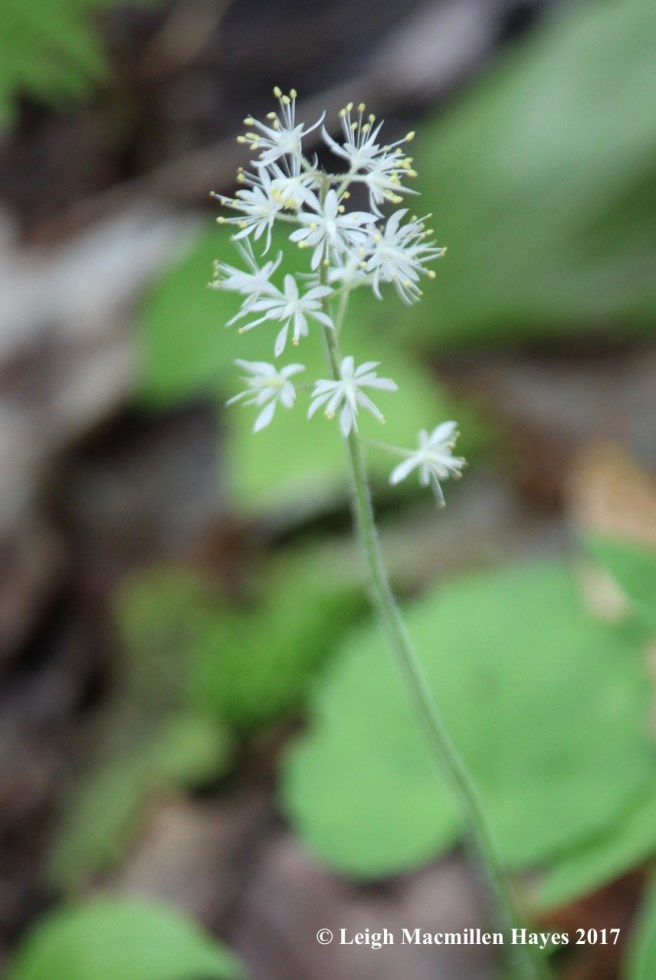
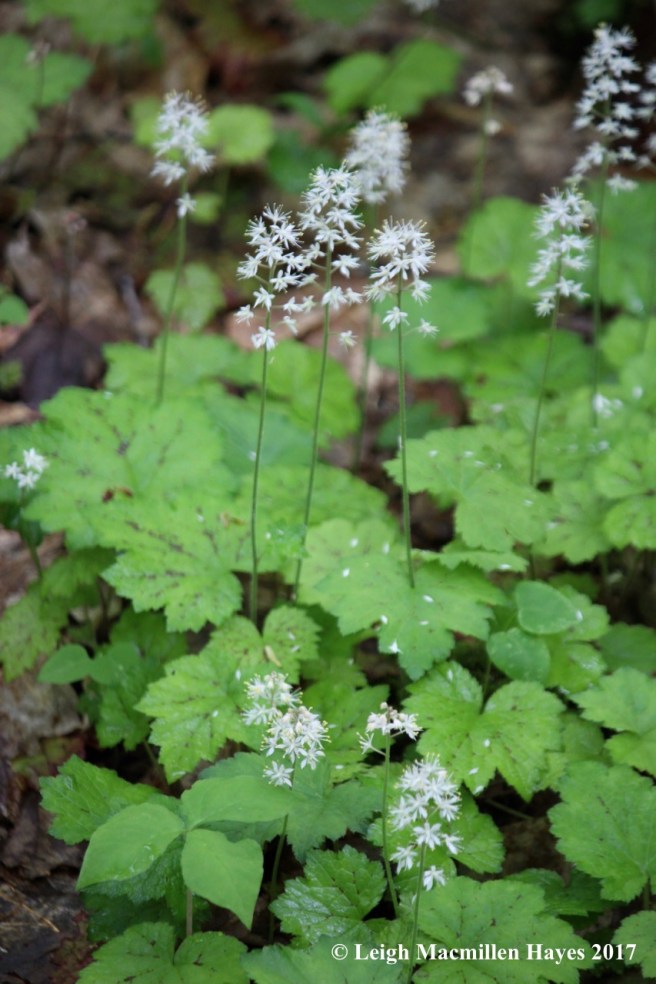
One of our many finds included foam-flower, with its cluster of star-shaped white flowers and conspicuous stamens. According to Mary Holland in her book, Naturally Curious Day by Day, “Its genus name, Tiarella, is the Greek word “tiara,” a word for a turban worn by ancient Persians which bears some resemblance to the shape of this flower’s pistil.”

p-foamflower carpet

Tiara or not, we were quite taken with a carpet of it.

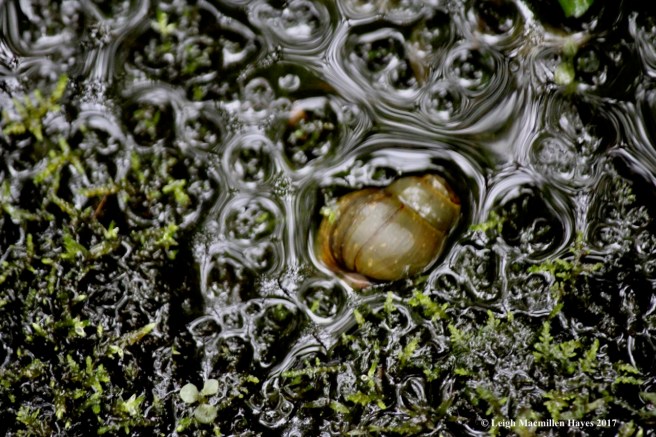
p-snail

Those were only a few of the findings we saw as we moved at a snail’s pace during our three hour tour along Perky’s Path. Each time we visit, we say, “This is my favorite property.” That is . . . until we visit another one of the GLLT properties.

May(be) a Mondate

We headed out the backdoor, into our woodlot, down the cowpath, along the snowmobile trail, veered left behind the church, walked down a driveway, crossed the road and snuck into Pondicherry Park.

p-NOrway maple and samaras

Or so we thought, but as we stood below this Norway maple with its widely-divergent two-winged samaras, a familiar voice hailed us. Our friend, Dick Bennett, appeared out of nowhere (well, really from somewhere–for like us, he lives nearby and uses these trails frequently to get to town) and so we chatted briefly. He was on a mission and we were headed in a different direction along the multi-layered loop system.

p-crossing the field

Within minutes we followed the path out of the woods and across the field–prepared as we were for rain. Our plan was to retreat when it started to pour.

Once we entered the woods again, we heard a barred owl call from the distance with its infamous “Who cooks for you?” “Our oldest son and his girlfriend,” was our response for they had surprised us this weekend with a visit and prepared last night’s meal.

p-foxhole debris

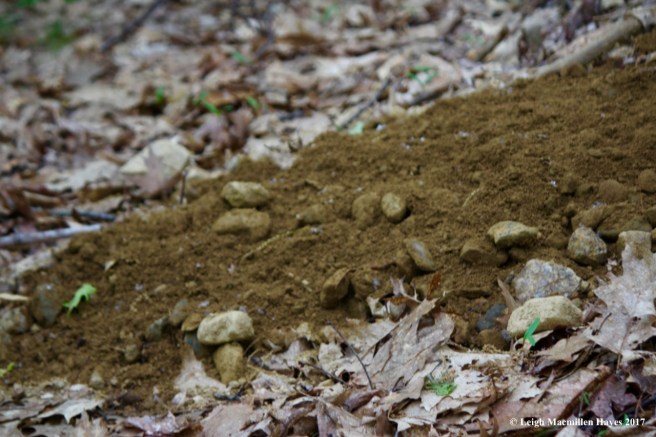
For the most part we stuck to the trail system, but then we stepped over the wall onto the Lake Environmental Association’s Maine Lake Science Center property because I wanted to show my guy this pile of dirt and stones.

p-fox hole

On a recent bushwhack with a few others, we’d discovered this fox hole and I immediately recalled all the fox tracks and seeing a red fox this past winter not far from this location.

p-boardwalk1

After poking about for a few minutes, we made our way back to the LEA trail and eventually landed at the boardwalk that weaves through a wetland. From there, it was back through the woods to the park trails. I know my guy wanted to move quickly, such were the bugs, but I wanted to take everything in and so he patiently waited from time to time.

p-Canada mayflower

After all, there were visions in white exploding with glory in the form of Canada mayflowers,

p-foamflowers

foam-flowers,

p-wild sarsapirilla

and wild sarsaparilla.

p-gaywings

We also feasted our eyes on visions offering the purplish hue of gaywings, aka fringed polygala.

p-fern stream

And then there were the ferns.

p-cinnamon fern fertile frond

The fertile stalks of cinnamon ferns shouted their name,

p-royal fern

while the royal ferns were much more subtle–

p-royal fern fertile fronds

their fertile crowns practically blending into the sterile fronds.

p-chipmunk

At the chimney by the amphitheater, a chipmunk paused to ponder our intentions and then quickly disappeared.

p-Stevens Brook

We followed the river trail to the Bob Dunning Bridge and noted all the shades of green beside Stevens Brook.

p-boxelder samaras

And then there were other sights to see, like the boxelder and its samaras. Its common name refers to the resemblance of its leaves to elder trees and the use of the soft wood for box making. Its also our only maple with compound leaves. And the samaras differ greatly from the Norway maple we stood under at the beginning of our walk–for the boxelder’s winged seeds more closely resemble upside down Vs or peace signs.

p-catbird 1

As is often the case when stopping by the bridge, the catbirds who nest in the undergrowth paused beside the brook during their foraging expeditions.

p-caterpillars on maple leaf

Nearby, we saw some food meant for them–a colony of Eastern tent caterpillars consuming maple leaves right down to the veins. It seemed like it was time for some units of energy to be passed along the food web.

Besides the wildlife, our only human encounters included a relative crossing the bridge on his way home from work and our friend Dick, whom we’d seen at the start.

For various reasons, May has been devoid of dates and so today’s adventure, though not long, served as our only Mondate celebration for the month–no maybes about it. And it never did rain.


Sharing My Site

I count myself among the fortunate because pollen doesn’t keep me inside during its high season. Nor do the bugs or rain. Mind you, I do my fair share of complaining–after all I am human. At least I think I am, though I was honored to be called an ent yesterday. (Thanks Cyrene.)

Enough of that. Let’s head outside to see what we might see.

IMG_5267

True confession. I took this photo yesterday, but didn’t have time to write. Finding this jack-in-the-pulpit beside a granite bench by my studio was a complete surprise.

IMG_5741

Today’s journey began in the front yard where sugar maple samaras dangled below full-grown leaves. Their presence will soon offer presents to the world below.

IMG_5302

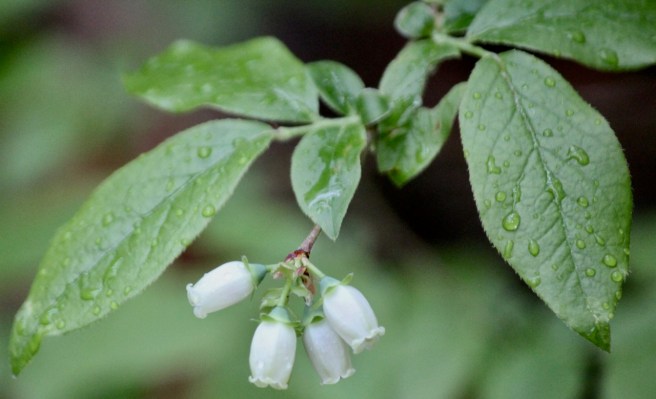
My next stop was beside another secret giver of gifts–blueberry flowers.

IMG_5301

And then I stepped into the woodlot, where a single striped maple which was the bearer of a deer antler rub last year and scrape (upward motion with lower incisors) this past winter, had something else to offer.

IMG_5480

Below its almost dinner-plate size leaves–flowers. Happy was I to find these little beauties.

IMG_5287

Perhaps . . . just maybe . . . there will be more striped maples offering their bark to those in need.

IMG_5517 (1)

Moving along, I stopped at the opening of the cowpath to admire baby hemlock cones when something white and bubbly caught my attention. My first spittle bug sighting of the year. An adult spittlebug whips up some slimy froth to cover its eggs in late summer and the nymphs cover themselves while feeding in the spring–and so I concluded that I was viewing a nymph’s locale.

IMG_5327

Emerging under the power lines, the community changes. It’s here that the land is especially wet and species one might find in a bog grow–such as the black chokeberry shrub. These also like rocky ledges, but such is not the case in this spot.

IMG_5532

I was thankful to find it for those flattened bright pink anthers brightened this damp day.

IMG_5696 (1)

Heading north, I sloshed through the deep puddles on a quest to find the sundews I discovered growing in this area for the first time last fall.

IMG_5703

No such luck, but I did welcome the sight of the candy lichen fruits exploding from their crustose base. And then . . . and then . . . what did I see (but only when I looked at the photograph on my computer, and so now I know where they are located)? The round-leaved sundews–do you see them in the bottom right-hand corner? These are carnivorous plants (think Venus Flytrap) and their prey consists of small insects. Already, I can’t wait to make their acquaintance again.

IMG_5583

I turned around and headed south–on my way to the vernal pool. But before passing through a stonewall, I had to look at the bunchberries in bloom.

IMG_5581

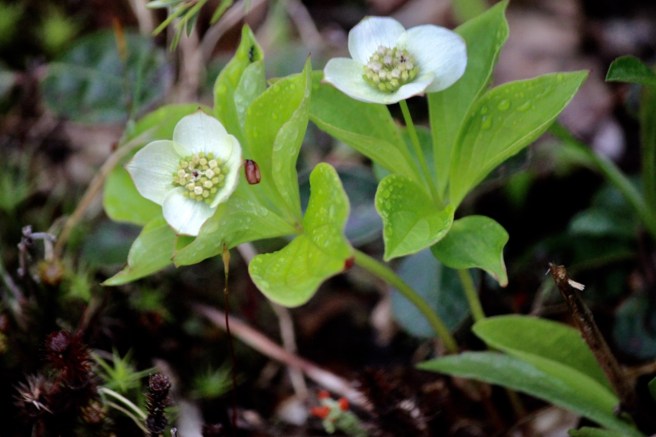
Normally, a bunchberry plant has two-sets of leaves. But . . . when one is mature enough to grow a third set, typically larger leaves (perhaps to capture more energy) than the first two sets, it produces four white bracts that we think of as petals but they are actually modified leaves. The flowers are in the center–tiny as they are.

IMG_5680 (1)

And because I was in the neighborhood, in the land of mosses, reindeer lichens, Canada Mayflowers and wintergreen, trailing arbutus (aka Mayflower) spoke up. Its flowers were slowly transforming from white to rust and I shouldn’t rush the season, but I can’t wait to see its fruit again.

IMG_5586

At last I reached the vernal pool and realized I wasn’t the only visitor. What perfect hunting ground it proved to be for the . . .

IMG_5593

phoebe. I cheered for its insatiable insect appetite.

IMG_5596 (1)

Because the day was dark, it was difficult to see tadpoles, but I did note that many spotted salamanders were still forming. I also noted that the water level has dropped a wee bit–hard to believe–and where yesterday I found a few egg masses a bit high and dry, today they were gone. Something enjoyed eggs for dinner.  Scrambled or otherwise, I’m not sure.

IMG_5625

Back on the trail and at the next stone wall, interrupted fern showed off its fertile pinnae near the middle of the blades. It’s called interrupted because of the interruption in the blade. Again, this is an inhabitant of moist to wet forests and so it was no surprise to find it growing there.

IMG_5609

A fertile blade, such as this, may have two to seven pairs of middle pinnae.

IMG_5619

The globose sporangia is bright green when young, but darkens to tan or black as it matures.

IMG_5362 6.10.27 PM

On the other side of the wall, I spied some more flowers.

IMG_5360

These were the elongated loose clusters of black cherry trees, that open when the leaves are fully developed.

IMG_5636

One that flowers and fruits before its leaves are fully developed is the red maple.

IMG_5630

And fruits and fruits . . . need I say more?

IMG_5375

Though the wind blew, the samaras weren’t yet ready to let go and set down their roots. It won’t be long though, I’m sure.

IMG_5403

Finally returning home, I passed by the granite bench once more and was still stymied by the site I saw about a half hour after discovering the jack-in-the-pulpit yesterday.  It had been consumed. I suspected the woodchucks that live under the studio. Either that or a bear came along and I missed it.

And so ended today’s tramp. Thanks for traipsing along with me to visit these sites out our back door. I especially welcome those who are homebound with allergies, like my friend Jinny Mae. She gave me the inspiration to take a look today–to be her eyes for the moment and share my sight.

Slog Through The Bog

She said she’d call a half hour before heading to the bog so I should probably sleep in my hiking clothes and boots. And she was right! I was just about to take a bagel out of the toaster oven when the phone rang. “We’re going to the bog at 9:00. Can you join us?” Thirty-five minutes later I pulled into her driveway, excited because it was a chance to explore Brownfield Bog with about-to-become Maine Master Naturalist Kathy McGreavy and her daughter, Dr. Bridie McGreavy.

b-bog from road

From there we drove to Bog Road and parked at the beginning since conditions were dicey, but also because it gave us a chance to walk and listen–almost immediately we heard a barred owl. And then the warblers greeted us.

b-sky and water

Brownfield Bog, aka Major Gregory Sanborn WMA, encompasses 6,000 acres of wetland. And on any given day, the sky tells its story above and below. Of course, we thought we were going to get poured upon when we first met, but the mist soon evaporated and sun warmed us enough that we shed a few layers.

b-common yellow throat 2

The initial stretch of our journey found us moving at a fast pace, but once we reached the second gate,

b-Bridie McGreavy

our inclination was to slow down.

b-Kathy

To stop, look and listen.

b-common yellow throat 1

The chestnut streaks on the yellow warbler matched the emerging red maple leaves.

b-oriole 2

And I can never spend enough time with a Baltimore oriole, forever wowed by its color.

b-oriole singing

And its voice.

b-catbird

Birds flitted about and flew overhead, but occasionally one, such as this catbird, paused and posed.

b-willows and birches

Most of the songbirds were feeding and perhaps nesting in the land of the willows, birch and maples.

b-willow pine cone gall caused by midge

Others also sought homes here, like the gall gnat midge that overwintered in a pinecone-like structure created with leaves by the reaction to a chemical released by the larva. I’m forever amazed about how nature works.

b-song sparrow

Eventually, we followed the song sparrows as they led us down the cobbled road.

b-road 1

The current was strong in places . . .

b-deep water

and water deep.

b-scenery1

But the views . . .

b-Pleasant Mtn and Bog

worth every step.

b-maple samara

Sometimes, our focus was upon the ground, where we spotted a few small red maple samaras.

b-coyote scat

And scat–including this double offering of coyote deposits.

b-coyote scat toenail

And among it–a toe nail first spied by Bridie. I chuckled to myself when we got down to look at this, for Bridie first introduced me to the finer qualities of scat when she worked at Lakes Environmental Association. She also taught me to track mammals. And . . . the crème de la crème–to sniff fox pee. Ah, the delights we have shared–they are many and having an opportunity to walk with her today brought them all flooding back.

b-ribbon snake

We decided to put our blinders on so we could continue without any pauses, but then Bridie’s eagle eyes zeroed in on movement. Her mom and I saw the movement as well, but we had to really focus in order to find the creator among the dried vegetation.

b-ribbon 2

And we did–a ribbon snake, who happens to be a great reason for preserving this property because its a species of special concern in Maine.

b-Pleasant Mtn

At times, Pleasant Mountain was the featured backdrop.

b-Canada geese

And Canada geese swam in the foreground.

b-beaver mound

Everywhere, beaver works were obvious and scent mounds growing in size.

b-oak 1 (1)

After a couple of hours, we reached our turn-around point at the old oak tree.

b-beaver lodge

As we looked across, one of the beaver lodges stood above the water level.

b-bog 3

But Kathy and Bridie both reminded me that another was still submerged due to this spring’s high water level.

b-cuckoo nest remnants

Finally, we did our best to bee-line back. But Kathy showed me one more great find that had been pointed out to her by Mary Jewett last year–the straggly stick structure of a cuckoo’s nest. Certainly worth a wonder. (The other wonder–when we first arrived at the bog this morning, Mary was just leaving.)

b-spoon jar 2

Our entire morning had been worth a wonder and then another occurred when we returned to Kathy’s house. While I said goodbye to Bridie, who is an Assistant Professor of Environmental Communication in the Department of Communication and Journalism at the University of Maine, her mom slipped into the house. When Kathy returned, she handed me this spoon pot filled with daffodils from her garden. She’s a potter and owner of Saco River Pottery. Though I love to give her fine art as presents, I only own one other piece. This one now stands proudly on our kitchen counter, holding the utensils as it was intended. It will forever remind me of the McGreavys and the day I first saw a dragonfly emerge from its exoskeleton–at the bog with Bridie; and the day I spent with Kathy as I interviewed her for a magazine article about creating pottery–and she let me try my hand at the wheel; and so many other memories of time spent with these ladies, but especially today–for the opportunity to slog through the bog with the two of them.


“The Actual World”

In this morning’s newspaper I read an article about the loss of natural sound because we have created so much people noise. It took me back to a time about forty years ago when I think I first actually paid attention by sitting alone in the woods and listening–hearing the soft rustle of grass blades, chirp of the crickets, buzz of mosquitoes and vroom of a truck in the distance. I can still envision that spot on a hillside where I closed my eyes to the sun and tried to zone in only on sound–to let go of the rest of the world and focus on that one sense.

And so I took that thought with me this morning when I joined others to bird at the Bob Dunning Bridge, one of the entrances to Bridgton’s Pondicherry Park.

p-yellow-rumped warbler

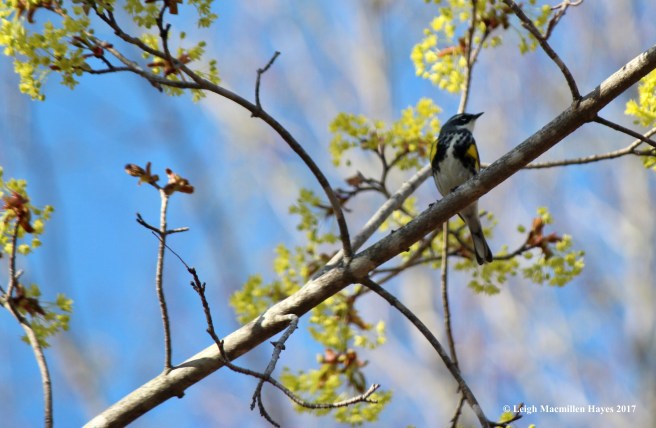
Truth be known, I also went birding at the bridge early yesterday morning when the sun shone brilliantly and a yellow-rumped warbler posed for an instant.

p-bridge 1

Today dawned raw and overcast. And at first, the birds weren’t all that song-filled or even evident.

p-baltimore 6

But then we heard one on high and our natural high kicked in. A Baltimore oriole whistled its melodious tune and we swooned.

p-phoebe right

We watched an Eastern phoebe flick its tail as it looked to the right . . .

p-phoebe left

and then to the left. Because of the morning’s chill, the bugs upon which it feeds seemed non-existent to start.

p-phoebee flying

But, perhaps it knew otherwise.

p-song swallow 2

What we knew was that the temp climbed a wee bit and bird song increased, including that of the ever sweet song sparrow. Yes, we could hear the sounds of this sleepy, western Maine town since we were only a block from Main Street, but the songbirds shared their voices and for us–we focused on those delightful tunes as we tried to figure out who we could hear but not see.

p-catbird 1

One such resident arrived this past week, like many other snowbirds (people residents who winter south of Maine– or is it south of New England?). We recognized the catbird first by its cat-like mewing and then we spotted two along the stonewall and in the brushy shrubs.

p-catbird flying

Like all birds, however, they didn’t sit still. We did note, though, that they spent most of their time on the other side of the bridge in an area where they frequently nest.

p-song sparrow 1

And speaking of nesting, the song sparrow moved from its perch to the ground where it joined others as they scratched about and filled their beaks with potential materials to add to their new home.

p-song sparrow 3

I love that from above, it blended in with its surroundings. A good thing when you are but a wee bird.

p-feathers

That being said, not all went undiscovered and we noted that some joules were passed from one bird to another–energy flowing through the cycle.

p-baltimore upside down

Eventually, one of our favorites of the day moved closer and we watched it for some time as it worked upside down and then . . .

p-baltimore 3

right side up. Again, we wondered if the oriole was working at the dried leaves and also seeking nesting material.
p-yellow warbler

And finally, a song a few of us heard when we first arrived showed its face–“Sweet, sweet, sweet, I’m so sweet,” evolved into a yellow warbler, or two or three.

p-Norway maple flowers 2

Because we were there and looking, other members of the world showed their faces, such as the flowers of Norway maples and . . .

p-box elder flowers

box elders.

p-elm leaves

We noted the emerging American elm leaves, already highlighting their sandpaper texture and asymmetrical base.

p-butternut

And then we got stumped momentarily by the butternut (aka white walnut ), but it’s the eyebrows above the monkey face leaf scar that spoke to its name. Less than a month ago, Jinny Mae and I discovered its cousin, black walnut at Narramissic. Both are not all that common in the woods, but both grow in places where human impact is more evident. That being said, human impact is evident the world ’round.

p-plaque

Eventually, all good things must come to an end and it was time for those gathered to move along into our days. But . . . we’d had the joy of spending a couple of early morning hours, whether in the sun or not, coming into contact with sight and sound and texture. We’d met the actual world and we loved making its acquaintance.

p-Mary 1

Thanks be to Mary Jewett of Lakes Environmental Association for offering these community birding events. And for her patience with us amateurs as she teaches us the finer points of identification.


Meeting Old Friends For The First Time

Who are you? And you? And you? Such were the questions everywhere we turned this morning.

I’d picked up a few Greater Lovell Land Trust docents on the way to our Tuesday Tramp location and met a few others at the gate. After our meet and greet, we walked down the road at breakneck speed, not stopping much because we were more focused on catching up.

s-bear scat

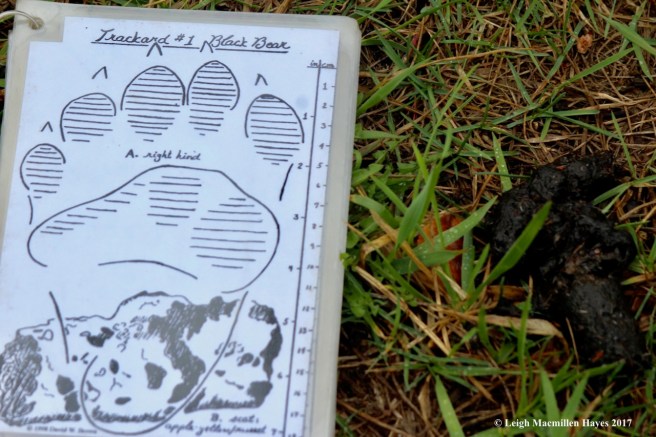
I say not much, but scat did give us pause. And in this place, we can always count on bear scat. Rather fresh bear scat. We never did see the bear, but knowing it was there was enough. Not long after that we listened to a barred owl. And then we flushed a couple of wood ducks that we barely viewed. It was OK with us that we didn’t see these critters–we felt honored to share the place.

s-into the orchard

When the dirt road turned to grass, we continued on, anxious to reach our destination just below the cliffs that provided a backdrop to the spring foliage.

s-Rattlesnake Brook

As the brook came into view, our excitement rose.

s-birch reflections

At last, we’d arrived.

s1-slender toothwort

And that’s when the “Who are you?” questions really began to form. The slender toothwort wasn’t yet in bloom, so we had to key it out in Newcomb’s Wildflower Guide based on the compound leaves that were toothed. The flower buds hinted at pink, thus helping us. But really, we felt as if we’d never met this friend before.

s-sarsapirilla

And then there was the young stalk of a wild sarsaparilla. We shared a brain–looks like poison ivy when the leaves first open, three leaves, globe-shaped flower underneath, there’s another form–bristly . . . bristly sarsaparilla. And we suddenly remembered that we knew this friend, which was probably a wild sarsaparilla, the more common of the two.

s-bellwort

And who next showed its face–drooping in form as its flower did? Again, we had to think it through–finally recognizing it as a sessile-leaved bellwort or wild oat. Of course, once we knew it, we identified it with one amongst our group who first introduced us to it. For the rest of the summer, we’ll know it and will always recognize it as her plant.

s-false hellebore patterns

Then there was the accordion-leaved plant that grew abundantly–its spring green appearance enhanced by rain drops. We knew we knew it. We just had to rack our brains some more, much as one does when encountering any acquaintance not seen in a long time. False hellebore finally came to our tongues.

s1-dandelion

Thankfully there were some that didn’t tax our brains. We’re grateful for dandelions wherever they grow for the bees love them and we love the bees. We need the bees. We NEED the bees.

s-hobblebush 1

Other friends we could name immediately, but still were happy for the moments spent in their presence, like the hobblebush,

s-red trillium 2

red trillium,

s-dutchmen

and Dutchmen’s britches,

s-dutchman's britches leaves

plus their feathery leaves.

s-lady fern crosiers

Among our findings, we also had fern crosiers to greet once again, including lady ferns

s-cinnamon or interrupted

cinnamon,

s-Christmas fern crosier

and Christmas.

s-airstrip 1

After a delightful-despite-occasional-raindrops, three-hour tour, it was time for us to follow the road back.

s-friends 3
Nancy, Dave, Joan, Pam and Bob

We’d spent the morning among old friends, including two we hadn’t seen for months–we were happy to meet Pam and Bob again for the first time this season. Fortunately, we remembered their names ;-) and they ours. Phew!

As spring unfolds into summer, we know we’ll all continue to meet old friends for the first time–and share a brain as we try to remember their names. They say it takes a village. We love ours because we know it’s okay to ask, “Who are you?” Someone will have part of the answer and someone else will add to it and BINGO.

Water Works

With rain drops come life and rebirth. And so it seems as our world explodes with the return of birds and vibrant blossoms of daffodils in the garden. The grass is, well, grass green–a brilliant green with hues of gold or purple, depending on the time of day. And ever so slowly, tiny leaves emerge on the maples and aspens.

w-rookery

But it’s life in and around water that captured most of my focus today. Following a prehike for a Greater Lovell Land Trust walk, I had the opportunity to check on a heron rookery. A friend and I stood hidden among the trees.

Rookeries are one of my favorite places to hang out. By the same token, I seldom do because its important not to disturb these giant birds during their nesting season. But–today’s visit, like all of my rookery visits, was for a citizen science project affiliated with Maine Inland Fisheries and Wildlife: the Heron Observation Network or HERON, counts on volunteers to count on heron–their nests, number of birds, number perhaps sitting on eggs, number of fledglings, etc.

w-heron incoming

We frequently see Great Blue Herons flying overhead or fishing in ponds and lakes, but it’s watching them come into their nests, in their pterodactyl form, that I find so wild.

w-heron standing

And then they stand. Tall. Silent. We do the same.
w-heron on nest

Watching. Listening. Wondering.

w-reflection

All the while, we have time to reflect and enjoy the reflected.

w-beaver lodge

And notice–cut saplings piled horizontally, an anomaly in this space . . . or is it?  More than herons call this place home.

w-hobblebush

At last we need to bushwhack back, but pause a few times to appreciate other forms of life that spring forth near the water, including this hobblebush.

w-snake 1a

And a garter snake, its movement catching our attention. And then it froze in place, in hopes we wouldn’t notice.

w-vp

Back on the homefront, I moseyed out to the vernal pool. As I approached, I noticed a lack of sound, but did see movement when I was only steps away.

w-wood frog eggs

I was thrilled to note signs of previous action as the number of wood frog egg masses had increased.

w-sallie eggs

The same was true of the spotted salamander eggs, though the number in each clump seemed quite minimal. The opaque outer coating was clearly visible, that gelatin-like mass that surrounds these eggs.

w-frog eggs?

As I admired all the dropped red maple flowers that decorated the water, I spied something else. Or at least I think it’s something else. Perhaps mere bubbles floated atop the dried leaf, but I suspected eggs of another kind. I’ve never before noticed spring peeper eggs and wondered, could these be such? Here’s hoping Loon Echo Land Trust’s biologist, Paul Miller, will chime in.

w-spring peeper eggs in mix?

From what I’ve read in A Field Guide to the animals of Vernal Pools by Leo P. Kenney and Matthew R. Burne, “tiny peeper eggs may be deposited in small clusters or as single eggs attached to aquatic vegetation.” I placed a red arrow on this photo pointing to a couple more. And there are others in the photo, hiding in a “Where’s Waldo” fashion.

w-water strider and mosquito larvae

Circling around the pool, I noted some mosquito larvae and a few water striders.

But I also came upon one disturbing sight. A dead frog. Only a week ago, a friend in Cumberland discovered four dead frogs in a pool. In an e-mail exchange, Dr. Fred Cichocki explained to her, “Chytrid fungus is one potential and troubling cause of amphibian deaths. Another, and one we should all be aware of and be on the lookout for (especially in southern Maine) is ranavirus. It mainly affects woodfrogs (why no one knows) and primarily in the tadpole stage, where there may be 99+% mortality! The obvious symptoms are hemoragic lesions in the abdomen, and a behavior much like whale beaching, where the infected tadpoles swim onto the shore, turn belly up and expire en masse. Definitive identification requires either DNA sequencing or Electron Microscopic examination of tissue to reveal the characteristic virus particles. Once a pond or pool has ranavirus in it, it is probably impossible to erradicate (except maybe through frog attrition.) Ranavirus epidemics occur worldwide and are spreading, especially here in the Northeast.”

My dead frog was an adult. As were my friend’s. At the pool today, I was once again reminded that nature happens. And that it isn’t always pretty. Thankfully, I did spy a couple of live frogs.

w-snake 5

As I walked away from the pond, another garter snake.

w-snake 2

It was on the hunt.

Life and rebirth–the keys to spring. And sometimes, death so others may eat. But other times, death for reasons unknown. These aquatic sites offer an amazing biodiversity–and leave me with questions and understandings. Water works–I’m just not always sure how.


Honoring the Earth

It would have been so easy to stay home last night, curled up on the couch beside my guy while watching the Bruins play hockey. After all, it was raining, 38˚, and downright raw. But . . . the email alert went out earlier in the day and the evening block party was scheduled to begin at 7:30. And so, I piled on the layers from a wick-away shirt to Under Armour, a turtleneck, sweater, LL Bean vest and rain jacket. I slipped into my Bogg boots and made sure I had the right gear–smartphone for photos, reflective vest, headlamp and flashlight. With a visored hat on my head to shield my glasses from the rain, I was finally ready. Out the door and down the road I went, headed to the Lakes Environmental Association‘s office for Big Night.

h-Big Night Patrol 3 (1)

I wasn’t the only one crazy enough to attend the party. Our number was about twenty. I think the best part was that we ranged in age from 6 to almost 60, the latter being me–the oldest kid on the block. And in that mix, one teen who was celebrating his 15th birthday (Happy Birthday, Kyle), and several teens who had never attended before but came because one of their crowd was an annual participant. We even had two policemen in the mix–and though their job was to slow traffic and keep us safe, they had as much fun as we did completing our mission.

h-spotted sallie 2 (1)

Said mission–to help spotted salamanders . . .

h-spring peeper 1 (1)

and spring peepers cross the road.

h-redback salamander (1)

We did so for a while and then headed back to our vehicles. Just before reaching the spot where we’d all parked, someone spotted this redback salamander–I smiled because its the symbol of the Maine Master Naturalist Program.

We were wet. We were cold. And we were happy. As nature would have it, Big Night preceded Earth Day–a perfect beginning.

h-candy lichen

Earth Day began appropriately with a board meeting at Lakes Environmental, where among other topics, Dr. Ben Peierls, the new research director of LEA’s Maine Lake Science Center, shared with us his plans for the water quality testing laboratory. Ben addressed us first so that he could drive to Portland and join the March for Science. We continued our meeting, but were thankful for his representation. Meanwhile, directly outside and all around town, another gathering was taking place as many people participated in an Earth Day cleanup.

By the time I left the meeting pleased with all that had been accomplished, I was ready for a solo adventure to find out what the Earth wanted to share with me since most of the snow melted this past week. Despite being another raw day, or maybe because of it, the candy lichen brought a smile to my face. I think one of the cool things about this lichen is that even though its salmon-colored fruits stand atop stalks, this is really a crustose (crust-like) lichen, the bluish-green surface being the actual structure.

h-juniper berries

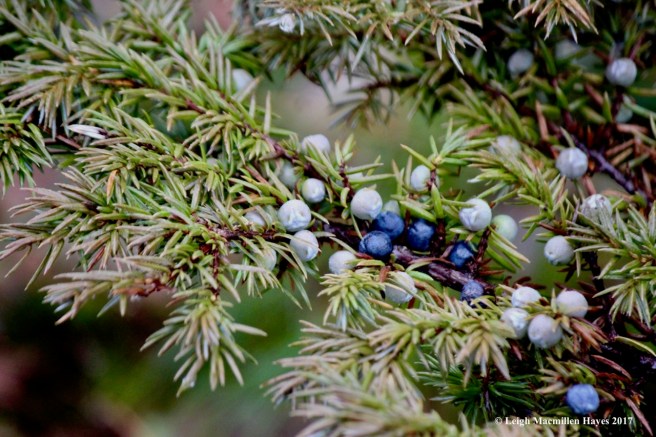
Near the candy lichen, the bright blue of some berries stood out on the common juniper. They remain on the shrubs all winter and it seemed only a wee bit ago they looked all withered. Today’s offerings were plump and pretty.

h-pine droplets

And then there were the raindrops, each waiting its turn to continue the journey toward the earth. I had to wonder what else it might fall upon before reaching its final destination–each little ball encapsulating nourishment.

h-lambkill

One of the receivers, sheep laurel, which displayed its own new life.

h-trailing arbutus

And at the base, trailing arbutus. One year ago, as I noted in my Earth Day post, it was already in bloom. This seemed a reminder from Mother Earth that we need to practice patience.

h-wild turkey

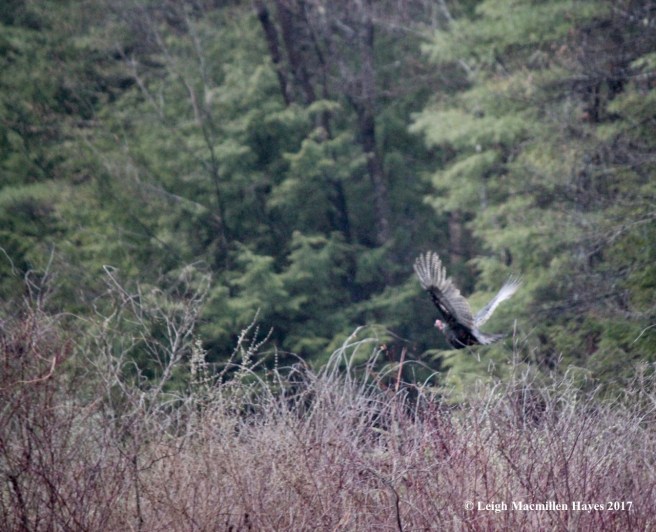
I continued my mosey, as quiet as could be, and so was startled when one large, exotic bird, and then another, and a third flew off from behind a stone wall. And then I realized they were wild turkeys–who truly are exotic if you take a look at all the colors in their feathers.

h-tinder conks on beech

I’d been on the snowmobile trail, but traveling was difficult given some remaining icy snow and deep ruts filled with water. As if I needed an excuse, I decided to slip into the woods. One of my first delights–tinderconks lining a tree as I looked up.

h-moss covering

But really, it was the thick moss coating at the top of the tree that first drew my attention. Several trees in the neighborhood displayed the same fashion.

h1-woods south (1)

My wander was aimless, taking me through boggy areas . . .

h-snow1

and small sections where snow still blanketed the ground.

h-deer prints in snow

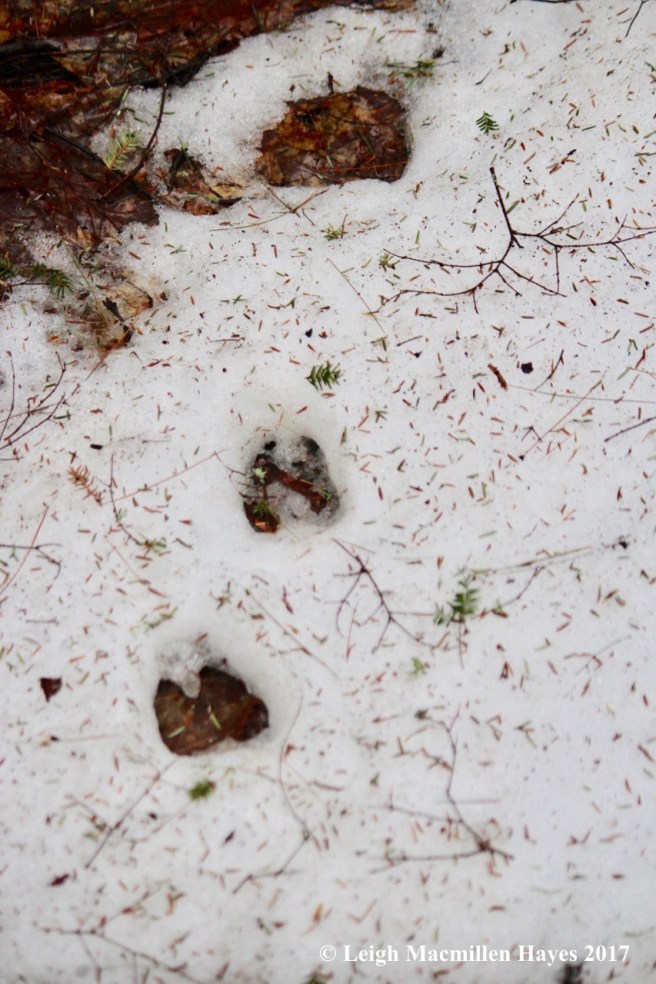
Besides plenty of deer scat, I found prints . . .

h-deer hair

and hair.

h-deer hair bubbles

Raindrops enhanced the hair.

h1-moose scat 1 (1)

And though I suspect they’ve moved toward open water, there was plenty of evidence that the moose had also spent the winter in these woods.

h-moose hair

They, too, have shed hair–preparing for the summer scene.

h-moose maple

A couple of months ago, I’d been concerned that the moose had consumed all the tree buds, but the red maples showed me otherwise.

h1-woods south 2 (1)

At one point, I stood for a while atop a rock and looked to the south.

h1-woods north (1)

And then to the north. It was as I stood there that I heard a repeated sound. It began with a few slow beats, and then a swift series of beats. All seemed muffled. It finally occurred to me that I was listening to a ruffed grouse. Eventually, I followed the drumming and came close to the one beating its wings against a log–the work of a displaying male. I didn’t bother to seek out the actual bird for I knew I’d startle it and it would fly off, so I let it drum in peace, thankful for the opportunity to at least hear it. Really, it was a first for me. Oh, I’ve possibly heard it before, but only today did I recognize it for what it was.

h1-widowmaker (1)

For a while, I was fake lost . . . and then I heard another repeated sound that lead me to a widowmaker and I knew exactly where I was. But where was the maker of the sound?

h-owl 1

In a tree above me.

There were actually two barred owls and I was so thankful for the honor of listening to and watching them on this Earth Day.

I was also thankful for all the privileges bestowed upon me. The privilege of living. The privilege of noticing. The privilege of questioning. The privilege of understanding. The privilege of wandering. And especially, the privilege of wondering. Thank you for your offerings, Mother Earth. I am honored to know you.


May I Have This Dance?

Haha. If you know me well, you know I’d rather be a wall flower than step onto the dance floor. I easily managed to avoid all high school dances, except one prom. And then, barely danced at that, probably much to my date’s dismay. After that, so many moons ago, I don’t think I danced again until my wedding–at which time any dear friends in attendance watched with humor at my awkward movements. But today, I felt the rhythm surging through my body.

v-snow on trail

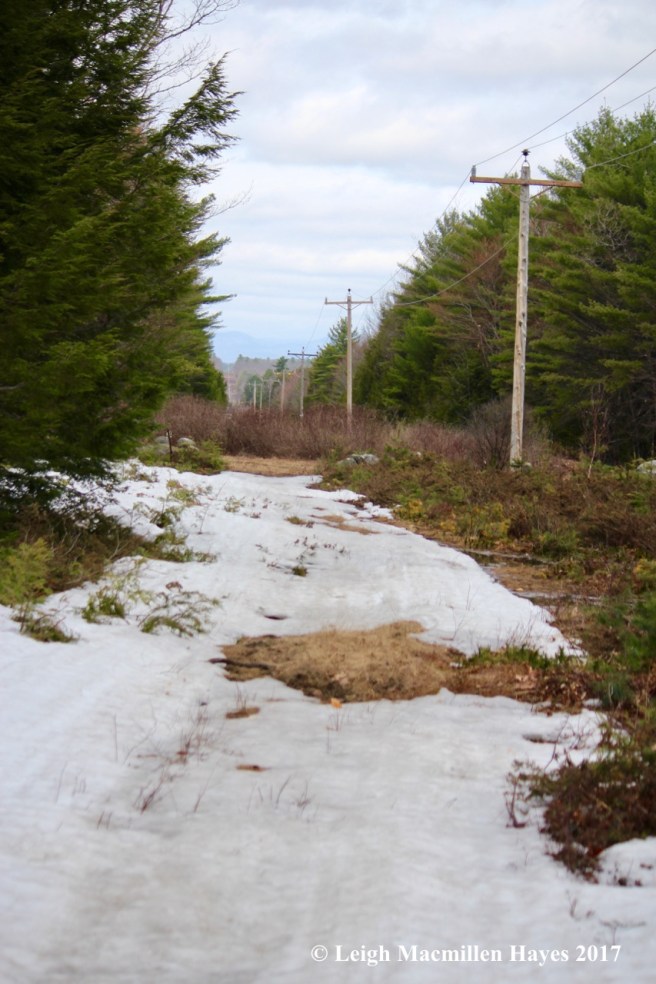
It all began on my way to the vernal pool. Perhaps it was really just a shiver as the breeze blew across the last of the snow, hard packed still along the snowmobile trail.
v-springtails 1

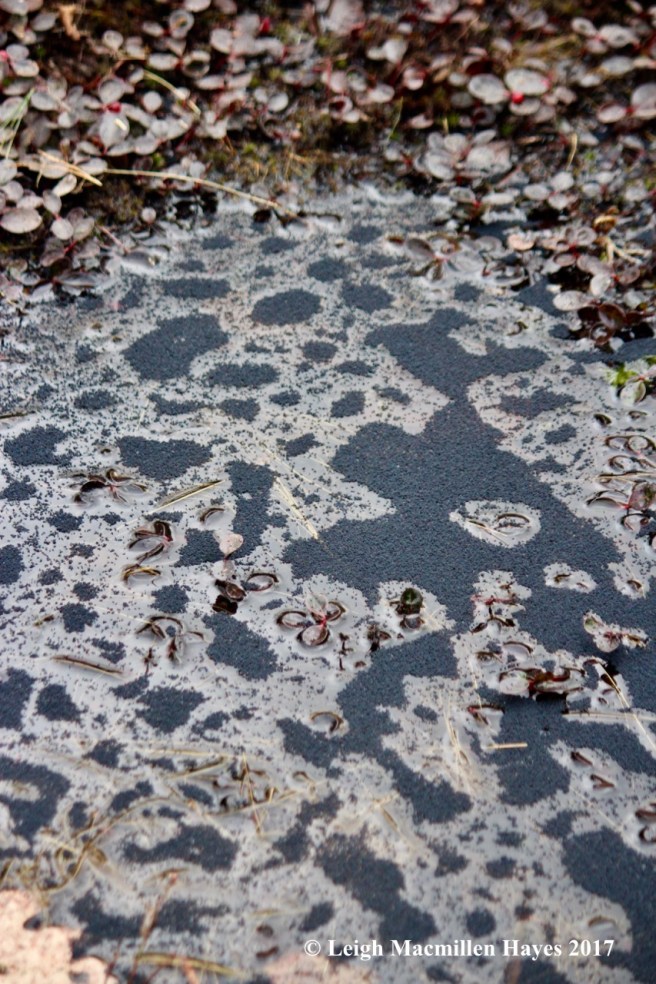
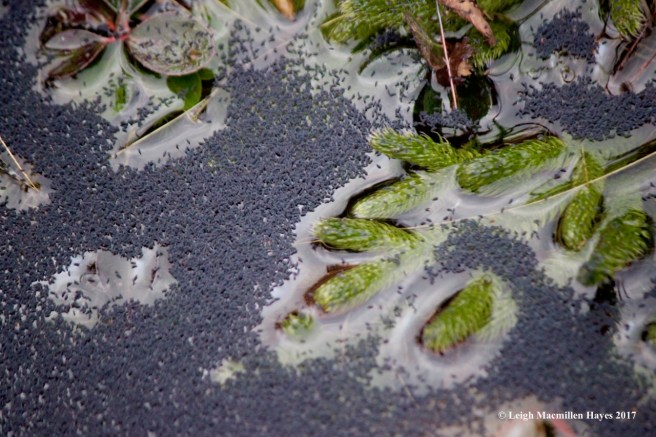
Or maybe it was the depression that held the snowmelt and was covered with an oil slick of sorts . . .

v-springtails 2

which turned out to be a million springtails bopping to their own tunes.

v-trailing arbutus 1

It could have been the sudden sight of so many trailing arbutus plants that got me going.

v-trailing arbutus 2

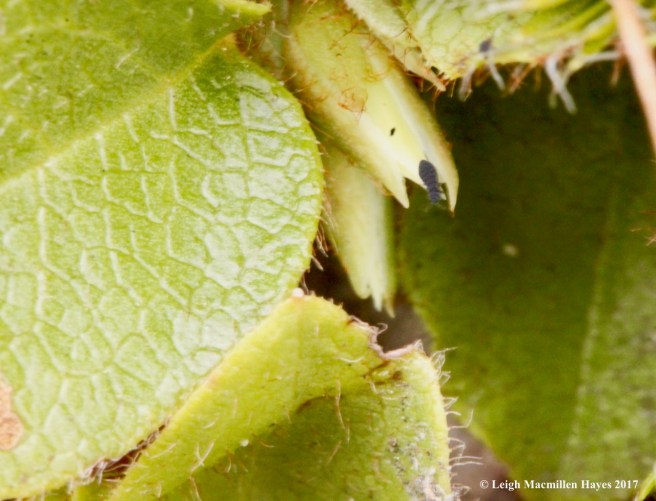
Certainly I wasn’t the only one excited by those flowers yet to be. (Do you see the springtail on the tip of the bud?)

v-vernal pool

Or it might have been the ever shrinking ice cover at the pool that made my feet tap.

v-vp edge opening

Perhaps it was the fallen beech leaves atop tree reflections that forced me to sway.

v-leaf offerings

Or the way the hemlock, oak, maple and beech leaves intermingled.

v-spermatophores

What I do know is that there was no stopping me once I spotted spotted salamander spermatophores atop leaves in several open sections–the sperm being located at the top of the cauliflower-shaped platforms.

v-frog 1

And then I saw something swim under some leaves that really got me rocking. Do you see the face of the wood frog, hiding as best it could?

v-fox scat beside vernal pool

As I began to circle around the dance floor, I noticed an offering of scat that made me think a red fox had sashayed beside the pool.

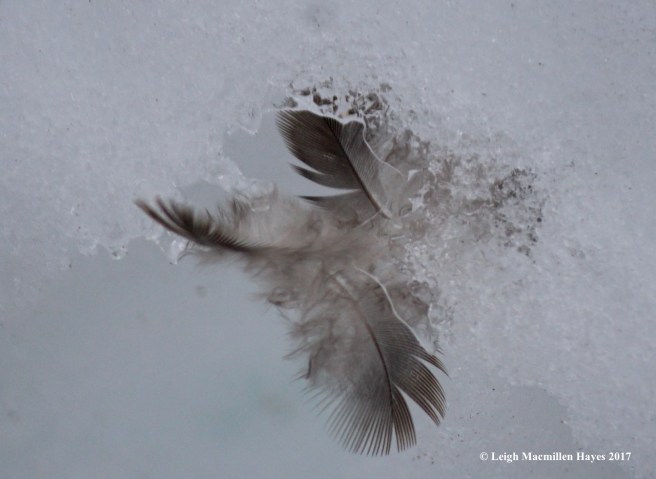
v-sharp-shinned hawk feather?

On my own sashay home, I discovered that there were other dancers in the midst–this one possibly a sharp-shinned hawk.

v-woodpecker feather

And after that a woodpecker.

v-junco feather?

And then a junco.

v-red maple flowers 1

Along the cowpath, the red maple flowers blushed as I might were I to get all gussied up in a flowing dress.

v-red maple flowers 2

Much the way a suitor might wink, so much has happened so quickly. Within the past week the snow melted almost entirely away and winter released its hold on me. Now I’m ready to groove with the choreography of spring’s rhythm. I hope you’ll join me on the dance floor.

May I have this dance?


A Blue Bird Kind of Good Friday

When Jinnie Mae picked me up this morning, our destination was the Narrow Gauge Trail. But somewhere between here and there, she pulled a U-turn and drove to Narramissic Farm owned by the Bridgton Historical Society.

It had been just over a year since I last visited and I wanted to show her the shagbark hickory buds. And maybe even the bear trap.

n-Pleasant Mtn to Narramissic1

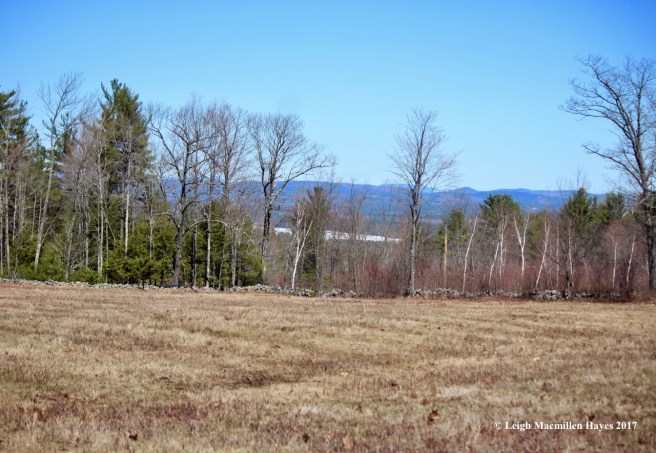
We crossed the field behind the house and started off on the path to the quarry and bear trap, but snow and water in the woods resulted in another U-turn. We’d been talking so much, we’d hardly noticed our surroundings, but the view stopped us in our tracks.

n-Pleasant Mountain

To the left, the long ridge line of Pleasant Mountain, where the ski trails of Shawnee Peak Ski Area made themselves known.

n-Narramissic

And in front of us, the Temperance Barn and Peabody-Fitch homestead, built in 1797. We had the place to ourselves and reveled in the quiet of the day–when we weren’t talking, that is.

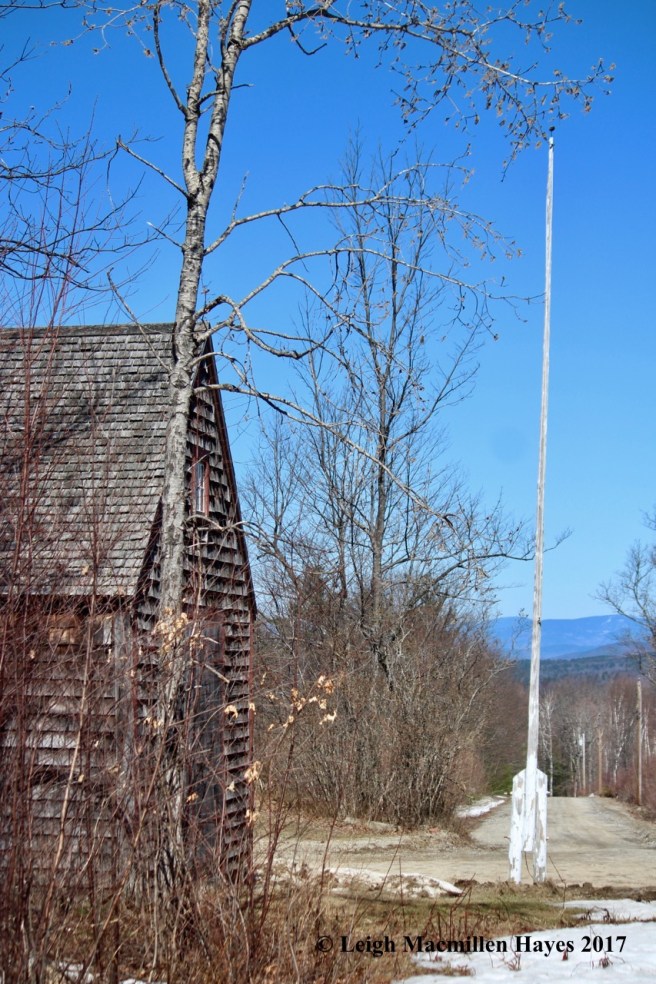
n-shop and flagpole

Heading to the road for our tree bud search, we passed by the blacksmith shop where horseshoes were probably made in the day.

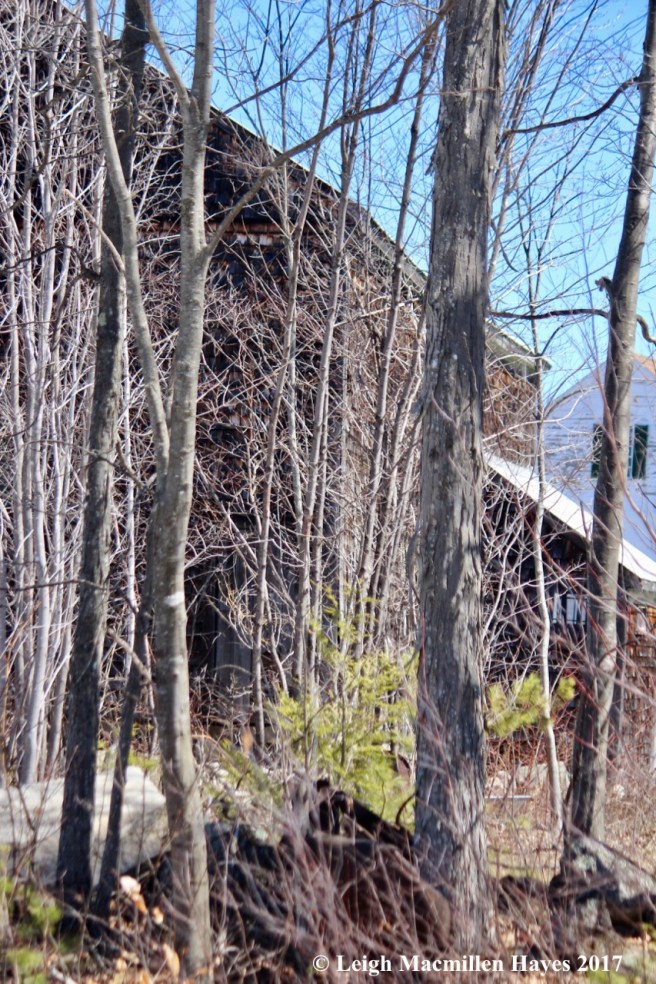
n-temperance barn

And at the Temperance Barn, so named “because it was raised without the traditional barrel of rum,” I can never resist admiring the structure even though it’s in great need of repair.

n-ash tags

And then we were stumped by a flowering tree. It sure looked like an ash as Jinnie Mae suggested, but what were those lacy tips? What came to my mind first were the tags on red oaks that I didn’t understand a few years ago until a friend helped me realize that they were leaf stems left behind when the wind finally claimed the dried leaves. Was this the same?

n-double-wide stonewall

Climbing onto the double-wide wall, I took a closer look.

n-white ash danglers 1

Turns out Jinnie Mae was right. But my question still remains. Were these the stems of the ash samaras or compound leaves?* For some reason I’ve never before seen them left behind. Ah, there are so many things to discover in this world.

n-black walnut 3

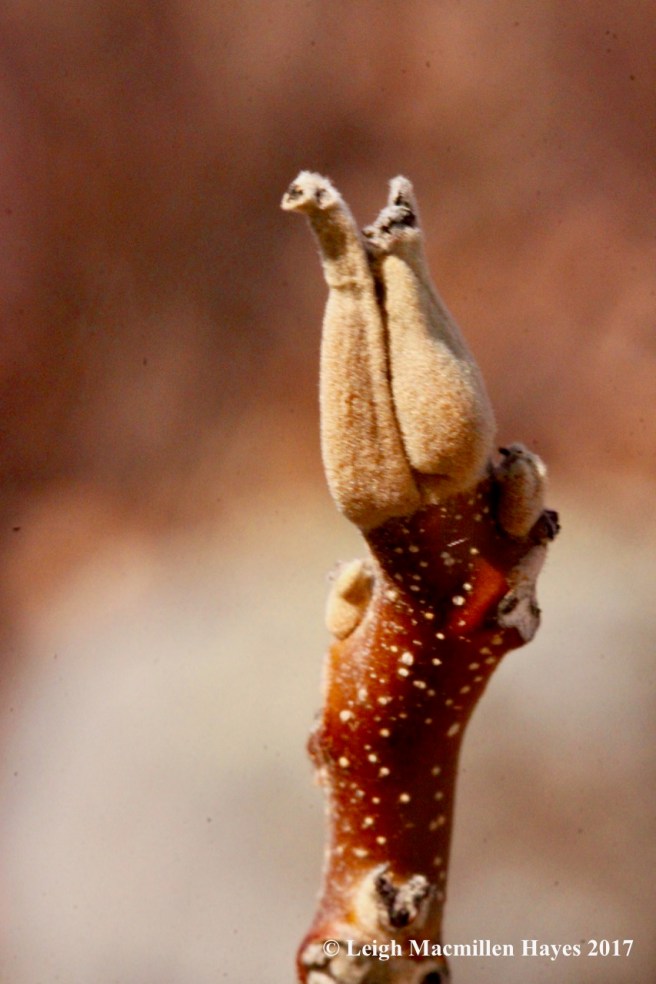
We continued down the road, noting budding pussy willows and flowering red maples. And then I spied the bulbous buds I wanted to show her. Only, it turns out that we hadn’t reached the hickory trees yet.

b-black walnut leaf scar 2

The monkey face leaf scar should have been a clue. But my brain was stuck in hickory mode and I completely forgot that black walnut leaves leave such a formation. At home, I pulled out Forest Trees of Maine and then seesawed between black walnut and butternut (aka white walnut). Both feature leaf scars shaped like a monkey’s face. But the top of the leaf scar serves as the give away–this one did not have thick fuzzy eyebrows like a butternut, so I’m going out on a limb and declaring this a black walnut.

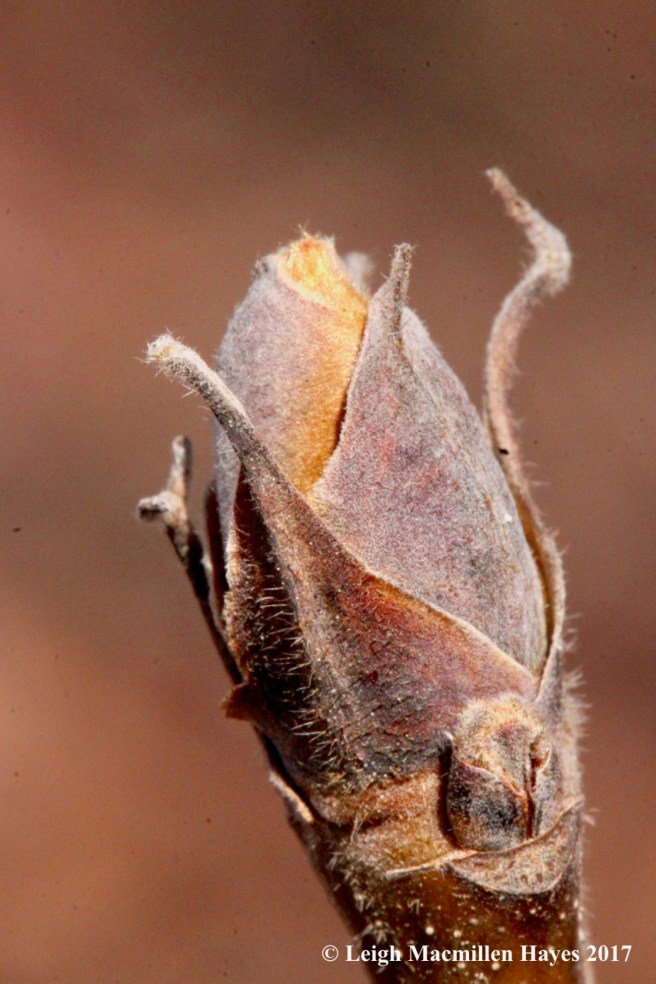
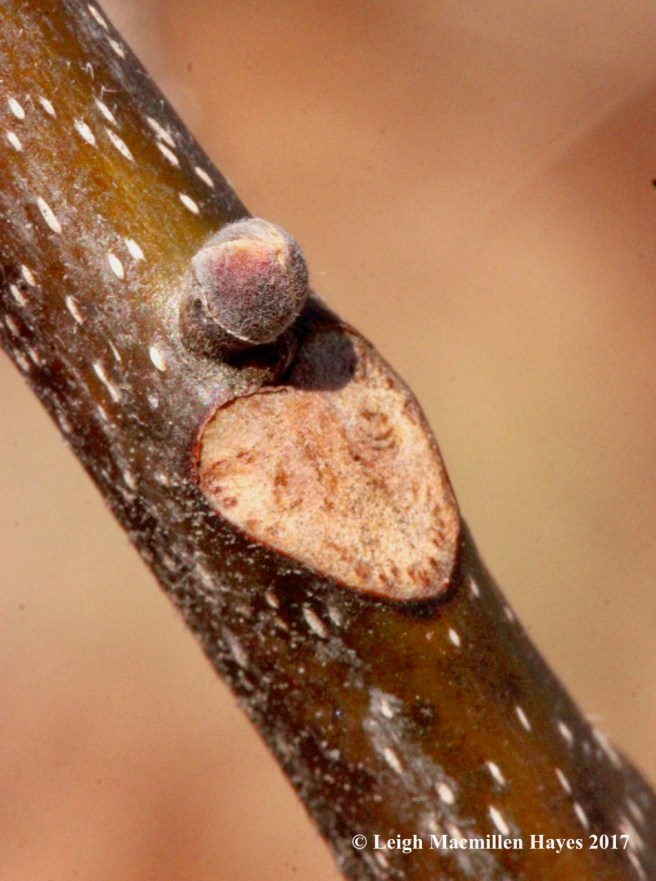
n-shagbark bud hairy 1

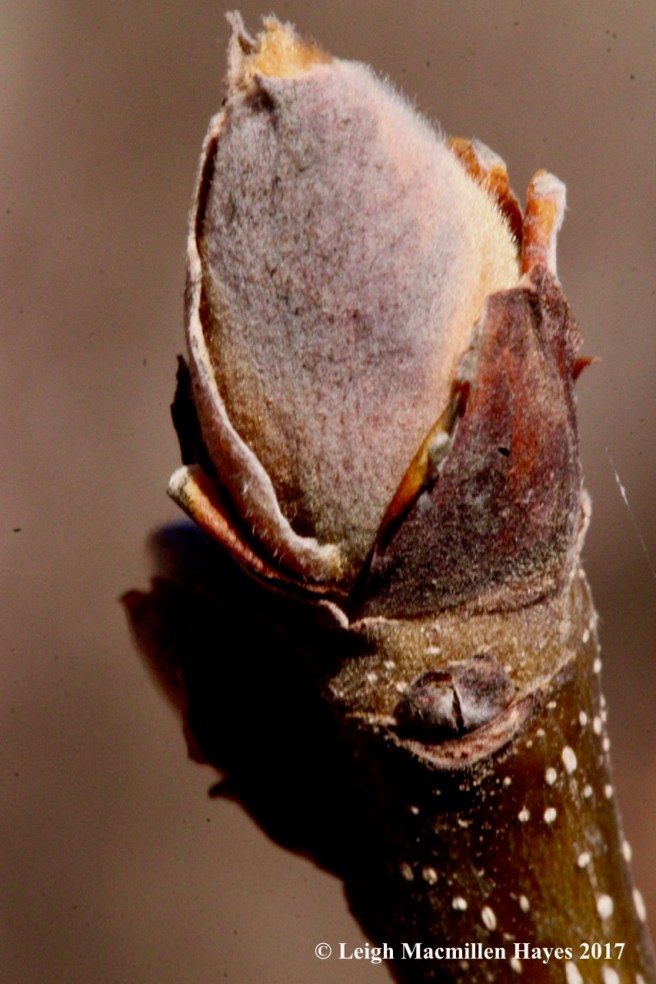
A bit further down the road we spotted more bulbous buds. These were definitely the ones I was looking for–shagbark hickory. In the moment and because the two trees weren’t close together, we thought they were all one in the same. But hindsight being 20/20 as it is, the photographs tell the story.

n-shagbark bud 6

The subtle colors and fuzziness wowed us and we both took numerous photos.

n-shagbark leaf scar1

Then there were the leaf scars–definitely more heart-shaped than the previous trees.  And lacking that smiling face. We smiled for them.

n-Long Lake below

It wasn’t enough to find the small saplings beside the road and so we crossed another field in search of the mother tree.

n-grasshopper 1

Along the way, Jinnie Mae spotted a wee grasshopper–the first of the season for us.

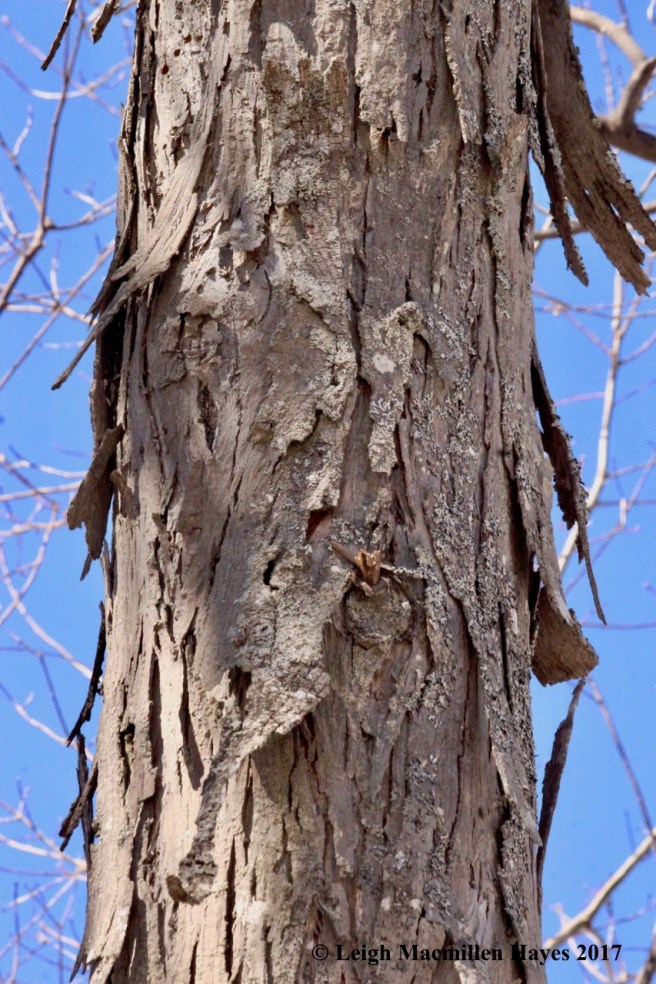
n-shagbark bark from distance

And then her newly trained shagbark hickory eyes keyed in on the momma.

n-shagbark bark 3

If you go, it’s located behind the barn.

n-shagbark bark 5

And shouts its name in presentation.

n-shagbark bark 4

Looking upward, we could see the bulbous buds on the twig tips contrasted against the bright blue sky.

n-bluebird

Happiness is a blue bird kind of day–sweetened by time spent exploring with Jinnie Mae, making discoveries and watching bluebirds move between the field and the trees. Indeed it was a Good Friday.

Now we need to return and find the mother black walnut.

*Thanks for Maine Master Naturalist Pam Davis for IDing the ash strand as the rachis of the compound leaf. She reminded me that I have seen these on the ground in the fall. But–to be still dangling from the tree was new to my eyes and mind.


A Wiser Soul

It all began when I stepped out the back door just before six o’clock this morning. From the treeline I heard a barred owl call, “Who cooks for you? Who cooks for you all?” I could have returned to bed then, happy for the opportunity to hear such a wise one.

n-Northern Flicker

Not long after that, as I passed by a window in the butler’s pantry (no, we don’t have a butler, just an old farmhouse), a splash of red on the ground drew my focus–a Northern flicker had stopped by to feed. Notice the subtle curve of its bill? The better to dig up ants and beetles, as is the custom of this ground-feeding woodpecker.

n-water coursing 2

An hour or so later, I met my friend, Marita, for a hike up the Bald Peak trail at Pleasant Mountain. Our destination–not the summit as we had a time constraint–but rather, Needles Eye.

n-beside the brook

Our climb included frequent stops at vantage points to take in the sound and beauty of the place.

n-water art 2

The flow of the living water and its ever changing presentation mesmerized us much as leaping flames do.

n-water art

It spiraled over the rocks like a sculpture in fluid motion.

n-ice hiding

And while so much poured forth and wound its way down the mountain stream,

n-ice at Needles Eye

some remained frozen in time.

n-crossing toward Needles Eye

At the sign pointing toward Needles Eye, we crossed a stream and then worked our way across the short spur to the narrow formation of rocks that water threads through.

I should qualify that. Marita sauntered across the ice and snow, seeking the wee bit of dirt and leaves at the edge of the trail. It’s a steep edge and even on a summer day, I pick my way carefully over rocks and tree roots. Today, my brain suggested I call it good and sit still. But, she’s a good friend, and realizing my trepidation (I’d forewarned her), she spoke to me calmly about each foot placement, and even turned back to demonstrate exactly what I should do, waited patiently as my brain shouted, “Don’t do it!” and my heart said, “I think you can, I think you can,” and offered a hand when necessary.

n-marita 3 (1)

Together, we did it. This photo is Marita’s as I didn’t want to change my camera lens once we stood in the chasm and watched the water fall.

n-inside the needle

On a summer day, it’s a delightfully damp place to rest before continuing up the mountain. Sometimes, there’s only a hint of a stream. Today, it was equally enchanting–perhaps we should have bowed in respect of the beauty and power before us. And just maybe we did.

n-climbing down 2

Returning on the spur, Marita again came to my aid. And then we hiked a bit further up until time forced us to head down again.

n-morning light

The descent seemed easier as the snow had softened a bit in the two hours we’d spent enjoying each other’s company and filling our senses with the sights and sounds surrounding us.

n-vp visit

Back at home, I was pulled out the door again and made my way to the vernal pool. Ever so gradually, the ice is melting.

n-crack across vp

And across the center, a crack divided it in two from east to west, while a line between the sunshine and shade completed the quadrants from north to south.

n-snowfleas 2

Piles of pepper, aka springtails, floated on melted water atop the ice.

n-snowfleas

Others clustered on the open water at the pool’s edge. Other than that, I could see no action. Every day, however, will bring something new so I know I’ll check back frequently.

n-our house:field

Leaving the pool behind, I headed toward the area where I’d heard the barred owl several hours earlier–and I called. It didn’t respond. But, I reminded myself that this morning’s greeting was enough.

n-crocuses1

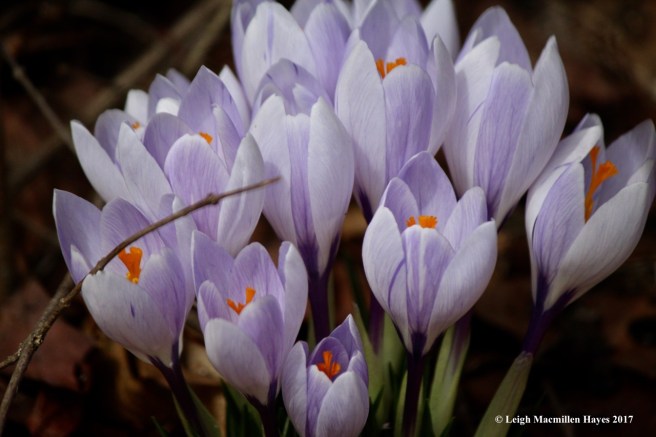
Returning home again, I couldn’t resist the crocuses that I first noticed yesterday. In the past few days, the snow has receded quickly and with today’s light, these spring beauties finally opened.

n-first daffy--a double

And then, in the garden beside the house, I found one more surprise–a double daffodil blossoming under some leaves. In this season of watching with wonder, my heart was full.

n-Marita

This day will stick with me for its offerings and I’ll be forever grateful to Marita . . .

n-marita 4 (1)

for without her help, I wouldn’t have had the gumption to stand in the Needles Eye. She is a kind and funny and wise(r) soul. And I am blessed by our friendship.

P.S. Two minutes after posting this blog, a woodchuck ran across the deck–headed toward the barn, of course.


Just Around the Bend

Due to the generosity of friends, this afternoon I picked up some items for the Lakes Environmental Association’s silent/live auction to be held at the Stone Mountain Arts Center on July 14th. And one of those pick-ups put me in the Horseshoe Pond area where a mourning cloak butterfly danced in the sky as I drove down the dirt road. Alas, I couldn’t photograph it, so it will have to remain in my mind’s eye, but I was excited for it was the first sighting of the season–a harbinger of spring.

w-Horseshoe Pond 1

Back at the boat landing by Horseshoe Pond, I parked, donned my Boggs, and hoped for another butterfly sighting. It wasn’t to be, but the view was worth a pause as I looked at the left portion of this upside-down, U-shaped pond.

w-Sucker Brook from the culvert

The water roared through the culvert and I walked to the other side of the road, where the pond outlet becomes Sucker Brook–which overflowed its main bed.

w-Sucker Brook 2

My friends suggested I might need snowshoes, but of course, I’d left them home. They were right. I should have worn them and dig post holes I did as I followed the brook. Of course, first I had to climb over the dirt-covered snowy embankment by the road in order to get onto the trail at the Greater Lovell Land Trust’s Wilson Wing Moose Pond Bog Preserve. It was worth the effort.

w-snow layers by yellow birch

One of my favorite spots along the brook is this yellow birch tree, which typically stands on stilts atop a rock at the water’s edge. Who would know? For now, those spindly legs are still blanketed under layers of snow.

w-squirrel works

I expected the tracking conditions to be better than they were, but instead needed to focus on signs if I wanted to figure out what mammals came before me. Several middens of cone scales spoke of red squirrels. And there was deer scat nearby.

w-hobblebush 1

Because this is a moist area, hobblebush grows here and I couldn’t resist an opportunity to enjoy its sculptural structure created by downy-coated leaf buds.

w-hobblebush 2

Equally beautiful were the expanding flowers–globe-like in appearance, with subtle hints of green.

w-Wilson Wing Moose Pond Bog

And at the viewing platform, I was forced to climb up. Last year, Moose Pond Bog was a shrunken wetland, or so it seemed given the drought. Today–water, water, everywhere.

w-wintergreen

Back down the stairs, I searched about in a few sunny spots where the snow had melted. That’s when I spied last year’s berry dangling from a plant still sporting its maroon coloration of winterberry.

w-trailing arbutus leaves

And near it–a sight for spring-needy eyes . . .

w-trailing arbutus buds

trailing arbutus leaves and flower buds. Yes, Virginia, spring will come to western Maine. And we’ll all appreciate it more for it’s a season that never likes to rush.

w-mourning dove feather 1

I continued on and when I paused to look at some common polypody ferns that decorate a boulder, I spotted something else.

w-feathers 3

Feathers of varying sizes were scattered about.

w-mourning dove 1

A mourning dove had served as dinner. But for whom? No matter. Taking advantage,  snow fleas hunted for their own form of sustenance on the only part of the bird left behind.

w-stream 1

Before I climbed up to the road at the end of the trail, I had one more stream to cross–it’s usually a mere trickle, but not today.

w-tinderconks1

Rather than backtrack, I chose to walk the road–a much easier substrate. It was along there that I saw numerous tinderconks decorating one tree. Though they are also known as horse’s hoof, these reminded me more of elephant feet with big toes protruding at the base.

w-dragonfly spot

Back by my truck, I looked for the mourning cloak again–to no avail. Instead, my eyes were drawn to the reflection and memories of dragonfly hunting in this very spot last summer.

w-shimmering heat of the day

And when I looked back out on the pond, I could see the shimmering effect that occurs when the heat of the day meets the cold of the ice. The temperature reached into the 80˚s today. The meltdown has begun. It won’t be long now. From what I saw, spring truly is just around the bend.

All Twigged Out

In preparation for a senior college class I’ll be teaching this week entitled “All Things Spring,” I headed out the door in search of twigs.

t-Mount Wash

Of course, it doesn’t look like spring quite yet. But then again, it does. And on this crystal clear day, the silhouette of the buildings atop Mount Washington were visible.

t-vernal pool

Before I could settle down to the work at hand, I visited the vernal pool, where all was quiet. But, I know the time is nearing. I could smell spring in the air and feel it in the warm sunshine that enveloped me and my surroundings.

t-chick 4

And then I slipped into the gray birch grove to begin my hunt,

t-chick 3

while a black-capped chickadee wondered what I was up to–no good, as usual.

t1-table top (1)

At last, I filled my satchel, but only enough–never wanting to take more than necessary. In fact, since I don’t know how many students will be present, they may have to share.

My plan is to begin with a slide show of flowers and ferns, mammals and birds, and of course, life evolving at the vernal pool (all photos were taken a year ago). I’ll bring some fun things to share, including scat–I sure hope they (whoever they are) think it’s fun.

And then we’ll look at twigs through a hand lens so together we can examine the idiosyncrasies of our common deciduous trees,

t1-sugar maple (1)

such as these sugar maples and . . .

t1-striped maple twigs (1)

a few striped maples.

t-beech

We’ll look at beech,

t-quaking aspen

quaking aspens and several others.

t-opposite

My materials are almost ready, though I still need to pull something together about fern crosiers. Oh my!

t-alternate

I’m nervous, but excited. My hope is to instill a sense of wonder, but maybe no one will show. That would be okay–I’d just quietly slip back into the woods.

Until then, I’m trying not to feel all twigged out.


Fair-feathered Friends

Thankfully, the prediction for 8-12 inches of snow for today didn’t come true. But it did snow, rain and sleet. And the birds were on the move.

b-red-winged 2

The moment I stepped out the door to fill the feeders and spread seed and peanuts on the ground I was greeted by the kon-ka-reeee of the red-winged blackbirds who stopped by for a few hours. Their songs filled the air with the promise of spring.

b-cowbirds

And with them came a few friends. Or were they? It seemed the cowbirds may have been scheming.

b-cowbird female

Mrs. Cow perhaps choosing others who might raise her young one day soon.

b-song sparrow

Another recent visitor also added its song to the chorus and its streaked breast to the landscape–such is the manner of the song sparrow.

b-tree sparrow1

American tree sparrows, on the other hand, have been frequent flyers all winter. This one paused long enough to show off its bicolored bill and white wing bars.

b-robins

And then there were those who chose to visit from a distance–the American robins appeared as ornaments in the oak and maple trees.

b-crow sentry

Meanwhile, a crow stood sentry–allowing all to eat in peace as it was ever ready to announce any intruders.

b-white-breasted nuthatch

And so they came and went–some upside down like the white-breasted nuthatch.

b-chickadee waiting

Others waiting patiently for a turn,

b-chickadee at feeder

confident in the knowledge that the wait was worth the reward.

b-chick and junco

But not all . . .

b-junco in lilac

that waited . . .

b-junco waiting

remained patient.

b-junco--cigar?

The juncos gobbled the seeds . . .

b-junco with peanut

and the peanuts.

b-junco fight 1a

And like siblings, they squabbled . . .

b-junco fight 1

with attitude . . .

b-junco fight 2

and insistence.

b-junco fight 3

Of course, there was always a winner.

b-junco up close

I love these plump winter visitors with their head and flanks completely gray, contrasting white  breasts and pale pink bills–making the junco an easy ID.

b-gray squirrel

They weren’t the only gray birds to visit the feeders. Oh, you mean a gray squirrel isn’t a bird?

b-squirrel in its tracks

Nor is the red. Don’t tell them that.

b-deer in yard

The same is true of this dear friend, who first spied some action in the distance . . .

b-deer looking at me

and then turned its eyes on the bird seed and me. But with one periscope ear, it still listened to the action to my right.

b-deer flying away

And then as fast as the birds that feed here all day, but flit in and out when they hear the slightest noise or sense a motion, the deer turned and flew off as a car drove up the road.

I played the role of a fair-weather naturalist today as I watched my feathered friends from indoors.

With friends in mind, I dedicate this post to my mom’s dear friend, Ella, who passed peacefully in her sleep the other day. I trust Mom has put the coffee pot on and she, Aunt Ella and Aunt Ruth are watching the birds out the kitchen window. 


Book of April: How to tell the Birds from the Flowers

It’s April Fools’ Day and I can’t think of a more appropriate book to share as Mother Nature showers snow upon us than How to tell the Birds from the Flowers and other wood-cuts by Robert Williams Wood.

b-11 (1)

A friend found this delightful little ditty at an independent book store in Brattleboro, Vermont, several months ago and couldn’t resist purchasing it for me. Thank you, A.J. 

Can you see from the cover what Wood had in mind? 

b-9 (1)

And his language–Flornithology? Oh my. Artistic license met poetic license. 

The first edition was published in 1917–in Kent, England. According to a little research, Mr. Wood was born in England, but went on to become a physicist at Johns Hopkins. And they say (whoever they are) that he had no sense of humor.

Read on: 

b-8 (1)

b-7 (1)

After this introduction, it gets even better (in my humble opinion). 

b-6 (1)

Whimsical rhymes and . . .

b-5 (1)

clever sketches;

b-2 (1)

Similarities and . . .

b-4 (1)

differences.

b-1 (1)

All found in the natural world. 

b-3 (1)

Doesn’t this just make you smile? The man lacked a sense of humor? Hardly.

And we know the Mother Nature also has a sense of humor. This isn’t the first time it has snowed on April first.

At the back of the book is a list of other facsimile reissues from Pryor Publications. Here are a few titles worth considering: Punishments in the Olden Times, Manners for Women, Manners for Men, A Plain Cookery Book for the Working Class and Why Not Eat Insects.

And on the back cover: “This updated edition originally published in 1917 now includes how to tell ‘The Eel from the Elephant,’ ‘The P-Cock from the Q-Cumber’ and ‘The Elk from the Whelk’ to name but a few. This book will be invaluable to those who are short sighted or just plain confused, the rest of you may even find it amusing.”

I think I fall into the latter group and that’s what A.J. had in mind (right?) when she gifted it to me because I find it quite amusing. 

Happy April Fools’ Day. 

How to tell the Birds from the Flowers and other wood-cuts (is he referring to himself?), versus and illustrations by Robert Williams Wood, 1917.

The Sun Always Shines

In the grayness of the day sunlight lit my way.

o-skunk tracks

Oh, it wasn’t as bright as yesterday when I wandered in brilliant light under clear blue skies and saw hints of spring, including skunk prints in the snow,

o-algae

and some blue-green algae in a vernal pool that is slowly opening up.

o-ice goddess

But given the temperature and wind, the ice goddess reminded me that winter prevailed.

b-deer 2

This morning presented a different picture that didn’t feature Mount Washington in the background because it was obscured by clouds. Rather than don my snowshoes, I decided to stick to the snowmobile trail for the most part. I wasn’t the only one who ventured that way. Because I wasn’t making as much noise as usual, the deer didn’t hear me approach. And so we stood for many minutes contemplating each other. I didn’t want to scare her for I knew she wouldn’t just stick to the trail and the snow depth continues to be such that she sinks with each step. It was in those shared moments that I began to think about energy and how much she put forth all winter and now continues to do the same as spring evolves. Every day I spy more and more young hemlocks trunks that have been scraped. She and her family are feeding on sunlight, which first feed the insects in the soil and then the trees. At each stage or tropic level of the food chain only ten percent of biomass from the previous level is retained. Thus, a thousand pounds of plant biomass is necessary to support a hundred pounds of an herbivore–that’s a lot of little buds for a deer.

b-bobcat prints

Eventually, she made her way across the powerline and joined her family. I decided to turn around so I wouldn’t disturb them further. And it’s then that I recognized some prints I’d missed previously. My micro-spike print is on the left, beside those of a carnivore–a bobcat, or rather, two. Usually bobcats travel in a solitary manner, but their breeding season is upon them. And those thousand pounds of plant biomass that supported  a hundred pounds of herbivore, in turn support ten pounds of carnivore. The hunt becomes important.

b-motherwort

I did find a few spots where the snow had melted and winter weeds, such as this motherwort, provided hints of future buffet items for the herbivores and omnivores to consume.

b-junco and hemlock needle

And then I came upon junco feathers and knew that a different consumer had benefited from the sunlight offered forth by this little bird. The hemlock needle provides a perspective of size.

b-junco feathers 2

Despite its demise, the feathers surrounded by melting snow created an artistic arrangement. That was my attempt at positive thinking, for like us, all things must eat to survive.

b-white ash opposite

And then a few producers caught my attention and I found myself focusing on young trees and shrubs. I’ve walked past this young tree numerous times and never saw it until today.

b-ash 2

White ash or green? They both look similar, but the leaf scar is the giveaway. It’s shaped like a C or misshapen horseshoe with a deep notch at the top.

b-ash bud

And its terminal bud is domed. In these woods, the ash trees aren’t a preferred food source of the deer–lucky for them.

b-silky 2

Nearby, another neighbor caught my attention and it, too, I hadn’t met before.

b-silky dogwood 1

My assumption was dogwood, given the bright red/purpishish color of its shrubby stems, long-gone fruits and opposite leaf buds. But–red osier or silky? I’ve leaned toward the latter but will have to pay attention as the season moves forward. These did seem to tickle the herbivores fancy from time to time, though not nearly as much as the maples that grow nearby.

b-peanut

As I headed toward home, I stumbled upon another site I’ve seen frequently all winter. Actually for the past few winters. There must be a peanut plantation somewhere in these woods. That, or the blue jays have discovered a good source at someone’s bird feeder.

b-ice goddess

Before heading indoors, I paused to acknowledge another ice goddess, one who also knows the sun’s power and found relief in today’s shadows . . .

b-snow

and flakes. It’s snowing again, this fourth day of spring. Liquid sunshine, for the snow also provides nourishment to all who live here.

You see, the sun always shines . . . even when you can’t feel the warmth of its rays.