Hanging On

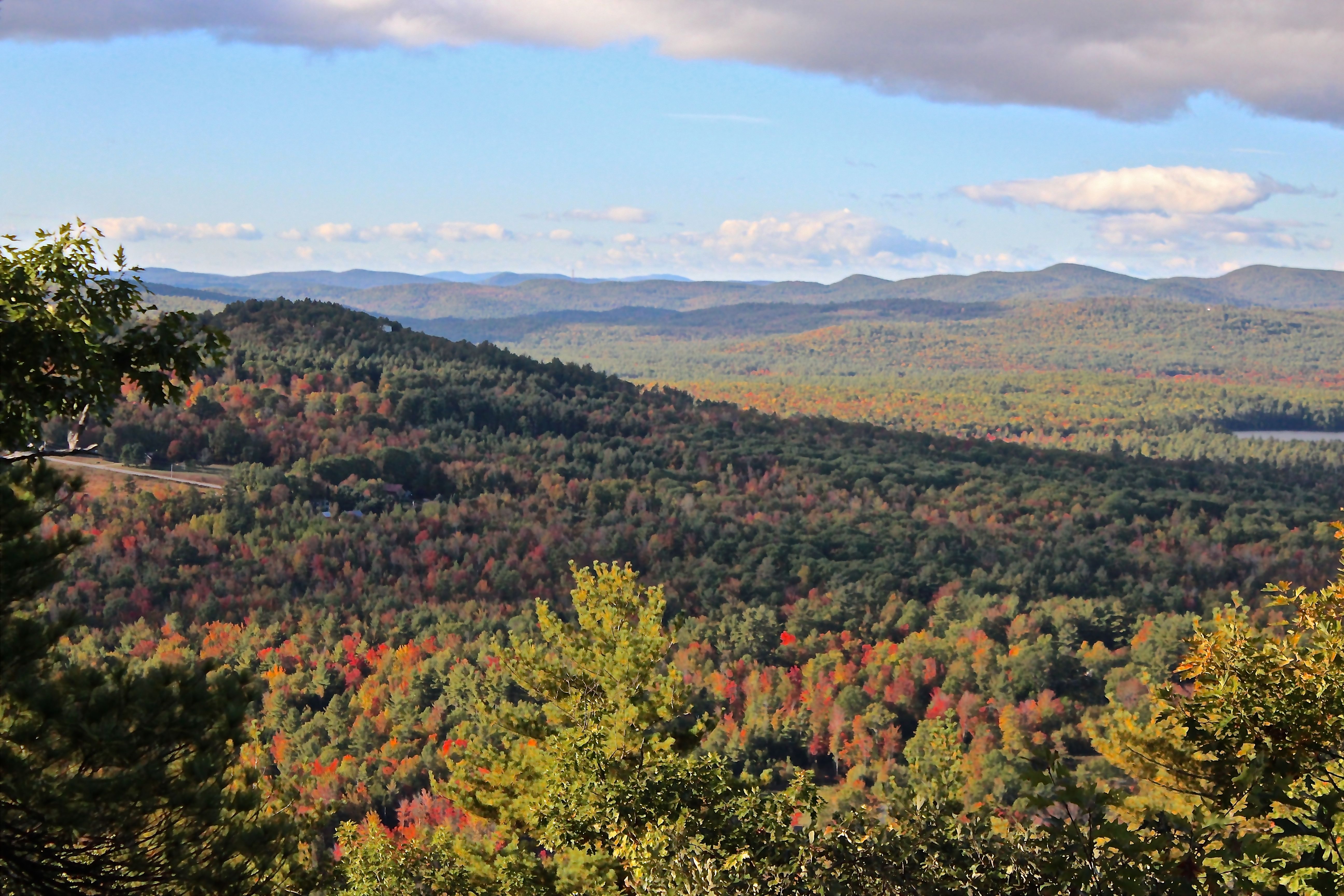
To say the colors have been fantastic this fall is an understatement. Maybe they are just as spectacular as last year’s display, but I don’t remember. Or maybe it’s that the leaves turned at a later date than in recent history and the anticipation was rewarded by the brilliance.
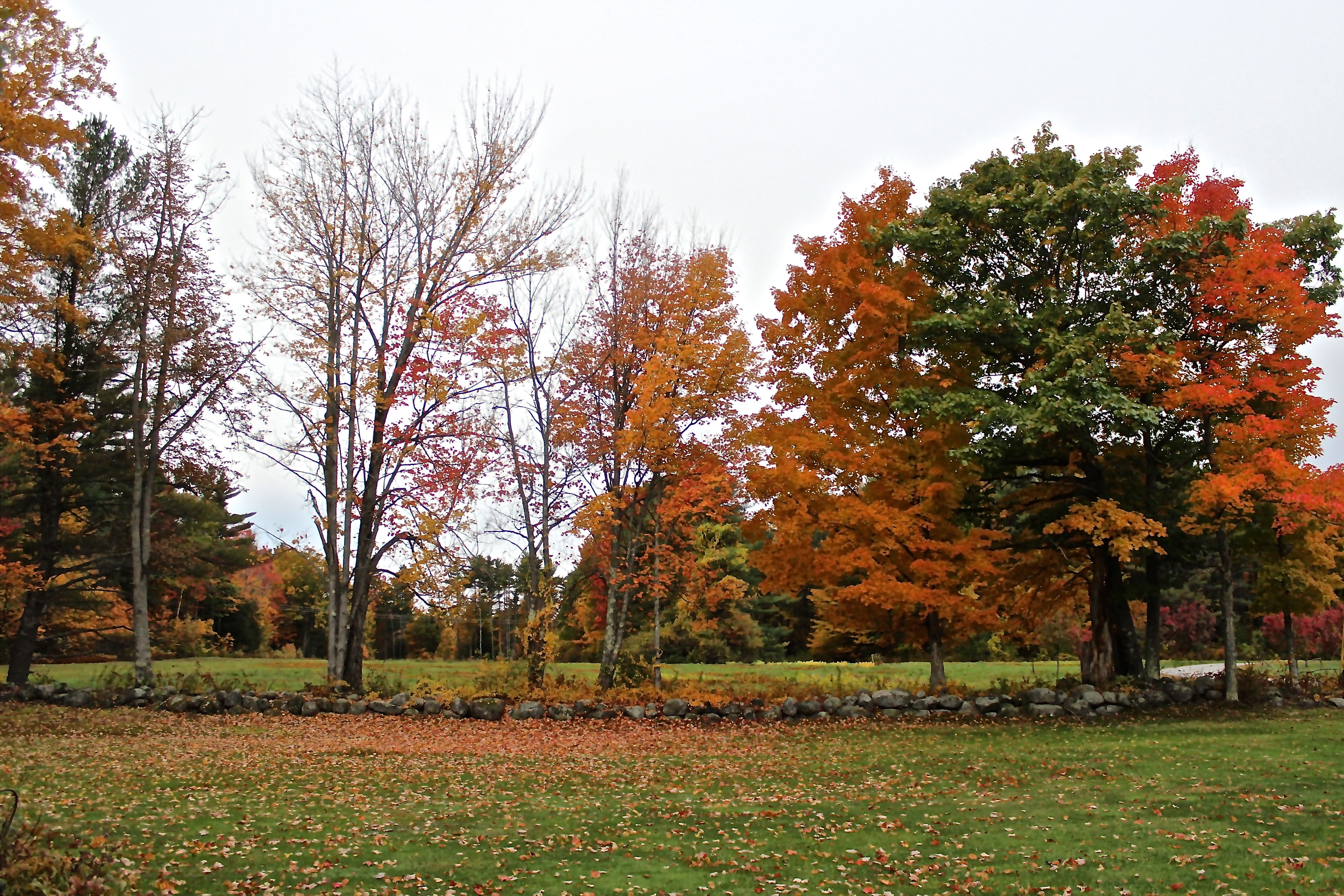
morning view

All I know is that I can’t get enough.

Route 93 mtn view

Route 93 2

As I drove toward Lovell this morning, a break in the treeline beside the road forced me to back up and jump out of the truck. I recalled another October when the foliage caught my attention–I can’t believe I remember this, but it was either 1974 or ’75 when I often traveled the back roads with my high school cohorts–Carissa and Sarah. I only hope I remember this fall as vividly as that one has always stood out in my mind.
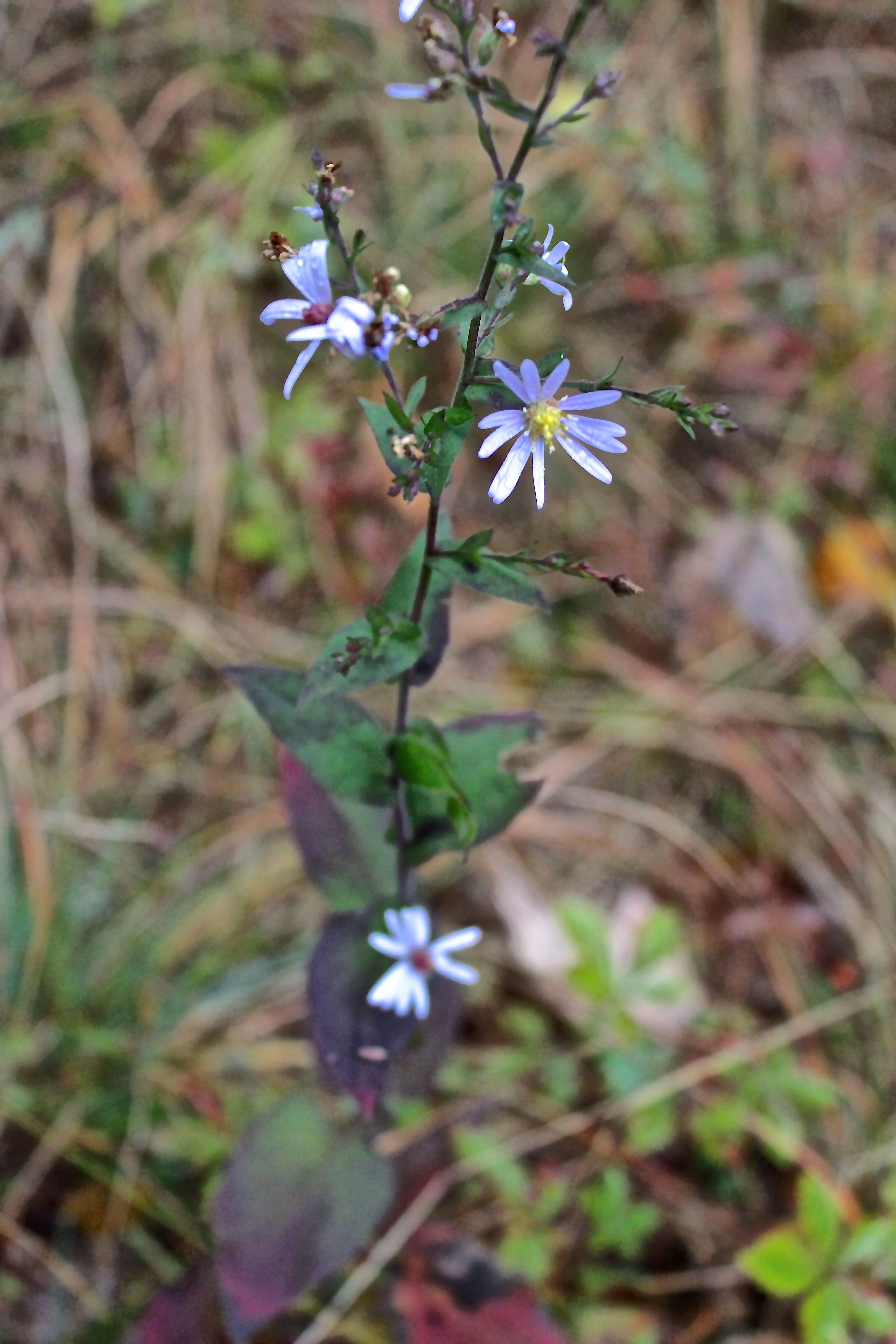
purple aster

It felt like rain when a couple of friends and I walked along the short trail at the GLLT’s John A. Segur Wildlife Refuge on New Road this morning. We didn’t get far because there were so many wildflowers to view, some still in bloom and others gone to seed. Like so many trails, this is an old logging road. It would be so easy to dismiss it as an ugly tangle of shrubs and weeds. But it’s hardly that. Gray and paper birch grace the border of the road, mixed with evergreens and a few red maples.
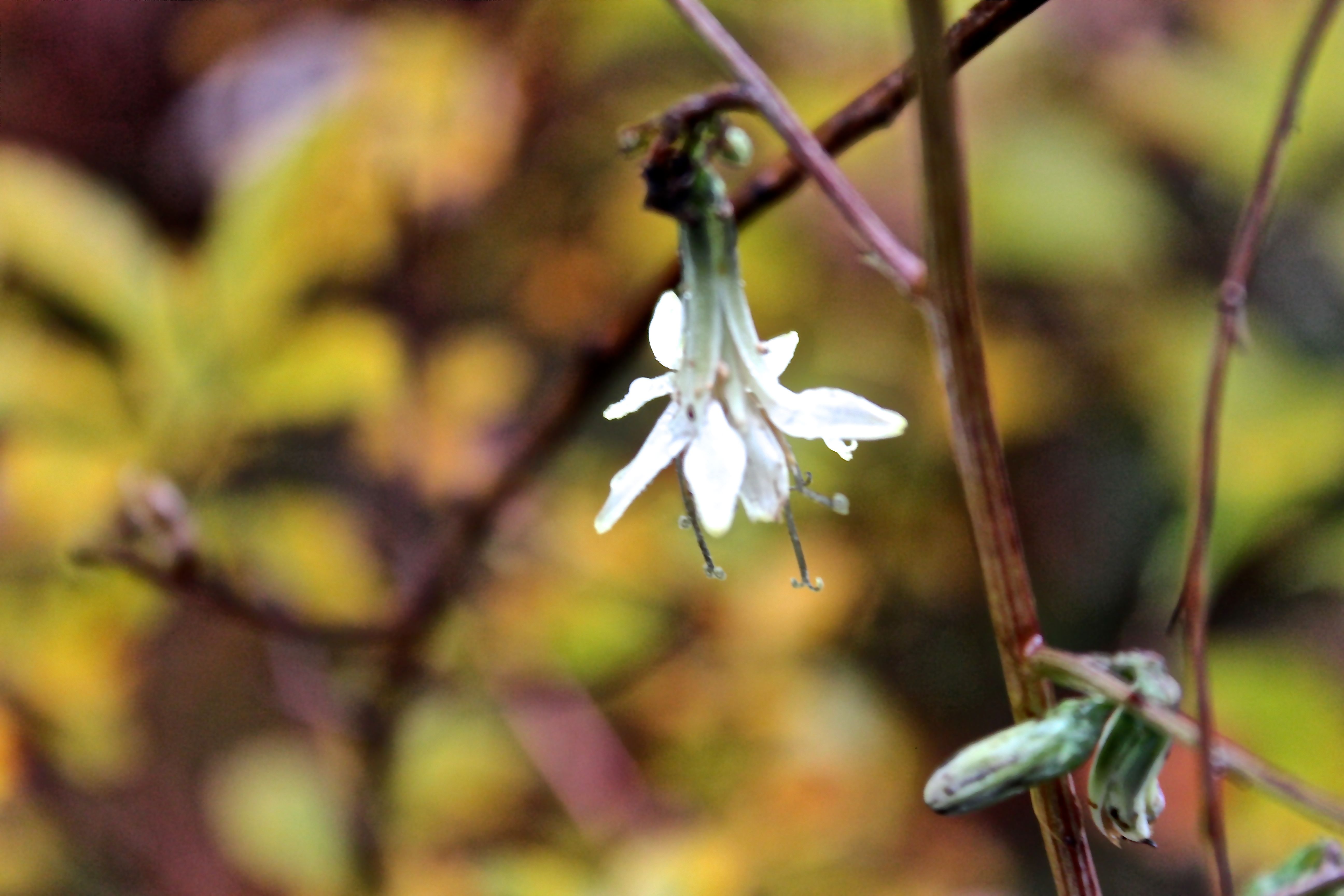
gall of the earth flower 2

But the flowers really caught our attention today. One Gall of the Earth displays its nodding head.

sundew leaves dying back

The round-leaf sundew is beginning to die back.
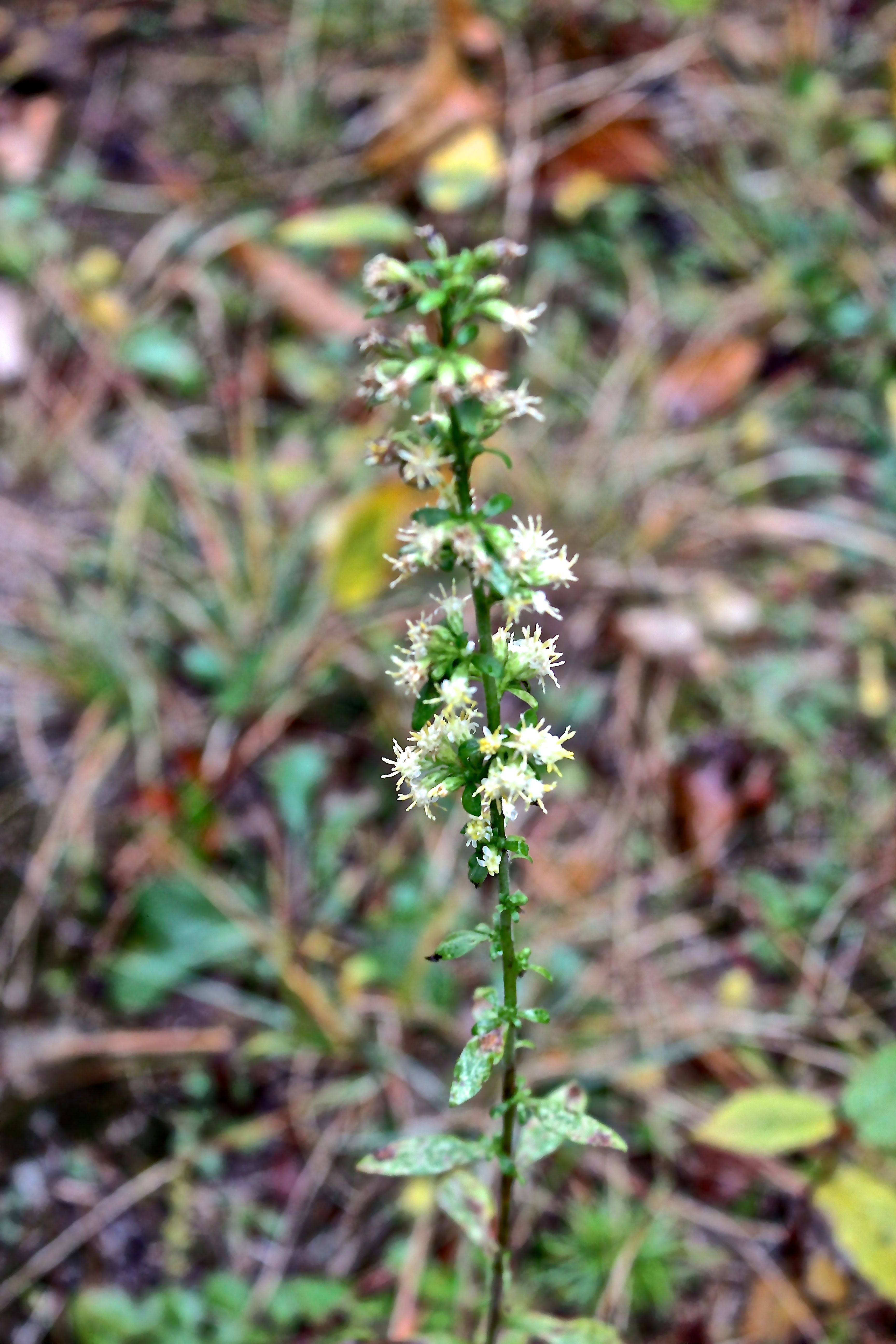
silverod

It seemed like in most cases only one plant of the species still had flowers, like this silverrod, our only white goldenrod.

Pearly everlasting

Pearly everlasting,

steeplebush

steeplebush and

aster seeds 2

asters are letting go.

witch hazel flowering

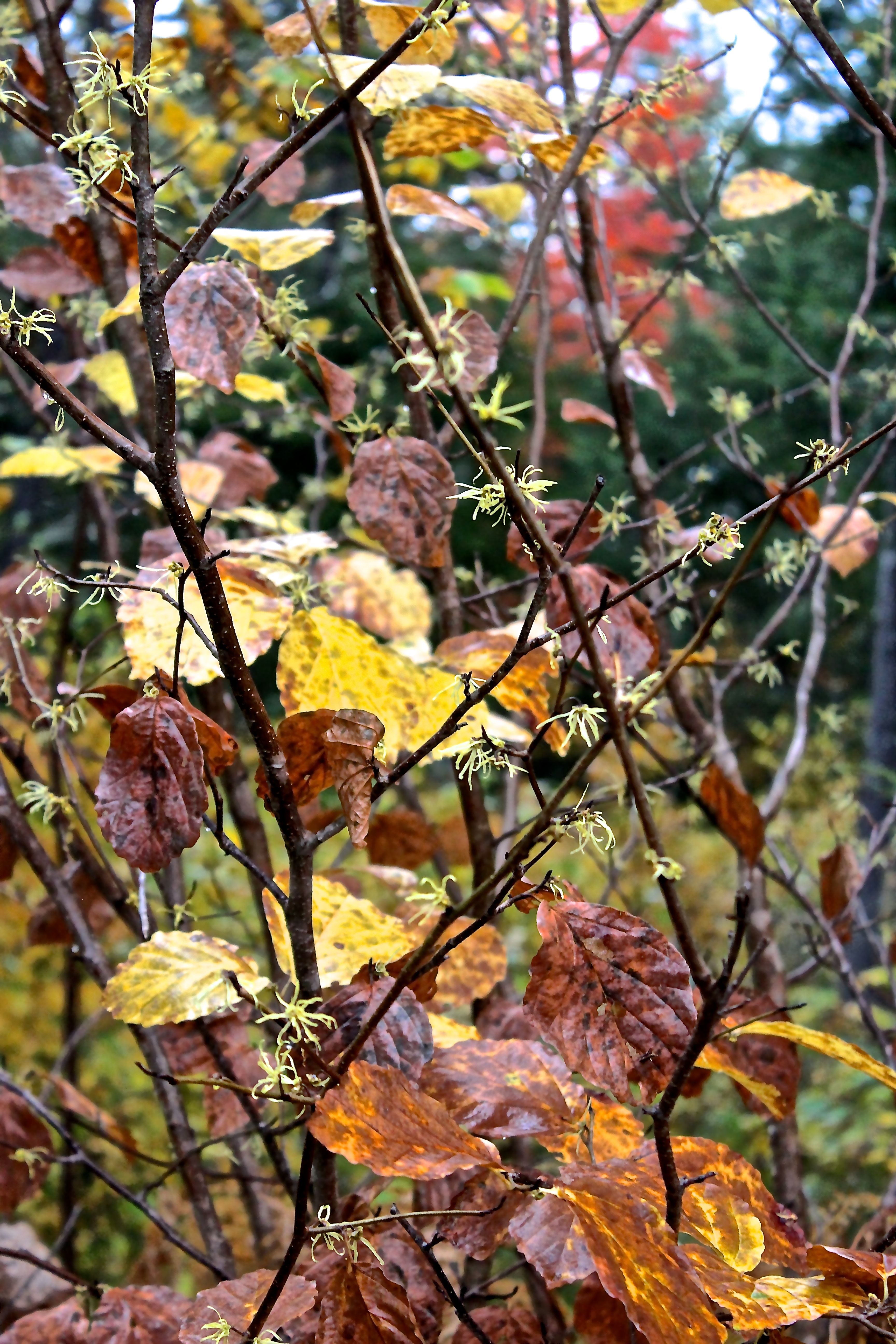
Meanwhile, the witch hazel is in full bloom.

wh flower and pod

Apparently, its ribbony yellow flowers bloom late in order to take advantage of pollinators at a time when everything else has finished blossoming.

baby woodfrog

We didn’t have a lot of time to spend at the property, but this little guy caught our attention–a young wood frog. He’ll need to find his way under the leaf litter soon.

Route 93

On the way home, another photo call.

Mount Washington

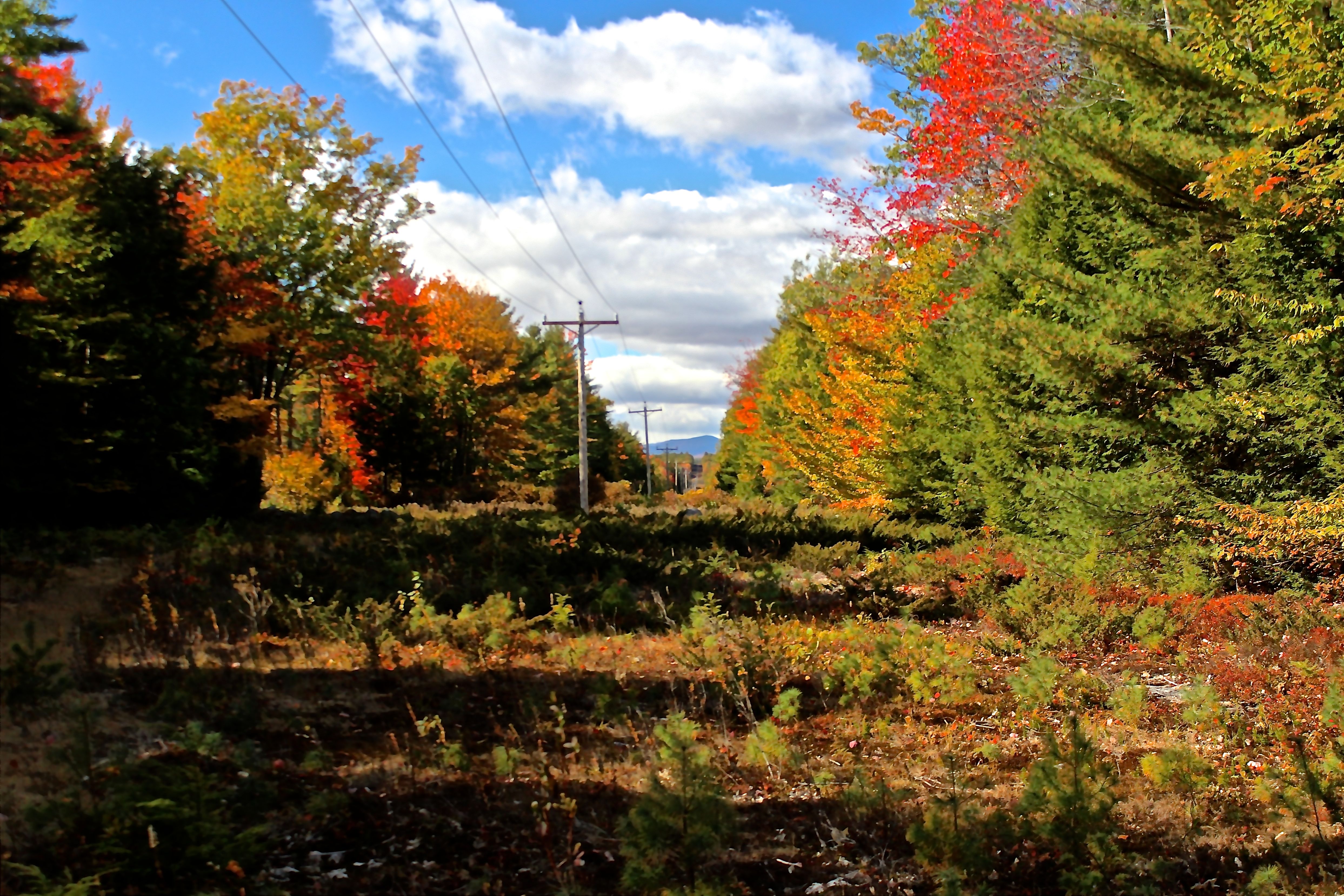
And later in the day, some work behind me, I stepped out the door again. It’s a compulsion a this point; a strong desire to catch every shade of yellow, orange, red and purple before it’s too late. I haven’t turned north on the snowmobile trail under the power line in a while, so today I did.

Mansion Road

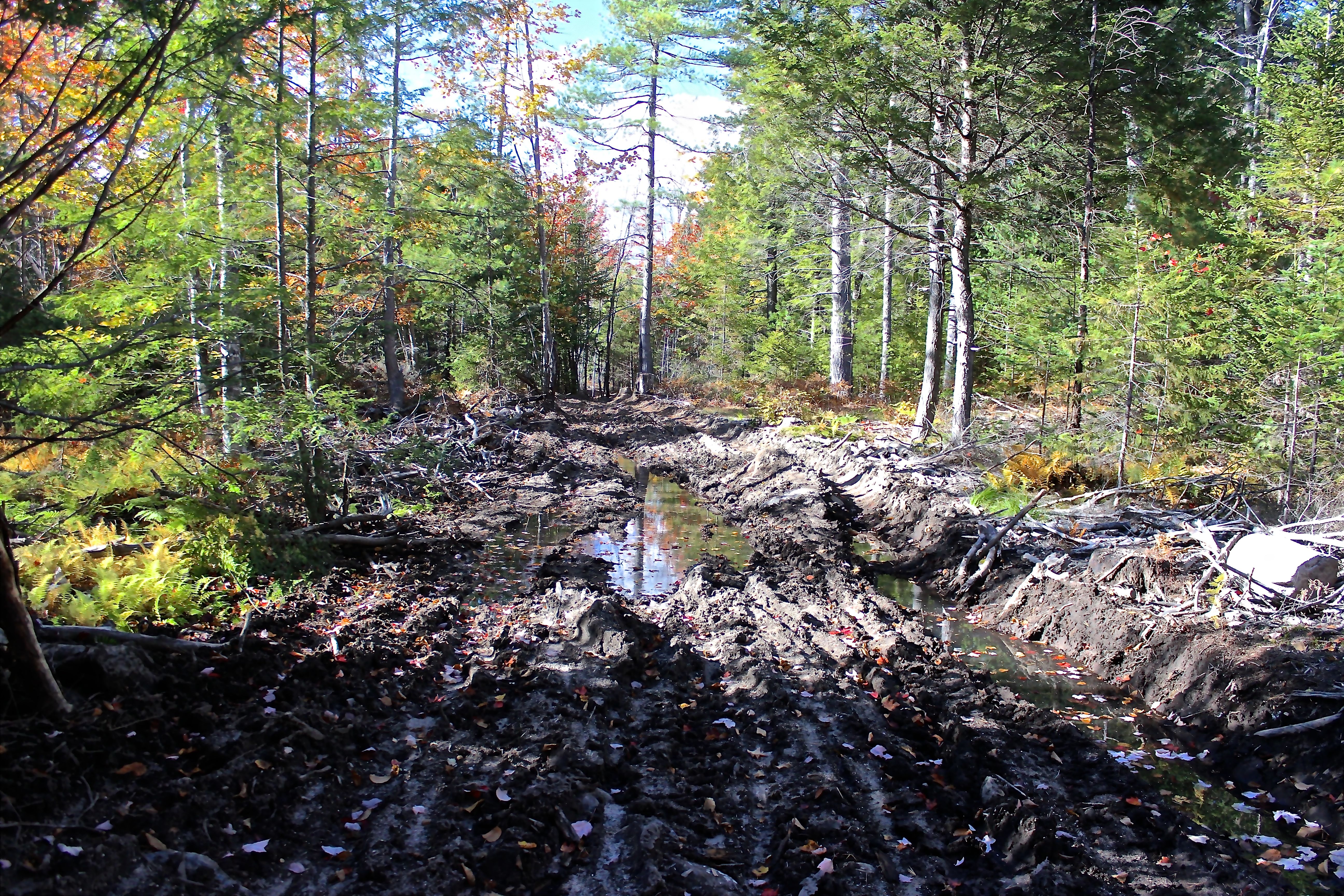
My journey took me down a logging road that has become a super highway in the last two years. I think the operation is finally over.
log landing 1

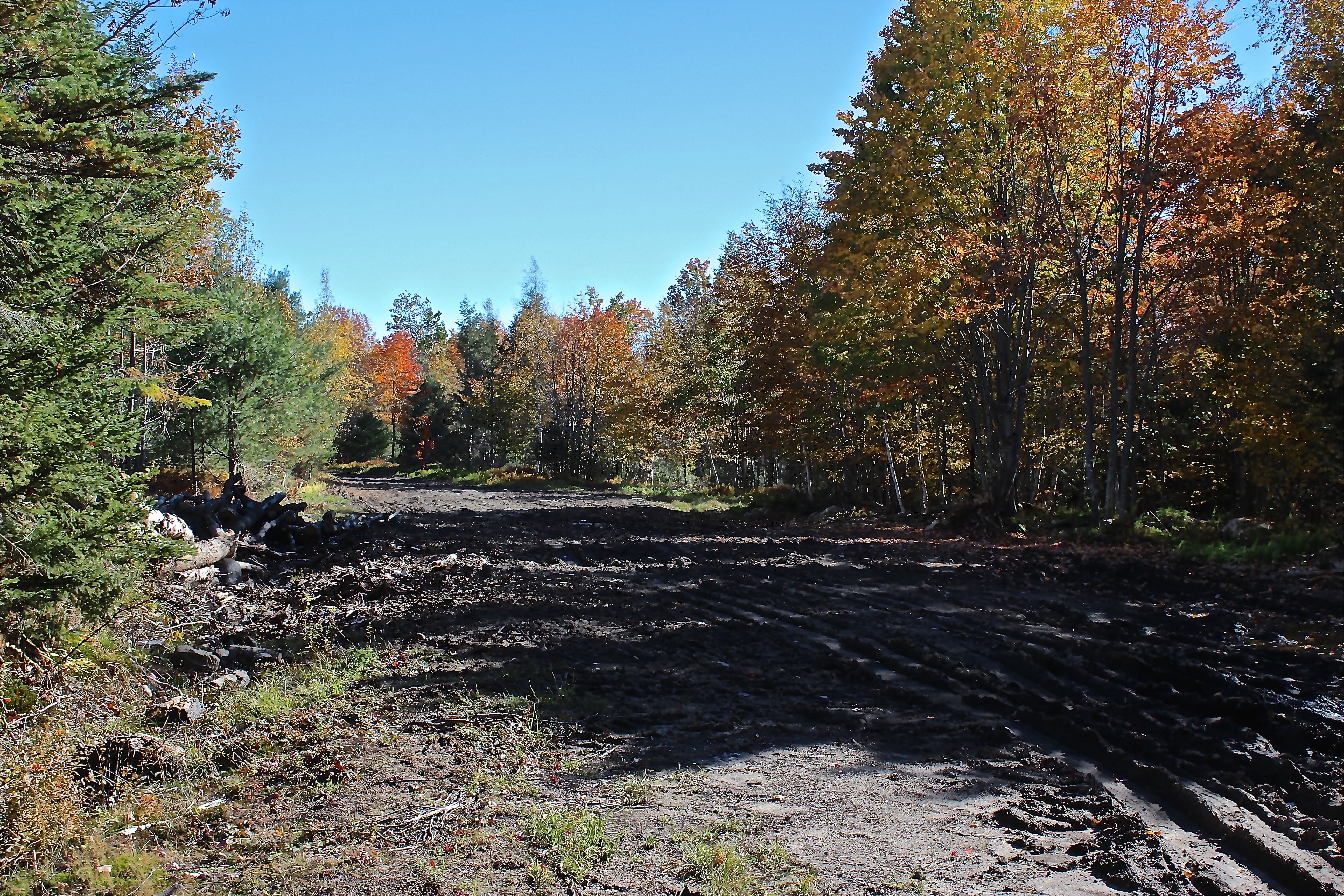
The landing and beyond have been my destination for 23 years. I’ve watched the succession play out in this space. And now it will happen again. I have to look at it as a lesson–watching the species gradually take over this muddy lot. The land was probably last logged about thirty years ago, so I met it in its early stages. Now I will get to see it transform from the get go. And I have to say, it’s one of the cleanest log landings I’ve ever encountered.
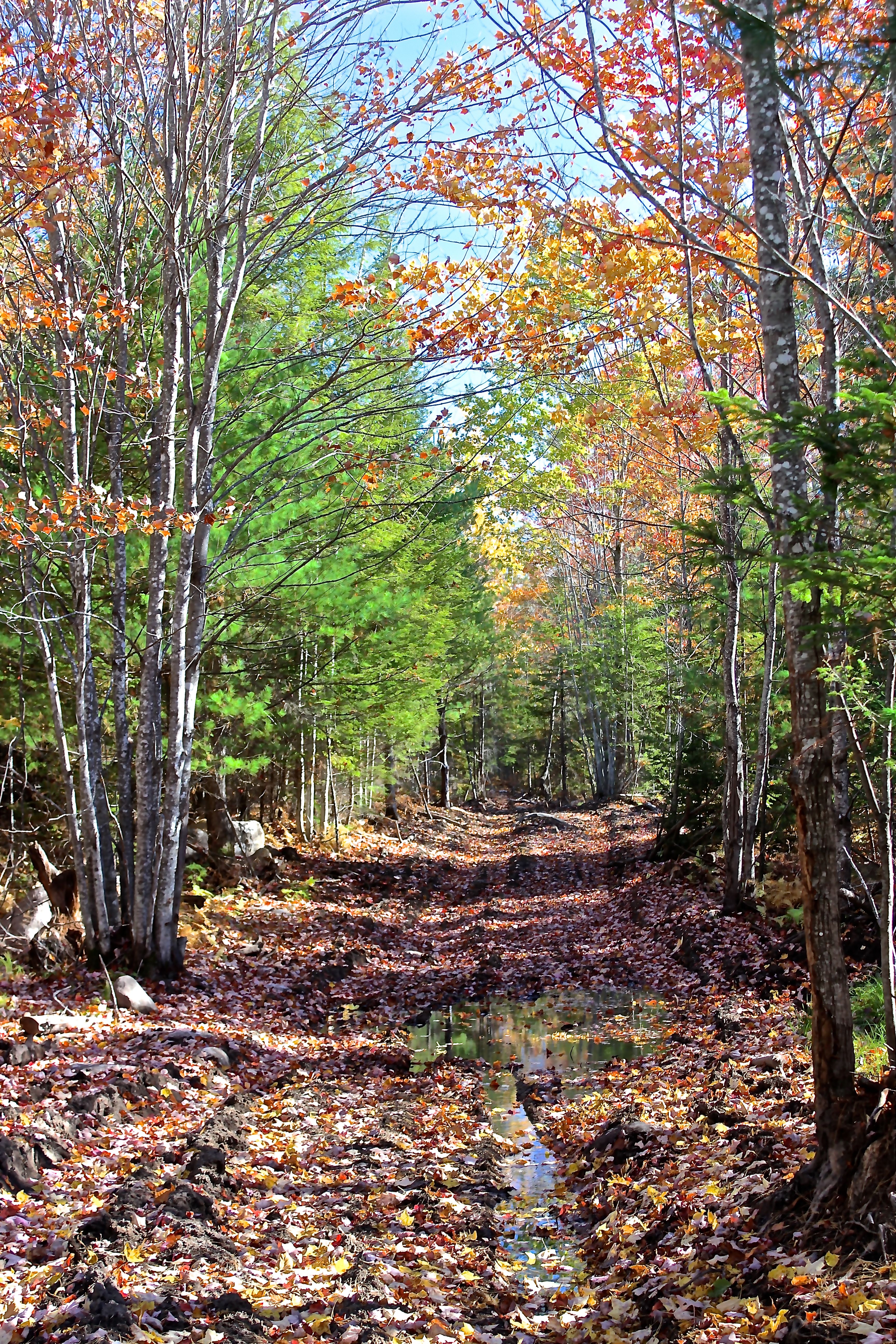
logging road

Considering how wet it is in these woods, I’m impressed with the forester’s work.
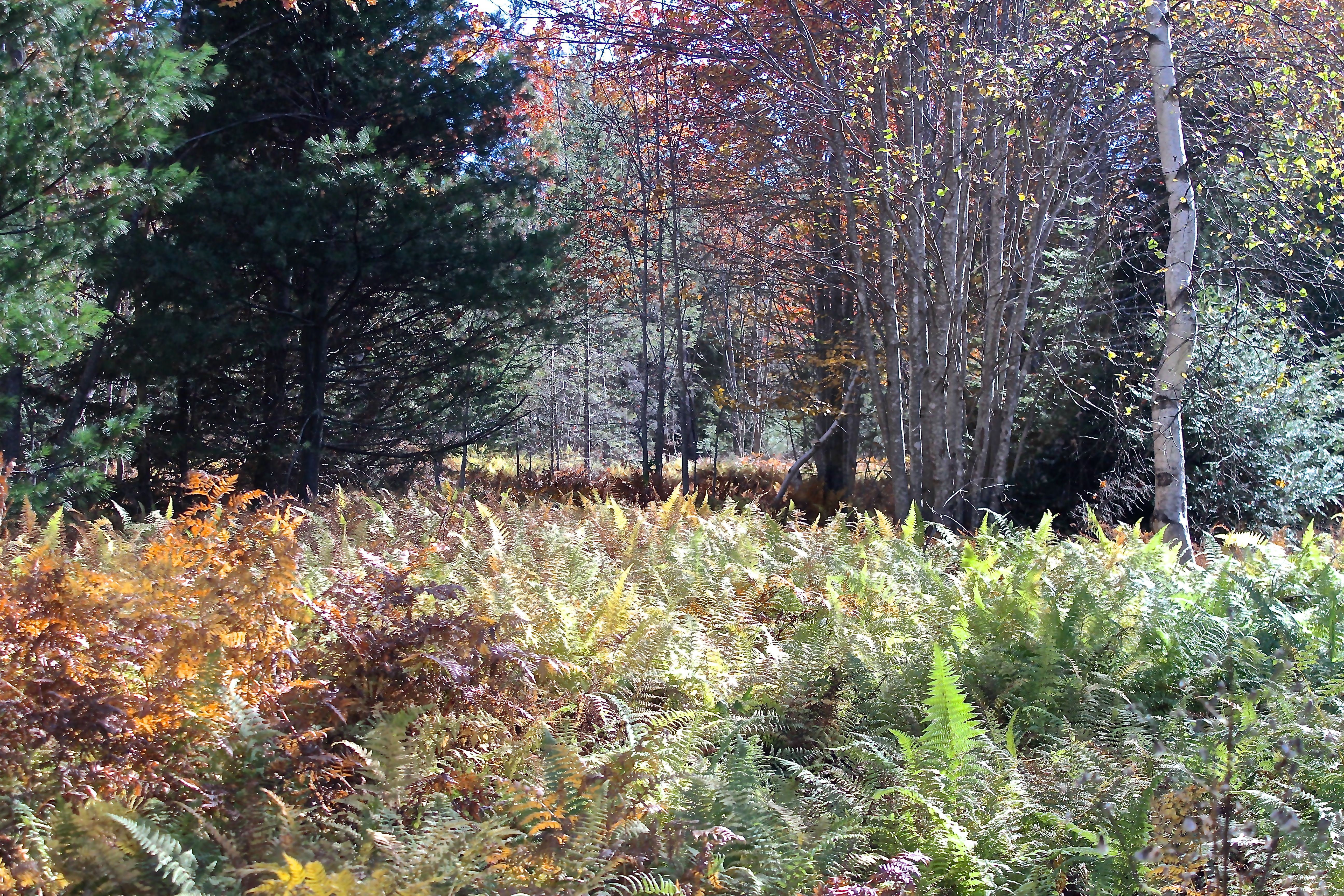
ferns filling in

Ferns already grow in roads created a year ago.

grass filling in logging roads

Grass fills in others.

mud

But mud is predominate and I love mud.
bobcat tracks 1bobcat 2

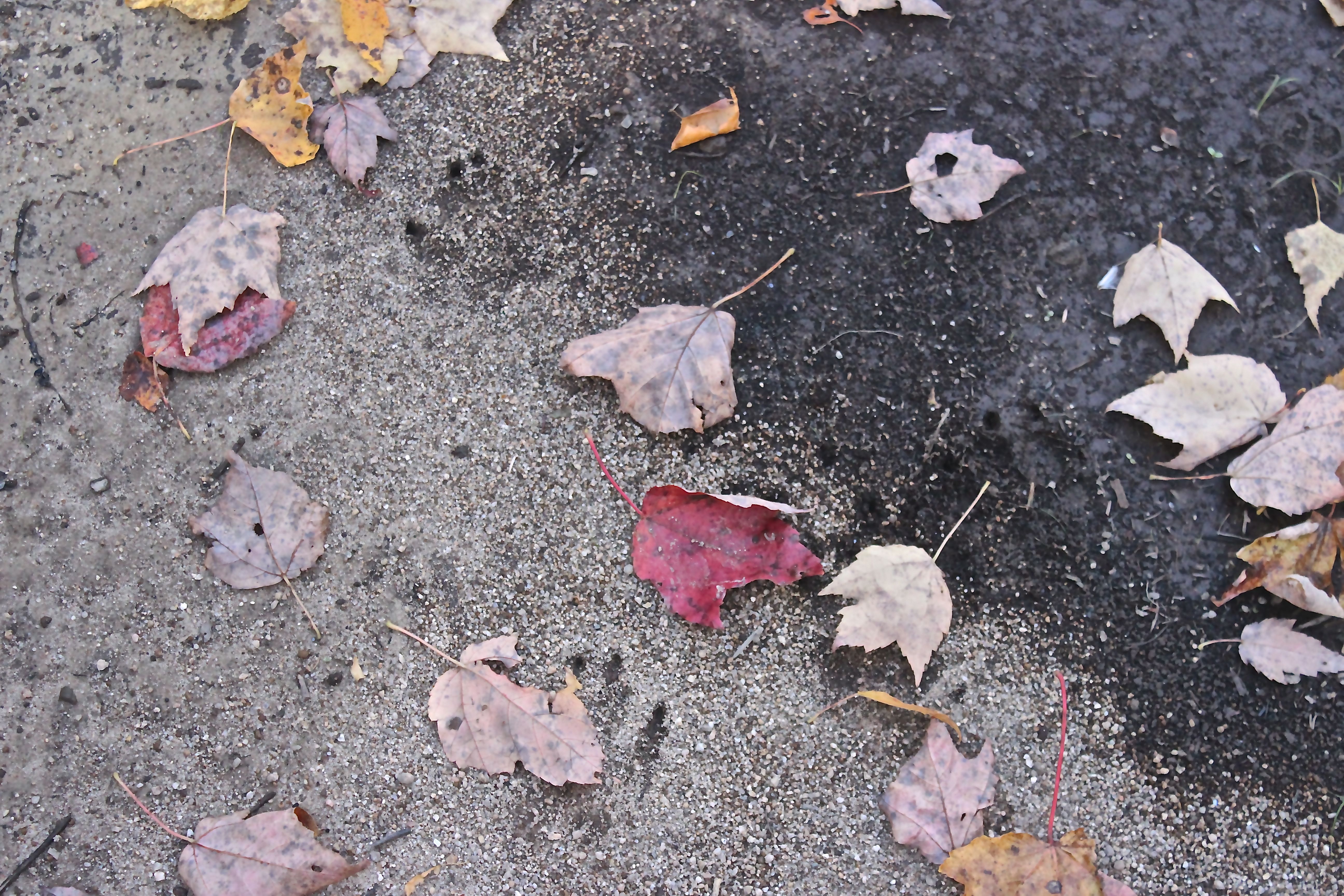
Bobcat tracks were everywhere. It’s been my understanding that bobcats don’t travel trails like coyotes and foxes, but instead cross over them in a corridor that is about 40 feet wide. My observance, however, is that this isn’t always the case. Heck, I’d follow the easier trail as well. I did today. I started to return home via one of the trails I use when on snowshoes, but because this is a wet countryside, the slash left by previous loggers and the most current one makes that trail almost impassable until the snow flies (which may be soon–at least for a few flakes).

bobcat 3bc pattern

I’m curious about the number of tracks. Bobcats are solitary except during breeding season in February-March. Are these youngsters? Do they travel together? Or is this an individual passing through repeatedly?
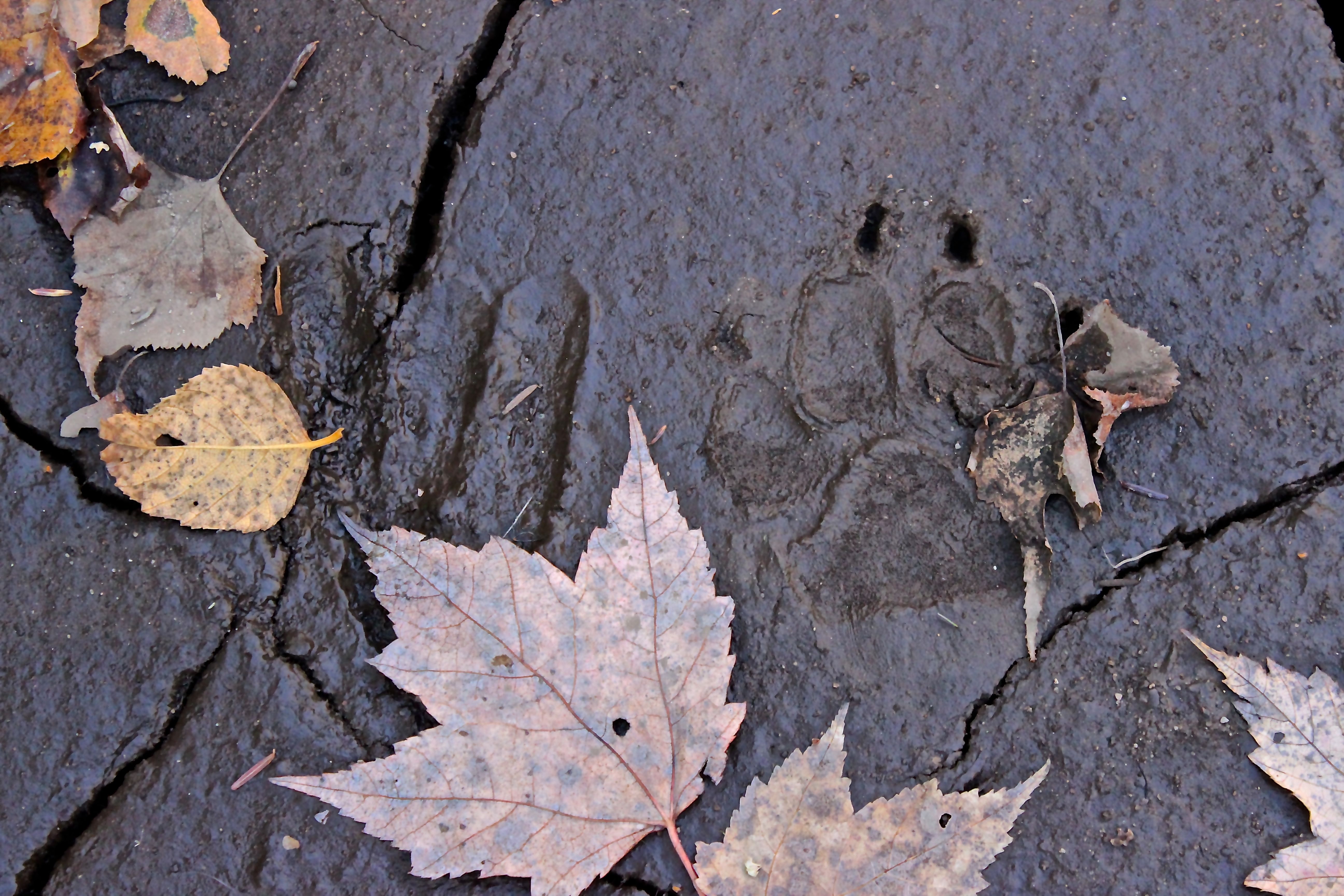
bc and deer-opposite

Deer are among a bobcat’s prey and thus part of the reason this is such fertile hunting grounds. I love the view of both passing through this space in opposite directions. And the turn of the bobcat’s toe nails, which show clearly in the mud even though they are able to retract them. The deer also seemed to have slid into a turn. Though you can’t see my boot prints here, I love that the three of us passed this way side-by-side, at different moments. I looked for them, but am sure they were much more astute about knowing my whereabouts.
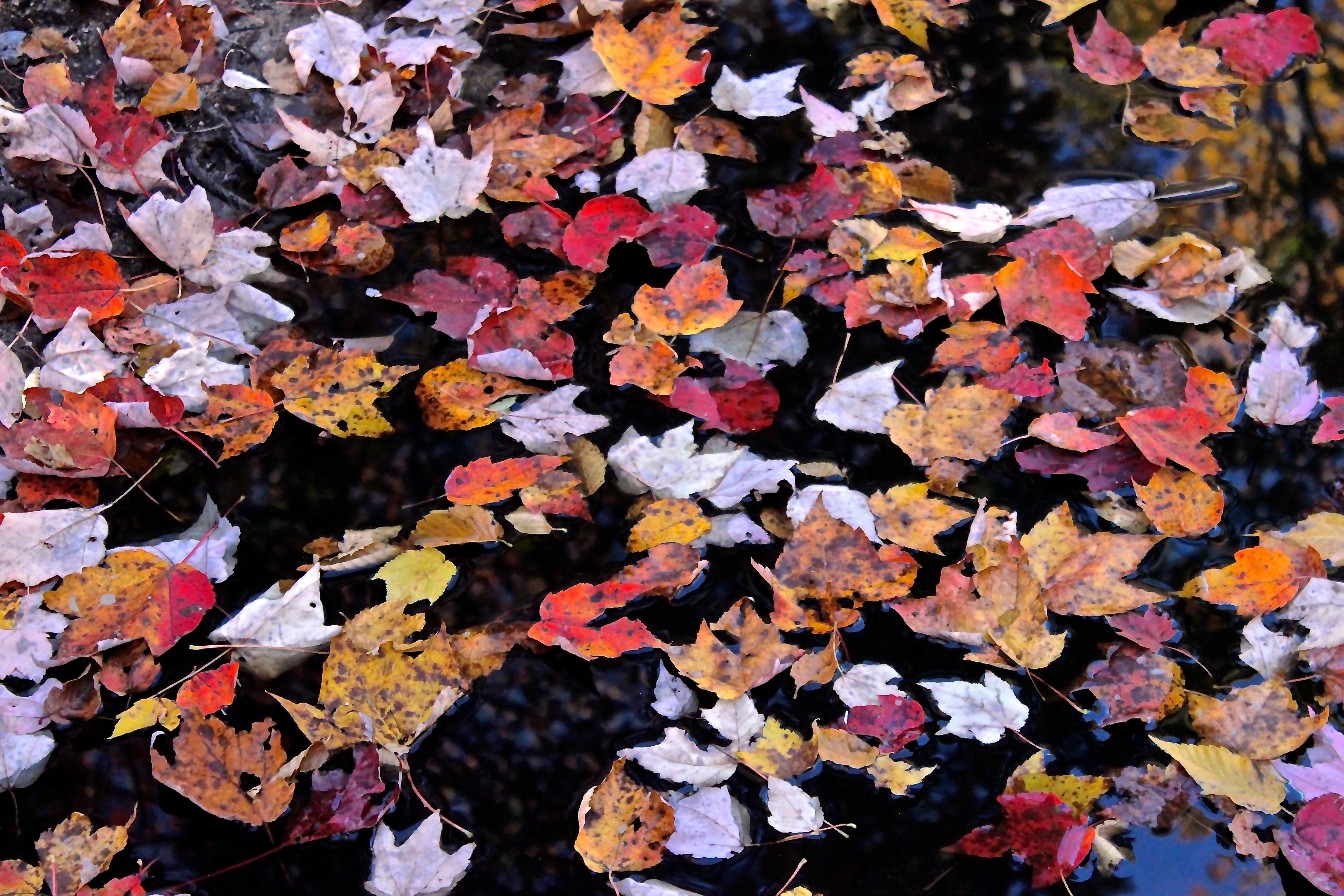
leaves in puddle

Puddles along the way were filled with fallen leaves

leaves in puddle & reflection

and reflections of trees to which they once clung.

old squirrel drey

Back on our land, I found an old squirrel drey that had fallen from quite high in a tree.
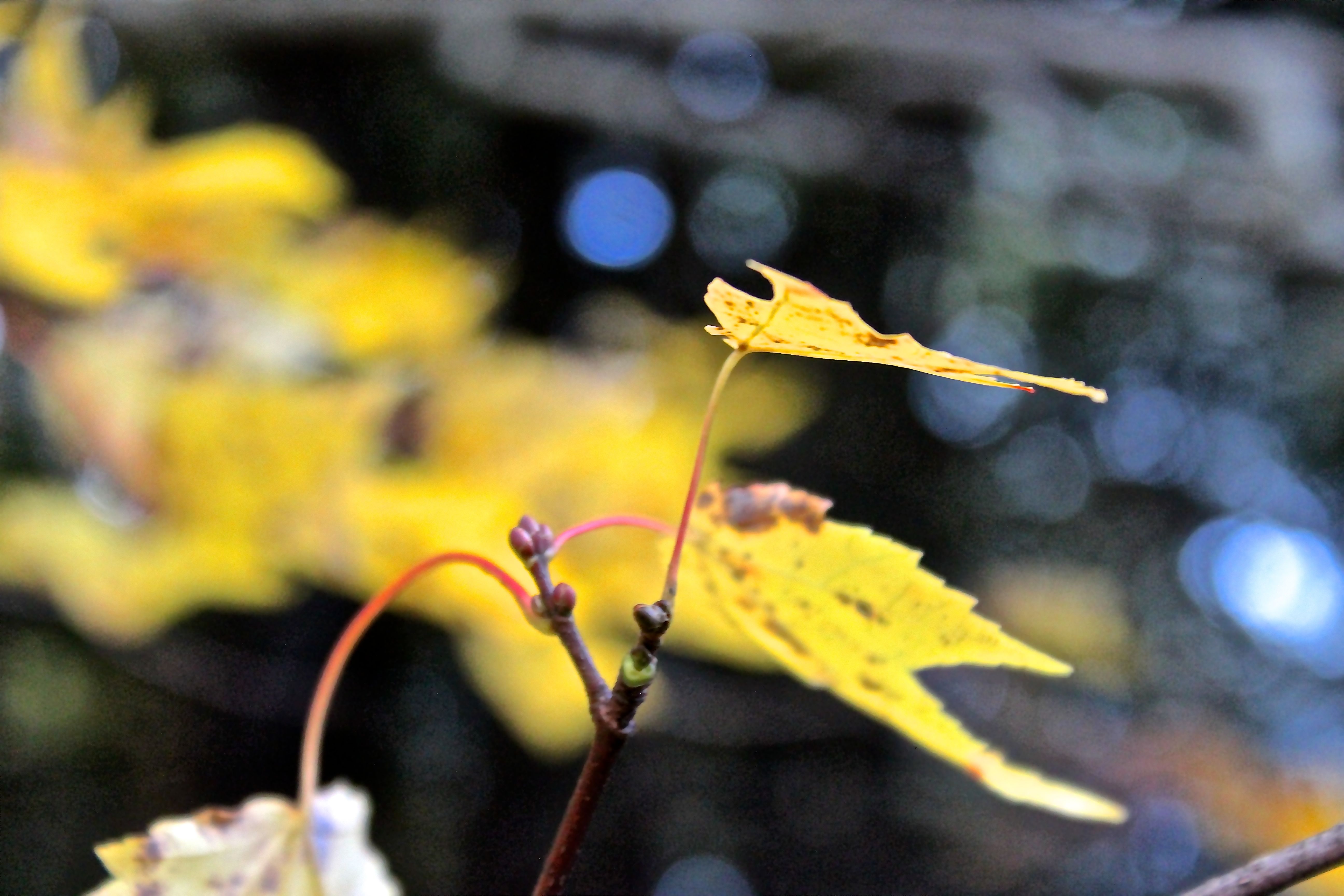
red maple leaf scar

And noted the red maple twigs–new buds already offering hope for next year, leaves still hanging on, and a bright green leaf scar from one that fell off recently.
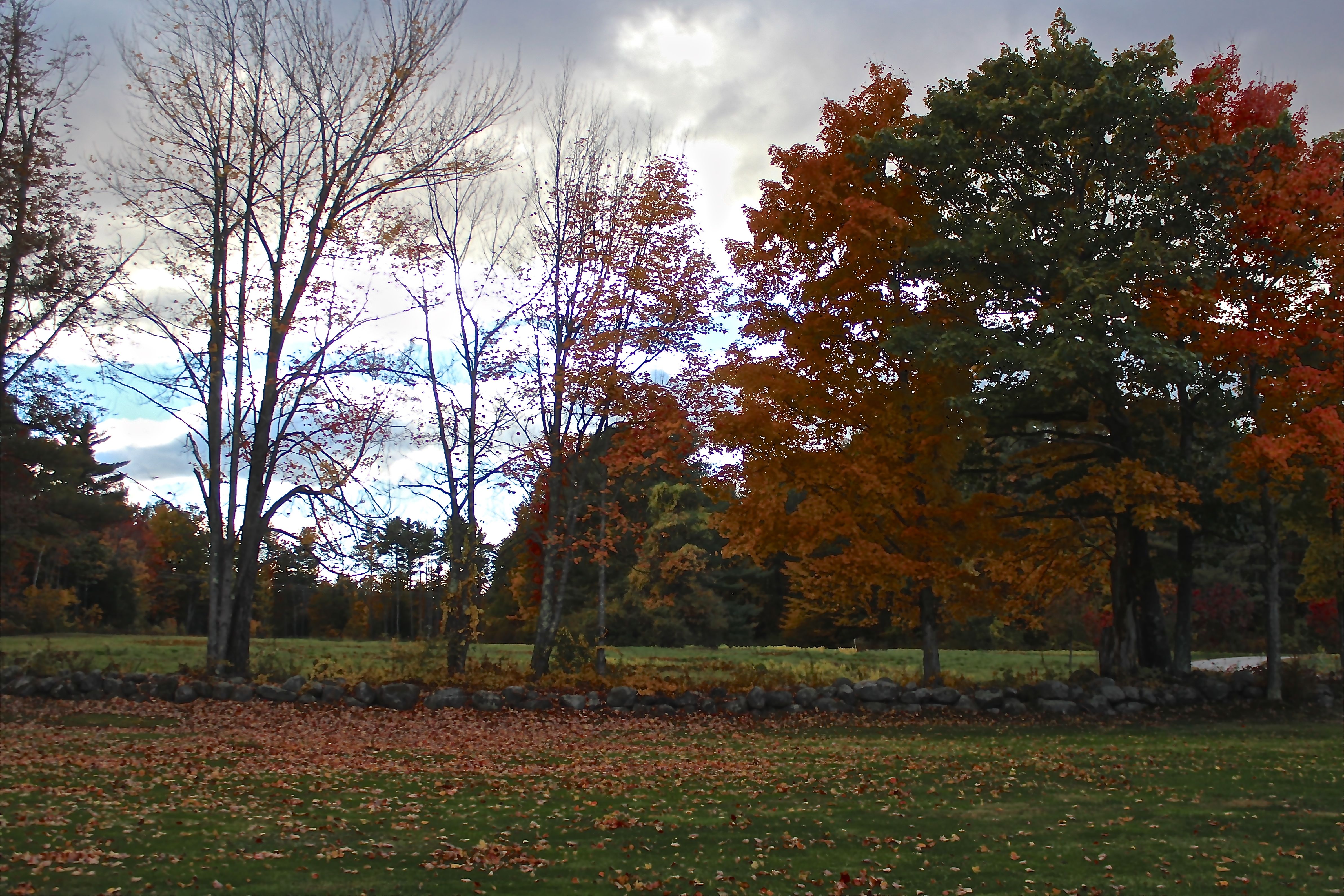
fewer leaves

At the end of the day the leaf pile grows. I guess we can only hang on to the old for so long.
Mondate with a Quest

My guy and I set off on a quest this morning–not a long and arduous search, but a search none-the-less.

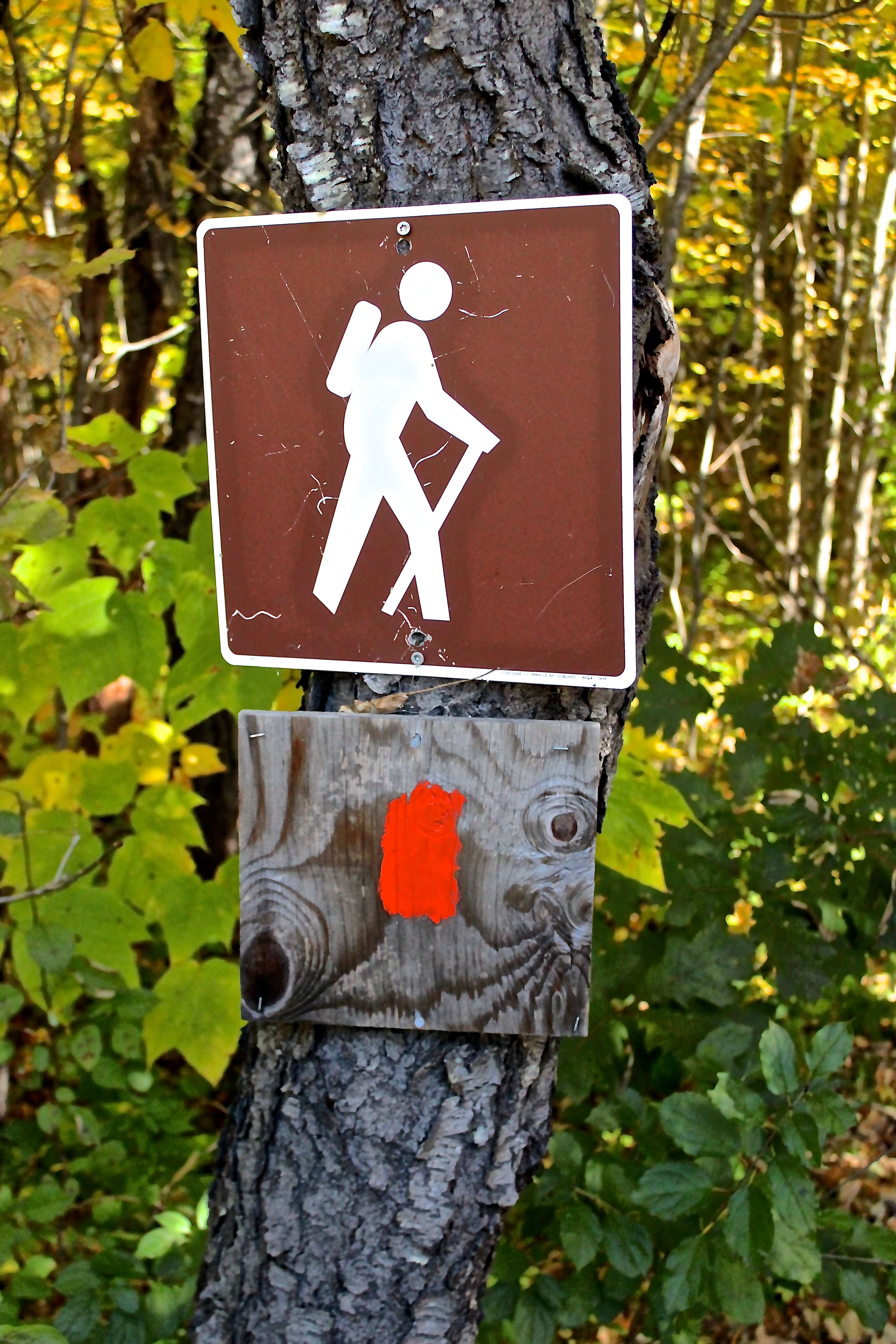
trail sign

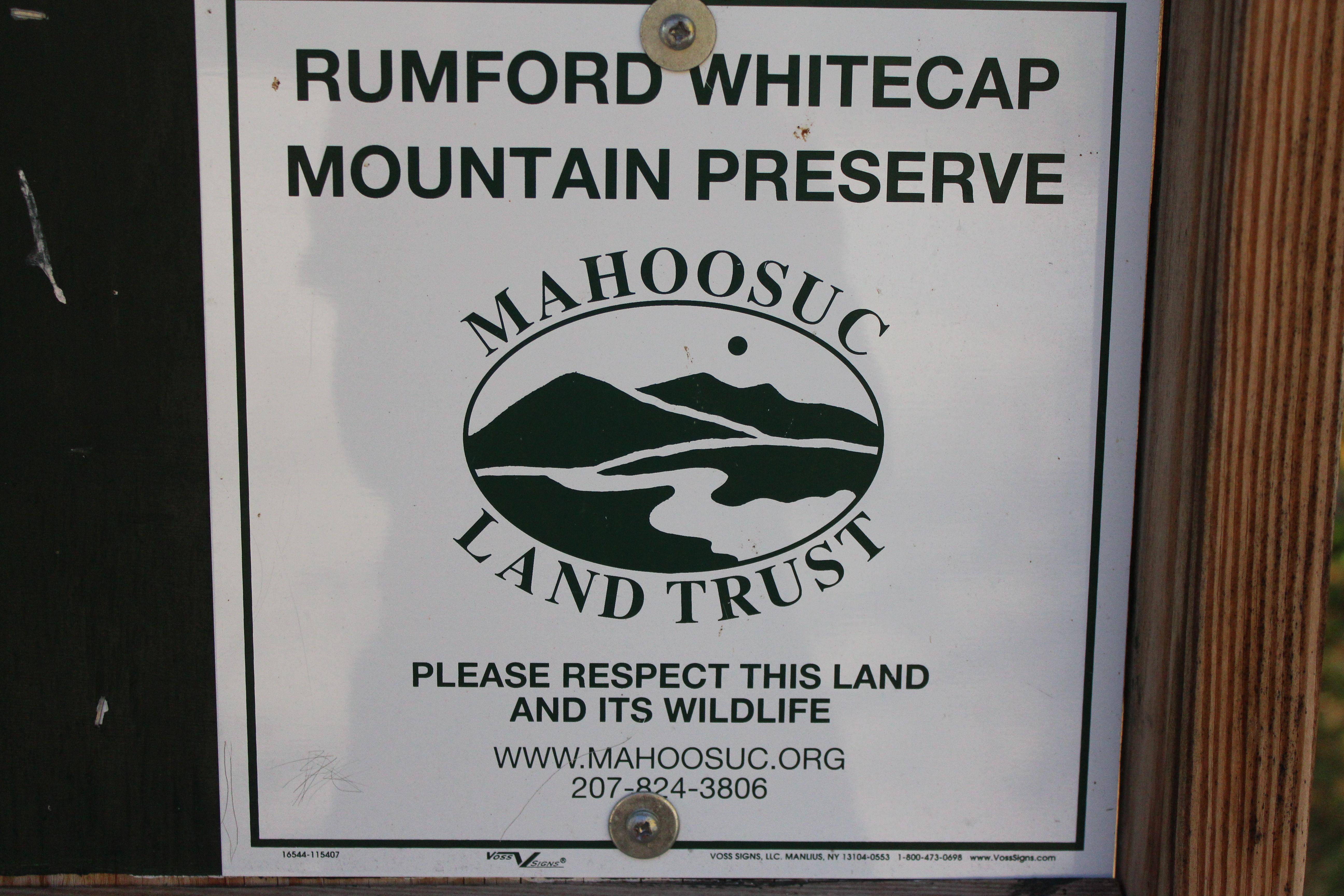
The setting for our quest–Rumford Whitecap made possible by the Mahoosuc Land Trust.

selfie hiker

I couldn’t resist taking a selfie at the trailhead.

red maples 1

Though this is a popular trail during blueberry season, we never think of it until fall.

red maple on fire

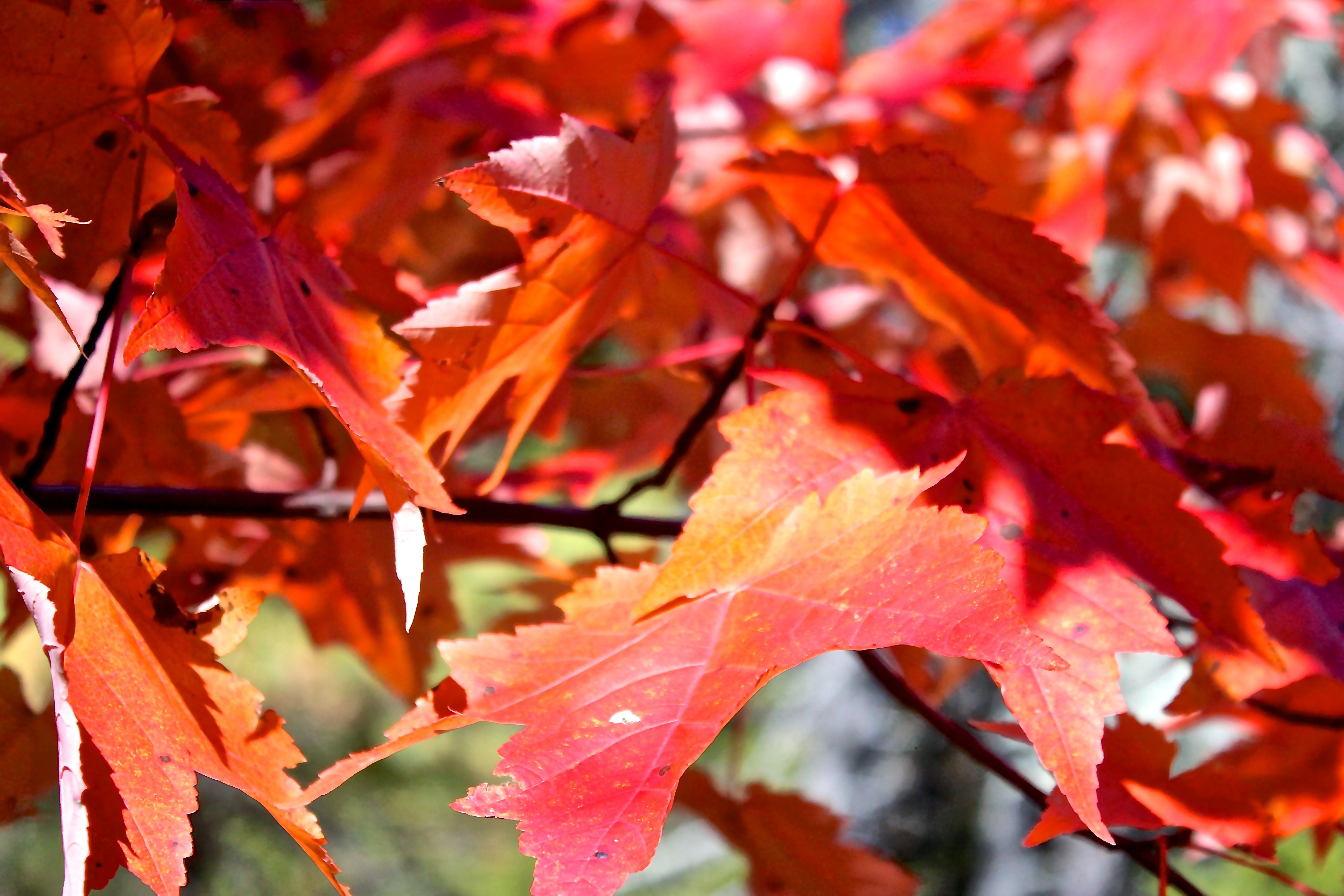
And this fall is particularly spectacular. The red maples are on fire everywhere we turn.

color quest in water

Our initial quest was two-fold: 1. to hike to the summit, and 2. to absorb as much color into our mind’s eye as we could. The palette will change soon ’round these parts and though we love winter, we relish the dance of color that seems to last only for a fleeting moment.

wet trail

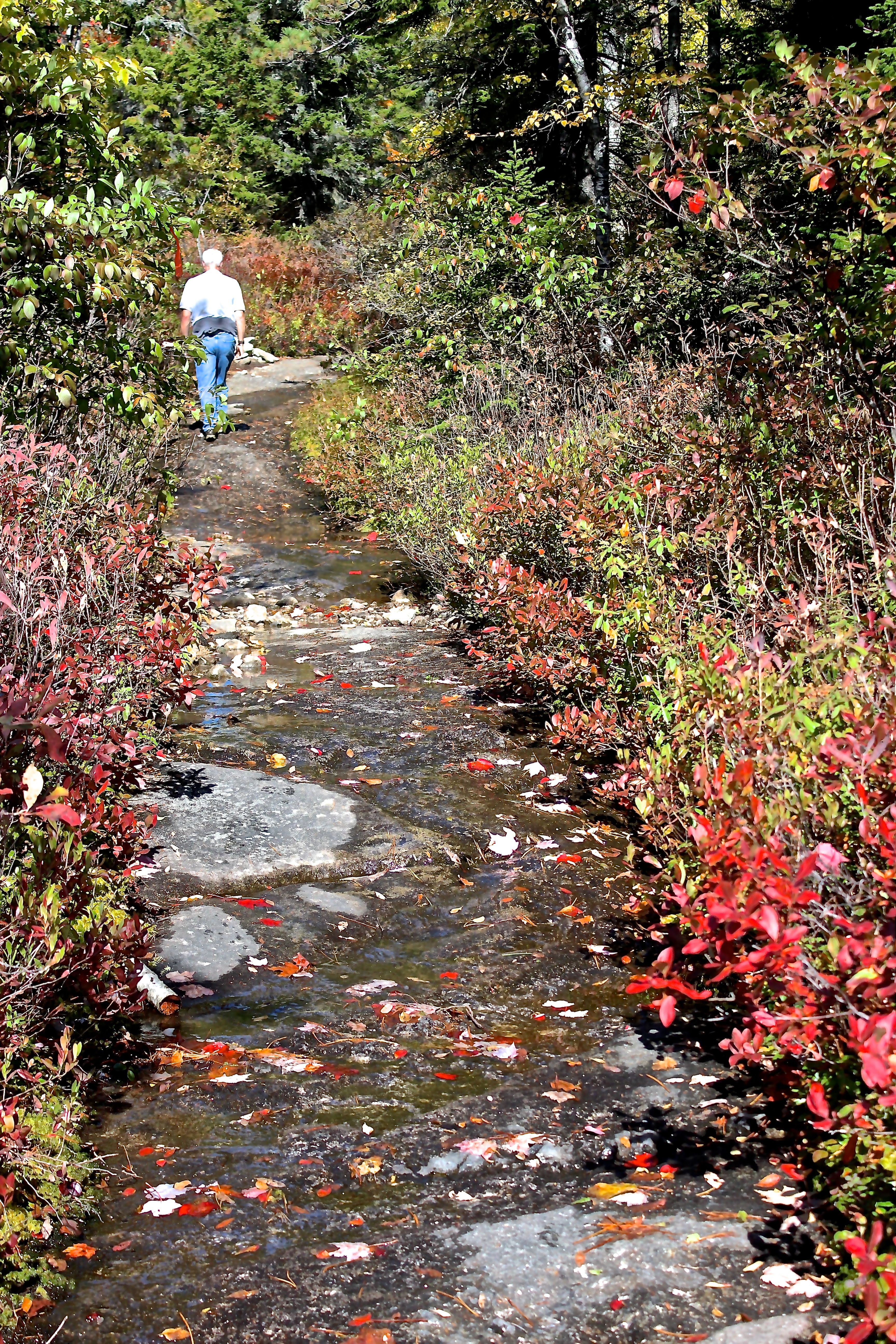
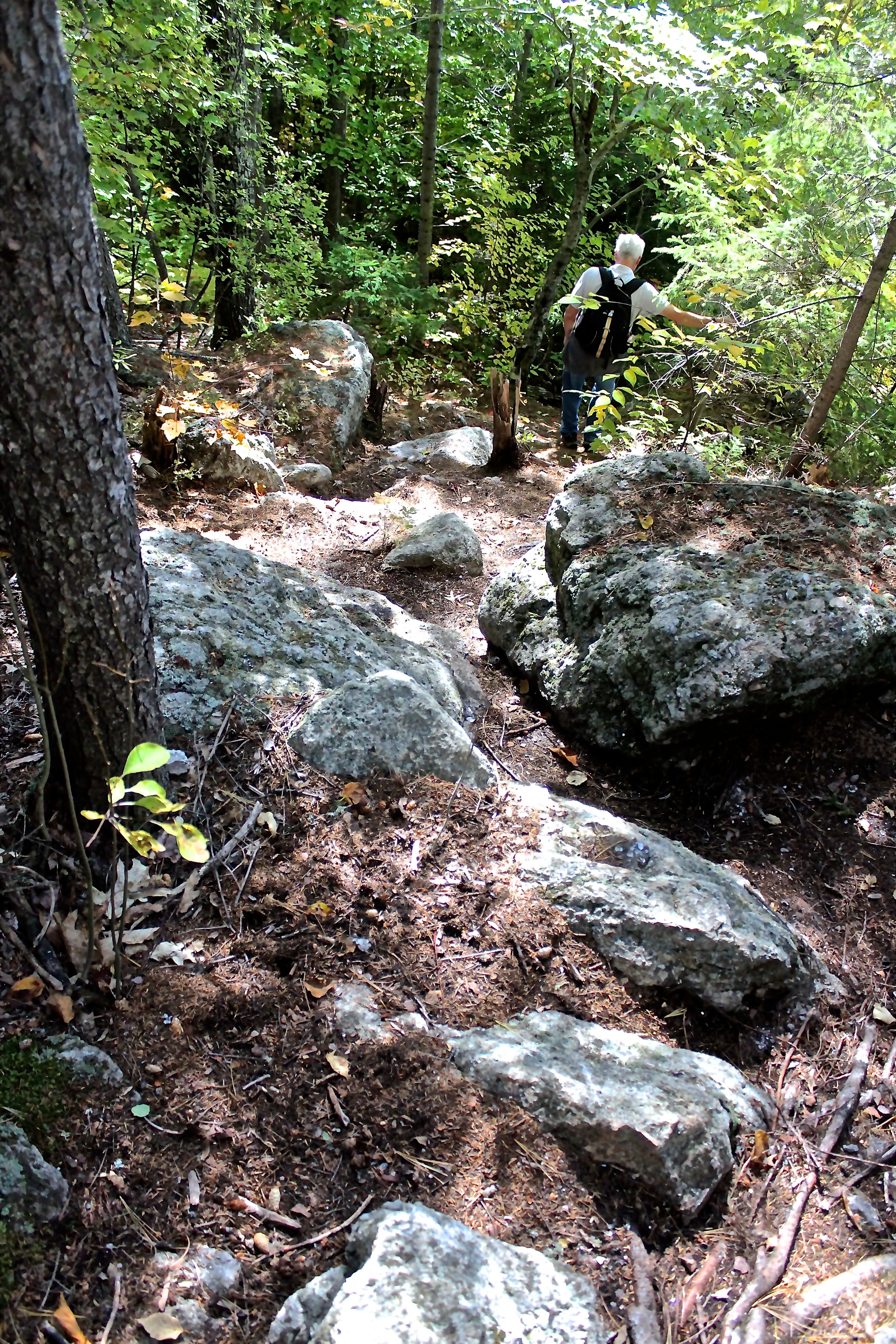
Aptly known as the red/orange trail, we ascended the mountain, ever mindful of the water on the rocks. Along the way, we recalled hikes along this same trail much later in the season, when crampons were a necessity.

whitecap:black sign

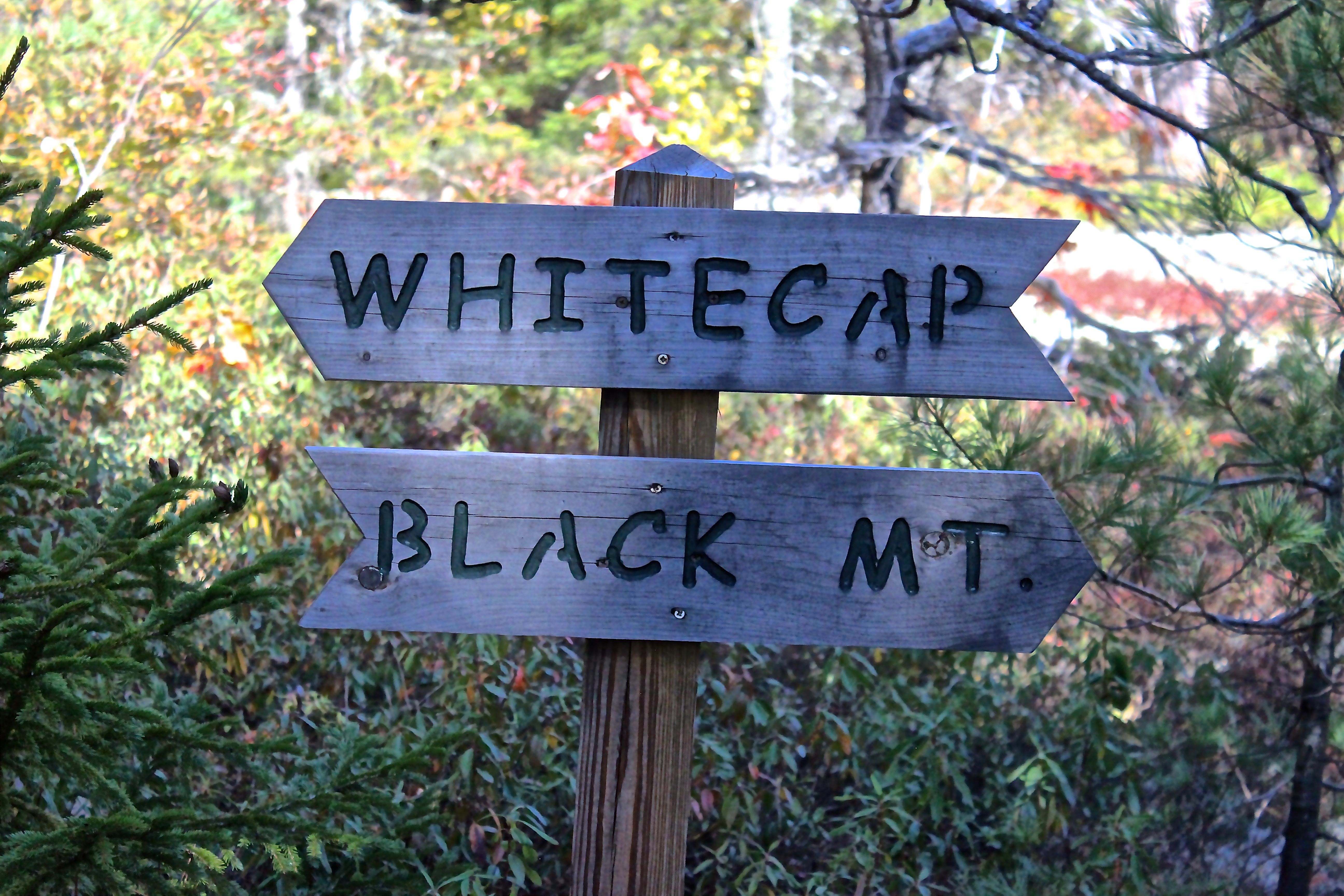
Though an option presented itself, we stuck to our quest for the summit of Whitecap. We’re saving Black Mountain for another day.

color quest

color quest tapestry

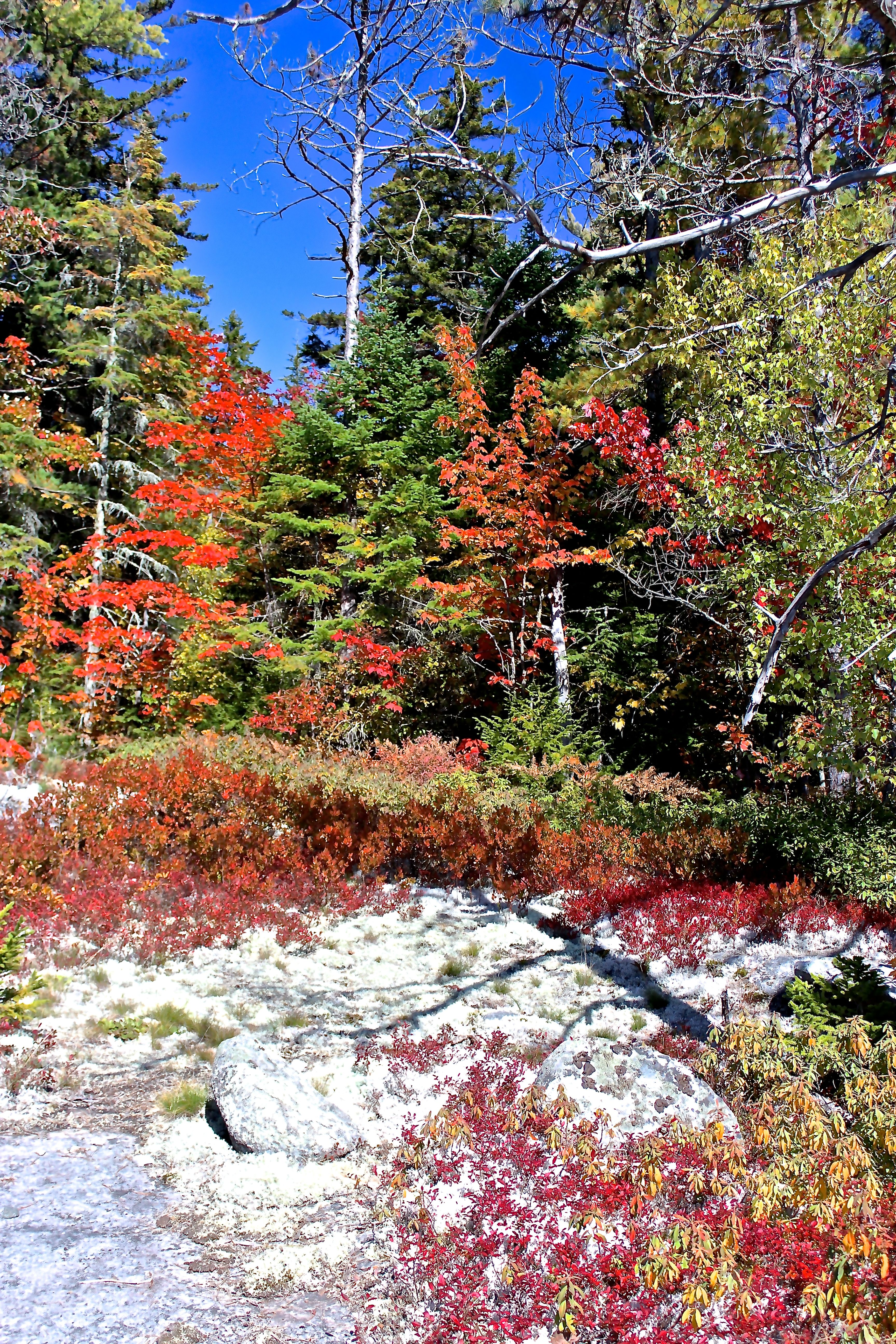
As we moved out of the woods and onto the bald ledges, the tapestry revealed itself.

color quest 2

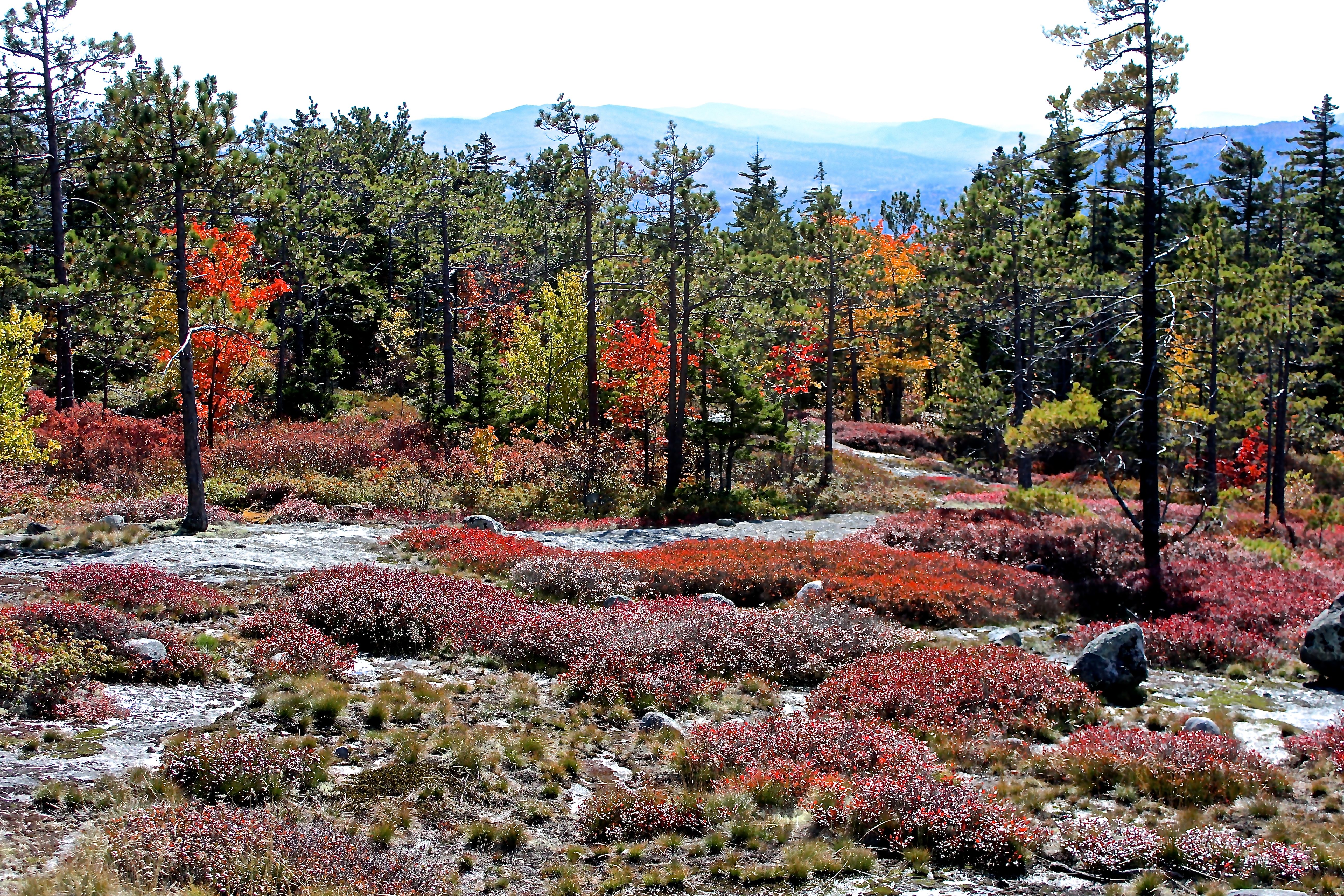
Splashes of blueberry plants and sheep laurel grace the granite landscape.

color quest 3

No matter where we turned, color begged to be captured.

getting closer to the summit

The whitecap at the top of this photo is not the summit, but our destination was getting closer with each footstep.

caterpillar quest

We weren’t the only ones on a quest. I’m not sure of the species, but this lone caterpillar moved quickly across the bald face.

color quest 4

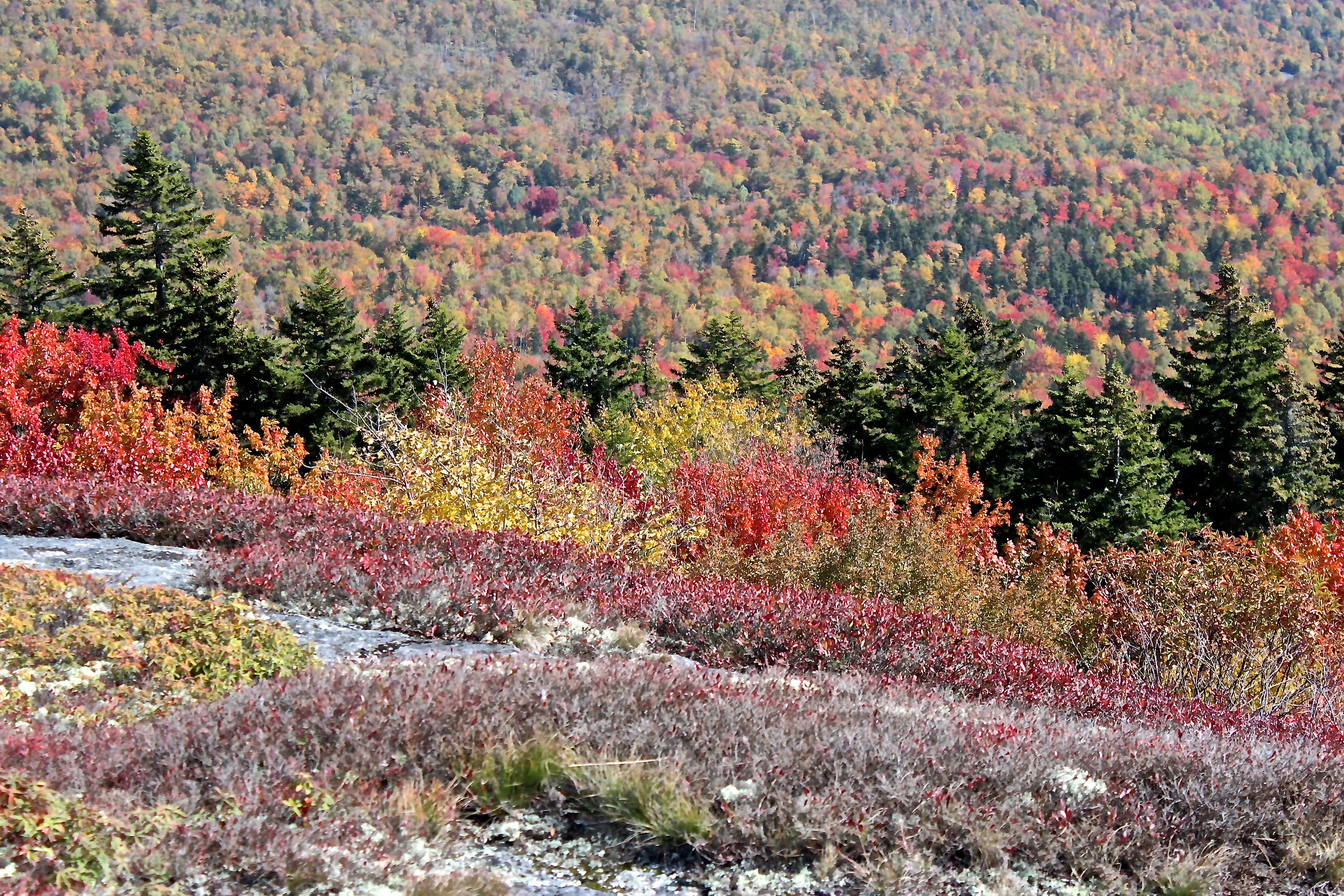
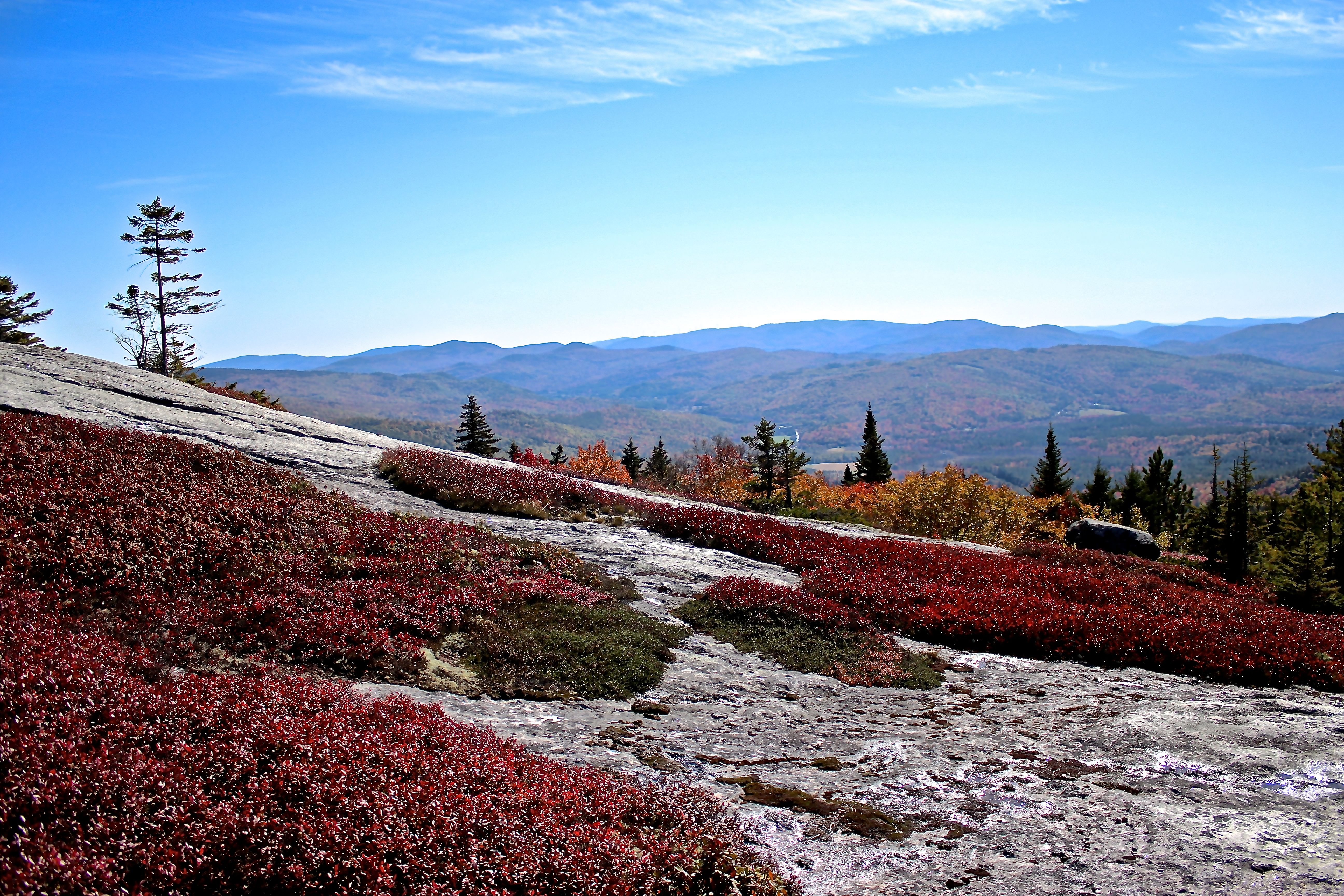
Finally, we reached the top, where the display was over the top.

geo survey

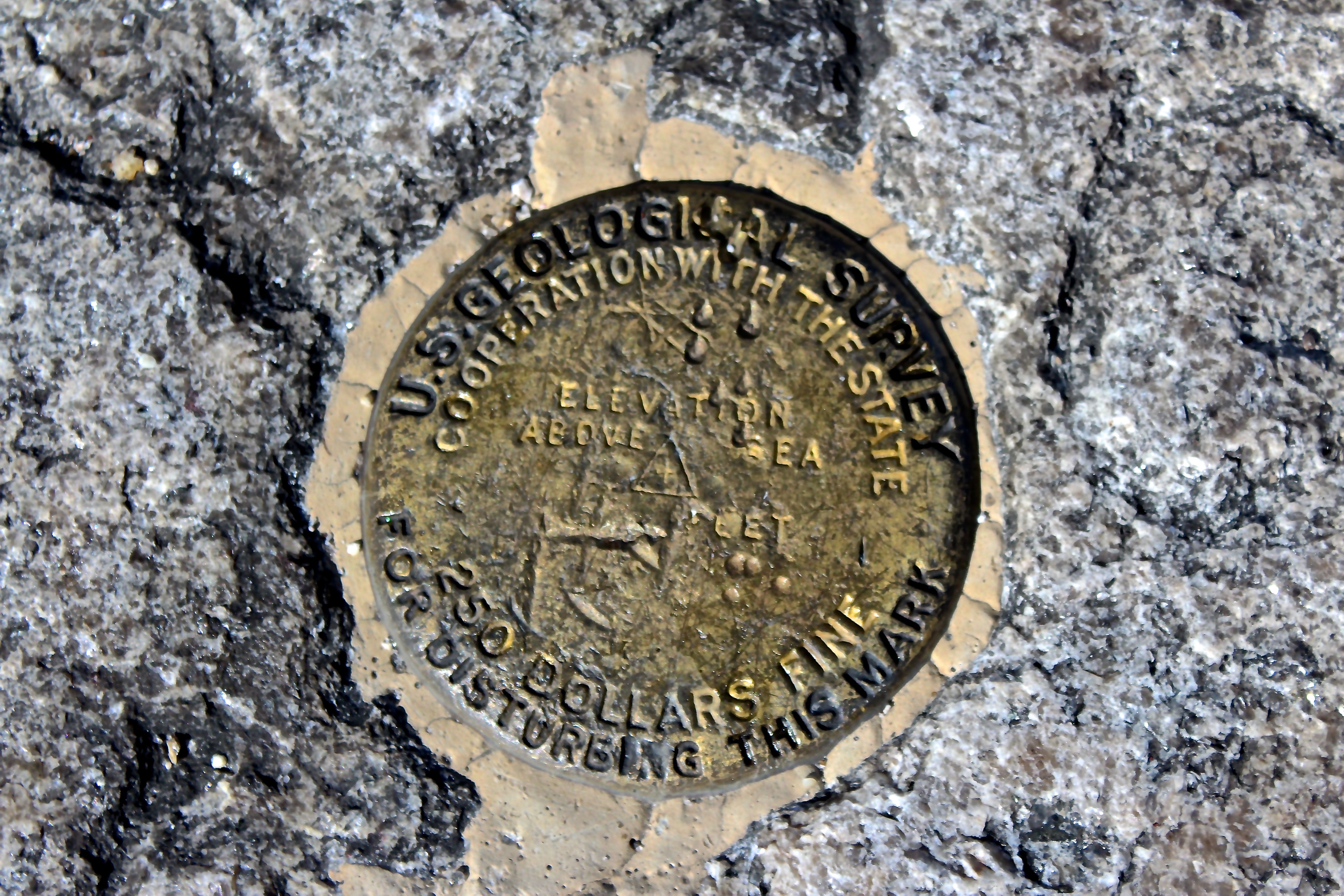
It’s always fun to find the survey monument–bronze disks used by surveyors since 1879 for mapping purposes.

Andover 2

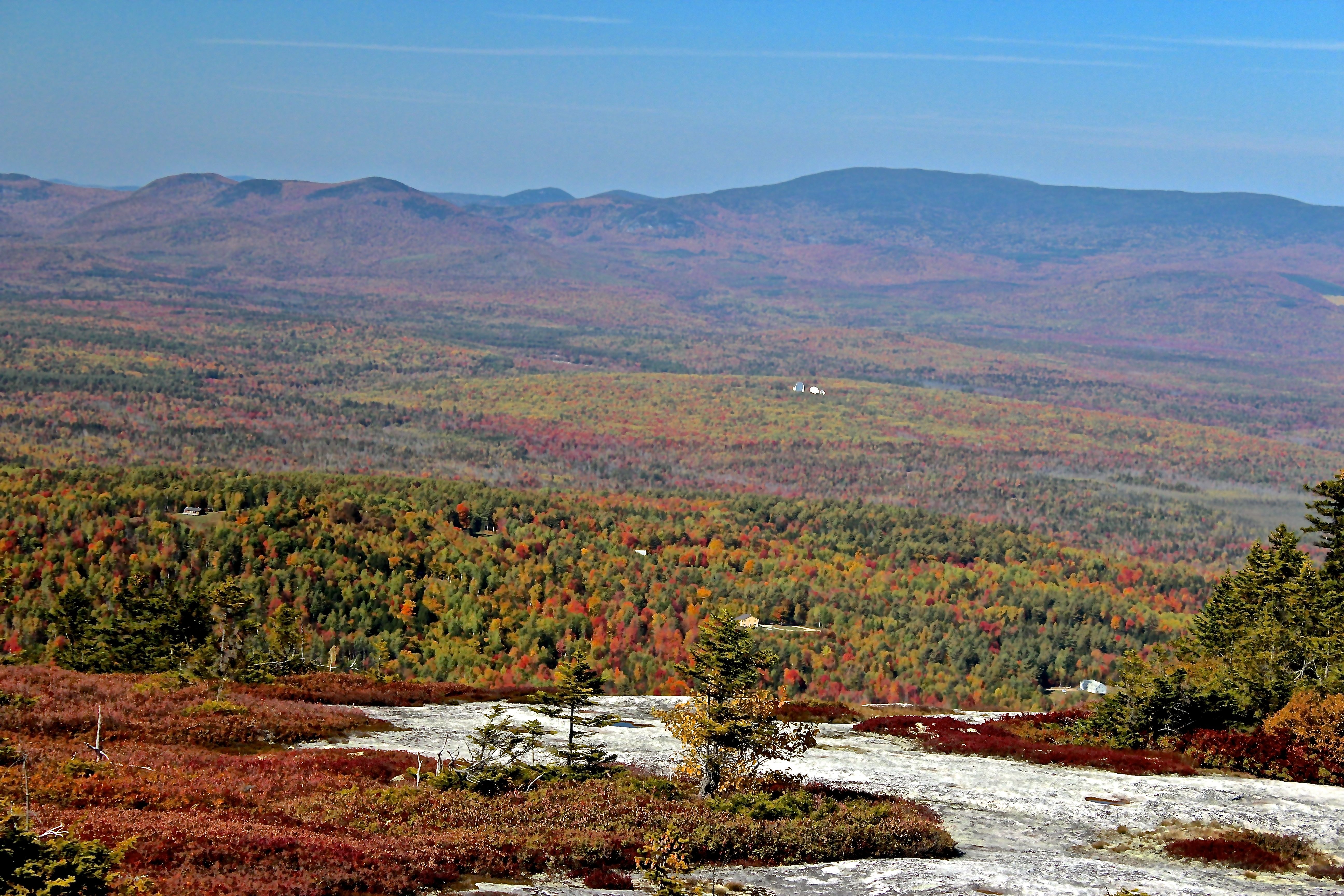
In the middle of this photo are the larger-than-life satellite dishes located in Andover. When I was a kid and we vacationed in Maine, our parents took us to the Andover Earth Station. It was one of the first satellite stations in the USA, built in 1961 with the Telstar 1 satellite–an experimental link between North America and Europe. The Telstar Bubble, which housed the immense horn antenna, was taken down in the 1990s.

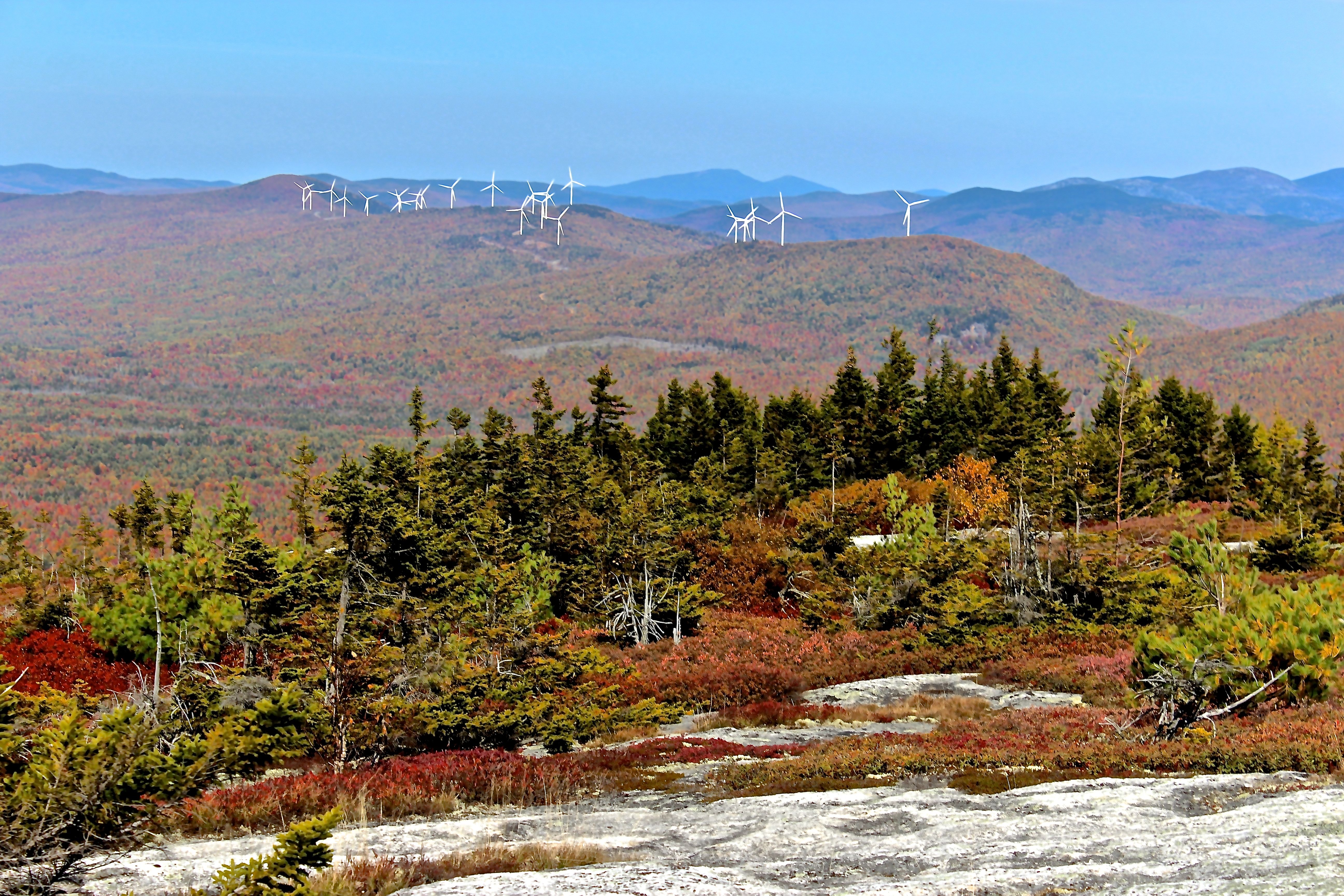
wind turbines

For the past few years, these wind turbines have been visible. Today, we noticed two other ridges decorated with turbines. I’m of two minds on this topic–the old wishy washy self that I am. In Canada,  wind turbines are located across the landscape and even as we hiked the Cape Mabou trails on Cape Breton Island last week, we stood below one and listened to its airplane engine-like sound, but we didn’t hear it until we were quite close. I actually think they are quite beautiful as they turn–ballet of a sort.

view toward Rumford

In the midst of the mountains, a peek at Rumford.

my guy napping

lunch exploration

After our usual PB&J, I explored further along the ridge while my guy napped. You might be able to spot him in the center of the top photo. Of course, he did run this morning before hiking–he’s training for the Moose Pond Half Marathon, a race that raises $$$ for the Maine Adaptive Ski Program at Shawnee Peak in Bridgton.

summit wait

It was a short nap–given that it was on a bed of rock.

color quest descent 2

We hiked down the Starr trail, where our color quest found further fulfillment.

color quest descent 3

color quest descent

Simply stunning.

climbing down 2

As we descended, we switched from one community to another.

changed community

Sometimes, it was the bracken fern that lit the way.

color quest descent golden

Other times, the sugar and striped maples cast a bright light.

prints

We took only photos and memories, and left only footprints–mine on the left, his on the right.

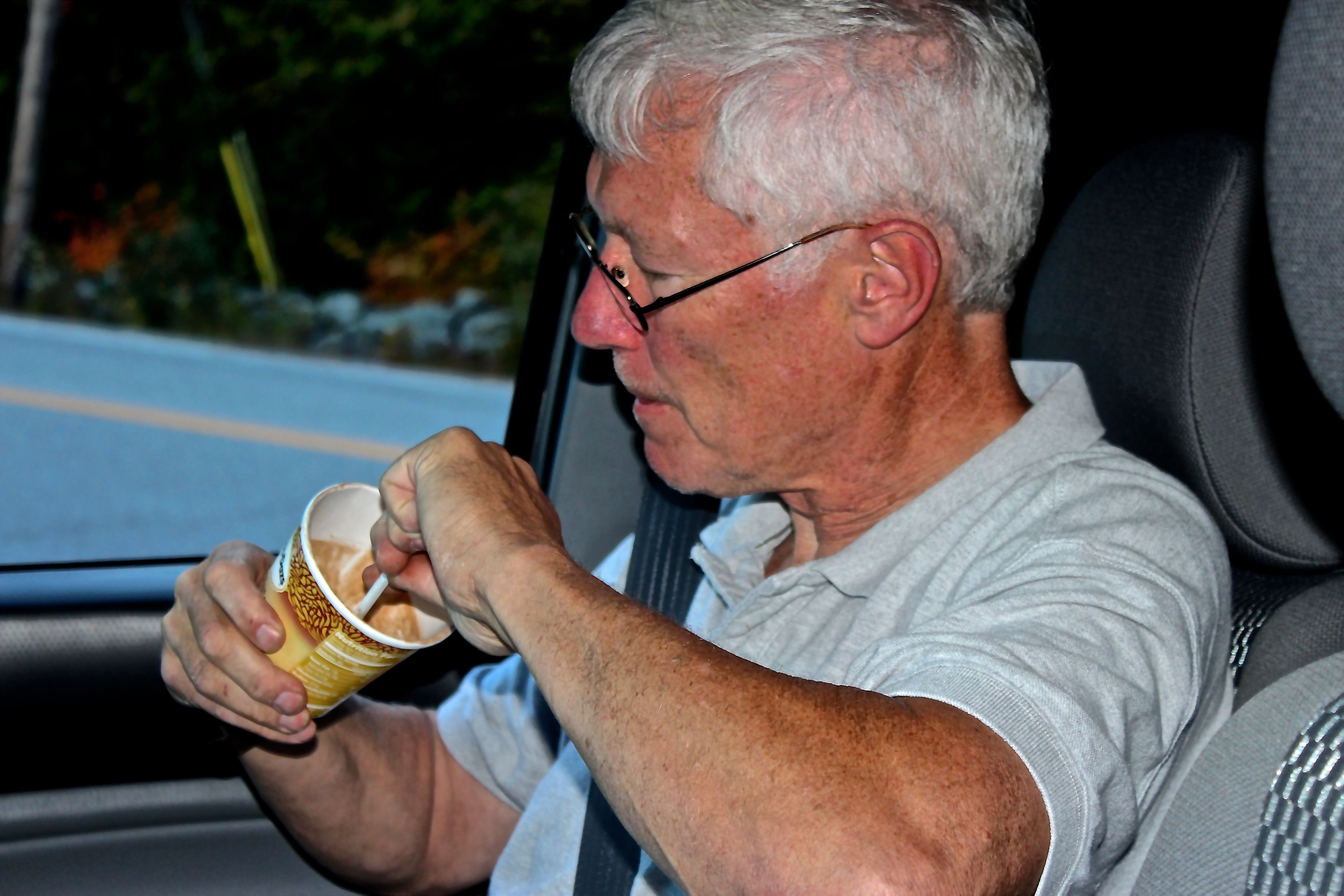
Before our Mondate ended, we decided an ice cream was in order. We hike so we can eat. This turned out to be the more arduous part of our quest–hiking 6 or so miles was a cinch in hindsight. A drive through Bethel revealed no ice cream shops. We continued on Route 2 for a bit and found one hopeful spot, but it had closed an hour earlier. My mouth was watering for a peppermint stick hot fudge sundae–with whipped cream and a cherry on top. Half an hour later, with my tongue hanging out, we stopped at Melby’s in North Waterford. After purchasing a pint of Hagen Daz chocolate (not a sundae, but sometimes you just have to make do), we turned and my dear friend Ursula Duve appeared before our eyes. She was on her own ice cream quest. I had the pleasure of introducing her to my guy and he instantly fell in love. As we chatted about our outdoor adventures, Ursula gave us this advice, “For as long as you can do it, do it.” Well, maybe those weren’t her exact words–after all, I did have ice cream on my brain–but they’re mighty close to  it. She and her husband have hiked many more trails than we’ll ever conquer, but we’re thankful for the opportunity to wander together as often as we can–especially on a Mondate.

ice cream quest

We finished that pint in record time. It was arduous, but someone or two had to do  it.

selfie 1 smiley face

A Mondate with  quest or two or three–always brings a smile to our faces.

Embracing Splashes of Color

Walk in the woods any day of the year and you’ll find color, but nothing beats a day like today.

morning light red maple swamp

Early this morning, I waited at the Holt Pond Preserve parking lot for Jon Evans of Loon Echo Land Trust. Well, I didn’t actually wait. I walked off the trail, taking in the morning sunlight on the red maple swamp–knowing we’d return to it later. By the time I arrived back at the parking lot, Jon was waiting for me–we hitched a ride to Bald Pate, where today’s adventure began.

Jon, LELT

Together, we lead eighteen people, including six Boy Scouts from Troop 149, to the summit of Bald Pate and back down, where we connected with the Town Farm Trail and continued on to Holt Pond.

view from Bald Pate

As we climbed up Bald Pate, we paused to take in the western view. This week, the colors have popped.

Peabody Pond & Sebago Lake

The fall foliage was delayed because of September’s warm temperatures. Not only does less daylight trigger the chemical change in tree leaves, but a drop in temperature is also important. That being said, it doesn’t have to be cold enough to create a frosty coating.
splash of color

 The decreasing daylight hours and temps below 45˚ at night are signals to the leaf that it is time to shut down its food-making factory. The cooler night temps trap sugars made during the day, preventing them from moving to the tree. Once trapped, the sugars form the red pigment called anthocyanin.
Muddy River

As we witnessed along the Muddy River at Holt Pond, when the chlorophyll begins to break down, the green color disappears. This allows the yellows to show through. At the same time, other chemical changes may cause the formation of more pigments varying from yellow to red to maroon. While some trees, like quaking aspens, birch and hickory only show the yellow color, sugar maple leaves turn a brilliant orange or fiery red combined with yellow.

witch hazel flowers, Holt Pond

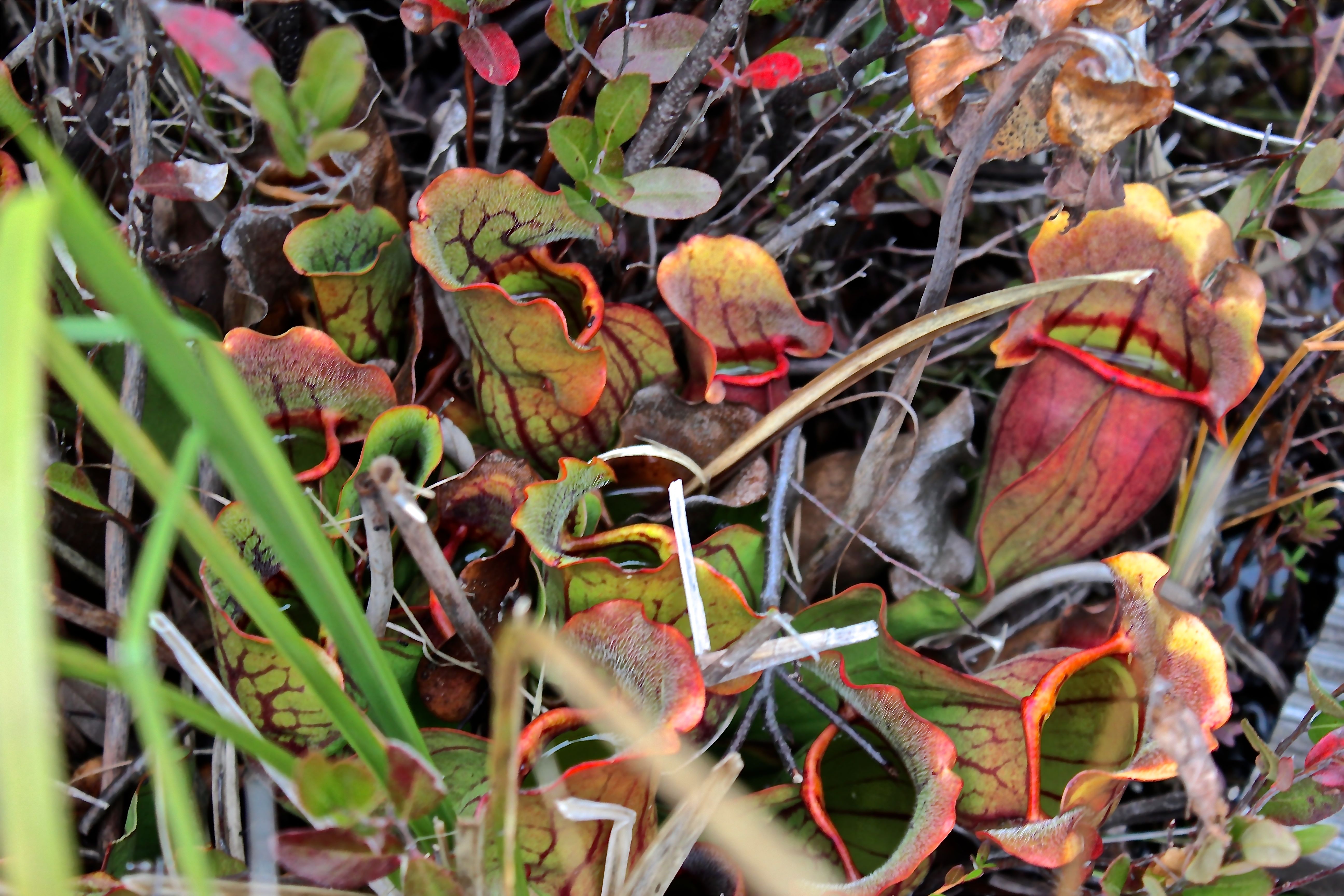
pitcher plants

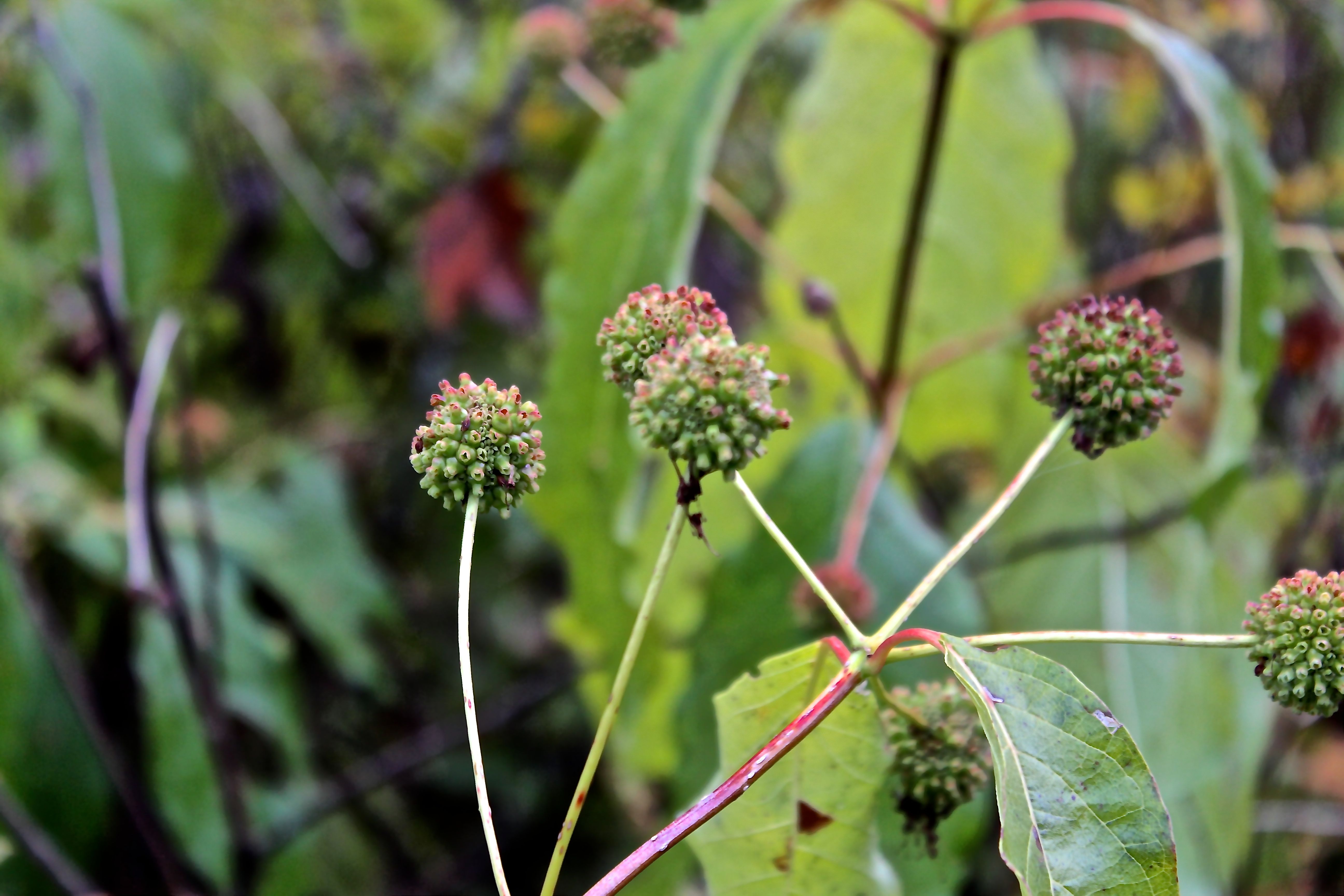
button bush, Holt Pond

Not to be left out, the flowering witch hazel, pitcher plants and buttonbush display their own variation of colors.

Holt Pond Red Maple Swamp

Five hours and almost five miles later, we were back at the Red Maple Swamp I’d photographed at 7:30am.

The day was too beautiful to head indoors, so after a quick stop at home, I endured the Fryeburg Fair traffic and drove to the Gallie Trail at the Heald and Bradley Ponds Reserve in Lovell. My intention was a reconnaissance mission for next weekend’s Greater Lovell Land Trust hike to the summit of Whiting Hill.

 bear claw 2 bear claw and nectria

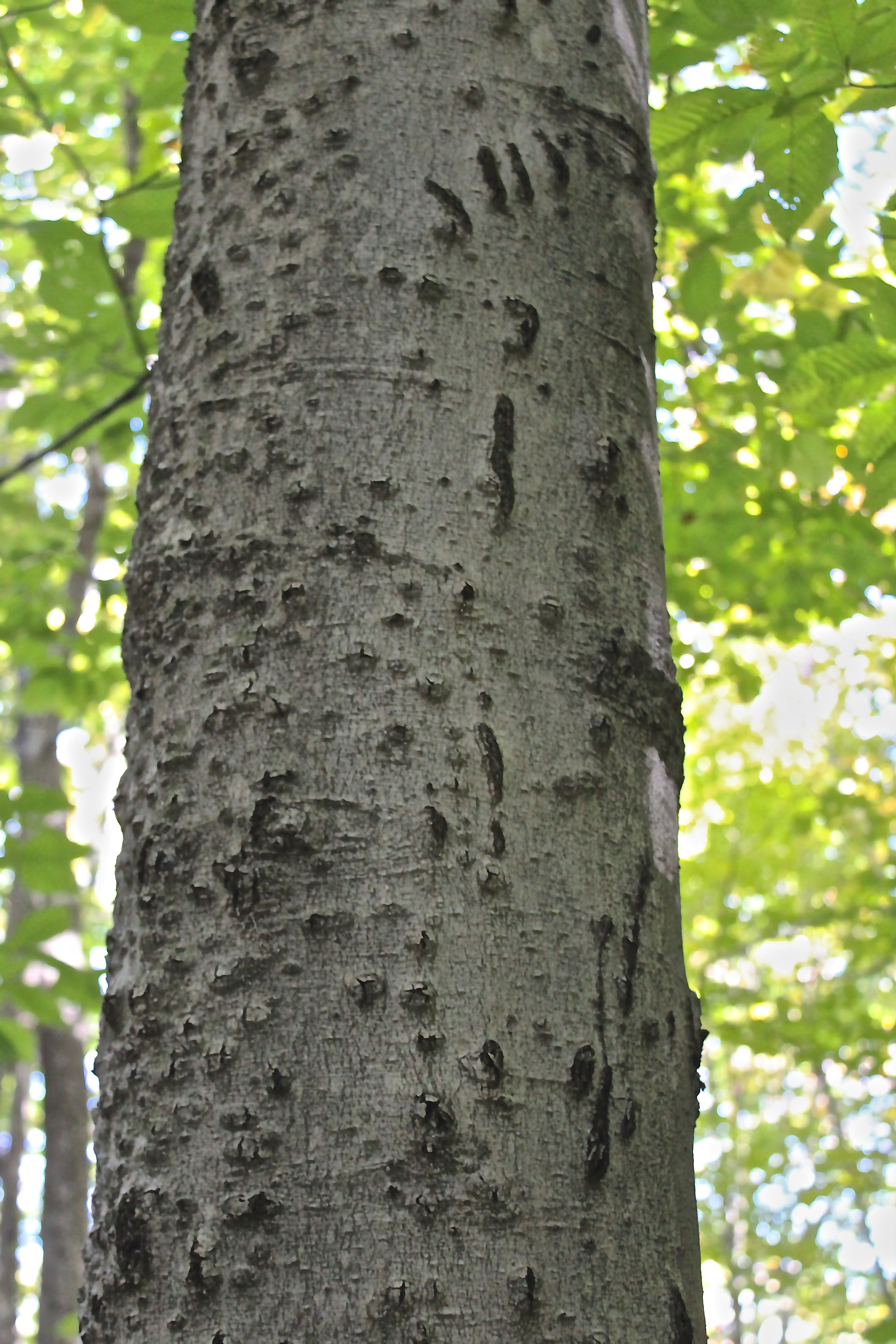
On the way up, I scanned the beech trees, searching for bear claw marks and wasn’t disappointed.

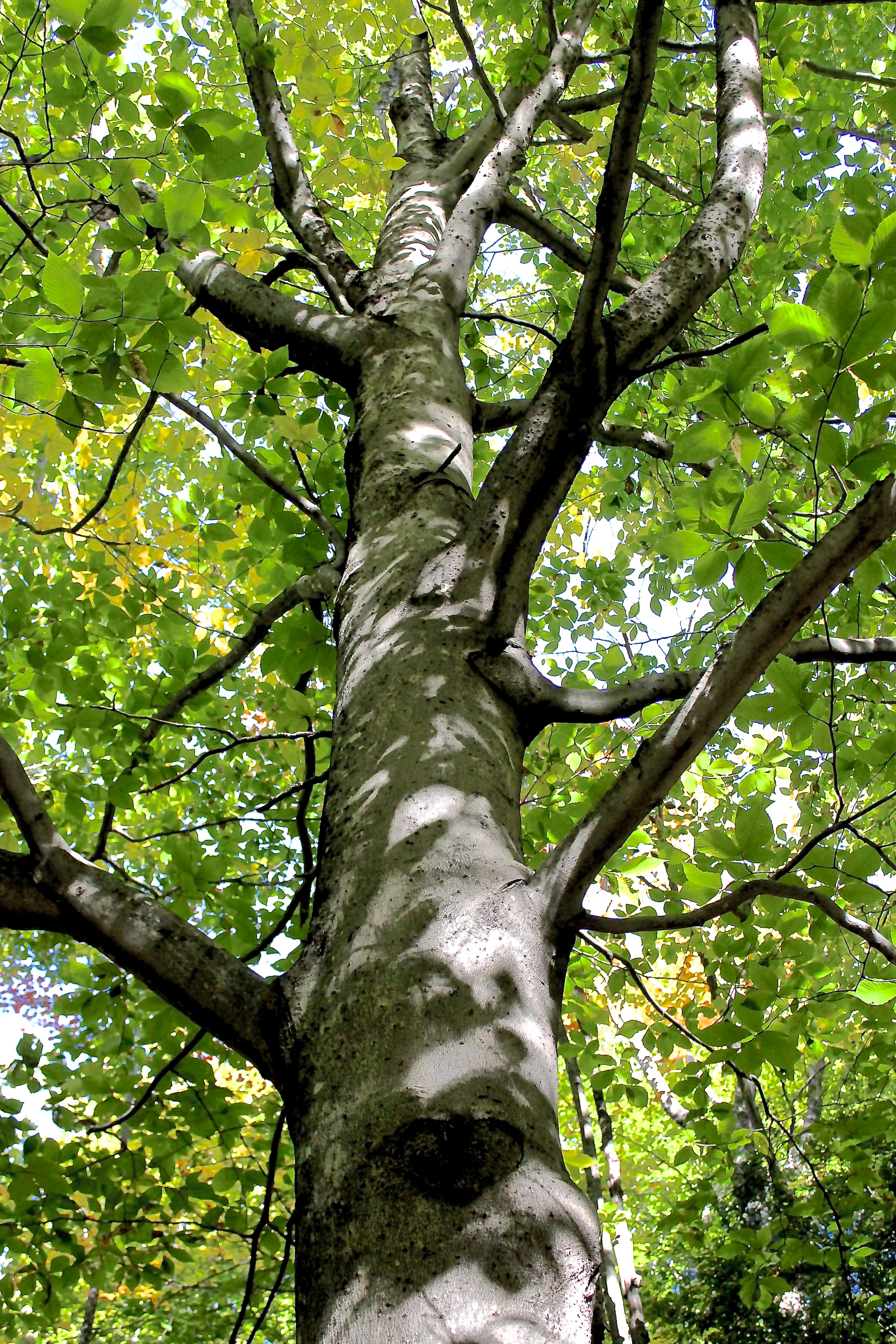
 Mama Beech Whiting Hill

The beech leaves have yet to take on their golden-bronze hue that lasts throughout the winter and appears like dabs of sunlight in the white landscape.

color contrast

The maples, however, provide a brilliant contrast in the canopy.

whiting view 2

It’s beginning to look a bit like . . . autumn from the summit.

red maple splendor

One red maple was particularly dazzling.
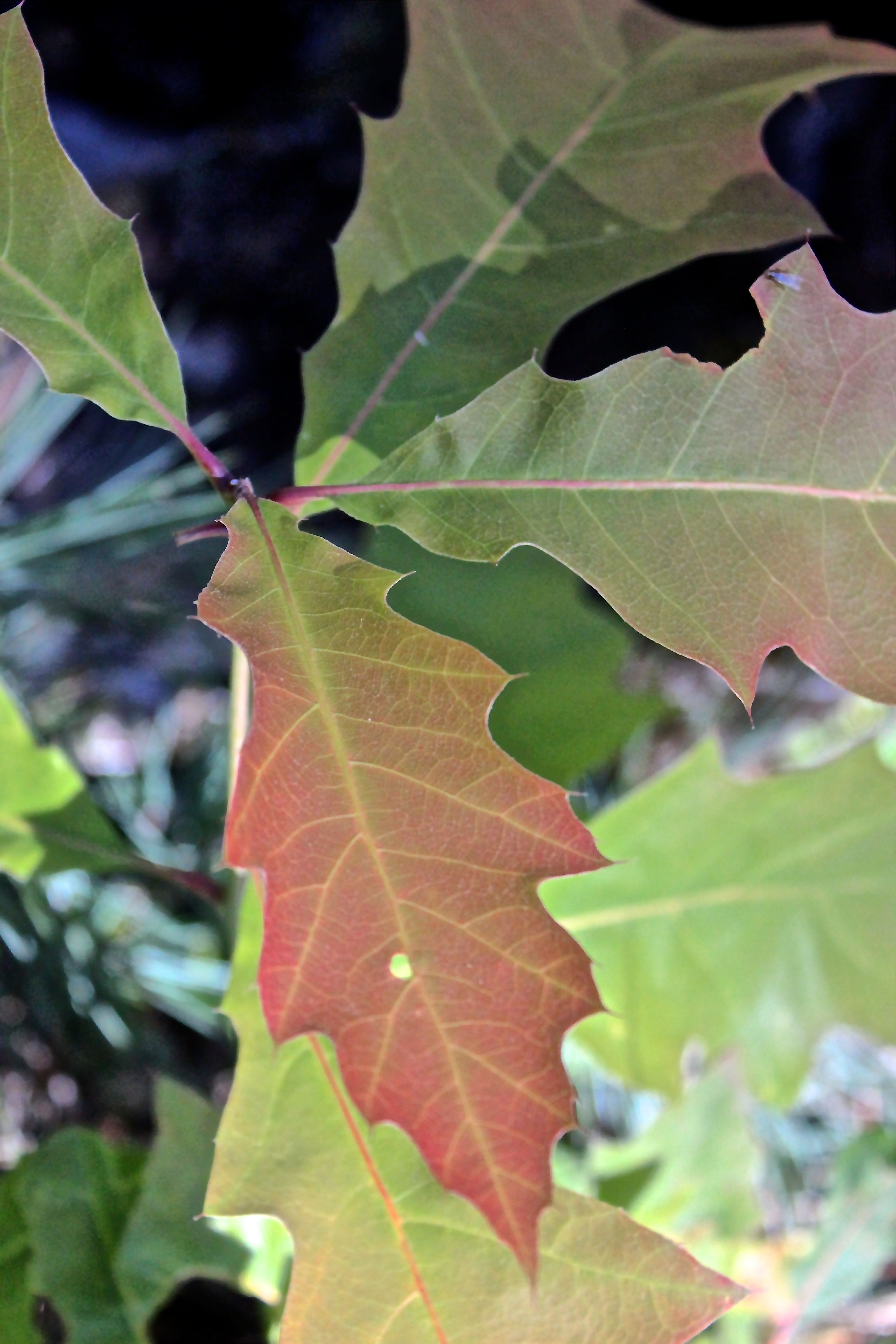
red oak, subtle color

This northern red oak provides a much more subtle hue,

ash leaf

while a white ash shows off its magenta-colored leaves.

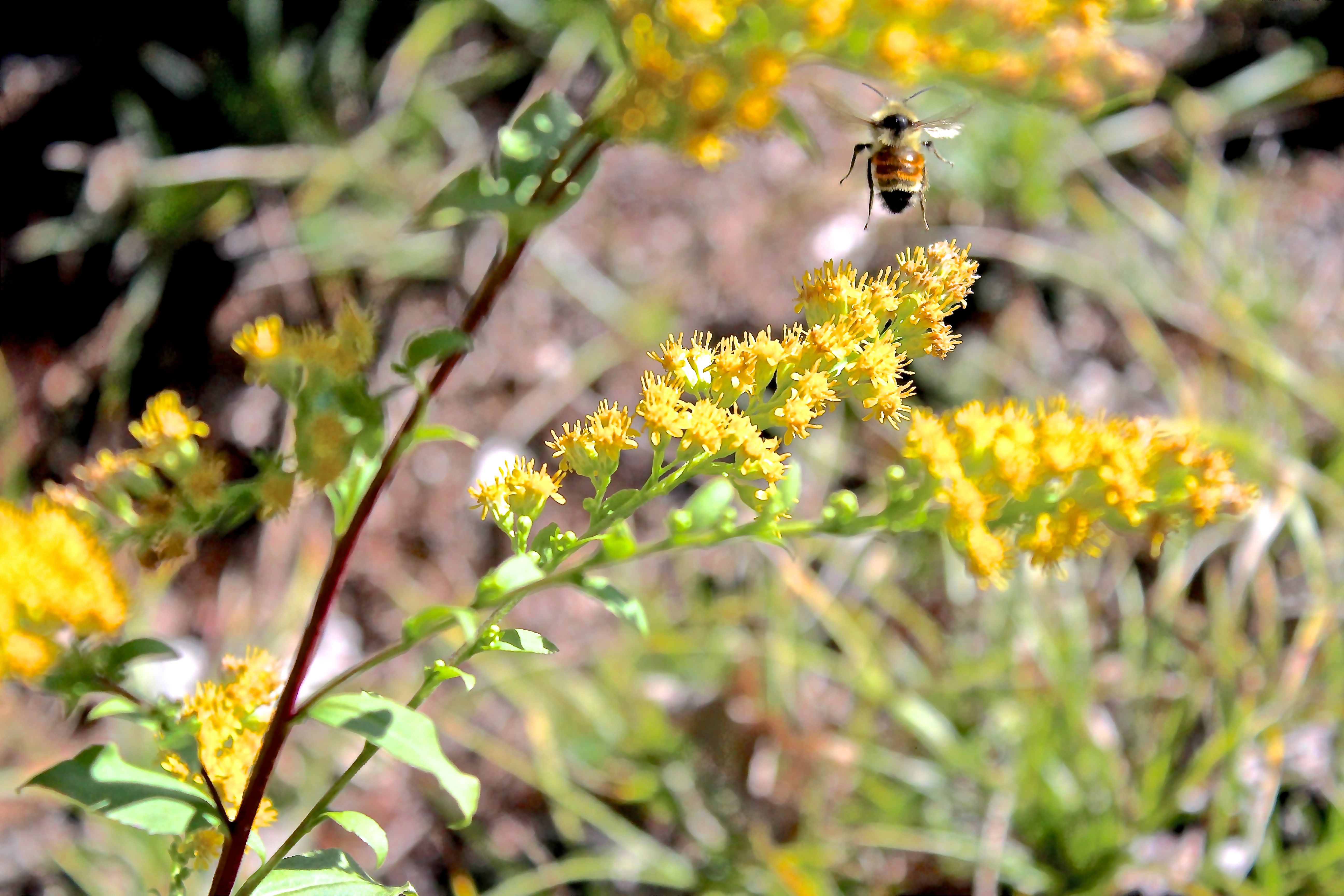
bees on goldenrod, Whiting Hill

A goldenrod continues to bloom and the bees know it. This one is doing a happy dance.

yellow-greens of striped maple

As I hiked down a different trail, the community changed and the striped maples dominated the understory

striped maple leaves

with their yellow-green leaves.

Indian cucumber root fading

Similarly, the Indian-Cucumber root’s leaves have taken on its lime-green color of fall.

splash of yellow greensplash of color2

Splashes of color. Nature on display. How fortunate I am to be able to embrace these moments.

Great Maine Outdoor Weekend

Every weekend in Maine should be named the Great Maine Outdoor Weekend. Especially when the weather cooperates.

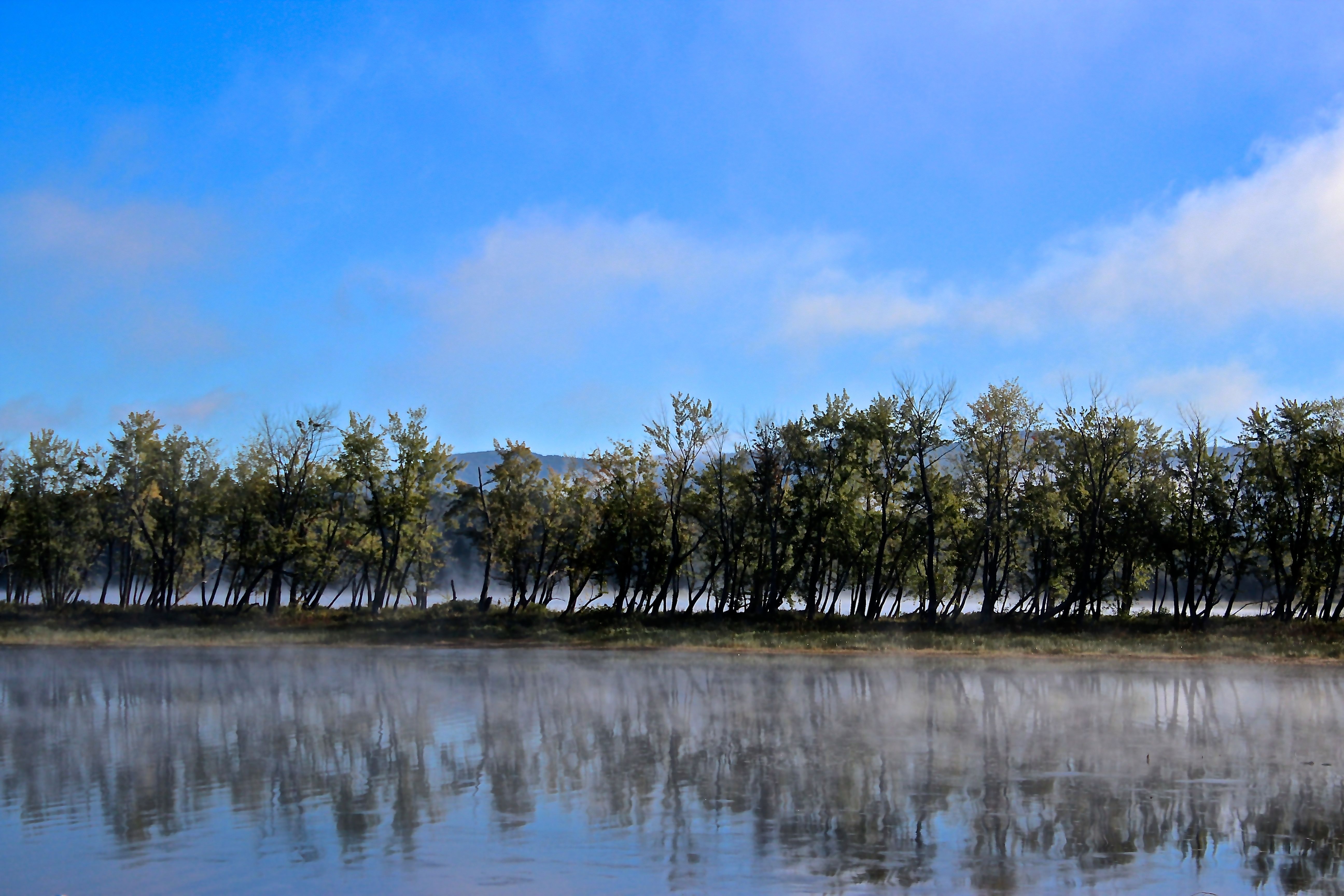
morning fog 1

This morning’s fog didn’t daunt the crowd of 20+ that gathered for the Upper Saco Valley Land Trust’s paddle to celebrate being outdoors in Maine.

morning fog 2

When we arrived at the boat launch on Lovewell Pond in Fryeburg, we could barely see the trees that line the access route to the Saco River.

fog lifting2

Ever so slowly, the sun burned through.

fog lifting 2

It was a tad bit chilly–think 29˚.

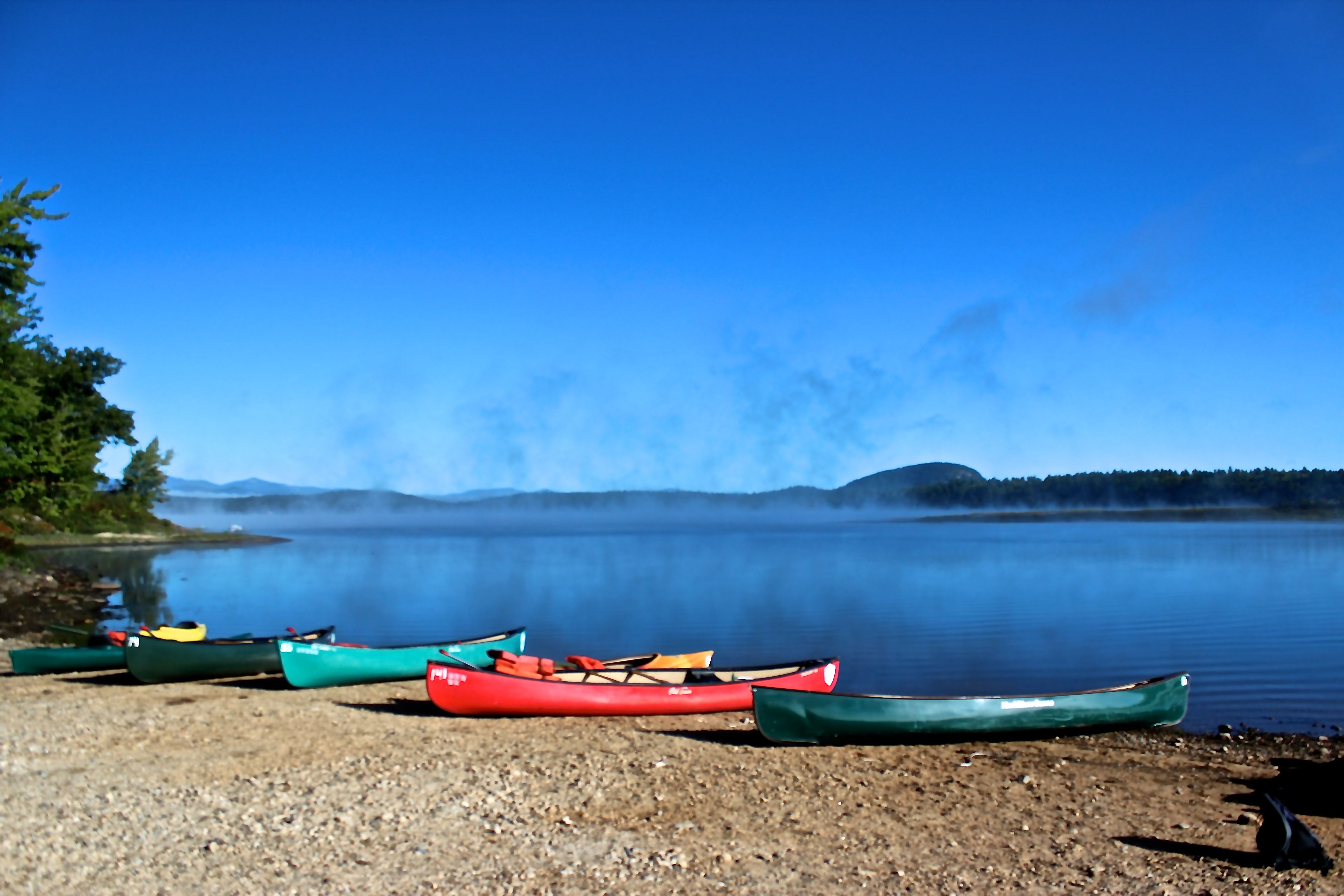
from the beach

But the sun felt heavenly.

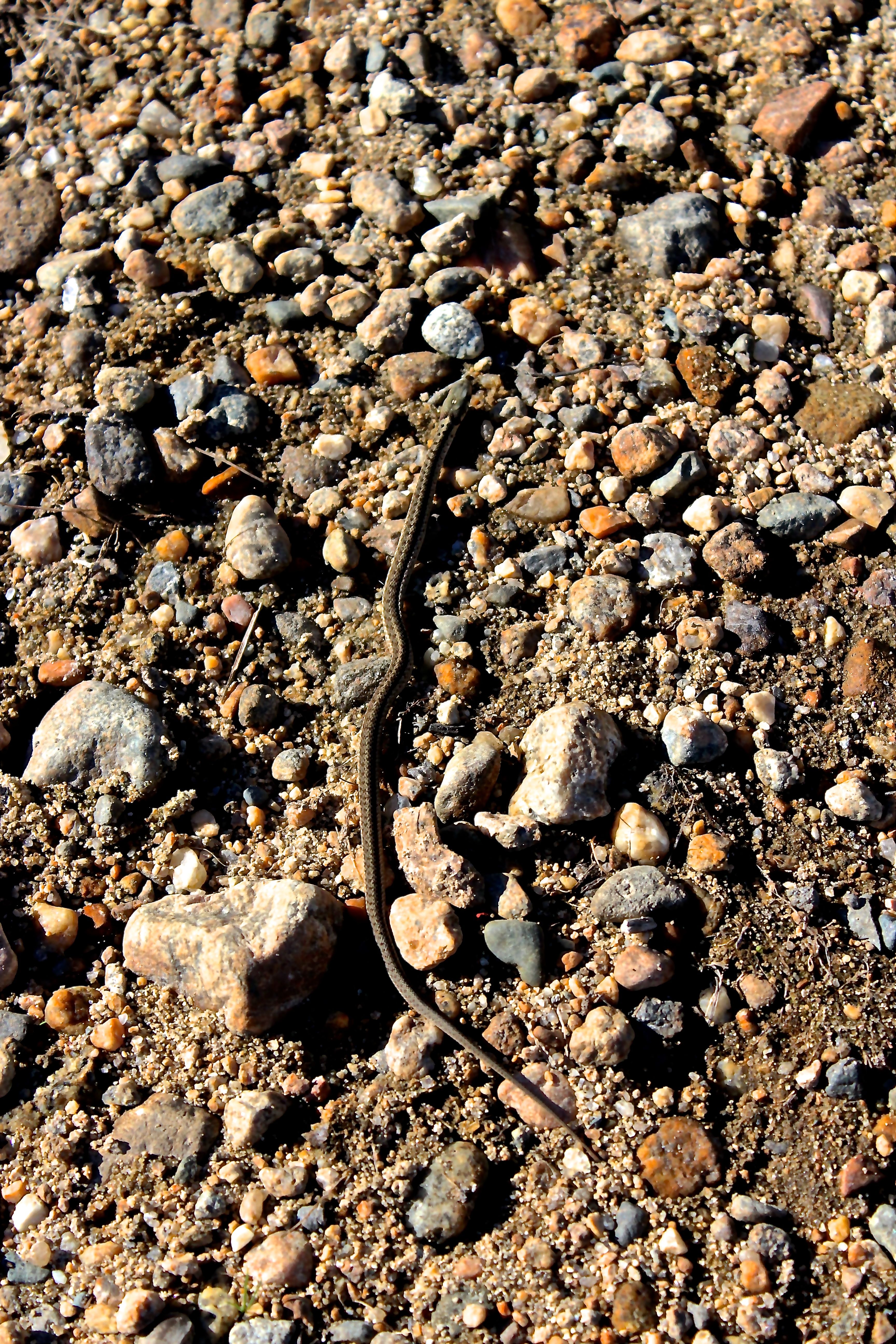
baby garter

I think this guy felt the same. We were about to shove off when a member of the group found this baby garter snake in his canoe. I let it go on the shore and it quickly slithered away.

Lovewell Pond

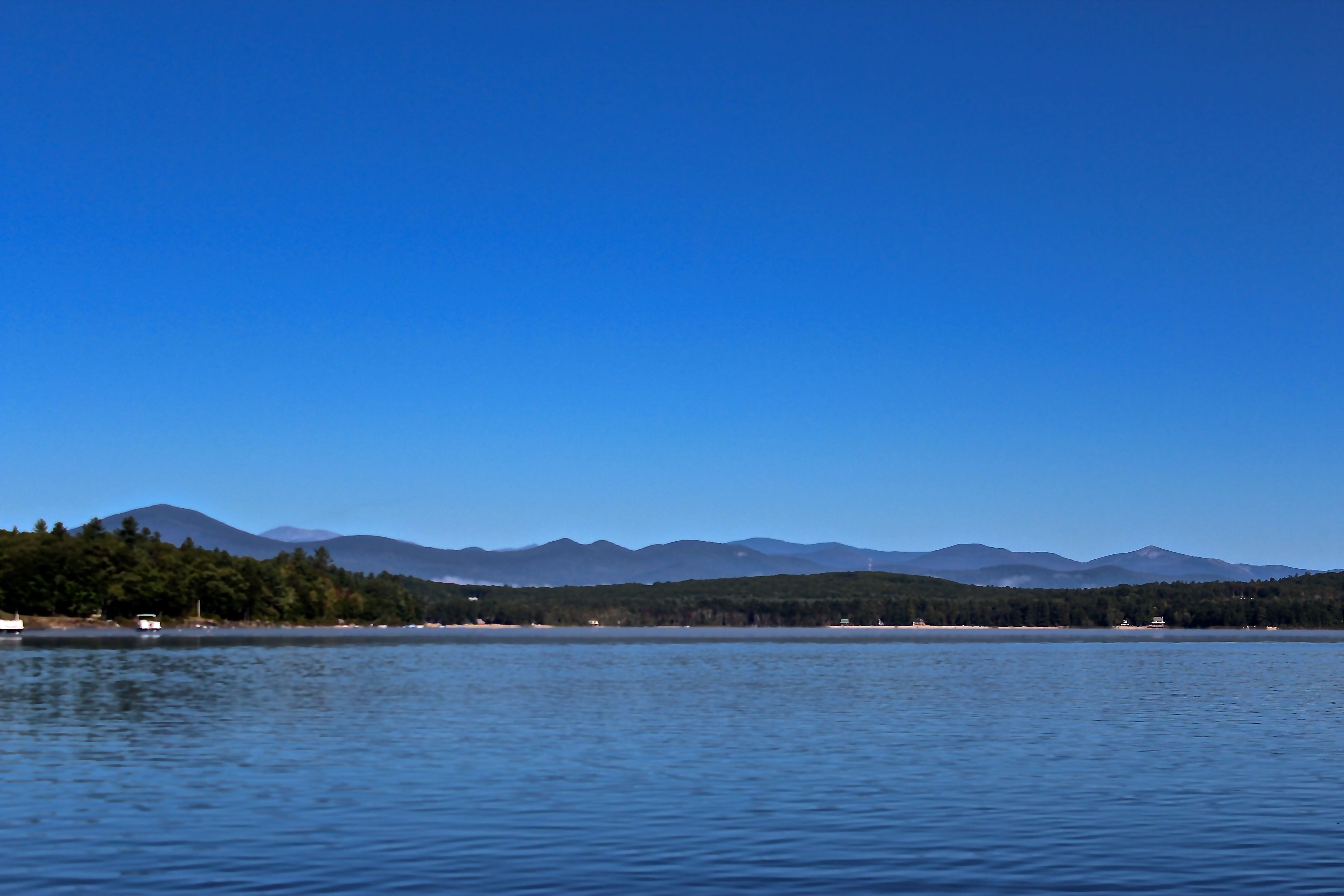
By the time we paddled onto the pond, the mountains were in full view, bookmarked by Kearsarge and Washington on the left and the Baldfaces on the right.

heading to the access channel

The water was shallow on the access route so twice we got out and walked. As you would expect, the water was warmer than the air, though the air temp continued to rise.

immature bald

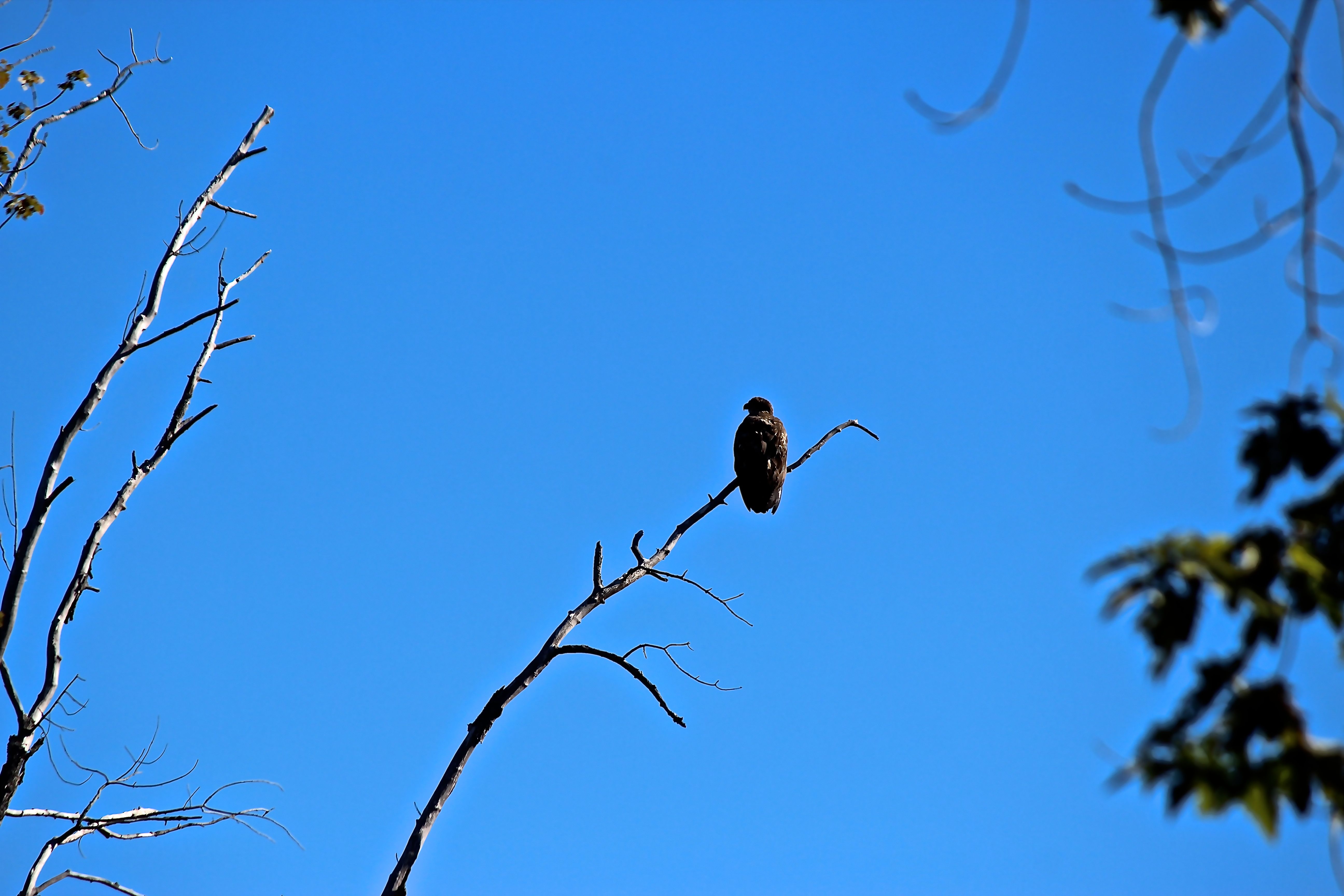
A few fun finds along the way included four bald eagles. This was one of three immatures that we spotted. Our bird count included a great blue heron, cormorant, ravens, blue jays and cat birds.

network of roots

We were in the silver maple floodplain where these magnificent trees hang low over the river. Their network of roots are equally beautiful.

peeking into brownfield bog

For the better part of our trip, the river bisects Brownfield Bog (Major Gregory Sanborn Wildlife Management Area), so we decided to jump ship, climb up the muddy bank and take a peek. Even the poison ivy didn’t deter us.

royal fern

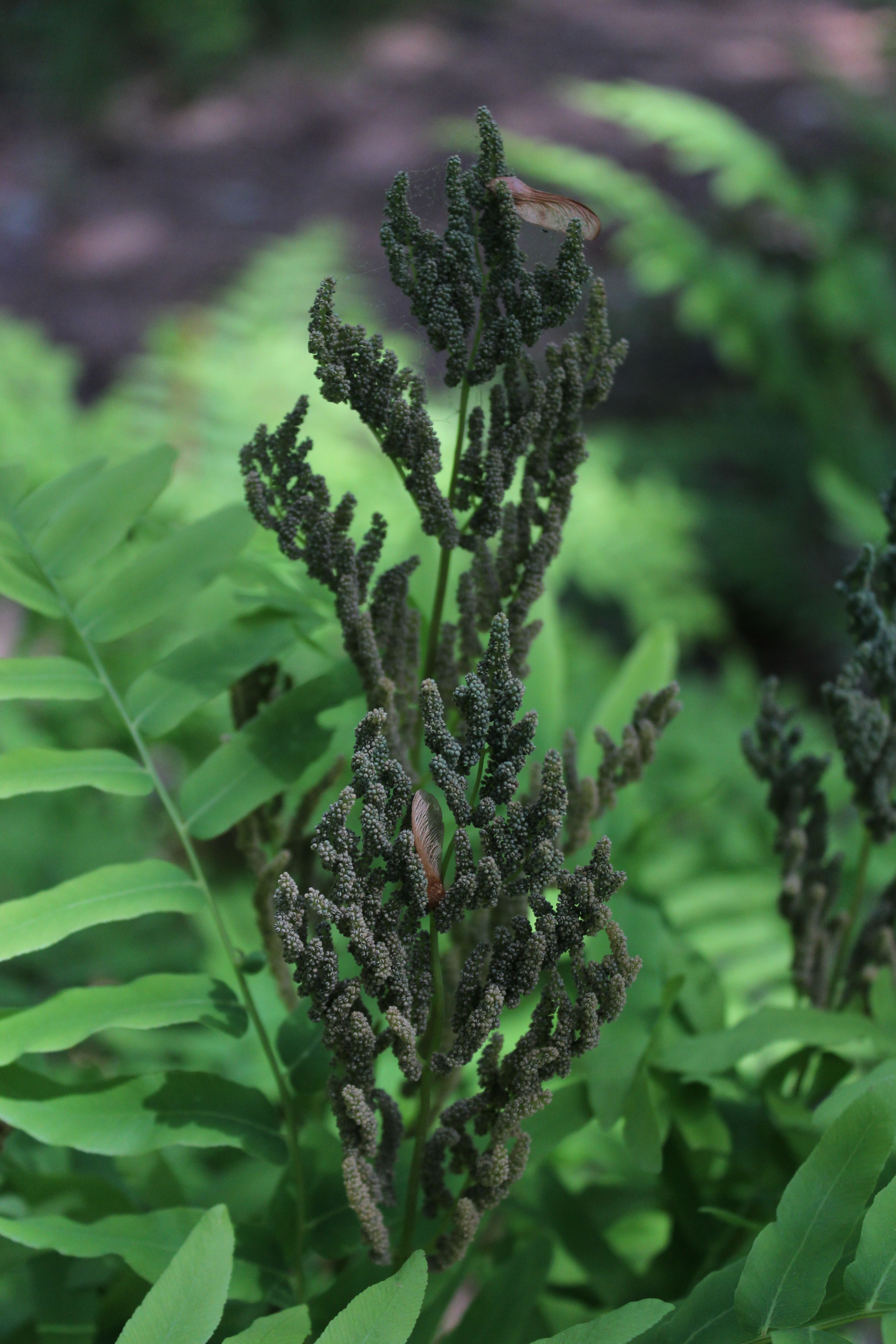
A common herbal feature of a silver maple floodplain community is royal fern. At the point where we stood to admire the bog, the fern grew abundantly in front of us. Its spore stalks are now dried up.

royal fern 2royal fern 3

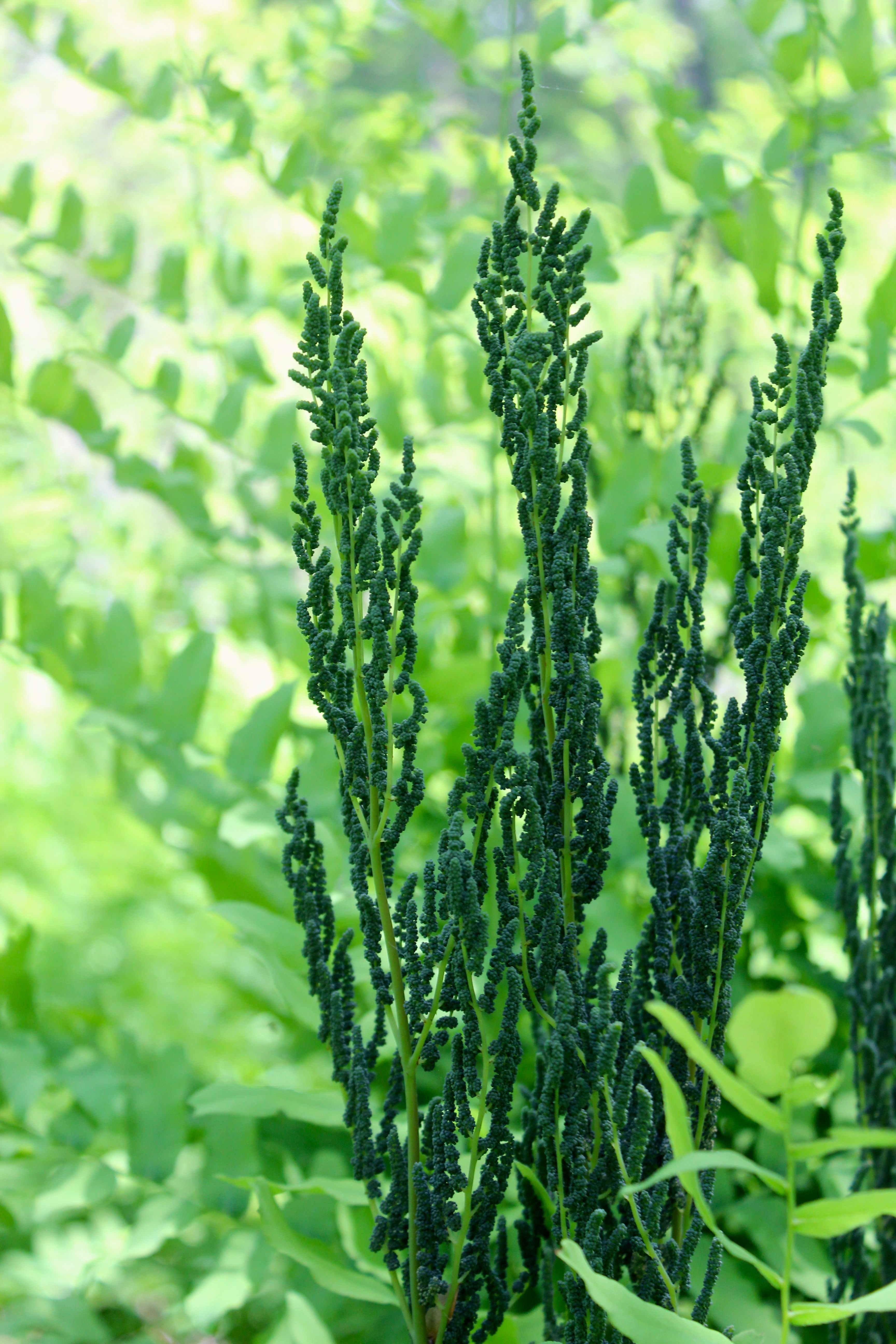
In early June, they would have stood tall, looking like the royal crown for which this fern was named.

touch of color

It is fall. The days are obviously getting shorter and we are just beginning to experience cool nights when the temperature is below 45˚. Any sugar made in the leaves during the day can no longer move to the trees. When the sugar becomes trapped in the leaves, the red pigment called anthocyanin forms and the green pigment (chlorophyll) disappears. The leaves are beginning to turn along the river, but this one was especially colorful.

Fall splendor on the Saco River. Another Great Maine Outdoor Weekend.

Nature Works

Sometimes when you walk off the beaten path you discover that you are actually on the beaten path. A path once created by those who walked before. Such was the case today for ten of us from the Greater Lovell Land Trust.

We began our journey by carpooling from the main road, Route 5. One side road led to another, much curvier and bumpier. Eventually, that road became a dirt road. And finally, it ended at a gate where we parked.

There were several choices of paths to follow and we choose the one closest to the brook.

early fall day

As we crossed the brook, my eye was drawn to the changing color of the maple leaves. The days have been warm and sunny, but the nights are beginning to cool down and so sugar made in the leaves during the day gets trapped there. As the leaves begin to stop their food-making process, the yellow, red and orange carotenoids that are masked by the green pigment all summer slowly become visible.

downy woodpecker's feathers

One of our docents had a keen eye today. While the rest walked past, she spotted this dinner site. Downy woodpecker feathers and body parts. Good find, Ann.

got mail

Got mail? Though this mailbox wasn’t our intended destination, it’s on the way. We wondered about its purpose, knowing it was beside a former logging/hunter camp. But still . . . it struck us as odd.

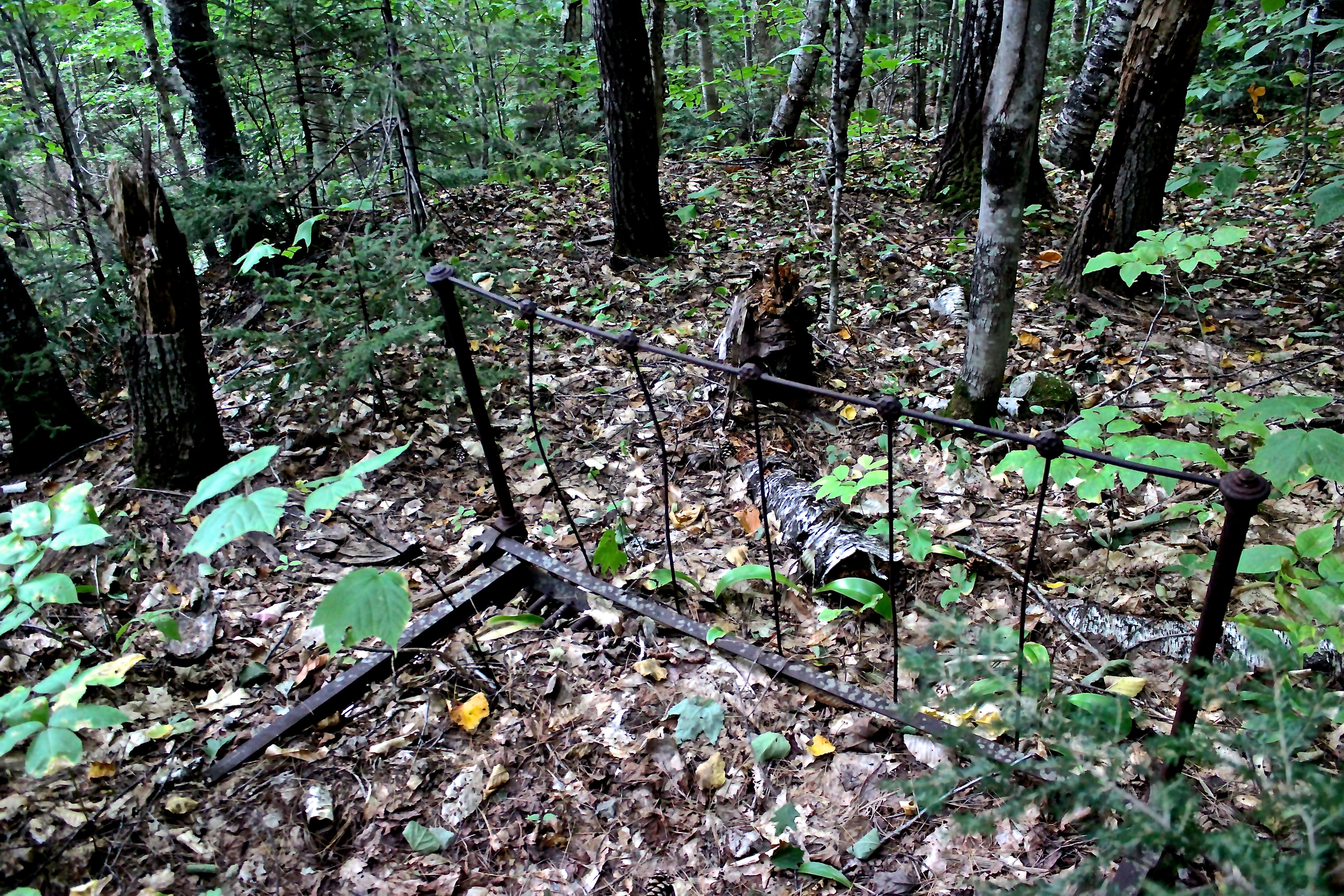
bed frame 1

Nature slowly reclaims that which was left behind.

massive yellow birch

We turned right at this yellow birch. Though we didn’t hug it, I think it would have taken two or three of us to embrace this tree. There were others equally as big or bigger–mostly sugar maples, which led a few to surmise that they were left because of their importance for sap production.

country lane

At last we were in the old neighborhood, where the path existed between two single-wide stone walls. The farmland is bordered by numerous walls that stand stalwart, though some sections are more ragged that others.

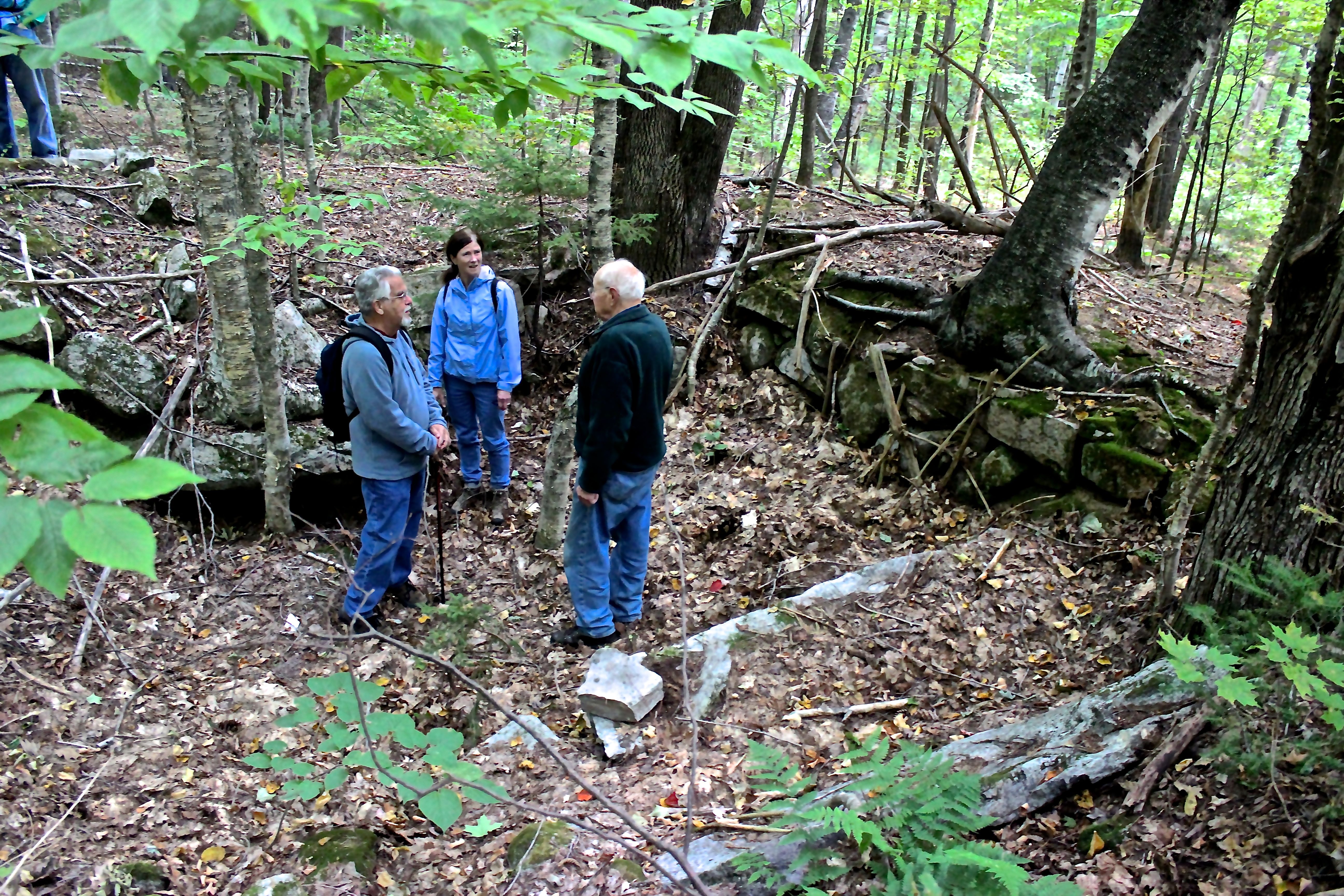
chatting in the parlor

Standing in the parlor, my friends tried to make sense of an old foundation. Trees, roots, frost, weather, critters and humans have added to the foundation’s demise, but what remains left us in awe of those who had lived on this land. We suspect the neighborhood was abandoned post Civil War, when soldiers/farmers discovered that there was fertile ground elsewhere where stone potatoes were not the number one crop.

root cellar

Within the cellar of a neighboring foundation was a root cellar.

root cellar 2

Taking a closer look, we learned that someone else has made use of it. Or should I say something else–a porcupine. The back corner is filled with scat.

snapping turtle headshape

We explored the hillside and checked out some boulders taller than us. The ragged edges reminded us that this didn’t get rolled about by the glacier, but may have been part of a boulder field left behind. Sometimes our imagination turned from the historical nature to whimsy. I see a snapping turtle head; someone else saw a frog in this stone formation.

moose femur

Another great find by the woman in blue (Ann, you had eagle eyes today!) was the femur of a moose. It had some nibble marks–evidence that a rodent had been gnawing it to get the benefit of the calcium. The circle of life dictates that something will then eat the rodent, and the calcium will continue to make its way through the food web.

Sarah's stoneMary's stoneEphraim's stone

We bushwhacked to the site of a cemetery. It was interesting to note that the two stones on the left are slate. Hmmm . . . it would have cost more money for slate since it’s not a local stone.

barbed wire

On the way back, someone spotted barbed wire growing through a tree–or rather, a tree that grew around barbed wire, another indication of this land’s use once upon a time.

shrew 2

And a dead shrew–easy to identify by its elongated snout. It was killed but not consumed, probably because it has a musky gland that makes it smell unappetizing–but it’s not until the animal has died that the smell is evident. Why after death? One of my mentors, Kevin Harding, was with us today and so I posed this question to him. He and Naturalist David Brown theorize that one shrew takes a hit for the whole team. In other words, its predators might recognize the next shrew and decide to let it live. Maybe so.

Hobblebush

If you’ve been following my wanders, you know I can’t pass by a hobblebush without admiring it.

GB 3A

Three hours later we returned to the trailhead, thankful for a chance to spend time together on an autumn day and wonder how nature works.

Fall Issue of Lake Living

I’m always excited when we pull together an issue of Lake Living. The fall “At Home” issue is now available on-line and in local shops. I wrote two articles for this one: “Land That We Trust” & “Catch and Release.” But it’s not just my stuff. The whole magazine is a work of art. Take a look. And enjoy.

Inside and Outside the Tent

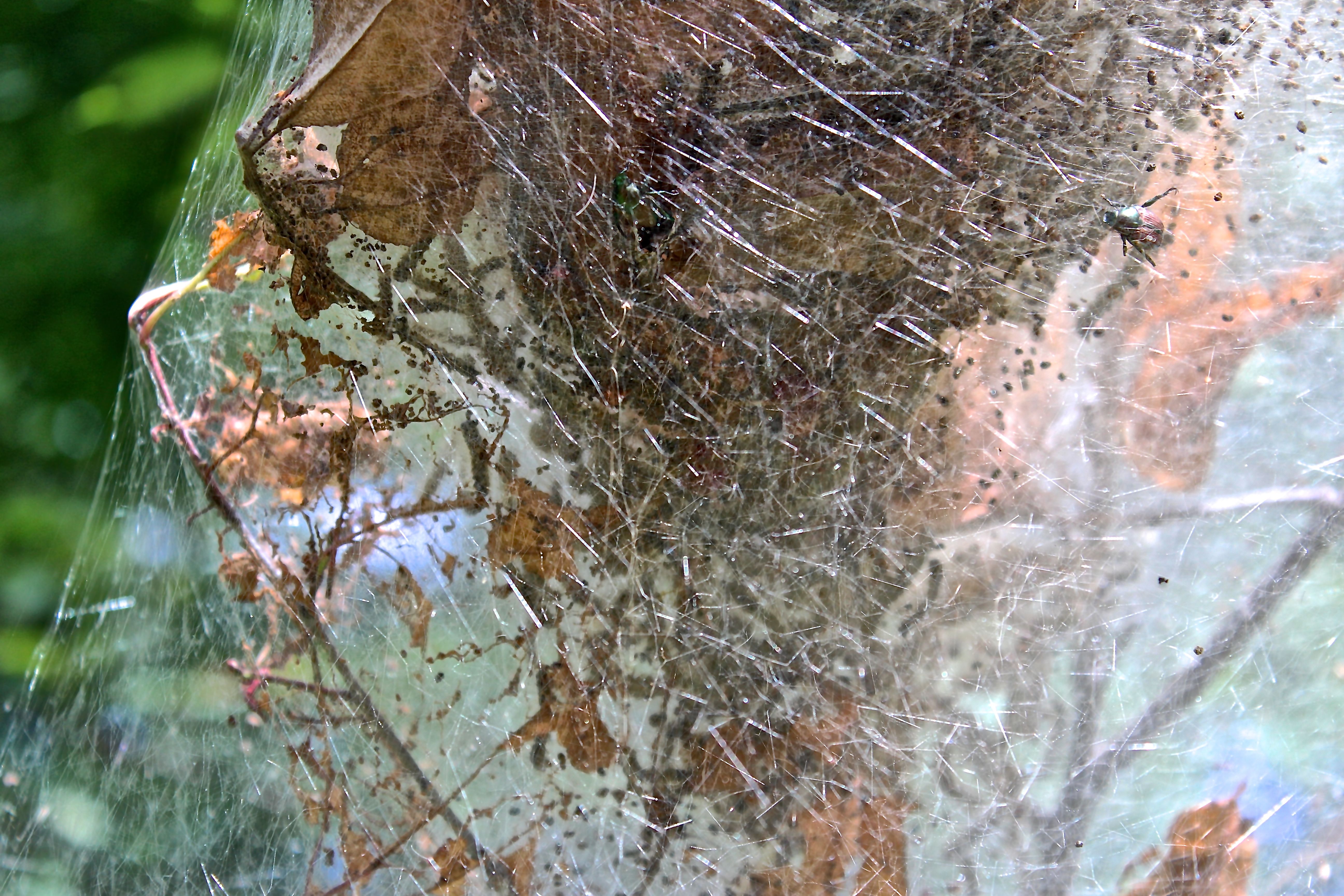
These days, my preferred camping style is a night spent at a B & B. Not so for the fall webworms that have erected tents in the black cherry tree by the corner of our house.

tent

Unlike the eastern tent caterpillar that makes its tent in the crotch of trees and feeds outside the enclosure, the fall webworm prefers the tips of branches.

tent cat 1

These silk weavers eat three times a day–morning, mid-afternoon and evening. All their action takes place inside, where they defoliate the trees, leaving behind skeletonized and dried up leaves, plus their own chunks of caterpillar scat.

tent catches

As they move, they spin silk, creating a finely woven mass that enshrouds the tree branches. I have to wonder–how in the world do they move through this maze of fiber? I suppose the bright side is that Japanese beetles sometimes get enveloped and thus paralyzed in the silk.

cheeries caught in the web

Even some of the cherries get entrapped by the web.

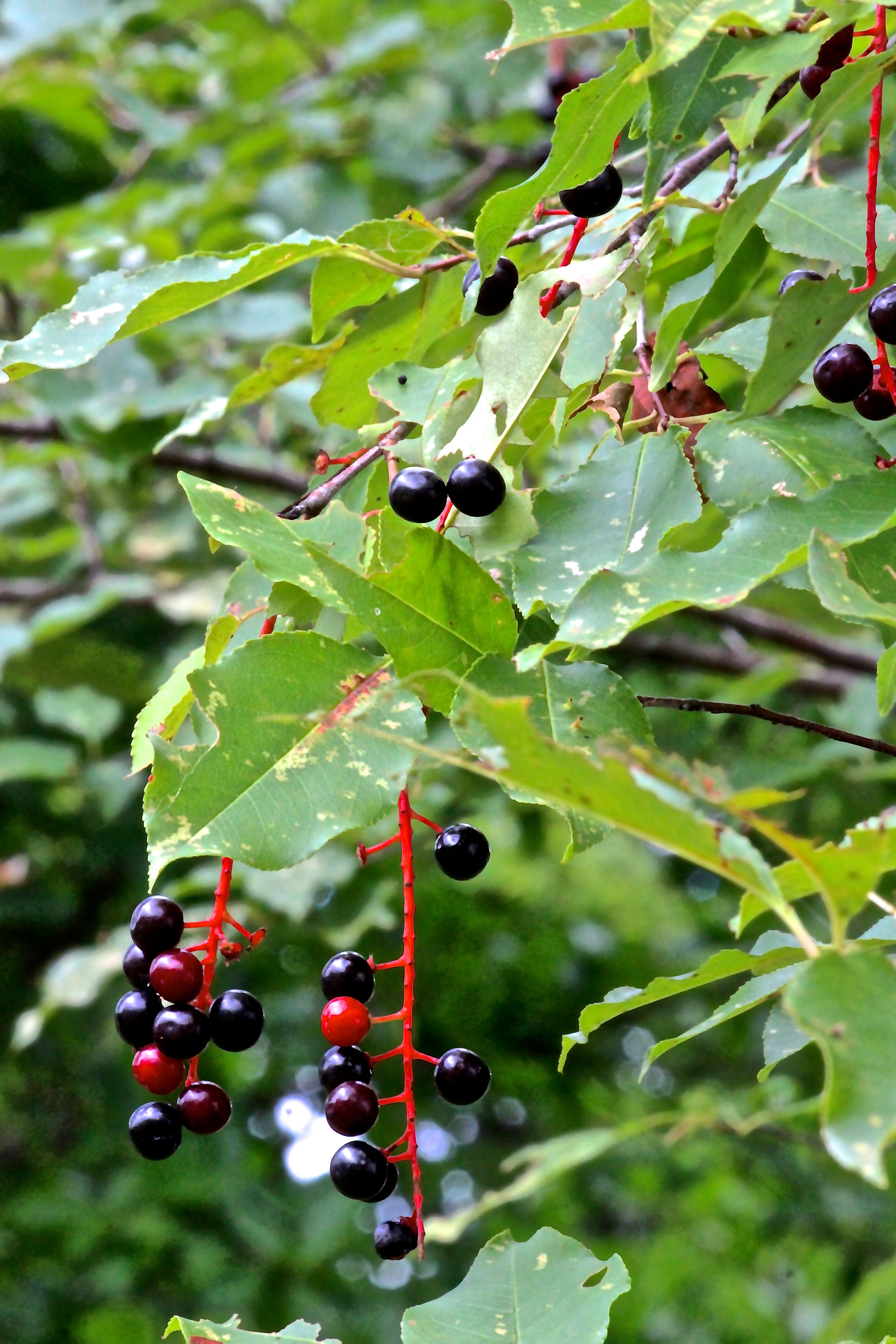
cherries galore

Though I’ve seen the webworms here for years, this is the first year that I remember the tree producing so many cherries–the resident catbirds are happy campers.

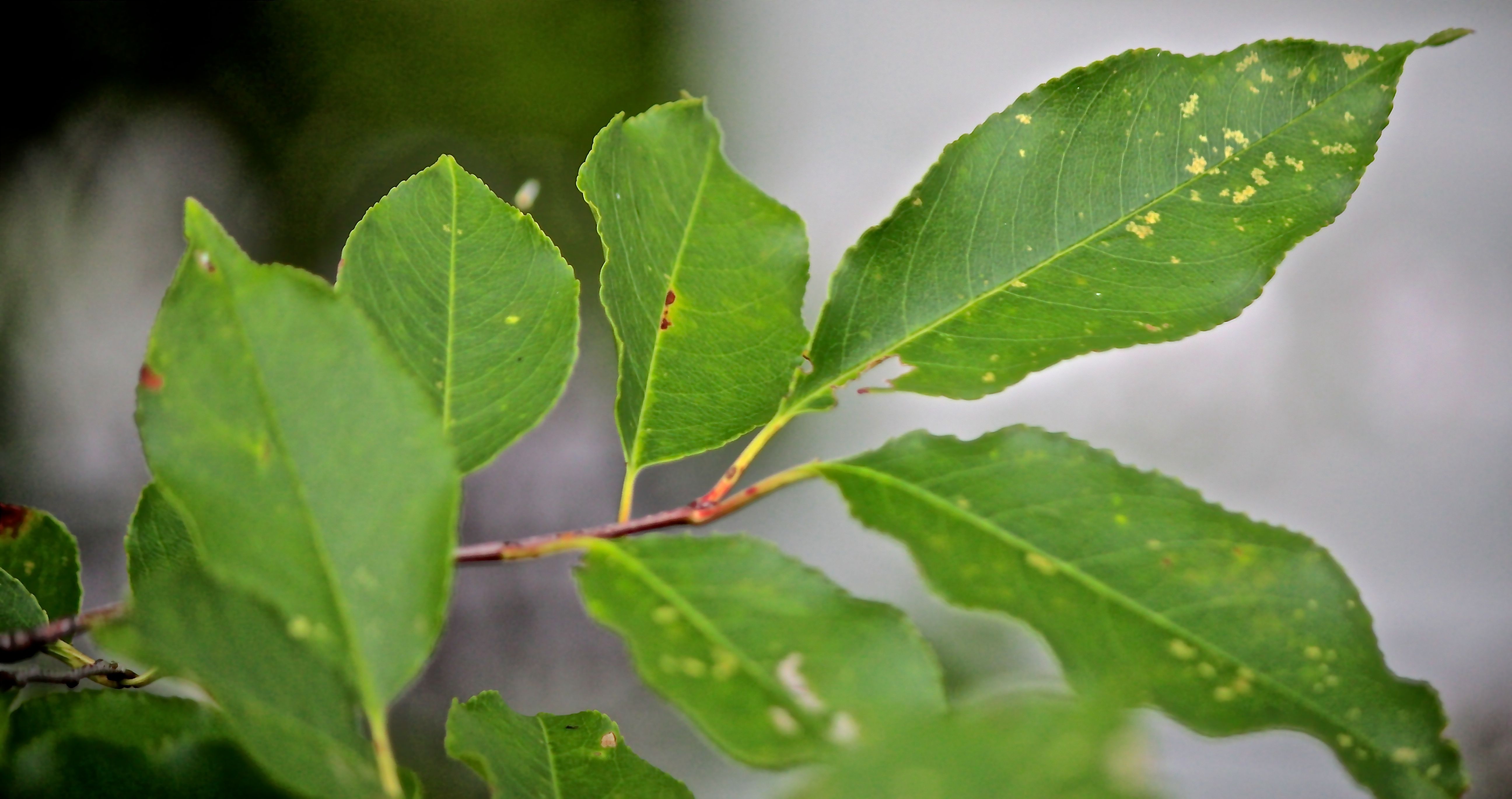
cherry tree leaves

Despite repeated attacks by this pest, the tree has been growing for at least the past 23 years. Its leaves are alternate and oblong, coming to a point and featuring a finely serrated edging of teeth.

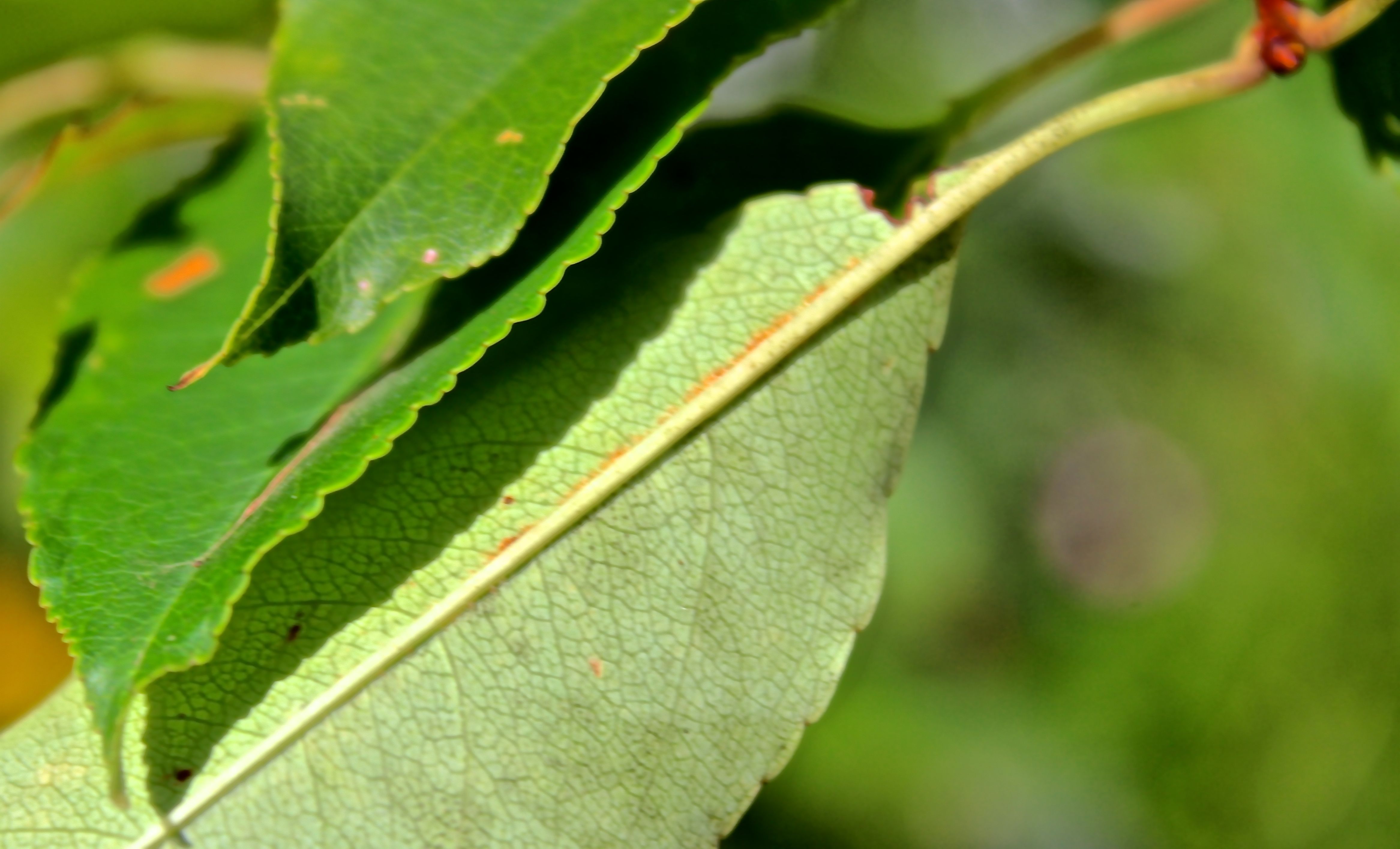
leaves

One way to ID a black cherry is to flip a leaf over and look for the rusty brown hairs along the midrib that grow close to the stalk.

leaves 2

Definitely fuzziness.

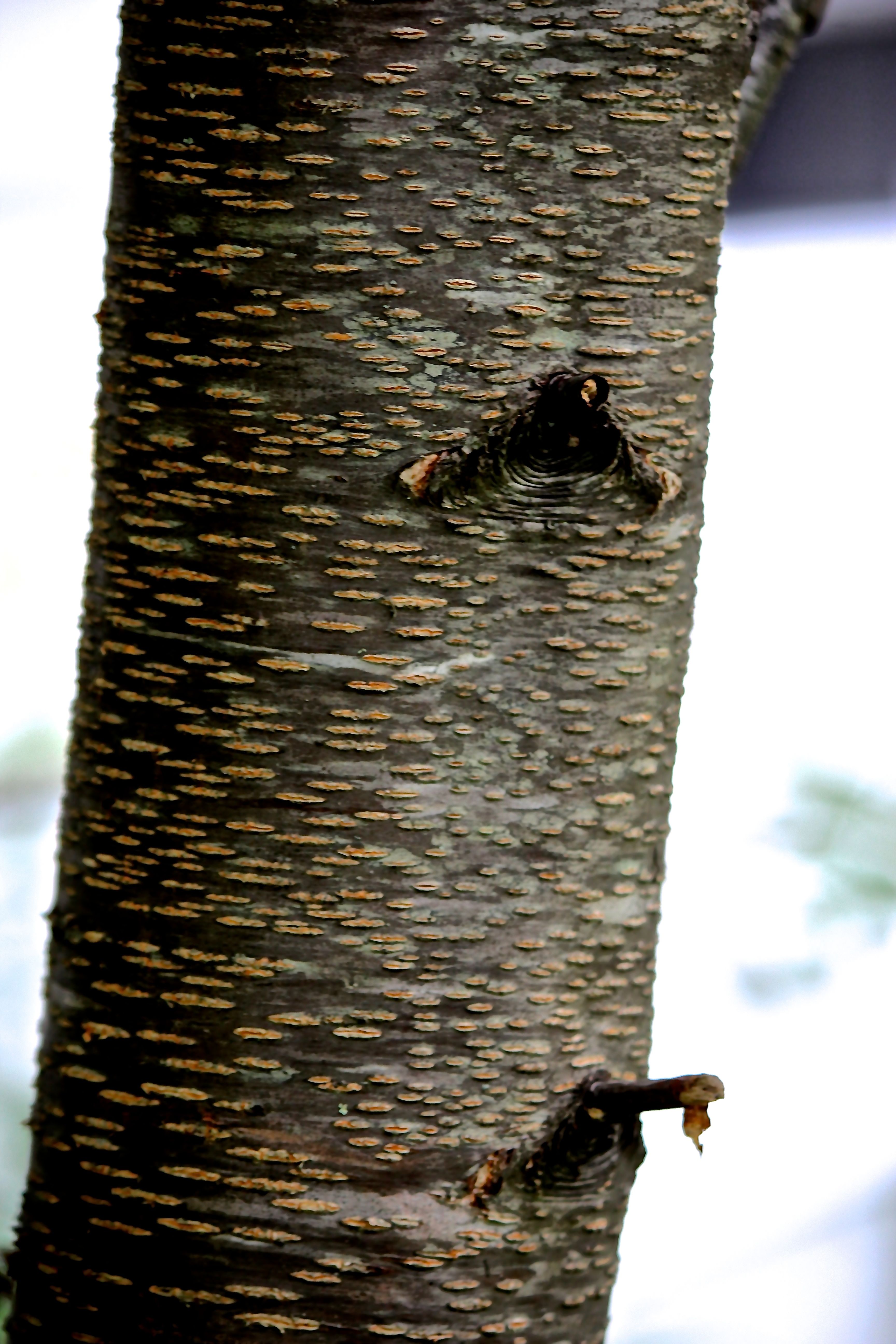
lenticels

Another defining factor–lenticels. What? Not lentils. Lenticels. All trees have lenticels, but they are more obvious on some than others. Lenticels are tiny slits in the bark that allow for gas exchange–like the pores in our skin.

slug?

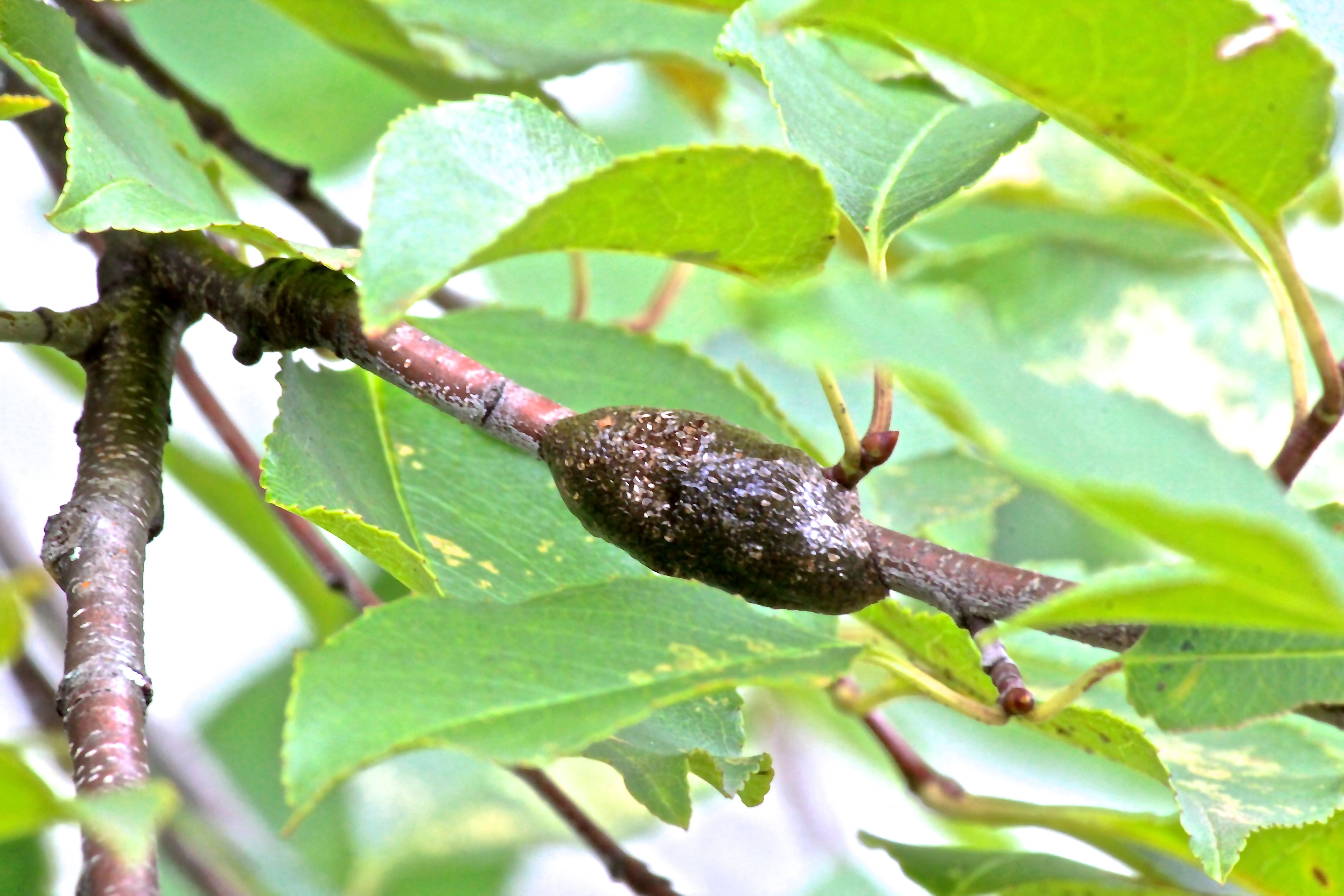
When I take time to study something up close, I begin to notice other things. My first thought for this addition to the twig was slug. But it wraps all the way around the tree and is hard–almost crystalized. It’s a gall caused not by an insect, but rather by an infection of the Dibotryon morbosum fungus. Once the fungus invades, the tree creates a tumor-like growth.

green cat 1

green cat 4

That’s not the only thing hanging out here.

green cat 3

I’m going out on a limb to identify these as members of the sawfly species.

cherries 3

And now I’ll leave you with some fruit for thought–or at least for the birds and all who  gather here, both inside and outside the tent. Thanks for spreading the seeds.