Through Rose-Colored Glasses

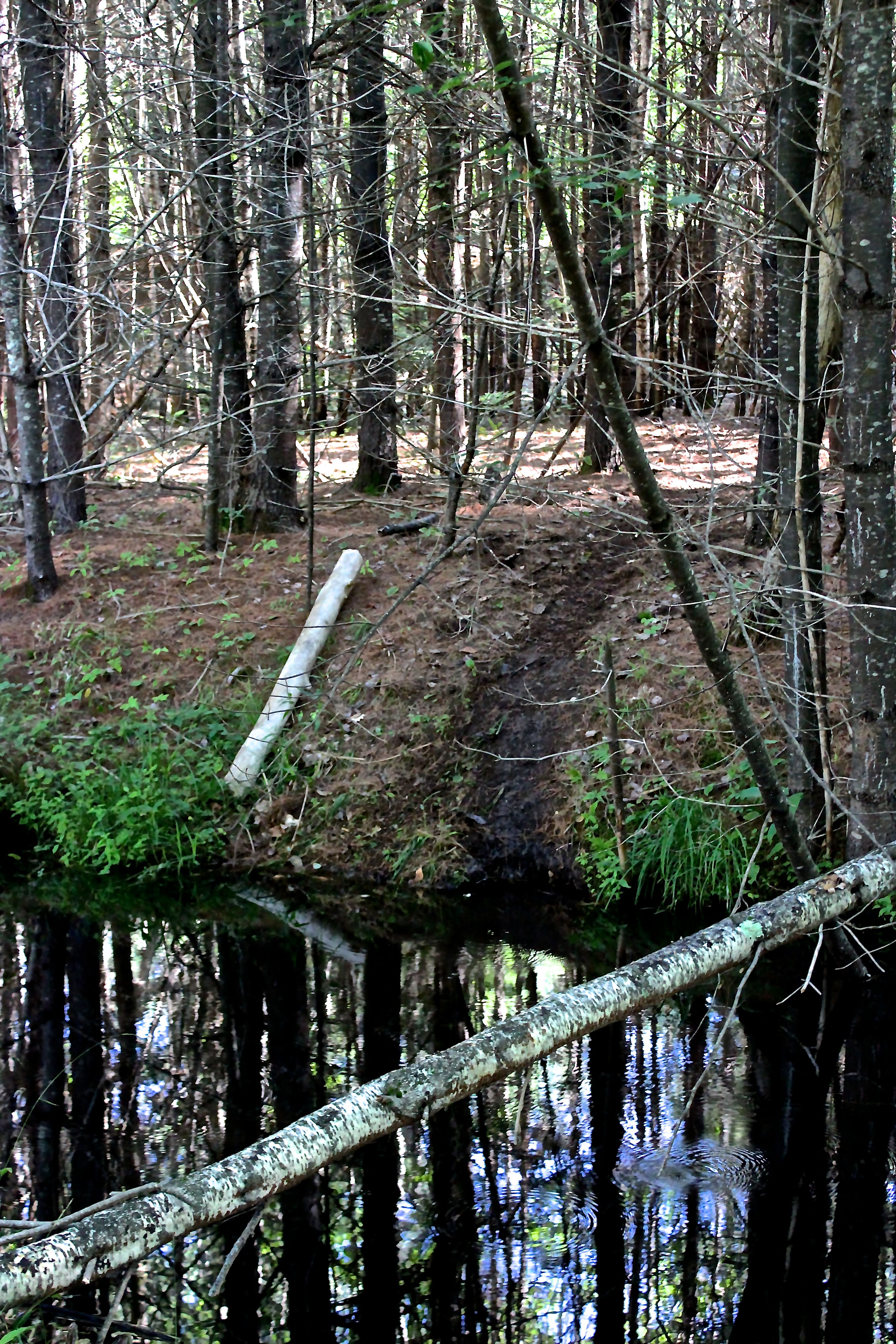
Beaver works was the name of my first adventure today. Last fall, some of the Greater Lovell Land Trust’s docents and I walked along the trail of this private property and saw the beaver trees, dams, ponds and lodges. But today, I felt like I was stepping into a completely different territory.

This week, thanks to the generosity of the landowners, we have a walked planned on the same property and someone has been rather busy–cutting off the path with a fallen tree and a flooded pond. With today’s pre-hike we have a sense of what to expect.
beaver path

You know they are busy when you see their well-traveled path
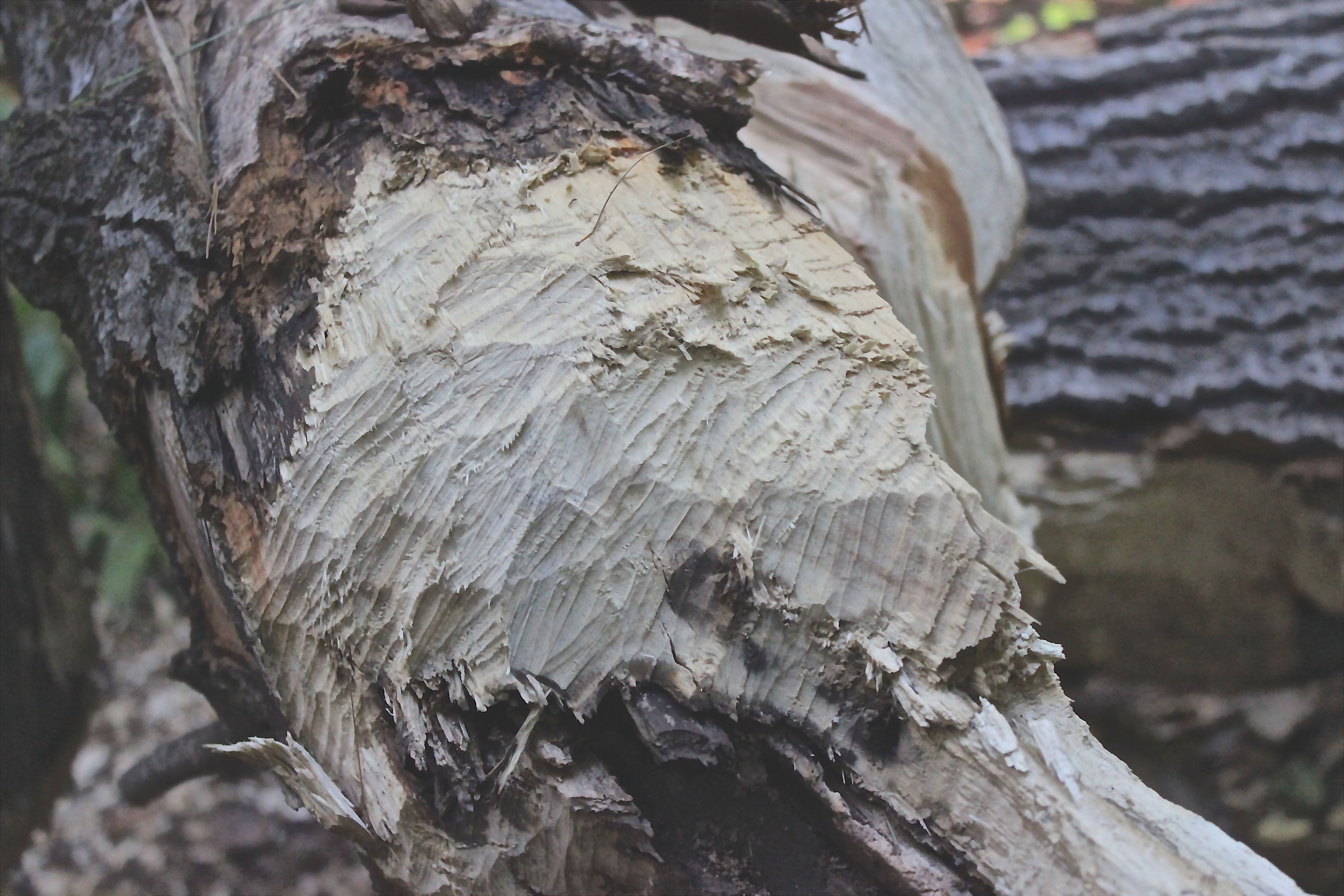
beaver 2and downed trees.

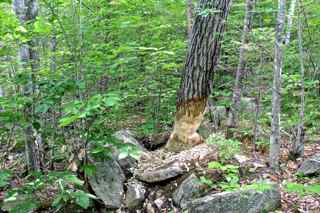
beaver tree

Or those that have been girdled but have yet to fall.
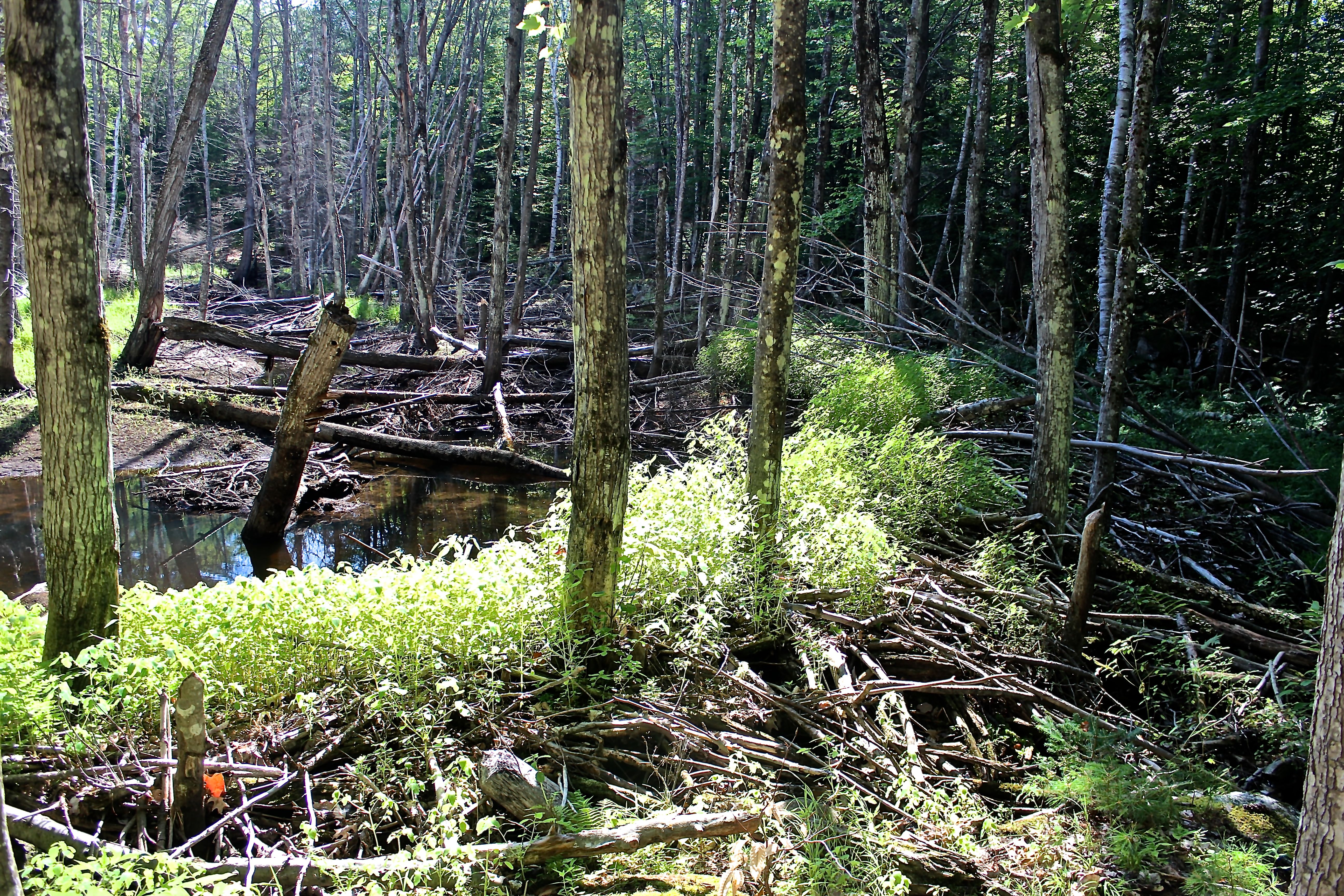
beaver dam

This old dam is quite large and no longer productive–you can see that the pond it once held is diminished to a small stream. The vegetation on top provides another sign of inactivity.
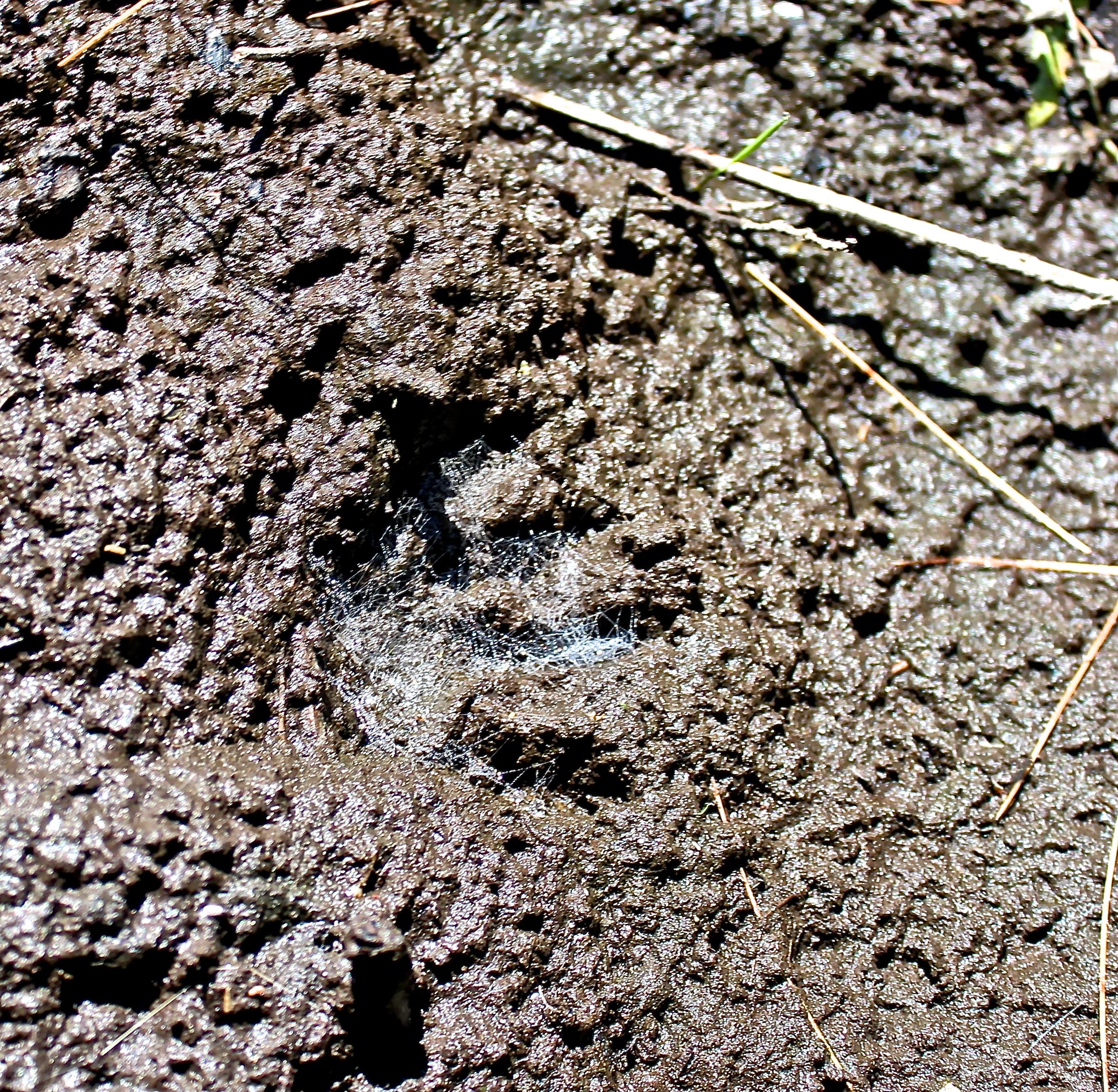
web in raccoon print

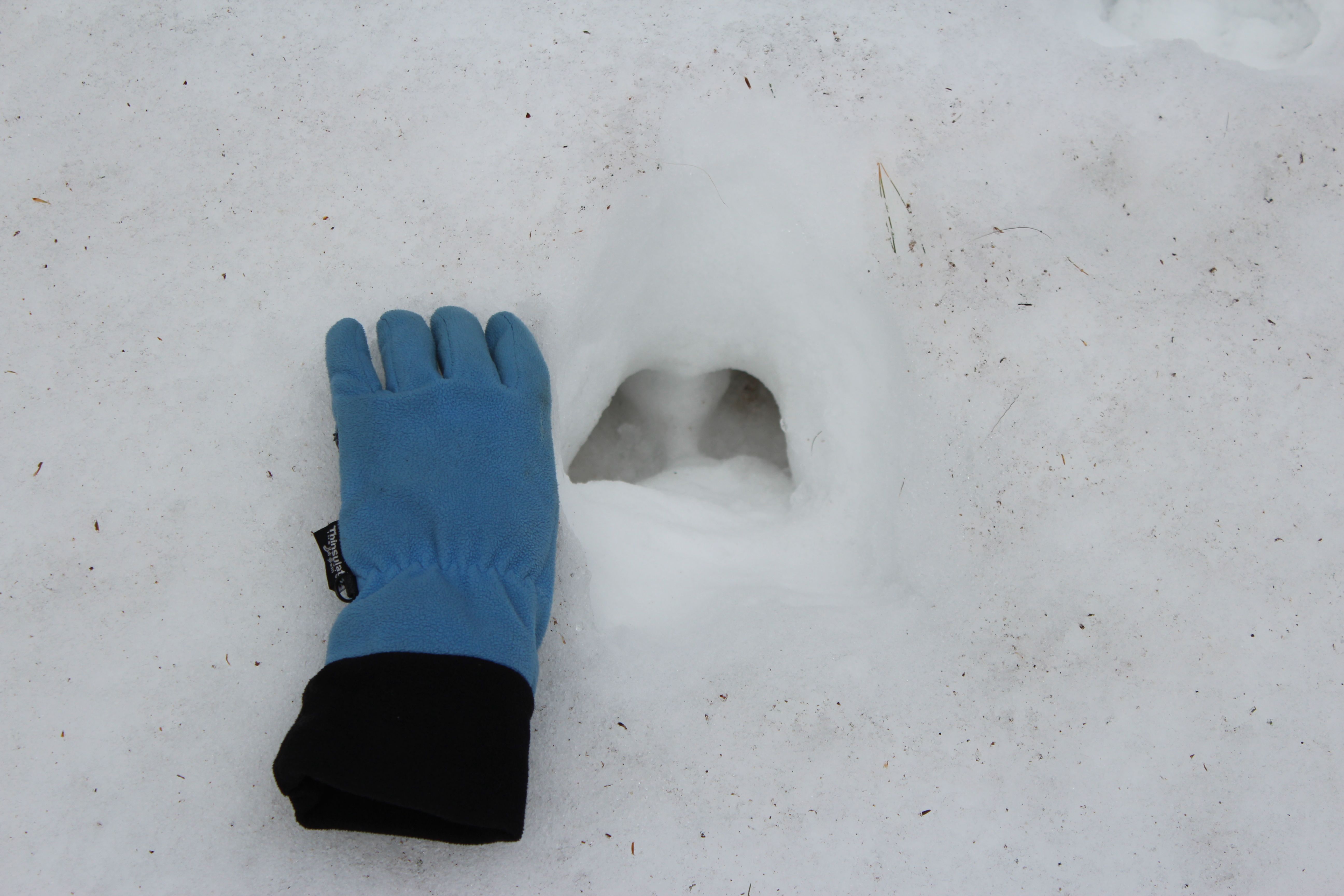
Inactive on the part of a beaver perhaps, but someone else passed by and left a baby-hand type print in the mud recently–or sorta recently.
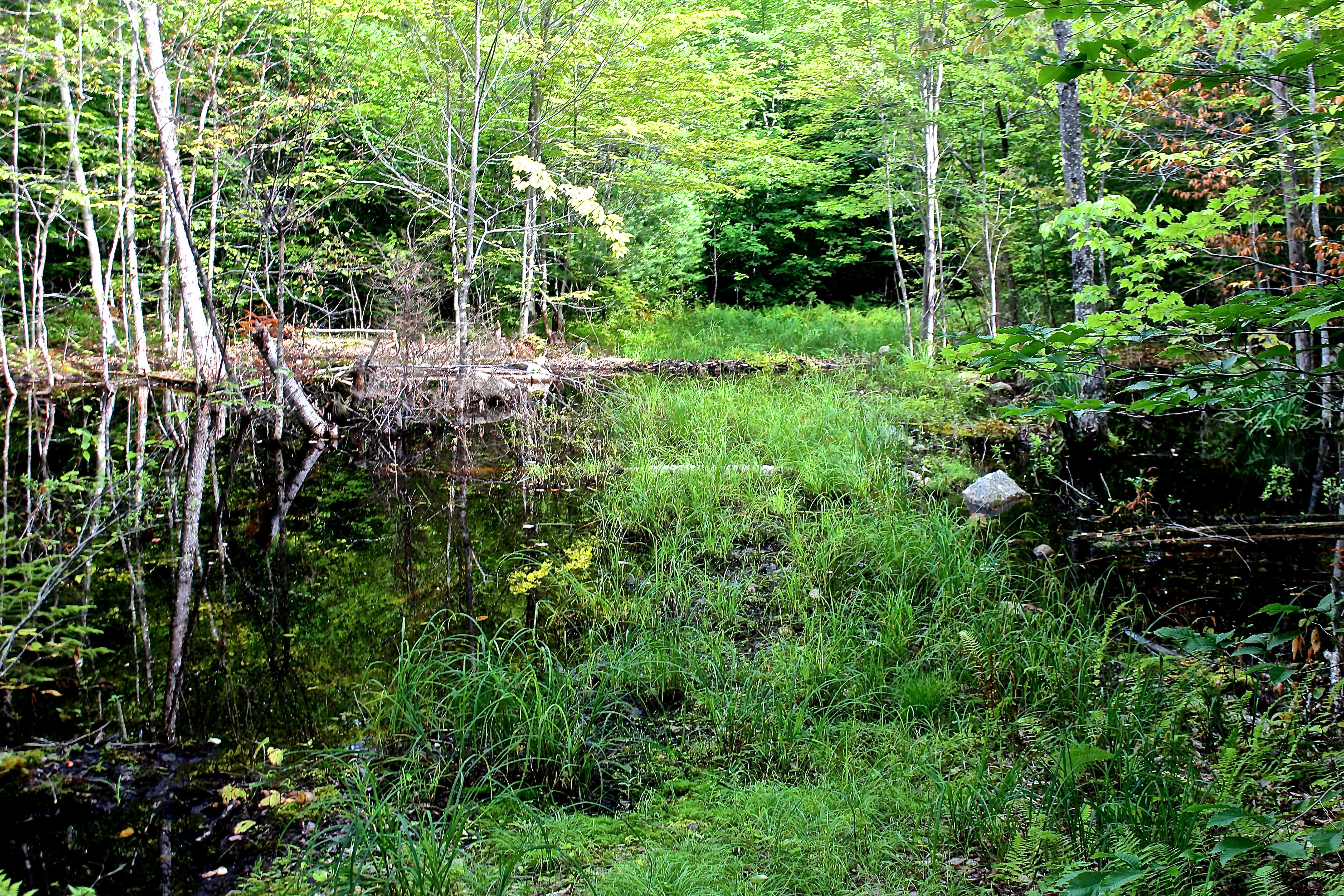
beaver works--walk around

The beavers moved on and changed things up elsewhere–one needs wellies in order to follow the straight line. We chose to go around.
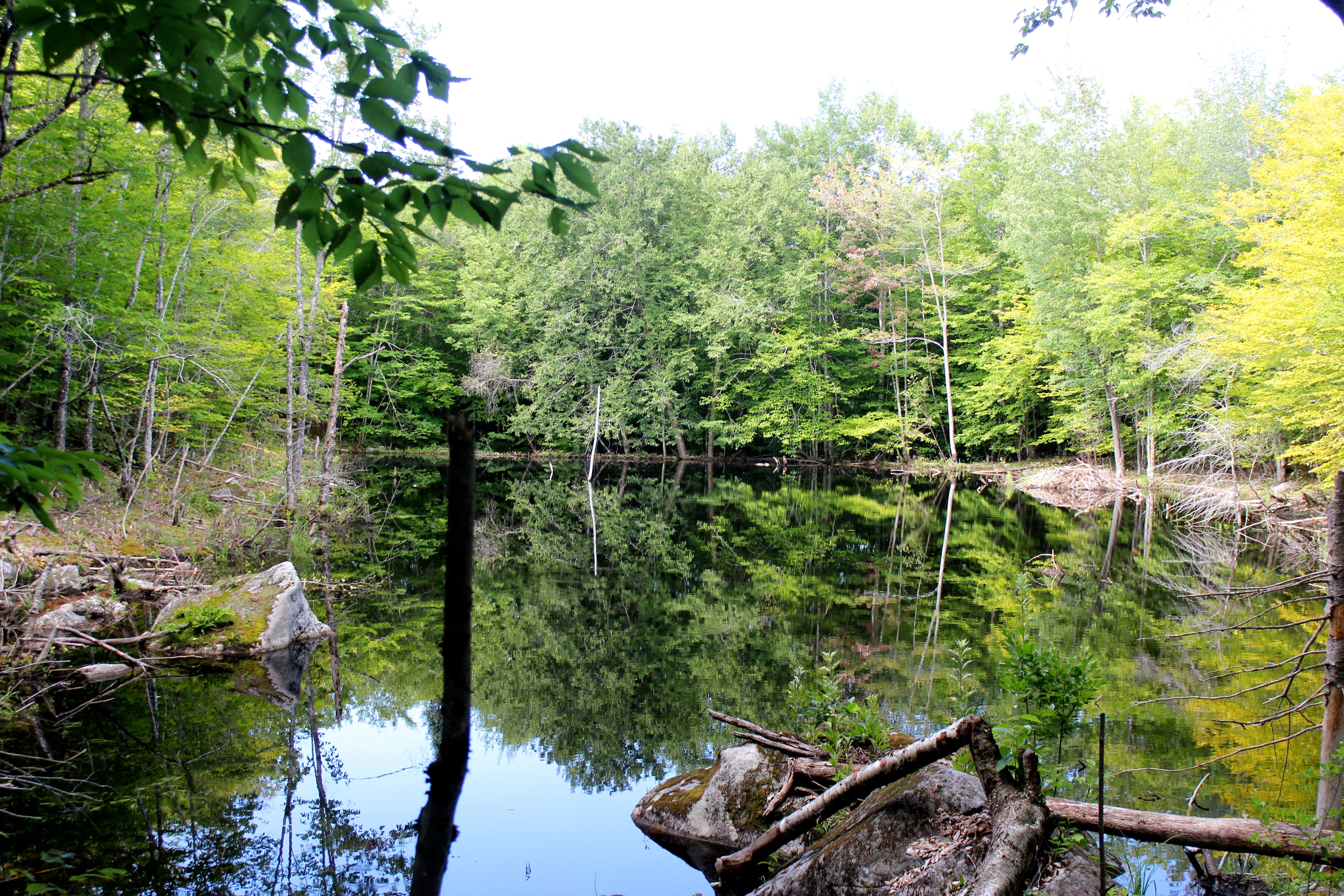
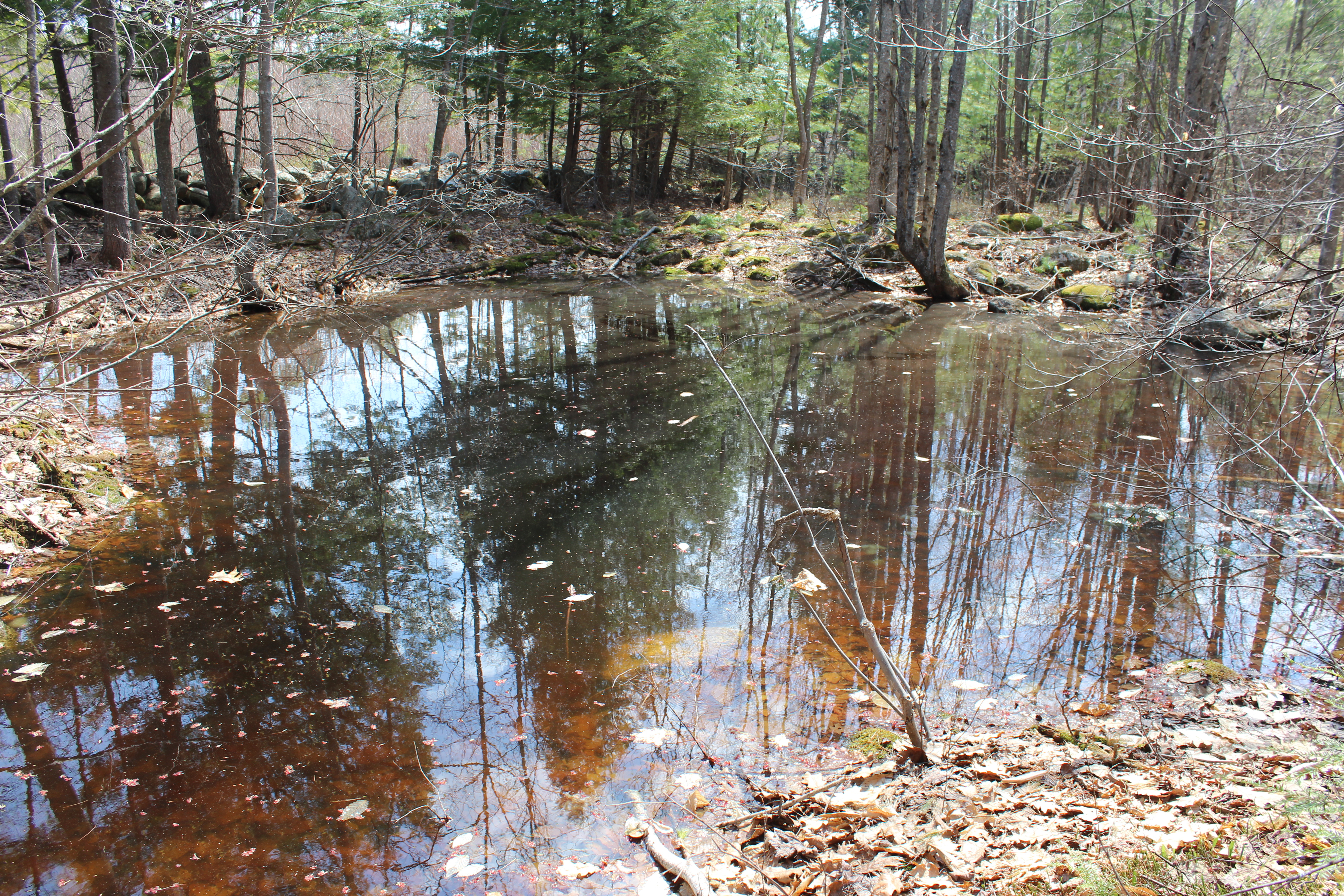
beaver pond

In the process, we got to see another beaver pond. They’re everywhere!

The landscape is constantly evolving. I used to think it took a hundred years for a forest to change–that belief founded on what a junior high school science teacher said. I now know a wee bit more–it’s all in a state of constant flux. I think the same can be said for us–growing and changing with the years–physically, mentally, emotionally, socially and spiritually.

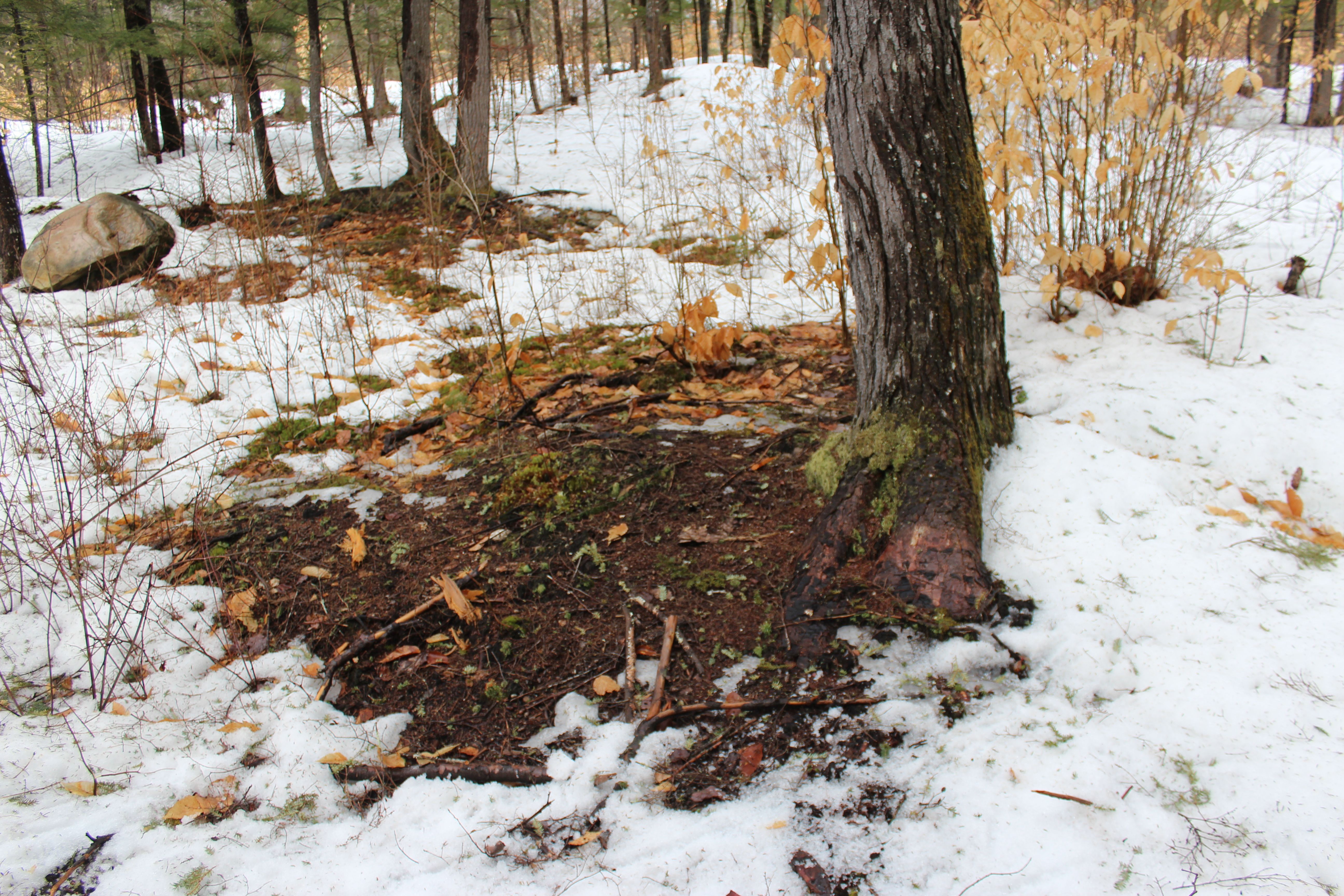
Off my soapbox–There are other fun things to see along this particular trail. I’ll only mention one–some bear sign. And yesterday morning, while placing a land trust sign on Route 5, I watched a young black bear cross the road–less than a mile from this trail and in a seemingly straight line with what we found today. I know that because of my X-Ray vision. (Disclaimer–what we found wasn’t created by the bear yesterday, but it shows evidence of a bear’s presence. Then again, there’s lots of bear sign in these woods.)

My guy was working and it’s been a while since I’ve gone on a solo trek, so I decided to journey on at another GLLT property–Flat Hill and Perky’s Path.
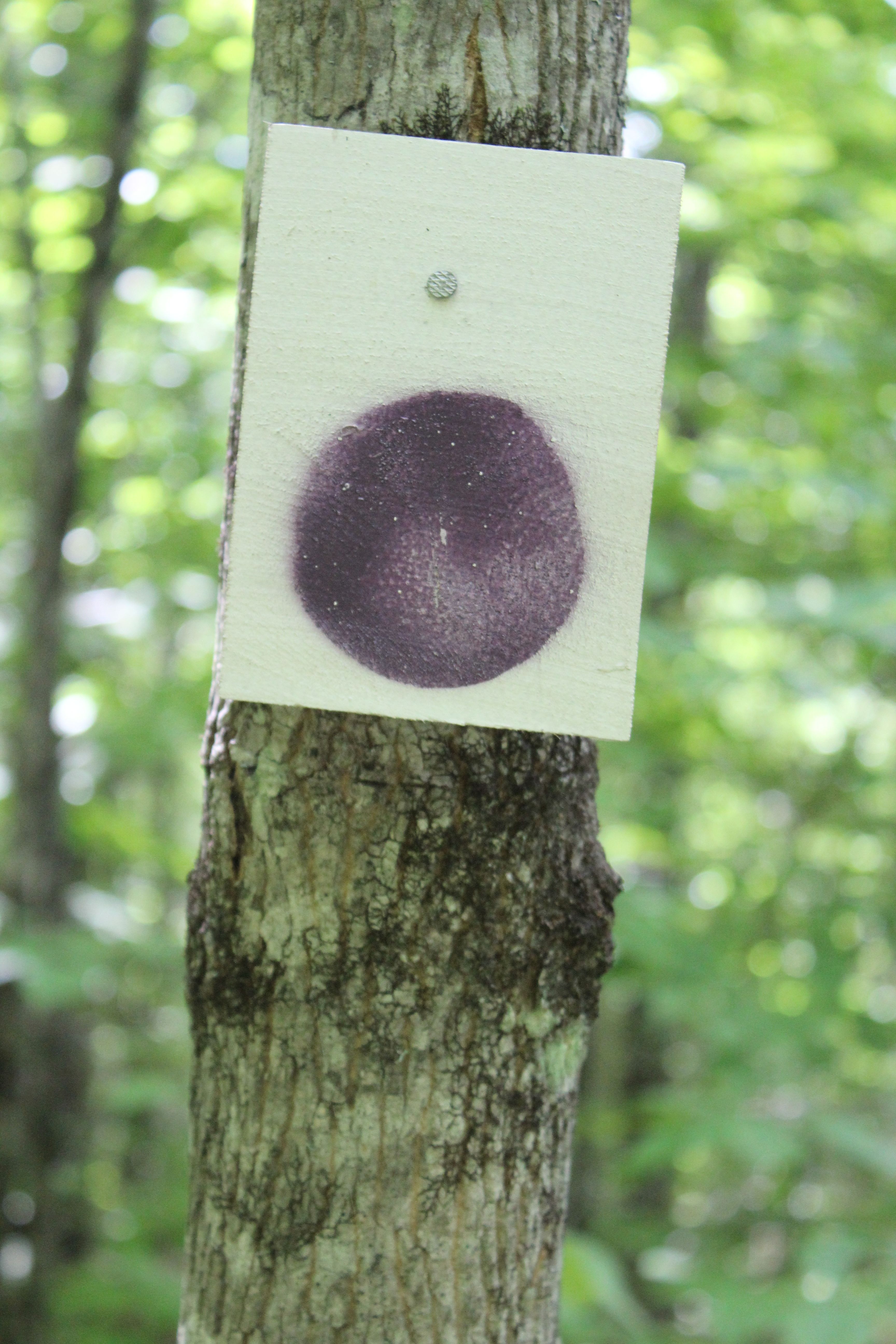
red-purple trail

I was on the purple trail to begin and surrounded by hues of green.
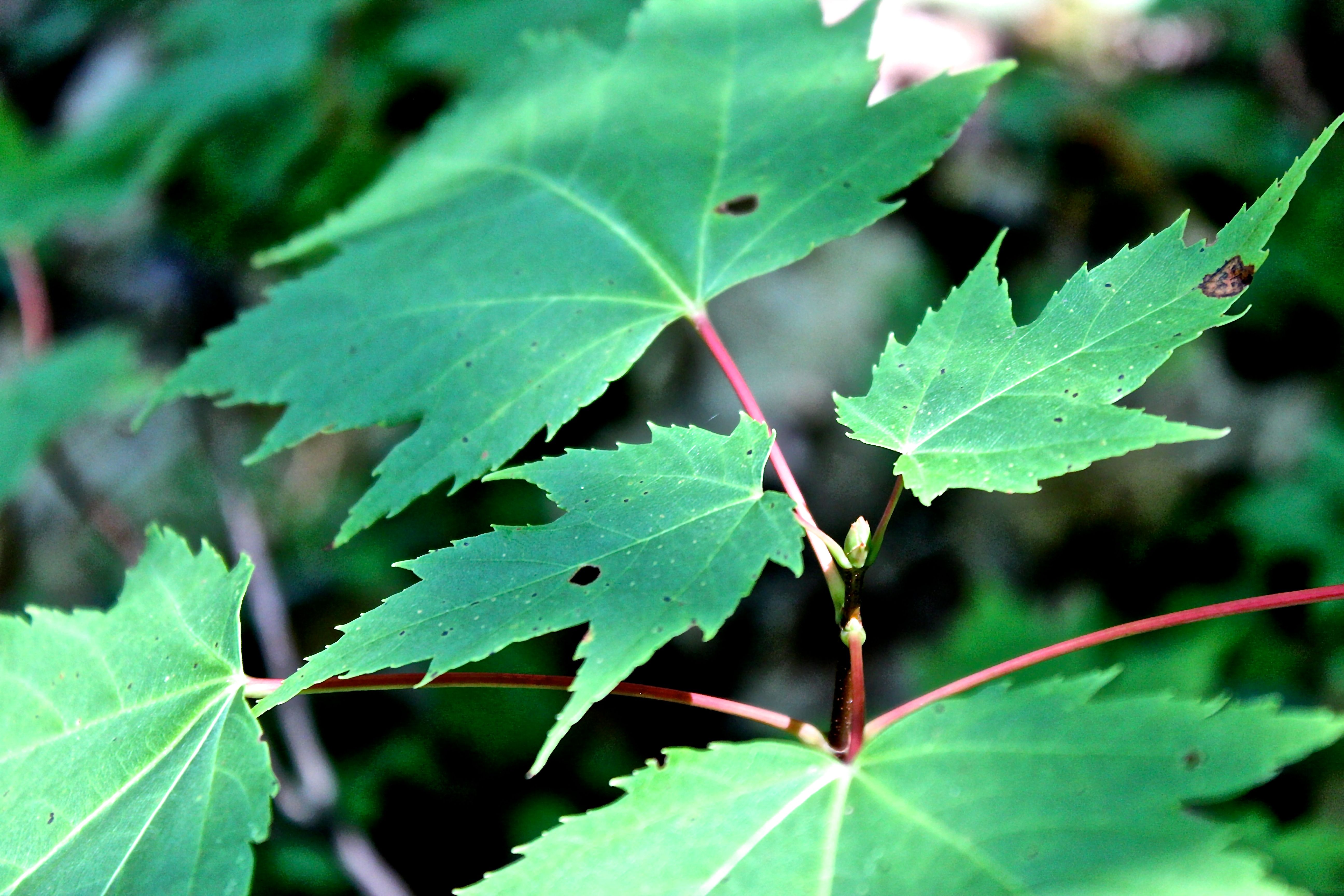
red maple stems 2

So shades of red like the stems of red maple leaves became my focus. They were subtle, but I was surprised with how many examples I found.
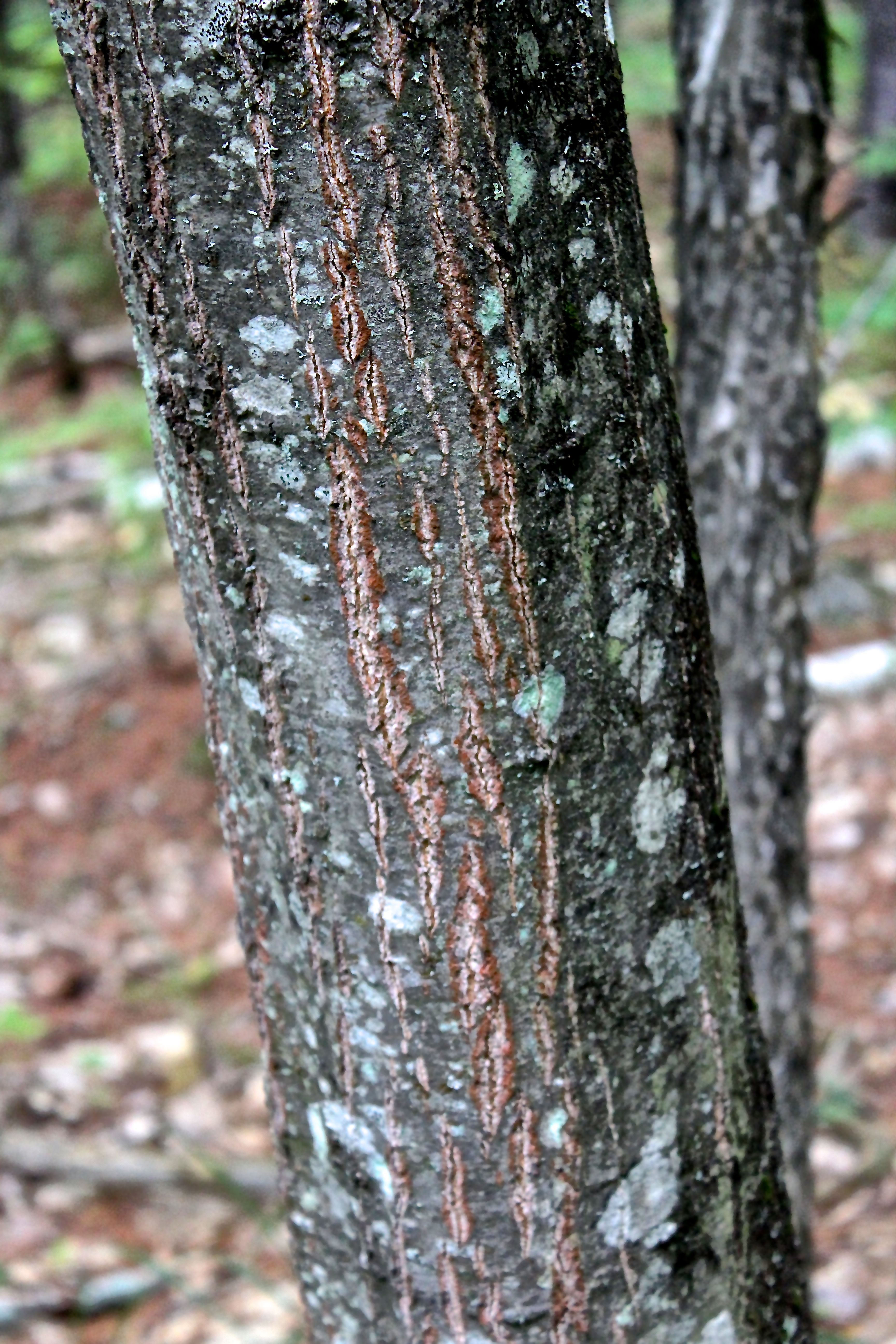
red oak

The salmon-colored inner bark of northern red oak.
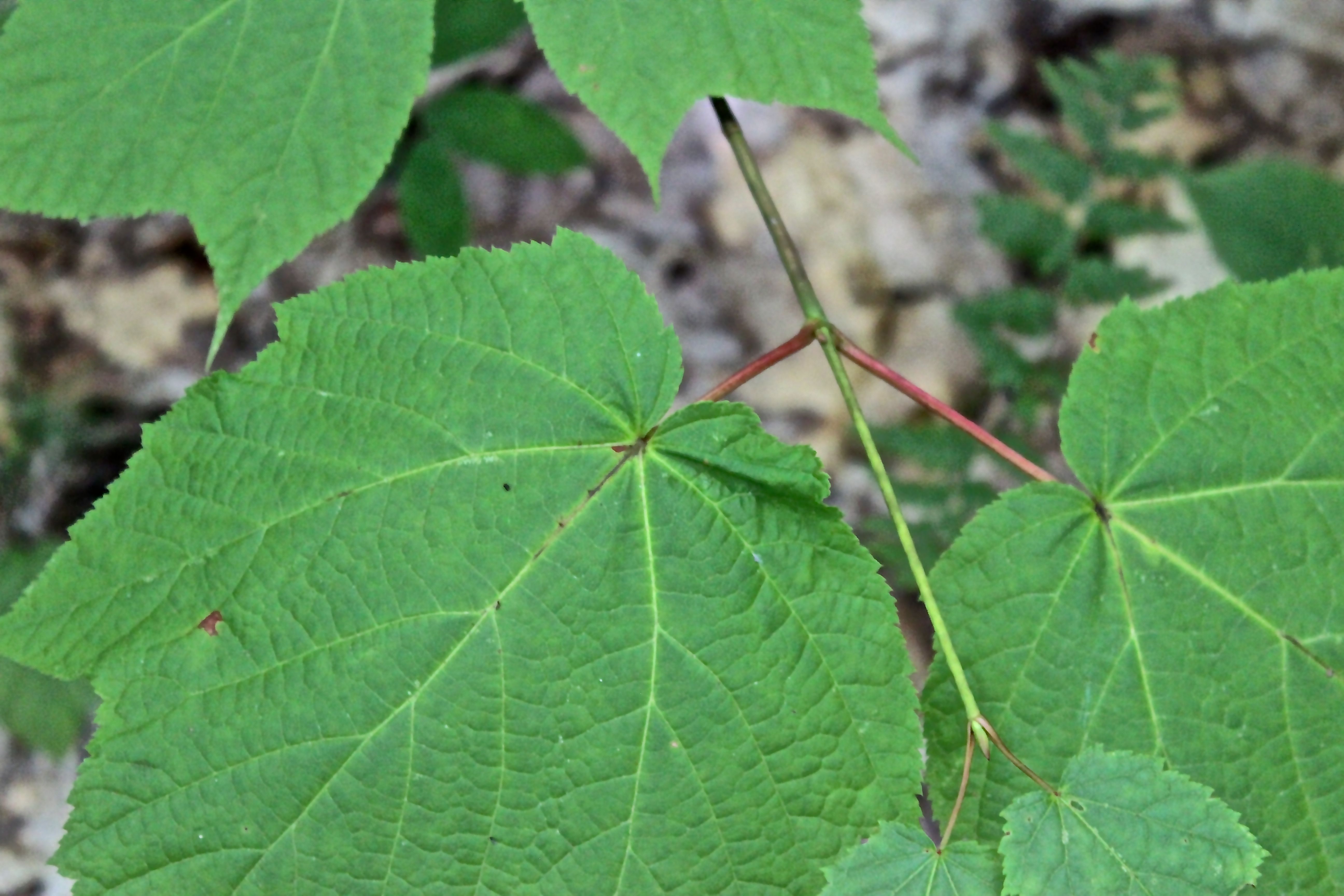
red striped maple

Striped maple leaf stems.

red sarsapirilla

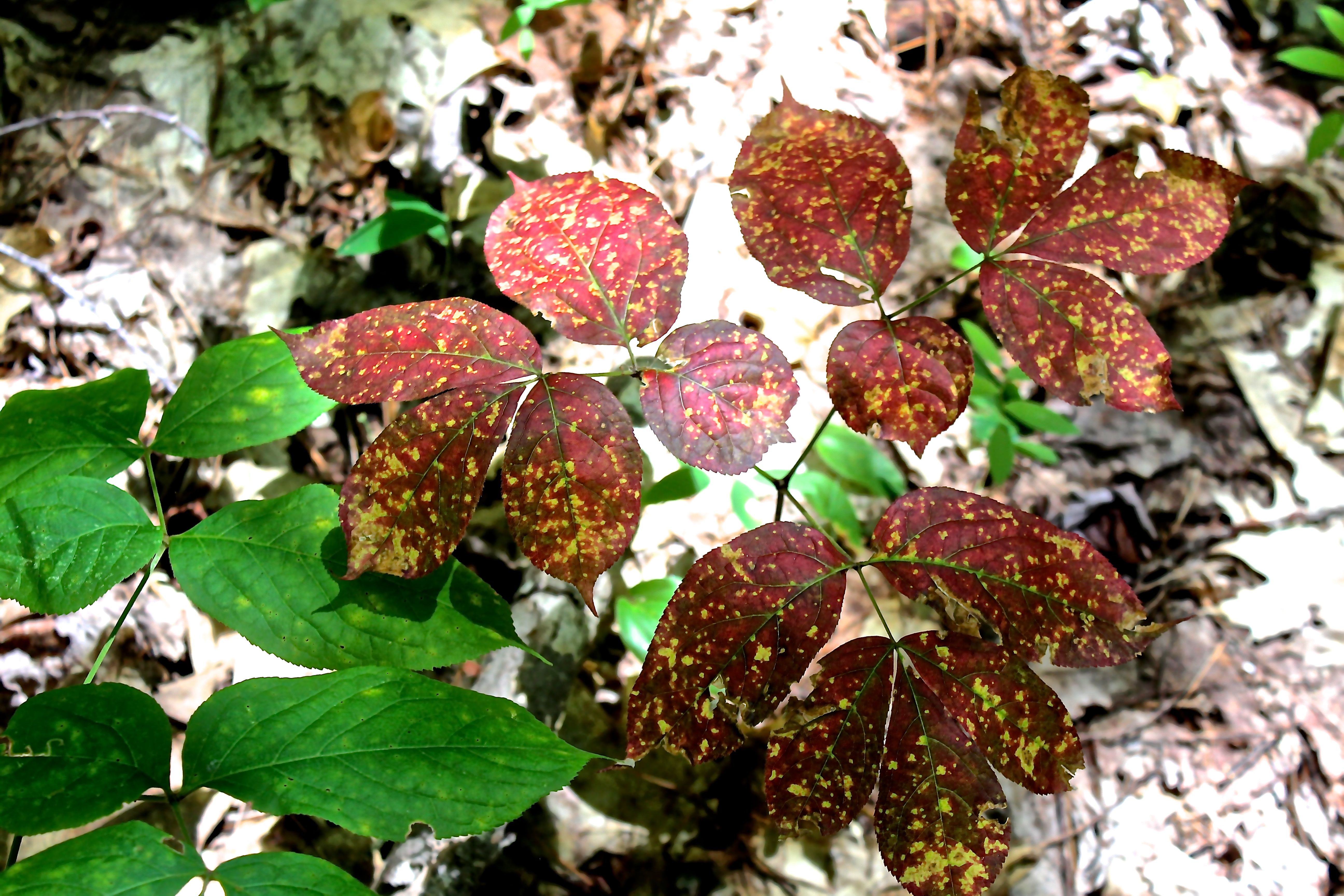
Wild sarsaparilla leaves.

red pinkish mushroom

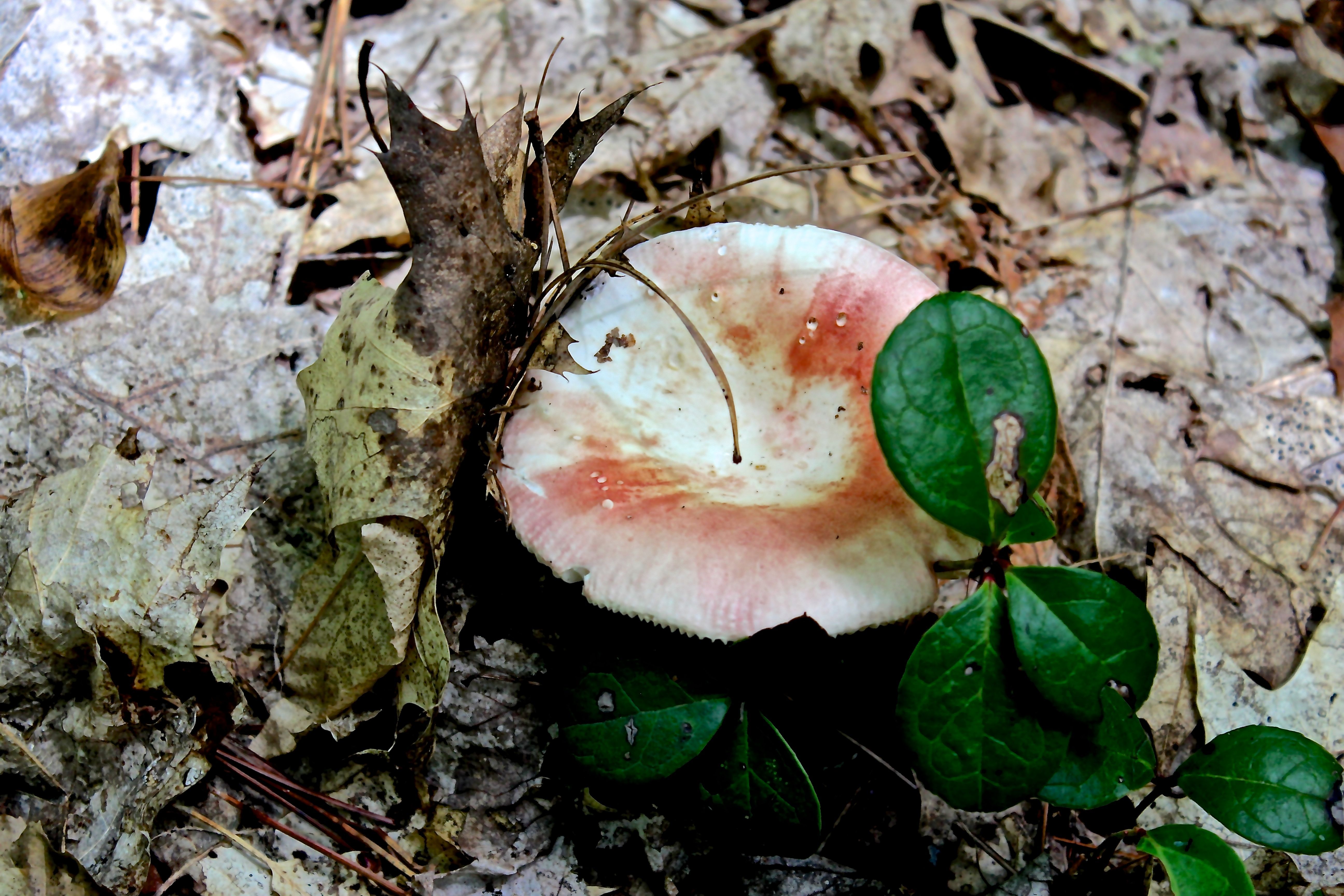
A Rusulla, I think.

red squirrel sign

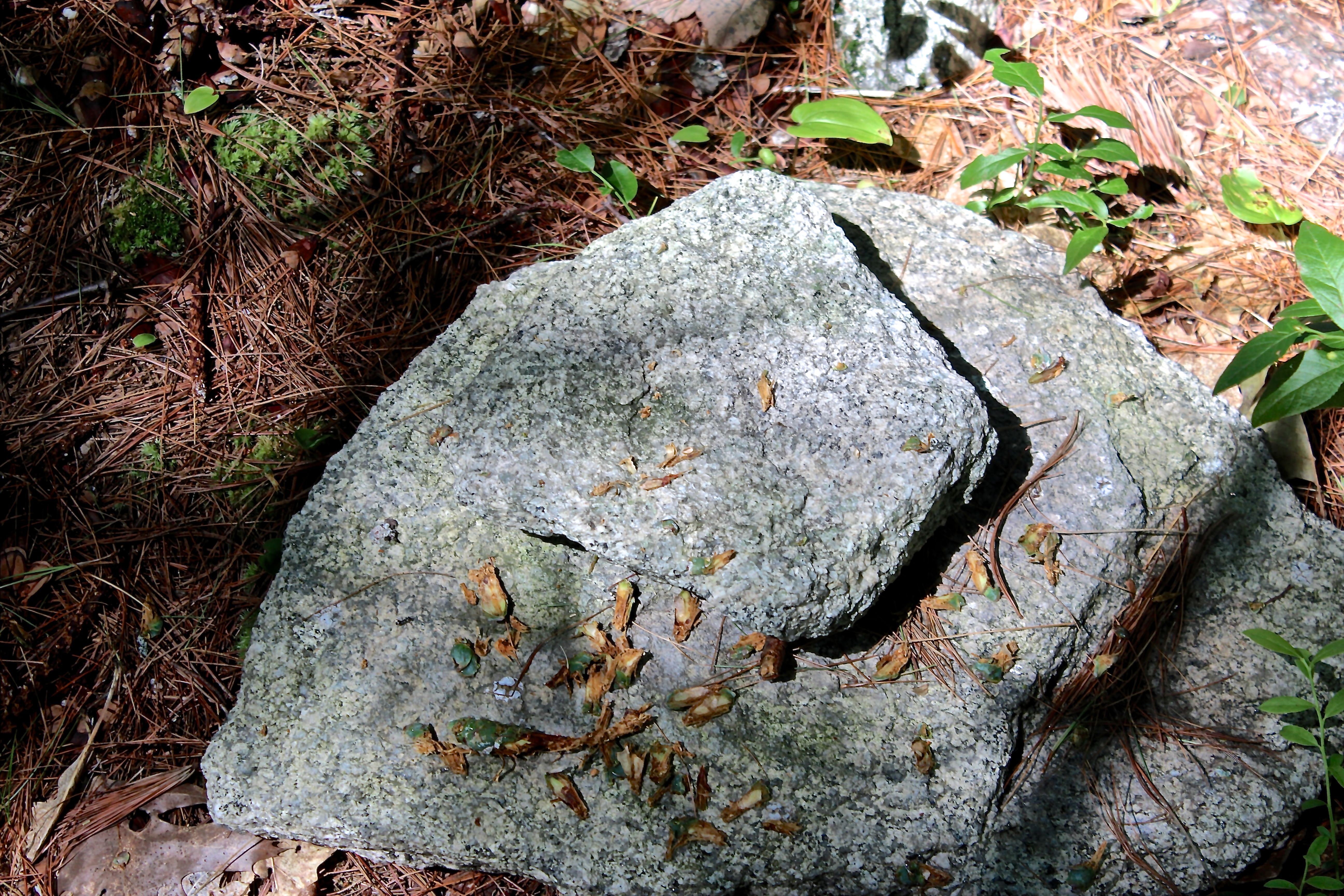
The kitchen table of a red squirrel.

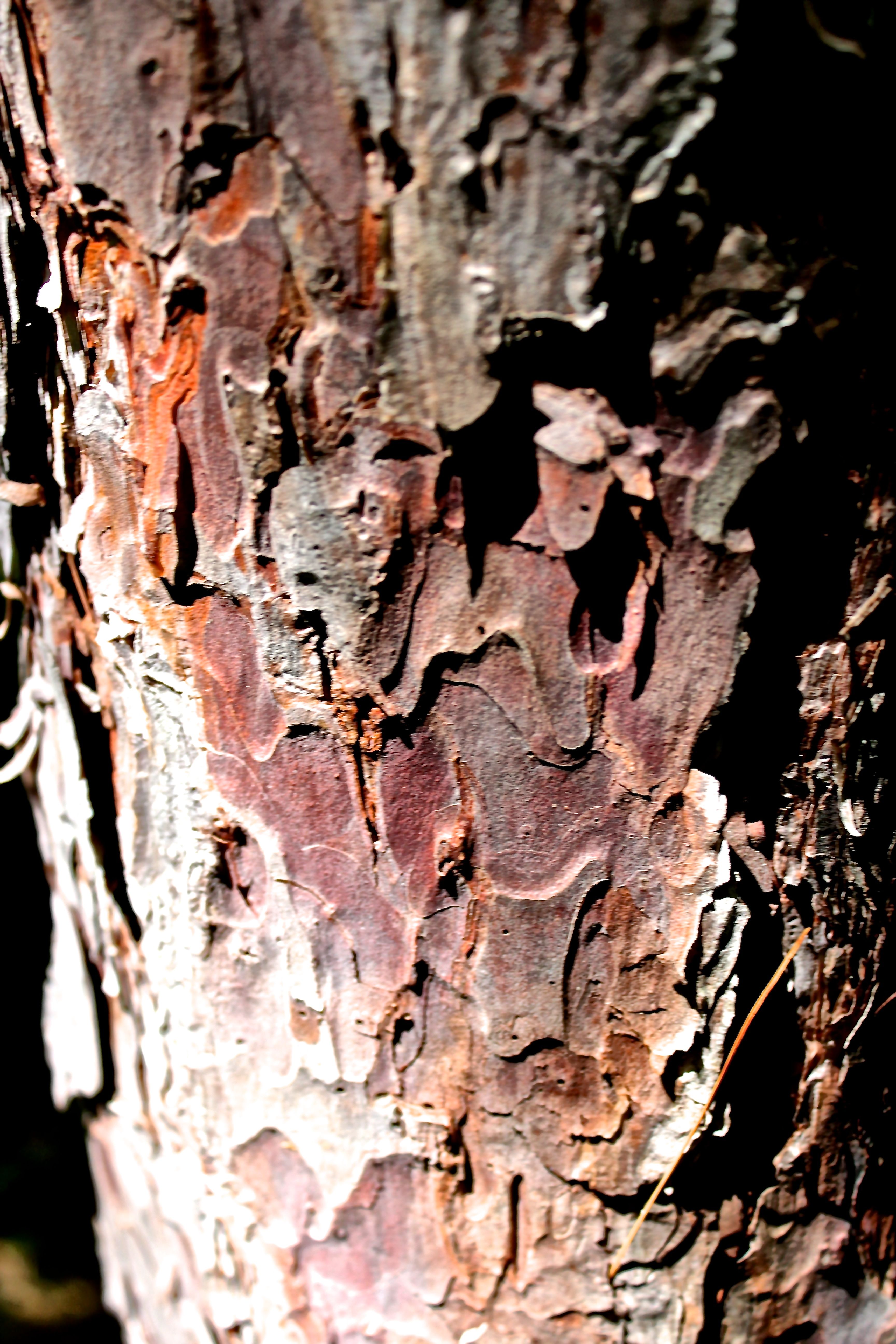
red pine bark

Sandstone-patterned red pine bark.

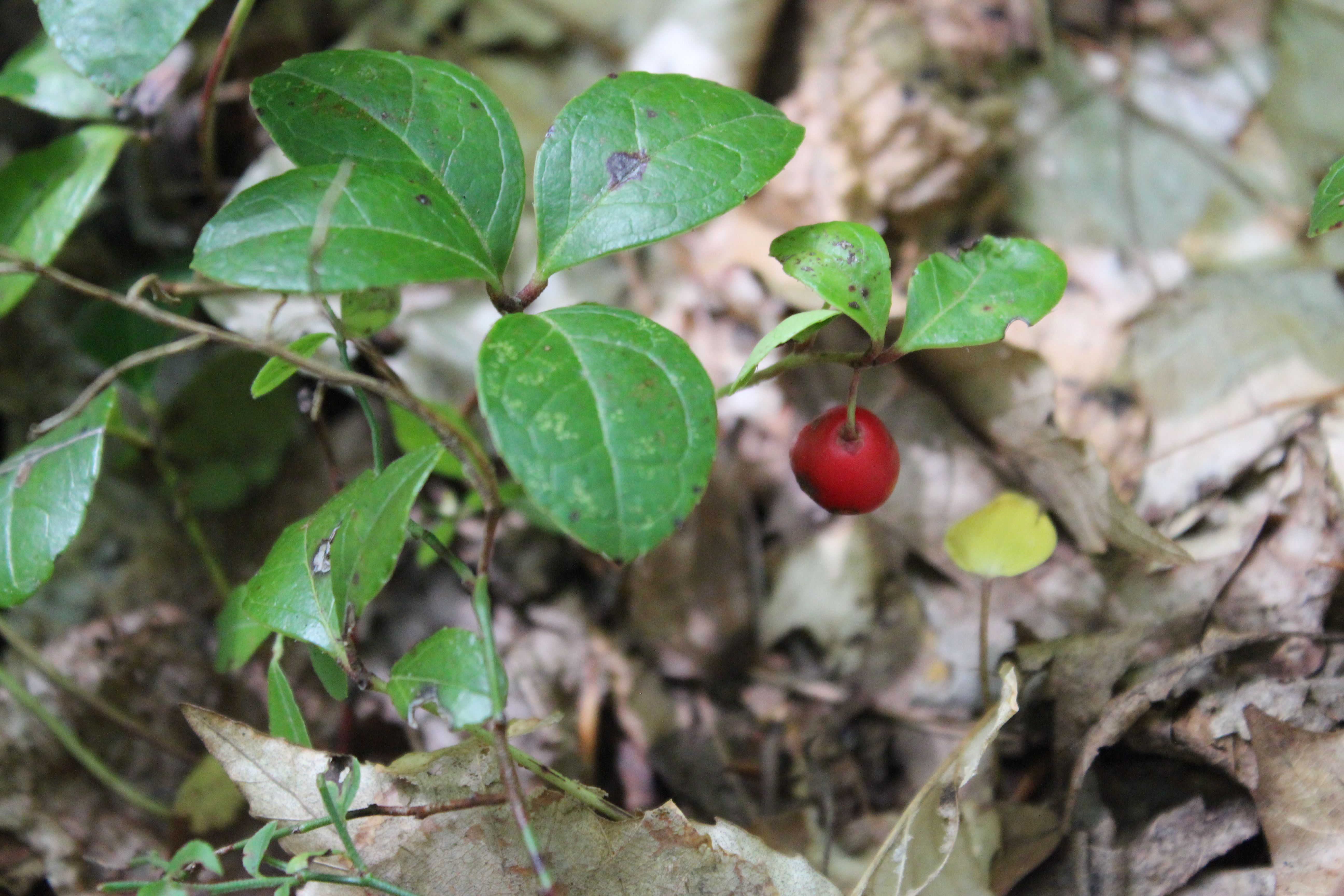
red wintergreen berry

Wintergreen berry  and

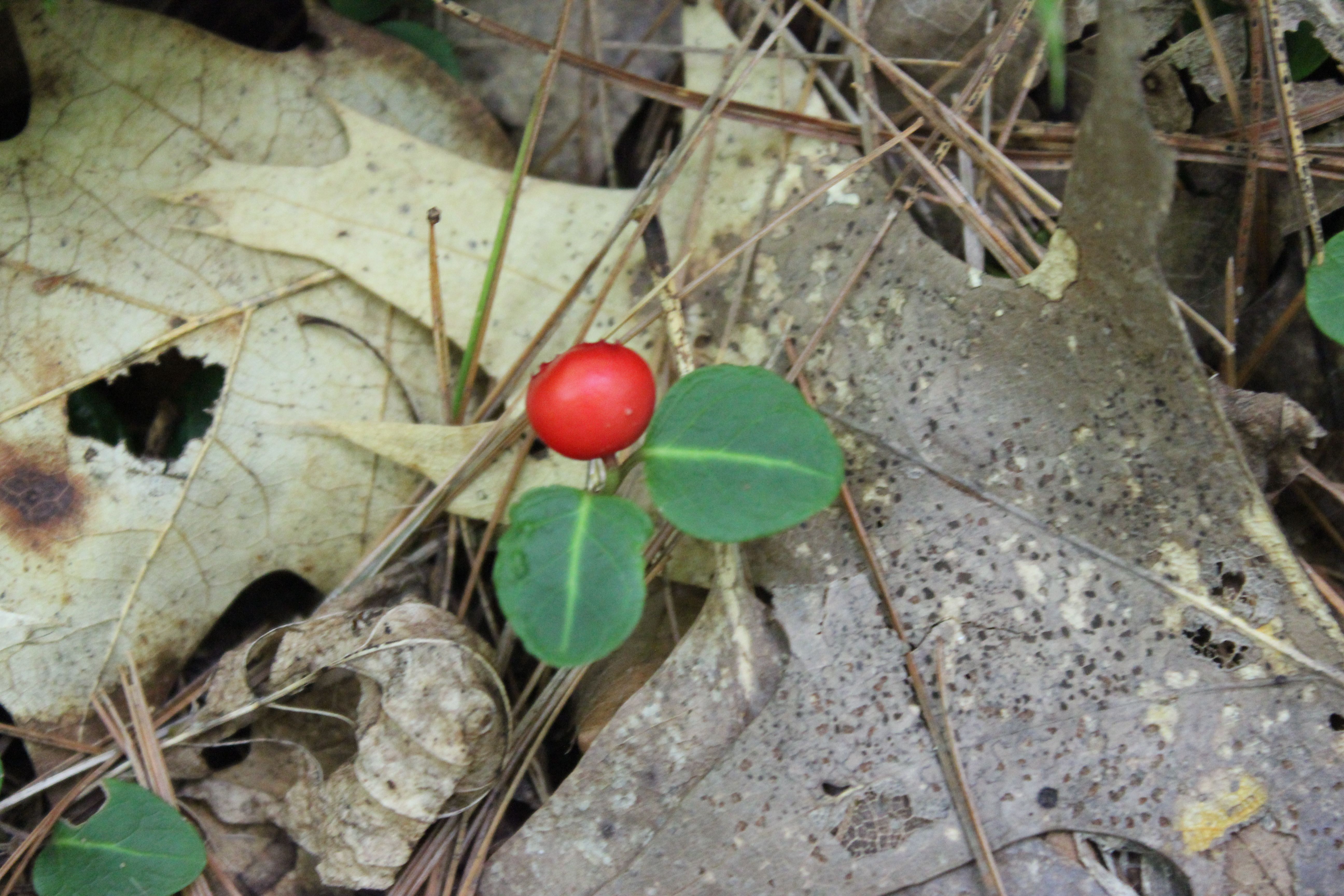
red-partridge berry

partridgeberry.

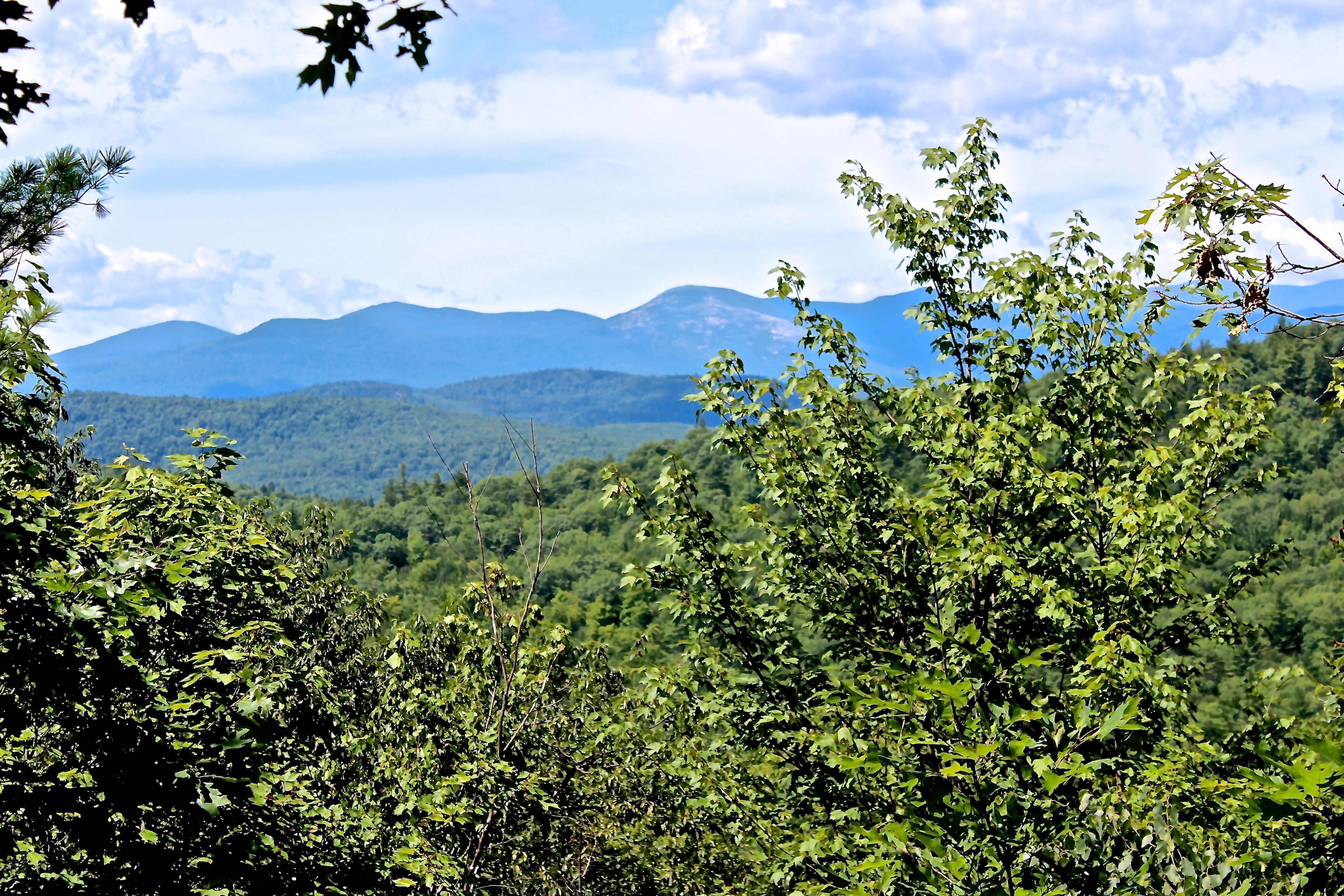
Flat Hill view

Not red at this moment, but home to many a red sunset, the view from the summit of Flat Hill. Don’t you love an oxymoron?
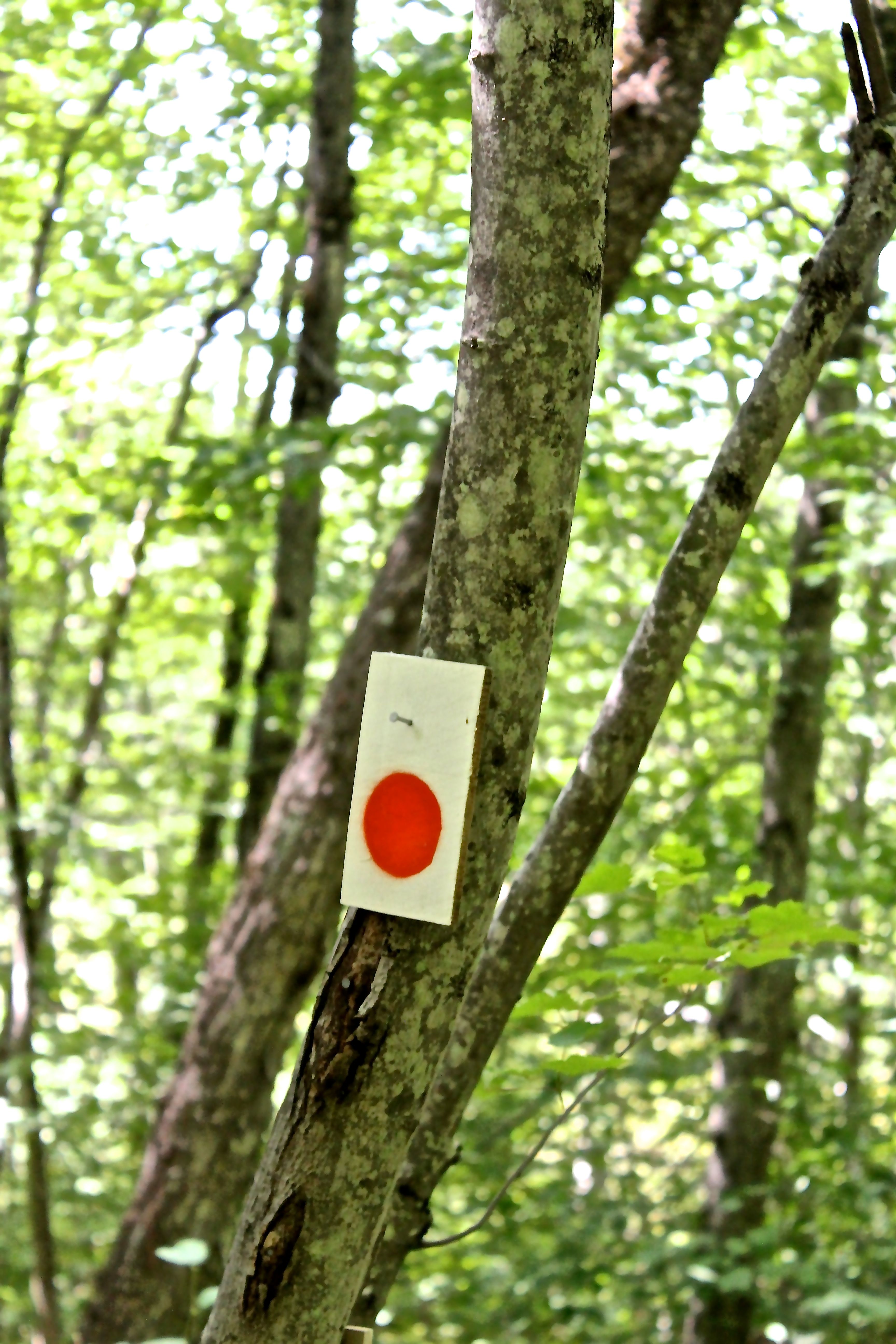
orange trail

Following the orange trail of Perky’s Path provided more shades of red.
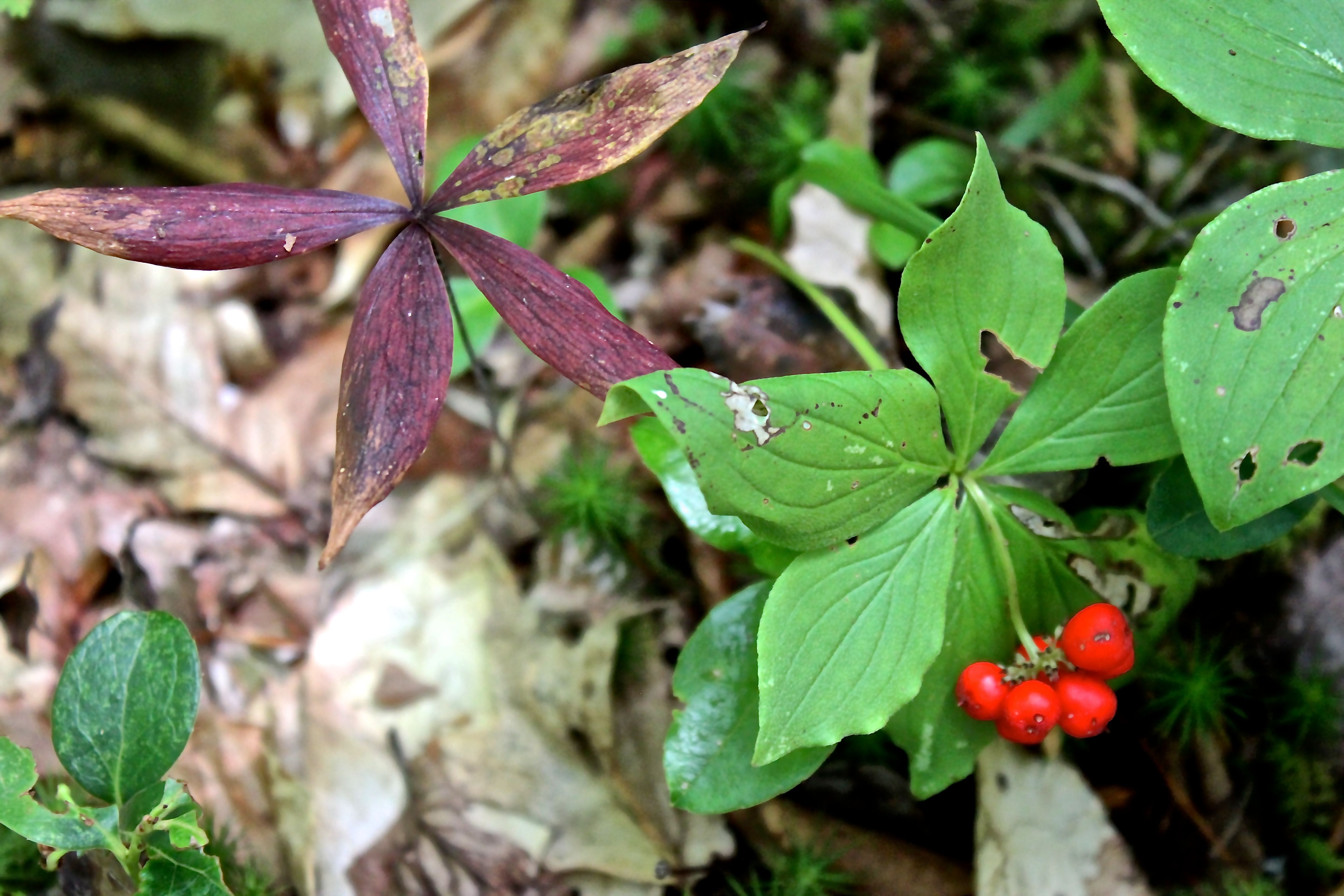
red bunchberry, starflower leaves

A whorl of starflower leaves and bunchberry fruits.
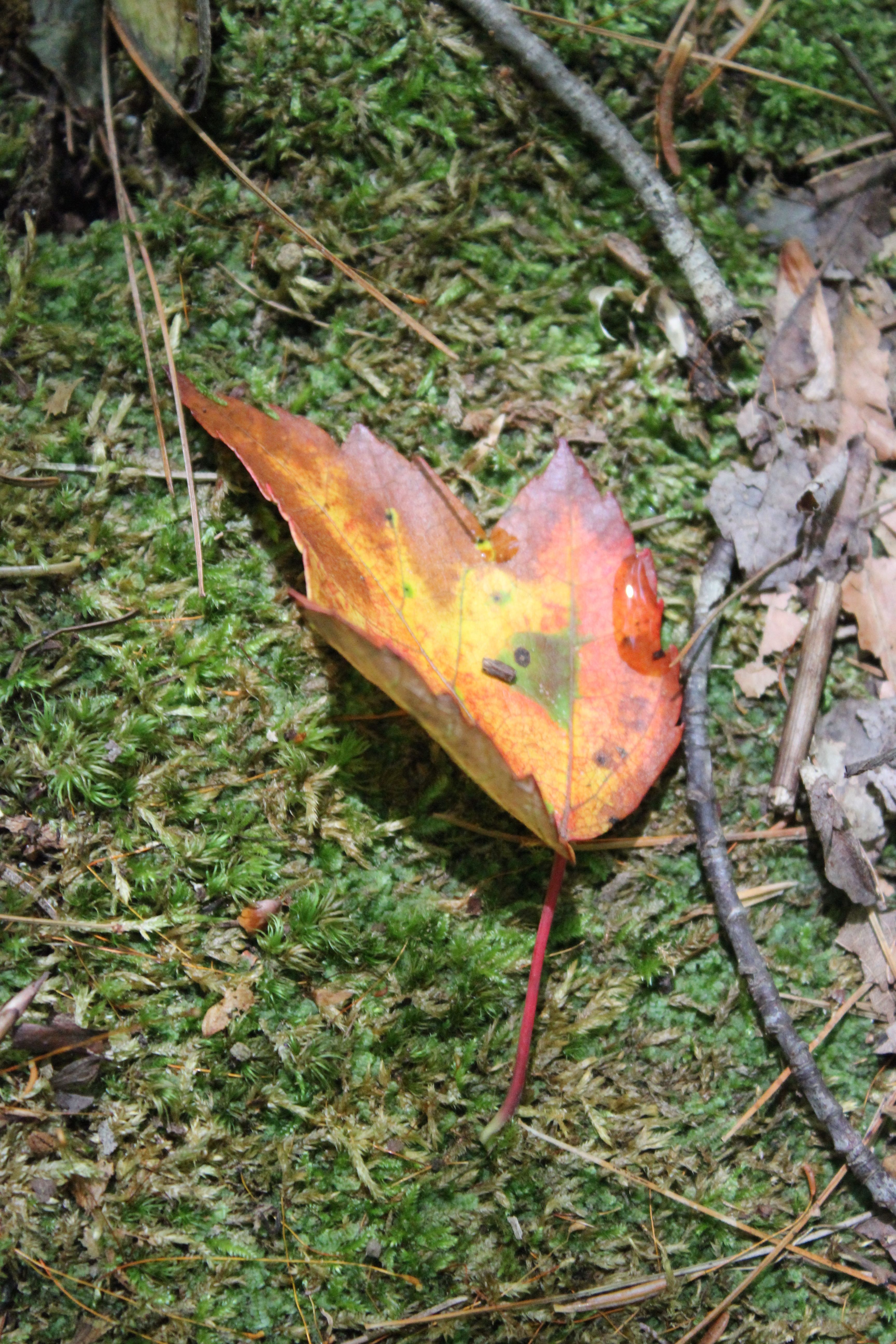
red maple leaf on ground

A single red maple leaf.

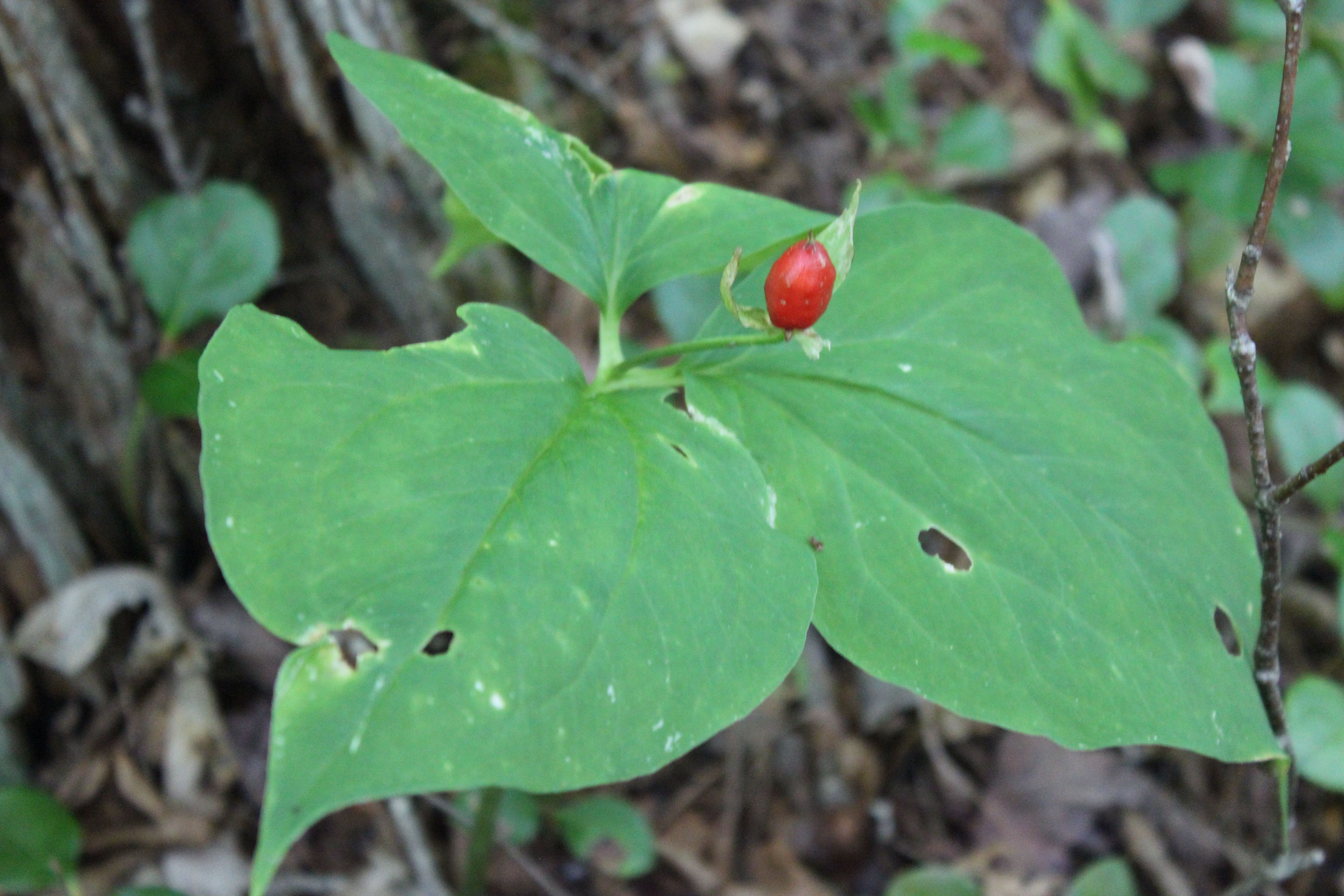
red trillium 3

The fruit of a trillium.

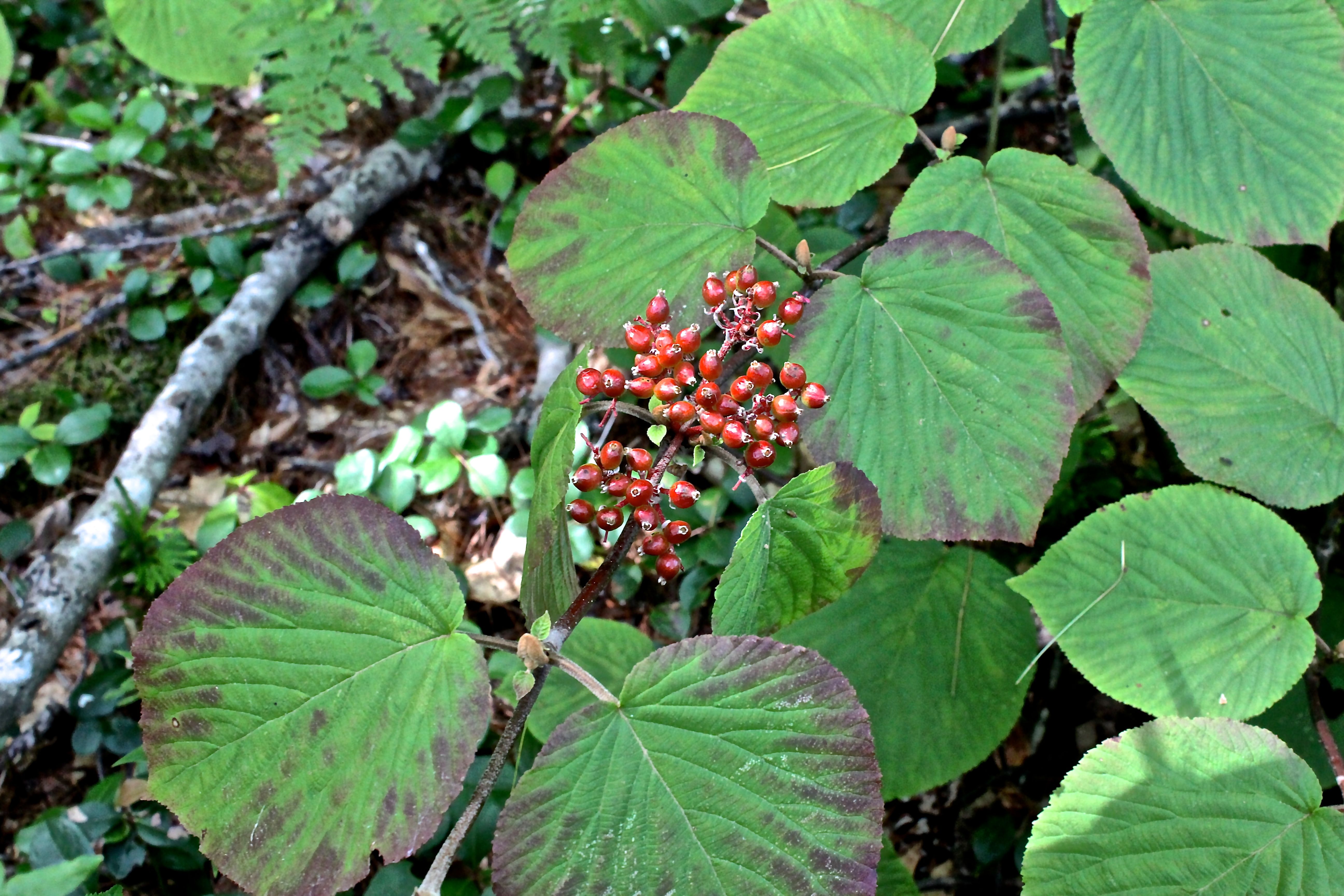
red hobblebush

And hobblebush leaves and fruit.

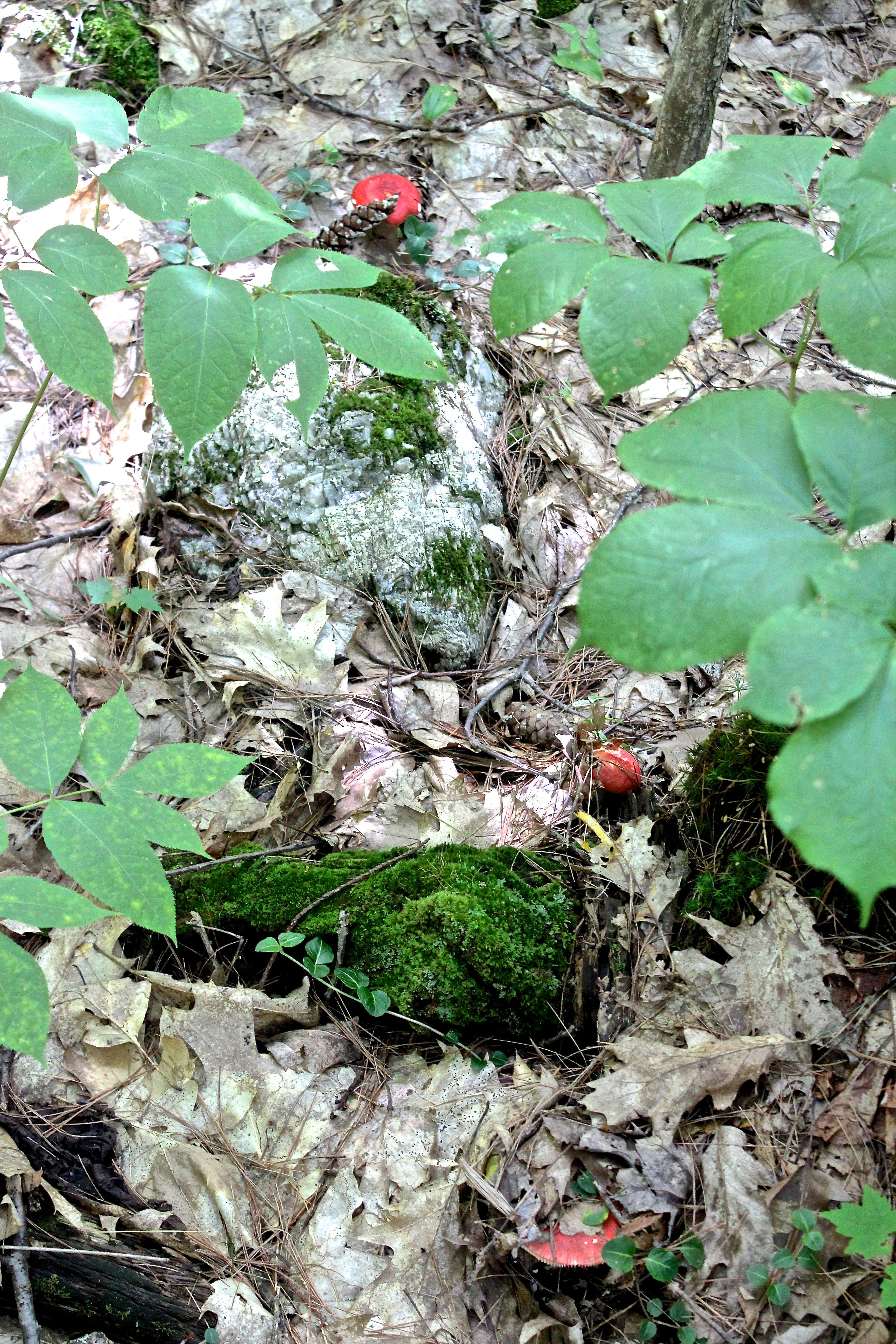
red-mushrooms emerging

More Russulas emerge, displaying their red caps.
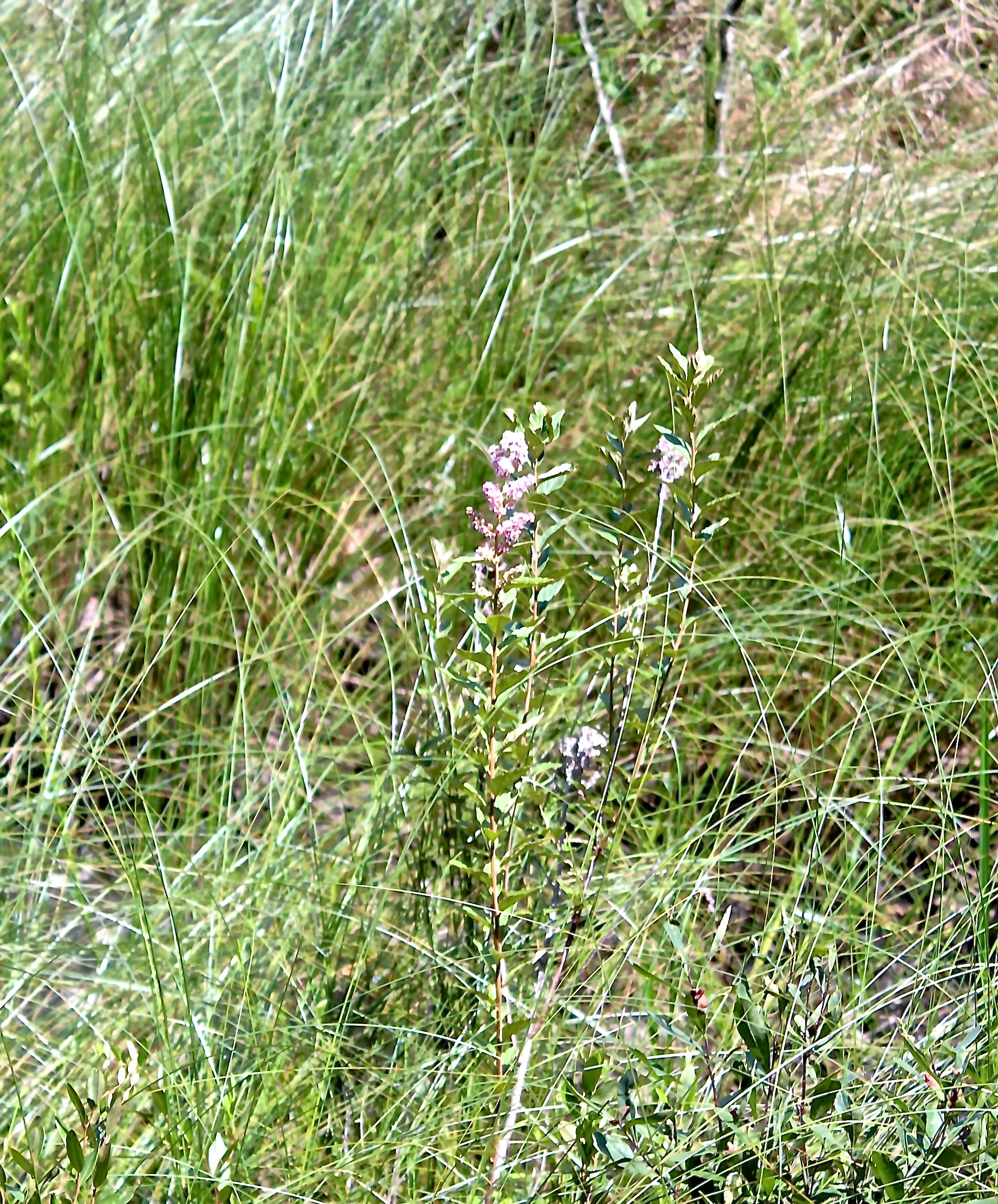
Steeplebush

And finally, a pink steeplebush.

Though my eyes were fixated on red, I did see a few other things.
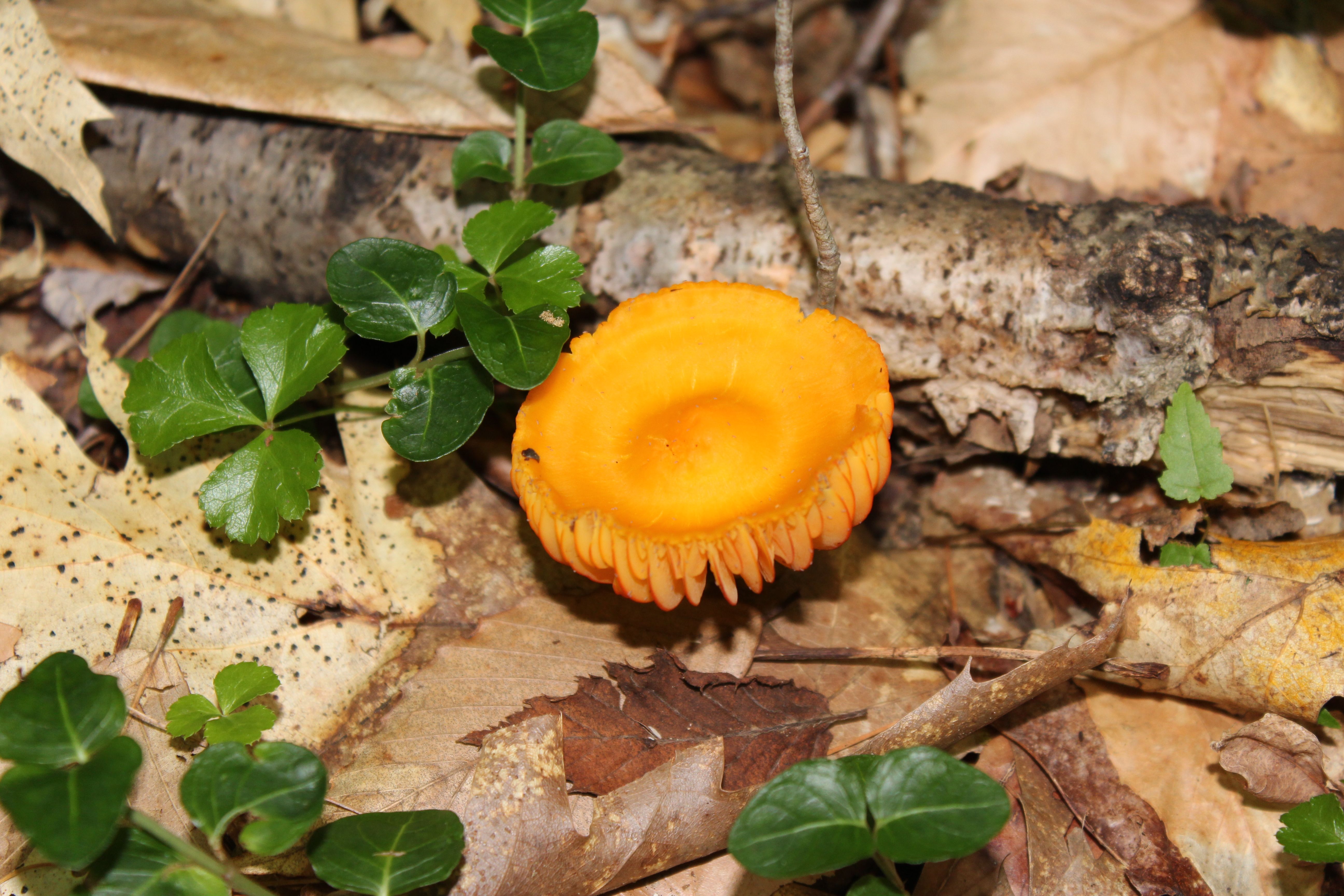
yellow mushroom

A yellow Russula. (Hope my partial ID is at least partially correct.)
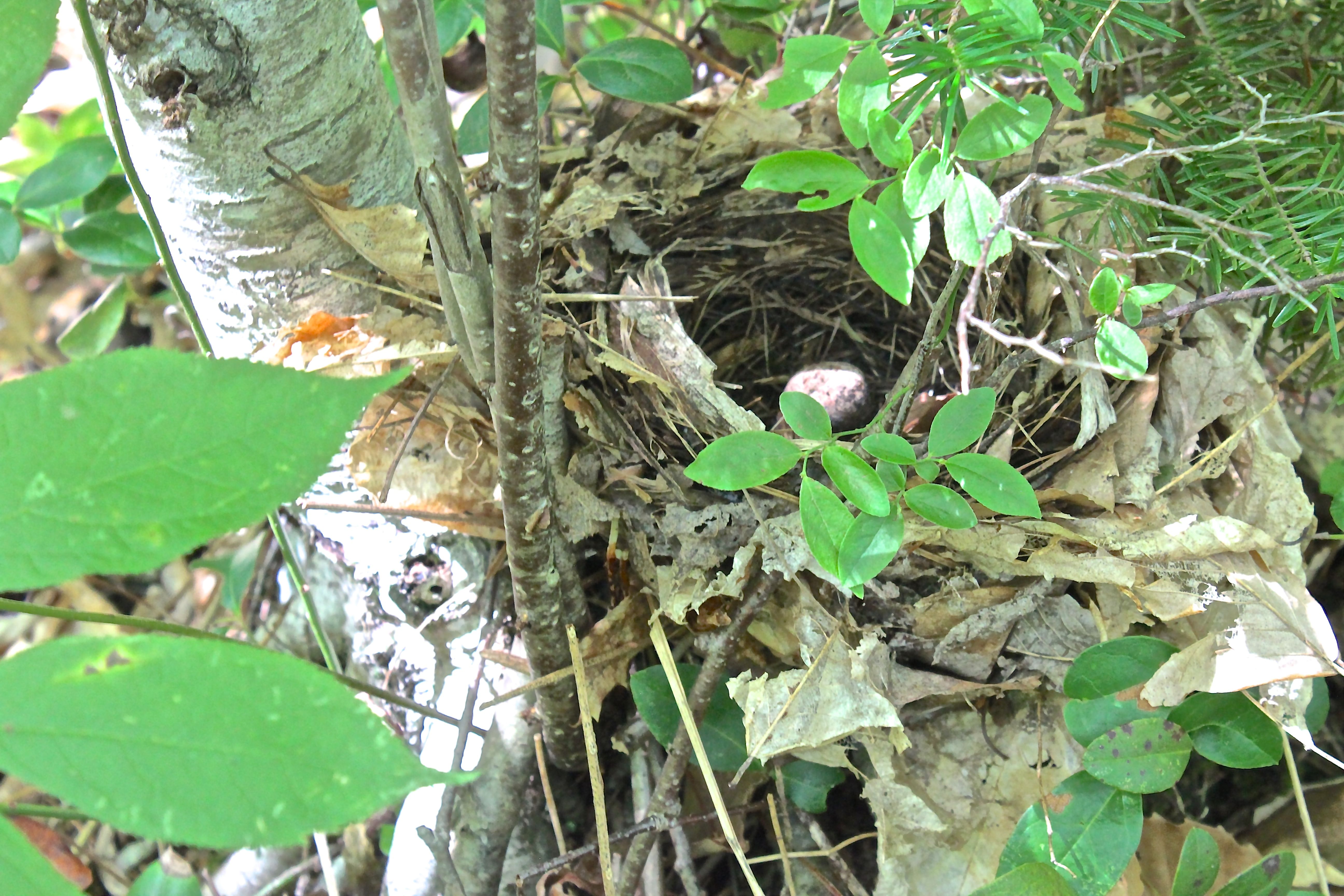
bird's nest

A leaf and twig bird nest tucked against the tree trunk. Surely, someone can help me ID the creator of this masterpiece.
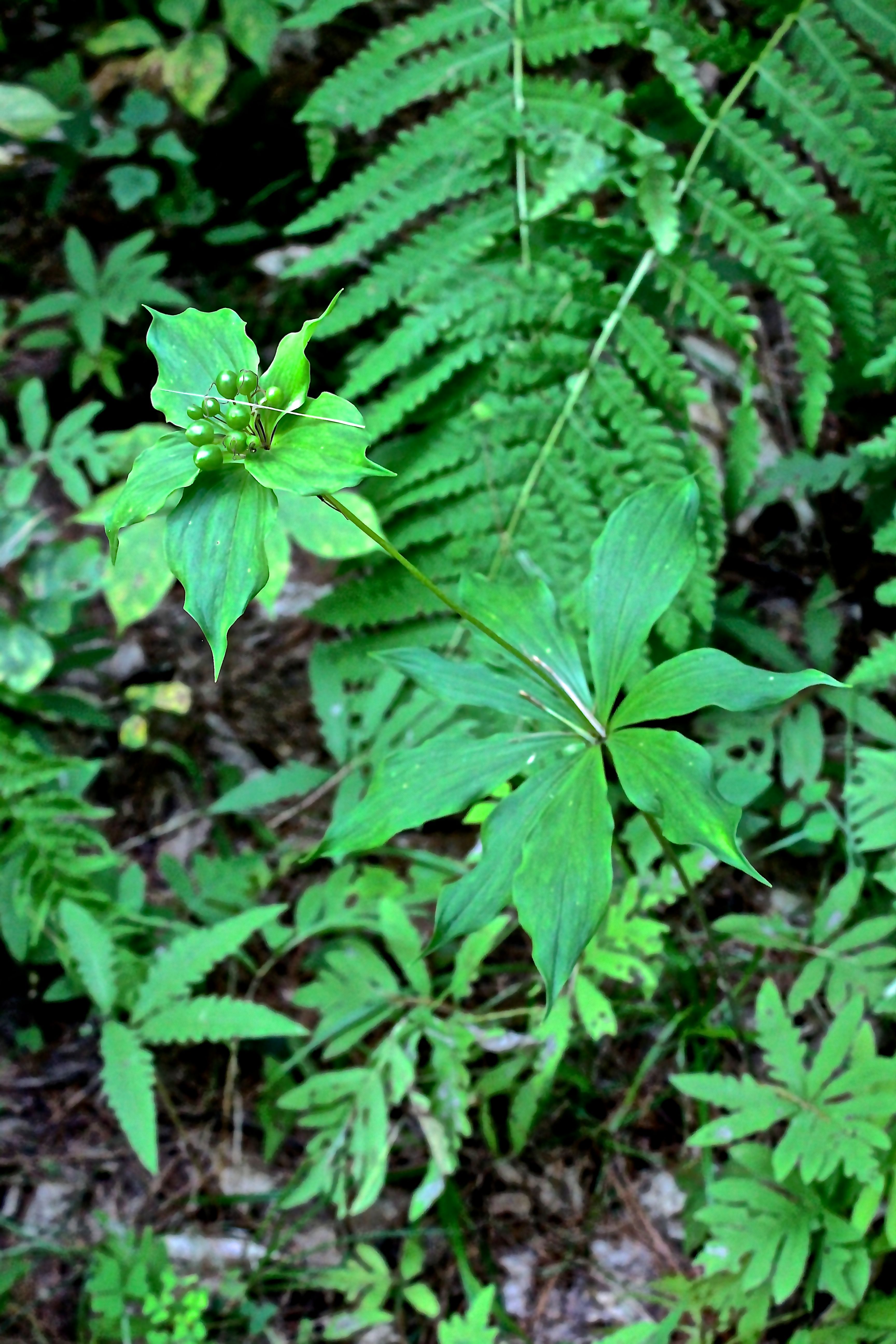
Indian Cucumber root

And the world’s largest Indian cucumber root. Soon those berries will turn red.

I thoroughly enjoyed today’s wander through rose-colored glasses. Thanks for coming along.

Sweet Treat Mondate

My guy and I have been overdue for our favorite kind of Mondate, so today we rose to the task. Our intention had been to depart at 7:30, but it was closer to 8am before we were out the door.

notch

Following Route 302 through Crawford Notch, the clouds were rather ominous.

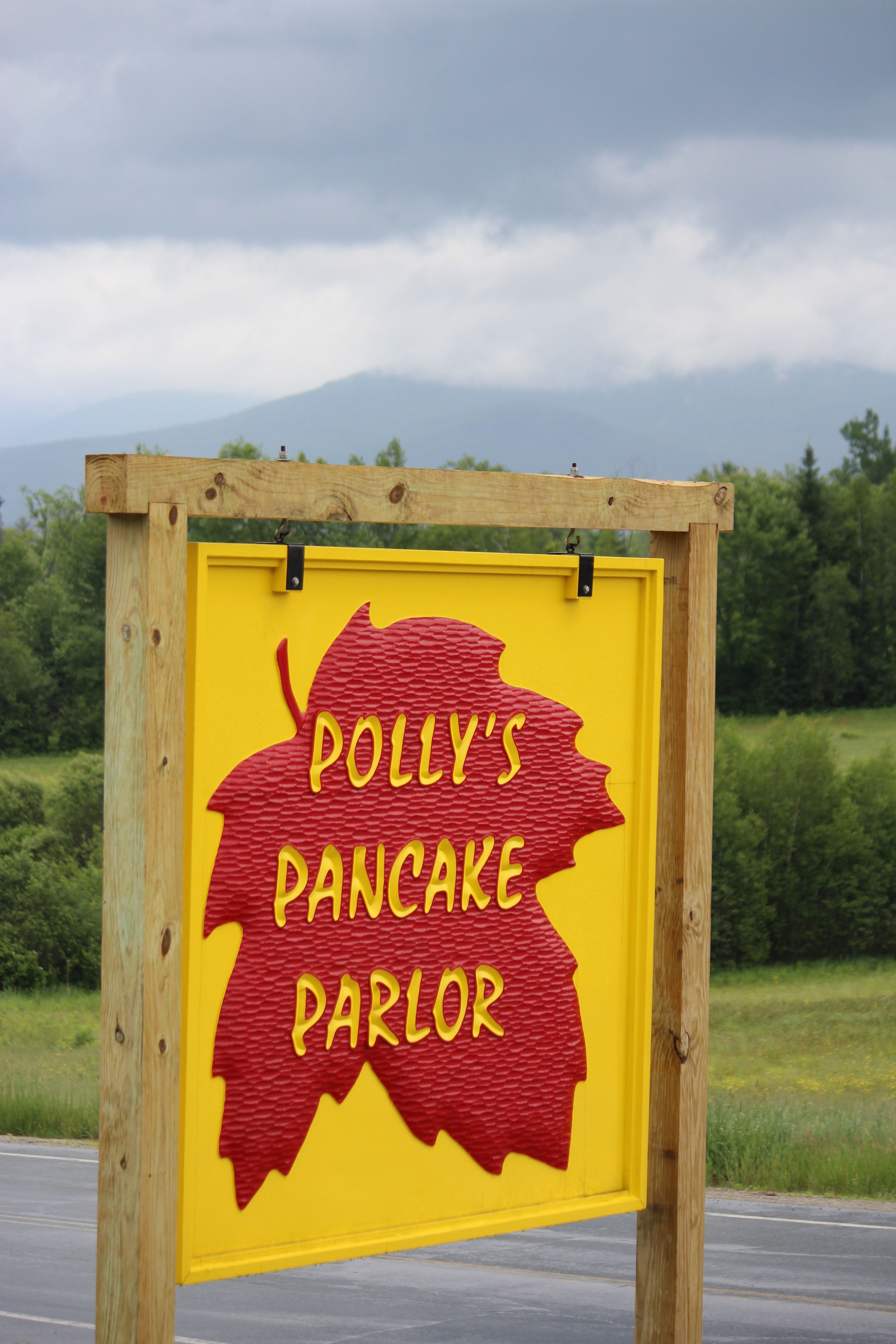
Polly's

But that didn’t matter because our first stop was Polly’s Pancake Parlor in Sugar Hill, New Hampshire, where we each enjoyed the sampler combo–six three-inch pancakes and we split our servings of sausage and bacon. I tried buckwheat with walnuts, oatmeal buttermilk with chocolate chips and plain with blueberries. The latter were my favorite. Topped with butter and their own maple syrup, of course. By pancake number 4, I had to force myself to continue . . . and I did.

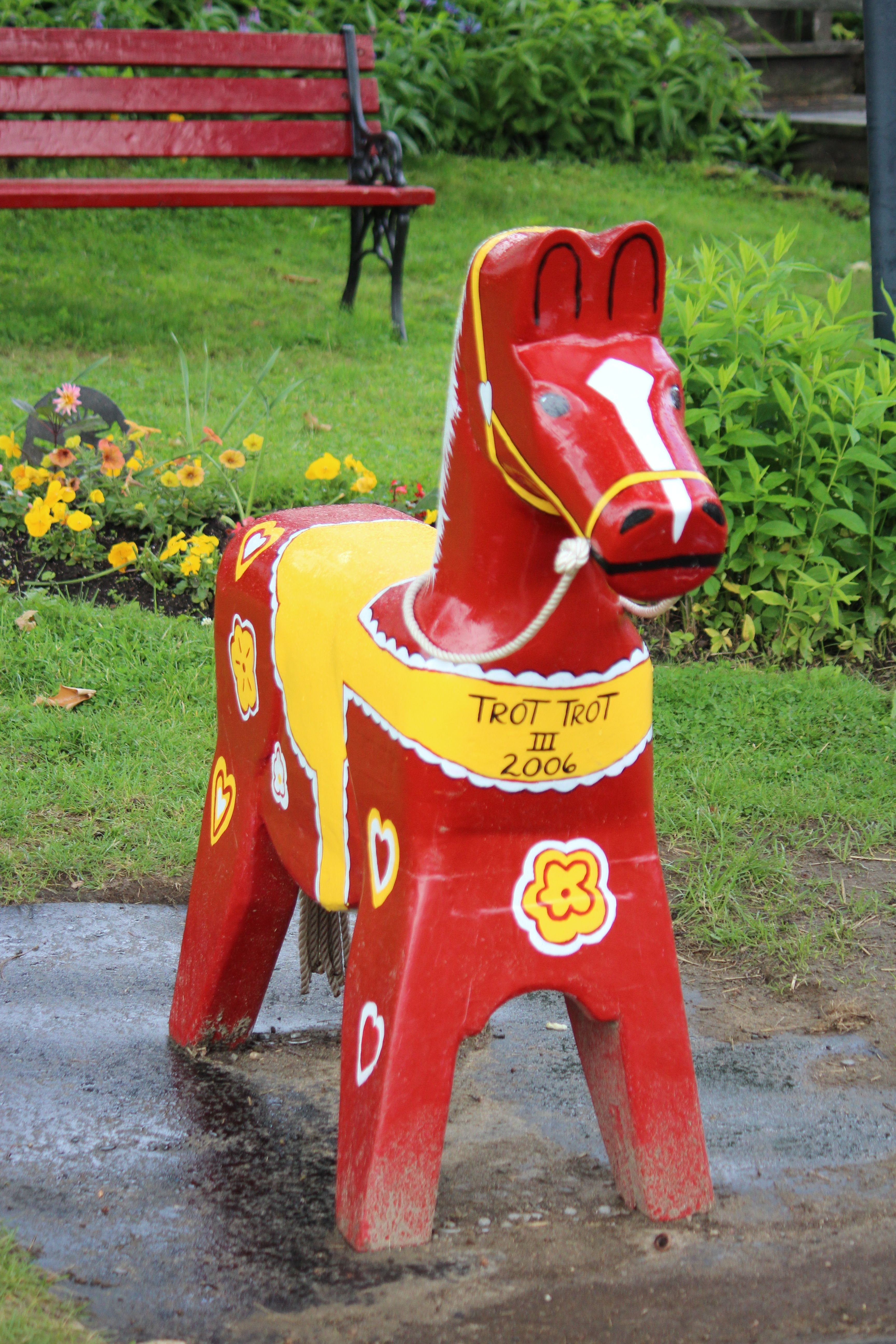
trot trot

When at Polly’s, one must say hello to Trot Trot, or in this case, Trot Trot III.

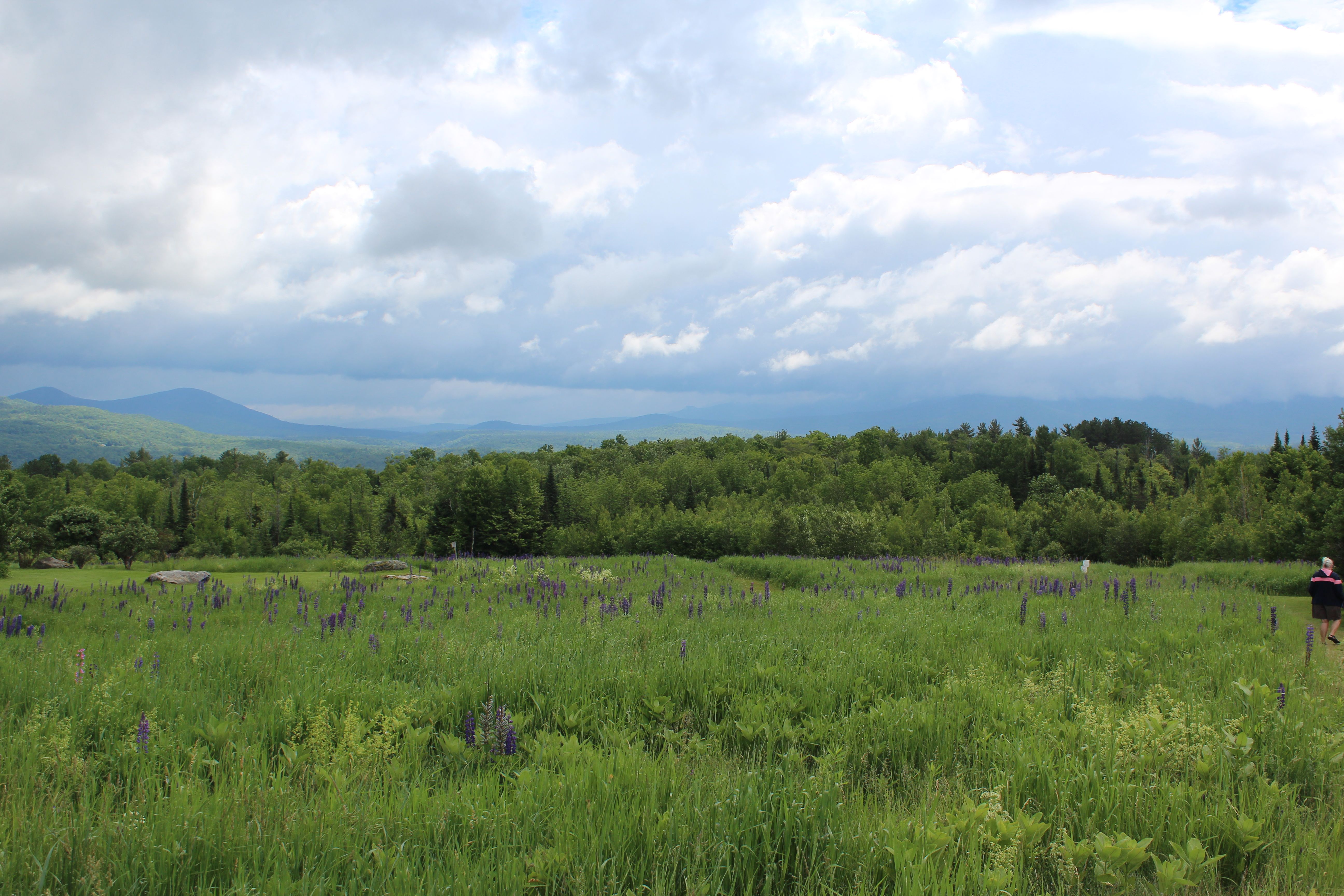
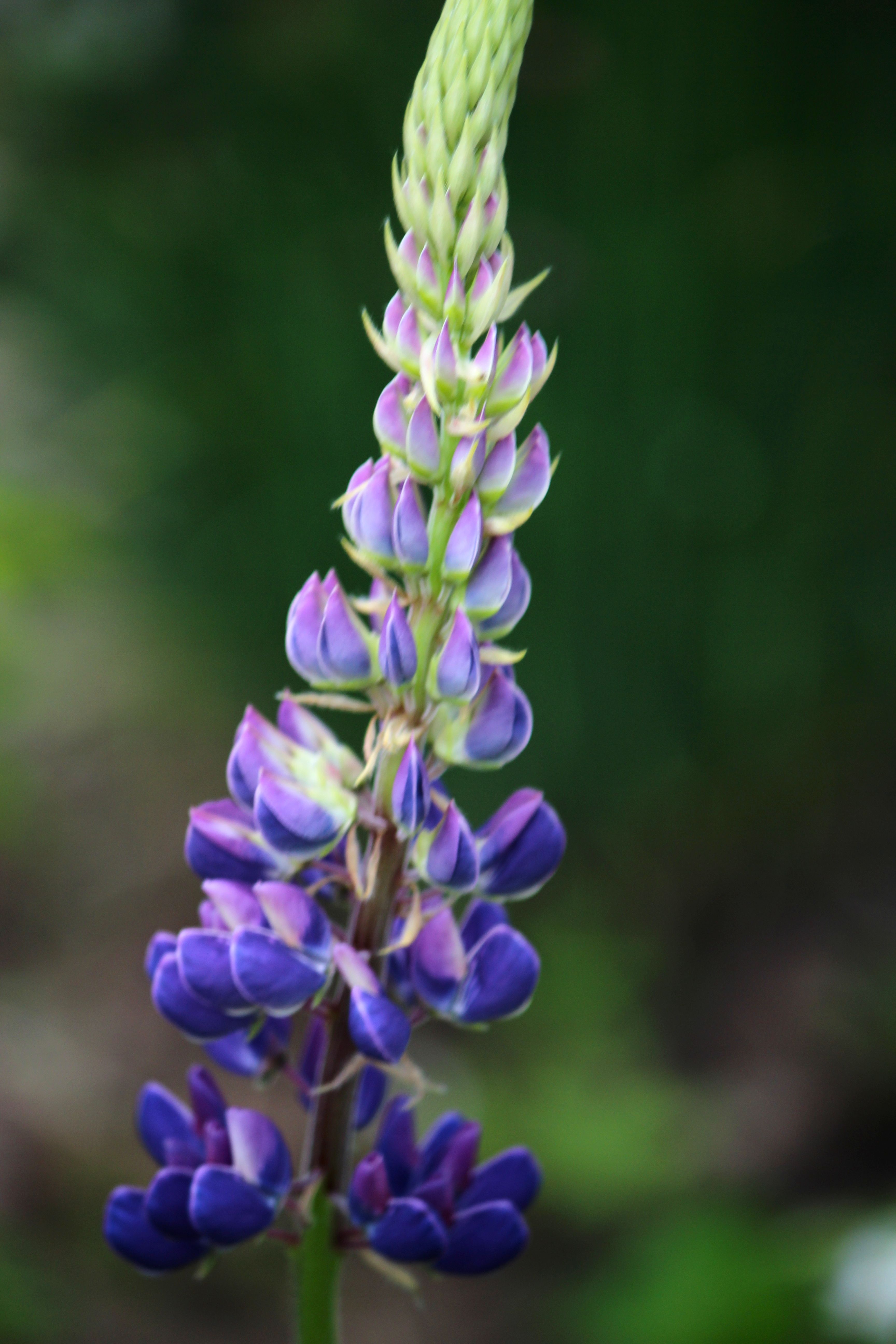
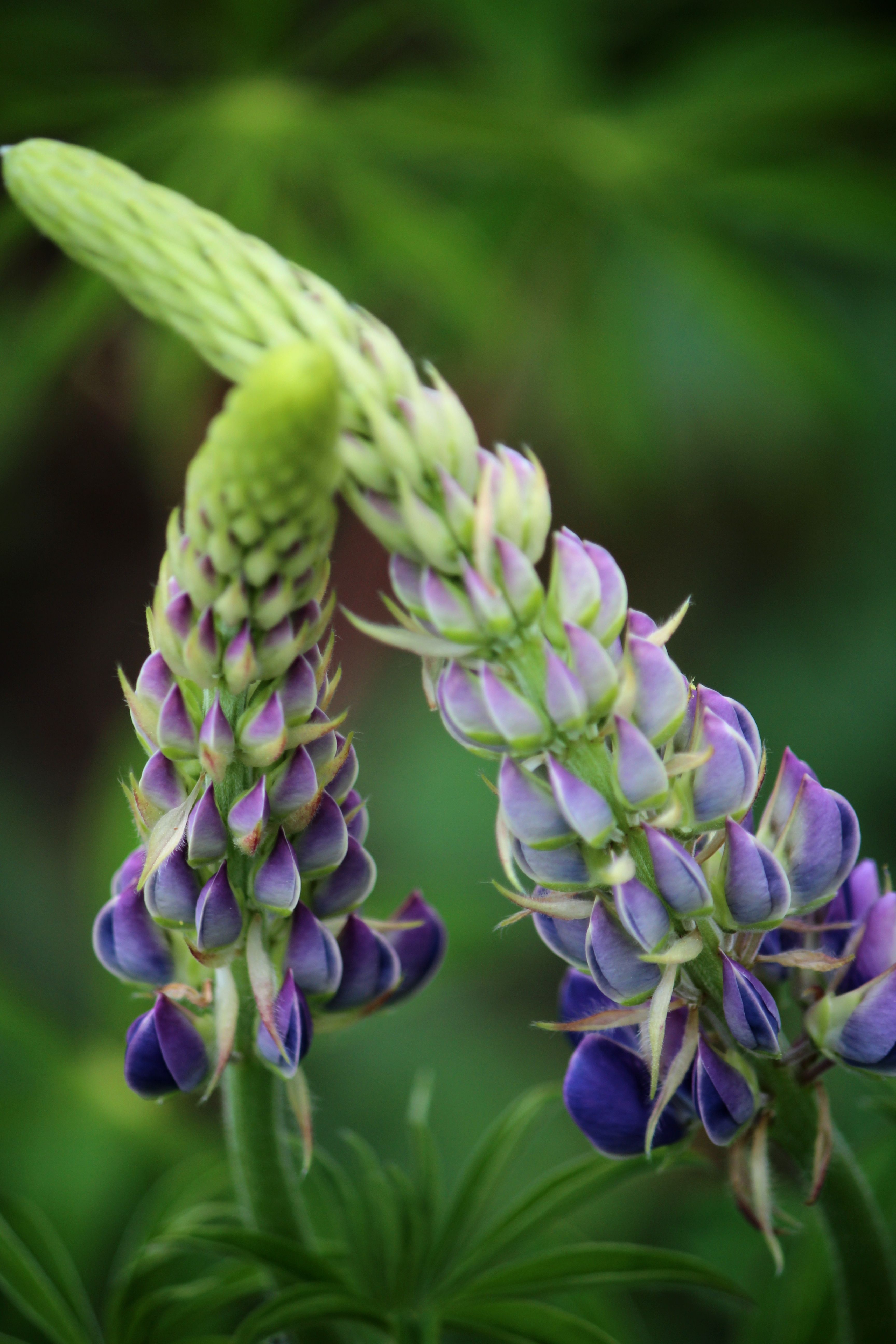
lupine 1

Because our timing was near perfect, the lupines were in bloom. You may want to skip down a few photos–I got carried away as usual.

lupine 2

lupine field

lupines forever

lupine purplelupine white

lupine looking down

oh  beautiful

emerson quote

Yes, indeed!

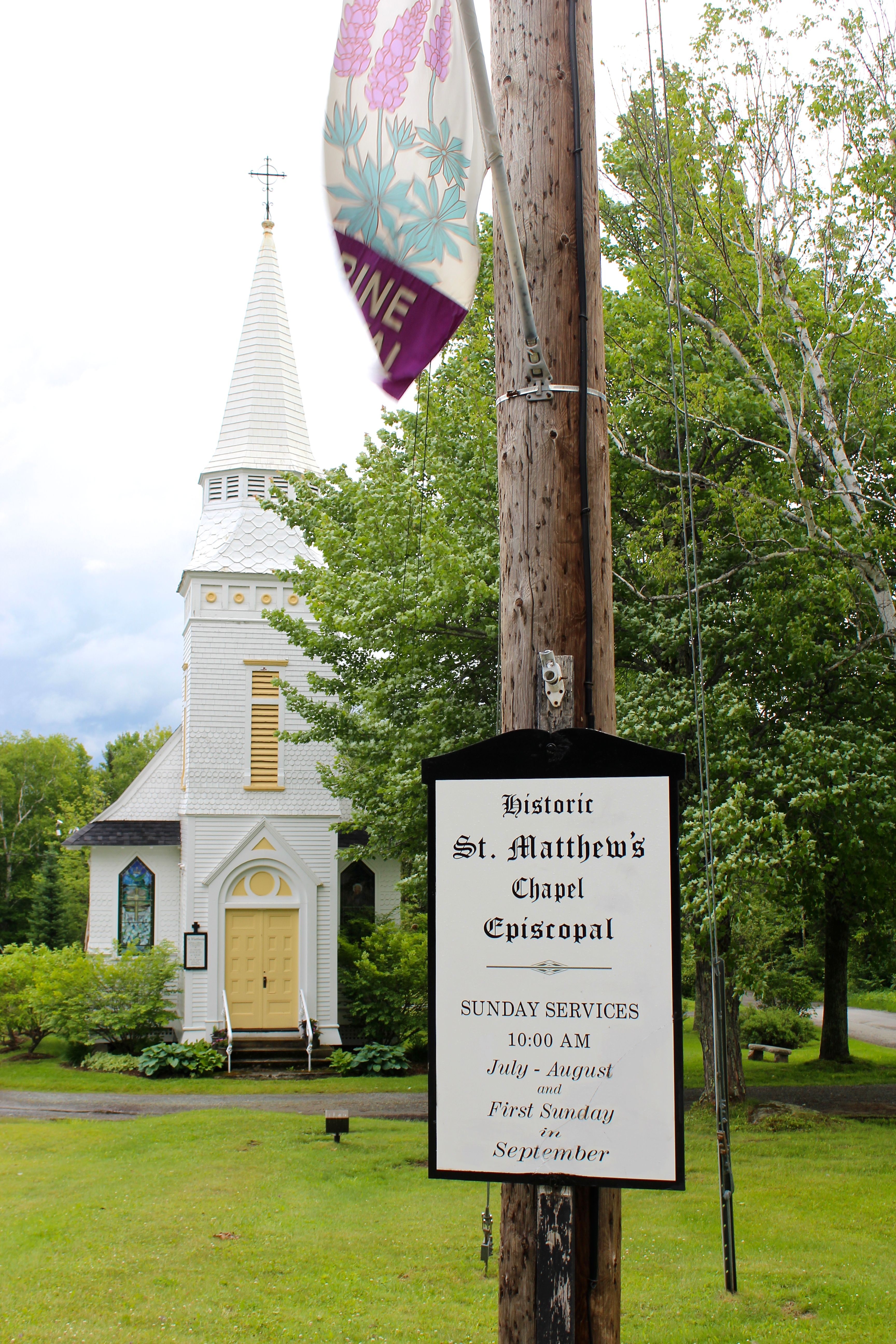
church

For me, no visit to Sugar Hill is complete without pausing at St. Matthew’s Episcopal Church. My guy knows that my dream had been to get married there and have the invitations read “First Sunday in September.” So, that didn’t happen, but we still like to stop by.

iron furnace 2

Another quick stop was at the stone iron furnace built after the Revolutionary War for smelting local iron ore. It’s in Franconia–think Franconia Stoves.

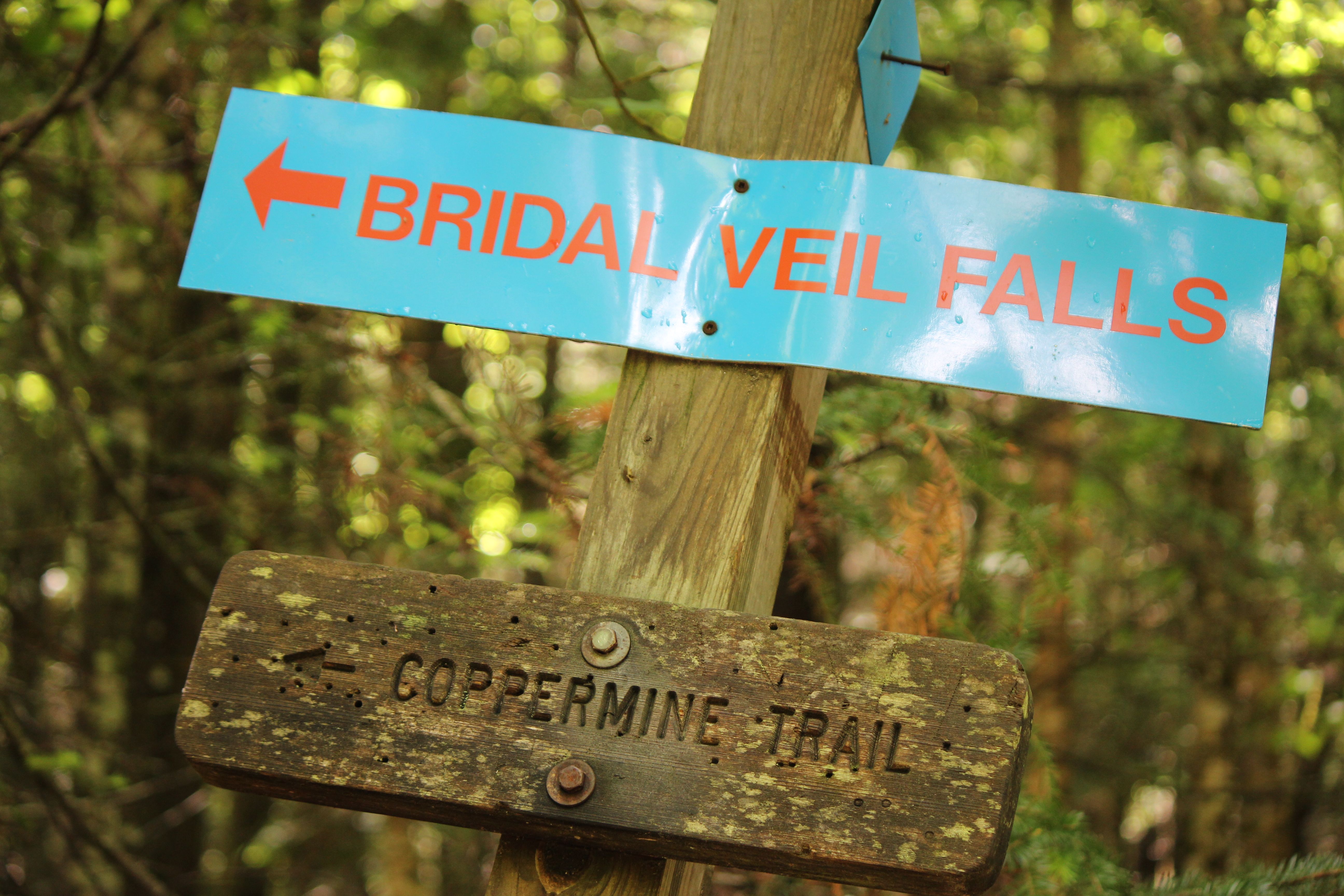
Coppermine Trail

Finally, we reached the trail head.

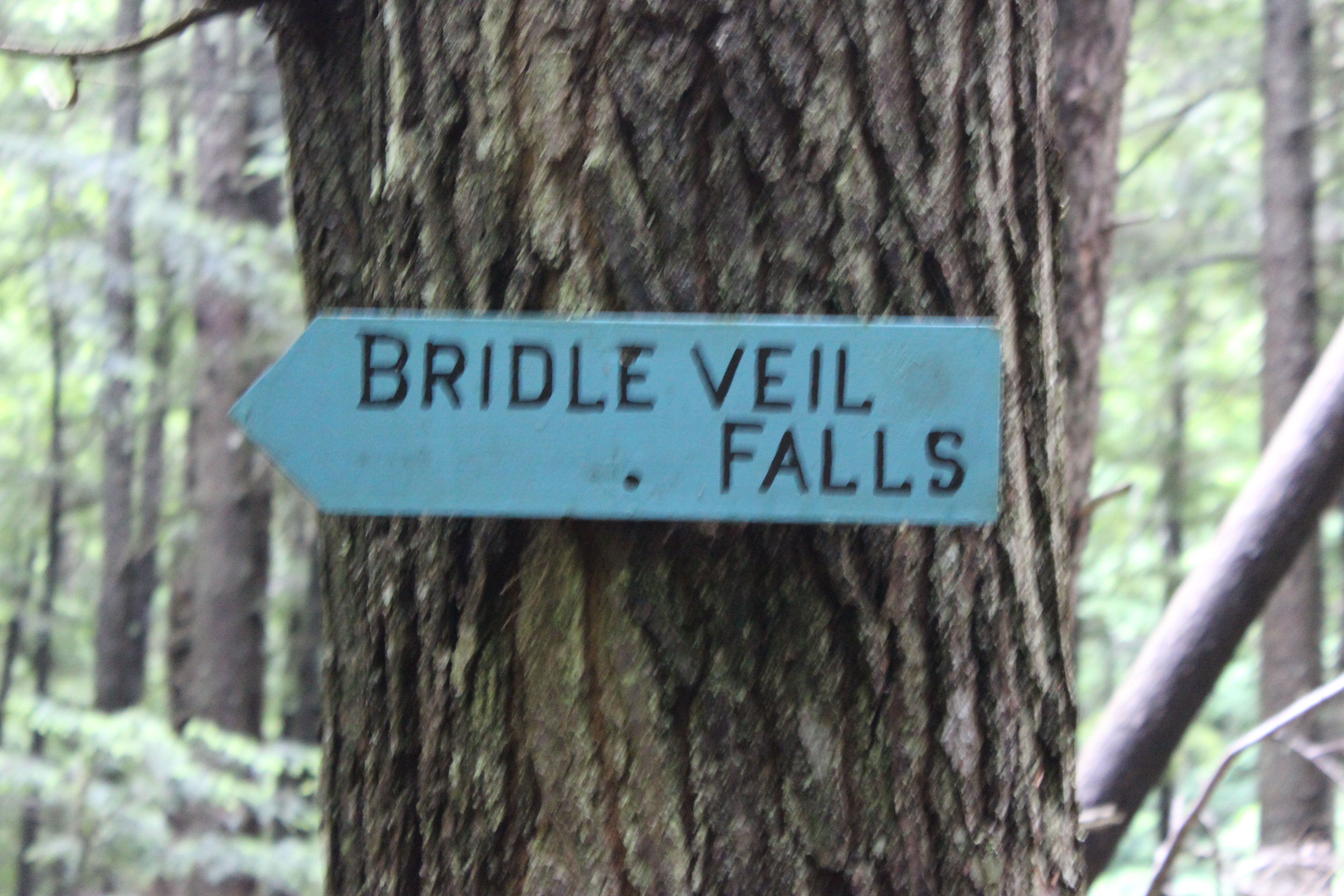
bridal veil sign

Our destination–Bridal Veil Falls on the back side of Cannon Mountain.

bridle

So, this photo is a bit fuzzy, but do you see what I see? Maybe it’s both. Maybe it doesn’t matter.

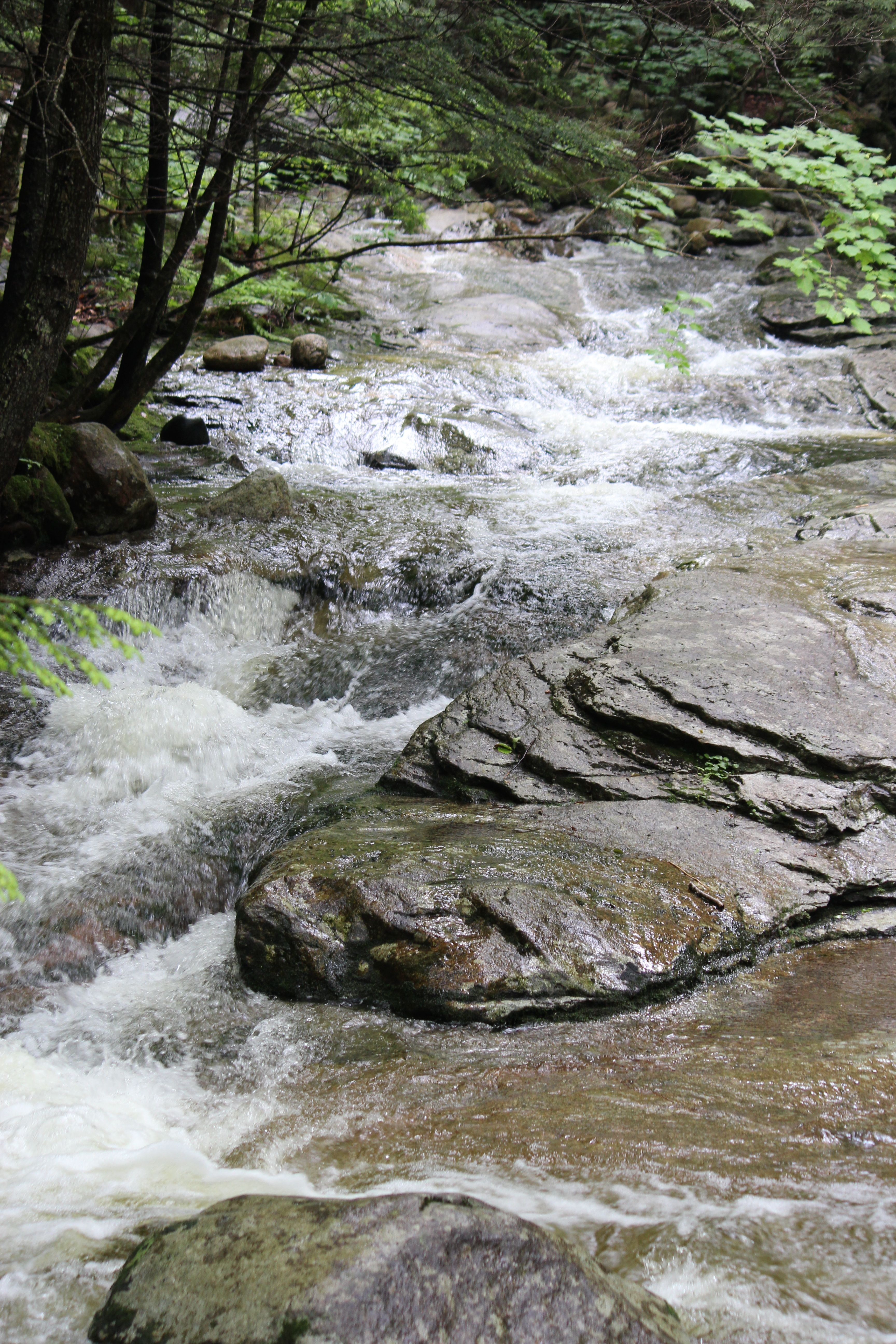
water

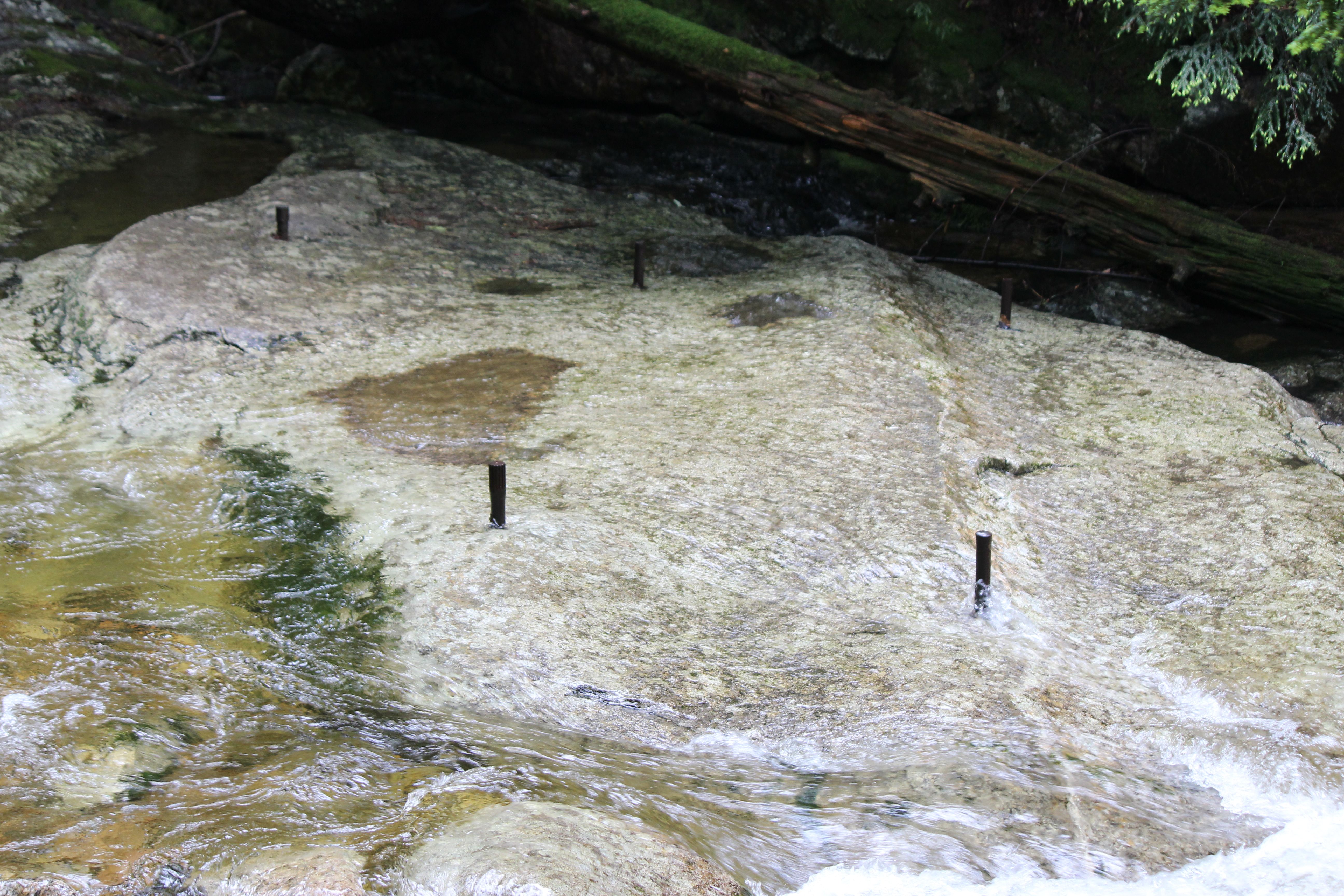
For much of the trail, we walked beside Coppermine Brook or could hear it coursing over the rocks. At times, we walked on rocks–reminded me of climbing on jettys in Connecticut when I was a kid.

lemonade stand

I’m pretty sure this must have been the former site of a lemonade stand. What?

sign on rock

So, you may be wondering if he was heading into the water–a tad bit chilly. Actually, he found the plaque Bette Davis, yes, THE Bette Davis, had placed on a rock in memory of Arthur Farnsworth, a local man she married. Here’s the story according to White Mountains Map Book:  “The great actress BETTE DAVIS summered in this area. In a famous 1939 episode, she lost her way on what is now Coppermine Trail and was rescued by local worker Arthur Farnsworth. Romance blossomed and the couple married in 1940. Farnsworth died tragically in 1943. Davis had a memorial plaque placed on a rock in the brook near where she was rescued.” As my guy can attest, the plaque has Farnsworth’s name and is dedicated to the “Keeper of Stray Ladies.”

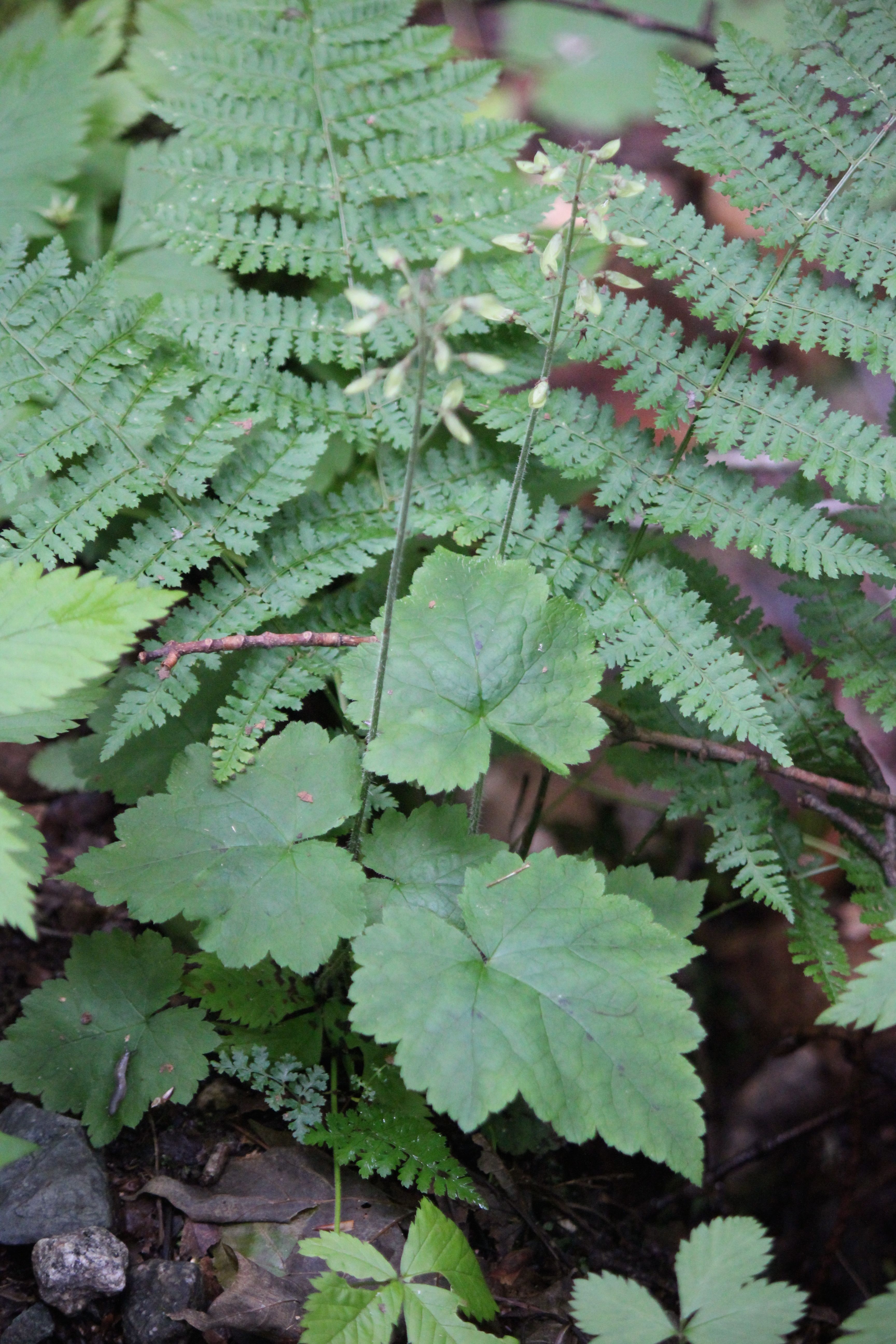
foam flower

Foamflower or Tiarella was beginning to bloom.

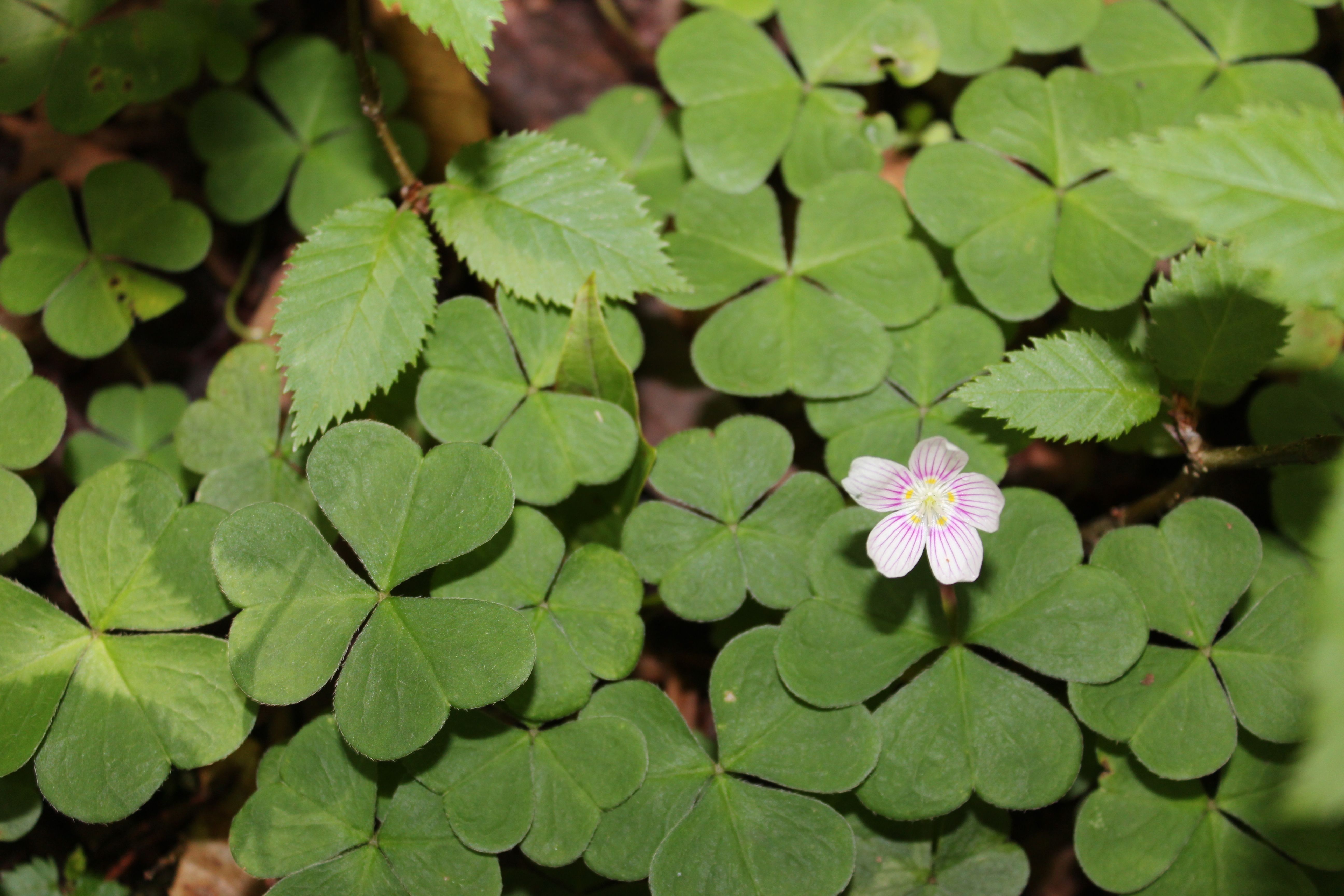
wood sorrel

And the wood sorrel. I love its candy-striped petals.

stack of mushrooms

The lush woods are loaded with mushrooms, including these hemlock varnish shelves–stacked up like pancakes.

rock island 2

There are many rock islands like this one beside the path. Yellow Clintonia or Bluebead Lily is one of the inhabitants. I was thinking as I walked about all of the spring ephemerals and how they have to flower before the trees leaf out. They are abundant along the trail. And their fruits will be equally beautiful. But their timing must be amazing. Their challenges include not only the leaves of the canopy closing out the sun, but also the timing of the snow melt and subsequent run-off. No wonder they are so quick.

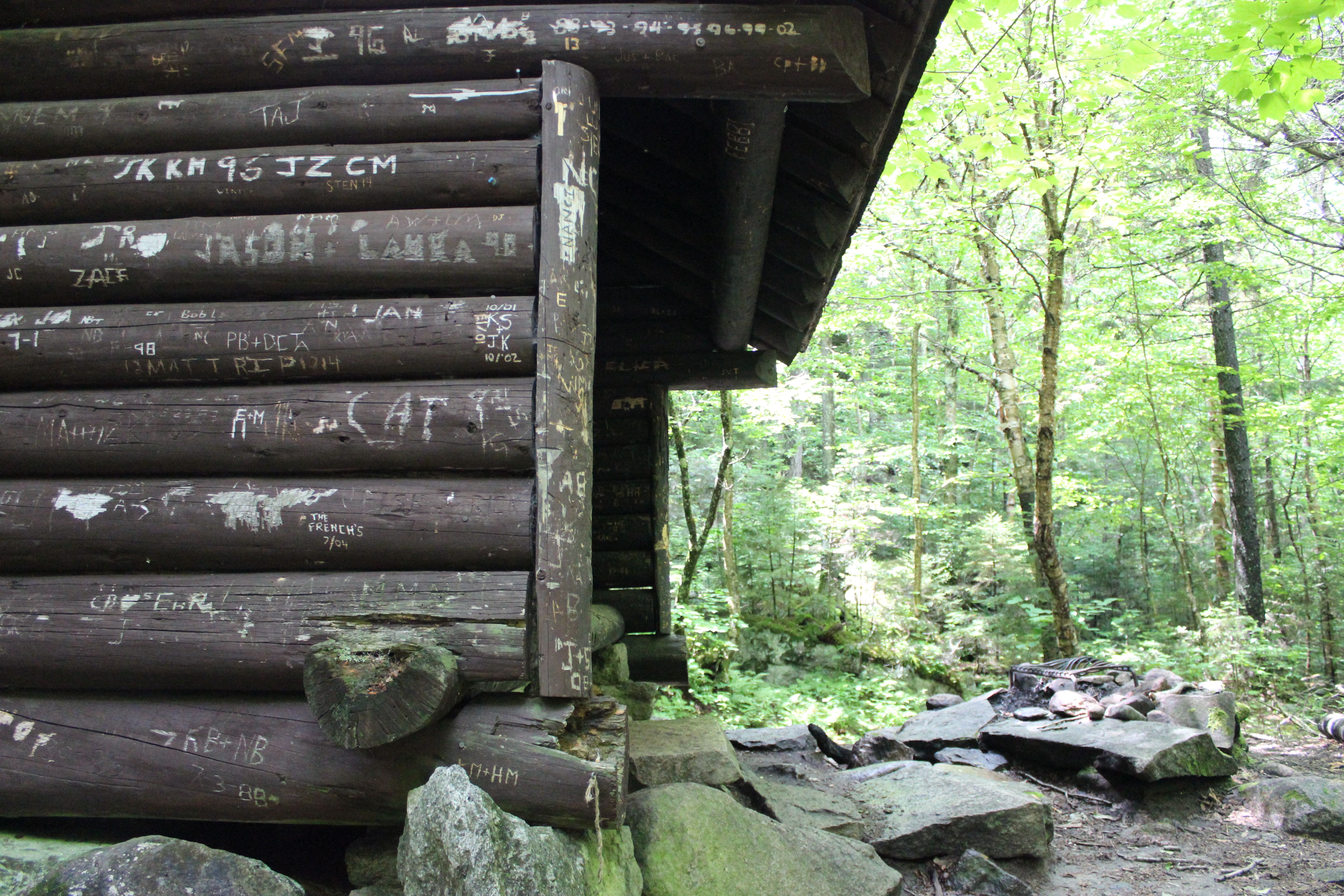
 shelter

Just before reaching the falls, we came upon the shelter filled with the stories of many who have spent a moment or night here.

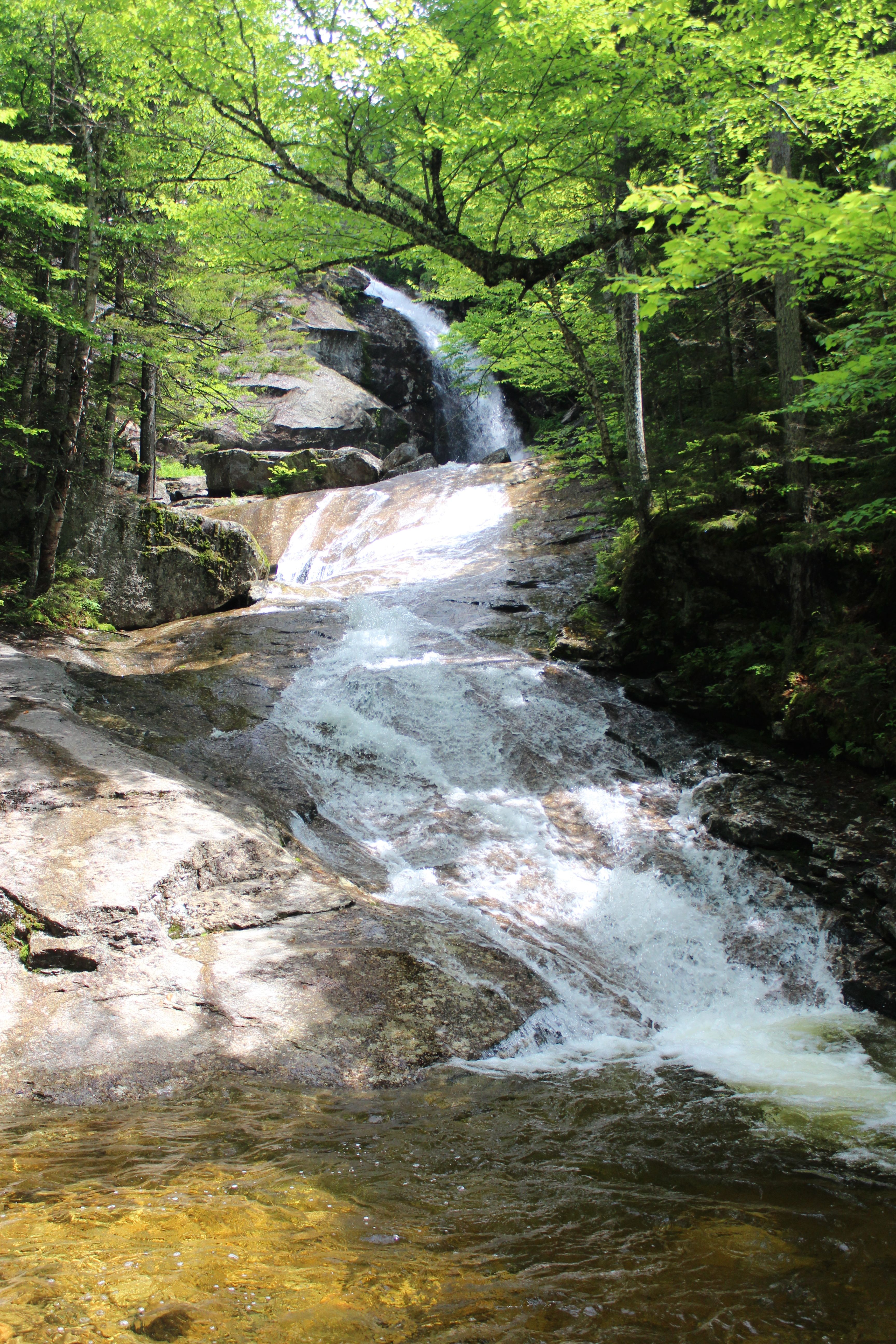
the falls 2

Bridal Veil Falls. Bridle Veil Falls. Whatever your pleasure. Certainly, beauty in motion.

Before we drove home via the Kanc, we stopped in Lincoln for ice cream. An extra sweet Mondate topped with hot fudge sauce.

Slugs, Bears and Caterpillar Clubs, Oh My!

I was on a quest today as I wandered with friends at the Greater Lovell Land Trust’s Bishop Cardinal Reserve. I wanted to return to the bear trees and show them that there are so many more in the area. Thank goodness they are all good sports and don’t mind getting fake lost.

But first, I licked a slug again. And convinced a friend (J.L.) to do the same, without twisting her arm.

slug

This was my terrestrial gastropod mollusc of choice.

slug 2

And proof. Rather attractive photo–Not–but the slug did numb my tongue a bit.

bear 1

We eventually found some of the beech trees with bear claw marks, but there are more–for another day.

bear 2

Satisfied with our findings, we decided to continue off trail, keeping our eyes and minds open.

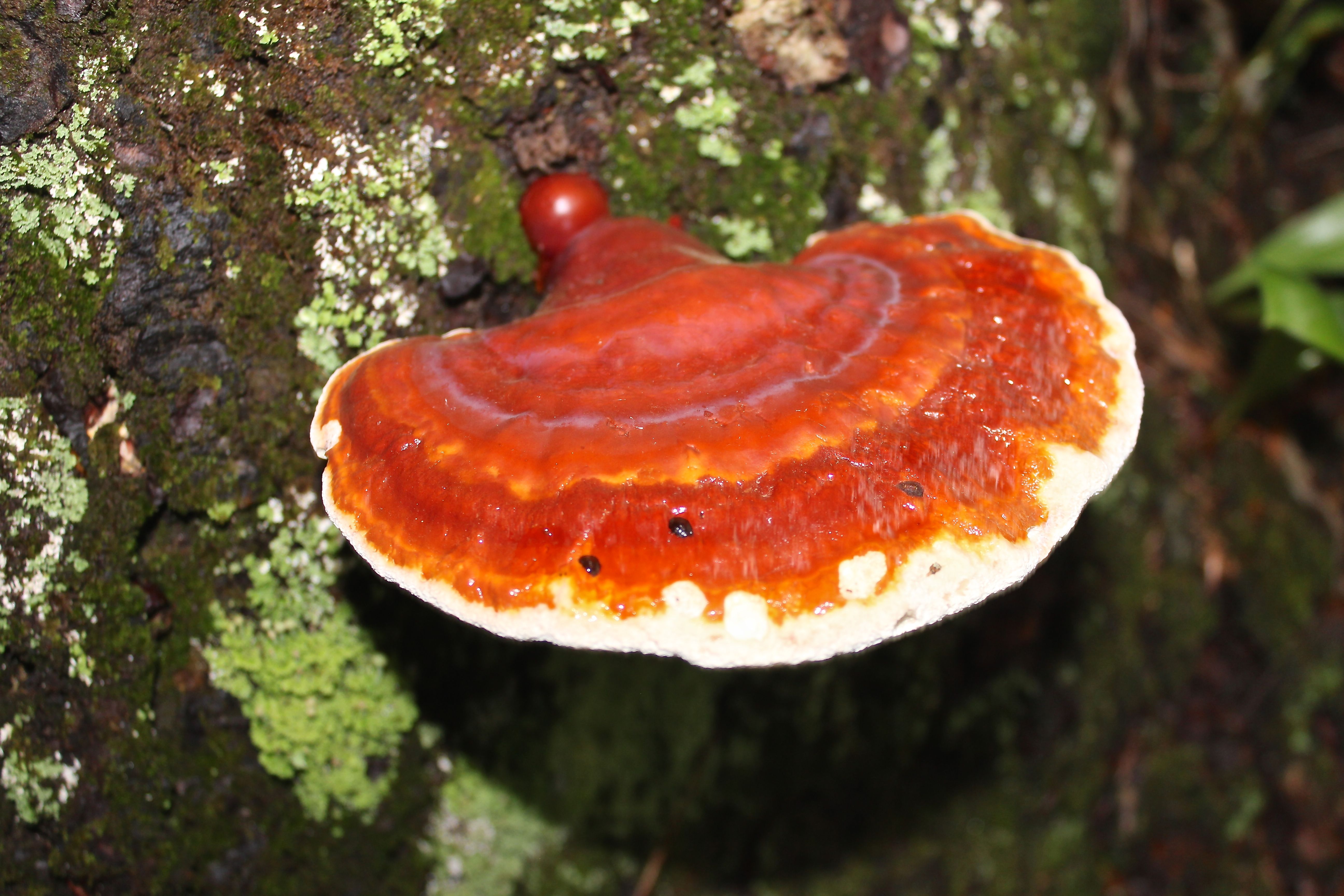
hemlock varnish shelf

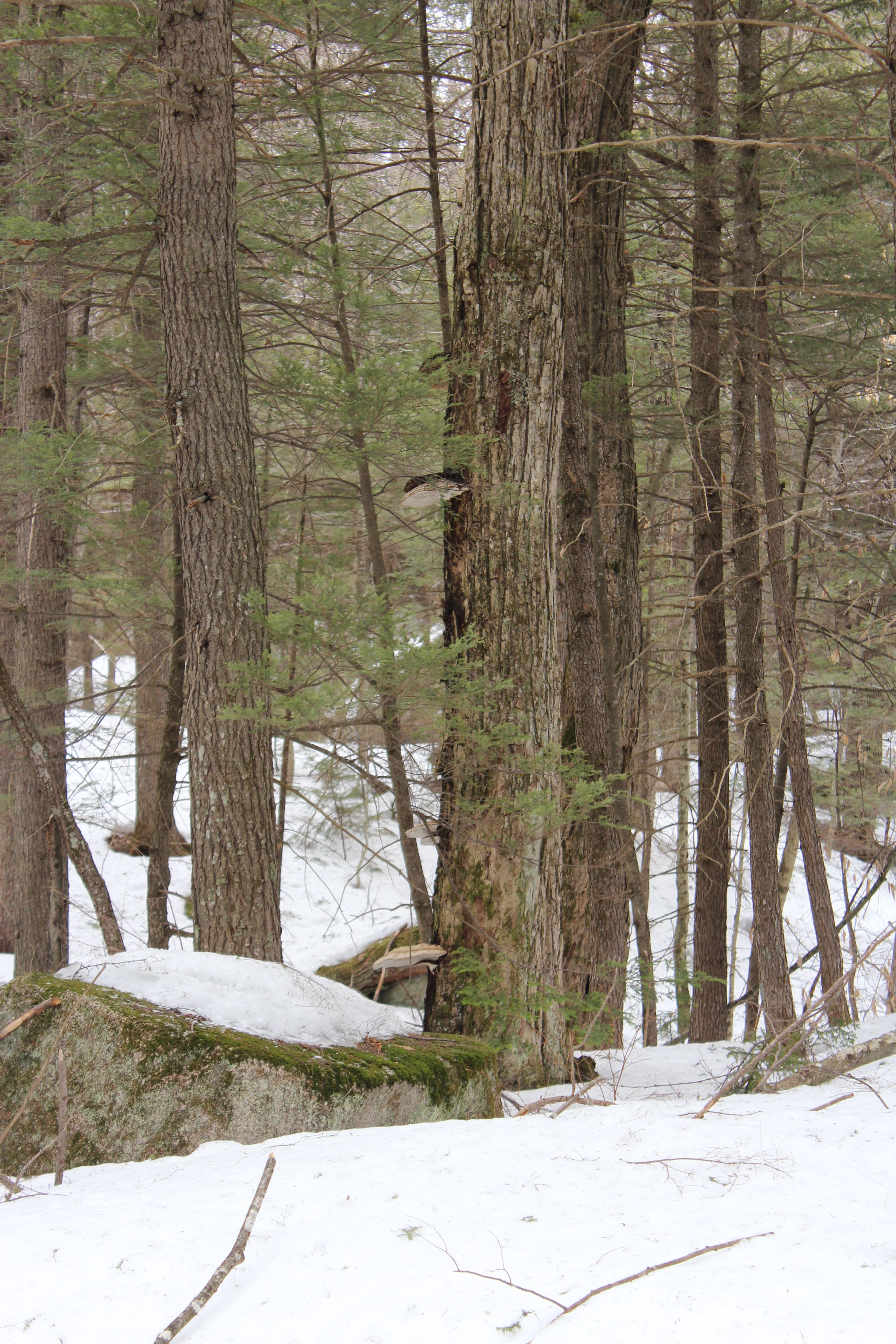
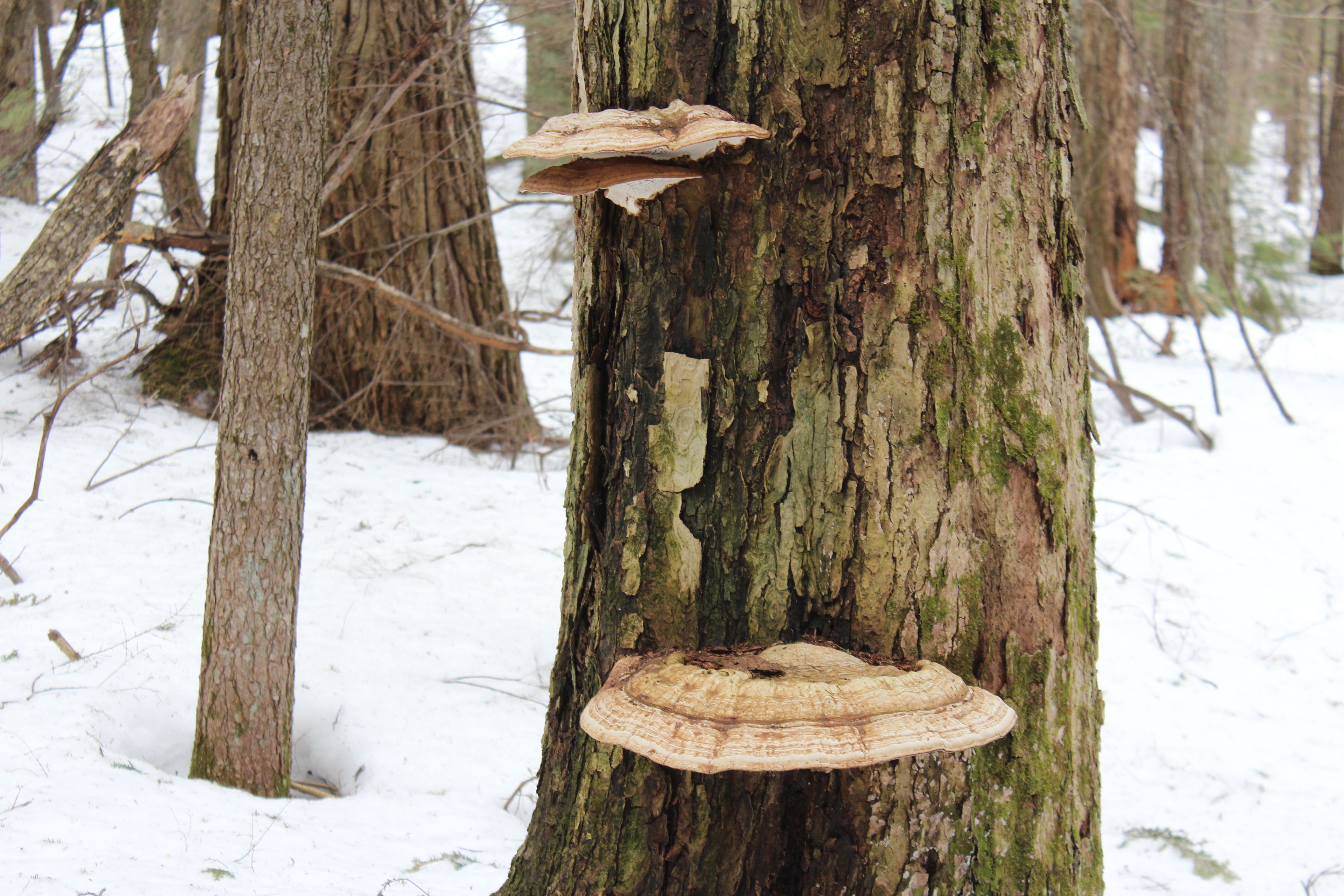
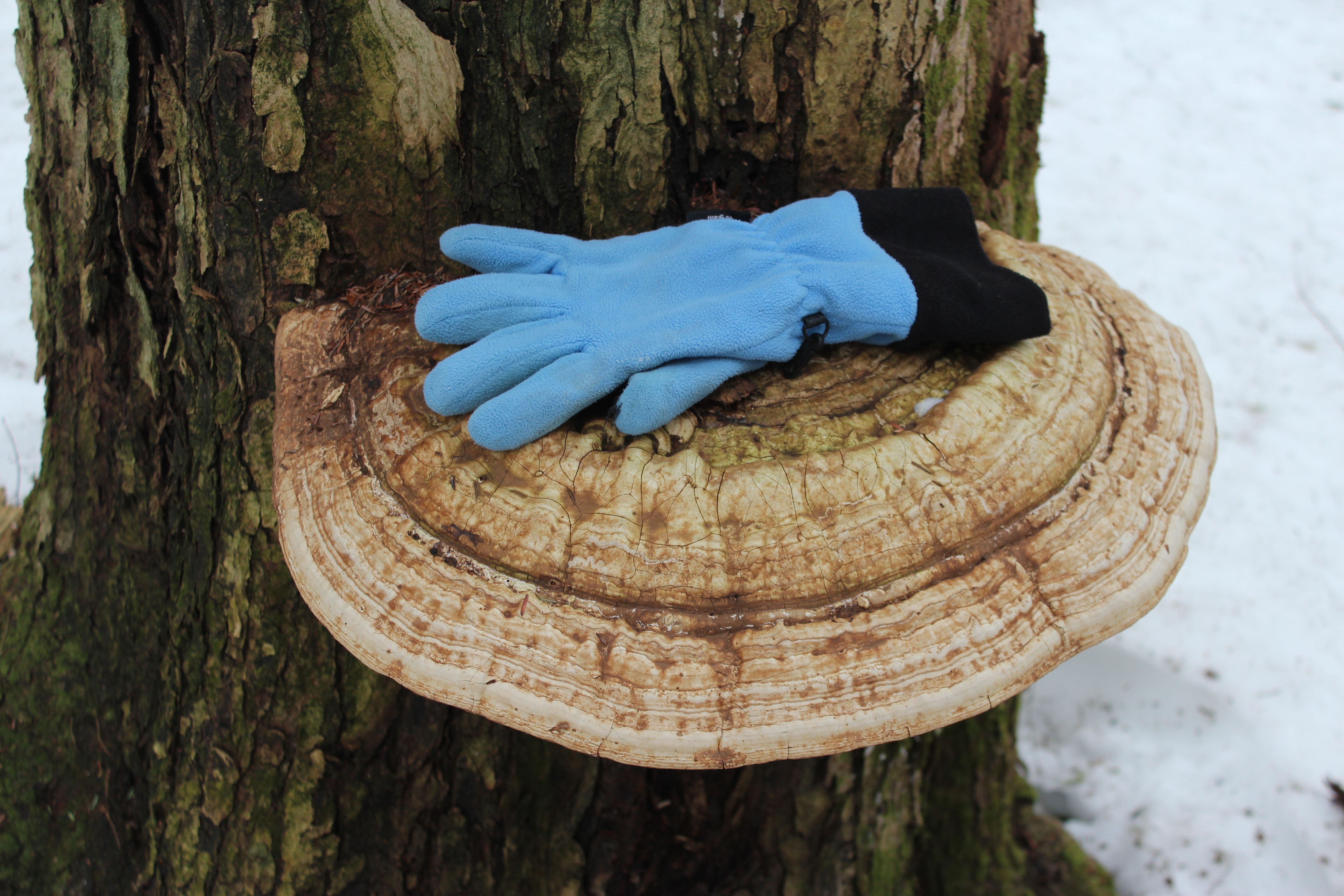
From start to finish, we saw plenty of Hemlock Varnish Shelf (Ganoderma tsugae) fungi.

Hemlock Varnish

Each one presented itself in a different manner.

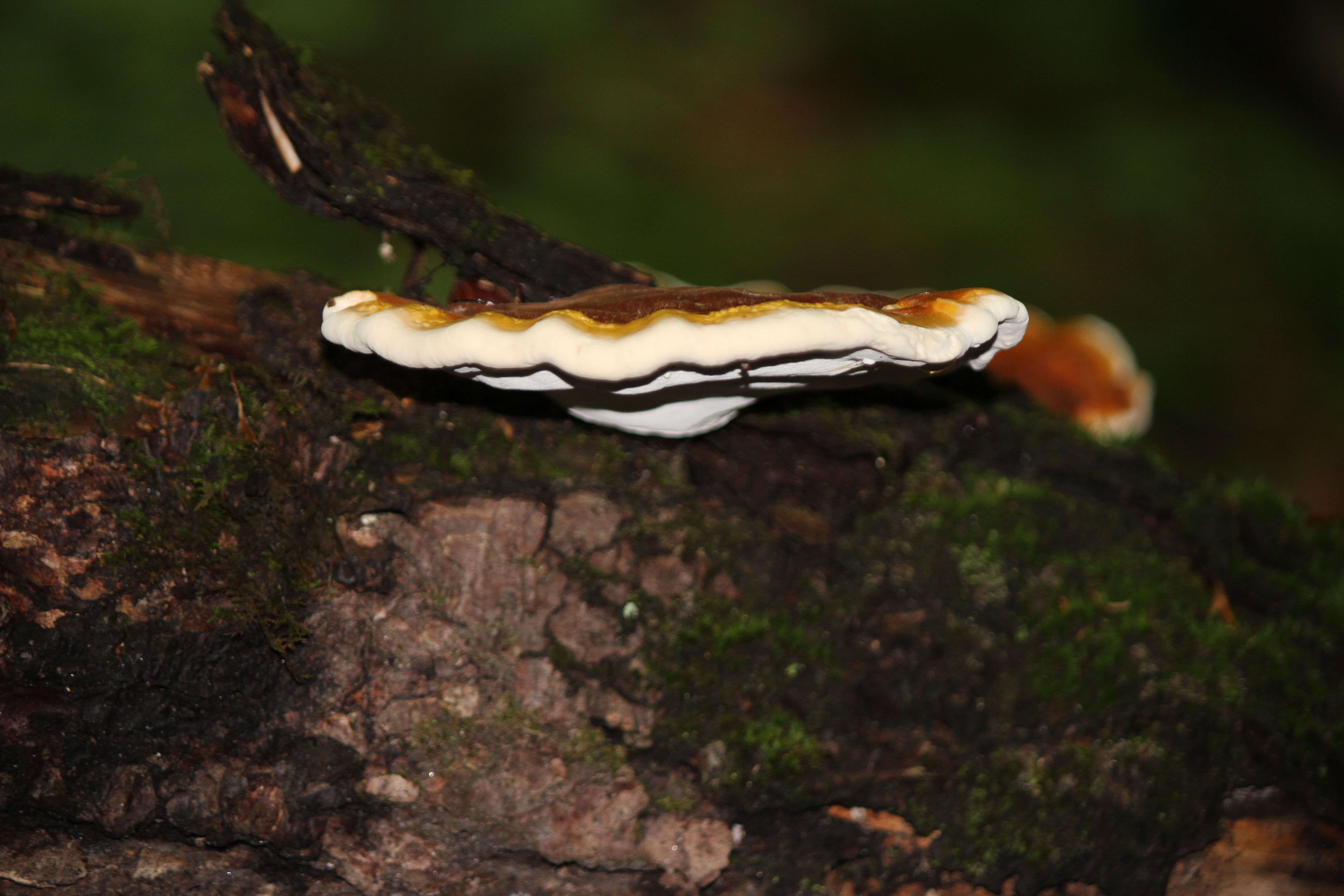
Hemlock varn 3

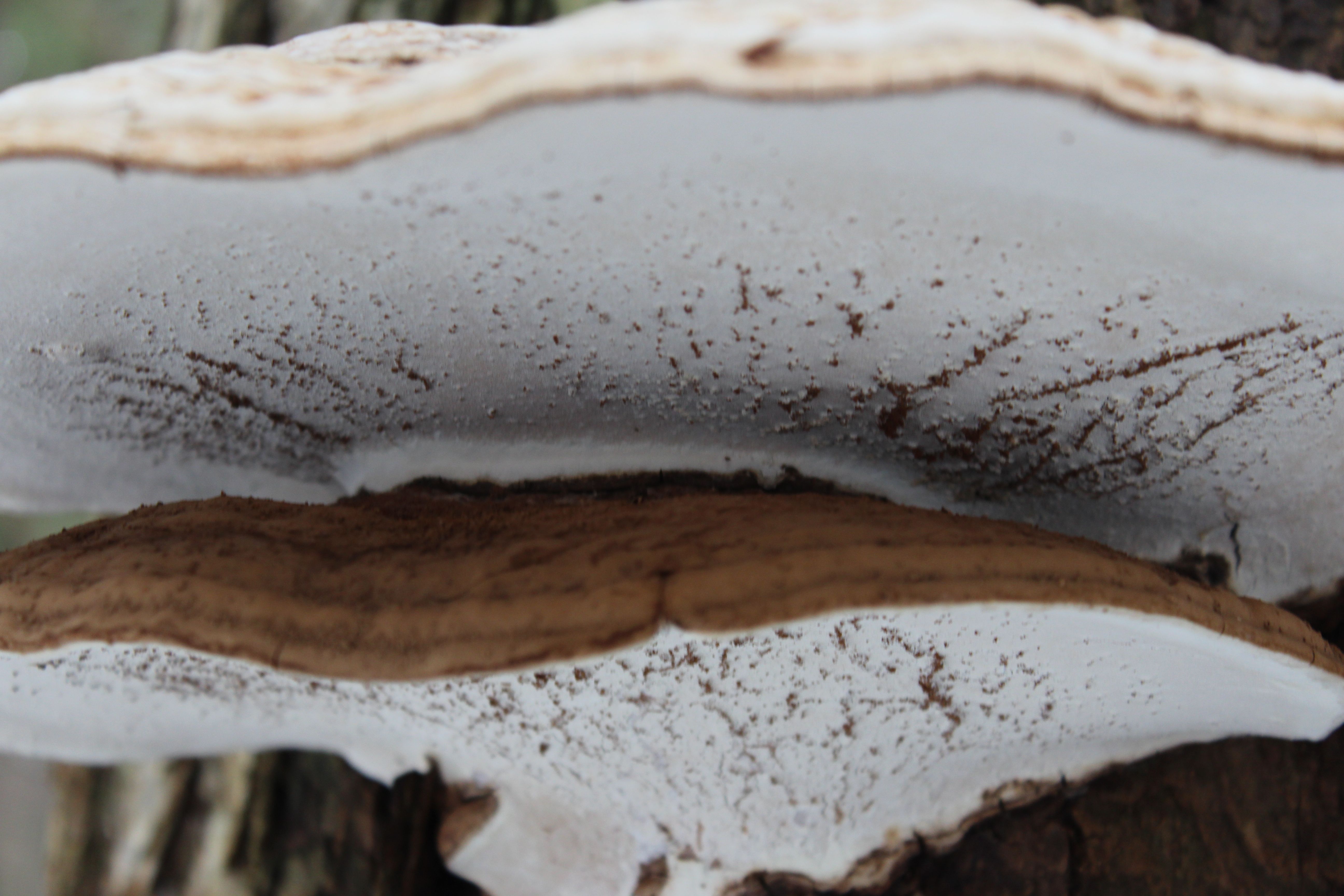
While its shiny, colorful surface and habit of growing on hemlocks and other conifers speak to its name, the  oyster-shell rim and non-gilled pore surface are equally attractive.

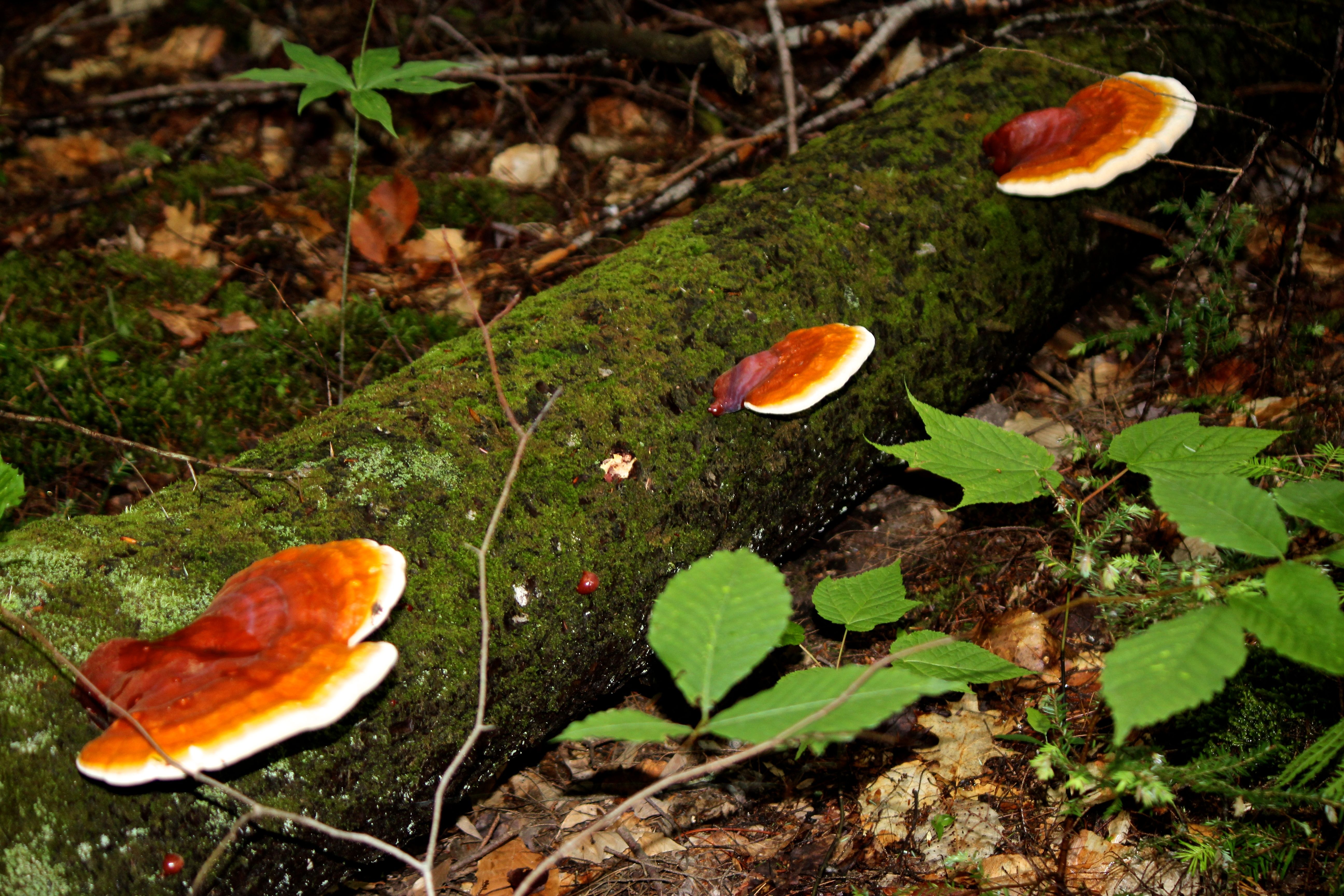
hemlock 3 in a row

Three in a row.

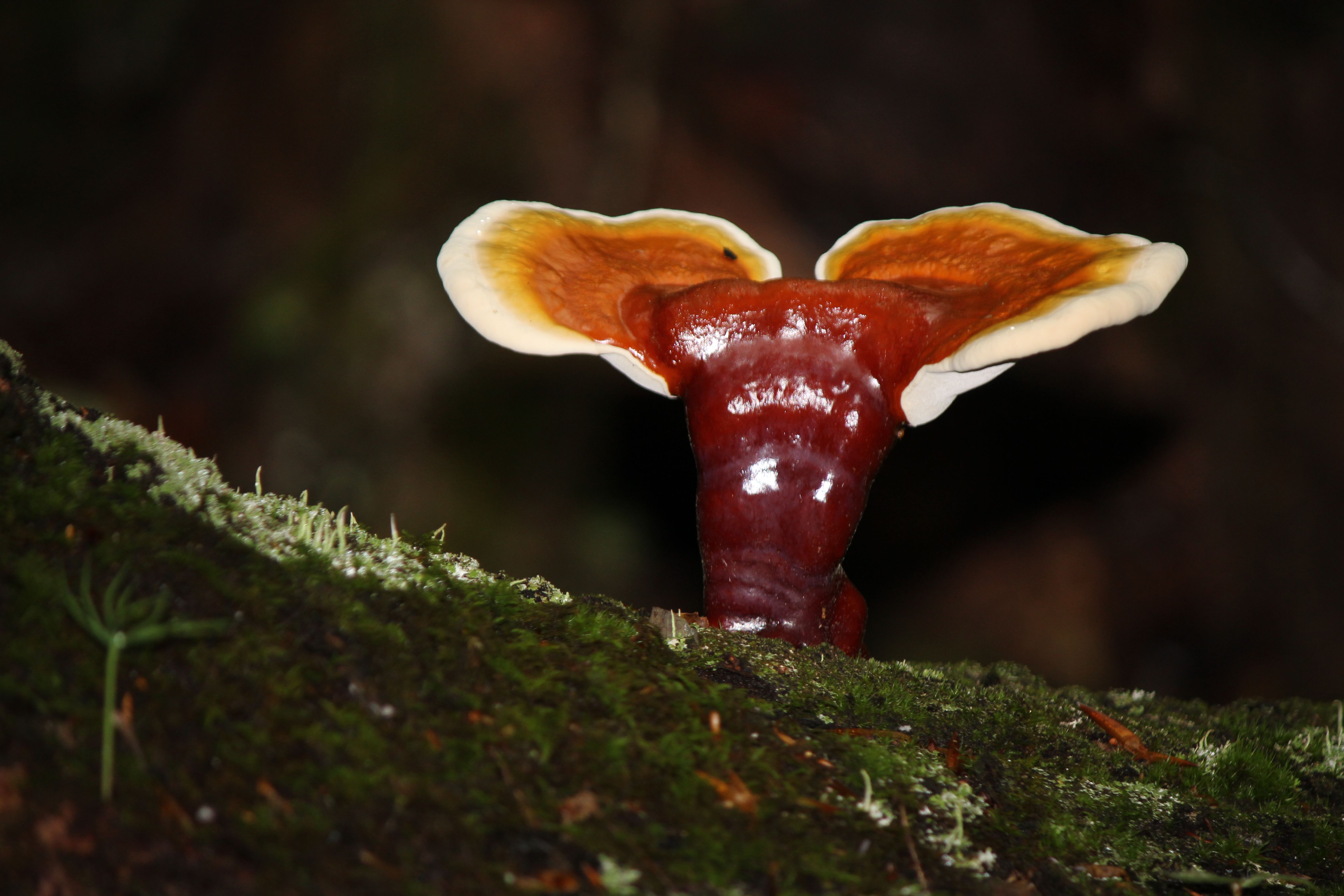
hv4

And two fer one.

hemlock varnish ripe

Most were not as ripe as this.

I was thankful this day to be among people who have a shared wealth of knowledge about the natural world. They also have eagle eyes. Or in this case fungi eyes (P.V.).

stream 3

The mossy stream became our focus as we searched for wild orchids and more fungi.

Platterful Mushroom

Some orchids have passed, others aren’t open yet and still others had been eaten. But the wet habitat provided plenty for us to wonder about, including this Platterful Mushroom, the common name for Tricholomopsis platyphylla, aka Broad Gill. Despite that first common name, it’s mildly toxic and not meant to be served as a platter full.

Swamp beacon

Glowing up at us from a wet depression was a colony of Swamp Beacons (Mitrula elegant). I include the Latin with the fungi because P.V. uses it almost exclusively when he enlightens us. I wish I’d learned the Latin first, but alas, I’m a common kinda gal.

northern oak fern

Mixing it up and almost messing us up was the Northern Oak Fern. It reminded us of miniature bracken fern, with a softer texture.

basswood bark

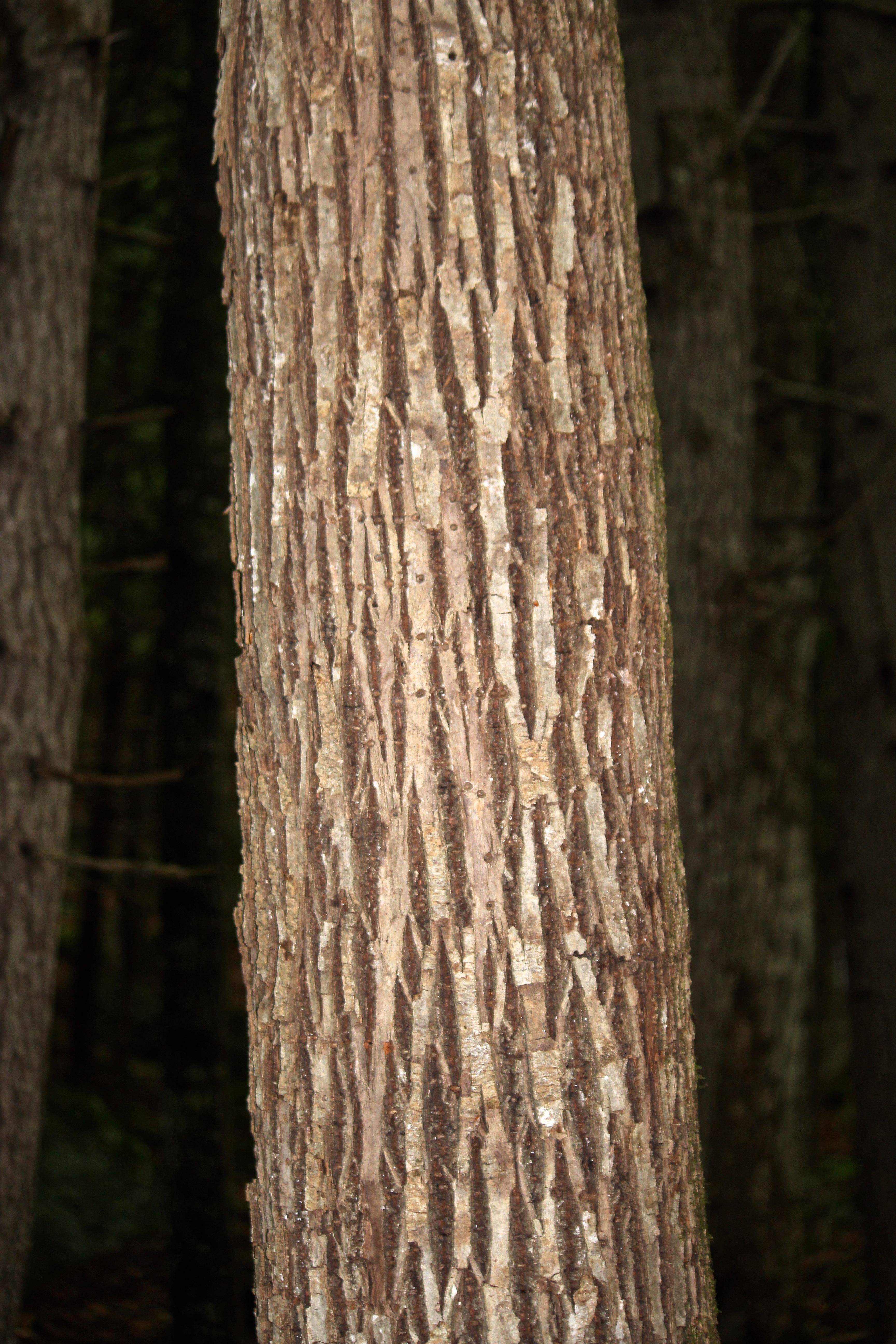
We were in a rich, upland habitat, verified by several species, including this one, which D.S. paused by to quiz us. We got it right–American Basswood (Tilia americana).

bass 2

Its flattened, square-like ridges intersect like a woven basket every 6-12 inches. Not only does it look like a basket from the outside, but the inner bark is fibrous and has been used for rope and fish nets and . . . woven baskets.

Cordyceps militaris - Scarlet Caterpillarclub

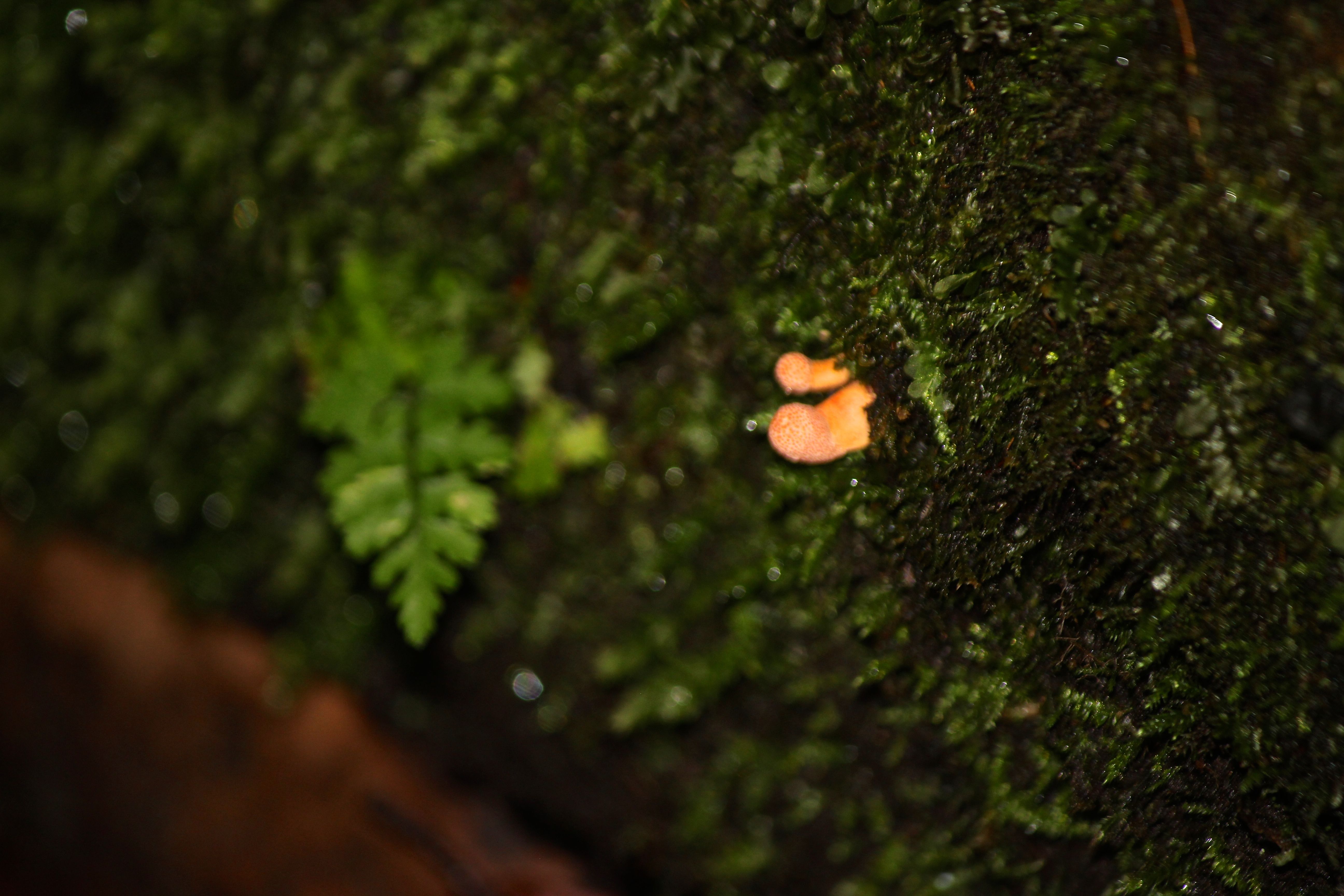
Those fungi eyes continued to search high and low. And waited for us to locate this rather small sample sticking out of a moss-covered rock in the stream.

cord larve

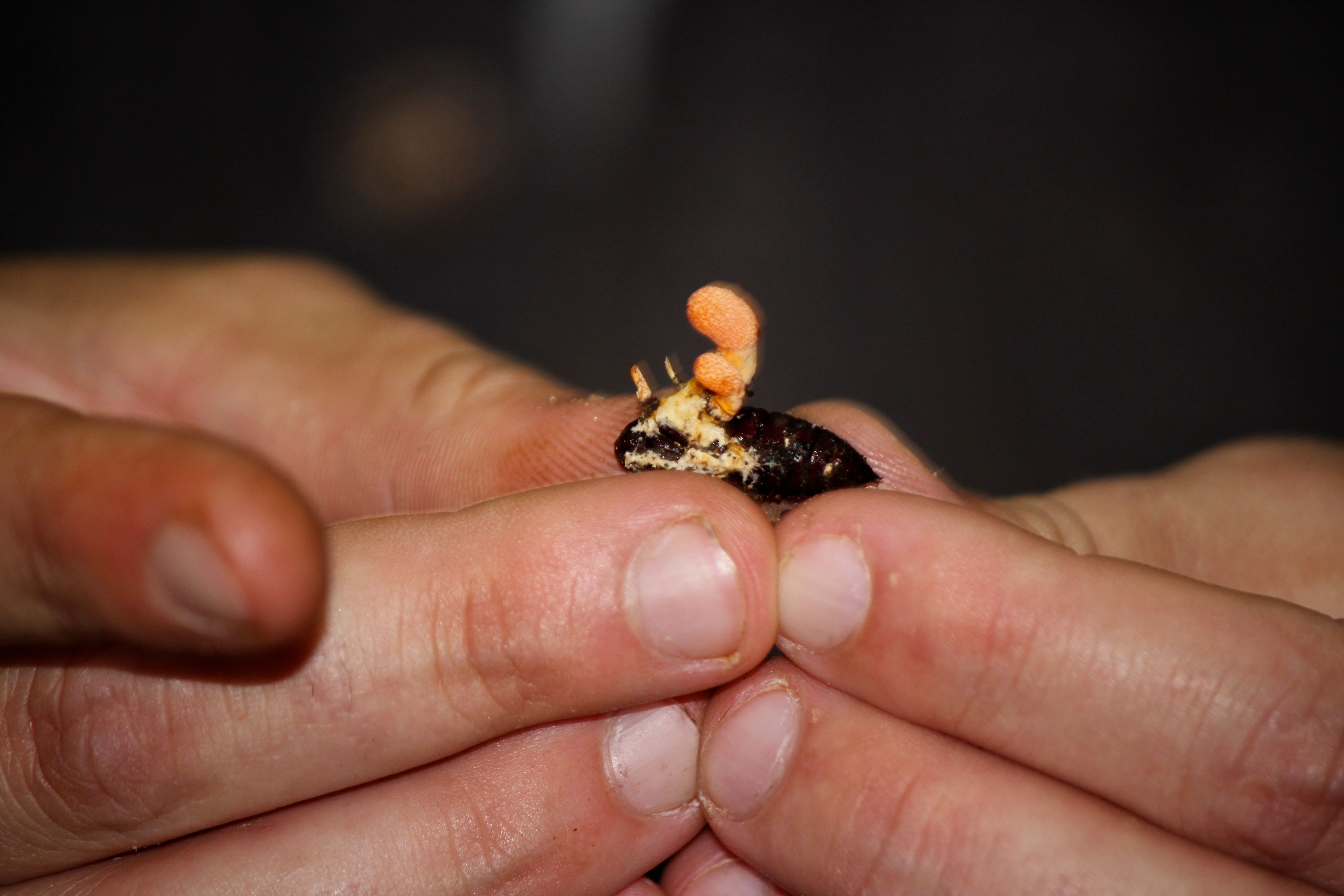
Scarlet Caterpillarclub (Cordyceps militais) feeds off of insect larvae as you can see here. The host provides the most and turns to mush as the fungi grows.

Though we never plan it that way, our journey lasted three hours. Suddenly, we emerged from the wet woodland onto Horseshoe Pond Road–all the richer for having spent time in the land of the slugs, bears and caterpillar clubs. Oh my!

Taking In The Views

The Pequawket Indians of Fryeburg, knew the 1,100-foot mountain in Waterford as the mountain that would “tire um out” because climbing its steep side wasn’t easy. Fortunately, a much gentler trail that is only a bit steep at the start, has led to the summit of Mount Tire’m for many moons. And that was my trail of choice this afternoon.

While my guys (and a girlfriend) toiled at the family business, I snuck off to the mountain to enjoy the views.

green

It’s located up the street from the quintessential New England village known around these parts as Waterford Flats. Think white clapboard houses, all of which are listed on the National Register of Historic Places. And a triangular green. To the right of the sign is the former Lake House, which for many  years was a high-end restaurant and inn. It’s for sale now. And comes with an interesting history–in 1847, it was known as Shattuck’s Hygienic Institution, or “Maine Hygienic Institute for Ladies” and offered a water cure.

Another house on the  green was home to Artemus Ward, pen name of Charles Farrar Browne, a favorite author of Abraham Lincoln and Mark Twain’s mentor.

Then there’s the  Waterford Library designed by John Calvin Stevens and his son, John Howard Stevens. And the former town office and meeting hall–ladies sat on one side of the room facing their menfolk during town meetings and were not allowed to vote or even speak. Can you imagine?

church

The Waterford Congregational Church was one of Stevens’ designs.

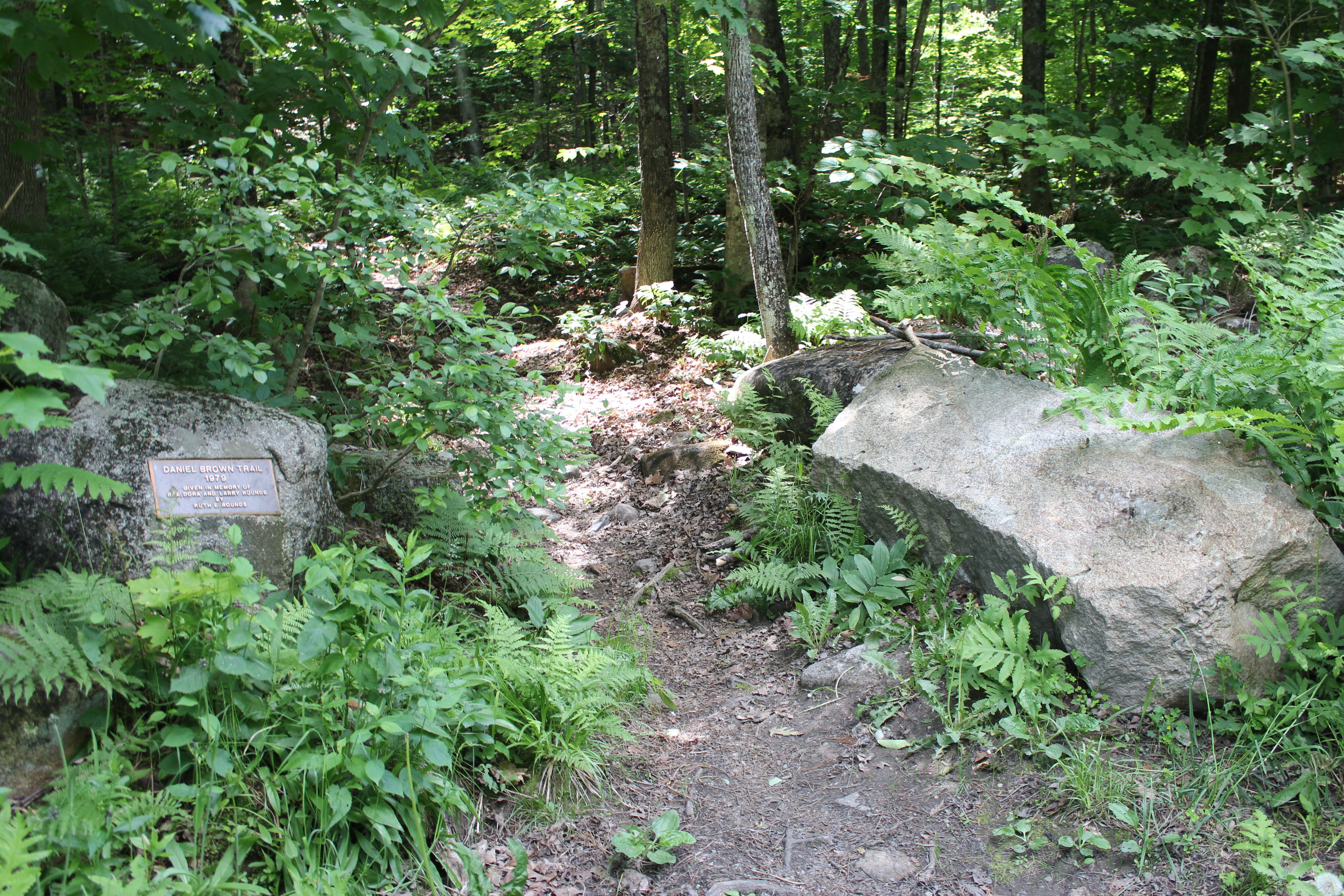
trail head

It’s easy to miss the nondescript trailhead located up the road from the church.

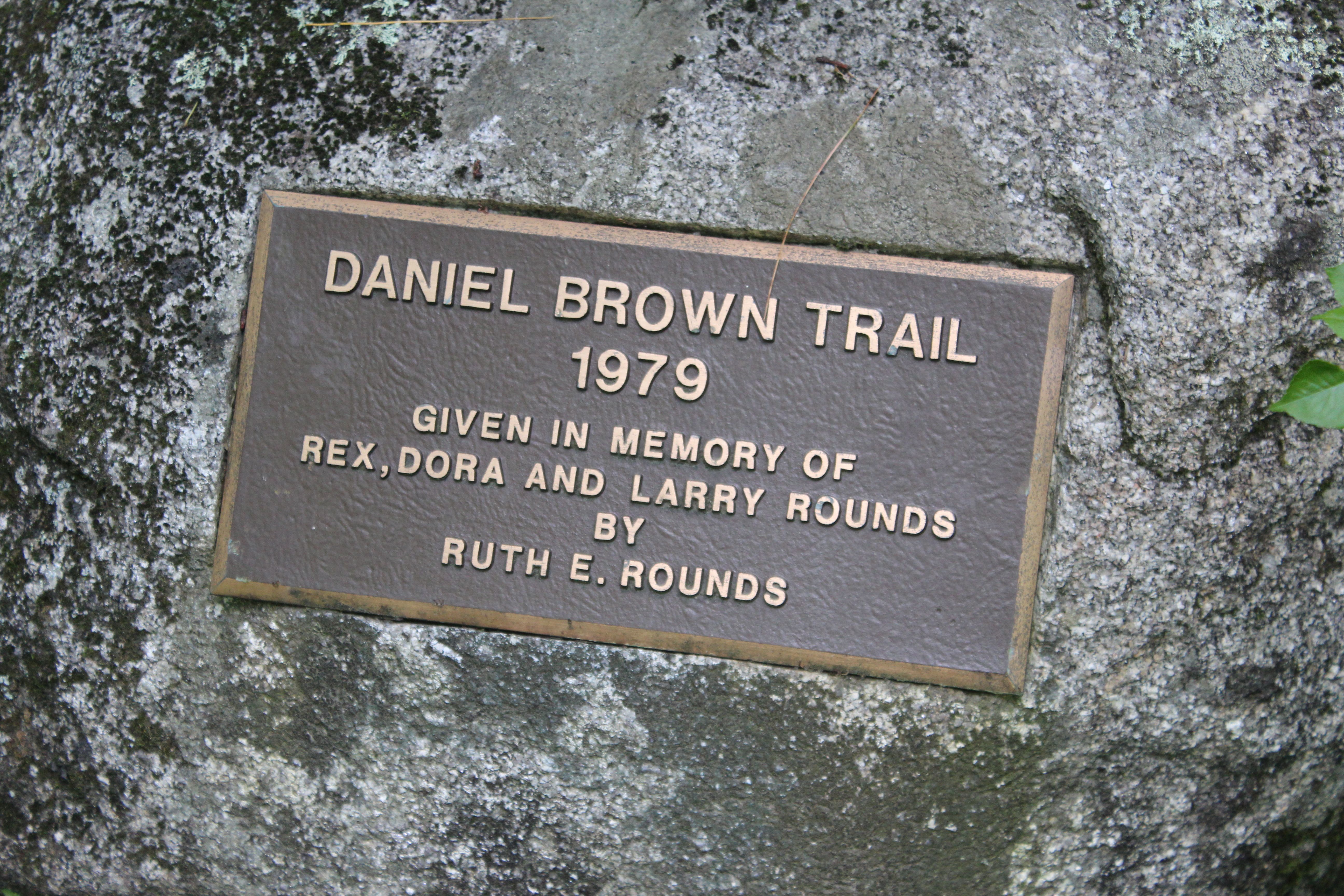
trail sign

The public path that has traversed the mountain for many years was apparently known as the Old Squire Brown Trail. From what I gather, Daniel Brown owned a large house and farm near Bear Pond–perhaps the Lake House? He was involved in town politics and went on to serve in both houses of state legislature, becoming known as Squire Daniel Brown.

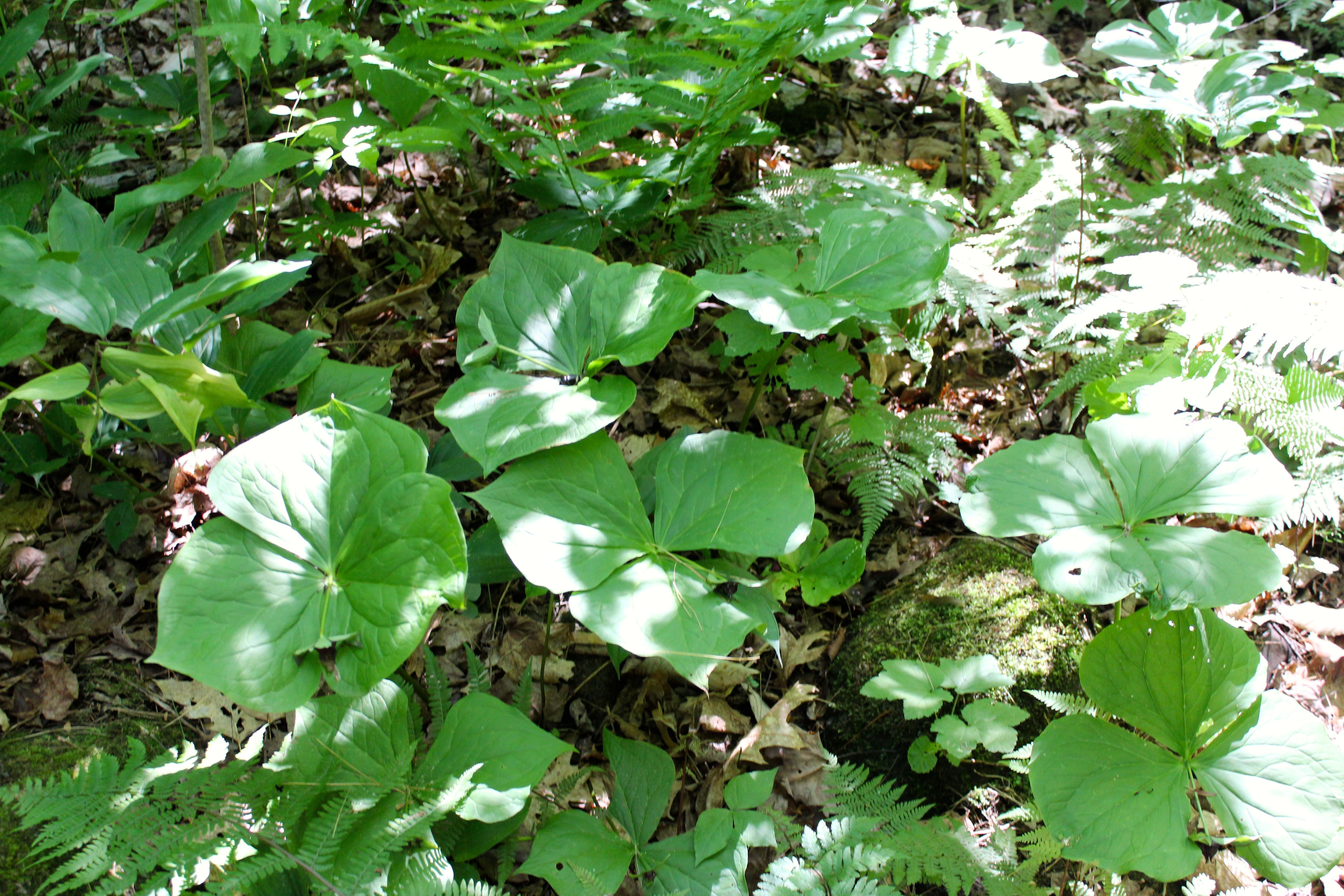
Red trillium

Though the flower is long past, the leaves of Red Trillium reminded me that I need to hike this trail earlier in the spring.

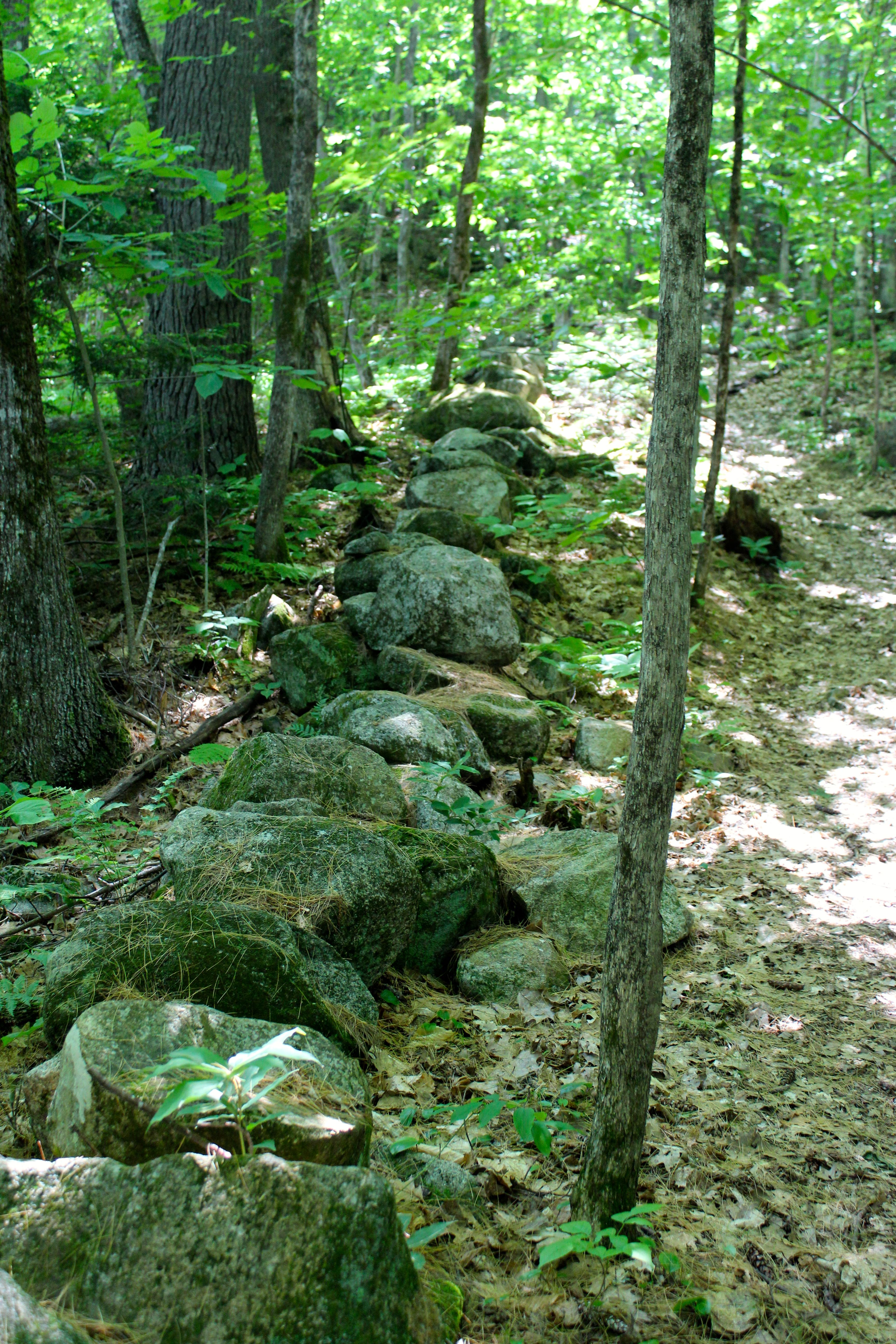
 stonewall

Stonewalls announce that this land was once upon a time used for agriculture.

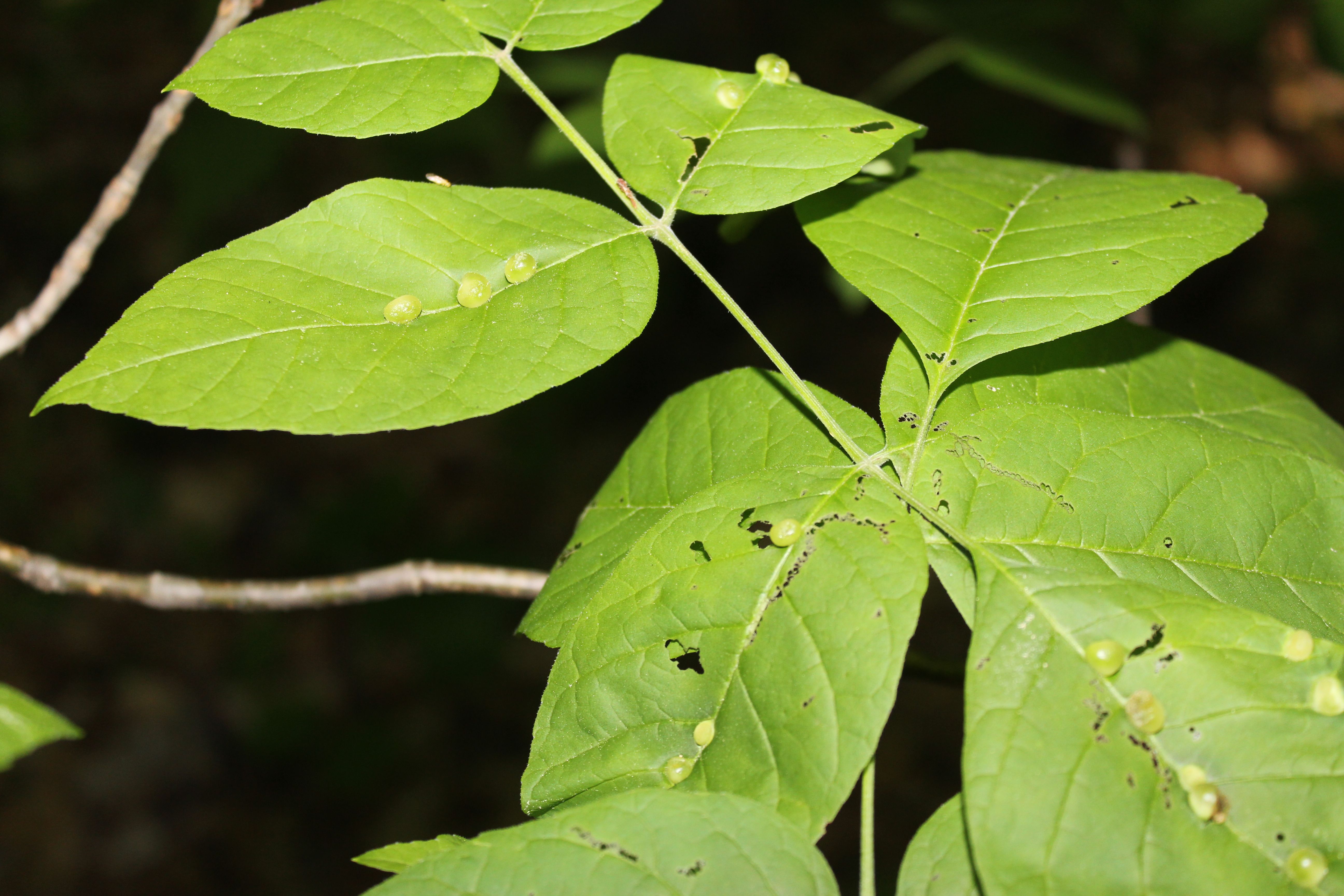
ash leaves 2

The odd leaf formation of this young ash tree made me stop. It has become host to either a fungus or insects who  are using the leaves as protection while they complete their lifecycle.

ash 2

Another ash has been invaded by mites that cause the raised galls.

challenges along the path

Like most trails, this one provides the rocks and roots that draw my eyes downward, so I pause frequently to look around. It’s just as well that I was alone, because not only was I taking my time, but my mind was so filled with chatter that I doubt I would have heard anyone else speak.

pine needles

On the drive to Waterford, I’d noticed that so many of the white pines are once again suffering from the needle drop fungus. The same was true on the trail. In the newspaper, an article about climate change referred to the needle drop as occurring for only the past several years. Methinks more like ten years. The fungus infests trees during a wet spring, such as we had last year and the resulting defoliation is seen the following year. So–I’m thinking out loud here–though we haven’t seen much rain lately, the needles are dropping because of last year’s infestation. While they look so pitiful right now, within a few weeks, they’ll finish dropping. But . . . do the trees have the energy to survive? And what about next year? Will it be a good year for white pines? And then I think about all the pinecones the trees produced last year–it was certainly a mast year, so maybe it doesn’t affect them to such an extreme. Yeah, this was the sort of chatter I was experiencing.

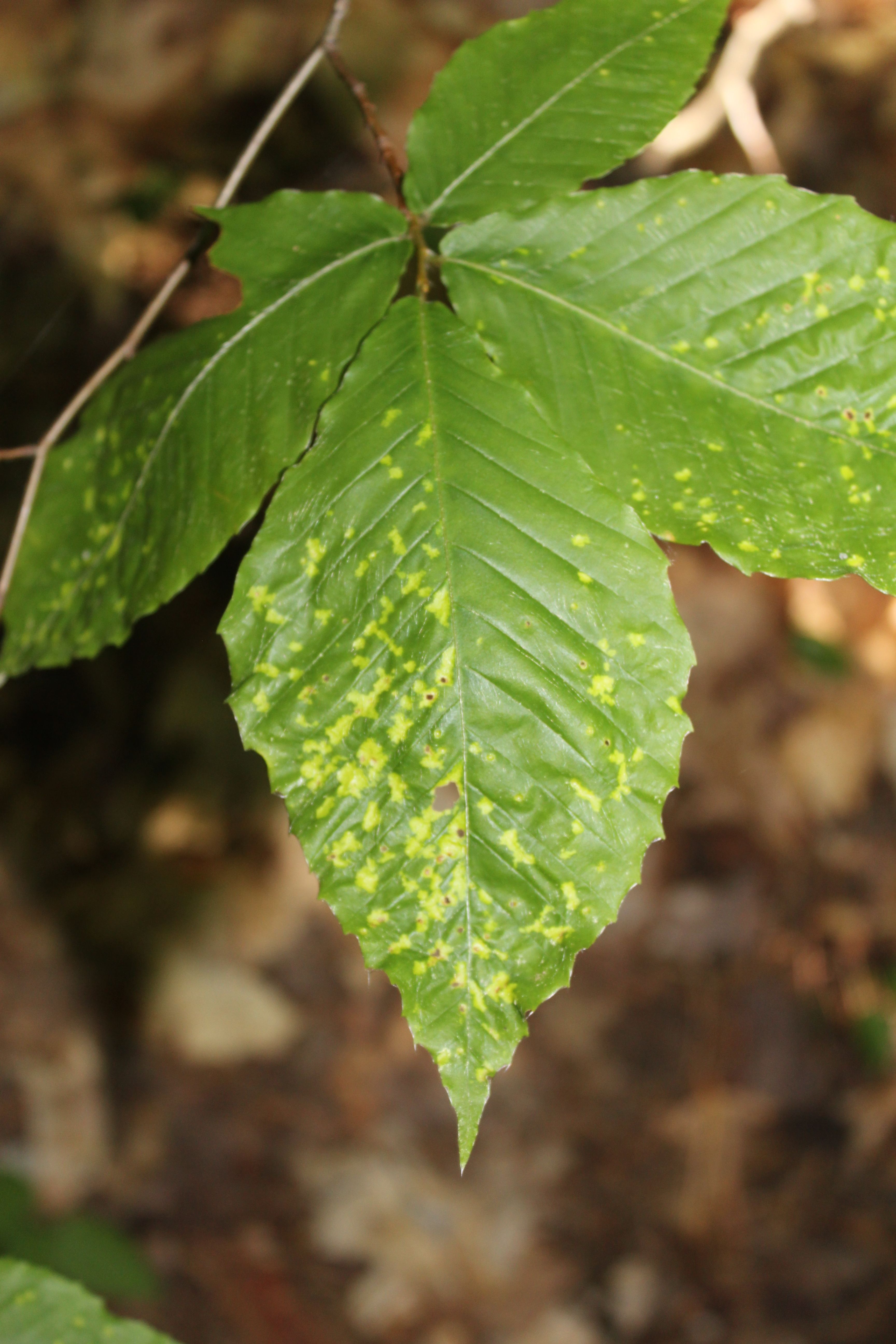
beech spots

Some beech leaves are displaying their own relationship with a fungus. Where only weeks ago, they were the site of beauty as they opened and their hairiness kept insects and others at bay, they can’t fight off everything. Nor can we.

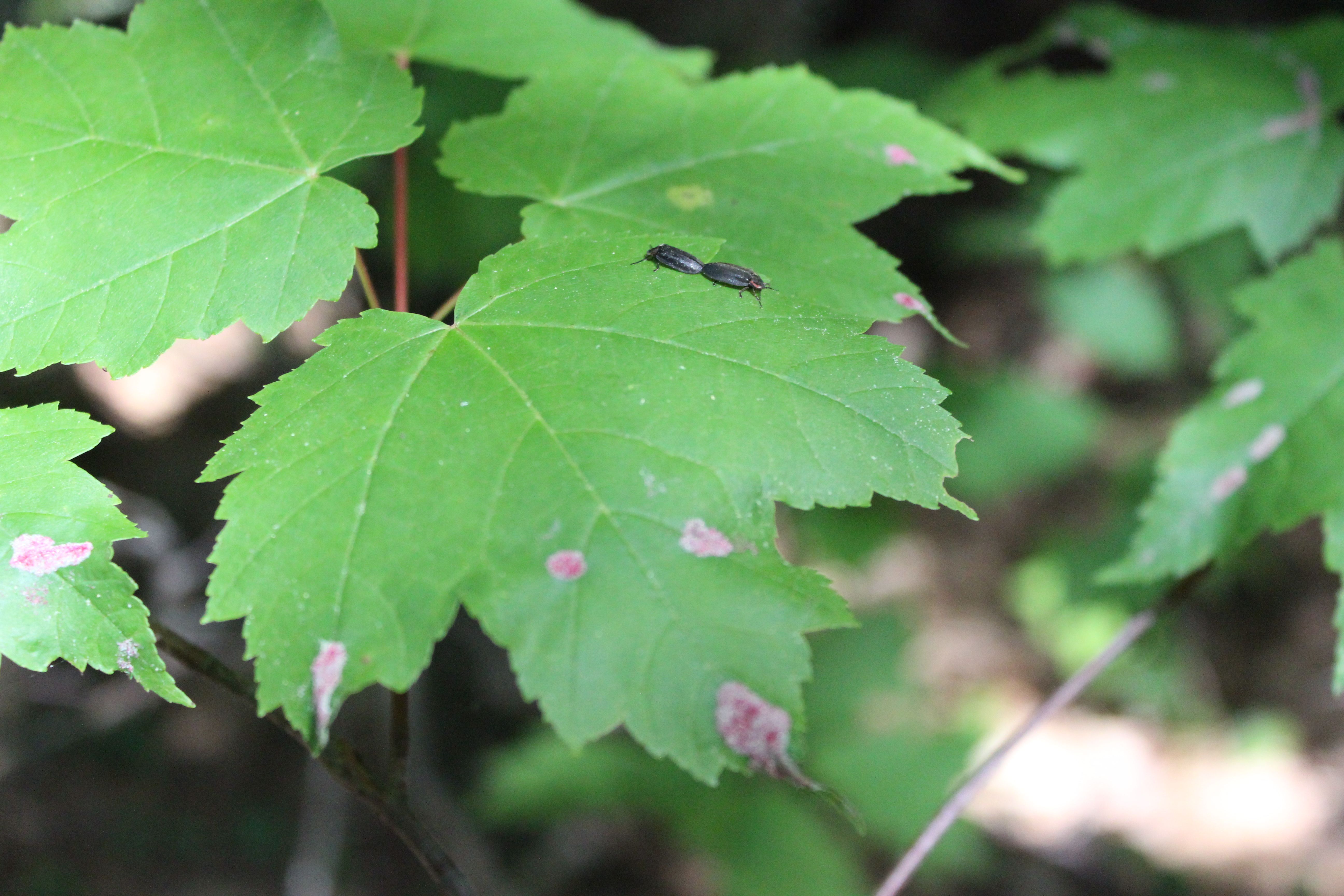
candy pink insects

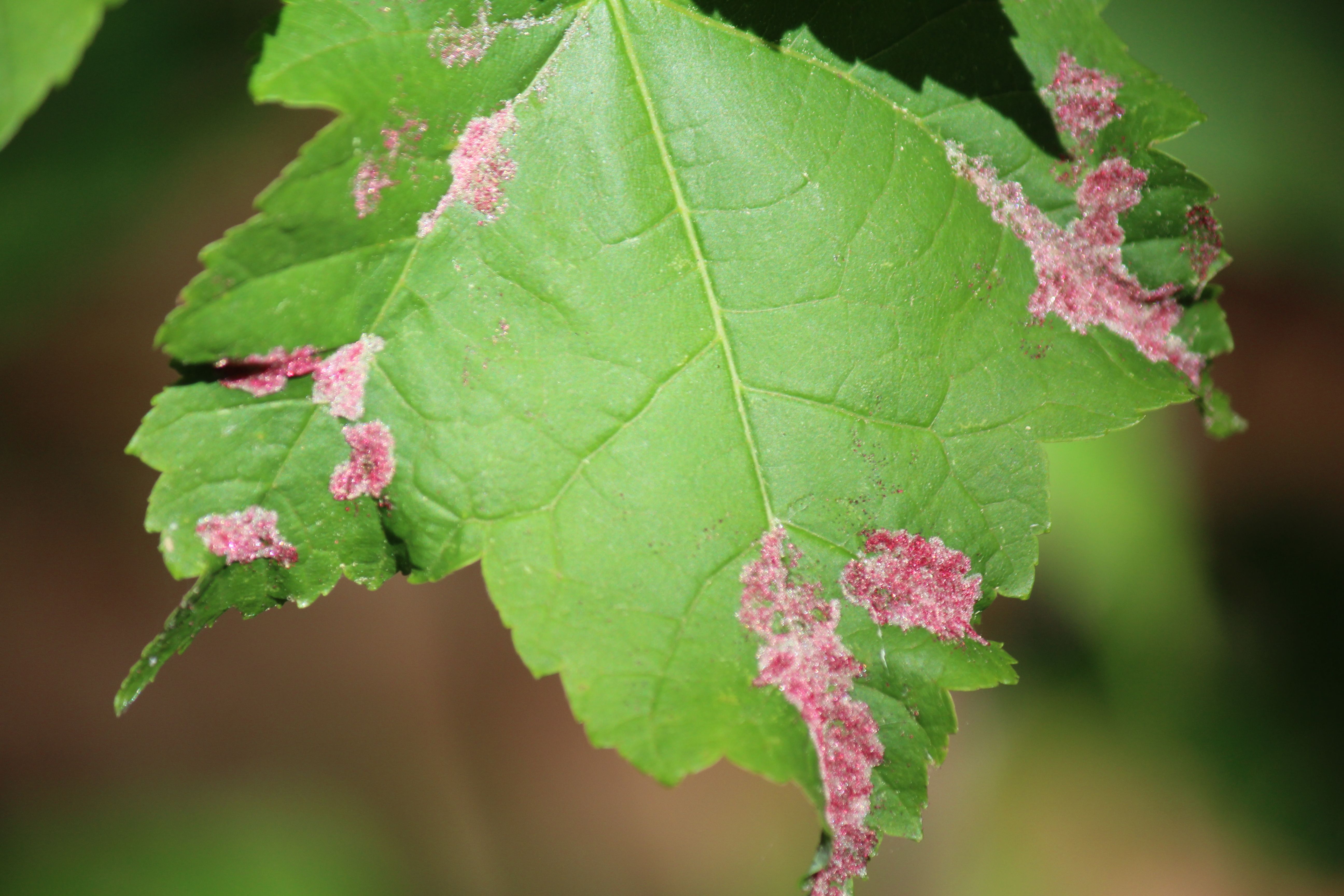
Through my hand lens, the bright pink on the Red Maple leaves has a crystal-like formation. It’s actually quite beautiful.

candy pinkcp2

I had no idea what caused this until I looked it up. These are maple velvet erineum galls, also caused by mites. Apparently they won’t harm the tree, so they aren’t considered parasitic. It’s all a wonder to me. If you do find this, take a close look.

spittle on hemlock

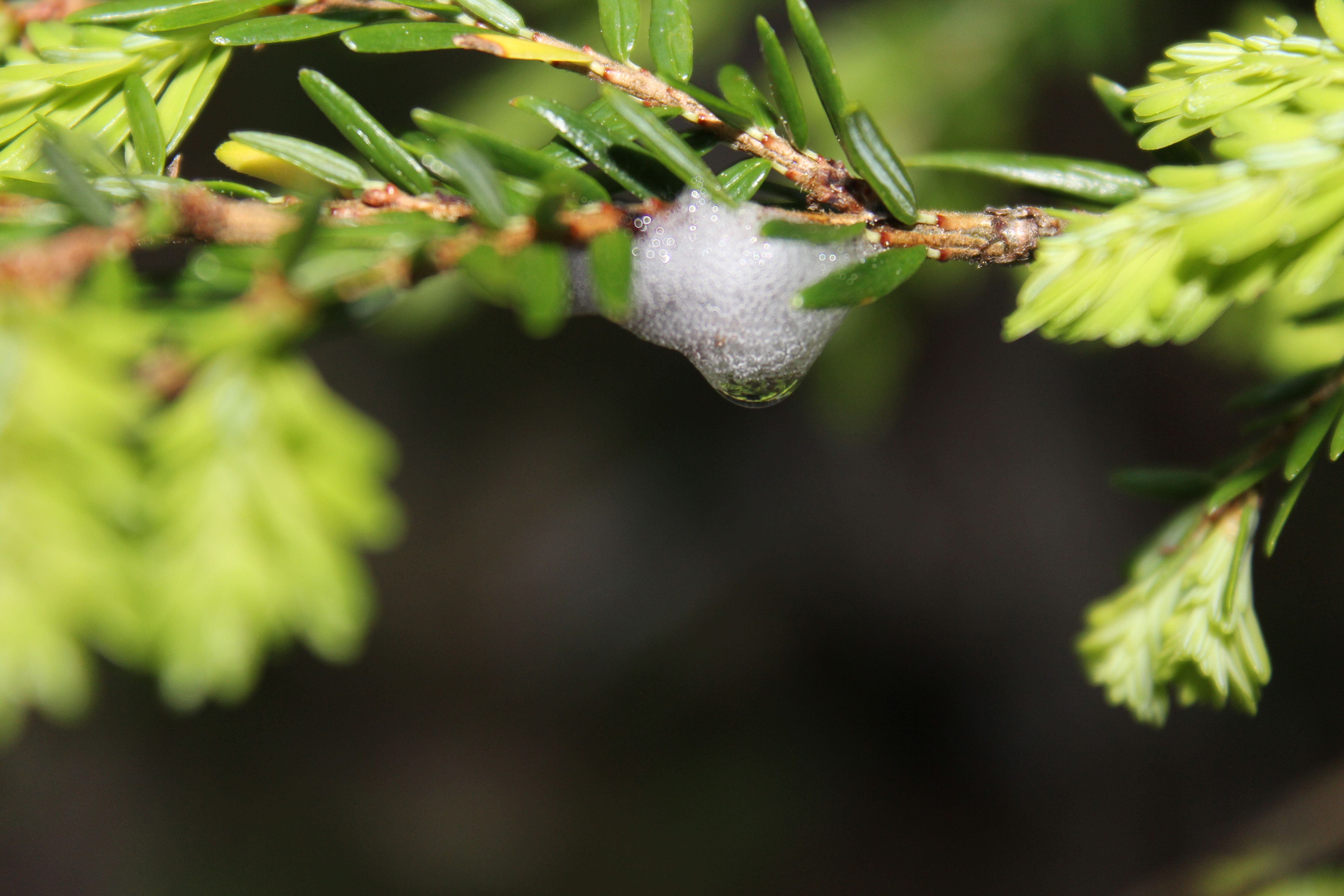
Growing up, whenever we saw spit on wildflowers and grasses, we assumed it was from snakes. A rather scientific observation. Do snakes even spit? And a foot off the ground? I’ve since learned that the foamy substance is the work of Spittlebugs. As the nymphs feed in the spring, they excrete undigested sap and pump air into it.

spittle 2

But I didn’t expect to see this on a hemlock. Turns out–there’s a pine Spittlebug that attacks evergreens. More reasons to keep my eyes open.

Keoka Lake and Oxford Hills

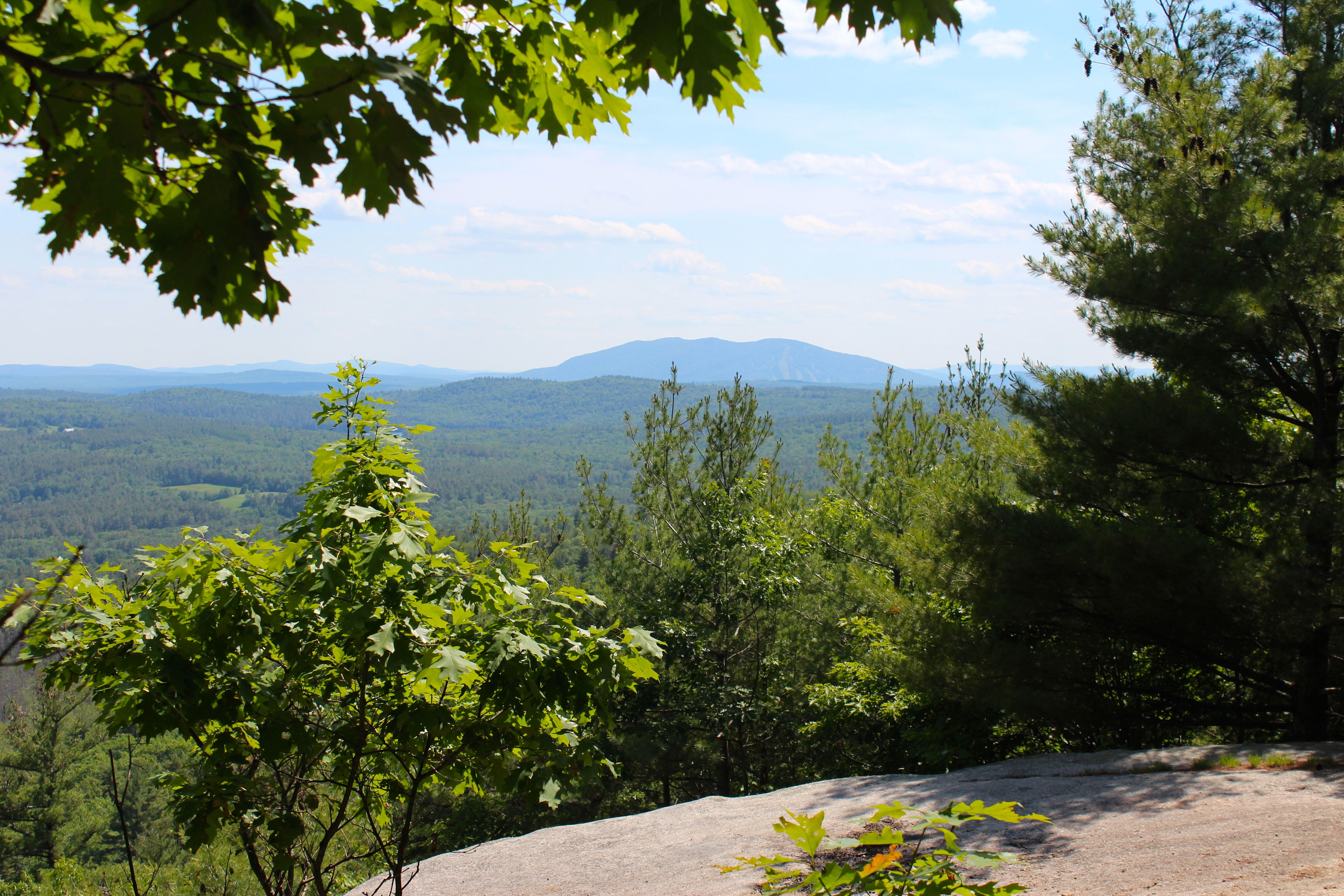
Enough about hosts and fungi. It was time to take in the views. About halfway up, Keoka Lake and the Oxford Hills are visible through a cut in the trees.

gnome home

Gnome homes are everywhere.

view

And finally, the summit with Pleasant Mountain in the background.

BP from summit

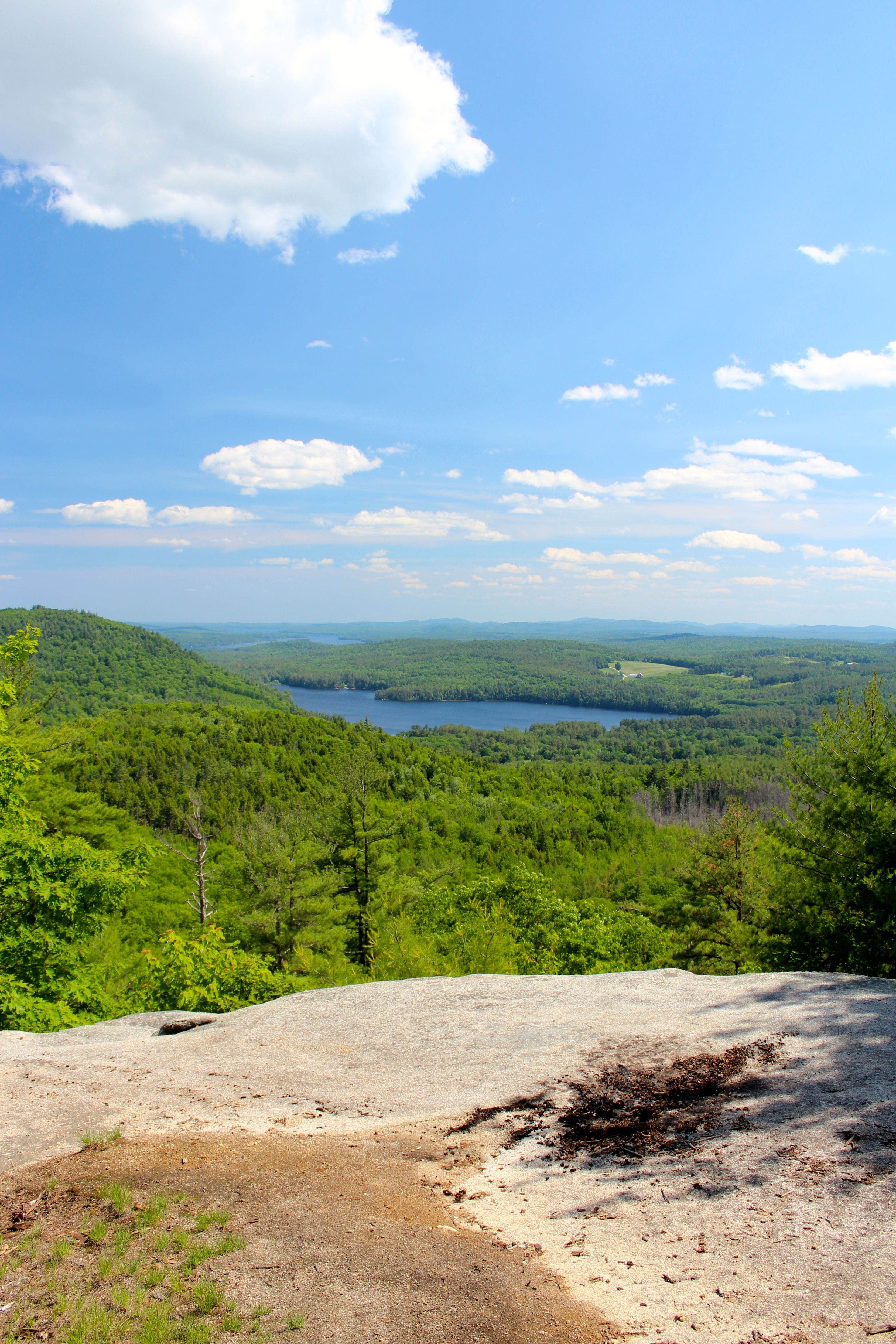
And Bear Pond and Long Lake below.

the rocks

No visit is complete without a stop at the glacial erratics.

the rocks split

Maybe I shouldn’t use the plural form as it’s obvious this was all one rock

the rocks 2

that split apart.

tr 5

Perhaps there’s more to come.

As the saying goes, “so much to see, so little time.” Thanks for joining me to take in the views.

Close to Home

It’s a no-Mondate Monday since we just returned from vacation. My guy felt the need to work and I felt the need to stick close to home.

Stepping outside, the aromatic smell of lilacs and honeysuckle envelope me. It reminds me of my childhood home, where the lilacs grew outside the bedroom I shared with my sister. And that reminds me of Mom and Dad and the fact that it’s Memorial Day and we always went to the parade in town and sometimes we marched in it and other times we rode in the back of our neighbor’s car because she was the head of the VNA and the school nurse, and we always bought crepe paper poppies from the veterans to honor them and my father, grandfathers, uncles and cousins. Thank you to all who have and do serve.

Lilacs

We purchased our home 22 years ago. The previous owners had green thumbs and though the house had been empty for ten years before we bought it, their toil was still evident. I have a green pinky, so the gardens aren’t what they once were. I am excited, however, that some of the flowers they nurtured continue to thrive. Such is the case with this white lilac.

purple lilac

And the purple, that forms part of the windscreen on the edge of the yard.

The fragrance is mixed in with . . .

honeysuckle

that of the honeysuckle. Both buzz with pollinators seeking their sweet nectar.

strawberry 2

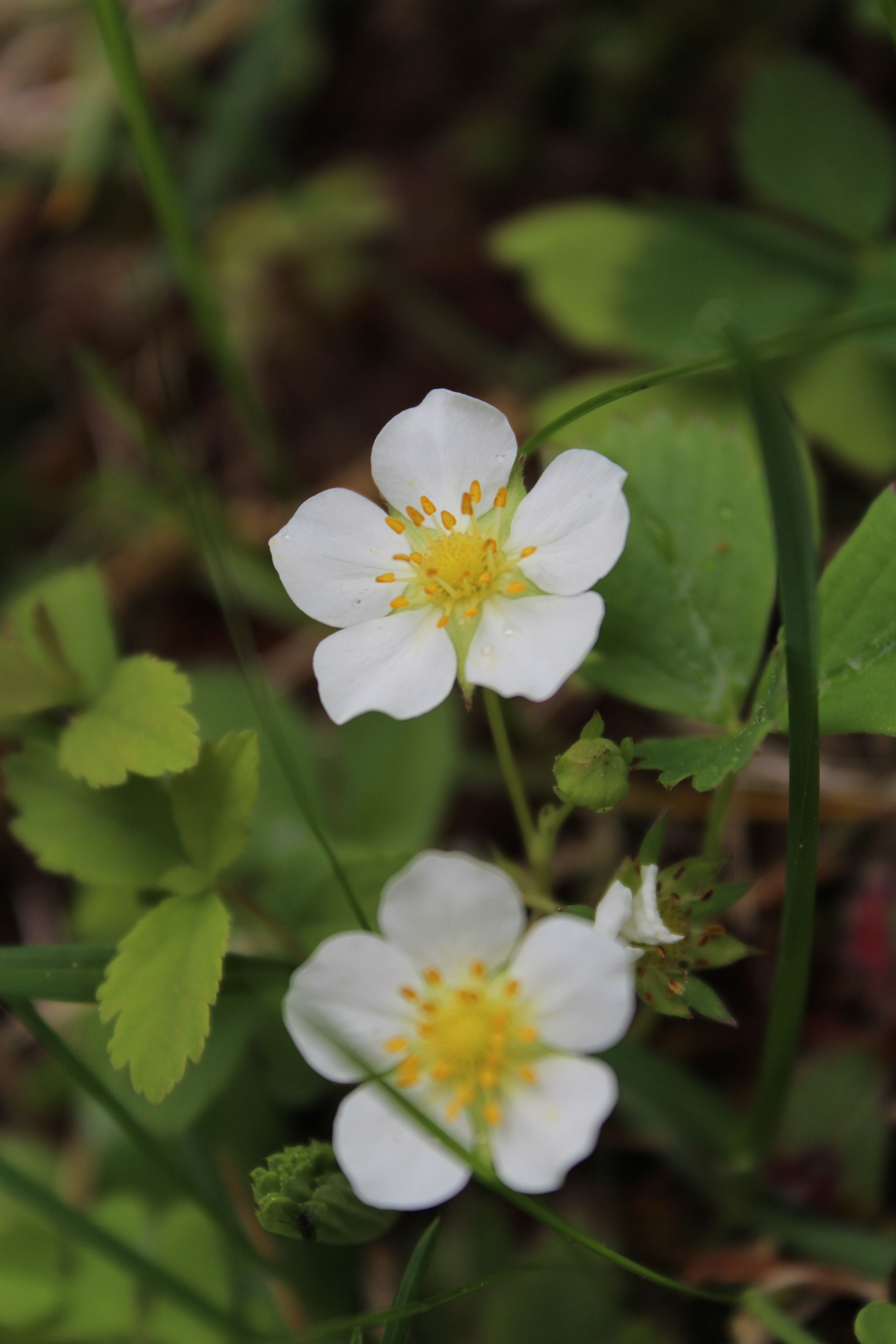
Wild Strawberries are just that as they creep through the gardens and lawn.

Flowers and leaves grow separately on long, slender stalks.
With milk-white flowers, whence soon shall sweet
Rich fruitage, to the taste and smell
Pleasant alike, the Strawberry weaves
Its coronet of three-fold leaves,
In mazes through the sloping wood.
—Anonymous

blueberries

Another edible, the Highbush Blueberries.

Canada Mayflower

Atop one of the stone walls, at its base and below many trees, the Canada Mayflower blooms.

star flowers

A wildflower that some consider common is the Starflower. Look closely and you may see that there are seven stamen, seven petals and seven sepals. How common is that?

Interrupted 2

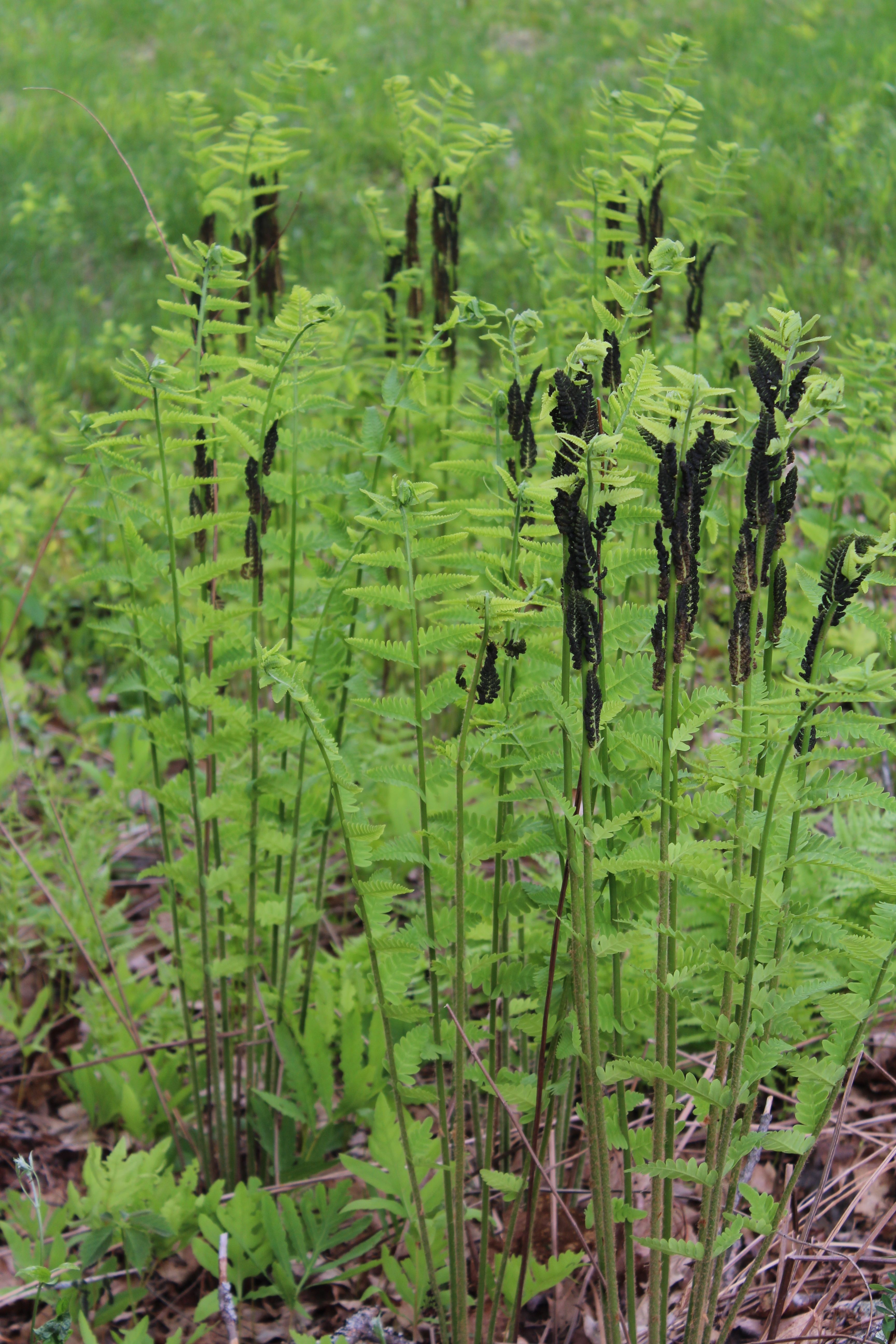
We have plenty of ferns throughout the yard and woods, but I like this one–the Interrupted Fern. It speaks its name.

Interrupted fern

On larger fronds, brown fertile pinnae or leaflets interrupt the green sterile leaflets.

Lupine

And then there is that hitchhiker, the Lupine. Each year it moves to a different spot.

Lupine 2

I love to watch the flower open from the bottom up.

lady slipper

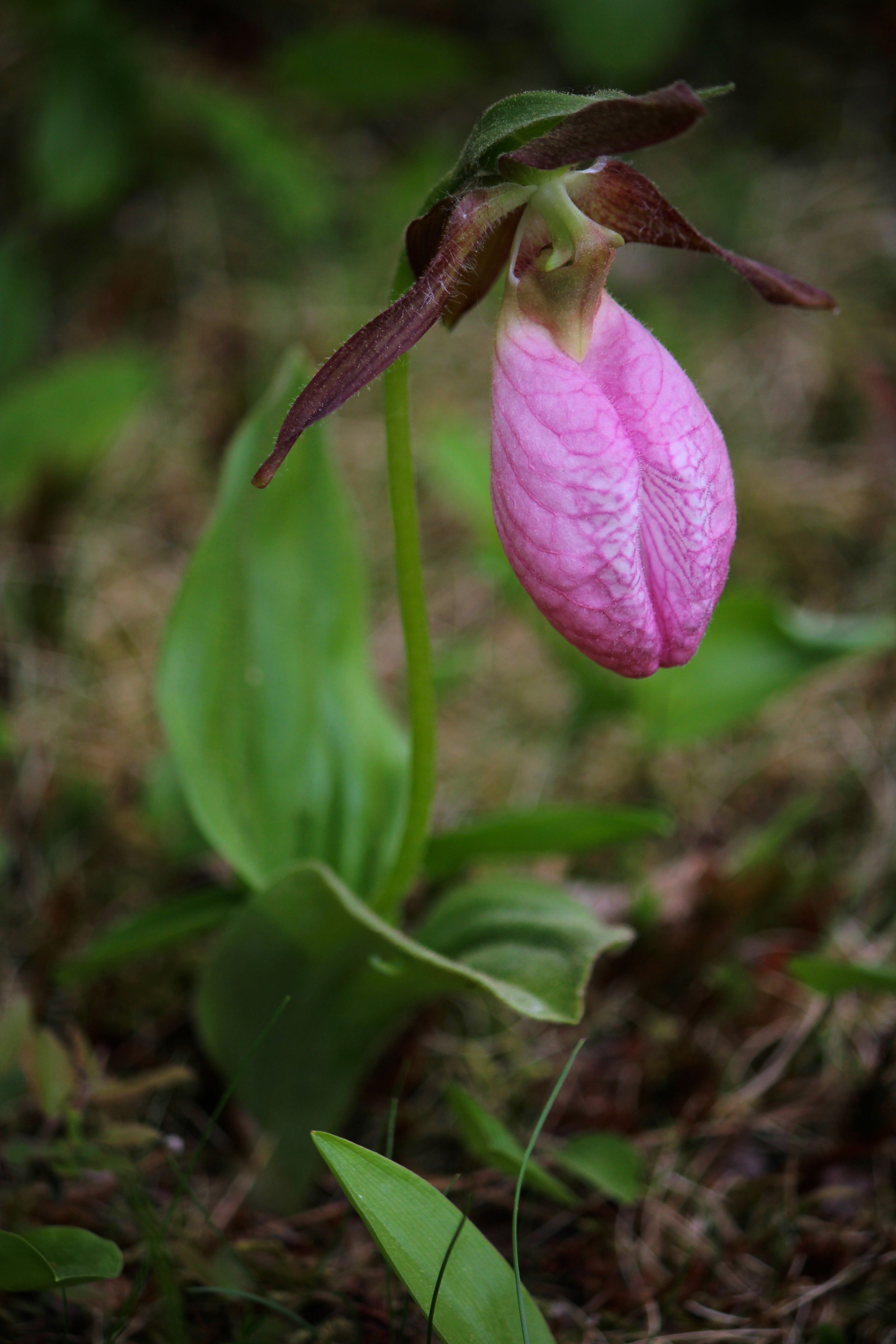
I saved the best for last. As I mentioned earlier, we’ve lived in this house for more than two decades and though I’ve seen Lady’s Slippers in other places, today I stumbled upon this one in our yard. A member of the Orchid family, it features the typical three petals in an atypical fashion. The pouch (or slipper or moccasin), called the labellum, is actually one petal–inflated and veined as you can see. The two remaining narrow petals twist and extend to the sides. Overall, it reminds me of a lady holding out her skirt as she curtsies.

Though bees help with pollination, they hardly reap the rewards of sweet nectar. It’s a symbiotic relationship with a fungi that helps the Lady’s Slipper germinate. And then, it still takes a few years for the germinated seed to produce leaves and about 3-5  years before it produces a flower. Once established, however, it may live for 20-30 years or more. So apparently this wildflower has been present for at least eight years, but I only discovered it today.

Staying close to home certainly offered sweet wonders.

One Step at a Time

The past few weeks I’ve felt like an expectant mother. Remember that 70’s Heinz Ketchup commercial? “Anticipation, anticipa-a-a-tion, it’s making me wait.” First it was the Red Maples. Look at them now.

red maple

Tender and colorful, their leaves begin to unfurl.

rm1

vp 5:4

And then there is the vernal pool where the rhythm of life changes with each day.

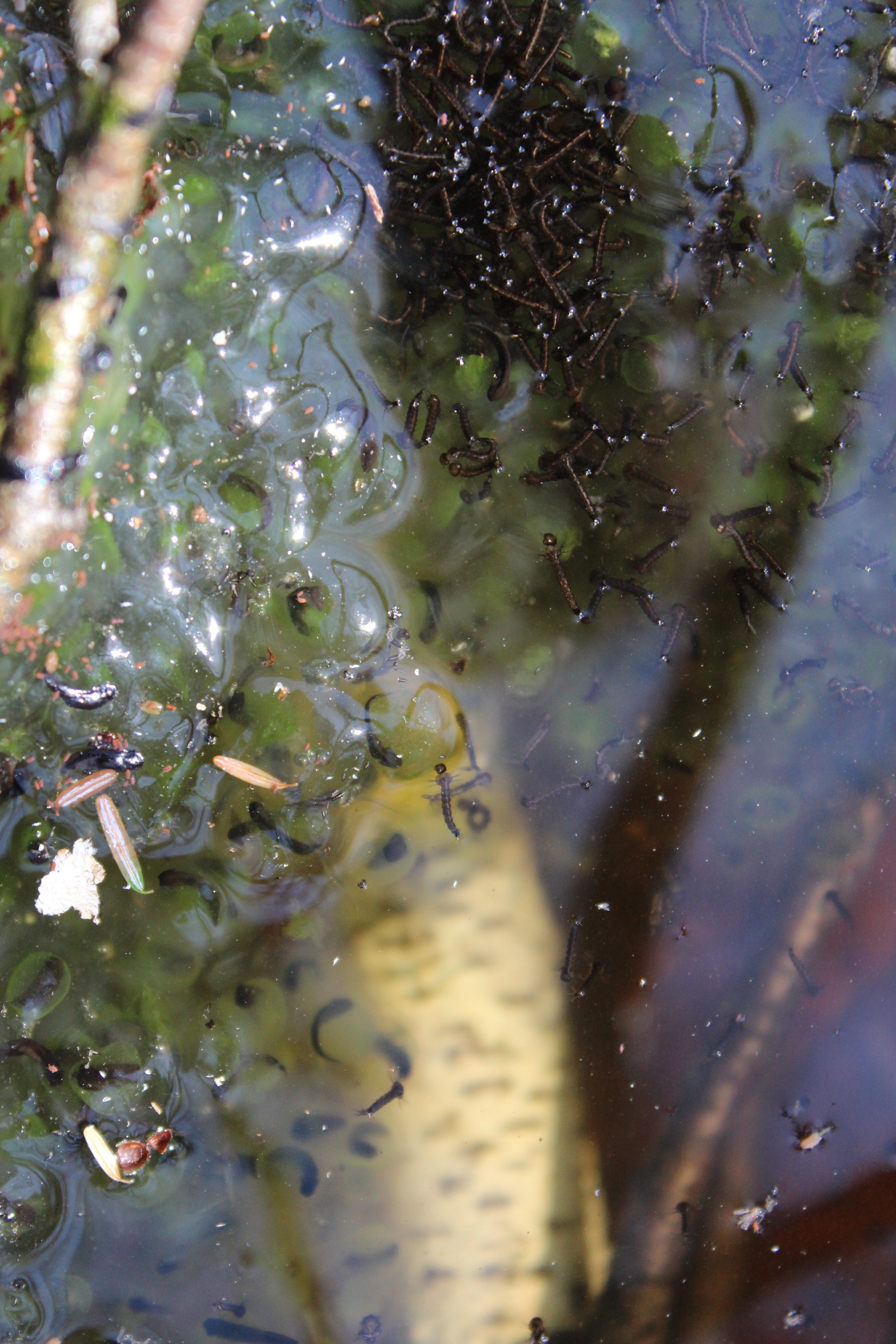
mosquitoes

Larval mosquitoes wiggle and waggle and somersault through the water.

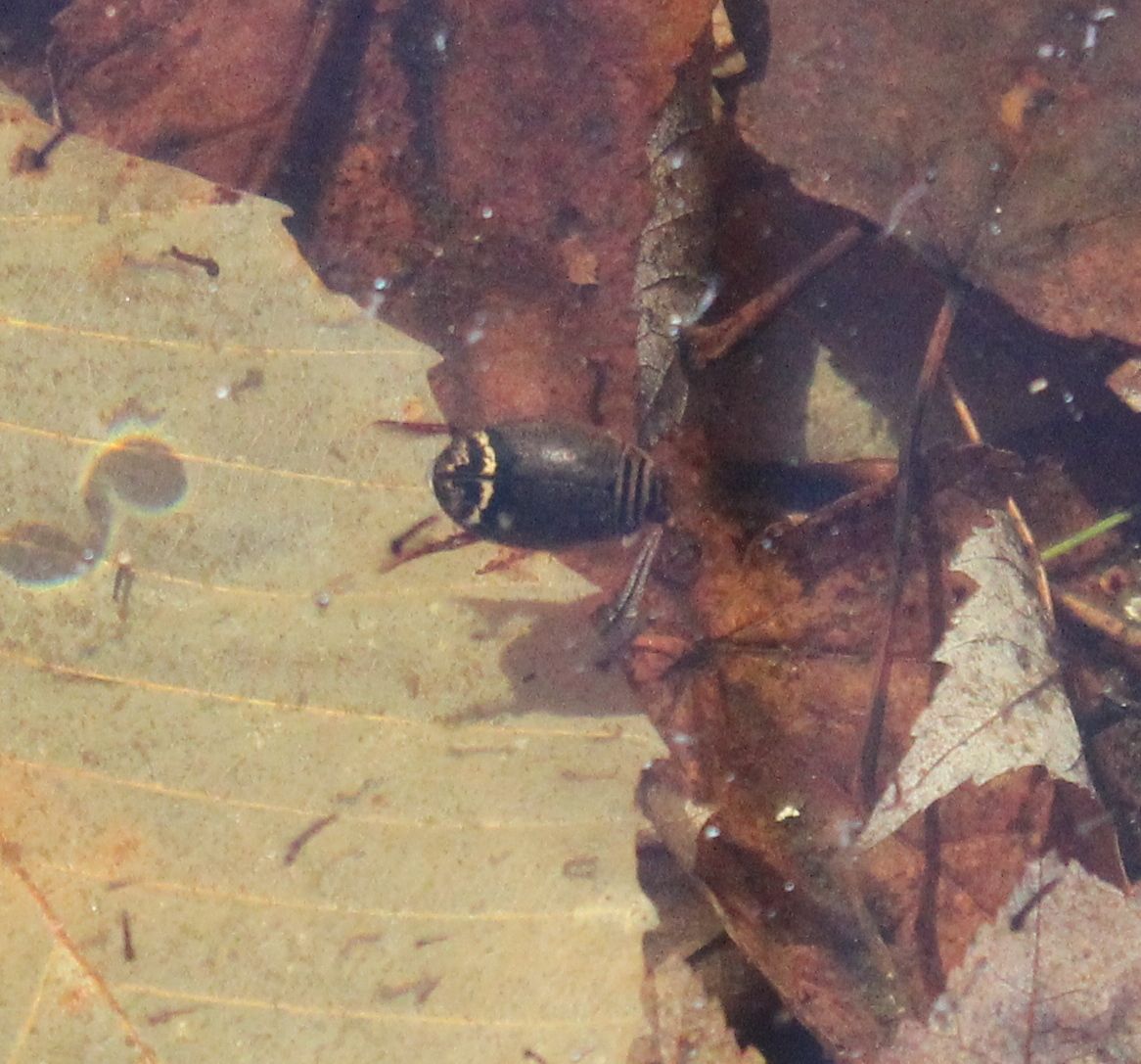
beetle

Predacious beetles paddle along in this fertile hunting pool.

vp 1 5:5

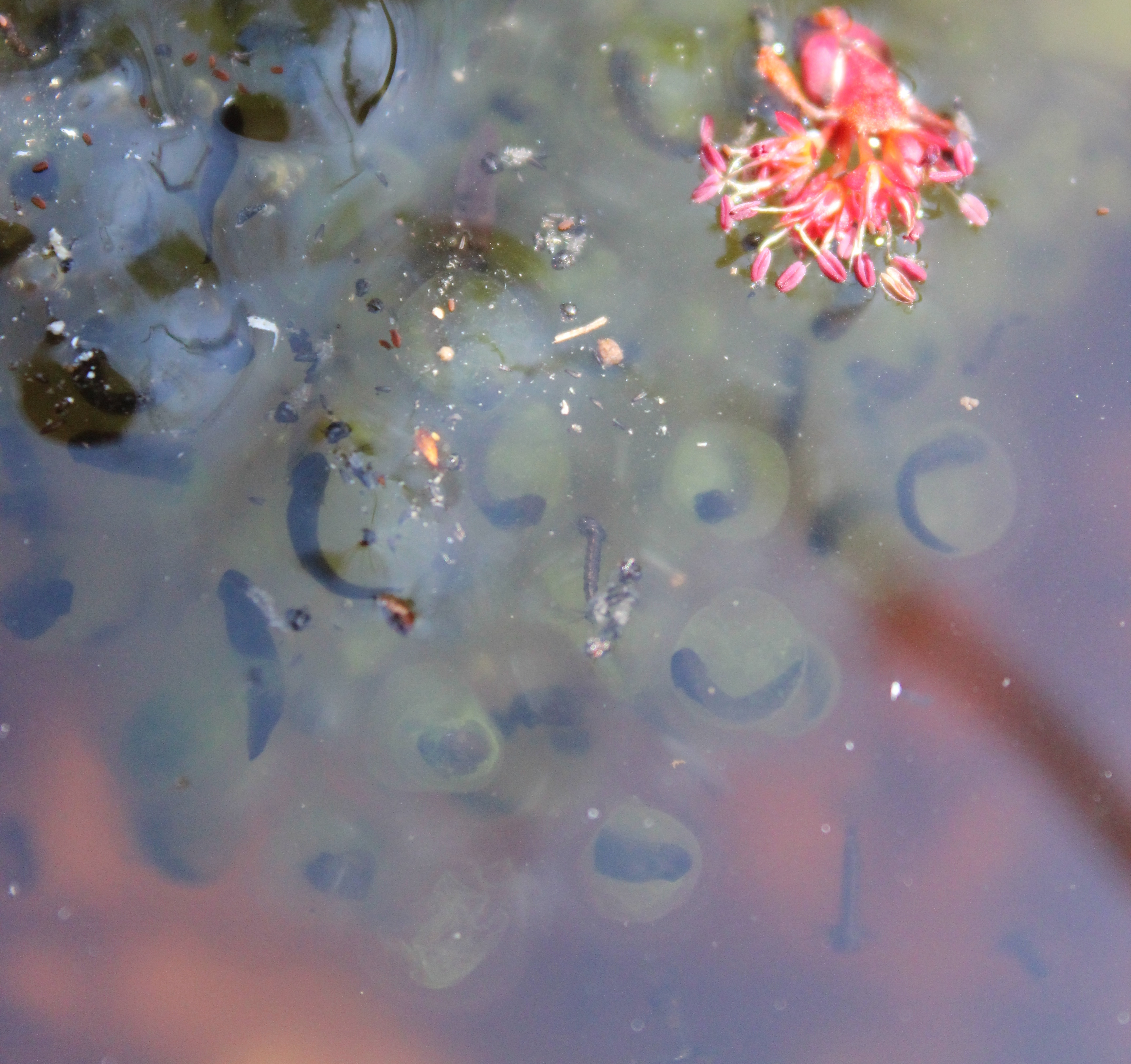
Sunshine envelopes the wood frog and spotted salamander nursery

eggs 5:4

with a blanket of warmth for the growing embryos.

eggs formed

Their due date fast approaches.

teeming

The pond reverberates with each tiny step.

teem 3 5:4

Tadpoles, at last.

teem 2 5:4

The quarter-inch tadpoles feed on the green algae that has colonized the eggs. In their symbiotic relationship, the algae feed on the embryos’ waste and produce oxygen.

tad poles 1

I’m mesmerized.

drying up 5:5

And curious. The water level has dropped several inches already. The question is, will the gelatinous mass be enough to keep these embryos alive?

Canada mayflower

I turn away and by my feet, a Canada Mayflower about to bloom. Yet another step taken.

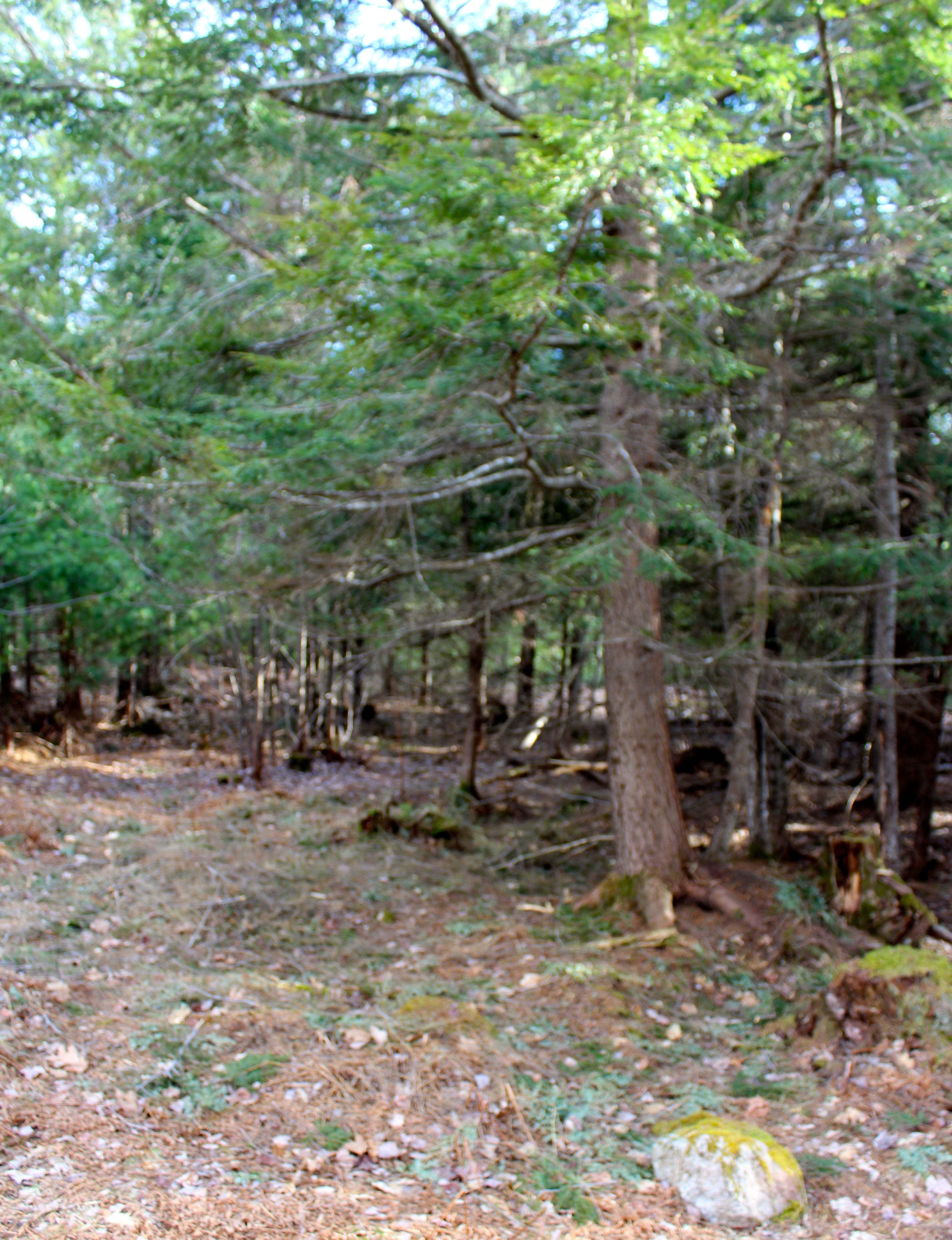
So much is going on in this place. I look around at the hardwoods and softwoods that hang over the pool and drop their flowers, leaves, needles, cones and sometimes branches. Moss and lichen cover the rocks. Plants are just emerging. And I’ve seen evidence that mammals stop here for water or food.

I want to protect the wood frog tadpoles so that in time they can hop away into the upland habitat as their parents did. They are my pride and joy. But only for a moment. They are not mine.

The web of life plays out right here and pulls me along one step at a time.

Thanks for stopping by to wonder as I wander.

Seeking Hope

My heart is heavy with thoughts of recent events both here in the US and abroad, especially in Baltimore and Nepal. It all makes me feel so insignificant as I head outside. And it makes me all the more thankful for the opportunity to head outside and wander freely along the path and through the woods.

red maple 1

My hope is that you’ll never pass by a Red Maple tree again and dismiss it as just another tree.

striped maple

The same is true for a Striped Maple.

pussy willows

and willow.

vp1

My hope is you’ll relish the life of a vernal pool

vp eggs

as it supports a variety of species for such a short time,

wb 2

including this predaceous diving beetle and wiggly mosquito larva.

vp 2

Visit soon, because they are already drying up.

porc tree

My hope is you’ll look around and notice the subtle signs

porc damage

of mammal activity.

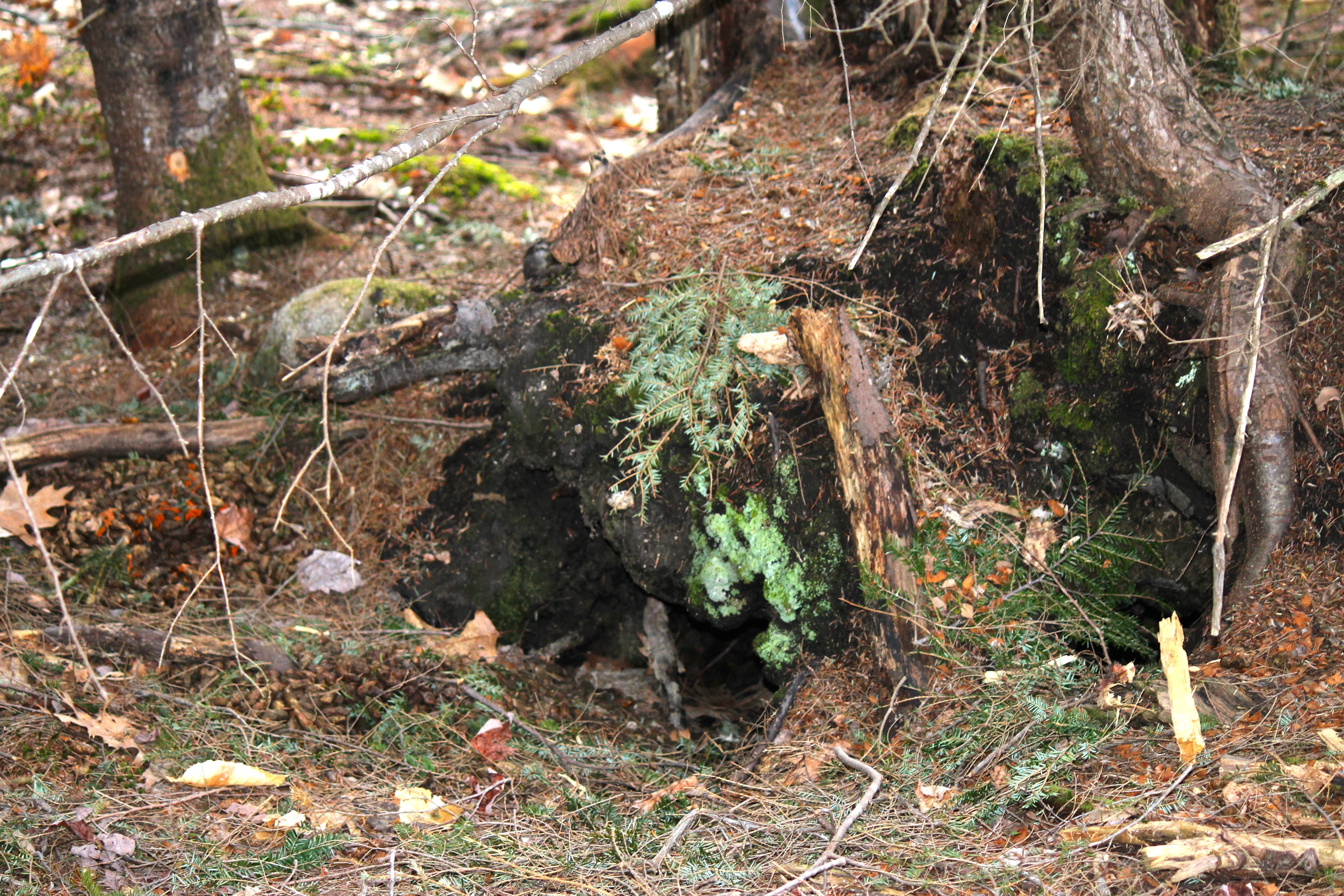
porc den

And have the good fortune to see a den and scat up close.

stone wall

My hope is you’ll come upon stone walls

trash 3

and objects in the woods that will make you wonder about those who came before.

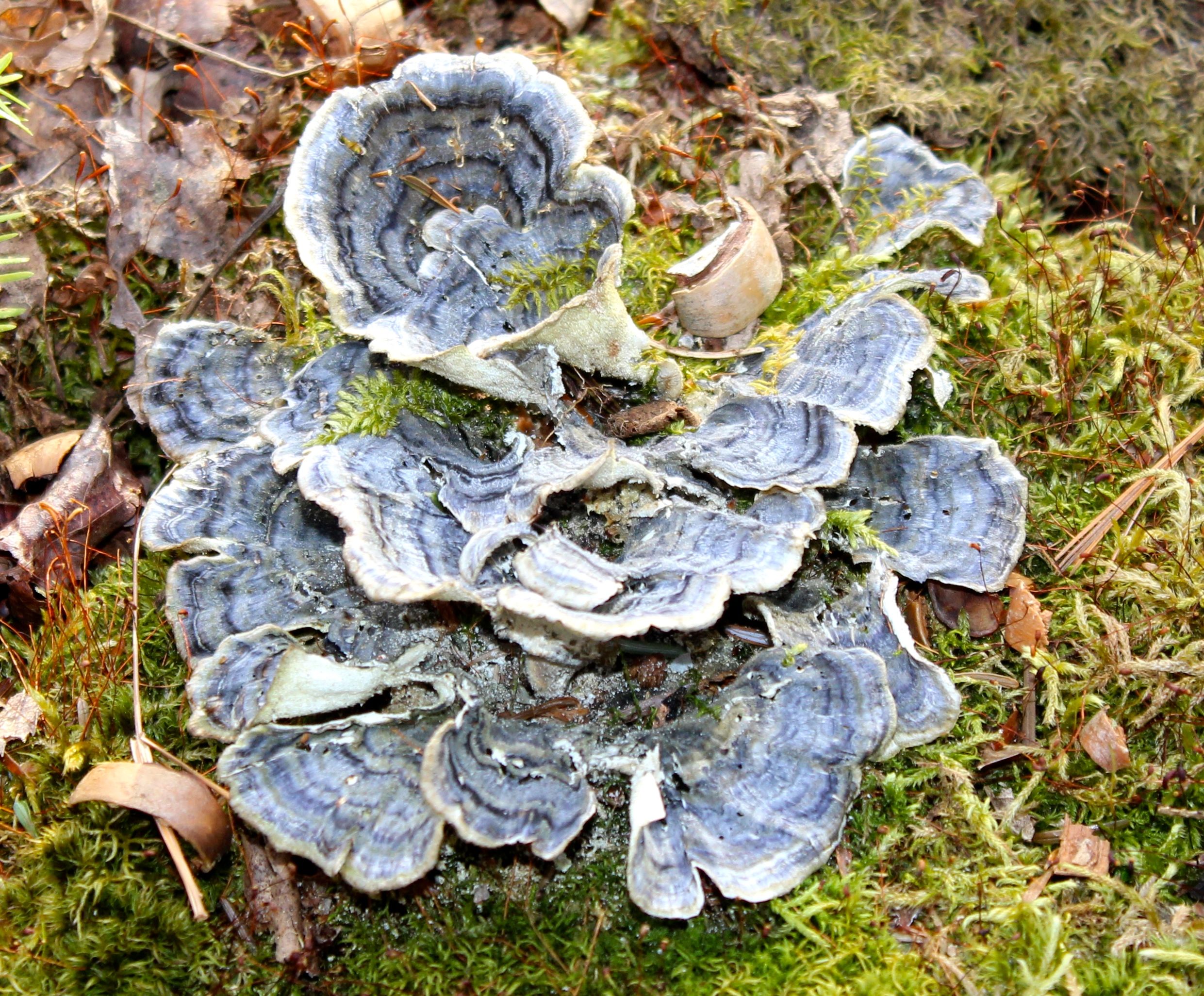
turkey tail

My hope is you’ll notice the abalone colors of turkey tails

stump

and see castles in tree stumps.

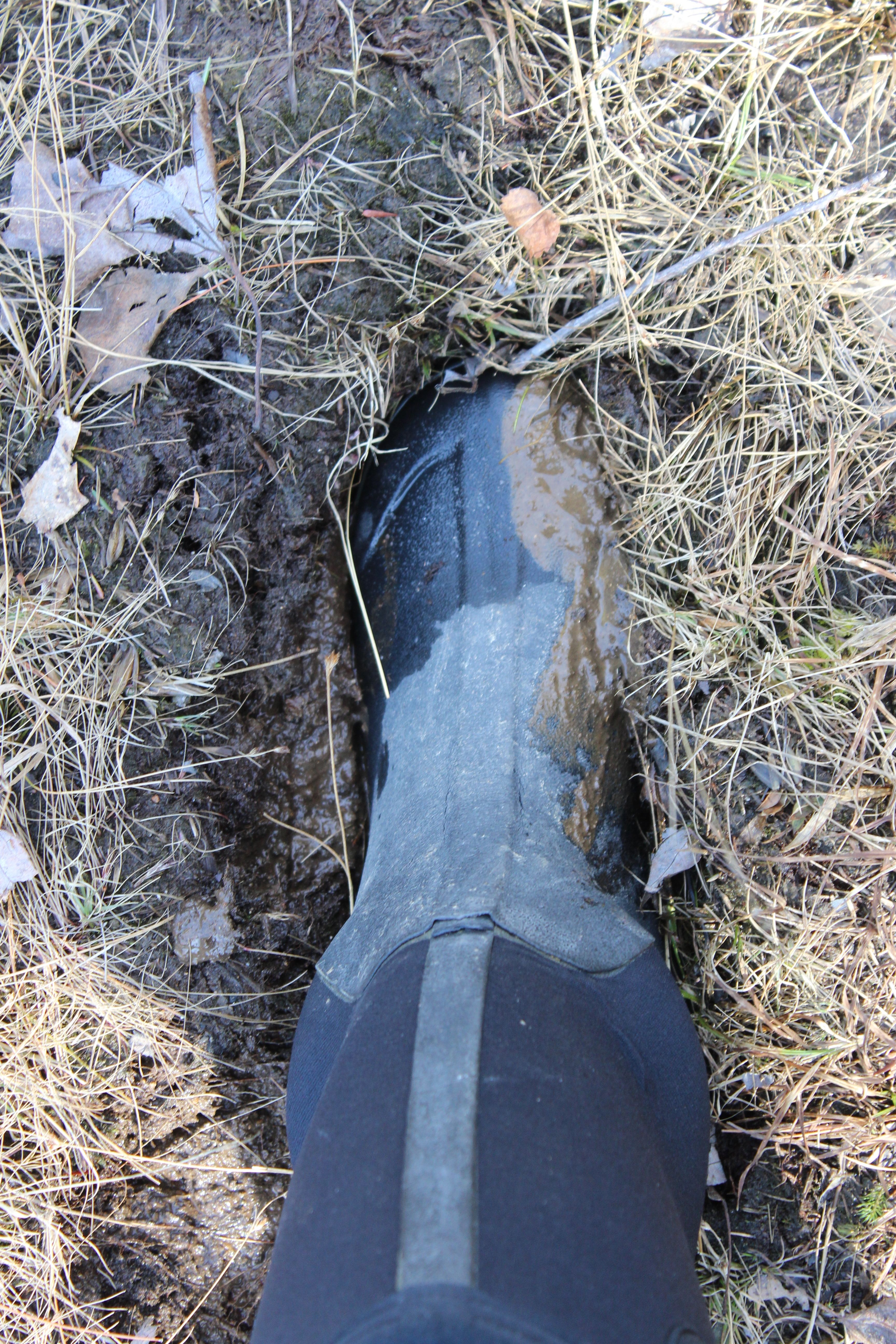
sinking feeling

My hope is you’ll sink in the mud

trail

as you travel along the trail.

May those who suffer find hope and wonder.

Eagle Eyes

CL market

Today’s Mondate began with the ritual PB&J creation at home. Our destination was a hiking trail in New Hampshire, but on the way, we realized the need for gas. So . . . a jig here and a jag there over the bumpy backroads and we landed at Center Lovell Market. While my guy was inside paying for the gas and chatting with a friend who works there, he was handed a slice of blueberry cake just out of the oven. He brought it out to share with me–and I sent him back in, hoping he’d buy the whole thing. Such self-restraint. He only purchased one piece–a good decision, certainly. But really?

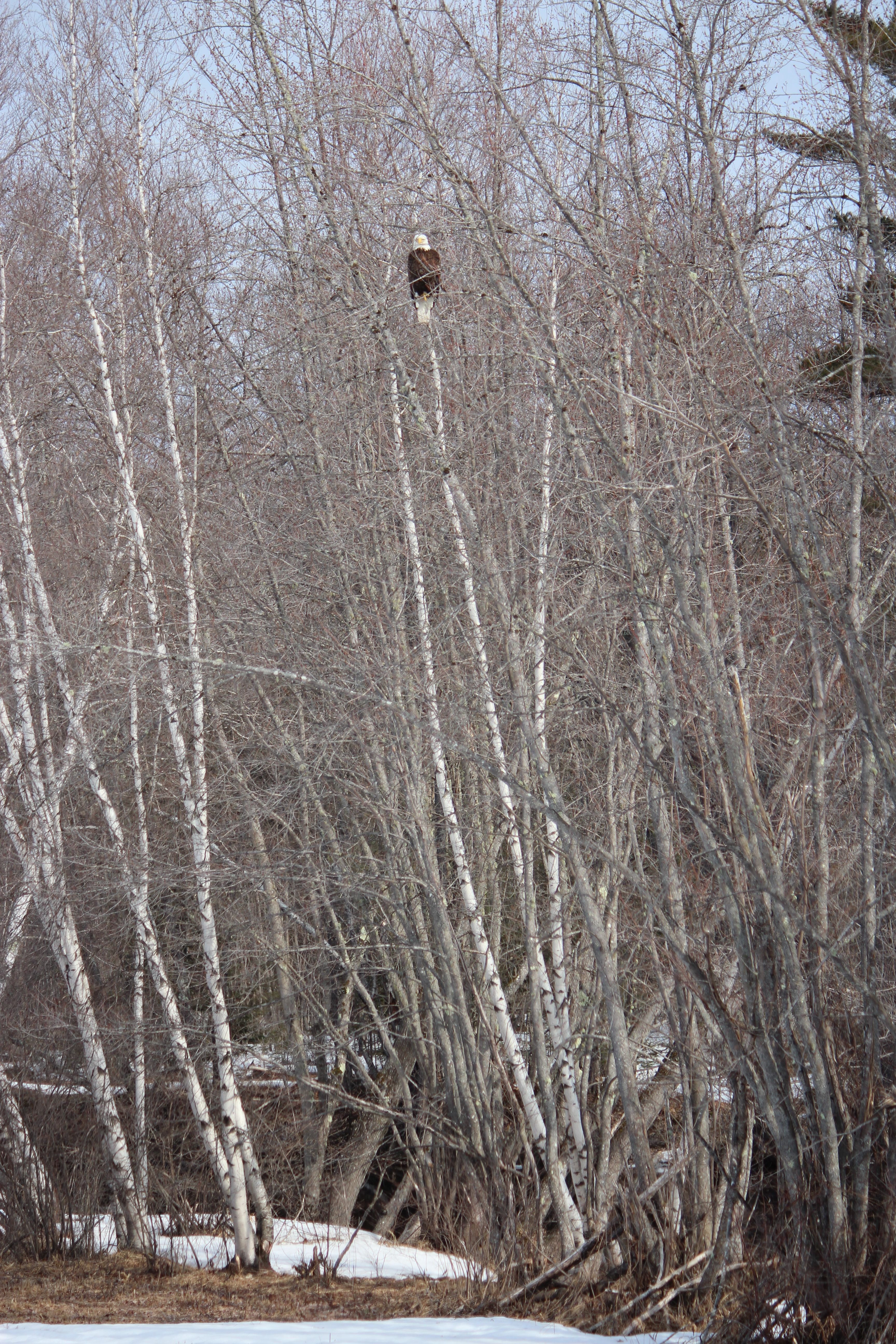
Eagle 1

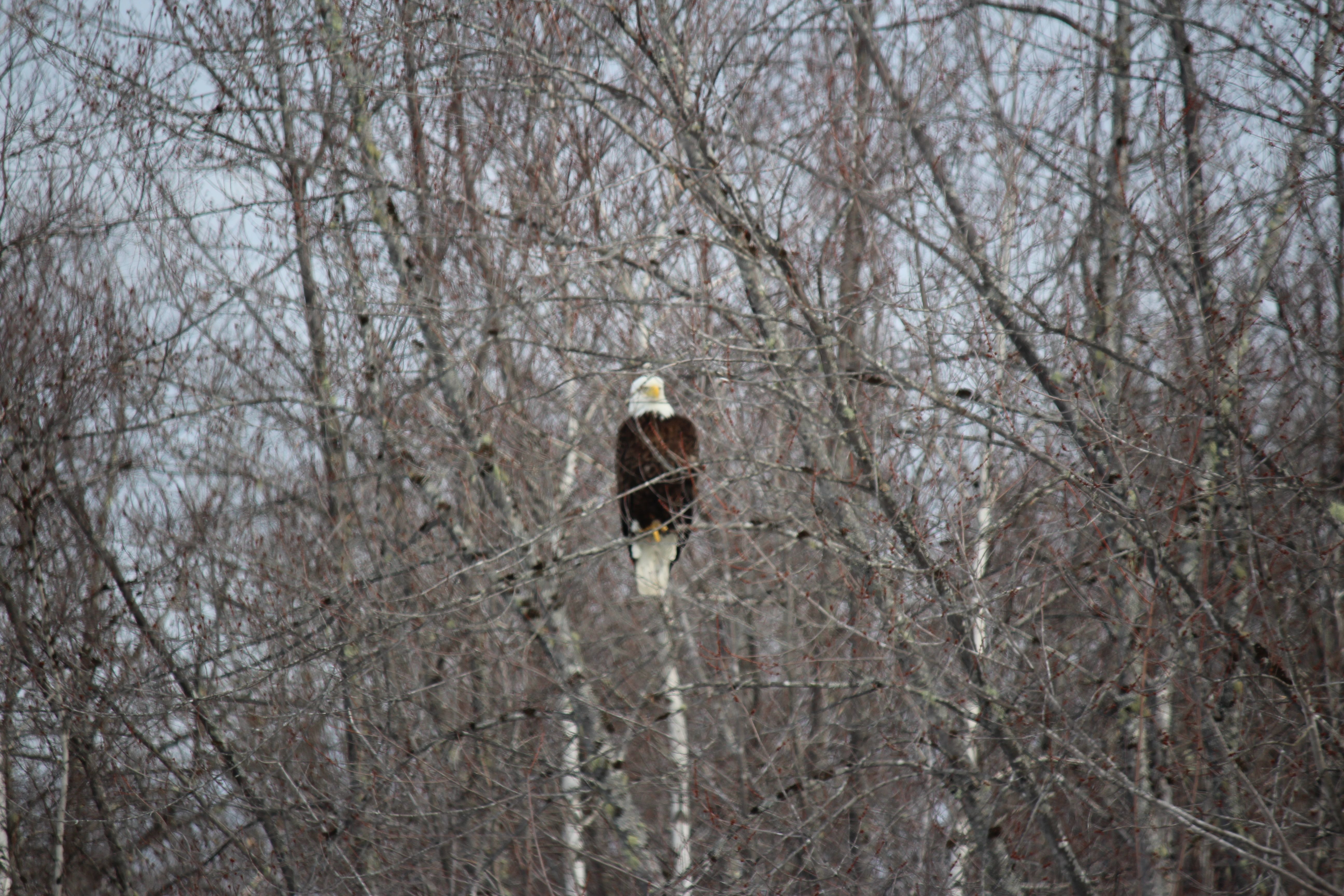
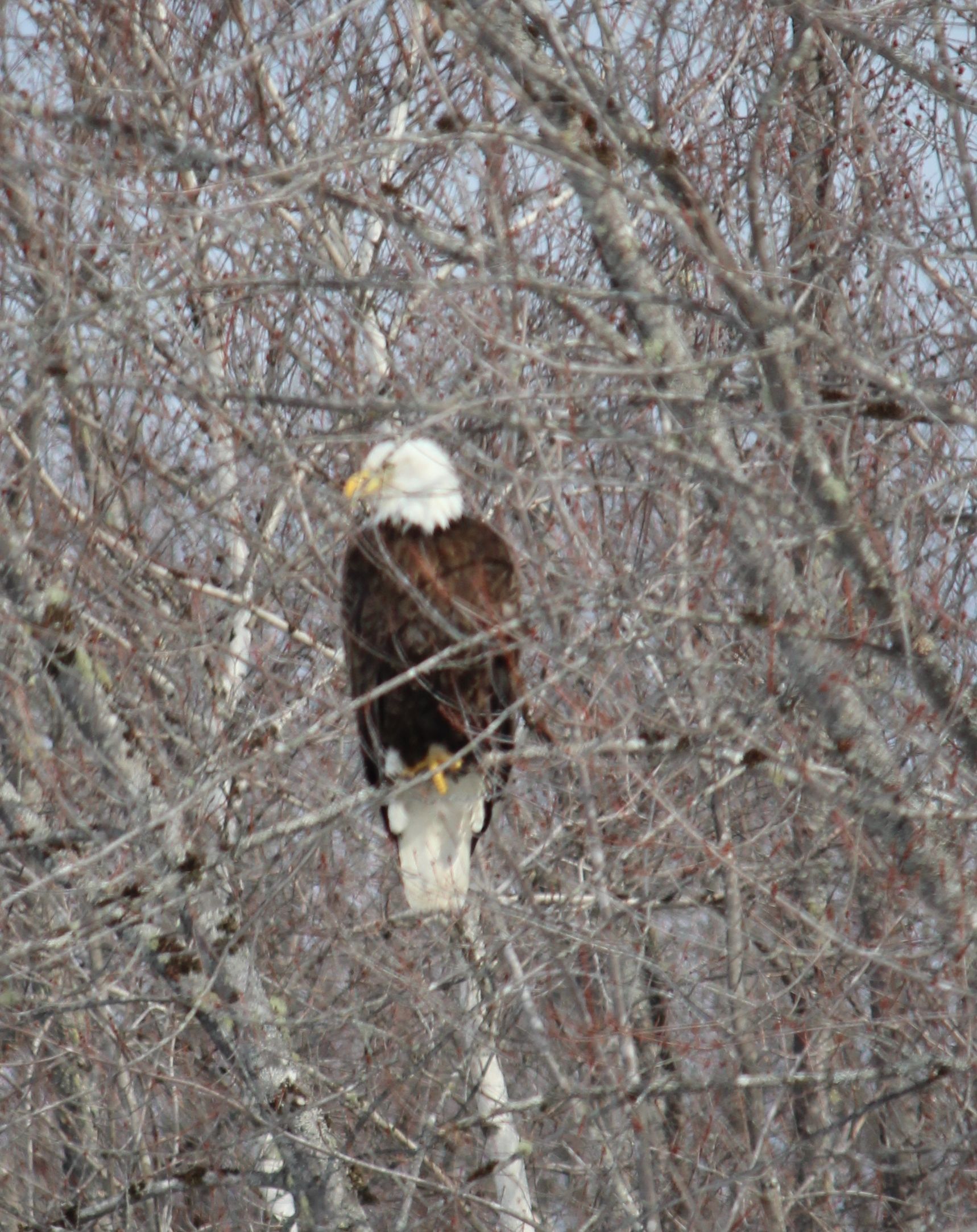
We made our way back to Harbor Road in North Fryeburg, where something in the landscape caught my eye.

Eagle 1a

Always an impressive sight.

Eagle 2

A mature Bald Eagle checking out the area around Charles River, near the old course of the Saco River.

trail parking sign

Our destination–Province Brook Trail. This hike is for my friend, P.K., who first introduced me to this trail in her summer backyard a few years ago. While she winters in Florida, I hope she’ll enjoy today’s view.

We had to park on South Chatham Road, in South ChatHAM, New Hampshire. I once interviewed Frank Eastman, a South Chatham native, who informed me that it’s pronounced ChatHAM, not Chat’em, because H-A-M spells ham. A lesson I’ll never forget.

trail men

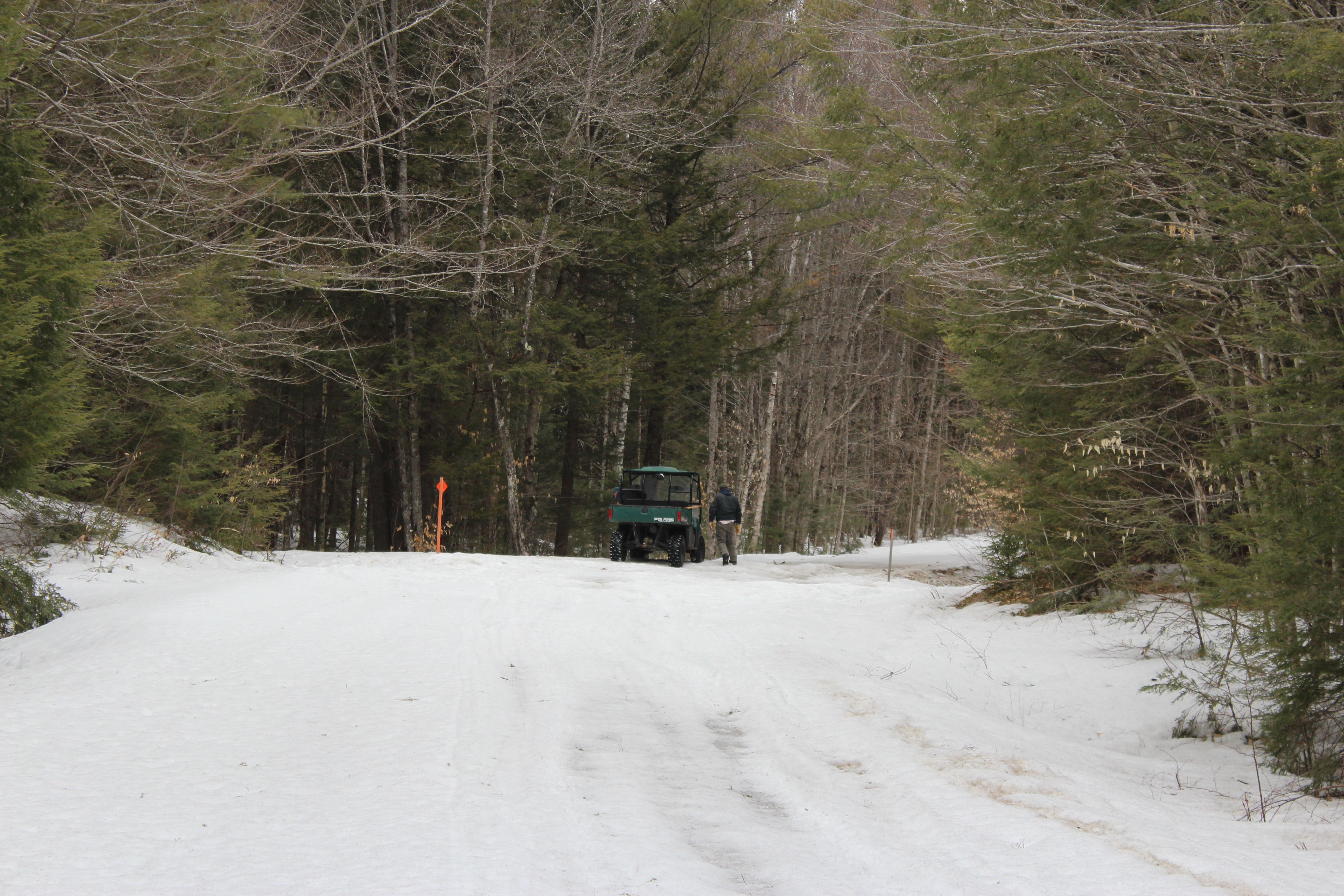
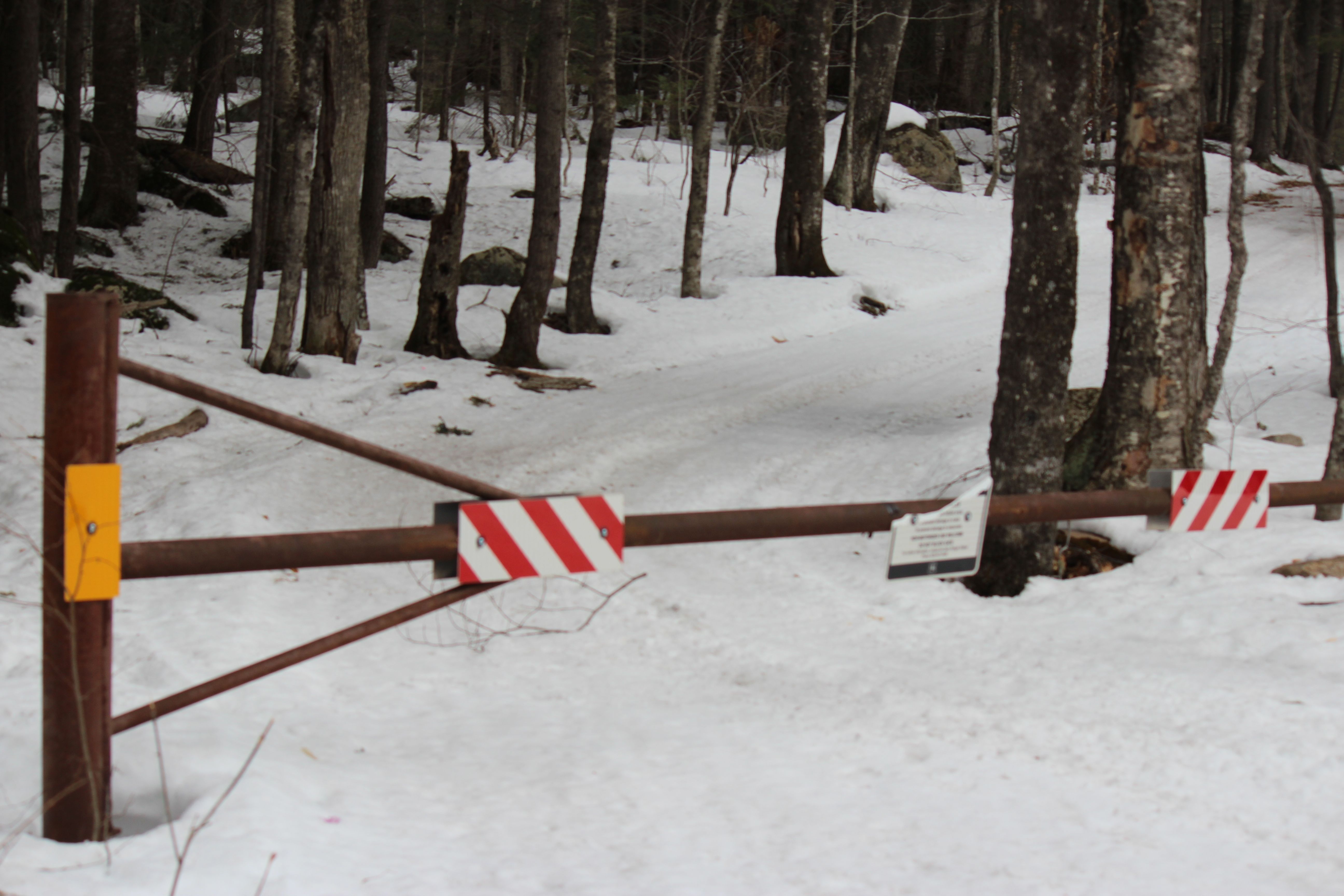
While we walked along the snowmobile trail, aka 2.5-mile Peaked Hill Road or Forest Service Road 450, two members of the White Mountain National Forest trail crew came along to close gates–a sure sign of spring.

pot hole

Seeing a few potholes like this one, we could understand why.

moose printmoose

We opened our eagle eyes and things began to appear.

Moose 3

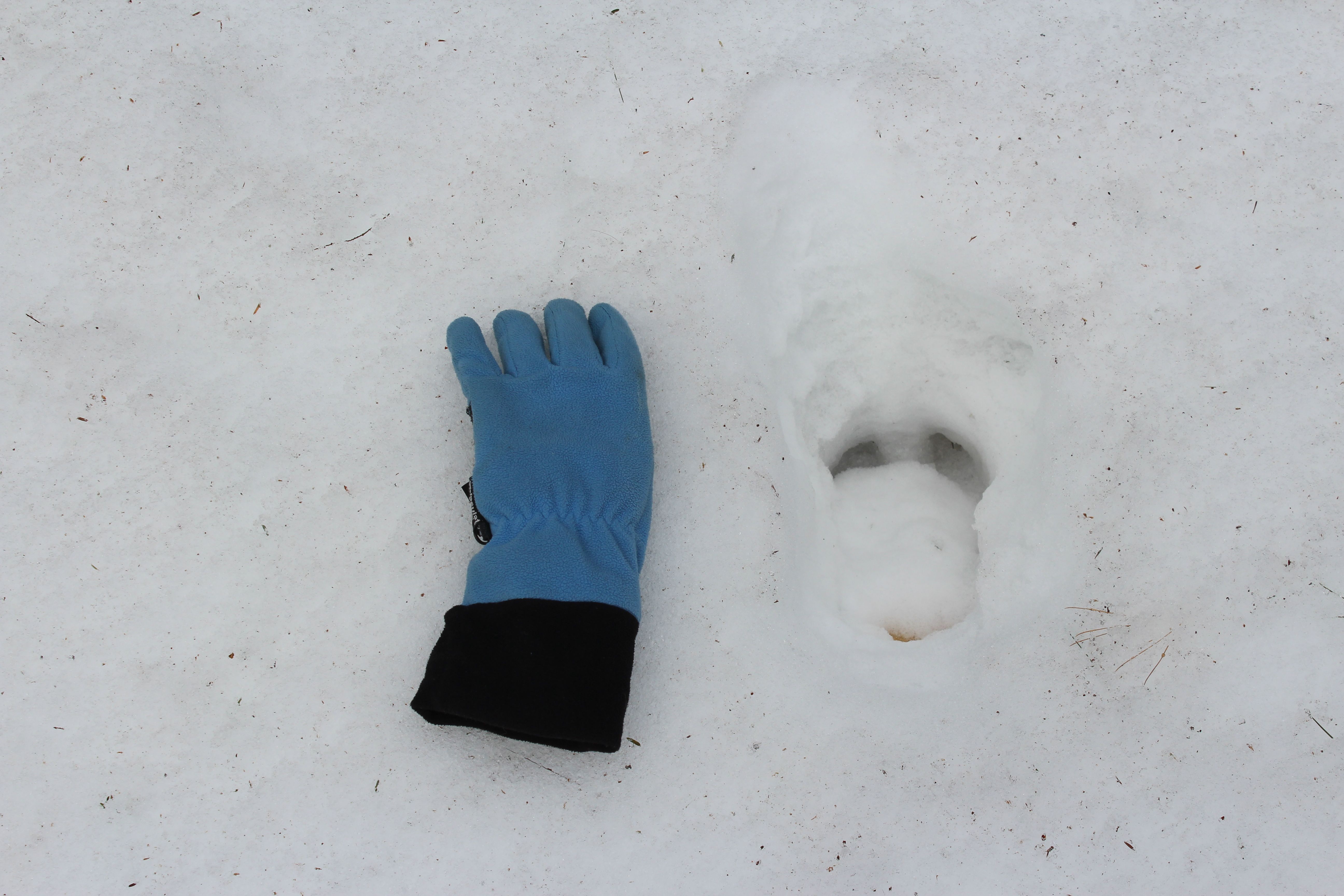
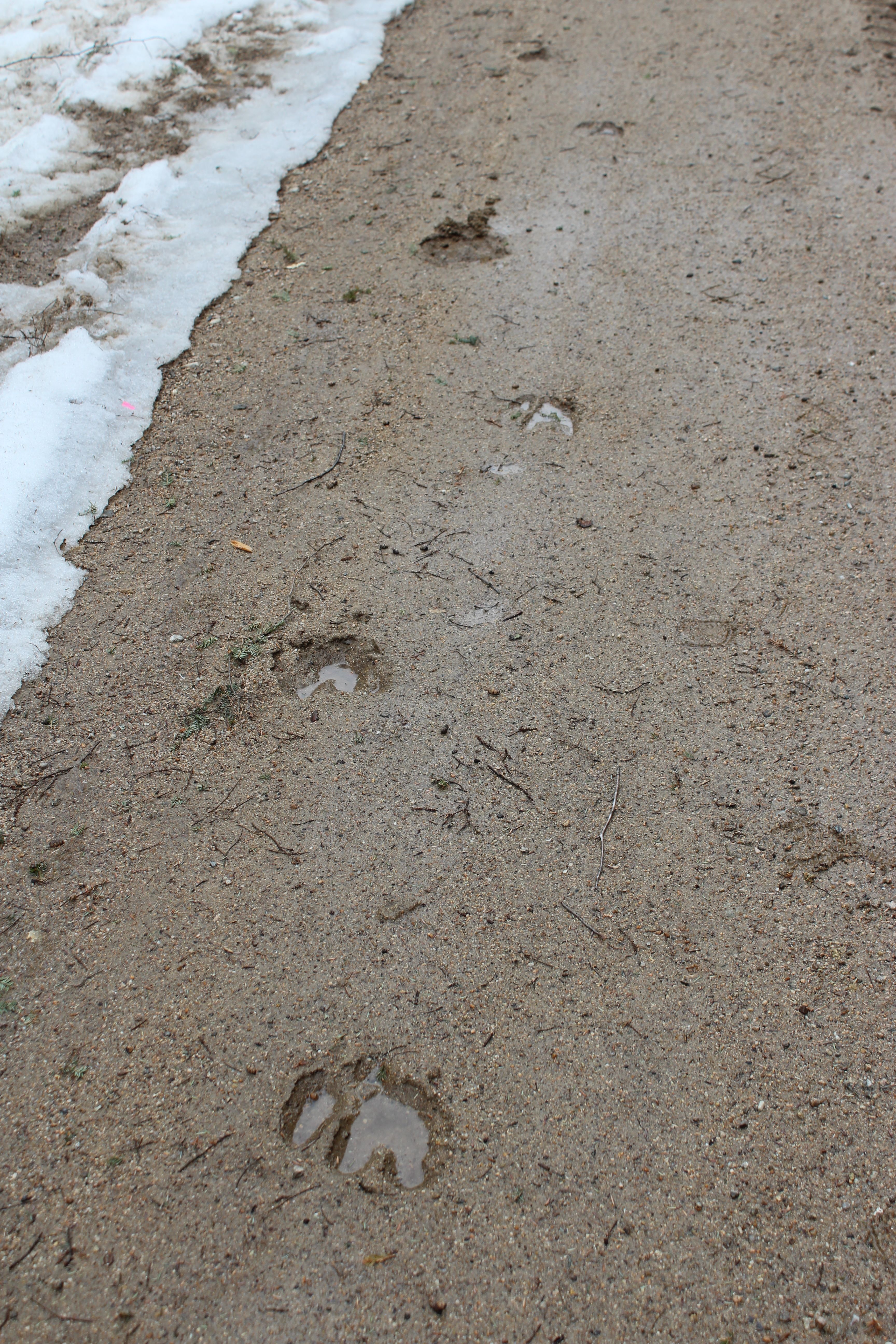
Criss-crossing the trail, through snow and mud, moose prints.

bearbear 1

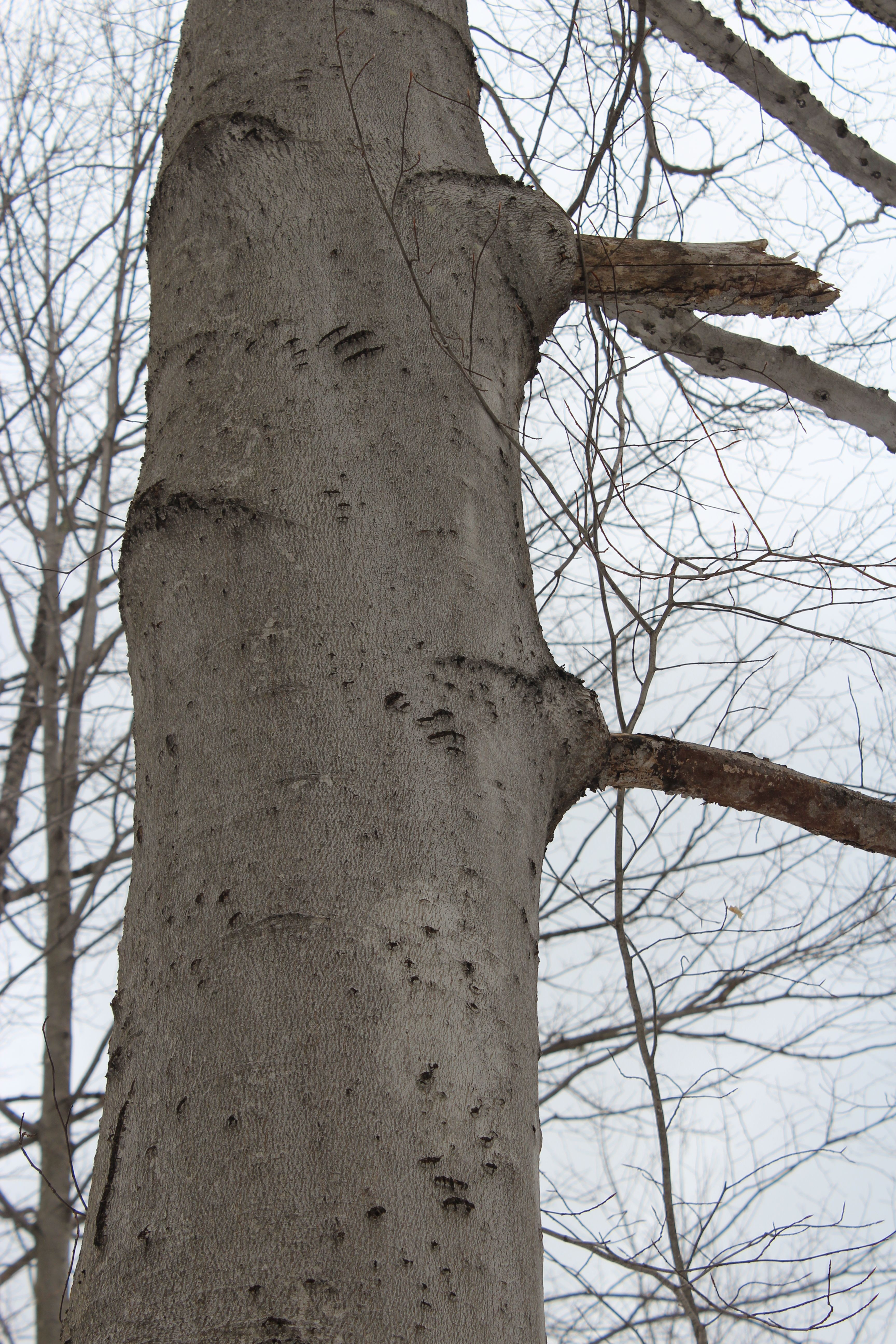
Our eyes are forever scanning beech trees–on the lookout for bear claw marks. We weren’t disappointed.

hairy scat

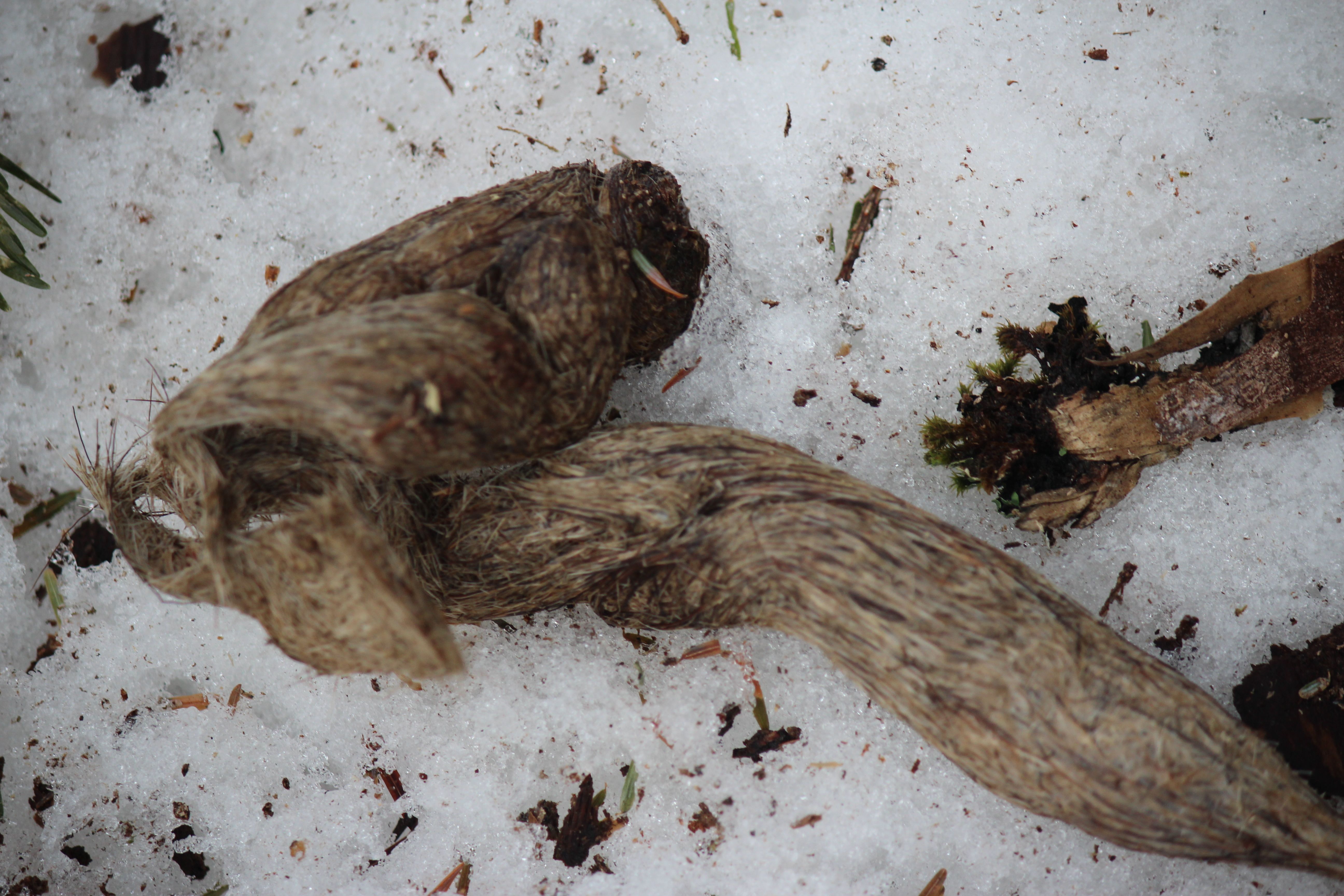
On the trail, we saw several old scat samples. Coyote or bobcat. This one is all hair. I’m leaning toward bobcat–but am open to other conclusions. There were no obvious tracks to make a certain id.

yellow birch

And here–one very large Yellow Birch growing on granite.

yb2

Yellow Birch seeds find optimum growing conditions on moss-covered rocks, stumps and logs. Once the tree establishes itself, it clings to the rock and sends its roots in search of the soil below. Hemlocks do the same.

trail head

Finally, we reached the trail head. Oops, I lopped off the head of the hiker on the sign.

trail closed

Province Brook Trail is currently closed to snowmobiles and ATVs, but we walked around the gate and continued on.

ice

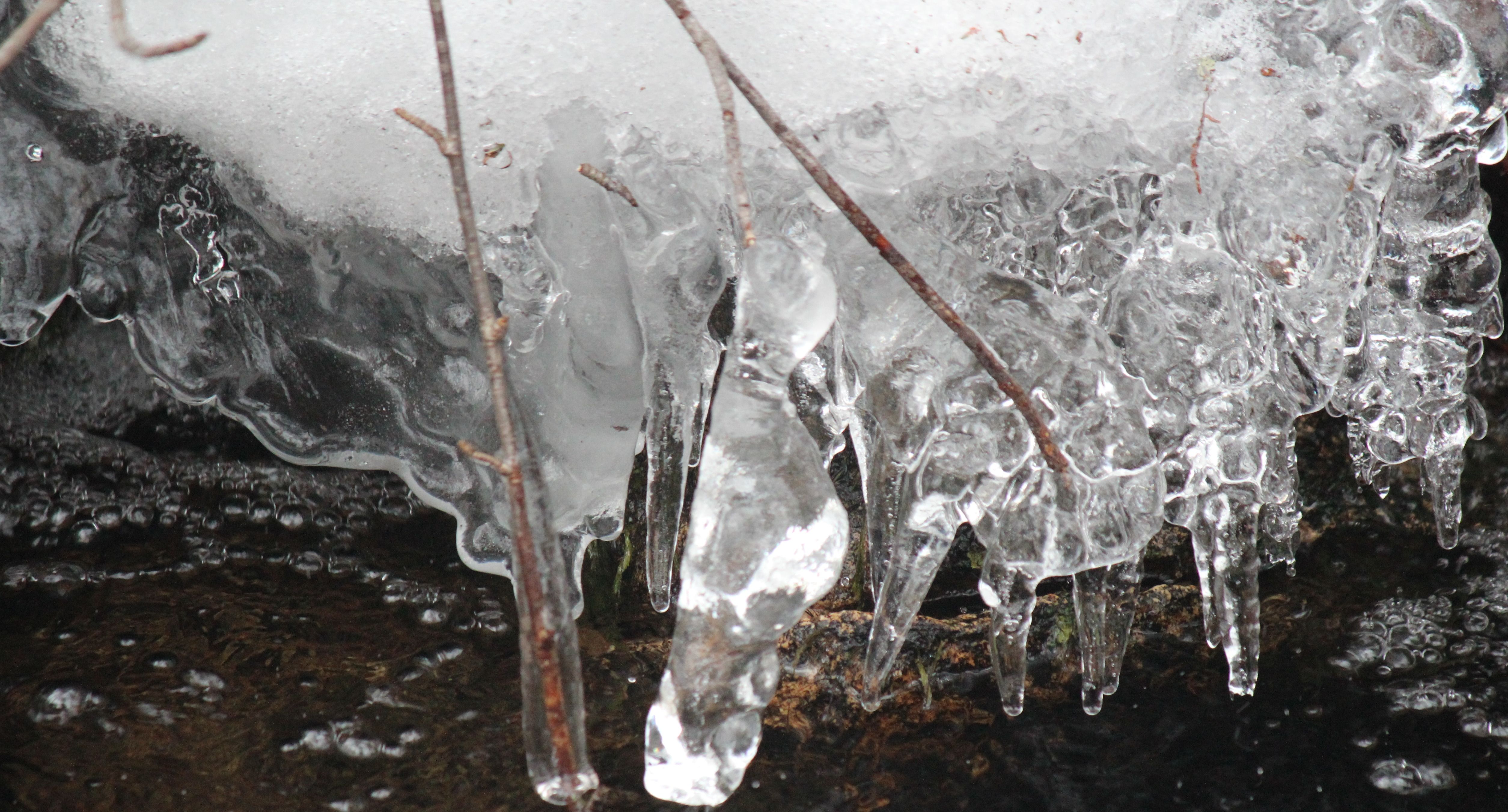
Still plenty of ice in the streams beside the trail.

snow:brook

And lots of snow.

polypody fern

Polypody Fern peeking out from under a snow-covered rock.

hobblebush

And Hobblebush preparing to bloom.

glacial erratics

Lots of glacial erratics along the way. This one supports an entire community.

mushrooms

The tree in the center invited a closer look.

mush 1

Fan-shaped Artist’s Conks.

mush 2

Their white pore surface.

mush 3

Looking skyward.

mush 4

And a sense of perspective.

 pond1

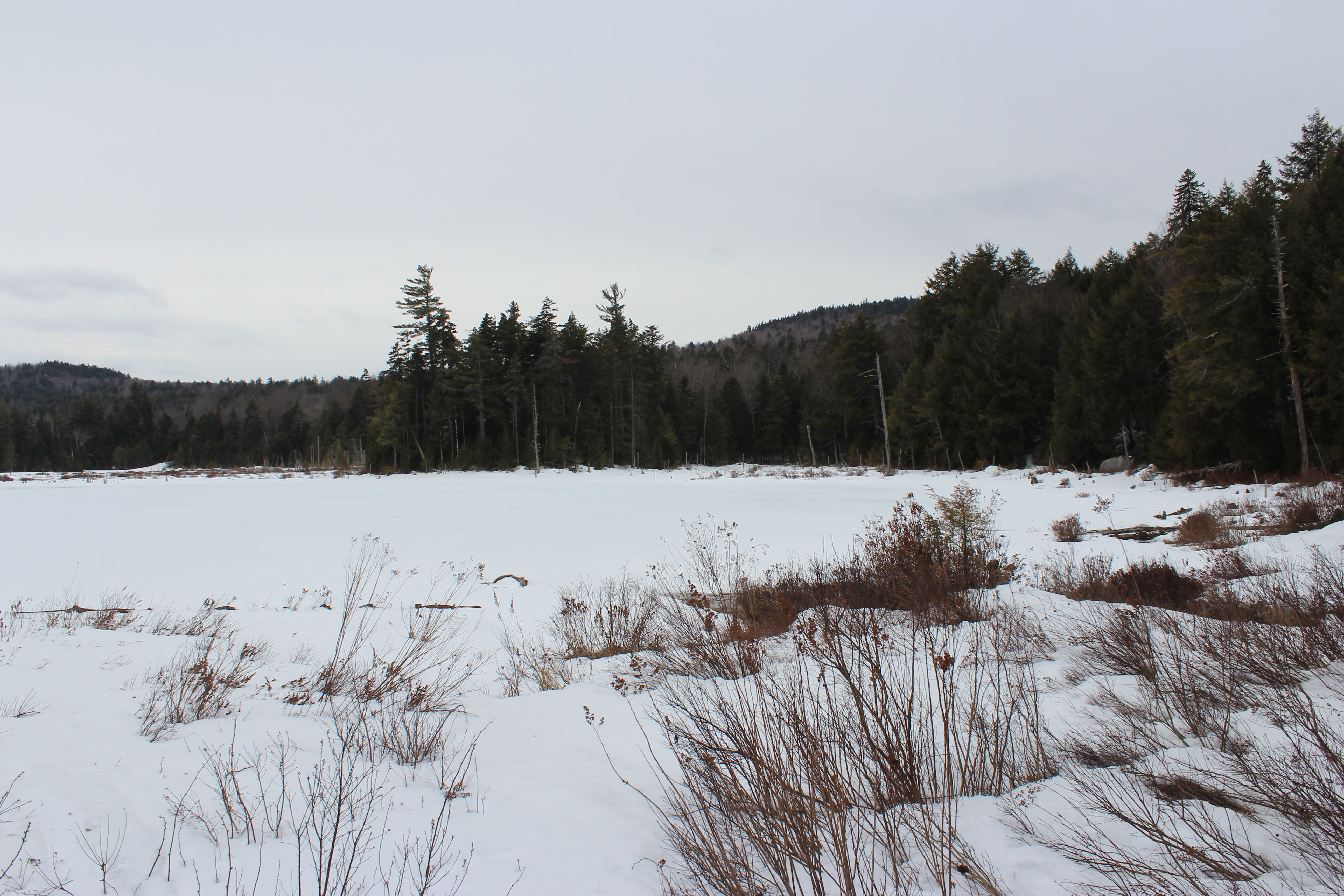
At last, we reached Province Pond.

shaw mtn

Shaw Mountain is in the background–we’re saving it for another day.

Allen-snow

On our way to a forest service shelter that was built in the 1930s (I know this because I read it in Hikes & Woodland Walks in and around Maine’s LAKES REGION written by my friend, Marita Wiser), the deep snow caught us a few times. My guy is knee-deep.

brook crossing

It pays to let him go first. I can then figure out where not to step. Here, he’s contemplating the brook crossing to the shelter. It was actually quite easy.

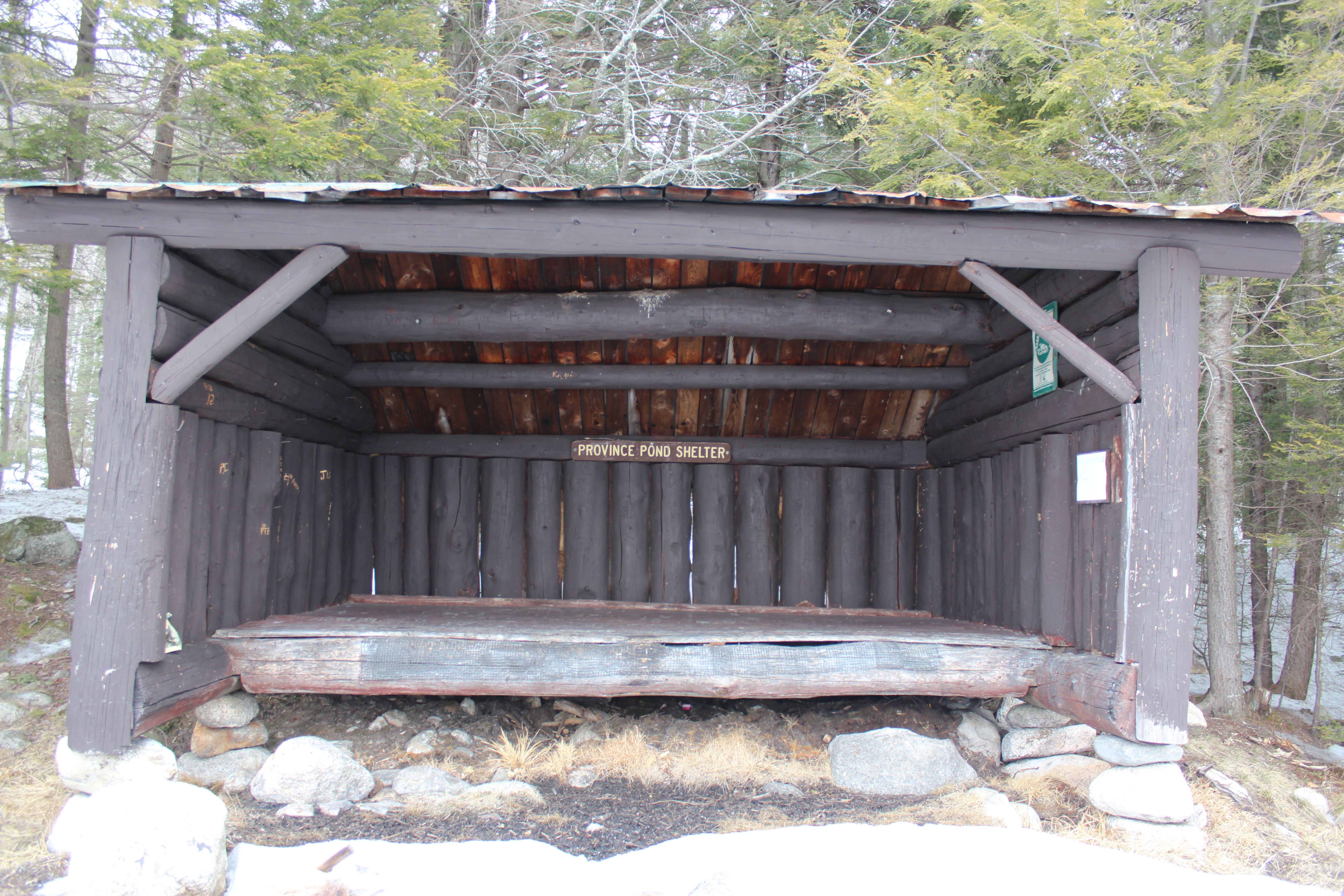
Shelter

A sheltered lunch locale–just right for those PB&J sandwiches.

lunch viewlunch 2

Best view in the house.

initials

I’ve a feeling these walls could tell many tales.

snowing

It was snowing as we headed back down the trail. Yet another wintery-spring day.

Eight miles later, we were thankful for the opportunity to stretch our legs and use our eagle eyes.

Thanks for wandering by to wonder.

Wetland Wonders

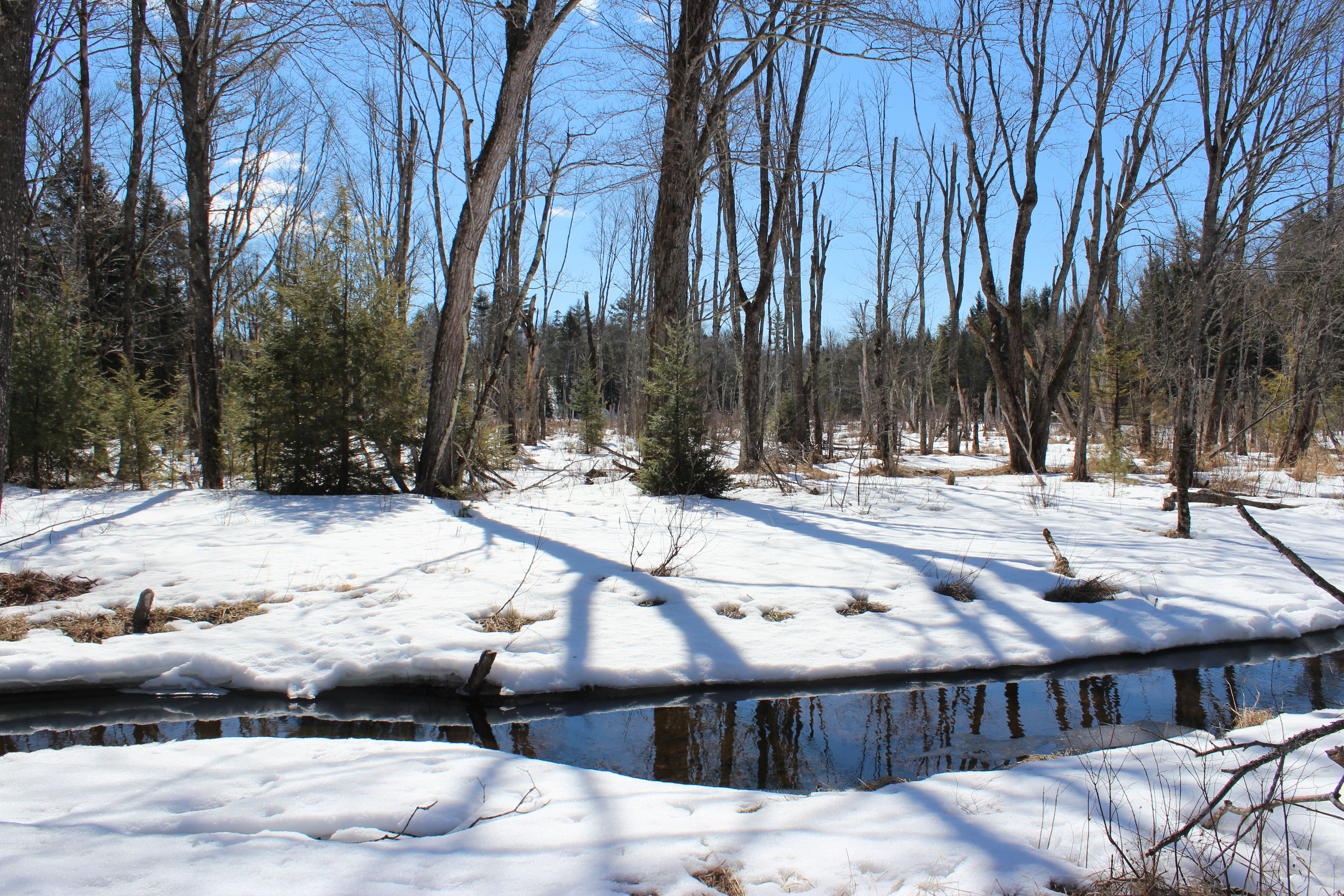
wetland 1

The Greater Lovell Land Trust’s Tuesday Tracking group returned to the wetland at the John A. Segur Wildlife Refuge today. It’s one of those places that I could spend hours upon hours exploring and still only see a smidgeon of what is there. I’m overwhelmed when I walk into a store filled with stuff, but completely at home in a place like this where life and death happen and the “merchandise” changes daily.

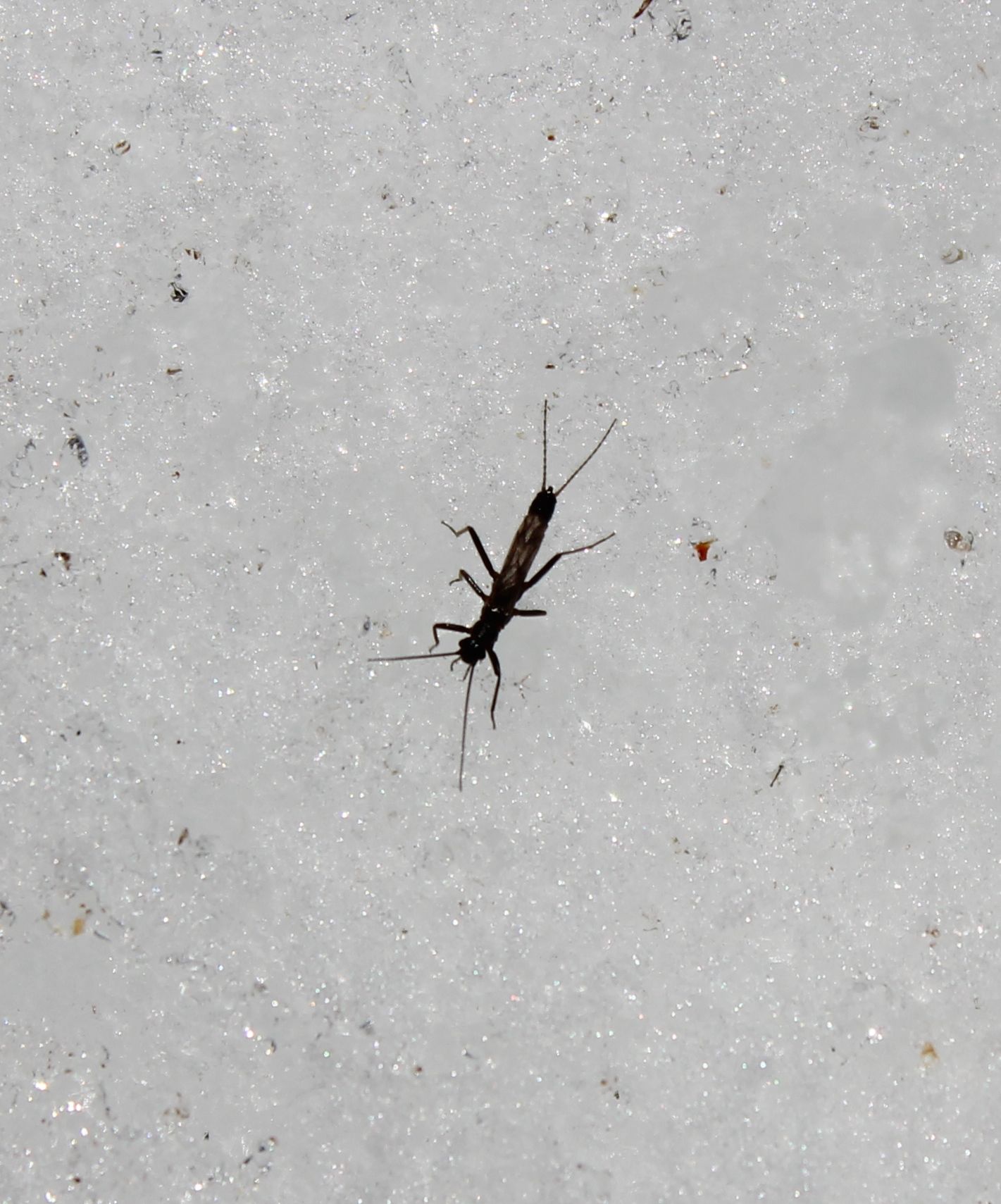
insect

Walking across the snow was this small insect. So . . . we were in a wetland. Tomorrow will be April 1–no kidding. The insect is about an inch long. It has long antennae and a pair of cerci or appendages at the posterior end of its abdomen. I’d say we found a common stonefly nymph. Please correct me if I’m wrong.

artists 1

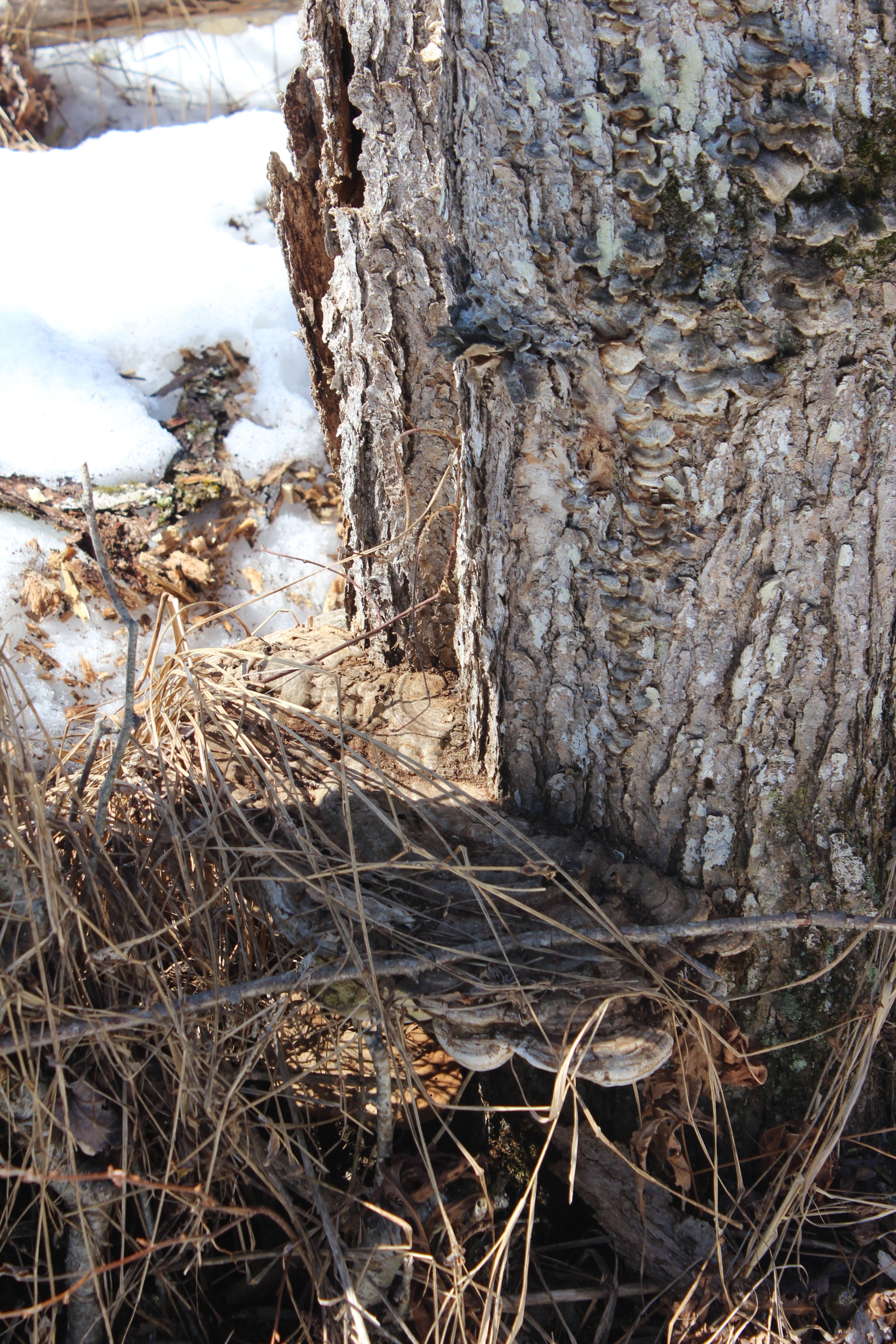
On first glimpse, this may look like a pile of dried grasses and twigs.

artists's conk?

But stepping in for a closer look reveals what I believe is an artist’s conk. An old artist’s conk. We didn’t cut it off, but apparently you can age one by cutting it and counting the layers–much the same way you can age a tree by counting the number of rings.

old beaver lodge

There’s evidence of beaver work throughout the sanctuary, but none of it is recent. So . . . my friend decided to play Queen of the Lodge.

dam crossing

We crossed Boulder Brook via an old beaver dam–one-by-one in the name of caution.

lobster lichenlobster 3

 Color draws us in for closer inspection. I’m betting on Cinnabar-red Polypore (Pycnoporus cinnabarinus) as this one’s ID. If I learn otherwise, I’ll let you know.

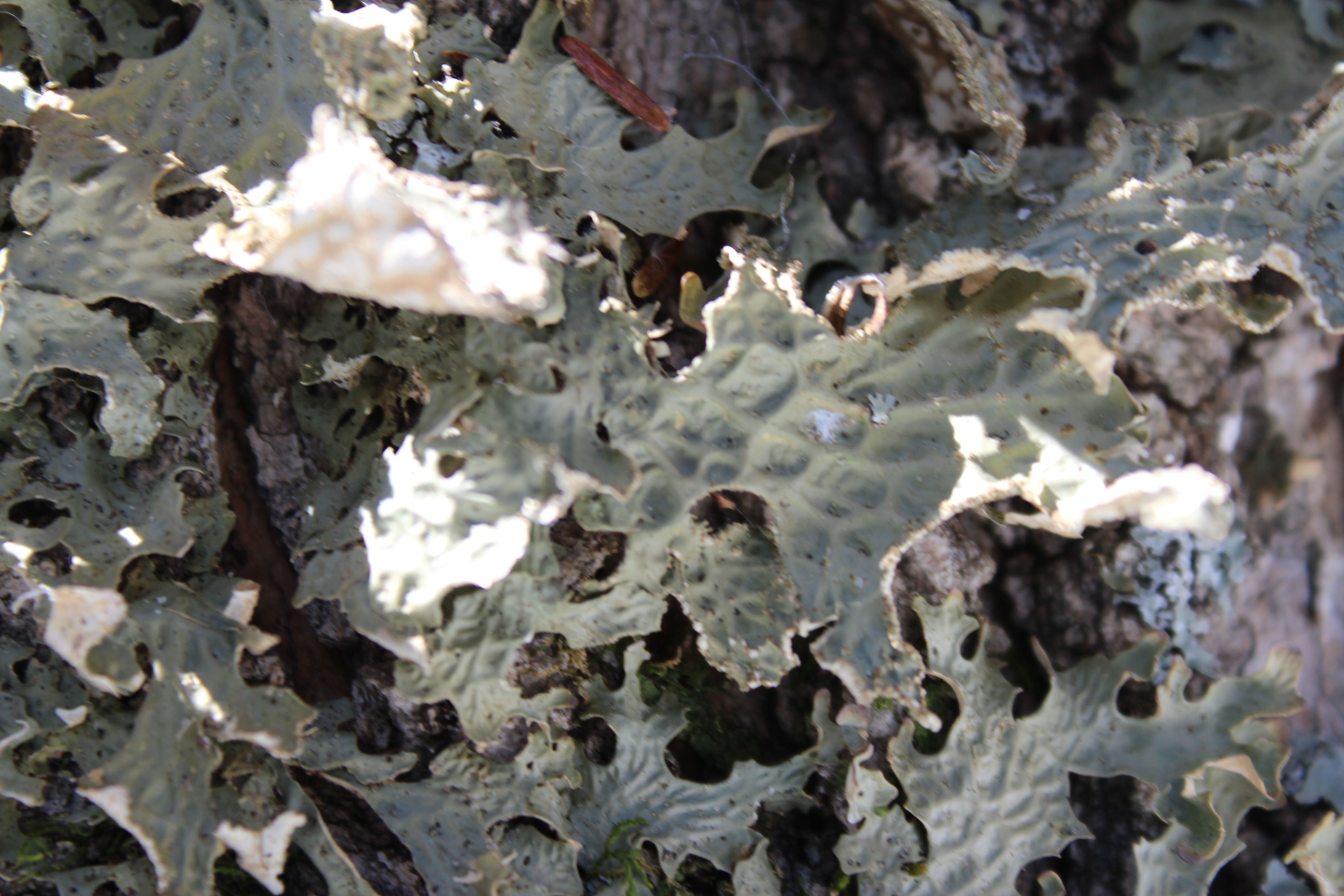
lungwort

Remember this lungwort I shared last week in my Island Hopping blog?

Lungwort

Same species. Same tree. Nature–worth wondering about.

myatery 1

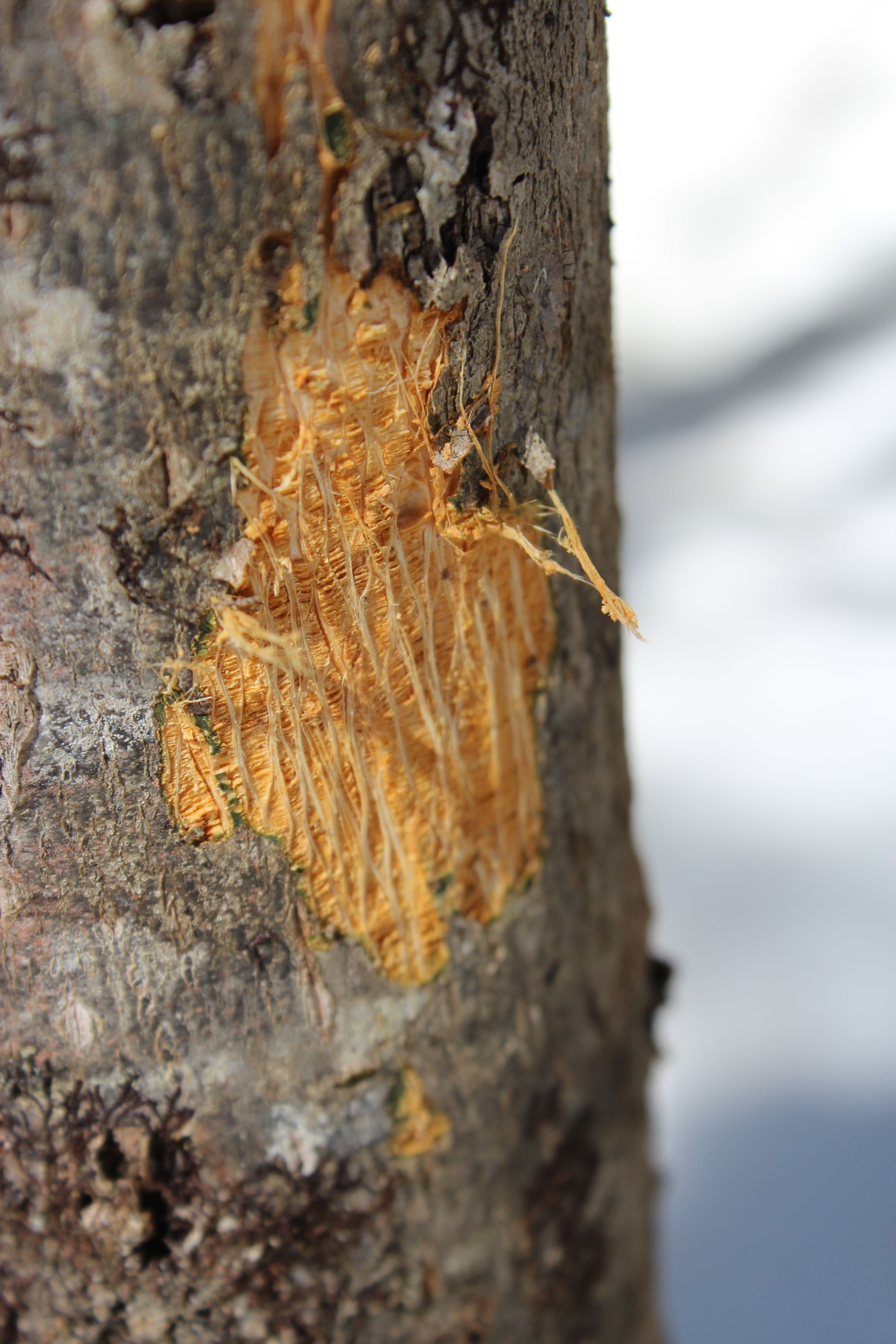
Then there was the mysterious event.

mystery 3

Very fine tags dangle from the upper edge of the scraped bark. Not the work of a deer, beaver or porcupine. Not a hare or little brown thing. Maybe a bird? No holes, just the fine layer of outer bark delicately scraped off.

deer scrape

Here’s a deer scrape as a contrast.

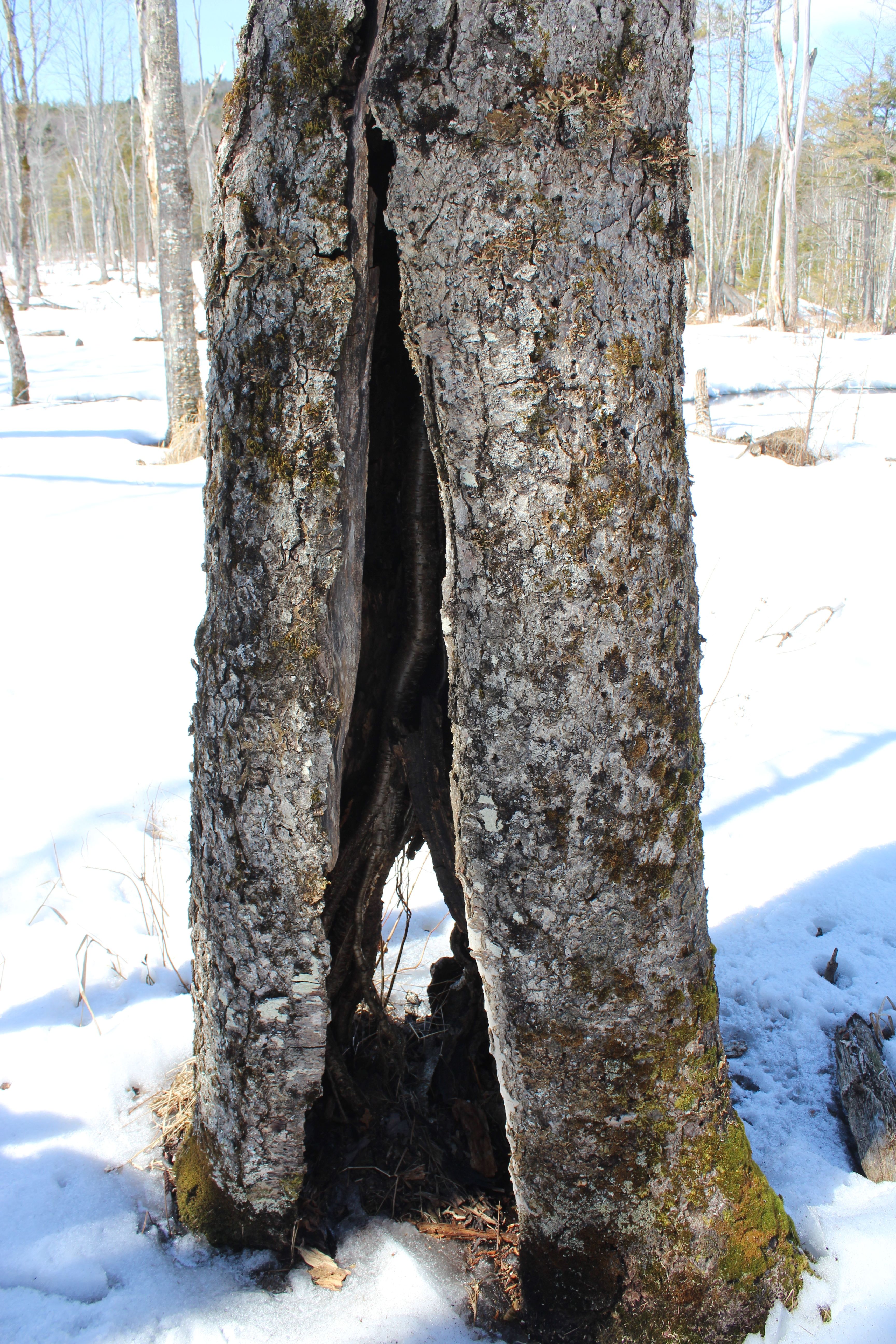
tree within tree

For this next wonder, you’ll have to look closely inside the hollow yellow birch. Peer to the left of the hole toward the rear. Think vertical.

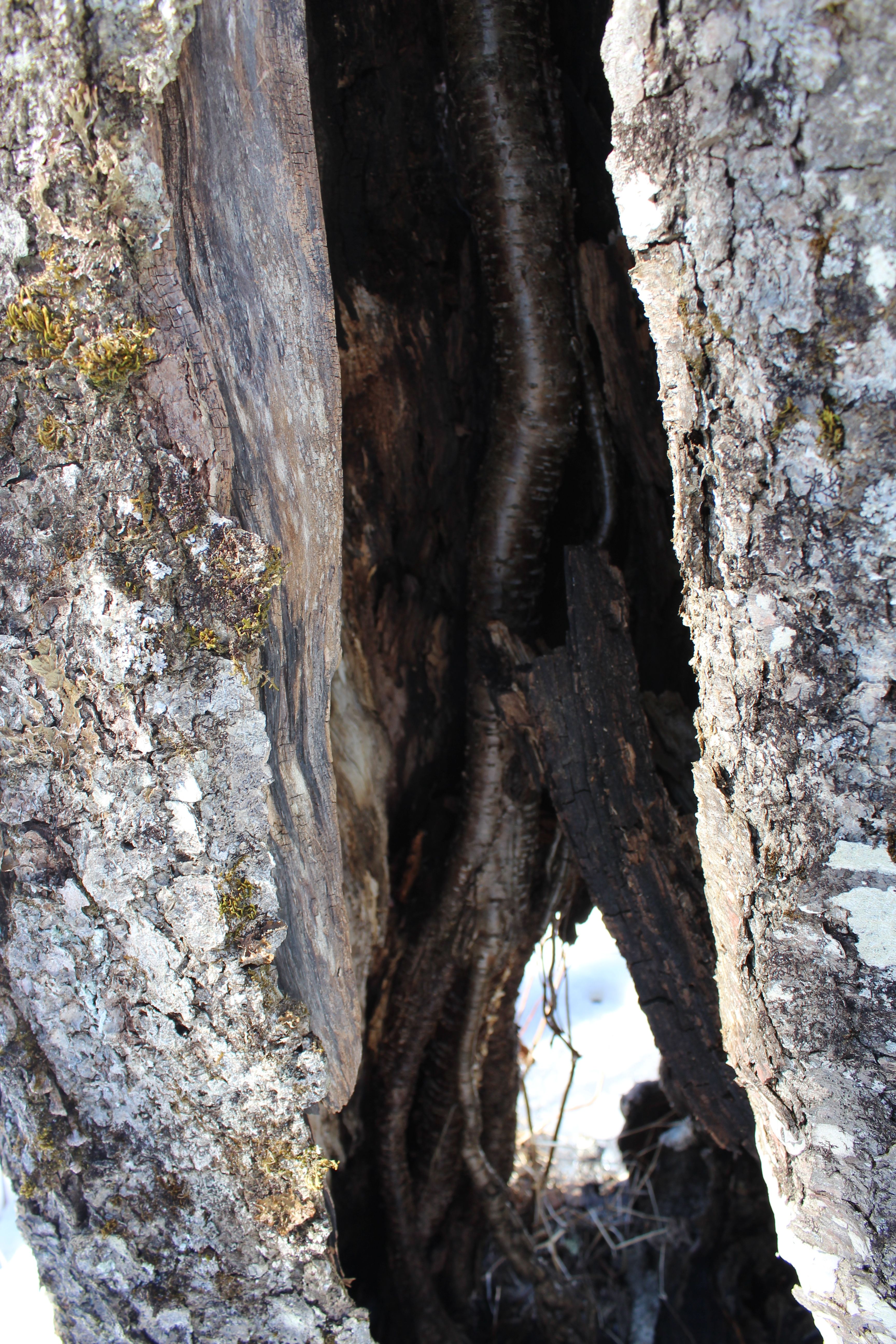
tree 2

Do you see it? It’s in the center of this photo.

tree 3

And here it is further up in the hollowed out tree. A tree within a tree. Another yellow birch or birch root growing up through the center of this dead snag. Life and death. Together. One within the other.

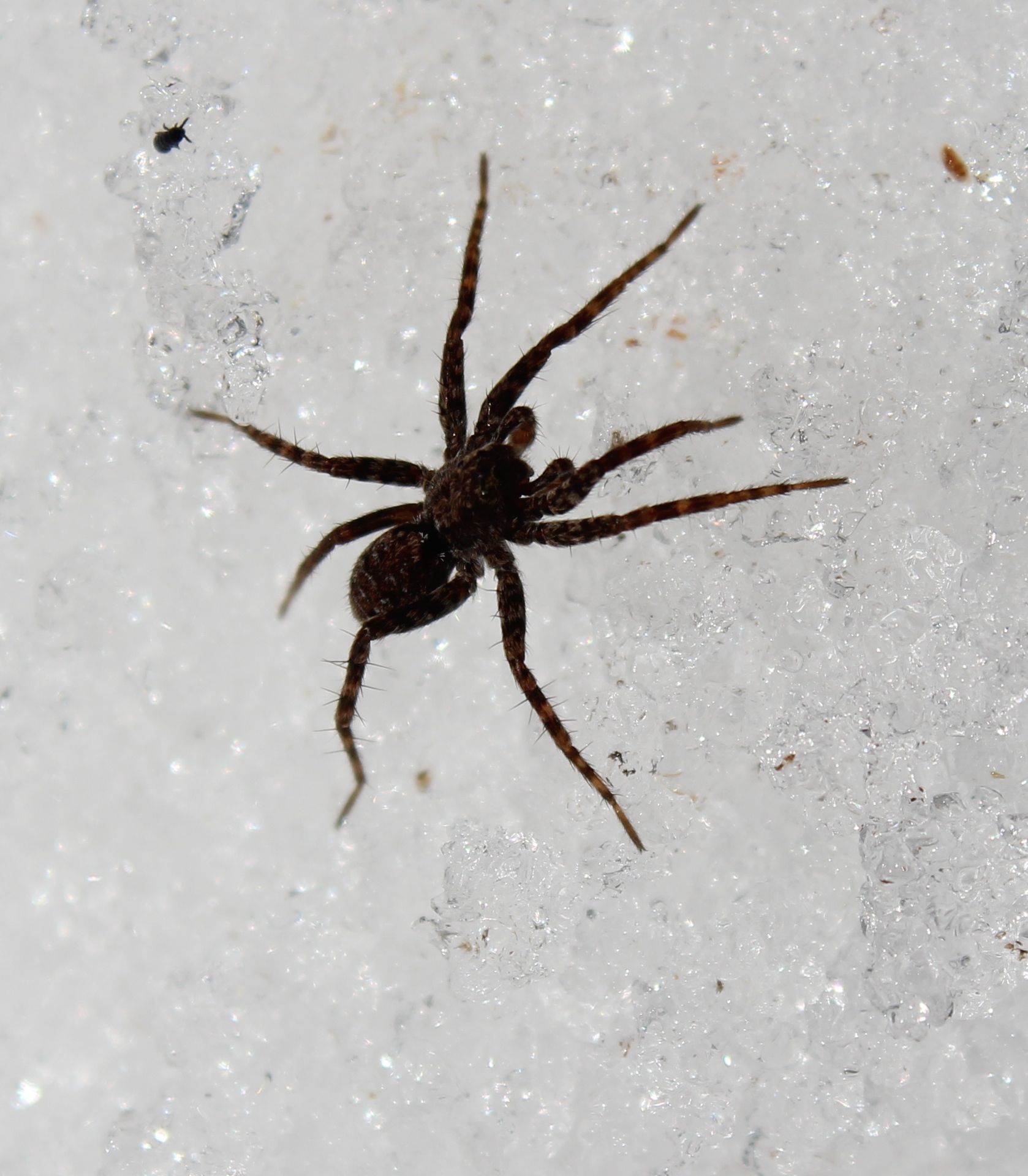
spider

This guy was dashing across the snow, but had the decency to pose for a photo op. Given that he wasn’t wearing boots, I don’t blame him for running along.

crossing dam again

And suddenly, we realized we’d spent over three hours exploring and it was time to head back over the beaver dam.

white pine

On the trail again, we paused to admire spring growth on a small white pine–a mini candelabra.

Thanks for wandering along and wondering my way.

Island Hopping

island 1

Off on a care-free holiday in . . . Lovell, Maine. What sets it apart is the variety of islands. And, I suppose, the ferry service between each.

island 2

A naturalist friend and I set off on our grand adventure at the John A. Segur Wildlife Refuge this morning. This is a 598-acre refuge owned and cared for by the Greater Lovell Land Trust. We hopped, more like sloshed on snowshoes, from one island to another as we discovered the highlights of each.

mushroom 1

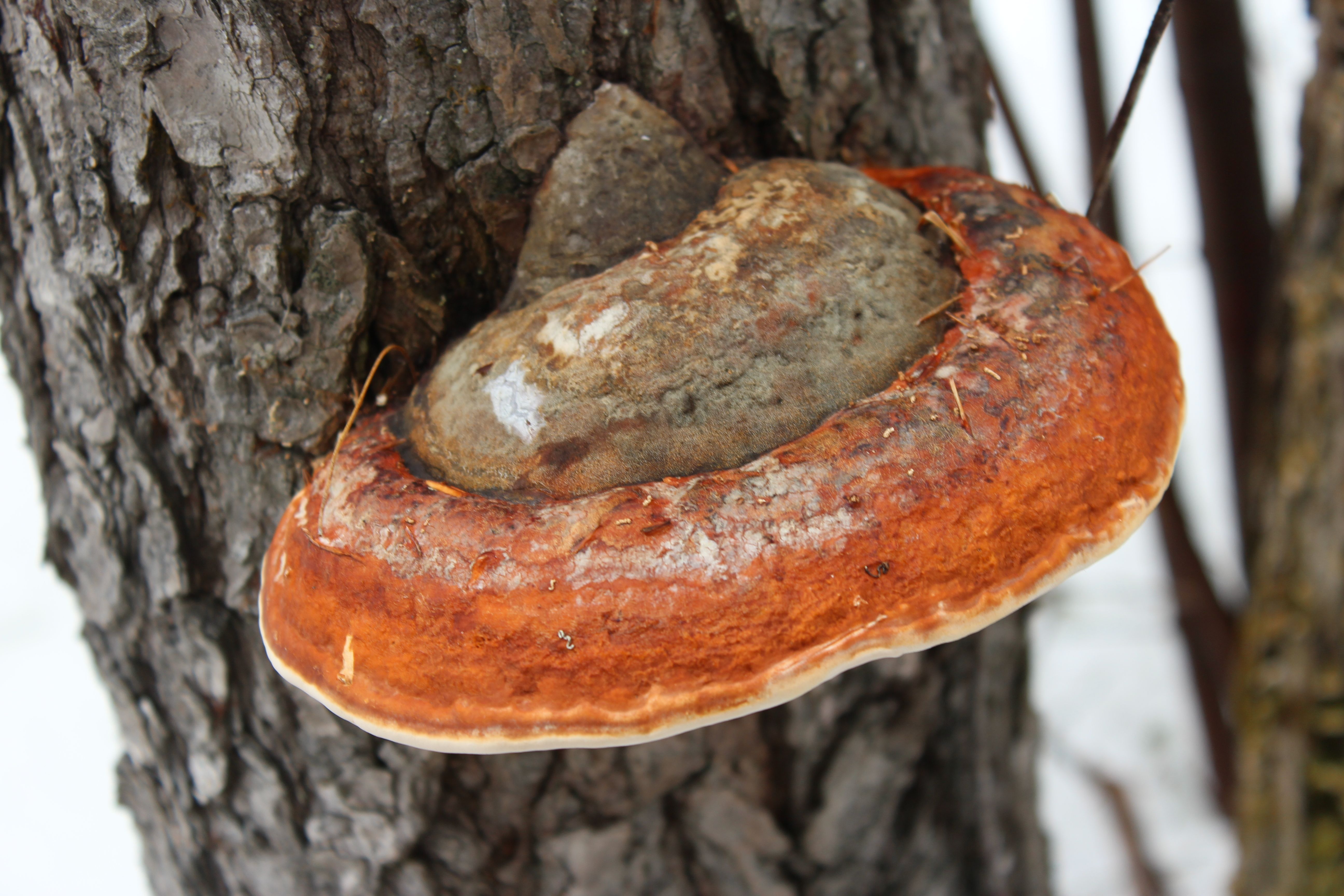
Red-belted Polypore Fomitopsis pinicola

Like on any island hopping experience, we were quite taken with the breathtaking diversity of vibrant colors and textures. This is a red-belted polypore (if I’m right), Fomitopsis pinicola. I have another friend who is determined that I will learn my fungi, so I hope he’ll read this and correct me as I go along. He knows only the Latin names. I’m lucky if I can remember a common name. (Don’t tell Mr. Cretella, my high school Latin teacher.)
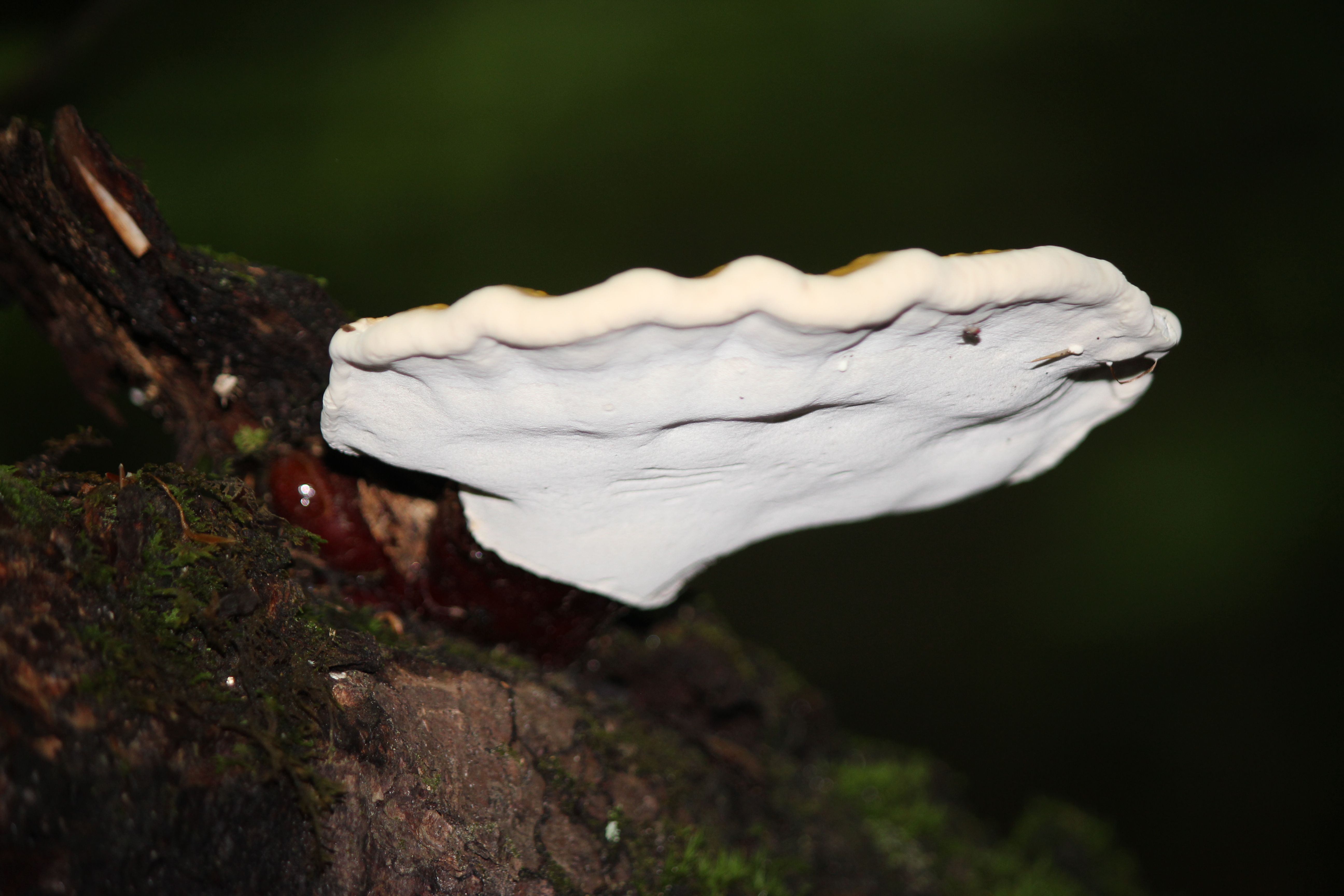
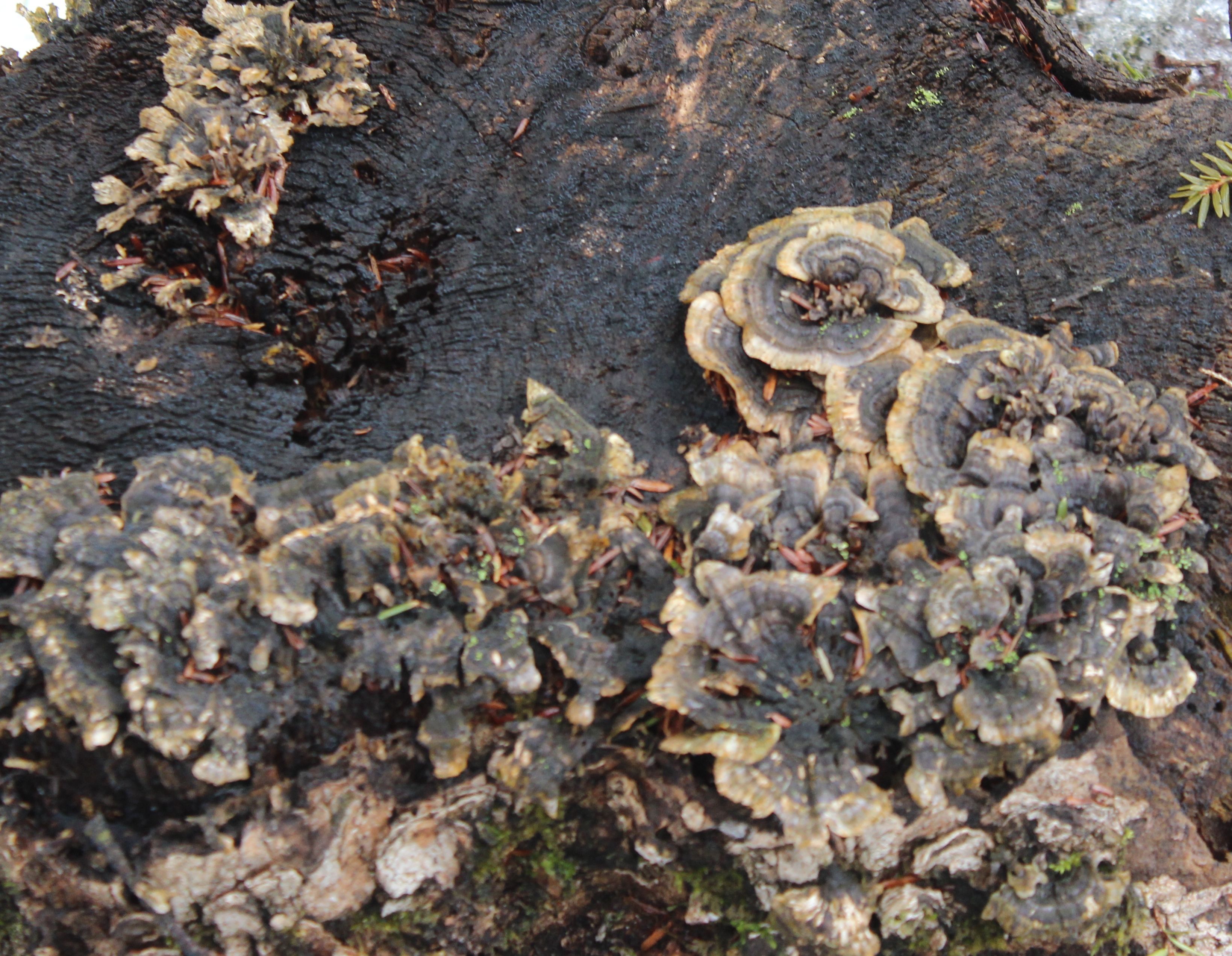
turkey tail

Turkey Tails (Trametes versicolor) were hanging out, doing their thing on some dead wood.

witches butter

More than once we were greeted by Witch’s Butter (Tremella mesenteric). I love butter, so this must be the good witch. (My PB&J sandwiches always include slabs of butter)

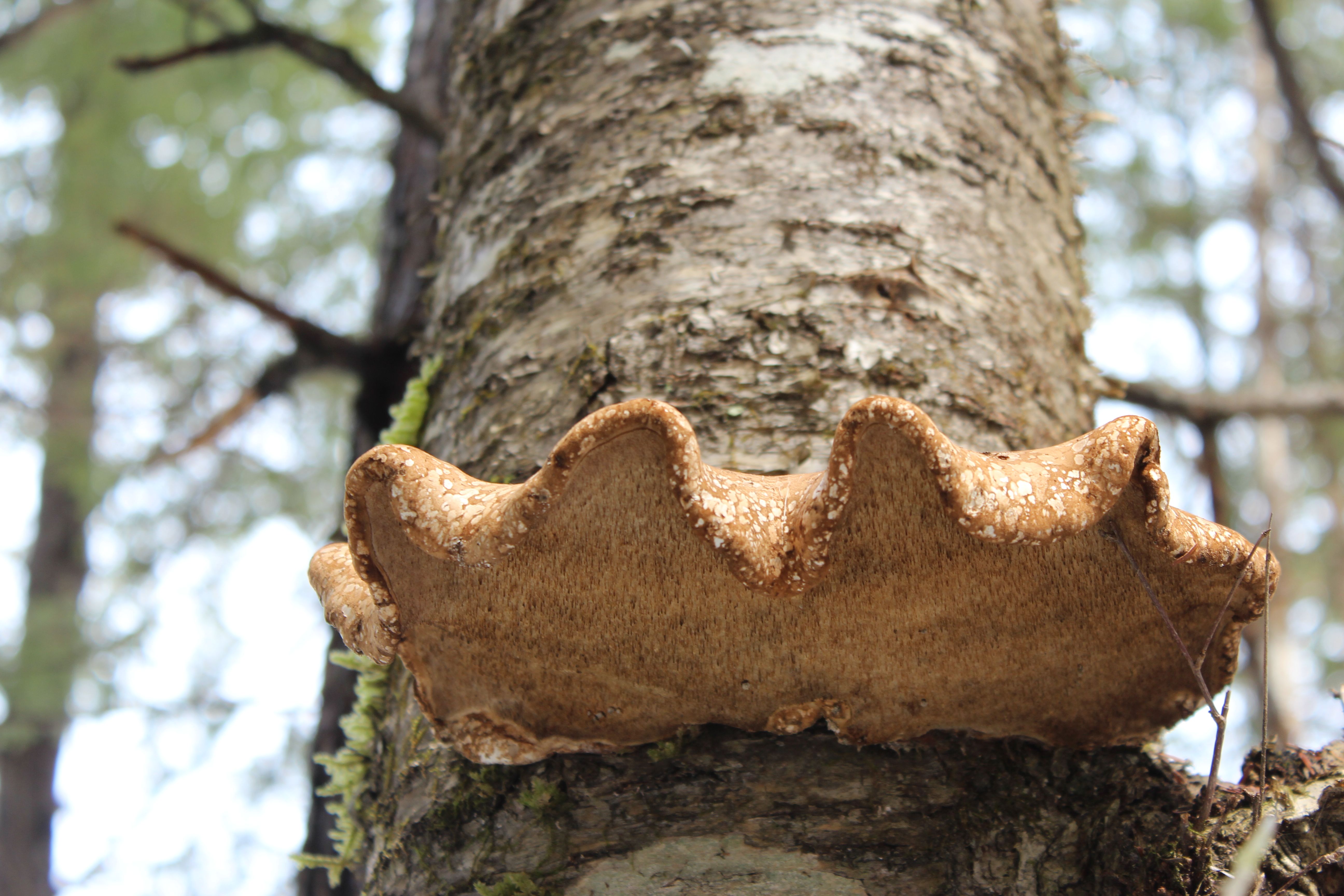
birch polypore

No island tour is complete without seashells. In this case, I think this is a Birch Polypore (Piptoporus betulinus) growing on the Yellow Birch. I’m thrown off by that wavy rim. Whatever it is, it’s beautiful.

British Soldier

We didn’t just hang out with a bunch of fungi. British soldiers (Cladonia cristatella) were standing around, proudly inviting us to take a look at their red caps.

Kidney lichen

Yes, we took a liken to some other lichens as well. I believe this is Pimpled Kidney Lichen (Nephroma resupinatum).

lungwort

Being in the islands, we are on the cusp of the rainy season and the Lungwort (Lobaria pulmonary), was saturated and bright green. We had hoped we’d see it on this tour, and it didn’t lettuce down.

Mealy Pixie cup lichen

Are you still with me? There were so many more sights to see, including the Green Pyxie Cups, aka Mealy Pyxie Cups (Cladonia chlorophaea).

spore capsule, hair cap moss

I should have paid better attention, but this hair-cap moss is either Polytrichum commune, (Common hair-cap) or P. ohioense. I’m thinking the former, which has a spore capsule that is no more than 1.5 X as long as wide, while the latter’s capsule is more than 1.5X as long as wide.

antler piece?

No matter where we looked, either on the islands or on the sea of snow between each, we found evidence that the deer had visited before us. Tracks, scat and beds everywhere. And then we found this. A bone fragment that had been nibbled on. Maybe a piece of an antler?

deer hair 1

And this–deer hair.

deer hair 2

And this. Lots of deer hair beside the plug of hair above. What happened here? We didn’t have a guide to ask, but the story unfolded before our eyes. A deer sat down to spend the night under the hemlock tree. Its body heat turned the snow to ice. And when it stood up the next morning, the hair stuck to the ice. Anyway, that’s our story and we’re sticking with it.

porcy scat

If you’ve stuck with me through these wonder-filled wanders, then you know that I may include a photo of scat. In this case, an island native made itself known by the debris on top of the island and snow–porcupine.

porky den

A few minutes later we came upon its den. Porcupines are the pig pens of the natural world. Despite that, we were excited to find this.

island 3

No need, however,  to stick around there. We bounded (hardly) off to another island, glad that we were able to stop at so many destinations in a single day. And the best part is that when we visit again, we’ll find other treasured spots to explore.

Thanks for stopping by to wander and wonder.

P.S. And take a look at my friend’s site–her photos are amazing and the map of our walk shows just how nature distracted we are.

Our Three Hour Tour

HP sign

One of our favorite places in town is a hidden gem–Holt Pond Preserve. We parked at the corner of Chaplin’s Mill and Grist Mill Roads, grabbed our snowshoes and backpack from the truck and walked on snowmobile tracks across the field to begin today’s Mondate.

Tingley Brook

Tingley Brook

At the field’s edge, we passed under the hemlocks, beeches and oaks and into the wild and delicate beauty that the preserve offers.

Tingley Brook ice 1

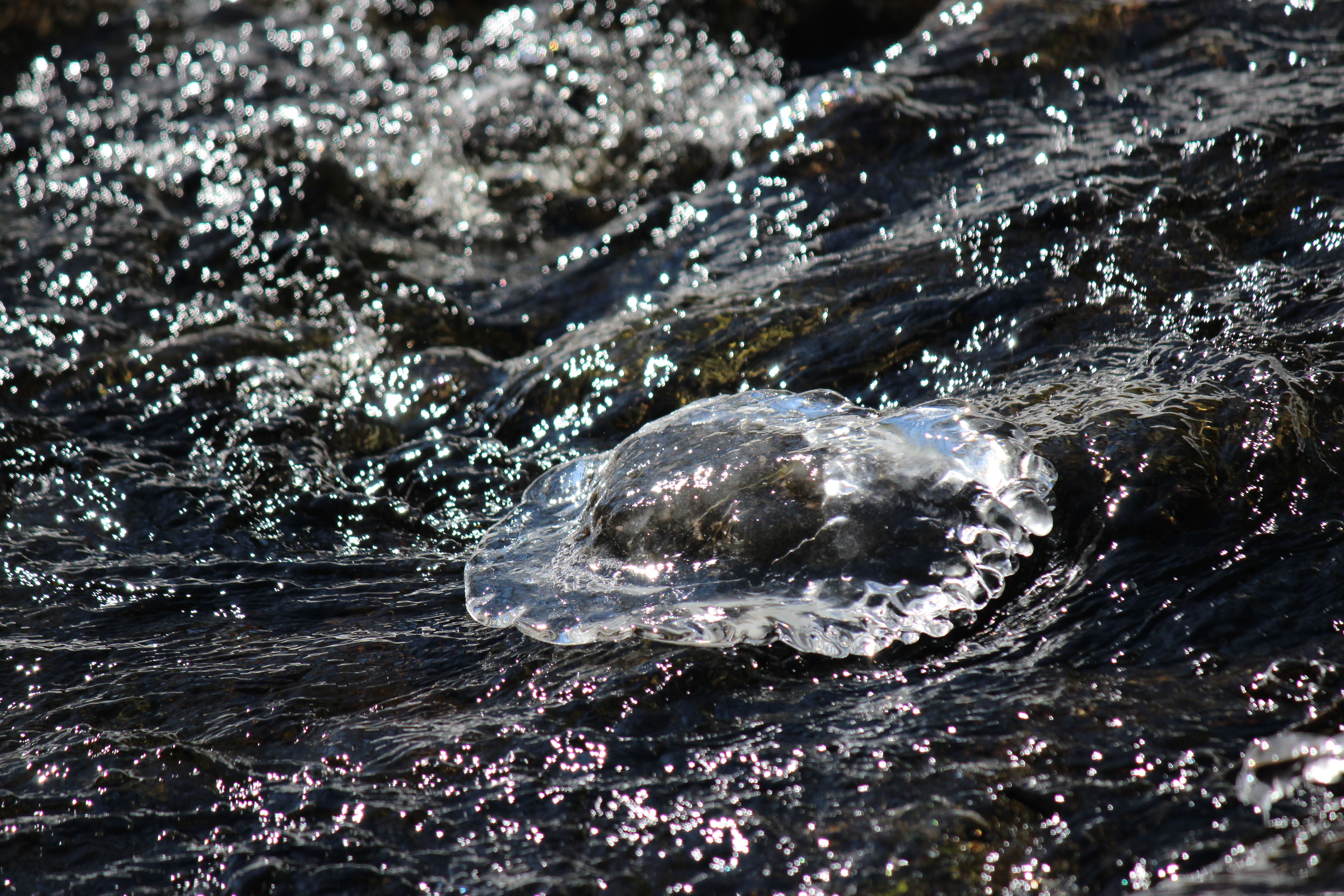
The midmorning light added subtle hints of aqua and pink as the water danced around an ice-capped rock in the brook.

mushrooms and hole

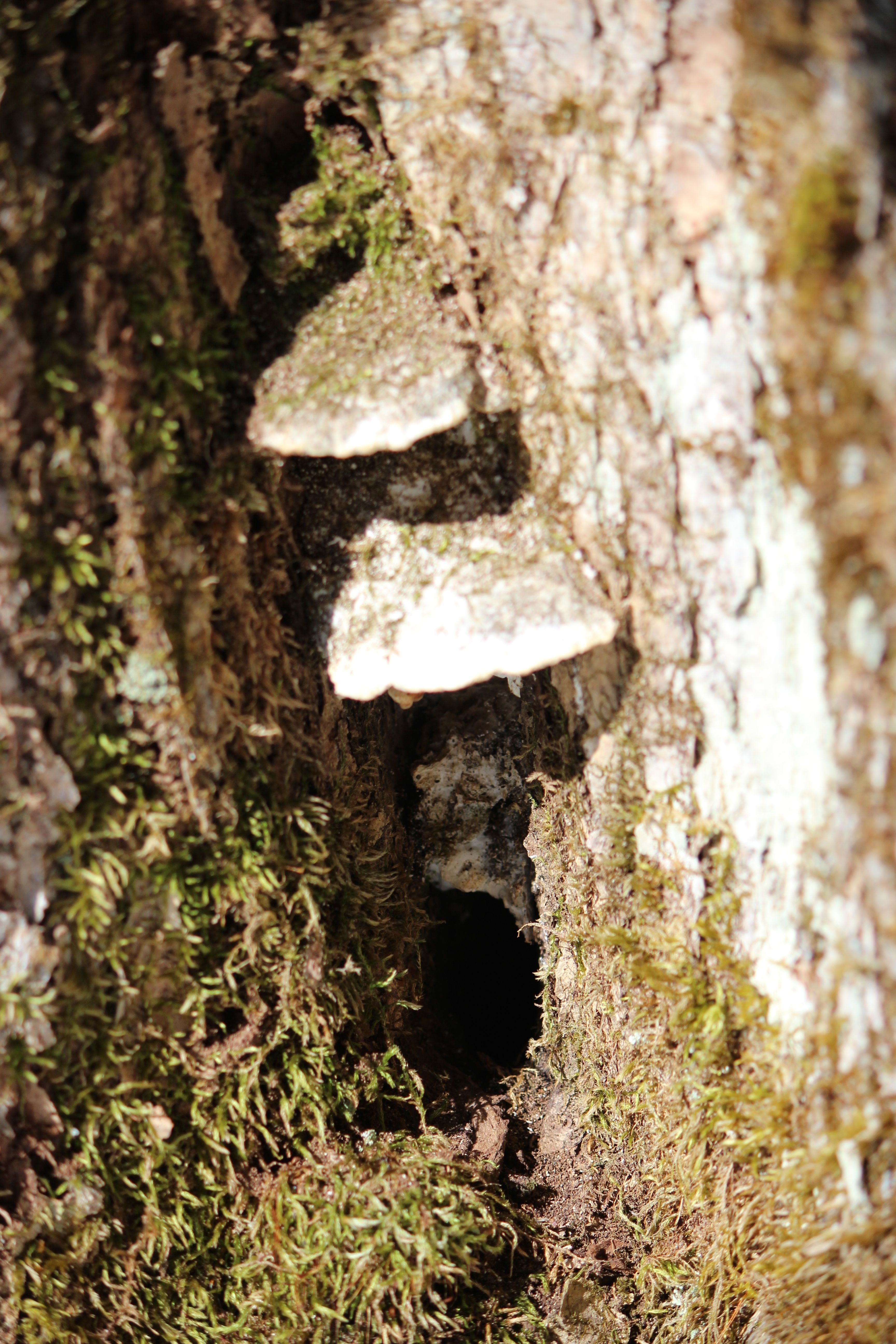
We saw lots of tracks from the mustelid family, as well as snowshoe hare, fox, squirrels, mice and voles. Also, turkeys and grouse. I’m not sure what made the hole and dirt trail beneath the mossy maple mushrooms near the base of this Red Maple. I would not have seen it if I hadn’t leaned in closer to take a photo. I do happen to know that gnomes frequent the area, so just maybe . . .

canoes

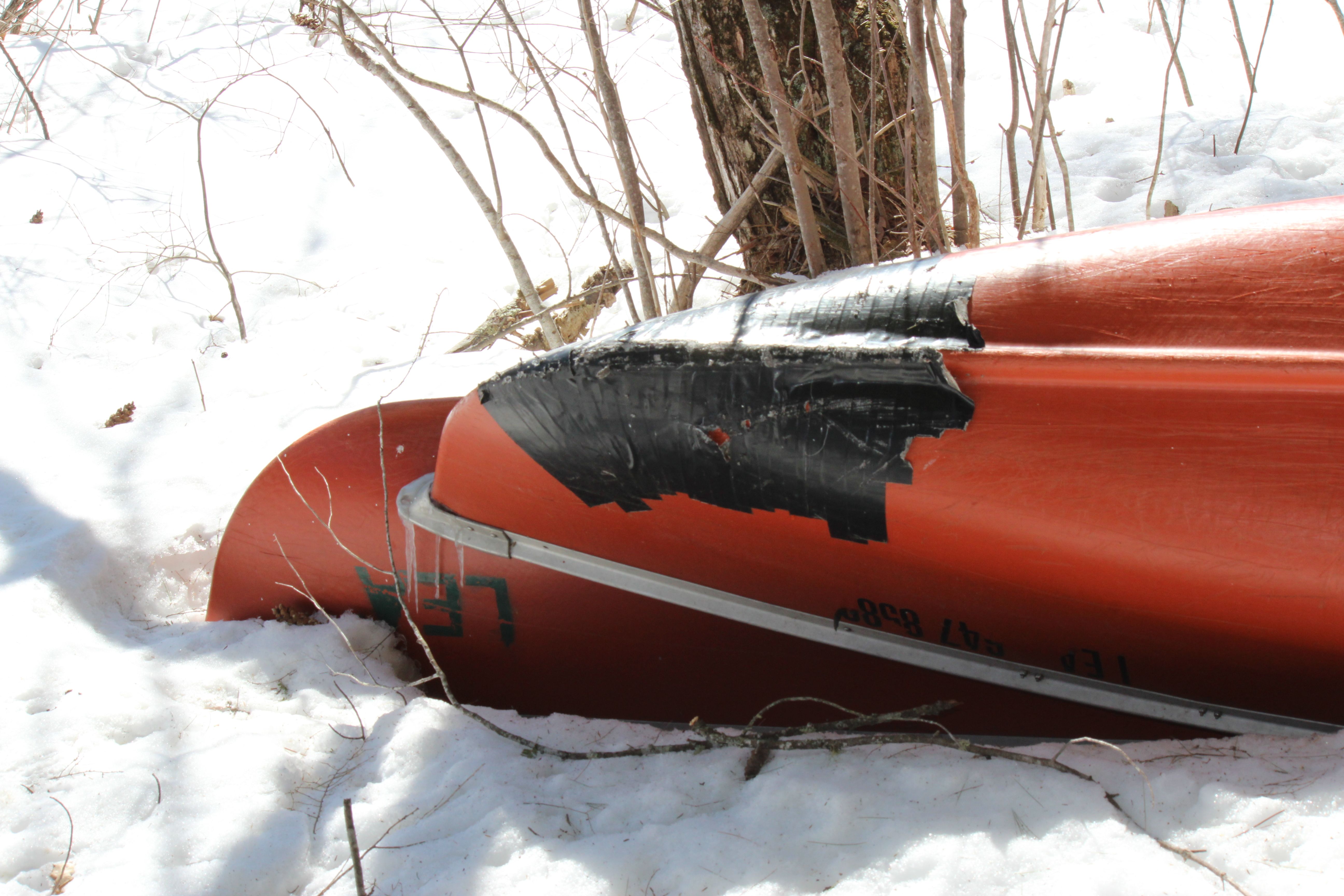
We continued on, crossing Tingley Brook and then making our way beside Muddy River, where the Lakes Environmental Association (LEA) leaves these canoes for anyone to use. Bring your own personal floatation device, paddles, and duct tape. I know where you can purchase duct tape, should you need more. :-)

beaked hazelnut

Near the canoes–a lone beaked hazelnut. Inside this bristly tan husk is an edible nut. Doesn’t it look like a gourd? The name derives from that tube-like protruding beak. I couldn’t believe it was still there as the protein-rich nuts are favorites for red squirrels and chipmunks, as well as ruffed grouse, woodpeckers and blue jays. Humans too.

to Muddy River

We never actually wore our snowshoes today. I hauled mine around on my pole, while my guy stuck his between his jacket and sweatshirt. He said he didn’t need his back scratched for the entire trip.

River to pond

Looking toward Holt Pond from the boardwalk by the Muddy River.

There was only a slight breeze, so the low temp was modified by the brilliant sunshine. Another beautiful day in Maine.

Red Maple Swamp

I think one of my favorite features about the preserve is that the habitat keeps changing–from hemlock groves to red maple swamps to alder thickets to a quaking bog.

Quaking Bog

Though you can’t tell in the winter, the quaking bog is a thick mat of vegetation that formed over the surface near the edge of the pond. A board walk passes across it and one of the fun things to do with a group of people is to have everyone jump at the same time and watch the bog quake. This is also a great spot to visit alone–for quiet reflection.

Holt Pond 1HP South

Views at the pond’s edge–north and south

HP from southwest

We stopped at a rock in a sunny spot along the South Shore Trail to enjoy lunch al fresco. PB&J never tasted so good. Topped off with ice cold water and some Ghirardelli chocolates. :-) As we continued along, we paused to look back across the pond toward the Quaking Bog.

Sometimes we chatted and other times we were each lost in our own thoughts and moving at our individual paces. Similar to my NDD (Nature Distraction Disorder), my guy has his own syndrome–Destinationitis. But, he’s learned to compensate by pausing until I catch up . . . and then he’s off again. That’s OK–it gives me time to spend in my own world.

feathers one

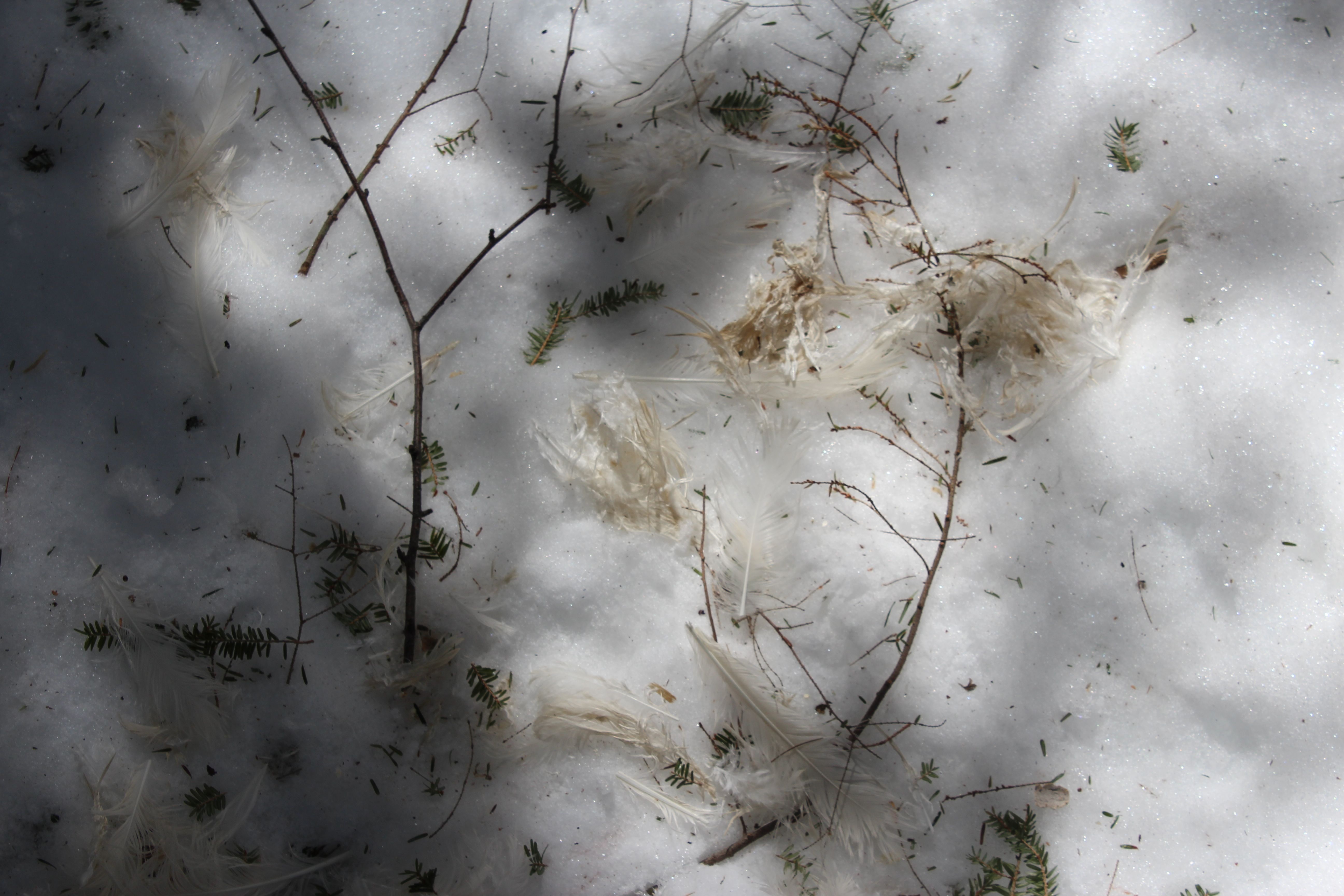
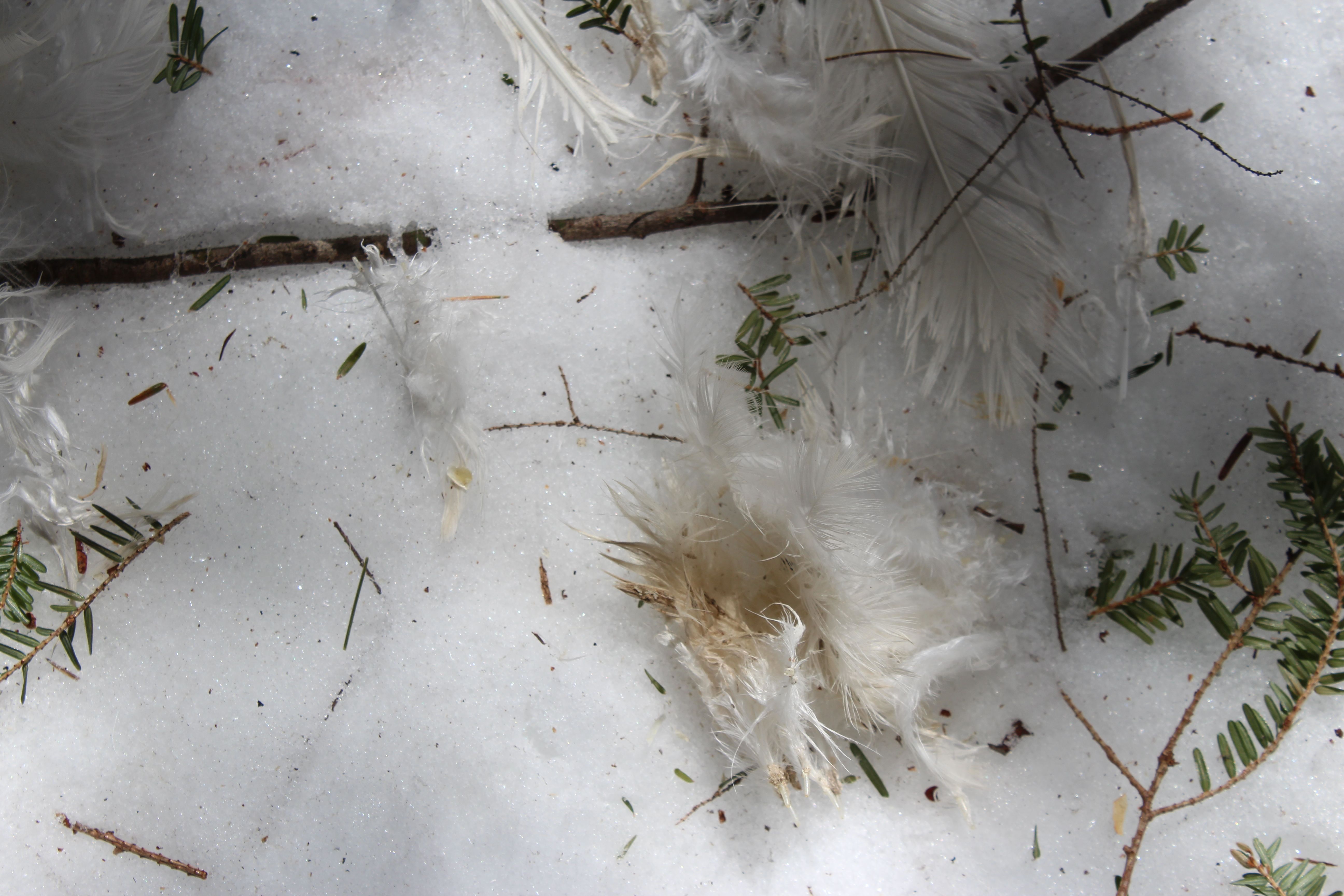
At the edge of a field (we know it as “The Field” because it’s the end of a section of trail that we keep maintained for LEA), we both stopped to look and wonder. Under a hemlock tree and in the middle of the trail, we found these white feathers. Don’t you just love a mystery?

feathers 2

Here’s another look. Some had sheer cuts; others looked plucked. No great place to hang out above. If you know what bird this was or what happened here, please enlighten me.

horse

At least five miles later, we were back on Chaplin’s Mill Road headed toward the truck.

Thanks for stopping by again to wonder my way. I hope you enjoyed the three hour tour.

Ordinary Graces

My friend and former flatmate, Marfé, sent me the following Lenten reflection shared by Reverend John Branson of Christ Church in Alexandria, Virginia.

March 18, 2015 

Ordinary Graces, Christian Teachings on the Interior Life by Lorraine Kisly includes this summary from a D.H. Lawrence essay: 

When the wonder has gone out of the man he is dead. When all comes to all, the most precious element in life is wonder. Love is a great emotion and power is power but both love and power are based on wonder. Plant consciousness, insect consciousness, fish consciousness, animal consciousness, all are related by one permanent element, which many called the religious element in all life, even in a flea: the sense of wonder. That is our sixth sense. And it is the natural religious sense.

ice and water

And so I begin today’s wander. Wondering about water and ice. It’s such an ordinary occurrence. Or is it?

deer, mushroom

A forester friend and I visited the Wilson Wing Moose Pond Bog Reserve this morning. Deer tracks led us to one of our first finds. The breakfast of champions  appears to have been polypores. We always talk about deer eating mushrooms, but here was actual evidence.

leaf

I’d just been to this property on Friday, but today–different things made themselves known. There were deer, mink, snowshoe hare and maybe otter or raccoon tracks. The latter two were a bit difficult to determine given the snow conditions. Crusty snow. 15 degrees. Wind. Blustery wind.

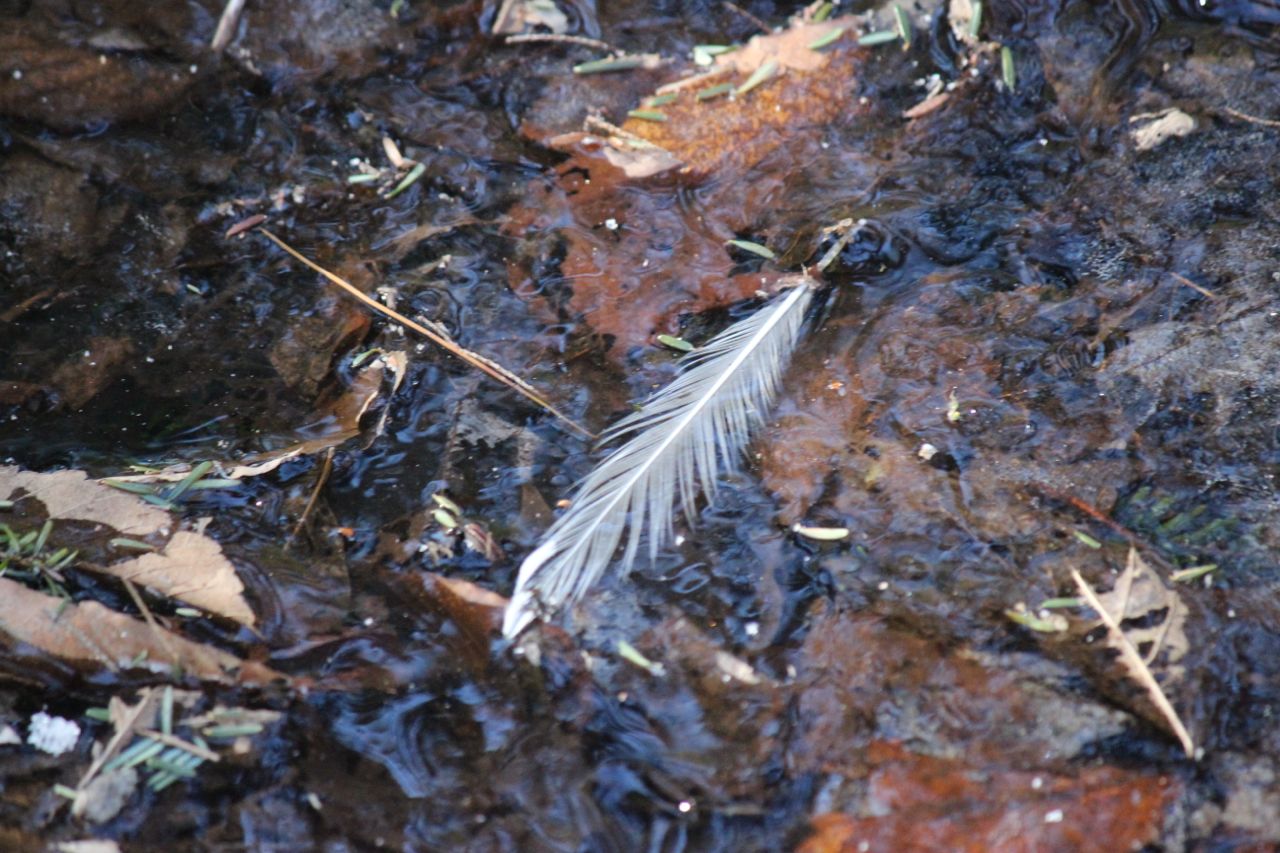
Following the brook and mink tracks, we came to an area where either the otter or raccoon had also traveled. And then we saw the feathers in the water and on the ice. Not many. But enough to make us wonder what had happened. Did a hawk or owl get another bird? It certainly didn’t seem like a four-legged animal attack.

wasp

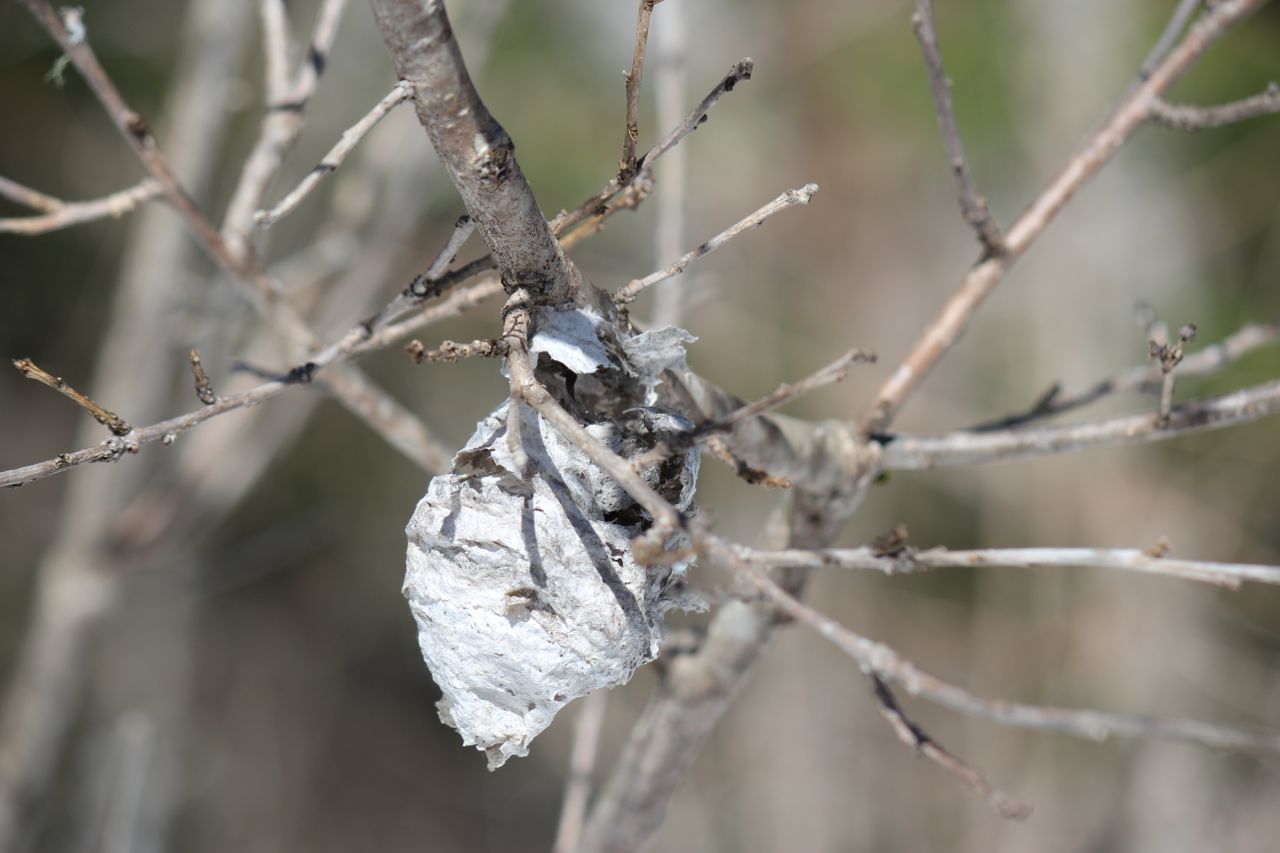
Along the edge of the bog we found this small nest flapping in the wind. Paper wasps, hornets and yellow jackets are all masters of papermaking. That being said, they locate their nests in different places. For the paper wasp, prime real estate is in trees and dense shrubbery, but quite often you’ll find their nests suspended from eaves and window casings. Trees and shrubs are a hornet’s site of choice. Yellow jackets set up housekeeping underground. My thinking is that this may have been the start of a hornet nest. Last spring, the queen who had overwintered in rock cracks, under bark or in an underground hangout, would have emerged and begun building by gathering wood fibers and turning them into papery pulp. But it appears that she abandoned it. Why? What went wrong on the home front?
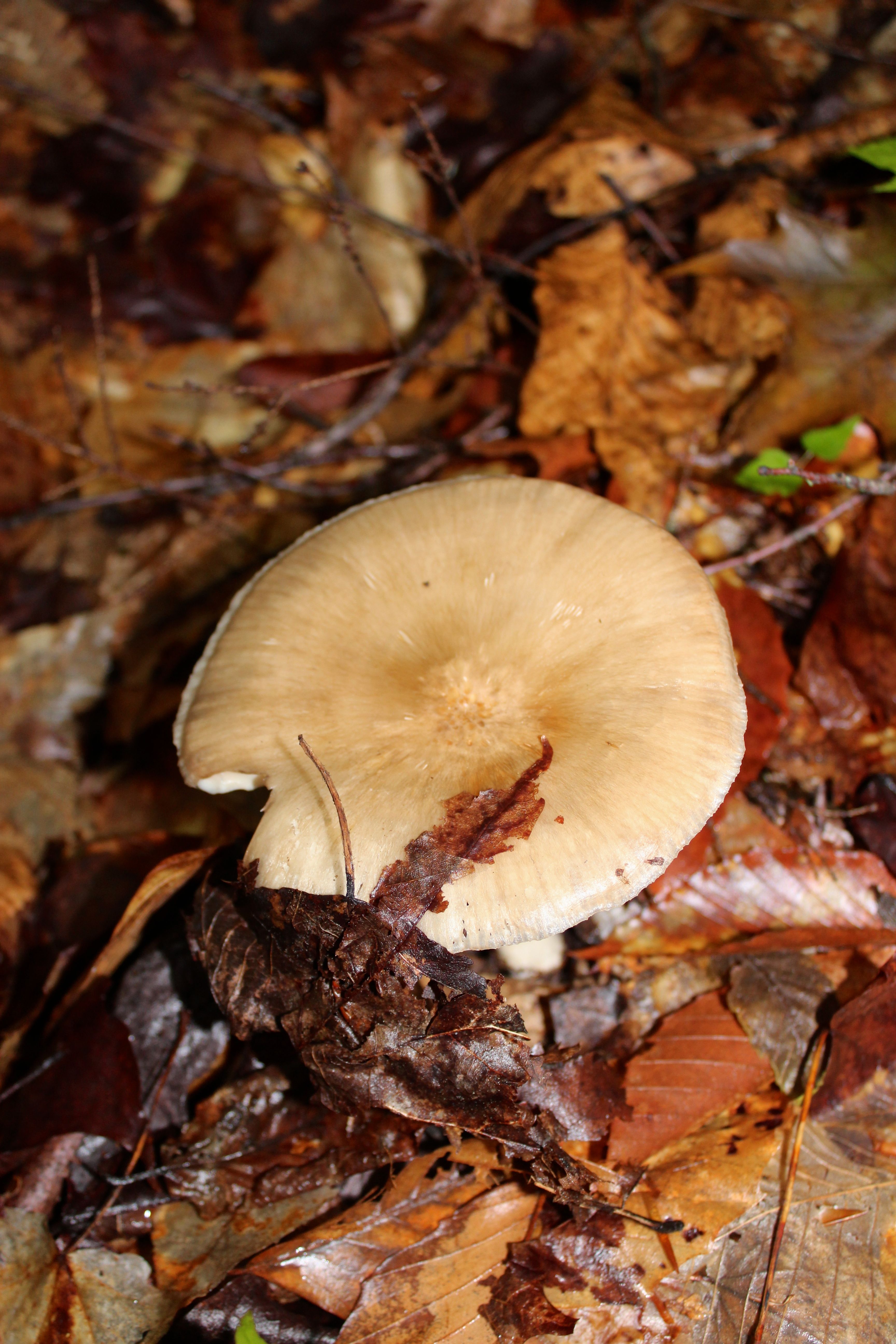
beaver hemlock

Here’s something else to wonder about. The trail doesn’t go past this because it’s in a wet area beside the brook, but during the winter we can wander to places we can’t reach in other seasons. This hemlock was girdled by a beaver a while ago. I’m not sure why they do this as hemlocks are not their tree of choice for food. One theory is that the tree will die and other more favorable trees–from the beaver’s viewpoint–will grow here.

hemlock squigglesquiggly hemlock

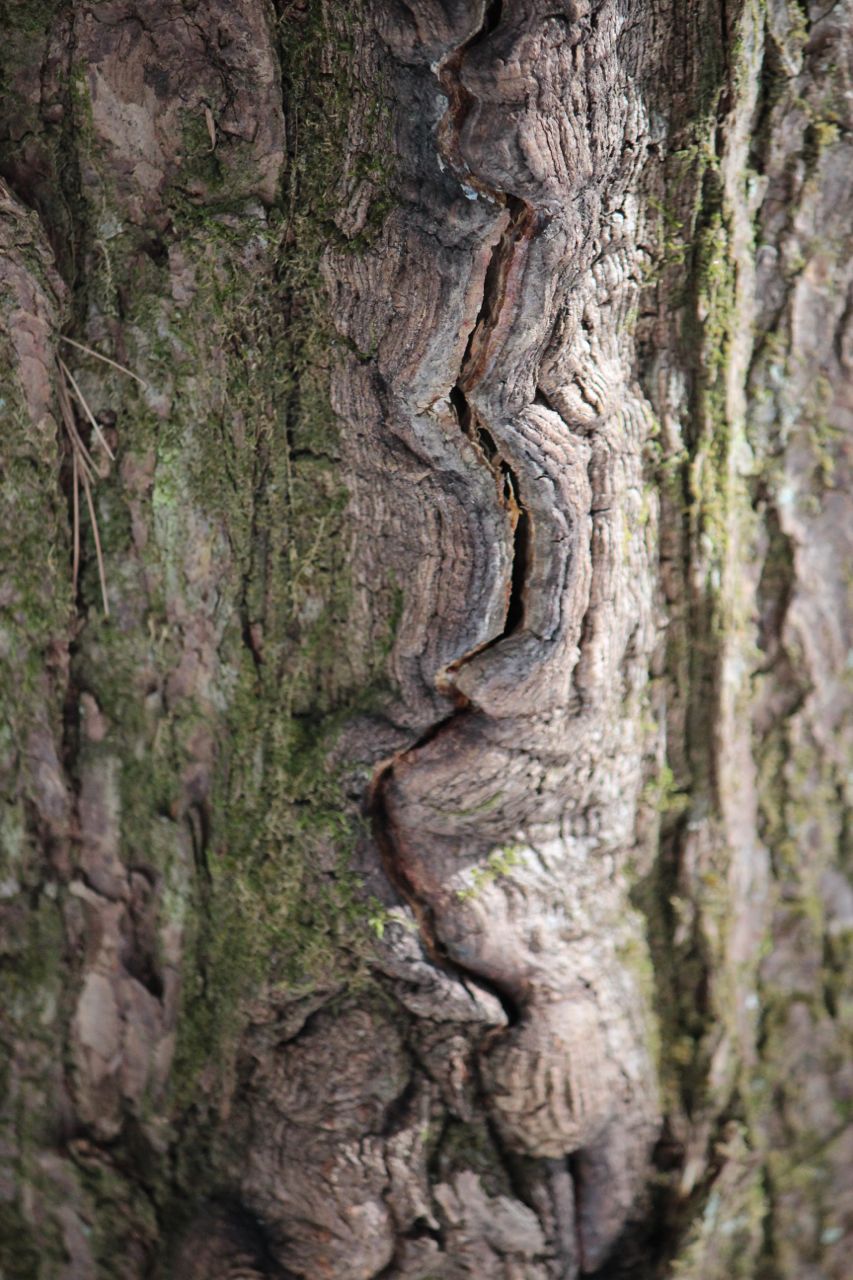
I’m always amazed how once my eyes are opened to something, it suddenly appears everywhere I look. Well, not everywhere but . . . Such was the case with the squiggly wound of another hemlock tree. So I asked my friend about this. His theory–a frost crack and this is how the tree tried to heal the wound. Maybe so. I know that  I appreciate the sun’s warmth being absorbed by my black snow pants. The dark bark of the trees also absorbs sunlight during the day, but they don’t have a heated home to return to at night when the sun sets and temperature plunges. The constant thawing/freezing cycle creates cracks in the bark–but if this is such, I still don’t understand why the hemlock portrays the squiggly line, while frost cracks on other trees tend to be much straighter. Then again, all tree species have their own patterns and idiosyncrasies. Maybe I just have to accept that this is the way it is. And move on.

John A. Segur

So we moved on to the John A. Segur Wildlife Refuge on New Road, another GLLT property. I’ve said it before and I’ll say it again . . . and again. I’m thankful to this land trust and others for the work being done to protect the ecosystem for the benefit of nature and humans.

And I’m thankful for another beautiful day in Maine and the opportunity to wonder about the ordinary.