Book of October: Writing My Will

Judy Steinbergh has fed me repeatedly. She’s nourished my body and soul with actual food, but also with her poetry and prose. And recently, she gifted me one of her books entitled Writing My Will.

0

Though it’s her poems about Maine that I love the most in this collection, I feel honored not only to have been the recipient of such a gift, but also to be offered the opportunity to peek into her life and share the path that she’s walked through marriage and motherhood, divorce and death.

17

I hear Judy’s voice even when she isn’t reading to me. And I covet her descriptions and command of lyrical language and imagery, especially as she captures the natural world:

“. . . after speculating on the slap of water, whir of wings,

out of the grainy dusk, some creature bursts

from the forest. Before we focus on its shape,

almost before it can be named,

it twists back, leaps, makes its escape.”

~ excerpt from “Wild Things”

or this one:

“. . . roughs the lake up like the wrong direction of fur

until it is leaping dolphins and whales in rows

until it is sleek stampeding panthers in droves

until we, in our small boats, are driven to shore.”

~excerpt from “The Wind”

1b

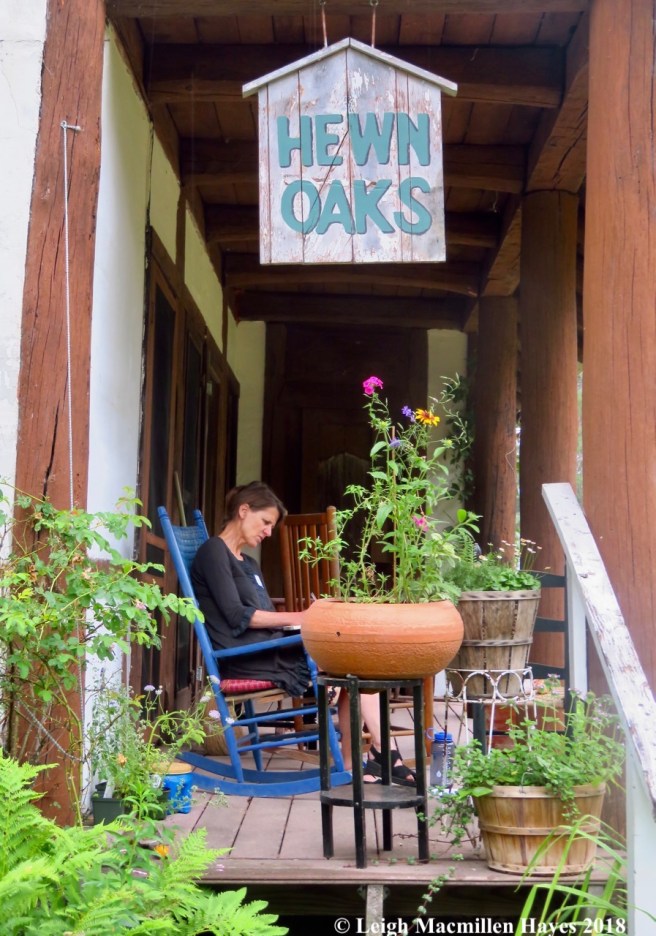
Each summer, she’s gathered her own poems, and those of other landscape poets, and shared them with an intimate group of writers through a workshop co-sponsored by the Greater Lovell Land Trust, Charlotte Hobbs Memorial Library, and Hewnoaks Artist Colony at the Hewnoaks property overlooking Kezar Lake in Lovell, Maine. After talking about rhythm and form, and having us read her works and others, she sends us off to find a comfortable spot in which to contemplate and write.

1a

Poets young and old flock to her and she embraces all with a listening ear and mentoring manner.

1c

And sometimes we travel the path together, either hunting for mushrooms, looking at plants and any of the millions of other things that capture our attention, or spending time writing and sketching.

Judy has written five books of poetry, three poetry teaching texts, and recorded other works. She’s the Poet Laureate for the town of Brookline, Massachusetts. And she teaches and mentors students and teachers for Troubadour, Inc. throughout greater Boston and serves as Poet-in-Residence in various communities.

This particular book, Writing My Will, is an assortment of Judy’s treasures from her family, including her dying mother, to the natural world that embraces her. Based on the theme, she’s divided it into sections: Heirlooms; My Mother Comes Back to Life; What Memories Will Rise; Talking Physics With My Son; This Wild; Meeting the Birthmother; Long  Distance; The Art of Granddaughters; Working on Words; Elegies; Writing My Will.

And it ends with one most apropos for this month:

October Song

Wild asters and the birds whir over

in flocks, Queen Anne’s Lace curls up

by the docks, the tide runs out,

runs out like it hurts, our step

is so light on this earth.

I love these times alone, thinking

about how my children have grown,

and how I come into this age

illuminated, softened

as the marsh’s edge.

And the tide runs out, as forceful

as birth, as if nothing else mattered

but rushing away and rushing back in

twice a day. Our step

is so light on this earth.

We’re given October like a gift, the leaves

on the warp, the light on the weft,

and the gold drips through

like cider from the press; we know,

we know that our lives are blessed.

But the tide runs out, runs out like it hurts,

what were fields of water only hours ago

are meadows now when the tide

is low; our step is so light

on the earth. Wild asters. All

we are sure of is change, that maple

and sumac will turn into flame, this softness

will pass and the winter be harsh

till the green shoots push

up through the marsh. And the tide

rushes in like a thirst and will keep

its rhythm even after our time,

the seasons, too, will repeat

their design. Our step

is so light on the earth.

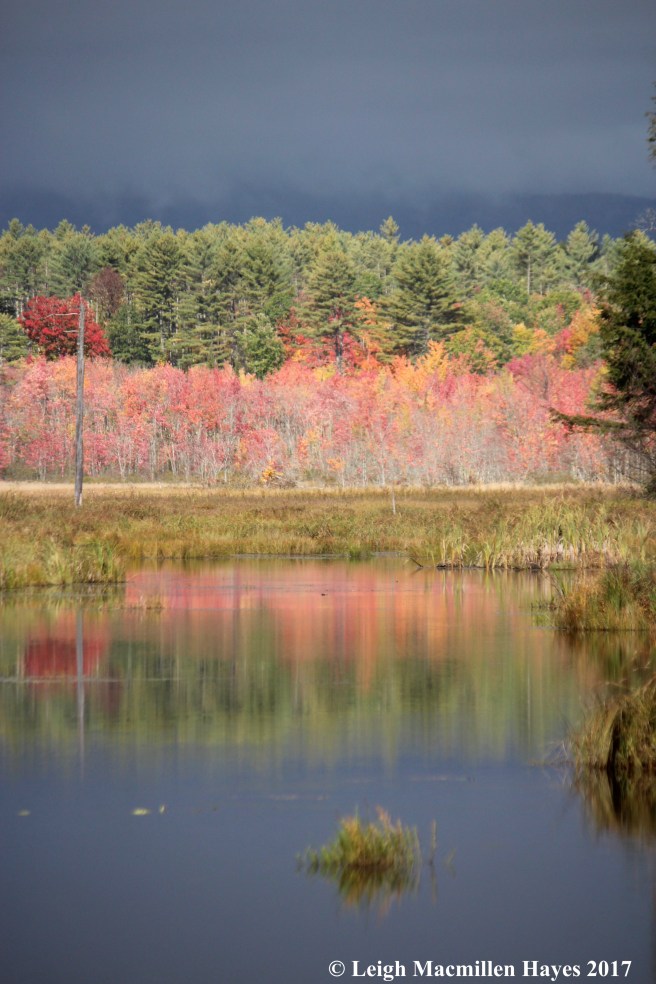
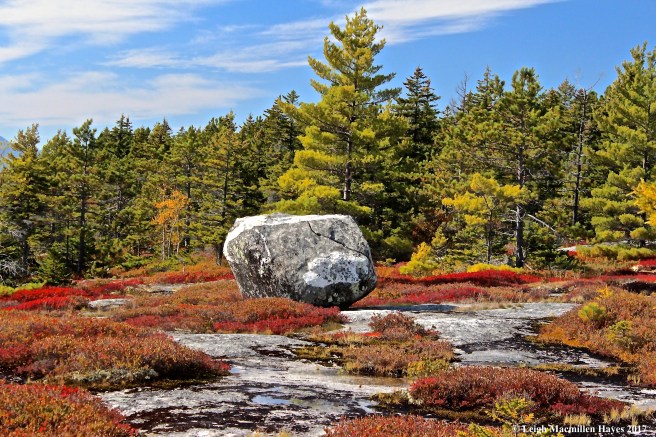
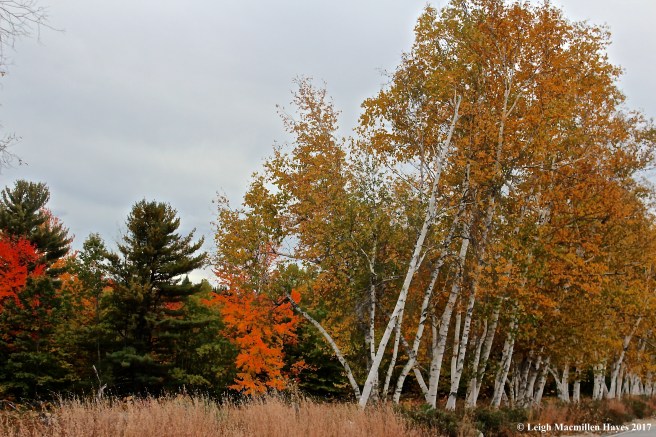
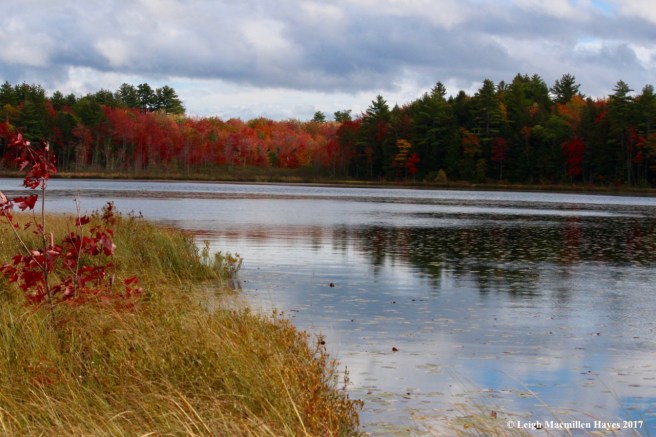
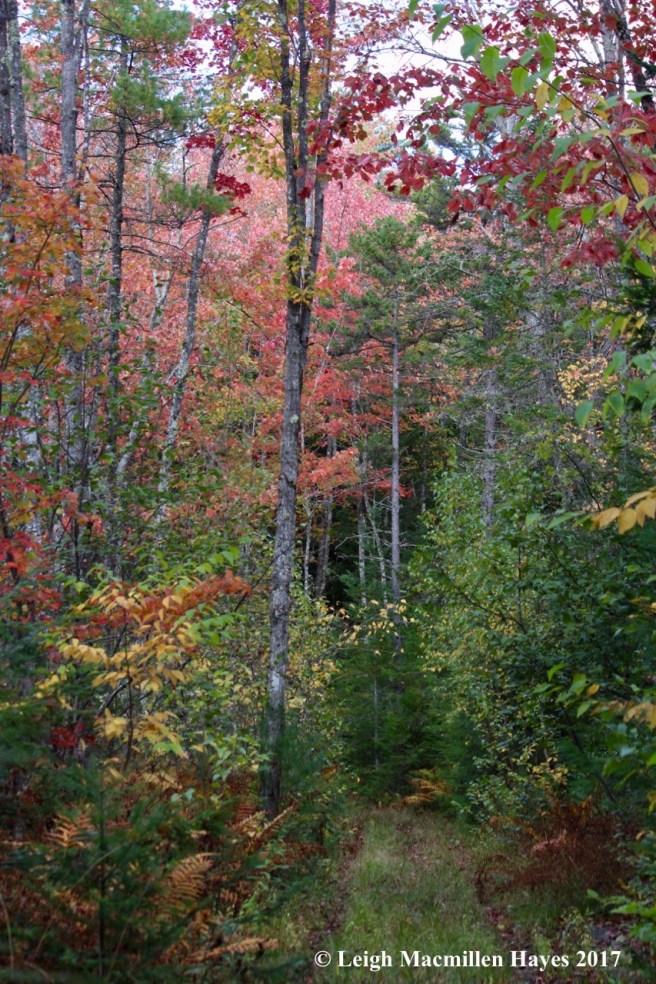
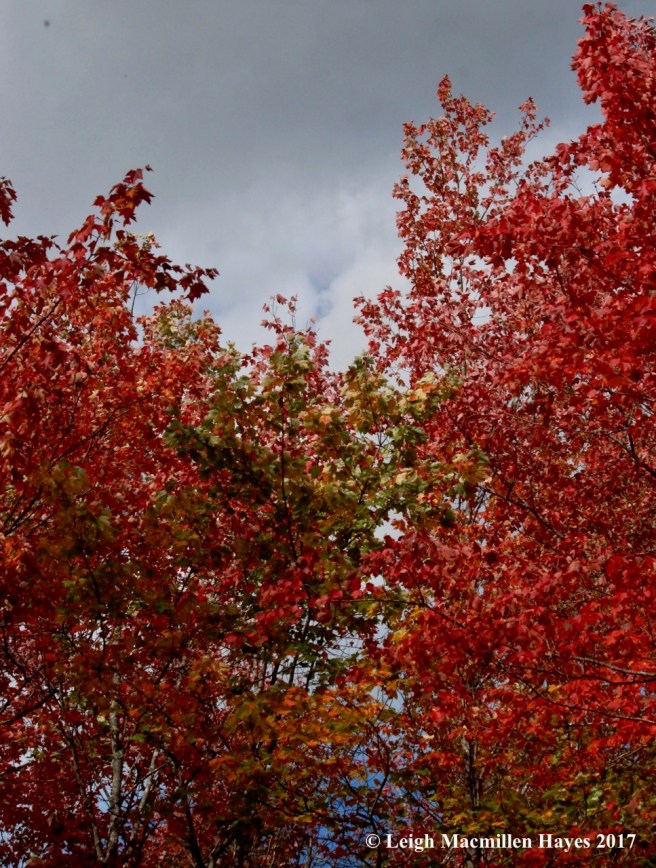
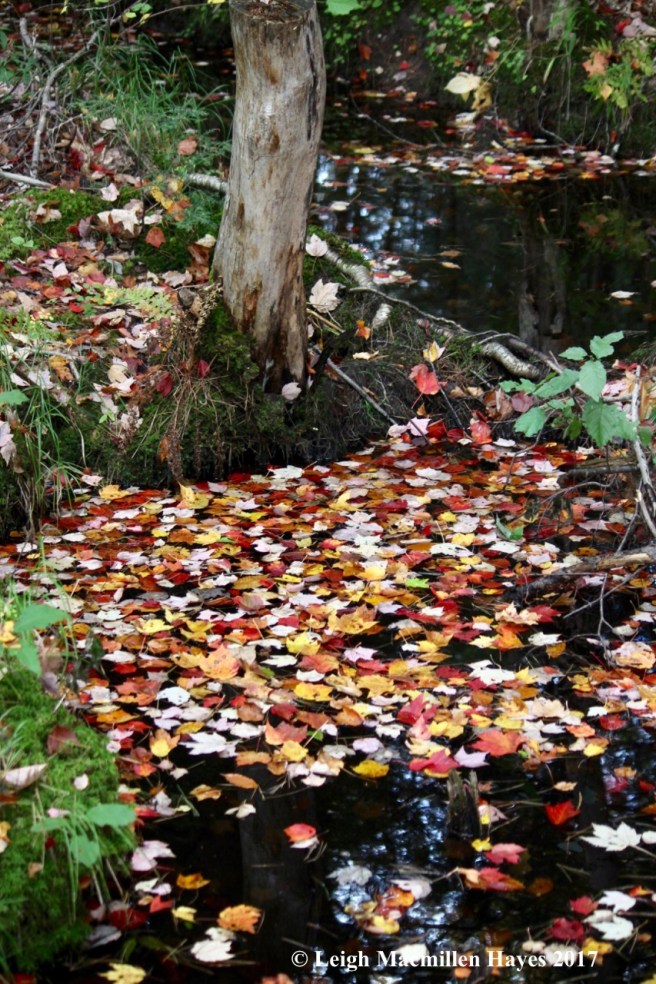
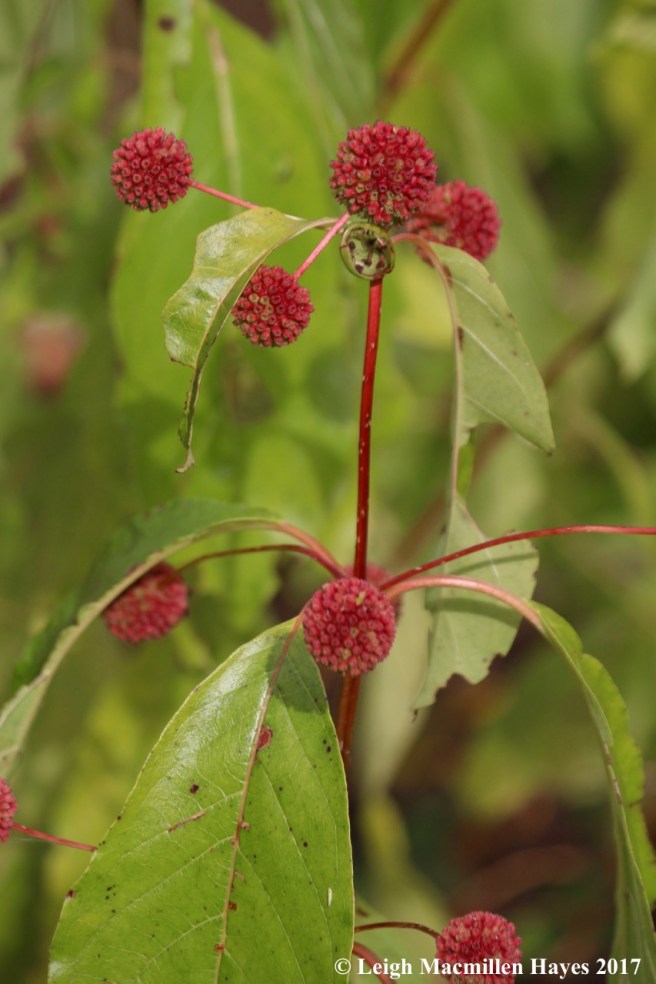
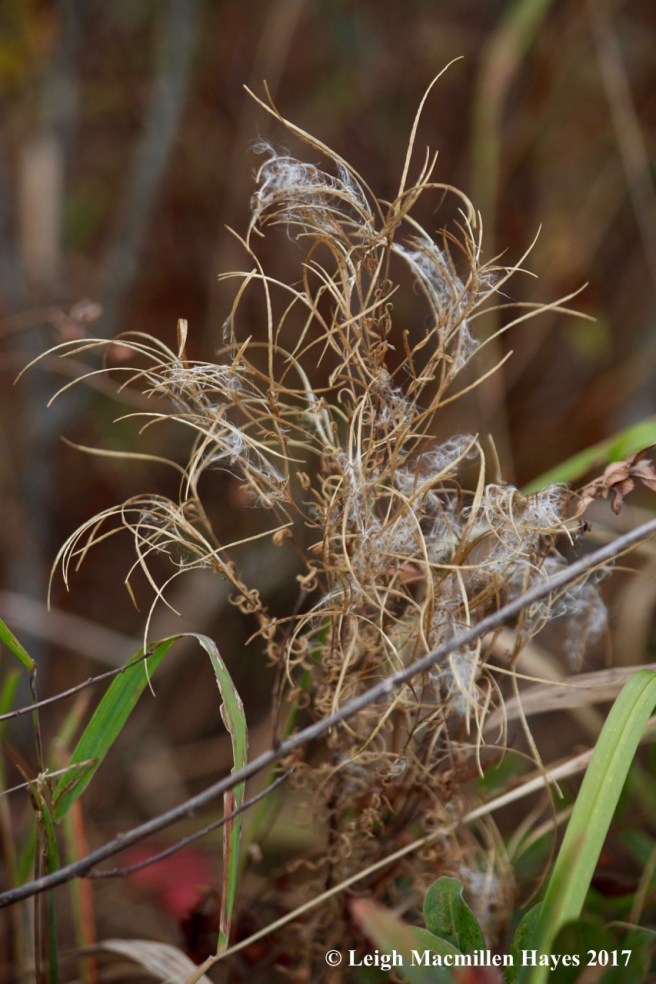
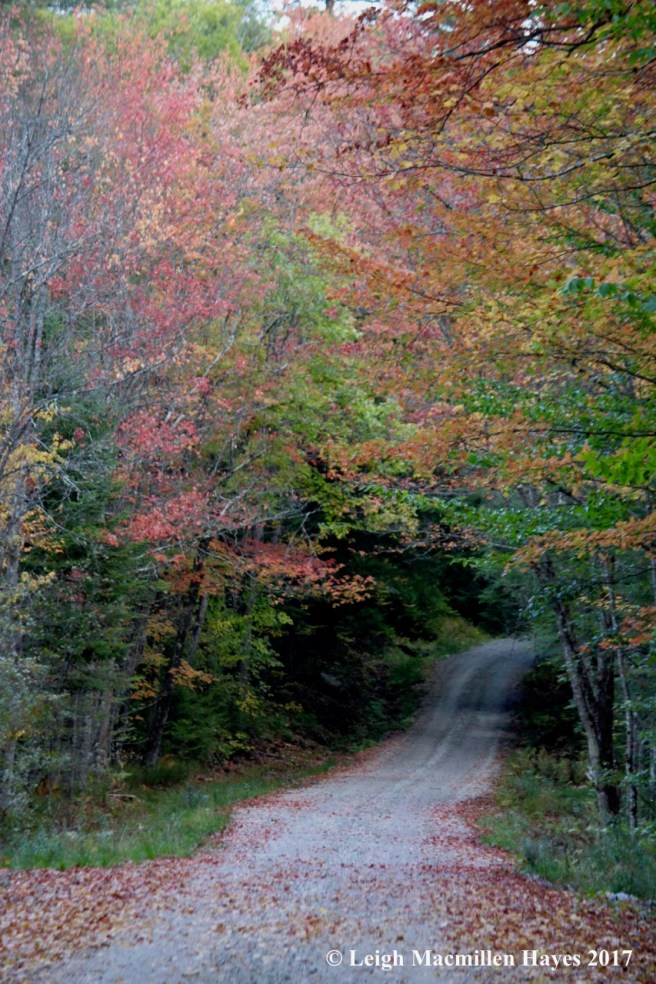
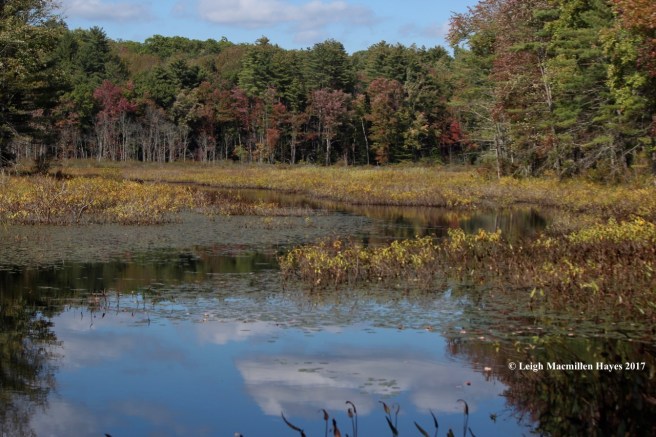
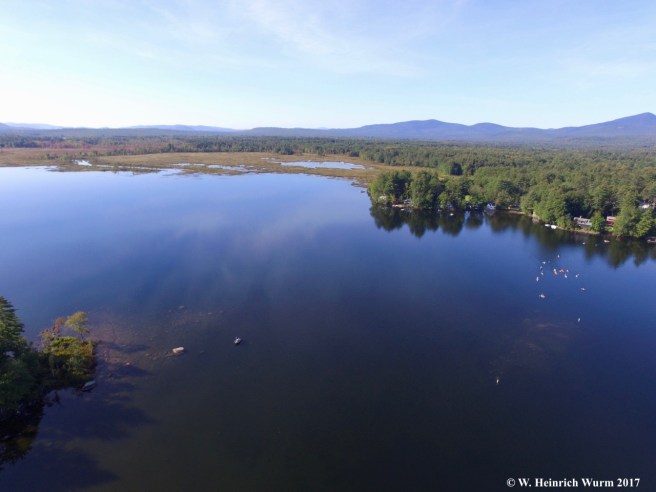
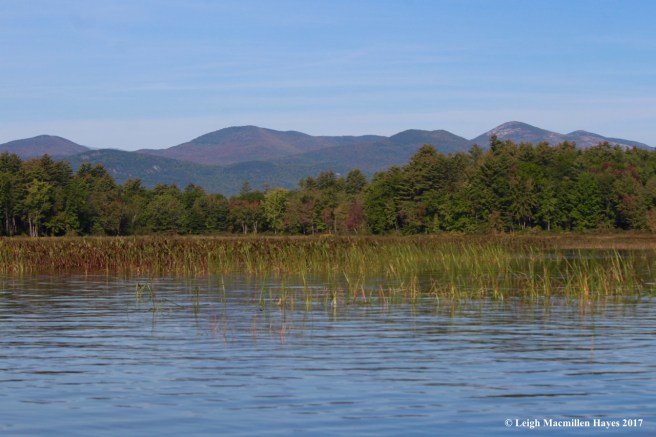
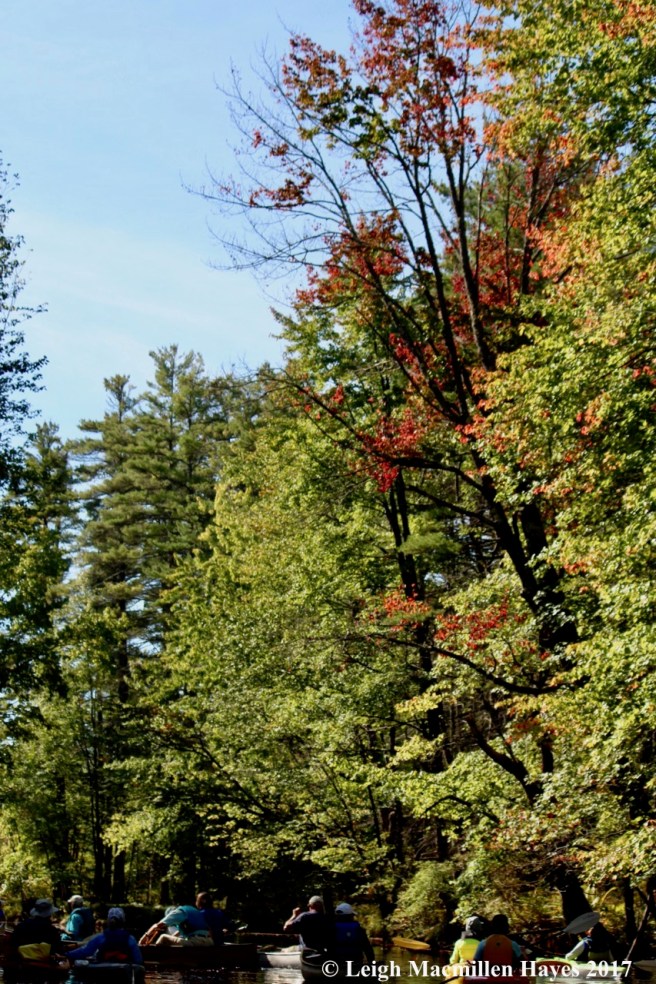
And so, dear Judy, as my thank you for the gift of your book, I want to now share a melody of photos from previous autumns, all taken during Octobers past in your beloved Maine locale when you can’t be here. (Well, maybe one is from the Northeast Kingdom of Vermont–shhhh!)

3

4

5

7

8

9

10

11

12

13

14

15

16

2

“Our step is so light on the earth”

Book of October: Writing My Will–Poems and Prose, by Judith W. Steinbergh, Talking Stone Press, 2001.


Making Connections

“The Great Maine Outdoor Weekend is a series of events led by outdoor-oriented organizations and companies to celebrate the how, where, and what of being active outside in Maine. Our goal is to connect our friends and neighbors with the natural world, to promote fun, physical activity, & good health.”  ~greatmaineoutdoorweekend.org

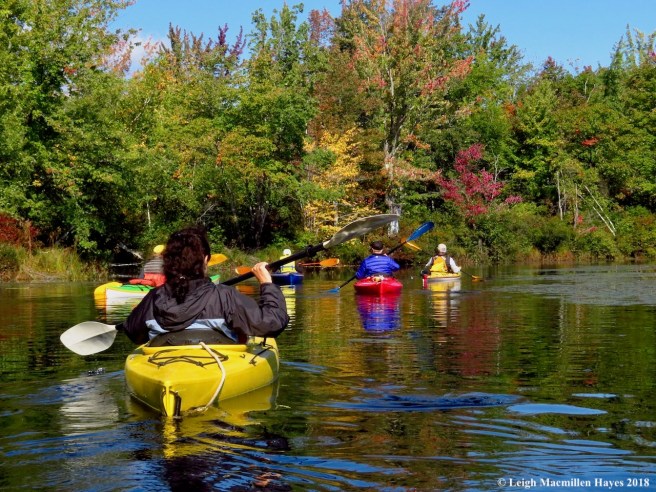
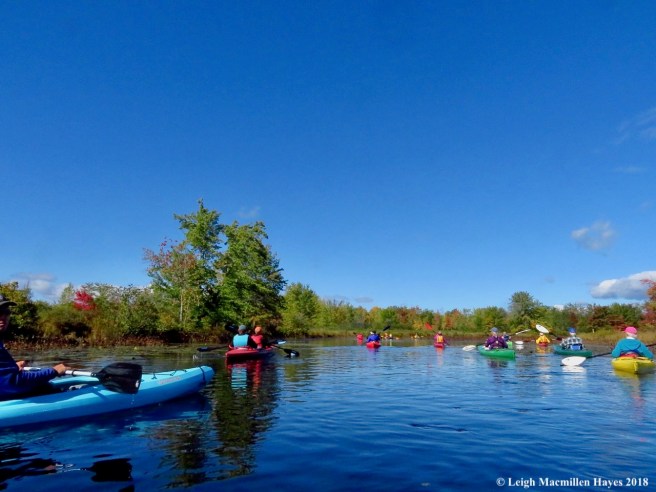
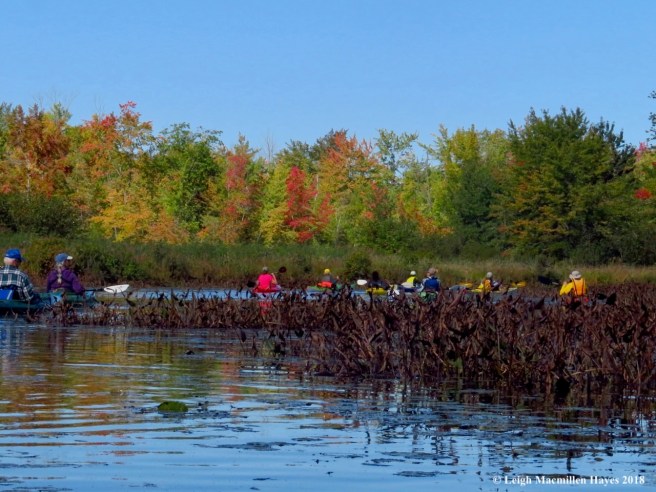
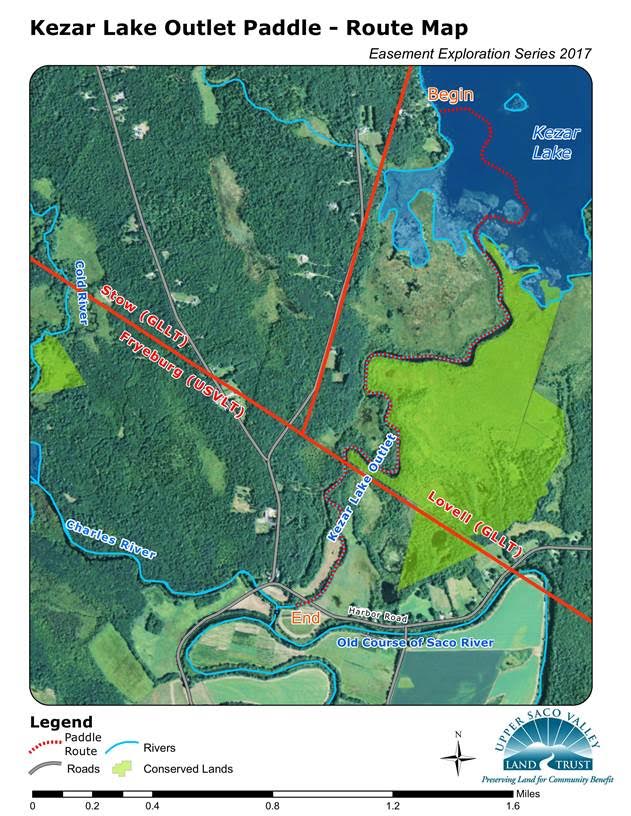
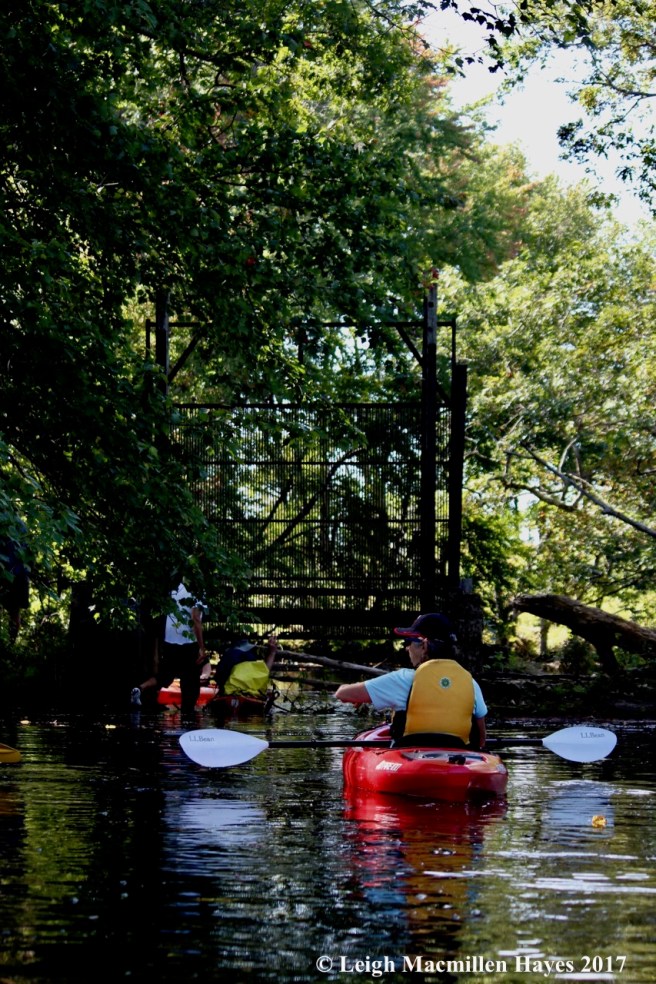
In the spirit of the GMOW, the Greater Lovell Land Trust and Upper Saco Valley Land Trust co-hosted a paddle at the Major Gregory Sanborn Wildlife Management Area, aka Brownfield Bog, in Brownfield today.

1-fine fall morning

Though the temperature was a bit nippy, as in mid-50˚s to start (and colder in the shade), we couldn’t have asked for a better autumn day, especially given that we first began planning this event last winter.

b-Kathy's sign 1

In what seemed like perfect timing for they didn’t all pull in at once, vehicles laden with kayaks and even one canoe, arrived and folks who’d never met before helped each other carry boats, paddles and personal floatation devices down the road. Then we stood in our traditional circle, where Erika of USVLT and I welcomed everyone and introduced our two organizations. By the tile sign created by Maine Master Naturalist Kathy McGreavy, I pointed out our location and destination along the Old Course of the Saco River.

2-walking to the put in

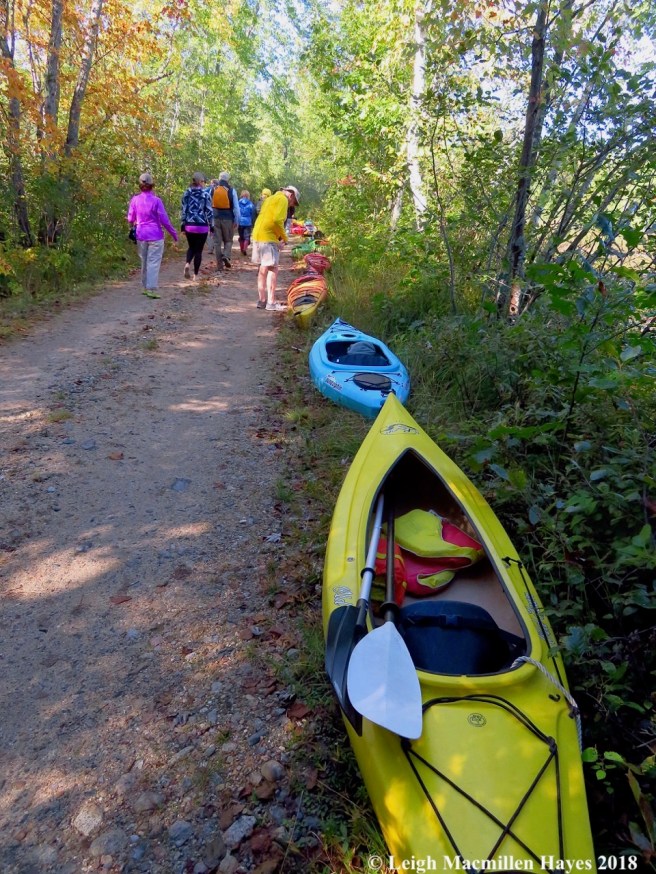
And then we all walked down the road to the put-in site . . .

3-kayaks on parade

where our parade of kayaks awaited the adventure.

4-onto the old course

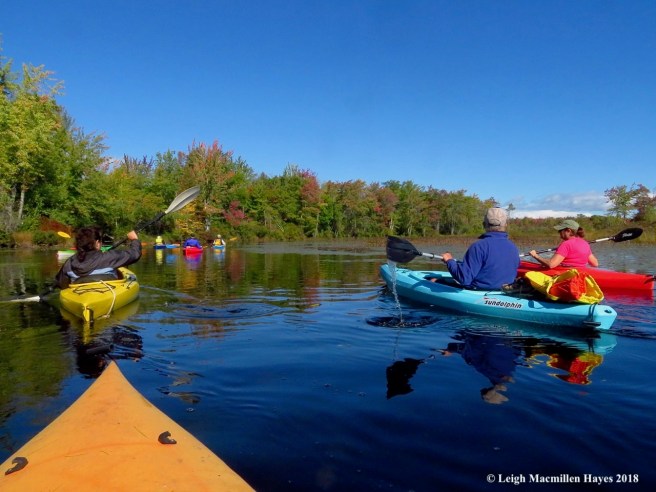
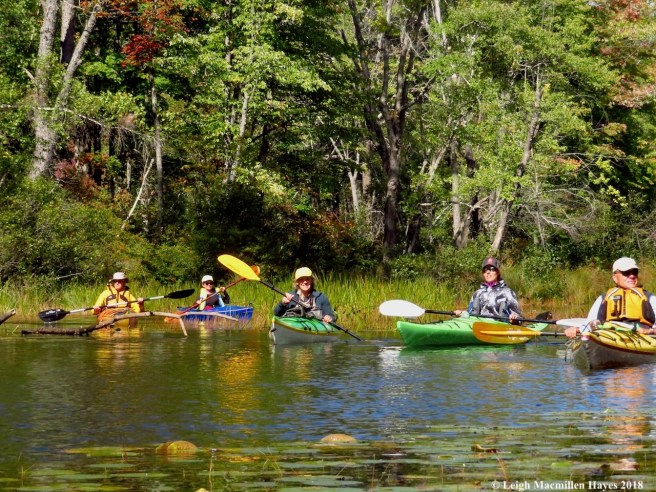
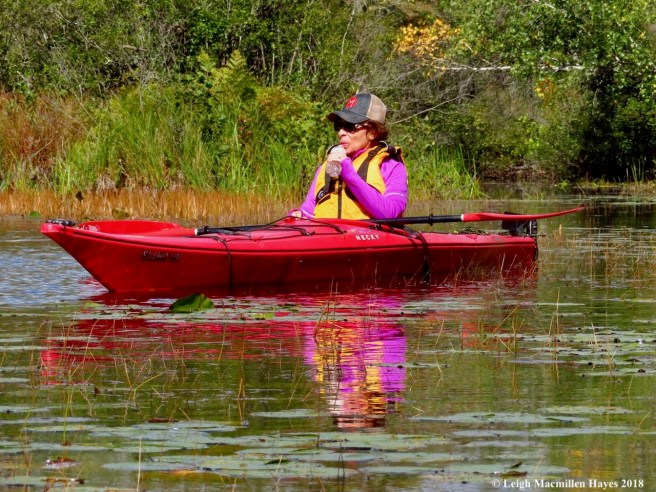
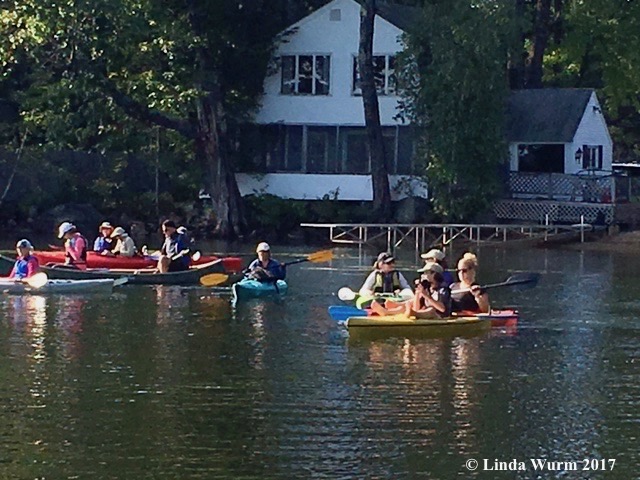
One at a time the boats were launched. And then the magic began. It was two-fold in that I’d challenged our twenty participants, some of whom had learned of the event via our advertising efforts locally and were already members of our organizations, and others who discovered the event via the GMOW website and wanted to try something new. The challenge was to spend some time chatting with people they’d never met before. And they did. Conversations ranged from living in New York to termite mounds in Africa.

Folks came from Fryeburg, Bridgton, Lovell, Standish, Jackson and North Conway, as well as Westbrook, Portland, and Cape Elizabeth. But that wasn’t all, for one joined us from Philadelphia and two came from Houston. Our furthest traveler hailed from London. Well, truth be told, she’s a long-time GLLT member, docent and board member who spends at least four months in Lovell. ;-) Thanks Moira.

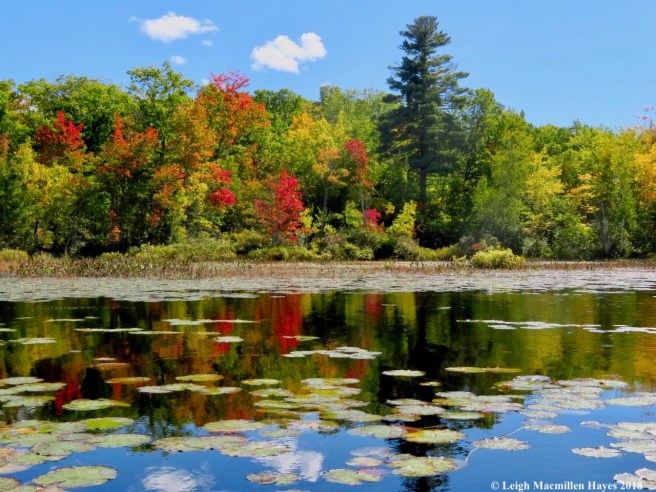
5-tapestry of color

The tapestry of colors was the other magical element. We chatted about the colors and the carotenoids (yellows and orange pigment) showing up as the leaves stop producing sugar and starch for the tree, and the chemical process that produces the anthocyanin or red coloration.

14-lily pad aphids and yellowjackets

We mentioned the lily pad aphids that sought nutritious sap and noted how the yellowjackets took advantage of the honeydew secretions the aphids offered.

12-soaring above--bald eagles

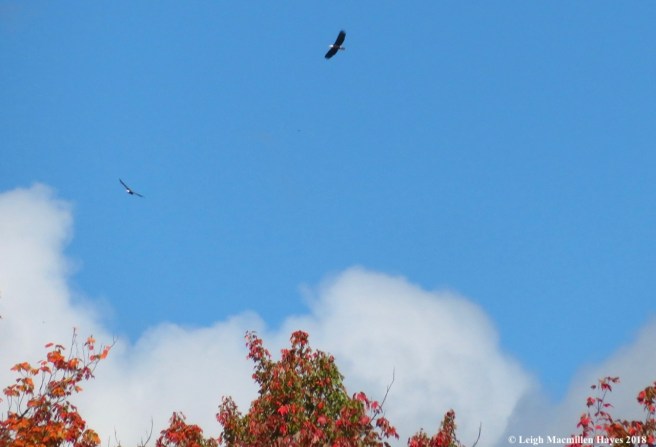
And some of us had the joy of watching two Bald Eagles soar on the thermals above.

16a-beaver works

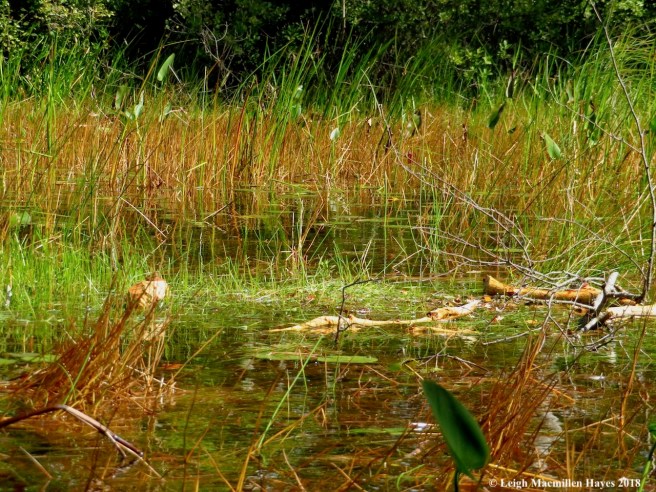
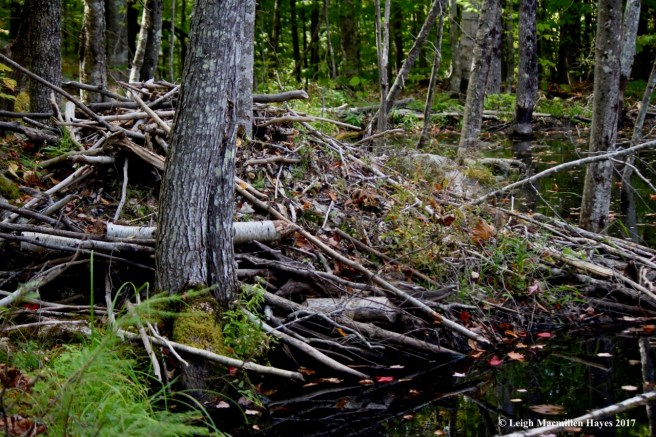
There were some fresh beaver works to note and we did spy a few lodges, though none looked active.

7-duck hunters

And for most of the trip we heard the duck hunters’ gunshots as they took aim, though I think we scared a few of them off. The hunters that is. Well, we know we scared a few ducks off as well.

6-ahhhhh

But, what the day was really all about was an enjoyment of being outdoors and sharing a place many had never explored before.

8-around every bend

Around every bend, we discovered different threads, our own colors sewn into the tapestry.

9-the tree

One of my favorites is what I’ve come to call “The Tree.” It’s a perfectly shaped Red Maple that protects a beaver lodge–if you peak below the lower branches on the left, you may see the pointed top of the lodge.

10-the tree's reflection

Even The Tree’s reflection was worth several expressed “Ahhs.”

11-color enhanced by clouds

Though the clouds weren’t many, some enhanced the scene.

15-more color

With each stroke of the paddle it seemed we reached new vantage points where the artwork was similar . . .

16- and more reflections

yet different.

How could it get anymore beautiful?

13-lily pads upturned

Even the lily pads stood out as if seeking recognition for their presentation.

17-turn around point

At last we reached the end of the road, or rather Old Course. That was our turn-around point.

18-preparing to head back

And so we did . . . turn around.

20-taking a break

Before heading immediately back, however, we paused for a few moments to sip some water.

21-enjoying lunch

And a few new friends even enjoyed rafting up while they ate their picnic lunches.

26-the tree again

The trip back passed by much more quickly, as it always does. But still, The Tree called for attention.

23-yellow-rumped warbler

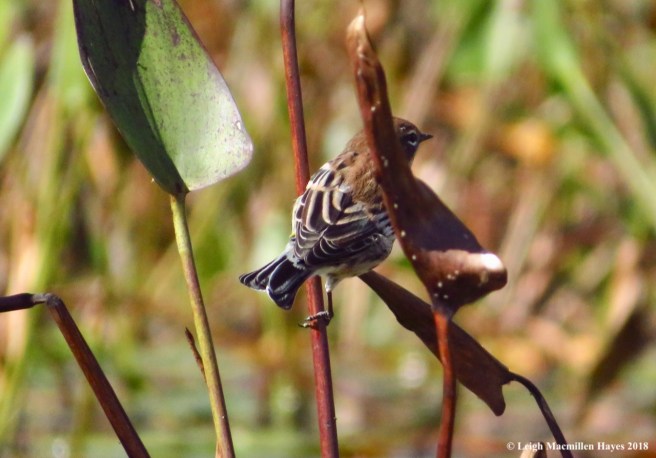
And so did the young Yellow-rumped Warblers that flew in and out among the Pickerel Weeds.

25-yellow-rumped warbler

They moved in a flock from weeds to the shrubs and back again and a few of us recalled the thicker than thick mosquito population we’ve encountered at the bog in the past, but exalted the insects because of the birds they feed. Today, we were mosquito free and thankful for that. The birds seemed to find what they needed to sustain them. There are still plenty of insects about, just not bothersome ones.

30-pulling boats out

Three hours later, we found our way back to the launch site and once again helped each other stabilize boats and bodies and then carry the boats and gear back to the vehicles. Our journey together had ended, but . . . we had all chatted with a variety of people and left with smiles on our faces and in our hearts for the morning we’d spent together.

29-layers

We’d connected in the most beautiful setting thanks to everyone’s effort of choosing to celebrate Great Maine Outdoor Weekend.

For help making those connections, thank you Jesse Wright of USVLT for initiating this paddle with me so many moons ago, and to Trisha Beringer of USVLT for the time we shared walking and paddling in preparation, as well as taking the lead on the sign-up process, and to Erika Rowland of USVLT for transporting boats, taking up the lead when Trisha got sick, and being flexible along the way.

What a great day and great way to spend time outdoors in Maine.


Summer Marches On

Today I attended a celebratory parade.

0-Subtle colors

The route followed the old course of a local river and along the way the trees stood in formation, some showing off their bright new coats.

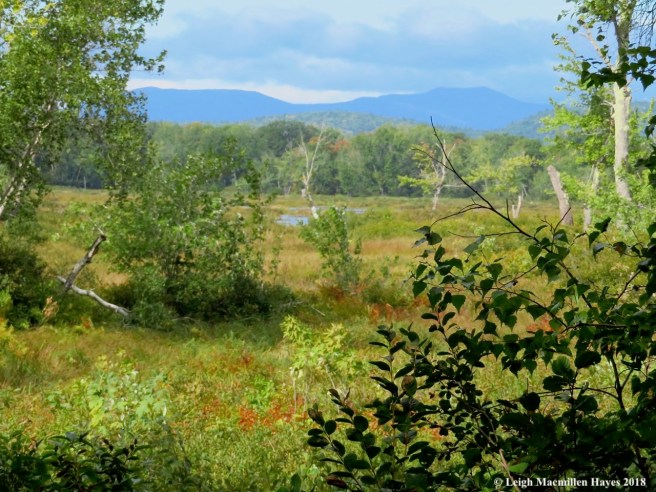
5-colors in the field

Each float offered a different representation of the theme: transition.

3-ash seed raining

Upon some floats, seeds from the Ash rustled as they prepared to rain upon the ground like candy tossed into the gathered crowd.

4-crystalline tube gall on red oak

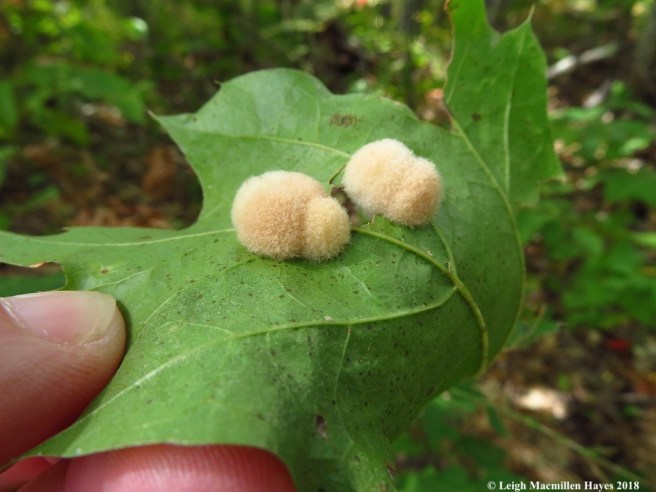
Oak leaves showed off their pompoms of choice–some being crystalline tube galls and others . . .

19-hedgehog gall?

possibly called hedgehog.

8-bald-faced hornet

Playing their instruments were the Bald-faced Hornets,

9-autumn meadowhawk

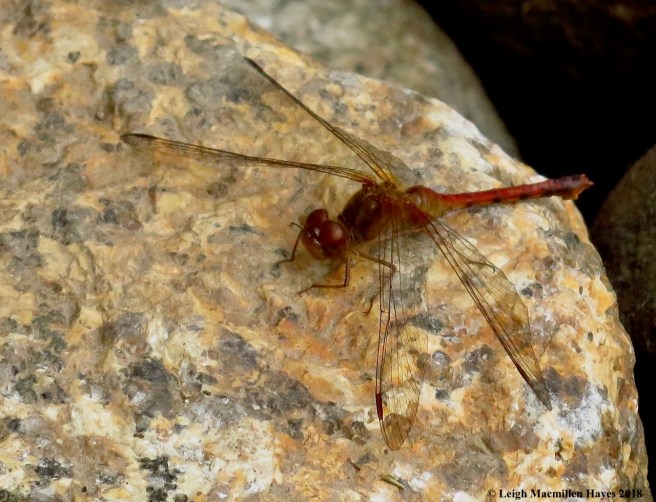
Autumn Meadowhawk Dragonflies,

11-immature green stink bug

and even an immature Green Stink Bugs.

10-green frog

On the percussion instruments at the back of the band were the green and . . .

23-pickerel frog

pickerel frogs.

15-yellow-rumped warbler

Adding a few fainter notes were a couple of Yellow-rumped Warblers.

16-yellow-rumped warbler

They didn’t want the chickadees to get all the credit for the songs of the woods.

17-hairy woodpecker

A Hairy Woodpecker also tapped a view beats.

12-wood ducks

Probably my favorite musicians, however, sported their traditional parade attire and awed those watching from the bandstand.

13-wood duck

Even a non-breeding male made the scene look like a painting.

14-wood ducks taking off

Their real contribution, though, came from the modestly plumaged females who offered a squealing “oo-eek, oo-eek”  each time they took flight.

18-sensitive fern

Though green attire was the most prominent of the day, others sported colors of change from yellows and browns to . . .

6-red emerging

brilliant reds.

21-Brigadoon

As is often the case along such a route, vendors offered works of art for sale, including local scenes painted with watercolors.

22-lily reflection and aquatic aphids

Before it was over, a lone lily danced on the water and offered one last reflection.

24-season transformation

And then summer marched on . . . into autumn.

Queen of the Butterflies

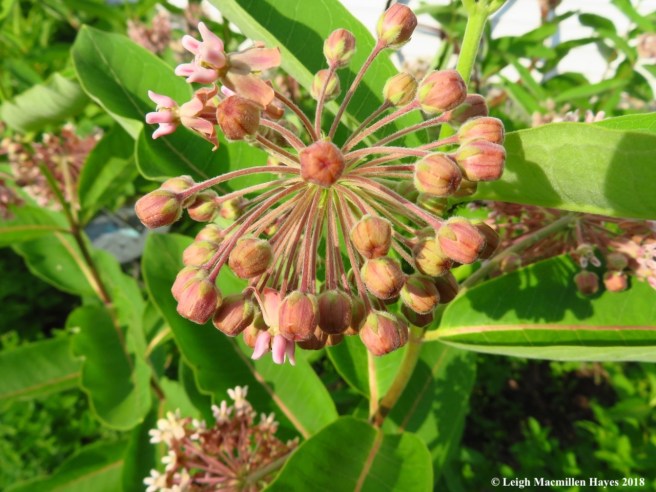
At the beginning of July, the Common Milkweed that I’m allowing to grow more abundantly in my herb garden began to blossom, its hypnotic scent filling the air with an almost honey-like fragrance.

m1a-milkweed flowers

Being close to the Fourth of July in its blooming, the milkweed’s formation reminded me of the fireworks that filled the sky over and over again. I only wish those had been as silent as the milkweed.

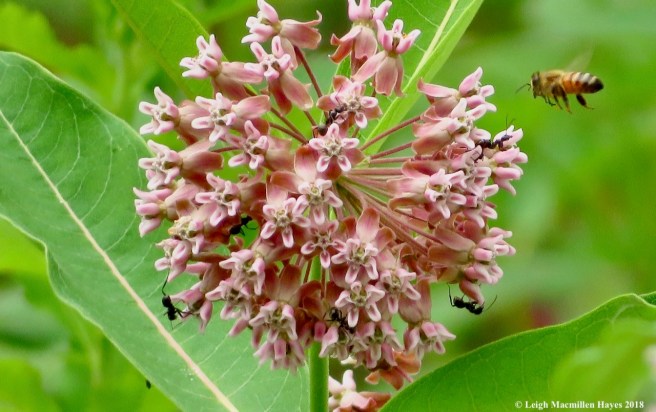
m2-ants and honeybees

Then again, it was hardly silent or unnoticed for the bees and ants sought the sugary nectar stored in the shell-shaped structures.

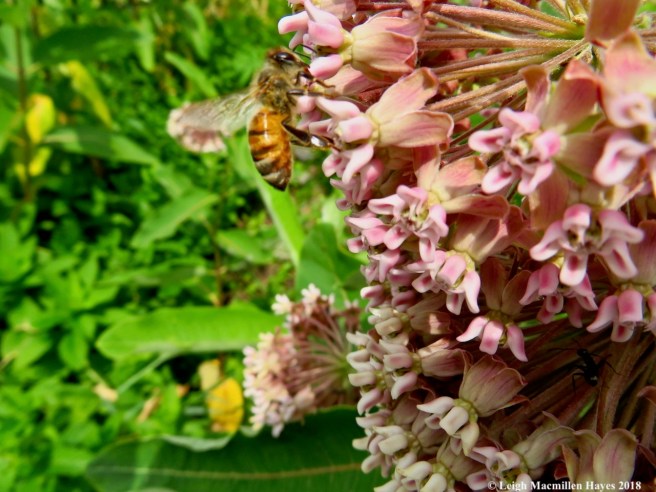
m4-honeybee

So few honeybees have I seen all summer, but as long as the milkweed was in bloom, I noticed four of them probing for the goodness hidden within.

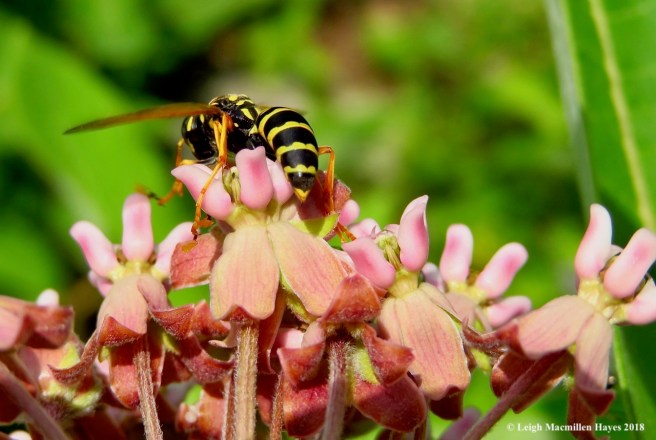
m8-wasp

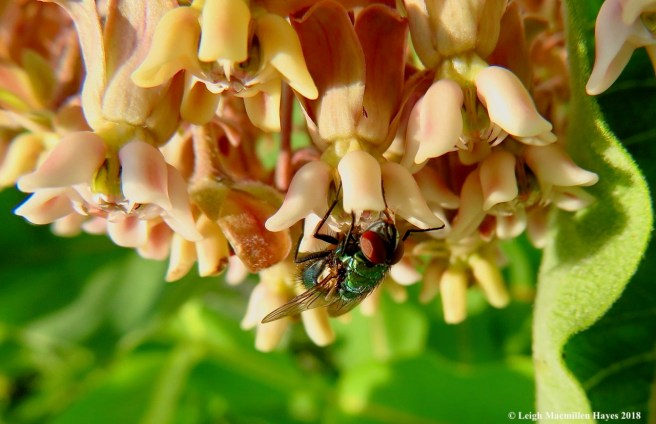
Visitors were from every ilk, some with striped bodies,

m9-tachinid fly

and others covered in spiky hairs.

m7-skipper

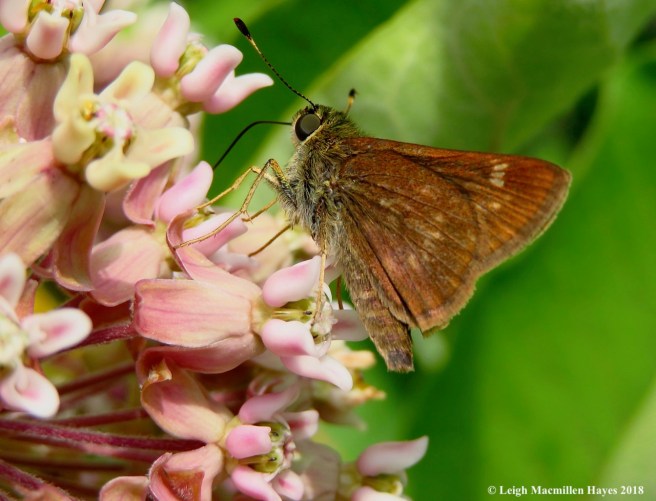
The pollinators included skippers . . .

m1-swallowtail butterfly

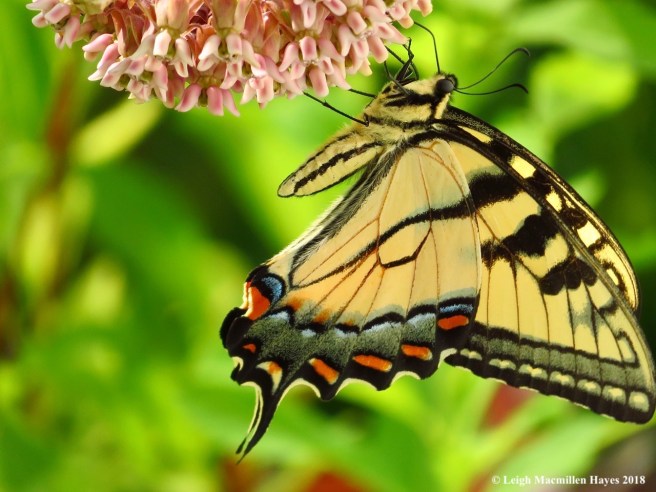
and swallowtails.

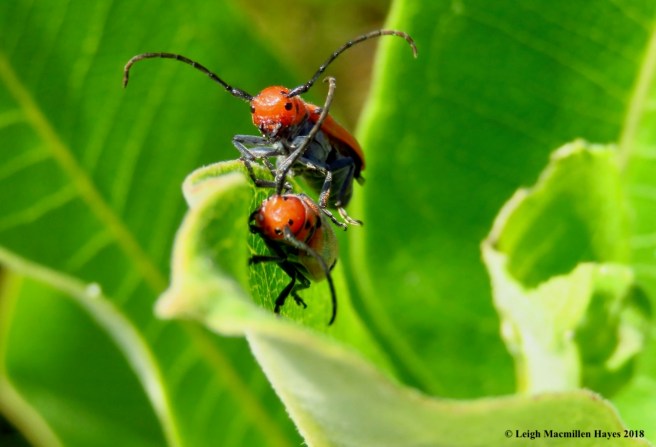
m5-red milkweed beetle and ant

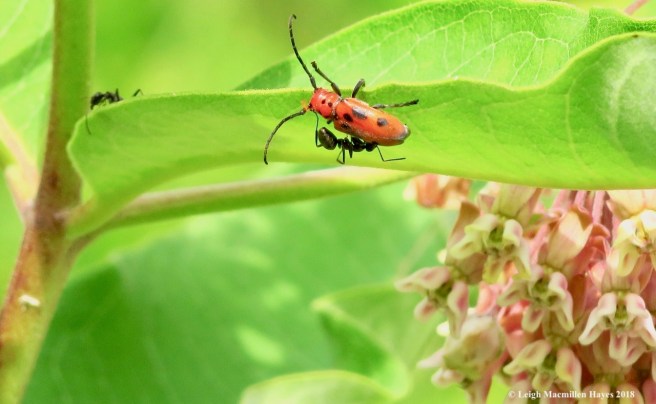
Upon the plants’ leaves were Red Milkweed Beetles, this one being checked out by an ant. The bright red coloration announced the beetle’s distastefulness for he’s one of the few insects that can feed on the leaves of milkweed, store the plant’s defense chemicals and assure that he won’t be consumed.

m6-ant climbs over red milkweed beetle

The ant apparently discovered the beetle wasn’t worth dealing with and so climbed over it and moved on. Or maybe the beetle had accidentally rubbed against some nectar and the ant was attracted to it–for all of a second.

m10-honeybee

The milkweed flowers in my garden began to die back, but this week I discovered another place where they grow abundantly. And at least one honeybee recognized the same.

m17-red milkweed beetles

As did more long-horned Red Milkweed Beetles, and now rather than finding only one, I’ve noticed there often appear to be two working in unison to ensure a continuation of their species.

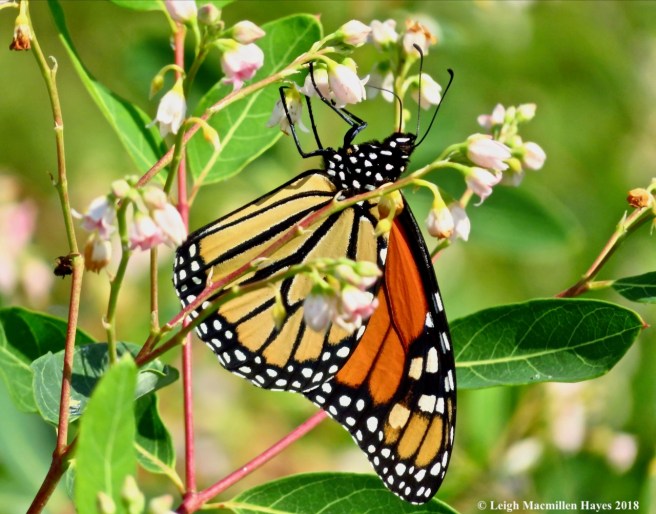
m15-monarch on dogbane


And much to my delight, I spotted sipping nectar from the Spreading Dogbane that grows beside the milkweed, a Monarch Butterfly.

m14-monarchs fluttering

And it wasn’t just one Monarch. I can’t say how many I saw in total, but I watched them for a while as they floated over the meadow flowers in their flap, flap . . .

m21-monarch and shadow

glide routine, sometimes chasing each other or their own shadow before alighting.

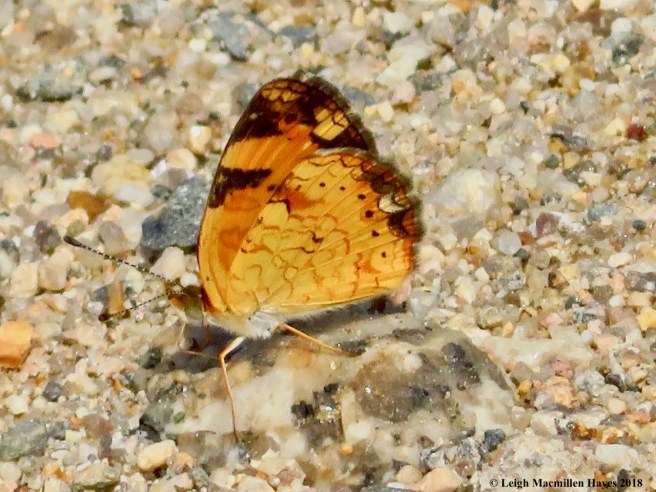
m13-monarch puddling

Like the Clouded Sulphurs I noticed the other day, the Monarchs too sought nutrients from the gravel road, their mouthparts, aka proboscises, extended in search of minerals.

m22-probiscus curled

When not in use, the tubular and flexible straw that serves as a mouth curled inward, retracted as it would be during flight.

m16-viceroy butterfly

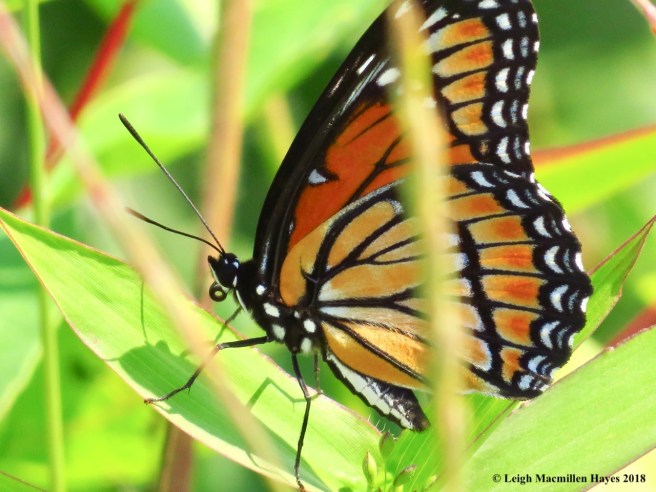
Also in the area, because it too likes the nectar of the milkweeds and other flowers offering a sweet meal, was the Monarch mimic, a Viceroy. The differences between the two: Viceroys have a wing span of about 2-3 inches, while Monarchs’ span is 3-4. And Viceroys have a black horizontal stripe that crosses near the bottom of its back wings. Well, actually, it looks more diagonal. And really, who came first? The Monarch or the Viceroy?

m19-silvery checkerspot butterfly

Also present because it too feeds on native milkweeds, a few small Silvery Checkerspot Butterflies, their wing span less than two inches.

m20-silvery checkerspot butterfly

And they also sought those road nutrients, so suffice it to say, its a butterfly habit . . . at least in this neck of the woods.

m24-milweed tussock moth caterpillars

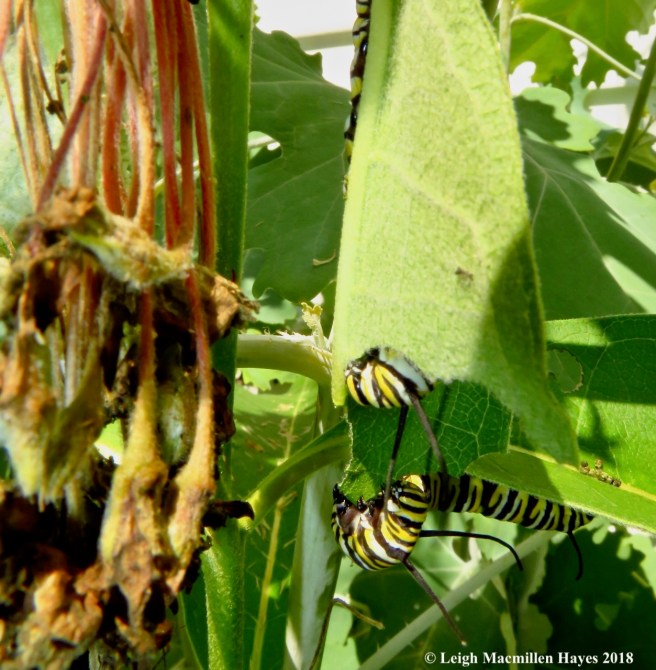
I had to eventually leave the road and meadow behind and run home to grab something, which meant an opportunity to check on my milkweed plants. Those in the kitchen garden hosted some Red Milkweed Beetles, but that was the most interesting thing I saw, besides the fact that the dried flowers were transforming into warty green seedpods. But by the front door, where more milkweed grows, I noticed first a pile of caterpillar scat on a leaf. Getting down on my knees to look underneath, I spotted a mature Milkweed Tussock Moth and its larvae feeding.

m24-tiny monarch caterpillar

And then my heart was still, for I found a tiny Monarch caterpillar.

m25-adult monarch caterpillar

And near it, one that had been very hungry and seemed to have stopped eating. I can’t wait to check again and see if it’s still there–only in a transformed stage.

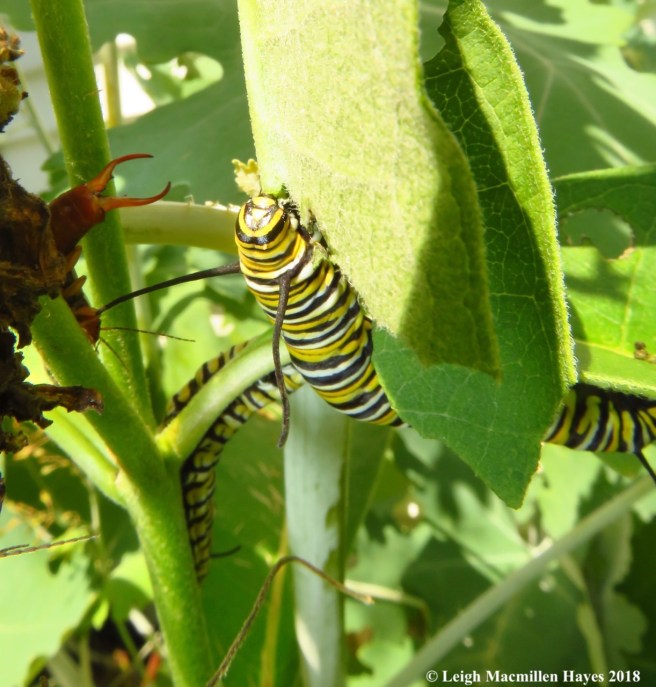
m26-two monarch caterpillars

As I continued to look, there were more, these two clearly munching away.

m29-munching leaves like an ear of corn

They reminded me of humans eating corn on the cob for it seemed they moved back and forth as they chomped on the plant’s leaves. Monarchs, and other butterflies that feed on the green leaves in their caterpillar form, are like the Red Milkweed Beetle in that they can tolerate the chemicals and it makes them not tasty to predators.

m27-medium-sized monarch caterpillar

Everywhere I looked, I began to see Monarch caterpillars in various stages of growth.

m30-probiscus curlced

My hope is that I’ll discover chrysalises as I continue to search and eventually our yard and flower gardens and the field beyond will be full of the queen of the butterflies:  Monarchs.


From the Ground Up

“I am the Alpha and the Omega, the Beginning and the End, the First and the Last . . . The end of a beginning . . . A new beginning . . .” So began Bishop Chilton Knudsen’s sermon shared with over 170 parishioners and guests who attended the Dedication and Consecration of St. Peter’s Episcopal Church in Bridgton on Sunday, June 1, 2008.

Standing behind the pulpit in a site line between the entrance to the sanctuary, altar, cross and a circular pane that provided a window on God through the movement of the trees, wind and sun, Bishop Knudsen reminded us, as our rector, the Rt. Reverend John H. Smith, retired Bishop of West Virginia, had done previously, that the new building was just that — a building. She encouraged us not to get so caught up in the building that we lose sight of our mission of outreach to each other, our communities and the greater world.

St. Peter’s Episcopal Church began as a summer mission in 1962. On September 8, 1974, St. Peter’s-by-the-Lake held its first service of extended ministry. Though it did not have a home of its own, the church provided an Episcopal presence to summer and year-round residents of the Lakes Region by meeting in various locations including people’s homes, Bridgton Academy, and local churches of different denominations. In 2003, the parish voted to purchase a ten-acre lot at the junction of Routes 302 and 93, one mile west of downtown Bridgton.

After renting space for all those years, in 2007, church members enthusiastically supported a capital campaign; through gifts and pledges the full amount of the building cost was raised. Under the leadership of parishioner Beatrice White, a building committee was formed. The Vestry engaged the services of William Whited, Architect, to design a building that would be both beautiful and affordable.
S2-BISHOP KNUDSON BREAKS GROUND

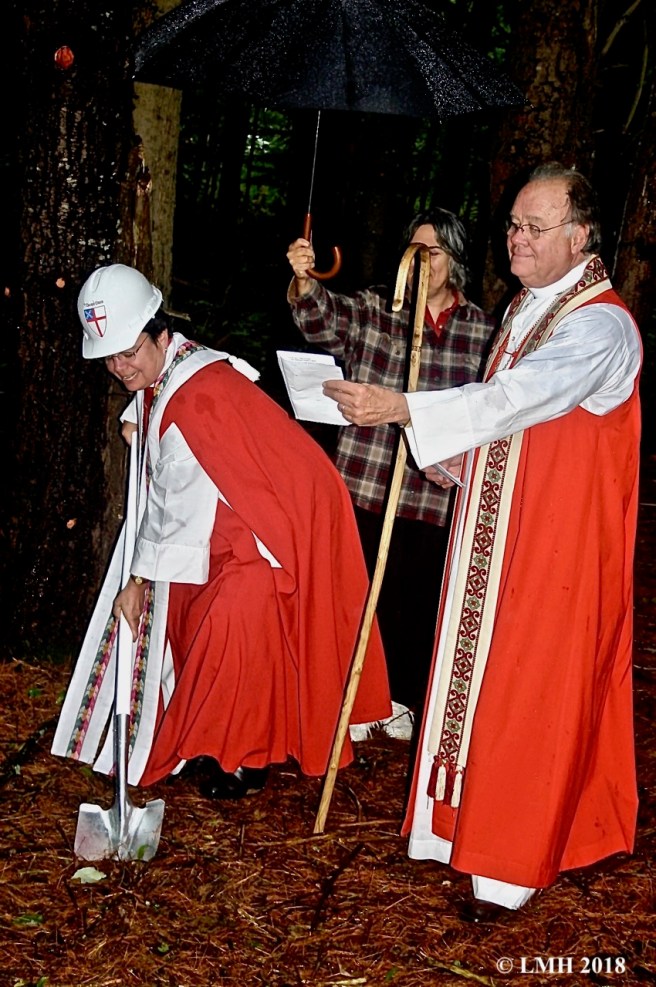
On September 15, 2007, Bishop Knudsen, donning a hardhat decorated with the Episcopal shield, dodged raindrops as she helped break ground.
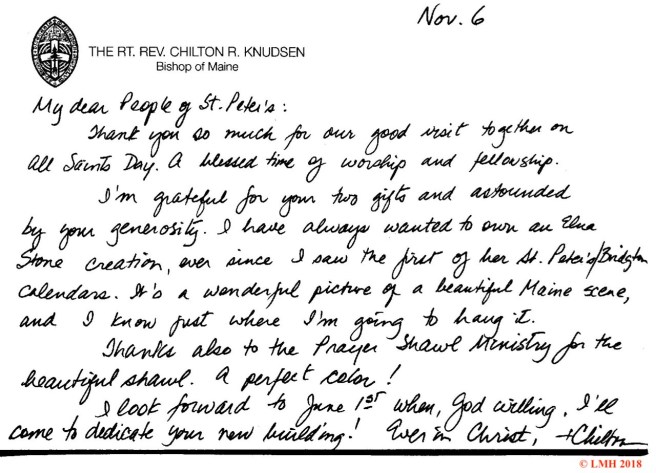
S2A-LETTER FROM BISHOP KNUDSON

Following that initial groundbreaking, parishioners met at the site the first Sunday of each month for prayers and hymns. Rain . . . snow . . . mud . . . the weather presented a few obstacles, but the project proceeded in spite of it.
S3-CHURCH TAKES SHAPE

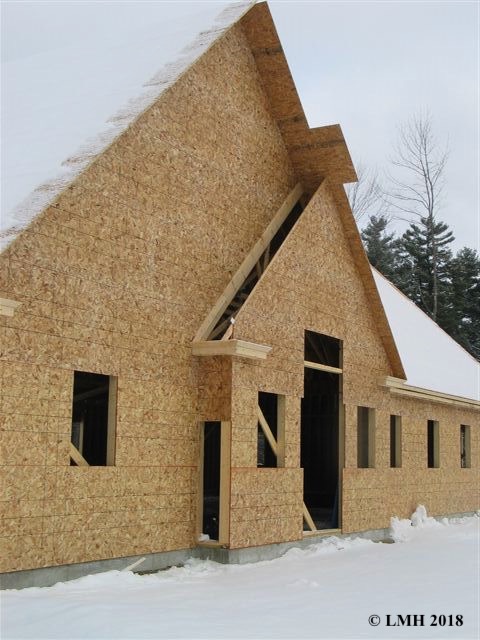
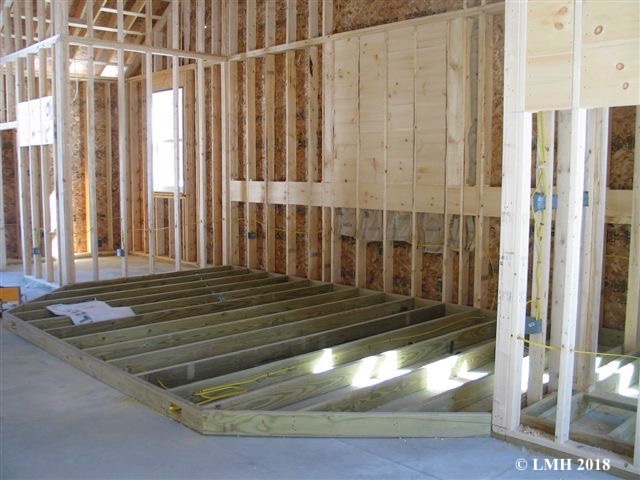
Over time, the building began to take shape.
S4-WINTER

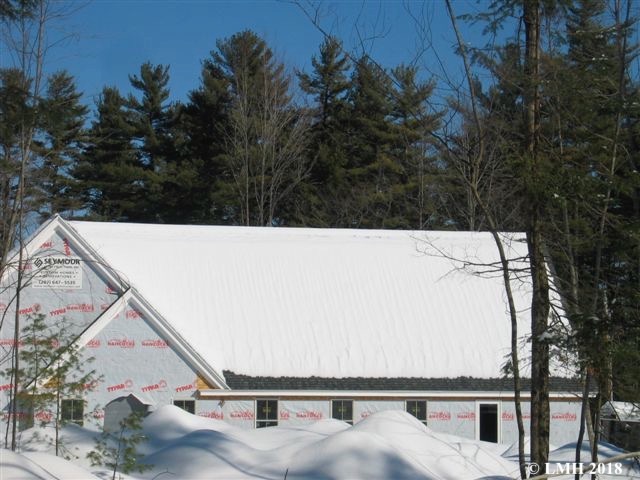
With the advent of winter, it was wrapped in Typar . . and continued prayers.
S5-ALTAR

Within, the altar found its formation.

As parishioners, we watched it grow into a structure for worship and fellowship. Upon entering the church for the first service on May 25, 2008, one word was expressed over and over again, “Wow!”

S6-NEW CHURCH DEDICATION

For St. Peter’s, the Dedication and Consecration of the building on June 1st was the culmination of years of discussions, planning, being amazed at fund raising miracles and working together to reach a goal. That grand and meaningful worship service is one that many people never experience unless they build a new church. Using the service of Dedication and Consecration as outlined in The Book of Common Prayer, Bishop Knudsen knocked her crosier and called for the doors to be opened. Gregg Seymour, General Contractor, opened the door and handed the Bishop a hammer as a symbol of his work. Beatrice White presented the building blueprints while Junior Warden Eric Wissmann gave the Bishop a set of purple building keys. A procession including the Bishops of Maine, our rector, a deacon, verger, wardens, crucifer, taperers, parishioners and guests flowed through the narthex into the simple, yet beautiful sanctuary. Following prayers for the building, the Bishop moved about the church and consecrated the baptismal table and bowl, cross above the altar, lectern/pulpit, hangings and parish banner, tapers, piano, kitchen, classrooms and offices, narthex table, credence table, altar shelf, fair linen, and other special gifts. She then celebrated the Holy Eucharist, assisted by the Reverend Christine Bennett, Deacon, and George Wright, Verger. The Eucharistic Bread was baked and offered by the “SPY” group, Saint Peter’s Youth. During Holy Communion, the choir sang “Jesu, Jesu,” accompanied by Evan Miller, Director of Music. Following the service, the parish continued the celebration indoors and out with a reception and pot-luck dinner. 
S7-CHURCH TODAY

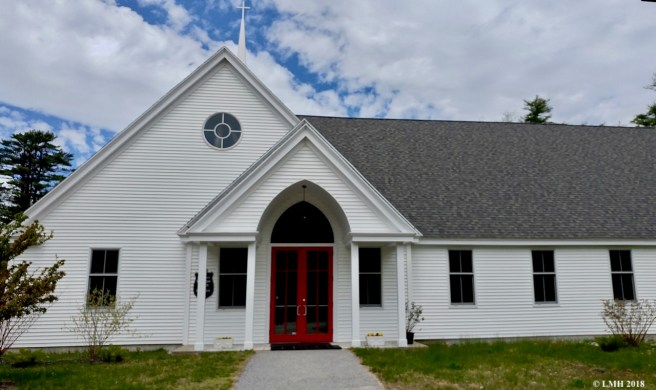
Fast forward and the parishioners are now preparing for Bishop Steven Lane to visit next week and celebrate the tenth anniversary of St. Peter’s. In all that time, so much has changed . . . including the land. And so this afternoon I spent some time wandering around the grounds in quiet reflection of the people and the place. No, not the church building, though I continue to appreciate its simplicity and still love to gaze out the circular window above the altar.

S8-ANTS ON DANDELIONS

Today, however, I wanted to note all the other species that have gathered here, including the ants seeking nectar. Have you ever gotten as close to a dandelion as an ant or bee might? Did you know that each ray has five “teeth” representing a petal and forms a single floret. Fully open, the bloom is a composite of numerous florets. And equally amazing is that each stigma splits in two and curls.
S9-DANDELION SPREADING THE SEEDS

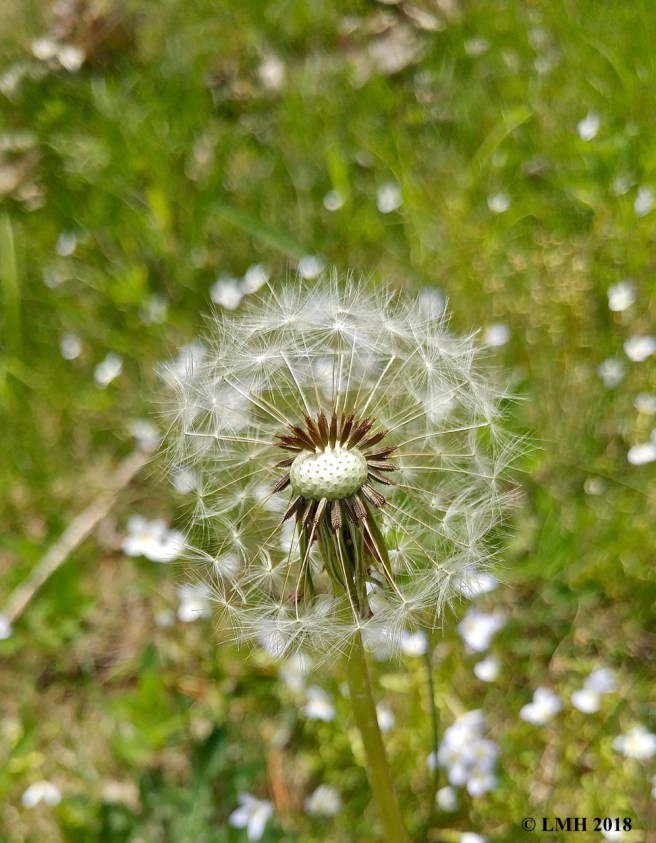
Of course, if you are going to admire a dandelion in flower, you should be equally wowed as it continues its journey. At the base of each floret grows a seed covered with tiny spikes that probably help it stick to the ground eventually. In time, the bloom closes up and turns into those fluffy balls waiting for us or the wind to disperse the seeds, rather like the work of the church. Until then, they look like a spray of fireworks at our feet.

S10-MEMORIAL GARDEN

My wandering led to the Memorial Garden where parishioners with greener thumbs than mine created a small sanctuary for one who wants to sit and contemplate.
S11-CELTIC CROSS WITH LICHENS

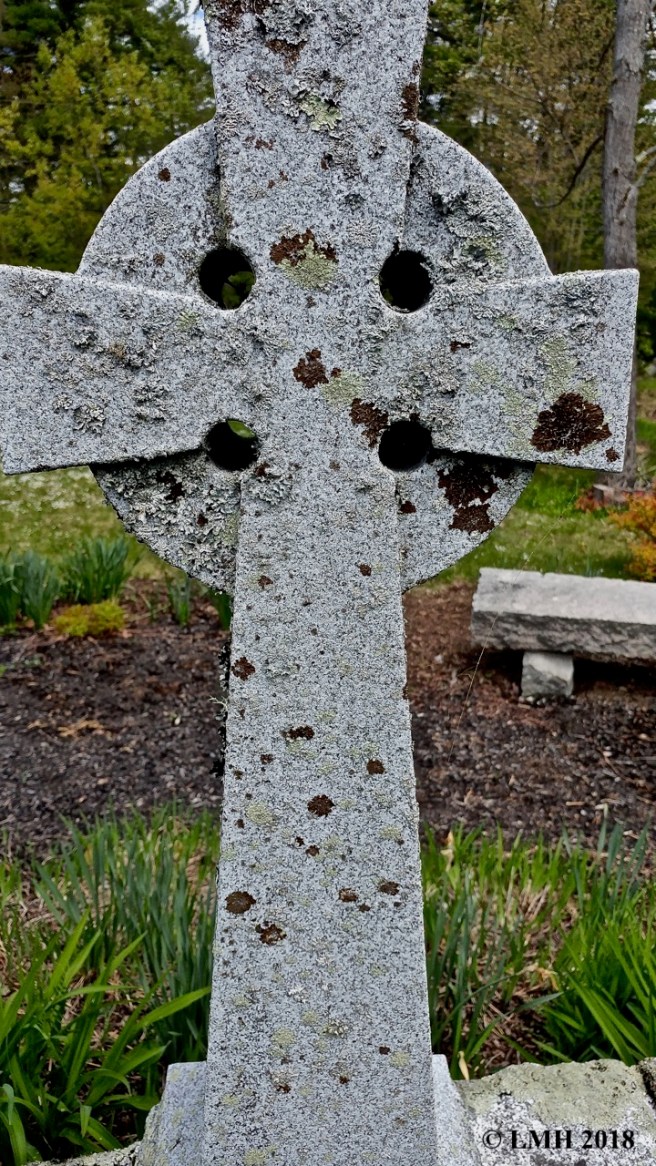
The garden’s center offers a cross depicted in the Celtic tradition. I remember when it was installed as a “clean” piece of granite and realized today that I hadn’t been paying attention, for as is true on any of the surrounding benches, lichens had colonized it, enhancing the circle of life.

S15-GRAY BIRCH

What I really wanted to look at though was the edge where various species spoke of forest succession. I found an abundance of gray birches, one of the first to take root after an area has been disturbed. It’s always easy to spy once you recognize its leaf’s triangular form, which reminded me of Father Dan Warren’s demonstration this morning about the Trinity.

S12-PAPER BIRCH LEAVES

Nearby grew an already established paper birch, its leaf more oval in shape.

S13- QUAKING ASPEN

Then I couldn’t help it and my tree fetish took over. Quaking or trembling aspen showed off its small toothed edges, while . . .

S14-BIG TOOTH ASPEN

its young cousin displayed big teeth. Despite its fuzzy spring coating, insects had already started devouring the pubescent leaves. One of my favorite wonders about both big-tooth and quaking aspen leaves is that they dangle from flattened stems or petioles and ripple in a breeze as they send out messages of good tidings.

S16-BEECH LEAVES

Also along the edge I found a beech tree donning huge leaves that looked like they were in great shape . . . momentarily.

S17-VERY HUNGRY CATERPILLAR

For on the backside, a very hungry caterpillar had been dining on its own form of the Bread of Life.

S17A-FLOWERING DOGWOOD

I found two other young trees that I suspected were planted within the last ten years–the first: flowering dogwood. Growing up in Connecticut, we had a large one in the side yard and so memories of times long ago intermingled with those of the more recent past and my home church, Zion Episcopal, entered into my reflections.
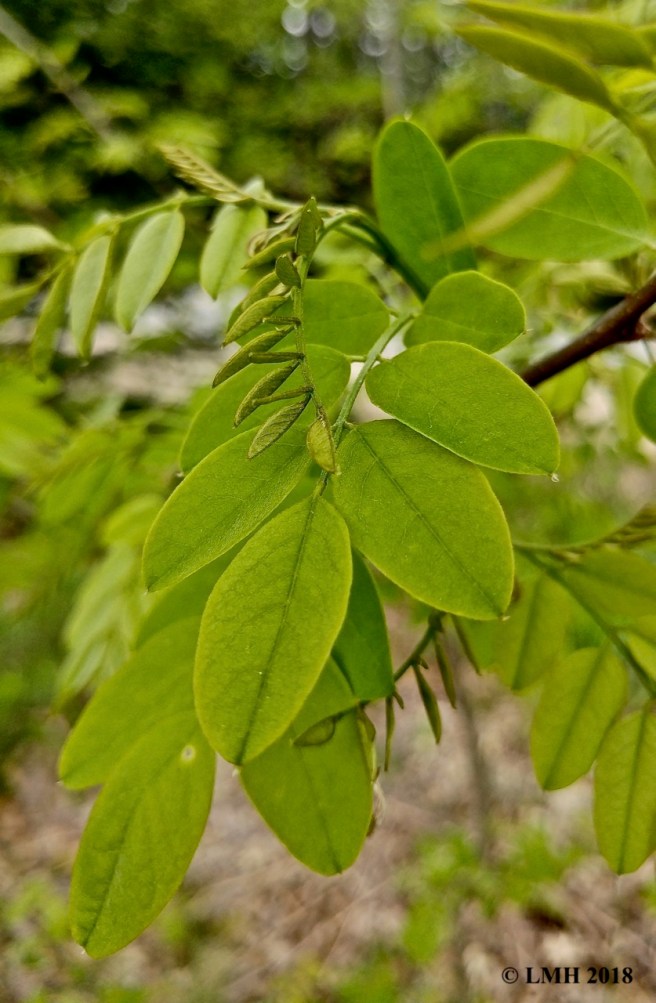
S17B-LOCUST

Like the dogwood, we also had a mature locust looming tall near my mother’s garden. Spying this one, I gave thanks for the ability to span the years, travel many routes, and remain faithful to my beginnings.

S22A-SWEET FERN

Slowly my eyes shifted downward . . . and fell upon a most pleasing sight–sweet-fern. It’s one of those, like hobblebush, that wows the eye in any season.
S18- WILD STRAWBERRY FLOWER

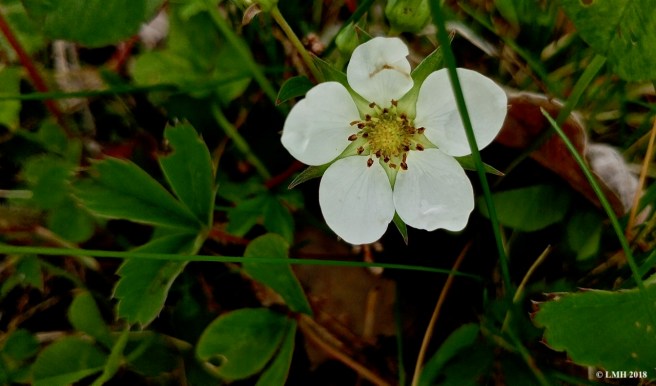
And then I turned my focus to the ground where an incredible variety of flowers either in bloom or still to come, mosses and grasses all shared the common space in seeming harmony, though I suspected there were those that crowded out others. Patches of wild strawberries graced the carpet. Five petals surrounded about twenty stamens and soon a fruit may form–meant to sustain small mammals and birds.

S21-FRINGED POLYGALA

Gay wings or fringed polygala surprised me with its presence. So delicate, so beautiful, so fleeting.
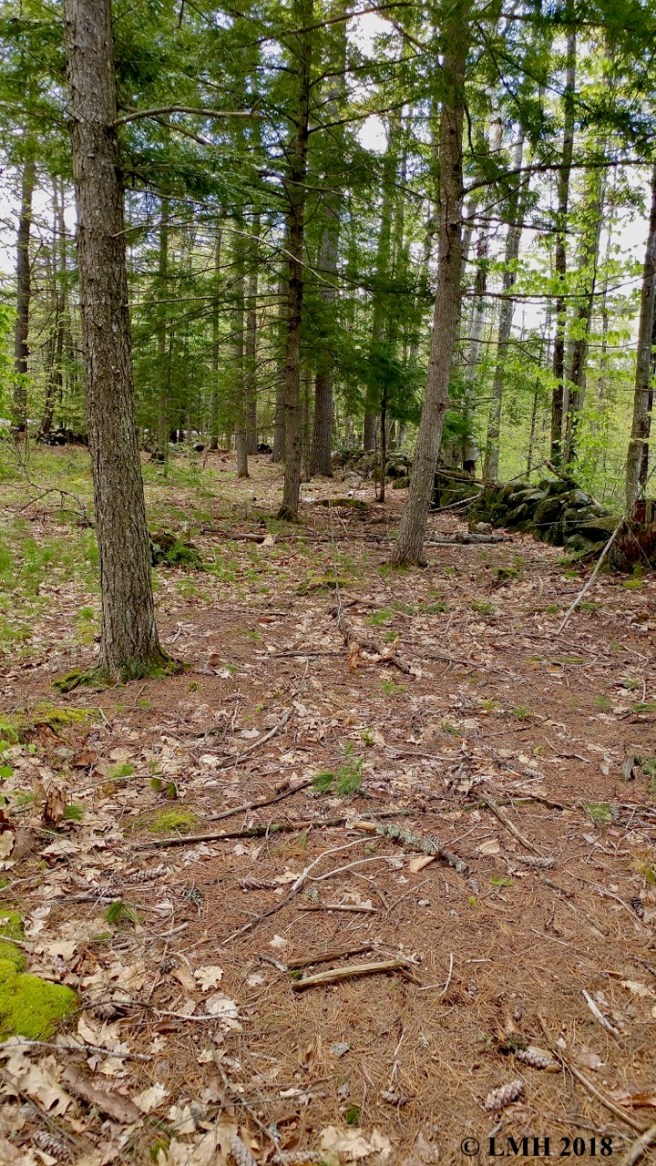
S24-STONE WALLS

I stepped into the woods beyond the edge and was reminded that ten years ago I wanted to create a nature trail on this property–a place where anyone could partake of a short wander away from reality; a place where someone might be nurtured by nature.

S19-STARFLOWER

A place where the stars above would be reflected in the flowers below.

S20-DWARF GINSENG

A place where flowers like dwarfed ginseng would erase global issues–if only for a moment.
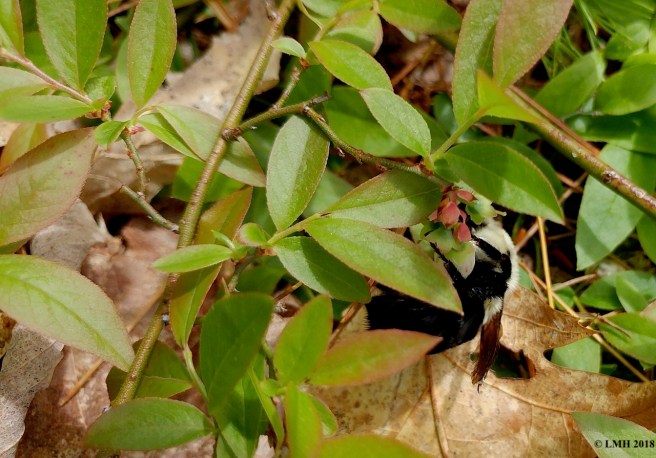
S23-GIANT BUMBLEBEE

A place where everyone recognized the system and from such recognition began to work together toward common goals.
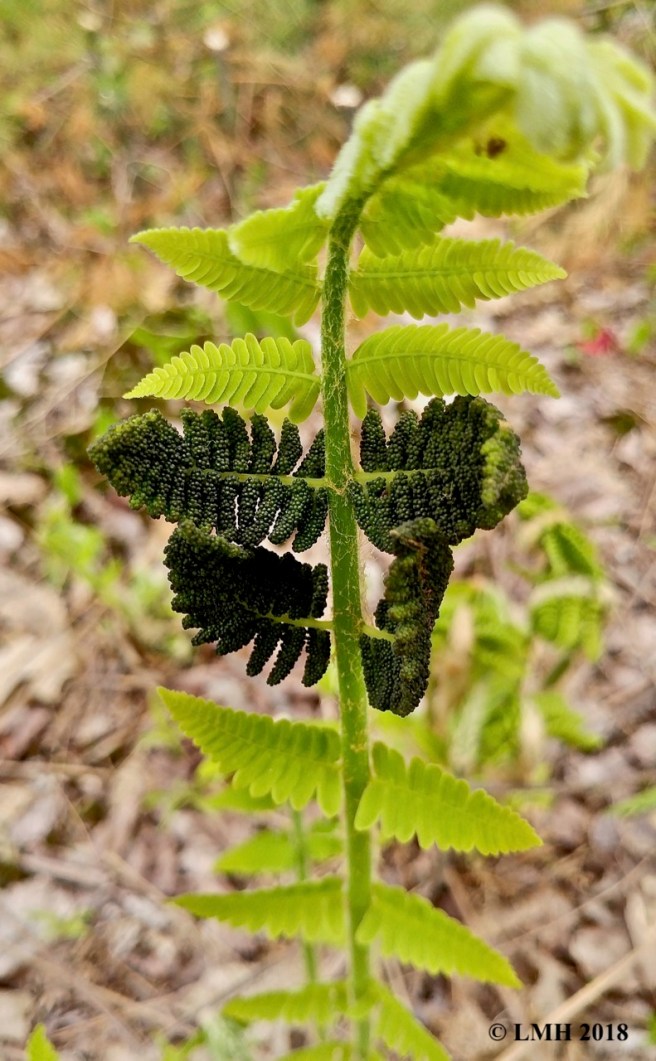
S22-INTERRUPTED FERN

A place where interruptions occurred because life happens, but such were accepted as part of the norm.

S23A-BUMBLEBEE BREAK

A place where one could find a bench upon which to rest before beginning again.

S25-ENTER HERE

Here’s to beginning again St. Peter’s.

Here’s to remembering all those who made this place a reality.

Here’s to maybe someday a nature trail.

Here’s to continuing to create a place where all are welcome whether they pass through the red doors, into the Memorial Garden, or choose to take in the offerings from the ground up.


Dear Earth

Dear Earth,

In your honor, I decided that on this Earth Day I would head out the back door and travel by foot, rather than vehicle.

e1-Mount Washington

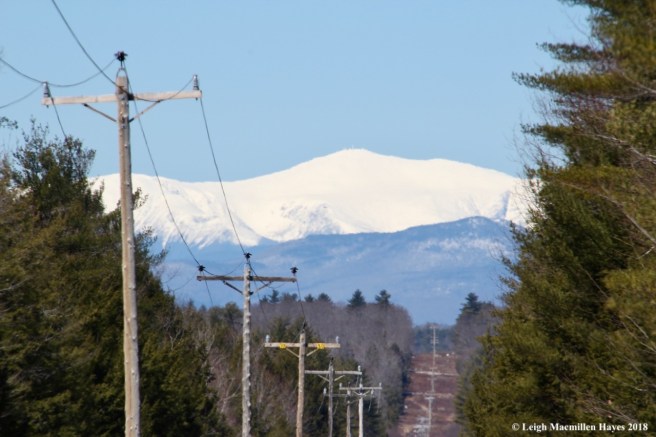
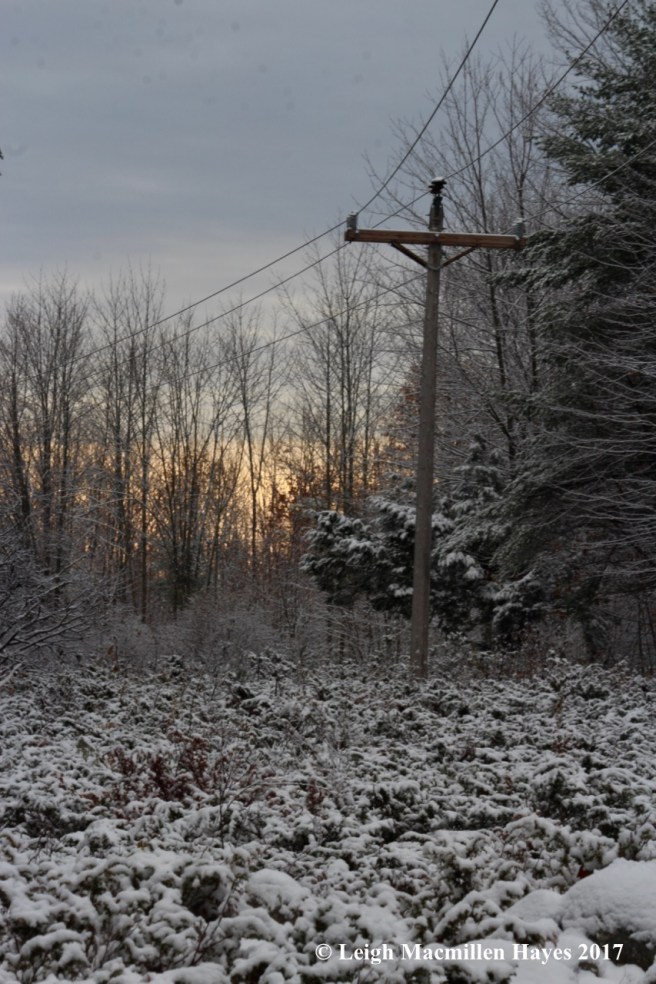
My journey led me down the old cow path to the power line right-of-way and much to my delightful surprise, Mount Washington was on display. It was so clear, that I could even see the outline of buildings and towers at the summit. Thank you for providing such clarity.

e2-vernal pool

Rather than walk to the mountain, I turned in the opposite direction and found my way to the vernal pool, where ice still covered a good portion. You know, Earth, as much as I want this to be a significant vernal pool because it does usually have two qualifiers (and only needs one): more than forty wood frog egg masses or more than twenty spotted salamander egg masses, I know that it is not. I believe it was created as part of the farm based on the rocks at the far end, not exactly forming a retaining wall, but still situated so close together in a way that I haven’t found anywhere else in my extensive journeys of the hundreds of acres behind our house. Plus, it dries up much too quickly to be a natural pool. And each year I’m surprised to find wood frogs, their egg masses, spotted salamander spermatophores, and their egg masses, given that the water evaporates before the tadpoles finish forming. If these species return to their natal vernal pool, Earth, then how can that be since no one actually hopped or walked out as a recently matured adult? Or were these frogs on their way to another pool and they happened upon this one? You know me, Earth–lots of questions as I try to understand you better.

e4-dorsal amplexus

Whatever the answer is, each year you work your magic and on a visit yesterday afternoon, I spied a male wood frog atop a female in what’s known as amplexus, aka, mating. According to Maine Amphibians and Reptiles, edited by Malcolm L. Hunter, Aram J.K. Calhoun, and Mark McCollough, “When mating, the male clings tightly to the females back. Visible contractions of the female’s body signal the onset of oviposition, at which time the male’s hind feet are drawn up close to the female’s vent. As the eggs are expelled, the male releases sperm into the water and strokes the egg mass with his hind feet, which presumably aids in distributing the sperm more evenly.” I looked this morning, but didn’t find any sign of eggs. Don’t worry, Earth, I’ll keep looking because perhaps they were there but hadn’t absorbed water yet.

e5-dead frog

One other thing I saw yesterday that greatly disturbed me was a dead frog in the water. Last year I also found such. My concern is that it was caused by a virus, but perhaps it was old age. Or some other factor. I do have to confess, though, Earth, I intervened and removed the body from the pond. I know, I know, it’s all part of the cycle of life, and I should leave nature to its own devices, but disease was on my mind and I didn’t want others to be affected. I may have been too late. Only time will tell.

e7-leaf variety

When I arrived this morning, I’m happy to report that I didn’t see any dead frogs. For the longest time I stood upon a rock–you know the one I mean, Earth, for you’ve invited me to stand there before. It’s sunny in that spot and the frogs know it well, for that is where they’ll eventually deposit their eggs. As I waited, I looked down at the leaves on the pool’s bottom and noticed how they offered a reflection of the trees above, beech and oak and maple and pine and hemlock. All still displayed their winter colors, but when the pool does dry up, they’ll turn dark brown and form a mat that will provide nutrients for the plants that colonize the area. You’ve got a system, don’t you Earth.

e8-frog 1

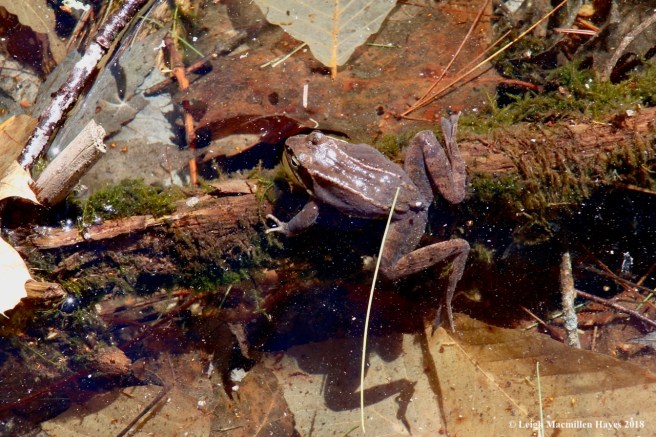
I knew if I stood as still as I could, I would be rewarded. While beech and oak leaves, the last to fall from their trees, danced somersaults across those already on the ground and matted by the past winter’s snow, red and gray squirrels chatted and squawked, and chickadees sold cheeseburgers in their songs, my eyes constantly scanned the pool. And in a flash, a frog emerged from under those leaves.

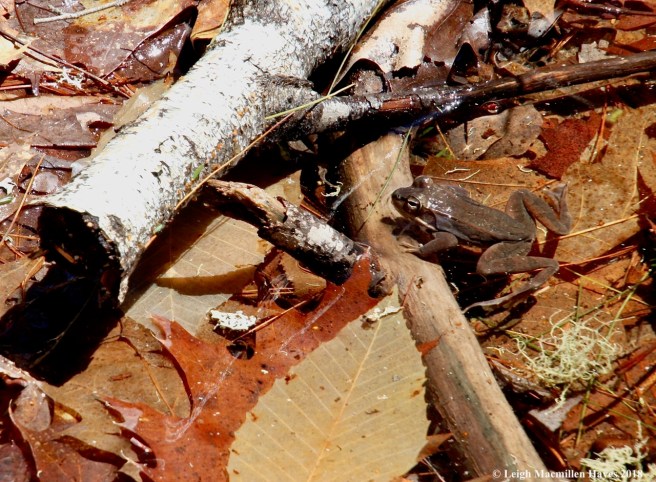
e8-wood frog 1a

For a while he floated, allowing the breeze to push him to and fro within a two square-foot space. But then he decided to climb atop a downed branch. Perhaps he was trying out a calling sight to use once I left.

e9a--wood frog 3

And then, there was another. And after that another. Yesterday I saw a total of six. Today only four. But that doesn’t mean the others weren’t hiding until I left, right Earth? I hope that’s what it meant. One thing you have taught me via the frogs is patience. If I stand still long enough at least one will swim to the surface. And they, too, are patient as they wait: for me to leave; for the gals to come. Well, maybe when the gals do come they aren’t all that patient.

e10-mosquito larvae

I actually returned to the pool a second time today and more of the ice had melted. While in the late morning I couldn’t see any insects on the move, in the early afternoon I eyed thousands of mosquito larvae. Everyone moans about mosquito larvae, Earth, but . . . they provide food for salamanders and the adult form for birds. I’m just trying to look on the bright side.

e11- snowmobile trail

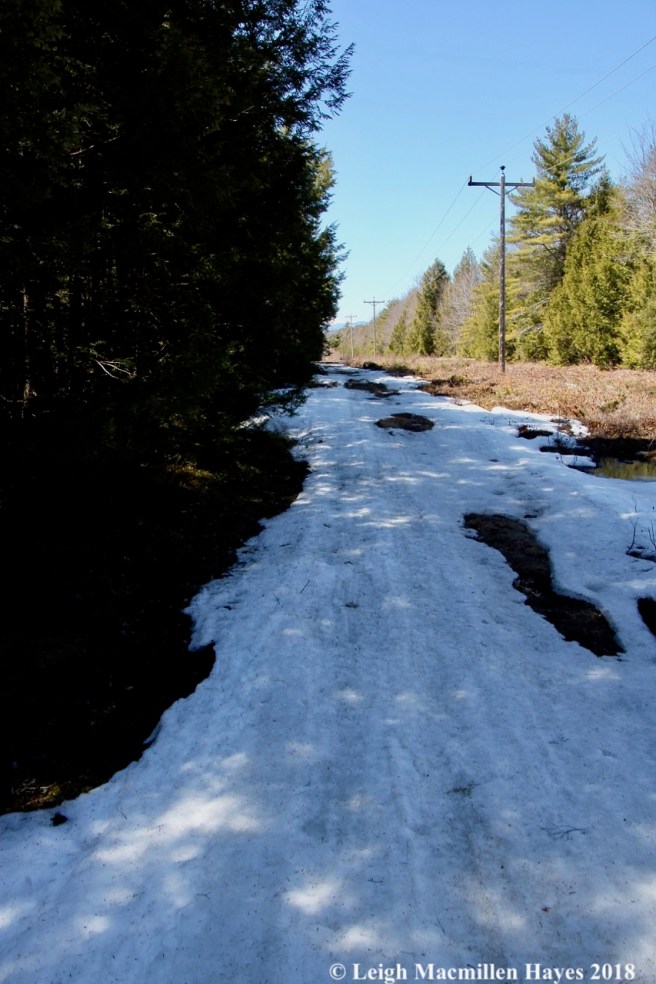
This afternoon, I waited and waited for the frogs to emerge, but either my eyes didn’t key in on them or they decided to wait until I left. So . . . I finally did just that, and did head toward Mount Washington after all, following the snowmobile trail. As you well know, Earth, it was a bit tricky between the snow, soft mud, ruts and rocks exploding from your earth.

e11a-boots

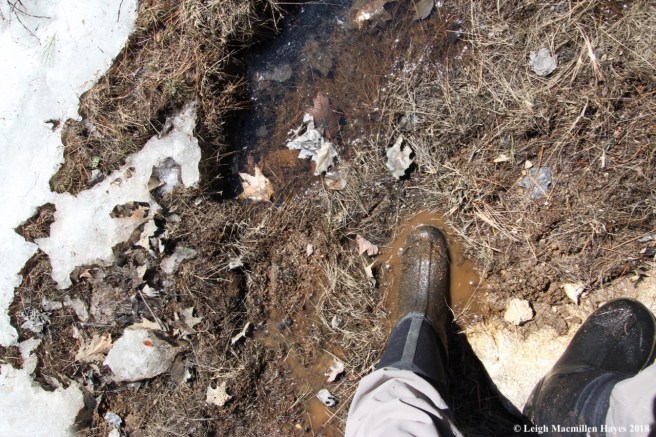
My right foot managed to fall through the icy snow into a hidden rut filled with water that covered my Bog boots. And then my left foot found some mud that squelched with glee. Or was that you squealing with delight, Earth? I had one wet sock, but ventured on.

e11b-Mansion Road

At the junction, I turned to the west, following the log road and remembering the days of yore when my guy and I, as well as neighbor Dick Bennett, used to work up a sweat on a winter day following a snow storm, for it was our duty to you, Earth, to release the snow from your arched gray birch trees. And then, a few years ago, the road became the main route to the timber landing/staging area again, and all of those trees we’d worked so hard to protect year after year were cut to make way for machinery. As much as my heart broke, it does give me time to watch forest succession in action, and I gave thanks that you have such a plan in mind.

e14-deer dance

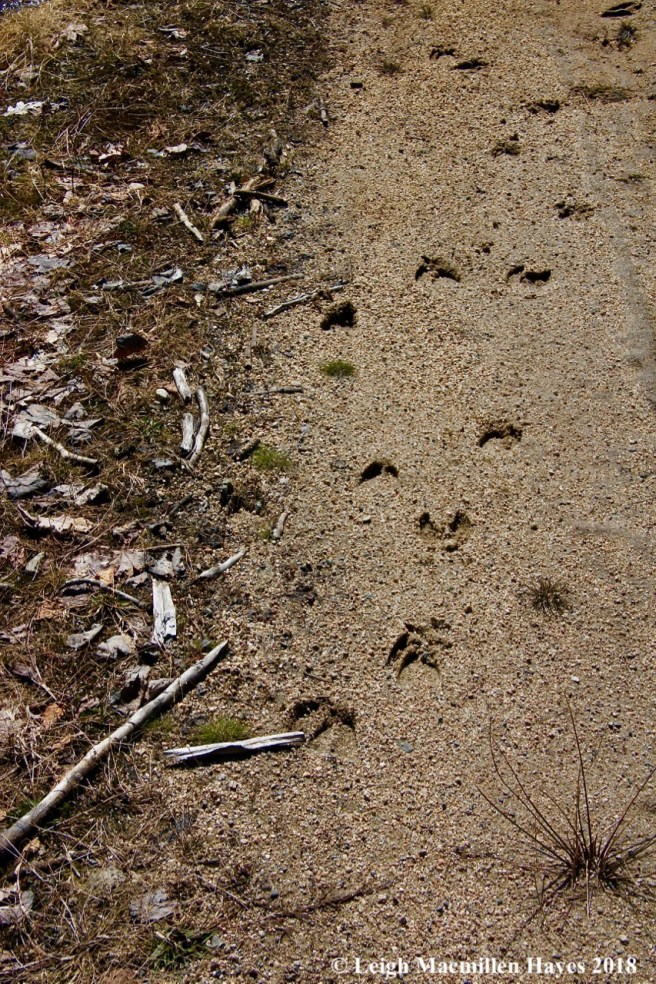
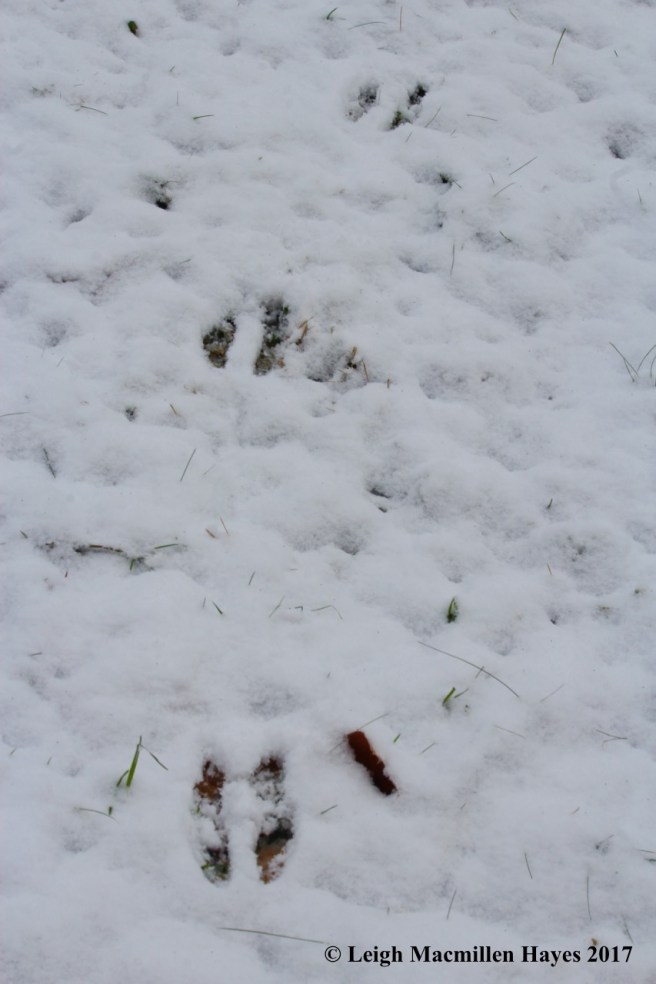
It also provided a blank stage upon which the does danced and left behind their calling cards.

e12-buck

And Buck sashayed each partner across the floor. The deep dew claw marks and cloven toes indicated he’d made quite an impression.

e11c-coyote scat

All along the way, upon raised rocks in the middle of the “road,” coyote and fox scat was prominent and in the sandy surface I also found their prints.

e18-vernal pool near landing

At the left-hand turn that led to the landing, I was surprised when I shouldn’t have been, for suddenly a million “wrucks” filled the air. I knew the water was there but it had slipped my mind. Thank you for the song of many more wood frogs. Thanks for filling my ears with joy.

e15-wood frog egg masses

And the chance to spy their good works. Thankfully, you make sure that life continues. At least in the form of wood frog egg masses.

e17-wood frog egg mass

I loved their gelatinous blob-like structure, all bumpy on the outside they were. Actually, I believe what looked like one mass, was several, but I didn’t dare step in to check and disturb the frogs that hid below.

e16-wood frog 5

Again I stood as still as possible, and again I was rewarded. For a bit I thought that the frog before me had no arms, but then I realized that they were just plastered to its sides.

e19-wood frog under log

A squirrel sounding bigger than itself caught my attention briefly and I turned unexpectedly. When I turned back, the frog was no longer at the water’s surface, but appeared below a downed gray birch. For a while the two of us remained still. I hoped another frog or two or three or three thousand would pop up, but that wasn’t your plan, was it? It’s okay. One was enough.

e21-log landing

I finally left my one, oops, I mean your one frog alone and continued on to the log landing, noting all the mammal tracks and looking for other signs. There was more scat, but I was disappointed not to find bobcat or moose prints. Where were you hiding them? I suspect the moose had moved to the swamp below.

Rather than go much further, for major ruts from the logging equipment were filled with water, I turned around just beyond the landing and headed back across it. Twenty-five years ago it was a much smaller clearing with a few pine trees. Over the years, I’ve watched it change and the mammal activity as well. And then, about five years ago it was converted back to a landing and I can’t wait for it to fill in again, but my desire and your plan are not necessarily the same, are they?

It all seemed like so much destruction, but I had to remind myself that I am part of the equation, with my own needs for power and wood and food and everything that you provide. And cuts do bring about a change, sometimes for the better, for the trees and the mammals and the birds and the plants and the decomposers and the consumers and all who call this place home. Am I convincing you, Earth? Am I convincing myself?

e22-frog 7

As I passed by the lengthy vernal pool again I decided to revisit the egg masses. I stood on the rock and slowly scanned the area. No frogs. On second glance, there was one right beside the rock on which I stood. And it looked like the same one I’d seen previously. I wondered why. Why didn’t I scare it? Was that you, Earth, taking a peek at me?

e23-Mourning Cloak butterfly

I had one more surprise on my journey–the first butterfly of the season, a mourning cloak. With its wings closed, it wasn’t all that attractive.

e24-mourning cloak

But upon opening them, I saw its beauty hidden within–another lesson, eh Earth? Oh, and your sense of humor. For yes, that was coyote scat on which the butterfly sucked as it sought amino acids and other nutrients. A fly also dined. Yum.

What a day, Earth. Your day. Dear Earth Day. May I remember to treat you so dearly every day.

Sincerely,

wondermyway


Brain Share–Naturally

I was thankful I’d thrown my winter coat into the truck for I had a feeling it would be a better choice than a vest given the group I’d be traveling with this morning. And sure enough, though the sun felt warm, a breeze added a chill to the air. Plus, I knew we wouldn’t travel far and would spend much of our time standing around.

r0-life on a rock

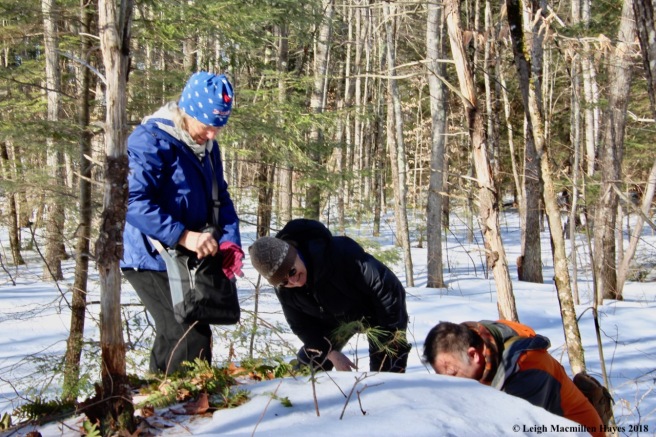
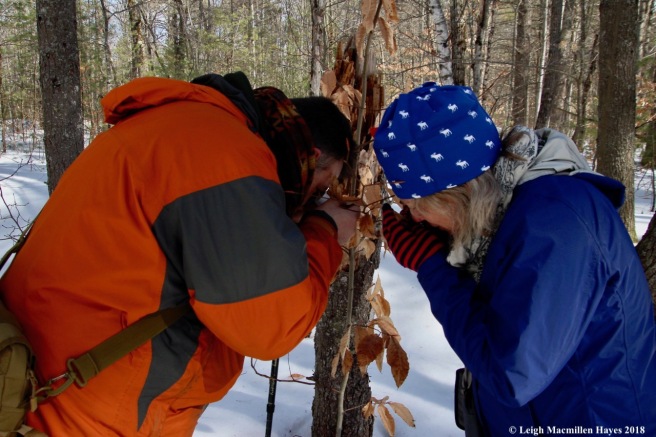
Well, not exactly standing, for as Maine Master Naturalists, we’ve been trained to get down for a closer look. Our first stop–to check out the life on a rock that was revealing itself as the snow slowly melted. Karen is on the left, an Augusta grad, and Sarah and Anthony to her right, both South Paris grads.

r0a-polypody

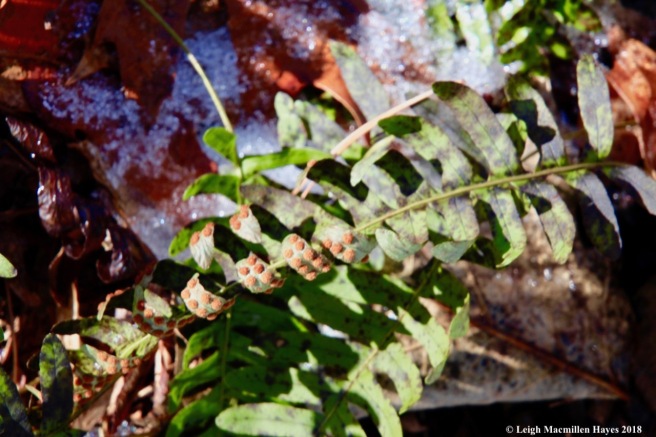
The focus of our attention was common polypody, a fern with leathery leaves and spherical spore clusters on the underside. Rocks are their substrate and they often give a boulder a bad-hair day look.

r1b-speckled alder

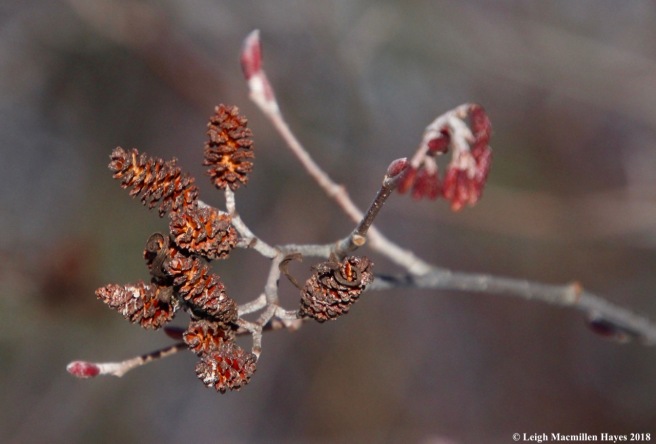
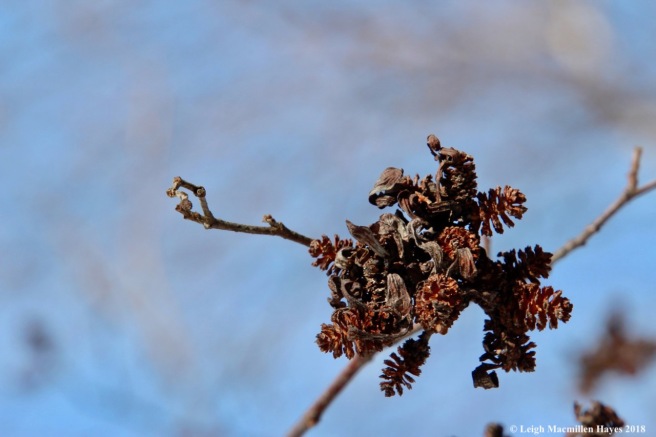
Moseying along, we reached a point where we knew we wanted to spend some time–at a wetland beside one of the Range Ponds (pronounced Rang) at Range Pond State Park in Poland, Maine. Because it likes wet feet, we weren’t surprised to find speckled alder growing there, but what did throw us for a loop was the protrusions extending from last year’s cones.

r1a-speckled alder

It was almost like they had tried to flower atop the cones and all we could think of was an insect creating a gall. Indeed, it appeared that the cones were also experiencing a bad hair day. After a little research, it may be alder tongue gall–resulting from a fungus rather than an insect infecting the female catkins. Apparently, the tongue-like growths are green to begin, but transform to orange, red and finally brown. It was certainly a new one for the four of us.

r2a-leatherleaf and sphagnum moss

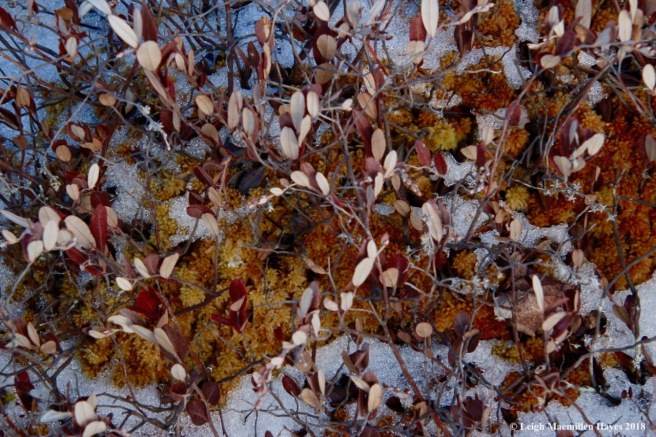
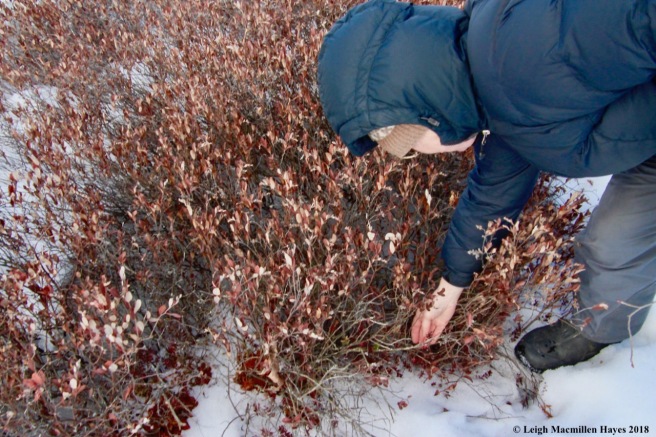
On we moved down to the wetland where the snow surprisingly held us for most of the journey and we didn’t leave behind too many post holes. Leatherleaf and sphagnum moss showed off their winter hues at our feet.

r4-cranberries

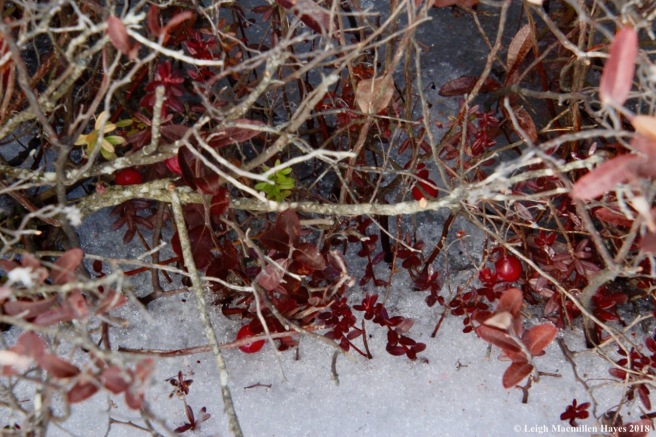
We also spied cranberries hiding underneath.

r3-cranberries among the leatherleaf

And sampled them. A few were tart, while others had fermented.

r1-two lodges

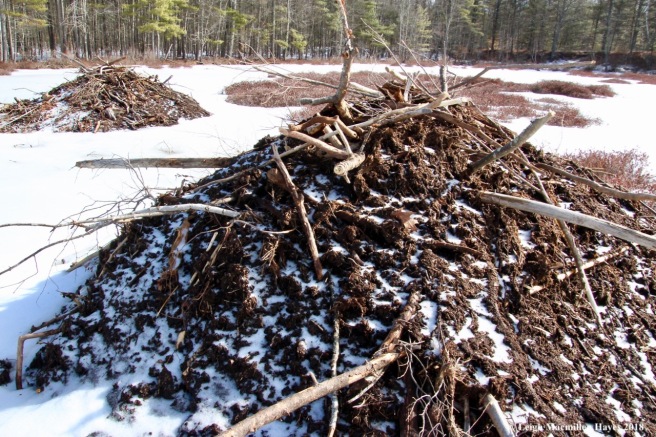
In the middle of the wetland, two well built lodges stood tall. They had fresh wood and had been mudded in the fall. One did look as if the vent hole had been enlarged, so we wondered if anyone still lived there. We heard no noises, but had to assume that we were bothering the residents so we didn’t stay long.

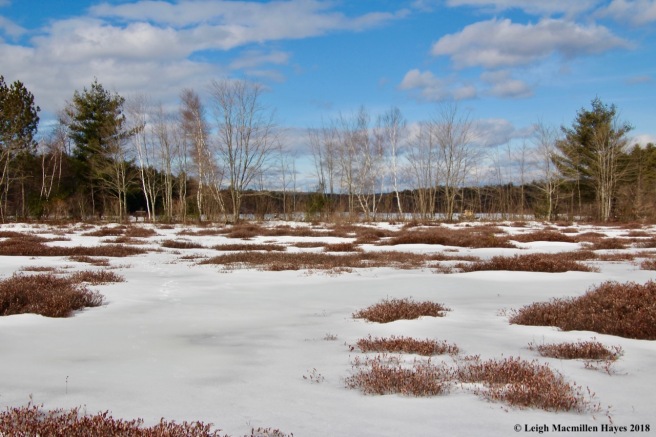
r2-wetland and pond beyond

One last view of the wetland and pond beyond, then we turned and walked toward the opposite side.

r5-bird nest

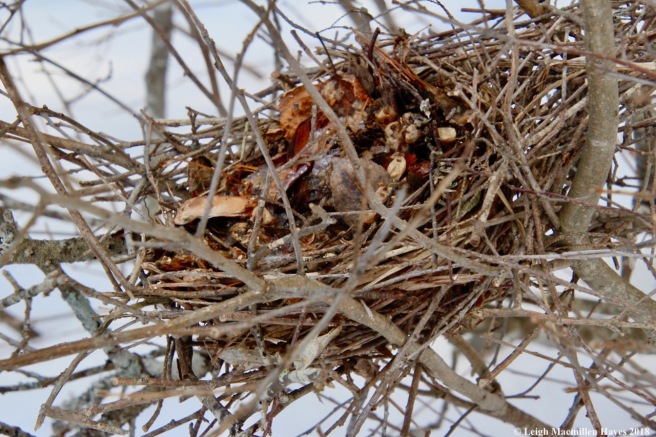
Just before climbing uphill, we spotted a bird nest in the winterberry shrubs. It was filled with dried berries, and we again made an assumption, that a mouse had cached its stash for the winter and maybe dined there in peace and quiet while the nest was covered in snow. That’s our story and we’re sticking with it. Whose nest it was prior to the mouse? We don’t know, but it was made of twigs. If you have an answer, please enlighten us.

r6-bone

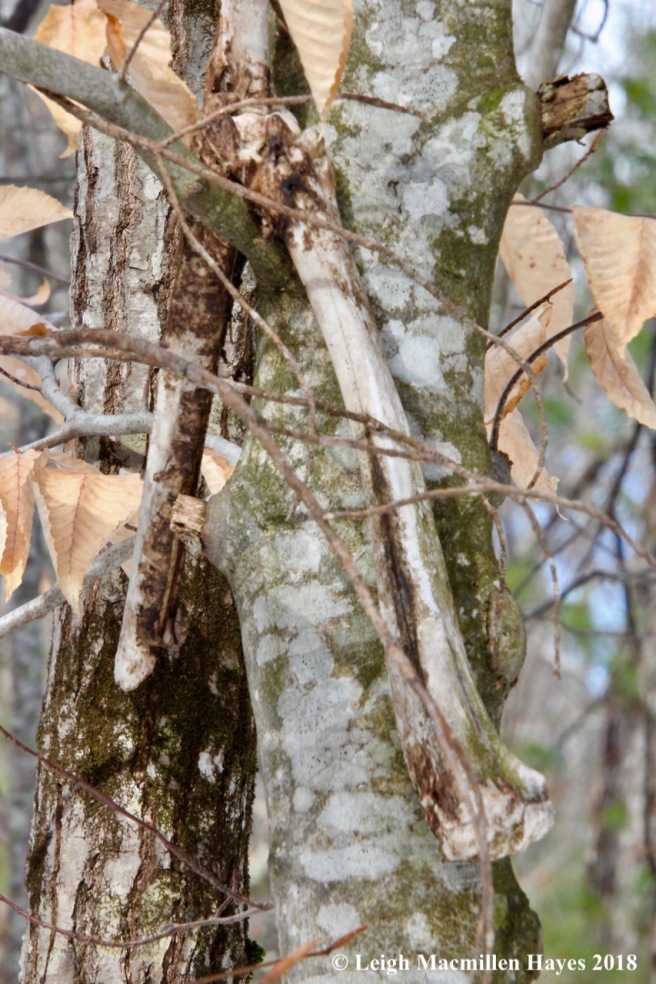
Back up on an old railroad bed, we again stopped frequently, including to talk about the beech scale insect and nectria fungus that moves in and eventually kills the trees. And then something else came to our attention–it wasn’t a broken branch hanging down like an upside-down V on the beech tree. No indeed. It was a bone. A knee bone. And it had been there for quite a while given its appearance.

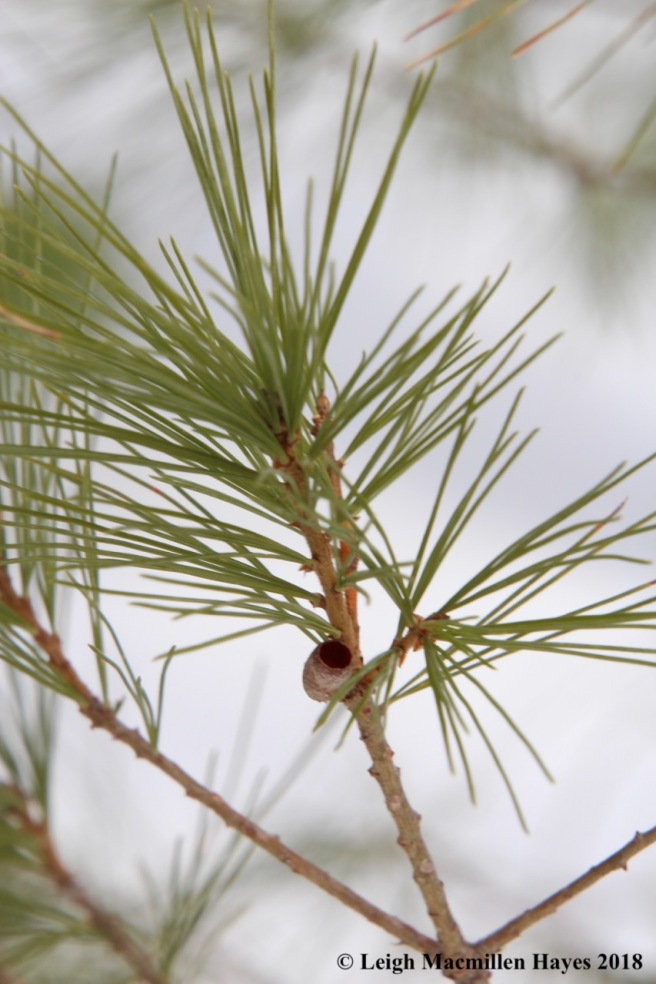
r7-Introduced Pine Sawfly pupal case

Because Anthony was with us and he’s our insect whiz, we spent a lot of time learning from him–including about the pupal case of an introduced pine sawfly. The sawfly had already pupated and in this case no one was home.

r8-Introduced sawfly pupal case

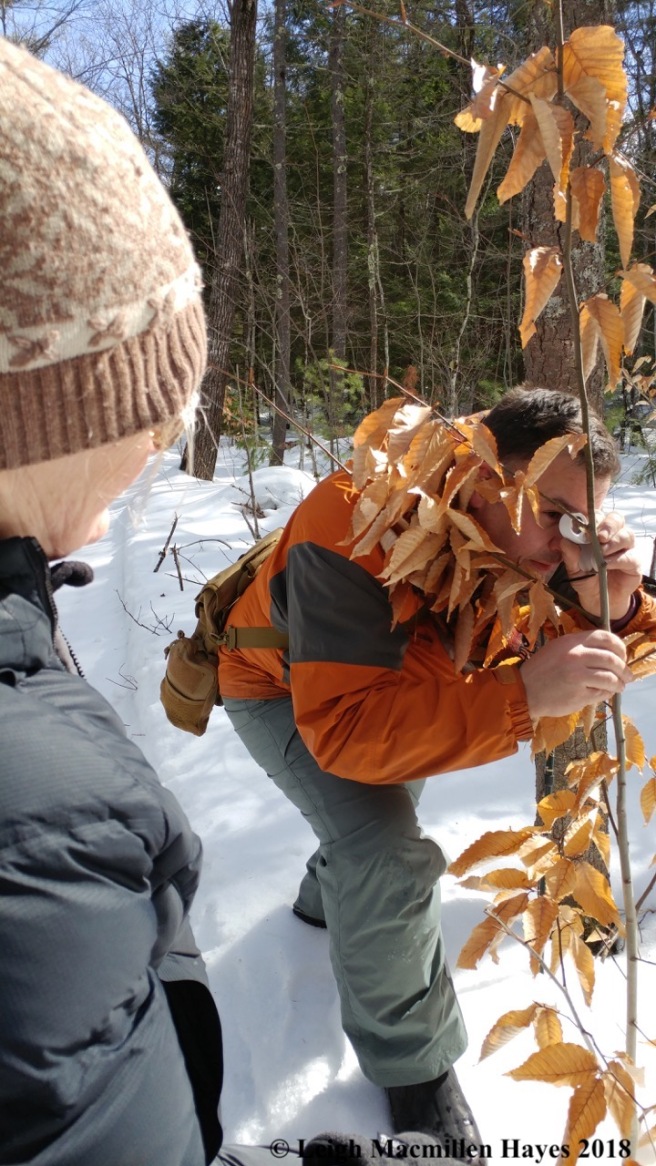
As the morning went on, we became quite adept at locating more cases of other sawfly species, including one that wasn’t yet opened. We each channeled our ten-year-old selves as we tried to be first to find the next one. But really, Anthony won for he had insect case eyes.

r9-going in for a closer look

And eyes for other things as well.

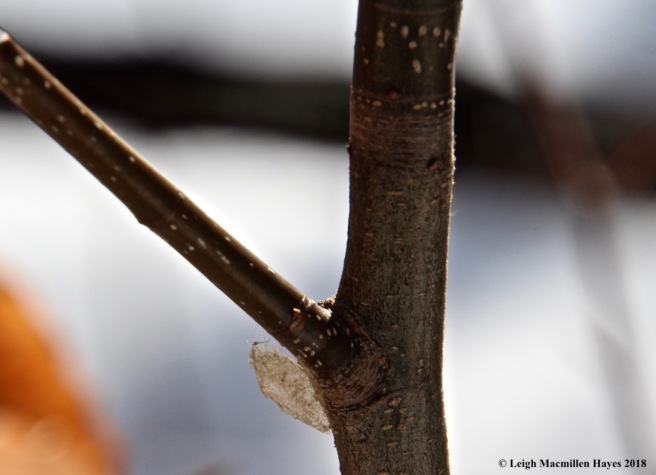
r10-old spider web case

This time we examined a delicate, almost lacy structure under a branch on a young beech. Anthony suspected a pirate spider, which tickled our fancy for we imagined them raiding the goods of others. But later he e-mailed with another option: “The old spider egg case could also be from an orbweaver of the araneidae family.” Either way, we were happy for the sighting; for taking the time to slow down and notice.

r11-beech leaves

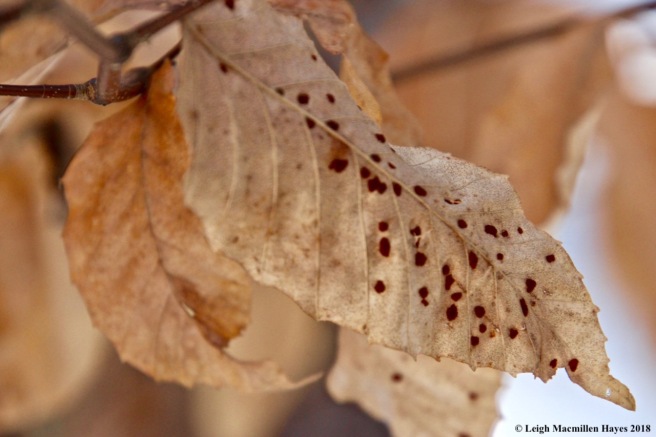
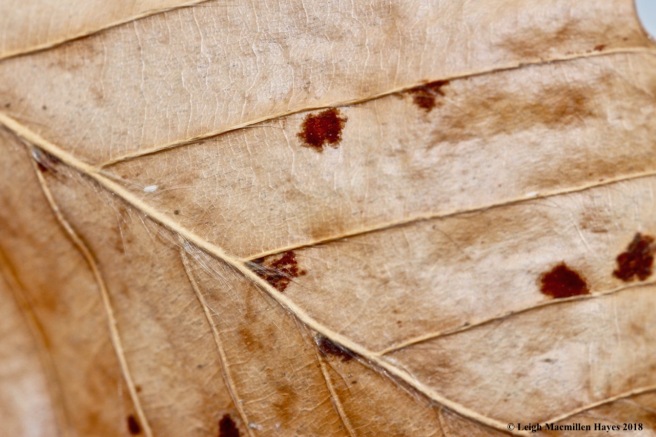
And there was more. Sarah had to leave us a wee bit early, so she missed our finds on the backside of beech leaves.

r12-maroon dots on beech leaves

They were dotted with raised bumps that under our hand lenses reminded us a bit of the sori on common polypody.

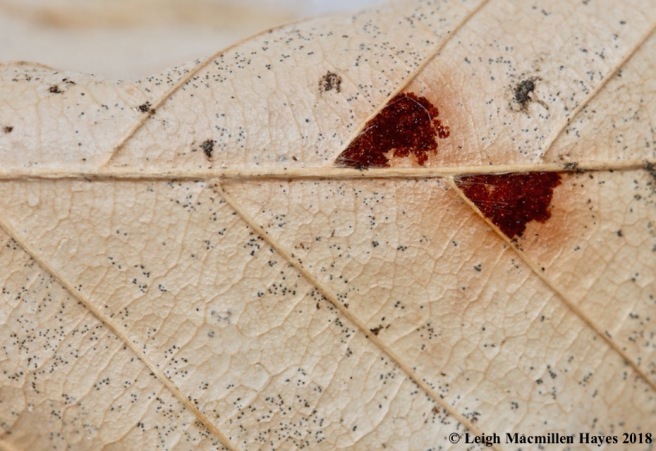
r13-maroon dots on beech leaves

Leaf rust? Was it related in any way to the splattering of tiny black dots also on the leaves? We left with questions we haven’t yet answered.

r14-hair on beech leaves

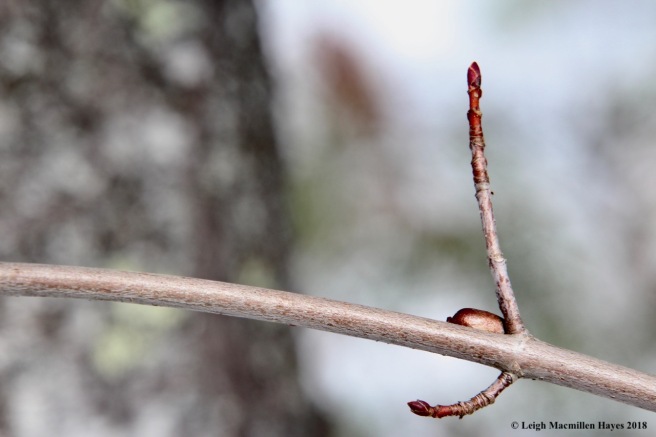
Taking a closer look did, however, remind us of how hairy beech leaves are–do you see the hairs along the main vein? And that reminded us of how the tree works so hard to protect the bud with waxy scales all winter, keeping the harsh conditions at bay. In early spring, slowly the leaves emerge, ever hairy, which strikes me as an adaptation to keep insects at bay, and then . . . and then . . . it seems like every insect finds a reason to love a beech leaf and in no time they’ve been chewed and mined and you name it.

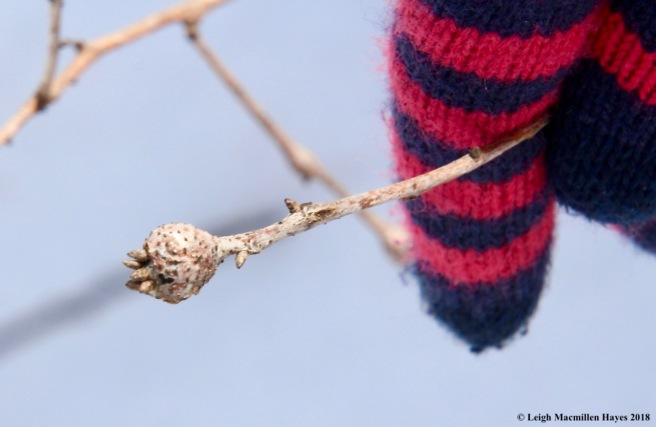
r15-oak gall

We made one more discovery before heading out–a gall formed on oak twigs. Do you see the exit hole? It’s in the shape of a heart–apparently the insect that created the gall loved the oak.

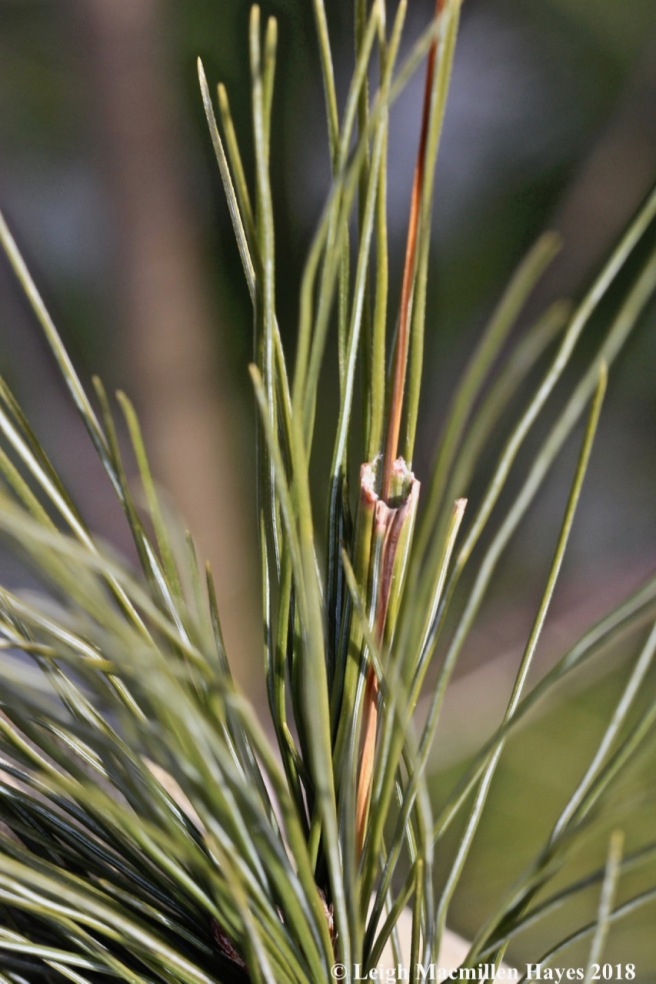
r15-pine tube moth

As we made our way back to the parking lot, I kept searching all the pine trees because I wanted to share an example of the tube created by a pine tube moth. Of course, there were none to be found, but as soon as I arrived home, I headed off into the woods for I knew I could locate some there. Bingo.

Notice how the lumps of needles are stuck together in such a way that they formed a tube. Actually, the tube is a tunnel created by the moth. The moth used silk to bind the needles together, thus forming the hollow tube. And notice the browned tips–that’s due to the larvae feeding on them. Eventually the overwintering larvae will pupate within the tube and emerge in April. Two generations occur each year and those that overwinter are the second generation. Fortunately, they don’t seem to harm the trees–yet.

Three and a half hours later we hadn’t walked a great distance, but our findings and learnings were many and we talked about how we’d added more layers to our understanding. Now if only we can remember everything. Thanks to Karen, Sarah and Anthony for sharing your brains me with–naturally.

P.S. Lewiston MMNP grads, et al, I’ll be in touch. Look for a doodle poll soon so we can get out and do the same. Or if you want to take the initiative, please feel free to go for it.


Like a Charm

White flakes floated earthward today and so I donned my snowshoes for the first time this season and joined the party.

s-snow!

Everywhere I looked, the world had transformed.

s-snow piling high

And ever so slowly mountain ranges took shape.

s-squirrel cache snow

One mountain in particular caught my attention,

s-squirrel cache 1

for I’ve been visiting it and two others nearby over the past few weeks.

s-refectory 1

Where previously, the refectory indicated hours of fine dining,

s-squirrel refectory snow

today there was none. But, I suspect by tomorrow a certain red squirrel that usually squawks at me will be back. Today, he probably hunkered down in his drey, hidden somewhere in the hemlocks above and out of my view. My intention is to keep an eye on him, just as he’ll continue to keep an eye on me, for I want to watch tunnels form and midden piles grow.

s-pinecone scales

After all, he worked hard this past summer and fall harvesting cones and acorns to fill his cupboards in preparation for the winter months. Though those months aren’t yet upon us, even in the fringe he enjoys what he’s gathered.

s-deer rub snow

I left his home base behind and continued on, noting how the snow had gathered–atop the ragged remains of a deer rub,

s-goldenrod snow

balanced on winter weeds,

s-snow tucked within

curled inside leaves,

s-snow on beech

and dangling from others.

s-oak and hemlock

A fun find came into view below the towering trees, where the veins of red oak mirrored the structure of the hemlock twigs and needles it was caught between.

s-snow at home

At last it was getting dark and time to return to the homestead.

And it was time to celebrate the only dance for which my feet can match the rhythm–the snow dance. I’m so glad I wore my pajamas inside out and slept with the silverware last night. It worked like a charm yet again.


New York by Nature

Having grown up in a small town outside of New Haven, Connecticut, I used to be quite knowledgeable about city ways, but these days woodland trails are more to my liking. Stepping out of our comfort zone and onto the streets of Manhattan and Brooklyn this past weekend, I was sure I’d be a nervous wreck. The last time we’d ventured there, our sons were six and eight, and my knuckles white as I gripped their hands.

N-NBC

That was then. Maybe it was because we didn’t have young ones in tow, or because I decided to embrace the moment and smile at each person I was able to make eye contact with, this time was different. Even some cold rain didn’t stop us from enjoying the city’s vibe . . .

N-bakery

including all its colors and flavors.

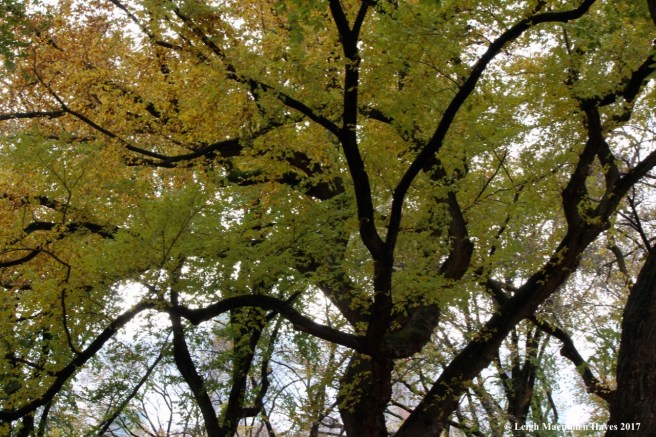
n-Central Park meets autumn

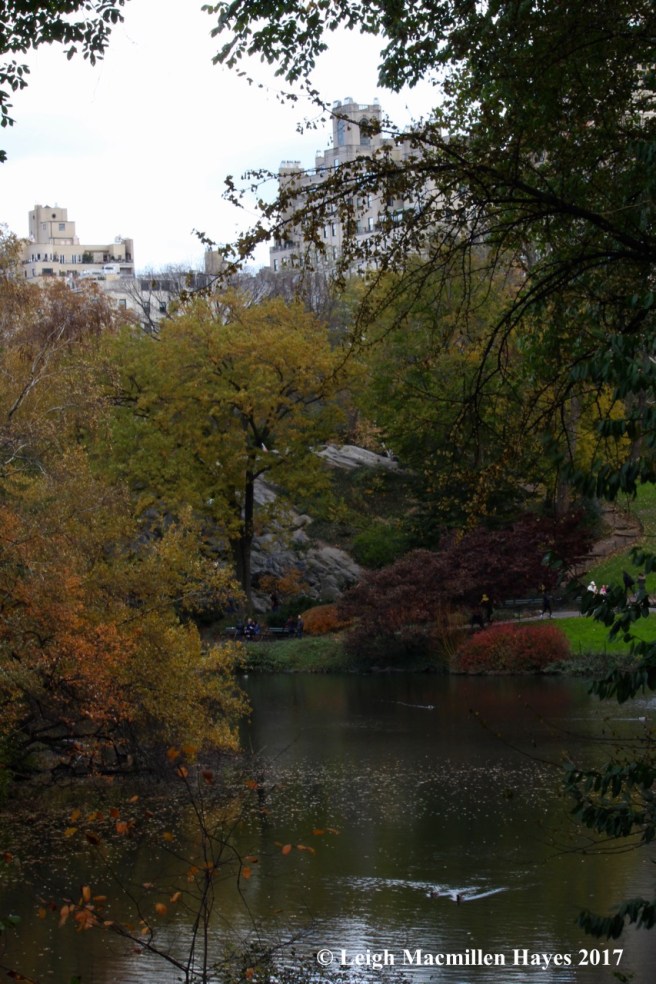
On a new day, the autumnal tapestry was like deja vu all over again, since we’d already experienced fall foliage over a month ago at home.

n-London Plane sycamore hybrid 1

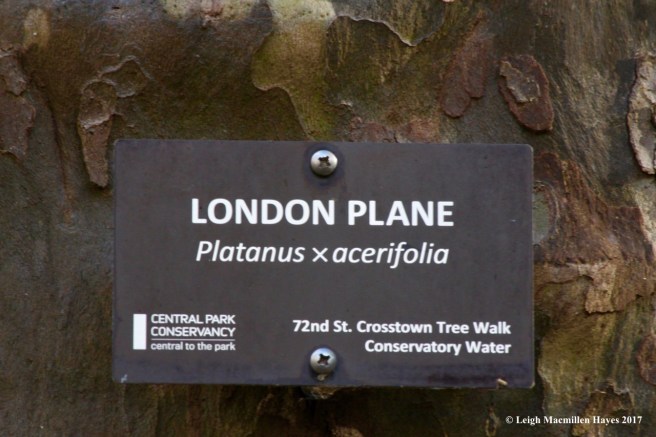
Even tree bark displayed variations of color, some that I thought I knew, until I found one with a name plaque.

n-London Plane

London Plane? Sycamore had been my first choice. It turns out that London Plane is a hybrid developed over 300 hundred years ago from the native  sycamore and oriental planetree.  And it was used as an ornamental to line streets . . . or park paths.

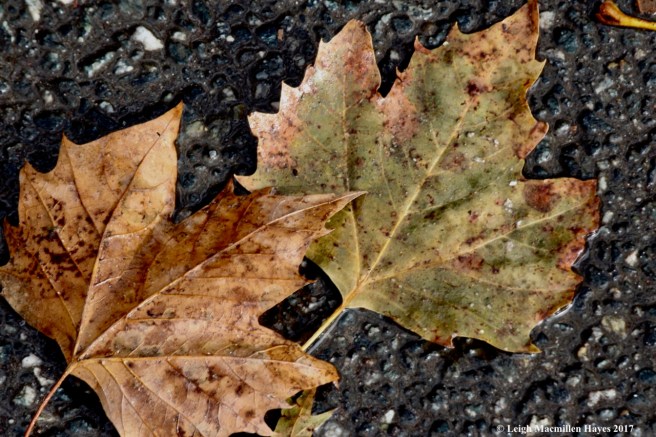
n-sycamore leaves1

Its scientific name, acerifolia, came from its maple-like leaves. I knew I’d learn plenty in the Big Apple, but didn’t expect trees to be among the lessons.

n-elms intermingling 2

As we walked through Central Park, street vendors displayed their works below, while American elms gracefully danced across the canopy above.

n-Central Park 1

And buildings magically arose from the rocky substrate.

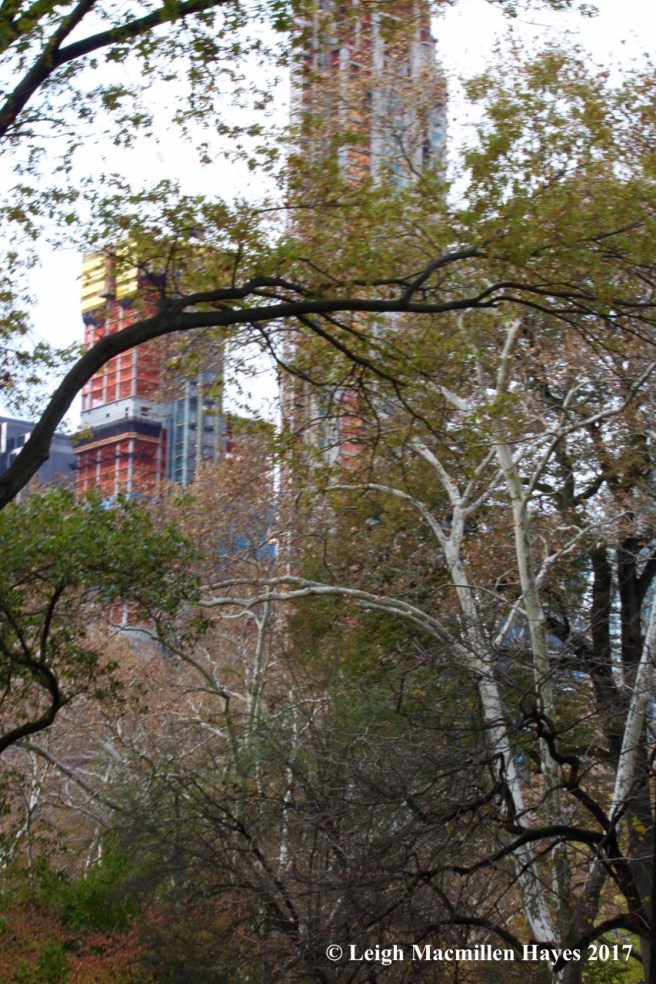
n-trees and buildings

We zigged and zagged and made our way about, though I had to depend on my guy for directions. I can find my way out of the woods, but even though there were maps throughout the park and the city streets are set in a grid, I was completely disoriented at each intersection.

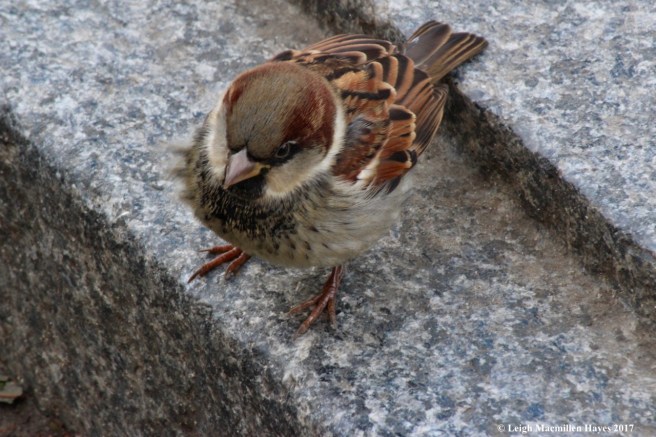
n-house sparrow 2

Perhaps it was because I was more taken with the little things. Even seeing house sparrows felt like a treat.

n-house sparrow 1

They were so tame.

n-Canada goose

I felt right at home among the Canada geese and . . .

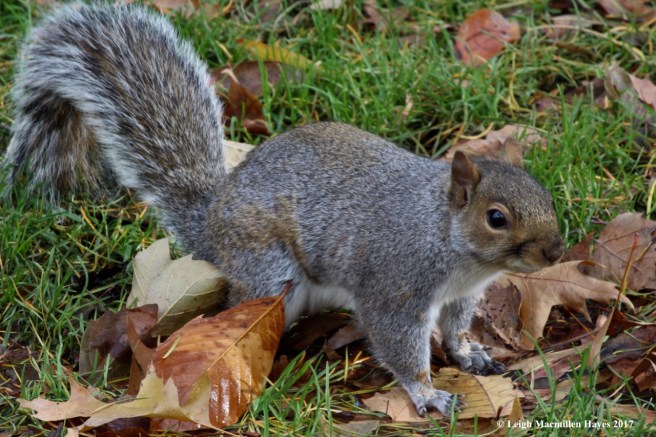
n-gray squirrel 1

gray squirrels.

n-Stuart Little

We immediately recognized Stuart Little as he tacked back and forth.

n-strawberry fields forever

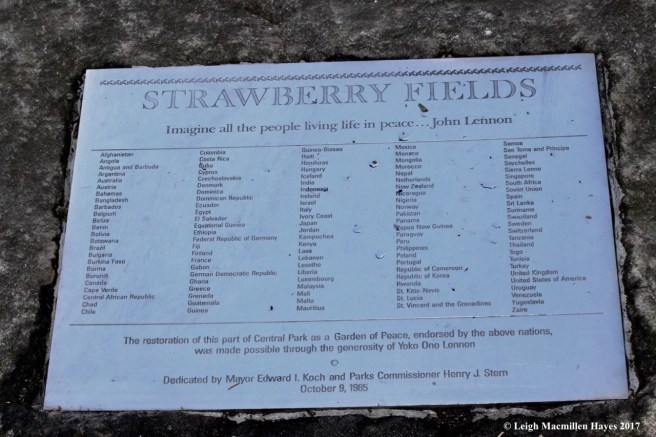
And then we wound our way around again, pausing by Strawberry Fields–and imagined. If only.

n-snowflake by Cartier

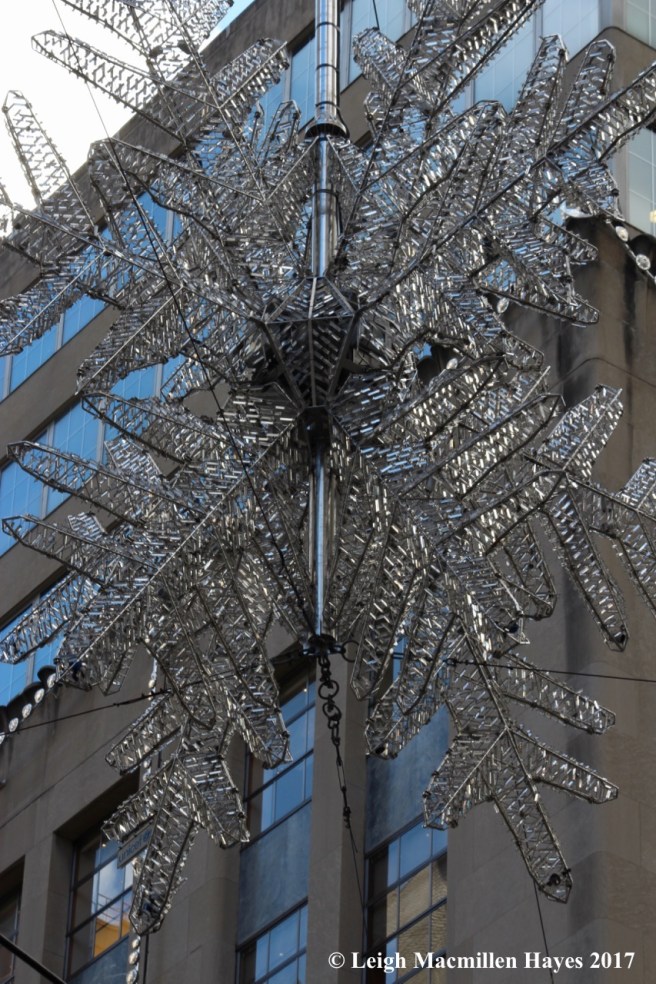
Back on the streets, we were dazzled by snowflakes . . .

n-Christmas lights 2

and Christmas lights.

n-Pat's Place

And then it was time to cross over to Brooklyn where we found a tour guide stepping out of his brownstone.

n-cement tracks

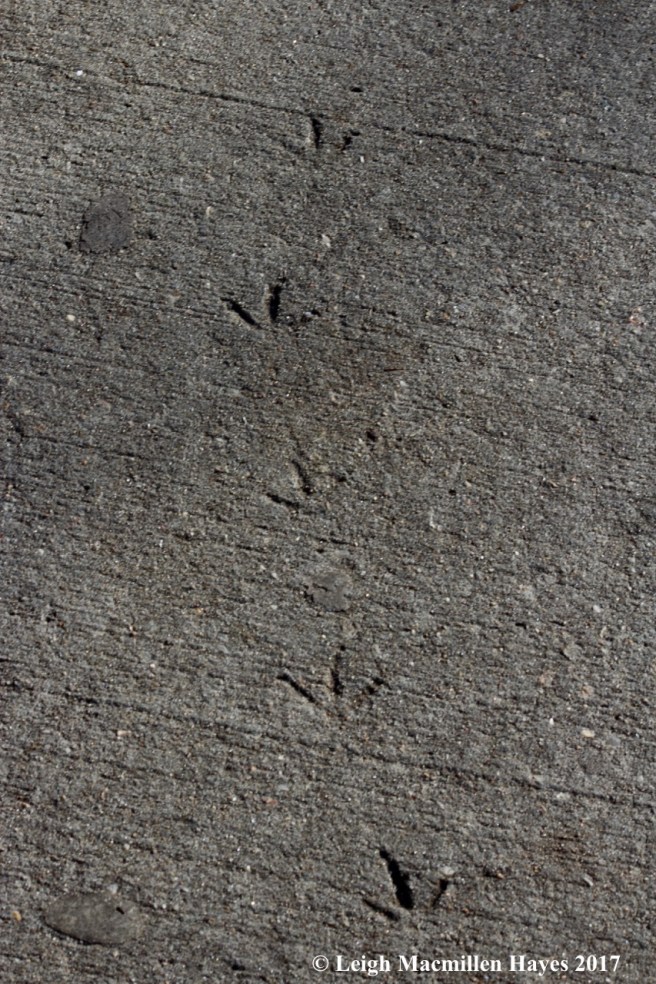
Like others before us, with him we pounded miles and miles of pavement and left behind our own tracks.

n-World Trade Center 1

He took us to the World Trade Center, which we viewed with awe . . .

n-9:11 memorial

and Ground Zero, where we felt the presence of so many as we remembered.

n-SoHo

Soho was our next destination, and though we didn’t shop, the architecture was enough to fill our minds with abundance . . .

n-architecture 1

and variety.

n-Wicked sign 1

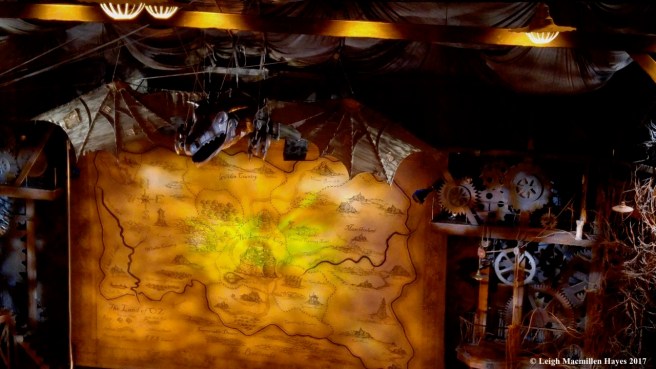
No visit to NYC is complete without taking in a performance and my guy, who is the world’s biggest fan of The Wizard of Oz, chose WICKED.

N-Wicked set 2

I won’t say it was my favorite show, but the set, costumes, acting, dancing, and singing were all well worth the experience. He thoroughly enjoyed it.

n-Rock center 4

Another must do is Rockefeller Center–or at least the ice rink. We didn’t skate, but enjoyed watching people take a spin, some more agile than others.

n-Rockefeller tree 1

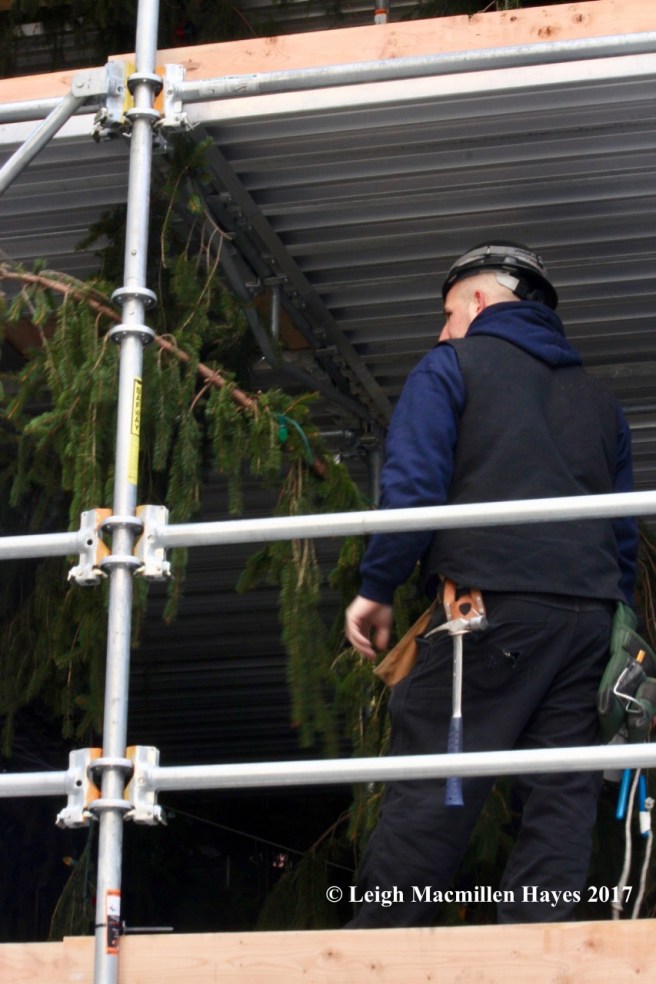
Overlooking the rink, but encased in scaffolding stories high, a transformation was in the works . . .

n-Rockefeller 2

from a Norway Spruce discovered in State College, Pennsylvania, to the Rockefeller Center Christmas Tree.

n-toy soldier 2

Watching over all were the toy soldiers. And if you have ever wondered if they come alive after most of the world that gathers in New York goes to bed, they do. We know this first hand for we heard them. Our hotel room was located nearby and at about 2am we were awakened each night by an instrumental performance that had a symphonic sound. We couldn’t hear anyone in adjoining rooms. And we never heard a peep outside of Radio City Music Hall, so it had to be the toy soldiers and angels that surrounded the rink–and you have to become a believer.

n-Grand Central Station

At long last, it was Monday morning and time to head back through the terminal of Grand Central Station to make our way up the northeast corridor.

n-Allen, Pat and Tim

But . . . we left with fond memories and promises to return for somehow we who live in rural Maine raised a city boy.

Posing from left to right, my guy, our youngest and one of his roommates who also hails from Maine.

They’re both comfortable by nature in New York City.


Snow White Magic

Our first official snow storm of the season left us with about an inch of the white stuff that makes me rejoice. And upon waking this morning and peeking out the window, the sight of porcupine tracks looping around the yard brought a smile to my face.

m-porcupine trail 1

I love the first snow storm for even though I have seen signs of the critters that pass this way, their tracks confirm my convictions. Over the years, I’ve come to recognize the prints and trail patterns, but as the snow gets deeper the tracks sometimes become more difficult to decipher. This one was easy due to its pigeon-toed sashay.

m-porcupine prints

And then the individual prints, especially those that crossed the deck, showed the large foot pad and five toes with nails extended. A friend in Poland, Maine, sent me a couple of photos of the critter that crossed her deck this morning. She ID it herself, but wanted confirmation–for it was an opossum and a first for her.  I found my first opossum prints last December and wonder if I’ll have that opportunity again. Anything is possum-able.

m-worm and junco prints

Since the porcupine had drawn me out (and I noted that it disappeared under the barn–of course), I decided to head off into the woods. But before I left the yard, I spotted junco tracks–and . . .

m-worm

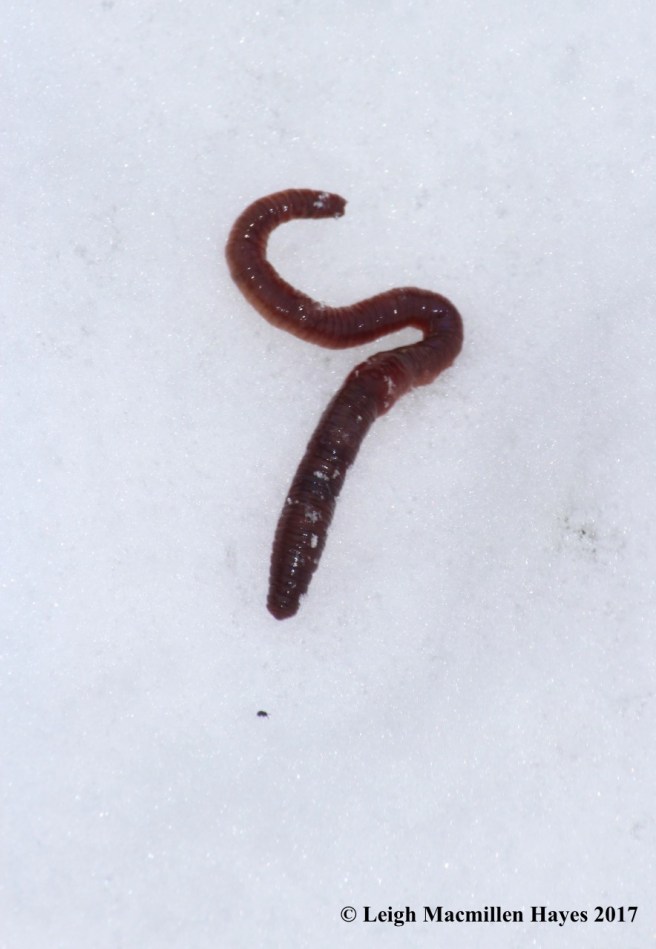
a couple of worms–frozen upon the snow. Juncos don’t eat worms; they look for fallen seeds. And so it seemed that the bird flew off before quite reaching the C-shaped worm. And this other worm was about a foot away from the first worm. Robins were in the yard last week, and I can only hope that they returned today for a frozen dinner awaited.

m-snow art 2

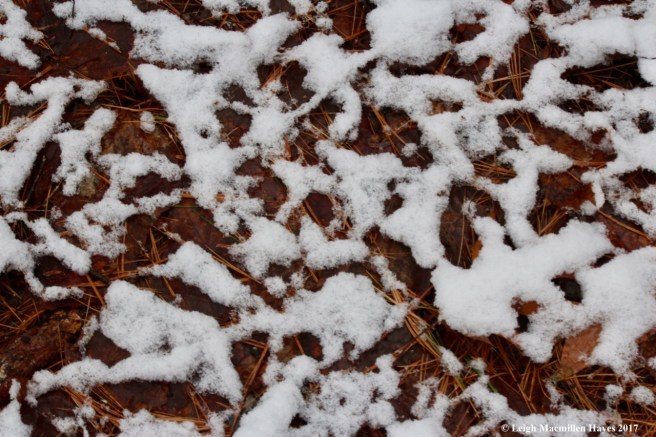
Into the woods I trudged, and the ever-changing colors and designs at my feet reminded me of works of art.

m-snow art 1

Some were palettes of mahoganies juxtaposed against white. A variety of textures gave the scene relief, much like an inlaid mosaic.

m-snow art intersections

Others embodied interconnections; a mingling of lines outlined for emphasis.

m-rock people

Along the cow path, I noticed the rock people for the first time, their mouths gaping open.

m-snow fleas

The minute snow fleas would hardly sustain them.

m-morning light

As it does, my trail crossed the line, where power seemed to originate with its source . . . the sun.

m-Mount Washington

And in the opposite direction, it flowed from pole to pole and onward . . . as if powering the mighty mountain.

m-pine sapling

My journey continued into the land of the pines and their saplings, momentarily coated with decorative baubles.

m-mini oaks

And the red oak saplings I’ve been watching looked more festive than ever.

m-squirrel tracks

I was on a mission and soon found what I was looking for. Some tracks that looked like exclamation points led me to another source of sustenance that I wanted to check on.

m-squirrel cache growing

The red squirrel’s cache had grown taller in the past week, but . . .

m-squirrel dining room

many pine seeds had been consumed in the refectory. All that remained were scales and cobs to show a number of dinners consumed.

m-squirrel rocks

The dining hall extended beyond the reaches of the cache, for every table available was a table used.

m-squirrel dinner in the future

As I walked back toward home, I discovered another table awaiting a guest.

m-beech sunshine

I was almost home when I stood under a beech tree. As winter embraces me, I find that their marcescent leaves create their own golden glow and warm my soul.

m-British soldier

One more sweet peek offered a tiny touch of red to today’s fading winterscape–for the British soldier lichens’ red caps announced their minute presence.

m-snow drops

And then this afternoon, I joined a few friends for a gallivant across the Wild Willy Wilderness Trail beside Province Brook in South Chatham, New Hampshire. And the snowdrops created their own works of art announcing that the meltdown was on.

m-pinwheel 1

As we walked, we noticed delicate parasol-shaped fungi fruiting.

m-pinwheel gills

Their common name is Pinwheel Marasius, but in my mind the shape of the umbrella-like top above the wiry stem looked like a parasol and so I called it such. But to add to the confusion, I first called it carousel. Word association might get me there eventually, but it wasn’t until I looked it up in Lawrence Millman’s Fascinating Fungi of New England, that I realized my confusion. One of the fun facts from Millman is worth quoting: “Resurrection! Shriveled and inconspicuous, Marasmius species are rarely noticed during dry weather, but after rainy periods the tiny fungi revive–hence the nickname ‘resurrection fungi.'” And if not rain, then snow will make them rise again!

m-liverwort magic 1

The water from the melting snow highlighted other lifeforms along the Wild Willy Wilderness Trail. Bazzania liverwort grew abundantly, but one in particular gave us pause . . .  for it glowed. And no matter what position we stood in to look at this worm-like beauty, it continued to glow as if it had a golden halo surrounding it. We had no answers–only questions and wonder.

m-glue fungi

Another find that had been marked with tape, for it too was special–a broken branch attached to a young tree. I’m stepping out on a limb here–pun intended, but I believe this was an example of a glue crust fungus that glues twigs together. Seriously? Yes.

m-Bob, Janet and Pam

It was getting dark when we finally found our way to Province Brook and marveled at the water and ice forms. It was also getting close to the moment when we’d need to say, “See you later,” to Bob and Pam, for they’ll be heading to warmer climes soon. But we know they’ll be back for a winter adventure and then before we know it, spring will be here. And then, we hope the brook will be full with spring run-off from all the snow that is in our future. Until then, see you later we also said to much of the snow for it had almost disappeared.

m-ice works 1

But the ice art will continue to grow.

m-Province Brook 1

And the snow white magic will capture our minds again . . . one flake at a time. And with it, the wonders of the world will continue to be revealed.


Sunday School

After church this morning, I stepped out the door, passed through openings in a couple  of stonewalls and then down the cowpath, crossed the power line, and ventured into my smiling place. It had been more than several months since I’d pushed the hemlocks aside to enter for it’s a wetland and woodland filled with growth that can make it difficult to meander through without snowshoes. But before winter arrives, I wanted to take a peek and learn what I could along the way.

o-oak saplings

My lessons started early as I noted a couple of red oak saplings growing in the hollow of an old tree stump, their color reminiscent of the Christmas season. Last year’s mast crop (and another for some oak trees this year) meant a plentiful supply of food for weevils, little brown things, squirrels, turkeys and deer. And yet, not all were consumed and so they sprouted. Now my plan will be to wait and watch–and wonder which of this array actually will win the race to adulthood.

o-huge squirrel cache 1

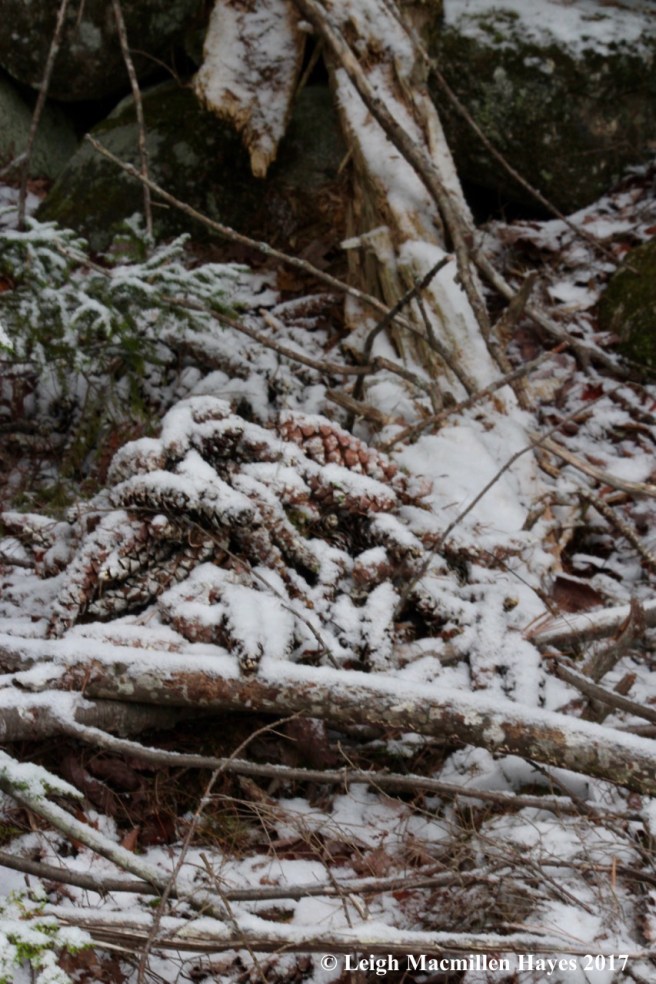
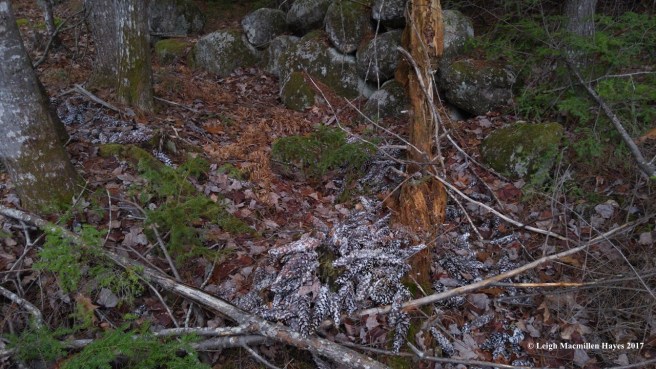
A little bit further into the woods, I spied a huge cache of white pine cones. This made my heart sing, for I love to keep on eye on big caches such as this and watch as they get whittled down over the course of the winter.

o-pine cones up close

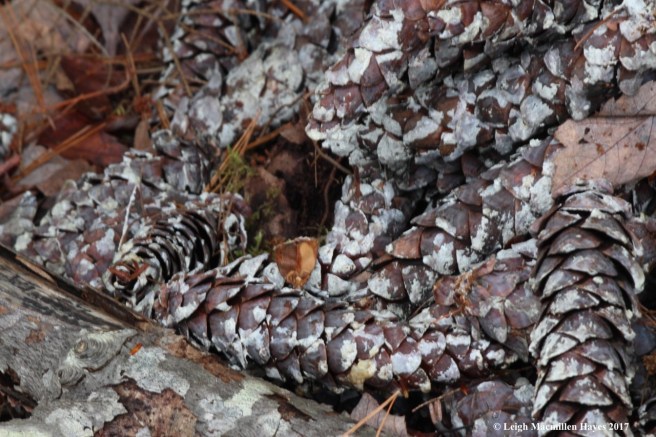
While I stood there admiring the work of the red squirrel who’d filled its larder presumably when the cones were green (and by the way, these cones are two years old, for it takes two years for them to mature atop the pine trees), I thought about the sap that coats them in white. Though the sap is drier now, does it get stuck to their feet. I know that when I come in from a walk through a pine forest, I have sap on my soles, and attached to that may be pine needles or dried leaves. Is it the same for a squirrel? If so, does it wear off like that on my boots? It must because I’ve never seen it on their feet.

o-pine on the cob 1

And what about as they work on their pine-on-the-cobs? Does the sap on the scales come off on  their lips or teeth–much like when we eat something sticky and gooey like peanut butter?

o-pine seeds

It’s a lot of work to get to the two tiny seeds tucked within each scale. They look to be about an inch long, but most of that is the wing (think maple samara). When the weather is warm and dry, pine cone scales open to release the seeds. The squirrel who’d hoarded the stash, had plucked the cones when they were still green and atop the tree–dropping them to the forest floor before they opened so he’d have plenty to eat. And then he had to gather all that he’d dropped into the piles. And now I can’t wait for the coming months–to watch the pile dwindle and middens grow; to see the tunnels he makes in the snow; and just maybe to sit quietly nearby and watch him in action. He was a bit peeved that I was poking about today and let me know with so many chirrs from a branch nearby.

o-porky den?

I finally moved on and saw an uprooted tree I’ve visited on previous occasions. Last year I followed porcupine tracks to this very spot and spied porky within. But when I checked on later occasions, it didn’t seem as if he’d returned. Today, I peeked in and saw water. Even though it looked like a grand home to me, I’m learning that porky knows best.

o-walking in a hemlock grove

At times, I moved quietly upon the duff under the hemlock trees. Frequently, I stopped to listen and look.

o-cinnamon fern leaves1

And then in an opening, I was again in the wet zone where the cinnamon ferns grew abundantly. In curled formation, their leaves added interest to the landscape and a bit of a crunch to my footsteps.

o-cinnamon fern 2

And piled as they were surrounding each plant, I thought back to the pinecone cache. This was food of a different kind, for those leaves will decompose over the winter and nourish the earth.

o-snowberry 1

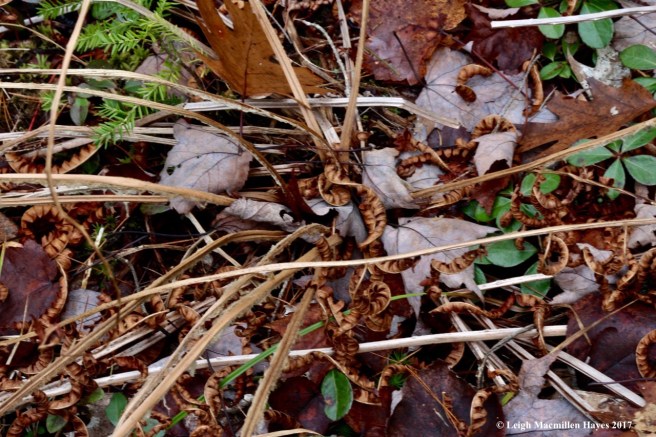
Continuing on, I came to one of my favorite spots–where the creeping snowberry grew. I hunted under the tiny leaves for the little white berries, but found none. And I’m not sure that I’ve ever seen them, especially in this place, for I suppose that I miss all the action since snow melt always seems to call a halt to such visitations and then I never make my way deep into these woods all summer. I have to assume that the little brown things and birds had a feast. Although, as any teacher knows, one should never assume. Perhaps next year, I’ll make a point of checking on these plants.

o-birch tree in offing

My tramp was a meander, for I knew not what direction each footstep might take me, changing my mind constantly and trusting that if I turned left or right, I wasn’t missing something in the opposite direction. The sight of a beech tree, its leaves ever rattling, did mean that I’d have a chance to move to drier land for a few minutes.

o-equisetum

And then I stepped up onto a rock, where the growth at my feet surprised me for I didn’t realize that equisetum grew in this part of the woods. Always something new to learn.

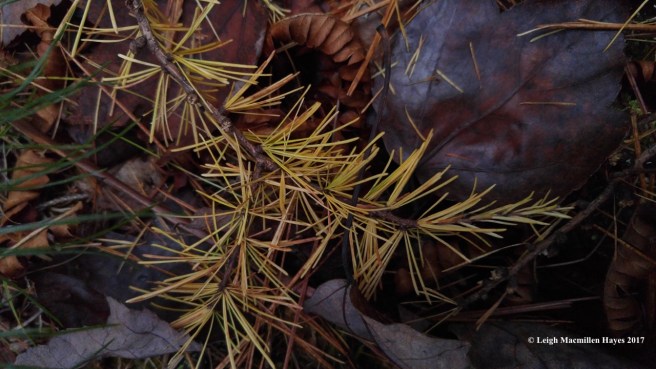
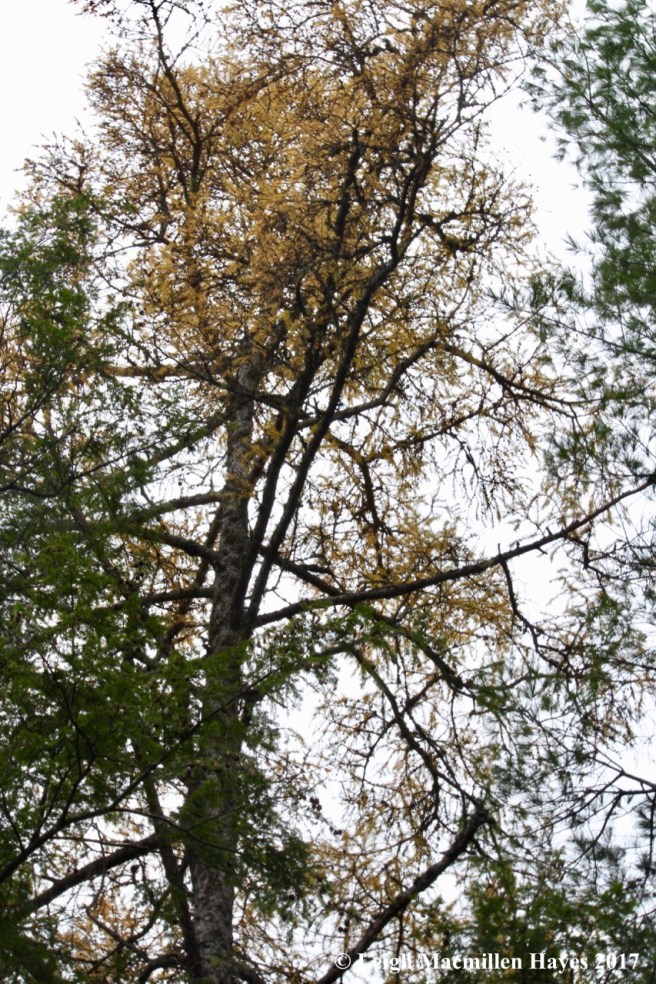
o-tamarack branch 1

That wasn’t all. As I looked around, a branch with yellow needles by my foot caught my attention.

o-tamarack branch 2

This was the twig of a tamarack tree, with its needles growing in tufts atop little spurs. Had we met before, the tree and me? If so, I couldn’t remember it. Nor could I find it.

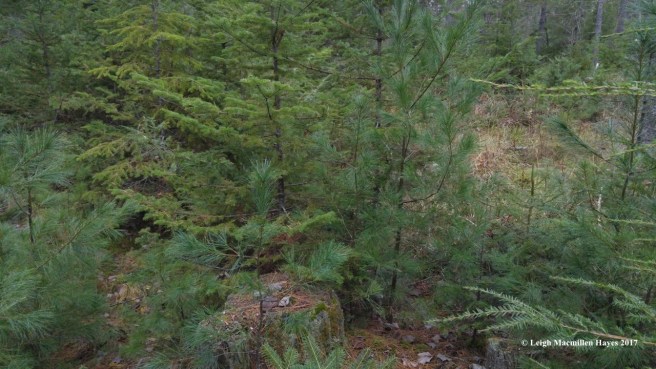
o-evergreen hallway

Before me was a wall of evergreens, in a classroom all of their own, for really, these are among my favorite places where learning opportunities present themselves. But, today’s lesson wasn’t about the hemlock, white pine, fir and spruce idiosyncrasies.

o-tamarack tree

And so I scanned the sky, and about twenty-thirty feet away, I found the tree. A tamarack or larch or hackmatack tree, aka Larix laricina, is our only deciduous conifer because unlike all the evergreens, it sheds its needles each fall.

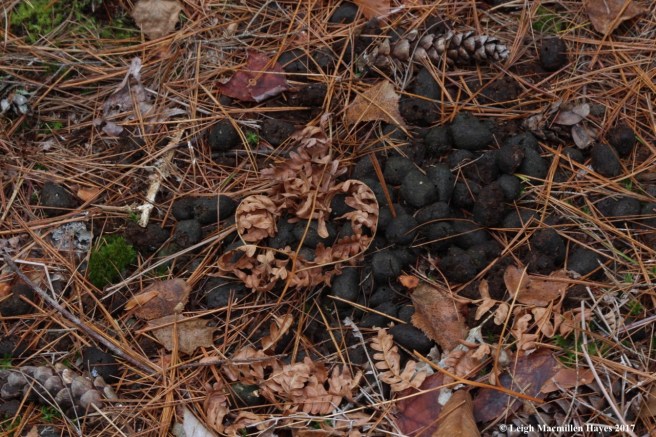
o-moose scat

A few minutes later, I heard movement, and looked up to see . . . no, not the moose that made this deposit last winter, but two flashes of white as a couple of deer bounded off. I think that’s one of my favorite lessons of these woods, for the landscape changes repeatedly and thus offers a variety of habitats for the mammals of western Maine. This is the place where I get to learn the most about them and their behaviors.

o-deer rub 1

Sometimes I’m rewarded with spying the mammal from a distance, but other times I find evidence of its behavior, like this antler rub with frayed bark at top and bottom and smooth wood between.

o-varied habitat 1

I’ve watched the forest succession in these woods for twenty-five years,

o-varied habitat 6

and it’s been logged again more recently.

o-varied habitat 4

With each change, comes more change. And so the mammals move from one spot to another, but they’re still all here–somewhere.

o-varied habitat

I just need to listen and look.

o-turkey tail fungi

It’s not just the mammals and trees that I get to learn about. My studies include among other topics, fungi, of which I’m only a so-so student. But I do know that this is turkey tail, aka Trametes versicolor.

o-Fomitopsis cajanderi  (Rosy Polypore) 2

And then I happened upon a hemlock stump topped with a large, beautiful display outlined in a coffee brown and salmon pink. It took me some work to remember its name. I can tell you where else I’ve seen it for it grows upon a hemlock log at Holt Pond.

o-unknown mushroom 1

Before I forget again, it’s a rosy polypore, if memory serves me right. I only hope my fungi teachers weigh in on this one.

o-logging road 1

At long last, it was time to follow a logging road back to the snowmobile trail.

o-snowberry on sphagnum

Sometimes, I slip back into the woods before reaching the trail, but today I chose to follow it. And what to my wondering eyes should appear, but more creeping snowberry atop sphagnum moss.

o-home sweet home

As I finally crossed the field toward home, I gave thanks for the classroom that is right outside our back door and for the lessons learned in this Sunday School. Now I just have to remember everything, which is why I record so much.


Autumn Falls With A Smile

It seemed only yesterday the colors were rather on the dull side, not quite offering that magical tapestry we all relish. And then today dawned with a the mix of sun and clouds and occasional raindrops and a breeze and somehow the world transformed.

hp3-Holt Pond1

And I had the good fortune to take it all in at Holt Pond Preserve, where I traveled the trail with two friends. The leaves had gone on strike from their food producing summer job and we rejoiced in the result as they prepared for the dormant season that is on the horizon.

hp1-quaking bog 1

Gold, orange, topaz, crimson, salmon, ruby, gold green, yellow green, gold brown, green brown, gray, white . . .

hp2-swamp maples

even a hint of blue; it was as if we stood in nature’s paint store.

hp4-tire alley

As always when I look at paint chips, I had a difficult time deciding which color to choose.

hp6-tree tops

Stick with a deep red?

hp9-more skyward views

Lean more toward the greens and yellows with a hint of orange and red?

hp7-leaves in brook

Or go with a mosaic–intermixing all that was available?

hp11-button bush

And what about the decorative accents?

hp10-sensitive fern fertile frond

Again, I couldn’t decide . . .

hp13-fireweed

which was my favorite.

hp12-following friends old and new

Nor could my companions, JoAnne and Jen, and so we slowly moved about, filling our hearts and souls with the memory of it all by painting the scene in our minds.

hp17-Grist Mill Road

And smiling at the offerings.

“Autumn, the year’s last, loveliest smile.” ~ William Cullen Bryant

A Circle Completed

The day began with a reconnaissance mission to the Kezar Outlet Fen and a check on the cranberry crop. One of the most delightful ways to spend an early October morning is foraging for those little red balls of tartness and while my guy may have blue greed in his  need to pick every blueberry in sight, my greed turns red this time of year.

f2-winterberries

Of course, on the way to the fen, other red berries showed their shiny faces–and we rejoiced in their presence as well. Winterberries were they.

f4-cranberries 1

But it was those little gems that grew closer to the ground that caught our attention on this morning’s Greater Lovell Land Trust docent tramp. And like those who have come before, we each claimed a spot and made sure not to trespass in our quest to fill our bags with such redness.

f6-cranberries

It didn’t take long. And really, there is no better way to spend the morning . . .

f3-kettle hole

for this is a place to share the joy of foraging, the beauty of place, and the conversation of friendships.

m1-abandoned lodge 1

And then one friend and I returned to the beaver quest I’ve been pursuing for the past two weeks. It was another reconnaissance mission intended to find some new activity. Today, we traveled a different trail and visited an old lodge–again several years abandoned.

m3-anthill

Though no one was home at the stick lodge, we did find a few inhabitants of a nearby sand lodge, aka ant hill. And Forester Dave, with whom I was traveling, pointed out that the sweet and bracken ferns circled the spot, but didn’t grow within at least a foot of the hill. His theory is that the ants chemically affect the ferns. That was new to me and one to observe in other places.

m4-side lodge

We continued on our way and eventually came to another beaver pond that seemed equally abandoned. The lodge was built along a side bank, but no new construction had taken place recently. Nor was there a display of food gathering in preparation for winter.

m5-watercress

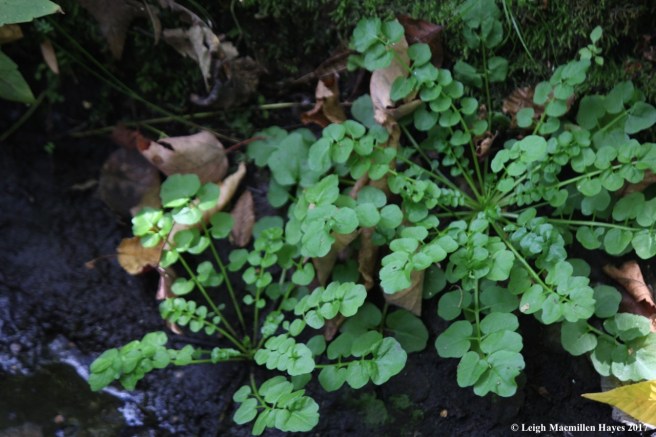
But . . . we found a food source of a different kind in the form of watercress.

m8-green frog

We also watched a number of green frogs leap into the leaf-strewn water to hide–and yet slowly float to the surface in an ever curious way.

m9-hornbeam hop

And we saw numerous “hop” balloons, those little slightly inflated cases of hop hornbeam fruits that protect the seeds–many of which flowed in the water. So where was the source?

m10-hornbeam bark

We scanned the forest and finally found the shaggy barked tree beside the water.

m11-bobcat print

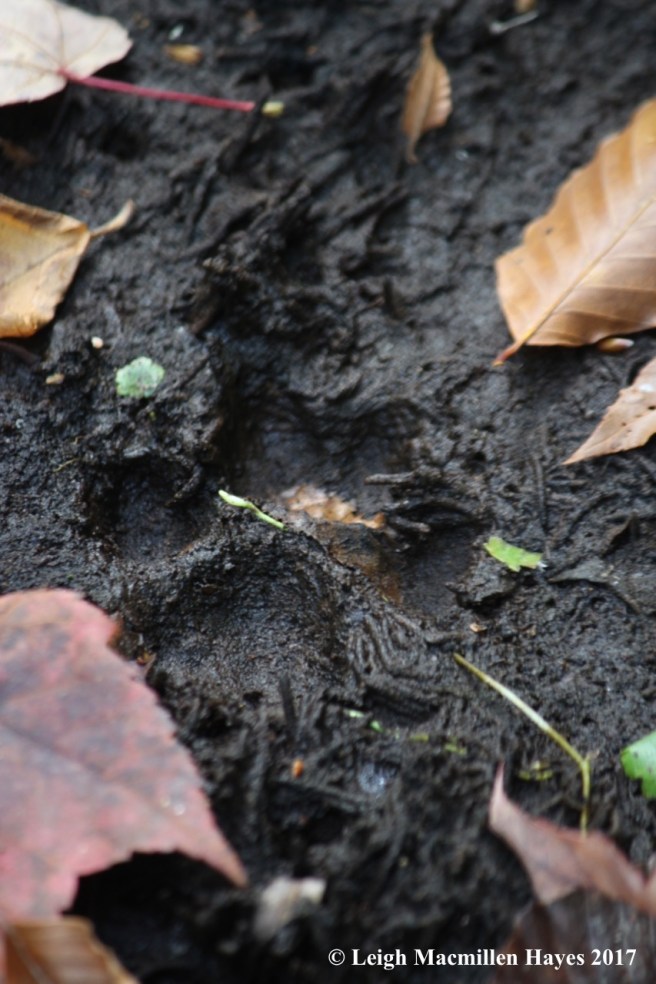
After that, some bushwhacking found us passing through a muddy zone–and prime tracking location. Deer, raccoons, coyotes and bobcats had previously walked where we stepped. Do you see the C for cat in this print?

m13-dam3

At last we reached our intended destination, only to realize that the beavers still eluded us. We were sure that since all other areas had been abandoned, this one would be active.

m14-beaver pond of yore

We were wrong. The only activity seemed to be leaves clustering on the water’s surface.

m16-raccoon prints

And so we backtracked and made our way down to another beaver pond, deciding  that we’d travel in the opposite direction of the raccoons and follow the stream downhill. From the top of the land to the lower portion, we encountered four or five well built dams, all still intact, yet the water levels were much lower than we would have noted if the ponds had active beavers. To say we were disappointed would be an understatement.

m17-bobcat scat?

We did, however, find a great scat specimen. We debated bobcat and coyote–sectioned as it was had us leaning toward bobcat, but there were some large bone pieces that suggested coyote. Either way–we knew both had passed through.

m18-spring peeper

And we found a spring peeper and chatted about their callings in autumn weather that reflects their mating season–the fall echo season.

m20-brook view

A little more bush and whack and at last we reached the brook below.

m21-single leaf

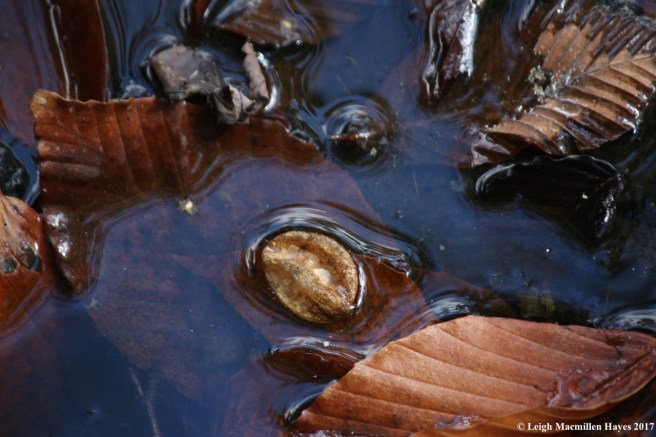
As we stood in companionable silence, a single leaf floated past.

m24-balsam seedling

When it was time to turn away, we continued on, reveling in sights missed on previous missions, including a balsam sapling growing on a fern-covered stump.

m25-fresh beaver works!

And then, and then, much to our surprise, we encountered fresh beaver works where only three days ago there had been none. In at least three locations, we discovered that tree roots had been gnawed upon. It was a subtle sign–but a positive sign.

m26-smaller lodge

The lodges, which number at least three in this particular beaver pond that keeps pulling me back, still don’t look like they’ve been attended to. And there are no winter food platforms yet, but apparently they have time and don’t need to button down the hatches yet.

m28-brook

Happy in the knowledge that we’d found the beavers, though we never saw them, we decided to continue to follow the stream to a trail that abuts the property boundary.

m27-black ash

And being a forester, Dave quizzed me on a tree or two. This one I got wrong by its bark because it doesn’t exactly look like its white and green siblings, but knew by its leaf–black ash with no petioles on the leaflets.

m29-foam reflecting bark

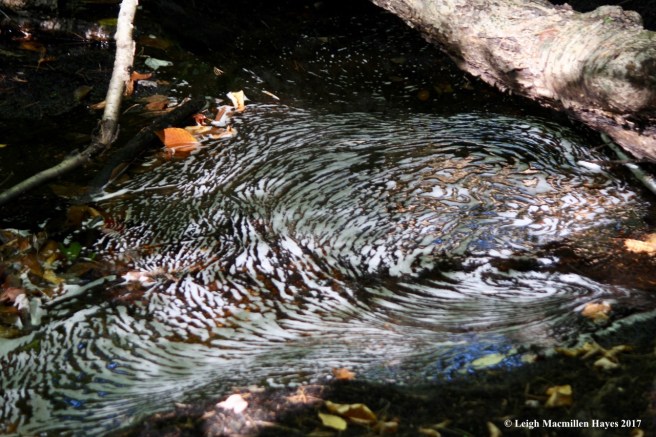
About three hours later, we left the beaver community behind–our circle completed, figuratively and literally. Even the brook appeared to know, its froth circled in reflection of the log above.


Anybody Home?

Only a few days ago we felt like we were melting as we complained about the muggies and buggies, but those temperatures are now only memories and it’s beginning to feel like fall in western Maine. And so my guy and I bundled up before we followed a trail and did some bushwhacking this morning, exploring a property Jinnie Mae and I had visited only a week and a half ago.

m1-lodge

It was to the beaver lodge that we first made our way, noting all their old works near the water’s edge.

m2-lodge 2

But, we were disappointed that we saw no evidence of new work and it didn’t appear any winter prep was yet occurring. Were the beavers still about? Or had some parasites in the lodge forced them to move on?

m3-infinity pool1

We hoped not for they’ve worked hard in the past to create a home with an infinity pool that would be the envy of many.

m1a--otter scat

We did note that they’d had recent visitors who left behind a calling card in the form of a slide and scat–otter scat, that is.

m5-doll's eye

And we spied the fruits of a former flower that graced their neighborhood–doll’s eye, aka white baneberry.

m4-dam 1

As we circled around the pool, we commented that the dam seemed to be in excellent shape and held the water about five feet above the stream below. But again, no evidence of new wood.

m7-dam works

Despite that, it’s an impressive structure. While some landowners might be upset to have beavers changing the landscape, we happen to know this one and she takes great pride in their works.

m9-dam 2

We stood for a while, indulging in our own admiration while wondering where the beavers might be. Of course, it was close to lunch time for us, and not an active time for them if indeed they were home. Possibly we were misinterpreting the view.

m8-beaver pond

After some time of quiet reflection, we made our way back, crossing the stream just below the dam.

m13-quiet reflection

And then we continued along the old logging road (recently bush hogged, eh Brian? Well done), and bushwhacked some more, crossing another stream to find our way to another reflective spot along the brook.

m12-rookery 2

This time, our destination was that of another stick builder–great blue herons.

m11-rookery

Their spring/early summer nests are equally impressive. I hadn’t visited this spot since April, when the herons were actively setting up home. And I’m not sure it was a successful breeding season for them, but even if it was, they wouldn’t have needed these homes today. The nests will remain–available for grabs next year by those who return.

m16-jack in the pulpit

After a snack by the brook, we pulled ourselves away knowing it was time to head to our own home. Our wildlife viewings had been nil, but we spied a jack-in-the-pulpit in fruit, and that plus the doll’s eye were enough. And the time spent wondering about the critters.

m20-cosmos

Back at our truck, we decided to check on the insect action in the gardens at our friend’s home. Only the bumblebees seemed to be active.

m19-hickory feast

But we saw plenty of activity of another kind–a cache of hickory nut shells at the base of the tree, and really . . . everywhere nearby.

m18-hickory bark

Shagbark hickory is more common south of this spot, so it was a treat to take a closer look.

m17-hickory

Its alternate leaves are compound, consisting of five serrated leaflets usually (sometimes there are seven).

m18-hickory 2

And of those five, the three terminal leaflets on each twig are the largest.

m21-view of Balds

Once again, it was time to leave this beautiful spot where the fields and forest flow into the mountains. And where the beavers and heron share the place without too much human intervention. Though not a soul was home today, we trust all will return when the time is right.


Outing on the Outlet

This morning dawned clear and chilly, with the temperature at 50˚ when I headed toward Lovell at 7:15. After placing some “Land Trust Walk Today” signs in pre-planned positions, I headed to the dam on Harbor Road in Fryeburg to wait for a ride.

u1-outlet dam

Water flowed over the tiered dam, which was built in the early to mid 1900s at the request of the Pepperell Manufacturing Company in Biddeford. The townspeople contested its existence for it would raise the water level on Kezar Lake, but the textile mill located many miles away on the Saco River won the rights to construct such at the site of an 1800s saw & gristmill. Thankfully, though it did raise the level of the lake water, not all of the predicted problems came to pass.

u2-Harbor Road bridge

The dam was our intended take-out for today’s paddle co-sponsored by the Greater Lovell Land Trust and Upper Saco Valley Land Trust. Though it’s located off Harbor Road in Fryeburg, it’s owned by the Town of Lovell. No longer used, it still serves to provide a historic reference. And a great place to either portage and continue on to the Old Course of the Saco River and then the “new” course, or take out as we intended to do.

u5-silver maple

While I waited, I poked around, and rejoiced in the sight of trees that like wet feet. High above the dam, the leaves of a silver maple shown brilliantly in the morning light.

u3-green ash leaves

Other leaves also caught my attention for their coloration–with veins of red interrupting their olive greenness. Green ash, another tree that likes wet feet but isn’t as abundant as its siblings, white and black ash, also stood tall beside the dam.

u7-preparing to launch

My dam-side exploration ended a few minutes later when Jesse Wright of Upper Saco Valley Land Trust and her friend, Shareen, pulled into the landing. We hoisted my kayak onto her already laden truck and found our way over the bumpy road to our intended put-in at a private residence–thanks to the generosity of its owners. Slowly the number of boats increased by the water’s edge as twenty-plus folks joined us.

u6-map by Will from USVLT

Once all had gathered, Jesse showed off the map of our intended paddle, the red dots indicating our path from beginning to end, and I shared a bit of information about the fen, a GLLT property purchased in 2005. Today, the symbolic boundary between the two land trusts disappeared as we ventured off together.

u9d-Linda 1

It takes good neighbors and lake stewards to pull off such an event, and the Wurms are such. They helped us arrange the put-in, gathered a couple of canoes for several paddlers and took photos at the start.

u9a-LInda's view 1

Linda’s view included Jesse heading off as our lead,

u9c-Linda's view 3

and the rainbow of colors once we hit the water.

u8-on the water with Jesse and gang

It took us a wee bit of time to get all the boats onto the lake, but it wasn’t a day made for rushing. And once in the sun, we began to warm up.

u10-send off by Linda

Before we headed off, we gave thanks to Linda (and Remy).

u11-and Heinrich

We also thanked Heinrich, who drew our attention skyward . . .

u12-drone

as he flew a drone above us.

DCIM100MEDIADJI_0056.JPG

Our first destination was to paddle north for the view.

DCIM100MEDIADJI_0061.JPG

The drone spied the mountains before we did.

DCIM100MEDIADJI_0059.JPG

And spotted our intended course . . .

DCIM100MEDIADJI_0067.JPG

into the fen.

u18-veiws from the lake

A quick turn-around from the water gave us bearings as we noted the Baldfaces to the west.

u19-heading toward the fen

We circled an island that serves as an environmental study plot for the US Forest Service and then paddled southward.

u20-Jesse in the lead

Jesse led the way through the pickerelweed.

u21-more mountain views

As we followed, the view got better and better.

u22-slowly we followed

Acting as sweep, I took up the rear while the group snaked along.

u25-early fall color

We followed the twists and turns of the water trail, where red maples showed off their autumn display from the canopy.

u28-red leaf

Occasional leaves fluttered down, begging to be noticed in their singularity.

u-cranberries 1

Though we didn’t get out of our boats and actually walk into the fen, we did stop to chat about what it had to offer. The GLLT owns 260 acres of the 500-acre fen, an acidic ecosystem with a deep layer of organic material including peat moss atop a sandy substrate. Several bird species of concern breed or hunt in the fen, including American bitterns and Sandhill cranes, the latter of which we had the good fortune to hear but not see. Long’s bullrush, a globally rare sedge, also grows here. But the crème de la crème for many are the cranberries. Folks on today’s paddle weren’t familiar with the plant and I couldn’t show them at the time, but I shared with them the experience of picking in the past with students from Molly Ockett Middle School in Fryeburg.

u-cranberries 2

On a fall day each year, about thirty students in the school’s MESA program (Maine Environmental Science Academy–an experiential place-based curriculum for 6-8 grades) visit the fen with the GLLT’s Executive Director, Tom Henderson.

u-cranberries 3

They learn about the hydrology of this place, but one of their highlights is to pick cranberries, and to that end, they become very possessive. As one student approaches another, a common statement is shared: “Don’t come over here. There aren’t any cranberries here.”

u-cranberries 4

Over the course of several hours, they fill their bags and sometimes even show off their creative talents in other ways–all in celebration of the cranberries.

u30-weir1

Continuing along the river this morning, we noted beaver activity and talked about scent mounds and their usefulness within the beaver community. And then we reached the fish screen.  Jesse had paddled the course last Sunday and made it under the screen without any issues.

u31-clearing a beaver dam

Since then, the beavers had been busy damming it up. One of our members worked to adjust some of the branches so we could all get through.

u34-offering a shove

Of course, sometimes a helping paddle was needed to push a boat forward.

u33-cow 2

While we took turns, our efforts didn’t go unnoticed.

u35-other side measurement

On the other side, a ruler indicated depth.

u36-approaching the bridge on Harbor Road

And then, and then, in what seemed like only minutes but was actually a couple of hours filled with camaraderie between familiar friends and new, plus a touch of natural history thrown into the discussion, we found ourselves at the bridge and the end of the journey for some. Others chose to paddle back rather than hitch a ride. We had come full circle.

As we pulled boats out, we were surprised at how warm it was since we were out of the shade, the temp having reached into the 80˚s.

Our outing on the Kezar Lake Outlet would not have been doable without Jesse Wright, who did the yeoman’s work of pulling it together, William Abbott, USVLT’s executive director who created the map, the Wurms and their neighbors who contributed land, boats, photographs and time, and all who ventured with us on this most lovely first full day of autumn.  Thank you all.


Dodging the Drops Mondate

A friend called this afternoon and her first comment was that she didn’t know if she’d reach me given that it was a Monday. She’d thought about the weather, but figured it wouldn’t bother us and we’d probably be in the woods somewhere. How right she was–and her call came just after we’d returned home.

h-trail sign

Our mission was a work date on the Southern Shore Trail at Lake Environmental Association’s Holt Pond Preserve. For a number of years, we’ve maintained this section of trail between the last boardwalk just below Knapp Road in South Bridgton and “the field” near the southern tip of Holt Pond. It’s a section that was an Eagle Scout project years ago and we’d helped in creating it, so it’s been our pleasure to keep it clear of fallen trees and branches. Thankfully, this section isn’t traveled often and we rarely find any manmade debris.

h-wild turkey feathers

Immediately we did find some bird debris and wondered what happened to the turkey. A few other feathers were scattered, but we didn’t look further, so we don’t know if there was more to this story.

h-following the wall

Loppers in hand, we turned at the stonewall, and entered the enchanted forest, for that’s how it feels . . .

h-green lichens:mosses

especially given so many shades of green. And a few openings that would make perfect entry points for wee inhabitants.

h-hemlock varnish shelf 1

We moved along at a rather brisk pace (in my opinion, that is, though when I mentioned it to my guy, he brought up other times when we’ve moved much more quickly.) But, I did what I do, and while he picked up sticks and dragged downed trees out of the way, I looked around to see what I might see, like the varnish shelf fungi on a hemlock tree. I questioned myself with this ID because it looked similar to a red-belted polypore, both featuring a glossy lacquer-like sheen and concentric zones of red, yellow and white. But, it grew on a hemlock and I should have snapped an old specimen that was on the ground below. I know if I’m wrong, Parker and Jimmy Veitch of White Mountain Mushrooms and Maine Master Naturalist Alan Seamans will all correct me. If that’s the case, I’ll add a note to this post.

h-Broad gill, more sombero like in nature

I could hear the mushrooms and the mushroom gurus singing praises to the rain gods, given this spring’s rain. And I’m going out on a limb again with broad gill (Tricholomopsis platyphylla) as an ID for this one. (NOTE: from Parker–“The Megacollybia (Tricholomopsis) platyphylla is Entoloma vernum [group])

h-swamp beacon 1

There with others, but my favorite of all–swamp beacons lighting the way through puddles.

h-Holt Pond toward Quaking Bog

At last we made our way to an outlook spot with its view of Holt Pond. Across the way, the quaking bog (where the trees are tallest on the left) and Muddy River outlet (just to the right of those tall trees).

h-into the field

And then we continued through the hemlock forest and on to the field, our turn-around point. Again, we shared memories–of our first reconnaissance mission with Bridie McGreavy when she was LEA’s education director and we decided to take on the task of maintaining the trail. The three of us headed out on a winter day when the snow was deep and soft. Bridie and I were smart–we let my guy cut trail. I’m sure we jumped in front once in a while, but he led the way most of the time and was exhausted by the time we finished. So were we ;-)

h-field 1

There were a few years when we drove in from Fosterville Road, making it easier to bring in bigger equipment to keep the field trail open. Today, I counted the whorls on the white pines in order to age them–they’re at least fifteen years old.

h-field pines

And loving this rainy season–as evidenced by their recent growth.

h-sweetfern 1

The field is also full of wild strawberries, raspberries, gray birch and sweet-ferns like this–all early succession species.

h-big tooth leaves

On the edge, young big-toothed aspen are slowly getting established. It’s been our great fortune to watch the evolution from field to forest at this almost hidden gem.

h-parasol

As we backtracked and listened not only to the sweet songs of vireos and veerys, but also to  raindrops sprinkling upon the canopy before drifting down to the understory, we were thankful for our raincoats. A parasol might have been handy, but we weren’t soaked by the time we arrived back at the truck. Somehow, we managed to dodge the drops on our Mondate.


May(be) a Mondate

We headed out the backdoor, into our woodlot, down the cowpath, along the snowmobile trail, veered left behind the church, walked down a driveway, crossed the road and snuck into Pondicherry Park.

p-NOrway maple and samaras

Or so we thought, but as we stood below this Norway maple with its widely-divergent two-winged samaras, a familiar voice hailed us. Our friend, Dick Bennett, appeared out of nowhere (well, really from somewhere–for like us, he lives nearby and uses these trails frequently to get to town) and so we chatted briefly. He was on a mission and we were headed in a different direction along the multi-layered loop system.

p-crossing the field

Within minutes we followed the path out of the woods and across the field–prepared as we were for rain. Our plan was to retreat when it started to pour.

Once we entered the woods again, we heard a barred owl call from the distance with its infamous “Who cooks for you?” “Our oldest son and his girlfriend,” was our response for they had surprised us this weekend with a visit and prepared last night’s meal.

p-foxhole debris

For the most part we stuck to the trail system, but then we stepped over the wall onto the Lake Environmental Association’s Maine Lake Science Center property because I wanted to show my guy this pile of dirt and stones.

p-fox hole

On a recent bushwhack with a few others, we’d discovered this fox hole and I immediately recalled all the fox tracks and seeing a red fox this past winter not far from this location.

p-boardwalk1

After poking about for a few minutes, we made our way back to the LEA trail and eventually landed at the boardwalk that weaves through a wetland. From there, it was back through the woods to the park trails. I know my guy wanted to move quickly, such were the bugs, but I wanted to take everything in and so he patiently waited from time to time.

p-Canada mayflower

After all, there were visions in white exploding with glory in the form of Canada mayflowers,

p-foamflowers

foam-flowers,

p-wild sarsapirilla

and wild sarsaparilla.

p-gaywings

We also feasted our eyes on visions offering the purplish hue of gaywings, aka fringed polygala.

p-fern stream

And then there were the ferns.

p-cinnamon fern fertile frond

The fertile stalks of cinnamon ferns shouted their name,

p-royal fern

while the royal ferns were much more subtle–

p-royal fern fertile fronds

their fertile crowns practically blending into the sterile fronds.

p-chipmunk

At the chimney by the amphitheater, a chipmunk paused to ponder our intentions and then quickly disappeared.

p-Stevens Brook

We followed the river trail to the Bob Dunning Bridge and noted all the shades of green beside Stevens Brook.

p-boxelder samaras

And then there were other sights to see, like the boxelder and its samaras. Its common name refers to the resemblance of its leaves to elder trees and the use of the soft wood for box making. Its also our only maple with compound leaves. And the samaras differ greatly from the Norway maple we stood under at the beginning of our walk–for the boxelder’s winged seeds more closely resemble upside down Vs or peace signs.

p-catbird 1

As is often the case when stopping by the bridge, the catbirds who nest in the undergrowth paused beside the brook during their foraging expeditions.

p-caterpillars on maple leaf

Nearby, we saw some food meant for them–a colony of Eastern tent caterpillars consuming maple leaves right down to the veins. It seemed like it was time for some units of energy to be passed along the food web.

Besides the wildlife, our only human encounters included a relative crossing the bridge on his way home from work and our friend Dick, whom we’d seen at the start.

For various reasons, May has been devoid of dates and so today’s adventure, though not long, served as our only Mondate celebration for the month–no maybes about it. And it never did rain.


Sharing My Site

I count myself among the fortunate because pollen doesn’t keep me inside during its high season. Nor do the bugs or rain. Mind you, I do my fair share of complaining–after all I am human. At least I think I am, though I was honored to be called an ent yesterday. (Thanks Cyrene.)

Enough of that. Let’s head outside to see what we might see.

IMG_5267

True confession. I took this photo yesterday, but didn’t have time to write. Finding this jack-in-the-pulpit beside a granite bench by my studio was a complete surprise.

IMG_5741

Today’s journey began in the front yard where sugar maple samaras dangled below full-grown leaves. Their presence will soon offer presents to the world below.

IMG_5302

My next stop was beside another secret giver of gifts–blueberry flowers.

IMG_5301

And then I stepped into the woodlot, where a single striped maple which was the bearer of a deer antler rub last year and scrape (upward motion with lower incisors) this past winter, had something else to offer.

IMG_5480

Below its almost dinner-plate size leaves–flowers. Happy was I to find these little beauties.

IMG_5287

Perhaps . . . just maybe . . . there will be more striped maples offering their bark to those in need.

IMG_5517 (1)

Moving along, I stopped at the opening of the cowpath to admire baby hemlock cones when something white and bubbly caught my attention. My first spittle bug sighting of the year. An adult spittlebug whips up some slimy froth to cover its eggs in late summer and the nymphs cover themselves while feeding in the spring–and so I concluded that I was viewing a nymph’s locale.

IMG_5327

Emerging under the power lines, the community changes. It’s here that the land is especially wet and species one might find in a bog grow–such as the black chokeberry shrub. These also like rocky ledges, but such is not the case in this spot.

IMG_5532

I was thankful to find it for those flattened bright pink anthers brightened this damp day.

IMG_5696 (1)

Heading north, I sloshed through the deep puddles on a quest to find the sundews I discovered growing in this area for the first time last fall.

IMG_5703

No such luck, but I did welcome the sight of the candy lichen fruits exploding from their crustose base. And then . . . and then . . . what did I see (but only when I looked at the photograph on my computer, and so now I know where they are located)? The round-leaved sundews–do you see them in the bottom right-hand corner? These are carnivorous plants (think Venus Flytrap) and their prey consists of small insects. Already, I can’t wait to make their acquaintance again.

IMG_5583

I turned around and headed south–on my way to the vernal pool. But before passing through a stonewall, I had to look at the bunchberries in bloom.

IMG_5581

Normally, a bunchberry plant has two-sets of leaves. But . . . when one is mature enough to grow a third set, typically larger leaves (perhaps to capture more energy) than the first two sets, it produces four white bracts that we think of as petals but they are actually modified leaves. The flowers are in the center–tiny as they are.

IMG_5680 (1)

And because I was in the neighborhood, in the land of mosses, reindeer lichens, Canada Mayflowers and wintergreen, trailing arbutus (aka Mayflower) spoke up. Its flowers were slowly transforming from white to rust and I shouldn’t rush the season, but I can’t wait to see its fruit again.
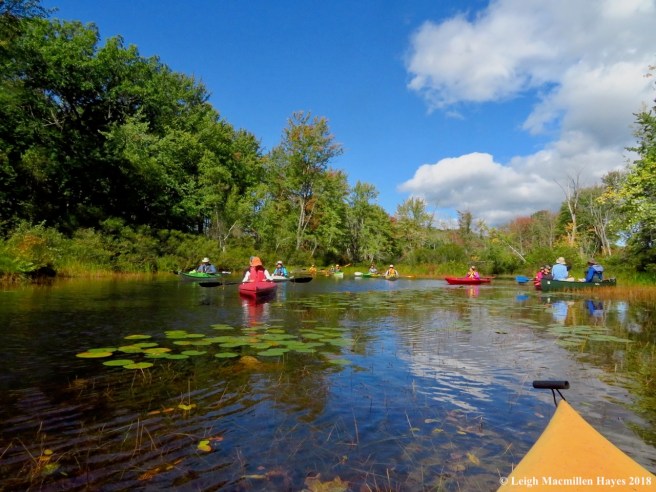
IMG_5586

At last I reached the vernal pool and realized I wasn’t the only visitor. What perfect hunting ground it proved to be for the . . .

IMG_5593

phoebe. I cheered for its insatiable insect appetite.

IMG_5596 (1)

Because the day was dark, it was difficult to see tadpoles, but I did note that many spotted salamanders were still forming. I also noted that the water level has dropped a wee bit–hard to believe–and where yesterday I found a few egg masses a bit high and dry, today they were gone. Something enjoyed eggs for dinner.  Scrambled or otherwise, I’m not sure.

IMG_5625

Back on the trail and at the next stone wall, interrupted fern showed off its fertile pinnae near the middle of the blades. It’s called interrupted because of the interruption in the blade. Again, this is an inhabitant of moist to wet forests and so it was no surprise to find it growing there.

IMG_5609

A fertile blade, such as this, may have two to seven pairs of middle pinnae.

IMG_5619

The globose sporangia is bright green when young, but darkens to tan or black as it matures.

IMG_5362 6.10.27 PM

On the other side of the wall, I spied some more flowers.

IMG_5360

These were the elongated loose clusters of black cherry trees, that open when the leaves are fully developed.

IMG_5636

One that flowers and fruits before its leaves are fully developed is the red maple.

IMG_5630

And fruits and fruits . . . need I say more?

IMG_5375

Though the wind blew, the samaras weren’t yet ready to let go and set down their roots. It won’t be long though, I’m sure.

IMG_5403

Finally returning home, I passed by the granite bench once more and was still stymied by the site I saw about a half hour after discovering the jack-in-the-pulpit yesterday.  It had been consumed. I suspected the woodchucks that live under the studio. Either that or a bear came along and I missed it.

And so ended today’s tramp. Thanks for traipsing along with me to visit these sites out our back door. I especially welcome those who are homebound with allergies, like my friend Jinny Mae. She gave me the inspiration to take a look today–to be her eyes for the moment and share my sight.

“The Actual World”

In this morning’s newspaper I read an article about the loss of natural sound because we have created so much people noise. It took me back to a time about forty years ago when I think I first actually paid attention by sitting alone in the woods and listening–hearing the soft rustle of grass blades, chirp of the crickets, buzz of mosquitoes and vroom of a truck in the distance. I can still envision that spot on a hillside where I closed my eyes to the sun and tried to zone in only on sound–to let go of the rest of the world and focus on that one sense.

And so I took that thought with me this morning when I joined others to bird at the Bob Dunning Bridge, one of the entrances to Bridgton’s Pondicherry Park.

p-yellow-rumped warbler

Truth be known, I also went birding at the bridge early yesterday morning when the sun shone brilliantly and a yellow-rumped warbler posed for an instant.

p-bridge 1

Today dawned raw and overcast. And at first, the birds weren’t all that song-filled or even evident.

p-baltimore 6

But then we heard one on high and our natural high kicked in. A Baltimore oriole whistled its melodious tune and we swooned.

p-phoebe right

We watched an Eastern phoebe flick its tail as it looked to the right . . .

p-phoebe left

and then to the left. Because of the morning’s chill, the bugs upon which it feeds seemed non-existent to start.

p-phoebee flying

But, perhaps it knew otherwise.

p-song swallow 2

What we knew was that the temp climbed a wee bit and bird song increased, including that of the ever sweet song sparrow. Yes, we could hear the sounds of this sleepy, western Maine town since we were only a block from Main Street, but the songbirds shared their voices and for us–we focused on those delightful tunes as we tried to figure out who we could hear but not see.

p-catbird 1

One such resident arrived this past week, like many other snowbirds (people residents who winter south of Maine– or is it south of New England?). We recognized the catbird first by its cat-like mewing and then we spotted two along the stonewall and in the brushy shrubs.

p-catbird flying

Like all birds, however, they didn’t sit still. We did note, though, that they spent most of their time on the other side of the bridge in an area where they frequently nest.

p-song sparrow 1

And speaking of nesting, the song sparrow moved from its perch to the ground where it joined others as they scratched about and filled their beaks with potential materials to add to their new home.

p-song sparrow 3

I love that from above, it blended in with its surroundings. A good thing when you are but a wee bird.

p-feathers

That being said, not all went undiscovered and we noted that some joules were passed from one bird to another–energy flowing through the cycle.

p-baltimore upside down

Eventually, one of our favorites of the day moved closer and we watched it for some time as it worked upside down and then . . .

p-baltimore 3

right side up. Again, we wondered if the oriole was working at the dried leaves and also seeking nesting material.
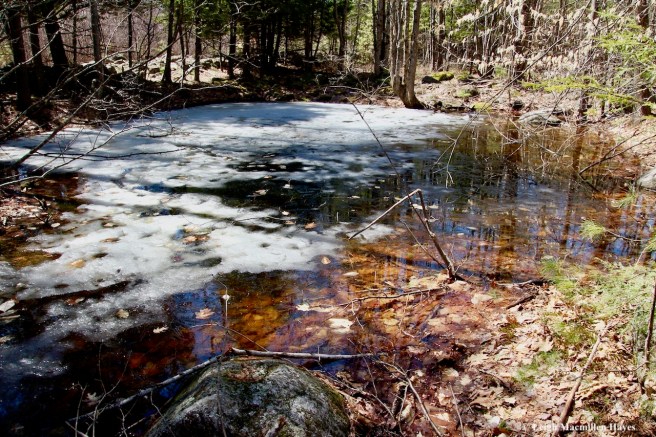
p-yellow warbler

And finally, a song a few of us heard when we first arrived showed its face–“Sweet, sweet, sweet, I’m so sweet,” evolved into a yellow warbler, or two or three.

p-Norway maple flowers 2

Because we were there and looking, other members of the world showed their faces, such as the flowers of Norway maples and . . .

p-box elder flowers

box elders.

p-elm leaves

We noted the emerging American elm leaves, already highlighting their sandpaper texture and asymmetrical base.

p-butternut

And then we got stumped momentarily by the butternut (aka white walnut ), but it’s the eyebrows above the monkey face leaf scar that spoke to its name. Less than a month ago, Jinny Mae and I discovered its cousin, black walnut at Narramissic. Both are not all that common in the woods, but both grow in places where human impact is more evident. That being said, human impact is evident the world ’round.

p-plaque

Eventually, all good things must come to an end and it was time for those gathered to move along into our days. But . . . we’d had the joy of spending a couple of early morning hours, whether in the sun or not, coming into contact with sight and sound and texture. We’d met the actual world and we loved making its acquaintance.

p-Mary 1

Thanks be to Mary Jewett of Lakes Environmental Association for offering these community birding events. And for her patience with us amateurs as she teaches us the finer points of identification.


Love/Hate Sundate

Some days are made for hikes and today was one of them. The temperature was right–in the upper 40˚s-low 50˚s. No sun. And no bugs.

So, after church, my guy and I drove to the trailhead for Burnt Meadow Mountain in Brownfield, Maine. At the signs indicating the trail splits in two–North Peak to our right, Twin Brook to the left, we knew we planned on covering the loop, but my guy stopped and asked which way I wanted to ascend the mountain.

Nose scrunched, I replied, “North Peak.”

He chuckled for he knows my love/hate relationship with this mountain.

b-red oak leaves

Today my love began with the new leaves, like that of the red oak,

b-red maple1

red maple,

b-striped maple

striped maple,

b-beech leaves 1

and beech. I worshiped them all for their subtle colors and textures. Spring is the time of year that reminds us to live in the moment, for the natural world demonstrates constant change.

b-trailing arbutus

And then there were the flowers, like the trailing arbutus, aka mayflower.

b-Canada mayflower

And another of a similar name, Canada mayflower.

b-shad 1

In the shrub layer, occasionally we came upon the beauty of serviceberry or shadbush flowers flowing in the breeze, exhibiting their own take on these fleeting moments.

b-early saxifrage

And cleaving to the rocks as we climbed, early saxifrage. It’s also known as rockbreaker for this habit, and perhaps suggested the Latin name–Saxifraga virginiensis. Saxum-rock and frangere-to break. A funny name for an uncommon display.

b-summit ahead

I did my best admiring my surroundings for I knew what awaited. My guy paused as the summit came into sight,  expecting me to comment. For once, I kept quiet.

b-summit climb

And then, when the time arrived, we both channeled our inner mountain goat and sought hand holds and foot holds as we scrambled up the nasty dash to the top. Ha ha. It’s difficult to scramble when your heart pounds while your body quivers. This is the section I most hate–and as I always told our sons when they were youngsters, hate is a strong word. I knew I could do this for I’ve done it many times before, so I tried not to take too long as I considered my next move. Plus, rain drops began to fall and I didn’t want to be stuck contemplating on slippery granite. But still.
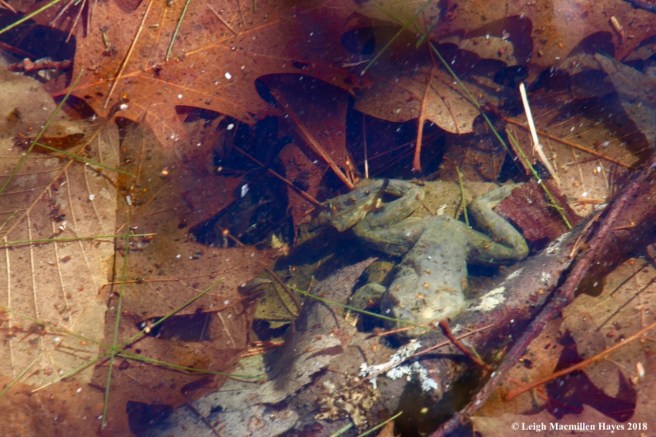
b-lunch rock

Finally–success. We’d reached the flattened top of the mountain–such a welcome relief after that horrible section. You’d think it was miles long the way I carry on about it. The rain drops ceased and we sat on lunch rock to dine–dirty hands and knees our badges of honor.

b-summit 1

Our view from the rock–looking back toward our point of ascension.

b-summit 2

And forward toward Stone Mountain. After lunch, our plan was to follow the Twin Brooks Trail that passes through the saddle between Burnt Meadow and Stone.

b-summit 3

And to our right–looking toward the White Mountains.

b-summit trees:layers

Though the view is almost 350˚, our immediate view behind lunch rock offered layers of life–blueberries, a young paper birch and a white pine.

b-twin brooks trail down

At last we started down. The Twin Brooks Trail is longer, but less of a struggle. That being said, it’s not a walk in the park as there are constant roots and rocks seeking attention.

b-mt washington1

But occasionally there are views. I was afraid we might not see Mount Washington today, but it didn’t disappoint.

b-birch catkin1

On the way down, we were in the land of the birch, their catkins growing long . . .

b-birch catkin pollen

and exploding with life-giving pollen.

b-viola

There were violas to admire.

b-shad 2

And more shadbush.

b-bear claws 1

But one of my other favorite things about this trail is the bear claw trees. No matter how many times I see them, they still bring a smile to my heart–and face. And a memory of seeing a bear on the North Peak trail one summer–it sauntered past us, not seeming to care that we were there. I suspect its belly was stuffed with blueberries.

b-twin brook 1

As we continued to descend, we soon heard the sound of one of the brooks for which the trail is named. Quite often on this trail, the water barely trickles, but today it rushed over the moss-covered rocks.

b-logging

Continuing on, we remembered that two hikers we meet at the start said there had been some logging and sometimes it was difficult to follow the trail. At last, my guy found the area they’d referenced. The trails are on private land and so while we couldn’t find some familiar landmarks, we nevertheless were thankful that we were still able to hike there. And, we were mindful to look for the yellow blazes as we stepped over some slash. It was quite doable.

b-bear tree 2:eye level

The result–a bear tree we hadn’t seen before was revealed.

b-bear tree 2:looking up

It must have offered plenty to eat in the past for the tree was well climbed all the way to its crown. Maybe we’d once met the very bear.  Maybe not. Who knows. But it’s worth a wonder.

b-bear of a different sort

A bear of another kind also left behind a sign of its presence. We obviously weren’t the only ones who headed to the mountain for a date.

b-bear tree 3

In one last spot a short way from finishing the loop, we found our last bear tree–again seen because of the logging. I suspect there are many more in these woods and hope they don’t all get cut.

Emerging leaves. Spring flowers. Jagged outcropping. Flowing water. Bear trees.

Really, it was a love/hate/love Sundate–joyfully spent with my guy.