Surprise Ending

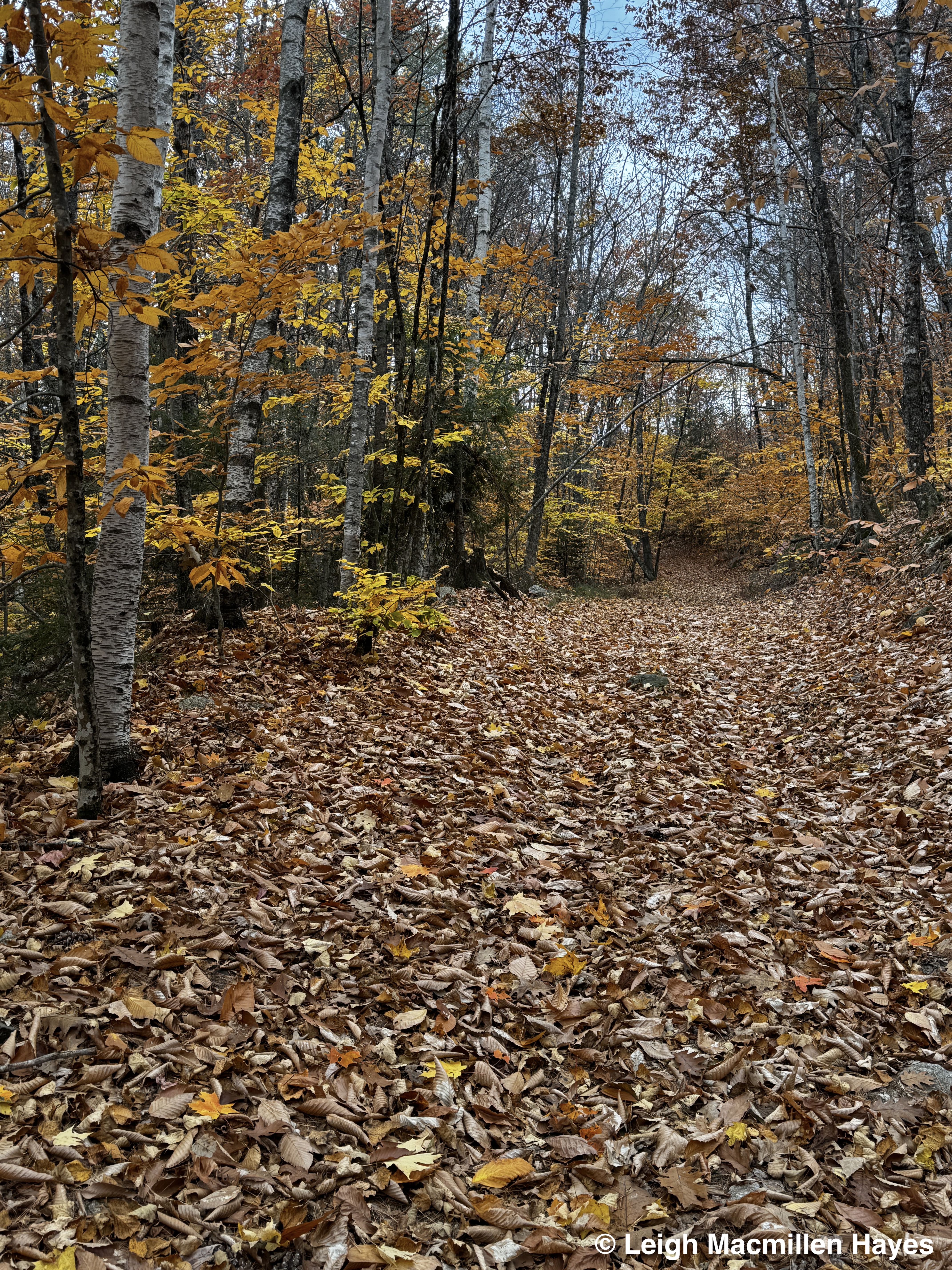
Sometimes we follow familiar trails and other times we go off the beaten path. Well, sometimes we go off the beaten path along familiar trails. And other times, we just plain go off the beaten path because we’ve never explored an area before, and even then, we don’t exactly follow the intended route and part of that might not have been our fault for perhaps maps and blazes didn’t correspond. But in the end . . .

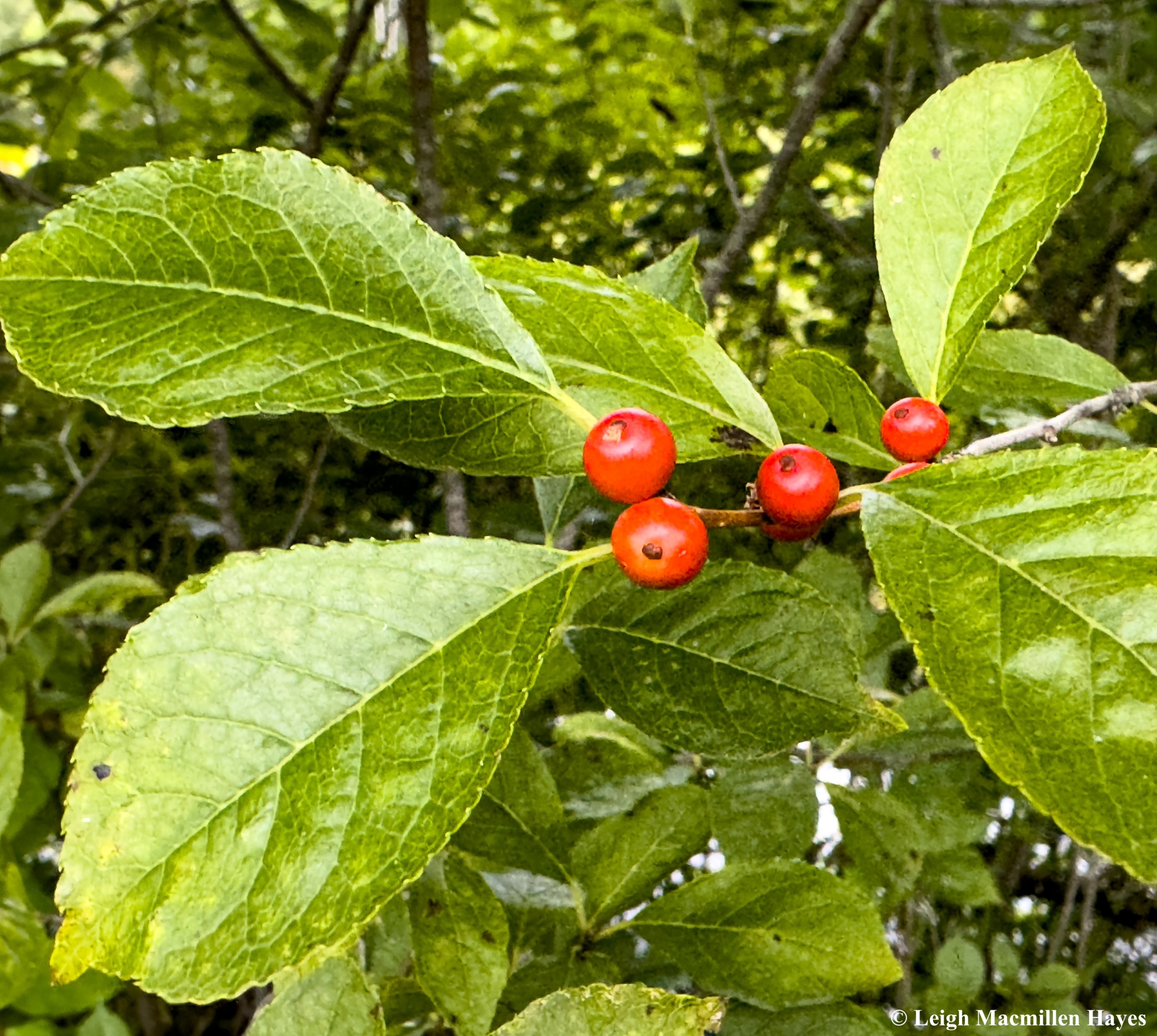
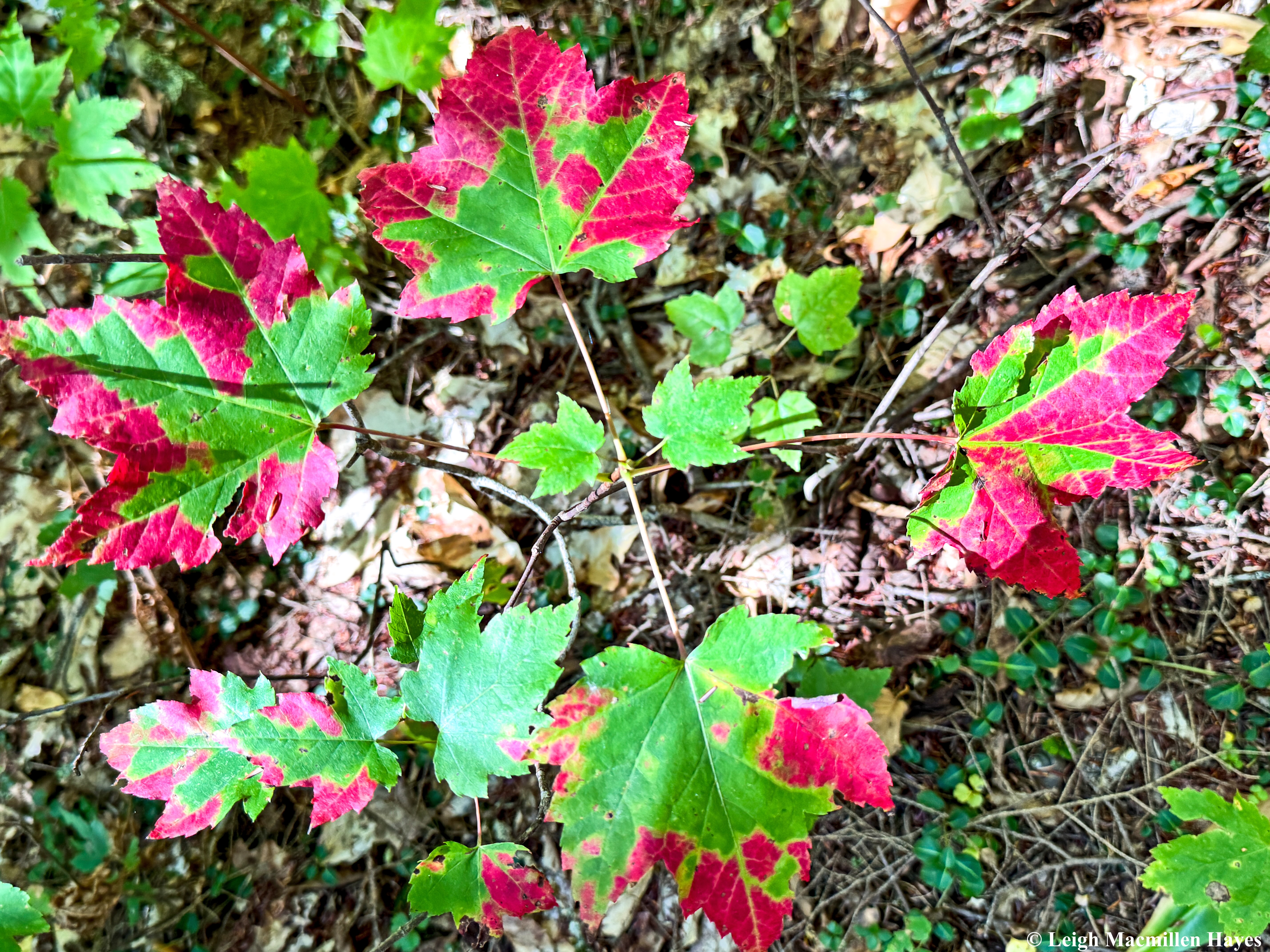
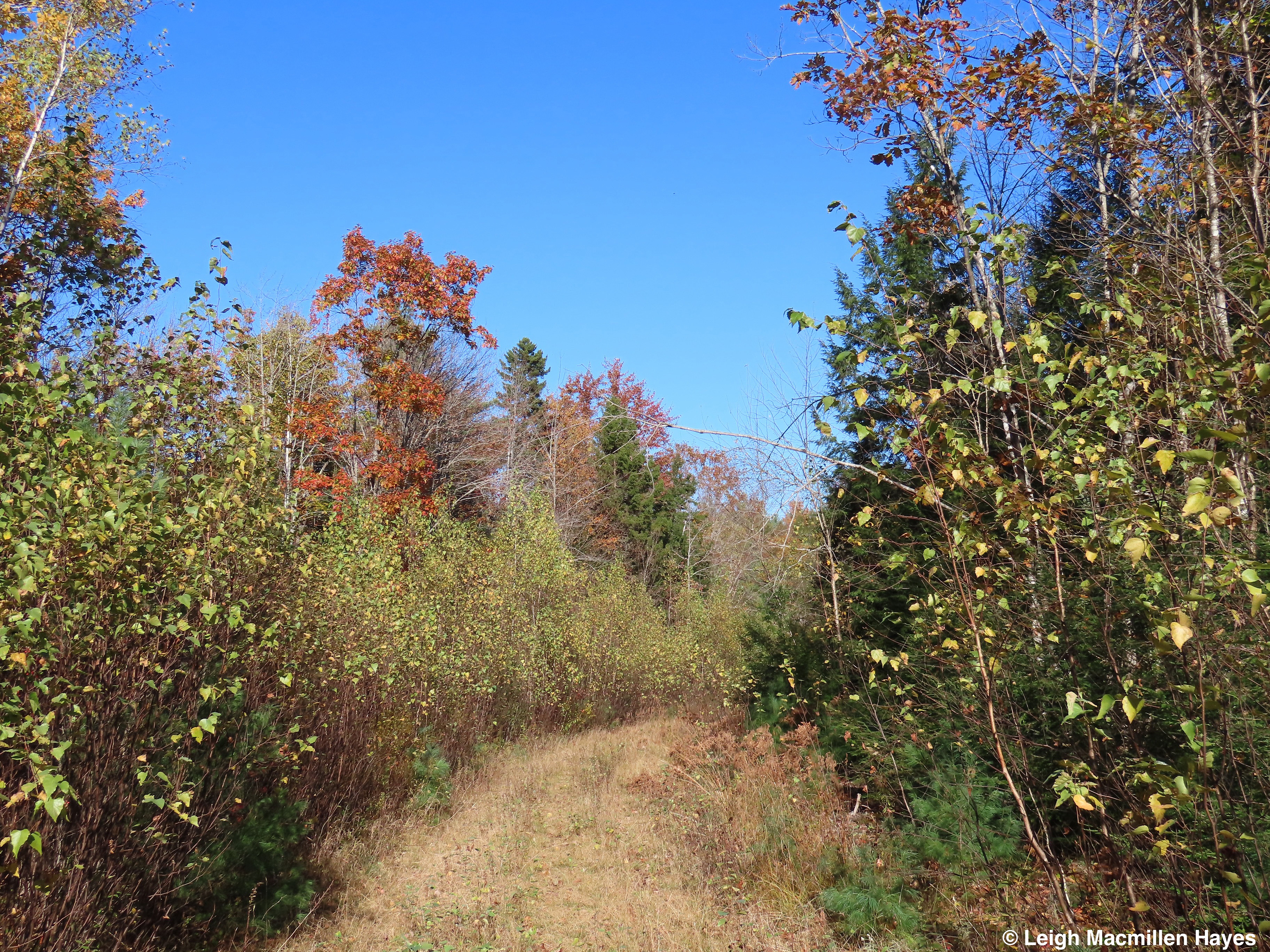
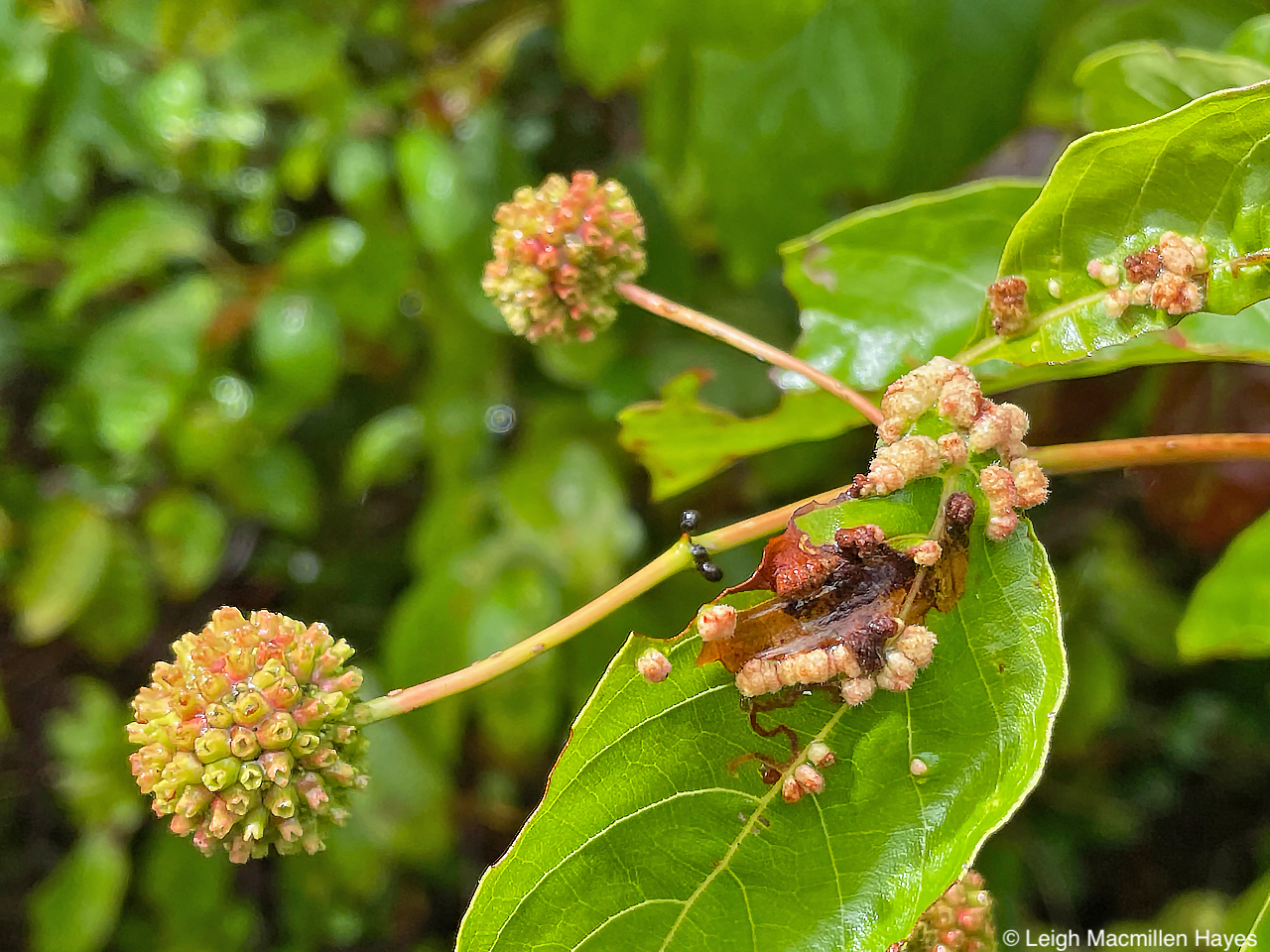
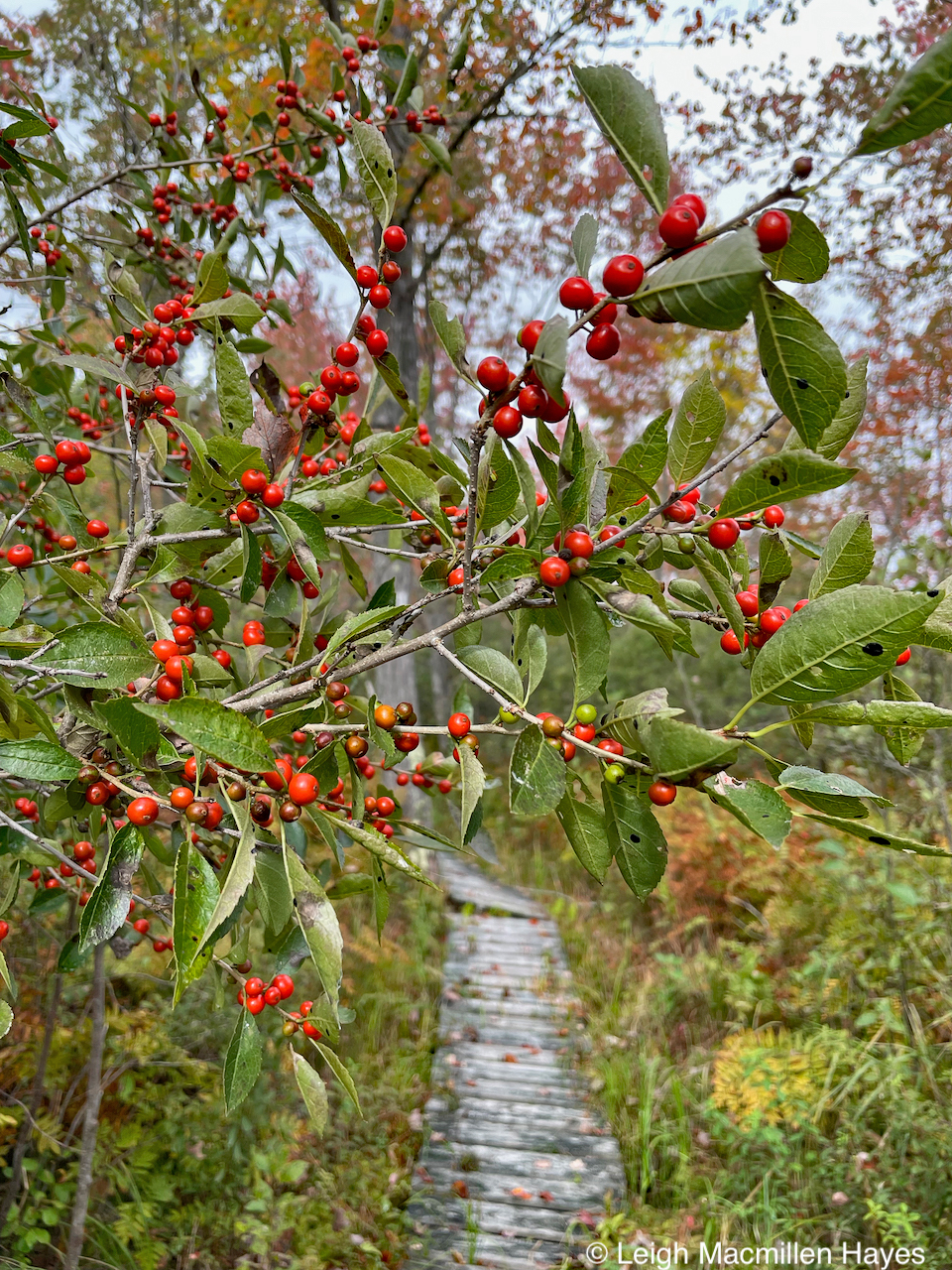
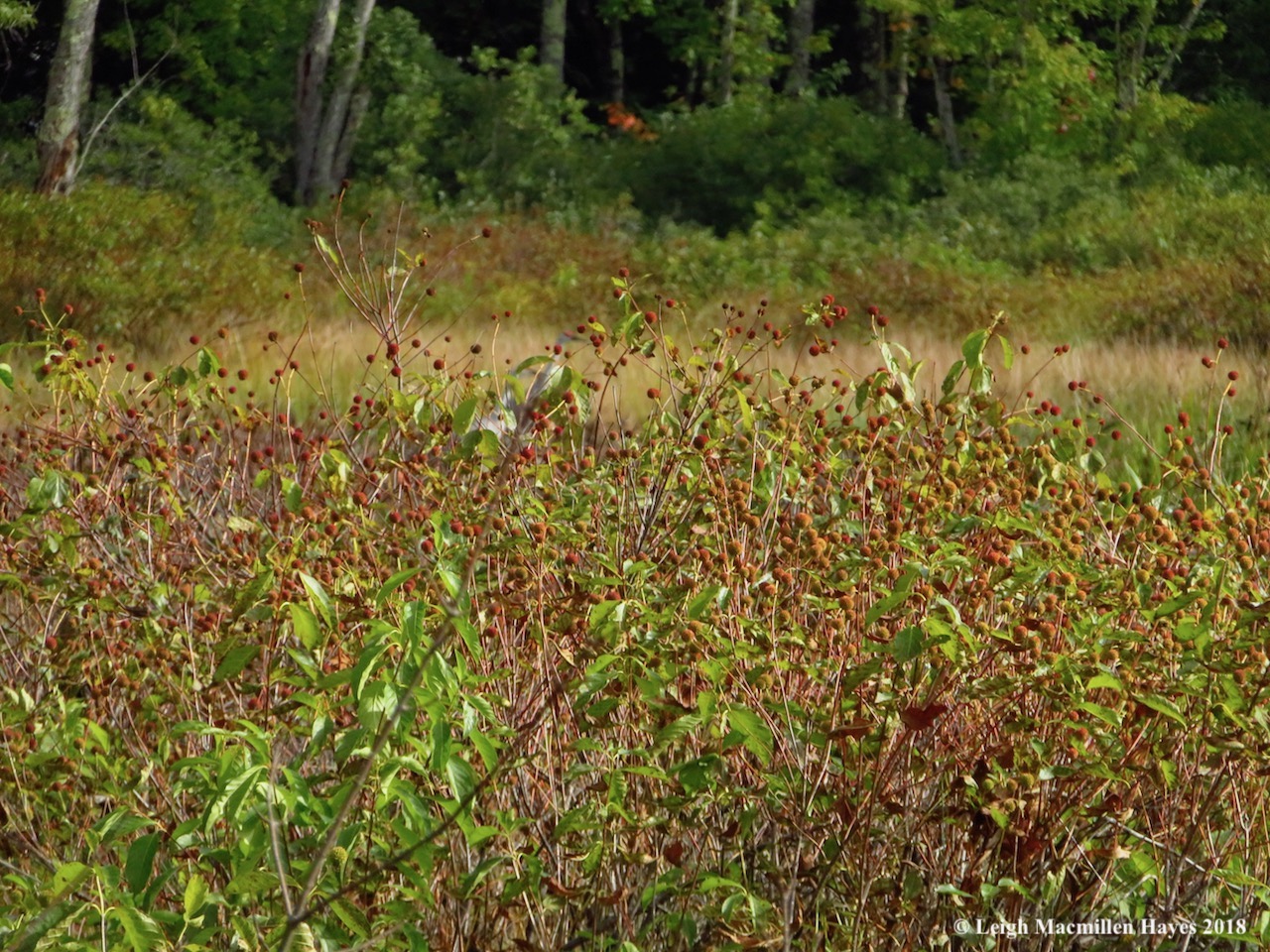
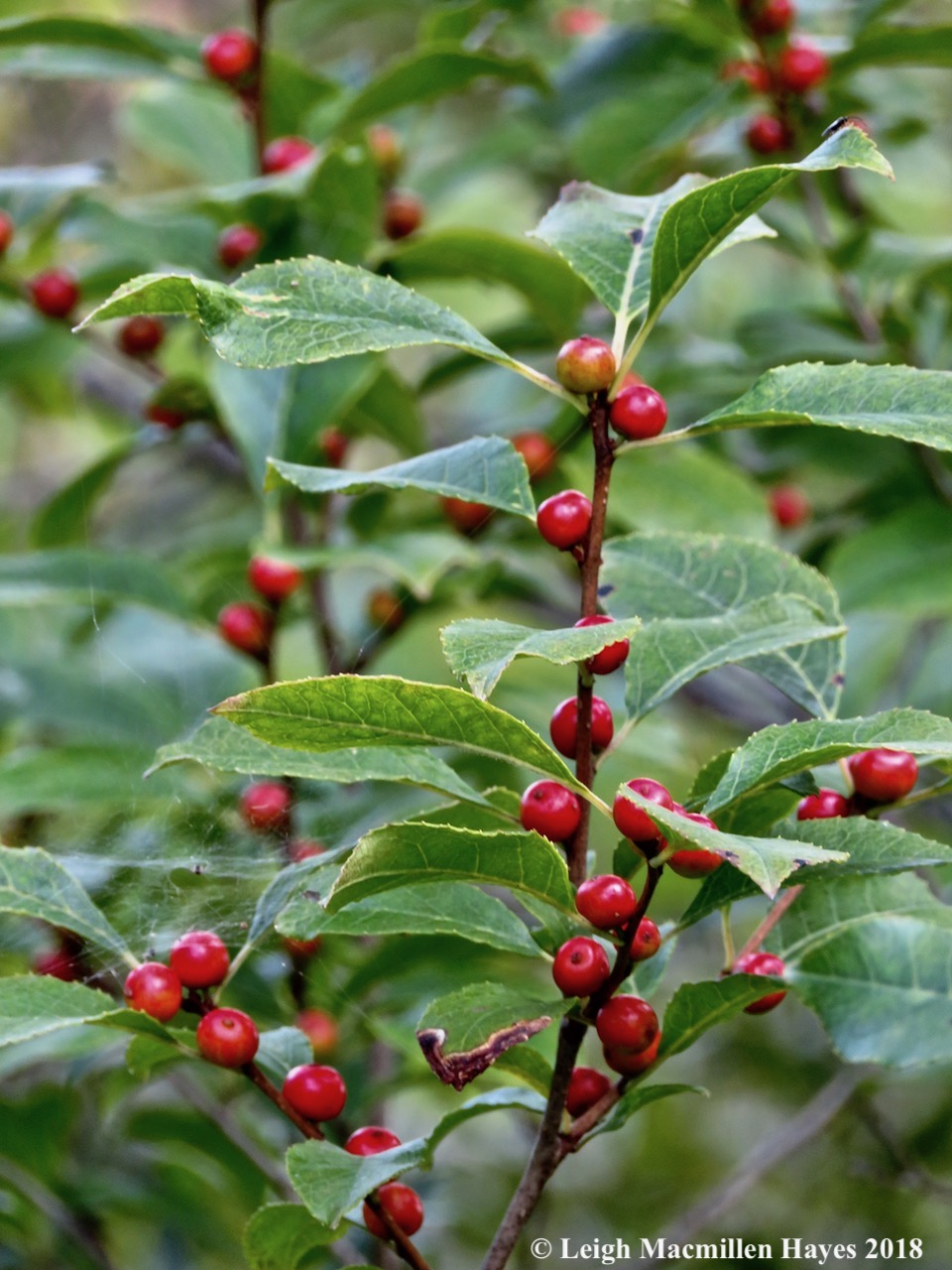
Wait. Let’s start at the beginning. We drove across the border into neighboring New Hampshire for a hike and though we’d never been to this spot before, I suspected when I spotted the fruits upon the Mapleleaf Viburnum, that we’d made the right choice. Usually it’s the colors of the leaves that tug at my heart strings, for there is no other tree, or shrub in this case, that exhibits these colors in combination: pinkish-red, purple, magenta, and burgundy.

But the dark blue fruits have disappeared on most that I’ve seen this fall and so I was thrilled to discover so many upon several of this species.

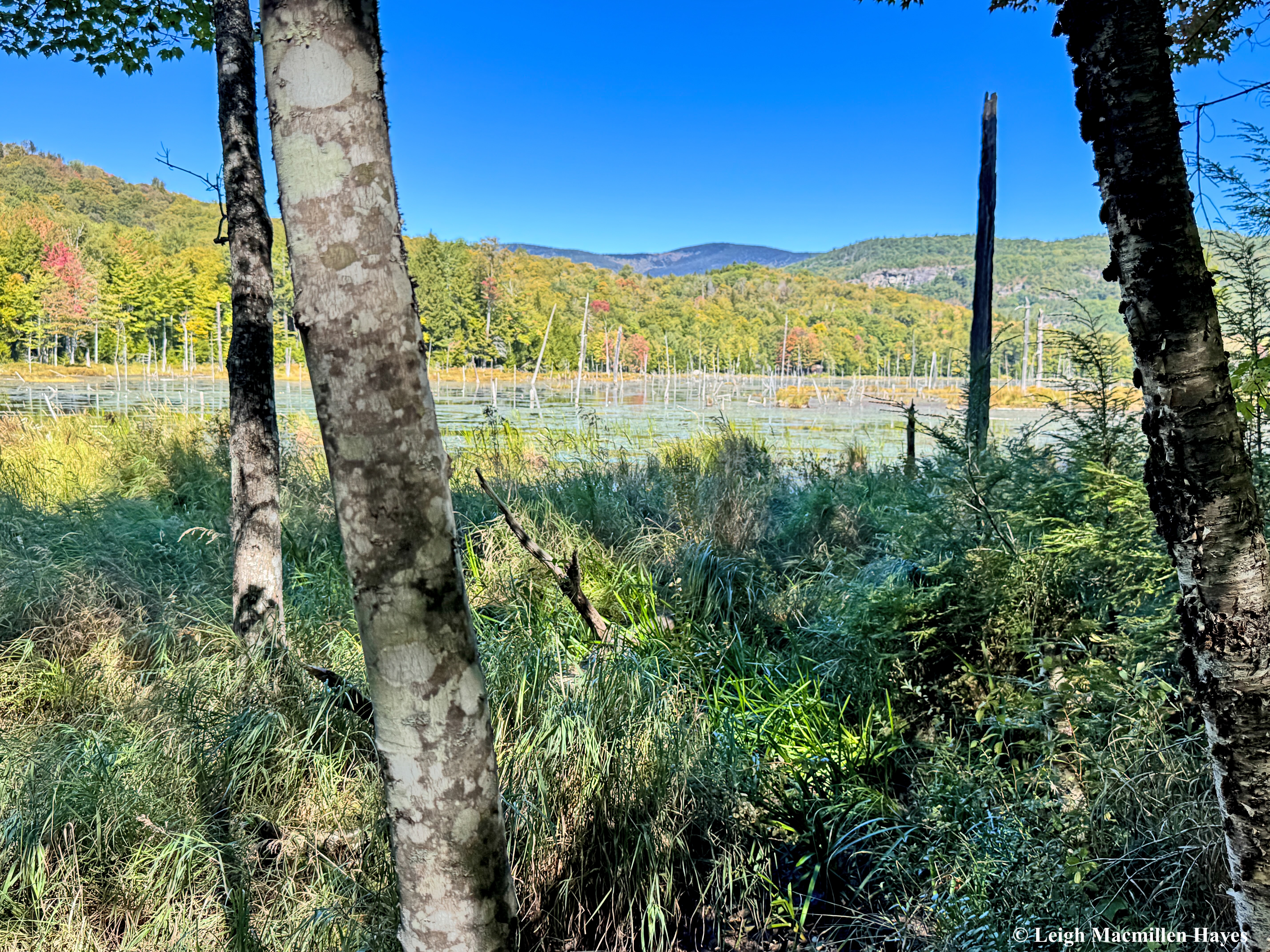
We followed the trail, and then went off trail, of course, for about 2.5 miles, but noted that the description of wetlands was rather deceiving. Oh, they were there, but not clearly visible from the trail and even when we did get to the edges, we could barely see the water for buffer vegetation was so dense. That said, I’m sure the water quality was good. That said, we were in an area with some warning signs about a mining operation years ago, and so the water quality must have been compromised and we can only hope is recovering.

As we circled our way out, we noted that we could have been anywhere in northern New England for we were familiar with all the plants and trees we met. And then My Guy, who does not like mushrooms as part of a meal, spotted a bunch of Red-belted Polypores, which we both admired for a few moments.

Our first leg of the journey completed, we ate lunch and then drove down the road and wandered into the woods again to locate the site of an open pit that was last mined in the early to mid 1900s.
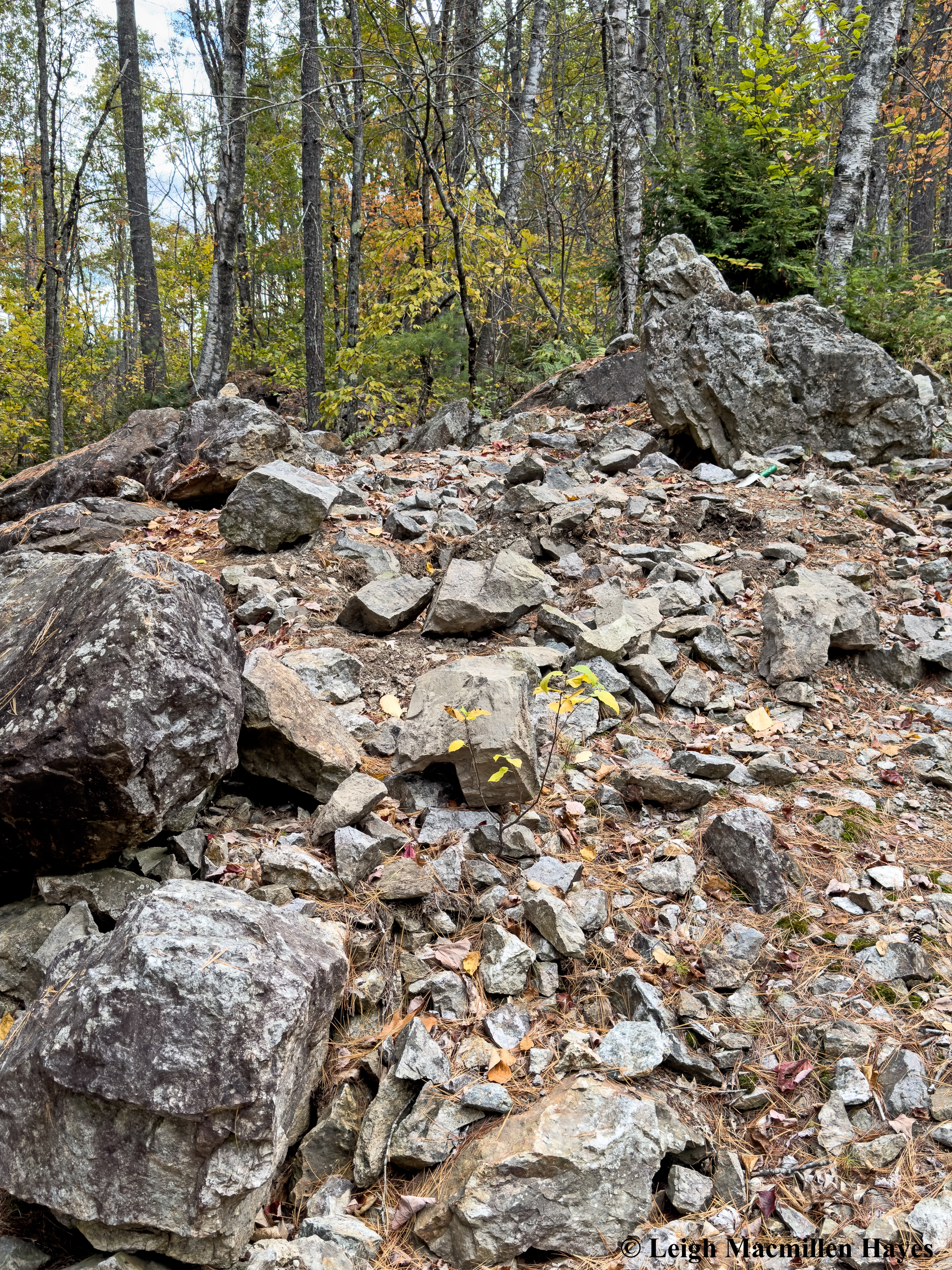
Since then, others have tried their hand at prospecting and if you are a “Where’s Waldo” fan, I encourage you to try to locate a trowel in the photo above.
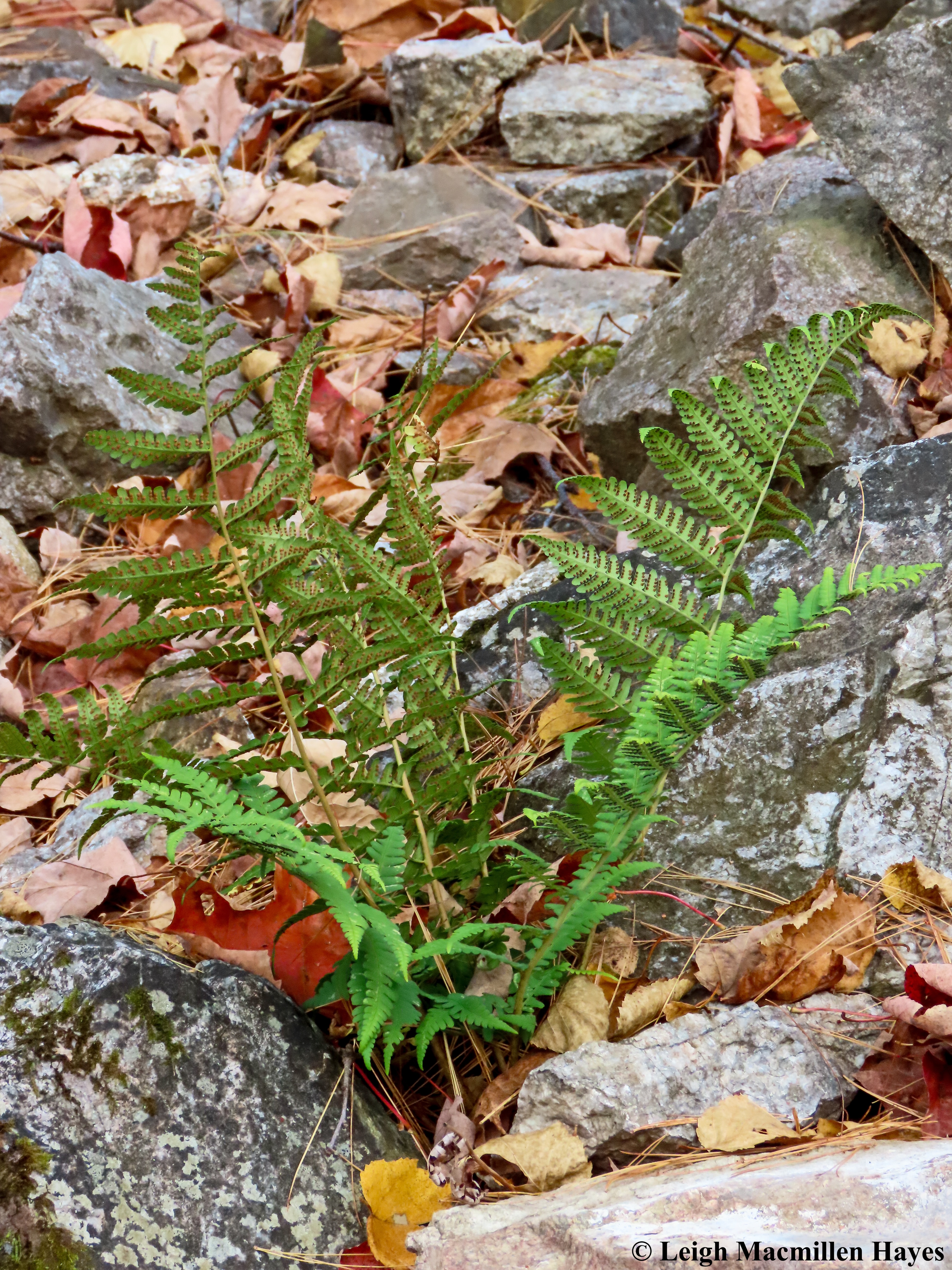
Among the waste rock dump, I was amazed to see a Marginal Wood Fern with its bluish-green leaves and loaded with sori (groups of spores) lining the edges of each leaflet. Their dark color indicates the spores had ripened, but still visible was the whitish, translucent tissue (indusium) that is kidney-shaped, and partly covered the spores.
We left that trail behind and headed off to complete one more loop. Well, we thought it was a loop. Turns out we followed two different trails that did not meet.

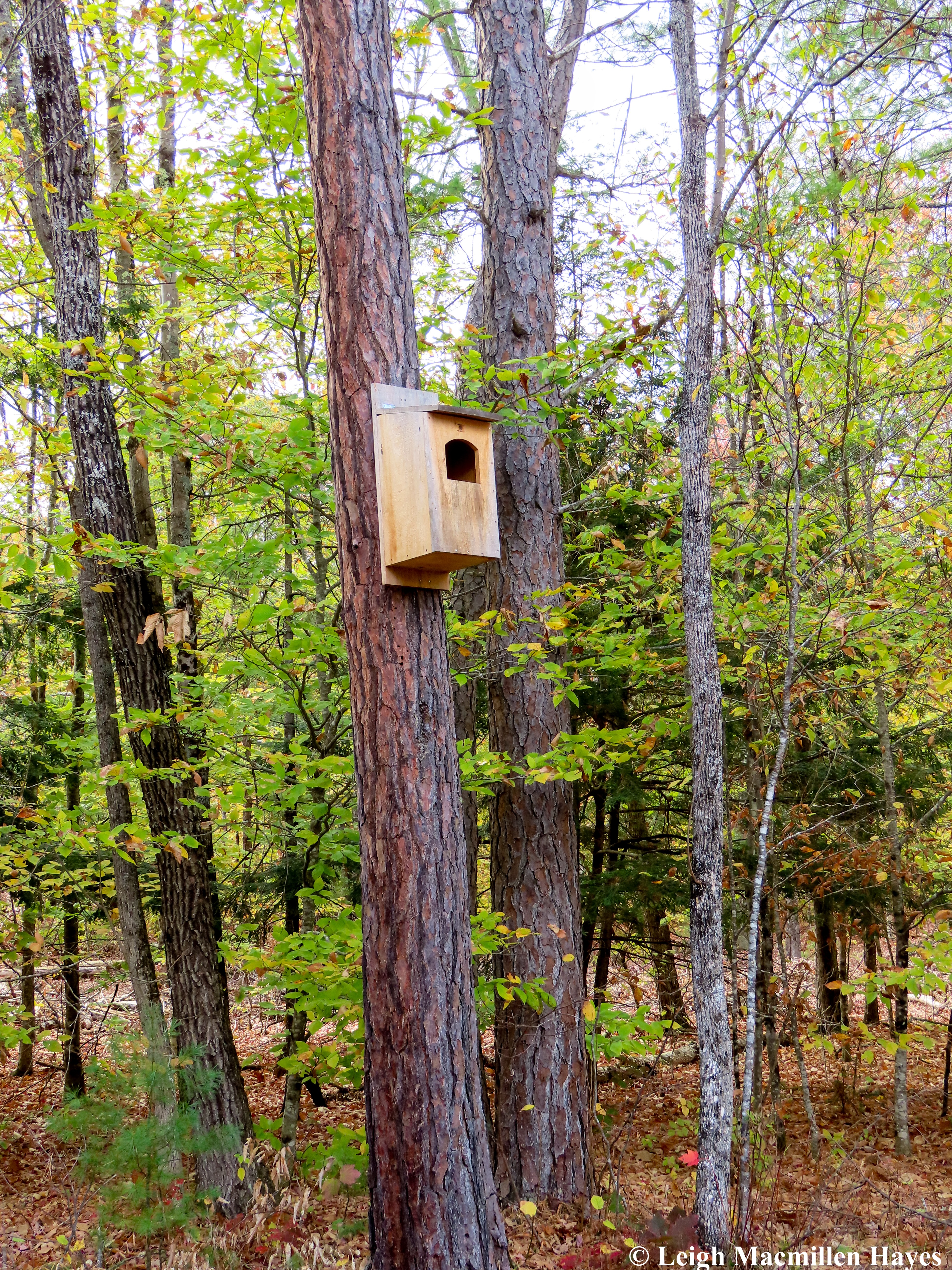
But, along the way, we discovered this huge bird box, a nesting box meant to encourage Barred Owls. I’ve since read that these should be in a mature hardwood forest near water. This one was located on a conifer at the edge of an old log landing. There was water nearby, though it took us some a while to locate it. Has the nest ever been used, we wondered. The Barred Owls in our neck of the woods seem to find tree hollows in which to set up housekeeping and the fact that I hear them most nights and occasionally spot one during the day, and have for several decades means they are quite happy living here, and don’t need a box.

But I digress and return home in that last thought and we hadn’t returned home yet for we had two more discoveries to make on our rather off-course trek, the latter one being the most significant.

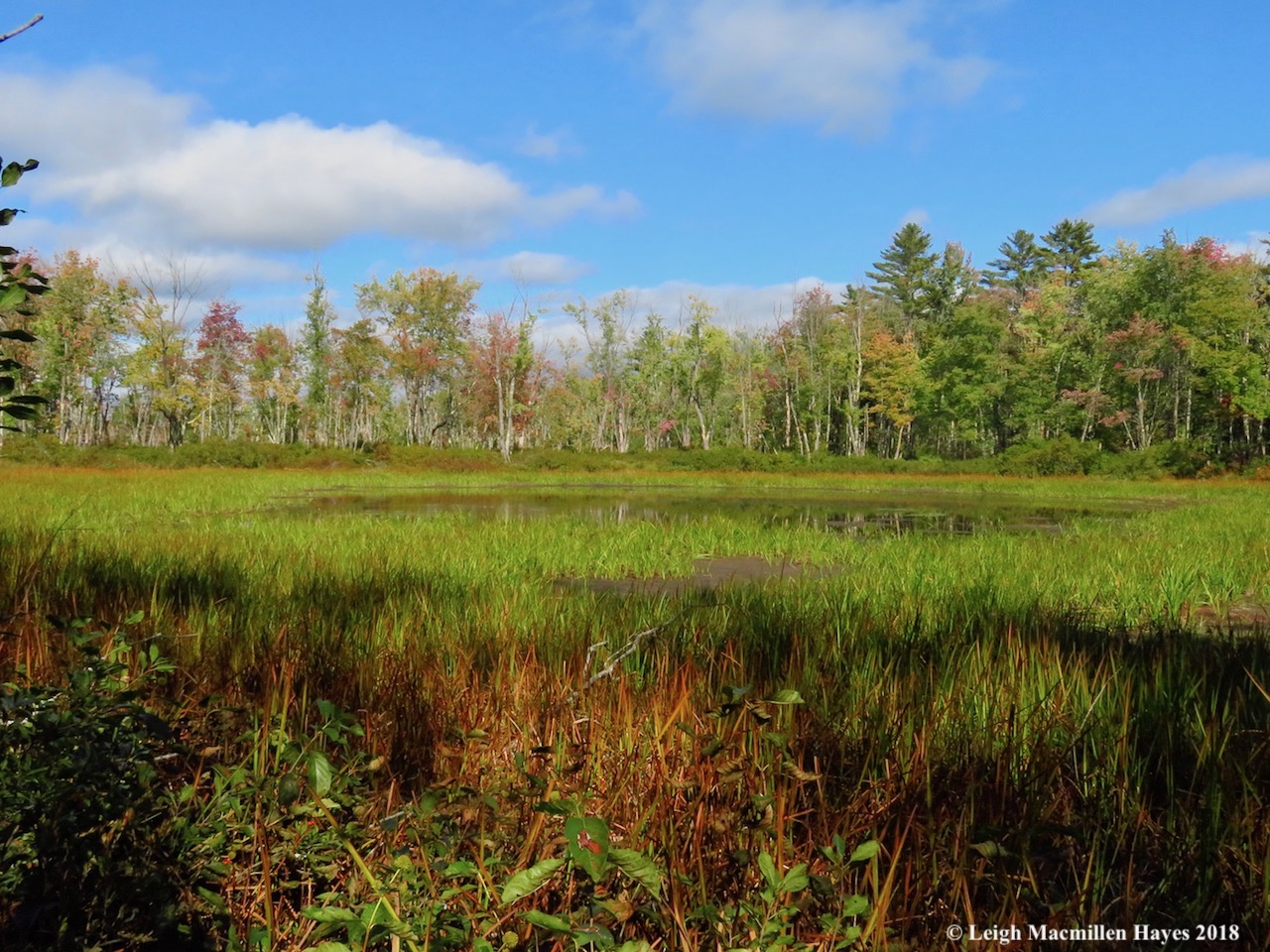
As I said, we eventually located a wetland after bushwhacking once we reached a dead end on the trail. We would have explored it more, but had just realized that what we thought was a loop wasn’t and we wanted to know where another trail might lead in the time we had left before heading home.

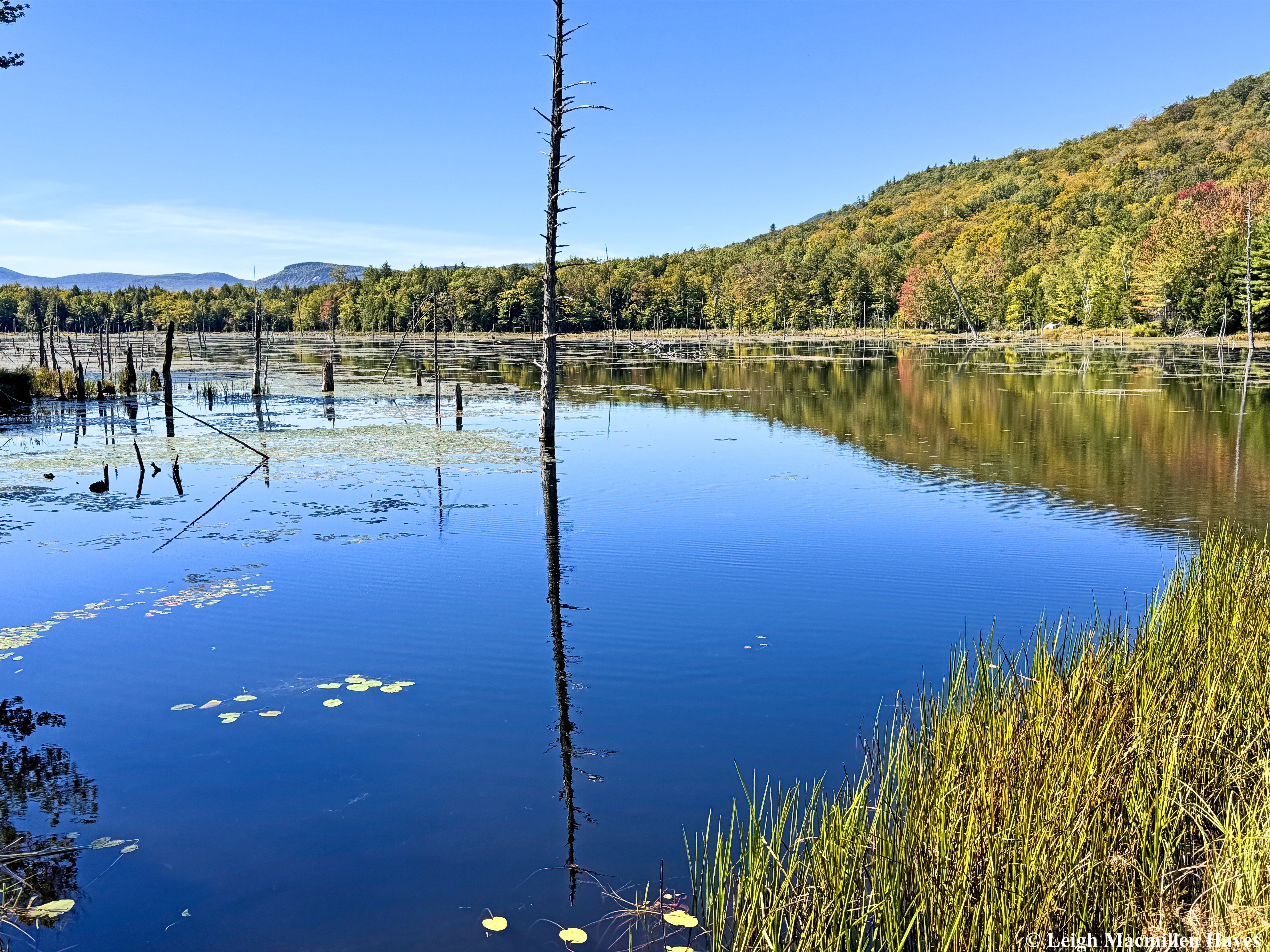
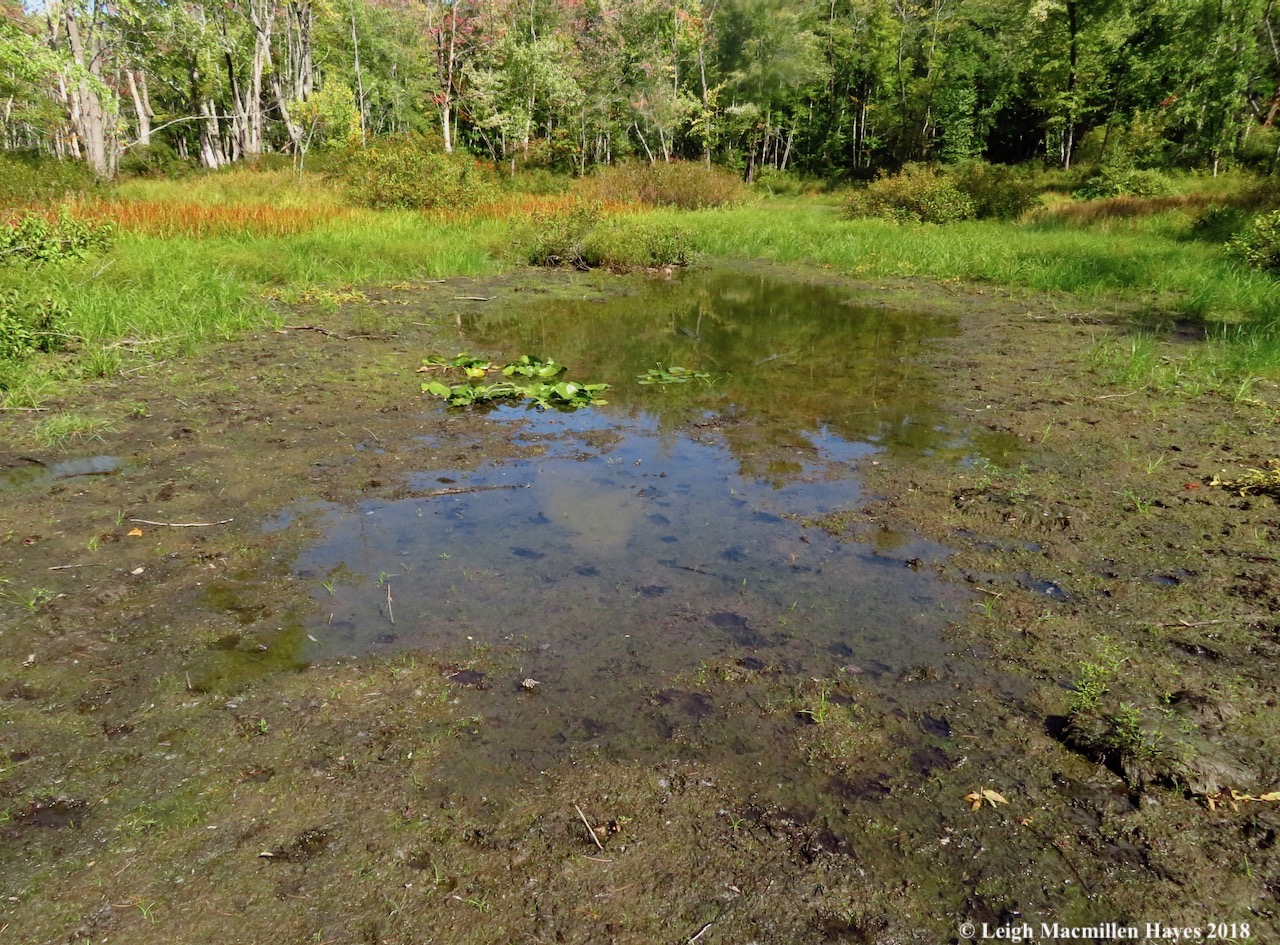
Take note of the water level. Not too low. Curious.
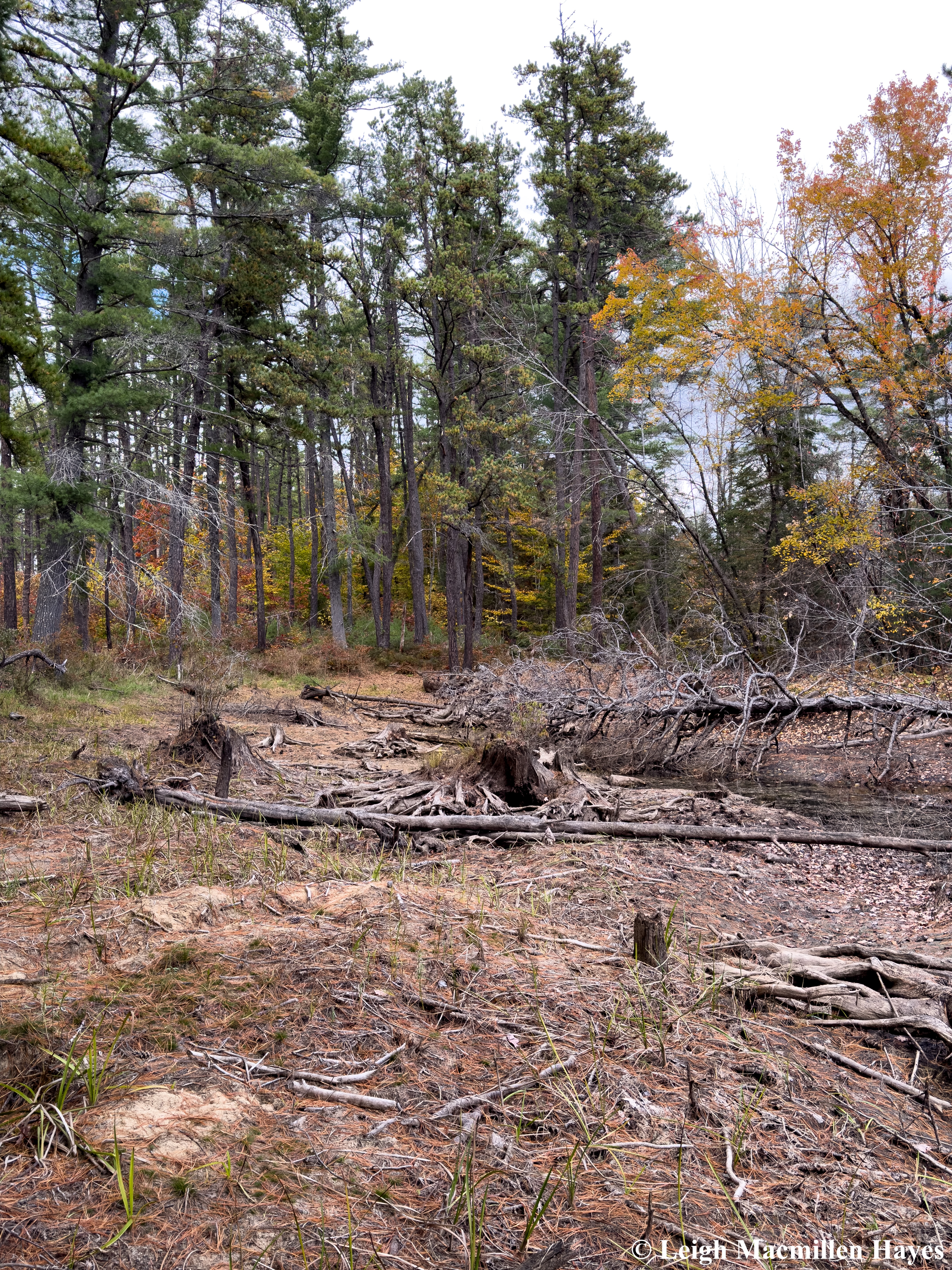
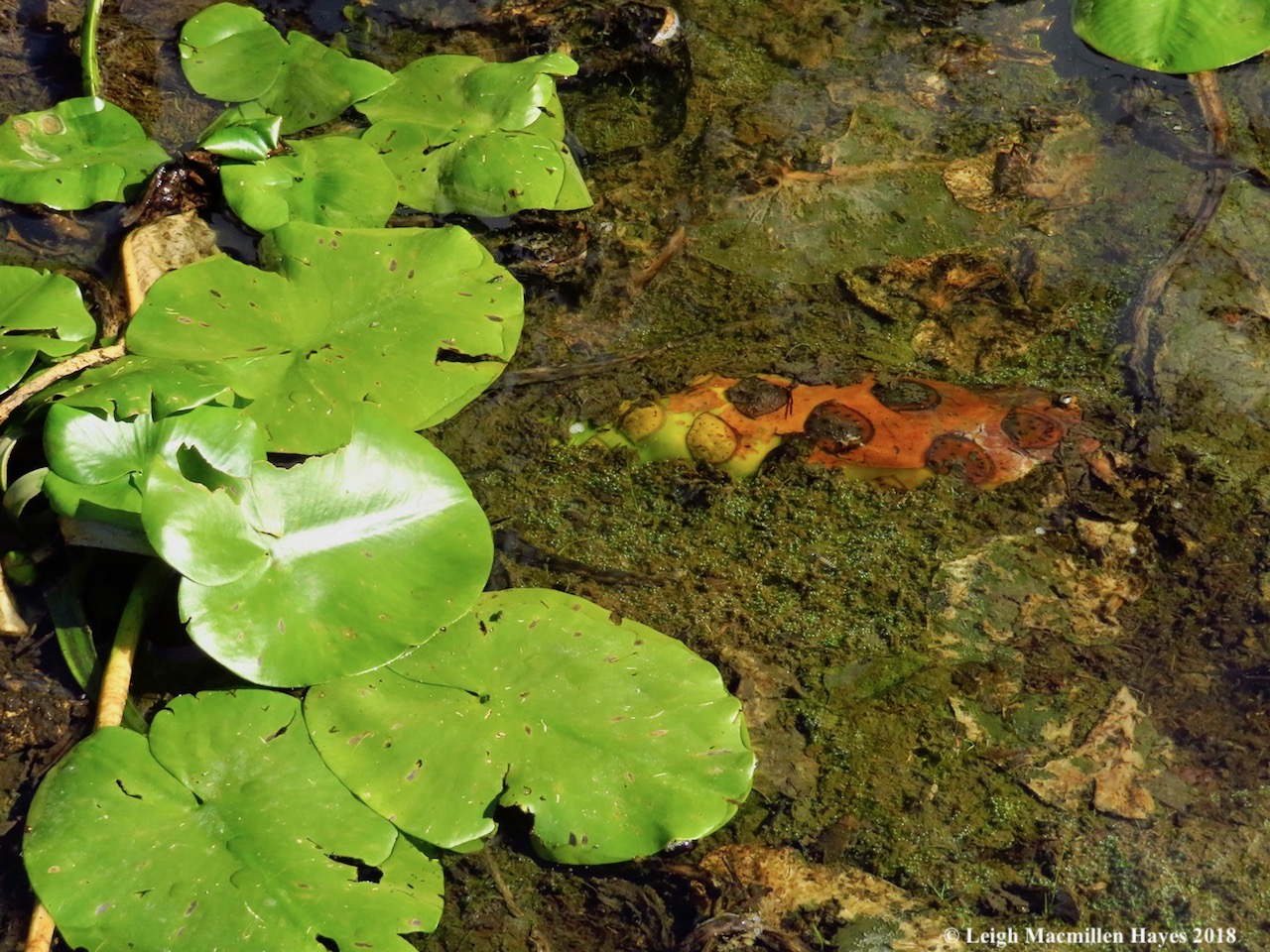
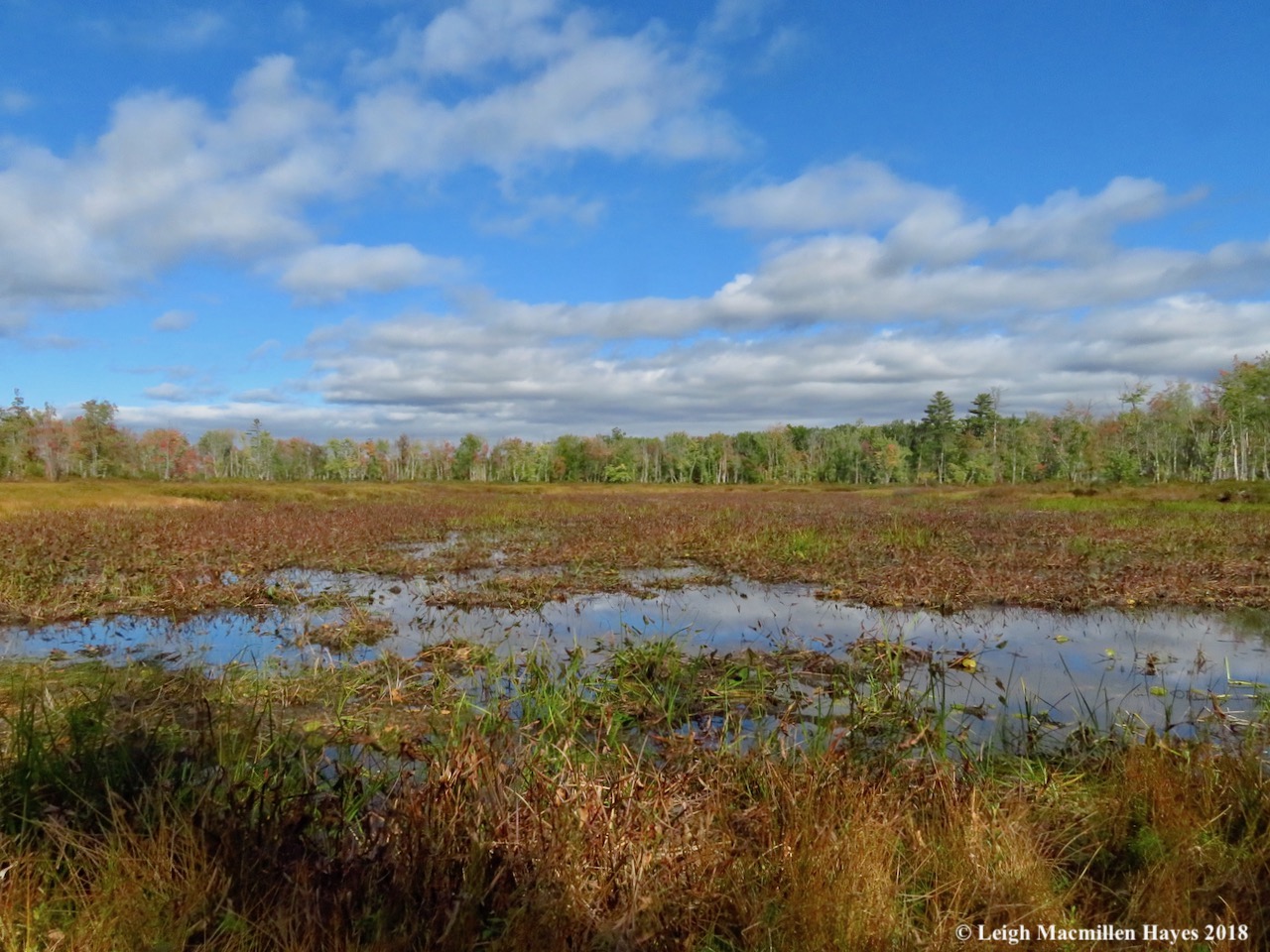
In trying the connect dots, we returned to our starting point of this third leg of the journey and then hiked in the opposite direction. Again we reached a dead end. And again, we bushwhacked from there and came to one rather dried up wetland. Why?

Perhaps there was a beaver upstream? We don’t know. But we did spend some time exploring it.
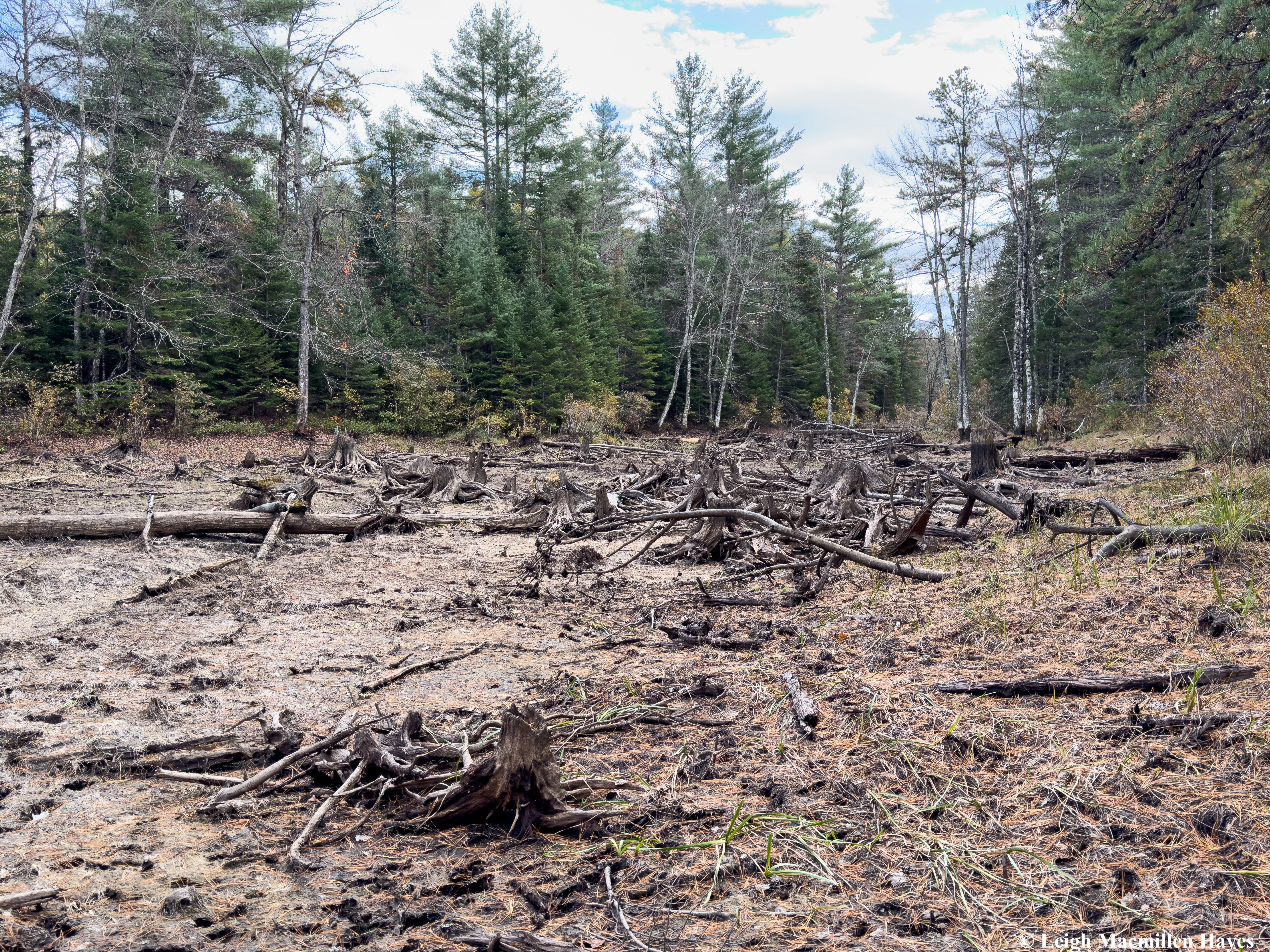
At first glance, it was so barren and my heart was saddened for the loss of life. Obviously, this used to be part of the forest as evidenced by the tree trunks. And then it was flooded. And now it isn’t. Since the drought? Since before that? Answers we don’t have.
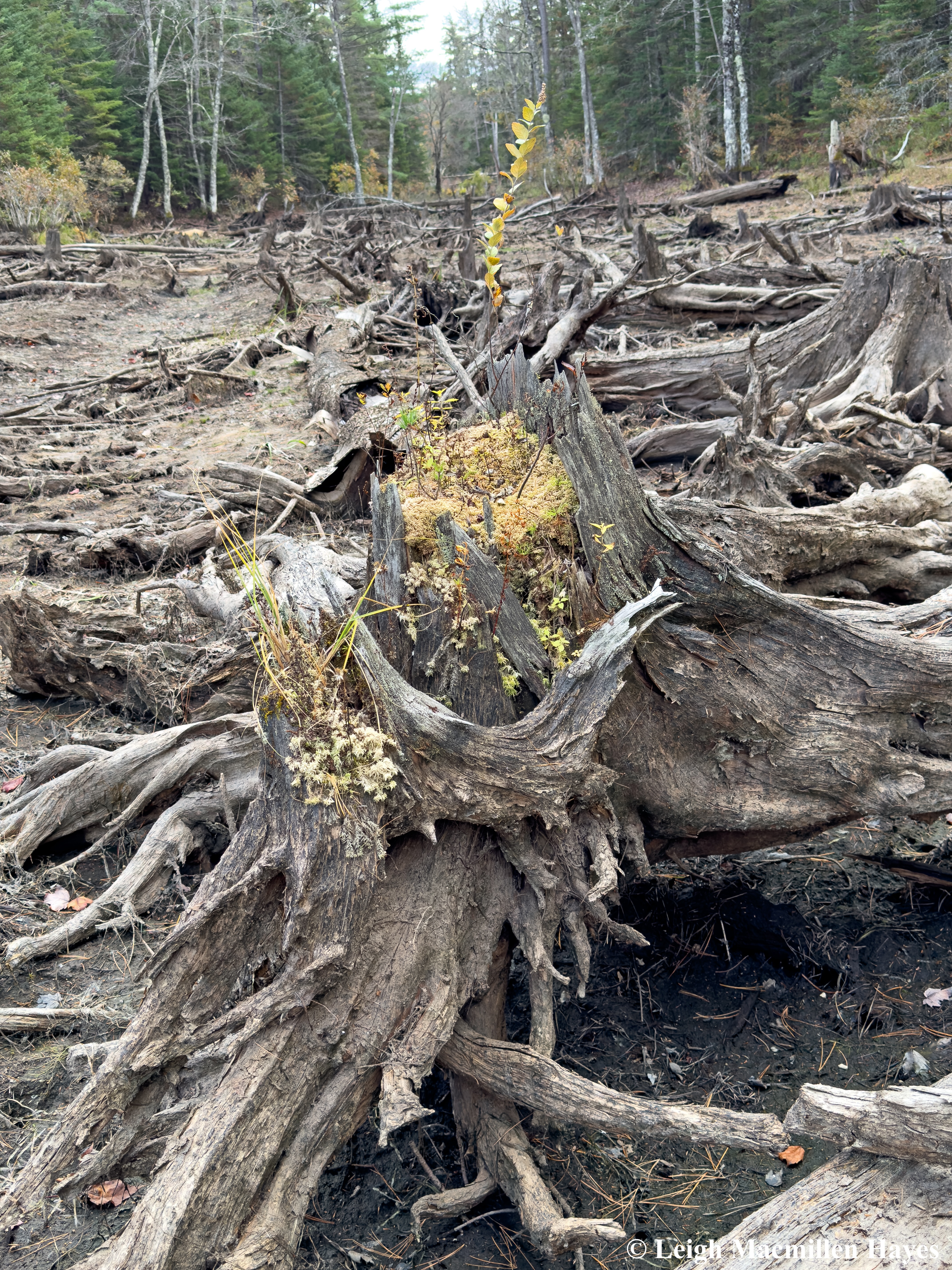
My Guy explored in one direction and I moved across the mud in another and met a stump garden.

In its own dried-up way, it was a thing of beauty with lichens and mosses and plants and grasses and trees all finding their niche in the midst of such apparent devastation.
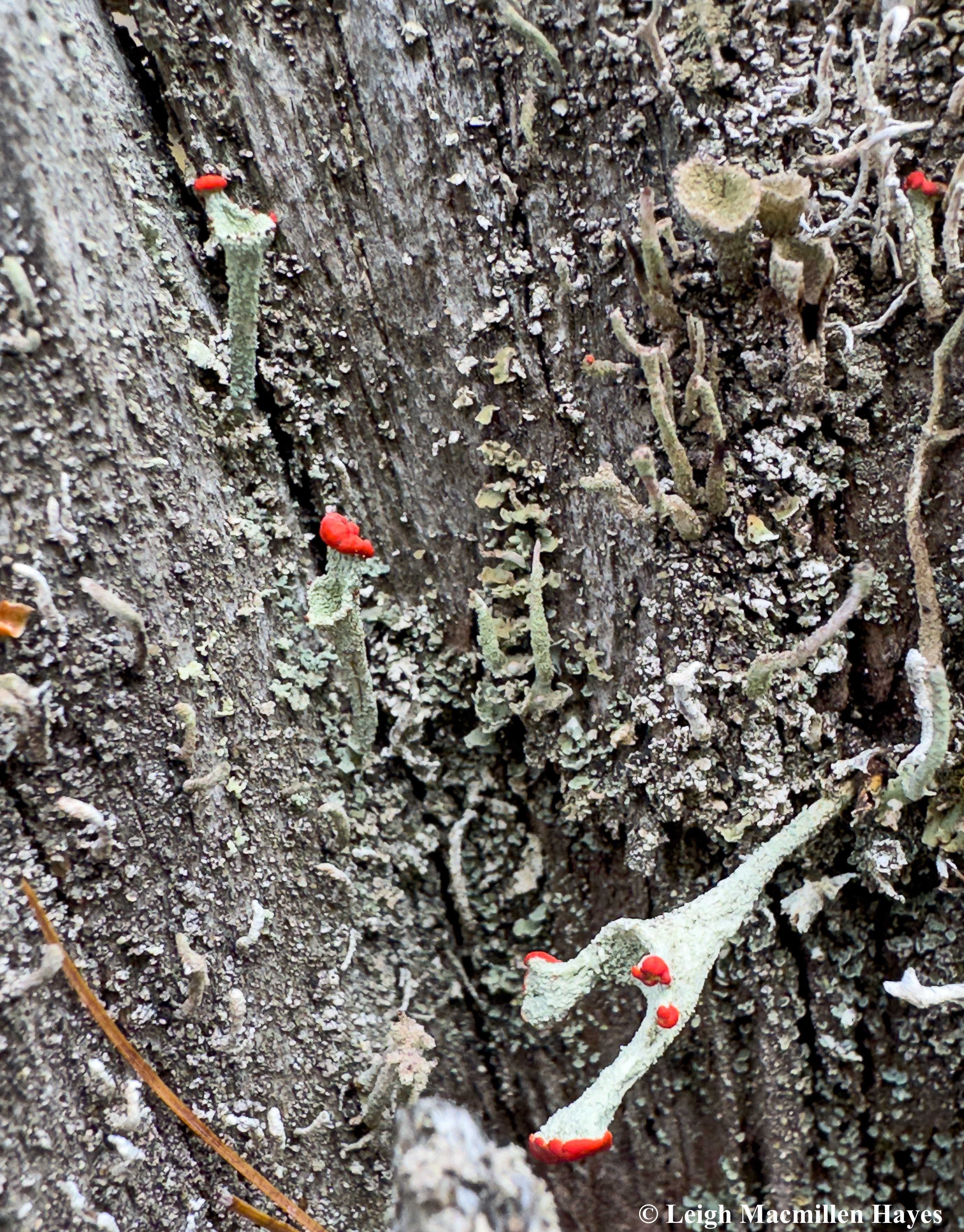
On the barkless outside, I discovered a myriad of lichens from Pixie Cups to Powderhorn (now apparently called Wands) to Red-fruited Pixie Cups.

Not to be confused with British Soldiers, which do not have cups, the Red-fruited Pixie Cups brought a smile to my face due to their goblet formation topped with those outlandish caps along the margins. The red is actually the apothecia or reproductive structures where spores develop.

Beyond the garden stump was another and even another, their roots wrapped in a forever embrace.

But the show stopper was what I spotted in the mud. A track. There were deer tracks galore. But . . . another mammal or two or three had also passed this way. Note the details.
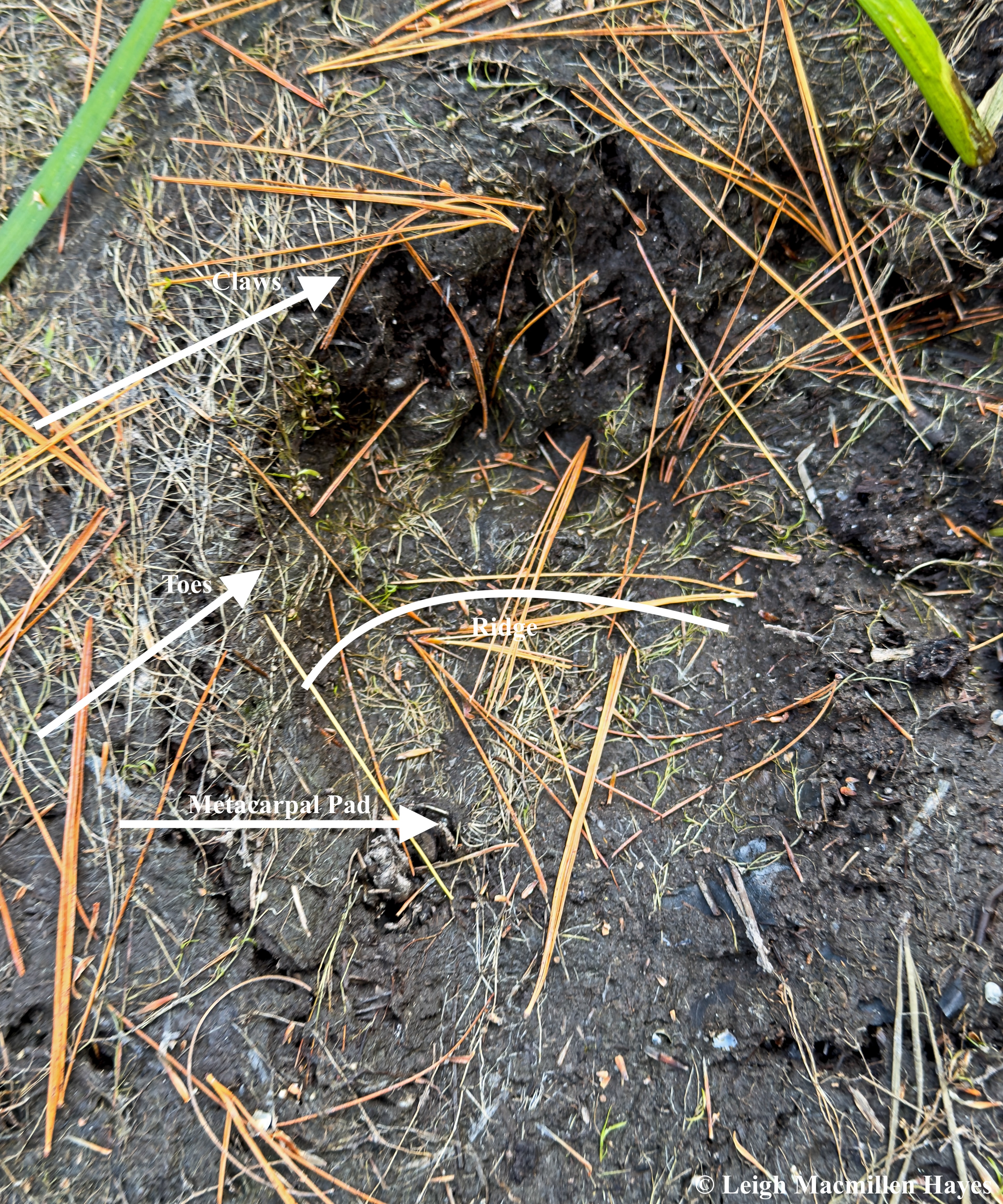
I present to you, my dear readers, a bear print. Black Bear in this neck of the woods. The smaller toe is on the left, which means this is a right front foot–their big toes are on the outside of their feet rather than the inside like ours; better for climbing trees.

Do my arrows help you to see the parts of the foot?
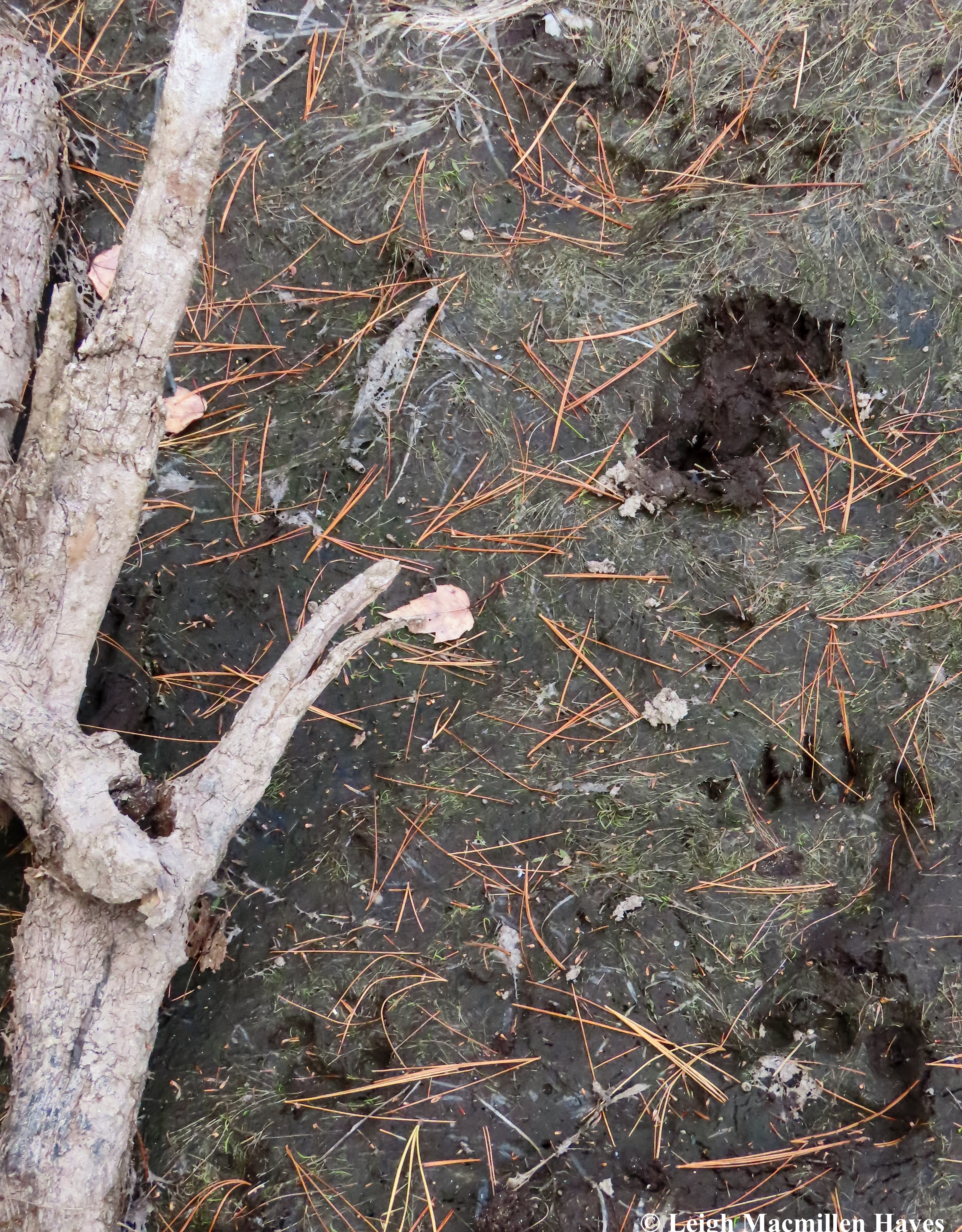
Bears are waddlers, which means they have wide hips and their pattern tends to be a bit of a zig zag, with a hind foot landing near where a front foot had been. Oh, let the tracking season begin.

With two white lines, I’ve tried to trace two bear tracks that My Guy is studying.

Suddenly this desolate, dried-up space, wasn’t so bad after all.

This was our surprise ending. My heart be still.

Bogging in Maine

What is a wetland? Basically, it is wet land! But more specifically, wetlands are often those transition zones between dry land and deep water.

There are four basic types of wetlands, which can be broken into even more types, but let’s stick with the four: marsh, swamp, bog, and fen.

Marshes are typically located along shores of rivers and streams, and even the coastline. Plus they can be found in the shallow water of ponds and lakes. Cattails, Arrowhead and other soft-stemmed emergent plants grow in these areas.

Swamps are found along rivers, streams, and lakes where mainly woody-stemmed plants such as shrubs and trees, like this Tamarack, grow.

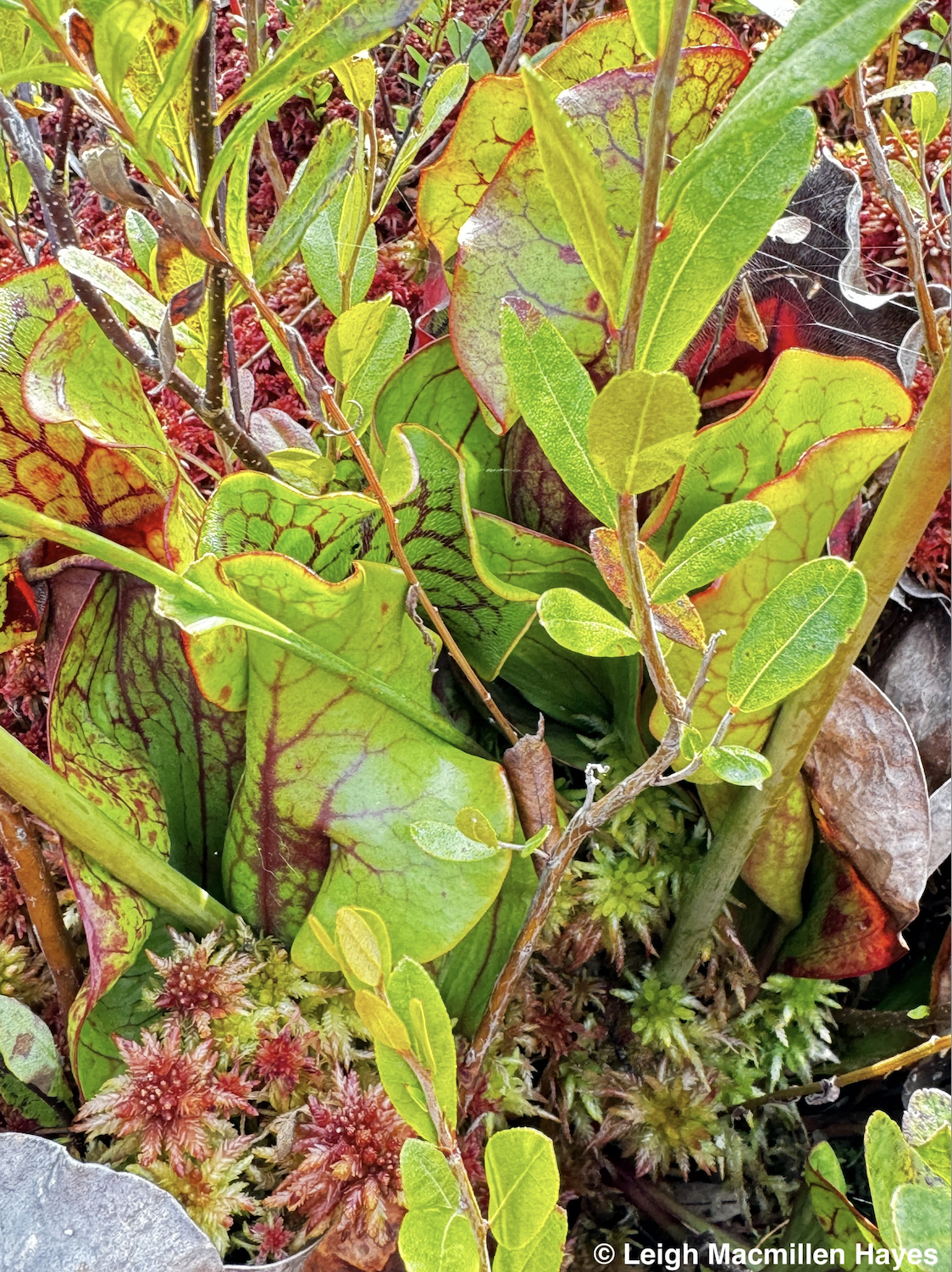
Pitcher Plants and Sphagnum Moss
Round-leaved Sundews

Bogs are found in our northern climate and often are deep depressions that have no drainage. They are covered with a surface carpet of sphagnum moss and insect-eating plants like the Pitcher Plant and Sundews.

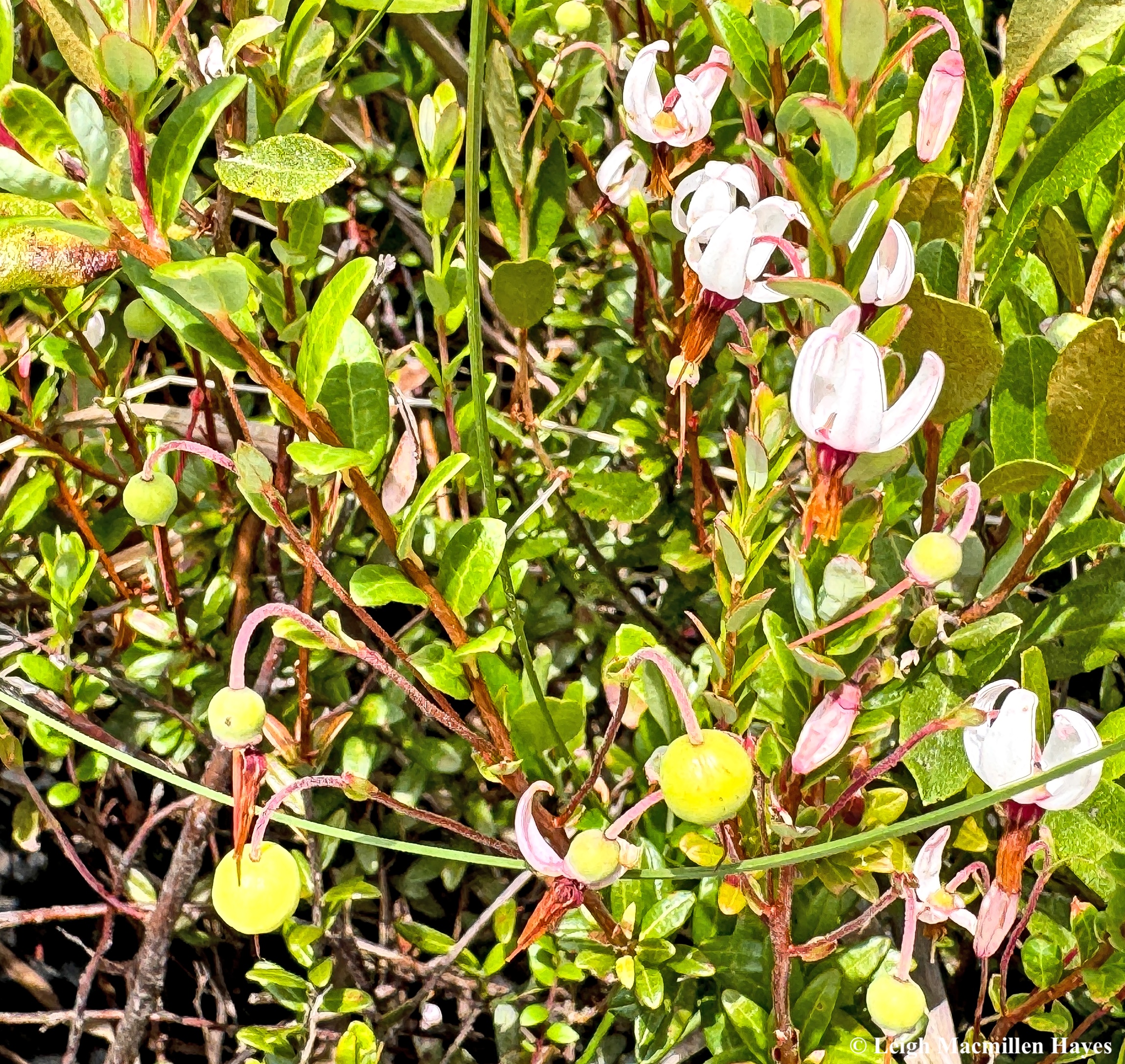
Cranberry flowers and fruits

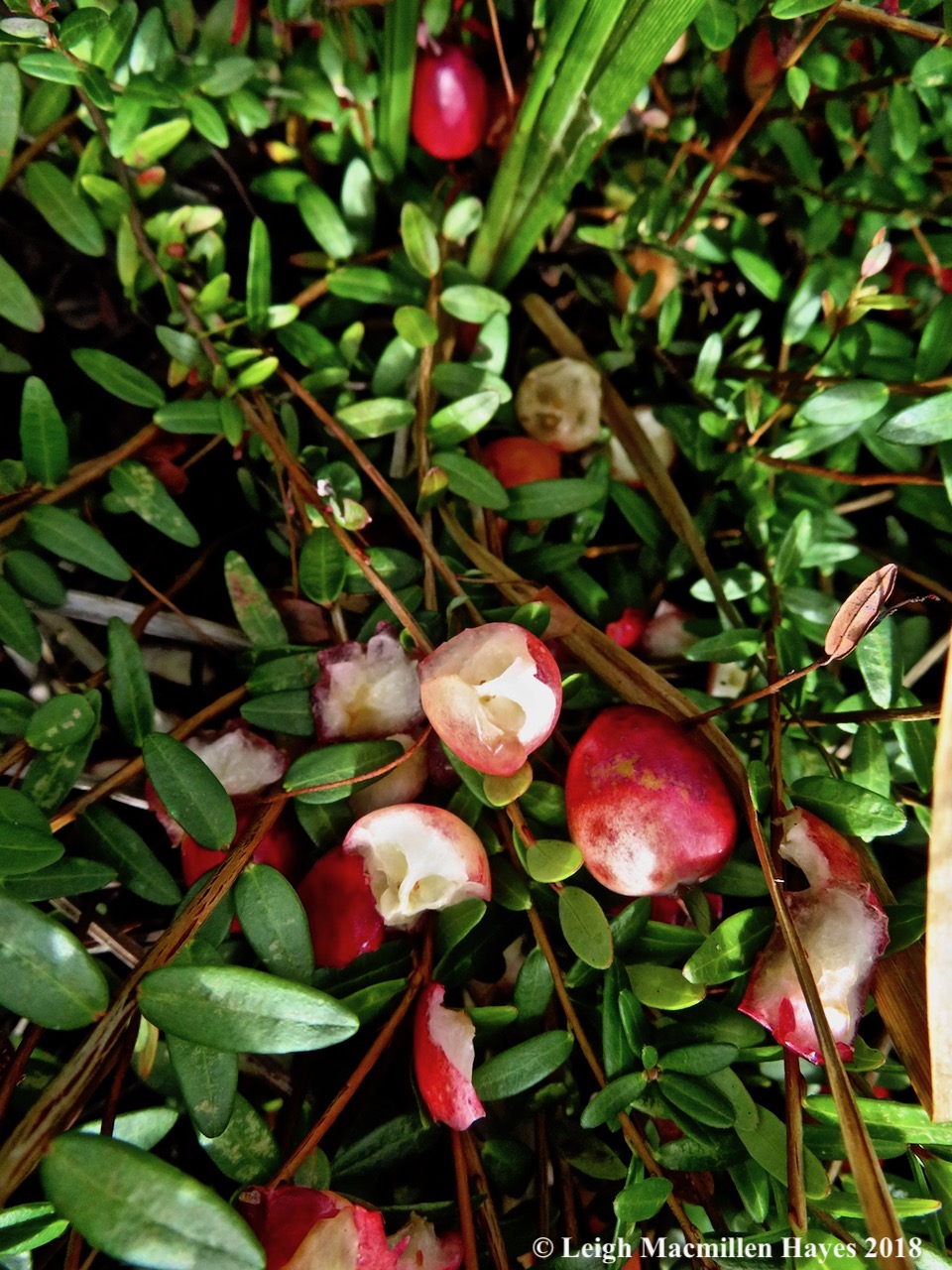
Native Cranberries also flourish in the stagnant and acidic water of a bog.

Sphagnum Moss
Leatherleaf

Like bogs, Fens are found in northern climes, but the water is slow-moving, and does have some drainage. Layers of peat (sphagnum moss) and sedges and grasses and low shrubs like Leatherleaf may grow in these areas. The carnivorous plants like them as well.

But it’s not just the flora that makes a wetland so special. These places provide habitat for a wide range of insects and animals and birds as well. In fact, they act as nurseries, or places where any of the critters might raise young.

And as soon as the sun warms the air in the spring, friends and I scour the wetlands in hopes of discovering who is emerging on any particular day. One of my favorites to watch is dragonfly emergence (in case you are new to this blog and didn’t already know that. You can learn more here: Developing Dragonfly Eyes, but really, type “dragonfly” into the search button of this blog and a bunch of dragonfly related posts will pop up–all worth a read, I promise you.)

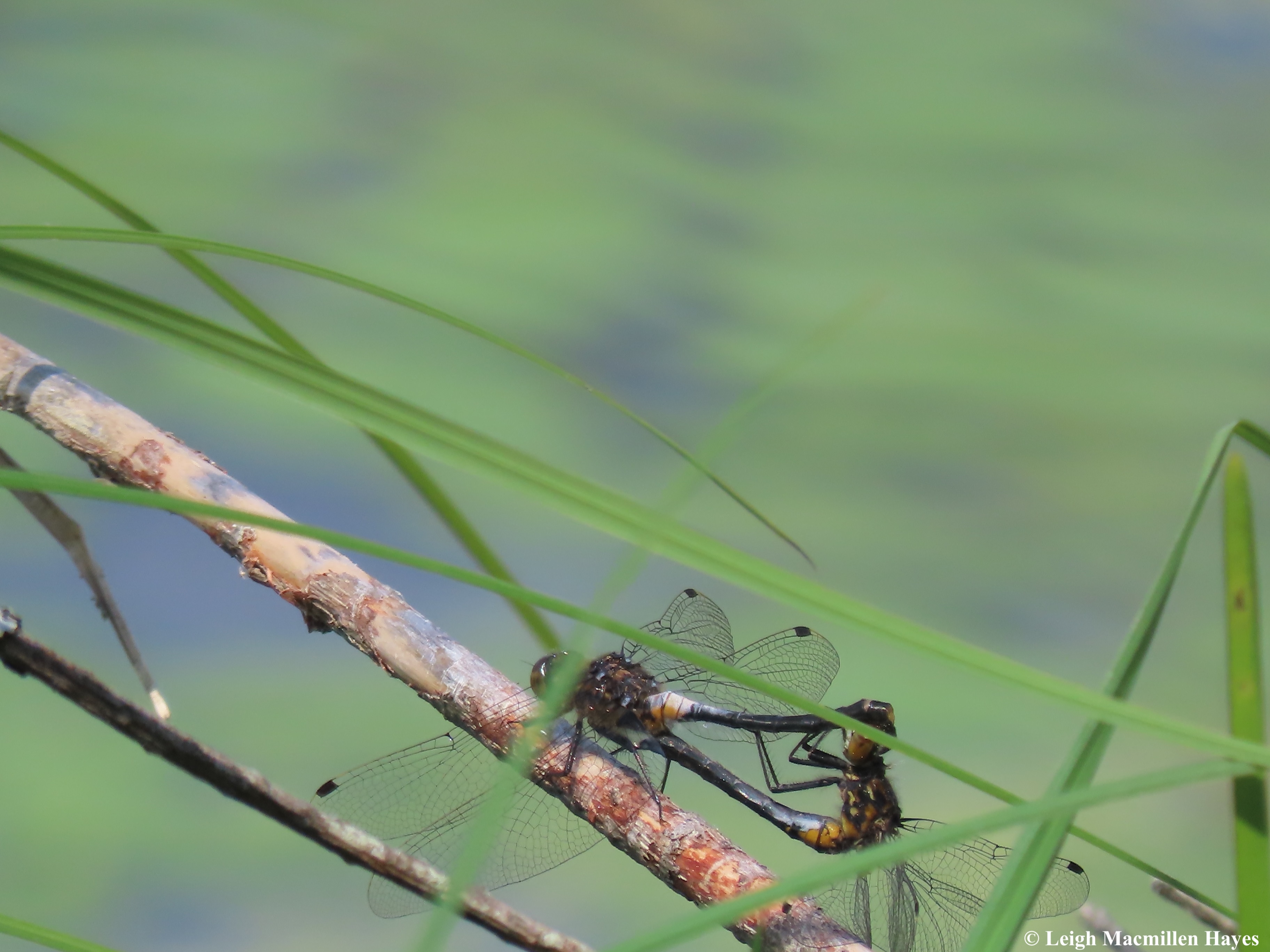
And like other insects, once emerged and a few days old, canoodling commences and dragonflies such as these Belted Whiteface Skimmers find each other and a presumably private place to mate. Private, that is, until I show up!

Eggs are laid in a variety of ways and places depending upon the species and this is a female Eastern Pondhawk taking a break upon a lily pad.

And here is a Forktail Damselfly laying eggs upon vegetation.

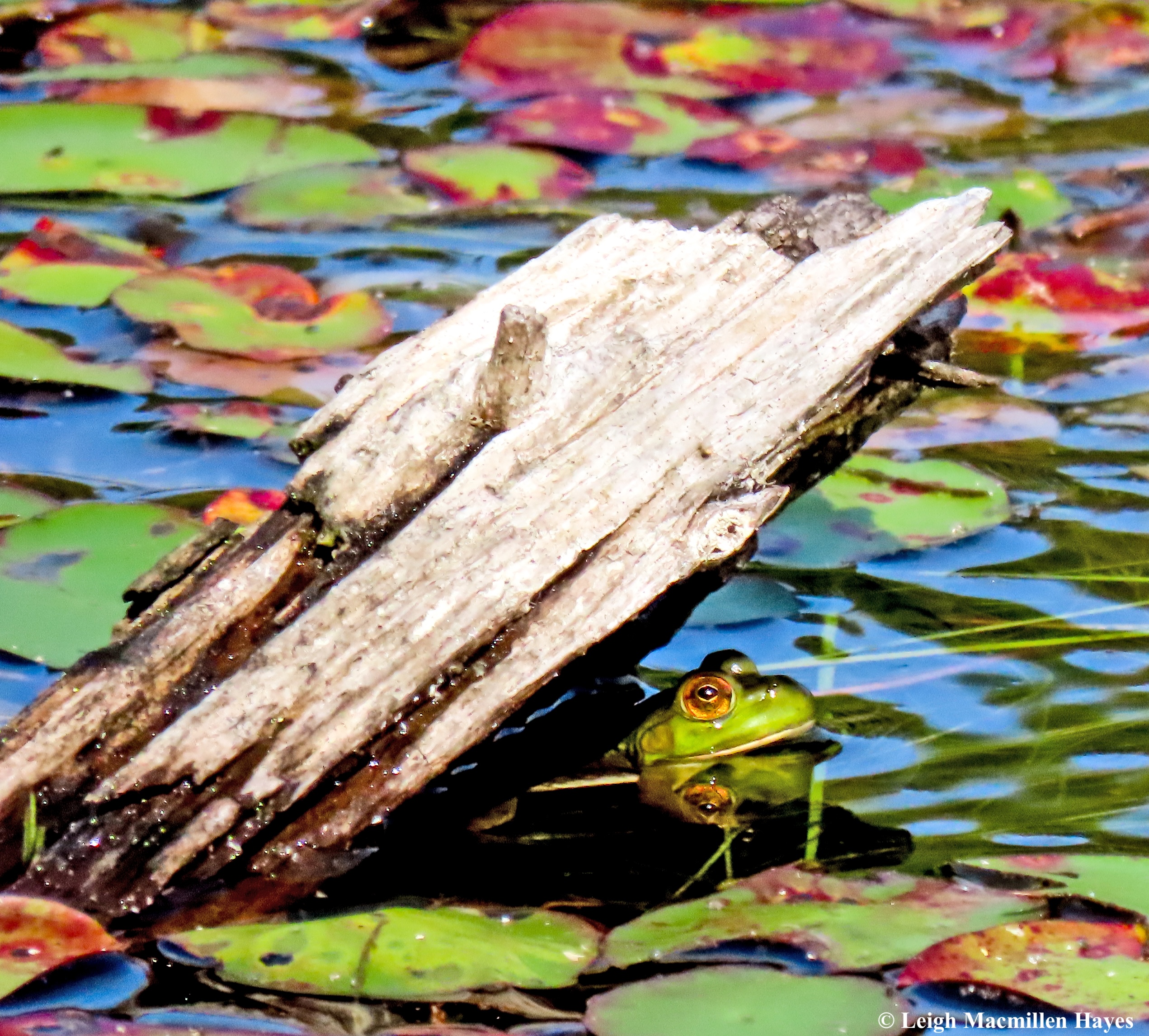
Frogs are also a highlight of a wetland, whether they are hiding in the shade on a hot summer day like this Bullfrog …

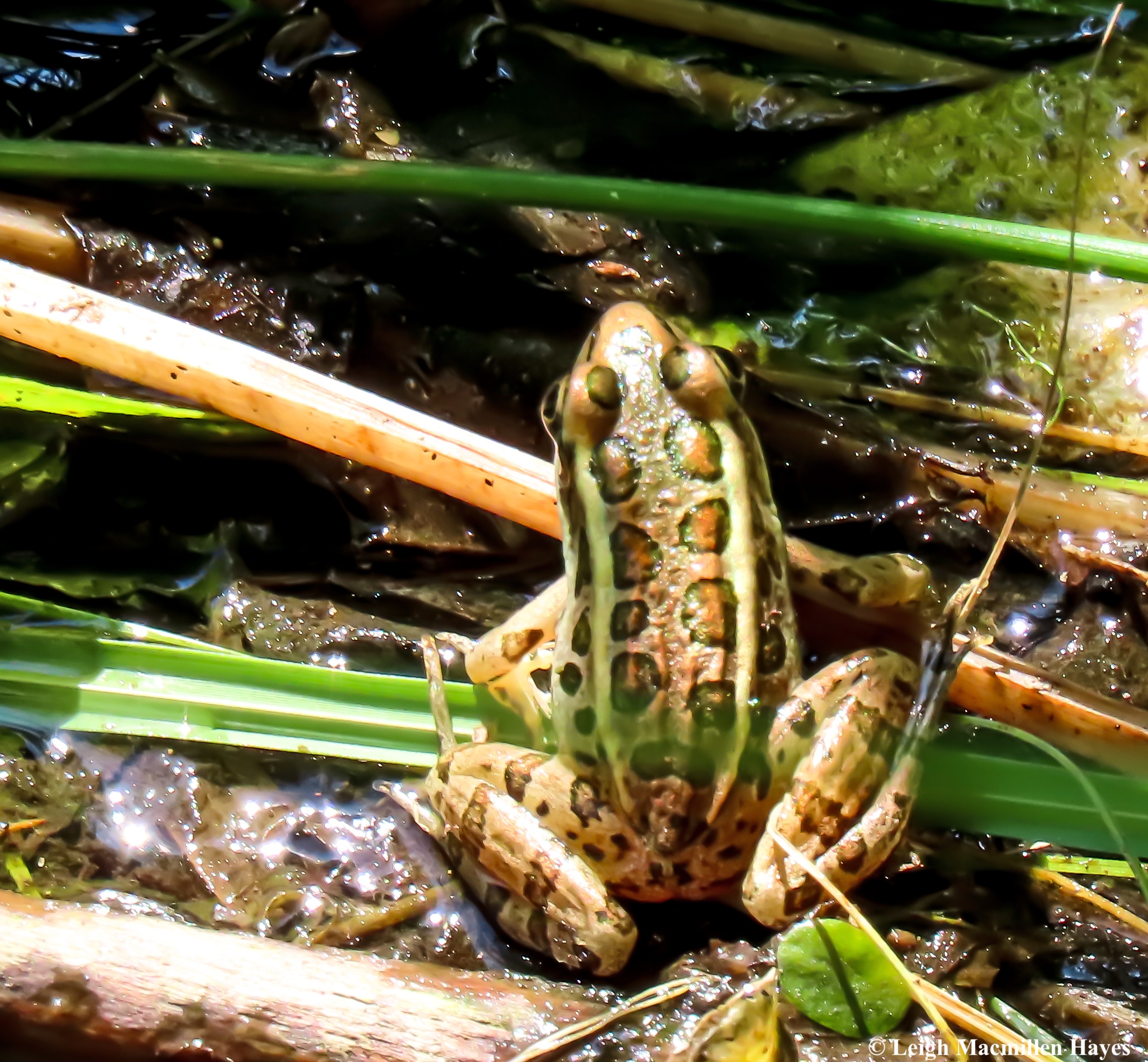
Or pausing briefly in the sun, such as this Pickerel Frog chose to do. Actually, it wasn’t so much basking as trying to remain hidden from my sight by not moving until I passed.

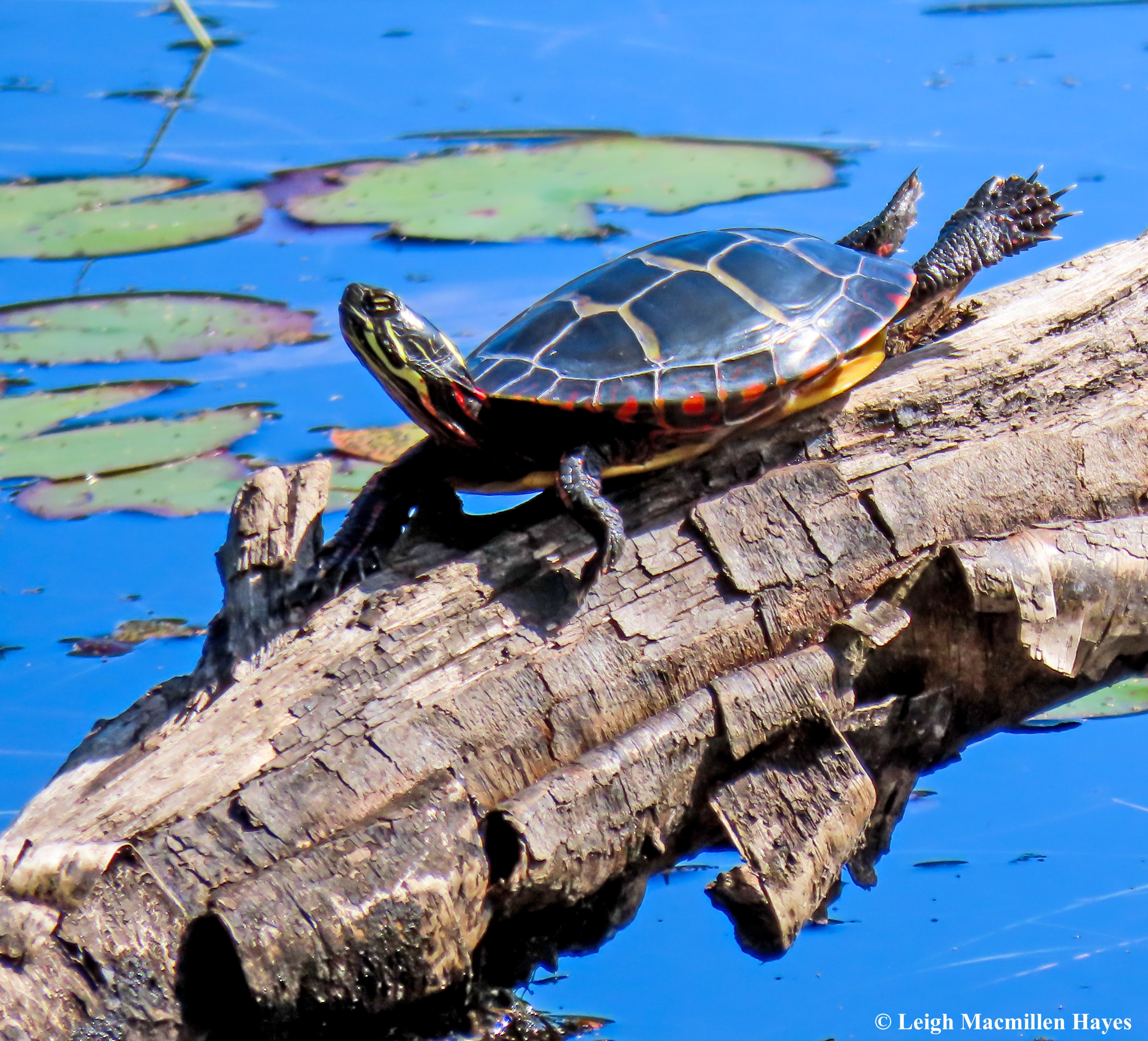
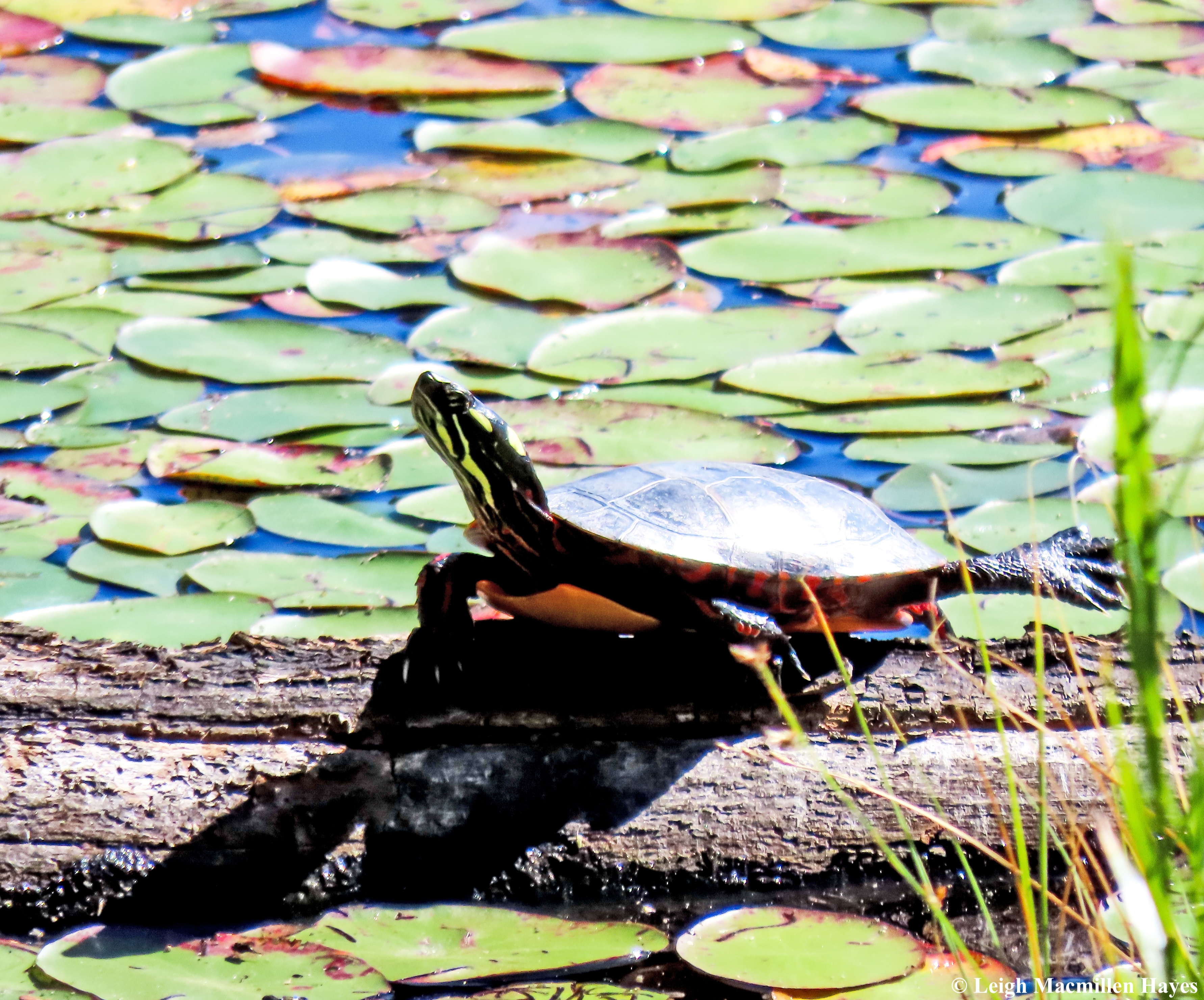
Those who do love to bask, (frogs do this as well) are the Painted Turtles, and the more surface area that is exposed to the sun’s beams, the better. Sometimes I’m surprised when I do capture a photo such as this one, for they are quick to sense my presence or hear me coming, and quickly slip into the water. But if you wait a few minutes, sometimes they’ll reemerge.

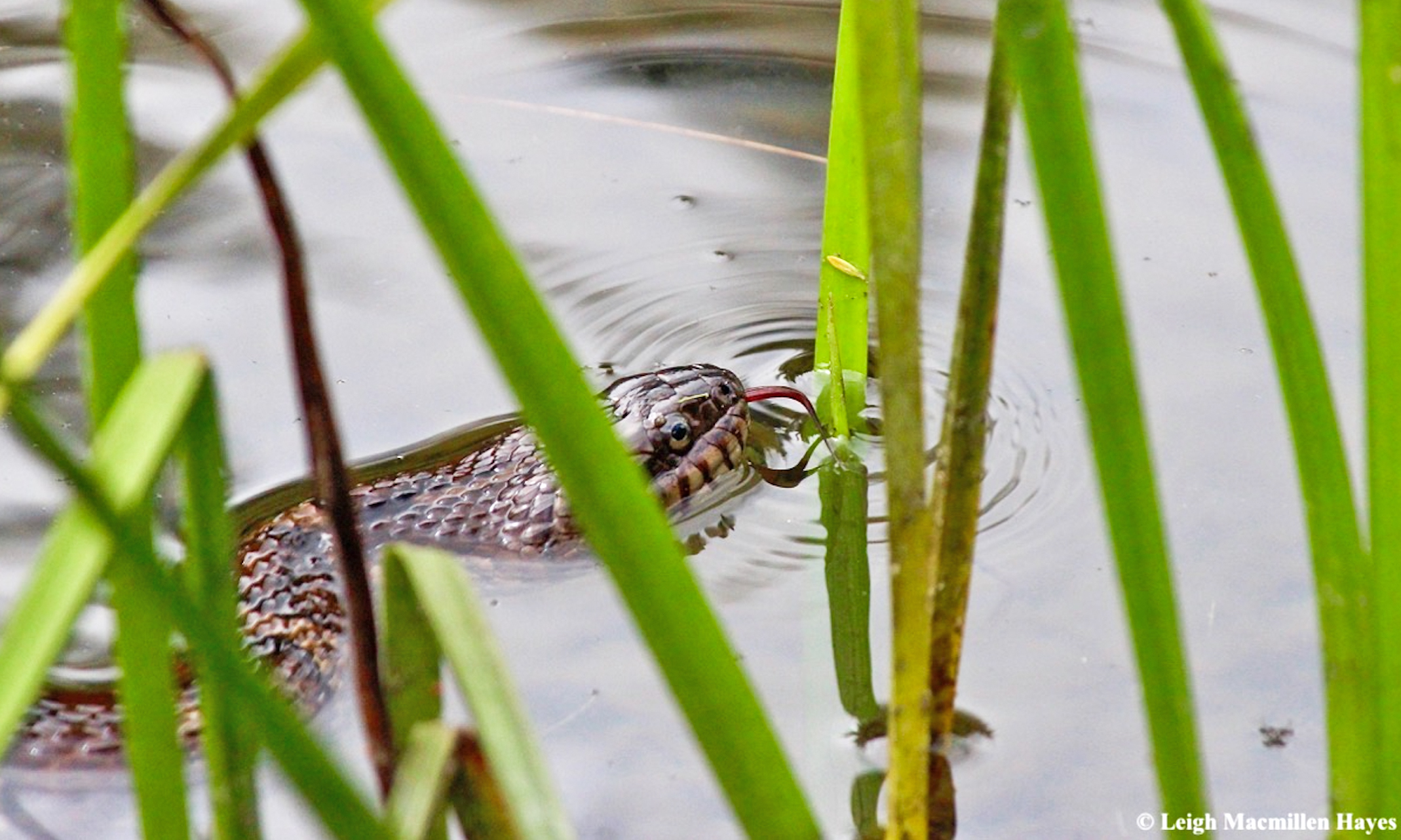
And there are Northern Watersnakes always on the prowl, using their tongues to make sense of their surroundings.

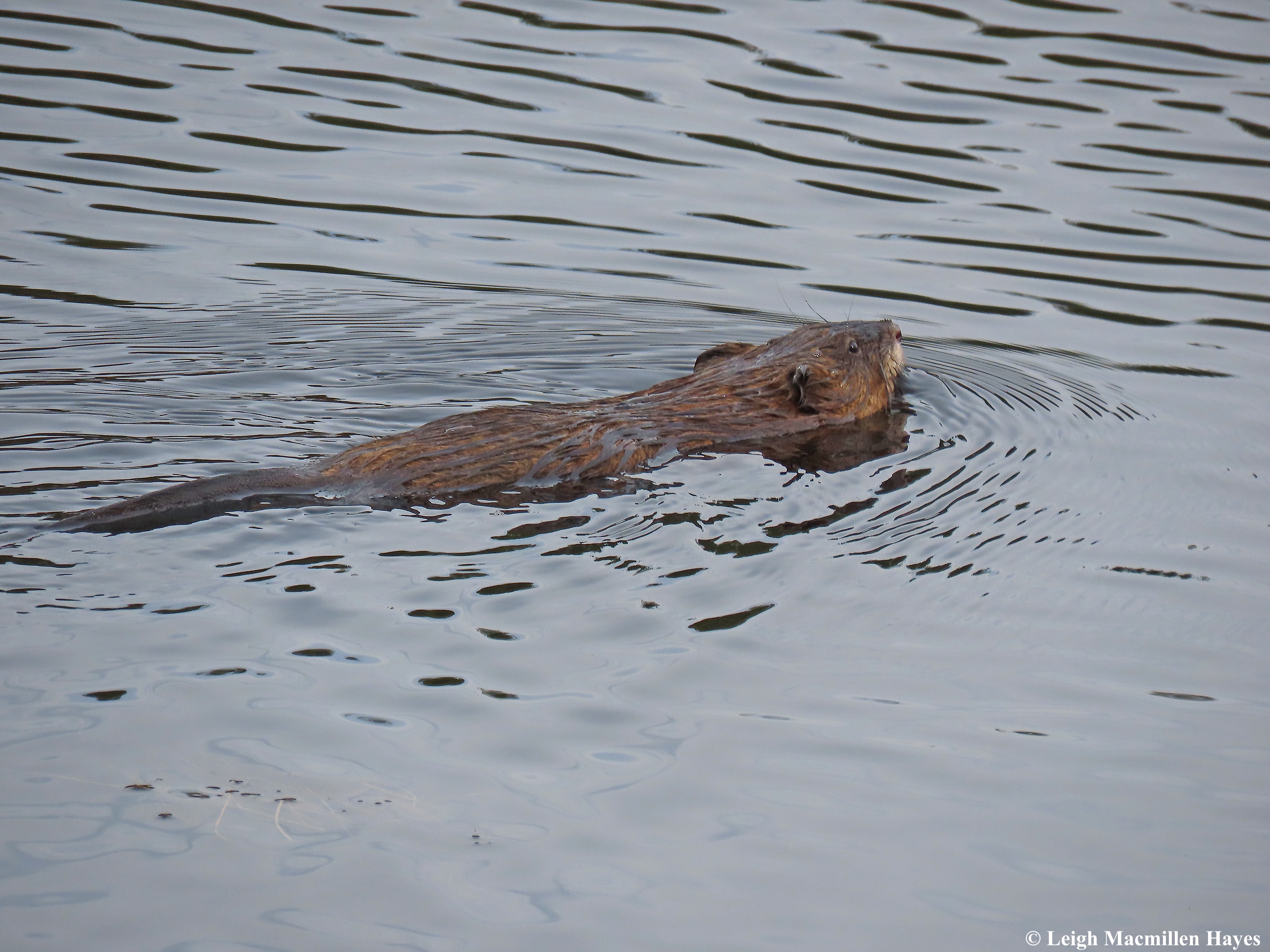
Mammals also use wetlands for forage for food and build homes and one of my favorites is the American Beaver, who knows the value of a wetland, and can create one in a short time by building a dam. Beavers build dams to created a deeper pond through which to navigate, for they are better at swimming than walking. They may alter the wetland to suit their needs for a few years, but then move on and let the dam breach and then a new type of wetland emerges and more critters move in and take advantage of what it has to offer.

That all said, it wasn’t until I spent more time with the animal pictured above that I realized it was actually a Muskrat–look at that thick, rounded tail, unlike the flat paddle of a Beaver’s.

And birds! Oh my. Mergansers . . .

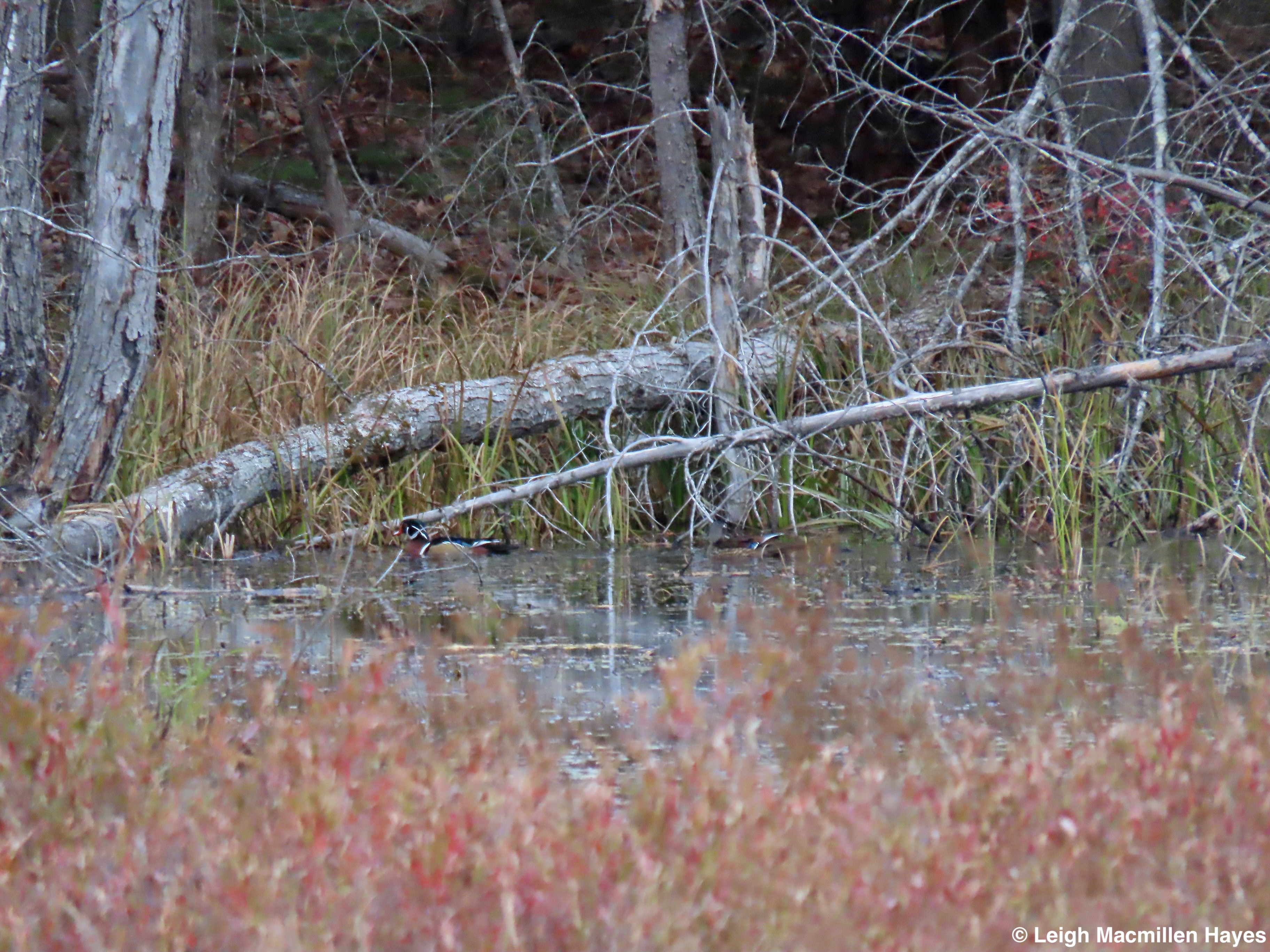
And momma Wood Duck and her offspring . . .

and Papa Woodduck . . .

And Great Blue Herons always on the prowl for fish or amphibians know the value of the wetland as a food pantry.

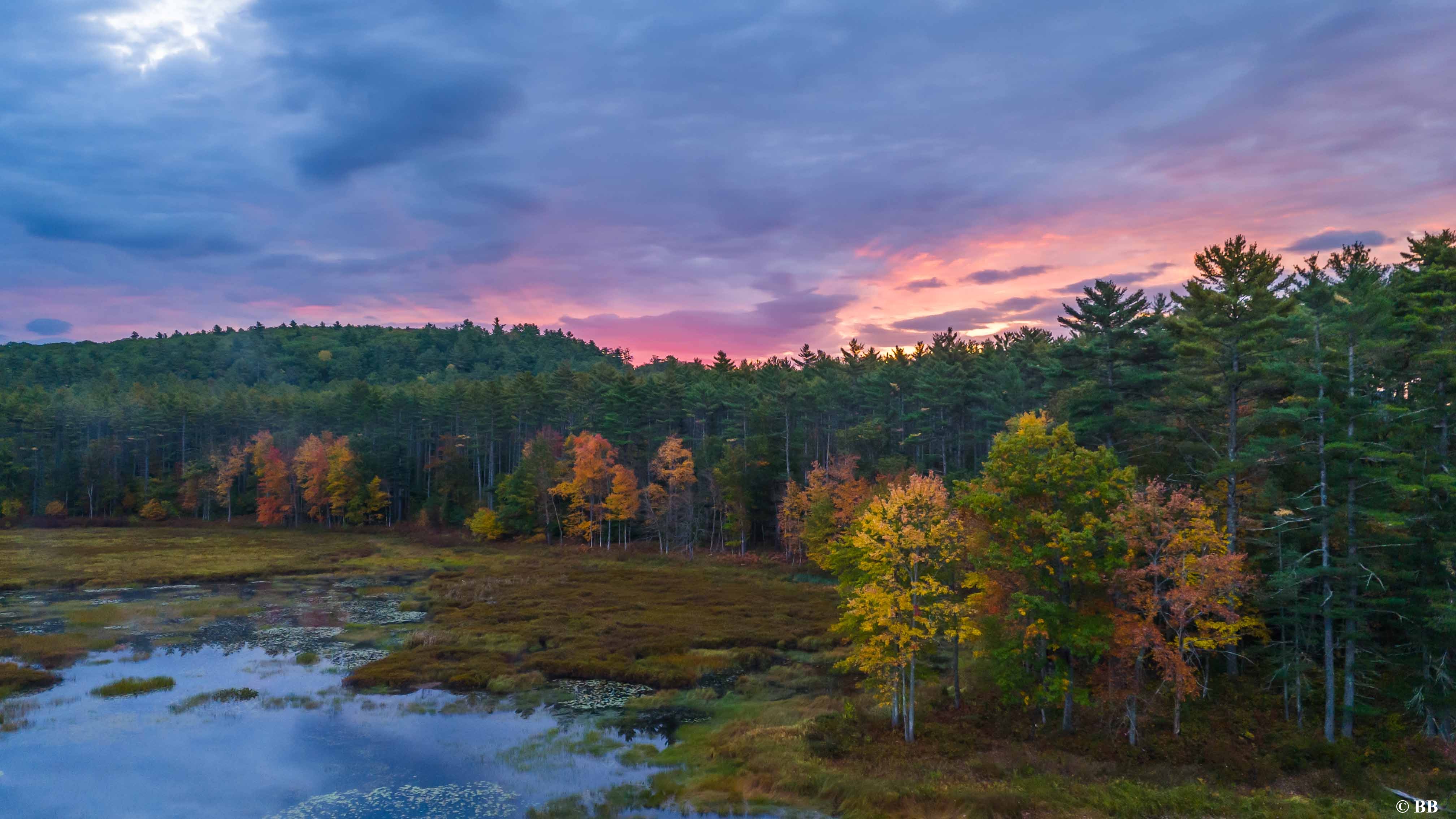
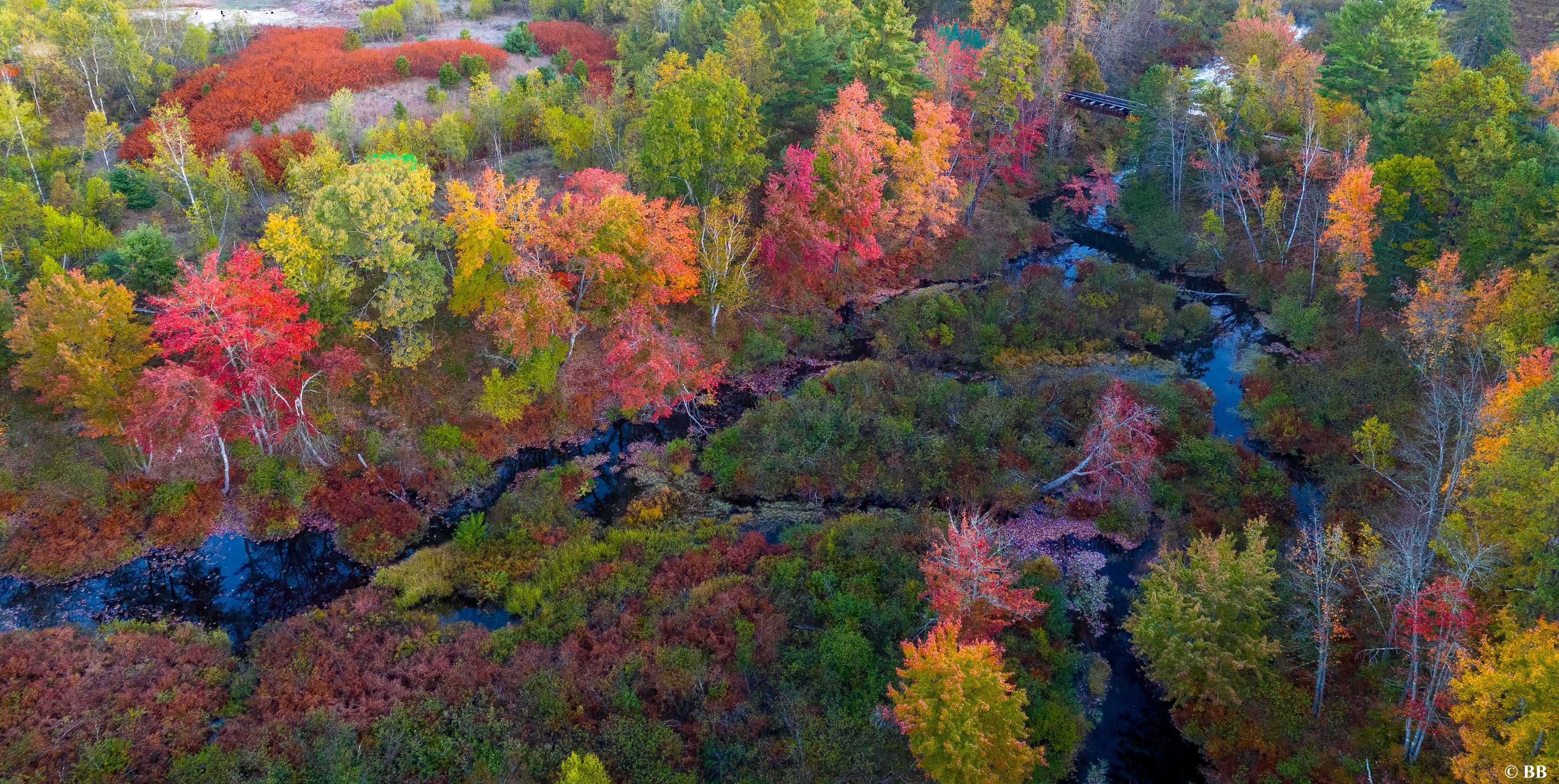
So, this spring and summer and fall, I’ve been following My Guy and our friend, Bruce, beside and into and sometimes, thanks to Bruce’s drone, over a variety of wetlands.

Bruce is an early riser (understatement), and occasionally I’ll meet him at a predetermined location as we did this past weekend–before the sun has risen. Though the thought of staying in dreamland for another hour or so is enticing, I never regret the decision because we get to view the world before it officially wakes up.

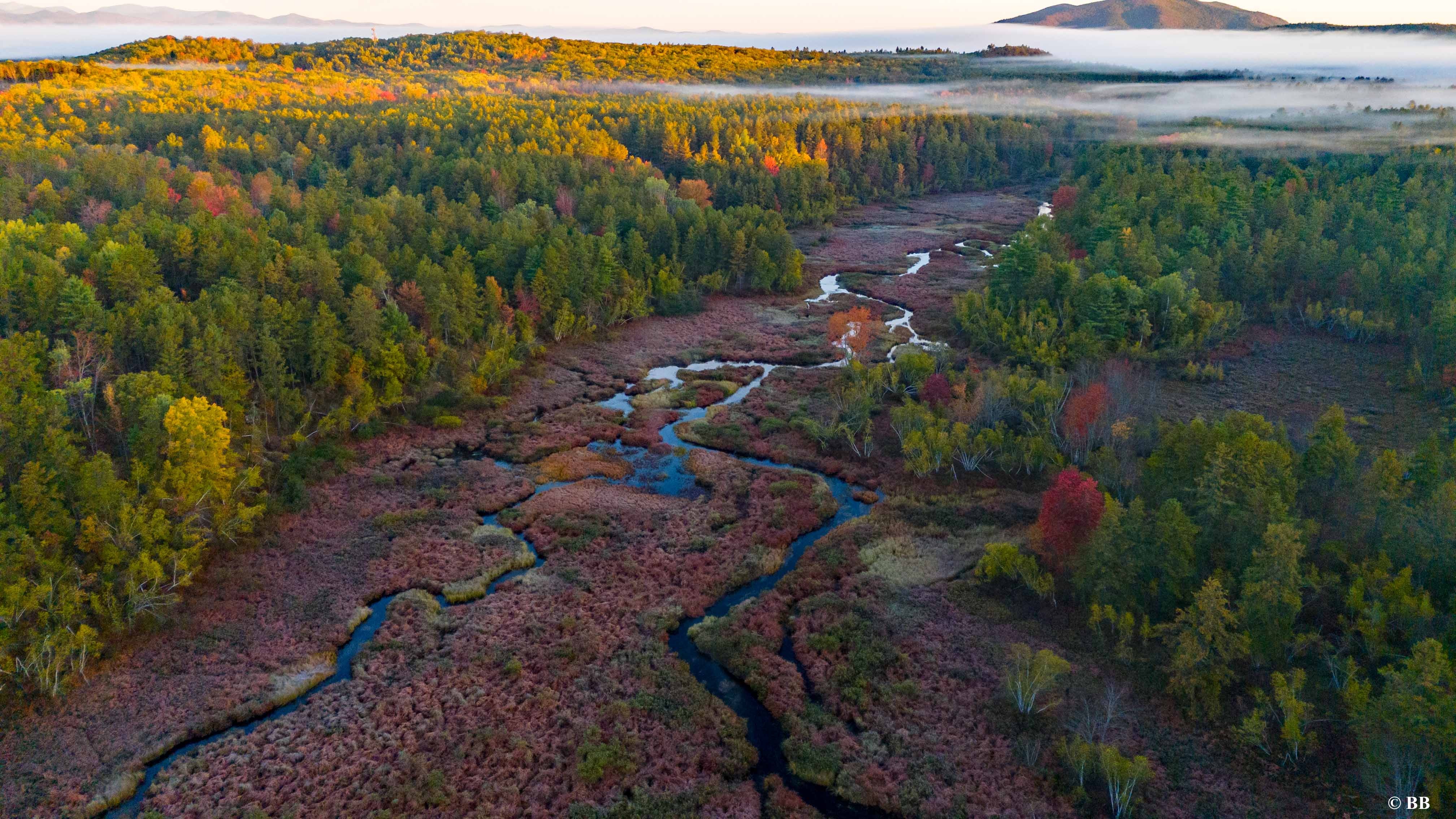
And with his drone we explore these areas we cannot easily access. This is one My Guy and I walked all the way around a few weeks ago without ever spying, though we knew it was there. But Bruce and I bushwhacked through a forest of White Pine Saplings and mature trees and reached the edge before he launched his bird and we were offered a glimpse of this most beautiful wetland with pockets of water connected by meandering rivulets.

The stream turned to forest for the trees told more of the story, as they closed in and I recalled that it wasn’t far from that spot that My Guy and I walked through a damp area where Royal Ferns grew and we found one teeny tiny mushroom fruiting on a hot summer day.

The mushroom was the little Orange Peel Fungus, and its name seemed so obvious. And the soil moist despite the severe drought.

Another day we began our exploration in the afternoon beside a small pond.

And the Droney-bird picked up on the wetland to the south.

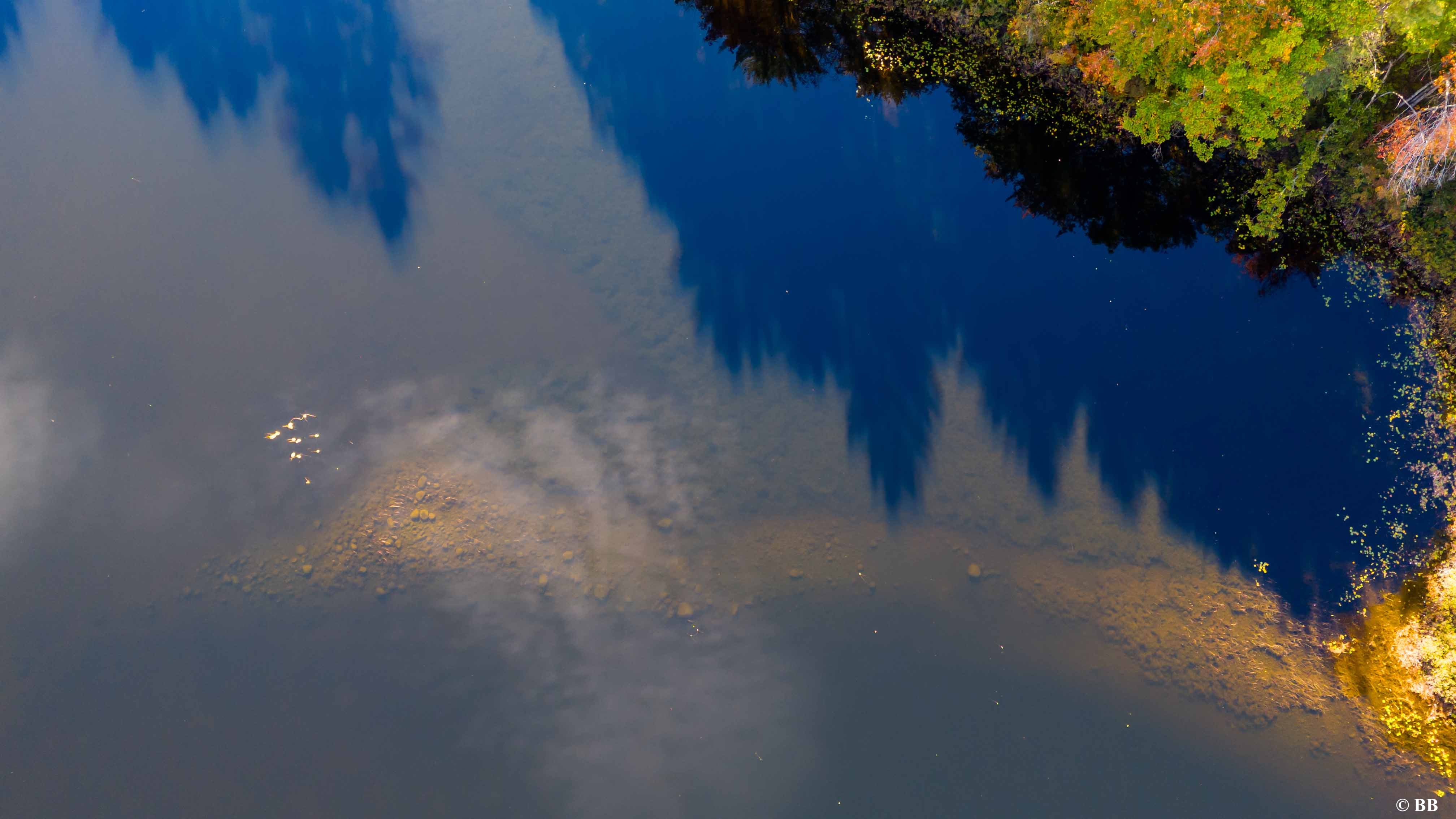
But that day what struck us as being more important was that it also took a clear picture of a sandbar in the water.

And as Bruce navigated it closer to the watery surface, we could see clear to the bottom. Mind you, it’s not a deep lake, but this is the water of Maine. Clean and clear.

And we celebrate wetlands for the critical role they play in maintaining the health of the environment.

When I think about their ability to store and filter water and act as a natural sponge, absorbing and retaining large amounts of water during the heavy rainfalls of spring, and removing pollutants before they enter streams, and rivers, and lakes, it all seems so obvious that they should do this when you have a bird’s eye view.

So here’s the curious thing about this wetland. It is located beside a local dump. And the more I think about that, the more I question those who created the dump, but give thanks for the unwavering workhorse that this wetland is in the ecosystem.

It was on the rise above this particular wetland, in a very sandy spot covered with Reindeer Lichen, that Bruce and I made a discovery. Well, he discovered it first and asked for an opinion. I’m full of those and so I met him and we took a look.

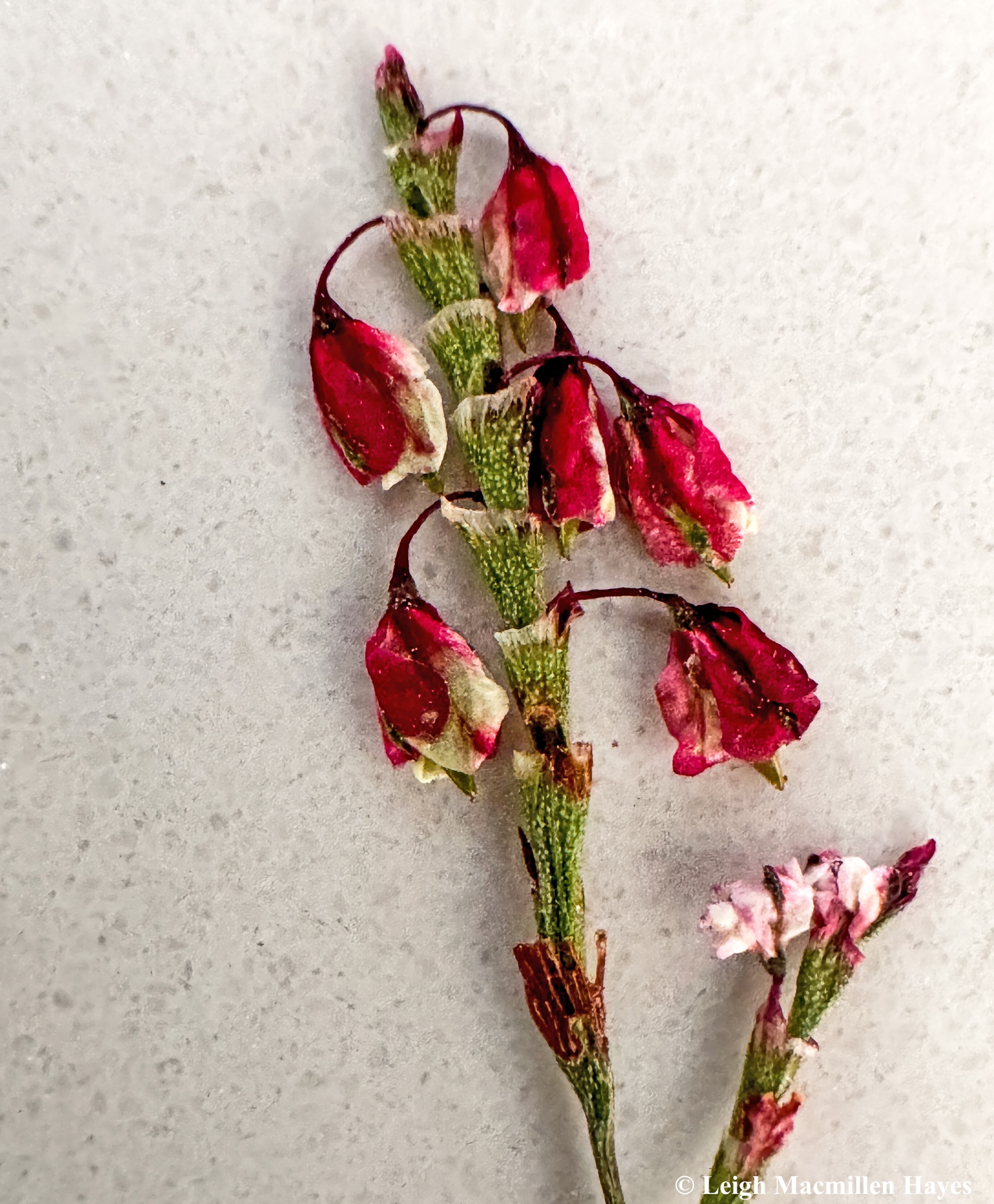
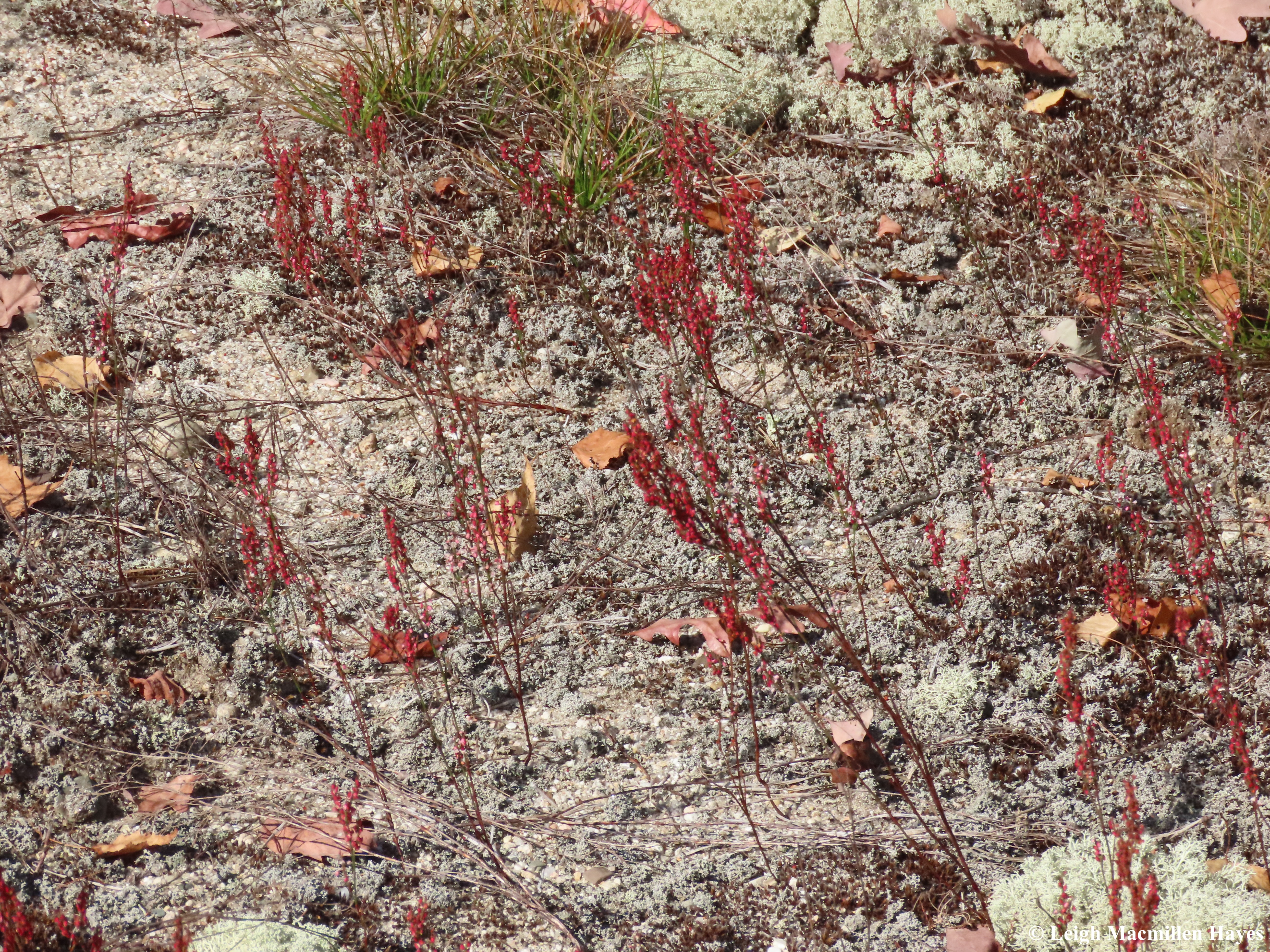
The discovery was a plant new to us both. Sand Jointweed or Polygonum articulatum. As you can see, the flowers are astonishing in their pink and white display.

It was the stems that I found equally fascinating. At the base of the flower stalks there are sheathing bracts, giving it a jointed or segmented appearance. We didn’t see any leaves, but perhaps we need to look again. I think we were just amazed to have discovered a plant neither of us recalled meeting before. Often though, that means we’ll meet it again soon.

The small snippet followed me home, and today I looked at the flowers under the microscope and I was astonished to realize that they look rather like a map of a wetland.

I don’t jump at the invite every time it arrives for an early morning mission to explore a wetland, and one day really regretted it because when My Guy and I finally got to the location, we found a note with Bruce’s observations. We scanned the area with our eyes for about an hour before deciding that we were too late.

But . . . we promised ourselves that we’d pack a picnic supper and try again.

First we spotted one Bull Moose.

And then a second, and had a difficult time deciding that we should head home.

Did you know that 25% of Maine’s land area is wetlands? That’s four times the wetland area of the other New England states combined. The natural buffers they provide sustain the deep clear water we appreciate, and take for granted.

The margins or places where the land and water come together are bridges between two worlds. As many as 90% of all living things in our waters are found in these wetlands, no matter what form they take. I guess that’s why I love exploring them so often, because there’s always something to see. And another lesson to learn.

I leave you with this, a watercolor Bruce’s wife Eileen sent me recently. It was inspired by one of our local wetlands.

Some may see wetlands as dark and shadowy areas, mosquito hatcheries, with an abundance of leeches mixed into the scene, but the rest of us know their true value and I give thanks for living in this place where it’s so easy to go Bogging in Maine. And to share it with others. Thank you MG, BB, and EJB!

On the Cusp of Autumn

It occurs every year, autumn that is. But this year it hasn’t even started and already feels different. In the past week, My Guy and I have followed many a trail or waterway, both on foot and by sea, oops, I mean kayak on local lakes and ponds, and every offering has been unique.

Some, such as this, being Brownfield Bog as we locals know it, or Major Gregory Sanborn Wildlife Management Area as the State of Maine knows it, took us by complete surprise. The last time we’d wandered this way together was in the spring, when despite wearing Muck Boots, we could not travel some parts of the trail because the water was so high. That was in the Time-We-Actually-Experienced-Rain. That time has long since passed and now western Maine is in a severe drought and don’t the Lilypads know it. What about all the mammals and birds and insects that depend on this water? It was an eerily quiet walk in a place that is usually alive with action.

Where the Old Course of the Saco River crosses through the bog, there was some water. But still, not enough. And we know of other areas of the Old Course, such as in Fryeburg Harbor, where there is no water.

As for the Saco, it too, was incredibly low and sandbars were more the norm.

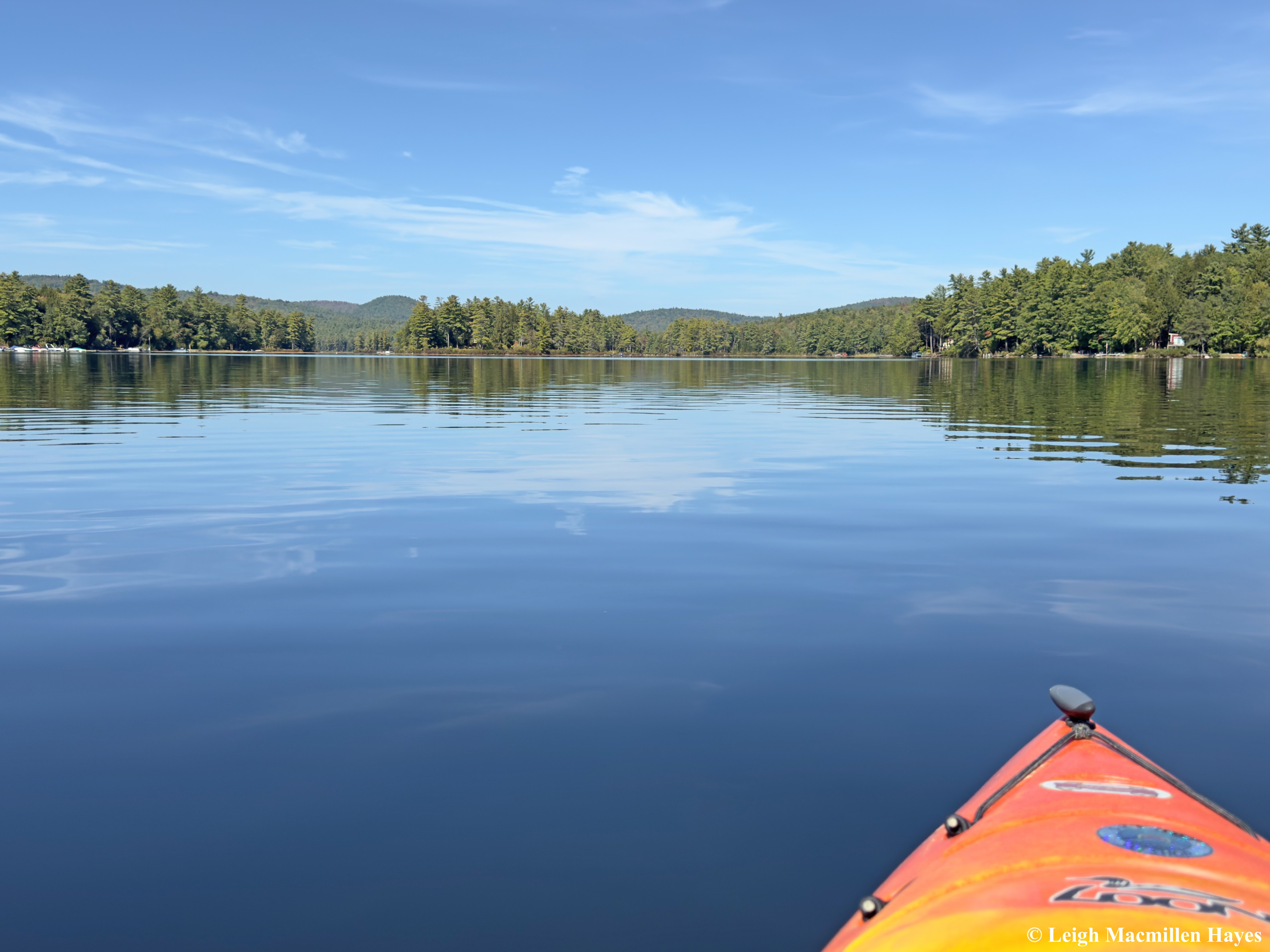
Other adventures found us paddling our favorite pond.

And bushwhacking around another bog.

What kept making itself known to us–the fact that the trees are turning much too soon, and many leaves aren’t even turning, but rather drying up and falling.

That meant that some paths or bushwhacks found us crunching the dried leaves with each step we took. We could hardly sneak up on a Moose or a Bear, or even a Squirrel.

Despite such dry conditions, we did find the varied colors of Wild Raisins or Witherod drupes dangling in clusters below their leaves.

And Winterberries showing off their enticing red hues–ready to attract birds and maybe become part of our holiday decorations. Only a few branches for us, mind you. We leave the rest to the critters because we know their importance in the food chain.

Late summer flowers were also in bloom, including the brilliant color of the Cardinal Flower.

And in a contrast to the red, there were Ladies’ Tresses, a wild orchid, one of the few with a fragrance if you can bend low enough to smell it.

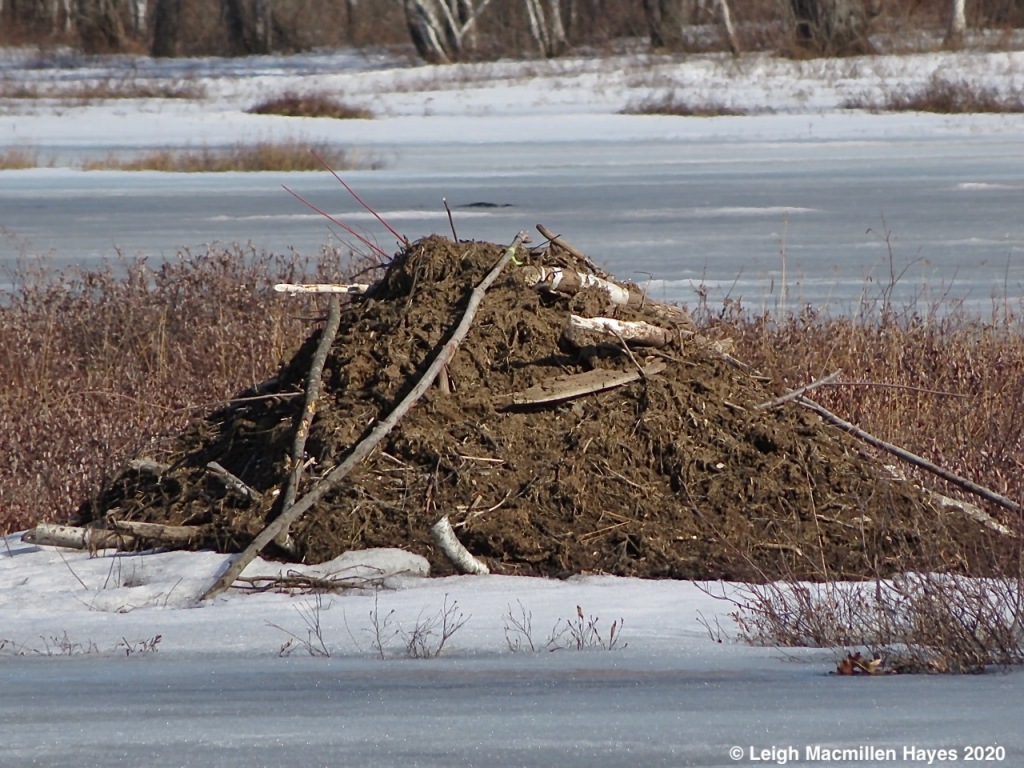
I think one of the greatest wonders is how many variations there are on a theme, in this case flowers for take a look at the Pilewort or American Burnweed, this one growing upon a Beaver Lodge.

What you are looking at is the flower heads: They are about a ¼ across and petal-less. The inner bracts, with their purplish tips form a ½-inch tube exposing just the yellowish to creamy white stamens at the top. And the seeds are teeny tiny, as you can see, with tufts of white hairs to carry them like parachutes upon a breeze.

Along one trail, we spotted another teeny tiny display that surprised us due to the fact that we haven’t seen many mushrooms this summer. But the Orange Peel Fungus apparently had enough moisture, at least to produce these two forms.

Critters were also a part of our sightings and several times we encountered young Northern Water Snakes, not more than two pencils in length.

In another spot where we expected to see Water Snakes, we instead met a Garter. Mind you, none of these wanted to spend any amount of time with us.

And despite the cooler morning temps that we’ve been experiencing, including lows in the mid-30˚s the past few days, or more likely, because of those temps, the Painted Turtles were still basking, soaking up the sun’s warmth. I love how they stick out their legs to absorb more warmth. It truly looks like a Yoga position, and I know this personally because along one of the trails we traveled in the past week, My Guy showed me several poses he’s learned recently. He also showed me those he struggles to perform.

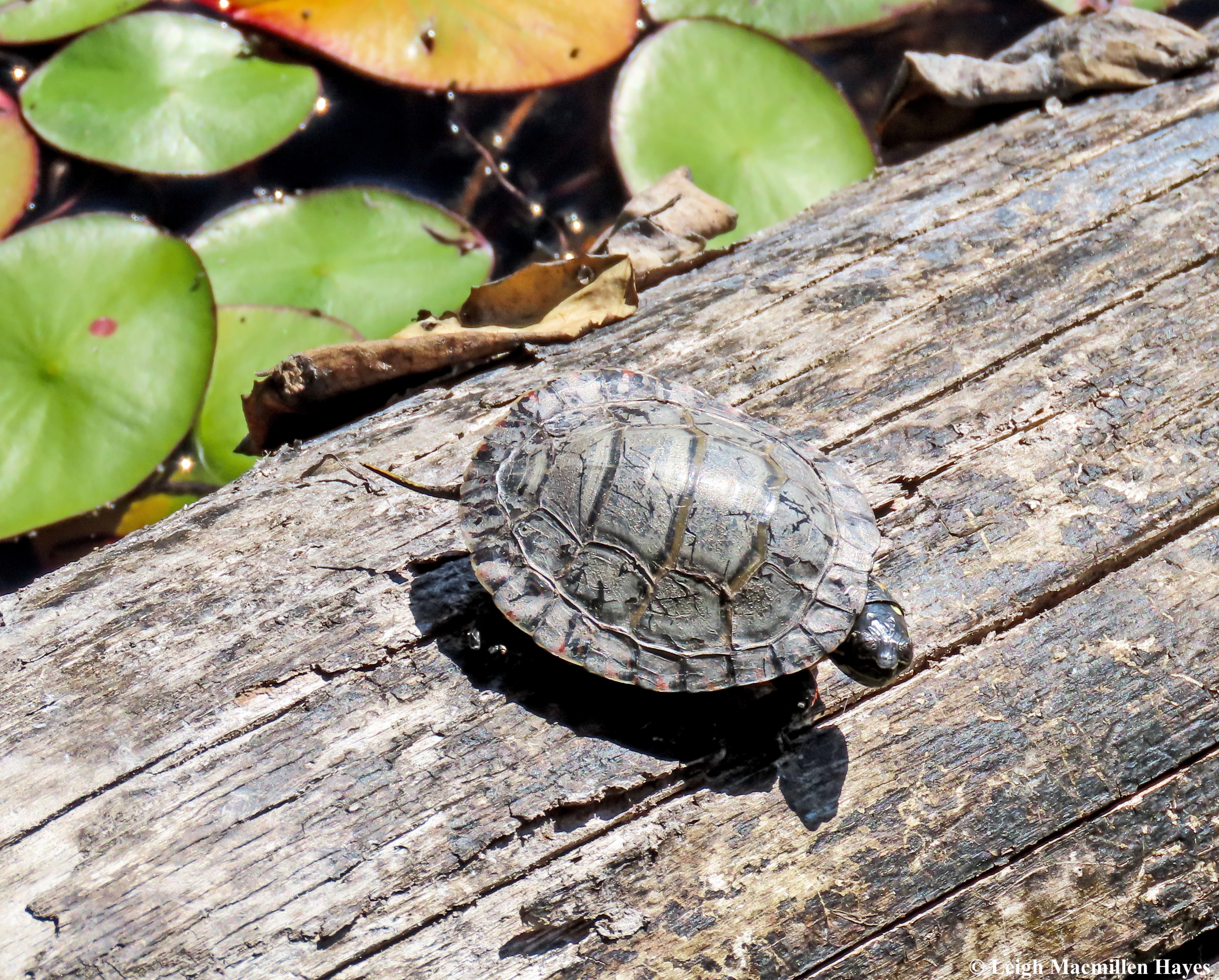
Not all turtles were of the same size, and this was a tiny one, who stayed on this log for at least two hours as we spotted it before we embarked on a bushwhack and it was still there when we returned, though it had changed its position. And gave me a wary look.

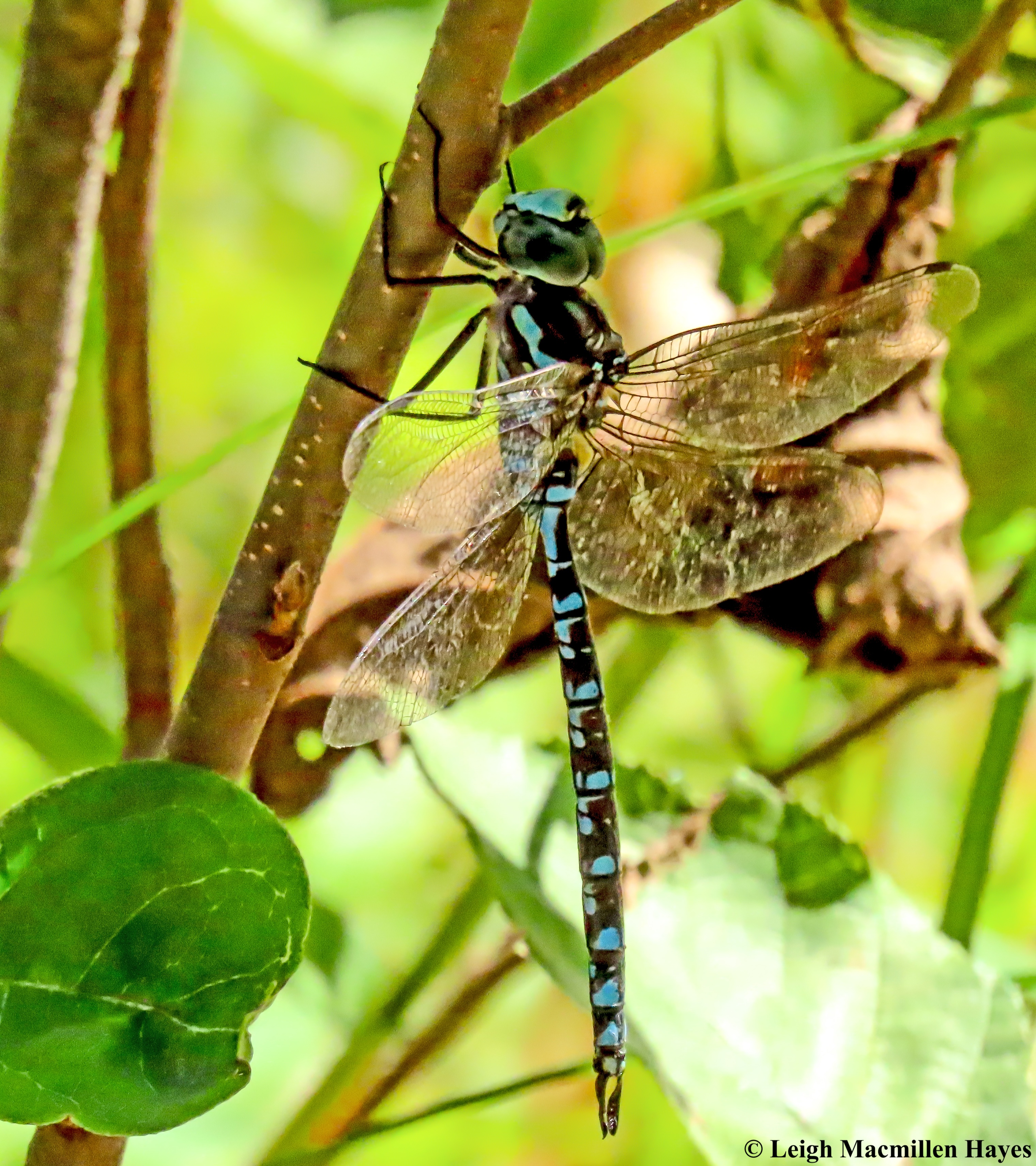
My Dragonfly fetish was also fulfilled for the Darners and Skimmers continue to fly and occasionally pause. Well, the Skimmers often pause, but the Darners are usually on the wing–patrolling territory while looking for a meal, and even more so, a mate. That’s why it’s always a moment of joy for me when one stops and my admiration kicks up a few notches. In fact, it’s the notch in the side thoratic markings that help with ID–in this case a Canada Darner. I’ve discovered this summer that they are numerous ’round these parts.

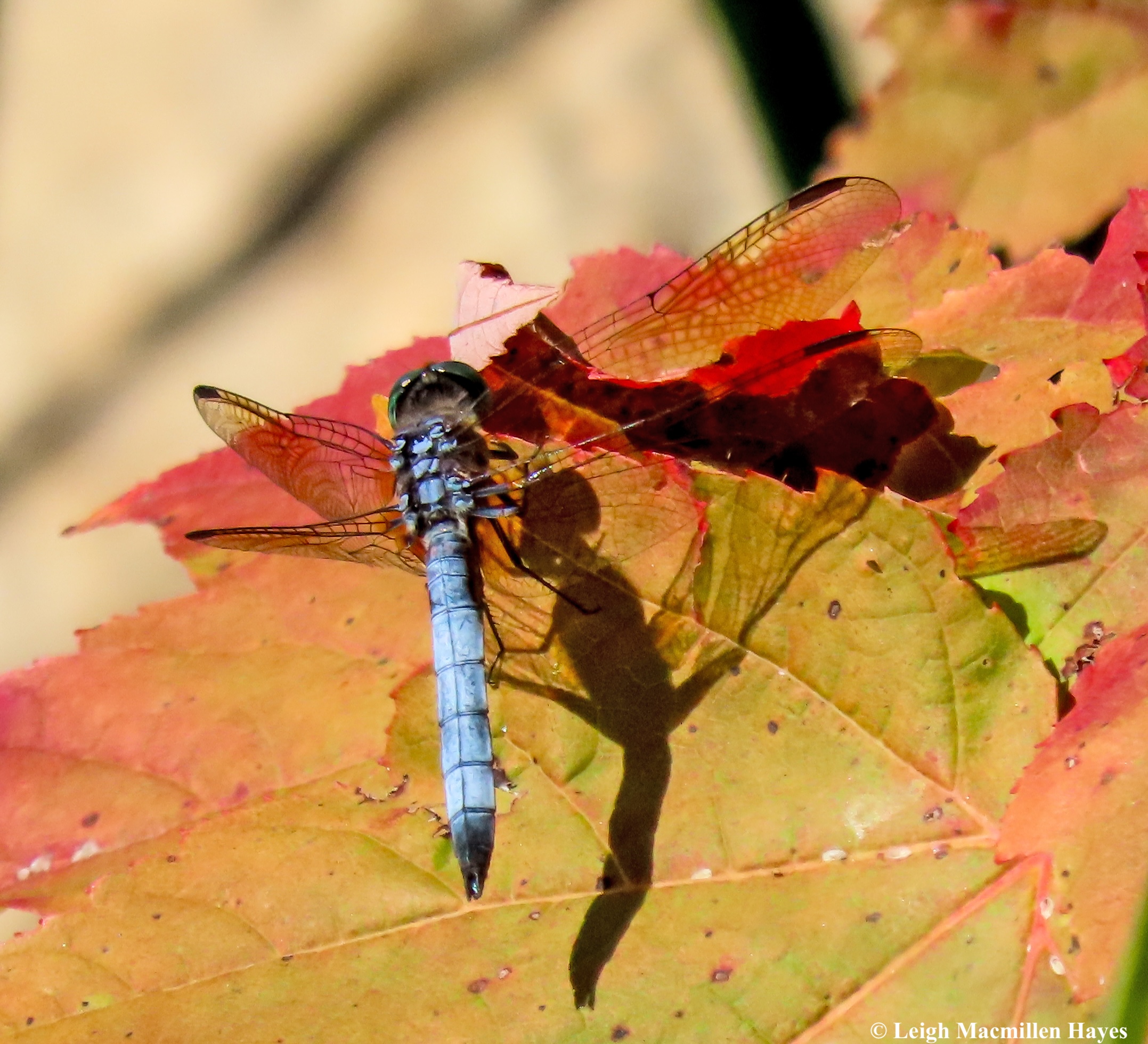
While the Darners are on the largish size in the dragonfly world, most of the Skimmers that are still flying are much smaller. The Blue Dasher, as this is, is probably considered medium in size.

What a display, no matter how big, with the blues and blacks and greens contrasting with the Red Maple leaf’s hues.

And then there’s the dragonfly’s shadow. It’s almost like it was a different creature.

My surprise was full of delight when I realized as I floated beside a Beaver Lodge, that I was watching female Amberwings deposit eggs into the water as they tapped their abdomens upon it. I rarely spot Amberwings, and yet they were so common in this spot.

And overlooking all the action, perhaps not only to defend its territory, but also to eat anything that got in the way, a Slaty Blue Skimmer, twice the size at least of the Amberwings and Blue Dasher.

Birds, too, were part of the scenery wherever we were. This Eastern Phoebe spent moments on end looking about, from one side to the other, and then in a flash, flew to some vegetation below, grabbed an invisible-to-me insect, and flew off.

Much to the surprise of both of us, despite the loud crackling of leaves and branches upon which we walked in one place, we didn’t scare all the Wood Ducks off, and enjoyed spending a few minutes with this Momma and Teenager. Usually, this species flies off before we spot them on the water.

Even the male hung out and when I suggested to My Guy that he look at it through the monocular, he was certain he really didn’t need to because he could see it without any aid. And then he did. And “Oh wow!” was the reaction. And I knew he’d finally seen a male Wood Duck–for the first time. And that moment will remain with me forever.

One of our other favorite moments occurred on our favorite pond, where we first spotted a Bald Eagle on a rock that the low water had exposed. And then it flew. As birds do.

And we followed it with our eyes, and watched it land above us in a White PIne.

And thus, we spent a good twenty minutes with it, admiring from our kayaks below.

The Bald Eagle was sighted not to far from our favorite Beaver City–where we know of at least five lodges located within a football field-sized area. And this one above had been abandoned for the last few years.

But fresh mud and fresh wood told us that someone was home. Probably more than one someones. We love the possibilities. The mudding is an important act–preparing for winter by coating the outside and closing up any holes or airways that might let cold air penetrate. Of course, the “smoke hole” at the top will remain, much like a chimney in our homes.

Just a Beaver channel and a hundred yards away, another of the five lodges also showed signs of winter preparation. It’s a busy neighborhood.

No matter where or how we traversed, one of the things that stood out to us is that despite the autumnal equinox being September 22 at 2:19pm. fall is already here thanks to the summer’s drought.

It’s usually mid-October when we begin to celebrate the color change–that time when Chlorophyll, the green pigment we associate with summer, and necessary for photosynthesis, slows and then stops manufacturing food, and the leaves go on strike.

Veins that carried fluids via the xylem and phloem close off, trapping sugars, and promoting the production of anthocyanin, the red color we associate with Red Maples like these.

Tonight, as I finish writing, we are on the Cusp of Autumn, which is about seventeen hours away. But this year, I think it’s already here and if you have planned a fall foliage tour for mid-October I hope you won’t be too disappointed. I suspect we’ll not have many leaves left on the trees by that point.

But . . . maybe I’m wrong. There’s always that possibility.

No matter what–Happy Autumnal Equinox!

Bogging With Bridie

We parked on the little dirt connector road between Route 160 and Lord Hill Road, close to Bog Road, because we knew the conditions would be such that driving into Brownfield Bog would be impossible. Besides, walking would offer more time to catch up on each other’s lives. Well, I’m afraid I did most of the talking, but at least my friend Bridie is up to speed on my life. Hers is so full of students and research and writing, that just having time to breathe in the fresh air of her childhood backyard was enough.

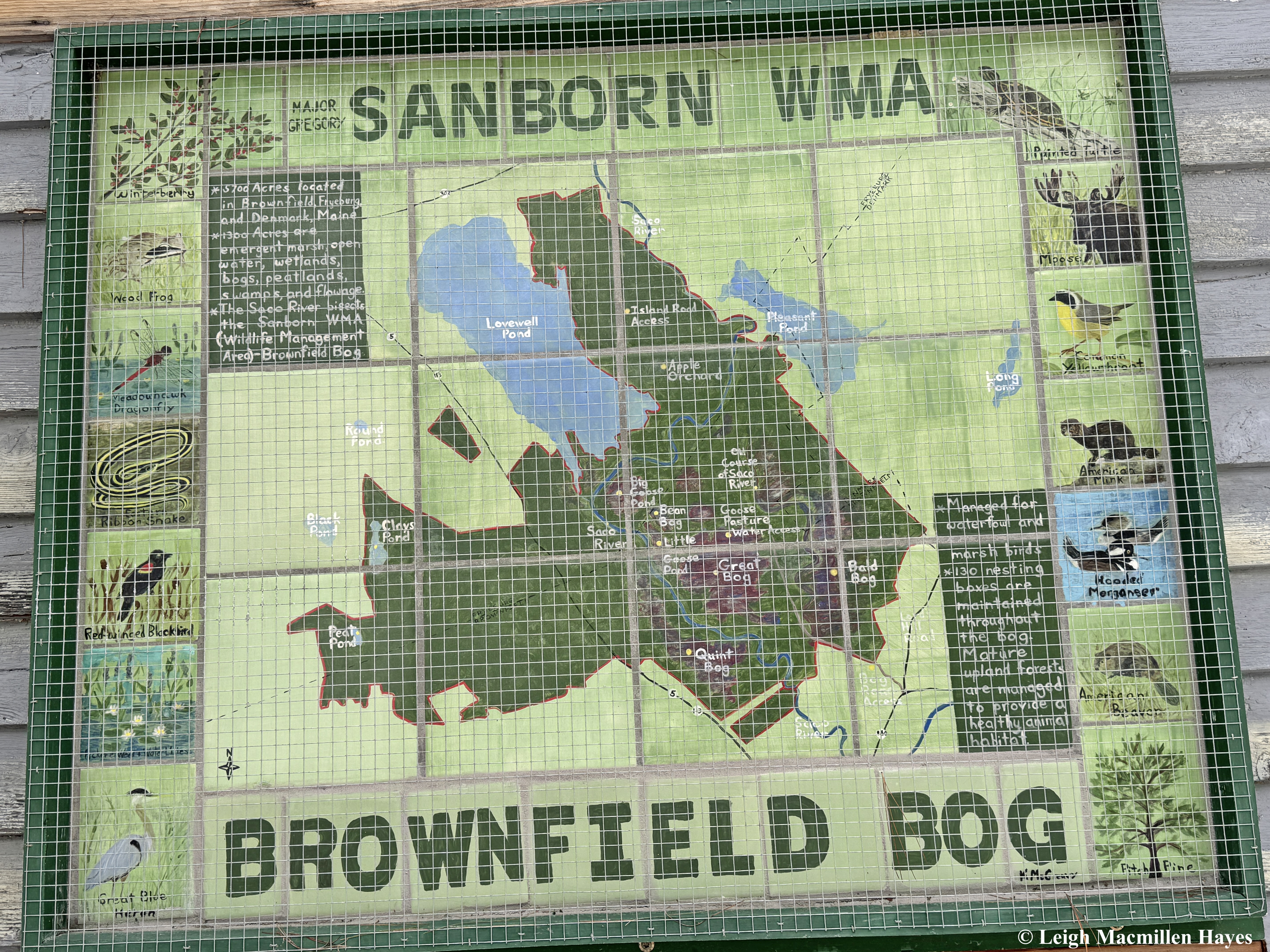
At the old shed, we paused to admire the work of her mom, Kathy McGreavy, a potter who created this tile map of Brownfield Bog in 2017 as her capstone project for the Maine Master Naturalist program. And we wondered how many of the same species we might see or encounter today.

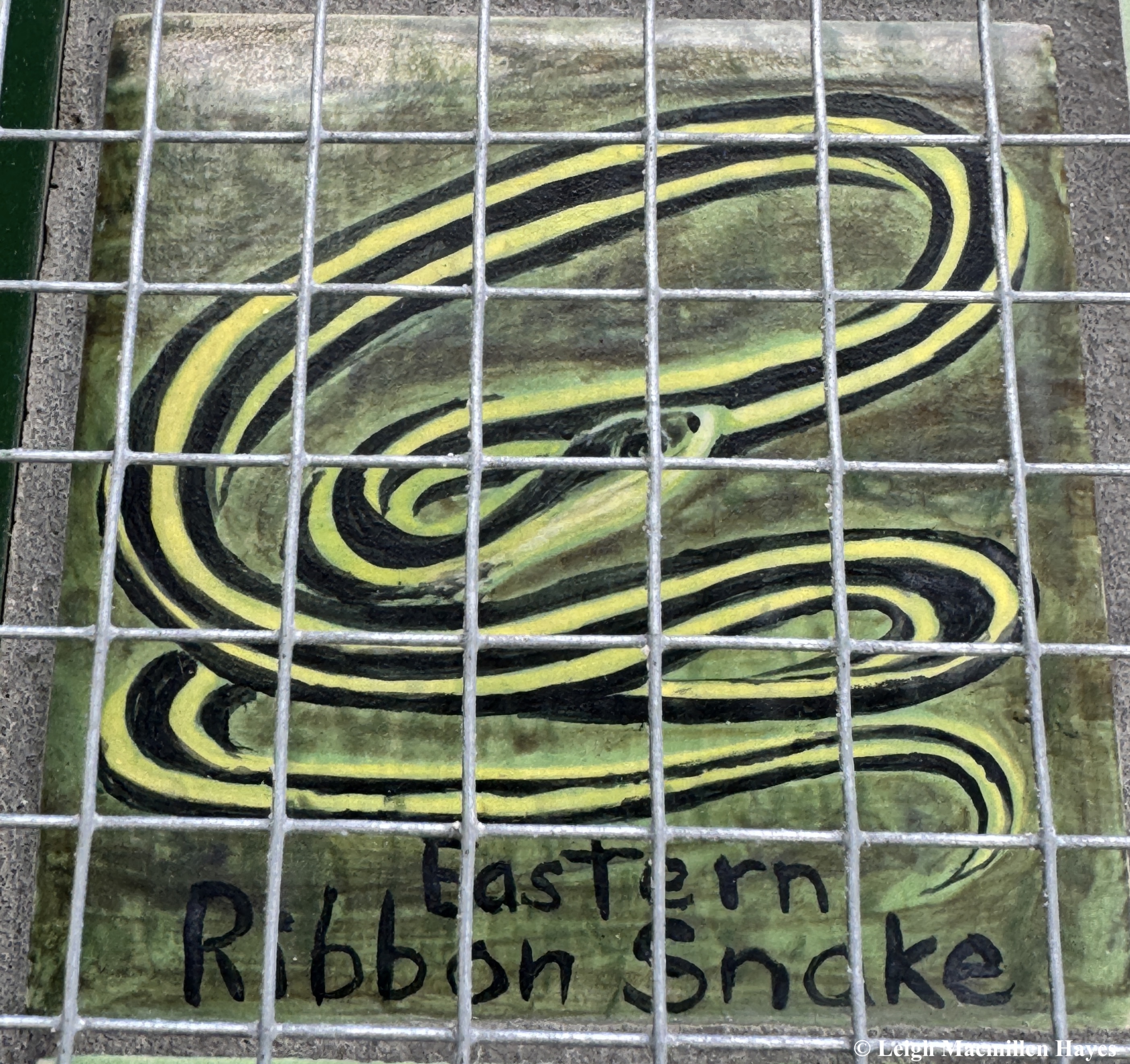
One particular tile always elicits a shared memory, for I was with Bridie when we spotted an Eastern Ribbon Snake slither across the road and down into the water.

It was then that I learned that Ribbon Snakes are a species of special concern in Maine, and rather uncommon. Since then, I’ve seen at least one more in the bog and a few more in several other local spots, but each sighting is special, and always I return in my mind to that first time.

And why the wire across the tile art work? It seems woodpeckers like to peck at the tiles and Kathy had to repair a few a year or two ago.

We couldn’t go out on the bog today, as we had done previous winters. After all, we are on the cusp of spring, and didn’t trust the ice. But from the edge we admired Pleasant Mountain forming the backdrop–and always giving us an idea of where home is located.

Down a side road, which we were able to walk being not flooded (yet), we found our way to Pirate’s Cove along the Saco River and the water is high and mighty and muddy. For a few minutes we watched in silence. Well, we were silent, but the river wasn’t.

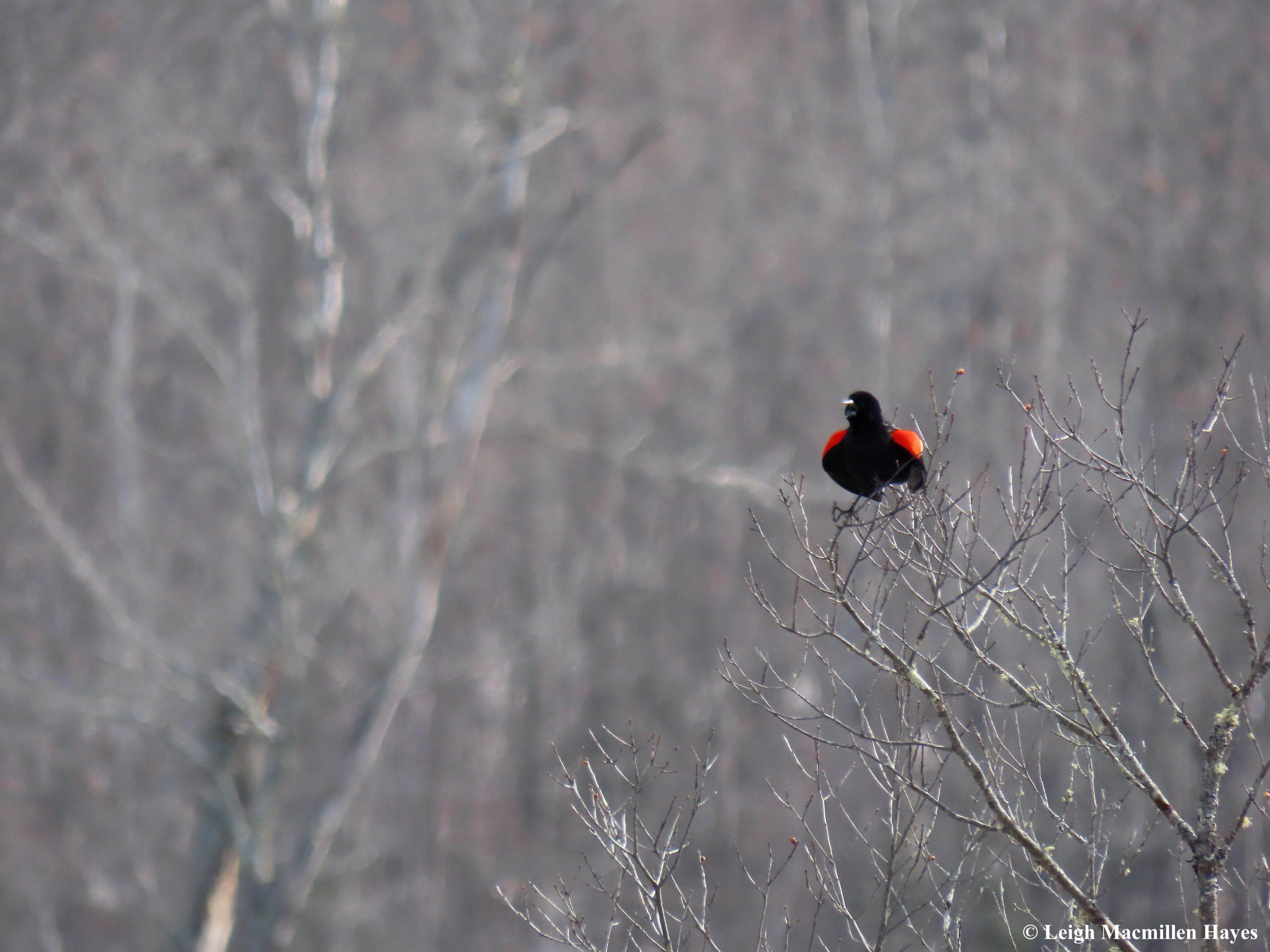
Returning to the main drag, we made our way back to the Old Course of the river and were greeted by the most delightful bird chorus, including the conk-le-rees of the Red-winged Blackbirds.

With their bright red shoulder patches bordered below in yellow, they were calling from high perches among the shrubs.

Puffing out while calling is indeed a breeding activity, and so the race is on. May the best males find a mate.

Our other bird sightings included this White-breasted Nuthatch, plus Hairy Woodpeckers, American Tree Sparrows, Canada Geese, and a thousand Wood Ducks. Or so it seemed. The fact that they moved every time we spotted them, even if two hundred yards away, might mean that there weren’t quite that many, but rather that we kept meeting the same ones in different locations.

We also saw signs of Pileated Woodpecker works. Not only do they excavate holes while in search of Carpenter Ants, they also shred and chisel and in these woods, that seems to be a favorite activity. We wondered why, but couldn’t come up with an answer.

We did, however, do what Bridie taught me to do a million years ago and searched for scat. Bingo! Though we saved this thought for another day, we did wonder if we dissected the scat, would we be able to tell about how many ants had been consumed?

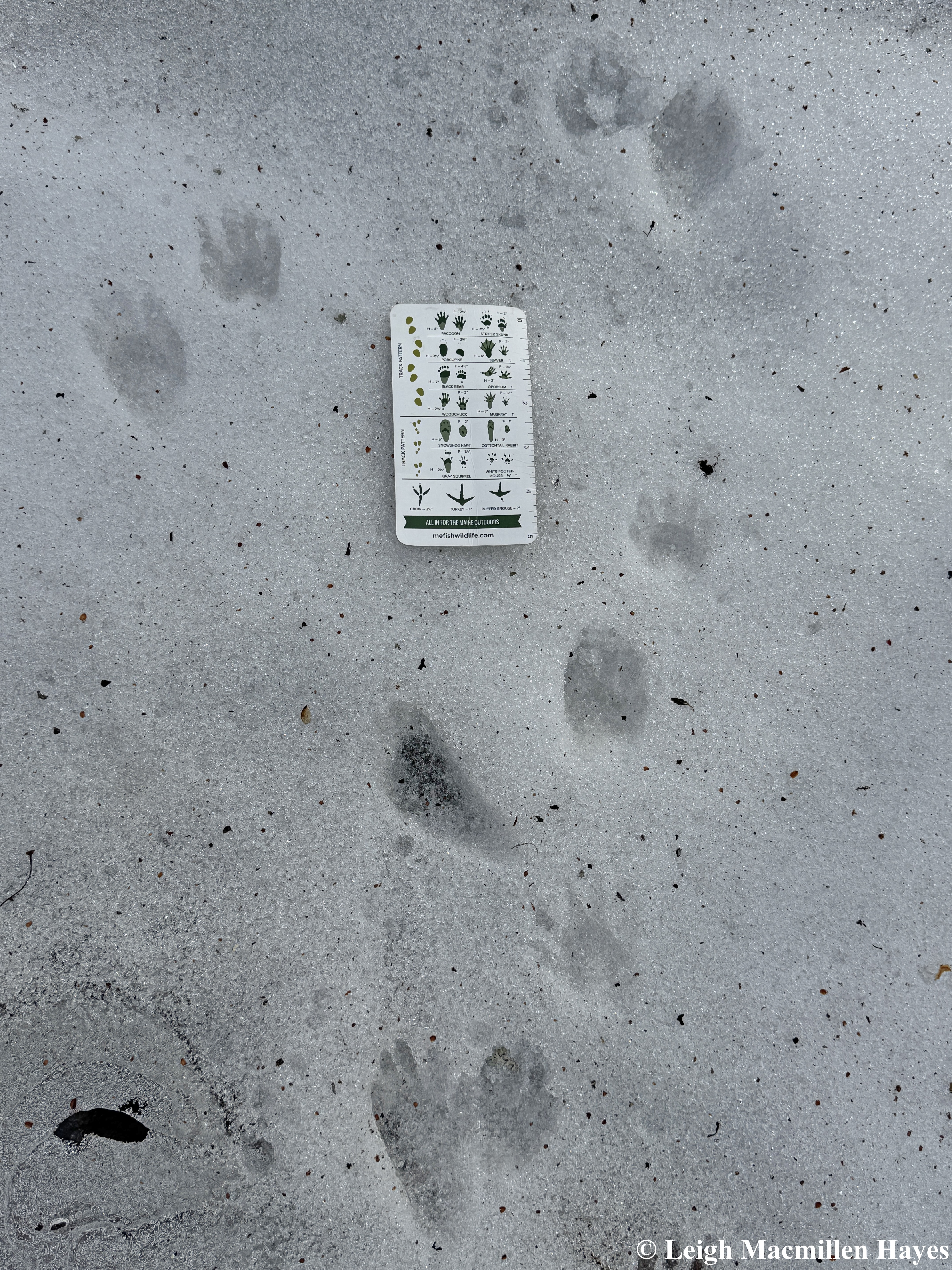
And no adventure with Bridie would be complete without some tracking in the mix. Our snowpack is quickly dwindling and where three days ago at home, we still had a foot, now there are lots of bare spots and what snow is left might be only about four inches.

That said, we relished the finds we did make, including lots of Vole tunnels like these. And I reminded Bridie that she was the one who introduced me to the subnivean layer, that microhabitat between the ground and the bottom of the snowpack (think back to Thanksgiving 2024), which provides insulation and protection for many animals, like the Voles, who happen to be on everyone’s dinner menu.

Our other finds included Raccoon tracks,

Mink,

and Coyote,

plus a family of Coyotes on some sand at Goose Pasture.

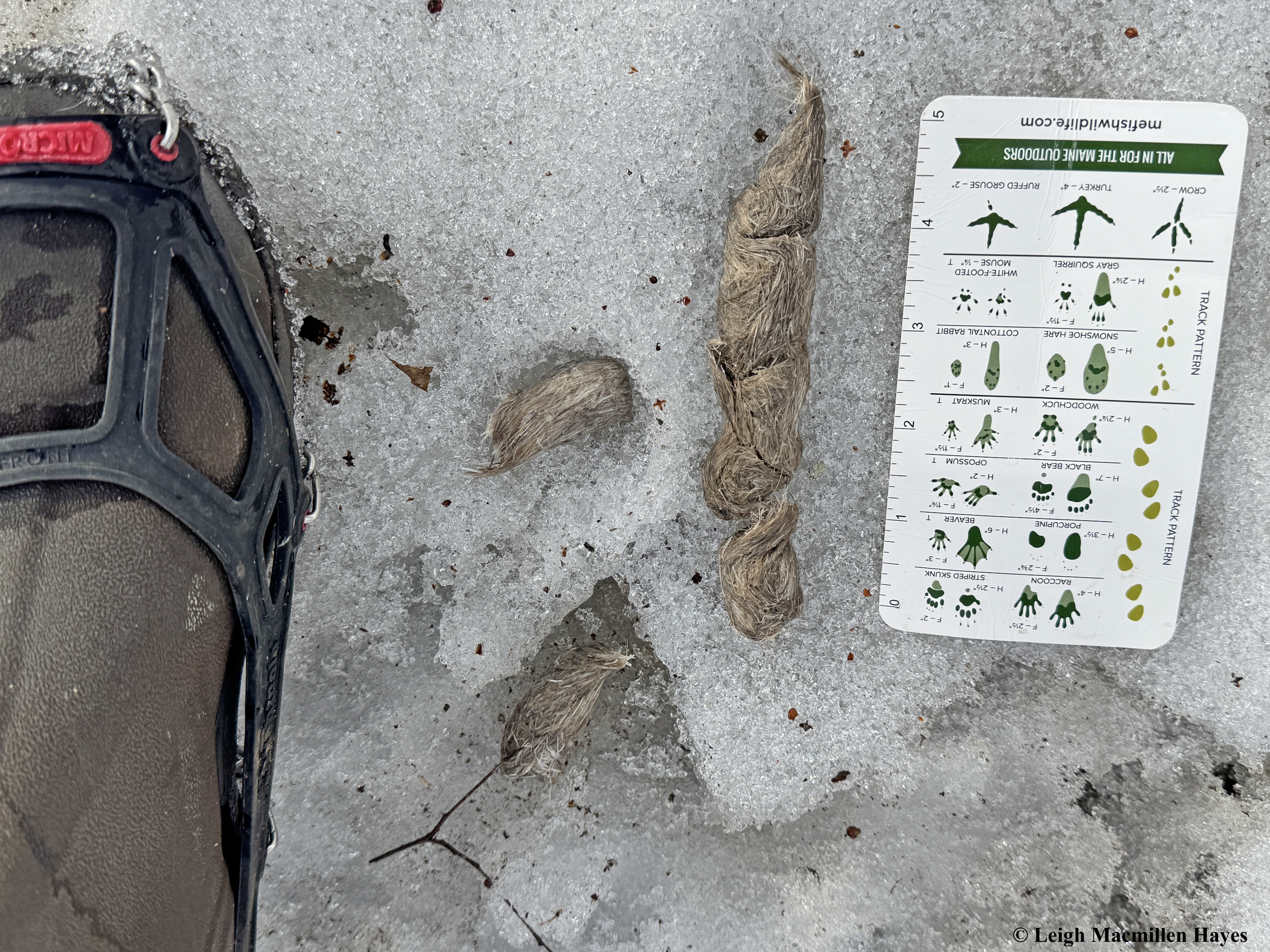
And, of course, our adventure could not be complete without discovering several Coyote scats.

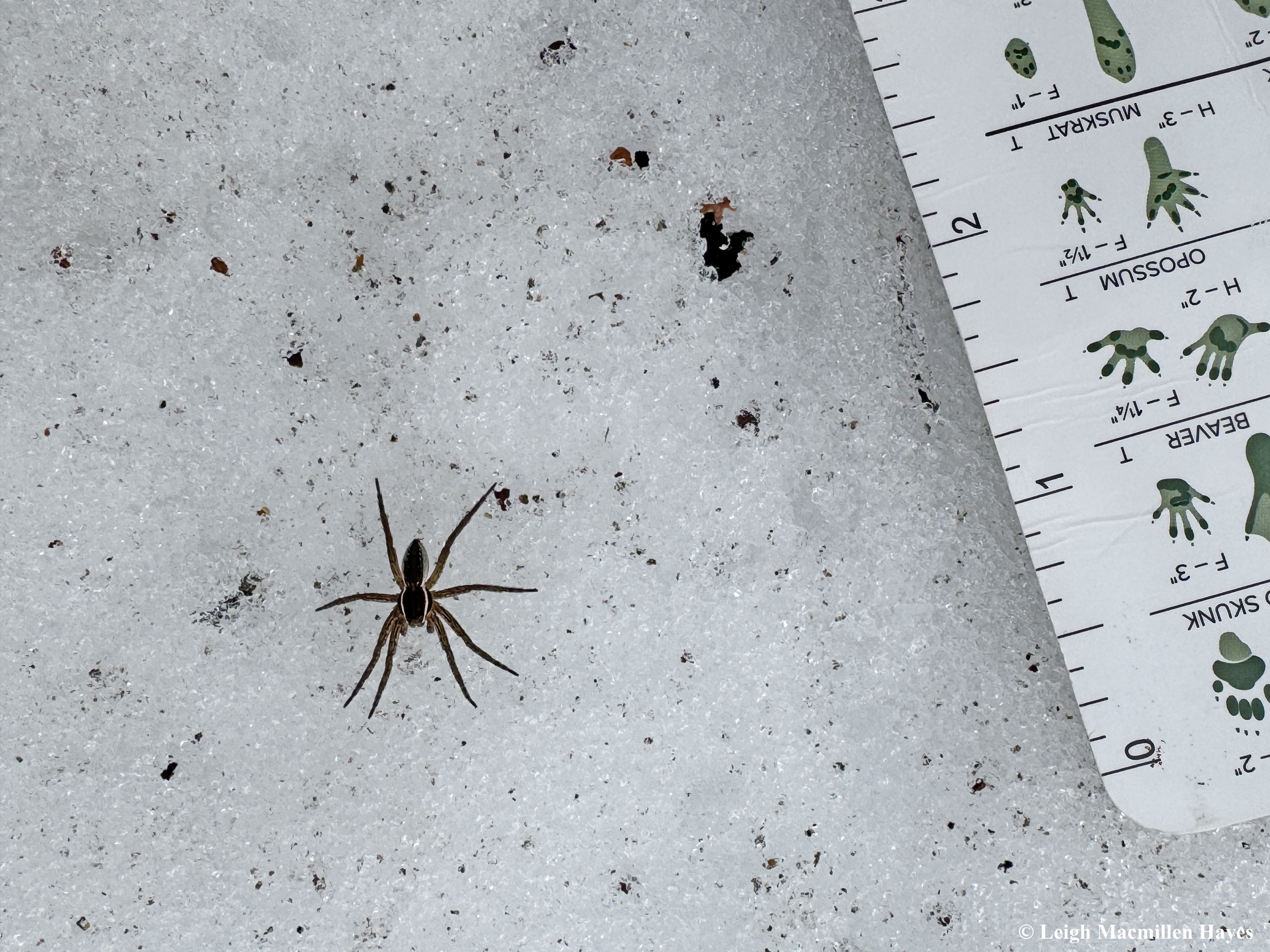
And just for good measure, we met one large Six-spotted Fishing Spider.

Okay, so it wasn’t really as big as the close-up made it look.

There were also beaver works in various places, though we suspected this was a wee bit old, but not older than a few months ago based on the color of the wood. The warmer temps made the sap flow a bit.

There are a bunch of well-mudded lodges in the bog, but we didn’t see any hoped for activity today.

We did, however, discover some scent mounds and know that claiming territory is an important assignment that will become more significant as the ice begins to melt and the two-year-olds leave the lodge to venture off on their own and claim a territory.

Next, we turned our focus to a few shrubs, including the Winterberry. While I still have some dried bright red berries as decorations in my house, most of the berries on branches have shriveled and we wondered why the birds hadn’t dined on them when they were ripe.

What we discovered, much to our delight, was that some had been procured by little brown things, presumably mice, and had been consumed in a bird’s nest. It’s illegal to take bird nests without a permit and this is one reason, they are recycled into homes for other critters.

What totally surprised us about the Winterberry, however, was that we found one shrub with the berries still bright red and plump, as if today was December 18th and not March 18th. Again, we wondered why.

We also found a few of last season’s cranberries hiding under their leaves. That reminded me of another day I’d spent searching for cranberries in the bog years ago–and though I told Bridie about it, I’ll save that two-day story for another day.

Leatherleaf also had offerings to provide, in the form of little flower buds along the woody stems.

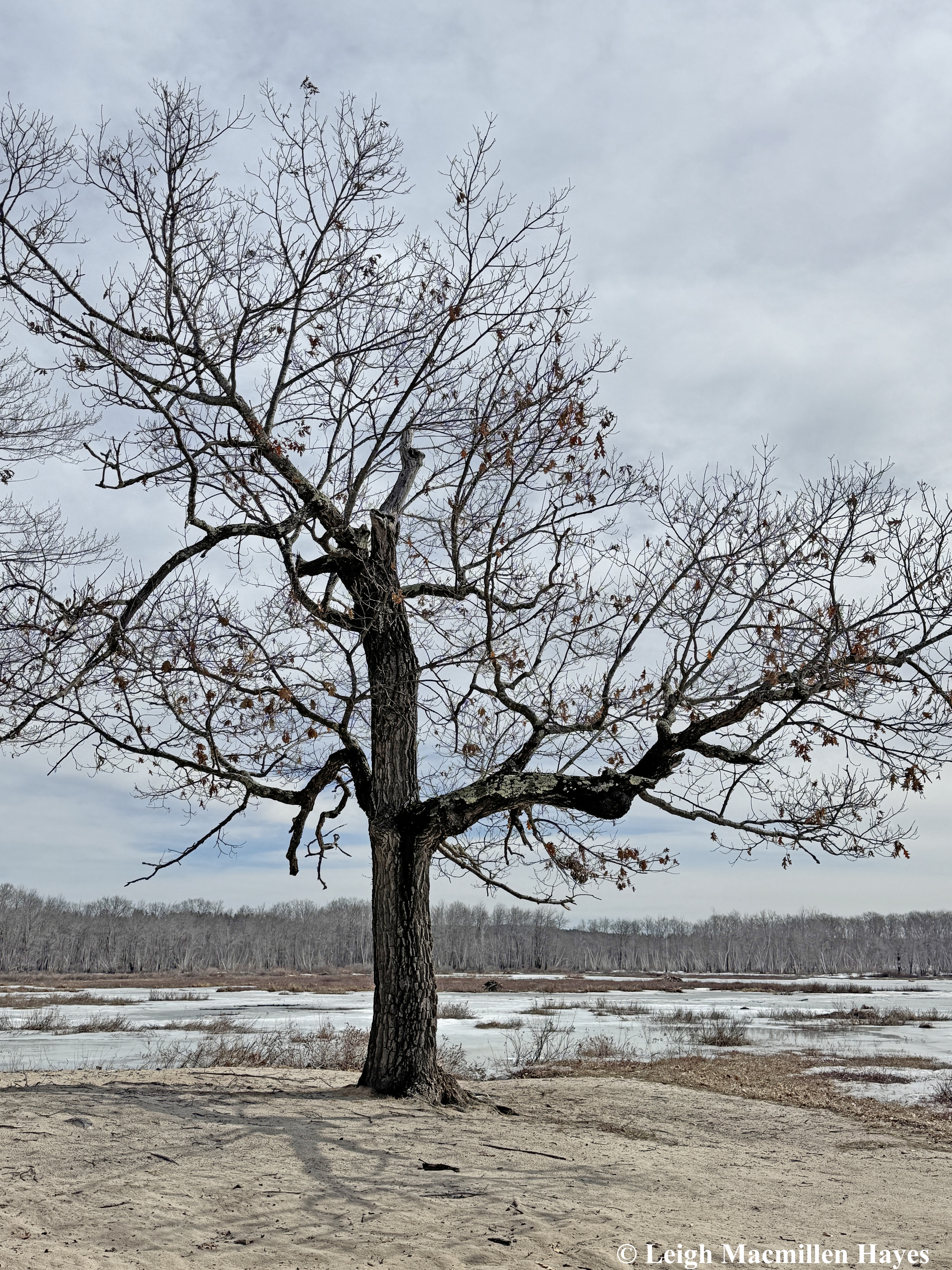
At last we reached the old Oak at Goose Pasture and stood there for a bit taking in the sun and warmth and feeling like it was a bit of a beach day. But, our time together was coming to a close, and we knew this would be our turn-around point.

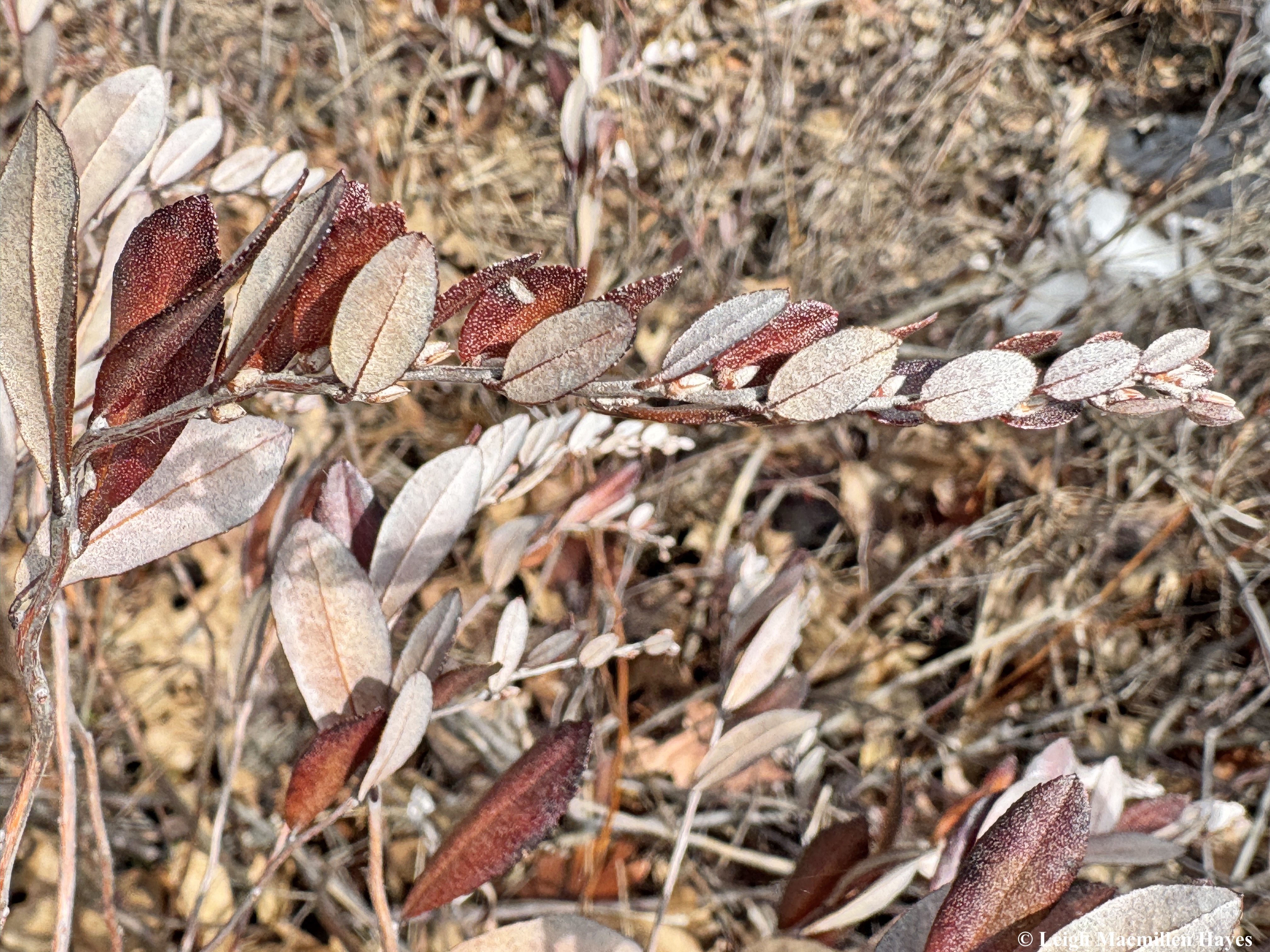
That said, there were a couple of other gifts to share together, as today was the first day this year that the two of us saw Pussy Willows in bloom.

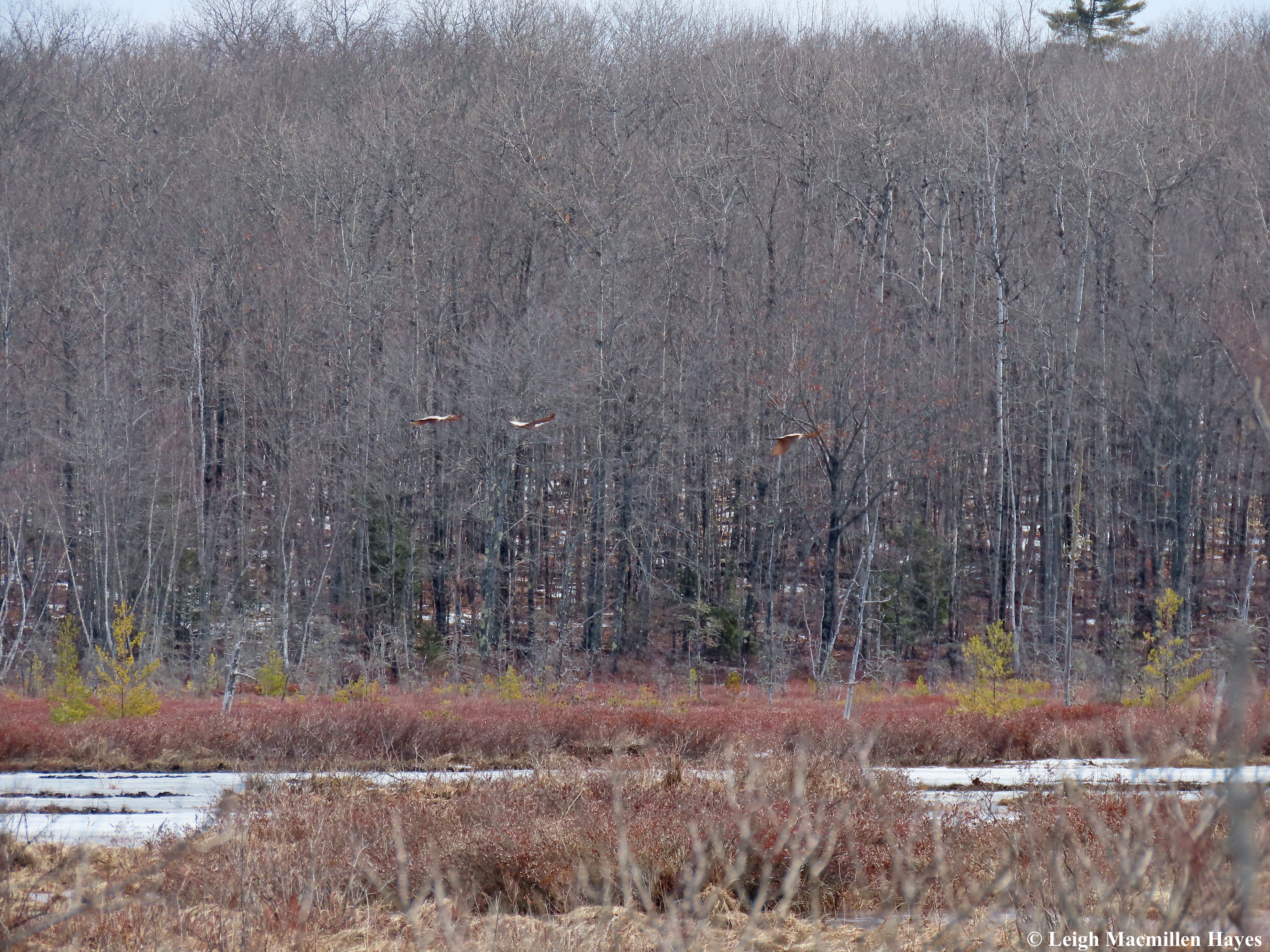
And, drum roll please, we heard them before we spotted them way over on the other side of the bog, but their distinctive call told us to look that way and sure enough there were two Sandhill Cranes.

Like the Wood Ducks they flew, but the two morphed into three as we watched them take to the air.

We’d been blessed. In so many ways.

And at the end of our time together, after traveling 6.2 miles, we needed to say our goodbyes.

The thing is, she wasn’t really with me, which I realized when I went to put my arm around her for our selfie shot. But, in my mind, she was and I had the best time Bogging with Bridie today, her birthday.

Happy Birthday, Bridie McGreavy!

Presents in the Moment

I went on a reconnaissance mission today in preparation for co-leading a Loon Echo Land Trust hike in about another month–once hunting season draws to end. This particular property, like several others that they own, probably sees more people hunting and riding snowmobiles than hiking or tracking. The latter two fall into my realm and today found me doing a bit of both.

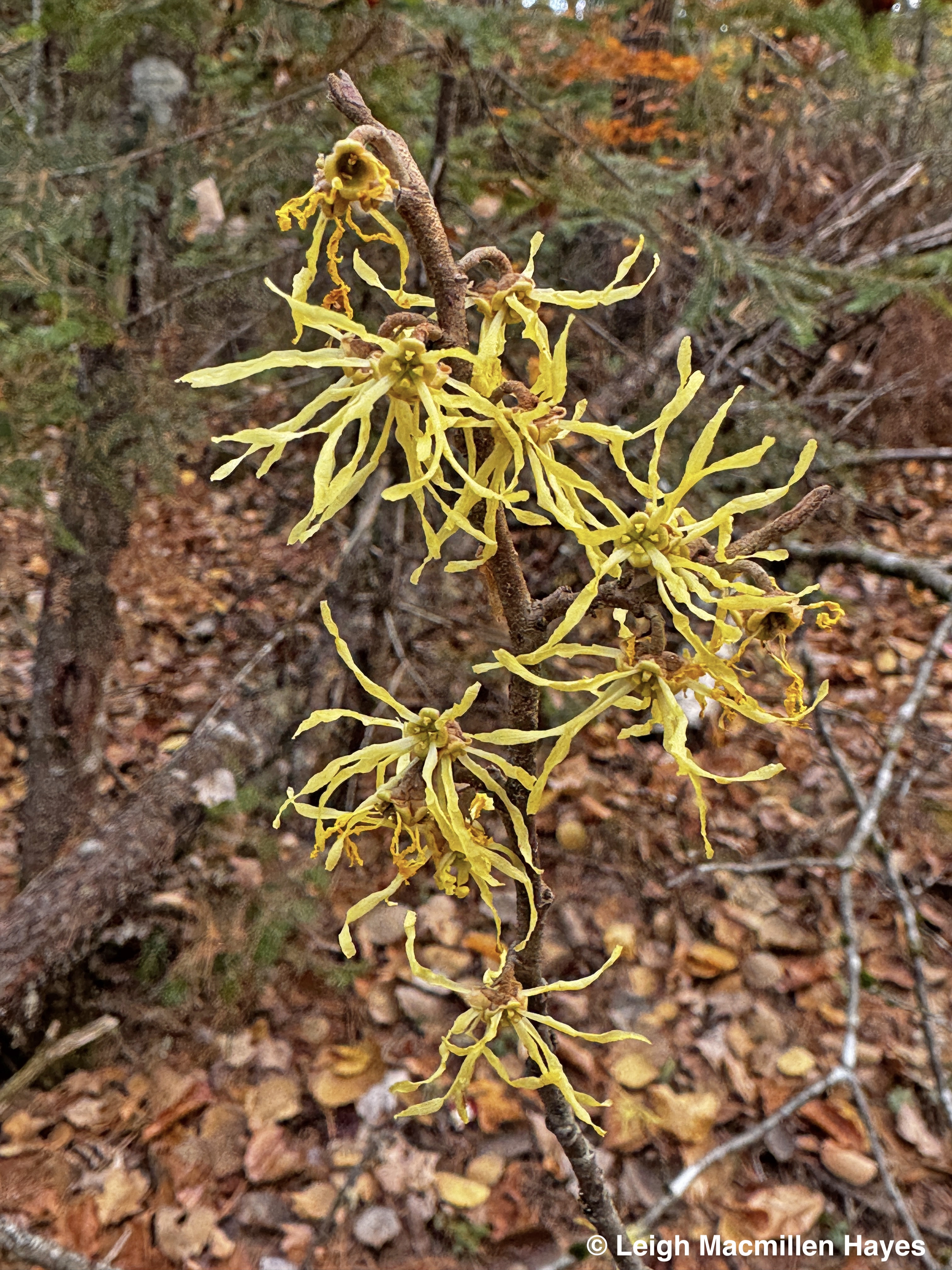
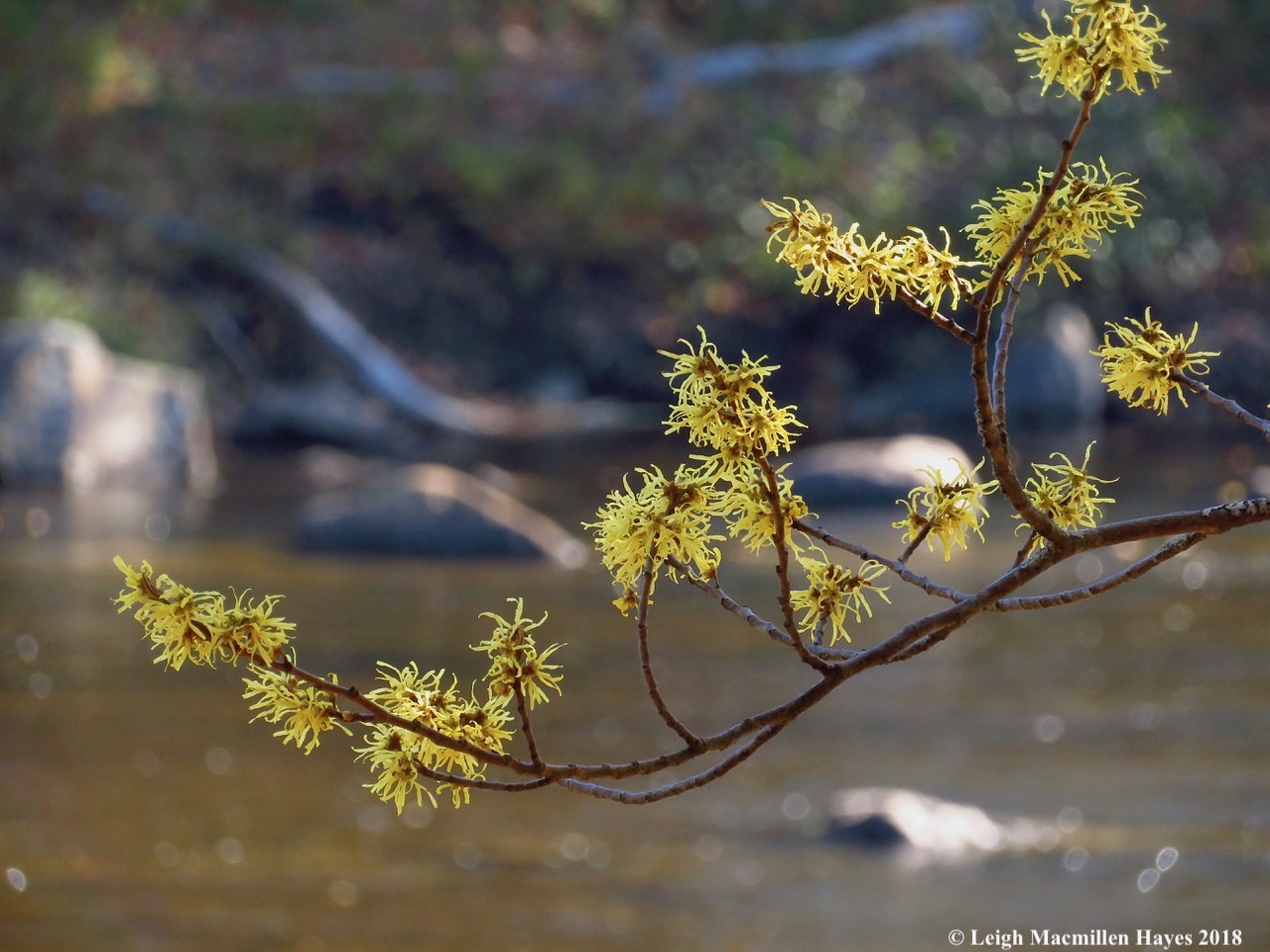
But first, I was stunned by the beauty of the ribbony flowers of Witch Hazel. I don’t know why these always surprise me, but maybe it’s the delicate petals that add bits of sunshine at this time of year when everything is else is dying back.

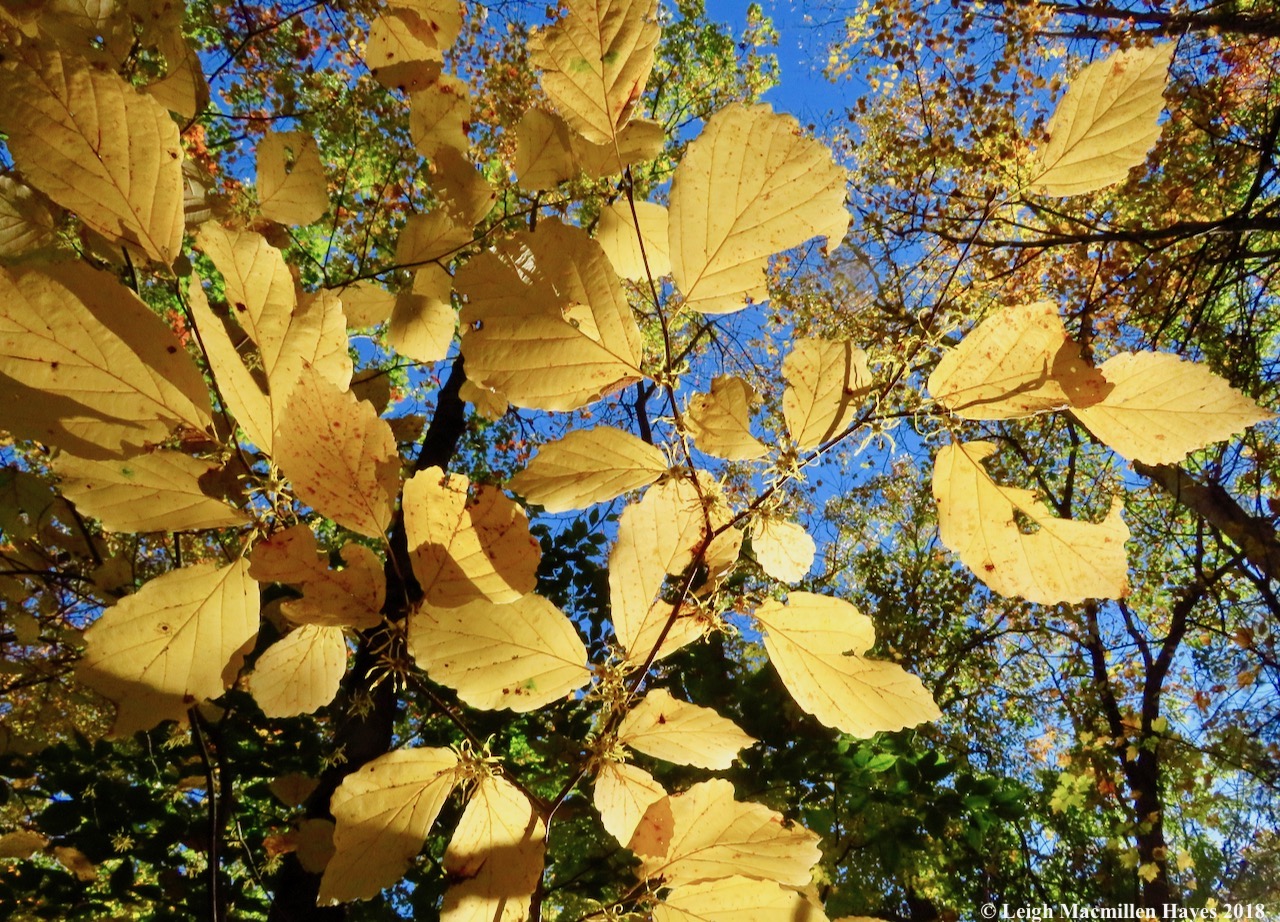
Their wavy-edged leaves also add color as October quickly gives way to November.

A bit farther along the first trail I followed, I found something else to stop me in my steps. Little packages of bird scat inside a hole excavated by a Pileated Woodpecker. If you follow wondermyway.com, then you know that I LOVE to find the woodpecker’s scat, but this was much smaller and I had visions of several smaller birds huddled inside on a cold autumn night.

At the end of the trail I reached a brook that flows into a river. Today, it was a mere trickle. In fact, I took this photo from the high water mark and don’t think I’ve ever seen it this low. Well, not since I began exploring this property in 2020. But then again, since then, we’ve had some heavy rain years and this year has been a bit drier.

I knew once I spotted the trickle that the nearby Beaver dam would not be working to stop the flow.

But . . . in walking over to take a look at it, I spotted something else worth noting . . .

At first my brain interpreted this disturbed site as a bird’s dust bath. Until . . .

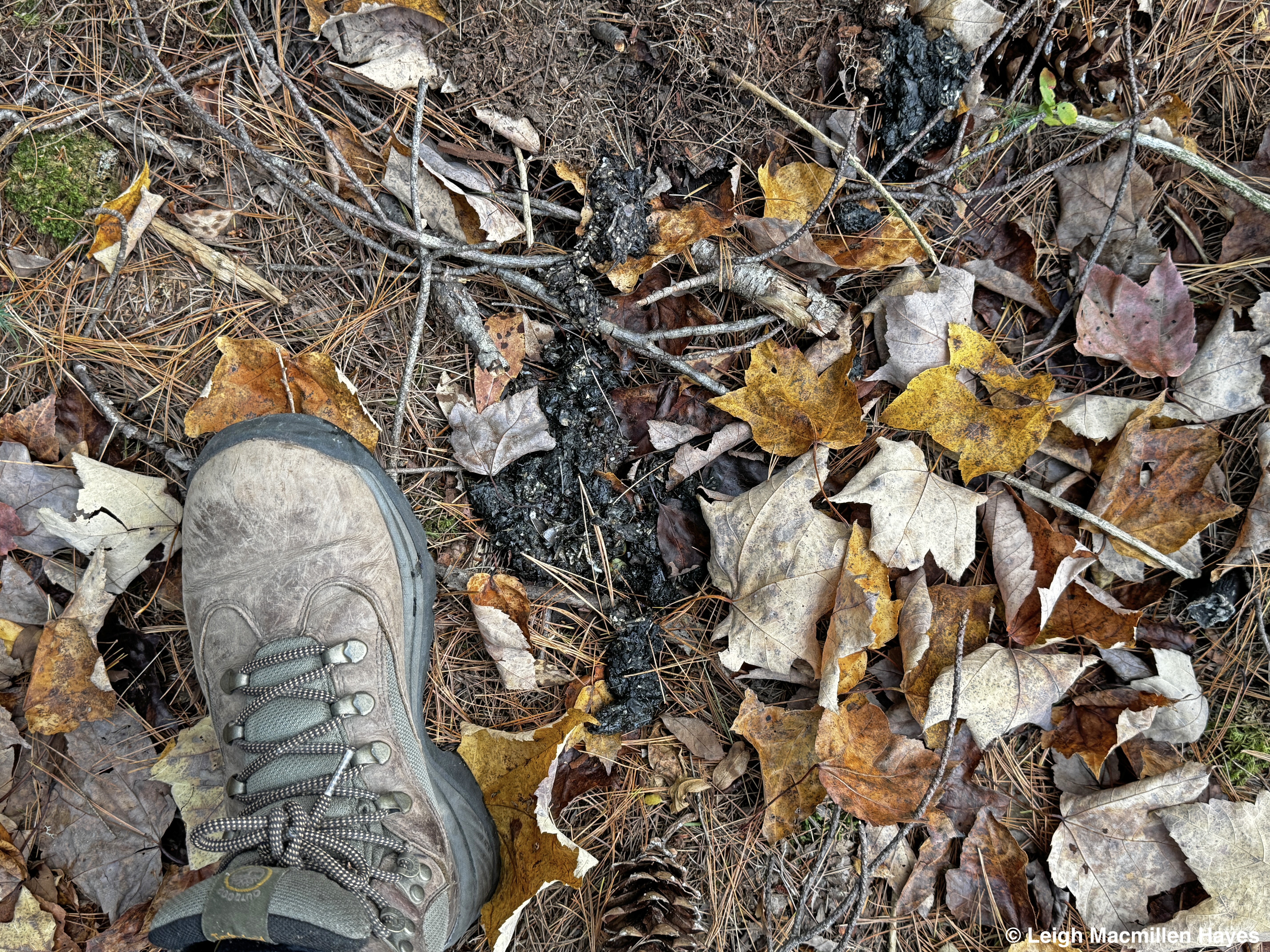
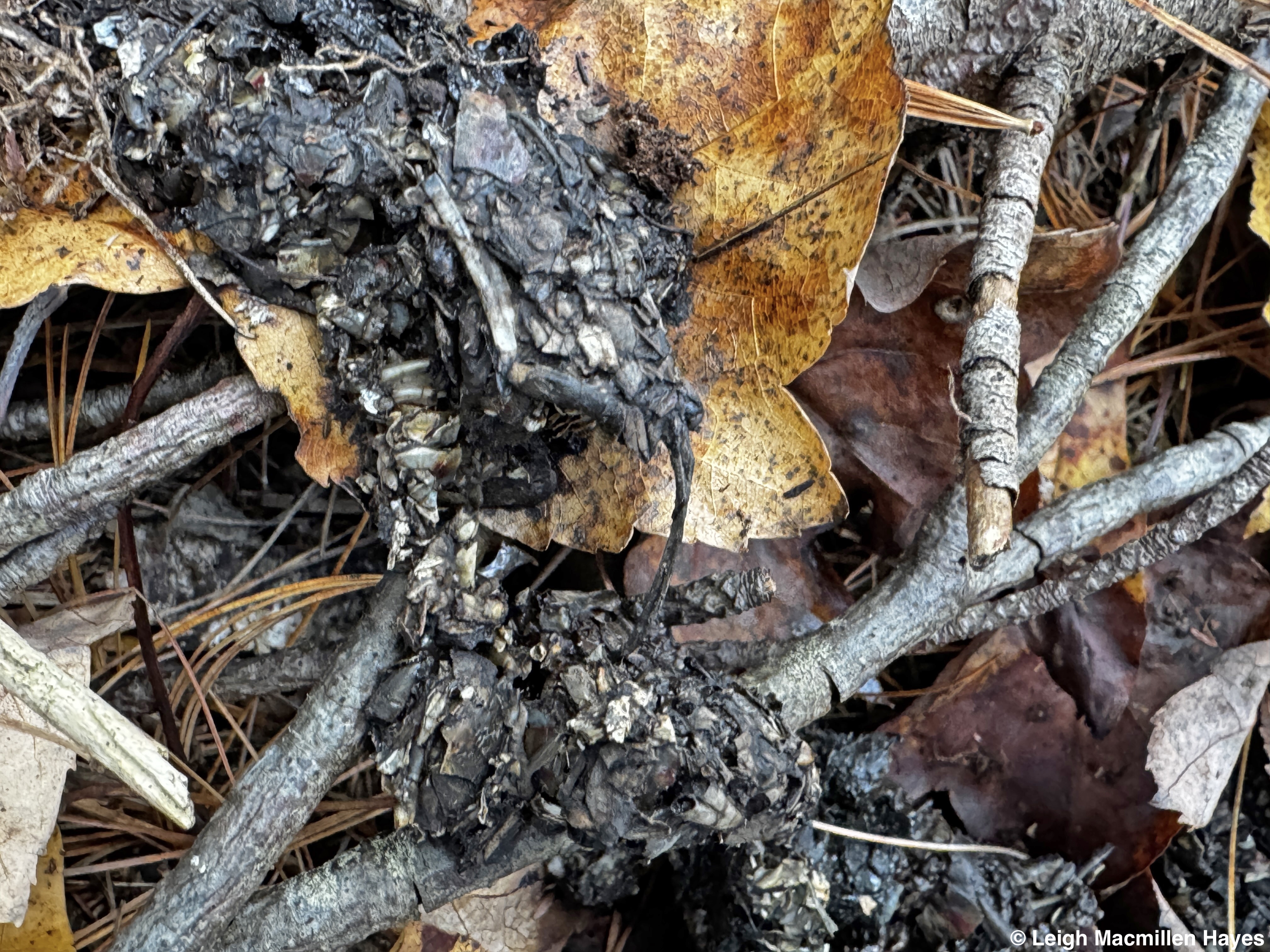
I spotted River Otter scat. A latrine, in fact. That’s when I knew (or think, anyway–okay, assume!) that the disturbed sight was a spot where the otter rolled around, or maybe two or three did as they most often travel as a family unit.

How did I know it was otter scat? Look at those fish scales in it. And it wasn’t all that old based on the leaves under and on top of it.

Feeling like I was in the right place at the right time, I doubled back on the trail because it ends at the brook, and then turned onto another to see what else I might find. Along this one, a second brook had a better flow and had me envisioning the land trust group dipping for macro-invertebrates in this spot we haven’t explored yet.

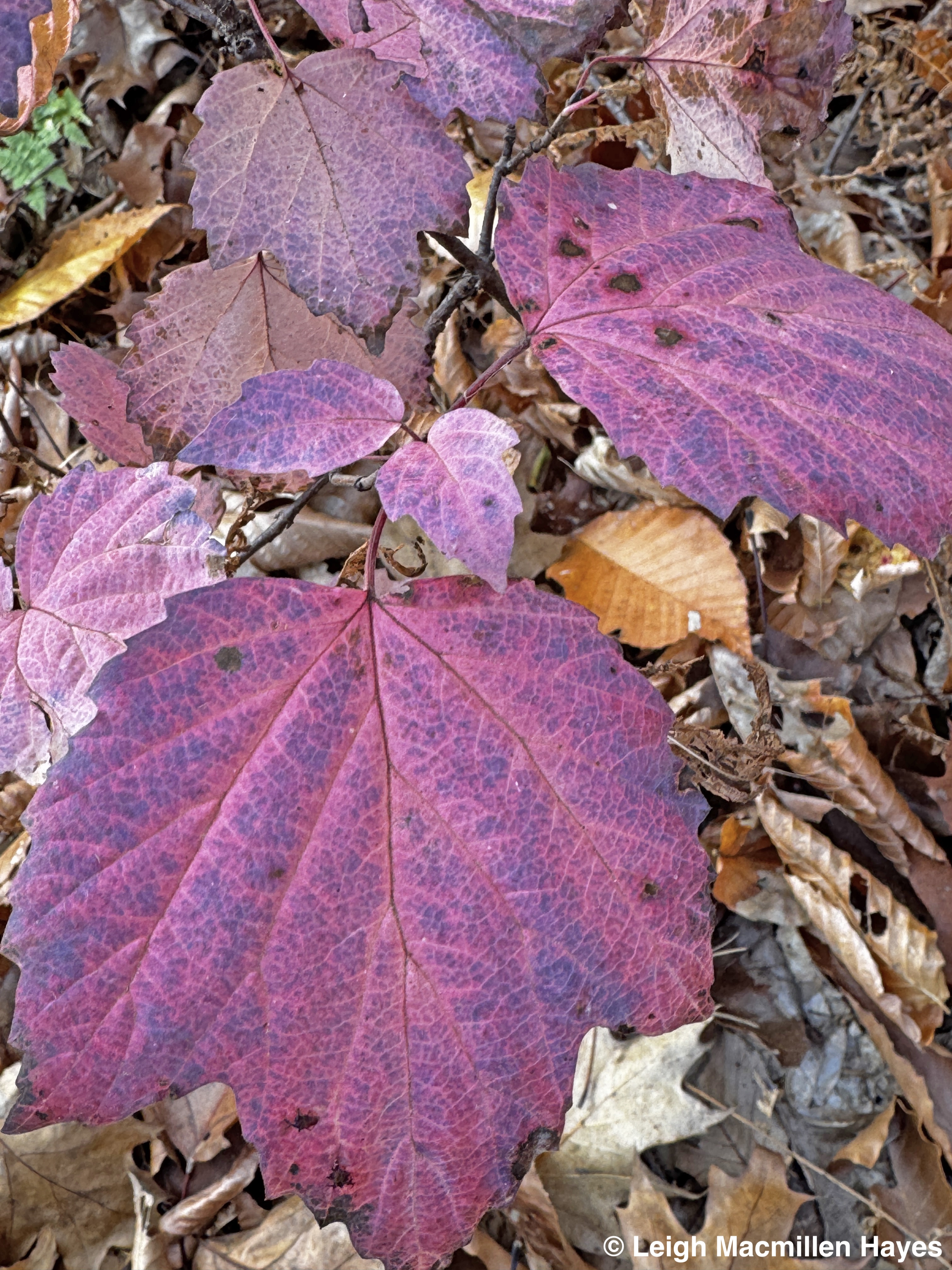
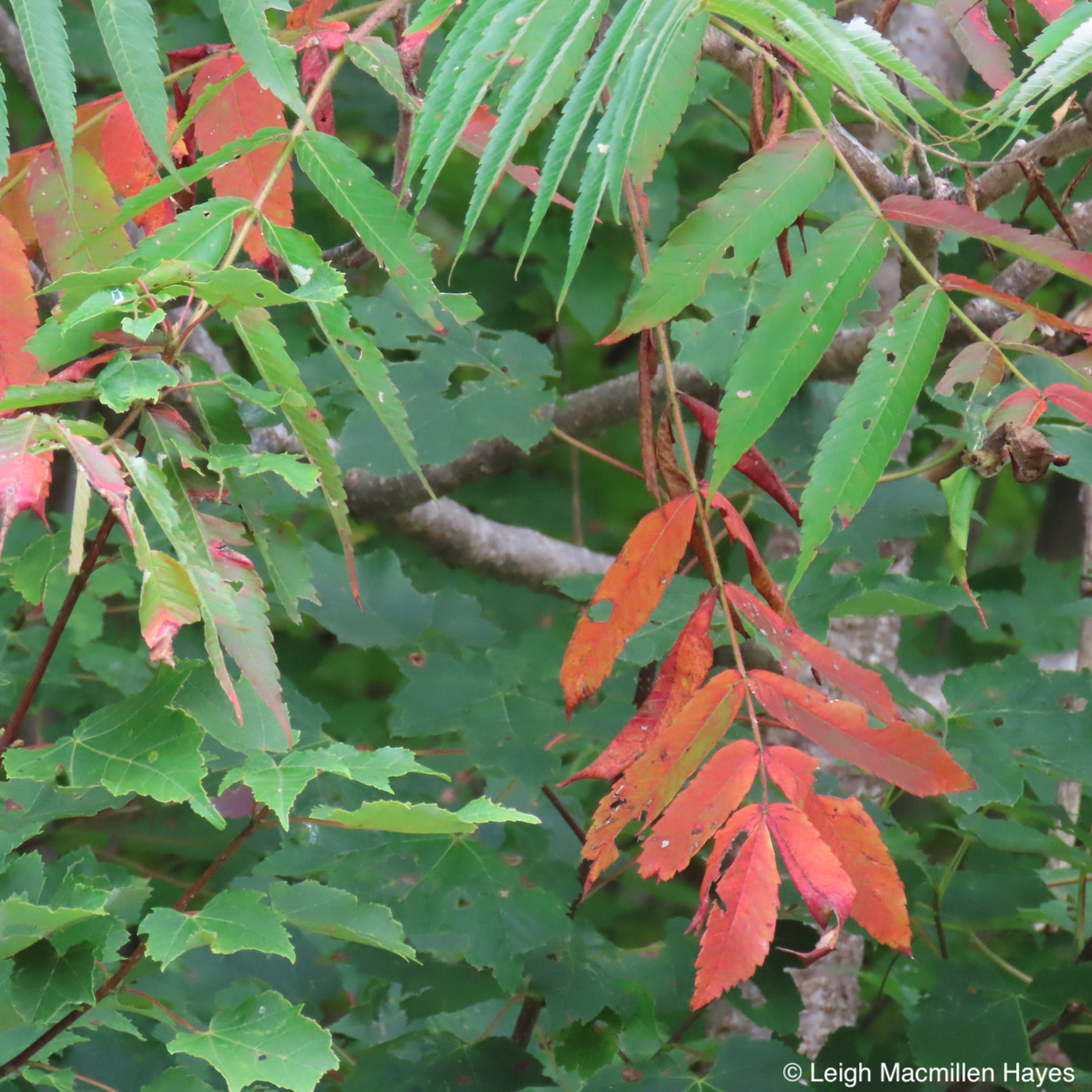
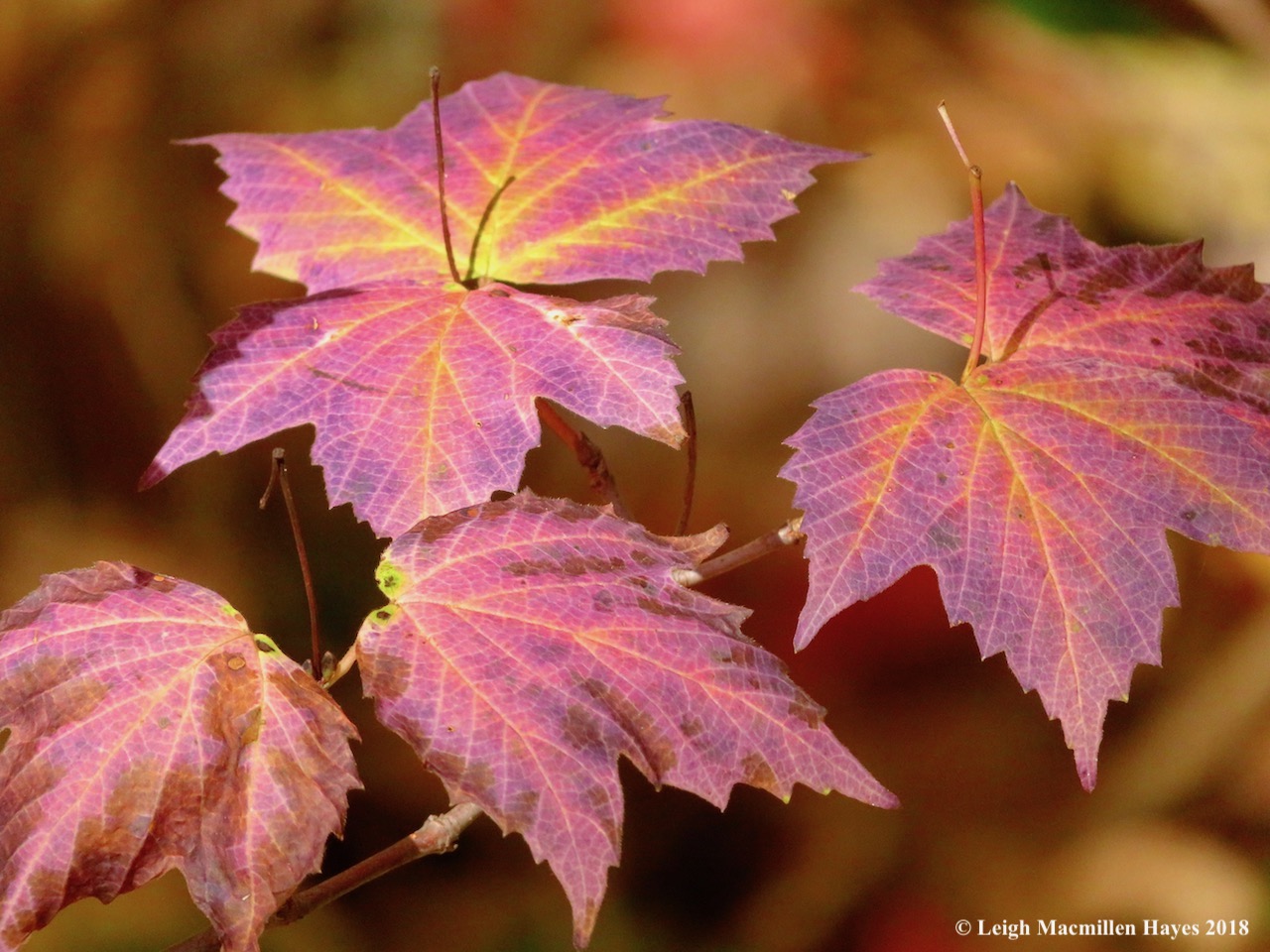
I also found another shrub that thrills me as much as the Witch Hazel. Also a shrub, I can’t pass by a Maple-leaf Viburnum in the fall without admiring its color. Mulberry? Heather? Sky-purple-pink? However you describe it, this I know–no other leaves feature these hues.

If you do spot one, take a moment and touch the leaf. I love the touchy-feely walks that are not about feelings, but rather about actually feeling something (as long as it isn’t poison ivy!).

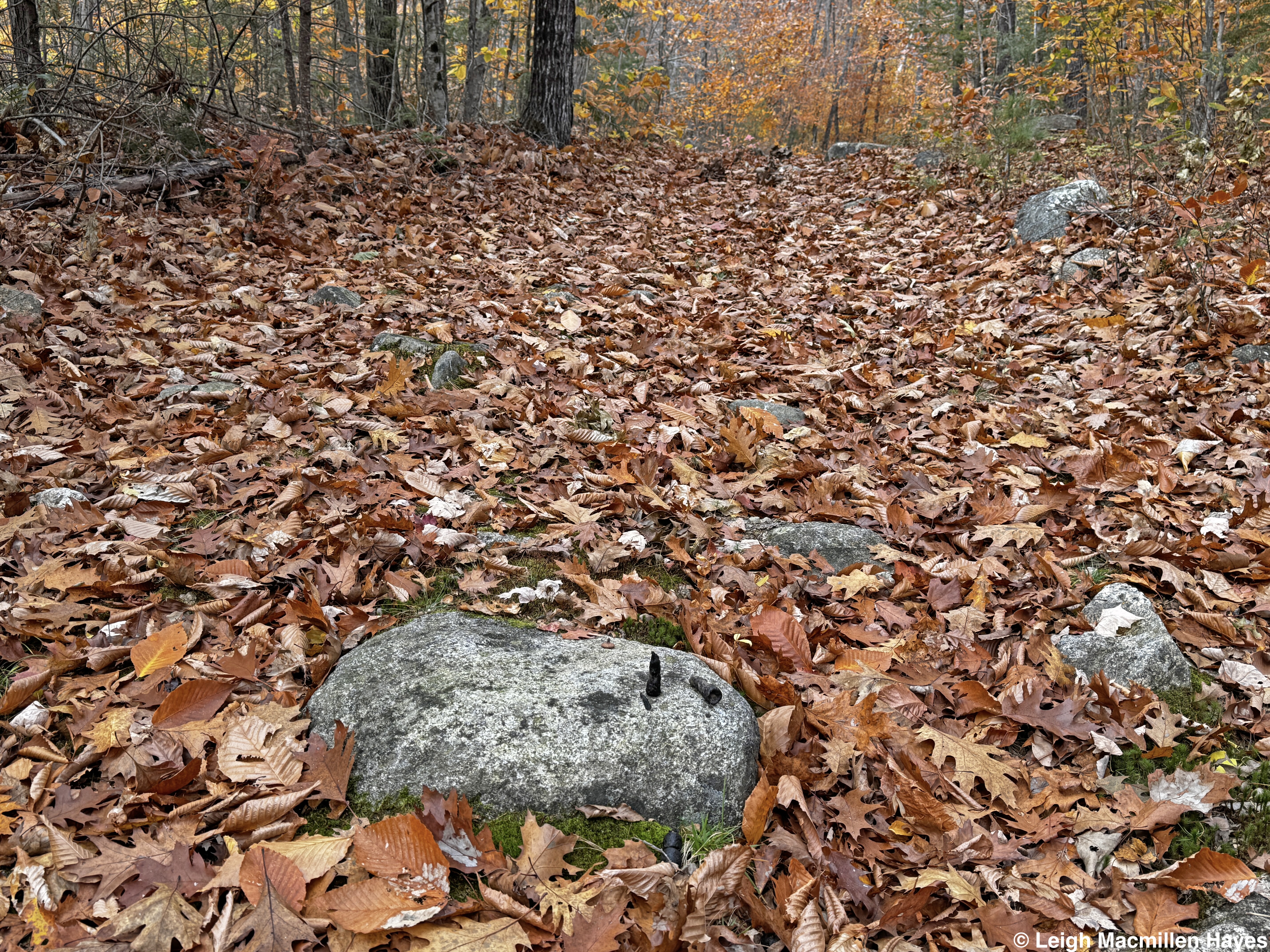
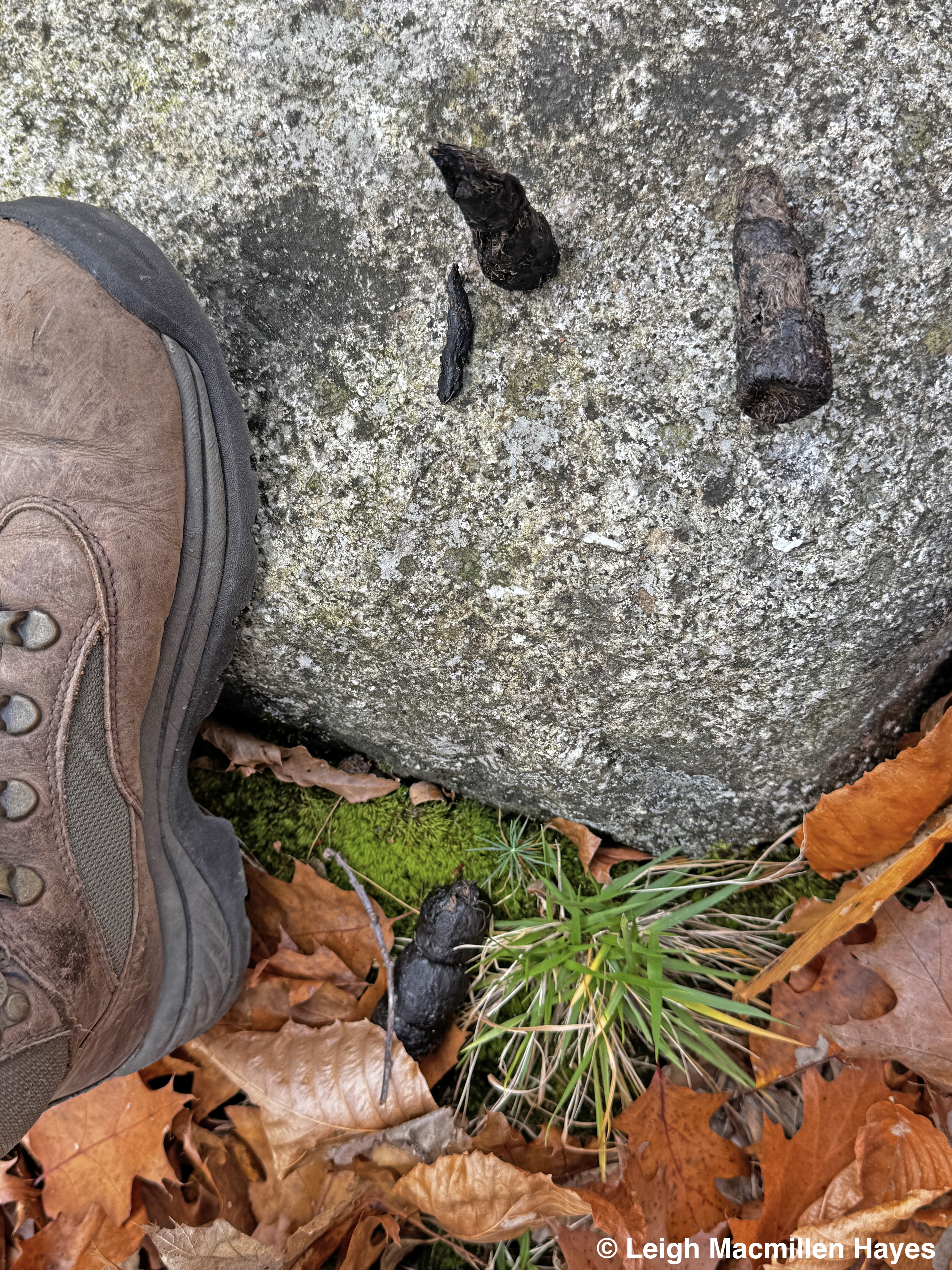
As luck would have it, I was following an old logging road by this point, which these days serves as a snowmobile trail. Despite its uses, rocks and boulders mark sections of it. And atop one, oh my! Do you see what I saw?

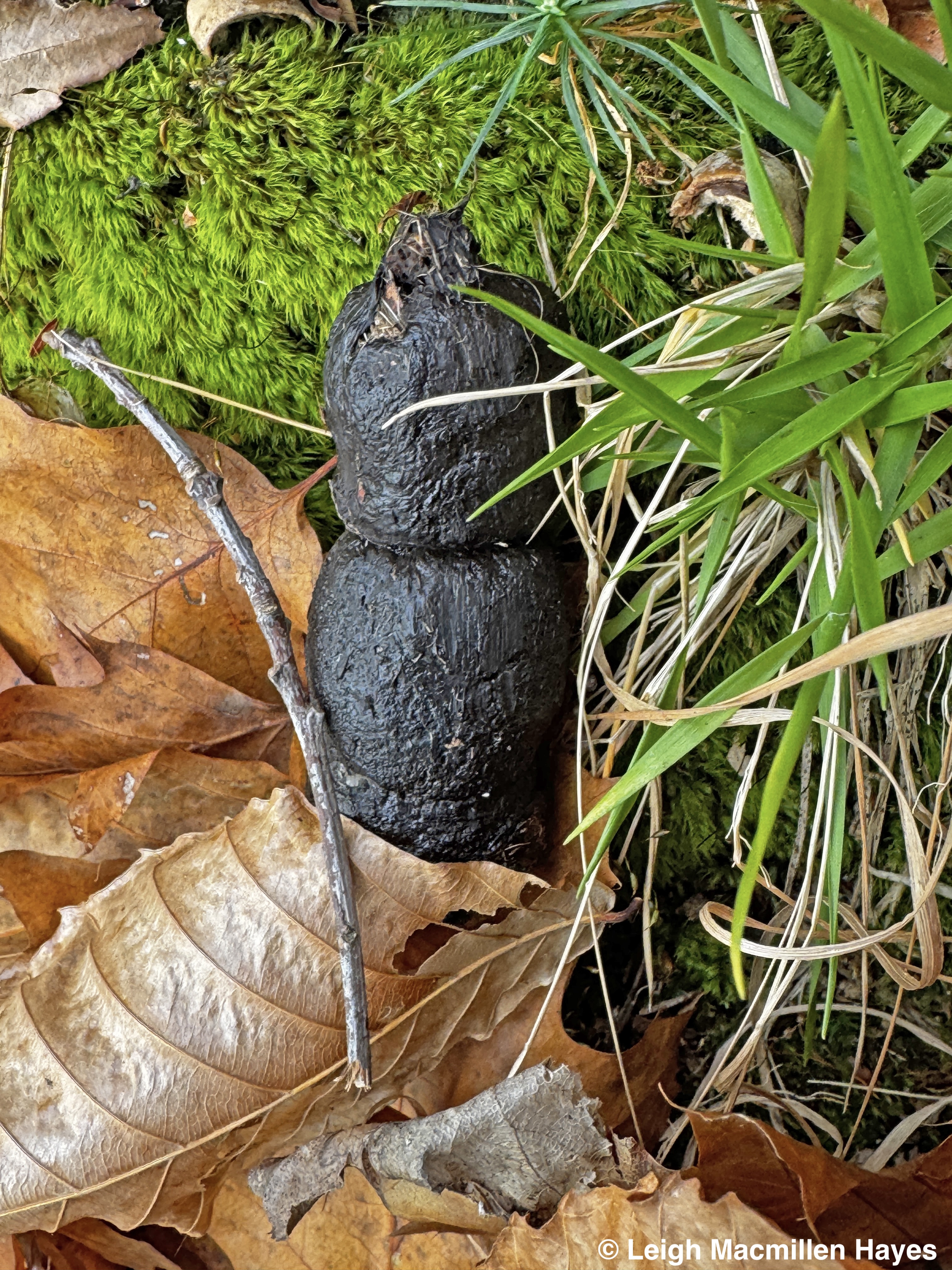
A LARGE Bobcat scat and a tiny weasel scat. Could life get any better than that? I think not. Well, unless I saw the actual critters and as I write this a local friend just texted me that she and her family saw a pair of eyes reflecting in their headlights as they pulled up to their house: “I thought it was our cat from a distance. I got out to investigate. It was a bobcat! And it wasn’t afraid. I couldn’t believe it! It was so close. I could see the face. I ran inside to get a flashlight. It just watched us as we watched it.” ~Amanda.

If she was someone else, she’d jump on social media and inform the world that the big bad wolf is in the neighborhood because that seems to happen any time someone spots a Bobcat or Fisher. But, she appreciates the gift of the sighting and I’m so thankful for that.

Back to my Bobcat, or rather Bobcat scat–it was classic! Segmented, tarry, and no bones. Ahhhh! What dreams are made of–at least my dreams.

It was also quite hairy. Squirrel? Snowshoe hare? Weasel? Pop goes the weasel? Into the Bobcat’s mouth? I’ll never know. But I love that one marked the rock in the middle of the trail and the other followed suit. And I also love how that one piece stands upright like a tower. I don’t think I’ve ever spotted such a presentation before.

No, don’t worry, we don’t have yet. But I took this photo of a Bobcat print, also classic in presentation, along the same trail last February. Same critter? Offspring? Sibling? Any of the above.

At last I reached what would become my turn-around point, again on an out-and-back trail. And once again, I slipped off the trail and made my way toward an expansive wetland that is actually part of the small brook I’d crossed.

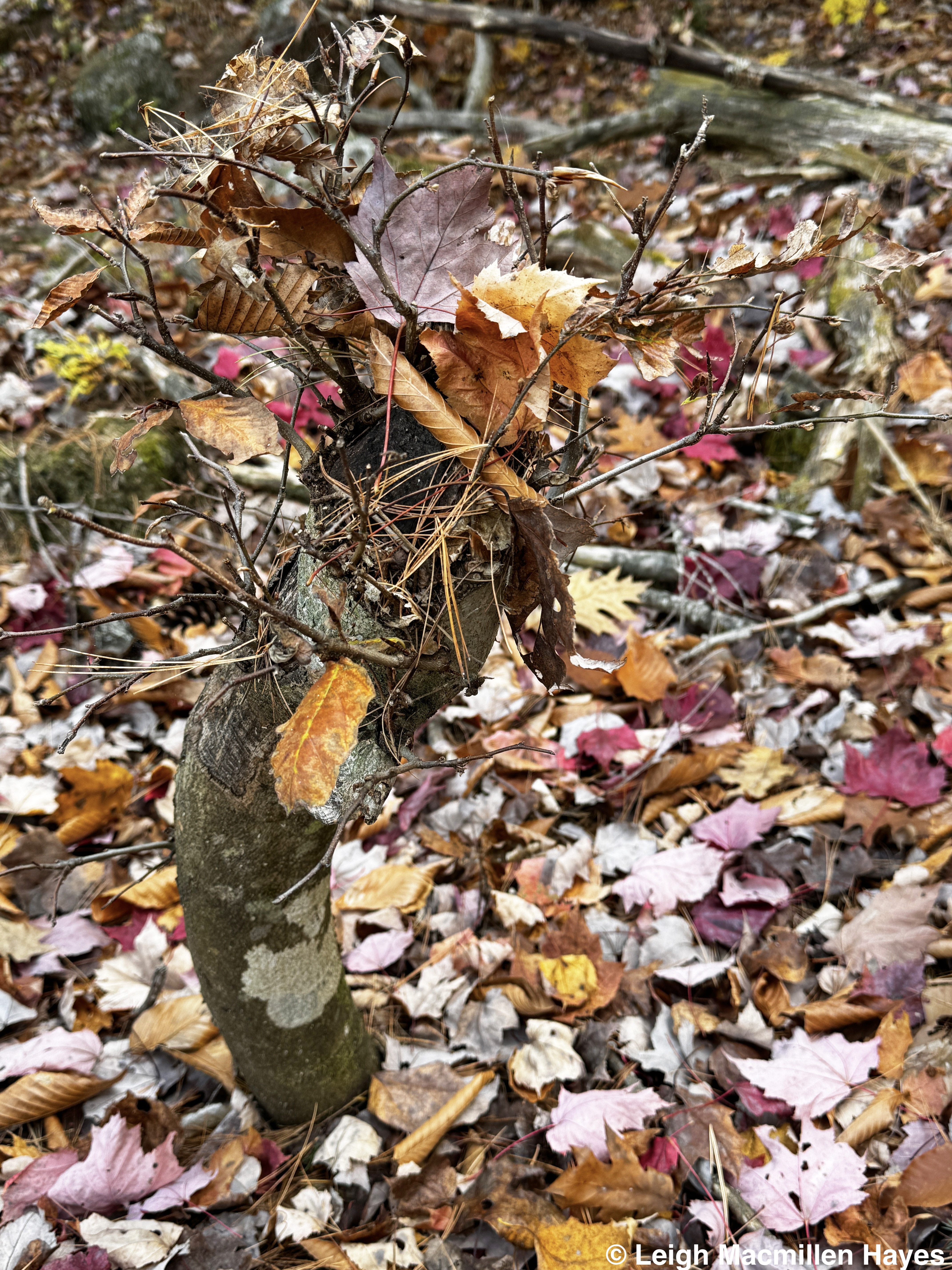
Old Beaver works, such as this American Beech with a bad-hair day from stump sprouting, were evident everywhere.

Other Beaver sculptures created a few years ago as indicated by the dark color of heartwood where the rodent had gnawed and cut the tree down, probably to use as building material, now sport fungi in decomposition mode.

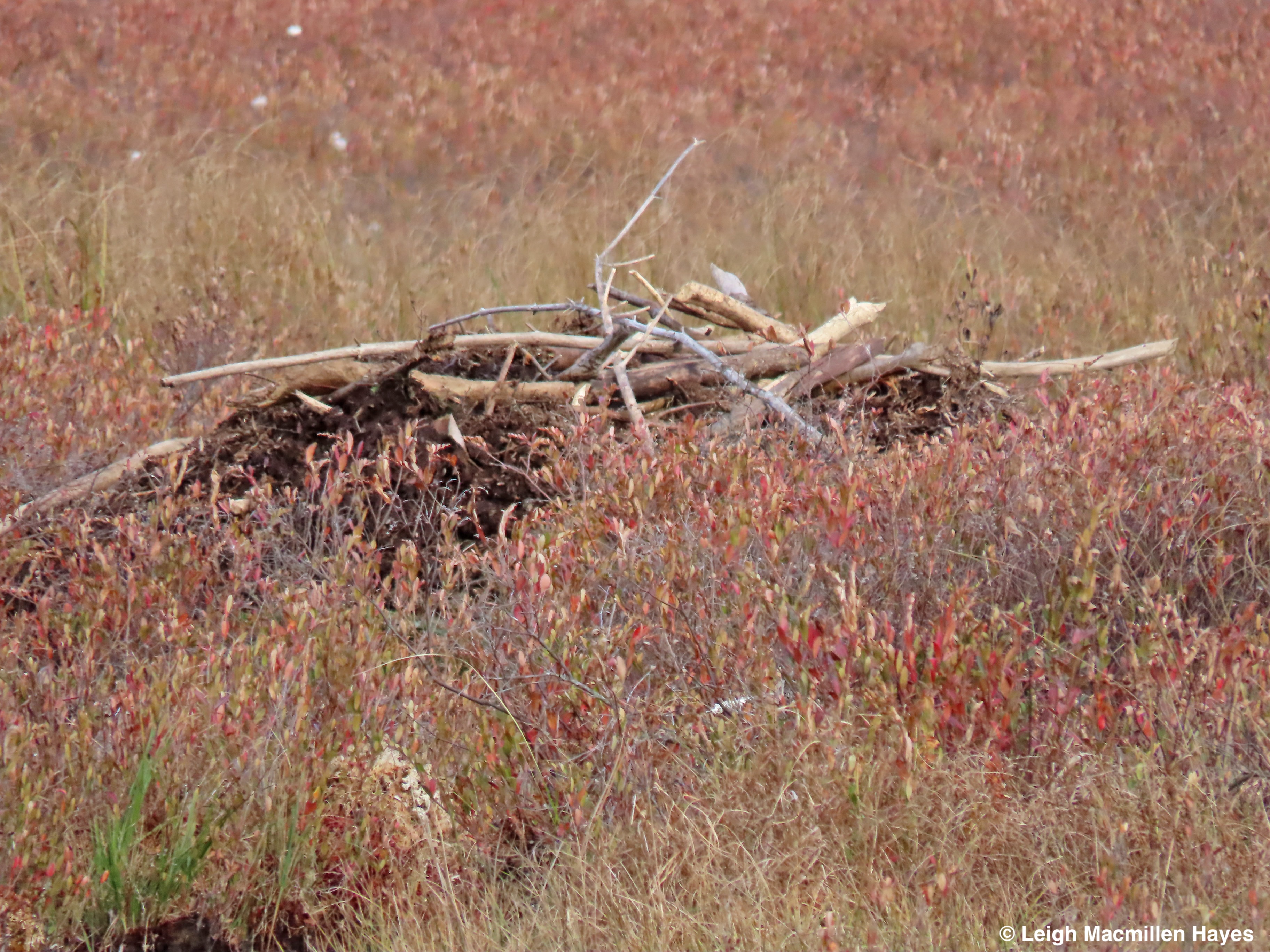
In the wetland, I spotted two Beaver lodges, both featuring some mud for winter insulation. There were two other larger lodges with no mud, so I suspect these are the residences of choice for this year.

I also spotted a Beaver channel, but could find no new work on the land.

That surprised me given that there was new wood on top.

I could have walked farther along the wetland and may have spotted some freshly hewn trees, but when I spotted several Wood Ducks on the far side, I decided to stand still for a bit because they are easily spooked.

And my grand hope was that if I was quiet, I might get treated to a Beaver sighting. Or two.

For a half hour I waited. Nada. And so I climbed back up to the trail and walked out.

But, I was present in the moment today and received so many gifts, which may or may not be there when I bring others to explore. That’s okay, because together we’ll make other discoveries.

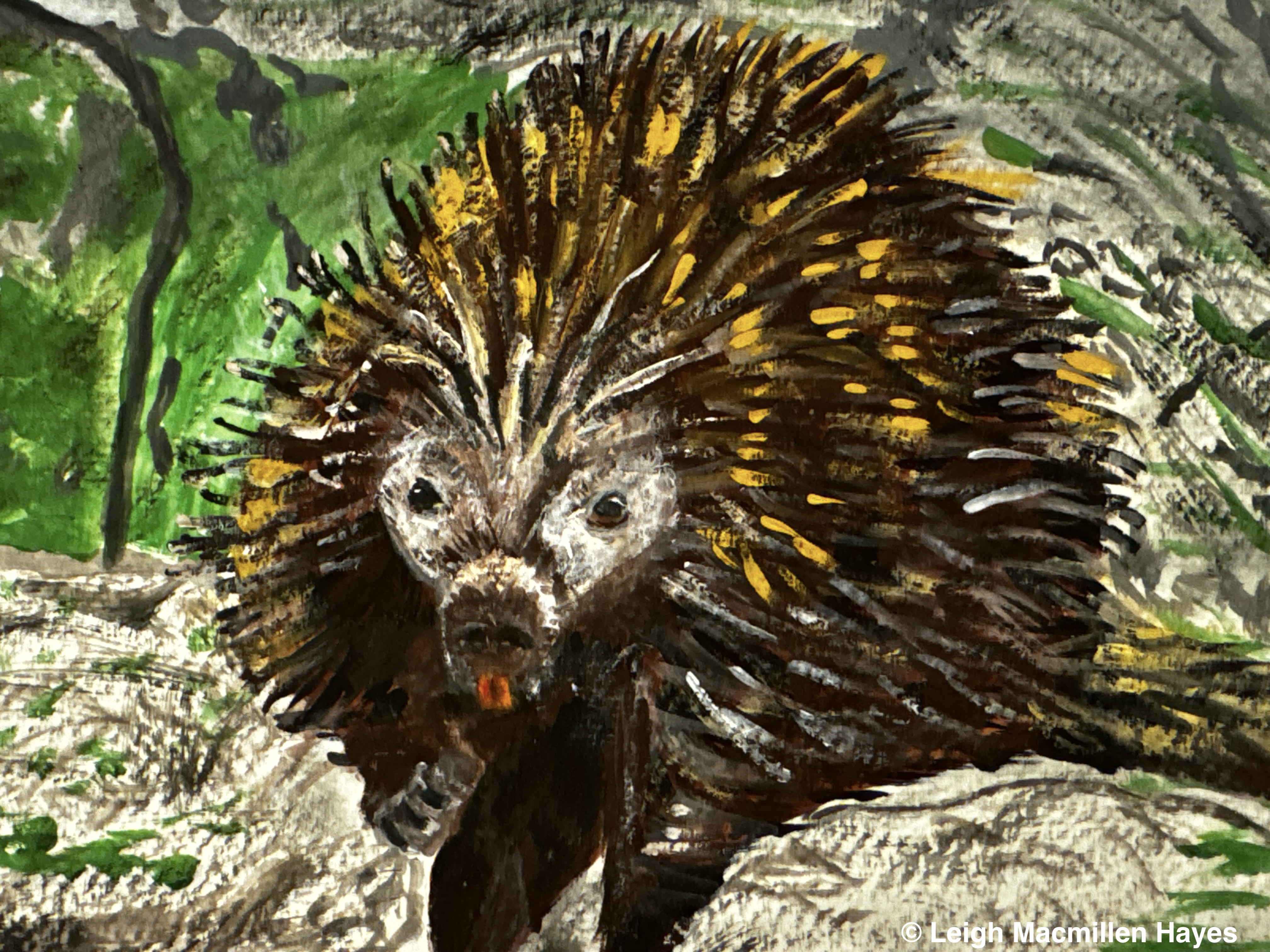
Thanks for stopping by, once again, dear readers. I leave you with this painting as a parting gift for being so faithful in following me as I wander and wonder.

Snow–Bugs and Flakes

Betwixt. Between. Be flowers. Be bugs. Be glad for there is so much to wonder about in the natural world. And I don’t even know the half of it. But I wouldn’t be happy if I wasn’t always learning.

It was 28˚ when I awoke this morning. Late this afternoon on this brilliant sunlight day, with temps at least 30˚ warmer, I walked out through our woodlot to the right and then looked back across the neighbor’s field toward our house, taking in the sea of seedheads and I was sure my insect hunting days had come to an end.

But much to my surprise, and really, I shouldn’t have been surprised, the chirps of crickets and grasshoppers, like this Red-legged example, filled the air. I might not have seen the grasshoppers if they hadn’t flown to a new spot occasionally, for so camouflaged are they in the current setting. Or always.

And then, much to my delight, I noticed a Saffron-winged Meadowhawk flying low and making frequent stops, allowing me to do the same. We live in a wet area, but still, I’m often surprised by some of species I meet here.

From the field, I decided to continue along the power line that crosses our property and the neighbor’s and many more beyond that and as I’d told my friend Meg from North Carolina the other day–Mount Washington, our mighty New England Rock Pile, is at the far end and it looks like we could walk right to it. Give or take a few days–or drive there in about an hour.

It’s along the path below the lines that I discovered Cotton-grass, which is a sedge, with its fluffy little heads speaking to the bogginess of this area.

Cottongrasses self-pollinate, their flowers being “perfect,” given that each contains both male (stamen) and female (carpel) parts. And the seeds are attached to parachutes waiting for a breeze (or animal) to move them to a new home.

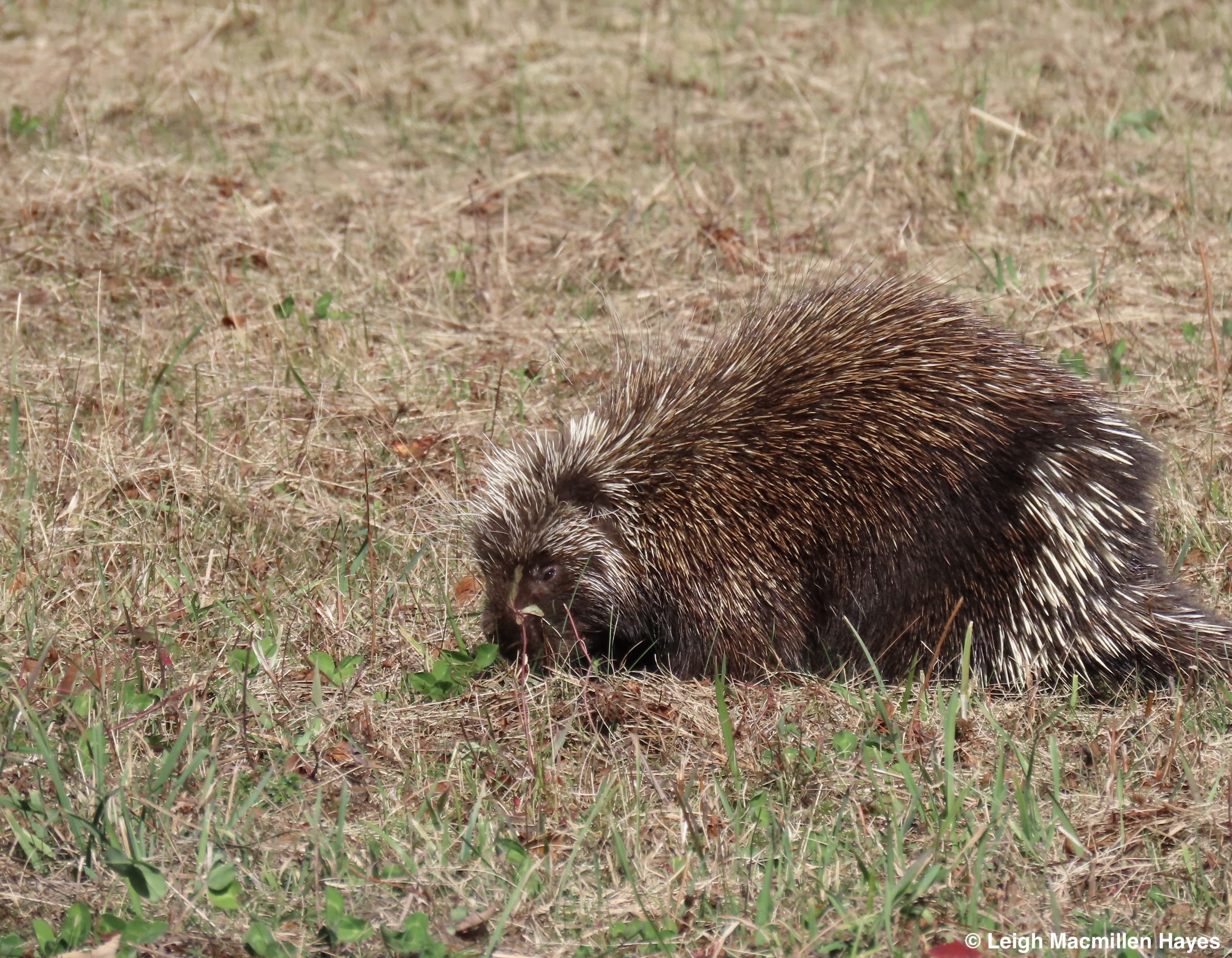
Spotting the curly, cottony-hairs reminded me of the belly hairs of porcupines, which of course, reminded me of the Porky some friends and I spotted in another field in town yesterday. The time is coming when these critters, whom I’ve come to adore, will transition from life in the field to life in forest trees.

Last November I wrote about this particular porcupine, Bandit, whom I met in our yard, along the same route I began today’s journey. Perhaps soon, we will meet again.

Getting back to today’s story, I left the power line, and headed out an old logging trail that I tend to frequent most often in the winter. But it was sunny, and I was enjoying that warmth, and wondered what else I might spy along the way.

For starters, there were the “dried” Pearly Everlasting Flowers, which I should have gathered because they do dry so well. Instead, I just admired them.

And I had frequent encounters with more Saffron-winged Meadowhawks, flying much like White Corporal Skimmers in early spring–always landing and then moving a couple of feet ahead of me whenever I made a move.

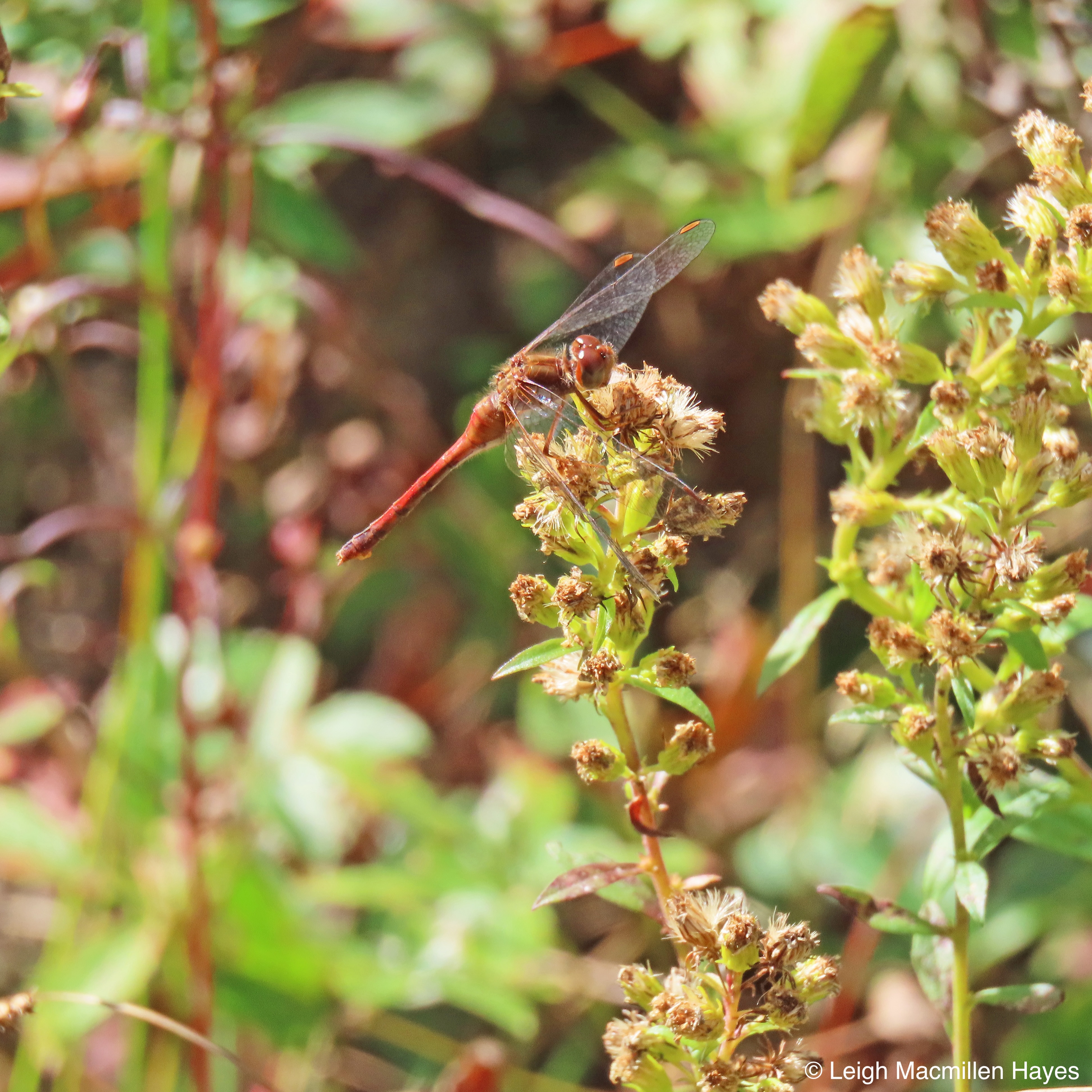
Helping with ID of this species, are the fine black lines in the sutures of the abdomen. And the red stigma toward the tip of each wing is outlined in black. Otherwise, I might confuse it for an Autumn Meadowhawk.

I also had the pleasure of meeting a female Shadow Darner, but then I went to offer a finger for her, thinking she might want to take advantage of my body heat, and instead she tried to bite me. So, I let her be and we went our own ways.

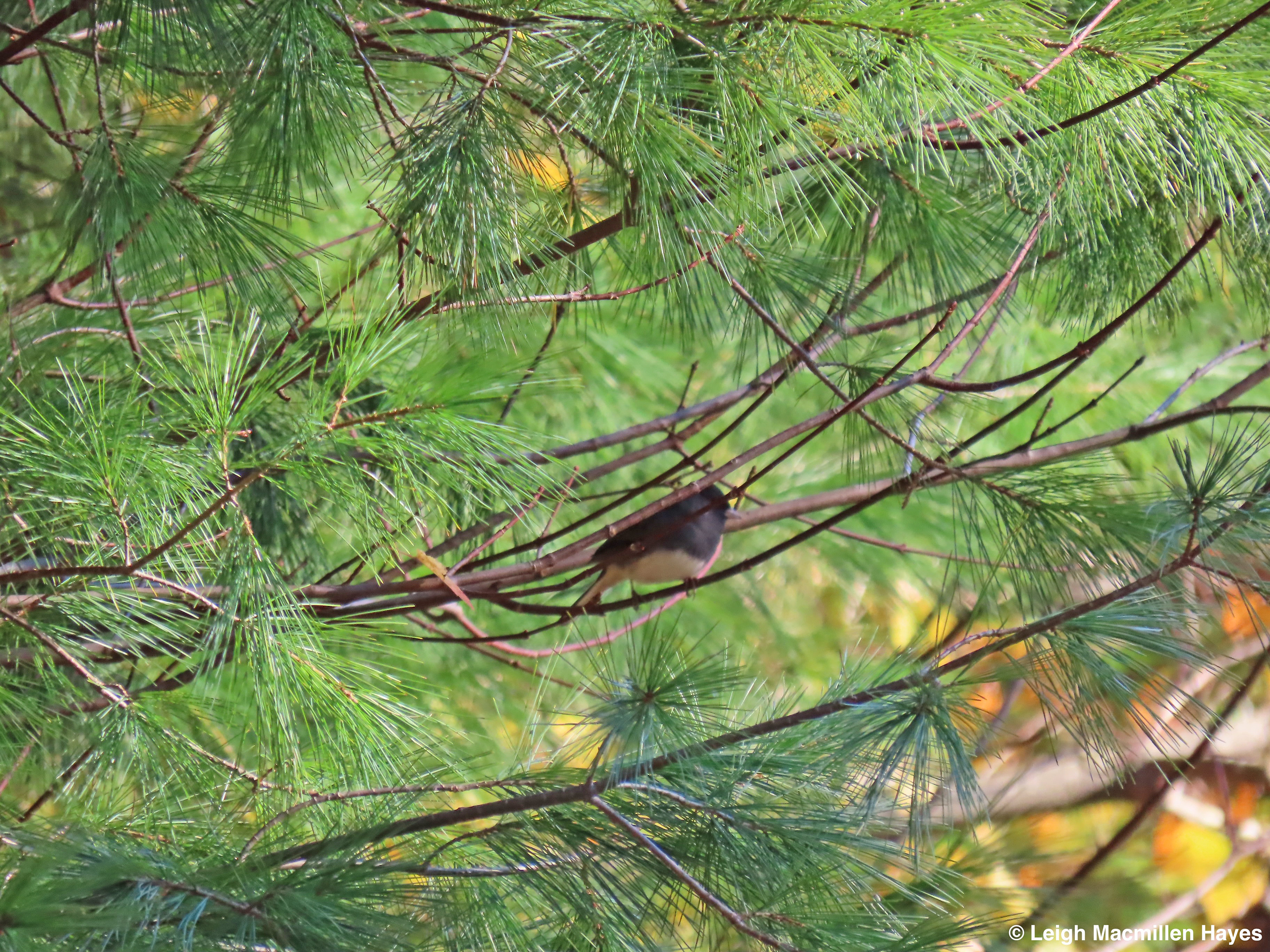
At a former log landing, Juncos were on watch, and given how much seed is available, I know they’re mighty happy with the current conditions. It seems like they just arrived in the past week or so, but the good news is that many will overwinter here.

Oh and a few will fly to Connecticut so that my dear friend, Kate, can watch them as well.

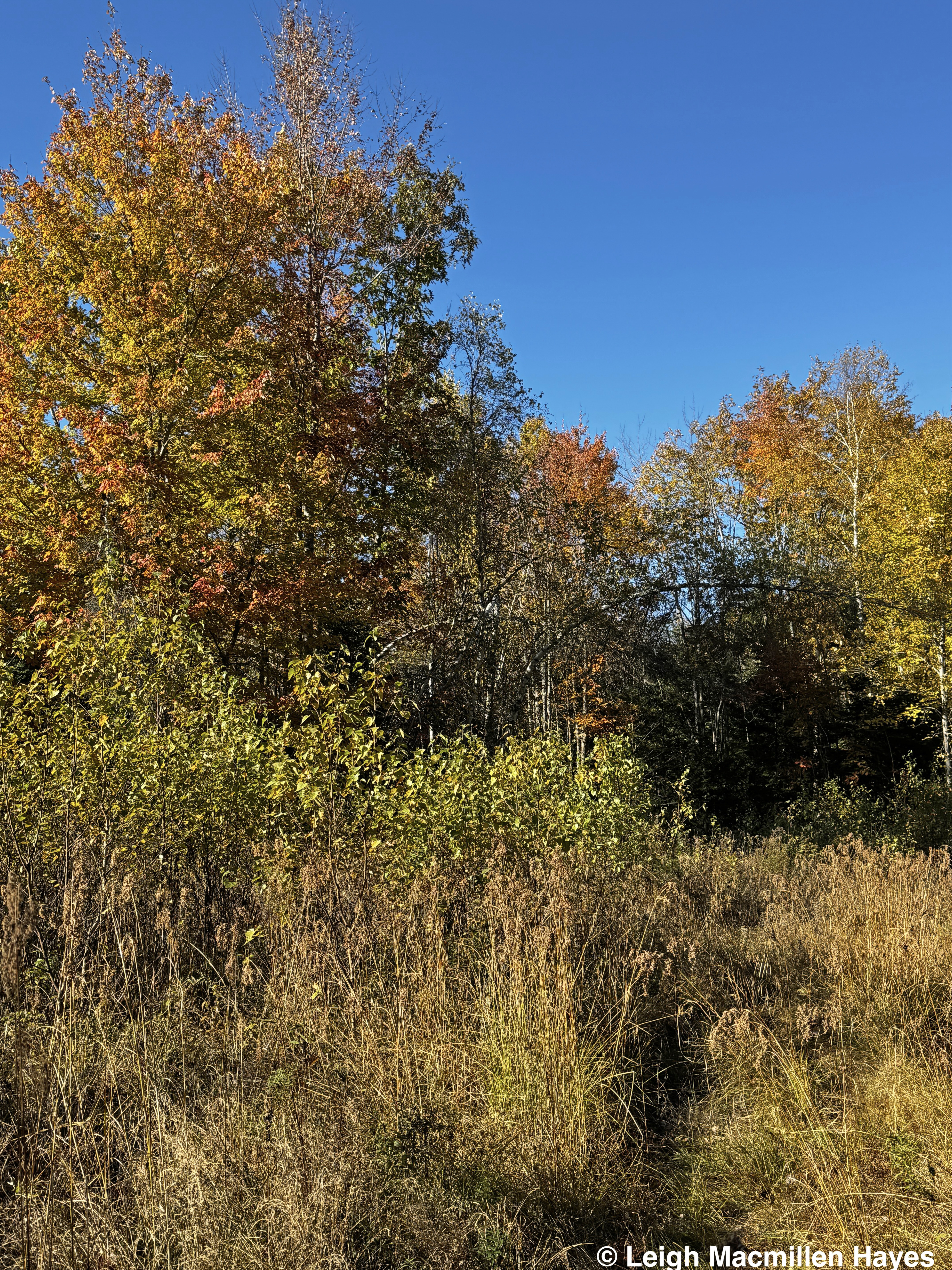
Being an old logging road and log landing, conditions were apparently ideal this past summer, and I paused for a moment to admire forest succession, with grasses and herbs forming the floor, and more grasses and sedges growing taller, topped by Gray Birch, and a backdrop of Red Maples, and Big-tooth Aspen, and Paper Birch.

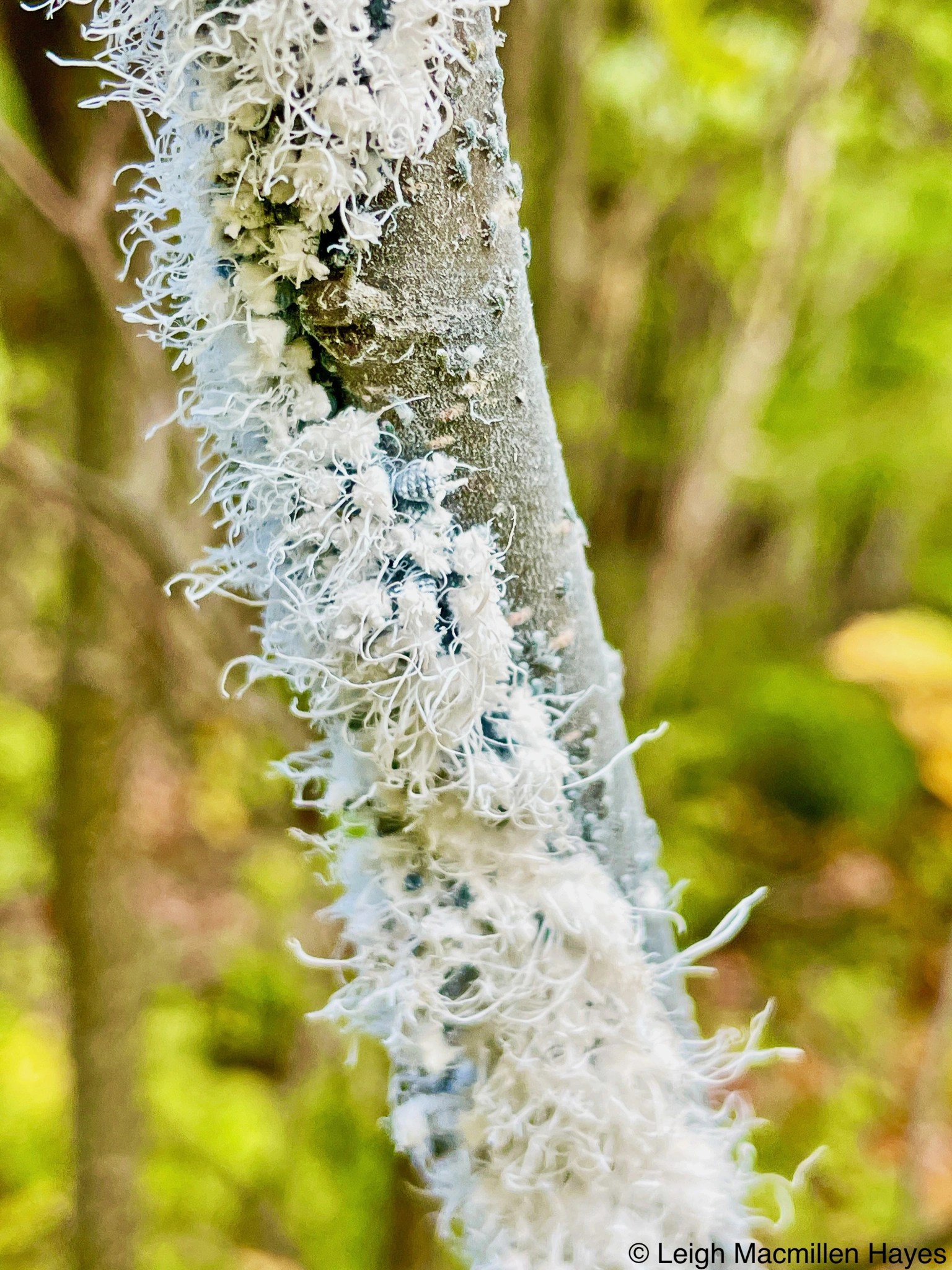
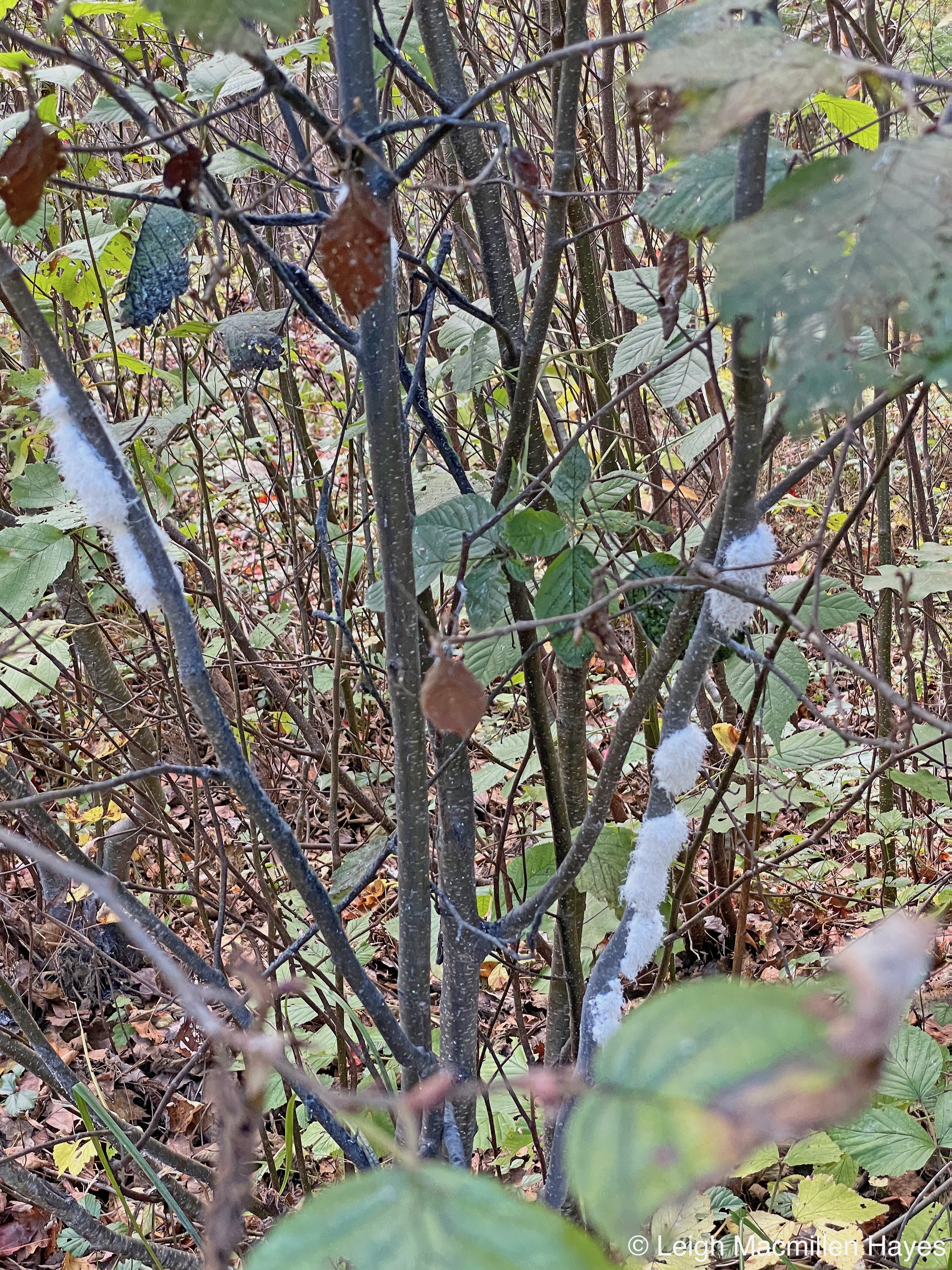
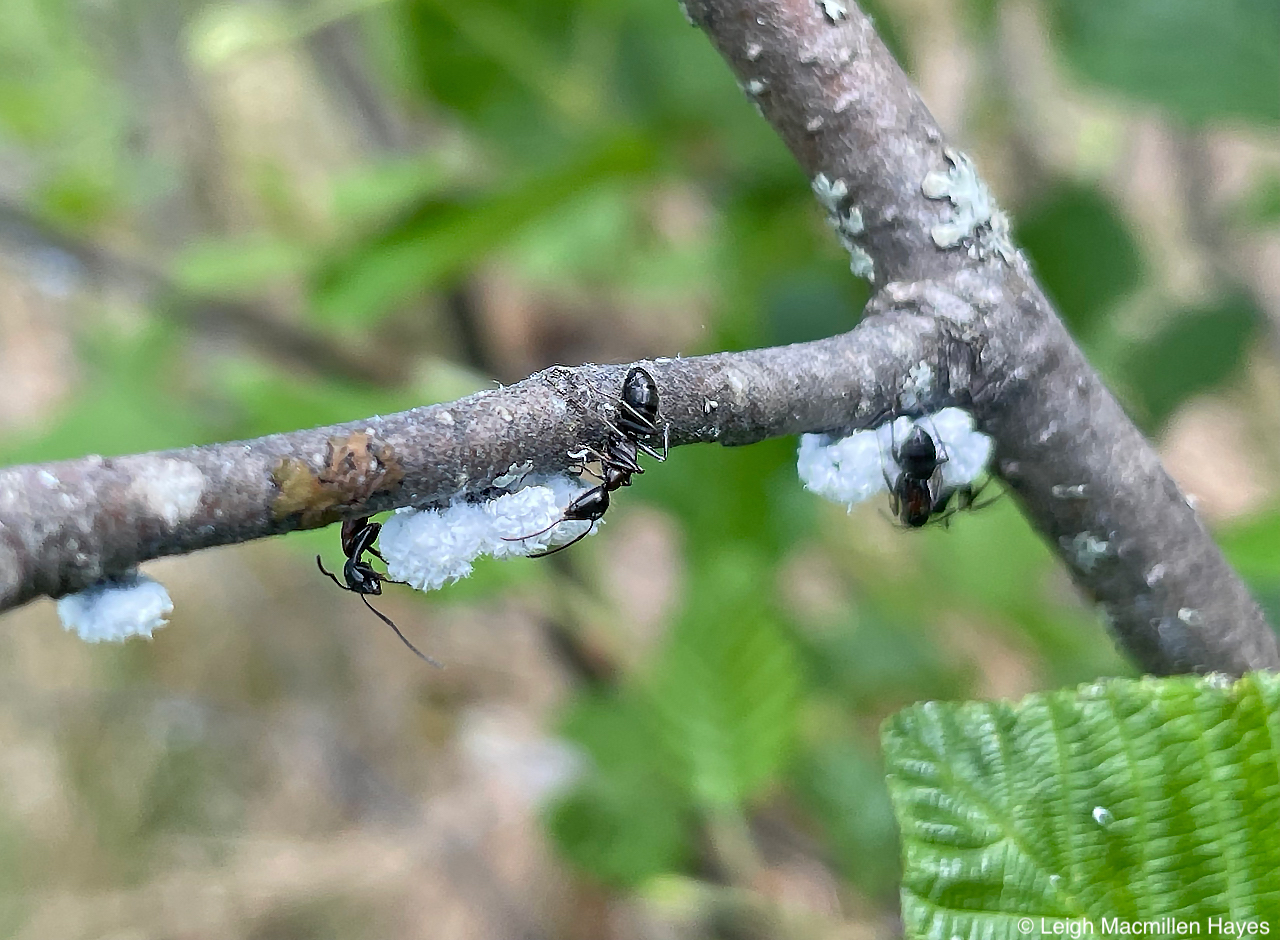
And then it was back to the now dry bed of a stream crossing where Speckled Alder shrubs are closing in on the trail, and Woolly Alder Aphids are living their best life seeking sap from the woody plants.

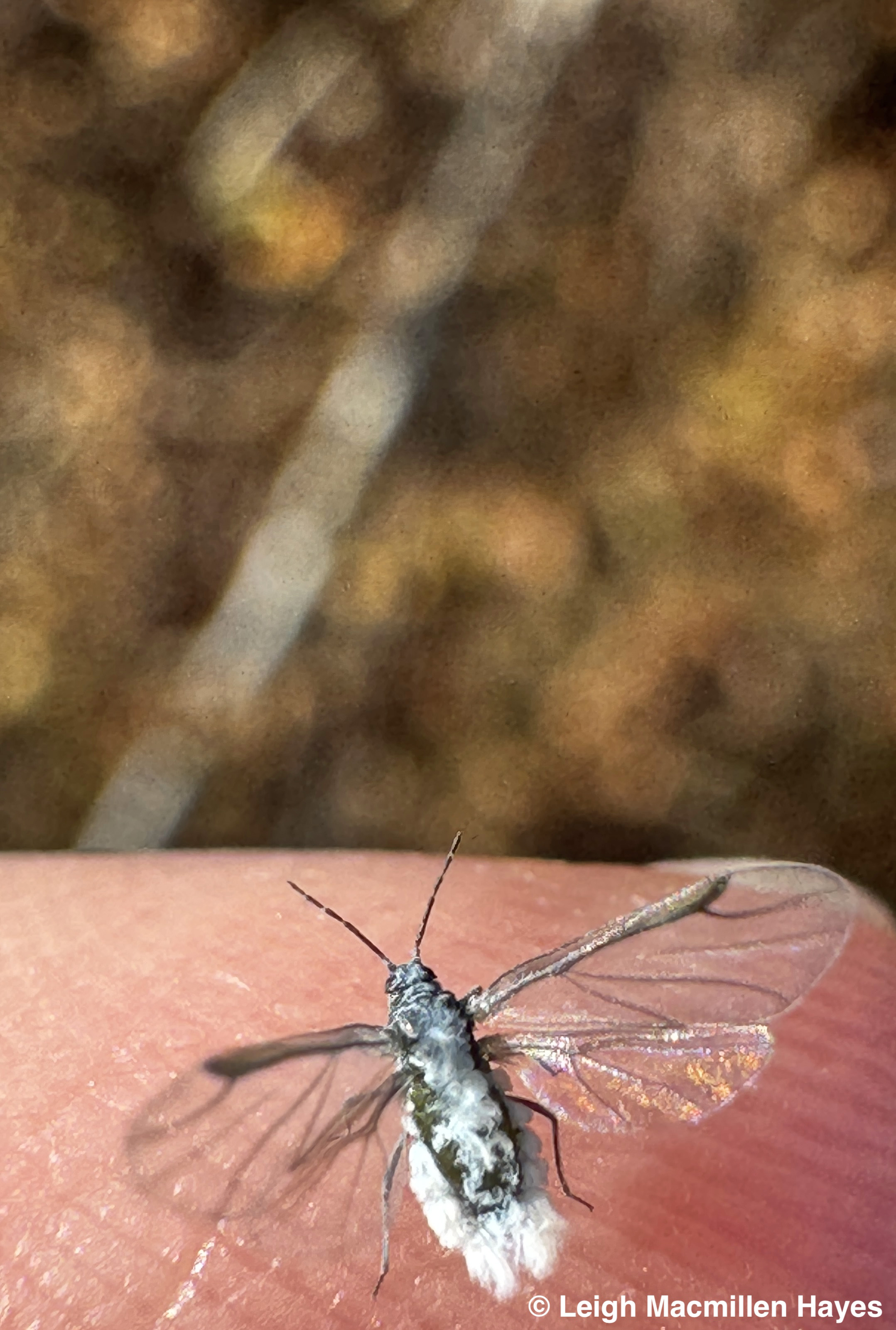
That Cotton Candy or even Cotton-grass look is actually a waxy material they produce from their abdomens, and when they group together like this, perhaps its meant to detract visitors. Or protect them from the weather. Had a I visited on a summer day, I’m sure I would have spotted ants trying to tickle them (it’s called farming) to take advantage of the honey dew the aphids secrete.

Speckled Alder Aphids live an interesting life style. Actually, according to Donald W. Stokes in his book, A Guide to Observing Insect Lives, “There are two life cycles in this species. In one, the aphids remain on alder trees throughout their lives. They are believed to overwinter as adults in the leaf litter at the base of an alder. In spring, they crawl up the plant and feed on its sap. There are several generations per year and adults of the last generation overwinter.

In the other life cycle, the aphids alternate between two plants. The aphids overwinter as eggs placed on maple twigs. In the spring they hatch into females, which feed on the undersides of maples leaves and reproduce. They are wingless, but in midsummer produce winged offspring, also females, which fly to alders. These females feed and reproduce on alders, and give birth to wingless young. Then in the late fall, they produce winged young, which fly back to maples and give birth to both male and female young. The males and females mate, and each fertilized female lays a single egg on a maple twig. Only the eggs overwinter.”

It’s things like this that add to my sense of wonder. Two life cycles? The adults of one life cycle overwinter while the eggs of the other are do the same? That’s amazing.

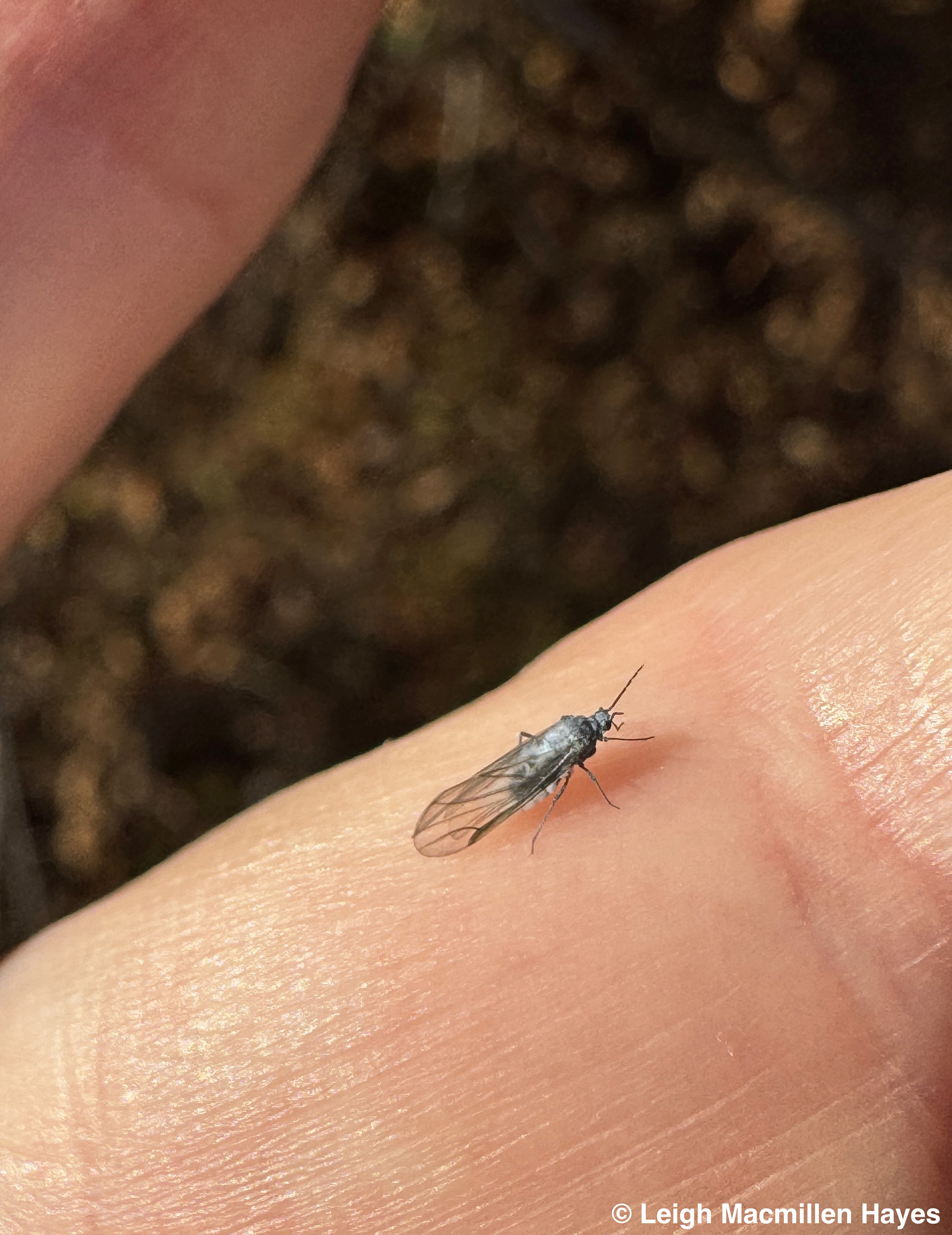
And on the fly in a bit of abundance right now for I saw a bunch today and I’ve been seeing them along many trails that I hike, are the flying aphids. If you stick your hand out and cup it, you can get one to land.

Don’t worry, they don’t bite. And they don’t even tickle, despite that waxy hair.

They’re actually kinda beautiful in their own way and as they fly they look like tiny flakes of snow, thus some refer to them as Snow Bugs.

So I have two forever-friends-since-birth and I’ve already referred to Kate earlier in this blog because she is a great lover of Juncos, along with everything else in the natural world, and so is her sister, Patty, who once told this joke when we were kids:

Q: What’s white and goes up?

A. A dumb snowflake.

One of these two is eleven months younger than me and the other is eleven months older and she and I just chatted yesterday and I’m so thankful to have them in my life all these years. Yes, B.S., I am also incredibly thankful to have you in my life.

But once again I digress. Except I had to tell that joke. Because it kinda reminds me of the aphids in flight.

Back to the power line, I decided to pull the Mighty Mount Washington in with the telephoto lens. Yes, dear readers, that is snow! Several inches of the white stuff has fallen over the last few days. And there is rime ice.

My favorite season is only a walk down the power line away.

Snow: Bugs and Flakes. It’s all wonder-filled.

A Taste of Summer on a Foggy Day

I’m kinda excited because I found the guts the other day to submit an article to the Maine Natural History Observer (MNHO) for publication this spring, and received notification this afternoon that it was accepted and will appear in the next issue. It’s about vernal pools. That’s all I’m going to tell you. But the timing seemed right.

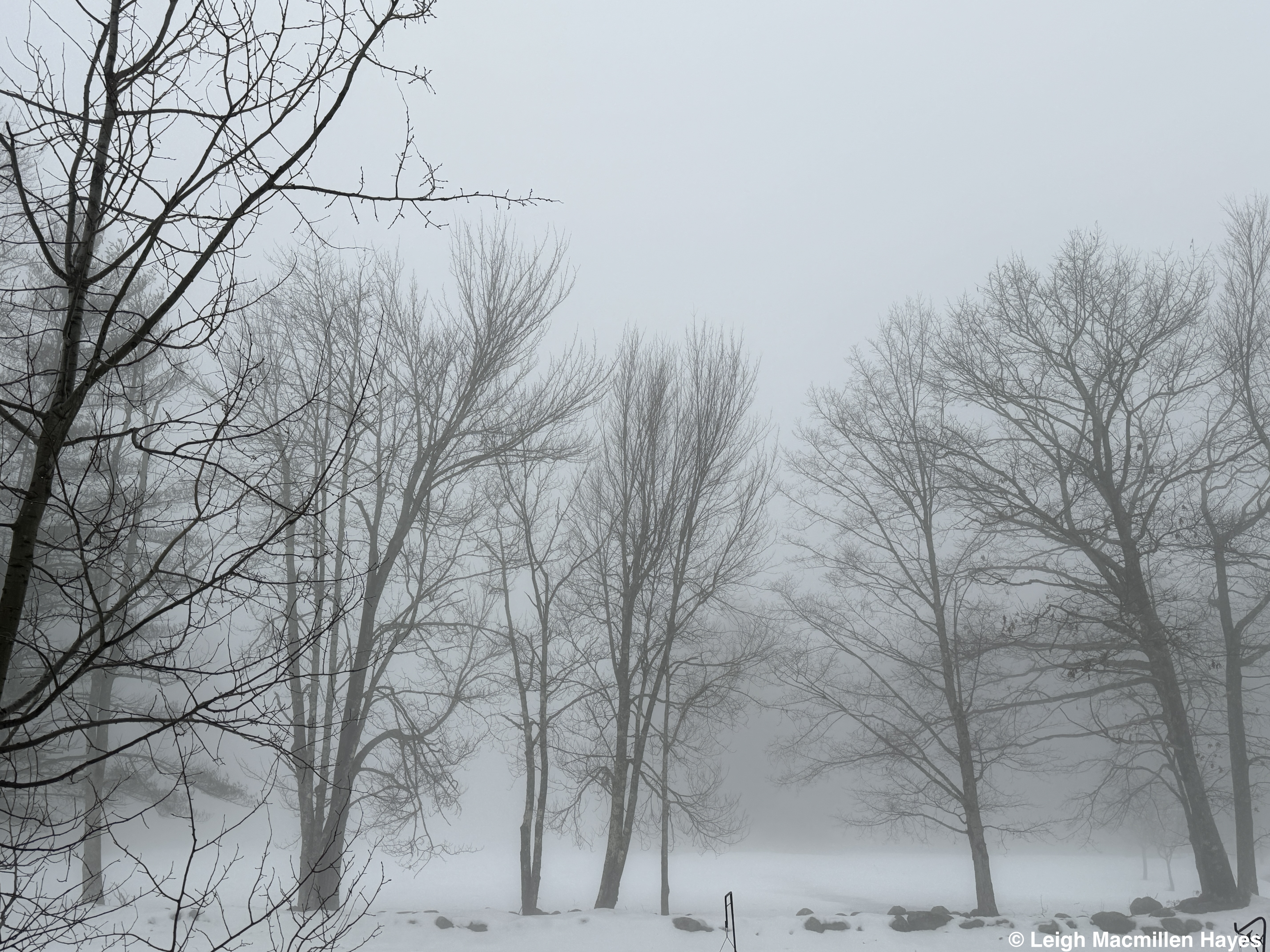
On this snow-eating fog kind of day, it was news most welcome.

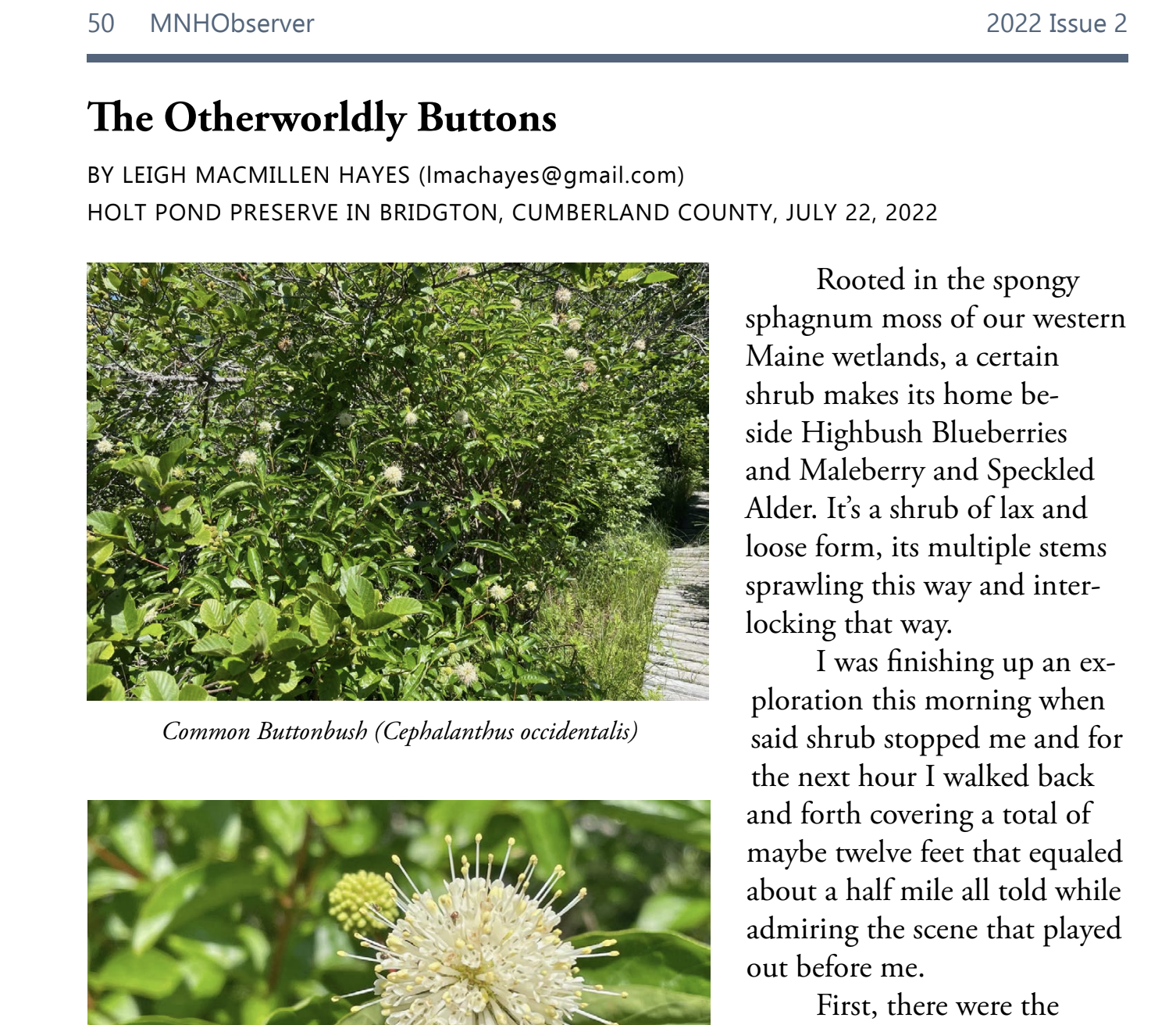
Two years ago I also found the courage to send in an article and was again surprised that it was accepted for publication. That one was about an afternoon I spent with a Buttonbush at Lakes Environmental Association’s Holt Pond Preserve and all the insect activity the shrub supported.

There was one error in the article (well, probably more than one) and it’s an insect ID. See if you can figure out which one. I actually had corrected it in my blog post, but somehow it slipped past my editing when I hit send to MNHObserver. Humbling to say the least.

Anyway, here’s a link to the 2022 publication and you’ll find my article, entitled “The Otherwordly Buttons” on pages 50 – 53. Plus there are other great article to read.

Winter’s not over yet, at least I’d like to think that is true, but even when it does come to a close, there’s so much more awaiting careful observation and I can’t wait to see what I shall see.

Omnivore, Herbivore, Insectivore, Oh MY!

I walked out the door this morning and wandered down one trail and then another and intended to go farther into the woods, but as often happens, I was stopped in my tracks.

On granite at my feet, covered as it was with lichens of the crustose and foliose sort, I spied a rather large specimen of scat. High point. Center of trail. Classic.

Based on the size and hair and bones packed within, I knew the creator: a coyote. If I awake during the night I can sometimes hear the family members calling to each other, the youngsters learning to hunt so they’ll be ready when they disperse.

The trail narrowed by a small stream and I was wearing my muck boots so proceeded at will. It’s been a few months since I’ve traveled this way and was surprised at how grown in it had become this summer. While the Sugar Maples do not like wet feet from all the rain we’ve had, other species have thrived, including the Red Maples, and this shrub that bordered each side of the trail.

It’s leaves still entact showed off that they are doubly toothed in a rather random order. So each little “tooth” is like the edge of a saw, but if you look closely, you’ll note that there are bigger teeth made up of a series of smaller teeth before the leaf margin cuts in toward the main vein and then heads out again to form the next bigger tooth made up of smaller teeth. And those veins in between the main vein and those that lead to the margin–reminded me of the crinkles on an apple doll person, since it is apple season.

The leaf buds, which form in the summer for next year, are hairy and have only two scales. Because of recent warm weather, at least one decided to jump the gun and open now rather than waiting until next spring. I’ve seen that with other plants of late, including Blueberry, Daylily, Sheep Laurel, and Partridgeberry.

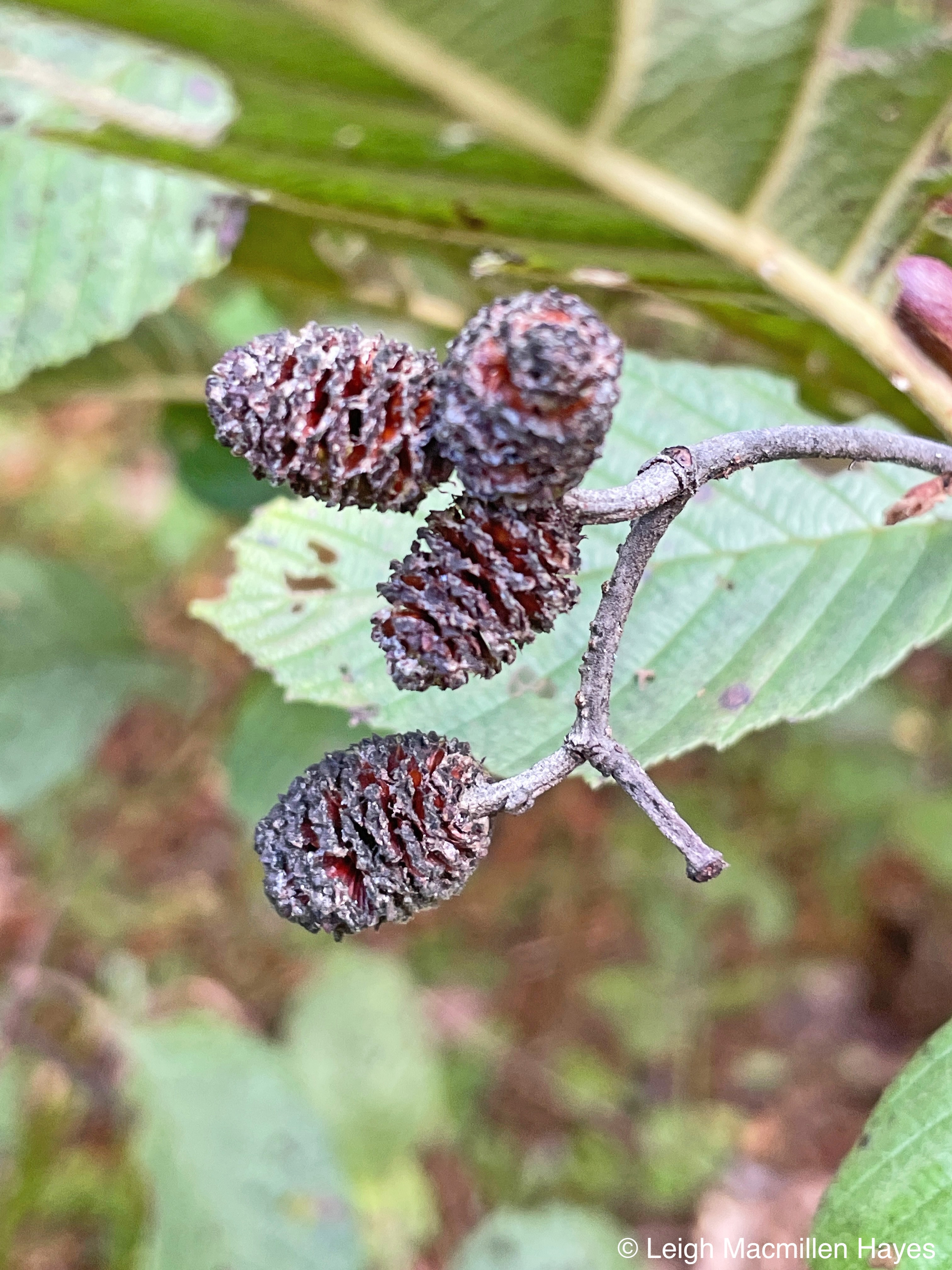
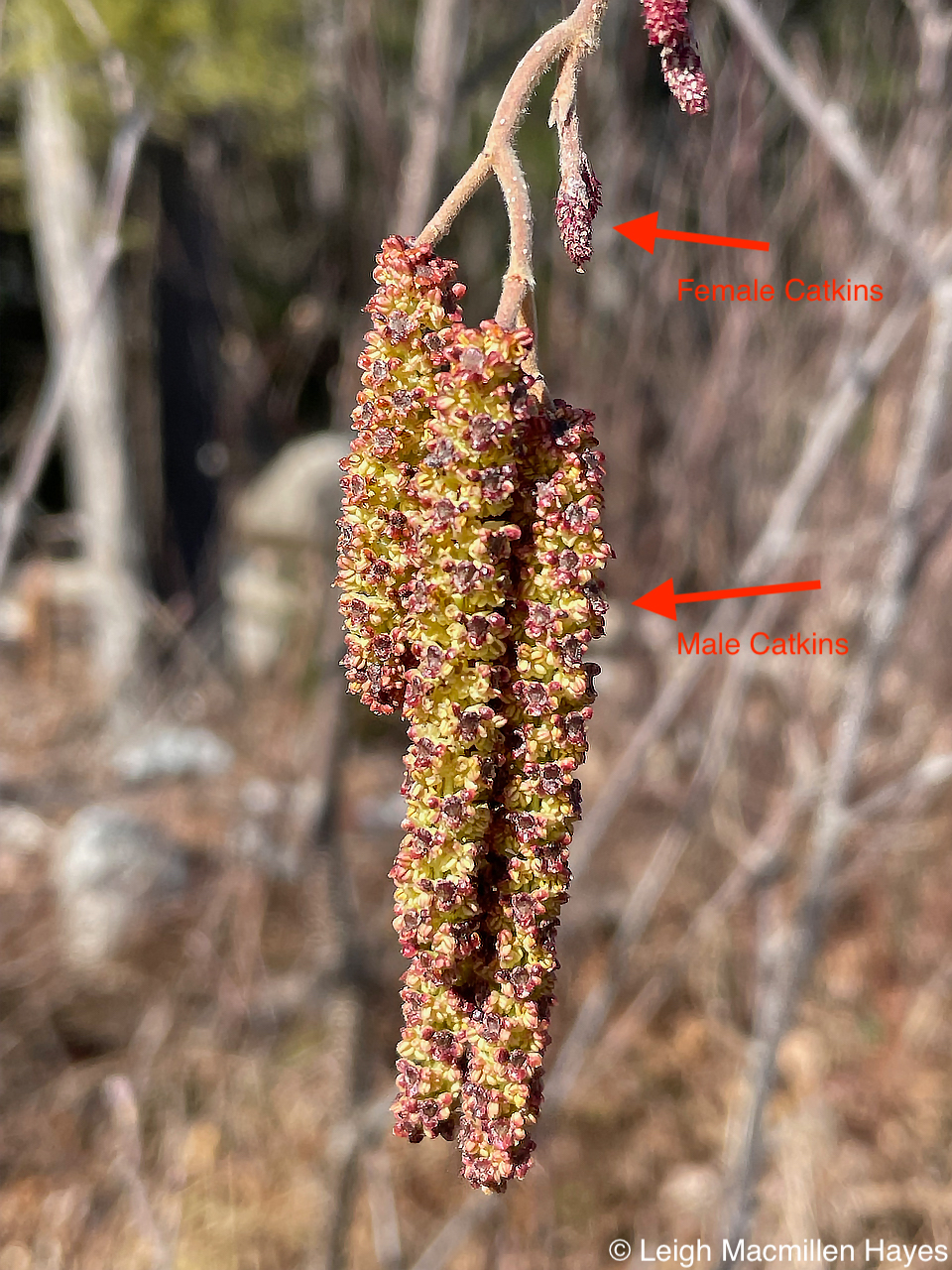
Others who best not jump ahead are the catkins of this species, the longer green and red being the male pollen carriers that will slowly elongate over the winter and turn more yellowish red in the spring. The female flowers are tiny magenta catkins located just above the males.

Once the females are wind pollinated, the males will drop off and the females will form into a fruit that resembles a cone.

The name of these shrubs, if I haven’t already spilled the beans, is Speckled Alder, so named for the white dots (think lenticels for gas exchange) that populate the bark. These shrubs love wet feet, which is why they are growing on either side of that small stream.

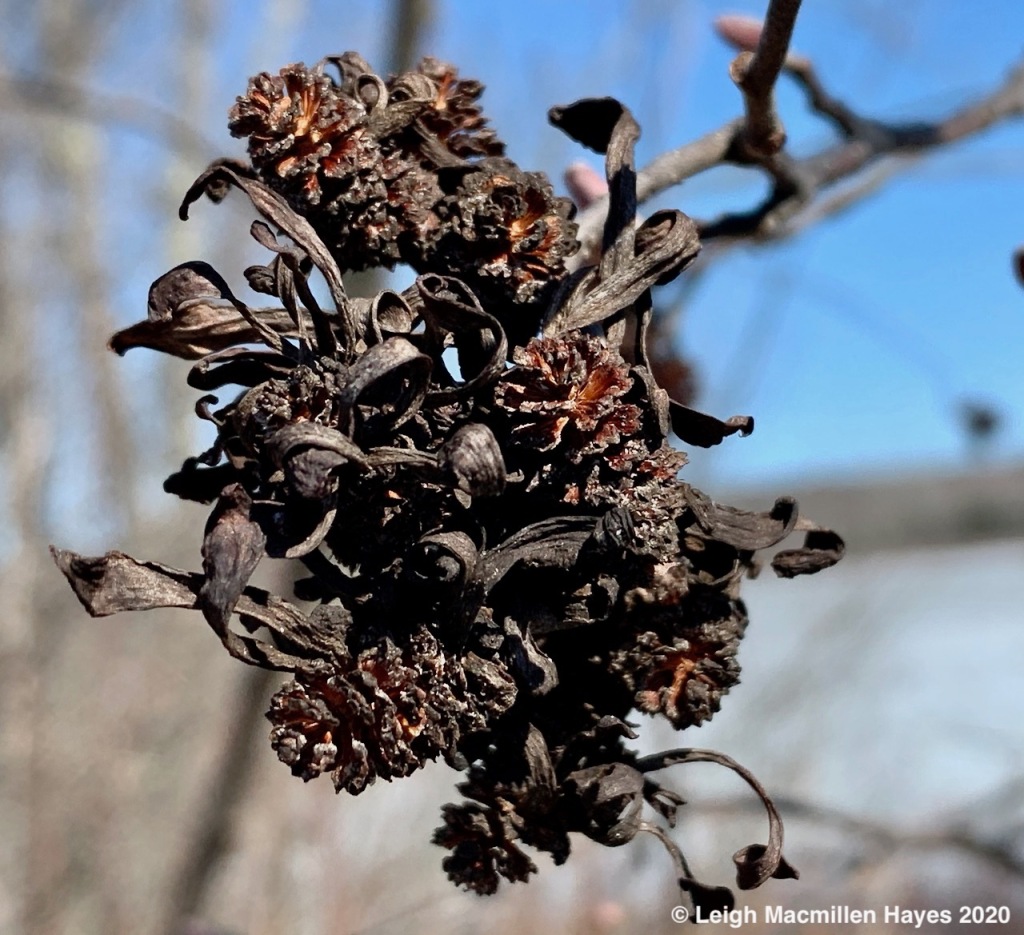
Some of the Speckled Alder cones hide beneath tongues imitating piles of snakes stretching out, made from galls caused by an infection to increase the surface for spores from a fungus to spout. It’s a smart strategy.

I also found a few Lady Beetles today, including one larval form. They were on these shrubs for one reason.

That reason being the Woolly Alder Aphids who live a complex life in which they alternate between a generation reproducing asexually (no guys, just gals), and one reproducing sexually with both males and females adding to the diversity of the gene pool. The males and females fly to Maple trees to canoodle, but those found on the Alders are all female.

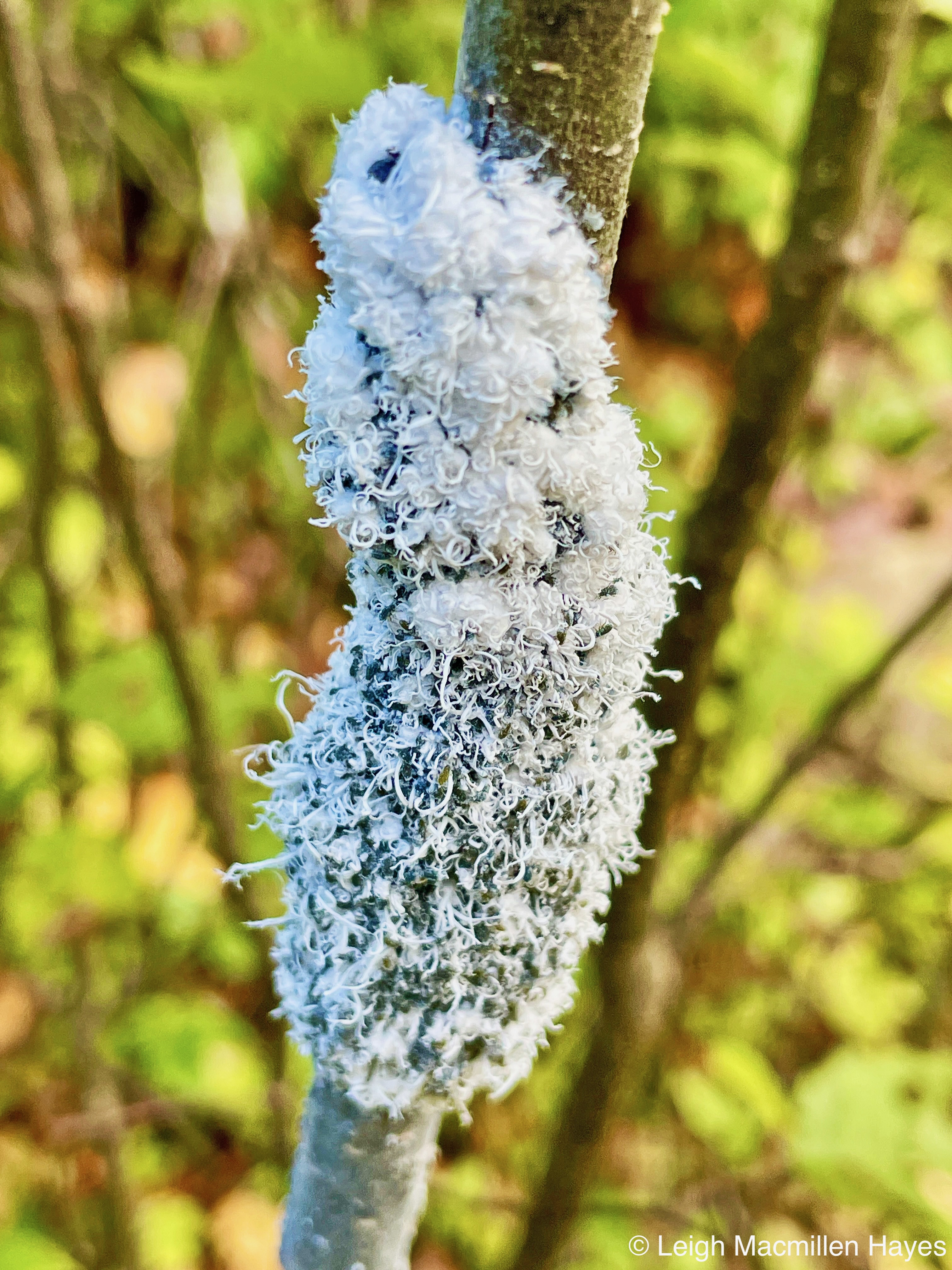
They live such a communal life as they suck sap from the shrub, that one might think this entire mass is just one insect. Hardly. And do you see all that waxy wool that covers their bodies? If you watch these insects for even a few seconds, you’ll note that the hairs move independently. It’s almost otherworldly.

Since they’ll overwinter, I think of the wool as providing a great coat. In the summer, ants, and now Lady Beetles, and even a few other insects farm them to get the aphids to excrete honeydew from the sap.

The aphids don’t harm the the shrubs, but I saw so many today that that fact is hard to believe. I gave up on counting branches but over one hundred played host.

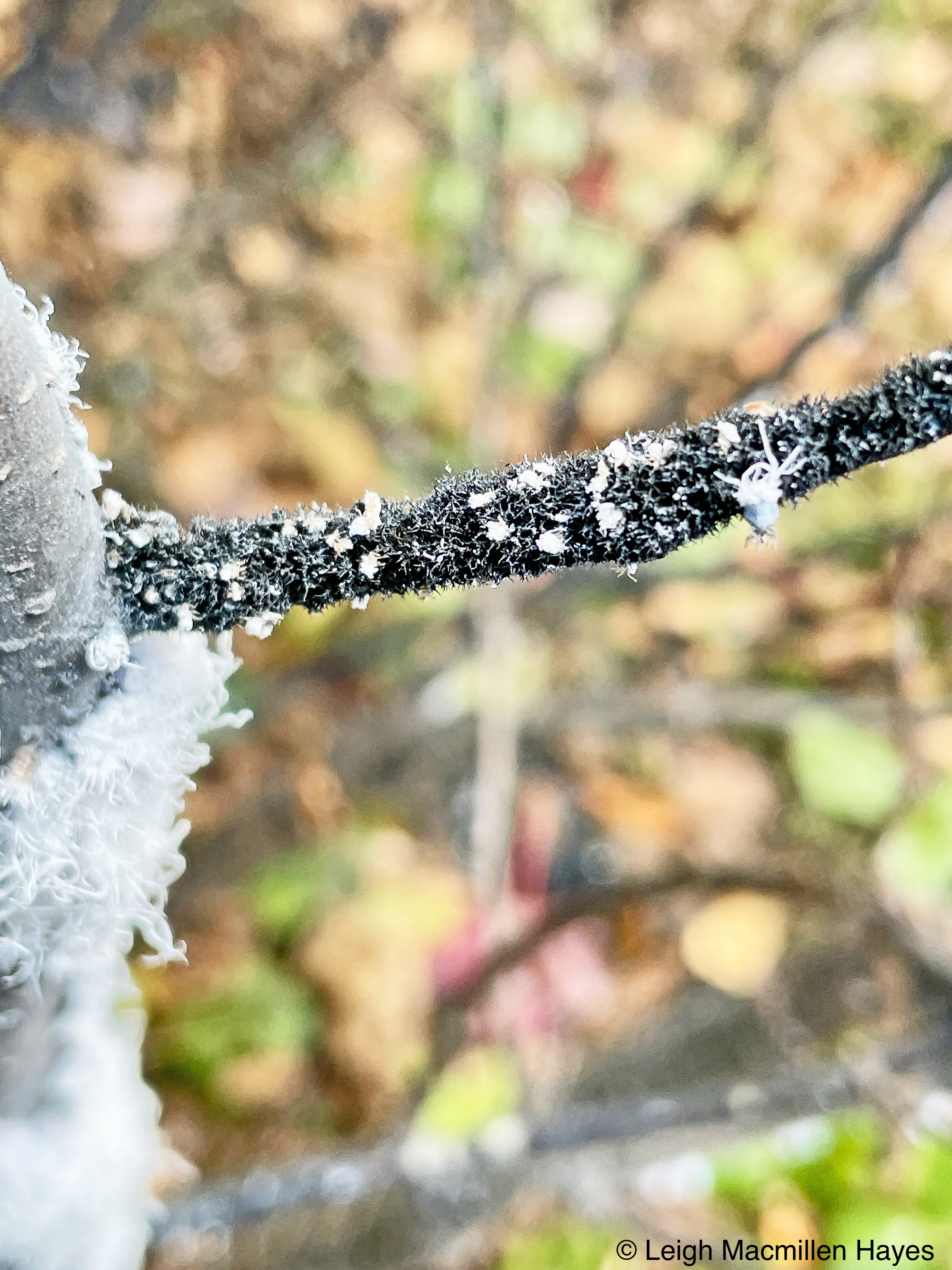
That said, there was another character in the mix. Do you see the top branch that leans out to the right?

The sweet honeydew I mentioned forms a substrate for a nonpathogenic fungus called sooty mold that blackens leaves and bark beneath colonies of aphids. The mold is known scientifically as Scorias spongiosa or, my favorite and drum roll please . . . Beech Aphid Poop-Eater: A fungus that consumes the scat (frass in insect terms) of a Beech Blight Aphid (not the same as Beech Scale Insect that causes Beech Bark Disease). Alders are in the Beech family.

As I left a few Autumn Meadowhawk Dragonflies flew ahead of me on the path. They’re days are numbered, so I’m always thrilled to see them flying and posing.

Omnivore, Herbivore, Insectivore, Oh MY! And all of this within a ten-foot stretch of the trail.

Needed: Minds to Wonder

Along a paved trail seemingly flat that follows a track to a vanishing point did I walk today.

It’s a place some see as desolate, but nature always has something to present and today it was signs of the season to come that drew my attention.

Hints of autumn’s hues . . .

contrasted sharply with summer’s chlorophyll-induced greens.

Redder than red winterberries bespoke the presence of a nearby male–since as a dioecious species, female flowers and male flowers grow on separate shrubs. They also signaled bird food and seasonal decorations–depending on who arrives first: Avian species or human.

Disturbed though the land is, Asters such as this Calico, invited visitors like the Paper Wasp to stop by for a sip of nectar.

Goldenrods also sent out messages and Bumble Bees RSVPed . . .

for they had baskets to fill one pollen grain at a time.

In the mix along this route of disturbed soil and gravel, there were those whose seedheads, while reminiscent of a dandelion, proved more beautiful than the Pilewort’s actual nondescript flower.

Less obvious, but no less beautiful, Wood Sorrel quietly softened the edges of the rocks upon which it grew.

Jewelweed, also known as Touch-Me-Not for its seed’s habit of springing forward when touched, had a visitor all its own whose name I wasn’t allowed to catch.

Similar in color to the Jewelweed, a Monarch butterfly filled up . . .

perhaps a last series of sips before the long journey south.

All of this color and action was observed by a Chippy, who was busy adding to his collection of goods, while his kin added their clucks to the chamber music orchestrated by grasshoppers and crickets.

The Mountain Division Trail in Fryeburg, Maine (home to the Fryeburg Fair), is hardly flat and not at all desolate–it just needs people with eyes to see and ears to hear and minds to wonder as they wander. Okay, so maybe it was desolate in terms of being deserted of people, but I kinda like it that way. As for being dismal and bleakly empty–I beg to differ.

The Otherworldly Buttons

Rooted in the spongy sphagnum moss of our western Maine wetlands, a certain shrub makes its home beside Highbush Blueberries and Maleberry and Speckled Alder. It’s a shrub of lax and loose form, its multiple stems sprawling this way and interlocking that way.

I was finishing up an exploration this morning when said shrub stopped me and for the next hour I walked back and forth covering a total of maybe twelve feet that equaled about a half mile all told while admiring the scene that played out before me.

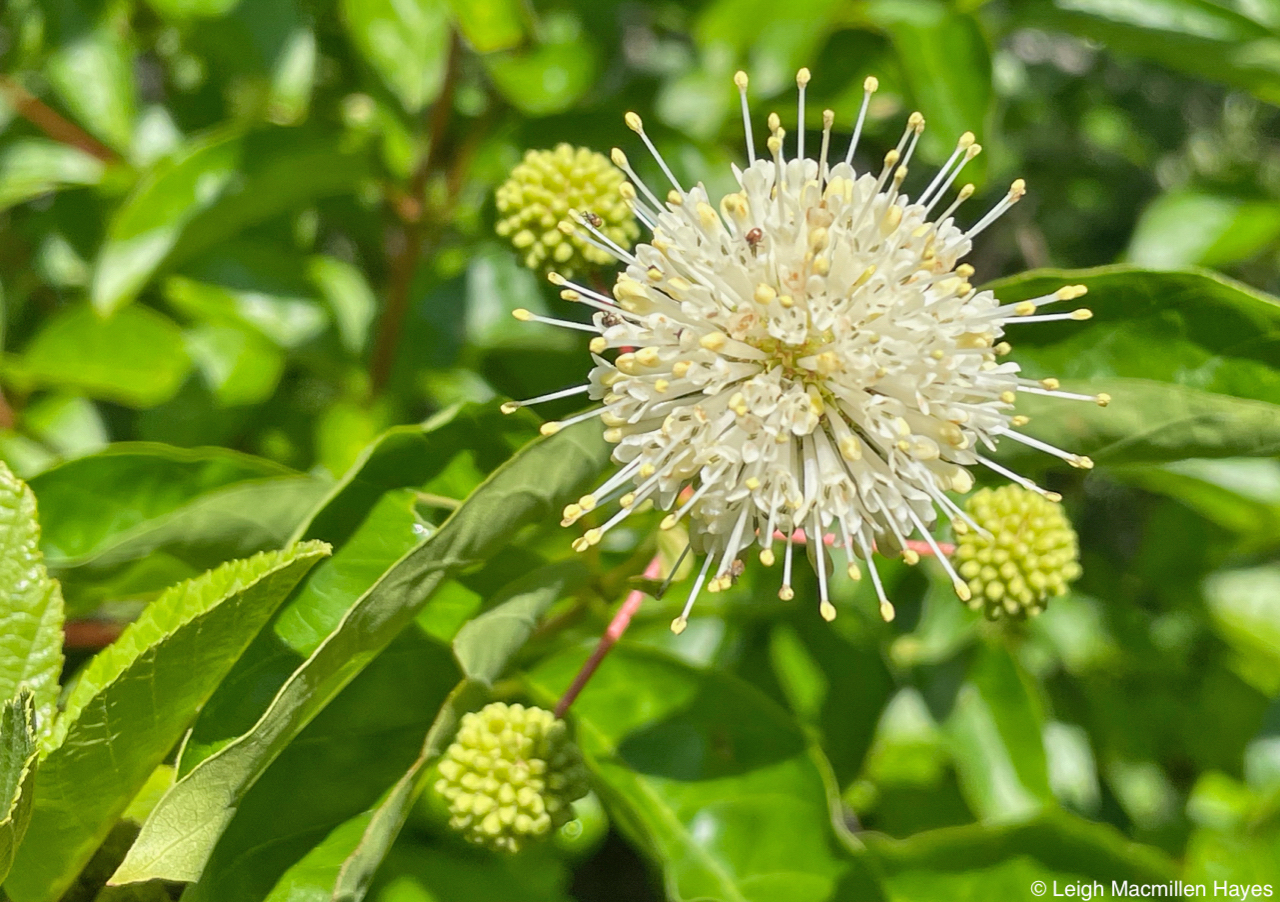
First, there were the conspicuous flowers that never cease to amaze. Dense, spherical, one-inch globes offer nature’s fireworks display in the middle of a summer day. Comprised of many creamy-white tubular flowers so closely packed into a ball, and fringed with protruding pistils that extend beyond the four anthers, the flowers remind some of a pincushion. Set against a backdrop both glossy and dark, the leaves in pairs or threes serve to highlight the fringed beauty of the inflorescence.

As insect magnets, the flowers attract many pollinators including a pair of Flower Longhorn Beetles who couldn’t resist the opportunity to canoodle among the scent so sweet.

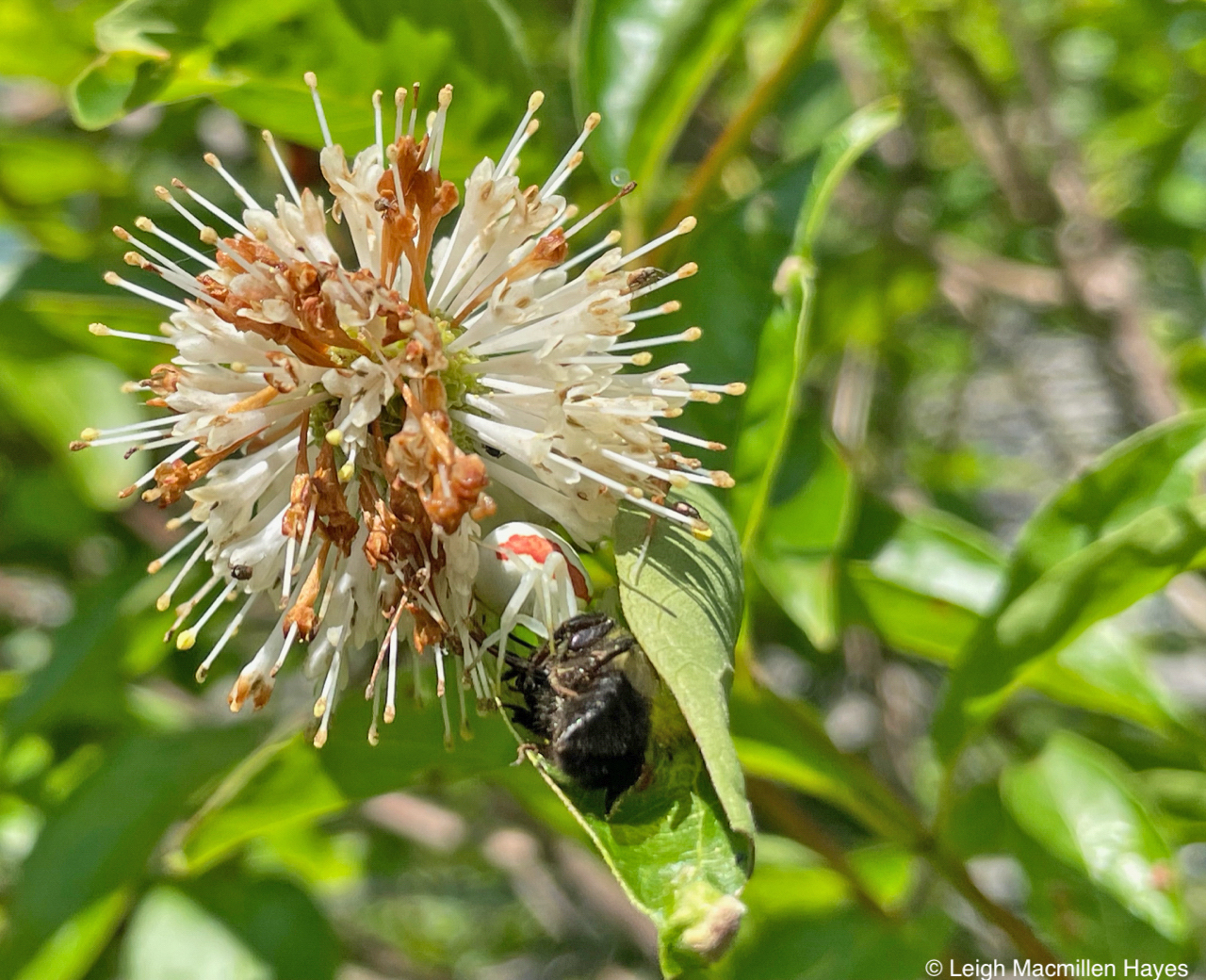
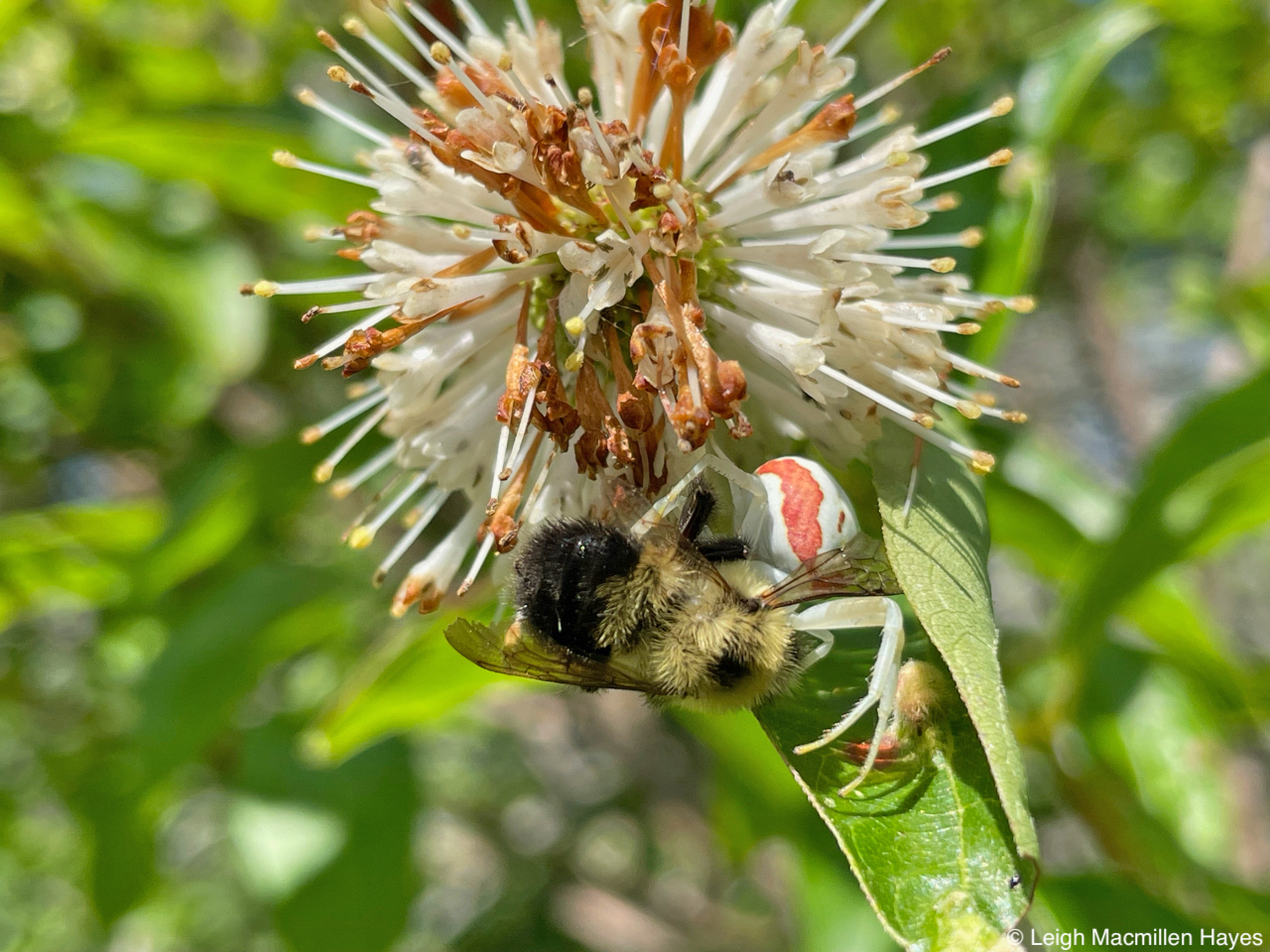
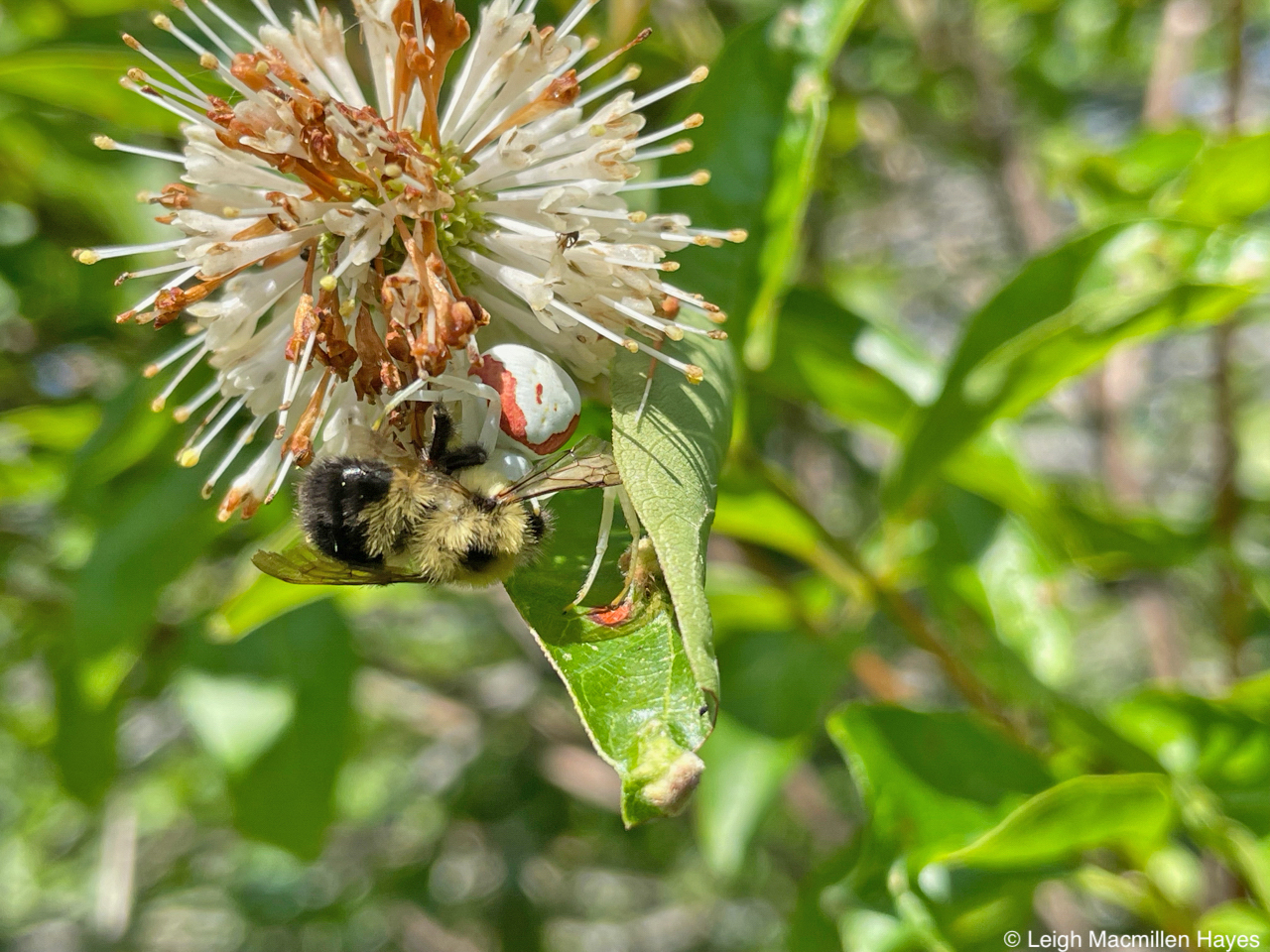
And then I spied another, a predator who had relied on its camouflage much like the flower’s color to keep from being seen in order to ambush its prey. Sit and wait. Sit and Wait. It apparently did so until success was achieved.

As I looked about, I spied a silken thread and wondered if it belonged to the Crab Spider. This species doesn’t build webs, but uses silk to attach drop lines to vegetation just in case in the midst of fervent action while attempting to capture a meal, it slips and needs to get back into position.

In the midst of my observation, in flew a pollinator that we all need to revere for its species is endangered and I felt blessed to have seen this one. It seems only yesterday, when our sons were mere tots, (think three decades ago) that we often spotted Monarchs all over flowering shrubs in August and September. But now, we celebrate each and every one and only this morning a friend sent a photo of a Monarch caterpillar feasting on her Milkweed and so we know we are among the fortunate few to share these special sightings.

Meanwhile, back at Lunch Leaf, I stalked. When its prey was close enough, the spider grabbed it with its two front legs, the longest of its four pairs, and bit into the victim.

Meanwhile, a Bumble Bee buzzed in, gathering its fill of nectar and pollen, nectar and pollen, until it needed to return to the hive before coming back to collect some more.

Back at Lunch Leaf, venom was injected to paralyze the meal.

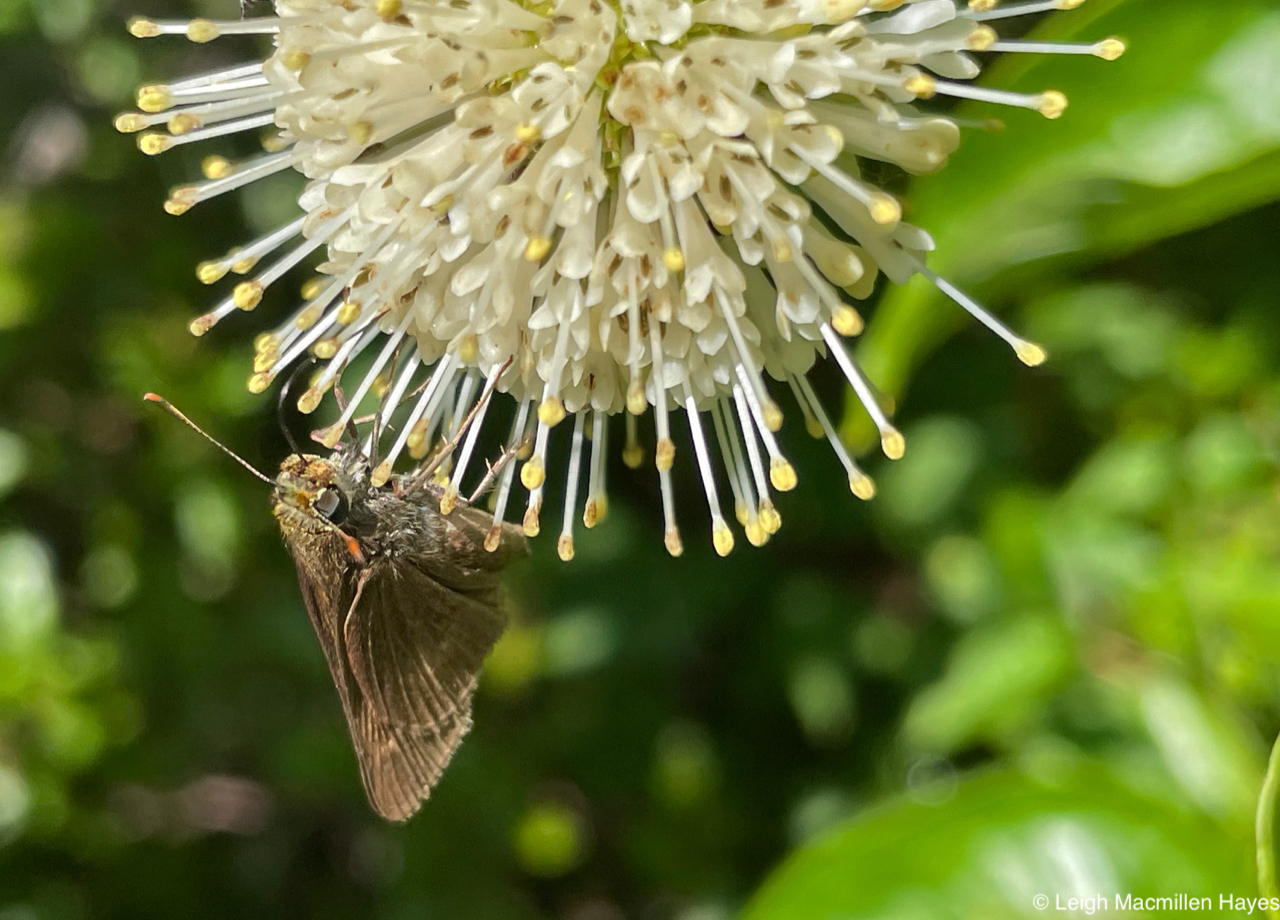
Next, a Dun Skipper made an entrance. Actually about three of them flitted and fluttered from one globe to another.

As for the Crab Spider, it seemed to work on positioning the meal just right.

When the Dun Skipper was positioned just right, I could see its body more clearly and loved how the proboscis stuck down into the flower’s tubular structure. With its deep tube, this inflorescence was designed for butterflies and bees.

Back at the lunch counter, another twist was made.

And atop a different flower head, a Transverse Flower Fly made an appearance, its eyes much bigger than its stomach.

It soon became obvious that prepping a meal takes much work.

The visitors upon the flowers were many and I suppose the lunch choices were as well. While I’m thrilled to have seen so many pollinators, the Crab Spider could only imagine its next meal.

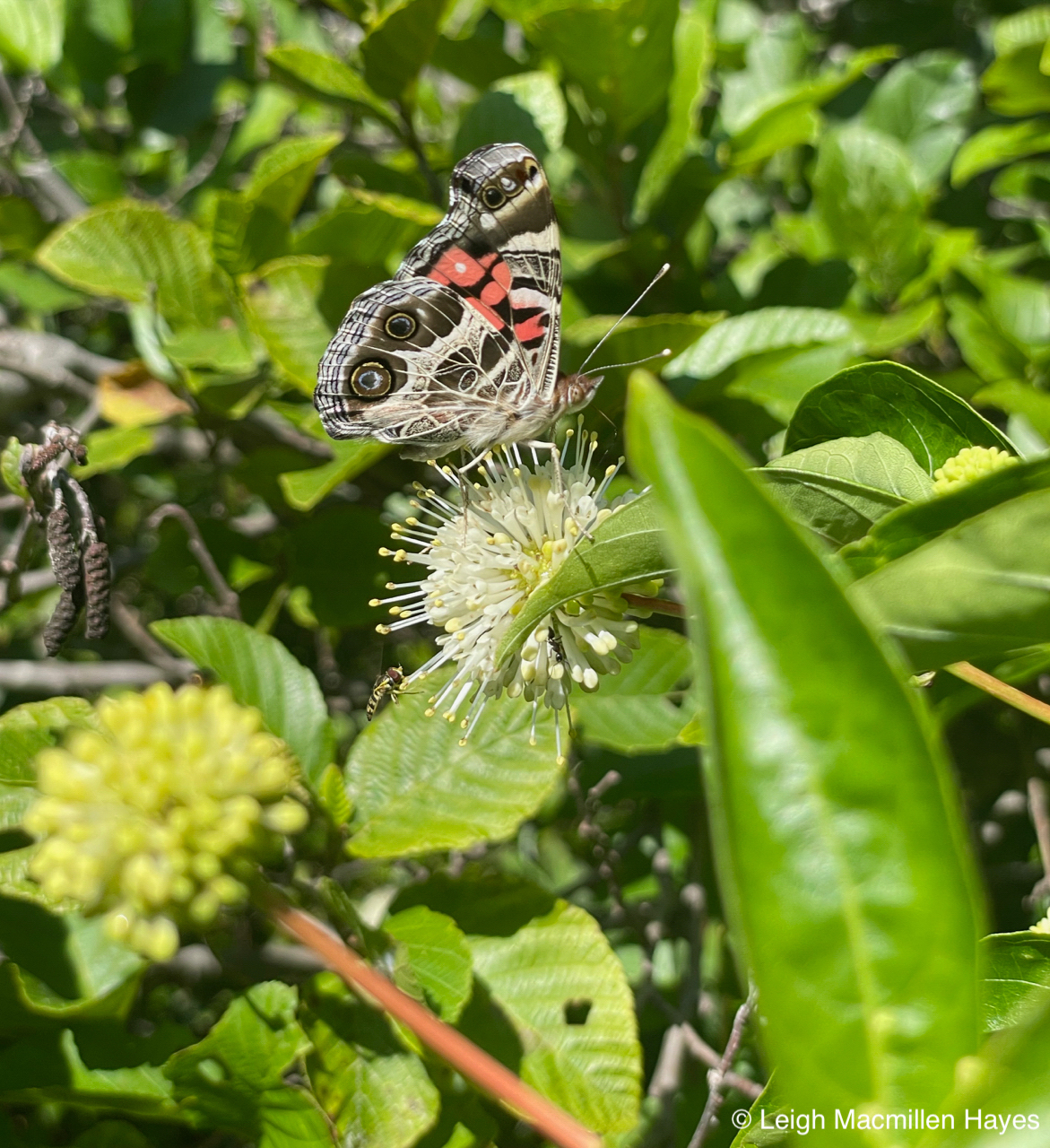
As our time came to an end just after an American Lady flew in, I looked down to make sure I hadn’t worn out the boardwalk and I thought about all the action I’d had the honor of witnessing. Though the flowers drew in smaller insects, they are designed to attract larger bees and butterflies. The Buttonbush (Cephalanthus occidentalis) flowers certainly provide copious amounts of nectar and pollen that make a visit worth the effort for all who stopped by . . . Including the Crab Spider.

I gave thanks to the latter for its diet is well diversified and they are known to contribute to biological controls, but . . . unfortunately, sometimes they feed on beneficial insects like bees.

But I especially gave thanks for all the bees and butterflies who shared their feeding frenzy with me.

Time spent pacing before the satellite-shaped Buttonbush flowers is time spent enjoying an otherworldly experience.   

Celebrating My Daily Wonders

Every day this week found me wandering a different trail, or even sometimes the same trail on multiple days.

To that end, on May 24th, I celebrated a full-fledged dragonfly emergence.

Though I wasn’t there at the time of eclosure, many of the dragonflies I spotted, and there were hundreds, were either still pumping hemolymph from their wings back into their bodies, gaining their color patterns, or letting their shiny wings dry in the breeze as they slowly began to expand them. A few had wings that seemed stuck together, but then in an unexpected moment they flew and I whispered farewell in hopes that we might meet again.

On May 25th, there were other species to behold.

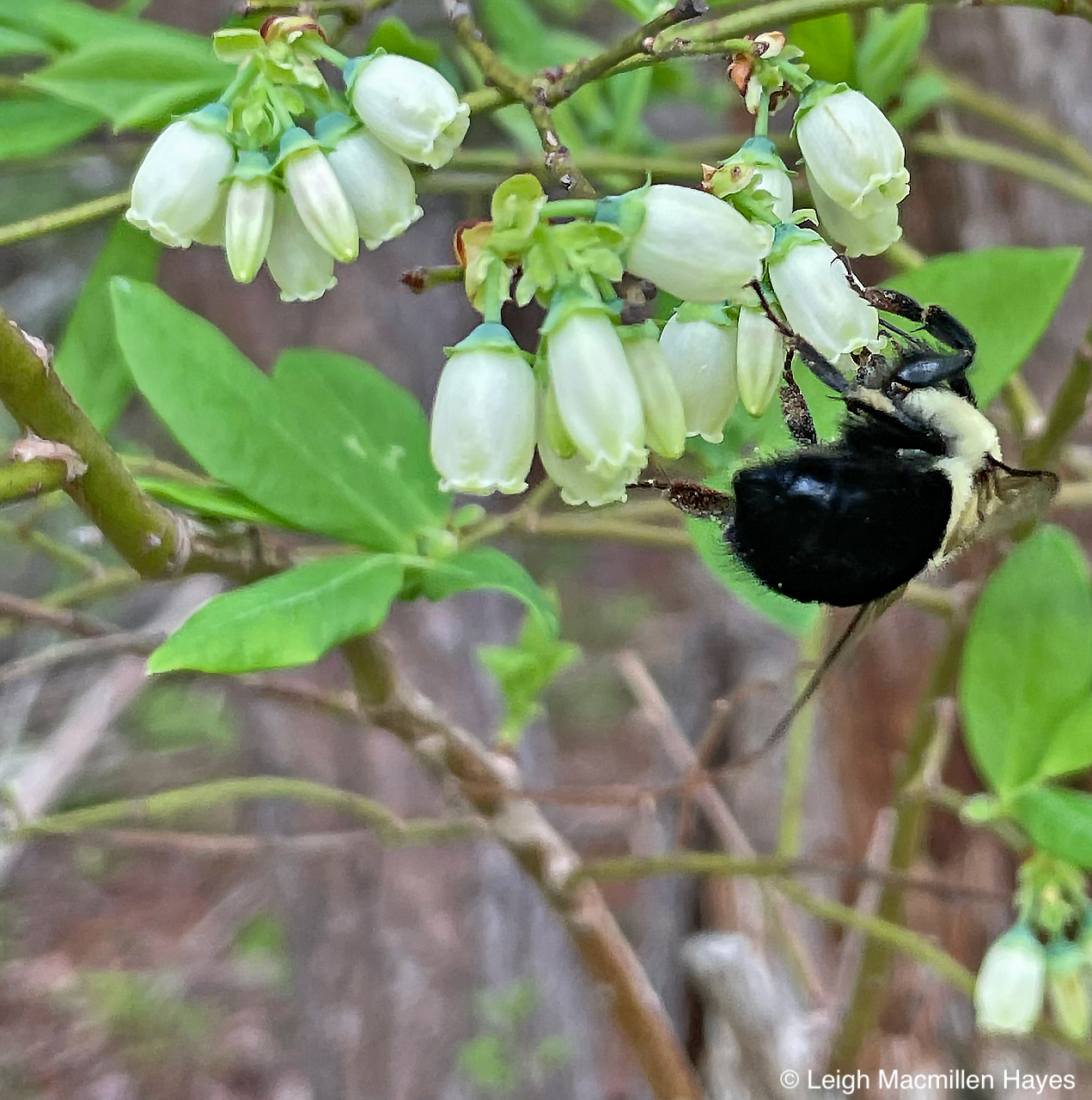
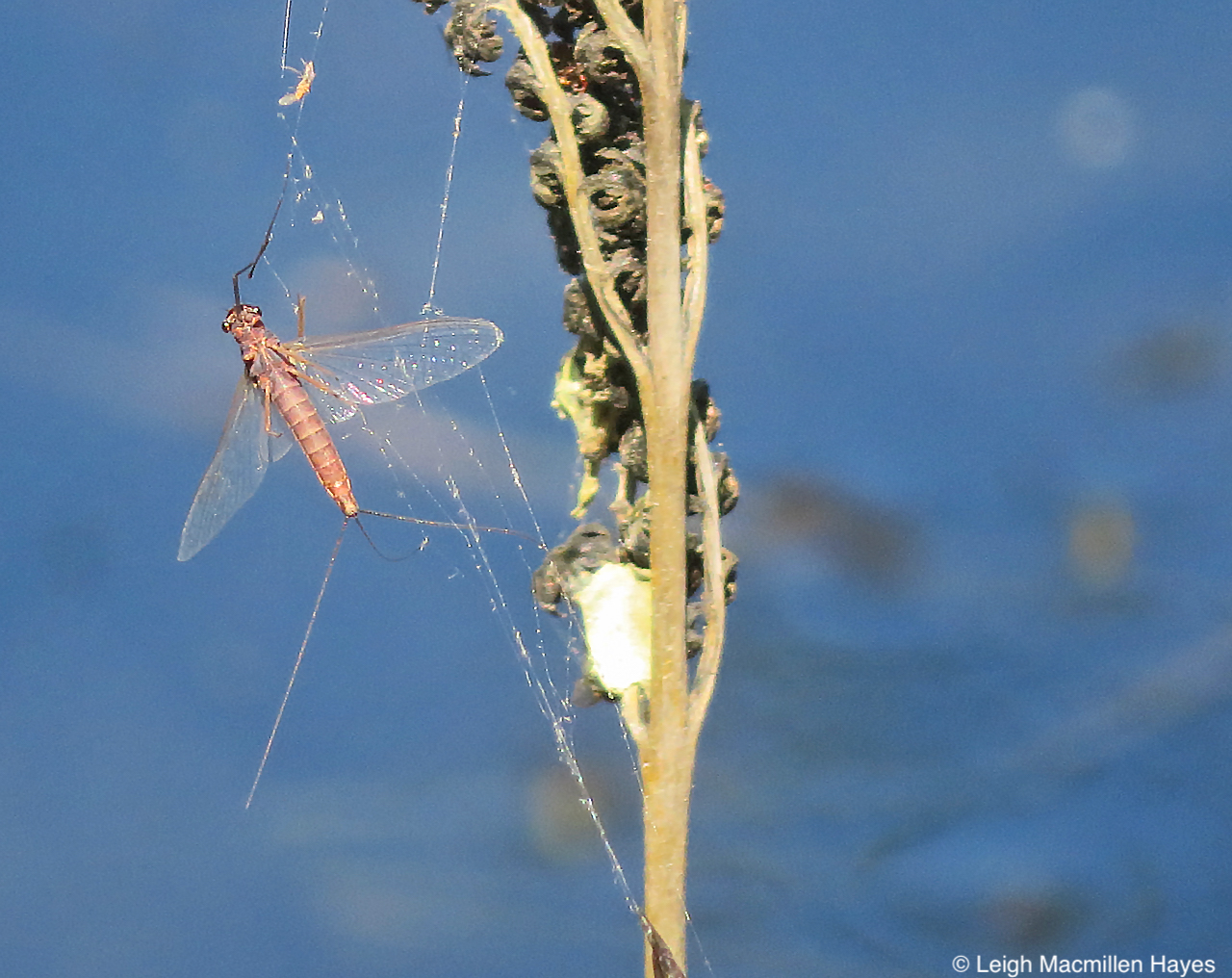
It was that day that I knew the Highbush Blueberry crop will be significant this year for so many were the robust Bumble Bees that worked the pollen route. I even managed to capture one doing a happy dance with pollen on its feet. And this is canoodling season, after all, so it was fun to find a pair of flower bugs enjoying a tender moment upon Chokeberry flowers. The Mayfly did not have such a happy ending for before maturing to its adult form, it landed in a sticky web, but . . . alas, the spider must eat, so it was a good day after all.

On May 26th, my travels were more varied, as were the sightings.

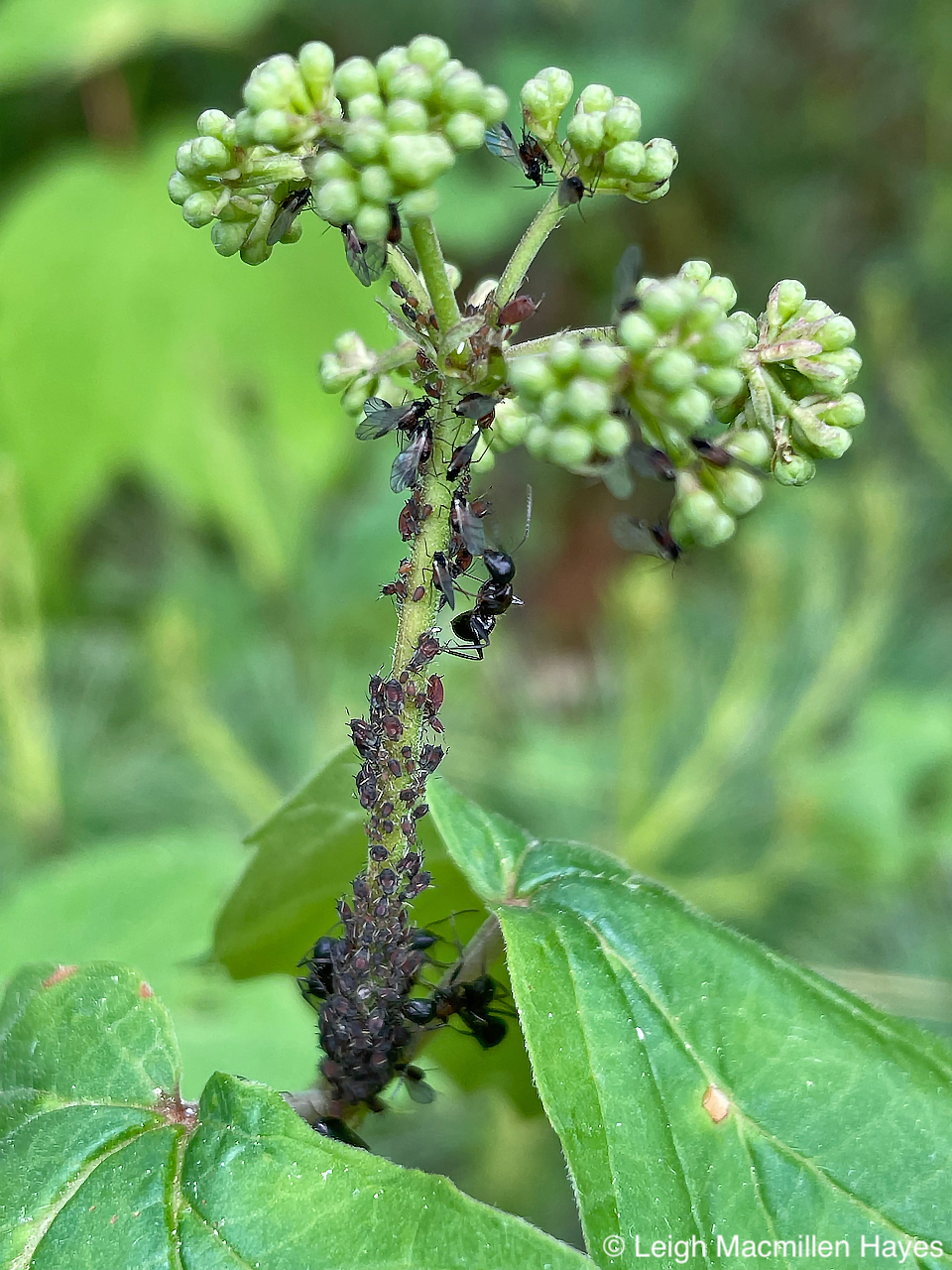
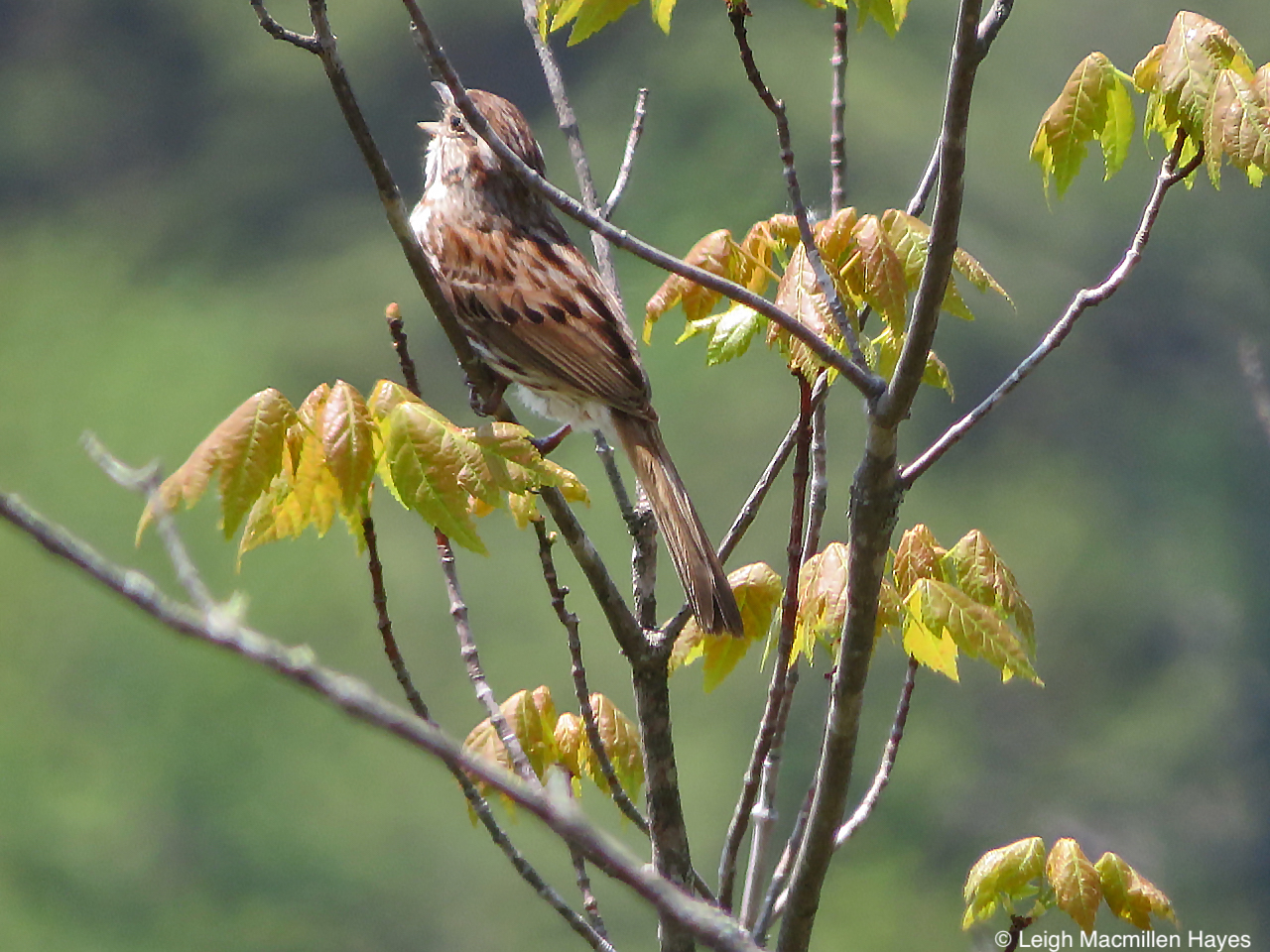
For a few moments, I watched as ants, both winged and not, farmed aphids upon the stem of a Maple-leaf Viburnum. Along a trail or two that day, a melodious Song Sparrow serenaded me with its happy tune. And a quick trip to the vernal pool out back found me looking into the eyes of hundreds, maybe thousands, of Wood Frog tadpoles. But the best find of all, a fairy ring along a trail.

On May 27th, I was one of a bunch who arrived at a certain locale to bird at 6:30am.

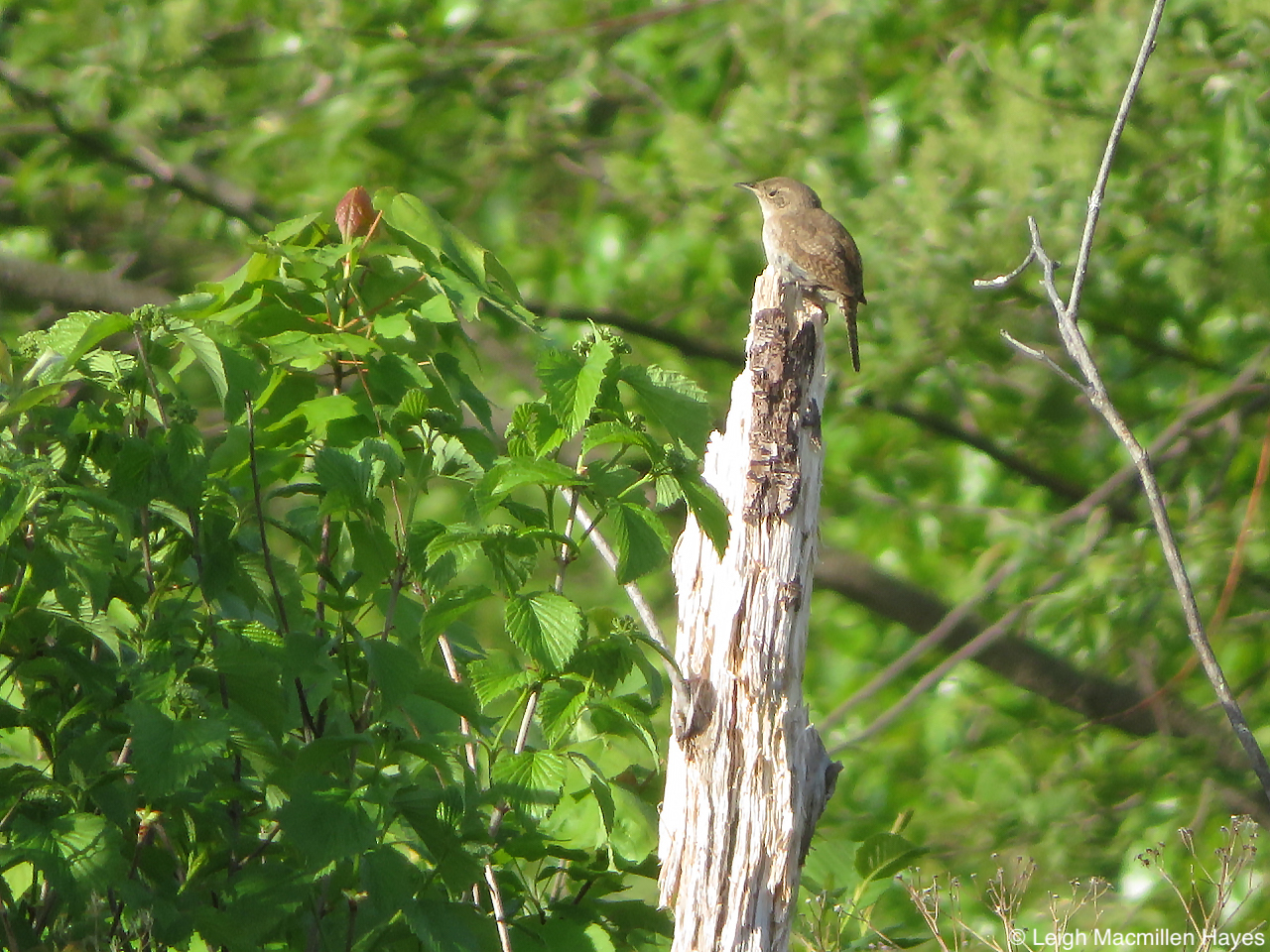
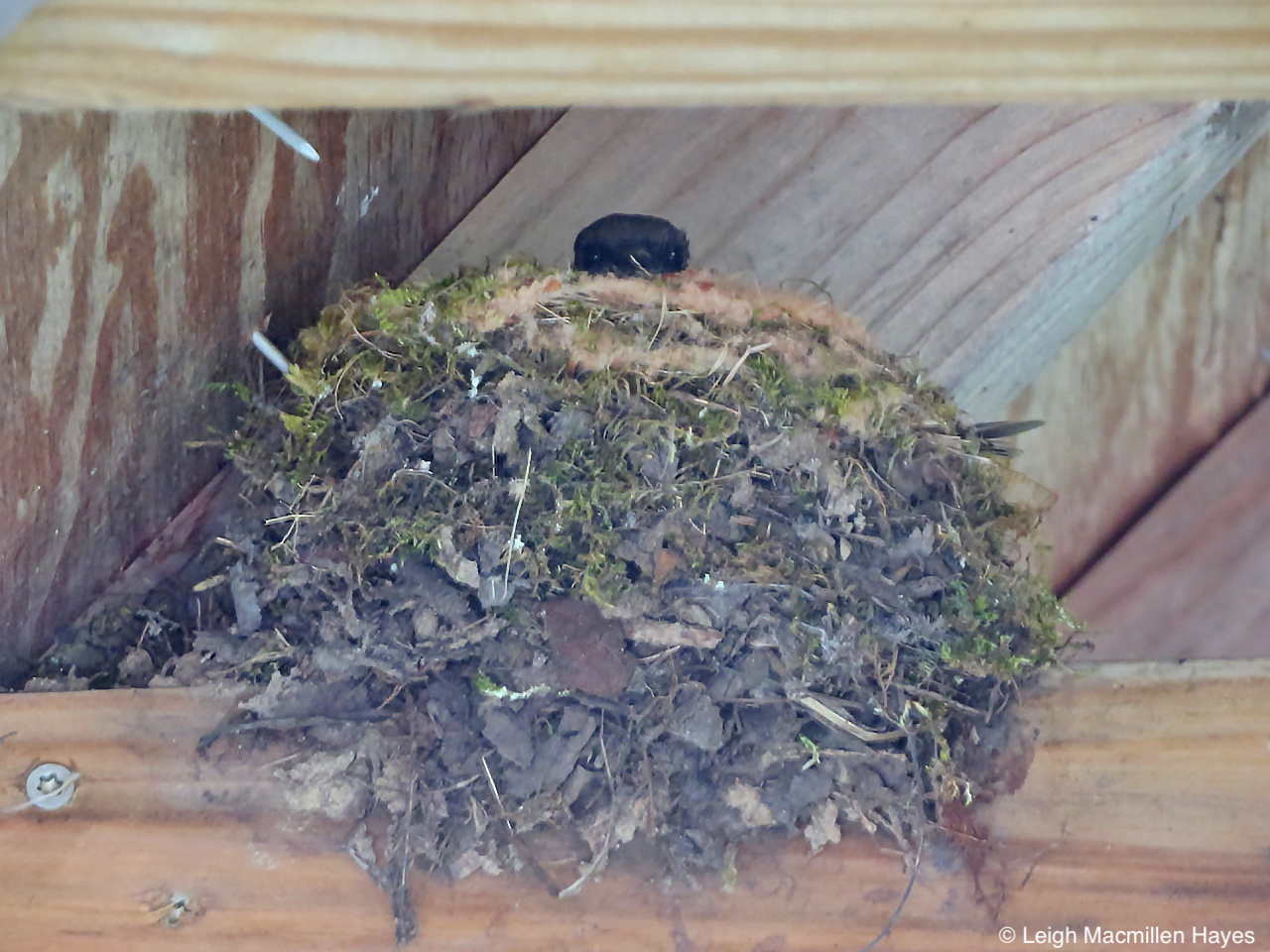
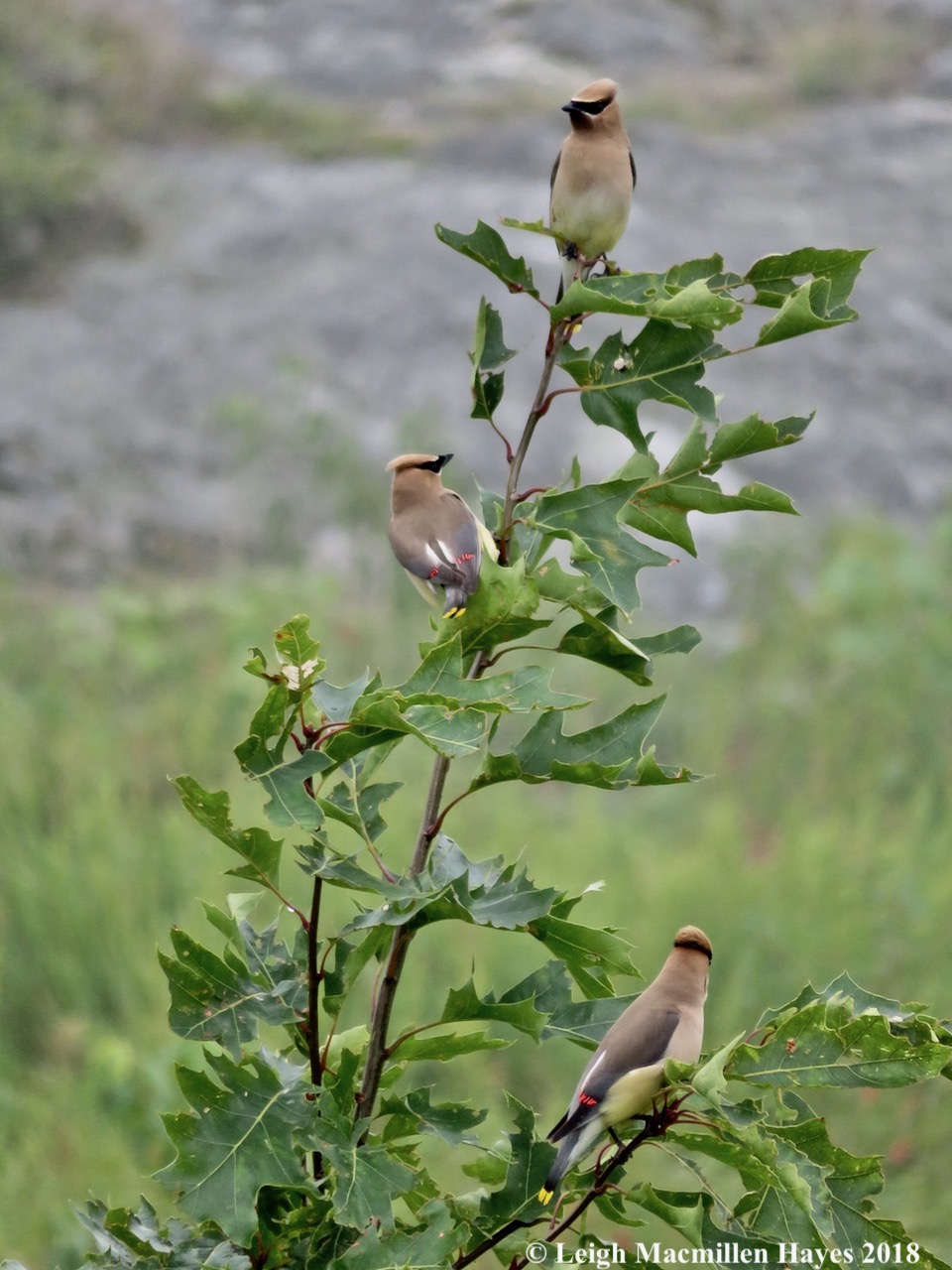
Though I couldn’t stay for the entire trip, which yielded 38 species, I did have the joy of watching a small flock of Cedar Waxwings land and fly, land and fly. And then there was the Indigo Bunting. It’s blue coloration reminded me of Clintonia’s Blue Bead fruits we’ll spot in the summer if the birds don’t eat them all first. And I’m never sure why I’m surprised to find a House Wren on these journeys, but perhaps its because for so many years I didn’t see them (or didn’t realize I was seeing them) and thought of them more as a childhood bird from my beginnings in southern New England. The best find of all, on this day, however, was an Eastern Phoebe sitting on her nest.

On May 28th, I met some old friends, though for the first three I had to jog my memory for their names.

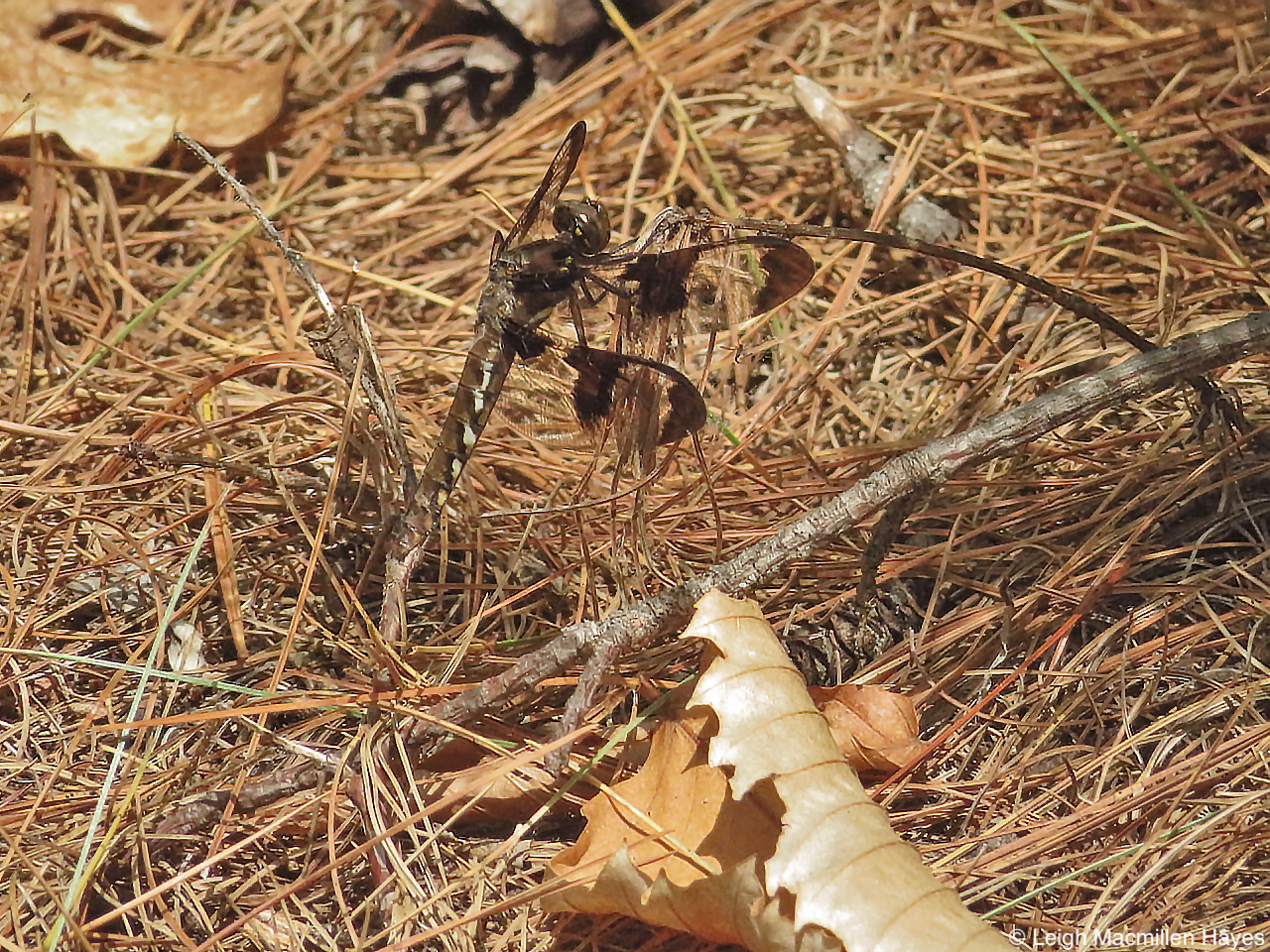
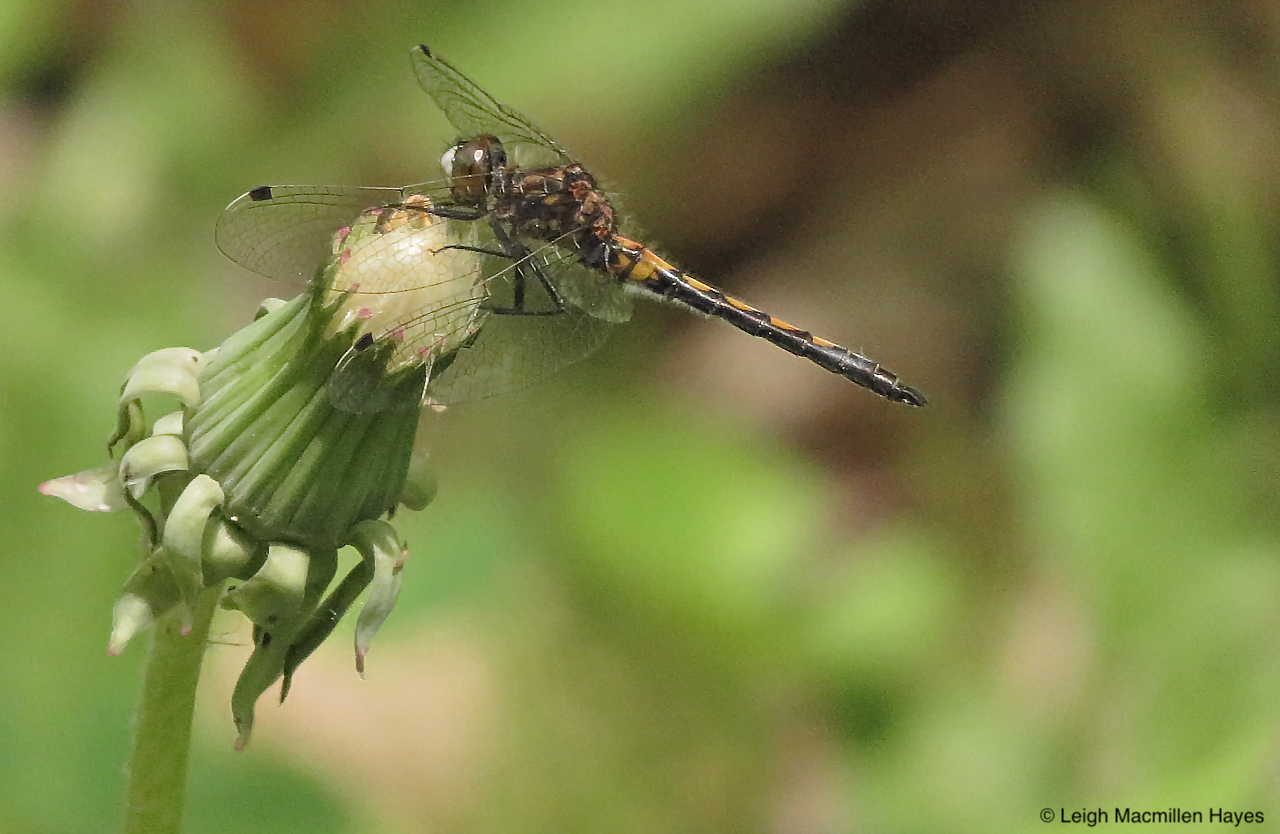
The first was a female Common Whitetail Skimmer dragonfly. It’s her guy who has the whitish “tail,” and I believe that she received the better strokes of nature’s paintbrush. Then there were the Hudsonian Whiteface Skimmers, she with yellow marks and his defined in red. Soon, the Calico Pennants will emerge, and we’ll see she also dons a yellow coat while he sports red. But as much as you know I love dragonflies, a fresh moose track also makes my heart sing.

On May 29th, I wondered how I could possibly top all of that.

And yet I did. First there were more ants farming aphids, this time Wooly Alder Aphids on Speckled Alders. After that, a Bluet Damselfly that didn’t seem to mind that I rustled around in some shrubs trying to get better photos of other species. For its patience, I thought I should honor it in this post. One of those other species, a small Dot-tailed Whiteface Skimmer dragonfly, drew my attention to a Pitcher Plant Flower preparing to open. I was surprised by its presence because though I knew I was in the land where Pitcher Plants are abundant, I couldn’t recall spying one in this particular spot before. But the best find of the day, an Assassin Bug, Pselliopus cinctus, finishing a meal. I had never met this species of Assassin Bug before as usually it is the slender green Zelus luridus that I encounter. The black and white legs were to be admired, by me, not its poor victim who had just had the juices sucked out of it.

It certainly has been a week to celebrate my daily wonders as I wander. And though the Assassin Bug was the best of today, the actual best I did not capture a photo of this afternoon. A River Otter popped up and stared at me briefly, chirped, and before I could reach for the camera, disappeared. But I will remember that moment and that spot in my mind’s eye.

Patience as the Season Unfolds Mondate

We do LOVE winter, my guy and I, but really, we appreciate all of our seasons and can’t imagine living in a place where we can’t experience each in its own right and the change from one to the next.

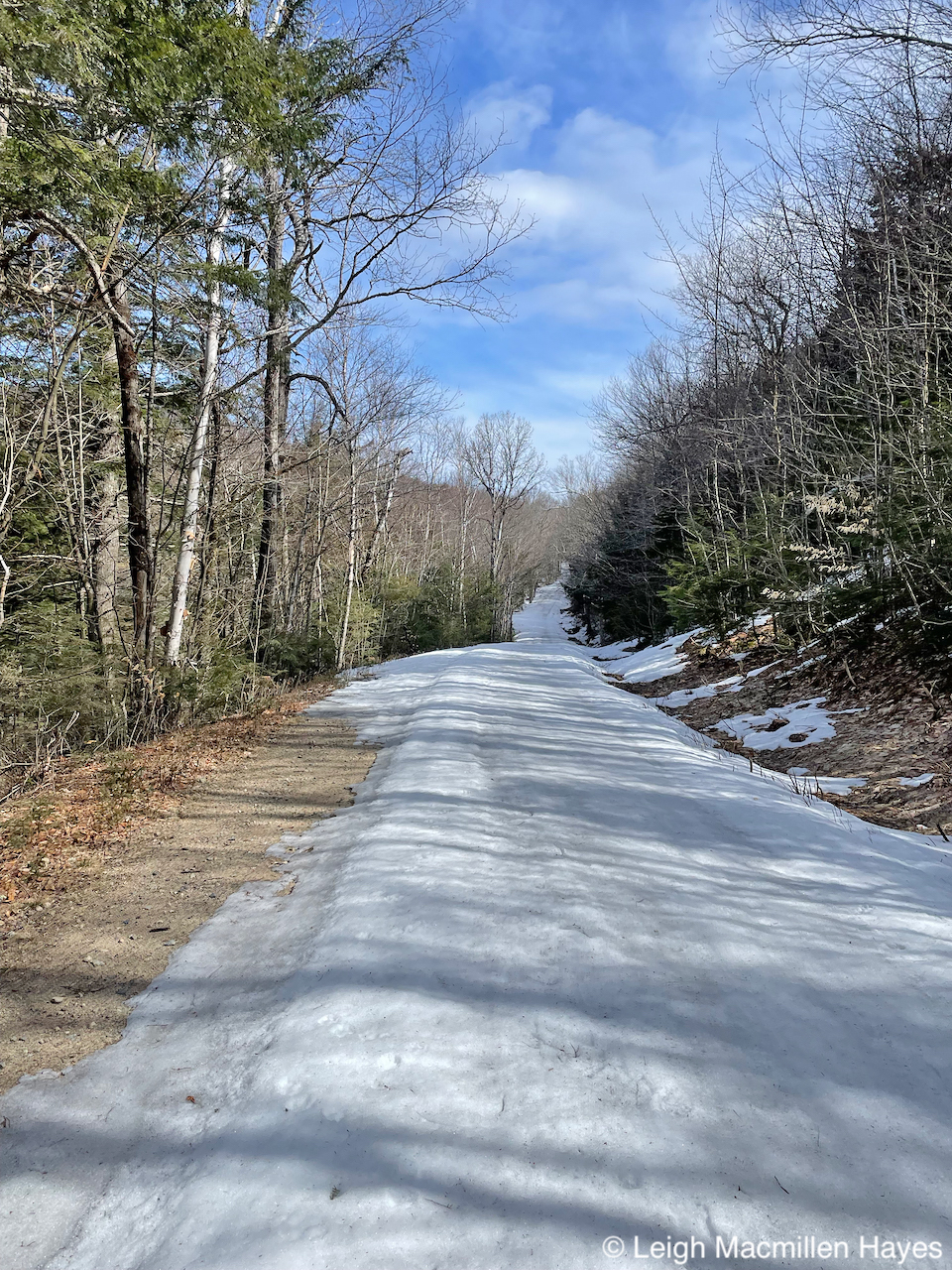
And so today, with the temp in the low 20˚s and wind chill making it feel even colder, we donned our micro-spikes and headed up a snowmobile trail to begin our search for the current season.

Icicles that we were sure had formed overnight, since the weekend temps had been much warmer, formed along a stream that flowed toward Slippery Brook, for our trail of choice was in the White Mountain National Forest.

In other seasons, one can either drive to our destination, or go via snowmobile, but for the time being the gates to Forest Road 17 in Chatham, New Hampshire are closed to vehicular traffic. That was fine with us.

At about 2.5 miles, we took a slight detour to take in the sounds and views of Slippery Brook.

It was there on a crossbeam of the bridge where my guy was about to sit that I noticed British Soldier, a common lichen with bright red caps that remain so year-round, but have been hidden from view by snow all winter. It was like meeting a cheery old friend for the first time . . . this sighting.

Along the road also grew many a Hobblebush, another old friend, their naked leaf and flower buds swelling in anticipation of what is to come.

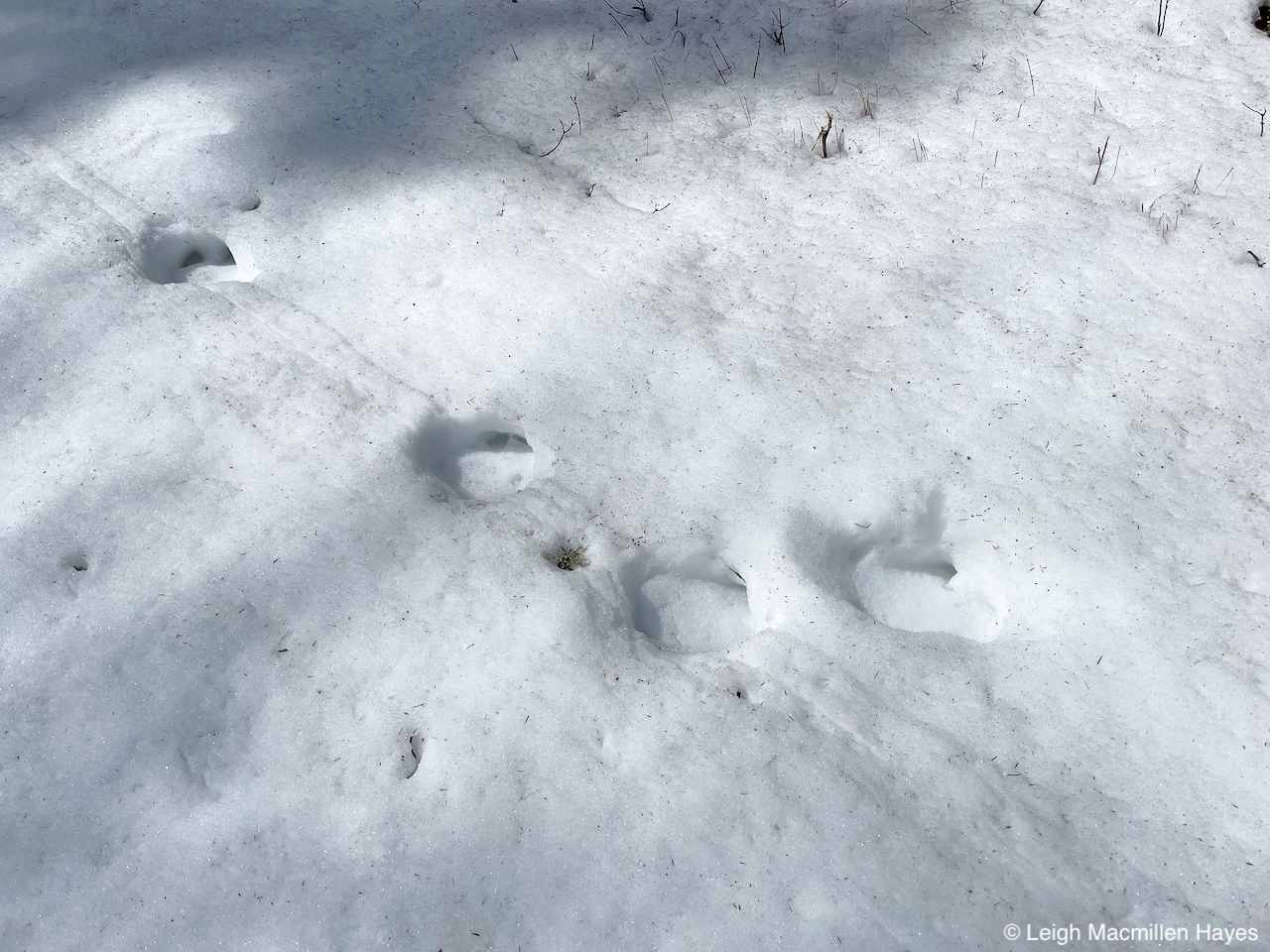
And then we spotted these prints, made by the largest mammal around and though we saw more in other places, this set of four made us wonder if the moose had come in for a landing and then flown off again.

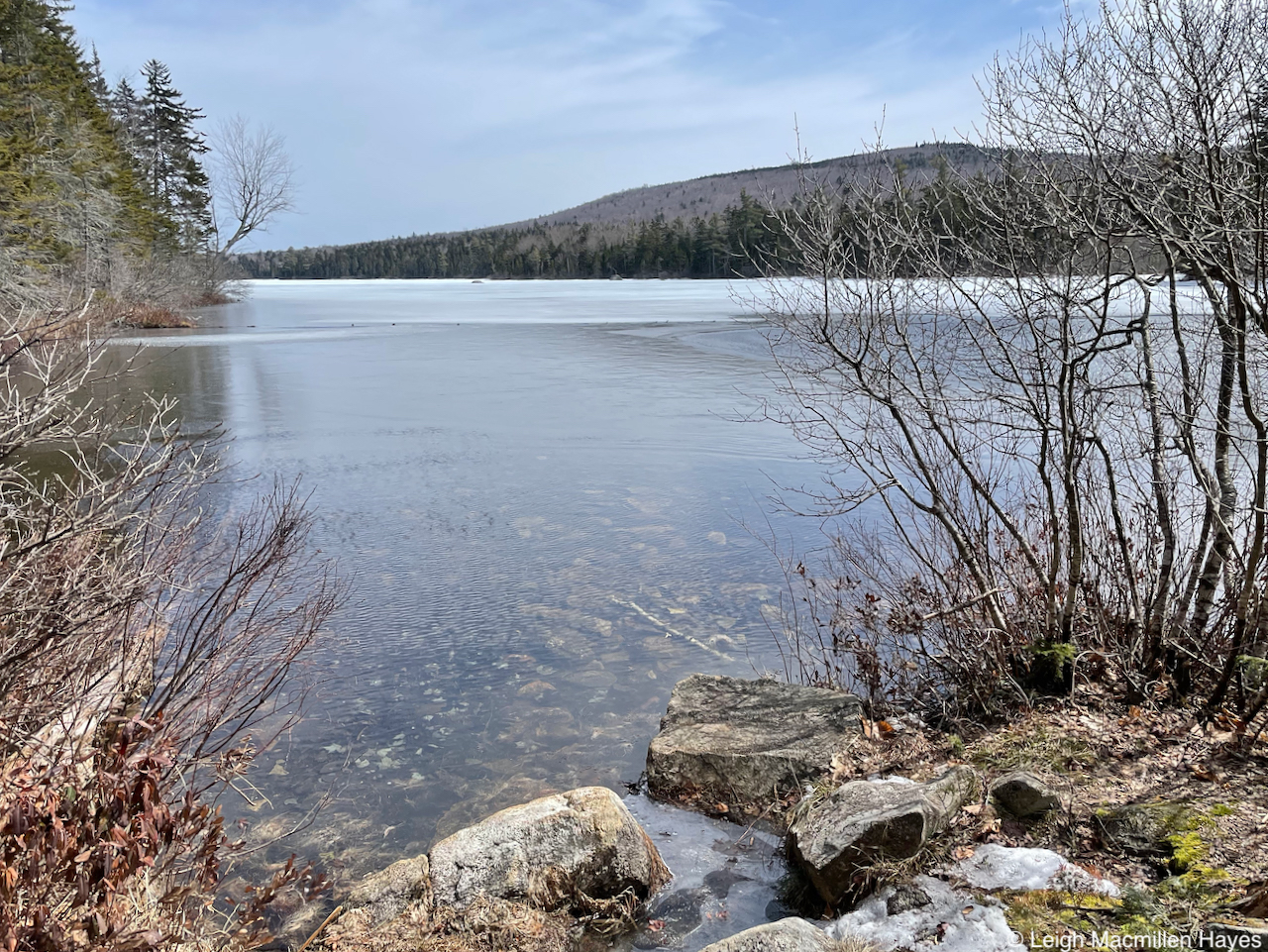
At last we reached the trailhead, and as we approached the pond we noted an immediate dip in temperature, plus an increase in wind. Thankfully, we’d expected such and had dressed for the occasion. That said, it’s hard to search for spring when your cheeks sting with the wind.

A rocky and rooty trail that circles the pond, though fairly flat, requires hikers’ attention at all times of the year and today was no exception. That said, the trail itself offered a snippet of spring.

We reached Mountain Pond at last and by the outlet found some open water, but other than a few chickadees and nuthatches, there were no birds or other forms of wildlife to spy upon as we’d hoped.

Even so, our focus was rewarded in other forms, such as other buds growing larger, like upon this Speckled Alder. And notice that lateral leaf scar–a happy face indeed.

The longer male and shorter female catkins, which are the flowers of the alder, swayed in the breeze, waiting for a future date when they could do just that . . . date.

A few actually seemed ready to mate, though not with each other. While the pendulous male flowers open and extend when their pollen is ready to be dispersed, just above them the tiny, maroon female flowers “bloom” at the same time on the same shrub. In this case position counts and so with the female flowers above the males, self-pollination is discouraged and cross-pollination occurs instead thanks to wind.

Also beside the pond’s shore, the woody structures of last year’s Rhodora flowers, but also its buds enlarging by the day, with promises of exquisite displays making us suddenly want the time to push the clock ahead.

The same was true for the Sheep Laurel, that plump pinkish bud ready to burst open when the time is just right.

As we headed back toward the Forest Road at last, we began to notice exposed trails of Red Squirrels that led from one spruce cone cache to another. Those feisty ones were quiet today, but we suspected they are happy to have more food offerings on the horizon.

Nine miles later as we once again passed by the stream with the icicles and noticed that more had formed, we realized we’d found spring on this Mondate . . . she’s just taking her time and we should follow her example and be patient as this next season unfolds.

Slipping Into Fall

I went with intention for such was the afternoon. Sunny, cloudy, rainy, dry. Change. Constantly. In. The. Air.

Of course, my intention led to new discoveries, as it should for when I spotted the buttons of Buttonbush, a new offering showed its face–that of Buttonbush Gall Mites, Aceria cephalanthi. Okay, so not exactly the mites, but the structures they create in order to pupate. Mighty cool construction.

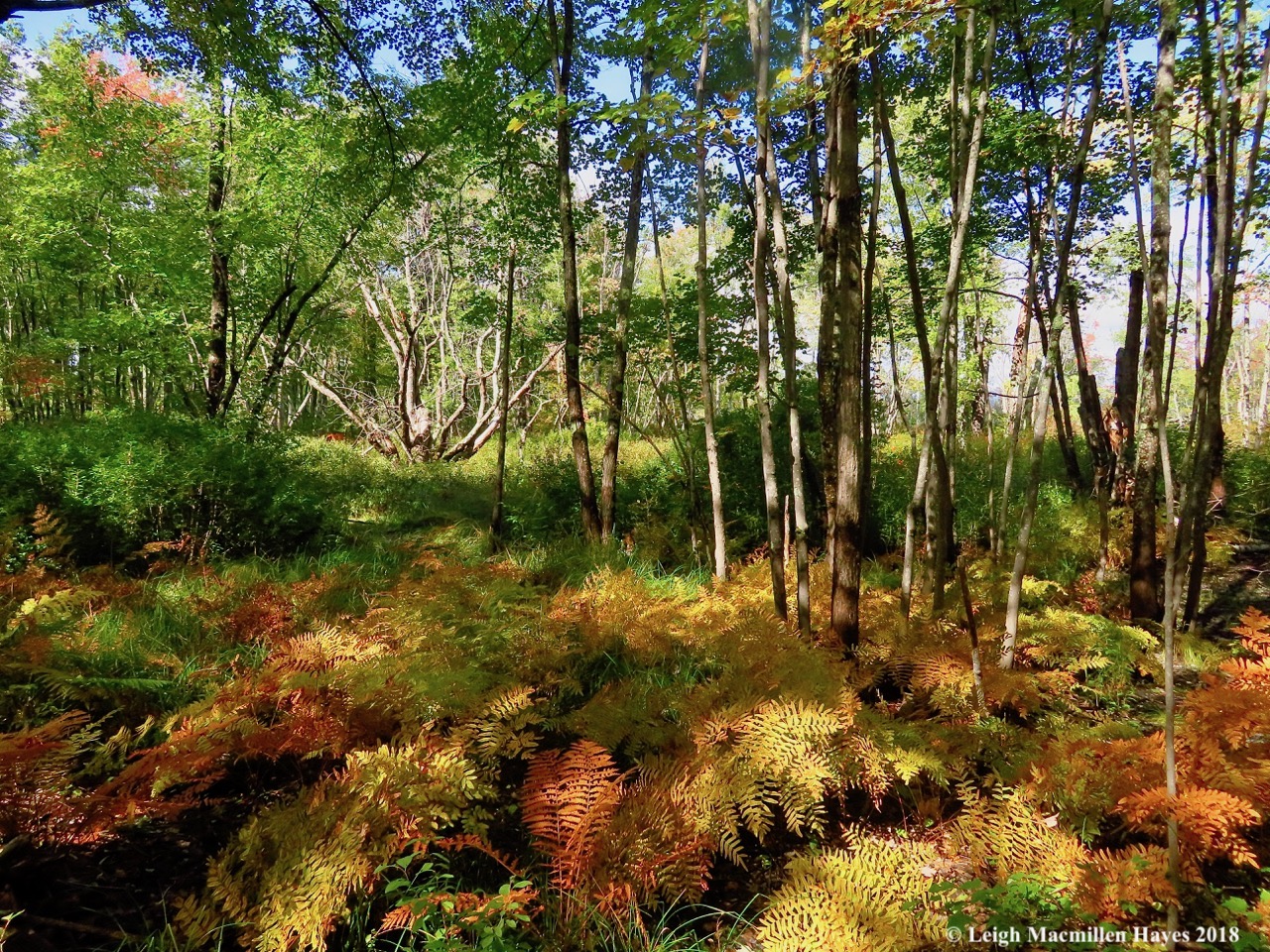
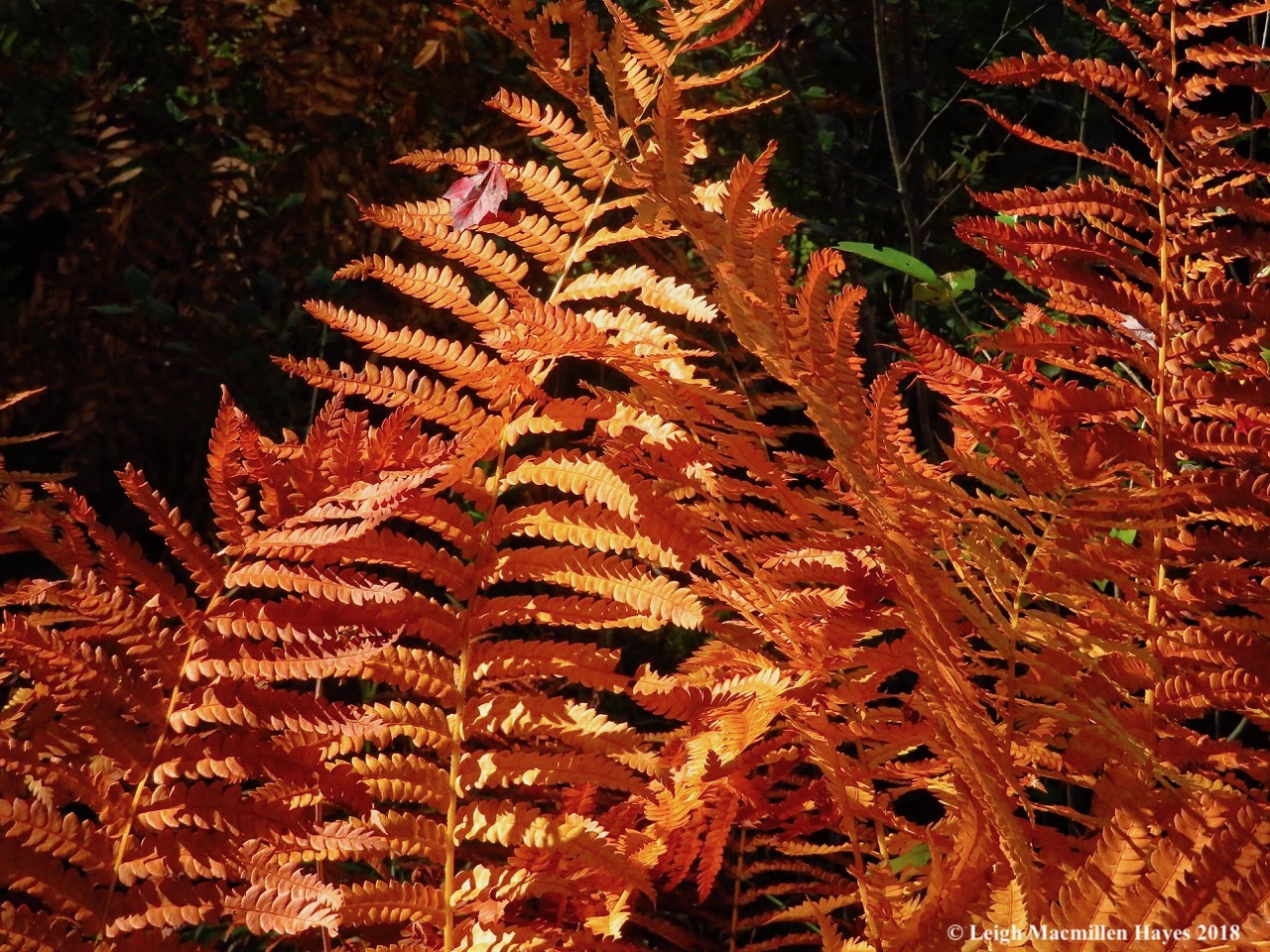
Continuing on, into the Red Maple Swamp did I tramp, where Cinnamon Fern fronds stood out like a warm fire on an autumn day. But wait, it wasn’t autumn. Just yet, anyway.

And then there was that first sighting of Witch Hazel’s ribbony flower, the very last perennial to grace the landscape each year.

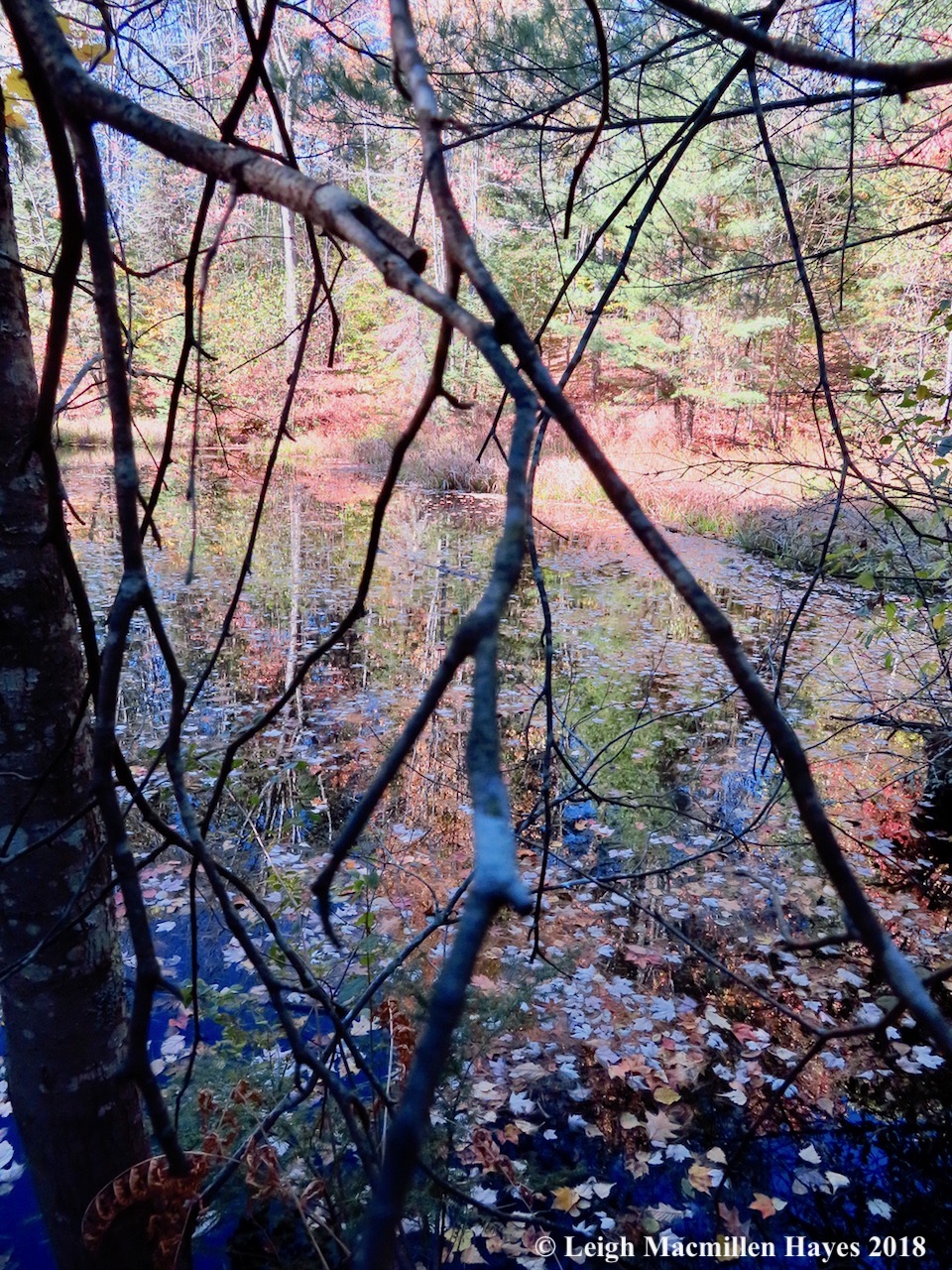
And color. All kinds of color in reality and reflection beside Muddy River.

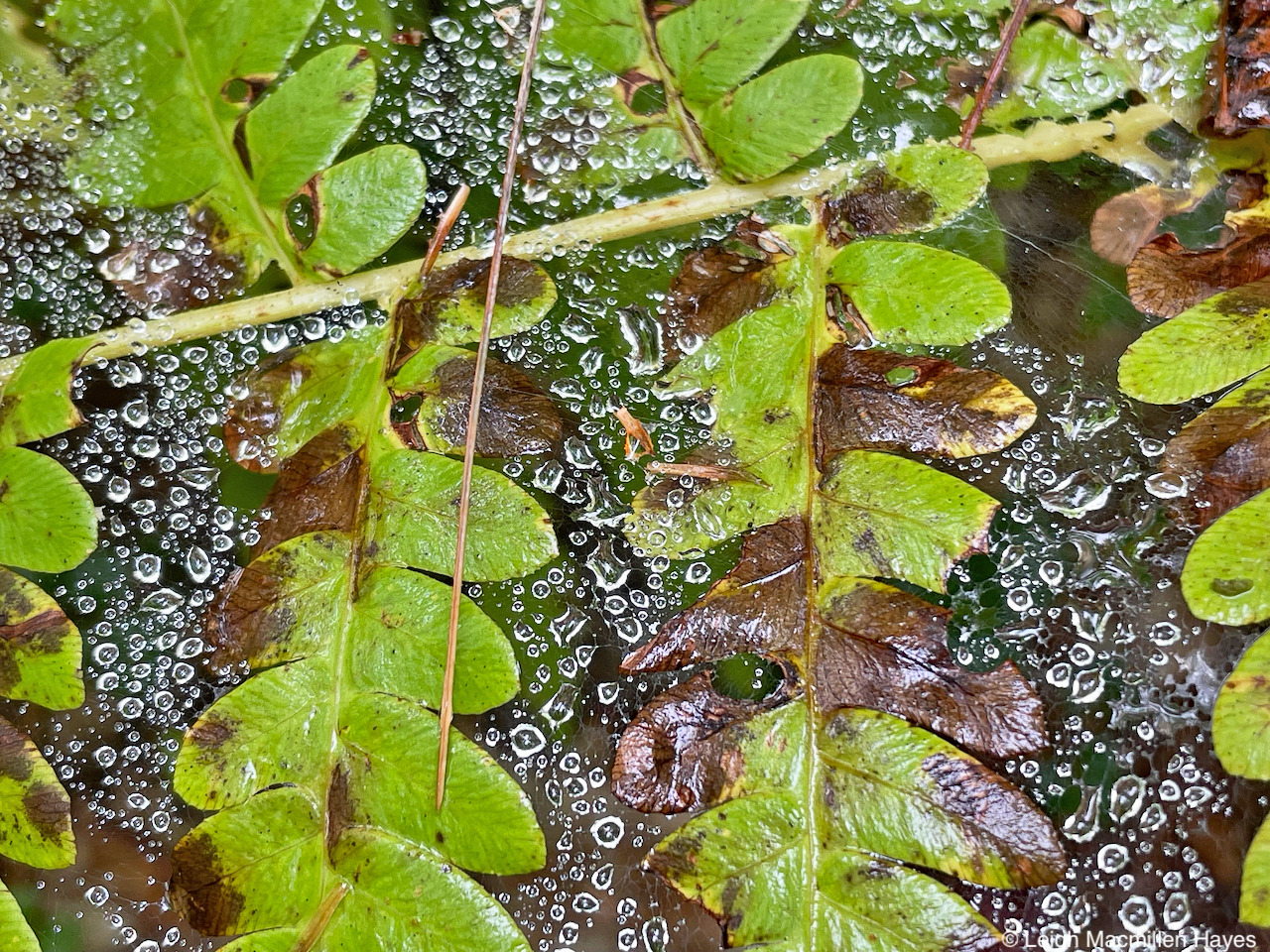
Even the fern fronds glistened, individual raindrops captured upon a spider web adding some dazzle to the scene.

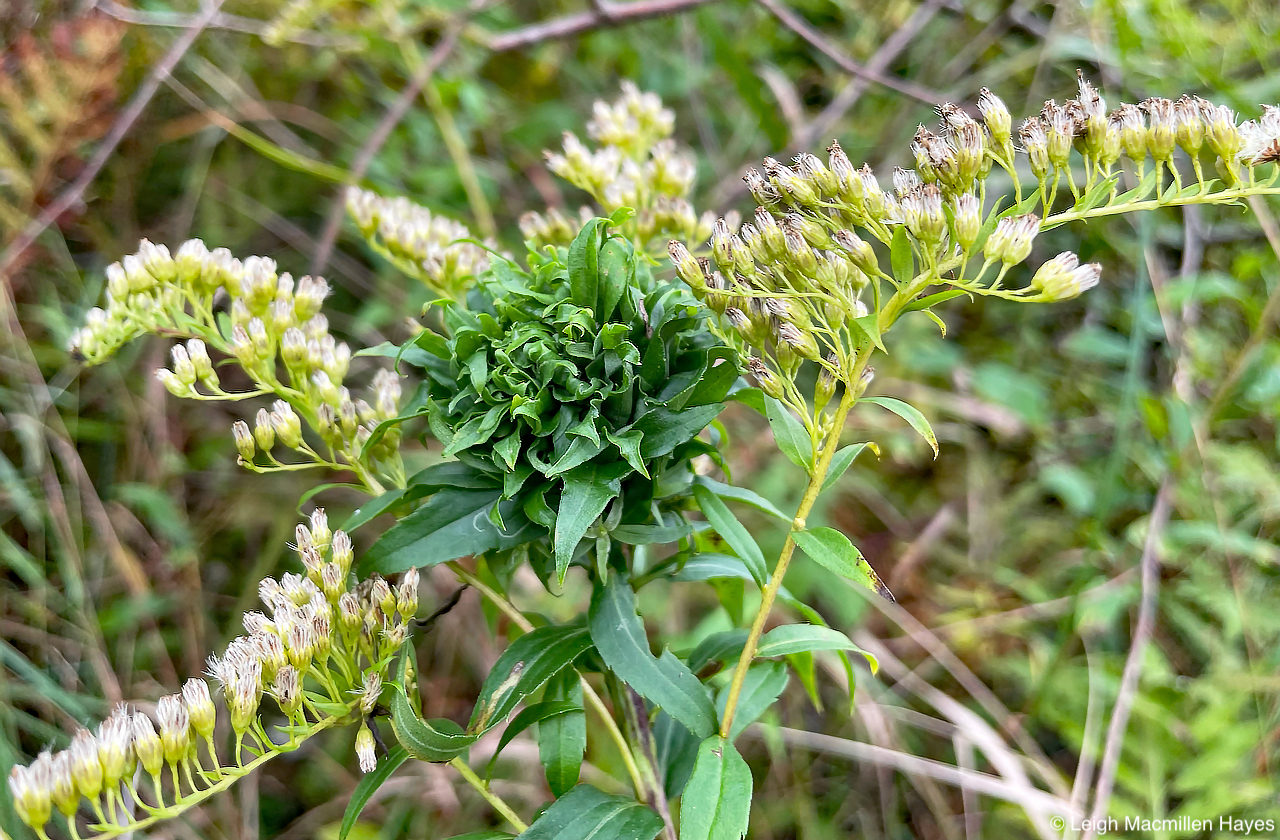
Next on the agenda, a Goldenrod Rosette Gall created by the midge Rhopalomyia capitata. The midge formed a structure that looked like a flower all its own. What actually happened is that the midge laid an egg in the topmost leaf bud of Canada Goldenrod, Solidago canadensis, causing the stem to stop growing, but the leaves didn’t.

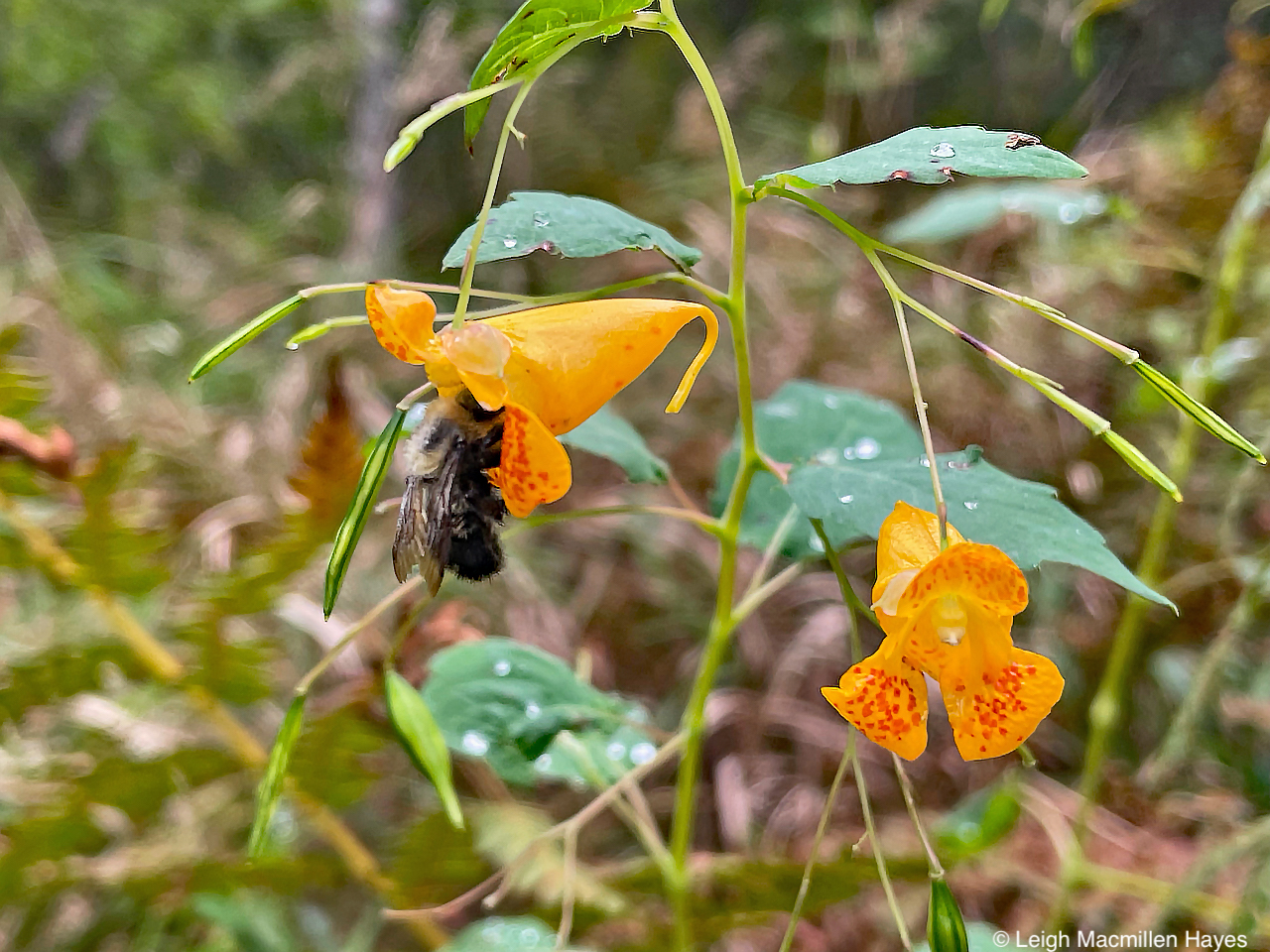
A few steps farther and I realized I wasn’t the only one who appreciated the sight (or nectar) of Jewelweed, Impatiens capensis, or Spotted Touch-me-Not. The latter name because upon touching the ripe seed pods, they explode. Try it. Given the season, the pods have formed as you can see behind the bee’s back.

Winterberry, Ilex verticillata, its fruits bright red also graced the trail in an abundant manner, but wait a few months and they’ll be difficult to spy. For a month or two we’ll enjoy their ornamental beauty, but despite their low fat content, birds, raccoons, and mice will feast.

All of these sights meant one thing.

The Red Maple swamp bugled its trumpet with an announcement.

The announcement was this: Fall freezes into winter, winter rains into spring, spring blossoms into summer, but today . . . today summer slipped into fall and I gave great thanks for being there to witness it all.

Ides Bog'ling: Beware. Be present. Be still.
When the world goes haywire, the perfect antidote is a day spent outside soaking up the sights and sounds and sun and most of all, fresh air.

Today, that spot offered so many sights including Mount Washington’s snowy covering in the great beyond.

And Pleasant Mountain’s ridgeline at a closer range.

But the sights also included selections much smaller such as Buttonbush’s winter structure–offering a half globe rather than the full orb of its summer form.

And Rhodora giving off its own glow as with buds and flower structures waiting in the wings.

What’s not to love about an infusion of color to the late winter/almost spring landscape.

Speckled Alders, their male catkins growing long below the females, also bespoke the season on the horizon.

Having developed last summer, the males are slender spikes of tightly appressed scales. Above, the females are more bud-like in manner. Both persist throughout the winter and soon will bloom before summer leaves appear.

While new buds showed off their reddish faces, last year’s alder “cones” remained woody in form. Not truly cones for those grow only on conifers, there is a strong resemblance. Thankfully, Mary Holland of Naturally Curious explains the difference best: “Angiosperms, or flowering plants such as Speckled Alder, produce seeds that are enclosed within a covering (the ovary), whereas gymnosperms (conifers) have un-enclosed or “naked” seeds. Alder “cones” open to release seeds in a manner similar to many conifer cones and, like most cones, do not disintegrate immediately after maturity. Female flowers/catkins of Speckled Alder, if fertilized, will develop into ‘cones.‘”

That said, there were some of last year’s structures that showed off a much different form. It was almost like they had tried to flower. In reality, they were Alder Tongue Galls–resulting from a fungus rather than an insect infecting the female catkins.

Other sights included Morse Code representations of the dot dot dash work created by Yellow-bellied Sapsuckers upon many a birch.

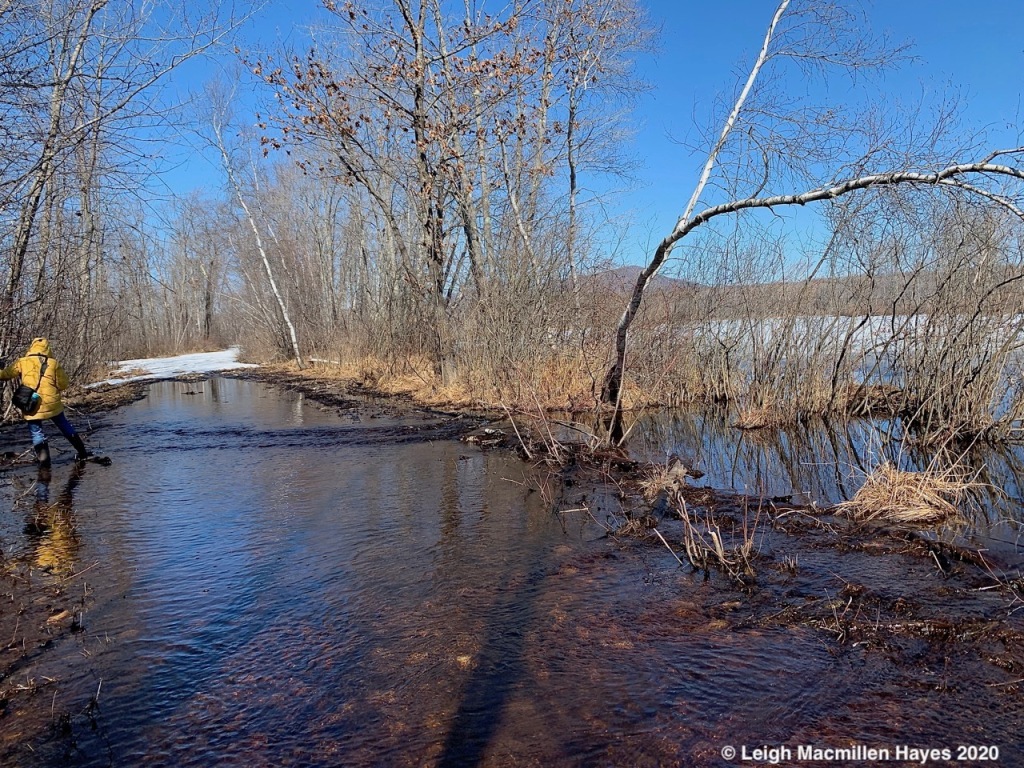
I traveled this day with a friend and in our quest to clean out the innermost recesses of our lungs, we walked across ice, snow, mud and through water. it was totally worth the effort to get to the other side.

For on the other side, we encountered Maleberry shrubs with ornaments of a different kind.

Each had been sculpted in a unique manner, but we suspected all resulted from the same creator.

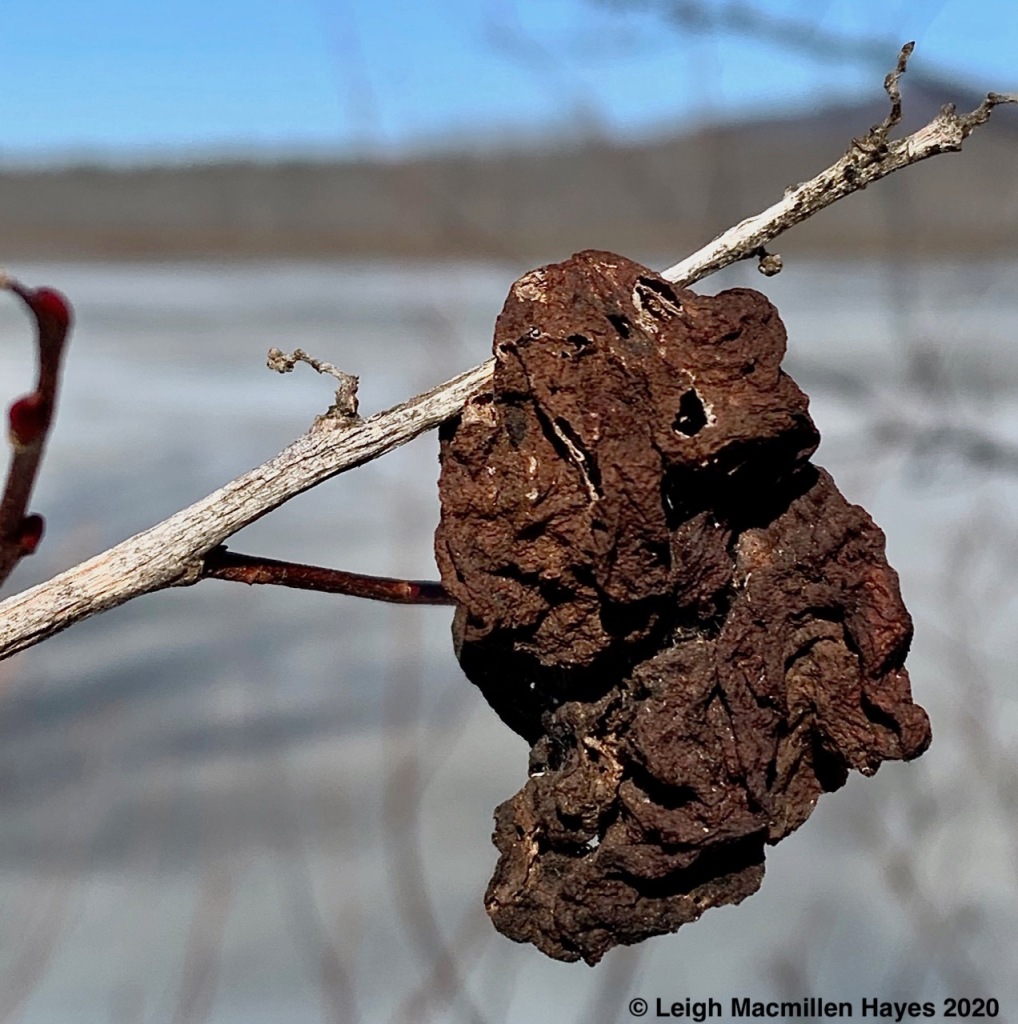
Our best guess, after opening one or two, was that some insect had created a home in the Maleberry leaves last fall but once again, we were stymied by a new learning and suspect the lesson hasn’t ended yet.

As our journey continued, we suddenly found ourselves in the presence of wind dancers for so did the marsescent White Oak leaves appear.

On the ground we found a comparative study between the White and Red Oak leaves, their lobes and colors bespeaking their individuality.

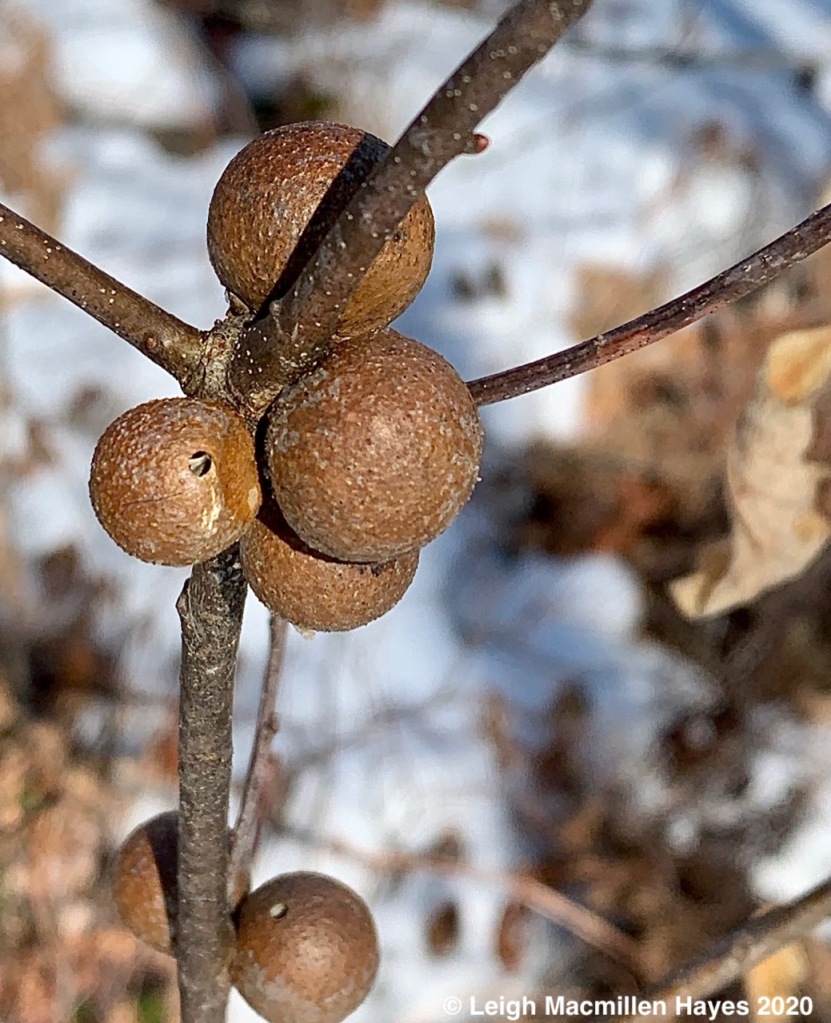
And upon some of the White’s saplings, another gall of this place–Oak Marble Gall. Growing in clusters on twigs, they turn brown in maturity and their emergence holes show the site of escape for mature adults who flew out in the fall. They are also called oak nuts.

Today’s sights included the landscape and its flora, birds of the trees such as nuthatches and chickadees, plus those of the water including woodducks, and sky birds like two eagles we watched circle higher and higher until they escaped our view. We also found bobcat and coyote scat. And then in some mud, signs left behind by others such as the raccoon’s close-toed prints.

Among the raccoon track, there were also plenty of bird prints that we suspected belonged to crows.

And in the water beyond, a rather active beaver lodge.

On this day, my friend and I slipped away into the land beyond known locally as Brownfield Bog, where we at times were boggled by the offering of this Ides of March. Beware. Be still. Be present. It’s the best way to be. Be.

To Pause and Focus

I had no idea what to expect of today’s tramp with two friends as I didn’t even know prior to this afternoon that the trail we would walk even existed. And so I pulled in to the parking area at the end of Meetinghouse Road in Conway, New Hampshire, sure that we’d only be able to walk down to the Saco River about a hundred feet away and that would be the extent of our adventure.

1-Conway Rec Path

But . . .  much to my pleasant surprise I was wrong and in the northeastern corner of the parking lot we crossed a bridge into the unexpected setting.

2-Saco River framed

For the entire journey, we walked above and beside the Saco River. And our minds were awed by the frames through which we viewed the flowing water and boulders.

3-clear view of the Saco River

Occasionally, our view was clear and colorful, the colors now more pastel than a week ago.

5-witch hazel, understory

Even as the colors have begun to wane and leaves fall, we looked up from our spot below the under and upper stories and sighed.

4-Witch Hazel

For much of the time, we were wowed by the Witch Hazel’s flowers–for so thick were they on many a twig.

4a-witch hazel flowers

In fact, if one didn’t pause to notice, you might think that each flower featured a bunch of ribbons, but really, four was the count over and over again.

4b-witch hazel flowers, leaf:bundle scars

And some were much more crinkly than others. One of my other favorites about this shot is the scar left behind by a recently dropped leaf. Do you see the dark smile at the base of the woody yet hairy flower petiole? And the dots within that represented the bundles where water and nutrients passed between leaf and woody structure?

6-spotted wintergreen

And then one among us who is known for her eagle eyes spied a Spotted Wintergreen, Chimaphila maculata, a name that has always made us wonder for its dark green leathery leaves seem far more stripped than spotted. It’s one of those plants with a bunch of common names and so we should try another one on: spotted wintergreen; striped prince’s pine; striped wintergreen; striped pipsissewa; spotted pipissewa; and pipissewa. But perhaps the fact that it’s striped and referred to as spotted helps me to remember its name each time we meet. A sign of how my brain works.

7-spotted wintergreen patch

While we know it to be rare and endangered in Maine, it grew abundantly under the pines on the slight slope beside the river in New Hampshire, and we rejoiced.

8-spotted wintergreen capsules

Its newer capsules were green, but a few of last year’s woody structures also graced the forest floor. Reseeding helps the plant propagate, but it also spreads through its rhizomes.

9-maple-leaf viburnum

Everywhere we looked there was a different sight to focus our lenses and we took photo upon photo of the variations in color of some like Mapleleaf Viburnum (Viburnum acerifolium), a shrub with three-lobed maple-like leaves and small white flowers in the spring that form blue fruits in the early fall and had been consumed, only their stems left to tell the story.

10-red maple leaves

Red Maple (Acer rubrum) leaning over the river offered their own hues that bespoke autumn.

16-platter sized mushrooms

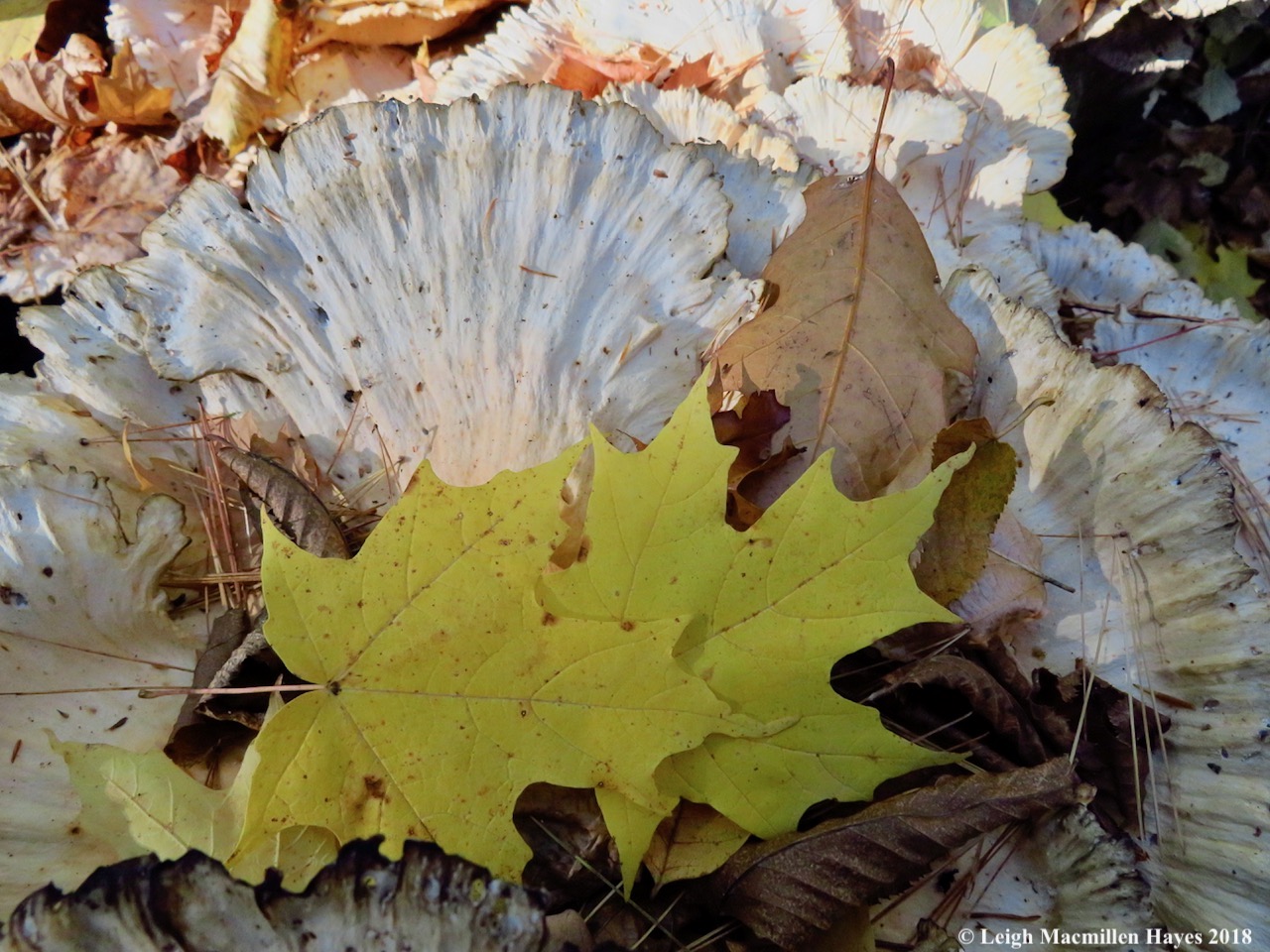
And tucked into a fungi bowl, we found the yellow form of Sugar Maples (Acer saccharum). 

11-Saco River with Moat Mountains in background

Onward we continued with the river to our left, outlined with maples and evergreens, and backdropped by the Moat Mountains.

12-small pond stained glass window

And to our right, a small pond where trees in the foreground helped create a stained glass effect filled with autumn’s display.

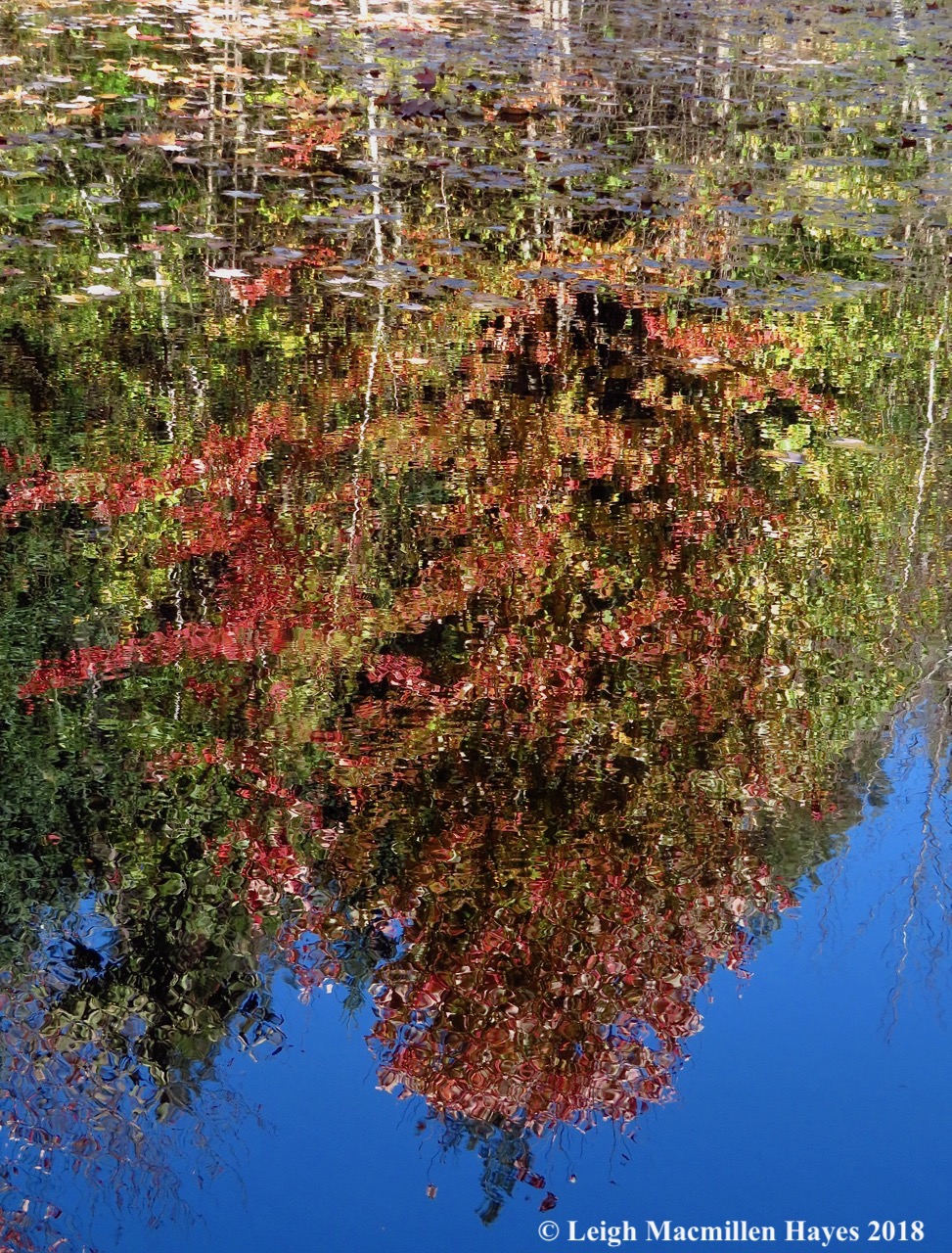
13-reflection

And once again, in the pond’s quiet waters reflections filled our souls.

14-turn around trespass

A wee bit further, we trespassed onto private land, and decided to make that our turn-around point as we got our bearings via GPS.

15-trail

Backtracking was as enjoyable as our forward motion. We had been on a trail called the Conway Rec Path, part of the Mount Washington Valley Rec Path, intended for walking, running, biking, snowshoeing, cross-country skiing, bird watching, wildflower viewing , tree study, plus river and mountain views. Kennett High School athletes ran past us and we encountered couples out for exercise. None took their time as we did, but that’s our way and occasionally we ventured off trail because something caught our eye.

9-rock carvings match the waves

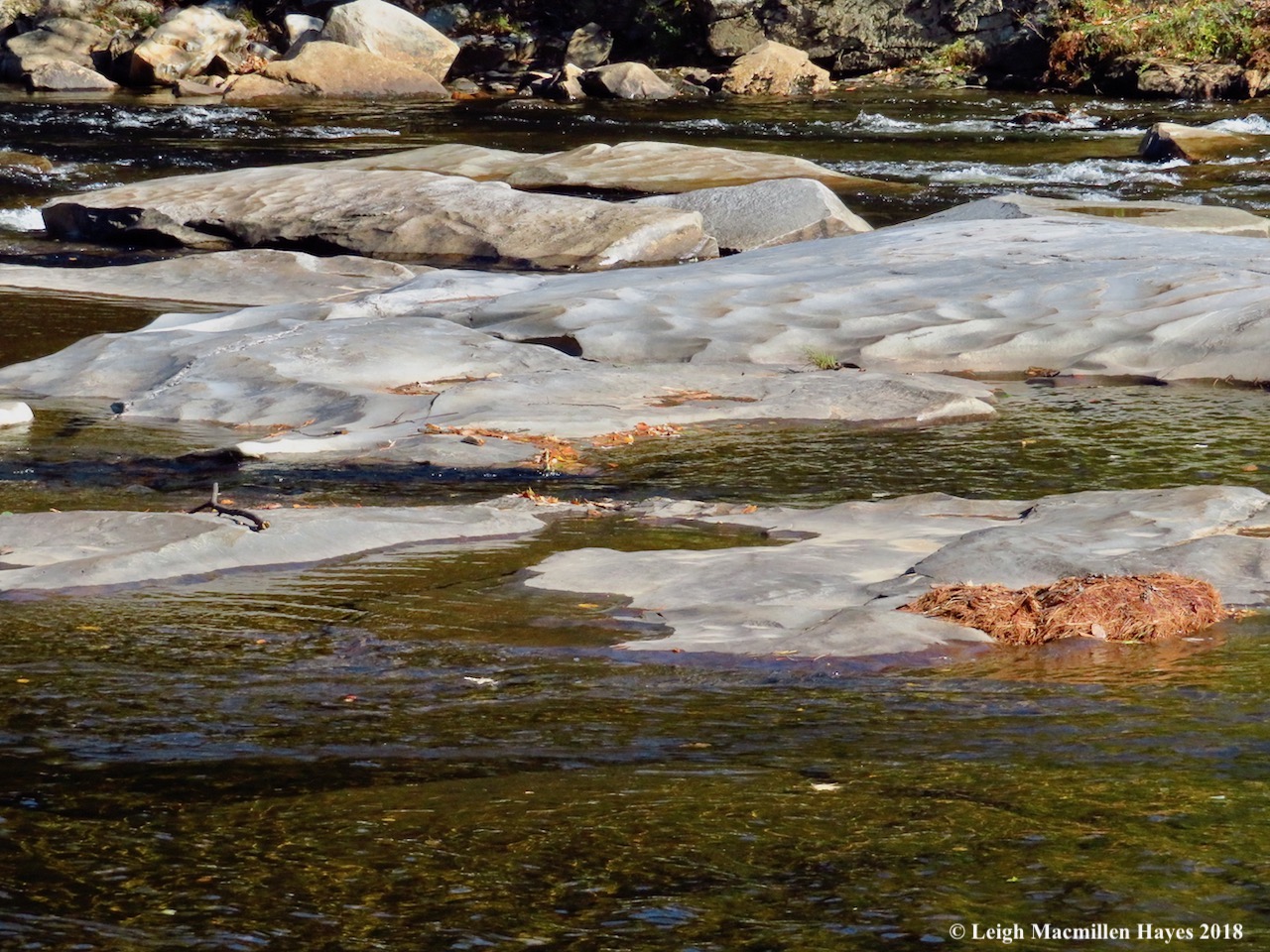
Meanwhile, the river continued to flow, as it has for almost ever, and the water continued to carve patterns yet to be seen, but we enjoyed those that reflected its action.

17-old silver maple

Back at the parking lot, we were wowed by a Silver Maple (Acer saccharinum), its girth suggesting an age older than a century.

18-silver maple buds

As had been the case all along the way, we experienced another wow moment when we realized how developed were the flower and leaf buds already. We know they form in the summer, but . . . they looked ready to pop!

19-white-throated sparrow

As we stood and admired, a flock of Juncos and White-throated Sparrows flew from one spot to the next as they sought seeds on the ground. Occasionally, the sparrows paused for a moment.

20-2 white-throated sparrows

And then moved on again.

21-Eagle over Moose Pond

At last it was time for us to move on as well and head for home, my friends’ to their mountainside abode in New Hampshire and me to my humble house on the other side of the Moose Pond Causeway. But as I always do when making the crossing, I looked up.

22-immature Bald Eagle

And was honored by a sighting that pulled me out of my truck. The immature Bald Eagle I’d watched and listened to all summer graced me with another opportunity to view it.

One scene after another, it was a delightful autumn afternoon. Thanks P&B, for the sharing a new trail with me and providing many moments to pause and focus.

A “Fen-tastic” Afternoon

I was on a reconnaissance mission this afternoon for next week I’m leading some middle school students into a wetland and talking about forest ecology before sharing the joy of foraging with them.

1-Into the jungle

To reach the wetland, it was like walking through a jungle where the ferns grow tall, their fall coloration enhancing the scene. Cinnamon Ferns are a species that easily grow in medium to wet soils in part shade to full shade. The moist, rich, acidic soils, I walked through were much to their liking.

1a-cinnamon fern

It appeared that they were named for their autumn presentation, but really it refers to the cinnamon-colored fibers found near the frond bases.

1b-hairy underarm

Because they look so similar to their relatives in the Osmundaceae family, the Interrupted Fern, I looked to the back of the frond for confirmation. Sure enough, where the pinnae (leaflet) met the rachis (center stem), a tuft that we refer to as the hairy underarm was present.

2-kettle

Onward I continued, not sure what the moisture situation might be. So, in the past, I’ve paused by the kettle hole, but never actually entered it. All that changed today and my plan is to take the students into this special place. A kettle hole is a basin created when a large block of glacial ice was left stranded and subsequently melted in place, producing a basin or depression. These basins fill with water up to the depth of their surrounding water table, which currently happens to be rather low.

3-white face meadowhawk

Because the temperature had risen after a damp, chilly start to the day, the meadowhawk dragonflies flew . . . and landed. This one was a White-faced Meadowhawk, aptly named for that face.

4-white face meadowhawk abdomen markings

Its abdomen markings of dark black triangles also help in identification.

4b-autumn meadowhawk dragonfly

Flying in the same airspace where the Autumn Meadowhawks, with their light-colored legs. All other meadowhawks have dark legs.

4c-autumn meadowhawk love

Love was in the air and on the leaf as a pair of Autumns took advantage of the warm weather to canoodle in the sunlight.

4c-dragonfly love everywhere

They weren’t alone.

7-kettle 2

What I learned as I explored was that the kettle was actually a double pot for a second one had formed behind the first. Notice the layered structure of the area from trees on the outer edge to shrubs to grasses and flowers to water.

5-mammal tracks

And everywhere–deer and raccoon tracks crisscrossed through mud and water.

5a-racoon and bird tracks

Bird tracks also joined the mix among the raccoon prints.

6-six-spotted fishing spider

And because I was interested in learning who lived there, I had to pay homage to the six-spotted fishing spider.

8-spatterdock leaves and root

The spider flirted with me as he moved quickly among the spatterdock leaves that sat in the wee bit of water left in the center of the kettle.

9-another kettle

I finally left the kettle only to discover another and again the formation of layers.

10-green teal ducks

The water was a bit deeper and a family of Green Teal Ducks dabbled.

11-bottoms up

Bottoms up!

12-my destination

It took some time and steady foot placement as I climbed over downed trees hidden by winterberry and other shrubs, but at last I reached my intended destination, a cranberry bog.

13-cranberries

And then I spent the next hour or so filling my satchel for so abundant were the little gems of tartness. The best where those hidden among the leaves–dark red and firm were they.

14-some nibbled cranberries

As I picked, I realized I wasn’t the only one foraging. It appeared that either chipmunks or squirrels also knew the value of the flavor–though they only nibbled.

15-October colors layered

Occasionally, or even more often, I looked up to take in the colors and layers that surrounded me–from leatherleaf bronze to blueberry red to Gray Birch and Red and Silver Maples with a few White Pines in the mix.

16-buttonbush

Buttonbush added its own color and texture to the scene.

17-finding my way out

At last I decided to find my way out. (Sorta for I did get a wee bit disoriented.)

18-royal fern fertile fronds

Among the offerings were ferns of a different kind–though still related to the cinnamons I’d seen earlier. The Royal Fern’s fertile crown had months ago shared its spores with the world and all that was left were salmon-colored structures.

21-buttonbush galore, but more

I picked my way carefully and eventually found one of the kettles. And . . . drum roll please . . .

22-two sandhill cranes

two Sandhill Cranes. Others can tell you better than I how long the Sandhills have returned to this area, but it’s been for a while now and some even saw a nesting pair this past summer. My sightings have been few and so it’s always a pleasure.

23-sandhill cranes

I stood still as they moved about and they didn’t seem to notice my presence.

24-sandhill cranes

While they foraged for roots, another also watched.

25-great blue heron

The Great Blue Heron was cautious as they strolled in his direction.

29-bald eagle

And then . . . and then . . . in flew a Bald Eagle. And out flew the heron.

30-cranes flew out

The cranes waited a couple of minutes and then they flew, bugling on the wing.

And I rejoiced. Oh, I still had to find my way out and did eventually cross through a property about a quarter mile from where I’d started. But, all in all from kettles to cranberries to birds, it was a Fen-tastic afternoon as I explored an outlet fen.


Speaking to the Future, Jinny Mae

As a kid, science and history eluded me. Reading, and writing, and even, ‘rithmitic, I embraced. Well, only a wee bit of the latter, though my father thought my abilities were far greater than they were and he saw a bank position in my future. He was the mathematician. It wasn’t a subject for me to pursue. And so I became an English teacher.

And then one day I woke up and found I’d developed an interest in the how and why and the science of stuff. Added to that was a desire to know more about the past. And voila, here I am, some days spending way too many hours pursuing insects in the garden or bark on tree or dragonflies buzzing about. Other days, its following trails of yore and trying to understand the lay of the land and those who came before that interests me. My favorite days are probably those that find me pursuing the two subjects simultaneously.

1-Ambush Bug on Hydrangea

Today, I devoted spurts of time to a hydrangea bush that we rescued from a shady spot in our yard about fifteen years ago and transplanted to a sunny spot. What once was a dying shrub that rarely produced more than one flower is now a healthy specimen laden with blooms. And the insects love it.

My biggest surprise, however, was to find an Ambush Bug sitting atop one of the newly opened white flower petals. For the first time since I’ve been paying attention, the bug was on something other than a goldenrod and I could truly see its body. I’ve always thought it exhibited a hint of a smile, and do believe I’m correct.

An Ambush Bug is my “iguana” insect for its body structure always brings to mind a neighbor’s iguana that got loose one day and never was spied again when we were kids. (Or was it? Didn’t we find a dead iguana on the old dump road, Kate and Lynn? Was that Rob’s lizard?) Anyway, I think the Ambush Bug resembles an iguana, on a much smaller scale, of course. MUCH smaller.

2-Ambush Bug

Seeing the bug on the white petals really threw me for a loop. Why was it there? What would it ever find to eat? The pollinators no longer bothered with the shrub on which it stood. They’d moved on to the goldenrods and asters below.

And how could this insect behave as one who ambushes when it was hardly camouflaged on the white petal? It must have questioned the same (if Ambush Bugs can question) for it turned this way, then that, and back again, and then moved from petal to petal and flower to flower. Usually, it hardly seems to flex a muscle as it remains in one spot for hours or days on end.

3-eye to eye with Ambush Bug

We studied each other, eye to eye, or perhaps more correctly, lens to lens, until I blinked and it flew off. I trust it landed on a nearby goldenrod, where a meal wasn’t too long in the making.

4-Tiger Moth Caterpillar

Just after the Ambush Bug and I parted ways, I noticed a subtle movement below and watched a tiger moth caterpillar that reminded me of a soft boa scarf one might wrap around a neck quickly slither down another flower on the shrub until . . .  it reached the edge of the final petal and fell to the ground, climbed up a fern frond, found its way back to the shrub and moved on to the world within.

7-grasshopper 1

I was beginning to think that all of the insects on the hydrangea would move on or in, but then I met the Red-legged Grasshopper. He set his elbow on the leaf bar and we consulted each other. Would he fly away if I moved into his personal space, I wondered. He wanted to know why I stalked him.

8-red-legged grasshopper

I mentioned his body of armor and the herring bone design and the leg joints and the spurs on its legs that drew my awe.

9-grasshopper

As a solo traveler, I knew it didn’t appreciate that I wanted to share the space. But, I couldn’t resist. Notice its feet and the segments on its abdomen and even the veins in its wings. Did I mention its mandibles?

10-caterpillar scat

As it turned out, there may have been a reason it wanted to be alone, but I was there. To. Witness. The. Poop. A blessed moment. It would have been more of a blessed moment had it pooped on me. Oh, and did I mention that grasshopper poop, like all insect poop, isn’t called scat. Rather, it is frass. Thanks go to Dr. Michael Stastny, Forest Insect Ecologist in New Brunswick, Canada for reminding me of that term. Cheers Mike.

14-shield bug

Another moving about was a shield bug, so named for the shield on its back. It does make me think of a piece of metal one might use as protection. Combine the shield with the grasshopper’s suit of armor and you might think you were spending time in an earlier era. Much earlier.

15-shield bug

But this shield bug didn’t care about the Middle Ages. Instead, it had one thing on its little mind.

12a-shield bug eggs?

Depositing eggs.

13-shield bug eggs?

Its offering was almost minute, yet pearl-like in structure.

16-wasp within

The world I watched on the outside of the hydrangea made me wonder what might possibly go on within. As much as I wanted to break through the branches and take a better look, I knew I’d ruin everything and after all, it wasn’t my place. I did, however, get to witness one moving about briefly for a paper wasp left the goldenrods and heading under the hydrangea leaves to move the pollen about on its body. Why did it go under? Why not pause atop a leaf for such behavior? And how did it escape the inner world without . . .

16a-spider web

encountering a spider web? Funnel spiders had practically veiled the entire shrub with their silken structures.

16b-web anchors

Though anchored with strength, they were extremely soft to the touch.

17-spiders

As the day progressed, I kept tabs on three funnel spiders, the mighty weavers that they were. All were wary of daylight.

18-food in front

But one had set up its home on the eastern side of the shrub and so it spent the day in the shade and enjoyed fine dining on a small bee that I assume made a mistake of pausing while shifting some pollen on its body.

19-dining

There wasn’t much left of it by the time this spider had finished its meal.

21-dinner in hand

Later in the day, a web weaver on the western side began to show itself–and it also had a meal secured.

All of the insects and arachnids I saw, and I had to assume even more enjoyed the inner structure of the condo that the shrub certainly was, all spoke not to the past, but to the future.

And with that, I dedicate this blog entry to you, Jinny Mae. You have a better eye and understanding and ask better questions than I ever will. Here’s to the future!

Wondering With Jinny Mae

It takes us forever and we like it that way. In fact, today a woman who saw us in our typical slo-mo movement commented, “It’s like you’re on a meditative walk. I always move quickly and miss so much.” Indeed we were and when I travel beside Jinny Mae there isn’t much we don’t see. But always, we’re sure that we’ve moved too quickly and missed something. Then again, we realize that whatever it was that we accidentally passed by this time may offer us a second chance the next time.

1-winterberry

Today’s wonder began with the realization that winterberry holly or Ilex verticillata, grew abundantly where we chose to travel. This native shrub will eventually lose its leaves, but the plentiful berries will last for a while–until they’ve softened considerably that is and then the birds will come a’calling.

2-winterberry

Everywhere we turned, or so it seemed, we found them ranging in color from spring green to shades of red. As summer turns to autumn, the leaves will yellow and eventually fall.

3-winterberry

And then the brightly colored berries that cling to every stem will add color where it’s otherwise lacking in the landscape.

4-winterberry

Even while the leaves still held fast, we found some brightly colored berries that offered a breathtaking view.

5-to Muddy River

We passed through numerous natural communities, tiptoeing at times, such as on the boardwalks, for we didn’t want to disturb the wildlife around us–no matter what form it took.

9-dragonfly attachment

And we rejoiced in spying a cherry-faced meadowhawk couple in their pre-canoodling mode. Can you see how he has used his cerci to clasp the back of her head? His hope is that he can get her to connect in the wheel position and they’ll take off into the safety of the nearby shrubbery to mate.

6-Muddy River

At the river, we began to notice other signs that we’ve once again entered a transition between seasons, for subtle were the colors before us.

7-beaver lodge

Across the river and just north of where we stood, we spotted an old lodge, but weren’t sure anyone was in residence for it didn’t seem like work was being done to prepare for winter. Then again, we haven’t done anything to prepare either, for though the temperature has suddenly shifted from stifling to comfortable (and possibly near freezing tonight), it’s still summer in Maine. And we’re not quite ready to let go.

17-Sheep Laurel

That being said, we found a most confusing sight. Sheep laurel grew prolifically in this place and we could see the fruits had formed from this past spring’s flowers and dangled below the new leaves like bells stringed together.

18- sheep laurel flowering in September

Then again, maybe it wasn’t all that odd that it still bloomed for when I got home I read that it blooms late spring to late summer. I guess we’ve just always noticed it in late spring and assumed that was the end of its flowering season. But then again, it appeared that this particular plant had already bloomed earlier in the season and produced fruit, so why a second bloom? Is that normal?

10-pitcherplant 1

As we continued on, we started to look for another old favorite that we like to honor each time we visit. No matter how often we see them, we stand and squat in awe of the carnivorous pitcher plants.

11-pitcher plant 2

But today, we were a bit disturbed for one that we’ve admired for years on end looked like it was drying up and dying. In fact, the location is typically wet, but not this year given the moderate drought we’ve been experiencing in western Maine. What would that mean for the pitcher plant?

13-pitcher plant flower

Even the flower pod of that particular one didn’t look like it had any life-giving advice to share in the future.

14-Pitcher Plant 4

Fortunately, further on we found others that seemed healthy, though even the sphagnum moss that surrounded them had dried out.

14a-pitcher plant

Their pitcher-like leaves were full of water and we hoped that they had found nourishment via many an insect. Not only do I love the scaly hairs that draw the insects in much like a runway and then deter them from exiting, but also the red venation against the green for the veins remind me of trees, their branches spreading rather like the tree of life. Or maybe a stained glass window. Or . . . or . . . we all have our own interpretations and that’s what makes life interesting.

15-pitcher plant flower 2

Speaking of interesting, the structure of the pitcher plant flower is one we revere whenever we see it because it’s so otherworldly in form. And this one . . . no the photo isn’t sideways, but the flower certainly was. If you scroll up two photos, you’ll see it as it grew among the leaves. The curious thing is that it was sideways. Typically in this locale, Jinny Mae and I spy many pitcher plant flowers standing tall. Today, we had to squint to find any.

16-pitcher flower and aster

She found the sideways presentation and this one. But that was it. Because of the drought? Or were we just not cueing in to them?

20-cinnamon fern

We did cue in to plenty of other striking sights like the light on a cinnamon fern that featured a contrast of green blades and brown.

21-cinnamon fern drying up

Again, whether the brown spoke of drought or the transition to autumn, we didn’t know. But we loved its arching form dramatically reflected in each pinna.

18a-swamp maple

But here’s another curious thing we noted. We were in a red maple swamp that is often the first place where the foliage shows off its fall colors and while some in other locales have started to turn red, only the occasional one in this place had done so. Our brains were totally confused. Sheep laurel blooming for a second time; pitcher plants drying up and dying; and few red maples yet displaying red leaves?

19-witch's caps or candy corn

We needed something normal to focus on. And so we looked at the candy corn we found along the trail. Some know them as witch’s caps. They are actually witch hazel cone galls caused by an aphid that doesn’t appear to harm the plant. It is a rather cool malformation.

24-white-faced meadowhawk

On a boardwalk again, we stepped slowly because the white-faced meadowhawk kept us company and we didn’t want to startle it into flight.

25-white-faced meadowhawk dining

One flew in with dinner in its mouth and though I couldn’t get a photo face on before it flew to another spot to dine in peace, if you look closely, you might see the green bug dangling from its mouth.

26-New York Aster

All round us grew asters including New York, water-horehound, cranberries, bog rosemary and so many others.

27-Virginia marsh-St. John's Wort

There was Virginia marsh St. John’s Wort,

28-fragrant water lily

fragrant water lilies,

28-jewelweed

jewelweed,

29-pilewort globe

and even pilewort to admire. The latter is so much prettier in its seed stage than flowering. Why is that we wondered.

30-Holt Pond Quaking Bog

Ahhhh, an afternoon of wondering . . . with Jinny Mae. At LEA’s Holt Pond Preserve. In Bridgton. An afternoon well spent. Thanks JM.


Filling Our Buckets Mondate

Our day began with a journey to Green Thumb Farms in western Maine because we were curious about their native blueberry sod. We had hoped to see some, but that wasn’t to be and instead we were given a contact number for a sales rep. Our hope is to purchase a couple of pallets worth and use it as one more filter system at our camp in our continuing efforts to protect water quality. We recently learned that we qualified for a LakeSmart Award, but don’t want that to stop us from finding other ways to create a more lake-friendly property. Stay tuned on the sod because once we figure that out, it will be a story worth telling.

1-lunch spot, Eaton Village Store

From Green Thumb Farms we zigged and zagged along the back roads until we reached Eaton, New Hampshire. Lunch awaited at the Eaton Village Store on Route 153. Inside, one wall is covered with mailboxes and the post office. Grocery and gifty items are displayed in an aisle or two. And then there’s the lunch counter and a few tables for the eatery. A most pleasant eatery. The menu is simple, food fresh, and all served with a smile and conversation.

2-falling snow sign

Oh, and one more thing. They are eternal optimists! Or procrastinators like me. Heck, eventually there will be falling snow to watch for again.

3-Foss Mtn Trail

After lunch, we zigged and zagged again, winding our way up a road we once remember sliding down–in the winter on our bellies with our eight and ten year old sons in tow. Our destination today was much easier, though I did put the truck into four-wheel-drive to reach the trailhead parking lot for Foss Mountain. I’d told my guy about the blueberries and views and neither of us gave a thought to today’s weather for in the newspaper the forecast predicted it to be “rather” cloudy, “rather” being a rather unscientific term. It turned out to be more than “rather.” And raindrops fell, but still we went.

4-Foss Mtn Map

We examined the sign and my guy was thrilled with the possibilities.

6a-no picking

Some fields, however, were closed to public picking for a private operation leased those from the town.

5-Ryan Bushnell Blueberry Operation

Off to the side, we spied their sorting machines. Note the blueberry color of the equipment.

6-blueberry envy

And the abundance of blueberries.

7-hands in pockets

After testing a sample to make sure they were acceptable for human consumption, my guy stuck his hands in his pockets to avoid further temptation.

8-Joe Pye Weed all in disarray

Upward we journeyed, following the path of this property that is owned by the Town of Eaton. Along the way, a large patch of Joe Pye Weed shouted for attention, its petals disarrayed much like my own hair on this misty of days.

9-into the fog

The habitat changed and still we climbed–anticipation in every step my guy took at full speed.

10-pick blueberries sign

At the next natural community boundary, where conifers gave way to saplings and undergrowth, my guy rejoiced. At last we’d reached the promised land.

11-my guy disappeared ;-)

And immediately he stepped off the trail to find those tiny blue morsels that bring him such delight.

12-summit fog

While he picked, I headed toward the summit, where a blanket of fog enveloped the view. It didn’t matter, for our focus zeroed in on what was before us rather than being swept up with the beyond.

14-my guy picking

From my place at the top, I could see him below–a mere speck intent on filling his bags to the brim.

15-erratic

I began to look around and felt an aura that made me feel as if I was in Ireland rather than New Hampshire. The fog. The green. The gray. The world disappeared.

16-more colorful eratic

And the world before me opened up.

17-Common goldspeck lichen (Candelariella vitellitta

Like yellow caterpillars that are all the rage right now, Common Goldspeck Lichen inched across the granite face.

18-granite-speck rim lichen

Beside it, Granite-speck Rim Lichen stood out like tiles in a mosaic work of art.

19-fog danced across ridge

Meanwhile, the fog danced across the ridgeline, twirling and whirling in a ghostly quiet manner, its transparent gowns touching the ground ever so tenderly before lifting into the next move.

19-my guy picked some more

And my guy found a new location and picked some more.

15-steeplebush

My attention turned to the Steeplebush, a spirea that grew abundantly at the summit, its flowers of pink offering a tiny splash of color to brighten any day.

25-American Copper Butterfly

The American Copper Butterfly and a bumblebee also found the Steeplebush much to their liking.

26-American Copper

And I, I couldn’t pull my eyes away from admiring this tiny butterfly and its beautiful markings.

28-American Copper Butterfly

From every angle that it posed while seeking nectar, I stood in awe–those striped antennae, giant black eyes, copper-silver color, and hairy scaled wings.

21-chipmunk

And then there was another, which I thought was a bird when I first heard it scamper out of the bushes.

22-chippie eating berries

But Chippie soon made himself known and I discovered that he, too, sought those little morsels so blue. Competition for my guy.

23-fog lifts a bit

Ever so slowly, the fog lifted a bit and even the sun tried to poke through for a moment or two. Still, my guy picked–somewhere. I couldn’t always see him, but trusted he was in the great beyond.

24-cedar waxwings

Much closer to me, three Cedar Waxwings circled the summit over and over again in a counter-clockwise pattern. Thankfully, they also paused, eyeing the potential for their own berry picking sights from the saplings on which they perched.

24-cedar wax wing bad hair day

I fell in love . . . with their range of colors:  cinnamon, black, gray, brown, red, yellow, and white. And the bad-hair day tufts, for like the Joe Pye Weed, the Cedar Waxwings and I also shared a resemblance.

29-My guy finishing up

At last my guy finished up, though not before standing on a yonder piece of granite, looking west and calling for me. “I’m up here, behind you,” I shouted softly into an almost silent world, where the only sounds came from cicadas and crickets and occasionally the Cedar Waxwings.

30-blueberry caterpillars

As we made our way down, he stopped again for about a half hour to pick some more in a spot he’d noted on the way up. And I looked around, discovering other blueberry lovers among us–Yellow-necked Moth Caterpillars were slowly stripping some bushes of their greenery.

35-blueberries!

At last we passed by the forbidden fields, where my guy later confessed he felt like we were in Eden.

31-Burnt Meadow Blueberries in operation

Ryan Bushnell of Burnt Meadow Blueberries was at work, raking and sorting the sweet morsels of blue.

32-Blueberries!

It was his business to make sure each pint would be filled by day’s end.

33-Filling the buckets

We wanted to chat with him more about the operation, but he was intent upon working and so after the initial greeting and a few more words, we knew it was time to move on. Mr. Bushnell’s buckets would be filled over and over again. (And I suspected that upon seeing this operation, my guy, should he ever decide to retire from his hardware business, may just ask to work in the field–the blueberry field.)

Our buckets were full as well–for my guy, it was bags of blueberries to freeze for future consumption. For me, it was all that I saw as I poked about the summit, thankful that I wasn’t distracted by the 360˚ view. We did indeed fill our buckets on this Mondate.


Taking Flight

Morning had broken . . .

h1-morning has broken

and Pleasant Mountain’s reflection marked a new day.

h2-variable dancers conducting variable dance

New life was also in the making as the Variable Dancer Damselflies practiced the fine art of canoodling. I’d never noticed an oviposition aggregation before, but it made sense if it minimized the threats a couple receives from unattached males. Plus, if the spot was good enough for one pair to lay their eggs, then it must be fine for another. And so I learned something new today.

h3-slaty skimmer

Perhaps it also cut down on predation, though I couldn’t stay long enough to note if the Slaty Skimmer that hung out above turned either pair into breakfast. If so, I hope they at least had a chance to leave their deposits.

h4-Hemlock covered bridge

That was my morning view, but I changed it up a bit this afternoon and darted across the Hemlock Covered Bridge that spans the Old Course of the Saco River in Fryeburg. Built in 1857 of Paddleford truss construction with supporting laminated wooden arches, the bridge is a quaint and charming reminder of days gone by.

h5-bridge

Though reinforced in 1988 so you can drive across, it’s even more fun to glide while admiring the work of our forefathers and . . .

h8-water low

peer out a window at the river from Maine’s oldest remaining covered bridge.

h6-LOVE

The handiwork of more recent travelers . . .

h7-love lasts forever

was also clearly visible.

h9-river jewelwing-female, white dots in sync

Down by the Old Course, I spotted a female River Jewelwing, the white dots on its four wings showing off in the day’s light. Just prior, a few sprinkles had fallen and one teeny droplet rolled down her thorax. A few even teenier ones clung to her legs.

h10-Hemlock Covered Bridge

With one more look back to reflect upon the bridge, I was then ready to set sail again.

h11-Mt. Kearsarge

Heading toward Frog Alley, the view across the fields included Mount Kearsarge amid the summer haze that had developed.

h18-Mount Tom

Mount Tom was more clearly visible for it was so much closer.

h12-Dianthus armeria, Deptford pink

But what I really stopped to look at where those things closer to the ground, like the brilliant pink Dianthus with their petals all spotted and toothed at the tips.

h14-bindweed

Offering a lighter hue of pink, a bindweed twined its way through the roadside wildflowers.

h13-honeybee on milkweed

Also with shades of pink and the yellow complexion of those flowers already pollinated, milkweed was in full bloom and the ants and some flies were making the rounds, but I only saw one honeybee taking advantage of the sweet nectar. It reminded me that the same was true on the milkweed growing in my garden where, at most, I’ve seen four honeybees rather than the usual swarms.

h17-sulphur cinquefoil

And then there was the subtle yellow of the Sulphur Cinquefoil showing off its cheery face despite a few tear drops. Actually, it may have cried for only a few drops had fallen from the sky and we really do need a soaking rain.

h16-clouded sulphur butterfly

As if taking a cue from the cinquefoil, Clouded Sulphur butterflies flitted and danced along the road.

h16- clouded sulphurs puddling

And then I realized that they kept gathering in groups. It’s a form I’d read about but never observed before–puddling. This was a male habit and apparently their intention was to suck nutrients from the wet ground. I guess even a few raindrops served the purpose.

h15-dragonhunter

Before I moved on again, my heart was still as more yellow entered the scene in the form of a striped thorax and I realized I was watching a Dragonhunter Dragonfly. Though it wasn’t so easy to see the tip of tail once it landed, as it flew about in my vicinity it kept its abdomen curved down–a habit of these big guys.

h29-Fryeburg Bog

The Fryeburg Bog was my next landing and though I didn’t head out to the water that was more like an over-sized puddle, I found plenty to focus on.

h19-buttonbush

For starters, the Buttonbush had begun to bloom and I loved its otherworldly presentation.

h21-frosted whiteface

It was there that I saw the smallest of dragons, in the form of the Frosted Whiteface.

h22-frosted whiteface

At most, he was about 1.5 inches long–quite probably the smallest of the species that I know.

h20-ruby meadowhawk

It was there that I also spotted my first Ruby Meadowhawk of this year.

h23-ruby meadowhawks canoodling

And then there were two! And in the future, obviously, there will be more.

h23--late afternoon snack

And finally, it was there that I noticed a Song Sparrow had nabbed a butterfly snack–all part of the circle of life.

h30-Smarts Hill

My final stop on today’s journey was at Popple Hill Brook along Smarts Hill Road in Sweden.

h25-variable dancer

And like the Variable Dancers I’d seen this morning, I found many more beside the brook. Not only was the male’s purple coloring stunning, but notice those silvery legs.

h26-variable dancers canoodling

Of course, where there is more than one dragonfly or damselfly, there is love.

h27-variable dancers canoodling

As my tour began, it ended–with the Variables dancing to their heart song.

h28

And with that, I flew back to camp, where the mountain’s reflection was conducting its own dance routine as the sun began to slip toward the horizon.

h31-rainbow

And a few more raindrops produced a rainbow in the eastern sky.

Thanks for taking flight with me on this wonder-filled wander and soaring above some of the areas that are so unique and yet we tend to overlook them.