Stars in the Circle

I never had the good fortune to meet John A. Segur, but I’ve given him thanks repeatedly over the years. You see, Mr. Segur left a bequest to the Greater Lovell Land Trust to preserve habitat so that native wildlife might thrive.

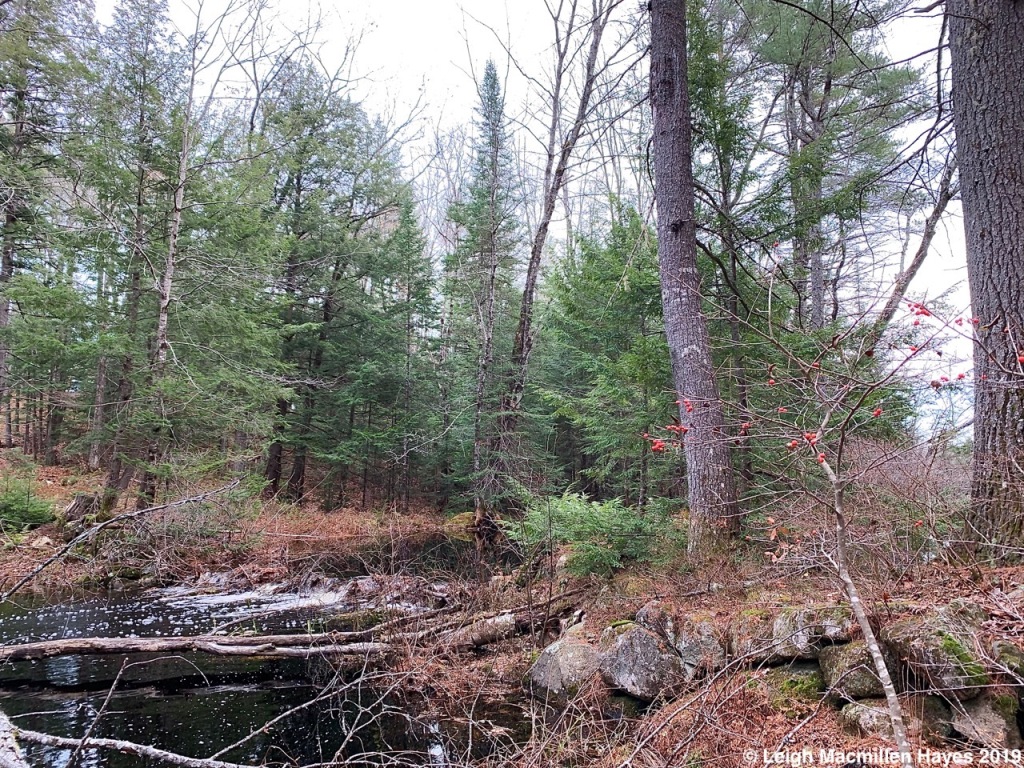
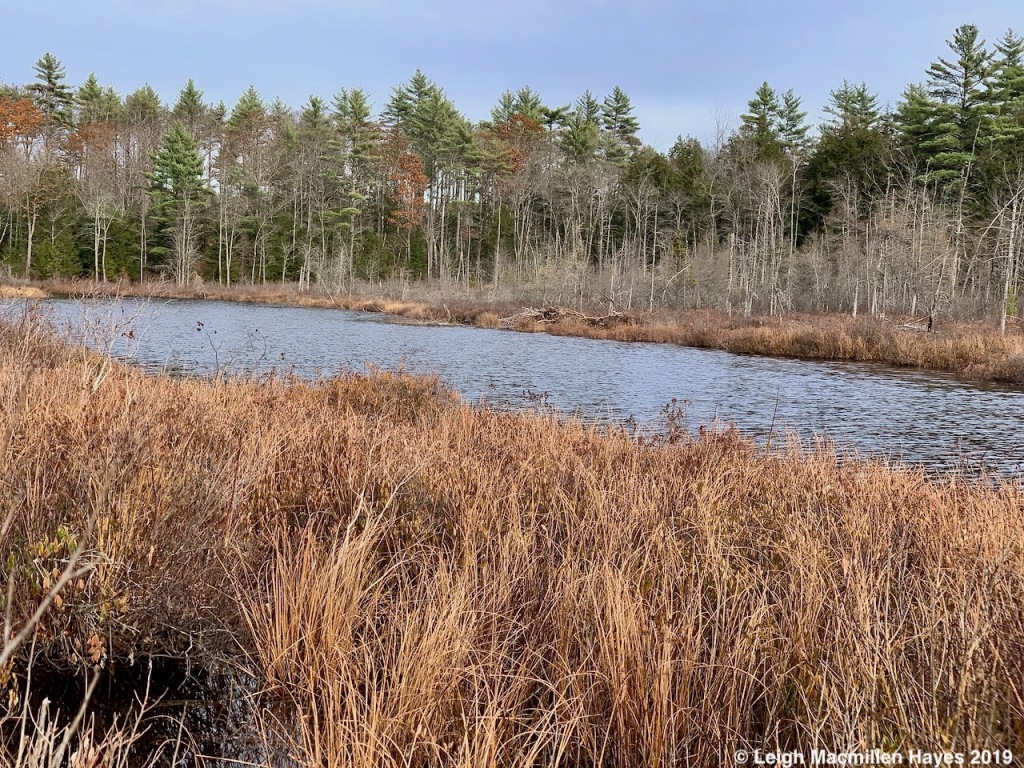
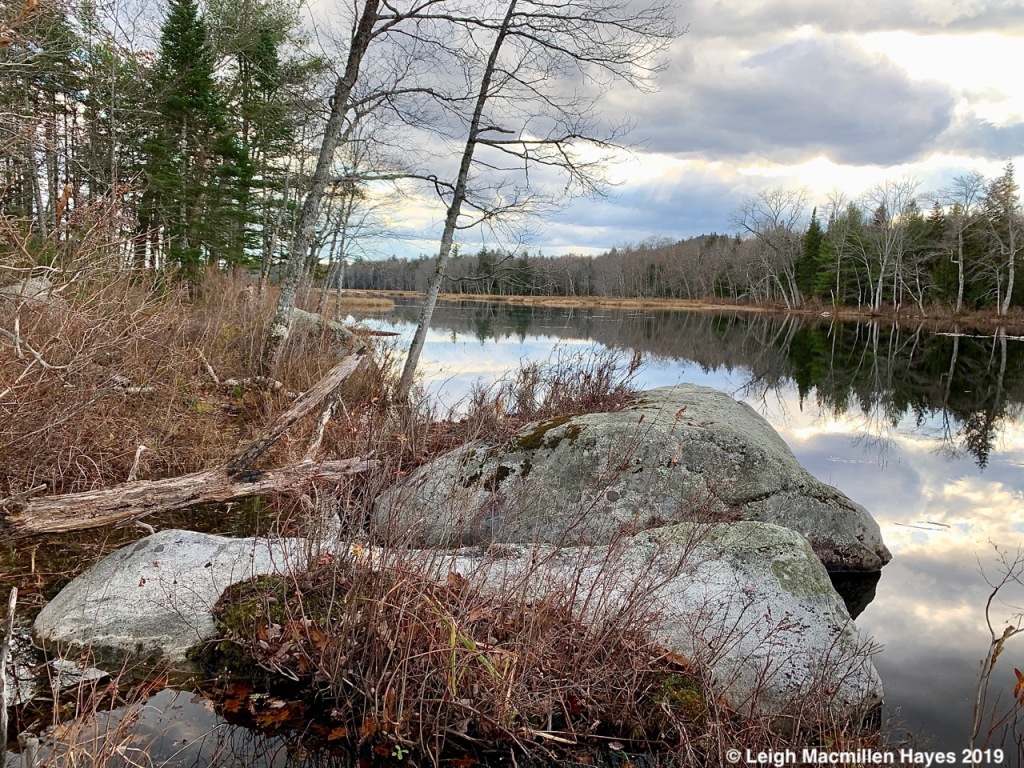
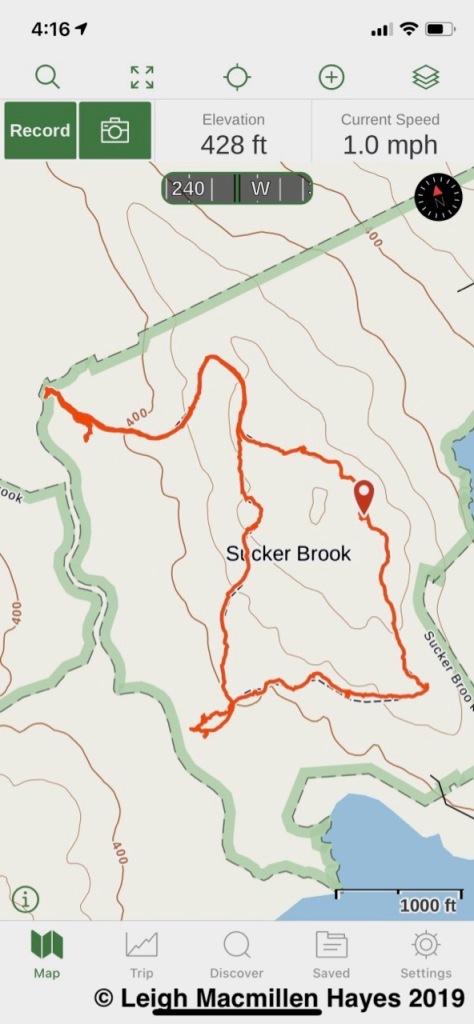
It was my choice today to check on how that was playing out as I circumnavigated the John A. Segur Wildlife Refuge from Farrington Pond Road. Since the parking lot isn’t plowed for the winter, I pulled off at the cul-de-sac at the end of the road, which actually was a better spot because I didn’t want to be enticed to follow the trails.

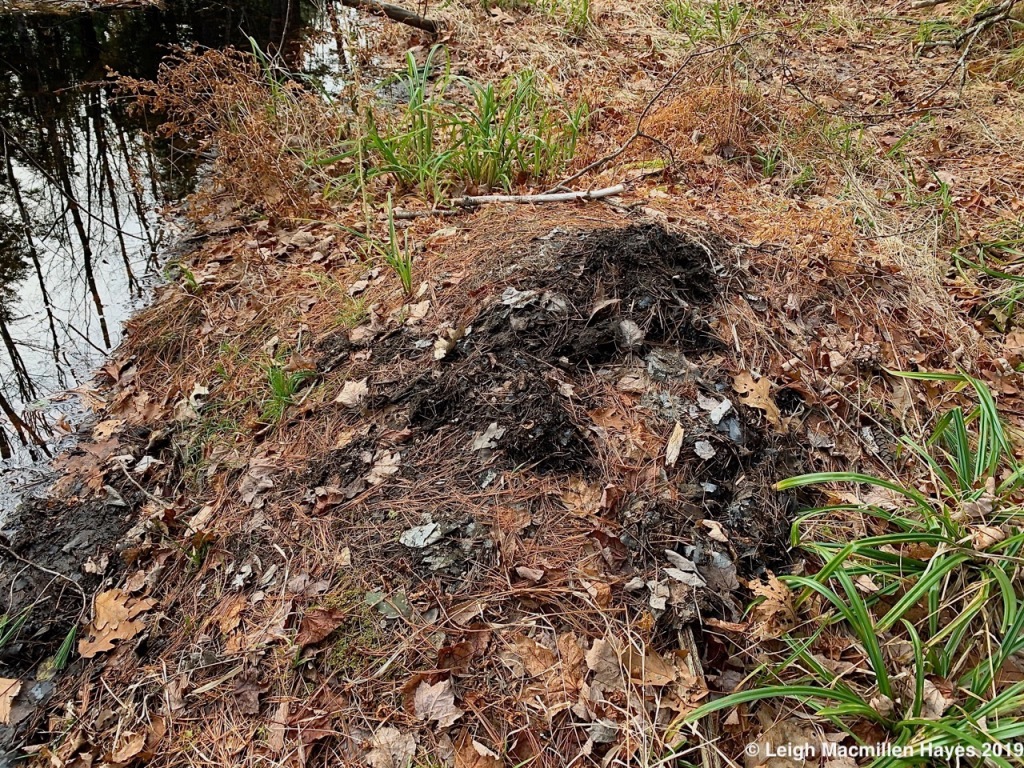
A wise decision it was, for as I tramped along the property line on a northeasterly route to start, a grin immediately emerged. It was the downhill slide that made me instantly happy for I knew that rather recently an otter had also visited the refuge. As it should.
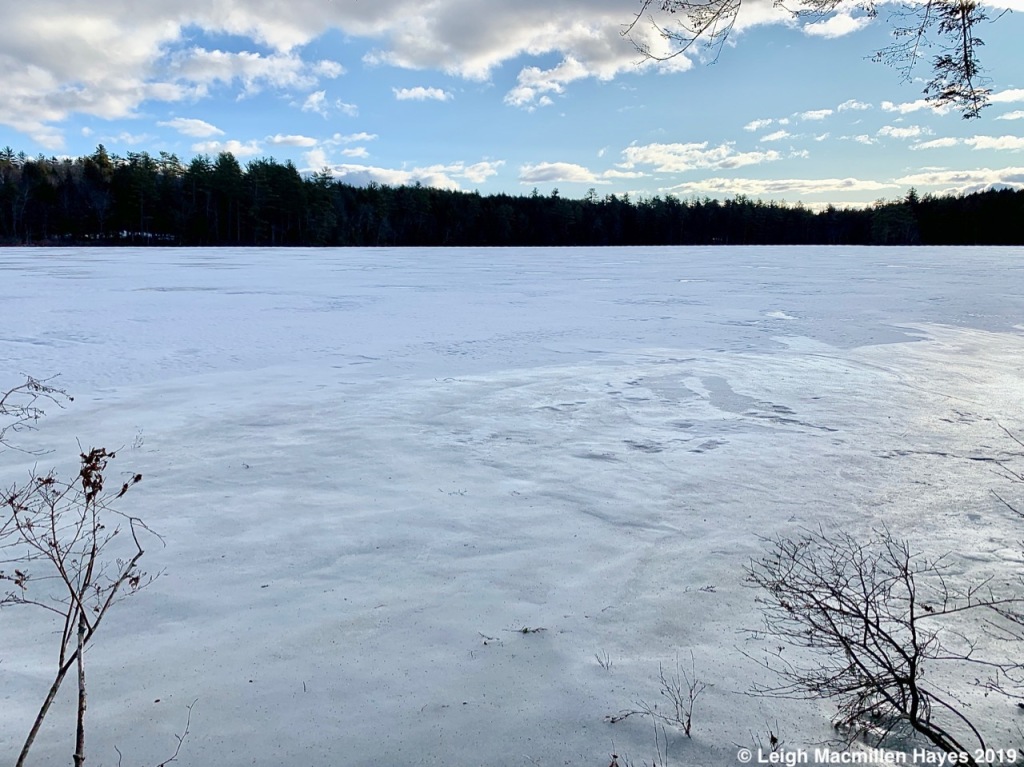
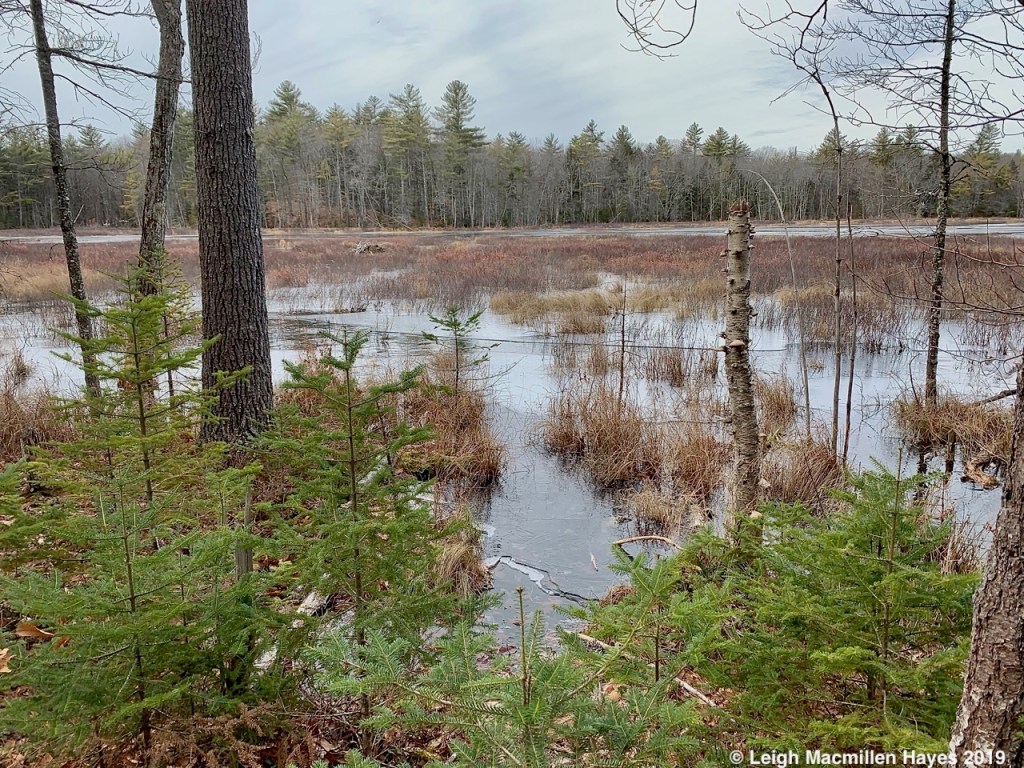
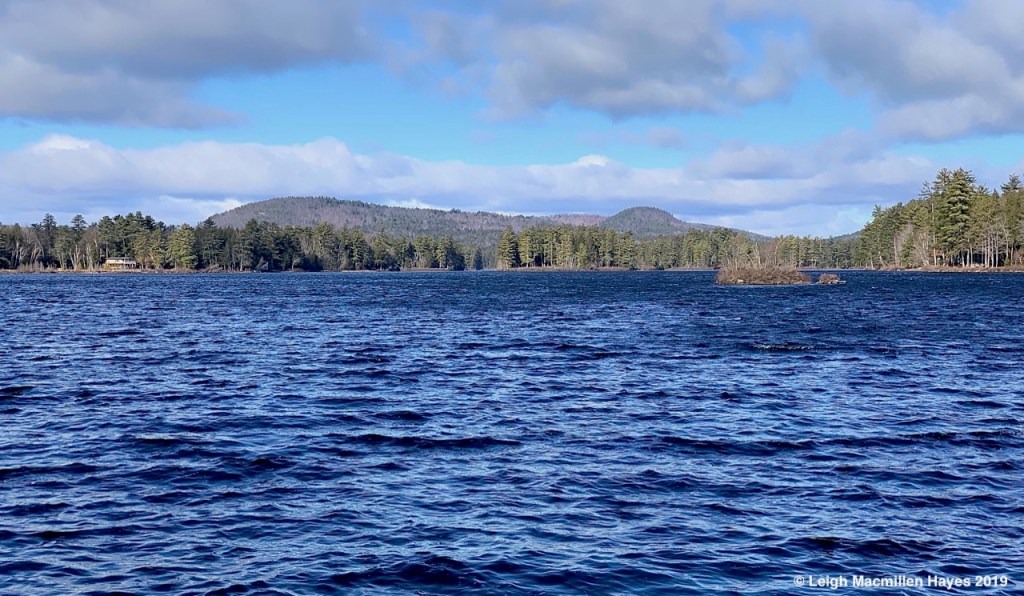
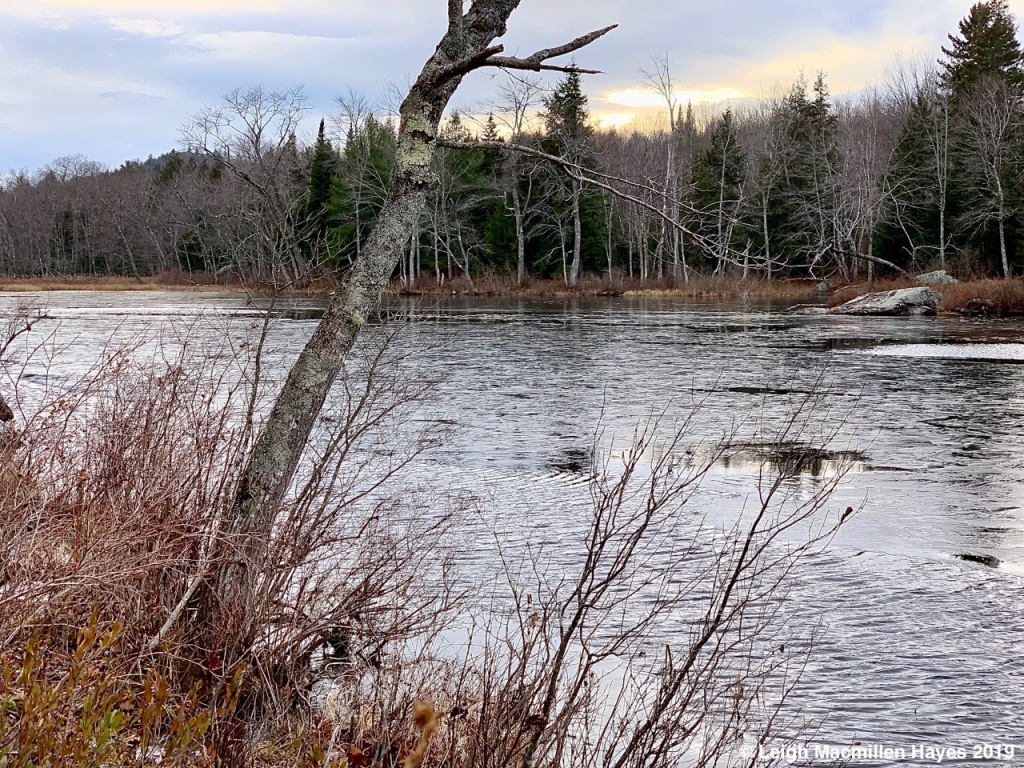
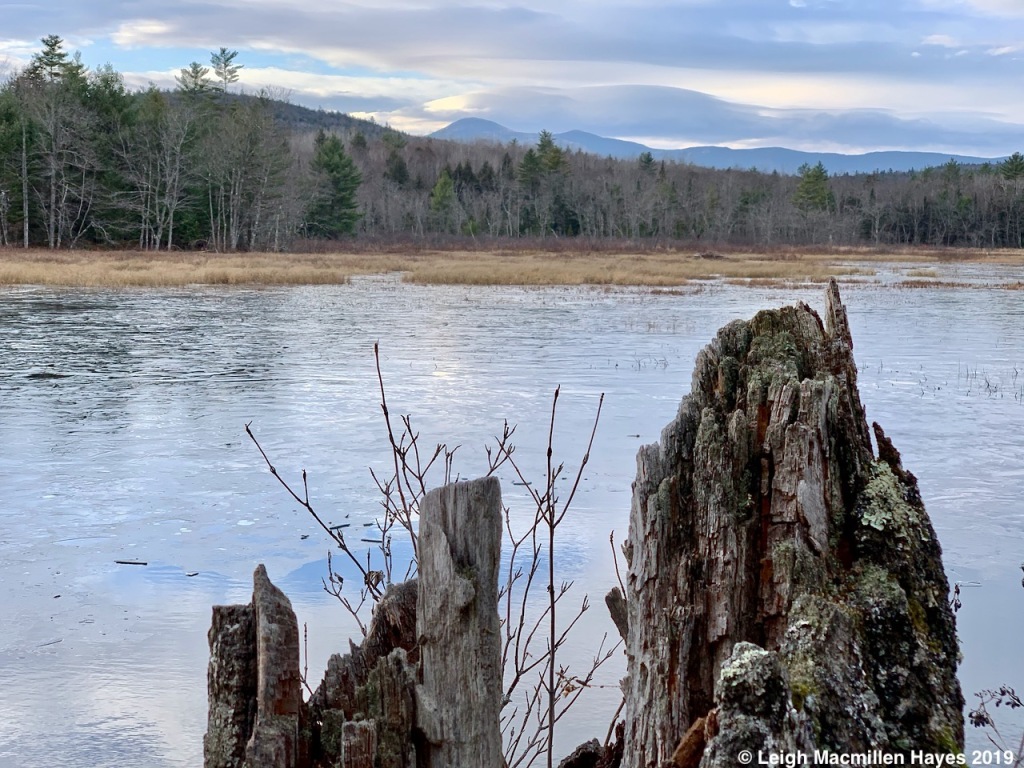
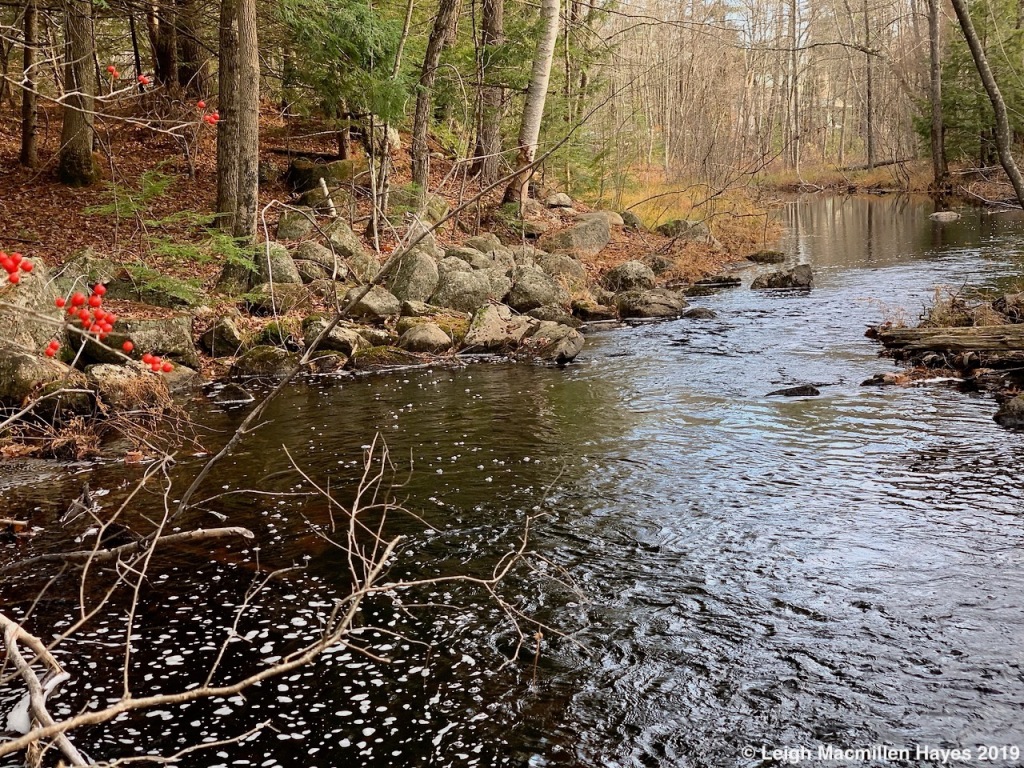
The bottom of the slide ended at the shore of Farrington Pond, a view those of us who visit the refuge rarely see for there is no path to it. But I rather like it that way for bushwhacking allows for new discoveries that aren’t as sterile as a maintained trail. And I suspected Mr. Segur would have felt the same. Plus, his vision was all about a wildlife corridor.
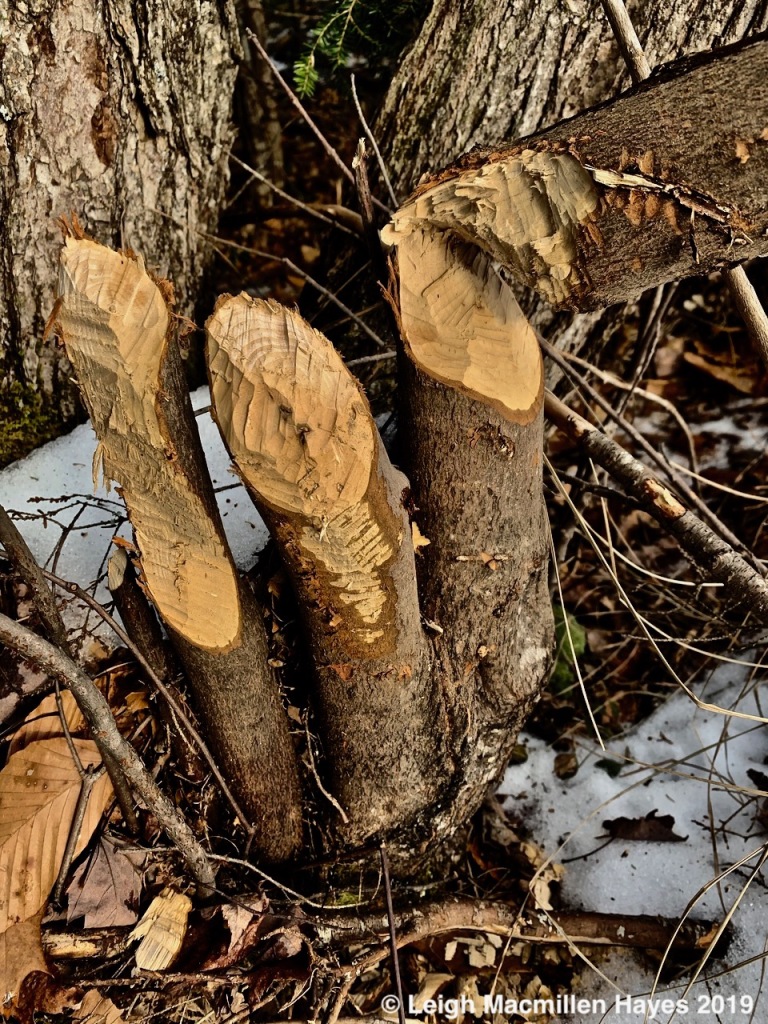
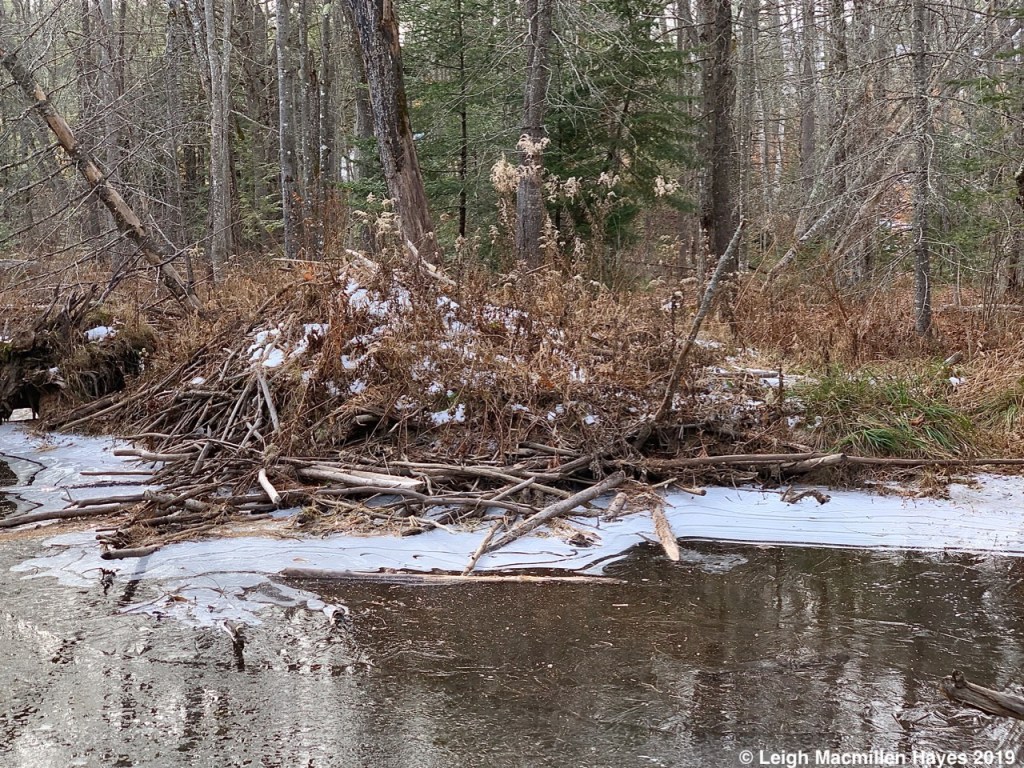
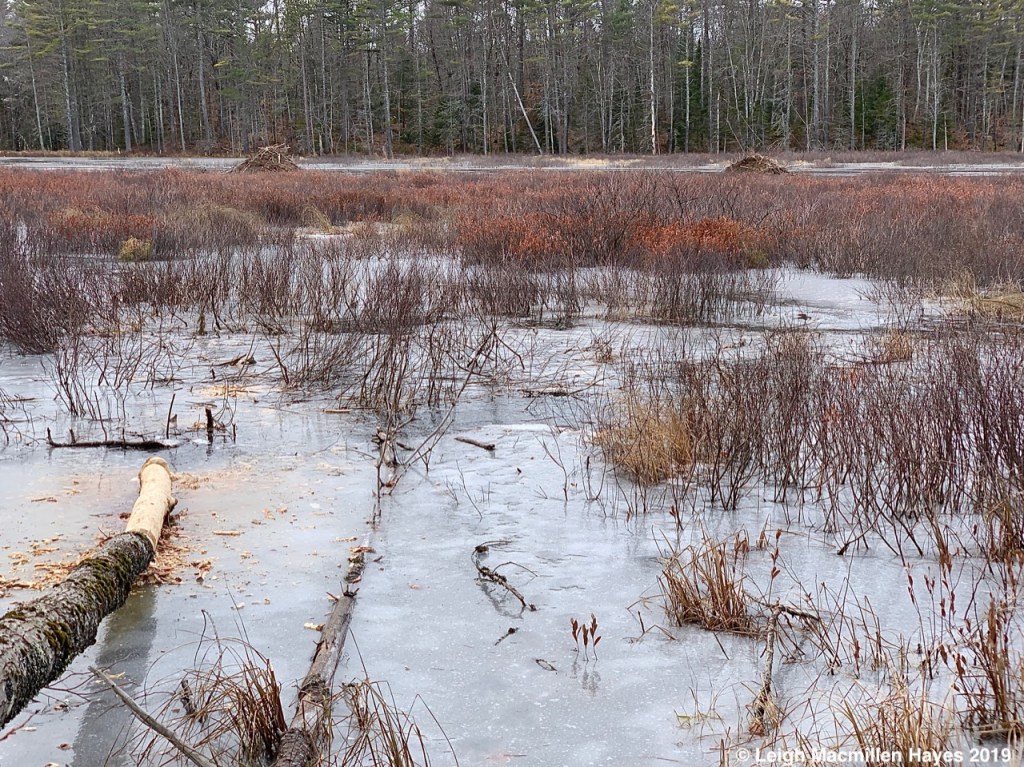
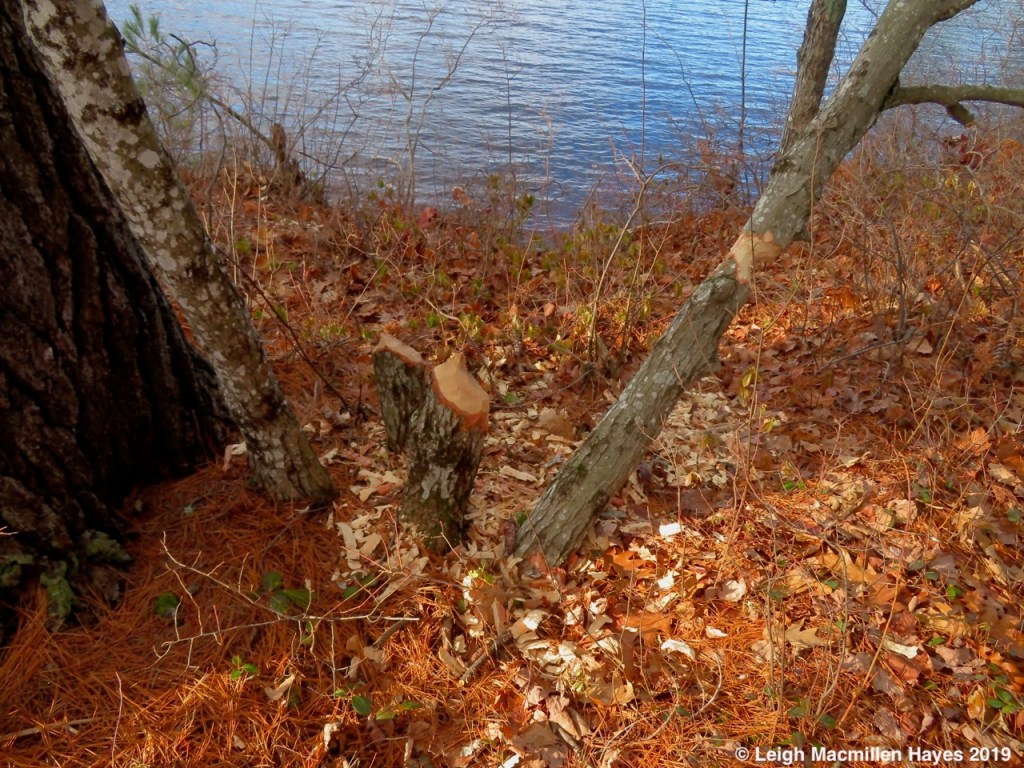
He also would have smiled when he realized that the beavers by Farrington had been active at some point in the fall. Unfortunately, (or as I’m sure some neighbors feel: fortunately) I didn’t see any other “fresh” beaver works, though I didn’t walk all the way around the pond, so I’m not sure of their status in this locale.

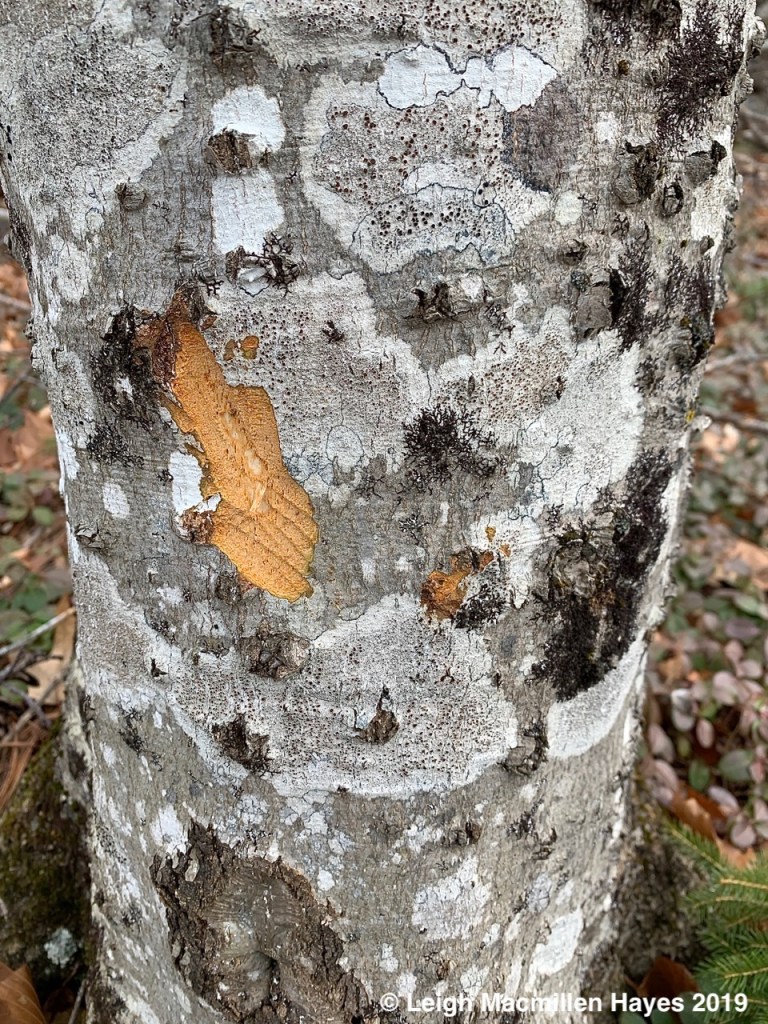
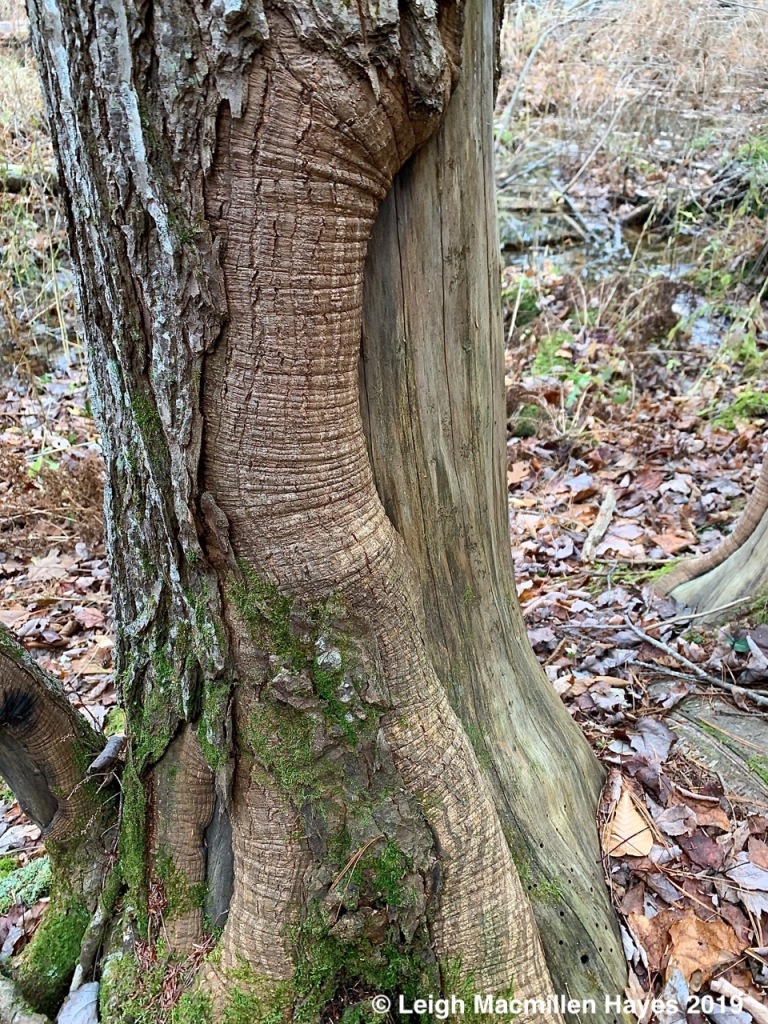
But, they had visited in the past including at least ten years ago, based on the growth rings on display around the wound. It’s my understanding that Eastern Hemlock is not a favorite species of beavers and they will often girdle a tree by eating the bark and cambium layer all the way around the trunk, perhaps in hopes it will die. I’ve heard a few theories on this including that beavers do such so that their preferred species will have a chance to grow where the hemlock once provided so much shade that no other trees could set root. But here’s another to throw onto the table: what if the beaver starts to dine and then realizes the flavor is not to his liking? And so he moves on to another tree. Hey, it’s just a theory.

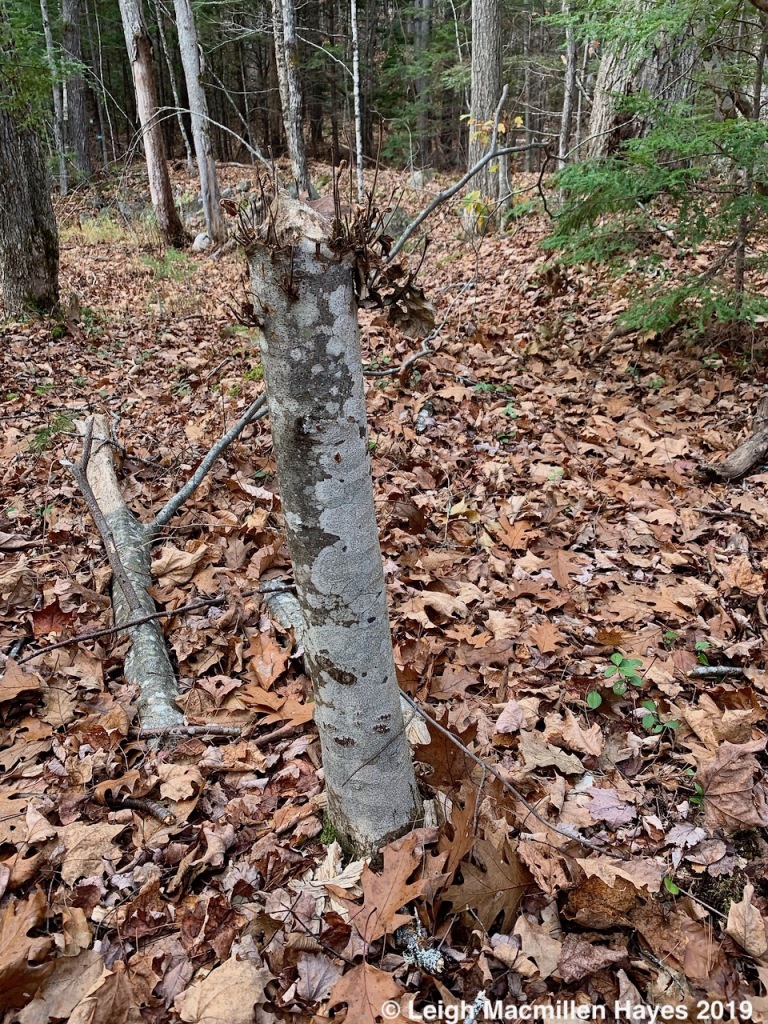
Another thing about beavers is that sometimes they chop down trees that don’t exactly fall as planned. In this case, the entire upper portion dangles from another in the form of a widow maker–as in, don’t stand, or in this case sit, below it.

While studying the tree and thinking about the beaver, I looked down to the pond and saw more mammal sign. Can you spot the otter slide?
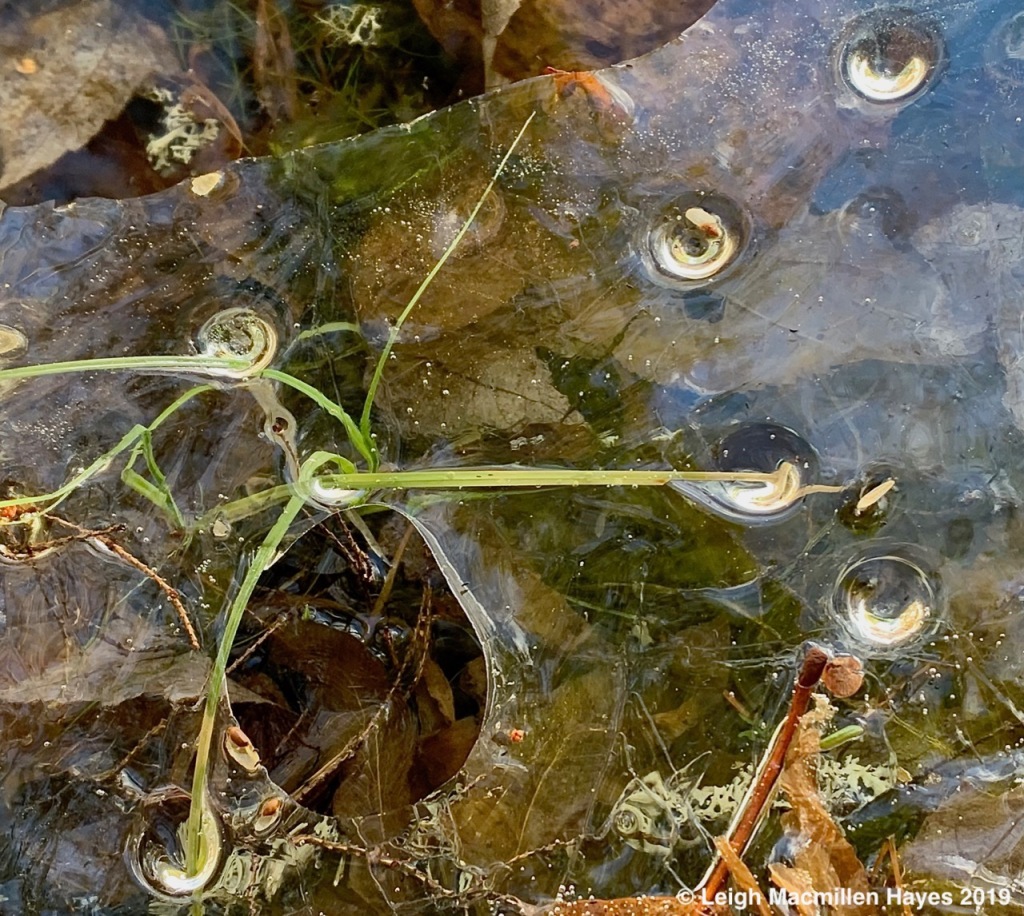
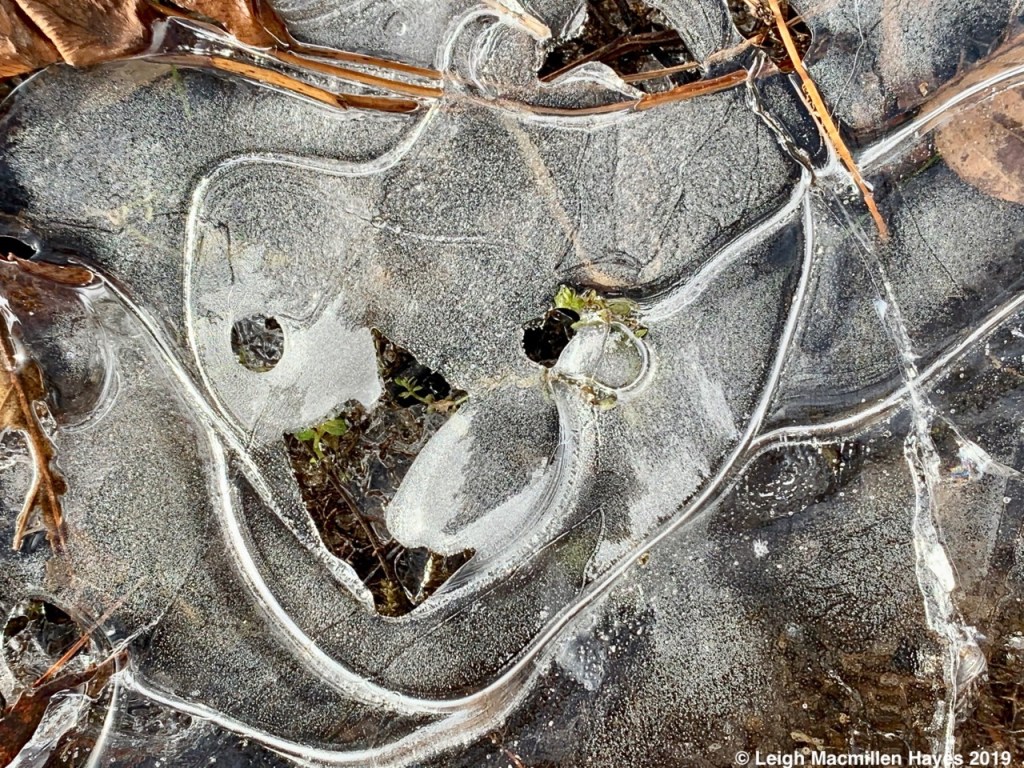
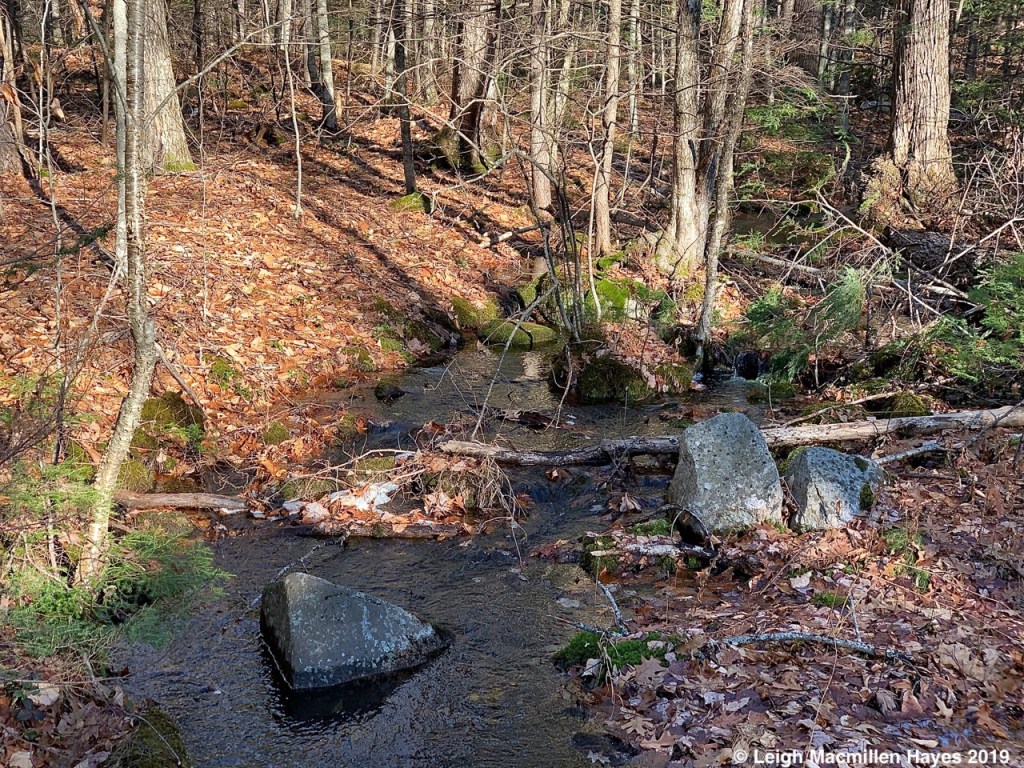
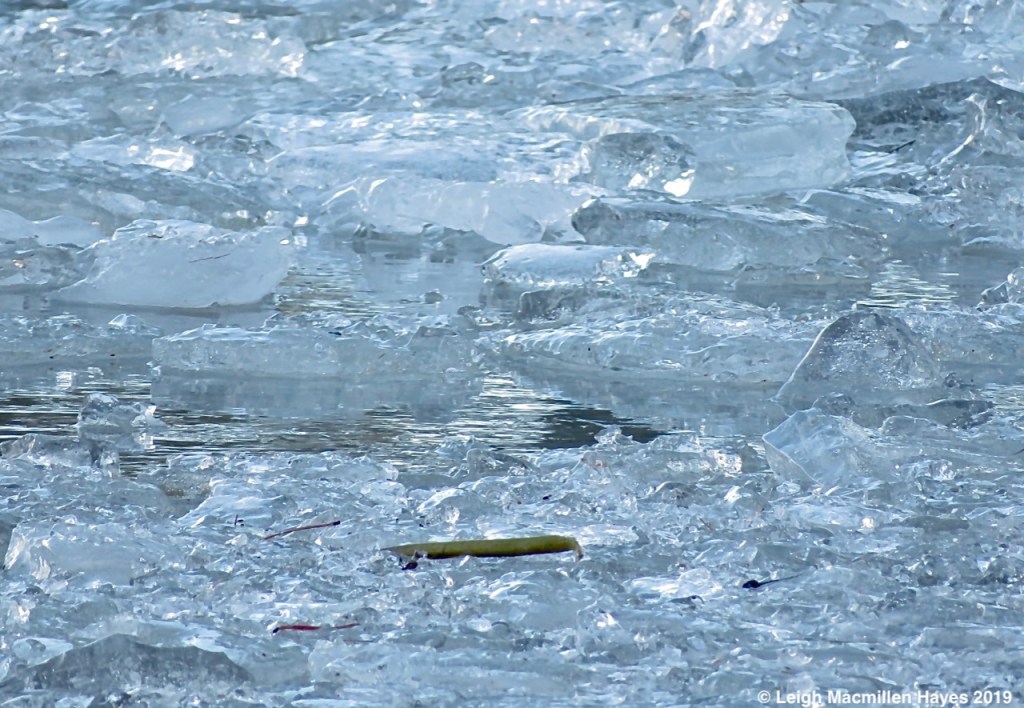
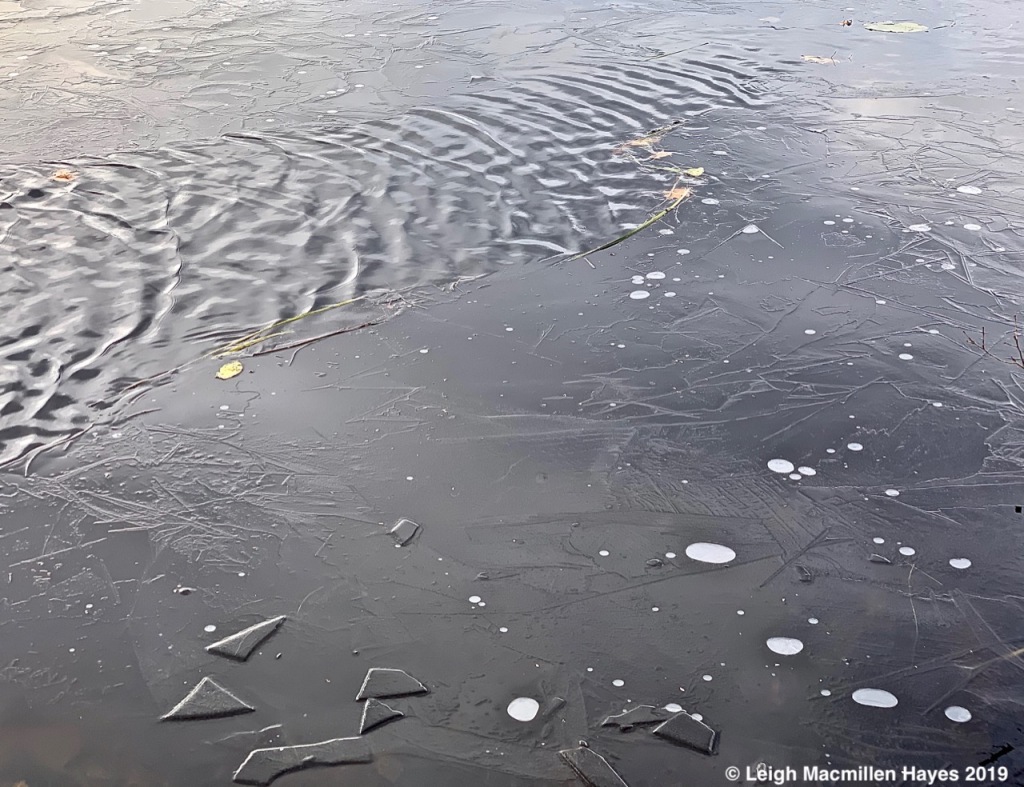
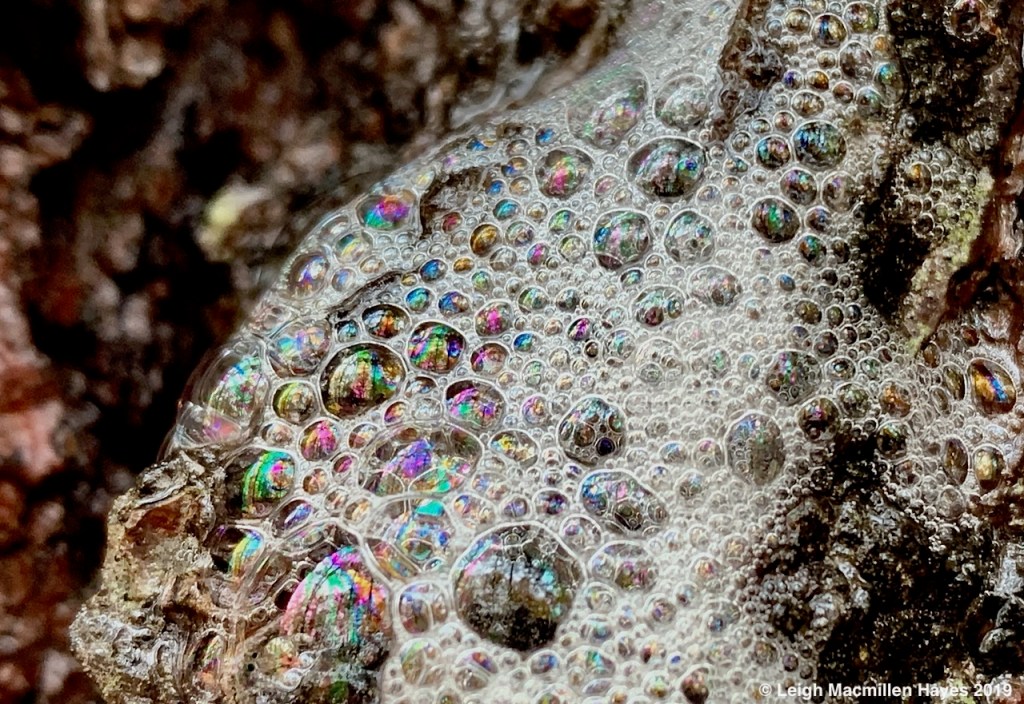
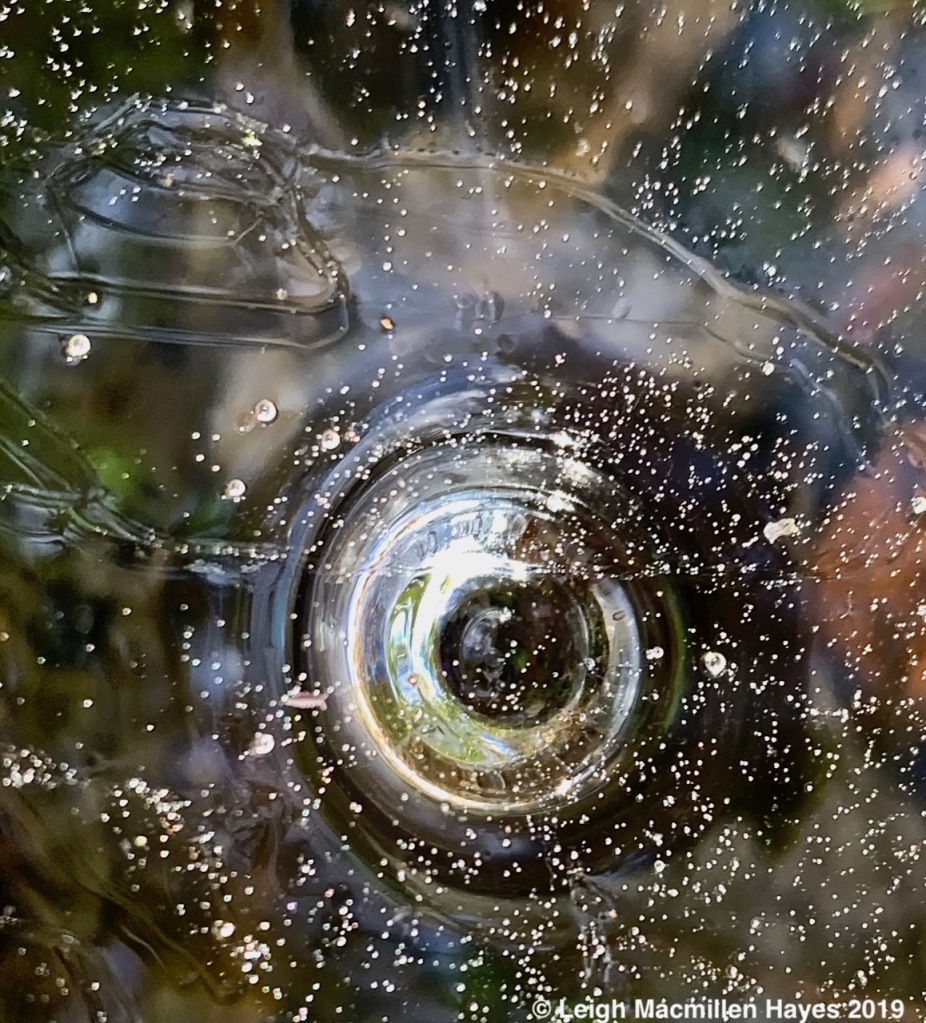
Eventually my bushwhack led me toward a stream crossing where the ice wasn’t exactly solid. But the bubbles that had formed within it were like little round spirals that reminded me of the inside of abalone shells. Or perhaps snails.
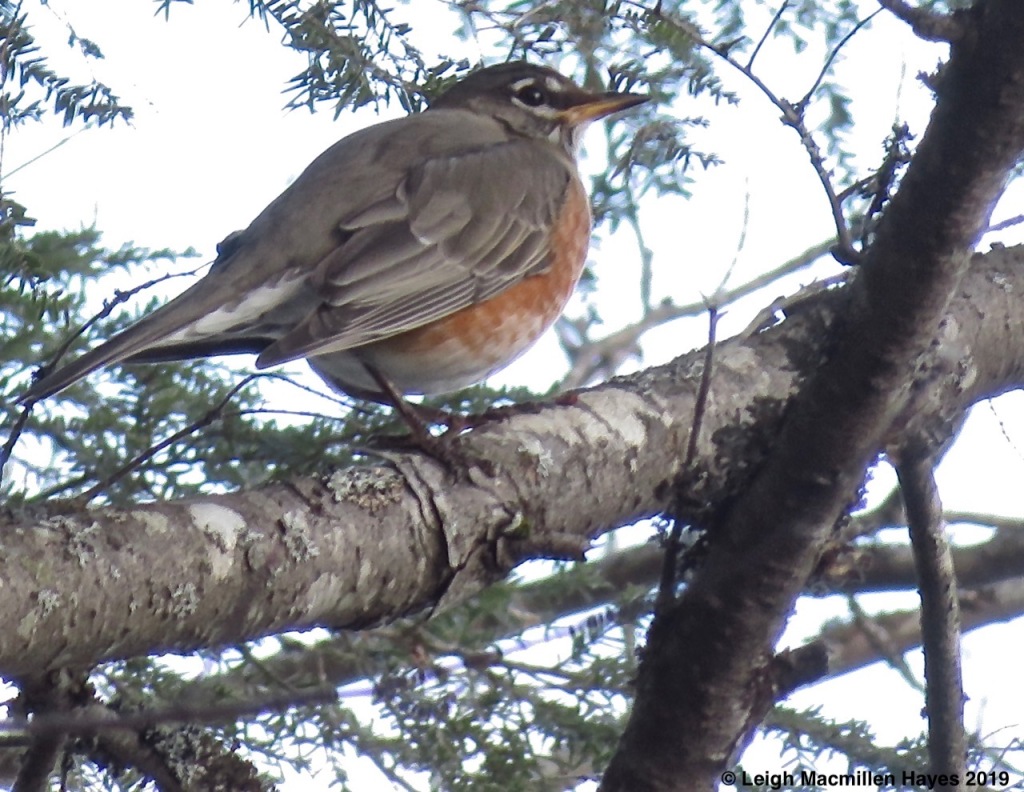
Suddenly, leaf cracklings filled the air that had been silent except for the sound of wind whooshing at a higher elevation. It took my eyes a few moments to discover the source of the noise, and then I realized I was near a flock of robins. My movement disturbed them, but they didn’t fly far and so we each spent a few moments contemplating our next moves.
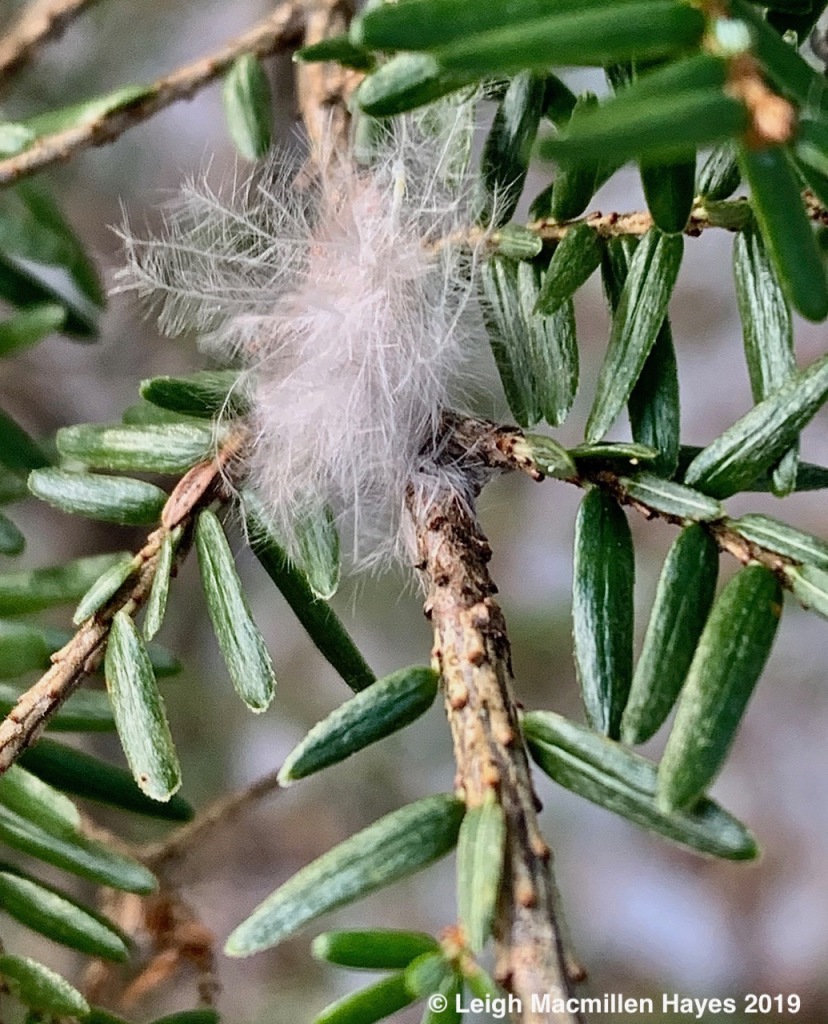
As I stood there, I noticed a small tuft of feathers stuck to a hemlock branch, which reminded me that I need to stand still more often for it’s in those moments that things make themselves visible.

Finally I carried on, pausing again, however, when an old, old Yellow Birch showed off the stilts upon which it grew. From their height, I could just imagine the long rotted trunk that once served as its nurse tree, allowing its seed to germinate and set down roots.
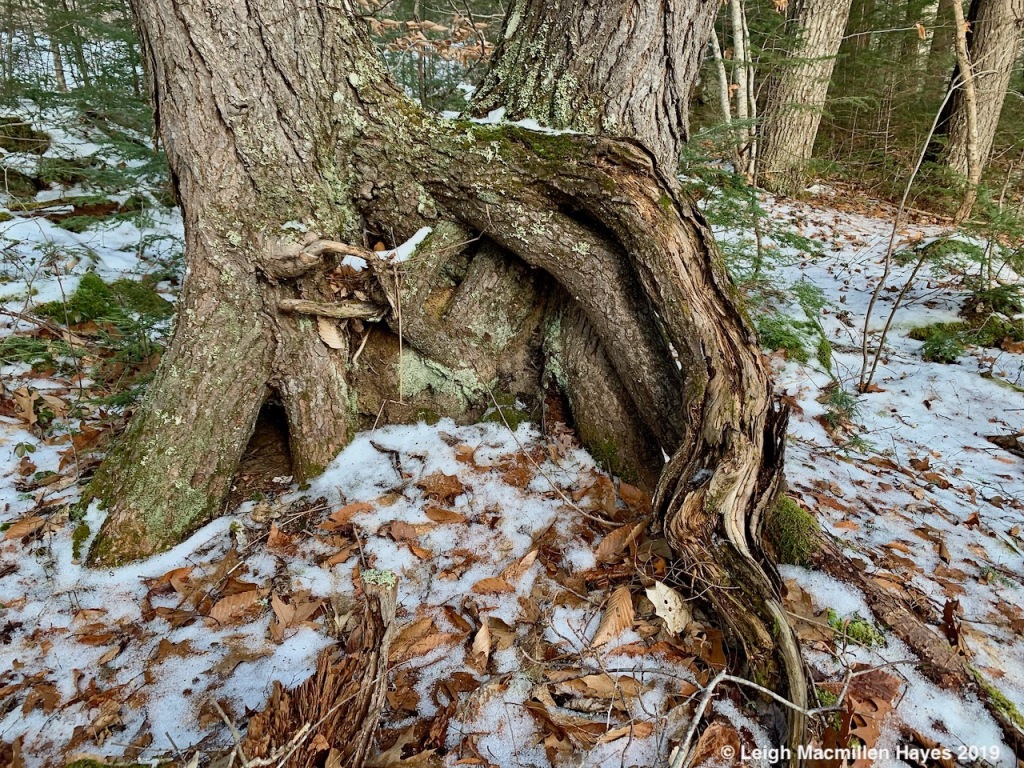
Nearby was another ancient, this one a hemlock that preferred to begin life in the same manner as the Yellow Birch. I was sure it had stories to tell and know I’ll return one day soon to spend some time enwrapped by those roots as I listen.
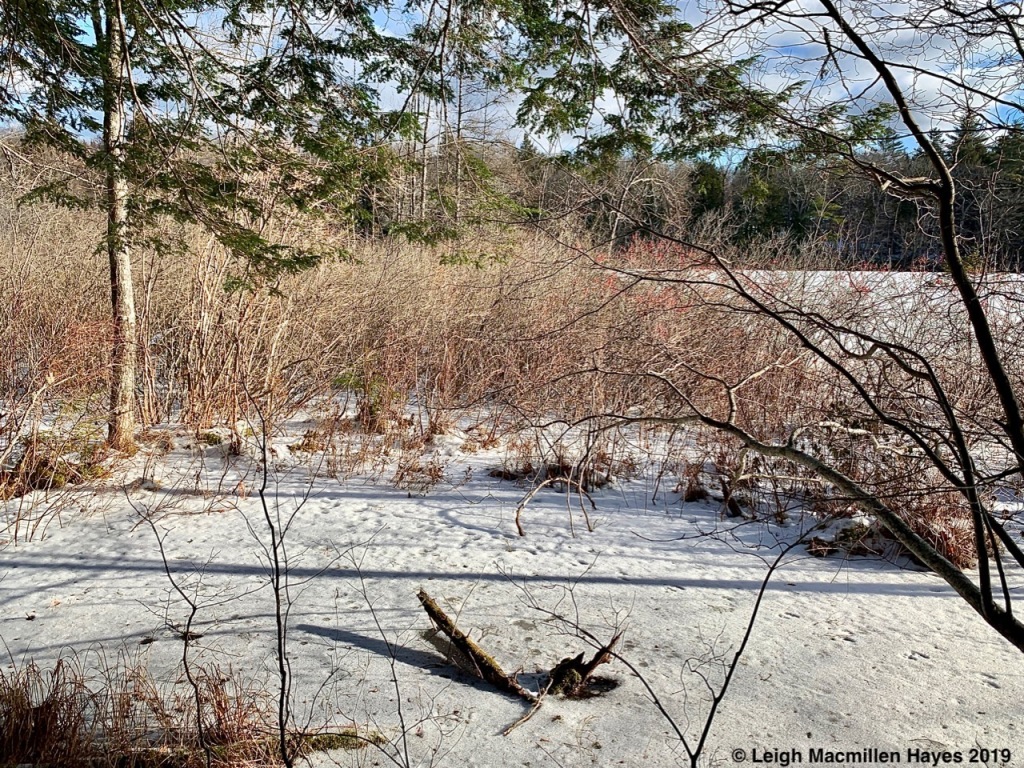
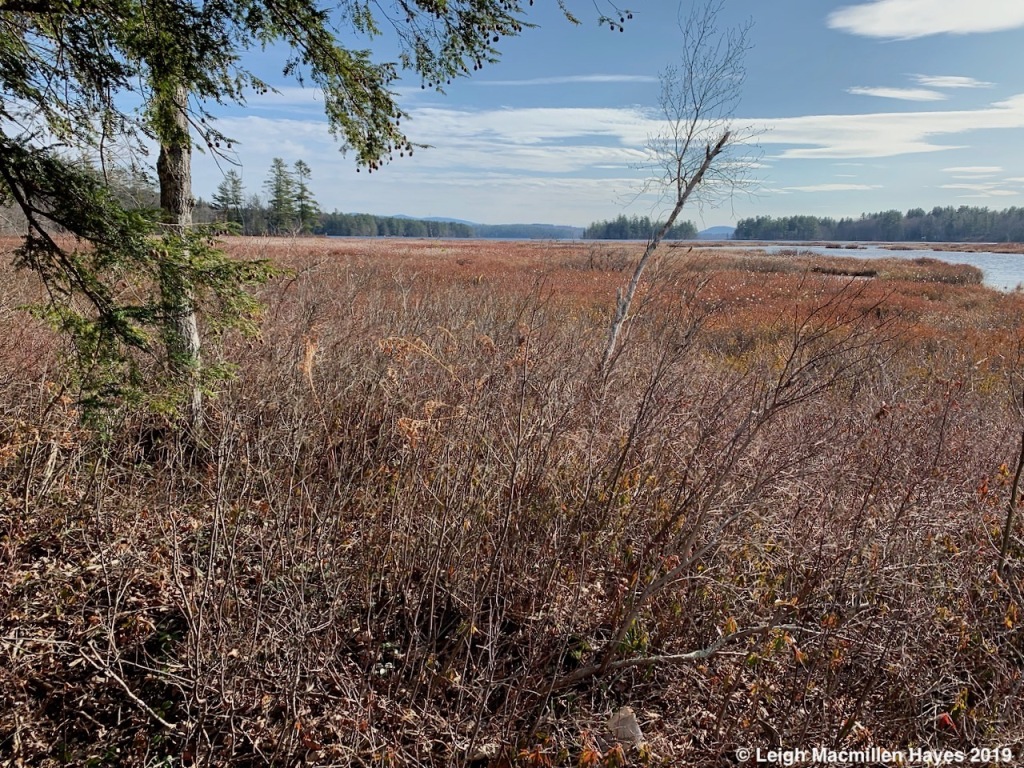
The trees led the way to the wetland and I really, really wanted to explore it, but because I was alone (well, not exactly alone for Mr. Segur was with me kinda sorta, not really) I thought that that too should wait for another day.

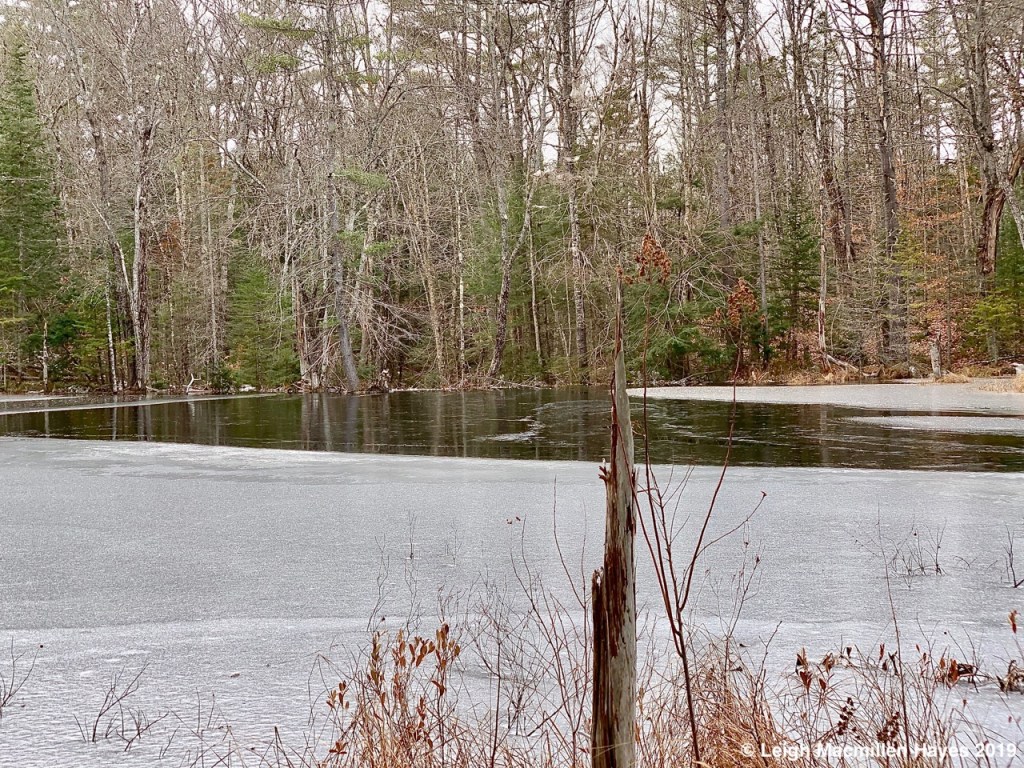
If you peer closely at the snow-covered ice beginning from the lower right hand corner and moving toward the shrubs, you may spy the track of another mammal. Do you recognize the pattern? Once you learn patterns, you don’t always have to see the prints up close to know the creators.

Finally, I decided to turn away from Farrington Pond for there was another wetland on the property that I wanted to visit. But first, I found an old beaver dam. Given the lower level of water behind it, I knew that it was not in use, but it looked like a mighty sturdy structure.

Across the landscape I made my way, noting tracks of a million wild animals. Well, maybe not a million, but certainly many including coyote, fox, deer, raccoon, squirrel, vole, mouse, hare, weasel, and fisher. Some were fresh, while others a bit diluted from fluctuating temperatures. This was a place where the mammals wander freely as Mr. Segur intended.

In so doing, I also spied some puff balls that reminded me of applehead dolls with their weathered faces.
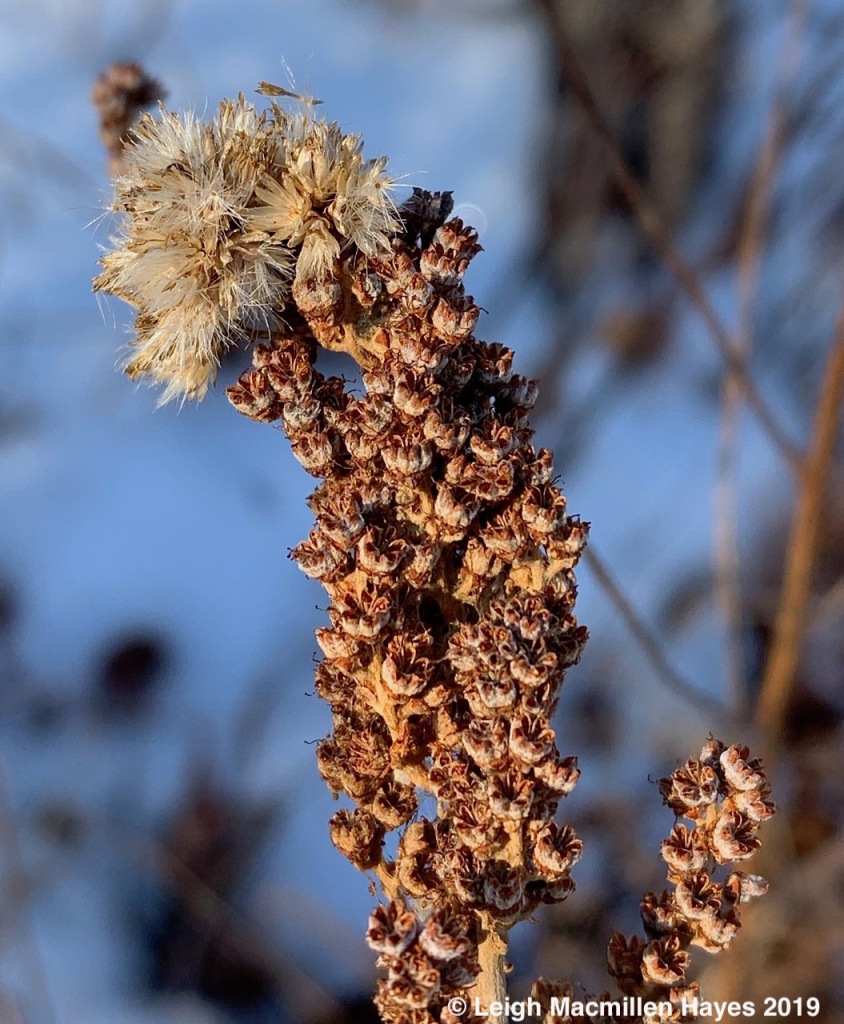
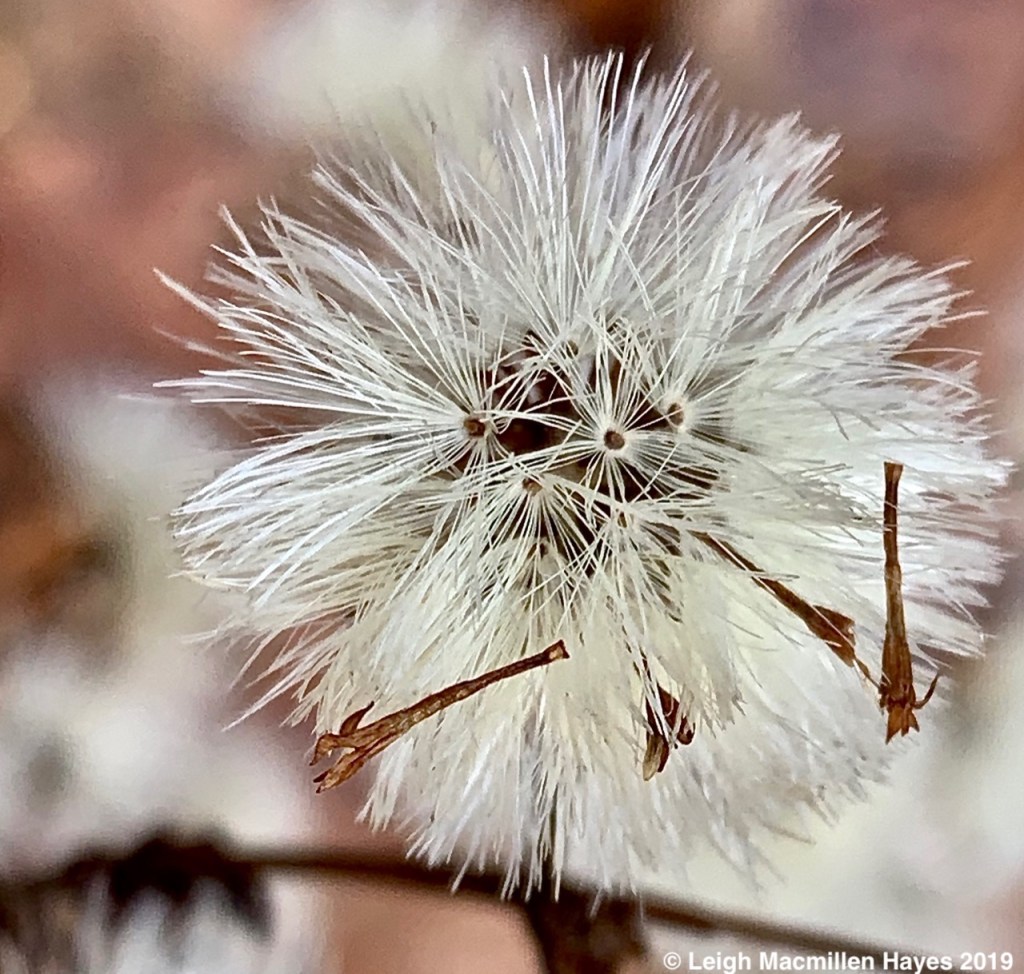
There were others who also offered a different take on their natural form–one might call this the star steeple for aster seeds had landed upon the woody structure of steeplebush capsules.
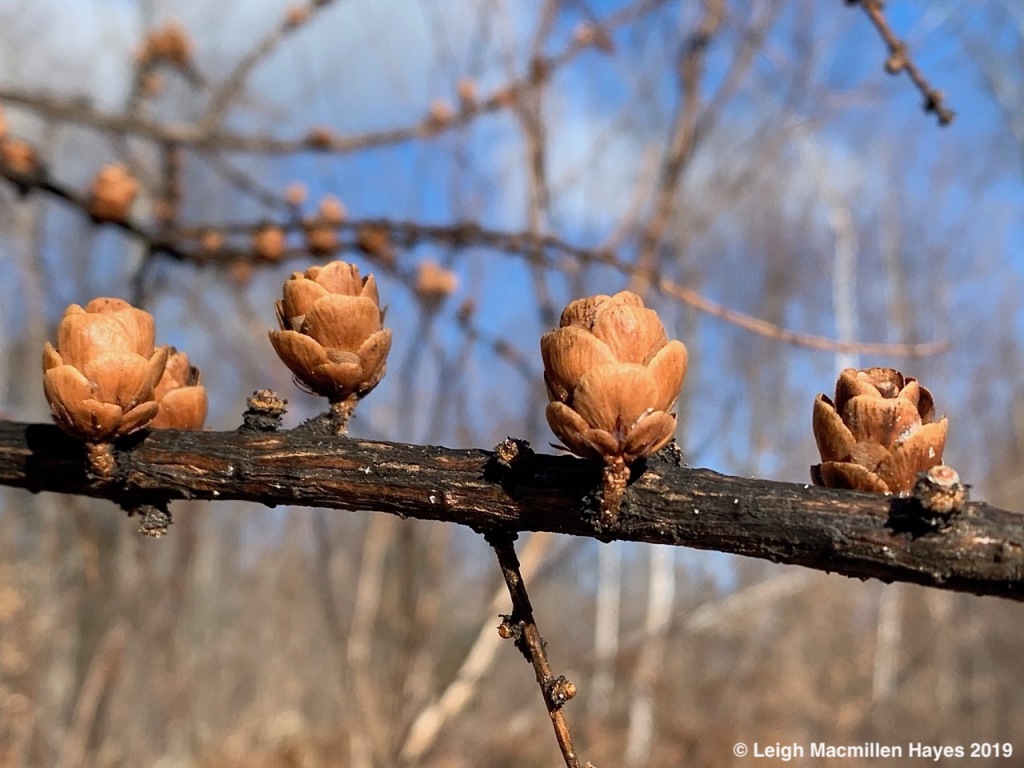
And then in a field I made a “new to the property” discovery: Tamarack trees. I love the nubs that once supported their leaves (aka needles) and the upright cones. Cones remain on the trees for about two years. I wondered about them being upright, but I suppose that as the scales open to release the winged seeds, they catch the breeze and rather than merely rain down below their parent, they are uplifted to a new location.
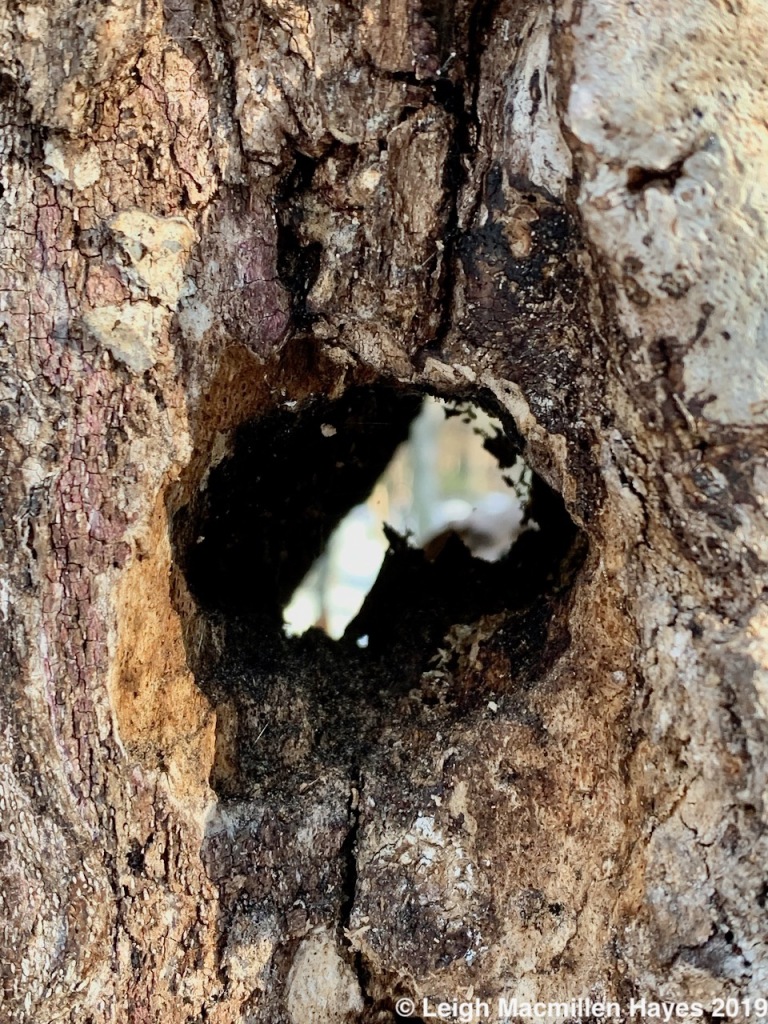
Continuing my bushwhack, I also continued to keep a keen eye on the world.

But there were a couple of locations I wanted to check on before my time with Mr. Segur ended. At last I reached Sucker Brook and again I chose not to venture onto the ice. One of these days.
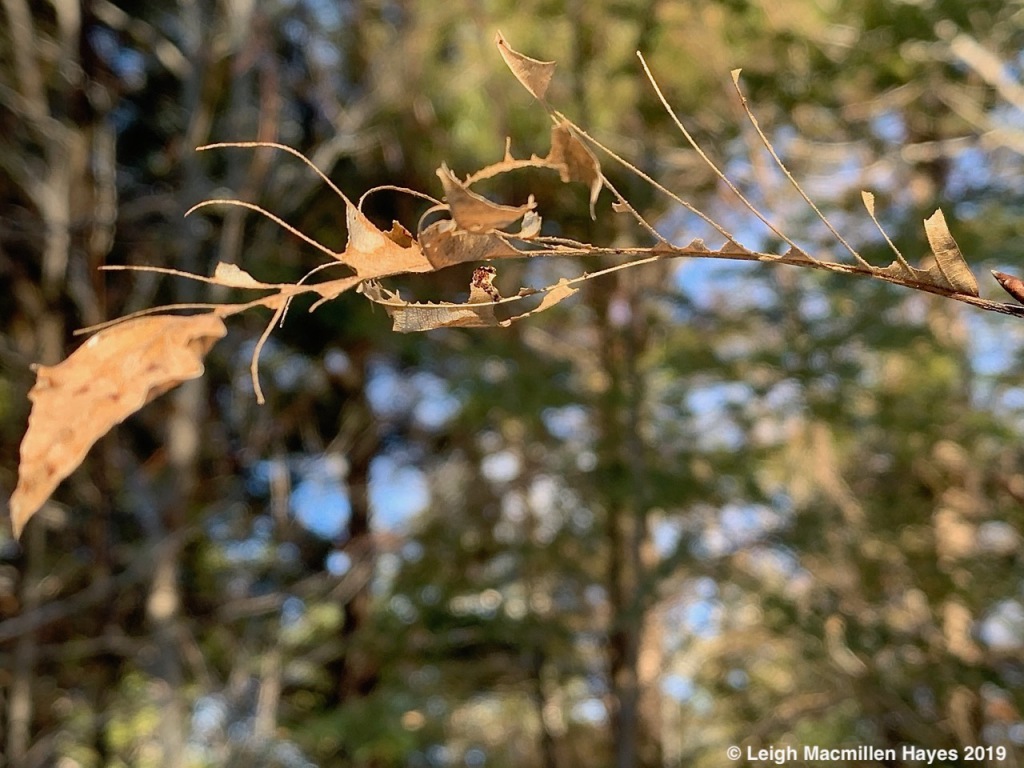
From there, it was on to another place more secret than the last that I had my sights set upon. First, however, I stopped to look at the marcescent beech leaves, some like this one that were mere skeletons of themselves so thoroughly had they been munched. It was almost like all that was left was the backbone and rib cage.

Seeing this reminded me of a spring day on this property about four years ago: A Perfect Beech Day. On that day I’d been wowed by the unfurling beech leaves and noticed how hairy they were. In my book, the hairs are meant to keep insects at bay, and yet beech leaves are attacked by many, many little bugs. On that day I also made a bunch of other cool discoveries. You really should click the link above and read about it.
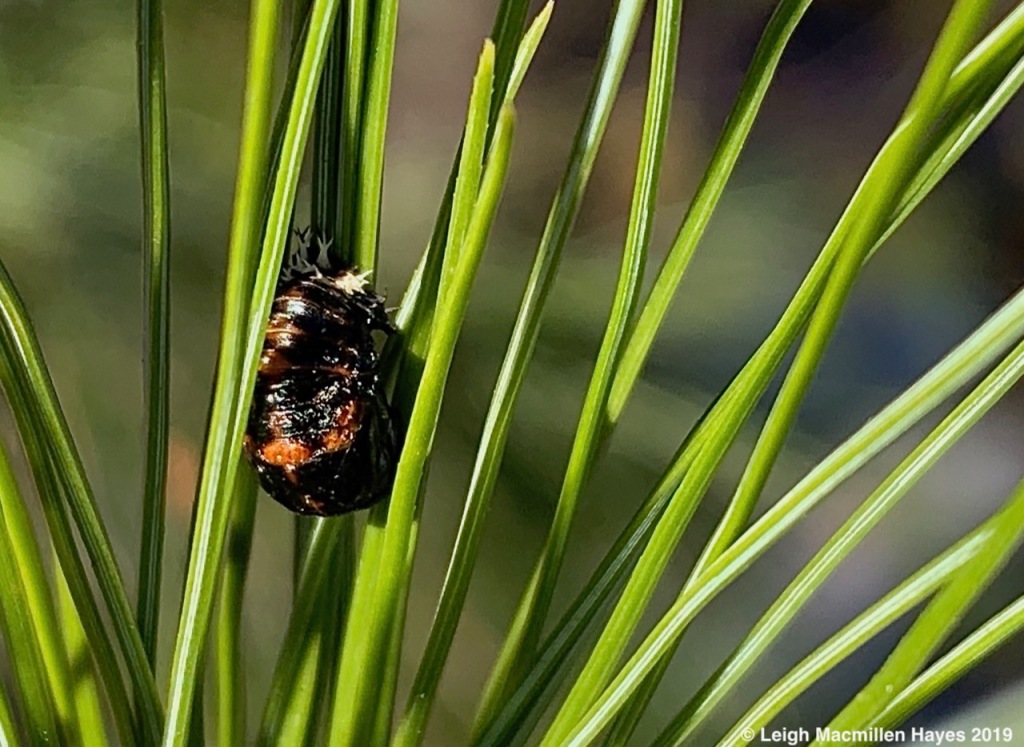
Speaking of little bugs, I also found a pupating ladybug beetle, its form so unique. If I hadn’t known, I never would have guessed it was a ladybug.

At last I reached that spot that I think of as the secret garden. There isn’t an official trail to it, but over the years many have had the opportunity to discover it on their own and been wowed. That’s how I think Mr. Segur would have liked it. We don’t need trails bisecting every inch of a property. We just need more curious people.

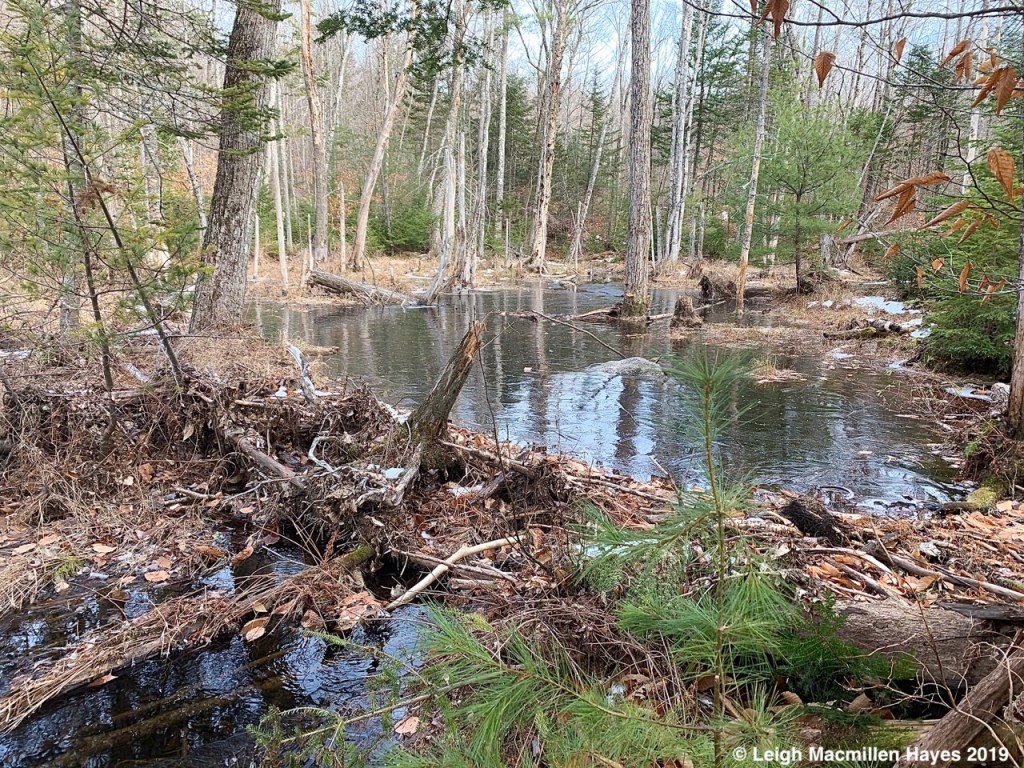
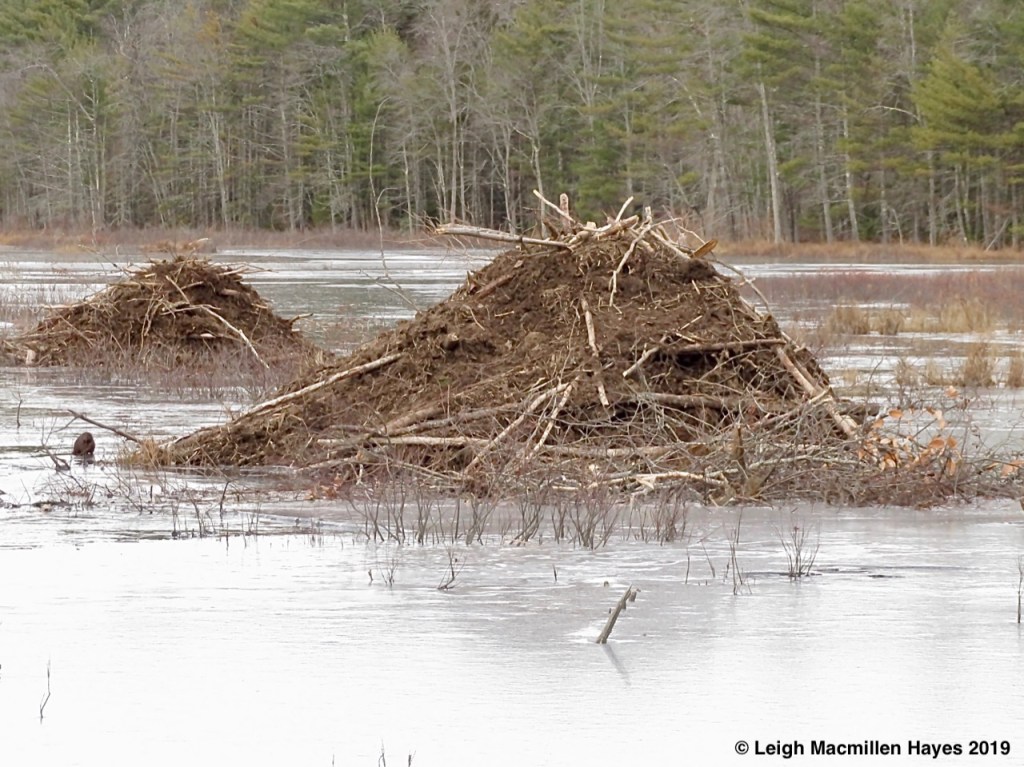
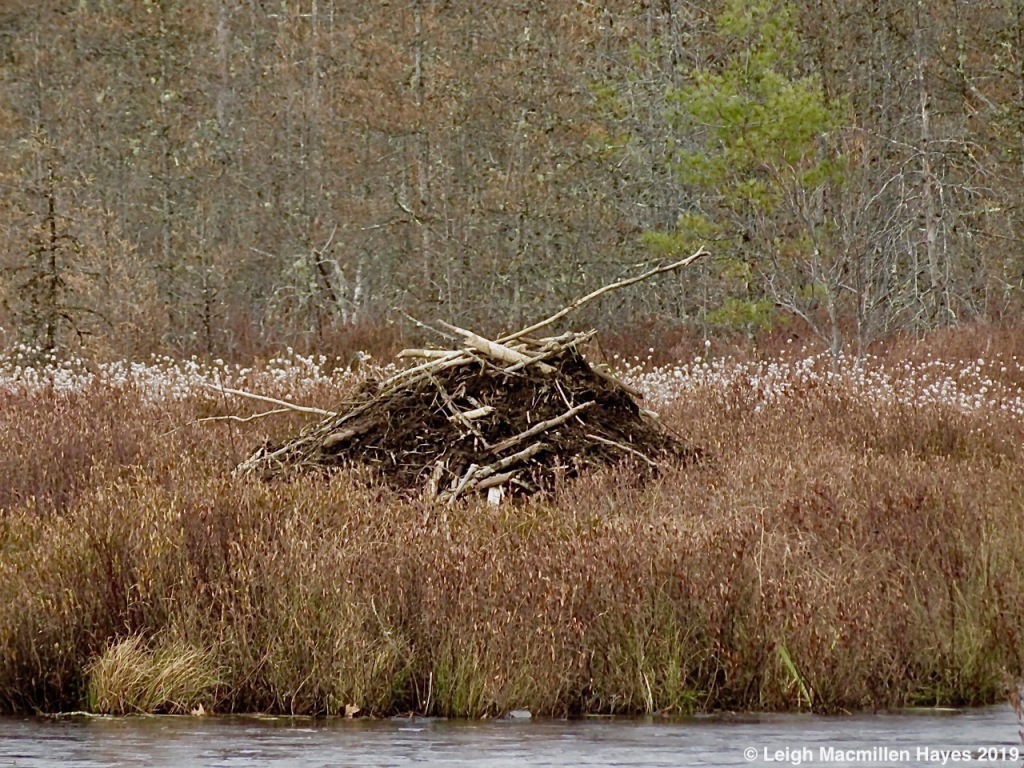
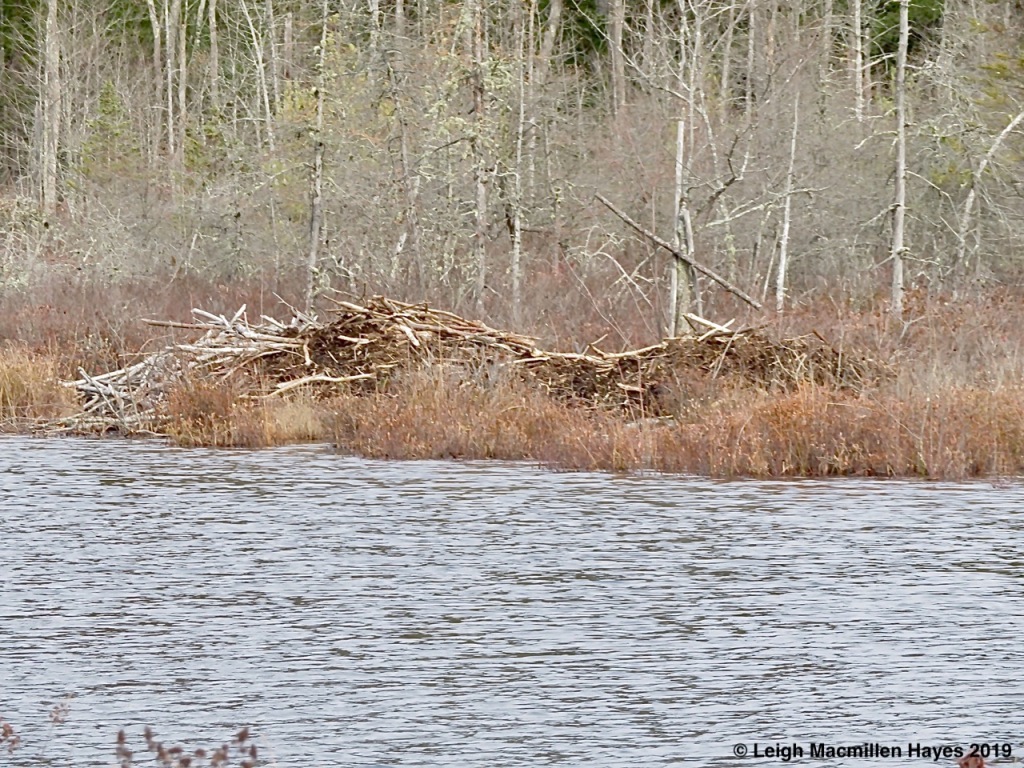
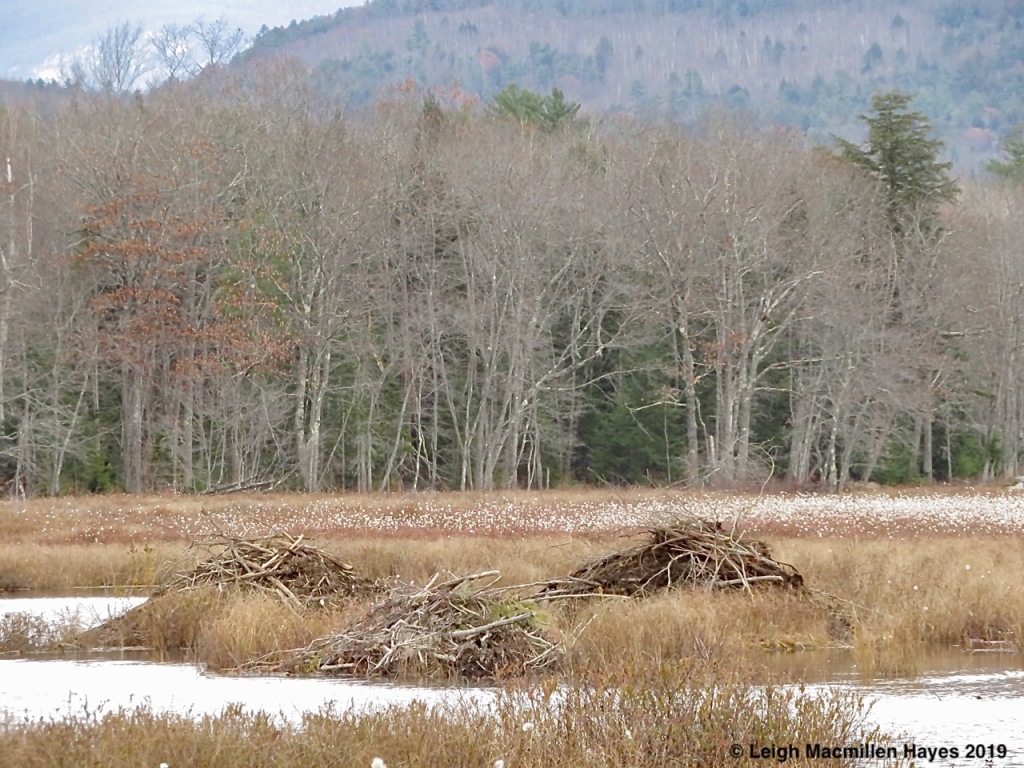
This is a spot where three beaver lodges are located as one gazes north.
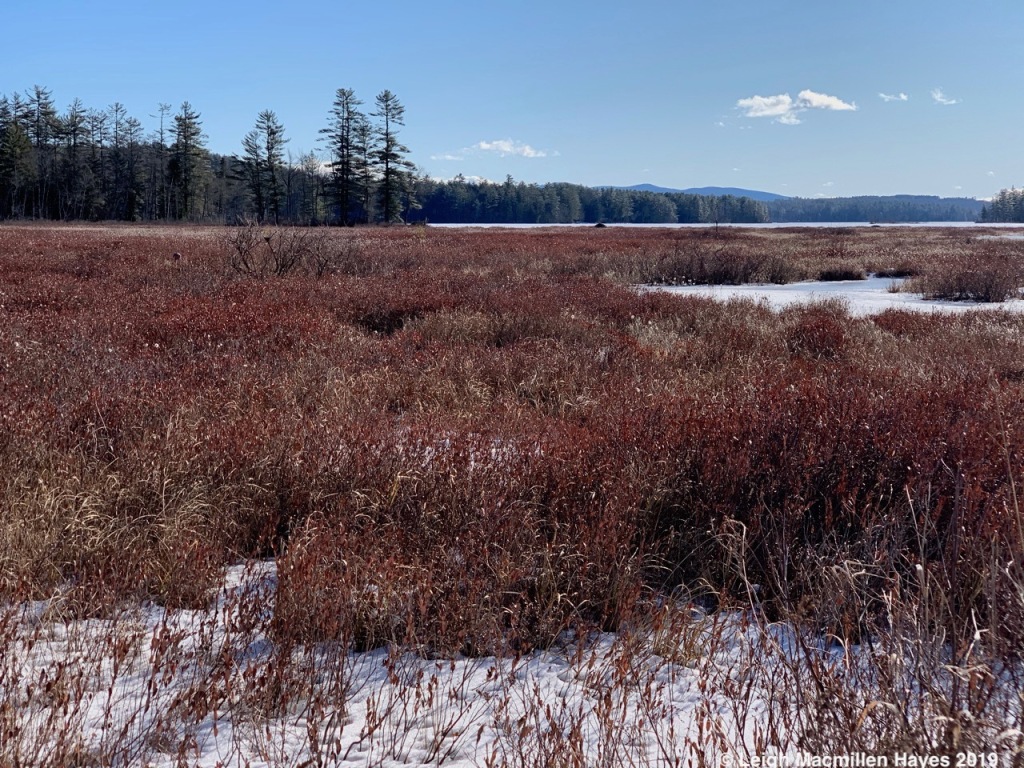
In the distance to the south there are two more, but you’ll have to visit the secret spot in order to see them.
While you are there, don’t forget to honor the Rhodora, which is slowly preparing to wow all of us in the spring.

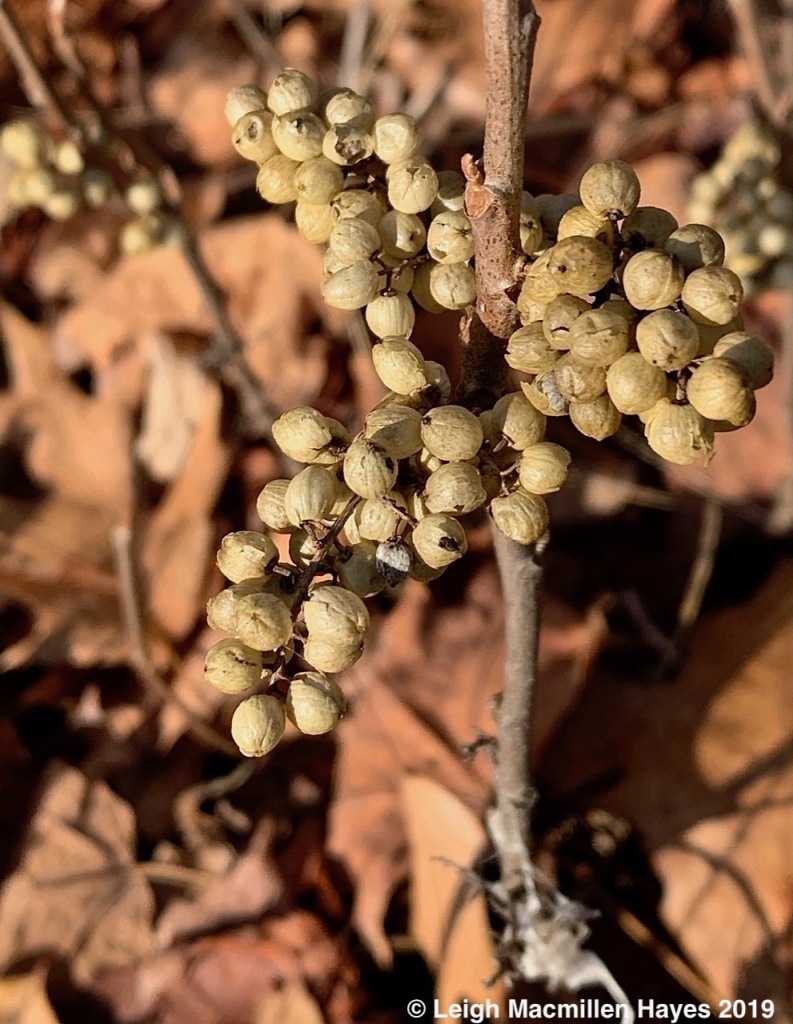
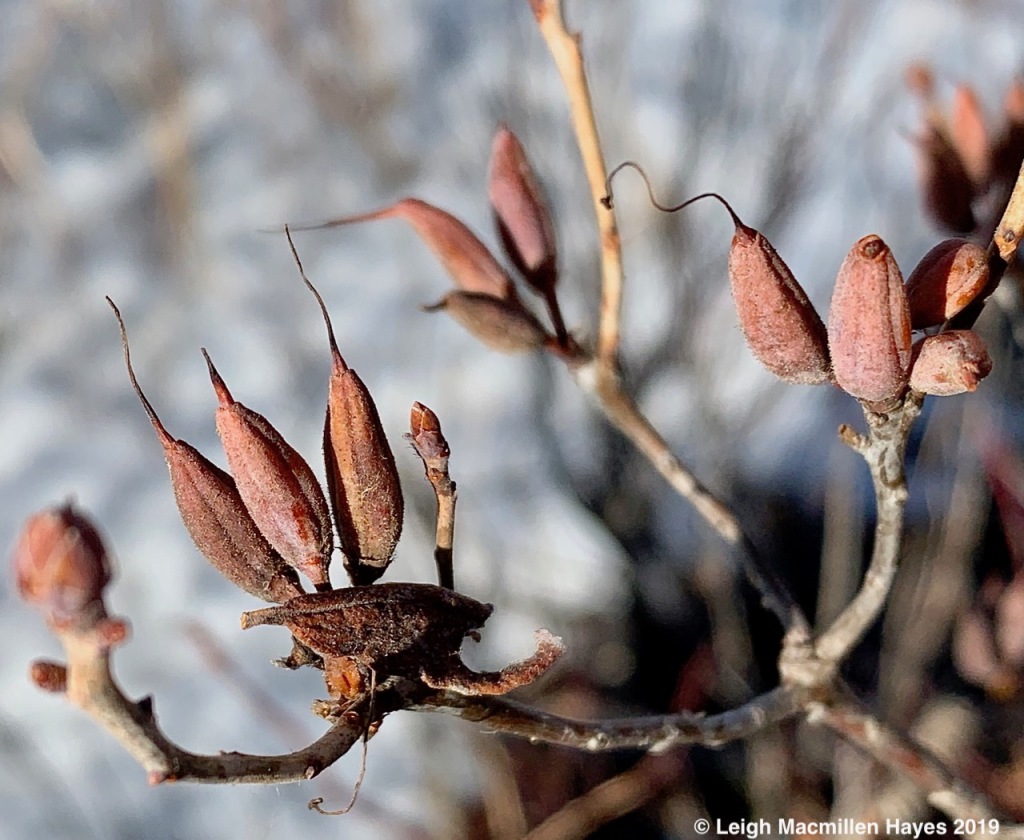
And if you choose to bushwhack out, eventually you might stumble upon the inflated capsule of Indian Tobacco. (Hint: it’s near the edge of an opening)
A little more than three hours and over three miles after beginning, my time wandering the property with Mr. Segur had drawn to a close.

I gave thanks to him for showing me all the stars within and surrounding the circle.

Secret Giver of Gifts

Though I first posted this in 2016, I keep returning to it. Thought you might want to as well. Peace and joy be with you.

Snow quietly drifted earthward as baking scents wafted through the house and, Christmas lights sparkled from the living room. The spirit of the season has settled upon me at last. And today I was reminded of a time when our youngest asked, “Mom, are you Santa?”

s-barn

He’d held onto the belief for far longer than any of his classmates. And for that reason, I too, couldn’t let go. And so that day as we drove along I reminded him that though the shopping mall Santas were not real, we’d had several encounters that made believers out of all of us.

The first occurred over thirty years ago when I taught English in Franklin, New Hampshire. Across the hall from my classroom was a special education class. And fourteen-year-old Mikey, a student in that class, LOVED Santa.

Each year the bread deliveryman dressed in the famous red costume when he made his final delivery before Christmas break. To Mikey’s delight, he always stopped by his classroom. That particular year, a raging snowstorm developed. The bread man called the cafeteria to say that he would not be able to make the delivery. School was going to be dismissed after lunch, but we were all disappointed for Mikey’s sake.

And then  . . . as the lunch period drew to a close, Santa walked through the door and directly toward Mikey, who hooted with joy as he embraced the jolly old elf. As swiftly as he entered, Santa left. I have no doubt that that was Santa.

s-waiting-for-santa

And about nineteen years ago, as the boys sat at the kitchen counter eating breakfast on Christmas Eve morning, we spotted a man walking on the power lines across the field from our house. We all wondered who it was, but quickly dismissed the thought as he disappeared from our view, until . . . a few minutes later he reappeared. The second time, he stopped and looked in our direction. I grabbed the binoculars we kept on the counter for wildlife viewings. The man was short and plump. He wore a bright red jacket, had white hair and a short, white beard. The boys each took a turn with the binoculars. The man stood and stared in our direction for a couple of minutes, and then he continued walking in the direction from which he’d originally come. We never saw him again. I have no doubt that that was Santa.

s-tree-hole

Another incident occurred about seventeen years ago, when on Christmas Eve, our phone rang. The unrecognizable elderly male voice asked for our oldest son. When I inquired who was calling, he replied, “Santa.” He spoke briefly with both boys and mentioned things that they had done during the year. I chatted with him again before saying goodbye. We were all wide-eyed with amazement. I have no doubt that that was Santa.

s-cocoon

Once I reminded our youngest of those stories, he dropped the subject for the time being. I knew he’d ask again and I also knew that none of us wanted to give up the magic of anticipation for those special moments we know as Christmas morning, when the world is suddenly transformed.

I also knew it was time he heard another story–that of Saint Nicholas, the Secret Giver of Gifts. It goes something like this . . .

s-snow-limbs

The nobleman looked to Heaven and cried, “Alas. Yesterday I was rich. Overnight I have lost my fortune. Now my three daughters cannot be married for I have no dowry to give. Nor can I support them.”

For during the Fourth Century, custom required the father of the bride to provide the groom with a dowry of money, land or any valuable possession. With no dowry to offer, the nobleman broke off his daughters’ engagements.

“Do not worry, Father. We will find a way,” comforted his oldest daughter.

s-bracken1

Then it happened. The next day, the eldest daughter discovered a bag of gold on the windowsill. She peered outside to see who had left the bag, but the street was vacant.

Looking toward Heaven, her father gave thanks. The gold served as her dowry and the eldest daughter married.

s-beech

A day later, another bag of gold mysteriously appeared on the sill. The second daughter married.

s-sweet-fern-1

Several days later, the father stepped around the corner of his house and spied a neighbor standing by an open window. In shocked silence, he watched the other man toss a familiar bag into the house. It landed in a stocking that the third daughter had hung by the chimney to dry.

The neighbor turned from the window and jumped when he saw the father.

“Thank you. I cannot thank you enough. I had no idea that the gold was from you,” said the father.

“Please, let this be our secret,” begged the neighbor. “Do not tell anyone where the bags came from.”

s-violet-toothed-fungi

The generous neighbor was said to be Bishop Nicholas, a young churchman of Myra in the Asia Minor, or what we call Turkey. Surrounded by wealth in his youth, Bishop Nicholas had matured into a faithful servant of God. He had dedicated his life to helping the poor and spreading Christianity. News of his good deeds circulated in spite of his attempt to be secretive. People named the bishop, “The Secret Giver of Gifts.”

s-stockings

Following Bishop Nicholas’ death, he was made a saint because of his holiness, generosity and acts of kindness. Over the centuries, stockings were hung by chimneys on the Eve of December 6, the date he is known to have died, in hopes that they would be filled by “The Secret Giver of Gifts.”

s-dove

According to legend, Saint Nicholas traveled between Heaven and Earth in a wagon pulled by a white steed on the Eve of December 6. On their doorsteps, children placed gifts of hay and carrots for the steed. Saint Nicholas, in return, left candy and cookies for all the good boys and girls.

In Holland, Saint Nicholas, called Sinterklaas by the Dutch, was so popular for his actions, that the people adopted him as their patron saint or spiritual guardian.

Years later, in 1613, Dutch people sailed to the New World where they settled New Amsterdam, or today’s New York City. They brought the celebration of their beloved patron with them to America.

s-snow-tree

To the ears of English colonists living in America, Sinterklaas must have sounded like Santa Claus. Over time, he delivered more than the traditional cookies and candy for stockings. All presents placed under a tree were believed to be brought by him.

s-stonewall

Santa Claus’ busy schedule required he travel the world in a short amount of time. Consequently, as recorded in Clement Moore’s poem, “The Night Before Christmas,” a sleigh and eight tiny reindeer replaced the wagon and steed.

Since Saint Nicholas was known for his devout Christianity, the celebration of his death was eventually combined with the anniversary of Christ’s birth. December 24th or Christmas Eve, began to represent the Saint’s visit to Earth.

s-heart

Traditionally, gifts are exchanged to honor the Christ Child as the three Wise Men had honored Him in Bethlehem with frankincense, gold and myrrh.

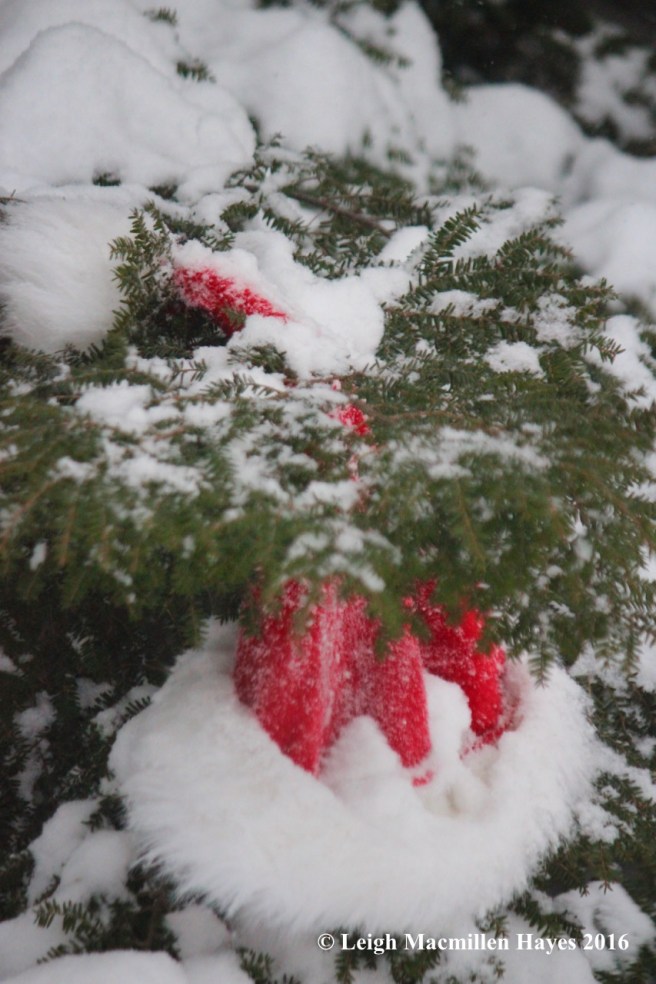
s-santa-hat

One thing, however, has not changed. The gifts delivered by Saint Nicholas or Santa Claus, or whomever your tradition dictates, have always and will continue to symbolize the love people bear for one another.

Though they are now young adults, my continued hope for my sons is that they will realize the magic of Christmas comes from the heart and that we all have a wee bit of Santa in us. Yes, Patrick, Santa is real.

May you continue to embrace the mystery and discover wonder wherever you look. And may you find joy in being the Secret Giver of Gifts.

On the Fringe

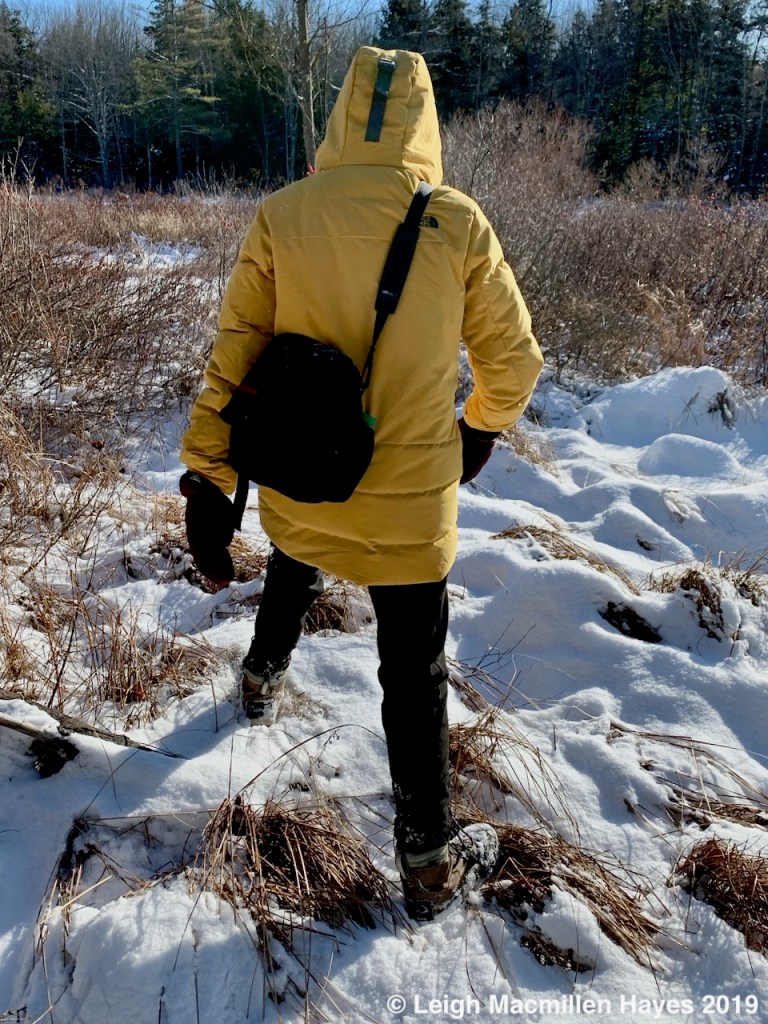
When Pam and I decided to meet this morning we knew it was going to be the coldest day of the season and so we’d need to dress accordingly. For me, it was six layers on top, two on my legs, wool socks, a hat and buff, plus mittens and hand warmers. Her ensemble was similar.

We met on the side of a road by an old stomping ground we’ve been eager to revisit for there was a certain porcupine that had been calling our names since last winter.

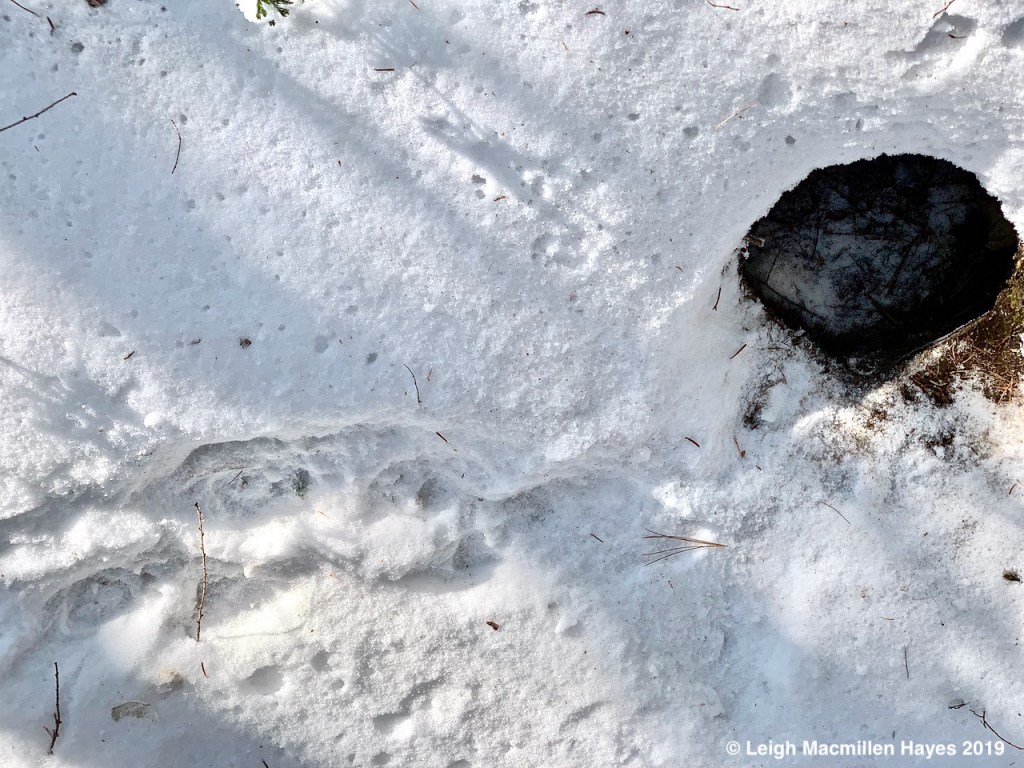
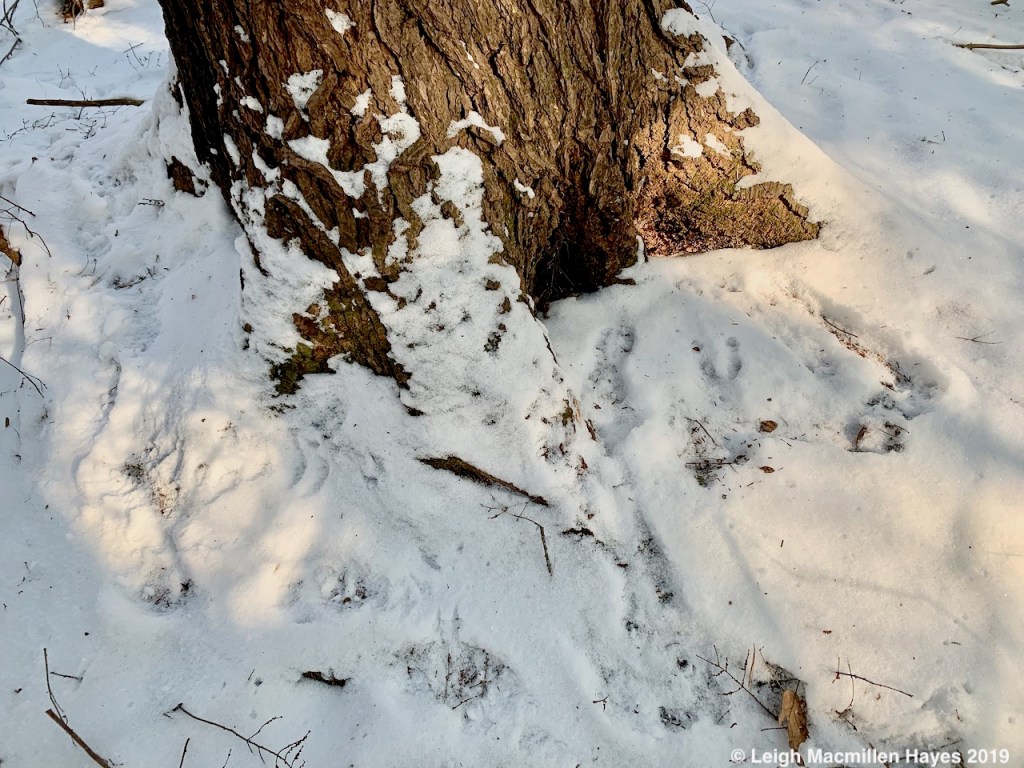
He didn’t let us down. Almost immediately we spotted his track pattern and the hole that serves as an entrance to his home.

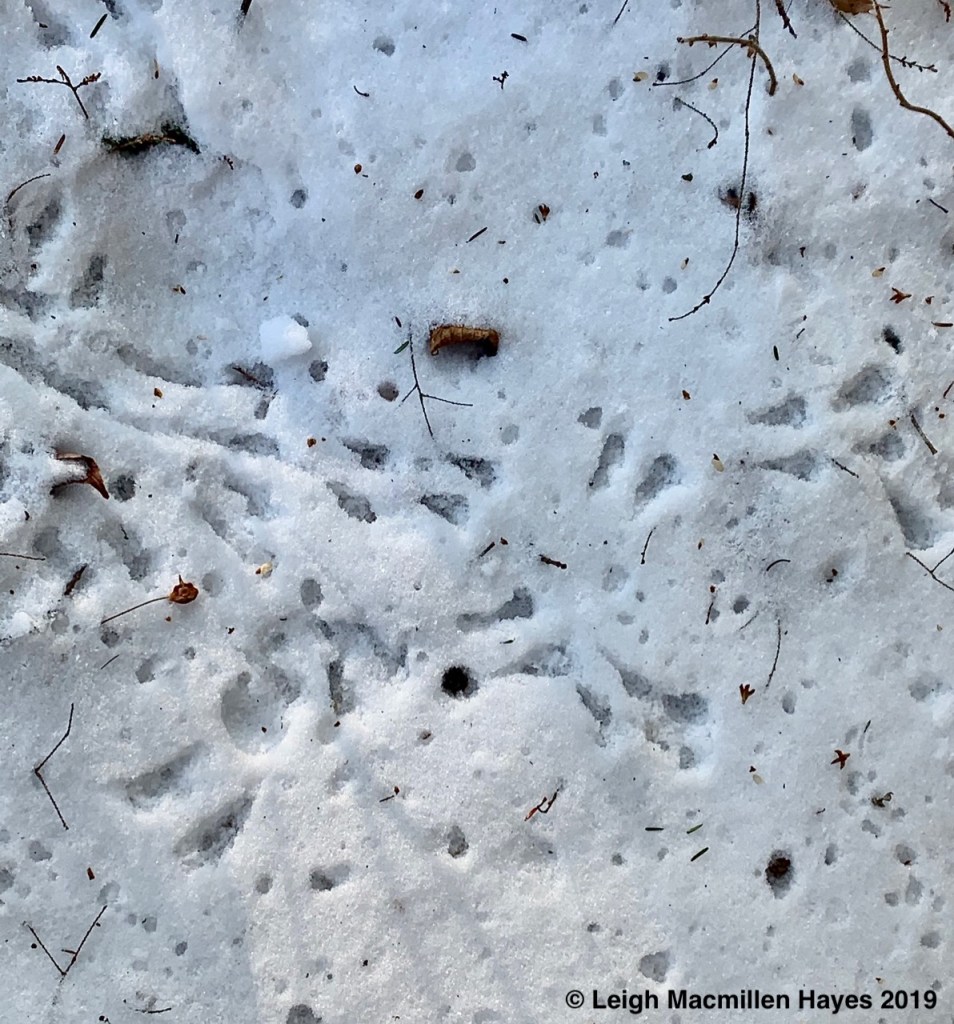
His prints weren’t super clear, but I suspected some snow had blown into them after he’d made his way home about sunrise this morning. We could also see more muted prints that led away from the hole and decided that those were made just prior to last night’s snow squalls.

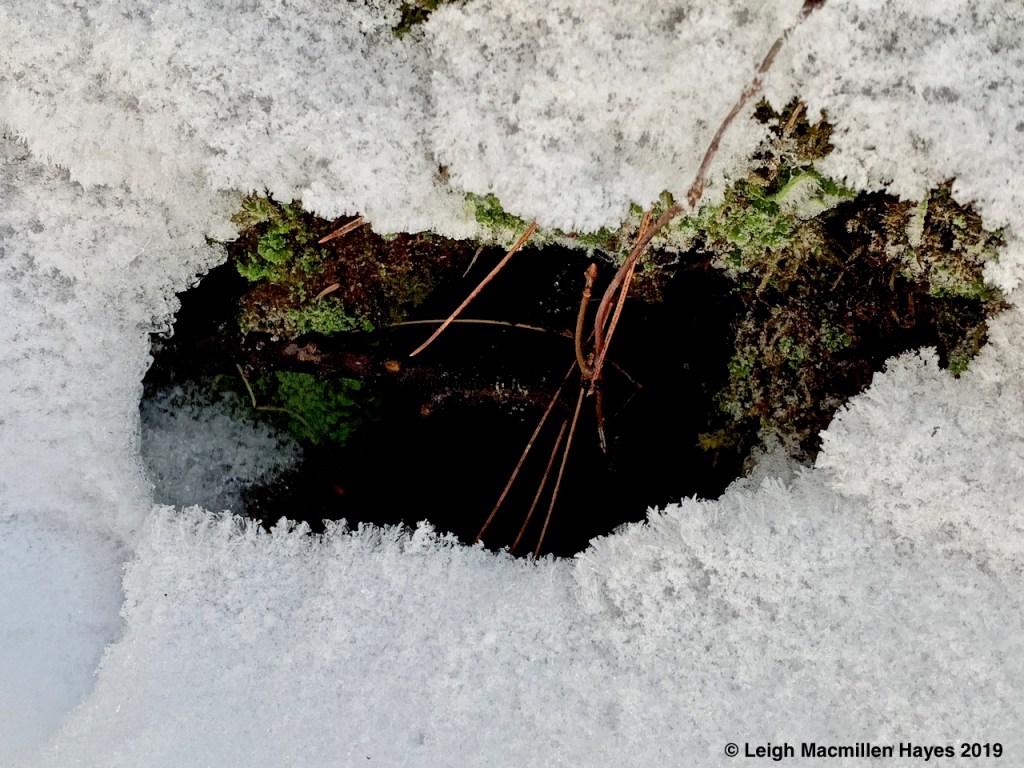
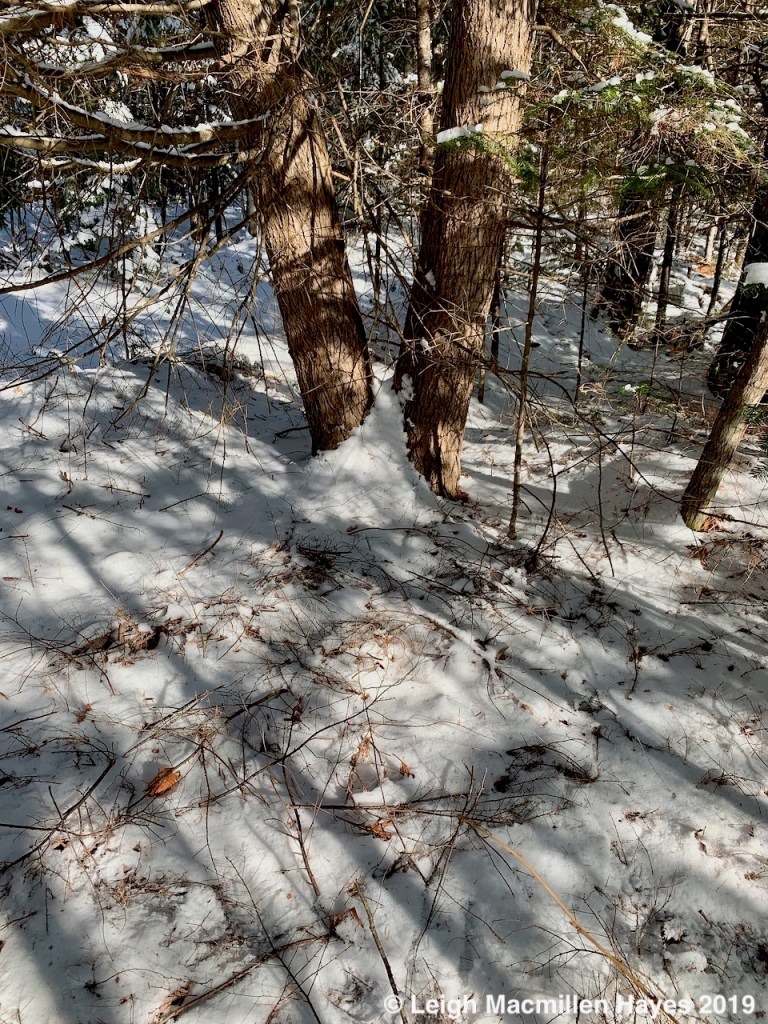
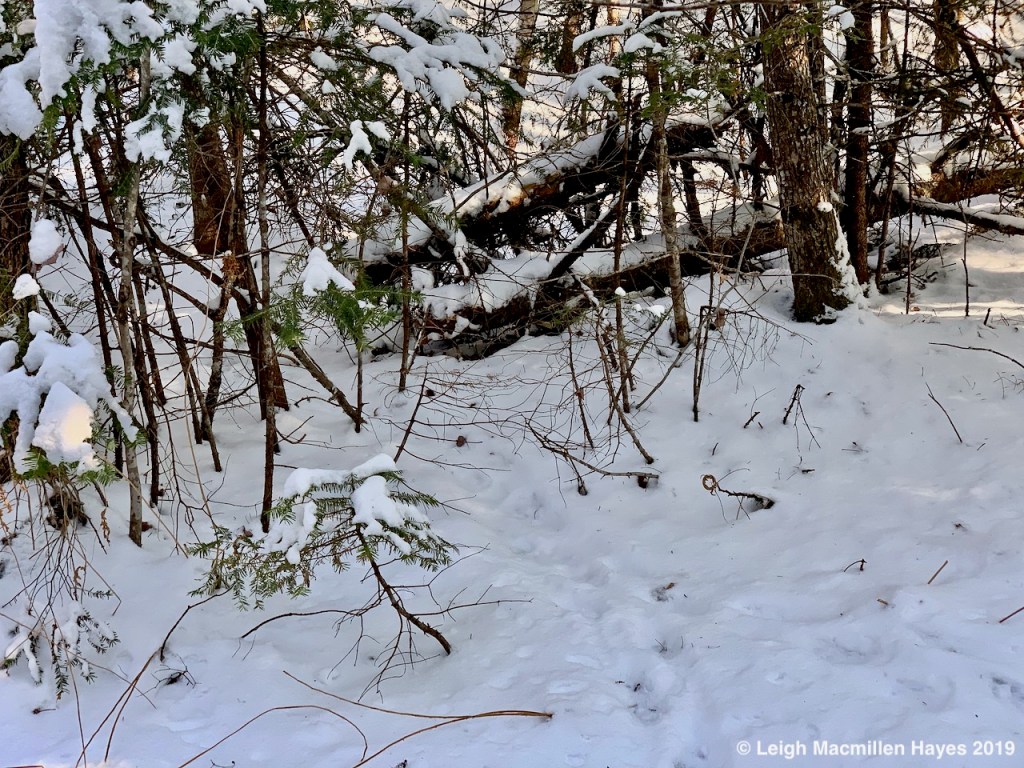
We looked around the area for other signs of his presence and found a vent hole or two above his underground home.

Outlined with hoar frost, we knew this guy was snug within his living quarters.

But, the question remained: where had last night’s adventure taken him? His track passed by the hemlock he spent last winter in and we noted that all the twigs he’d snipped off now decorated the ground as skeletons of their past, needleless as they were.

He led us to another hemlock tree that he seemed to pause beside and perhaps climb, but he didn’t do any dining there. A chipmunk had also raced around a wee bit later than the porcupine.

Sometimes he waddled over downed trees.

Other times he went under them and we had to find an easier way around, all the while making sure that in wet spots, we didn’t fall through any ice. It was a bit tricky to say the least, but we were determined.

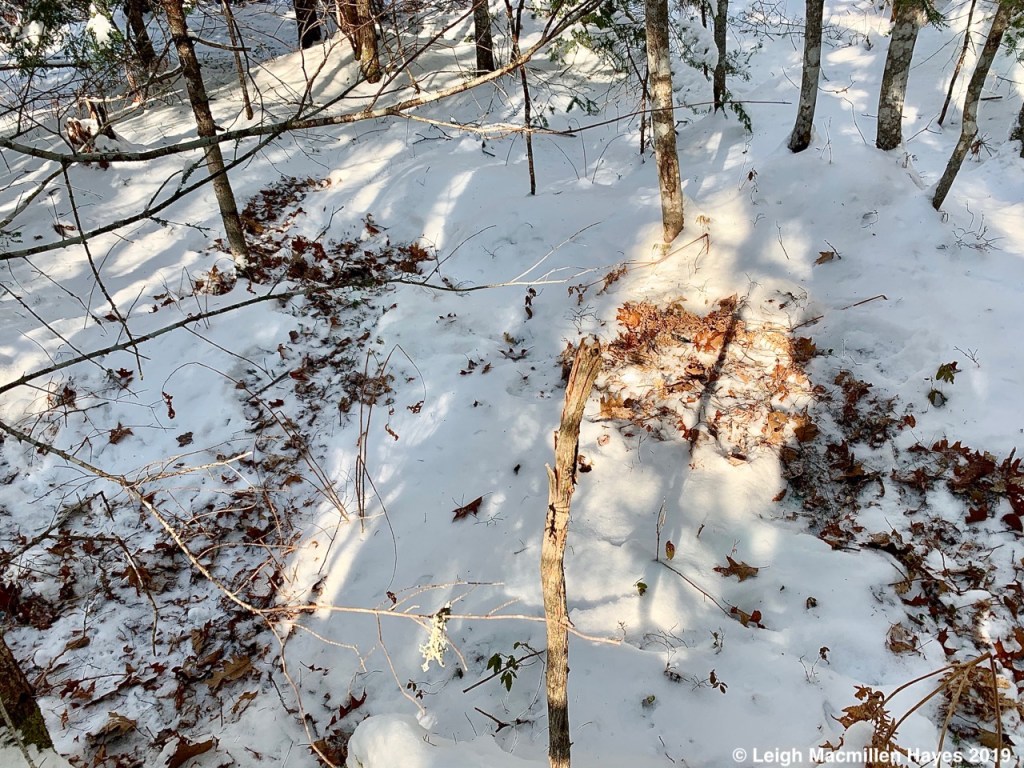
At last our question was answered when we saw disturbance in the snow and oak leaves. Mr. Porcupine had come to forage for acorns.

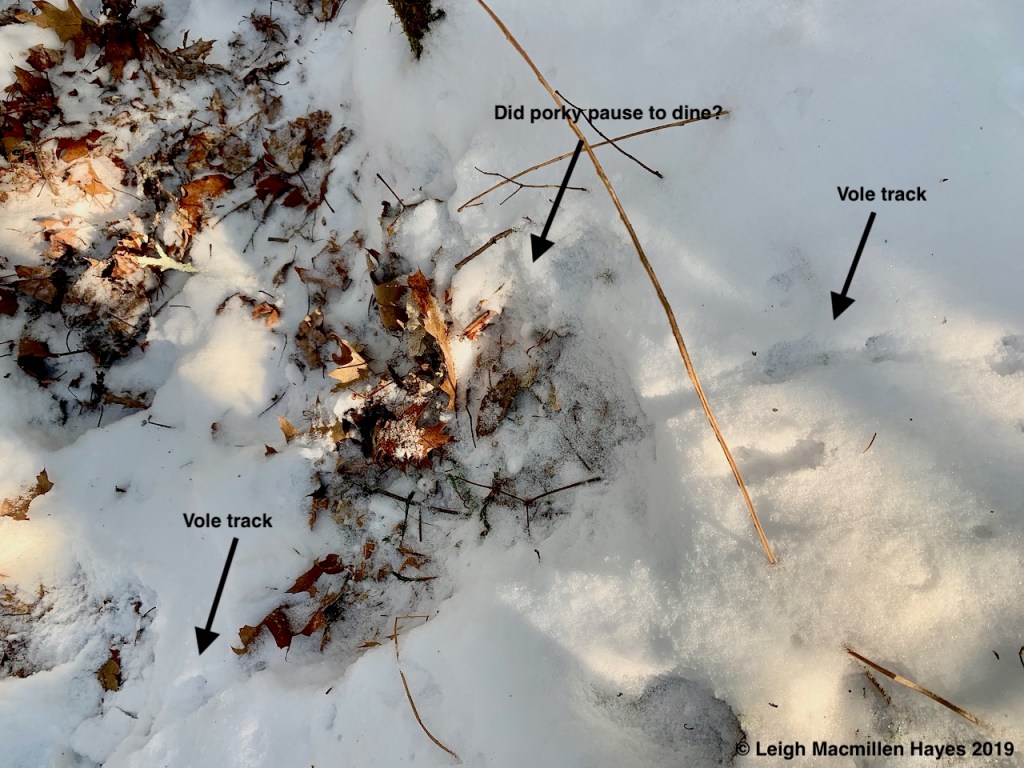
We even found a spot where it appeared he’d paused to dine. And the track of a vole. One of the things I love about snow is the information it gives us and the fact that it makes us think about the story. The porcupine’s story ends there for our adventure, as the acorn feast was his turn around point. From there, his track returned to his den.

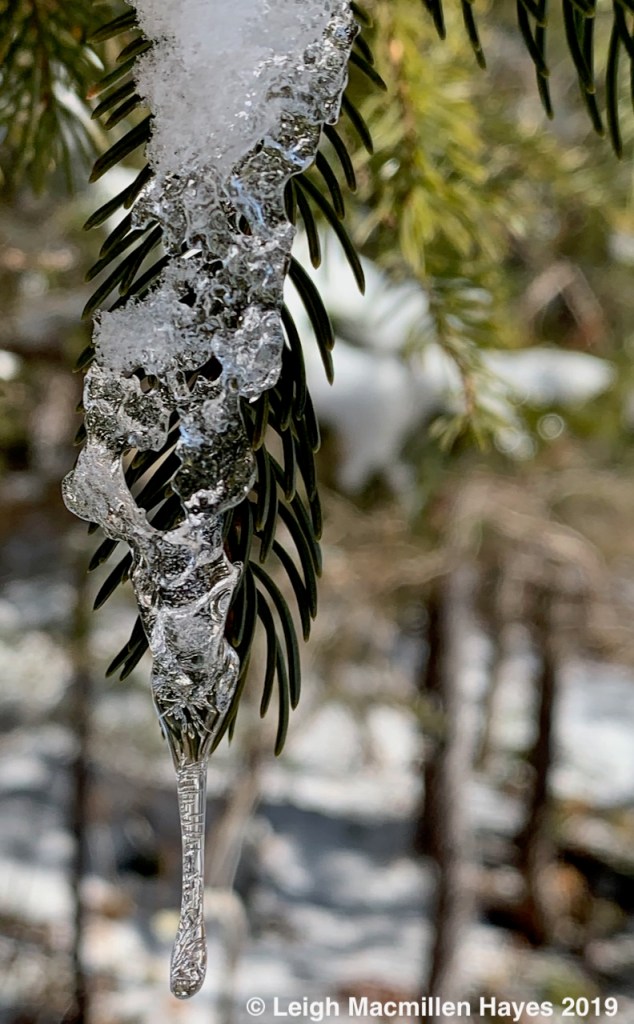
We, on the other hand, went looking for more and on our way to a brook that slices through the property, we discovered many ornamental icicles decorating the trees, each with its own interpretation of form and structure.

Our hope was to get as close to the water as possible, for there we were sure we’d spot others who had passed through the landscape. To keep from falling through the thin ice, however, we had to cross from one Cousin Itt clump to another.

If anyone tracked us later in the day, they must have thought, “Hmmm, human paused here for .minute, then took a giant step to get to the next Cousin Itt.” And they would have been correct in their assumption.

It was closer to the edge, where the winterberries and sweetgale grew, that Pam spied another ornament to add to nature’s Christmas tree.

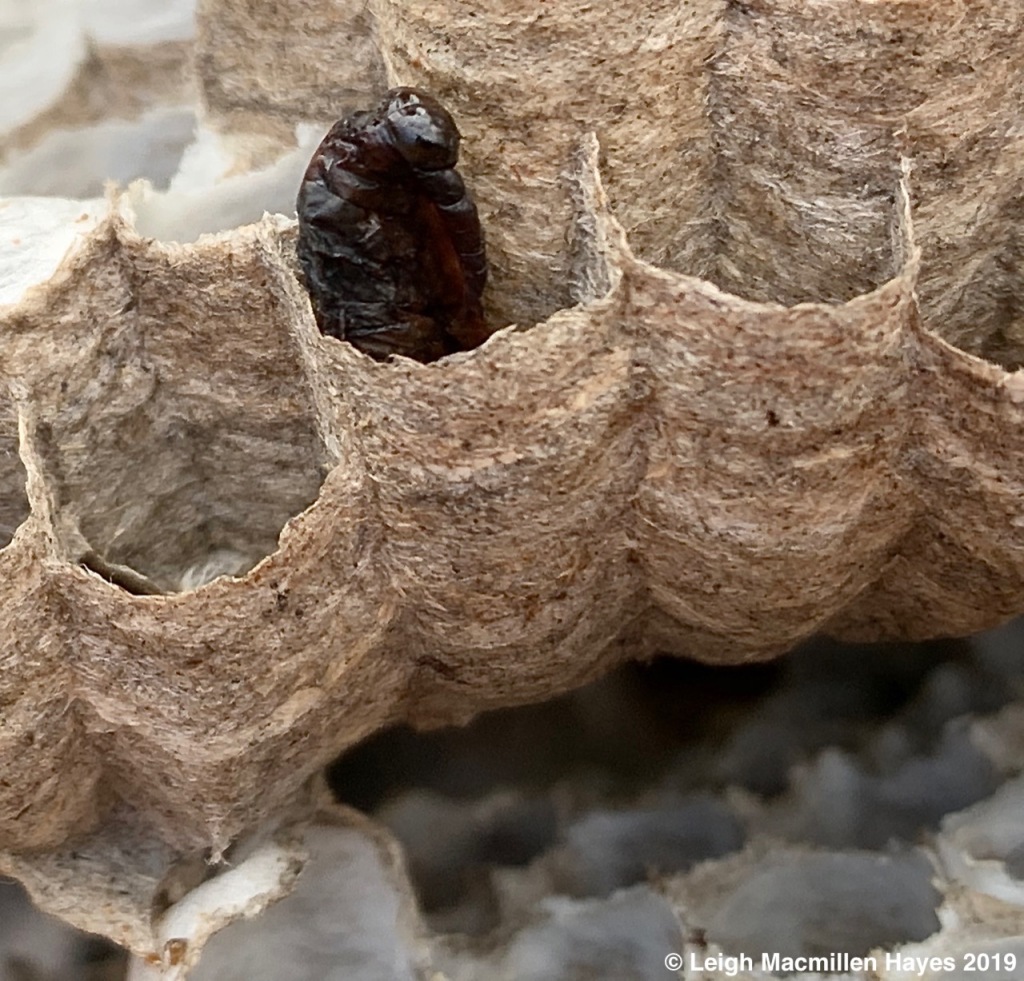
The remains of a small bald-faced wasp nest dangled from the shrub. One cannot view such without wondering about the fact that the wasps had collected plant and wood fiber, mixed it with saliva, and chewed it into a papier-mâché of their own form. And in so doing, though this nest was smaller than some we’ve encountered, its structure was the same. This happens over and over again in nature and my awe never ends.

Eventually, we left that spot and journeyed to another. Not far along, we recognized another old friend, a snow lobster, I mean snowshoe hare.

Typically with hoppers, leapers, and bounders, I don’t take time to measure the stride because it can vary so much, stride being the length from one set of prints to the next. But, this was one huge hop and so out came my tape measure. Mind you, it’s a six foot measure. And by the black lines you can see that the hare flew through the air and landed almost seven feet from his jumping off point.

We followed him for a few minutes and then got distracted by the bird prints that were everywhere . . . as were the hemlock and birch seeds. Tis the season, and while folks aren’t necessarily finding birds at their feeders, I hear and/or see them every time I step into the woods. Let’s hope the same holds true for next week’s Christmas Bird Count. BTW: these are junco tracks.

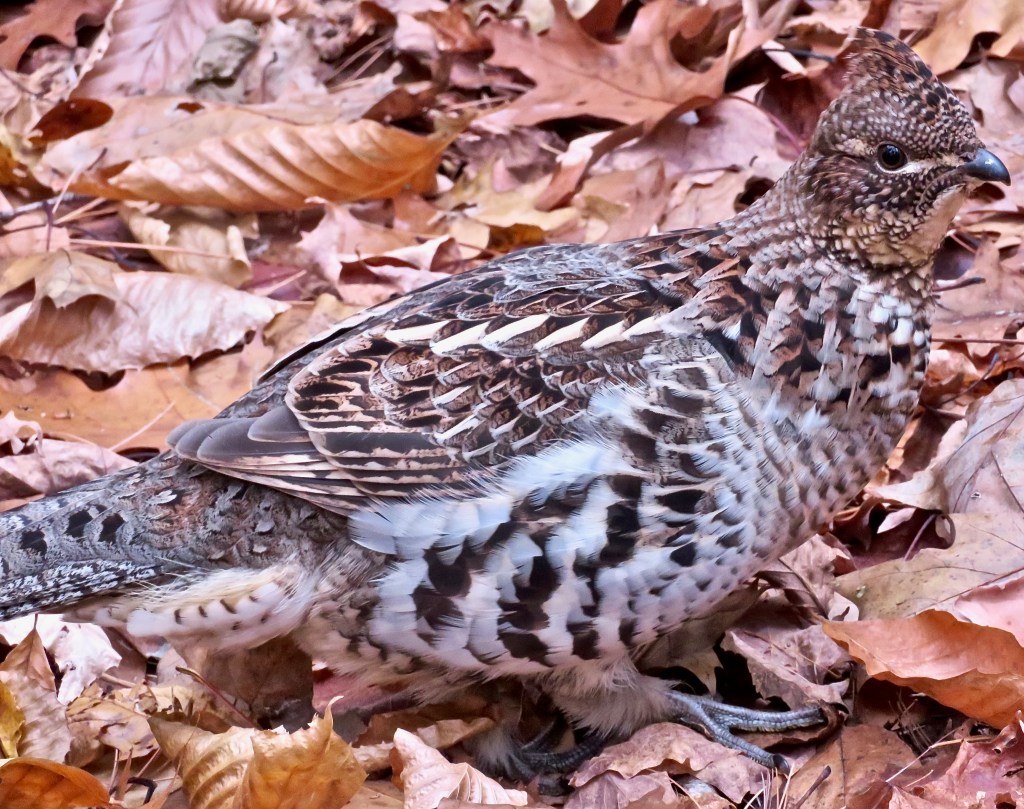
A ruffed grouse had also wandered through and we laughed as we followed his track for he made some abrupt turns.

Again, making our way to the brook that crossed through this property, we found other cool things to admire and wonder about, including the Blackberry Knot Gall. Of course, we didn’t know it’s exact name at the time, but some homework helped with the ID. Apparently, the Blackberry Knot Gall Wasp (Diastrophus nebulosus) laid numerous eggs in the plants cane and the plant accommodated such by creating an abnormal growth. Being colonial, there’s a group of larval wasps wintering inside. I did wonder, however, if the hole was created by a very hungry woodpecker or some other bird. This one will need repeat visits so we can keep track of any ongoing activity.

Besides more bird tracks, lots of bird tracks, we found a set of gray squirrel tracks and chuckled as we noticed his attempt to climb to the top of the tree, at which point it appeared that he decided not to jump to the other side of the brook, but rather to run back down and cross via the ice. The brook isn’t entirely frozen, so his journey was precarious at best.

For a bit, we followed the brook to the wetland, a wetland that we love to explore in winter, but again, the conditions were such and I did break through some ice, that we finally turned around. But really, we may have continued if it hadn’t been for the temperature and wind.

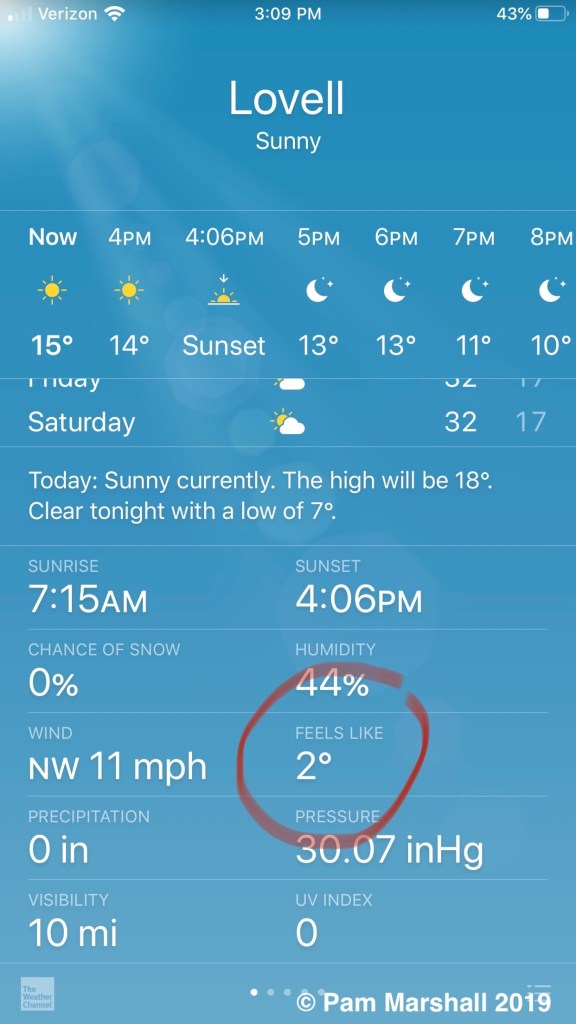
When she arrived home, Pam sent me this image. I think saying it “feels like 2˚” may have been an understatement. It was our feet that proved to be the coldest. Later, we each admitted that it took a hot bath/shower to finally warm up. A cup of tea also helped do the trick.

Despite that, we were grateful for the opportunity to travel the fringes of the wetlands during the fringe season as fall turns to winter in western Maine.

Laughing All The Way, Ho, Ho, Ho

It’s an eager group, the Greater Lovell Land Trust’s Tuesday Trackers, and since we had to cancel our expedition two weeks ago, I decided to go forth with today’s plan despite the weather forecast predicting snow.

And so we gathered, most meeting at the library to carpool and another at the trailhead.

Not long into our tramp, we moved off trail and began looking for green-tinted tan milk duds. We’d barely finished describing them to some newbies when one among us spotted a pile. And then, we realized they were everywhere.

Also everywhere, for we were in an early succession forest, were the fleur de lis and teeny seeds of gray and paper birches.

Scanning the area, we recognized the diagonal cut on woody vegetation indicating the source of the hare scat. Once the frost kills succulent plants, a hare’s diet switches to saplings of aspen, birch, maple, willow and cedar. Oh, they’ll browse other species, but these are their favorites and the site we were in offered at least four of the five.

Of course, examining scat is one of a Tracker’s favorite things to do and today was no different. Bob got excited when he saw rainbow reflections in one little specimen. Mind you, we know better than to pick it up for scat can contain parasites, but . . . (don’t do this at home).

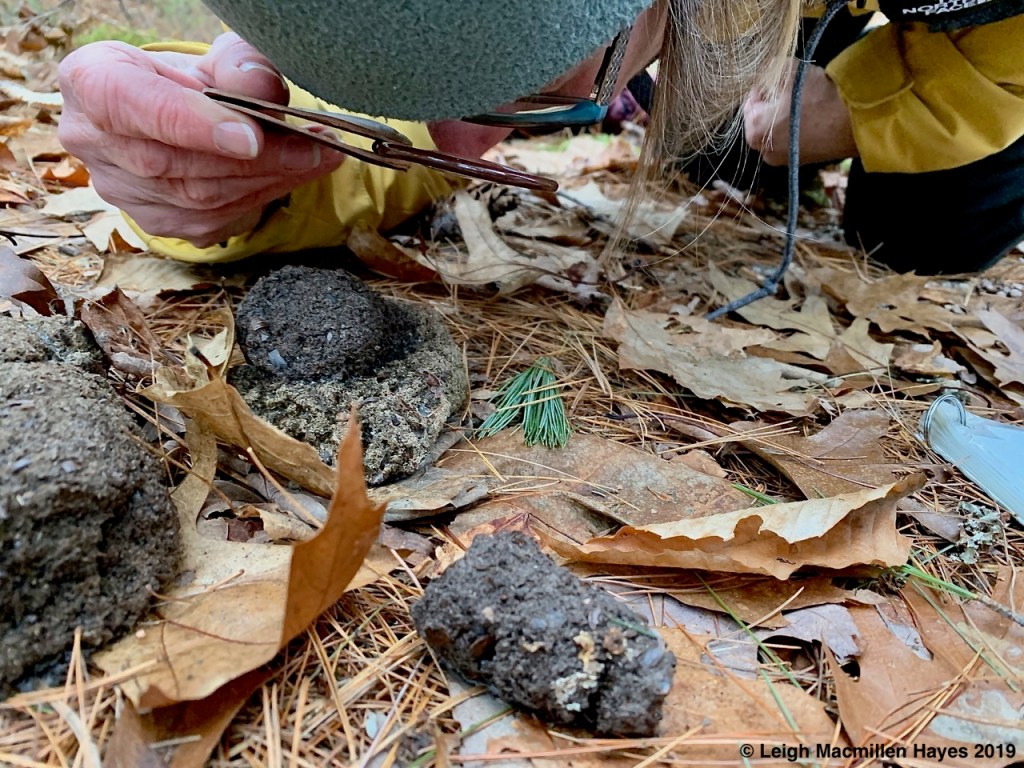
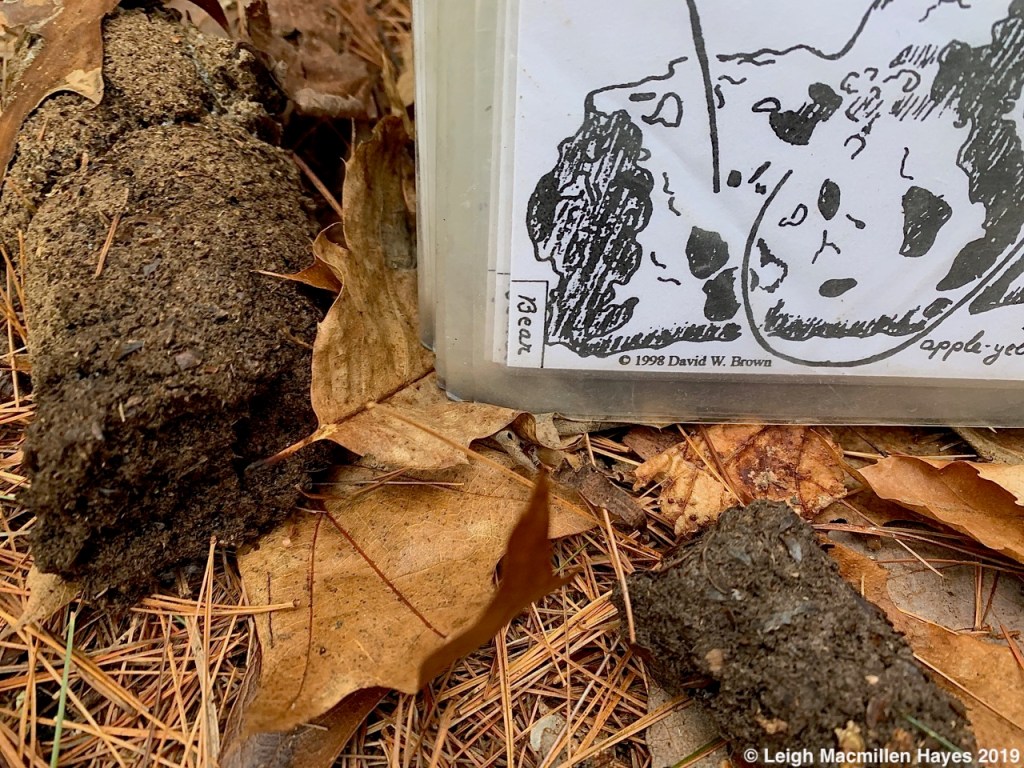
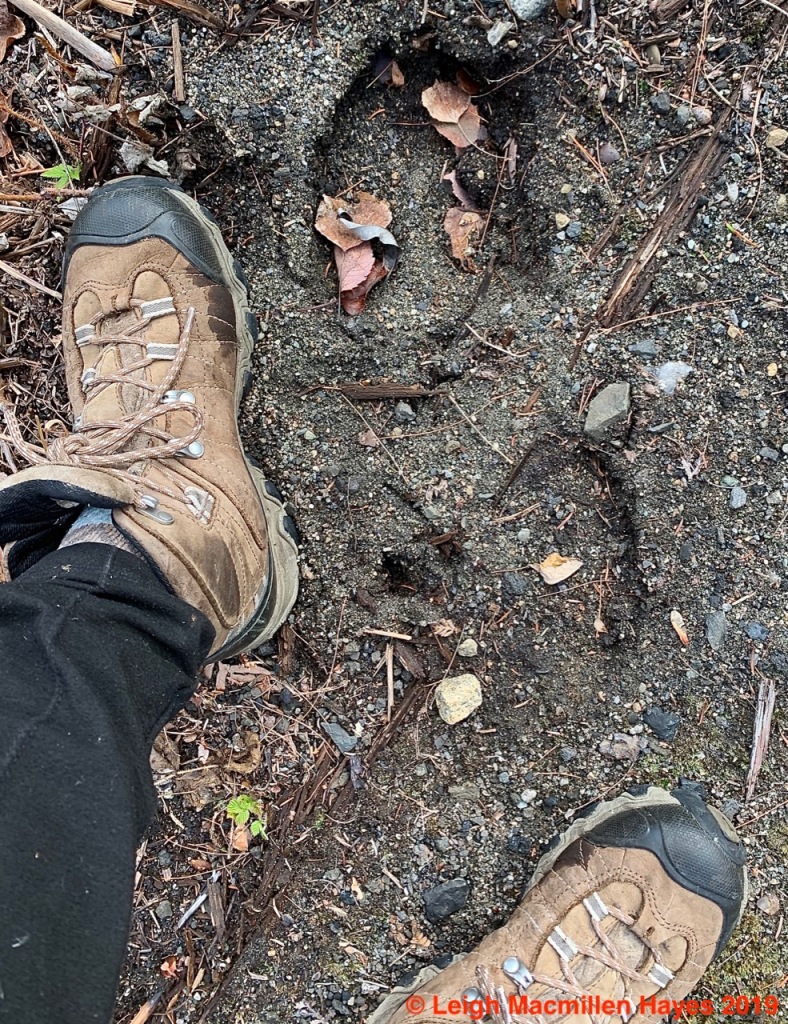
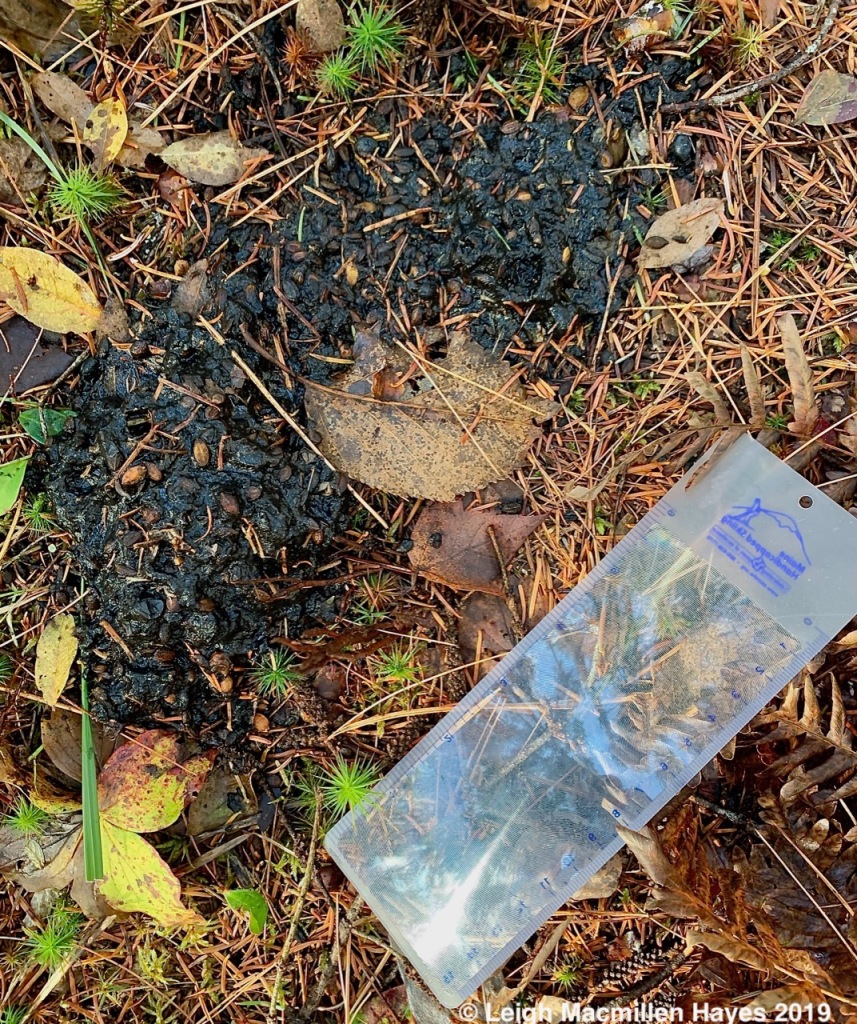
Our journey soon found us starring at a much larger scat. Truth be told, Pam had discovered it last week and I joined her the next day to admire it. It is indeed, MUCH larger than the hare scat, because it was created by Ursa Major, a black bear.

The funny thing (at least to us) was that the day Pam spotted this, Mary Holland posted a blog on her Naturally Curious site about black bears scent marking on telephone poles during the non-breeding season and reminding people to bring their bird feeders in at night because it hasn’t yet been cold enough for the bears to hibernate.

It’s often like that if you follow Mary’s blog. She’ll post something that you either just spotted or can expect to see that day or the next. (Thank you, Mary)

Oh how I wish I had a photo of Joan and Bob as they simultaneously spotted the scat after Pam and I had walked a wee bit to the side and paused to chat–ever so nonchalant were we. Their eyes expressed their excitement over such a find.

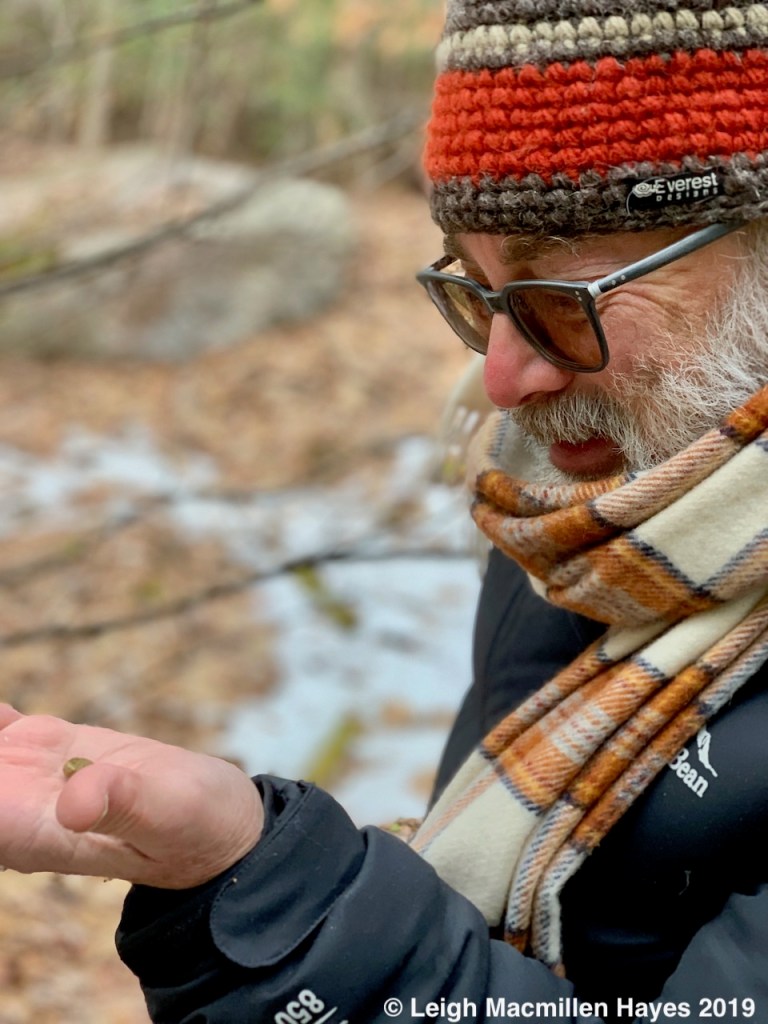
Again, we know not only not to handle scat, but also not to sniff it. But, we couldn’t resist getting close to see that this hearty specimen was chock full of acorn shells. And so we held our breath as we looked.

We told the newbies that the initiation ceremony included taking a closer look.

And so Joe did.

And Dawn followed suit.

It was almost as if David Brown had used this specimen to sketch the scat on his Trackard, but . . . his find was full of apples.

I, however, may do the same, for true confession is that I took a wee bit. Well, okay, I took a huge piece. To dry out and add to my collection. All in the name of education.

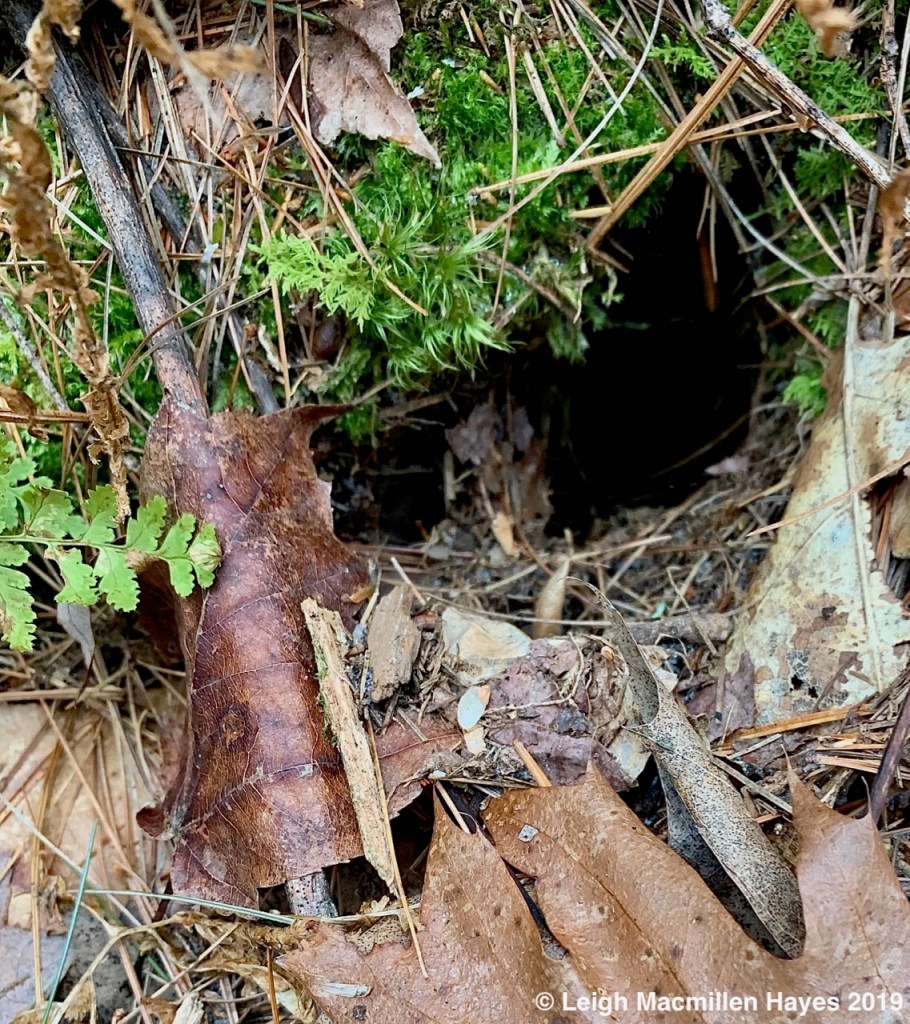
At last we pulled ourselves away and continued on in search of more mammal sign, which we found in the form of a small hole with a clean dooryard. Where there is one hole, there is usually another.

Our curiosity was satisfied when it was spotted not too far away and then we actually found a third on the other side of the path and suspected that a chipmunk had a castle below and knew how to avoid sky space above the trail. Sky space can be hazardous to a little brown thing if a bird of prey spots it and trails often create that opening that the LBTs fear.

Because we are who we are, and curious about every little thing, it wasn’t just mammal sign that captured our attention. There were sawfly cocoons to examine.

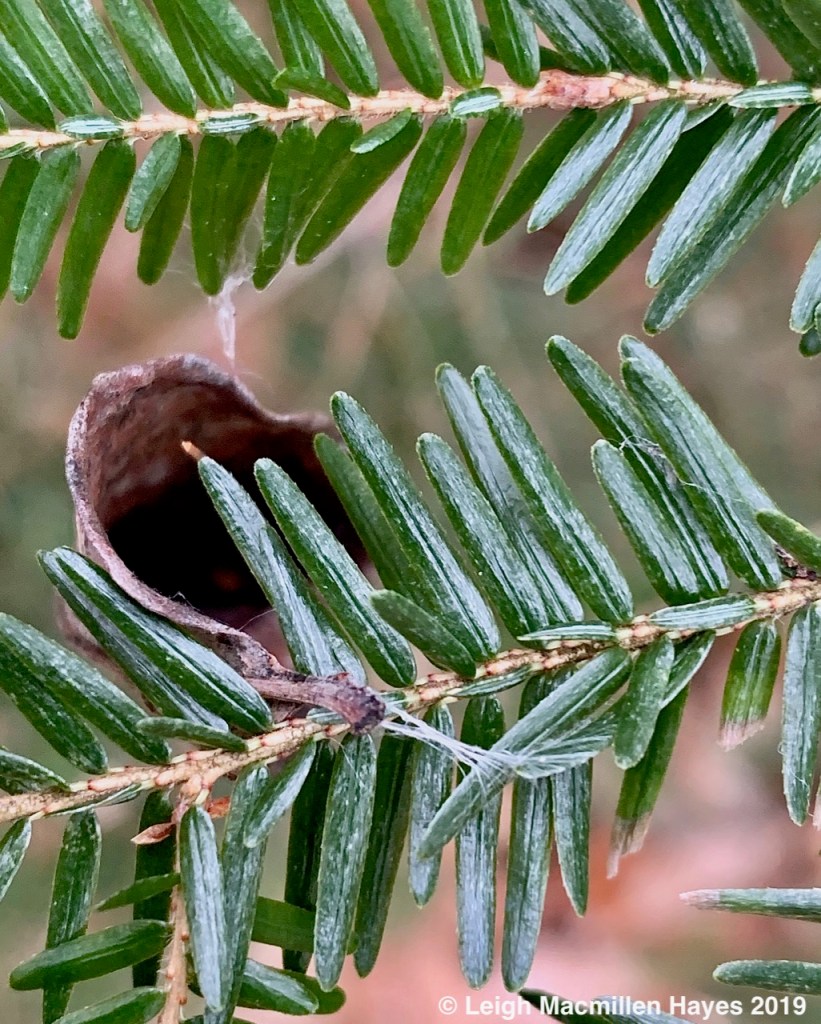
And then, the leaf that dangled from a hemlock. All we could think of was that a deciduous leaf had landed on the conifer and a leafroller insect took advantage of the opportunity to create its cocoon in situ. Can you see the threads that hold the leaf’s petiole or stalk to the hemlock needles?

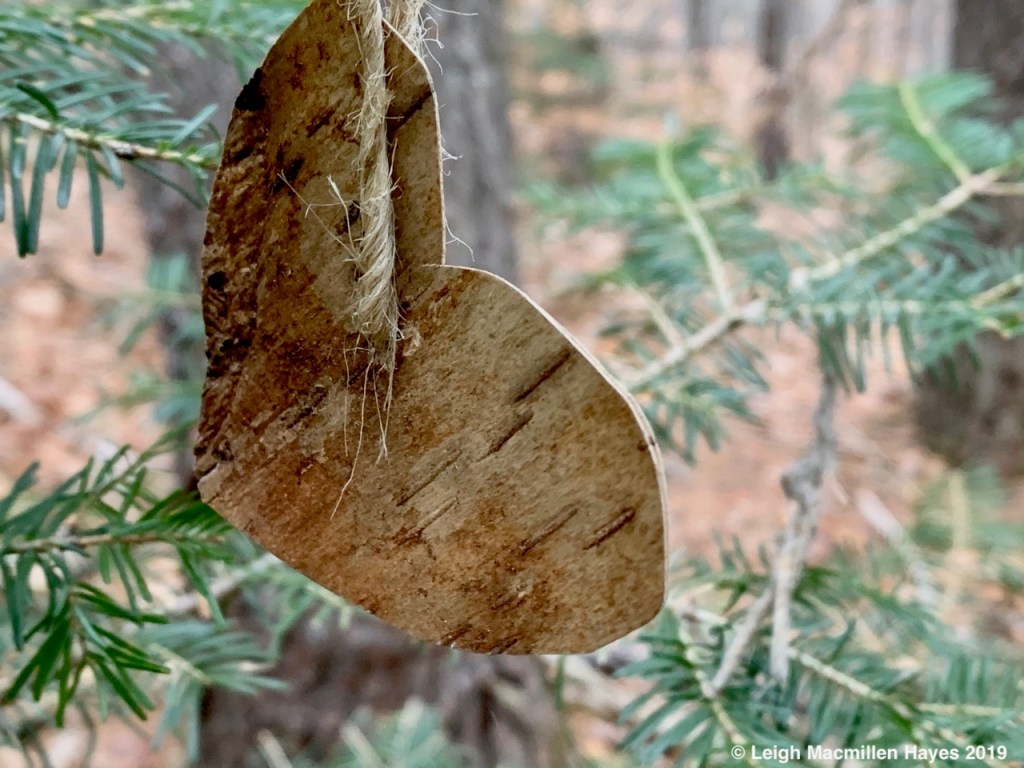
There were other danglers as well, all befitting the current season for this was the trail that the GLLT’s Nature Explorers, a group of homeschool families, had used to decorate a Christmas tree last year for the Maine/New Hampshire Christmas Tree Quest.

This year’s tree is located along the Homestead Trail at the GLLT’s Heald and Bradley Ponds Reserve, so be sure to get your quest on and go take a look.

And speaking of Christmas, snowflakes began falling as we made our way and we paused for a few moments to admire how they’d gathered on spider webs and danced in the slight breeze.

One of our other great finds and we found many, was the tubular shape of pine needles, which had been constructed by a pine tube moth caterpillar, Argyrotaenia pinatubana. The caterpillar had used a bunch of needles to form its hollow cocoon, binding them together with silk and munching on the ends of its winter home.

Later in the day, when I was alone, I discovered more tubes on pines and while I was looking I spied movement created by Tetragnatha viridis, the green long-jawed orb weaver. Do you see it? The green color helps it camouflage amongst pine needles, its usual habitat.

I bet you can see it now.

I only wish I’d been able to spy the spider when I was with this crew for we chatted about how after a winter rain droplets decorating webs make us realize how active spiders can be despite the temperature.

Today’s crew included Joan, Joe, Pam, Dawn, and Bob, and I suspect we all drove home with smiles in our hearts as we reflected upon the discoveries we’d made and fun we’d had during our time together.

We didn’t go over the river, but we certainly did go through the woods, laughing all the way, ho, ho, ho.

Recipe for Forest Friday

Preparation time: hours and hours. Baking time: two hours.

Note: Recipe has various stages of development.

Ingredients:

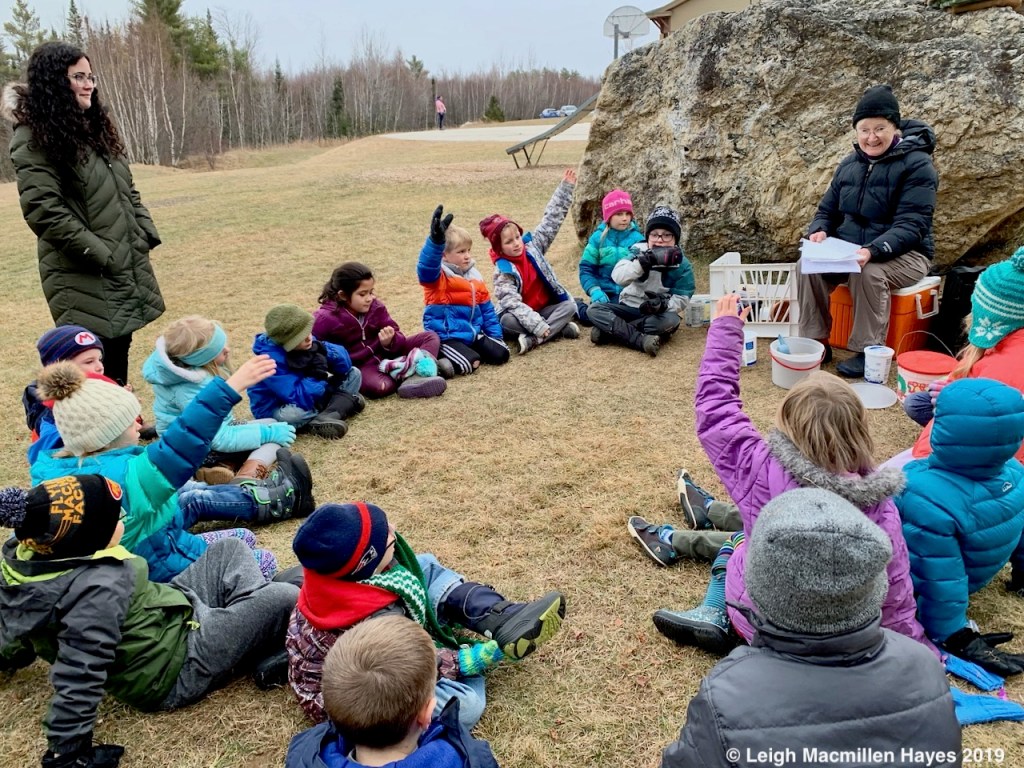
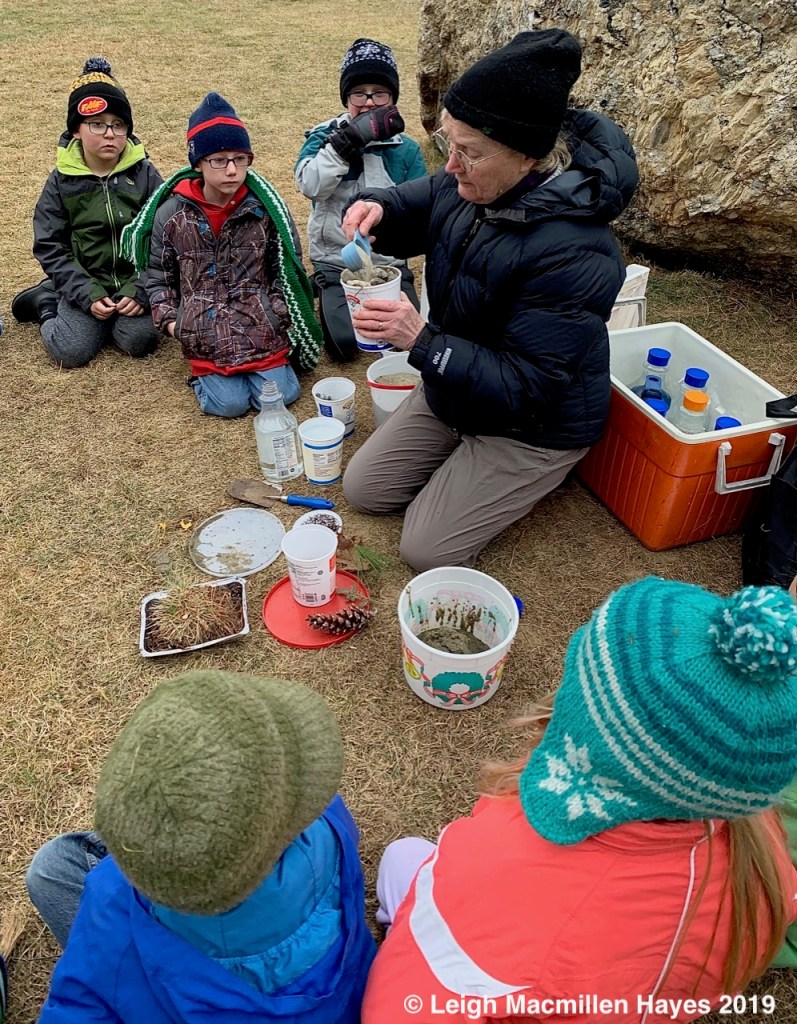
  • Maine Master Naturalist Sarah Otterson and her team of three volunteers
  • Ms. B, grade 2 teacher
  • 19 interested and interesting second graders
  • Pond by Jim LaMarche
  • string, clothes pins and towels
  • school nature trail
  • recycled containers
  • air, sand, dirt, rocks, boulders, warm water, found materials
  • surprise ingredient

Directions: Part 1

At 1 pm, meet the students and listen to an introduction to the landforms/erosion “field trip.”

Break the students into four pre-assigned groups.

After donning coats, hats, and mittens, head outside.

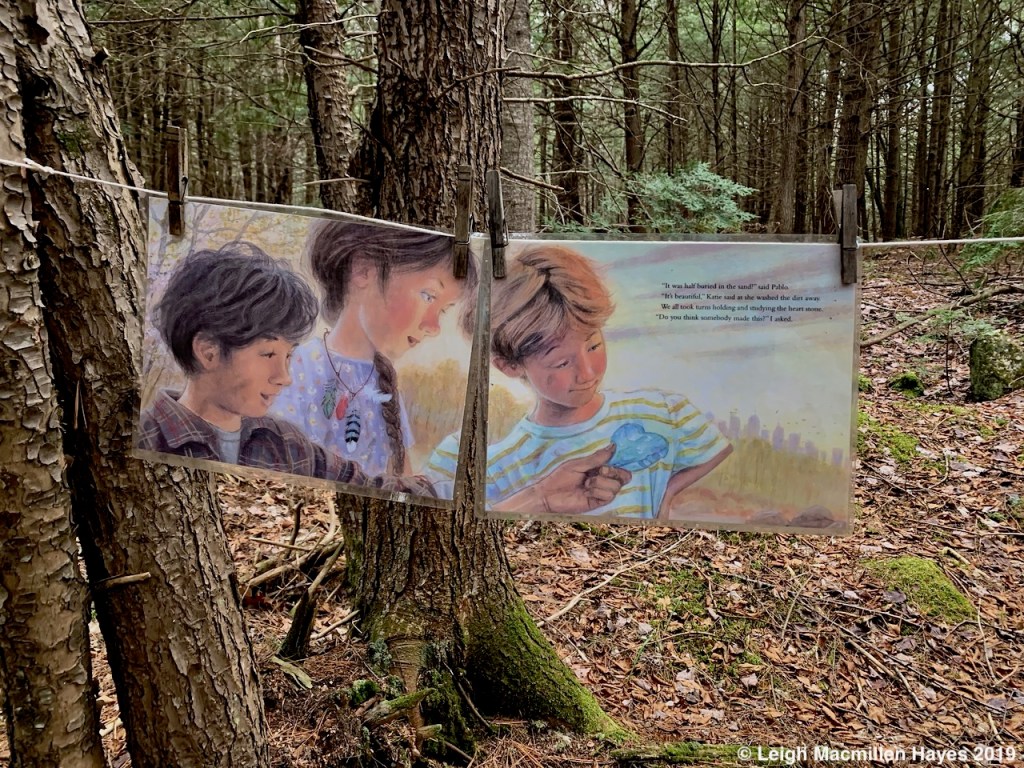
Discover a book strung throughout the woods.

Stop to read it and wonder about the action as well as the illustrations.

While walking, pay attention to the lay of the land. Use hands and arms when appropriate to mimic mini ravines, hills, etc.

Repeat above action when the landforms appear in the illustrations.

Directions: Part 2

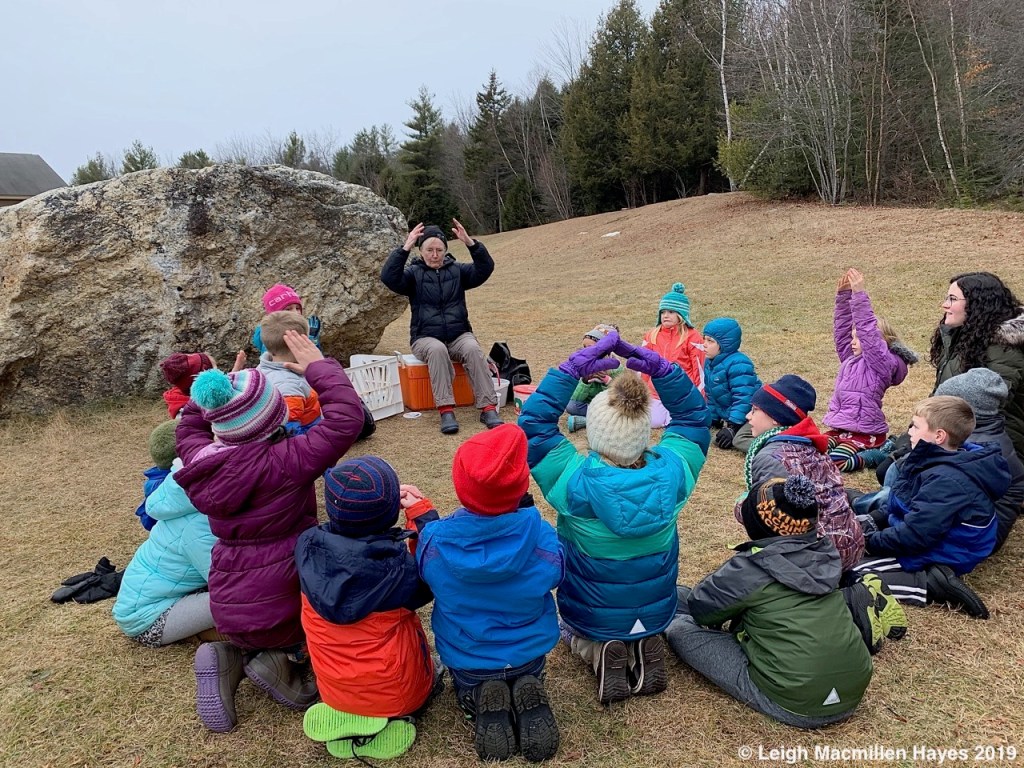
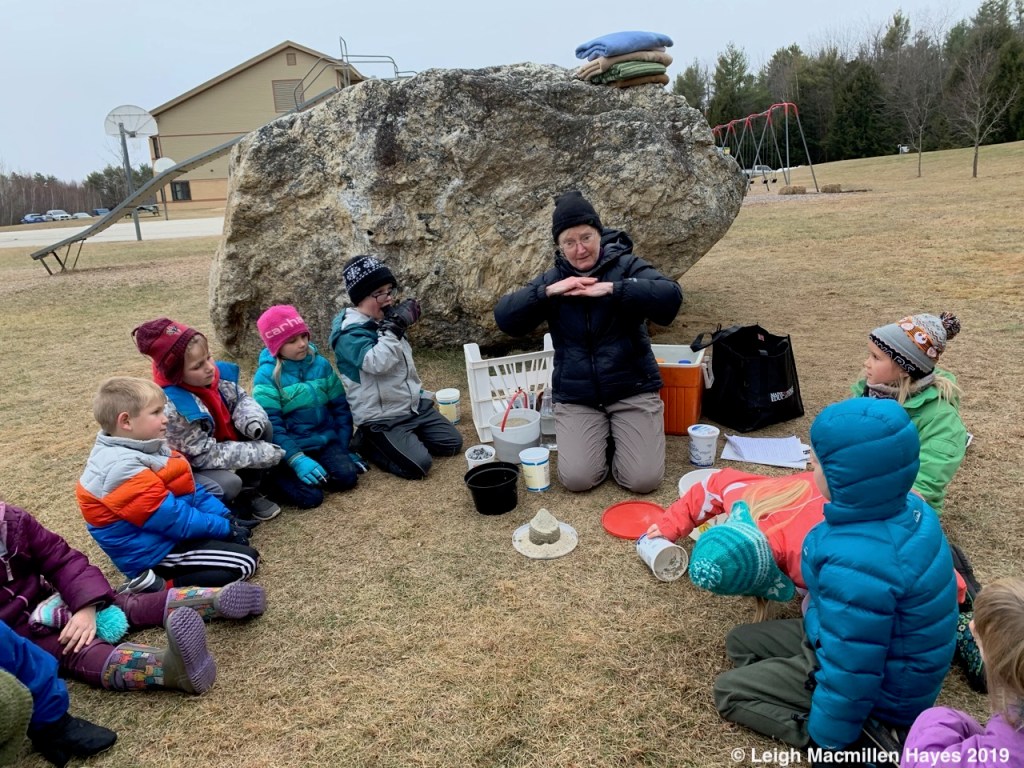
Once everyone has finished reading the story, gather by the large boulder in the school yard and review some of the story action. Again, use hands to mimic landforms, including weaving fingers together to form a dam, which was the key ingredient to form the pond in the story.

Recall that the characters exclaimed about running up a mountain by placing hands high over head. But really, they were on a hill as demonstrated by the student with the green soles.

Directions: Part 3

Introduce the concept of a model as a three-dimensional representation of something, but on a much smaller scale.

Ask for examples of models the students have made or seen.

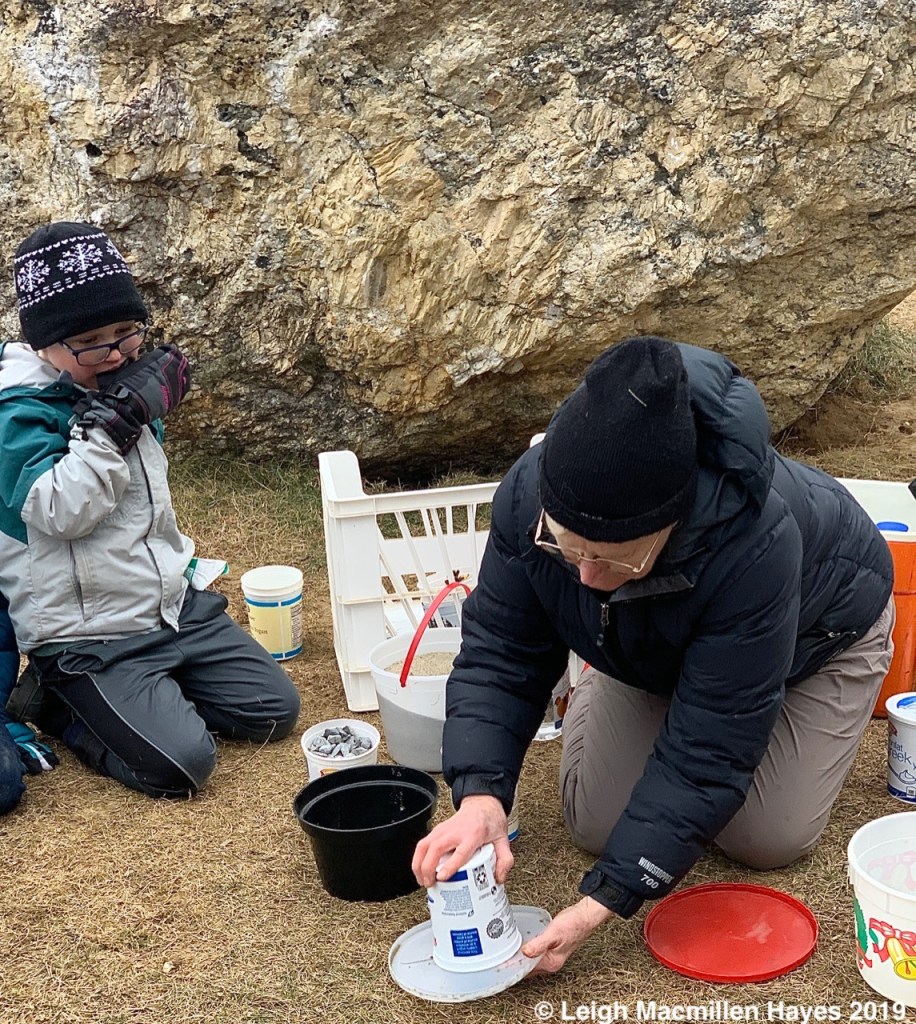
Using recycled containers, add sand and then water to create a model of a mountain.

Once the two mix, gently tip the mixing container onto a cover.

With care, set both down on the frozen ground.

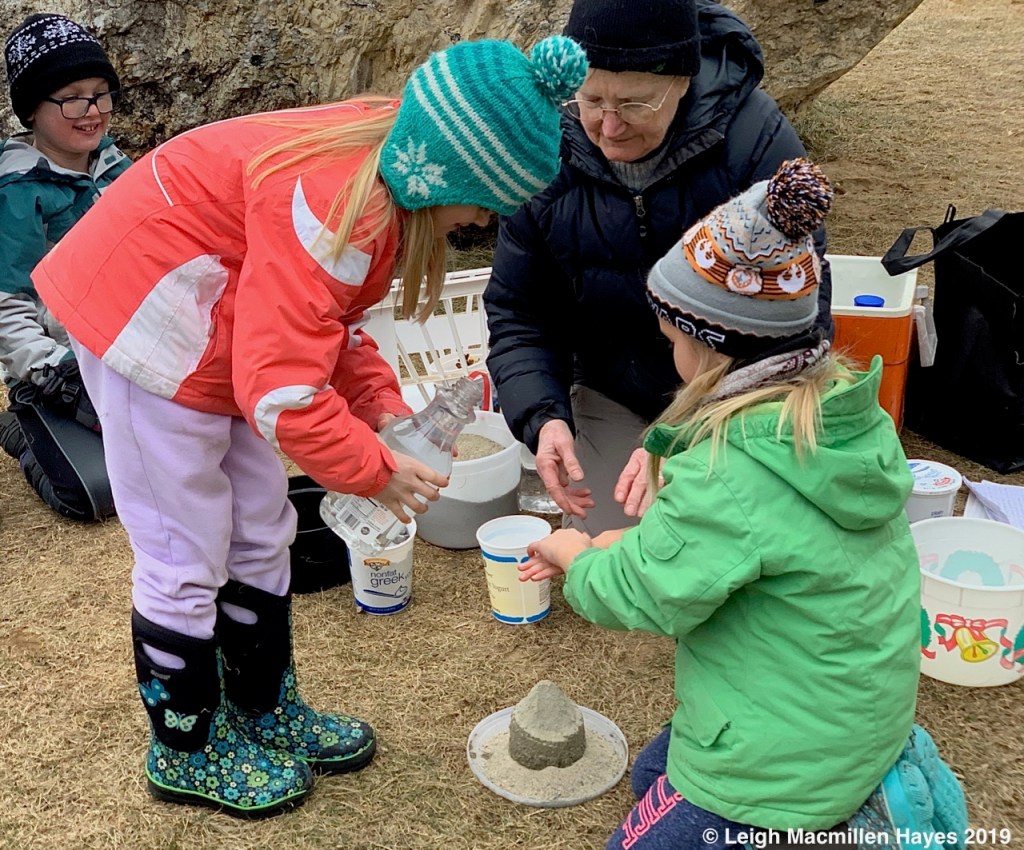
A mini mountain is born.

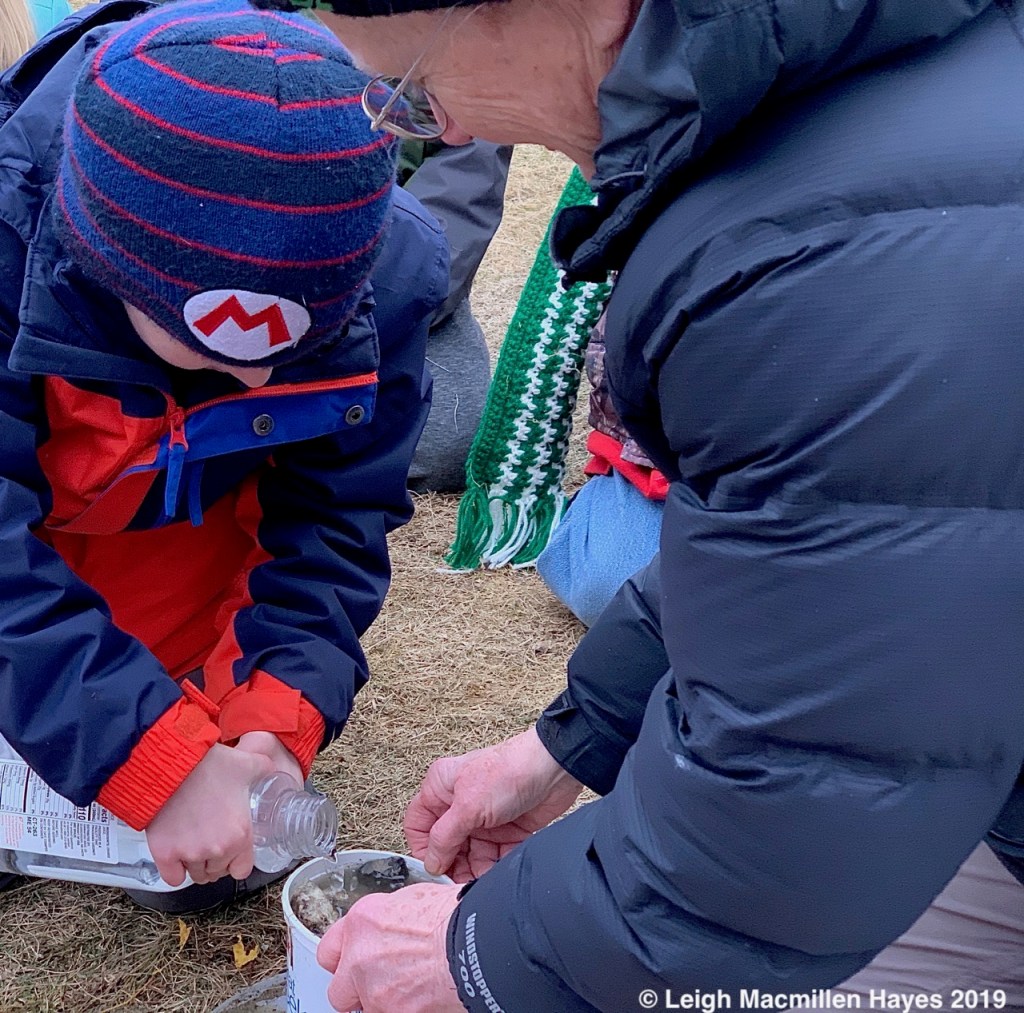
Pour rain (warm water) through clouds (wiggling fingers) to create a weathering situation.

Watch the mountain change as the water strikes it.

Slowly it “melts.”

Directions: Part 4

Review words to the erosion song the students have learned and show off various components that create a mountain.

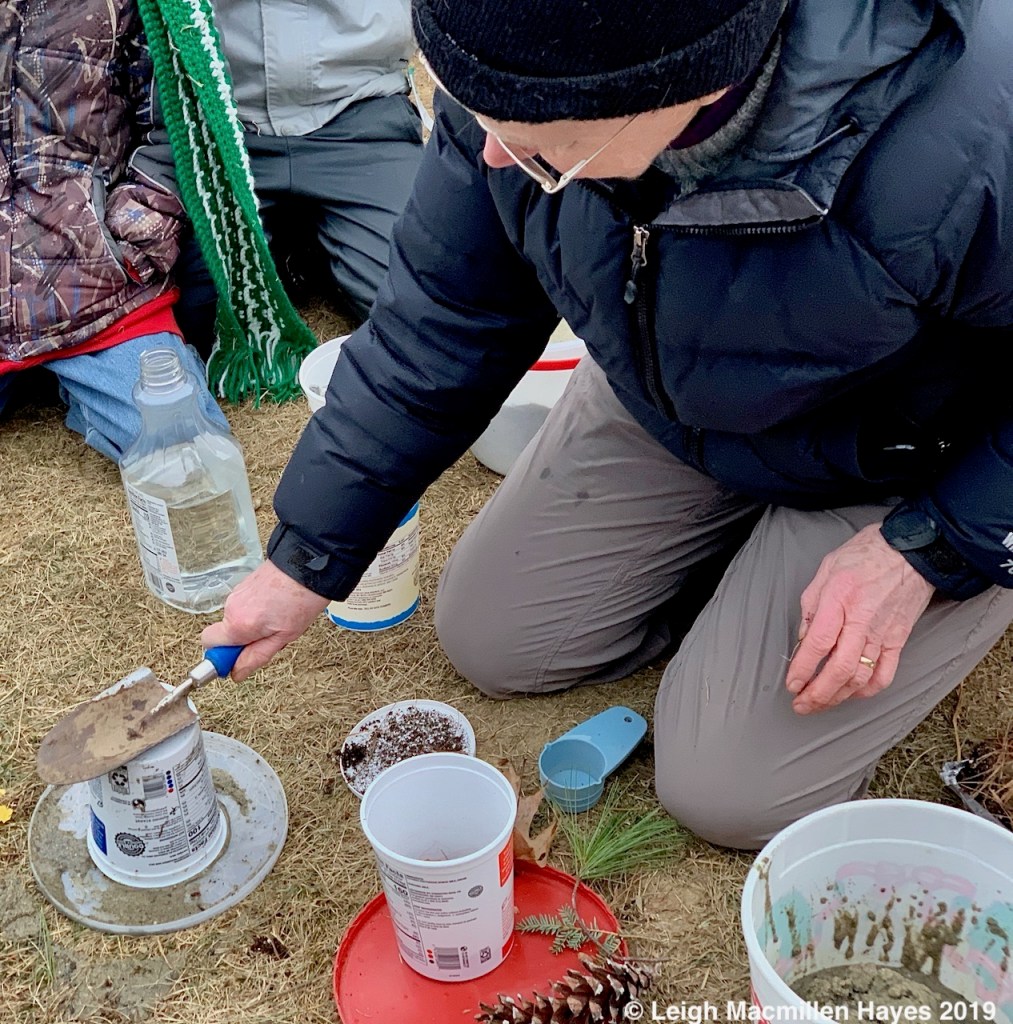
Have student pour top soil into container.

Add to it some seeds from hemlock and pine cones. Use the moment as a teachable one to note the differences between the two types of cones. (Not all cones are pinecones since they don’t all grow on pine trees.)

Stir in a crushed leaf, acorn, and the surprise ingredient.

Give many students an opportunity to add rocks to the mixture.

And then pour in a couple of bigger boulders.

Top off with a pinch of sand.

Pour in some water.

Replace a big boulder with a slightly smaller one.

Again, add some more water until mixture is moist.

Flip structure onto cover.

Give it a tap for good measure.

Ask the kids to share their thoughts.

And then, ever . . .

so . . .

slowly . . .

lift . . .

and release.

Smile as everyone exclaims.

A mountain is born.

Let students move in to admire (and covet the surprise ingredient).

And then . . . watch it rain again.

And the mountain quickly erode.

Two hours from start to finish: the final product.

Despite the mud and rocks and leaves and acorn and cones, I think the students would have fought over the coveted ingredient: gummy worms. Every mountain should have gummy worms.

Notes written in cookbook margin: Thanks to Sarah for letting me be a part of her lesson for Ms. B’s Forest Friday. I was blown away by the kids knowledge both as I walked the trail with my group of four and as a larger group. I was also blown away by Sarah’s demonstration. She’s one of my favorite role models when it comes to elementary environmental education.

Wondermyway meets the Bangor Daily News

At the nudging from one of the founders of the Maine Master Naturalist Program, Dorcas Miller, I submitted an article to the “Act Out” section of the Bangor Daily News.

To my pleasant surprise, it was accepted. (And they’ve asked for another–yippee!)

Here’s the link: https://bangordailynews.com/2019/12/10/act-out/maine-naturalist-befriends-a-ruffed-grouse/

Many, many thanks to Aislinn Sarnacki of the Bangor Daily News and “Act Out with Aislinn” for making it all happen.

Rejoice in the Unexpected

My hostess wasn’t home when I ventured upon her land today, but I went with her blessings. And in return was blessed.

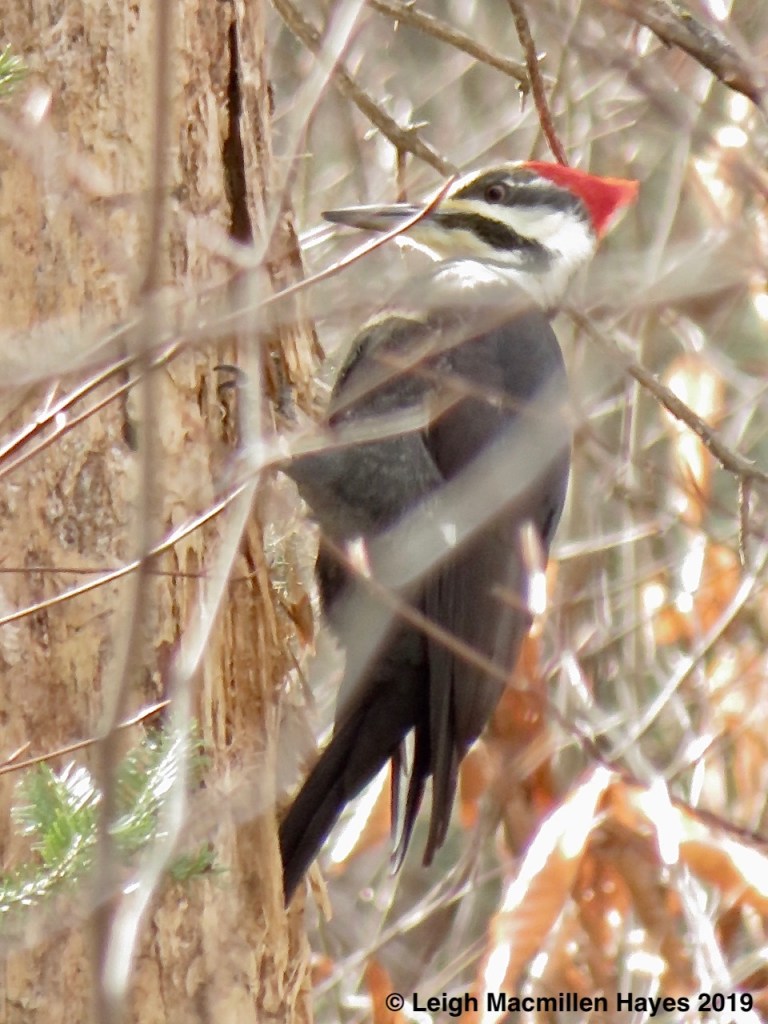
I’d barely stepped into the woods when a female pileated woodpecker called for attention as she tapped with intention and sloughed off pieces of bark in a quest for insects.

My own quest was to check on beaver activity, for I’ve traveled this land before and knew their previous hangouts, but . . . by the level of water behind the first dam the water was a wee bit low and I sensed no one was at home nearby.

Just below the dam, a tall sculpture created last year indicated that we grow ’em big in these parts. Beavers, that is. But really, last winter the water was higher and so was the snow, so it wasn’t a super hero beaver after all who had gnawed and shouted, “Timber.”

A wee bit downstream stood dam number 2, also not in current use. But . . .

By the path through broken ice, I suspected that an otter had checked out the scene rather recently.

Perhaps he had high hopes of finding someone at home. When I knocked, no one answered.

Dam number 3 was also defunct and I began to wonder if there were any beavers in the neighborhood.

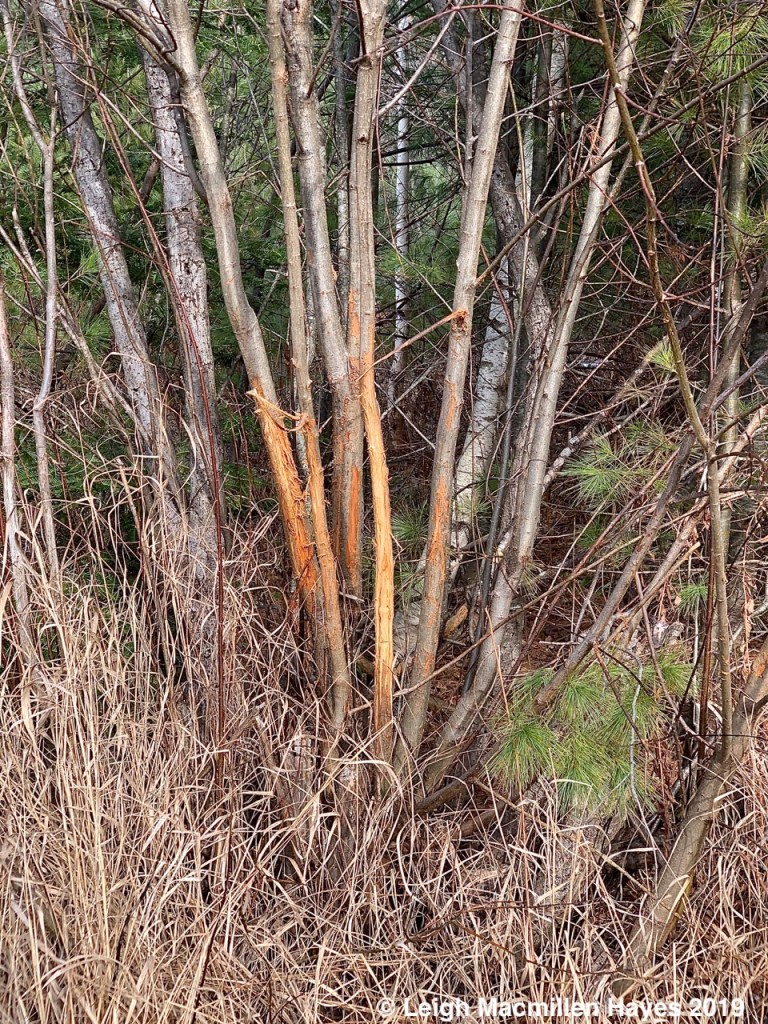
And then . . . and then I spotted a tell-tale sign: fresh incisor marks on a single tree. Do you notice how they are oriented left to right? A beaver must turn its head to the side in order to scrap the tree trunk and reach the inner bark with its upper and lower incisors.

Beyond the new works, were plenty of old, the shades of the wood telling the story of years of activity.

And on some trees, new met old, adding more colors and designs to the art work.

An old lodge stood in the middle of the wetland that was fed by a brook and stream, where ice sealed the world above from the world below.

A closer look at the lodge revealed that it had been compromised, and the memory of an exploration last winter reminded me that a predator had been attracted to it but didn’t seem to find anyone at home. Today, it seemed, the house was still an empty chamber.

As I continued along the edge of the wetland, I found one tree where a beaver merely took a quick taste and perhaps didn’t find it to his liking. Or . . . a predator happened along and he skedaddled back through the icy water to the safety of home.

It became apparent that someone was indeed home, just not in the first lodge. And by the color of the wood, the logging operation had occurred rather recently.

Wood chips on the ice added to the assumption that this was a recent harvest and if you look beyond, you’ll see two dome-shaped lodges in the offing.

From the shore, both looked well mudded, like we might add insulation and Typar to our homes to keep winter temperatures at bay. This technique also makes it resistant to attack from predators. What it doesn’t keep out is other undesirable visitors often in the form of hordes of insects.

The closest lodge was rather skyscraper in height and I began to wonder, was it the living room and the shorter one perhaps the kitchen? Did you know that beavers heap sticks until they are well above water and then gnaw their way up into the structure to create a chamber?

Much of the color surrounding the houses and throughout the wetland was provided courtesy of leatherleaf and its upright leaves and future flowers stored within the tiny buds.

Not far downstream from the two lodges, an infinity pool any homeowner might die for gave proof that someone was indeed home. Keeping the water high is important for beaver survival since they need to access their food supply of munch sticks stored underwater near the lodge and come and go from said homestead via a secret entryway. Secret to us and most of their predators, that is. Water snakes came find them in season. And otters can find them at any time, especially when the possibility of enjoying a meal of a young one seems a possibility.

Below dam number 4 water rushed and ice formed.

Dam number 5 was along a different stream, and though it hasn’t been in use for several years, its structure is worth honoring.

The meadow above invites others to take advantage and in the spring muskrats and wood ducks were seen in this place.

That’s the thing about beavers; they create wetlands that create habitats for others to enjoy, such as the deer that left behind some rubs on trees by dam number 1. From the raggedness at both ends of the rub and smooth wood between, I knew a buck had roamed this land and rubbed his antlers, leaving an inviting scent for a doe to notice.

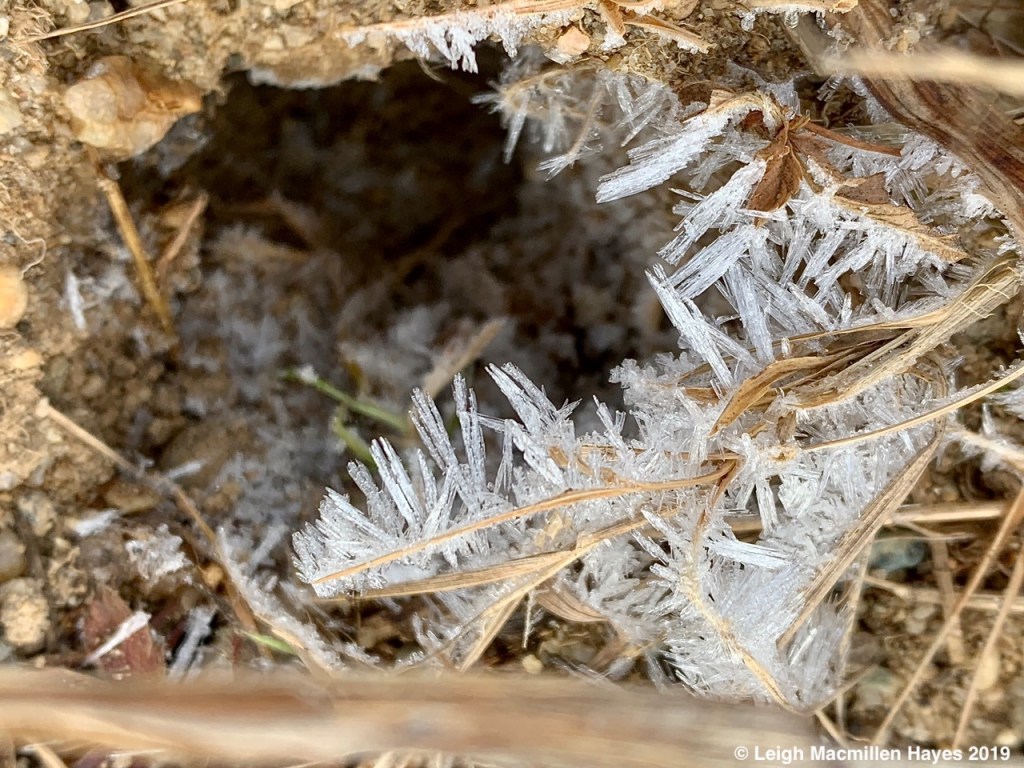
And a chipmunk hole surrounded by hoar frost indicated someone was eating and breathing within.

But . . . not all chipmunks have decided to retreat to their underground homes just yet. The funny thing about a chipmunk is that it can pose as still as possible for minutes on end so a predator won’t spy it, but the minute it decides to move, it chirps. Why is that?

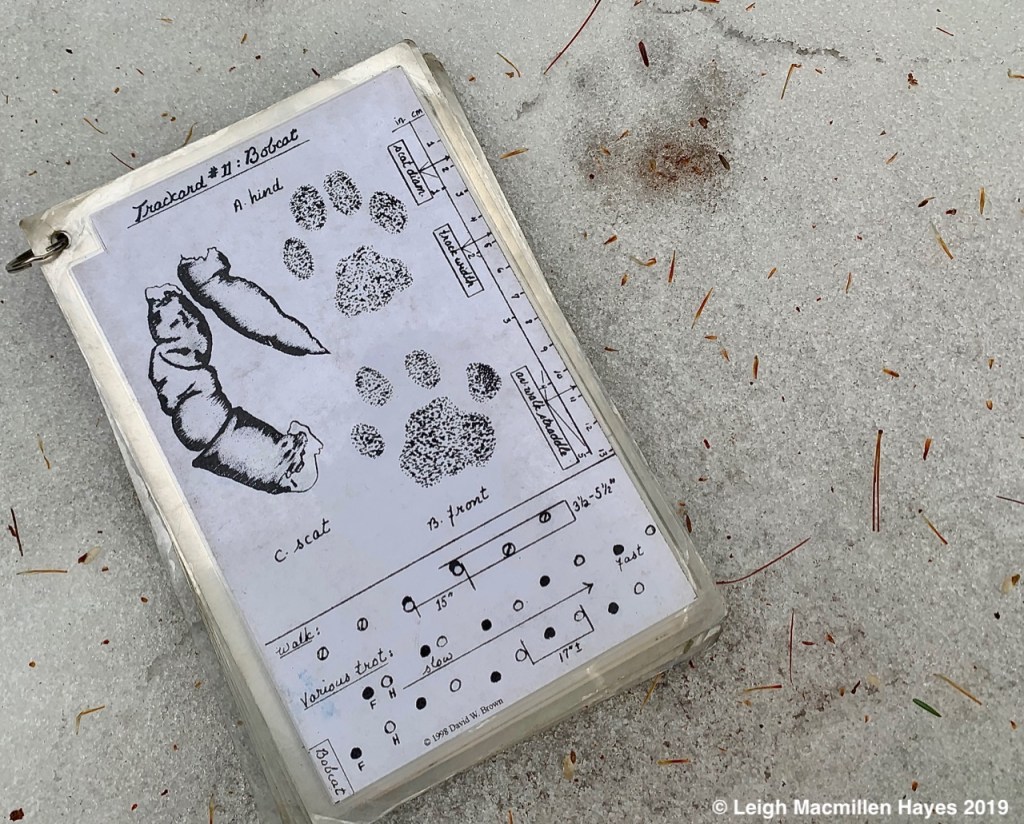
Certainly, it seems, it sends out a message to others like the bobcat who left behind a print or two or three on several patches of snow.

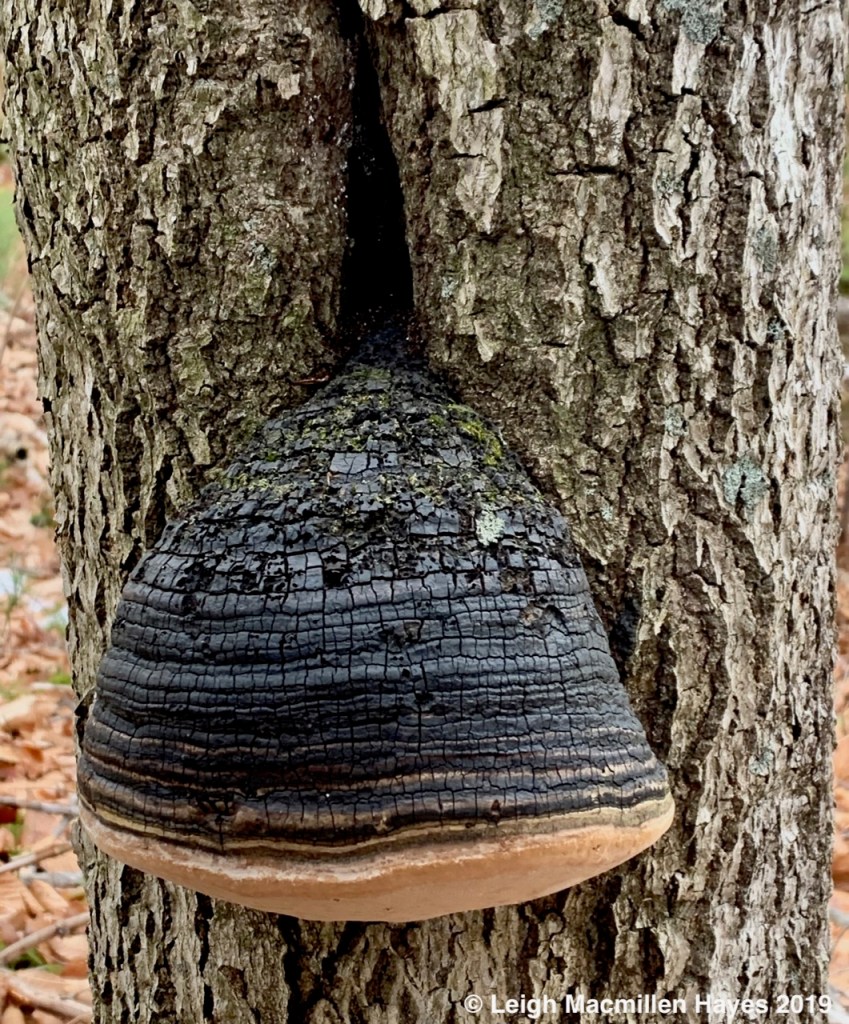
I traveled this land today because of the generosity of my hostess and so for her I found a bunch of fungi and decided to honor her with a false tinderconk as my way of giving thanks for letting me trespass almost anytime I want.

I’d gone to check on the beavers and was pleased with the discoveries I made for I know where they are and aren’t active. And I’ll return because those five dams and four lodges are only a taste of what her land has to offer.

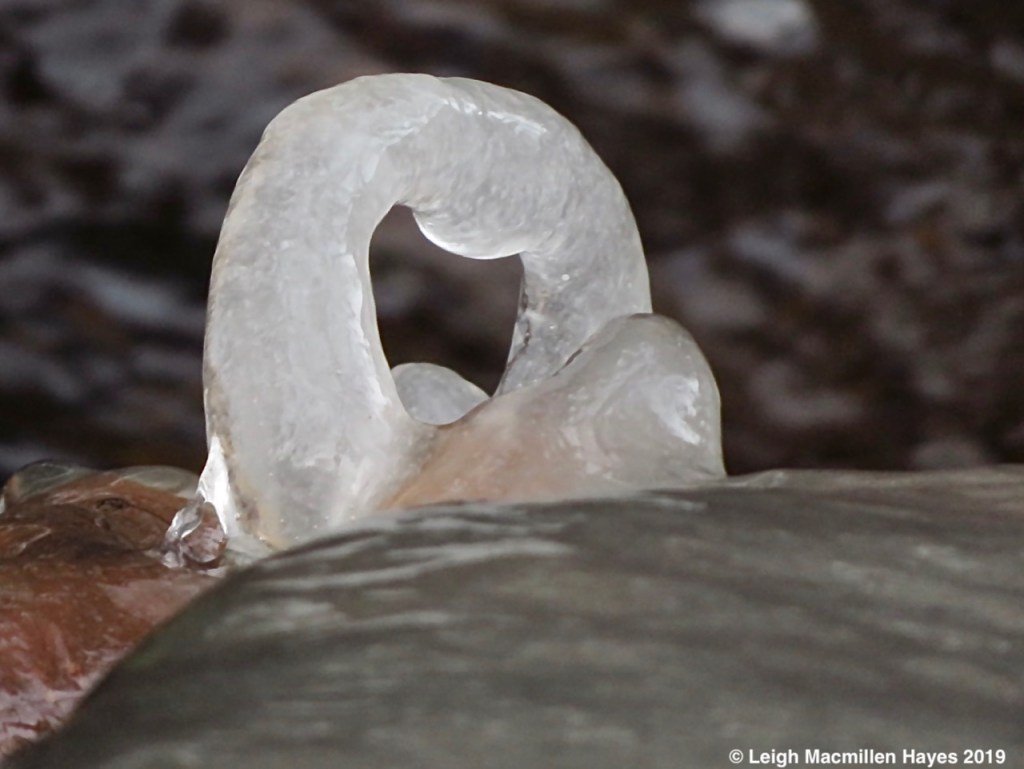
But, it was the ice that once again stopped me in my tracks. Like the water it forms from, I’m always awed by the artwork created, in this case chandeliers dangled.

Seriously. Seriously, my heart stopped when I found a three-dimensional heart sticking up from a rock. Seriously.

My favorite find of all though, was a reflection of my face as I rejoiced in the unexpected.

This next month I hope you’ll make time to do the same.

Black Friday Deals Stacked Up

Like most people, I look forward to the day after Thanksgiving, for it seems to mark the official beginning of the Christmas season and that means it’s time to get a head start on making and/or purchasing gifts for others. To that end, I decided to shop locally and support the neighborhood craftsmen and merchants.

Stepping into the first shop, I knew immediately I had to splurge on the Beaver Works for our oldest son. He loves to get away from Boston and spend time at camp, and these brand-spanking new sculptures will certainly increase the waterfront view.

In the flower shop, I couldn’t resist a hot deal on the delightfully woody structure of an Evening Primrose, the perfect gift for Joan. That being said, I’ve decided to give it to her as a birthday present since today is her day of celebration. I’ll have to keep looking for her Christmas gift.

In the same shop, I found an ornament for the Christmas tree . . . like we need more ornaments. Maybe I’ll decide to give it to Joan instead. Like she needs more ornaments.

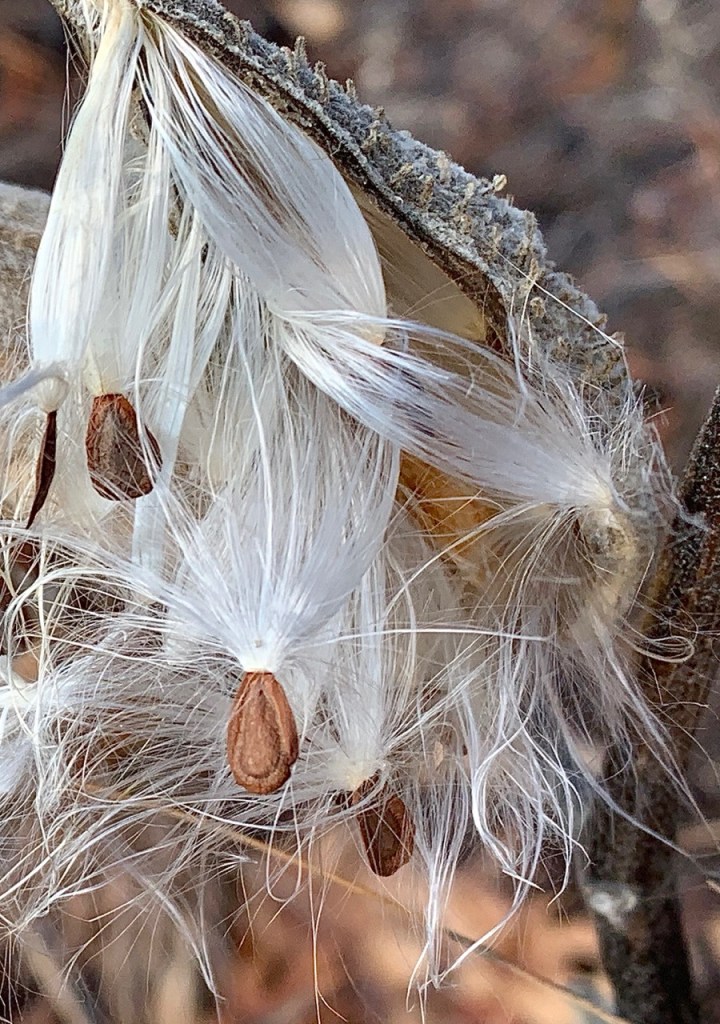
Around the corner from the ornaments, a perfect display of milkweed seeds with their parachutes about ready to be sent off in the breeze and immediately I thought of Juli who has planted a love of and curiosity about the natural world in her four children. What fun it will be to continue to watch them grow and blossom.

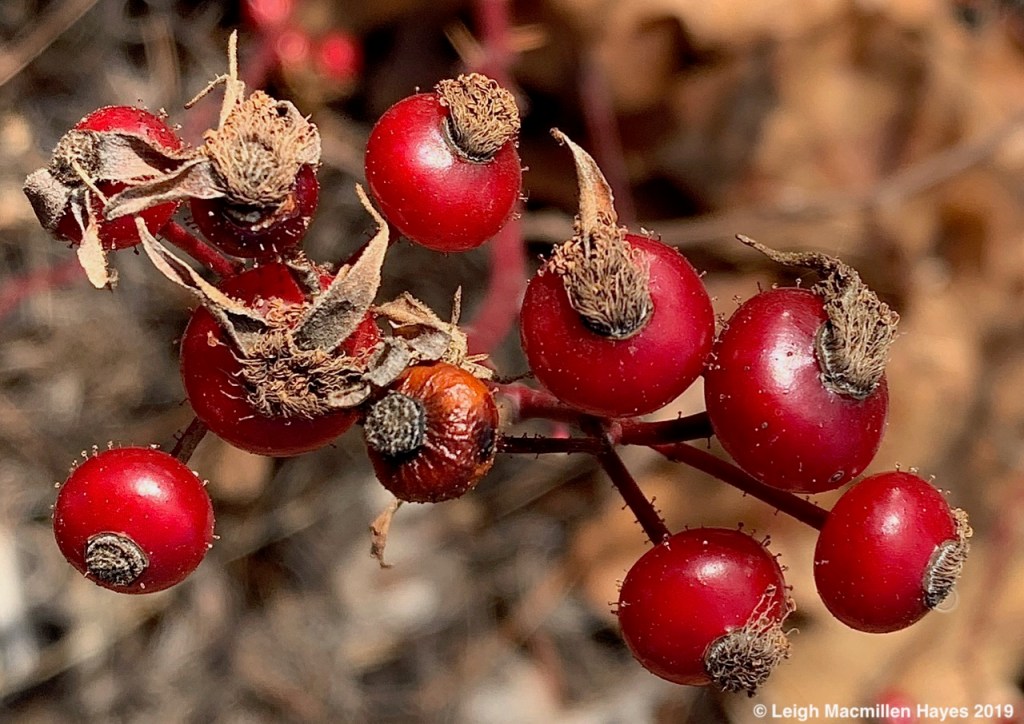
The kind saleslady in the shop offered my a sweet treat that made my heart smile for it was a snack that would be heaven sent . . . to my dad. Had he been with me, he would have stood by the bowl of red berries and consumed all of them. Dad was never one to pass by a rosehip without sampling a tasty treat.

Having traffic jams and overcrowded sidewalks to contend with, I moved cautiously to the next store, hoping to avoid too much mayhem along the way.

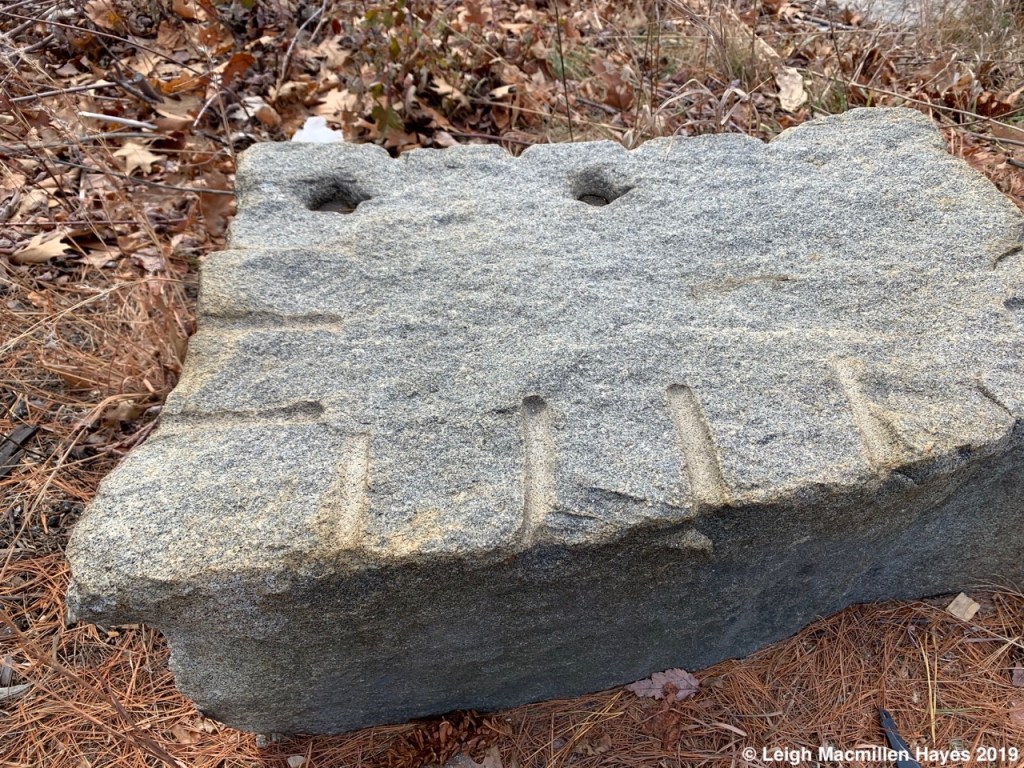
Stepping into the antique shop, I practically stumbled over Jinny Mae’s gift . . . a piece of split granite which bespoke the local history. Even though it’s about my town and not hers, she appreciates all tales of yesterdays.

At the next shop, I decided to search the racks and find something for Mom. Like Dad’s gift, it would also have to be heaven-sent, but it’s the thought that counts. Mom was a bargain hunter extraordinaire, so I had to make sure I had a coupon for whatever item I chose.

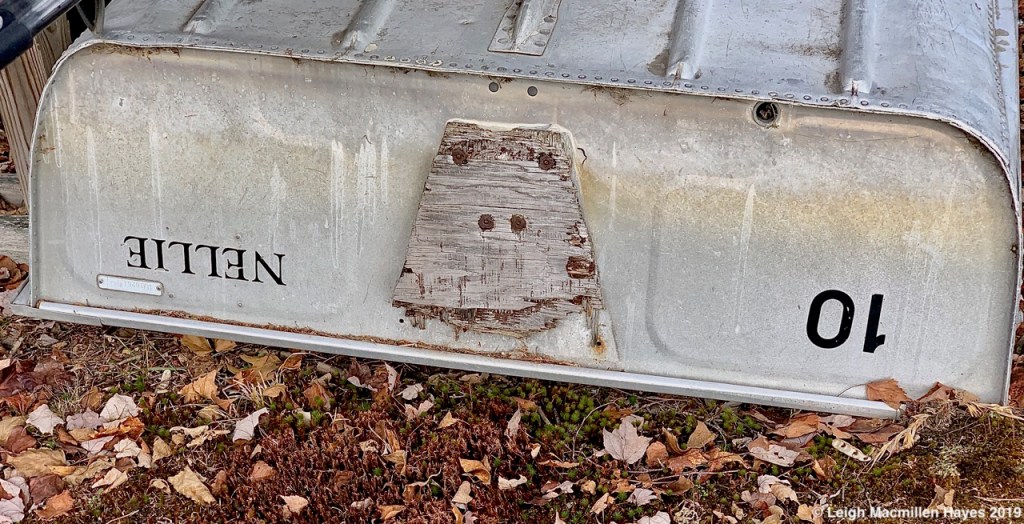
In seconds I spied one that had her name on it . . . literally. And, of course, she was a “ten.” After all, she was MY mom. Memories of hours spent fishing in Clinton Harbor flashed through my mind and I knew this one would definitely get added to the cart.

Exiting the last store, loud sounds greeted me, so I did my best to bee-line to their source. Though I didn’t quite understand what the ski shop was up to given that there was only a wee bit of snow in a couple of aisles, I found two groomers moving the white elephant merchandise around.

No matter, because I was drawn to that location, I found the perfect gift for our youngest son–a map of the mountain where by the age of three he was leaving me in the flakes as he glided straight down. I have to admit, I couldn’t wait another month and so I sent him this gift already. But, knowing how slow the mail is between Maine and New York City, he probably won’t get it until then anyway.

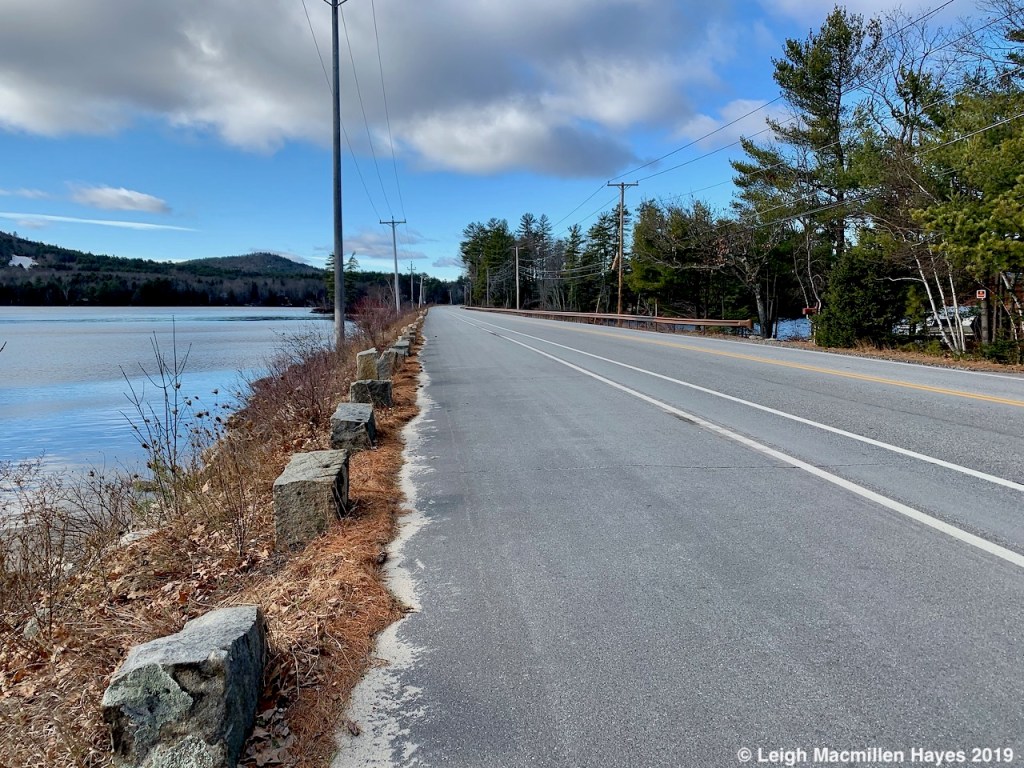
All the while, my head was spinning as I tried to think of a gift for my guy. And then, right before my eyes it appeared in the causeway gift shop and I knew instantly that he would love a photo of a little camp beside a lake that would remind him of ours.

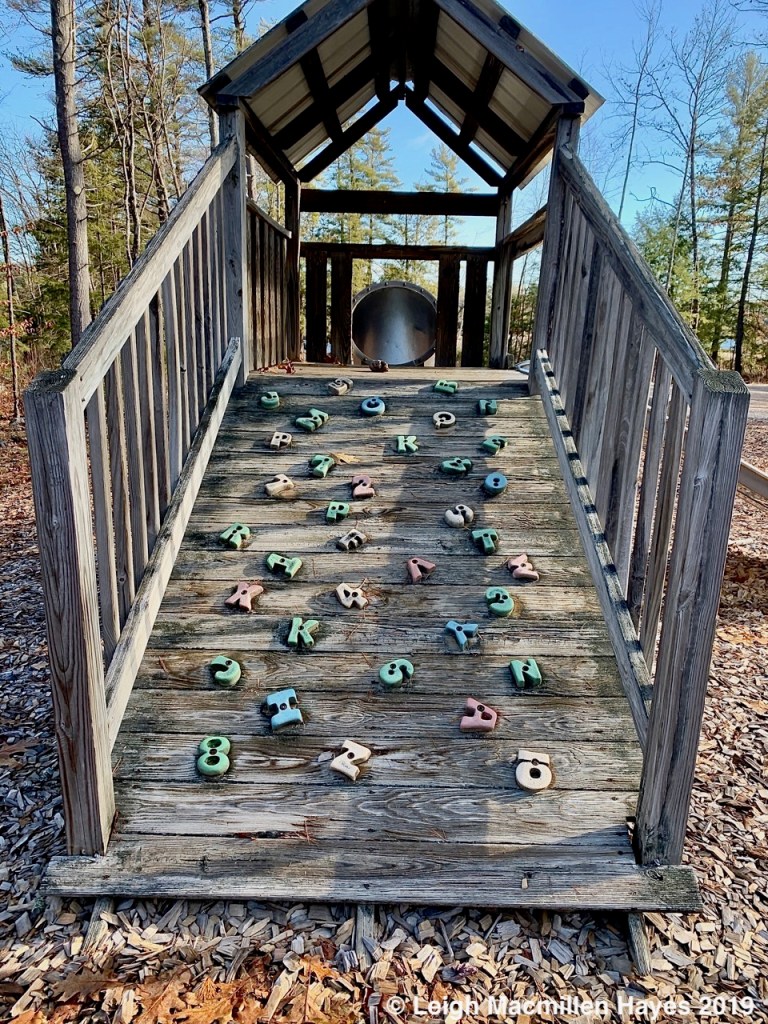
In the same shop, I spied a playset that would have to be shared by three, Marita, Beverly, and Lucia. I knew they would recognize the meaning behind it and have visions of selling Peonies for Playgrounds so many years ago to purchase this very item. They’d also be pleased to note that though its location has changed, the only update appeared to be a shiny new center slide.

I smiled with this find for them, especially when I saw that the climbing wall was still intact.

Bedecked in Christmas colors, the gift shop had so much to offer including refreshing scents.

On one wall I spied another photograph–this one intended for my Sweden friends since it was of Moose Pond looking toward Black Mountain and Old City in their town.

For Dorcas, I discovered a fun item she might include in her next tracking book: a perfect walker biped.

Leaving the island gift shop behind, I soon entered the aquatic sports store where I knew I had to buy a stream for my great nephews. I know their mothers will not approve, but their fathers certainly will. Little boys love to play in water and who doesn’t want a stream of their own. I can already hear the boys’ giggles as they’ll look for crayfish and macroinvertebrates. and launch Pooh sticks and probably splash each other and . . . and . . . and I can get away with giving them this because I am their Great(est) Auntie. It doesn’t matter that neither is yet two years old. Nor does it matter that they can also be called my grand nephews . . . that would just make me their Grand(est) Auntie.

My last stop of the day was the ice sculpture store where I found one that I knew would tickle the fancy of Faith and Sara because they like to look for images within images. When I gift them this, I’ll suggest they might see a dragonfly. Knowing those two, they’ll challenge me with the vision of at least one more species.

I’m not much of a shopper, but did feel like I made some doorbuster purchases and I can check a few people off my list with the exclusive specials I snagged as the Black Friday deals stacked up in my cart.

Now it’s time to brew a cup of tea and get to the gift wrapping.

A Bunch of Gobbledygook

Most people only hear “Gobble, gobble,” from a turkey. But listen carefully and you might hear something more. That’s what happened to one young boy.

You see, once, a long time ago, the boy and his father headed out for their annual turkey hunt. It was a raw and blustery November day with snow already on the ground as the two left home and traveled in different directions.

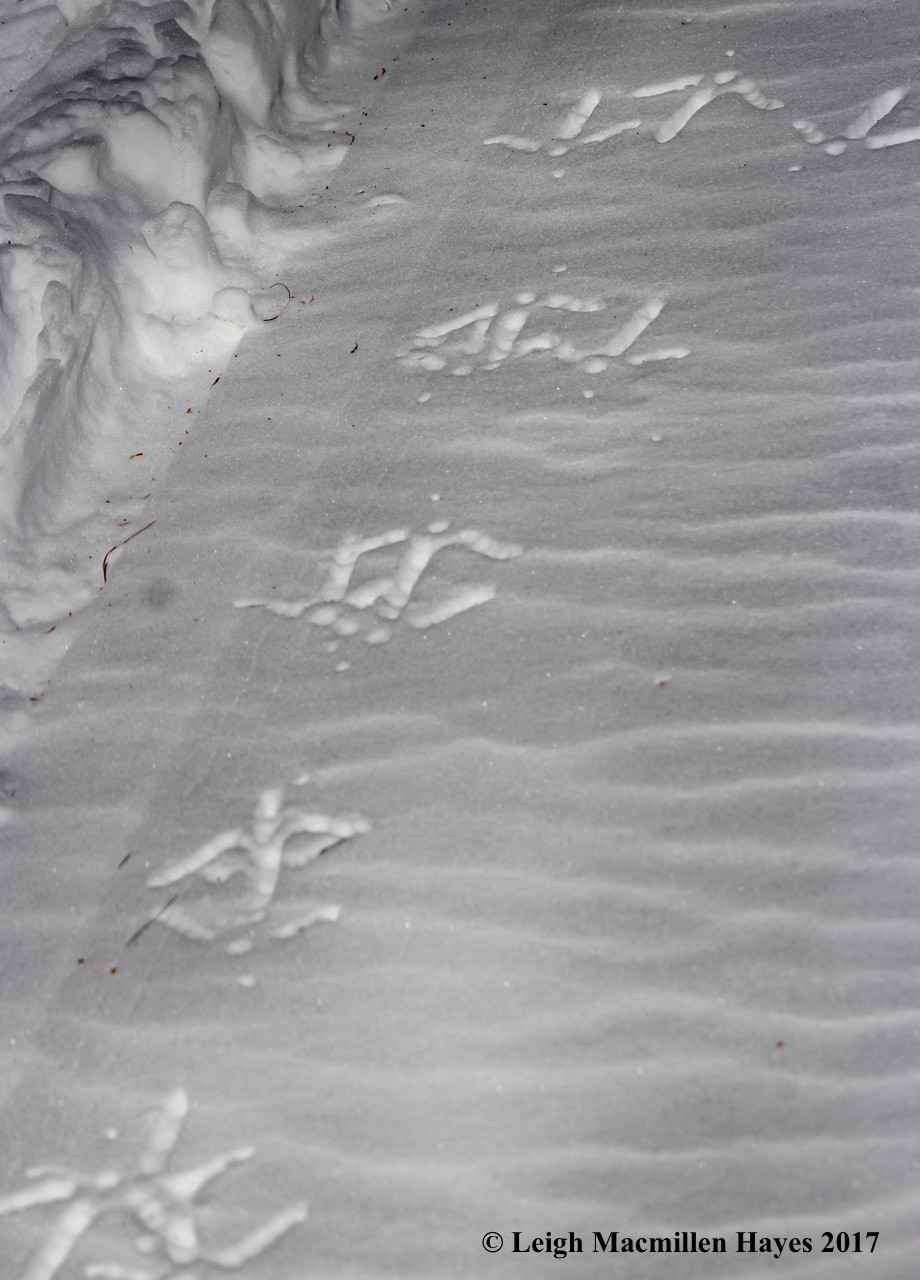
t1-turkey tracks

All morning, the boy followed turkey tracks in the snow. Exhausted, he sat to eat his sandwich on a rock sheltered by hemlock trees. Slowly his eyes drooped, but a sound suddenly startled him.

t2

“Gooble, gooble.”

Quietly, the boy reached for his musket.

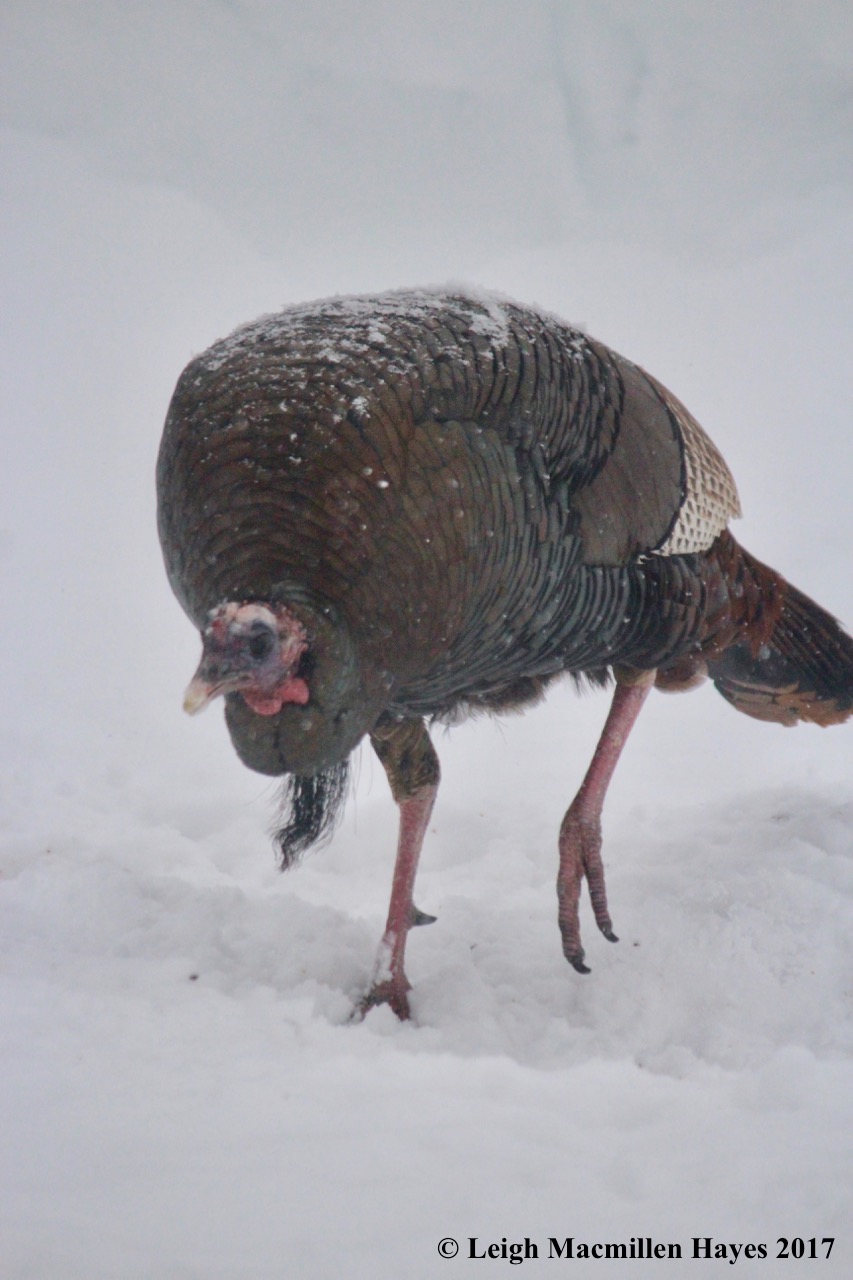
“What do you think you are doing?” asked the turkey.

“Huh?” replied the boy.

“I asked, what do you think you are doing?” repeated the turkey.

t3

The boy shook his head. “Are you really talking to me? Or am I dreaming?”

“You decide,” said the turkey. “Oh, and I don’t think we’ve properly introduced ourselves. I’m Tom.”

“I’m Tim.”

“Well, Tim, what are you doing with that thing in your hands?” asked Tom.

“I’m hunting for, um, for . . . ”

“Yes?”

“I’m . . . I”m hunting for you,” said Tim.

t4

“Me? Well, you’ve found me. But . . . wait a second,” said Tom as he ruffled his feathers.  “You’re not going to shoot me, are you? Oh, I know–you are supposed to bring back a turkey for Thanksgiving dinner, right? But did you know that the Pilgrims didn’t eat turkey at the first Thanksgiving feast? They didn’t have time to hunt. They were too busy harvesting vegetables, learning to fish, building houses and preparing for a harsh winter.  Massasoit and the others who introduced the feast brought venison. So . . . if you want to help put the tradition back into Thanksgiving, I suggest you turn your attention toward deer or fish or just eat vegetables. Besides, think about my surname: Meleagris gallopavo, the scientific nomenclature for wild turkey. Such an impressive name certainly proves my importance.”

t5

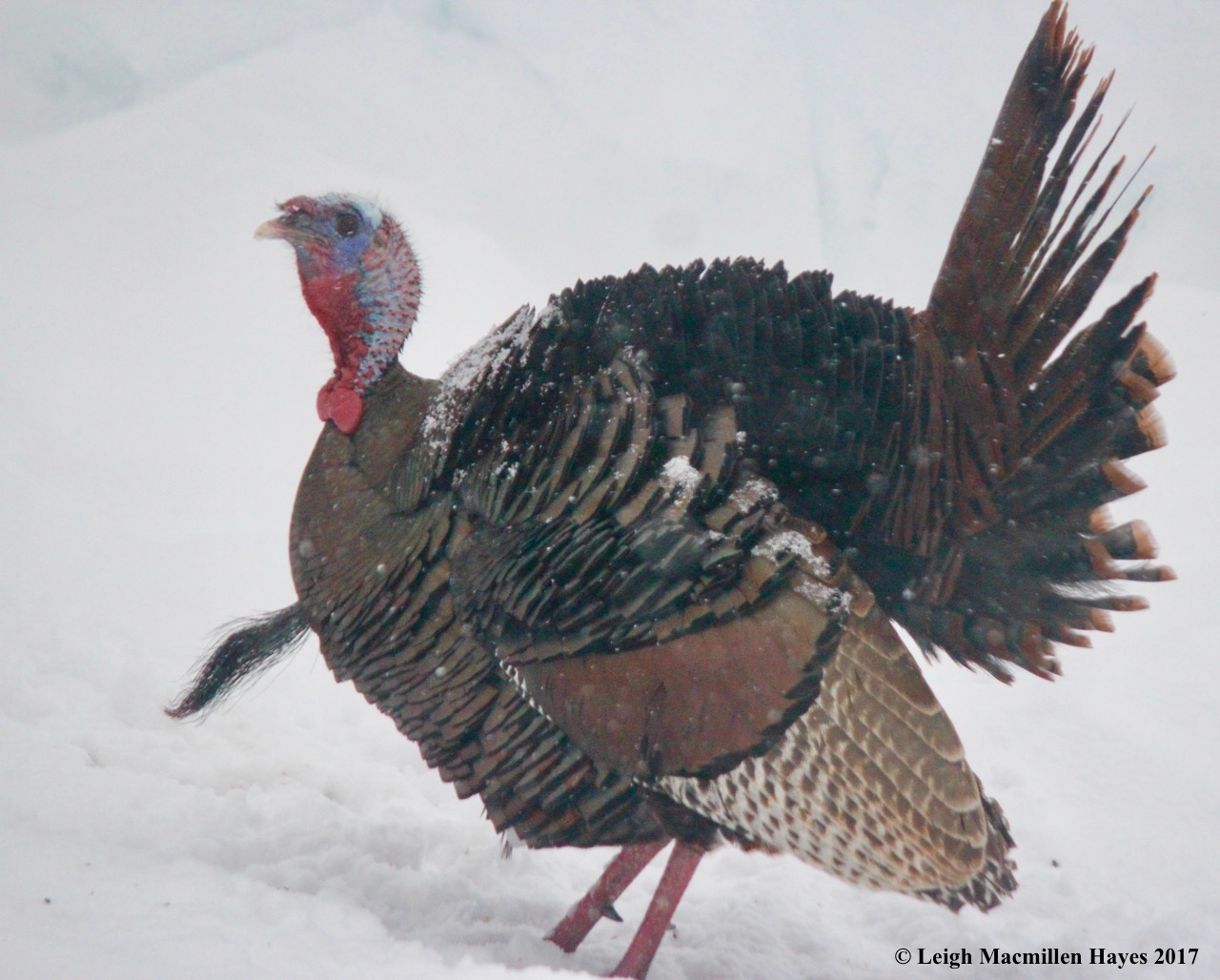
Just then, they heard Tim’s dad approach. Tom went into full display, gobbled quietly, and waddled back under the hemlocks.

“Tim, did I hear you talking to someone?” asked his dad.

“Uh, no Dad,” said Tim. “I wasn’t talking to anybody.”

“Oh, well, did you spy any turkeys? It looks like there are lots of tracks around here”

“No turkeys in sight right now,” said Tim. “But I was thinking–what if we eat fish instead of turkey this year?”

“Fish?” asked his dad.

“Yeah, fish,” Tim said as they walked home. “I don’t think the Pilgrims actually ate turkey. That’s a bunch of gobbledygook. We should have a traditional meal this year.”

They turned a corner in the trail and Tim glanced back for a second. Tom winked from his hiding place under the trees. Tim winked back.

And all lived happily ever after, always enjoying the Thanksgiving feast–with fish as the main course some years, and spaghetti other years.

Happy Thanksgiving dear readers! And on behalf of the Meleagris gallopavo family, I seek your help to save them from being roasted yet again.

Matter of Nature

Mid-morning this email message arrived: “Hi Leigh,
I just returned from Heald Pond Road GLLT trail with this sample. There are other white hair clumps on several rocks along the path about 8 blue signs in.
” The attached photo was of a clump of deer hair. Why the clump? Why the location? Was there more? Was it a mammal versus mammal kill site?

I had to know. And so when another friend contacted me about a hike later this weekend, I asked what her afternoon plans were for today. She’d be free by one. Perfect. We agreed to meet just after that at parking lot #1 for Heald and Bradley Ponds Reserve.

We weren’t exactly sure which trail to follow as two headed off from the lot, but placed our bets on the Chestnut Trail. As we started, I began to count trail blazes, but soon lost track.

Heck. There were other things to notice, including the minute blue stain fungus still holding court in its fruiting form. I’m enamored by so many different fruiting forms, but I think if someone asked which is my favorite, it would be this one. The color. The teeny structure. The fact that when it’s not fruiting, one can easily mistake it for a painted trail blaze.

It appeared that I wasn’t the only one who felt such love. Do you see the Springtail, aka snow flea? The size of the snow flea should provide perspective on the size of the fruiting body–lilliputian at best.

And then on a white pine sapling another structure captured our attention. Who was the creator?

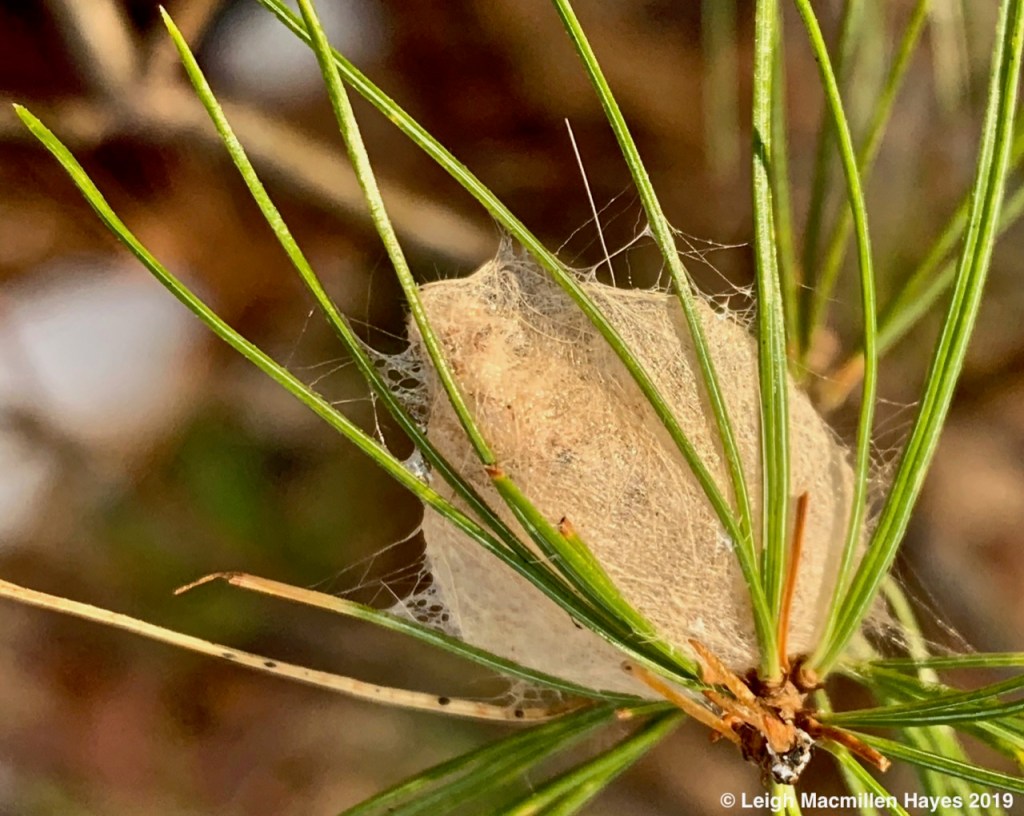
By all the hairs in the structure, we suspected a tussock moth caterpillar. We also wondered if there is a good guide to cocoons. If you know of one, please enlighten us for we see them everywhere in every form and desire to know more. As much as we pay attention, we realized we need to watch even more closely and perhaps one day we’ll be honored by discovering the creator.

So, truth be told, we left the cocoon behind and continued along the trail searching for deer hair, but suddenly realized we’d lost track of the number of trail blazes. At a fork in the trail, we figured we’d gone too far, so we walked back to the start, turned around and tried to be present in the moment as we counted blazes. Of course, we got distracted, but had a general idea and still no deer hair. We again reached the fork and decided to split up. Along the route I explored, a female Hairy Woodpecker made her presence known by tapping at the tree trunks in hopes of detecting an insect tunnel.

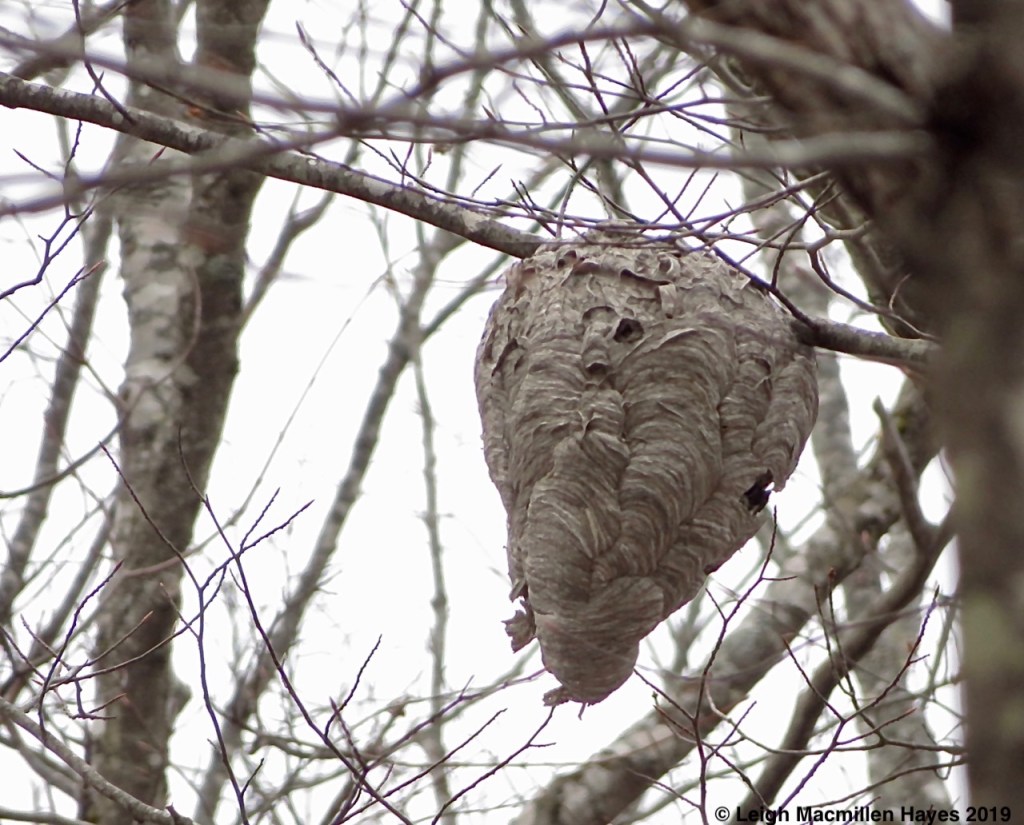
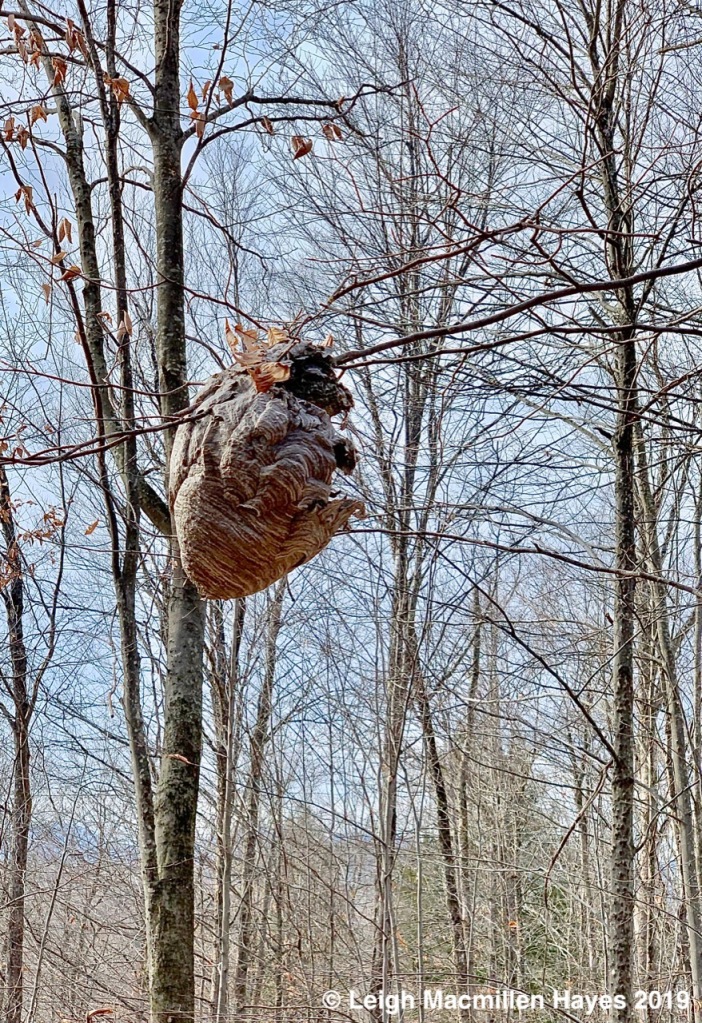
At last I found the hair, a few more than eight blazes out. I went back to find my companion, Pam, and as we regrouped, the woodpecker worked other trees. And because we paused to admire her, we spied a Bald-faced Wasp nest dangling, much of its papery structure still intact. Why? Why? Why? Why are all wasp nests similarly shaped. It’s the same for so many other aspects of nature and internalizing the innate nature of it all is beyond our understanding.

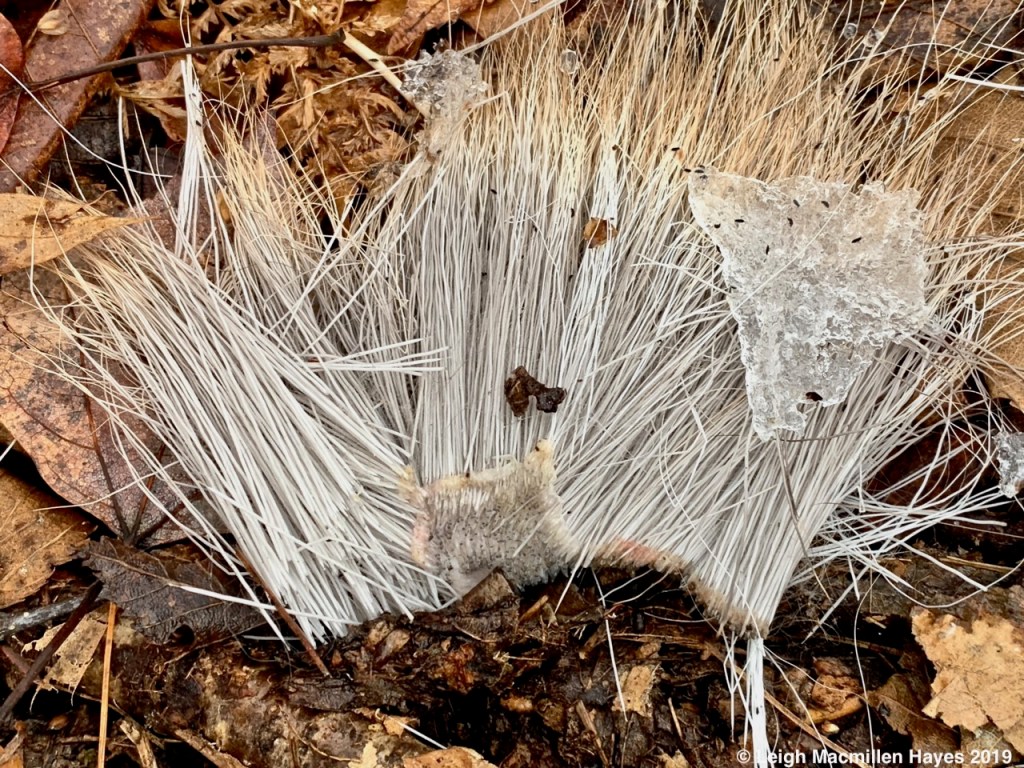
Finally, I showed Pam the hair, rod-like in structure for such is its winter insulating form. Softer, curlier hairs were also in the mix. Had these tufts been pulled out? We wondered what had happened while the teeny, tiny Springtails made themselves at home on the shafts, their preference for moist conditions met by the location.

Channeling Sherlock Holmes, we searched for more hair and found clumps and tufts and even pieces of pelt.

Flipping one over, we wondered how it had come to be on the trail. Was the deer attacked by another animal? But . . . there was no blood.We eventually searched off trail, expecting to find a carcass or other signs of a confrontation. Nada.

But, we did find other things to make note of like an open catkin of a Yellow Birch resembling a cone, some of its babes already sent off to make their way in the world and others awaiting a moment to fly the coop.

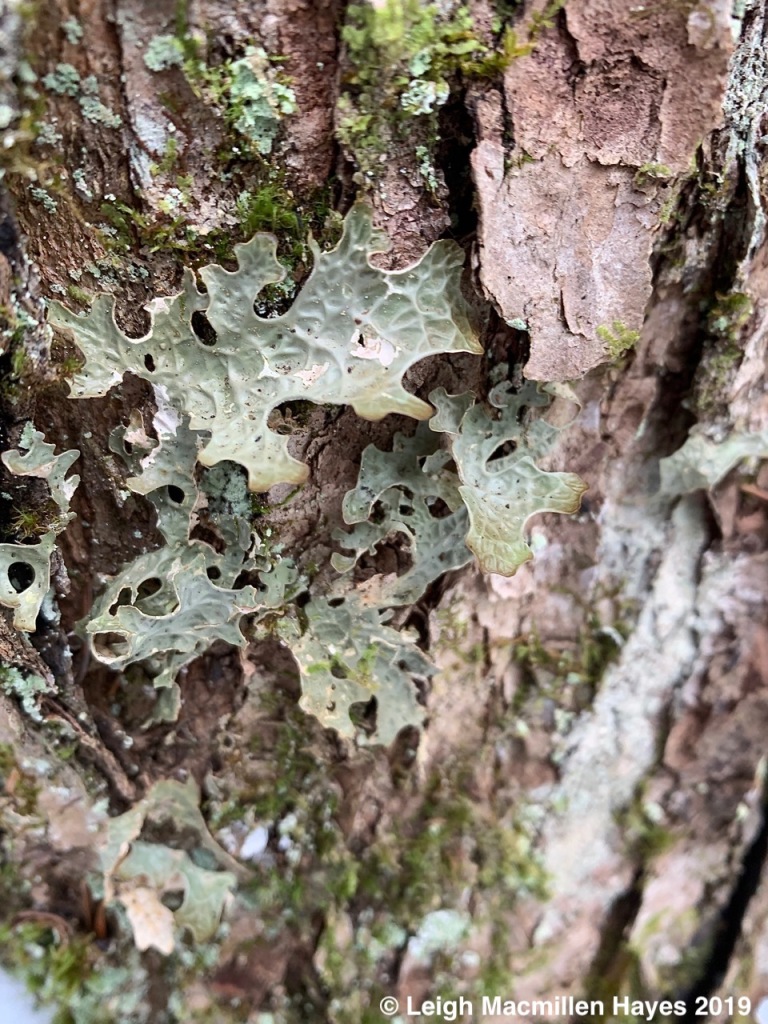
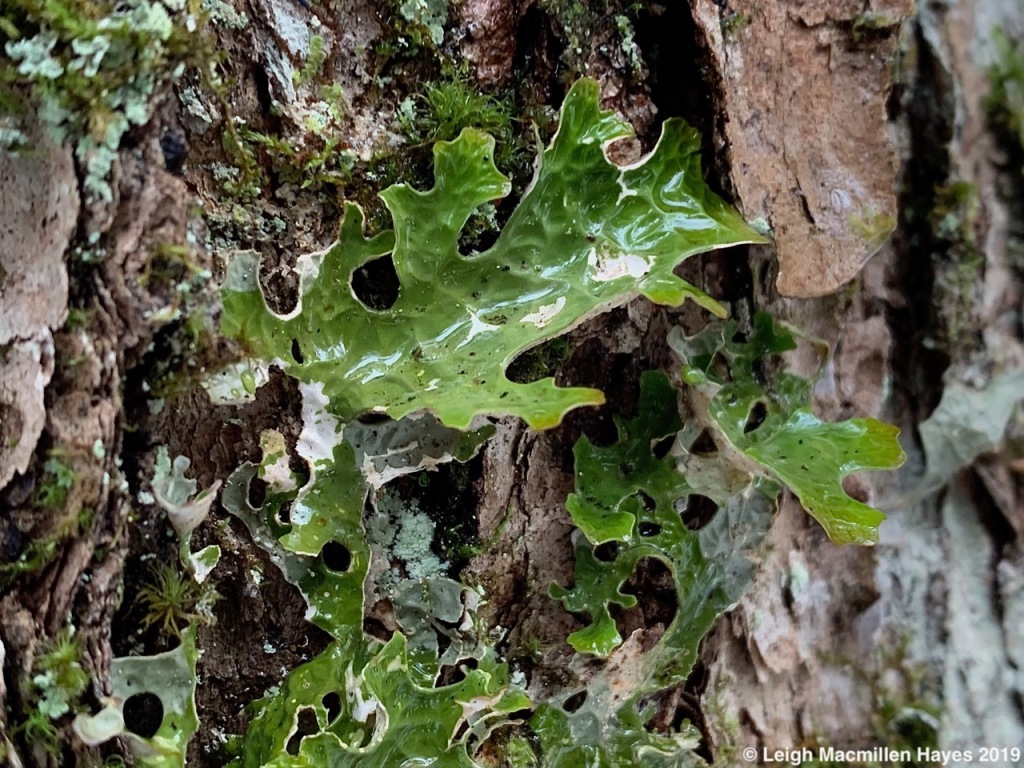
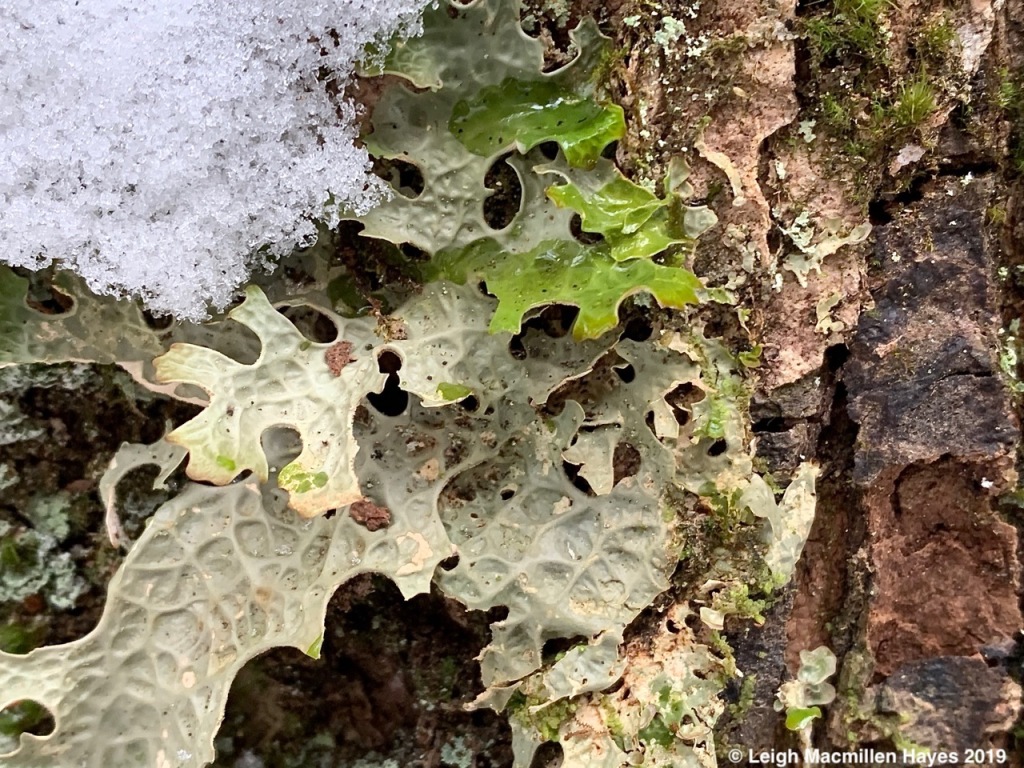
There was also some handsome Lungwort Lichen to admire, its ridges and valleys reading like a topographical map.

Back on the trail, we continued forward and found more clumps, determining that it was spread about in a thirty foot section. Near some clumps we found that moss on rocks in the path had been disturbed. What was going on?

Over and over again, we got down to examine and photograph our finds.

At the next Y in the trail, where the grape ferns grow, we turned to the right. And found another clump of hair a wee bit along.

We also discovered a beautiful scalloped fungi with gills that we couldn’t recall ever meeting before.

And we made a really cool discovery that took us some time to understand because neither of us recalled making its acquaintance previously. Or at least we think we understand it. Soft in form and many veined, we wondered if it was the cellulose of a leaf, perhaps a maple. Once we found one specimen, we began to see many, some possibly maple and others from flower leaves gone by.

Speaking of flowers, we recognized one of a most unique structure: an American Basswood. The hairy, nutlike fruit was once a small greenish flower uniquely attached and hanging under a pale, leaflike bract.

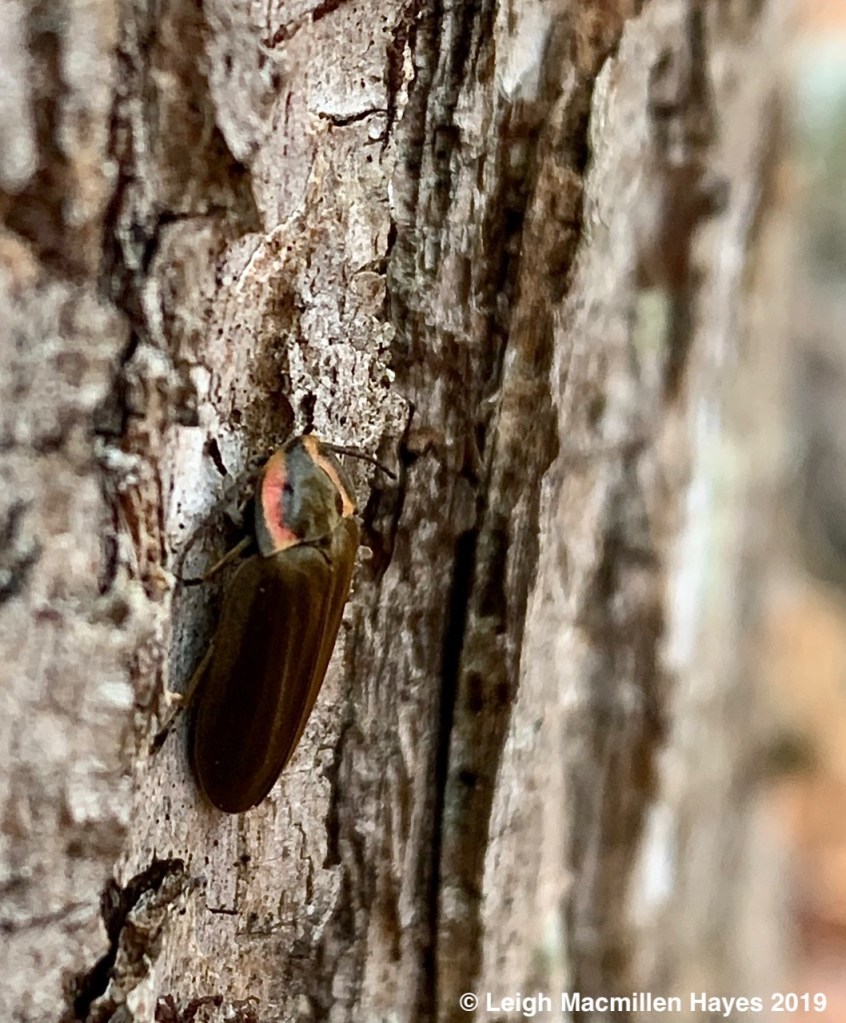
As we looked at the basswood bark, a Winter Firefly caught our attention. How can a firefly glow in the winter? Do they? Adults don’t emit light and do hide in the bark of trees, so unless we pause to look for other things such as rubbing our hands along the smoothish bark today, they largely go unnoticed.

It was getting dark as we made our way back to the parking lot, when we spotted one more find–that of another caterpillar cocoon. Was it a Promethea Moth? I almost don’t think so, but seeing so many cocoons makes me want to better understand their structures. Do you see the guideline attaching the cocoon to the tree? Maybe it wasn’t even a moth. But if not, then who?

Who? What? When? Where? Why? How? Indeed.

As for the deer, we ended up suspecting that a hunter had shot it and carried it out, perhaps pausing to drop and drag it for a few minutes. It didn’t all make sense, but it was the best we could determine.

Everything else was a matter of nature.

Giving Thanks Mondate

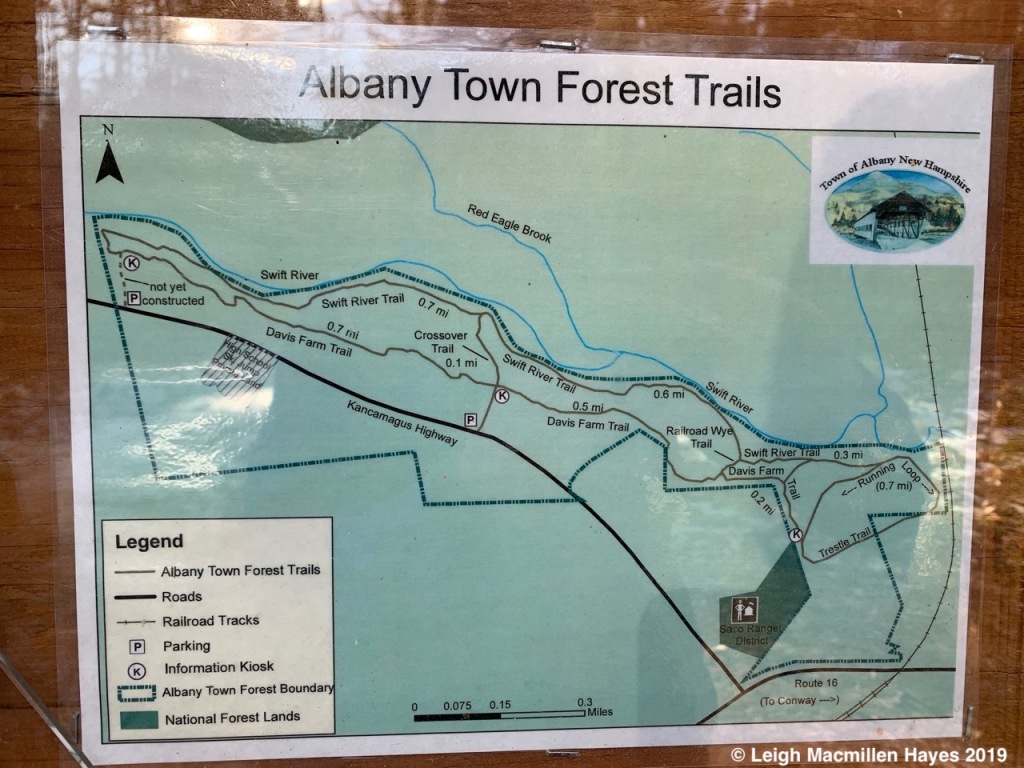
Today’s adventure found us exploring another “new-to-us” trail system, this one located beside the Swift River in Albany, New Hampshire.

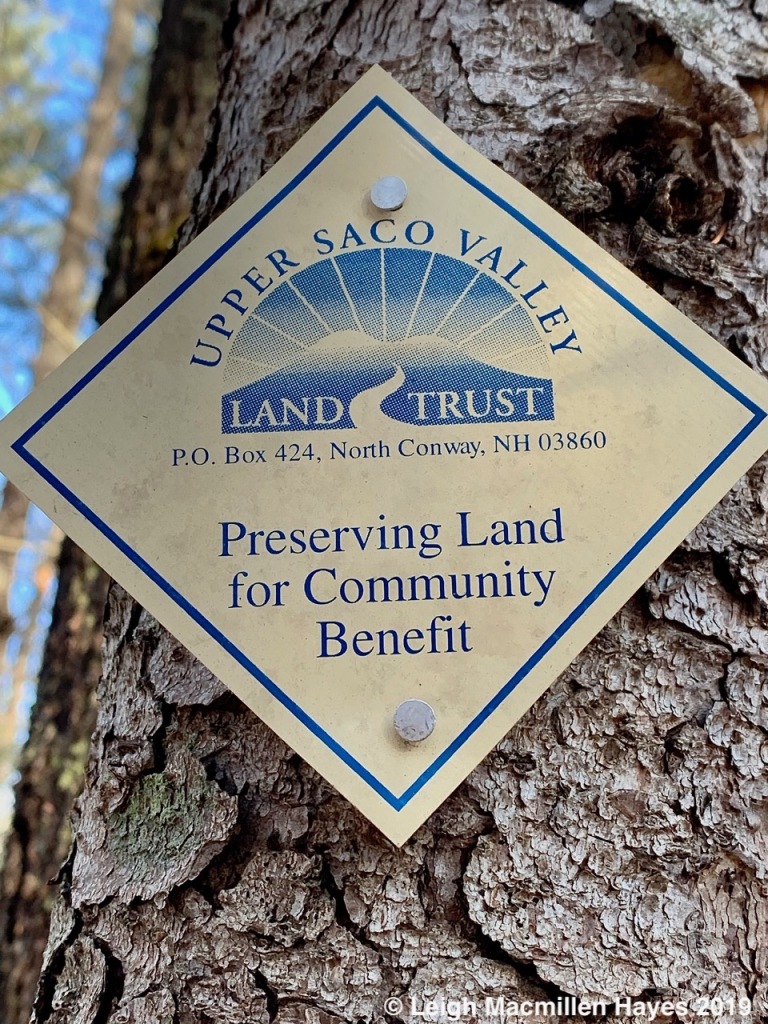
The Albany Town Forest is protected with a conservation easement by Upper Saco Valley Land Trust. It seemed apropos that we should choose such a trail for today marked the last day with the land trust for their Outreach and Office Manager, Trisha Beringer. Trish is moving on to new horizons, for which I commend her, but at the same time, I’ll miss bouncing collaborative ideas off of her, searching for anacondas as we paddle local rivers, and giggling till we almost wet our pants as we try to strap kayaks onto our vehicles. (Wait, what? An anaconda? In Maine or New Hampshire? Well, when you’re out in the wilds with Trish, you never know what to expect. We did once encounter three otters.)

The route my guy and I chose for the day was posted at the kiosk located on the Kancamagus Highway, aka the Kanc. Our plan: follow the outermost trails in a counterclockwise pattern–just cuze we felt like going against the grain.

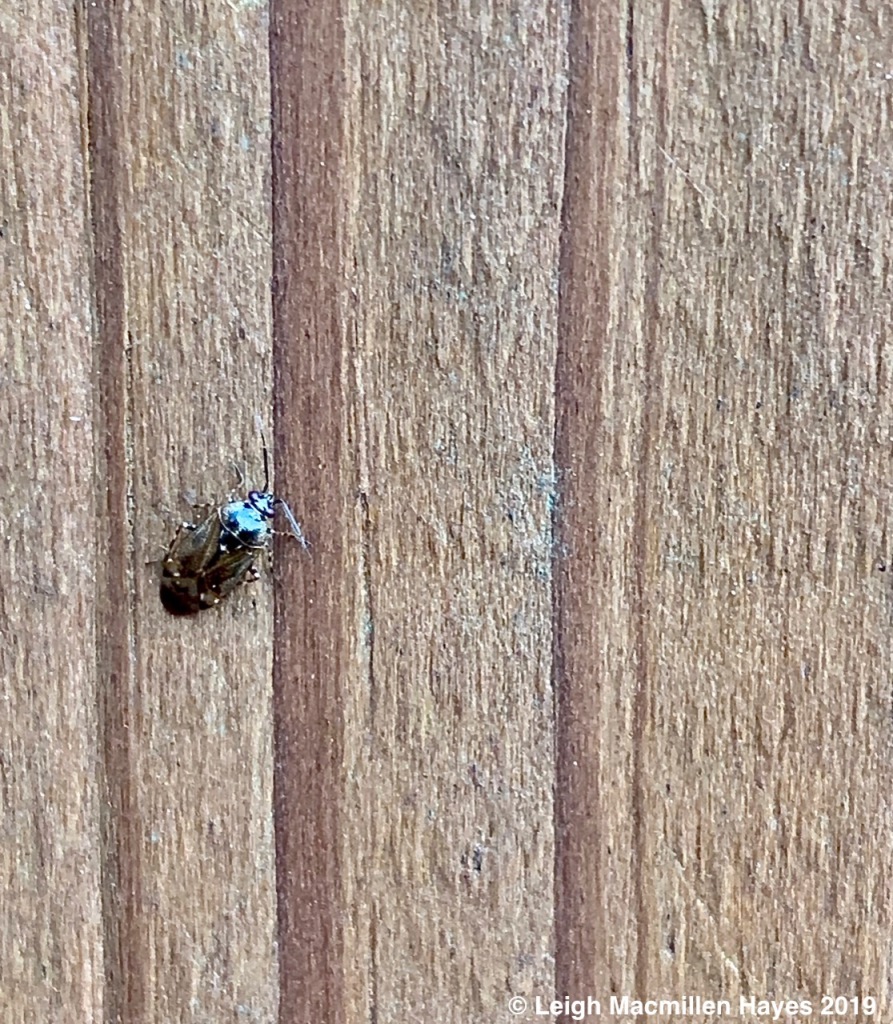
But first, there were other things to appreciate including a tiny beetle on the wood of the kiosk. It looked like a shield bug, but was ladybug in size and had an interesting blue coloration. If you look to the insect’s right, you may note more of the blue hue. I suspect this curious insect somehow met a bit of chalk or paint.

,

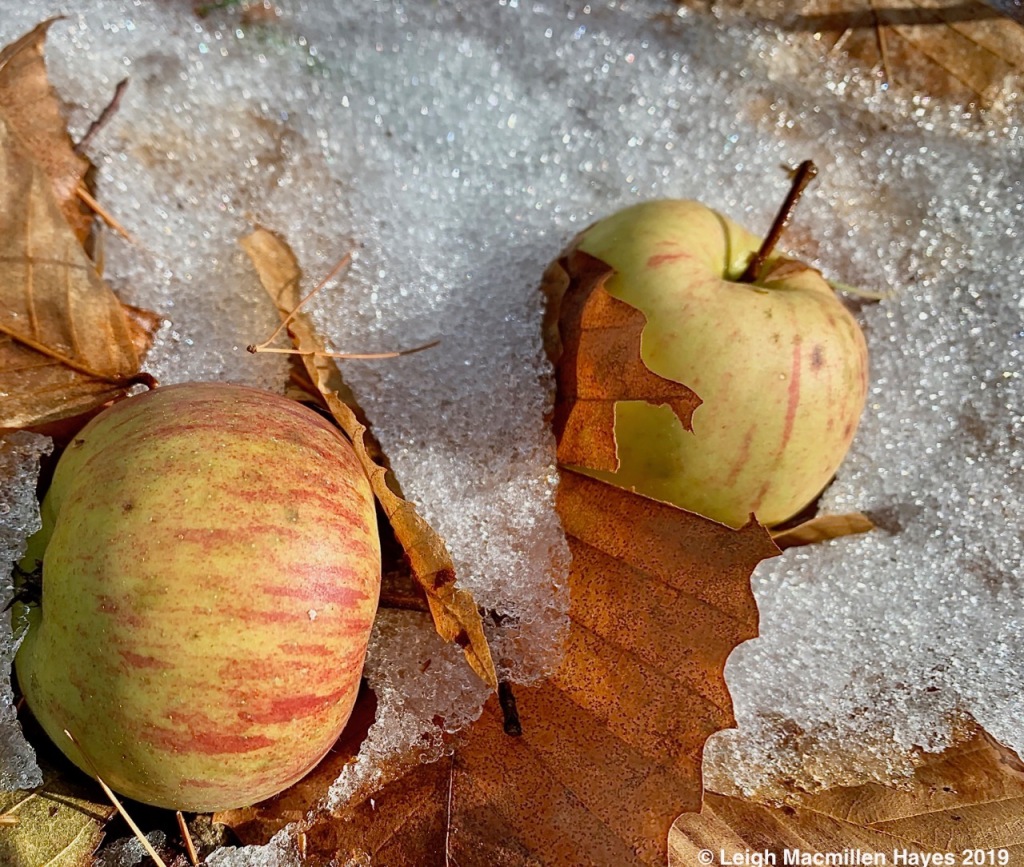
A few more feet and we found apples decorating the forest floor. Though some had nibble marks, these appeared untouched. Perhaps the critters kept them in cold storage with thoughts that on Thursday they’ll make a delightful addition to a turkey dinner.

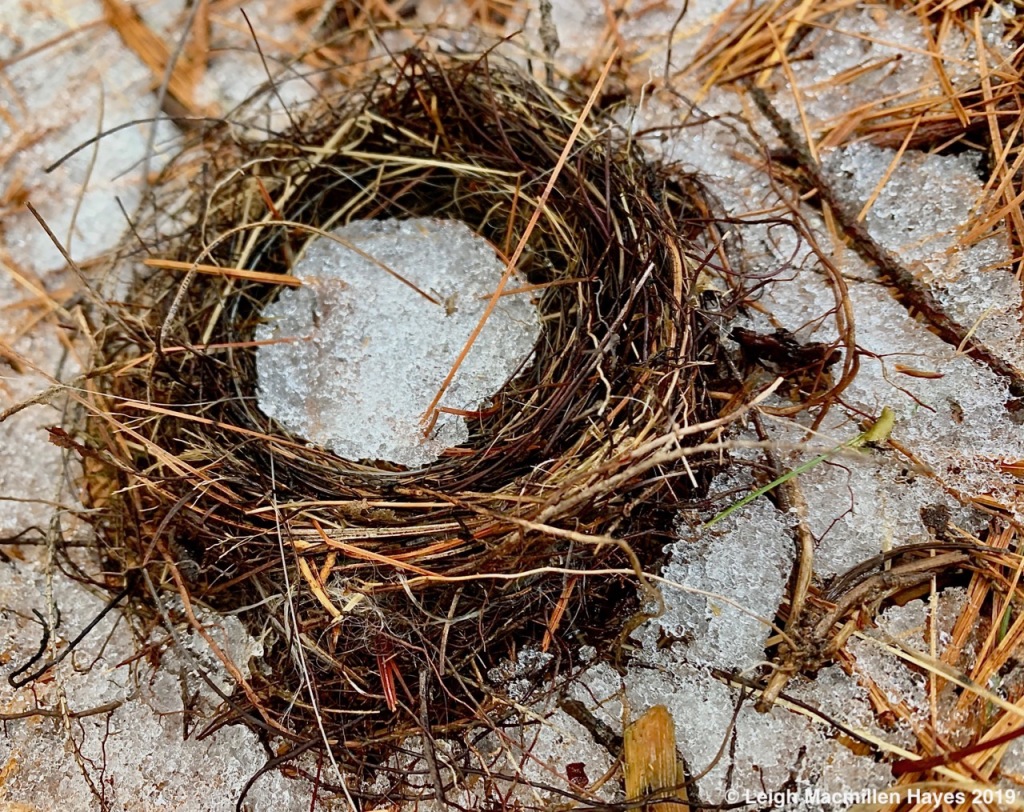
A small bird nest also decorated the forest floor, though we suspected it had fallen from the limbs above.

It seemed ornaments were everywhere and we found this Polyphemus Moth Cocoon dangling from a shrub’s branch. This is a member of the giant silk moth family who draw their collective name from the fine silk they use to spin their cocoons. The cocoons serve as protection for the pupal stage in their life cycle. I don’t know about you, but every little thing in nature astonishes me. How do all Polyphemus moths know to spin this shape?

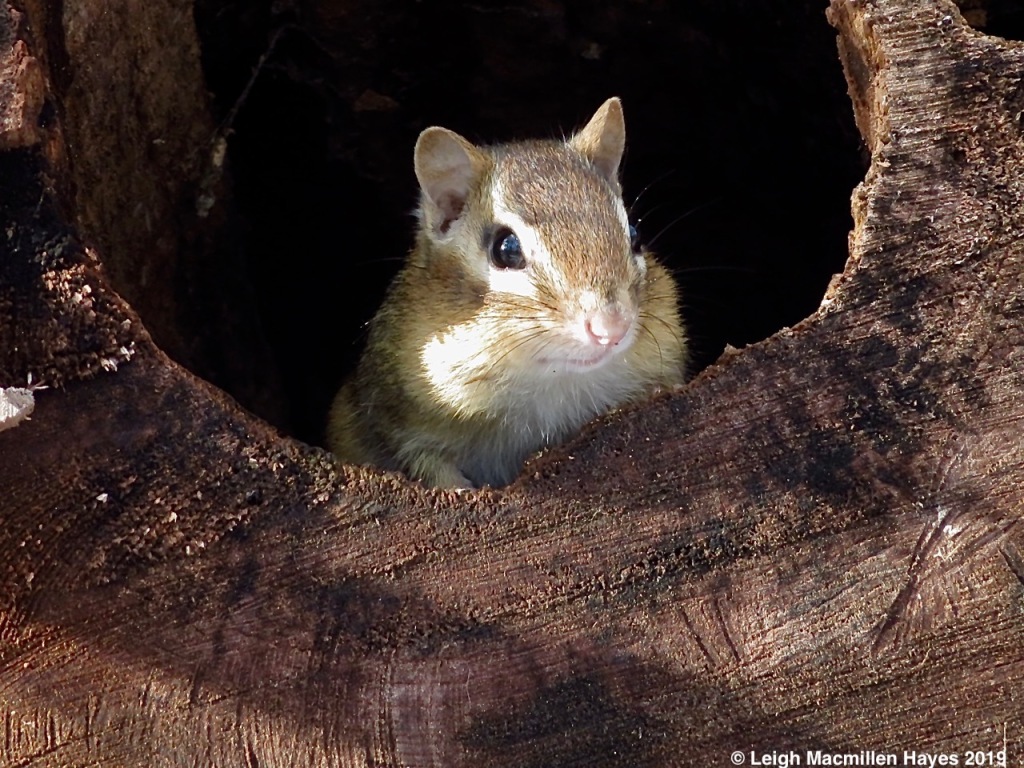
Maybe the wise old chipmunk knows for he seems to be the keeper of the forest this year. And there are plenty of acorns on the ground to add to his pantry.

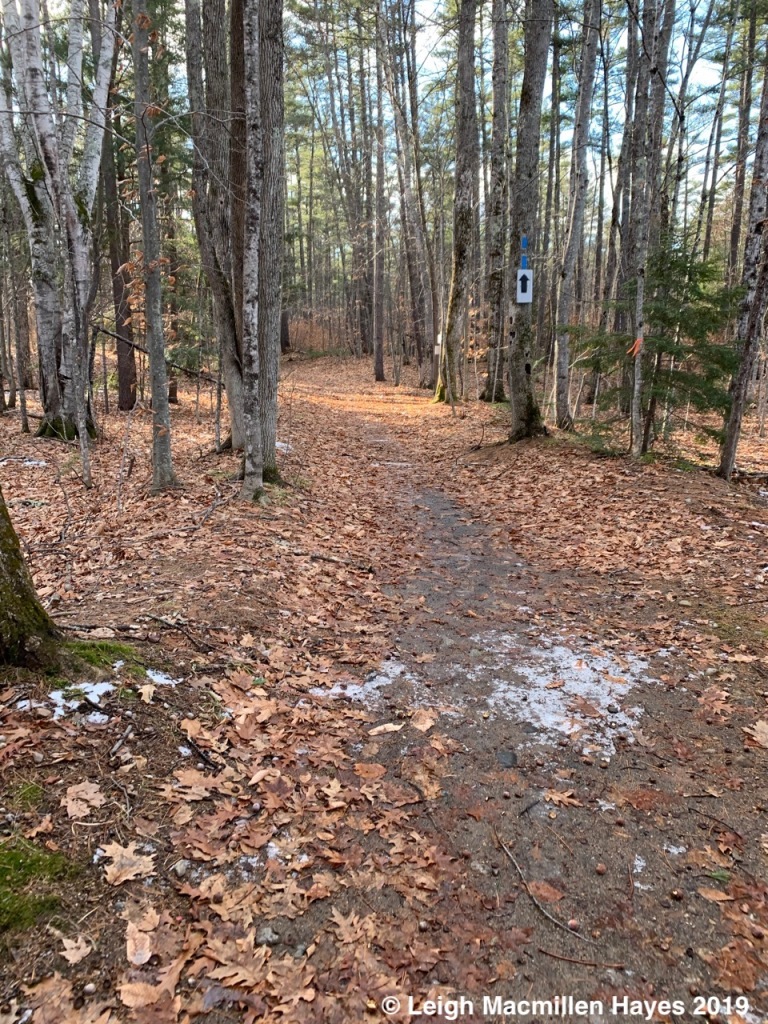
Through the forest we walked, enjoying the grade of the trail and feel of the place.

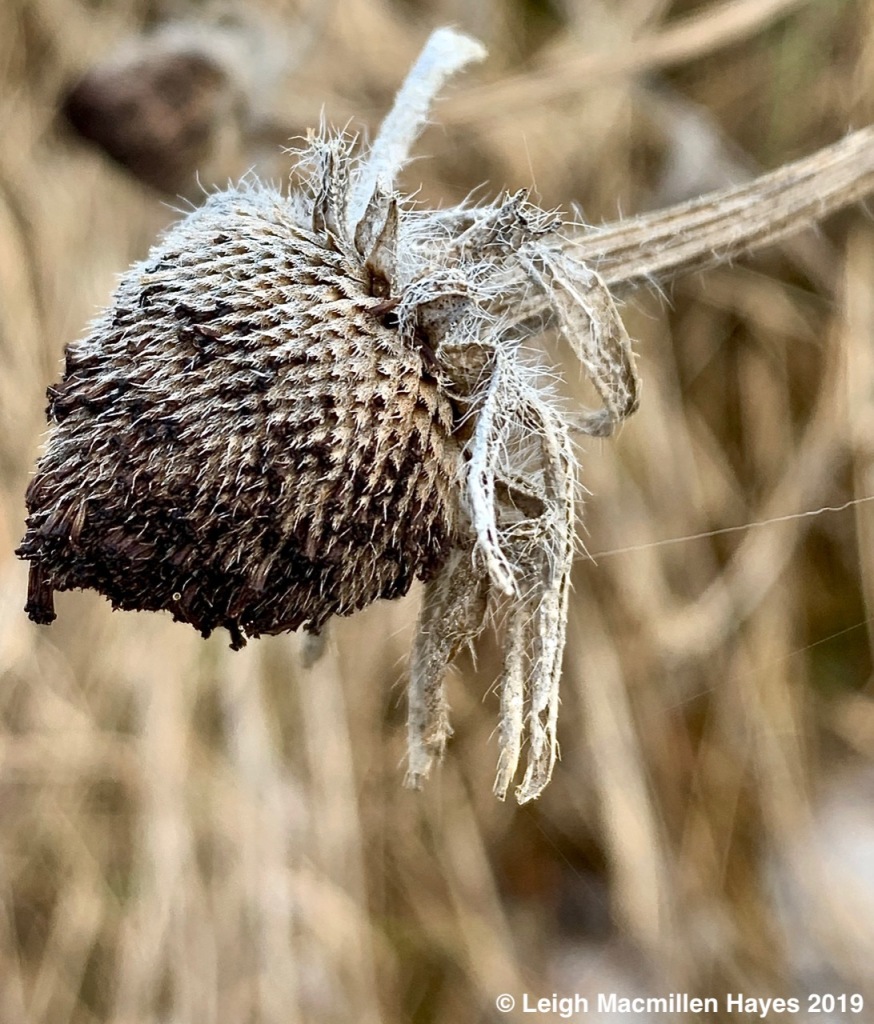
And then the community changed and we found ourselves moving beside bent over coneflowers, gum-drop shaped in their winter form. And do you see the baseline for a spider’s web?

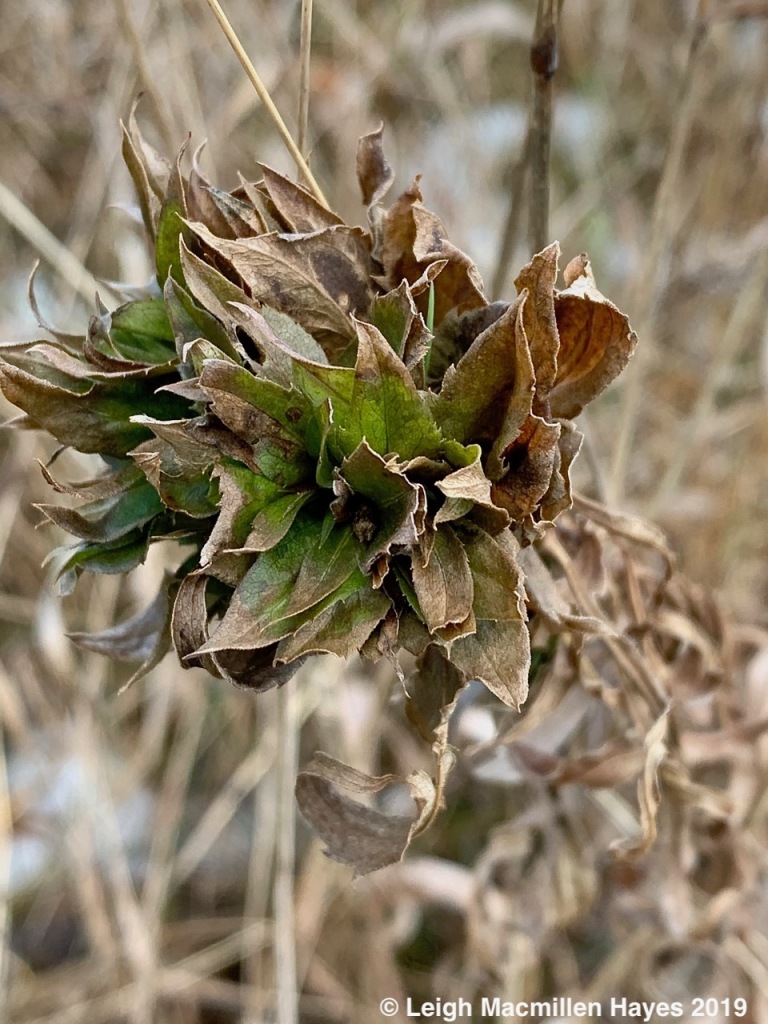
Next door was a goldenrod bunch gall created by a midge. Looking like a mass of tiny leaves, it’s also known as a rosette gall for the shape at the top of the stem. In both cases, it’s amazing that insects can change a plant’s growth pattern so dramatically.

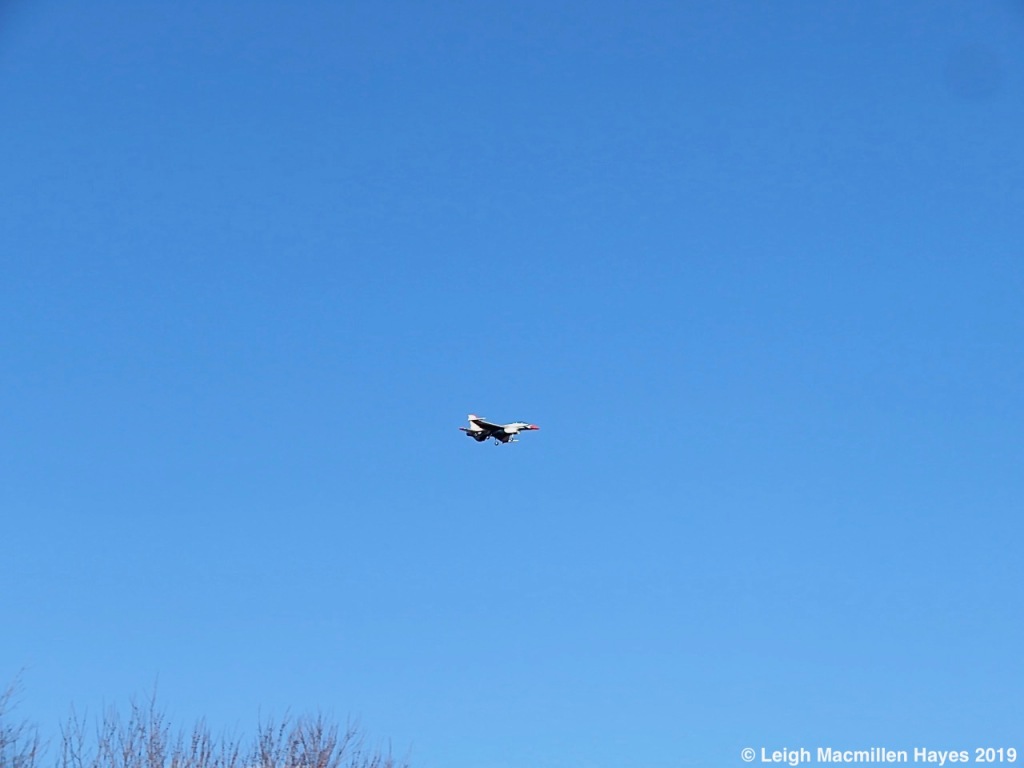
As the natural community changed, so did the material world and suddenly we heard the buzz and saw a jet zoom by.

We were fooled momentarily for it circled round and round, came in low for an almost landing as we approached and then took off again. We’d stumbled upon the site of the Mount Washington Valley Radio Control Club.

Airplanes and helicopters weren’t the only ones waiting to lift off into flight. Part of the field was filled milkweed pods, their parachute-equipped seeds waiting for the control tower to give the signal so they could fly.

And where there are milkweed pods, there are also milkweed flowers in their winter form, for such did the structures look with petals of five or six creating the display.

The Davis Farm trail passed by the milkweeds and cut through the fields and I had visions not only of my guy in front of me, but of summer visitors. I’m thinking butterflies, dragonflies, pollinators, oh my.

For now, the fields are dormant, save for a few lone pumpkins adding to the autumn landscape.

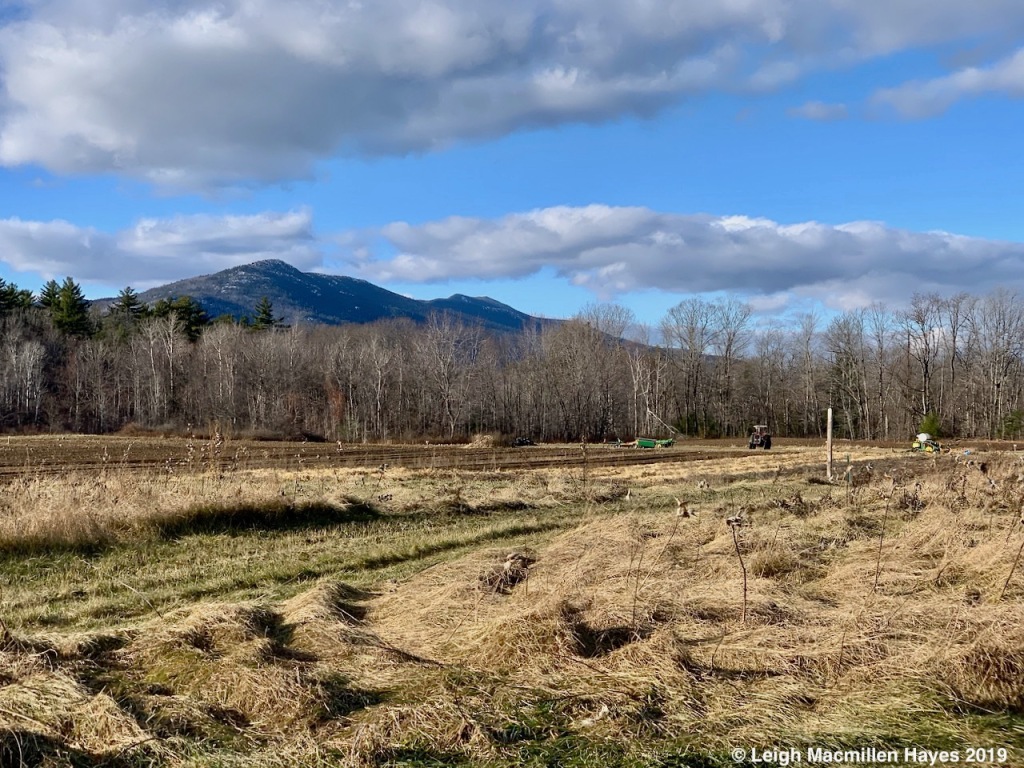
And the Moat Mountains providing the backdrop.

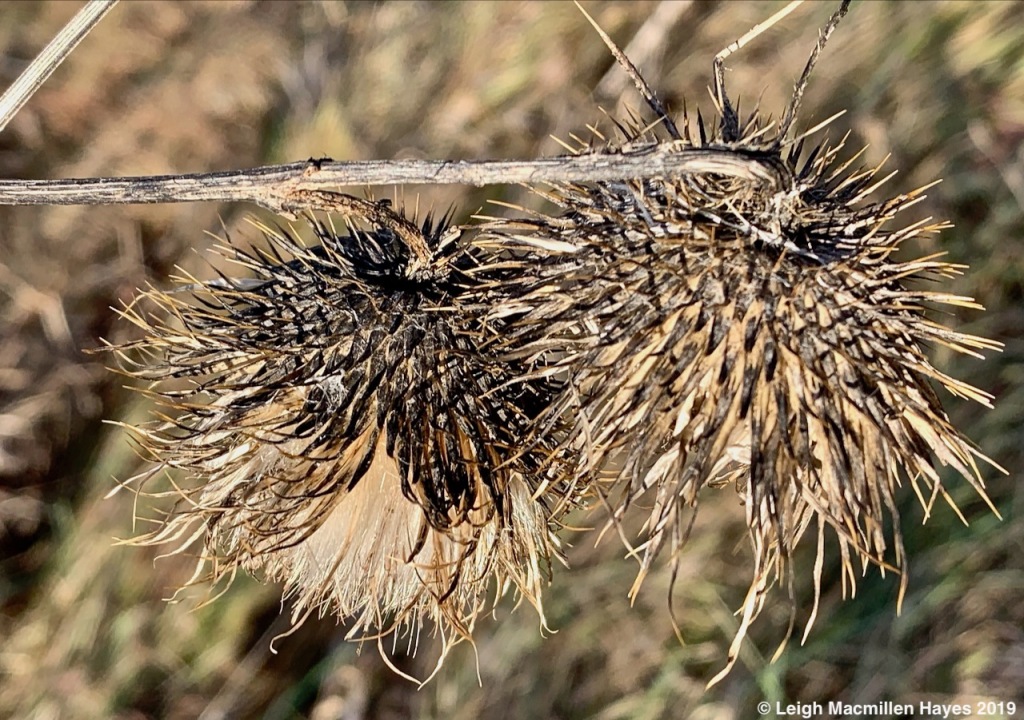
By the far edge of the field, hardly cuddly thistles added more texture to the scene.

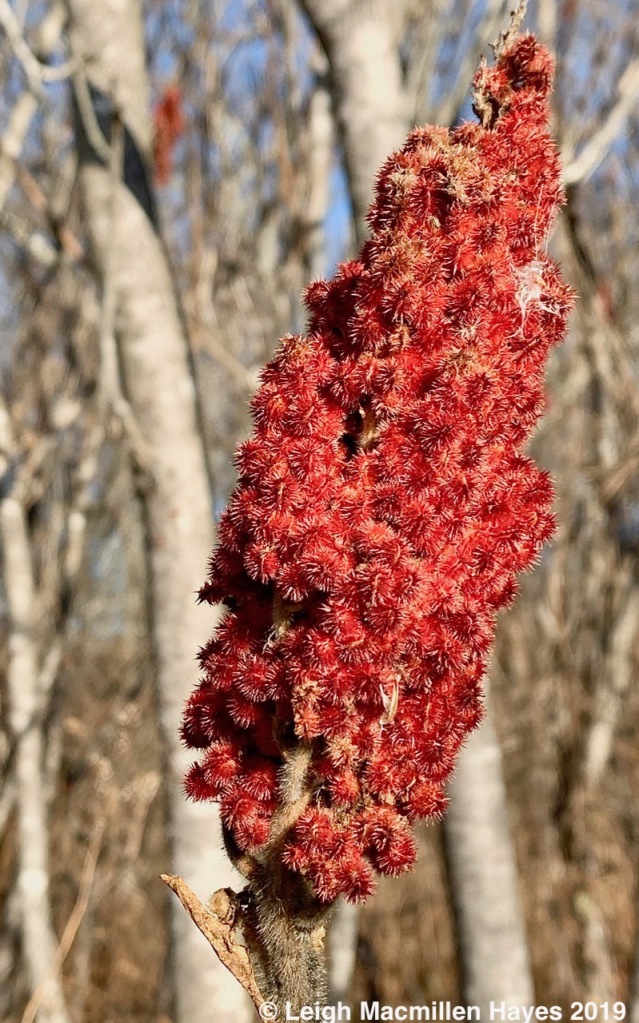
Staghorn Sumac’s offering was its raspberry color.

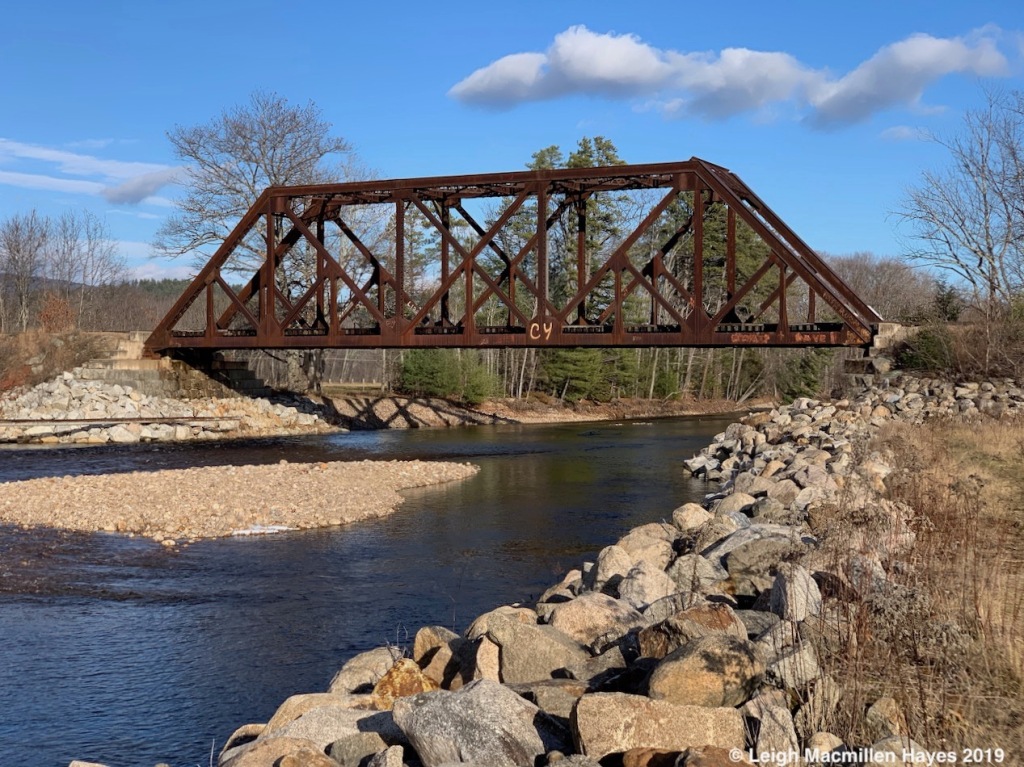
At the edge of the field we reached the Swift River and train trestle that crosses it as memories of rides on the Valley Train of the Conway Scenic Railroad when our “boys” were young flashed through our shared memory.

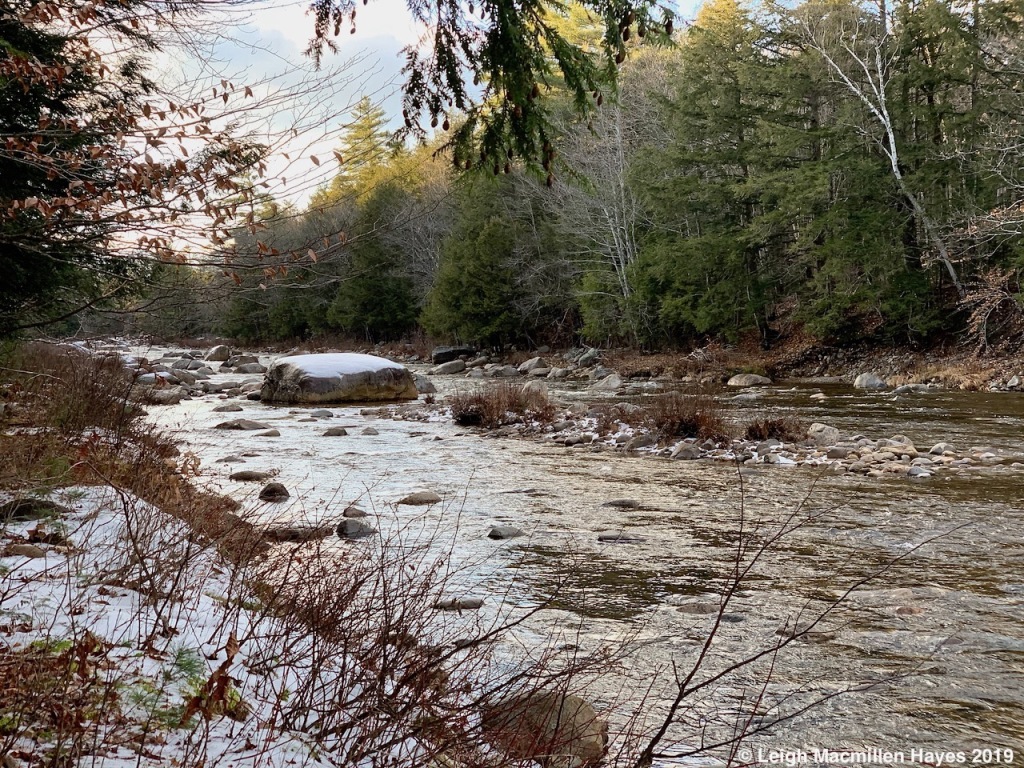
Meeting the river meant that our journey along the Davis Farm Trail had morphed into a western path beside the river and we welcomed its voice as it moved slowly at first over the river rocks.

We did discover one patch of berries that had we not known better, we would have rejoiced over the color for it reminded us of the “white” pumpkins that decorate the season. But . . . we knew better and stayed on the trail in order to avoid Poison Ivy. Yes, it is native. But equally yes, it is a nuisance. Especially if you are allergic.

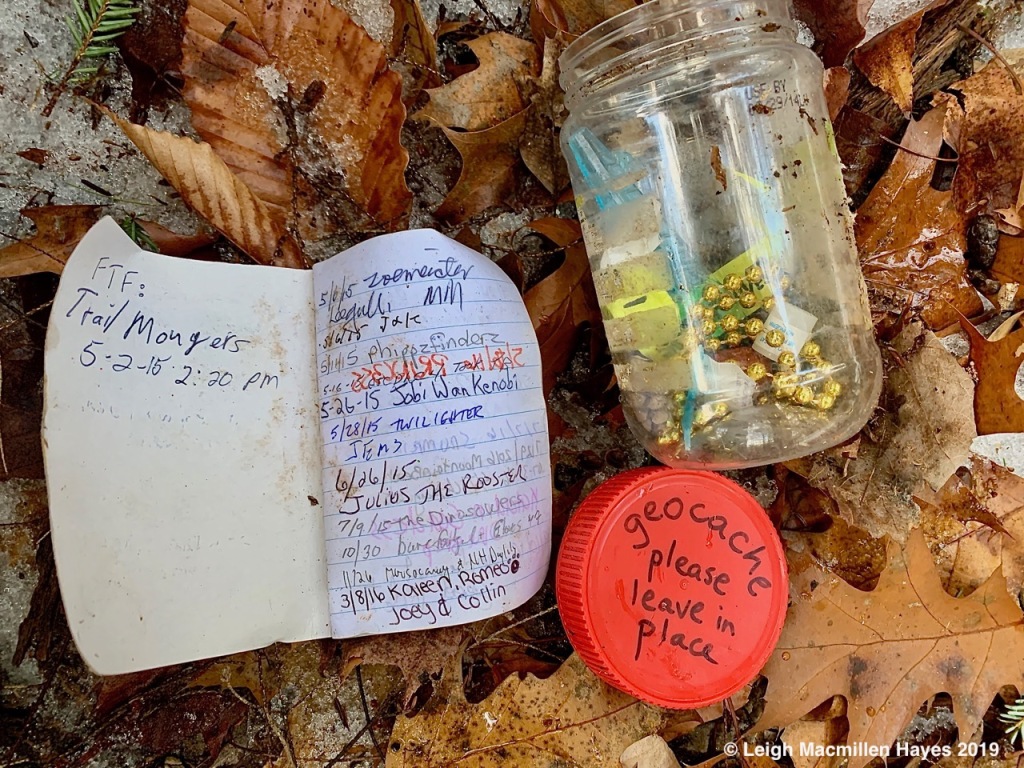
The trail was shaded beside the river and therefore more snow/ice cover had resulted from a slushy weather event yesterday, but that didn’t stop my guy. You see, I had introduced him to Geocaching.com and my guy loves a challenge.

He found the first and read off the trail names of previous discoverers.

I’ll give you a hint other than the one on the site: look for the Grape Fern. ;-)

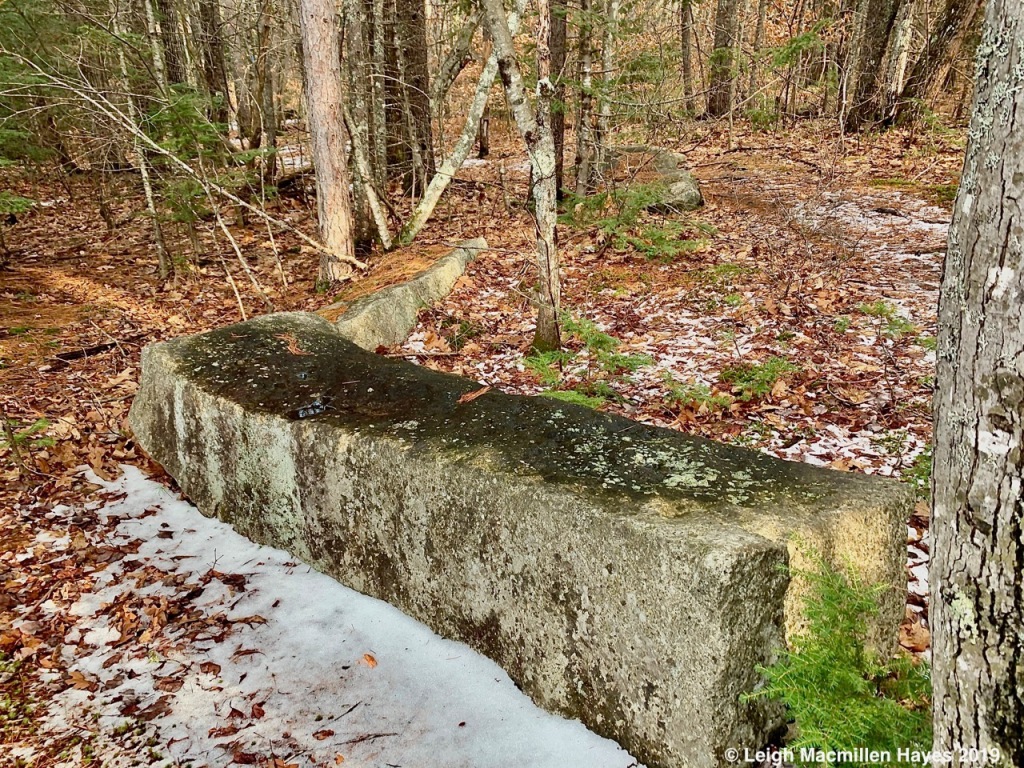
A wee bit further we came upon a couple of granite blocks and wondered where they’d come from and how they’d ended up in this spot.

Following the compass, we eventually made our second geocache find–this one to my credit. It was enough–my guy is hooked and I see geocaching adventures in our future.

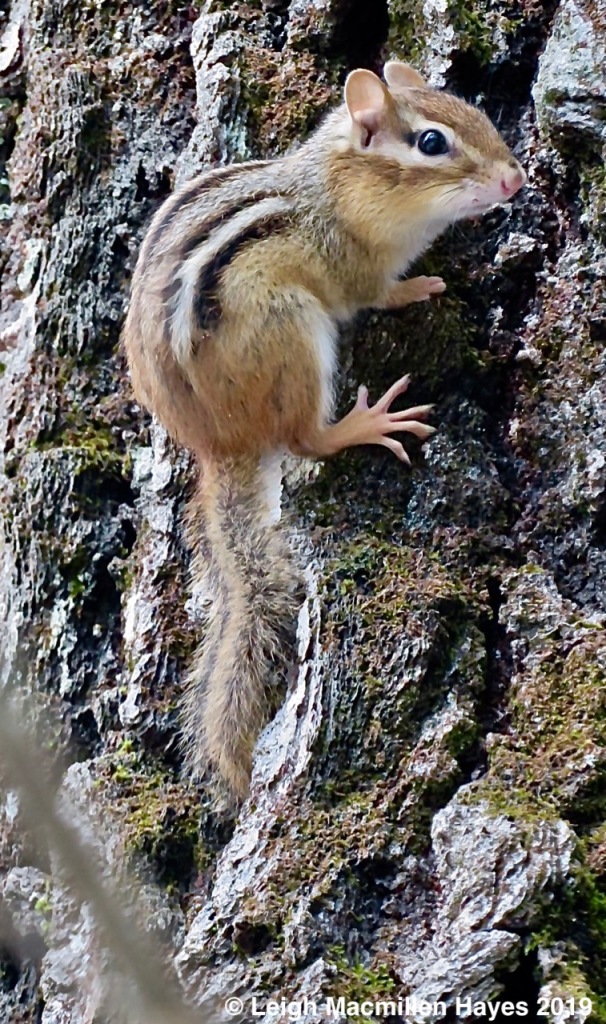
If you can’t locate the second site, ask this chipmunk. We saw no squirrels as has been our experience this year (but do expect a payload amount of squirrels next year in response to this year’s acorn and beech nut mast), but the chipmunks dart across trails and roads on frantic missions as they prepare for the coming season.

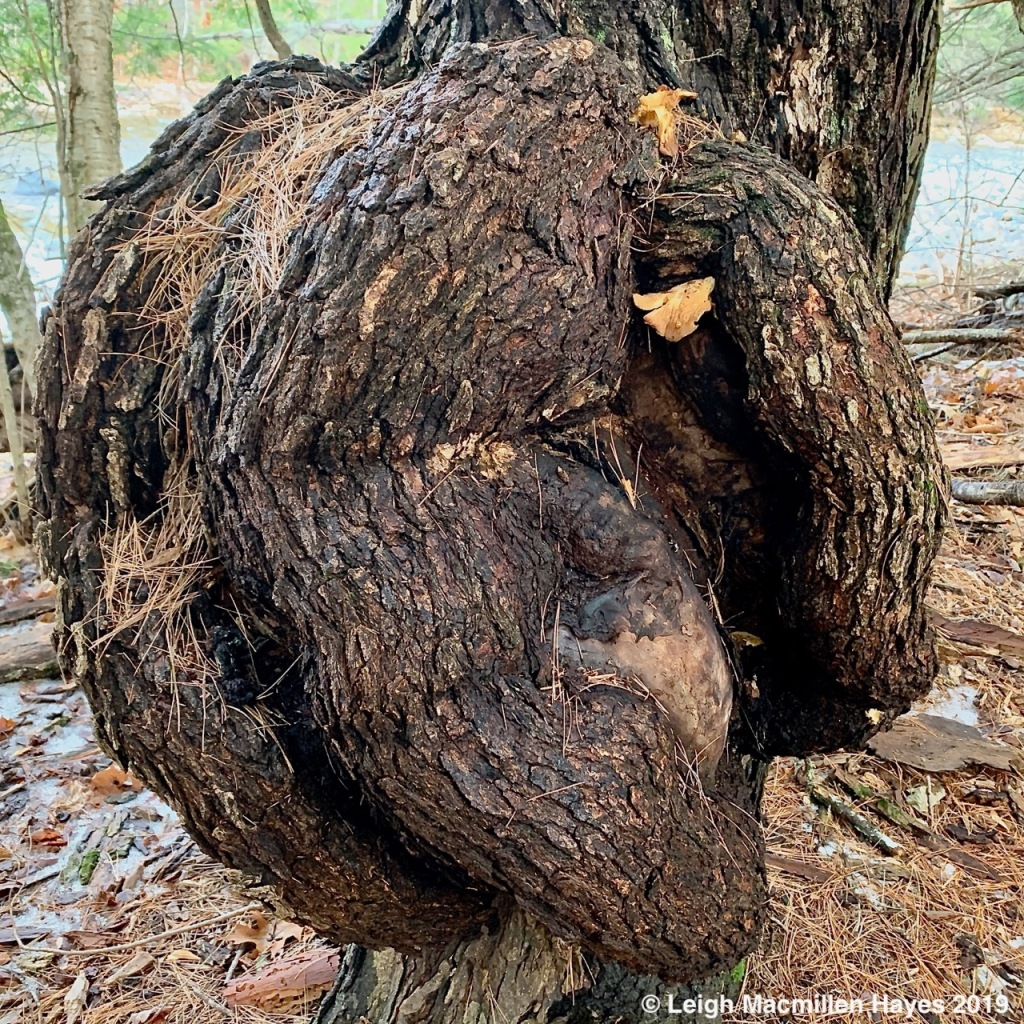
My guy wasn’t on his own frantic mission for a change and paused beside this burl to point it out to me. That being said, I did chuckle as he moved on while I paused to admire it. Those folds. And curves. Inlets and outlets. It was like arms, long arms, that circled around and over. All because the tree’s growth hormones were disrupted when its metabolism was hijacked by some other organism, be it a virus, fungus, or bacterium.

Our time beside Swift River began to draw to a close as the sun started to set behind the mountains.

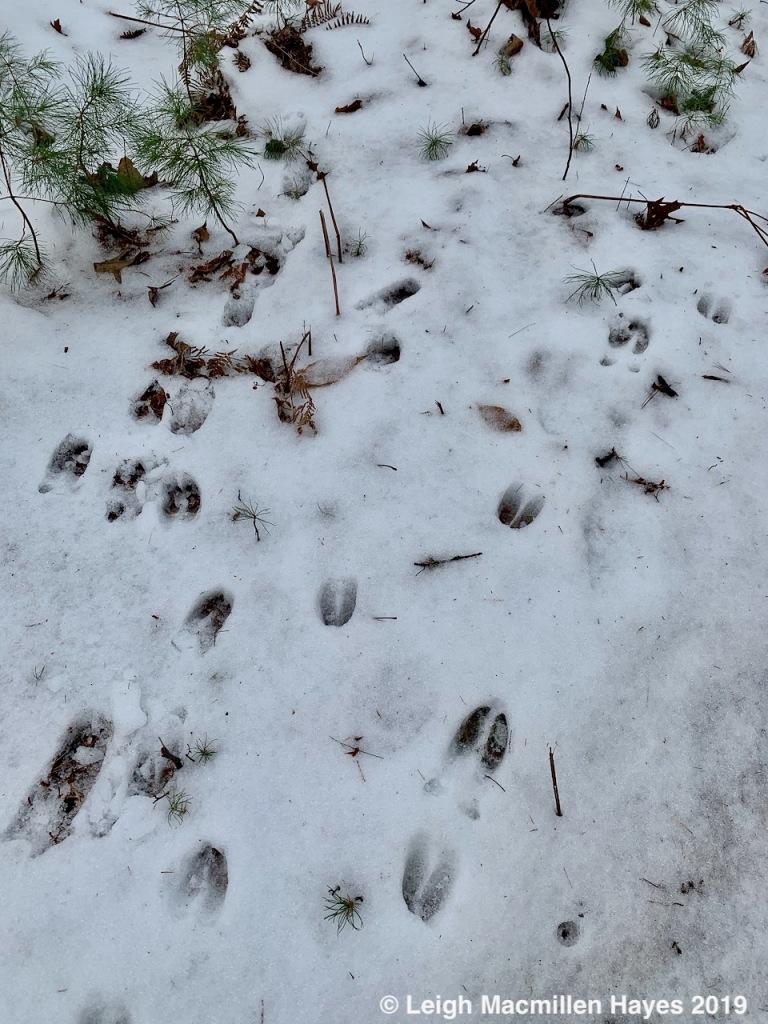
We were almost done with the hike when we noticed deer tracks–indicting they’d travelled to and fro with the river as a main point of their destination.

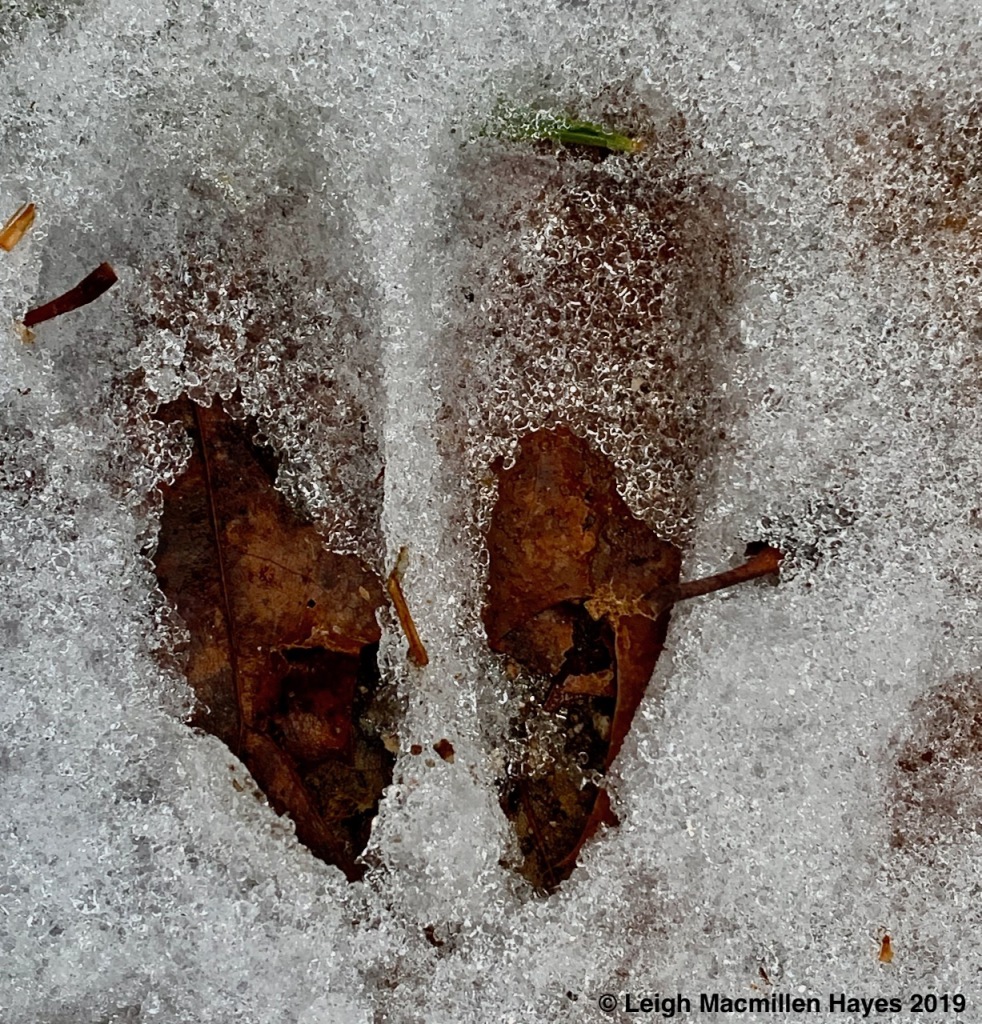
An individual deer print is heart shaped and such described our journey on several levels–as I continued to appreciate Trisha of Upper Saco Valley Land Trust, and also my guy who has put up with me for over three decades.

On this November day, I gave thanks . . . for this day, for these two people, and for all who have traveled this journey with me.

Blessed be.

Spotlight on Redstone

Forever we’ve passed through the Redstone section of Conway, New Hampshire, and knew that Rattlesnake Mountain behind the village had once been a quarry, but we had not explored it. Today, we changed that.

Crossing over the Maine Central Railroad tracks, the first vantage point took our eyes to the snow-covered summit of Mount Washington.

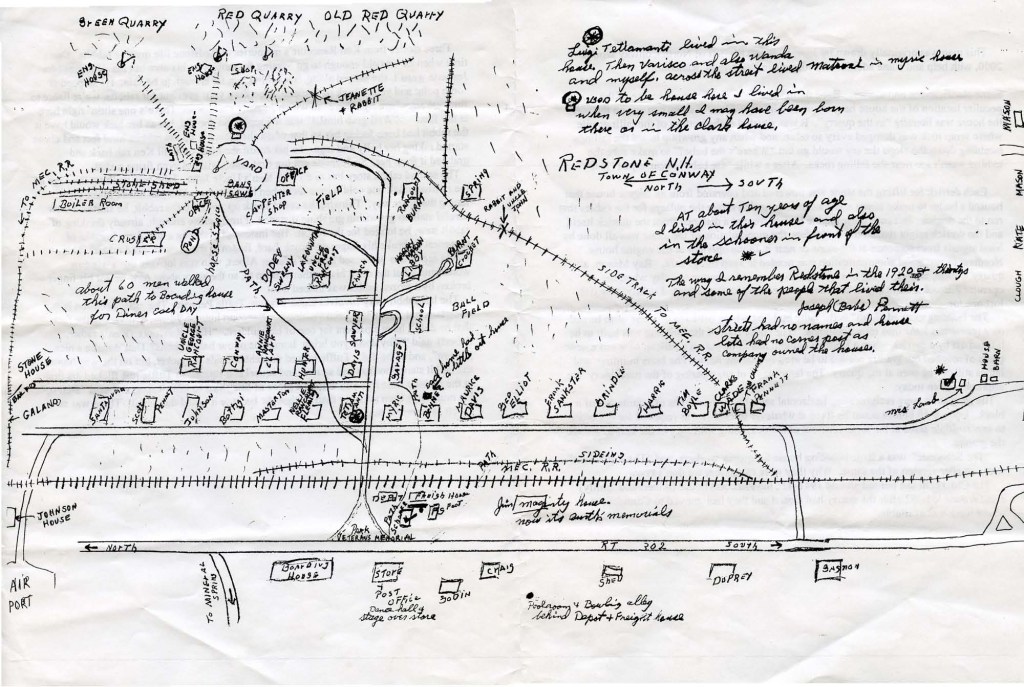
In the opposite direction, we focused on the route to Maine, where quarried stone would have traveled on its way to locations beyond. According to redstonequarrynh.org, “Redstone granite was used in many buildings in Portland, Boston, New York, and Washington, D.C. and as far away as Denver, CO and Havana, Cuba. The Hatch Memorial Shell, in Boston, is of Conway green. Grant’s Tomb in New York, the National Archives building in Washington, and the George Washington Memorial Masonic Temple in Alexandria, V.A. were built mostly of Conway pink granite.

photo credit: redstonequarrynh.org.

As you gaze upon the map, you may notice three quarry sites in the upper left-hand section: green quarry, red quarry, old red quarry. In the height of operation, more than 300 men were employed.

Today’s journey found us hiking to one, then another, and the third, then back again.

Thank goodness for a landmark we frequently returned to for it gave us our bearings each time we encountered it.

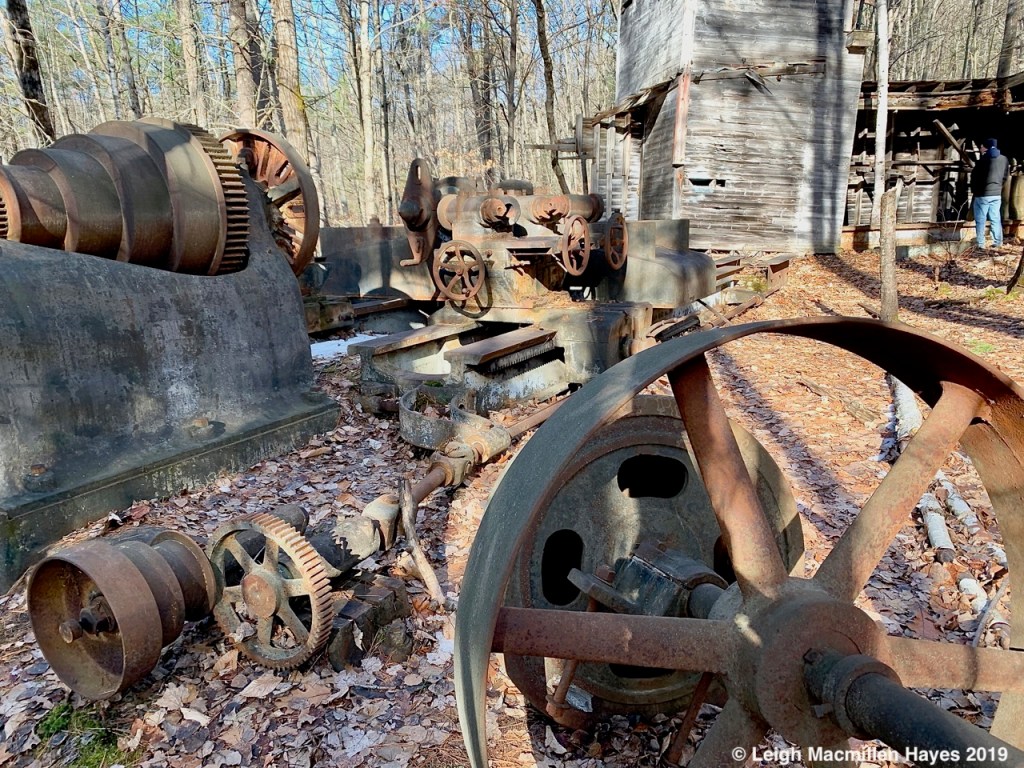
We didn’t have to walk far to encounter another landmark, a polished green granite pilaster about twenty feet long. How often do you see one of these when you walk in the woods?

Artifacts exist here, there, and everywhere from the quarry that was in operation from the 1870s to 1948.

Slowly the forest and its inhabitants are staking their claim on the territory.

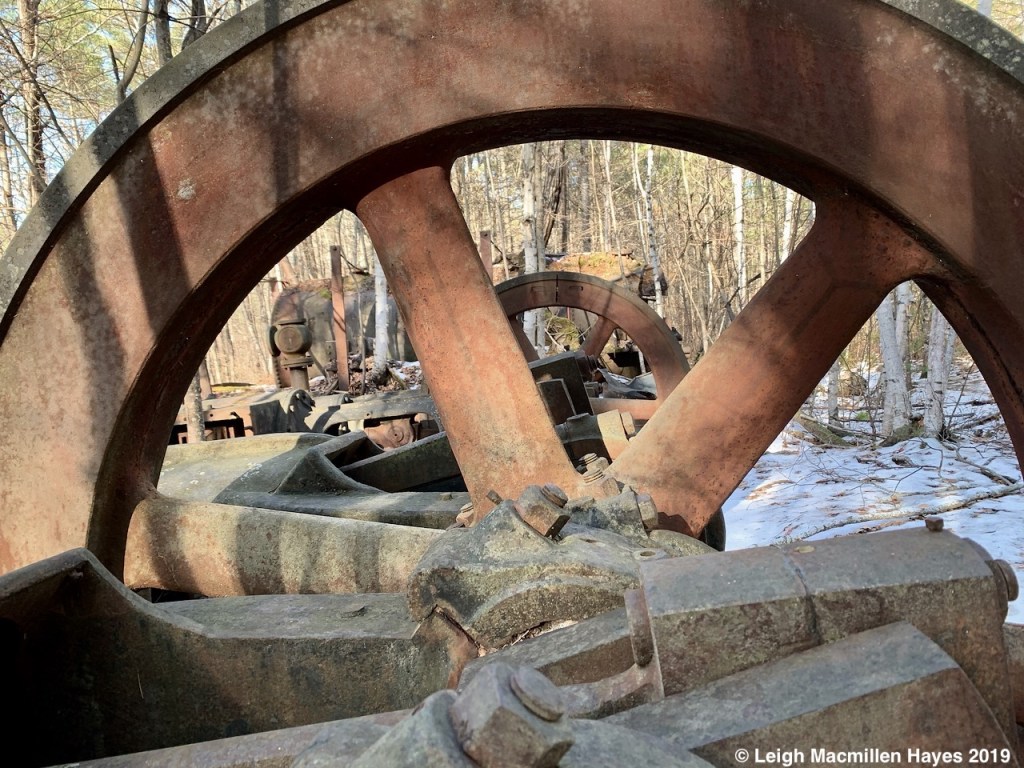
We poked about and tried to understand how the wheels turned, but would have appreciated an interpretive guide. Or at least a few interpretive signs to tell the story.

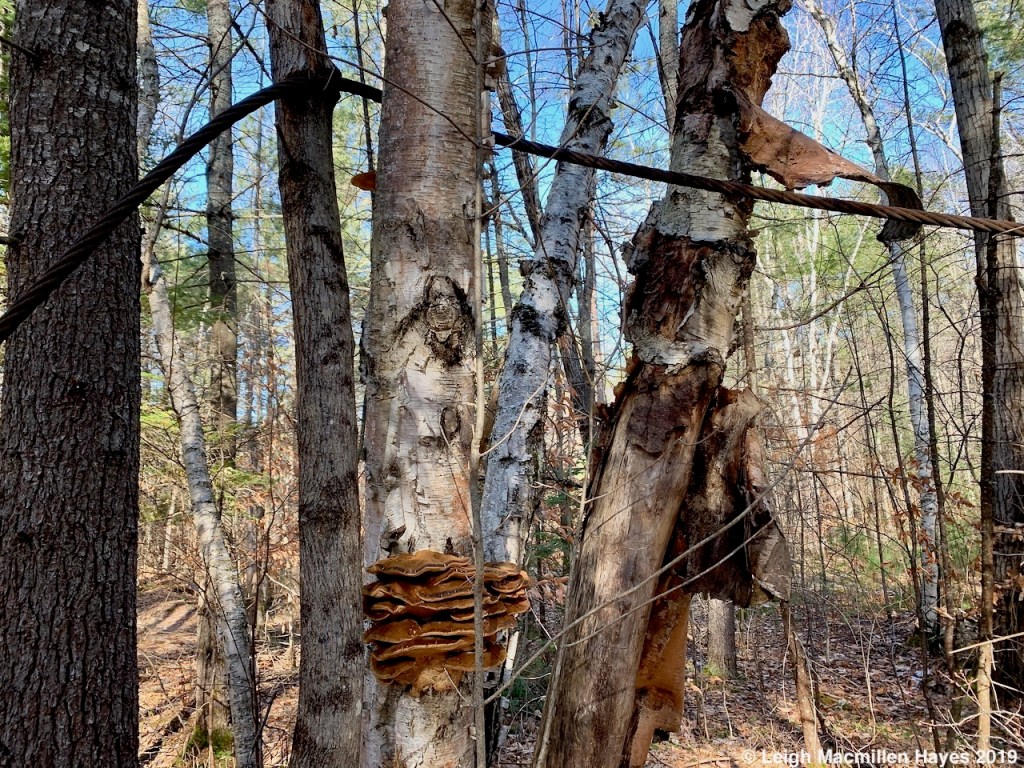
Man and nature intersected everywhere and it was while noticing the cables and guy wires that were strung throughout that we spied artist conk fungi in a prolific display.

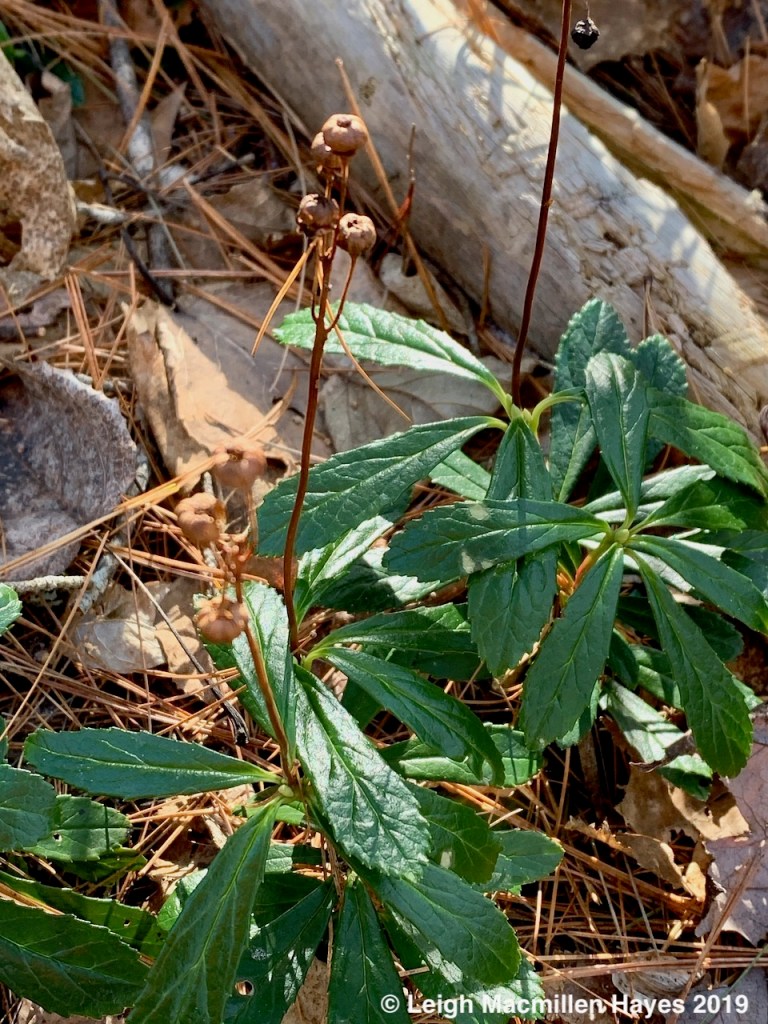
And nearby, the woody capsules atop Pipsissewa representing a current memory of a past moment, e.g. the flowering form.

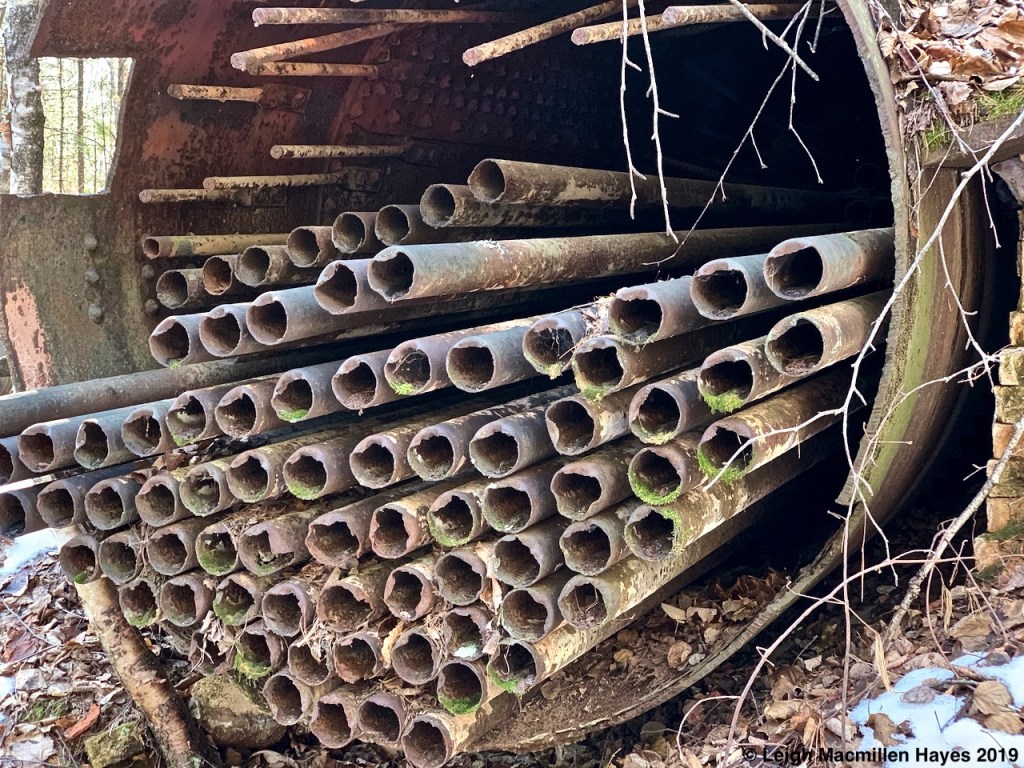
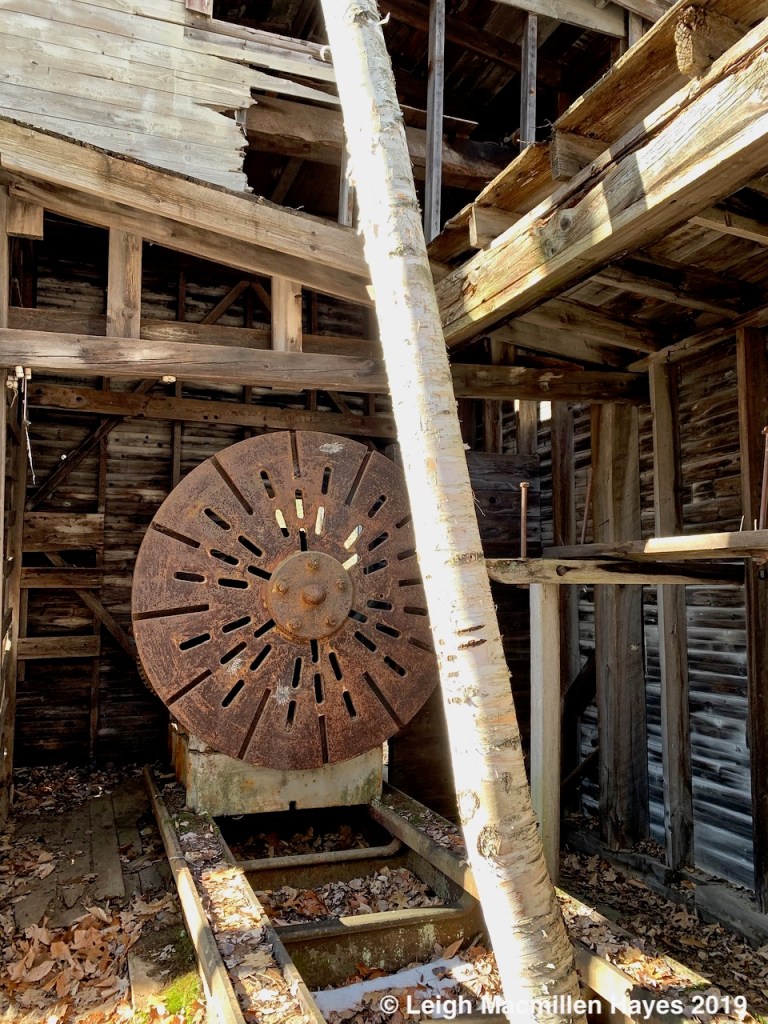
Our next great discovery, the lathe. The Redstone Granite site states: “Lathes were used to rough-turn and polish granite columns (some as long as 22 feet). The building is one of the best preserved because of its function. Most of the roof was open, allowing large granite columns to be lowered and removed by a derrick from above.

We peeked within at other portions of the machine.

Turns out, it was built by the Betts Machine Company, a manufacturer of heavy machinery such as this site needed.

The faceplate of the lathe was used for the final polishing process. But more importantly, a birch tree grows in Brooklyn. Or rather, in the building that housed the lathe.

We left the structures behind and headed uphill, curious about what the actual quarries looked like.

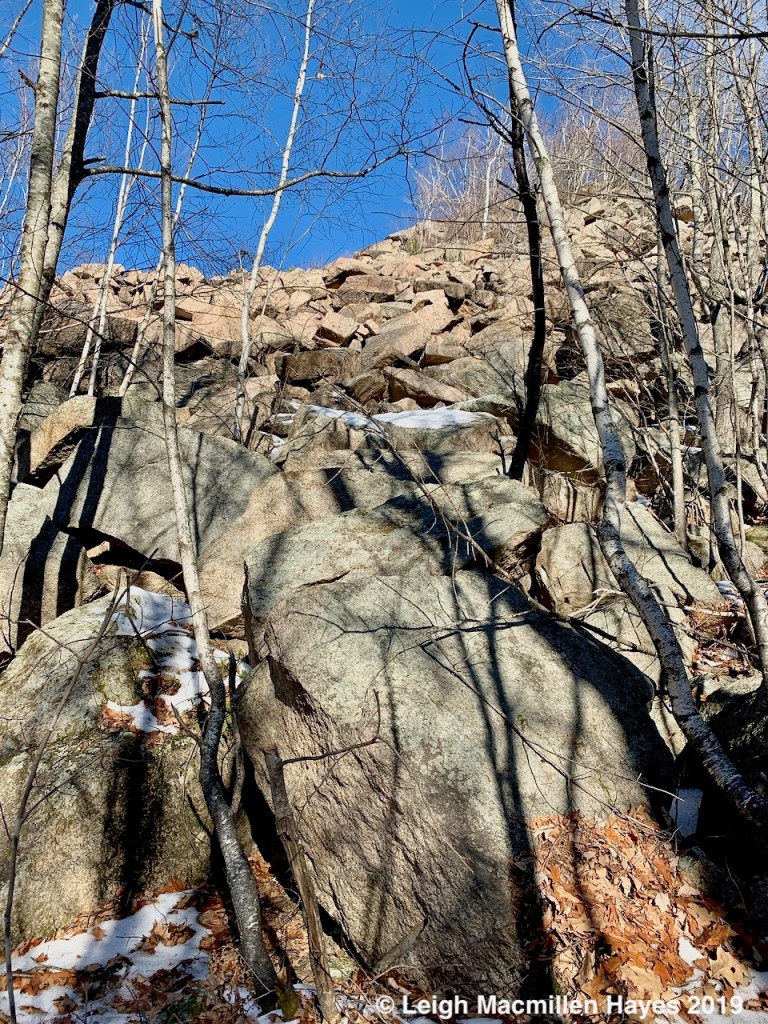
At the red quarry, a pile of slash littered the mountainside–those stones that hadn’t split in the right orientation to make them profitable.

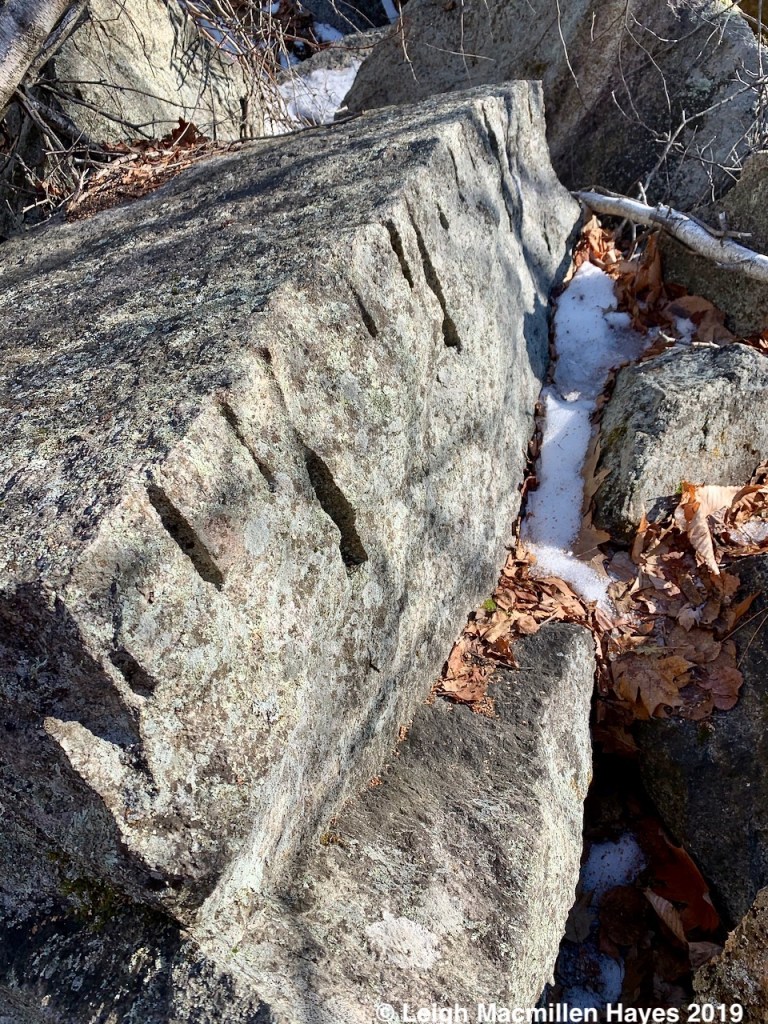
Among the remains we could see short and deep drill marks and thought of the work of the men who worked the granite. Their days began at 7am. If you take a look at the map, you’ll see a note that some walked home for lunch each day. Apparently, those were the men who worked in the yard and stone sheds, and lived in the boarding house. Everyone else brought their own lunch. Though their shifts were eight hours, like many jobs, overtime was necessary to complete the work. Did they get paid extra? Probably not.
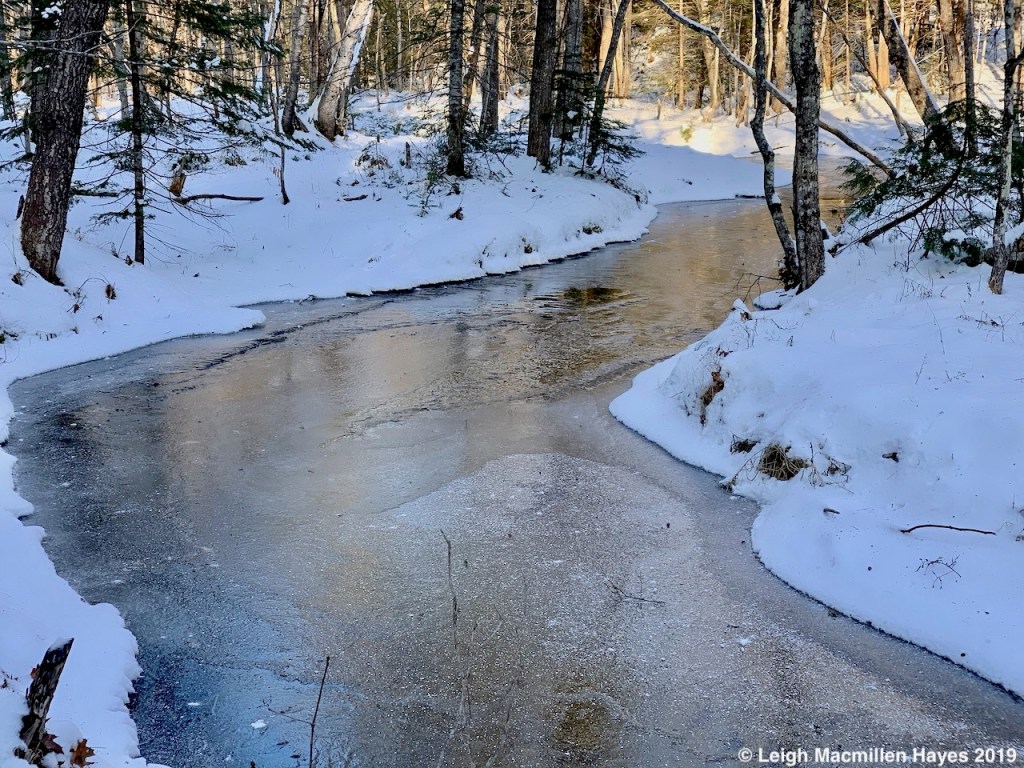
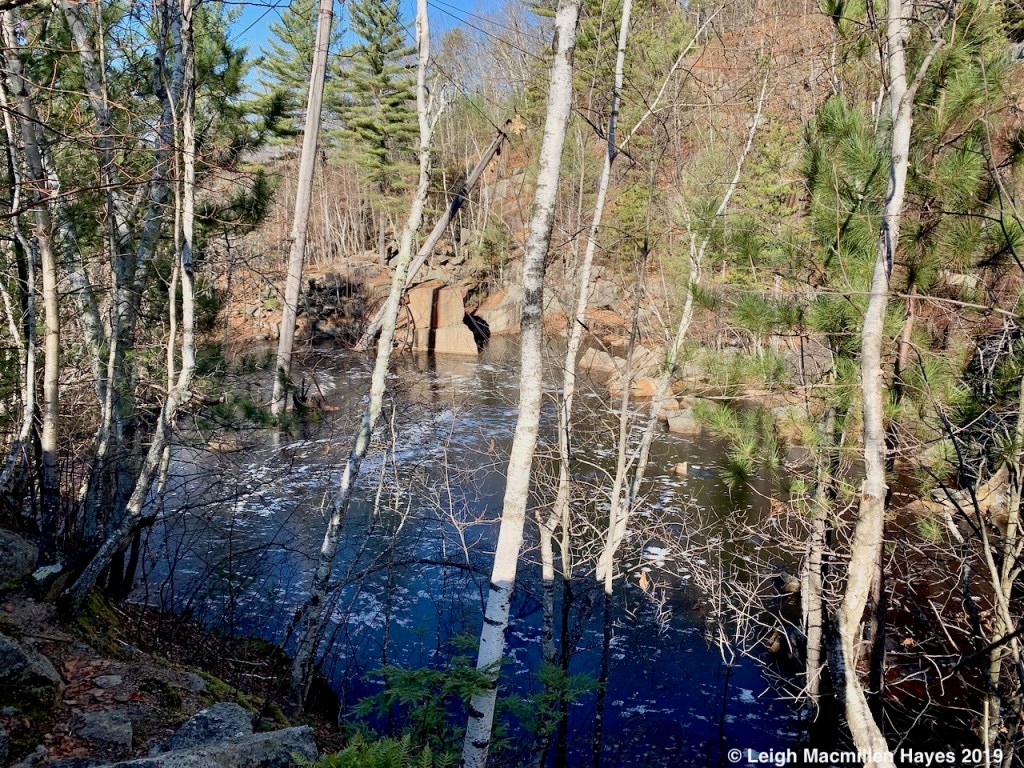
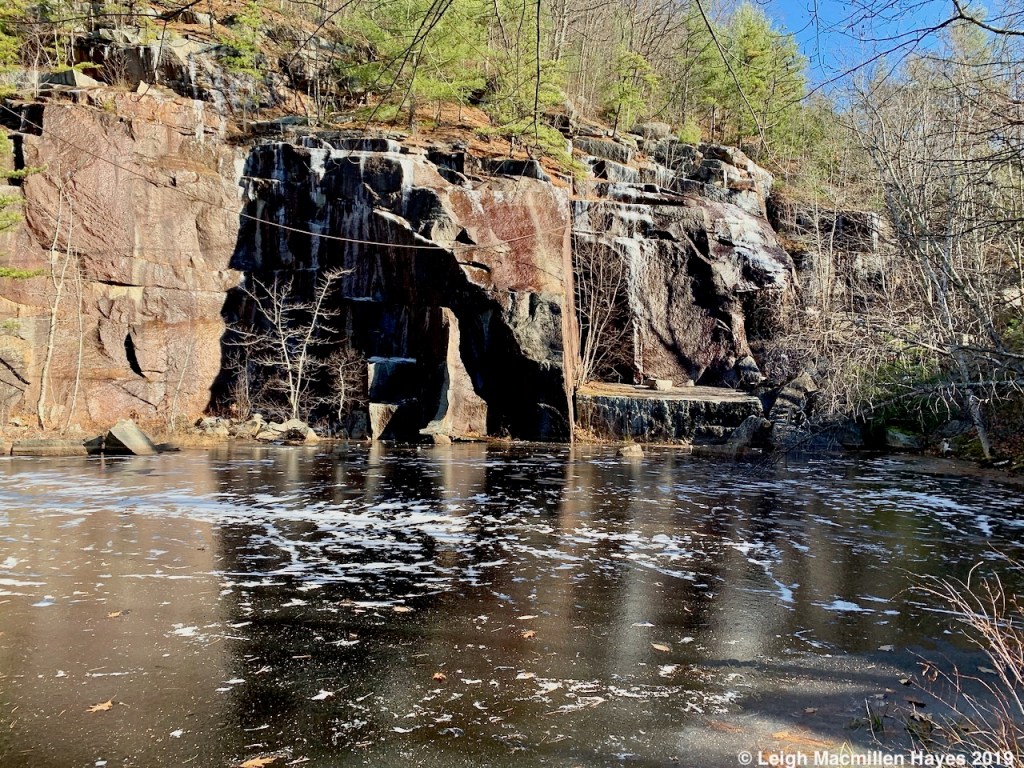
From the red quarry we made our way to the green quarry, filled with ice-coated water. For me, this was the most intriguing site.

Above, water had frozen in time, much as the history of this place.

To the far side, corrugated marks were etched into the stone.

Beside the pond, some of the slash included a variety of drill sizes.

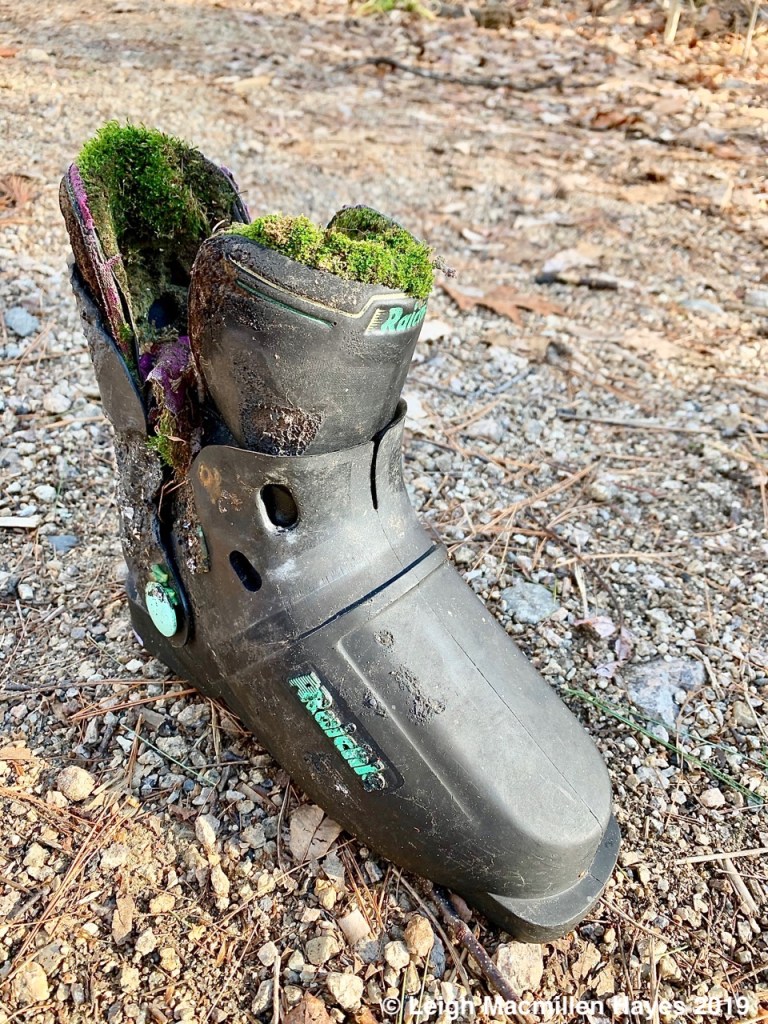
From the green quarry, we retraced our steps back to the mossy ski boot, and eventually moved to the east where we suddenly came upon a beaked hazelnut. It’s a rare occasion to find such a casing still intact, so coveted are they by the mammals that inhabit this land.

Following the trail and a wee bit of bushwhacking led us to the old red quarry, which we assumed to be the first site. Once again, there was so much slash left behind that it was difficult to appreciate what had been processed.

And then we returned to the ski boot one more time and decided to check out a trail we’d seen previously that seemed to pass by the green quarry. Suddenly, we discovered a granite pathway. What should one do when the road is so paved? Follow it.

Much to our delight, it led us back to the green quarry and gave us a different perspective.

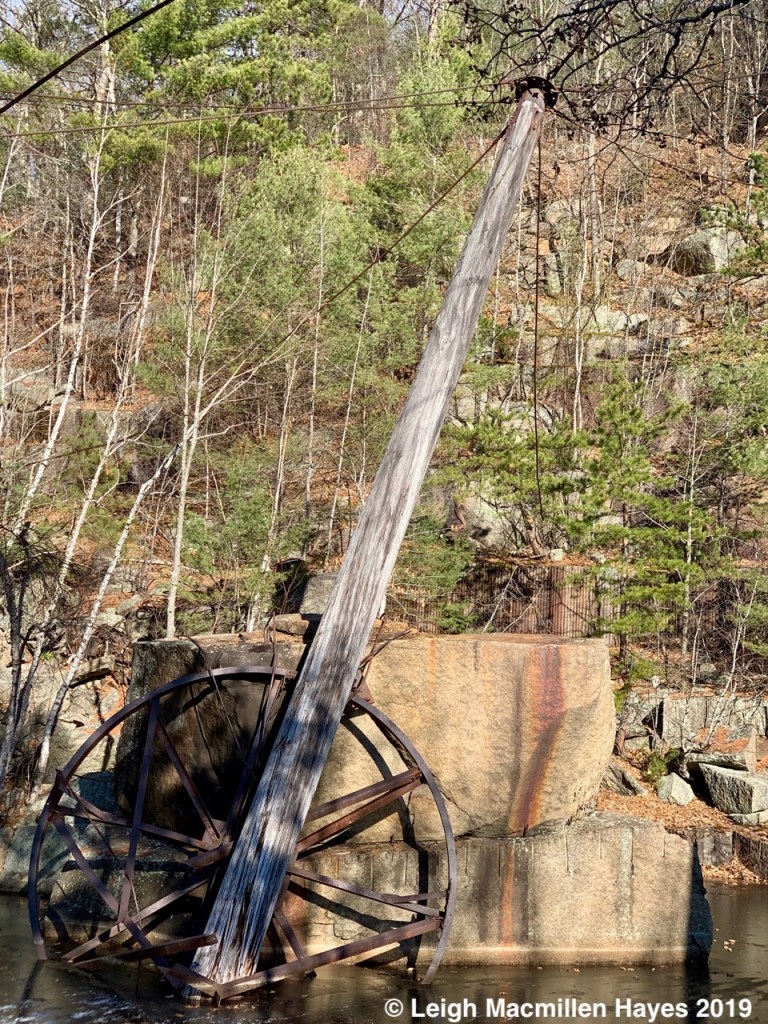
In the midst of the water stood the remains of a derrick. Guy wires, wooden booms and masts from these devices decorated the woods throughout.

Many structures in collapse also stood as landmarks of a former use of this land.

Surprises greeted us every step of the way. Some were easy to understand as this lantern; others required more interpretation.

In the end, we realized that there’s so much more to learn about this place, but we loved the opportunity to shine a wee bit of light on the Redstone Granite Quarries.

Nature’s Denouement

Due to today’s inclement weather, I postponed a Tracking expedition and thought it might be a good day to become a couch potato. But still, my feet itched to get outside as the raindrops fell.

And then a text message arrived: “Potential loon trapped in the ice; rescue happening on Lower Bay.” I was in my truck and on my way before I even knew the exact location.

As I drove, rain changed to big slushy balls that struck the windshield with noisy inkblot-shaped splats. I pulled into a parking area to check on the intended meet-up point and learned I was a bit early, so I went for a walk. All around me, the forest was alive with sounds–of wet snow striking marcescent leaves, and birds chirping as they flew from branch to branch. I’d hoped to meet an old friend, Argee, but he was nowhere in sight.

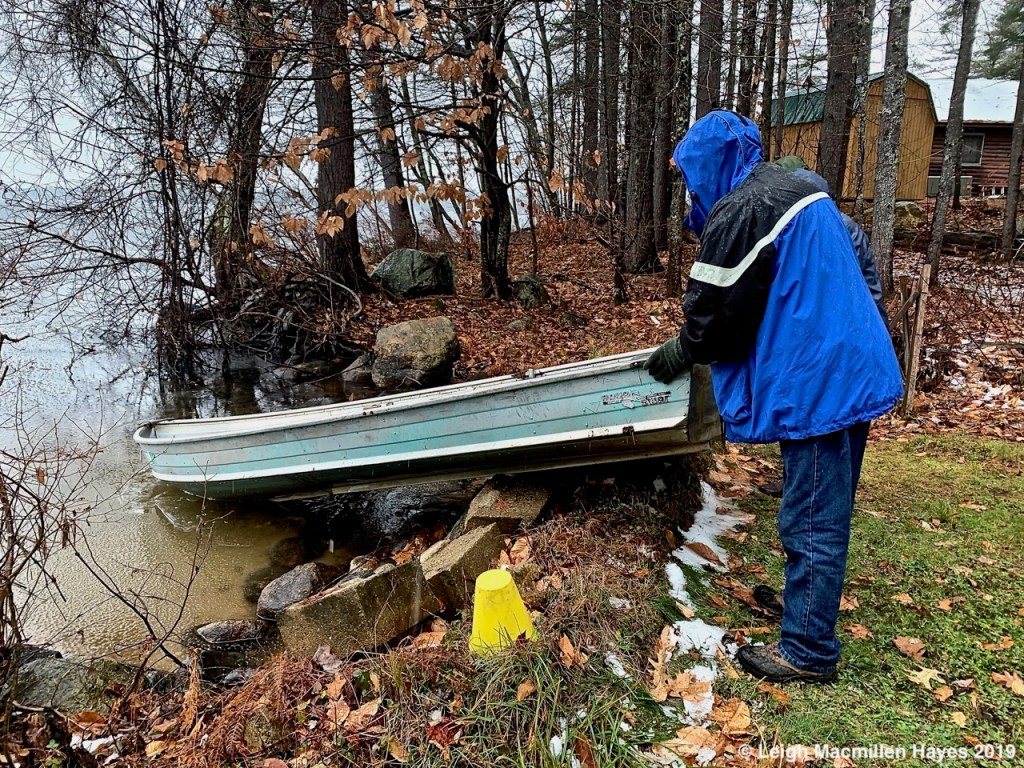
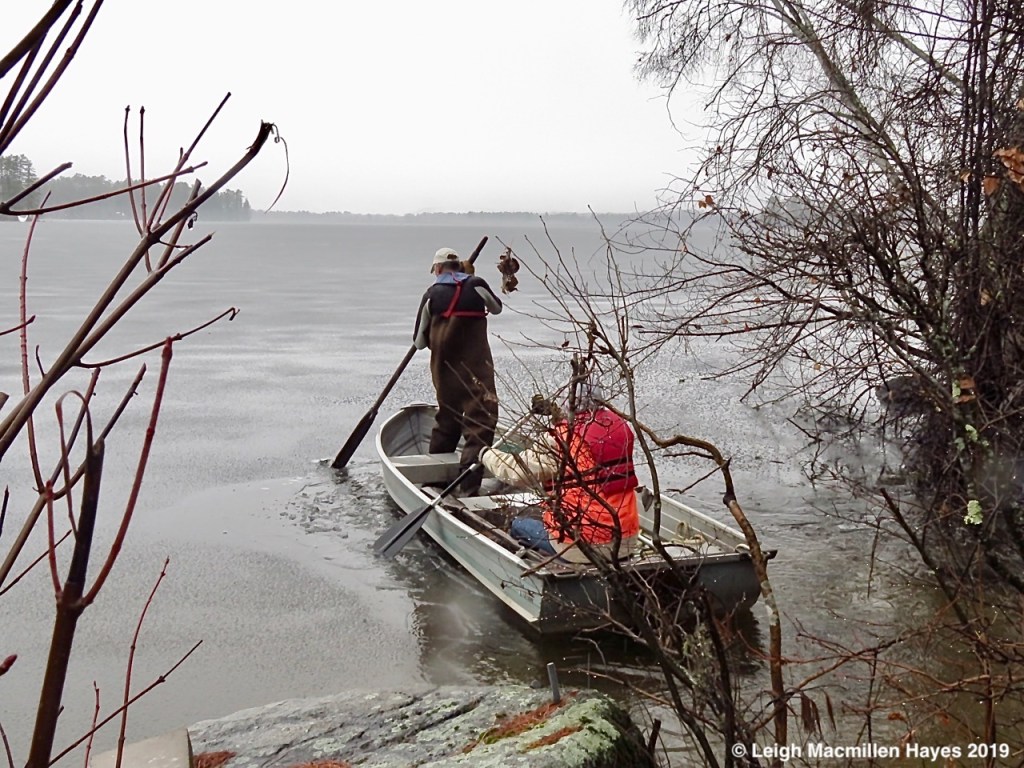
By the time I did join the rescue group, they were already loading an aluminum boat into the lake.

The Lower Bay of Kezar Lake had sealed over this past weekend and was coated with an inch or more of ice.

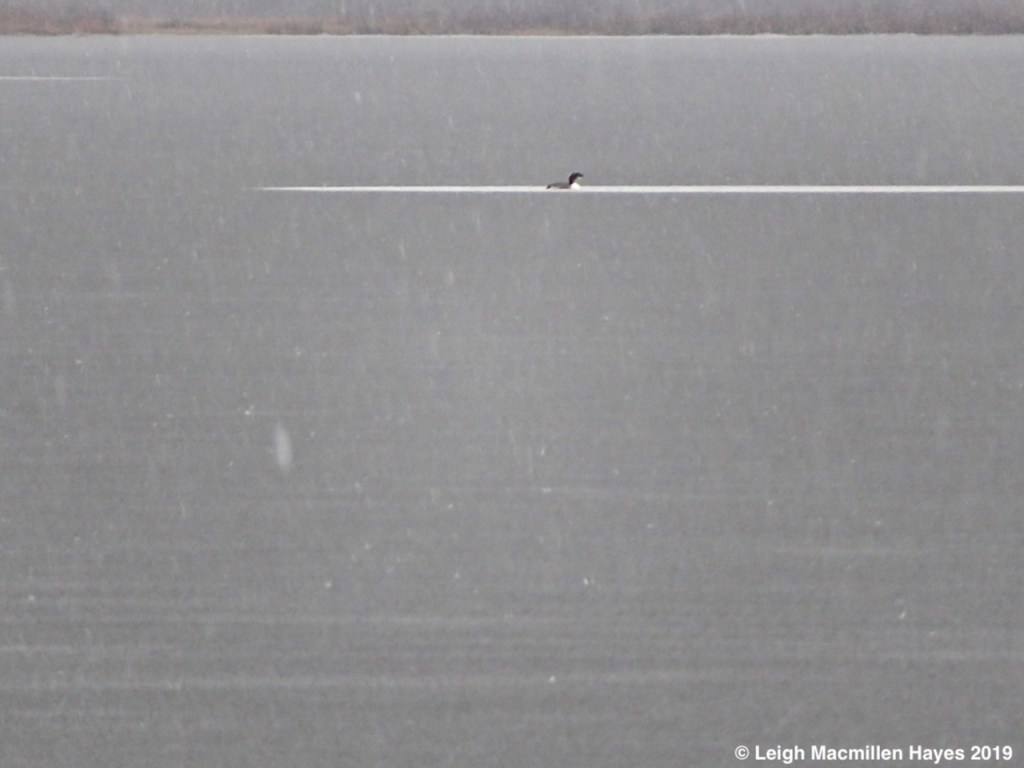
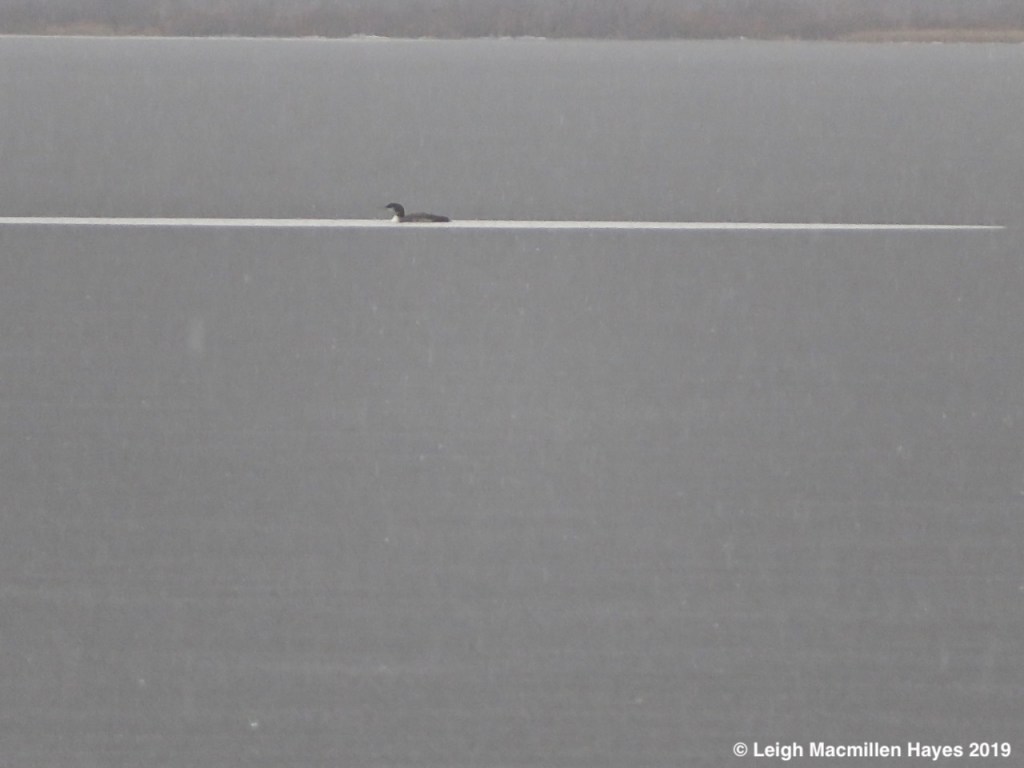
Thus the need for the rescue mission. An immature loon got caught by the sudden freeze. Thankfully for it, Susan Clout, a local resident, noticed its situation and put out a call for help.

Responders included Heinrich and Linda Wurm, Paul Buckley, Steve Lewis, and Jim Buck.

Donning life jackets, their only gear: paddles, a net and a box. It all seemed so simple. Paddle out, coo to the bird as it might talk to another, and either make open water for it to fly (loons need at least a quarter mile for take off, this one had a circle that maybe measured twenty feet–it was difficult to tell from the shore) or capture and release it on an open section of the lake. As one of the text messages stated about the plan: Evolving.
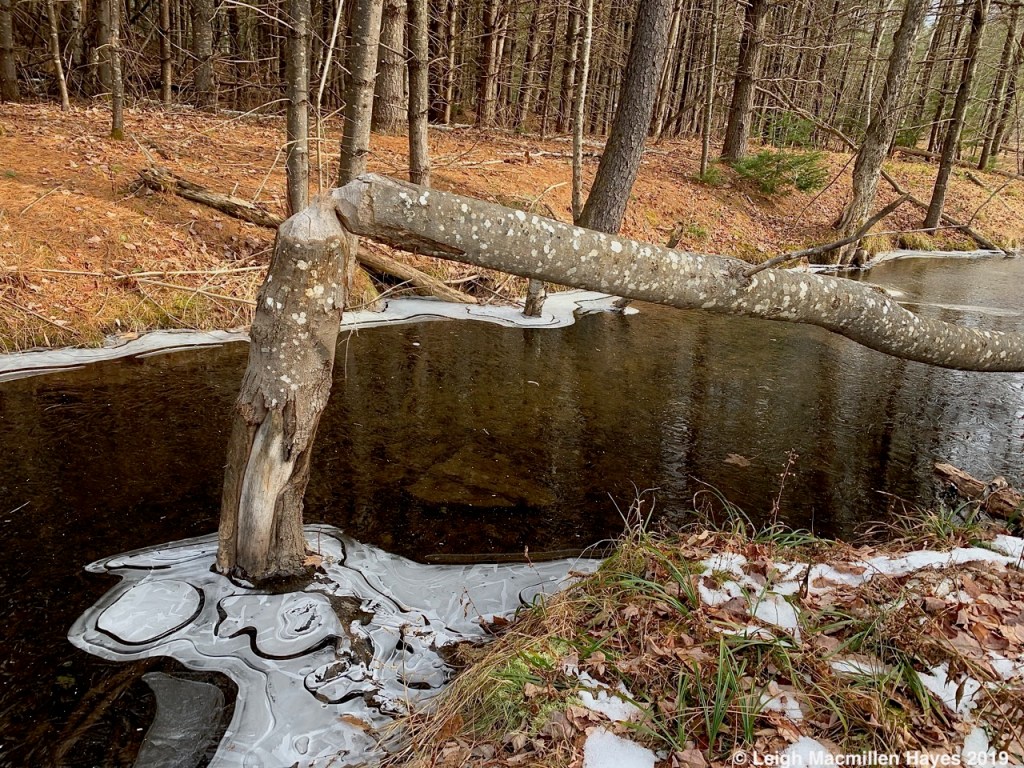
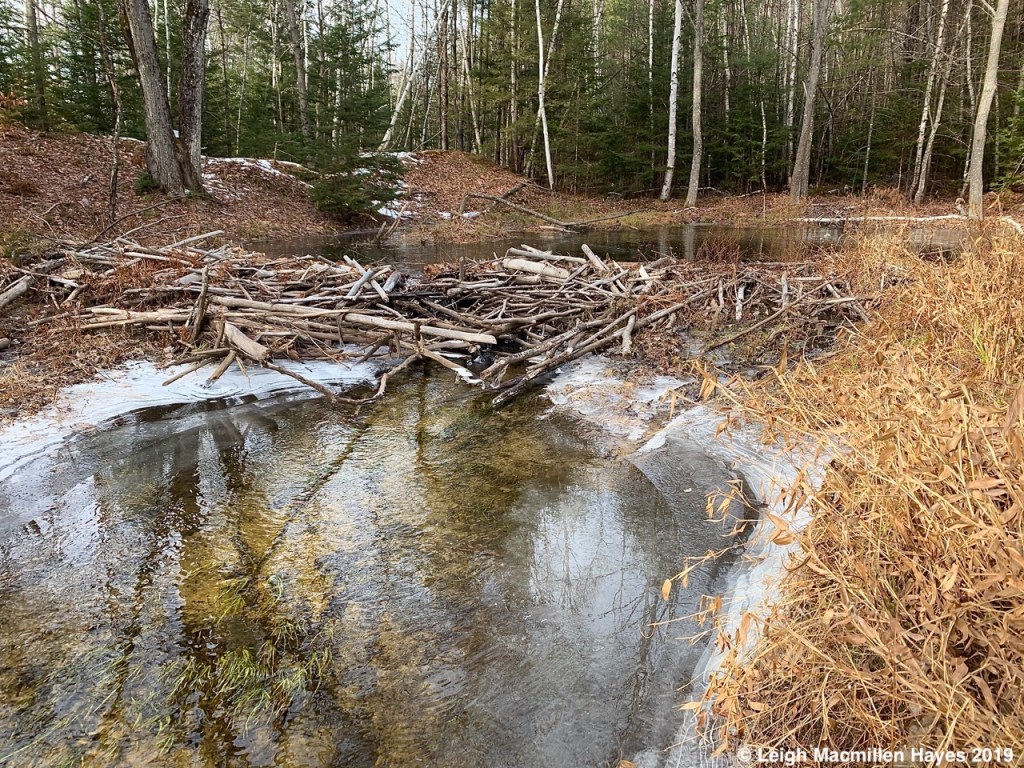
The task of breaking the ice was daunting and though it looked like they were crossing the Potomac, all they really wanted to do was maneuver part way across the bay.

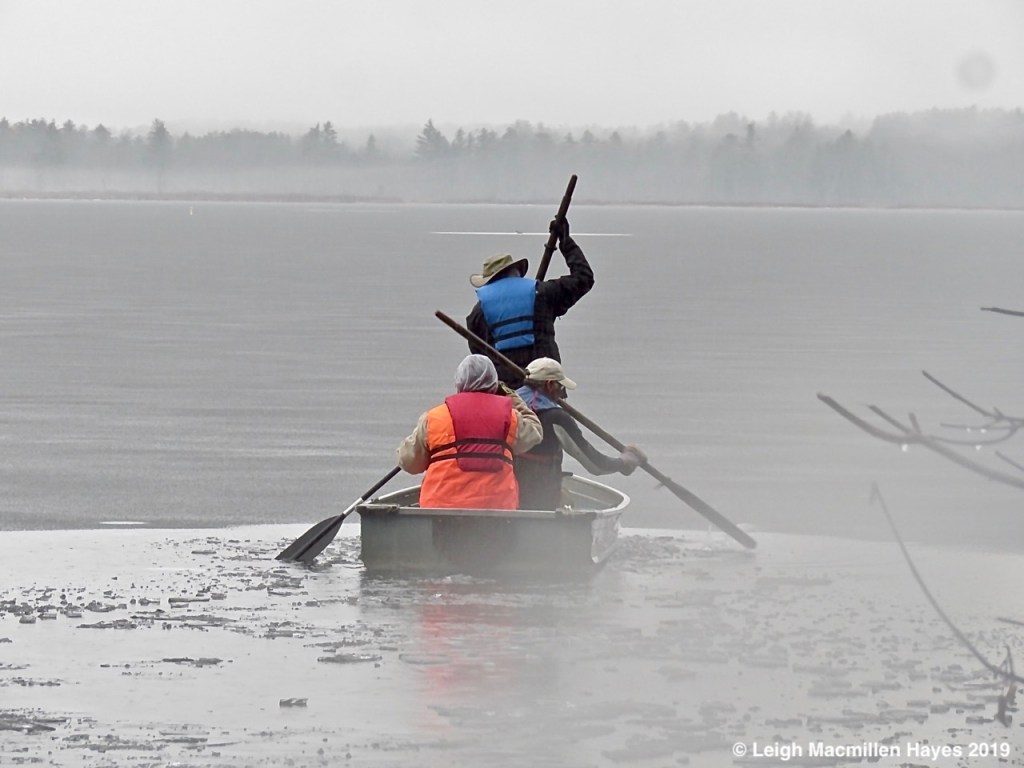
Because it made sense for the person in the bow to stand and break ice as the sternman paddled, stability became an issue and within minutes the boat returned to shore and a third passenger climbed aboard.

Though you can see the circle of open water and it may appear close by, it was all a matter of perspective and they had a long path to create.

Meanwhile, back on shore, those of us who remained behind and felt like we might need to rescue the rescuers, were entertained by Susan as she sang the most delightful lines of a song she’d been writing about the loon’s dilemma.

Back on the water, or rather, ice, progress was slow.

And still the loon swam, occasionally calling out. We interrupted its voice to mean, “I see you. Keep coming my way.”

On board the SS Icebreaker, oarsmen shifted positions because it was tiring to chop continuously.

We kept assuming they were making headway given their position.

And they were. But they still had a long way to go. After 75 minutes, with probably two more hours separating them from the loon, and a cold rain falling, they decided to turn around and hope that higher temps and maybe a breeze in coming days will do the trick. All are hopeful.

I was invited to the scene because my friends’ thought it would make a good story. In the end, my story is nothing compared to the one Nature is writing. She, apparently, has Her own plans for the denouement. We can’t wait to read how She resolves this matter.

Update: November 21, 2019

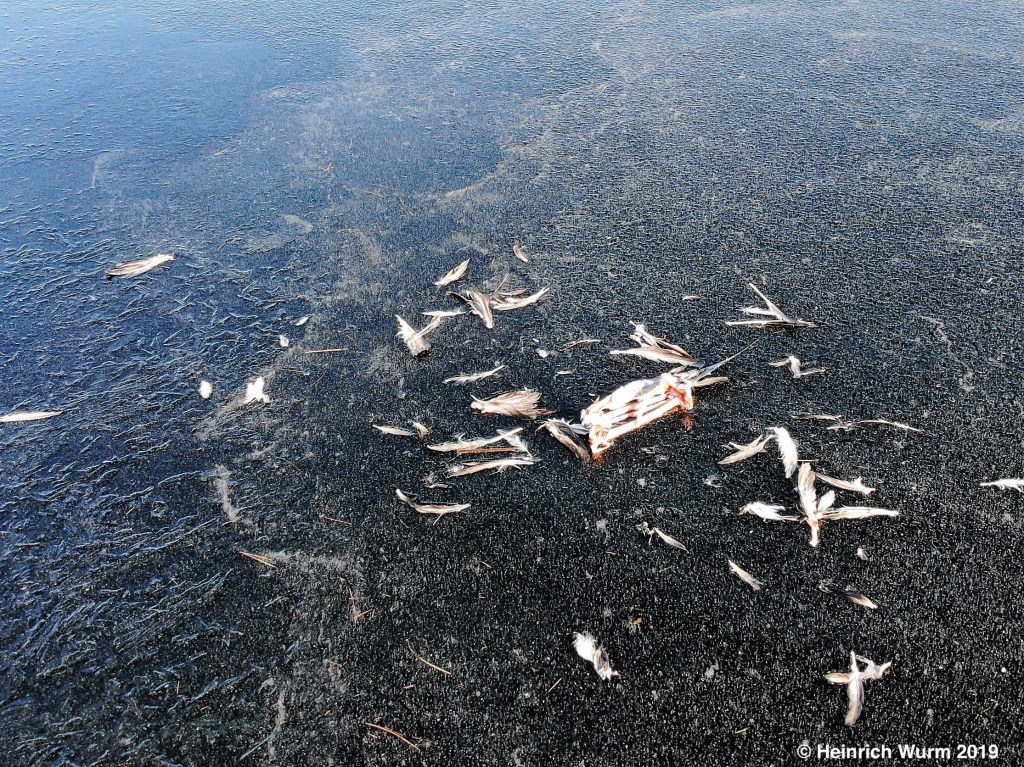
And here is the rest of the story as Heinrich interpreted it for us: “The loon we were aiming our mission toward took off this morning! Just as the Game Warden showed up the loon started flapping its wings and headed east toward the Narrows. Amazing!

created by dji camera

Unfortunately these remnants were left near the other open space
where a loon had been sighted before.

I later learned that two Bald Eagles were spotted near the loons.

Nature’s Denouement: Find a balance.

Desire to Learn

Maybe it’s my teacher blood. Maybe it’s just because I love sharing the trail with others who want to know. Maybe it’s because I realize how much I don’t know, but love the process of figuring things out.

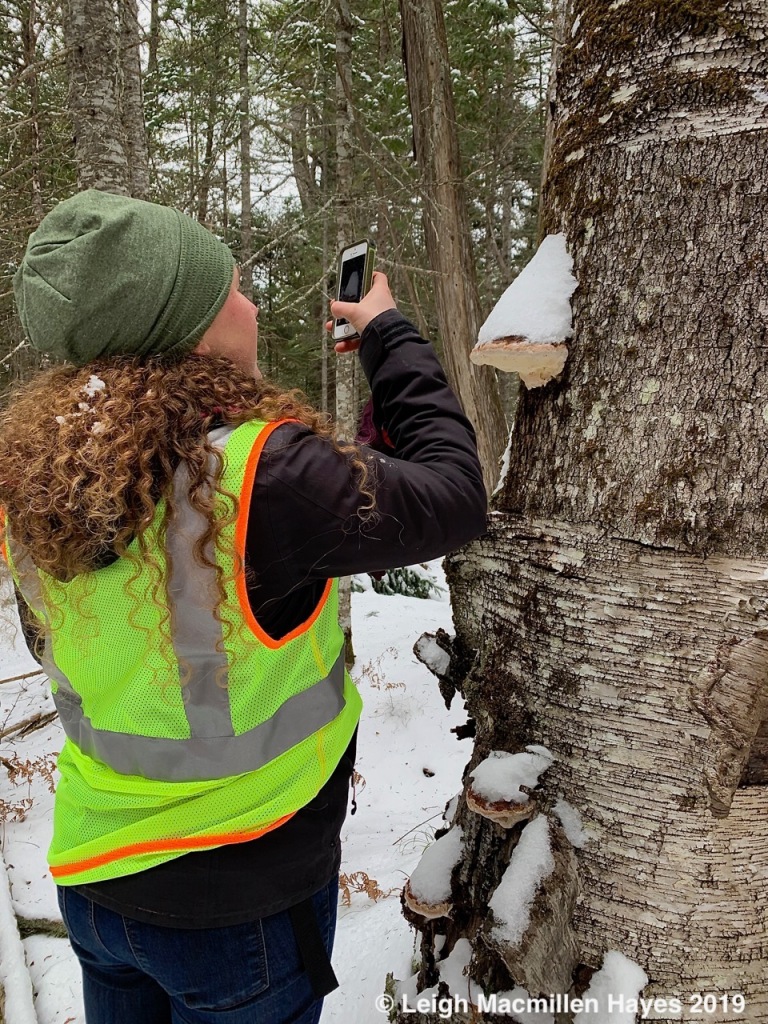
Whatever it is, I had the joy of sharing the trail with this delightful young woman who kept pulling her phone out to take photographs and notebook out to jot down notes about our finds along the trail, that is . . . when her fingers weren’t frozen for such was today’s temperature.

Among our great finds, a Red-belted Polypore capped with a winter hat as is the custom this week.

I was really excited about our opportunity to share the trail for I wanted to learn more about her work with Western Foothills Land Trust and Loon Echo Land Trust, and her roll as the Sebago Clean Waters Conservation Coordinator.

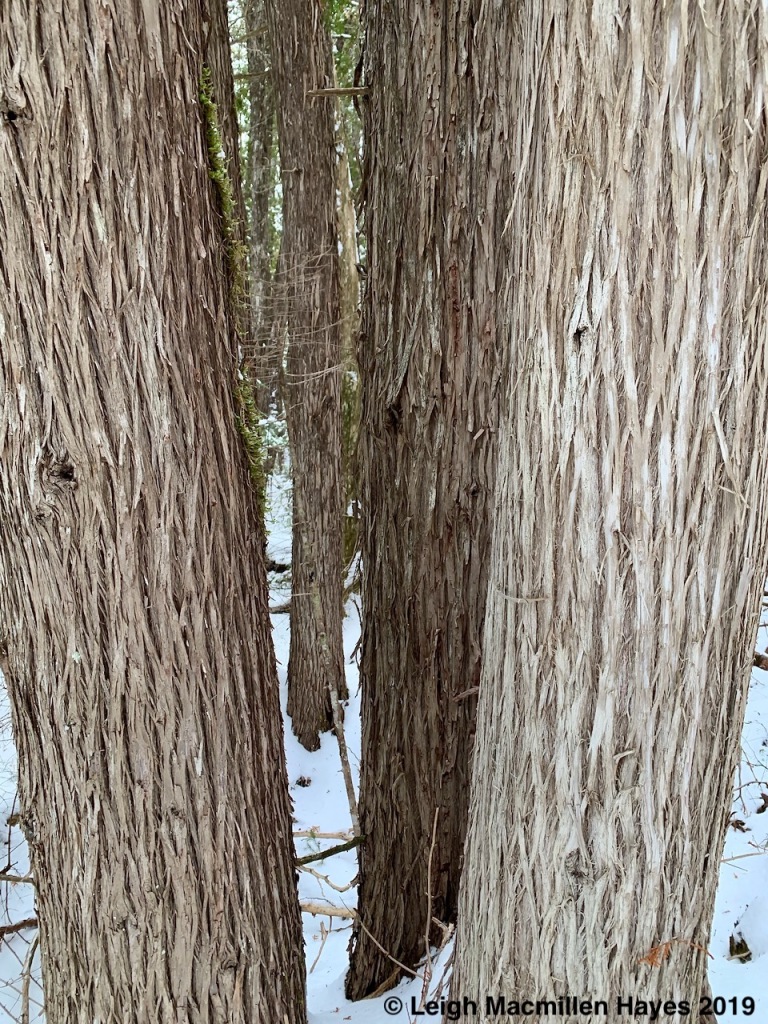
But, I was also excited to walk among White Cedars for though I was only twenty minutes from home, I felt like I was in a completely different community. Um . . . I was.

Shreddy and fibrous, the bark appeared as vertical strips.

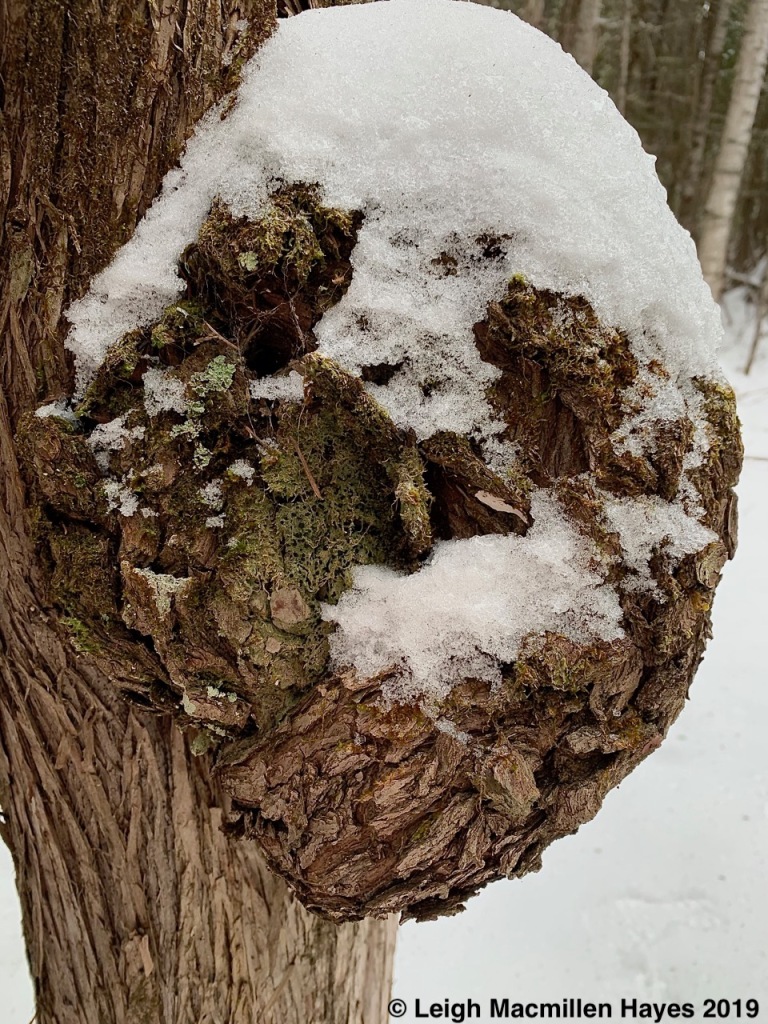
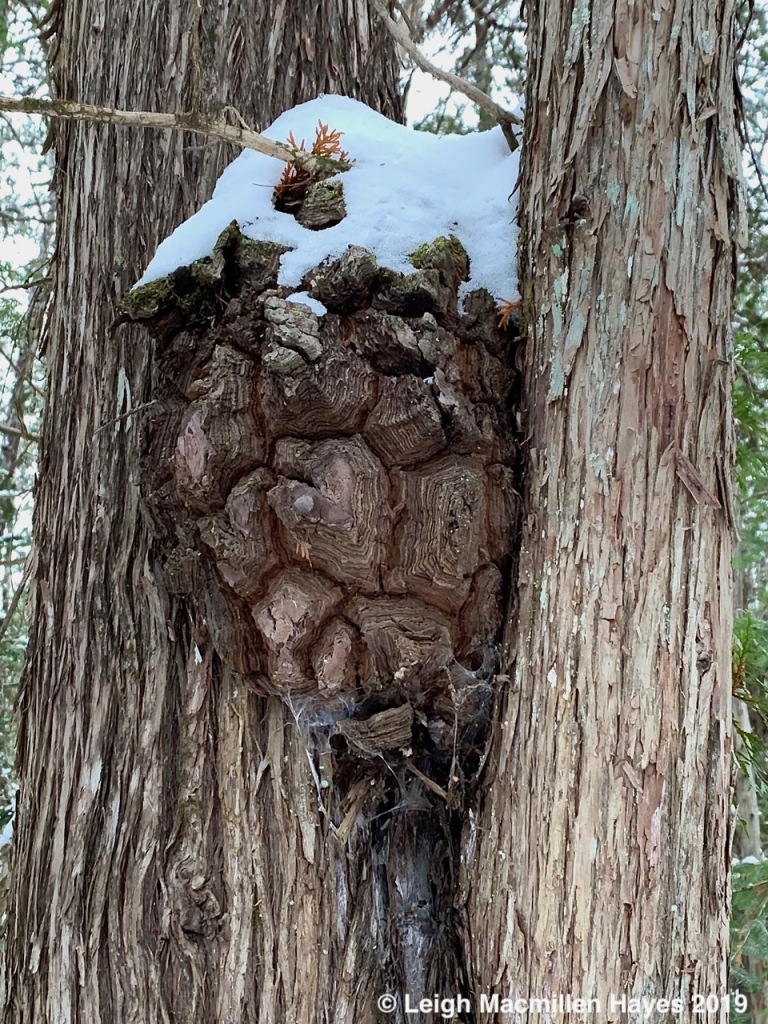
We paused beside one of the trees where a large burl that could have served as a tree spirit’s craggy old face, begged to be noticed. We wondered about what caused the tree’s hormones to create such a switch from straight grains to twisted and turned. Obviously some sort of stress was involved, but we couldn’t determine if it occurred because of a virus, fungus, injury, or insect infestation.

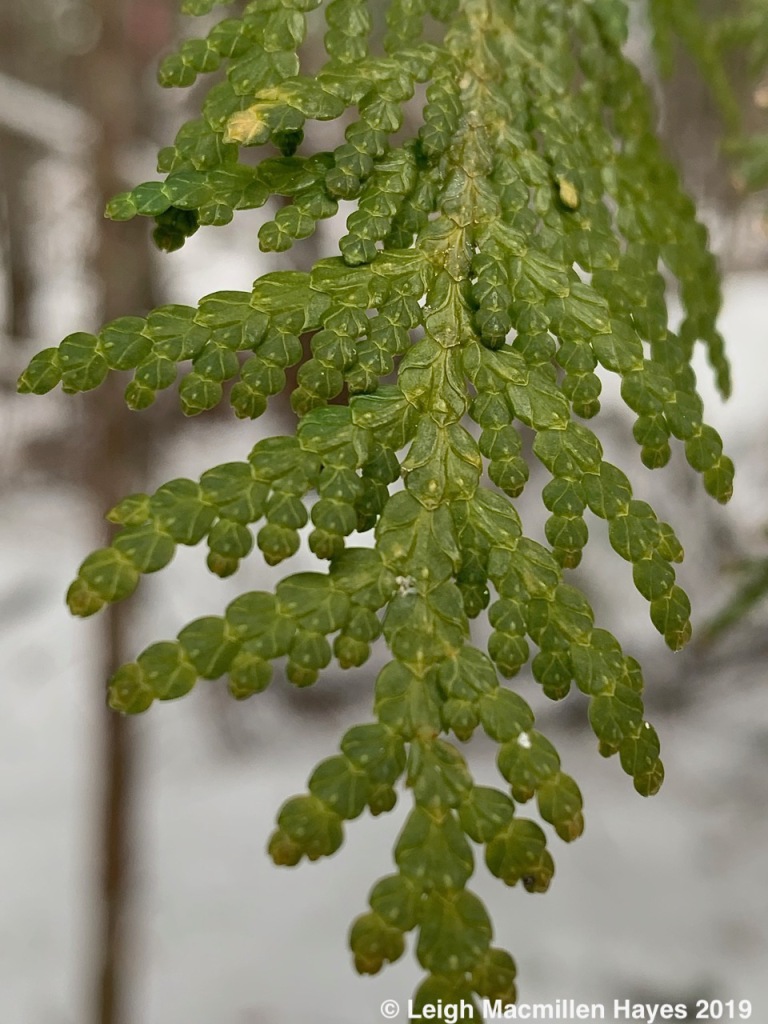
And then there were the leaves to focus in on for their presentation was like no other. (Unless it’s another cedar species, that is.) I loved the overlapping scales that gave it a braided look. And if turned right side up, it might have passed as a miniature tree or even a fern.

Lungwort Lichen drew our attention next. My ever-curious companion asked if it was tree specific. Found in humid forested areas, this lichen grows on both conifers and hardwood trees.

Having found the lichen, I knew it was time for a magic trick and so out of my mini-pack came a water bottle. Within seconds, the grayish color turned bright green due to its algal component. It’s an indicator for rich, healthy ecosystems such as old growth forests.

Where the water didn’t drip, it retained its grayish-green tone, and the contrast stood out. Curiously, snow sat atop some of the lichen’s structure, and one might have thought that all the lettuce-like leaves would have the brighter appearance, but today’s cold temp kept the snow from melting and coloration from changing.

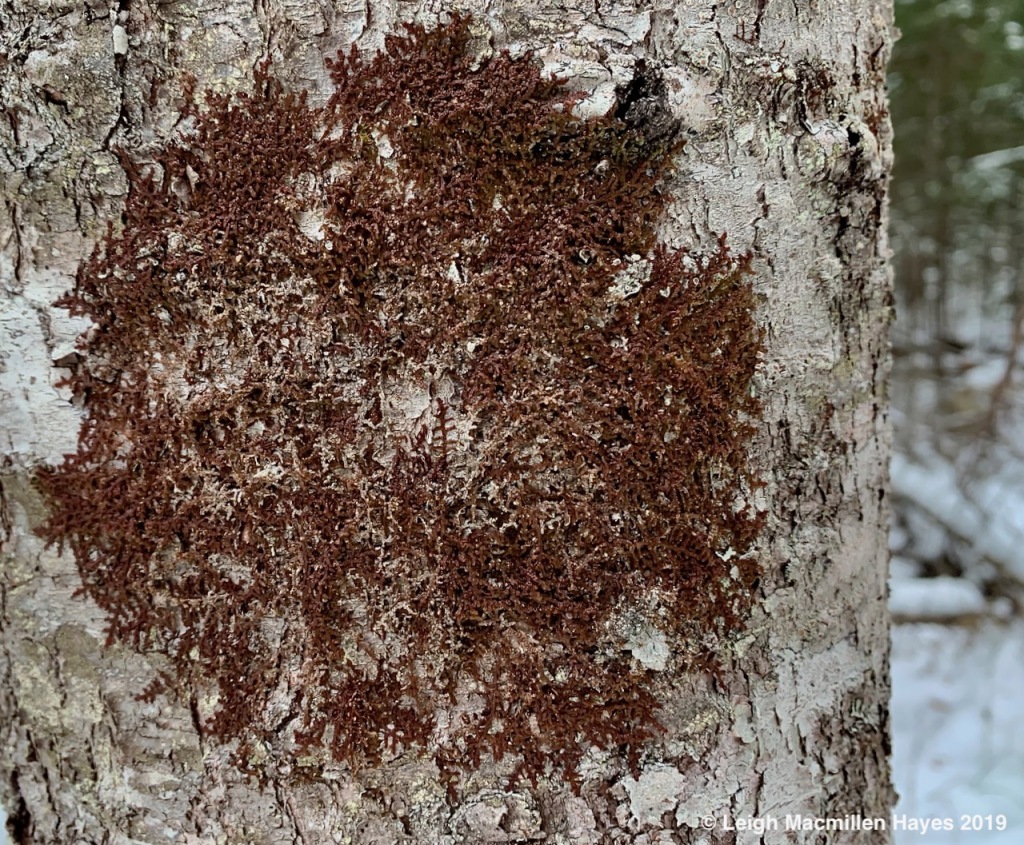
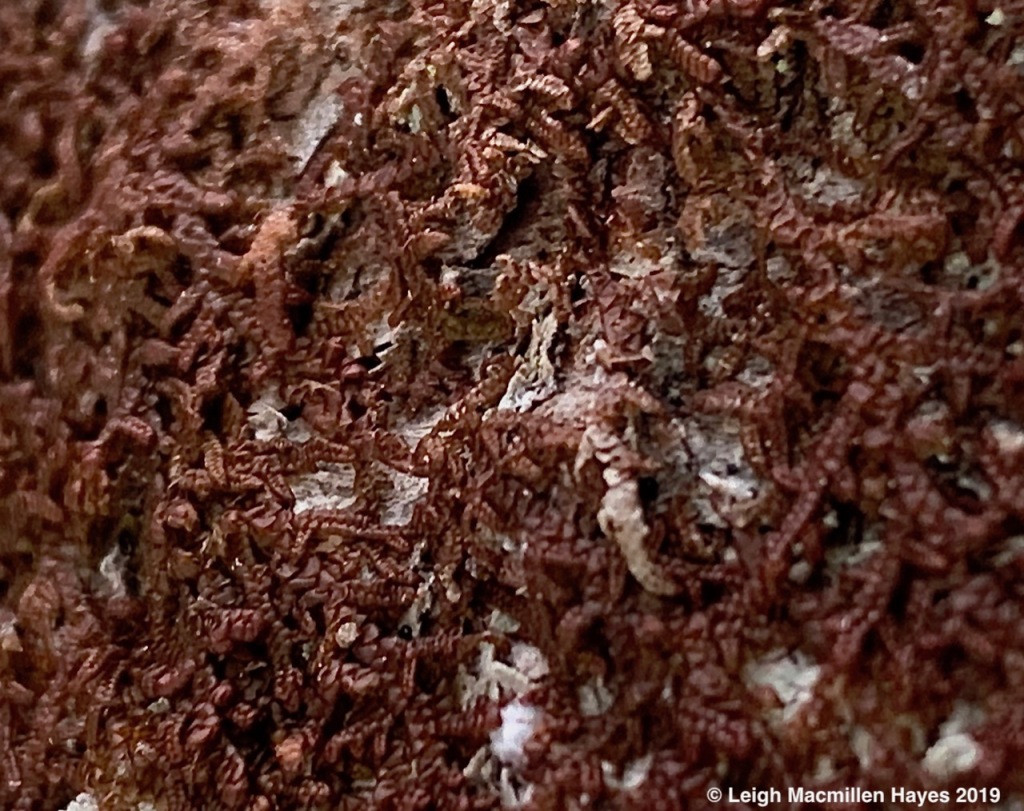
Our next great find: a reddish-brown liverwort known as Frullania. It doesn’t have a common name, and truth be known, I can never remember if the dense mat is asagrayana or its counterpart: eboracensis.

Three dimensional in form, it reminded me of a snarl of worms vying for the same food. Oh, and the dense form: asagrayana in case you wondered.

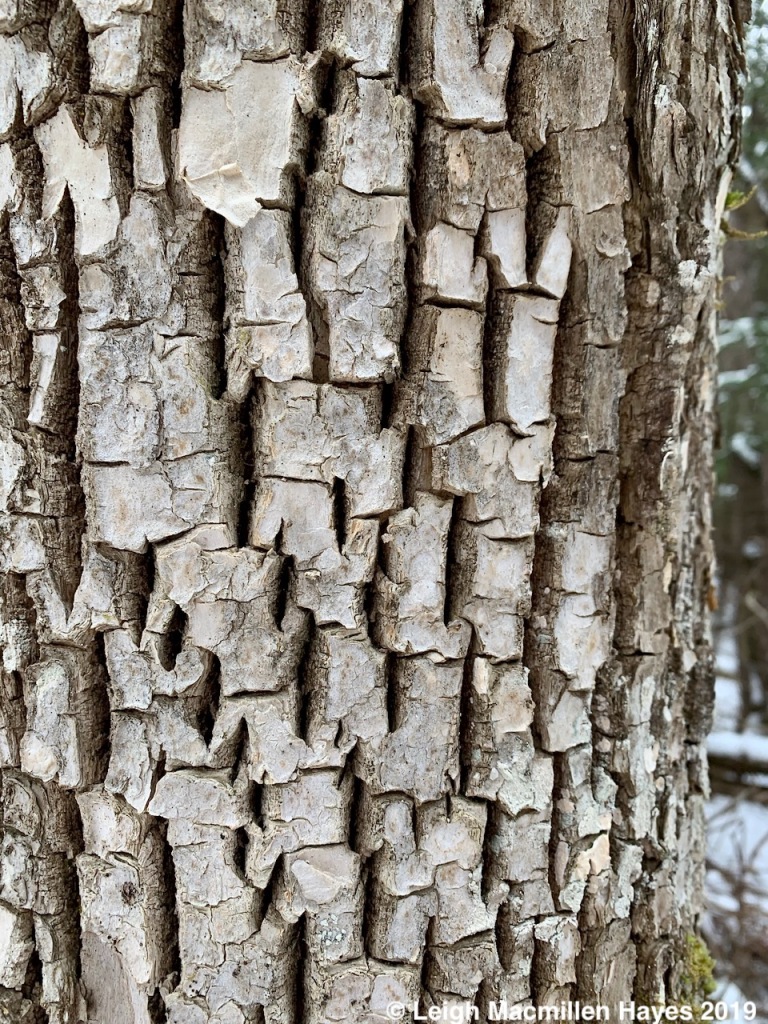
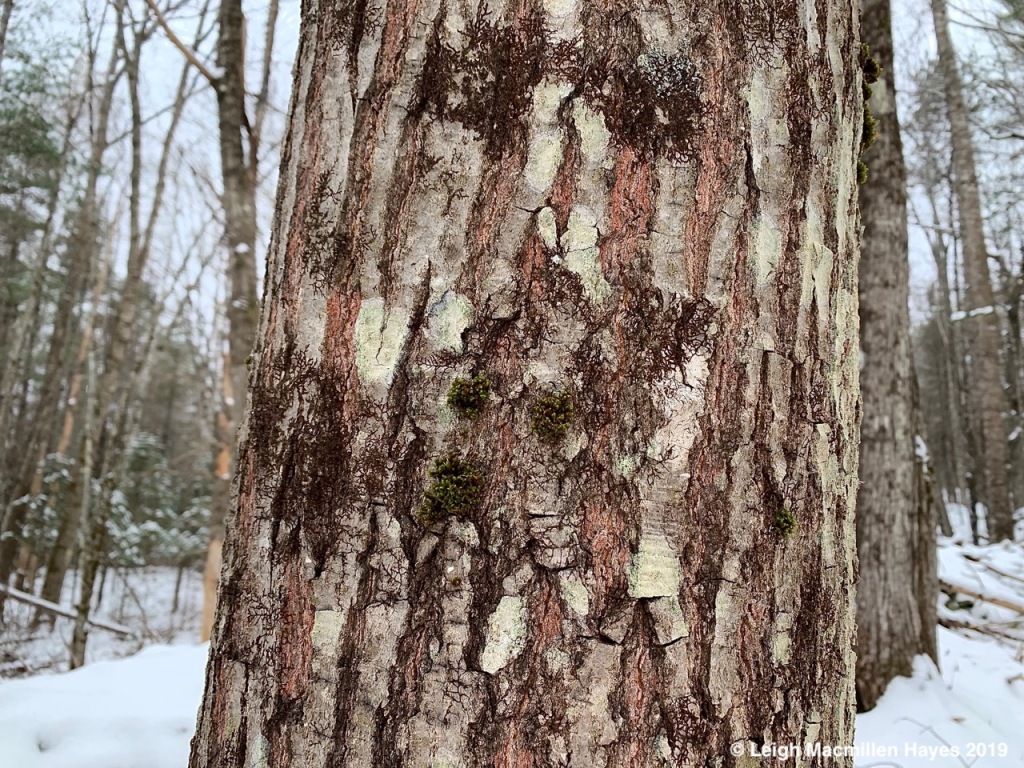
Over and over again as we walked, we kept looking at the variety of trees and my companion indicated an interest in learning about them by their winter presentation, including the bark. I reminded her that once she has a species in mind, she needs to use a mnemonic that she’ll remember, not necessarily one that I might share. In this case, I saw diamonds in the pattern, and sometimes cantaloupe rind. Others see the letter A for Ash, such as it was. She saw ski trails. The important thing was that we both knew to poke our finger nails into its corky bark. And that its twigs had an opposite orientation.

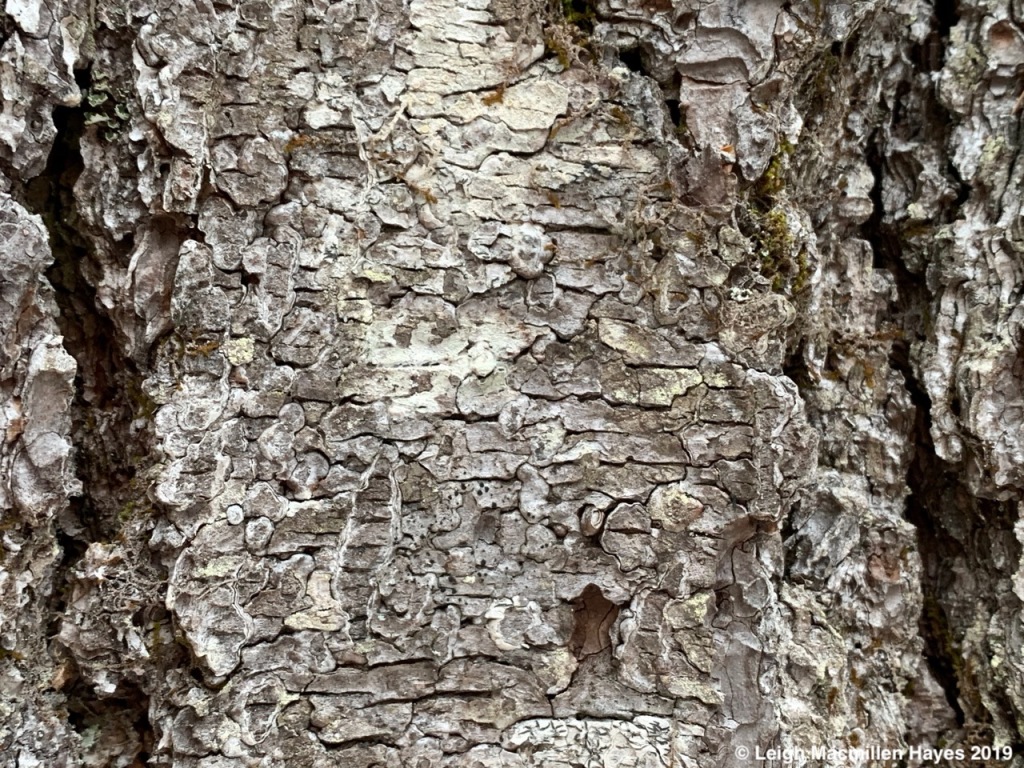
One of the other idiosyncrasies we studied occurred on the ridges of Eastern White Pines, where horizontal lines appeared as the paper my companion jotted notes upon. It’s the little things that help in ID.

Sadly, our time had to end early as she needed to return to the office, but I decided to complete the loop trail and see what else the trail might offer.

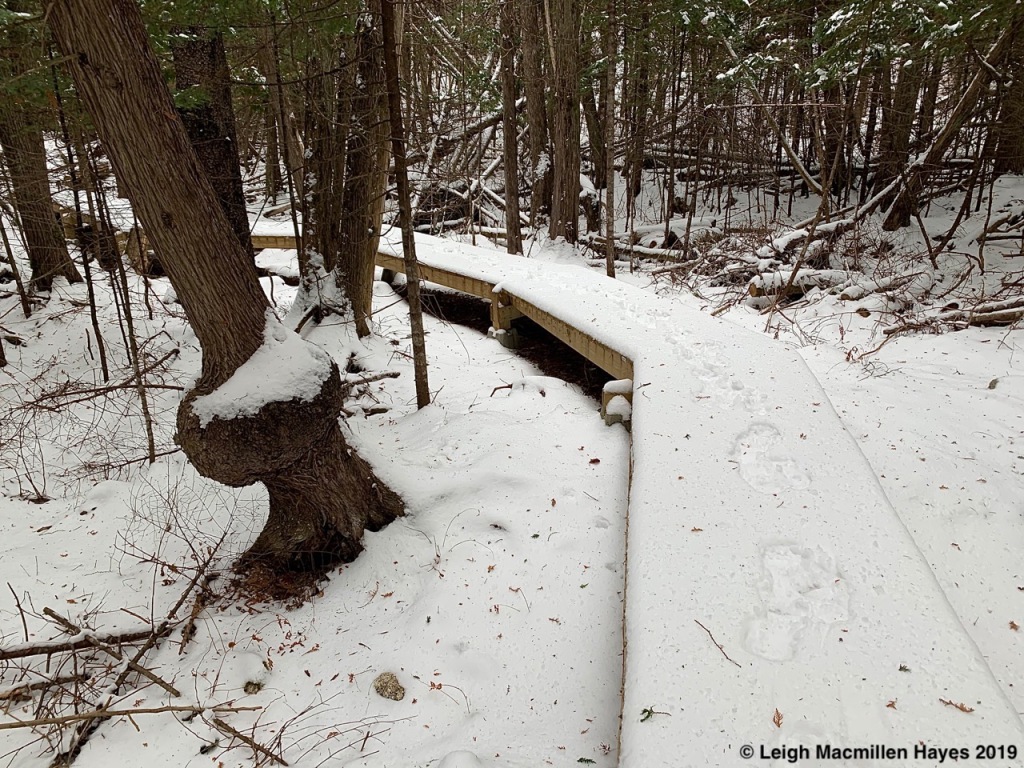
Vicariously, I took her along, for so many things presented themselves and I knew she’d either be curious or add to my understandings. Along a boardwalk I tramped and upon another cedar was a snow-covered burl.

A wee bit further, and yet another peeked out from between two trunks, stacked as it was like a bunch of cinnamon buns. Curiously, the center bun formed a heart. Do you see it?

It was upon this trail that I began to see more than the bark of trees. At my feet, tracks indicated that not only had a few humans walked the path, but so had mammals crossed it. And one of my first finds was the illustrious snow lobster, aka Snowshoe Hare.

It had tamped the snow down among some greens and I knew it was time to stoop for a closer look.

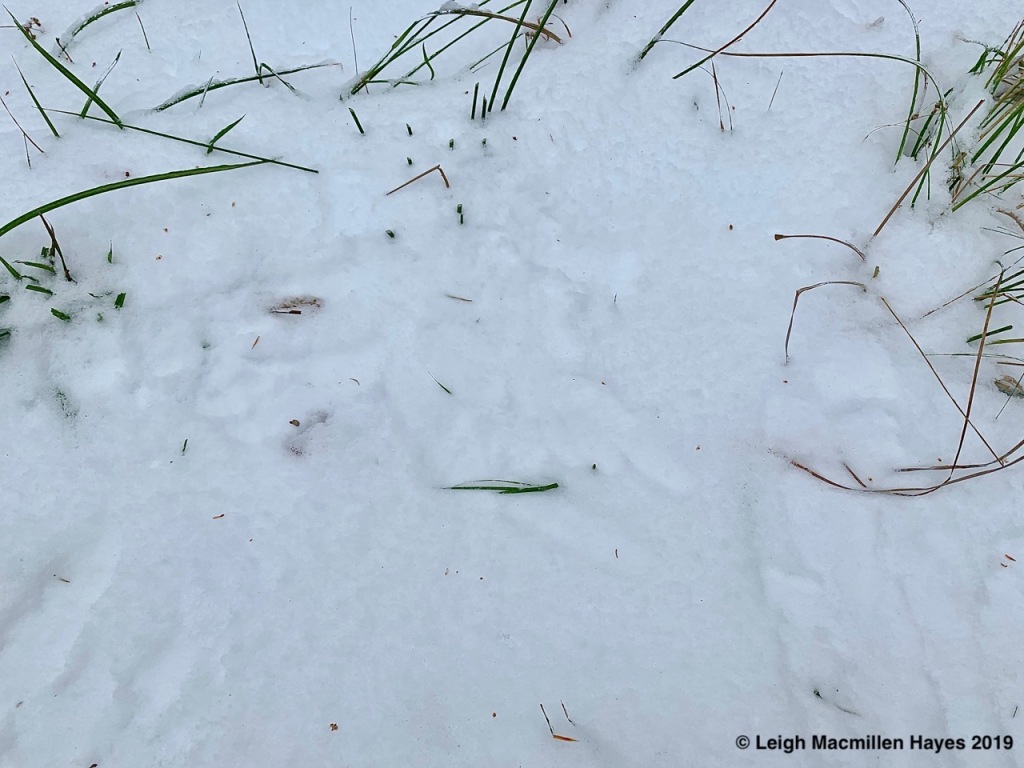
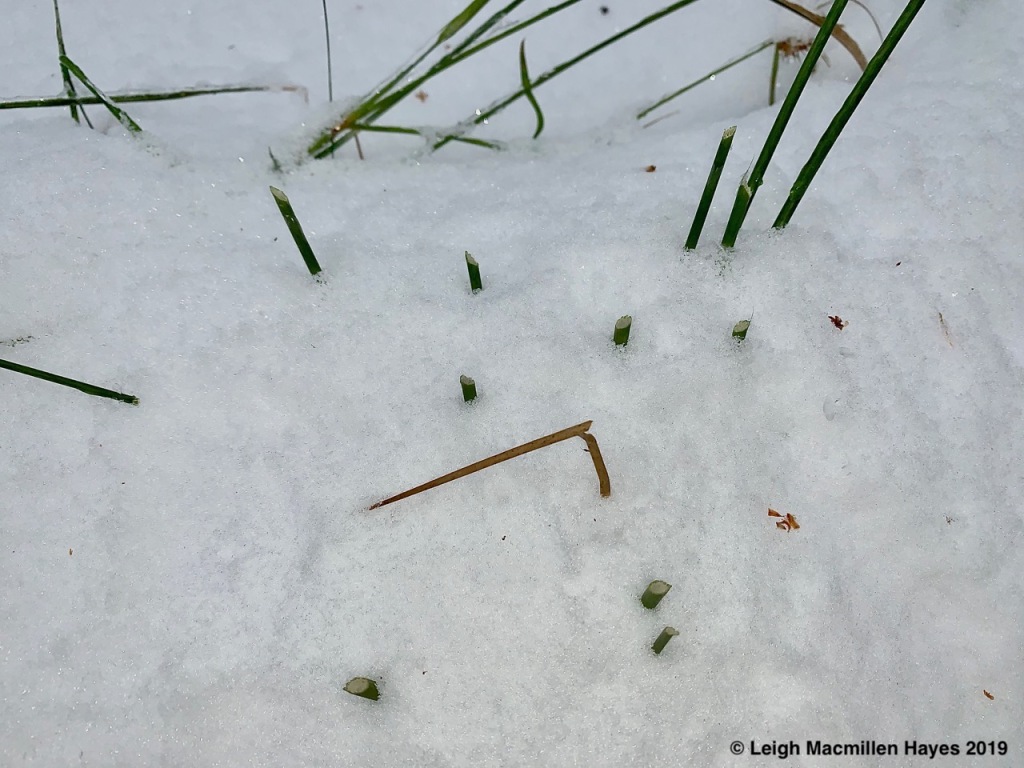
Each piece of vegetation that had been cut, had been cut diagonally–Snowshoe hare-style, that is.

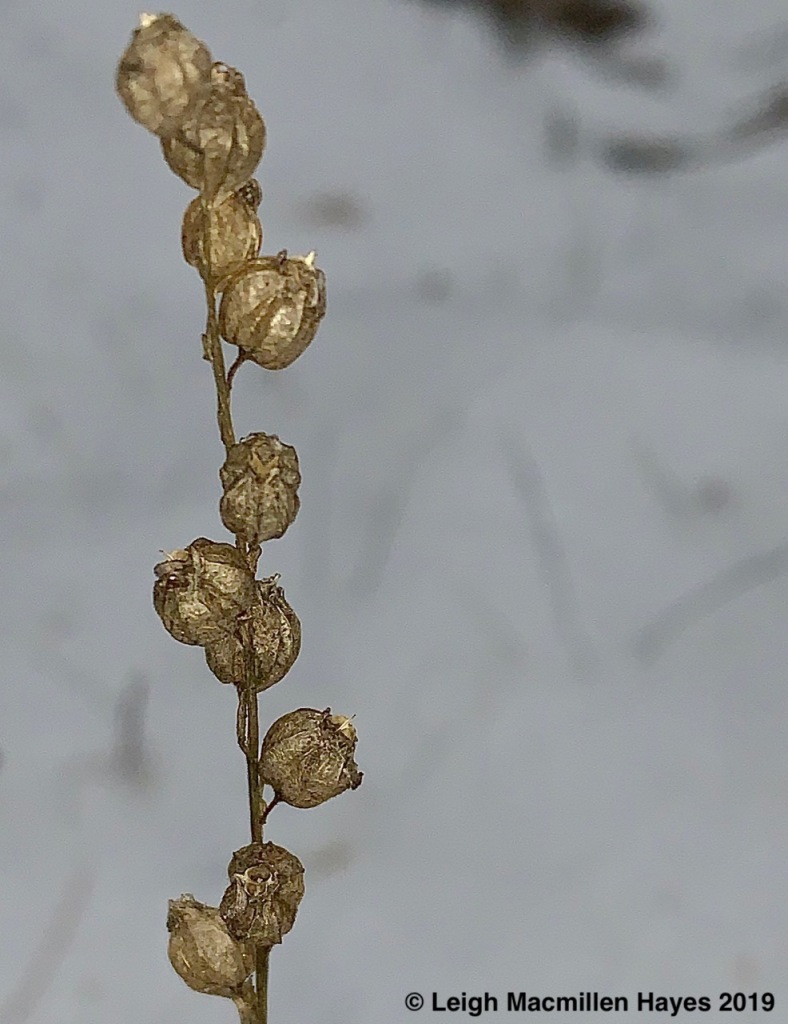
Moving along, some winter weeds presented themselves as former asters and others, but my favorites were the capsules of Indian Tobacco.

In my book of life, one can have more than one favorite, and so I rejoiced each time I saw a birch catkin upon the snow carpet, its fleur di lis scales and tiny seeds spread out. The seeds always remind me of tiny insects, their main structure featuring a dark body with translucent wings to carry it in a breeze, unless it drops right below its parent and takes up residence in that locale.

Further along, scrawled scratching in the snow and leaves indicated another mammal lived in the woodland, conserved as it was by Western Foothills Land Trust. With this sight, my mind stretched to the fact that a corridor had been created and the more I followed the trail, the more I realized others crossed over it because this was their home. And they were still at home here.

The scratcher had left a signature in its prints.

And the source of its food: fallen nuts that about a month ago rained down like the sky was falling. Northern Red Oak Acorns. This one had been half consumed by a White-tailed Deer.

While traveling earlier with my companion, we’d talked about the tree that produced the deer food, but it wasn’t till I followed the loop that I found it. To me, the ridges of the Northern Red Oak looked like ski trails, with a reddish tinge in the furrows.

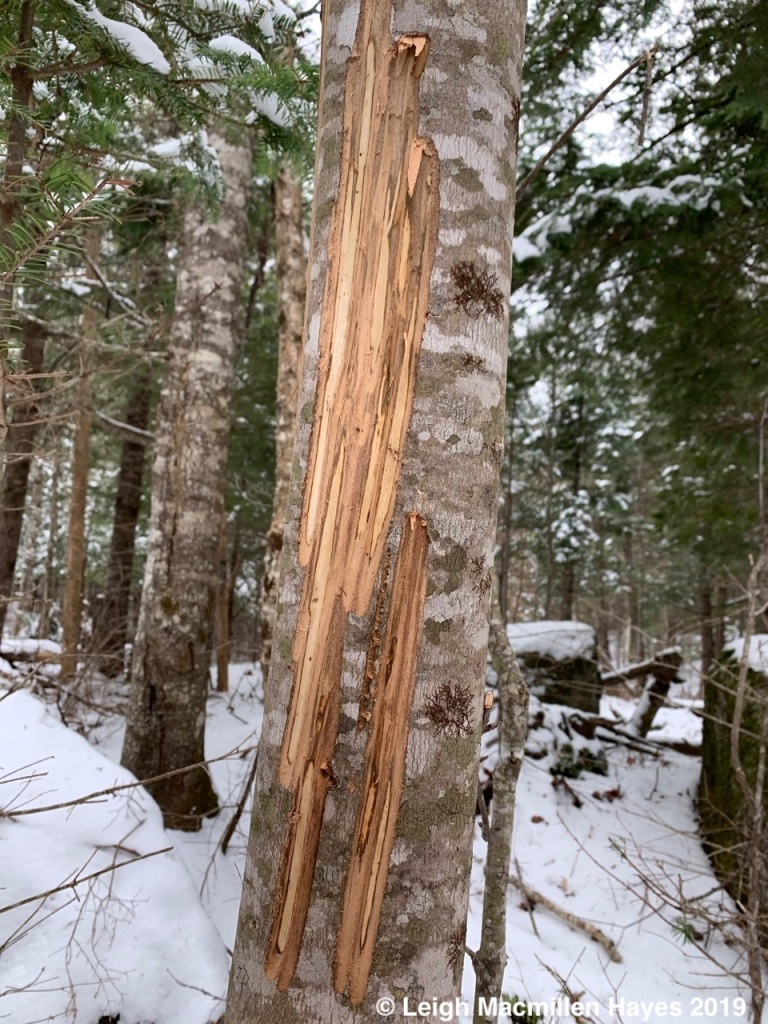
Oh, and that deer; it seemed to have dined on the bark of a Red Maple in the recent past–probably as recent as last winter or spring.

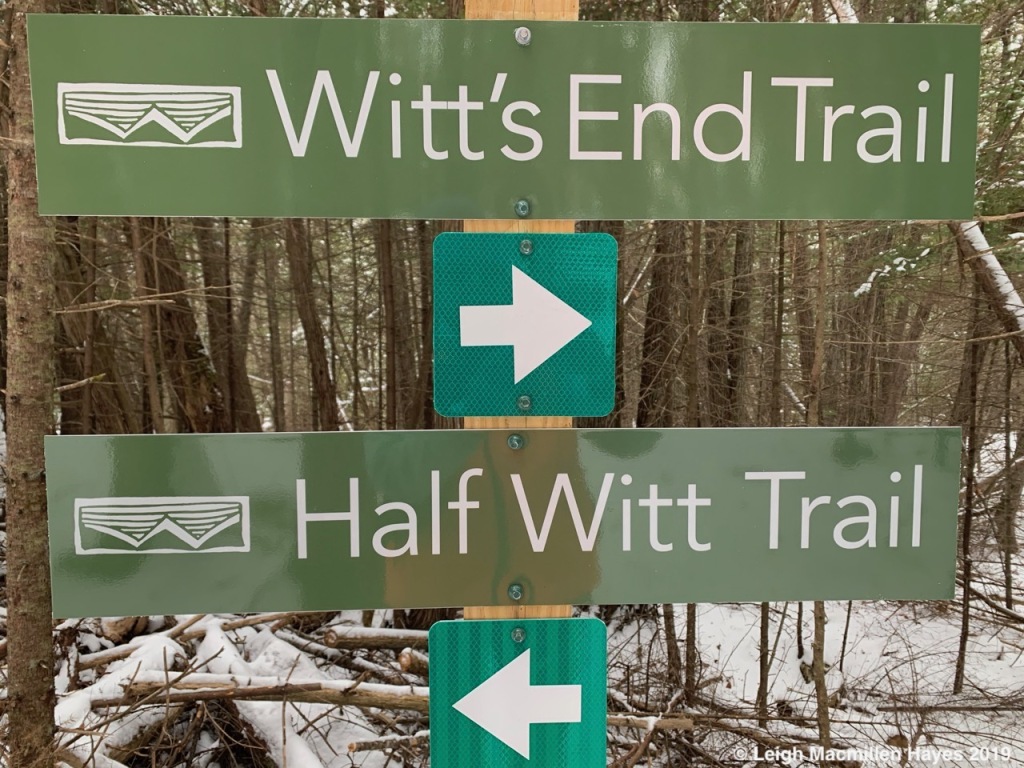
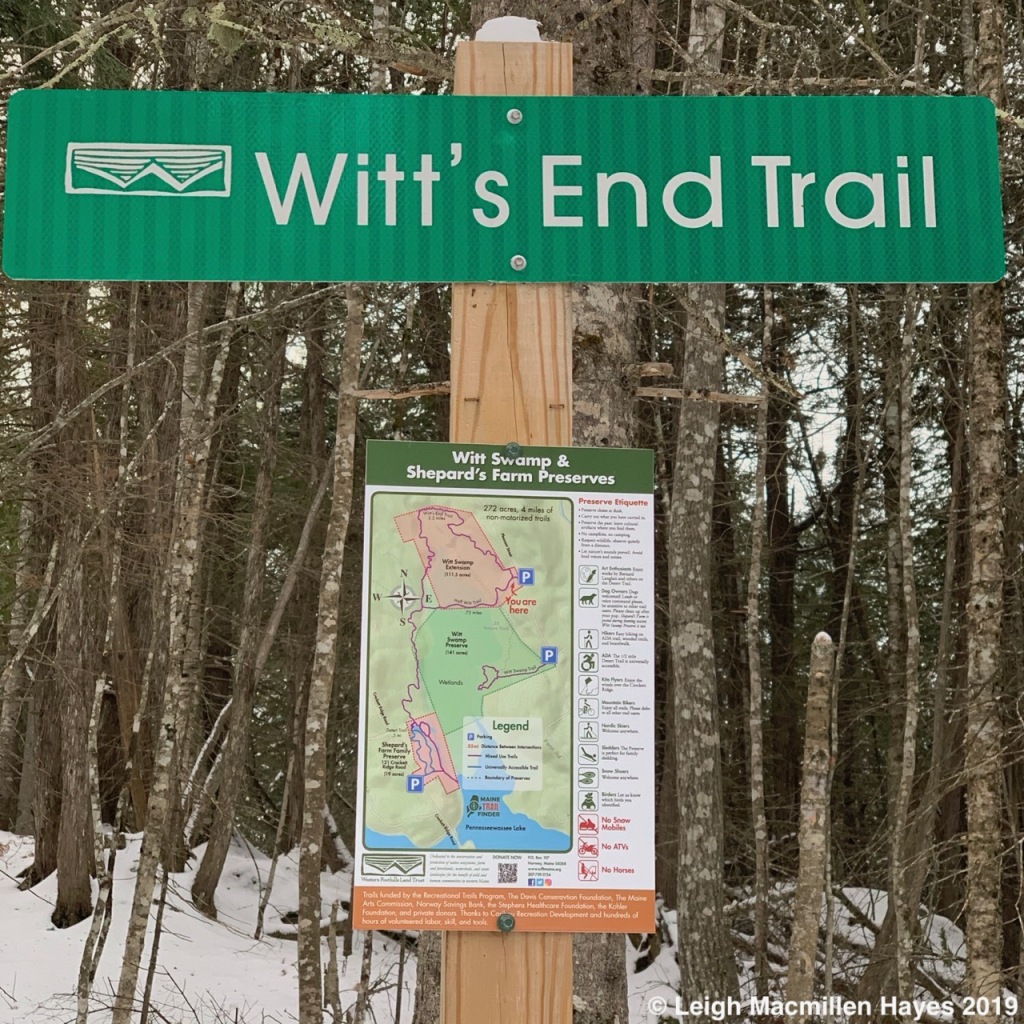
After a three hour tour, I delighted in traveling the Half Witt Trail three times (out and back with my companion and then again as I completed the loop) and Witt’s End.

They are new additions to Western Foothills Witt Swamp & Shepard’s Farm Preserve, and the journey . . . ah the journey.

Along the way, this young woman wanted to know what questions to ask and where to seek answers. I helped as much as I could, but noted that there are others who understand much more than I do.

Thank you, Hadley Couraud, for today’s journey. When it’s shared either actually or virtually with one who has a desire to learn, it’s always special.

Starring Wondermyway

I always wanted to be a movie star, albeit, one who didn’t have to perform in front of anyone. And recently Lake Region Television gave me that opportunity when they asked me to share some posts from wondermyway.com. And so, here is a link to the video. It’s only seven minutes long; I still have eight minutes of fame left to acquire. Turn down the sound so I don’t put you to sleep and just enjoy the photos. If are a regular follower, you should recognize all of them. Here’s the link:
https://vimeo.com/372926008

Giving Thanks Beside Sucker Brook

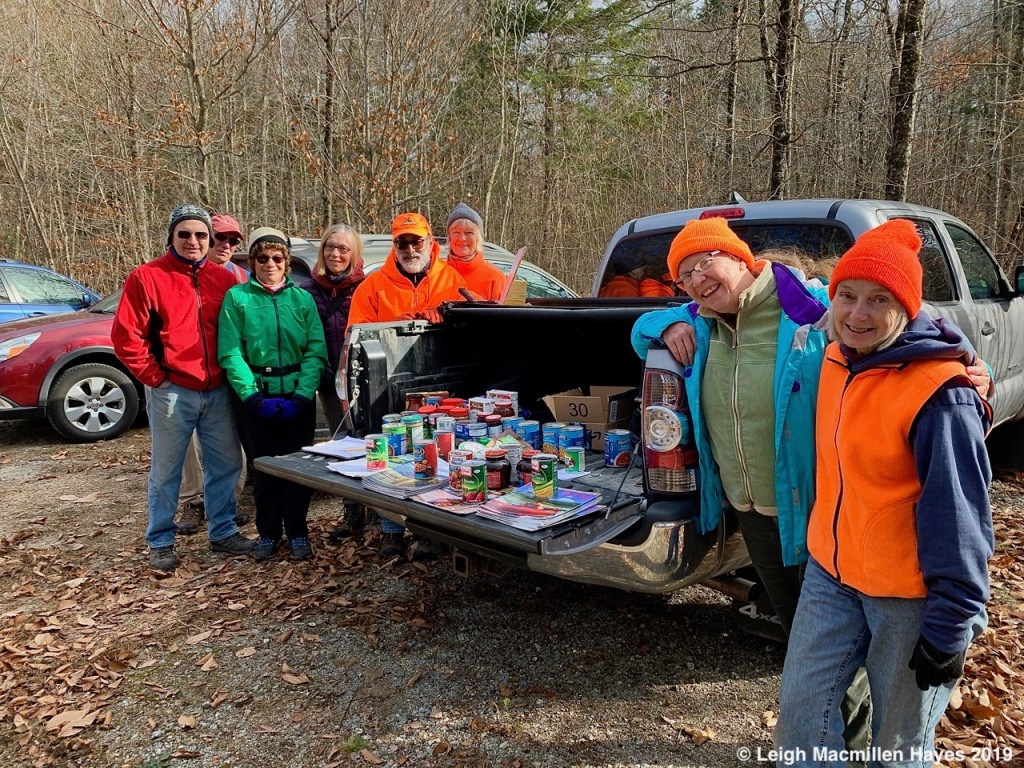
Since it’s deer hunting season in the Maine woods, we decided to host a walk one Sunday in November on a Greater Lovell Land Trust property because hunting is prohibited on this day. And today happened to be that Sunday. But first, this story begins with a few other events. On Friday, I had the honor of participating in a late afternoon program at New Suncook School. Before the young girls in the program, their leaders, and I stepped outside, one of them struggled with a Hannaford bag that was splitting apart because it was full of canned and boxed food. I helped her get the bag into her backpack before she dropped all its contents and the act drove home the need to make sure my guy and I attended the second event.

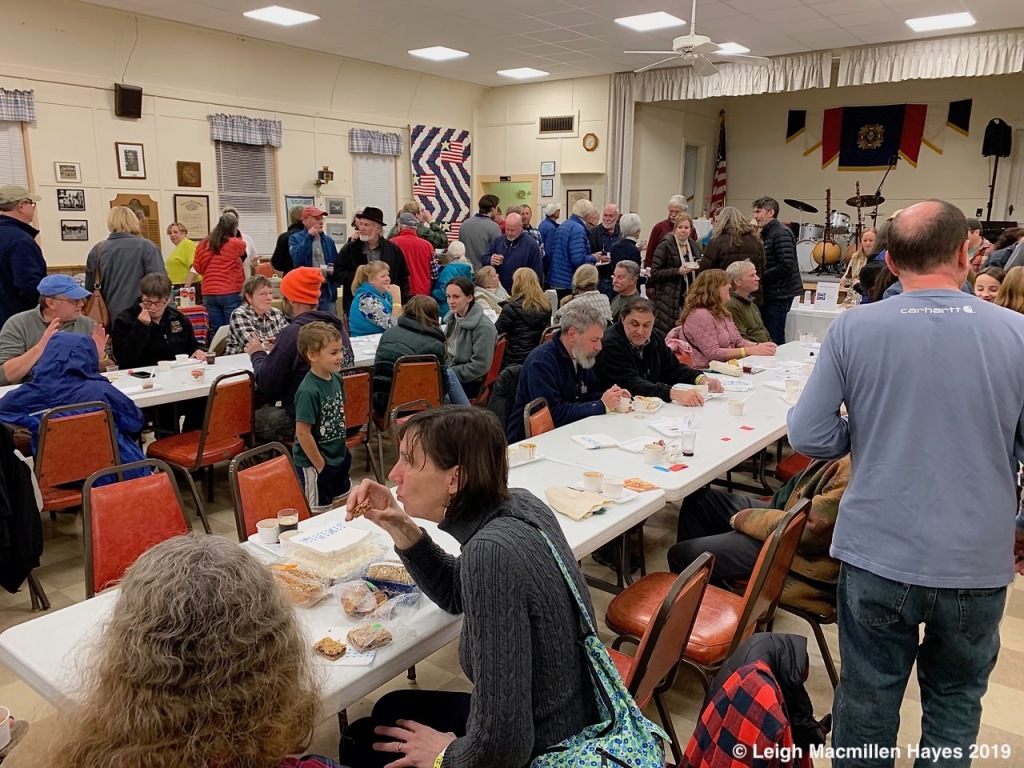
The second event was the Second Annual Bowls and Brews Chili and Chowder Challenge and Beer Tasting held at the Lovell VFW Hall last night.

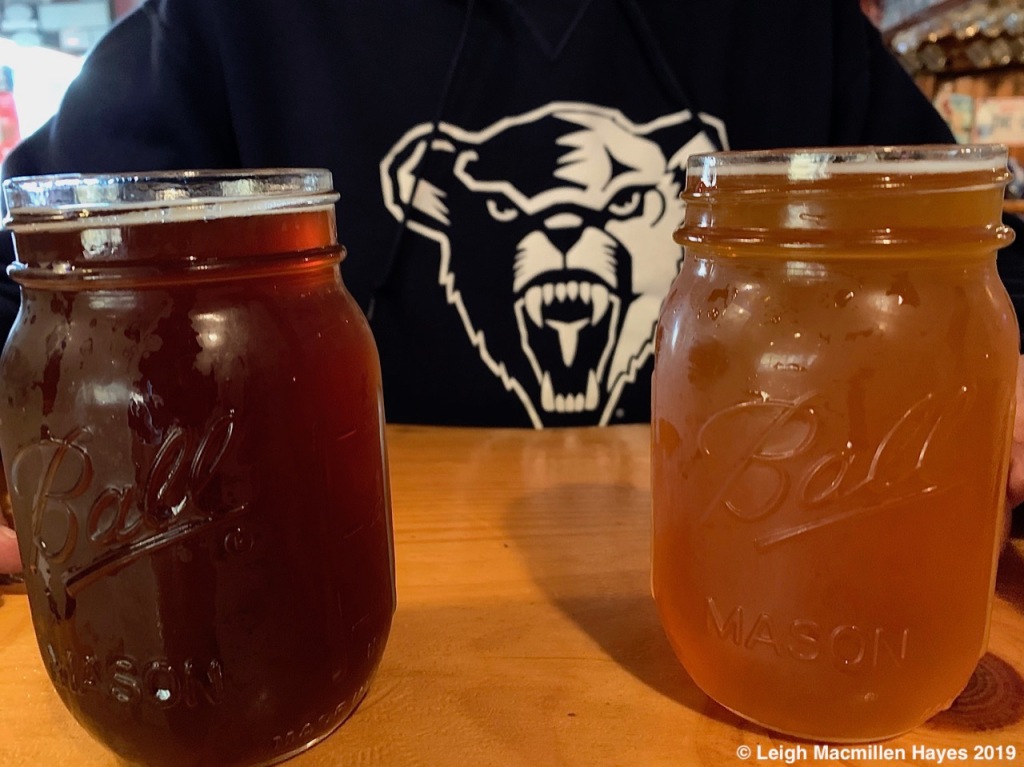
The land trust was well represented by participants, including Executive Director Erika Rowland who created a delicious Black Bear Chipotle Chili.

Erika’s chili didn’t win, but she and GLLT’s Office Manager Alice Bragg were still all smiles.

The real winners of the event were the kids like the young girl I helped on Friday. For what she was trying to hold was a bag full of food as is provided to her family by the Sunshine Backpack Food Program. And the Bowls and Brews event was a fundraiser to support that program. Throughout the school district, elementary students in need go home with nutritious, non-perishable, easy-to-prepare food every Friday. One hundred percent of the proceeds from the fundraiser support the program.

That brings me to this afternoon’s walk first advertised as Sunday Beside Sucker Brook. Months ago I wrote this description: Let’s get a head start on Thanksgiving, and journey the trail at John A. Segur East where we’ll take in the afternoon views of Sucker Brook, its plants in their winter forms, beaver lodges, and mountain views.

And so we did. First we stepped off the trail and took in the view to the south where Sucker Brook empties into Kezar Lake’s Lower Bay.

And then we looked north to admired the hills that are reflected by three beaver lodges situated in a triangle. The one to the right had some mud on it and so we trusted the beavers had been adding insulation to the homestead.

It’s a good thing because a thin layer of ice had formed around the edges of the brook and we realized the next season is on the horizon.

Even within the Pitcher Plant leaves ice had formed. Some of today’s participants touched the downward pointing hairs that draw insects into this carnivorous plant, noting the difference between the easy slide down and much bristlier texture one encounters trying to climb back out.

Continuing along the green-blazed trail, one among us spied a Bald-faced Hornet’s nest. When we noticed part of it on the forest floor, we had to step off the trail and check it out.

In the summer we avoid these nests for fear of being stung by the aggressive workers who defend their territory. But by now the workers have all died and the queen has found a snug spot to overwinter under tree bark.

Being able to examine the nest drew our awe as we noted the individual hexagonal cells created by the queen who had collected wood and plant fibers, chewed them into a papery pulp mixed with her saliva, and built brood chambers into which she placed eggs. To enclose the chambers that housed her girls she then constructed a thin papery envelope. The fact that the cells were the same size and shape was worth our wonder as we thought about the queen’s degree in mechanical engineering.

Within the outer envelope, several suspended combs contained chambers for larvae. A two-tiered section had fallen to the ground and Miriam picked it up for further examination. Her findings: brood chambers were papery and the darker gray that glued the combs together was much firmer.

Pam gave the piece the sniff test. Her findings: the combs smelled like hay, but the glue offered a much more offensive odor.

Our examination also revealed a few grub-like larvae that didn’t have an opportunity to cycle through life.

After kinda, sorta, not really bee-lining to finish before darkness fell, we reached the scenic view that again included the brook and mountains beyond.

There was even more ice in our vision. Ripples made it look like the water flowed from south to north, but we knew it to actually be the opposite. The wind blew from the southwest and thus caused the current oxymoron.

Quietly we stood for a minute and then shared “thanksgivings” for the land, the air, the water, the people, and the place.

Before turning around, a short bushwhack revealed another beaver lodge in the offing.

It, too, was covered in the beavers’ form of Typar: mud. And topped with fresh wood. Construction continues.

With one final view of the brook, the clouds shifted and revealed the Baldface Mountains in Evans Notch.

On the way out, we paused for moths as we’d done on the way in. Linda’s eagle eyes spotted this tiny one: Bog Bibarrambla Moth.

All along we’d noticed male moths flying about, but again on the return trip one among us noticed a few males in one area. If we’re correct in our identification, they were Bruce Spanworms, but what was even more important was the realization that the female is wingless. Yes, these two are canoodling.

One last stop to make before continuing our “bee-line” to the parking lot was a bit of a scavenger hunt: A Bear-claw Tree Scavenger Hunt. Bingo. Brian made the discovery and everyone gathered ’round for a closer examination.

As I said earlier, when I first wrote the description for the walk, I said we’d get a head start on Thanksgiving, but I didn’t really define what that meant. And then a brainstorm a week ago revealed a plan. To offer thanks as we did by the brook, but also . . . to bring food for the Sweden Food Pantry, which serves Lovell, Sweden, Stow, Stoneham, Waterford, Fryeburg, and Bridgton. Our numbers were small today as nine of us traveled the trail at John A. Segur Wildlife Refuge, but our givings big (and we had some items from a few others who couldn’t join us.) We were equally glad to have Linda Bradley (she’s wearing the blaze-orange vest), president of the food pantry, along for the journey.

We’re grateful to all who either joined us or contributed to our offerings as we gave thanks beside Sucker Brook and helped fill the shelves in Sweden.

As we departed we made plans to repeat this event, but choose the following weekend next year so we don’t complete with the Third Annual Bowls and Brews fundraiser.

Meadowhawk Mondate

It was just after noon when my guy and I parked on Knapp Road to complete trail work along the Southern Shore Trail of Lakes Environmental Association’s Holt Pond Preserve. We should have completed such sooner, but prided ourselves on waiting until after last week’s Nor’easter because there were many trees and branches that needed attention.

Some were too big for us, but we did the best we could to make the trail enjoyable for all. And then, even though we’d completed our section, we continued the journey along the 5.3-mile trail, clearing as we went.

It was while in a sunny spot that I did the “I swear I’ll never do this” task–I took a selfie featuring me and my dragonfly pennant. It was my happy moment.

Another happy moment occurred once we’d circled around to Chaplin’s Mill Road and then down through the Emerald Field via the Muddy River Trail.

Beside the river I spied the makings of a fresh beaver mound, where bottom muck and leaves had been piled up and a certain scent, almost vanilla in odor, deposited.

Last April, LEA Education Director Alanna Doughty and I had discovered tons of beaver action in this area and the tree beside the water on the left-hand side still stands as a monument.

Other monuments included three to four-foot gnawed stumps scattered throughout the area that served as reminders of last year’s snow depth. Either that, or the beavers stand as tall as deer in these here woods.

This is an area that the giant rodents have known for many moons as evidenced by hemlocks they chose to girdle in hopes their least favorite trees might fall. Instead, the trees tried to heal their wounds and show the beavers who is boss of this territory.

All along the river, water flowed over beaver dams, much the same way it would have flowed over a mill dam in a different era and we loved the juxtaposition of man and nature. Or was it nature and man?

Onto the boardwalk system and through the Red Maple Swamp did we trek, and of course I stopped beside the Pitcher Plants because . . . just because. But notice the water. So, we’ve had a lot of rain, but also we suspected the beavers had something to do with the high level.

Out of curiosity, we stepped onto the boardwalk out to the Muddy River to check on some beaver lodges.

And there just happened to be an Autumn Meadowhawk upon the wood. I wasn’t sure it was alive, for it didn’t move as we stepped past it.

We made it almost to the end of the boardwalk, but eventually it dipped under water and so we stood still and gazed toward the lodges. Can you see them? ;-)

Like a duplex, they were joined. But what was the best news was the sight of new branches and some insulation that had been added . . . in the form of mud. Though we hadn’t seen any new beaver works, we suspected that somewhere in this waterbody a beaver or two or family had been active.

Returning to the Hemlock Grove behind the boardwalk, I stopped to check out the dragonfly and it moved a foreleg as I watched–a sure sign of life.

And so, I did what I love to do, stuck my finger in front of it, and upon did it crawl. My heart stopped beating.

My guy had gone before, so he missed this opportunity. But chatting to it quietly, my dragonfly and I moved from the boardwalk to the much darker Hemlock Grove. He seemed not to mind, but did move about a bit on my finger and I wondered if the much cooler and darker grove might not be to his liking. Despite my concern, he stayed with me and I introduced him to my guy, who questioned the fact that I was talking to a dragonfly. And then he chuckled, “Of course you are.” I guess he knows me.

We followed him onto the next section of boardwalks that passes through the second section of the Red Maple Swamp. All along the way, I murmured sweet nothings and my little friend took in the scene. But . . . when we reached the next Hemlock Grove, he flew off. I couldn’t say I blamed him for it was much cooler and darker than the first.

By that point, my guy and I were by the Quaking Bog, so out to Holt Pond did we venture. And . . . I spotted more dragonflies to meet.

And greet.

A few of his relatives were also in their meet and greet tandem form. Had they just canoodled and dropped eggs into the water or was she playing coy?

I don’t know the answer to that, but my new friend liked the view of the pond.

And then he began to do something that it took me a few minutes to understand. Notice how his wings are down.

And then hind up, forewings down.

Fluttering, they moved rather like a windmill, but never did he take off.

The speed increased.

And I finally realized he was just trying to stay warm in the cooler air by the pond. Wing-whirring they call it. Like turtles, dragonflies are cold-blooded or ectothermic. They can’t regulate their body temperature and must depend on sunlight and ambient air temperature for warmth, which is why we encounter them along the sunny spots on the trail. My little friend was trying to warm up by vibrating his wings. Knowing his need for sunlight, just before we returned to the dark grove, I left him upon a shrub leaf.

Oh, and the beavers, we never did see them, but finally, as we approached Holt Pond from Grist Mill Road, we found fresh beaver works. They’re out there somewhere and I can’t wait to see what they do next. I’m excited to know that I’ll have their antics to watch in the upcoming months for I suspect that my dragonfly days are about to draw to a close.

But today was most definitely a Meadowhawk Dragonfly Mondate and I gave thanks for the opportunity to travel with my guy and this guy, and one or two of his relatives.

Something Special Beside Sucker Brook

My friend, Marita, joined me today for a walk along the trails at the Greater Lovell Land Trust’s John A. Segur Wildlife Refuge on Farrington Pond Road.

Though we moved rather quickly, frequently picking up sticks and branches that had fallen as a result of last week’s nor’easter (Marita deserves trail crew credit), we did stop occasionally to appreciate the world around us. Our first point of wonder occurred when she noted a burl of sorts on a beech tree. A closer look and we spotted shiny black spots that turned out to be five or six black ladybird beetles, their red spots offering a contrast. I’ve since learned they are Twice-stabbed Ladybeetle bugs, and beneficial as they feed on scale insects, aphids, and mealybugs, including Beech Scale Insects.

Maple-leaf Viburnum, still holding onto its leaves and fruits called our attention next. Only last week, we were finding its magenta fall coloration decorating the woods, but when the calendar turned to November, it seemed the world transformed and took on its late autumn look.

Via a spur not marked, we ventured forth and stood in admiration of the colors before us as we looked out toward the Lower Bay of Kezar Lake.

And then we looked in the opposite direction and embraced the view toward the north where hills formed the backdrop . . .

and found their reflection in beaver lodges. Though we never saw any sign of recent beaver works, it appeared that at least one of the lodges was being mudded for winter, a beaver’s form of insulating the house.

Our route back to the trail was circuitous for I wanted to show her the Pitcher Plants that grow in the edge between the land and water.

No matter how many times I see this plant’s urn-shaped leaf, I am in awe and today was no exception. The hairs on the leaf’s “landing pad” stood out on a younger version as well as its aging elder.

We weren’t the only ones curious about the plant for the snow fleas, aka spring tails, had also discovered it. And it them. How many snow fleas does it take to create a meal? Many I would think given their teeny tiny size, but . . . many found their way down the hairs and into the plant’s digestive fluid.

Back on the green-blazed trail we finally continued, and a display of mushrooms begged for a Kodak moment. As I often do with mushrooms, I’m going out on a limb and calling these Late Fall Oysters (Panellus serotinus), which aren’t oysters at all but the rippled edge did remind me of the shells I used to pick up as a kid. What really sang out about this moment though was the fact that the fungus grew on a beech tree and the husk of a beech nut had stabbed into the fruit, giving the entire display a layered cake look with a candle on top.

We also discovered a Red-belted Polypore, Fomitopsis pinicola if I’m correct, the size of a dinner plate.

Onward, we swished the dried leaves, hit a few mucky spots, and continued to pick up sticks. At last we reached a second scenic view that again provided colors demarking this month.

All along we’d tramped beside Sucker Brook, though we couldn’t always see it. But that’s what made the scenic views even more spectacular.

Our journey was quick and we covered over two miles and followed the blue-blazed trail back, but it was the waypoint that I marked at Marita’s suggestion, which was our final find of the day.

Well, really, it was her final find for I made her hunt for it. I gave her a general area to scan and after a few moments of looking, we turned it into a hot/cold game. At last her eyes cued in on the bear claw marks upon a beech tree.

You, too, may spy some of the same for next Sunday the GLLT will host a walk at John A. Segur East (as we refer to this part of the wildlife refuge). We’re offering something a bit different for this hike.

November 10 
12:30 - 3:00 pm
Sunday Beside Sucker Brook

Let's get a head start on Thanksgiving, and journey the trail at John A. Segur East where we'll take in the afternoon views of Sucker Brook, its plants in their winter forms, beaver lodges, and mountain vistas.
In honor of the upcoming holiday, we'll think of our neighbors as we gather. Please bring one or more items to give to the Sweden Food Pantry, which serves the towns of Sweden, Lovell, Fryeburg, Stow, Stoneham, Waterford and Bridgton.
Popular Items:
Tuna Fish
Peanut Butter and Jam
Hearty Soups like Progresso
Staples other than pasta
Gluten Free items
Canned Beans (NOT vegetarian) and Canned Beets
Personal Hygiene Products
Also: Be thinking about something or someone for which you'd like to offer up thanks, either silently or verbally.
Location: John A. Segur East, Farrington Pond Road, off Timber Shores Road, Lovell
Degree of Difficulty: Easy/Moderate

I hope you’ll join us for something special beside Sucker Brook.

Ode to Pinus strobus

Oh ancient ones,
so tall and stout.

My gaze turns upward
to take in your mighty presence
as you reach out
and shake hands
with each other.

Your crown tells the story
of your true nature,
ever graceful as it is,
and decorated with
daintily dangling needles,
which spell your name
much like my fingers of five:
W-H-I-T-E.

In maturity you form furrows
of stacked outer layers
and I wonder about your age.
Within those furrows,
others, like a Stink Bug,
take refuge from the world,
especially as raindrops fall.

Though considered dead cells,
your skin protects life within,
where phloem and xylem
work like dumb waiters.
The former transports sugars
created by photosynthesis
from your needles
to feed branches, trunk and roots,
while the latter
pulls water and dissolved nutrients
from your roots for nourishment.

I have this and
so many other reasons
to revere you.
Today, I focus
on the decorations
you perhaps unknowingly encourage
by providing a scaffolding
upon which they may grow.
Mosses and lichens
first take advantage.
of your hospitality.

And they in turn,
offer places
for others to gather.
As I peek,
I notice tiny flies
of a robotic style
seeking each other.
The seeker advancing
upon a fruticose form,
while the seekee
waits on a foliose lichen.

Upon another,
a tiny cocoon,
once the snug home
for the larval form
of a Pine Sawfly.
Its opened cap
indicates the transformation
of another generation.

There were others 
who once considered
your trees their own.
A spider web
woven during warmer months,
gathered raindrops today
that highlighted
the 3-D artwork
of its creator.
Not to go unnoticed
were the fruiting structures
of lichens,
such as a crustose
with its thick, warty, grayish crust
topped by numerous
jam tart fruits.

But my favorite find
on this soaking wet day
was caused by
a chemical interaction
that resembles
the creation of soap.

During a heavy rain, 
water running down your trunk
picks up oils.
Air in the bark furrows
bubbles through the oily film
and produces froth.
It’s a tapestry-forming froth
and within some bubbles,
surrounding trees
pronounced their silhouettes.

Oh Pinus strobus.
Some know you
as “The Tree of Peace.”
I know you
as “The Tree of Protection,
and Life, and Color.”
And then I realize
that is Peace.
Thank you for all that you do, naturally.

Bear to Beer: Pondicherry Wildlife Refuge

Our intention had been to explore the Pondicherry Wildlife Refuge in Jefferson, New Hampshire, during the summer months, but intentions are just that. An aim or a plan. In our case it was an aim that was a bit off plan.

Today, however, dawned, as each day does, and we honored the plan we’d made last night by packing a lunch and getting out the door by 9:30.

An hour and a half later, we’d driven across Route 302 through Crawford Notch, recalling sites we’d enjoyed from the Conway Scenic Train less than a week ago, and on to Jefferson where we found Airport Road, aka Hazen. At the kiosk, we developed a bit of a trail plan and then ventured forth.

The area is supported by several organizations as noted on a website: “Pondicherry is a Division of the Silvio O. Conte National Fish and Wildlife Refuge, and it is owned and managed by the U.S. Fish and Wildlife Service in partnership with New Hampshire Audubon and the New Hampshire Department of Fish and Game. A local Friends group also plays a role in the management of the refuge, and the New Hampshire Bureau of Trails has specific jurisdiction for the rail-trails.”

For a mile and a half, we followed the rail trail to its vantage point. Well, not quite all the way, but to the Waumbek Station, where three rail lines once converged.

We thought we’d step out onto the Tudor Richards Viewing Platform, then continue on the rail trail. But, a woman ahead of us had stepped onto the platform to practice Tai Chi and so we let her be and walked for a bit on the Presidential Recreation Trail, a 20-mile link to Gorham, New Hampshire.

Along the way, much of the scenery looked more like November than October, given the fact that we were further north than our hometown. But, a few goldenrods still bloomed. And upon some of their stems, the Goldenrod Ball Gallmaker had made itself a home.

Though we’d planned to eat lunch upon the observation deck, we were delightfully surprised to locate a small bench overlooking Cherry Mountain and so down we sat. PB& Strawberry and Peach, we each enjoyed a half of the others intended sandwich.

Eventually, we returned to the observation deck and enjoyed the fruits of Witherod and High Bush Cranberry that outlined the boardwalk leading to Cherry Pond.

The Pliny Range offered a backdrop on this day filled with sun and clouds.

In the distance, Bufflehead Ducks swam.

Returning to the junction, we continued northeast where rail trail joined rail and one could imagine the clackety clack of trains passing by.

A bit further on, we turned left toward Little Cherry Pond, where the natural community began to seriously embrace all sorts of coniferous trees.

At our feet, the trail cover was a bit more golden and much shorter than our native White Pines.

Looking toward the sky, Tamaracks sang their cheery autumn song as their needles turned golden before dropping. I’m forever intrigued by this deciduous conifer. And thrown into the mix of the cathedral ceiling: spruces of colors I need to spend more time with for throughout the refuge grew white, red, and black spruce. My task down the road: get to know each one individually so that I recognize them in new settings.

While I can tell you that there are five needles in a White Pine bundle, three in a Pitch Pine, two longer ones in a Red Pine, and two shorter needles in a Jack Pine, the needles of the Tamarack are produced in clusters of ten to twenty.

They are attached to the twigs in tight spirals around short spur branches. giving the tree a feathery look.

Upon a downed conifer, a jelly fungus offered its own version of a flower.

At last we reached Little Cherry Pond, where more Buffleheads swam.

And then we noticed another swimmer who made us smile. Yes, that’s a beaver. We couldn’t see his destination for it was around a corner and signs warned us not to venture further in order to protect the area.

Backtracking a bit, all the while admiring the plants including Rhodora, Creeping Snowberry, Trailing Arbutus, Pitcher Plants, and so many more (I need to return in the spring), we found our way back to the Mooseway Trail. (Note: “You Are Here” was taken on the way in, but I wanted to give perspective. Look for the Mooseway Trail toward Mud Pond.)

Not long onto the Mooseway Trail, I was thrilled to discover Lungwort growing up a tree trunk. Its ridges and lobes create a leafy lettuce or lung tissue appearance (thus its common name).

Because lungwort’s main photobiont is a green alga, it is also a type of cyanolichen, thus meaning it contains nitrogen-fixing bacteria. When lungworts fall following a storm, they decompose into the forest floor, contributing their nitrogen reserve to the soil.

The Mooseway Trail seemed easy to follow at first, but soon it became more of a bushwhack and we wondered when the last human had ventured forth. We found all of three blue blazes indicating the way.

But after the third, we had a choice to make. Head north or south. We chose south. And within a short distance the trail completely disappeared. Thanks to GPS and occasional glimpses of Cherry Mountain, we persevered. And startled a snowshoe hare that startled us. I couldn’t capture it in a photo for so quick was its hop, but suffice it to say that the hare’s coloration was gray/white, given the next season that had already visited some of the surrounding mountains.

Maybe it only took a half hour, but it sure felt like hours before we finally found the rail again. I actually considered kissing it, but my guy convinced me otherwise.

There was so much more of the refuge to explore, but we followed the trail back, giving thanks to the shape of the mountain that helped give us perspective on our location as we’d bushwhacked.

And a backward look upon the pond brought to light the snow that had fallen upon the Presidentials, previously hidden in the clouds.

As for that darn Mooseway Trail that led us astray . . . it did have much to offer including this Bobcat scat. We also found a specimen of coyote.

And not only Moose scat, but also some prints. We were rather excited by that.

And then the crème de la crème: bear scat filled with berries. Yes, we’d scanned the trees for claw marks, but if they were there, they were difficult to distinguish (cuze, um, we were moving at my guy’s speed). Despite that, this display made us both happier than happy.

I had no idea when I chose most of the places for our Bear to Beer Possibilities, what the trail’s tales might be, but really, our success rate was quite high.

And we topped off our success by sipping some suds at an old fav in Glen, New Hampshire. For him: Moat Mountain’s Matilda’s Red Rage. For me: Tuckerman’s Pale Ale.

For both of us: Bear to Beer–we got this one. Seven miles later, bear scat to beer at Pondicherry Wildlife Refuge and Red Parka Pub.