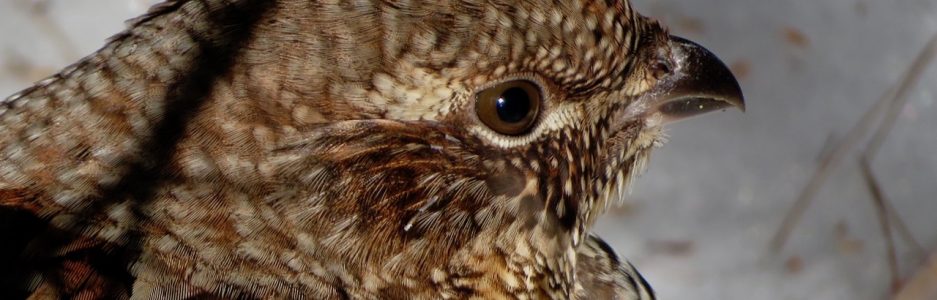
Not Just Another Tube Left In The Woods

Perhaps it’s a case of being in the right place at the right time. Or, taking the time to look. Really look.
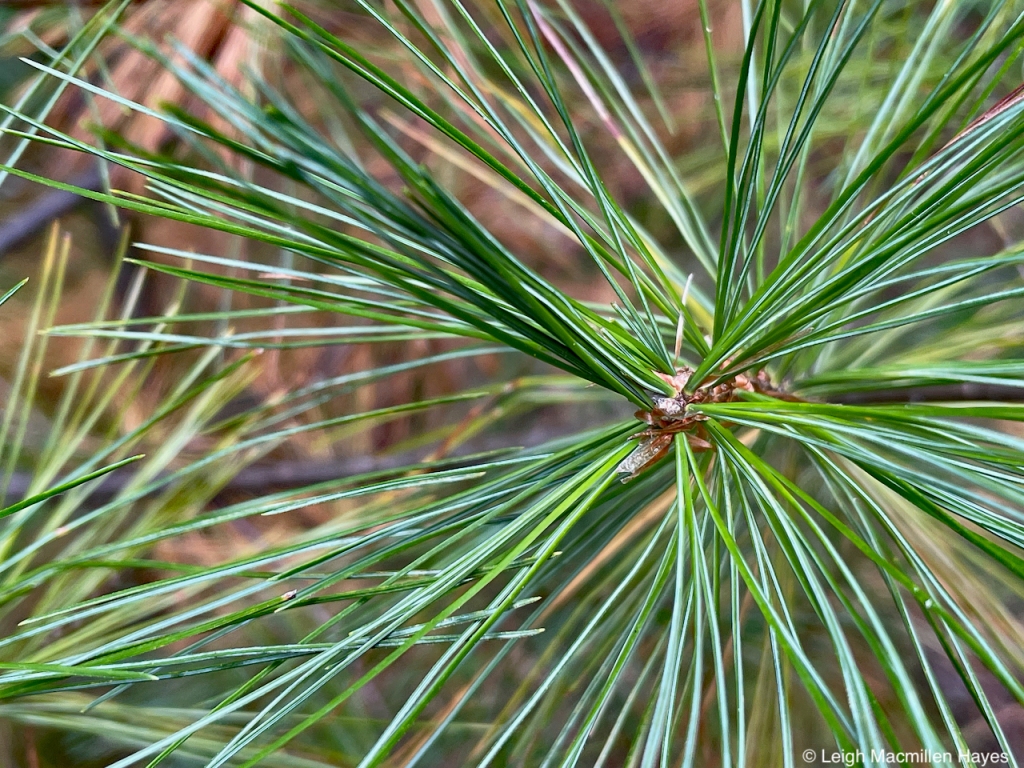
You might stay there’s nothing extraordinary about pine needles, right? As you probably know, the needles (aka leaves) of Eastern White Pine, Pinus strobus grow in packets or bundles of five. W-H-I-T-E or M-A-I-N-E is a mnemonic we use to remember how many needles on the White Pine since they spell “white” for its name or “Maine” because it is the State tree.
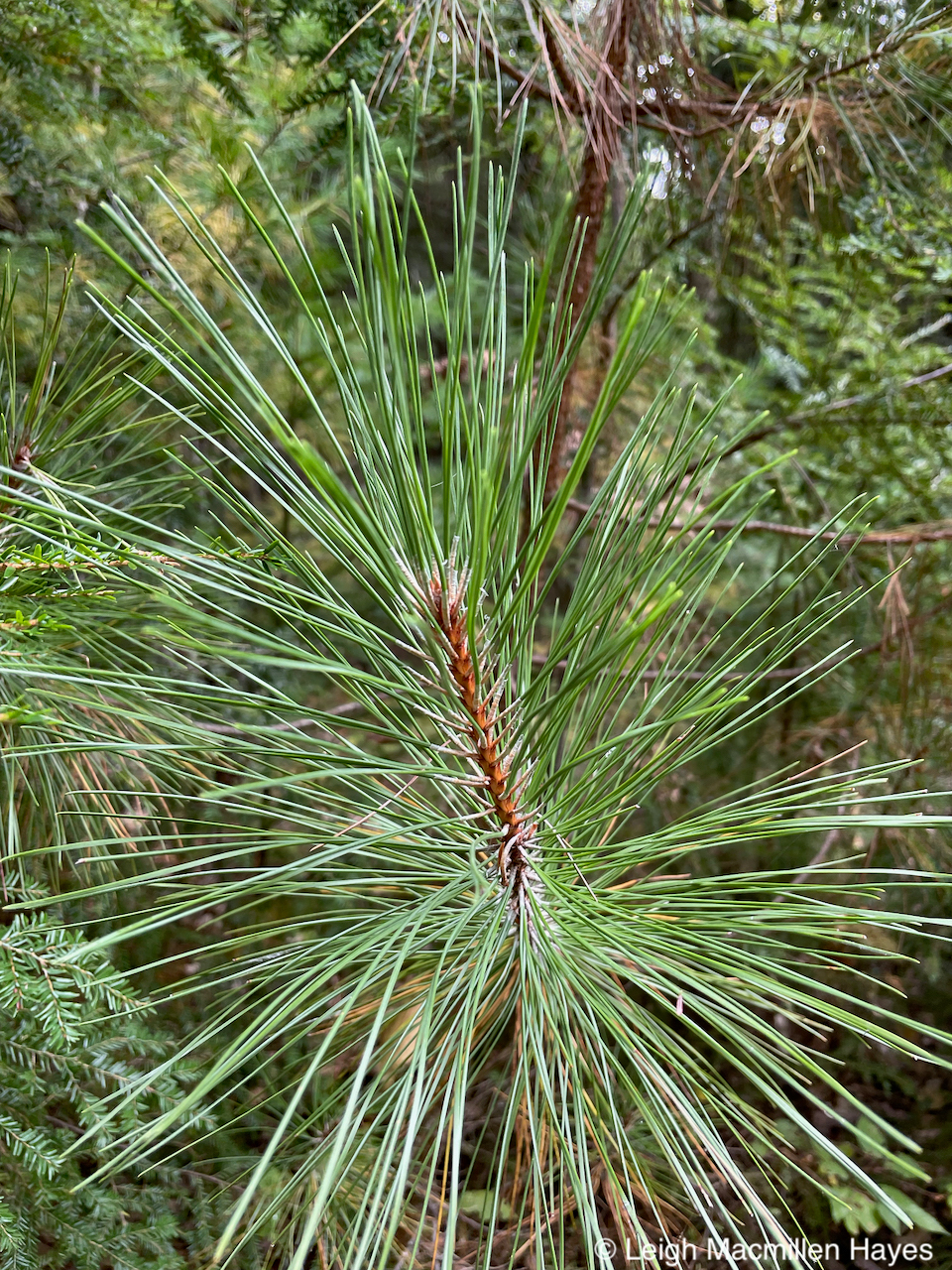
A word of caution, however, in that department. If a White Pine has five needles, then a Red Pine, Pinus resinosa, must have three needles in a bundle, correct? False. They actually have two much longer and stiffer needles that break cleanly when bent in half.
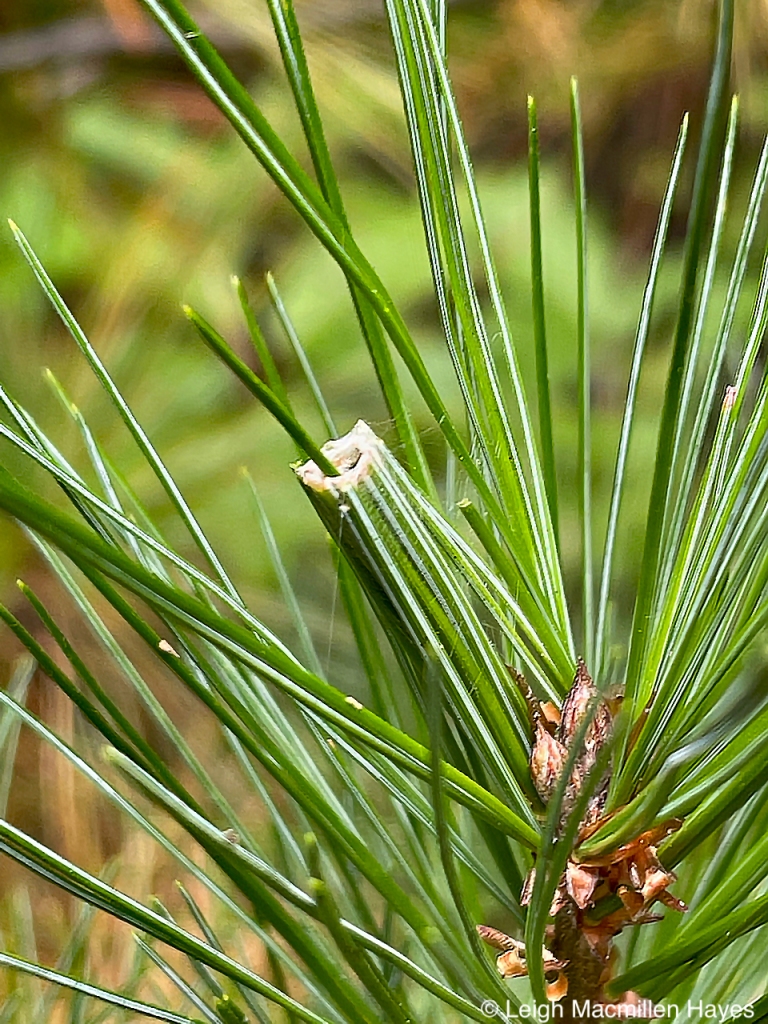
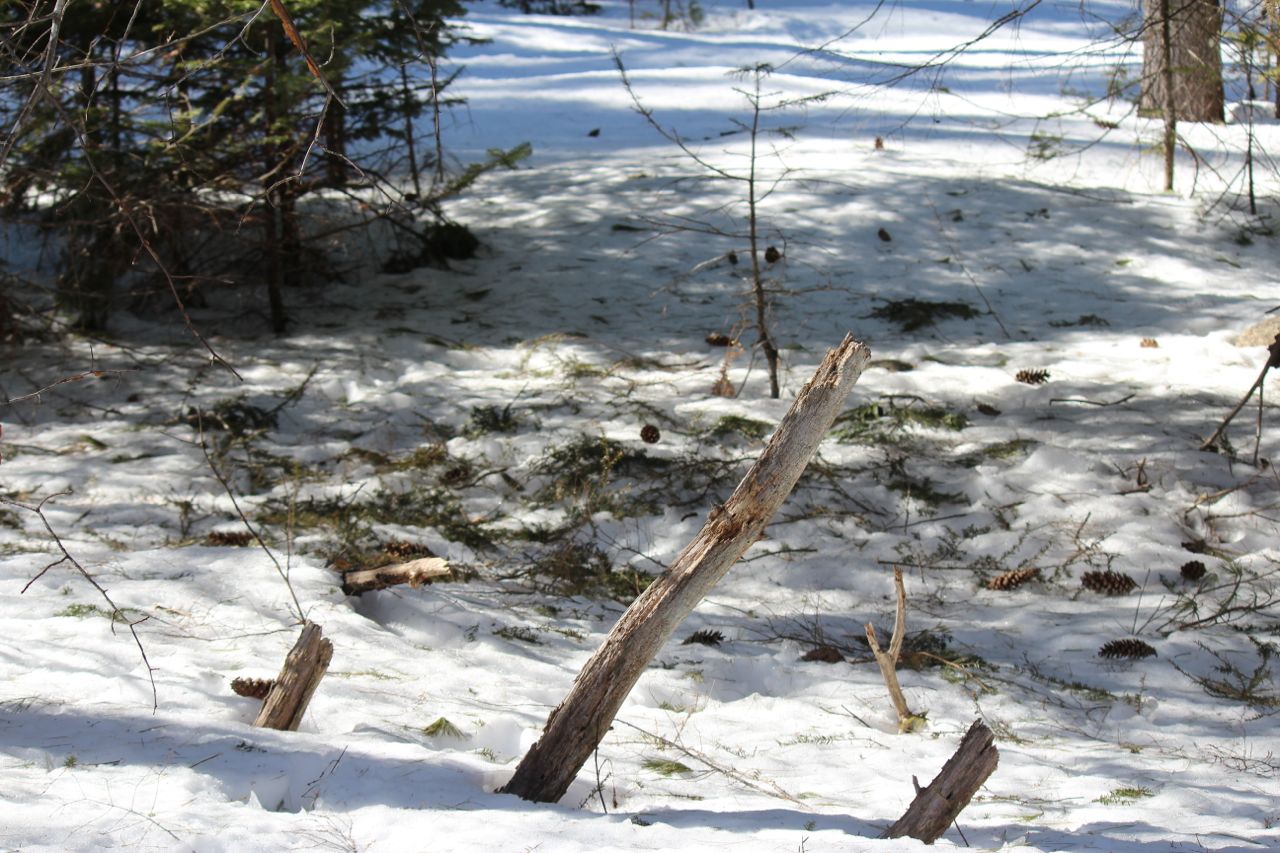
Back to the White Pine of my attention. What I’ve been noticing is that suddenly there are clusters of needles bound together. This is the work of the larval form of a Pine Tube Moth, Argyrotaenia pinatubana. What typically happens is that the caterpillar uses between ten and twenty needles to form a tube or hollow tunnel.
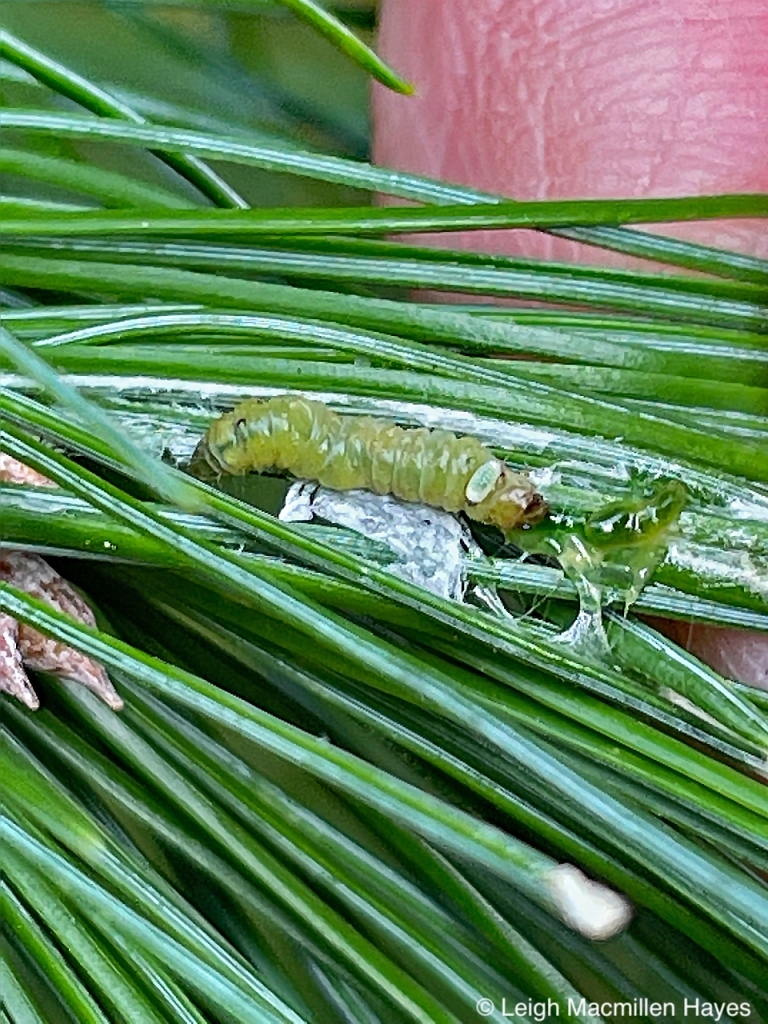
This past week, for the sake of science and understanding, of course, a friend and I split a tube open to see if anyone was home. Indeed, we had our first view of the tiny caterpillar, which looked like it had an even tinier aphid atop it.
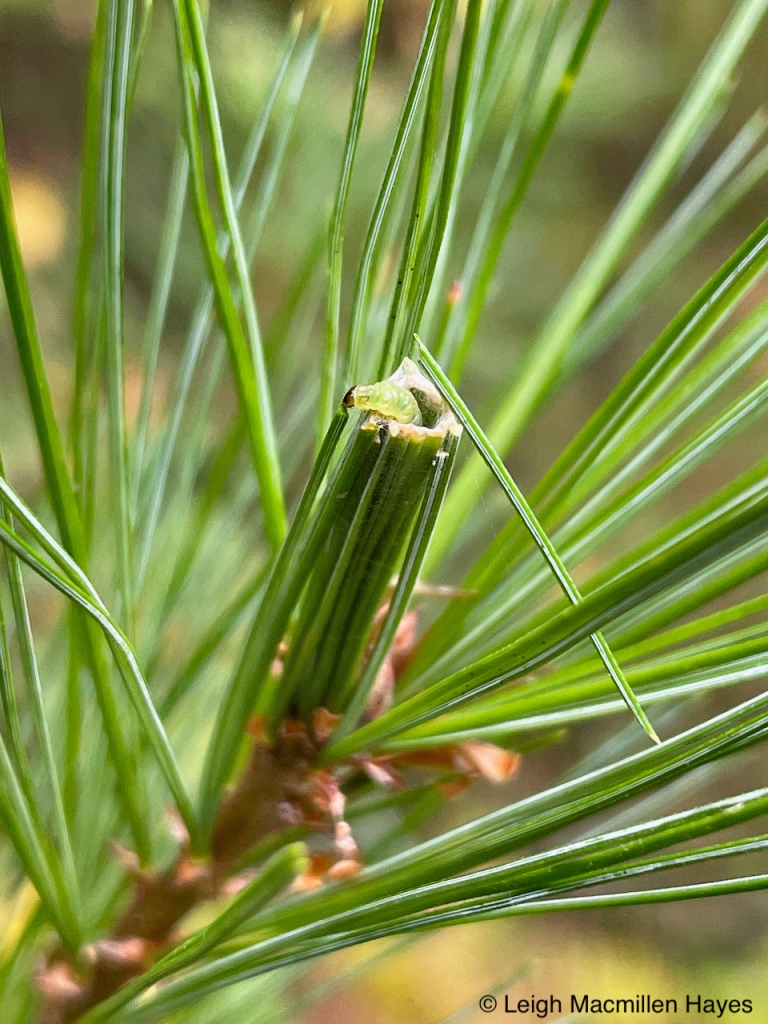
And then one day later in the week, I happened to spot some action at the tip of a tube. The caterpillars move up and down their silk-lined tunnels to feed on needles at the tip.
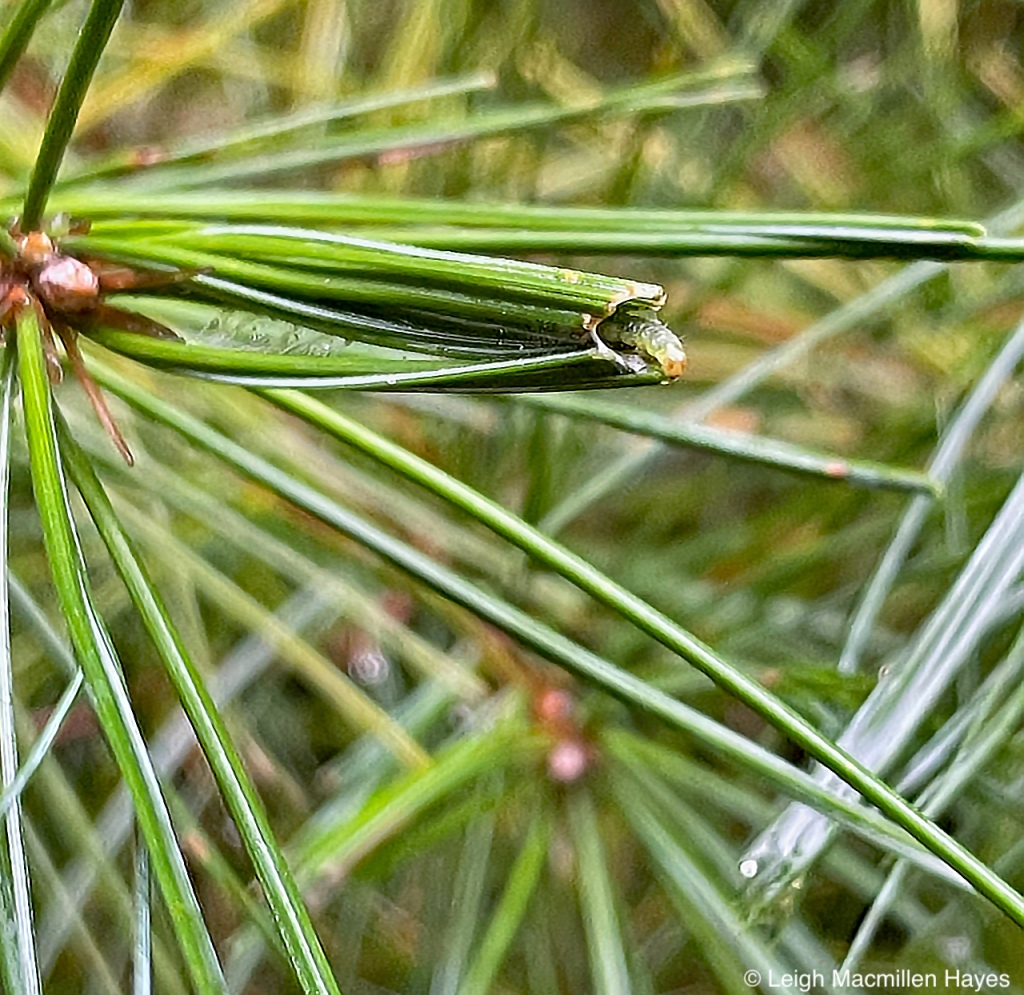
And once I spotted that, no pine has gone unnoticed. Much to my delight, I discovered a few more active caterpillars today.
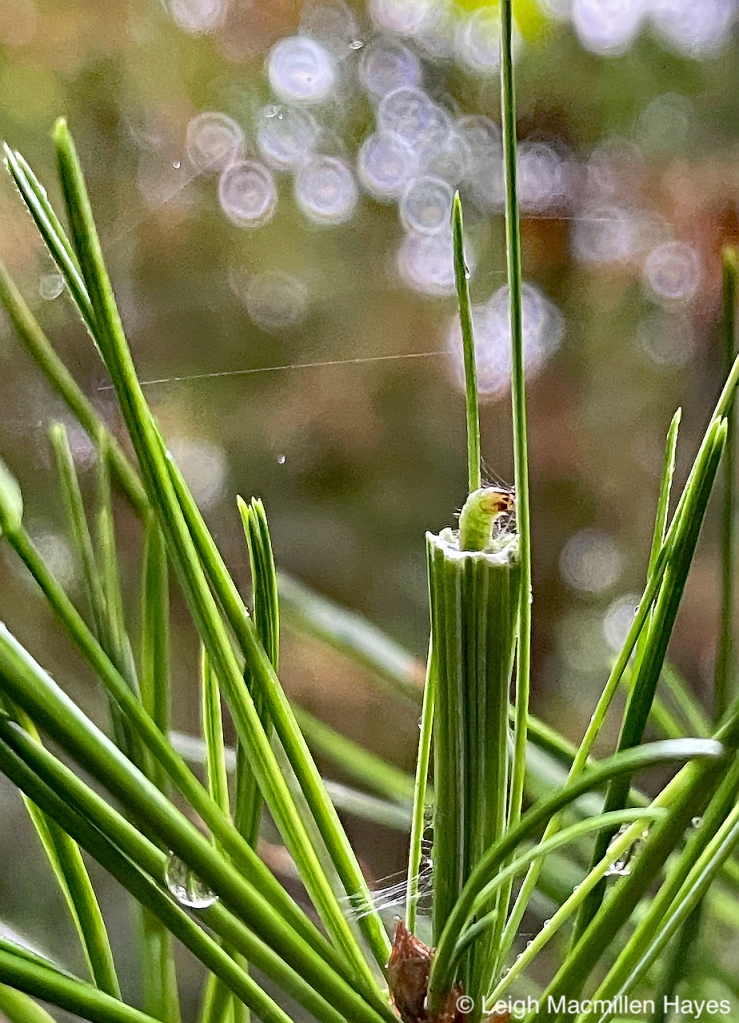
One even honored me by demonstrating how it sews the needles to fasten them to the structure.
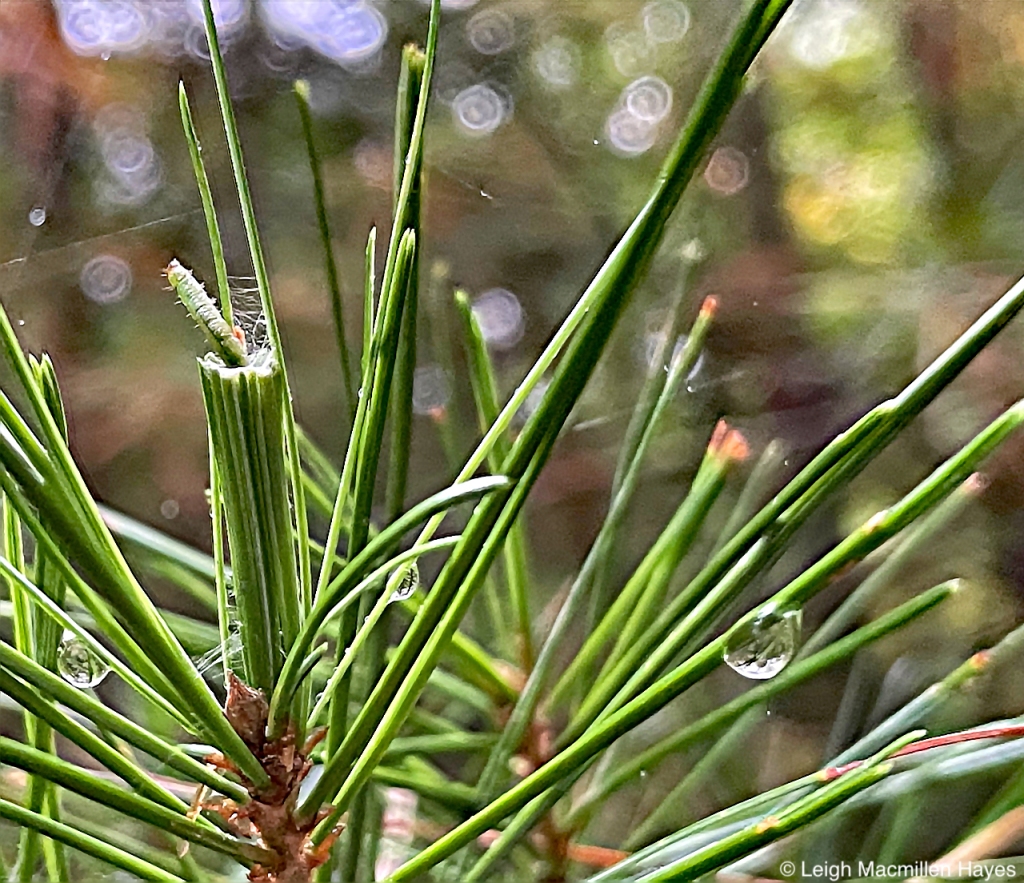
Back and forth it moved, excreting silk that formed a ladder-like web. When the time comes, the caterpillar will create another tube and do the same thing until it is ready to pupate overwinter.

The moth will emerge in April, when I’ll need to pay attention again. Two generations occur each year and those that overwinter are the second generation.

So now that you know, see if you can find a tube. Maybe you’ll be lucky as well and will get to see the caterpillar. It is only about one third of an inch long, so you’ll really have to look for a wee bit of movement at the tip of the tube. What I learned is that if I went in close with a loupe, it retreated.

This is certainly not just another tube left in the woods–now you know that these are the homes of the native Pine Tube Moths, who fortunately, are not considered a significant pest.

The Big and the Small of the Hundred Acre Wood

As my friends know, I’m not one to say no to an invite to explore their land. And so this afternoon’s adventure found me spending time with Beth on the 100 plus-acre property she, her husband and parents call home in Oxford County.

b-view 2

Their sense of place begins with a field of wildflowers yet to come, the entry to their wood lot and a view of Ragged Jack Mountain. My sense of excitement to explore their place was heightened by this jumping off point.

b-Maine trail

Trails loop throughout the property and the family has taken the time to name and label all of them.

b-pine 4

We wandered along and suddenly Beth noted that we’d reached their champion pine. I looked at a small spruce before us and wondered what all the fuss was about. Then she pointed to my left.

b-pine 2

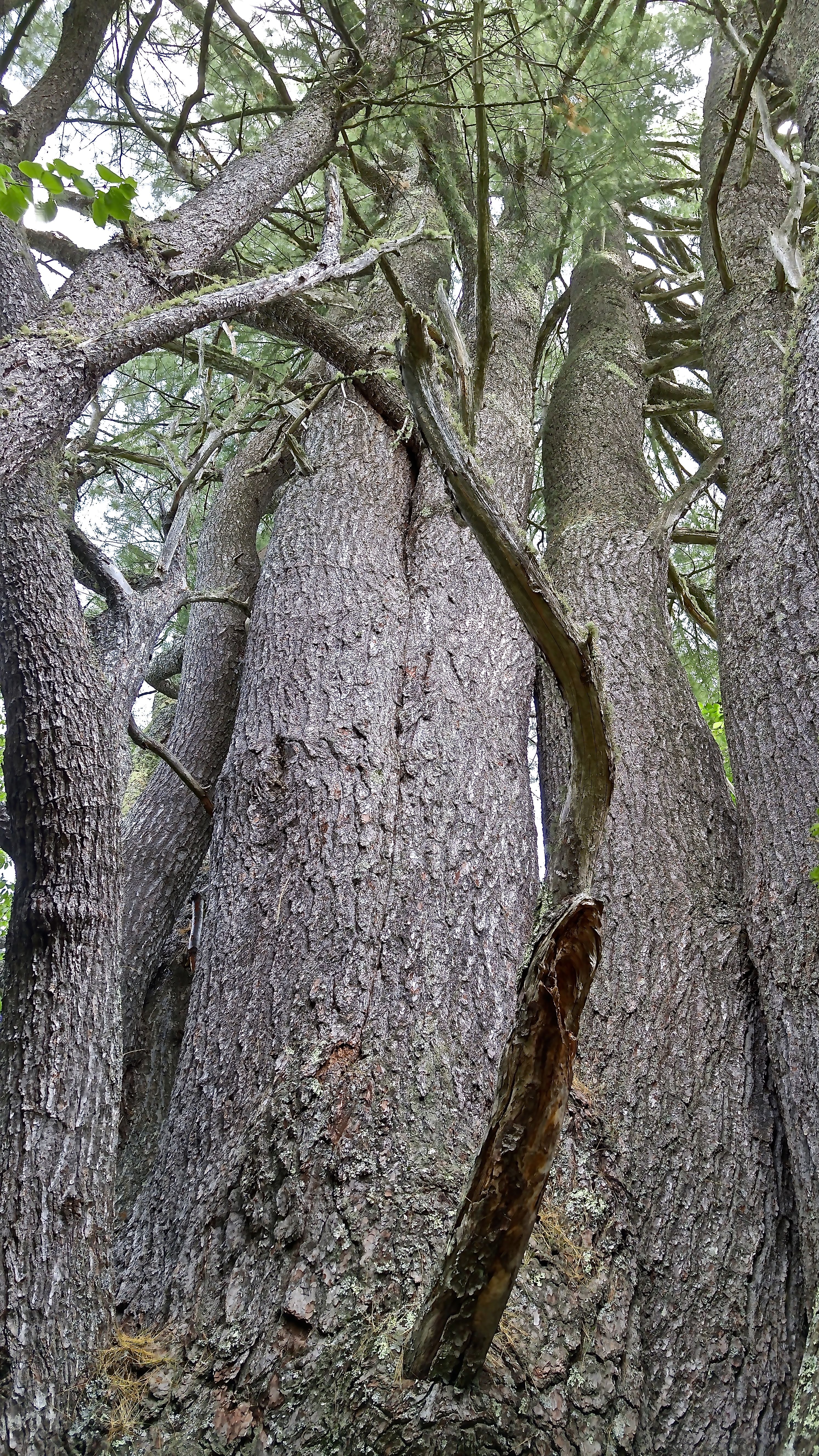
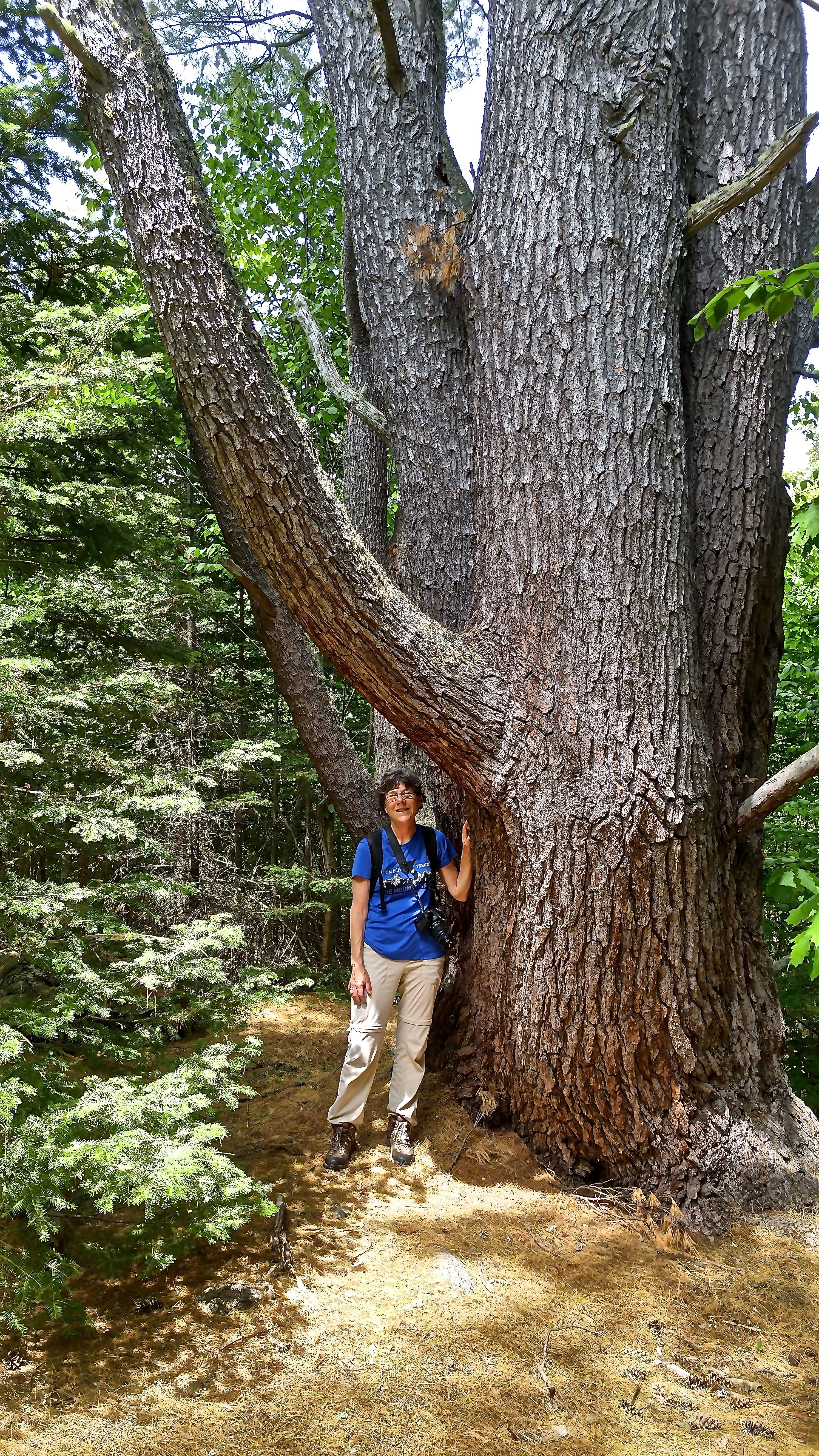
One massive Eastern white pine gallantly towered over us. At some point in its early life the terminal leader was injured–perhaps by a weevil or weather. But . . . this tree carried on and continues to do so. I felt like we were standing below a giant in the woods.

b-pine bark

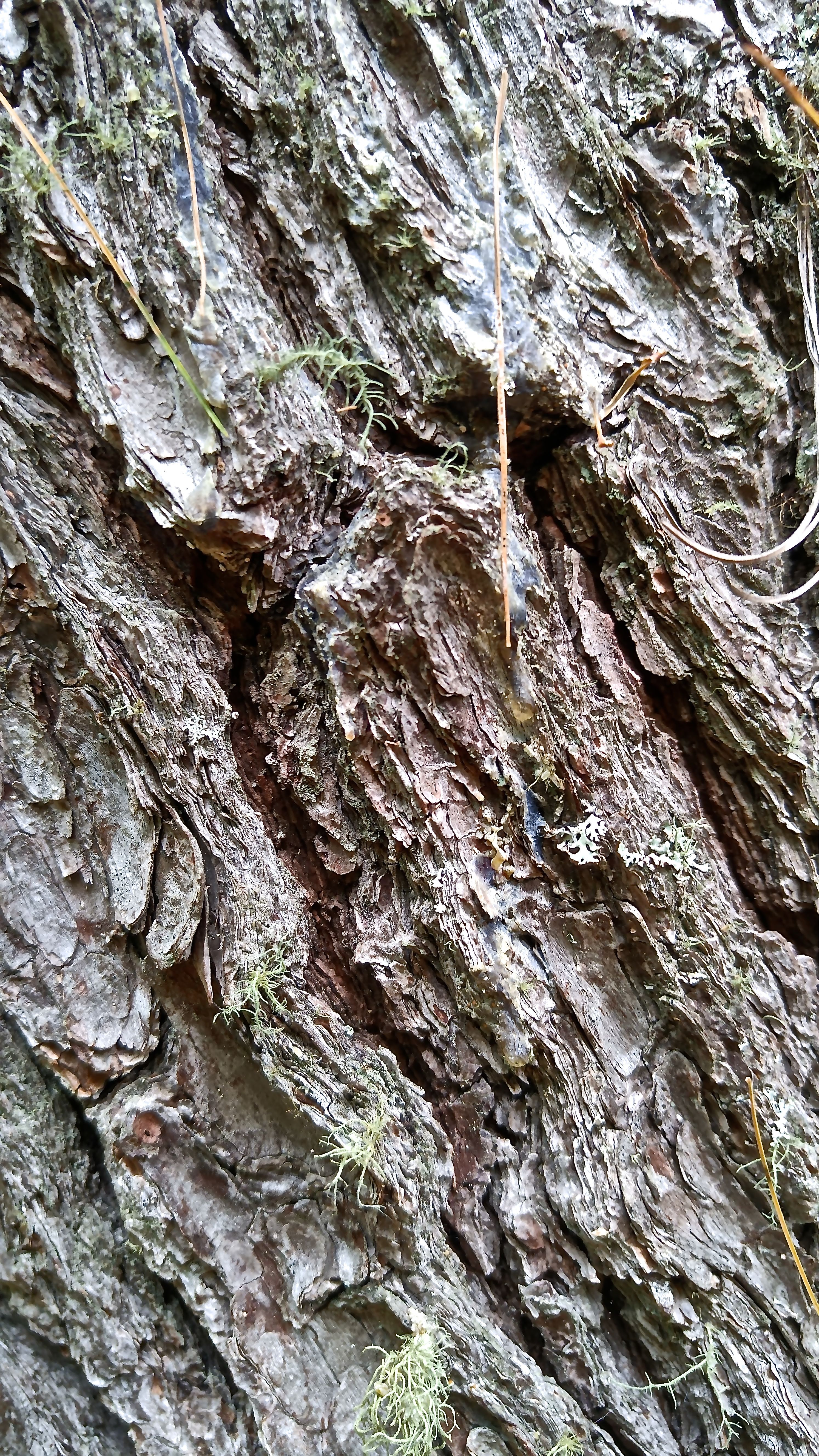
It’s characterized by layers upon layers of bark.

b-pine 3

And it’s wider than any tree I’ve ever seen. Here are the stats on this champion: According to Beth, it towers 108 feet tall, is 256 inches in circumference (21.3 feet) and has a crown of 15.75.

b-pine 1

Yup. It’s big. Or rather, BIG!

b-dam:lodge2

We weaved our way along the trails and Beth shared favorite spots with me as she told tales of her experiences with this land and water.

b-mora 1

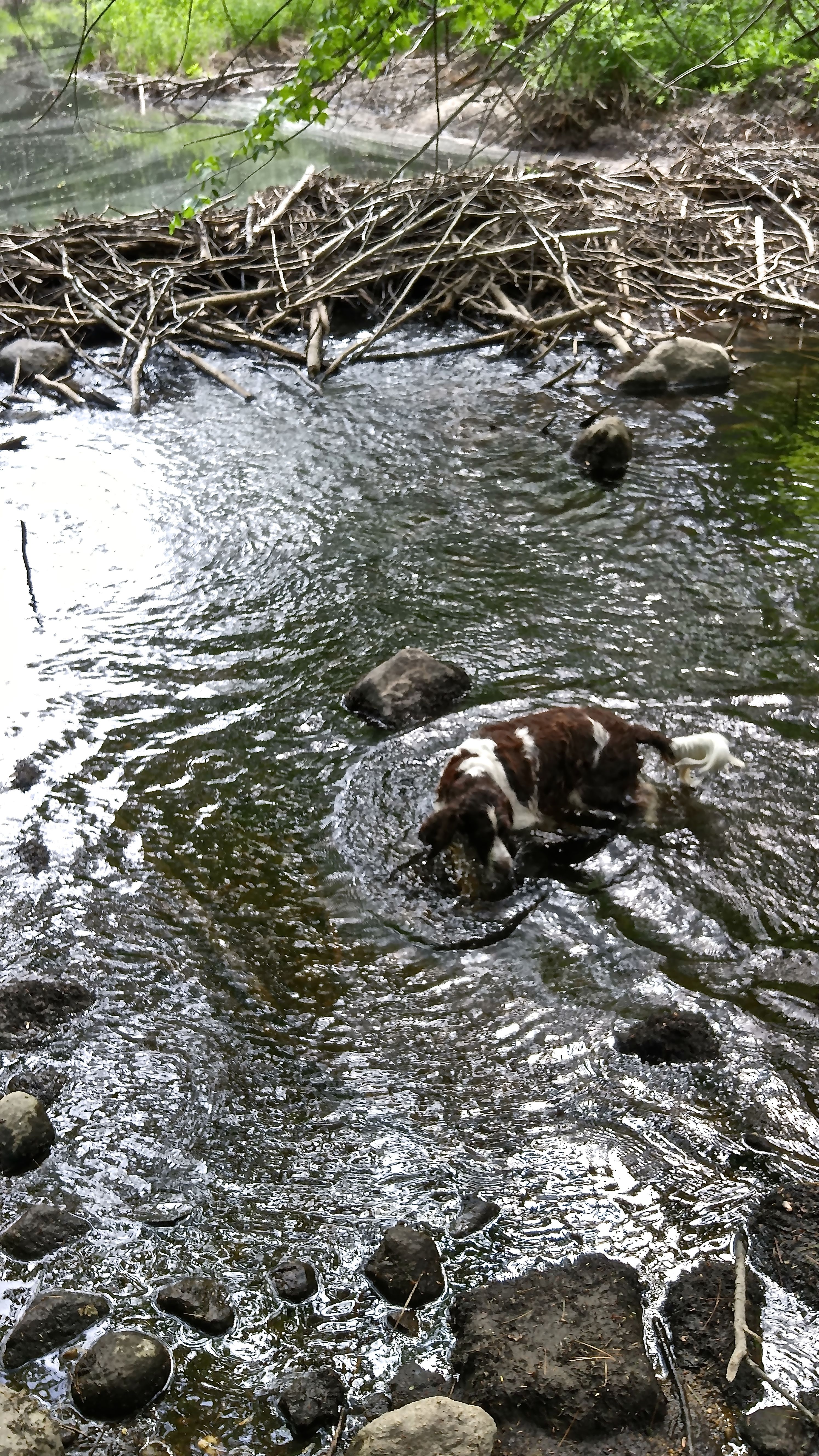
Mara, Beth’s springer spaniel, shared her own tail. She was happiest when mud and water provided opportunities to play. We had to wonder other times when she cowered behind us or tried to hide between Beth’s legs. What did she sense that we weren’t aware of? We did hear a few critters, including baby grouse that Mara visited, and saw the tracks of moose and deer, plus coyote and fox scat, and maybe even bobcat scat, but our only official mammal sightings were red squirrels.

b-pond

Among Beth’s sharings was this spot she refers to as the Accidental Pond. Accident or not–it’s enchanted.

b-split granite

Here and there throughout the woods, she pointed out glacial erratics. This one we particularly wondered about. What came first? The rock split on its own or the hemlock caused the split?

b-bracken 1

Those were the big things, but we were equally wowed by all the small stuff we saw along the way, like this bracken fern just beginning to unfurl.

b-cinnamon ferns

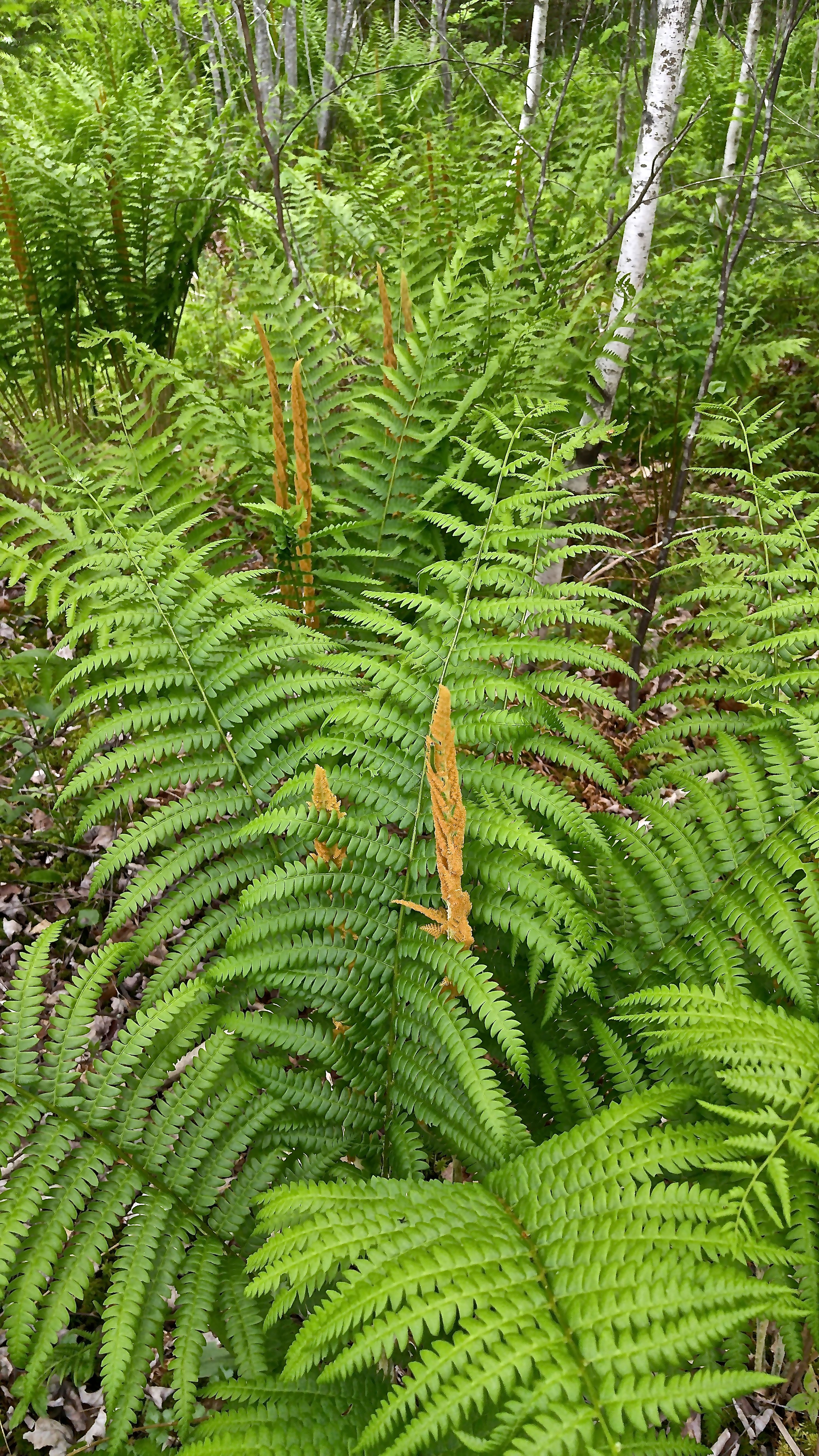
Several times we wandered in the land of the cinnamon fern, where the separate fertile fronds sport the cinnamon color for which they are named. It won’t be long before those fertile fronds bow down to the earth and the large, arching sterile fronds are all that will remain.

b-caterpillar 2

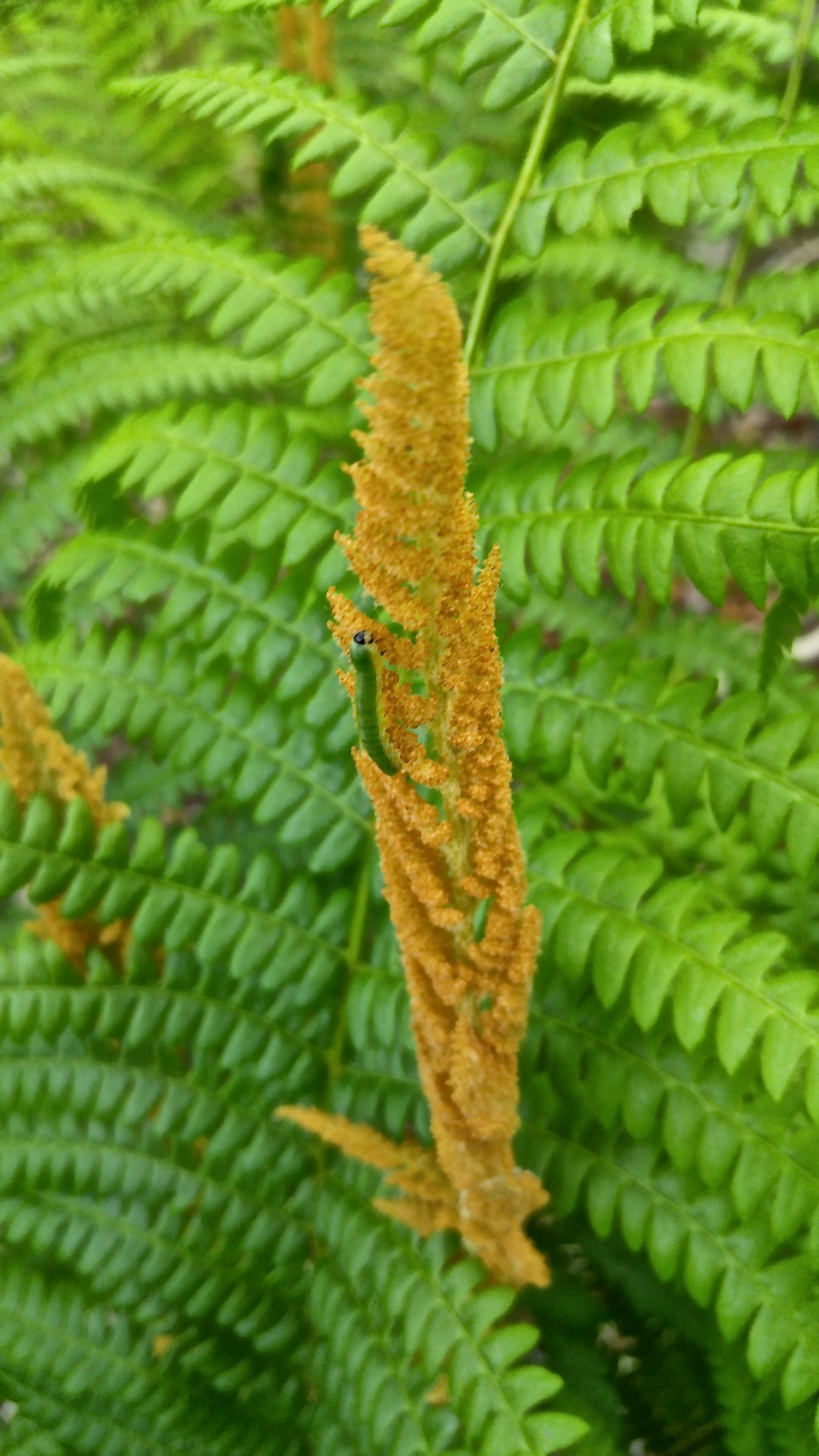
And then something else caught our attention–a green caterpillar on the fertile frond.

b-caterpillar 1

We weren’t sure who it was, but we saw it on several stalks. Always something to wonder about.

b-royal

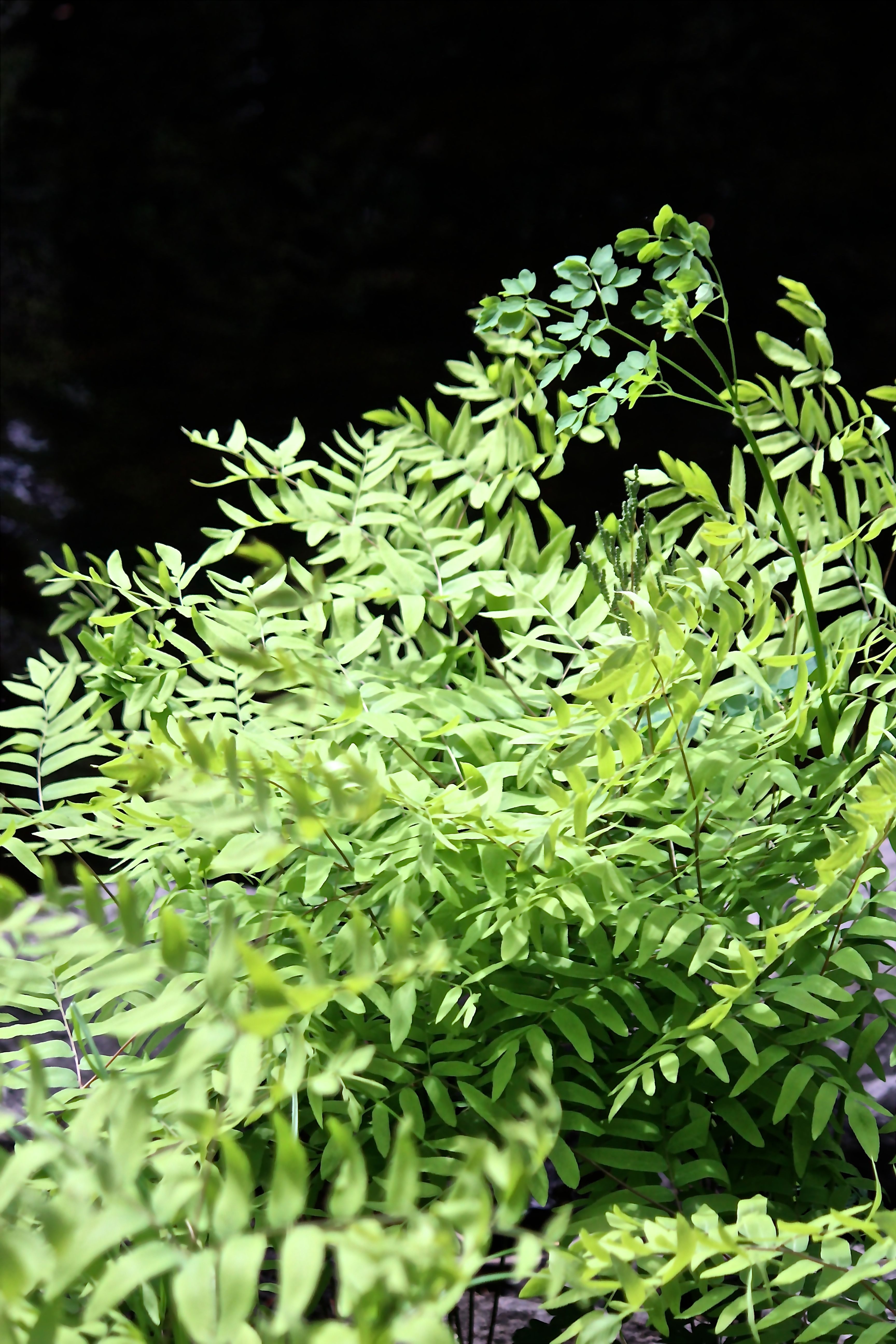
Royal fern also offered a display, especially beside the brook. Look closely and you might find the fertile frond “crown” on this one. It’s a rather “Where’s Waldo” presentation, but it’s there.

b-gilled 1

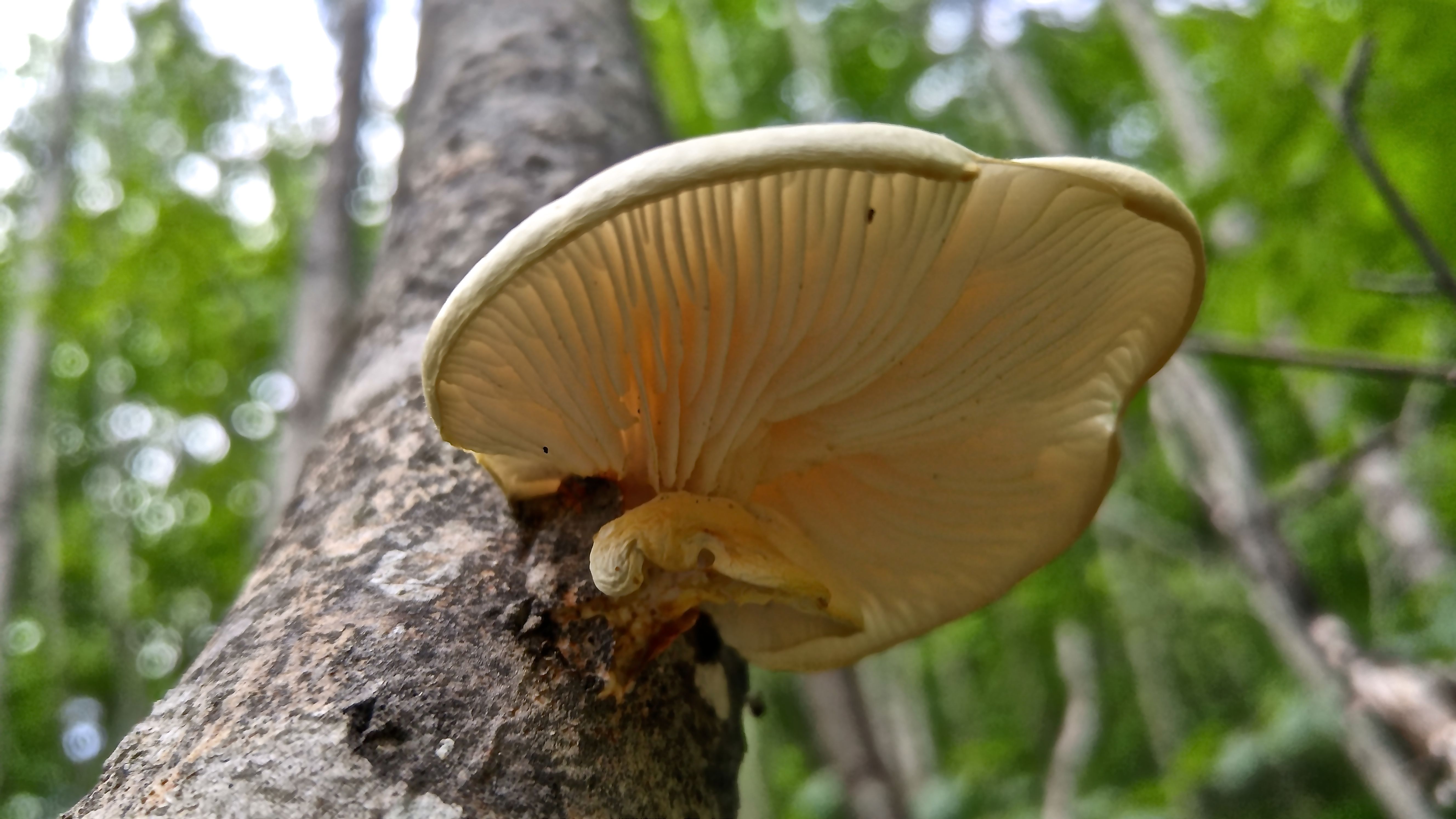
We found some gilled mushrooms we also couldn’t identify, but appreciated their existence.

b-lady 3

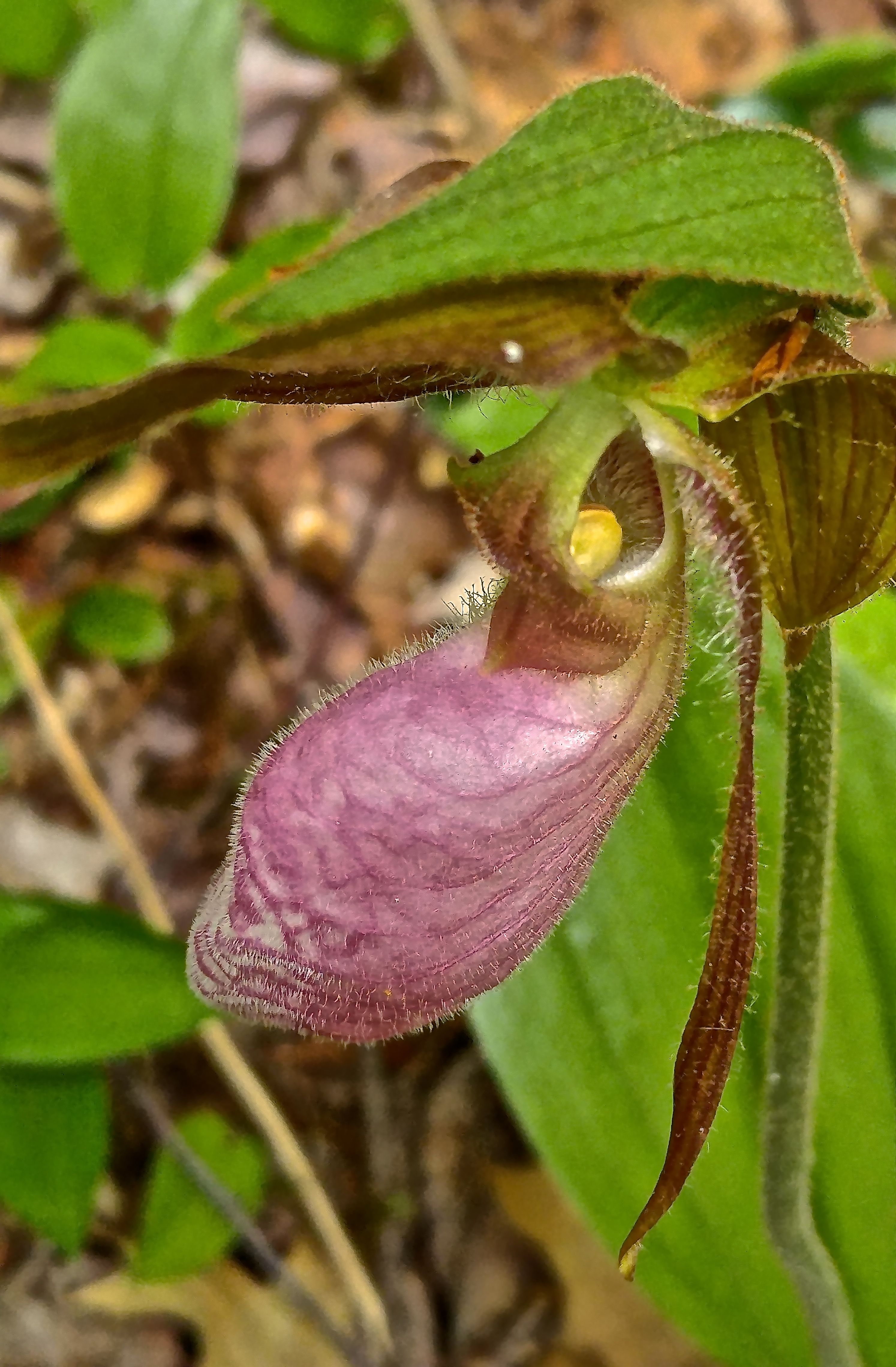
The lady’s were in bloom.

b-lady's slipper

Take a look at those hairs.

b-web 3

And it’s spider web season so we paused and admired the work of an orb weaver who built a spiral wheel-shaped web.

b-spider web

Also among our sightings, a well-built high-rise structure woven among the remains of winter weeds.

b-toad 3

Camouflage is everything. Just ask the American toad.

b-wood frog 1

We found the wood frog easier to spot.

b-blue-eyed grass1

But I had my eye on the blue-eyed grass.

b-blue 5

These are the shy ones. They only keep their eyes open if the sun is shining. On a cloudy day it’s almost impossible to recognize them.  And they love damp open woods, slopes and stream banks so it’s no wonder we found them today.

The big and the small . . . Beth’s property has it all. And this was only a sampling from her hundred acre wood. Winnie the Pooh and his friends–they too, would love this place.


Pool Side

Today was a day meant to be spent outside. Temp in the 60s, brilliant sunshine, not a cloud in the sky. It was almost too hot. Certainly a day to sit pool side.

I spent the late morning/early afternoon hours enjoying lunch at a picnic table outside The Good Life Market in Raymond, and interviewing a friend for an article. (Thanks JVP :-))  The Supreme Aubergine was delish even if I couldn’t pronounce its name. And she had the Grilled Chicken Cobb Salad.

But that wasn’t enough time outdoors, so I packed up my camera, drawing supplies and stool, then headed out the back door later in the day.

mole work

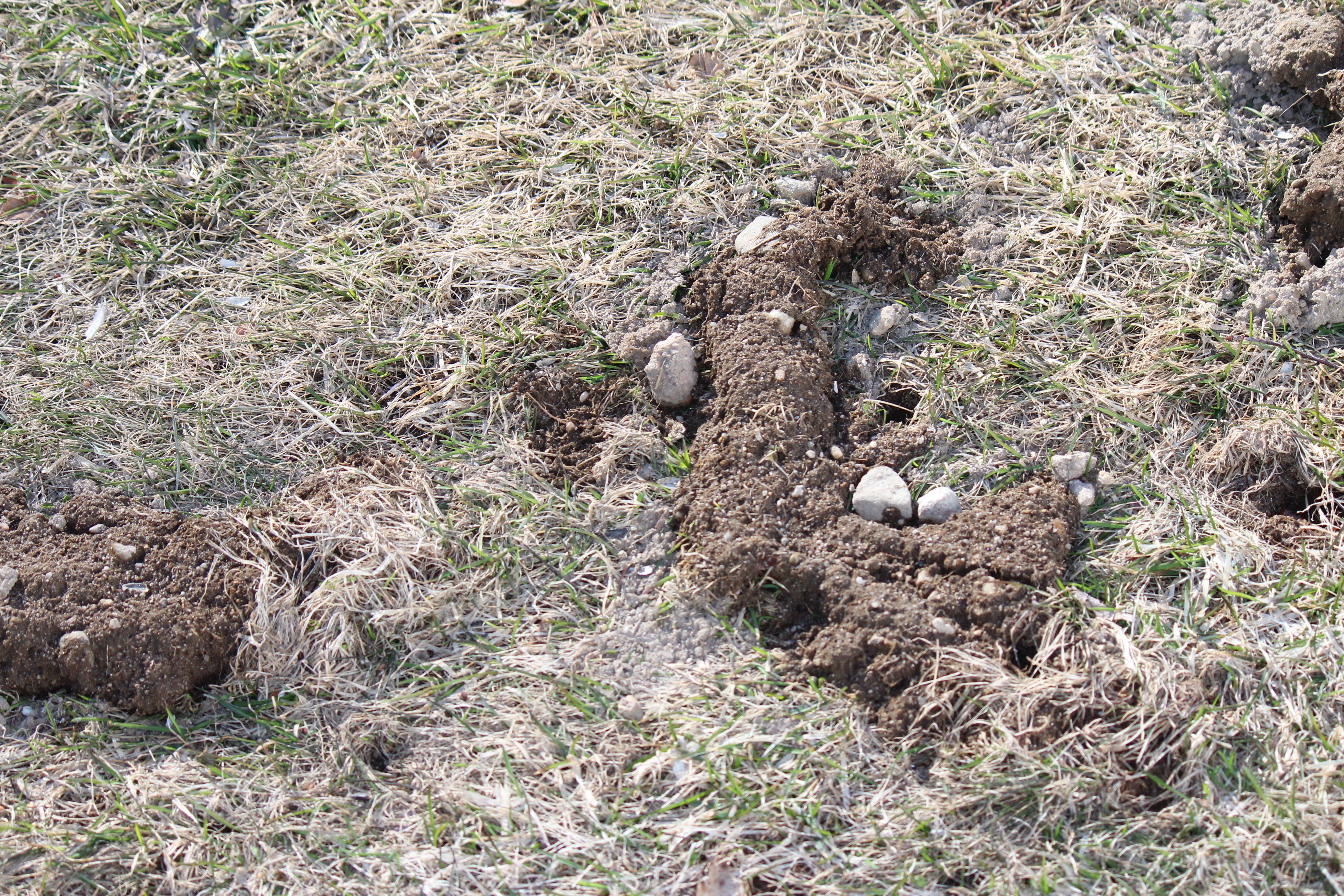
Where the snow has melted in the yard, there is evidence of mole work. Though they eat some vegetation, moles are insectivores and they aerate the lawn. Let them eat grubs, I say.

Vole tunnel

Behind the barn, a vole tunnel melting in the snow. These little field mice are more destructive as they are herbivores, but there’s a cat who likes to hang out in our yard. Here kitty, kitty.

pussy willows 1

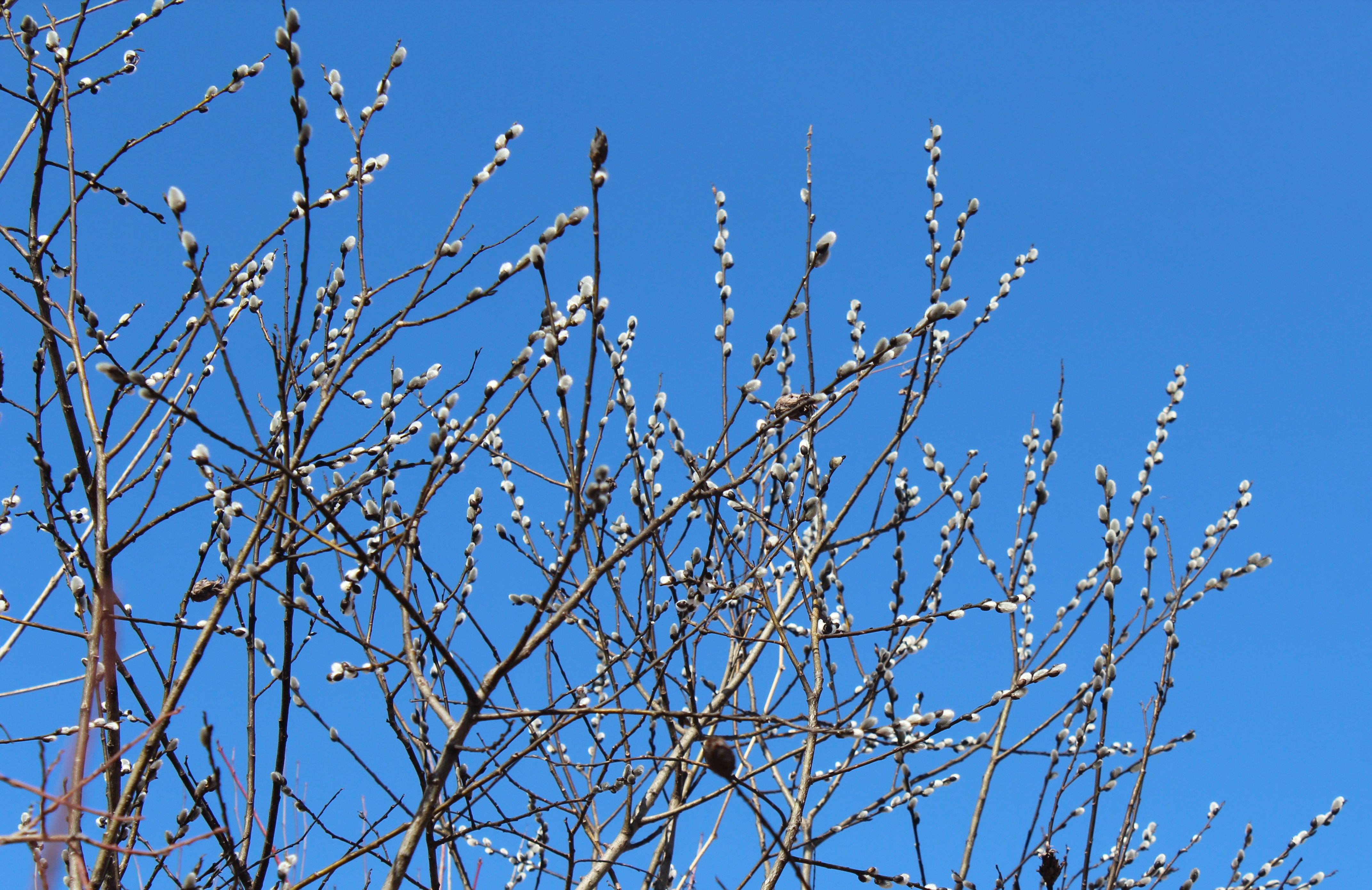
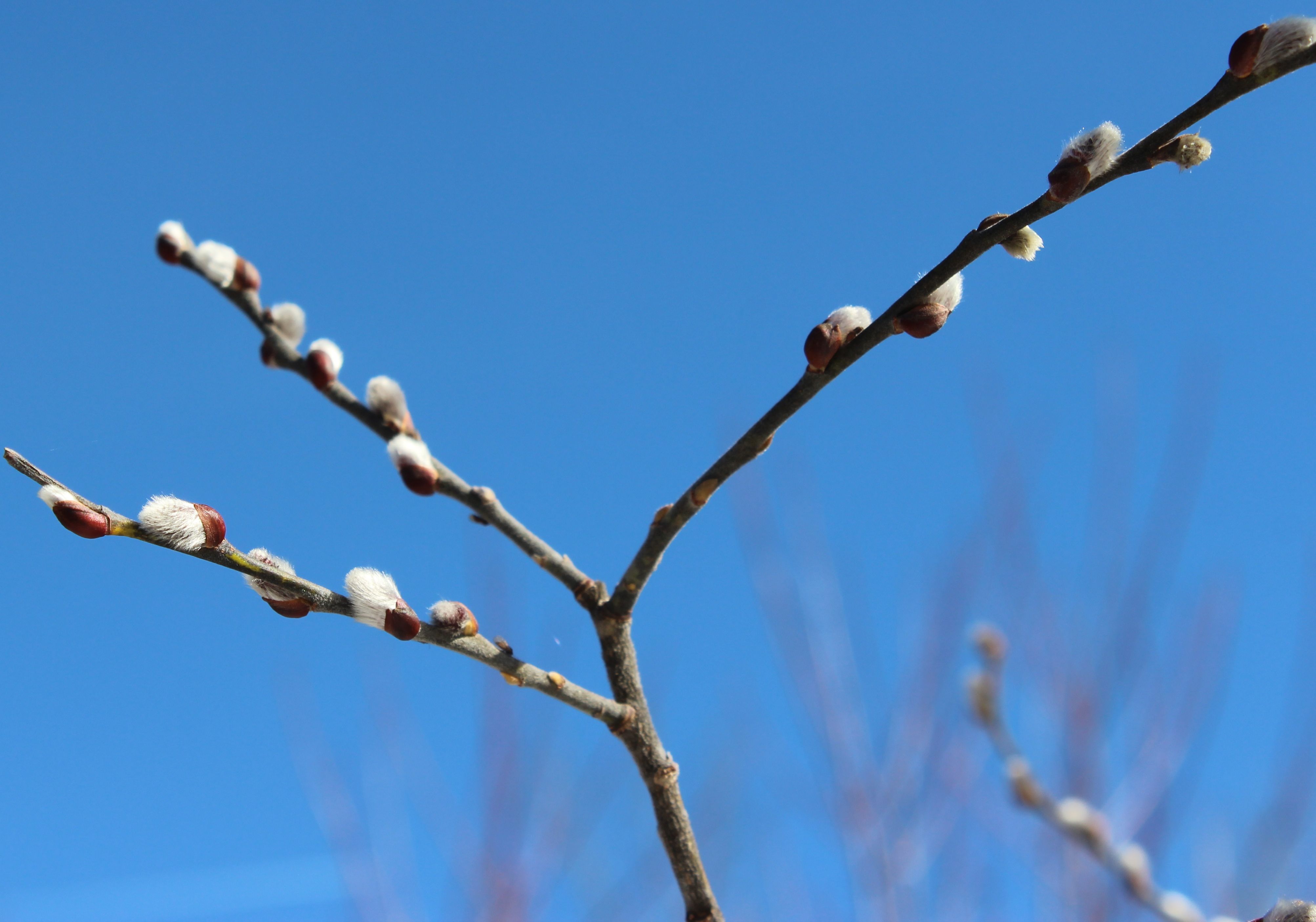
My destination was the vernal pools, but along the way I had to stop and smell, I mean touch, the pussy willows.

pw2

Spring’s certain harbinger.

gall1

Sadly, some teeny tiny midges attacked one of the willow trees last year.

gall2

The result, this pineapple-shaped gall. It has its own certain beauty and when you think about the number of papery scales and size of the insect that created it, it is amazing.

vp2

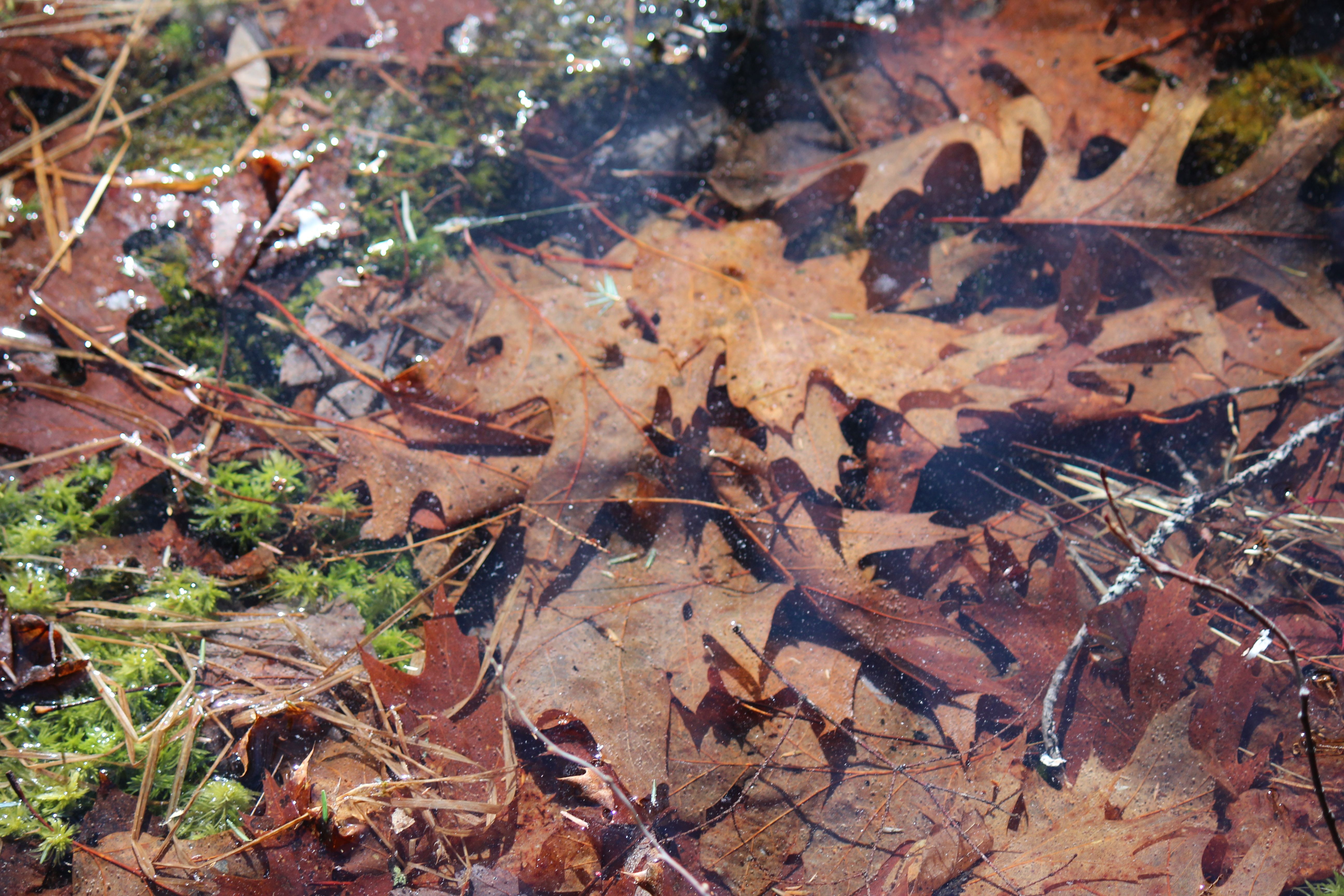
VP2–the vernal pool furthest from home. I stood there for a while, watching and listening.

leaves

And admiring the leaves below the water. They’ll soon provide the perfect hiding place for the wood frogs, who will disappear underneath when I approach.

pine candelabras

On my way back to VP1, the pool in the neighboring woodlot, the candelabras on the white pines again made their presence known.

leaves waiting to be released

It’s getting easier to walk along the rocks that form the perimeter of this pool and take it in from all sides. Here, the leaves wait to become part of the organic matter on the pool’s bottom.

leaves hanging on

While just above, others still cling to the mother tree.

water on vp

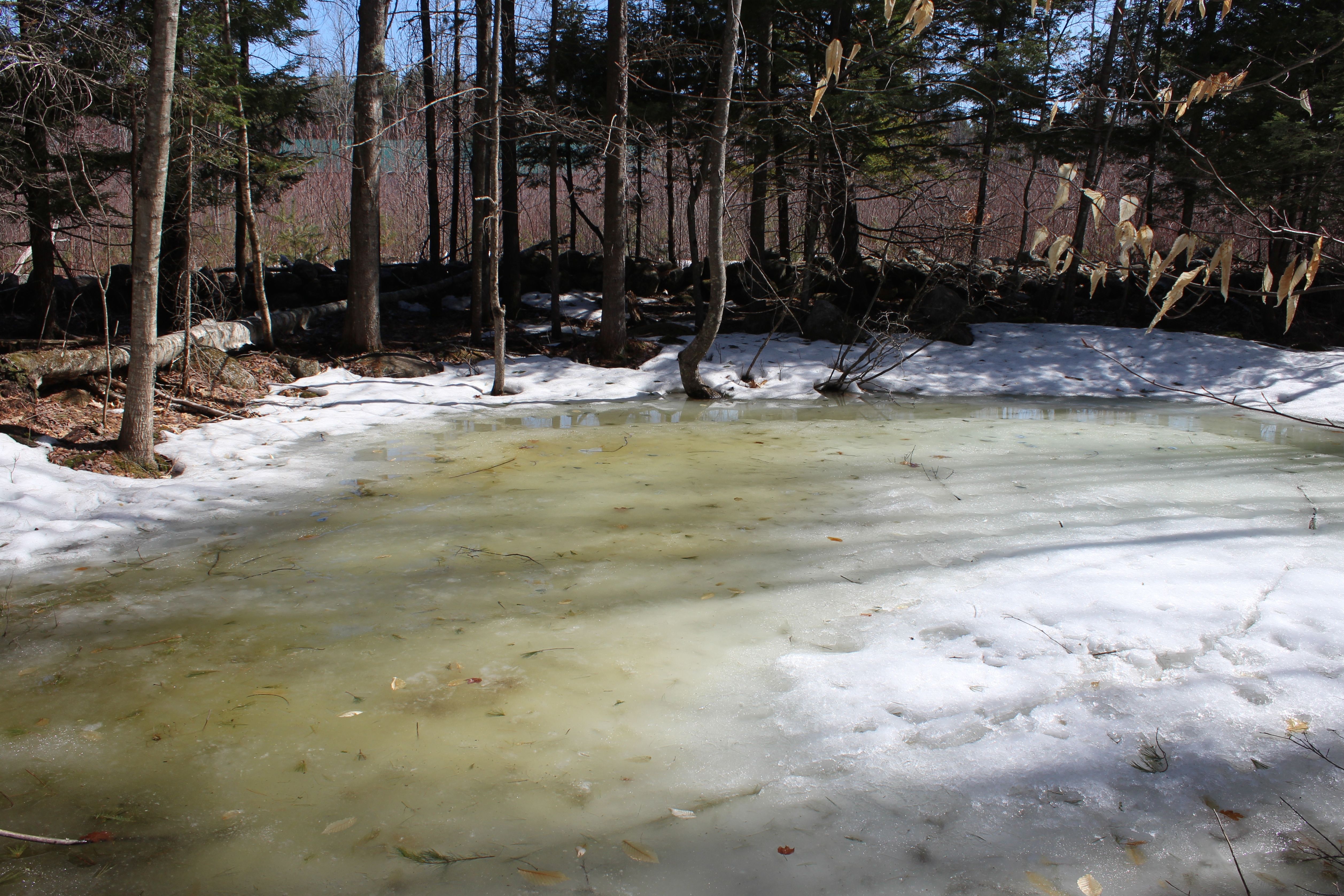
In the southwestern corner–water atop the ice.

vp1

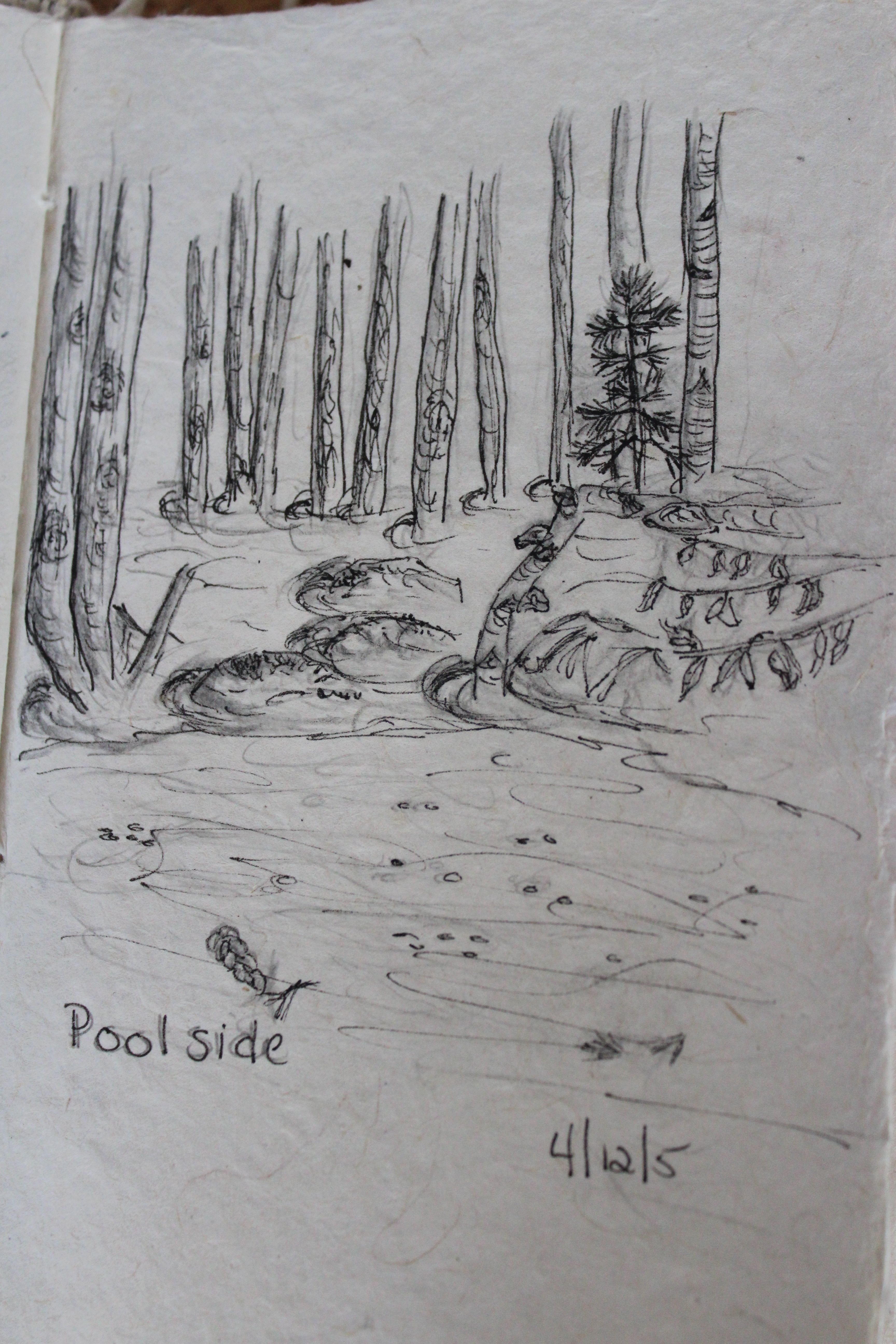
Overall, a rather slushy topping. I set up my stool and sat to sketch it.

poolside

When I look at this now, it looks like the bubbles are frogs or something. Not so. Oh well. I was happy to be pool side . . . until I fell backward as the soft snow gave way. A reason to chuckle and head home.

Thanks for joining me to wonder as I wander.

Wetland Wonders

wetland 1

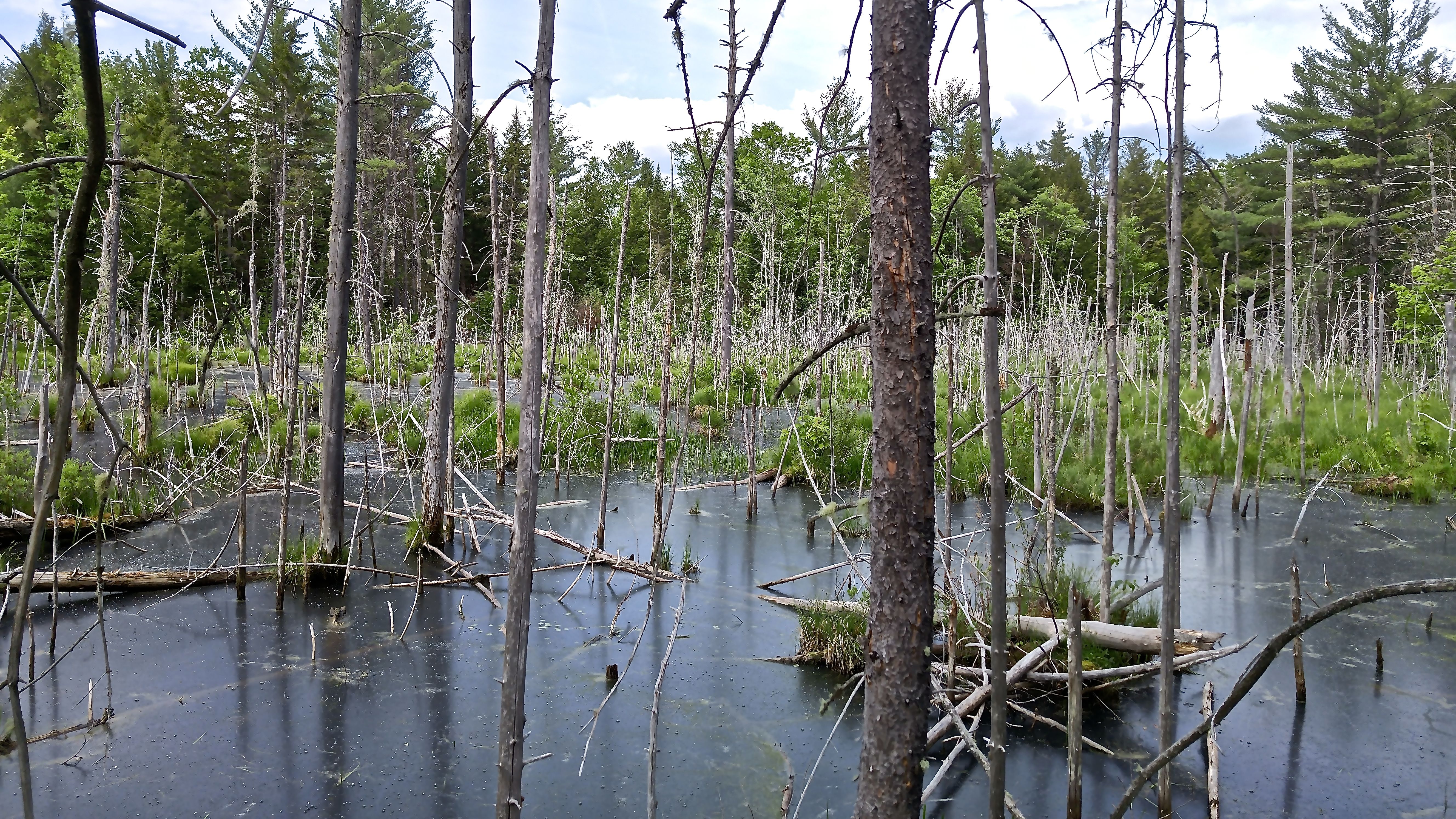
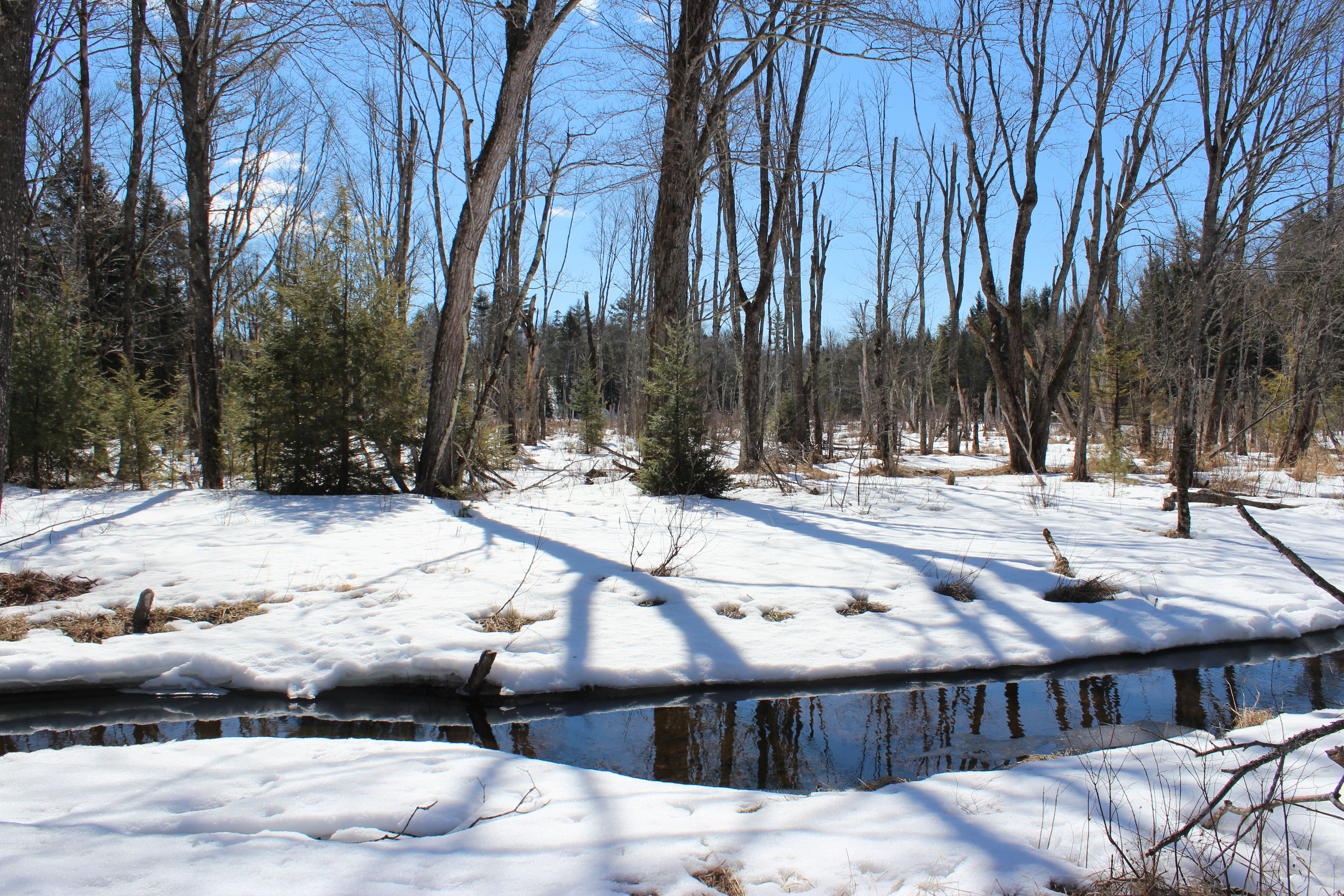
The Greater Lovell Land Trust’s Tuesday Tracking group returned to the wetland at the John A. Segur Wildlife Refuge today. It’s one of those places that I could spend hours upon hours exploring and still only see a smidgeon of what is there. I’m overwhelmed when I walk into a store filled with stuff, but completely at home in a place like this where life and death happen and the “merchandise” changes daily.

insect

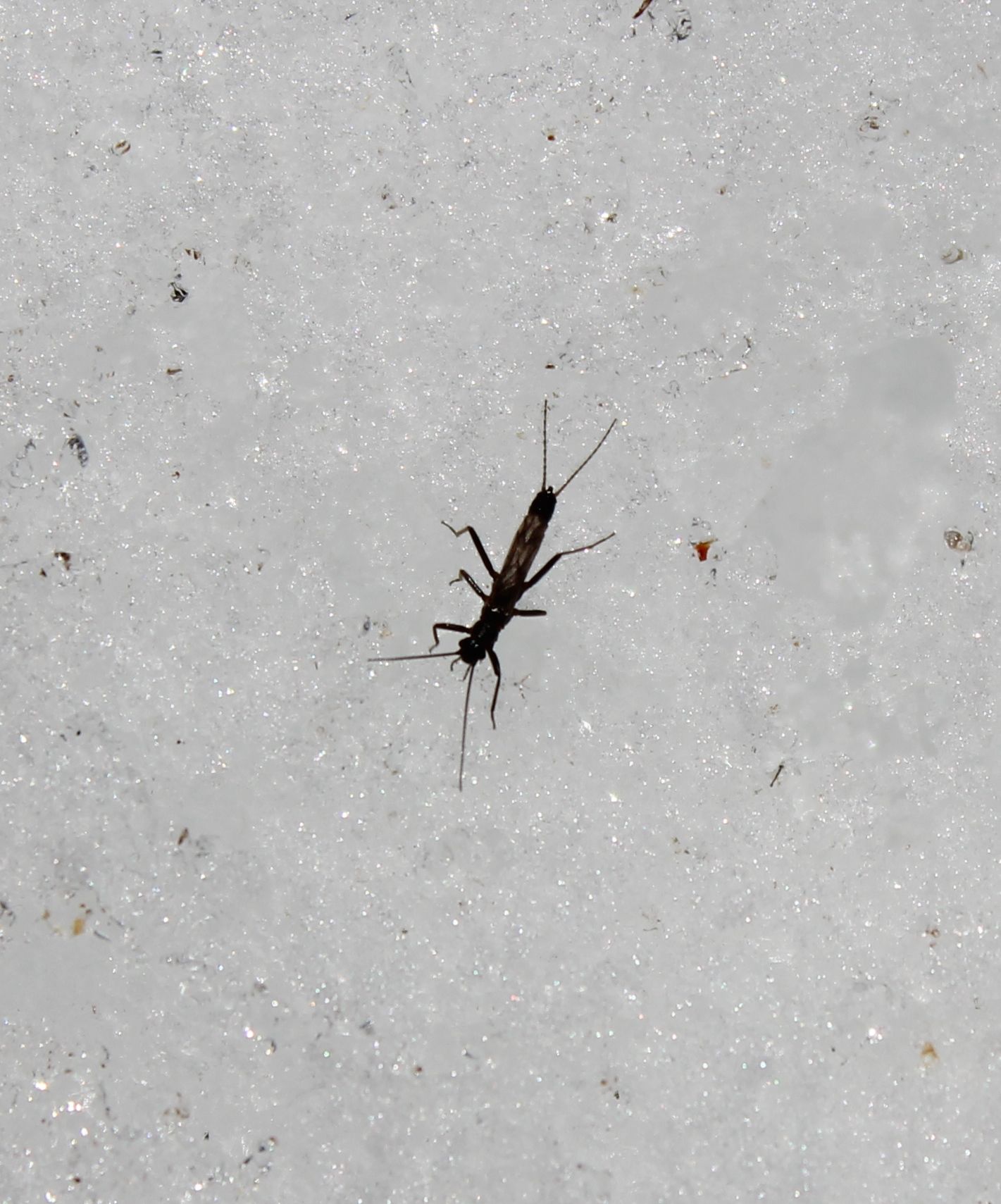
Walking across the snow was this small insect. So . . . we were in a wetland. Tomorrow will be April 1–no kidding. The insect is about an inch long. It has long antennae and a pair of cerci or appendages at the posterior end of its abdomen. I’d say we found a common stonefly nymph. Please correct me if I’m wrong.

artists 1

On first glimpse, this may look like a pile of dried grasses and twigs.

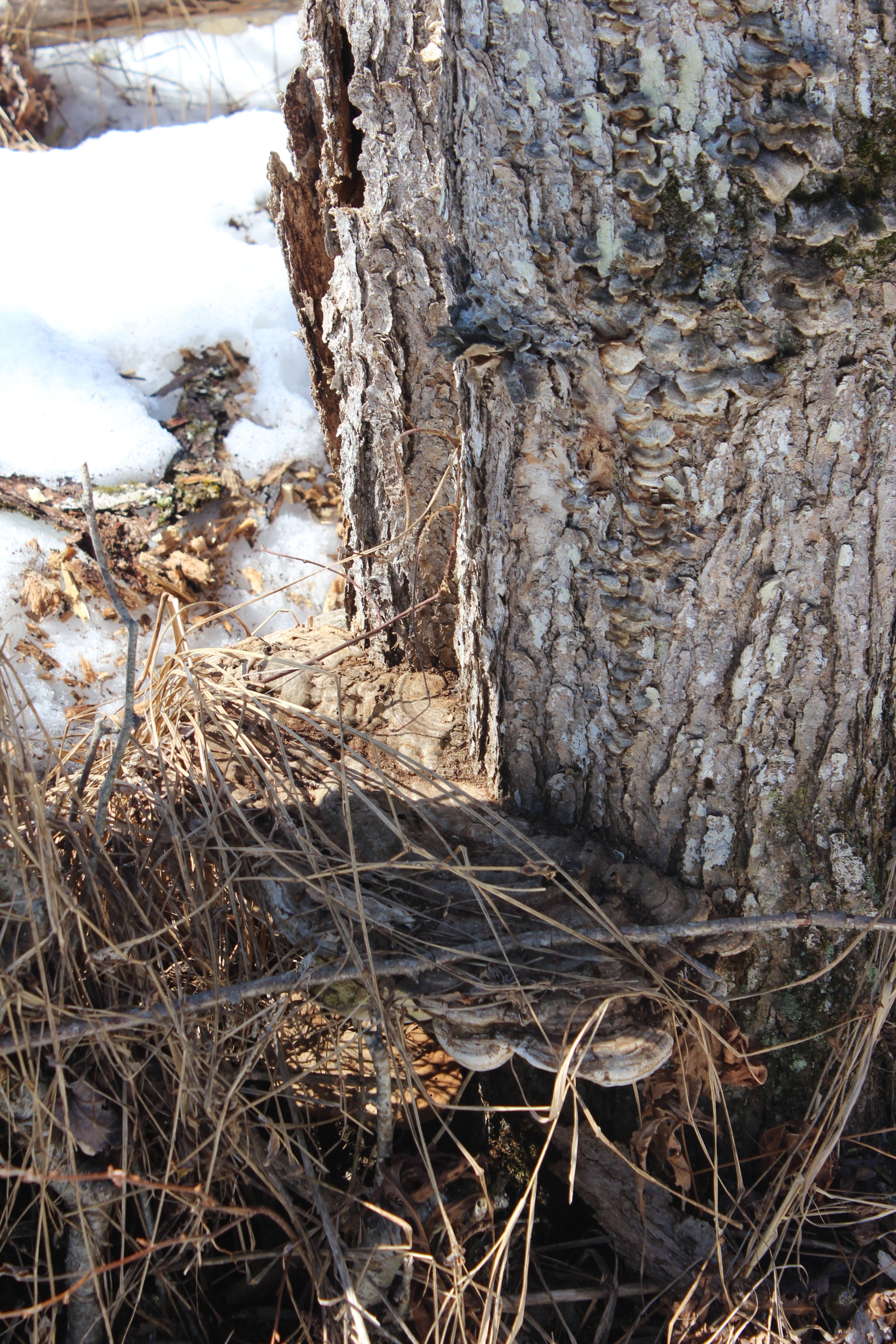
artists's conk?

But stepping in for a closer look reveals what I believe is an artist’s conk. An old artist’s conk. We didn’t cut it off, but apparently you can age one by cutting it and counting the layers–much the same way you can age a tree by counting the number of rings.

old beaver lodge

There’s evidence of beaver work throughout the sanctuary, but none of it is recent. So . . . my friend decided to play Queen of the Lodge.

dam crossing

We crossed Boulder Brook via an old beaver dam–one-by-one in the name of caution.

lobster lichenlobster 3

 Color draws us in for closer inspection. I’m betting on Cinnabar-red Polypore (Pycnoporus cinnabarinus) as this one’s ID. If I learn otherwise, I’ll let you know.

lungwort

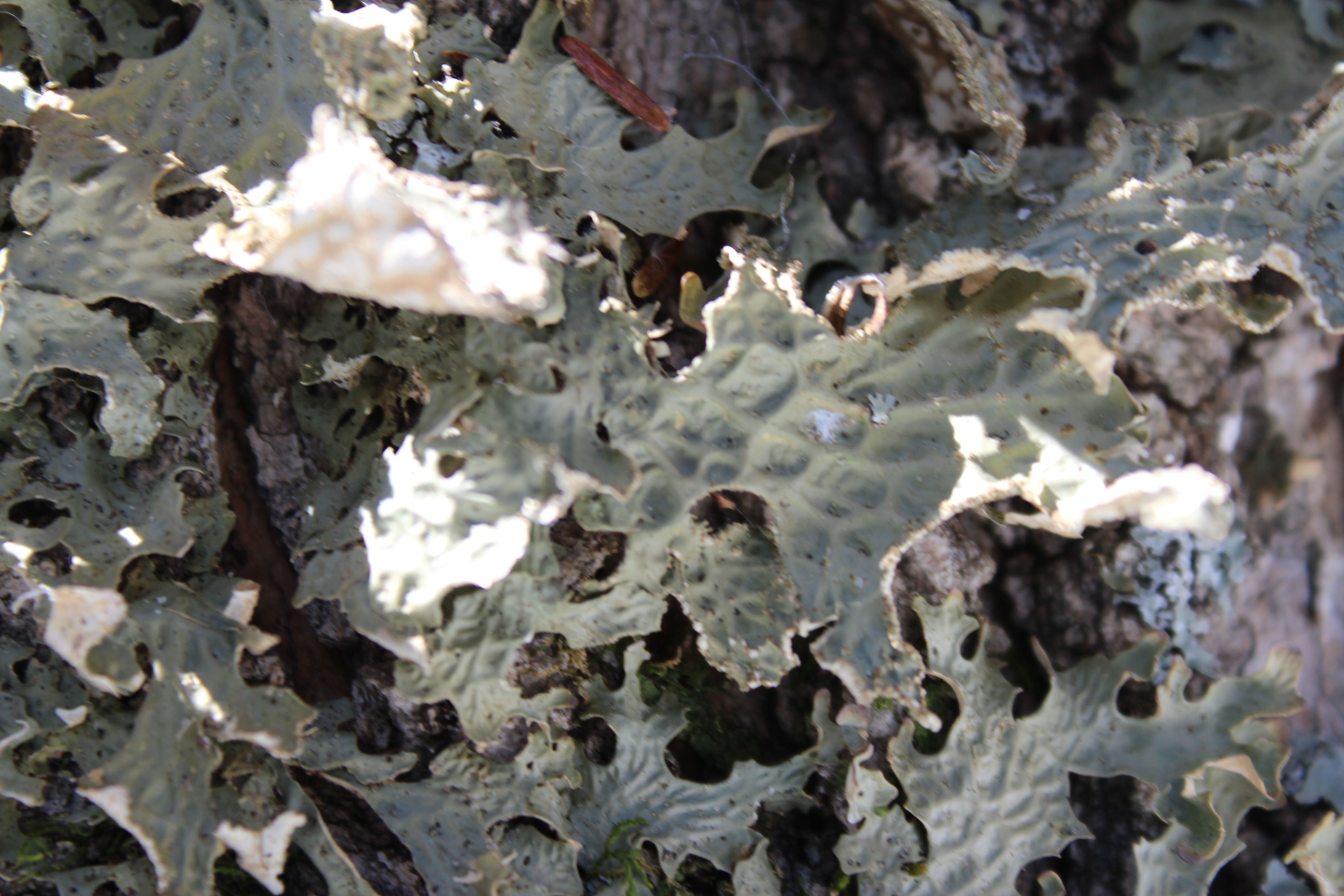
Remember this lungwort I shared last week in my Island Hopping blog?

Lungwort

Same species. Same tree. Nature–worth wondering about.

myatery 1

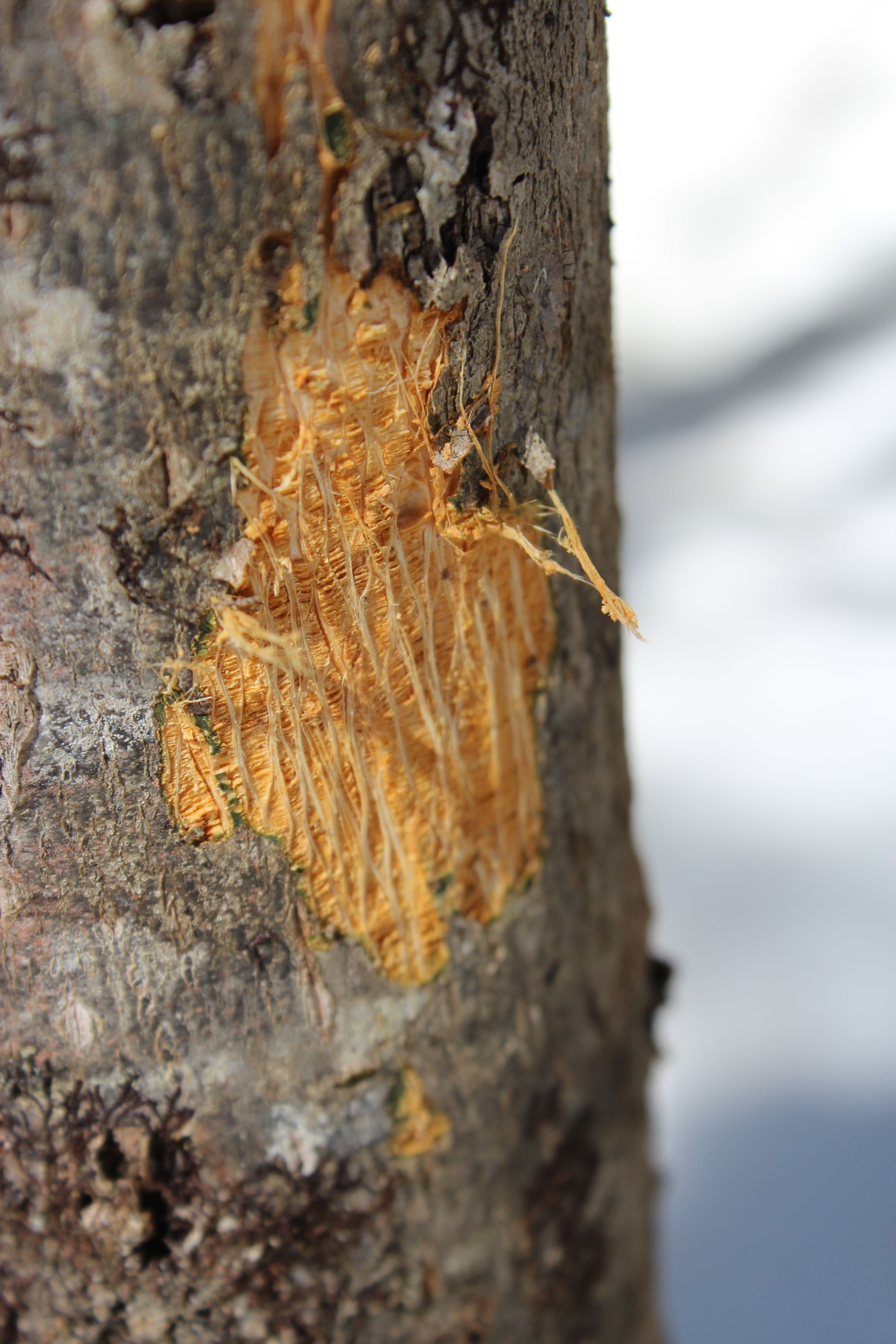
Then there was the mysterious event.

mystery 3

Very fine tags dangle from the upper edge of the scraped bark. Not the work of a deer, beaver or porcupine. Not a hare or little brown thing. Maybe a bird? No holes, just the fine layer of outer bark delicately scraped off.

deer scrape

Here’s a deer scrape as a contrast.

tree within tree

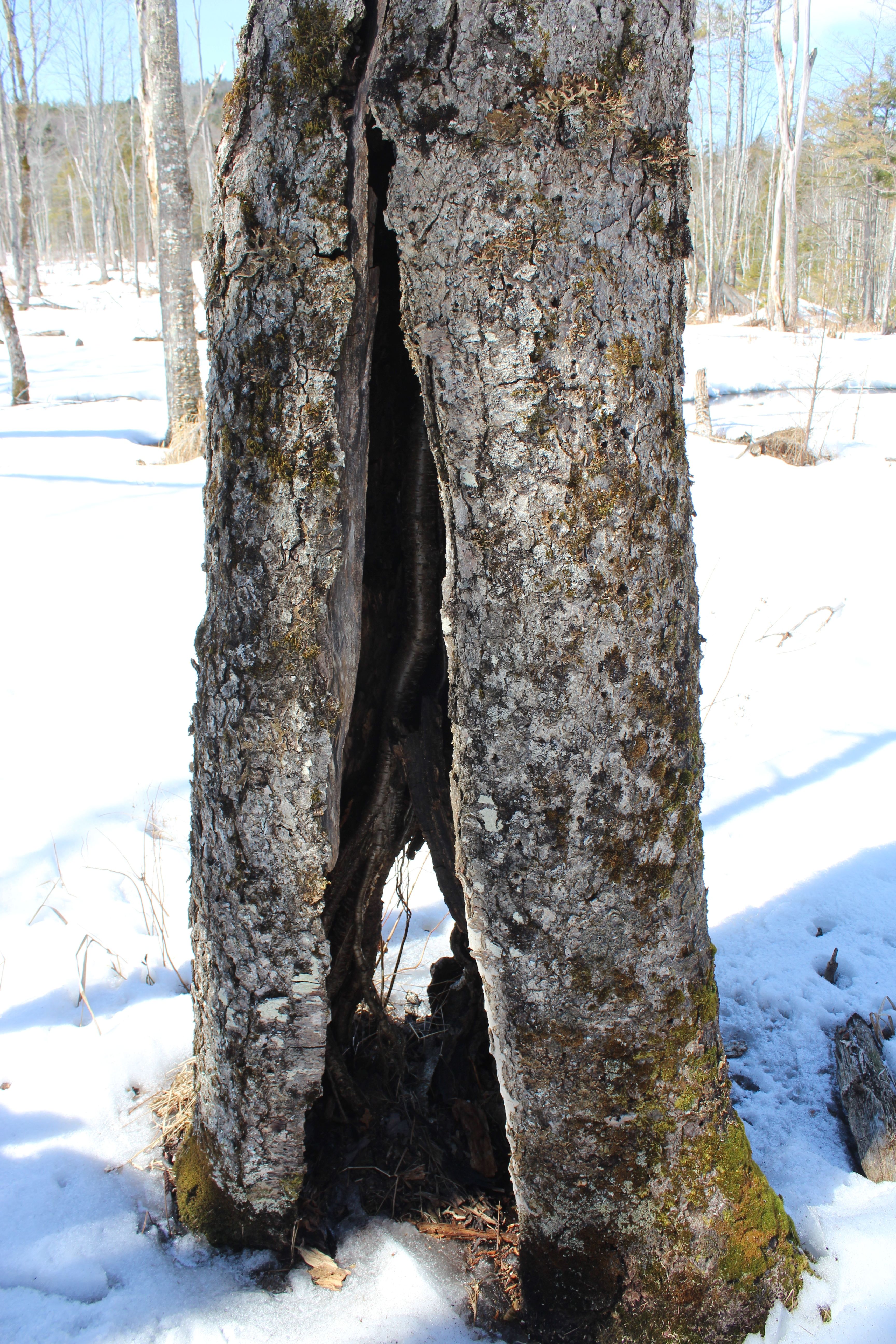
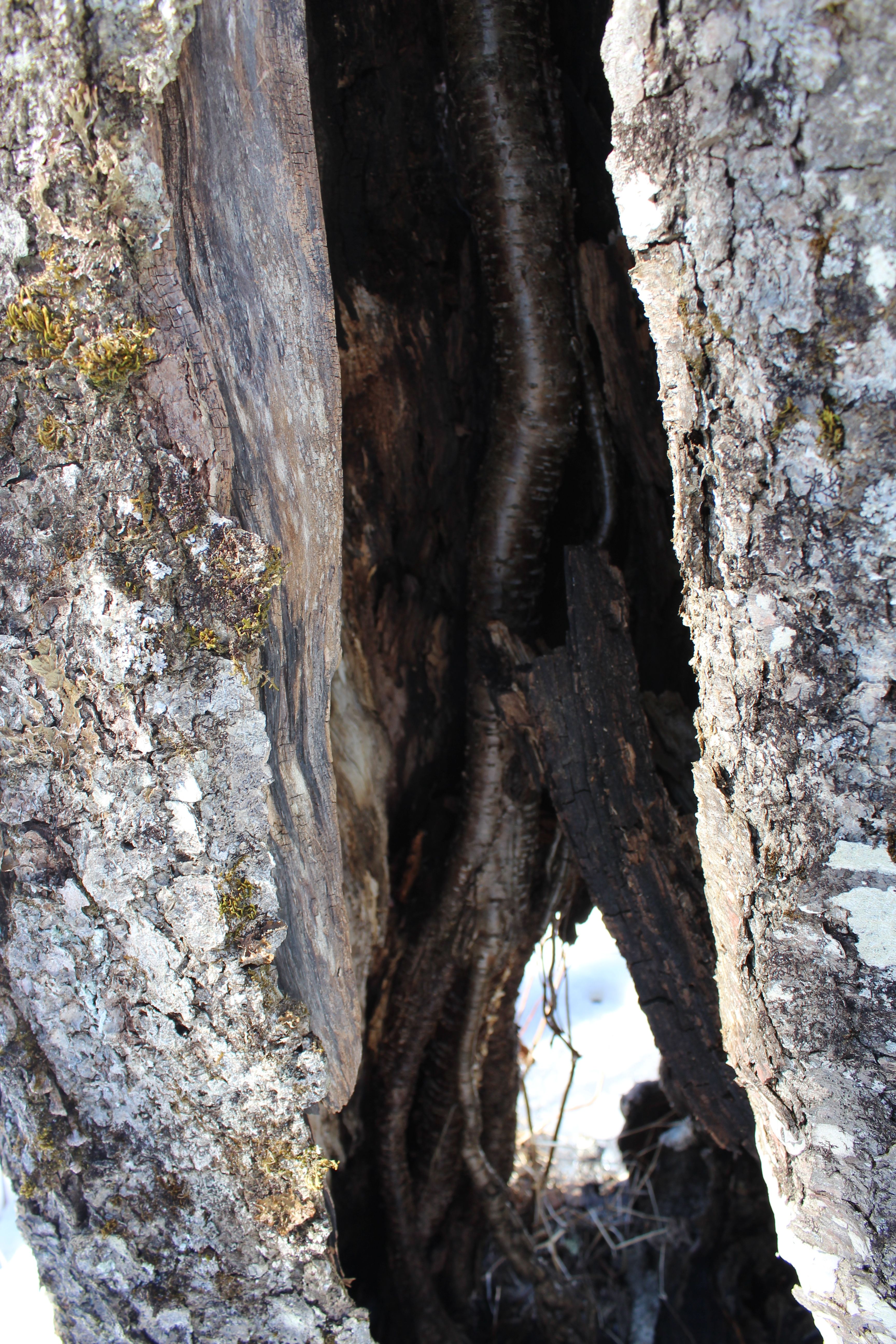
For this next wonder, you’ll have to look closely inside the hollow yellow birch. Peer to the left of the hole toward the rear. Think vertical.

tree 2

Do you see it? It’s in the center of this photo.

tree 3

And here it is further up in the hollowed out tree. A tree within a tree. Another yellow birch or birch root growing up through the center of this dead snag. Life and death. Together. One within the other.

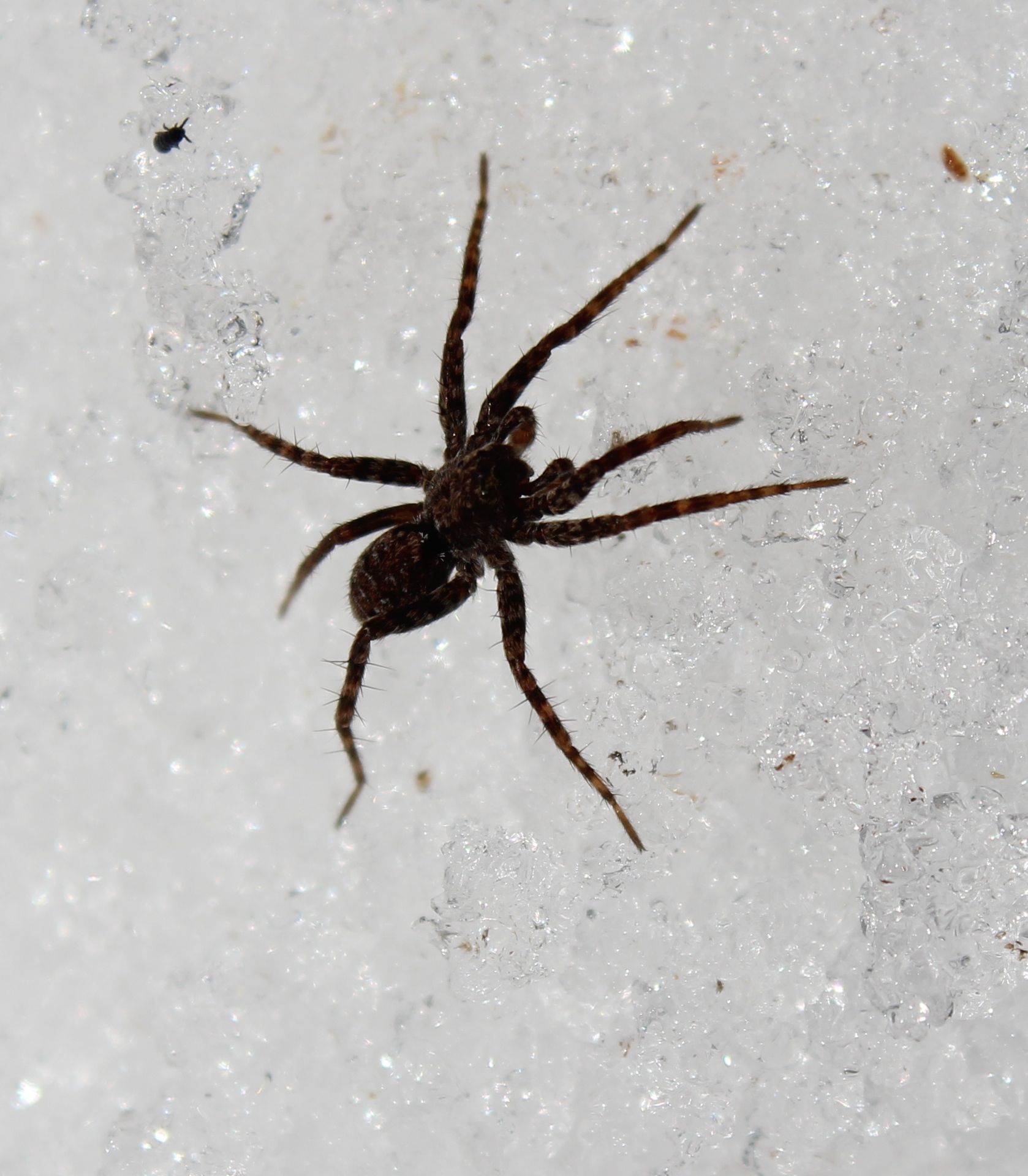
spider

This guy was dashing across the snow, but had the decency to pose for a photo op. Given that he wasn’t wearing boots, I don’t blame him for running along.

crossing dam again

And suddenly, we realized we’d spent over three hours exploring and it was time to head back over the beaver dam.

white pine

On the trail again, we paused to admire spring growth on a small white pine–a mini candelabra.

Thanks for wandering along and wondering my way.

Bark Eyes

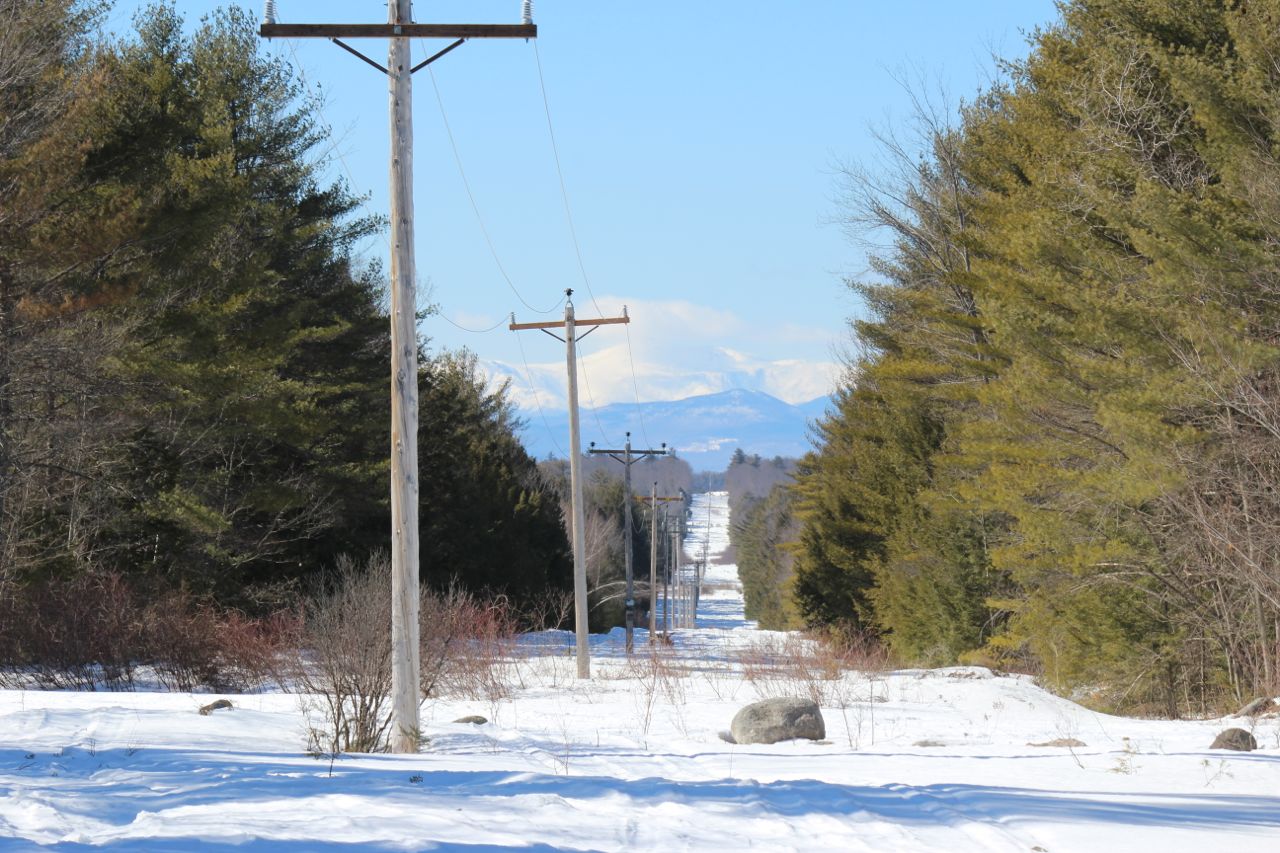
powerline

Looks Like We Could Walk to Mount Washington

Though it was a blustery day, the wind wasn’t much of a bother in the woods beyond the power line. I crossed the snowmobile trail and slipped into my peace-filled mode.

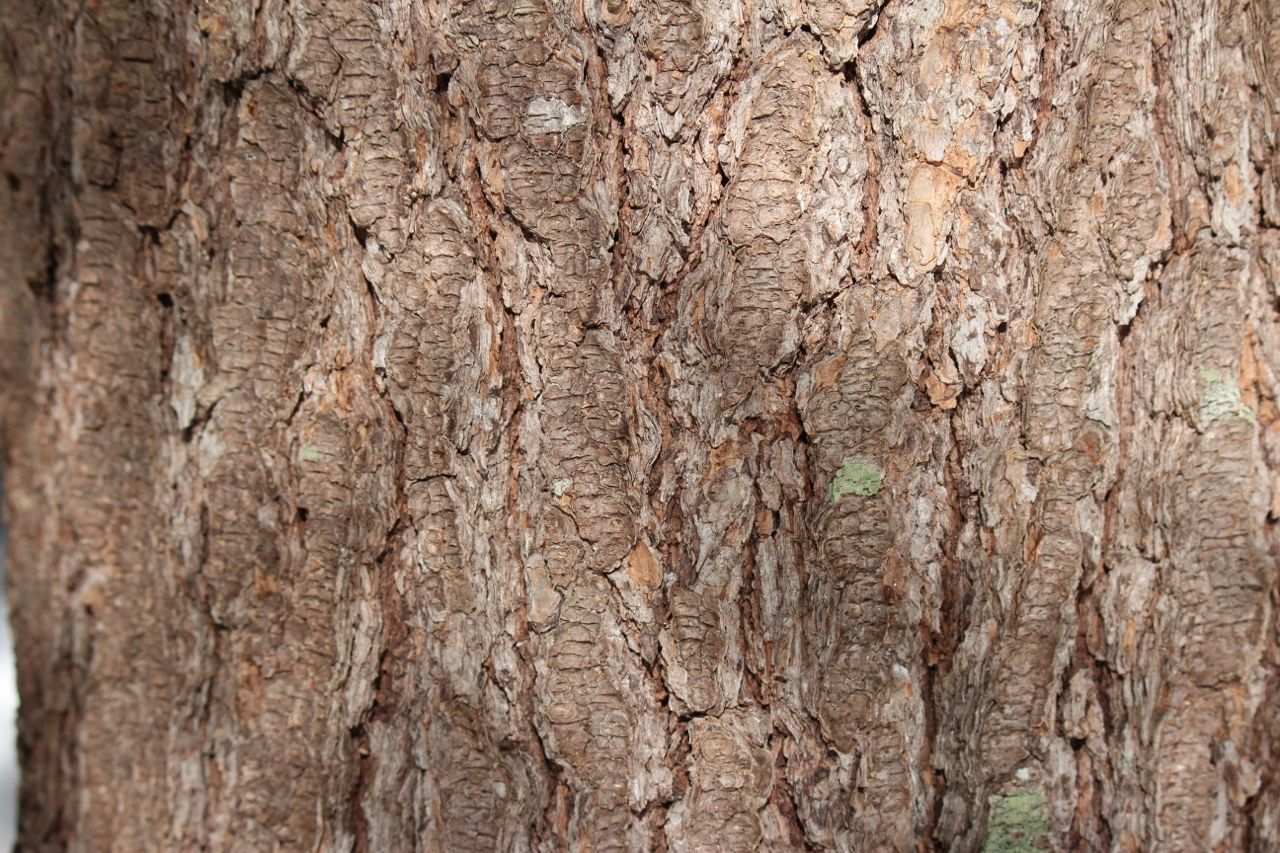
pine

Until a couple years ago when I was working on my capstone project for the Maine Master Naturalist Program, I didn’t know a lot about tree bark. Since then, I’ve been developing my bark eyes. Seriously, I have a difficult time driving down the road–my distraction isn’t a cell phone. It’s tree bark.

pine sketch

I like the pattern visible on the plates of Eastern White Pine–its numerous horizontal lines remind me of writing paper. Hmmmm . . .

What better way to get to know it than to sketch it. One thing I’ve learned over the years about sketching is that it doesn’t have to be exact. Only God is perfect–thank goodness I don’t have to aspire to that goal. So my sketches represent what I see.
red oak

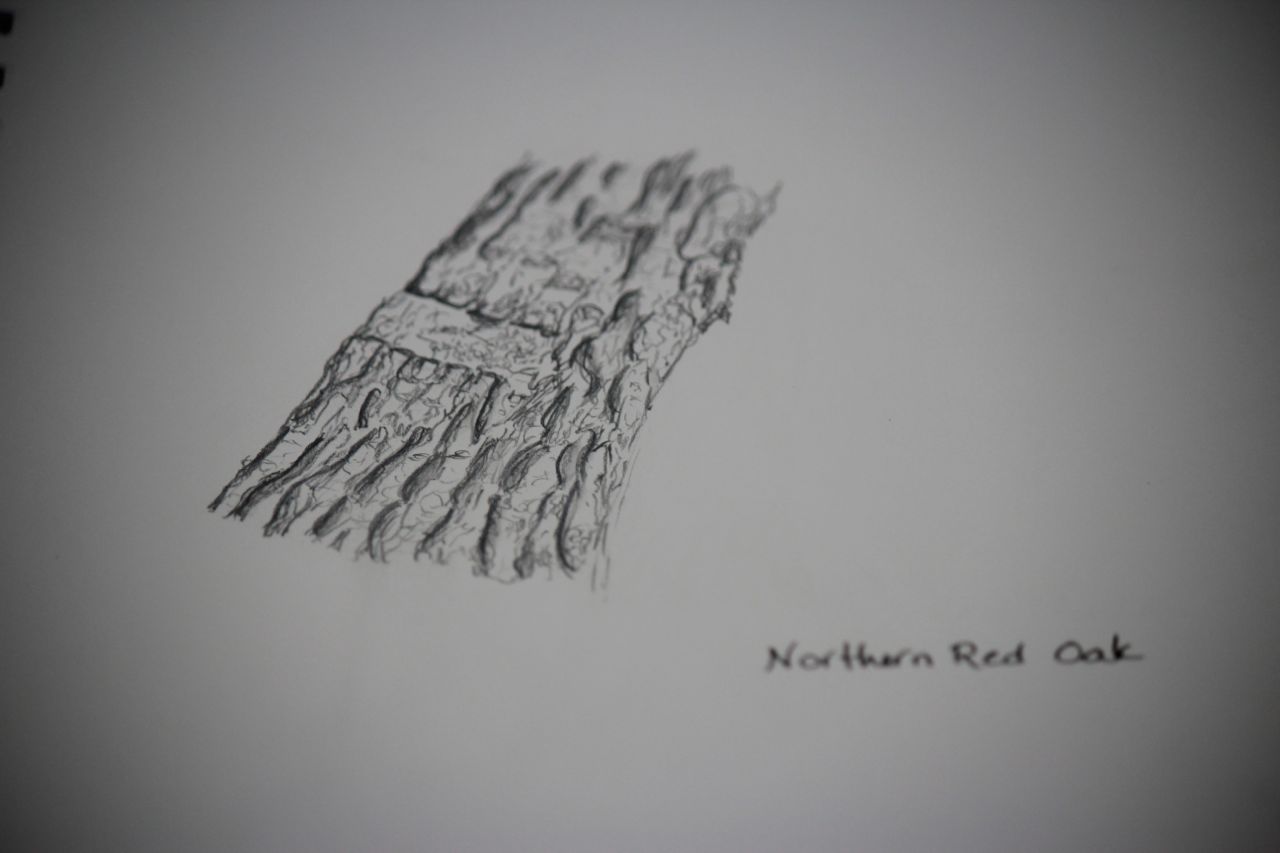
red oak sketch

The red inner bark of Northern Red Oak is visible through the furrows. In older trees, the flattish furrows look like ski tracks coming down the tree.

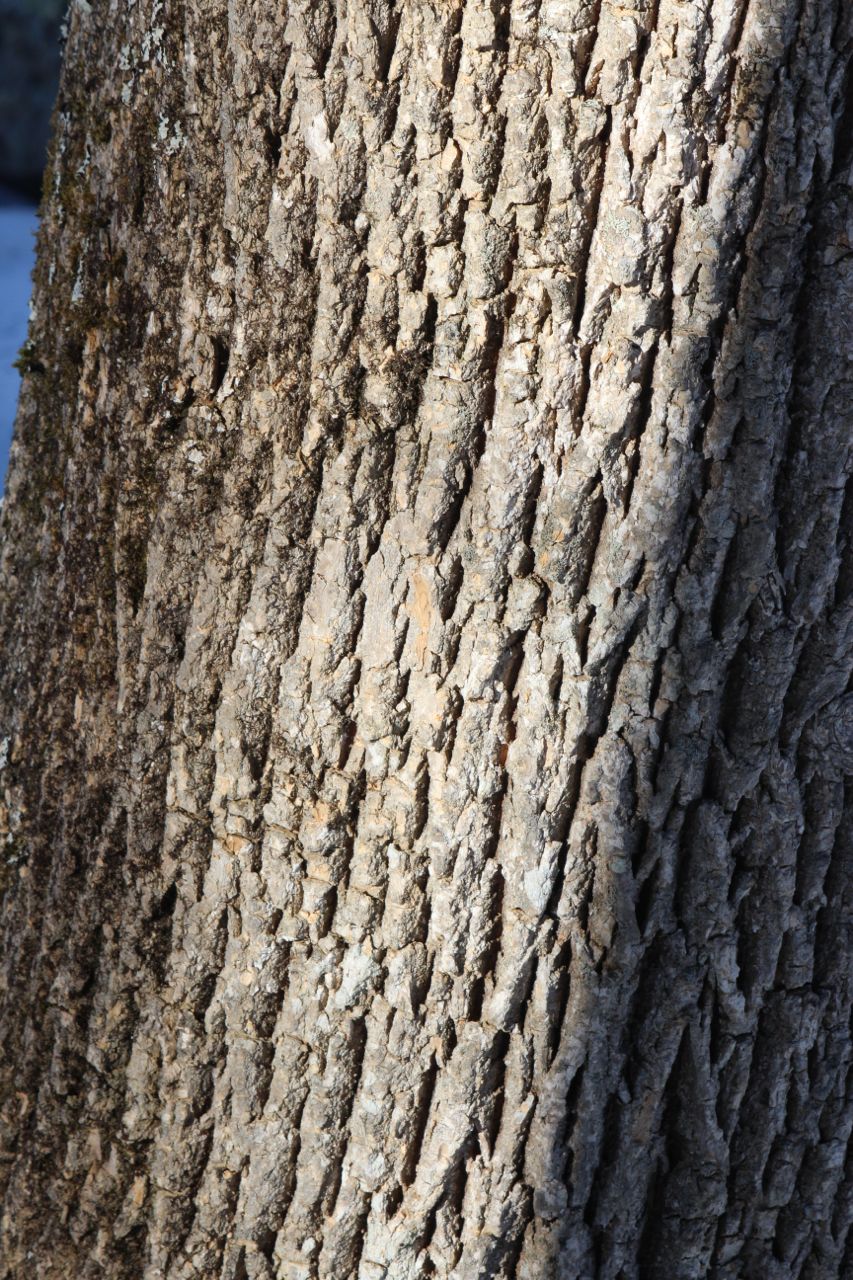
ash

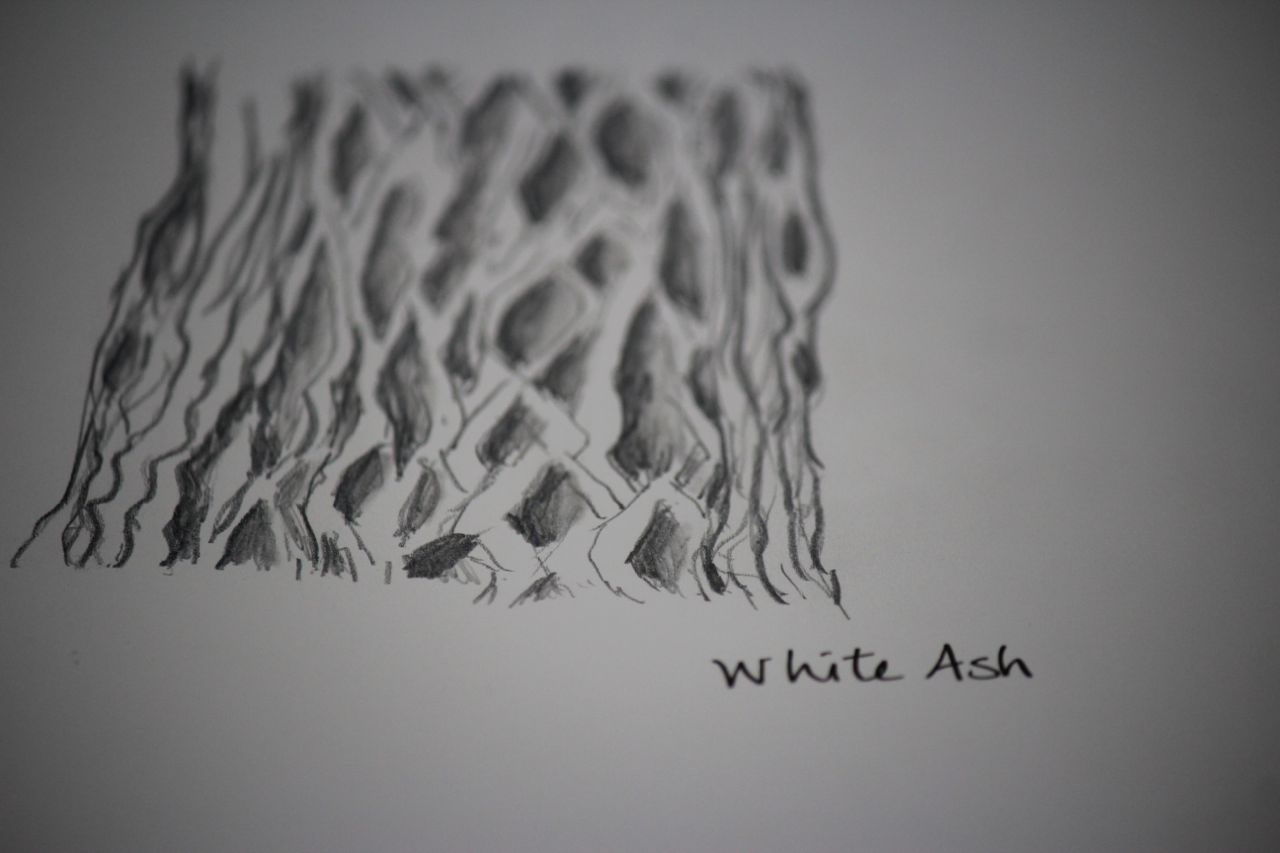
Do you know this one? Can you see the diamond shape? Some people see a letter A. Others see the rind of a cantaloupe. I guess, whatever works for you is the best way to describe it.

white ash sketch

White Ash it is. I feel like we’re not only on a texture tour of trees, but also a color tour :-)

Last one for today before I share a few other cool things that I discovered.

red maple

This one always catches my eye. No only is it known for the color of its twigs, flowers and fall foliage, but look at the bark. Do you see the bull’s eye pattern in the cracks? Bull’s Eye Target on Red Maples is caused by a fungi that only affects this species. Most Red Maples in our area display the target. It doesn’t appear to kill the tree–immediately.

red maple sketch

Though the snow is still deep, it’s getting more and more difficult to move–crusty on top and then, whoosh, suddenly I sink in–snowshoes and all.

porc tree

As I tromped along, my eyes were drawn to the area under a large hemlock that I’ve visited many times this winter. At first there was activity there, and then nothing, until today that is.

porc cut

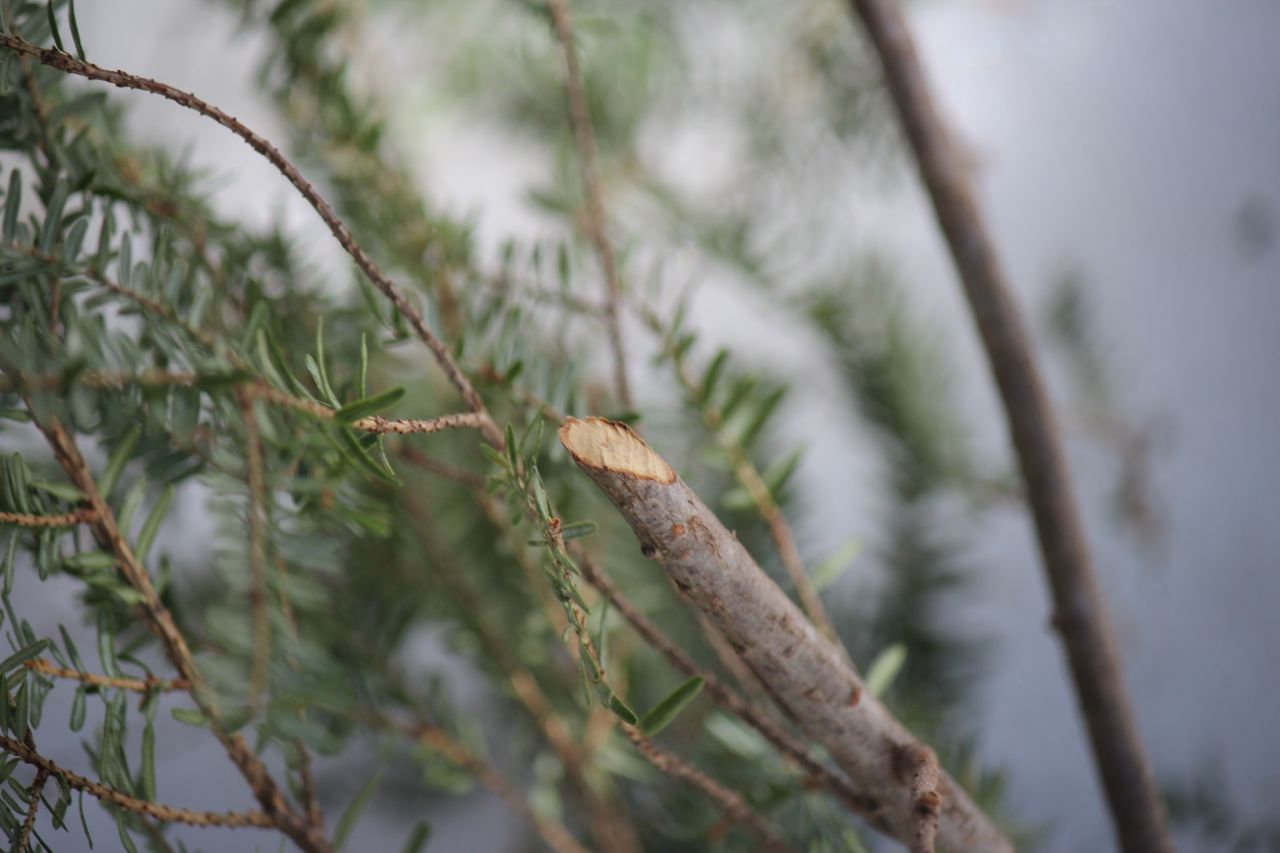
The porcupine had nipped the branches and you can see the incisor marks on this one. The fallen branches become prime deer food.  Deer had been under the tree. I took a photo of their tracks and scat but, alas, the wrong camera setting and it was overexposed.

Also seen under this tree, a spot where a red a squirrel paused on a branch to strip a white pine cone–and let the scales and leftover cob fall to the ground. Another cafe in the woods.

  porc scat and cone

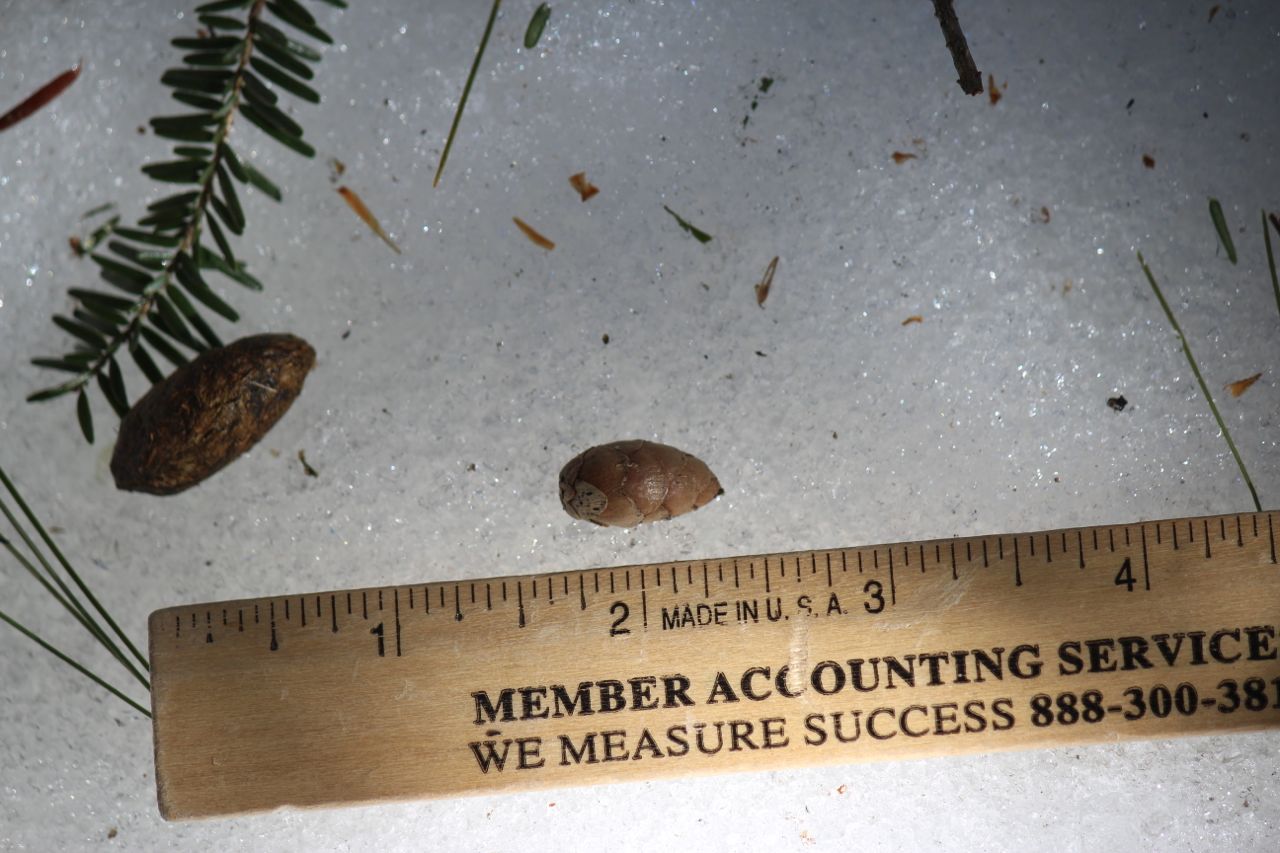
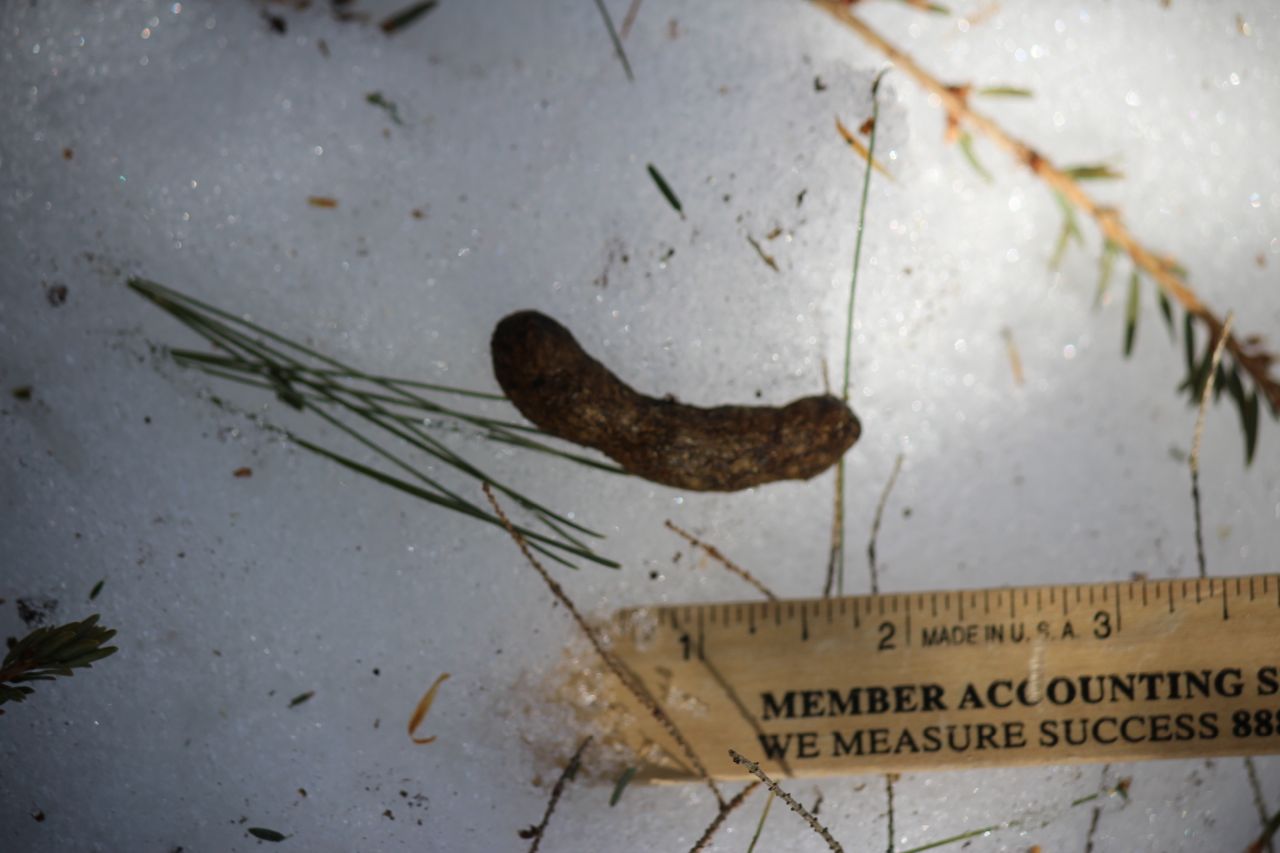
Porcupines scat as they eat. Under this tree, I found some of the largest porcupine scats I’ve ever seen. The one photographed here is normal size, but I wanted to show it beside a hemlock cone. They do look similar until you get up close and personal. While the scat is woody, the cone has scales.

large porc scat

I couldn’t resist sharing this one. One rather large porcupine scat.

hare gnawing

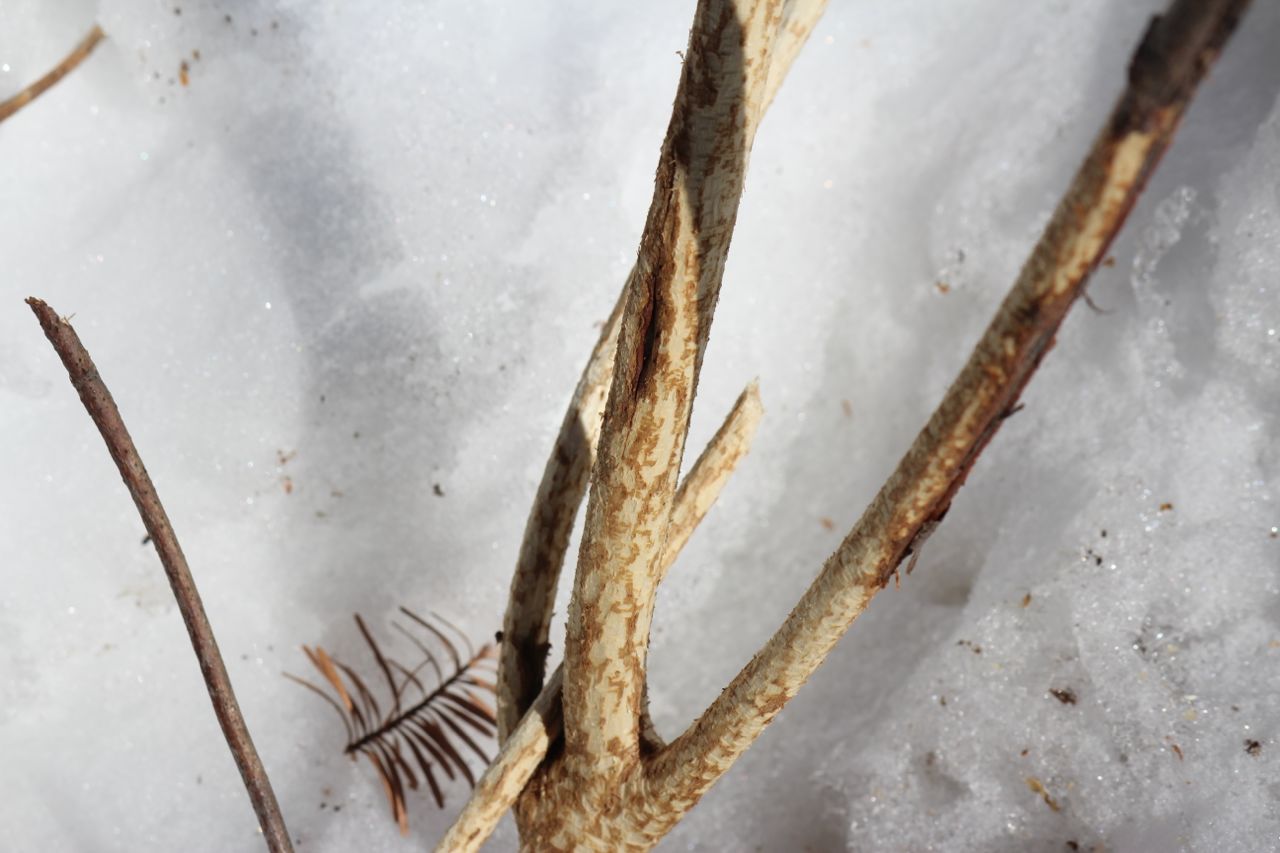
I hope you are still with me. A mystery that I think I’ve solved. Unfortunately, the tracks were diluted by the recent warm temps we’d had but I had a general idea of the movement this critter made.And there was no scat–I looked around as you can imagine.

hare 3

A closer look. Did you notice that the work is all toward the base of the saplings?

hare 4

Final clue–an angled cut. Rather clean cut, unlike those made by ungulates (deer and moose). This critter has sharp teeth. And we can thank it for our ability to move on the snow. What is it? Any guesses?

As you wander, take some time to wonder about the bark in front of you. I’ll keep sharing more as my bark eyes continue to develop.