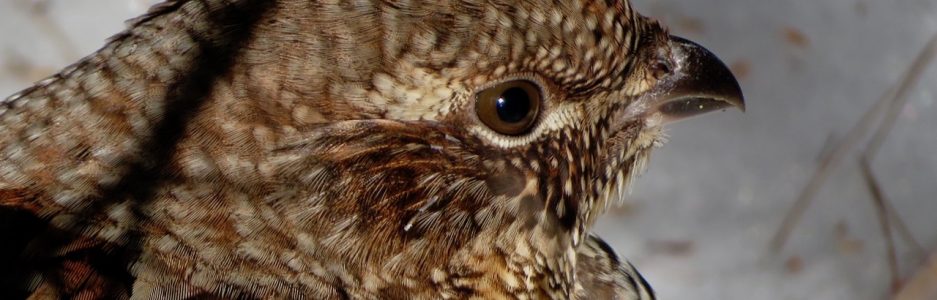
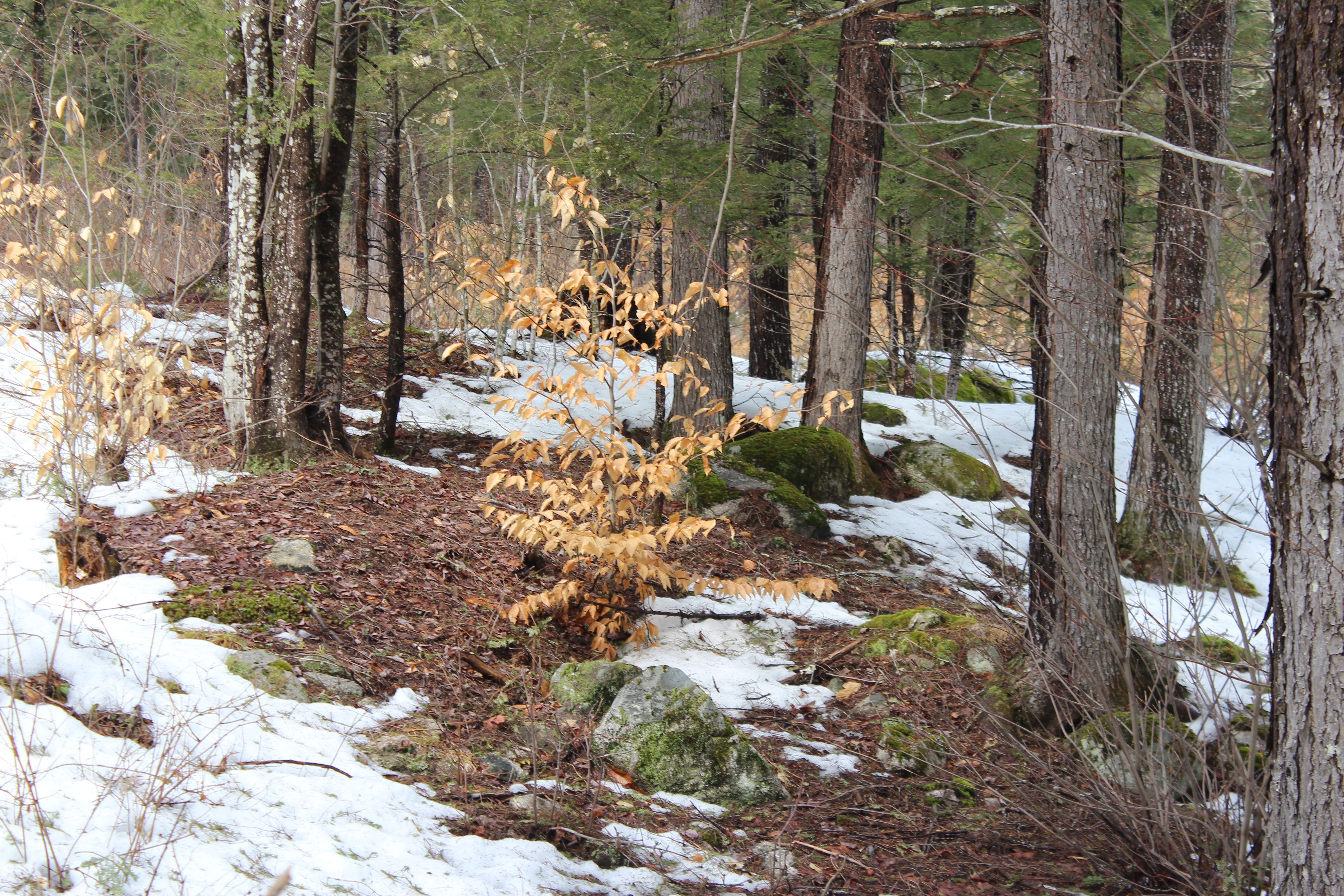
The past two days have found me wandering on and off trail at John A Segur Wildlife Refuge in Lovell, where spring slowly emerges.

Yesterday’s journey, which began beside New Road, required me to climb up over the snow bank. If you go, don’t worry; I did my best to carve out steps for you.
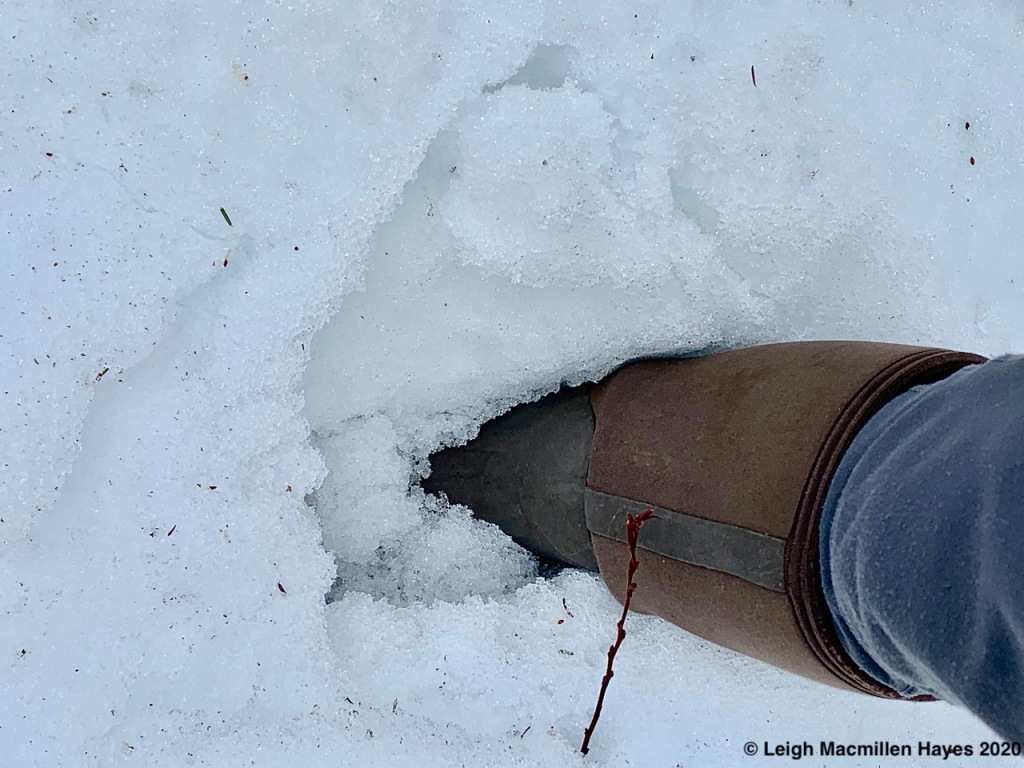
Do, however, choose your footwear appropriately for I spent a lot of time creating post holes.

My intention was to locate timeless sights I can upload to a Google Map for at the Greater Lovell Land Trust we are working to create virtual hikes for those who can’t get onto the trails right now.
But there were other things that garnered my attention and I’m never one to pass by a White Pine personally decorated by the rain.
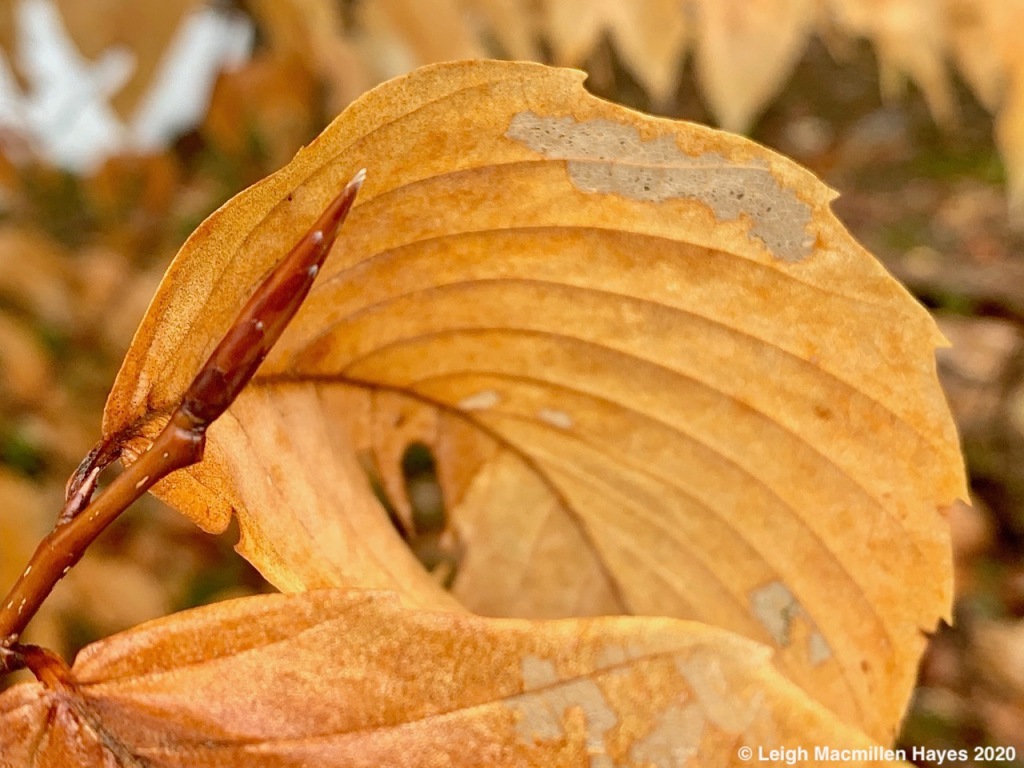
And then there was the beech leaf that arced in such a manner its veins mimicked rays of sunshine on a gloomy day.
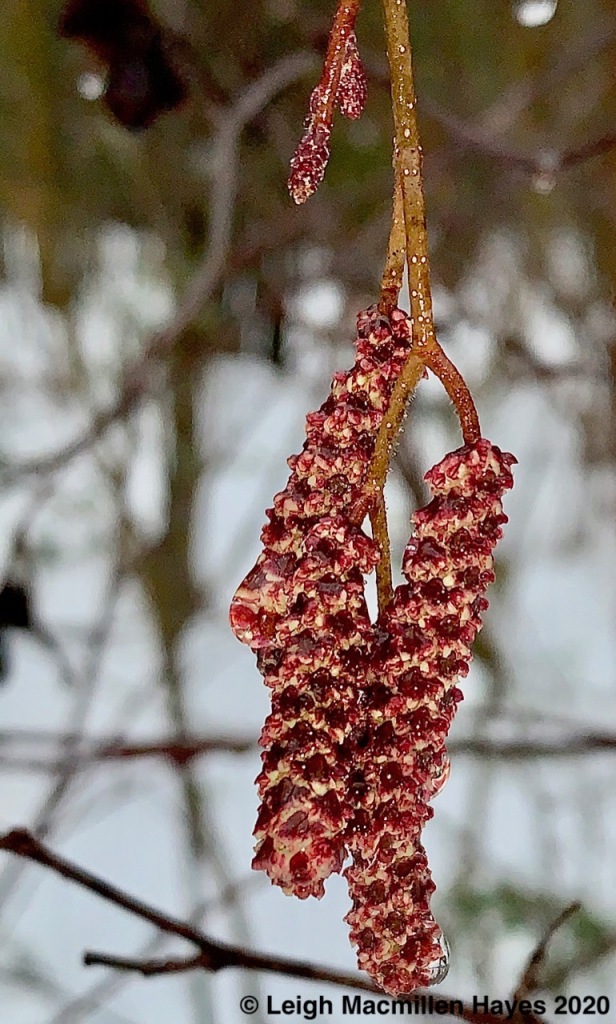
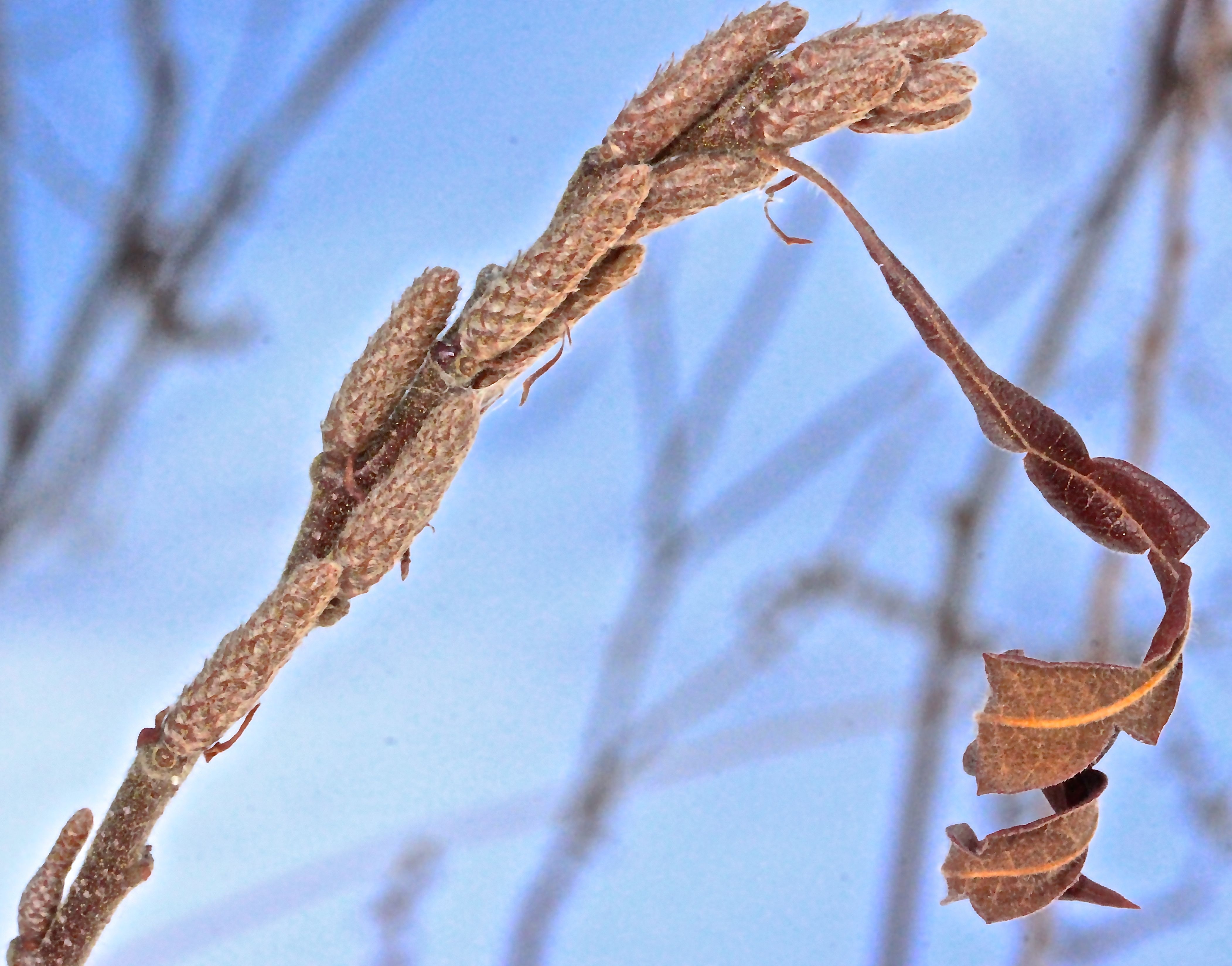
Speckled Alder catkins poured forth with their own presentation of color as they added more cheer to the landscape.

And Trailing Arbutus (aka Mayflower) buds, like all others, provided a sign of hope that the future will arrive.

Beside Bradley Brook, an Eastern Hemlock held a raindrop-in-waiting, its gift from the sky soon to be transferred back to the place from whence it came.

The brook flowed forth with a rhythm all its own and I rejoiced in its gurgles, temporarily forgetting the world beyond.
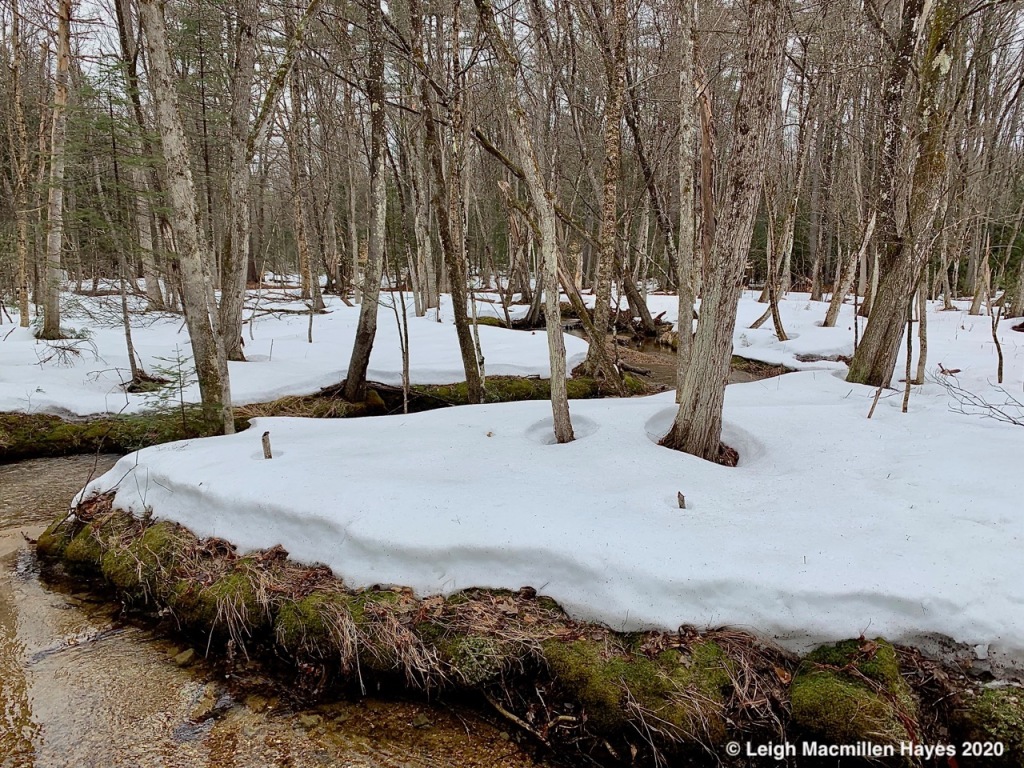
Eventually I followed it back, giving thanks for all its meandering curves in hopes that we will all be able to continue to enjoy life around the bend.

Today dawned a new day, and a much brighter one at that, and so my truck made its way to the other trailhead along Farrington Pond Road. The parking lot wasn’t plowed this winter and so I tucked into the edge.

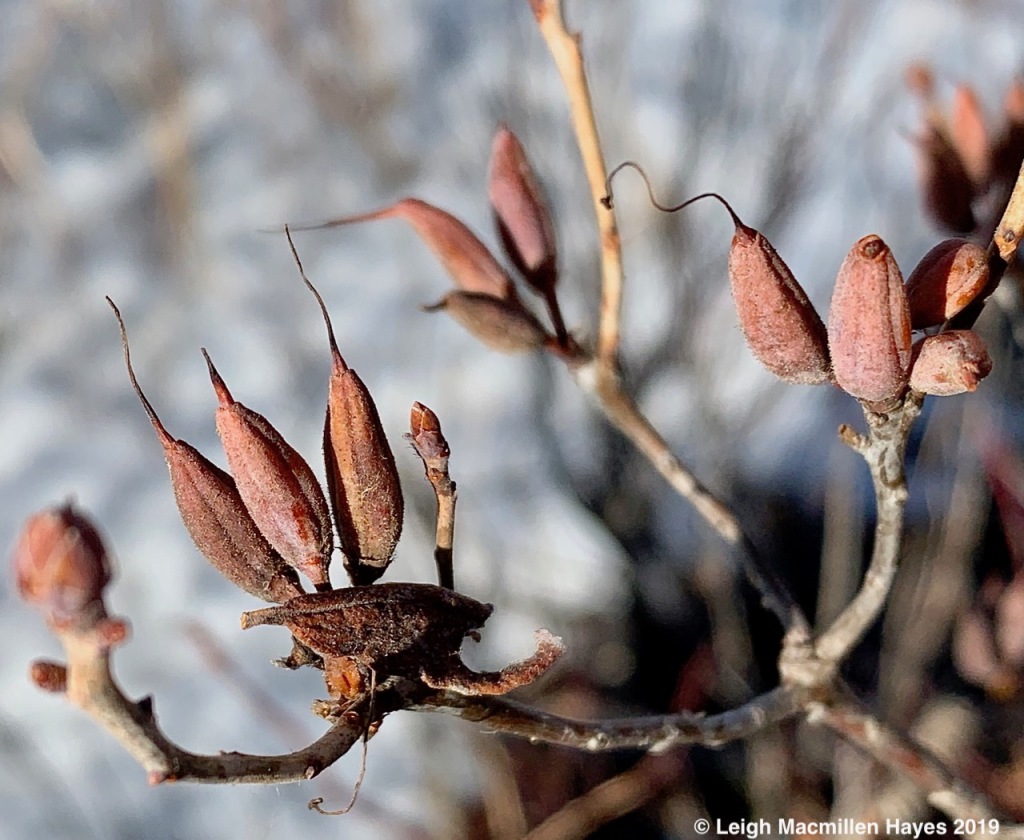
Lost in thought, the sight of a fruit still dangling on a Maple-leaf Viburnum pulled me back to reality.

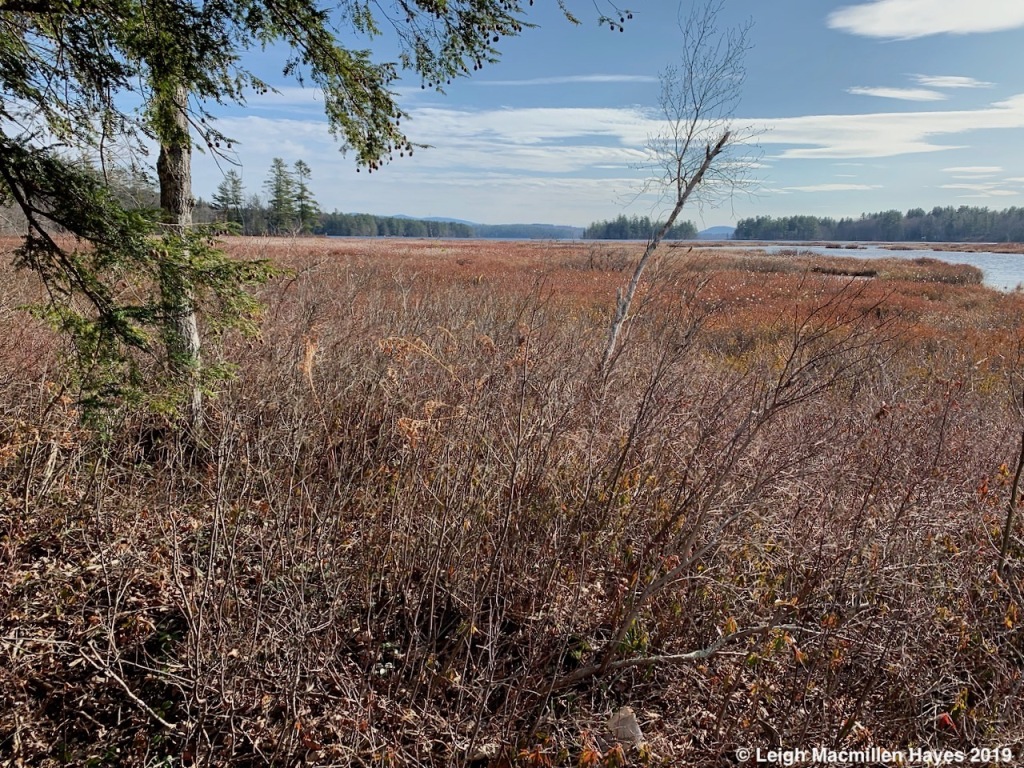
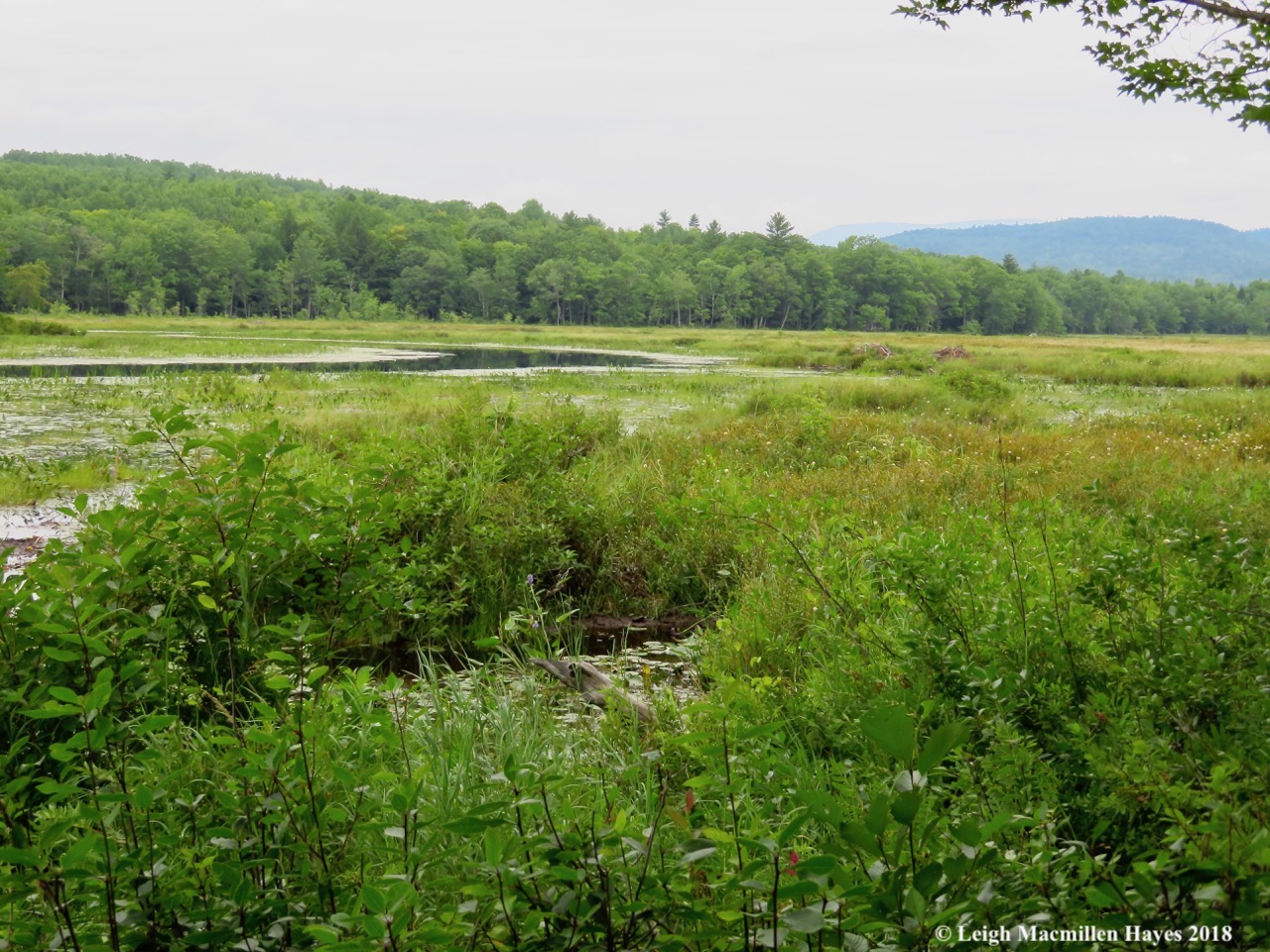
One of my favorite places on this property isn’t along an actual trail, but rather its one folks can easily find on their own. I prefer to think of it as the secret garden.

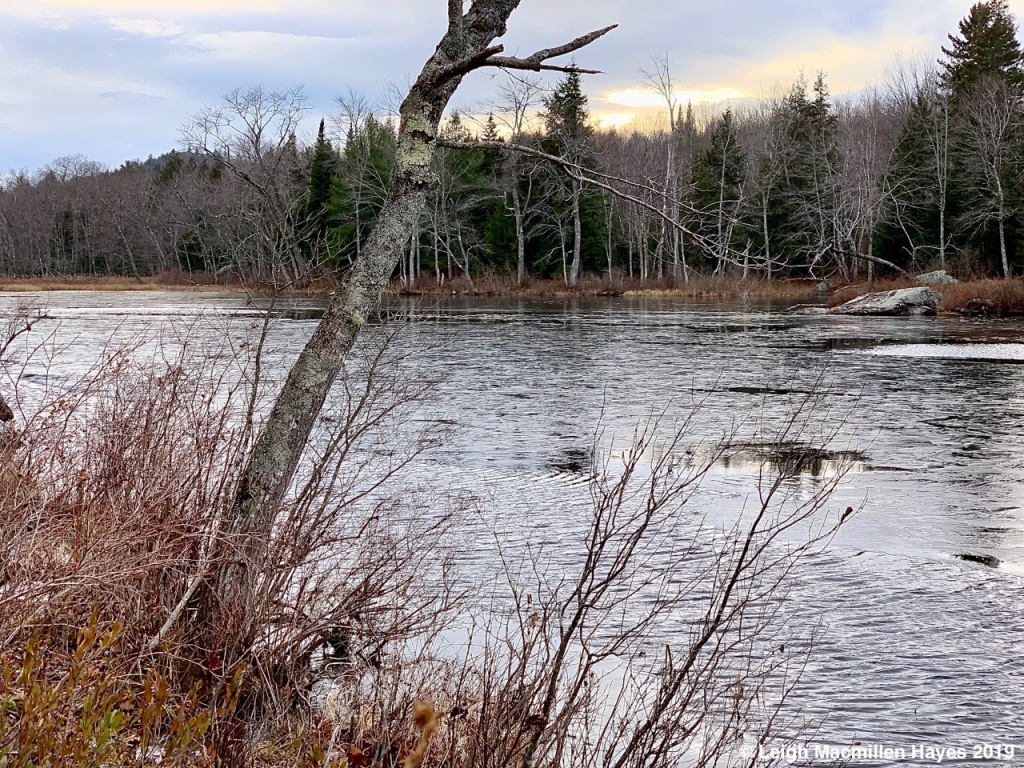
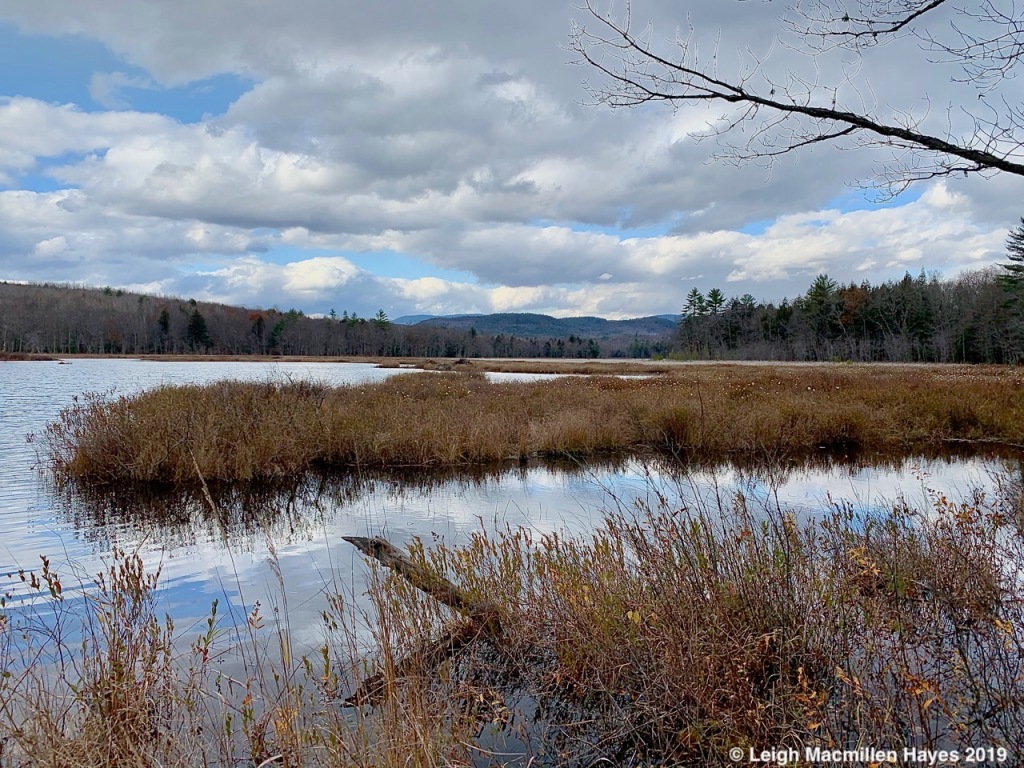
It offers views of Sucker Brook Outlet feeding into Kezar Lake’s Northwest Cove. But even more than that, it offers layers and colors and teems with life. Today I startled two Wood Duck couples who quickly flew off “oweeking” all the way.

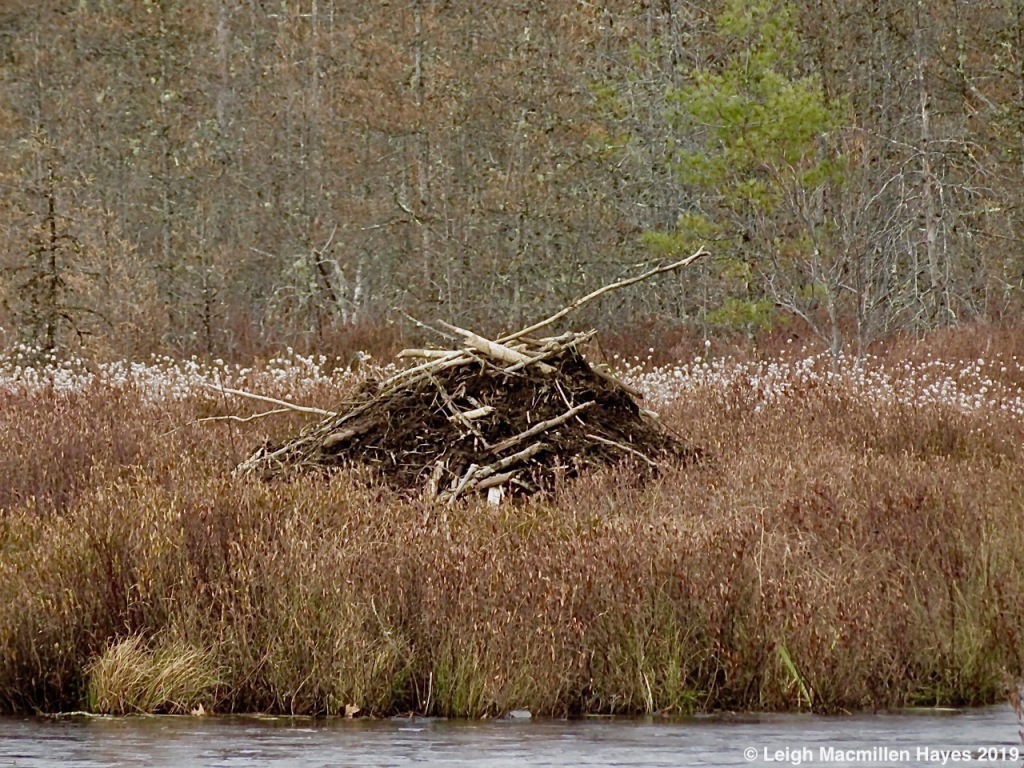
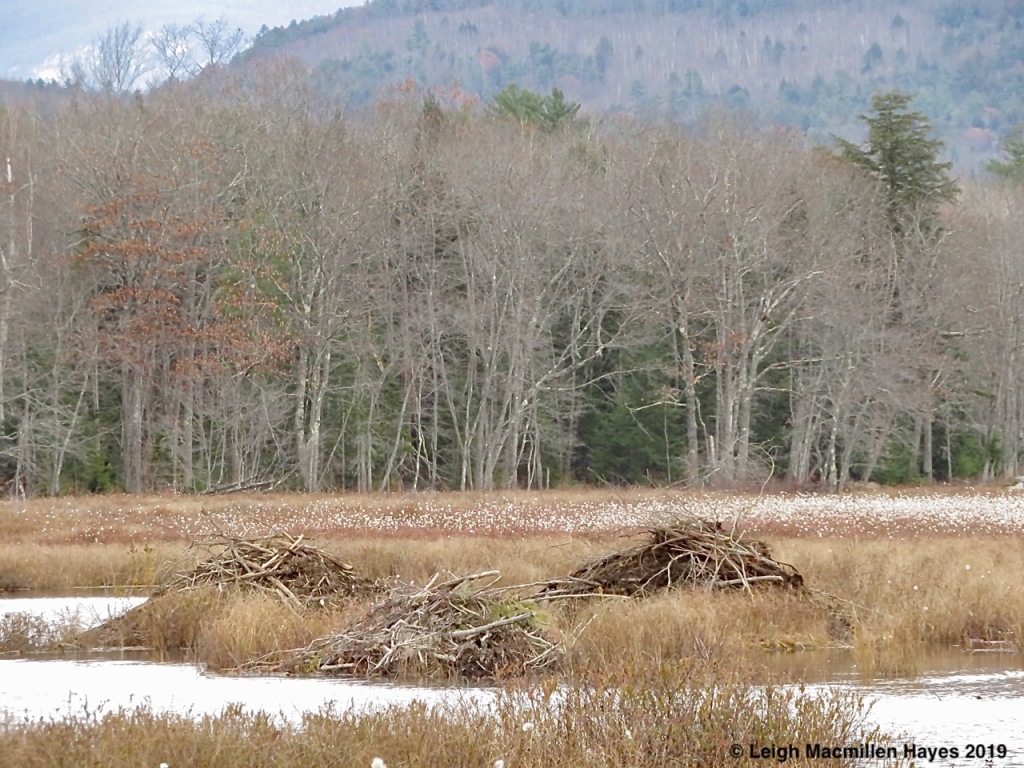
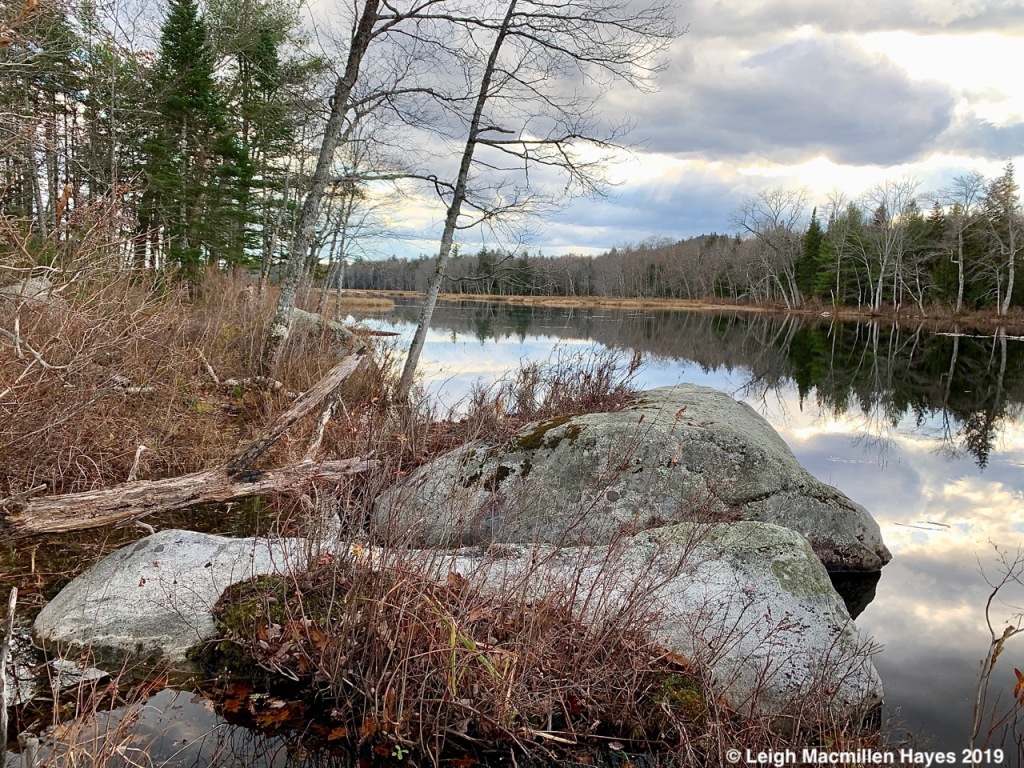
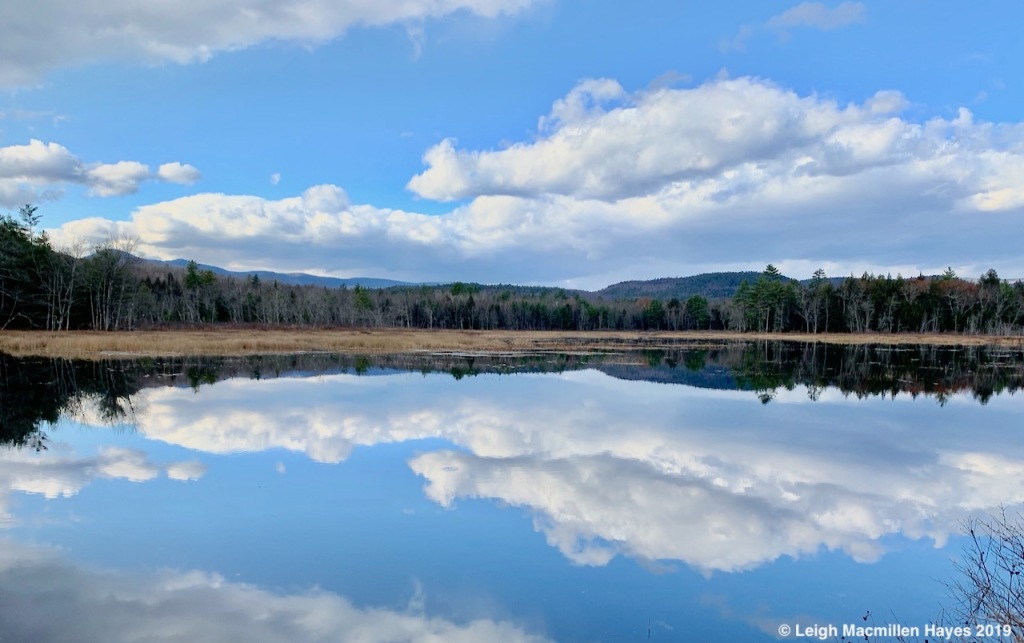
Life in the secret garden includes three beaver lodges that reflect the mountains beyond.

And flowers like this Rhodora, waiting for their chance to burst into color beyond understanding.

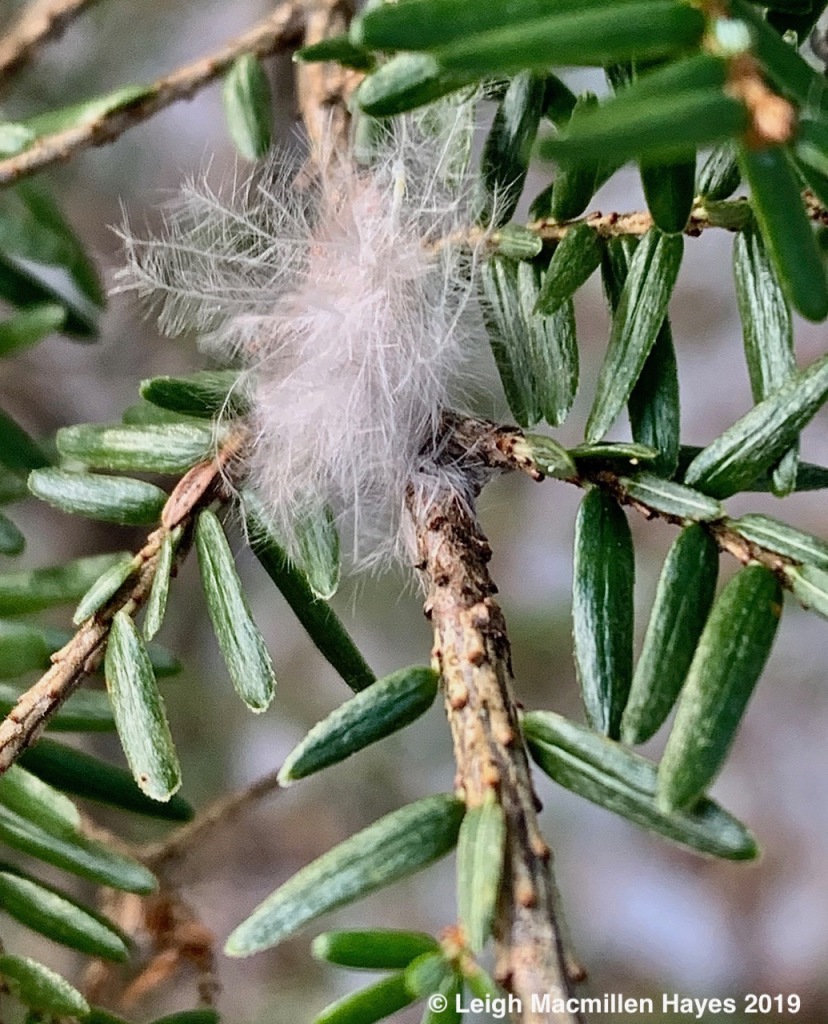
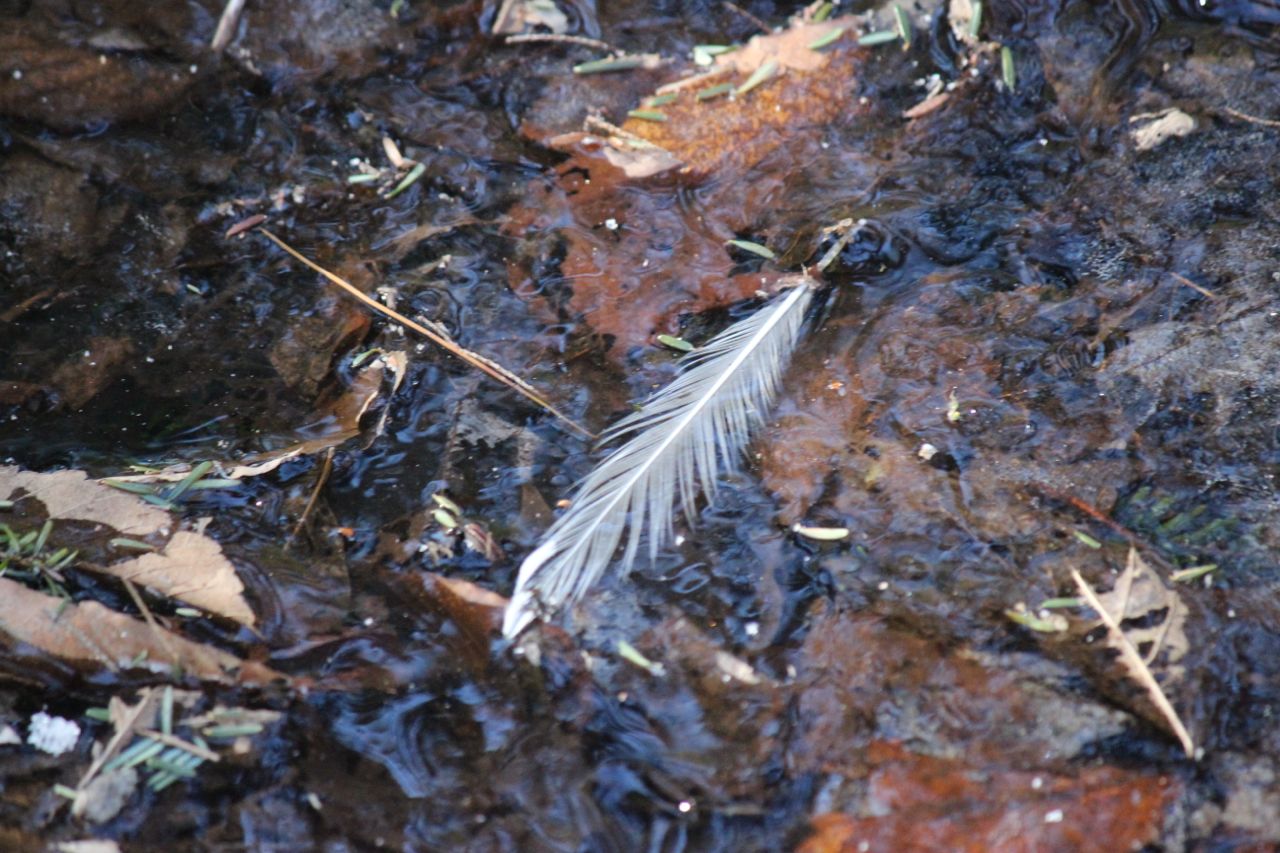
Back on the Blue Trail, I discovered one small feather, so light and delicate and fluffy, and yet barbed, the better for all of its kind to interlock and protect.
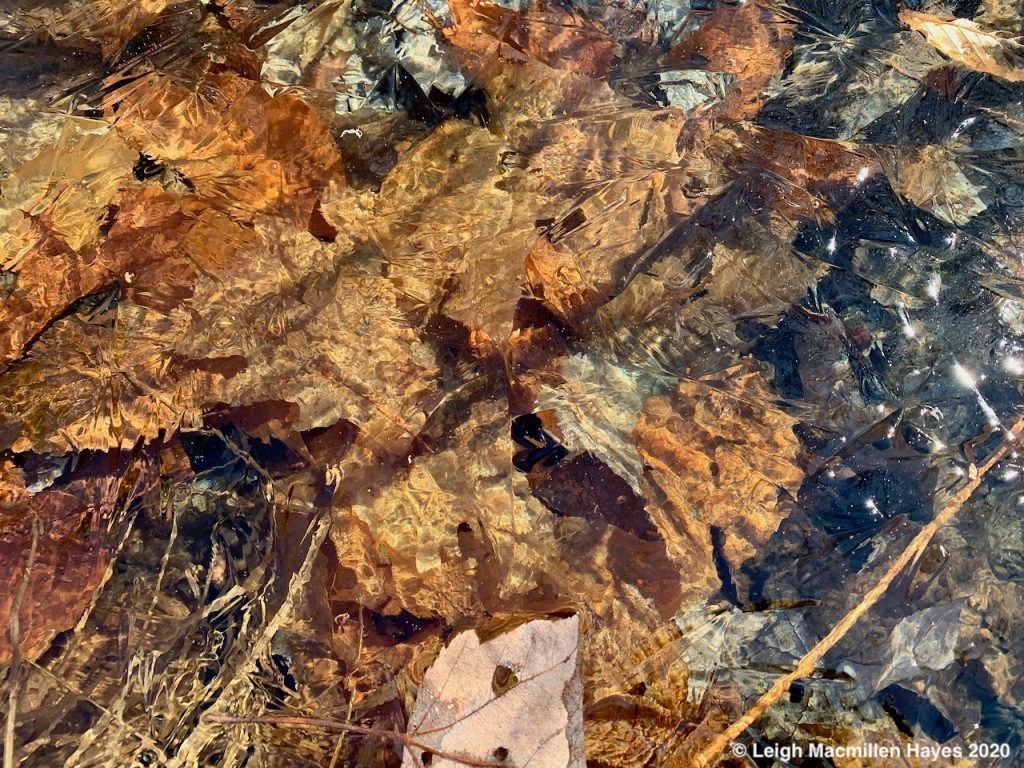
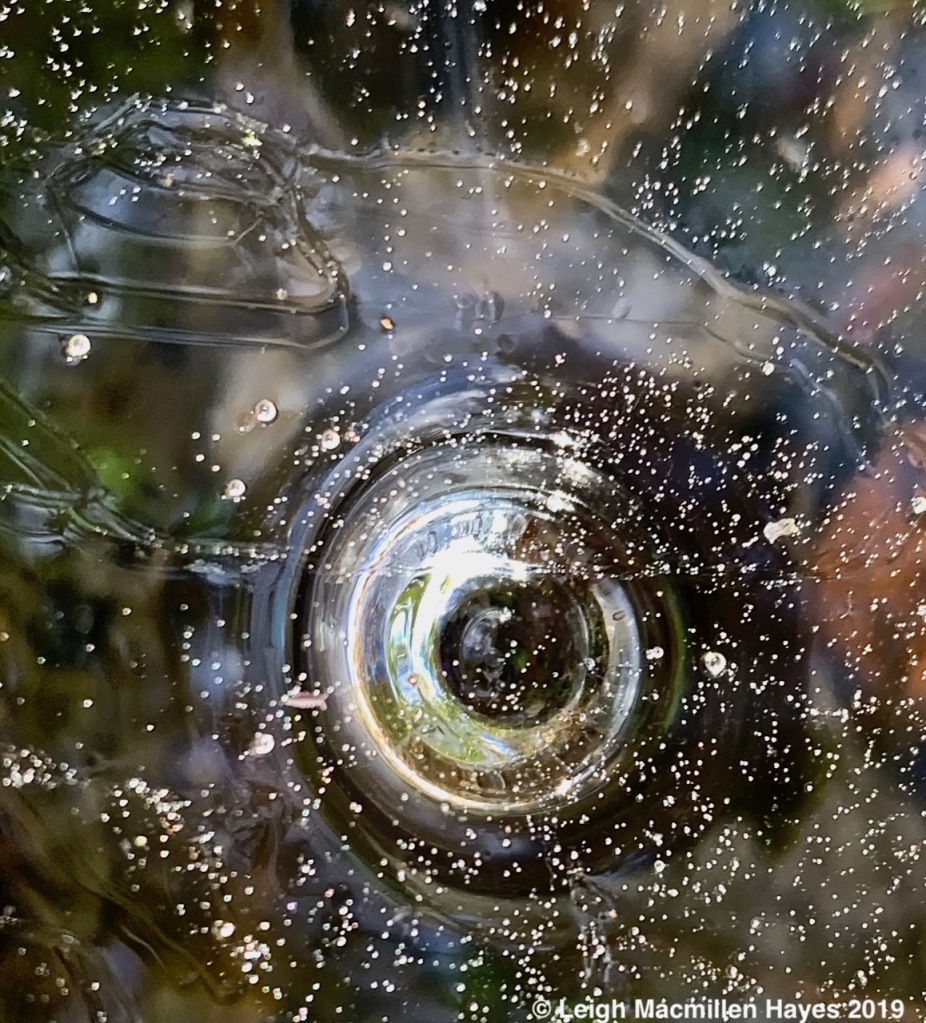
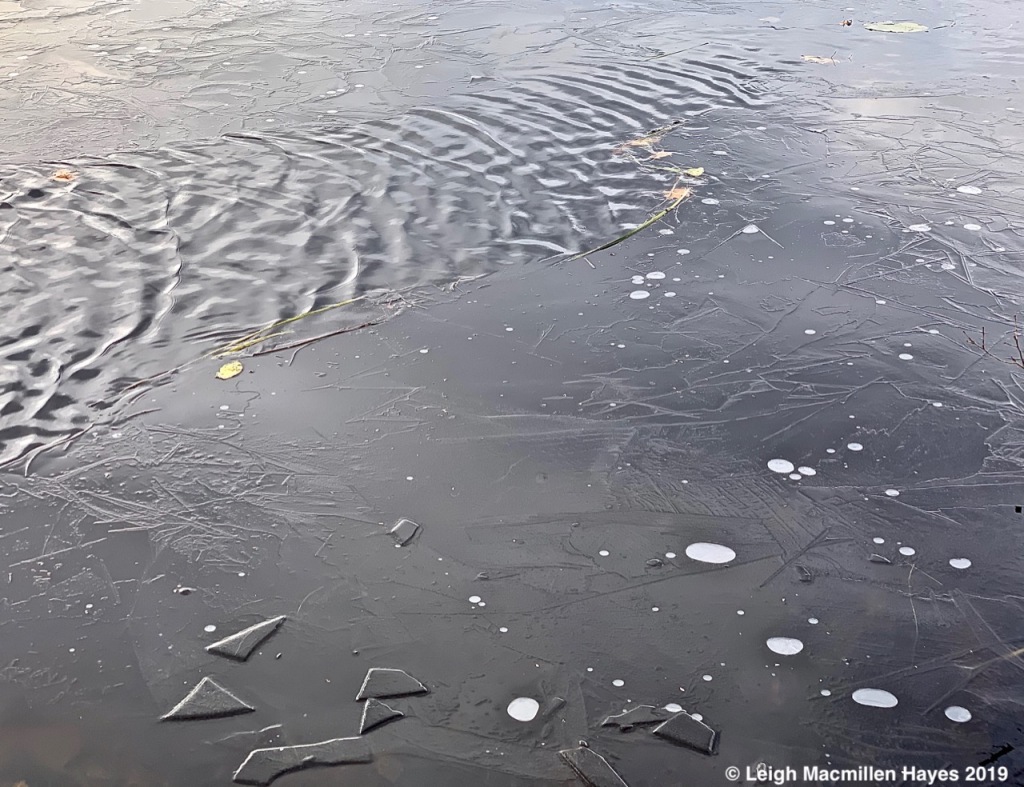
At a wet spot, the feather slipped from my mind and I marveled at the thin layer of ice that transformed the watery display.
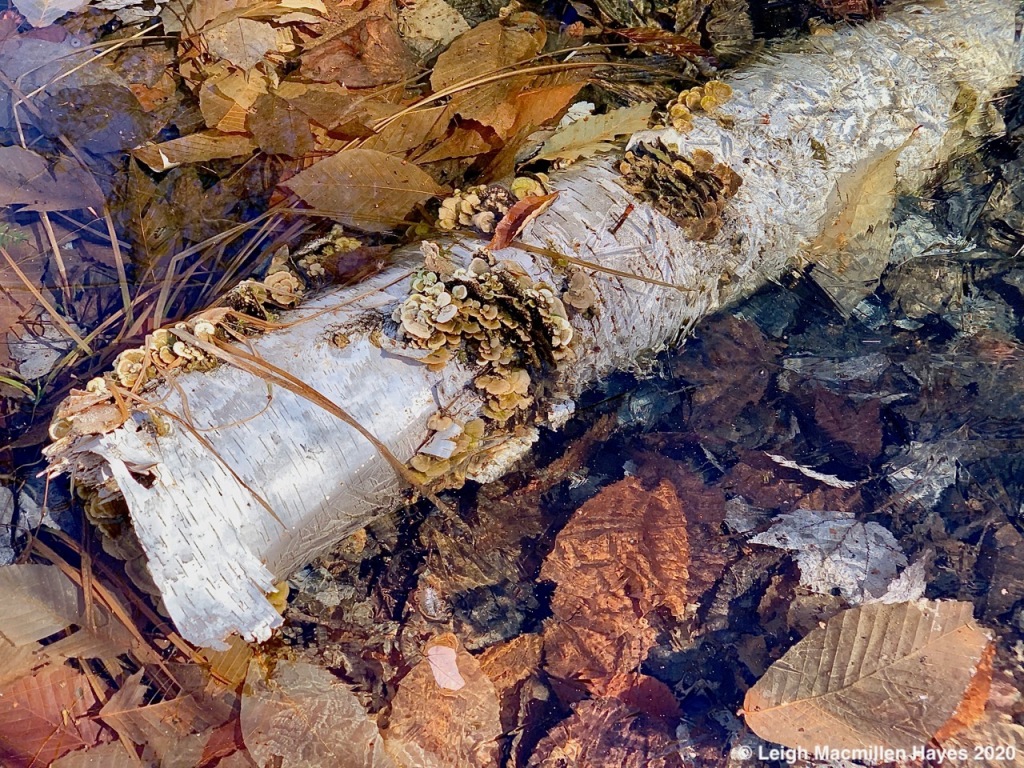
Within the puddle, a broken Paper Birch trunk showed off the fact that even in death, life continues.
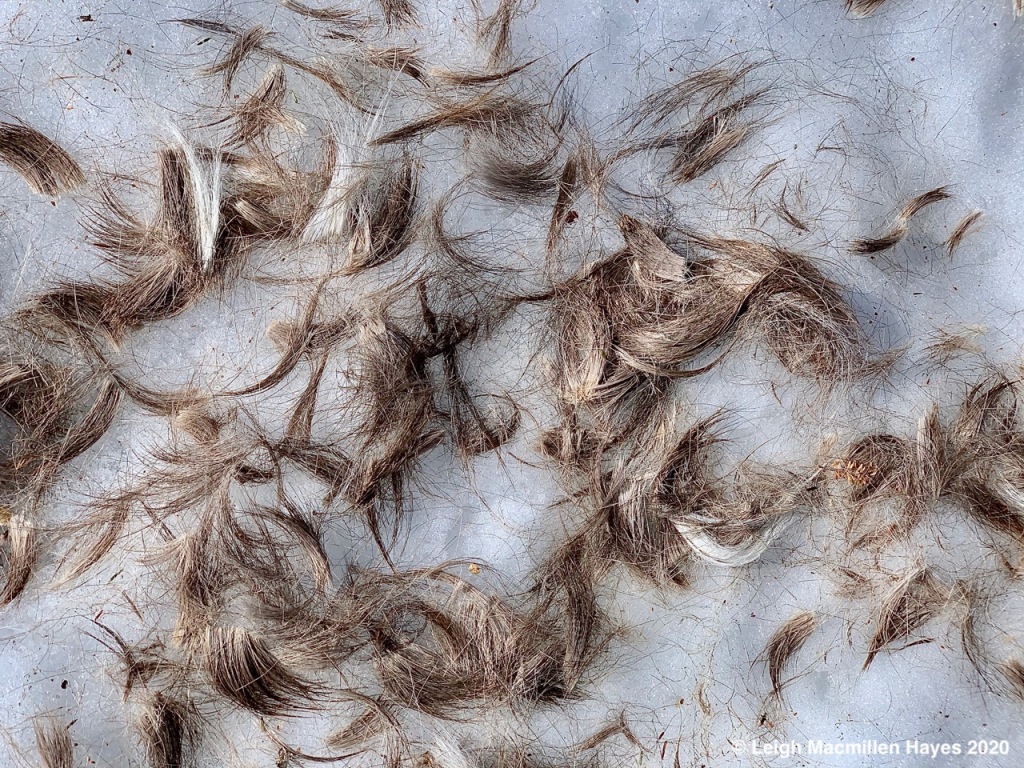
And then I met death. At first, I thought it was a scattering of more feathers.

That is, until I bent down and realized it was deer hair. Had the deer shed its winter coat?

That was my first thought until I spied this. Do you know what it is?
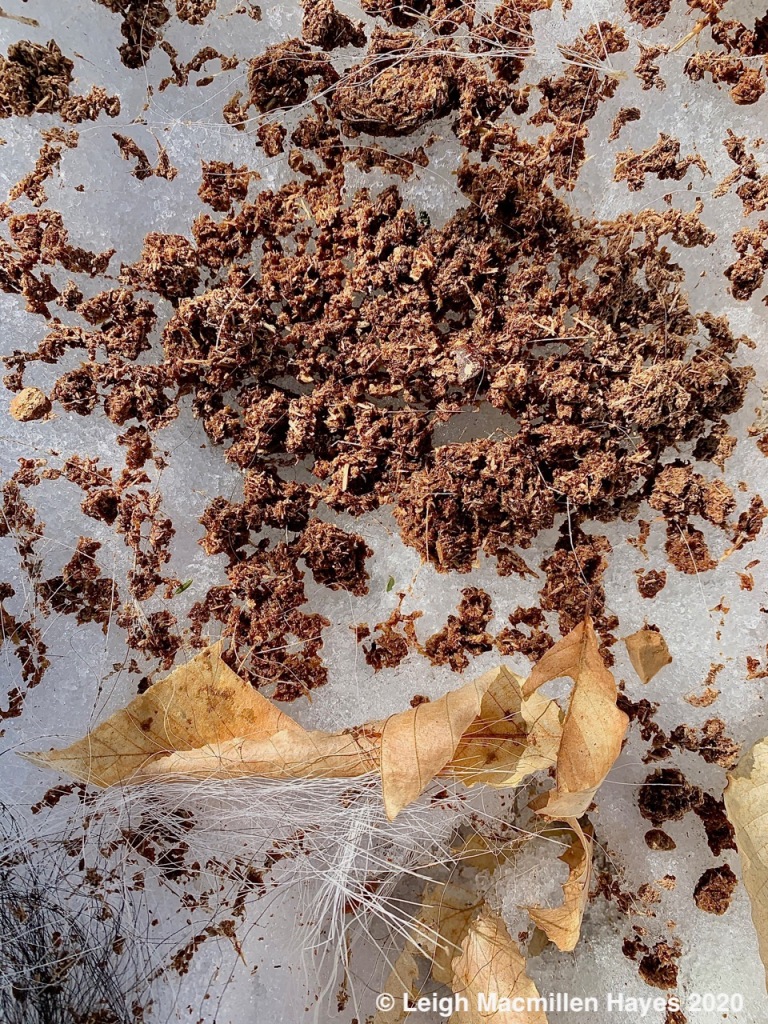
I hope I’m not disgusting you, but I found it fascinating. As best I could tell, it was the contents of the deer’s rumen or first stomach chamber.
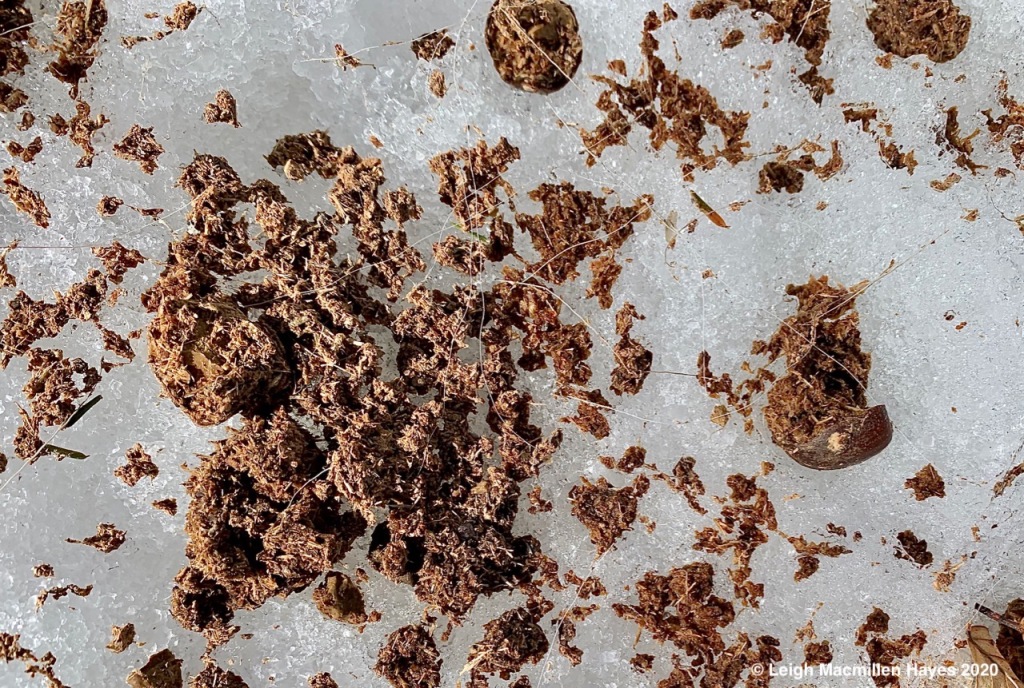
And what exactly were the contents? Acorns. Can you see a few shells not quite digested?

Beside all of that was some scat filled with hair and a chunk of something.
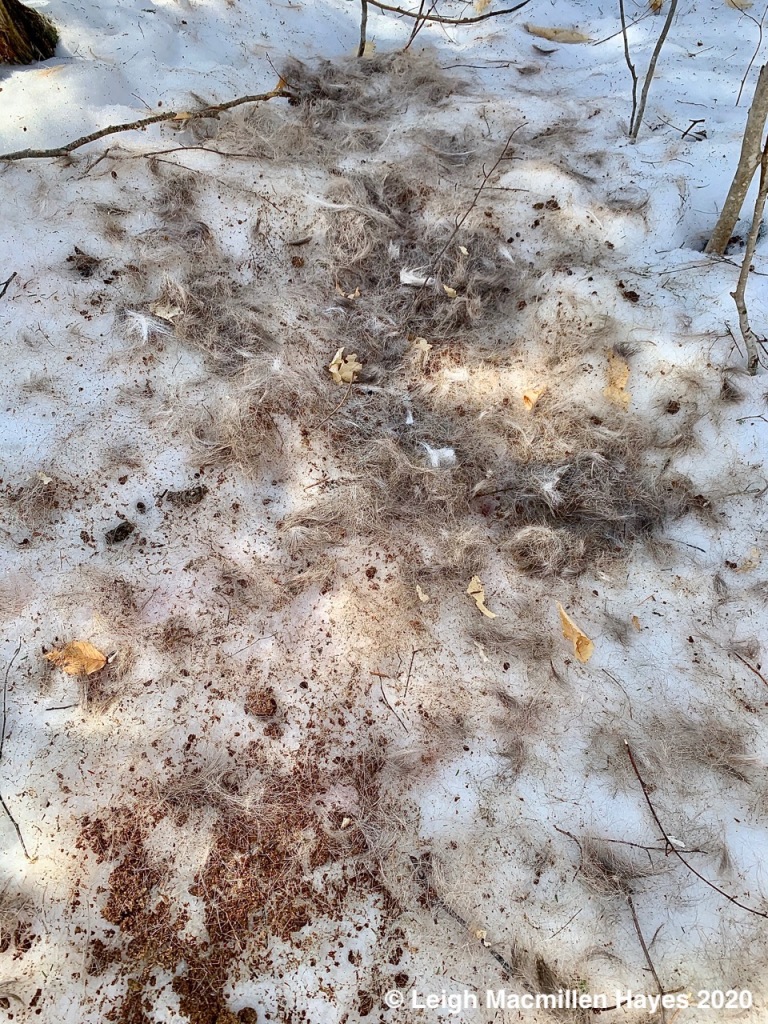
And just beyond, more rumen offerings and then an even larger area of deer hair.

As best I could, I tried to piece together the story. Earlier on the trail i’d seen what I thought were bobcat prints until the behavior didn’t quite match for a bobcat wouldn’t follow the entire length of a trail and the presentation seemed to morph into coyote.
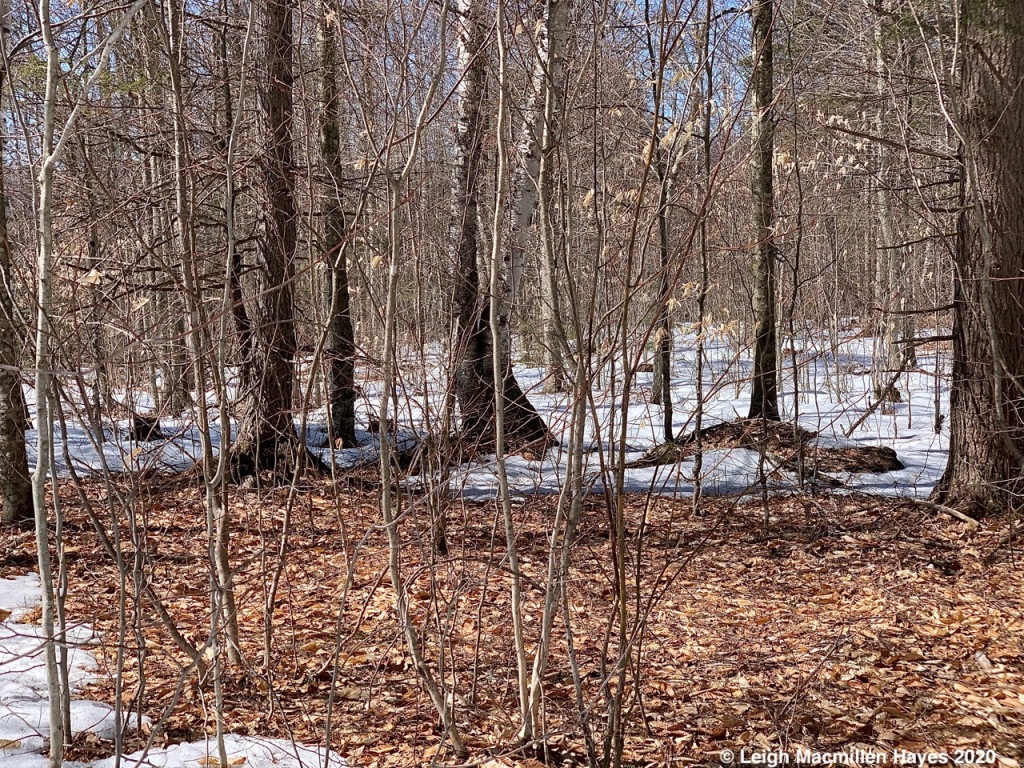
I searched high and low for a carcass, but found none. Nor any blood.
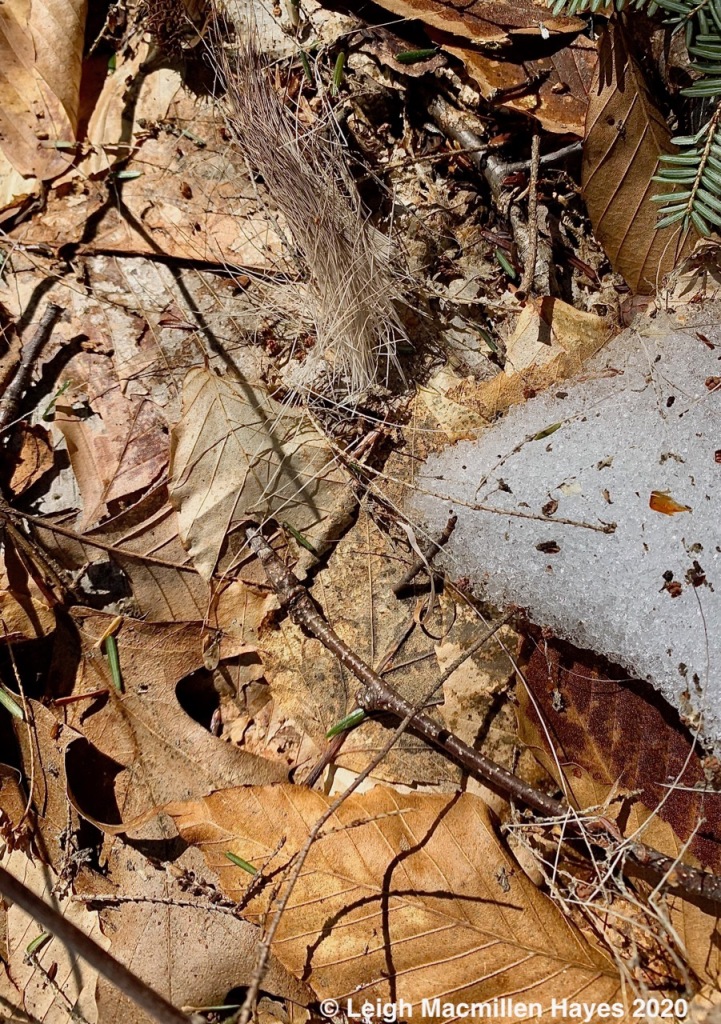
What I did find was more deer hair as if something had circled around a tree.

But the curious thing: there were lots of downed branches but none of them were broken. If a coyote had dragged a carcass, surely there would be blood and guts and broken branches. My wondering began to focus on a human. Some of the twigs were on top of the hair so the incident would have occurred at an earlier time? And perhaps all of this had been hidden by snow for a while? And then recent rain events obliterated some signs?

I may never know the answers, though I’ll return to look for more evidence. About a quarter mile away, I did find more proof that a coyote had dined on something quite hairy. It included a big chunk of bone.
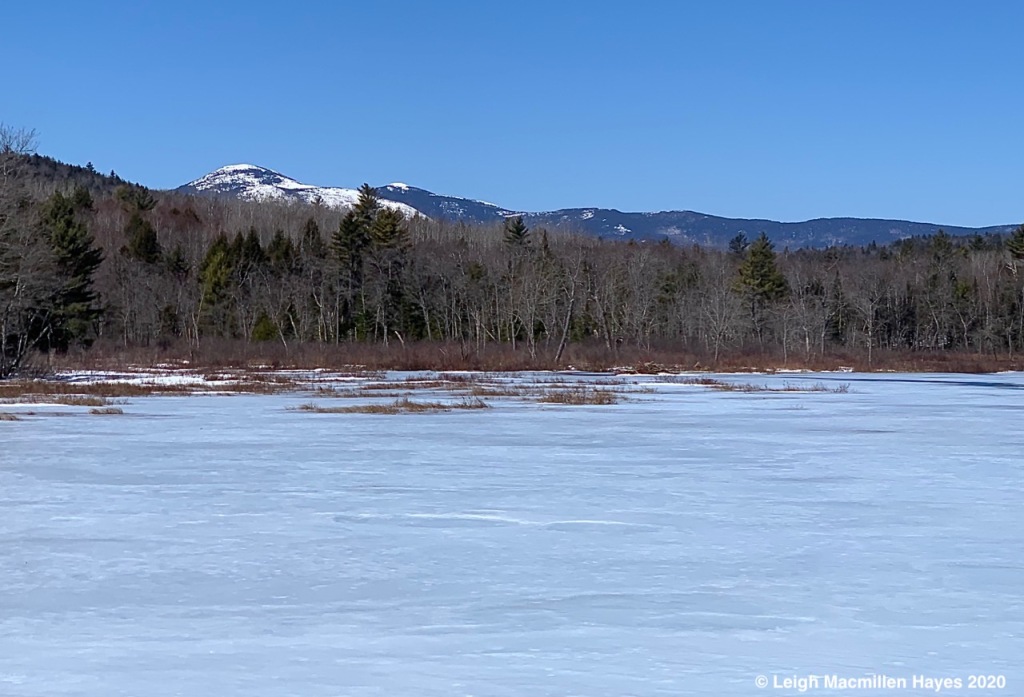
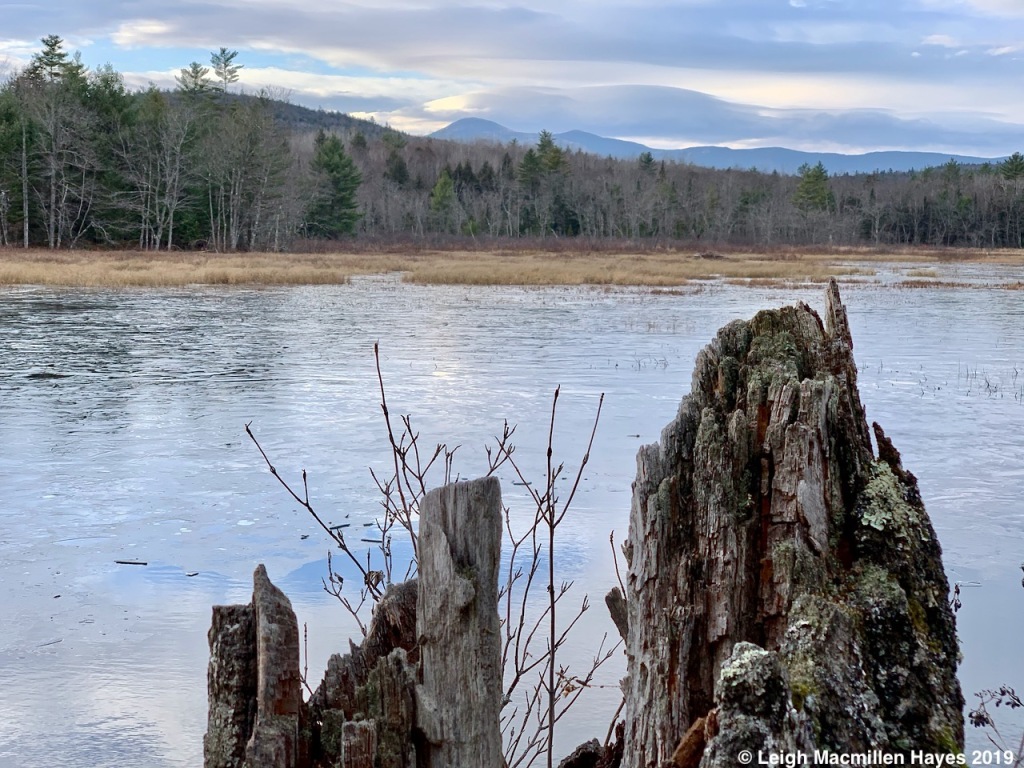
For those wishing I’d get back to the prettier scenes, my tramp eventually took me to a lookout point, where the backdrop was provided by the Bald Face Mountains in Evans Notch.

And the foreground included another beaver lodge.
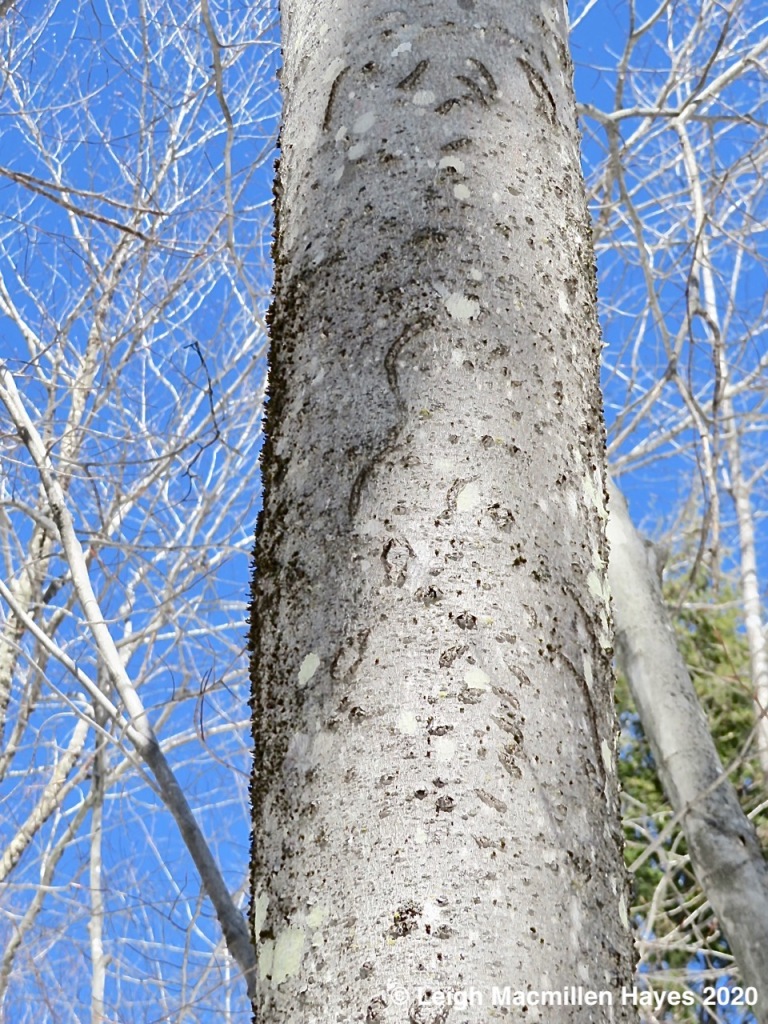
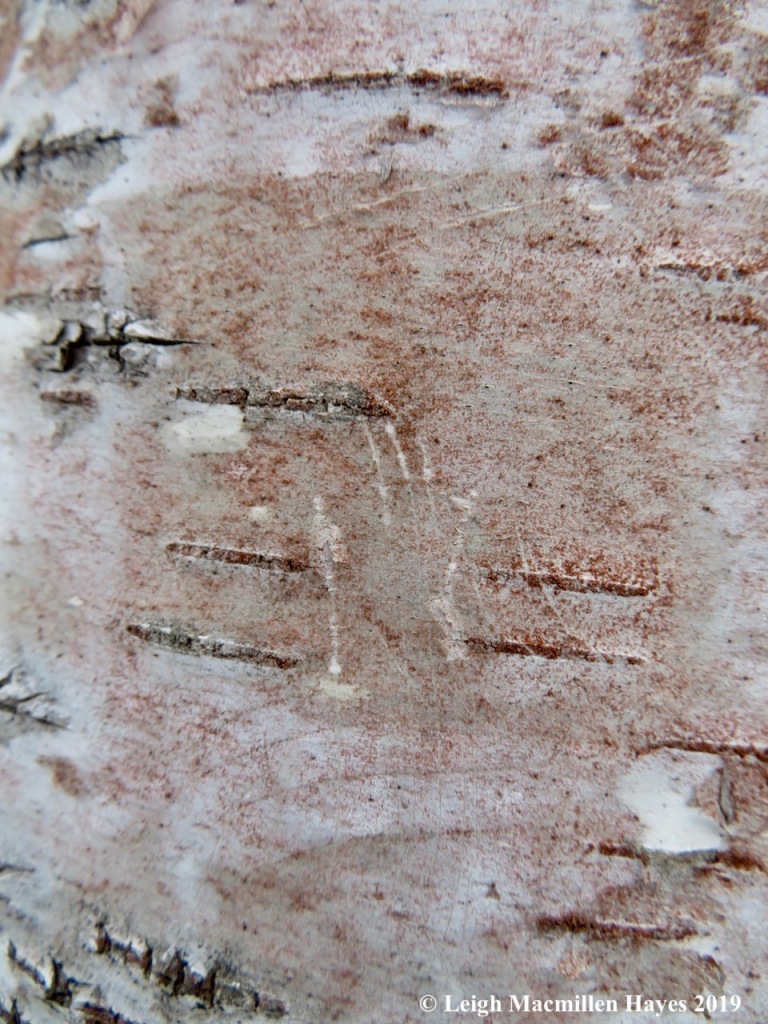
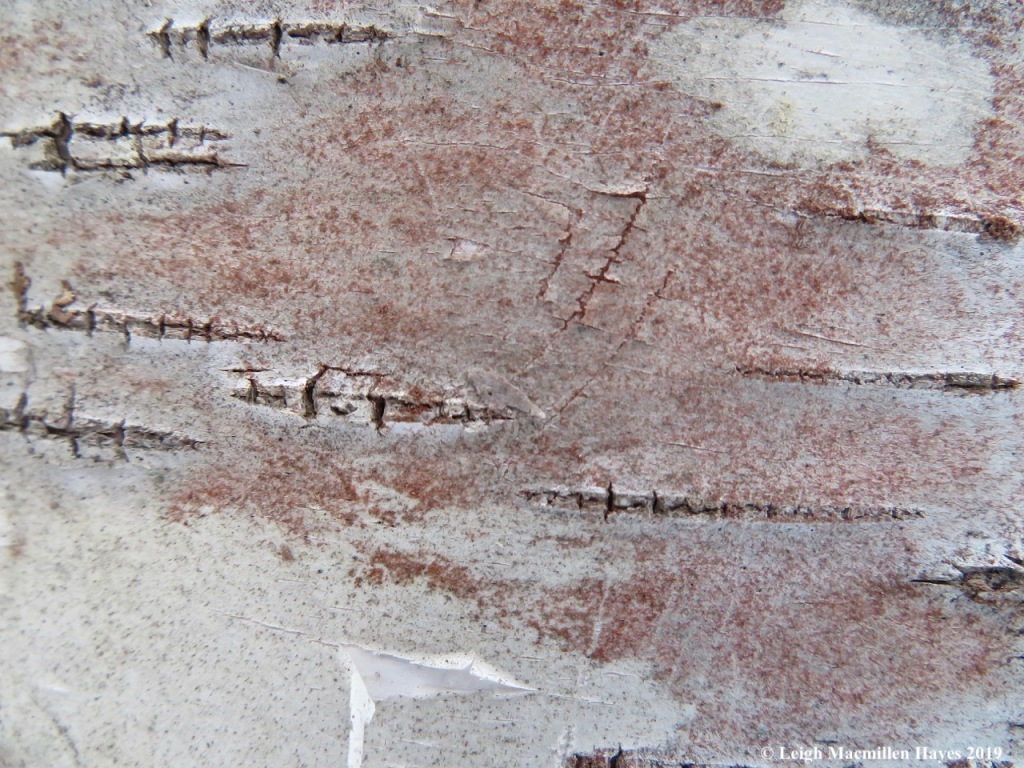
Eventually I turned around and followed the Green Trail out, stopping to pay reverence to a Bear Claw tree. With the scars being gray/black and at least a half inch wide, I’d say these were created more than seven years ago. In fact, I know that for I’ve been visiting that tree for far more than seven years. But . . . it never gets old.

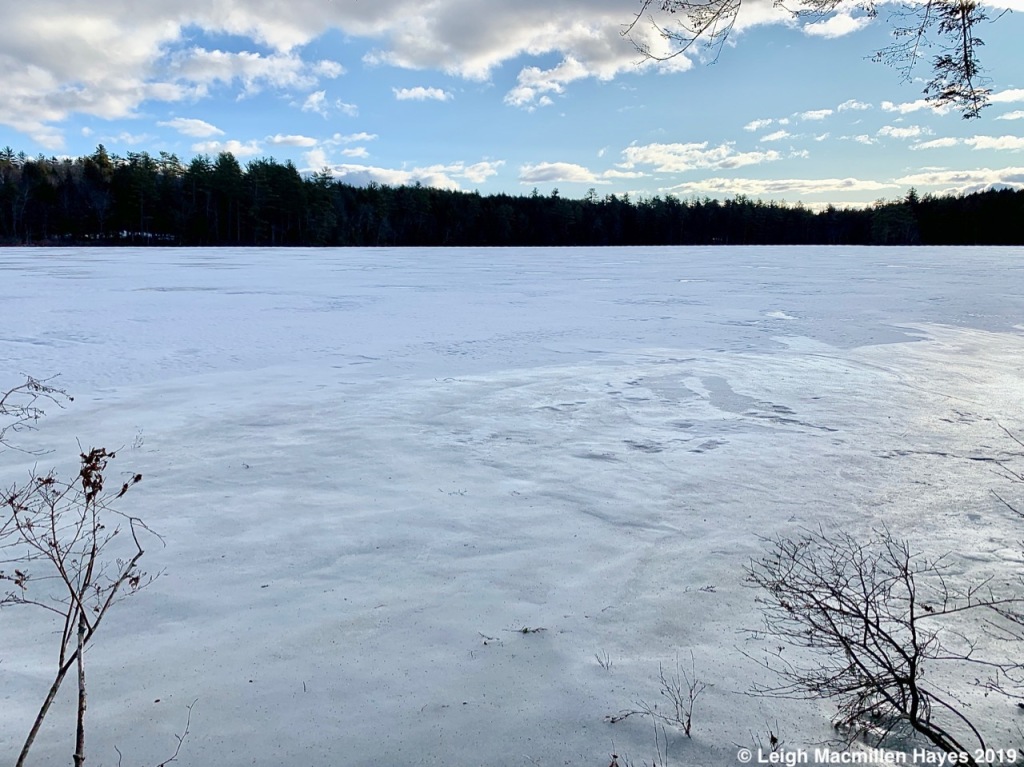
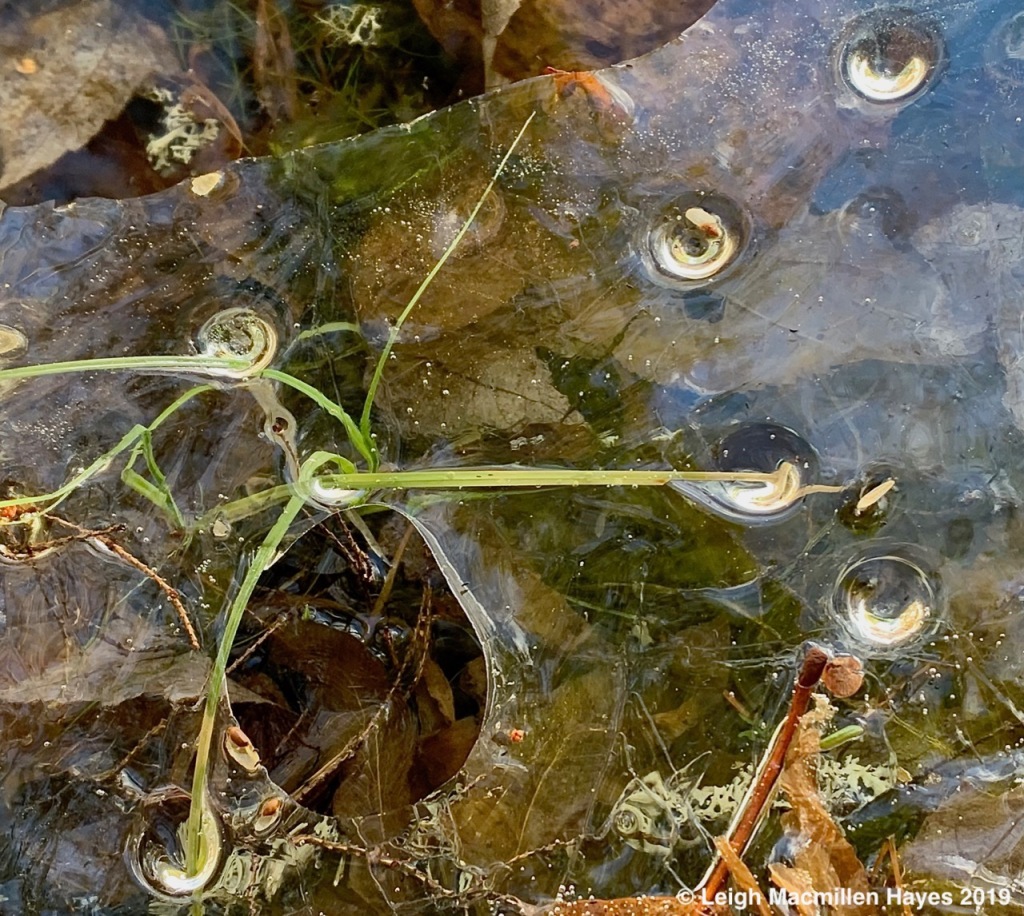
Nor does the sight of ice as it turns anything into a pleasing-to-my-eyes work of art.
I’m grateful for the opportunity to sneak away and even though I had a work project on my mind, these trails have been my greatest escape so far. May you also find escapes of your own making.






















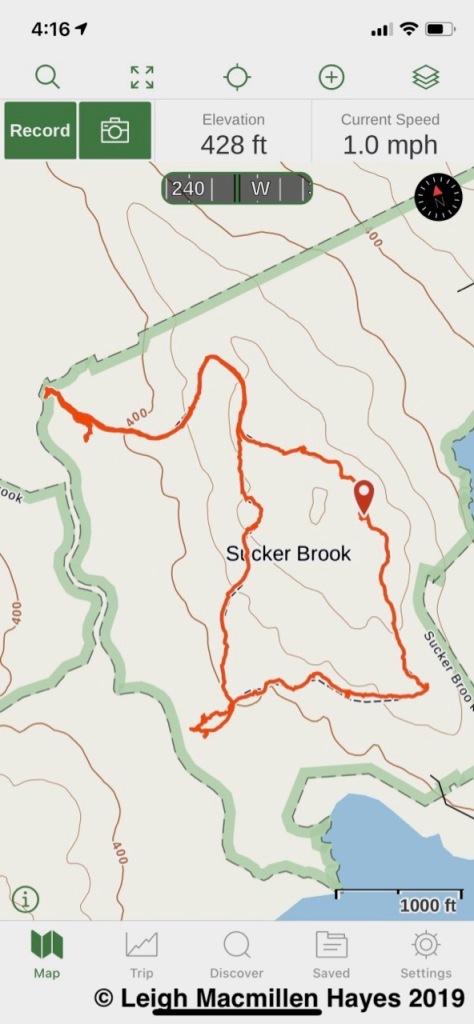









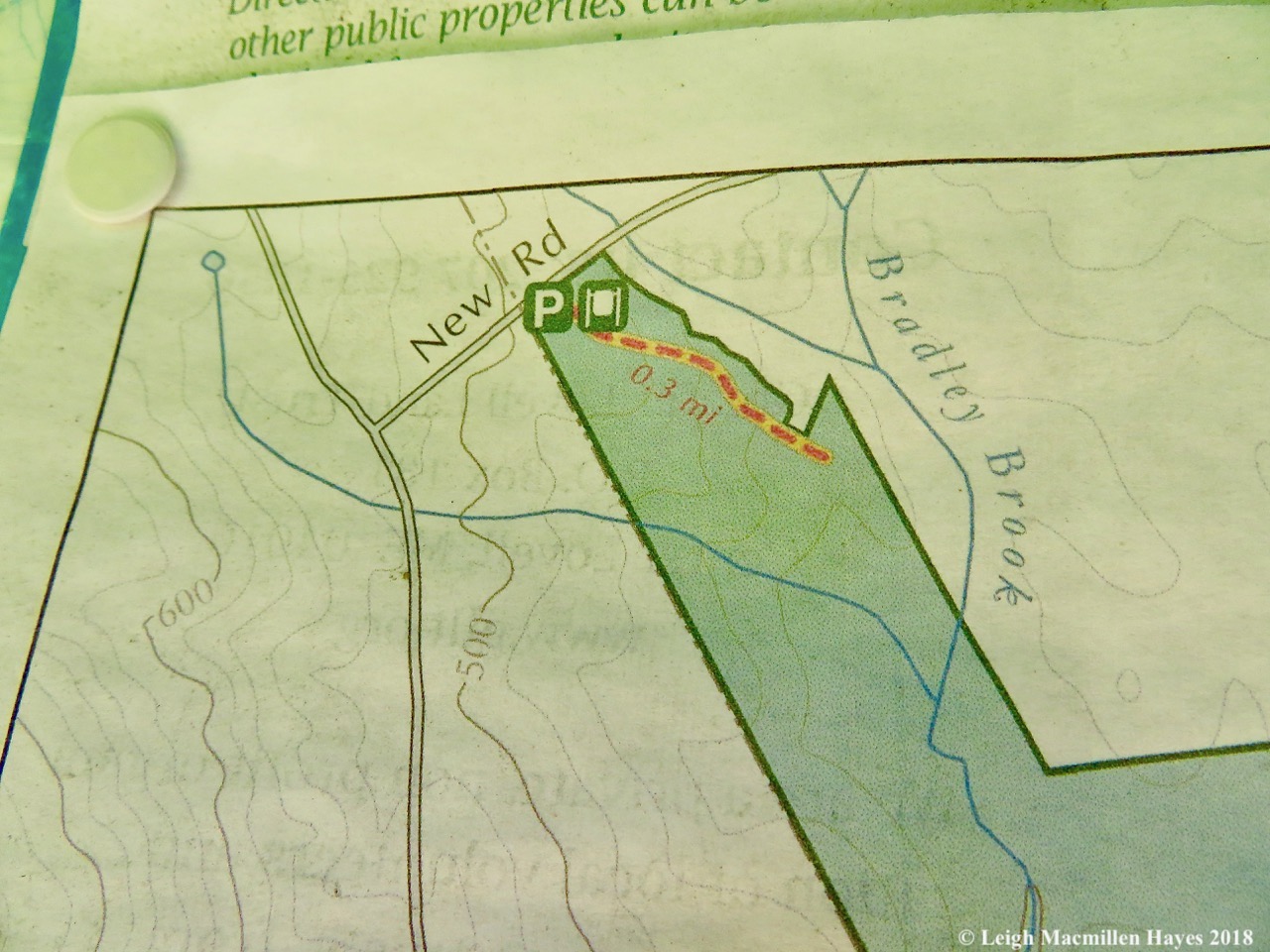















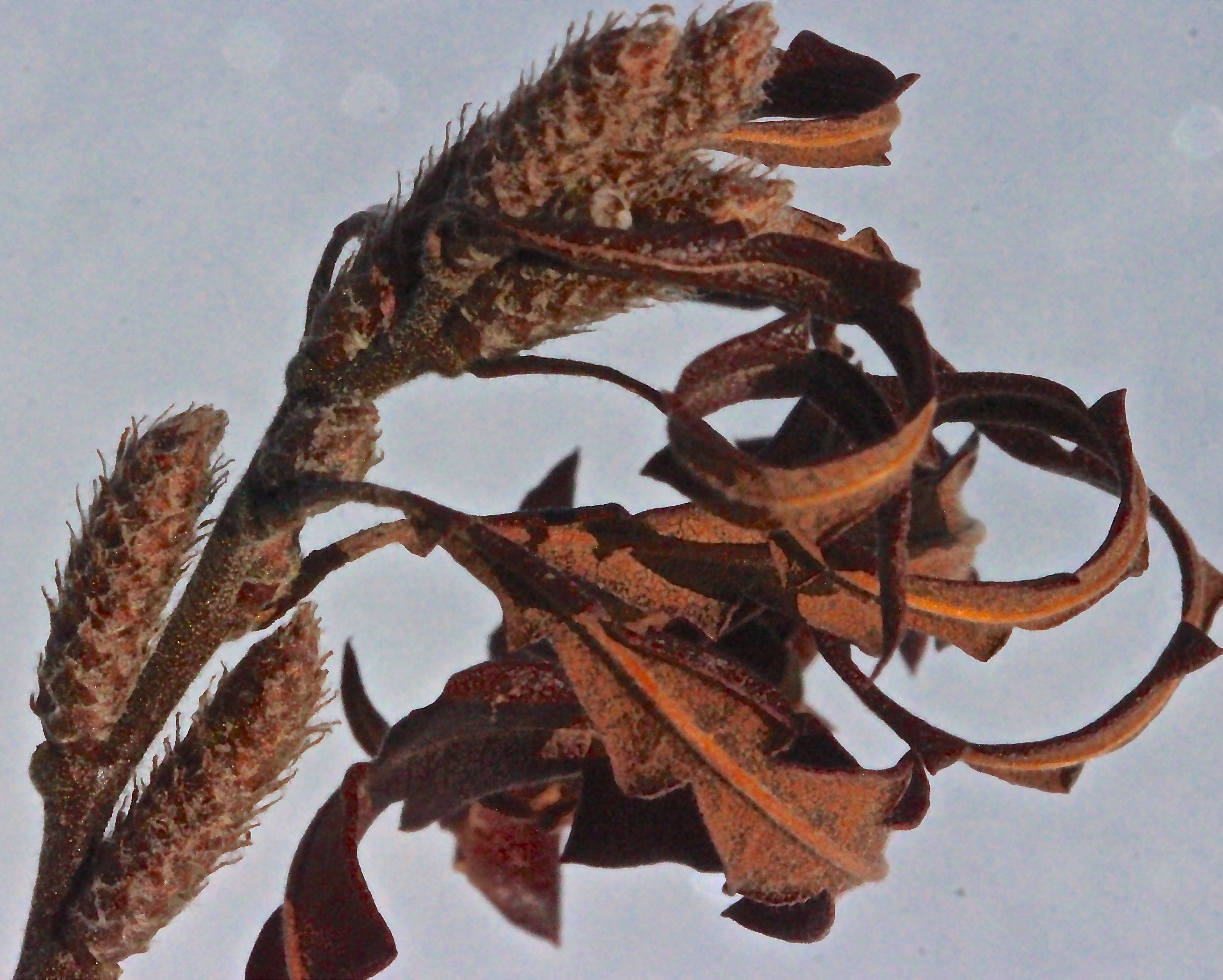 From the parking lot, I decided to begin via the blue trail by the kiosk. It doesn’t appear on the trail map, but feels much longer than the green trail–possibly my imagination. Immediately, I was greeted at the door of the shop by sweet fern, aka Comptonia peregrina (remember, it’s actually a shrub with foliage that appear fern-like). The striking color and artistic flow of the winter leaves, plus the hairy texture of the catkins meant I had to stop and touch and admire.
 And only steps along the trail another great find–bobcat tracks. This china shop immediately appealed to moi.
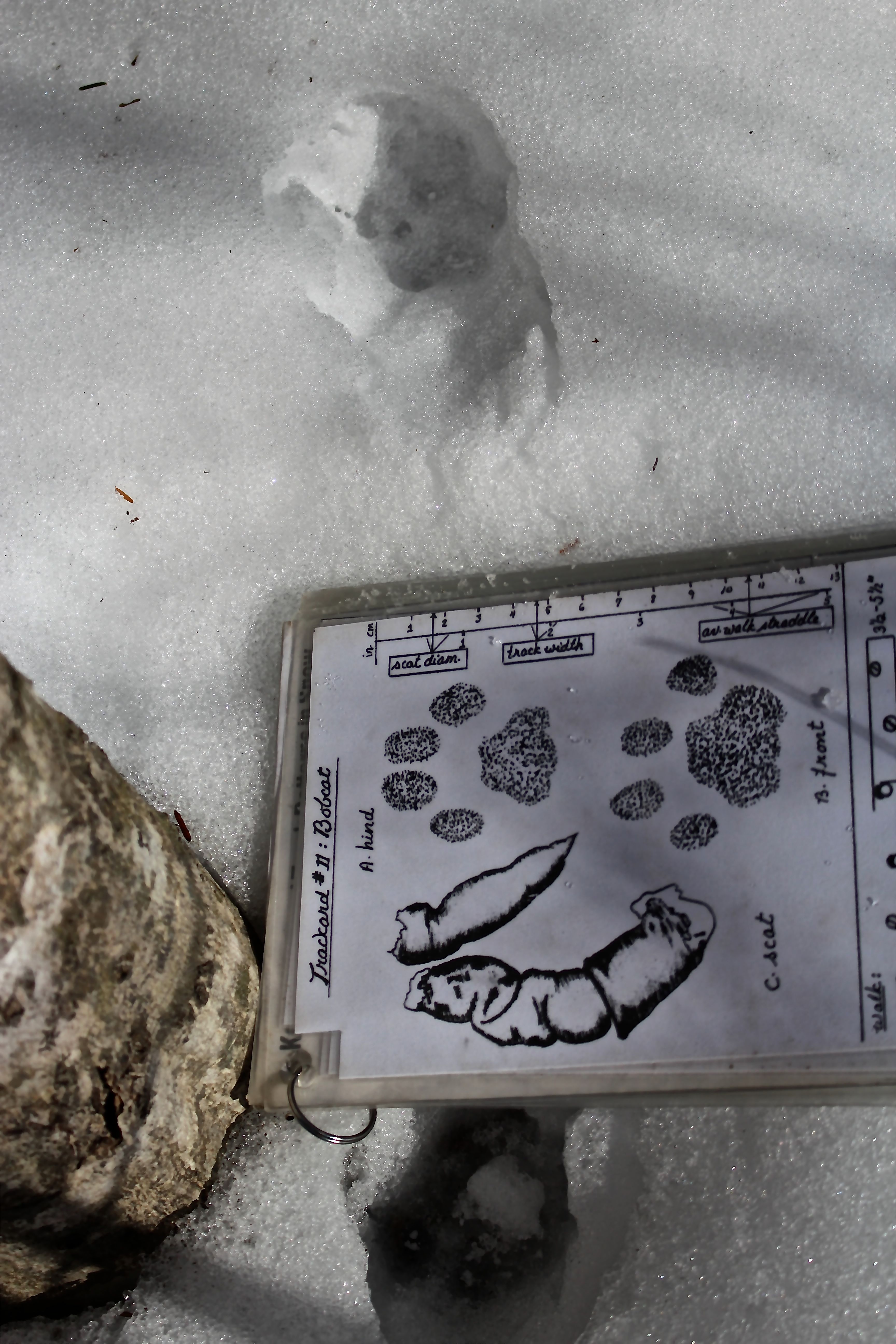 My
My  When I got to a ledgy spot, I decided to explore further–thinking perhaps Mr. Bob might have spent some time here. Not so–in the last two days anyway.
 The best find in this spot–red squirrel prints. A few things to notice–the smaller feet that appear at the bottom of the print are the front feet–often off-kilter. Squirrels are bounders and so as the front feet touch down and lift off the back feet follow and land before the front feet in a parallel presentation. In a way, the entire print looks like two exclamation points.
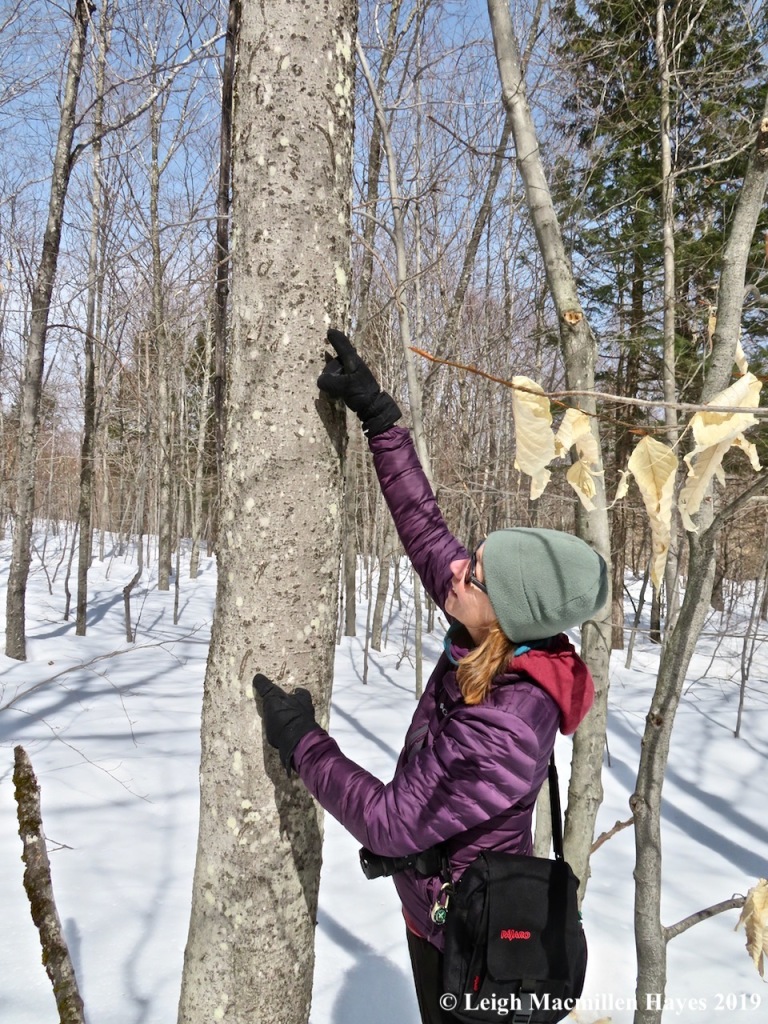
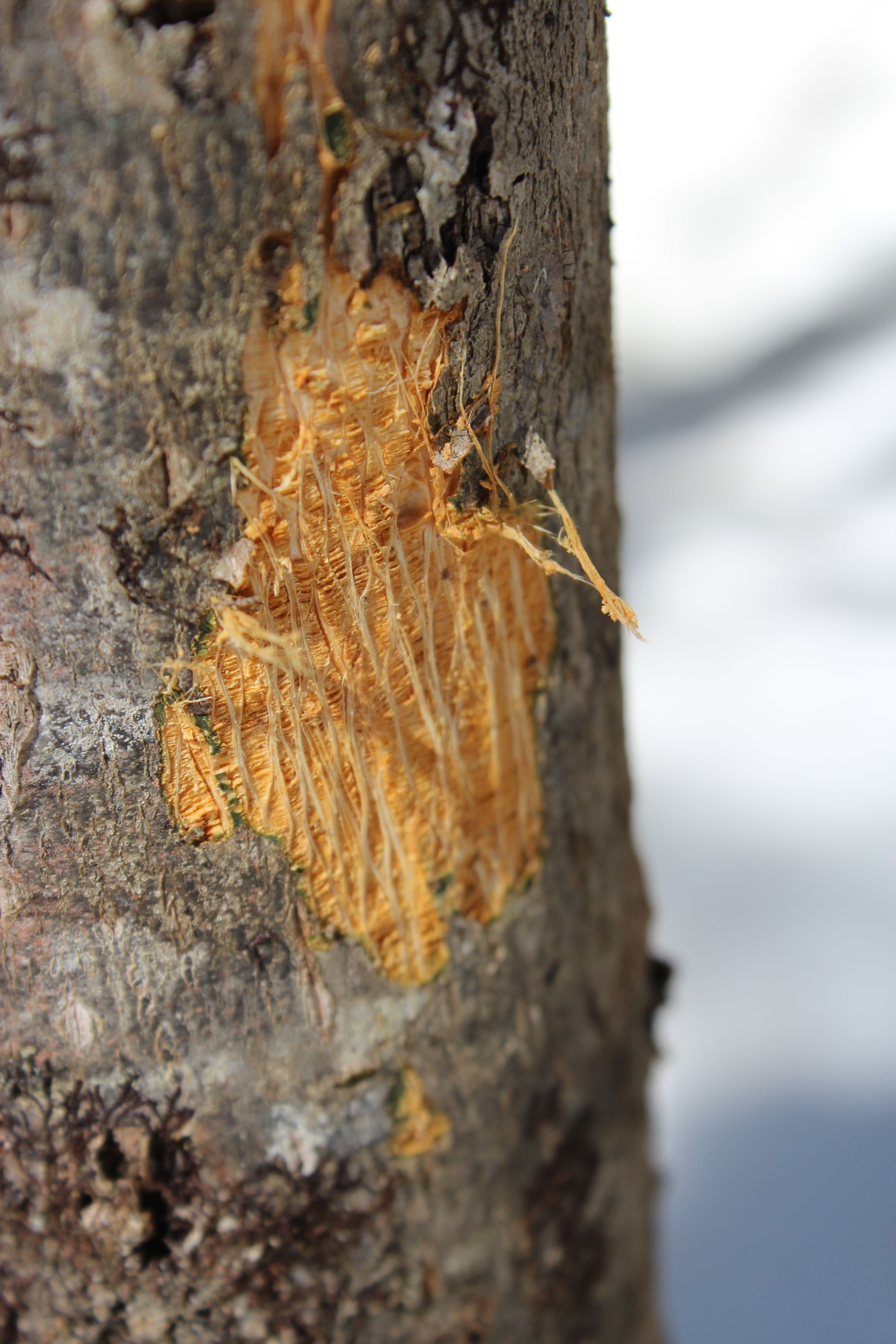
 As I plodded along, my eyes were ever scanning and . . . I was treated to a surprise. Yes, a beech tree. Yes, it has been infected by the beech scale insect. And yes, a black bear has also paid a visit.
 One visit, for sure. More than one? Not so sure. But can’t you envision the bear with its extremities wrapped around this trunk as it climbs. I looked for other bear trees to no avail, but suspect they are there. Docents and trackers–we have a mission.
 And what might the bear be seeking? Beech nuts. Viable trees. Life is good.
 Exactly where is the bear tree? Think left on red. When you get to this coppiced red maple tree, rather than turning right as is our driving custom, take a left and you should see it. Do remember that everything stands out better in the winter landscape.
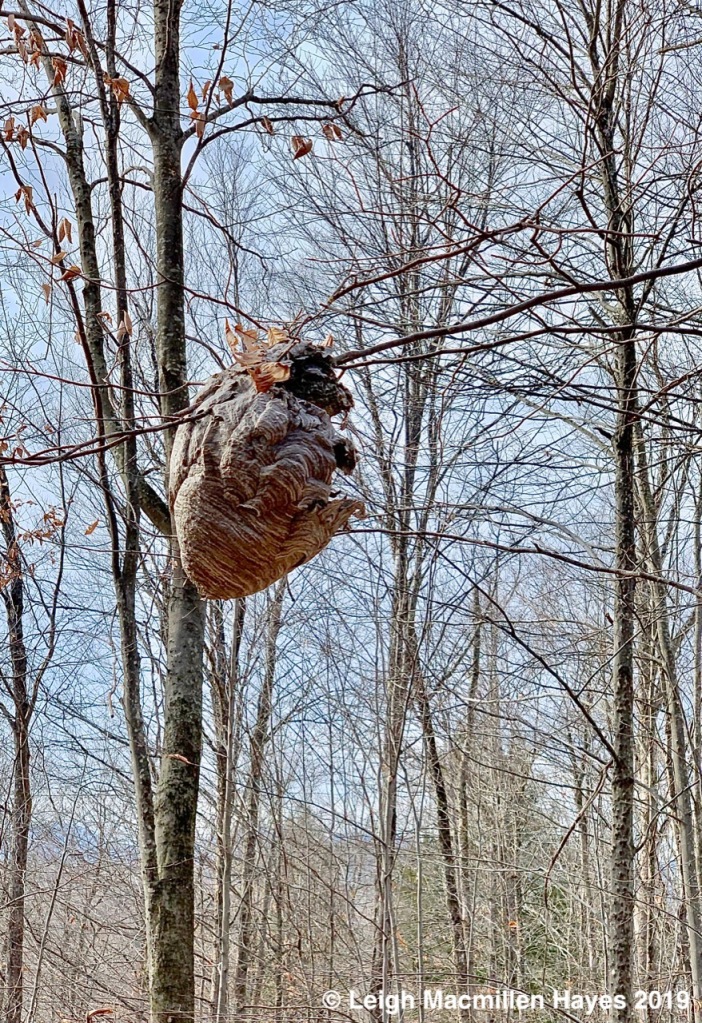
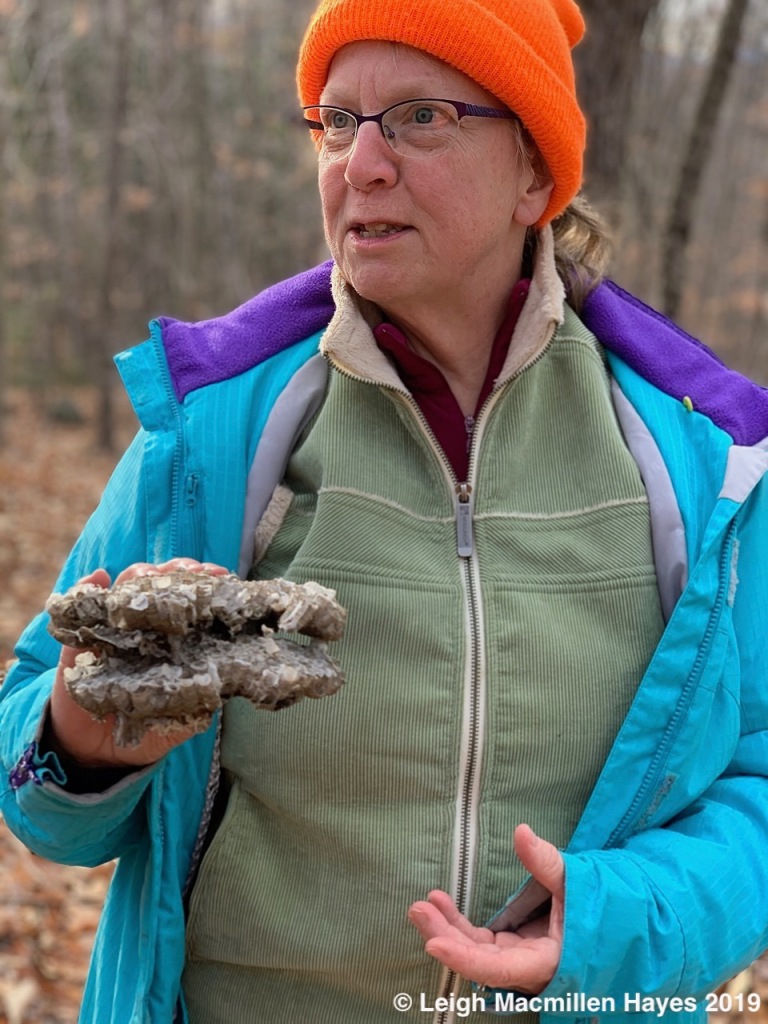
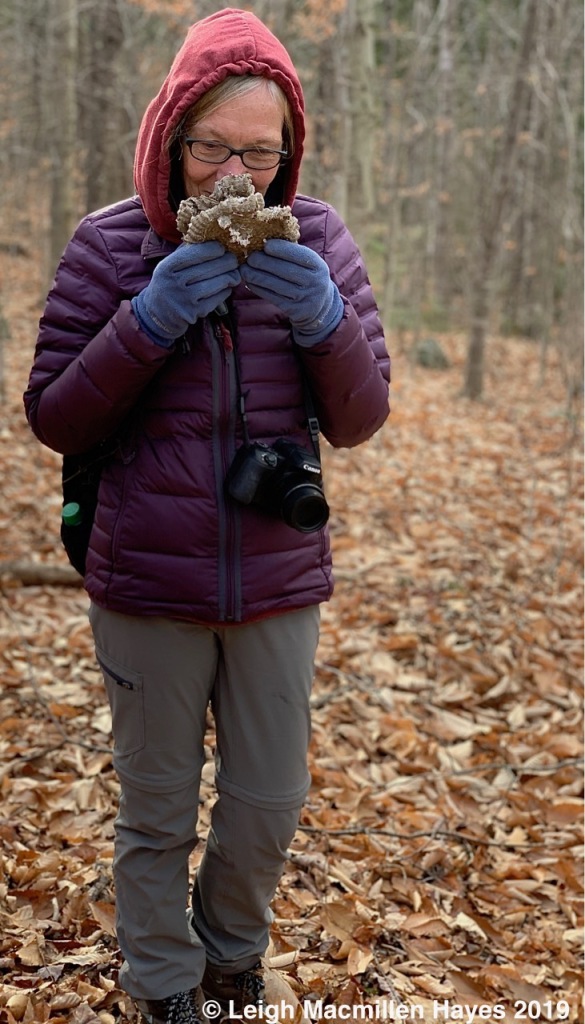
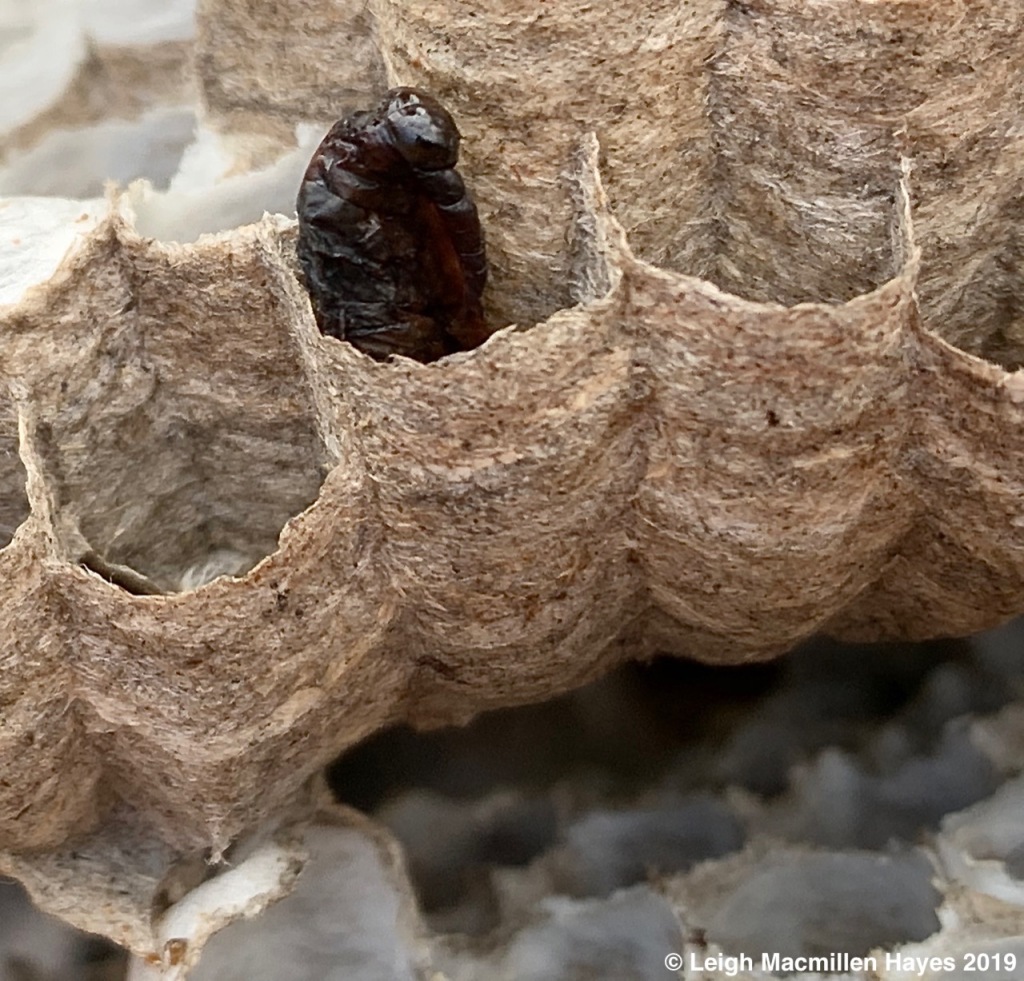
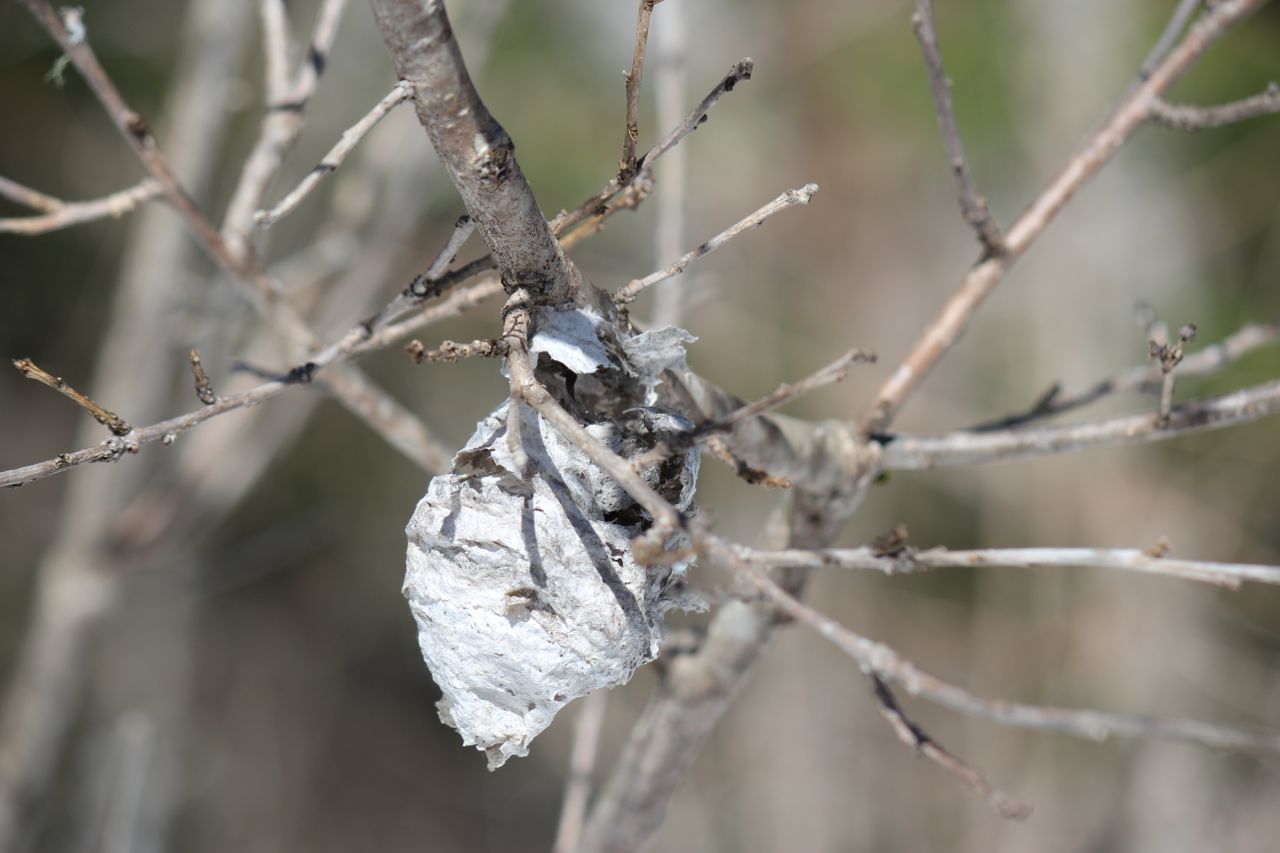
 As delicate as anything in the china shop is the nest created by bald-faced hornets.
 Well, it appears delicate, but the nest has been interwoven with the branches and twigs–making it strong so weather doesn’t destroy it. At the bottom is, or rather was, the entrance hole.
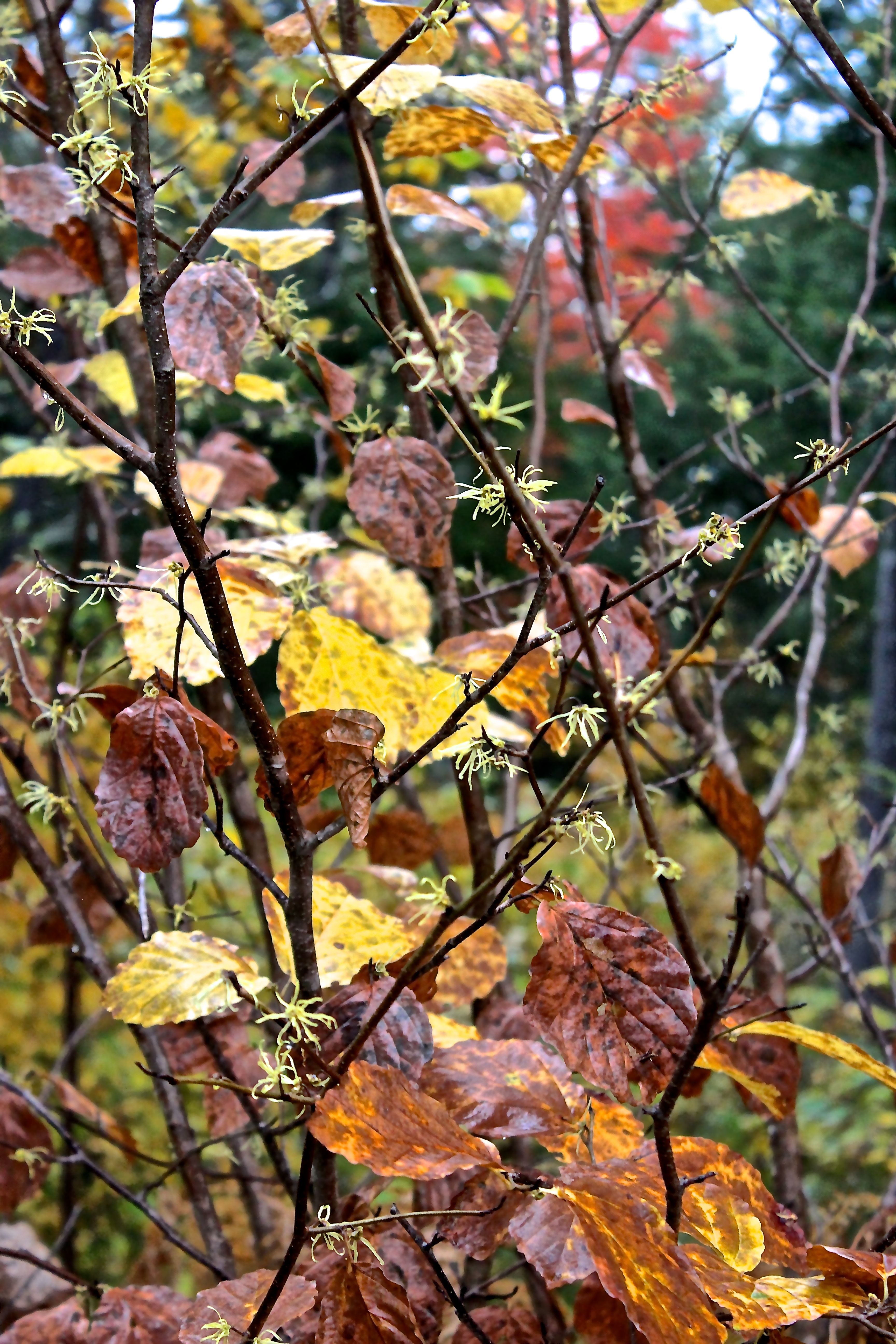
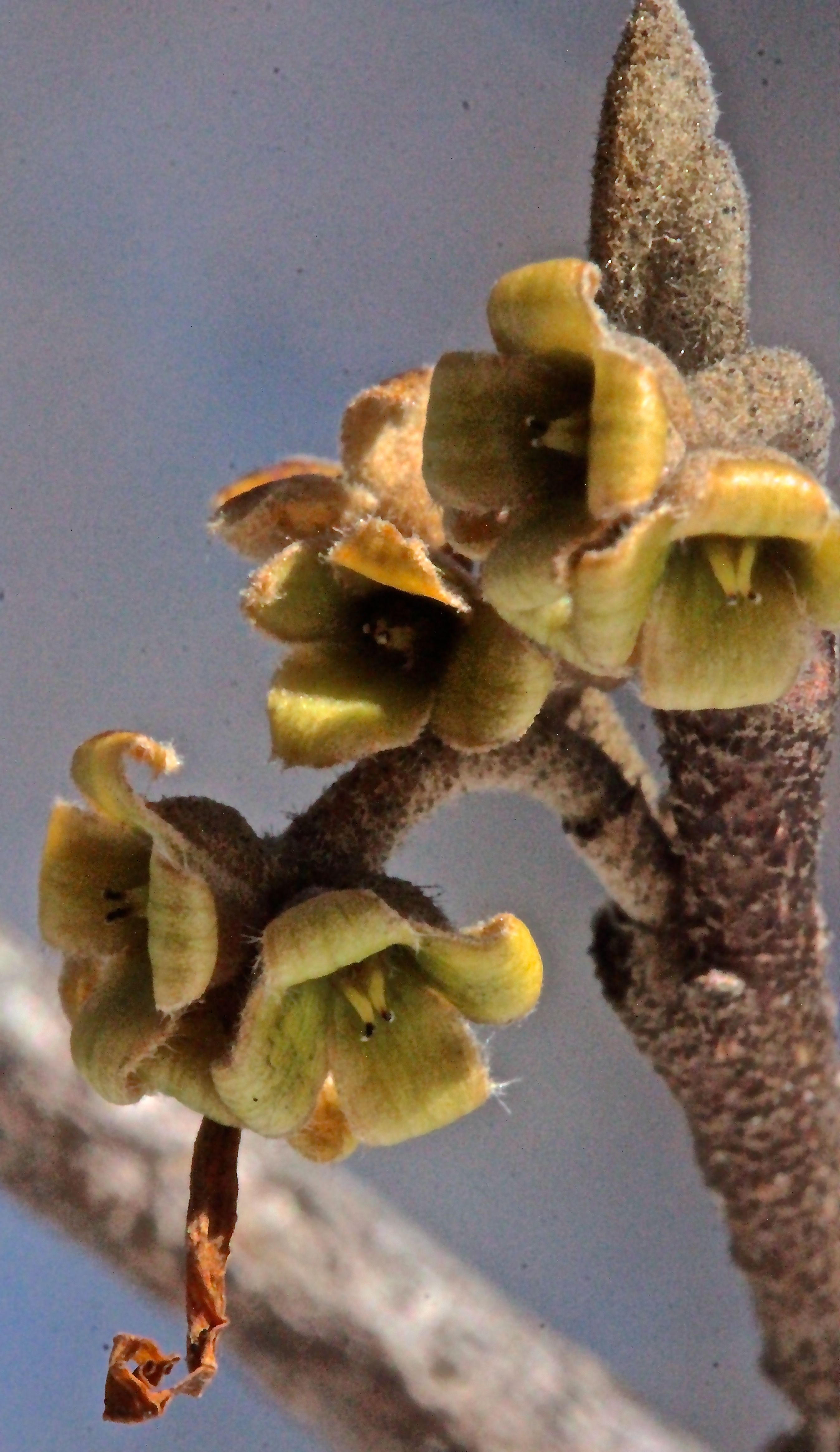 Witch hazel (Hamamelis virginiana) grows abundantly beside younger beech trees. Though the flowers are now past their peak, I found a couple of dried ribbony petals extending from the cup-shaped bracts. China cups? No, but in the winter setting, the bracts are as beautiful as any flower.


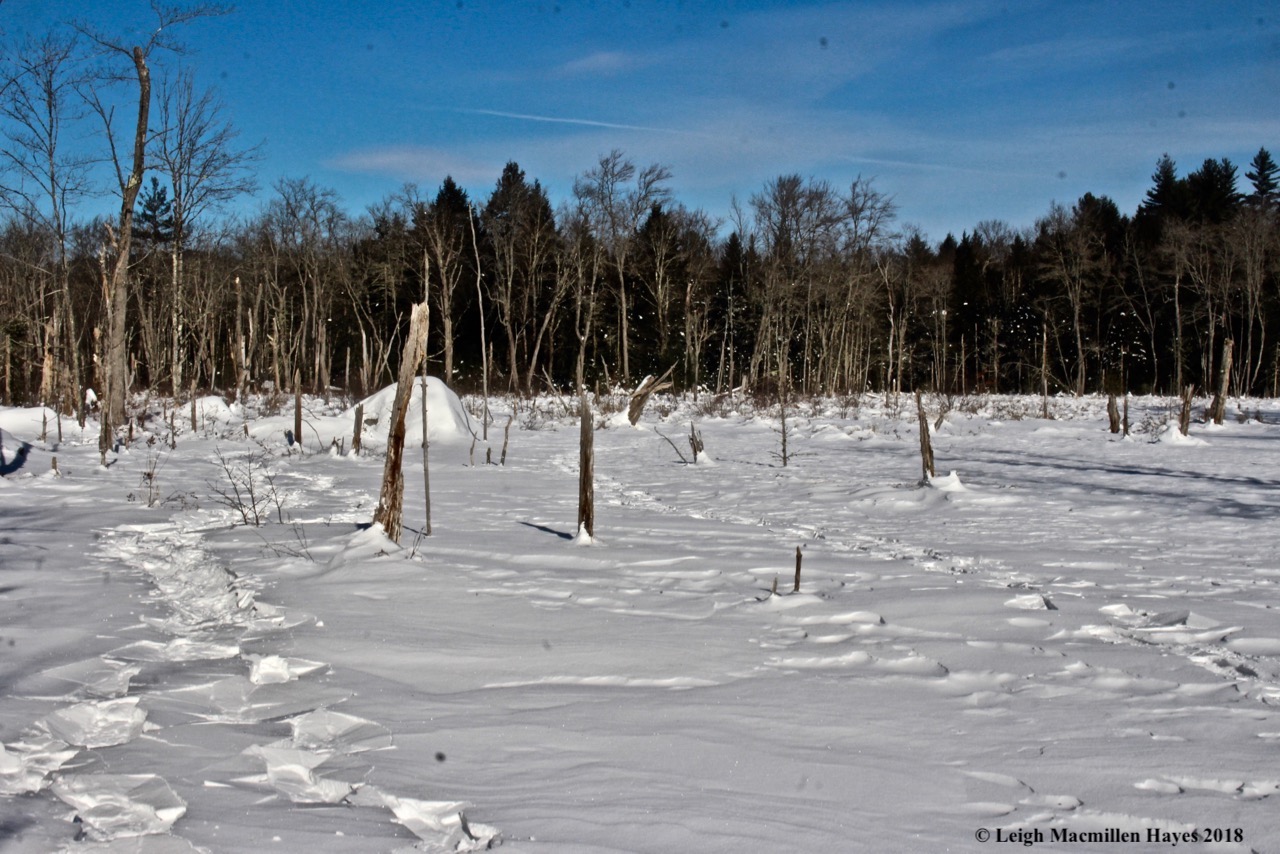
 With the Balds in Evans Notch forming the backdrop, the brook is home to numerous beaver lodges, including these two.
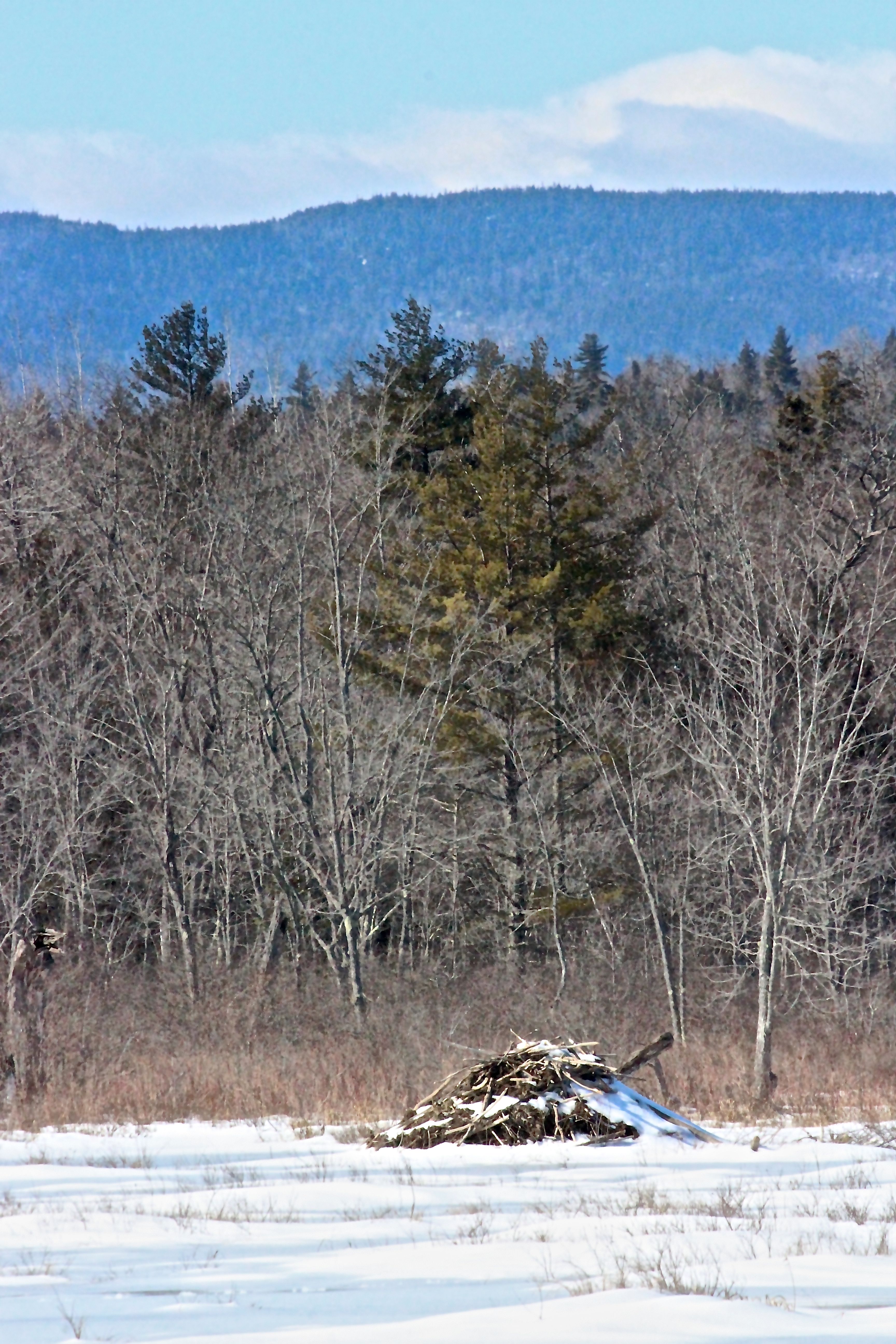 Layers speak of generations and relationships.
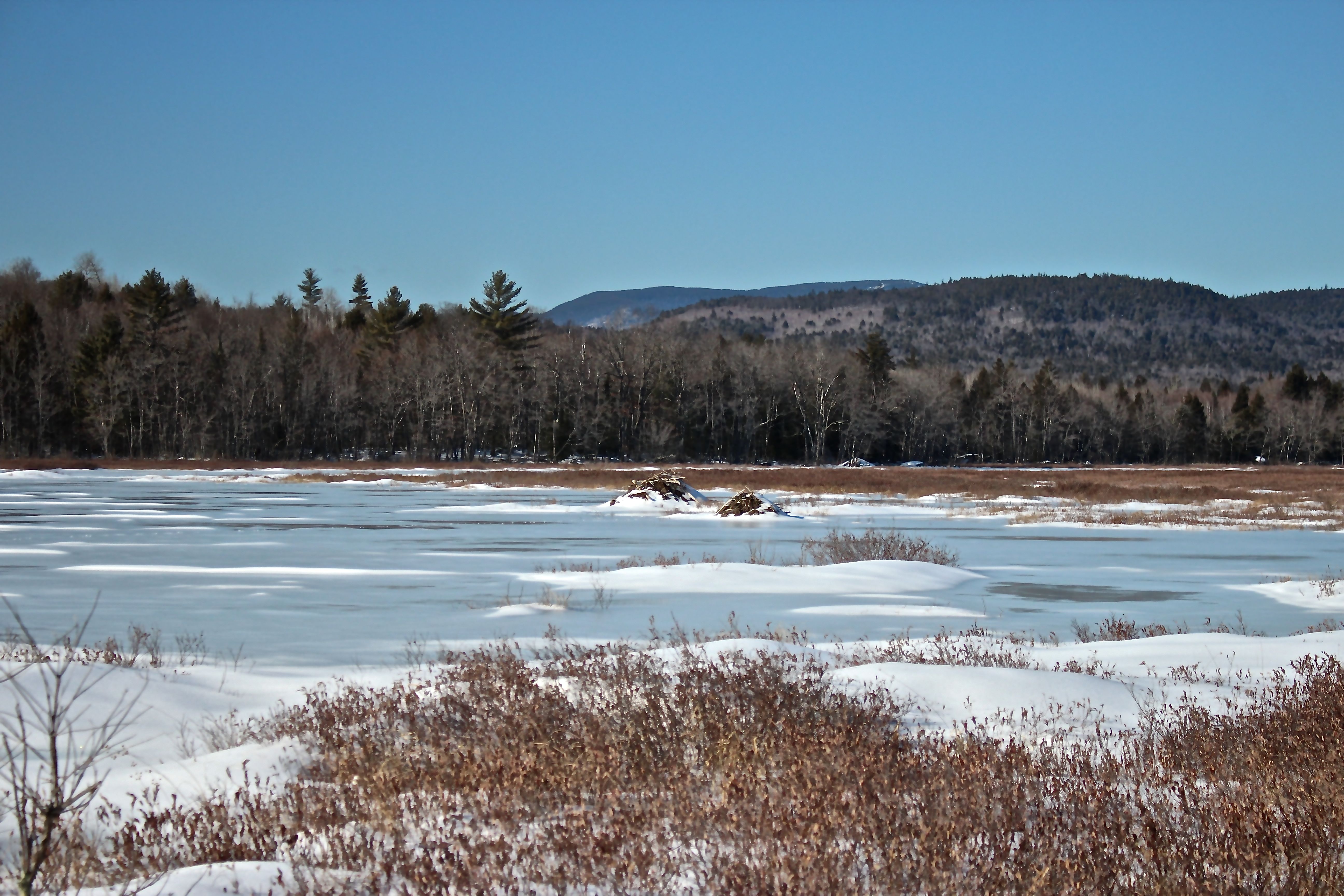 Close proximity mimics the mountain backdrop.

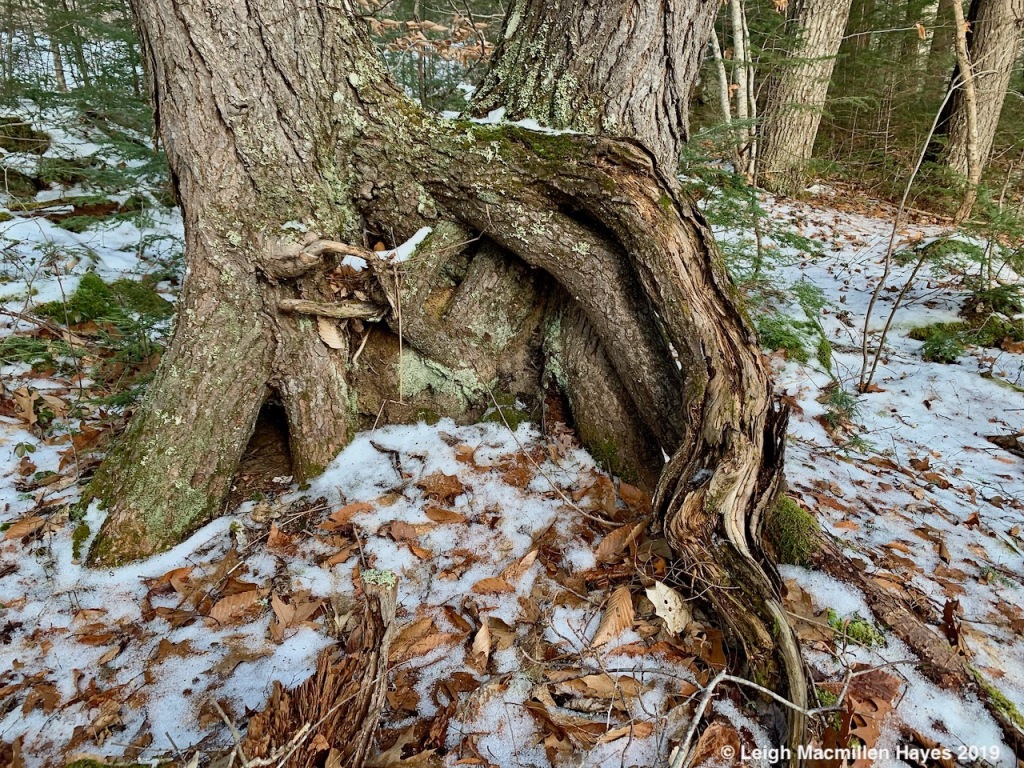
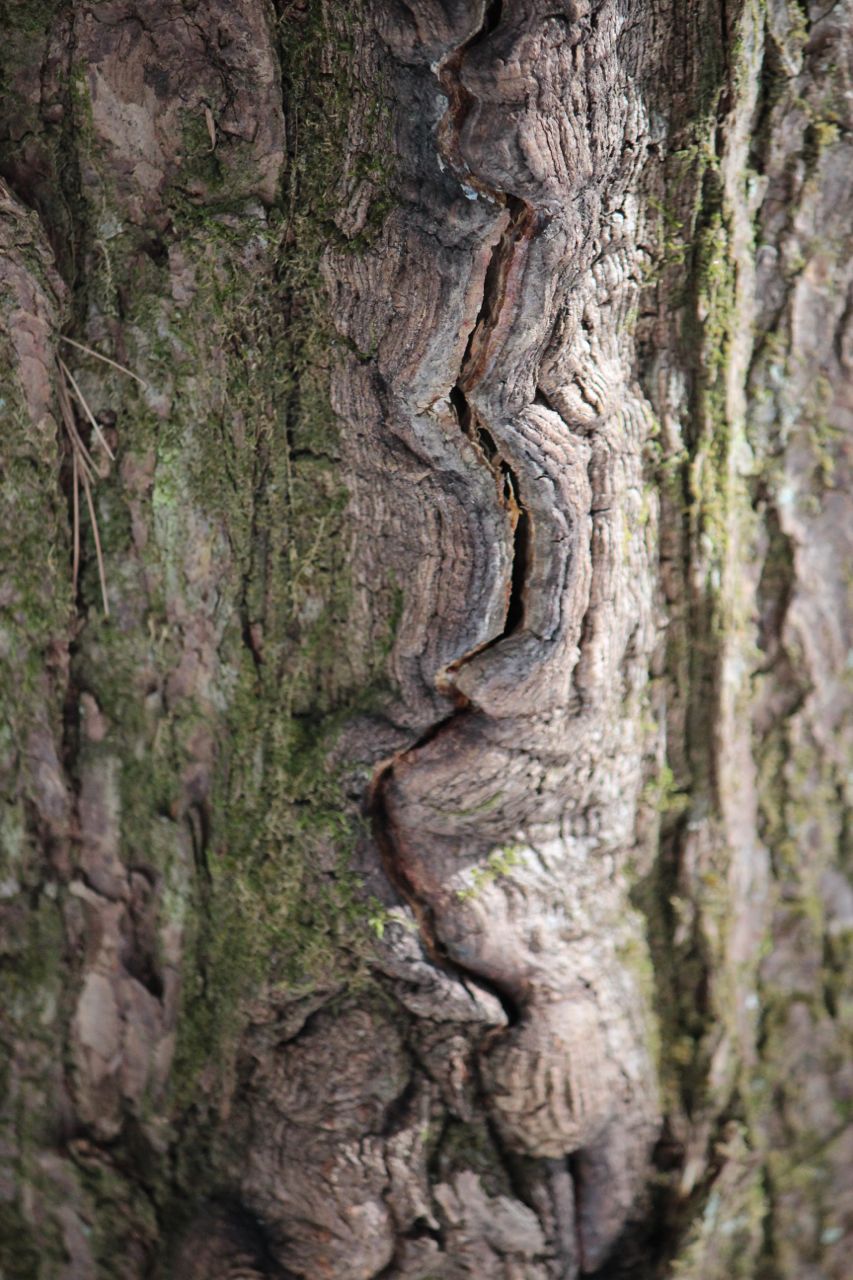
 And sometimes, I just have to wonder–how does this tree continue to stand?
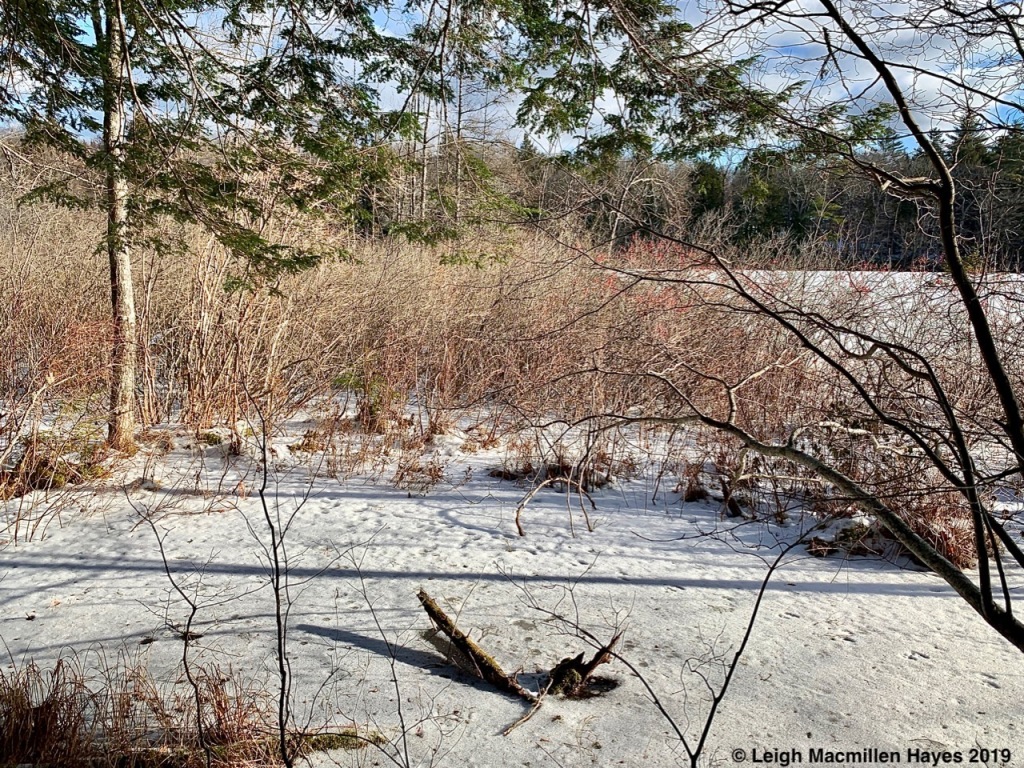
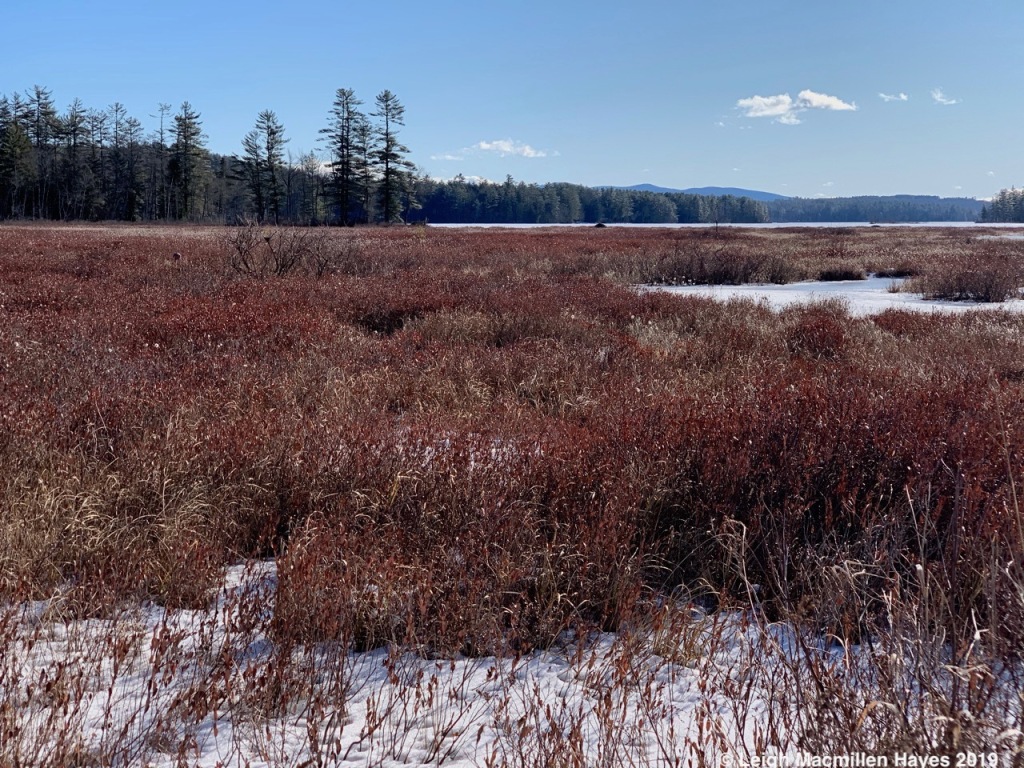
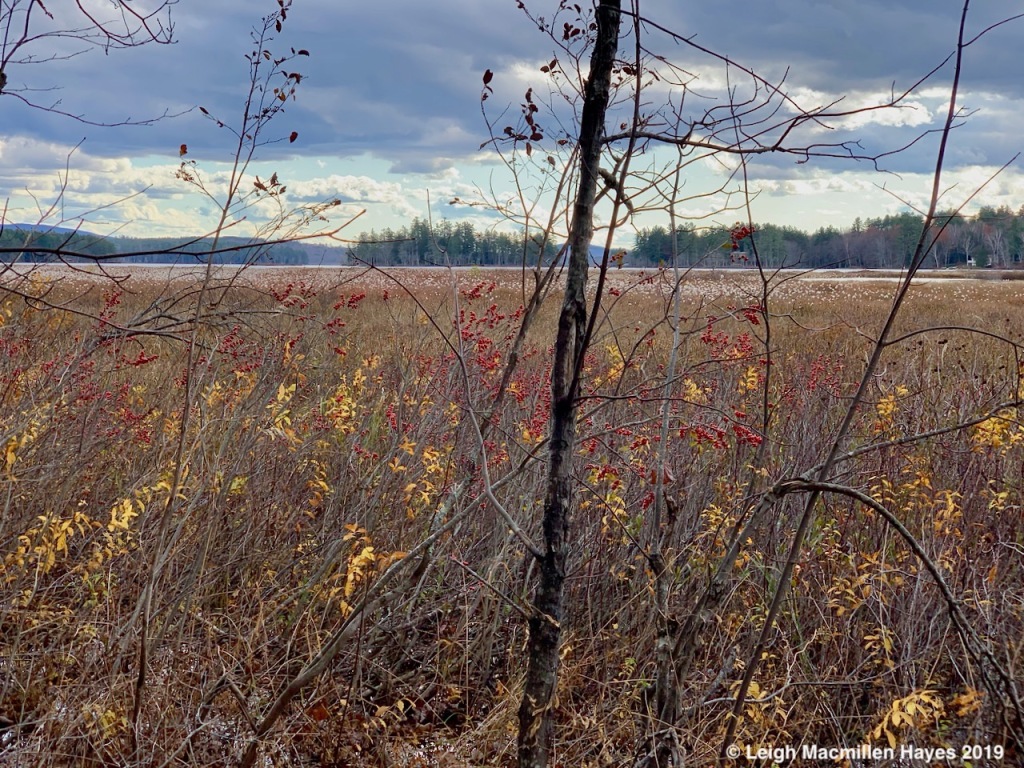
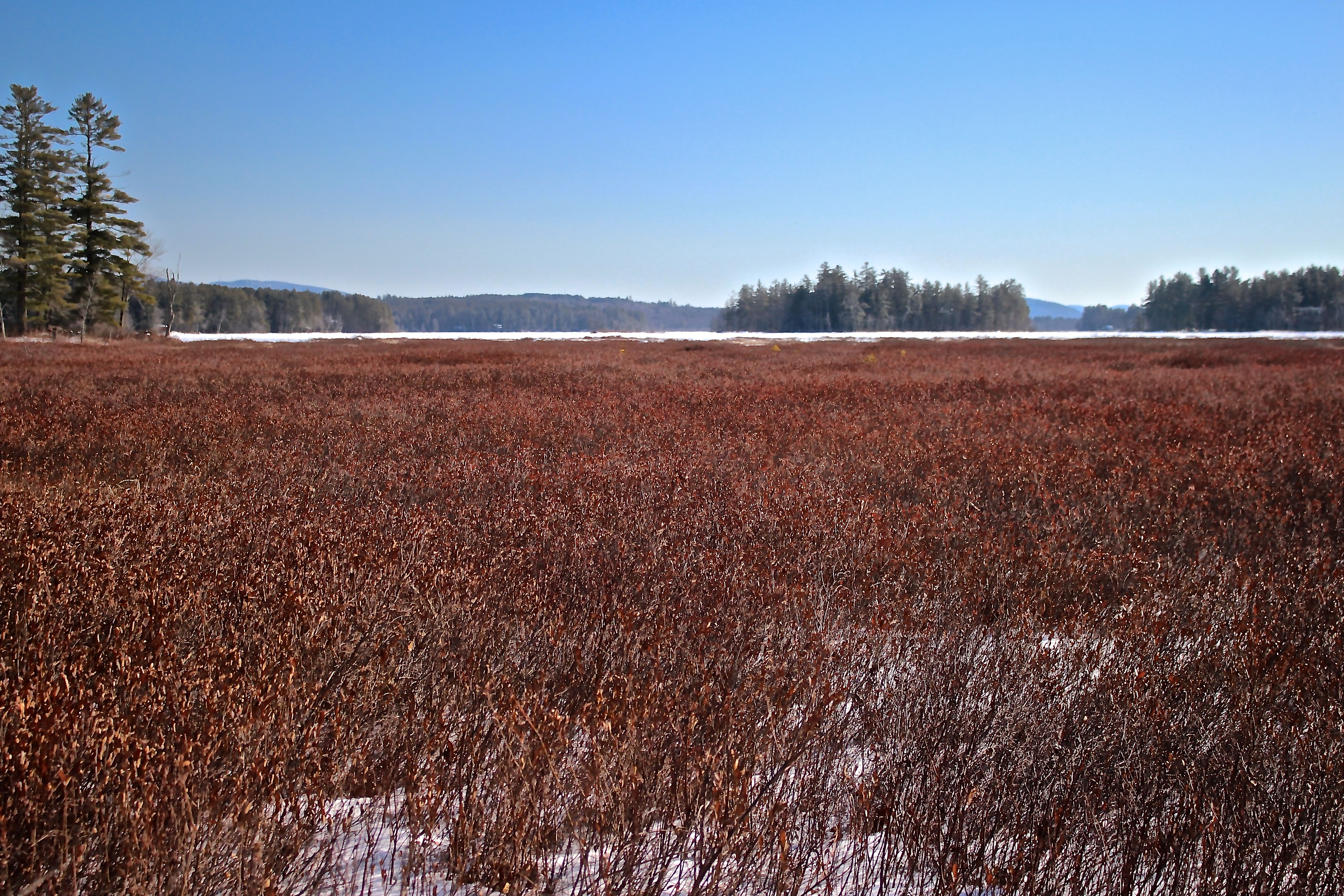 Leatherleaf fields forever.
 Spring is in the offing.
 Wintergreen offers its own sign of the season to come.
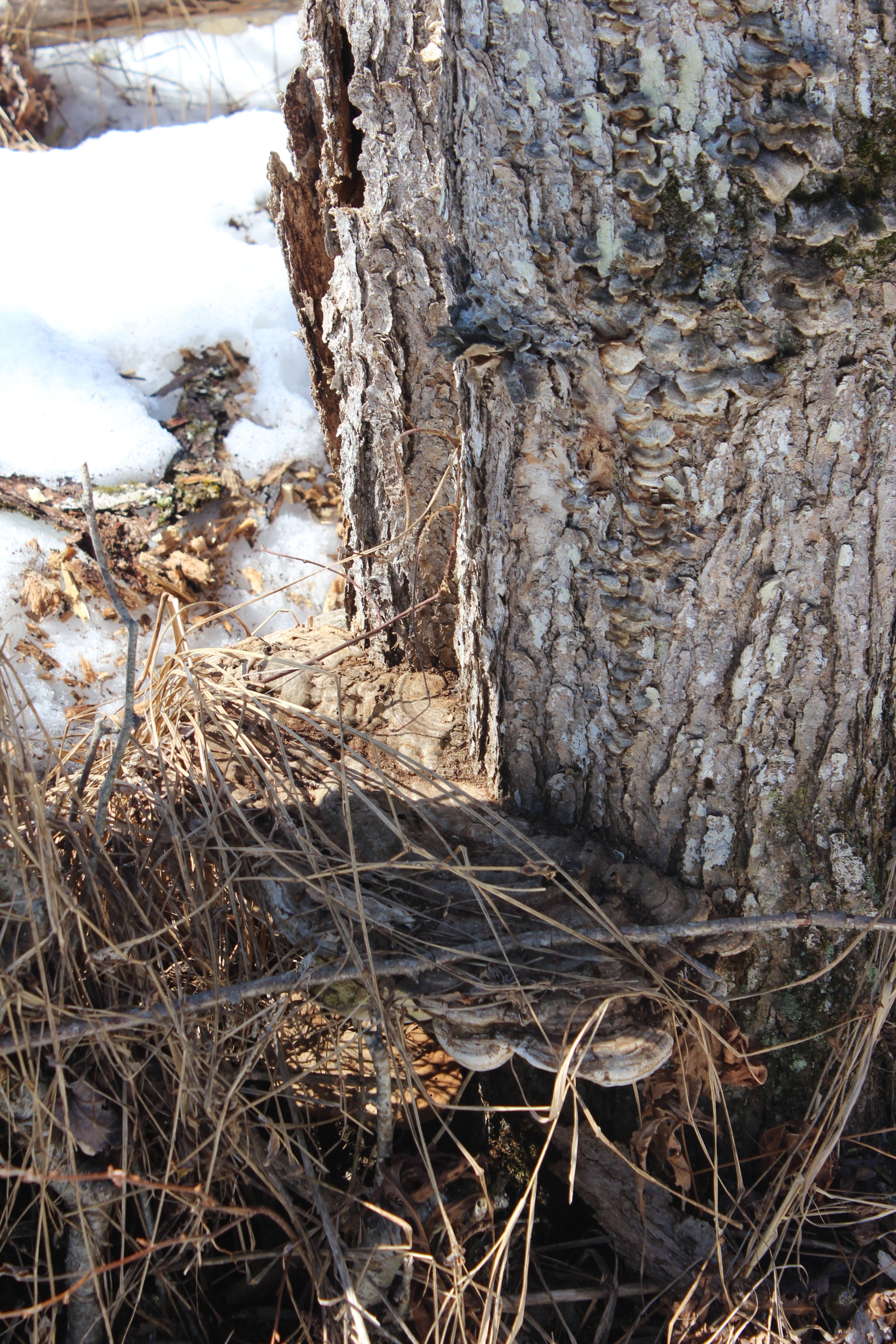
 In the meantime, it’s still winter and this hemlock stump with a display of old hemlock varnish shelf (Ganoderma tsugae) caught my eye. By now, I was on the green trail.
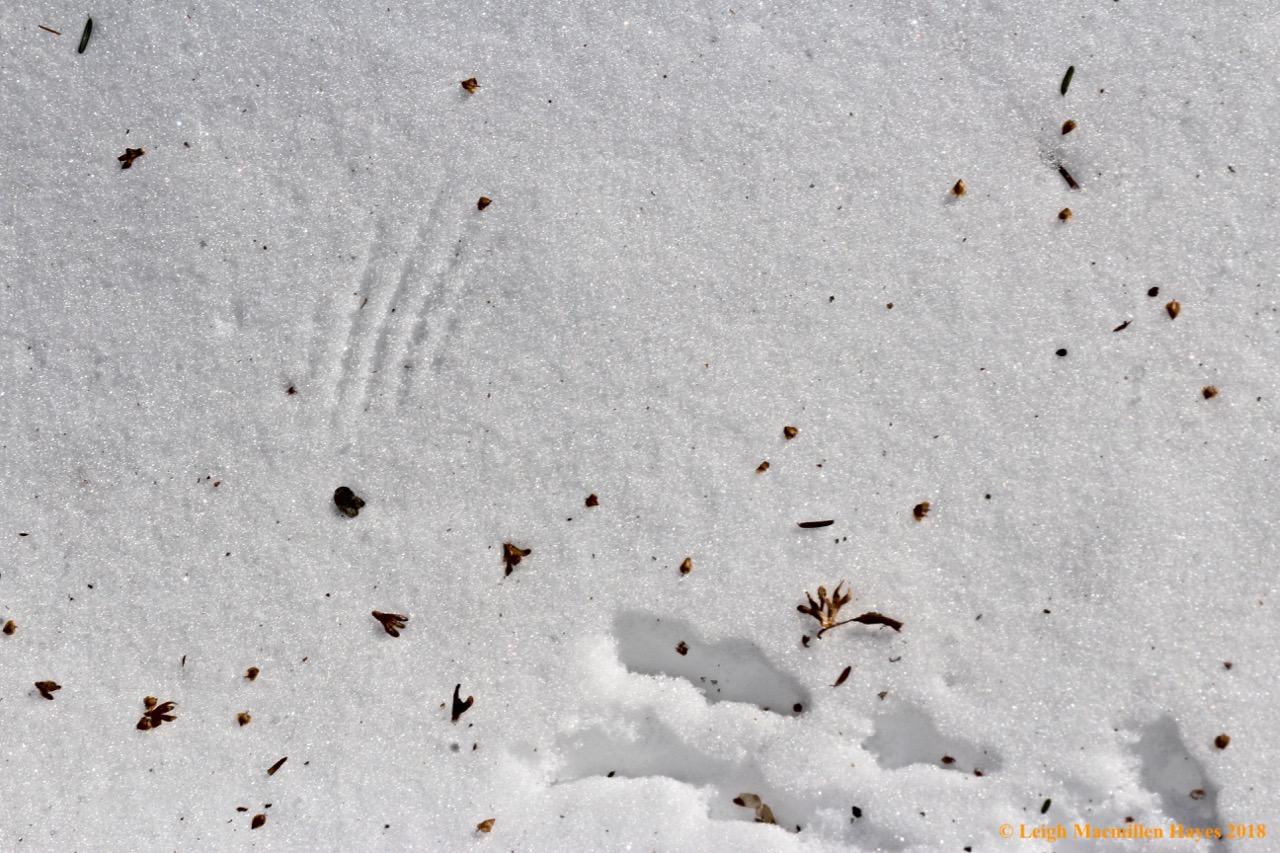
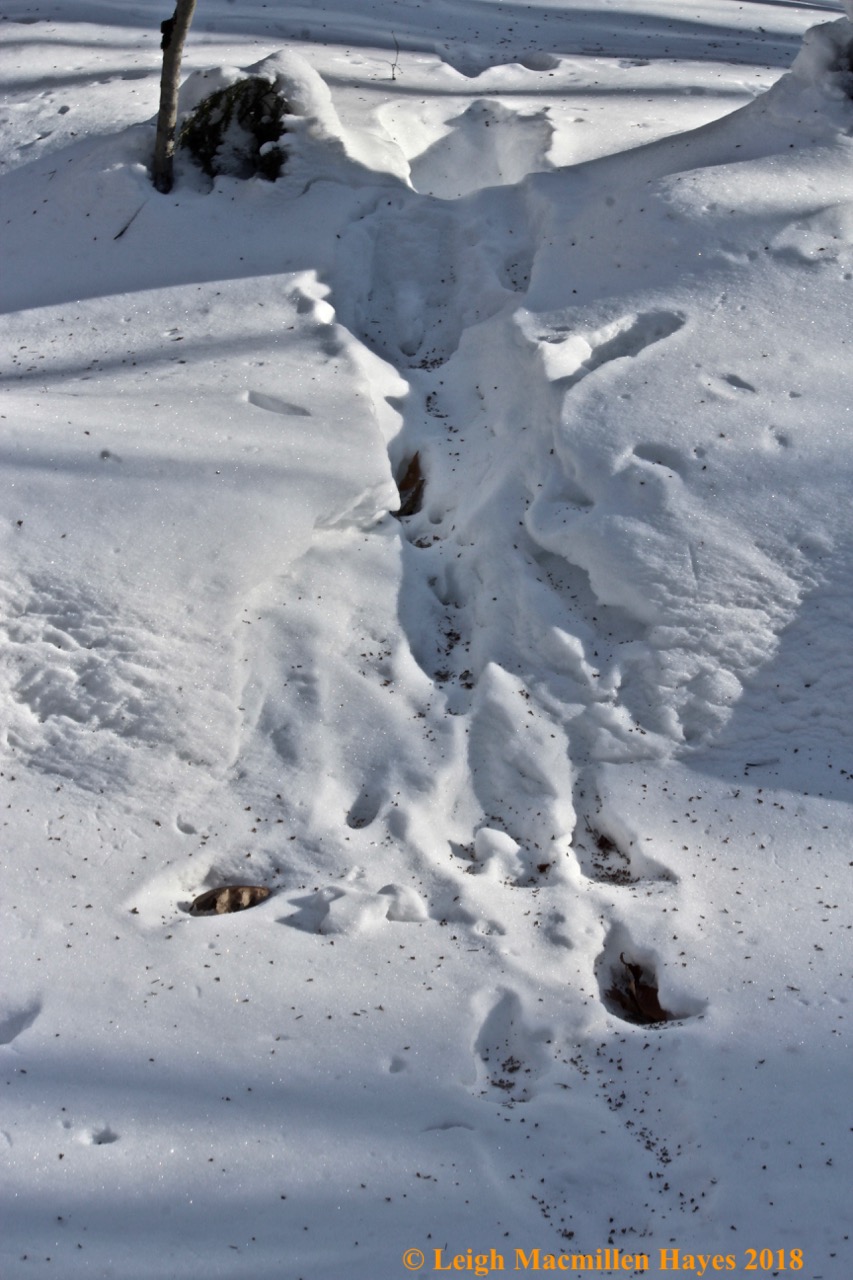
 But it’s what I saw in the hollow under the stump, where another tree presumably served as a nursery and has since rotted away, that made me think about how this year’s lack of snow has affected wild life. In the center is ruffed grouse scat. Typically, ruffed grouse burrow into snow on a cold winter night. Snow acts as an insulator and hides the bird from predators. I found numerous coyote and bobcat tracks today. It seems that a bird made use of the stump as a hiding spot–though not for long or there would have been much more scat.

 Apparently it circled the area before flying off.





































 wondermyway