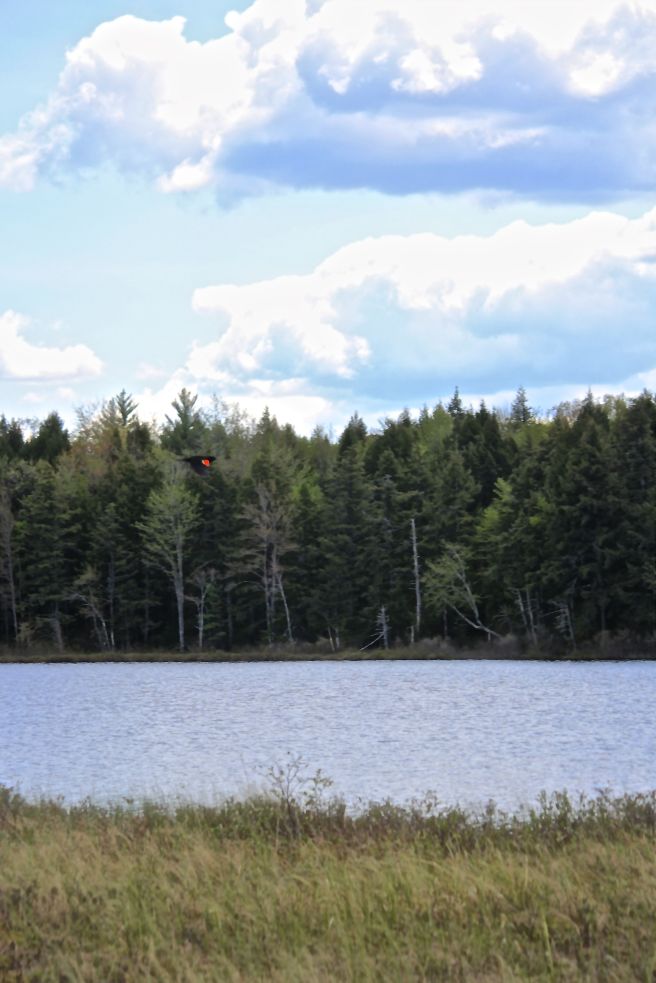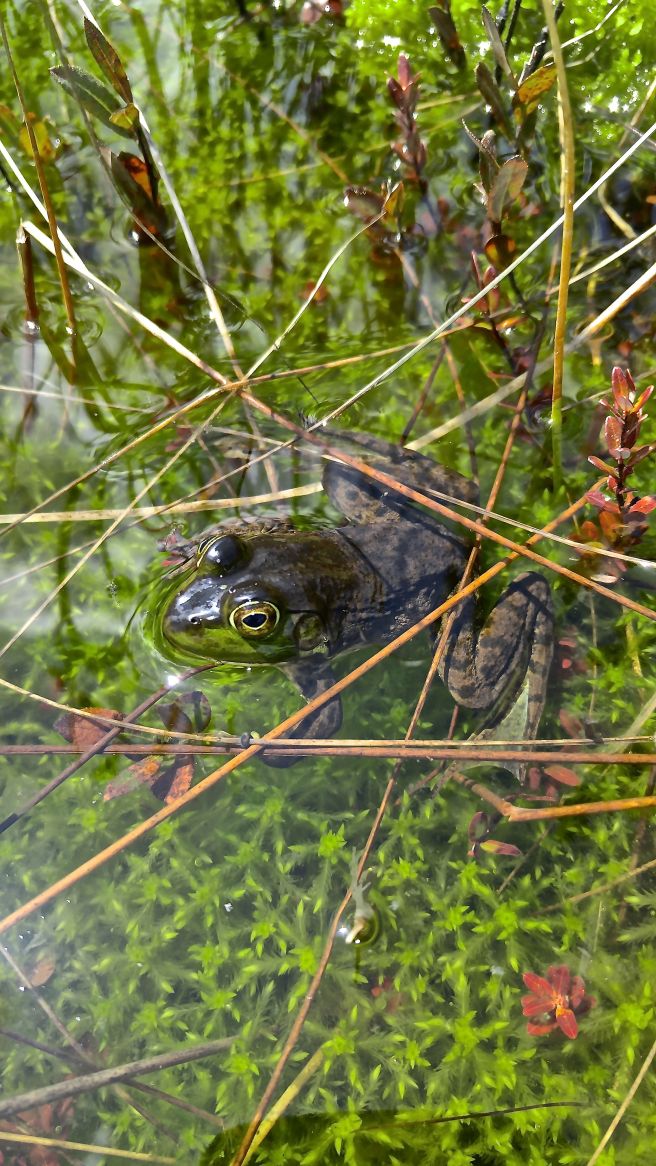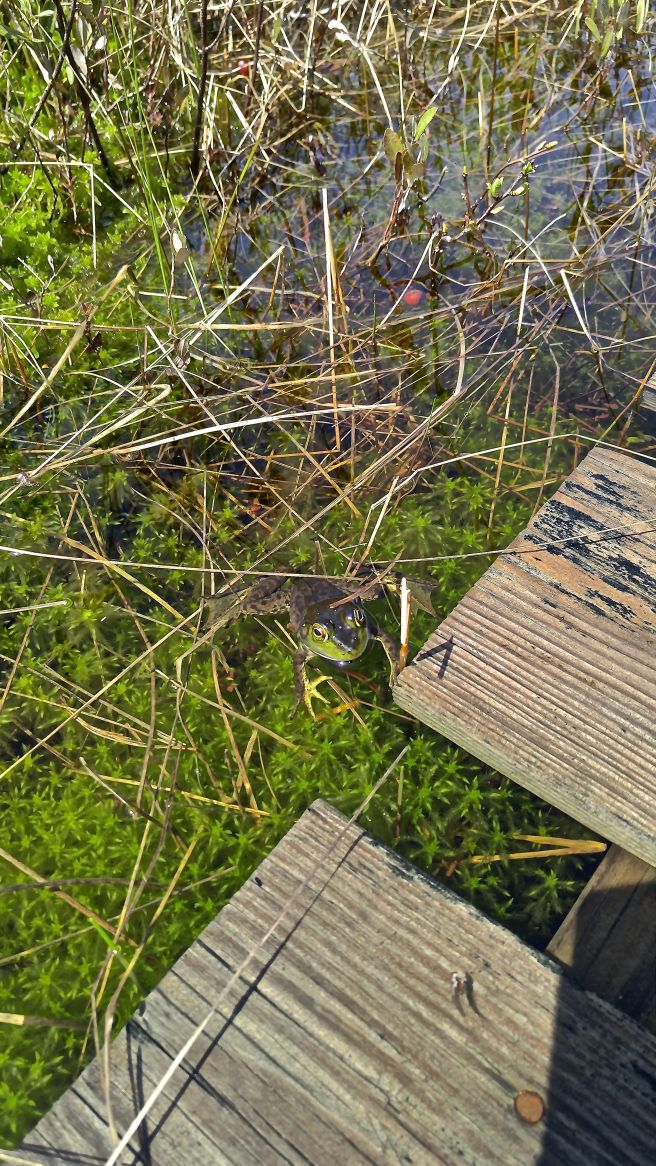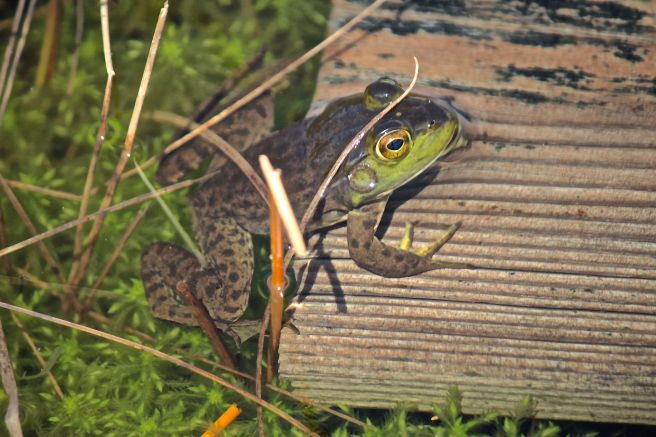
Water Works

With rain drops come life and rebirth. And so it seems as our world explodes with the return of birds and vibrant blossoms of daffodils in the garden. The grass is, well, grass green–a brilliant green with hues of gold or purple, depending on the time of day. And ever so slowly, tiny leaves emerge on the maples and aspens.
w-rookery

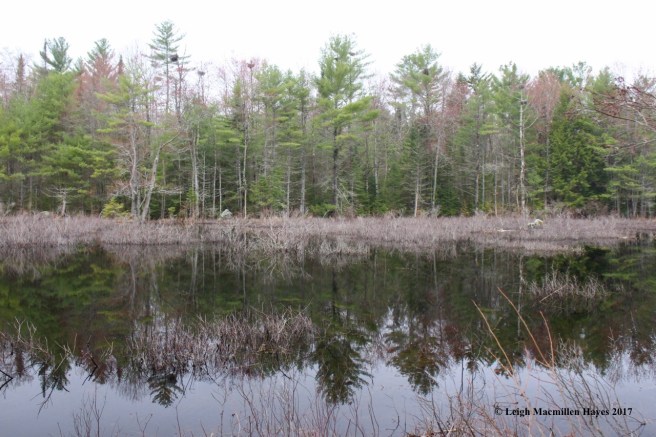
But it’s life in and around water that captured most of my focus today. Following a prehike for a Greater Lovell Land Trust walk, I had the opportunity to check on a heron rookery. A friend and I stood hidden among the trees.

Rookeries are one of my favorite places to hang out. By the same token, I seldom do because its important not to disturb these giant birds during their nesting season. But–today’s visit, like all of my rookery visits, was for a citizen science project affiliated with Maine Inland Fisheries and Wildlife: the Heron Observation Network or HERON, counts on volunteers to count on heron–their nests, number of birds, number perhaps sitting on eggs, number of fledglings, etc.
w-heron incoming

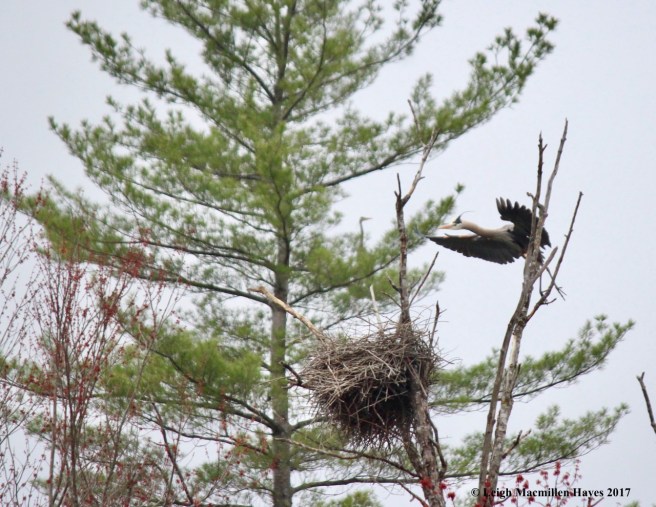
We frequently see Great Blue Herons flying overhead or fishing in ponds and lakes, but it’s watching them come into their nests, in their pterodactyl form, that I find so wild.
w-heron standing

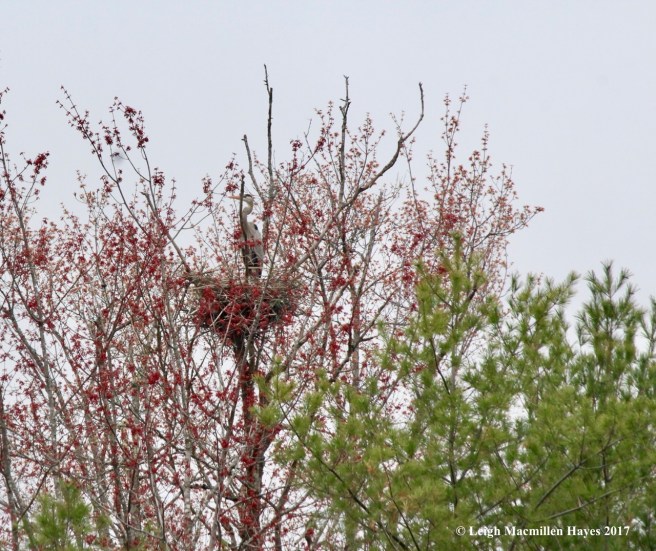
And then they stand. Tall. Silent. We do the same.
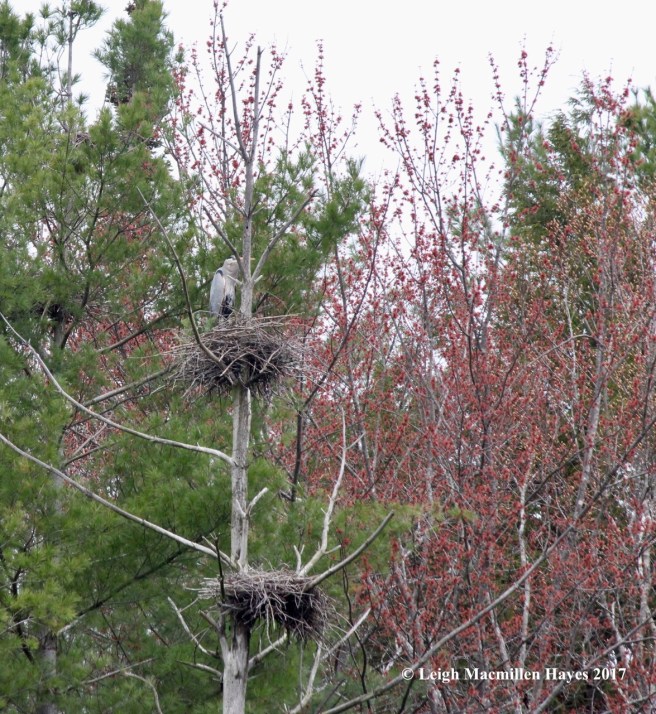
w-heron on nest

Watching. Listening. Wondering.

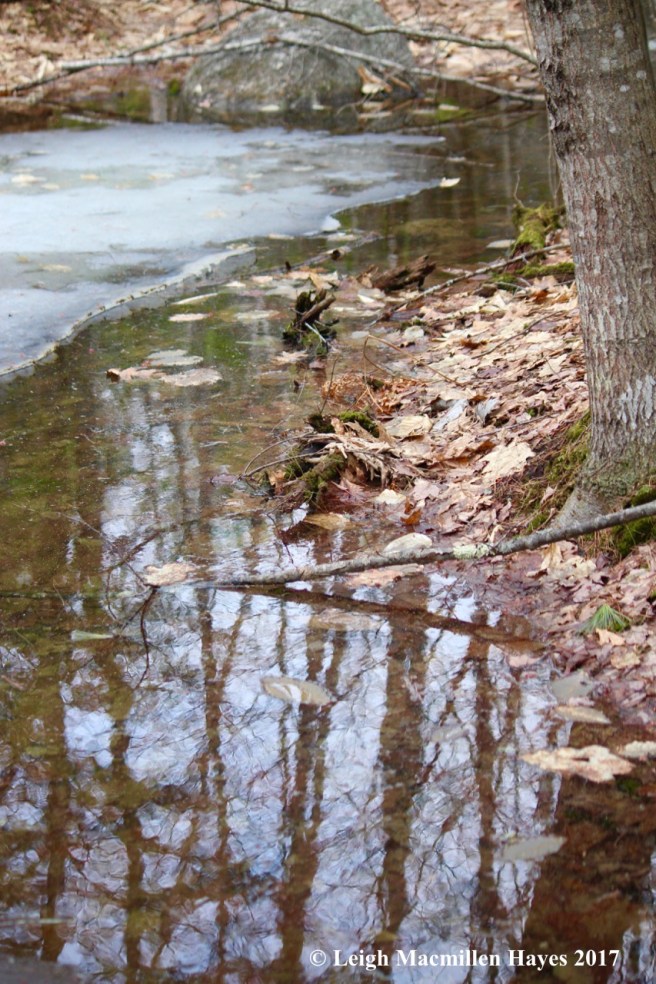
w-reflection

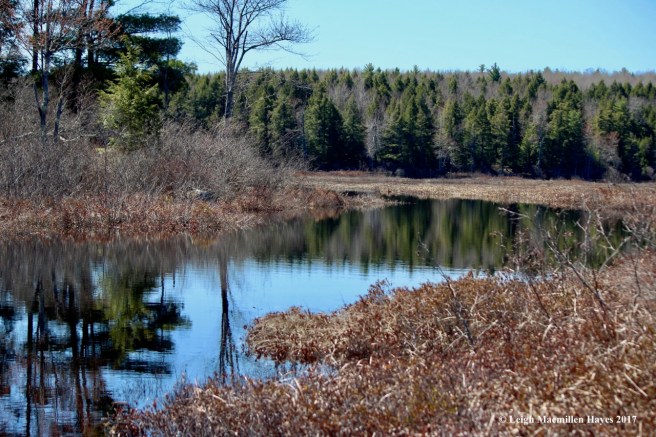
All the while, we have time to reflect and enjoy the reflected.

w-beaver lodge

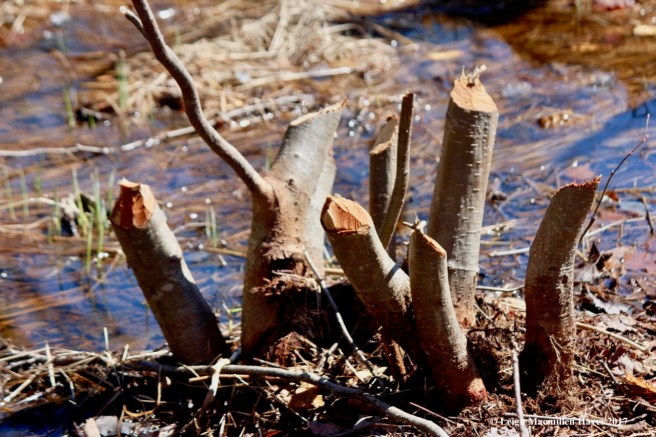
And notice–cut saplings piled horizontally, an anomaly in this space . . . or is it?  More than herons call this place home.
w-hobblebush

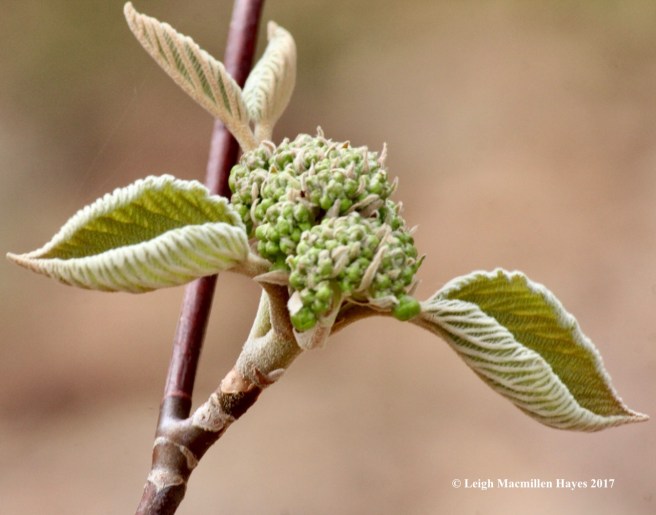
At last we need to bushwhack back, but pause a few times to appreciate other forms of life that spring forth near the water, including this hobblebush.

w-snake 1a

And a garter snake, its movement catching our attention. And then it froze in place, in hopes we wouldn’t notice.
w-vp

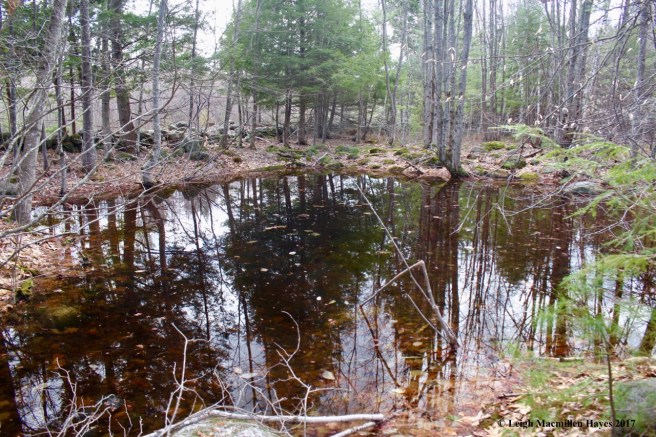
Back on the homefront, I moseyed out to the vernal pool. As I approached, I noticed a lack of sound, but did see movement when I was only steps away.

w-wood frog eggs

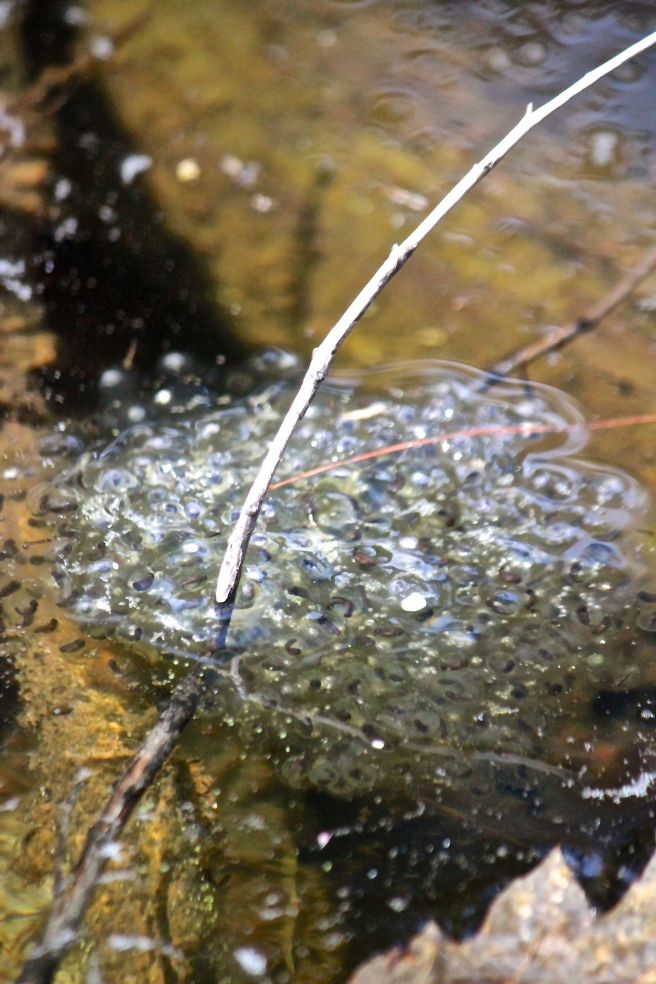
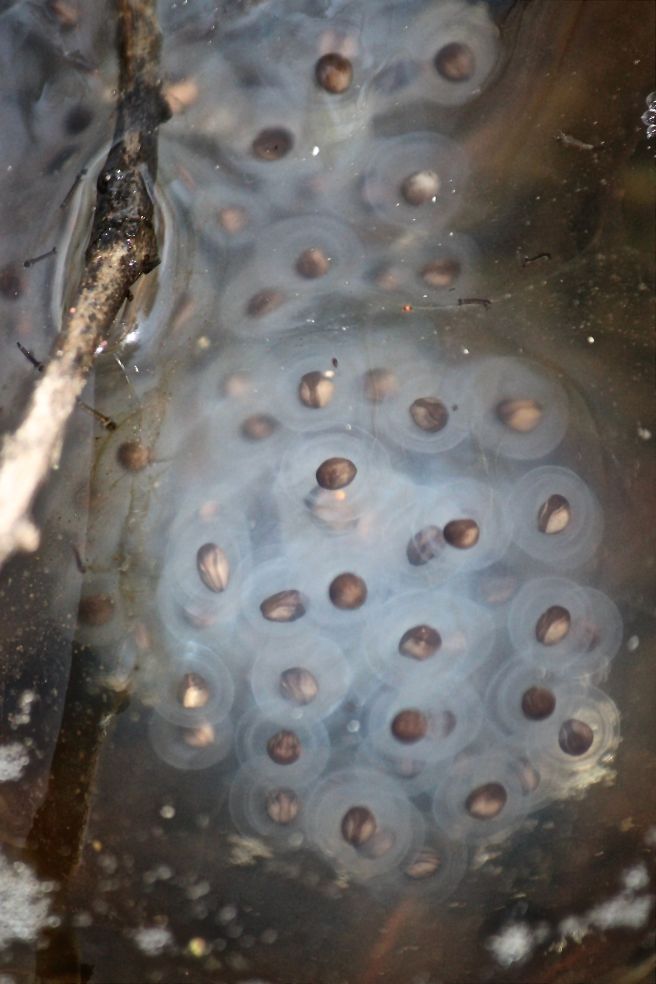
I was thrilled to note signs of previous action as the number of wood frog egg masses had increased.
w-sallie eggs

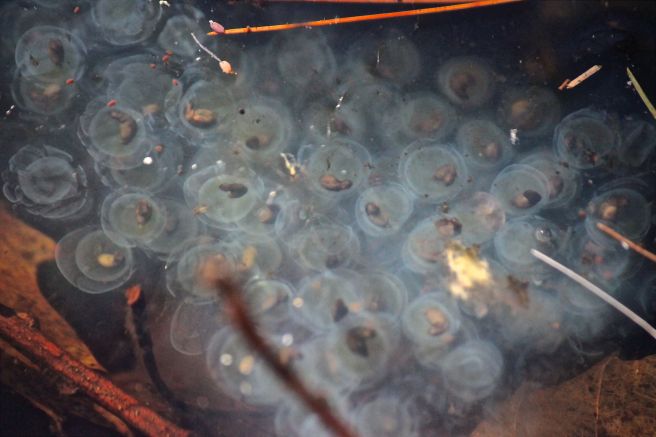
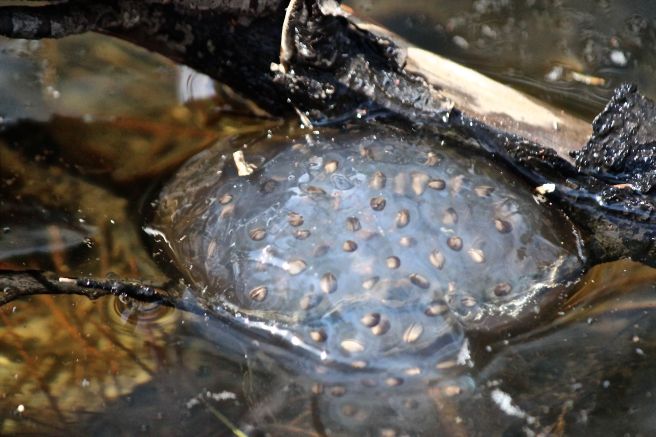
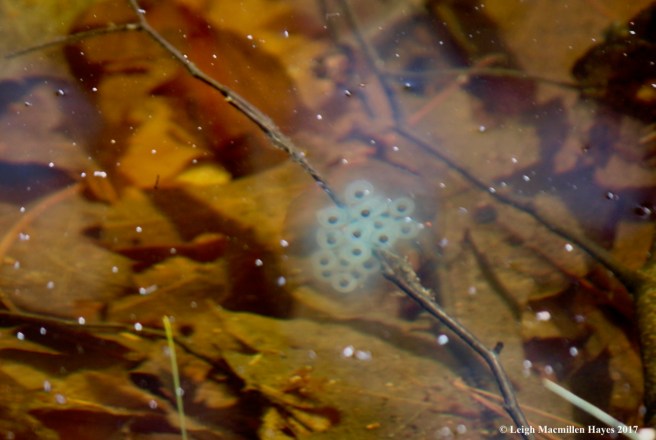
The same was true of the spotted salamander eggs, though the number in each clump seemed quite minimal. The opaque outer coating was clearly visible, that gelatin-like mass that surrounds these eggs.
w-frog eggs?

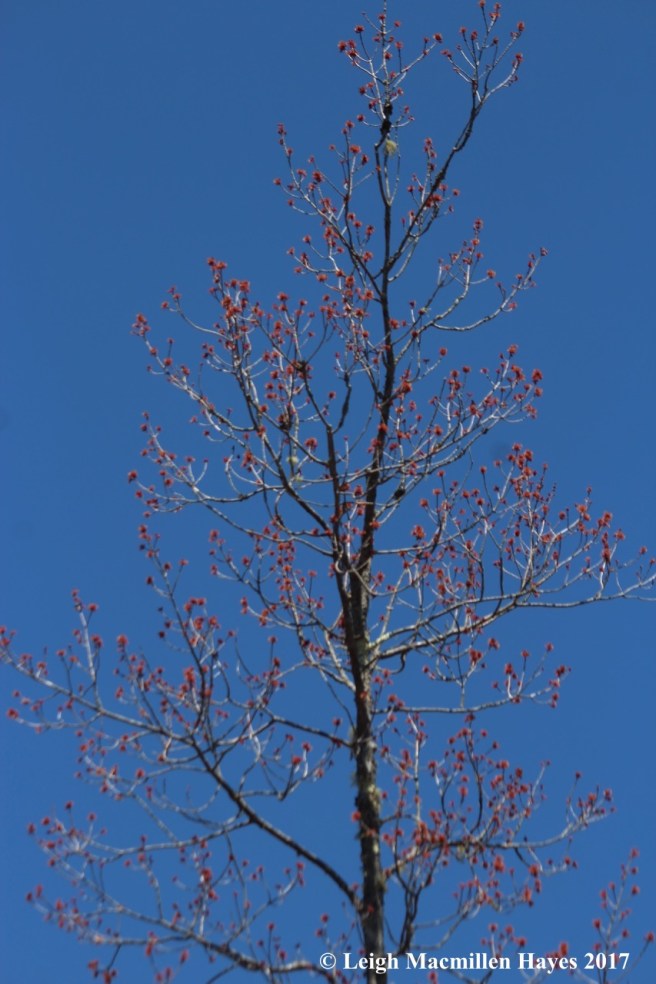
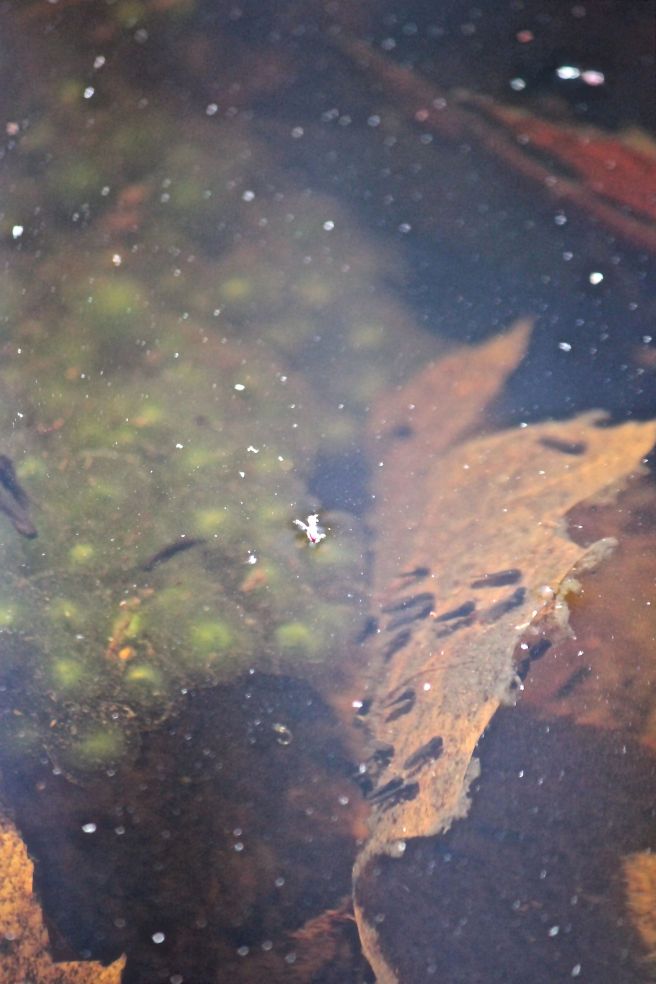
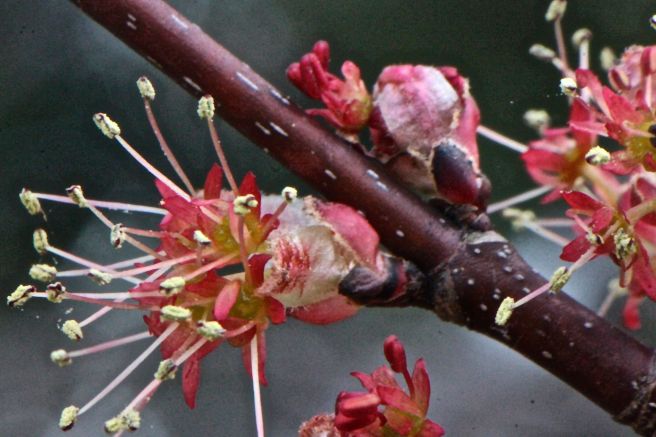
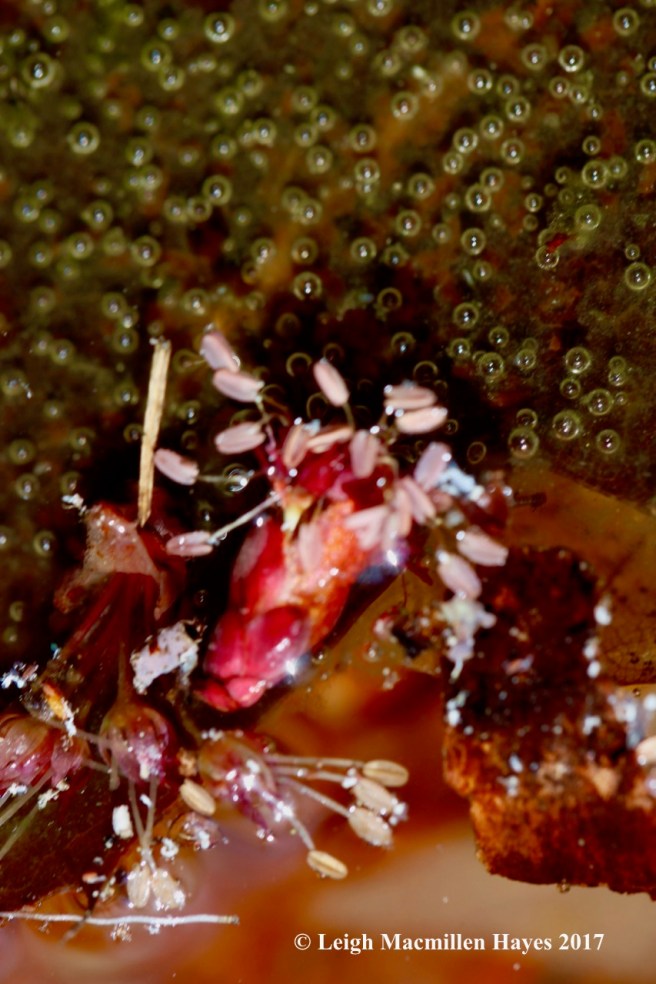
As I admired all the dropped red maple flowers that decorated the water, I spied something else. Or at least I think it’s something else. Perhaps mere bubbles floated atop the dried leaf, but I suspected eggs of another kind. I’ve never before noticed spring peeper eggs and wondered, could these be such? Here’s hoping Loon Echo Land Trust’s biologist, Paul Miller, will chime in.

w-spring peeper eggs in mix?

From what I’ve read in A Field Guide to the animals of Vernal Pools by Leo P. Kenney and Matthew R. Burne, “tiny peeper eggs may be deposited in small clusters or as single eggs attached to aquatic vegetation.” I placed a red arrow on this photo pointing to a couple more. And there are others in the photo, hiding in a “Where’s Waldo” fashion.

w-water strider and mosquito larvae

Circling around the pool, I noted some mosquito larvae and a few water striders.

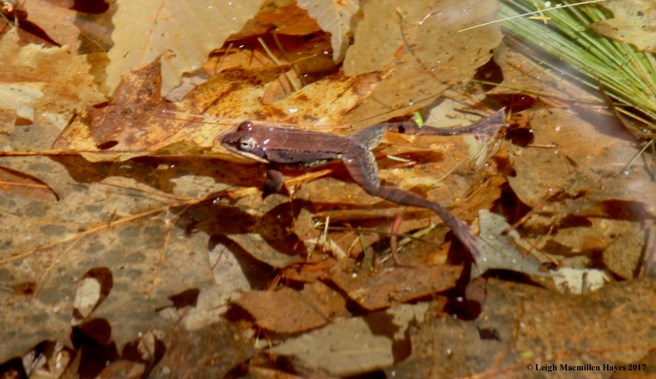
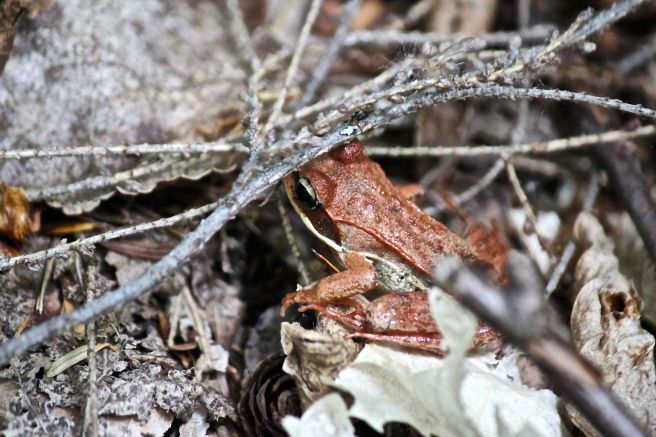
But I also came upon one disturbing sight. A dead frog. Only a week ago, a friend in Cumberland discovered four dead frogs in a pool. In an e-mail exchange, Dr. Fred Cichocki explained to her, “Chytrid fungus is one potential and troubling cause of amphibian deaths. Another, and one we should all be aware of and be on the lookout for (especially in southern Maine) is ranavirus. It mainly affects woodfrogs (why no one knows) and primarily in the tadpole stage, where there may be 99+% mortality! The obvious symptoms are hemoragic lesions in the abdomen, and a behavior much like whale beaching, where the infected tadpoles swim onto the shore, turn belly up and expire en masse. Definitive identification requires either DNA sequencing or Electron Microscopic examination of tissue to reveal the characteristic virus particles. Once a pond or pool has ranavirus in it, it is probably impossible to erradicate (except maybe through frog attrition.) Ranavirus epidemics occur worldwide and are spreading, especially here in the Northeast.”

My dead frog was an adult. As were my friend’s. At the pool today, I was once again reminded that nature happens. And that it isn’t always pretty. Thankfully, I did spy a couple of live frogs.

w-snake 5

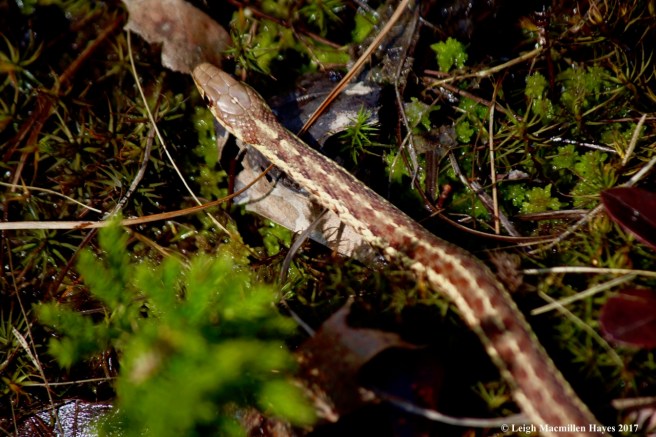
As I walked away from the pond, another garter snake.
w-snake 2

It was on the hunt.

Life and rebirth–the keys to spring. And sometimes, death so others may eat. But other times, death for reasons unknown. These aquatic sites offer an amazing biodiversity–and leave me with questions and understandings. Water works–I’m just not always sure how.
 

Into Focus

Sunshine. Spring sunshine. Need I say more. No, but I will as I bring the focus to two of my favorite watering holes.

h-Mount Wash

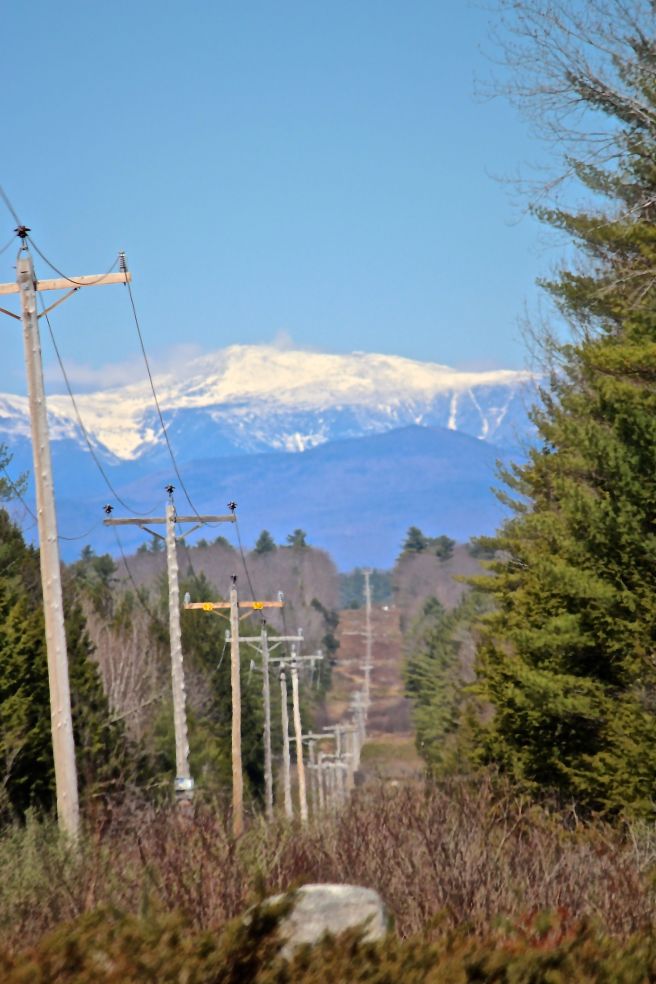
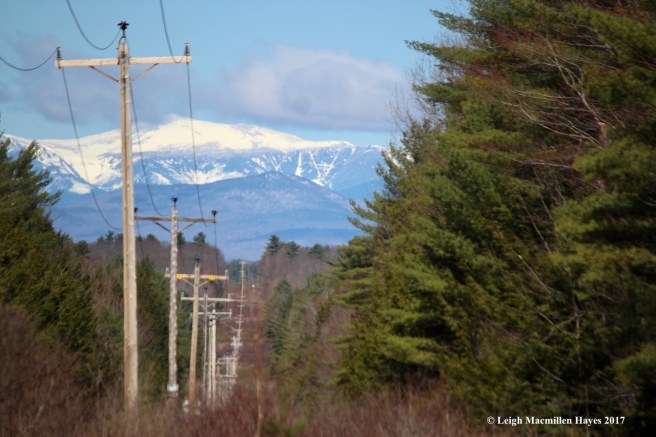
Of course, a visit to my first pond isn’t complete without a pause to recognize the power and the powerful.

h-wood frog eggs 1

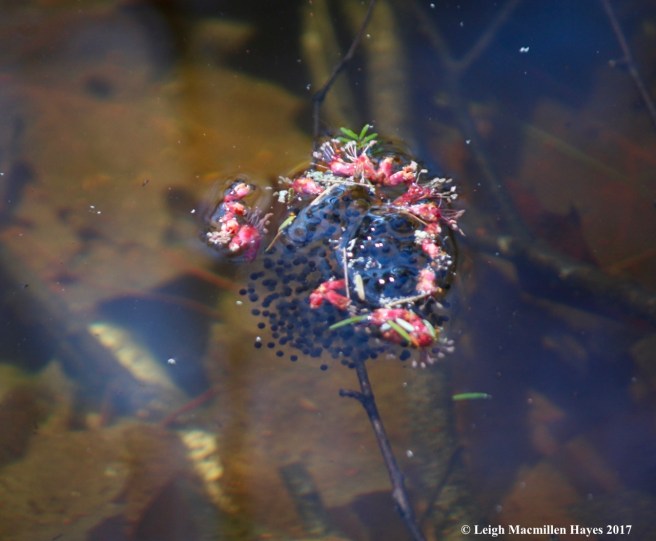
As I approached the vernal pool, I heard not a sound. But, my heart filled when I spotted a clump of wood frog eggs.

h-wood frog 1

When our sons were youngsters, we always called it the frog pond rather than the vernal pool. And so it is . . . both.

h-willow pollination

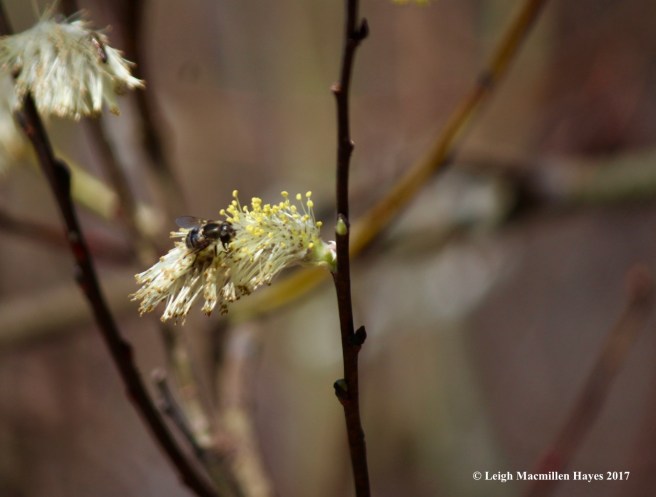
After an hour spent in the pond’s midst, I drove to another–Holt Pond–where I decided to park on the corner of Perley and Grist Mill Roads. I wasn’t sure of the conditions on Grist Mill Road and figured that provided the perfect excuse for a walk and an opportunity to take in the sights along the way. Stepping out of the truck, pussy willows called to me . . . and to their pollinators.

h-queen anne's lace

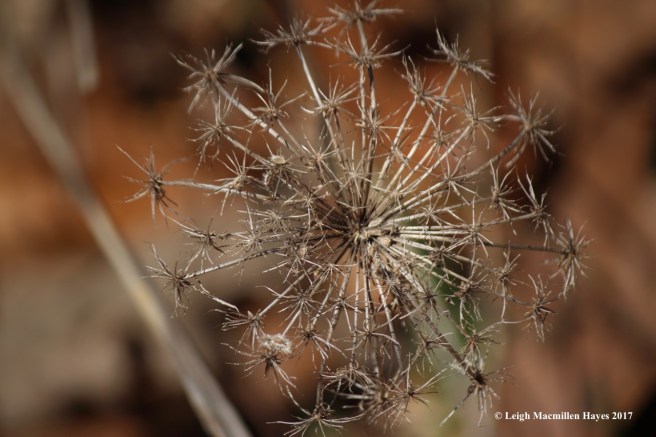
And on the corner, a dried Queen Anne’s lace displayed its fireworks formation.

h-sensitive fern frond

There were sensitive fern fronds, their beads still encapsulating many cases containing dust-like spores.

h-beaked hazelnut

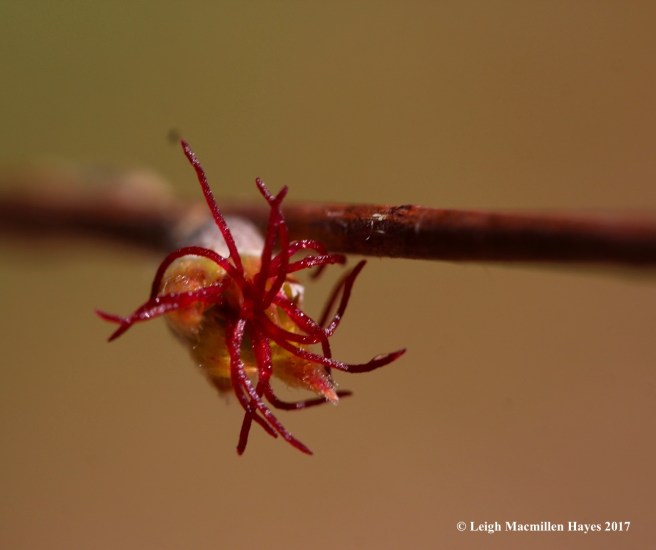
And I even found a few beaked hazelnuts still showing off their minute magenta flowers.

h-Grist Mill Road

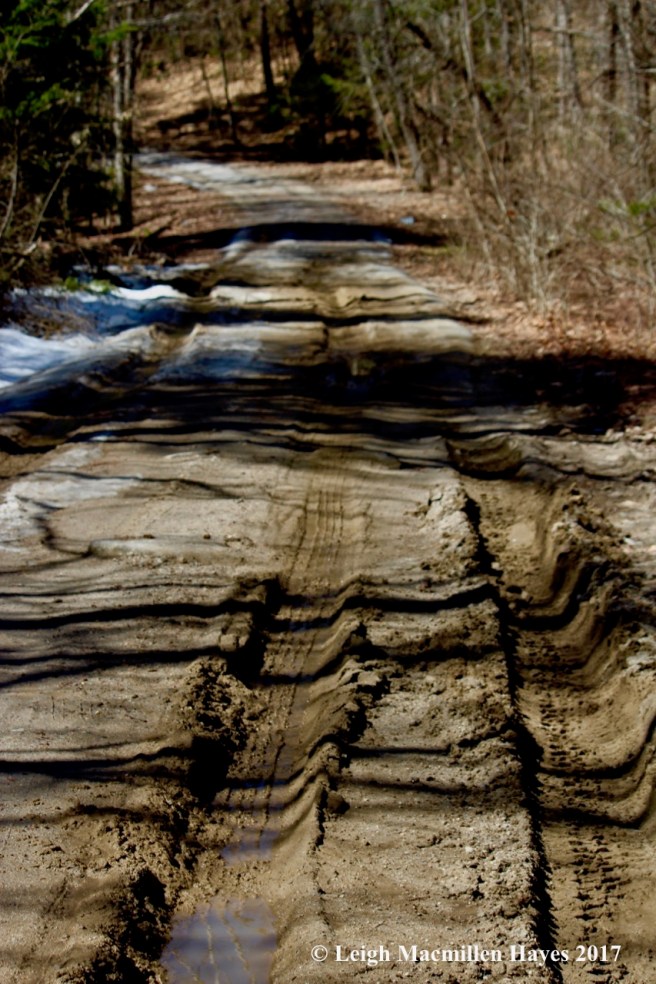
I knew by my observations that I’d made the right decision to walk in–both in my findings and in the road conditions.

h-beaver works1

After following the initial trail and climbing over the stonewall, I was about to step onto the first boardwalk when I realized the beavers had been busy.

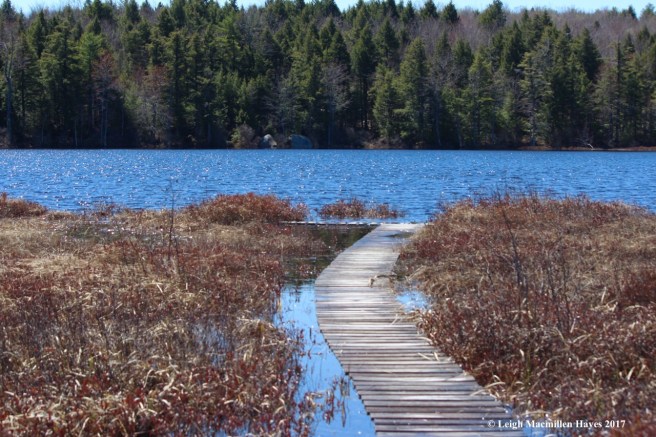
h-board walk-first section

The water was high as I quietly moved along the board walk, but not too high.

h-pitchers under water1

Although in some cases pitchers were submersed in the wet goodness.

h-speckled alder 1

The speckled alders didn’t mind for they love wet feet.

h-Muddy River

I stepped out to the Muddy River and listened to the chickadees sell cheeseburgers galore.

h-beaver lodge

And then I turned in the opposite direction to admire the beaver lodge and winter feeding pile beside it.

h-Boardwalk through red maple swamp 1

On the next boardwalk, the beauty of the red maple swamp surrounded me again.

h-Red Maple Swamp 1

Layers and colors spoke to the community and season.

h-red maple in swamp

And standing like sentries were the red maples for which it is named.

h-moose scat

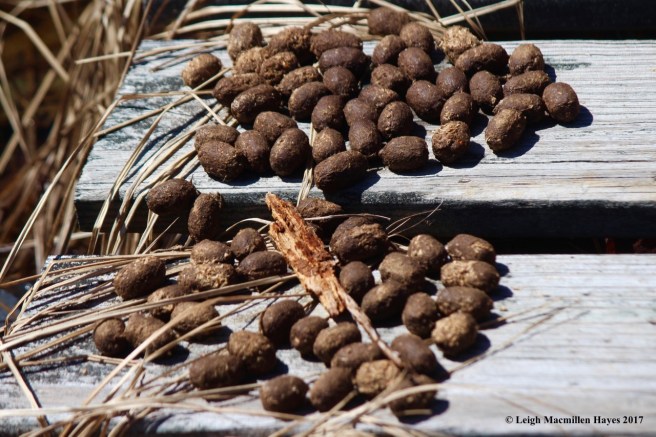
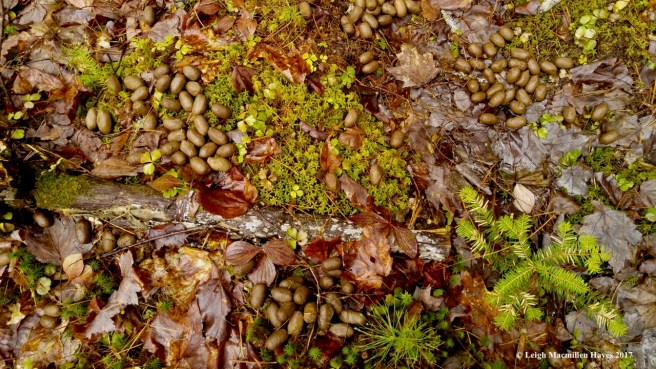
It was here that I found evidence of another visitor, albeit this past winter–moose scat.

h-blueberry bud

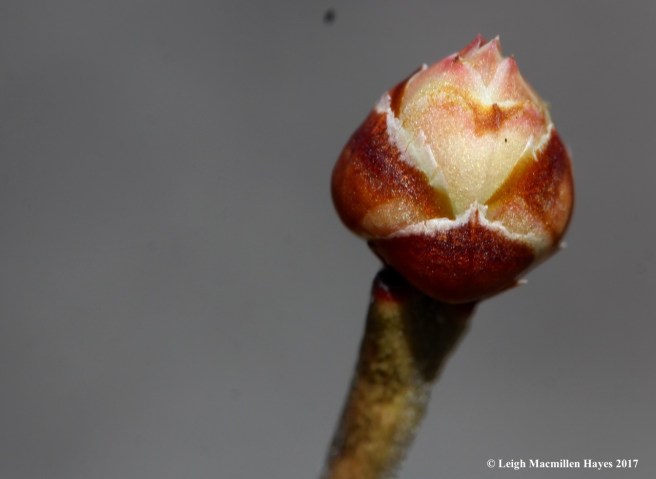
And noted the swelling buds of highbush blueberries–their season in the offing.

h-Quaking Bog 2

After passing through the woodlands a couple of times in between the swamp journey, I at last reached the quaking bog and Holt Pond.

h-cranberries

Beside the board walk, last autumn’s cranberries floated in the water.

h-pitcher 2

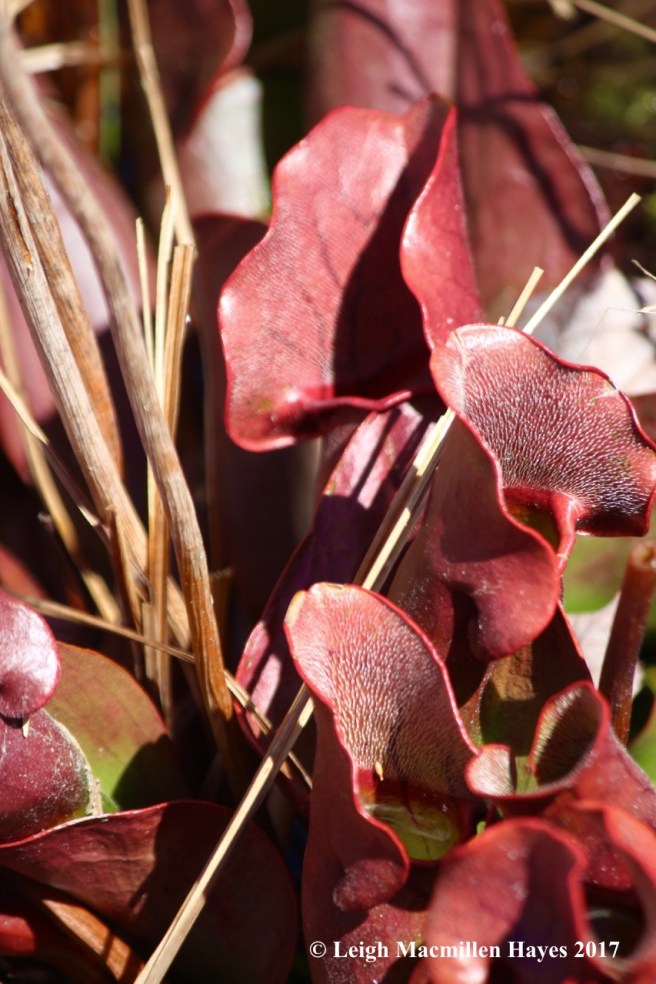
And more pitcher plants showed off their hairy entrance ways.

h-pitcher flower

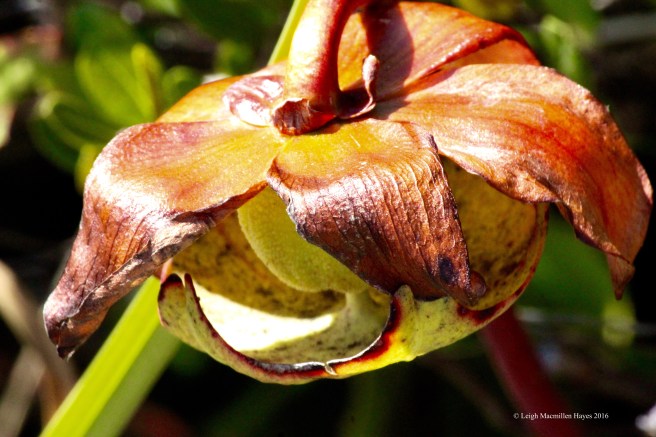
Withered pitcher plant flowers dangled in their woody fashion–as beautiful in death as in full bloom.

h-Holt Pond south

By the time I reached the T on the boardwalk, I was standing atop it, but in six inches of water–thankful for my rain boots.

h-Holt Pond to Five Fields

And thankful for the opportunity to stand there on a gorgeous spring day as I looked toward Five Fields Farm.

h-Canada Geese

In that very view–two Canada geese. I wondered if they’d found a nest site.

h-dragonfly exoskeleton 2

Also in view, last year’s dragonfly exoskeleton that bobbed in the water flowing over the boardwalk.

h-cinnamon crosier 1

On the way back, I stopped once again. My first photo call was an ostrich fern that I didn’t realize grew there. See why you should walk in rather than drive? That photo didn’t come out so well, but I was standing in an area filled with cinnamon ferns and suddenly realized I was looking at my first crosiers of the season.

I was actually down by a stream beside the road when I found these. A truck came along and the driver paused. He and his friend thought I was fishing and were going to ask what I’d caught. “Only photos,” I said playfully.

h-garter snake 1

Upon returning home I decided to visit the frog pond one more time, thinking the lighting would be different. At the end of the cowpath I found a garter snake enjoying the warmth of the sun . . . and probably a few insects.

h-wood frog eggs 2

When I’d walked to the pond this morning, I was surprised at how quiet it was. That changed this afternoon as a chorus of wrucks added music to my day. And another egg mass had been added to the display.

h-wood frog 2

Of course, all quieted down once I arrived, but I waited . . . and realized the pond really is full of life.

I’d spent the day beside my favorite ponds and was well rewarded. I’d also played with my camera settings, avoiding auto-focus all day. I’ve got a lot to learn, but hey, isn’t that what it’s all about?

Honoring the Earth

It would have been so easy to stay home last night, curled up on the couch beside my guy while watching the Bruins play hockey. After all, it was raining, 38˚, and downright raw. But . . . the email alert went out earlier in the day and the evening block party was scheduled to begin at 7:30. And so, I piled on the layers from a wick-away shirt to Under Armour, a turtleneck, sweater, LL Bean vest and rain jacket. I slipped into my Bogg boots and made sure I had the right gear–smartphone for photos, reflective vest, headlamp and flashlight. With a visored hat on my head to shield my glasses from the rain, I was finally ready. Out the door and down the road I went, headed to the Lakes Environmental Association‘s office for Big Night.

h-Big Night Patrol 3 (1)

I wasn’t the only one crazy enough to attend the party. Our number was about twenty. I think the best part was that we ranged in age from 6 to almost 60, the latter being me–the oldest kid on the block. And in that mix, one teen who was celebrating his 15th birthday (Happy Birthday, Kyle), and several teens who had never attended before but came because one of their crowd was an annual participant. We even had two policemen in the mix–and though their job was to slow traffic and keep us safe, they had as much fun as we did completing our mission.

h-spotted sallie 2 (1)

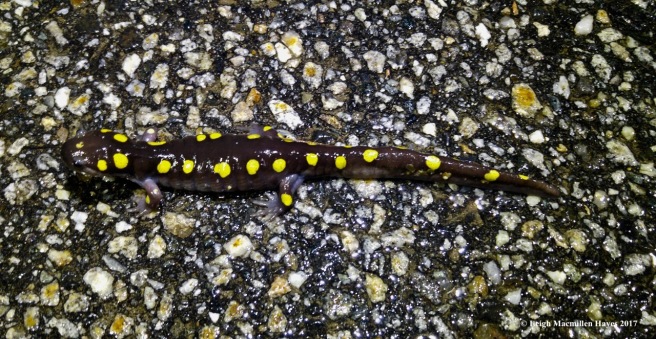
Said mission–to help spotted salamanders . . .

h-spring peeper 1 (1)

and spring peepers cross the road.

h-redback salamander (1)

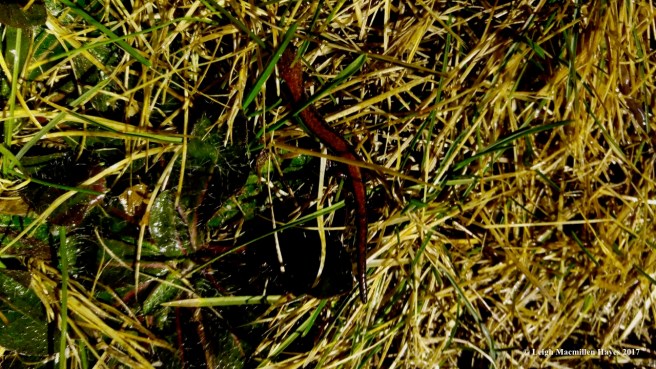
We did so for a while and then headed back to our vehicles. Just before reaching the spot where we’d all parked, someone spotted this redback salamander–I smiled because its the symbol of the Maine Master Naturalist Program.

We were wet. We were cold. And we were happy. As nature would have it, Big Night preceded Earth Day–a perfect beginning.

h-candy lichen

Earth Day began appropriately with a board meeting at Lakes Environmental, where among other topics, Dr. Ben Peierls, the new research director of LEA’s Maine Lake Science Center, shared with us his plans for the water quality testing laboratory. Ben addressed us first so that he could drive to Portland and join the March for Science. We continued our meeting, but were thankful for his representation. Meanwhile, directly outside and all around town, another gathering was taking place as many people participated in an Earth Day cleanup.

By the time I left the meeting pleased with all that had been accomplished, I was ready for a solo adventure to find out what the Earth wanted to share with me since most of the snow melted this past week. Despite being another raw day, or maybe because of it, the candy lichen brought a smile to my face. I think one of the cool things about this lichen is that even though its salmon-colored fruits stand atop stalks, this is really a crustose (crust-like) lichen, the bluish-green surface being the actual structure.

h-juniper berries

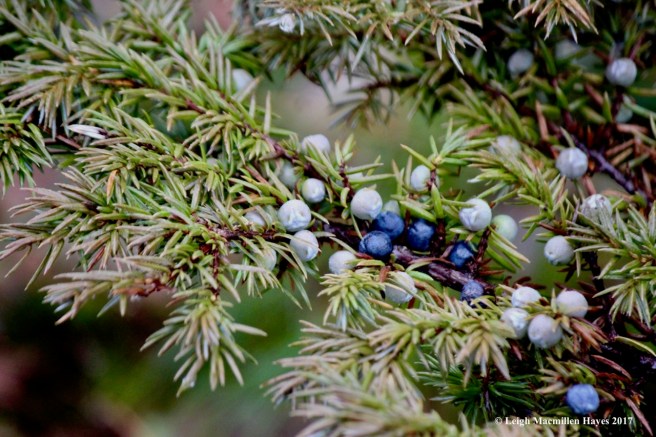
Near the candy lichen, the bright blue of some berries stood out on the common juniper. They remain on the shrubs all winter and it seemed only a wee bit ago they looked all withered. Today’s offerings were plump and pretty.

h-pine droplets

And then there were the raindrops, each waiting its turn to continue the journey toward the earth. I had to wonder what else it might fall upon before reaching its final destination–each little ball encapsulating nourishment.

h-lambkill

One of the receivers, sheep laurel, which displayed its own new life.

h-trailing arbutus

And at the base, trailing arbutus. One year ago, as I noted in my Earth Day post, it was already in bloom. This seemed a reminder from Mother Earth that we need to practice patience.

h-wild turkey

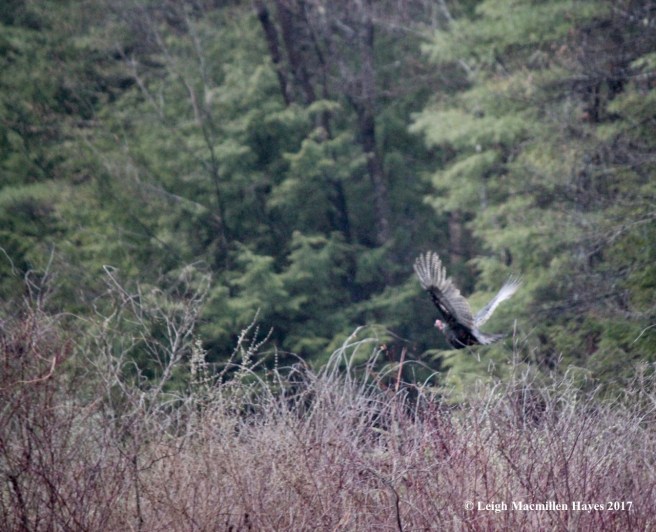
I continued my mosey, as quiet as could be, and so was startled when one large, exotic bird, and then another, and a third flew off from behind a stone wall. And then I realized they were wild turkeys–who truly are exotic if you take a look at all the colors in their feathers.

h-tinder conks on beech

I’d been on the snowmobile trail, but traveling was difficult given some remaining icy snow and deep ruts filled with water. As if I needed an excuse, I decided to slip into the woods. One of my first delights–tinderconks lining a tree as I looked up.

h-moss covering

But really, it was the thick moss coating at the top of the tree that first drew my attention. Several trees in the neighborhood displayed the same fashion.

h1-woods south (1)

My wander was aimless, taking me through boggy areas . . .

h-snow1

and small sections where snow still blanketed the ground.

h-deer prints in snow

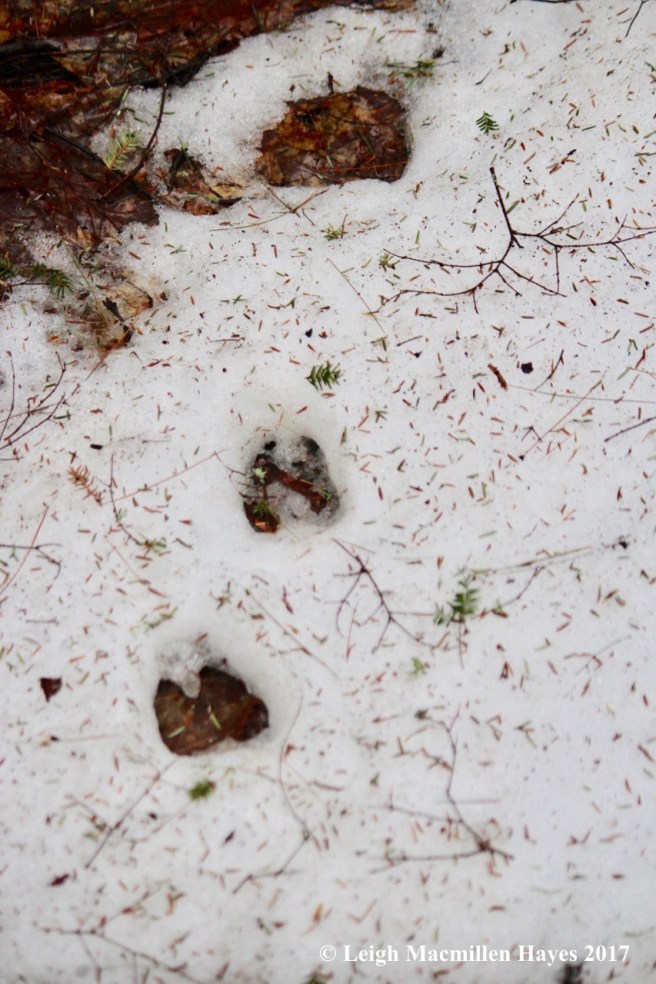
Besides plenty of deer scat, I found prints . . .

h-deer hair

and hair.

h-deer hair bubbles

Raindrops enhanced the hair.

h1-moose scat 1 (1)

And though I suspect they’ve moved toward open water, there was plenty of evidence that the moose had also spent the winter in these woods.

h-moose hair

They, too, have shed hair–preparing for the summer scene.

h-moose maple

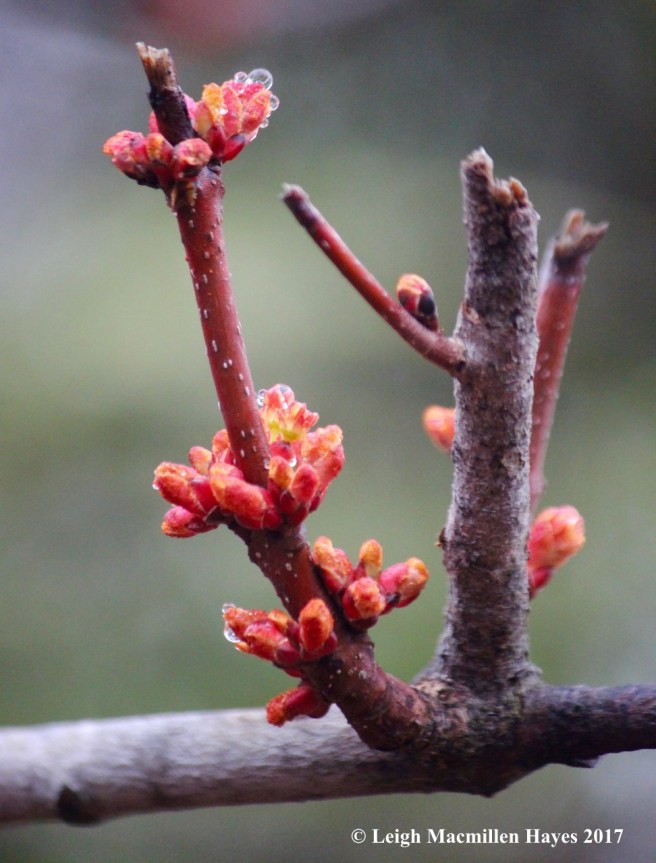
A couple of months ago, I’d been concerned that the moose had consumed all the tree buds, but the red maples showed me otherwise.

h1-woods south 2 (1)

At one point, I stood for a while atop a rock and looked to the south.

h1-woods north (1)

And then to the north. It was as I stood there that I heard a repeated sound. It began with a few slow beats, and then a swift series of beats. All seemed muffled. It finally occurred to me that I was listening to a ruffed grouse. Eventually, I followed the drumming and came close to the one beating its wings against a log–the work of a displaying male. I didn’t bother to seek out the actual bird for I knew I’d startle it and it would fly off, so I let it drum in peace, thankful for the opportunity to at least hear it. Really, it was a first for me. Oh, I’ve possibly heard it before, but only today did I recognize it for what it was.

h1-widowmaker (1)

For a while, I was fake lost . . . and then I heard another repeated sound that lead me to a widowmaker and I knew exactly where I was. But where was the maker of the sound?

h-owl 1

In a tree above me.

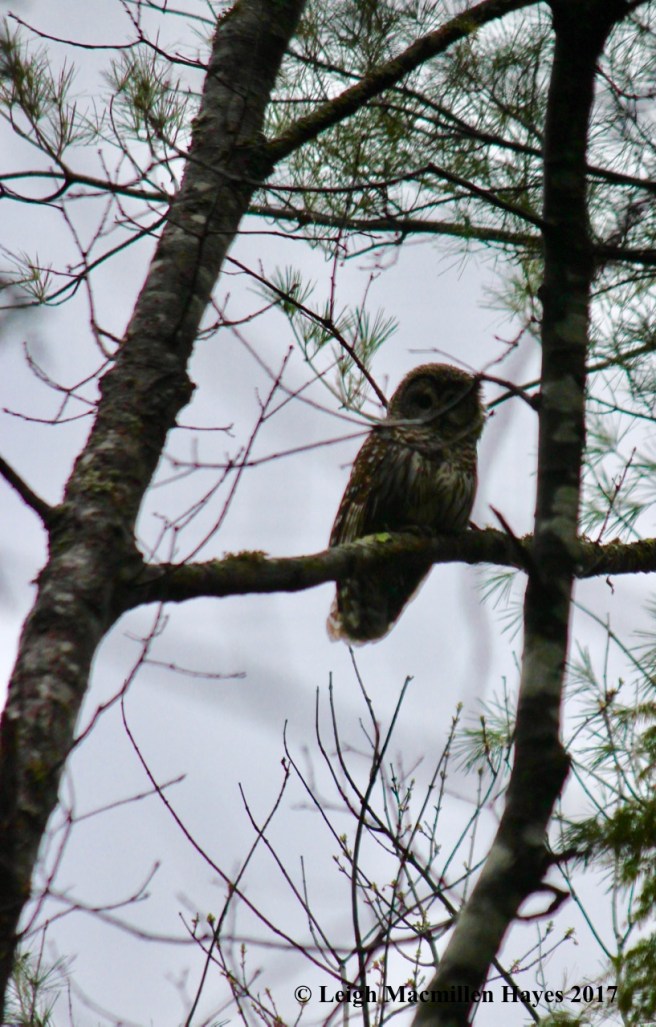
There were actually two barred owls and I was so thankful for the honor of listening to and watching them on this Earth Day.

I was also thankful for all the privileges bestowed upon me. The privilege of living. The privilege of noticing. The privilege of questioning. The privilege of understanding. The privilege of wandering. And especially, the privilege of wondering. Thank you for your offerings, Mother Earth. I am honored to know you.


May I Have This Dance?

Haha. If you know me well, you know I’d rather be a wall flower than step onto the dance floor. I easily managed to avoid all high school dances, except one prom. And then, barely danced at that, probably much to my date’s dismay. After that, so many moons ago, I don’t think I danced again until my wedding–at which time any dear friends in attendance watched with humor at my awkward movements. But today, I felt the rhythm surging through my body.

v-snow on trail

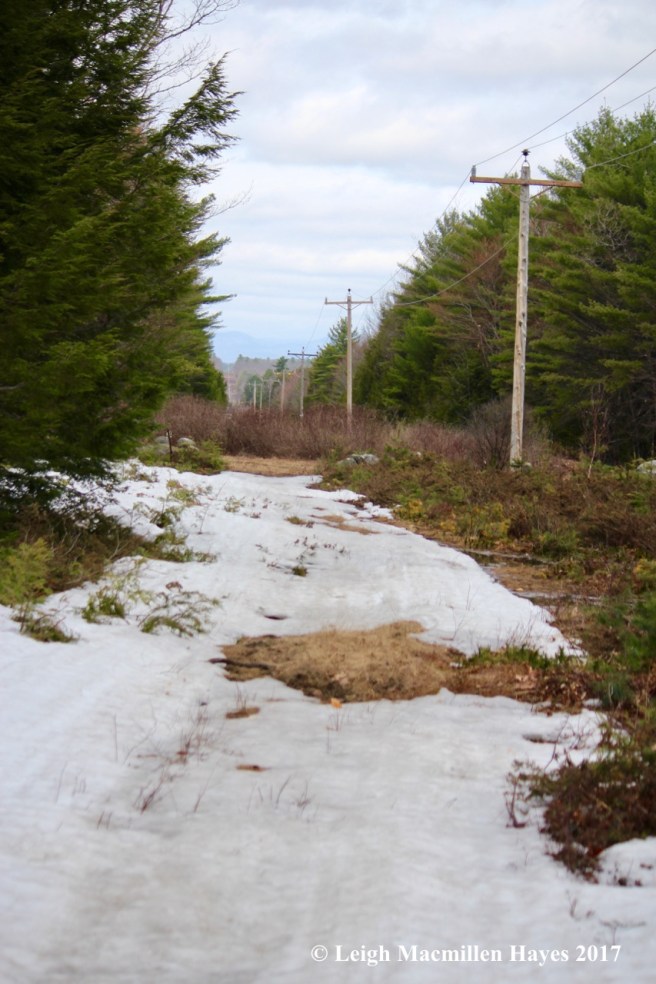
It all began on my way to the vernal pool. Perhaps it was really just a shiver as the breeze blew across the last of the snow, hard packed still along the snowmobile trail.

v-springtails 1

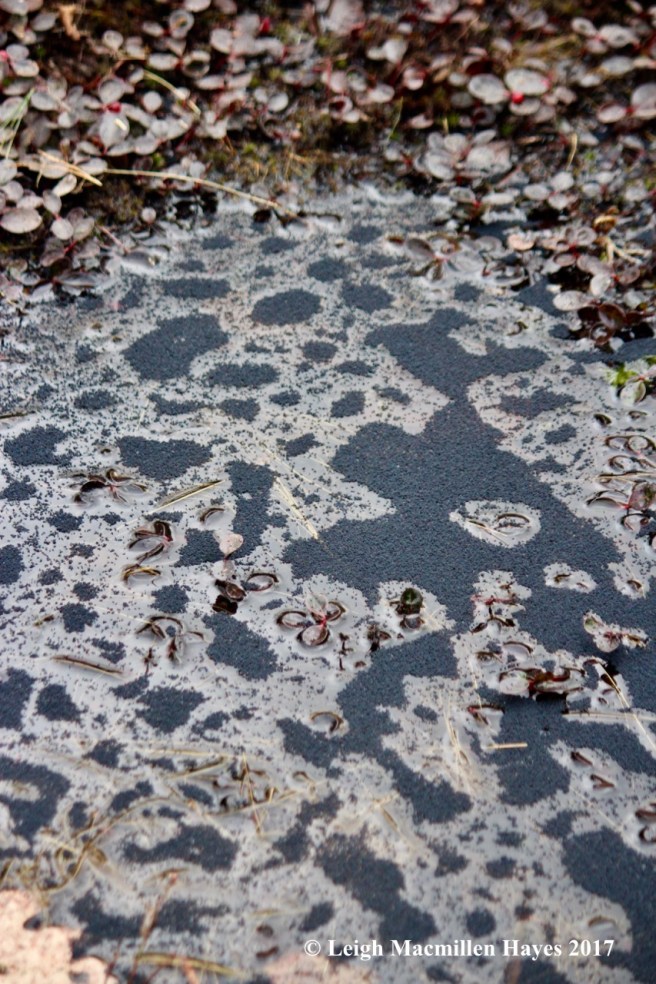
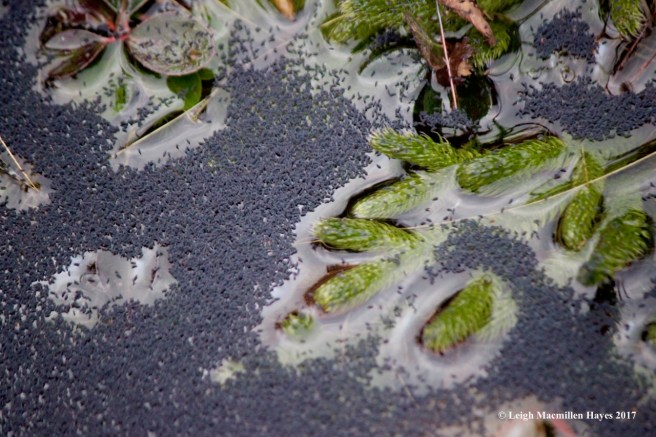
Or maybe it was the depression that held the snowmelt and was covered with an oil slick of sorts . . .

v-springtails 2

which turned out to be a million springtails bopping to their own tunes.

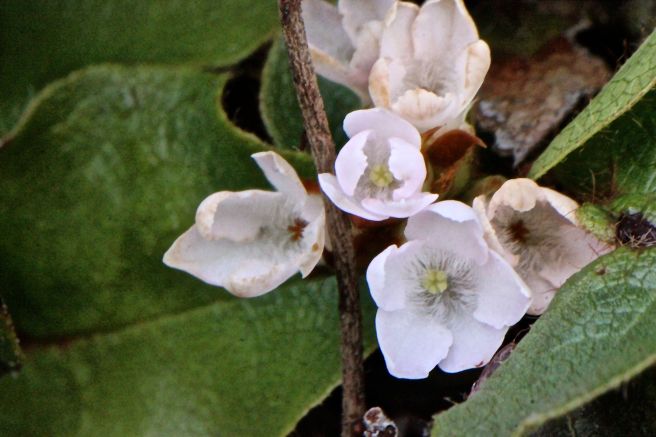
v-trailing arbutus 1

It could have been the sudden sight of so many trailing arbutus plants that got me going.

v-trailing arbutus 2

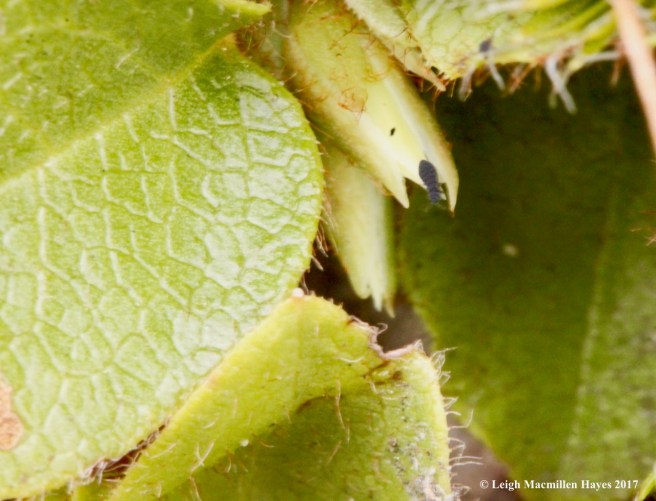
Certainly I wasn’t the only one excited by those flowers yet to be. (Do you see the springtail on the tip of the bud?)

v-vernal pool

Or it might have been the ever shrinking ice cover at the pool that made my feet tap.

v-vp edge opening

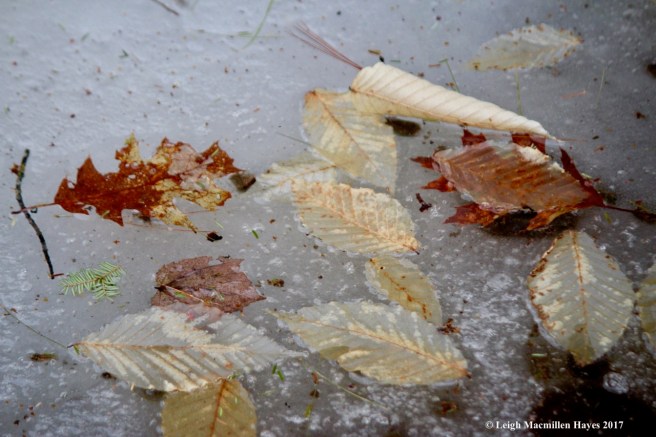
Perhaps it was the fallen beech leaves atop tree reflections that forced me to sway.

v-leaf offerings

Or the way the hemlock, oak, maple and beech leaves intermingled.

v-spermatophores

What I do know is that there was no stopping me once I spotted spotted salamander spermatophores atop leaves in several open sections–the sperm being located at the top of the cauliflower-shaped platforms.

v-frog 1

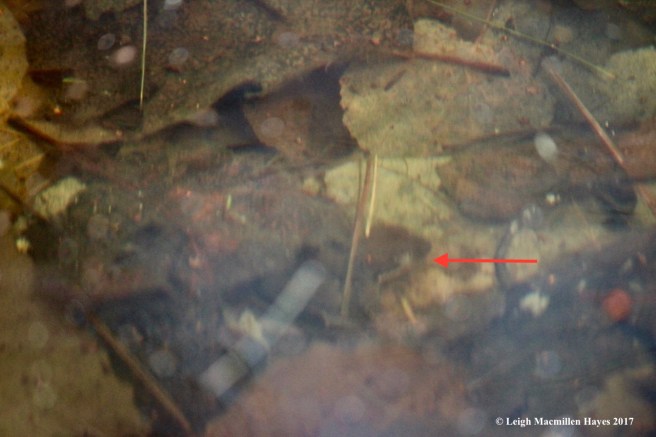
And then I saw something swim under some leaves that really got me rocking. Do you see the face of the wood frog, hiding as best it could?

v-fox scat beside vernal pool

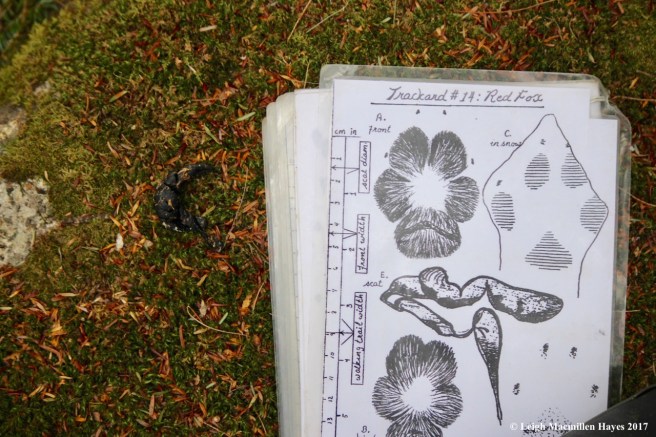
As I began to circle around the dance floor, I noticed an offering of scat that made me think a red fox had sashayed beside the pool.

v-sharp-shinned hawk feather?

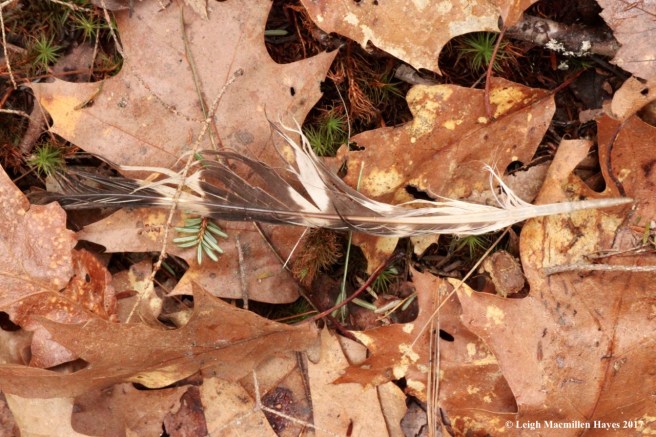
On my own sashay home, I discovered that there were other dancers in the midst–this one possibly a sharp-shinned hawk.

v-woodpecker feather

And after that a woodpecker.

v-junco feather?

And then a junco.

v-red maple flowers 1

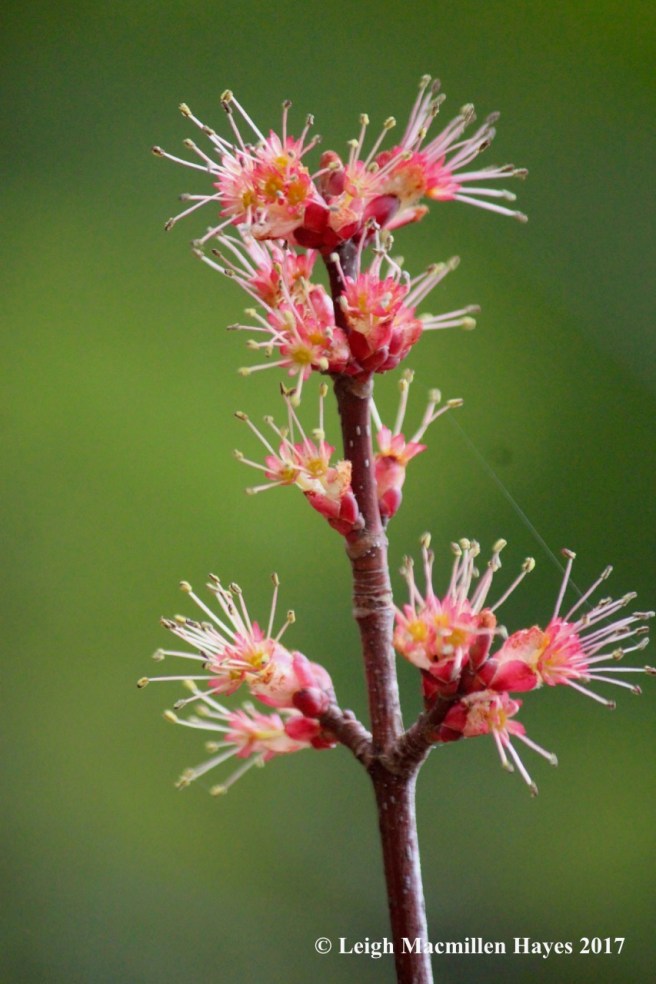
Along the cowpath, the red maple flowers blushed as I might were I to get all gussied up in a flowing dress.

v-red maple flowers 2

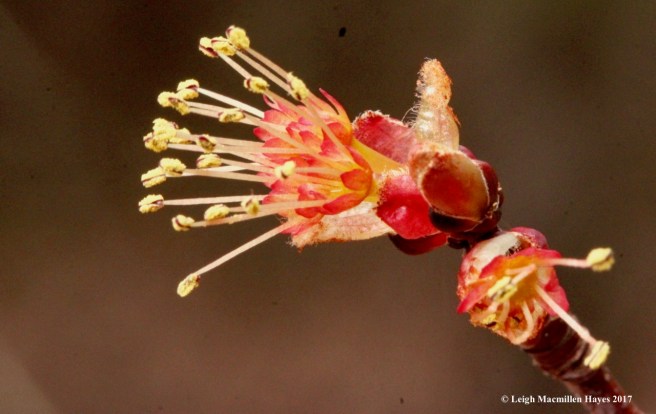
Much the way a suitor might wink, so much has happened so quickly. Within the past week the snow melted almost entirely away and winter released its hold on me. Now I’m ready to groove with the choreography of spring’s rhythm. I hope you’ll join me on the dance floor.

May I have this dance?


So Many Unknowns

On this historic election day, a few friends and I took to the woods with the intention of absorbing not only the sun’s heat, but the warmth of each others company. Yes, occasionally our conversation turned to politics and wonder about the future, but for the most part, we just wanted to wander together.

h-vp-1

Our first spot for consideration–a vernal pool tucked away in the woods.

h-vp-2

In true v.p. behavior, it dried up during the summer drought, though as we moved about we experienced a sinking feeling–muck obscured by grasses and leaves. This particular pool is home to fairy shrimp and their eggs cases are protected under the leaf litter until water returns. The amazing thing about fairy shrimp–those eggs can survive long periods of drying and freezing. We trust we’ll have the opportunity to meet the next generation.

h-wintergreen-1

Sometimes our eyes were tricked by what we viewed and we questioned how things could be so.

h-wintergreen-with-candelabra

But upon a closer examination of the facts, we realized that a club moss was merely growing near the wintergreen and the wintergreen hadn’t taken on a strange candelabra form.

h-clearing

Our questions continued, however. Why was the ground completely cleared in the middle of the trail? Mammal behavior? We noted boot prints and wondered about human interaction. Finally, we moved on, unable to understand the reasoning, but knew that there are some things we’ll never fully comprehend.

h-green-oak-leaf

In another place, we noticed a green red-oak leaf. A holdout perhaps that preferred the way things had been and didn’t want to follow the rest of the group?

h-hawkweed-1

Occasionally, we calmly debated the structures before us as we considered shape and hairiness and growth pattern and location before we determined species–in this case, hawkweed.

h-wood-art-1

And other times, no need for questions, no need for answers. Pure admiration for the presentation was enough.

h-ladybird-beetle

When we were again drawn in for a closer look, in this case at the white fuzzy beech scale insect, we suddenly realized there was so much more to observe, such as the black ladybird beetle.

h-spiny-leaf-beetleladybird-hatching-from-pupa-stage

And then, something we didn’t understand at all. What was this spiny creature? And what was emerging from it? We left with that question floating among us. It wasn’t until doing some research later that I came to what may be the answer. Was it a ladybird beetle emerging from the pupa stage? How I wish we could go back and find it again and look at it with a different mindset.

h-alt-dog-lichen-1

Drawing close to the finish of our journey together, we spied something we’ve passed many times before, but never noticed.

h-alt-dog-lichen-2

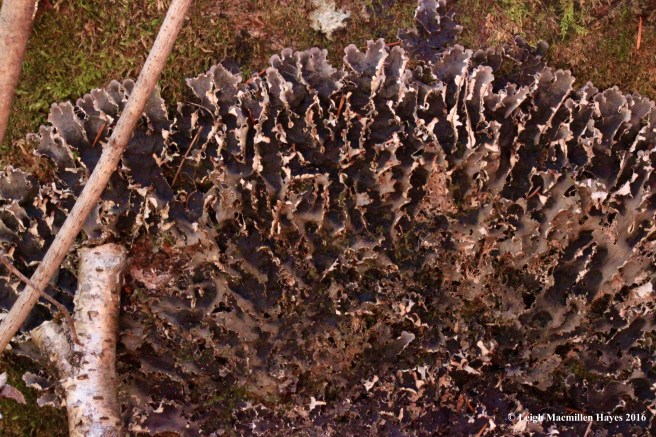
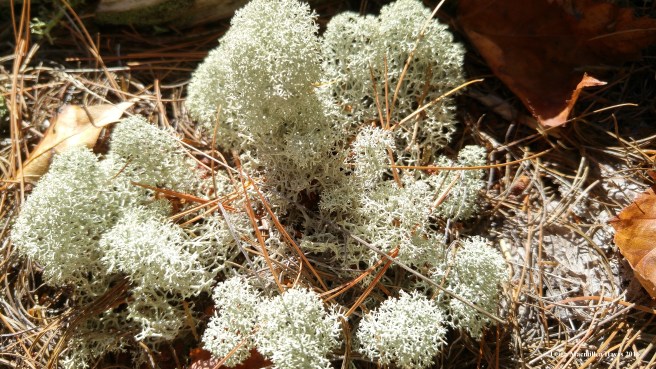
Again, we’ll need to revisit the mossy boulder, but we determined it was a dog lichen. Why dog? Was it so named for the white “fang” like rhizines on its lower surface?  Or did the lobes remind someone of dog ears? Based on the large, fan-like shape, my leaning is toward Peltigera membranacea or Membrane Dog Lichen. But, I could be easily swayed on its ID.

h-milkweed

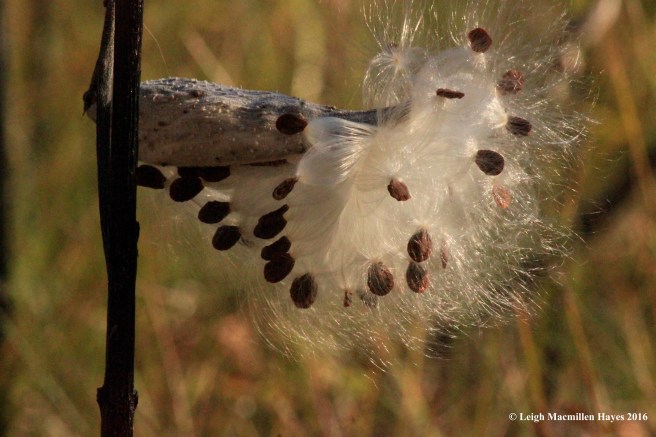
A short walk and hours later, we finally passed a field of milkweed, their seeds blowing in the slight breeze like flags on a pole.

It was time to say goodbye to friends who will head south this weekend before I headed back to “reality” and colored in those little ovals.

I think we all came away thankful for the questions raised and knowledge shared, but still . . . so many unknowns.

On Hands and Knees to Wonder

When I invited Jinny Mae to join me at Loon Echo Land Trust’s Bald Pate Preserve this afternoon, she eagerly agreed. And three hours later, I know she had no regrets. Though we never reached the summit, neither of us cared. Our minds were boggled by all that we had noticed.

b-foster-2-1

Somehow we managed to beeline our way to the Foster Pond Lookout. And then we slowed down. To a stop.

b-shield-2

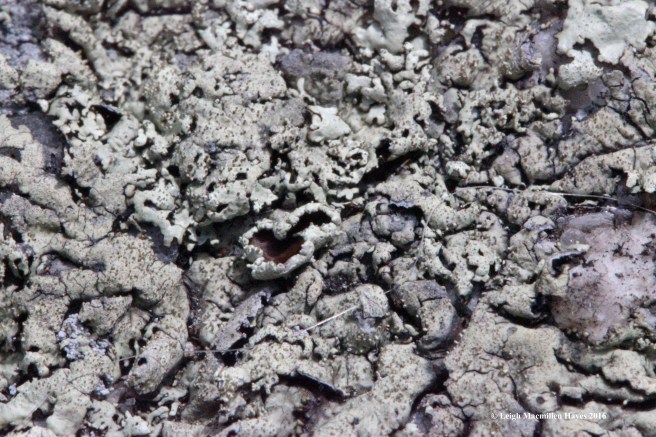
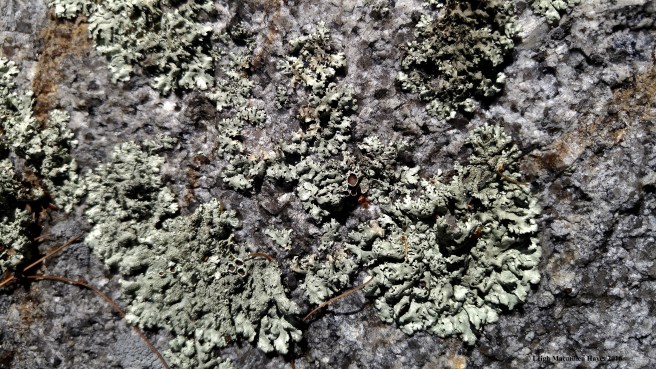
And so we got rather personal with the rock substrate as we took a closer look. At lichens. For what seemed like ever, it was thought that lichens were symbiotic life forms consisting of Freddy Fungus and Alice Algae, who took a liken to each other and their marriage formed a single organism. Sometimes, cyanobacteria or blue-green algae was tossed into the mix. The fungus provided shelter (algae can only live where they won’t dry out and so being surrounded by fungal cells meant Alice could live outside of water), while either of the photosynthetic partners, algae or cyanobacteria, produced food from the sun.

It’s no longer just a story about Freddy and Alice living together, however. New scientific research deems another partner in the mix–yeast, which also provides protection. I feel like just stating that puts me way out of my league.

b-shield-1

Our goal wasn’t to understand those relationships per say. We just wanted to spend some time looking and developing an eye to recognize these structures while appreciating their life’s work that often goes unseen.

b-shield-on-rock-2-1

Some grow at an especially slow rate–think hundreds of years rather than decades. That in itself, should stop us in our tracks. And yet, as we stand 5+ feet above those that grow on rocks, we hardly notice them.

b-green-shield-5-1

The  dark brown fruiting bodies, called apothecia, are where spores are produced and life continues. Walk tenderly, my friends.

b-toadskin-2

Jinny Mae’s excitement over the toad skin lichen was contagious. Notice its warty projections–much like the skin of an American toad, which varies in color.

img_6343

I spied this toad a few days ago, but its skin certainly helps qualify the lichen’s common name.

b-toad-skin-lichen-3

If you look in the center, you can see the point where the lichen attached to the rock–the belly button of this particular lichen making it known as an umbilicate lichen.

b-toad-skin-lichen-wet-and-dry

And among the favorite finds of the day, Jinny Mae was the first to spy this. It had rained this morning and everything was dry by the time we hiked, but some signs of moisture remained. In this case, it’s wet toad skin contrasted by dry toad skin. If you are willing to give up some water from your water bottle, you can create the same contrast. And note the black dots–its fruiting bodies or apothecia where its spores are produced.

b-british soldier patch (1).jpg

The more we looked, the more we saw.

b-Gritty British soldier lichen.jpg

British soldiers were topped by their brilliant red caps–forever announcing their presence.

b-pixie 1.jpg

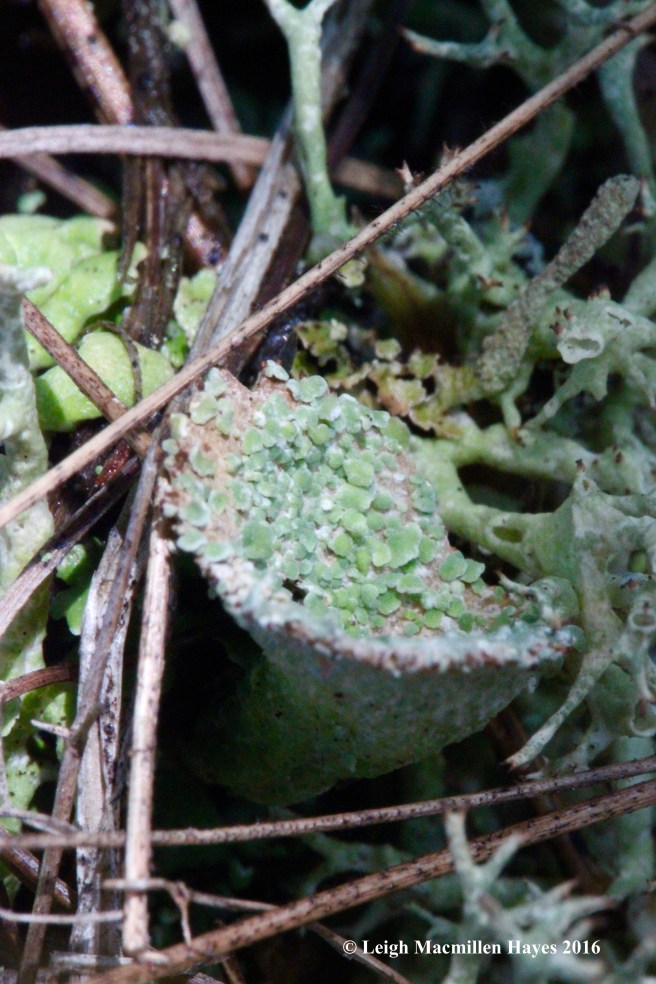
Pixie-cup lichen stood like goblets, ready with magical potions.

b-pixie-cup-filled-to-the-brim

Some were filled to the brim and almost overflowed with life.

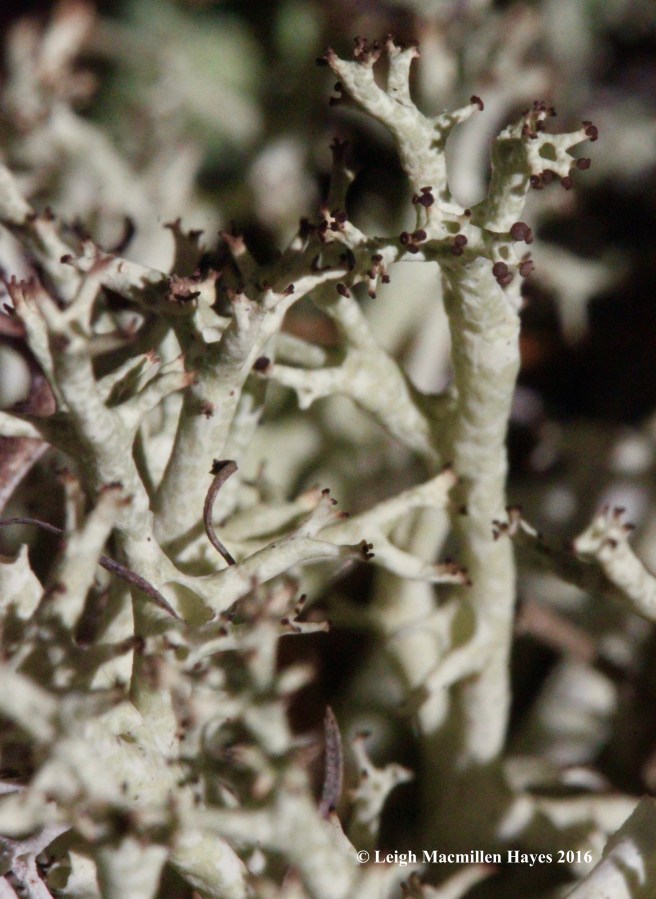
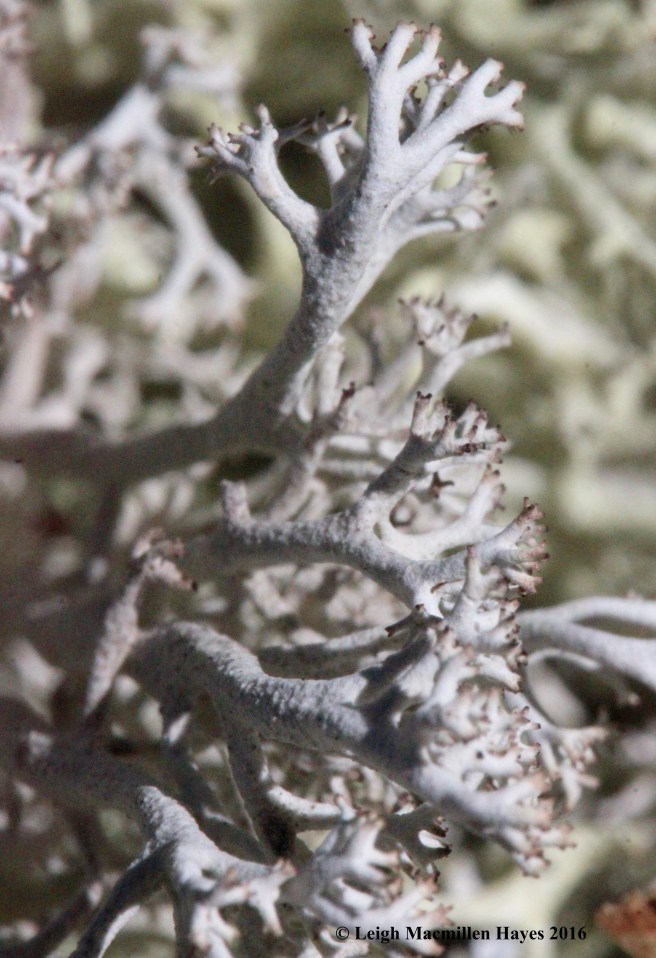
b-reindeer-1

We marveled at the green,

b-reindeer-gray

gray,

b-reindeer-foam-1

and foam-like structure of reindeer lichen. These are treats for reindeer and caribou, neither of which frequent our region except for one night a year.

b-yarn-moss

And then we looked at the next layer in succession on a rock. Once the lichens have established themselves, mosses move in. Did you ever think about the fact that mosses don’t have flowers, stems or roots? Instead, they feature tiny green leaf-like structures and microscopic hair-like structures. They send their “hairs” into the crevices created by the lichens and anchor themselves to the rocks. Today, we found a moss neither of us remember seeing before.

b-yarn-moss-2

To us, it offered a square presentation and we debated its identity. While we thought it may be yellow yarn moss, I’m now leaning toward medusa moss–though their leaf edges are smooth and these are obviously toothed.  Do you know? Which ever it is, we were wowed.

b-view-from-the-rock-1

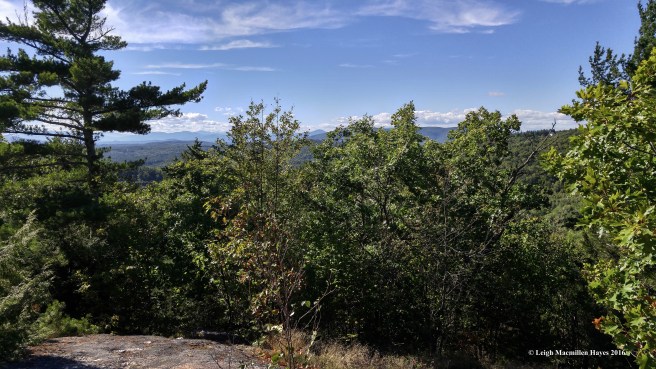
We finally moved on, hiking to a false summit to take in the western view.

b-polypody-among-rock-tripe-1

The late afternoon sun and breeze played havoc with our views, but we eventually reached the rock tripe wall, where common polypody took advantage of the living conditions.

b-tripe-wall-1

The lichen covered a ledge, some of it green from the morning rain, but surprisingly much of it still brown. Like the toad skin lichen, rock tripe are umbilicate and attached to the rock at a single point. They reminded me of elephant ears flapping in the breeze.

From there, we headed down. Our pace on the slow side all afternoon.

And sometimes we had absolutely no pace at all, unless you consider the motion (and grunts) as we got down on our hands and knees and even our bellies to take a closer look. It was all worth a wonder. And we did.


Halting Beside Holt Pond

Halting–prone to pauses or breaks. I didn’t break, but I certainly was prone to pauses as I moved along the trails and boardwalks at the Holt Pond Preserve in South Bridgton this afternoon.

h-pitcher flower2

One of my first stops–to admire the pitcher plant flowers in their August form.

h-pitcher  flower up close

When I took a closer look, I realized that the seeds were developing–certainly a WOW moment in the world of wonder.

h-buttonbush.jpg

The global seed heads of buttonbush also demanded to be noticed. Upon each head are at least two hundred flowers that produce small nutlets. What strikes me as strange is the fact that this plant is a member of the coffee family. Maine coffee–local brew; who knew?

h-Muddy across

At the Muddy River, the water level reflected what is happening throughout the region–another case of “Honey, I shrunk the kids.” It’s downright scary.

h-speckled bug and speckles

Both by the river and on the way to the quaking bog, this wetland features a variety of shrubs, including one of my many favorites, speckled alder. Check out the speckles–those warty bumps (aka lenticels or pores) that allow for gas exchange. And the new bud covered in hair.

h-speckled alder catkins

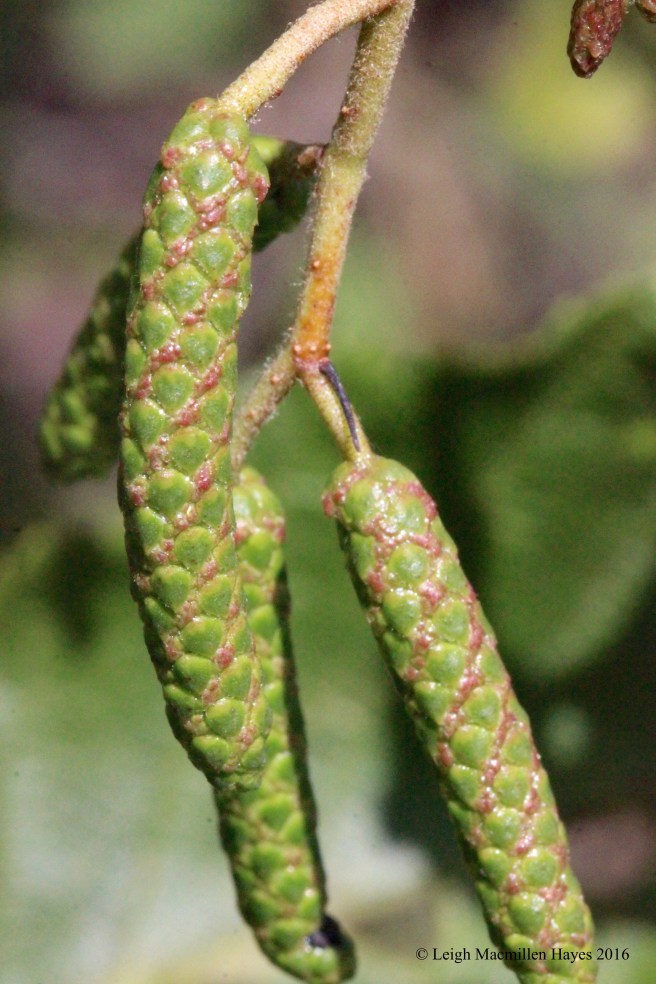
This shrub is so ready for next year–as evidenced by the slender, cylindrical catkins that are already forming. This is the male feature of the shrub.

h-speckled cones new

It also bears females–or fruiting cones filled with winged seeds.

h-speckled old cones

It’s not unusual for last year’s woody cones or female catkins to remain on the shrub for another year.

h-cranberries

Whenever I visit, it seems there’s something to celebrate–including ripening cranberries.

h-cotton grass

Common Cotton-grass dotted the sphagnum bog and looked as if someone had tossed a few cotton balls about. Today, they blew in the breeze and added life to the scene. Note to self–cotton-grass is actually a sedge. And sedges have edges.

h-holt pond left

Just like the Muddy River, Holt Pond was also obviously low. Perhaps the lowest I’ve ever seen. At this spot, I spent a long time watching dragonflies. They flew in constant defense of their territories.
h-slaty skimmer, male

Male slaty skimmers were one of the few that posed for photo opps.

h-canoe on pond

As I watched the dragonflies flit about along the shoreline and watched and watched some more, I noticed a couple of fishermen making use of the LEA canoe. I don’t know if they caught any fish, but I heard and saw plenty jumping and swimming. Well, a few anyway. And something even skimmed across the surface of the water–fish, snake, frog?

h-rose hips.jpg

Rose hips by the pond’s edge reminded me of my father. He couldn’t pass by a rose bush without sampling the hips–especially along the shoreline in Clinton, Connecticut.

h-pond toward 5 Fields

The view toward Five Fields Farm was equally appealing.

h-pickerel frog

And then I moved down tire alley, which always provides frequent sightings of pickerel frogs. I’m never disappointed.

h-golden spindle

At the transition from a red maple swamp to a hemlock grove, golden spindles embraced a white pine sapling as if offering a bright light on any and all issues.

h-hairy woodpecker

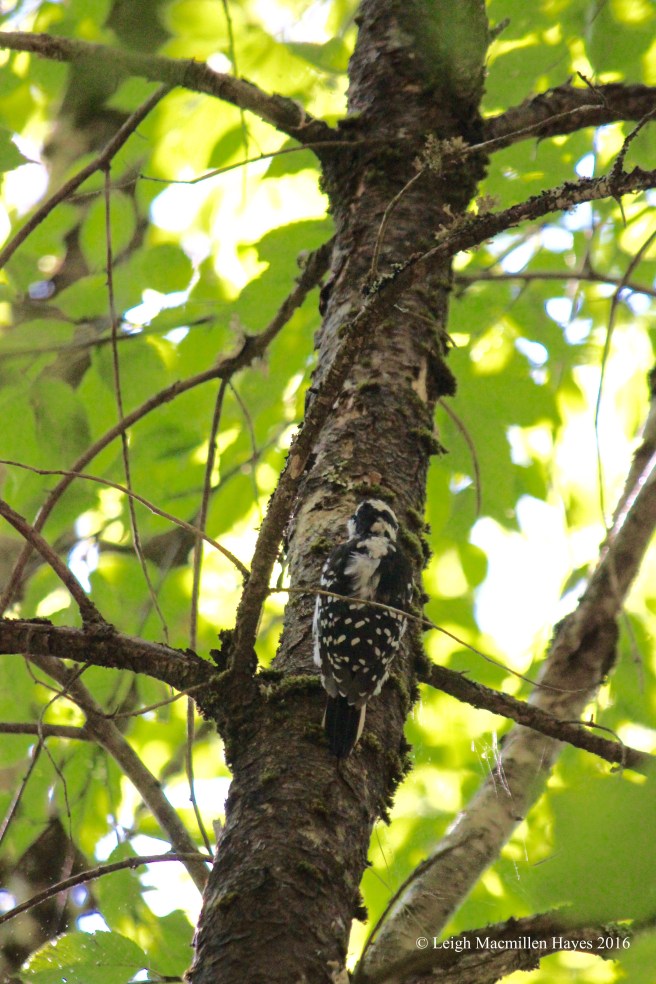
In this same transitional zone, a female hairy woodpecker announced her presence.

h-green frog

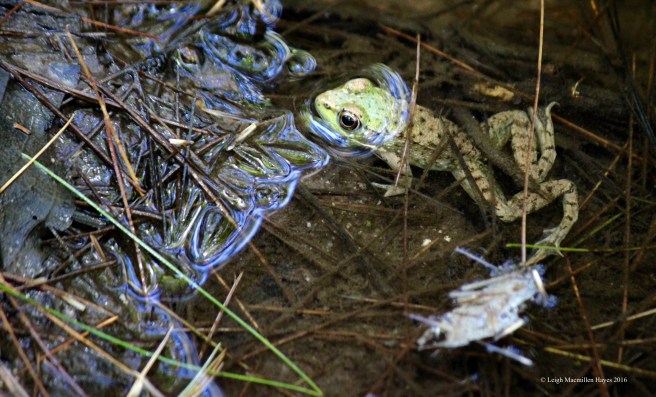
When I crossed Sawyer Brook, green frogs did what they do best–hopped into the water and then remained still. Do they really think that I don’t see them?

h-hobblebush berries

At last, I walked out to Grist Mill Road and made my way back. One of my favorite surprises was the amount of hobblebush berries on display.

h-meadowhawk

Walking on the dirt road gave me the opportunity for additional sights–a meadowhawk posed upon a steeplebush;

h-chicken

chicken of the woods fungi grew on a tree trunk;

h-chipmunk

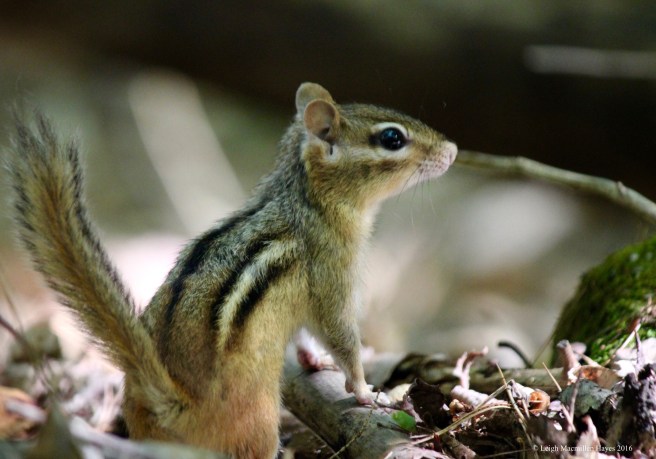
and a chipmunk paused on alert.

h-American Woodcock

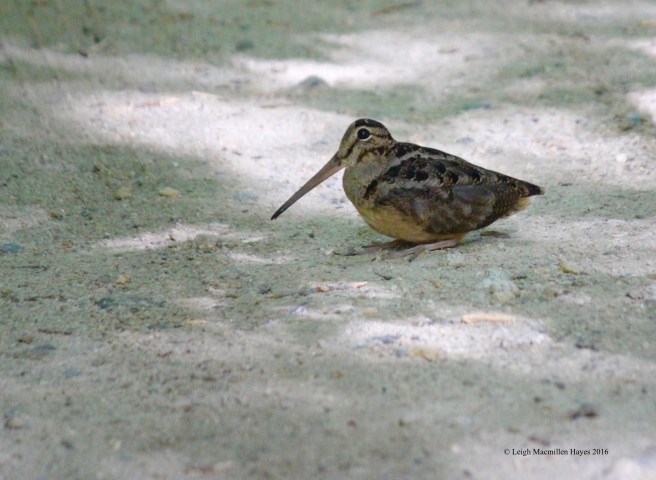
But the best find of the day–one that caused me to halt on the road as I drove out of LEA’s Holt Pond Preserve–an American Woodcock.

Worth a wonder! And a pause. Certainly a reason to halt frequently at Holt Pond.


Tagging Along with Jinny Mae

“Don’t walk behind me; I may not lead. Don’t walk in front of me; I may not follow. Just walk beside me and be my friend.” ~ Albert Camus

While I sometimes walked beside Jinny Mae this afternoon, I spent more time following her and am still her friend (I think).

A HOT afternoon. Despite the heat, however, I’m always tickled to follow her because she knows her 40-acre property intimately–including all of its nooks and crannies and cool sights.

j-green frog in water


We had some rain this morning, but Jinny Mae’s land is naturally wet and well loved by mosses and ferns . . . and green frogs. As we approached, several leaped into this mini pool and then posed.

j-green frog

Others waited patiently–probably hoping we’d move along.

j-polypore

J.M. has a fascination for fungi. Many fruiting bodies, like this gilled polypore, showed their faces as we moved about.

j-gilled polypore

We rolled the log to get a better look at the maze-like underside.

j-false chanterelle

Among our finds–chanterelles (deleted false because fungi expert, Jimmie Veitch informed me that they are true chanterelles. If you want to know more about Maine fungi or to purchase some, visit White Mountain Mushrooms) and . . .

j-coral

a coral fungi. Given today’s humidity, it felt like we were in the Bermuda of the North.

j-fern

Jinny Mae also showed me a fern-like moss that I don’t think I’ve ever seen before: stair-step moss. This moss is particularly fond of the moist coniferous and hardwood forest we tramped through. Its new growth arose from the previous year’s growth–climbing like a staircase.

j-yellow birch and hemlock

Nearby, she pointed to one of her favorite tree displays–a hemlock and yellow birch sharing space. Both have seeds that germinate best on rotting logs or rocks, where moss gathers and provides moisture. In a compatible relationship, they’ve reached for the sky with equal success. I’m reminded of two friends who know the importance of supporting each other–similar to the chitchat and occasional silence Jinny Mae and I share as we bushwhacked.

j-lightning 2

And then she introduced me to Excalibur. Even King Arthur probably couldn’t pull this    sword-like piece of a tree out of the ground–well, maybe he could. But we couldn’t.

j-lightning tree 1

The reason for Excalibur’s existence: a recent lightning strike.

j-lightning 4

We looked around and saw that the energy passed through at least three trees.

j-lightning 5

Bark peeled off.

j-lightning 3

And shredded wood scattered. What surprised us both was that we couldn’t find any burnt wood. Thankfully.

j-beech drops

Making our way back toward her house, we entered a beech forest and began to see beechdrops everywhere we looked.

j-beech drops2

These are parasitic plants that don’t manufacture their own nutrition, thus they depend on the roots of American beech trees for food.

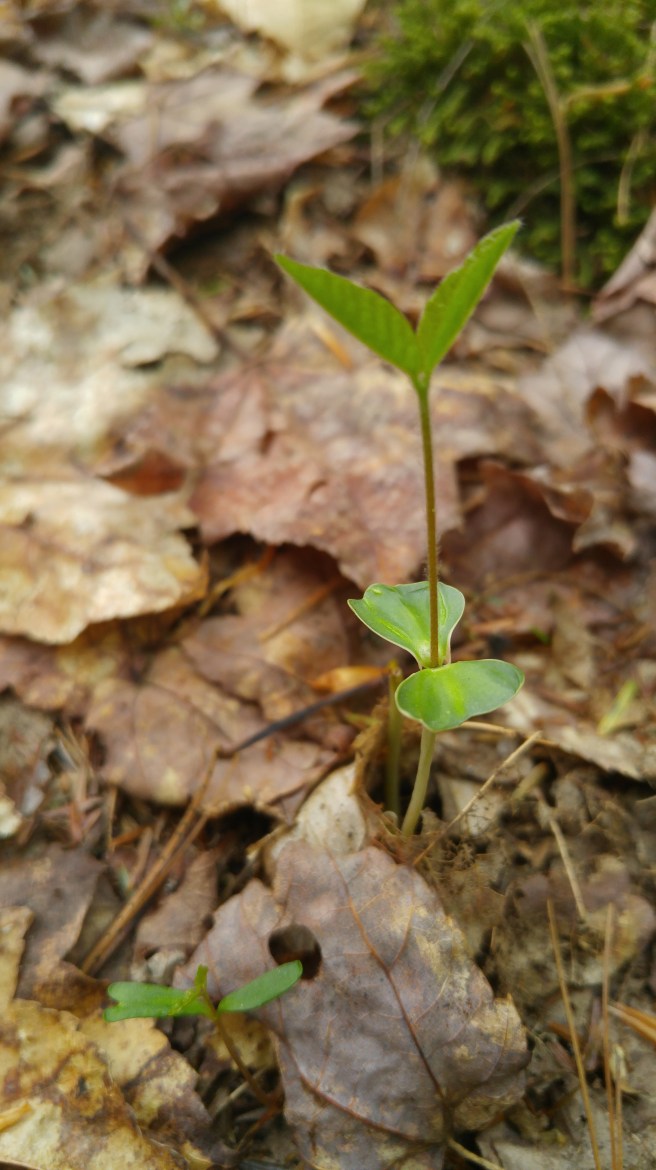
j-coteledon

In this same area, we come across a young beech tree Jinny Mae flagged in the spring when she first observed a cotyledon. We chuckled when we remembered how we both were so taken with cotyledons a few months ago–a new sighting for us. One of those things that was always there, but we’d never noticed it previously. Today, she was filled with pride for this young beech. It’s had a healthy start and in forty years may provide beech nuts for the neighborhood bears. In the meantime, it will probably nourish a few beech drops.

j-Indian pipe .jpg

And then she showed me the final cool find of the day–an Indian pipe with stamens that appear to have split away from the flower. It seems that these friends made the move together–much the same as Jinny Mae and I did today.

I may have tagged along and followed her, but really, we walked side by side and I’m thankful for her friendship.

Fun with Focus

I must confess. I’m a stalker. Of flowers and ferns and leaves and twigs and buds and bark and insects and birds and mammals and tracks and scat and cycles and systems. Of nature. Every day. All day long.

Sometimes I circle round and round, checking on the activity of a particular area over and over again–all the while mentally noting any changes. Minute by minute, day by day, week by week. I can’t help myself. My stalking is addictive. As it should be.

multiflora1

Right now, one of my focal points is the multiflora rosa that blooms in our yard. Yes, we can get into all the reasons why this invasive shouldn’t grow here, but I, too, am an invasive species–my ancestors arrived on a boat, possibly bringing some seeds or roots with them.

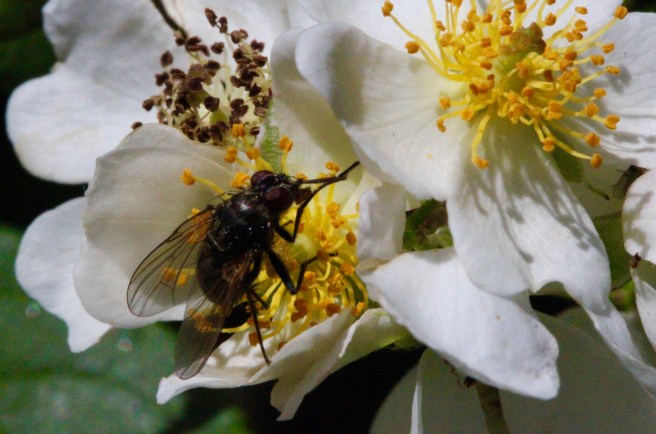
fly on multiflora rose

Multiple species pollinate the massive display.

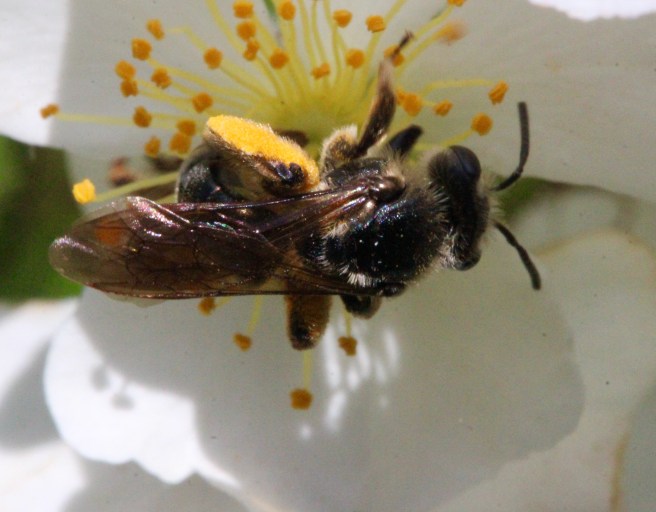
bee on multi

Their pollen sacs bulge as they quickly move from anther to anther.

sawfly larvae

Meanwhile, sawfly larvae munch their way across leaves.

saw 2

Sawfly is another word for wood wasp–certainly makes sense. But right now, their larvae look like caterpillars. Very hungry ones.

spring peeper1

And because I took time to look, I noticed. When I first spied this little guy about the size of a nickel, I thought it was either a small snail or a dried up leaf that. Curiosity pulled me in closer–thank goodness. Located about three feet above ground, this spring paper hid from predators all day, waiting to munch on insects and spiders tonight. I know this shot is sun drenched, but do you see the X on its back? Its name–Pseudacris crucifer–breaks down to Pseudo (false), acris (locust) and crucifer (cross bearer).

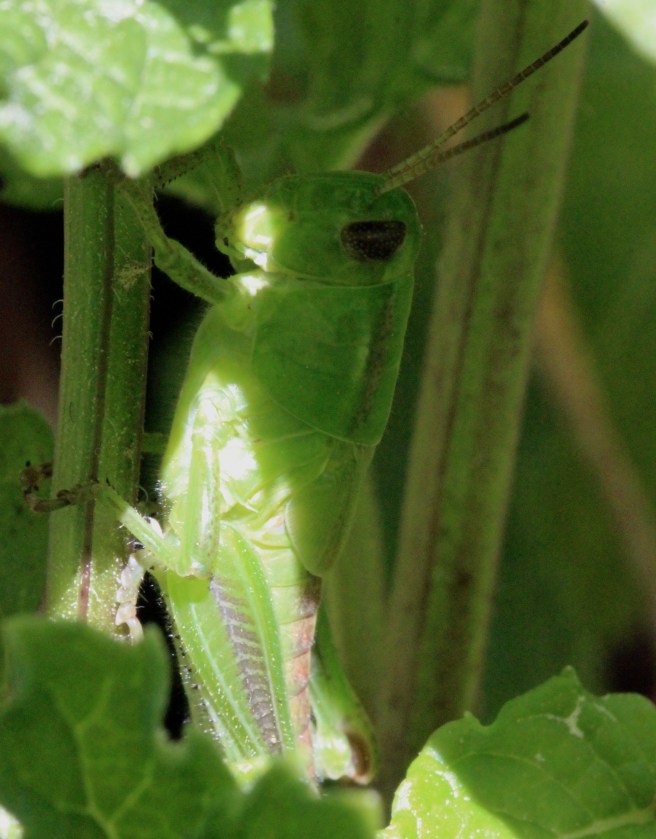
grasshopper

I’ve also been stalking the grasshoppers again, much as I did last year. Every day, I’ve noted that they are a wee bit larger–measuring almost an inch. But today, I found a giant among them.

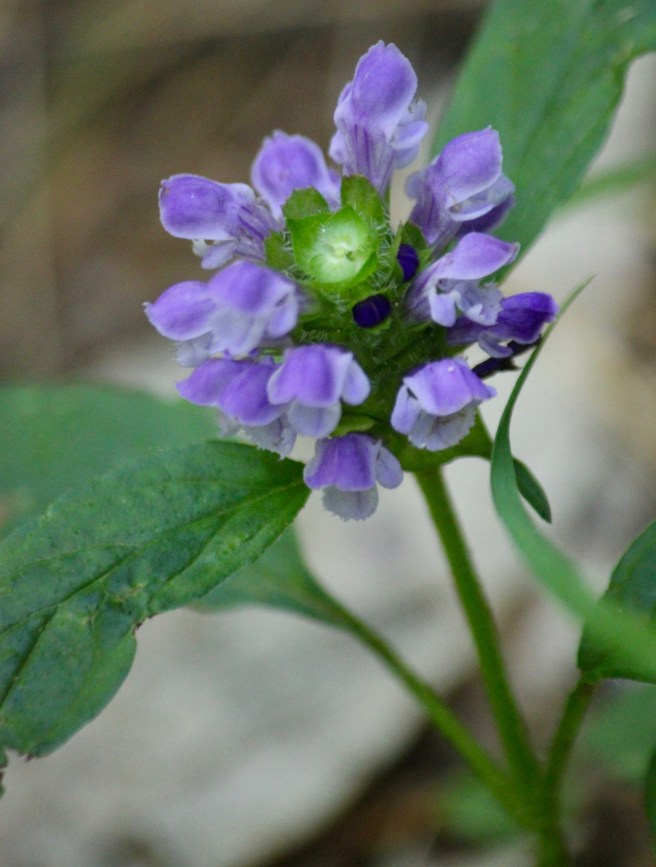
Heal all

Then I went further afield, but to another familiar spot that I frequent. Heal-All blooms there with its square stem and whorls of florets.

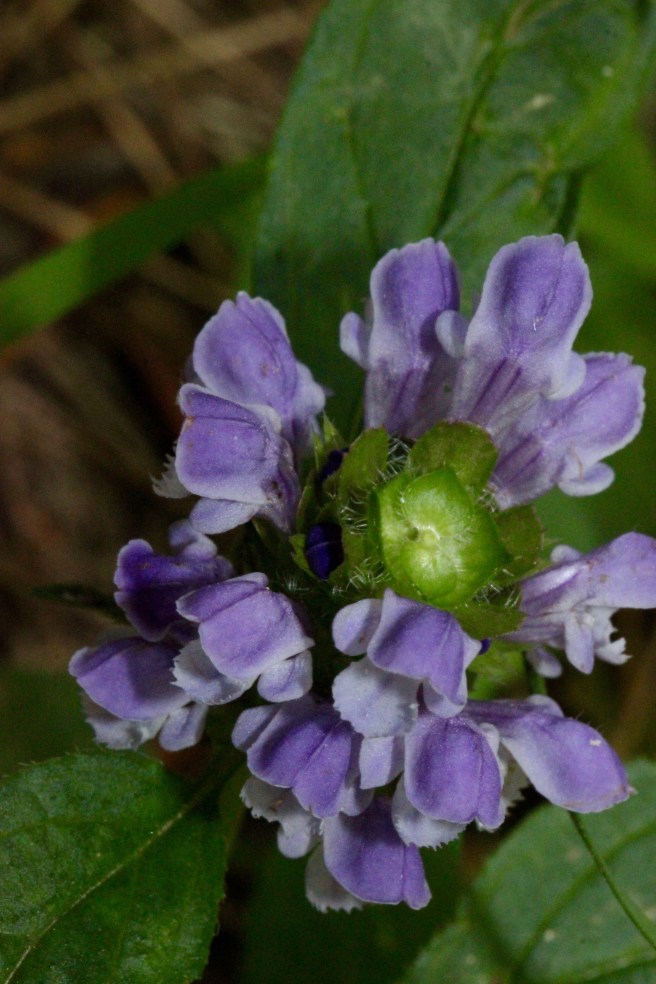
heal all 2

The upper part of each floret provides a darker hood over the lower fringed landing platform. I’m surprised I didn’t see any action today. But don’t worry. I’ll keep  stalking.

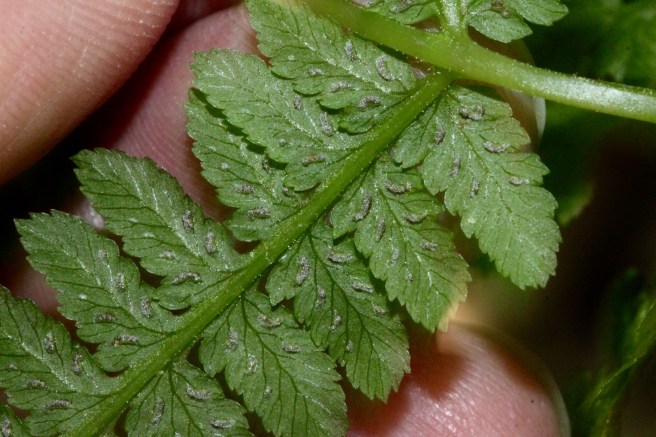
Lady fern spores

The ferns also drew my attention, like this lady fern, with its graceful appearance and sori in the shape of eyebrows.

hayscented fern

Hay-scented fern offers another lacy look, but the size and shape of its spore cups at the margin of the underside make it easy to recognize. Look underneath. Always.

cinnamon fern 1

While I’m focused on ferns, here’s a clue to differentiate a cinnamon fern from an interrupted fern once if it doesn’t feature a spore stalk. Cinnamon ferns have obvious hairy underarms. Do you see the tuft of hair at the rachis?

interrupted fern

Not quite the same for an interrupted fern. I love the hunt.

royal 2

Cinnamon and interrupted ferns are both members of the Osmundaceae family, which also includes royal fern, so named for the fertile frond topped with a crown.

royal crown

Bead-like in structure, the capsules have evolved from their aqua-green color a couple of weeks ago to a rusty shade. Eventually, they’ll turn dark brown after releasing their spores.

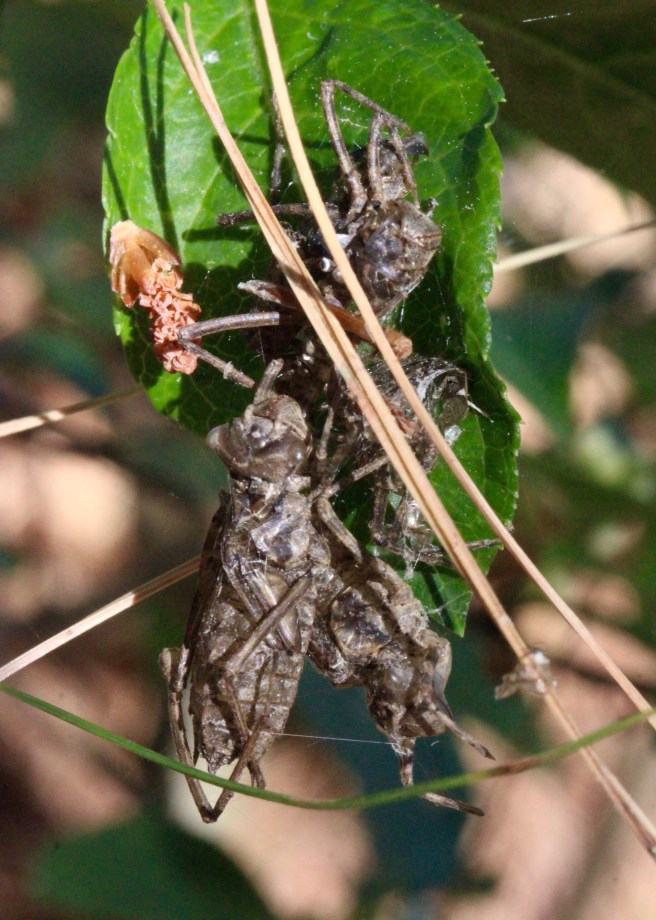
exoskeletons

Because I was near water when I spied the royal ferns, I also had the joy of once again stalking exoskeletons that remain where dragonflies emerged. Such a special monument to their metamorphosis.

American toad

And  . . . young American toads hopped all about at my feet.

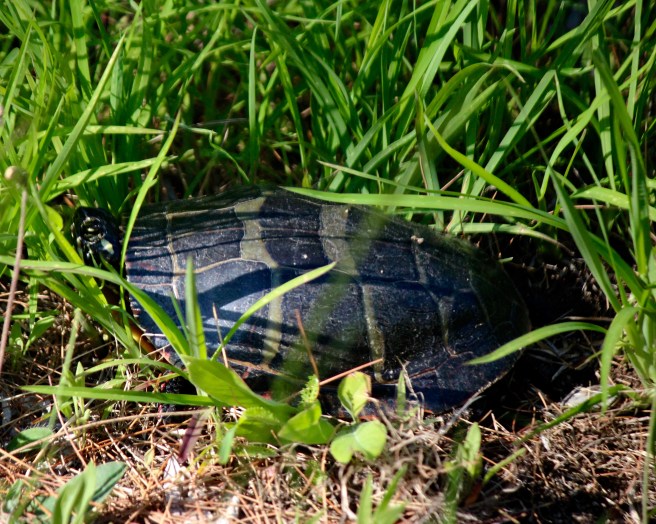
turtle 2

But one of my favorite focal points of the day–a painted turtle. She had her own mission–to lay eggs. After I saw her, I noticed another and so I did what any good stalker would do, I circled about the area looking for others. Only the two. But that was enough.

I’d made the two-hour round trip to Portland this morning to pick up my macro-lens that had taken two months to repair–0r so they say. As I got used to using it again, I found myself having fun figuring out the focus. I’ll continue to stalk and continue to learn–on so many levels.


Lonesome Mondate

My guy has worked way too many hours in the last few weeks, including this past weekend, so today we ran away. Well, he went for a run early this morning while I dilly dallied around the house. And then we ran away.

plly 1

Our destination was our favorite breakfast place, though we went for lunch today–Polly’s Pancake Parlor in Sugar Hill, New Hampshire. As we walked toward the door, we noticed a family standing outside chatting and laughing. Hello neighbors! Yup, we were almost two hours from home and our neighbors from down the road had just finished breakfast. “We passed you on your run,” they said to my guy–equally surprised to see us there.

Lunch was the combo sampler–three small pancakes with sausage for him and thick, crispy bacon for me, followed by three more pancakes and full bellies. Good thing we only make this a once-a-year habit. I’d planned to only order the plain batter with blueberries because of all the choices that’s my favorite, but I have to say that the gingerbread and chocolate chip was also yummy.

ph-lupine fest 1 (1)

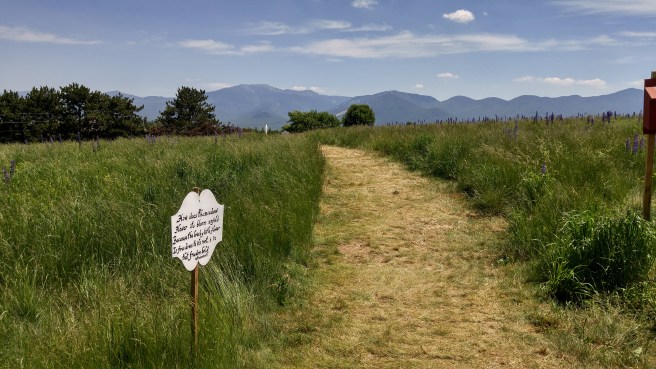
And then we moved on to the lupine fields. Actually, lupines bless the fields throughout town, but the Sugar Hill Sampler Lupine Fields feature trails with poetry along the way.

lupine sign

Such simple words of wisdom ring true

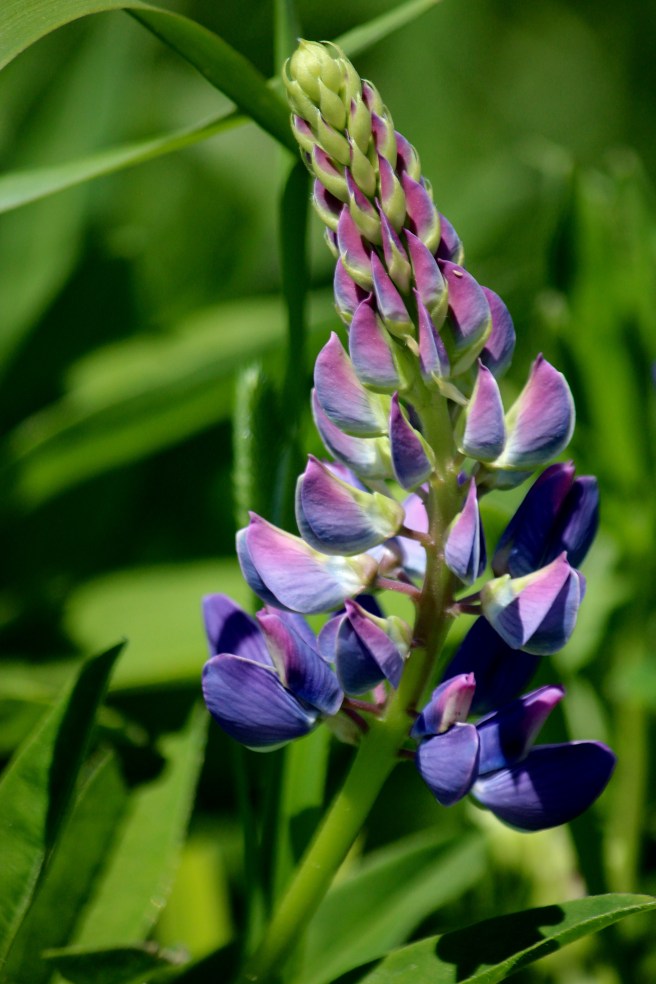
lupine 7

amid the beauty.

ph-lupines 4 (1)

The actual lupine festival occurred two weeks ago,

ph-lupines 2 (1)

but our timing wasn’t so off.

lupine 10

Color and structure wrote their own verses.

ph-tree1

A few more miles down the road, we started up a trail that appeared relatively flat in the land of giant yellow birch trees.

xylophone1

One of the brook crossings danced to the beat of its own song

xylo 2

interpreted by my guy who channeled his inner Tom Hanks as he moved across the xylophone to the beat of  “Heart and Soul” featured in the 1988 movie “Big.” So be it.

maple 2

A few months ago when I presented a workshop on tree bark, a colleague asked me about mountain maple, which I didn’t know existed. Since then, I’ve been paying attention–at least to the leaves, which I found today. Please don’t ask me what the bark looks like. That’s for a future lesson.

trill2

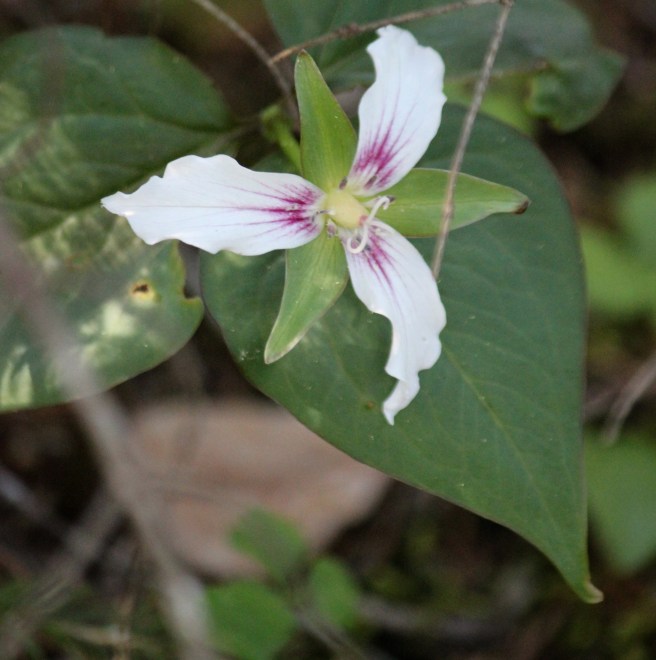
And though most have gone by, we found one painted trillium to add to my collection of a trillion trillium photos.

ph-mud (1)

After a steady climb among rocks and roots, we reached level land and bog walkways–thanks to the AMC employees and volunteers who worked on new passageways. Talk about getting into your work–check out the mud on this guy and he wasn’t the only one. We met others who had worked for the AMC 30 years ago and were volunteering their time and expertise to complete the trails that we all may enjoy. I hope there was a chilled beer at the end of their day because they were all muddy and sweaty, but smiled as they worked and suggested ways for us to bypass the mud.

salamander1

We slipped off the trail (not literally) and found today’s special find–Eastern newts in a couple of stages.

sally 1

Growing older, the eft began to resemble adults. Don’t we all! Eventually.

lake view 1

Cannon Mountain formed part of the backdrop. For me, Cannon has always evoked a childhood memory. About 50 or more years ago, as my family traveled up the tram to the summit we looked toward Canada and my parents mentioned that our next-door neighbors, the Mansfields, were on their way to Canada, which we could see. I saw the Mansfields’ station wagon. I swear. And every time I pass this way, that memory jumps to the forefront. Once I mentioned it today, my guy and I started sharing past memories as we made our own.

ph Lonesome Lake hut (1)

At last we reached the  Taj Mahal and paused to use the bathroom.

ph mts 4 (1)

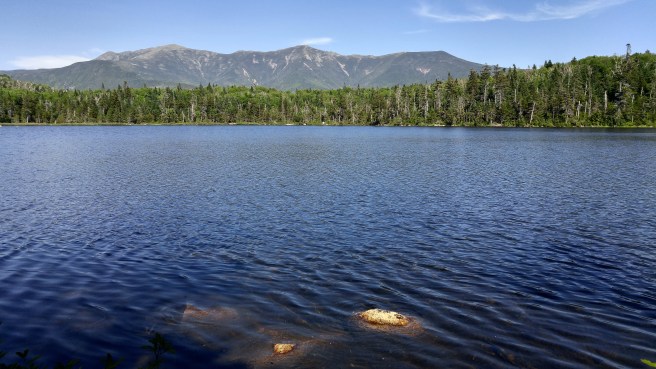
We were beside Lonesome Lake and had a splendid view of Mt Lafayette and Franconia Ridge as spring came to a close for 2016.

bog trail

ph-bog (1)

Our journey continued around the lake before we headed back down the trail–for scent and sound think balsam pillows and the banjo plunks of green frogs.

We were hardly lonesome on this trail that is described as tranquil and heavily travelled. We will attest that it is both and loved the hike to Lonesome Lake on today’s Mondate.


The Big and the Small of the Hundred Acre Wood

As my friends know, I’m not one to say no to an invite to explore their land. And so this afternoon’s adventure found me spending time with Beth on the 100 plus-acre property she, her husband and parents call home in Oxford County.

b-view 2

Their sense of place begins with a field of wildflowers yet to come, the entry to their wood lot and a view of Ragged Jack Mountain. My sense of excitement to explore their place was heightened by this jumping off point.

b-Maine trail

Trails loop throughout the property and the family has taken the time to name and label all of them.

b-pine 4

We wandered along and suddenly Beth noted that we’d reached their champion pine. I looked at a small spruce before us and wondered what all the fuss was about. Then she pointed to my left.

b-pine 2

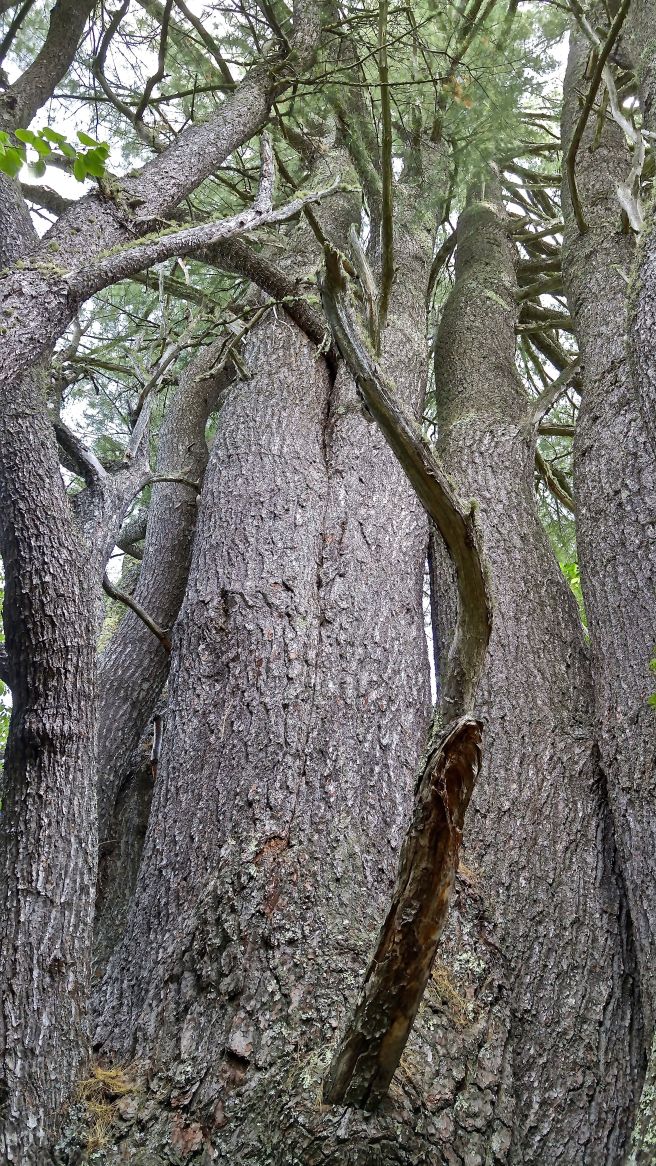
One massive Eastern white pine gallantly towered over us. At some point in its early life the terminal leader was injured–perhaps by a weevil or weather. But . . . this tree carried on and continues to do so. I felt like we were standing below a giant in the woods.

b-pine bark

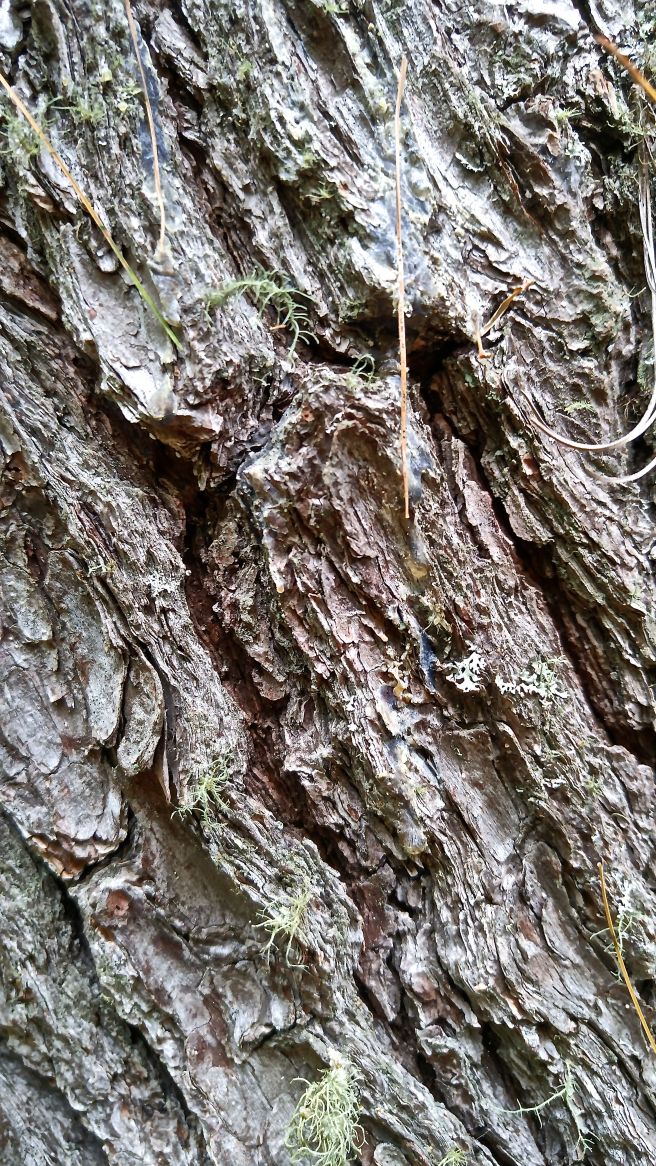
It’s characterized by layers upon layers of bark.

b-pine 3

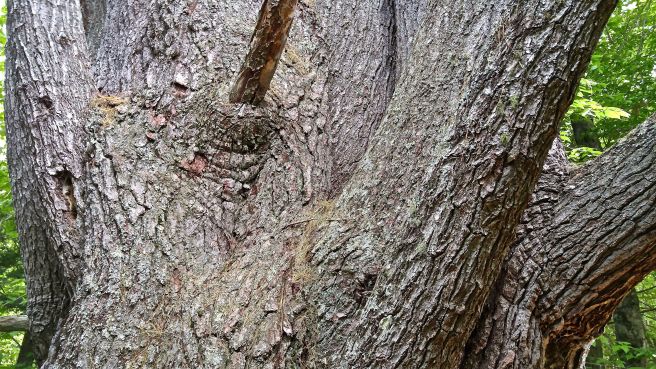
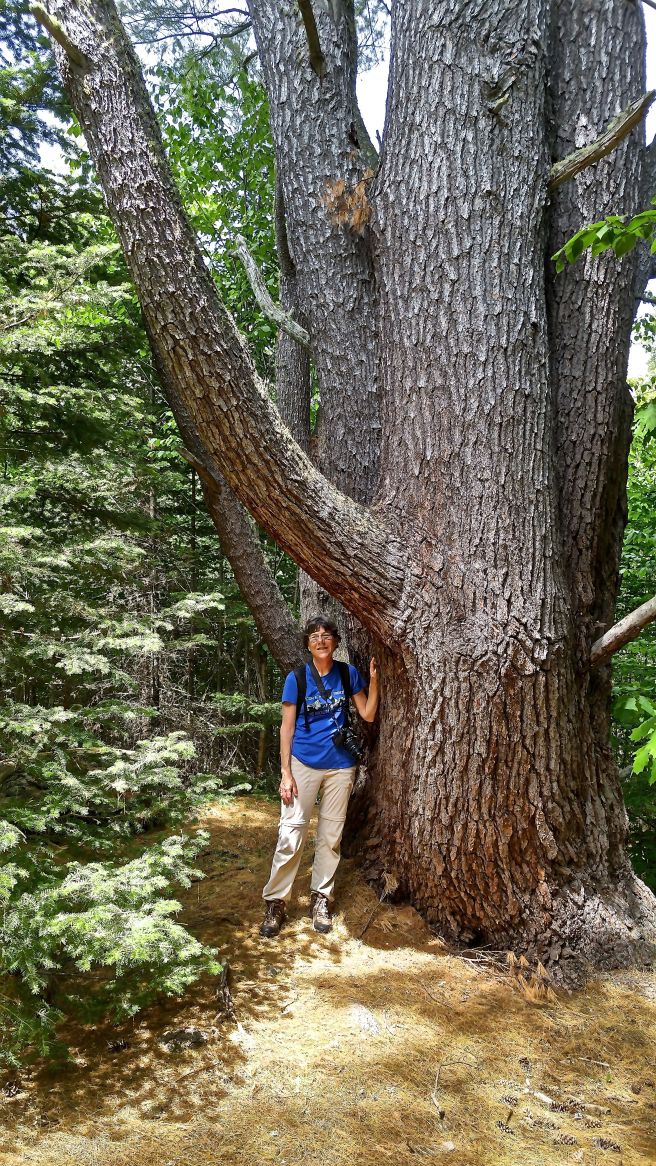
And it’s wider than any tree I’ve ever seen. Here are the stats on this champion: According to Beth, it towers 108 feet tall, is 256 inches in circumference (21.3 feet) and has a crown of 15.75.

b-pine 1

Yup. It’s big. Or rather, BIG!

b-dam:lodge2

We weaved our way along the trails and Beth shared favorite spots with me as she told tales of her experiences with this land and water.

b-mora 1

Mara, Beth’s springer spaniel, shared her own tail. She was happiest when mud and water provided opportunities to play. We had to wonder other times when she cowered behind us or tried to hide between Beth’s legs. What did she sense that we weren’t aware of? We did hear a few critters, including baby grouse that Mara visited, and saw the tracks of moose and deer, plus coyote and fox scat, and maybe even bobcat scat, but our only official mammal sightings were red squirrels.

b-pond

Among Beth’s sharings was this spot she refers to as the Accidental Pond. Accident or not–it’s enchanted.

b-split granite

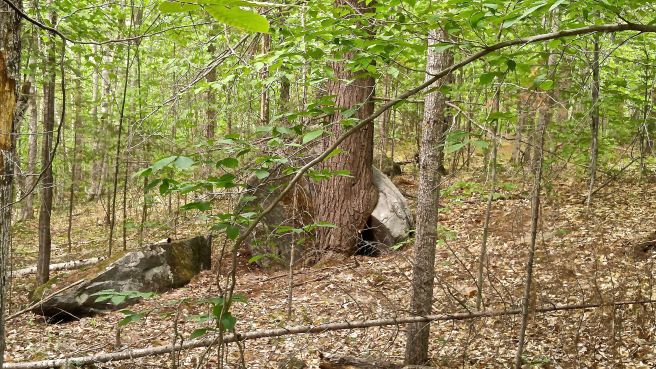
Here and there throughout the woods, she pointed out glacial erratics. This one we particularly wondered about. What came first? The rock split on its own or the hemlock caused the split?

b-bracken 1

Those were the big things, but we were equally wowed by all the small stuff we saw along the way, like this bracken fern just beginning to unfurl.

b-cinnamon ferns

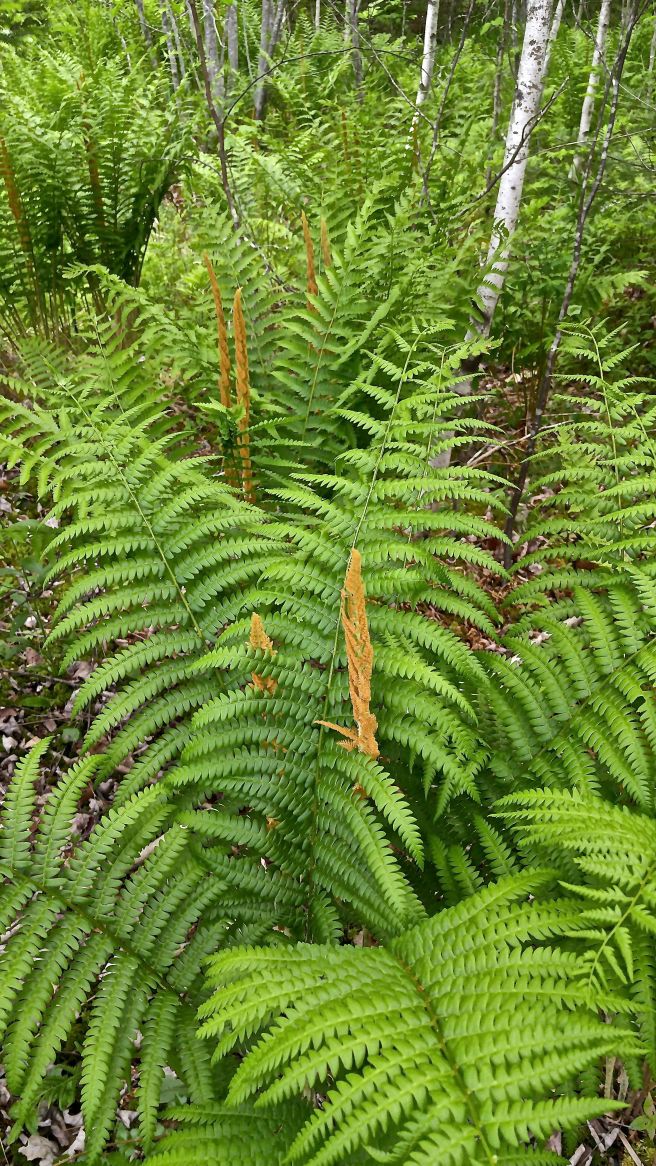
Several times we wandered in the land of the cinnamon fern, where the separate fertile fronds sport the cinnamon color for which they are named. It won’t be long before those fertile fronds bow down to the earth and the large, arching sterile fronds are all that will remain.

b-caterpillar 2

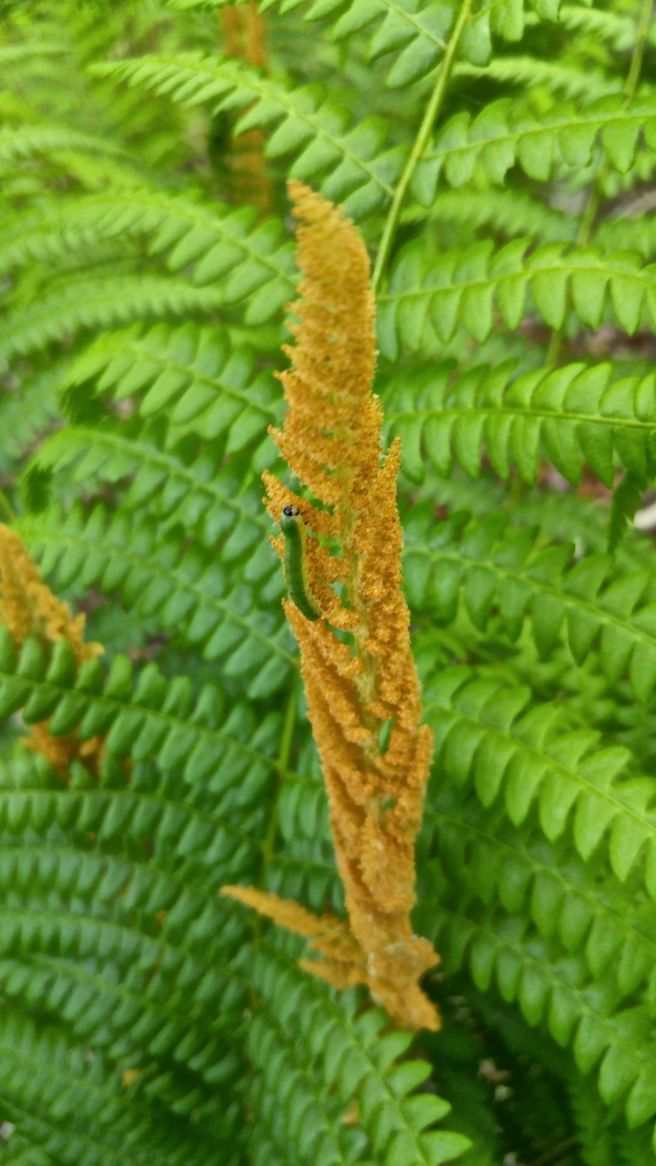
And then something else caught our attention–a green caterpillar on the fertile frond.

b-caterpillar 1

We weren’t sure who it was, but we saw it on several stalks. Always something to wonder about.

b-royal

Royal fern also offered a display, especially beside the brook. Look closely and you might find the fertile frond “crown” on this one. It’s a rather “Where’s Waldo” presentation, but it’s there.

b-gilled 1

We found some gilled mushrooms we also couldn’t identify, but appreciated their existence.

b-lady 3

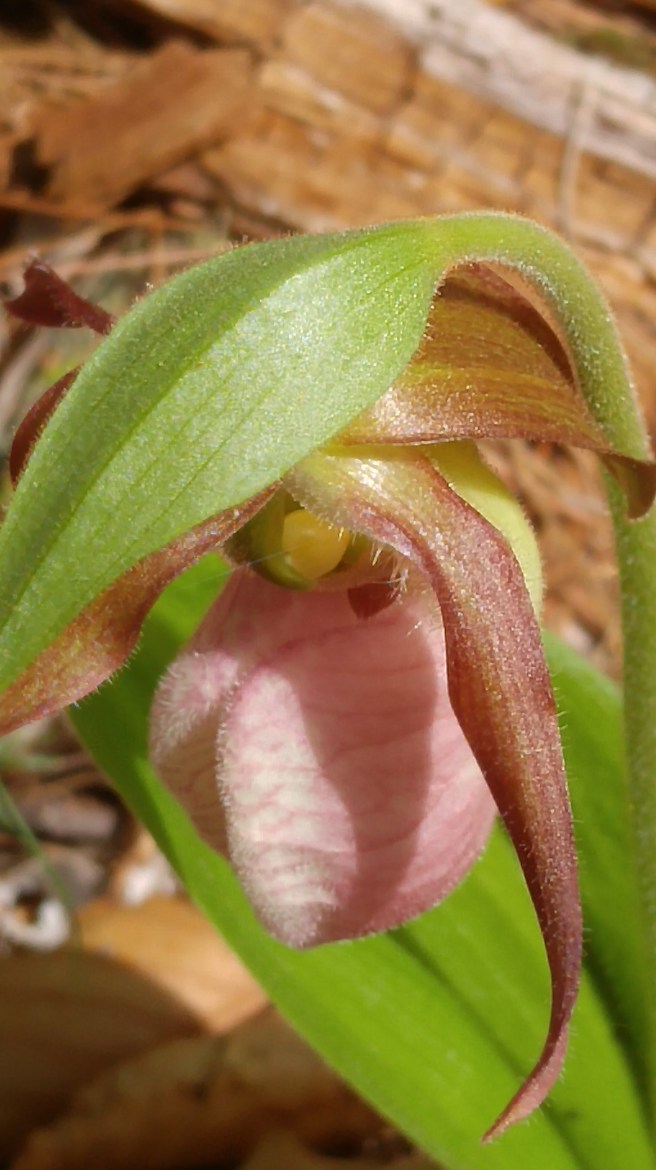
The lady’s were in bloom.

b-lady's slipper

Take a look at those hairs.

b-web 3

And it’s spider web season so we paused and admired the work of an orb weaver who built a spiral wheel-shaped web.

b-spider web

Also among our sightings, a well-built high-rise structure woven among the remains of winter weeds.

b-toad 3

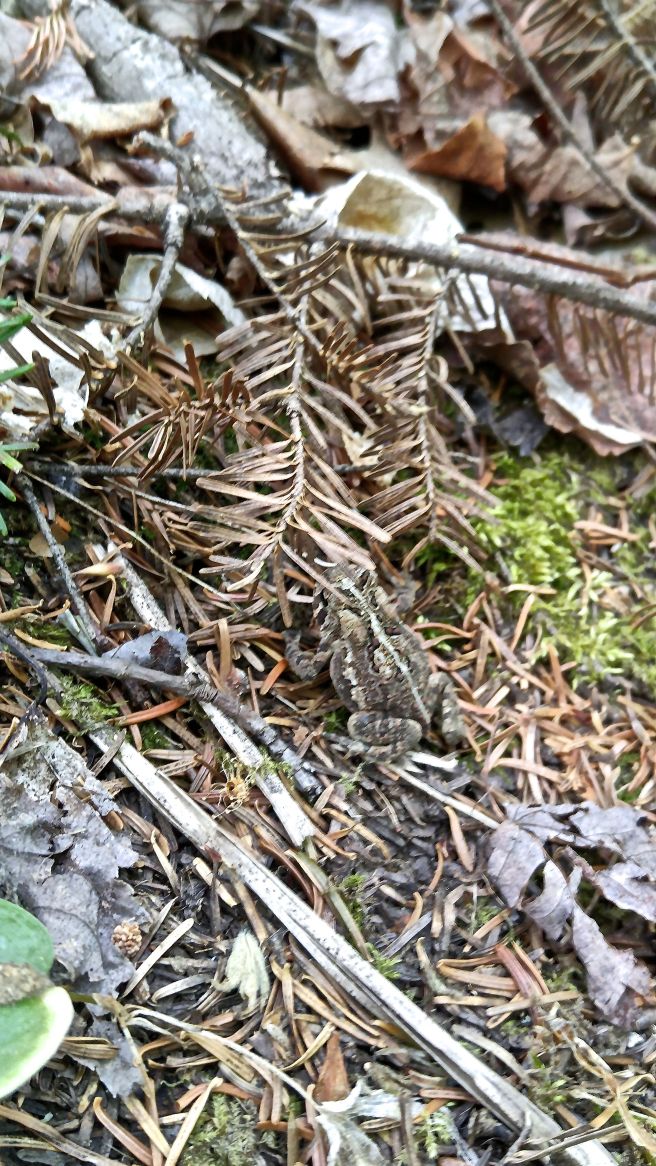
Camouflage is everything. Just ask the American toad.

b-wood frog 1

We found the wood frog easier to spot.

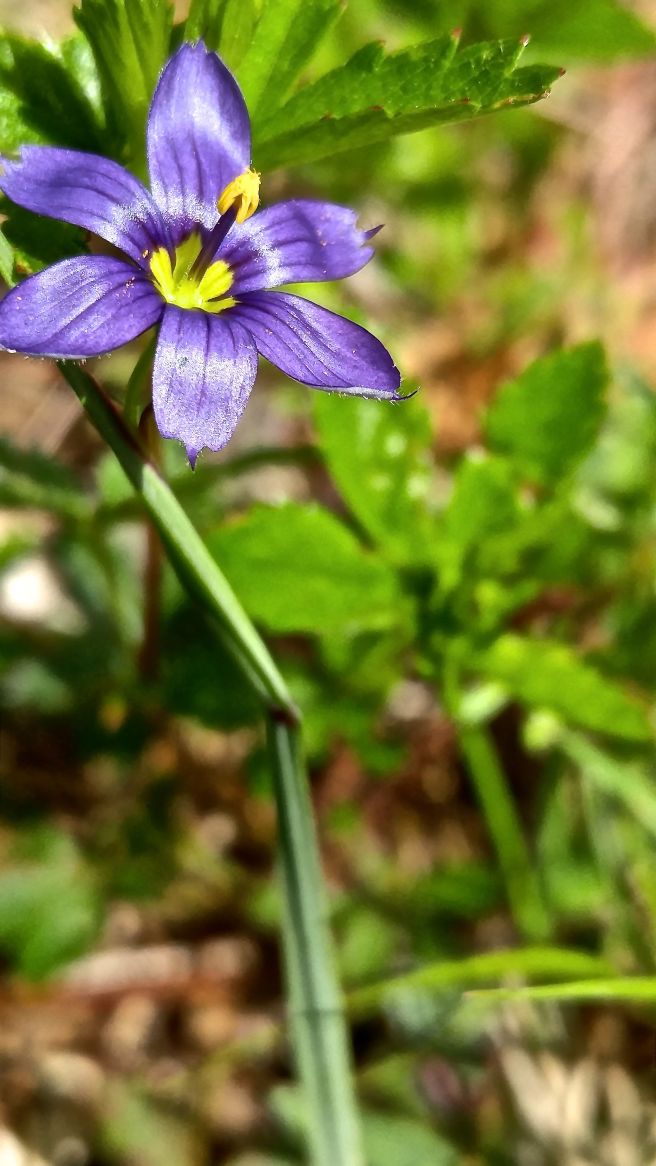
b-blue-eyed grass1

But I had my eye on the blue-eyed grass.

b-blue 5

These are the shy ones. They only keep their eyes open if the sun is shining. On a cloudy day it’s almost impossible to recognize them.  And they love damp open woods, slopes and stream banks so it’s no wonder we found them today.

The big and the small . . . Beth’s property has it all. And this was only a sampling from her hundred acre wood. Winnie the Pooh and his friends–they too, would love this place.


America the Beautiful

This morning’s rain and overcast sky embraced the melancholy emotions of this day as we remembered  family, friends, acquaintances and strangers who have served our country, especially those who died during times of conflict.

And then the sun shone.  It didn’t mean that we stopped remembering. But it did shine a light on the beauty that surrounds us and that we have the opportunity to observe if we so choose. Because of the service of others, we’re fortunate in that regard–we get to choose.

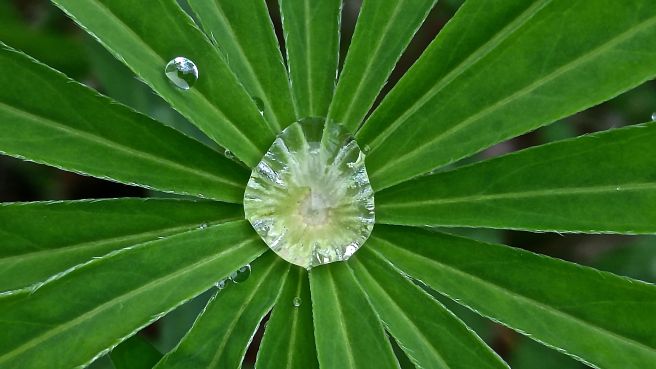
ph droplet on lupine leaf

I chose to step out the back door and notice.

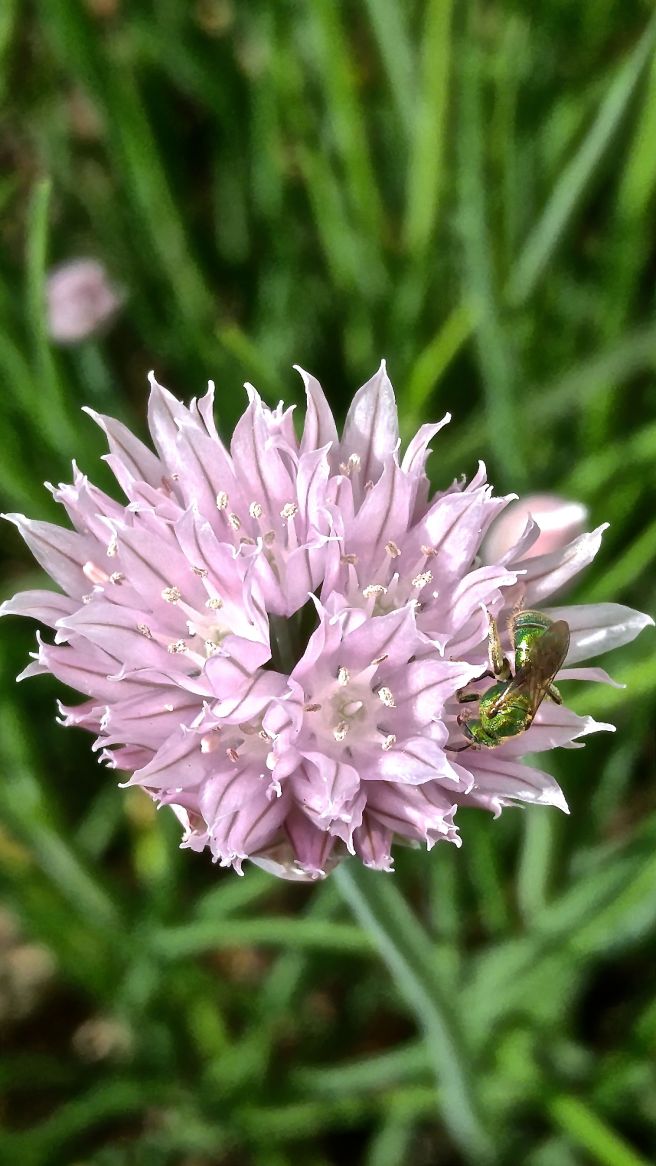
ph-chives 2

Visitors upon chive florets.

ph-anem2

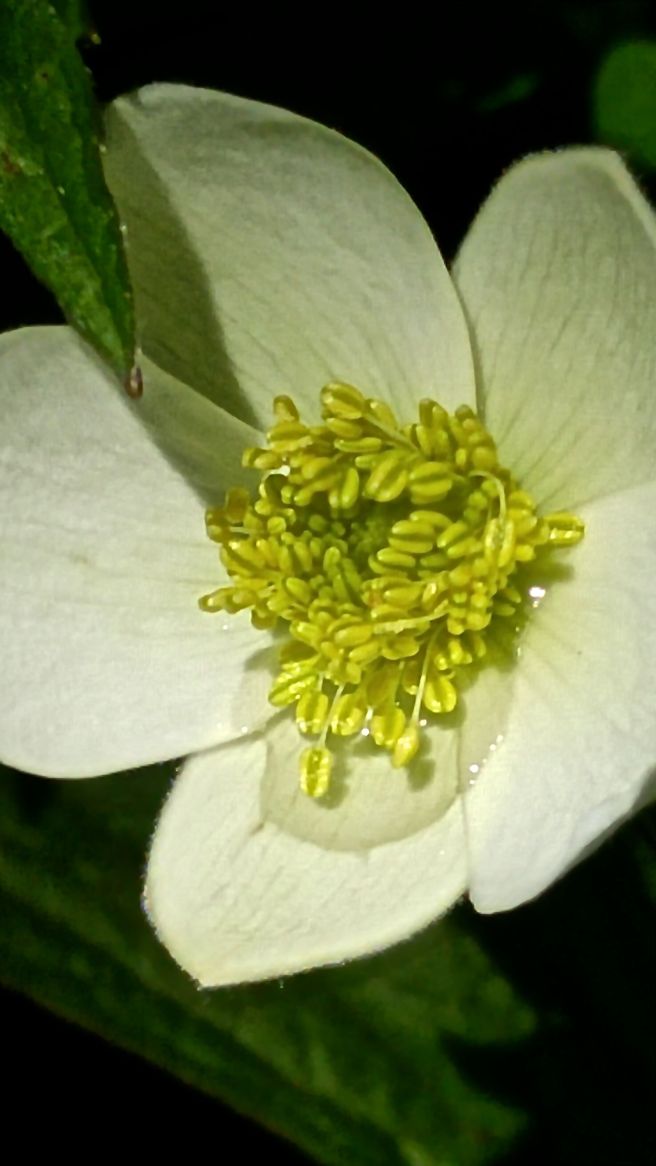
Unfolding Canada anemone.

ph-anem3

And the first to open.

ph-cherry

Black cherry blossoms all in a column.

ph-chokec2

And chokecherry blooms in terminal clusters.

ph-hemlock cone1

Blue-green baby hemlock cones.

ph tad 6

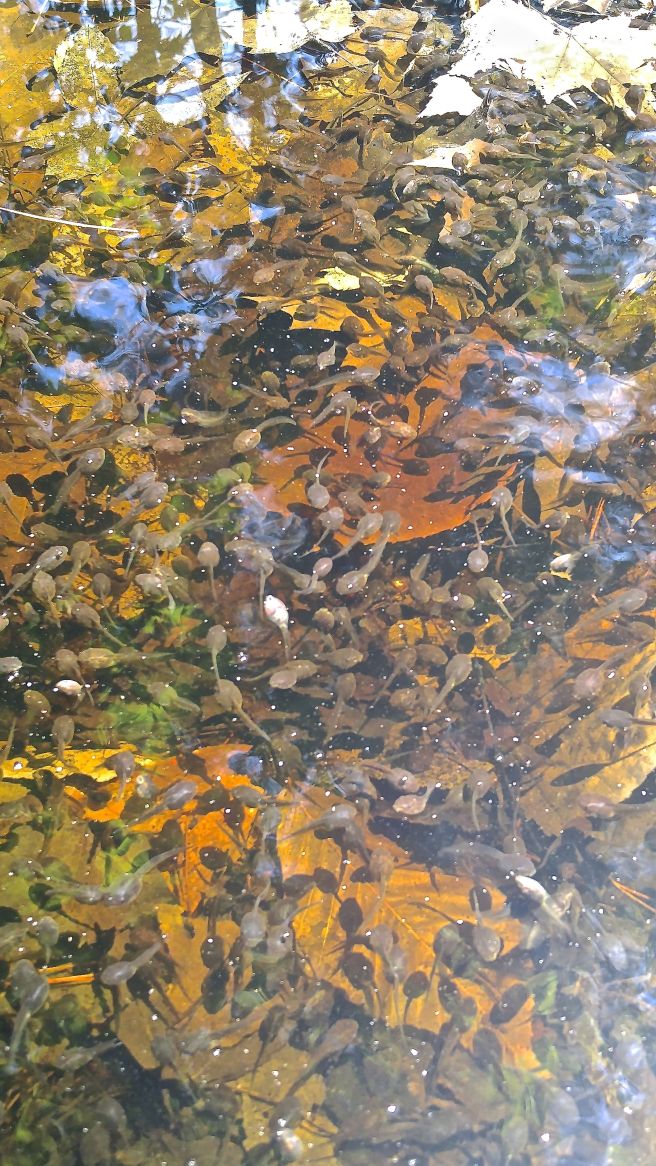
And life teeming in the vernal pool.

I’m thankful for the freedom of choice. America is beautiful.


Finding Hope with Jinny Mae

A year ago, my friend Jinny Mae received a dreaded diagnosis that was followed by sixth months of intense treatment. Since then, I almost forget she still receives treatment and periodic check-ups because she’s got even more energy and enthusiasm for life than ever.

I was thinking about that as I drove to her home this morning to do some exploring. I was also thinking about my young neighbor, a tween, who received a similar diagnosis this past week and started his own journey through the treatment process, with his family beside him and the entire town behind him.

So, this one is for Jinny Mae and Ky.

j-dandy

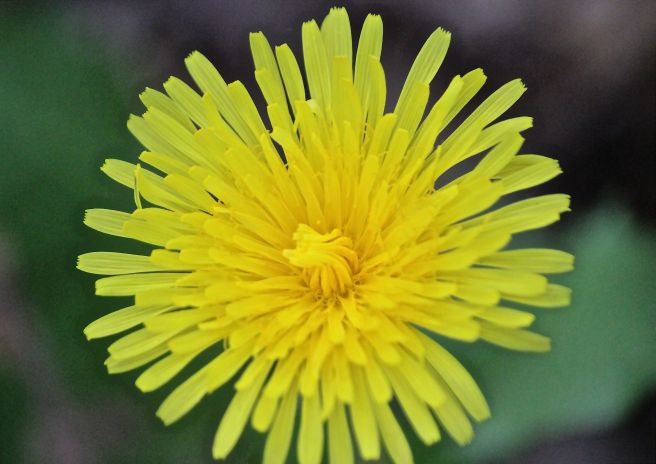
Beginning with a dandelion–may you find bright spots along the path.

j-turtle

When stonewalls are placed in front of you, may you pause like the tortoise and then continue your journey in a steadfast manner.

j-ph fern

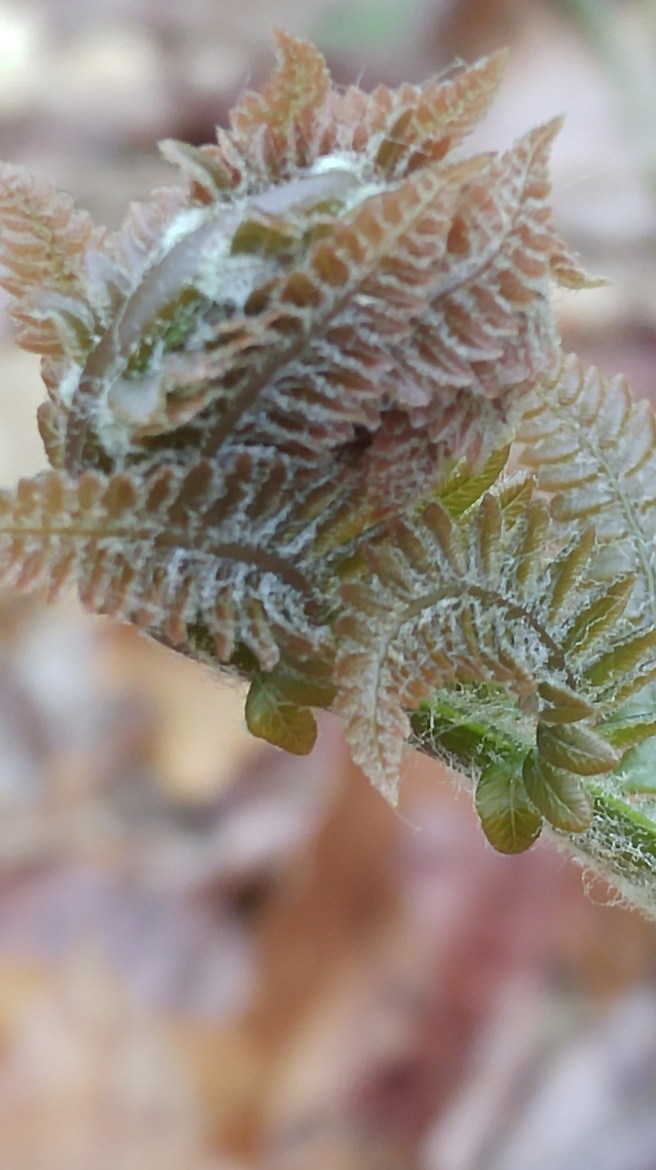
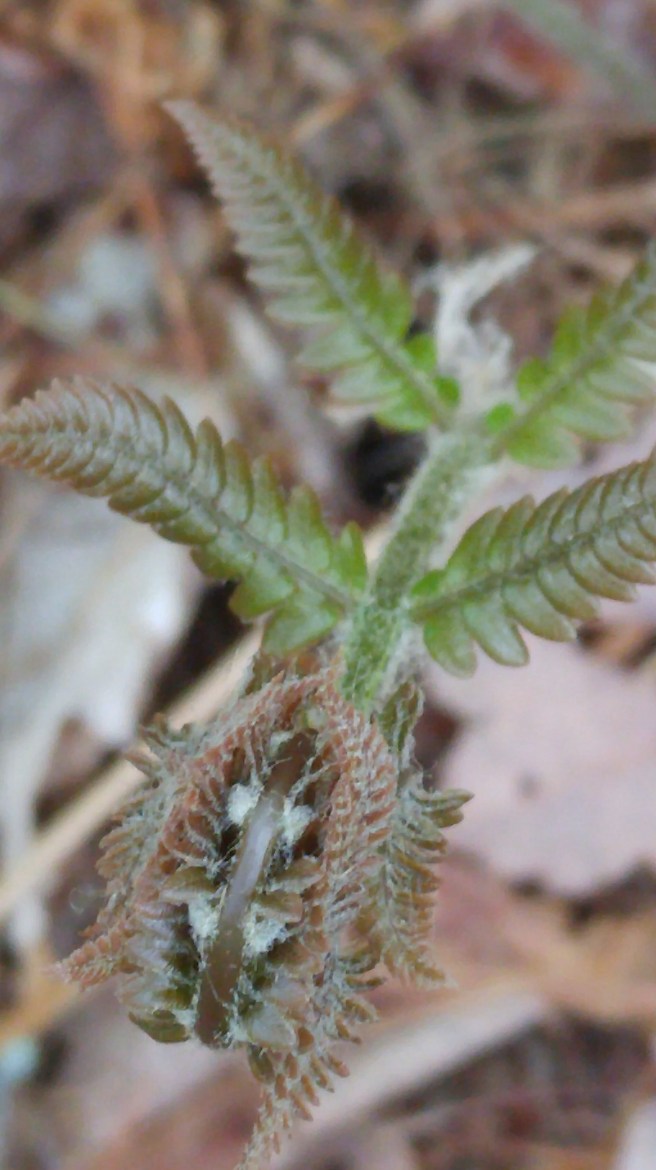
Know that those moments when you must curl up will be followed by . . .

j-ph fern2

time when you’ll slowly unfurl.

j-fern 4

May you eventually feel like spreading your wings again.

j-ph bog1

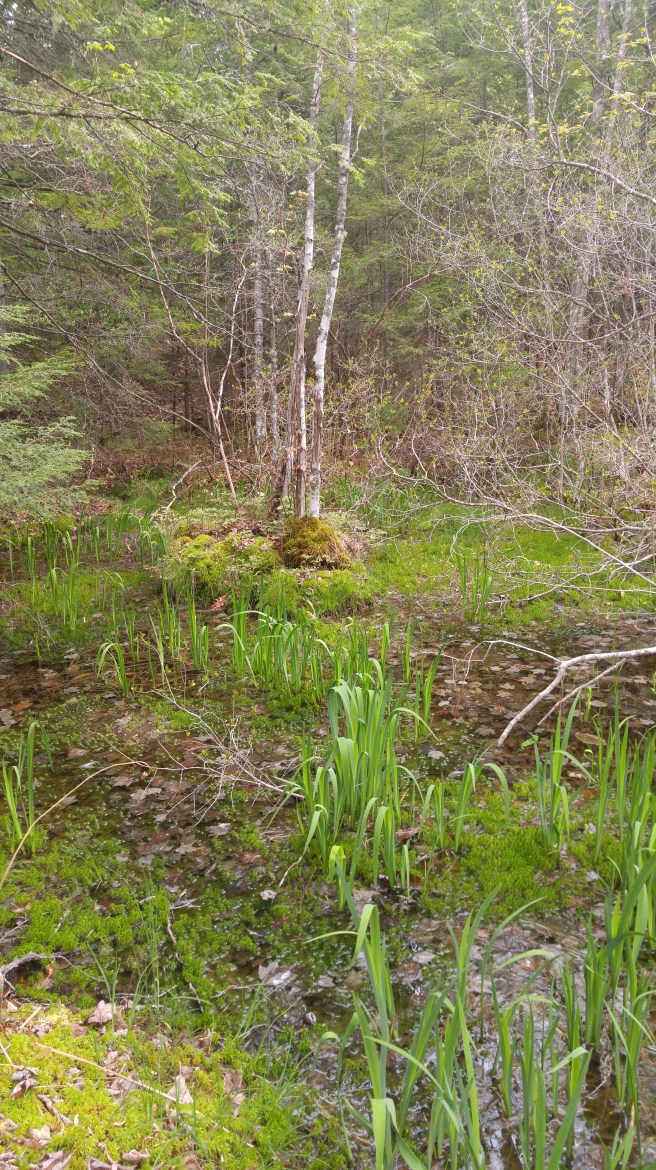
May you find beauty even when you’re bogged down,

j-male green frog

and delight in most everything within your sight.

j-big tooth1

May you feel new life flow through your veins,

j-ph ladys slipper1

and embrace tender moments.

j-ph coty science

May you always be wowed by the little things,

j-ph coty 1

especially those that have been there all along but somehow you missed until now.
j-ph dandy seeds 2

At the end of the day, may the hope enveloped within the moon and stars continue to shine upon you.


Three Times A Charm

One might think that following the same loop through the woods in slow motion three times in one day would be boring. One would be wrong. My friend Joan and I can certainly attest this fact.

Round One: 9 am, Wildflower and Bird Walk with Lakes Environmental Association co-led by birder/naturalist Mary Jewett of LEA and the ever delightful botanist Ursula Duve.

h-hobblebush

In abundance here, the hobblebush bouquet–a snowy-white flower that is actually an inflorescence, or lacy cluster of tiny fertile flowers surrounded by a halo of showy, yet sterile bracts. Yeah, so I’ve showed you this before. And I’ll probably show it again. Each presentation is a wee bit different.

h-beech cotyledon1ph

And then we spied something that I’ve suddenly seen almost every day this week.

h-beech coty 4ph

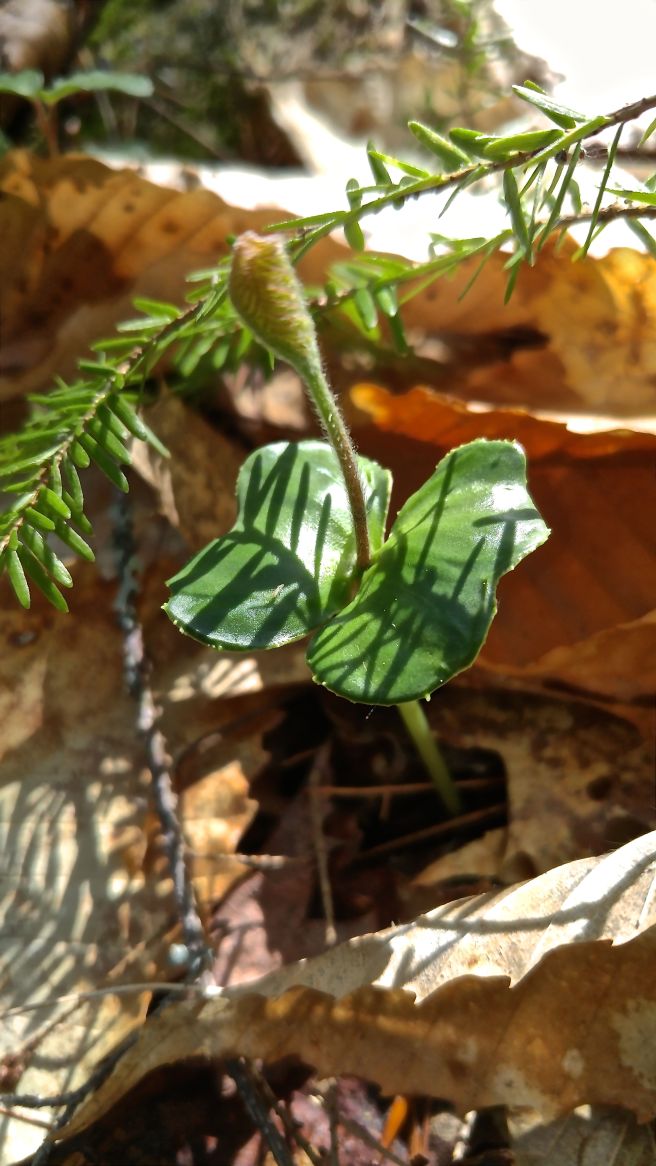
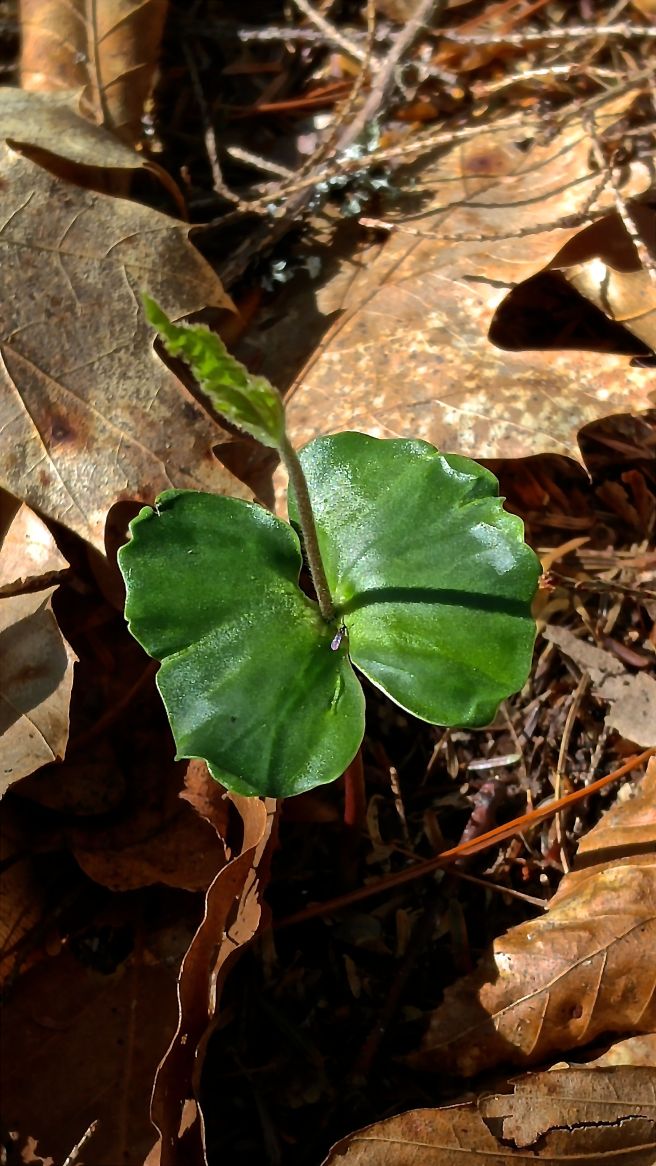
The cotyledon or seed leaf of an American beech. Prior to Monday, I don’t know that I’ve ever seen this and yet, since then I’ve continued to discover them almost every day. Worth a wonder.

h-beech coty 3ph

Think about it. The journey from seed to tree can be a dangerous one as the root is sent down through the leaf litter in search of moisture. Since the root system is shallow, lack of moisture can mean its demise. When conditions are right, a new seedling with a rather strange, yet beautiful appearance surfaces. The seed leaves of the beech, aka cotyledons, are leathery and wavy-margined. They contain stored food and will photosynthesize until the true leaves develop, providing a head start for the tree. I realize now that I’ve seen them all my life in other forms, including maple trees, oak trees and vegetables. But . . . the beech cotyledon captures my sense of wonder right now, especially as it reminds me of a luna moth, which I have yet to see this year.

h-green frog 2

Crossing the first boardwalk through the red maple swamp, a large male green frog tried to hide below us. Notice the large circular formation behind his eye. That’s the tympanum, his visible external ear. A male’s tympanum is much larger than his eye.

h-rhodora ph1

Other red maple swamp displays included the showy flowers of rhodora and their woody capsules.

h-rhodora1

Ralph Waldo Emerson knew the charm of this spring splendor:

The Rhodora

On being asked, whence is the flower.
In May, when sea-winds pierced our solitudes,
I found the fresh Rhodora in the woods,
Spreading its leafless blooms in a damp nook,
To please the desert and the sluggish brook.
The purple petals fallen in the pool
Made the black water with their beauty gay;
Here might the red-bird come his plumes to cool,
And court the flower that cheapens his array.
Rhodora! if the sages ask thee why
This charm is wasted on the earth and sky,
Tell them, dear, that, if eyes were made for seeing,
Then beauty is its own excuse for Being;
Why thou wert there, O rival of the rose!
I never thought to ask; I never knew;
But in my simple ignorance suppose
The self-same power that brought me there, brought you.

h-LEA group

To avoid getting our feet too wet, we spread out as we walked on the boardwalk through the quaking bog.

h-five morning

Morning light highlighted the layers from the pond and sphagnum pond up to Five Fields Farm and Bear Trap above.

h-trill 1

And because it was ever present, I couldn’t resist pausing to admire the painted trillium once again (don’t tell my guy).

h-dwarf ginseng1ph

One plant that I will always associate with this place and Ursula, who first introduced me to it years ago, is the dwarf ginseng. I love its global spray of flowers and compound leaves. But maybe what I love most is its beauty in diminutive form–just like Ursula.

Round Two: Noon, Lunch and a walk with my dear friend Joan.

h-bigtooth aspen

After returning to our vehicles following the morning walk, Joan and I grabbed our lunches. And I paused in the parking lot to enjoy the silvery fuzziness of big tooth aspen leaves. The quaking aspen in our yard leafed out a couple of weeks ago, but big tooth aspen leaves are just emerging. Like others, they begin life with a hairy approach–perhaps as a protective coating while they get a start on life?

h-muddy riverlunch

We ate lunch beside Muddy River where the spring colors were reflected in the water.

h-blueberries 1ph

And then we heard something jump in the water, so we moved silently like foxes as we tried to position ourselves and gain a better view. In the back of our minds, or perhaps the front, we wanted to see a turtle, beaver or especially an otter. Not to be. But we did see highbush blueberries in flower.
h-bee 1

And the bees that pollinate them.

h-pitcher 5ph

In their out-of-this universe form, we knelt down to honor the pitcher plant blossoms that grow along a couple of boardwalks.

h-red maple samaras

We were wowed by the color of the red maple samaras,

h-red winged

prominent shoulder patch of the red-winged blackbird,

h-cranberries

and cranberries floating on the quaking bog.

h-lone larch

And then our eyes were drawn to the green–of the lone larch or tamarack tree

h-green 9ph

and the green frogs.

h-green 8ph

I spent some time getting to know one better.

h-green 3

She even climbed out to accommodate me–I’m sure that’s why she climbed up onto the boardwalk.

h-green 6

Or maybe she knew he was nearby. What a handsome prince.

Round Three: 2:30pm, Joan and I (co-coordinators of the Maine Master Naturalist Bridgton 2016 class) were joined by another MMNP grad, Pam Davis Green, who will lead our June field trip to explore natural communities at Holt Pond.

h-striped maple flower

h-spriped flowers 2

Cascading down from the striped maple leaves, we saw their flowers, which had alluded us on our first two passages.

h-speckled 2

The cottony white masses of wooly alder aphids decorated many of the speckled alders in the preserve. In a symbiotic relationship, ants stroke the aphid with their antennae, while  the aphid releases a drop of honeydew, much like a cow being milked. It’s actually rather creepy.

h-duck

Two Canada Geese squawked from another part of the pond, but Mrs. Mallard stood silently by.

h-tree pants

Our final sight brought a smile to our faces–someone put his or her pants on upside down!

We hope that charms your fancy. Joan and I were certainly charmed by our three loops around and those we got to share the trail with today.

We also want to thank Ursula, Mary and Pam for their sharings. And we send good vibes and lots of prayers to my neighbor, Ky, and Pam’s brother-in-law.       

 

 

Bright Eyed and Bushy Tailed

That’s how I’m feeling these days–bright eyed and bushy tailed as I soak in the sights and sounds of spring.

p-maple flower1

I love the glow of new life

p-white ash

in the morning light.

p-gold2

I love the explosion of floral sunshine

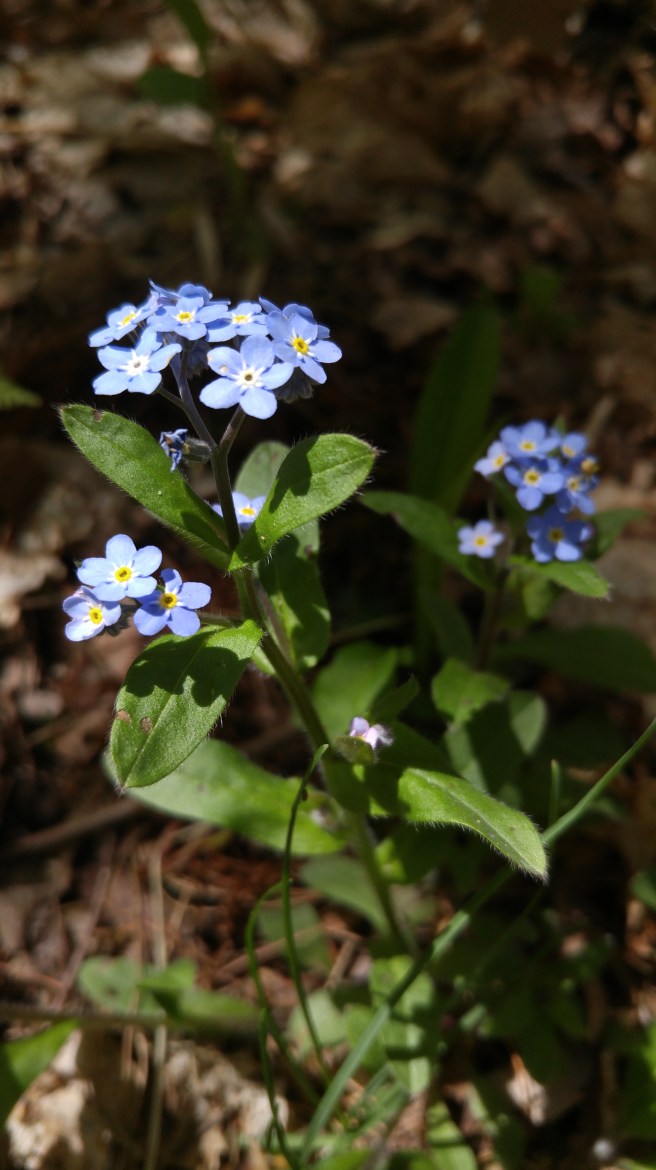
p-forget

in a variety of manners.

p-crosiers

I love the spirals of protection

p-crosiers royal1

in unison of unraveling.

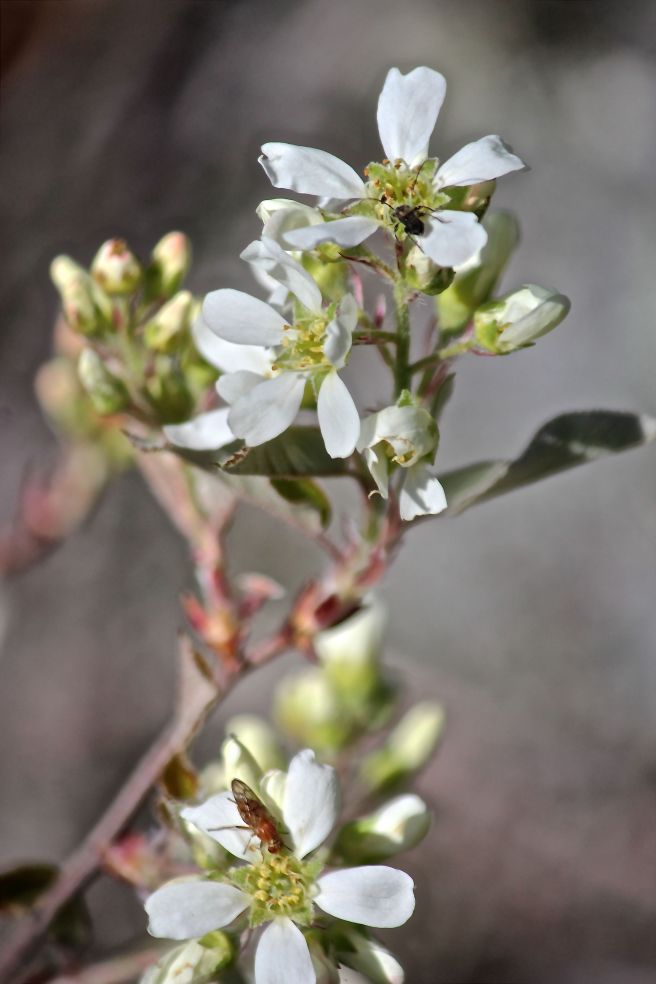
p-bee3

I love the quest of seekers

p-cherry2

in search of sweetness.

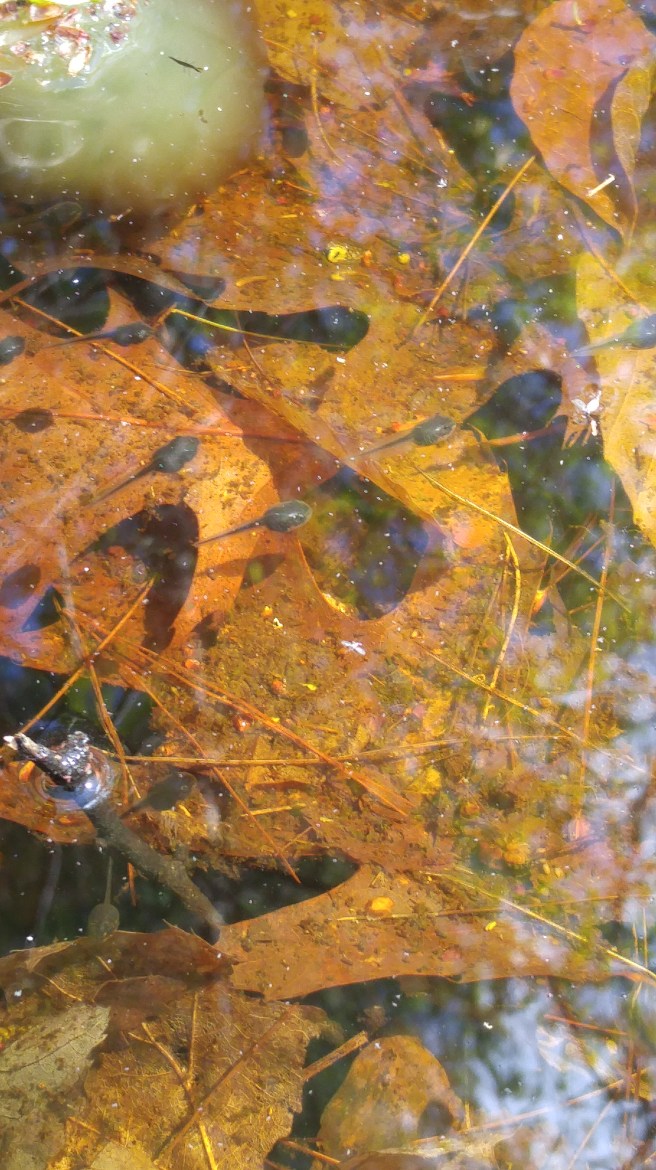
p-vp10

I love the transformation of life

p-vp2

in stages of development.

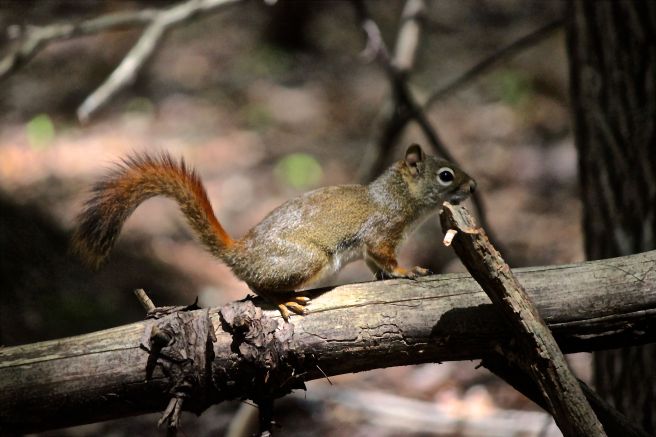
p-red squirrel

I love being bright eyed and bushy tailed

p-squirrel 2

in my continuous quest.


The Big, The Little and Everything In Between

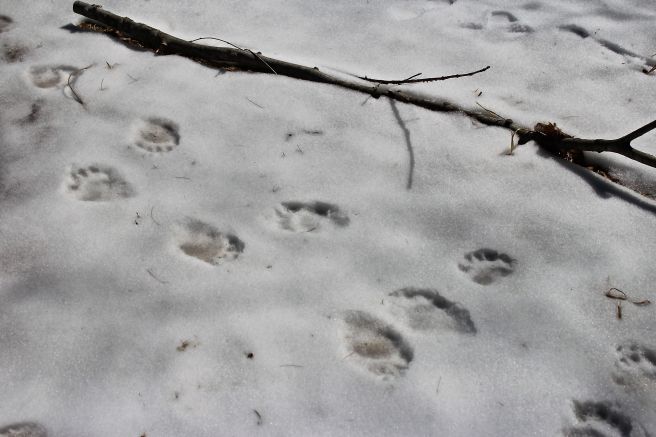
I stepped out of the shower after a walk around town with friend Marita and heard someone chatting away on the answering machine. Maybe it’s because I didn’t have my glasses on, though what that has to do with it I don’t know, but I couldn’t ID the voice. The male yammered away about something in the snow and it had come last night and I had to get there quickly. For some reason I thought it was our eldest and I  wondered what it was that needed my immediate attention. So, I cautiously picked up the phone and said hello. The voice on the other end continued talking desperately about me going somewhere. “Who is this?” I asked. It was friend Dick and I should have recognized his voice, but maybe not having glasses on is like not being able to taste if your nose is stuffed. Or maybe I’m overthinking as usual. Dick, however, was not overthinking or overreacting. He was excited and knew I would be as well. He was standing in a friend’s yard about a half mile from here and looking at bear tracks in the snow.

b-bear 7

As he knew he would, he had me on the word “bear.” His voice was urgent as he insisted I stop everything and get to his friend’s house. “I just need to dry my hair and then I’ll be right there,” I said. Deadlines loomed before me but bear tracks won my internal war. Dick suggested I just wrap a towel around my head. Really, that’s what I should have done because my hair has no sense of style whether wet or dry, so after a few minutes I said the heck with it and popped into my truck, camera and trackards in hand.

b-bear2

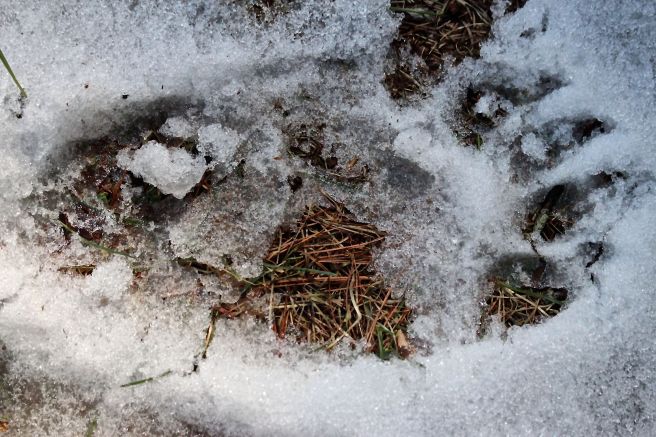
Yup–bear tracks. Classic, beautiful bear tracks. Even nail marks above the toes.

b-pigeon toed

And the pigeon-toed gait.

b-bear 9

My heart be still. The bear certainly wasn’t.

b-bear fence

It trampled a garden fence.

b-bear 4

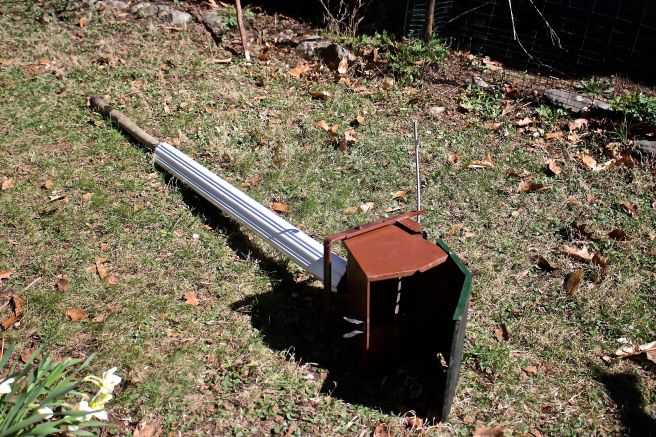
And yanked down a suet feeder that dangled from a wonderful rigging at second story height designed to keep the raccoons from stealing it. We couldn’t find the actual feeder.

b-feeder1

It toppled another feeder and consumed all the sunflower seeds. Oh, the squirrels may have helped, but apparently the feeder was stock full. Not any more. We looked for hair but found none.

b-trot

One of the mysteries to us was why did the bear suddenly trot. I’m now wondering if it was startled at some point and ran away.

b-bear 6

Before leaving, I enjoyed one more look. How sweet it is. And how thrilled I was to have seen it–especially knowing that it wouldn’t last long. The. Big.

b-feathers in circle

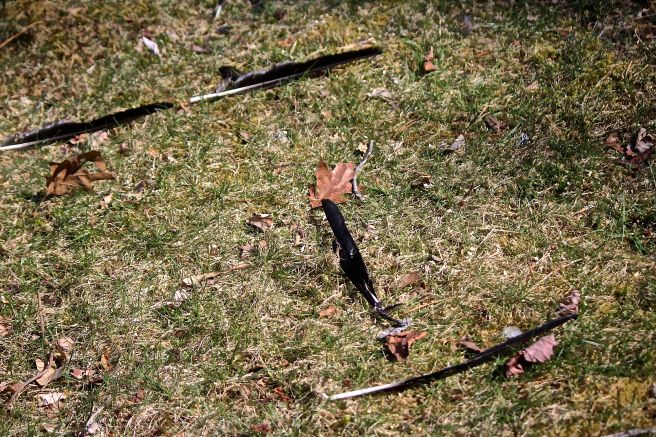
When I arrived home, I knew I needed to work, but figured a quick walk to check on the vernal pool was a great way to celebrate the bear tracks. And on my way–feathers. Long black feathers.

b-feather 1

Most were about a foot long.

b-feather 2

They appeared to be torn out rather than cut.

b-bird head

I know the neighborhood cats hang around our bird feeders all day–ever hopeful. But I don’t think they got this crow. I’ve a feeling a hawk was the culprit. The. In. Between.

b-snow on mount

It’s my neighborhood, so I always cast an eye toward the Mount. The. Big. Again.

b-vp1

The water level seems about the same as last week and a wee bit of Tuesday’s snow still decorated the  western shore.

b-tadpoles 3

Though the lighting wasn’t great at that hour, it was obvious that the tadpole population had increased.

b-sally1

And the salamanders continued to grow within their protective covering. The. Little.

b-woody1

I did finally settle down to work. And then it was lunch time. My guy and I weren’t the only ones dining.

b-woody lunch 1

After I finished two assignments and before I walked to a meeting, I decided to visit the pool again and capture the action in the late afternoon light. But first, an examination of the woodchuck’s feeding site. Yup, those leaves were nibbled.

b-woody lunch 2

And so were these. The. In. Between.

b-vp no snow

And then it was back to the pool, where the snow had melted. But, I have to share a finding along the way. Or rather, a non-finding. I intended to grab the crow head because I wanted the skull. Not. It wasn’t in the path where I’d seen it in the morning. I poked around and couldn’t find it anywhere. Who stole it? Maybe one of those darn cats.

b-tads 7

In the warmth of the sun at the eastern side of the pool where most of the egg masses were laid, the population continued to increase.

b-tads 10

I felt the same glee about all of these little critters as I felt about the bear tracks earlier in the day.

b-tads on sallies

Tadpoles and salamanders. I may not see bears tracks every day, but for a brief moment in time, I’m honored to watch the transformation that takes place in the vernal pool. The. Little. Times. Two.

Giving thanks for the ability to wonder. The Big. The Little. And Everything In Between. Especially Everything.

Mondate Fix

I have bad camera karma as my guy can tell you and last week my Tamron
SP 60MM F/2.0 Di II 1:1 Macro decided to quit. I know not why. But, we were headed south for today’s Mondate, so we detoured into Portland hoping for a quick fix. Not to be. Two or three weeks they said. ARGH!

p-Grog

C’est la vie. As my nephew once responded about thirty years ago when he was a little tyke, “La vie.” We didn’t get to see him today, but if his ears were burning it’s because we met up with his parents at the GROG in Newburyport. I needed a sister fix–and a sister hug. Thanks lmacbud and docbud ;-) And thanks also for the chocolate chip cookies. I’m amazed they survived the trip home. Guess we were full.

p-board 1

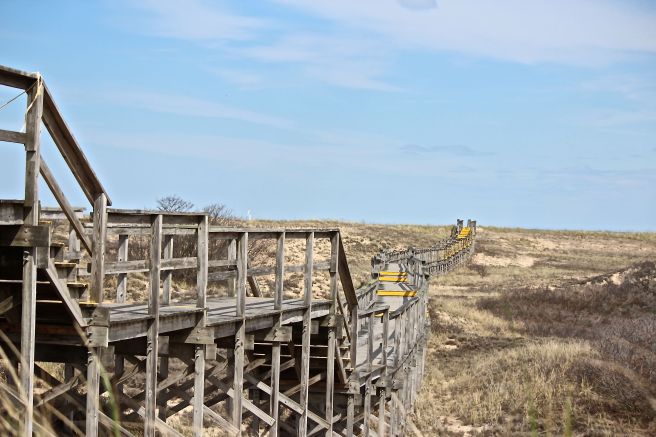
After we parted ways, my guy and I drove out to Plum Island, an 11-mile barrier island off the shore of Newburyport and Newbury, and home to the Parker River National Wildlife Refuge. Most of the parking areas along the salt marsh were closed and so we headed back and walked along the board walk in the Salt Pannes Wildlife Observation Area.

p-dunes to ocean

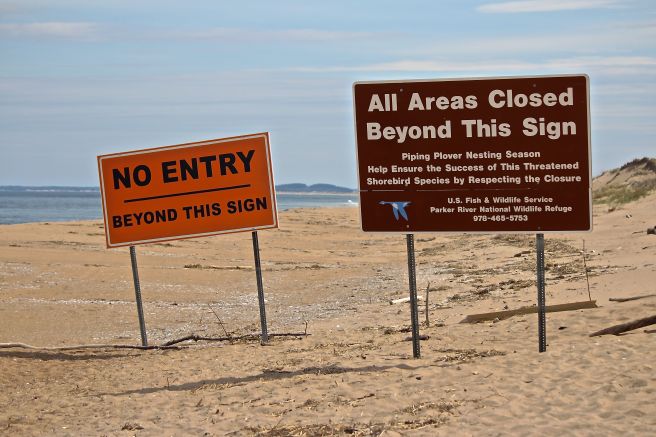
Due to the fact that it’s plover nesting season, we eventually reached a stopping point. According to the refuge’s Web site: “The Atlantic coast population of this small shorebird was listed as threatened on the Federal Endangered Species List in 1986. As with so many other species in decline, plover populations plummeted primarily due to habitat disturbance and loss. Plovers arrive to breed and nest on the refuge beach beginning in late March. Refuge management efforts focus on minimizing human-caused disturbance by restricting public access to the refuge beach during this critical time.”

p-cranberry

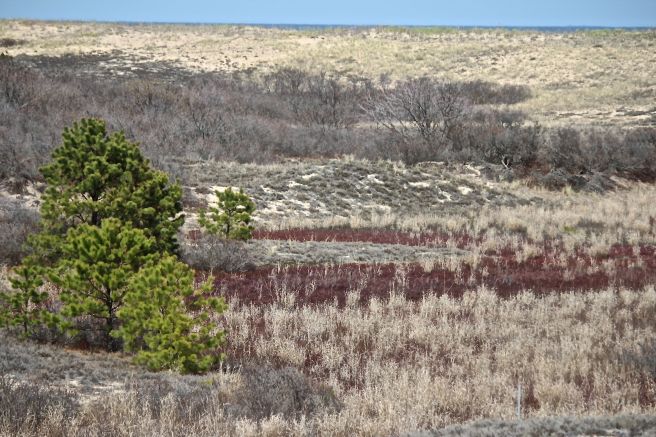
As we stood there, we realized that there was a small cranberry bog below. And we found a little sign that listed a couple of interesting facts: 1. the bog’s sphagnum moss sits atop sand. I look at wet or damp sphagnum every day and had no idea it could survive on sand; 2. like a vernal pool, the bog is used as a breeding pool and in this case by a rare and elusive amphibian–the Eastern Spadefoot Toad. I was itching to get down there and explore, but . . .

p-pine

we paused for a few more moments and then followed the board walk back.

p-board 2

Again we stopped and this time we could follow a board walk all the way to the beach. As I walked, I wondered about the crooked mile but came to the conclusion that it follows the lay of the land–or rather dunes we were crossing.

p-signs1

To our right, our movement was restricted. I suspect Rachel Carson would have approved of these signs. In 1947, the U.S. Fish and Wildlife Service published a booklet Ms. Carson wrote about the refuge.

p-beach right

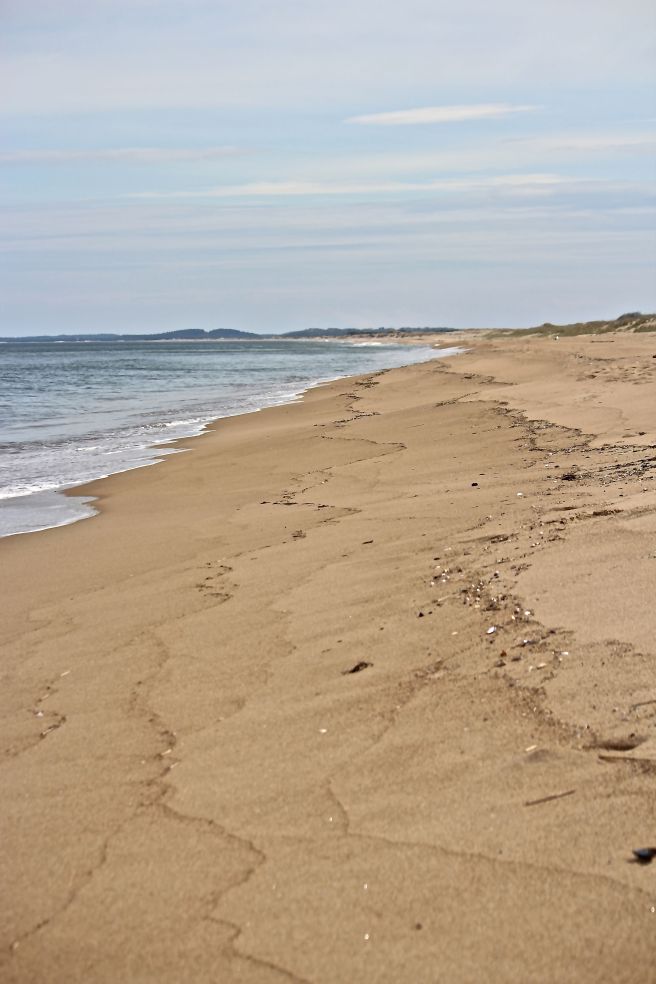
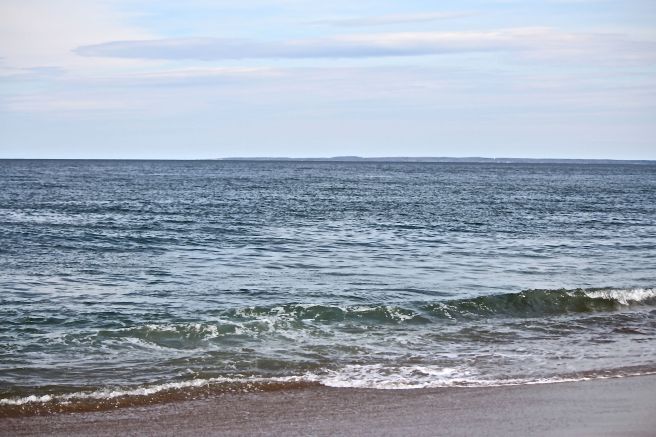
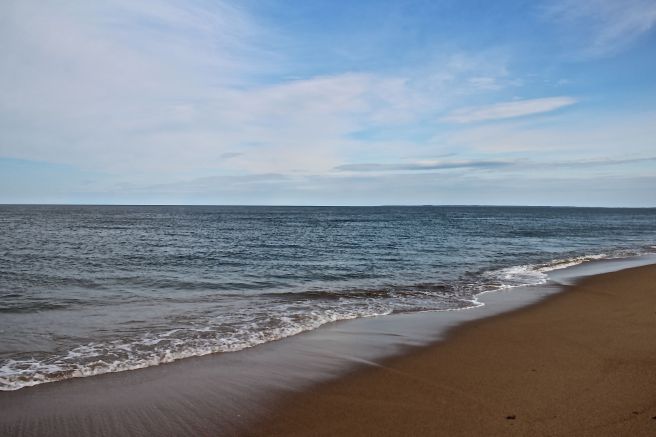
We walked to the water’s edge and looked south. The stretch of beach invited exploration, but we don’t always need to get what we desire.

p-mg2

Nearby, my guy found a piece of drift wood to sit upon.

p-ocean1

In no time, he was mesmerized.

p-bird 2

p-bird 1

I needed to follow in the tracks of others.

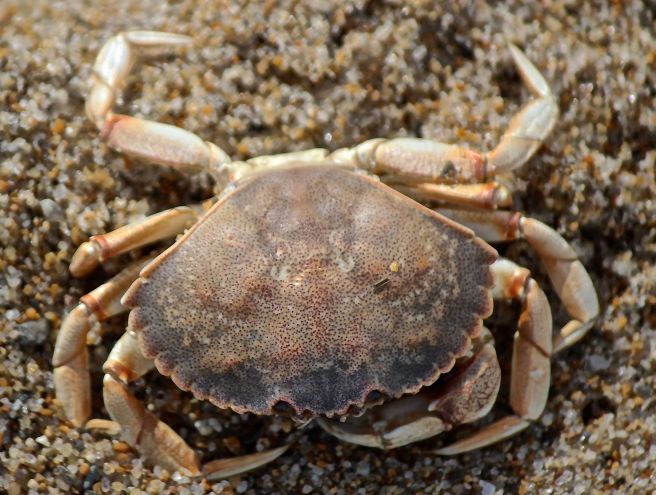
p-crab1

A day beside salt water always evokes memories of my childhood spent exploring the Connecticut coast. How many times did I stick a line attached to a clothespin down into the jetty in Clinton harbor to catch crabs?

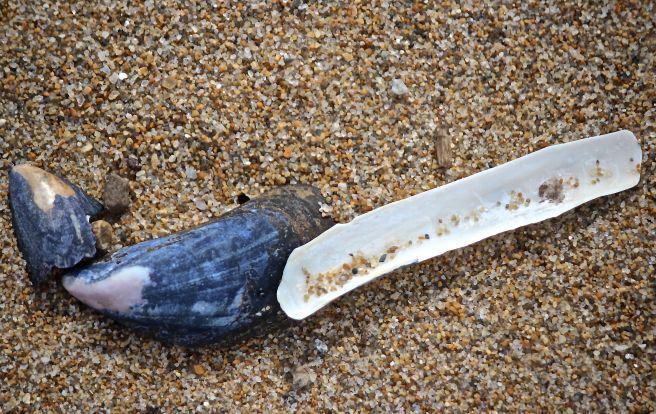
p-m & r1

How many mussels did I use as crab bait? How many broken razor clam shells sliced my feet?

p-seaglass

How many pieces of sea glass did I collect?

p-clam1

And how many clam shells became Christmas presents?

p-ocean 3

We couldn’t stay long and know that there is so much more to see and wonder about in this special place. Before leaving, we filled the innermost recesses of our lungs with salt air and then returned to the board walk.

Suffice it to say, for this Mondate, we got our fill of fixes.


Every Day is a Gift

It’s Earth Day and yet, I wanted to hibernate. That didn’t go so well. First, I looked out the living room window this morning and noticed a skunk staggering as it walked in circles–like a dog chasing its tail–only the skunk kept falling to the ground and then getting up and continuing in the same fashion. So I called the game warden. A neighbor did the same and a short time later an animal control officer put the skunk out of its rabid misery.

a-blues1

And then I was supposed to co-lead a hike in Pondicherry Park, but still in hibernate-mode, I managed to get out of it. My excuse–work load. Which was true, but staying focused wasn’t happening. So, I headed out the back door and decided to change my point of view. The high bush blueberry leaf buds began to do the trick as they offered their gift of quiet beauty.

a-red map2

a-red maple 1

Nearby, red maples practically screamed for attention. Male flowers have long, extended stamens that are coated in dusty yellow-green pollen. The females have a well developed ovary with two long stigmas but the stamens are reduced in size and non-functional. Just seeing them lifted my mood.

a-ta1

As I made my way to the vernal pool, I stopped to smell the trailing arbutus, aka Mayflower. But sniff as I did while squatting on all fours, I couldn’t smell the soft scent people rave about. And I have a good sniffer. For me, the gift of this wildflower is all in the joy it brings as one of our first to bloom.

a-tad 4

My next stop, was of course, the vernal pool that I frequent on a regular basis. While something has been disturbing some of the egg masses, others continue to develop.

a-tadpole 1

Each little tadpole swims about in its jelly-covered egg, offering a gift of hope.

a-sally3

Salamander eggs also are enjoying the warmth of being encased in jelly–especially where the sun shines upon them. It’s most helpful for development when the egg masses can float to the top of the pond and take advantage of the sun’s heat.

a-sally 1

For now, each little pod within the orb reminds me of coffee beans.

a-water st2

While standing silently beside the pool, I began to notice other forms of life, including the water striders. Do you see the two mating? These wonders of the natural world appear to skate on water, but really its the water-repellant hairs on their hind and middle legs that allow them to glide nimbly across the surface. They offer a gift of amazement.

a-mosquito1

Their favorite food happens to be abundant in this pool–mosquito larvae. I have to say it’s a food offering, but also a gift to all of us–we should celebrate the water striders as much as we do the dragonflies.

a-tom 2

I left the pool and realized I was among the turkeys. Tom was ready to offer his gift to his harem. Such a handsome dude.

a-grady 4

And with that, I realized that I was ready to join the world again so I drove to the trailhead for Bald Pate to join Loon Echo Land Trust for an Earth Day hike. The leader of the gang was this precocious tyke. At three years old, I kept insisting he’s 33. He kept telling me he’s only three. It can’t be. Though this was his first mountain to climb, I suspect there are many more in his future. He offered just the right tonic today and I fell in love.

a-view

As we climbed, we paused to look west and admire the view. Though the sun wasn’t truly shining, the day was getting brighter, literally and figuratively.

a-pitch cone

At the summit, we took time to examine the pitch pine cones with their prickly scales. Sometimes beauty has an edge.

a-grady and carrie mean pose

Before we descended, our little hiking buddy posed with his mom, the outgoing executive director of Loon Echo. Carrie will be missed and we wish her and her family well as they prepare for their move to Wisconsin in a couple of months. Her dedication to land conservation is to be admired. And that mean-looking grin–oh my.

a-adam 1

Also to be admired and the reason our local community and those beyond have been dealing with extreme shock these past couple of days–Adam Perron, who’s life was snuffed out two days ago in a tragic accident. Adam was the milfoil dude and a naturalist/educator at Lakes Environmental Association in Bridgton, where I serve on the board (and chair the ed cmt). He was also a student in the Maine Master Naturalist Program (Falmouth 2014) when I served in my first year as a mentor, so we spent many hours carpooling to classes and field trips and solving all kinds of environmental problems–in our opinions at least.

a-adam2

He was most at home in places like Holt Pond, where he loved to share his knowledge with others. R.I.P. Adam. I’m grateful for the gift of time spent in your presence. It strikes us all that your candle was snuffed out way too early, but as a friend reminded me today, we never know when it is our turn. Here’s to you, Beth and Abby.

And to everyone else, hug the ones you love and don’t forget to wonder. Every day is a gift.


Mondate on Mount Will

It’s been a while since we’ve actually had a Mondate. After two days of hiking the trails up Pleasant Mountain, today’s journey found us venturing a wee bit out of the neighborhood as we made our way through Bethel to Mount Will.

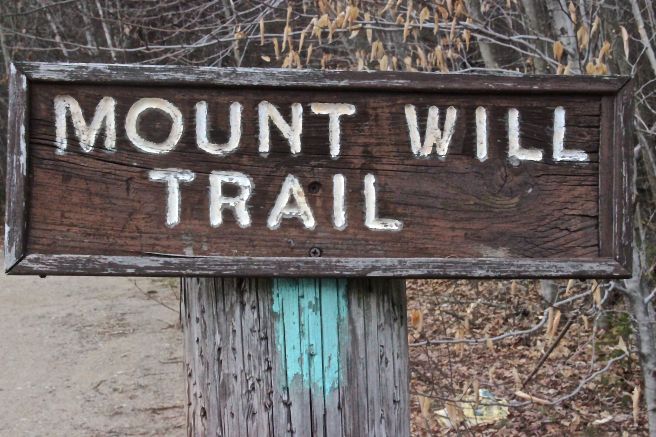
w-mount will sign

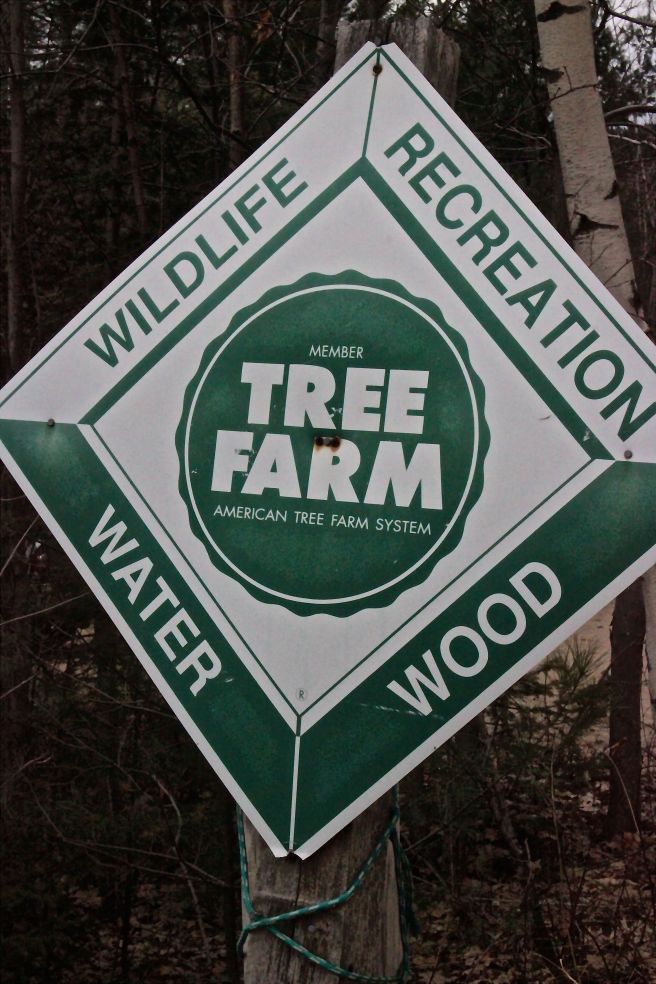
w-tree farm sign

The parking lot is located between these two signs. Part of the Mount Will trail system is within the 115-acre Bethel Town Forest that had served as the Town Farm back in the day.

w-2 trails

The South Cliff trail leaves from the left, while the North Ledges is on the right. This is a loop and we decided on a counterclockwise trek. It had been at least five years since we last hiked here and we’d forgotten about some of the steep sections.

w-n-parklike

Of course, at the start, it seemed almost parklike. Three years ago, several local organizations including Mahoosuc Pathways, the Oxford County Conservation Corps, Outward Bound and the Bethel Conservation Commission rerouted this particular section of the loop.

w-n-switch

Now switchbacks wind their way up toward the North Ledge.

w-bear 8

When I wasn’t looking down, I scanned the woods, ever searching for my favorite species–bear claw trees.

w-bear

And I wasn’t disappointed.

w-bear 7

We saw them over,

w-bear9

and over again. Oh happy day! We found more than these, which leads me to believe that there are even more. Let the search continue!

w-gargoyle 2a

A few trees displayed other surprise packages–burls or warty growths caused by some environmental condition such as injury, virus, fungus, insect infestation or mold. Though this growth can put stress on a tree if it becomes too heavy, generally trees with these features are healthy. And woodworkers covet burls for the unique pattern and beauty found within. That sounds like a comment on the world–we all have hidden treasures, but they aren’t always visible.

w-n-artist conk

Other tree growths include artist’s conk and

w-s-redbelted polypore

red-belted polypores.

w-n-bobcat

The trail passed below rocky outcrops–and my imagination saw bobcats. But, what would they eat? The undergrowth is limited, so I doubted snowshoe hare. That being said, spruce and hemlock cones are many and red squirrels chided us constantly.

w-n-vp

Meanwhile, at a vernal pool just off the trail, all was quiet–and still partially covered in ice.

w-n-lunch rock

Lunch rock was the North Ledge. Below, the Androscoggin River wends its way through the landscape. The Androscoggin has a long history as a life-giving force–beginning with the Abenaki Indians who used it as a water trail and knew the nuances of this 170-mile river.

w-n-carters

The fertile, ancient floodplain has served many a farmer, including the Carters who own the farm across the river below where we sat. While we ate, we shared our memories of cross-country skiing across those fields, beside the river and into the woods.

w-spruce sap

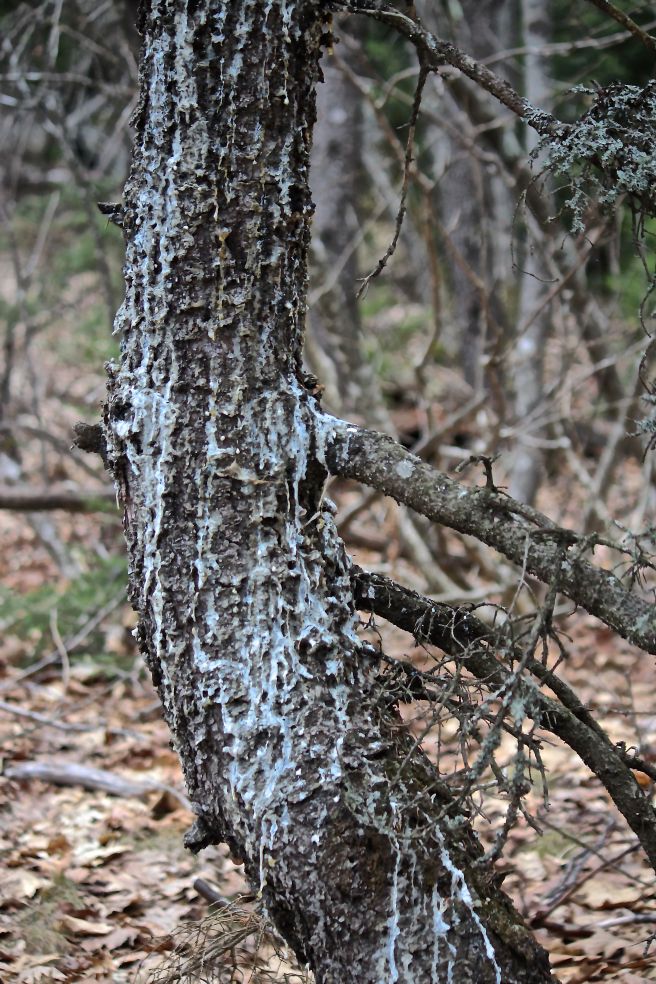
We continued on across the ridge and through the spruce forest where the sap ran blue.

w-s-sunday river

Before turning toward South Cliffs, we caught a glimpse of the trails at Sunday River Ski Area in Newry.

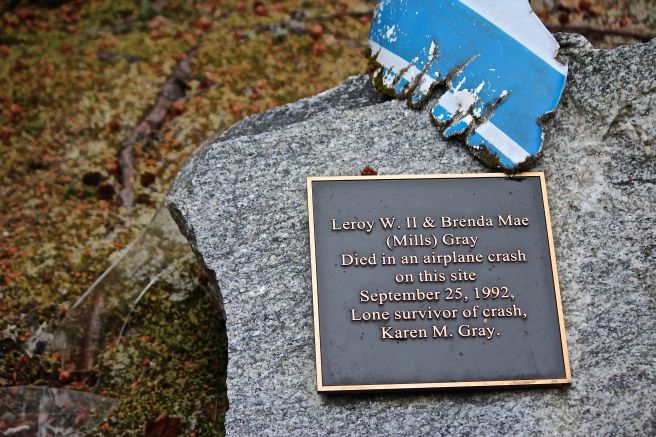
W-gray 1

And then we saw a sign that had us wondering. The Gray Memorial? We had no previous memory of it, so we followed the detour and walked along a snowmobile trail for about a quarter of a mile.

w-s-gray memorial

The story is sad. The airplane remnants powerful in suggestion. Upon arriving home, I found an article in the Sun Journal referencing the event. Leroy was a state trooper and his wife, Brenda, an executive secretary who became head dispatcher for the Bar Harbor Police Department. With their 14-year-old daughter, Karen, they were flying their Cherokee Piper to Bethel to spend time with relatives when the plane “crashed nose first” into Mount Will about 7:30pm. Despite her own injuries, Karen hiked down the steep mountainside to seek help. A somber site indeed.

w-s-cliff view

We backtracked to the trail and continued on to the South Cliffs, where our view again showed the river, with Route 2 following beside and both leading to Bethel village.

w-s-mtn goats

Moving off the cliff, we were sure mountain goats had laid out the trail.

w-s-ledges

Again, we were in bobcat territory, frequented by chatty red squirrels who seemed to feel quite safe as they scrambled from tree to tree.

w-oz

And then we moved into the land where the monkeys in the Wizard of Oz jumped out upon Dorothy and her friends. My guy started humming the music from his favorite movie. The reality is that these trees knew the wrath of previous storms.

w-s-heading down

Once again the trail turned S curves as we continued downward and

w-s-brook

listened to water trickling over the mossy stream bed beside us.

w-s-logging

And then we found ourselves in the midst of a recent logging operation–remember, this is a working forest. Slash galore decorated the landscape, but we suspect that all of this will be chipped eventually. One thing we happily noted–bird song. Lots of bird song at this spot.

w-s-weather1

We were almost to the bottom of the trail when an anomaly grabbed our attention and forced us to investigate.

w-s-weather 1

w-s-weather tape

We’d stumbled upon a winter weather station. We only knew that because “winter weather station” was printed in faded paint across the box. So, we get the tape measure for snow depth, but the box? And the hole covered with mesh? Worth a wonder, so we did.

w-s-weather cocoon

Apparently, a moth appreciated the efforts of the citizen scientists who created this shelter. Our hike was over, but this chrysalis holds the future.

w-covered 2

We decided to complete our Mount Will Mondate with a visit to Artist’s Bridge over Sunday River–the perfect culmination of our love for nature and history.


From Peak to Shining Peak

Maybe we’re a wee bit crazy. Maybe there’s no maybe about it. My guy and I climbed Pleasant Mountain again, only this time we took a much longer route than yesterday.

p-Bald sign

After leaving a truck at the Southwest Ridge trail, we drove around the mountain and began today’s trek via Bald Peak. It’s always a good way to get the heart beating, but then again, any of the trails up the mountain will accomplish that mission.

p-bald stream 2

One of my favorite features of this path is the voice of the stream–water rippled with laughter as it flowed over moss-covered rocks before splashing joyously below.

p-Sue's Way signs

And then we turned right onto Sue’s Way. We never knew Sue, but are thankful for this path carved in her honor.

p-Sue's snow on East

Across the ravine, snow still clung to the East slope at Shawnee Peak Ski Area.

p-Sue's porky

Oaks, beech, hemlock and yellow birch form most of the community, feeding the needs of their neighbors–including porcupines.

p-Sue's 2

We followed the trail as it embraced another stream and watched the landscape change.

p-Sue's polypody

Eventually, we were in the land of large boulders and ledges, all decorated with common polypody and moss–an enchanted forest.

p-shawnee chair

At the top of Sue’s Way, we detoured to our first peak–Shawnee Peak.

p-shawnee

Splotches of snow signified the end of a season.

p-Shawnee chair 1

The Pine chairlift silently rested, its duty accomplished until it snows again.

p-shawnee ski chair 2

And in the shack, the back of ski chair spoke of past adventures and adventurers.

p-signs by mtn

From there, we followed the North Ridge Trail to our first official peak.

p-north peak trail ice1

Despite today’s warmth, ice still reflected movement frozen in time.

p-north peak pines

North Peak has always been one of my favorite spots on this mountain. In the land of reindeer lichen, blueberries and dwarfed red pines, we ate lunch–day two also of ham and  Swiss. This is becoming as much of a habit as climbing the mountain.

p-Mtn W from lunch rock

When we stood up on lunch rock, our view included the master of all New England mountains glowing in the distance.

p-north peak

In a few months, the treasures of this place will give forth fruitful offerings.

p-ridge line

With North Peak behind, our view encompassed the rest of the peaks.

p-Bald Peak, Mtn W and Kezar Pond

Continuing down and up again, we heard plenty of quaking coming from a vernal pool about one hundred feet off the trail. And then we were atop Bald Peak, where Mount Washington again showed its face, with Kezar Pond below.

p-bald peak causeway

The other side of the trail offered a photo opp of the Route 302 causeway that divides the north and middle basins of Moose Pond.

p-ft again

Our decision today was to hike the mountain in a backward fashion as compared to our normal routes, so we approached the main summit from the Firewarden’s Trail.

p-summit crowd

Once again, many others also took advantage. We did chuckle because except for one guy, of all the people we encountered, we were the oldest. The youngest–a baby in a backpack.

p-SW sign

At the junction below the main summit, we began to retrace yesterday’s footsteps on the Southwest Ridge Trail.

p-SW mayflower

The sunny exposure made this the warmest of all trails and the Trailing Arbutus prepared to make its proclamation about the arrival of spring.

p-SW Hancock

Near the teepee, I felt compelled to capture the ponds again. Another beautiful day in the neighborhood.

p-SW 2

After chatting with a family at the teepee, we began our descent. Of course, someone was mighty quicker than me.

p-SW 3

Where no trees grow on the bedrock, cairns showed the way.

p-SW mnts

Before slipping into the forest again, I was thankful for the opportunity to capture the  blue hue of sky, mountains and ponds.

p-cairns final turn

We made our final turn at the three cairns and

p-SW final

followed the path down–though we did begin to think that maybe they’d moved the parking lot.

p-LELT

Over six miles and four hours later, we had Loon Echo Land Trust to thank once again for protecting so much of the mountain and maintaing the trails. We reminisced today about how our relationship began at a halloween party held at the ski area thirty years ago and the number of treks we’ve made along these trails since then. Whether hiking to the ledges or teepee, making a loop or walking peak to peak on a sunshiny day such as this–it never gets old.