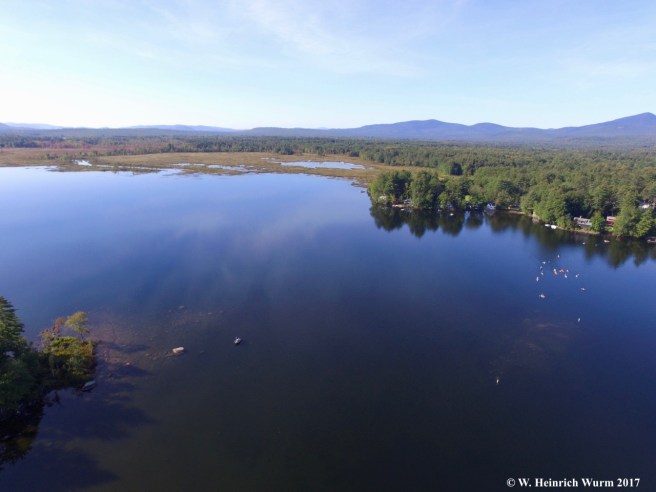
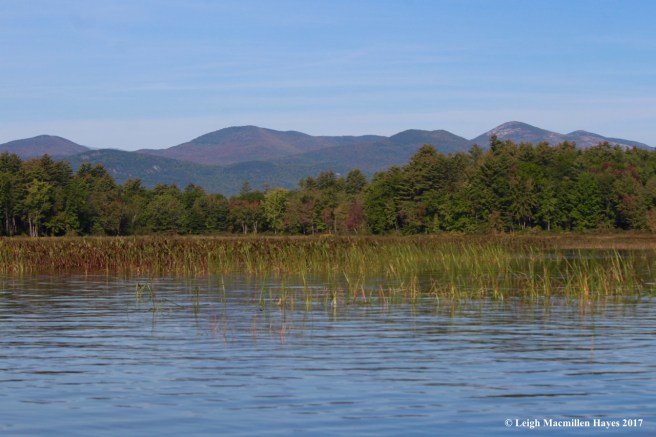
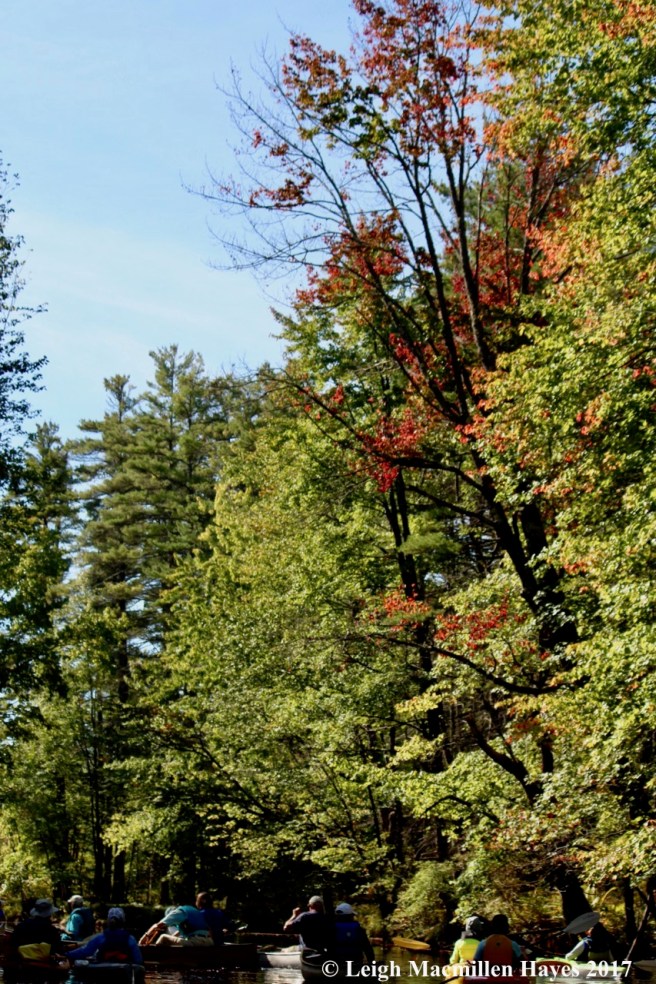
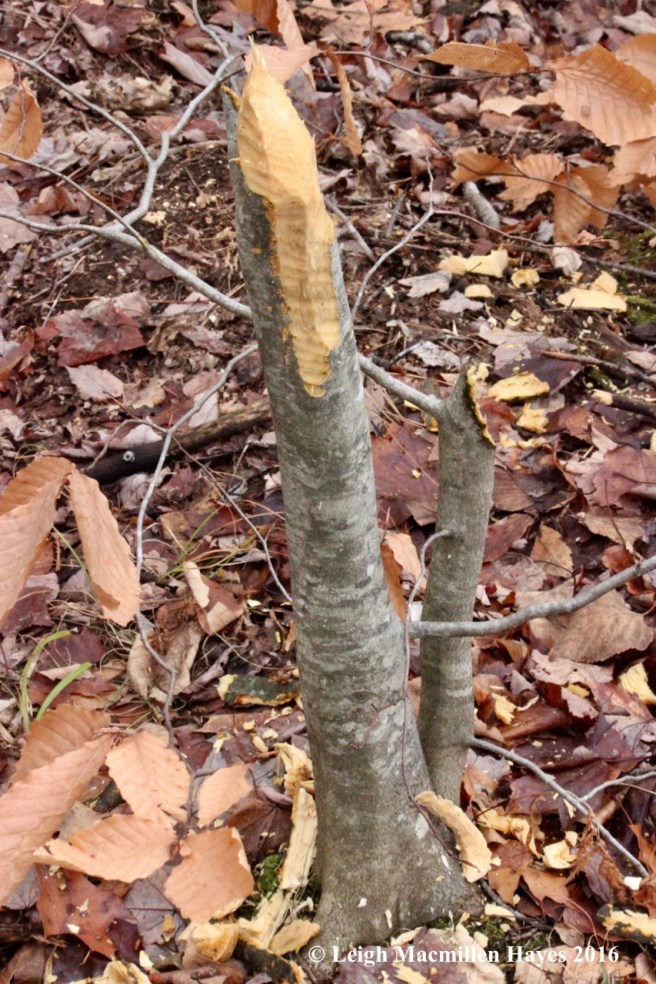
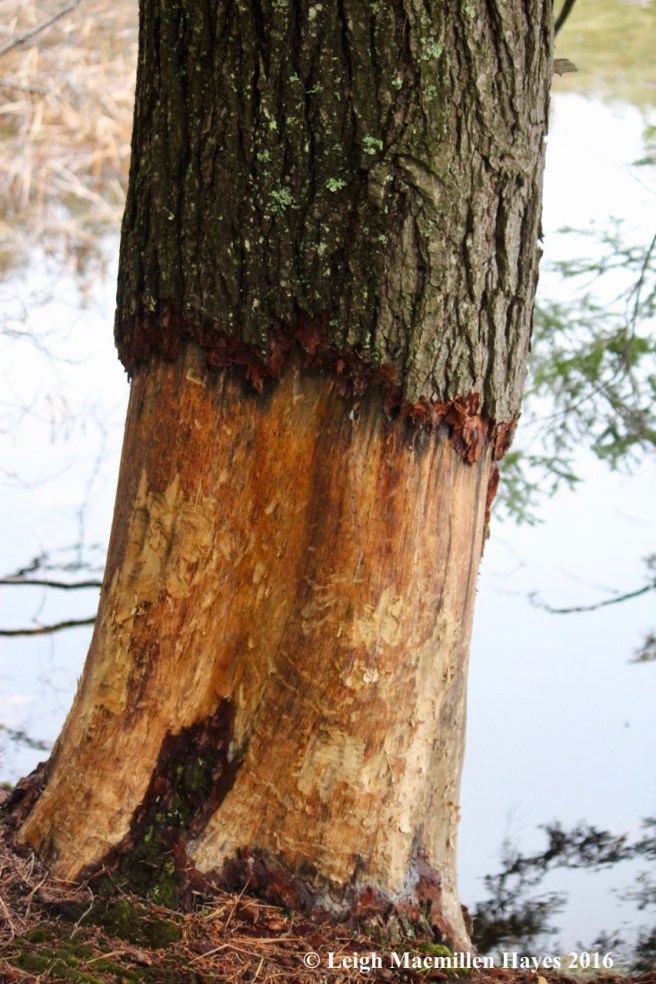
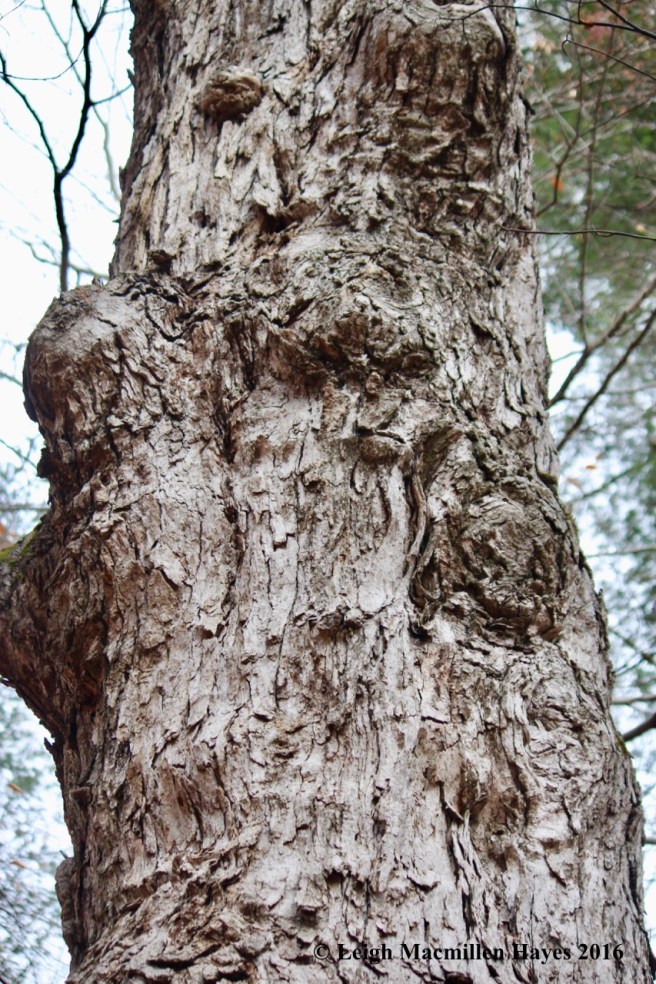
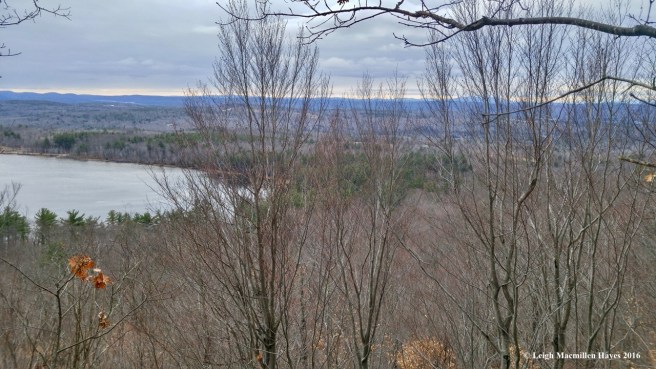
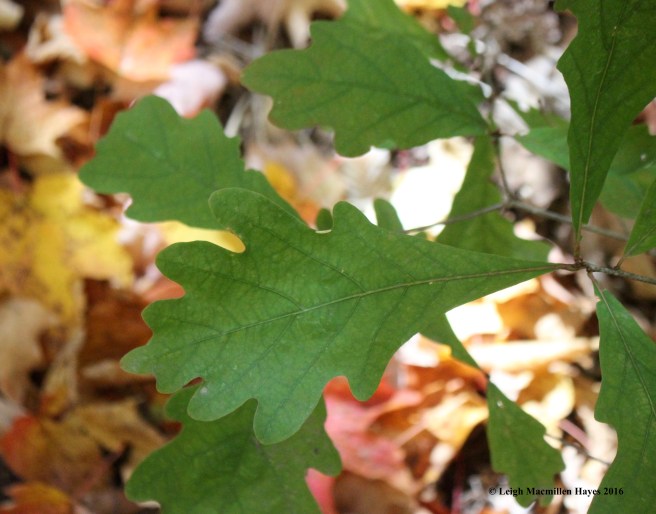
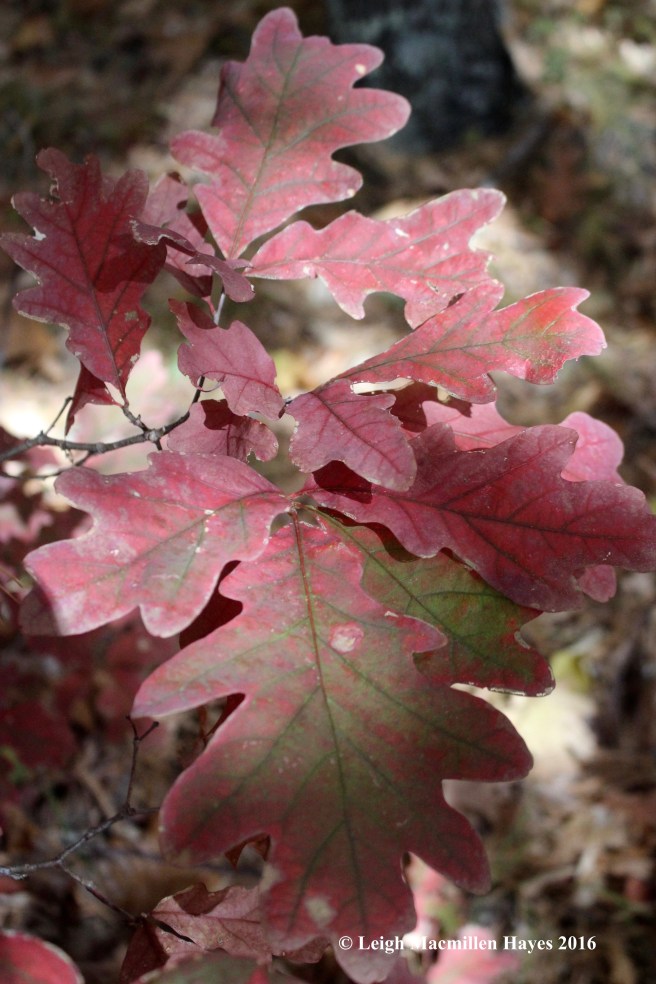
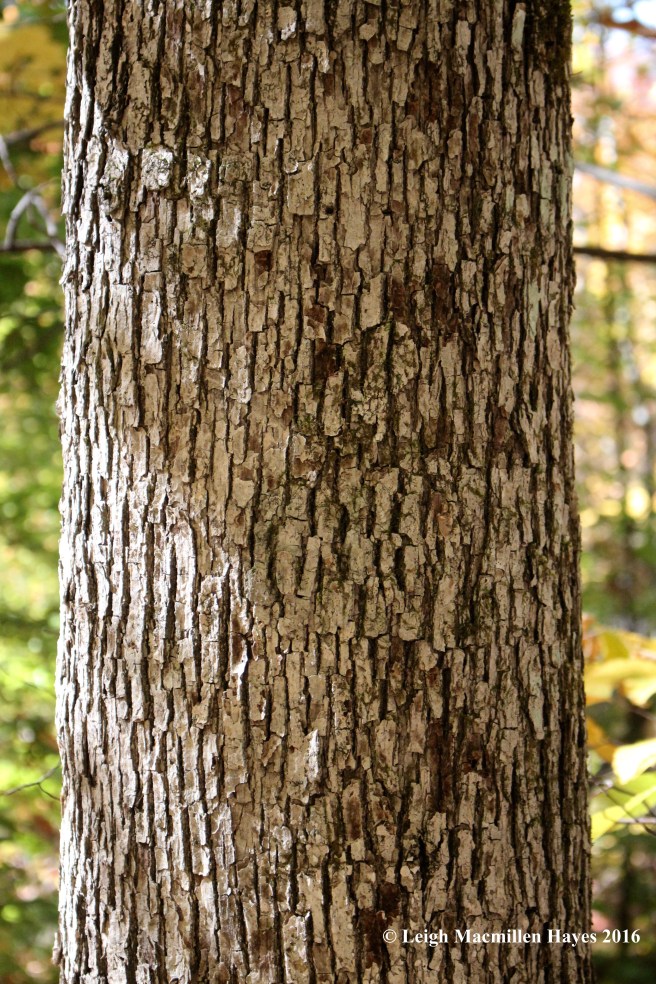
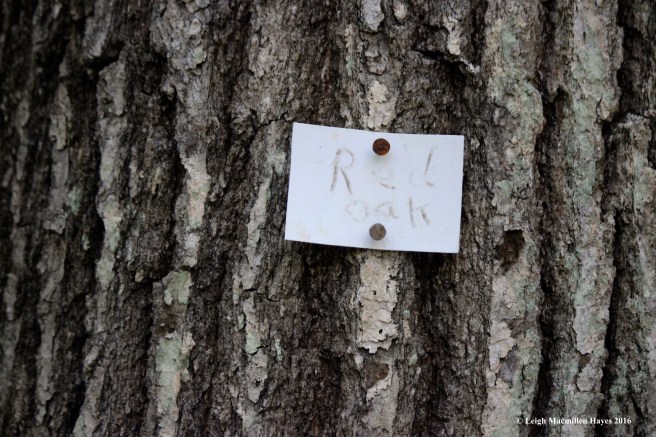
Anybody Home?

Only a few days ago we felt like we were melting as we complained about the muggies and buggies, but those temperatures are now only memories and it’s beginning to feel like fall in western Maine. And so my guy and I bundled up before we followed a trail and did some bushwhacking this morning, exploring a property Jinnie Mae and I had visited only a week and a half ago.

m1-lodge

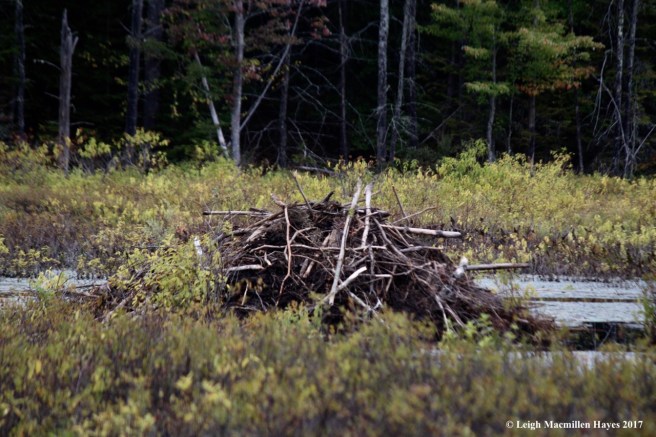
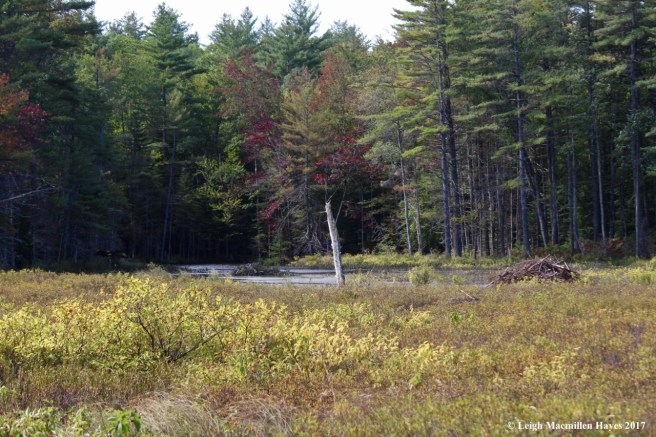
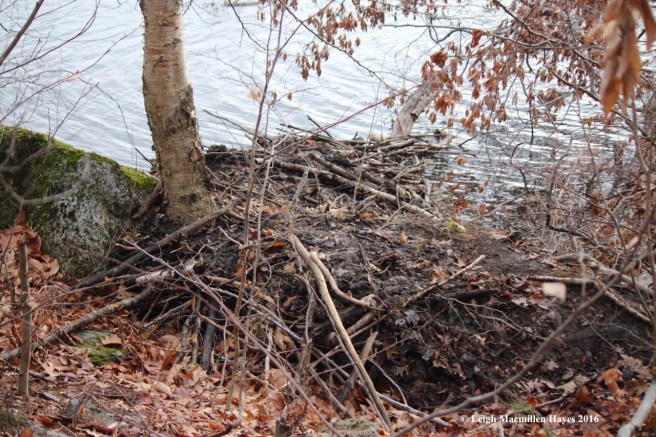
It was to the beaver lodge that we first made our way, noting all their old works near the water’s edge.

m2-lodge 2

But, we were disappointed that we saw no evidence of new work and it didn’t appear any winter prep was yet occurring. Were the beavers still about? Or had some parasites in the lodge forced them to move on?

m3-infinity pool1

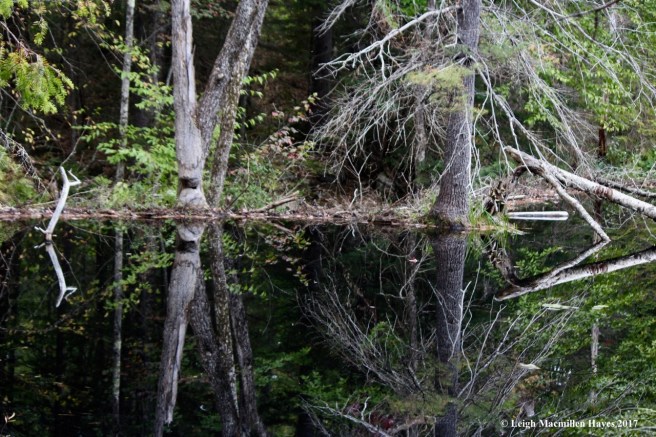
We hoped not for they’ve worked hard in the past to create a home with an infinity pool that would be the envy of many.

m1a--otter scat

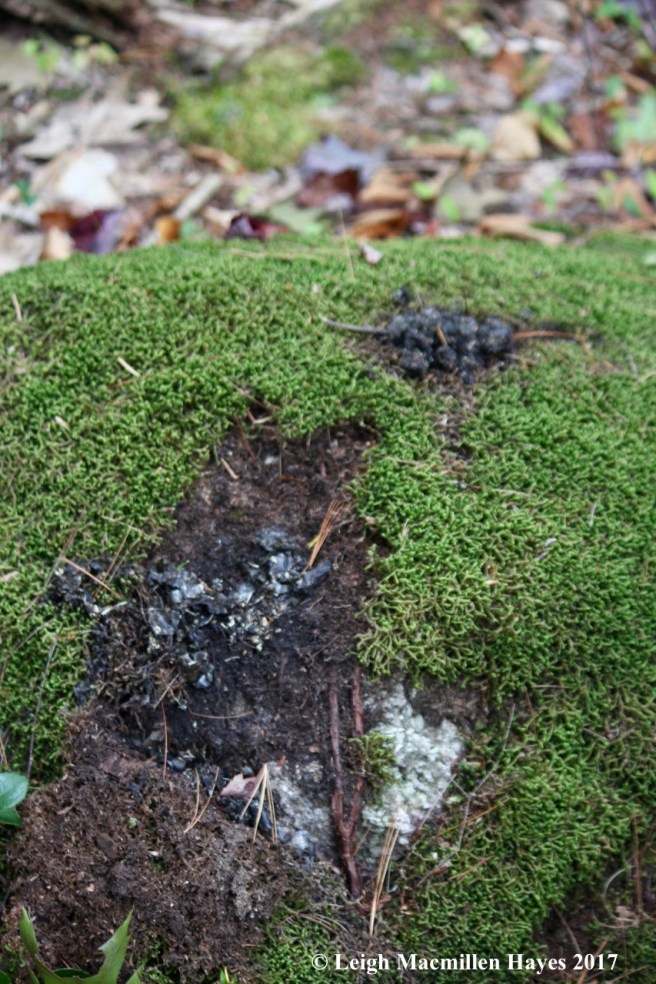
We did note that they’d had recent visitors who left behind a calling card in the form of a slide and scat–otter scat, that is.

m5-doll's eye

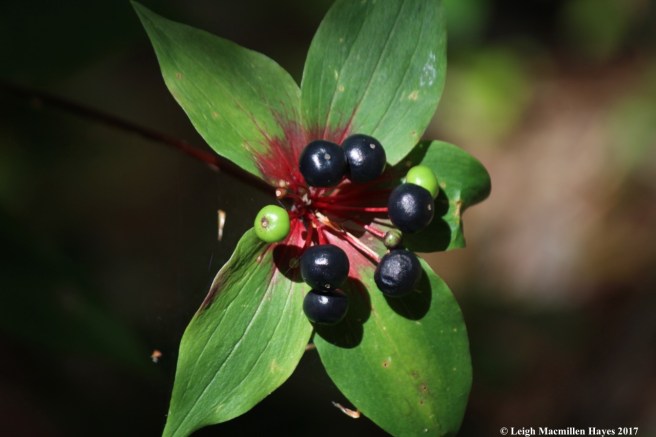
And we spied the fruits of a former flower that graced their neighborhood–doll’s eye, aka white baneberry.

m4-dam 1

As we circled around the pool, we commented that the dam seemed to be in excellent shape and held the water about five feet above the stream below. But again, no evidence of new wood.

m7-dam works

Despite that, it’s an impressive structure. While some landowners might be upset to have beavers changing the landscape, we happen to know this one and she takes great pride in their works.

m9-dam 2

We stood for a while, indulging in our own admiration while wondering where the beavers might be. Of course, it was close to lunch time for us, and not an active time for them if indeed they were home. Possibly we were misinterpreting the view.

m8-beaver pond

After some time of quiet reflection, we made our way back, crossing the stream just below the dam.

m13-quiet reflection

And then we continued along the old logging road (recently bush hogged, eh Brian? Well done), and bushwhacked some more, crossing another stream to find our way to another reflective spot along the brook.

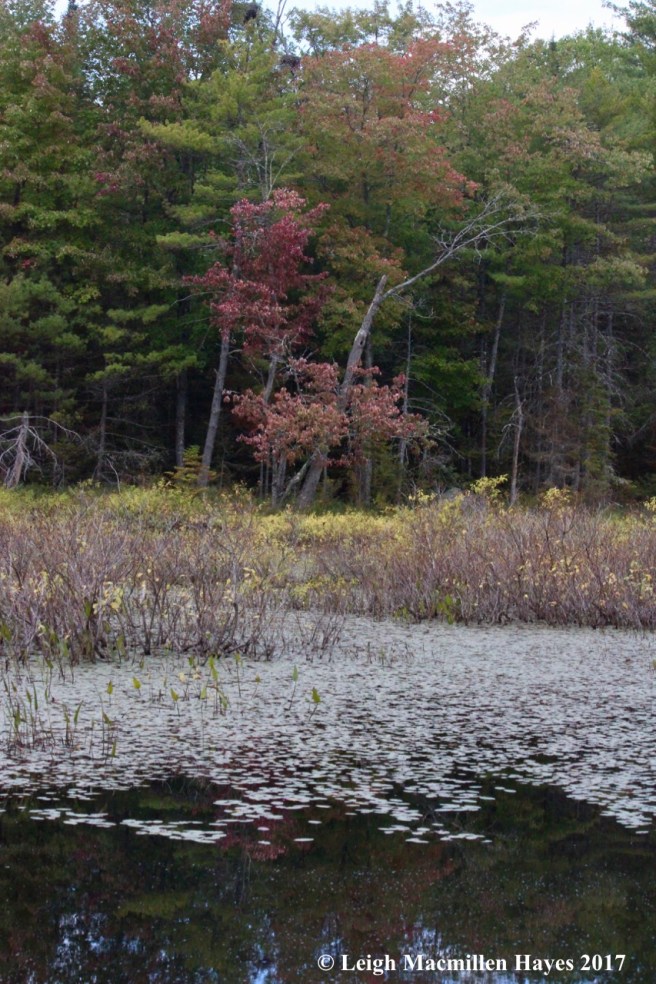
m12-rookery 2

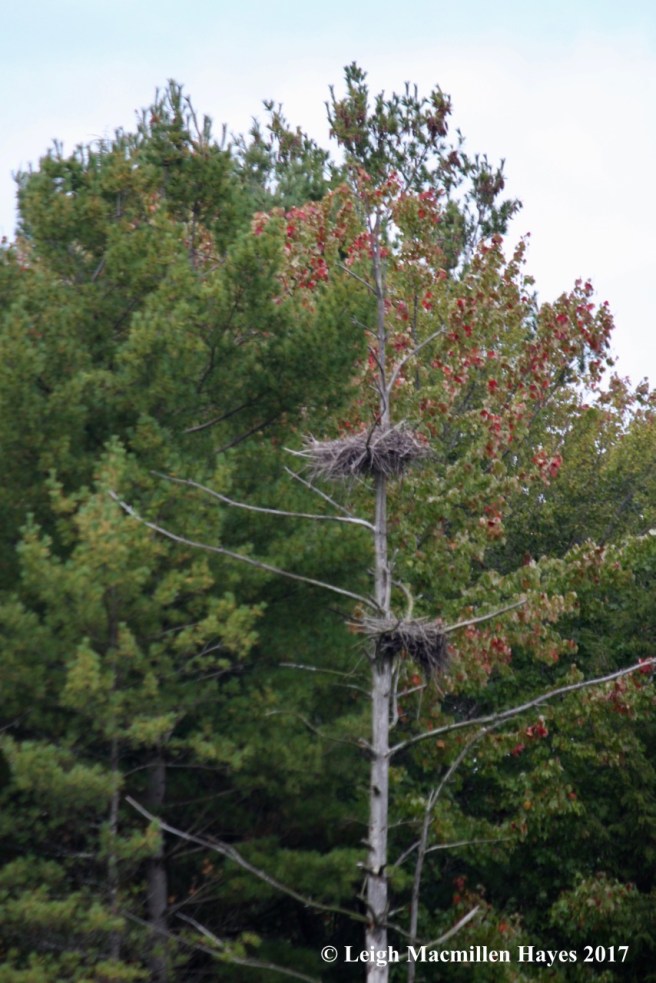
This time, our destination was that of another stick builder–great blue herons.

m11-rookery

Their spring/early summer nests are equally impressive. I hadn’t visited this spot since April, when the herons were actively setting up home. And I’m not sure it was a successful breeding season for them, but even if it was, they wouldn’t have needed these homes today. The nests will remain–available for grabs next year by those who return.

m16-jack in the pulpit

After a snack by the brook, we pulled ourselves away knowing it was time to head to our own home. Our wildlife viewings had been nil, but we spied a jack-in-the-pulpit in fruit, and that plus the doll’s eye were enough. And the time spent wondering about the critters.

m20-cosmos

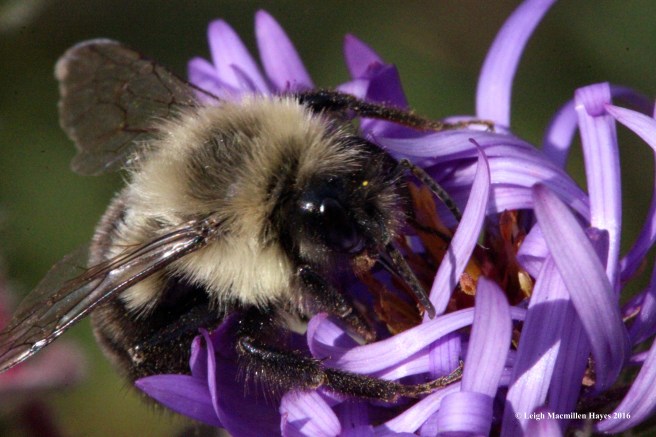
Back at our truck, we decided to check on the insect action in the gardens at our friend’s home. Only the bumblebees seemed to be active.

m19-hickory feast

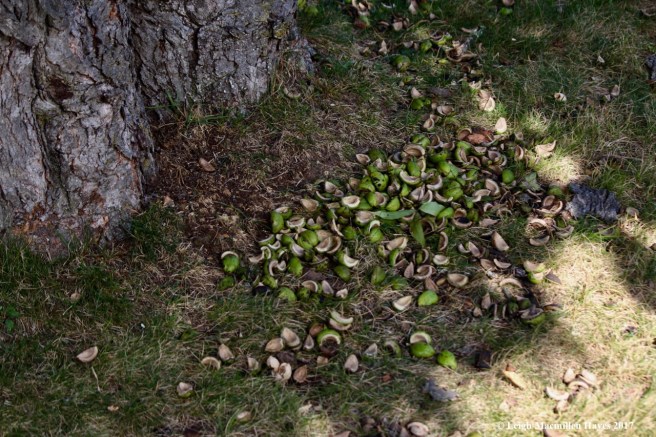
But we saw plenty of activity of another kind–a cache of hickory nut shells at the base of the tree, and really . . . everywhere nearby.

m18-hickory bark

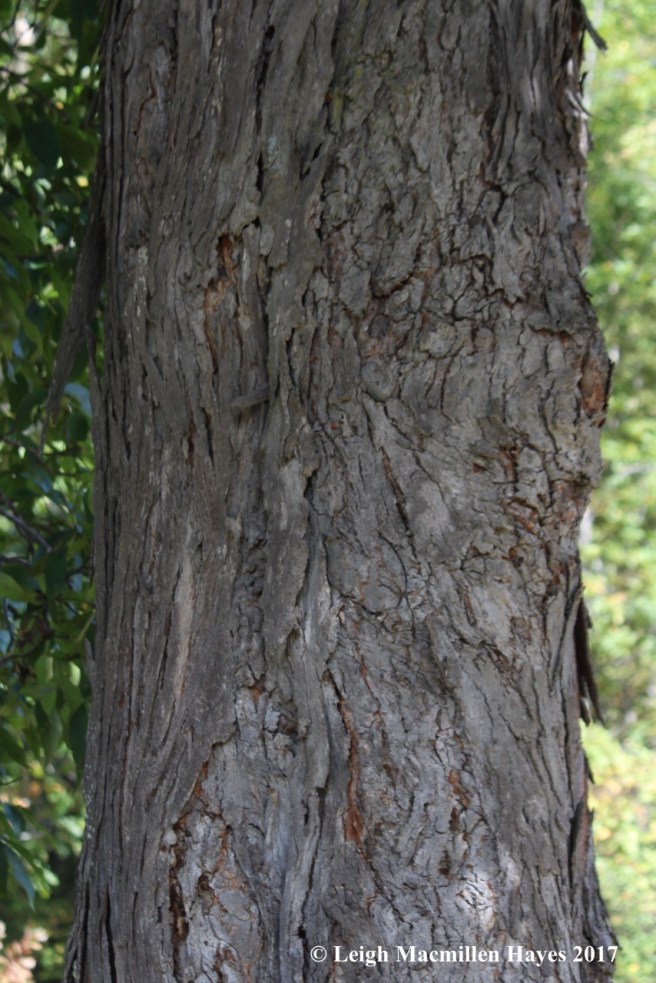
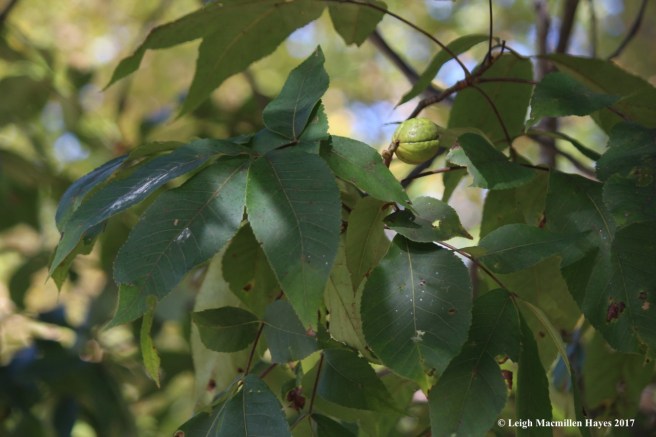
Shagbark hickory is more common south of this spot, so it was a treat to take a closer look.

m17-hickory

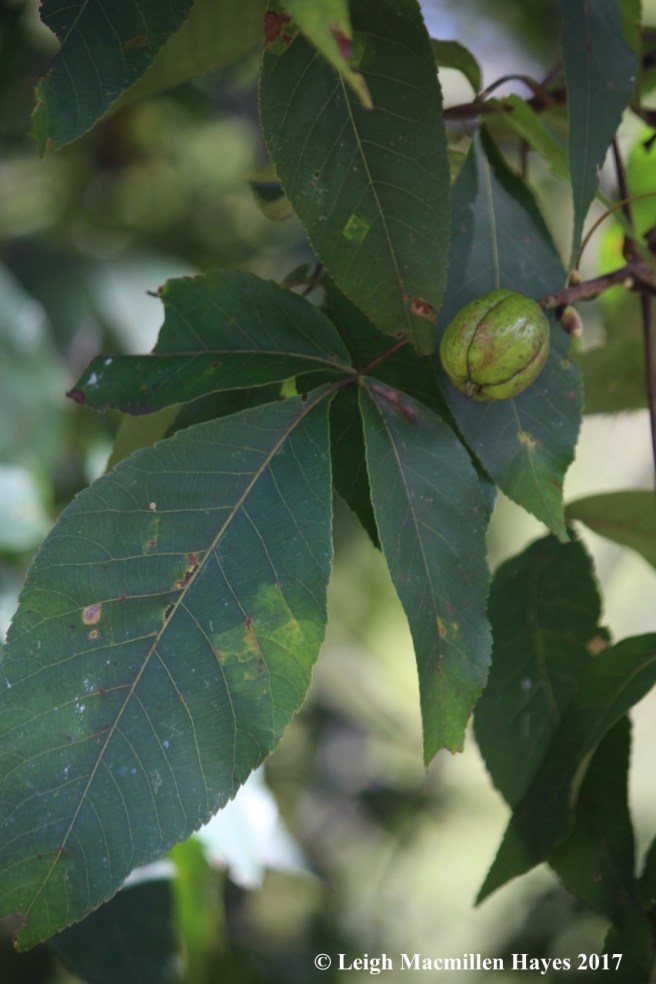
Its alternate leaves are compound, consisting of five serrated leaflets usually (sometimes there are seven).

m18-hickory 2

And of those five, the three terminal leaflets on each twig are the largest.

m21-view of Balds

Once again, it was time to leave this beautiful spot where the fields and forest flow into the mountains. And where the beavers and heron share the place without too much human intervention. Though not a soul was home today, we trust all will return when the time is right.


Lingering at Long Meadow Brook

It’s Tuesday, which means time for a tramp through the woods–especially if you are a docent for the Greater Lovell Land Trust. We take our job seriously, filling our bags with field guides, hand lenses, binoculars, cameras, water, humor and wonder. The latter two are the key components and thankfully we’re all comfortable enough with each other to tell corny jokes and laugh at our misidentifications as we explore the natural world through curious eyes and minds, while sharing a brain.

l1-white spores 1

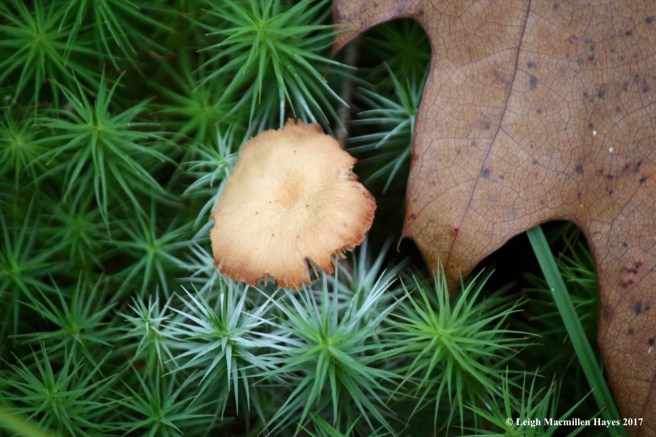
And so today, though our intention was to look for fall wildflowers, we had much more to notice along the way, like the white spores of mushrooms decorating the surrounding haircap mosses.

l2-funnel spider 1

And there were funnel sheet webs to examine, given that the morning fog left them dew covered and easier to spot.

l3-funnel 2

Though we wanted to take a closer look at the creators of such fine work, and tried gently touching webs with pine needles, our antics obviously vibrated more than your ordinary bug might, and the spiders ran into their funnels to hide.

l4a-cup and saucers

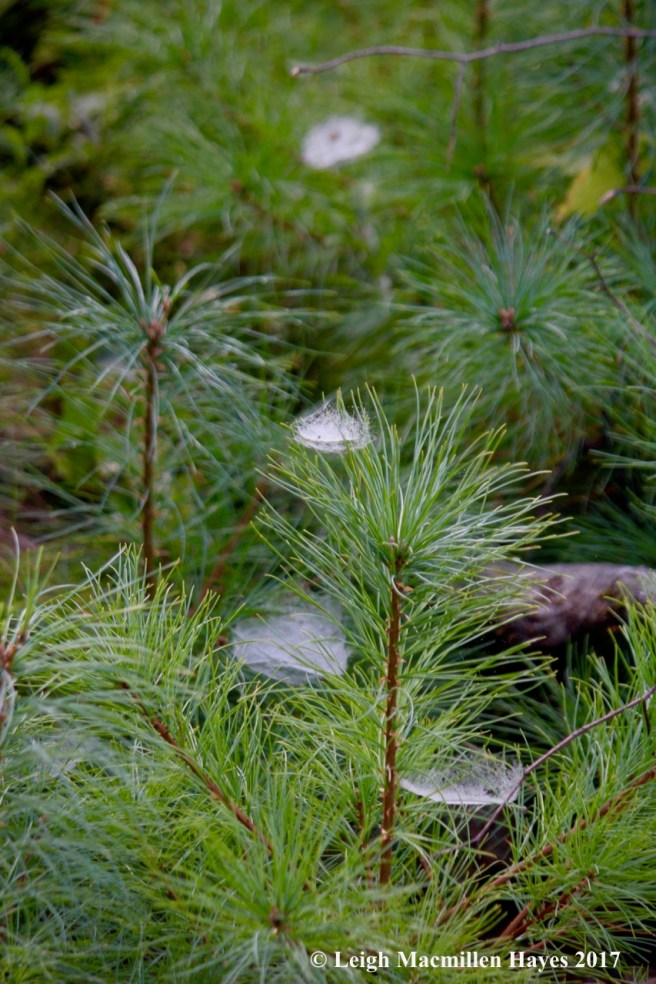
As we’d driven to the Long Meadow Brook Reserve, we’d spotted a field of medium-sized white pines decorated with webs and were thrilled to find the same on saplings.

l5-cup and saucer web 1

The bowl and doily spider is another member of the sheet species, and it builds webs that consist of two intricate parts. Above is the bowl, an inverted dome, and below, the lacier doily. The spider hangs upside down beneath the bowl, but above the doily, waiting for dinner to drop in.

l6-looking at spider webs

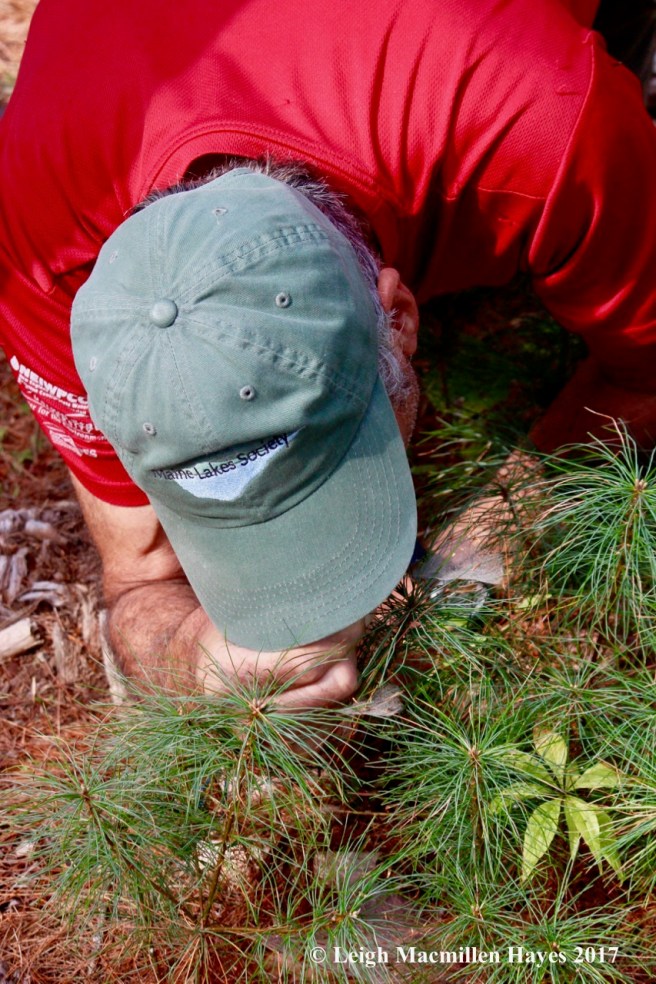
Trying to see the tiny bowl and doily spiders requires getting down on all fours and looking through a hand lens for they are only about 3-4 millimeters in length. We did and were successful in our efforts.

l4b-cup and saucer on bristly sarsaparilla

It seemed today that nothing escaped spider activity, including the gone-by fruits of bristly sarsaparilla.

l4-orb web 1

Equally delightful in the making was an orb web outlined in dew, larger droplets highlighting each spoke, with smaller ones on the sticky silken spirals.

l1b-pilewort

In several openings, pilewort grew in abundance.

l1a-pilewort field

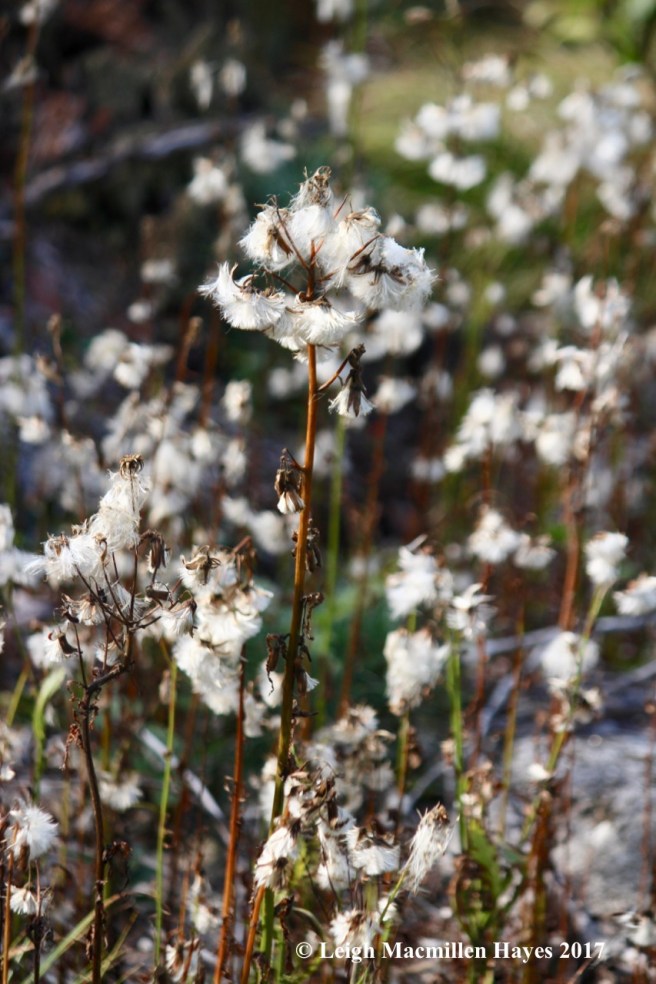
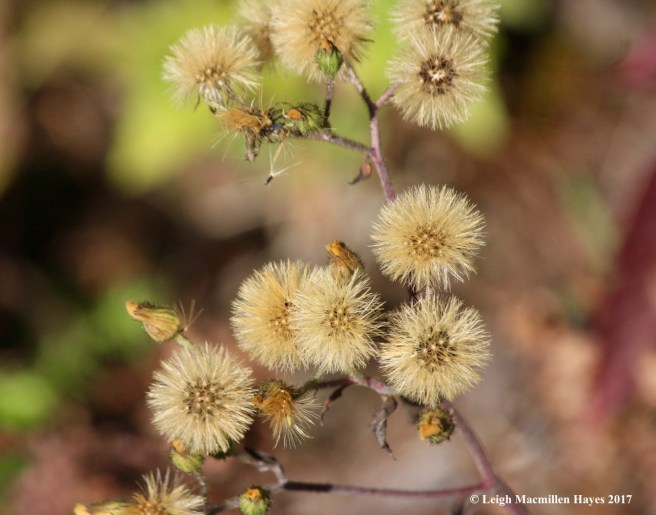
Like a field of cotton, its dandelion-like seedheads were prolific.

l1c-pilewort seedhead

But really, I preferred the seed display to the petal-less flowerhead that emerges from the cylindrical cluster.

l7-pine cones 1

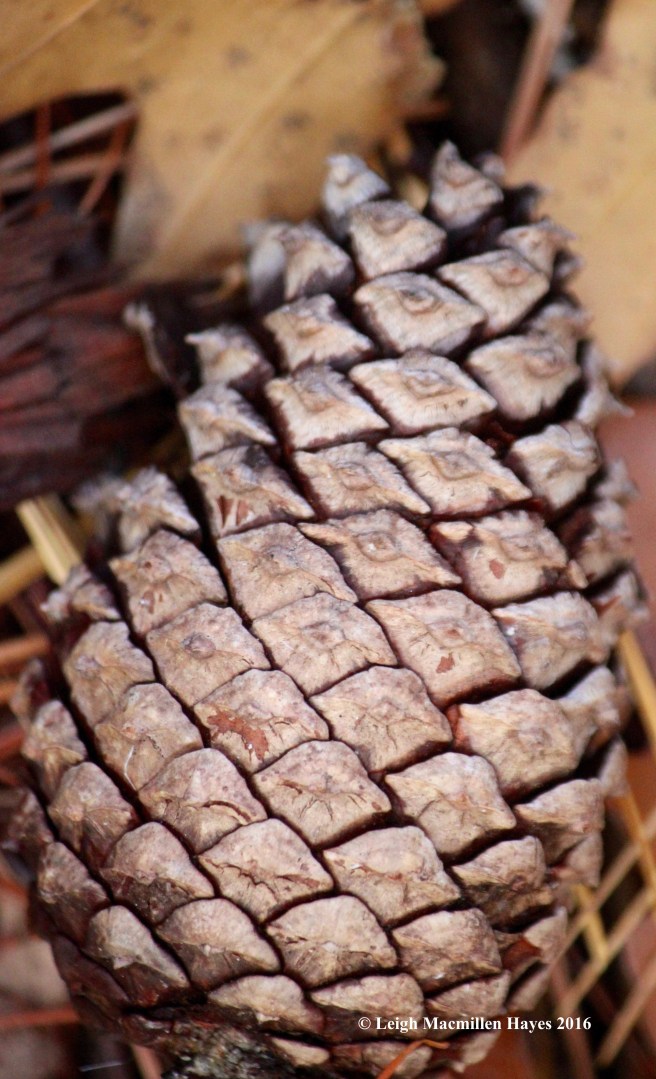
Also prolific were the female cones atop the white pines, their brown color indicating they were in their second or third year of development, having been wind pollinated by  tiny male cones. The pollen cones fall of trees within a few days of decorating our vehicles, outdoor furniture, and naked female seeds with yellow dust. If you think back to spring and all the little rice krispies that decorated the ground below white pines, you’ll know that you were looking at male cones. The seed cones typically form on the uppermost branches, so that the tree won’t pollinate itself from below, but can receive pollen blowing in the breeze from another tree.

l8-pokeweed 1

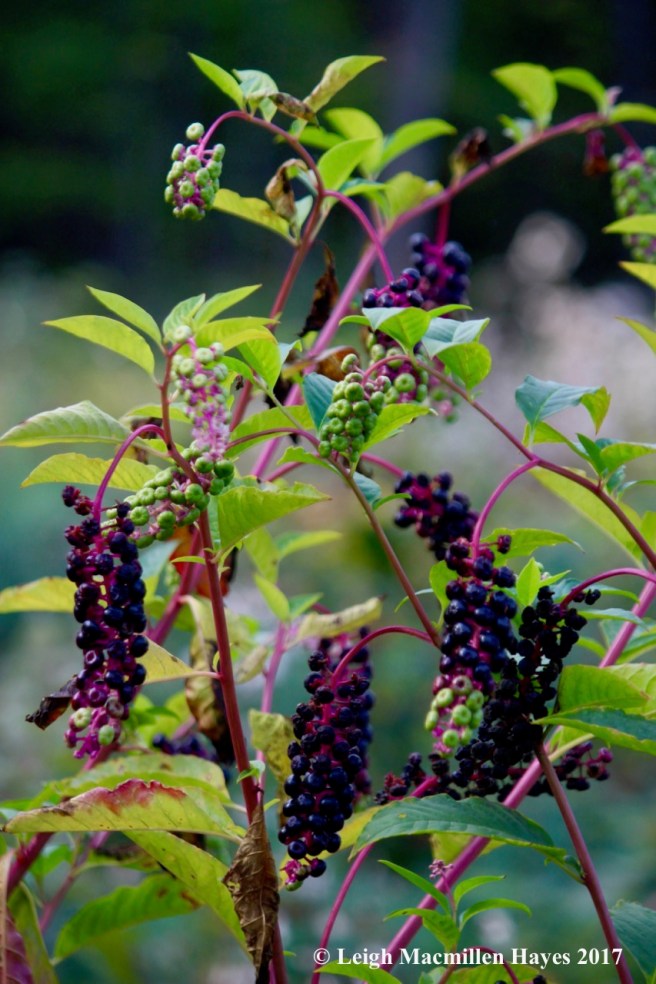
We’d looked high to see the cones, and then drew our eyes lower and thrilled with the sight of one of our tallest perennials.

l9-pokeweed 2

At first we only spied one pokeweed growing in an opening, but then began to spot others in flower and . . .

l11-pokeweed 3

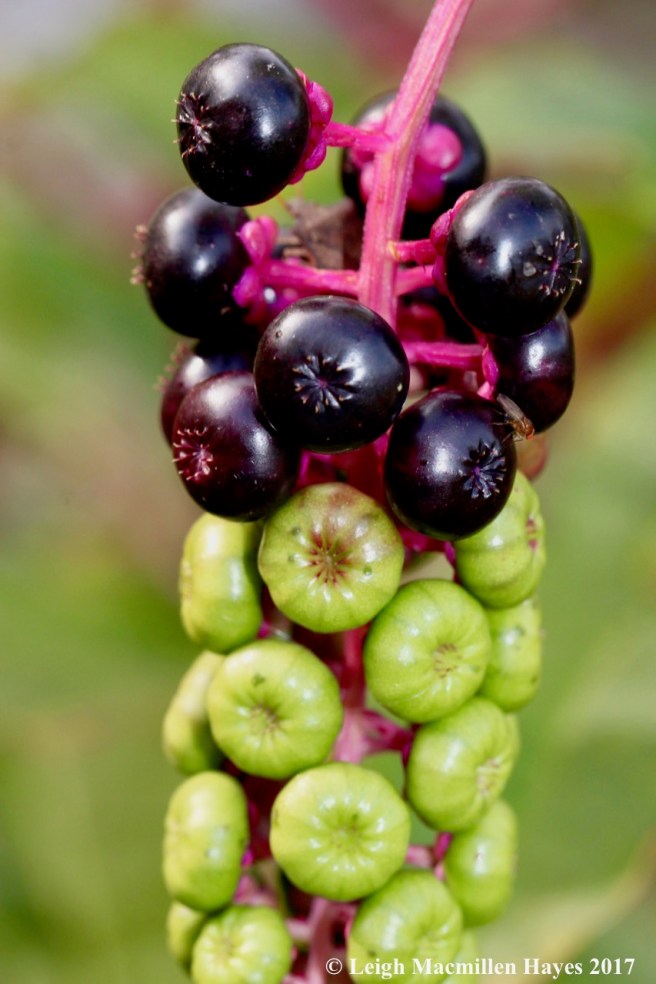
fruit.

l29-blueberry

Another one of our surprises–still flowering blueberries. The plants themselves didn’t look too happy . . .

l13-blueberry flowers

and we wondered if there would be enough energy or time for the fruit to form.

l14-cinnabar-red polypore

As we ambled along, we found cinnabar-red polypores,

l18b-turkey tails1

turkey tails,

ll18a-gilled polypore

and polypores know for their . . .

l18-labyrinth of pores

underside labyrinth of pores that look like gills.

l20a-brown spores 1

And we found another type that had spread brown spores.

l19a-mystery hole

Making our way down to the brook, we were stumped by a pile of dirt, small hole about one-half inch across and chewed mushroom. We remain stumped, so if you have a clue, we’ll listen. It was a messy dooryard so we didn’t suspect a chipmunk, plus the hole wasn’t wide enough. Voles eat vegetation. Could it be? Was it even made by a mammal?

l22-white oak

Along the same route, we made another fun find. White oak saplings.

l23--white oak 2

White oak grows in surrounding towns–Fryeburg, Sweden, Brownfield, Waterford, but not in Lovell or Stow, where this property was located. So, how did it arrive? Two theories–it was on a skidder trail, so could have come in on a machine; or perhaps via airmail from a bird. Long ago, white oaks grew in this area, but were used for barrel making. And because their acorns contain less tannin than that of a Northern red oak, mammals devour them quickly, thus making it more difficult for the trees to regenerate.

l23-LMB 2

It took us a while, but finally we reached the old beaver dam and culvert by the brook, where the fall foliage was subtle at best, but still beautiful. We walked (if you can call it that) for 2.5 hours and covered all of .95 miles. It was hot and muggy, so we felt like we’d covered 9.5 miles, but as always were thankful for our time spent lingering at Long Meadow Brook.


Outing on the Outlet

This morning dawned clear and chilly, with the temperature at 50˚ when I headed toward Lovell at 7:15. After placing some “Land Trust Walk Today” signs in pre-planned positions, I headed to the dam on Harbor Road in Fryeburg to wait for a ride.

u1-outlet dam

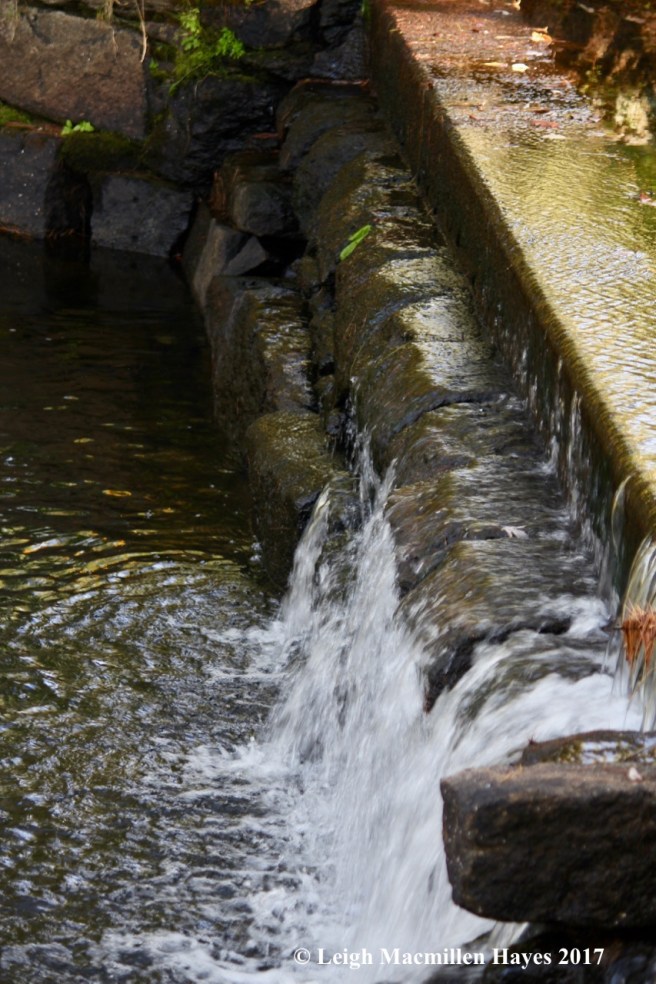
Water flowed over the tiered dam, which was built in the early to mid 1900s at the request of the Pepperell Manufacturing Company in Biddeford. The townspeople contested its existence for it would raise the water level on Kezar Lake, but the textile mill located many miles away on the Saco River won the rights to construct such at the site of an 1800s saw & gristmill. Thankfully, though it did raise the level of the lake water, not all of the predicted problems came to pass.

u2-Harbor Road bridge

The dam was our intended take-out for today’s paddle co-sponsored by the Greater Lovell Land Trust and Upper Saco Valley Land Trust. Though it’s located off Harbor Road in Fryeburg, it’s owned by the Town of Lovell. No longer used, it still serves to provide a historic reference. And a great place to either portage and continue on to the Old Course of the Saco River and then the “new” course, or take out as we intended to do.

u5-silver maple

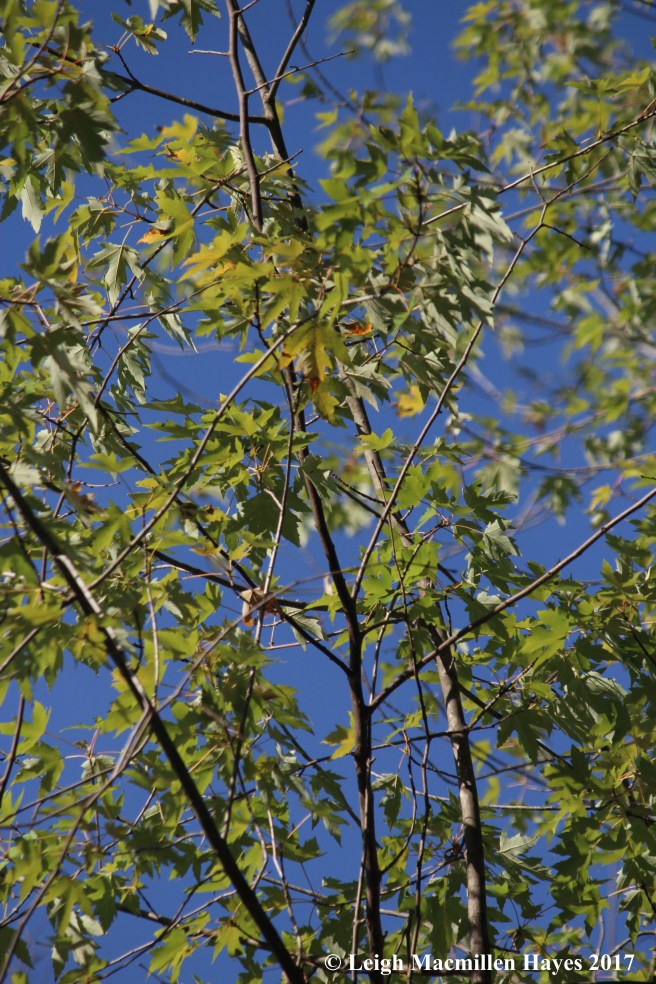
While I waited, I poked around, and rejoiced in the sight of trees that like wet feet. High above the dam, the leaves of a silver maple shown brilliantly in the morning light.

u3-green ash leaves

Other leaves also caught my attention for their coloration–with veins of red interrupting their olive greenness. Green ash, another tree that likes wet feet but isn’t as abundant as its siblings, white and black ash, also stood tall beside the dam.

u7-preparing to launch

My dam-side exploration ended a few minutes later when Jesse Wright of Upper Saco Valley Land Trust and her friend, Shareen, pulled into the landing. We hoisted my kayak onto her already laden truck and found our way over the bumpy road to our intended put-in at a private residence–thanks to the generosity of its owners. Slowly the number of boats increased by the water’s edge as twenty-plus folks joined us.

u6-map by Will from USVLT

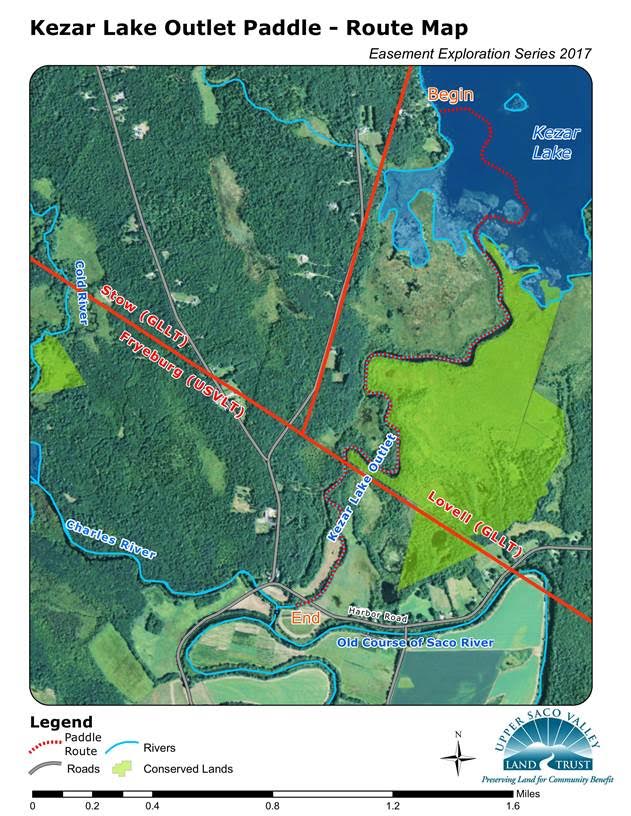
Once all had gathered, Jesse showed off the map of our intended paddle, the red dots indicating our path from beginning to end, and I shared a bit of information about the fen, a GLLT property purchased in 2005. Today, the symbolic boundary between the two land trusts disappeared as we ventured off together.

u9d-Linda 1

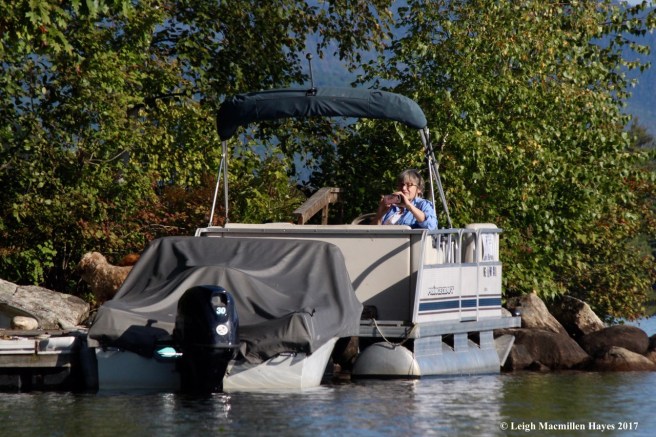
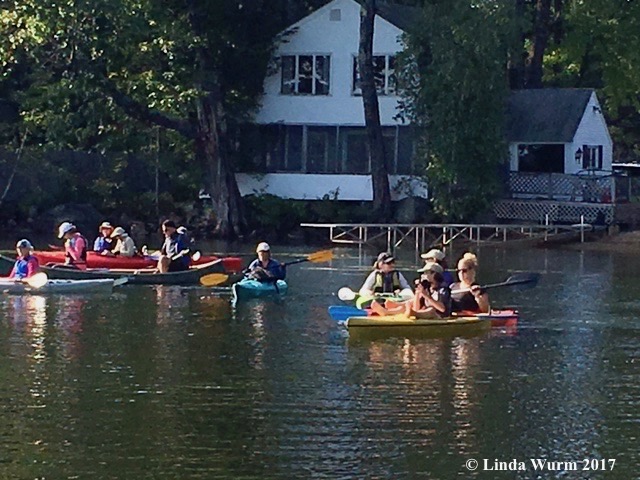
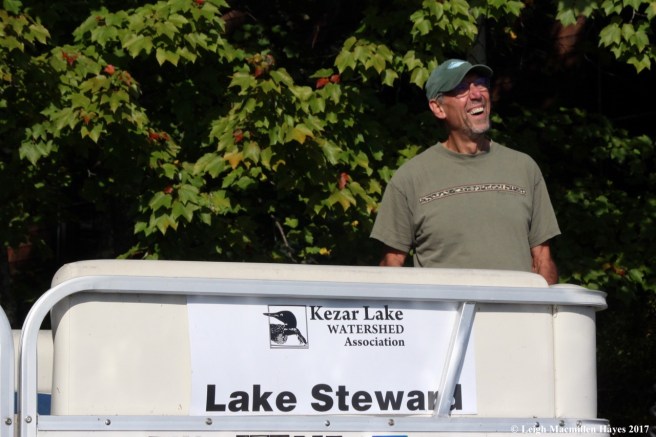
It takes good neighbors and lake stewards to pull off such an event, and the Wurms are such. They helped us arrange the put-in, gathered a couple of canoes for several paddlers and took photos at the start.

u9a-LInda's view 1

Linda’s view included Jesse heading off as our lead,

u9c-Linda's view 3

and the rainbow of colors once we hit the water.

u8-on the water with Jesse and gang

It took us a wee bit of time to get all the boats onto the lake, but it wasn’t a day made for rushing. And once in the sun, we began to warm up.

u10-send off by Linda

Before we headed off, we gave thanks to Linda (and Remy).

u11-and Heinrich

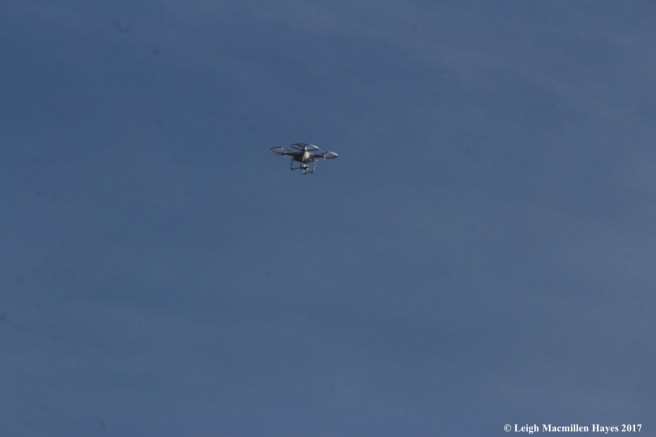
We also thanked Heinrich, who drew our attention skyward . . .

u12-drone

as he flew a drone above us.

DCIM100MEDIADJI_0056.JPG

Our first destination was to paddle north for the view.

DCIM100MEDIADJI_0061.JPG

The drone spied the mountains before we did.

DCIM100MEDIADJI_0059.JPG

And spotted our intended course . . .

DCIM100MEDIADJI_0067.JPG

into the fen.

u18-veiws from the lake

A quick turn-around from the water gave us bearings as we noted the Baldfaces to the west.

u19-heading toward the fen

We circled an island that serves as an environmental study plot for the US Forest Service and then paddled southward.

u20-Jesse in the lead

Jesse led the way through the pickerelweed.

u21-more mountain views

As we followed, the view got better and better.

u22-slowly we followed

Acting as sweep, I took up the rear while the group snaked along.

u25-early fall color

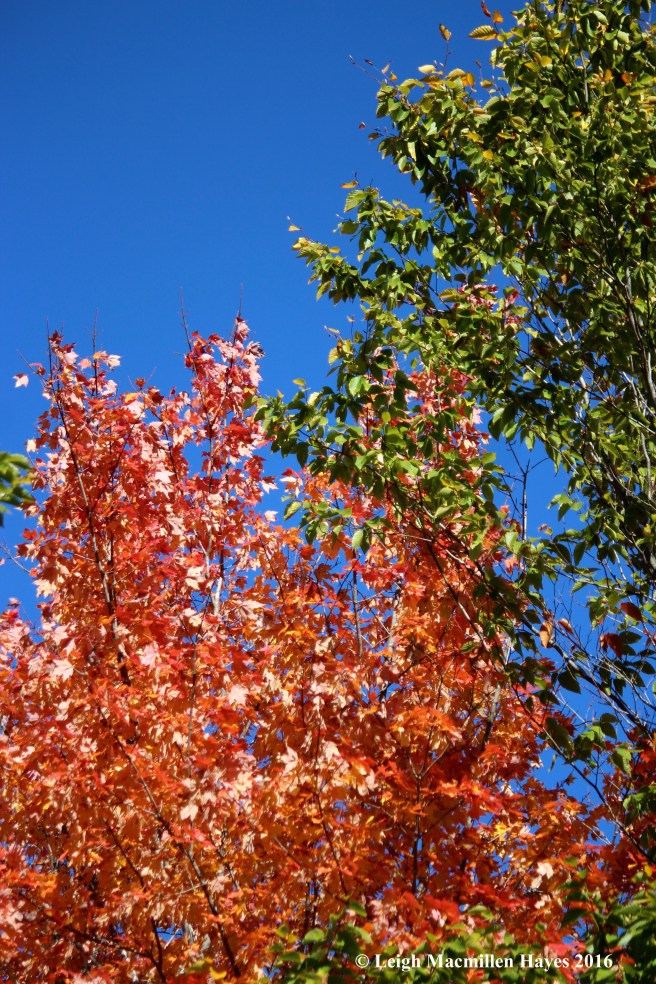
We followed the twists and turns of the water trail, where red maples showed off their autumn display from the canopy.

u28-red leaf

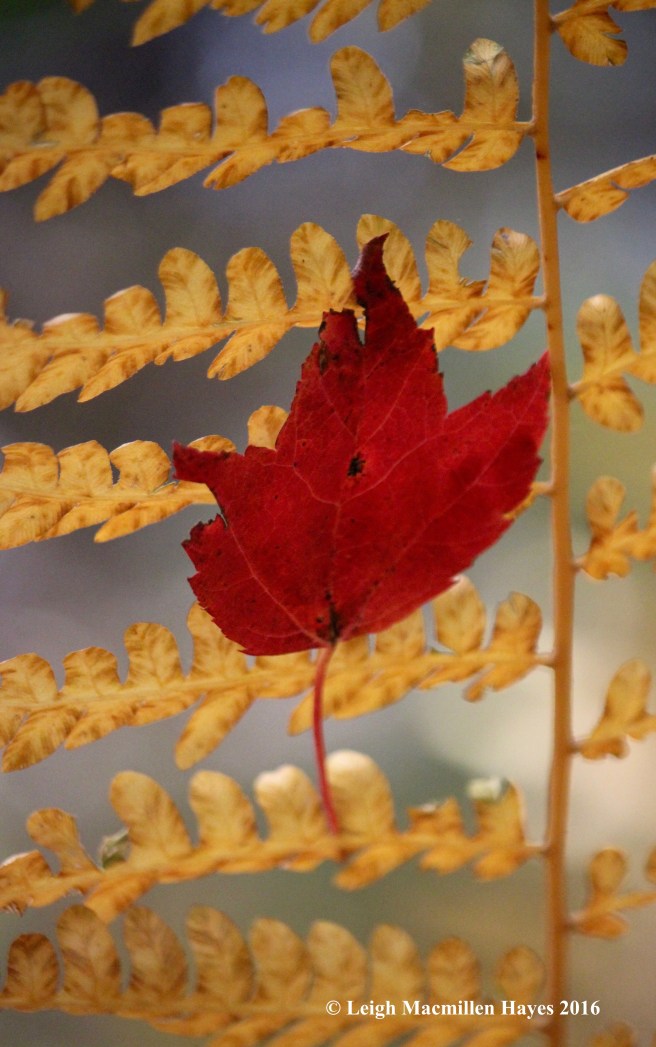
Occasional leaves fluttered down, begging to be noticed in their singularity.

u-cranberries 1

Though we didn’t get out of our boats and actually walk into the fen, we did stop to chat about what it had to offer. The GLLT owns 260 acres of the 500-acre fen, an acidic ecosystem with a deep layer of organic material including peat moss atop a sandy substrate. Several bird species of concern breed or hunt in the fen, including American bitterns and Sandhill cranes, the latter of which we had the good fortune to hear but not see. Long’s bullrush, a globally rare sedge, also grows here. But the crème de la crème for many are the cranberries. Folks on today’s paddle weren’t familiar with the plant and I couldn’t show them at the time, but I shared with them the experience of picking in the past with students from Molly Ockett Middle School in Fryeburg.

u-cranberries 2

On a fall day each year, about thirty students in the school’s MESA program (Maine Environmental Science Academy–an experiential place-based curriculum for 6-8 grades) visit the fen with the GLLT’s Executive Director, Tom Henderson.

u-cranberries 3

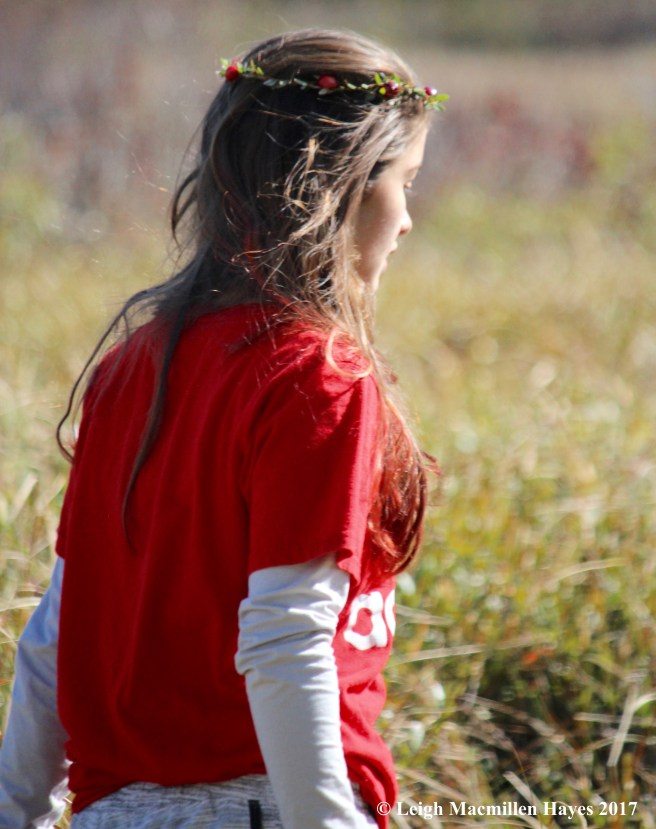
They learn about the hydrology of this place, but one of their highlights is to pick cranberries, and to that end, they become very possessive. As one student approaches another, a common statement is shared: “Don’t come over here. There aren’t any cranberries here.”

u-cranberries 4

Over the course of several hours, they fill their bags and sometimes even show off their creative talents in other ways–all in celebration of the cranberries.

u30-weir1

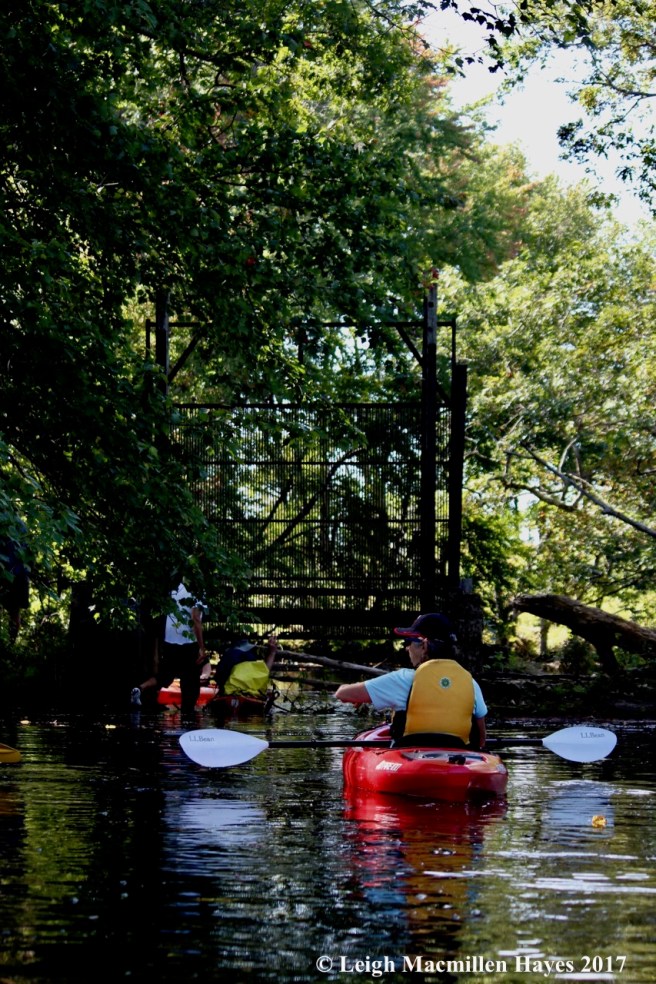
Continuing along the river this morning, we noted beaver activity and talked about scent mounds and their usefulness within the beaver community. And then we reached the fish screen.  Jesse had paddled the course last Sunday and made it under the screen without any issues.

u31-clearing a beaver dam

Since then, the beavers had been busy damming it up. One of our members worked to adjust some of the branches so we could all get through.

u34-offering a shove

Of course, sometimes a helping paddle was needed to push a boat forward.

u33-cow 2

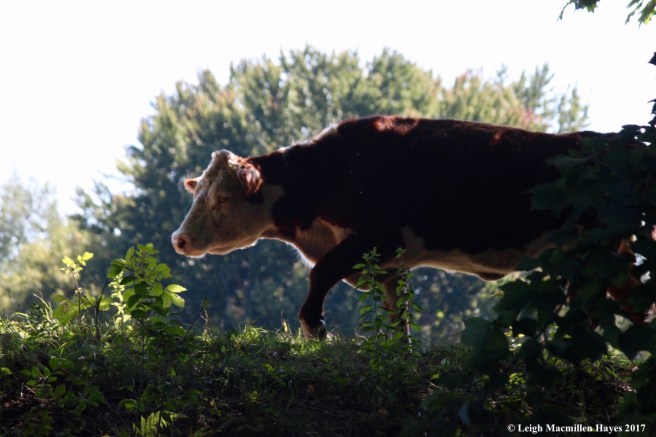
While we took turns, our efforts didn’t go unnoticed.

u35-other side measurement

On the other side, a ruler indicated depth.

u36-approaching the bridge on Harbor Road

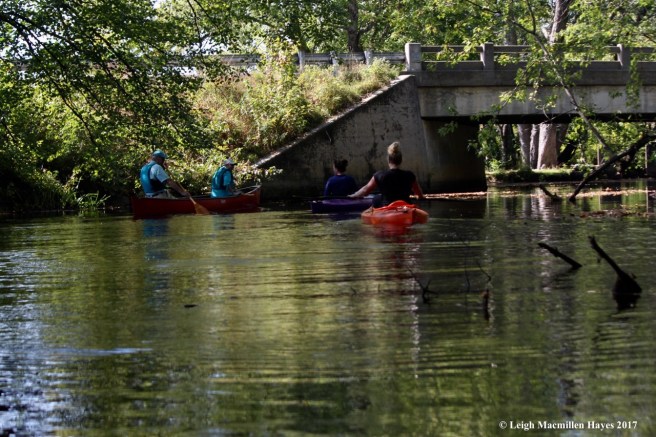
And then, and then, in what seemed like only minutes but was actually a couple of hours filled with camaraderie between familiar friends and new, plus a touch of natural history thrown into the discussion, we found ourselves at the bridge and the end of the journey for some. Others chose to paddle back rather than hitch a ride. We had come full circle.

As we pulled boats out, we were surprised at how warm it was since we were out of the shade, the temp having reached into the 80˚s.

Our outing on the Kezar Lake Outlet would not have been doable without Jesse Wright, who did the yeoman’s work of pulling it together, William Abbott, USVLT’s executive director who created the map, the Wurms and their neighbors who contributed land, boats, photographs and time, and all who ventured with us on this most lovely first full day of autumn.  Thank you all.


Summer Sendoff with Jinny Mae

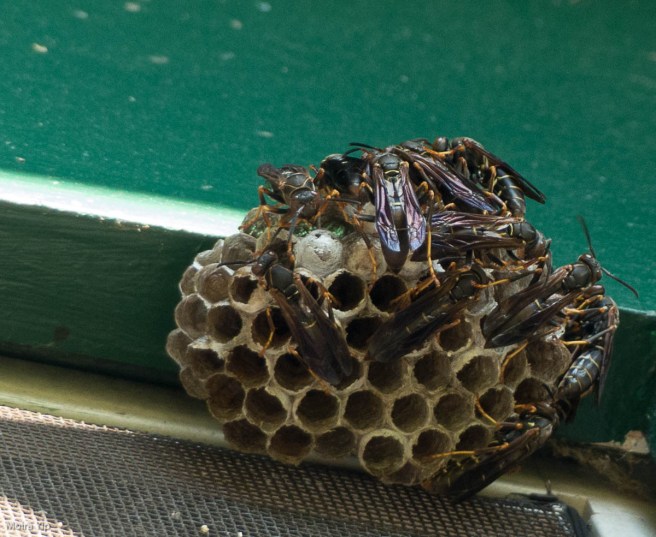
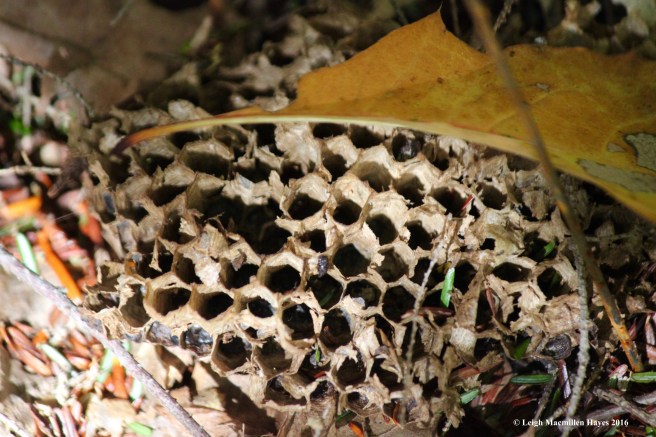
Last week a friend sent me some photos of an odd phenomenon in a wasp nest over her porch door. Thankfully, she also included Mary Holland in the e-mail, who probably had a much better idea of what was going on than I did.

m1a

My two thoughts–green in the woody tissue the paper wasps consumed or small green caterpillars somehow at the nest. Neither made sense. My friend is away for a while, but she suggested I go take a look and bring a ladder.

m1-ladder shake

And so I did, but first I invited Jinny Mae to join me. Feeling well these days, I’m thankful she’s up for some adventures. We found the nest and up I climbed, but I guess I was a wee bit shaky for my photos were fuzzy. Nonetheless, I saw no green and so the mystery remains. But, if you have such a nest nearby, take a look–going only as close as you are comfortable. And let me know if you see anything green.

m2-ladder 2

We found another nest over a different door, but it appeared the wasps had abandoned it. Why is that? They work so hard to build these and then move on.

m3-asters

Since our wasp adventure wasn’t successful, we decided to take advantage of the situation and explore our friend’s property, a lovely woodland and garden under conservation easement. (Hope you don’t mind, MY.)

m8-tree across trail

Along the trail we came upon a downed beech tree that seemed equally alive in death as in life.

m7-lichen moss map 2

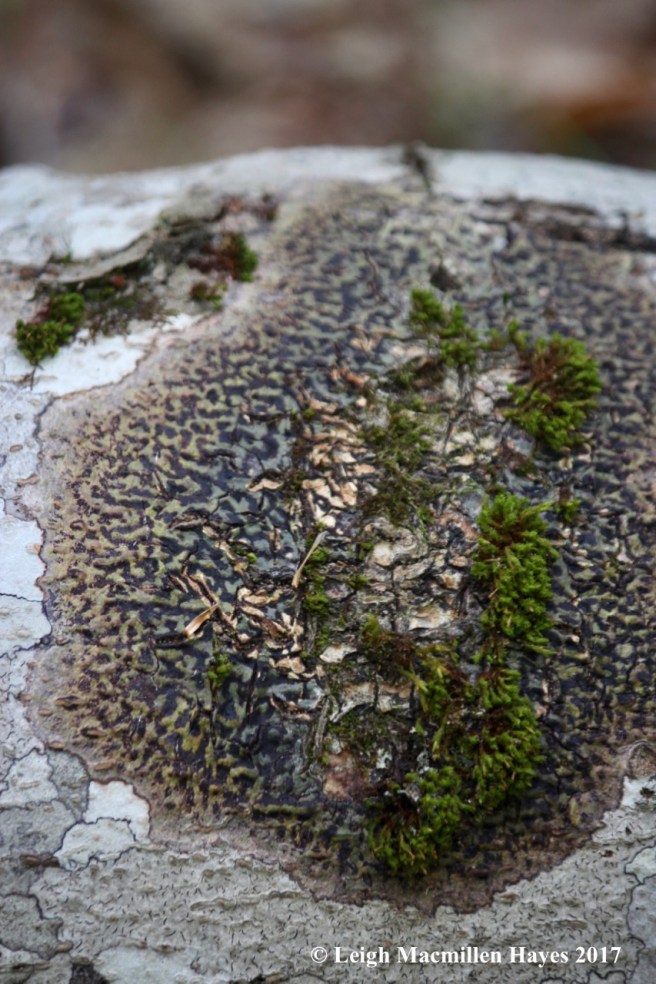
It sported lichens and mosses that combined looked like a 3-D topographical map of the property. And only now am I seeing something I can’t believe Jinny Mae and I missed earlier–script lichen across the bottom of the map. As it should be.

m5-puffballs 1

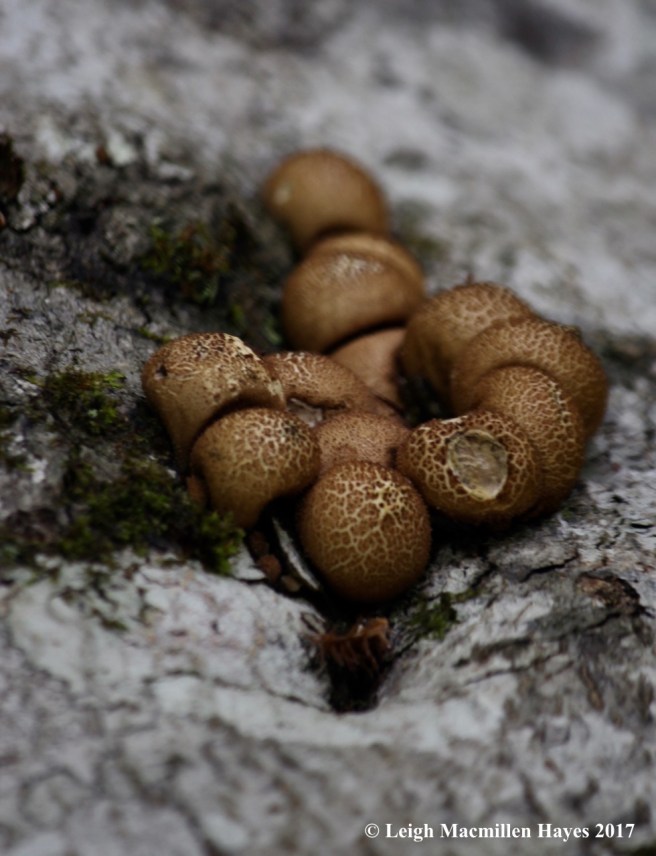
Puffballs also appreciated the substrate and fruited en masse.

m9-leafed out

.While we both looked into the hollow of the tree hoping to find someone at home, we didn’t. But, we did note that before the trunk snapped and toppled, it had leafed out–a last shout out to the world that sugar and water flowed through its pipeline.

m10-prince charming 1

We pulled away from that exploration, when something else caught Jinny Mae’s eye. I didn’t see it at first, and can’t imagine how I missed it–Prince Charming, the king of the toads.

m11-Prince charming 2

He had so many warts that he had warts atop warts, a right robust old guy.

m12-aliens among us

A little further along, more fungi attracted Jinny Mae, while I pulled out my hand lens to take a closer look at some fuzz balls that I first thought were cocoons. You might say they are also fungi upon fungi, so coated were they with a hairy mold. Or you could see them as alien forms frolicking on a fallen log. I prefer the latter.

m13-stairway to the castle in the clouds

Everywhere we turned it seemed fungi presented itself in various forms and patterns, which was apropos given that the friend who owns this land is a mushroom aficionado.

m15-beaver works 2

As we walked, we looked and looked for bear trees, finding none. We did, however, find some beaver works–both fresh and . . .

m19-beaver works 3

old. Even tree roots attracted their attention.

m18-brook view

Beside the wetland, we scanned high and low–hoping for activity of some sort. Jinny Mae saw what was probably a cormorant, but that was all.

m20-lodges

Our view, of course, included a lodge that looked like it had some fresh wood atop. The winter prep was under way.

m21-spider lodge

And nearby, a lodge of a different sort, its construction equally intricate in an interesting geometric form.

m16-winterberry

After expressing our awe, we finally turned ourselves around–our stomachs indicating that it must be getting toward noon.

m24-false tinder 2

We walked out the same way we’d walked in, and as was to be expected, found more, like a false tinder conk that measured almost ten inches across.

m25-little snake

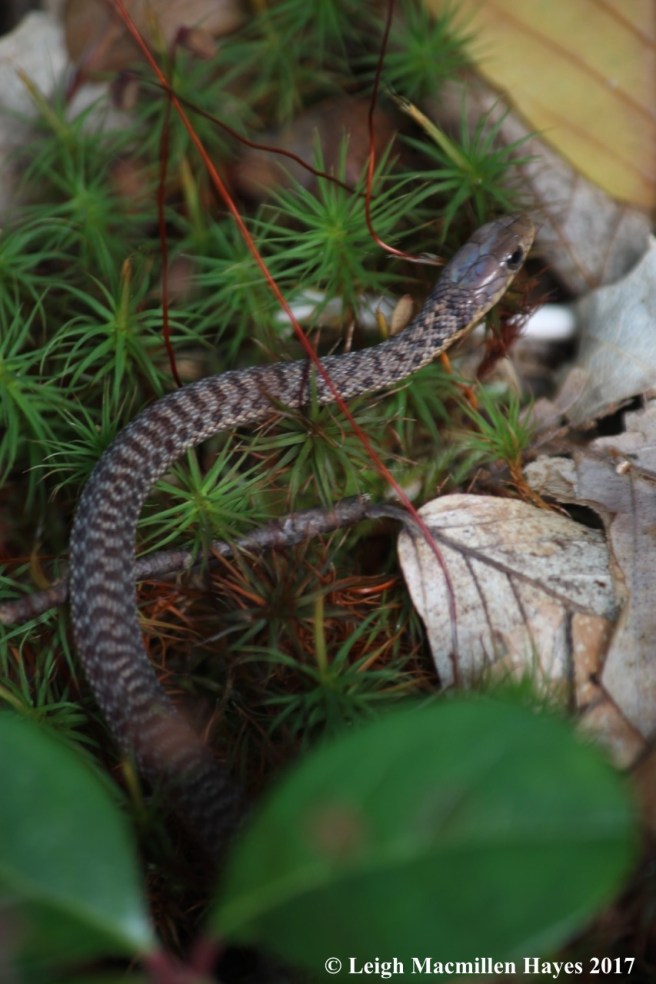
And a young snake about ten inches long.

m27-big snake 1

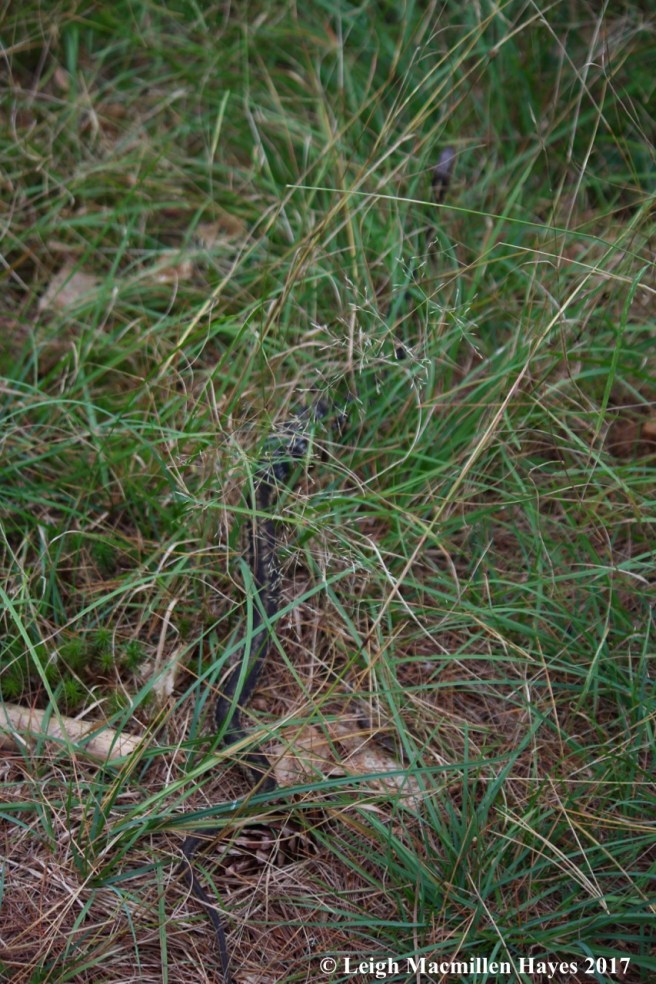
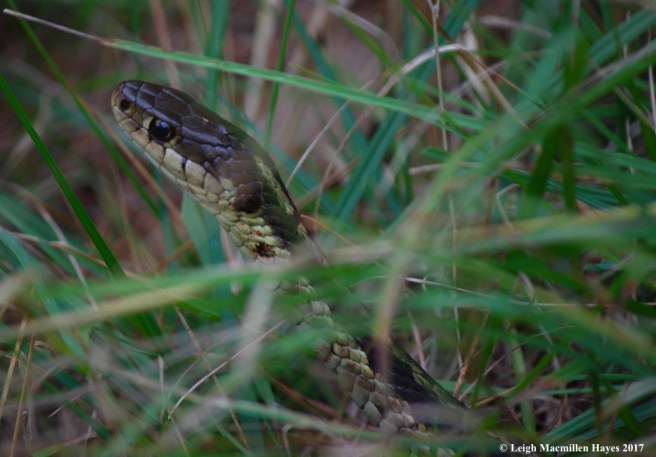
And then we spied something even longer in the grass.

m28-bigger snake 2

This guy stayed absolutely still, its head held high.

m29-bigger snake 3

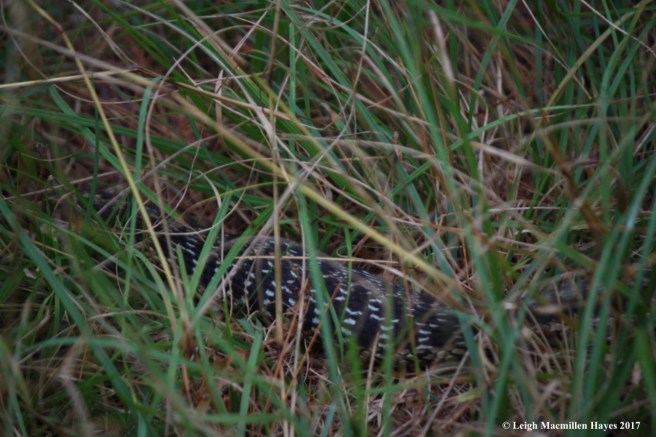
But we noticed the thickness about halfway along its body.

m30-bigger snake 4

It had beat us to lunch and we wondered what we’d missed.

m31-bigger snake 5

Whatever it was, it apparently put up a bit of a fight if that’s blood on the snake’s neck.

m32-stream

We’d wandered and wondered for three hours on this last summer morn.

m33-clouded sulfur butterfly

And gave thanks for the opportunity to spot several clouded sulphur butterflies on red clover,

m35-milkweed seeds

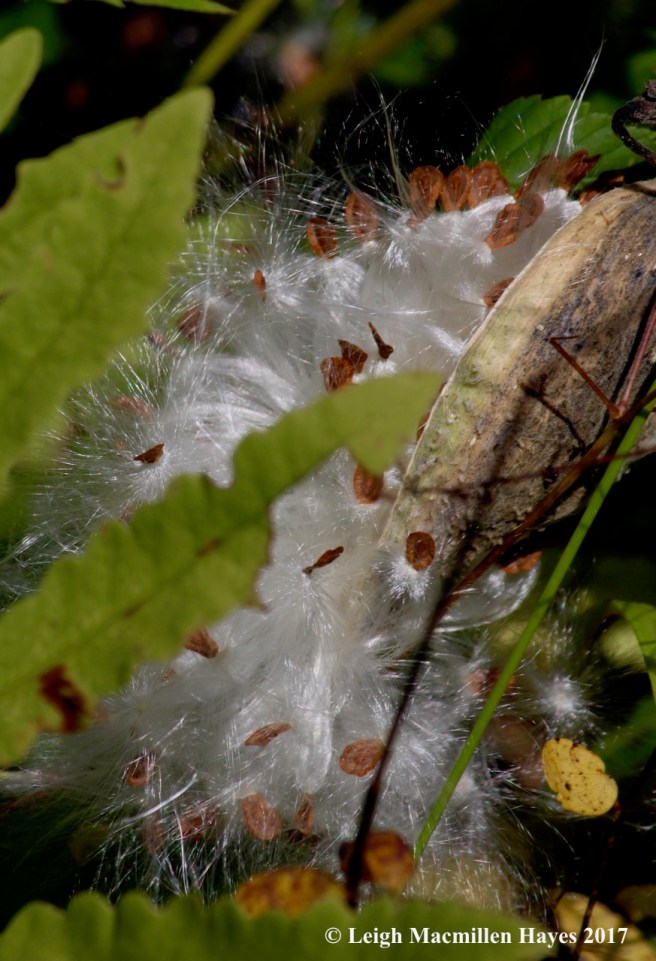
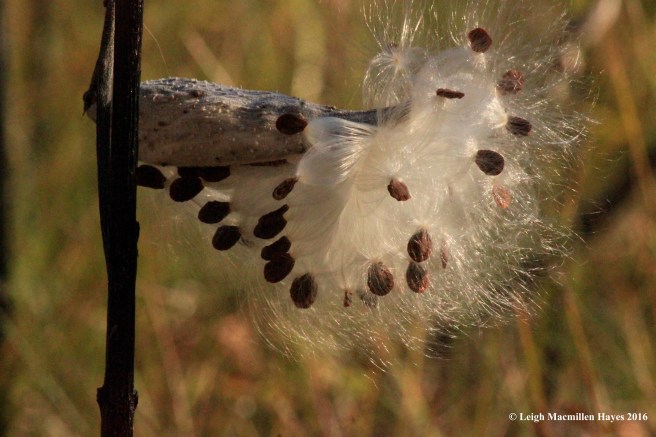
the first of the milkweeds spilling its beans,

m34-painted lady

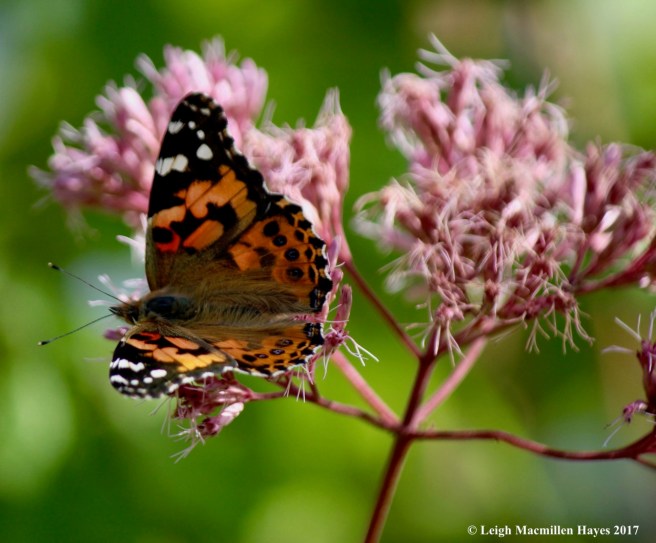
and painted ladies feasting on Joe Pye Weed. Summer was slowly coming to an end.

m36-fall on the horizon

But Jinny Mae and I managed to embrace its last moments thanks to MY’s question about the wasp nest. We knew that before the sun set over the mountains, fall would be upon us.

Happy Autumn.

Falling Toward Autumn

It’s another nine days until the autumnal equinox, that time of year when the shift from sultry summer weather gives way to the crispness we all love about fall. But . . .  over the past few weeks we’ve been on the cusp. Warm days, some a little less warm than others, and cool nights, some a wee bit cooler. And with the change in temp comes a change in coloration of the world around us.

o-morning view 4

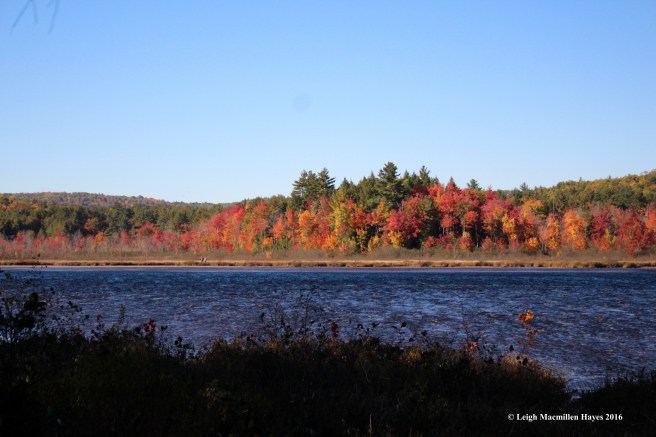
And so this morning as Marita and I approached Overset Mountain in Greenwood, our fancy was tickled by the tapestry reflected on Hicks Pond.

o-boulder in river

At last we reached the trailhead we were seeking, and first hiked beside Sanborn River, where the flow of the water added a voice to the display.

o-jack in pulpit fruit

On one small rocky outgrowth I spied something red and we quickly realized it was a lonely jack-in-the-pulpit in fruit form.

o-following marita

After a little more than a mile, the trail we chose to climb Overset Mountain turned right, away from the river and soon we passed under a power line, where energy hummed in a manner we couldn’t hear above. From our waists to our feet, however, the pollinators buzzed.

o-aster gone to seed

While many flowers were still in full bloom, a few, like this aster, were ready to send their young forth on individual parachutes.

o-Indian cucumber 2

Others also shared their colorful youth-filled fruits, including Indian cucumber root,

o-hobblebush

hobblebush,

o-bluebead lily

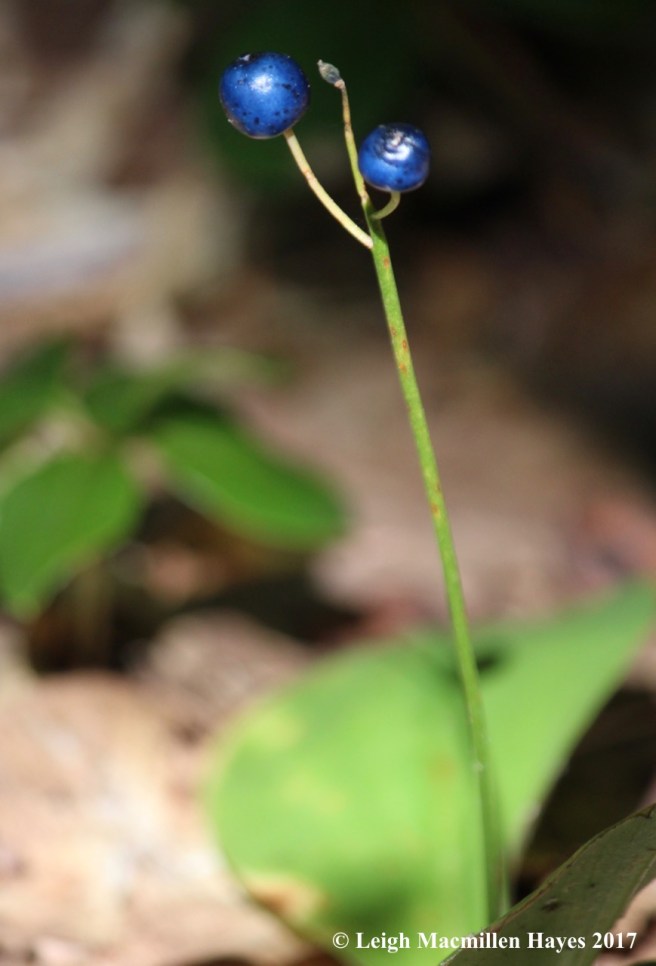
blue bead lily,

o-witherod berries

witherod,

o-maple-leaf viburnum

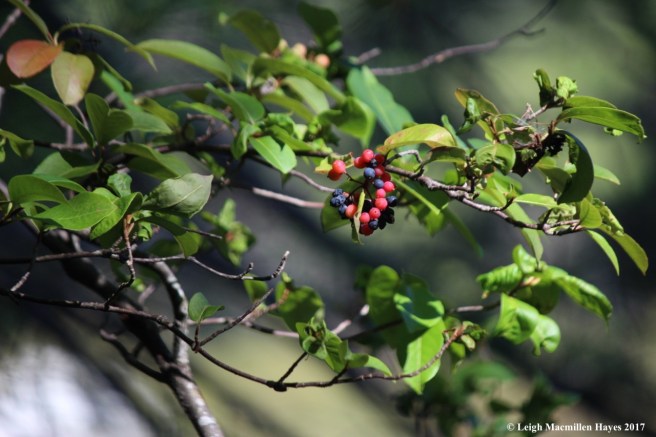
and maple-leaf viburnum.

o-overset pond and mountain

At last we reached Overset Pond, its water as calm as could be while it clearly reflected the sky and mountain we were soon to climb. Here and there, touches of color peeked out among so much green.

o-overset cliff

As we circled the pond, our voices echoed off the cliff above–our destination. We were going to climb up the rock face . . .

o-marita just before summit

but decided we’d take our time and hike up the trail instead. (And if you believe we would have attempted that cliff, think again.) We’d describe the hike as a moderate climb to the summit. The terrain changed with the natural communities, so while we’d been on soft duff beside the river, we encountered some granite, including steps, on our skyward leg of the journey.

o-approaching the summit

About an hour and a half after starting, we reached the view point, where lunch was served–BYOB style, of course.

o-Noyes Mountain

To our left, we recalled a recent climb up Noyes Mountain.

o-tapestry begins

To the right, a colorful tapestry that changes daily.

o-heart-shaped overset pond1

And below us, Overset Pond, which appeared heart-shaped from this vantage point.

After lunch, we continued on the loop trail, paying attention for a ground nest we’d been forewarned about. Thankfully, we spied it before the bees spied us and were able to bushwhack around to avoid being stung. We continued on and finished up the mountain hike, then decided to also follow the Sanborn River Loop, thus covering about seven miles by the time we were done.

o-blood milkwort

And near where we’d parked I spotted some flowers I met for the first time the other day–purple milkwort. It’s always that way–meet something for the first time and then realize it’s everywhere. In this setting the milkwort added its own variation to the start of the fall tapestry.

I love all seasons and the in-betweens as well. That being said, it’s always hard to give one up for the next. But I guess that’s the job of the in-betweens–to help us transition. Right now, I’m falling toward autumn.


Pay Homage at Otter Rock

This holiday season, why not take a short hike and smell the roses along the way?

h-milkweed

Or at least admire the milkweed plants that grow in the field across from the boat launch. I did just before I walked the blue/red trail at the Greater Lovell Land Trust’s Heald and Bradley Ponds Reserve this morning. It wasn’t a long walk, but worth every moment. And I encourage you to do the same, whether here or somewhere else.

h-water-over-dam-1

Listen to the water flow over the dam.

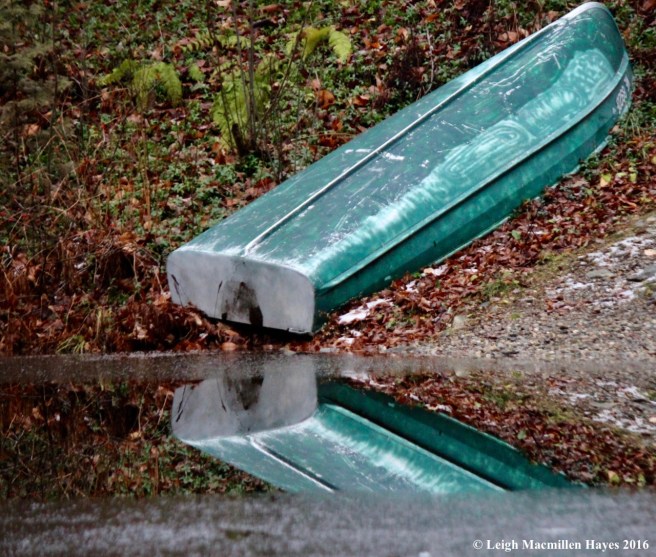
h-boat-1

Notice the greenery across the mill pond.

h-snow-on-trail

Follow the path sprinkled with snow.

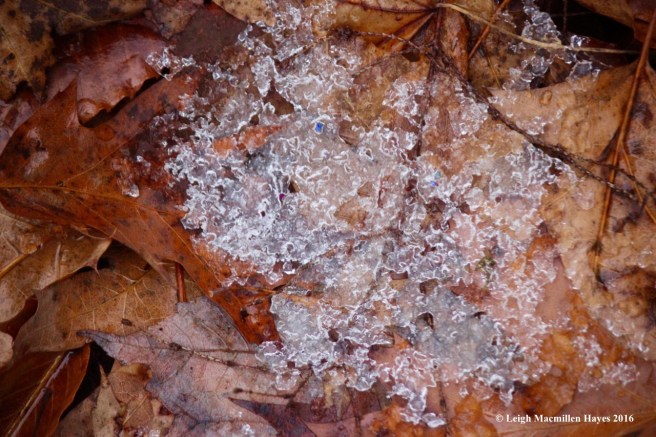
h-ice-on-leaves

Rejoice in the ice shapes atop various leaves.

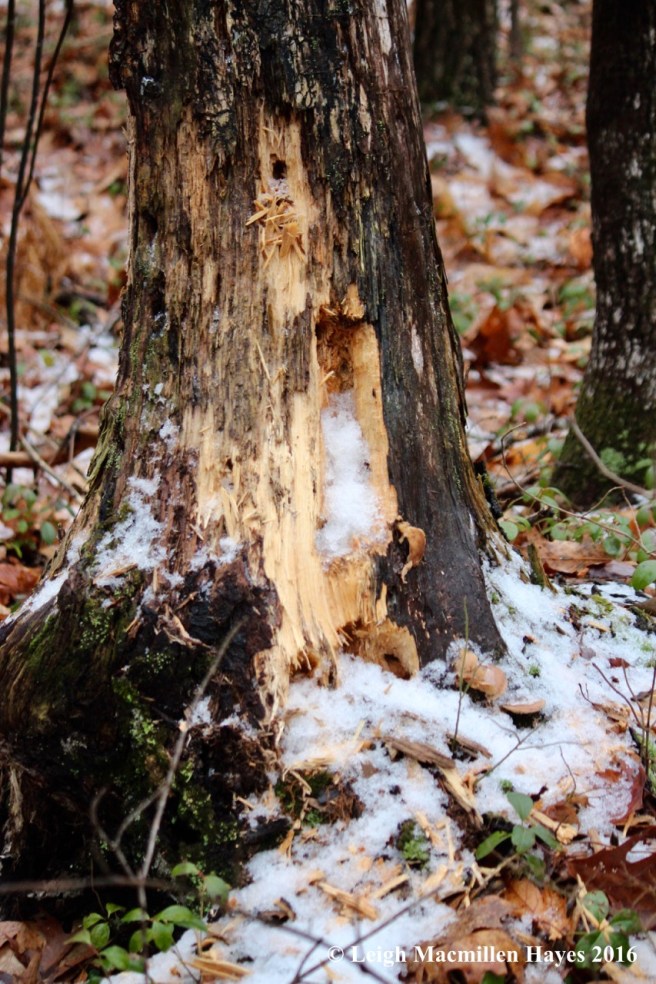
h-pileated-works

Check out the Pileated Woodpecker works in dead snags.

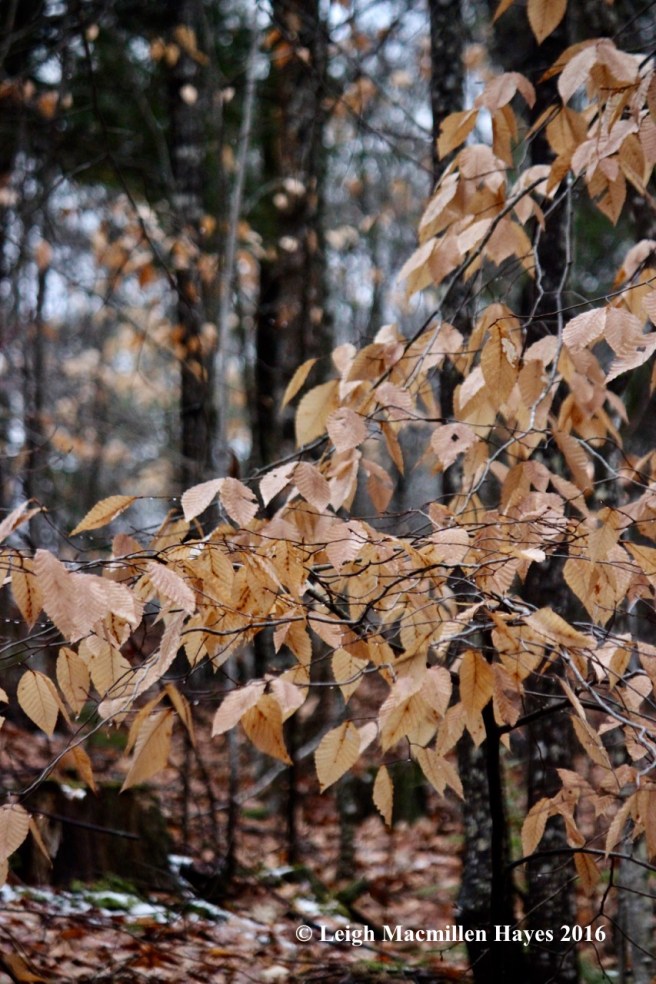
h-bright-beech

Let the Beech leaves brighten your day.

h-beech-and-witch-hazel

Distinguish between the hues of Beech and Witch Hazel.

h-four-trees

Greet four amigos–Paper, Yellow and Gray Birch, with the trickster Cherry posing as a Black Birch.

h-grape-fern

Applaud the maroon-fringed Grape Ferns at your feet.

h-sign

Follow the directions found on the sign.

h-bleeding-mycena-mycena-haematopus

Rejoice in late blooming fungi like these Bleeding Mycenas (Mycena haematopus).

h-otter-rock

Wonder at the various lichens that adorn the trees.

h-bristly-beard-lichen

Get up close and personal with a few, including the Bristly Beard.

h-rocks-near-otter-rock

Laud the reflections of water not yet frozen.

h-fall-colors

Praise the warm color of Royal Ferns gone by.

h-exo-1

Revere dragonfly and damselfly exoskeletons that still cling.

h-john-fox-2

Take in the view–ice and water and the old John Fox place–a testimony of yesterday, today and a glimpse toward tomorrow.

To Otter Rock–whether it takes you twenty minutes or three hours, make time in this busy season to pay homage.

The Be-Attitudes Sundate

Today marks the beginning of the season of hope and with that in mind, my guy and I climbed Singepole Mountain in Paris. Paris, Maine, that is.

s-halls-pond-start-1

Our hike began beside Hall’s Pond, where the water reflected the steel gray sky of this late November day.

s1-barbed-wire

And stonewalls and barbed wire reflected the previous use of the land.

s1-beaver-6

In a matter of minutes we learned of its present use.

s-beaver-works-3

Everywhere we looked, beaver sculptures decorated the shoreline.

s1-hemlock-grove

We passed from the hardwood community to a hemlock grove . . .

s-hemlock-girdled-2

where more beaver activity was evident. I’ve been reading The Hidden Life of TREES by Peter Wohlleben and have some questions about tree girdling such as this. There is a theory that beavers chew off the bark all the way around (girdle) to eventually kill trees such as hemlock, so preferable species will grow in their place. But, that’s thinking ahead to future generations. Do beavers really do that?

s-hemlocks-3

On page 18, Wohlleben states the following: “As the roots starve, they shut down their pumping mechanisms, and because water no longer flows through the trunk up to the crown, the whole tree dries out. However, many of the trees I girdled continued to grow with more or less vigor. I know now that this was only possible with the help of intact neighboring trees. Thanks to the underground network, neighbors took over the disrupted task of provisioning the roots and thus made it possible for their buddies to survive. Some trees even managed to bridge the gap in their bark with new growth, and I’ll admit it: I am always a bit ashamed when I see what I wrought back then. Nevertheless, I have learned from this just how powerful a community of trees can be.”

Could this theory be true? Are the surrounding hemlocks feeding that tree via their roots? If so, does that throw out the other theory? So many questions worth asking.

s-huge-maple-1

Soon, we left the Pond Loop Trail and started to climb the Singepole Trail, passing by a gentle giant.

s-maple-2

It’s a snag now, but this old maple offered tales of the forest’s past and hope for the future.

s-downy-rattlesnake-plaintain

On a smaller scale, Downy Rattlesnake Plaintain provided a cheery contrast among the leaf and needle carpet.

s-bobcat-ledges-1

The climb was a bit challenging in places, but we held out hope among the ledges that we might see a bobcat.

s-porky-den

No such luck, but we did find this . . .

s-porky-scat

a well used porcupine den.

s1-water-2

Water dripped in constant harmony as we stepped gingerly along the narrow ledges and tucked under overhanging rocks.

s-halfway-up-2-1

About halfway up, we took a break and paused to admire the view.

s-halfway-up-view-1-jpg-communities-defined

The hardwood and softwood communities became more obvious as we looked down.

s-summit-1-1

And suddenly or so it seemed, my guy reached the moment of truth–the summit.

s-halls-pond-to-pleasant-1

From the top, we looked around and embraced our home place, which appeared on the horizon in the form of Pleasant Mountain.

s-pleasant-to-whites-1

A slight turn and the view extended from Pleasant Mountain to the White Mountains.

s-quartz-intrusion

Below our feet, the granite pegmatite shared its showy display.

s-summit-1

We’d read that there was a quarry at the summit, so we headed toward a cairn, in hopes of locating it. Too many jeep trails confused us and we decided to save the quarry for another day. Instead, we turned into the woods to get out of the wind and munch our PB & J sandwiches, the grape jelly courtesy of Marita Wiser and family.

s-wickiup-1

As we poked about, something caught our attention and we moved closer.

s-wickie-3-1

s-wickie-2-1

s-wickie-1-1

A wickiup frame. We admired the efforts of someone to create this traditional structure.

s-pleasant-mtn

Emerging from the woods, we took one last look at Pleasant Mountain, and . . .

s-summit-4

one last view of what seemed to be the summit (though it may have been a false summit).

s-climbing-down

And then we started down, once again hugging the rocks and trying not to slip.

s-flower-mushroom

On the way, I did note a few things, including this fungi that looked more flowerlike than mushroom like.

s-girdled-beech-1

s1-porky-2

And I spotted a phenomenon that occurred repeatedly. Girdled beech trees too far uphill for a beaver. What or who had debarked these trees?

s-porky-works

I may have been seeing things that weren’t real, but the lines on this particular tree made me wonder about the porcupines. Was I looking at the design they leave with teeth marks created in the distant past? Or were they wounds of another kind?

s1-beaver-5

When at last we reached the Pond Trail again, we continued to circle around it, noting more beaver works.

s-beaver-lodge

At last, we found the mud-packed lodge built into the edge of the pond. Here’s hoping for a warm winter within.

s-pond-at-end-of-day-1

Completing the circle, the biting breeze forced us to walk quickly toward our truck and the end of our hike. We have chores to complete tomorrow so our Sundate may have to suffice for a Mondate.

That being said, in this season of hope, we trust we’ll find more opportunities to consider these be-attitudes:

s1-trees-in-harmony

Be supportive of each other.

s1-christmas-fern-1

Be watchful of what’s to come.

s-heart

Be hopeful of love everlasting.

Meditation in the City

Though I grew up outside New Haven, Connecticut, and spent a great deal of time there as a child/tween/teen, I am not a city girl. In fact, stepping onto a sidewalk in even the smallest of cities yanks me from my comfort zone.

And so it was with great surprise that I met a city I rather liked. Over the last thirty years, I’ve passed through it numerous times, but twice this past week, I followed my tour guide from one monument to the next–my eyes wide and mouth gaping open with each new view, the obvious sign of a tourist.
w-bobsign

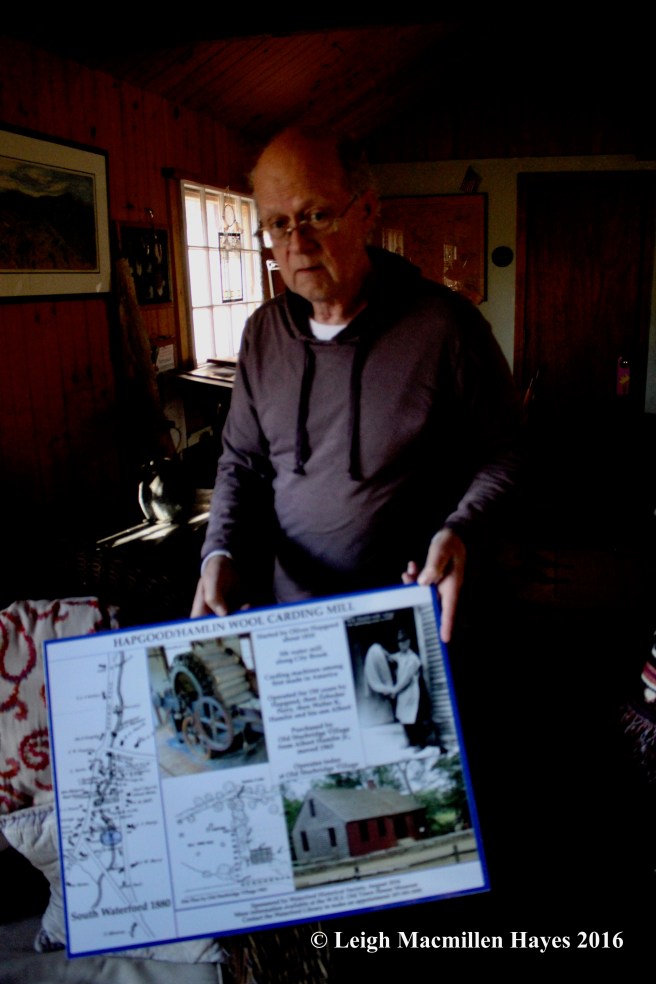
Meet my tour guide, Bob Spencer, who proudly displayed a future landmark sign.

w-indoor-view

Bob’s world view begins at City Center, aka Watson’s Falls.

w-watsons-falls-1

From the home he and his wife, Gere, have made in a former mill, the view encompasses one of nine water privileges or mill sites. Theirs is the fifth privilege along the stream, which was originally granted to Isaac Smith in 1795 for a saw mill. Over the course of its lifetime, the building served as a cloth and linseed oil mill, saw mill, salt box factory and cider mill. I love that apples still dangle above the water, a reminder of that last rendition.

w-library

On Saturday, we stepped north for a few minutes, and chatted about the mill pond and its function while Bob pointed out foundations and retaining walls and told stories of the standing buildings.

w-watson-falls-2

Then we turned south along the brook, where remnants of dams and the stonework foundations of other water-powered mills flourished from the days of the town’s settlement until the mid 1900s.

Bob is a fellow writer and naturalist with a keen interest in history. I’m flattered that he shared this place with me as well as his own written musings:

For most travelers on busy state Route 35/37, our brook is of little interest or importance. To the village of South Waterford, however, a cluster of thirty buildings which lie on either bank of this stony rill, it has served as a source of life and vitality throughout much of history. Landforms here were carved into the granite bedrock as a much larger ice-age water course scoured out a valley between Bear and Hawk Mountains to the east and Mount Tir’em and Stanwood Mountain to the west. Native Americans gathered along its banks to fish and camp. Eighteenth century settlers were drawn to the environs for a source of their fresh water and of power to produce lumber and flour, which were essential to survival. Nineteenth century industrialists, before and after the Civil War, earned their livelihoods by producing both commercial and consumer goods traded locally and in cities such as Portland and Boston.

w-flood-plainmill-pond

As we walk along he pointed out buildings still standing, those in stages of disrepair, and others that were merely memories. We paused by a meadow where he described the spring flooding events and I examined the evergreen wood ferns.

w-city-brook-meanders

And then we noted the gouge that deepened as we climbed, where “a glacial moraine as melt water engorged the brook into a raging river 15,000 years ago. The brook serves as the marshy wetland home of fish, birds and mammals. Such a short stream can teach everyone who allows the time many lessons about our ecology systems: how they work and how they were born.”

w-outlet-1

At the emergence of the brook we’d followed with two smaller brooks (Mutiny and Scoggins), we paused as Bob described their origins and journeys.
w-bear-pond

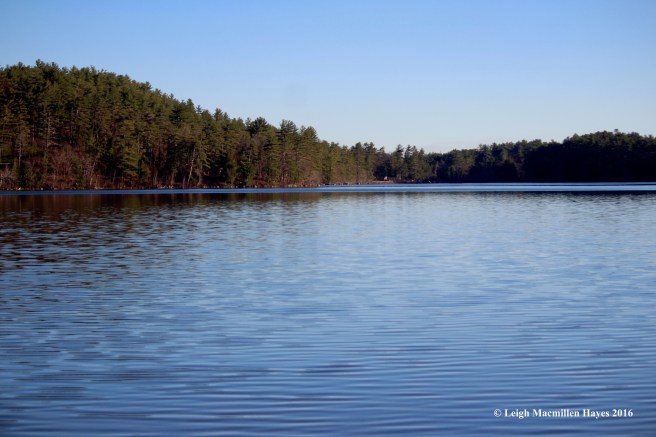
And then we turned to Bear Pond–the outlet. The temperature was relatively warm and pond almost inviting.

w-bear-mtn

With Bear Mountain overlooking, we’d reached the southern most point of the city.
w-beaverworks-2

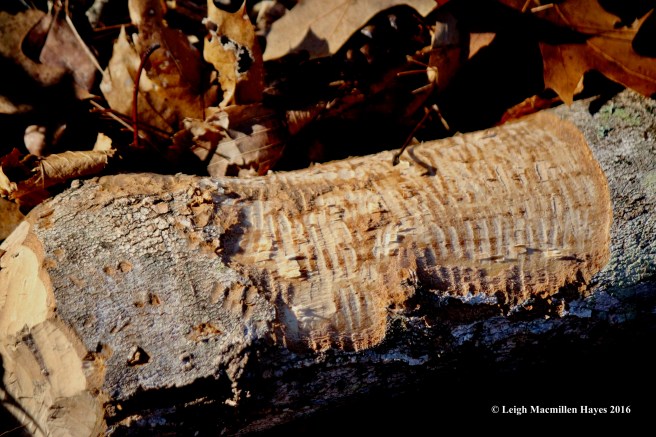
On our return trip, we found numerous signs that local residents were still industrious. Sometimes they were successful and the trees fell to the ground.
w-beaver-works-1

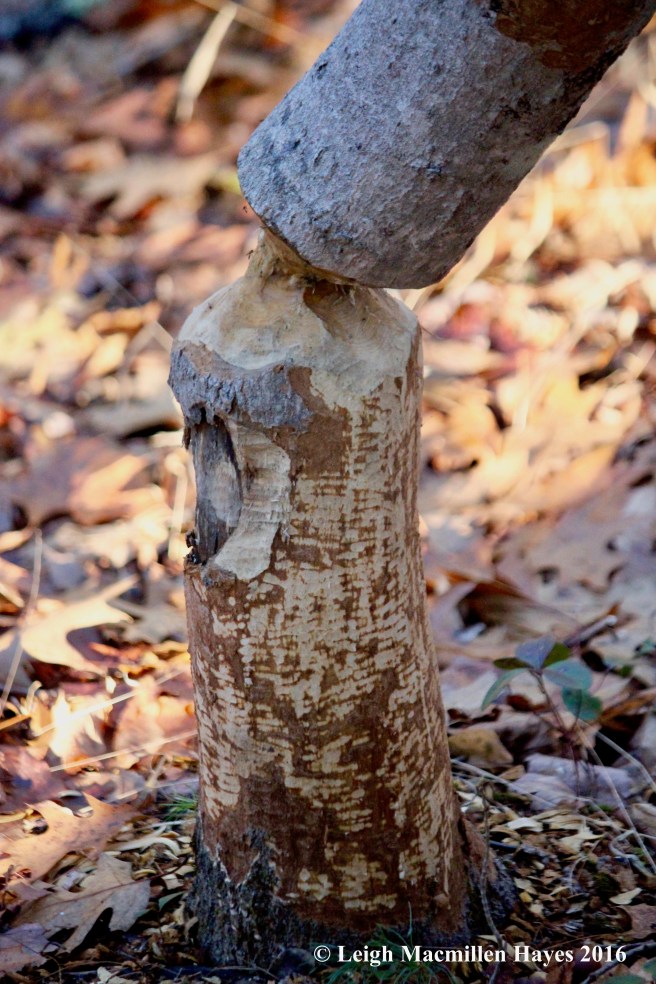
As with all industrious efforts, there were times when hang ups prevented success.
w-late-day-reflection

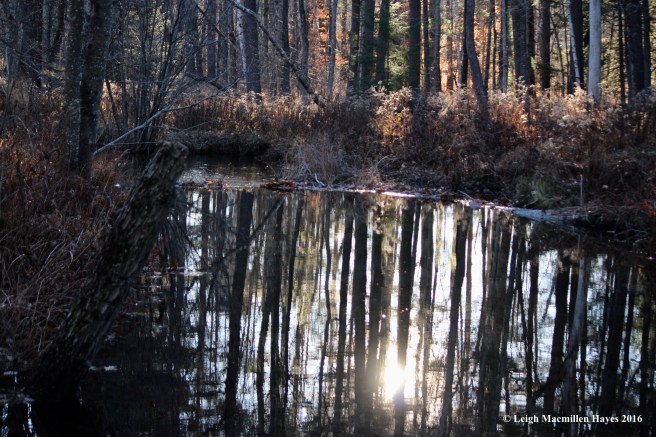
Sunshine and late afternoon reflections gave me a taste of why Bob referred frequently to the meditative nature of this place.
w-the-city

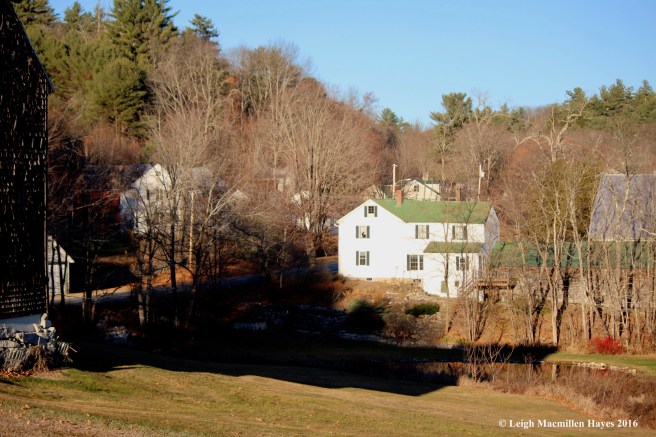
As we climbed a small hill and crossed a field, we again approached City Center.

w-sluice-1

And then we doubled back, walking to the intersection of Sweden Road with Routes 35/37. Plaster mills, bucket mills, a carding mill, saw mill and grist mill–waterpower was a necessity to any enterprise–beginning with lumber sawed for dwellings, grain ground for life-sustaining bread, shingles for siding and roofing, carded wool for the seamstress.

w-bucket-2-1

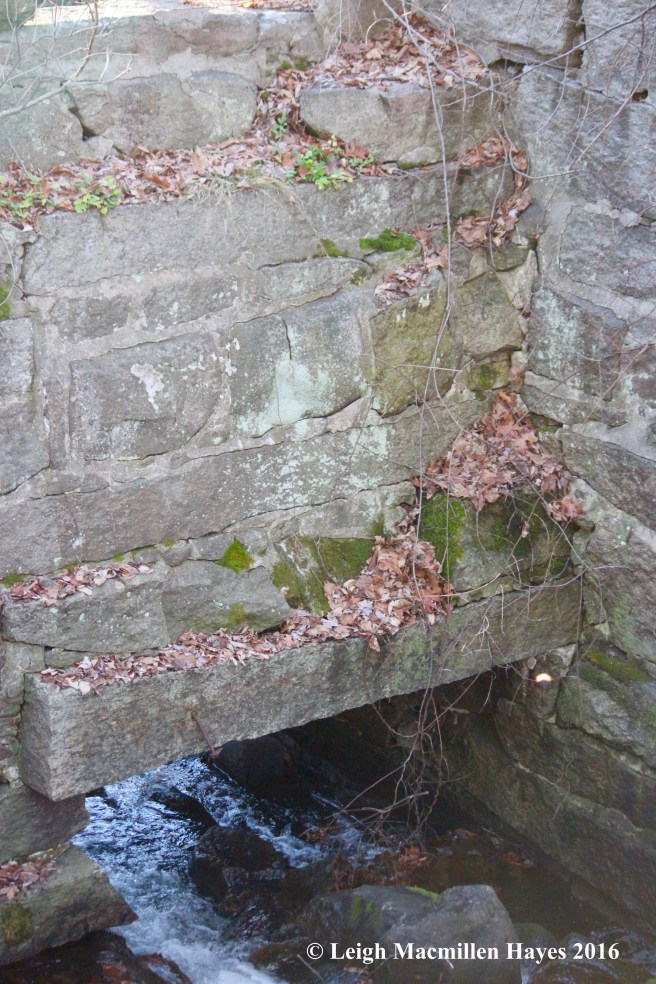
With the sun’s rays dipping lower in the sky, we stood in awe of the sluice and thought about the men and oxen and all the work that went into creating the mill–before the real work actually began.
w-sluiceway

How many times have I traveled past this site and never spied it? Too many.

w-bear-pond-2-1

After our first tour ended, I paused at the southernmost end of Bear Pond for further reflection.
w-brook-wall-2-1

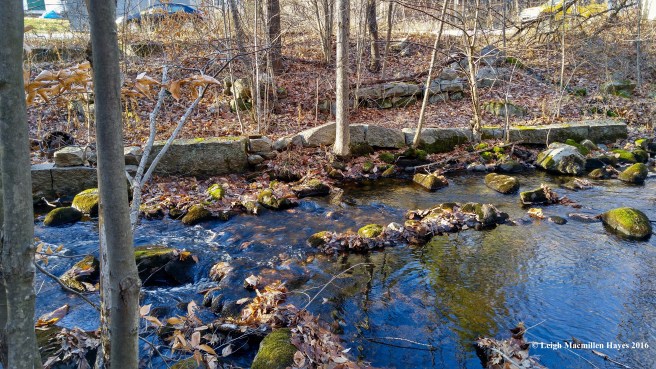
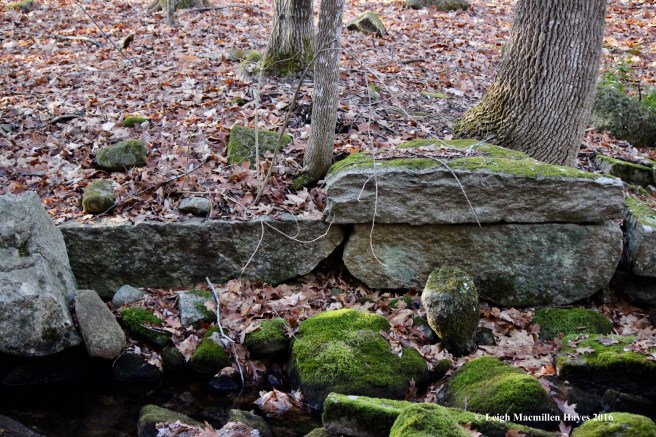
But . . . there was still more to see of the city and so a few days later I eagerly joined my tour guide again. This time we walked north, and wondered about the rock placements and considered their role as runways that once helped direct the water flow.
w-stones-line-brook

All along, we saw evidence of human intervention.

w-split-stone

We noted the feather and wedge marks on split stones.

w-barbed-wire

Barbed wire made us think about the land being used for agriculture. Though it didn’t seem that the land had been plowed, we wondered if farm animals had roamed. Bob reminded me that a carding mill once stood nearby and so we envisioned sheep.

w-barrel-wire

w-barrel-staves-1

w-artifact

Barrel wire and staves made sense to us, but we didn’t always recognize the artifacts for their use.
w-cellar-hole-2-1

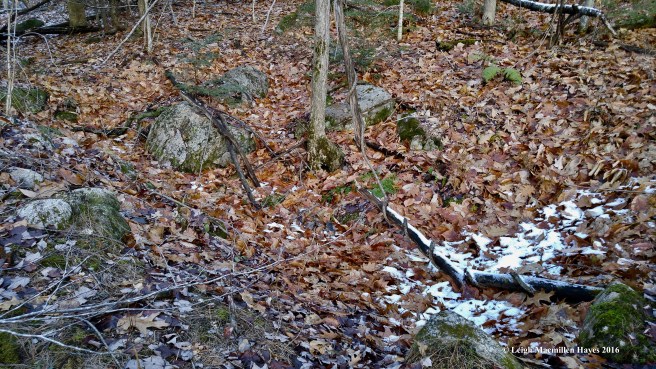
We even found a cellar hole, or perhaps a cellar hole, that Bob hadn’t seen before. Of course, we speculated. It certainly had structure. But why was it cut out around large boulders, we wondered.

w-tree-foundations

And we noted the industrial work of trees that forged their own way beside the brook.

w-city-brook-large-rocks-1

For every sight that we seemed to understand, there were more that we didn’t. With his vast knowledge of local history and the land formations along the brook, Bob pointed out natural and man-made features, but even he admitted he didn’t always get it. The pile of obviously quarried granite was one such.
w-sluice-and-old-dam-2-1

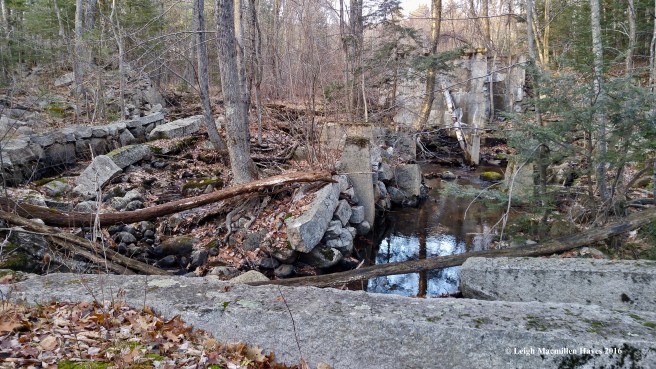
Suddenly, we reached what might be considered the crossroads of long ago and more recent past.

w-sluice-way-4

To the west, an obvious rock sluiceway.

w-stantion

To the right, stanchions from a former, yet more recent power site.
w-old-dam-3-1

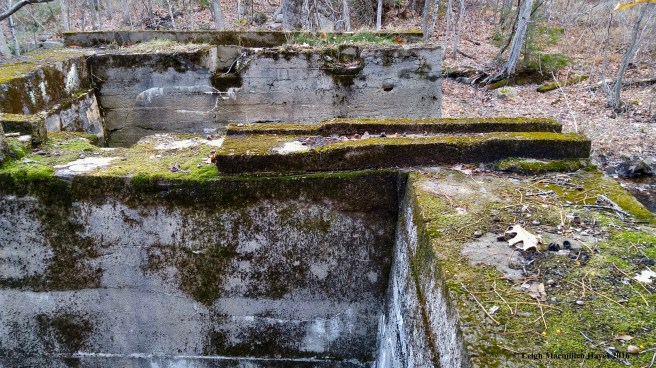
This was all located at the original spot of the first dam along the brook.

w-keoka-dam-2-1

Curiously, Bob explained as we walked along,  a more modern dam was built about a quarter mile north.

w-keoka-3-1

We’d reached Keoka Lake, formerly known as Thomas Pond. Supposedly, in the early 1900s, Thomas Chamberlain ran away from Native Americans and survived by hiding in a crack in a rock. Though the lake is no longer named for him, Tom Rock Beach holds his legacy. Today, the clouds told the story of the much cooler temperature. 

w-flats-1

Bob directed my attention to our left, where Waterford Flats was visible.

w-start-of-city-brook-1

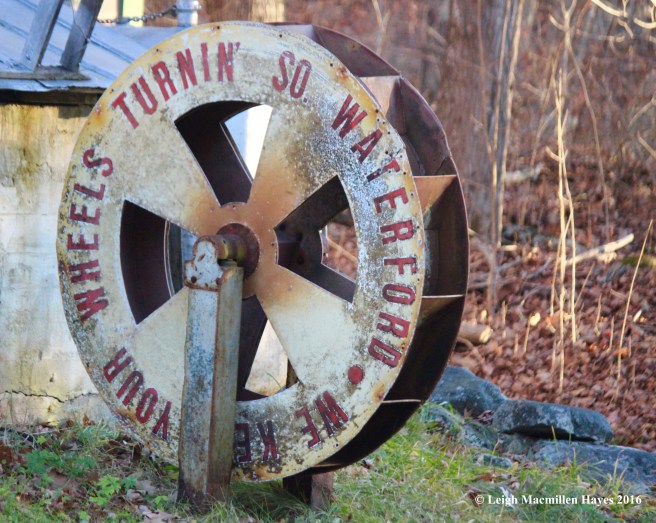
And then we looked south, to the outlet of Keoka and the beginning of City Brook–the place where it all began. Though no longer held by dams and funneled through the rock sluiceways, it was the water that passed this very way that once provided the energy converted by water wheels and turbines to power the life of the city.
w-wheel-2

w-wesleyan-church

w-bear-mountain-grange

“Waterford City” as it was known, has changed, though some standing monuments still speak to its former life. Until Saturday, I had no idea the brook was named City Brook or that South Waterford was known as a city, so named for the industry that once existed here.

As Bob wrote, “The age of industrial prosperity is now long gone, victim to growth of large manufacturing plants which required more powerful rivers and many other economic changes since the 1870s. At that time, South Waterford was dubbed “Waterford City” for the noise and bustle brought to the town by nine mills and many supporting outbuildings lining the brook. Invisible to today’s busy passerby are many remnants of a past industrial heyday: a large concrete and split stone ruin on the access road to Keoka’s modern dam, two-story stone work that served as the foundation for a 19th century bucket mill, a simple shingled mill building atop a 1797 stone dam beside the town’s last rustic stone bridge. Further exploration may reveal lost foundations beneath the water surface, a 36-inch rusty circular saw blade, burnt remains of Waterford Creamery or an earthen dam long overgrown by bushes and brambles. These vestigial remains of human endeavor are of historical interest to many.”

w-city-brook-2

After our tour came to an end,  I paused below the cider mill one more time–a fitting spot to share another of Bob’s ponderings on this place:

“The whirling bubble on the surface of a brook
admits us to the secret of the mechanics of the sky.”
Ralph Waldo Emerson

It is appropriate to begin this study with a quote from American philosopher, existentialist Ralph Waldo Emerson (1802-1882), whose life spanned from early days of village settlement through the denouement of its industrial zenith. Emerson spent much of his boyhood visiting three aunts who lived in Waterford. He likely honed his naturalistic views while exploring City Brook or Mutiny Brook near Aunt Mary Moody Emerson’s home, Elm Vale, which was located across from the cemetery of the same name on Sweden Road.

This is one city I’m thankful to have visited. And I look forward to further explorations.

I’m grateful to Bob for sharing this place with me and especially for pointing out all of his favorite meditative places. Meditation in the city–Waterford City style.
 

A Devil of a Mondate

Ever since I first saw a photo of a family donning their Sunday best and standing on rocks that form the “Devil’s Staircase” in Lovell, Maine, I’ve been intrigued.

d-historical-society

The photo and description on Lovell Historical Society’s Web site refers to a “staircase” on Sabattus Mountain. And so for years I imagined the staircase leading to that summit, but never located it. And then I learned that a section of trail at the Greater Lovell Land Trust’s Heald and Bradley Pond’s Reserve had earned the same name. Is there a staircase at Sabattus? Or was it accidentally misidentified? Whatever the case, when I suggested to my guy that we attempt the staircase off Route 5, he embraced the opportunity. (I’ve since learned from several friends that indeed, there is a staircase on Sabattus and the photo likely was taken there. The base of the staircase is apparently on private property and no longer a safe climb.)

d-trail-map

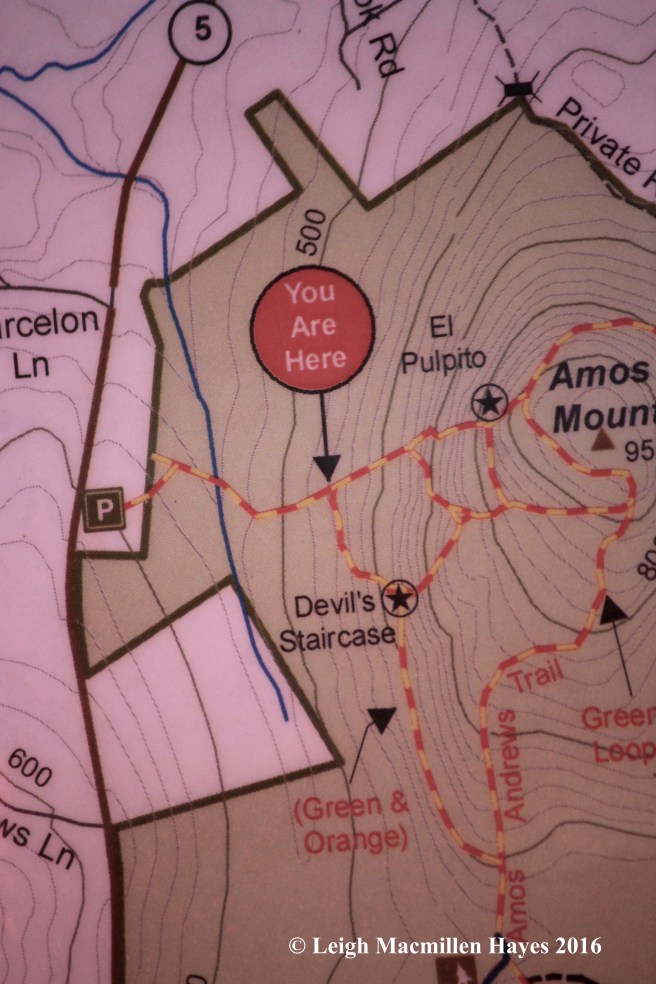
And so about noon we ventured forth and figured out a direction that would take us up the steep portions of the trail to the staircase and El Pulpito, and then down the easy trail–with hope that there was such a thing as an easy trail.

d-easy-trail

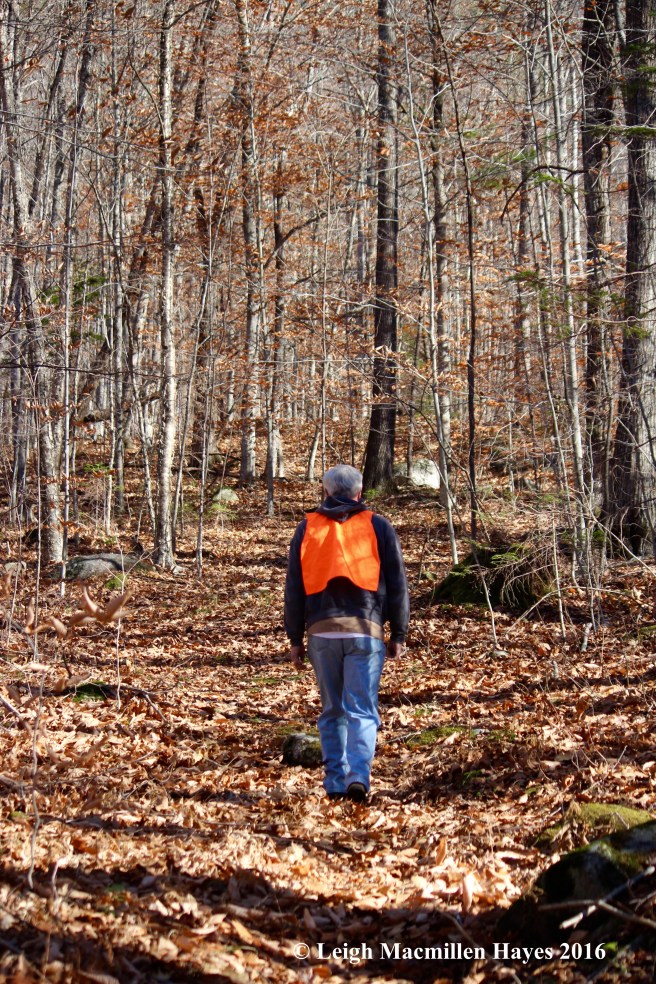
Actually, at the start it all seemed quite easy as I followed our Monday tradition of racing to keep up.

d-arrow-heavenward

We chuckled when he found an arrow that aimed heavenward–perhaps a sign that all would be well.

d-turning-the-arrow

My guy played spin the arrow to set it toward our destination. (Actually, on the way down, he spun it the other way. Note to GLLT–perhaps this arrow needs two nails.)

d-approaching-ledges

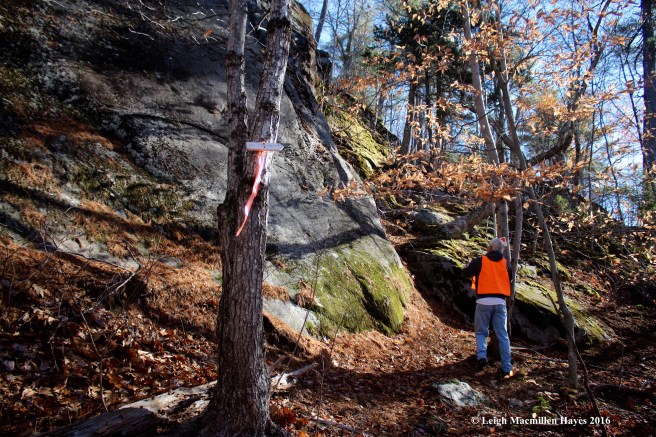
Minutes later, we approached the ledges and visions of bobcats danced through my head.

d-contemplating-the-climb

Acting as our scout, my guy contemplated the upward advance.

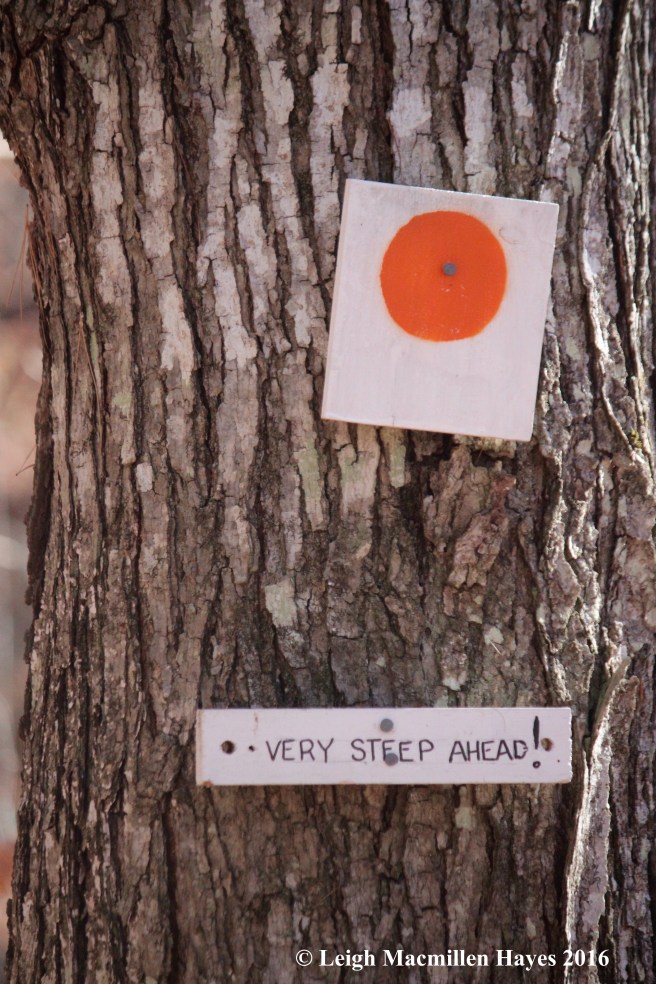
d-very-steep

We were forewarned and chose to bypass a bypass.

d-starting-up

He started up what we believed to be the same trail traveled by those Sunday venturers.

d-following-my-guy-up

I followed but not quite as speedily.

d-heading-up

My heart pounded in Edgar Allen Poe manner as I followed him up. I have to admit that there was a point where I wanted to turn around and climb down, but wasn’t certain that would be any easier. And so after pausing for a few moments, I tried to put mind over matter and placed my hands and feet in what seemed to be “safe” spots as I continued to climb.

d-view-from-above-staircase

Above the staircase we were rewarded with a vantage point of Kezar Lake and the White Mountains and a chance to slow down our heartbeats.

d-lunch-view

And later, at El Pulpito, the pulpit, the complete opposite of the Devil’s Staircase–a place to pause, eat PB&J sandwiches, and contemplate life in a relaxed manner.

d-water-at-summit

Within an hour we reached the summit of Amos Mountain and spent some time being.

d-hazy-view-at-summit

Though the sun was in our eyes, the view south was a bit hazier than one would expect on a clear November day. We later learned that a forest fire burned in Albany, New Hampshire.

d-trail-down

For our descent, we followed the blue blazes of the Amos Mountain Trail.

d-tree-across-trail

Though hardly as steep as the climb up, I was thankful for a few downed trees that slowed my guy–momentarily.

d-boot-disappears

The beech and oak leaves were over a foot deep in places and obscured rocks and roots, making for a slippery slide down.

Nevertheless, we did it. Devil’s Staircase up and a devil of a climb down–and yet, two hours later we knew we’d do it again.


Reconnection Reflections

We didn’t mean to lose touch. And yet it happened. We got caught up in our family routine and put “old” (read established cuze none of us are old, certainly) friendships on hold.

c-hiding-2

But old friends are the best friends. And they are the ones you can suddenly catch up with after several years and talk and giggle and talk some more as if no time had passed. And convince at least one of them that perhaps she should slide into the hollow of a tree for a photo opp just like both of you would have done in high school.

c-saltmarshodiorne

And so the past three days we had the opportunity to play catch up. For me, the journey actually began on Thursday night, when I met my dear old friend Carissa for a girls’ night out. We began by reminiscing about days gone by, from high school antics to family adventures. On Friday morning, we braved the gale force winds and made new memories along the trails at Odiorne Point State Park in Rye, New Hampshire, where autumn colors enhanced the experience.

c-seavey-creek-1

It was at this point where Witch Creek flows into the Atlantic that Pannaway Plantation was established in 1623. The plantation was New Hampshire’s first settlement, colonized by English fishermen. Though I’m thankful they found this place because I love living in New England, I’m at odds with the invasion of white men. Couldn’t they have taken a different approach?

c-norway-maple-leaves

Interestingly, we weren’t the only invasive species. While the color of the Norway maple leaves attracted my eye, I soon realized that they represent one of many intrusive forms of non-natives that flourish here. Attempts are being made to rid the park of such. Hmmm.

c-odoirne-light-houses

We climbed along the rocky coast and embraced the view of the entrance to Little Harbor. Because of the location, the land eventually became a defense fortification.

c-silent-greatness

As we wound our way along the trails, sometimes doubling back, we suddenly came upon Silent Greatness. Indeed. Certainly a bird bath. Certainly a moment of reflection–both in water and mind, an offering.

c-campbell-road-1

Then the footpath led us to Campbell Road, a standing tribute to those first “settlers.”

c-campbell-road-leaves

For us, it framed the day as leaves floated to the ground. Though our time together was a similar fleeting moment, we trusted that our friendship will continue to endure, much as this road has.

c-plank-1

And then I met up with my guy and we continued on down a different road–making our way to Cape Cod for a family wedding. We spent the afternoon and evening catching up with cousins–reveling in the obvious love of the newlyweds and the renewed connections. The next morning we explored our surroundings, including the Sandwich Plank Walk.

c-sandwich-plankwalk-sign

We learned that a hurricane destroyed the boardwalk several times, most recently during the Blizzard of 2013.

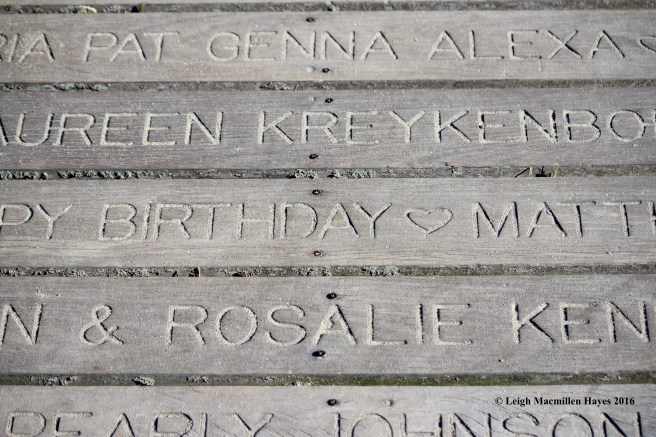
c-plank-comments

The townspeople banned together and purchased new boards, many of which represent family names and messages of good tidings.

c-gull-landingsandwich

The Plank Walk’s 1,350-foot span crosses Mill Creek and marsh, leading to the town beach on Cape Cod Bay.

c-no-parking-gull-1

Beside one end of the boardwalk, a herring gull pondered the message below.

c-no-parking-gull

Apparently, the sign’s upside-down meaning:”Pause Here and Stretch a Wing.”

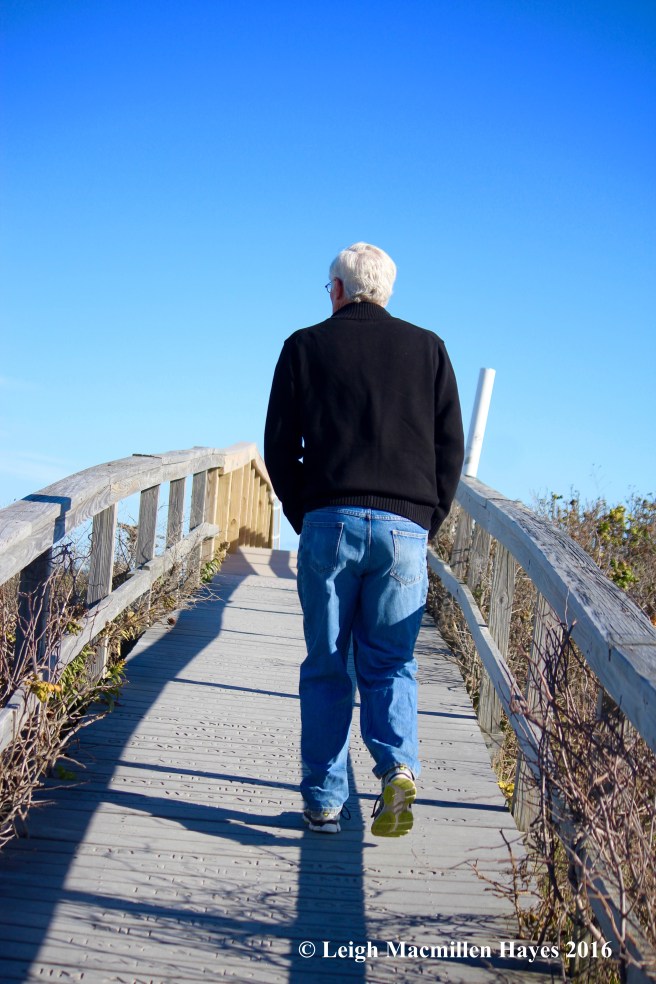
c-plankwalk-guy

Crossing back over, I followed my guy–a familiar look, I know, but he is my favorite guy to follow.

c-crashing-wavessandwich

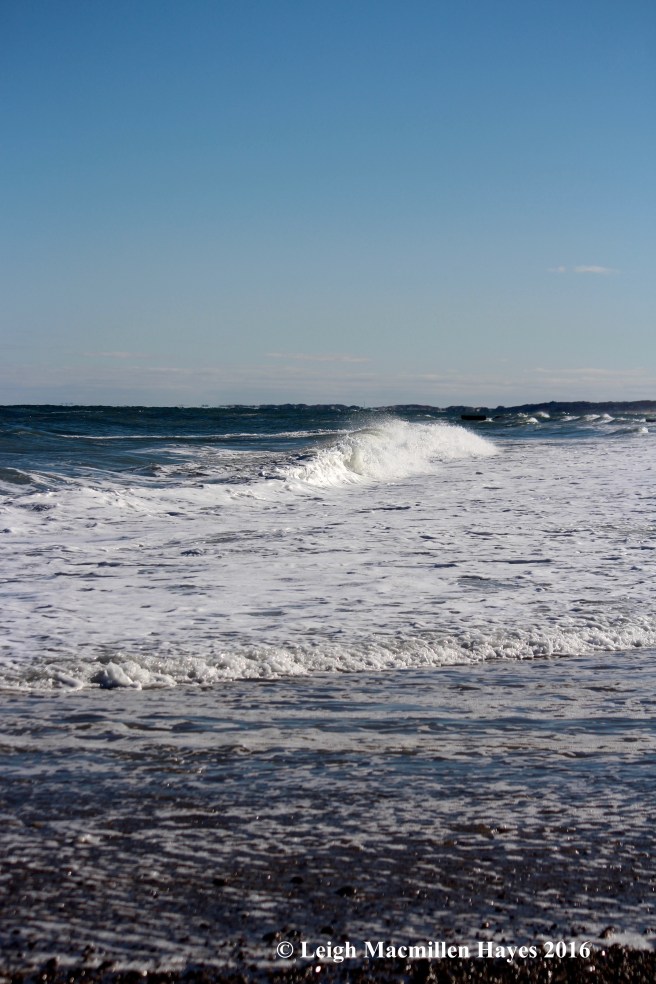
On the Sandwich Beach, crashing waves and color reflected the day’s wind and sky.

c-canal-1

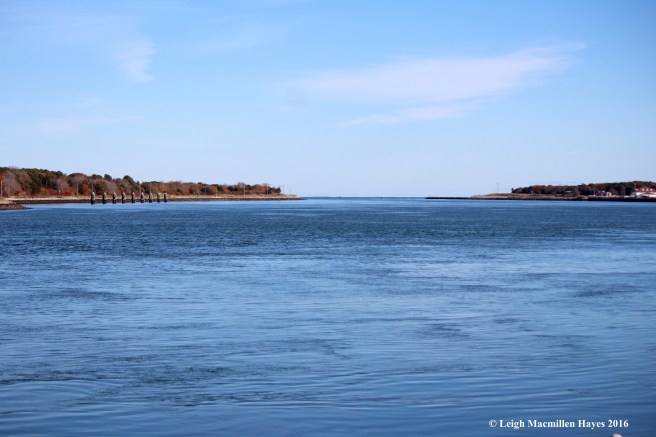
From there, we drove to the Cape Cod Canal, where we stretched our legs for another hour or so.

c-loon

As we walked along, the boat traffic was non-existent, but we still had plenty of opportunities for reflection–from short . . .

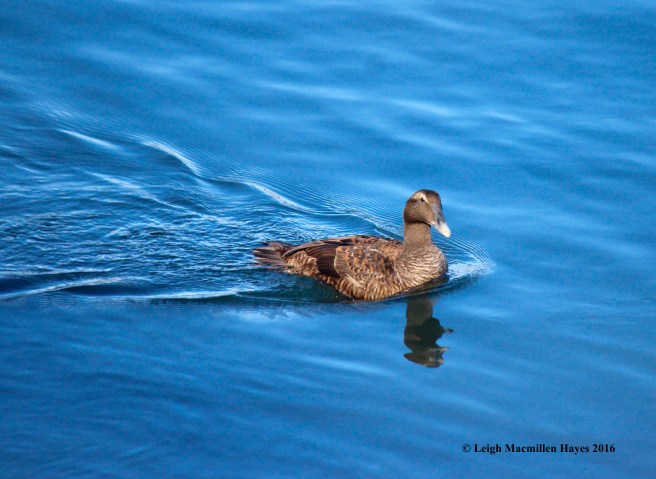
c-duck-reflection

to longer . . .

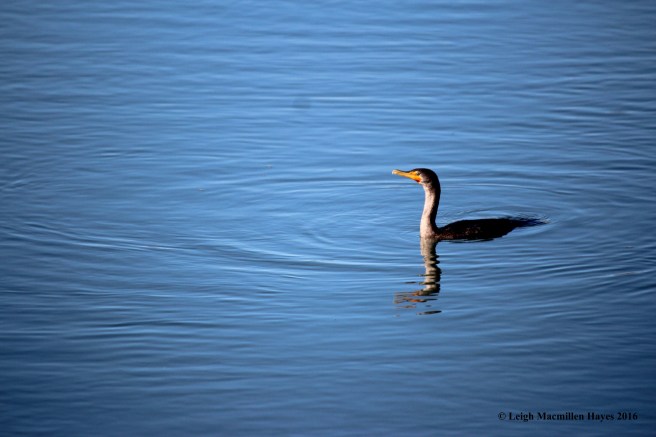
c-cormorant-1

to longest.

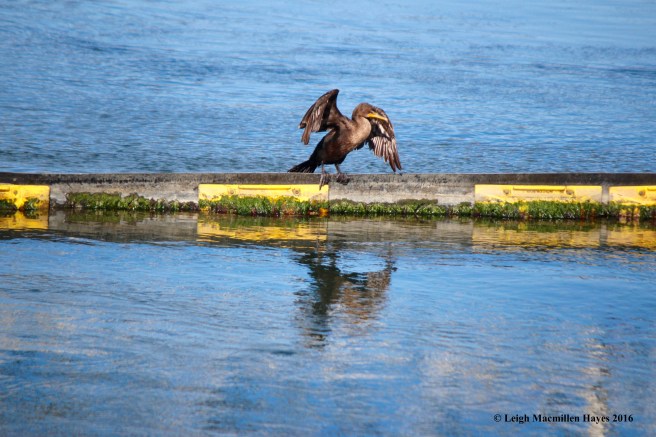
c-cormorant-balance

And most humorous. Think cormorant meets narrow balance beam.

c-sagamore-bridge-1

This is a place where all of life convened–from rails to power to footpath to canal to bridge.

c-canal-outlet

c-canal-barge-1

c-canal-barge-2

At last it was time to catch up with my college friend, Dianne, and her husband, Tom. We dined at Fishermen’s View on the canal–and a barge did me the pleasure of passing by. And again, we talked non-stop for a couple of hours as the years between visits melted away.

c-sunrise-3

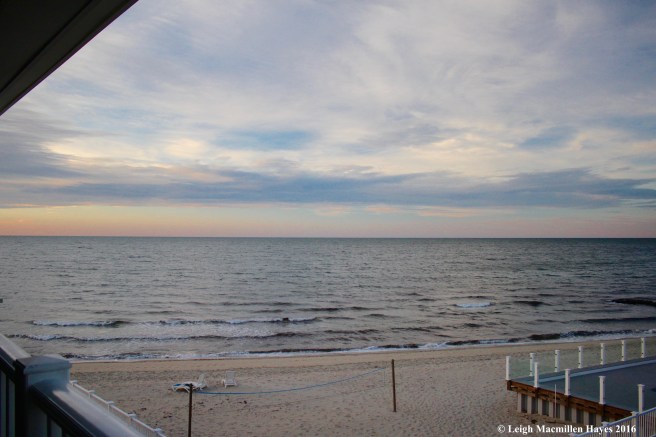
On the road again, we spent the late afternoon catching up with my childhood neighbor and school friend, Bill and Eileen. More memories were shared. And then we joined my guy’s uncle and family for dinner. Once more, constant story telling. Uncle Chuck gave us the use of a timeshare condo for the night. It was an unexpected opportunity that we were most thankful to be offered. We slept like babies and awoke to a gorgeous sunrise overlooking the Atlantic.

c-sunrise-4clouds

The sky swirled . . .

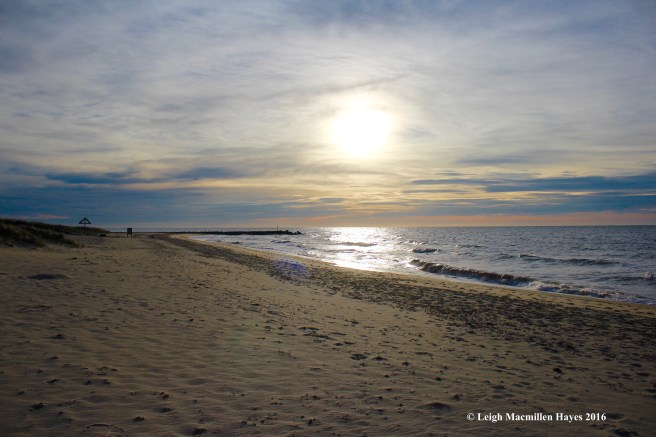
c-sunrise

as the sun rose.

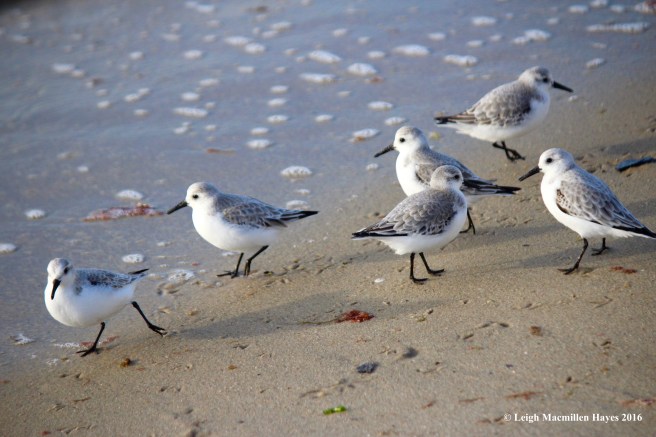
c-sanderling-convention

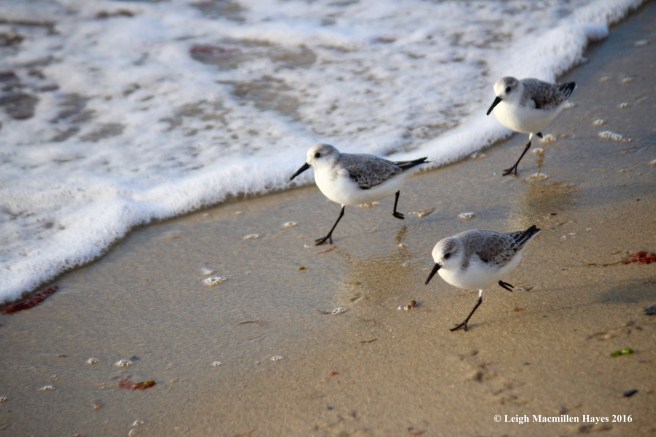
Sanderlings held a convention.

c-sanderling-1

And entertained us as they skittered along beside the waves.

c-sanderling-in-waves

Occasionally, they took a dip, as is their custom.

c-sanderling-looking-1

But always they searched.

c-sanderling-look-ing

And considered.

c-herring-2

A herring gull also paused . . .

c-herring-3

considered . . .

c-herring-gull1

and posed. Such a handsome specimen.

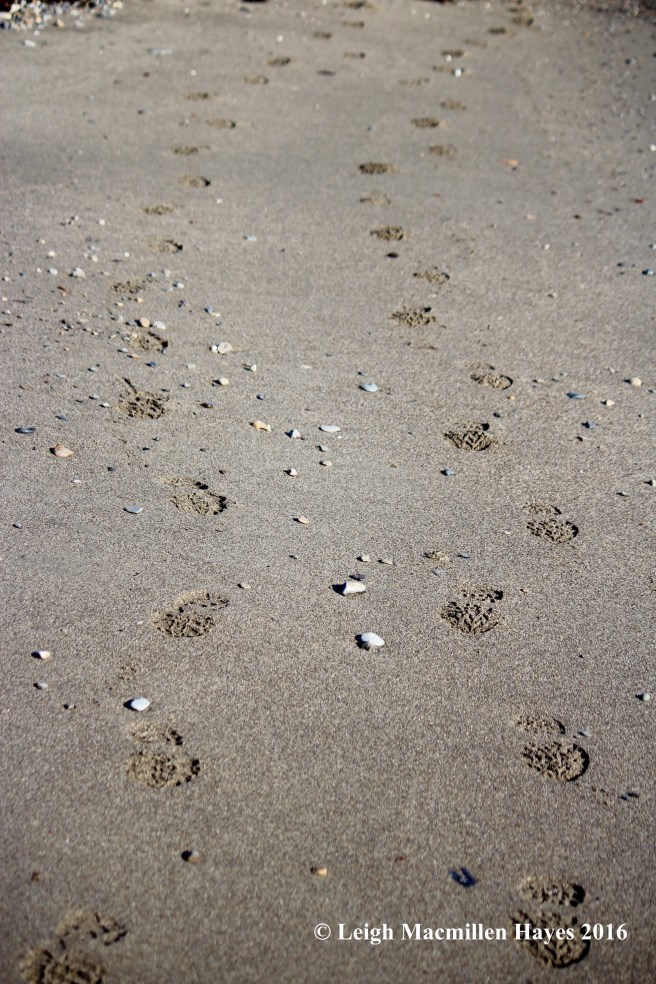
c-matching-footprints

At last, our mini-vaca had come to an end, but we still had one more visit to make–we surprised my guy’s friend Dave and his family on our way home. It was a quick stop, though stories continued to flow along with promises for the future.

We were thankful for a weekend to reconnect with family and friends. For a chance to once again walk side by side as we reflected on the past and made new memories. Here’s hoping we won’t wait so long to meet again.


So Many Unknowns

On this historic election day, a few friends and I took to the woods with the intention of absorbing not only the sun’s heat, but the warmth of each others company. Yes, occasionally our conversation turned to politics and wonder about the future, but for the most part, we just wanted to wander together.

h-vp-1

Our first spot for consideration–a vernal pool tucked away in the woods.

h-vp-2

In true v.p. behavior, it dried up during the summer drought, though as we moved about we experienced a sinking feeling–muck obscured by grasses and leaves. This particular pool is home to fairy shrimp and their eggs cases are protected under the leaf litter until water returns. The amazing thing about fairy shrimp–those eggs can survive long periods of drying and freezing. We trust we’ll have the opportunity to meet the next generation.

h-wintergreen-1

Sometimes our eyes were tricked by what we viewed and we questioned how things could be so.

h-wintergreen-with-candelabra

But upon a closer examination of the facts, we realized that a club moss was merely growing near the wintergreen and the wintergreen hadn’t taken on a strange candelabra form.

h-clearing

Our questions continued, however. Why was the ground completely cleared in the middle of the trail? Mammal behavior? We noted boot prints and wondered about human interaction. Finally, we moved on, unable to understand the reasoning, but knew that there are some things we’ll never fully comprehend.

h-green-oak-leaf

In another place, we noticed a green red-oak leaf. A holdout perhaps that preferred the way things had been and didn’t want to follow the rest of the group?

h-hawkweed-1

Occasionally, we calmly debated the structures before us as we considered shape and hairiness and growth pattern and location before we determined species–in this case, hawkweed.

h-wood-art-1

And other times, no need for questions, no need for answers. Pure admiration for the presentation was enough.

h-ladybird-beetle

When we were again drawn in for a closer look, in this case at the white fuzzy beech scale insect, we suddenly realized there was so much more to observe, such as the black ladybird beetle.
h-spiny-leaf-beetleladybird-hatching-from-pupa-stage

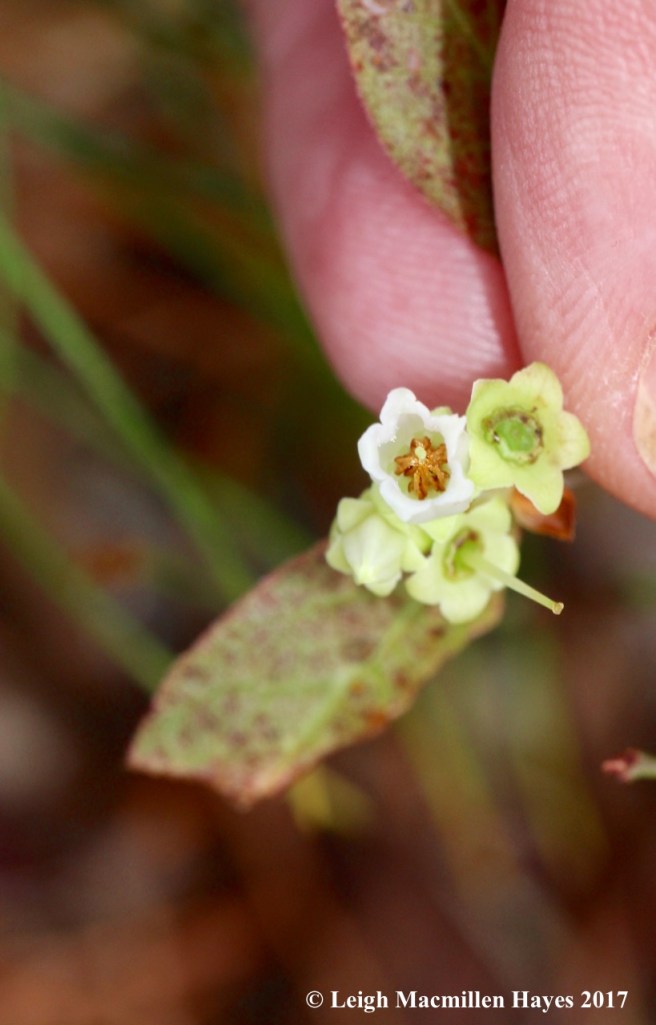
And then, something we didn’t understand at all. What was this spiny creature? And what was emerging from it? We left with that question floating among us. It wasn’t until doing some research later that I came to what may be the answer. Was it a ladybird beetle emerging from the pupa stage? How I wish we could go back and find it again and look at it with a different mindset.

h-alt-dog-lichen-1

Drawing close to the finish of our journey together, we spied something we’ve passed many times before, but never noticed.

h-alt-dog-lichen-2

Again, we’ll need to revisit the mossy boulder, but we determined it was a dog lichen. Why dog? Was it so named for the white “fang” like rhizines on its lower surface?  Or did the lobes remind someone of dog ears? Based on the large, fan-like shape, my leaning is toward Peltigera membranacea or Membrane Dog Lichen. But, I could be easily swayed on its ID.

h-milkweed

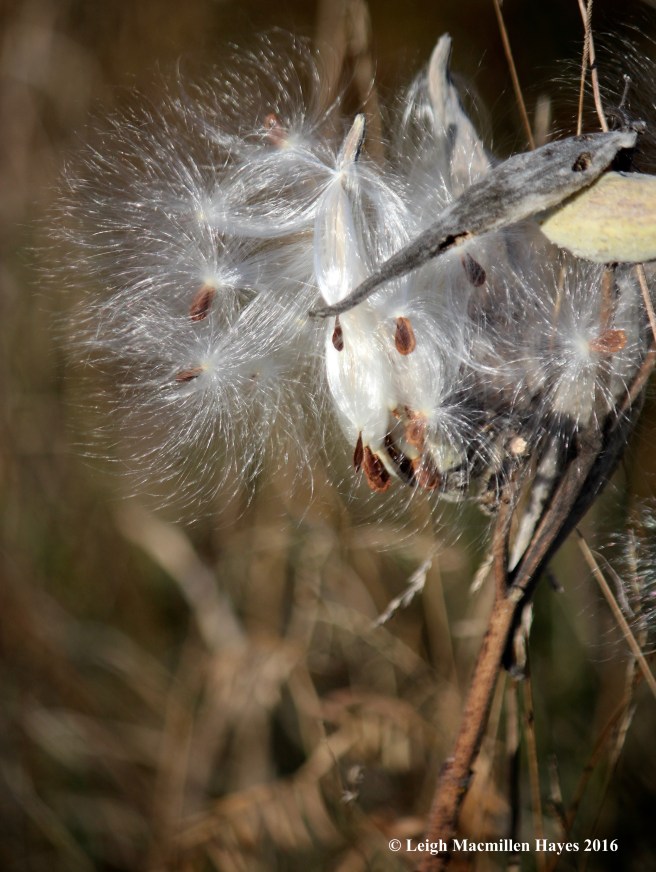
A short walk and hours later, we finally passed a field of milkweed, their seeds blowing in the slight breeze like flags on a pole.

It was time to say goodbye to friends who will head south this weekend before I headed back to “reality” and colored in those little ovals.

I think we all came away thankful for the questions raised and knowledge shared, but still . . . so many unknowns.

Orange You Glad For Ky Mondate

With a recommendation from Marita, my guy and I hiked a trail new to us today and fell in love with it. But as much as we enjoyed the lay of the land and physical activity of climbing uphill and down, we also enjoyed searching for shades of orange on this last day of October.

o-sanborn-river-1

Beside Sanborn River we traversed at first, frequently pausing to admire the flow of the water over the rock formations and noting hints of orange in the display before us.

o-big-tooth-2

And then we began to see it everywhere, beginning with the big-tooth aspen leaves,

o-sugar-maple-leaf

sugar maples,

o-oak-leaves-1

and northern red oaks–down low . . .

o-oak-above

and up high.

o-red-oak-bark

We found an orangey display in red oak bark and . . .

o-burl

even among an old burl on a birch tree.

o-gas-can

Not all was formed by nature, though then again, nature played a part.

o-orange-ribbon

And sometimes it was easy to spot.

o-my-guy-trending-blaze-orange

As was my guy.

o-oversett-pond-1

Shades of orange accented Oversett Mountain as we paused beside the pond of the same name.

o-huckleberry-leaves

We noted its beauty on the huckleberry leaves beside the pond, and . . .

o-watery-reflection

in reflective patterns on the water.

o-cliffs-1

It wasn’t just the orange that drew my attention as we circled halfway around, however. The cliff was a wee bit intimidating.

o-beaver-works

Despite that, we continued on and crossed an old beaver dam. The dam may be old, but we noted new beaver works gnawed by those famous orange rodent teeth on the man-made bridge beside it.

o-lunch-rock-1-1

And then we began the climb, which wasn’t so bad after all, given a few switchbacks. At lunch rock, our view was dominated by orange as we munched on PB&J sandwiches.

o-view-from-summit

Shortly after that, we reached the summit, aflame with more of that autumn glow that hints at November.

o-heart

And immediately below, another view of part of Oversett Pond. As the universe would have it, the pond appeared heart shaped. Just perfect for a Mondate with my guy and a day of giving thanks for our young next door neighbor, Kyan, who has been dealing with leukemia and is recovering from a blood marrow transplant–talk about intimidating. He’s going trick-or-treating tonight! Orange you glad for Ky? We certainly are.

Happy Halloween!


The Way of the Land at Long Meadow Brook Reserve

Last month the Greater Lovell Land Trust purchased a new property along Long Meadow Brook that further develops the wildlife corridor. A couple of weeks ago I first visited it with GLLT’s Executive Director Tom Henderson and a number of the land trust’s volunteer docents. As we left the property, Tom said to me, “I didn’t oversell this, did I, when I said this will become one of the docents’ favorite properties.” Indeed.

And so I couldn’t wait to get back there myself to spend a few hours exploring the almost one-hundred-acre reserve.

l-mullein-flower-2

Because the land was last logged by the previous owner in 2014, it’s in the early succession stage of regrowth.

l-mullein-flower-3

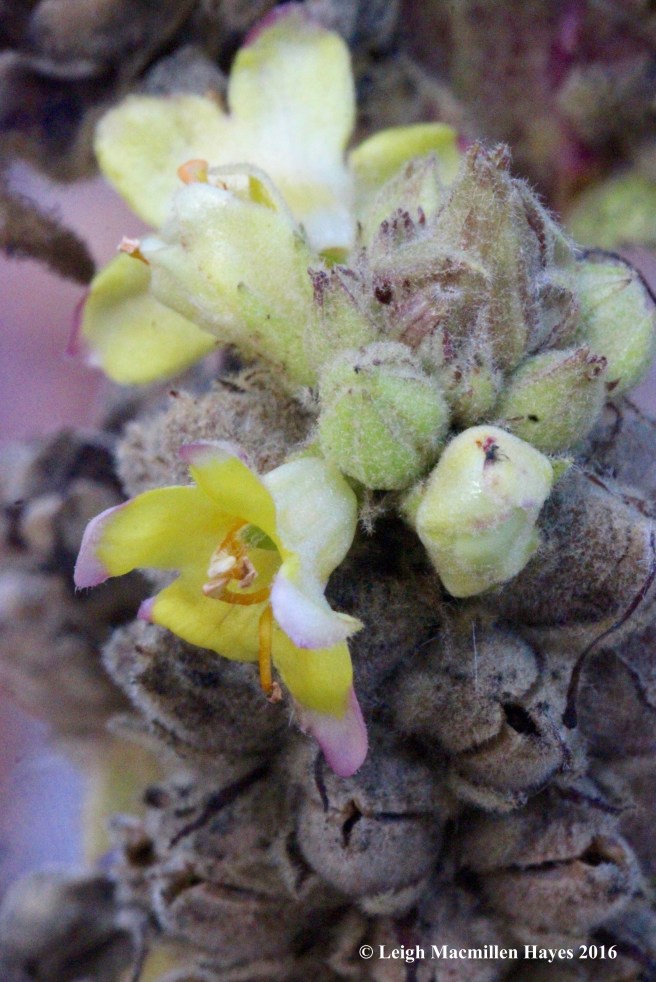
And so, it’s a place where those who like disturbed places tend to grow, such as the common mullein. What surprised me most was that I found a few still offering blooms.

l-mullein-cactus

Of course, it reminded me that I was in the great West–WESTern Maine, that is–with its occasional cacti-like form.

l-seeds-holidng-on

Scattered throughout are also the seedheads of white lettuce, waiting for release in lampshade-like formation.

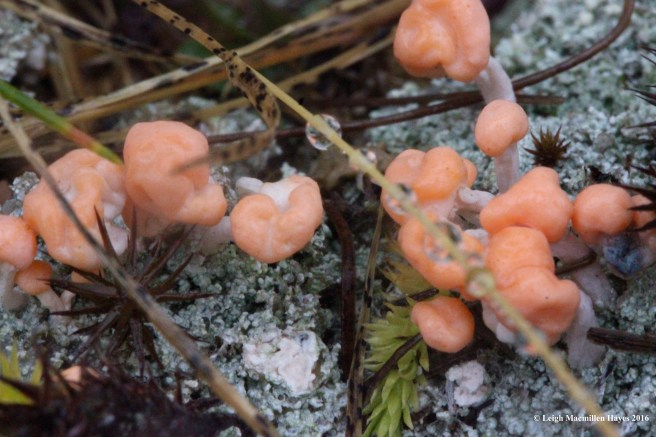
l-orange-peel-fungi

Orange-peel fungi fruited prolifically in the gravel logging road.

l-future-parking-lot

That was all before I even reached the future parking lot, which had served as the log landing a few years ago. Already, sweet ferns and berry bushes have made themselves known.

l-sweet-fern-colors

The leaves of sweet fern, which is really a shrub rather than a fern, exhibited their version of autumn hues.

l-trail-marker

If you go, I encourage you to look for the blue ribbons that indicate where a future trail will be placed. It’s a loop trail that summer interns Hannah and Aidan laid out and leads to two focal features.

l-stonewall-double-to-single

The trail nears a neighboring property, which just happens to also be under conservation easement thanks to the foresight of its owners. I stepped off the blue flag trail and started to follow the wall for a bit–noticing that soon it changed from a double (garden or plowed land) wall to a single wall. A large pasture pine grew at the change-over point.

l-stonewall-barbed-wire-1

And where the wall switched to single formation, barbed wire indicated its former use a pasture boundary. And white pine scales indicated its current use–as a red squirrel’s dining room table.
l-forest-succession-2

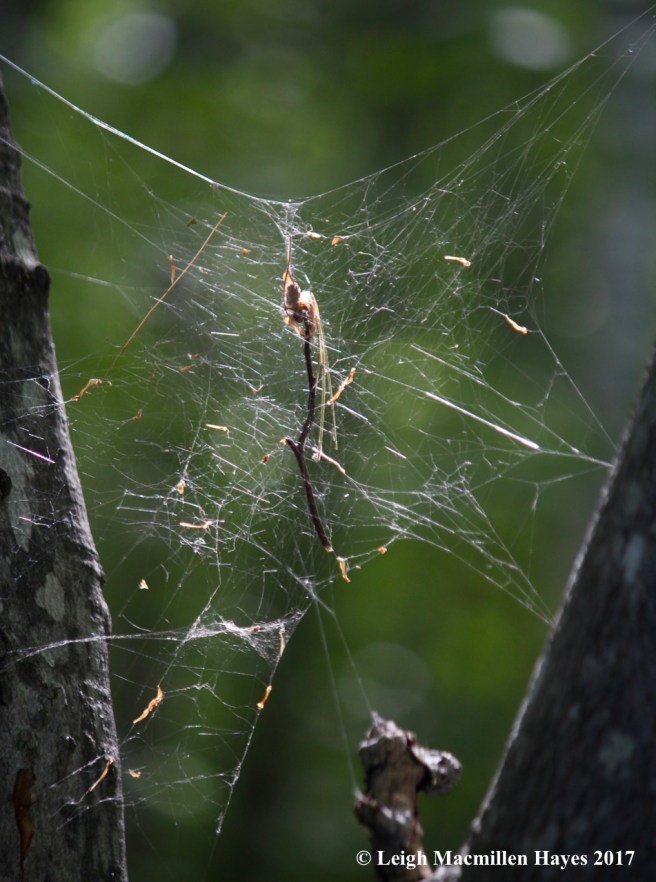
After moving away from the wall, I noticed the mountains in the offing and ferns and young trees already filling in the empty spaces.

l-kearsarge

One of my favorite mountains to climb stood tall in the backdrop–Mount Kearsarge.
l-forest-succession-1

My bearings were off a bit, but I knew where the eastern boundary was as I moved across this opening.

l-pitch-pine-bark-1

Walking along the back edge, my tree passion was ignited yet again.

l-pitch-pine-1

Several pitch pines grow in this space. While the bark is similar to that of red pines, it’s platier (is that a word?). And the tufts of needles that grow along the trunk were a dead give-away.

l-pitch-pine-cone

l-pitchpine-needles

But . . . I always quiz myself and so I looked around. And right below the trees, pitch pine cones and the triple needle bundles common to this species.

l-wintergreen-berries

It was here that I discovered wintergreen growing by the base of a tree stump. What made me wonder was the amount of fruit on each plant. Yes, wintergreen grows prolifically in all of western Maine, but I can’t recall ever seeing so many little red globes dangling below the leaves.

l-marshy-1

From my half-circle around the opening, I wasn’t positive about my whereabouts and so decided to follow the land downhill because it looked like there may be an opening below. A few minutes later, I realized I was in a marshy spot where the cinnamon ferns grew. And the earth beneath my feet was rather spongy and damp.

l-beaver-lodge

I reached what I thought was the meadow I sought–only to realize that I was looking at a beaver lodge. I knew that beaver lodge, but from a different perspective–the neighbors’ property.

l-first-marsh

And then something else caught my attention.

l-marsh-tamaracks

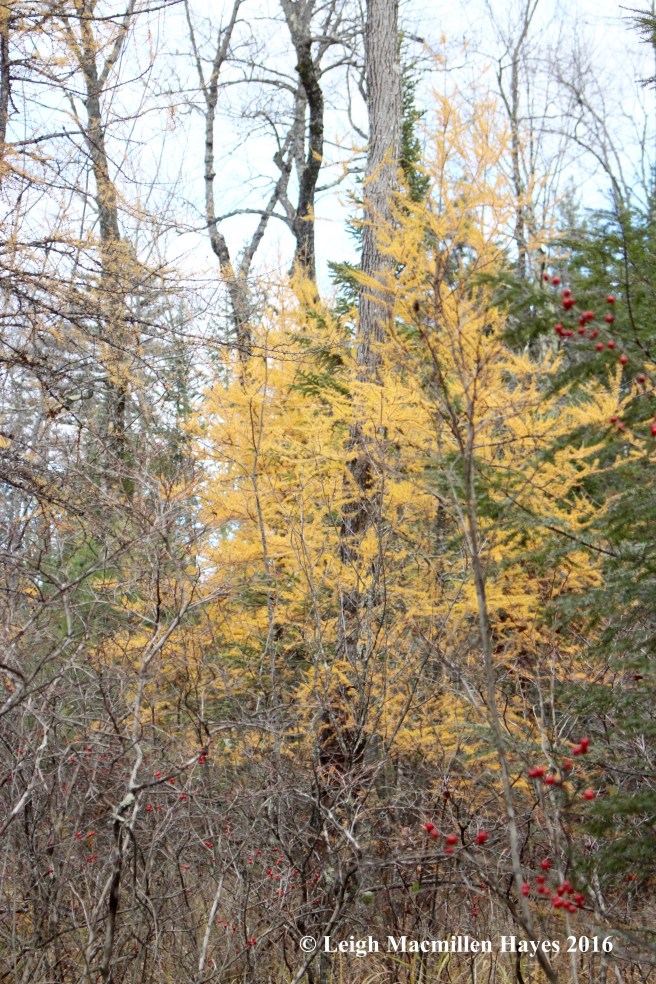
Tamarack (aka larch) trees–our only deciduous conifers, which had turned a golden yellow as is their autumn habit.

l-tamarack-2

The spray of tamarack needles reminded me of witch hazel flowers, which also grow on this property. But soon, the former will drop, leaving only their barrel-like stems as a reminder of their presence.

l-maple-leaf-viburnum

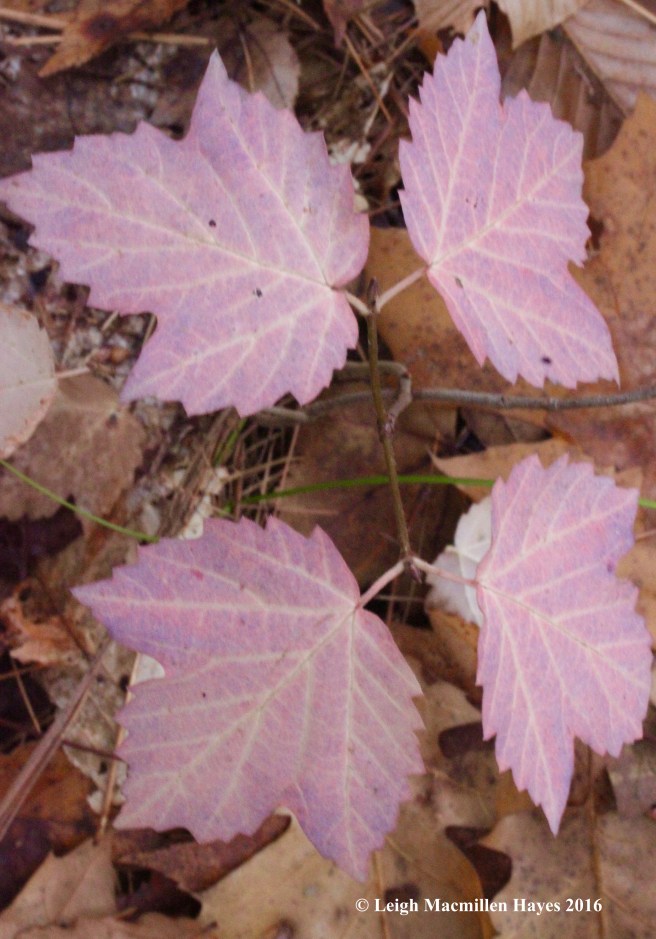
I left that spot, retraced my steps and headed to the north on a cross-country bushwhack, where the mauve colored maple-leaf viburnum grew.

l-turkeys

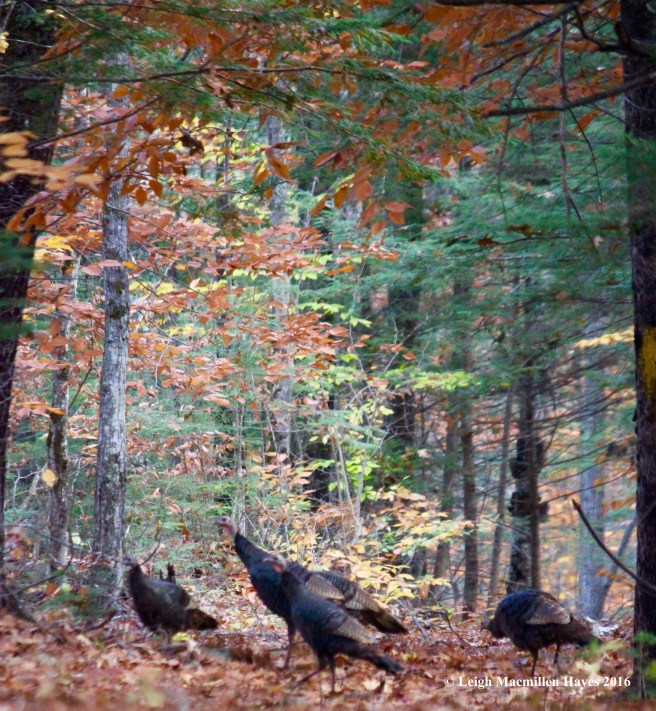
I saw lots of mammal sign and even a few birds, including turkeys who are loving the fact that this is a mast year for acorns.

l-trail-to-meadow

At last I emerged onto the trail I remembered and headed downhill again.

l-meadow-brook-2

And then . . . I was rewarded for my efforts. Long Meadow Brook and the mountains beyond provided a WOW moment.

l-meadow-east

I looked to the east for a few minutes.

l-meadow-layers

And then turned west again, where the layers and colors spoke of diversity.

l-meadow-snags

Even the dead snags added beauty.

l-cat-n-nine-tails

Cat-in-nine tails added to the view and I noted others who like wet feet including steeplebush, meadowsweet and bulrushes growing along the old beaver dam. It’s also a place for a variety of evergreen species–hemlock, white pine, balsam fir, red spruce and tamaracks. Future teaching moments await.

l-hobble-2

My intention to stick to the trail was soon thwarted when I spied hobblebush.

l-hobble-bud1

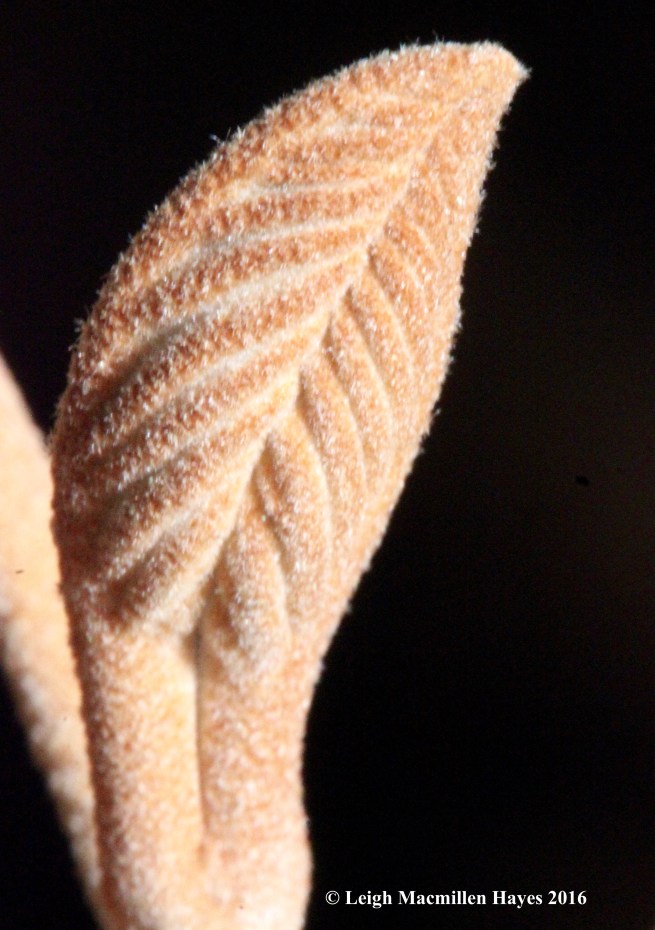
Like all trees and shrubs, the future was already encased in a bud–in this case a bud we refer to as naked because it doesn’t have the waxy coating of most others. Methinks its furry presentation offers the same protection from winter’s cold.

l-back-of-hobblebush-leaf

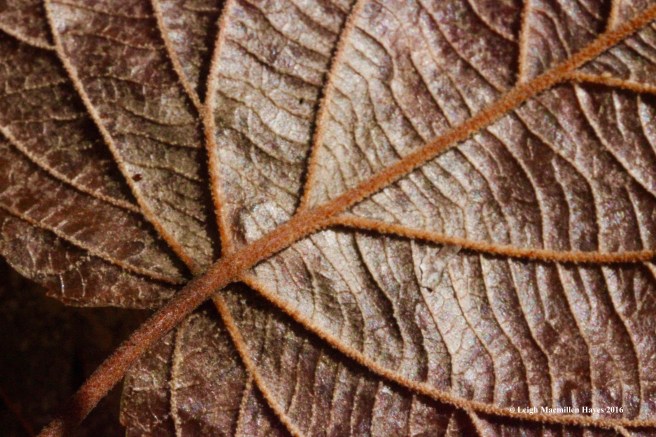
And as I studied the back side of fallen leaves, I paid attention to the venation–reminiscent of the bud’s pattern.

l-hobble-leaves-2

In the glow of sunlight, I felt like I’d found the pot of gold.

l-meadowhawk-2

A short time later I reached the second opening that Hannah and Aidan’s trail encompasses. And what to my wondering eyes should appear–a meadowhawk dragonfly.

l-snow-on-balds-1

It provided a sharp contrast to snow on the Baldface Mountains.

l-secod-opening-2

It was at this six-acre opening that I poked around for a while longer. And watched a goshawk fly to a pine tree with something dangling from its talons. Did I take a photo? No, of course not. I was too mesmerized to focus my camera. But sometimes, the photo doesn’t matter. Being there in the moment does.

I’m thankful for such opportunities made possible by organizations such as the Greater Lovell Land Trust. I know that ultimately this property is for the mammals that travel through and I saw plenty of evidence that they use this place. But then again, I’m a mammal who also appreciates the land bridges created and opportunity to observe the connectivity. I spent the day getting to know the way of the land at Long Meadow Brook Reserve–and can’t wait to return.


Finding Our Way on Mount Tom in Fryeburg, Maine

I ventured this afternoon with my friend Marita, author of  Hikes and Woodland Walks in and around Maine’s LAKES REGION, along with her daughter’s beagle, Gracie, on a new trail in Fryeburg.

t-preserve-sign

Mount Tom, a Roche Moutonnée, is an asymmetrical hill with a gently sloping up-ice side that has been smoothed and polished by a glacier. The other side is abrupt and steep–the down-ice side where the rocks were plucked off, leaving a more cliff-like appearance. As Marita noted, its most impressive view is from a distance, but today we sang its praises from up close. We’ve both hiked a 1.5 mile trail to the summit for years, but recently The Nature Conservancy developed a new trail that we were eager to explore.

t-fdn-1

Within seconds I was exclaiming with joy. A huge, and I mean HUGE foundation shared the forest floor. Note the outer staircase to the basement.

t-center-chimney

And the large center chimney.

t-fryeburg-1858-map

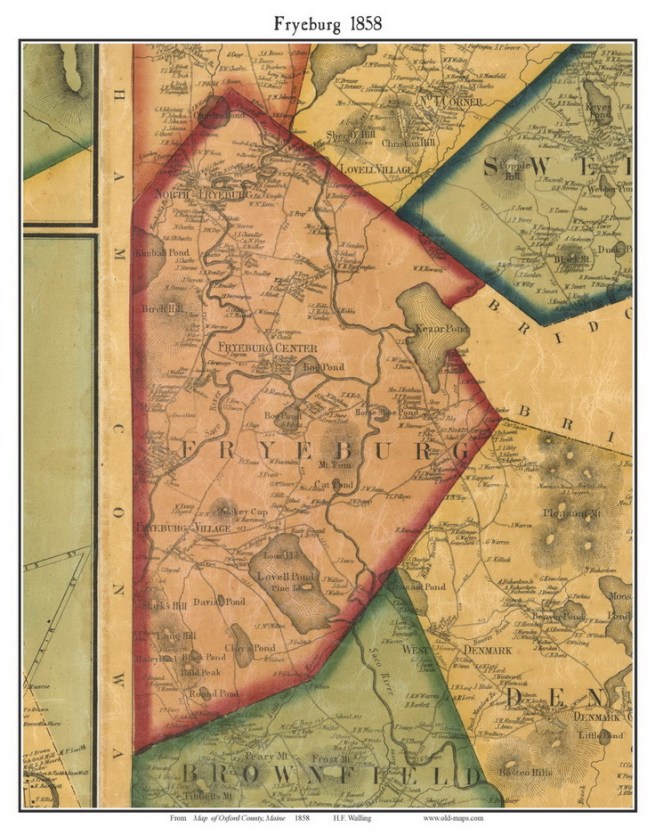
On an 1858 map, I found that A.H. Evans owned a home in about this vicinity, but I don’t know if this was his. Or any more about him. It will be worth exploring further at the Fryeburg Historical Society.

t-house-connected-to-barn

The house extended beyond the basement.

t-barn-1

And was attached to an even bigger barn.

t-barn-2

Ash trees grow beside the opening, but I wondered if we were looking at the manure basement.

t-trail-blaze

Finally, we pulled ourselves away and returned to the trail. Well, actually, we tried to return to the trail but couldn’t find it. So we backtracked, found this initial blaze and again looked for the next one. Nothing. Nada. No go. How could it be?

t-marita-and-gracie

That didn’t seem right, so we decided to follow our noses, or rather Gracie’s nose, and sure enough we found the trail. If you go, turn left and cross between the house and barn foundations.

t-gracie

After that, for the most part, we were able to locate the trail, but it was obscured by the newly fallen leaves and could use a few extra blazes. Gracie, however, did an excellent job following the scent of those who had gone before and leaving her own.

t-saw-dust

The path took us over a large mound of sawdust, something I’ve found in several areas of Fryeburg.

t-color

The predominate trees were beech, white and red oaks, thus providing a golden glow to the landscape.

t-ledges-1

And then we came to the ledges. Bobcat territory. Note to self: snowshoe this way to examine mammal tracks.

t-ledge-island

The trail was situated to provide a close up view of the ledge island, where all manner of life has existed for longer than my brain could comprehend. Life on a rock was certainly epitomized here.

t-intersection

We continued our upward journey for over 2.3 miles (thanks to Marita’s Fitbit for that info) and eventually came to the intersection with the trail we both knew so well.

t-summit-sign

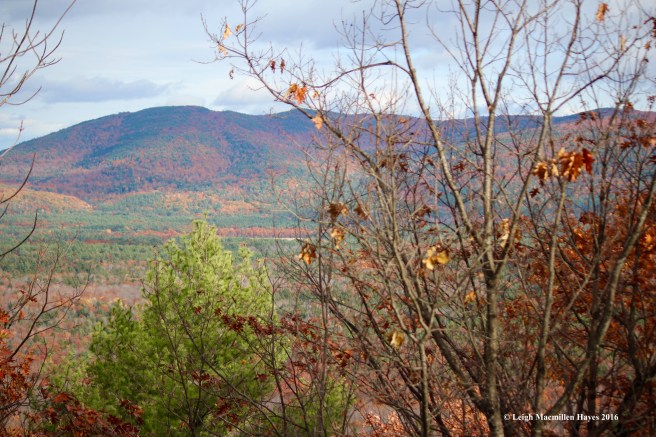
From there, we walked to the summit where the views have become obscured by tree growth.

t-pleasant-mtn-from-summit

But . . . we could see the long ridge of Pleasant Mountain in front of us,

t-kezar-pond

Kezar Pond to our left,

t-richardson-1

t-richardson-farm

and the Richardson Farm on Stanley Hill Road to our right.

t-ladys-slipper-pod

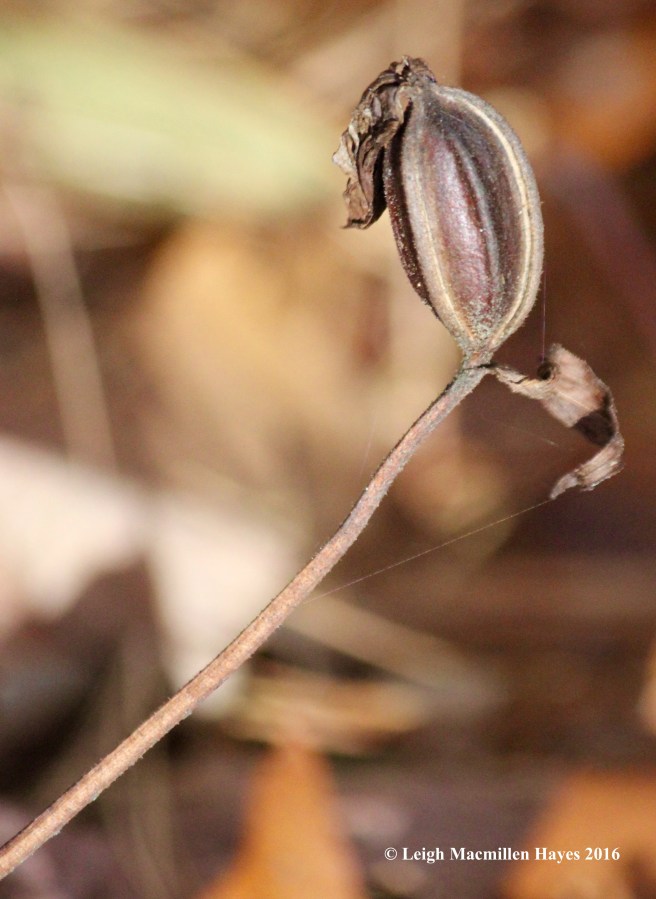
Also along the summit trail, the woody seedpod of a Lady’s Slipper. Ten-to-twenty thousand seeds were packaged within, awaiting wind dispersal.

t-mt-tom-house

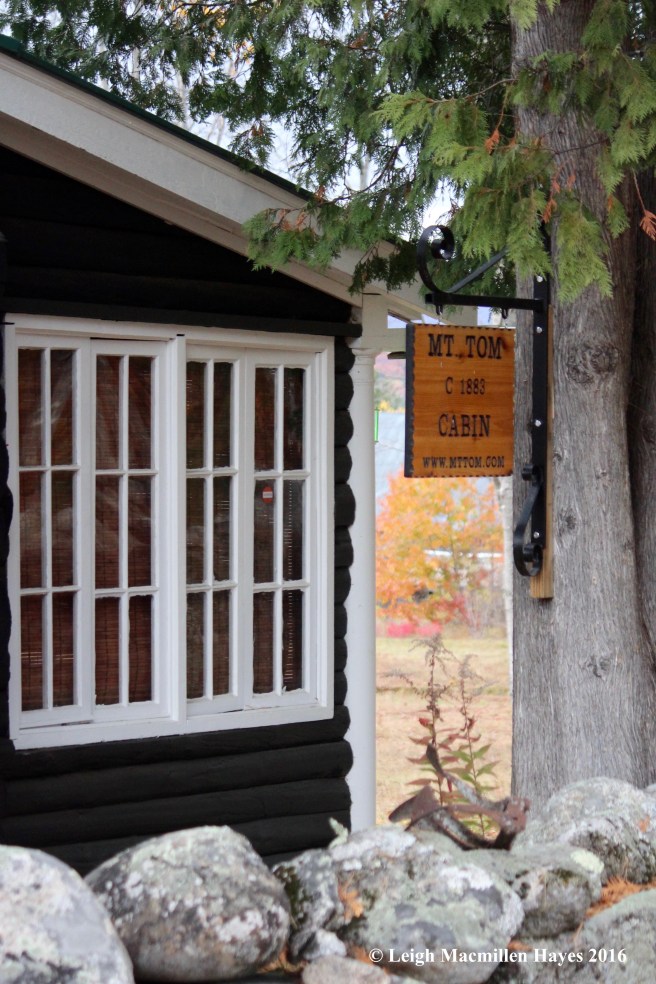
We decided to follow the old trail down, which passes through a hemlock grove and then suddenly changes to a hardwood mix. Both of us were surprised at how quickly we descended. And suddenly, we were walking past some private properties including the 1883 Mt. Tom cabin.

t-northern-white-cedar-bark

t-northern-white-cedar

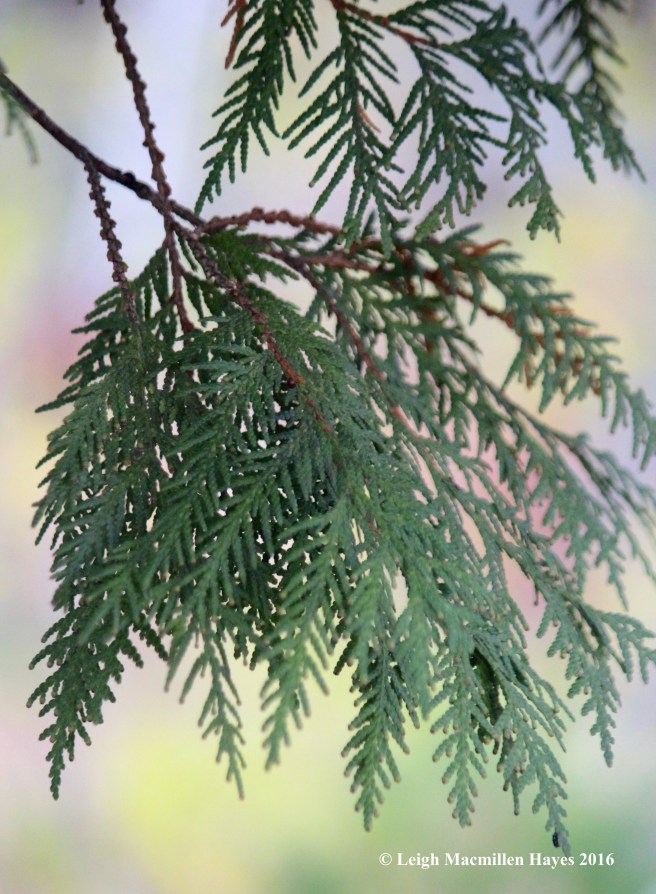
The cabin sign was actually attached to a Northern White Cedar tree. I’m forever wowed by its bark and scaly leaves.

t-flag

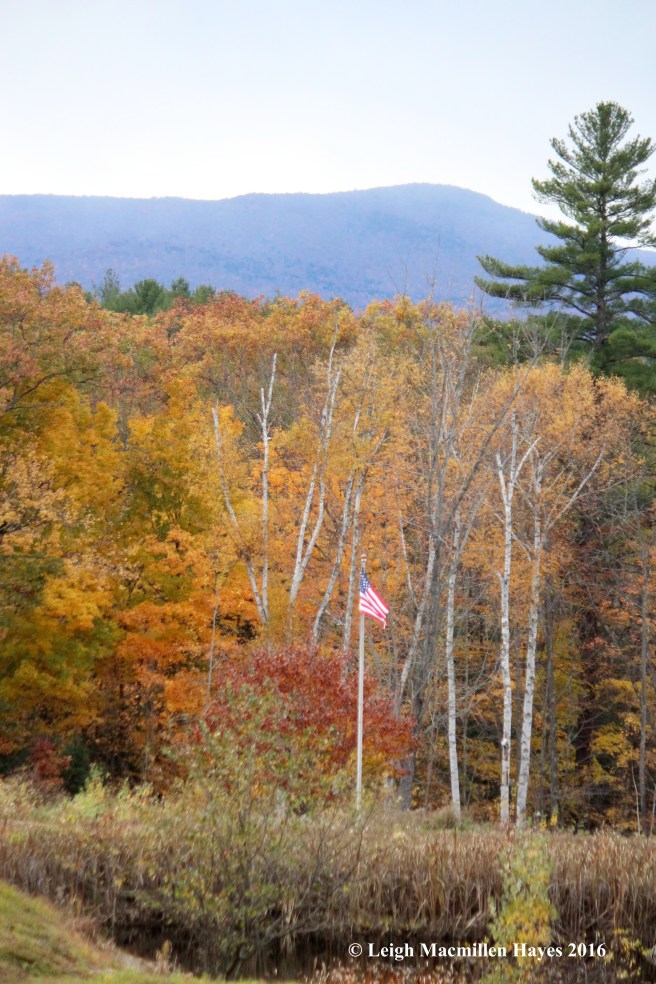
In the field beyond, Old Glory fluttered in the breeze.

t-barn

And just before Menotomy Road, we spied Mount Kearsarge in the distance.

t-menontomy-cemetery

Since we’d taken the loop trail approach rather than an out and back on the same trail, we had to walk along Menotomy Road, so we paid the cemetery a visit and checked out the names and ages of those who had lived in this neighborhood.

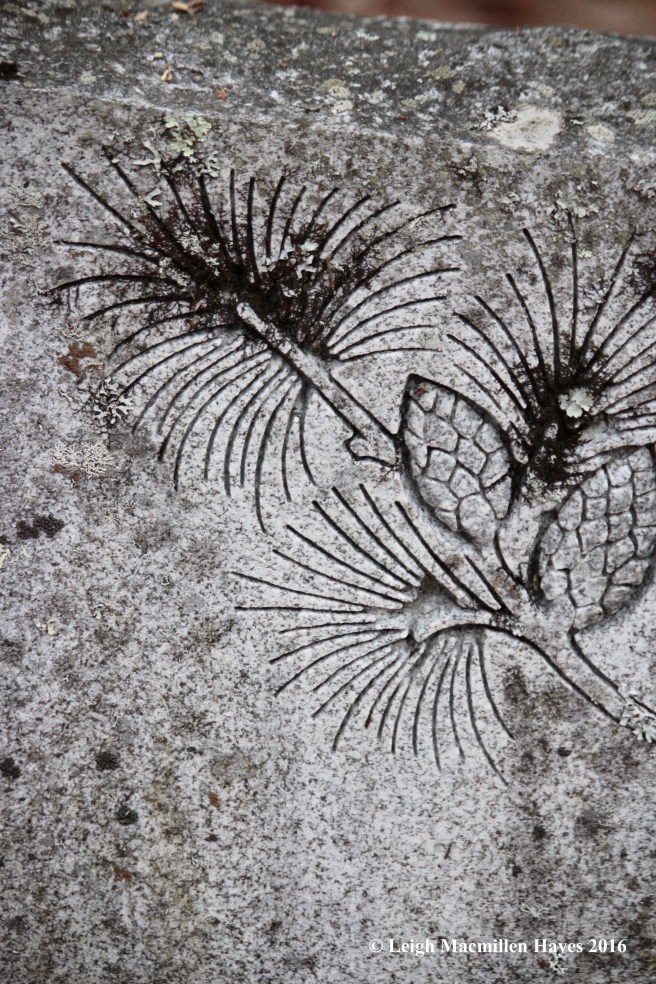
t-pine-on-grave-stone

One of the older stones intrigued me with its illustration. I think I would have enjoyed getting to know these people.

t-menotomy-pumpkins

As we continued on, I was reminded of recent adventures in Ireland  and the realization that we notice more when we walk along the road rather than merely driving by. We both admired this simple yet artful pumpkin display.

t-menotomy-road-1

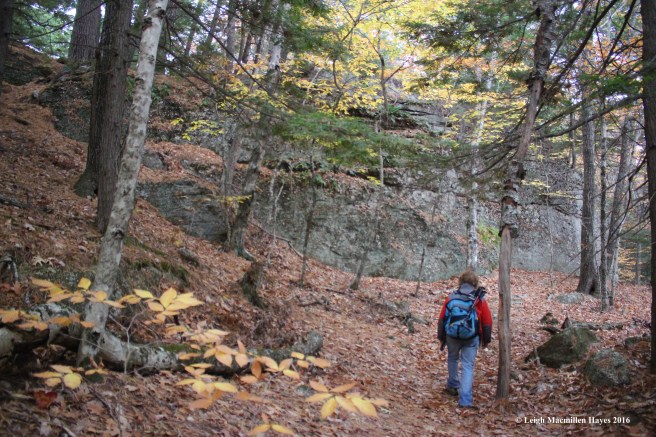
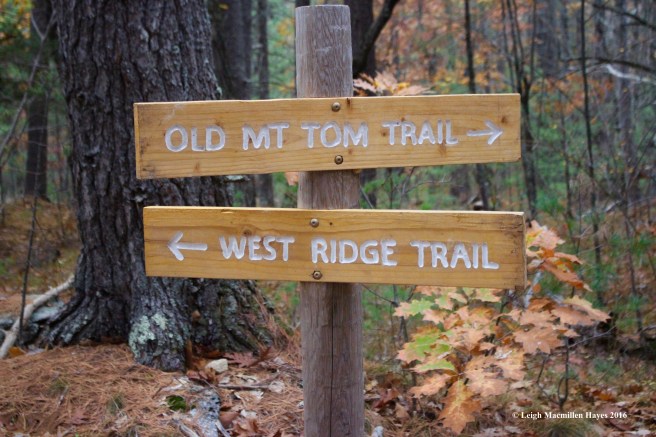
If you go, you might want to drive to the old trailhead, park your vehicle and then walk back to the West Ridge Trail. We parked at the latter and had to walk the 1.5 back at the end, when it seemed even longer. But truly, the road offers its own pretty sights and the temperature was certainly just right, even with a few snow flurries thrown into the mix, so we didn’t mind. We were thankful we’d found our way along the new trail and revisited the old at Mount Tom. And I’m already eager to do it again.


Cloaked By The Morning Mist

You remember the nursery rhyme, “Rain, rain, go away, come again some other day, we want to go outside and play”? Well, it finally rained yesterday and today, and many of us have greeted it with open arms. And we certainly didn’t let it stop us from going out to play.

u-eaton-1

This morning, I joined a group from the Upper Saco Valley Land Trust for  a hike in South Eaton, New Hampshire. Had I not been racing for time, I would have stopped every twenty feet to snap a photo, but I did pause beside Crystal Lake.

u-road-1

After getting lost for a few minutes because I didn’t pay attention to the directions, I found the property. Eleven of us headed down Paul Hill Road, led by Jesse Wright of USVLT, and Nancy Ritger, senior naturalist with the AMC.

u-big-tooth-raindrops

We paused to examine a variety of offerings, including the flat stems of the quaking aspens. It was the raindrops on the big tooth aspen, however, that drew my focus. One of the things Nancy spoke about as she had everyone feel a flat aspen stem, is how that very stem aids in photosynthesis.

u-big-tooth

The leaves tremble or quake, giving each more time in the sunshine–individual leaves, no matter where they are attached to the tree, share in unshaded glory for split seconds as those above them flutter. And, in the case of aspens, both sides of the leaf work to make sugar and release oxygen.

u-beaver-lodge

We spent a long time beside a beaver pond and pondered various aspects of it. We could see the lodge and beaver sticks in the water–that made sense.

u-retainer-2

But why a significant wall on at least two sides?

u-cut-stone-in-water

And a split stone by the water’s edge? What else had happened here? Jesse told us that there are numerous foundations that we didn’t have time to locate today, so we knew that though it seemed as if we’d traveled to the middle of nowhere, this place was once somewhere.

u-moose-track

And to the local moose, it still is as evidenced by the prints we found in mud.

u-raindrop-lichens-2

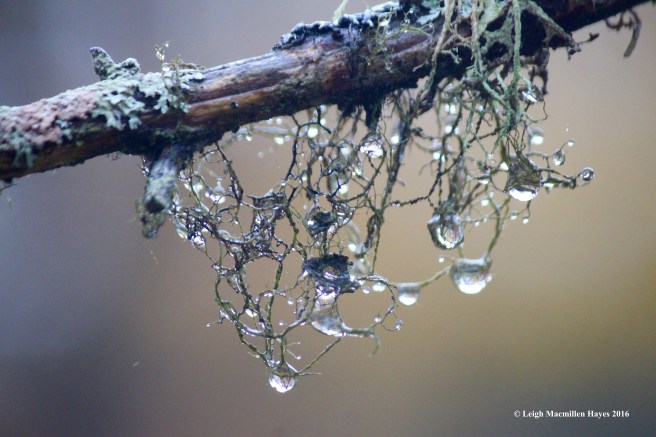
Our attention also turned upward as we admired raindrops dangling from fruticose lichen (think fruit-like branching).

u-raindrops-on-pond

Suddenly, the rain increased so Jesse asked if anyone wanted to turn around and received an overwhelming vote to continue on.

u-larch-2

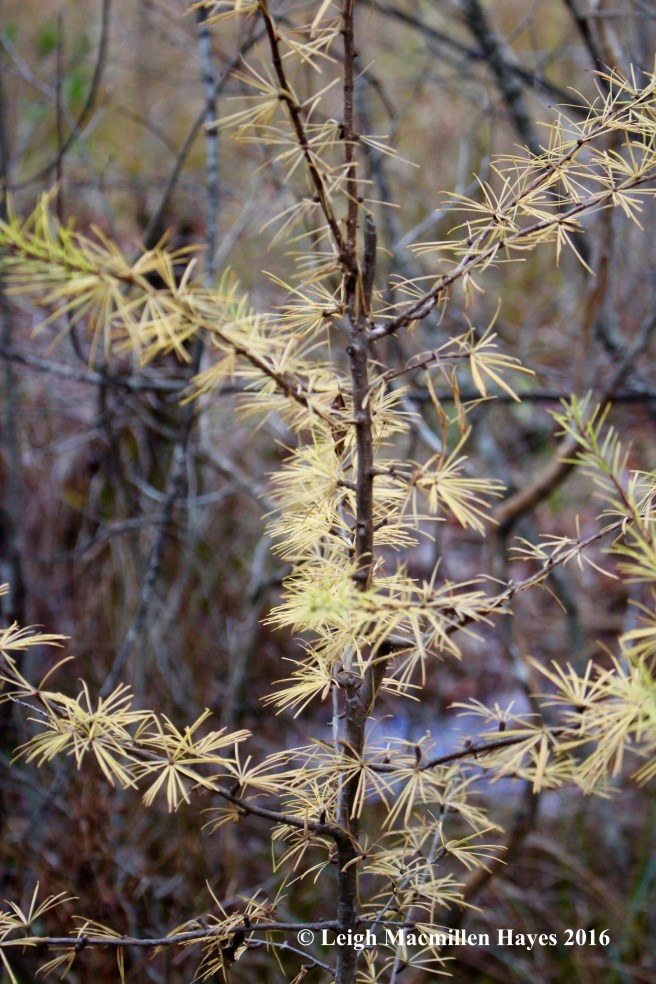
One of my favorite discoveries was a couple of larch trees. Larch or tamarack is our only deciduous conifer. Huh?

u-larch-1

Like deciduous trees, the larch needles turn yellow each autumn and fall to the ground. Another cool fact: needles grow on stout pegs that look like wooden barrels.

u-pileated-and-ants

We paused beside ash trees and tree stumps, and enjoyed the view of this pileated woodpecker excavation of carpenter ant tunnels–their favorite prey.

u-candy-lichen

In the log landing that did become our turn-around point, we noted the early succession growth of Eastern white pines and sweet fern (not a fern). But again, we looked to our feet for the best views.

u-candy-lichen-1

Candy lichen is a crustose (think–flattish or crust-like) lichen with green to bluish-green coloration.

u-candy-2

Its fruiting bodies, however, are candy-pinkish disks atop stalks, even reflected in the raindrops.

u-cemetery-entrance

Our journey back to parked vehicles passed quickly, indicating we’d not traveled all that far in two and a half hours. That’s normal when you take time to notice. Before departing, Jesse showed me a cemetery on the abutting property.

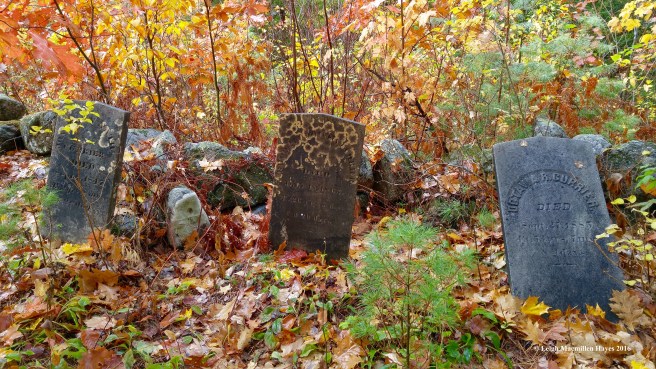
u-cemetery-small-stones-2

Small, unmarked stones made me think of a Civil War-era cemetery in Sweden, Maine–perhaps a sudden illness of young children called for quick burials.

u-cemetery-currier-plot

One section was portioned off by split granite.

u-cemetery-curriers-1

The Currier plot. A side road we’d passed by was named for the family.

u-cemetery-lichens

The crustose lichens were intriguing on Rhoda Lodolska Currier’s stone. Rhoda died at age 26.

u-cemetery-octavia

Her sister, Octavia, lived to be 53.

u-cemetery-nancy-leavitt-90-years

Most impressive was the age of Nancy Leavitt, her stone located just outside the Currier plot. Nancy died at age 90.

u-vireo-nest

As we walked out, Jesse spied a cup-shaped vireo nest built in the fork of a beaked hazelnut. Life continued to circle in these woods.

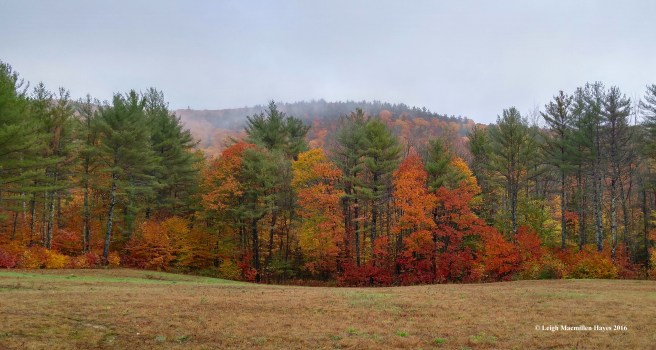
u-undulating-color

And the autumn color undulated, mimicking the land. The sun tried to peak out for a few minutes when we arrived at our vehicles, but we were all appreciative of the rainy day wonders we’d found along the way.

u-eaton-3

And back in Eaton, a quaint New England village located beside Madison and Conway, New Hampshire, and the Maine border–beauty cloaked by the mist.

Thanks to Jesse, Nancy and the Upper Saco Valley Land Trust for a fine morning spent wandering and wondering.


Everybody Loves Raymond? Mondate

My guy and I were up for an adventure this morning as we headed off to a property recently acquired by Loon Echo Land Trust. I’d been there once before, but at that time there was no trail system and I certainly hadn’t climbed to the summit.

r-forest-climb

We were on a 356-acre property bisected by a paved road. First, we hiked the upper section, passing through a hardwood forest.

r-white-oak-green-leaves

Immediately, I realized we were in the presence of one of my favorites–noted for the mitten-ish presentation of its leaves. One would have to be all thumbs to fit into this mitten, but still, my heart hums whenever I spy a white oak.

r-white-oak-red-color

Or in this case, many white oaks, some exhibiting the wine color of their fall foliage.

r-white-oak-bark

And the bark–a blocky look that differs greatly . . .

r-red-oak-on-bm1

from the ski trail ridges of red oak.

r-hophornbeam-bark

Hop Hornbeam also grows abundantly in this forest.

r-approaching-forest-summit-yellow

As we neared the summit, we noticed that the sky view had a yellowish tone reflected by the ground view. Most trees were of the same age due to past logging efforts, but the predominant species was sugar maple.

r-basswood-2

Another favorite tree also grew abundantly here. I think they are also favorites because I don’t see them as often. In this case, the bark, though furrowed and ridged like a northern red oak, featured an almost combed flattened ridge.

r-basswood-leaf

And its leaves–oh my! Notice the asymmetrical base? And the length–my boot is size 8. American basswood–an important timber tree that is known to share the community with sugar maples and hornbeams–all of which provided that yellow glow.

r-raymond-summit-view-1

At last, we reached the vantage point.

r-skyward

Above us, a mix of colors and species.

r-oak-leaves

Before us, a mix of white and red oak leaves.

r-crescent-view-3-1

And beyond us, the view of Crescent Lake

r-crescent-rattle-1-1

and Rattlesnake Mountain.

r-ladybird-1-1

While we admired the view, ladybird beetles (aka ladybugs) swarmed us. Well, not exactly in swarm formation, but more than is the norm.

r-green-trail-tag

After admiring the view for a while and wondering about the ladybirds, we backtracked a bit and decided to explore the green trail, assuming that it looped about the summit.

r-dry-leaf-sound

The trail conditions changed constantly, and one thing we realized was that the leaves had dried out and we wished we could have bottled their scent along with our crispy footfall as we trudged through–the smells and sounds associated with autumn.

r-bear-claw

Eventually, we entered a beech commune and what to my wondering eyes should appear–bear claw marks? We ventured closer, circled the tree and looked at others in the neighborhood before determining that our eyes had perhaps played a trick on us.

r-garter-snake

That was OK because within seconds a twig moved at our feet.

r-snake-tongue

We watched as its tongue darted in and out, red tipped with a black fork.

r-lunch-rock

Finally, we moved back to what we’d named Ladybird Lookout and found lunch rock where we topped off sandwiches with Bailey’s Irish Cream fudge a la Megan and Becky Colby. Life is good. Life is very good. (And we know a town in western Maine that would benefit greatly from a bakery–just saying, Megan!)

r-trail-ribbon-art

After lunch, we climbed back down and crossed Conesca Road to check out trails on the other side. There is no trail map just yet, but we never got lost. And we appreciated the artwork nature created of manmade marks.

r-forest-across-the-street-stonewall

This space offered a different feel where hardwoods combined with softwoods. And more stonewalls crossed the property, speaking to past uses.

r-hole-pink-flags

It’s here that we noticed an area demarked by pink flags and stopped to wonder why. Note to self–excavated hole and debris mean beware.

r-bee-himve

Upon closer examination, an old hive. So who dug it up? We had our suspicions.

r-mushrooms-1

We also noticed a fungi phenomena.

r-mushroom-growth

Fungi on fungi? Honey mushrooms attacked by something else?

r-mushroom-growth-3

The displays were large

r-mushroom-fungi

and otherworldly. I don’t recall ever seeing this before.

I sent the photos to Parker and Jimmie Veitch, of White Mountain Mushrooms, and Jimmie responded with this explanation:

“That’s what mycologists call “rosecomb” mutation, where a mushroom’s gills start forming on the cap in a really mutated fashion. It’s been reported in many mushroom species but I haven’t seen it in this one (Armillaria AKA honey mushrooms). As far as I know, no secondary fungus is involved.

The suspected cause (not so nice) is ‘hydrocarbons, phenols and other compounds contaminating the casing or contacting the mushroom surface. Diesel oil, exhaust from engines, and petroleum-based pesticides are thought to be the principal source.'”

r-red-leaves

As we concluded our visit, we passed over one more stone wall decorated with red maple leaves.

r-beginning-of-bri-mar

And then we hopped into the truck and traveled a couple of miles south to conquer another small mountain–one visible to us from Ladybird Lookout. (I really think LELT should name it such.)

r-brimar-milkweed

Here the milkweed plants grew abundantly.

r-brimar-white-oaks-in-field

In the field leading to the trail, the property owners planted white oak saplings in hopes of providing food for wildlife. Um, by the same token, they’d enclosed the saplings in plastic sleeves (reminding us of our findings in Ireland) to keep deer at bay.

r-brimar-ferns

The understory differed and ferns offered their own autumn hues.

r-brimar-evergreen-wood-fern

In contrast were the many examples of evergreen wood ferns.

r-bri-mar-beech-markings

We soon realized that quite literate bears frequented this path and announced their presence.

r-crescent-from-bri-1-1

At last, the view opened and we looked back at the opposite shore of Crescent Lake, though realizing that our earlier ascent was masked by the trees.

r-panther-from-bri-3-1

Turning about, Panther Pond came into view.

We’d spent the day embracing Raymond because everybody loves Raymond.

r-raymond-forest-sign

r-brimar-trail-sign

Raymond, Maine, that is. Loon Echo Land Trust is gearing up to celebrate the Raymond Community Forest that we explored this morning and the Bri-Mar Trail up Rattlesnake Mountain has long been traveled by many. In fact, when I used to write copy for the local chamber of commerce, I spent some time learning about Edgar Welch, who was the fastest man on foot and ran up Mount Washington at least once a year. He lived in Raymond and worked for David McLellan, who was partially blind from a Civil War injury. Because Mr. McLellan’s farm was at the foot of Rattlesnake Mountain, the sun would set one hour earlier than elsewhere in town. According to legend, after work each day Edgar ran up the mountain and moved rocks. Finally, he’d moved enough to let the sun shine on the farm for an hour longer. Another story has it that one day a man bet Edgar that he could beat him in a race to Portland. The man would race with his horse and buggy, while Edgar ran. When the opponent pulled into the city, Edgar was waiting for him. I love local lore.

And everybody loves Raymond. Well, my guy and I certainly gained a better appreciation for this town today.


In Constant Flux

Ever so slowly, the world around us changes.

h-starting-point

Sometimes it’s as obvious as the leaves that fall.

h-bee-on-flower-1

And other times, it’s a bit more subtle, evidenced by the bees that have slowed their frantic pace as they make final collections.

h-leaf-carpet

Mid morning, I headed down the cow path in search of other signs of change.

h-oak-branches-1

As I walked along, I began to realize the interdependence of all. Under the northern red oaks–many  chopped off twigs.

h-porcupine-works

The angled cut and empty cap indicated the work of porcupines seeking acorns.

h-leaves-on-hemlock

I found maple leaves pausing on hemlocks,

h-pine-needles-on-spruce

pine needles decorating spruce trees,

h-leaves-in-puddles

and occasional puddles offering a rosy glow. Eventually, all of these leaves and needles will break down and give back.

h-life-on-rock-1

I found life on a rock, where lichens began the story that was added to by mosses. The creation of soil was enhanced by a yearly supply of fallen leaves and needles gathered there. And then a seed germinated, possibly the result of an earlier squirrel feast.

h-orange-peels1-1

I found orange peel and many other fungi aiding the process of decomposition so that all the fallen wood and leaves will eventually become part of the earthen floor.

h-forest-succession-3

I found a healthy stand of trees and ferns competing for sunlight in an area that had been heavily logged about ten years ago.

h-deer-and-bobcat-prints

I found evidence of those who spend their lives eating and sleeping in this place.

h-aster-seeds

I found seeds attached

h-seeds-on-the-fly

and those on the fly–heading off in search of a new home.

h-witch-hazel-flowers-galore

I found the last flowers of fall

h-witch-hazel-1

exploding with ribbony blooms.

h-power-and-nature

After bushwhacking for a few hours, I found the snowmobile trail, where man and nature have long co-existed.

h-home-2

At last I found my way across the field rather than through our woodlot, thankful for the opportunity to take in the colors of the season one more time.

At the end of the day, I’m once again in awe as I think about how we, and all that we share this Earth with, are dependent upon each other and the abiotic forces that surround us.

And with that comes the realization that the scene is in constant flux and so am I.


A Color-filled Mondate

The fleeting fall foliage offered the backdrop for our afternoon Mondate.

h-orchard-1

We started with a stop at Five Fields Farm to purchase a pumpkin and enjoy a chat with owners Tom and June Gyger.

h-pond-from-orchard

Their orchard overlooks Holt Pond, that speck of blue among the trees. Because of this year’s drought, the water is lower than ever, but Tom pointed out that during heavy rainstorms they’ve often watched it quickly fill and then lower as the water pours in and then slowly flows down the Muddy River. We need such a storm.

h-bridge

In fact, once we got onto the trail, my guy tested a bridge he’d built in the spring–noting that currently it’s useless because no water flowed below.

h-trail-work

We continued on, turning our hike into a trail clearing activity because this is a trail we steward for Lakes Environmental Association. A few blow downs were easily cleared–by my guy. I worked as well–documenting his good deeds.

h-carpet-2

But really, it was the color that drew our attention.

h-feet-n-leaves

At our feet, a rich carpet covered the forest floor.

h-carpet-5

It’s vibrant variety was pre-determined by the species. Red maple leaves offer shades of red or scarlet, sugar maple leaves vary from brilliant orange to fiery red to yellow, while striped maple, quaking aspen and birch feature only yellow. Ash leaves range from yellow to magenta and beech offers up a golden bronze.

h-maple1

So, how does it work? It’s been dry and many thought that would mean a lack of color this fall. Yes, some trees will dry up and their leaves wither and fall. But for most, it’s a different story as old as time.

h-maple-2

During the spring and summer the leaves worked as food-processors for their trees. Their numerous cells contain chlorophyll or the green coloration. The chlorophyll absorbed energy from the sunlight, which it then used to change carbon dioxide and water to  sugars and starch (think carbohydrates).

h-quaking-aspen

But, also at work alongside the green pigment, yellow and orange carotenoids. As you can see with these quaking aspen leaves, the carotenoids are masked by the greater amount of green coloring for most of their season.

h-sugar-maples-in-breeze

With the change in daylight hours and temperature, the leaves go on strike from processing food. And thus, the chlorophyll breaks down, green color begins to disappear and the yellowish color becomes visible to our delight.

h-red-and-green

At the same time, other chemical changes occur that cause the formation of more pigments from red . . .

h-ash-leaf1

to purple. The red pigment called anthocyanin forms.

h-paint-2-yellows

It’s like being in nature’s paint store.

h-paint-1

And I have to admit that it occurred to me I should spend some time sorting leaves by color  and trying to match them to paint chips so I could better describe the gems before me.

h-paint-reds

OK, so I didn’t dwell on that thought for too long, just long enough to realize that it would need to be a quick assessment before the leaves dry up and all become a shade of brown.

h-pond-6

At last we reached a vantage point from which to view the pond. I often stand across the way on the quaking bog boardwalk, so looking back provided a different perspective.

h-pond-2

And those swamp maples–oh my!

h-pond-4

For this beautiful display to occur, we must have warm sunny days followed by cool nights. The sugar is made in the leaves during the day, but those cool nights trap it there, preventing it from moving into the tree.

h-leaves-in-field

Not only do the colors vary, but the degree of color may also be different from tree to tree or even on one tree. Direct exposure to the sun may turn leaves red on one side of a tree and they may be yellow on the shady side.

h-sky-view

As for clouds and rain, too much in the fall means less red (a bright side of the drought). On those types of days it also tends to be warmer at night, thus changing up the process and providing duller colors. Not so this year, thankfully.

h-leaf-on-hemlock

There was nothing dull about what we saw today, including the presentation of fallen leaves, some captured by their evergreen comrades.

h-maple-web

A few dangled like ornaments hung by spiders.

h-maple-on-fern

Others held on precariously, attached only by a few points.

h-hobble-shadows

And even others portrayed a shadow show.

h-leaves-in-brook-1

At last we reached a small stream, our turn-around point, where all gathered to show off their glory.

h-nessie

We took one last look at the pond while making our way back. And what to my wondering eyes should appear–Nessie. Or maybe I should name her Holtie, the Holt Pond Monster! Do you see her?

My guy–he chuckled at me. He often does that. It’s OK. I know what I saw.

You might say our Mondates are always colorful, but today’s was especially color-filled as we celebrated the work of the leaves.

To Overlook and Be-yond

This afternoon I pulled into the parking lot at Bald Pate Preserve and heard my phone ring. I’ve never quite mastered the art of the swipe to answer and so as usual missed responding immediately. But . . . I put the car into park, or so I thought, and then tried to return the call to our youngest in Colorado. As I dialed, or rather, pushed the phone icon and listened to it dial and ring, I heard the phone ringing in another part of the truck. What in the world? A ventriloquist phone? And then I opened the cubby between the front seats and discovered my husband’s phone. And saw that our youngest was trying to reach him. Meanwhile, I felt like I was in motion. Because I was. The truck was in neutral rather than park and I was almost to the middle of the parking lot before I applied the brake. Somehow, I managed to make the call. After we chatted for a few minutes, with concern and wisdom, he asked, “Mom, are you hiking alone? Should you be?” “Yes,” I responded. “I’ll be fine. There are other cars here so I’m sure I’ll see people.” To be honest, though, I hoped I wouldn’t. This was one day when I needed to just be.

b-red-maples-against-sky

I needed to wander among the red maples

b-red-oaks-against-sky

and red oaks that graced the sky.

b-sarsaparilla

I needed to embrace the subtle coloration of sarsaparilla

b-blueberries-1

and vibrant hues of blueberries.

b-red-maple-1

I needed to admire the veins that bring nourishment to trees

b-red-oak-veins

and all that live therein.

b-polypody-spores

I needed to observe life giving forces

b-winter-green

and the differences among kin.

b-foster-pond

I needed to pause at each overlook

b-peabody-pond

where the view offered up life’s changes.

b-hancock-pond

I needed to say farewell

b-white-mountains

as I looked toward the beyond.

b-trees

For you, Brother Bill, I needed to walk the trails today and lift up your  life which ended unexpectedly this morning. I trust that you’ll be forever in my heart and going forth will travel with me as I wonder and wander. I trust you’ll watch over me and help me understand the great beyond. May you rest in peace, big brother.

Golden Rulers

In late summer/early fall, a variety of goldenrods shower gardens and fields with their sunshiny flowers.

Unfortunately, they’ve been wrongly blamed as the culprits of hay fever, but by the abundance of pollinating insects that visit them daily, it’s clear that they are insect rather than wind pollinated. (Ragweeds and other hay-fever causing species are wind pollinated.)

And so today, as I have for the past few weeks, I spent time focusing on those pollinating visitors and others who find goldenrods attractive for different reasons. Take a look.

g-assassin-1

What first caught my eye was a bee that dangled upside down. And then I spied the green legs of an assassin bug. What? Yup, an assassin bug.  I believe this one is a nymph. Regardless of age, here’s the scoop: Assassin bugs are proficient at capturing and feeding on a wide variety of prey. Though they are good for the garden, they also sometimes choose the wrong species like this bee. The unsuspecting prey is captured with a quick stab of the bug’s curved proboscis or straw-like mouthpart. Once I saw this, I continued to return for a couple of hours, so stay tuned.

g-honey-2

Fortunately, there were other honeybees on the job of pollinating the flowers.

g-bumblebee

Mighty bumblebees also filled their sacs to the brim.

g-assassin-2

A.B. Take 2–do you see the proboscis stuck into the first bee’s thorax? It fed by sucking out the fluids.

g-hover-fly

Back to the other visitors. One of my favorites was the hover fly. I’m always humbled by its coloration.

g-wasp

And then there were the wasps.

g-wasp-2

Their almost hairless bodies provided contrast beside the bees.

g-assassin-3

A.B. Take 3–The A.B. turned the bee and it appeared that its proboscis became coated with pollen, which would make sense.

g-jumping-spider

Meanwhile, a jumping spider waited patiently for its own prey to come into sight. I felt like all eyes were on me as we came face to face. Thankfully, it didn’t jump and grab me with its jaws.

g-crab-3

Another with a poisonous bite is the crab spider. This one was more active that most that I’ve seen. Usually, they sit and wait, then catch their prey, bite it and again, suck it dry. And while it looks huge in this picture, it is really quite small–about pencil eraser size.

g-spider-web

A third spider species used the goldenrod’s stem and leaves to weave its own structure. It seemed to be more successful than the others at finding a meal.

g-assassin-5

A.B. Take 4–Check out A.B.’s tiny red eyes. And its camouflage–no wonder the poor bee never saw it.

g-caterpillar-2

Not every visitor to the goldenrod knew about camouflage. I don’t know who this is, but saw it on a nearby orange echinacea yesterday. Its mauve color certainly shouted for attention among the yellow sea.

g-caterpillar-blend

A different caterpillar did a better job of blending in–do you see it?

g-assassin-7

A.B. Take 5–An hour later and the A.B. was still sucking.

g-assault-2

At the same time, another predator hid among the flowers–an ambush bug.

g-ambush-3

This species is otherworldly at best.

g-ambush-bug

And talented. The ambush bug waits patiently and then snatches prey with its knife-like pincers. All but the outer shell of the prey is consumed. I swear this guy was smiling. Maybe he’d enjoyed a feast and I’d missed it.

g-assassin-victim

A.B. Take 6–About two hours after I’d first observed it, I returned and couldn’t find the bee. Then I noticed a motionless body on a flower branch below. Apparently A.B. had sucked all the life out of it and then let it go.

g-assassin-on-prowl-2

A.B. The Final Take–It had finished taking and went in search of another victim.

What I know for sure: While goldenrod may rule the late garden, it is also ruled by many in a bug-eat-bug world. All of it is worth a wonder.