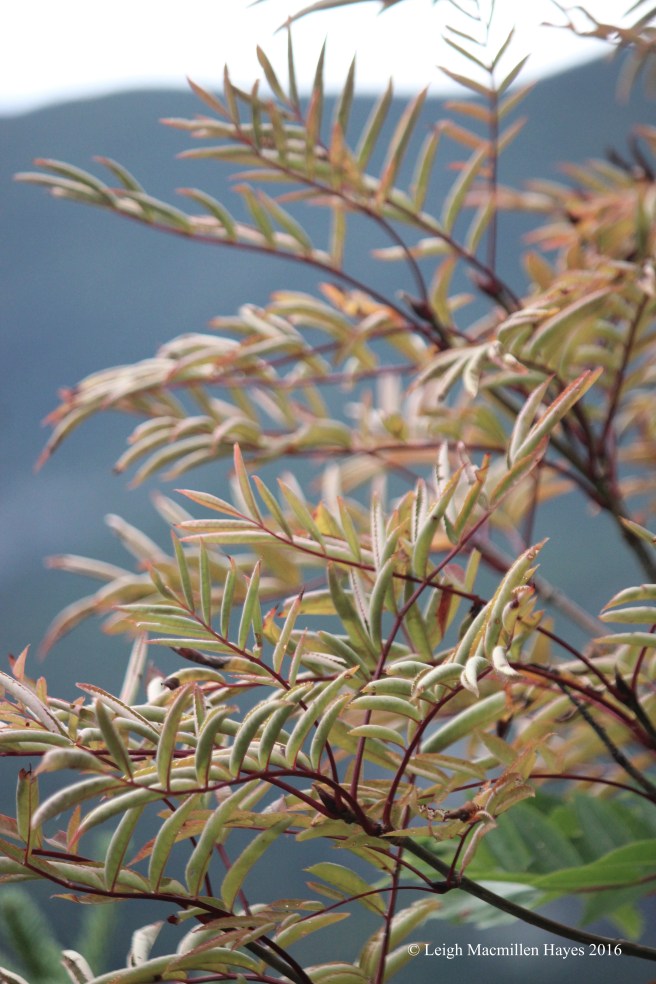
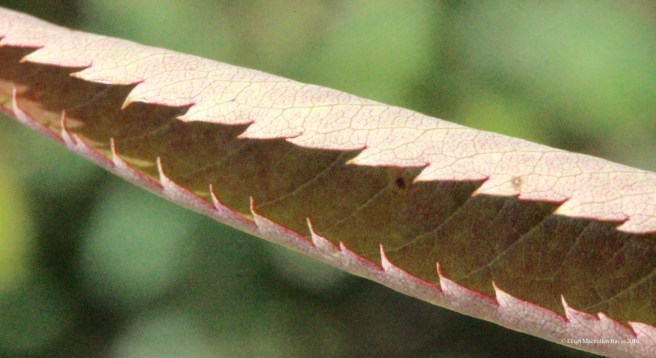
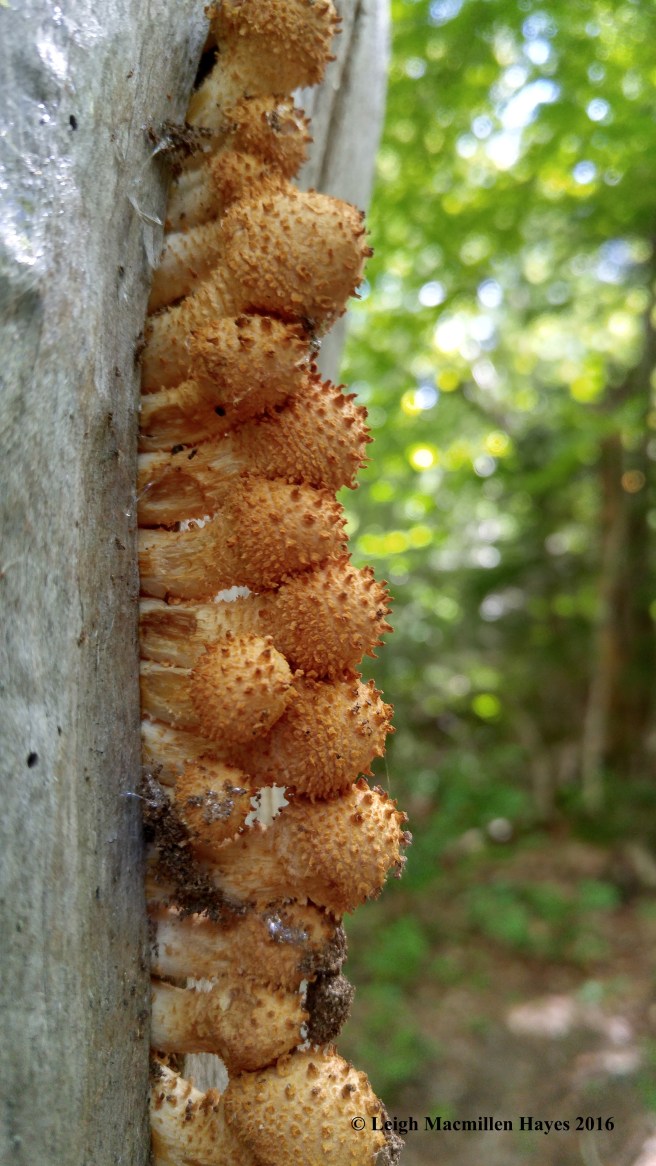
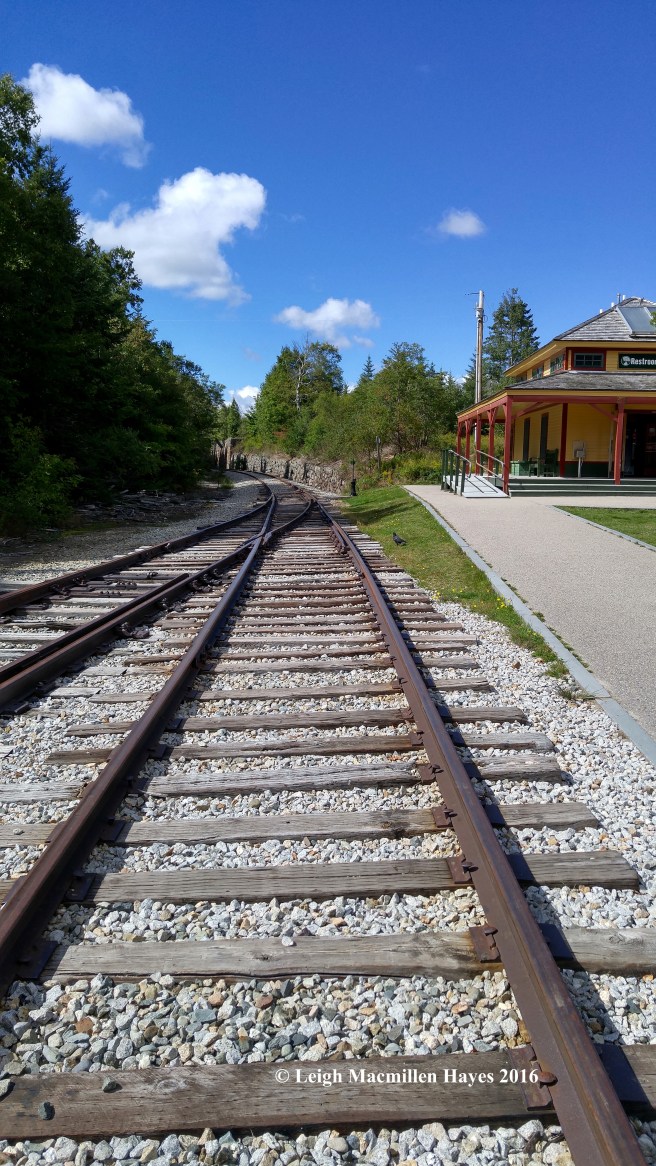
Cloaked By The Morning Mist

You remember the nursery rhyme, “Rain, rain, go away, come again some other day, we want to go outside and play”? Well, it finally rained yesterday and today, and many of us have greeted it with open arms. And we certainly didn’t let it stop us from going out to play.
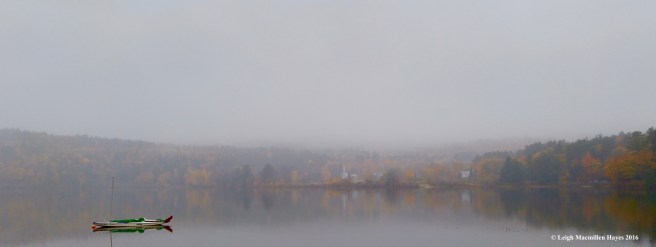
u-eaton-1

This morning, I joined a group from the Upper Saco Valley Land Trust for  a hike in South Eaton, New Hampshire. Had I not been racing for time, I would have stopped every twenty feet to snap a photo, but I did pause beside Crystal Lake.

u-road-1

After getting lost for a few minutes because I didn’t pay attention to the directions, I found the property. Eleven of us headed down Paul Hill Road, led by Jesse Wright of USVLT, and Nancy Ritger, senior naturalist with the AMC.

u-big-tooth-raindrops

We paused to examine a variety of offerings, including the flat stems of the quaking aspens. It was the raindrops on the big tooth aspen, however, that drew my focus. One of the things Nancy spoke about as she had everyone feel a flat aspen stem, is how that very stem aids in photosynthesis.

u-big-tooth

The leaves tremble or quake, giving each more time in the sunshine–individual leaves, no matter where they are attached to the tree, share in unshaded glory for split seconds as those above them flutter. And, in the case of aspens, both sides of the leaf work to make sugar and release oxygen.
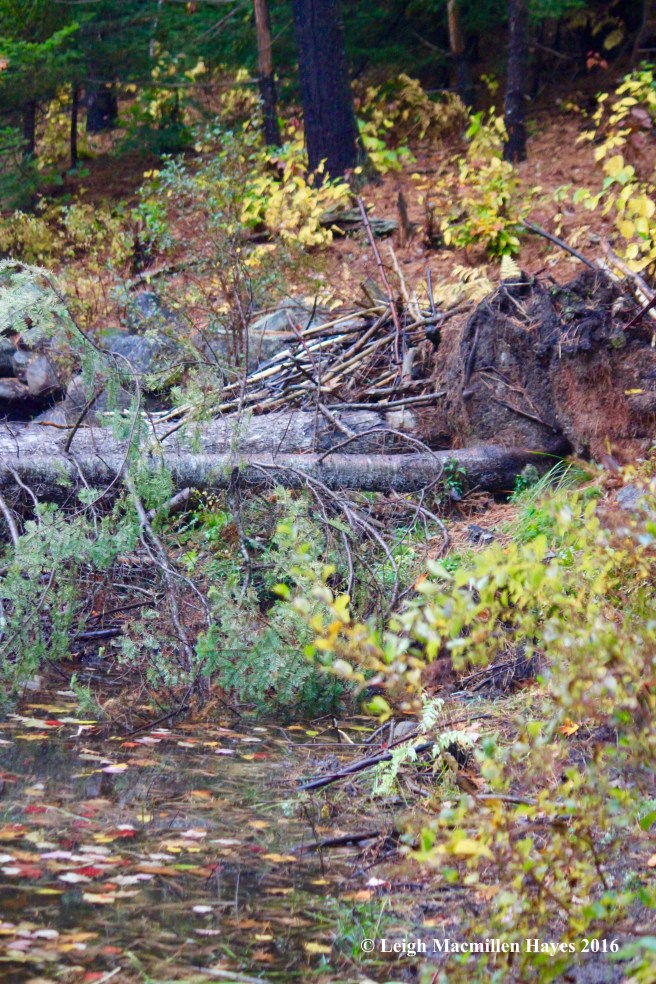
u-beaver-lodge

We spent a long time beside a beaver pond and pondered various aspects of it. We could see the lodge and beaver sticks in the water–that made sense.

u-retainer-2

But why a significant wall on at least two sides?

u-cut-stone-in-water

And a split stone by the water’s edge? What else had happened here? Jesse told us that there are numerous foundations that we didn’t have time to locate today, so we knew that though it seemed as if we’d traveled to the middle of nowhere, this place was once somewhere.

u-moose-track

And to the local moose, it still is as evidenced by the prints we found in mud.
u-raindrop-lichens-2

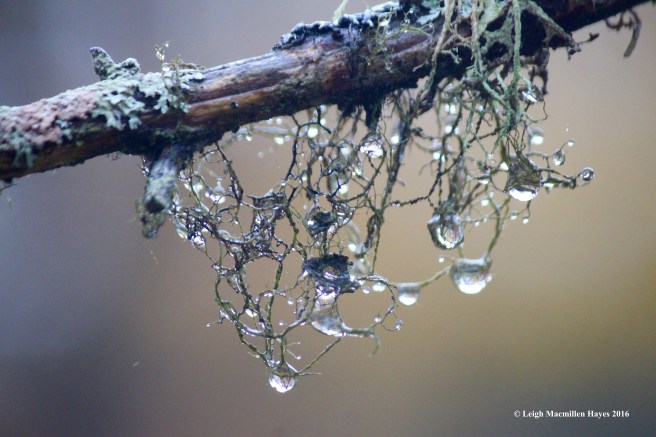
Our attention also turned upward as we admired raindrops dangling from fruticose lichen (think fruit-like branching).

u-raindrops-on-pond

Suddenly, the rain increased so Jesse asked if anyone wanted to turn around and received an overwhelming vote to continue on.

u-larch-2

One of my favorite discoveries was a couple of larch trees. Larch or tamarack is our only deciduous conifer. Huh?

u-larch-1

Like deciduous trees, the larch needles turn yellow each autumn and fall to the ground. Another cool fact: needles grow on stout pegs that look like wooden barrels.

u-pileated-and-ants

We paused beside ash trees and tree stumps, and enjoyed the view of this pileated woodpecker excavation of carpenter ant tunnels–their favorite prey.

u-candy-lichen

In the log landing that did become our turn-around point, we noted the early succession growth of Eastern white pines and sweet fern (not a fern). But again, we looked to our feet for the best views.

u-candy-lichen-1

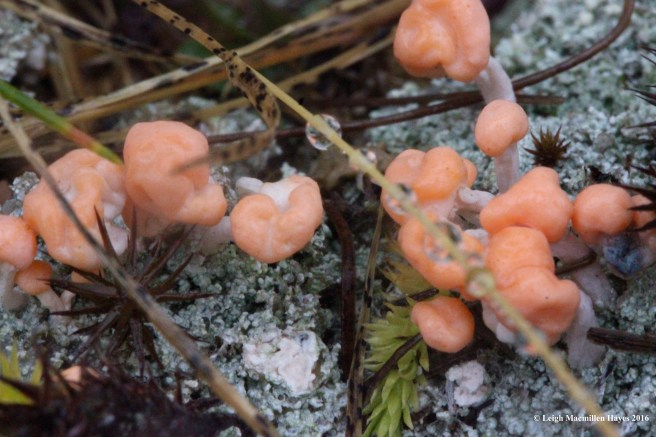
Candy lichen is a crustose (think–flattish or crust-like) lichen with green to bluish-green coloration.
u-candy-2

Its fruiting bodies, however, are candy-pinkish disks atop stalks, even reflected in the raindrops.

u-cemetery-entrance

Our journey back to parked vehicles passed quickly, indicating we’d not traveled all that far in two and a half hours. That’s normal when you take time to notice. Before departing, Jesse showed me a cemetery on the abutting property.

u-cemetery-small-stones-2

Small, unmarked stones made me think of a Civil War-era cemetery in Sweden, Maine–perhaps a sudden illness of young children called for quick burials.

u-cemetery-currier-plot

One section was portioned off by split granite.
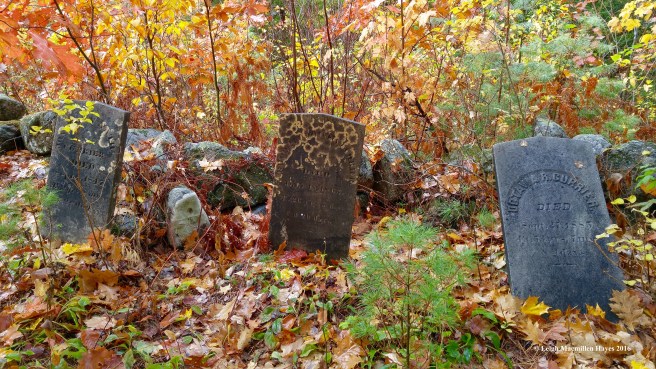
u-cemetery-curriers-1

The Currier plot. A side road we’d passed by was named for the family.

u-cemetery-lichens

The crustose lichens were intriguing on Rhoda Lodolska Currier’s stone. Rhoda died at age 26.

u-cemetery-octavia

Her sister, Octavia, lived to be 53.

u-cemetery-nancy-leavitt-90-years

Most impressive was the age of Nancy Leavitt, her stone located just outside the Currier plot. Nancy died at age 90.

u-vireo-nest

As we walked out, Jesse spied a cup-shaped vireo nest built in the fork of a beaked hazelnut. Life continued to circle in these woods.
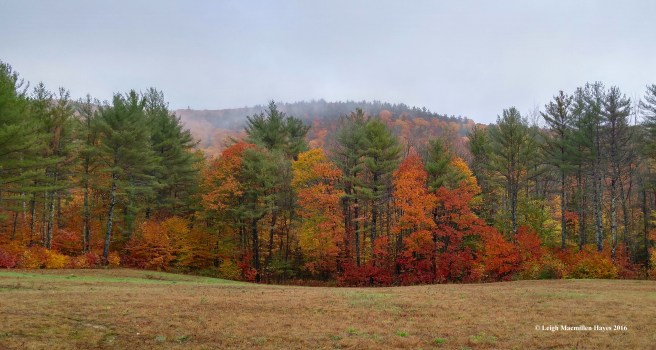
u-undulating-color

And the autumn color undulated, mimicking the land. The sun tried to peak out for a few minutes when we arrived at our vehicles, but we were all appreciative of the rainy day wonders we’d found along the way.

u-eaton-3

And back in Eaton, a quaint New England village located beside Madison and Conway, New Hampshire, and the Maine border–beauty cloaked by the mist.

Thanks to Jesse, Nancy and the Upper Saco Valley Land Trust for a fine morning spent wandering and wondering.



Everybody Loves Raymond? Mondate

My guy and I were up for an adventure this morning as we headed off to a property recently acquired by Loon Echo Land Trust. I’d been there once before, but at that time there was no trail system and I certainly hadn’t climbed to the summit.

r-forest-climb

We were on a 356-acre property bisected by a paved road. First, we hiked the upper section, passing through a hardwood forest.

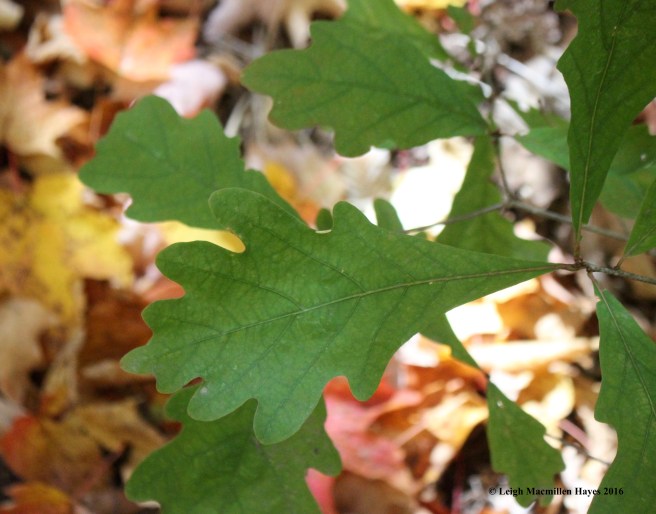
r-white-oak-green-leaves

Immediately, I realized we were in the presence of one of my favorites–noted for the mitten-ish presentation of its leaves. One would have to be all thumbs to fit into this mitten, but still, my heart hums whenever I spy a white oak.

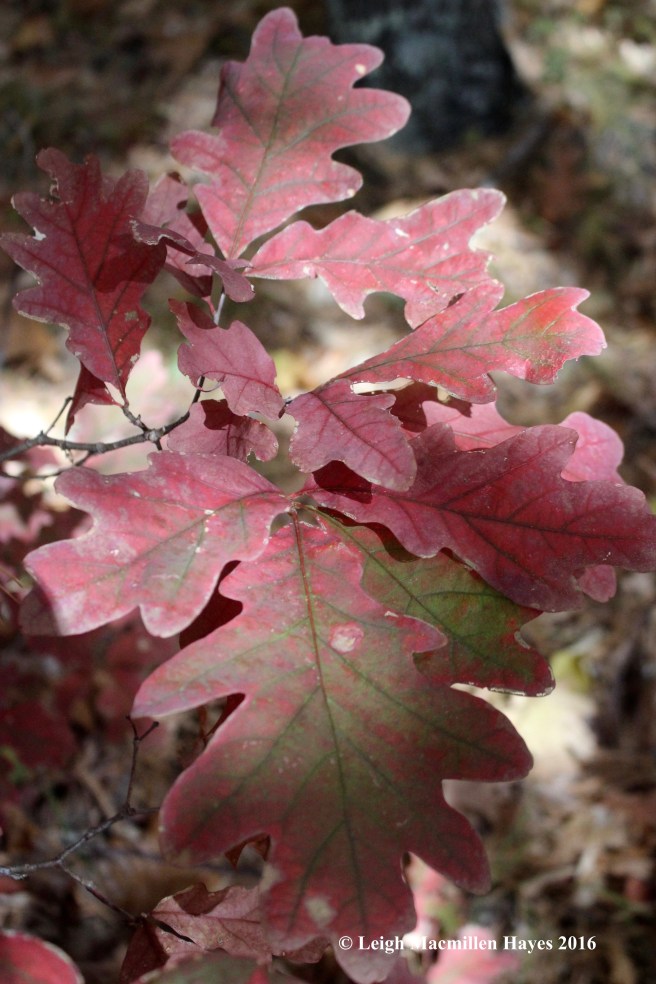
r-white-oak-red-color

Or in this case, many white oaks, some exhibiting the wine color of their fall foliage.

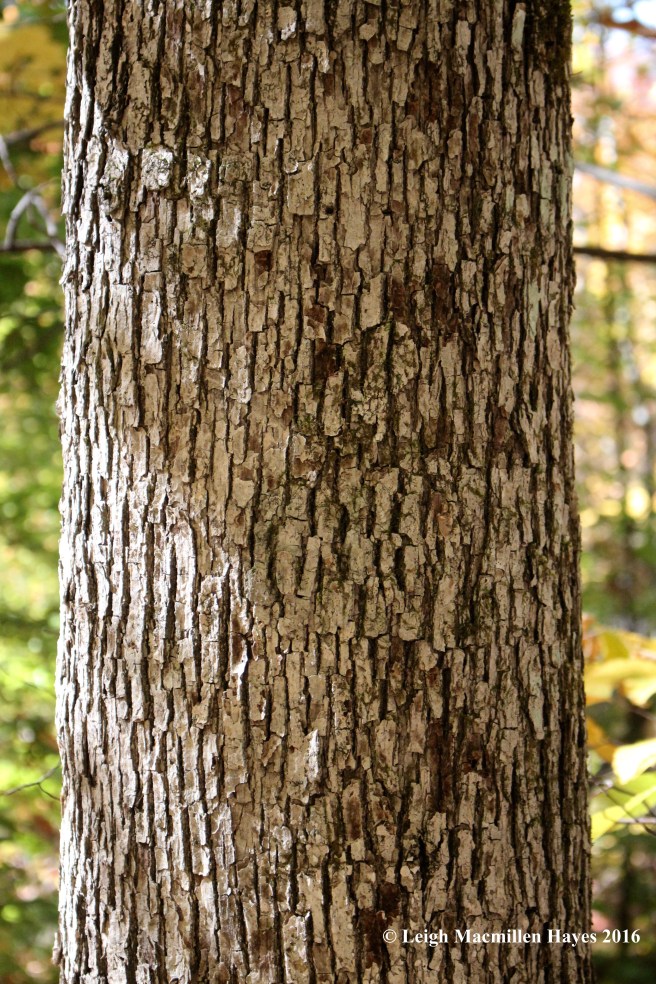
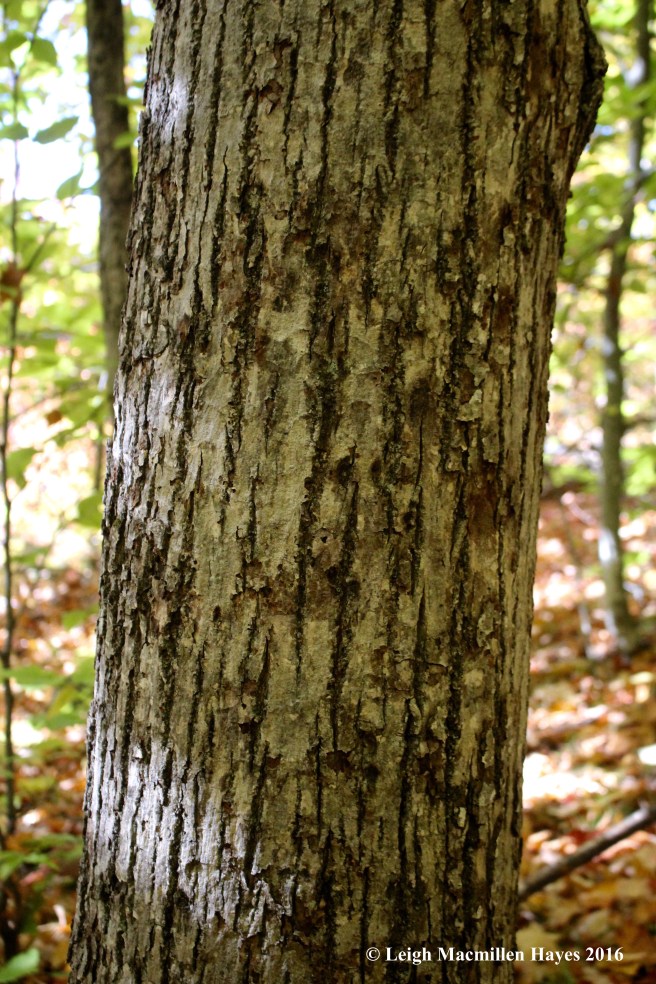
r-white-oak-bark

And the bark–a blocky look that differs greatly . . .

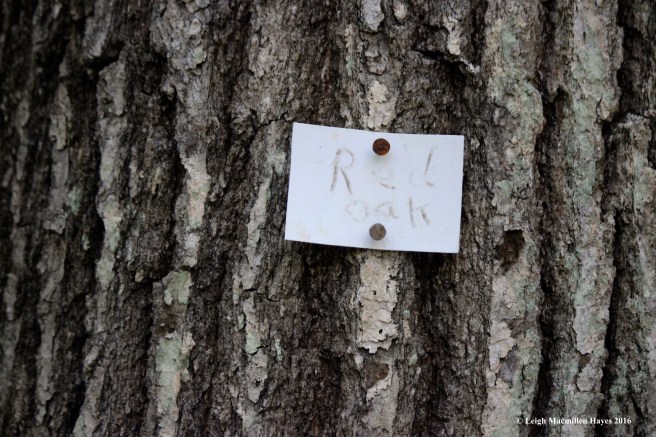
r-red-oak-on-bm1

from the ski trail ridges of red oak.

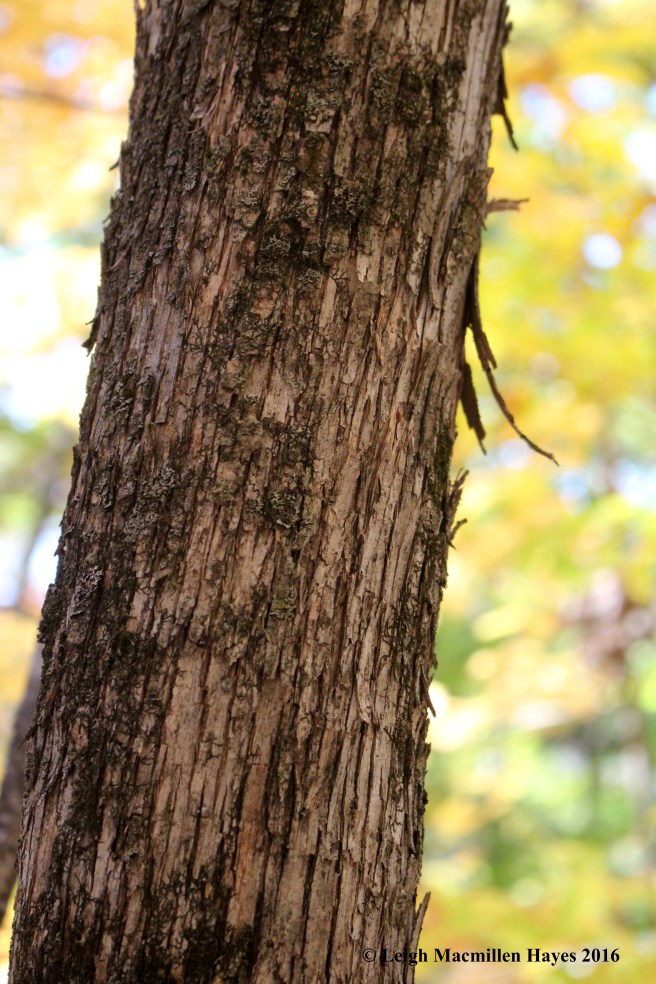
r-hophornbeam-bark

Hop Hornbeam also grows abundantly in this forest.

r-approaching-forest-summit-yellow

As we neared the summit, we noticed that the sky view had a yellowish tone reflected by the ground view. Most trees were of the same age due to past logging efforts, but the predominant species was sugar maple.

r-basswood-2

Another favorite tree also grew abundantly here. I think they are also favorites because I don’t see them as often. In this case, the bark, though furrowed and ridged like a northern red oak, featured an almost combed flattened ridge.

r-basswood-leaf

And its leaves–oh my! Notice the asymmetrical base? And the length–my boot is size 8. American basswood–an important timber tree that is known to share the community with sugar maples and hornbeams–all of which provided that yellow glow.

r-raymond-summit-view-1

At last, we reached the vantage point.

r-skyward

Above us, a mix of colors and species.

r-oak-leaves

Before us, a mix of white and red oak leaves.

r-crescent-view-3-1

And beyond us, the view of Crescent Lake

r-crescent-rattle-1-1

and Rattlesnake Mountain.

r-ladybird-1-1

While we admired the view, ladybird beetles (aka ladybugs) swarmed us. Well, not exactly in swarm formation, but more than is the norm.

r-green-trail-tag

After admiring the view for a while and wondering about the ladybirds, we backtracked a bit and decided to explore the green trail, assuming that it looped about the summit.

r-dry-leaf-sound

The trail conditions changed constantly, and one thing we realized was that the leaves had dried out and we wished we could have bottled their scent along with our crispy footfall as we trudged through–the smells and sounds associated with autumn.

r-bear-claw

Eventually, we entered a beech commune and what to my wondering eyes should appear–bear claw marks? We ventured closer, circled the tree and looked at others in the neighborhood before determining that our eyes had perhaps played a trick on us.

r-garter-snake

That was OK because within seconds a twig moved at our feet.

r-snake-tongue

We watched as its tongue darted in and out, red tipped with a black fork.

r-lunch-rock

Finally, we moved back to what we’d named Ladybird Lookout and found lunch rock where we topped off sandwiches with Bailey’s Irish Cream fudge a la Megan and Becky Colby. Life is good. Life is very good. (And we know a town in western Maine that would benefit greatly from a bakery–just saying, Megan!)

r-trail-ribbon-art

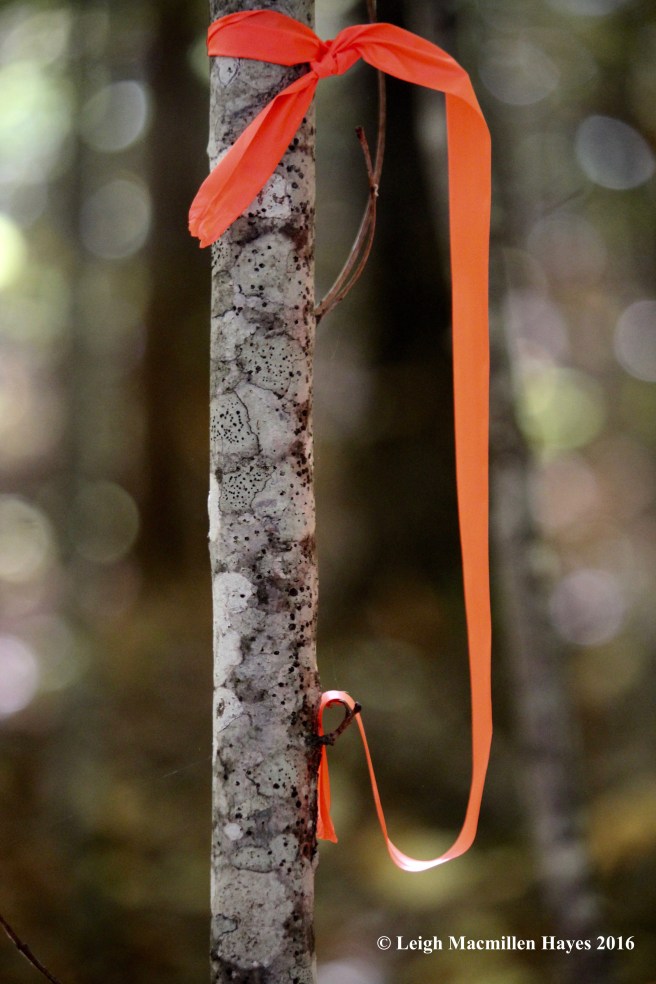
After lunch, we climbed back down and crossed Conesca Road to check out trails on the other side. There is no trail map just yet, but we never got lost. And we appreciated the artwork nature created of manmade marks.

r-forest-across-the-street-stonewall

This space offered a different feel where hardwoods combined with softwoods. And more stonewalls crossed the property, speaking to past uses.

r-hole-pink-flags

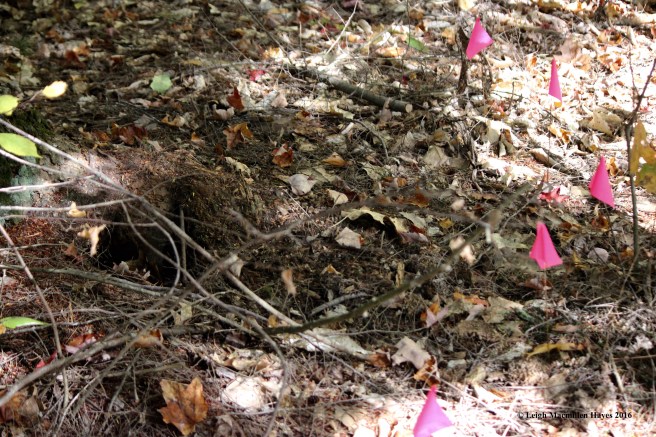
It’s here that we noticed an area demarked by pink flags and stopped to wonder why. Note to self–excavated hole and debris mean beware.

r-bee-himve

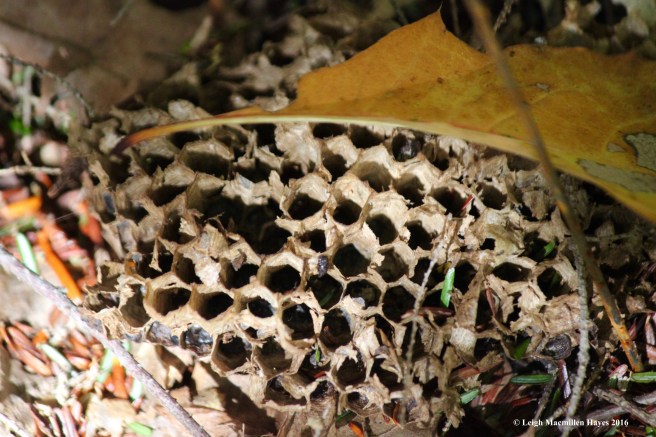
Upon closer examination, an old hive. So who dug it up? We had our suspicions.

r-mushrooms-1

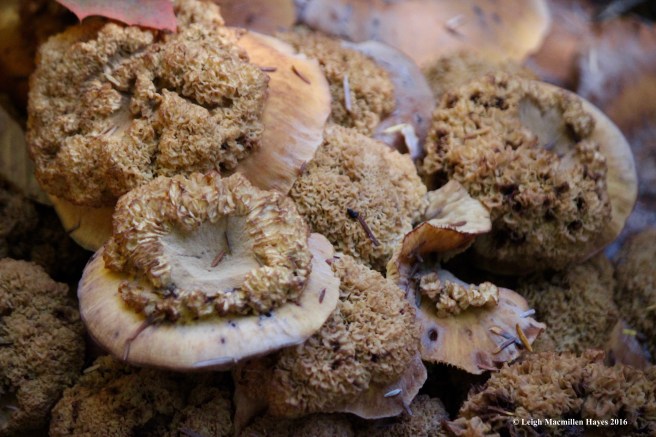
We also noticed a fungi phenomena.

r-mushroom-growth

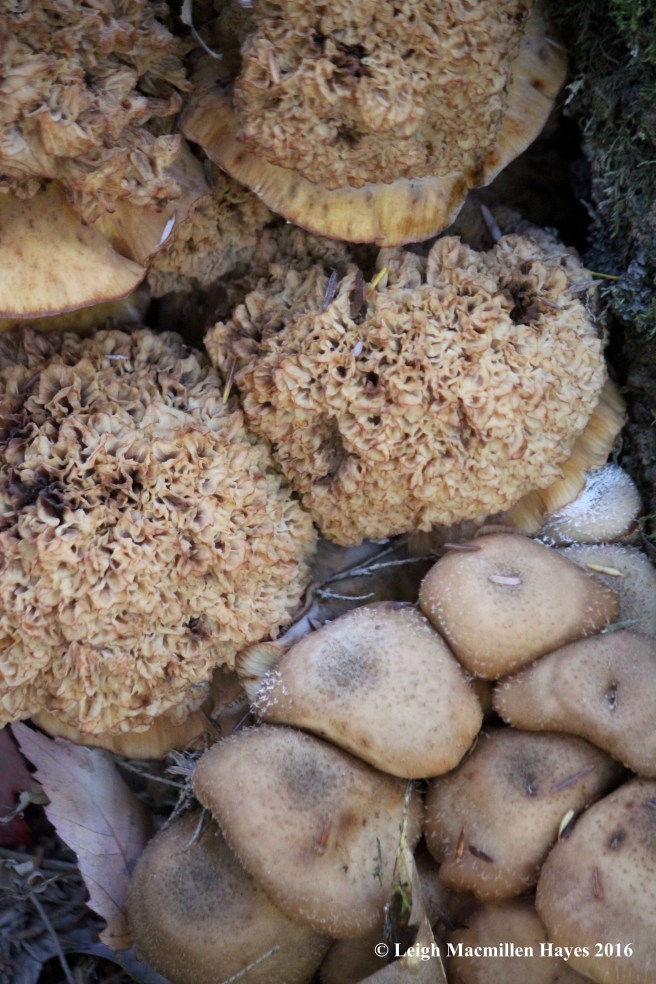
Fungi on fungi? Honey mushrooms attacked by something else?

r-mushroom-growth-3

The displays were large

r-mushroom-fungi

and otherworldly. I don’t recall ever seeing this before.

I sent the photos to Parker and Jimmie Veitch, of White Mountain Mushrooms, and Jimmie responded with this explanation:

“That’s what mycologists call “rosecomb” mutation, where a mushroom’s gills start forming on the cap in a really mutated fashion. It’s been reported in many mushroom species but I haven’t seen it in this one (Armillaria AKA honey mushrooms). As far as I know, no secondary fungus is involved.

The suspected cause (not so nice) is ‘hydrocarbons, phenols and other compounds contaminating the casing or contacting the mushroom surface. Diesel oil, exhaust from engines, and petroleum-based pesticides are thought to be the principal source.'”

r-red-leaves

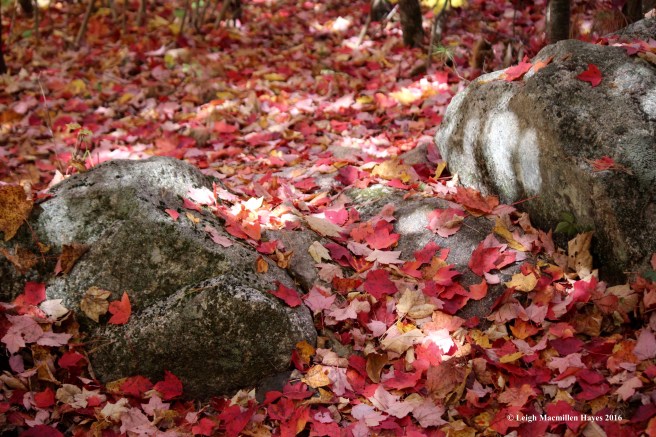
As we concluded our visit, we passed over one more stone wall decorated with red maple leaves.

r-beginning-of-bri-mar

And then we hopped into the truck and traveled a couple of miles south to conquer another small mountain–one visible to us from Ladybird Lookout. (I really think LELT should name it such.)

r-brimar-milkweed

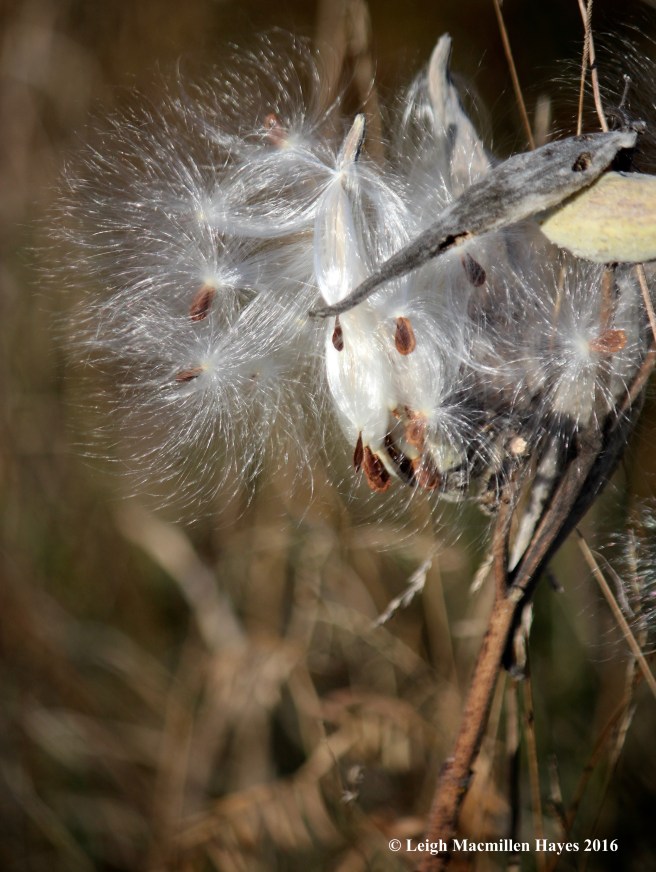
Here the milkweed plants grew abundantly.

r-brimar-white-oaks-in-field

In the field leading to the trail, the property owners planted white oak saplings in hopes of providing food for wildlife. Um, by the same token, they’d enclosed the saplings in plastic sleeves (reminding us of our findings in Ireland) to keep deer at bay.

r-brimar-ferns

The understory differed and ferns offered their own autumn hues.

r-brimar-evergreen-wood-fern

In contrast were the many examples of evergreen wood ferns.

r-bri-mar-beech-markings

We soon realized that quite literate bears frequented this path and announced their presence.

r-crescent-from-bri-1-1

At last, the view opened and we looked back at the opposite shore of Crescent Lake, though realizing that our earlier ascent was masked by the trees.

r-panther-from-bri-3-1

Turning about, Panther Pond came into view.

We’d spent the day embracing Raymond because everybody loves Raymond.

r-raymond-forest-sign

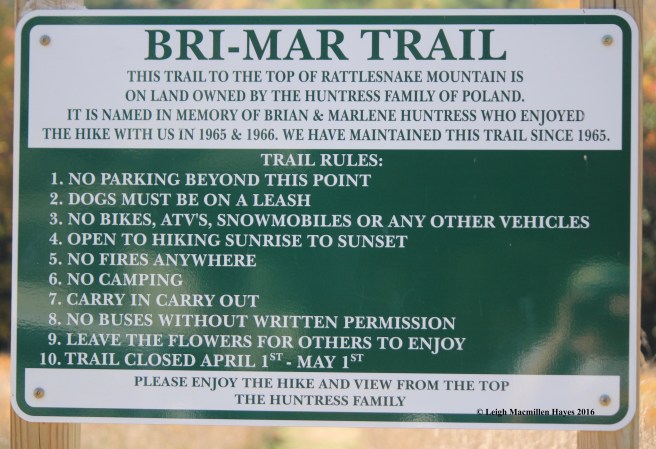
r-brimar-trail-sign

Raymond, Maine, that is. Loon Echo Land Trust is gearing up to celebrate the Raymond Community Forest that we explored this morning and the Bri-Mar Trail up Rattlesnake Mountain has long been traveled by many. In fact, when I used to write copy for the local chamber of commerce, I spent some time learning about Edgar Welch, who was the fastest man on foot and ran up Mount Washington at least once a year. He lived in Raymond and worked for David McLellan, who was partially blind from a Civil War injury. Because Mr. McLellan’s farm was at the foot of Rattlesnake Mountain, the sun would set one hour earlier than elsewhere in town. According to legend, after work each day Edgar ran up the mountain and moved rocks. Finally, he’d moved enough to let the sun shine on the farm for an hour longer. Another story has it that one day a man bet Edgar that he could beat him in a race to Portland. The man would race with his horse and buggy, while Edgar ran. When the opponent pulled into the city, Edgar was waiting for him. I love local lore.

And everybody loves Raymond. Well, my guy and I certainly gained a better appreciation for this town today.


In Constant Flux

Ever so slowly, the world around us changes.

h-starting-point

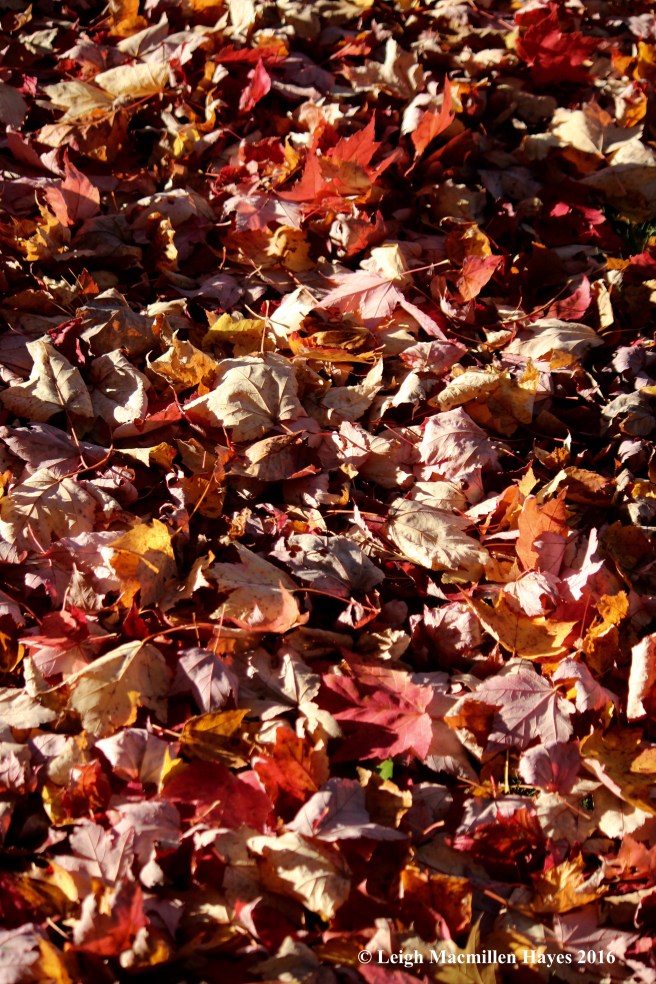
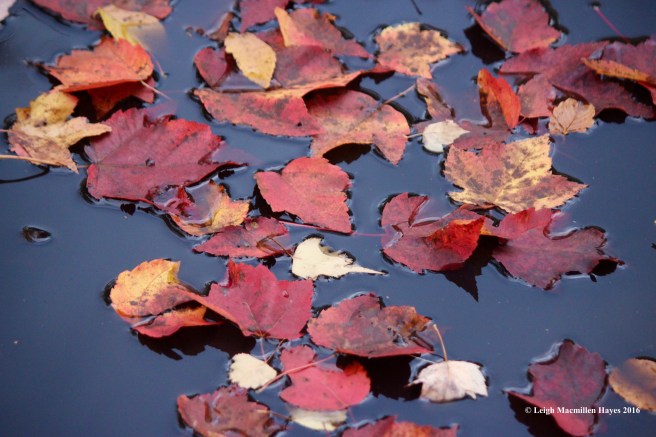
Sometimes it’s as obvious as the leaves that fall.

h-bee-on-flower-1

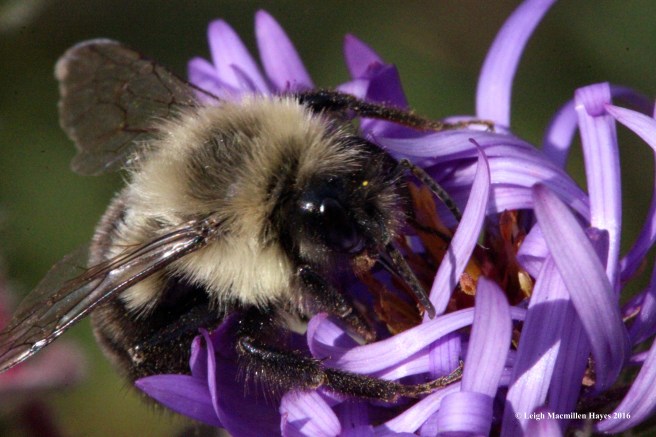
And other times, it’s a bit more subtle, evidenced by the bees that have slowed their frantic pace as they make final collections.

h-leaf-carpet

Mid morning, I headed down the cow path in search of other signs of change.

h-oak-branches-1

As I walked along, I began to realize the interdependence of all. Under the northern red oaks–many  chopped off twigs.

h-porcupine-works

The angled cut and empty cap indicated the work of porcupines seeking acorns.

h-leaves-on-hemlock

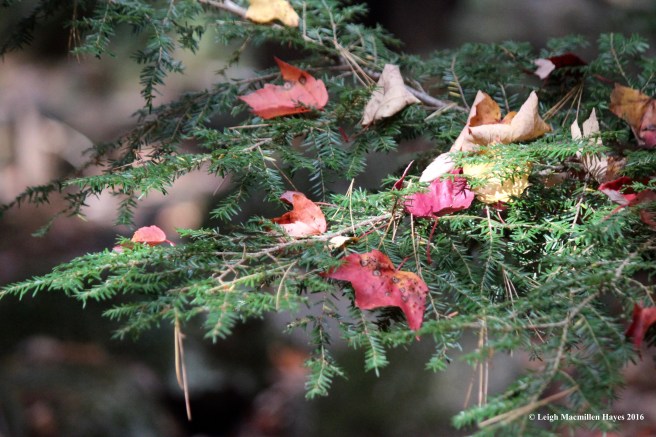
I found maple leaves pausing on hemlocks,

h-pine-needles-on-spruce

pine needles decorating spruce trees,

h-leaves-in-puddles

and occasional puddles offering a rosy glow. Eventually, all of these leaves and needles will break down and give back.

h-life-on-rock-1

I found life on a rock, where lichens began the story that was added to by mosses. The creation of soil was enhanced by a yearly supply of fallen leaves and needles gathered there. And then a seed germinated, possibly the result of an earlier squirrel feast.

h-orange-peels1-1

I found orange peel and many other fungi aiding the process of decomposition so that all the fallen wood and leaves will eventually become part of the earthen floor.

h-forest-succession-3

I found a healthy stand of trees and ferns competing for sunlight in an area that had been heavily logged about ten years ago.

h-deer-and-bobcat-prints

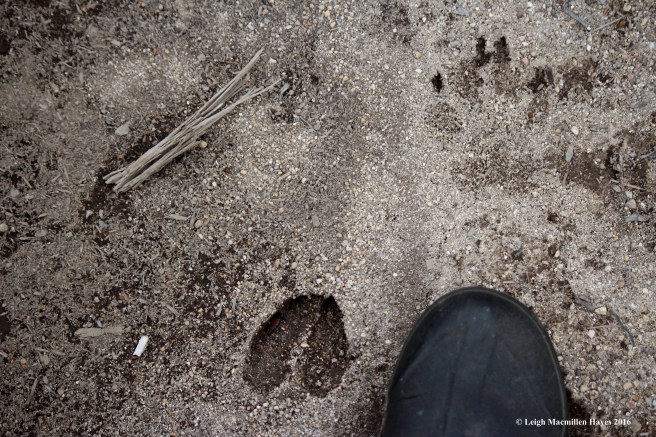
I found evidence of those who spend their lives eating and sleeping in this place.

h-aster-seeds

I found seeds attached

h-seeds-on-the-fly

and those on the fly–heading off in search of a new home.

h-witch-hazel-flowers-galore

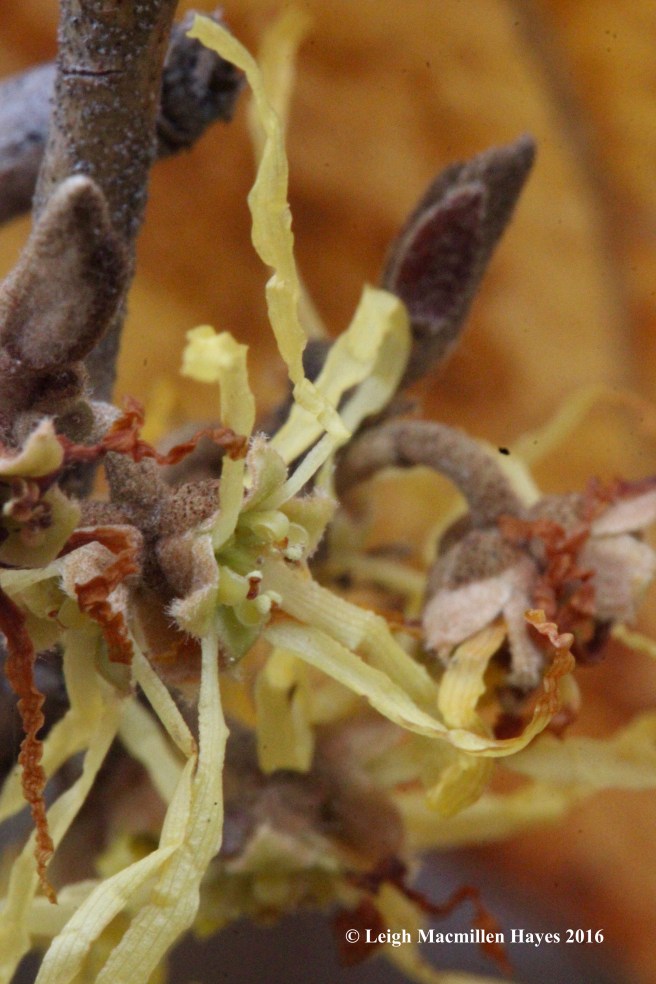
I found the last flowers of fall

h-witch-hazel-1

exploding with ribbony blooms.

h-power-and-nature

After bushwhacking for a few hours, I found the snowmobile trail, where man and nature have long co-existed.

h-home-2

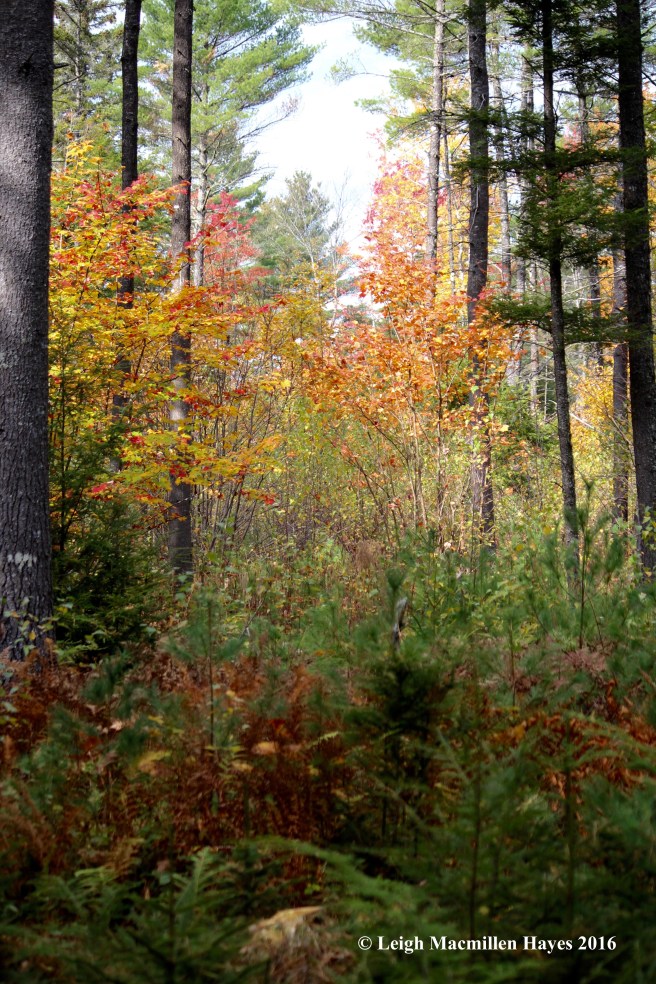
At last I found my way across the field rather than through our woodlot, thankful for the opportunity to take in the colors of the season one more time.

At the end of the day, I’m once again in awe as I think about how we, and all that we share this Earth with, are dependent upon each other and the abiotic forces that surround us.

And with that comes the realization that the scene is in constant flux and so am I.


On Hands and Knees to Wonder

When I invited Jinny Mae to join me at Loon Echo Land Trust’s Bald Pate Preserve this afternoon, she eagerly agreed. And three hours later, I know she had no regrets. Though we never reached the summit, neither of us cared. Our minds were boggled by all that we had noticed.

b-foster-2-1

Somehow we managed to beeline our way to the Foster Pond Lookout. And then we slowed down. To a stop.

b-shield-2

And so we got rather personal with the rock substrate as we took a closer look. At lichens. For what seemed like ever, it was thought that lichens were symbiotic life forms consisting of Freddy Fungus and Alice Algae, who took a liken to each other and their marriage formed a single organism. Sometimes, cyanobacteria or blue-green algae was tossed into the mix. The fungus provided shelter (algae can only live where they won’t dry out and so being surrounded by fungal cells meant Alice could live outside of water), while either of the photosynthetic partners, algae or cyanobacteria, produced food from the sun.

It’s no longer just a story about Freddy and Alice living together, however. New scientific research deems another partner in the mix–yeast, which also provides protection. I feel like just stating that puts me way out of my league.

b-shield-1

Our goal wasn’t to understand those relationships per say. We just wanted to spend some time looking and developing an eye to recognize these structures while appreciating their life’s work that often goes unseen.

b-shield-on-rock-2-1

Some grow at an especially slow rate–think hundreds of years rather than decades. That in itself, should stop us in our tracks. And yet, as we stand 5+ feet above those that grow on rocks, we hardly notice them.

b-green-shield-5-1

The  dark brown fruiting bodies, called apothecia, are where spores are produced and life continues. Walk tenderly, my friends.

b-toadskin-2

Jinny Mae’s excitement over the toad skin lichen was contagious. Notice its warty projections–much like the skin of an American toad, which varies in color.

img_6343

I spied this toad a few days ago, but its skin certainly helps qualify the lichen’s common name.

b-toad-skin-lichen-3

If you look in the center, you can see the point where the lichen attached to the rock–the belly button of this particular lichen making it known as an umbilicate lichen.

b-toad-skin-lichen-wet-and-dry

And among the favorite finds of the day, Jinny Mae was the first to spy this. It had rained this morning and everything was dry by the time we hiked, but some signs of moisture remained. In this case, it’s wet toad skin contrasted by dry toad skin. If you are willing to give up some water from your water bottle, you can create the same contrast. And note the black dots–its fruiting bodies or apothecia where its spores are produced.

b-british soldier patch (1).jpg

The more we looked, the more we saw.

b-Gritty British soldier lichen.jpg

British soldiers were topped by their brilliant red caps–forever announcing their presence.

b-pixie 1.jpg

Pixie-cup lichen stood like goblets, ready with magical potions.

b-pixie-cup-filled-to-the-brim

Some were filled to the brim and almost overflowed with life.

b-reindeer-1

We marveled at the green,

b-reindeer-gray

gray,

b-reindeer-foam-1

and foam-like structure of reindeer lichen. These are treats for reindeer and caribou, neither of which frequent our region except for one night a year.

b-yarn-moss

And then we looked at the next layer in succession on a rock. Once the lichens have established themselves, mosses move in. Did you ever think about the fact that mosses don’t have flowers, stems or roots? Instead, they feature tiny green leaf-like structures and microscopic hair-like structures. They send their “hairs” into the crevices created by the lichens and anchor themselves to the rocks. Today, we found a moss neither of us remember seeing before.

b-yarn-moss-2

To us, it offered a square presentation and we debated its identity. While we thought it may be yellow yarn moss, I’m now leaning toward medusa moss–though their leaf edges are smooth and these are obviously toothed.  Do you know? Which ever it is, we were wowed.

b-view-from-the-rock-1

We finally moved on, hiking to a false summit to take in the western view.

b-polypody-among-rock-tripe-1

The late afternoon sun and breeze played havoc with our views, but we eventually reached the rock tripe wall, where common polypody took advantage of the living conditions.

b-tripe-wall-1

The lichen covered a ledge, some of it green from the morning rain, but surprisingly much of it still brown. Like the toad skin lichen, rock tripe are umbilicate and attached to the rock at a single point. They reminded me of elephant ears flapping in the breeze.

From there, we headed down. Our pace on the slow side all afternoon.

And sometimes we had absolutely no pace at all, unless you consider the motion (and grunts) as we got down on our hands and knees and even our bellies to take a closer look. It was all worth a wonder. And we did.


Hiking to the Vanishing Point

My friend, Ann, and I spent today focused on points close to us, while those in the distance also drew our attention.

h-trail sign

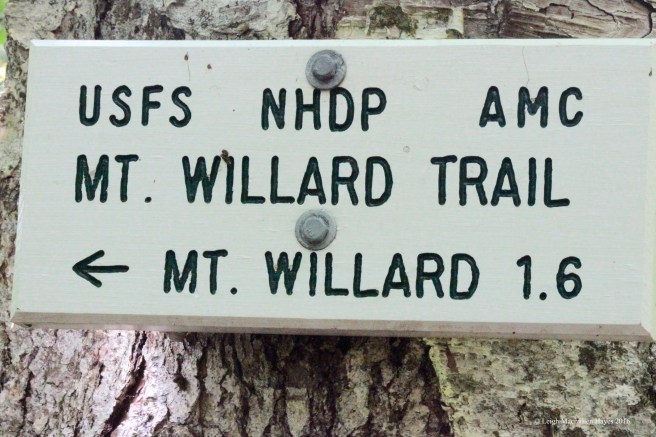
Our chosen trail to accomplish such, Mt. Willard in Crawford Notch State Park, New Hampshire. We began on the Avalon Trail and then turned onto the Mt. Willard Trail. I kept thinking I’d last travelled this way in the early spring, but now realize it was last November that my guy and I ventured forth on a Top Notch Mondate.

h-paper birch bark

Ann had in her mind that there were several varieties of birch trees along the way. We did marvel at pastel colors revealed by the paper birch.

h-yellow birch bark

And the golden ribbony peeling of the yellow birch. But those were the only two birch species we saw over and over again. It had been a while since she’d last hiked here so the forest had changed.

h-rocky trail (1)

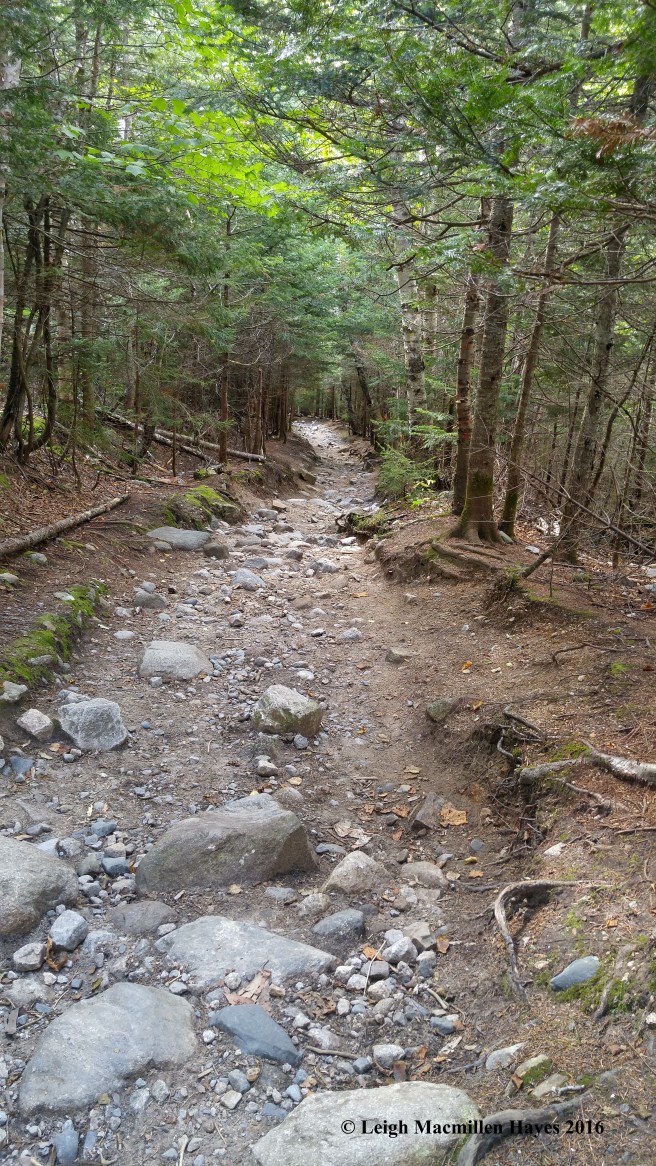
The trail has also changed. Somewhere stuck in my memory (despite the fact that I hiked here ten months ago) is a fairly flat, graveled carriage path. Um . . . I truly think that was the case years ago, but perhaps funding means it’s no longer maintained like it once was and stormwater has washed the trail out.

h-culvert stones (1)

The carriage road was built in 1845 by Thomas Crawford, owner and host of the Notch House in Crawford Notch. Daniel Webster and Henry David Thoreau reportedly slept there. Crawford wanted to provide his guests with an easy excursion to the summit of the mountain. Old culverts and stone diversions still mark the way.

h-hobble leaf and bud 1

One of the most predominant plants from beginning to end is the hobblebush shrub, so named because its horizontal growth pattern trips hikers, causing them to hobble through the woods. This shrub wows us in any season and right now it’s displaying its late summer colors.

h-hobble berries

On a few, we even found some fruit. I especially loved the new buds posed together like praying hands beneath the berries.

h-hobble in row (1)

And leaf displays that led to vanishing points.

h-water funnels

We chuckled to ourselves as others passed by, sweating in their efforts to reach the summit quickly. Our purpose–a slow and steady climb filled with opportunities to notice, like the funnels of water that dripped from rock to rock.

h-centennial pool

One of our favorite stops–Centennial Pool, where water mesmerized us as it cascaded over moss-covered rocks.

h-chipmunk.jpg

And a chipmunk darted about, surprising us with its close proximity–until we looked up and saw a couple with a dog. Perhaps we looked like we’d offer a safe haven.

h-narrow beech fern

We spent a lot of time wallowing in ferns because Ann has developed a keen interest in them this year. One of our fun finds was the narrow or northern beech fern, which portrayed its natural habit of dripping downward. We loved that we could ID this one by beginning with its winged attachment to the rachis or center stem.

h-artist's conk

Fungi also drew our attention. The mountain had been in the clouds as we approached, so it was no wonder that dew drops decorated this artist’s conk.

h-false tinder conk (1)

Among our fungi sightings–a false tinder conk.

h-fairy ring (1)

And among my favorites–a fairy ring.

h-purple aster 2 (1)

Though the flowers were few, we did spy some purple asters.

h-paper art

And then there were sculptures that caught our attention, like this paper birch artwork framed by moss-covered trees.

h-birch art yellow

And a yellow birch offering its own message to the universe.

h-mossy roots

Some tree roots also begged to be noticed. So we did as we acknowledged the resident faeries.

h-carriage road 1.jpg

At last we found my carriage road. Or at least something that slightly resembled it.

h-tunnel light.jpg

And then the tunnel.

h-tunnel 2

And a glimpse of the world beyond.

h-view 2 (1)

Within seconds, without a drum roll, the jaw-dropping view of the Notch enveloped our focus.

h-squirrel 2

As we ate lunch, another human-savvy critter came closer than is the norm–a red squirrel. We think he coveted Ann’s lunch–a peanut butter and blueberry sandwich with whole blueberries. Who wouldn’t?

h-mtn ash display

Mountain summits in these parts often feature Mountain Ash trees. Today, I paid attention to the pattern, including the six finger splay of its leaflet.

h-mtn ash twigs

And I couldn’t resist the contrast of color it offered against the mountain backdrop.

h-mtn ash leaf

Though we didn’t see any Mountain Ash berries, each individual leaf presented its own point of view.

h-Ann (1)

At the beginning of our hike and again at the summit, we kept hearing a helicopter. Mount Washington was obscured by cloud cover, but with her binoculars, Ann observed a helicopter with a litter. It seemed to follow the same route again and again.

IMG_5996

Our hope was that it was practice over mission. We had no idea of the purpose.

h-maple tree? (1)

At last we hiked down. One of the best parts about following the same path is that new stories await–when you can take the time to look up. And our pièce de résistance–an old snag. A beautiful old snag. Notice its vertical lines intersected by horizontal lines. We spent a long time studying and caressing this natural sculpture.

h-Sharp-scaly Pholiota (Pholiota squarrosoides) (1)

Though it appeared to be dead, life reigned.

h-sharp scaly 2 (1)

I know my mentors will correct me if I’m wrong, but I do believe this is Pholiota squarrosa, commonly known as the shaggy scalycap, the shaggy Pholiota, or the scaly Pholiota. Whatever you want to call it, it seemed to have its own vanishing point.

h-train tracks (1)

Much the same was true for the train tracks we crossed that head north toward Breton Woods.

h-train tracks south (1)

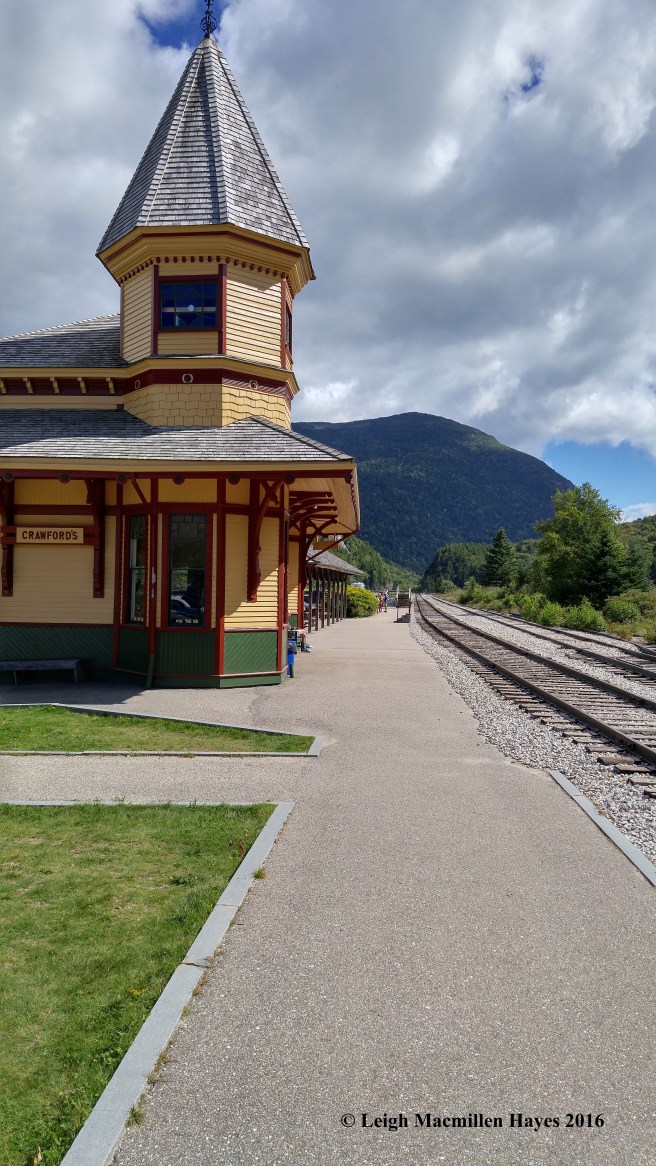
And those that lead south from Crawford’s Notch.

Thanks to Ann for today’s hike into the vanishing point, a disappearance into the woods for a visual exploration.

Horsepower Mondate

My guy works way too many hours and such is his life. So our attempt to head out early this morning didn’t exactly happen because he needed to sleep in a bit. It was just after ten when we reached our intended trailhead–Davis Path in Crawford Notch, New Hampshire.

c-bridge

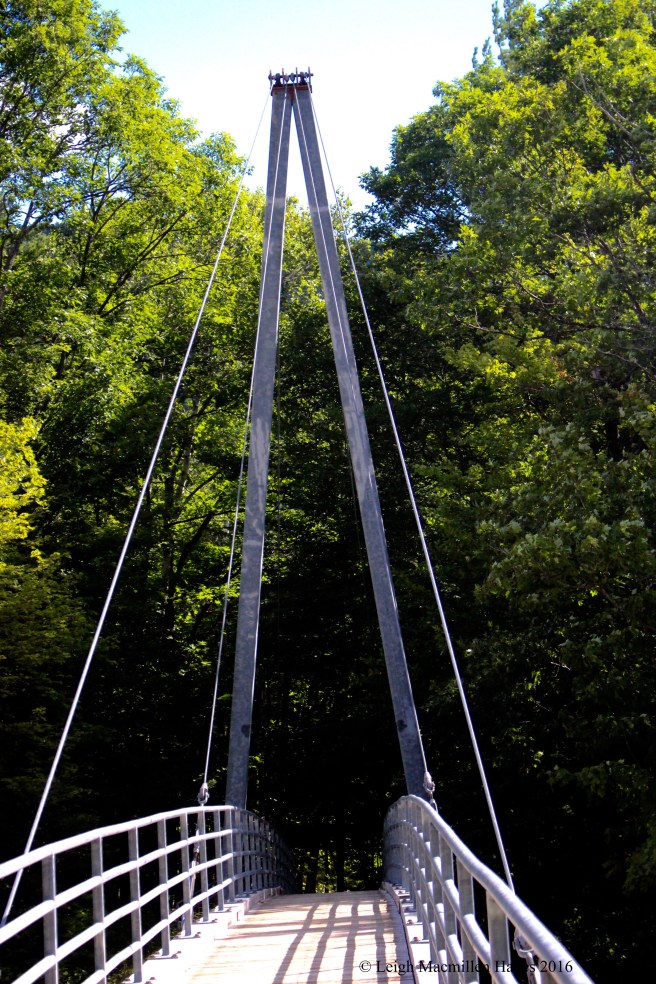
Our hike began as we crossed over the Saco River via a suspension bridge. In 1931, Samuel Bemis built a bridge that spanned 108 feet. The bridge was rebuilt in 1999, when the Town of Hart’s Location received a grant from the National Scenic Byways. The current award-winning bridge is five feet wide, spans 168 feet and was designed as an asymmetrical cable stay bridge–possibly the first such in the USA.

c-Saco River

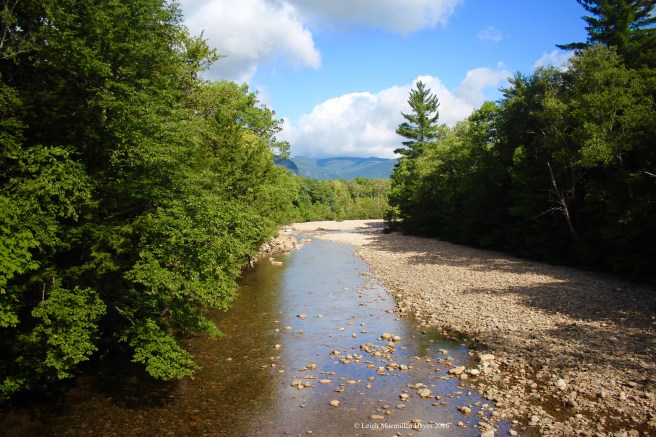
Below, the Saco River barely trickled.

c-stairway to heaven

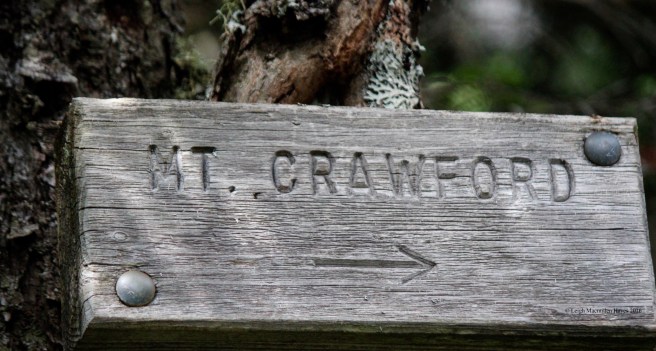
The Davis Path begins almost directly across the street from The Notchland Inn on Route 302. At the beginning of the trail, a sign informed us that Abel and Hannah Crawford’s son-in-law, Nathaniel Davis, built the Davis Path in 1845 as a bridle path. As intended, the trail covers 14.4 miles to the top of Mt. Washington. Our destination was the first peak–Mount Crawford at 2.5 miles along the path. Thanks to the AMC, what had been the bridle path is now transformed into a trail that includes a variety of stairways to heaven.

c-climbing higher

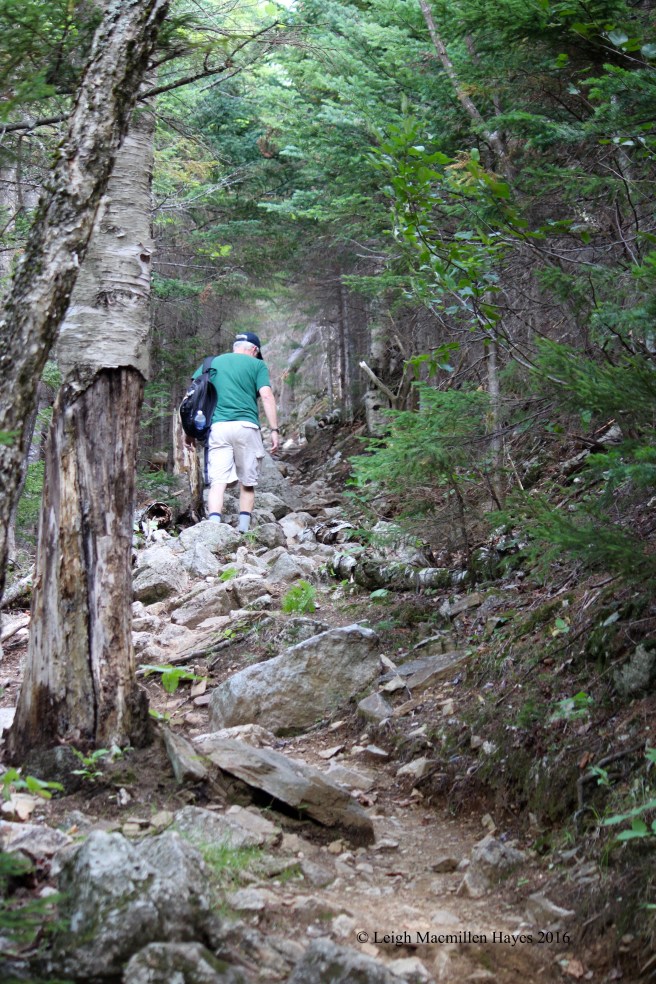
Conditions changed constantly as we climbed–in tune with the changing forest. Mixed woods to hemlocks groves to firs to spruces. The higher we hiked, the more I kept thinking about the fact that this was a former horse path. However did they do it? How many in a team? We were each operating at one-horse power as we huffed and puffed along, but I think a team of at least six would be much more appropriate. Six horses pulling me up–I liked that thought.

c-dinner plate

Instead, I spent a lot of time looking down, so I got to see the low sights–like this dinner spot;

c-puffballs

emerging fungi;

c-fern shadows

and fern shadows.

c-trail sign

Eventually we reached the sign pointing the way to the 3,119-foot summit.

c-hitting the balds

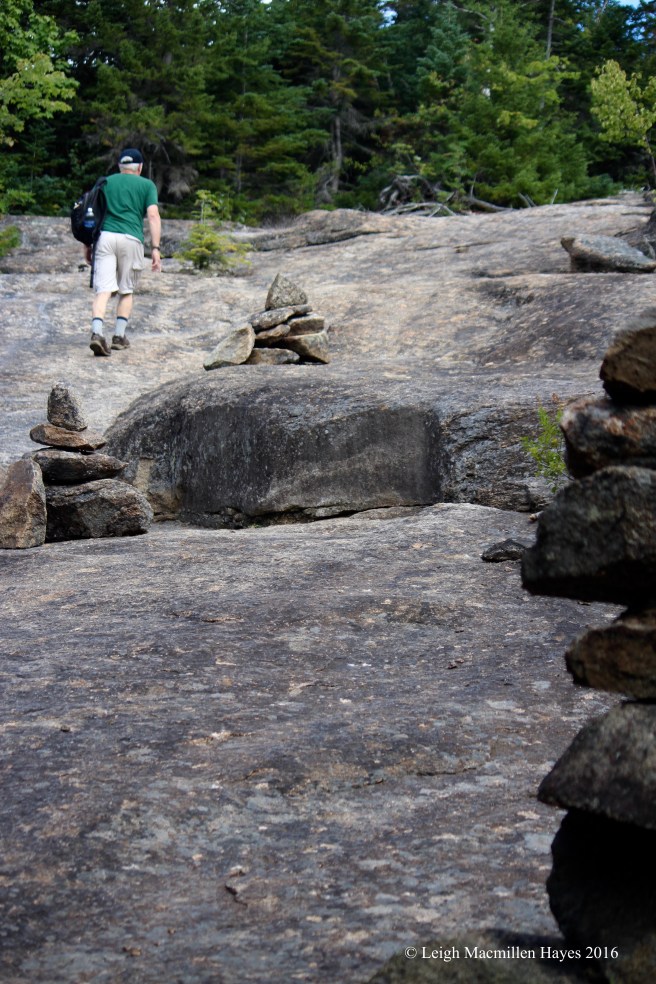
The trail changed as we hit the balds.

c-short horned grasshopper

And my view changed. I heard this guy’s crackling sound as he flew from one spot to the next only a foot or so apart. This is a short-horned, band-winged grasshopper.

c-mountain cranberry

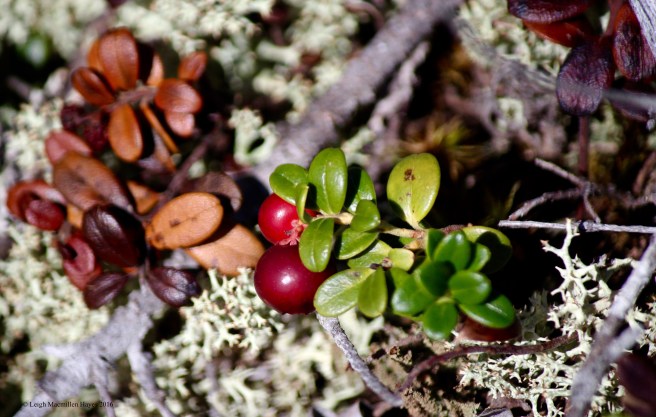
Also at our feet–mountain cranberries.

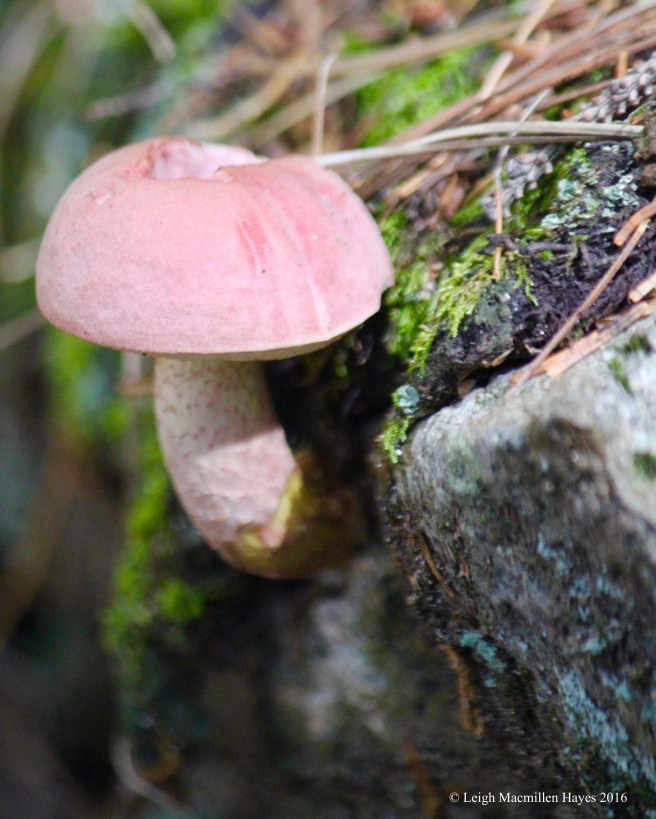
c-mushroom on rock

And then there was this single fruiting structure sticking out of the moss on a rock–a bolete, I believe, but I’m out of my league on this one.

c-summit view 8 (1)

Less than two hours and lots of sweat later, we emerged at the top where many had tracked before us. No horse prints. The wind hit our faces with a cold blast and we were forced to hold onto our hats. Mount Washington and others were obscured by clouds.

c-summit view 7 (1)

c-summit view 5 (1)

c-summit view 4 (1)

The view was 360˚. We took it in, but the clouds truly did tell the story of the wind. And so we paused only briefly, noted the notch for which this area is named and then started our descent.

c-heading down (1)

On the way down, we found a less windy spot and located lunch rock–it’s the rock to the far right.

c- artists conk

My focus was a bit higher as we descended and so I saw artist’s conks,

c-hierogliphics

heiroglyphics left by bark borers,

c-red maple

and signs of the future.

Our descent was quicker than I thought it would be. As we practically rolled down the mountain, I was sure that had I been behind a team of horses, I’d be pulling on the reins and yelling, “Whoa Nellie.” And that brought memories of my mom, who was named Nellie, but went by Nell. She and Dad would have loved the fact that we have made a point to fold as many Mondates as possible into our lives. They loved long walks along beaches and finding picnic places. We love long hikes and finding lunch rocks. Same thing at a higher elevation.

My guy and I enjoyed another wonderful Mondate–at one-horsepower speed.


Halting Beside Holt Pond

Halting–prone to pauses or breaks. I didn’t break, but I certainly was prone to pauses as I moved along the trails and boardwalks at the Holt Pond Preserve in South Bridgton this afternoon.

h-pitcher flower2

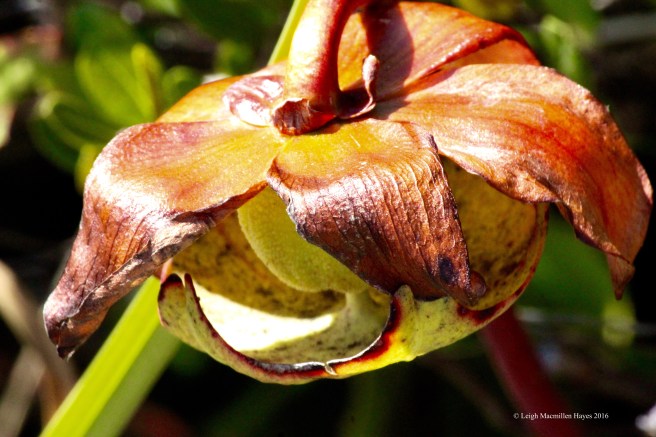
One of my first stops–to admire the pitcher plant flowers in their August form.

h-pitcher  flower up close

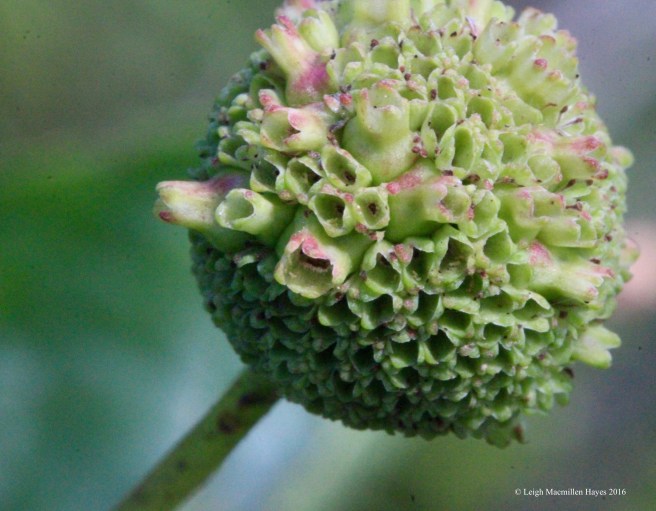
When I took a closer look, I realized that the seeds were developing–certainly a WOW moment in the world of wonder.

h-buttonbush.jpg

The global seed heads of buttonbush also demanded to be noticed. Upon each head are at least two hundred flowers that produce small nutlets. What strikes me as strange is the fact that this plant is a member of the coffee family. Maine coffee–local brew; who knew?

h-Muddy across

At the Muddy River, the water level reflected what is happening throughout the region–another case of “Honey, I shrunk the kids.” It’s downright scary.

h-speckled bug and speckles

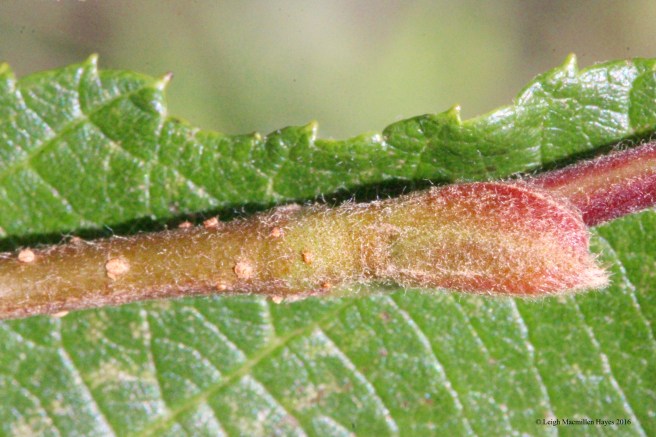
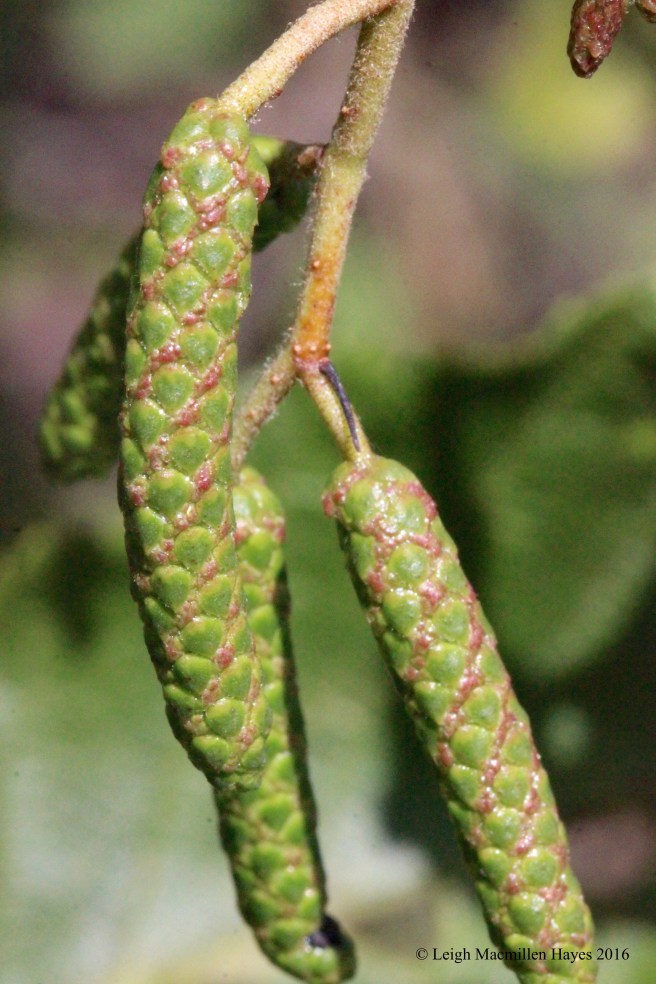
Both by the river and on the way to the quaking bog, this wetland features a variety of shrubs, including one of my many favorites, speckled alder. Check out the speckles–those warty bumps (aka lenticels or pores) that allow for gas exchange. And the new bud covered in hair.

h-speckled alder catkins

This shrub is so ready for next year–as evidenced by the slender, cylindrical catkins that are already forming. This is the male feature of the shrub.

h-speckled cones new

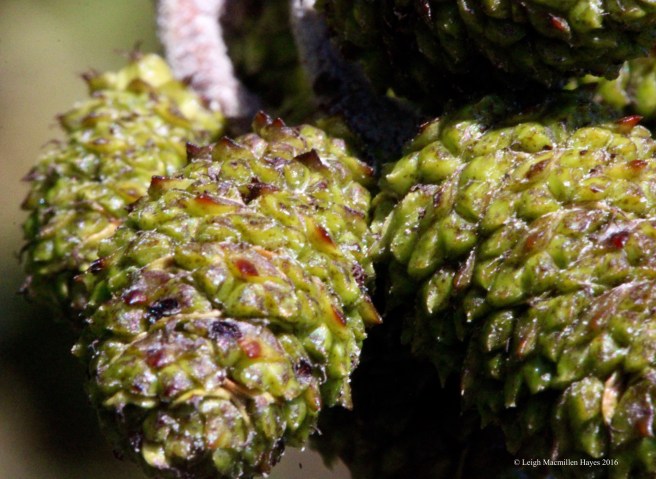
It also bears females–or fruiting cones filled with winged seeds.

h-speckled old cones

It’s not unusual for last year’s woody cones or female catkins to remain on the shrub for another year.

h-cranberries

Whenever I visit, it seems there’s something to celebrate–including ripening cranberries.

h-cotton grass

Common Cotton-grass dotted the sphagnum bog and looked as if someone had tossed a few cotton balls about. Today, they blew in the breeze and added life to the scene. Note to self–cotton-grass is actually a sedge. And sedges have edges.

h-holt pond left

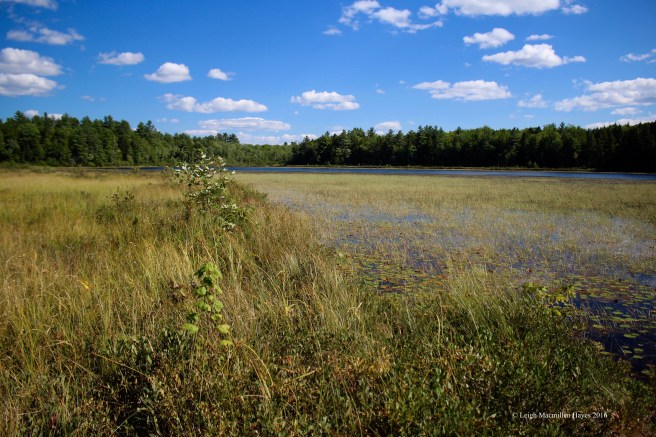
Just like the Muddy River, Holt Pond was also obviously low. Perhaps the lowest I’ve ever seen. At this spot, I spent a long time watching dragonflies. They flew in constant defense of their territories.

h-slaty skimmer, male

Male slaty skimmers were one of the few that posed for photo opps.

h-canoe on pond

As I watched the dragonflies flit about along the shoreline and watched and watched some more, I noticed a couple of fishermen making use of the LEA canoe. I don’t know if they caught any fish, but I heard and saw plenty jumping and swimming. Well, a few anyway. And something even skimmed across the surface of the water–fish, snake, frog?

h-rose hips.jpg

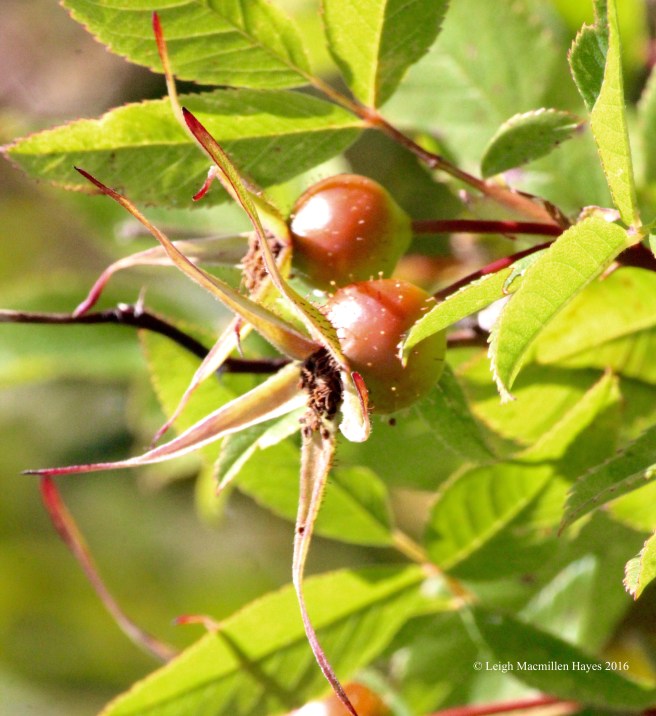
Rose hips by the pond’s edge reminded me of my father. He couldn’t pass by a rose bush without sampling the hips–especially along the shoreline in Clinton, Connecticut.

h-pond toward 5 Fields

The view toward Five Fields Farm was equally appealing.

h-pickerel frog

And then I moved down tire alley, which always provides frequent sightings of pickerel frogs. I’m never disappointed.

h-golden spindle

At the transition from a red maple swamp to a hemlock grove, golden spindles embraced a white pine sapling as if offering a bright light on any and all issues.

h-hairy woodpecker

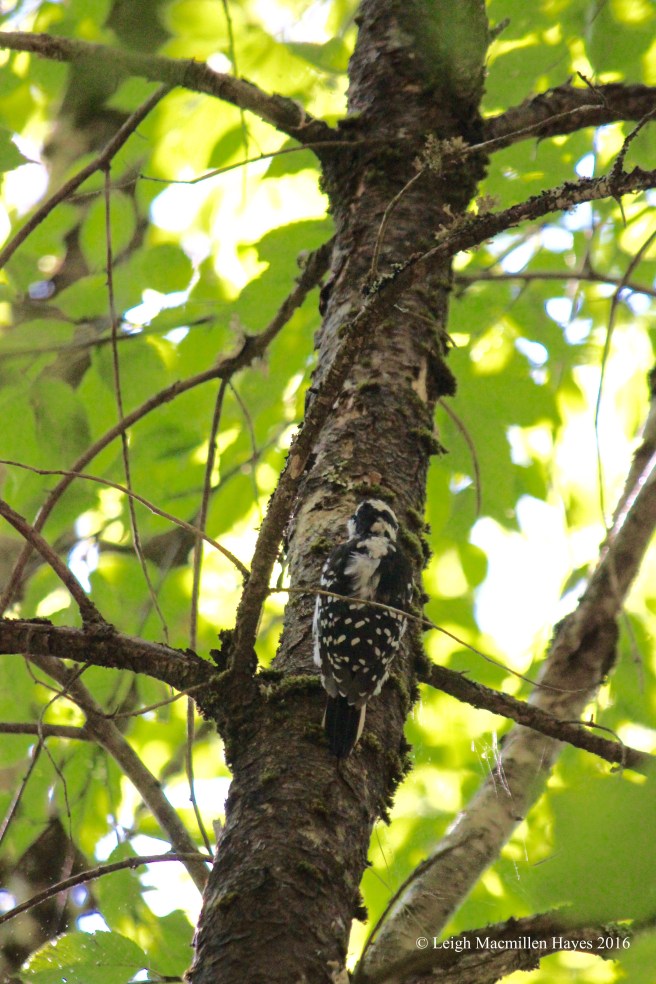
In this same transitional zone, a female hairy woodpecker announced her presence.

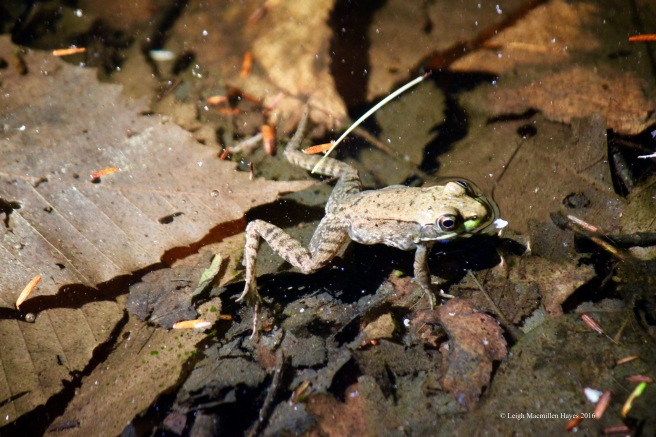
h-green frog

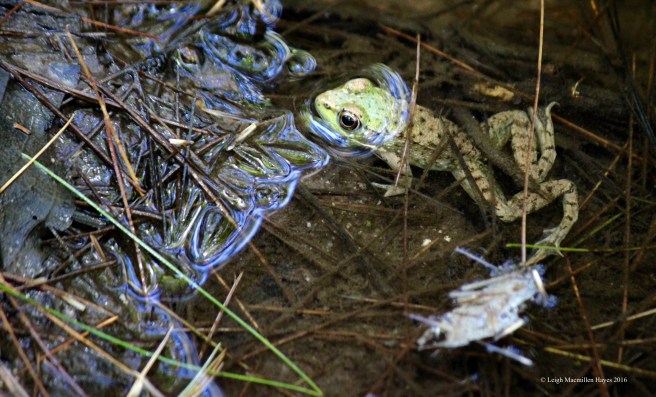
When I crossed Sawyer Brook, green frogs did what they do best–hopped into the water and then remained still. Do they really think that I don’t see them?

h-hobblebush berries

At last, I walked out to Grist Mill Road and made my way back. One of my favorite surprises was the amount of hobblebush berries on display.

h-meadowhawk

Walking on the dirt road gave me the opportunity for additional sights–a meadowhawk posed upon a steeplebush;

h-chicken

chicken of the woods fungi grew on a tree trunk;

h-chipmunk

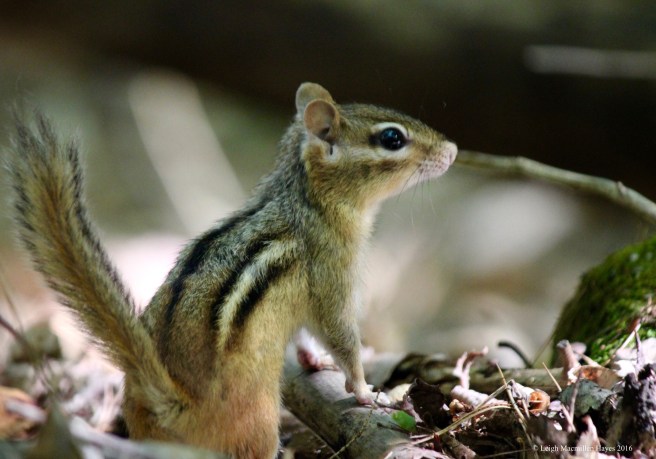
and a chipmunk paused on alert.

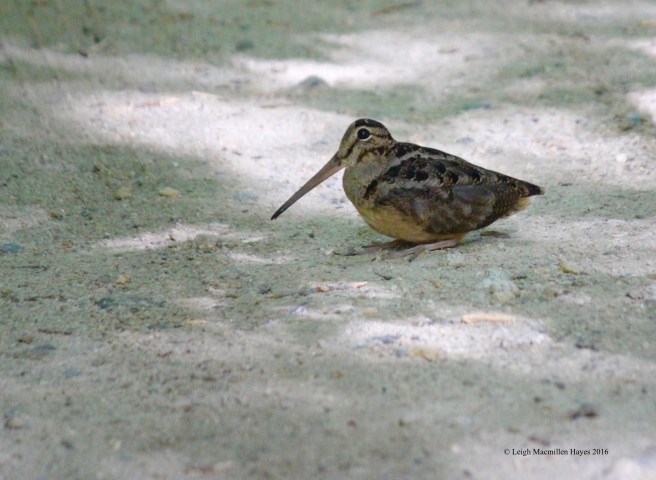
h-American Woodcock

But the best find of the day–one that caused me to halt on the road as I drove out of LEA’s Holt Pond Preserve–an American Woodcock.

Worth a wonder! And a pause. Certainly a reason to halt frequently at Holt Pond.


Tagging Along with Jinny Mae

“Don’t walk behind me; I may not lead. Don’t walk in front of me; I may not follow. Just walk beside me and be my friend.” ~ Albert Camus

While I sometimes walked beside Jinny Mae this afternoon, I spent more time following her and am still her friend (I think).

A HOT afternoon. Despite the heat, however, I’m always tickled to follow her because she knows her 40-acre property intimately–including all of its nooks and crannies and cool sights.

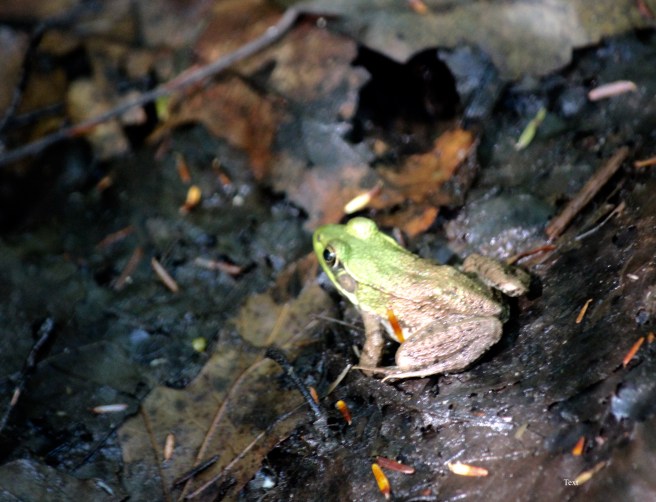
j-green frog in water


We had some rain this morning, but Jinny Mae’s land is naturally wet and well loved by mosses and ferns . . . and green frogs. As we approached, several leaped into this mini pool and then posed.

j-green frog

Others waited patiently–probably hoping we’d move along.

j-polypore

J.M. has a fascination for fungi. Many fruiting bodies, like this gilled polypore, showed their faces as we moved about.

j-gilled polypore

We rolled the log to get a better look at the maze-like underside.

j-false chanterelle

Among our finds–chanterelles (deleted false because fungi expert, Jimmie Veitch informed me that they are true chanterelles. If you want to know more about Maine fungi or to purchase some, visit White Mountain Mushrooms) and . . .

j-coral

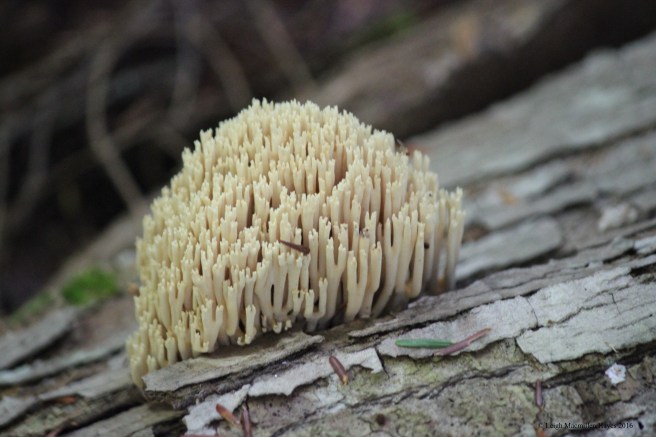
a coral fungi. Given today’s humidity, it felt like we were in the Bermuda of the North.

j-fern

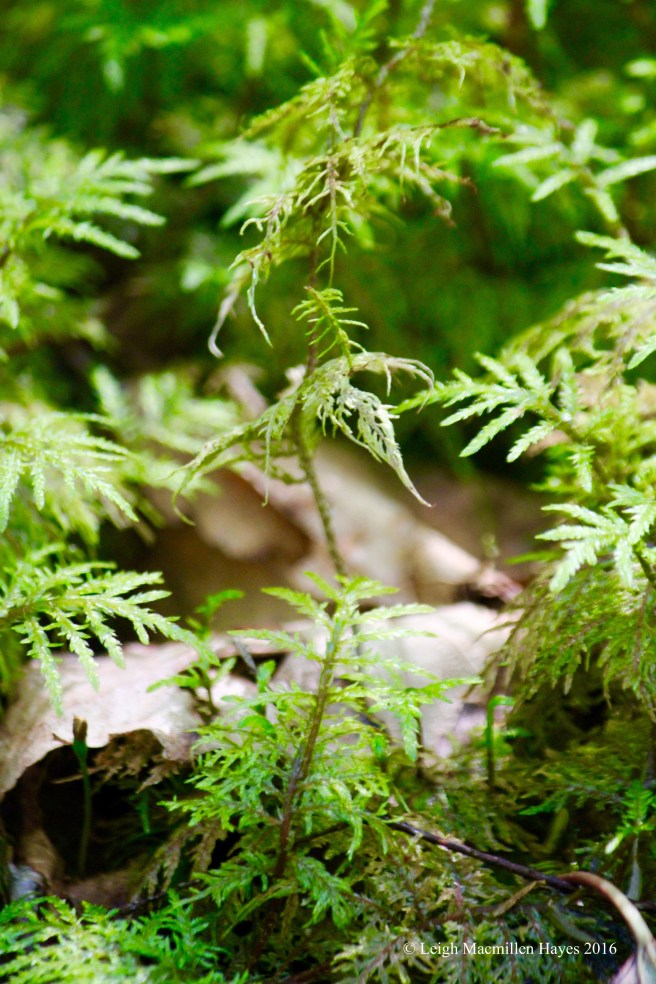
Jinny Mae also showed me a fern-like moss that I don’t think I’ve ever seen before: stair-step moss. This moss is particularly fond of the moist coniferous and hardwood forest we tramped through. Its new growth arose from the previous year’s growth–climbing like a staircase.

j-yellow birch and hemlock

Nearby, she pointed to one of her favorite tree displays–a hemlock and yellow birch sharing space. Both have seeds that germinate best on rotting logs or rocks, where moss gathers and provides moisture. In a compatible relationship, they’ve reached for the sky with equal success. I’m reminded of two friends who know the importance of supporting each other–similar to the chitchat and occasional silence Jinny Mae and I share as we bushwhacked.

j-lightning 2

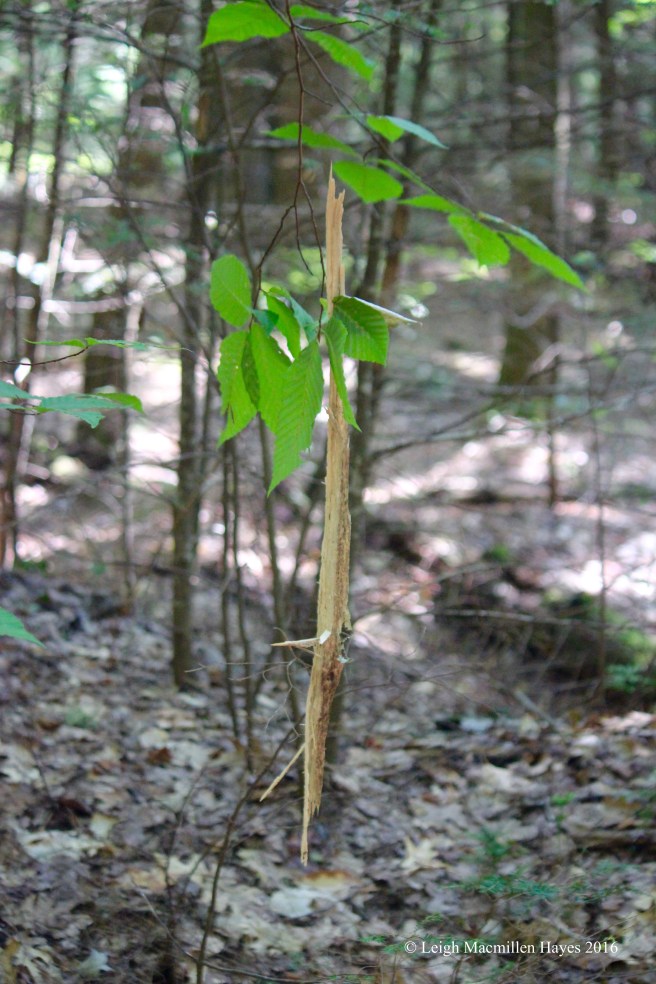
And then she introduced me to Excalibur. Even King Arthur probably couldn’t pull this    sword-like piece of a tree out of the ground–well, maybe he could. But we couldn’t.

j-lightning tree 1

The reason for Excalibur’s existence: a recent lightning strike.

j-lightning 4

We looked around and saw that the energy passed through at least three trees.

j-lightning 5

Bark peeled off.

j-lightning 3

And shredded wood scattered. What surprised us both was that we couldn’t find any burnt wood. Thankfully.

j-beech drops

Making our way back toward her house, we entered a beech forest and began to see beechdrops everywhere we looked.

j-beech drops2

These are parasitic plants that don’t manufacture their own nutrition, thus they depend on the roots of American beech trees for food.

j-coteledon

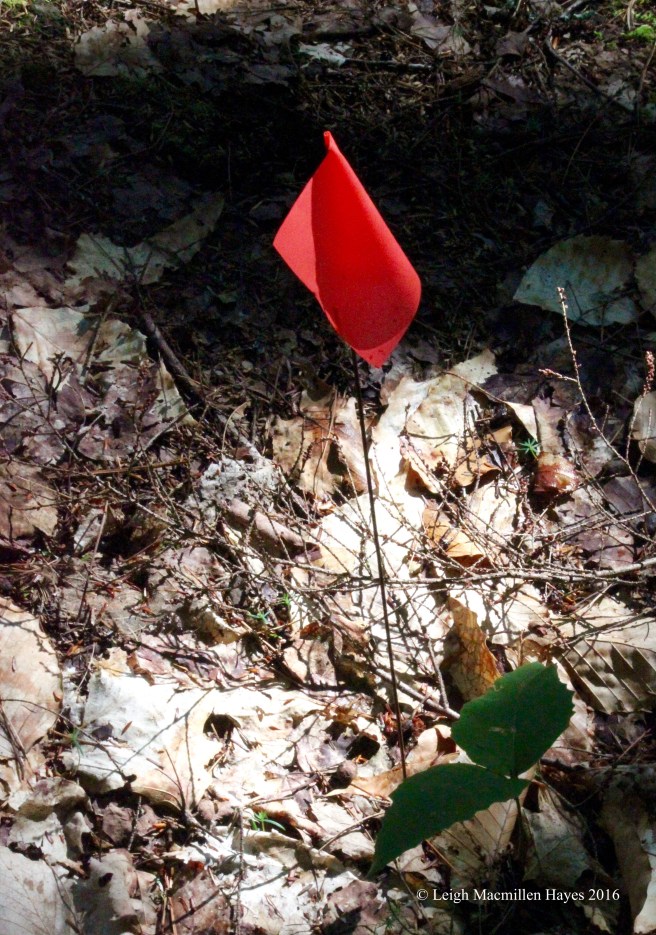
In this same area, we come across a young beech tree Jinny Mae flagged in the spring when she first observed a cotyledon. We chuckled when we remembered how we both were so taken with cotyledons a few months ago–a new sighting for us. One of those things that was always there, but we’d never noticed it previously. Today, she was filled with pride for this young beech. It’s had a healthy start and in forty years may provide beech nuts for the neighborhood bears. In the meantime, it will probably nourish a few beech drops.

j-Indian pipe .jpg

And then she showed me the final cool find of the day–an Indian pipe with stamens that appear to have split away from the flower. It seems that these friends made the move together–much the same as Jinny Mae and I did today.

I may have tagged along and followed her, but really, we walked side by side and I’m thankful for her friendship.

Rather a Mondate

Yes, it’s Monday. But as has been the case lately, my guy and I haven’t been able to hike together. We both had chores and projects to complete and so we did.

In the late afternoon, however, I headed out the back door. My mission–to locate something orange to photograph for our young neighbor who is prepping for a bone marrow transplant. Not an easy task, but like others I know, as often as he can, he smiles through this journey.

m team orange

Orange hawkweed provided today’s support to Team Kyan. May he continue to be strong. And his family, as well.

m cicada 5

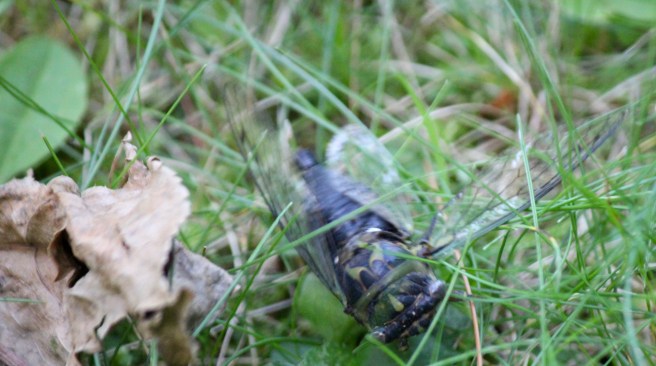
After my orange find, I journeyed on–headed for our woodlot. And only steps from it, I discovered this camo-dressed insect fluttering on the ground. The male member of this species is known for the high-pitched buzz we hear on summer days. Sometimes, it’s almost deafening.

m cicada wings

This is a cicada, one that appeared to have a wing issue. A set of wings was held close to its  thick body, while the other set extended outward. (I thought of Falda, the faerie with folded wings in The Giant’s Shower.) I love the venation, reminiscent of a stain-glass window. Strong, membranous wings for a large insect.

m cicada flap

When I returned a second time, it was flapping those wings like crazy, but take off wasn’t happening. Did a predator attack at some point? Will it still be there tomorrow? So much to wonder about.

m cicada up close 2

And being me, I took advantage of the fact that it wasn’t going far to take a closer look. Notice the three legs extending below the thorax.

m-cicada kiss

Face on! We might as well have kissed. I’ve licked a slug, but passed on the opportunity to kiss a cicada. I do love this broad head, however. Check out that mouth that protrudes. Hidden inside are mandibles and maxillae used to pierce plants and drink their sap (xylem). Even if this chunky one couldn’t fly, it could still eat. And those eyes, oh my. So, here’s the scoop. The two obvious outer  eyes are compound, the better to see you with. But then I noticed three red spots located between the two compound eyes. Do you see them? These are three more eyes known as ocelli–they look rather jewel-like and are perhaps used to detect light or dark. Yup, this is a five-eyed insect. Certainly worth a wonder.

m indian pipe 6

As I continued my wander, I noticed that in the past few days a large number of Indian Pipes made their ghost-like presence known.

m indian 7jpg

Ever so slowly they broke through the ground–these under a hemlock grove.

m indian pipe 24092

Though each is one flowered, they love communal living.

m indian pipe 5

Their waxy flowers dangle as they pull up through the duff.

m indian pipe

Once fertilized, their pipes slowly turn upright, where the flowerhead will transform to a capsule encompassing the seeds of the next generation. Notice the lack of leaves–scales take their place.

m pine sap group

Also in these woods, I knew today to look for a relative of Indian Pipe because I found their capsule structures last winter. Pinesap growing below an Eastern white pine.

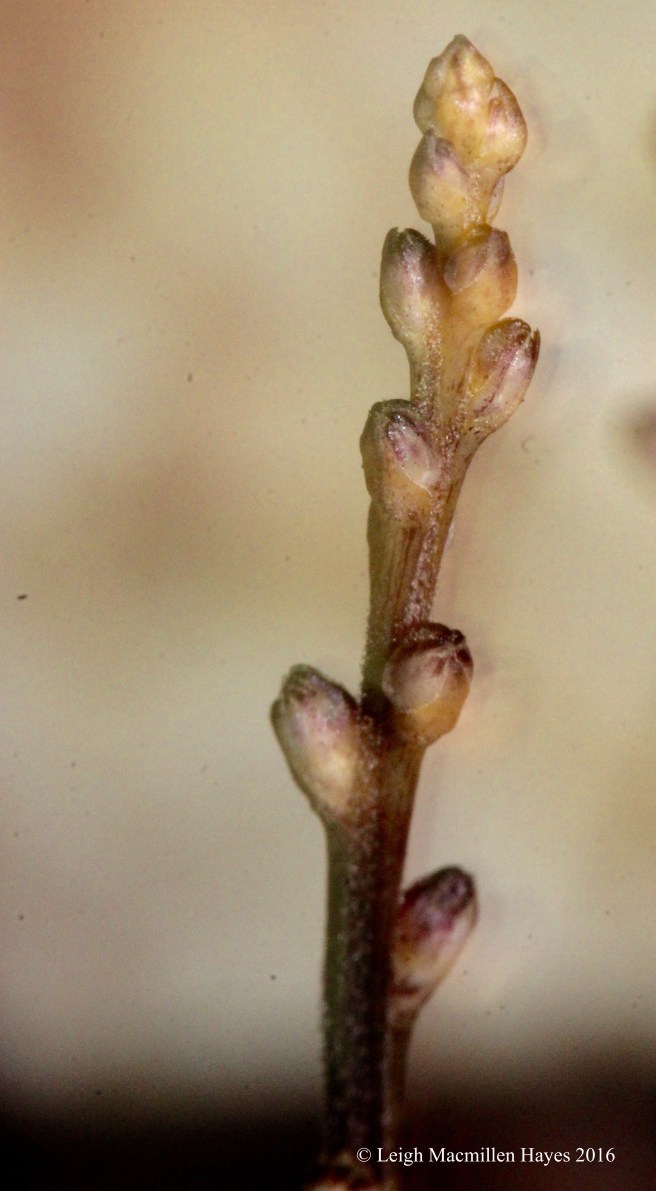
m pine sap 3

Since it was dark under the trees, I needed to use a flash, thus the color. But really, these are amber. And multi-flowered on a raceme. Pinesaps and Indian Pipes produce no chlorophyll, therefore they can’t make food on their own. And because they aren’t dependent on light, they thrive in shady places.

m-pine sap flowers

What sustains them is their saprophytic nature–they aren’t a fungus, but depend on fungi to obtain carbohydrates from another plant, so the mycorrhizal fungi serves as the connector between the host and the Pinesap’s roots.

m-pine sap up

While the Indian Pipe is scaly, the Pinesap has a hairier appearance. Both are members of the heath family.

As for me and my guy, today we’ve been near each other, but not on a playdate. In fact, as I sit in the summer kitchen and write, he’s doing a huge favor for me. Isn’t that how it should be? No, not really. We’d rather be on a Mondate together.

Samplings of Wonder

The day began with a journal hike along Perky’s Path, a trail in the Greater Lovell Land Trust’s Heald and Bradley Ponds Reserve. It was a first for us–a journal walk that is, and we had no idea how it would turn out. But our fearless docents, Ann and Pam, did a wonderful job of listening to the voices of those gathered and knew when it was time to stop and when it was time to move on again.

h-LMH

Each of us got lost in the world around us as we sat. We looked. We listened. We contemplated. We wrote. We sketched. We photographed. I know that I was so intent on sketching that I never realized Pam took this photo until she sent it to me. Thank you, Pam.

h sampling

Ever since I’ve started looking at the natural world through my macro lens, I haven’t taken as much time to sketch, so today was a welcome excuse to do so. And to color. Since my Aunt Ruth gave me colored pencils at least 50 years ago, those have been a favorite medium. I no longer have the gift from her, but my guy replenishes my supply when necessary.

IMG_2706 (1)

Our group was small, seven in total. We all admitted that small is good for this sort of activity.  And we came away thankful for the experience of making time to notice.

h beetle

And then I walked to the summit of Hawk Mountain with Jinny Mae–on a trail that may seem rather sparse in offerings, but actually proved to be quite rich. This banded longhorn beetle didn’t really like being the center of attention. His focus was on steeplebush pollen and I kept getting in his face. So–he did what flying insects do–and flew off.

h fern indusium

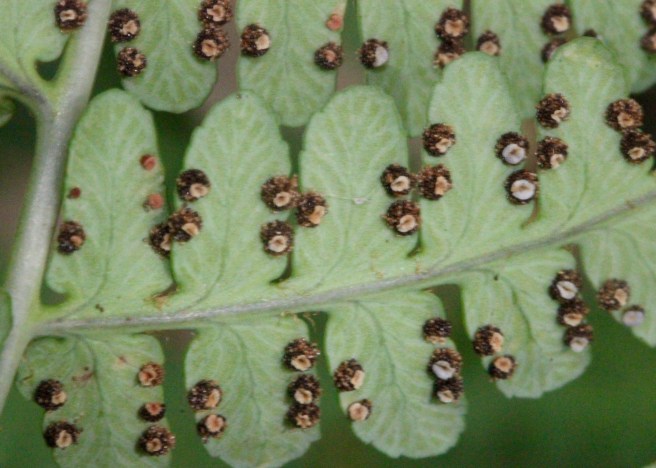
We were excited to discover several clumps of marginal wood ferns and some even with the indusium still intact. The indusium is a membranous covering that protects the sporangia inside the spore cases until they are ready to leave home on a dry day. In this case, the indusium is kidney shaped. As the sporangia ripen, they push the covering off and dust-like spores fly off in a wee cloud, breaking free to set down their own roots.

h white oak

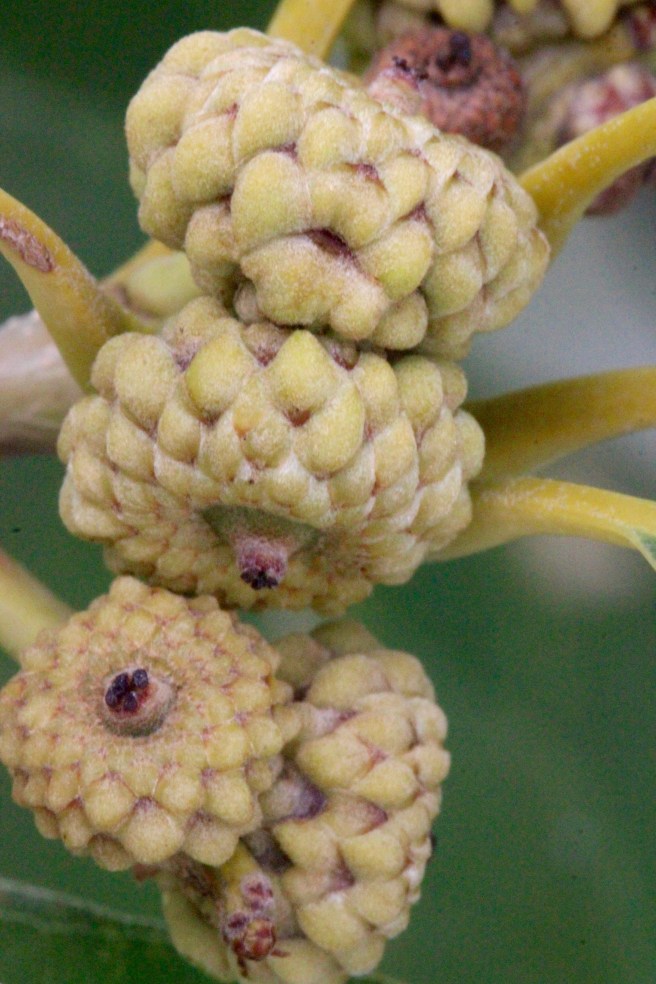
Here, both Northern red and white oak grow side by side. It was the white oak’s fruiting structure that called our names. The immature acorns growing in pairs are both warty and hairy, but their structure is more reminiscent of a miniature pine cone at this stage. They should mature by fall.

h stag stalk

And then we celebrated the one who is all hair and color . . .

h stag leaves

and distinct shapes and

h stag leaf

a combination of all three.

h stag flower

Staghorn sumac. The king of the mountain.

h berries 2

Little things excited us and the twin fruits of the Hairy Solomon’s Seal that tried to hide beneath the leaves didn’t escape our focus. Or our cameras. Sometimes we are sure that we share all the same photos.

h indian pipe

One of our final stops as we headed down the trail–to worship the heads-up version of a fertilized Indian pipe. While most flowers nod when fertilized, Indian pipe chooses to be different. It wins in my wonder department.

I’ve only shared a few finds from today’s wanders. Just a smattering or a sampling. All worth a wonder.


Wondering About Nature’s Complexity

As I sat on the porch of our camp this morning, three wafts of smoke blew up from the ground along a pathway to the water. And my heart swelled. Earlier, I’d been out between raindrops taking some photos and my eye was drawn to that very spot. My photos didn’t come out so well, but I believe what I was looking at were bird’s nest fungi. They were cup-like in shape and some were filled with minute eggs, while others were covered in an orangey blanket.

I suspect it was the latter that caught my attention from the porch. It had started to rain and this fungus depends on rain for dispersal of its egg-like capsules that contain the spores. The hydraulic pressure of a raindrop falling into the nest causes the capsule to spring forth, emitting spores in a puff. I could have sat there all day waiting for it to happen again, but . . .

1 hawkweed

there were other things to look at and wonder about. The bird’s nests weren’t the only ones ready to send forth new life. While the hawkweed seeds embraced the raindrops, they waited for a breeze to send their young into the greater world.

2Oleander aphids on milkweed

And then I returned home, where I found some other cool things. It all depends upon your point of view, I suppose, but check out these Oleander mites on the underside of a milkweed leaf. They are so named because they also like Oleander.

4ant milking aphids

Those weren’t the only aphids wandering about. The little gray dots on this leaf are actually another form. So here’s the scoop on ants and aphids. While aphids suck the sugar-rich fluids from their host plants, the ant strokes (milks) the aphids with its antenna to get them to secrete waste (honeydew), which has a high sugar content. And we all know that ants love sugar. Honey-dew just took on a whole new image.

3cranefly

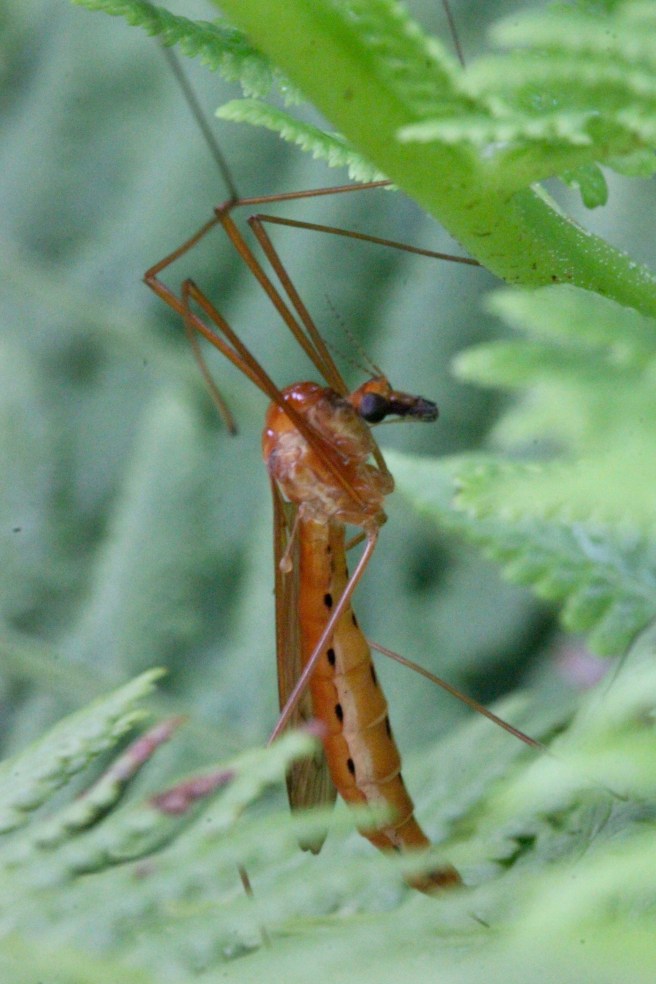
Tucked under the lady ferns, I found a cranefly. I’m always searching for orange in support of our young neighbor who was recently diagnosed with leukemia. When I started posting a photo a day in his honor, I didn’t realize how important it would become to me–making me think about all that he and his family are enduring on a daily basis. He is in remission, but still undergoing treatment and will need a bone marrow transplant. This cranefly almost became today’s post, but a daylily dragon won out for Team Kyan.

5mystery

So dear reader, I enjoy teaching you, but now need you to teach me. I found this under another leaf on a shrub. And I often see the same thing stuck to our house. It reminds me of a caddisfly case. What is it?


7daylily

No mystery here. But still, the complexity . . .

8mallow

enhanced by raindrops.

c9omplex world

Nature is complex, but oh so worth a wander. And certainly worth a wonder.

Thanks for stopping by today.

Sluggish Moments

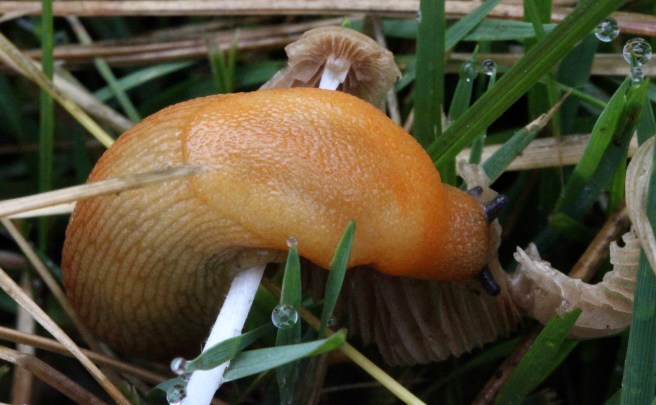
It’s not every day that someone shares time with a slug, but this morning that’s exactly what I did. It had poured until about 5:30am, so the conditions were prime.

4

Actually, I was hunting for a spring peeper that frequents one garden and the grasshoppers that live in another, when a spot of orange caught my attention. And so I bent down for a closer look.

3

A slug is like a snail without a shell, which makes it vulnerable to dehydration. That’s why we only see them foraging on rainy or cloudy days. I suppose we should think of slugs as weather predictors, much the same way common polypody indicates the temperature. Of course, if you look under leaf cover in the garden, you’ll surely find them as well, no matter what the weather is. Cool and damp conditions prevail in their world view.

1

As Mr. Slug munched on a mushroom at my feet, I admired the pattern on his back and thought about my past experiences with slugs. I’ve licked their backs because I’d heard that they release a chemical which works like a natural anesthetic, thus providing a cure for toothaches. The numbness did last for a short period of time. That being said, my nursing friends encouraged me to stop because slugs may also carry parasites. And so I did.

6

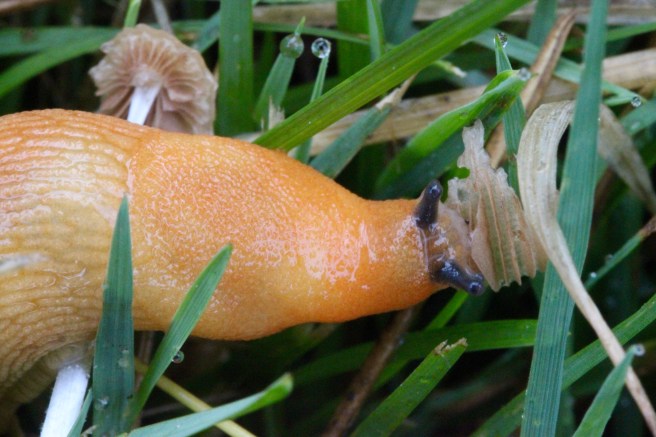
Since I was upclose and personal, I could see Mr. Slug’s two short antennae and even shorter eye stalks. Then there was his accordion-shaped mouth that he used to grasp and shred plant material. At first I thought he sucked it in, but as I watched, I could see the chewing motion.

7

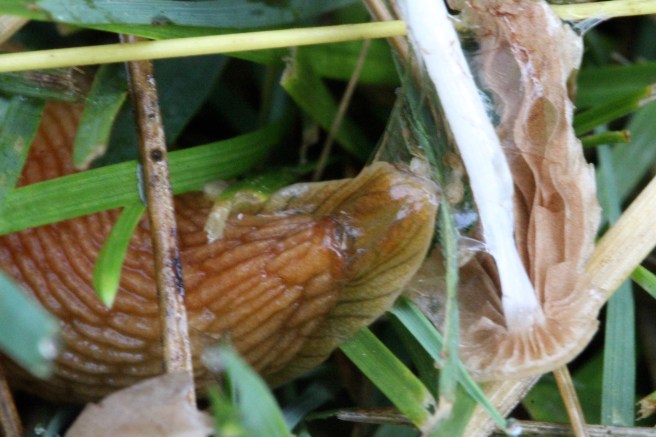
Being a mollusk like a clam or oyster, one might think about sautéing slugs. Or not. Really, I’m surprised my parents never tried that. Dad always sacrificed some beer so Mom could pour it into a tin pan in the garden to attract slugs. It worked–better for her than the slugs who thought they’d found the holy grail only to instead meet their fate. A perfect marinade. Thank goodness Mom and Dad didn’t think of that. But really, though slugs do have a bad reputation because they eat plant material in our gardens, they also play an important role as decomposers–of fungi and lichens and dead insects and plant material, all of which they turn back into soil.

10

And here’s another curious thing about slugs–their mode of transportation. Remember their vulnerability to dehydration? Well, in order to move along they must create a slimy mucous. And so a chemical reaction occurs in their bodies causing them to secrete a sticky, slippery substance. That probably helps in keeping their predators, like toads and snakes and birds, at bay. Once they’ve moved on, it dries up.

9

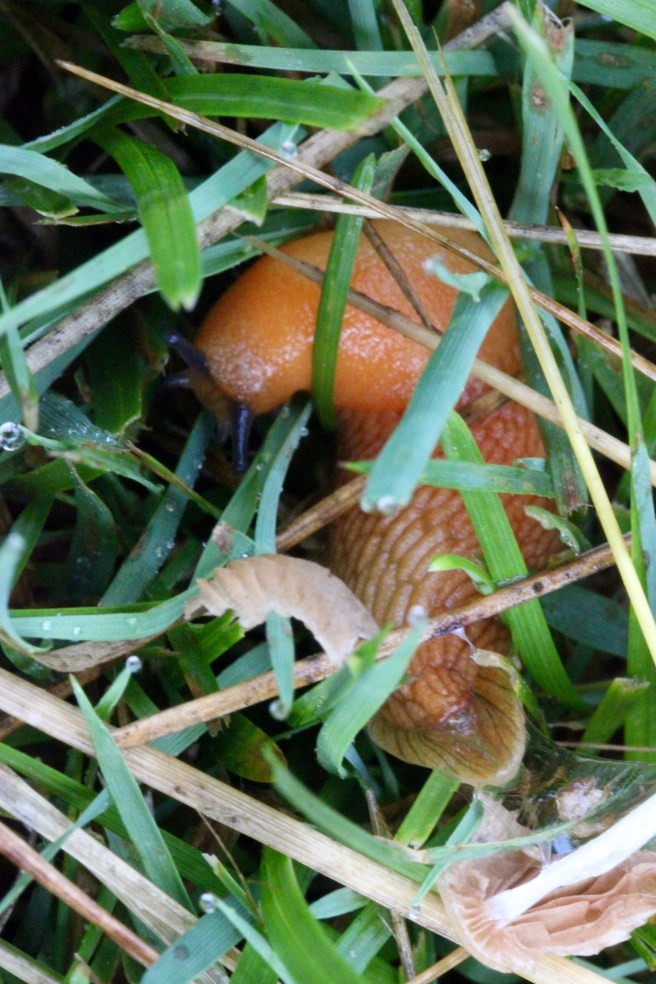
This morning, after we’d spent about a half hour together, Mr. Slug decide it was time to move on–toward the garden. It’s raining again as the sun sets and he’s probably slip sliding away across the yard in search of another feast.

ant

Because you stayed with me through my slug praise, dear reader, I thought you’d enjoy stopping by to wonder about a few pollinators like the ant that visited the milkweed. Did you know that insects get their feet caught in the sticky pollen sacs of the flower? They have to twist and turn as this one did while trying to get out. In the process, their feet get covered with pollen that they carry to the next flower.

bee

Pollinators come in all shapes and sizes, but I found one who looks like it wears a Halloween costume on a daily basis.

pollen

And this final pollinator of the day–loves to get totally immersed in its job.

I never did find the spring peeper today, and only one grasshopper, but my moments spent wandering and wondering were hardly sluggish.

Paying Attention

When she invited me to join her for a walk down a dirt road, I knew Jinnie Mae and I would make some wonderful discoveries, but had no idea what begged to be noticed.

j-ebony 15

We cruised along at a faster pace than normal as we chatted . . . and then . . . we slowed . . . down. And that’s when the world poured forth its graces.

j-ebony 18

Beside a small stream, we were in the land of numerous ebony jewelwing damselflies, their metallic green bodies, beady black eyes and jewel-outlined wings showing brilliantly as they flitted about.

j-jack1

We noticed Jack-in-the-Pulpit growing strong, proud and tall,

J-swamp candle

swamp candles lighting up the water,

j-heal all 3

heal-all beginning to bloom,

j-pyrola 2

and waxy-petaled pyrola flowers with styles curved below like an elephant’s trunk.

j-beaver 2

We stopped by a beaver pond and decided they have moved on,

j-beaver 4

but their works were still evident.

j-beaver 3

Though the lodge may be abandoned by beavers,

j-lodge 1

it appeared that someone had stopped by.

j- royal 6 (1)

On the other side of the beaver dam, royal ferns decorated the stream in their shrub-like manner.

j-royal 2

Their fertile fronds posed like crowns above their heads, bespeaking their royalty.

j- royal 5 (1)

With their unique structure, there is really nothing else that resembles the royal fern.

j-ebony3

Because we were once again by the water, we realized the jewelwings were abundant–though they seemed more blueish in color here than further down the stream. Was it the lighting?

j-ebony 13

Beside the tranquil stream, they flittered and fluttered, their wings like sails over iridescent bodies, and occasionally they settled on vegetation for a photo call.

j-spider 2

Others also settled.

j-cuke1

We pulled ourselves away–or actually, Jinnie Mae gently nudged me away and we continued our journey back, certain that we’d see sights we missed on the way down the road. There were Indian cucumbers with multiple flowers–the most I’d ever seen . . . until Jinnie May pointed out that it was really two plants. Oops.

j-cuke 2

But still, we found one with at least four blossoms, all in various stages.

j-butterfly1

She told me we’d probably see an Eastern black swallowtail.

j-butter 3

And we did.

j-spotted winter

Though it’s not time for spotted wintergreen to flower yet,

j-spotted 1

we found its seed pods atop tall stalks. For me, this was a plant I don’t believe I’ve ever seen before. (According to Maine Natural Areas Program’s Rare Plant Fact Sheet, Chimaphila maculata is threatened in our state and has an S2 ranking) Will I see it in other places now that I’m aware of it? Time will tell.

j-winter 1

We noticed tender new wintergreen leaves, but it’s the berries that made us turn back for a closer look.

j-winter 2

The scarlet berries matured last summer, survived the winter without being eaten (they taste like wintergreen in the summer, but lose their flavor and sugar count over the winter months) and have now become enlarged.

j- trailing 2 (1)

What really stopped us in our tracks–trailing arbutus. Last month, we were wowed by its gentle white and pale pink flowers. They’ve since faded to a rusty tone.

j- trailing 6 (1)

And some have transformed into swollen round seed pods.

j- trailing 8 (1)

The sepals have curled away to reveal the white fleshy fruit speckled with tiny brown seeds. It was well worth getting down on our knees to look through a hand lens–especially since ants, chipmunks and mice find these to be a delicacy so they may soon disappear.

Paying attention with and without a hand lens on a delightful spring day–we were once again thankful for the opportunity to notice . . . and to wonder.


The Main(e) Exotics

If you’ve traveled with me before, you know that I often frequent the same trails. And so it was today. Oh, there was a change-up in the early morning hours when I joined a couple of members of the Lakes Environmental staff to oversee a volunteer project by the Rotary Club. Rotary members from around the state and beyond (think Argentina) spent four hours clearing a new trail we’d laid out at LEA’s Maine Lake Science Center. They provided humor and hardwork hand-in-hand.

And then a friend and I drove to LEA’s Holt Pond Preserve where everything was in exotic mode.

oak g 3

One of our first finds was an apple oak gall about the size of a golf ball. So, the apple oak gall female wasp (yes, there is such a species) crawled up the tree trunk of a Northern red oak in early spring and injected an egg into the center vein of a newly emerged leaf. As the larvae grew, it caused a chemical reaction and mutated the leaf to form a gall around it that provided sustenance.

oak g 5

Recently, the wasp drilled its way out and probably found a mate.

oak gall 1

All that remained–wispy fibers.

blue 3

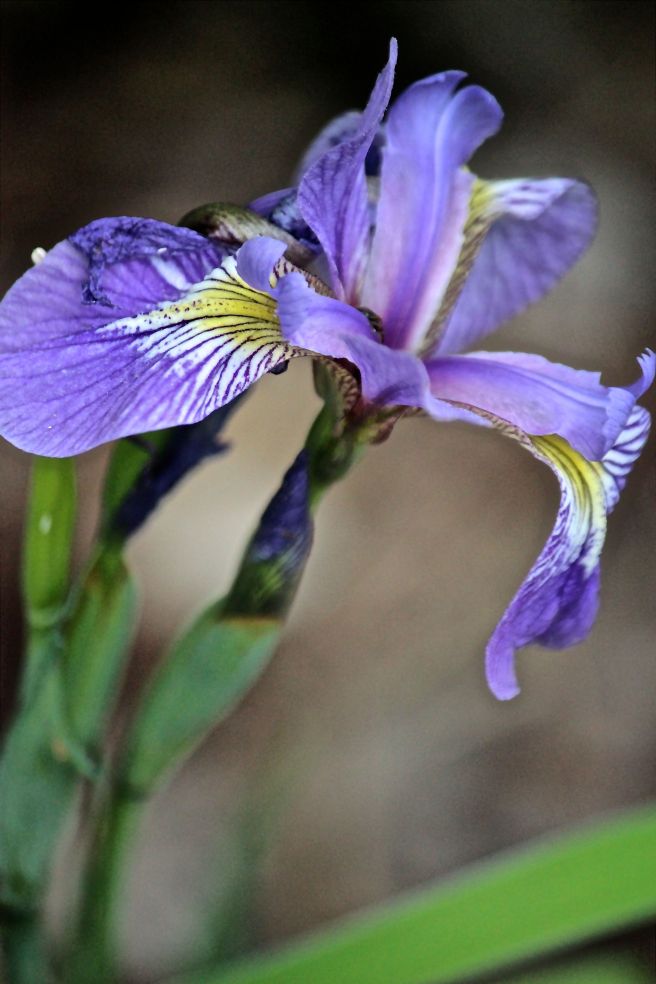
Along the first boardwalk in the red maple swamp we found Northern blue flag iris in bloom. Flag irises are wild irises that tend to grow in boggy areas. Unlike the irises that grow in our gardens, they don’t have beards. The venation of the gracefully downturned sepals was intense–the better to attract pollinators.

snake2

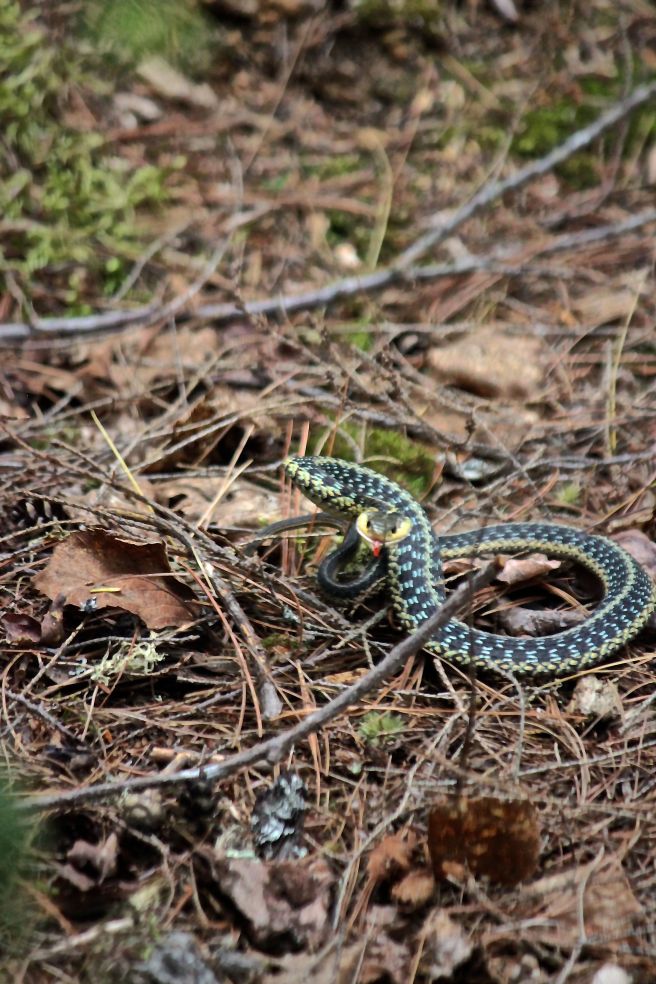
We moved from the swamp to the first hemlock hummock and chatted about natural communities when suddenly we realize we were being hissed at.

snake 10

Its coloration threw us off and beautiful though it was, the hairs on the back of our necks stood on end. Apparently we made it feel likewise. And so we retreated. We retraced our steps and decided to complete the same loop in the opposite direction. When I got home, I looked it up and realized that it was a common garter, but really, there didn’t seem anything common about it in the moment.

hemlock v

Because we backtracked, we were treated to fresh and older hemlock varnish shelf fungi that  we may not have seen otherwise.

hemlock v 6

We know where they’re located. F0r big $$ we might (MIGHT) show you.

park 1

Later on, as we left, we recognized a friend’s vehicle in the parking lot. Our question–did he see what we saw?

pitcher 9

Throughout the preserve we found one of our favorite plants that in my book is the most exotic of them all.

pitcher 3

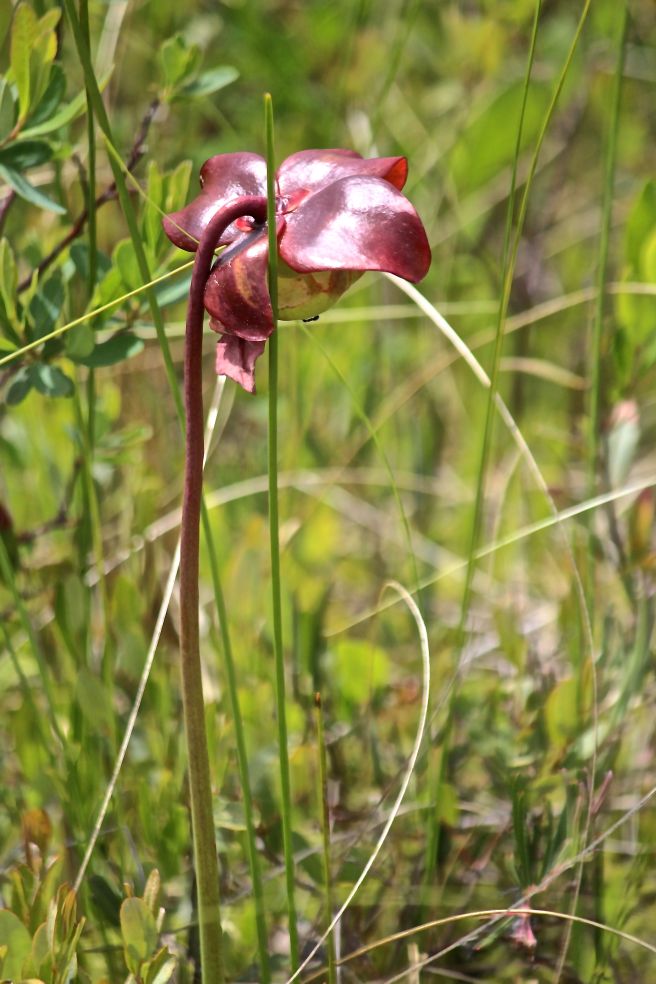
The carnivorous pitcher plant obtains nitrogen and phosphorus by eating insects. Its oddly shaped leaf forms a unique pitcher partly filled with water and digestive enzymes. The spout is a hairy landing platform for insects attracted by its red venation and nectar glands. Imagine this: An insect crawls to the edge of the leaf, aka pitcher, slips on the downward-sloping hairs and plunges into the liquid below where enzymes and bacteria break it down. Any chance for escape are zapped by those stiff hairs. Oh my.

pitcher & sundew1

The pitcher plant isn’t the only carnivorous plant that thrives here. Check out the glistening tentacles of the sundew intended to capture small insects like a mosquito. Should one land on the tiny leaf, its feet become ensnared in the sticky secretion and the end is eminent. YES! Within mere minutes the tentacles curl around the victim and suck the nutrients out of it. Go sundews. Go pitcher plants.

sheep 4

Only beginning to bloom was sheep laurel with its deep crimson-pink flowers. Located below the newly emerged leaves, each flower has five sepals, with a corolla of five fused petals and ten stamens fused to the corolla. Beauty and danger are also encompassed here–it contains a chemical that is poisonous to wild animals, thus one of its common names is lamb kill.

exo 1

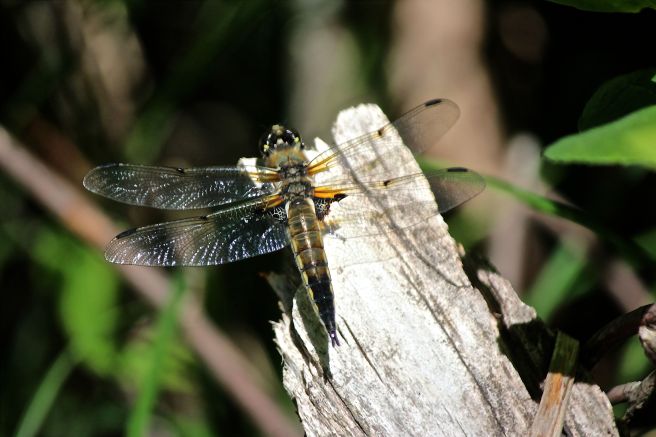
Because we were beside the pond, we thought to look for dragonfly exoskeletons and weren’t disappointed.

broad-tailed shadow dragonfly

And the dragonflies themselves were worth our attention. I’m not sure my ID is correct, so help me out if you know better, but I think this is a broad-tailed shadowdragon and if that’s true it is one that Maine is paying attention to because it only occurs in one or two states.

beaverpond clubtail dragonfly

Another that I name without certainty–beaverpond club tail.

ebony 2

I’m much more confident about my ID of this ebony jewelwing damselfly.

cuke 7

We found a double-decker Indian cucumber root that displayed flowers in varying stages. The yellow or green-yellow flowers drooped below the upper leaf whorl and as is their custom, were slightly hidden. Each flower had three long, brown styles in the center that curved outward and the stamens were magenta.

LEA boats

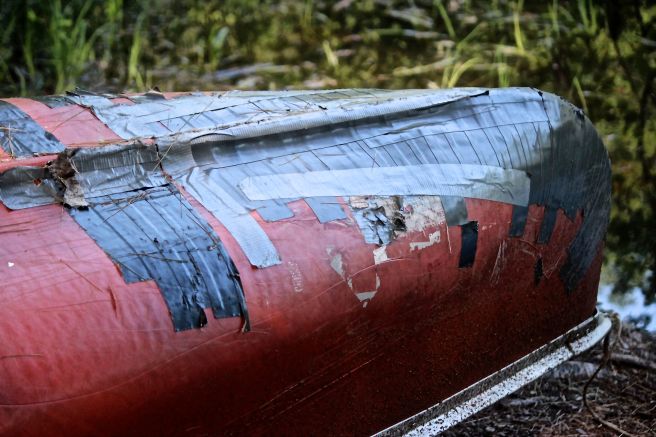
Among the unnatural offerings, a few boats to explore the river and pond. Though we noted a couple of paddles and one pfd, we highly recommend you bring your own.

LEA 2

Some extra duck tape is also a good choice just in case. ;-)

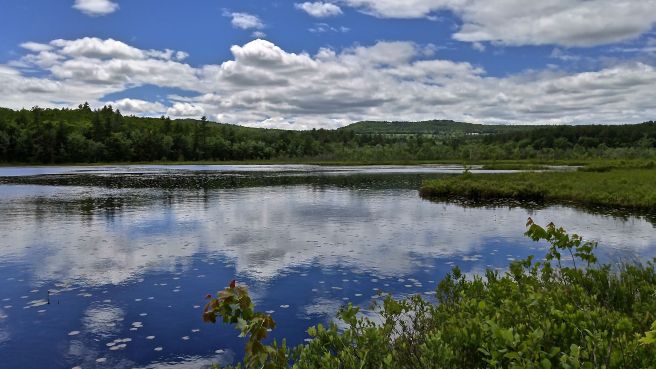
HP view1

Like the ever-changing reflection, life changes constantly at Holt Pond. The more I look, the more I realize how exotic life is in Maine. Who knew?

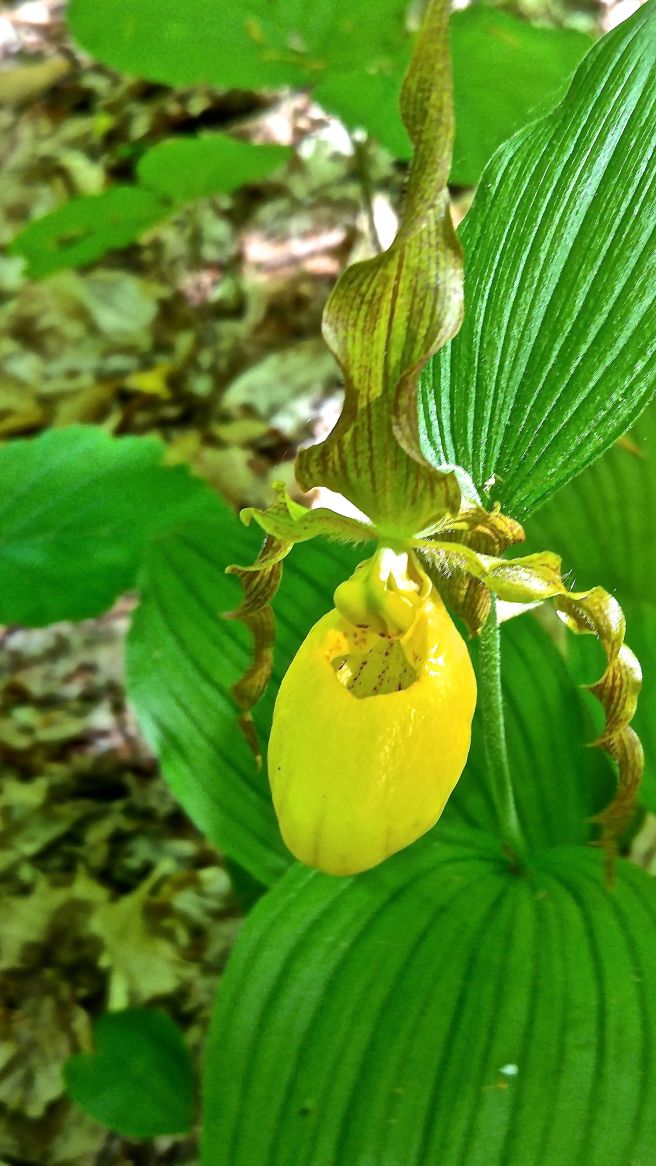
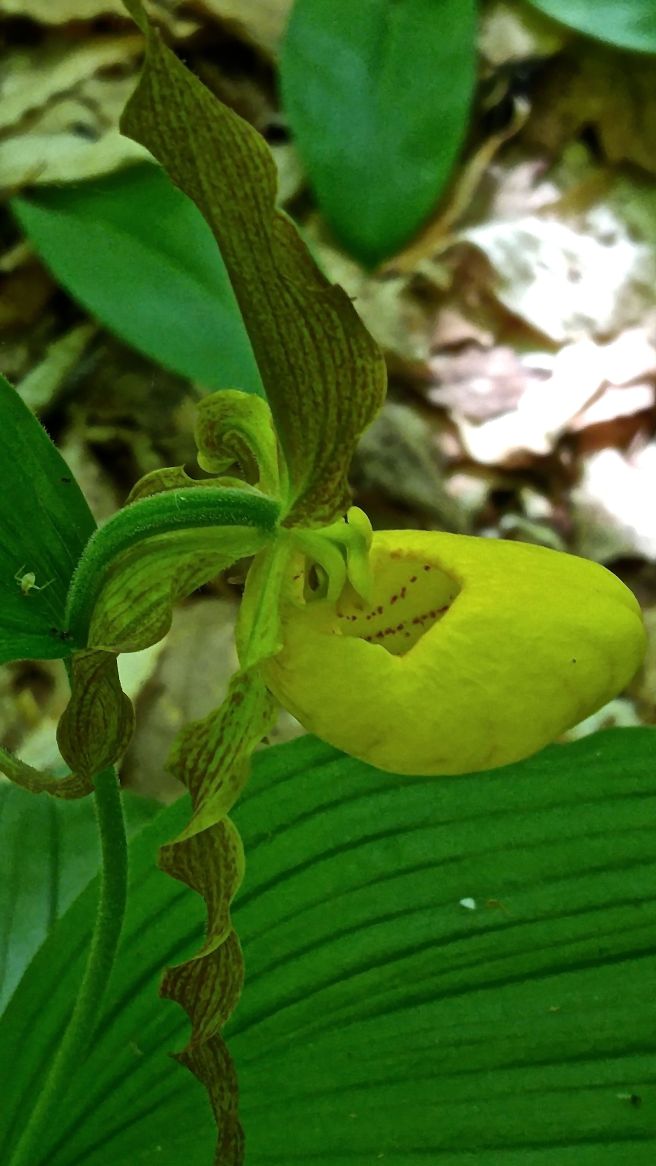
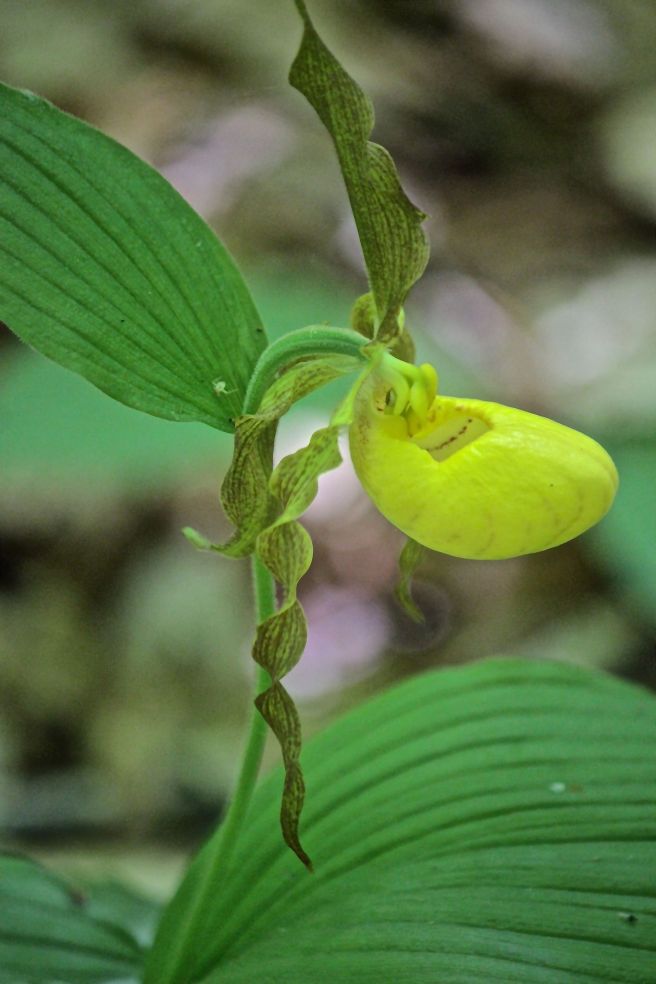
Slippers fit for a Princess–including Cinderella

My day was bookmarked by slippers so beautiful that I think Cinderella would trade in her glass shoes for one of these. The question is–which one?

p-ph lady y 14

A young friend who has made it his career to search the woods for orchids and fungi introduced a small group of us to these this morning. I’d met this variety previously, but not in this particular location. We oohed and aahed as we encircled the plant–paying reverence. Though we didn’t curtsy, our respect was tinged with awe.

Members of the Orchid family, lady’s slippers feature the typical three petals in an atypical fashion. The pouch (or slipper or moccasin), called the labellum, is actually one petal–inflated and veined.

p-ph lady y 3

With a purplish tint, the petals and sepals twist and turn offering their own take on a ballroom dance. From every angle, it’s simply elegant.

p-ph lady y 7

Peeking inside, we noticed the runway–meant to attract pollinators.

p-lady 2

Bees follow the runway into the inflated lip, where they quickly discover that nectar is not available. Because of the one-way opening, their exit is not easy.

p-lady 4

In order to escape, they must depart through the back of the lip, where they brush against the stigma and deposit pollen from a nearby flower visited previously.  Simultaneously, as is the way with flowers, the bee picks up a new pollen packet from the anthers to share with other flowers. Due to the lack of nectar, however, bees don’t frequent the species and few lady’s slippers produce fruit. I didn’t see a single bee near this beauty.

p-ph lady 6

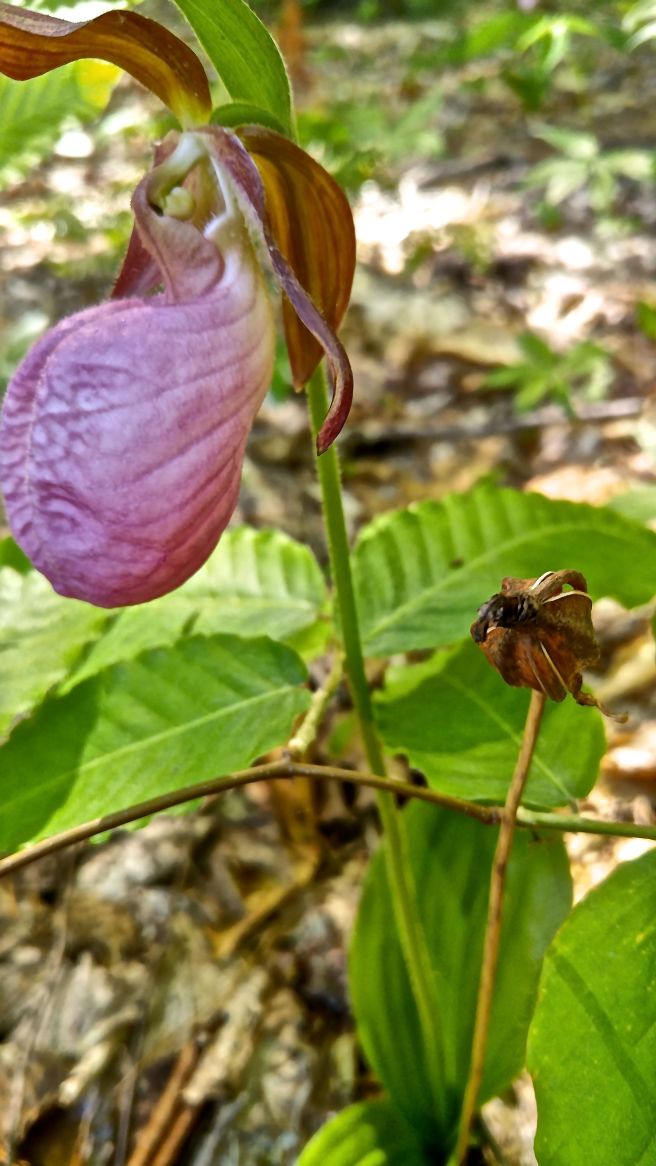
This afternoon I was invited to spend some time visiting friends and exploring their property where pink lady’s slippers bloom prolifically. While the yellow shoe is situated parallel to the ground, the pink shoe dangles downward. Overall, it reminds me of a lady holding out her skirt as she bows before the queen.

p-ph lady 7

It’s a symbiotic relationship with a fungi that helps the lady’s slipper germinate. And then, it still takes a few years for the germinated seed to produce leaves and about 3-5 years before it produces a flower. Once established, however, it may live for 20-30 years or more.

And do you see what I see? To the right of this particular flower? A woody pod. A seed pod, indeed. And a rare find.

p-ph lady 3

Despite the lack of pollinators and fruits, a single capsule contains thousands of seeds. The presence of lady’s slippers indicates rich soil.

p-lady 1

So which slipper do you think Cinderella would choose? Though I’ll never consider the pink as ordinary,  I’ve a feeling the golden slipper would be the one that fits her best.

Following In The Footpath Of Others

Rain marked this morning’s dawn, but that didn’t daunt our group of six. We donned overcoats, gloves, hats and waterproof boots knowing that we’d encounter mud along our intended route.

And so we met near the former site of the Methodist church in the northeast corner of Sweden–Sweden, Maine, that is. Our intention was to follow the snowmobile trail for a couple of miles and visit foundations and a few other historic sites along the way.

s-you are here map

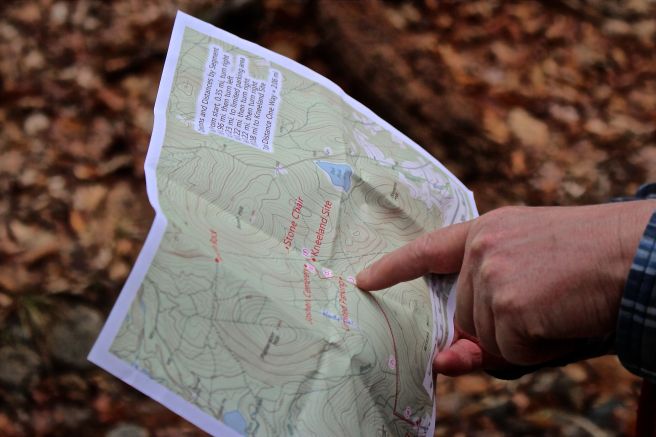
Maps dated 1858 and 1880 show a network of roads that served the scattered neighborhoods of this town. The trails we were about to walk on follow the footpaths and wagon tracks of earlier people. These were once town roads. We happened to be in the presence of the president of the Sweden Historical Society and she gave us copies of the maps to help us gain a better understanding of our destination. She also printed out a topographical map so we’d have no excuse for getting lost.

s-following trail in

With the sun suddenly shining upon us, we laughed at ourselves as we moved along because we traveled at breakneck speed. Well, for us anyway–1.8 mph when we were moving. Note the phrase: “when we were moving.”

s-stream to Patterson 1

Along the way, we paused to admire the streams that flow toward Patterson Brook and

s-vp 1

checked on life in a potential vernal pool.

s-stream 2-mill site

While we find water so mesmerizing, I couldn’t help but wonder about its potential here for the early settlers.

s-stream 3

Several times we found stone walls on either side of the streams and didn’t know how to interpret their meaning. That was OK–we appreciated not having all of the answers.

s-stream 4

The opportunity to partake of the beauty among friends old and new was enough.

s-cheyenne

Even four-footed friends.

s-single:double wall

The stonewalls, both double and single in structure, indicated that the land had been cultivated. We tried to make sense out of the sudden switch from single to double and back to single in a short distance, but really, they didn’t necessarily build walls according to our expectations of what life must have been like–a single wall meaning keep the farm animals in or out and the double being a garden wall–lots of times it was probably just plain common sense and a need to get rid of the stones that rose with the frost.

s-drilled rock

Eventually, we climbed over the wall and headed up toward this monument. Dave, who lives in this neighborhood and knows these woods well, encouraged us to ponder.

s-drilled rock 2

Why was the top of the rock split off intentionally and then left there?  Was it intended for a foundation stone? Was the neighborhood abandoned before this piece was used?

s-town line 1

We wandered further through the woods and came to the Sweden/Waterford town line. Two stone walls less than ten feet apart mark the boundary. Waterford to the left and Sweden to the right. (Did I get that right, Linda?–my left and right?)

s-town line

Orange paint also marked the boundary line.

s-kneeland foundation

We’d crossed into Waterford and stopped for a break at the Kneeland (1858)/Kimball (1880) residence, a rather large foundation with a center chimney.

s-fdn rocks, squirrel table

Apparently, we weren’t the only ones who paused here for a snack.

s-hidden brook

And then we crossed the snowmobile trail once more and began bushwhacking again. Though you see only tree shadows, leaves and moss here, it wasn’t what we saw, but what we had the honor to hear that made us stop–an underground brook. It felt like we’d stumbled upon a secret spot.

s-stone chair 2

Dave led us uphill to another special spot a friend of his discovered years ago–the stone chair. You have to wonder about this. We’re in the middle of nowhere that was once somewhere. Below this is a large hole in the earth, possibly a foundation of sorts. And beside, a skidder trail. So, who built the chair?

s-stump by chair 100:50

Atop the foundation of sorts was this cut stump–we surmised it was cut about fifty years ago and that it was about 100 years old at that time.

s-group 1

It really doesn’t matter. What matters is sharing the discovery.

s-chair and Sophie

Another four-footed friend also thought it was rather special.

s-cable

Not too far from here we found something else that spoke of logging.

s-goshen 2

We continued our bushwhack to another site of importance–and came upon it from the backside.

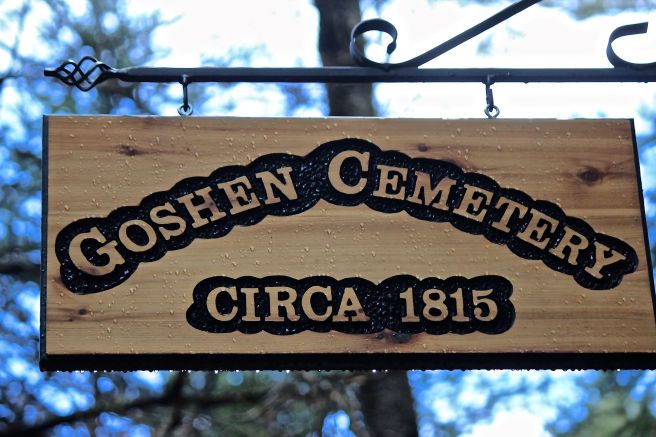
s-goshen sign 2

The Goshen Cemetery, circa 1815. Notice the raindrops and blue sky. A few drops fell in the middle of our walk and then it cleared again.

s-goshen cem 3

The cemetery contains stones that had been buried under the duff, but when discovered, were uprighted in spot.

s-goshen stone 2

s-goshen tomb stone

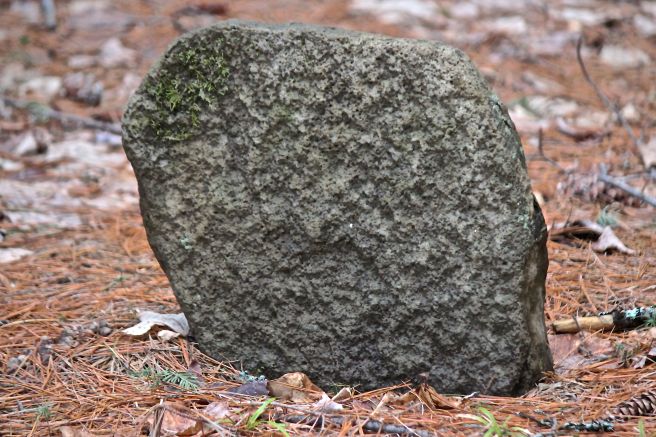
The tombstones are unmarked and as far as I know, two theories exist–an epidemic struck the neighborhood and those who died needed to be buried as fast as possible, or these were the tombs of the residents from the town’s poorhouse.

s-goshen sign 3

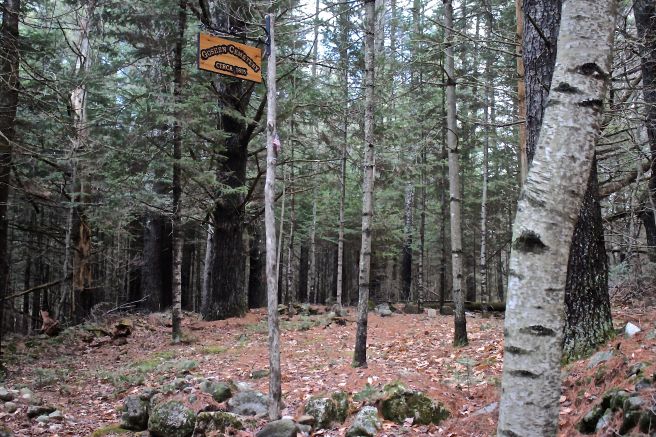
One thing we do know for certain. The bears like the sign and it has been remade several times and posted higher and higher in hopes that they’ll leave it alone.

s-bark art 1

Those were our historical finds, but we also made time to enjoy our surroundings, beginning with artwork created naturally.

s-beech elephant

I always say that beech bark doesn’t remind me of elephant skin, but today–elephant legs and feet, for sure.

s-downy rattlesnake plantain

Peaking out from the leaf litter, downy rattlesnake plantain showed off its white-veined leaves. Stained glass windows come to mind whenever I spy this. And though its the commonest of the rattlesnake plantains, I’m always in awe.

s-checkered rattlesnake

We also nearly stepped on its cousin, checkered rattlesnake plantain. I do have to say that if I were in charge of the world, I’d switch their names.

s-artist conks

We found artists conks and

s-hemlock shelves 1

old hemlock varnish shelves.

s-porcupine den

We know where the porcupines denned,

s-moose:striped maple

moose browsed,

s-pileated 1

woodpeckers dined,

s-deer rub

deer rubbed their antlers,

s-deer rub:paw

and pawed the ground. Do you see it at the bottom of this photo? It’s a scrape meant to communicate information to other deer.

s-flying squirrels 1

But one of my favorite sights of the day–the flying squirrels that scampered up an old snag. Notice the flat tail–a rudder.

s-fs 2

And the flap on its side, that furry membrane that stretches from the wrist to ankle–a parachute of sorts for gliding from tree to tree.

s-fs 4

And those bulging eyes–the better to see in the dark.

s-heading home

Four hours and almost six miles later, we followed the trail out, thankful for the opportunity to spend time wondering together and follow in the footpath of others.


On The Verge Of Change

Change is in the air. Stepping out the door this morning, I was immediately treated to the sight of wet mammal tracks on the deck.

b-raccoon tracks

The hand-like shape was hardly a surprise since at least two raccoons visit the bird feeders on their nightly rounds.

b-wintergreen

My next source of delight–frost embracing wintergreen berries and leaves.

vp1

And then I paid my respects to the vernal pool. While there, I spent some time reflecting on Bridie McGreavy, who celebrates her birth this day, and many moons ago introduced me to the sacredness of place–especially this delicate space.

Vp2

Feather ice formed after yesterday’s melt and last night’s cooler temps.

As I did last year, I intend to document the pool on a regular basis–noting its evolution over time. This year’s big question: Will Big Night happen earlier than normal? I’m already receiving reports from others of spring peepers singing their songs.

b-brook 2

And then I was off to the GLLT’s Back Pond Reserve in Stoneham. My friend, Parker, and I were on a quest to locate species that would be good indicators of rich soils. He’s much better at knowing about this than I am, so I tagged along–thankful for the opportunity to bushwhack beside the stream that eventually flows into Back Pond while learning from him.

b-bass 2

We found a dead tree that stymied us for a few minutes, but though it has some ash-like tendencies, we came to the conclusion that it was a basswood–one of those indicators we were seeking.

b-basswood bark

Only thing–during our entire search, we only found two.

b-bear tree

But that’s OK because there was so much more to see. Though I’ve spotted other bear trees in these woods, this one features the best sign. My guy will be jealous that he wasn’t with us to find this one.

b-crowded parchment

For many of us, Parker is our fungi guru. He and his brother became interested in mushrooms at a young age and have studied them extensively. They know only Latin, I speak only common. And so, I present to you crowded parchment (Stereum rameale). 

b-hemlock varnish shelf

Hemlock varnish shelf (Ganoderma tsugae) grows prolifically in these woods. These old fruiting bodies are still beautiful in their offering.

b-panellus stipticus?

And though it didn’t get dark while we were there, Parker found Panellus stipticus, a bioluminescent species. Check out those gills on the underside. According to Lawrence Millman in his book Fascinating Fungi of New England, ” . . . specimens in the Northeast glow more obviously than specimens in other parts of North America.” So  if you are ever in these woods late at night, don’t be freaked out by a light greenish glow. It just might be nature’s night light.

b-magenta fungi

The fun thing about exploring with Parker is that he’s not afraid to say, “I don’t know.” Such was the case with this magenta fungus we found on the inner bark of a rotting stump.

b-hemlock:hop hornbeam 2

I don’t know why I’m surprised every time I see two trees sharing a space,but I am–this time hemlock and hop hornbeam.

b-brook sans ice

We continued beside the stream for most of our climb and eventually came upon the trail that connects Ron’s Loop to The Mountain.

b-lichen on tree

A few things stopped us along the way, including this lichen that neither of us could conclusively identify,

b-rock lichen

what I believe is peppered rock tripe,

b-lungwort, lichens

and the glorious bright green state of lungwort. The thing that gave us pause about the lungwort wasn’t so much the lungwort as the lichen and moss garden that also decorated this tree.

b-mtn bog

And then we were literally stopped by water. Our intention to reach the scenic view over the Five Kezars was prevented by this boggy area. A vernal pool?

b-mtn bog 2

Certainly a wetland. We explored for a few minutes and wondered about the species that will appear here in the next few months.

b-boulder field

Then we returned to the stream, crossed over and paid a visit to the boulder field for a closer examination.

b-rock tripe 1

Like the lungwort, much of the rock tripe was also green today–a testimony to recent rain and yesterday’s hail.

b-tripe center

Two things to note–how it grows from the center umbilicus, like an umbilical cord, thus its Latin name: Umbilicaria mammulata; and the fact that it’s creating a garden on the up-rock side, where mosses and humus and seeds gather.

b-rock tripe water 2

I found a drier brown specimen that had captured several drops of water and held them still.

b-redbacked

Upon our decent, we stumbled upon a redback salamander–the first of the season for both of us. It seemed rather lethargic so we covered it with leaves and wished it a safe life. Redbacks are terrestrial and don’t have an association with vernal pools, though they are sometimes spotted on Big Night as we help the salamanders cross the road.

b-rose moss 1

A mossy display on several rocks in a seepage meant we had to pause again.

b-rose 2

We believe this is rose moss (Rhodobryum ontariense), but our ID was quick.

b-rose 3

Based on the description in  Common Mosses of the Northeast and Appalachians, “the shield-shaped leaves are widest above mid leaf and end in needle point.” Yup.

b-wood sorrell

And then we realized we have to get our wildflower eyes back on. The wood sorrel (Oxalis montana) leaves stumped us initially, but what else could it be?

b-wood sorrel 2

Other than a luna moth, that is! Doesn’t it remind you of one?

b-foamflower?

Without a flower, it’s difficult to ID a plant. My first choice: Foamflower or False Miterwort (Tiarella cordifolia), but my second choice based on the blunt-toothed leaves: Naked Miterwort (Mitella nuda). Time . . . and blossoms will tell.

b-orchid?

Our final find of the day left us with differing opinions. I said shinleaf (Pyrola elliptic). Parker said Corallorhiza maculate, which is a coralroot. A friend of his who is an orchid expert agreed. I guess we’ll have to revisit this place to confirm.

We’re on the verge of change and the seasons may collide with a Nor’easter in the offing.


Silence IS Golden

Some days are golden–in light and experience. Such was today.

A friend and I intended to walk one local trail but changed our minds and headed to Holt Pond Preserve. A wise decision. A fabulous afternoon.

I wish I could recreate the sounds and smells, but am limited to sights. And so, I invite you to scroll below and take it all in for yourself. Slowly.

For once, I’ll be quiet. Enjoy. And please take time to wonder.

h1-emerald field

h2-pussy willow

h3-willow gall

h5-qa2

h5a-milkweed

h6-rhodora 2

h7-Muddy River 1

h8-muddy river to pond

h10-fresh beaver cuts

h9-beaver treat

h11-pitcher plant2

h12-pitcher 1

h13-quaking bog1

h14-cranberry

h15-sawyer brook

h15a-water strider

h16-violet polypore1

h17-turkey tail1

h18-hemlock root

Silence truly IS golden. Thanks for stopping by for this wonder-filled wander.


Same Old is New

Same old, same old. Sometimes it feels that way as we travel familiar trails and recognize members of the community. And so it seemed today.

a-fdn 1

We paused to check on a few neighbors along the Homestead Trail at the Greater Lovell Land Trust’s Heald and Bradley Ponds Reserve, but no one was home.

a-signs

And so we decided to climb to the summit of Amos Mountain.

Along the way, I realized we weren’t the only ones exploring this property–several times we saw where a mink had bounded across, even enjoying a short downward slide in the midst of its journey.

a-summit view

From the summit, Kezar Lake stretched before us as we ate our PB&J sandwiches and Girl Scout cookies–Lemonades™.

a-whiting to pleasant

And another view, Whiting Hill in the center foreground and a peek at our beloved Pleasant Mountain, visible just to left of the center pines.

a-stonewalls 1

On the way down we decided to explore the stonewalls for a bit, at times terraced and following the contour of the mountain.

a-bear 3

And that’s when the same old started to change. Yes, we found another bear tree.

a-bear 4

And on what side of the tree should we find the claw scars? Why the north of course, adding to our unscientific theory that bears climb trees on this side. Typically, the northern side is the uphill side. Our mission is to continue to pay attention to this–tough job that we choose to accept.

a-stonewalls 4

Sometimes the walls appeared to enclose pens.

a-stonewalls 6

And other times they opened–perhaps to pastures?

a-northern white cedar

As we wandered and wondered about the walls the farmer had created and why, we noticed other things we’ve somehow missed upon previous visits, including this northern white cedar tree.

a-stonewall fdn

In what today appears to be the middle of nowhere, a small foundation. House? Shed? Sugar shack?

a-red-belted polypore

We climbed a hill to see what was on the other side and found this red-belted polypore (Fomitopsis pinicola) growing on an Eastern white pine. In Lawrence Millman’s Fascinating Fungi of New England, he says this is “apparently not a picky fungus. F. pinicola has been recorded on more than 100 different species of tree hosts.”

a-stonewall last

The snow had softened since we first started so we did some slipping and sliding as we followed another stonewall back to the trail.

a-3 birch

And then my brain kicked into birch tree mode. These woods are filled with paper, gray and yellow birch. And next week, the GLLT will host a “Which Birch Is It?” walk about the birches and their relatives.

a-yellow bark

The ribbony curls and whorls of yellow birch bark are signatures of this tree that can change in color from silver to yellow to reddish brown and circle back to silver again in old age. Did you know that a yellow birch can live to 200 hundred years, unlike its cousins, the gray birch and paper birch? Gray birch live about fifty years and paper reach a ripe old age of somewhere between 50 and 150 years.

a-yellow 4

Another cool fact about yellow birches: the interior of dead branches begin to decay quickly, even while still on the tree; eventually reduced to mush, the trees rid themselves of these non-productive limbs quite easily with the help of wind. Look for tubes of outer bark  filled with rotting wood on the ground.

a-birch stitch

Also becoming visible as the snow melts, paper birch bark from downed trees. It seems curious that the lenticels resemble stitches, especially considering that Native American’s built sturdy, lightweight canoes from birch bark; the bark was stretched over a framework of white cedar, stitched together and sealed with pine or balsam resin. All the components exist in these woods.

a-tripe 1

Back on the trail, a few other things revealed themselves, including smooth rock tripe (Umbilicaria mammulata). No matter how many times I see this, it’s never the same old.

a-tripe 4

In great contrast to the smooth upper surface is the coarse pitch black of the underside reminding me of fresh tar–kind of like what town crews are using to fill pot holes right now.

a-tripe 3

The greenness of the upper side was witness to the melting snow.

a-liverwort

Similarly, lungwort displayed its dryer gray presentation because it lacked moisture.

a-heading out

As we continued down the Gallie Trail, bypassing the Homestead, it seemed that we were back in the land of the sameness.

a-speckled catkins 2

But . . . speckled alder, a member of the birch family, is about to come into its own. While the burgundy brown male catkins hang from the ends of twigs, smaller female catkins await the release of pollen.

a-speckled leaf

Speckled alders are pioneer species–that first step in natural transition of farm land or logged land back to forest. In this instance, it’s both of the former.

And that’s not its only claim to fame. Speckled alders are nitrogen fixers. Atmospheric nitrogen absorbed by bacteria live in nodules on the alder roots and change into a form of nitrogen plants can utilize as fertilizer, thus fertilizing fields that may have been depleted of nitrogen by years of farming. Its leaves are also rich in nitrogen, so when they fall they help to fertilize soil. For some reason, this one chose to hang on, but its moment will come. In the meantime, it offers grace in form and design.

a-gumdrop 2

Equally graceful, the hairy bracts and seed head of Black-eyed Susans (Rudbeckia hirta) found near the parking lot.

It’s all always been here. It’s all the same, day in and day out and yet it’s all new. Change is the only constant–offering moments of wonder.


Gallivanting Around Great Brook

It’s been a couple of months since Jinny Mae and I last checked in on the doings in the Great Brook neighborhood off Hut Road in Stoneham, Maine.

H-Forest Road 4

Forest Road 4 isn’t plowed in the winter. That’s OK. We welcomed the opportunity to admire our surroundings as we hiked above the brook. So much to see that is so often missed as one drives.

h-paper birch blue

Though the temperature was on the rise, the blueness of a few paper birch trees reminded us that it’s still winter.

h-sphagnum

We found sphagnum moss looking a bit frosty but cheering us on with its pompoms.

h-chaga

On more than one yellow birch, chaga offered its medicinal qualities in quantity.

h-yellow and white partners

We came upon a special relationship–a yellow birch and a white pine. Rooted in this place, they embrace and share nutrients.

h-yellow birch:white pine

Forever conjoined, they dance through life together.

h-GB1

Finally beside the brook,  we couldn’t see the rocks below very well, but watching the water race over them gave us a better understanding of the forces that have smoothed their surfaces.

h-GB south

In a few more months, we’ll stand here and wonder where all the water went.

h-ice drips& bubbles

But today, it was the ice formations that we couldn’t stop admiring. Bubbling water below and dripping ice above, each adding to the other and both constantly changing.
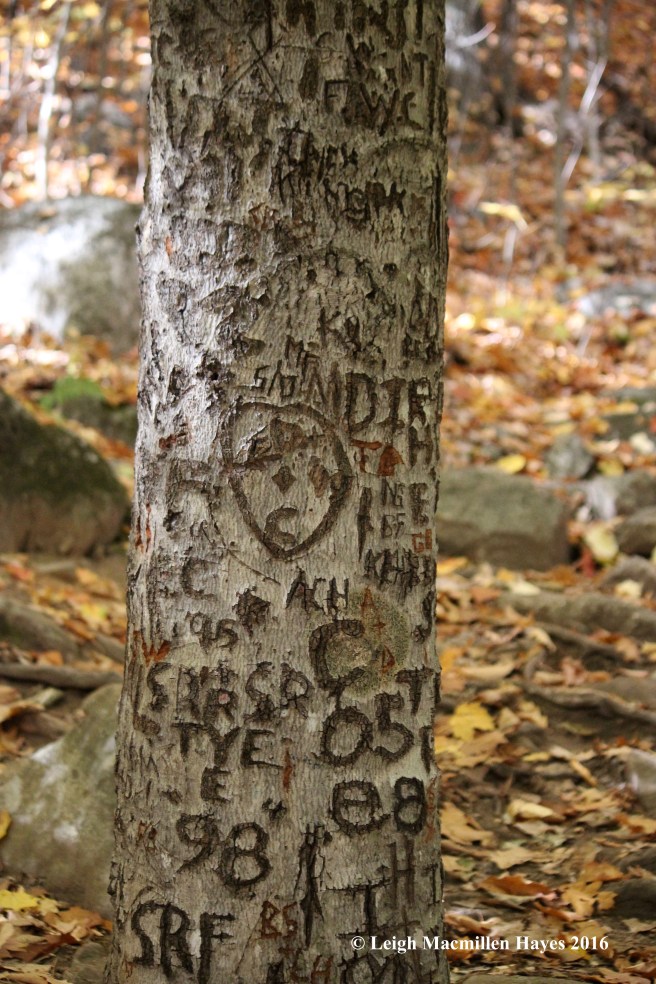
h-ice 2

So much variation on the same theme as coursing water freezes into ice while at the same time carving into the rocks below.

h-ice pedastle support

Looking beneath, we noticed pedestals shaped like elephant legs providing support to shelves above.

h-gb ice castle

Occasionally, we saw crystalline turrets, translucent arches and frozen chandeliers of castles captured in ice.

h-sets of ice feet

Sometimes, it seemed like ballerinas danced on their tippy toes. That’s what water really is, isn’t it–a dance through time with changing tempos along the way?

H-GB

We crossed Great Brook and then paused for a moment as we decided which trail to follow.  We took the road less traveled by. I laughed when Jinny Mae referenced Robert Frost’s poem. My former students don’t read this, but that was one of the poems they had to learn and recite. And my guy–poor soul–knows it through association. Actually, he’s a better soul for that reason.

h-tree owl 2

So you may not see it, but Jinny Mae and I did–an owl hidden in the ash bark. Not a live owl, mind you. Well, that depends on your perspective, I suppose.

h-heal all

Within minutes, we knelt to admire Selfheal or Heal All (Prunella vulgarism) and its hairy calyces.

h-survey sign

We stood by the survey marker sign and realized it had been attached for many years.

h-survey marker

Perhaps 51 years!

h-frullania 1 on red oak

h-frullania 2

On a red oak, we pause to look at the reddish-brown liverwort–Frullania. There’s history in this species–dating to the earliest land plants. No matter how often we see it, and we see it often, we feel privileged.

h-leaves and ice

The trail switches from snow to ice to water and back again. Ice covered leaves draw our appreciation.

h-fnd 1a

In the neighborhood, we pause to check on the local families.

h-fdn 1 chamber

I climb down to the root cellar and discover that the porcupines haven’t visited all winter. Old scat still present in there, but nothing new.

H-Fdn 2

Moving up the colonial road, we come to the second residence.

h-fdn 2 yellow birch on mantel

Atop the mantel grows an old yellow birch. Like any TV screen above the fireplace, it offers an ever-changing display.

h-brook upland

We moved toward Shirley Brook, where we were once again in awe of ice.

h-water and ice1

Water and ice: a relationship in constant flux–at the moment.

h-brook structure

Beside the brook is a stream that’s currently dry. We look edat the snow-covered stonework that crosses over it and realized we need to return and try to figure out what the structure might have been and why it was built here. Stuff like this adds to the intrigue. Man-made. When? Why?

h-spider 3

Poor Jinny Mae. She had to wait for me constantly as I shifted from one lens to the next. But check out this spider.

h-stone piles 1

We are the queens of bushwhacking and love discovering the stories hidden in the woods. In this neighborhood, lots of stone walls tell part of the story. Rock piles enhance the chapters.

h-moose scat 1

And then we found more. Fairly fresh moose scat insisted upon our attention. We’d noted that there were some old snowshoe hare runs and we found some moose browse on a nearby striped maple, but we were surprised that there weren’t many fresh tracks. Where have all the mammals gone?

h-moose scat 2

This scat is some of the biggest moose scat we can recall seeing. A few gems followed me home.

h-lady's slipper

And then we happened upon something neither of us have seen before–at least that we are aware of. We had our ideas about what winter weed this is, but since we haven’t encountered it before our sense of wonder kicked in.

h-lady's slip pod 2

Back home, I looked it up in Weeds and Wildflowers in Winter by Lauren Brown. The capsule is woody and about two inches long. As you can see, it’s closed at both ends, but opens along slit lines–six in all, actually.

h-lady's bract at base of pod

At the back end, a long, curved bract.
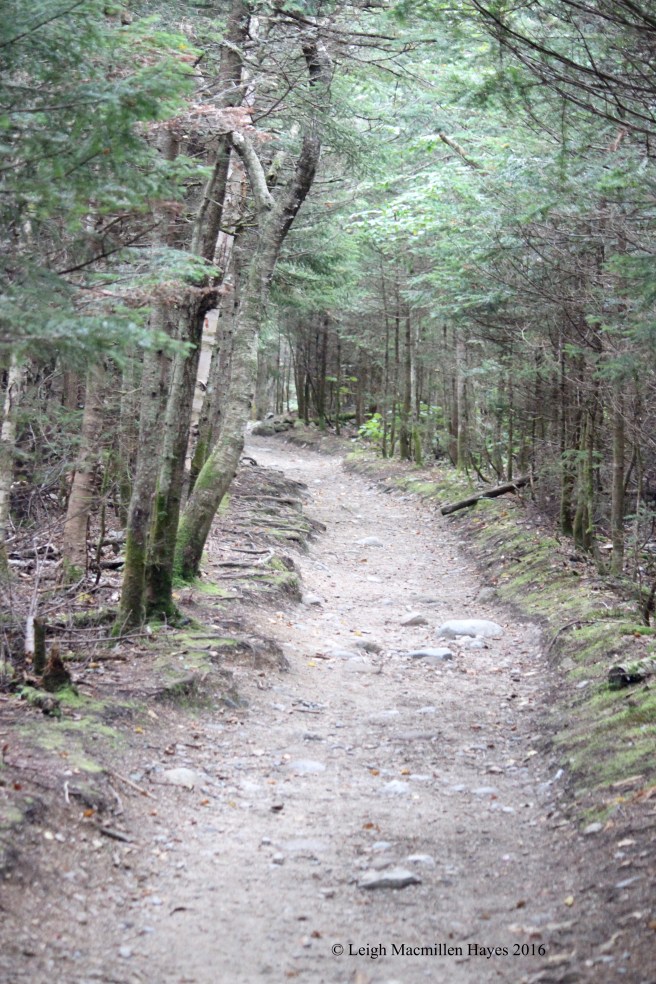
 

And at the front, the slipper gone by. Yup–Lady’s Slipper (Cypripedium acaule). And the reason we didn’t recognize it–because it’s a rare find in the winter woods. Wow.

h-bear 1

We’re on our way out when we spotted these marks on beech bark. We’d looked and looked because we know this is bear territory.

h-bear NW

Compared to other bear trees, these claw marks are newer than most I’ve seen. Jinny Mae was as excited about the find as I was. I’d told her earlier as we scanned the trees that my guy has come to an unconfirmed scientific conclusion that bear claw marks appear on the northern side of trees. This one didn’t let us down. Based on the location of the sun that’s grew lower in the sky, these are on the northwestern side of the tree.

At last it was time to drive home.

Gallivant: go from one place to another in the pursuit of pleasure or entertainment. Over five miles and almost five hours later, we were thankful for the opportunity we shared today to gallivant around Great Brook.